SENIOR VILLAGE NURSING & REHABILITATION CENTER
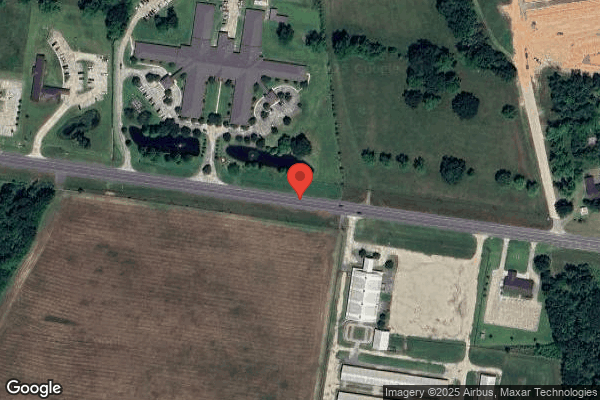
315 HARRY GUILBEAU ROAD, OPELOUSAS, LA 70570 (337) 948-4486
For profit - Corporation 150 Beds THE BEEBE FAMILY Data: November 2025
Trust Grade
50/100
#102 of 264 in LA
Last Inspection: September 2024

Within standard 12-15 month inspection cycle. Federal law requires annual inspections.

Overview

Senior Village Nursing & Rehabilitation Center has a Trust Grade of C, meaning it is average and falls in the middle of the pack when compared to other facilities. It ranks #102 out of 264 in Louisiana, placing it in the top half, and #3 out of 7 in St. Landry County, indicating only one local option is better. The facility is improving, with a reduction in issues from 9 in 2024 to 2 in 2025. Staffing is a strength, with a rating of 3 out of 5 stars and a turnover rate of 44%, which is slightly below the state average. However, families should be aware of concerning incidents, such as staff failing to assess a resident's glucose levels when they showed symptoms of hyperglycemia, and not following up with a physician about changes in a resident's condition, both of which could lead to serious health risks. While there are areas of improvement, these incidents highlight the need for careful consideration.

Trust Score
C
50/100
In Louisiana
#102/264
Top 38%
Safety Record
Moderate
Needs review
Inspections
Getting Better
9 → 2 violations
Staff Stability
○ Average
44% turnover. Near Louisiana's 48% average. Typical for the industry.
Penalties
✓ Good
$30,593 in fines. Lower than most Louisiana facilities. Relatively clean record.
Skilled Nurses
⚠ Watch
Each resident gets only 24 minutes of Registered Nurse (RN) attention daily — below average for Louisiana. Fewer RN minutes means fewer trained eyes watching for problems.
Violations
⚠ Watch
27 deficiencies on record. Higher than average. Multiple issues found across inspections.
★★★☆☆
3.0
Overall Rating
★★★☆☆
3.0
Staff Levels
★★☆☆☆
2.0
Care Quality
★★★☆☆
3.0
Inspection Score
Stable
2024: 9 issues
2025: 2 issues

The Good

  • Full Sprinkler Coverage · Fire safety systems throughout facility
  • No fines on record
  • Staff turnover below average (44%)

    4 points below Louisiana average of 48%

Facility shows strength in fire safety.

The Bad

3-Star Overall Rating

Above Louisiana average (2.4)

Meets federal standards, typical of most facilities

Staff Turnover: 44%

Near Louisiana avg (46%)

Typical for the industry

Federal Fines: $30,593

Below median ($33,413)

Moderate penalties - review what triggered them

Chain: THE BEEBE FAMILY

Part of a multi-facility chain

Ask about local staffing decisions and management

The Ugly 27 deficiencies on record

1 actual harm
Jun 2025 2 deficiencies
CONCERN (D) 📢 Someone Reported This

A family member, employee, or ombudsman was alarmed enough to file a formal complaint

Potential for Harm - no one hurt, but risky conditions existed

Report Alleged Abuse (Tag F0609)

Could have caused harm · This affected 1 resident

**NOTE- TERMS IN BRACKETS HAVE BEEN EDITED TO PROTECT CONFIDENTIALITY** Based on record review and interviews, the facility failed to ensure that an injury of unknown origin was reported immediately, ...

Read full inspector narrative →
**NOTE- TERMS IN BRACKETS HAVE BEEN EDITED TO PROTECT CONFIDENTIALITY** Based on record review and interviews, the facility failed to ensure that an injury of unknown origin was reported immediately, but not later than two (2) hours to State Survey Agency after discovering or learning of the injury for 1 (Resident #1) of 3 (Residents #1, #2, #3) sampled residents. The deficient practice had the potential to affect a total census of 126 residents. Findings: Review of the facility's policy with a review date of 05/24 titled Incident Investigation and Reporting, read in part; Injury of Unknown Origin: When all criteria are met: Source of injury was not observed by any person and the source of injury could not be explained by the resident, and the injury is suspicious due to the extent or location of the injury 3. The administrator shall report to the State Survey Agency and local law enforcement entities in which the facility is located, any allegation or reasonable suspicion of a crime against any resident. The administrator shall report no later than 2 hours after forming the suspicion, if the events that cause the suspicion involve abuse or result in serious bodily injury, or not later than 24 hours if the events that cause the suspicion do not involve abuse or result in serious bodily injury Review of Resident #1 electronic medical records revealed he was admitted to the facility on [DATE] with diagnoses that included but were not limited to Other Sequelae Following Unspecified Cerebrovascular Disease, Muscle Weakness, Generalized and Dysphagia, Oropharyngeal Phase. Resident #1 was discharged from the facility on 06/09/2025. Review of Resident #1's Significant Change MDS (Minimum Data Set) with an ARD (Assessment Reference Date) of 04/23/2025 revealed in Section C1000 that his cognitive skills for daily decision making was severely impaired. Review of Client #1's facility's incident report read in part, Resident's sister came to desk and stated that Client's right shoulder, hand and arm had swelling. Entered the room with RN (registered nurse). Resident assessed, slight edema to right shoulder 2.5 cm (centimeter) by 2.5 cm. No redness, discoloration, tears or bruises/abrasion noted. Resident denied pain when asked. Palpated right shoulder, arm and hand. Transferred resident per [NAME] lifter (mechanical lifter) times 3 staff to bed. Resident unable to give description. The incident was not witnessed. Immediate action taken: Assessed, called doctor. Resident transferred to hospital for evaluation. Review of nurse's notes revealed in part, on 05/31/2025 at 4:15 p.m., call placed to hospital for update on Client #1's condition. Was told by ER (emergency room) nurse that resident's right shoulder was dislocated and will be set by the doctor in the emergency room. Review of Client #1's hospital records revealed an X-RAY of the right shoulder done on 05/31/2025 at 1:04 p.m. with the final impression of anterior shoulder dislocation. On 06/18/2025 at 1:12 p.m., an interview was conducted with S2DON (Director of Nursing). She stated that she was made aware of the dislocation of Client #1's dislocated right shoulder on 05/31/2025. S2DON also confirmed that the facility was unsure of how or when the incident occurred. She stated that this was not reported to state office survey because it was not a fracture. On 06/18/2025 at 1:38 p.m., an interview was conducted with S1ADM (Administrator). He stated that he was not aware that a dislocated shoulder should have been reported to the state survey agency. He stated that they were told to report fractures. He confirmed that this had not been reported to stated survey agency and the facility did not know how it occurred.
CONCERN (E) 📢 Someone Reported This

A family member, employee, or ombudsman was alarmed enough to file a formal complaint

Potential for Harm - no one hurt, but risky conditions existed

Comprehensive Care Plan (Tag F0656)

Could have caused harm · This affected multiple residents

**NOTE- TERMS IN BRACKETS HAVE BEEN EDITED TO PROTECT CONFIDENTIALITY** Based on record review and interviews, the facility failed to follow physician's orders for 1 (Resident #3) of 3 (Residents #1, ...

Read full inspector narrative →
**NOTE- TERMS IN BRACKETS HAVE BEEN EDITED TO PROTECT CONFIDENTIALITY** Based on record review and interviews, the facility failed to follow physician's orders for 1 (Resident #3) of 3 (Residents #1, #2, #3) sampled residents. The deficient practice had the potential to affect a census of 126. Findings: Resident #3 was admitted to the facility on [DATE] with diagnoses included but not limited to Unspecified Severe Protein-Calorie Malnutrition, Anorexia, Aphasia and Cognitive Communication Deficit. Review of Resident #3's Significant Change MDS (Minimum Data Set) with an ARD (Assessment Reference Date) of 05/20/2025 revealed he had a BIMS (Brief Interview for Mental Status) of 03, indicating he was severely, cognitively impaired. Review of Resident #3's current active physician's orders revealed an order with a start date of 05/19/2025 that read in part, Check oxygen saturation every shift. If less than 92% administer as needed oxygen at 2 liters per minute via nasal cannula. Review of Resident #3's MAR (medication administration record) for May 2025 and June 2025 revealed no evidence that an oxygen saturation was done for Resident #3. On 06/18/2025 at 12:27 p.m., an interview and record review was conducted with S3LPN (Licensed Practical Nurse). She stated that she was the nurse responsible for Resident #3. S3LPN confirmed after review of the physicians orders that Resident #3 had a current order to check oxygen saturations every shift. She confirmed that there was no evidence that oxygen saturations had been done for Resident #3 per physician orders every shift on the task documentation, in the nurse's notes or on the MAR. On 06/18/2025 at 1:00 p.m., an interview and record review was conducted with S2DON (Director of Nursing). She confirmed that Resident #3 had a physician order for oxygen saturation check every shift and if saturation is less than 92% to give oxygen at 2 liters per nasal cannula as needed. She stated that she could not find the documentation of the oxygen saturation.
Sept 2024 9 deficiencies
CONCERN (D)

Potential for Harm - no one hurt, but risky conditions existed

Safe Environment (Tag F0584)

Could have caused harm · This affected 1 resident

**NOTE- TERMS IN BRACKETS HAVE BEEN EDITED TO PROTECT CONFIDENTIALITY** Based on observations and interviews, the facility failed to maintain a clean and sanitary environment by failing to ensure the ...

Read full inspector narrative →
**NOTE- TERMS IN BRACKETS HAVE BEEN EDITED TO PROTECT CONFIDENTIALITY** Based on observations and interviews, the facility failed to maintain a clean and sanitary environment by failing to ensure the Resident's personal equipment in the resident's room were free of dust and lint for 1 (#231) of 48 sampled residents. Findings: Review of Resident #231's electronic health record revealed Resident #231 was admitted to the facility on [DATE] with diagnoses that included Sleep Apnea and Insomnia. On 09/09/2024 at 1:03 p.m., an observation revealed Resident #231's CPAP (Continuous Positive Airway Pressure) Machine, Mask Sanitizer device, a small fan on the end table, and a multi-plug extension cord on the floor were all observed to be covered with dust and lint. On 09/10/2024 at 9:15 a.m., an observation was made with S7LPN (Licensed Practical Nurse) of Resident #231's room. S7LPN confirmed Resident #231's CPAP Machine and Mask Sanitizer device, a small fan on the end table, and a multi-plug extension cord on the floor were all covered with dust and lint. She stated Housekeeping was to ensure the room and resident's personal equipment were clean and sanitary. On 09/10/2024 at 9:19 a.m., an observation was made with S8HK (House Keeper) of Resident #231's CPAP Machine and Mask Sanitizer device, a small fan on the end table, and a multi-plug extension cord on the floor. S8HK confirmed they were covered with dust and lint. She stated it was her job to clean the resident's equipment and ensure the resident's room was clean and sanitary. On 09/10/24 at 9:25 a.m., an interview with S3DON (Director of Nursing) confirmed the facility's housekeeping staff should have ensured Resident #231's personal equipment and room were clean and sanitary.
CONCERN (D)

Potential for Harm - no one hurt, but risky conditions existed

Assessment Accuracy (Tag F0641)

Could have caused harm · This affected 1 resident

**NOTE- TERMS IN BRACKETS HAVE BEEN EDITED TO PROTECT CONFIDENTIALITY** Based on record review and interview, the facility failed to ensure the resident's Minimum Data Set (MDS) assessment was complet...

Read full inspector narrative →
**NOTE- TERMS IN BRACKETS HAVE BEEN EDITED TO PROTECT CONFIDENTIALITY** Based on record review and interview, the facility failed to ensure the resident's Minimum Data Set (MDS) assessment was completed accurately for 1 (#9) out of 48 sampled residents. Findings: Review of Resident #9's Quarterly MDS assessment dated [DATE], indicated that the resident was coded for the use of an anticoagulant under Section N, Medications. Review of the resident's MAR (Medication Administration Record) for May 2024 revealed there was no order for an anticoagulant. Review of the resident's physician orders for May 2024 revealed no order for an anticoagulant. On 09/10/2024 at 2:33 p.m., an interview and review of Resident #9's Quarterly MDS assessment dated [DATE] was conducted with S1MDS. She stated that Resident #9 was not on an anticoagulant. S1MDS confirmed that it was incorrectly coded for the use of anticoagulant.
CONCERN (D)

Potential for Harm - no one hurt, but risky conditions existed

Comprehensive Care Plan (Tag F0656)

Could have caused harm · This affected 1 resident

**NOTE- TERMS IN BRACKETS HAVE BEEN EDITED TO PROTECT CONFIDENTIALITY** Based on observations, record reviews, and interviews, the facility failed to develop and implement a person-centered care plan ...

Read full inspector narrative →
**NOTE- TERMS IN BRACKETS HAVE BEEN EDITED TO PROTECT CONFIDENTIALITY** Based on observations, record reviews, and interviews, the facility failed to develop and implement a person-centered care plan that addressed catheter care for 1 (#63) out of a total sample of 48 residents. Findings: A review of the facility's policy on 09/10/2024 titled Indwelling Catheterization with a latest revision date of 11/2017 read in part, Catheter care with soap and water each shift and PRN (As Needed) unless otherwise indicated by physician. Review of Resident #63's record revealed an admission date of 08/08/2024 with diagnoses that included Benign Prostatic Hyperplasia with Lower Urinary Tract Symptoms and Urinary Retention. Review of Resident #63's Minimum Data Set (MDS) admission assessment dated [DATE] revealed a Brief Interview of Mental Status (BIMS) score of 14, which indicated the resident's cognition was intact. Review of Resident #63's physician orders revealed an order dated 08/09/2024 for Catheter-Type (Foley); 16 French, 10cc (cubic centimeter) bulb. On 09/10/24 at 02:07 p.m., a record review and interview was conducted with S1MDS (Minimum Data Set) and S2MDS. S2MDS stated that catheter care should be performed every shift by the nurses on the hall and should be present on the careplan as well as on the MAR (Medication Administration Record) or TAR (Treatment Administration Record). S1MDS confirmed that catheter care was not present on the careplan, MAR or TAR for resident #63, and it should have been. On 09/10/24 at 02:57 p.m., an interview was conducted with Resident #63. Resident #63 stated that staff have only cleaned around his catheter site when he has had a bowel movement, and that has not been every day. Resident #63 stated that he has cleaned the area around the catheter site himself when he takes a shower every couple of days. He stated that staff had not offered to perform catheter care other than at those times, but that he would have allowed them if they had offered. On 09/10/24 03:32 p.m. a record review and interview was conducted with S3DON. S3DON stated that the nurses on the halls should have conducted catheter care every shift for Resident #63. S3DON confirmed that catheter care was not present on the Careplan, MAR, or TAR, and it should have been.
CONCERN (D)

Potential for Harm - no one hurt, but risky conditions existed

Deficiency F0692 (Tag F0692)

Could have caused harm · This affected 1 resident

**NOTE- TERMS IN BRACKETS HAVE BEEN EDITED TO PROTECT CONFIDENTIALITY** Based on record review and interview, the facility failed to maintain acceptable parameters of nutritional status, by failing to...

Read full inspector narrative →
**NOTE- TERMS IN BRACKETS HAVE BEEN EDITED TO PROTECT CONFIDENTIALITY** Based on record review and interview, the facility failed to maintain acceptable parameters of nutritional status, by failing to address a recommendation from the RD (Registered Dietician) for 1 (resident #127) out of 7 residents (#47, #58, #100, #102, #109, #124, #127) investigated for nutrition out of a total sample of 48 residents. Findings: Resident #127. Review of the resident's electronic clinical record revealed the resident was admitted to the facility on [DATE]. The resident's admitting diagnoses included End Stage Renal Disease, Dependence on Dialysis, and Infection and Inflammatory Reaction due to Internal Left Knee Prosthesis. Review of the resident's weight log revealed the resident weighed 175.6 pounds on 06/14/2024 and weighed 133 pounds on 08/09/2024 for a 24.26 % weight loss in 2 months, which was a significant weight loss. Review of RD Nutrition assessment dated [DATE] at 6:30 a.m. revealed, -10% sig (significant) wt (weight) loss in 1 month. ESRD (End Stage Renal Disease) with HD (Hemodialysis) 3x/wk (three times a week). Poor intake per staff, 25% of most meals, occasionally 75%. Can feed self and is verbal of needs . Wt: 154.0 May benefit from supplementation. 1) Recommend add 4oz (ounces) house supplement qid (four times a day) with meds . Review of the resident's clinical record revealed no evidence the RD's recommendation was addressed. Review of RD Nutrition assessment dated [DATE] at 7:34 a.m. revealed, Wt change. -9.5% sig wt loss in 1 month. Wt: 133.0 . 25-50% intake of meals. Diet order: Liberal Renal, Mech Soft, honey thick liquids. ESRD with HD. Can feed self and is verbal of needs. Continue with current nutritional plan of care . Recommend add 4oz honey thick house supplement bid with meds . Review of the resident's clinical record revealed no evidence the resident was receiving 4 oz house supplement for the months of July 2024 and August 2024. Further review of the resident's clinical record revealed no evidence for a physician's order for the house supplement. On 09/10/2024 at 12:00 p.m., an interview was conducted with S4LPN (Licensed Practical Nurse). S4LPN confirmed the resident had weight loss. S4LPN stated she was not aware of the recommendations for the resident to receive 4 ounces of house supplement with meds. S4LPN confirmed there was no order for the house supplement. On 09/10/2024 at 12:15 p.m., an interview was conducted with S5RD. She confirmed the resident had a significant weight loss. S5RD stated she made recommendations for Resident #127 to receive the house supplement. S5RD stated she did not know where the staff documented the information that the supplements were given and that the DON (Director of Nursing) would know. S5RD stated that she made the recommendations to the staff and the staff would then send the recommendations to the physician. On 09/10/2024 at 12:40 p.m., an interview was conducted with S3DON. She confirmed that if the RD made recommendations that they should be sent to the physician for an order. S3DON confirmed there was no evidence Resident #127 received the recommended house supplement and confirmed there was no order for the recommended house supplement.
CONCERN (D)

Potential for Harm - no one hurt, but risky conditions existed

Deficiency F0804 (Tag F0804)

Could have caused harm · This affected 1 resident

Based on policy review, observation and interview, the facility failed to ensure the resident's food was palatable and attractive by the dietary staff failing to prepare foods according to the recipe....

Read full inspector narrative →
Based on policy review, observation and interview, the facility failed to ensure the resident's food was palatable and attractive by the dietary staff failing to prepare foods according to the recipe. This deficient practice had the potential to affect 111 residents that received food from the kitchen. Total facility census was 118. Findings: A review of the facility's Standardized Recipes policy was conducted on 09/09/2024 at 1:30 p.m. The policy read in part, Policy: Standardized recipes are used in preparation of food for control of quality, quantity, and uniformity of product. Procedure: .5. The Director of Food and Nutrition Services requires the food and nutrition service staff to follow the standardized recipes . On 09/09/2024 at 1:55 p.m., an observation was made of S12DM/Cook (Dietary Manager/Cook) prepare nectar thickened milk without the use of a recipe. She was observed adding an undetermined amount of milk in a plastic container. S12DM/Cook then poured an undetermined amount of powdered thickener in the container and stirred. She checked the consistency of the liquid in the container and added another undetermined amount of food thickener. When asked how she knew how much food thickener she needed to add to the milk, S12DM/Cook replied, I just add the food thickener according to the consistency I think is needed. On 09/09/2024 at 2:10 p.m., an observation of the milk was made with S11DM (Dietary Manager). The liquid in the plastic container was observed to be very thick and hard to pour in a glass. A review of the food thickener container was made with S11DM. The preparation instructions on the back of the container read, To thicken liquid by the glass, add level measured amount of thickener to the liquid and stir for 10-20 seconds. Allow 4 minutes to reach desired thickness. S11DM stated that the milk should have been prepared by the glass and not in a large quantity to get the right consistency. On 09/09/2024 at 2:30 p.m., an observation was conducted with one of the dietary cooks and S12DM/Cook of an okra and tomatoes dish. They both were asked what ingredients were used to prepare the dish. S12DM/Cook stated, one can of tomato sauce, one can of diced tomatoes, one- 30 lb (pound) box of okra, one onion, one bell pepper and seasoning. The recipe for the okra and tomatoes was reviewed with S11DM/Cook. The recipe's largest serving amount (125 servings) required to use 12 pounds and 8 ounces of okra. Further review of the recipe revealed that recipe didn't indicate to use tomato sauce. S12DM/Cook confirmed that tomato sauce was not one of the ingredients in the recipe. She stated that she liked to prepare the okra and tomato the way she prepared it at her house. S12DM/Cook was asked if they used a recipe to prepare the dish, she replied, No. On 09/09/2024 at 2:45 p.m., an interview was conducted with S11DM (Dietary Manager) who stated that all food recipes for the weekly menus were kept in a binder. She confirmed that the dietary staff should use the recipes when preparing the menu.
CONCERN (D)

Potential for Harm - no one hurt, but risky conditions existed

Room Equipment (Tag F0908)

Could have caused harm · This affected 1 resident

Based on observations and interview, the facility failed to maintain all mechanical, electrical, and patient care equipment in safe operating condition by having an air conditioner that was leaking a ...

Read full inspector narrative →
Based on observations and interview, the facility failed to maintain all mechanical, electrical, and patient care equipment in safe operating condition by having an air conditioner that was leaking a liquid substance for 1 (Resident #48) out of a finalized sample of 48 residents. Findings: On 09/09/2024 at 10:41 a.m., an observation of resident #48's room revealed an air conditioner attached to the wall that was leaking a liquid substance. Multiple towels were observed under the unit, all of which were wet. On 09/10/2024 at 11:21 a.m., a second observation of resident #48's room revealed an air conditioner attached to the wall that was leaking a liquid substance. Multiple towels were observed under the unit, all of which were wet. On 09/10/2024 at 4:04 p.m., an interview and observation was conducted with S6MAINT (Maintenance), he stated he was unaware of an air conditioner leaking in Resident #48's room. Upon inspection, he observed the wet towels under the air conditioner and confirmed that the unit was leaking and not in safe operating condition.
CONCERN (E)

Potential for Harm - no one hurt, but risky conditions existed

MDS Data Transmission (Tag F0640)

Could have caused harm · This affected multiple residents

Based on record reviews and interviews, the facility failed to ensure the resident's Minimum Data Set (MDS) assessments were transmitted within 14 days after completion for 8 (# 8, #10, #23, #45, #67,...

Read full inspector narrative →
Based on record reviews and interviews, the facility failed to ensure the resident's Minimum Data Set (MDS) assessments were transmitted within 14 days after completion for 8 (# 8, #10, #23, #45, #67, #105, #112, and #122) out of 9 ( (# 8, #9, #10, #23, #45, #67, #105, #112, and #122) residents reviewed for resident assessments submission activities. Findings: Resident # 45 Review of Resident #45's Quarterly MDS, with ARD (Assessment Reference Date) of 07/25/2024, revealed it was completed on 08/08/2024, and transmitted on 09/09/2024. Resident # 10 Review of Resident #10's Quarterly MDS, with ARD of 08/06/2024, revealed it was completed on 08/20/2024, and transmitted on 09/06/2024. On 09/10/24 at 8:30 a.m., an interview and review of Resident #45 and #10's Quarterly MDS was conducted with S7MDS. She verified Resident #45's and #10's Quarterly MDS completion date and transmission date. She confirmed that the Quarterly MDS assessments were not transmitted within the required timeframe of 14 days after completion. Resident # 8 Review of Resident #8's Discharge -return not anticipated MDS, with ARD of 4/5/2024, revealed it was completed on 04/19/2024, and transmitted on 09/10/2024. Resident # 23 Review of Resident #23's Discharge- return not anticipated MDS, with ARD of 03/27/2024, revealed it was completed on 04/10/2024, and transmitted on 09/10/2024. Resident #122 Review of Resident #122's Discharge- return not anticipated MDS, with ARD of 05/10/2024, revealed it was completed on 05/24/2024, and transmitted on 09/10/2024. Resident # 67 Review of Resident #67's Discharge- return not anticipated MDS, with ARD of 05/16/2024, revealed it was completed on 05/16/2024, and transmitted on 09/10/2024. Resident # 105 Review of Resident #105's Discharge- return not anticipated MDS, with ARD of 04/15/2024, revealed it was completed on 04/15/1024, and transmitted on 09/10/2024. Resident # 112 Review of Resident #112's Discharge-return not anticipated MDS with ARD of 04/08/2024, revealed it was completed on 04/22/2024, and transmitted on 9/10/2024. On 09/10/24 at 11:10 a.m., an interview was conducted with S7MDS. She confirmed that the above resident's Discharge- not anticipated MDS assessments were completed, but she had sent them in for transmission on today, 09/10/2024. She confirmed the assessments were not transmitted within the required timeframe of 14 days after completion.
CONCERN (E)

Potential for Harm - no one hurt, but risky conditions existed

Food Safety (Tag F0812)

Could have caused harm · This affected multiple residents

Based on policy review, observation, record review and interview, the facility failed to store food in accordance with professional standards for food service safety by the dietary staff failing to en...

Read full inspector narrative →
Based on policy review, observation, record review and interview, the facility failed to store food in accordance with professional standards for food service safety by the dietary staff failing to ensure that all foods on the steam table maintained adequate holding temperature prior to being served. This deficient practice had the potential to affect 111 residents that received food from the kitchen. Total facility census was 118. Findings: A review of the facility's Monitoring Temperatures of Cooked Foods policy was conducted on 09/09/2024 at 1:30 p.m. The policy read in part . Policy: The temperature of potentially hazardous cooked foods will be monitored to insure that the foods are not in the danger zone (above 41 degrees Fahrenheit and below 135 degrees Fahrenheit) for more than six hours. Procedure: Potentially hazardous cooked foods, after being cooked to the required minimum internal temperature, will be held on hot holding equipment that will keep the food at a minimum 135 degrees Fahrenheit or higher. On 09/09/2024 at 10:50 a.m., S13Cook was observed checking the food temperatures on the steam table. She was informed that she would need to allow this surveyor to see the thermometer and verify the readings on the thermometer. During the process, S13Cook was again reminded to allow the surveyor to make an observation of the thermometer and verify the temperatures reading. After checking and recording the temperature of the rice, beans, a regular vegetables and a pureed vegetables on the daily food temperature monitoring log, S13Cook began placing a thermometer in five different pans of foods. She quickly pulled the thermometers out without verifying or recording the temperatures on the daily food temperature monitoring log. S13Cook also failed to check the temperature of the pureed beans, gravy, and cold food and liquids. The following abnormal temperatures were observed: pureed sausage-120 degrees, pureed vegetable-124 degrees. At 11:00 a.m., S13Cook placed the serving utensils in the food pans and began preparing meal trays for the residents. S13Cook was asked what the temperature of food where the thermometers were removed, she replied, All of them were above 140 degrees. When asked how she knew the food was at the right temperature to serve since she did not verify or record most of the food temperatures, she began pulling food pans off the food line and placing them back in the steamer. On 09/09/2024 at 11:10 a.m., an interview was conducted with S5RD (Registered Dietician). She stated that the holding temperature for food on the steam table should be 130 degrees Fahrenheit or above. On 09/09/2024 at 11:25 a.m., a review of the Daily Food Temperature Monitoring Log for 09/09/2024 was conducted with S11DM (Dietary Manager). It read the following: Temperatures at the start of service--Required Temp (temperature): Hot--135 degrees Fahrenheit or greater. Cold--41 degrees Fahrenheit or less. Further review revealed that S13Cook only recorded four food temperatures. S11DM stated S13Cook should have verified the temperature of the foods and recorded them on the Daily Food Temperature Monitoring Log as she took the temperatures and not wait until after all food temperatures were taken. She confirmed S13Cook did not conducted the food temperature checks correctly.
CONCERN (F)

Potential for Harm - no one hurt, but risky conditions existed

Staffing Data (Tag F0851)

Could have caused harm · This affected most or all residents

Based on record review and interviews, the facility failed to electronically submit accurate payroll information for direct care staffing as required. Finding: Review of the PBJ (Payroll Based Journal...

Read full inspector narrative →
Based on record review and interviews, the facility failed to electronically submit accurate payroll information for direct care staffing as required. Finding: Review of the PBJ (Payroll Based Journal) Staffing Data Report for FY (Fiscal Year) Quarter 3 2024 (April 1- June 30) revealed triggers for Excessively Low Weekend Staffing. Review of the facility's Staff Reporting Forms provided from April to June 2024, revealed in part: Weekdays (Monday-Friday) were noted to have between 3 -6 RN's (Registered Nurses), and 7-9 LPN's (Licensed Practical Nurses), whereas the weekends (Saturday-Sunday) had 1 RN and 4 LPN's for the Day shifts. On 09/10/2024 at 10:00 a.m., an interview was conducted with S3DON (Director of Nursing), with S10ADM (Administrator) present. S3DON reported that PBJ staffing was done between S9AA (Administrative Assistant) and Corporate Human Resources. S3DON and S10ADM denied knowledge of any low staffing on weekends and stated the state requirements for staffing ratios were met. S10ADM reported S9AA was having issues with the imputing contract/agency staff in the PBJ system during Quarter 3. On 09/10/2024 at 12:00 p.m., an interview was conducted with S3DON. She stated that on the weekdays, the facility had Administrative staff nurses on duty for the roles of Director of Nursing, Assistant Director of Nursing, Registered Nurse Supervisor, Nurse Aide Training Instructor and Assessment (Minimum Data Set-MDS) Nurses. There were no administrative nursing staff on duty for the weekends, other than a weekend supervisor. She confirmed they are counting these nursing roles in the staffing hours for the weekdays, but was unsure of how they were imputed in the PBJ system. She reviewed the staff report forms and confirmed that the nurse staffing hours during the weekday included the administrative nurses, whereas the weekend staffing hours did not include those administrative nurses. On 09/10/2024 at 12:30 p.m., an interview was conducted with S9AA. She confirmed that she must manually input contract/agency staffing hours into the PBJ system. She stated that other nurse staffing hours were put into the PBJ system via the employee clock in system. She confirmed they did not utilize the role of Nurse with Administrative Duties for calculation of Registered Nurse or Licensed Practical Nurse performing those administrative duties. She stated they were in the PBJ system as Registered Nurse or Licensed Practical nurse, which was considered direct care staffing. She denied knowledge that Administrative duties were not considered direct care staffing.
Oct 2023 3 deficiencies
CONCERN (D) 📢 Someone Reported This

A family member, employee, or ombudsman was alarmed enough to file a formal complaint

Potential for Harm - no one hurt, but risky conditions existed

Grievances (Tag F0585)

Could have caused harm · This affected 1 resident

**NOTE- TERMS IN BRACKETS HAVE BEEN EDITED TO PROTECT CONFIDENTIALITY** Based on records reviewed and interviews, the facility failed to ensure their grievance policy and procedure was followed. The f...

Read full inspector narrative →
**NOTE- TERMS IN BRACKETS HAVE BEEN EDITED TO PROTECT CONFIDENTIALITY** Based on records reviewed and interviews, the facility failed to ensure their grievance policy and procedure was followed. The facility failed to initiate grievances that were voiced for 1 (#3) out of 4 (#1-#4) residents investigated for grievances out of a sample of 6 (#1-#4, R1 and R2) residents. Findings: Review of the facility's policy and procedure titled, Grievances-Residents, revealed in part: The following outlines the process: Family members may also present grievances on behalf of residents . The Administrator or Designee is responsible for overseeing the grievance process, receiving and tracking grievances through to their conclusion, leading any necessary investigations by the facility . The Social Service Designee has been appointed by the Administrator . -upon receipt of a grievance/complaint, the staff receiving the complaint will initiate the Grievance/Complaint Form . Review of Resident #3's medical record revealed the resident was admitted to the facility on [DATE]. Review of facility's Grievance Logs from August 10, 2023 to October 09, 2023 did not reveal a grievance initiated on 09/29/2023 for Resident #3. On 10/09/2023 at 8:27 a.m., a phone interview was conducted with Resident #3's family member. Resident #3's family member stated she spoke with S4SSD (Social Services Department) about Resident #3's left hearing aid being missing on 09/29/2023. On 10/10/2023 at 2:35 p.m., an interview was conducted with S4SSD who stated Resident #3's family member voiced concerns about the resident's left hearing aid being missing on 09/29/2023. S4SSD confirmed she had not initiated a grievance form. On 10/10/2023 at 4:54 p.m., an interview was conducted with S1ADM who confirmed he was not aware Resident #3's left hearing aid was missing and denied S4SSD informing him of Resident #3's family member voicing concerns about the resident's left hearing aid being missing on 09/29/2023.
CONCERN (D) 📢 Someone Reported This

A family member, employee, or ombudsman was alarmed enough to file a formal complaint

Potential for Harm - no one hurt, but risky conditions existed

Report Alleged Abuse (Tag F0609)

Could have caused harm · This affected 1 resident

Based on record review and interviews, the facility failed to ensure an alleged violation of physical abuse involving staff to resident was reported immediately, but not later than 2 hours after the a...

Read full inspector narrative →
Based on record review and interviews, the facility failed to ensure an alleged violation of physical abuse involving staff to resident was reported immediately, but not later than 2 hours after the allegation was made to the State Survey Agency for 1 (#4) of 1 resident investigated for abuse out of a total of 6 (#1-#4, R1 and R2) sampled residents. Findings: Review of the facility's policy and procedure titled, Incident Investigation and Reporting (LA ONLY), revealed in part: Purpose: To provide guidance to the facility for investigation and reporting incidents of abuse, neglect, .and/or other reportable incidents to state department, local law enforcement and others as required by state and federal requirements. To ensure reporting reasonable suspicion of crimes against a resident within prescribed timeframes. .3 .In the event of any incident involving an allegation or suspicion of .abuse .will be reported immediately to the Administrator of the facility. The administrator shall report to the State Survey Agency and local law enforcement entities in which the facility is located, any allegation or reasonable suspicion of a crime against any resident. The administrator shall report not later than 2 hours after forming the suspicion, if the events that cause the suspicion involve abuse . Review of the facility's incident/accident log dated 08/10/2023 thru 10/09/2023 included Resident #4 with date of 08/15/2023 with type of incident= Other Review of the facility's State Survey Agency Incident Report dated 08/15/2023 revealed the event was discovered on 08/15/2023 at 2:10 p.m. and was entered on 08/15/2023 at 5:11 p.m. The date and time the incident occurred was left blank. Further review of the facility's incident report revealed the resident victim was Resident #4 with an allegation of physical abuse. On 10/10/2023 at 4:49 p.m., an interview was conducted with S1ADM (Administrator). He stated Resident #4's family met with him on 08/15/2023 to discuss concerns including allegations of physical abuse. S1ADM stated during the meeting, one of the family members, informed him that Resident #4 informed her family that a CNA (Certified Nursing Assistant) was rough with her during a bath, and in a separate incident a CNA slapped her on her belly. S1ADM confirmed he was made aware of the allegations on 08/15/2023 at 2:10 pm and entered the incident report on 08/15/2023 at 5:11 p.m. S1ADM stated that any allegation of physical abuse was to be reported to the State Agency within 2 hours. He confirmed he reported Resident #4's allegation of abuse 3 hours after he was made aware of the incident.
CONCERN (D) 📢 Someone Reported This

A family member, employee, or ombudsman was alarmed enough to file a formal complaint

Potential for Harm - no one hurt, but risky conditions existed

Assessment Accuracy (Tag F0641)

Could have caused harm · This affected 1 resident

**NOTE- TERMS IN BRACKETS HAVE BEEN EDITED TO PROTECT CONFIDENTIALITY** Based on observation, record review and interview, the facility failed to ensure the resident's Minimum Data Set (MDS) assessmen...

Read full inspector narrative →
**NOTE- TERMS IN BRACKETS HAVE BEEN EDITED TO PROTECT CONFIDENTIALITY** Based on observation, record review and interview, the facility failed to ensure the resident's Minimum Data Set (MDS) assessments were completed accurately for 2 (#2 and #4) out of 6 (#1-#4, R1 and R2) sampled residents. Findings: Resident #2 Review of Resident #2's SM5 (5 Day admission) MDS assessment dated [DATE] revealed the resident was admitted to the facility on [DATE] and was coded under section B titled, Hearing, Vision and Speech as having adequate hearing and no hearing aid. Review of Resident #2's current care plan revealed a problem onset dated 03/14/2023, for Resident #2 being at risk for impaired communication, with an intervention to assist resident with hearing aids. On 10/10/2023 at 8:34 a.m., a phone interview was conducted with Resident #2's family member who stated the resident has had hearing aids for approximately one year. Resident #2's family member stated she visited the resident last week and confirmed the resident was wearing her hearing aids. On 10/10/2023 at 11:26 a.m., an interview was conducted with S3CNA (Certified Nursing Assistant). She stated daily morning duties for Resident #2 consisted of making sure her hearing aids were in use. On 10/10/2023 at 1:40 p.m., Resident #2 was observed sitting in her wheelchair in her room, awake and alert with hearing aids in place to both ears. Resident #2 stated she had been having her hearing aids for about one year and that sometimes she needed assistance from facility staff to apply her hearing aids. On 10/10/2023 at 3:16 p.m., an interview was conducted with S2MDS (Minimum Data Set Nurse) who confirmed Resident #2 was coded as not having hearing aid(s) or other hearing appliance used and then reviewed the resident's current care plan that included the resident required assistance by facility staff with her hearing aids. S2MDS confirmed Resident #2's SM5 MDS assessment dated [DATE] was inaccurate and failed to reflect the resident's use of hearing aids. Resident #4 Review of Resident #4's significant change MDS assessment dated [DATE] revealed the resident was admitted to the facility on [DATE]. Further review of Resident #4's significant change MDS assessment dated [DATE] revealed section J titled, Health Conditions, that the resident had a prognosis of life expectancy of less than six months and section O titled, Special Treatments, Procedures, and Programs, revealed under K. Hospice Care was coded without a check mark. Review of Resident #4's October 2023 physician's orders revealed an order entry dated, 07/14/2023 to Admit to Hospice and palliative care with a diagnosis of Hypertensive Heart Disease with Heart Failure. On 10/10/2023 at 3:16 p.m., an interview was conducted with S2MDS who reviewed Resident #4's significant change MDS assessment dated [DATE] and confirmed the resident was coded as having a life expectancy of less than six months, but was not coded for receiving hospice care. S2MDS then reviewed the resident's current orders and confirmed an order entry dated 07/14/2023 to admit to Hospice services with a diagnosis of Hypertensive Heart Disease with Heart Failure; she then confirmed the MDS assessment dated [DATE] was not coded accurately under section O to reflect Resident #4 receiving hospice services.
Aug 2023 9 deficiencies
CONCERN (D)

Potential for Harm - no one hurt, but risky conditions existed

Safe Environment (Tag F0584)

Could have caused harm · This affected 1 resident

**NOTE- TERMS IN BRACKETS HAVE BEEN EDITED TO PROTECT CONFIDENTIALITY** 2. Review of the facility's policy titled Housekeeping read in part .Housekeeping service shall be provided to assure cleanlines...

Read full inspector narrative →
**NOTE- TERMS IN BRACKETS HAVE BEEN EDITED TO PROTECT CONFIDENTIALITY** 2. Review of the facility's policy titled Housekeeping read in part .Housekeeping service shall be provided to assure cleanliness of the facility. Resident #92 Resident #92 was admitted to the facility on [DATE] with diagnoses in part: Essential Hypertension, Major Depressive Disorder, and Chronic Obstructive Pulmonary Disease. Review of Resident #92's most recent MDS (Minimum Data Set) dated 05/24/2023 revealed the resident had a BIMS (Brief Interview for Mental Status) of 14, indicating intact cognition. Further review of Resident #92's MDS revealed the resident required supervision and set up help only for personal hygiene including brushing teeth and washing/drying face and hands. Resident #115 Resident #115 was admitted to the facility on [DATE] with diagnoses in part: Unspecified Mood Disorder, Chronic Obstructive Pulmonary Disease, and Primary Open Angle Glaucoma Review of Resident #115's most recent MDS (Minimum Data Set) dated 07/20/2023 revealed the resident had a BIMS of 15, indicating intact cognition. Further review of Resident #15's MDS revealed the resident required supervision and set up help only for personal hygiene including brushing teeth and washing/drying face and hands. On 08/07/2023 at 12:32 p.m., an observation was made of Resident #92's and Resident #115's shared bathroom. Resident #92 stated that both he and his roommate used the bathroom. The knobs of the bathroom's faucet had a moderate amount of green and white buildup in the indentions around the screws of the knobs as well as on the outside of the knobs. There were numerous water splatters on the knobs and faucet. On 08/09/2023 at 10:30 a.m., a second observation was made of Resident #92 and Resident #115's shared bathroom. The knobs of the bathroom's faucet had a moderate amount of green and white residue and buildup, and there were water splatters on the knobs of the faucet. Thick white buildup was also on the spout of the faucet. [NAME] and white buildup residue remained in the indentions around the screws of the knobs. On 08/09/2023 at 10:30 a.m., an interview was conducted with S11ENVSUP (Environmental Supervisor) who stated that the housekeepers were responsible for wiping down all surfaces, mopping rooms, and cleaning bathrooms as well as taking out the trash in each resident's room daily. She stated that in the bathrooms, the housekeepers wiped down the counter tops and sinks then wipe down the toilets and this task was performed daily. On 08/09/2023 at 10:33 a.m., an observation was made of Resident #115 and Resident #92's shared bathroom with S11ENVSUP. The residents' sink, faucet and knobs, and spout were observed. The green and white residue was observed on the knobs of the faucet, and she stated that she believed this was calcium buildup and it looked nasty. S11ENVSUP then took her fingernail and was able to remove some of the buildup and residue that was in the indentions of the knobs around the screws. S11ENVSUP stated that this was nasty and should have been cleaned by the housekeepers. Based on observations and interviews, the facility failed to ensure residents' equipment was kept clean and in good repair for 3 (#27, #92 and #115) out of 5 (#16, #27, #86, #92 and #115) residents investigated for environment as evidenced by: 1. Resident #27's left hand roll observed unclean with brown stains noted to the strap secured on top of the resident's hand. 2. The sink in Residents' #92 and #115 bathroom observed with a moderate amount of green and white buildup and water splattered stains to both knobs. The spout of the sink's faucet was covered in a thick white buildup. This deficient practice had the potential to affect the 114 residents who resided in the facility. Findings: 1. Resident #27 Resident #27 was admitted to the facility on [DATE] with the following pertinent diagnoses: Alzheimer's Disease, Aphasia, Unqualified Visual Loss- Both Eyes and Pressure Ulcer of Other Site- Stage 2. On 08/07/2023 at 10:56 a.m., an initial observation was made of Resident #27 resting in bed with a hand roll in her left hand. The elastic strap of the hand roll contained stains that were light brown in color. On 08/08/2023 at 8:45 a.m., an observation was made of Resident #27 resting in bed with a hand roll to her left and the light brown stains remained. A smaller stain, pink in color, was also observed on the elastic strap. A follow up observation was conducted on 08/09/2023 at 11:55 a.m. of Resident #27 resting in bed and remained with the stained hand roll to her left hand. On 08/09/2023 at 12:00 p.m., an interview was conducted with S7CNA (Certified Nursing Assistant) who was feeding Resident #27 lunch. S7CNA confirmed the presence of the hand roll to the resident's left hand was not clean and contained brown and pink colored stains on the elastic strap. On 08/09/2023 at 12:03 p.m., an interview was conducted with S8LPN (Licensed Practical Nurse) who confirmed Resident #27 required a hand roll to her left hand. S8LPN accompanied surveyor to Resident #27's room and confirmed the hand roll was not clean and had stains present on the elastic wrap.
CONCERN (D)

Potential for Harm - no one hurt, but risky conditions existed

MDS Data Transmission (Tag F0640)

Could have caused harm · This affected 1 resident

**NOTE- TERMS IN BRACKETS HAVE BEEN EDITED TO PROTECT CONFIDENTIALITY** Based on record review and interview, the facility failed to ensure each residents Minimum Data Set (MDS) assessment was transmi...

Read full inspector narrative →
**NOTE- TERMS IN BRACKETS HAVE BEEN EDITED TO PROTECT CONFIDENTIALITY** Based on record review and interview, the facility failed to ensure each residents Minimum Data Set (MDS) assessment was transmitted within 7 days of completion for 1 (#112) out of 1 resident reviewed for Resident Assessment. Findings: Review of Resident #112's electronic medical records revealed that she was admitted to the facility on [DATE] and discharged on 05/24/2023. Further review revealed that the resident's discharge MDS was submitted on 05/24/2023 and rejected. There was no evidence that another attempt was made to resubmit said MDS. On 08/09/2023 at 3:30 p.m., an interview was conducted with S16NCP/LPN. She reviewed the resident's electronic record and confirmed a discharge MDS was completed for the resident on 5/24/2023. She confirmed that the resident's discharge MDS was submitted on 05/24/2023 and was rejected. She stated that someone should have determined why it was rejected and resubmitted the discharge MDS.
CONCERN (D)

Potential for Harm - no one hurt, but risky conditions existed

Pressure Ulcer Prevention (Tag F0686)

Could have caused harm · This affected 1 resident

**NOTE- TERMS IN BRACKETS HAVE BEEN EDITED TO PROTECT CONFIDENTIALITY** Based on record review and interview, the facility failed to ensure that a resident admitted to a facility without pressure ulce...

Read full inspector narrative →
**NOTE- TERMS IN BRACKETS HAVE BEEN EDITED TO PROTECT CONFIDENTIALITY** Based on record review and interview, the facility failed to ensure that a resident admitted to a facility without pressure ulcers received care to prevent the development of an avoidable pressure ulcer for 1 (#27) out 5 (#3, #27, #33, #53 and #54) residents investigated for pressure ulcers out of a total sample of 49 residents. Findings: Resident #27. Review of the resident's electronic clinical record revealed that the resident was admitted to the facility on [DATE] with the following pertinent diagnoses: Alzheimer's Disease, Aphasia, Unqualified Visual Loss- Both Eyes, Dysphagia, Generalized Osteoarthrosis-Multiple Sites Further review of the resident's electronic clinical record revealed a diagnosis of Pressure Ulcer of Other Site- Stage 2 with an onset date of 05/19/2023. Review of the resident's quarterly MDS (Minimum Data Set) assessment dated [DATE] revealed a Brief Interview for Mental Status (BIMS) score of 99 indicating the resident was unable to complete the interview. Review of Section G: Functional Status revealed the resident required total staff assistance for transfers, dressing, eating and bathing. The resident was assessed as needing extensive assistance for bed mobility. Resident was also assessed having limitation in range of motion on both sides of her upper and lower extremities. Under Section M: Skin Conditions, the resident was assessed as being at risk of developing pressure ulcers and did not have any current pressure ulcers. Review of the resident's quarterly MDS (Minimum Data Set) assessment dated [DATE] revealed a Brief Interview for Mental Status (BIMS) score of 1 indicating the resident had severely impaired cognition. Review of Section G: Functional Status revealed the resident required total staff assistance for bed mobility, transfers, dressing, eating and bathing. Resident was also assessed having limitation in range of motion on both sides of her upper and lower extremities. Further review of the resident's quarterly MDS assessment dated [DATE] revealed under Section M: Skin Conditions that Resident #27 was at risk for developing pressure ulcers/injuries and had one or more unhealed pressure ulcers/injuries. Resident #27 was assessed as having 2 current Stage 2 pressure ulcers that were not present upon admission. Review of Resident #27's current care plan revealed she was at risk for pressure ulcer related to impaired mobility, incontinence and malnutrition with interventions in part .weekly body audit, skin check with care-report abnormal areas to nurse, and turn, reposition q2h (every 2 hours) as per turn schedule. Review of the resident's electronic clinical record revealed the last Braden Risk Assessment visible in the record to the State Agency was 06/30/2022. Upon request for current Braden Risk Assessments, the facility only provided an assessment 05/19/2023 which was the date the facility identified the resident's pressure ulcer. The facility did not provide any additional Braden Risks Assessments prior to exit. Review of May 2023 eMAR (electronic medication administration record) revealed Resident #27 had weekly body audits completed on 05/17/2023, 05/24/2023 and 05/31/2023. All audits were marked as no new skin issue identified. Review of therapy's plan of treatment revealed an onset date of 05/11/2023, a start of care date of 05/16/2023 and reason for referral included a recent change in status due to decreased B (bilateral) hand ROM (Range of Motion) and skin integrity. Further review of therapy's plan of treatment revealed Resident #27 was at risk of skin breakdown and had breakdown present. Review of nursing progress notes revealed an entry dated 05/19/2023 per S17MDS/RN (MDS Registered Nurse)- Notified per therapy progress note of blister to right thumb. Review of the resident's Wound Assessment Report dated 05/19/2023 revealed a new wound on the left thumb that was not present on admission and was identified on 05/19/2023. The Wound Assessment Report revealed that it was assessed as a Stage 2 pressure ulcer. Measurements revealed, Length- 0.5 cm Width- 0.50 cm (Centimeters). The notes from the Wound Assessment Report read stage 2 to the left thumb, clean with normal saline BID (twice daily), apply mesalt and cover with gauze. On 08/09/2023 at 9:32 a.m., an interview was conducted with S15TA (Therapy Assistant) confirmed she was familiar with Resident #27 and explained the resident was screened on 05/11/2023 for a quarterly universal risk assessment which is conducted on all residents. S15TA further stated the therapist identified the skin breakdown to Resident #27's bilateral thumbs and notified the resident's nurse. On 08/09/23 at 3:05 p.m., an interview was conducted with S17MDS/RN who stated she was informed by therapy that Resident #27 had a pressure ulcer to both thumbs and was unable to recall who the nurse was that she told. S17RN/MDS stated she completed the Braden Skin Assessment on 05/19/2023 to reflect the new development of the pressure ulcer to both thumbs. On 08/09/2023 at 3:15 p.m., a joint interview was conducted with S2ADON (Assistant Director of Nursing) and S4CNA (Certified Nursing Assistant, CNA Supervisor) who stated Resident #27 received total staff assistance with showers on Tuesdays, Thursdays and Saturdays. Both confirmed they were never notified of any skin breakdown present to Resident #27's body, including her thumbs. S2ADON reviewed the nursing schedule for May 2023 with surveyor and determined S18LPN had worked day shift on 05/11/23. On 08/09/2023 at 3:30 p.m., requested phone number for S18LPN from S2ADON who stated she would get the number. S1DON questioned S2ADON who was requesting S18LPN's number because S18LPN no longer worked at the facility. On 08/09/2023 03:34 p.m., received requested phone number and attempted a phone interview with S18LPN who did not answer.
CONCERN (D)

Potential for Harm - no one hurt, but risky conditions existed

Deficiency F0725 (Tag F0725)

Could have caused harm · This affected 1 resident

**NOTE- TERMS IN BRACKETS HAVE BEEN EDITED TO PROTECT CONFIDENTIALITY** On 08/07/2023 at 09:56 a.m., an interview was conducted with Resident 29, who had a BIMS (Brief Interview of Mental Status) of 1...

Read full inspector narrative →
**NOTE- TERMS IN BRACKETS HAVE BEEN EDITED TO PROTECT CONFIDENTIALITY** On 08/07/2023 at 09:56 a.m., an interview was conducted with Resident 29, who had a BIMS (Brief Interview of Mental Status) of 13, cognitively intact. She stated that there are times that the CNAs (Certified Nurse Assistant) do not pass them ice. She stated that has been happening for a while now. She stated that she brought up the issue of not getting ice in the Resident Council meetings but nothing has changed. She stated that sometimes the staff would be really busy with residents that require more help than others and they were not able to get to everything. When asked, if this was because of not enough staff, she replied, Yes, An observation was made of the resident's and her husband's water pitcher. The pitchers had water with no ice. The resident confirmed that this was water from the night before. On 08/07/2023 at 10:05 a.m., an interview was conducted with Resident 78, who had a BIMS of 13, cognitively intact. She confirmed that she had not received ice this a.m. and they didn't get ice sometimes. She confirmed that this had been an ongoing issue. On 08/07/2023 at 10:05 a.m., an interview was conducted with Resident 6, who had BIMS of 10, moderately impaired. She stated that she had not received ice this morning. She confirmed that the CNAs do not pass ice all the time. On 08/07/2023 at 10:30 a.m., an observation was made of the resident's water pitcher in Room A, B, C, D, E, F, G, H, I, J on Hall C. The pitcher contained water with no ice. On 08/07/2023 at 11:15 a.m., an interview was conducted with S4CNA Supervisor who confirmed that one of the duties that the 6 a.m.-2 p.m. CNAs were responsible for was to pass ice to the residents. On 08/07/2023 at 12:30 p.m., Resident 29 was asked if she had received ice. She stated that no one had brought her or her husband ice. A second observation was made of their water pitchers which still contained room temperature water. On 08/07/2023 at 12:35 p.m., a second observation was made on Hall C of random resident's water pitchers. There was still no ice provided to the residents. On 08/07/23 at 12:40 p.m., an interview was conducted with S14CNA who stated that the CNAs should pass ice at 10:30 a.m., after their morning break. She stated that they were not able to pass ice to the resident this morning by that time because they were very busy. She stated that she was a bather and had to be put on Hall C due to a call-in to work as a CNA. She stated the bathers are used to work as CNAs on the halls regularly. On 08/08/2023 at 10:30 a.m., an interview was conducted with Resident # 29. She stated that she and her husband had not received ice this morning. An observation was made of their water pitcher. The pitchers had water with no ice. At that time, an observation was also conducted on Hall C of random resident's water pitchers. The pitcher contained water with no ice. On 08/08/2023 at 11:23 a.m., an interview was conducted with S4CNA Supervisor. S4CNA Supervisor was informed that the resident's on Hall C had not received iced until 1 p.m. on 08/07/2023 and that ice had not be passed this morning. She stated that the CNAs should pass ice to the residents by 10 a.m. She stated that on 08/07/2023, there was a call-in. She stated today, 08/08/2023, a CNA was assigned to pass ice on the hall but was pulled to help on another hall due to a call-in. She stated that the reason that the ice had not been passed timely for the last two days on Hall C was due to lack of staff. Based on observation, record review, and interview, the facility failed to have sufficient nursing staff to provide nursing and related services to each resident as evidenced by: 1. Staff failing to provide ADLs (Activities of Daily Living) in a timely manner for resident (#86) who was dependent on staff for ADLs for 1 out of 49 sampled residents and 2. Staff failing to pass ice on Hall C during the 6 a.m. to 2 p.m. shift on 08/07/2023 and 08/08/2023. Findings: 1. Resident #86. Review of the resident's electronic clinical record revealed the resident was admitted to the facility on [DATE]. The resident's diagnoses included Atherosclerotic Heart Disease, Edema, and Nontraumatic Intracranial Hemorrhage. Review of the resident's quarterly MDS (Minimum Data Set) dated 8/1/2023 revealed the resident's BIMS (Brief Interview for Mental Status) score was 12 for mildly impaired for cognition. The resident was coded total dependence with 2 plus person physical assist for bed mobility, transfer, toilet use, and coded total dependence with one person physical assist for bathing. Review of the resident's care plan revealed that it addressed the resident's need for assistance with ADLs and bed bath. On 8/7/2023 at 9:41 a.m., the resident was observed in bed. The resident stated that she was waiting to be bathed so that she could go to therapy. She stated that two CNAs (Certified Nursing Assistant) changed her brief but did not bathe her. She stated that there was one person assigned to bathe the residents on Hall B. The resident was observed to be wearing a hospital gown during this observation. The therapy staff was observed entering the room to get the resident for physical therapy. The resident stated that she was not ready because she did not have her bath. The therapy staff stated that she would let the nurse know. On 8/7/2023 at 11:19 a.m., the resident was observed in bed watching television. The resident was still in her hospital gown. The resident stated that she was ready to get her bath and get dressed. The therapy staff was observed entering the room to get the resident for physical therapy. The therapy staff asked the resident if she was still waiting for her bath. The resident stated she was still waiting for her bath and was not ready to go to therapy. On 8/7/2023 at 12:05 p.m., the resident was observed in bed watching television. The resident was still in her hospital gown. The resident stated that she was still waiting for her bath so that she could go to therapy. On 8/8/2023 at 9:25 a.m., an interview was conducted with S6CNA (Certified Nursing Assistant). She reviewed the staffing assignment sheet for 8/8/2023 and stated that S5CNA was the only CNA assigned to work on Hall B on the day shift. On 8/8/2023 at 9:30 a.m., an interview was conducted with S5CNA. She stated that she worked on Hall A on 8/7/2023 and was working on Hall B on today, 8/8/2023. She stated that there was only one CNA assigned to Hall D and Hall B on the day shift on 8/7/2023 and 8/8/2023. She stated that Hall D CNA and Hall B CNA worked together if the other needed help on the hall. She stated that when the CNA came off their assigned hall to help the other, that the hall was without a CNA at that time if someone on that hall needed help or assistance. S5CNA stated that on 8/7/2023 there was a call-in. She stated that Hall B had a bather assigned to the hall. S5CNA stated that the bathers worked from 5 a.m. to 1p.m. She stated the bathers do the showers and the bed baths on the residents. S5CNA stated that the bathers may not be able to get to all the residents scheduled for showers and bed baths if there was a call-in because they have to work on the hall. S5CNA stated that there should be at least 2 CNAs assigned to work on Hall D and Hall B to meet the needs of each resident. S5CNA stated that they are working short staffed and that one bather and one CNA on the hall was not enough staff to meet the needs of the residents. On 8/8/2023 at 9:53 a.m., an interview was conducted with S3LPN (Licensed Practical Nurse). She stated that one bather and one CNA were assigned to Hall B. She stated that bathers were responsible for showers and bed baths. She stated while the bather is doing the showers and bed baths that the one CNA is on the hall providing care. S3LPN stated that occasionally the residents complain about response times to CNAs responding to call bells and getting their bed baths. S3LPN stated that one CNA on Hall B was not adequate to meet the needs of the residents. On 8/8/2023 at 10:56 am, an interview was conducted with S4CNA Supervisor. S4CNA Supervisor stated that S2ADON (Assistant Director of Nursing) makes the CNA assignments. S4CNA Supervisor stated that the CNA assignments were made according to the census and not according to acuity level or needs of the residents. S4CNA Supervisor stated that Hall B was the skilled hall and that the residents need to get up for therapy services. She stated that there was one bather assigned to Hall D and Hall B. S4CNA Supervisor stated that on 8/7/2023 and on 8/8/2023 that one CNA was assigned to work on the day shift on Hall D and one CNA on Hall B. She stated that the CNAs from Hall D and Hall B helped each other and confirmed that when the CNA from either hall goes to help the other on either hall that one of the halls would be without a CNA. She stated when she was assigned to work on the hall, staffing was short. S4CNA Supervisor was asked if she felt that one bather and one CNA on the hall was adequate to meet the needs of the residents and she replied no. On 8/8/2023 at 11:30 a.m., an interview was conducted with S2ADON. She stated that it was unacceptable for a resident to get their bath after 12:00 p.m. when they were waiting to go to therapy. She stated that the resident should have been bathed that morning when she requested to be bathed so she could go to therapy.
CONCERN (D)

Potential for Harm - no one hurt, but risky conditions existed

Deficiency F0800 (Tag F0800)

Could have caused harm · This affected 1 resident

Based on observation and interview, the facility failed to ensure cold foods were stored at the appropriate temperature as evidenced by supplement shakes and milk being served to the residents that we...

Read full inspector narrative →
Based on observation and interview, the facility failed to ensure cold foods were stored at the appropriate temperature as evidenced by supplement shakes and milk being served to the residents that were held at temperatures above 41 degrees. This deficient practice had the potential to affect the 107 residents who consumed cold food served from the kitchen, out of the entire census of 114 residents. Findings: A review of the facility's policy and procedure titled Resident Tray Service and Delivery. Procedures included: 2d. Cold hazard foods are held at or below 41 degrees F (Fahrenheit); and 2e. Food chilled for palatability should be held on ice or in appropriate cooling/holding equipment to maintain temperature. On 08/07/2023 at 11:15 a.m., an interview was conducted with S10DM. She stated that the lunch drinks had already been brought to the dining room and were being served to residents. Concurrently, S10DM entered the dining room with a thermometer to take the temperatures of the beverages that were in the process of being served to the residents. Some of the beverages were noted to be sitting on top of the ice in a bin, not submerged in the ice. The temperatures of a supplement shake and milk in the bin were 50 degrees F. S10DM confirmed that the beverages being served to the residents were 50 degrees F and should be no more than 41 degrees F. She confirmed that the beverages had not been held at the appropriate cold temperature and should not be served to the residents. On 08/08/2023 at 11:26 a.m., the temperatures of the milk being served to residents in dining room were conducted with S10DM. The first thermometer reading was over 41 degrees F when placed in a carton of milk that had been sitting on top of the ice in the beverage bin. The carton of milk was placed back into the ice in the bin and S10DM left the dining room. She then presented with three other thermometers that she stated she had gotten from the kitchen. Before the temperatures of the carton of milk were taken, all three thermometers were submerged in an ice bath and all registered at below 41 degrees F. S10DM then placed the three thermometers simultaneously into the carton of milk. All three thermometers registered temperatures above 41 degrees F, ranging as high as 48 degrees F. S10DM confirmed that all 4 thermometers used to take the temperature of the milk were above 41 degrees F. She confirmed that the beverages had not been held at the appropriate cold temperature and should not be served to the residents. On 08/09/2023 at 4:24 p.m., an interview was conducted with S10DM. She stated that the staff had the beverages sitting on top of the ice during the distribution of the meals and they should have ensured that the beverages stayed in the ice to maintain the appropriate temperature. S10DM confirmed that the facility policy included that cold hazard foods was to ensure they were held at 41 degrees F or below.
CONCERN (D)

Potential for Harm - no one hurt, but risky conditions existed

Infection Control (Tag F0880)

Could have caused harm · This affected 1 resident

Based on observations and interview, the facility failed to maintain an infection prevention and control program designed to provide a safe and sanitary environment to help prevent the development and...

Read full inspector narrative →
Based on observations and interview, the facility failed to maintain an infection prevention and control program designed to provide a safe and sanitary environment to help prevent the development and transmission of communicable disease and infections as evidenced by failing to ensure hand hygiene was performed between distributing each resident's meal tray for 3 (#40, #41, #116) residents out of a final sample of 49 residents Findings: Review of the facility's policy titled Hand Hygiene read in part .1. When to use alcohol-based hand rub .e. Before entering a resident's room. F. Before exiting a resident's room. On 08/07/2023 at 12:06 p.m., an observation was made of S9CNA (Certified Nursing Assistant) as she distributed lunch trays to residents eating in their rooms on Hall A. S9CNA removed a covered meal tray from the meal cart, and delivered the tray to Resident #116. She exited the room and did not wash or sanitize her hands. S9CNA then proceeded to remove a second covered meal tray from the cart. She distributed the meal tray to Resident #40. S9CNA did not sanitize or wash her hands after delivering the resident's meal tray, setting up the meal tray for the resident, or upon exiting the resident's room. At 12:12 p.m., S9CNA was observed as she delivered Resident #41's meal tray to her in her room. S9CNA did not sanitize or wash her hands after she delivered the residents meal tray or upon exiting the room. On 08/07/2023 at 12:29 p.m., an interview was conducted S9CNA. She stated she was supposed to sanitize or wash her hands before distributing each resident's meal tray S9CNA stated that she forgot to sanitize her hands a few times after delivering each resident's meal tray. On 08/08/23 at 2:45 p.m., an interview was conducted with S1DON (Director of Nursing). S1DON stated she was responsible for the infection control program at the facility. S1DON confirmed that staff were to sanitize or wash their hands after distributing each resident's meal tray to them and before distributing the next resident's meal tray.
CONCERN (E)

Potential for Harm - no one hurt, but risky conditions existed

Comprehensive Care Plan (Tag F0656)

Could have caused harm · This affected multiple residents

**NOTE- TERMS IN BRACKETS HAVE BEEN EDITED TO PROTECT CONFIDENTIALITY** Based on record review and interview the facility failed to ensure that services were provided as outlined in the comprehensive ...

Read full inspector narrative →
**NOTE- TERMS IN BRACKETS HAVE BEEN EDITED TO PROTECT CONFIDENTIALITY** Based on record review and interview the facility failed to ensure that services were provided as outlined in the comprehensive plan of care by failing to accurately document intake and output for 2 residents (#42 and #95) out of 2 sampled residents. The total sample was 49 residents. Findings: Review of the facility's policy titled Intake and Output Measurement read in part; Equipment, #1. Intake and output record form. Procedure, #11. Document intake and/or output. #12. Intake and output are totaled every twenty-four hours. #13. The nurse is responsible to evaluate the total Intake and Output per shift. If the intake and output is not adequate, notify the nursing supervisor and the physician. Resident #42 Review of Resident #42's electronic record revealed she was admitted on [DATE] with diagnoses that included Dependence on Renal Dialysis and End Stage Renal Disease. Review of Resident #42's physician orders dated 02/08/2022 revealed the following order: Intake and Output every shift. Review of Resident #42's care plan revealed in part, Resident receives dialysis on MWF (Monday, Wednesday, and Friday) and included an approach that read Intake and Output. Further review of Resident #42's paper chart revealed two Intake and Output forms dated July 2023 and August 2023. Both forms were incomplete. July 2023's Intake and Output form had 31 out of 31 days of incomplete documentation of intake and output. August 2023 Intake and Output form had 8 out of 8 days of incomplete documentation of intake and output. In an interview conducted with S12LPN on 08/09/2023 at 12:04 p.m., she stated that the Intake and Output forms were completed by the nurses on the day, evening and night shifts. She stated that the night shift was responsible for tallying the totals of the intake and output each day. She stated that the Intake and Output completed forms were kept in the resident's paper chart. On 08/09/2023 at 12:54 p.m., an interview was conducted with S1DON, she confirmed that the Intake and Output forms that were on Resident #42's paper chart was what was used to document intake and output by the nurses. She confirmed that the forms on Resident #42's paper chart was incomplete for both July 2023 and August 2023. Resident #95 Resident #95 was admitted to the facility on [DATE] with the following diagnoses in part, Dysphagia, Hemiplegia and hemiparesis following non-traumatic subarachnoid hemorrhage affecting right dominant side and Gastrostomy. Review of the resident's plan of care revealed the resident was care planned for having a feeding tube. The intervention included in part, intake and output. Review of August 2023 physician orders revealed an order for intake and output. Review of the resident's July and August 2023 Intake and Output log revealed missing documentation of the resident's intake and output 31 out 31 days for July and 8 out 8 days in August. On 08/09/2023 at 11:45 a.m., an interview and record review was conducted with S1DON. She confirmed that nursing staff utilized the Intake and Output sheet in the resident's medical record to record the resident's intake and output every shift. A review of the resident's July and August 2023 Intake and Output form was conducted. S1DON confirmed that the resident's July and August 2023 Intake and Output form were incomplete.
CONCERN (E)

Potential for Harm - no one hurt, but risky conditions existed

Food Safety (Tag F0812)

Could have caused harm · This affected multiple residents

Based on observation and interview, the facility failed to ensure that dishware had been thoroughly cleaned as evidenced by multiple bins that were being used to hold beverages for the residents, and ...

Read full inspector narrative →
Based on observation and interview, the facility failed to ensure that dishware had been thoroughly cleaned as evidenced by multiple bins that were being used to hold beverages for the residents, and a bin that had just been cleaned, were noted with a black substance inside the bins. This deficiency had the potential to affect 107 residents who consumed beverages prepared in the kitchen, of a total census of 114 residents. Findings: On 08/07/2023 at 9:20 a.m., an observation was conducted of a plastic bin in the kitchen, with ice and prepared drinks sitting in the bin. A black substance was noted to the bottom inside the plastic bin that was visible under the ice where drinks were sitting. An observation of an empty plastic bin sitting next to the first bin revealed this bin also had a black substance noted to the bottom inside of bin. Concurrently, S13Kitchen stated that she had used the empty bin to hold yogurt that the residents had eaten. An observation of a third plastic bin that held ice with drinks sitting in the bin was revealed a back substance to the bottom inside of bin, where drinking cups were sitting. Concurrently, an interview was conducted with S10DM. She stated that the drinks in the bin were beverages that had been prepared for the upcoming lunch meal for the residents. She used a clean paper towel to wipe inside the bins and the black substance was noted on the towel. She stated that the black substance was easily wiped out of the bins onto the paper towels. S10DM confirmed that the bins were dirty, needed to be cleaned, and that they held drinks for the residents. On 08/07/2023 at 9:30 a.m., a plastic bin that was sitting on the clean side of the facility's dishwasher was observed. The bin was retrieved from the clean area and was noted to have a black substance to the bottom inside of the bin. S10DM used a paper towel and wiped the black substance out of the plastic bin. She confirmed that the plastic bin had been taken from the clean dish area and was still dirty and needed to be cleaned.
CONCERN (E)

Potential for Harm - no one hurt, but risky conditions existed

Medical Records (Tag F0842)

Could have caused harm · This affected multiple residents

**NOTE- TERMS IN BRACKETS HAVE BEEN EDITED TO PROTECT CONFIDENTIALITY** Based on record reviews and interviews, the facility failed to ensure resident medical records accurately reflected the resident...

Read full inspector narrative →
**NOTE- TERMS IN BRACKETS HAVE BEEN EDITED TO PROTECT CONFIDENTIALITY** Based on record reviews and interviews, the facility failed to ensure resident medical records accurately reflected the resident's and/or RP's (Responsible Party) wishes for Advanced Directives for 3 (#91, #100, #108) of 4 (#91, #100, #108, and #273) residents investigated, out of a total sample of 49 residents. Findings: Resident #91 On [DATE] at 2:36 p.m., a review of Resident #91's record was conducted. An admission date of [DATE] and diagnoses including Rhabdomyolysis, and Chronic Obstructive Pulmonary Disease were noted. Further review of Resident #91's record revealed a document titled Resident/Family consent for Cardiopulmonary Resuscitation. The document included We ask that you mark ONE of the decisions below, accompanied by your signature and date. A box on the document indicating that CPR (Cardiopulmonary Resuscitation) should be done on the resident had been checked. The form was dated [DATE], and was signed by Resident #91's representative. A review Resident #91's Echart (Electronic chart) revealed an indication on the tool bar that the resident was a full code and that CPR should be conducted. A review of the resident's EMAR (Electronic Medication Administration Record) revealed their code status was Full Code (CPR). A review of Resident #91's care plan revealed needs dated [DATE] including: #25, Advanced Directives-resident has an advanced directive. The goal was: Honor resident wishes. The approaches under the Advanced Directive included both Resident is DNR (Do Not Resuscitate), and Resident is a Full Code. On [DATE] at 11:04 a.m., an interview was conducted with S16NCP/LPN (Nurse Case Manager, Licensed Practical Nurse). She confirmed that the Advanced Directives on the care plan for Resident #91 had both approaches of DNR and Full Code/CPR, and that only one approach should have been on the resident's care plans. S16NCP/LPN confirmed that the Advanced Directives had been inaccurately reflected in Resident #91's records. Resident #100 On [DATE] at 3:59 p.m., a review of Resident #100's record was conducted. An admission date of [DATE] and diagnosis including Cellulitis of right lower limb was noted. Further review of Resident #100's record revealed a document titled Resident/Family consent for Cardiopulmonary Resuscitation. The document included We ask that you mark ONE of the decisions below, accompanied by your signature and date. A box on the document indicating that CPR should be done on the resident had been checked. The form was dated [DATE], and was signed by Resident #100's representative. A review Resident #100's Echart revealed an indication on the tool bar that the resident was a full code and that CPR should be conducted. A review of the resident's EMAR revealed their code status was Full Code. A review of Resident #100's Echart Care Plan revealed needs dated [DATE] (previous admission period) including: #25, Advanced Directives-resident has an advanced directive. The goal was: Honor resident wishes. The approaches under the Advanced Directive included both Resident is DNR, and Resident is a Full Code. Further review of the Echart Care Plan failed to reveal an Advanced Directive care plan for the current admission period of [DATE] to present. On [DATE] at 10:00 a.m., a request was made to S16NCP/LPN for Resident #100's current Care Plan. She presented the printed Care Plan and reviewed it with this surveyor. She confirmed that the Resident's Advanced Directive was not in her printed plan. She then reviewed the current electronic care plan with this surveyor and confirmed that the approaches for the Advanced Directive included that Resident #100 was both a DNR, and a Full Code. S16NCP/LPN stated that this was an error and that only one Advanced Directive approach should be on the care plan. On [DATE] at 11:04 a.m., an interview was conducted with S16NCP/LPN. She confirmed that the Advanced Directives had been inaccurately reflected in Resident #100's records. Resident #108 On [DATE] at 3:00 p.m., a review of Resident #108's record was conducted. An admission date of [DATE] and diagnoses including Type 2 Diabetes Mellitus and Anorexia were noted. Further review of Resident #108's record revealed a document titled Resident/Family consent for Cardiopulmonary Resuscitation. The document included We ask that you mark ONE of the decisions below, accompanied by your signature and date. A box on the document indicating that CPR should be done on the resident had been checked. The form was dated [DATE], and was signed by Resident #108's representative. A review of Resident #108's Echart revealed an indication on the tool bar that the resident was a full code and that CPR should be conducted. A review of the resident's EMAR revealed their code status was Full Code. A review of Resident #108's care plan revealed needs dated [DATE] including: #25, Advanced Directives-resident has an advanced directive. The goal was: Honor resident wishes. The approaches under the Advanced Directive included both Resident is DNR, and Resident is a Full Code. On [DATE] at 11:04 a.m., an interview was conducted with S16NCP/LPN. She reviewed Resident #108's echart care plan and confirmed that approaches included that the resident was both a DNR and a Full code. She stated that this was an error and that either DNR or CPR should be on the care plan, not both approaches. S16NCP/LPN confirmed that the Advanced Directives had been inaccurately reflected in Resident #108's records.
Jun 2023 1 deficiency 1 Harm
SERIOUS (G) 📢 Someone Reported This

A family member, employee, or ombudsman was alarmed enough to file a formal complaint

Actual Harm - a resident was hurt due to facility failures

Quality of Care (Tag F0684)

A resident was harmed · This affected 1 resident

**NOTE- TERMS IN BRACKETS HAVE BEEN EDITED TO PROTECT CONFIDENTIALITY** Based on interview and record review, the facility failed to identify and provide the needed care and services in accordance wit...

Read full inspector narrative →
**NOTE- TERMS IN BRACKETS HAVE BEEN EDITED TO PROTECT CONFIDENTIALITY** Based on interview and record review, the facility failed to identify and provide the needed care and services in accordance with professional standards of practice to meet the highest practicable physical well-being of residents for 1 (#2) out of 5 (#1, #2, #3, #4 and #5) sample residents: 1. staff failing to assess Resident #2's glucose when the resident had symptoms of hyperglycemia; and by 2. staff failing to follow up with the physician after notifying the physician of a change in the resident's #2's condition: This failure resulted in a harm on 04/27/2023 at 4:10 p.m., for Resident #2, who was admitted with Type 2 Diabetes Mellitus with Hyperglycemia 9 days prior, when he had a change of condition/decrease, in level of consciousness. S3LPN failed to obtain a Capillary Blood Glucose (CBG) with these symptoms of altered glucose. S3LPN further failed to follow up with Resident #2's physician after notifying the physician of a change in Resident #2's level of consciousness, which resulted in a delay of treatment. As a result, when Resident #2 was assessed by S4LPN at 9:00 p.m., he was hard to arouse, his blood pressure was 89/45 and his CBG reading was HI. He was transferred to a local hospital at 10:40 p.m. and presented in the emergency room (ER) with decreased level of consciousness, low blood pressure (77/37), dehydration, and an elevated blood glucose (599). He was treated in the ER with 3 liters of Intravenous (IV) fluids, IV antibiotics, 10 Units of Insulin and an Insulin drip. The resident was admitted to the hospital with diagnoses of Urinary Tract Infection, Dehydration, Hypernatremia, Uncontrolled Diabetes with Hyperglycemia and Acute Kidney Injury. He returned to the facility on hospice services on 05/15/2023. Findings: Resident #2 was admitted from the hospital to the facility on [DATE] with an admitting diagnosis of Type 2 Diabetes Mellitus with Hyperglycemia. His other diagnoses included in part, Parkinson's Disease, Dysphagia, Gastro-esophageal Reflux, Anxiety Disorder and Generalized Muscle Weakness. The facility policy titled, Change In Resident Medical Status read in part, a change in medical status is defined as any physical, psychological and/or medical deviation as compared to the resident's status as noted in the initial assessment .a facility must immediately .consult with the resident's physician . Review of Resident #2's Baseline Care Plan and Summary, dated 04/21/2023, revealed problems and intervention including in part, Diabetes with hyperglycemia. Intervention- observe for s/s of hypo/hyperglycemia .Dehydration/Fluid Maintenance. Intervention-monitor for s/s of dehydration. Review of Resident #2's April physician's orders, dated 04/19/2023, revealed an order that read, CBG PRN (as needed) AC (before meals) & HS (at hour of sleep): insulin regular 100 units/ml SQ (subcutaneous) per sliding scale. 61-200 (glucose reading): 0 units (insulin), 201-250: 2 units, 251-300: 4 units, 301-350: 6 units, 351-400: 8 units, >400 Call MD. Review of the resident's April MAR (Medication Administration Record) revealed no documentation that CBGs were conducted from 04/19/2023 to 04/27/2023. Further review of the MAR revealed an order for Lantus U-100 Insulin Glargine (injectable medication used to lower blood sugar) 100 unit/ml subcutaneous (under the skin) solution 20 units SQ (subcutaneous) HS 8 (at bedtime at 8 p .m); and Jardiance (oral medication used to lower blood sugar) 25mg tablet by mouth daily. Start date: 04/20/2023. Review of the nurse's note dated 04/27/2023 at 4:13 p.m. written by S3LPN read in part, keeps eyes closed but attempts to speak. Speech is low tone as to whisper . Vital signs: BP 119/76, P 71, R 19, T 98.6 .Dr. (doctor) (S5MD) made aware of resident increase sleepiness. Med list faxed and awaiting response. Further review revealed no CBG check by the nurse. Review of the nurse's note date 04/27/2023 at 10:22 p.m. read in part, Note reflecting 9 p.m.hard to arouse verbally . BP (Blood Pressure) 89/45, P (Pulse) 104, R (Respirations) 18, T (Temperature) 97.2, O2 Sat (Oxygen Saturation) 96% RA (room air), CBG reading HI.new order to transfer to hospital emergency room for evaluation due to elevated CBG and low BP. Review of the nurse's note date 04/27/2023 at 10:40 p.m. read in part, Note reflecting 9:35 p.m. Resident CBG rechecked -result-HI . Review of the nurse's note date 04/27/2023 at 10:43 p.m. read in part, Note reflecting 9:39 p.m. Resident transferred to hospital .condition unchanged . Review of the hospital emergency department note dated 04/27/2023 at 10:22 p.m. read in part, .patient presents per EMS (Emergency Medical Service) from the nursing home with report of an altered mental status and elevated glucose on examination he appears to be dehydrated with rather dry oral mucosa, his exam is otherwise remarkable for hypotension with a pressure of 77/37. The patient was given 2L (liters) of fluids .he still not arousable .work-up (labs) .he has got marked hypernatremia with a sodium of 160 (high) and a chloride of 123 (high). His BUN (blood urea nitrogen)/creatinine (kidney function test) is 98 and 4.03 (high) with a glucose of 599 (high) .It appears that he has severe dehydration with acute kidney injury . will go ahead and give him some further fluid resuscitation to get his pressure up .will give him some IV (intravenous) insulin .will speak with hospitalist service regarding admission for hydration and glucose control. Review of the hospital Discharge summary dated [DATE], Resident #2 was treated with IV Rocephin (antibiotic), 10 units of insulin and 3 liters of normal saline in the emergency room. He was admitted to the hospital inpatient unit with the following diagnoses: Non-ketotic Hyperosmolar Syndrome (life-threatening complication of uncontrolled diabetes mellitus), which was treated with IV fluids and IV insulin drip; Pneumonia and Urinary Tract Infection, which was treated with IV antibiotics. After 18 days of hospitalization, he was accepted by hospice. He remained in the hospital for 19 days and transferred to the nursing home on [DATE] with hospice services. Resident #2 no longer resided in the facility during the survey therefore observation and interview was not conducted. On 06/19/2023 at 4:30 p.m., an interview with S1DON was conducted. S2ADON was present during the interview. S1DON stated that when the glucometer indicated a HI reading, it meant the glucose level was above 500. They both agreed that the glucose should be rechecked to ensure that the reading is correct. On 06/20/2023 at 12:10 p.m., an interview with S3LPN was conducted. She confirmed that the resident was a diabetic but could not remember if the resident was getting blood sugar checks. A review of the resident April physician orders was conducted with S3LPN and she confirmed that at that time the resident's CBGs were only on if needed. S3LPN agreed that a CBG would be done if the resident shows signs and symptoms of hypo/hyperglycemia. A review of the nurse's note dated 4/27/2023 at 4:13 p.m. was conducted with S3LPN. She stated that she notified the doctor because she noticed that the resident was sleeping more than usual that day and his speech was very low. S3LPN agreed that increased drowsiness and slurred speech could be symptoms of hypo/hyperglycemia. S3LPN confirmed that she did not check the resident's blood sugar at that time. S3LPN stated that S5MD didn't call her back before her shift ended at 6 p.m. She stated that she didn't not call to follow up with S5MD before she left at the end of her shift. She stated that she informed the oncoming nurse that she had been waiting on a call from S5MD regarding the resident's increased sleepiness. On 06/20/2023 at 3:25 p.m., a phone interview was conducted with S5MD. She stated that when a resident was admitted from the hospital to the nursing home, she does not see that resident right away after they are admitted to the home. She stated that she relied on the nurse's assessment of the resident during that time to keep her informed of the resident's status. She stated she was unaware that Resident #2's blood sugar had not been checked since he was admitted on [DATE] until he was transferred to the hospital on [DATE]. She agreed that a resident who was taking an injectable insulin should have their blood glucose monitored. She stated that the resident's blood glucose should have been checked at least when he was admitted to the nursing home to see if the prn CBG order need to be changed. On 06/21/2023 at 1:52 p.m., a phone interview was conducted with SL4PN. She stated that on 04/27/2023 at 9 p.m., she went in the resident's room, the resident was unable to keep his eyes open. He was hard to arouse when she called his name but did respond to physical and tactile stimuli. She stated that the signs that the resident was exhibiting prompted her to check the resident's vital signs and blood glucose. She confirmed that when the glucometer indicated a reading of HI, she knew this meant that the resident's blood glucose was above 500mg/dl and she need to notify the MD immediately. She stated that S3LPN, who was the day nurse on 04/27/2023, did not inform her during shift change report at 6 p.m. of the change in the resident's condition during her shift. S4LPN stated that S3LPN also did not inform her that she had notified the physician and the physician had not called back. On 06/21/2023 at 2:45 p.m., an interview was conducted with S1DON. She agreed that on 04/27/2023, S3LPN should have followed up with the physician after she had notified the physician of the change in Resident #2's condition.
Dec 2022 1 deficiency
CONCERN (D) 📢 Someone Reported This

A family member, employee, or ombudsman was alarmed enough to file a formal complaint

Potential for Harm - no one hurt, but risky conditions existed

Infection Control (Tag F0880)

Could have caused harm · This affected 1 resident

Based on observation, policy review, and interview the facility failed to use appropriate hand hygiene practices and personal protective equipment (PPE) on 1 (#5) of 5 (#1, #2, #3, #4, #5) sampled res...

Read full inspector narrative →
Based on observation, policy review, and interview the facility failed to use appropriate hand hygiene practices and personal protective equipment (PPE) on 1 (#5) of 5 (#1, #2, #3, #4, #5) sampled residents when providing wound care. Findings: Review of Dressing Change Policy and Procedure revealed the following, in part: Steps in procedure included, in part: 3) Wash your hands thoroughly before beginning procedure. 4) Assemble the equipment and supplies necessary to perform the procedure. 9) Put on disposable gloves. 10) Position resident. 11) Remove dressing. Pull gloves over dressing and discard into appropriate plastic waste bag. 12) Perform hand hygiene. Put on disposable gloves. 13) Irrigate/cleanse the area as ordered. 14) Dry the skin surrounding the area by patting with a soft, clean 4x4. 16) Perform hand hygiene. Apply disposable gloves. 17) Apply skin sealant to surrounding intact skin when ordered. 18) Dress the area with prescribed dressing, date and initial dressing. 19) Remove gloves and discard into the designated container. Wash hands. Review of Hand Hygiene policy revealed the following in part: Purpose: To cleanse hands to prevent transmission of infection or other conditions. Indications for hand washing included in part: Before and after procedures. Before and after applying gloves. On 12/6/2022 at 11:17 a.m., wound care by S1ADON was observed for Resident #5. S1ADON performed hand hygiene and applied clean gloves. S1ADON cleansed wound to left buttock with normal saline on gauze, then applied prescription ointment on gauze to wound. S1ADON then cleansed wound with normal saline on gauze to right buttock and applied prescription ointment on gauze to wound. S1ADON failed to remove gloves, perform hand hygiene, and apply clean gloves between cleansing and applying ointment to of the two wounds. On 12/06/2022 at 11:43 a.m., an interview was conducted with S1ADON. S1ADON stated gloves should be changed and hand hygiene should be changed between cleaning wound and applying ointment and between different wound sites.
Jun 2022 2 deficiencies
CONCERN (D)

Potential for Harm - no one hurt, but risky conditions existed

MDS Data Transmission (Tag F0640)

Could have caused harm · This affected 1 resident

**NOTE- TERMS IN BRACKETS HAVE BEEN EDITED TO PROTECT CONFIDENTIALITY** Based on record review and interview, the facility failed to ensure that a MDS (Minimum Data Set) assessment was completed and s...

Read full inspector narrative →
**NOTE- TERMS IN BRACKETS HAVE BEEN EDITED TO PROTECT CONFIDENTIALITY** Based on record review and interview, the facility failed to ensure that a MDS (Minimum Data Set) assessment was completed and submitted to CMS (Center of Medicare And Medicaid Services) in a timely manner after resident (#1) was discharged for 1 (#1) out of 1 final sampled resident. Total census 117. Findings: Resident #1 was admitted to the facility on [DATE] for skilled services for Intracapsular Fracture of the Right Femur. Review of the resident's electronic medical record revealed according to the Discharge summary dated [DATE], Resident #1 was discharged on 12/31/21. Further review of the resident's electronic record revealed no documented evidence that a discharge assessment was completed and/or transmitted in the last 120 days. An interview with S2MDS was conducted on 06/08/22 at 8:44 AM. After review of the resident's electronic record, S2MDS confirmed a discharge MDS assessment was not completed. She also confirmed that a discharge assessment should have been completed after the resident's discharge on [DATE].
CONCERN (D)

Potential for Harm - no one hurt, but risky conditions existed

Comprehensive Care Plan (Tag F0656)

Could have caused harm · This affected 1 resident

**NOTE- TERMS IN BRACKETS HAVE BEEN EDITED TO PROTECT CONFIDENTIALITY** Based on observation, record review and interview, the facility failed to ensure residents received PROM (Passive Range of Motio...

Read full inspector narrative →
**NOTE- TERMS IN BRACKETS HAVE BEEN EDITED TO PROTECT CONFIDENTIALITY** Based on observation, record review and interview, the facility failed to ensure residents received PROM (Passive Range of Motion) per the care plan for 1 (#63) out of 4 (#16, #37,#61, #63) residents investigated for mobility out of a total sample of 30 residents. Findings: Resident #63. The resident was admitted to the facility on [DATE]. The resident's diagnoses included Diabetes, Chronic Obstructive Pulmonary Disease, Peripheral Vascular Disease, Cerebrovascular Accident, Aphasia, and Parkinson's Disease. Review of the resident's MDS (Minimum Data Set) dated 4/11/2022 revealed that the resident was coded to have impairment on one side for limitation on upper and lower extremity. Review of the resident's care plan revealed that it addressed the resident's limited mobility to her hands with PROM as an intervention. On 6/06/22 at 10:33 am, the resident was observed in bed. The resident did not move her upper extremities when asked. The resident's arms were observed to have limited mobility at the wrists and elbows. On 6/8/2022 at 9:05 am, S5CNA (Certified Nursing Assistant) was in the resident's room. During this observation with S5CNA, the resident's left hand and arm were observed to be contracted (loss of joint motion). On 6/8/2022 at 9:18 am, an interview was conducted with S6CNA. She stated that the resident does have contractures. S6CNA stated that she does not know if the resident was receiving PROM exercises. On 6/8/2022 at 9:25 am, an interview was conducted with S5CNA. She stated that according to the Kiosk (self-service machine used to document completed task), the resident should be getting PROM. S5CNA stated that she was not doing PROM because no one informed her that the resident was to get PROM. On 6/8/2022 at 9:40 am, S3LPN (Licensed Practical Nurse) stated that the resident should have been receiving PROM. On 6/8/2022 at 10:15 am, S1DON (Director of Nurses) and S2MDS (Minimum Data Set) stated that the resident was under therapy. S1DON and S2MDS both stated that the resident was receiving PROM from the restorative aides and not from the CNAs on the floor. On 6/8/2022 at 10:25 am, an interview was conducted with S4RAC (Restorative Aide Coordinator). She provided the Participation Grid notes for the month of May 2022 and June 2022. The Participation Grid for the month of May 2022 was reviewed with S4RAC. The dates 5/1 on Sunday, 5/7 on Saturday, 5/8 on Sunday, 5/14 on Saturday, 5/21 on Saturday, 5/22 on Sunday, 5/23 on Monday, 5/27 on Friday, 5/30 on Monday, and 5/31 on Tuesday were blank on the grids. S4RAC stated that if the dates were blank without a personnel's number noted in the blank meant that the resident did not receive PROM exercises on those dates. She reviewed the document and confirmed that the resident did not receive PROM on those dates. The Participation Grid for the month of June 2022 was reviewed with S4RAC. The dates 6/3 on Friday, 6/4 on Saturday, and 6/5 on Sunday were blank on the grids. S4RAC stated that the numbers on the form are the identification numbers for the staff that performed the PROM to the resident. She stated that the blanks on the document meant that the resident did not receive PROM on those dates in June 2022.
Understanding Severity Codes (click to expand)
Life-Threatening (Immediate Jeopardy)
J - Isolated K - Pattern L - Widespread
Actual Harm
G - Isolated H - Pattern I - Widespread
Potential for Harm
D - Isolated E - Pattern F - Widespread
No Harm (Minor)
A - Isolated B - Pattern C - Widespread

Questions to Ask on Your Visit

  • "Can I speak with families of current residents?"
  • "What's your RN coverage like on weekends and overnight?"

Our Honest Assessment

Strengths
  • • 44% turnover. Below Louisiana's 48% average. Good staff retention means consistent care.
Concerns
  • • 27 deficiencies on record, including 1 serious (caused harm) violation. Ask about corrective actions taken.
  • • $30,593 in fines. Higher than 94% of Louisiana facilities, suggesting repeated compliance issues.
  • • Grade C (50/100). Below average facility with significant concerns.
Bottom line: Mixed indicators with Trust Score of 50/100. Visit in person and ask pointed questions.

About This Facility

What is Senior Village Nursing & Rehabilitation Center's CMS Rating?

CMS assigns SENIOR VILLAGE NURSING & REHABILITATION CENTER an overall rating of 3 out of 5 stars, which is considered average nationally. Within Louisiana, this rating places the facility higher than 99% of the state's 100 nursing homes. This mid-range rating indicates the facility meets federal standards but may have areas for improvement.
How is Senior Village Nursing & Rehabilitation Center Staffed?

CMS rates SENIOR VILLAGE NURSING & REHABILITATION CENTER's staffing level at 3 out of 5 stars, which is average compared to other nursing homes. Staff turnover is 44%, compared to the Louisiana average of 46%. This relatively stable workforce can support continuity of care.

What Have Inspectors Found at Senior Village Nursing & Rehabilitation Center?

State health inspectors documented 27 deficiencies at SENIOR VILLAGE NURSING & REHABILITATION CENTER during 2022 to 2025. These included: 1 that caused actual resident harm and 26 with potential for harm. Deficiencies causing actual harm indicate documented cases where residents experienced negative health consequences.

Who Owns and Operates Senior Village Nursing & Rehabilitation Center?

SENIOR VILLAGE NURSING & REHABILITATION CENTER is owned by a for-profit company. For-profit facilities operate as businesses with obligations to shareholders or private owners. The facility is operated by THE BEEBE FAMILY, a chain that manages multiple nursing homes. With 150 certified beds and approximately 121 residents (about 81% occupancy), it is a mid-sized facility located in OPELOUSAS, Louisiana.
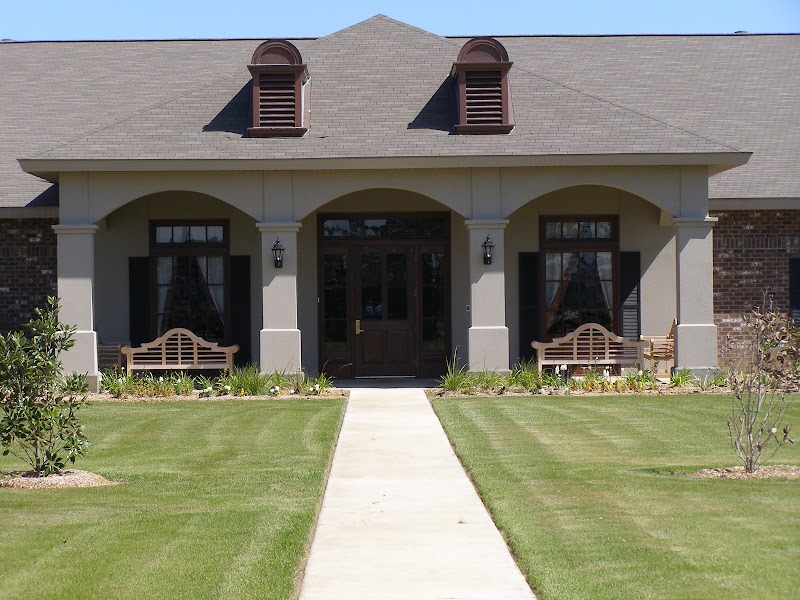
How Does Senior Village Nursing & Rehabilitation Center Compare to Other Louisiana Nursing Homes?

Compared to the 100 nursing homes in Louisiana, SENIOR VILLAGE NURSING & REHABILITATION CENTER's overall rating (3 stars) is above the state average of 2.4, staff turnover (44%) is near the state average of 46%, and health inspection rating (3 stars) is at the national benchmark.

What Should Families Ask When Visiting Senior Village Nursing & Rehabilitation Center?

Based on this facility's data, families visiting should ask: "Can I visit during a mealtime to observe dining assistance and food quality?" "How do you handle medical emergencies, and what is your hospital transfer rate?" "Can I speak with family members of current residents about their experience?"

Is Senior Village Nursing & Rehabilitation Center Safe?

Based on CMS inspection data, SENIOR VILLAGE NURSING & REHABILITATION CENTER has a clean safety record: no substantiated abuse findings (meaning no confirmed cases of resident harm), no Immediate Jeopardy citations (the most serious violation level indicating risk of serious injury or death), and is not on the Special Focus Facility watch list (a federal program monitoring the lowest-performing 1% of nursing homes). The facility has a 3-star overall rating and ranks #1 of 100 nursing homes in Louisiana. While no facility is perfect, families should still ask about staff-to-resident ratios and recent inspection results during their visit.

Do Nurses at Senior Village Nursing & Rehabilitation Center Stick Around?

SENIOR VILLAGE NURSING & REHABILITATION CENTER has a staff turnover rate of 44%, which is about average for Louisiana nursing homes (state average: 46%). Moderate turnover is common in nursing homes, but families should still ask about staff tenure and how the facility maintains care continuity when employees leave.

Was Senior Village Nursing & Rehabilitation Center Ever Fined?

SENIOR VILLAGE NURSING & REHABILITATION CENTER has been fined $30,593 across 2 penalty actions. This is below the Louisiana average of $33,385. While any fine indicates a compliance issue, fines under $50,000 are relatively common and typically reflect isolated problems that were subsequently corrected. Families should ask what specific issues led to these fines and confirm they've been resolved.

Is Senior Village Nursing & Rehabilitation Center on Any Federal Watch List?

SENIOR VILLAGE NURSING & REHABILITATION CENTER is not on any federal watch list. The most significant is the Special Focus Facility (SFF) program, which identifies the bottom 1% of nursing homes nationally based on persistent, serious quality problems. Not being on this list means the facility has avoided the pattern of deficiencies that triggers enhanced federal oversight. This is a positive indicator, though families should still review the facility's inspection history directly.