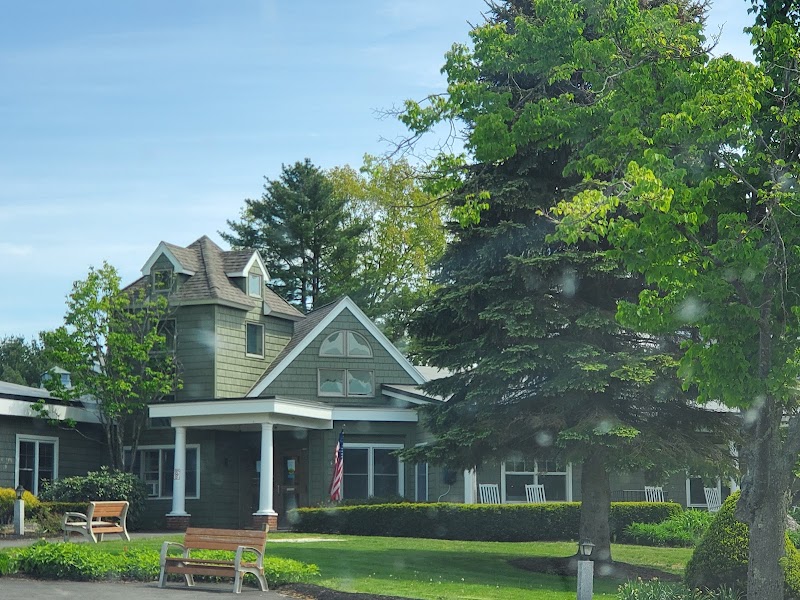


CLOVER HEALTH CARE

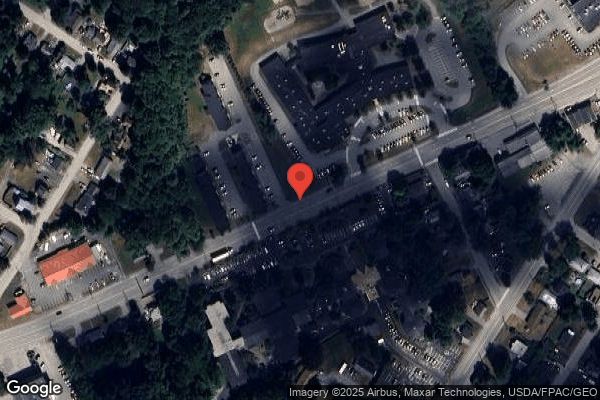
440 MINOT AVE, AUBURN, ME 04210 (207) 784-3573
For profit - Limited Liability company 109 Beds Independent Data: November 2025 2 Immediate Jeopardy citations
Trust Grade
0/100
#63 of 77 in ME
Last Inspection: May 2025

Inspected within the last 6 months. Data reflects current conditions.

Overview

Clover Health Care has received a Trust Grade of F, indicating significant concerns about the quality of care provided. Ranked #63 out of 77 in Maine, this facility is in the bottom half statewide and #5 out of 6 in Androscoggin County, suggesting limited better options locally. The facility is worsening, with issues increasing from 19 in 2024 to 28 in 2025. Staffing is a relative strength, rated 4 out of 5 stars, but with a turnover rate of 55%, it is on par with the state average. However, the facility has $23,565 in fines, which is concerning and suggests ongoing compliance problems, while the RN coverage is average. Specific incidents include a failure to prevent dangerously hot water that could scald residents and a lack of supervision leading to a resident falling out of bed, demonstrating serious safety risks. Overall, while staffing may be adequate, the facility has critical weaknesses that families should carefully consider.

Trust Score
F
0/100
In Maine
#63/77
Bottom 19%
Safety Record
High Risk
Review needed
Inspections
Getting Worse
19 → 28 violations
Staff Stability
⚠ Watch
55% turnover. Above average. Higher turnover means staff may not know residents' routines.
Penalties
✓ Good
$23,565 in fines. Lower than most Maine facilities. Relatively clean record.
Skilled Nurses
✓ Good
Each resident gets 49 minutes of Registered Nurse (RN) attention daily — more than average for Maine. RNs are trained to catch health problems early.
Violations
⚠ Watch
50 deficiencies on record. Higher than average. Multiple issues found across inspections.
★☆☆☆☆
1.0
Overall Rating
★★★★☆
4.0
Staff Levels
★★☆☆☆
2.0
Care Quality
★☆☆☆☆
1.0
Inspection Score
Stable
2024: 19 issues
2025: 28 issues

The Good

  • 4-Star Staffing Rating · Above-average nurse staffing levels
  • Full Sprinkler Coverage · Fire safety systems throughout facility
  • No fines on record

Facility shows strength in staffing levels, fire safety.

The Bad

1-Star Overall Rating

Below Maine average (3.0)

Significant quality concerns identified by CMS

Staff Turnover: 55%

Near Maine avg (46%)

Frequent staff changes - ask about care continuity

Federal Fines: $23,565

Below median ($33,413)

Minor penalties assessed

Staff turnover is elevated (55%)

7 points above Maine average of 48%

The Ugly 50 deficiencies on record

2 life-threatening
Aug 2025 3 deficiencies 1 IJ
CRITICAL (J) 📢 Someone Reported This

A family member, employee, or ombudsman was alarmed enough to file a formal complaint

Immediate Jeopardy (IJ) - the most serious Medicare violation

Accident Prevention (Tag F0689)

Someone could have died · This affected 1 resident

**NOTE- TERMS IN BRACKETS HAVE BEEN EDITED TO PROTECT CONFIDENTIALITY** Based on interviews and record reviews, the facility failed to provide safety and supervision when a Certified Nursing Assistant...

Read full inspector narrative →
**NOTE- TERMS IN BRACKETS HAVE BEEN EDITED TO PROTECT CONFIDENTIALITY** Based on interviews and record reviews, the facility failed to provide safety and supervision when a Certified Nursing Assistant (CNA#1) left a resident (#1) unattended in a bed with an air mattress, in the high position, and Resident #1 subsequently fell out of bed. This failure created an immediate jeopardy situation.On [DATE] the Department of Licensing and Certification received a facility reported incident indicating on [DATE] at 11:30 a.m., Resident #1 had sustained a fall from bed and was transferred to the Emergency Department. Review of the clinical record for Resident #1 revealed diagnoses which included Multiple Sclerosis, Muscle Weakness, and Stage III Pressure Ulcer of the Sacral region. The quarterly Minimum Data Set (MDS) 3.0., dated on [DATE], indicated Resident #1 had impairment of both lower extremities and one upper extremity. Resident #1 was dependent on staff for transfers and required substantial to maximum assistance by 2 staff for bed mobility and personal hygiene. The brief interview of mental status (BIMS) score was 13, indicating Resident #1 was cognitively intact. Resident #1's comprehensive care plan, last revised [DATE], stated the resident required total assistance by 2 staff to turn and reposition in bed, and use of a mechanical lift and total assistance by 2 staff to transfer between surfaces. Resident #1 required a low air loss mattress to help decrease pressure on areas prone to pressure ulcers. On [DATE] at 8:50 a.m., in a telephone interview with a surveyor, CNA #1 stated he/she had turned Resident #1 onto the resident's right side, approximately half-way between the side and the middle of the bed. Resident #1 was facing the doorway. There had been a pillow between his/her legs, but CNA #1 removed it. One knee was on top of the other one. The CNA stated Resident #1 told him/her that he/she was going to have to go get help and that Resident #1 was ok in the current position. Resident #1 was holding onto the edge of the air mattress with the left hand and Resident #1 told staff he/she was ok. CNA #1 stated Resident #1 was unable to move his/her legs and required staff to move them. The CNA stated he/she went to get the LPN (Licensed Practical Nurse) and had been out of the room for only 2 minutes. There was no type of bed rail on the bed. When the CNA returned, Resident #1 was observed lying on his/her back on the floor with his/her head against the wall and his/her legs in the frog-leg position. At that time, Resident #1 was alert, awake and answering questions, but in significant pain. CNA #1 stated the LPN arrived at the same time and after evaluating Resident #1, instructed staff to transfer Resident #1 back to bed using a hoyer lift. Another CNA had arrived and assisted with the transfer. Shortly thereafter, Resident #1 stated she was going to vomit. When Emergency Medical Services staff arrived, Resident #1 was transferred to a stretcher and suddenly turned ashen in color, eyes fixed in a stare, with gulping movements, and became nonresponsive. Resident #1 was transferred to the Emergency Department and died later that day. In the interview on [DATE] at 8:50 a.m. with a surveyor, CNA#1 stated he/she usually worked on the [NAME] unit, but on [DATE], was floated to the [NAME] unit. When asked what information CNA #1 had received concerning the assignment, CNA #1 stated I ask the other CNAs for help and they explain it to me. Regarding Resident #1, CNA #1 stated I didn't know anything about MS (multiple sclerosis) or what it is or that he/she had it. The only mistake I made is I should've put the bed down before I left. On [DATE] at 9:18 a.m., in a telephone interview with a surveyor, the LPN on duty at the time of the incident, stated he/she had instructed CNA#1 to come get the nurse when ready to perform perineal care and the nurse would complete Resident #1's wound care to the sacral area at that time. The LPN stated he/she heard Resident #1 yelling from the hallway and observed the resident lying on the floor. The LPN stated The first thing I noticed was the bed was in a high position. (The CNA) is shorter than me so it was at his/her working height, which was at least 3 and a half feet off the floor. The LPN completed a brief assessment and determined transport to the Emergency Department was indicated and called 911. The LPN stated Resident #1 had demonstrated no signs of illness or concerns prior to the fall, but had considerable pain afterwards, however, this was baseline for Resident #1. The resident had demanded to be put back to bed. On [DATE] at 2:50 p.m., in an interview with two surveyors, the Administrator confirmed the facility had no policy or procedure regarding bed safety or bed height. On [DATE] at 11:45 a.m., in a telephone interview with a surveyor, the Interim Director of Nursing confirmed Resident #1 did not have bed rails. At one time, Resident #1 had a halo assistive device, but it had been removed at the resident's request. Based on the above information, IJ was determined to exist on [DATE] at 3:25 p.m. for the facility's failure to provide adequate supervision to a dependent resident left alone in a side-lying position on an air mattress, without a side rail and with the bed left at an unsafe height, approximately 3 and a half feet from the floor, resulted in an avoidable accident. The facility's failure to ensure safety and supervision constituted an immediate jeopardy situation. Please see F-000 Initial Comments related to the IJ removal plan.
CONCERN (D) 📢 Someone Reported This

A family member, employee, or ombudsman was alarmed enough to file a formal complaint

Potential for Harm - no one hurt, but risky conditions existed

Comprehensive Care Plan (Tag F0656)

Could have caused harm · This affected 1 resident

**NOTE- TERMS IN BRACKETS HAVE BEEN EDITED TO PROTECT CONFIDENTIALITY** Based on record review and interviews, the facility failed to implement a resident's care for 1 of 3 residents reviewed for fall...

Read full inspector narrative →
**NOTE- TERMS IN BRACKETS HAVE BEEN EDITED TO PROTECT CONFIDENTIALITY** Based on record review and interviews, the facility failed to implement a resident's care for 1 of 3 residents reviewed for falls with injury (Resident #1).On 7/20/25 the Department of Licensing and Certification received notification of a facility reported incident which stated on 7/19/25 at 11:30 a.m., Resident #1 had sustained a fall from bed and was transferred to the Emergency Department.A review of the clinical record for Resident #1 revealed diagnoses that included Multiple Sclerosis (MS), Muscle Weakness, and Stage III Pressure Ulcer of the Sacral Region. The quarterly Minimum Data Set (MDS) 3.0., dated on 6/26/25, indicated Resident #1 had impairment of both lower extremities and one upper extremity. Resident #1 was dependent on staff for transfers and required substantial to maximum assistance by 2 staff for bed mobility and personal hygiene. The brief interview of mental status (BIMS) score was 13, indicating Resident #1 was cognitively intact. The comprehensive care plan, with a revision date of 6/20/25 stated the resident required total assistance by 2 staff to turn and reposition in bed, and use of a mechanical lift and total assistance by 2 staff to transfer between surfaces.On 8/5/25 at 12:30 p.m., in an interview with 2 surveyors, CNA#3 stated that on 7/19/25, CNA #1 had been assigned as a float to work on the [NAME] unit. CNA #3 was asked what information had been provided to CNA#1 for providing care to Resident #1. CNA#3 stated Resident #1 needed 2 people. I told him/her to coordinate with me when he/she was ready. CNA #3 stated that Resident #3 requires a lot of rolling and positioning. He/she has a lot of pain with turning and requires 2 staff to do it appropriately for better positioning. CNA#3 stated he/she has access to resident care plans and Kardexes.On 8/6/25 at 8:50 a.m., in a telephone interview with a surveyor, CNA#1 was asked how he/she obtains information about resident care needs. CNA #1 stated I ask the other CNAs for help and they explain it to me. The surveyor asked on 7/19/25, what type of information had CNA#1 received regarding Resident #1's care needs. CNA#1 stated I didn't know anything about MS (multiple sclerosis) or what it is or that he/she had it. The only mistake I made is I should've put the bed down before I left. The surveyor asked if CNA#1 had read Resident #1's care plan or Kardex. CNA#1 stated I've never looked at one. I don't think so (regarding the Kardex). Only the nurses have access. All the nurses tell me something different about how they want things done.The surveyor asked CNA#1 to describe the incident in which Resident #1 fell on 7/19/25. CNA #1 stated he/she had turned Resident #1 onto his/her right side, approximately half-way between the side and the middle of the bed. One knee was on top of the other one. CNA#1 stated Resident #1 said to go get help and he/she was ok lying on the right side and holding onto the edge of the air mattress. CNA #1 stated Resident #1 was unable to move his/her legs and required staff to move them. CNA#1 stated he/she went to get the nurse to provide wound care and had been out of the room for only 2 minutes. Upon the CNA's return with the nurse, Resident #1 was observed lying on the floor.On 8/5/25 at 10:30 a.m., in an interview with two surveyors, the Administrator discussed the facility's efforts to immediately address the situation after Resident #1's fall, and stated administration identified that staff were not following care plans.
CONCERN (E) 📢 Someone Reported This

A family member, employee, or ombudsman was alarmed enough to file a formal complaint

Potential for Harm - no one hurt, but risky conditions existed

Deficiency F0949 (Tag F0949)

Could have caused harm · This affected multiple residents

Based on the facility assessment, record review, interviews, and the facility policy statement the facility failed to develop, implement, and maintain an effective training program for all new and exi...

Read full inspector narrative →
Based on the facility assessment, record review, interviews, and the facility policy statement the facility failed to develop, implement, and maintain an effective training program for all new and existing staff that includes training to meet the resident's behavioral health care needs for 6 of 8 employee files reviewed, Certified Nursing Assistant (CNA) #3, #4, #5, #6, #7, and #8. A review of the Facility Assessment for 2025, stated its facility resident profile includes residents admitted with psychiatric/mood conditions which is 35-65% of the facility's' population. The Specific Care or Practices for mental health states to manage the medical conditions and medication-related issues causing psychiatric symptoms and behavior, identify and implement interventions to help support individuals with issues such as dealing with anxiety, care of someone with cognitive impairment, care of individuals with depression, trauma/PTSD (Post Traumatic Stress Disorder), other psychiatric diagnoses, intellectual or developmental disabilities, specialized program. 1. Review of Certified Nursing Assistances (CNA) #3 education files on 8/13/25 lacked evidence that training in behavioral health care needs had been provided. CNA #3 was hired on 7/14/25, and review of the education file on 8/13/25 lacked evidence of behavioral health training/trauma informed care education being completed. 2. Review of CNA #4 education files on 8/13/25 lacked evidence that training in behavioral health care needs had been provided. CNA #4 was hired on 7/28/25, and review of the education file on 8/13/25 lacked evidence of behavioral health training/trauma informed care education being completed. 3. Review of CNA #5 education files on 8/13/25 lacked evidence that training in behavioral health care needs had been provided. CNA #5 was hired on 7/28/25, and review of the education file on 8/13/25 lacked evidence of behavioral health training/trauma informed care education being completed. 4. Review of CNA #6 education files on 8/13/25 lacked evidence that training in behavioral health care needs had been provided. CNA #6 was hired on 3/31/25, and review of the education file on 8/13/25 lacked evidence of behavioral health training/trauma informed care education being completed. 5. Review of CNA #7 education files on 8/13/25 lacked evidence that training in behavioral health care needs had been provided. CNA #7 was hired on 4/28/25, and review of the education file on 8/13/25 lacked evidence of behavioral health training/trauma informed care education being completed. 6. Review of CNA #8 education files on 8/13/25 lacked evidence that training in behavioral health care needs had been provided. CNA #8 was hired on 5/12/25, and review of the education file on 8/13/25 lacked evidence of behavioral health training/trauma informed care education being completed. On 8/13/25 at 12:48 p.m. during an interview, the Interim Director of Nursing confirmed she could not find behavioral health training/trauma informed care for the staff above stating, the previous Social Worker, who left approximately in February 2025 would provide education during orientation. On 8/13/25 at 1:50 p.m. during an interview, the Administrator and the Director of Nursing confirmed the lack of the Behavioral Health Care training for existing staff and new staff has not been completed since February. The Administrator stated, she was unaware and figured out that the Behavioral Health Care training/ Trauma informed care training had dropped off the learning platform the facility utilizes and they, after surveyor intervention, have assigned it to everyone to complete by end of month. On 8/14/25 at 5:49 p.m. the surveyor received an email from the Area Director of Clinical Operations in reply to the surveyor's request for the Behavioral Health/Trauma informed care policy, stating they do not have access to the policy due to converting from one policy portal to another. On 8/15/25 at 11:21 a.m. the Executive Director sent a copy of the Behavioral Health services policy statement that had no initial or revision date listed. A review of the policy statement, #5 states: Staff training regarding behavioral health services includes, but is not limited to: recognizing changes in behavior that indicate psychological distress; implementing care plan interventions that are relevant to the resident's diagnosis and appropriate to his or her needs; monitoring care plan interventions and reporting changes in condition; and protocols and guidelines related to the treatment of mental disorders, psychosocial adjustment difficulties, history of trauma and post-traumatic stress disorder and #6 states: Behavioral health services are provided by staff who are qualified and competent in behavioral health and trauma-informed care.
May 2025 19 deficiencies 1 IJ (1 affecting multiple)
CRITICAL (K)

Immediate Jeopardy (IJ) - the most serious Medicare violation

Accident Prevention (Tag F0689)

Someone could have died · This affected multiple residents

**NOTE- TERMS IN BRACKETS HAVE BEEN EDITED TO PROTECT CONFIDENTIALITY** Based on water temperature observations, water temperature log reviews, interviews, and review of facility's Water Temps[tempera...

Read full inspector narrative →
**NOTE- TERMS IN BRACKETS HAVE BEEN EDITED TO PROTECT CONFIDENTIALITY** Based on water temperature observations, water temperature log reviews, interviews, and review of facility's Water Temps[temperatures] policy the facility failed to identify hazards in a resident's environment and implement interventions to prevent potential accidents/injuries by ensuring that hot water temperatures, accessible to residents did not exceed 120 degrees Fahrenheit on 3 of 4 units ([NAME], [NAME] and [NAME]) for 1 of 5 days of survey (5/5/25). The failure of the facility to ensure that hot water temperatures accessible to residents did not exceed 120 degrees Fahrenheit created the potential for residents to be scalded/burned by the domestic hot water. This created an Immediate Jeopardy (IJ) situation for residents. In addition, the facility failed to provide supervision, a protective apron, and ensure safety for 1 of 1 residents reviewed for smoking (Resident #45). Findings: 1. On 5/5/25 at 10:50 a.m., a surveyor identfied that hot water in Resident room [ROOM NUMBER] was too hot to the touch, and additional hot water temperatures of other resident rooms on all units were taken: [NAME] Unit: At 10:52 a.m., the hot water temperature in Resident room [ROOM NUMBER]'s sink was 129.5 degrees Fahrenheit(F). At 10:55 a.m., the hot water temperature in Resident room [ROOM NUMBER]'s sink was 131.1 degrees (F). At 10:57 a.m., the hot water temperature in Resident room [ROOM NUMBER]'s sink was 123.9 degrees (F). At 10:59 a.m., the hot water temperature in Resident room [ROOM NUMBER]'s sink was 125.9 degrees (F). [NAME] Unit: At 11:15 a.m., the hot water temperature in Resident room [ROOM NUMBER]'s sink was 121.9 degrees (F). At 11:22 a.m., the hot water temperature in Resident room [ROOM NUMBER]'s sink was 127.0 degrees (F). At 11:33 a.m., the hot water temperature in Resident room [ROOM NUMBER]'s sink was 123.9 degrees (F). [NAME] Unit: At 11:05 a.m., the hot water temperature in Resident room [ROOM NUMBER]'s sink was 122.5 degrees (F). At 11:08 a.m., the hot water temperature in Resident room [ROOM NUMBER]'s sink was 123.1 degrees (F). At 11:10 a.m., the hot water temperature in Resident room [ROOM NUMBER]'s sink was 122.1 degrees (F). [NAME] Unit: On 5/5/25, a surveyor took hot water temperatures on the units again and found the following: At 3:42 p.m., the hot water temperature in Resident room [ROOM NUMBER]'s sink was 127.2 degrees (F). At 3:46 p.m., the hot water temperature in Resident room [ROOM NUMBER]'s sink was 128.4 degrees (F). At 3:49 p.m., the hot water temperature in Resident room [ROOM NUMBER]'s sink was 121.2 degrees (F). Gallway Unit: At 3:34 p.m., the hot water temperature in Resident room [ROOM NUMBER]'s sink was 121.2 degrees (F) All three of the above named units have residents who are able to ambulate and could potentially assess sinks with the noted hot water temperatures without staff assistance. On 5/5/25 at 11:33 a.m. in an interview with a surveyor, CNA6 said, regarding water temperatures, burnt me this a.m. (morning), the surveyor asked, you burned yourself?, CNA6 said, No, but I was like, it's too hot. She stated it's usually hotter early in the morning after breakfast time. She did not make anyone aware of the hot temperatures. On 5/5/25 at 11:40 a.m., in an interview with the Administrator, the surveyor asked if there were any hot water issues in the facility. The Administrator stated that there were no issues she knew about. The surveyor informed the Administrator of the hot water temperatures taken by the surveyors in the resident rooms above 120 degrees. The Administrator stated that she was not aware of the hot water being above 120 degrees F. At this time, the Administrator confirmed the findings and stated a call would be made to get a mechanical contractor into the facility to fix the problem. On 5/5/25 at 1:00 p.m., in an interview, the Director of Plant Operations stated that he had only been at the facility for a month and that he has never calibrated his digital thermometer or documented any resident room hot water temperatures. The surveyor requested and received the last documented hot water temperatures for resident rooms/areas and the documentation showed December 2024 as the last time hot water temperatures were monitored and documented. He stated that he has taken temperatures approximately once a week in the last month but does not document them. He stated that there is a mixing valve and he does not adjust it. He gave the surveyors a form from Direct Supply that states what the hot water temperatures are supposed to be and to monitor them and log them. At this time, the Director of Plant Operations confirmed that the facility is not monitoring, documenting them and adjusting the resident area hot water to ensure they stay below 120 degrees F. On 5/5/25 at 2:20 p.m., a mechanical services company arrived at the facility. The contractor worked on the facility hot water system and told the facility the hot water mixing valve was set too high, they adjusted the temperature and was corrected. The mechanical services company stated they had taken hot water temperatures throughout the facility and all were below 120 degrees F. The work was signed off and accepted by the facility. On 5/5/25 at 4:20 p.m., two surveyors met with the Regional Director of Operations and the Administrator to confirm that the [NAME] and [NAME] units still had resident areas that were above 120 degrees Fahrenheit and still an accident hazard concern. The Administrator confirmed the findings and stated that the mechanical services company would come back to fix it. On 5/5/25 at 4:50 p.m., in an interview, the Director of Plant Operations stated and confirmed that he had not taken hot water temperatures after he was told by the mechanical services company the hot water had been fixed and adjusted below 120 degrees F. On 5/5/25 at approximately 5:38 p.m., the mechanical services company returned to the facility and found that the hot water mixing valve was broken and causing huge fluctuations in the hot water temperatures to the resident areas. The mechanical services company completed additional work on the hot water system and additional testing of water temperatures found them to be in acceptable ranges (below 120 degrees F). The facility's Water Temps[temperatures] policy was reviewed. The policy indicated the following: Test water temperatures: 1. Ensure patient room water temperatures are 120 degrees Fahrenheit (or as specified by state requirements). 3. Check resident rooms at the end of each wing on a rotating basis. Record results in the water temperature log: 1. Note any discrepancies. 2. Adjust water heater settings as required. 3. Retest as necessary The immediate jeopardy began on 5/5/25 when the facility failed to identify hazards in a resident environment and implement interventions to prevent injury including the risk of scalding and burning. The Administrator was notified of the immediate jeopardy at 2:45 p.m. on 5/5/25. Please See F-000 Initial Comments related to the IJ removal plan. 2. On 5/5/25 at 10:21 a.m., a surveyor observed an unsecured container of PDI Sani-Cloth Bleach Germicidal Disposable Wipes in resident room [ROOM NUMBER]. At this time, after surveyor intervention, the Facility Administrator removed the chemical from the room, confirming the chemicals should not be available for resident use. The Safety Data Sheet for PDI Sani-Cloth Bleach Germicidal Disposable Wipes states in Section 4: First Aid Measures Eye: Rinse thoroughly with water. Get medical attention if irritation occurs and persists . Skin: No first aid should be required. Wash skin with water. Get medical attention if irritation develops or persists . Inhalation: Not a normal route of exposure. If symptoms develop move victim to fresh air. Get medical attention if symptoms develop . Ingestion: Ingestion is unlikely for solid products. No first aid is required for small amounts transferred from hands to mouth. On 5/5/25 at 10:21, the above information was discussed with the Facility Administrator. 3. Record review of Resident #45's clinical record showed smoking assessments were completed on 11/21/24 and 3/6/25 and indicated he/she requires supervision when smoking. On 5/7/25 at 2:10 p.m., during an interview with a surveyor, Certified Nursing Assistant- Medication Technician #1 (CNA-M) who stated Resident #45 usually goes out on his/her own to smoke. On 5/7/25 at 2:14 p.m., during an interview, Licensed Practical Nurse #1 (LPN) stated that Resident #45 smokes a couple times a day and he/she typically goes out on his/her own, but the LPN will occasionally go out with the resident as he/she has a hard time getting back to the facility entrance on his/her own. On 5/7/25 at 2:52 p.m., during an interview a surveyor, Resident #45 stated they typically smoke in the morning, and he/she will go outside on his/her own. On 5/7/25 at 12:07 p.m., during an interview with the Area Manager of Clinical Reimbursement the above information was discussed. On 5/8/25 at 9:26 a.m. a surveyor observed Resident #45 outside, at the end of [NAME] unit, sitting in wheelchair, smoking. He/she had on a t-shirt. LPN3 is observed standing near Resident #45. Resident #45 was not wearing a protective apron for safety. Resident #45s assessment for safety stated he/she needs a smoking apron, needs supervision with smoking. On 5/8/25 at 9:35 a.m. in an interview with a surveyor, LPN3 stated she took Resident #45 outside to smoke this morning, she stated that she did not encourage him/her to wear a protective apron while he/she was smoking and was not aware that he/she was assessed to need a protective apron while smoking for safety. The surveyor confirmed the accident hazard at this time.
CONCERN (D)

Potential for Harm - no one hurt, but risky conditions existed

Resident Rights (Tag F0550)

Could have caused harm · This affected 1 resident

**NOTE- TERMS IN BRACKETS HAVE BEEN EDITED TO PROTECT CONFIDENTIALITY** Based on observation and interview, the facility failed to create a homelike environment and promote each resident's dignity and...

Read full inspector narrative →
**NOTE- TERMS IN BRACKETS HAVE BEEN EDITED TO PROTECT CONFIDENTIALITY** Based on observation and interview, the facility failed to create a homelike environment and promote each resident's dignity and respect on 1 of 4 units ([NAME]) for the evening meal for 1 of 5 days of survey (5/5/25). Findings: On 5/5/25 at 5:05 p.m., a surveyor observed in the [NAME] dining room, 6 residents seated at the dining room tables eating their dinner meal. These 6 residents had their meals served to them on trays and it was not homelike, dignified or respectful. On 5/5/25 at 5:10 p.m., in an observation and interview, the Regional Director of Operations confirmed that the meals should not have been served on trays and it was not homelike, dignified or respectful for the residents.
CONCERN (D)

Potential for Harm - no one hurt, but risky conditions existed

Deficiency F0645 (Tag F0645)

Could have caused harm · This affected 1 resident

Based on record review and interview, the facility failed to ensure a resident with a specialized mental health diagnosis, whose stay went beyond the expected 30 days, had been referred to the appropr...

Read full inspector narrative →
Based on record review and interview, the facility failed to ensure a resident with a specialized mental health diagnosis, whose stay went beyond the expected 30 days, had been referred to the appropriate state-designated authority for Pre-admission Screening & Resident Review Level II (PASRR) evaluation and determination for 1 of 1 residents reviewed for PASRR (Resident #78) Finding: On 3/6/25, clinical record review indicated Resident #78 was admitted in March of 2025. Admitting diagnosis includes Post-Traumatic Stress Disorder. Review of Resident #78's PASRR, dated 3/7/25, indicated Resident #78 had a Convalescence Categorical exemption (a time-limited 30-day exemption). Further review the clinical record lacked evidence to indicate that the PASRR Level I was forwarded again to the State Mental Health Authority to determine if a PASRR Level II evaluation and determination was needed after the Residents stay changed from short-term to long-term. On 5/8/25 at 2:30 p.m., during an interview with the Area Manager of Clinical Reimbursement, the above was confirmed.
CONCERN (D)

Potential for Harm - no one hurt, but risky conditions existed

Deficiency F0655 (Tag F0655)

Could have caused harm · This affected 1 resident

**NOTE- TERMS IN BRACKETS HAVE BEEN EDITED TO PROTECT CONFIDENTIALITY** Based on interview and record review, the facility failed to ensure a baseline care plan was developed and implemented within 48...

Read full inspector narrative →
**NOTE- TERMS IN BRACKETS HAVE BEEN EDITED TO PROTECT CONFIDENTIALITY** Based on interview and record review, the facility failed to ensure a baseline care plan was developed and implemented within 48 hours that included the instructions needed to provide minimum healthcare information necessary to care for 1 of 1 residents reviewed for baseline care plans (Resident #4). Finding: Resident #4 was recently admitted with diagnoses to include Repeated Falls, Difficulty in Walking, Muscle Weakness, and Need for Assistance in Personal Care. Review of admission Minimum Data Set (MDS), dated [DATE], revealed Resident #4 requires substantial/maximal assistance with Activities of Daily Living (ADLs). Review of Resident #4's care plan, initiated 4/2/25, lacked evidence that goals and interventions were put into place for ADLs. On 5/8/25 at 9:25 a.m. during an interview, Certified Nursing Assistant (CNA) #6 stated Resident #4 is sometimes incontinent but toilets in the bathroom and walks to the bathroom with his/her walker but needs help. On 5/8/25 at 12:30 p.m., the Director of Nursing (DON) reviewed Resident #4's care plan and confirmed it did not contain goals and interventions for the above concern.
CONCERN (D)

Potential for Harm - no one hurt, but risky conditions existed

Comprehensive Care Plan (Tag F0656)

Could have caused harm · This affected 1 resident

Based on observation, record review and interview, the facility failed to ensure that a care plan was developed in the area of smoking (Resident #45) and respiratory needs (Resident #78) for 2 of 28 s...

Read full inspector narrative →
Based on observation, record review and interview, the facility failed to ensure that a care plan was developed in the area of smoking (Resident #45) and respiratory needs (Resident #78) for 2 of 28 sampled residents reviewed for comprehensive care plans. Findings: 1. Resident #45 was admitted to the facility in May of 2018. A review of the resident's Smoking Safety Screening completed on 11/21/24 indicates that he/she is safe to smoke with supervision. Further review of the resident's medical record lacks evidence of the need to smoke with supervision in his/her care plan. On 5/7/25 at 2:20 p.m., the above information was confirmed with the Facility Administrator. 2. Resident #78 was admitted to the facility in March of 2025. Review of the resident's physician orders indicates that he/she has been using his/her Continuous Positive Airway Pressure (CPAP) since 3/13/25. Further review of his/her medical record lacks evidence of a care plan for CPAP usage. On 5/7/25 at 2:00 p.m., the above information was confirmed with the Director of Nursing.
CONCERN (D)

Potential for Harm - no one hurt, but risky conditions existed

Respiratory Care (Tag F0695)

Could have caused harm · This affected 1 resident

Based on observations, record reviews, and interviews, the facility failed to provide a sanitary environment to help prevent the development and transmission of disease and infection related to respir...

Read full inspector narrative →
Based on observations, record reviews, and interviews, the facility failed to provide a sanitary environment to help prevent the development and transmission of disease and infection related to respiratory care for 2 of 2 residents reviewed for respiratory care. (Resident #23 and #78) Findings: 1. On 5/5/25 at 9:03 a.m., 5/6/25 at 2:10 p.m., and on 5/7/25 at 12:45 p.m., a surveyor observed Resident #23's unbagged nebulizer mask and tubing on the bedside table. Review of Resident #23's clinical record indicated a physician order for Albuterol Sulfate Inhalation Nebulization Solution (2.5 MG/3ML) 0.083%, with instructions to give 1 dose three times a day for cough, which was discontinued on 4/23/25. Further review shows an active physician order for Albuterol Sulfate Inhalation Nebulization Solution (2.5 MG/3ML) 0.083%, with instructions to give 1 dose every 4 hours as needed for cough. Review of the medication administration record/treatment administration record indicated that his/her last time using the nebulizer was on 4/23/35. On 5/8/25 at 2:25 p.m., during an interview with the Facility Administrator the above information was confirmed. 2. Review of Resident #78's clinical record reveals a physician order indicating that he/she has been using his/her Continuous Positive Airway Pressure (CPAP) machine since 3/13/25. Further review of his/her medical record lacked evidence of it being cleaned or maintained. On 5/8/25 at 12:00 p.m., during an interview with the Area Manager of Clinical Reimbursement, who discusses that they are unable to find documentation of the last time his/her CPAP was cleaned but are going to initiate an order and get it cleaned today 5/8/25.
CONCERN (D)

Potential for Harm - no one hurt, but risky conditions existed

Deficiency F0698 (Tag F0698)

Could have caused harm · This affected 1 resident

**NOTE- TERMS IN BRACKETS HAVE BEEN EDITED TO PROTECT CONFIDENTIALITY** Based on record reviews, interviews, and facility policy, the facility failed to ensure that a resident who requires dialysis re...

Read full inspector narrative →
**NOTE- TERMS IN BRACKETS HAVE BEEN EDITED TO PROTECT CONFIDENTIALITY** Based on record reviews, interviews, and facility policy, the facility failed to ensure that a resident who requires dialysis receives such services, consistent with the professional standards of practice in the areas of monitoring a dialysis fistula and assessing and monitoring a resident before and after dialysis treatments for 1 of 1 resident receiving dialysis (#21). Finding: Review of facility policy, Dialysis-Access Site Management-Skilled, revised 6/30/22, states, The staff must assess and note placement of the resident's access site on their eMAR [electronic Medication Administration Record] or eTAR [electronic Treatment Administration Record] and care plan .Licensed staff is to note every shift for any sign/symptom of infection .at the access site and document findings .Every shift on the access arm licensed staff will note color and temperature of fingers, and presence of radial pulse .If an AV fistula or graft is present, the licensed staff will palpate the site to feel the 'thrill' or use a stethoscope to hear the . 'bruit' of blood flow through the access. Document all findings in the Progress notes . or Dialysis form . Review of facility policy, Dialysis-Communication, Documentation, Management-Skilled, revised 8/5/24, states, Management of the resident receiving hemodialysis will include assessment of the resident's condition and monitoring for complications before and after dialysis treatments .Prior to sending the resident to treatment the staff will complete the 'Pre-Dialysis' . form, print and send with the resident . On the resident's return from their dialysis treatment, the staff nurse will complete the 'Post Dialysis' portion of the dialysis form . Resident #21 was recently admitted with diagnoses to include End-Stage Renal Disease (ESRD), dependence on Hemodialysis, and arteriovenous (AV) fistula of right arm. Review of admission Minimum Data Set (MDS), dated [DATE], revealed Resident #21 had a Brief Interview for Mental Status (BIMS) of 15 out of 15, indicating he/she is cognitively intact. Review of Resident #21's care plan, last revised on 4/26/25, revealed, Focus .needs dialysis r/t chronic renal disease . Resident receives dialysis M-W-F [Monday, Wednesday, Friday] .Monitor for Thrill and Bruit each shift. Notify physician/dialysis if absent or significant change .Monitor/document/report PRN [as needed] any s/sx [signs/symptoms] of infection to access site . Review of Resident #21's March 2025 and April 2025 MAR/TAR lacked evidence of monitoring his/her dialysis access site. Further review of Resident #21's clinical record lacked evidence of assessment of the access arm, monitoring for complications before and after dialysis, and completion of the Pre- and Post-Dialysis Review. On 5/6/25 at 11:22 a.m., during an interview, Resident #21 stated he/she has been receiving dialysis for 8 years via his/her right upper arm fistula and that the nurses here do not check his/her fistula and do not usually check on him/her after he/she returns from dialysis. On 5/8/25 at 9:50 a.m., during an interview, Licensed Practical Nurse (LPN) #1, stated when a resident returns from dialysis, they get a meal and their regular medications and the nurse does not do an assessment or vital signs unless medications require vital signs. On 5/8/25 at 10:45 a.m., during an interview, the Director of Nursing (DON) stated the nurse does not assess or monitor the resident after dialysis. At this time, the DON reviewed the above policies and stated nursing has not been doing the pre-dialysis assessment or the post-dialysis assessment and reviewed Resident #21's entire clinical record and confirmed that the clinical record lacked evidence that the fistula and access arm was being monitored and lacked evidence that a Pre- and Post- Dialysis assessment is being done.
CONCERN (D) 📢 Someone Reported This

A family member, employee, or ombudsman was alarmed enough to file a formal complaint

Potential for Harm - no one hurt, but risky conditions existed

Deficiency F0761 (Tag F0761)

Could have caused harm · This affected 1 resident

**NOTE- TERMS IN BRACKETS HAVE BEEN EDITED TO PROTECT CONFIDENTIALITY** 2. On 5/9/25 at 11:30 a.m., in an observation and interview with the Director of Nursing (DON), a surveyor and the DON observed,...

Read full inspector narrative →
**NOTE- TERMS IN BRACKETS HAVE BEEN EDITED TO PROTECT CONFIDENTIALITY** 2. On 5/9/25 at 11:30 a.m., in an observation and interview with the Director of Nursing (DON), a surveyor and the DON observed, on the [NAME] Unit, in the medication storage room, significant ice buildup in the dormitory style refrigerator (small combination refrigerator/freezer unit that is outfitted with one exterior door) which is inappropriate for storing medications due to temperature fluctuations. The refrigerator contained several medications. Based on observations, interviews and review of facility Resident Self-Administration of Medication - Skilled policy/procedure, the facility failed to ensure medications were stored properly and that the facility failed to obtain physician orders and complete a safety assessment for a medication observed located at a resident's bedside, for 1 of 1 sampled resident (Resident #24). The facility failed to ensure medications were stored properly in a refrigerator for 1 of 3 medication storage refrigerators ([NAME] Unit). Findings: The facility's Resident Self-Administration of Medication - Skilled policy/procedure, reviewed 4/9/24, noted: Policy: If a resident requests to self-administer their medications, it is the responsibility of the community to determine that it is safe for the resident to do so before the resident may exercise that right. Procedure: 2. The Self-Administration Review . shall be completed in the EHR[Electronic Health Record] by a licensed nurse. 3. The licensed nurse will notify the resident's physician of the resident request and the results of the Self-Administration Review. 4. An order must be obtained from the physician either granting or denying the resident request 5. If the physician allows the resident to self-administer, the order must include which medications that the resident may administer. 6. The community must provide the resident a receptacle that can store all the medications that will be self-administered. 7. The receptacle must have a lock with only the resident having possession of the key, combination, etc. 1. On 5/6/25 at 10:20 a.m., a surveyor observed in Resident 24's room, a bottle of extra strength Tylenol capsules, 500 milligrams (mg), sitting on the resident's bedside table. Resident 24 stated that he/she keeps the medication in his/her room and takes it when he/she needs it. On 5/6/25 at 10:25 a.m., in an interview, a Licensed Practical Nurse (LPN) confirmed that the resident had the Tylenol medication on his/her bedside table by his/her bed and that there was no doctor's order to self-administer medications and that the facility did not have a safety assessment completed by an interdisciplinary team (IDT) for the resident to self-administer medications. The LPN removed the medication from the resident's room. On 5/7/25, a review of Resident 24's medical record lacked evidence that a safety assessment to self-administer medications was completed by an IDT team, or evidence of a doctor's order to self-administer medications.
CONCERN (D)

Potential for Harm - no one hurt, but risky conditions existed

Garbage Disposal (Tag F0814)

Could have caused harm · This affected 1 resident

Based on observation and interview, the facility failed to maintain a garbage storage area and in a sanitary condition to prevent the harborage and feeding of pests for one trash dumpster and for an a...

Read full inspector narrative →
Based on observation and interview, the facility failed to maintain a garbage storage area and in a sanitary condition to prevent the harborage and feeding of pests for one trash dumpster and for an area outside the back kitchen door for 1 of 5 days of survey (5/5/25). Findings: On 5/5/25 at 9:15 a.m., a surveyor and the Food Service Director(FSD) observed food and trash to be on the ground outside the back kitchen door and observed one of two dumpsters with a right-side slide door open exposing trash. Additionally, there was trash on the ground around the open dumpster. On 5/5/25 at 9:15 a.m., in an interview, the FSD confirmed the findings.
CONCERN (D)

Potential for Harm - no one hurt, but risky conditions existed

Infection Control (Tag F0880)

Could have caused harm · This affected 1 resident

Based on observation, and interview, the facility failed to maintain an Infection Control Program designed to help prevent the development and spread of infection related to Enhanced Barrier Precautio...

Read full inspector narrative →
Based on observation, and interview, the facility failed to maintain an Infection Control Program designed to help prevent the development and spread of infection related to Enhanced Barrier Precautions (EBP) for 1 of 1 sampled resident reviewed for intravenous medication administration (Resident #206). Finding: A review of the sign posted on resident #206's room indicated the following: Before entering the resident's room, a sign posted outside resident #206's room indicated that the Resident was on EBP. The sign indicated that staff were required to wear personal protective equipment (PPE), a gown, gloves and a face mask/eye protection when providing care. On 5/6/25 at 1:54 p.m. a surveyor observed an intravenous medication administration for Resident #206 with the Registered Nurse #1 (RN1), Belfast Unit. The RN1, Belfast Unit was wearing PPE's. The resident requested pillows placed under his/her right foot and leg. The RN1, Belfast Unit placed a pillow under his/her foot, and then removed her PPE to leave the room for a clean pillow case for a second pillow for R206's right thigh. When she returned, she put a new pillow case on the pillow and proceeded to place the pillow under R206's right thigh, lifting the thigh with both of her hands. The treatment nurse was not wearing a gown, gloves or mask when providing high contact care to R206. On 5/6/25 at approximately 2:15 p.m. in an interview, a surveyor confirmed with the RN1, Belfast Unit that he/she handled R206's upper right leg, and positioned the leg without wearing proper PPE. She did not have a gown, gloves, or face mask on while providing high contact care to R206 with whom is on EBP.
CONCERN (E)

Potential for Harm - no one hurt, but risky conditions existed

Deficiency F0578 (Tag F0578)

Could have caused harm · This affected multiple residents

**NOTE- TERMS IN BRACKETS HAVE BEEN EDITED TO PROTECT CONFIDENTIALITY** 12. Resident #59 was admitted in April of 2022. A review of the entire electronic and paper medical record lacked evidence that ...

Read full inspector narrative →
**NOTE- TERMS IN BRACKETS HAVE BEEN EDITED TO PROTECT CONFIDENTIALITY** 12. Resident #59 was admitted in April of 2022. A review of the entire electronic and paper medical record lacked evidence that the facility offered or provided the resident and/or resident representative with written information concerning the right to formulate an advanced directive. 13. Resident #83 was admitted in August of 2024. A review of the entire electronic and paper medical record lacked evidence that the facility offered or provided the resident and/or resident representative with written information concerning the right to formulate an advanced directive. Based on record review and interview, the facility failed to ensure that the resident and/or resident representative was provided with written information concerning the right to formulate an advanced directive for 13 of 14 residents reviewed (Residents #3, 6, 24, 29, 45, 47, 54, 59, 77, 81, 83, 88, 204, 206). Findings: 1. Resident #29 was admitted in February of 2021. A review of the entire electronic and paper medical record lacked evidence that the facility offered or provided the resident and/or resident representative with written information concerning the right to formulate an advanced directive. 2. Resident #204 was admitted in April of 2025. A review of the entire electronic and paper medical record lacked evidence that the facility offered or provided the resident and/or resident representative with written information concerning the right to formulate an advanced directive. 3. Resident #206 was admitted in May of 2025. A review of the entire electronic and paper medical record lacked evidence that the facility offered or provided the resident and/or resident representative with written information concerning the right to formulate an advanced directive. On [DATE] at 1:00 p.m., in an interview with a surveyor, the Clinical Reimbursement Manager confirmed there was no evidence in the clinical records of any discussion held with the residents or their designated representatives regarding advanced directives. On [DATE] at 1:50 p.m., in an interview with five surveyors, the Social Services Assistant confirmed the records did not contain evidence that residents or their representatives were asked to provide a copy of their advanced directives, or if they had none, were provided with information or assistance to formulate one. 4. Resident #3 was admitted to the facility in March of 2021. A review of the resident's electronic medical record and their paper medical record lacked evidence that the facility offered, reviewed, or provided written information concerning the right to formulate an advanced directive to the resident and/or resident representative. 5. Resident #24 was admitted to the facility in December of 2021. A review of the resident's electronic medical record and their paper medical record lacked evidence that the facility offered, reviewed, or provided written information concerning the right to formulate an advanced directive to the resident and/or resident representative. 6. Resident #47 was admitted to the facility in January of 2022. A review of the resident's electronic medical record and their paper medical record lacked evidence that the facility offered, reviewed, or provided written information concerning the right to formulate an advanced directive to the resident and/or resident representative. 7. Resident #88 was admitted to the facility in December of 2024. A review of the resident's electronic medical record and their paper medical record lacked evidence that the facility offered, reviewed, or provided written information concerning the right to formulate an advanced directive to the resident and/or resident representative. 10. Resident #45 was admitted to the facility in [DATE]. A review of the residents electronic medical record and their paper medical record lacked evidence that the facility offered, reviewed, or provided written information concerning the right to formulate an advanced directive to the resident and/or resident representative. 11. Resident #54 was admitted to the facility in [DATE]. A review of the residents electronic medical record and their paper medical record lacked evidence that the facility offered, reviewed, or provided written information concerning the right to formulate an advanced directive to the resident and/or resident representative. 8. Resident #77 was admitted in February 2025. A review of the entire electronic medical record and the paper medical record lacked evidence that the facility offered, reviewed, or provided written information concerning the right to formulate an advance directive to the resident and/or resident representative. 9. Resident #81 was admitted in [DATE]. A review of the entire electronic medical record and the paper medical record lacked evidence that the facility offered, reviewed, or provided written information concerning the right to formulate an advance directive to the resident and/or resident representative. On [DATE] at 1:42 p.m., during an interview in the presence of 5 surveyors, the Social Services Assistant stated she did not offer, review, or provide written information concerning advance directives to the above residents and/or resident representatives and stated she did not know what an advance directive includes other than cardiopulmonary resuscitation (CPR).
CONCERN (E)

Potential for Harm - no one hurt, but risky conditions existed

Safe Environment (Tag F0584)

Could have caused harm · This affected multiple residents

**NOTE- TERMS IN BRACKETS HAVE BEEN EDITED TO PROTECT CONFIDENTIALITY** Based on observations and interviews, the facility failed to adequately provide housekeeping and maintenance services necessary ...

Read full inspector narrative →
**NOTE- TERMS IN BRACKETS HAVE BEEN EDITED TO PROTECT CONFIDENTIALITY** Based on observations and interviews, the facility failed to adequately provide housekeeping and maintenance services necessary to maintain the building in a sanitary, orderly, and comfortable environment on 4 of 4 units (Belfast, [NAME], [NAME] and [NAME]) for 2 of 2 facility tours(5/5/25 and 5/9/25). Findings: 1. On 5/5/25 at 9:55 a.m., a surveyor and the Food Service Director observed the following in the Laundry room: > There were 2 black laundry carts with ripped duct tape on the inside of the carts creating uncleanable surfaces. > The floor had chipped/missing paint, on a wooden trap door, creating an uncleanable surface. On 5/5/25 at 9:55 a.m., in an interview, the Food Service Director confirmed the findings. On 5/9/25 from 8:15 a.m. to 9:15 a.m., a surveyor conducted an Environmental Tour with the Administrator, the Director of Plant Operations, the Assistant Director Plant Operations, the Housekeeping Supervisor and the Regional Director of Operations, in which the following findings were observed: 2. Belfast Unit: > The sit-to-stand patient lift had food debris and dirt in the foot base area. > Resident room [ROOM NUMBER] - The baseboard heater had chipped/missing paint creating an uncleanable surface. > Resident room [ROOM NUMBER]- The bathroom/shower ceiling light was missing a lens cover. > Resident room [ROOM NUMBER] - The room entrance door frame had chipped/missing paint creating an uncleanable surface. > Resident room [ROOM NUMBER]- Bathroom/shower ceiling light is missing lens cover. [NAME] Unit: > The wheelchair, scale in the whirlpool room, had a non-skid surface that was ripped/torn and created an uncleanable surface. > The inside entrance doors to the unit marred with black marks on the lower part of door. > Resident room [ROOM NUMBER]-2 - The wheelchair arm rests were worn and presented with an uncleanable surface. The right wheel was rubbing against the resident's seat causing the wheelchair to steer and roll to the right. > Resident room [ROOM NUMBER]- There were two ceiling tiles with brown stains on them. > Resident room [ROOM NUMBER]- There was an unbagged bedpan on shelf above toilet. > Resident room [ROOM NUMBER] - The heating unit had chipped/missing paint creating an uncleanable surface. [NAME]: > A dining room table has 2 pieces of untreated wood, approximately 6 inches long, under 2 of the table legs. > A sit-to-stand lift had food debris and dirt in foot base area. > The exit doors hallway walls were marred with black marks and had chipped/missing paint exposing sheetrock. > The wall heater, in the center core, had metal that had come apart and was sticking out and not secured together. > Resident room [ROOM NUMBER] - The caulking around the base of the toilet was stained and dirty. > Resident room [ROOM NUMBER] - The wall by bed 2 was scuffed/marred with black marks. > Resident room [ROOM NUMBER] bathroom- The walls were scuffed/marred with black marks and had chipped/missing paint. > Resident room [ROOM NUMBER]- The walls were scuffed/marred with black marks. The ceiling light had debris in them. > Resident room [ROOM NUMBER] - There were multiple ceiling tiles with brown stains. > Resident room [ROOM NUMBER] - The was a cracked/broken ceiling tile above the toilet. There were two stained ceiling tiles above bed 1. > Resident room [ROOM NUMBER]-2 - The wall behind the bed had chipped/missing paint. > Resident room [ROOM NUMBER] - There was a dirty plunger on floor next to the toilet that was not bagged. There was a wash basin on the floor by the toilet. The bathroom walls had chipped/missing paint. There was a ceiling tile over the head of the bed with a large brown stain. The room heating unit had chipped/missing paint. > Resident room [ROOM NUMBER] - A ceiling tile in the bathroom was stained and dirty. [NAME] Unit > The exit 8 cement floor had chipped/missing paint creating an uncleanable surface. > The sitting area past the nurse's station had a small table with missing laminate on the top. > Resident room [ROOM NUMBER] - The room heater has chipped/missing paint. The room entrance door and door frame had chipped/missing paint and black marks on them. > > Resident room [ROOM NUMBER] - There was a dirty plunger on floor and unbagged. The wall by the bathroom entrance had chipped/missing paint and was marred with black marks. On 5/9/25 at 9:15 a.m., in an interview, the Administrator, the Director of Plant Operations, the Assistant Director Plant Operations, the Housekeeping Supervisor and the Regional Director of Operations, confirmed the findings.
CONCERN (E)

Potential for Harm - no one hurt, but risky conditions existed

Deficiency F0657 (Tag F0657)

Could have caused harm · This affected multiple residents

2. Resident #3's clinical record contained a Quarterly MDS Assessment, dated 2/6/25. Further review of Resident #3's record revealed that the last IDT meeting were held on 3/12/2025 and lacked evidenc...

Read full inspector narrative →
2. Resident #3's clinical record contained a Quarterly MDS Assessment, dated 2/6/25. Further review of Resident #3's record revealed that the last IDT meeting were held on 3/12/2025 and lacked evidence that an IDT meeting was held within 7 days following the latest MDS assessment. 3. Resident #19's clinical record contained a Quarterly MDS Assessment, dated 4/14/25. Further review of Resident #19's record revealed that the last IDT meeting were held on 5/6/2025 and lacked evidence that an IDT meeting was held within 7 days following the latest MDS assessment. 4. Resident #24's clinical record contained a Quarterly MDS Assessment, dated 3/22/25. Further review of Resident #24's record revealed that the last IDT meeting were held on 4/17/2025 and lacked evidence that an IDT meeting was held within 7 days following the latest MDS assessment. 5. Resident #47's clinical record contained a Quarterly MDS Assessment, dated 3/16/25. Further review of Resident #47's record revealed that the last IDT meeting were held on 1/31/25 and lacked evidence that an IDT meeting was held within 7 days following the latest MDS assessment. 6. Resident #88's clinical record contained a Quarterly MDS Assessment, dated 4/2/25. Further review of Resident #88's record lacked evidence that an IDT meeting was held within 7 days following the latest MDS assessment. On 5/07/25 at 12:31 p.m., in an interview, the Social Service Assistant confirmed that the residents did not have their IDT meetings within 7 days of MDS completion date. On 5/07/25 12:40 p.m., the surveyor discussed the findings with the Area Manager of Clinical Reimbursement. Based on interviews and record review, the facility failed to review and revise the care plan by an interdisciplinary team (IDT), that included, to the extent possible, participation of the resident and/or his/her representative after each Minimum Data Set (MDS) assessment for 5 of 7 residents reviewed for care planning (Residents #3, 19, #24, #47, and #22). Findings: 1. Review of Resident #22's clinical record revealed MDS Quarterly Assessments were completed on 10/7/24, 1/5/25, and 3/31/25. Further review of Resident #22's record revealed that IDT meetings were held on 10/25/24, 1/30/25, and 4/22/25 and lacked evidence that an interdisciplinary team (IDT) meeting was held within 7 days following the assessments.
CONCERN (E) 📢 Someone Reported This

A family member, employee, or ombudsman was alarmed enough to file a formal complaint

Potential for Harm - no one hurt, but risky conditions existed

Quality of Care (Tag F0684)

Could have caused harm · This affected multiple residents

Based on clinical record review and interview, the facility failed to ensure physician orders were followed for urine collection for urinalysis/culture a week prior to surgery for 1 of 1 sampled resid...

Read full inspector narrative →
Based on clinical record review and interview, the facility failed to ensure physician orders were followed for urine collection for urinalysis/culture a week prior to surgery for 1 of 1 sampled residents (Resident #24). Additionally, the facility failed to adequately assess and monitor a resident after an unwitnessed fall for 1 of 2 residents reviewed for falls (Resident #77). Findings: 1. Resident #24 was admitted to the facility in December of 2024 with diagnosis to include medically complex conditions, Multiple Sclerosis and the use of an indwelling urinary catheter. A Nurse Note dated 4/17/2025 7:30 a.m. stated: Resident due for catheter change to obtain clean catch urine in preparation for Botox treatment that resident has requested. Changes without difficulty using new #18 French with 10 ml (milliliter) balloon and received immediate return of straw-colored urine that is slightly hazy. Set up specimen in refrigeration for pick up. On 5/5/25, a surveyor reviewed Resident 24's clinical record. On 4/17/25, orders were received by the facility from a Family Nurse Practitioner (FNP) at a urology center in a hospital noting; Please have patient perform a clean catch urine collection for urinalysis (UA)/culture a week prior to surgery on 5/9/25. A Nurse Note dated 5/8/2025 2:50 p.m. stated: Called Nordx, urine was received on May 4th but was not accompanied by an order. Reported that charge nurse received call from lab on 5/5 at 8:58 a.m. and confirmed no order, due to instability of specimen past 24 hours, the urine in not usable for a UA. Urology appointment will be May 23rd at 9:30 a.m. On 5/9/25 at 9:25 a.m., in an interview, a Licensed Practical Nurse (LPN) stated, We had received instructions from the FNP at the Urology Center at the hospital to please have the patient perform a clean catch urine collection for urinalysis/culture a week prior to surgery on 5/9/25. The specimen was collected on 5/2/25 and sent to the lab on 5/3/25. The facility called the lab on 5/8/25 and the facility was told by the lab that the urine was received on May 4th but was not accompanied by an order. The lab reported that a charge nurse received a call from the lab on 5/5/255 at 8:58 (a.m.) and confirmed no order and due to instability of the specimen for the past 24 hours, the urine was not usable for a UA. The Urology appointment will be re-scheduled for May 23rd at 9:30 (a.m.). It was not true that there was no order. What happened was that the nurse at our facility did not fill out the paperwork that accompanied the specimen so the lab could not perform the analysis/culture. At this time, the LPN confirmed the FNP's preoperative orders were not carried out resulting in the cancellation of the resident's surgery on 5/9/25. On 5/9/25 at 9:40 a.m., in an interview, the surveyor discussed the finding with the Administrator, the Assistant Director of Nursing/Infection Preventionist(ADON/IP), the Area Director of Clinical Operation and Regional Director of Reimbursement. On 5/09/25 at 11:15 a.m., in an interview, the ADON/IP and the Area Director of Clinical Operation confirmed that the facility did not fill the lab paperwork out correctly and they cannot locate the lab paperwork and that is why the resident's surgery was cancelled for 5/9/25. 2. Review of facility policy, Neurological Review-Skilled, revised 7/8/21, states, .Following an unwitnessed fall .neurological parameters to be completed every 15 minutes x2, every 30 minutes x2, every 1 hours x2, and every 4 hours x2 or as per specific physician order .When assessing neurological status, vital signs must be included .Any changes .will be reported to the physician immediately . Resident #77 was recently admitted with diagnoses to include dementia and difficulty in walking. Review of Resident #77's clinical record revealed he/she sustained an unwitnessed fall on 4/12/25 and 4/19/25. A nursing progress note, dated 4/12/25 states, CNA [Certified Nursing Assistant] called this nurse to room res [resident] was sitting on the right side of bed in the floor with back against the bed .res stated she was trying to get up to get to the rest room . A nursing progress note, dated 4/19/25, states, Fall: CNA notified this writer that the resident is on the floor. This writer found the resident on the floor in the hallway . Further review of the electronic medical record (EMR) and paper chart lacked evidence of neurological monitoring and vital sign monitoring. On 5/8/25 at 9:47 a.m., during an interview, Licensed Practical Nurse (LPN) #1 stated when a resident has an unwitnessed fall, neurological checks and vital signs are started. On 5/8/25 at 10:45 a.m., during an interview, the Director of Nursing (DON) stated after a resident falls, the nurse documents in Risk Management in the EMR, and neurological checks are documented in the resident's paper chart or a progress note. On 5/8/25 at 12:30 p.m. during a follow up interview, the DON stated the Area Director for Clinical Operations informed her that a neurological checklist was implemented in the EMR. At this time, the DON reviewed Resident #77's entire clinical record and confirmed it lacked evidence that neurological monitoring was completed and documented for the above unwitnessed falls.
CONCERN (E)

Potential for Harm - no one hurt, but risky conditions existed

Deficiency F0730 (Tag F0730)

Could have caused harm · This affected multiple residents

Based on performance evaluation reviews and interview, the facility failed to complete annual performance evaluations at least every 12 months for 5 of 5 sampled employees (Certified Nursing Assistant...

Read full inspector narrative →
Based on performance evaluation reviews and interview, the facility failed to complete annual performance evaluations at least every 12 months for 5 of 5 sampled employees (Certified Nursing Assistant #1 [CNA1], CNA2, CNA3, CNA4, CNA5). Findings: 1. CNA1 was hired on 12/1/2023. The facility was unable to provide evidence of a completed annual performance evaluation for 2024. 2. CNA2 was hired on 12/1/2023. The facility was unable to provide evidence of a completed annual performance evaluation for 2024. 3. CNA3 was hired on 12/1/2023. The facility was unable to provide evidence of a completed annual performance evaluation for 2024. 4. CNA4 was hired on 12/1/2023. The facility was unable to provide evidence of a completed annual performance evaluation for 2024. 5. CNA5 was hired on 12/1/2023. The facility was unable to provide evidence of a completed annual performance evaluation for 2024. On 5/9/2025 at 12:24 p.m., in an interview with the surveyor, the Administrator and Regional Director of Operations stated that when the previous administration sold the company, all employee records were taken. All employees became new with the company on 12/1/2023. All employees were due to have performance reviews completed in January to April, 2025, for 2024. The surveyor confirmed none had been completed at this time.
CONCERN (E)

Potential for Harm - no one hurt, but risky conditions existed

Food Safety (Tag F0812)

Could have caused harm · This affected multiple residents

**NOTE- TERMS IN BRACKETS HAVE BEEN EDITED TO PROTECT CONFIDENTIALITY** Based on observations, interviews, and review of the facility's Dish Machine Temperature Monitoring policy/procedure, the facili...

Read full inspector narrative →
**NOTE- TERMS IN BRACKETS HAVE BEEN EDITED TO PROTECT CONFIDENTIALITY** Based on observations, interviews, and review of the facility's Dish Machine Temperature Monitoring policy/procedure, the facility's Refrigerator and Freezer Monitoring Standard policy/procedure and the facility's Food Preparation -Food Storage policy/procedure, the facility failed to ensure the kitchen was maintained in a clean and sanitary manner for the ice machine, ceiling tiles, ceiling vents, fans, walls and floors; failed to ensure kitchen staff with facial hair wore facial protection; failed to ensure foods were dated in the reach in refrigerator; and failed to ensure the ice machine was properly installed to prevent backflow as required by the Maine State Plumbing Code requirements to prevent food contamination for 1 of 1 kitchen tour. (4/28/25) Findings: The facility's Dish Machine Temperature Monitoring policy/procedure last reviewed 8/23/2018 noted: Policy: Dish machine should be monitored at each meal to ensure proper washing, rinsing and sanitizing. Procedure: 2. At each meal the temperature of the wash and rinse cycle are to be recorded on the dish machine temperature log for the high temperature machine. 5. Any variation from acceptable temperature or sanitizing range will be reported to the supervisor for corrective action. The facility's Food Preparation -Food Storage policy/procedure last reviewed 8/20/2018 noted: Policy: food items should be stored following good sanitary practices and local codes and manufacturers specifications. Procedure: 1. All products should be dated upon receipt and upon use when the entire amount of the product is not prepared. Where required by state regulations, use by dates are put on the products. Leftovers should be dated according to the leftovers policy. 2. Tightly wrap, label, and date all food items. The facility's Refrigerator and Freezer Monitoring Standard policy/procedure last reviewed 8/30/2018 noted: Standard: refrigerators and freezers should be monitored twice daily and temperatures recorded on temperature logs. All refrigerators and common areas should be monitored. Procedure: 3. Temperatures are to be recorded once in the morning and once in the evening by writing the temperature on the temperature log. 4. Whenever the temperatures are out of range or nearing out of range, the department head and property manager will be notified to take corrective action. Any malfunctions need to be communicated to the supervisor immediately. This direct connection of wastewater and potable water was in violation of the 10-114 State of Maine Rules Chapter 226, definition Section A, which defines an Air-Gap Separation - A physical separation between the free-flowing discharge end of a potable water supply pipeline and an open or non-pressure receiving vessel. An air-gap separation shall be at least twice the diameter of the supply pipe measured vertically above the overflow rim of the vessel - in no case less than one-inch (2.54 cm) and the Code of Federal Regulation, Title 21, Part 1250, Section 1250, 30 (d) states all plumbing shall be so designed, installed, and maintained as to prevent contamination of the water supply, food, and food utensils. On 5/5/25 from 9:15 a.m. to 9:55 a.m., an initial kitchen tour was completed with the Food Service Director in which the following findings were observed: -There were two kitchen workers with facial hair that were observed not wearing facial hair protectors. -There were six ceiling tiles throughout the kitchen with brown stains on them. -The fan sitting on a wall in the dish room was dusty/dirty. -There were seven ceiling vents that were dusty/dirty and two of the seven had excessive amounts of rust on them as well. -There were 16 ceiling tiles, around ceiling vents, that had large amounts of dust build up on them. -The wall over the reach-in freezer and reach-in refrigerator was heavily soiled with dust. -The dry storage room floor had chipped/missing paint. Additionally, there was trash and debris on the floor around the entire room and under shelving. -The reach-in refrigerator had a 16-ounce package of whipped topping with no thaw date. Manufacturer's instructions on the package state that it is only good for 14 days after thawing. -The ice machine was observed to not have an air gap. On 5/5/25 at 9:55 a.m., in an interview, the Food Service Director confirmed the findings. On 5/6/25 at 2:40 p.m., a surveyor reviewed the kitchen dish washer and refrigerator/freezer temp logs and found missing and/or low temps for dish washer rinse sanitizing monitoring/documenting temps and missing monitoring/documentation for refrigerator/freezer. For January, February, March, April and May 2025. Dish Washer Temperature dates missing and/or low for 2025: January: Missing - 4, 5, 11, 12, 18, 19, 20, 25, 26, and 28. Rinse under 180 degrees Fahrenheit(F.) - 1-31 February: Missing - 1, 2, 8-10, 15, 16, 21-23, and 28. Rinse under 180 degrees F. - 1-31 March: Missing - 1, 2, 7-9, 15, 16, 22, 23, 29 and 30. Rinse under 180 degrees F. - 1-31 April: Missing - 4-9, 18, 19, 25, 26, 29 and 30. Rinse under 180 degrees F. - 1-30 Refrigerator/Freezer Temperature dates missing for 2025: January: Kitchen refrigerator - No documentation Milk refrigerator - 4, 5, 11, 12, 17-20, 24-26, 28 and 31. Prep refrigerator - 8, 12, 16, 19, 20, 21, 23, 26 and 27. Always available refrigerator - 9, 10, 12, 15, 19 20, 21-23, 25 and 26. Kitchen Freezer - No documentation. Unit Refrigerator/Freezer Belfast - No documentation. [NAME] -. No documentation. [NAME] - No documentation. [NAME] - No documentation. February: Kitchen refrigerator - 1, 2, 4, 6-10, 13-16, 21-23, and 28. Milk refrigerator - 1, 6, 9, 10, 13, and 20. Prep refrigerator - 1, 6, 9, 10, 13, and 20. Always available refrigerator - No documentation. Kitchen Freezer - 6, 8, 9, 13, 17, and 20. Unit Refrigerator/Freezer Belfast - 1-4, 8-10, 14-16, 18, 21-23, and 28. [NAME] - 1-3, 6, 8-10, 14-16, 21-24, and 28. [NAME] - 1-3, 8-10, 14-16, 21-24, and 28. [NAME] - 1-3, 4, 7-9, 14-16, 21-23, and 28. March: Kitchen refrigerator - No documentation. Milk refrigerator - 1, 2, 7-9, 14-16, 21-24, 29 and 30. Prep refrigerator - No documentation. Always available refrigerator - No documentation. Kitchen Freezer - No documentation. Unit Refrigerator/Freezer Belfast - 1, 8, 21, 22, 24, and 28-30. [NAME] - 1, 7, 8, 14, 15, 21-23, 25, 28 and 29. [NAME] - No documentation. [NAME] - No documentation. April: Kitchen refrigerator - No documentation Kitchen Freezer - 20, and 26-31. Milk refrigerator - No documentation. Snack refrigerator - 4-12, 19, 25, 26, 29, and 30. Always available refrigerator - 29 and 30. Unit Refrigerator/Freezer Belfast - 18, 19, 25-28, and 30. [NAME] - 25-29. [NAME] - No documentation. [NAME] - No documentation. On 5/6/25 at 3:00 p.m., the FSD confirmed the findings of missing dates for monitoring of temperatures for the dish washer and refrigerators/freezers. The FSD also confirmed Rinse Temperatures of breakfast dishes for January, February, March, April 2025 were too low to sanitize adequately. There was no widespread outbreak of illness during those months.
CONCERN (E) 📢 Someone Reported This

A family member, employee, or ombudsman was alarmed enough to file a formal complaint

Potential for Harm - no one hurt, but risky conditions existed

Medical Records (Tag F0842)

Could have caused harm · This affected multiple residents

Based on record review and interview, the facility failed to ensure that clinical records were complete and contained accurate information for 1 of 3 residents reviewed for activities of daily living ...

Read full inspector narrative →
Based on record review and interview, the facility failed to ensure that clinical records were complete and contained accurate information for 1 of 3 residents reviewed for activities of daily living care. (Resident #67) Findings: Review of Resident #67's medical record lacked evidence of completed documentation for: -Missing documentation of ADL Bathing/Showering for day shift on 4/4/25, 4/8/25, and 4/10/25. Missing documentation for night shift on 4/2/25, 4/10/25, 4/12/25, 4/14/25, 4/19/25, and 4/30/25. -Missing documentation of B&B-Elimination, Urinary for day shift on 4/4/25, 4/10/25, 4/16/25, and 4/25/25. Missing documentation for night shift on 4/2/25, 4/10/25, 4/12/25, 4/14/25, 4/19/25, and 4/30/25. -Missing documentation of Oral Hygiene for day shift on 4/4/25, 4/8/25, 4/10/25, 4/16/25, and 4/25/25. Missing documentation for night shift on 4/2/25, 4/10/25, 4/12/25, 4/14/25, 4/19/25, and 4/30/25. -Missing documentation of Toileting Hygiene for day shift on 4/4/25, 4/8/25, 4/10/25, 4/16/25, and 4/25/25. Missing documentation for night shift on 4/2/25, 4/10/25, 4/12/25, 4/14/25, 4/19/25, and 4/30/25. -Missing documentation of B&B Scheduled Toileting Program for day shift on 4/16/25, 4/23/25, and 4/26/25. Missing documentation for night shift on 4/20/25, 4/23/25, 4/24/25, 4/25/25, 4/26/25, and 4/29/25. -Missing documentation of Elimination, Bowel for day shift on 4/10/25, 4/16/25, 4/23/25, and 4/25/25. Missing documentation for night shift on 4/10/25, 4/12/25, 4/14/25, 4/19/25 and 4/30/25. -Missing documentation for Eating for day shift on 4/2/25, 4/10/25, 4/16/25, 4/23/25, 4/25/25, 4/26/25, and 5/5/25. On 5/7/25 at 9:00 a.m., the above information was discussed with the Facility Administrator.
CONCERN (E)

Potential for Harm - no one hurt, but risky conditions existed

QAPI Program (Tag F0867)

Could have caused harm · This affected multiple residents

Based on record review and interview, the facility's Quality Assurance Committee failed to ensure that the Plan of Correction for identified deficiencies from the Annual Long Term Care Survey Process ...

Read full inspector narrative →
Based on record review and interview, the facility's Quality Assurance Committee failed to ensure that the Plan of Correction for identified deficiencies from the Annual Long Term Care Survey Process for Federal Recertification, dated 5/9/25, were effective. The Federal citations F684 and F812 were cited again during the re-visit for the Annual Long Term Care Recertification Survey, completed 6/30/25. Finding: During the follow-up survey on 6/30/25, it was determined that F684 and F812 would be re-cited for the same reasons: F684 for failure to adequately assess and monitor a resident after an unwitnessed fall and F812 for failure to ensure the kitchen was maintained in a clean and sanitary manner and ensure foods were labeled and dated. (see F684 and F812) On 6/30/25 at 4:55 p.m., the above was discussed during the exit conference with the Executive Director and interim Director of Nursing.
CONCERN (E)

Potential for Harm - no one hurt, but risky conditions existed

Deficiency F0944 (Tag F0944)

Could have caused harm · This affected multiple residents

Based on record reviews and interview, the facility failed to ensure staff received mandatory training on it's Quality Assurance and Performance Improvement Program (QAPI), which included the staff's ...

Read full inspector narrative →
Based on record reviews and interview, the facility failed to ensure staff received mandatory training on it's Quality Assurance and Performance Improvement Program (QAPI), which included the staff's role and communication with the program, for 5 of 5 employee files reviewed (Certified Nurse Assistant #1 [CNA1], CNA2, CNA3, CNA4, CNA5). Findings: Review of the facility's Quality Assurance/Assessment and Performance Improvement Plan policy, undated, stated Education: All staff, including contracted staff are educated on the principles of QAPI. QAPI is included in the orientation of new employees and in the annual education that all staff are required to attend. Staff will be trained in using QAPI principles, identifying areas for improvement, and how they can be involved in the QAPI process including participation on a PIP (performance improvement project) team. The QAPI program is sustained during transitions in leadership and staffing through all-staff education and involvement in the QAPI process. A review of employee education files lacked evidence that CNA1, CNA2, CNA3, CNA4, and CNA5, received mandatory training regarding the facility's QAPI program. On 5/9/24 at 11:30 a.m., in an interview with a surveyor, the Administrator and the Regional Director of Operations confirmed the finding.
Jan 2025 6 deficiencies
CONCERN (D) 📢 Someone Reported This

A family member, employee, or ombudsman was alarmed enough to file a formal complaint

Potential for Harm - no one hurt, but risky conditions existed

Resident Rights (Tag F0550)

Could have caused harm · This affected 1 resident

**NOTE- TERMS IN BRACKETS HAVE BEEN EDITED TO PROTECT CONFIDENTIALITY** Based on observation and interviews, the facility failed to promote care for residents in a manner that maintains each resident'...

Read full inspector narrative →
**NOTE- TERMS IN BRACKETS HAVE BEEN EDITED TO PROTECT CONFIDENTIALITY** Based on observation and interviews, the facility failed to promote care for residents in a manner that maintains each resident's dignity and respect when staff failed knock on the resident's door and announce who they were before they entered the resident's room for 1 of 4 residents reviewed (Resident #4). Finding: On 1/22/25 at 10:50 a.m., a surveyor observed a tall male facility worker, dressed in black jeans and a black shirt, enter Resident room [ROOM NUMBER] without knocking on the door and requesting permission or announcing he would like enter before entering. He went up to the resident's door, moved the Velcro stop sign aside from across the door and went into the room and then came out with a wheeled bag of tools. On 1/22/25 at 10:58 AM, in an interview, the tall male facility worker who identified as a maintenance staff member, confirmed that he had entered the room without knocking and it was a dignity issue. On 1/22/25 at 11:50 AM, in an interview, a surveyor discussed the finding with the Administrator who confirmed this was a dignity issue and the staff member should have knocked on the resident's door and announced who he was and why he was there.
CONCERN (D) 📢 Someone Reported This

A family member, employee, or ombudsman was alarmed enough to file a formal complaint

Potential for Harm - no one hurt, but risky conditions existed

Accident Prevention (Tag F0689)

Could have caused harm · This affected 1 resident

**NOTE- TERMS IN BRACKETS HAVE BEEN EDITED TO PROTECT CONFIDENTIALITY** Based on observation and interviews, the facility failed to ensure that the residents environment was free from the potential ri...

Read full inspector narrative →
**NOTE- TERMS IN BRACKETS HAVE BEEN EDITED TO PROTECT CONFIDENTIALITY** Based on observation and interviews, the facility failed to ensure that the residents environment was free from the potential risk of serious accidents/tripping hazards relating to loose, unsecured linoleum flooring that had pulled up along an edge and is not secure for 1 of 4 units ([NAME] unit [core 1]) for 1 of 1 day of survey. (1/22/25) Finding On 1/22/25 at 11:27 a.m., 2 surveyors observed in the center of [NAME] unit (core 1) an approximately 2 foot by 1 foot area of linoleum flooring missing and the edges were coming up causing a trip hazard. At his time, in an interview, Certified Nursing Assistant (CNA #6) stated that the desk that had been here had been removed and she confirmed that the linoleum was coming up and it was a trip hazard accident hazard. Additionally, she stated that there are ambulatory residents on the unit. On 1/22/25 at 11:50 a.m., in an interview, a surveyor discussed the finding with the Administrator who confirmed this was a trip hazard and accident hazard and that there are ambulatory residents on the unit.
CONCERN (D) 📢 Someone Reported This

A family member, employee, or ombudsman was alarmed enough to file a formal complaint

Potential for Harm - no one hurt, but risky conditions existed

Food Safety (Tag F0812)

Could have caused harm · This affected 1 resident

**NOTE- TERMS IN BRACKETS HAVE BEEN EDITED TO PROTECT CONFIDENTIALITY** Based on interviews and a sample lunch test tray, the facility failed to ensure the food served from the kitchen was monitored t...

Read full inspector narrative →
**NOTE- TERMS IN BRACKETS HAVE BEEN EDITED TO PROTECT CONFIDENTIALITY** Based on interviews and a sample lunch test tray, the facility failed to ensure the food served from the kitchen was monitored throughout the meal service to ensure foods were maintained at adequate and proper hot temperatures to ensure palatable food for meals. Additionally, the facility failed to ensure the residents nutritional needs/diets were assessed and identified before receiving meals from the kitchen. This has the potential to affect all residents. Findings: On 1/22/25 at 9:30 a.m., in an interview, Resident #4 stated that the food was always cold and he/she has to have nursing heat it up for him/her and it didn't taste good when it came cold and it usually was mushy. On 1/22/25 at 10:00 a.m., in an interview, Certified Nursing Assistant (CNA #2) stated that the food does not come hot a lot of the time and there are complaints from residents about the food not being hot so the staff have to heat it up for the residents. On 1/22/25 at 10:33 a.m., in an interview, Licensed Practical Nurse (LPN) stated that when food is served to some units from the kitchen, the nursing staff has to reheat all the food for the residents because it is not hot enough for the residents. The residents complain that the food is cold, mushy and does not taste good when it is cold. On 1/22/25 at 10:47 a.m., in an interview, Registered Nurse (RN #1) stated that the staff have to heat the food up all the time on the certain units because the food comes cold from the kitchen. She stated that the trays are served from a kitchen cart now instead of being served by kitchen staff on the units. On 1/22/25 at 11:06 a.m., in an interview, the Kitchen Supervisor stated that the day before they will distribute the menus to the units and the nurses/CNAs will interview all the residents and return them to the kitchen. The meal tags will come in and be printed and put on the carts. She says what is happening now is some of them are not done so they're not sure what to put out so they put out a regular meal. She said in fact there are two new admits on Belfast unit who have not been done so they're not sure what diet plan and meal to send so they send out a regular meal. She said if there is no info that is what they do. She says sometimes they deliver on the [NAME] unit at 8:30 a.m. and they are still serving breakfast at 10:15 a.m. She also stated that temperatures are only taken in the kitchen and they are not taken on the units during the meal at all. The surveyor asked does that mean that they do not know if the food is held to the appropriate temperature to when it is served. She stated that when it leaves the kitchen it is hot but they don't know what the temperature is by the time the nursing staff serves it to the residents and if it's not hot enough they can always heat it up in a microwave on the units. She stated that the kitchen staff has been cut by almost 1/2 so they don't even go out and serve on the units anymore they just tray and serve up that way on carts. She said they don't have enough staff to go behind nursing and try to figure out what the residents want at this time. At this time, the kitchen supervisor confirmed that they didn't monitor the food temperatures once the food leaves the kitchen to actual meal service time and that they serve regular meals without knowing what the resident die plan and request. On 1/22/25 at 9:00 a.m., a surveyor asked for a test tray and received the last tray served from the [NAME] unit at 12:32 p.m. The meal consisted of meatloaf, a baked potato, asparagus, and mixed vegetables. The hot plate cover underneath the plate, the hot plate cover over the food and the plate was not hot or even warm. 2 surveyors took and observed the temperatures f he meal and the asparagus and the mixed vegetables were 90° Fahrenheit and cold and mushy and not palatable. On 1/22/25 at 3:45 p.m., the surveyors discussed the findings with the administrator who confirmed that the food was not appropriately cooked and not appropriately hot.
CONCERN (E) 📢 Someone Reported This

A family member, employee, or ombudsman was alarmed enough to file a formal complaint

Potential for Harm - no one hurt, but risky conditions existed

Safe Environment (Tag F0584)

Could have caused harm · This affected multiple residents

**NOTE- TERMS IN BRACKETS HAVE BEEN EDITED TO PROTECT CONFIDENTIALITY** Based on observations and interviews, the facility failed to adequately maintain maintenance and housekeeping services necessary...

Read full inspector narrative →
**NOTE- TERMS IN BRACKETS HAVE BEEN EDITED TO PROTECT CONFIDENTIALITY** Based on observations and interviews, the facility failed to adequately maintain maintenance and housekeeping services necessary to maintain the facility in good repair and sanitary conditions for 2 of 4 units ([NAME] Unit and [NAME] Unit) for 2 of 2 environmental tours (1/22/25). Findings: 1. On 1/22/25 from 10:27a.m. to 10:40 a.m., a surveyor observed the following: > [NAME] Unit [core 1] - The sit-to-stand patient lift, sitting along a wall in the center area, was heavily soiled with food debris and dirt in the foot base area. > [NAME] Unit [core 2] - The sit-to-stand patient lift, sitting along a wall in the center area, was heavily soiled with food debris and dirt in the foot base area. > [NAME] Unit - The sit-to-stand patient lift, sitting along a wall in the center area, was heavily soiled with food debris and dirt in the foot base area. On 1/22/25 at 10:45 a.m., in an interview, Registered Nurse (RN #1) confirmed the 3 sit-to-stand patient lifts were heavily soiled with food debris and dirt in the foot base area. 2. On 1/22/25 at 11:25 a.m., a surveyor and Certified Nursing Assistant (CNA #1) observed a commode lid on the floor leaning up against the wall in [NAME] Unit (core 1) center area and broken window shades in resident rooms #29, #35, #38, and #43. At this time, CNA #1 confirmed the findings. On 1/22/25 at 11:45 a.m., in an interview, a surveyor discussed the findings with the Administrator.
CONCERN (E) 📢 Someone Reported This

A family member, employee, or ombudsman was alarmed enough to file a formal complaint

Potential for Harm - no one hurt, but risky conditions existed

Deficiency F0725 (Tag F0725)

Could have caused harm · This affected multiple residents

Based on interviews and staffing reviews, the facility failed to ensure sufficient direct care staff were scheduled and on duty to meet the needs of residents that reside in the facility. This has the...

Read full inspector narrative →
Based on interviews and staffing reviews, the facility failed to ensure sufficient direct care staff were scheduled and on duty to meet the needs of residents that reside in the facility. This has the potential to affect all residents needing assistance with Activities of Daily Living (ADLs). Findings: On 1/22/25 at 9:30 a.m., in an interview with a surveyor, Resident #4 stated he/she ambulates with assistance but sometimes he/she can't because there is not enough staff to walk him/her when he/she needs to get up. He/she stated she normally gets up and goes to the bathroom but the staff has had to use a bed pan when they don't have enough available staff to assist him/her. He/she stated that he/she and their roommate had to wait a long time for their call bells to be answered because the staff would say that they don't have enough people and that nursing couldn't always get them up to take them to the bathroom, resulting in staff using the bedpan with him/her and the roommate. On 1/22/25 at 10:10 a.m., in an interview, RN (Registered Nurse) #2 stated the facility has often been staffed under required state staffing ratios. RN #1 stated on 1/6/25, he/she had 3 admissions on the Belfast unit and was aware there were 1-2 more admissions on the other units. RN #1 stated We don't have enough staffing to meet ratios and we're getting admissions. How can they do that? On 1/22/25 at 10:20 a.m., in an interview, Certified Nursing Assistant (CNA) #3 stated that they are short staffed at the facility and that the staff feel rushed to get work done because they are short staffed, so some of the care might not get completed, such as baths, nail care/grooming and teeth brushing. On 1/22/25 at 10:30 a.m., in an interview, CNA-M #2 (Medication Technician) stated he/she spends more time on the floor helping the CNA's and this does affect his/her assignment. For example, he/she doesn't always get to reorder medications which results in residents running out and staff having to take doses from the emergency medication box. On 1/22/25 at 10:33 a.m., in an interview, an Licensed Practical Nurse (LPN) stated that they are short staffed throughout the facility. The LPN stated the staff on the unit do really well. They come in early and stay late but they are getting very tired. The LPN stated care is being let go, such as baths, nail care and teeth brushing, and stated things of that nature might not get completed due to the short staffing. On 1/22/25 at 10:45 a.m., in an interview 10:45 a.m., CNA #7. stated inadequate staffing makes working on the weekends difficult. CNA #7 stated he/she is often the only regular staff on duty with other staff being from agencies or floated from other units. CNA #7 stated usually there are 3 CNA's on and 4 are needed. The unit has a lot of residents who require sit to stand or hoyer lifts, which require 2 staff to use. On 1/22/25 at 10:47 a.m., in an interview, RN #1 stated that they are short staffed at the facility and don't have the staffing numbers they are supposed to have. Even when they do have the number (required minimum state ratios), baths, nail care, teeth brushing and things of that sort do not get done. RN #1 stated a lot of the residents get bed baths instead of their baths or showers when the unit is short staffed. On 1/22/25 at 11:10 am, in an interview, CNA #1 stated The problem with staffing is not always the numbers, it's about a lot of agency (staff). It's like having an orientee and getting them up to par with their assignment. CNA #1 stated it is sometimes hard to toilet and change every resident every 2 hours. He/she stated meals are served 45 minutes late because staff are busy providing care and toileting residents. CNA #1 stated It's hard to keep up. If (residents) are in bed and unable to get up, I would use a bed pan. It's hard to get another person, for lift assistance. A review of the staffing schedules, daily resident census, and an interview, the facility failed to ensure staffing minimums were met in accordance with the State of Maine Regulations Governing the Licensing and Functioning of Skilled Nursing Facilities and Nursing Facilities, Chapter 9.A.4.A., for 19 days out of 53 days reviewed for minimum staffing from 12/1/24 through 1/22/25. (See State tag ST-T-0222). On 1/23/25 at 1:55 p.m., in a phone interview, a surveyor discussed the staffing findings with the Administrator who confirmed the findings at this time.
CONCERN (E) 📢 Someone Reported This

A family member, employee, or ombudsman was alarmed enough to file a formal complaint

Potential for Harm - no one hurt, but risky conditions existed

Infection Control (Tag F0880)

Could have caused harm · This affected multiple residents

**NOTE- TERMS IN BRACKETS HAVE BEEN EDITED TO PROTECT CONFIDENTIALITY** Based on observations and interviews, the facility failed to maintain an Infection Control Program designed to provide a sanitar...

Read full inspector narrative →
**NOTE- TERMS IN BRACKETS HAVE BEEN EDITED TO PROTECT CONFIDENTIALITY** Based on observations and interviews, the facility failed to maintain an Infection Control Program designed to provide a sanitary environment to help prevent the development and transmission of disease and infection related to linen handling for 2 of 2 observations ([NAME] Unit and [NAME] Unit) for 1 of 1 day of survey. (1/22/25) Findings: The facility's Community Infection Control Policy - Assisted Living and Skilled last date reviewed: 8/23/24. Handling of Soiled and Clean Linens: Laundry must be held away from the body at all times. Soiled laundry must be bagging rooms and when carried in the hallways. 1. On 1/22/25 at 9:30 a.m., a surveyor observed Certified Nursing Assistant (CNA #4) on the [NAME] Unit carrying a small bag of soiled lined in her gloved right hand with a visibly soiled bundle of unbagged linen on top of the bag to the soiled utility room. At this time, in an interview, CNA #4 confirmed that the heavily soiled linen was not put in the bag as it should have been. She stated she had come from a room on the unit. On 1/22/25 at 10:50 AM, in an interview, the surveyor discussed the finding with RN #1 who confirmed this was an infection control issue. 2. On 1/22/25 at 10:43 a.m., a surveyor observed Certified Nursing Assistant (CNA #5) carrying clean linen against her body on the [NAME] Unit [core one]. At this time, in an interview, the CNA #5 confirmed that she was carrying clean linen against her body and put the linen in a soiled linen hamper. On 1/22/25 at 10:50 a.m. a surveyor discussed the finding with RN #1 who confirmed this was an infection control issue. On 1/22/25 at 11:50 a.m., in an interview, the Administrator confirmed that these issues were infection control issues.
Feb 2024 19 deficiencies
CONCERN (D) 📢 Someone Reported This

A family member, employee, or ombudsman was alarmed enough to file a formal complaint

Potential for Harm - no one hurt, but risky conditions existed

Resident Rights (Tag F0550)

Could have caused harm · This affected 1 resident

**NOTE- TERMS IN BRACKETS HAVE BEEN EDITED TO PROTECT CONFIDENTIALITY** Based on observations and interviews the facility failed to promote care for residents in a manner that maintains each resident'...

Read full inspector narrative →
**NOTE- TERMS IN BRACKETS HAVE BEEN EDITED TO PROTECT CONFIDENTIALITY** Based on observations and interviews the facility failed to promote care for residents in a manner that maintains each resident's dignity and respect when staff failed to serve all residents seated at the same table at the same time for 1 of 4 meals observed (2/5/24 lunch). Findings: On 2/5/24 from 12:04 p.m. through 1:07 p.m., on the [NAME] House, two surveyors observed the lunch meal pass. 4 residents were seated at the table near the television area. The first 2 residents at this table were served at 12:22 p.m. and 12:26 p.m. At 1:02 p.m., 36 minutes later, the other 2 residents were served their lunch. During these 36 minutes, surveyors observed staffing serving the additional 4 tables in their entirety, delivering meals to residents who remained in their rooms for lunch and collecting up dirty plates and clearing off tables from the residents who were finished with their lunch. On 2/9/24 at 11:16 a.m., during an interview with the Director of Clinical Operations the surveyor discussed the above concerns that the residents were not all served at the same time while at the same table and these 2 residents sat watching their tablemates eat for 36 minutes before being served.
CONCERN (D) 📢 Someone Reported This

A family member, employee, or ombudsman was alarmed enough to file a formal complaint

Potential for Harm - no one hurt, but risky conditions existed

Deficiency F0558 (Tag F0558)

Could have caused harm · This affected 1 resident

**NOTE- TERMS IN BRACKETS HAVE BEEN EDITED TO PROTECT CONFIDENTIALITY** Based on observations and interviews, the facility failed to make reasonable accommodations to bed side rails and a bed extender...

Read full inspector narrative →
**NOTE- TERMS IN BRACKETS HAVE BEEN EDITED TO PROTECT CONFIDENTIALITY** Based on observations and interviews, the facility failed to make reasonable accommodations to bed side rails and a bed extender for 1 of 1 resident (#449) reviewed for accommodations on 3 of 5 days of survey. Findings: Resident #449 was admitted on [DATE] with diagnosis of cervical and lumbar abscess resulting in quadriplegia. On 2/6/24 at 9:07 a.m., observation of Resident #449 in bed with his/her head at the very top of the bed and feet off the end of the bed. At this time, during an interview, Resident #449 stated, I've been complaining of it since I got here and I have no guard rails on this bed, I asked for them the first day I got here. On 2/7/24 at 10:13 a.m., observation of Resident #449 lying flat in bed with his/her head at the top of bed and feet just shy of end. On 2/7/24 at 10:15 a.m., during an interview with the Director of Rehabilitation, she stated Resident #449 was evaluated on 1/26/24 for bed mobility which resulted in a request for side rails sent to nursing. Both the surveyor and Rehab Director observed Resident #449 in bed and discussed his/her positioning in the bed. At this time, the Rehab Director stated, the width of the bed is appropriate, but he/she might benefit from a bed extender. Surveyor noted a bed extender behind the residents recliner. Rehab Director confirmed it was a bed extender but smaller in width then what she is used to. On 2/7/24 at 10:19 a.m., surveyor was provided with therapy's request for Resident #449 to have side rails however, the form was not dated. The Rehab Director confirmed the request was submitted on 1/26/24, day of the evaluation and dated the form. At this time, during an interview with the Belfast unit Registered Nurse (RN) Manager, the surveyor asked how long it takes for side rails to be instituted after therapies request. She stated, usually 3 days at best, I sign it and review with the Director of Nursing, decide of its appropriate . then it goes to maintenance. It depends on when maintenance puts them on and we very rarely refuse side rails. Surveyor discussed the request date was on 1/26/24 and asked why hasn't the request been reviewed or completed? She acknowledged this was an oversight on her part. On 2/8/24 at 8:47 a.m., observation of Resident #449 in bed now with bilateral side rails in place however, with his/her head was above the top of the bed with feet approx. 6 inches from the end of the bed. At this time, he/she again stated, if he/she wasn't sitting so high up in the bed his/her feet would be on the edge. On 2/8/24 at 8:57 a.m., both the surveyor and the Belfast RN Manager observed resident #449 in bed with his/her head above the top of the bed and feet approx. 6 inches from end of bed. At this time, RN Manager confirmed if he/she wasn't up so high, she could see his/her feet would be at the bottom of the bed. She's not sure if the bed can extend but if it can't she will get another bed.
CONCERN (D) 📢 Someone Reported This

A family member, employee, or ombudsman was alarmed enough to file a formal complaint

Potential for Harm - no one hurt, but risky conditions existed

Deficiency F0582 (Tag F0582)

Could have caused harm · This affected 1 resident

Based on record reviews and interview, the facility failed to ensure the Notice of Medicare Provider Non-Coverage (NOMNC) form was provided at least two days prior to end of Skilled services for 2 of ...

Read full inspector narrative →
Based on record reviews and interview, the facility failed to ensure the Notice of Medicare Provider Non-Coverage (NOMNC) form was provided at least two days prior to end of Skilled services for 2 of 4 residents whose Medicare Part A Skilled services were discontinued (Residents #66 and #450). In addition, the facility failed to ensure the Skilled Nursing Facility Advance Beneficiary Notice (SNFABN) form 10055, which included appeal rights and liability of payment was provided at least two days prior to a resident's last covered day and with the correct date of services ending for 3 of 4 sampled residents (#91, #349 and #450) whose Medicare Part A services were discontinued. Findings: 1. Resident #66's NOMNC indicated that the resident's Medicare Part A services would end on 12/19/23 and was verbally consented by Power of Attorney on the same day. The resident remained living in the facility. 2. Resident #450's NOMNC indicated that the resident's Medicare Part A services would end on 1/23/24 and was verbally consented by Power of Attorney on 1/22/24. In addition, the SNFABN notice that was provided to Resident #450's legal representative had the incorrect date of 2/4/23 for services ending. 3. Resident #91's Medicare Part A coverage for skilled services ended on 1/29/24. The medical record contained a SNFABN notice that was provided to Resident #91's legal representative with the incorrect date of 2/4/23 for services ending. The resident remained living in the facility. 4. Resident #349's Medicare Part A coverage for skilled services ended on 12/11/23. The medical record contained a SNFABN notice that was provided to Resident #349's legal representative with the incorrect date of 2/4/23 for services ending. The resident remained living in the facility. On 2/8/24 at 2:22 p.m., during an interview, the Licensed Social Worker (LSW) #1 at 12:00 p.m., confirmed the NOMNC were not provided timely and was unsure why the SNFABN notices had the date of 2/4/23. On 2/8/24 at 2:40 p.m., during an interview, the Regional Director of Operations confirmed the SNFABN notices were a template, and the date was not changed to represent when each residents skilled services would end.
CONCERN (D) 📢 Someone Reported This

A family member, employee, or ombudsman was alarmed enough to file a formal complaint

Potential for Harm - no one hurt, but risky conditions existed

Deficiency F0583 (Tag F0583)

Could have caused harm · This affected 1 resident

**NOTE- TERMS IN BRACKETS HAVE BEEN EDITED TO PROTECT CONFIDENTIALITY** Based on observations and interview, the facility failed to ensure a resident's privacy during his stay on the [NAME] Unit. (Res...

Read full inspector narrative →
**NOTE- TERMS IN BRACKETS HAVE BEEN EDITED TO PROTECT CONFIDENTIALITY** Based on observations and interview, the facility failed to ensure a resident's privacy during his stay on the [NAME] Unit. (Resident #302). Finding: On 2/6/2024, observation of Resident #302s room found that there was no bed curtain that separated his/her bed area from the door to the room. The only curtain in the room separated the other resident in the room from him/her. Additionally, the resident can not get his/her wheelchair into the bathroom and the staff does not move the commode out of the bathroom and if the did there would be no way to provide privacy for the resident. On 2/6/2024 at 1:09 p.m. during an interview, Resident #302 stated There is no privacy. I have been waiting 3-4 weeks to get usable commode. They make me use a bedpan, and it is depressing. On 2/6/2024 at 3:00p.m the Administrator and the Director of Nursing confirmed the above finding.
CONCERN (D) 📢 Someone Reported This

A family member, employee, or ombudsman was alarmed enough to file a formal complaint

Potential for Harm - no one hurt, but risky conditions existed

Investigate Abuse (Tag F0610)

Could have caused harm · This affected 1 resident

Based in interviews, record review and facility policy review, the facility failed to thoroughly investigate an allegation of medication diversion for 1 of 1 misappropriation of medication allegation ...

Read full inspector narrative →
Based in interviews, record review and facility policy review, the facility failed to thoroughly investigate an allegation of medication diversion for 1 of 1 misappropriation of medication allegation investigated. Findings: A review of the facility's Management of Controlled Substances Policy revision effective date: 3/3/23, under Policy states, The facility will manage controlled substances in a manner to prevent drug diversion and maintain safety. Section: 5.11 states, The facility Administrator or Director of Nursing Services shall be notified by the designated supervisor immediately upon suspicion of drug diversion. Division of Licensing and Regulatory Services (DLRS) and the Attorney General's office will be notified within 72 hours . An internal investigation will be conducted. Staff interviews will be conducted . A written report will be submitted to DLS within five business days. On 2/1/24 the Division of Licensing & Certification received a faxed Reportable Incident Form, dated 2/1/24 from Clover Health Care indicating that on 1/24/24, two Gabapentin (Schedule V controlled medication) 400 milligram (mg) capsules were missing from the controlled medication count. During the facility's recertification survey and this investigation, the facility provided the following as the completed investigation: On 1/29/24 the facility reported to the Attorneys Generals office, local police department, reviewed the controlled substance medication card for Resident #14 and requested the Licensed Practical Nurse to be removed from agency contract. The investigation lacked evidence of staff interviews and reporting in 72 hours. On 2/8/24 at 11:36 a.m., during an interview, the Director of Nursing (DON) confirmed she did not thoroughly investigate the alleged misappropriation of medication by failing to document whether staff interviews were completed.
CONCERN (D) 📢 Someone Reported This

A family member, employee, or ombudsman was alarmed enough to file a formal complaint

Potential for Harm - no one hurt, but risky conditions existed

Deficiency F0625 (Tag F0625)

Could have caused harm · This affected 1 resident

Based on record review and interview, the facility failed to issue a bed hold notice which included the daily bed hold cost, to a resident, known family member or legal representative for 1 of 4 sampl...

Read full inspector narrative →
Based on record review and interview, the facility failed to issue a bed hold notice which included the daily bed hold cost, to a resident, known family member or legal representative for 1 of 4 sampled residents who had been transferred to the hospital (#55). Finding: 1. Resident #55's clinical record revealed the resident was transferred to an acute care hospital on 1/24/24. The clinical record contained an incomplete bed-hold notice for the transfer, which did not include the daily bed hold cost. On 2/8/24 at 2:32 p.m., during an interview, the Regional Director of Operations the above was confirmed the facility's current forms do not meet the requirements of the regulation for bed hold notices, including information for daily bed hold costs.
CONCERN (D) 📢 Someone Reported This

A family member, employee, or ombudsman was alarmed enough to file a formal complaint

Potential for Harm - no one hurt, but risky conditions existed

Comprehensive Care Plan (Tag F0656)

Could have caused harm · This affected 1 resident

Based on observations, record review and interviews, the facility failed to ensure documentation of Enhanced Barrier Precautions (EBP) in the clinical record for 1 of 1 residents sampled from a list o...

Read full inspector narrative →
Based on observations, record review and interviews, the facility failed to ensure documentation of Enhanced Barrier Precautions (EBP) in the clinical record for 1 of 1 residents sampled from a list of residents on EBP. ( #56 ) Findings: On 2/8/24 at 1:40 p.m. a surveyor reviewed the clinical record of Resident #56. No documentation was found in the clinical record to support or rationalize usage of EBP for Resident #56. Review of CDC definition of Enhance Barrier Precautions states: Enhanced Barrier Precautions are an infection Control intervention designed to reduce transmission of multidrug resistant organisms (MDROs) in nursing homes. Enhanced Barrier Precautions involve gown and glove use during high contact resident care activities for residents known to be colonized or infected with a MDRO as well as those at increased risk of MDRO acquisition (e.g., residents with wounds or indwelling medical devices). Enhanced Barrier Precautions are not used instead of Standard or Transmission based precautions but in conjunction with Standard and Transmission based precautions. On 2/8/24 at 3:48 p.m. during an interview with the Infection Preventionist, a surveyor confirmed that EBP usage was not documented in the clinical record including the care plan for Resident #56, and it should be part of the clinical record.
CONCERN (D) 📢 Someone Reported This

A family member, employee, or ombudsman was alarmed enough to file a formal complaint

Potential for Harm - no one hurt, but risky conditions existed

Deficiency F0657 (Tag F0657)

Could have caused harm · This affected 1 resident

Based on interviews and record review, the facility failed to review and revise the care plan by an interdisciplinary team (IDT), that included, to the extent possible, participation of the resident a...

Read full inspector narrative →
Based on interviews and record review, the facility failed to review and revise the care plan by an interdisciplinary team (IDT), that included, to the extent possible, participation of the resident and/or his/her representative, Resident #67) and the facility failed to ensure a care plan was updated in the areas of Activities of Daily Living for Resident (#10) to increase independent activity/mobility for 2 of 36 sampled residents. Findings: 1. On 2/5/24 at 12:28 p.m., during an interview with resident #67 he/she stated, I don't recall when asked if he/she had been invited and/or attended IDT meetings. Upon review, the resident's medical record lacked documentation of the resident's participation in the last four IDT meetings dated, 4/27/23, 7/27/23, 11/15/23, and 1/26/24. Further review indicated that resident #67's family representative was invited but did not attend the IDT dated 11/15/23. On 2/8/24 at 11:02 a.m., during an interview the Licensed Social Worker (LSCW) #1 stated, the facility remains unable to produce any documentation that the resident or the family was invited to the above IDT meetings and the facility does not have a system to document the invite and that they typically inform the family via phone. 2. On 2/7/2024 at 1:00p.m. during a review of the resident's clinical record, the Activities Care Plan states: Resident has an ADL self-care performance deficit r/t weakness, chronic pain in right shoulder, deconditioning, acute pain to abdomen. Resident will improve current level of function in all ADLs through the review date. TRANSFER: Resident requires stand and pivot transferring by (2) staff to move between surfaces as necessary. Resident uses a walker to maximize independence with transferring. In the next line the Activities Care Plan states: Resident has limited physical mobility r/t acute and chronic pain, weakness, deconditioning Resident will demonstrate the appropriate use of walker and wheelchair to increase mobility through the review date. The resident's Nursing Care Plan states: Resident has an ADL self-care performance deficit r/t weakness, chronic pain in right shoulder, deconditioning, acute pain to abdomen. Resident will improve current level of function in all ADLs through the review date. TRANSFER: Resident requires stand and pivot transferring by (2) staff to move between surfaces as necessary. Resident uses a walker to maximize independence with transferring. In the next line the Nursing Care Plan States: Resident has limited physical mobility r/t acute and chronic pain, weakness, deconditioning Resident will demonstrate the appropriate use of walker and wheelchair to increase mobility through the review date. On 2/7/2024 at 3:00p.m. the Director of Nursing was informed, and she confirmed the contradiction in both the Activities and Nursing Care Plans.
CONCERN (D) 📢 Someone Reported This

A family member, employee, or ombudsman was alarmed enough to file a formal complaint

Potential for Harm - no one hurt, but risky conditions existed

Pharmacy Services (Tag F0755)

Could have caused harm · This affected 1 resident

**NOTE- TERMS IN BRACKETS HAVE BEEN EDITED TO PROTECT CONFIDENTIALITY** Based on record review, observations and interviews the facility failed to establish a system of records of receipt and disposit...

Read full inspector narrative →
**NOTE- TERMS IN BRACKETS HAVE BEEN EDITED TO PROTECT CONFIDENTIALITY** Based on record review, observations and interviews the facility failed to establish a system of records of receipt and disposition of all controlled drugs in sufficient detail to enable an accurate reconciliation, failed to determine that drug records are in order and that an account of all controlled drugs is maintained, failed to ensure that two people who are authorized to administer medications signed the Shift Count page indicating that they counted all controlled substances at the change of shift for multiple shifts between 1/15/24 through 2/6/24 and failed to ensure that the nurse receiving a pharmacy delivery of controlled substance had two signatures confirming entry to bound book for 1 of 1 deliveries reviewed on 1 of 4 units ([NAME] Place). Findings: A review of the facility's Management of Controlled Substances Policy revision effective date: 3/3/23, under Policy states, The facility will manage controlled substances in a manner to prevent drug diversion and maintain safety. Section: 5.3.1 states, when a schedule II-V drug is delivered to the facility, a facility licensed nurse will review the pharmacy delivery sheets, count the medication, date and sign the delivery sheet verifying accuracy of the delivery. The controlled substance must be entered into the bound book after receipt by two staff members. One of the two must be the licensed nurse who received the controlled substance and signed the delivery sheet. 5.3.3 states, Receipt of Schedule II-V drugs will be entered into a bound book from which no pages will be removed. Receipt of the medication will be entered on the index page and the specific bound book page .The date received will be entered on the first line of the bound book page along with the quantity received and two signatures including the person who received the drug and the person confirming entry into the bound book, one of whom must be a licensed nurse. 5.4.1 states, A count of all schedule II-V drugs will be done at the change of each shift by two people who are authorized to administer medications, one of whom must be a licensed nurse, utilizing the bound book from which no pages are removed and referencing the index page. Accuracy of the count will be acknowledged with the two signatures of the staff members who performed the count on the shift count page. 5.8.2 states, All narcotic keys must be kept on the staff member administering medications during that shift . Keys cannot be given to anyone else to use unless reconciliation of the controlled medications is performed before and after. Once a staff member has signed that the oncoming shift count is correct, that person is responsible for the medications in that cart until they complete the outgoing shift count & that it is correct. 1. On 2/6/24 at 1:29 p.m., during the medication administration observation on [NAME] Place, 2 surveyors observed the Licensed Practical Nurse (LPN) #2 requesting Gabapentin from the locked medication cart. The Nurse Manager stated, the Registered Nurse (RN) #2 (RN who counted the narcotic draw and obtained the keys for the shift) was currently at break but she does have the key for the narcotic drawer. Nurse Manager opened the narcotic draw and provided the LPN with the needed Gabapentin and documented the removal in the Controlled Substances Book (bound book). Surveyors noted the index which requires the patient's name, drug, page number and signature of person responsible for removing drug from count. The index lacked the following: 13 entries with only a page number (79, 85, 86, 88, 89, 90, 91, 92, 93, 98, 99, 100, 101). On page's #73, 104, 105, 106, 107 was documentation of residents drug delivery and use however, these pages were not indicated on the index. Surveyor asked why the index was lacking the needed information for reconciliation. The Nurse Manager stated, I don't know, I honestly didn't realize these weren't filled out, it should be. At this time, RN #2 returned from her break. Surveyors asked how shift change count is preformed. RN# 2 stated, 2 staff would count, the, oncoming staff would stand at cart and the outgoing would stand with the bound book. She then showed the process of looking at the individual narcotic cards, with the page number of the narcotic book written on the top of the card, stating, she would say the page number , the other staff would turn to that page and verify the number of medications are correct. Surveyor asked if she would follow the index during this process. She was taught to count using the card and page numbers on the card. She was unaware to use the index. On 2/7/24 at 12:57 p.m., during an interview with the Nurse Manager, she confirmed the controlled substance count was not completed for reconciliation prior to her taking the keys on 2/6/24 while RN #2 went on break. 2. On 2/8/24, during review of the Pharmacy delivery sheets on 1/20/24, the [NAME] Place unit received 90 capsules of Gabapentin 400mg tabs for Resident #14, the pharmacy delivery sheet was signed and dated by a nurse. Review of the controlled substance bound book, pg 70 for Resident #14 indicated on 1/20/24, the amount 90 capsules was received and added to the 7 remaining capsules, this was signed by 1 nurse. 3. Upon review of the Controlled Substances Book and Shift Count pages 273 and 274 from 1/15/24 through 2/6/24. The surveyor observed that the facility counts at the change of each shift, approx. 3 times a day. The licensed nursing staff coming on duty and the licensed nursing staff nurse going off duty both failed to sign the Shift Count page of the Controlled Substances Book that indicated the controlled substances count was done on the following dates: 1/25/24, 1/30/24 and 2/2/24. The licensed nursing staff nurse coming on duty failed to sign the Shift Count page of the Controlled Substances Book that indicated the controlled substances count was done, twice on 2/5/24 and the licensed nursing staff nurse going off duty failed to sign the Shift Count page of the Controlled Substances Book that indicated the controlled substances count was done on the following dates: 1/24/24, 1/25/24, 1/26/24, 1/30/24, 2/2/24 and 2/4/24. On 2/8/24 at 11:36 a.m., during an interview, the Director of Nursing (DON) the above concerns where discussed, the facilities policy and procedure for management of Controlled Substances and pages of the bound book were reviewed. The DON confirmed she was unaware of the lack of reconciliation and documentation in the bound book.
CONCERN (D) 📢 Someone Reported This

A family member, employee, or ombudsman was alarmed enough to file a formal complaint

Potential for Harm - no one hurt, but risky conditions existed

Deficiency F0790 (Tag F0790)

Could have caused harm · This affected 1 resident

Based on record review, observations, and interviews, the facility failed to assist the resident in obtaining routine and emergency dental care within 3 days, after lost of dentures for 1 of 1 residen...

Read full inspector narrative →
Based on record review, observations, and interviews, the facility failed to assist the resident in obtaining routine and emergency dental care within 3 days, after lost of dentures for 1 of 1 resident revewed for dental (#3). Findings: Facility policy and procedure for Dental Services, revised 2016 states: 6. Direct care staff will assist residents with denture care, including removing, cleaning and storing dentures. 7. Dentures will be protected from loss or damage, to the extent practicable, while being stored. 8. Lost or damaged dentures will be replaced at the resident's expense unless an employee or contractor of the facility is responsible for accidentally or intentionally damaging the dentures. 9. If dentures are damaged or lost, residents will be referred for dental services within 3 days. If the referral is not made within 3 days, documentation will be provided regarding what is being done to ensure that the resident is able to eat and drink adequately while awaiting the dental services; and the reason for the delay. 10. All dental services provided are recorded in the resident's medical record On 2/5/24 at 2:11 p.m., during the interview with Resident #3, it was observed he/she had no dentures in place. At this time, he/she stated that they were accidentally throw away by staff and he/she has been unable to get new ones but would like to have teeth again. On 2/7/24 at 1:02 p.m., during an interview with the Licensed Practical Nurse (#3), he was asked about Resident #3's dentures. He stated that resident did at one time have dentures, last seen months ago which he/she would frequently refuse to wear. The LPN #3 stated this caused the dentures to be ill fitting, but the resident did not get them replaced. On 2/7/24 at approx. 1:10 p.m., In an additional interview with Resident #3, he/she reiterated that the dentures were thrown away by staff but he/she is able to eat without dentures due to a puree diet. Resident #3's medical record, lacked evidence regarding dentures, dental services, replacement and/or refusal of dental care. On 2/7/24 at 1:46 p.m., during an interview with the Director of Nursing (DON) and Administrator, both confirmed that they were aware he/she did have dentures but are unaware of how and when they went missing. On 2/7/24 at 3:11 p.m., During interview with Licensed Social Worker #1, she confirmed that the facility has no record of the dentures or where they are but that the resident has not had them for some time, in addition there is no record of if the resident has been offered dental services.
CONCERN (D) 📢 Someone Reported This

A family member, employee, or ombudsman was alarmed enough to file a formal complaint

Potential for Harm - no one hurt, but risky conditions existed

Deficiency F0800 (Tag F0800)

Could have caused harm · This affected 1 resident

Based on Medical Record review, menu review and interviews Resident (#302), Assistant Dietary Manager, and Charge Nurse on Belfast Unity, the facility diet ordered for Resident 302 with increased prot...

Read full inspector narrative →
Based on Medical Record review, menu review and interviews Resident (#302), Assistant Dietary Manager, and Charge Nurse on Belfast Unity, the facility diet ordered for Resident 302 with increased protein requirement. Findings: On 2/6/2024 at 1:09p.m. during an interview with Resident #302, He/She stated that, I am not getting the protein I need. A review of Resident #302's Clinical Record under Physician's Orders it states that the Resident will have a diet of Increased Protein portions for all meals. A review of the Dietitian's Plan for Resident #302 indicates that Resident #302 will have increased protein portions for all meals. Observation of Resident #302 meal ticket for 2/7/2024 Lunch, it states that the diet is Regular and does not mention any increased protein requirement. On 2/7/2024 at 2:00p.m. in an interview with the Assistant Dietary Manager, he stated that the computer program that the facility had been using has been changed to a different program and that information must not have been transferred. The above findings were confirmed with the Assistant Dietary Manager at that time and with the Administrator and the Director of Nursing On 2/7/2024 at 3:00p.m.
CONCERN (D) 📢 Someone Reported This

A family member, employee, or ombudsman was alarmed enough to file a formal complaint

Potential for Harm - no one hurt, but risky conditions existed

Medical Records (Tag F0842)

Could have caused harm · This affected 1 resident

Based on observations, record review and interviews, the facility failed to ensure documentation for Enhanced Barrier Precautions (EBP) in the clinical record for 1 of 1 residents sampled from a list ...

Read full inspector narrative →
Based on observations, record review and interviews, the facility failed to ensure documentation for Enhanced Barrier Precautions (EBP) in the clinical record for 1 of 1 residents sampled from a list of residents on EBP. (#56 ) Finding: On 2/8/24 at 1:40 p.m. a surveyor reviewed the clinical record of Resident #56 following observation of EBP signage on their door. No documentation was found in the clinical record to support or explain usage of EBP for Resident #56. Review of CDC definition of Enhance Barrier Precautions states: Enhanced Barrier Precautions are an infection Control intervention designed to reduce transmission of multidrug resistant organisms (MDROs) in nursing homes. Enhanced Barrier Precautions involve gown and glove use during high contact resident care activities for residents known to be colonized or infected with a MDRO as well as those at increased risk of MDRO acquisition (e.g., residents with wounds or indwelling medical devices). Enhanced Barrier Precautions are not used instead of Standard or Transmission based precautions but in conjunction with Standard and Transmission based precautions. On 2/8/24 at 3:48 p.m. during an interview with the Infection Preventionist, a surveyor confirmed that EBP usage was not documented in the clinical record, including the care plan, for Resident #56, and it should be part of the clinical record.
CONCERN (D) 📢 Someone Reported This

A family member, employee, or ombudsman was alarmed enough to file a formal complaint

Potential for Harm - no one hurt, but risky conditions existed

Deficiency F0947 (Tag F0947)

Could have caused harm · This affected 1 resident

Based on record review and interview, the facility failed to implement and maintain an effective training program which includes, at a minimum, training on abuse, resident rights and dementia manageme...

Read full inspector narrative →
Based on record review and interview, the facility failed to implement and maintain an effective training program which includes, at a minimum, training on abuse, resident rights and dementia management by failing to ensure that 5 of 5 Certified Nursing Assistant's (CNA) employed, completed the required annual training (CNA #1, CNA #2, CNA #3, CNA #4 and CNA #5). Findings: On 2/9/24, during a review of employee personnel records, the following was noted: 1. CNA #1's employee personnel record lacks evidence of mandatory abuse, resident rights and dementia training within the last twelve months. 2. CNA #2's employee personnel record lacks evidence of mandatory abuse, resident rights and dementia training within the last twelve months. 3. CNA #3's employee personnel record lacks evidence of mandatory abuse training within the last twelve months. 4. CNA #4's employee personnel record lacks evidence of mandatory abuse, resident rights and dementia training within the last twelve months. 5. CNA #5's employee personnel record lacks evidence of mandatory abuse, resident rights and dementia training within the last twelve months. On 2/9/24 at 11:50 a.m., during an interview with a surveyor, the Director of Nursing confirmed the above findings.
CONCERN (E) 📢 Someone Reported This

A family member, employee, or ombudsman was alarmed enough to file a formal complaint

Potential for Harm - no one hurt, but risky conditions existed

Safe Environment (Tag F0584)

Could have caused harm · This affected multiple residents

**NOTE- TERMS IN BRACKETS HAVE BEEN EDITED TO PROTECT CONFIDENTIALITY** Based on observations and interviews, the facility failed to adequately provide housekeeping and maintenance services necessary ...

Read full inspector narrative →
**NOTE- TERMS IN BRACKETS HAVE BEEN EDITED TO PROTECT CONFIDENTIALITY** Based on observations and interviews, the facility failed to adequately provide housekeeping and maintenance services necessary to maintain the building in good repair and in a sanitary condition for 3 of 4 Units ([NAME] Place, [NAME] Place and [NAME] Place) and the Laundry room. Findings: On 2/9/24, from 10:16 a.m. to 11:05 a.m., a surveyor did an environmental tour with the Maintenance Director, the Administrator, the Director of Nursing and the Regional Director of Clinical 0perations in which the following findings were was observed: [NAME] Place: > There were 3 chairs near rooms #34 and #35, and 2 chairs in common area near the unit entrance door with torn/ripped cushions. > Resident room [ROOM NUMBER] - The privacy curtain was missing hooks, hanging down and in disrepair. Resident #82's wheelchair had a left armrest that was ripped/ torn. > Resident room [ROOM NUMBER] - The room had a strong odor of urine. > Resident room [ROOM NUMBER] - The privacy curtains were missing hooks, hanging down and in disrepair. The bathroom floor was dirty. There were 2 bedpans hanging on the wall that were uncovered and there were unlabeled toiletries on a shelf. > Resident room [ROOM NUMBER] - There were 2 bed pans on the floor next to the toilet. > Hallway by room [ROOM NUMBER] - The sit-to-stand resident lift had food and dirt/debris in the foot base area and was missing a safey hook. The purple wheelchair had a missing left armrest. > Resident room [ROOM NUMBER] - The privacy curtain was missing hooks, hanging down and in disrepair. The window shade was broken. The heater was rusty. The bathroom has an uncovered bed pan hanging behind the toilet. There was a visibly soiled plunger sitting on the floor. > Resident room [ROOM NUMBER] - The privacy curtain was missing hooks, hanging down and in disrepair. > Resident room [ROOM NUMBER] - There was a visibly soiled plunger sitting on the floor. > Resident room [ROOM NUMBER] - The privacy curtains were missing hooks, hanging down and in disrepair. > Whirlpool room -- The floor transition strip to toilet area was missing. The room had a strong odor of urine and feces. There was trash on the floor and full bags of trash stored on a cart. > Resident room [ROOM NUMBER] - The privacy curtain to the bathroom had a dried brown substance on it. [NAME] Place(left side): > Hallway outside room [ROOM NUMBER]-- The wall had chipped/missing paint, exposing sheetrock, under the sanitizer dispenser creating an uncleanable surface. > Hallway outside room [ROOM NUMBER]-- The wall had chipped/missing paint, exposing sheetrock, under the sanitizer dispenser creating an uncleanable surface. > The hallway floor, under the desk in the middle of hallway, was heavily soiled with dirt/debris. > Resident room [ROOM NUMBER] - Resident #47's wheelchair had both left and right side armrests that were ripped/ torn. > Resident room [ROOM NUMBER] - The privacy curtains don't give privacy to resident bed 2. Both privacy curtains were missing hooks, hanging down and in disrepair. The baseboard heater was marred with black marks and had chipped/missing paint. Resident #302's wheelchair had a right side armrest that was ripped/ torn. > The linen closet had an untreated wood board secured to the floor behind the linen cart. > Hallway by room [ROOM NUMBER] - There was an electric wheelchair that had a ripped/torn left armrest. There was a wheelchair that was heavily soiled with with food and dirt. The sit-to-stand resident lift had food and dirt/debris in the foot base area. [NAME] Place(right side): > The sit-to-stand resident lift had food and dirt/debris in the foot base area. Additionally, there was missing/chipped paint creating an uncleanable surface. > The exit door and window frame were rusty and had chipped/missing paint creating an uncleanable surface. > The black Invacare tracer SX5 wheelchair, by the exit door, had both left and right armrests that were ripped/torn. > Resident room [ROOM NUMBER] -- The room walls were marred and had missing/chipped paint. The privacy curtains were missing hooks, hanging down and in disrepair. >Resident room [ROOM NUMBER] -- The privacy curtains were missing hooks, hanging down and in disrepair. [NAME] Place > Resident room [ROOM NUMBER]-- The privacy curtain was missing hooks, hanging down and in disrepair. > Resident room [ROOM NUMBER] - The wardrobe bottom drawer was missing the front face and broken. > Resident room [ROOM NUMBER] - There was a brown substance dried on the curtain to the resident's bathroom. > The sit-to-stand resident lift had food and dirt/debris in the foot base area. > The whirlpool tub had a large brownish stain inside the bathing area. > The shower had blackish and brownish build up around the floor edges and along the transition strip. Laundry Room: > The cement floor had chipped/missing paint in the chemical room and behind 1 washing machine and behind the dryers creating uncleanable surfaces. > There were 13 missing ceiling tiles and 5 ceiling tiles stained with brownish stains. On 2/9/24 at 11:05 a.m., in an interview, the Maintenance Director, the Administrator, the Director of Nursing and the Regional Director of Clinical 0perations confirmed the findings.
CONCERN (E) 📢 Someone Reported This

A family member, employee, or ombudsman was alarmed enough to file a formal complaint

Potential for Harm - no one hurt, but risky conditions existed

Respiratory Care (Tag F0695)

Could have caused harm · This affected multiple residents

**NOTE- TERMS IN BRACKETS HAVE BEEN EDITED TO PROTECT CONFIDENTIALITY** Based on observations, record reviews, and interviews, the facility failed to maintain respiratory equipment consistent with the...

Read full inspector narrative →
**NOTE- TERMS IN BRACKETS HAVE BEEN EDITED TO PROTECT CONFIDENTIALITY** Based on observations, record reviews, and interviews, the facility failed to maintain respiratory equipment consistent with the facility's Respiratory Therapy instructions for 3 of 3 residents reviewed that were receiving respiratory services (#22, #21, #26). Findings: Review for the facilities Policy and Procedure for Respiratory Therapy, revised November 2011, states: Steps in the procedure, Infection control considerations related to Oxygen Administration. 7. Change Oxygen cannula and tubing every seven (7) days, or as needed. 8. Keep Oxygen cannula and tubing used PRN in a plastic bag when not in use. 9. Wash filters from Oxygen concentrators every seven days with soap and water. Rinse and Squeeze dry. 1. On 2/5/24 at 11:23 a.m., observation of resident #22's oxygen concentrator with an unlabeled nasal cannula lying on the floor. At this time in a brief interview, Resident #22 stated, I use it sometimes at night if I need it. Additional observation on 2/6/24 at 11:04 a.m., of resident #22's oxygen tubing with an unlabeled nasal cannula lying on the floor. On 2/6/24 review of resident #22's medical record states he/she was admitted on [DATE] with diagnosis of Hypoxemia requiring Oxygen while sleeping. The medical lacked evidence of oxygen tubing change weekly. 2. On 2/7/24 at 10:07 a.m., observation for resident #21's oxygen nasal cannula tubing wrapped around the side rail of the bed. On 2/7/24 at 3:50 p.m., during an interview resident #21 stated, he/she puts the oxygen on when he/she gets into bed just in case he/she falls asleep because he/she stops breathing when he/she is sleeping. An additional observation on 2/8/24 at 8:09 a.m., of Resident #21's oxygen nasal tubing wrapped up and stored under the oxygen concentrator handle. 3. On 2/8/24 at 8:10 a.m., observation of Resident #26 oxygen nasal cannula stored on bed side table. On 2/8/24 at 10:35 a.m., the Surveyor, Assistant Director of Nursing and Director of Clinical Operations observed Resident #21 and #26's Oxygen nasal cannula tubing stored as above and both oxygen concentrator filters coated with a layer of dust and discussed Resident #22's observations of the nasal cannula resting on the floor.
CONCERN (E) 📢 Someone Reported This

A family member, employee, or ombudsman was alarmed enough to file a formal complaint

Potential for Harm - no one hurt, but risky conditions existed

Deficiency F0761 (Tag F0761)

Could have caused harm · This affected multiple residents

**NOTE- TERMS IN BRACKETS HAVE BEEN EDITED TO PROTECT CONFIDENTIALITY** Based on record review, observations and interviews, facility failed to adequately date and properly dispose of open medications...

Read full inspector narrative →
**NOTE- TERMS IN BRACKETS HAVE BEEN EDITED TO PROTECT CONFIDENTIALITY** Based on record review, observations and interviews, facility failed to adequately date and properly dispose of open medications according to manufacturer specifications and failed to ensure expired medications were removed from the supply available for use on 3 of 4 units observed (Belfast Place, [NAME] Place and [NAME] Place). Findings: Facilities Policy and Procedure: Storage of Medications, revised November 2020 states: #4 Discontinued, outdated, or deteriorated drugs or biologicals are returned to the dispensing pharmacy or destroyed. 1. On 2/5/24 at 9:31 a.m., observation of Belfast Place medication room and Treatment cart with the Registered Nurse (RN) Manager the following was observed: the medication room contained one box of Earwax Removal drops with expiration date of 1/24. The treatment cart contained an opened and unlabeled Basaglar insulin pen and a Humalog Insulin pen both with manufacturer's directions to use within 28 days after initial use. 2. On 2/5/24 at 9:42 a.m., observation of [NAME] Place medication cart with the Certified Medication Technician (CNA-M) #2, the following was observed: one box of Earwax Removal Drops with an expiration date of 1/24, an opened bottle of Ferrous sulfate 325mg with expiration date of 1/24 and an open bottle of Centrum Silver multivitamin with an expiration date of 1/24. 3. On 2/5/24 at 9:57 a.m., observation of [NAME] Place medication storage room with RN #1 the following was observed: 2 unopened bottles of Loratadine 10 milligram tablets with expiration date of 1/24 available for use. 4. On 2/5/24 at approx. 10:00 a.m., observation of [NAME] Place treatment cart with CNA-M #1, the following was observed: one opened bottle of allergy relief 10 milligram tabs with an expiration date of 1/24 and 2 boxes of Earwax Removal drops, one with expiration date of 12/23 and the other with a date of 1/24. On 2/9/24 at approx. 1:00 p.m., the above concerns were discussed during the exit conference with the Administrator and Director of Nursing
CONCERN (E) 📢 Someone Reported This

A family member, employee, or ombudsman was alarmed enough to file a formal complaint

Potential for Harm - no one hurt, but risky conditions existed

Food Safety (Tag F0812)

Could have caused harm · This affected multiple residents

**NOTE- TERMS IN BRACKETS HAVE BEEN EDITED TO PROTECT CONFIDENTIALITY** Based on observations and interview, the facility failed to serve and store food in a sanitary manner on 3 of 5 survey days. Als...

Read full inspector narrative →
**NOTE- TERMS IN BRACKETS HAVE BEEN EDITED TO PROTECT CONFIDENTIALITY** Based on observations and interview, the facility failed to serve and store food in a sanitary manner on 3 of 5 survey days. Also the facility failed to keep accurate and complete temperature logs in the main kitchen and unit kitchens. Findings: 1. On 2/5/2024 at 7:56a.m. during the initial observation of the kitchen with the Assist Dietary Manager, it was observed that 2 of the 6 kitchen staff were not wearing hair coverings. -Observation of the reach-in-prep-fridge found two large containers of fruit and undated and unlabeled. Also, a pan of hotdogs that were unlabeled and undated. -When asked to see the temp logs for the breakfast cooking the cook provided a Hot/cold food log showing breakfast lunch and dinner. There was no recording for the dinner column for any of the days on the sheet. -The survey team entered on 2/5/2024 and the temperature in the breakfast column were already filled in thru 2/7/2024. -When asked if there was a cleaning schedule, he said that there is one on the wall, but there are no dates and no documentation anywhere that the tasks are ever done. The above findings were confirmed with the Assistant Dietary Manager at that time, and with the Administrator at 3:00p.m. 2. On 2/7/2024 at 11:00a.m. this surveyor observed the Temp Log for the Unit Fridge - [NAME] Unit. It lacked documentation for 2/4/2024 and 2/5/2024. 3. On 2/8/2024 at 8:40a.m. - Belfast Unit Fridge Temp Log lacked documentation for 2/3/2024. 4. On 2/8/2024 at 2:30p.m. this surveyor observed the Temp Log for the Recreation Room, and it lacked documentation for the month of February 2024. The Activities Coordinator was asked if he/she ever used that fridge and he/she stated that they did whenever the needed to store drinks, food, or ice cream for the residents during activities. On 2/9/2024 at 12:45p.m. all of the kitchen finding were confirmed with the Administrator.
CONCERN (E) 📢 Someone Reported This

A family member, employee, or ombudsman was alarmed enough to file a formal complaint

Potential for Harm - no one hurt, but risky conditions existed

Infection Control (Tag F0880)

Could have caused harm · This affected multiple residents

**NOTE- TERMS IN BRACKETS HAVE BEEN EDITED TO PROTECT CONFIDENTIALITY** 2. On 2/5/24 at 9:29 a.m. a surveyor observed a dietary server perform the following steps without changing gloves or performing...

Read full inspector narrative →
**NOTE- TERMS IN BRACKETS HAVE BEEN EDITED TO PROTECT CONFIDENTIALITY** 2. On 2/5/24 at 9:29 a.m. a surveyor observed a dietary server perform the following steps without changing gloves or performing hand hygiene between clean and dirty tasks. -transferred and arranged bacon and toast on a resident plate using a gloved hand -handled a dirty plate -reached into a bucket and retrieved a wet towel -wiped down the counter -transferred and arranged bacon and toast on a second resident plate using a gloved hand At this point, a surveyor approached the dietary aide, shared observation, and questioned when they would normally change their gloves and/or perform hand hygiene during food service. I was told they usually use tongs. 3. On 2/5/24 at 11:05 a.m. a surveyor toured the whirlpool room on [NAME] with LPN#3 and observed the following: - A strong odor of urine and feces upon entering the room - An open wagon filled with full, tied, plastic, trash bags - Flattened cardboard boxes stacked on the floor - A toilet brush uncovered on the floor near the toilet - Missing threshold tile between toilet and room creating a tripping hazard and an uncleanable surface. - Gallon size soap containers with a pump on the floor next to the tub. - A container of used personal care products on the back of the shared toilet with no labels. - 4 white plastic drawer units creating a cluttered environment difficult to clean. 1 was broken and leaning over with the drawer hanging out. - Unzipped rolling laundry carts that were visibly soiled with a dried tan substance on the inside base of the protective cover. - Confirmed with LPN #3 that this room is being used for resident bathing. 4. On 2/5/24 at 11:20 a.m. a surveyor toured the [NAME] unit whirlpool room and observed the following: - Tub faucet with continuous leak creating a rust-colored stain on the inside surface of tub from the top to the drain. - Smell of feces and urine prominent upon entering room - Full, tied, plastic, trash bags in an open cart. - Gallon size soap container with pump on the floor - Pair of resident slippers on the floor On 2/8/24 at 10:52 a.m. during a tour of the [NAME] Whirlpool room with the Administrator and LPN #3, a surveyor confirmed with the Administrator it was still being utilized for resident care. Based on observations, interviews and record reviews the facility failed to maintain an Infection Control Program designed to help prevent cross contamination and/or development of infection by maintaining a safe and sanitary environment related to personal toileting items, Transmission Based Precautions (TBP) and linen handling for 3 of 5 days of survey on 3 of 4 units. ([NAME] Place, [NAME] Place and [NAME] Place) Finding: Review for the facilities Policy and Procedure for Infection Prevention and Control Program, revised May 2023 states: An infection prevention and control program (IPCP) is established and maintained to provide a safe, sanitary and comfortable environment and to help prevent the development and transmission of communicable diseases and infections. 1. [NAME] Place: On 2/5/24 at 11:34 a.m. and 2/6/24 at 8:06 a.m., observations of room [ROOM NUMBER] -35 shared bathroom with 2 unlabeled and uncovered bed pans and a pair of salad tongs hanging on the wall behind the toilet on hooks, a shelf with multiple personal care items not labeled and a plunger next to toilet not bagged. On 2/5/24 at 11:52 a.m., 2/6/24 at 8:08 a.m., and 2/7/24 at 10:02 a.m., observations of room [ROOM NUMBER]'s bathroom with a commode bucket on the floor next to toilet and a towel taped to the back rail of the over toilet commode seat. On 2/5/24 at 11:53 a.m., and 2/6/24 at 8:09 a.m., observation of room [ROOM NUMBER]'s bathroom with an unlabeled urinal stored on handrail. On 2/5/24 at 3:07 p.m. and 2/6/24 at 8:10 a.m., observation of room [ROOM NUMBER]'s shared bathroom with a seat cushion on the floor underneath the paper towel dispenser. On 2/5/24 at 3:12 p.m. and 2/6/24 at 8:11 a.m., observation of room [ROOM NUMBER]'s bathroom to have 2 bed pans and a brief on the floor behind the toilet and unbagged plunger. On 2/6/24 at 8:04 a.m., observation of room [ROOM NUMBER]-43 shared bathroom with 2 unlabeled and unbagged bed pans hanging on wall behind toilet. [NAME] Place: On 2/7/24 at 11:20 a.m., 2 surveyors observed room [ROOM NUMBER]'s bathroom with 2 bed pans labeled, unbagged and stacked together, an unlabeled/unbagged foley drainage bag (urinary collection device) hanging from the shelf and an unlabeled urinal on the shelf. On 2/7/24 at 11:42 a.m., this was confirmed with the Administrator and the Director of Nursing who observed the above. On 2/7/24 at 3:52 p.m., additional observation of room [ROOM NUMBER]'s bathroom to again have the an unlabeled/unbagged foley drainage bag hanging from the shelf. [NAME] Place: On 2/5/24 at 12:00 p.m., observations of room [ROOM NUMBER]-51 shared bathroom with an unlabeled / uncovered bed pan hanging by a screw on the wall. On 2/9/24 from 10:16 a.m. - 11:05 a.m., during the environmental tour, a surveyor discussed and confirmed the above infection control concerns with the Administrator. On 2/7/24 at 11:21 a.m., observation of laundry aide #3 delivering clean linens to resident room # 19 and the linen was not covered on the cart. A this time, the laundry aide confirmed the clean linen was not covered. On 2/7/24 at 11:21 a.m., a surveyor observed laundry aide #3 delivering clean linens to resident's rooms and the linen was not covered on the cart. On 2/7/24 at 11:21 a.m., in an interview, laundry aide #3 confirmed she was delivering clean linens to resident's rooms and the linen was not covered on the cart.
MINOR (B) 📢 Someone Reported This

A family member, employee, or ombudsman was alarmed enough to file a formal complaint

Minor Issue - procedural, no safety impact

Staffing Information (Tag F0732)

Minor procedural issue · This affected multiple residents

Based on observations and interview, the facility failed to post the nurse staffing information in a prominent place readily accessible and visible to all residents and all visitors for 5 of 5 days of...

Read full inspector narrative →
Based on observations and interview, the facility failed to post the nurse staffing information in a prominent place readily accessible and visible to all residents and all visitors for 5 of 5 days of survey. Finding: On 2/5/24 through 2/9/23, the surveyor observed that the nurse staffing information was not posted in an prominent place readily accessible and visible to residents and visitors. On 2/9/24 at 12:30 p.m., in an interview with the surveyor, the Area Director of Clinical Operations and the Area Manager of Clinical Reimbursement confirmed that the nurse staffing information was not posted in an area that was readily accessible and visible to all residents and all visitors.
Feb 2022 3 deficiencies
CONCERN (D)

Potential for Harm - no one hurt, but risky conditions existed

Comprehensive Care Plan (Tag F0656)

Could have caused harm · This affected 1 resident

**NOTE- TERMS IN BRACKETS HAVE BEEN EDITED TO PROTECT CONFIDENTIALITY** Based on record review, observations and interview, the facility failed to ensure that a care plan was developed for the risk of...

Read full inspector narrative →
**NOTE- TERMS IN BRACKETS HAVE BEEN EDITED TO PROTECT CONFIDENTIALITY** Based on record review, observations and interview, the facility failed to ensure that a care plan was developed for the risk of wandering/elopement for 1 of 1 sampled resident reviewed for wandering. (#41) Finding: The Policy and Procedure for Wandering and Elopements, revised 3/2019, under Policy heading indicates The facility will identify residents who are at risk of unsafe wandering and strive to prevent harm while maintaining the least restrictive environment for residents. Policy Interpretation and Implementation 1. If identified as at risk for wandering, elopement, or other safety issues, the resident's care plan will include strategies and interventions to maintain resident's safety. Resident #41's Minimum Data Set (MDS) 4.0 Quarterly assessment, dated 10/11/21 and 12/29/21 and the Annual MDS 4.0 Annual assessment dated [DATE], under section E0900 is checked to indicate Resident #41 Wandering - Presence & Frequency, 2. Behavior of this type occurred 4 to 6 days, but less than daily. Review of Resident #41's admission Assessment, Elopement Risk Evaluation, dated 8/18/20 indicated that Resident #41 was not assessed for being an elopement risk. Nursing notes dated 7/11/21 and 9/5/21 indicate Resident #41 had behaviors of aggression and exit seeking. From 8/18/20 through 2/8/22, Residents #41's care plan lacked evidence of a wander/elopement risk and/or safety issues with intervention and goals. On 2/8/22 at 1:22 p.m., the above findings were confirmed with the Director of Nursing.
CONCERN (D)

Potential for Harm - no one hurt, but risky conditions existed

Food Safety (Tag F0812)

Could have caused harm · This affected 1 resident

Based on observations, interviews, the facility's Dishwasher Temperature Log review, the facility's Dish Machine Use policy and the facility's Sanitation Policy, the facility failed to ensure the kitc...

Read full inspector narrative →
Based on observations, interviews, the facility's Dishwasher Temperature Log review, the facility's Dish Machine Use policy and the facility's Sanitation Policy, the facility failed to ensure the kitchen was maintained in a clean and sanitary manner for the ice machine, fans, the dishwasher hood, shelving, ceiling tiles, ceiling air vents, the food slicer, the standing mixer and the walk-in refrigerator. Additionally, The facility also failed to date, label and/or seal foods in a reach-in freezer, in two reach-in refrigerators and in the walk-in refrigerator. Further, the facility failed to monitor the dishwasher rinse cycle temperatures for 1 of 1 kitchen tours on 1 of 3 days of survey (2/7/22). Findings: On 2/7/22 from 9:10 a.m. to 10:15 a.m., a surveyor did an initial tour of the kitchen in which the following was observed: > The ice machine filter and filter housing was dirty/dusty. > The fan on the half wall above and to the left of the dish machine, was dirty/dusty. > The large wall fan facing the dish room, was dusty/dirty. > The metal hood above the dish machine had rust in numerous locations and was dusty/dirty. > The metal shelving in front of the dish machine was heavily rusted on the bottom shelf. > Three ceiling tiles above the three bay pot sink had brownish stains on them. > There were eight ceiling air vents, throughout the kitchen above food preparation areas, that were rusty and dirty/dusty. > The standing floor mixer had dried food particles and dried liquid residue on the mixer arm. > The food slicer had dried food particles on the blade and the blade guard. > The reach-in freezer had two packages of meat patties that were undated and unlabeled. Additionally, one of the packages was not sealed and open to the air. > The reach-in refrigerator #1 had a half a pie and a covered bowl of food that was undated and unlabeled. > The reach-in refrigerator #2 had three packages of sliced cheese that were undated and unlabeled. > The walk-in refrigerator had dirt/debris on the floor, had an open to air package of cheese slices and two open to air packages of hot dogs. Additionally, there was an unlabeled and undated package of vegetables. On 2/7/22 at 10:15 a.m., the Food Service Director confirmed the findings. > During the initial tour, the facility was observed to have a high temperature dish machine. The facility's Sanitation policy notes the following: 8. Dishwashing machines must be operated using the following specifications: High-Temperature Dishwashing (Heat Sanitation) a. Wash Temperature (150 degrees-165 degrees Fahrenheit (F) for at least forty-five(45) seconds. b. Rinse temperature (165 degrees-180 degrees Fahrenheit) for at least forty-five(45) seconds. The Centers for Medicaid and Medicare Services(CMS) 483.60(i) Food safety requirements note: High Temperature Dishwasher (heat sanitization): o Wash - 150-165 degrees (F) o Final Rinse - 180 degrees (F) The facility's Dish Machine Use policy notes the following: 7. The operator will check temperatures using the machine gauge with each dishwashing machine cycle, and will record the results in a facility approved log. The operator will monitor the gauge frequently during dishwashing machine cycle. Inadequate temperatures will be reported to the supervisor and corrected immediately. 9. If hot water temperatures or chemical sanitation concentrations do not meet requirements, cease use of dishwashing machine immediately until temperatures or part per million(PPE) are adjusted. On 2/7/22 at 2:15 p.m., review of the Dish Machine Temperature Logs, the following was noted: > Below 180 degrees Fahrenheit for the rinse cycle at breakfast for November 1, 2021 through November 30, 2021. Lunch for November 3, 5, 6, 9, 11, 12, 13, 15-19, 22, 25, 28 and 29, 2021. Supper for November 29,2021. > The facility lacked documentation for December 2021. > Below 180 degrees Fahrenheit for the rinse cycle at breakfast for January 1, 2022 through January 31, 2022. Lunch for November 2, 5, 9, 11, 25, 25, 29-31, 2022. Supper for November 26 and 27, 2022. > Below 180 degrees Fahrenheit for the rinse cycle at breakfast for February 1-7, 2022. Lunch for February 3-7, 2022. The form notes at the bottom: DISH TEMPERATURES FOR EACH AREA! Main Kitchen-Wash 165 and Rinse 180. If temperatures are not correct, please do the following:#1 Highlight incorrect temperatures. #2 Connect bottle of Sanitizer to Dishwasher. #3 Check PPMS(Parts per millions) of Sanitizer and fill out back of form. On 2/7/22 at 2:20 p.m., in an interview with the Food Service Director(FSD) and the Administrator, the FSD stated that at the bottom of the Temperature Monitoring log there are directions for staff to follow. #1 being- Highlight incorrect temperatures. She stated that no documentation from November through February has been high-lighted by staff and that no one had reported low rinse temperatures to her. At this time, both the Administrator and the FSD confirmed the finding.
MINOR (B)

Minor Issue - procedural, no safety impact

Deficiency F0947 (Tag F0947)

Minor procedural issue · This affected multiple residents

Based on interview and record review, the facility failed to implement and maintain an effective training program which includes, at a minimum, training on abuse, neglect, and dementia management by f...

Read full inspector narrative →
Based on interview and record review, the facility failed to implement and maintain an effective training program which includes, at a minimum, training on abuse, neglect, and dementia management by failing to ensure that 2 of 5 Certified Nursing Assistants (CNAs) reviewed for in-service training completed the required training. Findings: On 2/9/2022, during a review of facility staff education records the following were noted: CNA #1 was hired on 7/12/21. The record lacks evidence of mandatory Dementia related training being completed at that time, or since then. CNA #3 was hired on 1/11/2017. There is no documentation of any education for Abuse/Neglect being done since 2018, or Dementia education since 2019. On 2/9/22 at approximately 2:30 p.m., in an interview, the Administrator and Director of Nursing, confirmed that not all of the mandatory training required was done in 2021, for the staff reviewed.
Understanding Severity Codes (click to expand)
Life-Threatening (Immediate Jeopardy)
J - Isolated K - Pattern L - Widespread
Actual Harm
G - Isolated H - Pattern I - Widespread
Potential for Harm
D - Isolated E - Pattern F - Widespread
No Harm (Minor)
A - Isolated B - Pattern C - Widespread

Questions to Ask on Your Visit

  • "What changes have you made since the serious inspection findings?"
  • "Why is there high staff turnover? How do you retain staff?"
  • "Can I speak with families of current residents?"
  • "What's your RN coverage like on weekends and overnight?"

Our Honest Assessment

Strengths
  • • Licensed and certified facility. Meets minimum state requirements.
Concerns
  • • Multiple safety concerns identified: 2 life-threatening violation(s), Special Focus Facility, Payment denial on record. Review inspection reports carefully.
  • • 50 deficiencies on record, including 2 critical (life-threatening) violations. These warrant careful review before choosing this facility.
  • • $23,565 in fines. Higher than 94% of Maine facilities, suggesting repeated compliance issues.
  • • Grade F (0/100). Below average facility with significant concerns.
Bottom line: This facility is on CMS's Special Focus list for poor performance. Consider alternatives strongly.

About This Facility

What is Clover Health Care's CMS Rating?

CMS assigns CLOVER HEALTH CARE an overall rating of 1 out of 5 stars, which is considered much below average nationally. Within Maine, this rating places the facility higher than 0% of the state's 100 nursing homes. A rating at this level reflects concerns identified through health inspections, staffing assessments, or quality measures that families should carefully consider.

How is Clover Health Care Staffed?

CMS rates CLOVER HEALTH CARE's staffing level at 4 out of 5 stars, which is above average compared to other nursing homes. Staff turnover is 55%, which is 9 percentage points above the Maine average of 46%. High turnover can affect care consistency as new staff learn residents' individual needs. RN turnover specifically is 62%, which is notably high. RNs provide skilled clinical oversight, so turnover in this role can affect medical care quality.

What Have Inspectors Found at Clover Health Care?

State health inspectors documented 50 deficiencies at CLOVER HEALTH CARE during 2022 to 2025. These included: 2 Immediate Jeopardy (the most serious level, indicating potential for serious harm or death), 46 with potential for harm, and 2 minor or isolated issues. Immediate Jeopardy findings are rare and represent the most serious regulatory concerns. They require immediate corrective action.

Who Owns and Operates Clover Health Care?

CLOVER HEALTH CARE is owned by a for-profit company. For-profit facilities operate as businesses with obligations to shareholders or private owners. The facility operates independently rather than as part of a larger chain. With 109 certified beds and approximately 99 residents (about 91% occupancy), it is a mid-sized facility located in AUBURN, Maine.

How Does Clover Health Care Compare to Other Maine Nursing Homes?

Compared to the 100 nursing homes in Maine, CLOVER HEALTH CARE's overall rating (1 stars) is below the state average of 3.0, staff turnover (55%) is near the state average of 46%, and health inspection rating (1 stars) is much below the national benchmark.

What Should Families Ask When Visiting Clover Health Care?

Based on this facility's data, families visiting should ask: "What changes have been made since the serious inspection findings, and how are you preventing similar issues?" "How do you ensure continuity of care given staff turnover, and what is your staff retention strategy?" "Can I visit during a mealtime to observe dining assistance and food quality?" "How do you handle medical emergencies, and what is your hospital transfer rate?" These questions are particularly relevant given the facility's Immediate Jeopardy citations and the facility's high staff turnover rate.

Is Clover Health Care Safe?

Based on CMS inspection data, CLOVER HEALTH CARE has documented safety concerns. Inspectors have issued 2 Immediate Jeopardy citations (the most serious violation level indicating risk of serious injury or death). The facility is currently on the Special Focus Facility watch list (a federal program monitoring the lowest-performing 1% of nursing homes nationwide). The facility has a 1-star overall rating and ranks #100 of 100 nursing homes in Maine. Families considering this facility should ask detailed questions about what corrective actions have been taken since these incidents.

Do Nurses at Clover Health Care Stick Around?

Staff turnover at CLOVER HEALTH CARE is high. At 55%, the facility is 9 percentage points above the Maine average of 46%. Registered Nurse turnover is particularly concerning at 62%. RNs handle complex medical decisions and coordinate care — frequent RN changes can directly impact care quality. High turnover means new staff may not know residents' individual needs, medications, or preferences. It can also be disorienting for residents, especially those with dementia who rely on familiar faces. Families should ask: What is causing the turnover? What retention programs are in place? How do you ensure care continuity during staff transitions?

Was Clover Health Care Ever Fined?

CLOVER HEALTH CARE has been fined $23,565 across 1 penalty action. This is below the Maine average of $33,315. While any fine indicates a compliance issue, fines under $50,000 are relatively common and typically reflect isolated problems that were subsequently corrected. Families should ask what specific issues led to these fines and confirm they've been resolved.

Is Clover Health Care on Any Federal Watch List?

CLOVER HEALTH CARE is currently an SFF Candidate, meaning CMS has identified it as potentially qualifying for the Special Focus Facility watch list. SFF Candidates have a history of serious deficiencies but haven't yet reached the threshold for full SFF designation. The facility is being monitored more closely — if problems continue, it may be added to the official watch list. Families should ask what the facility is doing to address the issues that led to this status.