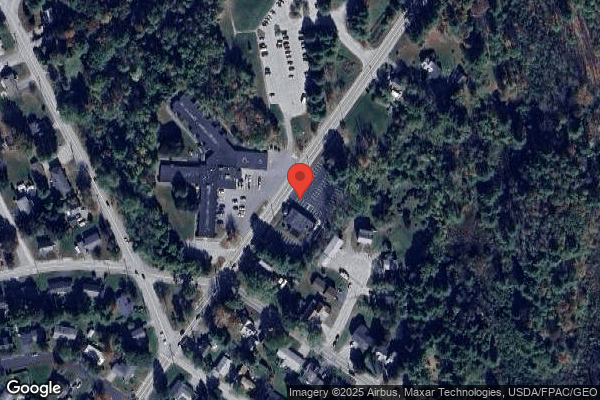
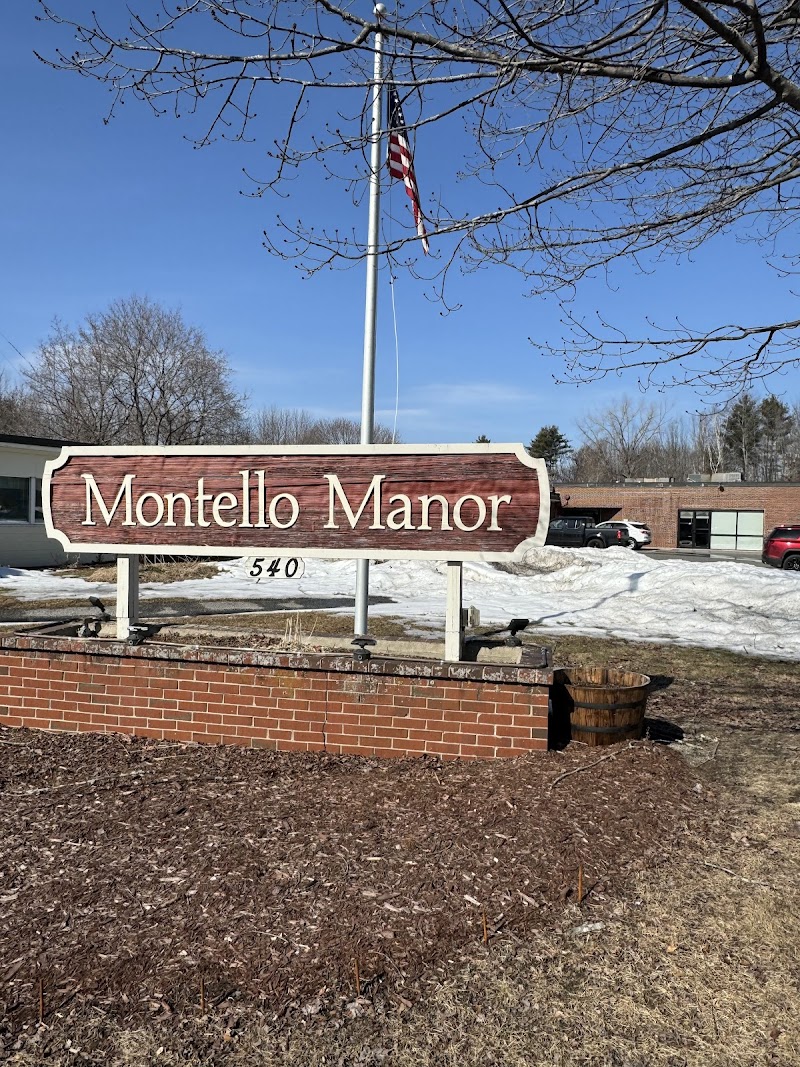
MONTELLO MANOR

540 COLLEGE ST, LEWISTON, ME 04240 (207) 783-2039
For profit - Corporation 37 Beds Independent Data: November 2025 1 Immediate Jeopardy citation
Trust Grade
21/100
#69 of 77 in ME
Last Inspection: February 2025

Within standard 12-15 month inspection cycle. Federal law requires annual inspections.

Overview

Montello Manor has received a Trust Grade of F, which indicates a poor performance with significant concerns regarding care and safety. It ranks #69 out of 77 facilities in Maine, placing it in the bottom half, and #6 out of 6 in Androscoggin County, meaning there are no better local options available. The facility's situation is worsening, with issues increasing from 1 in 2024 to 18 in 2025. Staffing is rated average with a 3/5 star rating, but the high turnover rate of 66% is concerning compared to the Maine average of 49%. Additionally, there are concerning fines totaling $14,518, which are higher than 88% of Maine facilities. There are serious issues documented in recent inspections. A critical incident involved a resident with swallowing issues who died after not receiving the necessary supervision during meals, endangering others with similar conditions. Other concerns include residents not having call bells within reach, making it difficult for them to summon help, and inadequate housekeeping that has left the environment unsanitary and uncomfortable. While there is some RN coverage, it is less than that of 94% of state facilities, highlighting a lack of oversight that could lead to missed health issues.

Trust Score
F
21/100
In Maine
#69/77
Bottom 11%
Safety Record
High Risk
Review needed
Inspections
Getting Worse
1 → 18 violations
Staff Stability
⚠ Watch
66% turnover. Above average. Higher turnover means staff may not know residents' routines.
Penalties
✓ Good
$14,518 in fines. Lower than most Maine facilities. Relatively clean record.
Skilled Nurses
○ Average
Each resident gets 32 minutes of Registered Nurse (RN) attention daily — about average for Maine. RNs are the most trained staff who monitor for health changes.
Violations
⚠ Watch
38 deficiencies on record. Higher than average. Multiple issues found across inspections.
★☆☆☆☆
1.0
Overall Rating
★★★☆☆
3.0
Staff Levels
★★★☆☆
3.0
Care Quality
★☆☆☆☆
1.0
Inspection Score
Stable
2024: 1 issues
2025: 18 issues

The Good

  • Full Sprinkler Coverage · Fire safety systems throughout facility
  • No fines on record

Facility shows strength in fire safety.

The Bad

1-Star Overall Rating

Below Maine average (3.0)

Significant quality concerns identified by CMS

Staff Turnover: 66%

19pts above Maine avg (46%)

Frequent staff changes - ask about care continuity

Federal Fines: $14,518

Below median ($33,413)

Minor penalties assessed

Staff turnover is elevated (66%)

18 points above Maine average of 48%

The Ugly 38 deficiencies on record

1 life-threatening
Feb 2025 18 deficiencies
CONCERN (D)

Potential for Harm - no one hurt, but risky conditions existed

Transfer Notice (Tag F0623)

Could have caused harm · This affected 1 resident

Based on record review and interview, the facility failed to issue a written transfer/discharge notice to a resident or their legal representative for a facility-initiated transfer/discharge for 1 of ...

Read full inspector narrative →
Based on record review and interview, the facility failed to issue a written transfer/discharge notice to a resident or their legal representative for a facility-initiated transfer/discharge for 1 of 2 Resident's reviewed for hospitalization (Resident #11). Findings: Review of Resident 11's clinical record revealed that on 7/12/24 resident was transferred to an acute care hospital and subsequently admitted . Further review of Resident 11's clinical record lacked evidence that the resident and/or resident representative and the Ombudsman's office were provided a written transfer/discharge notice. On 2/19/25 at 12:45 p.m., in an interview, the Administrator confirmed the clinical record lacked evidence that a transfer notice was provided in writing to the resident and/or resident representative and the Ombudsman's office.
CONCERN (D)

Potential for Harm - no one hurt, but risky conditions existed

Deficiency F0625 (Tag F0625)

Could have caused harm · This affected 1 resident

Based on record review and interview, the facility failed to issue a written bed hold notice to include cost of care to the Resident and/or resident representative for 1 of 2 sampled Resident's review...

Read full inspector narrative →
Based on record review and interview, the facility failed to issue a written bed hold notice to include cost of care to the Resident and/or resident representative for 1 of 2 sampled Resident's reviewed for transfer to an acute care hospital (Residents #11). Finding: Review of Resident 11's clinical record revealed that on 7/12/24 resident was transferred to an acute care hospital and subsequently admitted . Review of Resident 11's clinical record lacked evidence that the resident and/or resident representative was provided a written bed hold notice upon this transfer. On 2/19/25 at 12:45 p.m., in an interview, the Administrator confirmed the clinical record lacked evidence that a bed hold notice was provided in writing to the resident and/or resident representative.
CONCERN (D)

Potential for Harm - no one hurt, but risky conditions existed

Deficiency F0806 (Tag F0806)

Could have caused harm · This affected 1 resident

**NOTE- TERMS IN BRACKETS HAVE BEEN EDITED TO PROTECT CONFIDENTIALITY** Based on interviews and record reviews, the facility failed to provide food that accommodates the resident preferences and faile...

Read full inspector narrative →
**NOTE- TERMS IN BRACKETS HAVE BEEN EDITED TO PROTECT CONFIDENTIALITY** Based on interviews and record reviews, the facility failed to provide food that accommodates the resident preferences and failed to provide a second-choice meal/alternative that is similar in nutritive value as the first-choice meal for 1 of 1 resident reviewed for food choices (Residents #10), this has the potential to affect all residents who have a Minced and moist diet and Puree diet. Findings: 1. On 2/18/25 at 10:42 a.m., during an interview, Resident #10 stated, there is not enough staff to do mechanical soft for just me. I get minced moist. Speech therapist tested me and gave me a list of what I could and could not eat and they still said no. On 2/19/25 at 8:24 a.m., in an additional interview, Resident #10 stated, Speech ok'd a list of foods that are good but they are not giving them to me because it's too much trouble for the kitchen. All those foods, I can only choose 2 items. I used to have graham crackers .They serve French toast here but I'm not able to have it. He/she then stated, he/she is not able to choose his/her foods and there are no alternatives for his/her meals, stating I do ask for hot cocoa, I often have gone without a meal and It's unjust, but I don't want to be a burden to the kitchen. I'm working on dealing with the injustice of the situation. At this time, he/she confirmed he/she has not been offered a waiver discussing the potential risks involved with eating the foods of his/her choice. Review of Resident #10's Quarterly Minimum Data Set with the Assessment Reference Date of 11/27/24 revealed he/she had a Brief Interview for Mental Status of 14 out of 15 indicating [he/she] is cognitively intact. Further review of the medical record stated he/she is responsible for decision making for him/herself. Review of the current care plan for Activities of Daily Living self-performance deficit included an intervention of Eating: [Resident#10] is able to feed [him/herself] after set-up, 1:1 staff supervision for exception foods. Review of the Speech Therapy recommendations given by the Master's degree in Speech-Language Pathology and the Certificate of Clinical Competence in Speech-Language Pathology (MS CCC-SLP) upon discontinued speech services dated 8/29/24 states: Response to treatment: patient has made functional gains with [his/her] swallowing and maintained safety on several mechanical soft foods, however the facility is only allowing 2 exceptions to [his/her] minced and moist diet, stating more is too complicated . Impact to daily life: Patient would be most appropriate on a mechanical soft diet which is not offered by [his/her] living facility. Consequently there are several food items [he/she] is judged to be safe on that [he/she] is denied. Short term goal not met with the explanation of: Patient would be most appropriate on mechanical soft textures, but the facility does not offer that consistency as a meat choice and is only allowed 2 of the foods [he/she] has been cleared for, stating more is too complicated. Review of Speech Therapy dietary recommendations dated 8/29/24 and signed into order by provider on 9/5/24 states, Pt now only needs supervision when consuming diet exceptions. Review of the resident notes states the following: A dietary note on 8/16/24 at 10:19 a.m. states, This writer met with [Resident] to explain that [him/her] diet had indeed been upgraded to ground meat with no raw vegetables, rice or nuts. A dietary note on 8/16/24 at 2:31 p.m. states, [Resident's] diet has been downgraded to Minced and Moist. In a conversation with [resident] it was explained by this writer and the DON (Director of Nursing) that [he/she] could choose two items off the diet that had been deemed safe to continue to be offered. [Resident] commented that the raisins [he/she] provides on [his/her] own so they should not count. [Resident] was advised that even though [he/she] purchased them, they were not on [his/her] diet and therefore if [he/she] ate them without choosing them as one of her 2 foods [he/she] wishes to have. It was explained to [him/her] that blended diets was not a good practice so [he/she] would continue to receive speech with the goal of upgraded [him/her] to the next diet, and allowing one food and a time would not be done moving forward. A dietary note on 8/26/24 states, when this write was auditing the resident refrigerator in the nourishment kitchen there was a piece of cake with [Resident #10's] name on it dated 8/22/24. This writer took the piece of cake and will inquire tomorrow when [family] visits if [family] [NAME] that to [him/her]. A dietary note on 9/11/24 during the Interdisciplinary Team Meeting, Resident #10 stated that [he/she] is allowed to have cornflakes and many other things per speech. [Resident] was remined that ST (Speech) is no longer involved in [his/her] care at this time and when discharged [he/she] was put on a minced and moist diet with only those exceptions noted, with supervision. A dietary note on 12/11/24 during the Interdisciplinary Team Meeting, Resident #10 stated, Well if I can manage all these things I should just be able to have regular food. It was then explained to [Resident] that [he/she] was not safe to have regular food, and that was not going to occur . [Resident asked to speak with the MD (Doctor) in regards to upgrading [his/her] diet. [He/she] was informed that the MD would be made aware of [his/her] wish, but [his/her] likelihood of ever having a regular diet were rare. A dietary note on 12/27/24 states a discussion with Resident #10's family, It was explained to [family] the reason behind the diet, and the entire purpose of the diet was to keep [him/her] safe as this was the most appropriate diet for [him/her] as recommended by speech therapy. It was explained to [family] about additional diet textures offered by larger facilities and should [he/she] want to explore that option we would help facilitate that move. [Family] stated he believes [Resident #10] is ordering takeout and having it delivered. I explained that [he/she] should not be doing that, and I would notify the DON (Director of Nursing) so she can educate her staff that any food ordered from outside should be in compliance with [his/her] minced and moist diet, or should not be allowed, due to safety concerns. Review of a MediTelecare note dated 1/30/25 states, [Resident #10 .being seen today for an initial evaluation for psychotropic medication management .[he/she] is a good historian .Reports depression only when [he/she] cannot eat [his/her] favorite foods .Reports at times [he/she] does not enjoy [his/her] food. A review of the admission contract signed on 9/1/23 under section Dining/Meals/Guest Meals/Diet/Food from outside states, Special diets will be prepared if ordered by a physician. Any resident that chooses a diet different from what the physician has ordered, may have a regular diet order if he/she signs a waiver. The facilities Resident Diet Policy effective 1/1/2017 states: Should a patient fail to follow the therapeutic diet on a regular basis, the noncompliance will be documented, and the dietary director will advocate for the diet to be changed to regular. On 2/19/25 at 8:44 a.m., during an interview with 2 surveyors, the Director of food and dietary confirmed there are no residents with a current food waiver stating, they try not to because of their previous immediate Jeopardy (IJ), they don't want to end up in IJ again and the Physician and Nutritionist push everyone to be on a regular diet. 2. Review of the posted Minced and Moist and Puree menus for the 4-week meal rotation lacks an alternative option for all meals; Breakfast Lunch and Dinner. In addition, both the Minced and Moist and Puree Breakfast menus have oatmeal and eggs served every day of the week. On 2/19/25 at 11:12 a.m., during an interview with 4 surveyors, the DON stated the doctor had very clear conversation with the resident on the risks involved with eating foods outside of his/her diet. Surveyor asked about staff supervision while the resident is consuming these restricted foods, the DON stated, I don't have the staff to go in every hour and sit with [him/her] while [he/she] eats a cracker and doesn't dunk it in the milk. [He/she] would not follow Speech recommendations. At this time, the Surveyor discussed the admission contract which states a waiver would be given to residents who choose a different diet, reviewed speech recommendations for the resident to have foods outside of the diet with supervision, the MediTelecare note which states the resident experiences depression for not eating his/her favorite foods and the lack of alternative choices in meals for residents who have a minced and moist and puree diet. At this time, the DON confirmed resident #10 is his/her own decision maker and had not been offered a waiver for the diet of choice.
CONCERN (D)

Potential for Harm - no one hurt, but risky conditions existed

Medical Records (Tag F0842)

Could have caused harm · This affected 1 resident

Based on record reviews and interviews, the facility failed to ensure that the clinical records were complete and contained accurate documentation for 1 of 4 residents review for respiratory care. (Re...

Read full inspector narrative →
Based on record reviews and interviews, the facility failed to ensure that the clinical records were complete and contained accurate documentation for 1 of 4 residents review for respiratory care. (Resident #10) Findings: On 2/18/25 at 10:33 a.m., and at 2:10 p.m., observations of Resident #10 using a nasal cannula for his/her oxygen (O2) administration with the tubing dated 1/28/25. Review of Resident #10's provider order dated 12/2/24 instructs nursing to, change and date O2 and C-pap tubing Clean concentrator filter every night shift every Mon. Review of the medication administration record for January 2025 has documentation of the O2 nasal canula tubing being changed on 1/27. February 2025 record has documentation of the O2 nasal cannula tubing being changed on 2/3, 2/10 and 2/17. On 2/19/25 at 2:20 p.m., the above was discussed with the Administrator.
CONCERN (D)

Potential for Harm - no one hurt, but risky conditions existed

Deficiency F0868 (Tag F0868)

Could have caused harm · This affected 1 resident

Based on review of the Quality Assessment and Assurance (QAA) attendance sheets and interview, the facility failed to ensure that an Infection Preventionist and the Director of Nursing attended 1 of 4...

Read full inspector narrative →
Based on review of the Quality Assessment and Assurance (QAA) attendance sheets and interview, the facility failed to ensure that an Infection Preventionist and the Director of Nursing attended 1 of 4 quarterly QAA meetings. Findings: A review of the quarterly QAA meeting attendance sheets indicated that the Director of Nursing did not attend the February 20, 2024 quarterly QAA meeting and an Infection Preventionist did not attend the June 4, 2024 quarterly QAA meeting. On 2/20/25 at 12:28 p.m., in an interview, the above was confirmed with the Administrator.
CONCERN (D)

Potential for Harm - no one hurt, but risky conditions existed

Infection Control (Tag F0880)

Could have caused harm · This affected 1 resident

**NOTE- TERMS IN BRACKETS HAVE BEEN EDITED TO PROTECT CONFIDENTIALITY** Based on observation, record review, and interview, the facility failed to disinfect reusable resident equipment during medicati...

Read full inspector narrative →
**NOTE- TERMS IN BRACKETS HAVE BEEN EDITED TO PROTECT CONFIDENTIALITY** Based on observation, record review, and interview, the facility failed to disinfect reusable resident equipment during medication administration for 2 of 4 residents observed during medication administration. In addition, the facility failed to implement infection prevention measures for 1 of 3 days of survey (2/20/25). Findings: 1. On 2/19/25 at 8:44 a.m., Certified Nursing Assistant (CNA)- Med Tech was observed taking a blood pressure (BP) with a BP cuff for Resident #10 with a reading of 97/60. The CNA-M removed the BP cuff and did not sanitize afterwards. On 2/19/25 at 9:13 a.m., Certified Nursing Assistant - Med Tech was observed taking a blood pressure with a BP cuff for Resident #31 with a reading of 109/79. The CNA-M removed the BP cuff and did not sanitize afterwards. During an interview on 2/19/25 at 9:22 a.m., the CNA-M indicated equipment should be cleaned in between residents with a sanitizing wipe but she forgot today. The facility policy Cleaning and Disinfecting Resident Care Items and Equipment revised 2/2022 Policy Interpretation and Implementation - 4. Reusable resident care equipment will be decontaminated and/or sterilized between residents. On 2/19/25 at 11:35 a.m., a surveyor discussed the above finding in an interview with the Administrator. 2. On 2/20/25 at 9:40 a.m., during an environmental tour, a surveyor asked to go into Resident room [ROOM NUMBER] on the North wing and was told by the Maintenance Director that Resident #1 had Norovirus and that room is under contact precaution. The surveyor and the Maintenance Director observed no contact precaution sign stating that there was contact precaution or what staff needs to wear when going into that room. He said the room will not be cleaned until he is told by Nursing administration that the room is no longer on contact precaution. On 2/20/25 at 9:43, the Administrator observed resident room [ROOM NUMBER] with a surveyor and the Maintenance Director, stated the resident had been sent to the hospital and confirmed that there should be a contact precaution sign on the door. On 2/20/25 at 10:06 a.m., in an interview, the Infection Preventionist(IP0 confirmed that if a resident on Transmission Based Precaution(TBP) was sent to the hospital then the room stays shut with precaution signs on the door and remains on precautions. The IP went on to state that it is still a precaution room and there are germs in side of it and the 48 hours hasn't passed where that resident would be off precaution.
CONCERN (D)

Potential for Harm - no one hurt, but risky conditions existed

Deficiency F0909 (Tag F0909)

Could have caused harm · This affected 1 resident

Based on interviews, the facility failed to conduct regular inspection of all bed frames and mattresses as part of a regular maintenance program to ensure that the mattresses and bed frames are compat...

Read full inspector narrative →
Based on interviews, the facility failed to conduct regular inspection of all bed frames and mattresses as part of a regular maintenance program to ensure that the mattresses and bed frames are compatible and identify areas of possible entrapment for 1 of 37 beds.(Resident #11's) Finding: On 2/18/25 at 10:28 a.m., a surveyor observed Resident #11's bed and found the mattress was approximately 12 inches to short for the bed and left a large gap between the mattress and the footboard of the bed creating an area of possible entrapment. On 2/18/25 at 11:08 a.m., 2 surveyors observed Resident #11's bed and found the mattress was approximately 12 inches to short for the bed and left a large gap between the mattress and the footboard of the bed creating an area of possible entrapment. On 2/18/25 at 12:36 p.m., in an interview, the Maintenance Director confirmed the mattress was approximately 12 inches to short for the bed and left a large gap between the mattress and the footboard of the bed creating an area of possible entrapment. On 2/18/25 at 12:44 p.m., in an interview, a surveyor discussed the finding with the Administrator.
CONCERN (E)

Potential for Harm - no one hurt, but risky conditions existed

Deficiency F0558 (Tag F0558)

Could have caused harm · This affected multiple residents

Based on observations and interviews, the facility failed to ensure a residents call bell was within reach for 4 of 15 sampled residents for 2 of 3 days of survey with multiple observations. (Resident...

Read full inspector narrative →
Based on observations and interviews, the facility failed to ensure a residents call bell was within reach for 4 of 15 sampled residents for 2 of 3 days of survey with multiple observations. (Resident #24, #7, #15, #188) Findings: 1. On 2/18/25 at 10:11 a.m., observation of Resident #24 sitting in a wheelchair beside the middle of the bed. The call bell was at the head of the bed hanging down. At this time, Resident #24 attempted to move the wheelchair and was unable to twist his/her body to reach the call bell. 2. On 2/18/25 at 10:54 a.m., observation of Resident #7 sitting up in a broda chair with a hoyer pad underneath him/her and the broda chair positioned at the foot of the bed. The call bell was wrapped up on the side rail at the head of the bed, not within reach. On 2/18/25 at 12:57 p.m., an additional observation of Resident #7, sitting in a broda chair at the foot of the bed, with a tray table in front of resident. The call bell was placed on the bed behind the broda chair, not within reach. 3. On 2/18/25 at 11:05 a.m. and at 12:57 p.m., observations of Resident #15, sitting in a broda chair placed at the end of the bed with pressure-relieving booties on both feet and the foot of the broda chair elevated. The call bell was not visible anywhere around the resident. 4. On 2/18/25 at 10:56 a.m. and at 12:57 p.m., observations of Resident #188 lying in bed with the call bell wrapped around the call box on the wall behind the bed. 5. On 2/18/25 at 2:10 p.m., 2 surveyors observed Residents #7, #15 and #188 with their call bells out of reach. On 2/18/25 at 2:14 p.m., during an interview, both the surveyor and the Licensed Practical Nurse #4 (LPN) observed Residents #7, #15 and #188 with their call bells out of reach. At this time, the LPN found Resident #15's call bell on the floor under the head of the bed and placed the call bells within reach for each resident. On 2/18/25 at 2:33 p.m., the above was discussed with the Administrator. 6. On 2/19/25 at 8:20 a.m., an additional observation of Resident #7 sitting up in the broda chair positioned at the end of the bed with a breakfast tray in front of the resident. The call bell was on the side of the bed lying on the floor. At 8:24 a.m., a certified nurse's aide (CNA) entered the room and made his/her bed then exited the room leaving the call bell on the floor. At 2/19/25 at 8:28 a.m., the breakfast tray was picked up and the call bell remained on the floor. At 8:54 a.m., CNA #2 entered the room, lowered the resident's bed and moved the broda chair to the side of the bed and gave him/her the call bell. At this time, CNA #2 confirmed Resident #7 did not have the call bell. On 2/19/25 at 9:04 a.m., the above was again discussed the above with the Administrator.
CONCERN (E)

Potential for Harm - no one hurt, but risky conditions existed

Safe Environment (Tag F0584)

Could have caused harm · This affected multiple residents

**NOTE- TERMS IN BRACKETS HAVE BEEN EDITED TO PROTECT CONFIDENTIALITY** Based on observations and interview, the facility failed to adequately provide housekeeping and maintenance services necessary t...

Read full inspector narrative →
**NOTE- TERMS IN BRACKETS HAVE BEEN EDITED TO PROTECT CONFIDENTIALITY** Based on observations and interview, the facility failed to adequately provide housekeeping and maintenance services necessary to maintain the building in a sanitary, orderly, and comfortable environment on 2 of 2 wings (North and East) and the Laundry room for 1 of 1 facility tour. Findings: On 2/20/25 from 9:05 a.m. to 10:00 a.m., a surveyor conducted an Environmental Tour with the Maintenance Director in which the following findings were observed: North Wing: - Resident room [ROOM NUMBER] - The wooden board to the right of the bed holding the metal base board heating unit, had chipped/gouged paint exposing untreated wood. The metal base board heating unit had chipped/gouged paint creating an uncleanable surface. - Resident room [ROOM NUMBER] - The wheelchair right arm rest had a ripped/torn/peeling plastic surface and the wheelchair was visibly dirty with food debris and dust. The bathroom floor had three stained and broken floor tiles around the toilet. - Resident room [ROOM NUMBER] - There was a bed pan and wash basin on the floor next to the toilet. - The exit area vestibule on the North Wing had four bags of trash stored on the floor and not secured in a sealed container. East Wing: - Resident room [ROOM NUMBER] - The cove base around the room was visibly soiled and dirty. - The ceiling vent in the hallway outside resident room [ROOM NUMBER] was dirty and dusty. - Resident room [ROOM NUMBER] - There were three cracked/broken floor tiles in the bathroom. - Resident room [ROOM NUMBER] - There was a large crack in the sheetrock wall by the window. Laundry Room: - The cement floor had chipped/missing paint creating an uncleanable surface. - The large folding table had chipped/missing paint and had duct tape on the top edges creating uncleanable surfaces. On 2/20/25 at 10:00 a.m., in an interview, the Environmental Services Director confirmed the findings.
CONCERN (E)

Potential for Harm - no one hurt, but risky conditions existed

Comprehensive Care Plan (Tag F0656)

Could have caused harm · This affected multiple residents

Based on observation, interviews and record review, the facility failed to ensure a person-centered comprehensive care plan was developed in the area of Chronic Obstructive Pulmonary Disease (COPD) an...

Read full inspector narrative →
Based on observation, interviews and record review, the facility failed to ensure a person-centered comprehensive care plan was developed in the area of Chronic Obstructive Pulmonary Disease (COPD) and failed to implement the care plan in the area of ADL (Activities of Living) and oxygen maintenance for 4 of 15 residents care plans reviewed ( #8, #7, #10 and #24) Findings: 1. Review of Resident #8's current physician orders noted Ipratropium-Albuterol Inhalation Solution 0.5-2.5 (3) mg(milligram)/3ml(milliliter)-1 application Inhale orally four times a day for COPD- start date- 1/15/25 1100, morning(am) 06, noon, evening(pm) 15, night(hs)18. Resident #8's current care plan was reviewed and it lacked evidence that the care plan was updated to include goals and interventions for the care area of COPD/Nebulizer use. On 2/20/25 at 2:00 p.m., in an interview, the Administrator confirmed that Resident #8's care plan was not updated to include goals and interventions for the care area of COPD/Nebulizer use. 2. On 2/18/25 at 10:54 a.m., and on 2/18/25 at 12:57 p.m., Resident #7 was observed sitting up in a broda with the call bell out of his/her reach. On 2/19/25 at 8:20 a.m., an additional observation of Resident #7 sitting up in the broda chair positioned at the end of the bed with a breakfast tray in front of the resident. The call bell was on the side of the bed lying on the floor. He/she was eating breakfast independently, no staff supervision and using a metal spoon, scooping up egg yolk. At 8:24 a.m., a certified nurse's aide (CNA) entered the room and made his/her bed then exited the room leaving the call bell on the floor. At 2/19/25 at 8:28 a.m., the breakfast tray was picked up. At 8:54 a.m., CNA #2 entered the room, lowered the resident's bed and moved the broda chair to the side of the bed and gave him/her the call bell. At this time, during a brief interview, CNA #2 confirmed Resident #7 did not have the call bell available. The surveyor asked what eating assistance is required for Resident #7, she stated you have to sit with [him/her], [he/she's] supervision. At this time, the surveyor discussed the lack of supervision while he/she ate breakfast using a metal spoon. Review of Resident #7's care plan for ADL (Activities of Living) self-care performance deficit r/t dementia revised on 12/8/23 has an intervention of Eating: [Resident] requires total assist by 1 staff to eat; Should use small plastic spoon and give small bites to promote increased intake. The care plan for swallowing problem r/t dementia, coughing or choking during meals or swallowing med, difficulty with thin liquids revised on 12/4/23 has an intervention of Resident to eat only with supervision. The care plan for communication problem r/t Alzheimer's dementia revised on 6/26/24 has an intervention of Ensure/provide a safe environment: call light in reach. On 2/19/25 at 9:04 a.m., the above failure to have the call bell available, the lack of supervision while eating and the use of a metal spoon was discussed with the Administrator. 3. On 2/18/25 at 10:33 a.m., and at 2:10 p.m., Resident #10 was observed using a nasal cannula for his/her oxygen administration with the tubing dated 1/28/25. Review of Resident #10's care plan for Altered cardiovascular status r/t CHF (congestive heart failure) Hypertension, AFIB (atrial fibrillation), Aortic stenosis, revised on 10/25/23 has an intervention of change O2 (oxygen) tubing weekly and PRN (as needed) 4. On 2/18/25 at 10:11 a.m., Resident #24 was observed sitting in a wheelchair bedside the middle of the bed. The call bell is at the head of the bed hanging down. At this time, resident #24 attempted to move the wheelchair and was unable to twist his/her body to reach the call bell. Review of Resident #24's care plan for ADL self-care performance deficit r/t Alzheimer's dementia, impaired balance/unsteady gait, arthritis, revised on 5/2/23 has an intervention of Encourage [Resident] to use the call bell for assistance and the care plan for high-moderate risk for falls relating to confusion, gait/balance problems, psychoactive drug use and unaware of safety needs, has an intervention of be sure the residents call light is within reach and encourage the resident to use it for assistance as needed. The resident needs prompt response to all requests for assistance. On 2/18/25 at 2:33 p.m., the above was discussed with the Administrator.
CONCERN (E)

Potential for Harm - no one hurt, but risky conditions existed

Quality of Care (Tag F0684)

Could have caused harm · This affected multiple residents

2. Review of Resident #7's provider order, dated 9/14/24 instructs nursing to provide, Minced and Moist diet, minced texture, Nectar consistency, Fed by Staff, use plastic spoon. On 2/19/25 at 8:20 a....

Read full inspector narrative →
2. Review of Resident #7's provider order, dated 9/14/24 instructs nursing to provide, Minced and Moist diet, minced texture, Nectar consistency, Fed by Staff, use plastic spoon. On 2/19/25 at 8:20 a.m., observation of Resident #7 eating breakfast independently, no staff supervision and using a metal spoon, scooping up egg yolk. At 8:24 a.m., a certified nurse's aide (CNA) entered the room and made his/her bed then exited the room. At 2/19/25 at 8:28 a.m., the breakfast tray was picked up. At 8:54 a.m., during a brief interview, the surveyor asked what eating assistance is required for Resident #7, she stated you have to sit with [him/her], [he/she's] supervision. At this time, the surveyor discussed the lack of supervision while Resident #7 ate breakfast using a metal spoon. 3. Review of the Resident #10's provider order, dated 12/2/24 instructs nursing to, change and date O2 and C-pap tubing Clean concentrator filter every night shift every Mon. On 2/18/25 at 10:33 a.m., and at 2:10 p.m., observations of Resident #10 using a nasal cannula for his/her oxygen (O2) administration with the tubing dated 1/28/25. On 2/19/25 at 2:20 p.m., the above was discussed with the Administrator. Based on observations, interviews and record review, the facility failed to follow physician orders in the area of urinary care, activities of daily living, and respiratory care for 3 of 15 residents sampled (Resident #12, #7, and #10). 1. Review of Resident #12's clinical record contained a physician order dated 1/8/25 instructing nursing to flush resident's foley catheter with 60 cc (cubic centimeter) of normal saline every day for obstructive uropathy. The clinical record lacked evidence of this was being completed. On 2/19/25 at 9:59 a.m., during an interview, the Administrator confirmed the above physician order was not completed daily by staff.
CONCERN (E)

Potential for Harm - no one hurt, but risky conditions existed

Accident Prevention (Tag F0689)

Could have caused harm · This affected multiple residents

**NOTE- TERMS IN BRACKETS HAVE BEEN EDITED TO PROTECT CONFIDENTIALITY** Based on observations, interviews, and a review of Safety Data Sheets (SDS), the facility failed to ensure that the resident's e...

Read full inspector narrative →
**NOTE- TERMS IN BRACKETS HAVE BEEN EDITED TO PROTECT CONFIDENTIALITY** Based on observations, interviews, and a review of Safety Data Sheets (SDS), the facility failed to ensure that the resident's environment was free of accident hazards relating to the storage of chemicals being properly secured for 4 of 4 observations for 2 of 3 days of survey (2/18/25 and 2/20/25). Findings: 1. On 2/18/25 at 10:28 a.m., a surveyor observed an unsecured 40 oz bottle of Ajax laundry detergent on the back of the toilet in Resident room [ROOM NUMBER]'s bathroom, which is shared with occupied resident room [ROOM NUMBER]. 2. On 2/18/25 at 11:08 a.m., 2 surveyors observed an unsecured 40 oz bottle of Ajax laundry detergent on the back of the toilet in Resident room [ROOM NUMBER]'s bathroom, which is shared with resident room [ROOM NUMBER] and occupied. 3. Resident #4, who occupies room [ROOM NUMBER], stated in an interview that he/she accesses the bathroom for use. On 2/18/25 at 12:36 p.m., , in an observation and interview, the Environmental Services Director confirmed there was an unsecured 40 oz bottle of Ajax laundry detergent on the back of the toilet in Resident room [ROOM NUMBER]'s bathroom. The Safety Data Sheet for Ajax Classic Heavy Duty Liquid Laundry Detergent noted the following: 4. First Aid Measures Eye contact: flush affected areas with water for at least 15 minutes. Seek medical assistance if required. Skin contact: Rinse with water. If skin irritation occurs in use, seek medical assistance. Inhalation: Give the subject access to fresh air. If symptoms do not resolve quickly, seek medical assistance. Ingestion: may be harmful if swallowed and large quantities. On 2/18/25 at 12:44 p.m., in an interview, a surveyor discussed the findings with the Administrator. 4. On 2/20/25 at 9:33 a.m., a surveyor and the Environmental Services Director observed 5 pieces of metal approximately 2 feet long, which appeared to be brackets laying on the floor in the North wing staff exit vestibule. At this time this was confirmed by the Environmental Services Director that the metal brackets were on the floor, creating an accident hazard, and that residents had access to this area.
CONCERN (E)

Potential for Harm - no one hurt, but risky conditions existed

Respiratory Care (Tag F0695)

Could have caused harm · This affected multiple residents

Based on observations, interviews and record review, the facility failed to maintain a respiratory program to help prevent the development and transmission of disease and infection related to respirat...

Read full inspector narrative →
Based on observations, interviews and record review, the facility failed to maintain a respiratory program to help prevent the development and transmission of disease and infection related to respiratory equipment care for 4 of 4 residents reviewed for respiratory care (Resident #19, #7, #10, and #187) for 3 of 3 days of survey. (2/18/25, 2/19/25 and 2/20/25) Findings: 1. On 2/18/25 at 11:02 a.m., a surveyor observed an unbagged oxygen tubing and a nasal canula hanging on an oxygen tank that was secured to the back of Resident #19's wheelchair which was stored in the hallway outside of the resident's room. The oxygen tubing was not dated. 2. On 2/18/25 at 2:20 p.m., 2 surveyors observed an unbagged oxygen tubing and a nasal canula hanging on an oxygen tank that was secured to the back of Resident #19's wheelchair which was stored in the hallway outside of the resident's room. The oxygen tubing was not dated. 3. On 2/19/25 at 8:20 a.m., Observation of Resident #7's nebulizer machine with an unlabeled mask and tubing stored on the dresser next to the television. Review of the Resident #7's Medication Administration Record states, a nebulizer treatment was last administered on 2/13/25. The Medical record lacked evidence of orders for, or the changing of the nebulizer mask and tubing weekly. 4. On 2/18/25 at 10:33 a.m., and 2:10 p.m., observations of Resident #10's oxygen nasal cannula tubing labeled with the date of 1/28/25. On 2/19/25 at 8:24 a.m., and 12:21 p.m., observations of a nasal cannula tubing draped over personal belongings on the bedside dresser, not hooked to the oxygen concentrator. Review of Resident #10's medication administration record for January 2025 has documentation of the O2 nasal canula tubing being changed on 1/27. February 2025 record has documentation of the O2 nasal cannula tubing being changed on 2/3, 2/10 and 2/17. 5. On 2/18/25 at 9:47 a.m., and on 2/19/25 at 12:35 p.m., Resident #187's oxygen nasal cannula tubing was wrapped up and stored under the oxygen concentrator handle On 2/19/25 at 2:20 p.m., the above findings were discussed and observed by the administrator and the surveyor. 6. On 2/20/25 at 7:49 a.m., an additional observation of Resident #187's nasal cannula tubing wrapped up and stored under the oxygen concentrator handle. At 8:02 a.m., Resident #7's nebulizer mask and tubing, undated and still stored on the dresser and available for use. On 2/20/25 at 9:00 a.m., during an interview with the Administrator, the surveyor again the confirmed the oxygen and nebulizer mask/tubing were still being stored improperly and available for use. The facilities Policy: Respiratory Therapy last revised on 2/2022 states, The purpose of this procedure is to guide prevention of infection associated with respiratory therapy tasks and equipment, including ventilators, among residents and staff. Infection control considerations related to oxygen administration states, Change the oxygen cannula and tubing every seven (7) days, or as needed and Keep the oxygen cannula and tubing used PRN in a plastic bag when not in use. Infection control considerations related to medication nebulizers continuous aerosol states, Store the circuit in plastic bag, marked with date and resident's name, between uses and Discard the administration set up every seven (7) days.
CONCERN (E) 📢 Someone Reported This

A family member, employee, or ombudsman was alarmed enough to file a formal complaint

Potential for Harm - no one hurt, but risky conditions existed

Deficiency F0726 (Tag F0726)

Could have caused harm · This affected multiple residents

**NOTE- TERMS IN BRACKETS HAVE BEEN EDITED TO PROTECT CONFIDENTIALITY** Based on record review, interviews, and the facilities Medication Administration Policy, the facility failed to ensure that lice...

Read full inspector narrative →
**NOTE- TERMS IN BRACKETS HAVE BEEN EDITED TO PROTECT CONFIDENTIALITY** Based on record review, interviews, and the facilities Medication Administration Policy, the facility failed to ensure that licensed staff are provided with training and are assessed for competency which includes transcription of physician orders in the facilities electronic clinical documentation program Point Click Care (PCC) the facility utilizes for 2 of 7 residents reviewed for medications. (Resident #1 & Resident #34) Findings: 1. A Nursing Progress note dated 9/12/24 indicating Resident #1 was seen by the provider regarding increased delusions and complaints of visual hallucinations. The progress notes further indicated the resident had received Bupropion 300 milligrams (mg) and Bupropion 450 mg daily for 4 days. Physicians' orders were obtained to immediately discontinue the Bupropion ER 450 mg, hold the Bupropion ER 300 mg for 4 days and hold the antidepressant medication Duloxetine for 4 days. Continue to monitor resident and send to the emergency room for evaluation or deterioration of condition. A review of the September 2024 Medication Administration Record (MAR) for Resident #1 indicates that he/she received Bupropion ER 300 mg at 6:00 a.m. on 9/9/24, 9/10/24, 9/11/24 & 9/12/24 and Bupropion ER 450 mg at 6:00 a.m. on 9/9/24, 9/10/24, 9/11/24, 9/12/24. 2. Resident #34's MAR indicates that a physician's order dated 10/8/24 instructs staff to administer Reglan 5 mg Give one tablet 4 times a day for 14 days. The MAR indicates that the resident received the medication Reglan 5 mg 4 times daily from 10/8/24 - 10/27/24. Resident #34 received 6 additional days of Reglan 5 mg 4 times daily. (24 doses) A Medication Incident Report dated 10/28/24 for Resident #34 indicates that on 10/7/24 Reglan was ordered for 14 days and did not have a stop date entered in the electronic clinical documentation program, Point Click Care (PCC). On 2/20/25 at 10:10 a.m., during an interview with the Director of Nursing (DON), she stated the physicians order for Bupropion ER 450 mg was entered into the electronic clinical charting software, PCC incorrectly. The physicians order for Bupropion ER 450 mg should have been put on hold until the facility received the medication from the pharmacy. The surveyor asked if new staff and agency staff are required to complete training on the Point Click Care system. The DON stated that It varies. Some nurses do not want any training. Most of them have used PCC because it's so widely used. If we see something [NAME], we will do reeducation. Resident #34's physicians order for Reglan 5 mg one tablet four times a day for 14 days did not have a stop date entered in the PCC system. The stop date should have been entered 10/21/24. A review Licensed Nurse Orientation Checklist states All items require the initials of the staff person teaching the skill: Point Click Care Electronic System: - Order entry for medications & treatments - Using MARS & TARs - Medication Error Report I. Medication: - Medication pass - time frames and standards - New medication orders - entry into PCC & communication with the pharmacy II. Documentation - Physician orders, transcription into PCC, noting & 2nd noting - Written & Telephone - Medication Error Report The facility policy, Administering Medications revised 2/2022, Policy Interpretation and Implementation, 3. Medications must be administered in accordance with the orders, including any required time frame. 7. The individual administering the medication must check the label three (3) times to verify the right resident, right medication, right dosage, right time and right method (route) of administration before giving the medication. On 2/20/25 at 12:08 p.m., a surveyor confirmed that licensed staff are not provided training on the facilities electronic clinical documentation program (PCC) the facility utilizes with the Administrator.
CONCERN (E) 📢 Someone Reported This

A family member, employee, or ombudsman was alarmed enough to file a formal complaint

Potential for Harm - no one hurt, but risky conditions existed

Deficiency F0730 (Tag F0730)

Could have caused harm · This affected multiple residents

Based on the review of annual evaluations and interviews, the facility failed to complete an annual performance evaluation for Certified Nursing Assistants (CNA) at least every 12 months, for 5 of 5 C...

Read full inspector narrative →
Based on the review of annual evaluations and interviews, the facility failed to complete an annual performance evaluation for Certified Nursing Assistants (CNA) at least every 12 months, for 5 of 5 CNA's reviewed with employment greater than 1 year. (CNA#1, CNA#2, CNA#3, CNA#4, and CNA#5 ) Finding: 1. CNA #1 was hired on 11/26/2018. The employee record lacked evidence of an annual performance evaluation being completed for 2024. 2. CNA #2 was hired on 7/31/2023. The employee record lacked evidence of an annual performance evaluation being completed for 2024. 3. CNA #3 was hired on 9/5/1991. The employee record lacked evidence of an annual performance evaluation being completed for 2024. 4. CNA #4 was hired on 7/31/2023. The employee record lacked evidence of an annual performance evaluation being completed for 2024. 5. CNA #5 was hired on 2/6/2017. The employee record lacked evidence of an annual performance evaluation being completed for 2024. On 2/20/25 at 11:47 a.m., during an interview with the Facility Administrator and 2 surveyors present, the above information was confirmed.
CONCERN (E) 📢 Someone Reported This

A family member, employee, or ombudsman was alarmed enough to file a formal complaint

Potential for Harm - no one hurt, but risky conditions existed

Deficiency F0760 (Tag F0760)

Could have caused harm · This affected multiple residents

**NOTE- TERMS IN BRACKETS HAVE BEEN EDITED TO PROTECT CONFIDENTIALITY** Based on reviews of facility report sent to the Division of Licensing and Certification, record reviews, and interviews, the fac...

Read full inspector narrative →
**NOTE- TERMS IN BRACKETS HAVE BEEN EDITED TO PROTECT CONFIDENTIALITY** Based on reviews of facility report sent to the Division of Licensing and Certification, record reviews, and interviews, the facility failed to ensure that 2 of 5 sampled residents reviewed for medications was free of significant medication errors. (Resident #1 & Resident #34) Findings: 1. On 9/18/24 a facility report was submitted to the Division of Licensing and Certification. A review of the facility report and the five day follow-up report stated the following: Adult Protective Services (APS) received an anonymous report of an overdose. A medication error was discovered on 9/12/24 involving incorrect dosing of the antidepressant Wellbutrin (Bupropion). Provider on-site and evaluate Resident #1. Orders obtained to hold Wellbutrin (Bupropion) and Duloxetine for four days. Monitor for seizures or worsening of condition and send to the emergency room if any decline in status or seizure activity. Resident #1 was removed from the facility by Emergency Medical Services (EMS) shortly after. A Nursing Progress note dated 9/12/24 indicating Resident #1 was seen by the provider regarding increased delusions and complaints of visual hallucinations. The progress notes further indicated the resident had received Bupropion 300 milligrams (mg) and Bupropion 450 mg daily for 4 days. Physicians' orders were obtained to immediately discontinue the Bupropion ER 450 mg, hold the Bupropion ER 300 mg for 4 days and hold the antidepressant medication Duloxetine for 4 days. Continue to monitor resident and send to the emergency room for evaluation or deterioration of condition. A review of emergency room Documentation indicates that Resident #1 was evaluated for complaints of feeling dry, intermittent visual hallucinations and staff and resident are worried that he/she may be receiving too much Bupropion. Resident #1 had complaints of feeling nauseous for 1 week with occasional vomiting and having trouble with oral intake. Resident #1 was admitted to the hospital on [DATE] and discharged from the hospital on 9/16/24 with a diagnosis of Lactic acidemia with elevated anion gap, resolved and a UTI. A review of the September 2024 Medication Administration Record (MAR) for Resident #1 indicates that he/she received Bupropion ER 300 mg at 6:00 a.m. on 9/9/24, 9/10/24, 9/11/24 & 9/12/24 and Bupropion ER 450 mg at 6:00 a.m. on 9/9/24, 9/10/24, 9/11/24, 9/12/24. 2. Resident #34's MAR indicates that a physician's order for Reglan 5 mg, give one tablet 4 times a day for 14 days. The MAR indicates that the resident received the medication Reglan 5 mg 4 times daily from 10/8/24 - 10/27/24. Resident #34 received 6 additional days of Reglan 5 mg 4 times daily. (24 doses) A Medication Incident Report dated 10/28/24 for Resident #34 indicates that on 10/7/24 Reglan was ordered for 14 days and did not have a stop date entered in the electronic clinical charting software, Point Click Care (PCC). On 2/20/25 at 10:10 a.m., during an interview with the Director of Nursing (DON), she stated the physicians order for Bupropion ER 450 mg was entered into the electronic clinical charting software, PCC incorrectly. The physicians order for Bupropion ER 450 mg should have been put on hold until the facility received the medication from the pharmacy. Staff did not review the medication order completely that would have instructed them to discontinue the Bupropion ER 300 mg when the Bupropion ER 450 mg was received from the pharmacy. The surveyor asked if new staff and agency staff are required to complete training on the Point Click Care software. The DON stated that It varies. Some nurses do not want any training. A lot of them have used PCC because it's so widely used. The staff orientation consists of where things are located, the residents and we will get them into the Pyxis system. If we see something [NAME], we will do reeducation. Resident #34's physicians order for Reglan 5 mg one tablet four times a day for 14 days did not have a stop date entered in the PCC system. The stop date should have been 10/21/24. On 2/20/25 at 12:08 p.m., a surveyor confirmed the significant medication errors for Resident #1 and Resident #34 with the Administrator.
CONCERN (E)

Potential for Harm - no one hurt, but risky conditions existed

QAPI Program (Tag F0867)

Could have caused harm · This affected multiple residents

Based on record review and interview, the facility's Quality Assurance Committee failed to ensure that the Plan of Correction for identified deficiencies from the Annual Long Term Care Survey Process ...

Read full inspector narrative →
Based on record review and interview, the facility's Quality Assurance Committee failed to ensure that the Plan of Correction for identified deficiencies from the Annual Long Term Care Survey Process for Federal Recertification dated 12/12/23, were effective. The Federal citations F584, F623, F625, F689, and F806 were cited again during the annual Long Term Care Recertification Survey dated 2/20/25. Findings: During the Annual Long Term Care Survey Process for Federal Recertification dated 2/20/25, it was determined that F584, F623, F625, F689, and F806 would be recited for the same reasons: F584 for failure to adequately provide housekeeping and maintenance services necessary to maintain the building in a sanitary, orderly, and comfortable environment; F623 failure to issue a written transfer/discharge notice to a Resident or their legal representative for a facility-initiated transfer/discharge; F625 failure to issue a written bed hold notice to include cost of care to the Resident and/or resident representative; F689 failure to ensure that the resident's environment was free of accident hazards relating to the storage of chemicals being properly secured; and F806 failure to provide food that accommodates the resident preferences and failed to provide a second-choice meal/alternative that is similar in nutritive value as the first-choice meal. On 2/20/25 at 12:28 p.m., during an interview, the above findings were discussed with the Administrator.
CONCERN (E)

Potential for Harm - no one hurt, but risky conditions existed

Deficiency F0947 (Tag F0947)

Could have caused harm · This affected multiple residents

Based on Certified Nursing Assistant (CNA) employee education record review and interview, the facility failed to monitor and ensure that the CNA attended the required 12 hours of annual in-service ed...

Read full inspector narrative →
Based on Certified Nursing Assistant (CNA) employee education record review and interview, the facility failed to monitor and ensure that the CNA attended the required 12 hours of annual in-service education training for 5 of 5 randomly selected CNAs employed greater than 1 year. Furthermore the facility failed to ensure that the CNA attended the mandatory yearly dementia trainings for 3 of 5 CNA's employed greater than 1 year. (CNA#1, CNA#2, CNA#3, CNA#4, and CNA#5). On 2/20/25 a surveyor reviewed the following employee files: 1. CNA #1 was hired on 11/26/2018. Review of CNA #1 Employee In-service/attendance Records lacked evidence of dementia training along with the required 12 hours for continuing education for the year of 2024. 2. CNA #2 was hired on 7/31/2023. Review of CNA #2 Employee In-service/attendance Records lacked evidence of dementia training along with the required 12 hours for continuing education for the year of 2024. 3. CNA #3 was hired on 9/5/1991. Review of CNA #3 Employee In-service/attendance Records lacked evidence of the required 12 hours for continuing education for the year of 2024. 4. CNA #4 was hired on 7/31/2023. Review of CNA #4 Employee In-service/attendance Records lacked evidence of dementia training along with the required 12 hours for continuing education for the year of 2024. 5. CNA #5 was hired on 2/6/2017. Review of CNA #5 Employee In-service/attendance Records lacked evidence of the required 12 hours for continuing education for the year of 2024. On 2/20/25 at 11:47 a.m., During an interview with the Facility Administrator and 2 surveyors present, the above information was confirmed.
May 2024 1 deficiency
CONCERN (E) 📢 Someone Reported This

A family member, employee, or ombudsman was alarmed enough to file a formal complaint

Potential for Harm - no one hurt, but risky conditions existed

Deficiency F0839 (Tag F0839)

Could have caused harm · This affected multiple residents

**NOTE- TERMS IN BRACKETS HAVE BEEN EDITED TO PROTECT CONFIDENTIALITY** Based on Employee Personnel Records, review of the Maine State Board of Nursing Regulatory Licensing and Certified Nursing Assis...

Read full inspector narrative →
**NOTE- TERMS IN BRACKETS HAVE BEEN EDITED TO PROTECT CONFIDENTIALITY** Based on Employee Personnel Records, review of the Maine State Board of Nursing Regulatory Licensing and Certified Nursing Assistants (CNA) Registry and interviews, the facility failed to ensure that all nursing staff maintained an active license and/or Certification and was in good standing with the Maine State Board of Nursing for 3 of 9 nursing staff reviewed. Findings: 1. During a review of the Director of Nursing (DON) Registered Nurse (RN) employee file, the DON RN's license was noted to have expired from [DATE] through [DATE]. Review of the DON RN's timecard indicated that she had worked in the facility for all 5 days with an expired license. On [DATE] at 1:17 p.m., during an interview, the DON RN confirmed she had worked on an expired license. 2. On [DATE], during a review of a Certified Nursing Assistant (CNA #2) employee file, the CNA certification was noted to have expired on [DATE]. Review of the CNA's timecard from [DATE] through [DATE] indicated that CNA #2 has worked 20 shifts with an expired certification. On [DATE] at 12:34 p.m., during an interview, the Administrator confirmed that CNA #2's certification was expired. 3. On [DATE], during a review of a CNA #3's employee file, the CNA certification was noted to have expired on [DATE]. On [DATE] at 8:52a.m., during an interview, the Administrator confirmed that CNA #3's certification is expired, and she has been working on an expired certification since [DATE] approx. 32 hours weekly.
Dec 2023 9 deficiencies 1 IJ
CRITICAL (J) 📢 Someone Reported This

A family member, employee, or ombudsman was alarmed enough to file a formal complaint

Immediate Jeopardy (IJ) - the most serious Medicare violation

Accident Prevention (Tag F0689)

Someone could have died · This affected 1 resident

**NOTE- TERMS IN BRACKETS HAVE BEEN EDITED TO PROTECT CONFIDENTIALITY** Based on record reviews and interviews, the facility failed to provide supervision and assistance to a resident who was identifi...

Read full inspector narrative →
**NOTE- TERMS IN BRACKETS HAVE BEEN EDITED TO PROTECT CONFIDENTIALITY** Based on record reviews and interviews, the facility failed to provide supervision and assistance to a resident who was identified with swallowing issues and requiring assistance with meals. This failure to provide supervision and assistance at the supper meal on 12/1/2023 resulted in the death of one resident and placed the remaining 11 residents, who had been identified as having swallowing issues at risk; thus it was determined an immediate jeopardy situation existed. Immediate jeopardy is defined as a situation in which a recipient of care has suffered or is likely to suffer serious injury, harm, impairment, or death as a result of a provider's noncompliance with one or more health and safety requirements. In addition, based on observation and interview the facility failed to ensure that a portable oxygen (O2) cylinder located in a resident's room was secured in a stand/holder to prevent tipping over. Findings: 1. On 12/1/23, the Division of Licensing and Certification (DLC) received a Facility Reportable Incident Form stating a Resident was found to be choking at dinner, 911 was called Resident was not able to be revived and died . On 12/4/23, DLC received the facility's 5 day follow-up. This follow-up stated the following: At 1645 [4:45 p.m.] resident was found during meal time gasping for air. Nurse attempted Heimlich maneuver several times without effect. EMS [Emergency Medical Services] was called at 1648 [4:48 PM] EMS arrived at 1701 [5:01 p.m.] and was also unable to revive. Time of death was pronounced at 1705 [5:05 PM] EMS stated that the death was unattended and call police and medical examiner. Resident #11 was admitted to the facility in early August 2023 with diagnoses that included, but not limited to, Cerebrovascular Accident (damage to the brain from interruption of its blood supply), hemiplegia (one sided muscle paralysis or weakness), and dysphagia (difficulty swallowing). The resident's Minimum Data Set 3 (MDS), dated [DATE], in Section GG, indicted the resident was dependent on staff for eating and did not make any effort to complete this activity. On 12/6/2023 Resident #11's [NAME] (a system used by the facility staff to communicate with each other about resident needs) indicated the resident required the following in relation to safe eating: -a regular mechanical soft ground diet; -aspiration precautions [which means practices that help to prevent foods and fluids getting into the airway]; and -total assistance [which means the resident required direct supervision or assistance to ensure safety during eating]. Resident #11's care plan, dated 9/4/2023, stated the resident required extensive to total assistance of one staff to eat. A review of a nursing communication note, dated 11/27/2023, indicated the following concerns from the nurse : -Resident choking on big chunks of carrot; -found by staff with difficulty breathing; -several pieces of carrot were coughed out with plenty of saliva; -resident continued to cough; -Nursing request made to please order a mechanical soft diet possibly with ground meat; and the Physician/Nurse -Practitioners response was the patient was evaluated and; -Diet clarification: Mechanical soft with ground meat. On 12/6/2023 at 9:12 AM, the Director of Nursing was interviewed. She stated and confirmed the following: -Resident #11 had a care plan that indicated the resident required supervision with eating; -On Friday on 12/1/2023, the resident was alone at suppertime; -Changes were made to the [NAME] and the resident ' s care plan since Friday 12/1/2023. On 12/6/2023 at 10:36 AM, an interview was conducted with the CNA[#3] who observed Resident #11 choking on 12/1/2023 . She stated the following : -she was doing checks of residents who were eating in their rooms; -she observed Resident #11 choking; -she yelled for the Registered Nurse (RN #4), who was nearby in the hallway; -RN #4 responded immediately; and -the RN initiated the Heimlich maneuver On 12/6/2023 at 12:09 PM, CNA #6 was interviewed. This CNA was the individual who was assigned to Resident #11 and delivered Resident #11 his/her meal tray on 12/1/2023 at supper time. She stated the following: -the meal served to Resident #11 appeared to be a regular diet that everyone else received; -she had started to assist the resident with his/her meal and was told by CNA #3 that this resident did not need assistance with meals; -she cut the sandwich into 4 pieces and left the room; In addition, the CNA stated that she was worked for an agency and was assigned to this facility and she did not remember anyone showing her where the [NAME] Binder was located prior to accepting a resident assignment. On 12/6/2023 at 12:52 PM, RN #4, who was the RN who performed the Heimlich maneuver on Resident #11 on -12/1/2023, was interviewed. He/she stated the following: -about 4:45 PM; she/she heard a CNA screaming; -he/she went to the room and found the resident sitting upright in bed -he/she assessed the resident and determined the resident was choking; -he/she performed the Heimlich maneuver; and -EMS arrived about 5:01 PM; In addition, the RN confirmed that Resident #11 was to supposed to be supervised with meals. Based on the above information, it was determined that the facility's failure to supervise a resident, who was dependent on staff for eating safely, on 12/1/2023 constituted an immediate jeopardy situation that resulted in the death of Resident #11. Please see F-0000 initial comments related to the IJ removal plan. 2. On 11/30/23 at 10:05 AM, during a tour of the facility, the Environmental Service Director and a surveyor observed an unsecured oxygen cylinder to the right of the bed in resident room [ROOM NUMBER]. On 11/30/23 at 10:11 AM, in an interview, a Licensed Practical Nurse (LPN) observed and confirmed that the oxygen cylinder was left unsecured in resident room [ROOM NUMBER]
CONCERN (D) 📢 Someone Reported This

A family member, employee, or ombudsman was alarmed enough to file a formal complaint

Potential for Harm - no one hurt, but risky conditions existed

Deficiency F0655 (Tag F0655)

Could have caused harm · This affected 1 resident

Based on interview and record review, the facility failed to ensure a baseline care plan was developed and implemented within 48 hours that included the problems, interventions, and initial goals need...

Read full inspector narrative →
Based on interview and record review, the facility failed to ensure a baseline care plan was developed and implemented within 48 hours that included the problems, interventions, and initial goals needed to provide minimum healthcare information necessary to properly care for 1 of 2 residents that was reviewed for baseline care plans. (Resident #188). Finding: Review of Resident #188's clinical record noted that he/she was admitted to the facility in November of 2023 with a primary diagnoses of Iron Deficiency, Cirrhosis of Liver, Chronic obstructive pulmonary disease(C0PD), Crohn's Disease, Type 2 diabetes, Depression, Anxiety Disorder, 0bsructive sleep apnea, Gastro esophageal reflux disease(GERD) and Hyperlipidemia. The medical record lacked evidence that a base line care plan was developed within 48 hours that included the problems, interventions, and goals. On 11/30/23 at 2:00 PM, in an interview, a Registered Nurse confirmed that the baseline care plan was still in progress and had not been completed within 48 hours for Resident #188.
CONCERN (D) 📢 Someone Reported This

A family member, employee, or ombudsman was alarmed enough to file a formal complaint

Potential for Harm - no one hurt, but risky conditions existed

Deficiency F0761 (Tag F0761)

Could have caused harm · This affected 1 resident

**NOTE- TERMS IN BRACKETS HAVE BEEN EDITED TO PROTECT CONFIDENTIALITY** Based on observation, interview, and record review, the facility lacked evidence to support the monitoring of medication storage...

Read full inspector narrative →
**NOTE- TERMS IN BRACKETS HAVE BEEN EDITED TO PROTECT CONFIDENTIALITY** Based on observation, interview, and record review, the facility lacked evidence to support the monitoring of medication storage room refrigerator temperatures per facility policy to ensure proper medication and vaccine storage temperatures for 1 of 1 medication storage rooms. Finding: The Medication Refrigerator Temperature Policy and Procedure reads, All temperatures will be taken on the refrigerator twice per day. The temperatures will be logged on the sheet provided by the door. Refrigerator temperatures will be at 41 degrees Fahrenheit or less. Any temperature that does not fall within these parameters will be reported to the Director of Nursing, (DON) or the Charge Nurse immediately, who will then take corrective action to remedy the situation. On [DATE] at 11:35 AM, during a tour of the facility's medication storage room, a surveyor observed the medication storage room refrigerator had an internal temperature reading of 41 degrees Fahrenheit. The DON confirmed that the medications and vaccines in the refrigerator were intended for resident use. There was a temperature log for the medication storage room refrigerator for [DATE] which lacked monitoring for 5 dates. The DON was unable to produce a temperature log or written evidence that the refrigerator temperatures were being monitored to ensure that medications and vaccines were stored at their appropriate temperatures for the month of September and October. The refrigerator contents contained 1 Insulin Emergency Kit containing: 1 multi-dose vial Lantus 10 milliliters (ml.), 1 multi-dose vial Levemir 10 ml., 1 multi-dose vial Novolog 10 ml., 1 multi-dose vial Humulin 70-30,10 ml., 1 multi-dose vial Humulin N 10ml, 1 multi-dose vial Humulin R 10 ml., 1 preloaded Kwik pen Humalog 3 ml., 1 Phenergan suppository 12.5 milligram, mg. 1 opened multi-dose vial Pantoprazole suspension 2mg./ml., 1 opened multi-dose vial Lorazepam, 2mg./ml. 1 opened multi-dose vial Glargine 100U/ml., 1 opened multi-dose vial Novolog 100U/ml., 1 opened multi-dose vial Tuberculin Purified Protein Derivative. 1 preloaded single dose syringe of influenza vaccine, 1 preloaded pen Trulicity,1.5 mg./0.5 ml, 2 preloaded pen Lantus Solostar 100 U/ml., 3 preloaded pen Lantus 100U/ml., 2 preloaded pen Insulin Glargine U100/ml., 6 Acetaminophen suppositories 650 mg. No observed medications or vaccines in the refrigerator had expired. On [DATE] at approximately 12:40 PM, in an interview, the DON confirmed that temperatures of the Medication Storage Refrigerator were not being monitored.
CONCERN (D) 📢 Someone Reported This

A family member, employee, or ombudsman was alarmed enough to file a formal complaint

Potential for Harm - no one hurt, but risky conditions existed

Deficiency F0806 (Tag F0806)

Could have caused harm · This affected 1 resident

Based on interviews, it was determined that the facility failed to provide food that accommodated preferences for 1 out of 1 resident receiving Hospice services. (#8) On 11/30/23 at 12:31 PM, during a...

Read full inspector narrative →
Based on interviews, it was determined that the facility failed to provide food that accommodated preferences for 1 out of 1 resident receiving Hospice services. (#8) On 11/30/23 at 12:31 PM, during an interview with Resident #8, it was revealed that he/she was told to purchase his/her own ice cream because he/she ate too much of it (6 individual containers/day). Confirmed findings with Dietary Manager and the Director of Nursing (DON). The DON agreed that ice cream was a reasonable request impacting the resident's quality of life and the facility should be providing ice cream.
CONCERN (E) 📢 Someone Reported This

A family member, employee, or ombudsman was alarmed enough to file a formal complaint

Potential for Harm - no one hurt, but risky conditions existed

Safe Environment (Tag F0584)

Could have caused harm · This affected multiple residents

**NOTE- TERMS IN BRACKETS HAVE BEEN EDITED TO PROTECT CONFIDENTIALITY** Based on observations and interviews, the facility failed to adequately provide housekeeping and maintenance services necessary ...

Read full inspector narrative →
**NOTE- TERMS IN BRACKETS HAVE BEEN EDITED TO PROTECT CONFIDENTIALITY** Based on observations and interviews, the facility failed to adequately provide housekeeping and maintenance services necessary to maintain the building in good repair and in a sanitary condition for 2 of 2 Units (North and East) and common areas for 2 of 2 environmental tours (11/28/23 and 11/30/23) Findings: 1. On 11/28/23 at 9:55 AM., a surveyor observed the North Unit shower room which had a code lock, but was unlocked. The cove base around the shower was peeling away and had a brown and black substance and debris caked between the molding and tile. Clothing items were crumpled on the floor in the corner immediately to the left upon entering room. The room had a musty odor. The wall cabinet to the left of the door had peeling vinyl type and the molding had a dark dried substance visible between the molding and the cabinet surface. A spray bottle of Hyperfact 256 one step disinfecting cleaner was sitting on top of the wall cabinet. On 11/28/23 at 10:00 AM., in an interview, the Director of Nursing confirmed the findings and the disinfectant was removed. 2. On 11/30/23 from 9:20 AM to 10:20 AM, a surveyor conduced an Environment Tour with Environmental Services Director in which the following findings were observed: Common Areas: > There were ten (10) cracked/broken floor tiles in the hallway outside the Rehab room. > The wall fan behind nurses station was dusty/dirty > The hallway baseboard heater next to the nurse's station was bent/dented and was broken and falling apart. > The kitchen door frame had chipped/missing paint creating an uncleanable surface. > There were three (3) cracked/broken floor tiles in front of storage door next to medical director's office. The storage door frame had chipped/missing paint and the kick plate was scuffed and missing portions of the surface creating uncleanable surfaces. North Unit: > The Sit-to-Stand patient lift had chipped/missing paint and was rusty on the base legs. > The hallway wooden hand railings were missing surface treatment exposing bare wood creating uncleanable surfaces. > The hallway baseboard heater next to Resident room [ROOM NUMBER] was broken and falling apart. > Resident room [ROOM NUMBER] - The cabinet to the left as you enter the room was marred and dirty. The door and frame to the bathroom was marred and dirty. The floor around the base of the toilet was dirty. > Resident #22's wheelchair brake handles had ripped tape on them creating uncleanable surfaces. > Resident room [ROOM NUMBER] - The base board heater cover was bent/dented and had chipped/missing paint creating an uncleanable surface. > Resident room [ROOM NUMBER] - There was dried red liquid spatter on the wall under the light switch. > Resident room [ROOM NUMBER] - The cabinet to the left as you enter the room was marred and dirty. The door and frame to the bathroom was marred and dirty. The floor around the base of the toilet was dirty. East Unit: > Resident room [ROOM NUMBER] - The bathroom floor had 2 cracked/broken floor tiles. > Resident room [ROOM NUMBER] - The room floor was dirty with debris and trash and had dried liquid residue on it. The bathroom floor was dirty around the base of toilet. The baseboard heater had chipped/missing paint creating an uncleanable surface. > Resident room [ROOM NUMBER] - The bathroom exhaust vent was dirty/dusty. The sink was stained yellowish and the drain metal was rusty. > Resident room [ROOM NUMBER] - The room floor was dirty with debris and trash and had dried liquid residue on it. > The hallway wooden hand railings were missing surface treatment exposing bare wood creating uncleanable surfaces. > The hallway baseboard heater by resident room [ROOM NUMBER] was bent and the cover was falling off. > Resident room [ROOM NUMBER] - The room floor was dirty with debris and trash and had dried liquid residue on it. > There was 1 ceiling tile at end of the wing by exit door that was stained brown and the floor cement was cracked/broken and had chipped/missing paint. On 11/28/23 at 10:20 AM, in an interview, the Environmental Services Director confirmed the findings.
CONCERN (E) 📢 Someone Reported This

A family member, employee, or ombudsman was alarmed enough to file a formal complaint

Potential for Harm - no one hurt, but risky conditions existed

Food Safety (Tag F0812)

Could have caused harm · This affected multiple residents

Based on observations, interview, the facility's Resident Food Storage policy and procedure, Food Storage policy and Refrigerator and Freezer Temperature policy and procedure, the facility failed to e...

Read full inspector narrative →
Based on observations, interview, the facility's Resident Food Storage policy and procedure, Food Storage policy and Refrigerator and Freezer Temperature policy and procedure, the facility failed to ensure the kitchen was maintained in a clean and sanitary manner for the walk-in freezer, the ice machine, an exhaust vent, a ceiling air intake vent, a food slicer and fans four one of one kitchen tour ( 28/23). In addition, the facility failed to ensure that the dish machine was maintaining proper temperature ranges for proper cleaning and sanitizing. Further, the facility failed to monitor and document refrigerator and freezer temperatures for the resident food refrigerator kept in the medication room. Findings: The Facility's Food Storage policy and procedure: 7. b. Food should be dated as it is placed on shelves if required by state regulation. c. Date marking will be visible on all high risk food to indicate the date by which a ready to eat. 8. All containers must be legible and accurately labeled and dated. The Facility's Resident Food Storage policy and procedure: 1. Food or beverages brought into the facility for resident consumption will be labeled and dated for monitoring food safety. The Facility's Refrigerator and Freezer Temperature policy and procedure: All temperatures will be taken on the cooler and freezer twice per day. The temperatures will be logged on the sheet provided by the door. Refrigerator temperatures will be 41 degrees or less. Freezer temperatures will be a 0 degrees or less. Any temperature that does not fall within these parameters will be reported to the Food Service Direct immediately, who will then take corrective action to remedy the situation. On 11/28/23 from 9:10 AM to 9:55 AM, an initial Kitchen Tour was conducted with the Food Service Director in which the following findings were observed: 1. > The walk-in freezer had large ice chunks built up on three(3) frozen turkeys and one(1) box of meat nuggets. Additionally, there were two(2) bags of chicken leg quarters that we're not labeled or dated. > The ice machine filters were dusty/dirty. > The kitchen bathroom exhaust vent was heavily soiled with dust. > The food slicer had dried food debris and glue on the food thickness gauge plate. > The large ceiling intake vent was dirty dusty and rusty. > There were two(2) wall mounted fans in the kitchen area that were heavily soiled with dust. > The dish room had two(2) wall mounted fans that were dirty and dusty. On 11/28/23 at 9:55 AM, in an interview, the Food Service Director confirmed the findings. 2. > The medication room resident food refrigerator had food debris and dried liquid residue on the shelving in both the refrigerator and the freezer. Additionally, no refrigerator and freezer temperatures were monitored and documented for certain dates for September 2023( 9, 14-19, 21-26 and 28-30), October 2023(1-31) and November 20231-30). > The dish machine daily temperature record log was not documented for the October 29th lunch meal and the October 31st 2023 lunch meal; and the November 26, 2023 dinner meal. On 11/30/23 at 10:00 AM, in an interview, the Food Service Director confirmed the findings.
CONCERN (E)

Potential for Harm - no one hurt, but risky conditions existed

QAPI Program (Tag F0867)

Could have caused harm · This affected multiple residents

Based on record review and interviews, the facility's Quality Assurance Committee failed to ensure that the Plan of Correction (POC) for an identified deficiency from the annual Long Term Care Recerti...

Read full inspector narrative →
Based on record review and interviews, the facility's Quality Assurance Committee failed to ensure that the Plan of Correction (POC) for an identified deficiency from the annual Long Term Care Recertification Survey, dated 12/12/23, was effective. The Federal citation F655 was cited again during the re-visit to the annual Long Term Care Recertification Survey, dated 2/1/24. Findings: During the annual Long Term Care survey, dated 11/28/2023 through 12/1/2023; 12/6/2023 through 12/8/2023 and 12/12/2023, a deficiency was cited at F655 for the facilities failure to ensure a baseline care plan was developed and implemented within 48 hours that included the problems, interventions, and initial goals needed to provide minimum health care information necessarily to properly care for residents. The facility's POC, dated 1/5/24, indicated that all baseline care plans and comprehensive were reviewed and revised to resident's current status and needs also to include and ensure that resident and family participation was offered and documented in the resident's record and Director of Nursing/designee will complete audits for all admissions to ensure baseline care plans are completed timely and reviewed with resident and family timely. During the re-visit survey on 2/1/24, four newly admitted residents were reviewed for baselines care plans, all 4 medical records reviewed lacked evidence of residents and/or resident representatives being involved in the development of and/or provided a summary of a resident's baseline care plan. In addition, 1 of 4 residents baseline care plan did not included interventions needed to provide minimum healthcare information necessary to properly care for the resident. It was determined the same tag F655 would be recited. On 2/1/24 at 2:31 p.m., a surveyor confirmed this finding with the Administrator.
MINOR (B) 📢 Someone Reported This

A family member, employee, or ombudsman was alarmed enough to file a formal complaint

Minor Issue - procedural, no safety impact

Transfer Notice (Tag F0623)

Minor procedural issue · This affected multiple residents

Based on record review and interview, the facility failed to issue a written transfer/discharge notice to a resident or their legal representative of a resident transfer/discharge for a facility initi...

Read full inspector narrative →
Based on record review and interview, the facility failed to issue a written transfer/discharge notice to a resident or their legal representative of a resident transfer/discharge for a facility initiated transfer/discharge for 2 of 3 residents whose discharge records were review (Resident #22, #35). Finding: 1. Documentation on Resident #22's clinical record indicated that he/she was admitted to the facility in April of 2023 and transferred to an acute hospital in mid October of 2023 and mid November of 2023. The clinical record lacked evidence that the facility issued a written transfer/discharge notice to the resident and/or legal representative. On 11/29/23 at approximately 1:00 PM, in an interview with the Director of Nursing, a surveyor confirmed that discharge/transfer notices were not provided for Resident #22's transfers to the hospital in October and November of 2023. 2. Documentation in Resident #35's clinical record indicated that the resident was transferred to an acute care hospital in mid September 2023. The clinical record lacked evidence that the facility had provided written transfer/discharge notices to the resident and his/her representative. On 12/1/23 at 11:36 AM, in an interview, the Director of Nursing confirmed that a written transfer/discharge notice was not provided to the resident and his/her representative.
MINOR (B) 📢 Someone Reported This

A family member, employee, or ombudsman was alarmed enough to file a formal complaint

Minor Issue - procedural, no safety impact

Deficiency F0625 (Tag F0625)

Minor procedural issue · This affected multiple residents

2. Documentation in Resident 35's clinical record indicated that the resident was transferred to an acute care hospital in mid September of 2023. The clinical record lacked evidence that the facility ...

Read full inspector narrative →
2. Documentation in Resident 35's clinical record indicated that the resident was transferred to an acute care hospital in mid September of 2023. The clinical record lacked evidence that the facility had provided bed hold notices to the resident or his/her representative. On 12/1/23 at 11:36 AM, in an interview, the Director of Nursing confirmed that written bed hold notices were not provided for Resident #35's transfer to the hospital in mid September of 2023. Based on record review and interview, the facility failed to issue a written bed hold notice to a resident and/or legal representative for 2 of 3 sampled residents who was discharged to the hospital (Resident #22, #35). Finding: Documentation in Resident #22's clinical record indicated that he/she transferred to an acute care hospital in mid October of 2023 and mid November of 2023. And was subsequently admitted to the acute care hospital. The clinical record lacked evidence that the facility issued a bed hold notice to the resident, a family member, or legal representative upon transfer either transfer. On 11/29/23 at approximately 1:00 PM, in an interview with the Director of Nurses, a surveyor confirmed that written bed hold notices were not provided for Resident #22's transfers to the hospital in October and November.
Dec 2022 1 deficiency
CONCERN (D) 📢 Someone Reported This

A family member, employee, or ombudsman was alarmed enough to file a formal complaint

Potential for Harm - no one hurt, but risky conditions existed

Respiratory Care (Tag F0695)

Could have caused harm · This affected 1 resident

Based on clinical record review and interviews, the facility failed to reconnect a resident to continuous oxygen after resident returned from an activity resulting in resident not receiving Oxygen for...

Read full inspector narrative →
Based on clinical record review and interviews, the facility failed to reconnect a resident to continuous oxygen after resident returned from an activity resulting in resident not receiving Oxygen for approximately ten hours for 1 of 3 residents receiving Oxygen (#1). During review of an Incident Report, dated 12/9/22, indicated Resident #1 verbalized that several days ago he/she went to Bingo on 12/7/22 and on return resident wasn't placed on O2 and noticed it was not turned on at 2:00 a.m. No noted change. He/she has shortness of breath but not worse than her normal. Physician was notified on 12/9/22 at 9:00 p.m. Resident #1's physician orders, dated 11/22/22, indicate Oxygen 4 LPM (liters per minute) via nasal cannula continuously for treatment of Chronic Obstructive Pulmonary Disease (COPD). Monitor for signs and symptoms of cardiac distress i.e., edema, chest pain, shortness of breath (SOB), change in heart rhythm and blood pressure or dizziness. On 12/15/22 at approximately 10:35 a.m., in an interview, Resident #1 reported to a surveyor that he/she went without Oxygen (O2) for approximately ten hours. Resident stated he/she is on 4 liters per minute (LPM) continuously provided by via nasal cannula delivered by an Oxygen Concentrator. Resident #1 stated he/she went to Bingo on the afternoon of 12/7/22. When going to activities he/she is attached to a portable oxygen tank to provide continuous oxygen. On his/her return from Bingo at approximately 3:00 p.m., he/she was transferred from the portable oxygen tank and placed back on the O2 Concentrator. At approximately 2:00 a.m. the next morning the resident alerted staff that he/she was shorter of breath than usual. Staff discovered the O2 Concentrator was not turned on. Nurses Notes, dated 12/9/22, indicate no apparent change in condition will continue to monitor. Lincare Evaluation, dated 11/4/22, indicated Oxygen evaluation was conducted for portable tank coverage. Evaluation as follows: Resident is on 4L of O2 for End Stage Chronic Obstructive Pulmonary Disease (COPD). At rest in bed 4L via Nasal cannula Saturation at 98%. Resident stayed in bed moved arms and legs around. After 10 minutes she had desaturation to 87% and was extremely short of breath. Needed 15-20 minutes to recover back to 92%. When walking, he/she requires up to 5 L via nasal cannula to maintain and still drops to about 90% on 5 liter. Resident #1's medical record lacked evidence that facility monitors oxygen saturation (O2 sats) for residents who receive oxygen therapy. On 12/15/22 at approximately 12:55 p.m., during an interview with the Administrator and the DON, it was confirmed that Oxygen Concentration was not turned on when resident returned to his/her room and facility did not assess oxygen saturation levels.
Jan 2022 9 deficiencies
CONCERN (D)

Potential for Harm - no one hurt, but risky conditions existed

Deficiency F0655 (Tag F0655)

Could have caused harm · This affected 1 resident

**NOTE- TERMS IN BRACKETS HAVE BEEN EDITED TO PROTECT CONFIDENTIALITY** Based on interview and record review, the facility failed to ensure a baseline care plan was developed and implemented that incl...

Read full inspector narrative →
**NOTE- TERMS IN BRACKETS HAVE BEEN EDITED TO PROTECT CONFIDENTIALITY** Based on interview and record review, the facility failed to ensure a baseline care plan was developed and implemented that included the instructions needed to provide minimum healthcare information necessary to properly care for 1 of 21 sampled residents (#23). Findings: Review of Resident #23's clinical record noted that he/she was admitted to the facility on [DATE] with a primary diagnosis of Cancer, Chronic Obstructive Pulmonary Disease, Acute and Chronic Respiratory Failure, Epilepsy and Major Depressive Disorder. The clinical record noted that the base line care plan was completed within 48 hours but did not include the instructions necessary to properly care for Resident #23's immediate health and safety needs for the diagnosis of Epilepsy. On 1/18/22 at 10:20 a.m., in an interview, the Minimum Data Set (MDS) Coordinator confirmed that Resident 23's clinical record lacked evidence that the baseline care plan had been developed in the area of Epilepsy.
CONCERN (D)

Potential for Harm - no one hurt, but risky conditions existed

Comprehensive Care Plan (Tag F0656)

Could have caused harm · This affected 1 resident

**NOTE- TERMS IN BRACKETS HAVE BEEN EDITED TO PROTECT CONFIDENTIALITY** Based on record review and interview, the facility failed to ensure that a comprehensive care plan was developed in the area of ...

Read full inspector narrative →
**NOTE- TERMS IN BRACKETS HAVE BEEN EDITED TO PROTECT CONFIDENTIALITY** Based on record review and interview, the facility failed to ensure that a comprehensive care plan was developed in the area of epilepsy management for 1 of 21 sampled residents. (Resident #23) Finding: Review of Resident #23's clinical record noted that he/she was admitted to the facility on [DATE] with a primary diagnosis of Epilepsy. Resident #23's admission Minimum Data Set (MDS) 3.0, dated 9/23/21, stated under section 15400 that the resident has Epilepsy. A review of the physician orders stated resident was on Levetiracetam Solution 100 milligrams (MG)/milliliters (ML)- Give 463 milligrams by mouth two times a day for Epilepsy Start date 9/16/21. The comprehensive care plan lacked evidence of a care area and/or interventions to manage Resident #23's Epilepsy. On 1/18/22 at 10:20 a.m., in an interview, the Minimum Data Set Coordinator confirmed that Resident 23's clinical record lacked evidence that the comprehensive care plan had been developed in the area of Epilepsy.
CONCERN (D)

Potential for Harm - no one hurt, but risky conditions existed

Deficiency F0882 (Tag F0882)

Could have caused harm · This affected 1 resident

Based on interviews, the facility failed to designate a qualified staff member to function as the Infection Preventionist, who is responsible for the facility's Infection Control Program and completed...

Read full inspector narrative →
Based on interviews, the facility failed to designate a qualified staff member to function as the Infection Preventionist, who is responsible for the facility's Infection Control Program and completed specialized training in infection prevention and control. Finding: On 1/18/22 at 9:40 a.m., the Infection Preventionist stated I am certified but unable to locate my certificate at this time. On 1/20/22 at approximately 11:50 a.m., the Infection Preventionist stated that she still could not locate her certification and an Information Technology (IT) Assistant was unable to locate the certificate.
CONCERN (E)

Potential for Harm - no one hurt, but risky conditions existed

Safe Environment (Tag F0584)

Could have caused harm · This affected multiple residents

**NOTE- TERMS IN BRACKETS HAVE BEEN EDITED TO PROTECT CONFIDENTIALITY** Based on observations and interview, the facility failed to adequately provide housekeeping and maintenance services necessary t...

Read full inspector narrative →
**NOTE- TERMS IN BRACKETS HAVE BEEN EDITED TO PROTECT CONFIDENTIALITY** Based on observations and interview, the facility failed to adequately provide housekeeping and maintenance services necessary to maintain the building in good repair and in a sanitary condition, on 2 of 2 wings (North and East), hallways and a common area for 1 of 1 environmental tour. Findings: On 1/20/22 from 9:00 a.m.to 9:45 a.m., an Environmental Tour was conducted with the Environmental Services Director in which the following findings were observed: North Wing - Resident room [ROOM NUMBER]- The floor was dirty around the base of the toilet. - Resident room [ROOM NUMBER]- The floor was dirty around the base of the toilet. The bathroom exhaust vent was dirty/dusty. Bed 2 footboard, which has the controls for the bed, was missing the control cover and had an exposed metal broken hinge. - Resident room [ROOM NUMBER]- The bedside dresser had missing trim and scratched edges creating an uncleanable surface. - Resident room [ROOM NUMBER]- Bed 2 wheelchair had torn/ripped armrests on the left and right sides. The privacy curtain between the beds was ripped and hanging from the track. - Resident room [ROOM NUMBER]- The counter, where the television sits, had chipped/cracked laminate with white tape over it. - Resident room [ROOM NUMBER]- The floor was dirty around the base of the toilet. The bathroom exhaust vent was dirty/dusty. - Resident room [ROOM NUMBER]-The walls, at the head of Bed 1 and Bed 2 had chipped/missing paint. - The hallway ceiling vent by room [ROOM NUMBER] was dirty/dusty. Common Area - The wall fan at the nurse's station was dirty/dusty. East Wing - The Sabina II sit-to-stand lift had chipped/missing paint on legs and base creating uncleanable surfaces. - Resident room [ROOM NUMBER]- The floor was dirty around the base of the toilet. The bedside table was scratched/marred. - Resident room [ROOM NUMBER]-- The closet door was scratched/marred. The floor was dirty around the base of the toilet. - Resident room [ROOM NUMBER]- The floor was dirty around the base of the toilet. - Resident room [ROOM NUMBER]- The floor was dirty around the base of the toilet. - The hallway ceiling vent, by Resident room [ROOM NUMBER], was dusty/dirty. On 1/20/22 at 9:45 a.m., in an interview, the Environmental Services Director confirmed the findings.
CONCERN (E)

Potential for Harm - no one hurt, but risky conditions existed

Food Safety (Tag F0812)

Could have caused harm · This affected multiple residents

Based on observations and interview, the facility failed to ensure the kitchen was maintained in a clean and sanitary manner for fans, ceiling grids, wood, walk-in refrigerator, ceiling lights and san...

Read full inspector narrative →
Based on observations and interview, the facility failed to ensure the kitchen was maintained in a clean and sanitary manner for fans, ceiling grids, wood, walk-in refrigerator, ceiling lights and sanitation buckets. In addition, the facility failed to ensure that foods were labeled and dated in the walk-in freezer and the walk-in refrigerator. Further, the facility failed to monitor the chemical sanitizer levels for the sanitizing sink and the sanitizing buckets for 1 of 1 kitchen tour on 1 of 3 days of survey (1/18/22). This has the potential to affect all residents. Findings: The facility Policy & Procedure Manual for Food Storage states under Procedure: Section 7. b. -Food should be dated as it is placed on the shelves if required by state regulation. 7.c.- Date marking will be visible on all high risk food to indicate the date by which a ready-to-eat, temperature controlled for safety (TCS) food should be consumed, sold, or discarded. On 1/18/22 from 9:10 a.m. to 9:55 a.m., a surveyor conducted a tour of the kitchen with the Food Service Director in which the following findings were observed: > The ceiling grid (ceiling tile holders) were dirty and rusty. > 2 wall fans by the dishwasher were heavily soiled with dirt and dust. > There was an untreated/unsealed piece of wood under a dish washer leg. > 4 ceiling lights near the dish room had dirt/debris in the light lenses. > There was a tall standing fan and a floor fan, by the food preparation area 1, that was heavily soiled with dirt/dust. >There was a tall standing fan, by the food preparation area 2, that was heavily soiled with dirt/dust. > The walk-in refrigerator cooling fan grills were heavily soiled with dirt/dust, undated and unlabeled bag of cut up onions and bag of diced potatoes. > The walk-in freezer had an opened bag of tater tots, 4 bags of chicken and 2 bags of meat patties that were undated and unlabeled. > There were no facility records or documentation of monitoring of chemical sanitation for the sanitation sink or the sanitation buckets. On 1/18/22 at 9:55 a.m., in an interview, the Food Service Director stated that the facility does not have a policy and procedure for sanitizing monitoring. Further, she stated that the kitchen does not and never has documented the sanitation bucket parts per million (PPM) and the times of changing it. She stated that they are changing the chemical solution approximately every 4 1/2 hours. On 1/18/22 at 9:55 a.m., in an interview, the Food Service Director confirmed the findings.
CONCERN (E)

Potential for Harm - no one hurt, but risky conditions existed

Infection Control (Tag F0880)

Could have caused harm · This affected multiple residents

**NOTE- TERMS IN BRACKETS HAVE BEEN EDITED TO PROTECT CONFIDENTIALITY** Based on observations and interviews the facility failed to maintain an Infection Control Program designed to provide a sanitary...

Read full inspector narrative →
**NOTE- TERMS IN BRACKETS HAVE BEEN EDITED TO PROTECT CONFIDENTIALITY** Based on observations and interviews the facility failed to maintain an Infection Control Program designed to provide a sanitary environment to help prevent the development and transmission of disease and infection related to handling of soiled linen and hand hygiene for 1 of 3 days of survey. In addition, the facility failed to properly store and bed and oxygen humidification storage for 2 of 3 days of survey. Findings: 1. On 1/18/22 at 10:09 a.m., a Certified Nursing Assistant (CNA) was observed exiting a resident room carrying a rolled up ball of soiled linen and a folded up chucks pad in her ungloved hands and against her sweatshirt. She then walked down the hallway, to the dirty linen closet, placed the rolled up ball of linen into the soiled linen receptacle, walked across the hall and put the folded up chucks into the trash receptacle, then preformed hand hygiene. At this time in an interview with CNA #1, she confirmed the linen and chucks should've been transported in plastic bags stating, most of the times we put it in a bag. 2. On 1/18/22 at 10:03 a.m., 2 surveyors observed in room [ROOM NUMBER]'s shared bathroom, an uncovered/unlabeled bed pan pinned in between the wall and the handrail. 3. On 1/18/22 at 11:07 a.m., a surveyor observed in room [ROOM NUMBER]'s bathroom, an uncovered bed pan stored on the commode and another uncovered bed pan pinned in between the wall and the handrail. On 1/18/22 at 4:10 p.m., in an interview with the Administrator and Director of Nursing (DON), the above bed pan storage concerns were discussed. 4. On 1/19/22 at 8:15 a.m., a surveyor observed in room [ROOM NUMBER]'s bathroom, another uncovered bedpan stored behind the toilet resting on the plumbing. At 8:22 a.m., the surveyor and DON observed the bed pan storge. 5. On 1/18/22 at 11:23 a.m., and 1/19/22 at 11:44 a.m., a surveyor observed in room [ROOM NUMBER], an opened oxygen humidification bottle on the floor next to the oxygen concentrator. The resident stated he/she does have humidification at times and nursing had tried to attach the humidification bottle to the concentrator, but it did not fit. At this time, in an interview with the Licensed Practical Nurse (LPN) she discarded the bottle stating, she is not sure why the bottle is on the floor. 6 On 1/18/22 at 11:35 a.m., during observation of meal tray delivery on the North Wing, a surveyor observed the following without hand hygiene being preformed. CNA #1 delivered a lunch tray to room [ROOM NUMBER], assisted the resident in positional change and adjusted the bed. She then immediately delivered the next lunch tray to room [ROOM NUMBER], assisted the resident with a clothing protector and uncovered the resident's food/drinks. Next, she delivered a tray to room [ROOM NUMBER] adjusted the resident positioning, raised the head of the bed and uncovered the food/drinks. She then delivered room [ROOM NUMBER]'s tray, set up the tray uncovering the food/drinks. At this time the surveyor intervened, CNA #1 confirmed she had not preformed hand hygiene in between the tray pass. On 1/19/22 at 3:51 p.m., the above concerns were discussed during an interview with the Administrator and the Director of Nursing.
CONCERN (E)

Potential for Harm - no one hurt, but risky conditions existed

Room Equipment (Tag F0908)

Could have caused harm · This affected multiple residents

Based on observations and interviews, the facility failed to ensure that 2 electronic patient lifts and 2 electronic sit-to-stand patient lifts, used for transferring residents, were in safe operating...

Read full inspector narrative →
Based on observations and interviews, the facility failed to ensure that 2 electronic patient lifts and 2 electronic sit-to-stand patient lifts, used for transferring residents, were in safe operating condition on 1 of 1 days of survey. (1/18/22) Findings: North Wing - The Viking M patient lift was missing 2 sling bar safety clips and the Sabina II sit-to-stand lift was missing 1 sling bar safety clip. Both patients' lifts were available for use. On 1/18/22 at 11:52 a.m., in an interview, the Administrator confirmed the safety clips were missing from the patient lifts. East Wing - The Viking M patient lift was missing 2 sling bar safety clips and the Sabina II sit-to-stand lift was missing 1 sling bar safety clip. Both patients' lifts were available for use. On 1/18/22 at 12:15 p.m., in an interview, the Environmental Services Director confirmed the safety clips were missing from the patient lifts. He went on to say that the lifts are checked on both units monthly and they should have had the clips for safety. He further stated that the staff are to write up work orders for missing items and broken equipment and that he is not sure how long the patient lifts were missing the sling bar safety clips.
CONCERN (E)

Potential for Harm - no one hurt, but risky conditions existed

Deficiency F0943 (Tag F0943)

Could have caused harm · This affected multiple residents

Based on interview and record review, the facility failed to implement and maintain an effective training program which includes, at a minimum, training on resident rights, abuse, neglect, exploitatio...

Read full inspector narrative →
Based on interview and record review, the facility failed to implement and maintain an effective training program which includes, at a minimum, training on resident rights, abuse, neglect, exploitation and misappropriation of resident property by failing to ensure that 4 of 4 Certified Nursing Assistants (CNAs) reviewed for in-service training completed the required yearly training (#1, #2, #3 and #4). Findings: On 1/20/22 during a review of facility staff education records, the following was noted: CNA #1's in-service record was reviewed, resident rights and abuse, neglect, exploitation and misappropriation of resident property training received by CNA #1 was last completed on 10/20/20. CNA #2's in-service record was reviewed, resident rights and abuse, neglect, exploitation and misappropriation of resident property training received by CNA #1 was last completed on 11/19/20. CNA #3's in-service record was reviewed, resident rights and abuse, neglect, exploitation and misappropriation of resident property training received by CNA #1 was last completed on 11/30/20. CNA #4's in-service record was reviewed, resident rights and abuse, neglect, exploitation and misappropriation of resident property training received by CNA #1 was last completed on 10/22/20. On 1/20/22 at 9:51 a.m., in an interview, the Director of Nursing confirmed both resident rights and abuse, neglect, exploitation and misappropriation of resident property required yearly trainings were not provided for existing staff during 2021, but only for new staff through orientation.
MINOR (B)

Minor Issue - procedural, no safety impact

Deficiency F0582 (Tag F0582)

Minor procedural issue · This affected multiple residents

Based on record reviews and interview, the facility failed to ensure the Notice of Medicare Provider Non-Coverage (NOMNC) Form 10123, which included appeal rights, was provided at least 48 hours prior...

Read full inspector narrative →
Based on record reviews and interview, the facility failed to ensure the Notice of Medicare Provider Non-Coverage (NOMNC) Form 10123, which included appeal rights, was provided at least 48 hours prior to discontinuation of Medicare Part A services for 2 of 3 residents sampled for beneficiary notices whose Medicare services were discontinued (#29 and #31). Findings: 1. Resident #29's NOMNC indicated that the resident's Medicare Part A services would end on 9/14/21 and signed by the resident on 9/13/21. 2. Resident #31's NOMNC indicated that the resident's Medicare Part A services would end on 12/14/21 and signed by the resident's Authorized Representative on 12/13/21. On 1/20/22 at 9:40 a.m., during an interview with a surveyor, the Licensed Social Worker stated that she was new to the facility and did not realize that the NOMNC needed to be provided to the resident at least 2 days (48 hours) prior to the last covered day. On 1/20/22 at 10:35 a.m. a surveyor confirmed the findings in an interview with the Administrator.
Understanding Severity Codes (click to expand)
Life-Threatening (Immediate Jeopardy)
J - Isolated K - Pattern L - Widespread
Actual Harm
G - Isolated H - Pattern I - Widespread
Potential for Harm
D - Isolated E - Pattern F - Widespread
No Harm (Minor)
A - Isolated B - Pattern C - Widespread

Questions to Ask on Your Visit

  • "What changes have you made since the serious inspection findings?"
  • "Why is there high staff turnover? How do you retain staff?"
  • "Can I speak with families of current residents?"
  • "What's your RN coverage like on weekends and overnight?"

Our Honest Assessment

Strengths
  • • Licensed and certified facility. Meets minimum state requirements.
Concerns
  • • Multiple safety concerns identified: 1 life-threatening violation(s). Review inspection reports carefully.
  • • 38 deficiencies on record, including 1 critical (life-threatening) violation. These warrant careful review before choosing this facility.
  • • $14,518 in fines. Above average for Maine. Some compliance problems on record.
  • • Grade F (21/100). Below average facility with significant concerns.
Bottom line: Trust Score of 21/100 indicates significant concerns. Thoroughly evaluate alternatives.

About This Facility

What is Montello Manor's CMS Rating?

CMS assigns MONTELLO MANOR an overall rating of 1 out of 5 stars, which is considered much below average nationally. Within Maine, this rating places the facility higher than 0% of the state's 100 nursing homes. A rating at this level reflects concerns identified through health inspections, staffing assessments, or quality measures that families should carefully consider.

How is Montello Manor Staffed?

CMS rates MONTELLO MANOR's staffing level at 3 out of 5 stars, which is average compared to other nursing homes. Staff turnover is 66%, which is 19 percentage points above the Maine average of 46%. High turnover can affect care consistency as new staff learn residents' individual needs. RN turnover specifically is 75%, which is notably high. RNs provide skilled clinical oversight, so turnover in this role can affect medical care quality.

What Have Inspectors Found at Montello Manor?

State health inspectors documented 38 deficiencies at MONTELLO MANOR during 2022 to 2025. These included: 1 Immediate Jeopardy (the most serious level, indicating potential for serious harm or death), 34 with potential for harm, and 3 minor or isolated issues. Immediate Jeopardy findings are rare and represent the most serious regulatory concerns. They require immediate corrective action.

Who Owns and Operates Montello Manor?

MONTELLO MANOR is owned by a for-profit company. For-profit facilities operate as businesses with obligations to shareholders or private owners. The facility operates independently rather than as part of a larger chain. With 37 certified beds and approximately 35 residents (about 95% occupancy), it is a smaller facility located in LEWISTON, Maine.

How Does Montello Manor Compare to Other Maine Nursing Homes?

Compared to the 100 nursing homes in Maine, MONTELLO MANOR's overall rating (1 stars) is below the state average of 3.0, staff turnover (66%) is significantly higher than the state average of 46%, and health inspection rating (1 stars) is much below the national benchmark.

What Should Families Ask When Visiting Montello Manor?

Based on this facility's data, families visiting should ask: "What changes have been made since the serious inspection findings, and how are you preventing similar issues?" "How do you ensure continuity of care given staff turnover, and what is your staff retention strategy?" "Can I visit during a mealtime to observe dining assistance and food quality?" "How do you handle medical emergencies, and what is your hospital transfer rate?" These questions are particularly relevant given the facility's Immediate Jeopardy citations and the facility's high staff turnover rate.

Is Montello Manor Safe?

Based on CMS inspection data, MONTELLO MANOR has documented safety concerns. Inspectors have issued 1 Immediate Jeopardy citation (the most serious violation level indicating risk of serious injury or death). The facility has a 1-star overall rating and ranks #100 of 100 nursing homes in Maine. Families considering this facility should ask detailed questions about what corrective actions have been taken since these incidents.

Do Nurses at Montello Manor Stick Around?

Staff turnover at MONTELLO MANOR is high. At 66%, the facility is 19 percentage points above the Maine average of 46%. Registered Nurse turnover is particularly concerning at 75%. RNs handle complex medical decisions and coordinate care — frequent RN changes can directly impact care quality. High turnover means new staff may not know residents' individual needs, medications, or preferences. It can also be disorienting for residents, especially those with dementia who rely on familiar faces. Families should ask: What is causing the turnover? What retention programs are in place? How do you ensure care continuity during staff transitions?

Was Montello Manor Ever Fined?

MONTELLO MANOR has been fined $14,518 across 1 penalty action. This is below the Maine average of $33,224. While any fine indicates a compliance issue, fines under $50,000 are relatively common and typically reflect isolated problems that were subsequently corrected. Families should ask what specific issues led to these fines and confirm they've been resolved.

Is Montello Manor on Any Federal Watch List?

MONTELLO MANOR is not on any federal watch list. The most significant is the Special Focus Facility (SFF) program, which identifies the bottom 1% of nursing homes nationally based on persistent, serious quality problems. Not being on this list means the facility has avoided the pattern of deficiencies that triggers enhanced federal oversight. This is a positive indicator, though families should still review the facility's inspection history directly.