COMPLETE CARE AT ANNAPOLIS
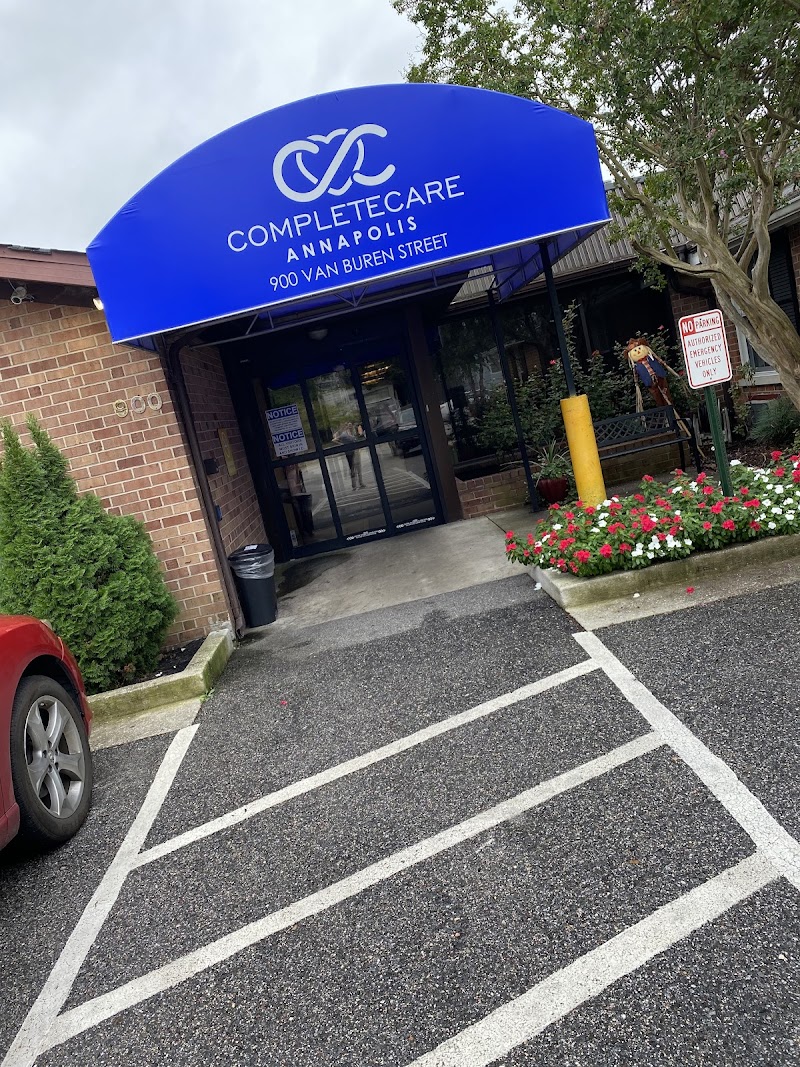
900 VAN BUREN STREET, ANNAPOLIS, MD 21403 (410) 267-8653
For profit - Limited Liability company 97 Beds COMPLETE CARE Data: November 2025
Trust Grade
80/100
#11 of 219 in MD
Last Inspection: December 2024

Within standard 12-15 month inspection cycle. Federal law requires annual inspections.

Overview

Complete Care at Annapolis has a Trust Grade of B+, indicating it is above average and recommended for families considering options for their loved ones. It ranks #11 out of 219 nursing homes in Maryland, placing it in the top half of state facilities, and #2 out of 13 in Anne Arundel County, meaning only one local option is rated higher. The facility is improving, having reduced its number of issues from 14 in 2019 to 8 in 2024. While staffing received a low rating of 2 out of 5 stars, indicating below-average staffing levels and a turnover rate of 44%, it is important to note that the facility has no fines on record, which is a positive sign. However, specific incidents raised concerns, such as a lack of proper documentation for medication counts and issues with care plan meetings, highlighting the need for improvements in communication and compliance. Overall, while there are strengths in its ratings and recent improvements, families should consider both the staffing challenges and the identified concerns when making their decision.

Trust Score
B+
80/100
In Maryland
#11/219
Top 5%
Safety Record
Low Risk
No red flags
Inspections
Getting Better
14 → 8 violations
Staff Stability
○ Average
44% turnover. Near Maryland's 48% average. Typical for the industry.
Penalties
✓ Good
No fines on record. Clean compliance history, better than most Maryland facilities.
Skilled Nurses
○ Average
Each resident gets 35 minutes of Registered Nurse (RN) attention daily — about average for Maryland. RNs are the most trained staff who monitor for health changes.
Violations
⚠ Watch
32 deficiencies on record. Higher than average. Multiple issues found across inspections.
★★★★★
5.0
Overall Rating
★★☆☆☆
2.0
Staff Levels
★★★★★
5.0
Care Quality
★★★★★
5.0
Inspection Score
Stable
2019: 14 issues
2024: 8 issues

The Good

  • 5-Star Quality Measures · Strong clinical quality outcomes
  • Full Sprinkler Coverage · Fire safety systems throughout facility
  • No fines on record
  • Staff turnover below average (44%)

    4 points below Maryland average of 48%

Facility shows strength in quality measures, fire safety.

The Bad

Staff Turnover: 44%

Near Maryland avg (46%)

Typical for the industry

Chain: COMPLETE CARE

Part of a multi-facility chain

Ask about local staffing decisions and management

The Ugly 32 deficiencies on record

Dec 2024 8 deficiencies
CONCERN (D) 📢 Someone Reported This

A family member, employee, or ombudsman was alarmed enough to file a formal complaint

Potential for Harm - no one hurt, but risky conditions existed

Report Alleged Abuse (Tag F0609)

Could have caused harm · This affected 1 resident

2) During review of a facility reported incident on 12/11/24 at 9:34am, it was found that an allegation of abuse was made by Resident #83 on 8/24/22 at 5:10am. The Self Report Form from the facility ...

Read full inspector narrative →
2) During review of a facility reported incident on 12/11/24 at 9:34am, it was found that an allegation of abuse was made by Resident #83 on 8/24/22 at 5:10am. The Self Report Form from the facility was submitted to the State Agency on 8/24/22 at 3:00pm by RN (Registered Nurse) staff #19. During an interview with the DON (Director of Nursing) on 12/6/24 at 1:00pm she verified the allegation of abuse should be reported within the two-hour time frame and stated the staff involved with the reporting of this citation no longer works in the facility. Based on review of facility reported incident investigation and interview, it was determined the facility staff failed to 1) report an alleged violation (elopement) within 2 hours to the regulatory agency, the Office of Health Care Quality and 2) report an allegation of abuse in a timely manner to the state agency, immediately, but not later than two hours after the allegation is made. This was evident for 2 residents (#83 and #98) of 2 residents reviewed for timely reporting an alleged violation during a recertification/complaint survey. The findings include: The Brief Interview for Mental Status (BIMS) score is a number between 0 and 15 that indicates a person's cognitive health: 13-15 points: The person's cognition is intact; 8-12 points: The person has moderate cognitive impairment; 0-7 points: The person has severe cognitive impairment. Elopement occurs when a resident leaves the premises or a safe area without authorization (i.e., an order for discharge or leave of absence) and/or any necessary supervision to do so. A resident who leaves a safe area may be at risk of (or has the potential to experience) heat or cold exposure, dehydration and/or other medical complications, drowning, or being struck by a motor vehicle 1) On 12/6/2024 at 1:36 PM, review of the investigation report of Facility Reported Incident (FRI), MD00205317, revealed that on 5/2/2024 shortly after shift change, the GNA (Geriatric Nursing Assistant) noted that Resident # 98 was not in their room. Resident #98 was last seen in room at approximately 6:30 AM. Per the report, staff became aware on 5/2/2024 at 6:56 AM and the local police department was notified of a missing resident at 7:20 AM. Further review of the investigation report of the FRI revealed the resident later returned to the facility at 8:30 AM. However, a review of the email confirmation of the initial incident report revealed that it was submitted to OHCQ on 5/2/2024 at 5:23 PM, thus failing to meet the 2 hours reporting requirements for any alleged violations. On 12/9/2024 at 8:55 AM, a review of Resident #98's admission MDS (Minimum Data Set, a standardized assessment tool that measures health status in nursing home residents) with ARD (Assessment Reference Date) of 4/2/2024 revealed Resident #98 had a BIMS score of 01 (severe cognitive impairment). On 12/9/2024 at 9:20 AM, a review of Resident #98's care plan revealed the resident was care planned for being at risk of elopement/wanderer r/t impaired safety awareness, Resident wanders aimlessly, initiated on 4/29/2024. On 12/10/2024 at 10:00 AM interview conducted with the Nursing Home Administrator (NHA): NHA confirmed that the initial report was submitted to OHCQ on 5/2/2024 at 5:23 PM. NHA stated that when the resident returned to the facility, their focus was centered on the safety of the resident and all the other residents prior to submitting the report to OHCQ. On 12/11/2024 at 1:21 PM in an interview with the Director of Nursing (DON) prior to survey exit, Surveyor reviewed the above FRI with her. DON was informed of surveyor's concerns regarding the facility's failure to timely report a resident elopement. No further information was provided.
CONCERN (D)

Potential for Harm - no one hurt, but risky conditions existed

Transfer Notice (Tag F0623)

Could have caused harm · This affected 1 resident

**NOTE- TERMS IN BRACKETS HAVE BEEN EDITED TO PROTECT CONFIDENTIALITY** Based on medical record review and staff interview it was determined the facility staff failed to notify the resident/resident r...

Read full inspector narrative →
**NOTE- TERMS IN BRACKETS HAVE BEEN EDITED TO PROTECT CONFIDENTIALITY** Based on medical record review and staff interview it was determined the facility staff failed to notify the resident/resident representative (RP) in writing of a transfer/discharge of a resident along with the reason for the transfer. This was evident for 1 (#65) of 2 residents reviewed for hospitalization during a recertification/complaint survey. The findings include: During an initial screen of Resident #65 on 12/5/2024 at 7:51 AM, the resident stated that s/he was recently hospitalized . On 12/5/2024 at 8:48 AM a review of nurses' progress notes and change in condition documentation dated 12/1/2024 at 7:16 AM revealed Resident #65 was sent to the ER (emergency room) via 911 on 12/1/2024 for altered mental status. However, there was no documentation/evidence that the resident and/or daughter was notified in writing the reason for transfer to the hospital. On 12/5/2024 at 9:15 AM an interview was conducted with Licensed Practical Nurse (LPN #14). Regarding written notification of reason for transfer to the hospital, LPN #14 stated that the reason for transfer was documented in the change in condition form included in the transfer packet sent with the resident to the hospital. She stated that the residents were notified verbally of the reason for transfer to the hospital. LPN #14 added that family members/RP (Resident Representative) were notified of reason for transfer verbally in person if they were present in the building, and over the phone if they were not present. She confirmed that she has not given in writing the reason for transfer to the hospital to any resident and/or their RP. On 12/5/2024 at 9:27 AM, in an interview with Licensed Practical Nurse (LPN #13) who has worked in the facility for over 6 years, she confirmed that she has never given any resident and/or their RP the reason for transfer to the hospital in writing. On 12/5/2024 at 9:35 AM, a follow up interview was conducted with Resident #65. The resident stated that s/he was told verbally the reason for the transfer to the hospital but s/he was not given anything in writing regarding the reason for transfer. On 12/5/2024 at 11:09 AM, an interview was held with the Director of Nursing (DON). DON stated that the reason for transfer was documented in the transfer form sent with the resident to the hospital. She added that a copy of the transfer form was later mailed to the RP by the Nursing Home Administrator. When asked to provide a copy of the transfer notice that was mailed to Resident #65's RP, DON stated that she could not find any documentation to show that the resident and/or their RP were given in writing the reason for transfer to the hospital on [DATE]. She further confirmed that they did not mail the transfer form that had the reason for transfer to the hospital to the RP because Resident #65 returned to the facility within 24 hours.
CONCERN (D)

Potential for Harm - no one hurt, but risky conditions existed

Deficiency F0625 (Tag F0625)

Could have caused harm · This affected 1 resident

**NOTE- TERMS IN BRACKETS HAVE BEEN EDITED TO PROTECT CONFIDENTIALITY** Based on medical record review and staff interview it was determined the facility staff failed to notify the resident/resident r...

Read full inspector narrative →
**NOTE- TERMS IN BRACKETS HAVE BEEN EDITED TO PROTECT CONFIDENTIALITY** Based on medical record review and staff interview it was determined the facility staff failed to notify the resident/resident representative in writing of the bed-hold policy upon transfer of a resident to an acute care facility. This was evident for 1 (#65) of 2 residents reviewed for hospitalization during a recertification/complaint survey. The findings include: The bed-hold policy describes the facility's policy of holding or reserving a resident's bed while the resident is absent from the facility for therapeutic leave or hospitalization. During an initial screen of Resident #65 on 12/5/2024 at 7:51 AM, the resident stated that s/he was recently hospitalized . On 12/5/2024 at 8:48 AM a review of nurses' progress notes revealed a change in condition documentation dated 12/1/2024 at 7:16 AM that noted Resident #65 was sent to the ER (emergency room) via 911 on 12/1/2024 for altered mental status. Further review of the change in condition form revealed Resident #65's daughter was present at time of transfer to the hospital. However, there was no documentation and/or evidence in the record indicating that the facility staff notified the resident/resident's representative (RP) in writing of the facility's bed hold policy. On 12/5/2024 at 9:15 AM an interview was conducted with Licensed Practical Nurse (LPN #14). Regarding bed hold, LPN #14 stated that the facility's bed hold policy was included in the transfer packet given to the 911 transporters when a resident was being sent to the hospital. She stated that residents were informed verbally about the bed hold policy. LPN #14 confirmed that s/he has never given any written bed hold policy notification to a resident and/or their representative (RP) upon transfer to the hospital. On 12/5/2024 at 9:27 AM, an interview was held with Licensed Practical Nurse (LPN #13) who has worked in the facility for over 6 years. Regarding bed hold notification, LPN #13 stated that she has never given residents and/or their RPs a copy of the bed hold notification upon transfer to the hospital. She stated that the bed hold policy was included in the transfer packet sent to the hospital upon transfer but not given to the resident and/or their RP. However, LPN #13 added that the resident and RP were notified verbally of the bed hold policy. On 12/5/2024 at 9:35 AM, in a follow up interview with Resident #65, the resident stated that s/he was not given any written notification of the facility's bed hold policy. However, Resident #65 affirmed that s/he was re-admitted to their same room upon return to the facility. On 12/5/2024 at 11:09 AM, an interview was held with the Director of Nursing (DON). DON stated that the facility's bed hold policy was usually sent with the transfer packet to the hospital and a copy mailed to the RP by the Nursing Home Administrator (NHA). When asked to provide a copy of the bed hold notification that was mailed to Resident #65's RP when the resident was transferred to the hospital on [DATE], DON stated that she could not find any documentation to show that the resident and/or their RP were given any written notification of the bed hold policy. Surveyor reviewed the change in condition and transfer form with checklist sent with Resident #65 on 12/1/2024: DON confirmed that both did not indicate that the bed hold policy was included in the packet. On 12/5/2024 at 12:50 PM, in a follow up interview with the DON, surveyor shared concerns regarding written notifications of bed hold upon transfer/discharge of a resident to the hospital. DON stated that she has done her audits and Resident #65 was the only resident they missed giving the transfer notice and bed hold policy to.
CONCERN (D)

Potential for Harm - no one hurt, but risky conditions existed

Deficiency F0679 (Tag F0679)

Could have caused harm · This affected 1 resident

Based on medical record review, staff interview, and observation, it was determined that the facility staff failed to provide an activities program to meet the needs and preferences of residents by 1)...

Read full inspector narrative →
Based on medical record review, staff interview, and observation, it was determined that the facility staff failed to provide an activities program to meet the needs and preferences of residents by 1) not performing activities with residents per care plan and 2) not documenting care plan activities. This was evident for 1 resident (Resident #31) reviewed during the Medicare/Medicaid recertification survey. The findings include: On 12/04/24 at 11:29 AM, during a phone interview with Resident #31's mother, she told the surveyor that Resident #31 had activities as part of his/her care plan, but the activity staff had not seen him/her. On 12/06/24 at 9:01 AM, the surveyor reviewed the electronic record for the resident and the care plan showed that Resident #31 had little, or no activity involvement related to physical limitations initiated on 05/06/2022, the goal was that Resident #31 will participate in activities of choice while in the room due to physical limitations and was revised on: 08/06/2024 with a target date of 11/30/2024. It also showed the intervention which was that the activity staff will have one-on-one in-room activities/ music therapy once a day and 3 times every week. The surveyor reviewed the activity log in the electronic record but could not find any activity documentation. On the same day at 09:06 AM, in an interview with the unit manager Staff #8, when asked about how activities were done and the type of activities done with Resident #31, she stated that the activity staff just goes into the room to look at the resident and does not know the type of activities done with the resident. On the same day at 09:14 AM, in an interview with the Activities Director Staff#10, she was asked about the activities done with the Resident#31, she stated that she provides music therapy as well as reading the daily news to him/her. She stated that the activity was one-on-one. She also stated that it should have been done 3 times per week according to Resident #31's care plan but it was not consistent. When she was asked how activities were documented, she told the surveyor that the activity done with all residents was noted in a participation log sheet while the activity was ongoing, then it would be transferred into the activity log in Point Click Care (PCC) an electronic record and the log sheet would be shredded afterwards. When she was asked for a 3-month activity log sheet for the resident, she stated that there had been no documentation of the one-on-one activities done with the resident and added that going forward, she would ensure that she and other activity staff members perform the activities with the resident and document it appropriately. 12/06/2024 at 9:28 AM, the surveyor informed the Director of Nursing about the concerns with Resident #31's activities and documentation.
CONCERN (D)

Potential for Harm - no one hurt, but risky conditions existed

Quality of Care (Tag F0684)

Could have caused harm · This affected 1 resident

Based on observations, medication record review and interview with facility staff, it was determined that the facility failed to direct a resident (#45) to rinse their mouth after the administration o...

Read full inspector narrative →
Based on observations, medication record review and interview with facility staff, it was determined that the facility failed to direct a resident (#45) to rinse their mouth after the administration of an inhaler as ordered by the physician. This occurred for one (Resident #45) of four residents observed during a medication observation during the recertification/complaint survey. The findings include: During medication observation on 12/10/24 at 9:22am, LPN (Licensed Practical Nurse) staff #16 administered Trelegy inhalation to Resident #45. Trelegy is a prescription medicine used long term to treat COPD (chronic obstructive pulmonary disease). Review of the medical record on 12/10/24 at 10:39am revealed a physician order dated 12/5/24 to administer Trelegy one inhalation Inhale orally (by mouth) one time a day for COPD. Rinse mouth after use. Staff #16 failed to instruct resident #45 to rinse his/her mouth after the inhalation of the Trelegy. During interview with the Director of Nursing on 12/10/24 at 12noon she verified the findings. She stated the nurse realized her error and she was in-service on reading the entire order prior to administration of medications.
CONCERN (D) 📢 Someone Reported This

A family member, employee, or ombudsman was alarmed enough to file a formal complaint

Potential for Harm - no one hurt, but risky conditions existed

Accident Prevention (Tag F0689)

Could have caused harm · This affected 1 resident

Based on a facility reported incident, medical record review, and staff interview, it was determined that the facility staff failed to provide adequate supervision to a resident to prevent unsafe wand...

Read full inspector narrative →
Based on a facility reported incident, medical record review, and staff interview, it was determined that the facility staff failed to provide adequate supervision to a resident to prevent unsafe wandering/elopement. This was evident for 2 (#98, #29) of 2 residents reviewed for elopement during a recertification/complaint survey. The findings include: Elopement occurs when a resident leaves the premises or a safe area without authorization (i.e., an order for discharge or leave of absence) and/or any necessary supervision to do so. A resident who leaves a safe area may be at risk of (or has the potential to experience) heat or cold exposure, dehydration and/or other medical complications, drowning, or being struck by a motor vehicle A Wander guard bracelet is used to keep residents at risk of wandering/elopement comfortable and protected. It is discreet yet powerful, it triggers alarms and can lock monitored doors to prevent the resident leaving unattended. The Brief Interview for Mental Status (BIMS) score is a number between 0 and 15 that indicates a person's cognitive health: 13-15 points: The person's cognition is intact; 8-12 points: The person has moderate cognitive impairment; 0-7 points: The person has severe cognitive impairment. 1) On 12/6/2024 at 1:36 PM, review of the investigation report of Facility Reported Incident (FRI), MD00205317, revealed that on 5/2/2024 shortly after shift change, the GNA (Geriatric Nursing Assistant) noted that Resident # 98 was not in their room. Resident #98 was last seen in their room at approximately 6:30 AM. Per the report, staff became aware on 5/2/2024 at 6:56 AM and the local police department was notified of a missing resident at 7:20 AM. Further review of the investigation report of the FRI revealed Resident #98 later returned to the facility at 8:30 AM in very good spirits and indicated that s/he was hungry and went for a walk. The report further indicated that staff did not observe the resident leave their room/facility and described the resident as alert and oriented x1 (AO x1 means that a person knows who they are but not where they are, what time it is, or what is happening to them). Further review of the report revealed that all door alarms were functional and resident had a functioning device (wander guard) on their wrist, and suspicion was that Resident #98 climbed out of a room window. On 12/9/2024 at 8:55 AM, a review of Resident #98's admission MDS (Minimum Data Set, a standardized assessment tool that measures health status in nursing home residents) with ARD (Assessment Reference Date) of 4/2/2024 revealed Resident #98 had a BIMS score of 01 (severe cognitive impairment). On 12/9/2024 at 9:20 AM, a review of Resident #98's care plan revealed the resident was care planned for being at risk of elopement/wanderer r/t impaired safety awareness, Resident wanders aimlessly, initiated on 4/29/2024. On 12/10/2024 at 10:00 AM, in an interview with the Nursing Home Administrator (NHA), he confirmed that the resident left the building/facility without staff observation/knowledge and was gone for almost one and a half hours unaccounted for. NHA stated that one of the windows in the resident's room was partly opened and they suspected Resident #98 climbed out through that window. However, NHA stated that all the windows in the facility have now been secured with brackets that would not allow them to be opened past a certain level. He further stated that the exit doors were checked and all alarm doors were functional. He added that the resident's wander guard bracelet and those of the other residents in the building at the time were checked and they were all working properly. On 12/11/2024 at 1:21 PM in an interview with the Director of Nursing (DON), Surveyor reviewed the above FRI with her. Surveyor shared concerns regarding the facility's failure to supervise/prevent a resident with risk of wandering /elopement from leaving the building/facility. No new information was provided. 2) On 12/9/2024 at 11:15 AM, review of Facility Reported Incident MD00191220 revealed that on 4/11/2023 rehab staff observed Resident #29 sitting in a wheelchair on the sidewalk in close proximity to the front of the facility. When asked by the rehab staff how s/he got out, the resident pointed to the side door. Resident was escorted back inside and was not in any acute distress. The report indicated that upon reports that Resident #29 was observed outside of the facility, the Nursing Home Administrator (NHA) immediately checked the side door off Station 1 unit and found the door slightly ajar. On 12/9/2024 at 12:33 PM, review of Resident #29's medical records revealed a quarterly MDS with ARD of 5/4/2023 revealed the resident had a Brief interview for Mental Status (BIMS) score of 05, indicating severe cognitive impairment. On 12/10/2024 at 9:37 AM, an interview was completed with the Nursing Home Administrator (NHA), he stated that the resident was wearing his/her wander guard which was intact and functioning. He stated that Resident #29 was the only resident with a wander guard at the time that was very mobile. However, he added that the alarm did not go off when the resident went out the door. When asked how the resident was able to exit the building with a wander guard in place, NHA stated the door malfunctioned. However, he added that facility staff manned the door until it was fixed by an outside vendor/technician. All doors were checked by the technician and were functioning correctly. NHA added that an elopement action plan was initiated, and continued safety checks were conducted and ongoing. On 12/11/2024 at 1:21 PM in an interview with the Director of Nursing (DON), Surveyor reviewed the above FRI with her. DON was informed of surveyor's concerns regarding the facility's failure to ensure that a cognitively impaired resident with exit seeking behaviors did not leave the building unauthorized. DON provided no new information regarding the deficient practice.
CONCERN (D)

Potential for Harm - no one hurt, but risky conditions existed

Respiratory Care (Tag F0695)

Could have caused harm · This affected 1 resident

Based on observations, review of records and interview with facility staff and resident, it was determined that the facility failed to provide necessary respiratory care services for residents by fail...

Read full inspector narrative →
Based on observations, review of records and interview with facility staff and resident, it was determined that the facility failed to provide necessary respiratory care services for residents by failing to implement the physician order for a resident with tracheostomy. This was evident for 1 resident (Resident #54) reviewed for respiratory care during the Medicare/Medicaid recertification survey. The findings include: On 12/04/24 at 08:46 AM, during the initial tour of the facility, Resident #54 complained to the surveyor that his/her Passy-Muir valveSpeaking Valve (A Passy-Muir valve is a medical device that helps tracheostomy and ventilator patients communicate and maintain their airway) had not been changed since he/she got to the facility about one year ago. He/She added that he/she had a prescription from the Ear Nose and Throat (ENT) physician for a speaking valve since April 2024 and another prescription for the same valve and a tracheostomy collar in November 2024, but the facility had not replaced it. He/She provided a copy of the prescription to the surveyor. On 12/06/24 at 08:21 AM, in an interview with unit 1 manager Staff #8, she was asked about how Resident #54 gets his/her supplies for the tracheostomy. She told the surveyor that the resident visits the Ear Nose and Throat (ENT) physician monthly and after he/she returns from the appointment, she or the unit secretary/nurses checks for new recommendations/orders/prescriptions to be implemented. When she was asked how often the resident's speaking valve was replaced, she stated that the ENT physicians always give an order for replacement. She stated that she was not sure when the last valves were changed and that the facility had just ordered new valves because the resident's physician had recommended it recently. When she was informed about Resident #54's prescription for a clear speaking valve replacement since April 2024 and asked why it has not been implemented, she stated that she was aware of the prescription and had thought that the resident would get the supply through the respiratory therapist, but it turned out that the respiratory therapist does not give out supplies anymore. She added that the resident was given another prescription for the clear speaking valve and trach collar replacement in November 2024 and that the facility is waiting for the supplies to be delivered through the Administrator. On 12/06/24 at 08:48 AM, the surveyor notified the Director of Nursing about the concern identified and she stated that she was not aware that there was an issue with the supply. On the same day at 08:52 am, the Administrator was informed about the concern, and he stated that he became aware of both prescriptions on 12/06/2024 through the Resident #54's responsible party and that he placed an order for both immediately. He also stated that the supplies would be in the facility by the weekend.
CONCERN (D) 📢 Someone Reported This

A family member, employee, or ombudsman was alarmed enough to file a formal complaint

Potential for Harm - no one hurt, but risky conditions existed

Drug Regimen Review (Tag F0756)

Could have caused harm · This affected 1 resident

Based on record review and staff interviews, it was determined that the facility failed to follow up with pharmacy recommendations after the monthly reviews were completed. This was evident for 2 (#56...

Read full inspector narrative →
Based on record review and staff interviews, it was determined that the facility failed to follow up with pharmacy recommendations after the monthly reviews were completed. This was evident for 2 (#56 and #10) of 5 residents reviewed for unnecessary medications during the recertification/complaint survey. The Findings include: Abnormal Involuntary Movement Scale (AIMS) evaluation is a 12-item rating evaluation scale use to assess the severity of abnormal movements which is a side effect of certain antipsychotic medications. On 12/5/24 at 9:36 AM: Review of Resident #56's monthly pharmacy review from September to December 2024 revealed that the pharmacist found some irregularities in September, November and December. Further review showed that September and November recommendation forms could not be found. The Director of Nursing (DON) was asked to provide the reports. On 12/5/24 at 9:46 AM Review of the Pharmacy Drug regimen review from January to December 2024 for resident #10 revealed irregularities for the months of August, October and December, the facility provided the December review form but did not provide the August and October review form, they were asked to provide it. On 12/5/24 at 10:26 AM, The DON provided the recommendation forms for Resident #56 and on review it showed that in the month of September (9/3/24) the pharmacist recommended: Abnormal Involuntary Movement Scale (AIMS) evaluation now and every 6 months Resident #56 was on Quetiapine (Seroquel) an antipsychotic medication use to treat Schizophrenia, bipolar disorder and depression. The Physician was not made aware of this recommendation, so it was never implemented. On 11/4/24, after the pharmacist completed the monthly medication regimen review (MRR), the pharmacist again recommended that the AIMS evaluation be done. On 12/5/24 at 10:26 AM, The DON also provided the October 2024 Pharmacy Recommendation forms for resident #10. Review of the forms revealed that the pharmacist recommended a fasting lipid panel for Resident #10 who was on Atorvastatin, a cholesterol lowering medication. This recommendation was never carried out until 12/2/24 when the pharmacist did another monthly review and recommended it again. Review of the Facilities MRR policy on 12/6/24 at 10:00 AM with revision date of 2/15/24 documented that the Facility staff shall act upon all recommendations according to procedures for addressing medication regimen review irregularities within 30 days. On 12/06/24 at 9:15 AM in an Interview with the DON she was asked the process for carrying out pharmacy recommendations. She stated that the pharmacist once done with the reviews, would put their notes in (PCC) electronic record and then email a link to her and her assistant (ADON) to access. The Assistant Director of nursing (ADON) then prints out the recommendations and disperses them to the unit managers, The unit managers would talk with the physicians about the recommendations and get their feed back and signatures. The physicians would either agrees or disagrees with the recommendations to implement. This is then uploaded in the electronic records She stated that the ADON provides oversight to make sure all this was done. The ADON was asked in an interview on 12/06/24 at 9:20 AM the process for providing oversight. She stated that the unit Managers are responsible for making sure that Physicians see and address all recommendations before sending it to her. She double checks to make sure that recommendations were addressed before uploading. She was asked the time expectation for the physicians to see the recommendations and she said it's within 7 days but would need to verify the policy. She was made aware of the recommendations that were delayed and not carried out, she said she was aware of it and they're working on it
Nov 2019 14 deficiencies
CONCERN (D)

Potential for Harm - no one hurt, but risky conditions existed

Investigate Abuse (Tag F0610)

Could have caused harm · This affected 1 resident

Based on record review and staff interview it was determined that the facility failed to thoroughly investigate the allegation of misappropriation of property for a resident. This was evident for 1 of...

Read full inspector narrative →
Based on record review and staff interview it was determined that the facility failed to thoroughly investigate the allegation of misappropriation of property for a resident. This was evident for 1 of 1 resident (Resident #7) selected for review of misappropriation of property and 1 of 40 residents selected for review during the annual survey process. The findings include: The purpose of a thorough investigation is first to determine if abuse or misappropriation of property of the resident has occurred. It is the expectation that any allegation of abuse or misappropriation of property be investigated by the facility. This investigation includes interviews with all direct caregivers and staff for the reported allegation. Surveyor review of investigation of MD00132711 on 11/7/19 at 9:00 AM revealed that on 10/18/18, Resident #7 was missing $960.00 from his/her room. Resident #7 indicated the $960.00 was in the dresser drawer, in his/her pant pocket. Resident #7 informed the facility staff that the money went missing from his/her room between 8:30 AM and 10:30 AM on 10/18/19, and that he/she forgot to lock the drawer before leaving the room. Further review on 11/7/19 revealed that the Unit Manager #28 and Social Worker #29 looked through the security video footage from 10/17/2018 starting at 11 PM until 11 AM on 10/18/19 and noted that no one entered and exit the room except Resident #7, Resident #6 and staff. The staff was not identified, and it was unknown if they were interviewed. Surveyor attempted to review the security video but it was no longer available for viewing. Interview with the Director of Nursing on 11/08/19 at 10:14 AM confirmed the facility staff failed to thoroughly investigate the allegation of misappropriation of property for Resident #7.
CONCERN (D)

Potential for Harm - no one hurt, but risky conditions existed

Comprehensive Assessments (Tag F0636)

Could have caused harm · This affected 1 resident

Based on resident interview, medical record review and staff interview, it was determined that the facility staff failed to conduct an accurate, comprehensive assessment for a resident with dental com...

Read full inspector narrative →
Based on resident interview, medical record review and staff interview, it was determined that the facility staff failed to conduct an accurate, comprehensive assessment for a resident with dental complaints. This was evident for 1 of 2 residents (Resident #4) reviewed for dental care issues during an annual recertification survey. The findings include: The Minimum Data Set (MDS) is part of the Resident Assessment Instrument that was Federally mandated in legislation passed in 1986. The MDS is a set of assessment screening items employed as part of a standardized, reproducible, and comprehensive assessment process that ensures each resident's individual needs are identified, that care is planned based on these individualized needs, and that the care is provided as planned to meet the needs of each resident. In an interview with Resident #4 on 11/05/19 at 1:17 PM, Resident #4 stated that s/he had not seen a dentist or been offered to see a dentist since being admitted to the facility in 2013. Resident #4 also stated that she/he has a broken tooth on his/her lower right side that has been there for a while. Resident #4 also stated that s/he would like to see a dentist. Resident #4 stated that s/he has no teeth on his/her upper ridge which makes it hard to eat some foods that are too hard or too tough to chew. Review of Resident #4's nursing documentation and assessments on 11/12/19 at 10:00 AM revealed an annual MDS assessment was completed with an assessment reference date (ARD) of 08/10/19. The 08/10/19 MDS assessment failed to capture Resident #4 had any dental issues in section L. Further review of Resident #4's nursing documentation failed to reveal any nursing dental assessment for 2019. In an interview with the facility MDS Coordinator #17, on 11/12/19 at 1:06 PM, MDS Coordinator #17 stated that there was no documentation in Resident #4's medical record regarding changes in his/her teeth. In a follow-up interview on 11/12/19 2:10 PM, the MDS Coordinator #17 stated that s/he went back and reviewed the MDS assessments as far back as January 2018 and there was no documentation as to Resident #4 having dental concerns under section L of the MDS.
CONCERN (D)

Potential for Harm - no one hurt, but risky conditions existed

Comprehensive Care Plan (Tag F0656)

Could have caused harm · This affected 1 resident

2. On 11/12/2019 at 10:01 AM the Director of Nursing (DON) provided a physician's progress note from 12/10/2018 which specified that Resident #40 had a diagnosis of Vascular Dementia. After review of ...

Read full inspector narrative →
2. On 11/12/2019 at 10:01 AM the Director of Nursing (DON) provided a physician's progress note from 12/10/2018 which specified that Resident #40 had a diagnosis of Vascular Dementia. After review of the medical record it was determined that Resident #40's care plan was not individualized for a diagnosis of Vascular Dementia. The Administrator and DON were made aware of these findings on 11/14/2019 during the exit conference. Based on reviews of a medical record and staff interview, it was determined that the facility nursing staff failed to implement a comprehensive person-centered care plan regarding: 1) a resident's pain management and anxiety and 2) a resident's medical diagnosis. This was evident for 2 of 7 residents (Residents #59 and #40) reviewed for unnecessary medications during an annual recertification survey. The findings include: A care plan is a guide that addresses the unique needs of each resident. It is used to plan, assess and evaluate the effectiveness of the resident's care. 1. A review of Resident #59's medical record on 11/14/19 at 10:00 AM revealed a physician's order, dated 07/24/19, that instructed the nursing staff to administer the pain medication Morphine, 5 mg (milligrams), every 2 hours as needed for moderate to severe chronic pain level of 4-10, maximum daily amount 60 mg. Further review of Resident #59's medical record on 11/14/19 failed to reveal a care plan that addressed Resident #59's chronic pain and nursing interventions to help alleviate Resident #59's pain. In an interview with the facility Director of Nursing (DON) on 11/14/19 at 11:17 AM, the DON stated that the facility Assistant Director of Nursing was addressing the care planning and medication administration in Resident #59's medical record. Cross Reference F 842
CONCERN (D)

Potential for Harm - no one hurt, but risky conditions existed

Deficiency F0657 (Tag F0657)

Could have caused harm · This affected 1 resident

Based on observation, reviews of a medical record, and staff interview, it was determined that the facility failed to: 1) obtain a physician order for the continued use of an abdominal binder, and 2) ...

Read full inspector narrative →
Based on observation, reviews of a medical record, and staff interview, it was determined that the facility failed to: 1) obtain a physician order for the continued use of an abdominal binder, and 2) revise a comprehensive care plan for the use of an abdominal binder that listed specific nursing interventions for the care of Resident's skin and the application and removal of an abdominal binder. This was evident for 1 of 2 residents (Resident #50) reviewed for care planning during an annual recertification survey. The Findings: A care plan is a guide that addresses the unique needs of each resident. It is used to plan, assess and evaluate the effectiveness of the resident's care. During an observation of Resident #50 lying in his/her bed on 11/05/19 at 10:39 AM revealed that Resident #50 had the application of an abdominal binder to his/her person. In an interview with the facility Assistant Director of Nursing (ADON) on 11/06/19 at 1:19 PM, the ADON stated that Resident #50 has an abdominal binder on for his/her abdominal hernia and that the staff were just monitoring abdominal distention. Review of Resident #50's medical record on 11/06/19 revealed that Resident #50 had a history of an abdominal hernia. A review of Resident #50's physician orders and care plans did not reveal that Resident #50's abdominal binder was listed as a nursing intervention on any care plan. In a follow-up interview with the ADON on 11/12/19 at 9:25 AM, the ADON stated the facility had just upgraded the facility electronic medical record system in August 2019. The ADON also stated that during the transition to the new electronic medical record system all of Resident #50's physician orders were reviewed, and the use of the abdominal binder was not carried over into the new electronic medical record system physician orders on 08/01/19. Only the pertinent orders were written into the new system. The abdominal binder was canceled out.
CONCERN (D)

Potential for Harm - no one hurt, but risky conditions existed

Quality of Care (Tag F0684)

Could have caused harm · This affected 1 resident

Based on observation, medical record review and interview, it was determined the facility staff failed to provide a resident with the highest practicable well-being of care and the facility staff fail...

Read full inspector narrative →
Based on observation, medical record review and interview, it was determined the facility staff failed to provide a resident with the highest practicable well-being of care and the facility staff failed to follow physician orders as written for daily dressing change to the left stump. This was evident for 1 of 40 residents (Resident #7) selected for review during the survey process. The findings include: Medical record review on 11/6/19 at 9:00 AM for Resident #7 revealed that on 10/16/19 the physician ordered: cleanse left stump with soap and water, pat dry, apply dry dressing cover and secure with tape, every day for wound care. Surveyor observation of Resident #7 on 11/06/19 09:24 AM, revealed the date on Resident's #7 left stump dressing was last changed on 11/1/19. The facility staff failed to change Resident #7's dressing daily as ordered by the physician. Interview with the Director of Nursing on 11/6/19 at 9:30 AM revealed the facility staff failed to provide Resident #7 with daily dressing change as ordered by the physician.
CONCERN (D)

Potential for Harm - no one hurt, but risky conditions existed

Deficiency F0685 (Tag F0685)

Could have caused harm · This affected 1 resident

**NOTE- TERMS IN BRACKETS HAVE BEEN EDITED TO PROTECT CONFIDENTIALITY** Based on medical record review and interview, the facility failed to provide treatment/services to maintain vision. This is evid...

Read full inspector narrative →
**NOTE- TERMS IN BRACKETS HAVE BEEN EDITED TO PROTECT CONFIDENTIALITY** Based on medical record review and interview, the facility failed to provide treatment/services to maintain vision. This is evident for 1 out of 40 residents (Resident #7) selected for review during the investigation stage of the survey process. The findings include: During an interview with Resident #7 on 11/6/19 at 9 AM, the resident stated he/she was waiting for an appointment with the eye doctor. The resident stated: I can't see; my glasses were broken a while ago. Review of the resident's medical record on 11/7/19 at 12:00 PM revealed the resident inventory sheet of personal belongings included a pair of eyeglasses when the resident was admitted to the facility on [DATE], and the MDS (Minimum Data Set) assessment on 08/12/19, revealed Section B Hearing, Speech and Vision was coded that the resident did have adequate vision with corrective lenses. Further review of the medical record revealed an eye doctor's appointment was never scheduled. Interview with the Director of Nursing on 11/7/19 12:43 PM confirmed the surveyor's findings.
CONCERN (D)

Potential for Harm - no one hurt, but risky conditions existed

Deficiency F0757 (Tag F0757)

Could have caused harm · This affected 1 resident

Based on observation, medical record review and interview, it was determined the facility staff failed to ensure residents were free from unnecessary medications. This was evident for 2 of 6 residents...

Read full inspector narrative →
Based on observation, medical record review and interview, it was determined the facility staff failed to ensure residents were free from unnecessary medications. This was evident for 2 of 6 residents (Resident #318 and Resident #3) selected for review of unnecessary mediations and 2 of 40 residents selected for review during the annual survey process. The findings include: 1. Medical record review on 11/12/19 at 12:00 PM for Resident #318 revealed on 8/2/19 the physician ordered: Ciprofloxacin 250 milligrams by mouth 2 times a day for UTI (urinary tract infection) prophylaxis (prevention). Ciprofloxacin is used to treat a variety of bacterial infections. Ciprofloxacin belongs to a class of drugs called quinolone antibiotics. It works by stopping the growth of bacteria. Physicians often prescribe Ciprofloxacin for residents with UTIs, as these infections are usually bacterial and respond well to this drug. The usual process is for the physician to order a urinalysis, culture and sensitivity for the resident. A urinalysis is a test of the urine. A urinalysis is used to detect and manage a wide range of disorders, such as urinary tract infections, kidney disease and diabetes. A urinalysis involves checking the appearance, concentration and content of urine. A urine culture is a method to grow and identify bacteria that may be in the urine. Bacteria are germs that cause infections. The sensitivity test helps caregivers pick the best medicine to treat the infection if one is detected. Once the physician has obtained the results of the culture and sensitivity, the physician can order the most effective antibiotic to treat the infection. Further record review on 11/12/19 revealed that on 8/5/19 the physician ordered: urinalysis, culture and sensitivity (3 days after the Ciprofloxacin had been ordered and initiated). Of note, the facility staff failed to obtain the urinalysis, culture and sensitivity as ordered. Record review also revealed no evidence of the resident complaining of painful urination or any signs that indicated a UTI. Review of the Medication Administration Record revealed the facility staff documented the administration of the Ciprofloxacin from 8/2/19 at 5:00 PM to 8/6/19 at 5:00 PM, 2 times a day. Interview with the Director of Nursing on 11/13/19 at 11:30 AM revealed the facility staff failed to ensure Resident #318 was free from unnecessary medication. Refer to F 770: 1A 2. This surveyor observed on 11/14/19 at 10:18 AM during a review of the controlled substance log for the medication cart assigned to Rooms 52-55 two medication entries that were different from the preceding and succeeding amounts. Resident #3 was prescribed Oxycodone (pain medication) 5 ml three times a day with a strength of 5mg/5 ml. The nurse documented that 10 ml was administered on 10/3/19 at 2:00 PM and on 10/6/19 at 7:00 AM. The physician did change the dosage of the Oxycodone to 10 ml three times a day on 11/11/19. The Director of Nursing (DON) was interviewed on 11/14/19 at 11:09 AM. She said they were made aware of issues with the Controlled Substance logs by another surveyor. The log for the Oxycodone and the October Medication Administration Record's (MAR) were reviewed with the DON. She agreed that there did not appear to be an order for 10mg/10ml of Oxycodone despite staff signing out that they withdrew 10 ml on 10/3/19 and 10/6/19. The DON said she was told by the nurse that there was an order for 10mg/10ml dosage. Review of the physician orders did not reveal such an order. The DON asked for an opportunity to review but agreed that if the physician order was not found then she accepted it was a medication error. No evidence was provided prior to exit that there was an order for 10 ml of Oxycodone prior to 11/11/19.
CONCERN (D)

Potential for Harm - no one hurt, but risky conditions existed

Medication Errors (Tag F0758)

Could have caused harm · This affected 1 resident

Based on medical record review and interview, it was determined the facility staff failed to conduct AIMs testing on a resident. This was evident for 1 of 40 residents (Resident #6) selected for revie...

Read full inspector narrative →
Based on medical record review and interview, it was determined the facility staff failed to conduct AIMs testing on a resident. This was evident for 1 of 40 residents (Resident #6) selected for review during the survey process. The findings include: The Abnormal Involuntary Movement Scale (AIMS) is a rating scale that was designed in the 1970's to measure involuntary movements known as tardive dyskinesia (TD). TD is a disorder that sometimes develops as a side effect of long-term treatment with neuroleptic (antipsychotic) medications. Tardive dyskinesia is a syndrome characterized by abnormal involuntary movements of the patient's face, mouth, trunk, or limbs, which affects 20%-30% of patients who have been treated for months or years with neuroleptic medications. Persons taking any kind of antipsychotic medication need to be monitored for movement disorders. The AIMS (Abnormal Involuntary Movement Scale) aids in the early detection of tardive dyskinesia as well as providing a method for on-going surveillance. Medical record review on 11/12/19 at 7:30 AM for Resident #6 revealed that on 10/29/19 the physician in collaboration with the psychiatric consultation ordered, Abilify 2 mg one time a day for depression. Abilify is a medication used to treat certain mental/mood conditions (such as schizophrenia, bipolar disorder, sudden episodes of mania or depression associated with bipolar.) Abilify is known as an anti-psychotic drug. Further record review revealed the facility staff failed to obtain a baseline AIMS on Resident #6 prior to or soon as initiation of the Abilify. Interview with the Director of Nursing on 11/12/19 at 8:00 AM confirmed the facility staff failed to conduct an AIMS test on Resident #6 while administering an anti-psychotic medication.
CONCERN (D)

Potential for Harm - no one hurt, but risky conditions existed

Deficiency F0761 (Tag F0761)

Could have caused harm · This affected 1 resident

**NOTE- TERMS IN BRACKETS HAVE BEEN EDITED TO PROTECT CONFIDENTIALITY** Based on observation and interview, it was determined the facility staff failed to properly store medications. This was observed...

Read full inspector narrative →
**NOTE- TERMS IN BRACKETS HAVE BEEN EDITED TO PROTECT CONFIDENTIALITY** Based on observation and interview, it was determined the facility staff failed to properly store medications. This was observed twice during an annual recertification survey. The findings: The first observation was made on 11/08/19 at 11:00 AM outside room [ROOM NUMBER]. The surveyor observed one unattended and unlocked respiratory therapy supply cart. A respiratory therapy supply cart holds supplies and medications for the resident's residing on the facility's specialized ventilator care unit. No respiratory therapy nor nursing staff members were attending to the respiratory therapy supply cart at the time of the observation. The respiratory therapy manager was immediately made aware of finding and locked the open medication cart. The second observation was made on 11/14/19 at 9:25 AM outside room [ROOM NUMBER]. The surveyor observed one unattended medication cart that had 2 pill medications seated on top of the medication cart. A medication cart holds the medications for the resident's residing in the facility. No nursing staff members were attending to the medication cart at the time of the observation. In an interview with Nurse #21 at the time of the observation, Nurse #21 stated that s/he went to obtain a resident care item and stated that s/he should have locked the medications in the medication cart before leaving the nursing unit.
CONCERN (D)

Potential for Harm - no one hurt, but risky conditions existed

Laboratory Services (Tag F0770)

Could have caused harm · This affected 1 resident

Based on medical record review and interview, it was determined the facility staff failed to obtain laboratory blood specimen and urinalysis for Resident (#318). This was evident for 1 of 40 residents...

Read full inspector narrative →
Based on medical record review and interview, it was determined the facility staff failed to obtain laboratory blood specimen and urinalysis for Resident (#318). This was evident for 1 of 40 residents selected for review during the annual survey process. The findings include: 1A. The facility staff failed to obtain a routine urinalysis and culture and sensitivity for Resident #318. Medical record review on 11/12/19 at 12:00 PM for Resident #318 revealed on 8/5/19 the physician ordered: urinalysis, culture and sensitivity. A urinalysis is a test of the urine. A urinalysis is used to detect and manage a wide range of disorders, such as urinary tract infections, kidney disease and diabetes. A urinalysis involves checking the appearance, concentration and content of urine. A urine culture is a method to grow and identify bacteria that may be in the urine. Bacteria are germs that cause infections. The sensitivity test helps caregivers pick the best medicine to treat the infection if one is detected. Further record review and interview with the Director of Nursing on 11/13/19 at 11:30 AM revealed the facility staff failed to obtain the urinalysis, culture and sensitivity as ordered by the physician. Refer to F 757 1B. The facility staff failed to obtain laboratory blood specimen as ordered by the physician for Resident #318. Medical record review for Resident #318 on 11/12/19 at 12:00 PM revealed on 7/24/19 the physician ordered: Depakote extended release 250 milligrams, by mouth 2 times a day for anxiety. Depakote is used to treat manic episodes related to bipolar disorder (manic depression), and to prevent migraine headaches. A common side effect related to the use of Depakote is thrombocytopenia (low platelet count) and anemia. It is common for the physician to order laboratory blood test to ensure the resident's blood counts are within normal range. On 8/27/19 the physician ordered: Depakote level, Liver Function Test and Platelet count. The Depakote level is to determine the concentration of Depakote in the blood; the purpose is to maintain a therapeutic level and monitor toxicity. Liver function tests are blood tests that measure different enzymes, proteins, and other substances made by the liver. These tests check the overall health of the liver. Platelets are parts of the blood that helps the blood clot. The Platelet count determines the number of platelets in a sample of blood as part of a health exam; to screen for, diagnose, or monitor conditions that affect the number of platelets, such as a bleeding disorder, a bone marrow disease, or other underlying condition. Further record review and interview with the Director of Nursing on 11/13/19 at 11:30 AM revealed the facility staff failed to obtain the laboratory blood test as ordered by the physician for Resident #318.
CONCERN (D)

Potential for Harm - no one hurt, but risky conditions existed

Dental Services (Tag F0791)

Could have caused harm · This affected 1 resident

Based on resident interview, medical record review and staff interview, it was determined that the facility staff failed to take steps to obtain dental services for a resident with complaints of missi...

Read full inspector narrative →
Based on resident interview, medical record review and staff interview, it was determined that the facility staff failed to take steps to obtain dental services for a resident with complaints of missing teeth and difficulty chewing. This was evident for 1 of 2 residents (Resident #4) reviewed for dental care issues during an annual recertification survey. The findings: In an interview with Resident #4 on 11/05/19 at 1:17 PM, Resident #4 stated that s/he had not seen a dentist or been offered to see a dentist since being admitted to the facility in 2013. Resident #4 also stated that she/he has a broken tooth on his/her lower right side that has been there for a while. Resident #4 also stated that s/he would like to see a dentist. Resident #4 stated that s/he has no teeth on his/her upper ridge which makes it hard to eat some foods that are too hard or too tough to chew. Review of Resident #4's nursing documentation and assessments 11/12/19 at 10:00 AM revealed an annual MDS assessment was completed with an assessment reference date (ARD) of 08/10/19. The assessment failed to capture Resident #4 had any dental issues in section L. Further review of Resident #4's nursing documentation failed to reveal any nursing dental assessment for 2019. In an interview on 11/12/19 at 1:06 PM, the facility MDS Coordinator #17, stated that there was no documentation in Resident #4's medical record regarding changes in his/her teeth. In a follow-up interview on 11/12/19 2:10 PM, the MDS Coordinator #17 stated s/he went back and reviewed the MDS assessments as far back as January 2018 and there was no documentation as to Resident #4 having dental concerns under section L of the MDS. In an interview with the facility Director of Nursing (DON) on 11/12/19 at 2:49 PM, the facility DON stated that Resident #4 only recently started to complain about his/her teeth and that the facility Assistant Director of Nursing was in the process of completing a nursing oral assessment on Resident #4.
CONCERN (D)

Potential for Harm - no one hurt, but risky conditions existed

Deficiency F0836 (Tag F0836)

Could have caused harm · This affected 1 resident

**NOTE- TERMS IN BRACKETS HAVE BEEN EDITED TO PROTECT CONFIDENTIALITY** Based on observation and interview, it was determined the facility staff failed to maintain confidential information located in ...

Read full inspector narrative →
**NOTE- TERMS IN BRACKETS HAVE BEEN EDITED TO PROTECT CONFIDENTIALITY** Based on observation and interview, it was determined the facility staff failed to maintain confidential information located in a medication cart computer. This was observed twice during an annual recertification survey. The findings: The Health Insurance Portability and Accountability Act (HIPPA) Privacy Rule is the first comprehensive Federal protection for the privacy of personal health. The HIPPA Privacy Rule establishes national standards to protect individuals' medical records and other personal health information and applies to health plans, health care clearinghouses, and those health care providers that conduct certain health care transactions electronically. The Rule requires appropriate safeguards to protect the privacy of personal health information and sets limits and conditions on the uses and disclosures that may be made of such information without patient authorization. The Rule also gives patients' rights over their health information, including rights to examine and obtain a copy of their health records, and to request corrections. Protected Health Information. The Privacy Rule protects all individually identifiable health information held or transmitted by a covered entity or its business associate, in any form or media, whether electronic, paper, or oral. The first observation was made on 11/08/19 at 11:00 AM outside room [ROOM NUMBER]. The surveyor observed one unattended and respiratory therapy supply cart that had a portable computer that was not secured and opened to a resident's information that was viewable by other residents and visitors. No respiratory therapy nor nursing staff members were attending to the respiratory therapy supply cart at the time of the observation. The respiratory therapy manager was immediately made aware of finding and closed the computer screen. The second observation was made on 11/14/19 at 9:25 AM outside room [ROOM NUMBER]. The surveyor observed one unattended medication cart that also had a portable computer that was not secured and opened to a resident's information that was viewable by other residents and visitors. No nursing staff members were attending to the medication cart at the time of the observation. In an interview with Nurse #21 at the time of the observation, Nurse #21 stated that s/he should have cleared and lowered the computer screen.
CONCERN (D)

Potential for Harm - no one hurt, but risky conditions existed

Deficiency F0838 (Tag F0838)

Could have caused harm · This affected 1 resident

Based on reviews of administrative records and staff interviews, it was determined that the facility failed to take steps to provide staff education to all Geriatric Nursing Assistant (GNA) staff memb...

Read full inspector narrative →
Based on reviews of administrative records and staff interviews, it was determined that the facility failed to take steps to provide staff education to all Geriatric Nursing Assistant (GNA) staff members regarding the care of ventilator dependent residents. This was evident for 3 of 6 GNA staff members (GNA #28, #29. #30) reviewed during the survey. The findings: The facility assessment will enable each nursing home to thoroughly assess the needs of its resident population and the required resources to provide the care and services the residents need. It should serve as a record for staff and management to understand the reasoning for decisions made regarding staffing and other resources and may include the operating budget necessary to carry out facility functions. A review of the facility assessment on 11/06/19 under section A.1. Resident Population revealed that the facility is able to except out of state residents that require the uses of ventilators. Reviews of other administrative records revealed that the facility is dually certified to accept up to 32 ventilator dependent residents. A review of GNA education records on 11/06/19 failed to reveal that 3 of 6 randomly picked GNA staff members had been educated regarding care of ventilator dependent resident. GNA staff members #28, #29, and #30, did not have any facility education on taking care of a ventilator dependent resident. In an interview with the facility Director of Nursing (DON) on 11/14/19 at 9:36 AM, the DON stated that the facility had not had a staff development coordinator in the building for a long time. The facility DON and respiratory therapy manager provided the survey team with partial lists of GNA staff that did receive the education of handling ventilator patients training that occurred in April, May, August, and October 2019. Staff members, GNA #28, #29, and #30 had not received education on taking care of a ventilator dependent resident.
CONCERN (D)

Potential for Harm - no one hurt, but risky conditions existed

Medical Records (Tag F0842)

Could have caused harm · This affected 1 resident

2. During review of Resident #40's medical record on 11/8/2019 it was noted that Resident #40 was prescribed Donepezil HCl 10mg, give 1 tablet by mouth in the morning for Parkinson's Disease Dementia ...

Read full inspector narrative →
2. During review of Resident #40's medical record on 11/8/2019 it was noted that Resident #40 was prescribed Donepezil HCl 10mg, give 1 tablet by mouth in the morning for Parkinson's Disease Dementia without a diagnosis of Parkinson's Disease or Dementia. Donepezil is a medication used to treat confusion/dementia related to Alzheimer's disease. On 11/12/2019 at 10:01 AM the Director of Nursing (DON) provided a physician's progress note from 12/10/2018 which specified that Resident #40 had a diagnosis of Vascular Dementia. Additional review of the medical record confirmed that a diagnosis of Vascular Dementia was not present under Resident #40's listed medical diagnoses. The Administrator and DON were made aware of these findings on 11/14/2019 during the exit conference. Based on reviews of a medical record and staff interview, it was determined that the nursing staff failed to maintain an accurate medical record by not documenting the administration of a narcotic pain medication 11 times in the resident's medical record (Resident #59 and not documenting a complete and accurate diagnoses list for Resident #40. This was evident for 2 of 7 residents (Resident #59 and #40) reviewed for unnecessary medications during an annual recertification survey. The findings include: 1. A medical record is the official documentation for a healthcare organization. As such, it must be maintained in a manner that follows applicable regulations, accreditation standards, professional practice standards, and legal standards. All entries to the record should be legible and accurate. A review of Resident #59's medical record on 11/14/19 at 10:00 AM revealed a physician's order, dated 07/24/19, that instructed the nursing staff to administer the pain medication Morphine, 5 mg (milligrams), every 2 hours as needed for moderate to severe chronic pain level of 4 - 10, with a maximum daily amount of 60 mg. Review of Resident #59's schedule II drug administration record revealed that Resident #59 was administered 11 individual doses of Morphine since 07/24/19. Further review of Resident #59's medical record only revealed nursing documentation that Resident #59 was administered 3 doses of Morphine since 07/24/19 and these were located on Resident #59's monthly medication administration records. The nursing staff failed to document the administration of Morphine and document a pain assessment for Resident #59 on the following days: 08/02, 09/01, 09/06, 09/28, 10/21, 10/22, 10/29, and 11/12/19. In an interview with the facility Director of Nursing (DON) on 11/14/19 at 11:17 AM, the DON stated that s/he was aware of the issue and that the facility Assistant Director of Nursing was in the process of educating the nursing staff on medication administration.
Jul 2018 10 deficiencies
CONCERN (D)

Potential for Harm - no one hurt, but risky conditions existed

Resident Rights (Tag F0550)

Could have caused harm · This affected 1 resident

Based on observations and interviews with the resident family and facility staff it was determined the facility failed to ensure that a resident was treated with respect and dignity by failing to prov...

Read full inspector narrative →
Based on observations and interviews with the resident family and facility staff it was determined the facility failed to ensure that a resident was treated with respect and dignity by failing to provide proper grooming to a resident that is dependent upon staff for assistance with ADL's (activities of daily living). This was evident for 1 (#60) of 30 residents reviewed during the facility's annual Medicare/Medicaid survey. The findings include: An observation was made of Resident #60 on 7/24/18 at 3:07 PM and 7/25/18 at 9:30 AM and the resident was not shaven. There were whiskers noted to the resident's cheeks, and chin area. Review of the resident's care plan revealed the resident was dependent upon staff for all grooming needs. An interview was conducted with the family of Resident #60 on 7/25/18 at 9:58 AM and the family member was asked if the facility provided care and assistance to the resident. The family stated that care is provided by staff however, when s/he comes to visit, they usually must shave the resident because it is not usually done. An interview was conducted with the Director of Nursing (DON) on 7/26/18 at 3:30 PM and s/he was made aware of the observations of resident #60 not being shaven and the concern that the resident family usually must shave the resident because staff does not do it. The DON stated that s/he would address all concerns.
CONCERN (D)

Potential for Harm - no one hurt, but risky conditions existed

Investigate Abuse (Tag F0610)

Could have caused harm · This affected 1 resident

Based on administrative record review and interviews with facility staff it was determined the facility failed to complete a thorough investigation for allegations of resident abuse. This was evident ...

Read full inspector narrative →
Based on administrative record review and interviews with facility staff it was determined the facility failed to complete a thorough investigation for allegations of resident abuse. This was evident for 1 facility reported incident reviewed during the facility's annual Medicare/Medicaid survey. Findings include: Facility reported incident #MD00123593 was reviewed on 7/25/18 in which Resident #16 reported that an overnight staff used verbally abusive language towards him/her. Review of the facility's investigation revealed that abuse was unsubstantiated. According to the investigation, the nurse that Resident #16 stated was verbally abusive towards him/her was not assigned to work with the resident that night on 11-7 shift. Per the investigation and a photo identification, the nurse that was assigned to the resident and entered the room, Resident #16 stated that was not the nurse. Further review of the facility's investigation did not find interviews of other residents. An interview was conducted with the Director of Nursing (DON) on 7/26/18 at 3:30 PM and s/he was asked if other residents were interviewed about abuse and s/he stated no. The DON stated that s/he asked residents about abuse when s/he first started working at the facility, however, there was no documentation of this provided with the investigation submitted to the survey team.
CONCERN (D)

Potential for Harm - no one hurt, but risky conditions existed

Assessment Accuracy (Tag F0641)

Could have caused harm · This affected 1 resident

Based on medical record review and interview it was determined that the facility staff failed to accurately code a resident's discharge from the facility. This was evident for 1 out of 3 residents rev...

Read full inspector narrative →
Based on medical record review and interview it was determined that the facility staff failed to accurately code a resident's discharge from the facility. This was evident for 1 out of 3 residents reviewed (#10) for discharge. The findings include: 1. Review of the medical record on 7/27/18 for Resident #10 revealed a discharge from the facility on 2/17/18. Review of the Residents MDS assessments revealed an admission MDS completed on 1/29/18 but no further MDS assessments completed. Interview with the MDS coordinator, staff #7, on 7/27/18 at 1:25 PM revealed confirmation that there was an error in submitting a discharge no return anticipated MDS regarding Resident #10.
CONCERN (D)

Potential for Harm - no one hurt, but risky conditions existed

Deficiency F0676 (Tag F0676)

Could have caused harm · This affected 1 resident

**NOTE- TERMS IN BRACKETS HAVE BEEN EDITED TO PROTECT CONFIDENTIALITY** Based on observations and interviews with facility staff it was determined the facility failed to provide residents with schedul...

Read full inspector narrative →
**NOTE- TERMS IN BRACKETS HAVE BEEN EDITED TO PROTECT CONFIDENTIALITY** Based on observations and interviews with facility staff it was determined the facility failed to provide residents with scheduled shower days. This was evident for 1 (#172) of 30 residents reviewed during the facility's annual Medicare/Medicaid survey. Findings include: An interview was conducted with Resident #172 on 7/25/18 at 3:34 PM and the resident stated that s/he had only 1 shower since s/he was admitted on [DATE]. The resident went on to say that s/he had been doing bed baths because there was a problem with the shower schedules. Resident #172 stated that s/he preferred showers. An interview was conducted with the Director of Nursing on 7/27/18 and s/he stated that s/he noticed there was a problem with the shower schedules since s/he has been here and as a result revised the shower sheets. The DON went on to say that s/he was made aware of Resident #172 not receiving showers. The DON went on to say that s/he spoke with the unit nurse and inquired about Resident #172's shower concerns. The DON stated that Resident #172 was offered a shower the day before but refused, however, since then s/he was provided a shower.
CONCERN (D)

Potential for Harm - no one hurt, but risky conditions existed

Accident Prevention (Tag F0689)

Could have caused harm · This affected 1 resident

Based on observation, resident interview, and staff interview it was determined that the facility staff failed to keep a resident (#21) free and clear of accident hazards by not ensuring that the resi...

Read full inspector narrative →
Based on observation, resident interview, and staff interview it was determined that the facility staff failed to keep a resident (#21) free and clear of accident hazards by not ensuring that the resident's bed was installed properly. This was evident for 1 of 30 residents reviewed. Findings include: During resident observation and interview conducted on 7/25/18 at 1:05 PM surveyor noted that Resident #21's bed frame was misaligned causing the mattress to extend off both sides of the bed. Further observation revealed that the side rails were loose and a bolt on the bed frame that supported the upper portion of the bed was unsecured. Interview with Resident #21 revealed that s/he and their spouse had reported the bed's condition to nursing staff several times in the past. On 07/25/18 at 01:44 PM Surveyor gave notification of concerns to the Administrator. Further observation in Resident #21 room on 07/25/18 at 01:48 PM revealed that the side rails were installed upside down. Interview with the Administrator on 07/25/18 at 2:22 PM revealed that the resident's bed was switched out and the original bed was scheduled for repairs.
CONCERN (D)

Potential for Harm - no one hurt, but risky conditions existed

Infection Control (Tag F0880)

Could have caused harm · This affected 1 resident

**NOTE- TERMS IN BRACKETS HAVE BEEN EDITED TO PROTECT CONFIDENTIALITY** Based on observation, and staff interview it was determined that the facility staff failed to follow infection control practices...

Read full inspector narrative →
**NOTE- TERMS IN BRACKETS HAVE BEEN EDITED TO PROTECT CONFIDENTIALITY** Based on observation, and staff interview it was determined that the facility staff failed to follow infection control practices and guidelines while performing duties and caring for residents. This deficient practice has the potential to affect all residents in the facility. Findings include: 1. On 07/26/18 at 09:16 AM surveyor noted Laundry Aide (LA) #3 on the Team 1 hallway was observed doing the following: wearing gloves pushing a cart labeled soiled linen, stopping in room # 43 to retrieve a bag from a hamper, place it into the cart, walk into room [ROOM NUMBER], pull away the door barrier and enter the room, open the hamper, walk out and began pushing cart down the hallway without removing gloves or sanitizing hands. When approached by surveyor, the LA immediately removed their gloves, placed them in a trash bin and stated I'm sorry I forgot and confirmed surveyor's concerns. 2. Observation of Team 2 hallway on 07/26/18 during morning medication pass revealed GNA (staff #5) pushing a resident in a wheelchair from out of the shower room wearing gloves. Surveyor watched the GNA navigate down the hallway, into room [ROOM NUMBER] and walk over to another resident to began to provide care. When the GNA noticed surveyor, she removed her gloves and exited the room and stated that she was preparing to take the roommate to the restroom. 3. During medication administration observation on 07/26/18 at 8:12 AM surveyor noted Nurse #1 place an assortment of medications into a plastic basket to take into room [ROOM NUMBER] to administer. The basket was placed on the resident's bedside table. The surveyor noted that the nurse brought the basket out of the room and placed it on top of the medication cart. The nurse withdrew another resident's medication from the cart, placed it in the basket, and proceeded into their room without sanitizing it or the cart between the residents. 4. During medication administration observation on 07/26/18 at 8:33 AM surveyor noted GNA #4 place a clear plastic bag into room [ROOM NUMBER]. Observation of room [ROOM NUMBER] revealed a clear plastic bag of folded linen on the floor. GNA#4 re-entered the room, picked the bag up off the floor stated, Can't put the clean linen bags on the floor, placed the bag on the resident's dresser and exited the room During an interview with Unit Manager on 7/26 at 09:44 AM, she acknowledged surveyor's concerns and the Administrator was made aware of surveyor's findings on 07/26/18 at 10:53 AM
CONCERN (E)

Potential for Harm - no one hurt, but risky conditions existed

Deficiency F0657 (Tag F0657)

Could have caused harm · This affected multiple residents

Based on medical record review and interviews it was determined that the facility failed to ensure resident's were invited to their care plan meetings and failed to ensure care plan meetings were held...

Read full inspector narrative →
Based on medical record review and interviews it was determined that the facility failed to ensure resident's were invited to their care plan meetings and failed to ensure care plan meetings were held within 7 days of the completion of the quarterly Minimum Data Set Assessment. This was found to be evident for 3 of 30 residents (Resident #13, #26 and #40) reviewed for care plans during the investigative portion of the survey. The findings include: 1) On 7/25/18 review of Resident #13's medical record revealed a diagnosis of dementia with a 5/10/18 Brief Interview of Mental Status (BIMS) score of 12/15. A BIMS score of between 8-12 indicates a moderately impaired cognitive status. The 5/10/18 Minimum Data Set assessment revealed the resident had adequate hearing, clear speech and was able to make self understood and able to understand others. On 7/25/18 at 9:28 AM the resident requested to speak with the surveyor about his/her desire to return to an assisted living facility. The resident was not sure if s/he had attended a care plan meeting. On 7/26/18 review of the medical record revealed a care plan meeting occurred on 5/17/18. There was a notation that the resident's responsible party was not available for the meeting but no documentation was found that the resident attended or had been invited to the meeting. On 7/26/18 at 7:04 PM surveyor reviewed with the Director of Nursing the concern that there was no evidence that the resident had been invited to the care plan meeting. As of time of exit on 7/27/18 no documentation had been provided that regarding the resident's attendance, or invitation to, the May care plan meeting. 2) On 7/25/18 review of Resident #26's medical record revealed a 5/20/18 Minimum Data Set assessment which included a BIMS score of 13 (a score of 13-15 indicates cognitively intact) , adequate hearing, clear speech and was usually understood and could usually understand others. On 7/25/18 at 5:32 PM Resident #26 denied any knowledge of a care plan meeting since admission. On 7/26/18 review of the medical record revealed a care plan meetings occurred on 5/23/18 and 5/31/18 however no documentation was found that the resident attended, or was invited to the care plan meeting. On 7/26/18 at 7:13 PM surveyor requested any evidence that the resident had been invited to the care plan meeting from the DON. As of time of exit on 7/27/18 no documentation had been provided to indicate that the resident was invited or attended the care plan meeting. 3) On 7/24/18 at 3:45 PM Resident #40 reported that she may have attended a care plan meeting since admission. On 7/26/18 review of the medical record revealed the resident had attended care plan meetings on 12/28/17 and again on 3/29/18. Further review of the medical record revealed a quarterly Minimum Data Set Assessment with an assessment reference date of 6/15/18 had been completed on 6/18/18. Further review of the medical record failed to reveal any documentation that a care plan meeting had occurred since the 3/29/18 meeting. On 7/26/18 the Social Service Worker reported that if there was no note then there has not been a meeting. On 7/27/18 at the time of exit the concern regarding the failure to have a care plan meeting was addressed with the Administrator and the Director of Nursing.
CONCERN (E)

Potential for Harm - no one hurt, but risky conditions existed

Pharmacy Services (Tag F0755)

Could have caused harm · This affected multiple residents

Based on review and observation of medical records, Controlled Drug Count Verification sheets, observation of the medication room refrigerators, and interview with staff it was determined that the fac...

Read full inspector narrative →
Based on review and observation of medical records, Controlled Drug Count Verification sheets, observation of the medication room refrigerators, and interview with staff it was determined that the facility failed to 1. ensure that an account of all controlled drugs was completed with two licensed nurses at the change of each shift and 2. ensure the temperature on the medication refrigerator was the proper temperature. This was found to be evident for three out of the three nursing carts and 1 of 2 medication room refrigerators. The findings include: 1. A. Observation of the Team 1 medication cart with LPN (staff #2) at 8:51 AM on 7/27/18 after the review of the shift count narcotic verification revealed that she had signed off the day check and the night shift check for narcotic count. When brought to her attention-she stated 'oh no.' She was further asked what the process is for the verification log and she stated that the off going nurse signs in the second slot at the end of the day and the oncoming nurse signs in the first slot. Review of the verification log for 7/27/18 revealed staff #2 had signed in the slot for the beginning and end of the shift. Further review of the log for July revealed multiple holes in the shift to shift verification log and for verification for entire days. The facility DON was present for the review and was shown the concern immediately. In addition, the concern that staff #2 had signed off the verification log for the oncoming and off going shift for today 7/27/18. B. Observation at 8:56 AM on 7/27/18 of the medication cart for team 2 revealed a bottle of liquid Vimpat (ordered for seizures). The RN, (staff #10) and the DON were asked how much they observed to be in the bottle. They both agreed that it was 90 mls (milliliters)-this was also agreed upon by the surveyor. According to the corresponding narcotic log for that medication, there should have only been 50 mls remaining in the bottle. Staff#10 was asked if she was the one that signed off on the narcotic count this morning and she stated yes. She also stated that she saw the nurse give the resident medication this morning. According to the log 20 ml was signed out at 9 AM. Staff #10 further stated that she cannot speak for what occurred on other shifts, however, she did sign off this morning on what was in the bottle which is noted now as a discrepancy. Staff #10 was asked what the process was to complete the shift count narcotics verification. Staff #10 stated in front of the DON the proper process for completing the verification, which includes taking out the liquid medication and verifying how much is in the bottles according to the narcotic logs. C. Review of the medication cart for Team 4 with staff #1 and the DON revealed that staff #1 had not signed off the shift count narcotics verification this morning when the count was completed with the off going shift. Staff #1 stated that she had done the count and wanted to sign the form then in front of the surveyor and the DON, however, the DON requested another staff member to complete the count again with the employee prior to anyone signing the verification. Review of the shift count narcotics verification for May and June there were multiple holes in the shift to shift verification log and for entire days. 2. Observation of the refrigerator of Unit 1 revealed a refrigerator temp of 14 degrees according to the temperature on the internal thermometer. According to the temperature log maintained by the staff, 39 degrees was documented. Surveyor had the refrigerator door open to check the inside medications which included insulin. The DON checked the temperature and verified that the temperature was higher than the surveyor first observed, therefore the refrigerator was closed and rechecked. At 9:15 AM the DON checked the thermometer first and the temperature had risen to 30 degrees which according to the temperature log was still too low. According to the facility refrigerator log, the temperature of the refrigerator is to be maintained between 35-41 degrees. If it falls out of that range maintenance is to be notified.
CONCERN (E)

Potential for Harm - no one hurt, but risky conditions existed

Safe Environment (Tag F0921)

Could have caused harm · This affected multiple residents

Based on observation and interview it was determined that the facility failed to maintain a sanitary and comfortable environment as evidenced by: failure of exhaust fans to be in good working order; a...

Read full inspector narrative →
Based on observation and interview it was determined that the facility failed to maintain a sanitary and comfortable environment as evidenced by: failure of exhaust fans to be in good working order; and failure to ensure floor tile in shower room were intact. This was found to be evident on one of the two nursing units. The findings include: On 7/24/18 at 3:33 PM surveyor observed the shower room on unit two to have a musty odor and near the toilet approximately 10 floor tiles were noted to be cracked. On 7/27/18 between 8:35 AM and 9:00 AM surveyor toured the facility with the maintenance director. During this tour the bathroom exhaust fans were found to not be in good working order for rooms 23, 29 and the shower room on unit 2. The maintenance director reported the motor for the exhaust fans were checked every week and that they check rooms on one unit per week. Surveyor requested documentation of these maintenance checks. At time of exit the maintenance director provided documentation of Air Vent Checks motor represent exhaust fans for all units which documented checks completed in Day room exit 1; Day room exit 2; nurse station #2 and dining room only. The most recently dated sheet provided was dated 7/19/18 for the check that was due by 7/21/18. Review of this 7/19/18 form revealed blanks in the area where staff were to document Pass or Fail for the 4 motors to be tested. No documentation was found that any individual room exhaust fans were checked for proper functioning. Also during the tour the surveyor and maintenance director observed the cracked floor tiles in the shower room of unit 2. The maintenance director reported that the shower room was due to be remodeled and was waiting on a work order. The facility was unable to provide documentation that funding had been approved for this renovation work.
MINOR (B)

Minor Issue - procedural, no safety impact

Safe Environment (Tag F0584)

Minor procedural issue · This affected multiple residents

Based on observations and interviews with facility staff it was determined the facility failed to keep resident's clothes free of cross contamination and free of becoming soiled from condensation and ...

Read full inspector narrative →
Based on observations and interviews with facility staff it was determined the facility failed to keep resident's clothes free of cross contamination and free of becoming soiled from condensation and leakage of overhead pipes in the area where the clothes were folded and sorted. This was evident during observation of the laundry area during the facility's annual Medicare/Medicaid survey. Findings include: An observation was made on 7/26/18 at 5:45 PM while walking through the laundry area and there were puddles of water noted on the floor in various areas. Above were pipes along the ceiling that had condensation and was leaking fluid onto the floor. Along the side wall, adjacent to the pipes were clean clothes that were hanging up, uncovered, and a table along the back wall where staff was folding and sorting clothes. There were 3 stationary housekeeping carts that was pushed up against the hanging clean clothes. An interview was conducted with staff #11, the housekeeping manager on 7/26/18 at 6:00 PM and s/he was made aware of the water and the leakage that was occurring. Staff #11 stated that the air conditioning unit that was located adjacent to the pipes was running and caused condensation which made the pipes sweat and leak fluid. The surveyor pointed to the clothes that were hanging and asked if the clothes were clean, and s/he confirmed that they were clean. The Nursing Home Administrator (NHA) was made aware of the concerns on 7/26/18 at 6:05 PM and s/he stated that the concerns would be addressed. Another observation was made of the laundry area on 7/27/18 at 2:00 PM and there was water noted on the floor along the walk way. The clean clothes were hanging on a rack in an area with the dryers and were covered. Staff was observed folding and sorting clothes on the table along the back wall.
Understanding Severity Codes (click to expand)
Life-Threatening (Immediate Jeopardy)
J - Isolated K - Pattern L - Widespread
Actual Harm
G - Isolated H - Pattern I - Widespread
Potential for Harm
D - Isolated E - Pattern F - Widespread
No Harm (Minor)
A - Isolated B - Pattern C - Widespread

Questions to Ask on Your Visit

  • "Can I speak with families of current residents?"
  • "What's your RN coverage like on weekends and overnight?"

Our Honest Assessment

Strengths
  • • Grade B+ (80/100). Above average facility, better than most options in Maryland.
  • • No major safety red flags. No abuse findings, life-threatening violations, or SFF status.
  • • No fines on record. Clean compliance history, better than most Maryland facilities.
  • • 44% turnover. Below Maryland's 48% average. Good staff retention means consistent care.
Concerns
  • • 32 deficiencies on record. Higher than average. Multiple issues found across inspections.
Bottom line: Generally positive indicators. Standard due diligence and a personal visit recommended.

About This Facility

What is Complete Care At Annapolis's CMS Rating?

CMS assigns COMPLETE CARE AT ANNAPOLIS an overall rating of 5 out of 5 stars, which is considered much above average nationally. Within Maryland, this rating places the facility higher than 99% of the state's 100 nursing homes. This rating reflects solid performance across the metrics CMS uses to evaluate nursing home quality.

How is Complete Care At Annapolis Staffed?

CMS rates COMPLETE CARE AT ANNAPOLIS's staffing level at 2 out of 5 stars, which is below average compared to other nursing homes. Staff turnover is 44%, compared to the Maryland average of 46%. This relatively stable workforce can support continuity of care. RN turnover specifically is 57%, which is notably high. RNs provide skilled clinical oversight, so turnover in this role can affect medical care quality.

What Have Inspectors Found at Complete Care At Annapolis?

State health inspectors documented 32 deficiencies at COMPLETE CARE AT ANNAPOLIS during 2018 to 2024. These included: 31 with potential for harm and 1 minor or isolated issues.

Who Owns and Operates Complete Care At Annapolis?

COMPLETE CARE AT ANNAPOLIS is owned by a for-profit company. For-profit facilities operate as businesses with obligations to shareholders or private owners. The facility is operated by COMPLETE CARE, a chain that manages multiple nursing homes. With 97 certified beds and approximately 80 residents (about 82% occupancy), it is a smaller facility located in ANNAPOLIS, Maryland.

How Does Complete Care At Annapolis Compare to Other Maryland Nursing Homes?

Compared to the 100 nursing homes in Maryland, COMPLETE CARE AT ANNAPOLIS's overall rating (5 stars) is above the state average of 3.1, staff turnover (44%) is near the state average of 46%, and health inspection rating (5 stars) is much above the national benchmark.

What Should Families Ask When Visiting Complete Care At Annapolis?

Based on this facility's data, families visiting should ask: "Can you walk me through typical staffing levels on day, evening, and night shifts?" "Can I visit during a mealtime to observe dining assistance and food quality?" "How do you handle medical emergencies, and what is your hospital transfer rate?" "Can I speak with family members of current residents about their experience?" These questions are particularly relevant given the below-average staffing rating.

Is Complete Care At Annapolis Safe?

Based on CMS inspection data, COMPLETE CARE AT ANNAPOLIS has a clean safety record: no substantiated abuse findings (meaning no confirmed cases of resident harm), no Immediate Jeopardy citations (the most serious violation level indicating risk of serious injury or death), and is not on the Special Focus Facility watch list (a federal program monitoring the lowest-performing 1% of nursing homes). The facility has a 5-star overall rating and ranks #1 of 100 nursing homes in Maryland. While no facility is perfect, families should still ask about staff-to-resident ratios and recent inspection results during their visit.

Do Nurses at Complete Care At Annapolis Stick Around?

COMPLETE CARE AT ANNAPOLIS has a staff turnover rate of 44%, which is about average for Maryland nursing homes (state average: 46%). Moderate turnover is common in nursing homes, but families should still ask about staff tenure and how the facility maintains care continuity when employees leave.

Was Complete Care At Annapolis Ever Fined?

COMPLETE CARE AT ANNAPOLIS has no federal fines on record. CMS issues fines when nursing homes fail to meet care standards or don't correct problems found during inspections. The absence of fines suggests the facility has either maintained compliance or corrected any issues before penalties were assessed. This is a positive indicator, though families should still review recent inspection reports for the full picture.

Is Complete Care At Annapolis on Any Federal Watch List?

COMPLETE CARE AT ANNAPOLIS is not on any federal watch list. The most significant is the Special Focus Facility (SFF) program, which identifies the bottom 1% of nursing homes nationally based on persistent, serious quality problems. Not being on this list means the facility has avoided the pattern of deficiencies that triggers enhanced federal oversight. This is a positive indicator, though families should still review the facility's inspection history directly.