FOREST HAVEN NURSING AND REHABILITATION CTR
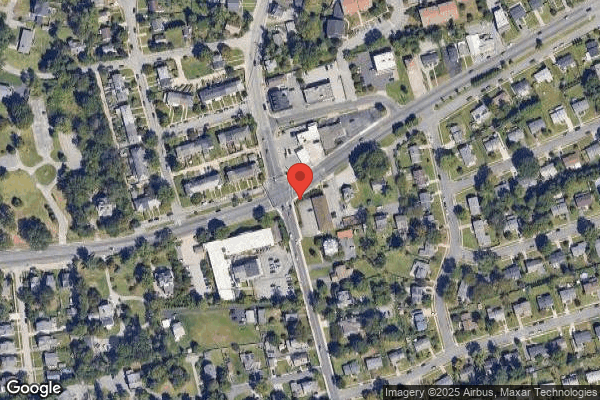
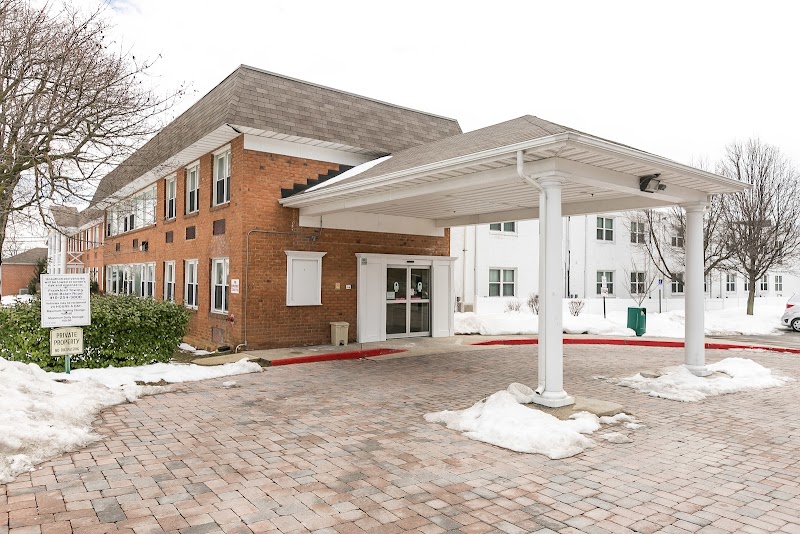
701 EDMONDSON AVENUE, CATONSVILLE, MD 21228 (410) 747-7425
For profit - Corporation 167 Beds FUNDAMENTAL HEALTHCARE Data: November 2025 1 Immediate Jeopardy citation
Trust Grade
0/100
#200 of 219 in MD
Last Inspection: August 2022

Over 2 years since last inspection. Current conditions may differ from available data.

Overview

Forest Haven Nursing and Rehabilitation Center has received a Trust Grade of F, indicating significant concerns about the quality of care provided. Ranking #200 out of 219 in Maryland places it in the bottom half of facilities statewide, and at #42 of 43 in Baltimore County, it is among the least favorable options locally. The facility's overall condition is worsening, with reported issues increasing from 8 in 2024 to 20 in 2025. Staffing levels are average with a 3/5 rating and a low turnover of 20%, which is a positive aspect, but there is concerning RN coverage, as it is lower than 98% of facilities in Maryland, meaning residents may not receive adequate nursing attention. The facility has incurred $153,686 in fines, which is higher than 92% of Maryland facilities, suggesting ongoing compliance issues. Specific incidents include a failure to maintain safe water temperatures, which posed a severe risk to residents, as well as inadequate supervision leading to harm for one resident and instances of abuse among others, indicating critical areas needing immediate improvement.

Trust Score
F
0/100
In Maryland
#200/219
Bottom 9%
Safety Record
High Risk
Review needed
Inspections
Getting Worse
8 → 20 violations
Staff Stability
✓ Good
20% annual turnover. Excellent stability, 28 points below Maryland's 48% average. Staff who stay learn residents' needs.
Penalties
○ Average
$153,686 in fines. Higher than 67% of Maryland facilities. Some compliance issues.
Skilled Nurses
⚠ Watch
Each resident gets only 16 minutes of Registered Nurse (RN) attention daily — below average for Maryland. Fewer RN minutes means fewer trained eyes watching for problems.
Violations
⚠ Watch
69 deficiencies on record. Higher than average. Multiple issues found across inspections.
★☆☆☆☆
1.0
Overall Rating
★★★☆☆
3.0
Staff Levels
☆☆☆☆☆
0.0
Care Quality
★☆☆☆☆
1.0
Inspection Score
Stable
2024: 8 issues
2025: 20 issues

The Good

  • Low Staff Turnover (20%) · Staff stability means consistent care
  • Full Sprinkler Coverage · Fire safety systems throughout facility
  • No fines on record
  • Staff turnover is low (20%)

    28 points below Maryland average of 48%

Facility shows strength in staff retention, fire safety.

The Bad

1-Star Overall Rating

Below Maryland average (3.0)

Significant quality concerns identified by CMS

Federal Fines: $153,686

Well above median ($33,413)

Significant penalties indicating serious issues

Chain: FUNDAMENTAL HEALTHCARE

Part of a multi-facility chain

Ask about local staffing decisions and management

The Ugly 69 deficiencies on record

1 life-threatening 3 actual harm
May 2025 20 deficiencies 1 Harm
SERIOUS (G) 📢 Someone Reported This

A family member, employee, or ombudsman was alarmed enough to file a formal complaint

Actual Harm - a resident was hurt due to facility failures

Accident Prevention (Tag F0689)

A resident was harmed · This affected 1 resident

**NOTE- TERMS IN BRACKETS HAVE BEEN EDITED TO PROTECT CONFIDENTIALITY** Based on clinical record review and staff interviews, it was determined that the facility staff failed to ensure 1) adequate sup...

Read full inspector narrative →
**NOTE- TERMS IN BRACKETS HAVE BEEN EDITED TO PROTECT CONFIDENTIALITY** Based on clinical record review and staff interviews, it was determined that the facility staff failed to ensure 1) adequate supervision while positioning a resident in bed during the provision of care and 2) residents did not have access to medications. This was evident for 2 of 30 residents (#13 and #26) reviewed for complaints and resulted in harm to Resident #13. The findings include: 1. On 4/21/25 at 9AM, a record review was conducted which revealed that Resident #13 had diagnoses which included, but were not limited to, respiratory failure with hypoxia, heart failure, wedge compression fracture of fourth thoracic vertebra, Hospice, and dementia. The MDS (Minimum Data Set) is a screening tool that is utilized to ensure each resident's individual needs are identified. A review of the MDS assessment, with an assessment reference date of 4/22/2023, identified that to turn from side to side and position body when in bed, the resident was extensive assistance on staff for the activity and required 2 staff persons to physically assist. According to the facility report MD00203380 notes dated 03/07/2024 at 11:25 AM, Resident #13 fell from bed during activities of daily living (ADL) care and as a result, he/she sustained a fracture to the left superior pubic ramus. The facility incident report described how Staff #1, a Geriatric Nursing Assistant (GNA) and the only witness to the fall, had been providing care without the assistance of another staff member. Staff #1 left the resident unattended on her left side in bed to get additional supplies to care for the resident. When Staff #1 returned to the bed Resident #13 was on the floor on his/her left side. On 4/22/25 at 8:30 AM it was discovered that Staff #1 no longer works at the facility and his/her last day of employment was 3/28/2024. The phone number provided from Human Resources was disconnected, so the Staff was not interviewed. Resident #13 remained in the facility and staff followed hospice recommendations for pain management and the daughter's wishes. During an interview the Administrator confirmed the facility staff failed to provide supervision for Resident #13 according to the ADL policy. 2. An observation on 4/23/25 at 11:50 AM of Resident (R)26's room revealed the resident had the following medications sitting out in the open on his/her over-the-bed table: 1 can of medicated spray, a container of Desitin (diaper rash cream), Pepto Bismol ultra, liquid [NAME] pectate, severe congestion liquid medication, cough syrup. During this observation R26 was interviewed. The resident reported that s/he has these medications at his/her bedside because facility staff refused to get them for the resident. The resident reported that a family member purchased the medications and brought them to him/her. An interview with the Director of Nursing (DON) on 4/29/25 at 11:04 AM revealed that residents were not allowed to have medications at their bedside. She reported that she was not aware that R26 had medications in their room. The DON reported that R26 will cover the over-the-bed table with magazines and paper to hide what was on it. During this interview on 4/29/25 at 11:15 AM an observation of R26's room was made with the DON present. The DON confirmed that the medications were on the over-the-bed table. The DON reported that facility staff had a meeting with R26 and his/her family to discuss behavioral concerns in 9/2024, and denied the medications were on the table at that time. Social Services staff #8 was interviewed on 4/30/25 at 9:38 AM. He confirmed a meeting was held with R26 and his/her family on 9/24/24, in the resident's room, to discuss behaviors. He reported that he has seen medications on the resident's over-the-bed table on multiple occasions. He reported he has seen Pepto-Bismal and cough syrup. He confirmed that medications were in the room during the meeting on 9/24/24. An interview with the attending physician on 4/30/25 at 10:39 AM revealed he was aware that R26 had medications at his/her bedside. He reported that he has discussed this issue with the resident on multiple occasions and offered to prescribe them for the resident, so staff could administer them. When asked if he had assessed the resident for self-administration, he stated that he felt the resident would take excessive amounts of the medication and not adhere to the prescribed dose. Furthermore, he stated the administrative team had discussed this issue on multiple occasions but were not sure how to handle it. Facility staff continued to allow the resident to keep the medications at the bedside and self-administer the medications when it was deemed unsafe to do so. The concerns were reviewed with the Nursing Home Administrator (NHA) and Clinical Services Director #10 on 5/1/25 at 3:15 PM. The scope severity for Example #2 remained at a D.
CONCERN (D) 📢 Someone Reported This

A family member, employee, or ombudsman was alarmed enough to file a formal complaint

Potential for Harm - no one hurt, but risky conditions existed

Report Alleged Abuse (Tag F0609)

Could have caused harm · This affected 1 resident

Based on medical record review and interview with staff it was determined the facility staff failed to report an allegation of abuse to the State Agency in a timely manner. This was evident for 1 resi...

Read full inspector narrative →
Based on medical record review and interview with staff it was determined the facility staff failed to report an allegation of abuse to the State Agency in a timely manner. This was evident for 1 resident (#2) during review of 1 of 9 complaints related to Resident Rights and 2 (#10, #28) of 7 residents reviewed for abuse. The findings include: 1) Resident #2's medical record was reviewed on 4/28/25 at 10:53 AM. The record revealed a progress note written by Staff #11 the Attending Physician on 2/3/25 at 12:15 PM which included but was not limited to: Patient initially irate, angry that s/he is not allowed to smoke marijuana for pain management at the facility, states I am a long-term advocate for marijuana for pain management and I will sue this place if I become addicted to morphine. Further review of the medical record revealed a nursing progress note written by Staff #9 on 2/7/25 at 5:06 AM. The note included: . resident was cussing, yelling and screaming that his/her marijuana was stolen, I, the nurse then call the supervisor, supervisor and the nurse went into residents' room . In an interview on 4/29/25 at 8:05 AM Staff #9 was asked about the events on 2/7/25. She stated it was early in the morning. S/he refused care, started yelling and cursing, said if I give him/her his/her marijuana s/he would not call the police. Staff #9 indicated that the resident did not identify who stole his/her marijuana or when. Staff #9 also stated I did not know anything about Resident #2's marijuana. Residents here can't have marijuana. I don't even know what it looked like. I asked other staff if they knew anything, no one saw or knew about his/her marijuana. When asked if she reported Resident #2's allegation to Administration she indicated that she wrote a note in the resident's chart and on the 24-hour report, reported what had happened to the oncoming nurse at shift change and that the nursing supervisor was present and heard the allegation. She indicated that the nursing supervisor no longer works in the facility. On 4/29/25 at 8:12 AM the Administrator was asked if the facility reported the allegation to the state or other agencies. She indicated she would check. On 4/29/25 at 10:48 AM Staff #10 the Clinical Services Director confirmed that the facility did not report the allegation. The above concerns were reviewed with the DON on 4/30/25 at 12:50 PM. Cross reference F 610. 2) On 4/23/25 at 3:00 PM, a review of a facility reported incident MD000208346 alleged that during an altercation, Resident #28 hit Resident #10 on the head with his/her cane causing a laceration to Resident #10's head. The facility's investigation documented the incident occurred on 7/26/24 @ 4:30 PM. The facility's investigation did not include documentation as to when the incident was sent to OHCQ and when the final report was sent and the surveyor was not provided with documentation as to when the incident was sent to OHCQ and when the final report was sent. The above concerns were discussed with the Nursing Home Administrator (NHA), and on 4/23/25 at 3:22 PM, the NHA reported that email confirmations of when the incident was reported to OHCQ were permanently deleted and no longer available to provide to the surveyor. On 4/30/25 at 12:45 PM, the Director of Nurses (DON) informed the surveyor that moving forward, the facility would print the email confirmations when the facility reported incidents were sent to the survey agency.
CONCERN (D) 📢 Someone Reported This

A family member, employee, or ombudsman was alarmed enough to file a formal complaint

Potential for Harm - no one hurt, but risky conditions existed

Investigate Abuse (Tag F0610)

Could have caused harm · This affected 1 resident

Based on medical record review and interview with staff it was determined the facility staff failed to investigate an allegation of misappropriation of resident property for 1 (#2) of 6 residents revi...

Read full inspector narrative →
Based on medical record review and interview with staff it was determined the facility staff failed to investigate an allegation of misappropriation of resident property for 1 (#2) of 6 residents reviewed for Resident Rights; and failed to conduct a thorough investigation and prevent other potential abuse or mistreatment while the investigation was in progress for 2 (#12 and #15) of 7 residents reviewed for abuse. The findings include: 1) Resident #2's medical record was reviewed on 4/28/25 at 10:53 AM. The record revealed a progress note written by Staff #11 the Attending Physician on 2/3/25 at 12:15 PM which included but was not limited to: Patient initially irate, angry that s/he is not allowed to smoke marijuana for pain management at the facility, states I am a long-term advocate for marijuana for pain management and I will sue this place if I become addicted to morphine. Further review of the medical record revealed a nursing progress note written by Staff #9 on 2/7/25 at 5:06 AM. The note included: .resident was cussing, yelling and screaming that his/her marijuana was stolen, I, the nurse then call the supervisor, supervisor and the nurse went into residents' room . In an interview on 4/29/25 at 8:05 AM Staff #9 was asked about the events on 2/7/25. She stated it was early in the morning. Resident #2 refused care, started yelling and cursing, said if I give him/her his/her marijuana s/he would not call the police. Staff #9 indicated that the resident did not identify who stole his/her marijuana or when. Staff #9 also stated I did not know anything about [Resident #2's] marijuana. Residents here can't have marijuana. I don't even know what it looked like. I asked other staff if they knew anything, no one saw or knew about his/her marijuana. When asked if she reported Resident #2's allegation to Administration she indicated that she wrote a note in the resident's chart and on the 24-hour report and reported what happened to the oncoming nurse at shift change. She added that the nursing supervisor was present and heard Resident #2's allegations. She indicated that the nursing supervisor no longer works in the facility. On 4/29/25 at 8:12 AM the Administrator was asked if the facility investigated after Resident #2's allegation that his/her property was stolen. She indicated she would check. On 4/29/25 at 10:48 AM Staff #10 the Clinical Services Director confirmed that the facility did not conduct an investigation of the allegation. 2) Facility reported incident #MD00209812 involving Resident #12 was reviewed on 4/23/25 at 10:45 AM. The complaint alleged that on 9/11/24 Staff #16 a GNA (Geriatric Nursing Assistant) threw cookies at resident #12 striking him/her on the nose. The facility's final report, submitted to the state agency on 9/18/24, indicated the facility was unable to substantiate abuse. The facility's investigation documentation did not include statements from staff or residents regarding the alleged event or mistreatment by staff #16. There was no evidence that Staff #16 was removed from resident contact pending the outcome of the investigation. On 4/23/25 at 11:25 AM the Administrator was made aware of these findings. The Administrator returned on 4/23/25 at 12:10 PM with 2 statements: One dated 9/14/24 included 3 questions in which Staff #16 confirmed she cared for Resident #12 on 9/10/24, (the day prior to the date of the alleged incident); She denied throwing cookies or touching the nose of Resident #12. A brief statement at the bottom indicated [Resident #12] asked me to hand [him/her] cookies, and I put the cookies on [ his/her] bedside table within [his/her] reach, and that Resident #12 called her a bitch. It was signed by Staff #16 and dated 9/18/22, 2 years prior to the incident. The second statement was dated 9/14/24 from Staff #17 an LPN (Licensed Practical Nurse). It stated [Resident #12] did not report to me on 9/12/2024 that any GNA threw cookies at [him/her] or touch [his/her] nose. No statements from other residents or staff were provided. On 4/23/25 at 12:55 PM the Administrator, DON (Director of Nursing) and Staff #10 the Clinical Services Director were asked if Staff #16 was removed from resident care pending the outcome of the investigation. The DON indicated that Staff #16 was a PRN (as needed) staff member and did not work from the time of the report until after the investigation was completed. Review of Staff #16's time punch log on 4/24/25 at 8:45 AM revealed that Staff #16 was scheduled off on 9/13/24, the day the facility received the report of the alleged abuse. However, she was not removed from resident care pending the outcome of the investigation on 4/18/24, and continued to work on the unit where Resident #12 resided, on: 9/14/24 6:57 AM - 3:02 PM, 9/15/24 6:57 AM - 3:02 PM, 9/16/24 6:57 AM - 2:51 PM, 9/17/24 6:56 AM - 10:52 PM, and 9/18/24 6:59 AM - 10:55 PM. The above concerns were reviewed with the DON on 4/30/25 at 12:50 PM. 3) On 4/28/25 at 9:54 AM, a medical record review for Resident R15 revealed an attending physician's note that documented the resident had a mental health disorder and dementia with disturbances. A review of the facility's investigation file for self-reported incident #MD00209883 on 4/25/25 at 1:38 PM revealed an initial report form. According to the form Unit Manager (UM) #6 reported that on 9/16/24 at 3:30 PM she was informed that R15 reported an allegation of abuse to a therapy staff member that morning at 10:00 AM. R15 reported that Geriatric Nursing Assistant (GNA) #27 had pulled his/her hair and hit him/her with a shoe. The final report form revealed that an interview with GNA #27 revealed she reported that she had not had contact with the R15 that morning. Further review of the file revealed staff failed to obtain a statement from R15. Facility staff failed to obtain statements from everyone who may have witnessed the incident. In addition, staff obtained a statement from GNA #27 stating she had not provided care to R15 that day. However, they failed to further investigate to determine if there was any interaction between R15 and GNA #27 as she had been assigned to the resident from 7:00 AM and 10:00 AM. During an interview with the Administrator and Director of Nursing (DON) on 4/28/25 at 2:29 PM, the DON reported that the resident had denied this incident happened during an interview. However, she reported that she and the Administrator had failed to document the interview. The DON reported that social services staff documented the interview, but she was unable to provide the documentation. She confirmed that the statements included in the investigation file were the only ones obtained during the investigation.
CONCERN (D) 📢 Someone Reported This

A family member, employee, or ombudsman was alarmed enough to file a formal complaint

Potential for Harm - no one hurt, but risky conditions existed

Comprehensive Care Plan (Tag F0656)

Could have caused harm · This affected 1 resident

Based on medical record review and interview it was determined the facility staff failed to develop and implement a comprehensive person-centered care plan for each resident consistent with resident r...

Read full inspector narrative →
Based on medical record review and interview it was determined the facility staff failed to develop and implement a comprehensive person-centered care plan for each resident consistent with resident rights. This was evident for 2 (#12 and #18) of 16 residents reviewed for Quality of Care. The findings include: 1) Review of a complaint on 4/21/25 at 9:22 AM revealed an allegation that the facility was not assisting Resident #12 to get to medical appointments outside of the facility. Resident #12s medical record revealed A Social Services Progress note dated 8/29/23 which indicated that a Dentist from Health Drive examined Resident #12 and recommended antibiotics and to have his/her 17th and 18th tooth extracted. The resident refused the antibiotic and refused to be transferred out. When Social Workers encourage him/her to be evaluated by an oral surgeon as recommended, he/she became very hostile and stated s/he wanted to be transferred to the University of Maryland Geriatric ER (Emergency Room). When informed that EMS would likely transport him/her to the nearest ER s/he became hostile. S/he called 911 him/herself and when told the same thing agreed to be transferred. The Social Services progress note dated 7/29/24 revealed the social worker attempted to assist Resident #12 in making an appointment. The resident was noted to yell and curse at the social worker. A Nurses Progress note on 8/7/24 at 3:40 PM revealed the DON (Director of Nursing) and Unit Manager met with Resident #12 to address concerns regarding an Echocardiogram appointment. The resident indicated that only one specific cardiologist at John Hopkins could do his/her echocardiogram, but he/she had not seen the doctor for several years. They indicated they would attempt to locate him. Review of the physicians' orders revealed on 5/7/24 a Dental consult order, 6/11/24 an order for Cardiology, neurosurgery and neurology appointments, and on 8/28/24 an order for Neurology consult. No evidence was found in the medical record that the resident went for these consults. In an interview on 4/23/25 at 9:00 AM the Administrator was asked if the facility had a log of outside appointments for Resident #12. She indicated that the resident would make some appointments on her own and did not inform the facility of the appointments. When asked who arranged transportation she indicated that the resident did at times, or the facility did and provided an escort. She was asked to provide any documentation pertaining to the residents outside appointments. In an interview on 4/23/25 at 11:25 AM the Administrator provided the surveyor with a copy of a physician's order dated 5/13/24 for a dental appointment and included a transportation log reflecting the appointment on 5/28/24. She indicated that was the only appointment scheduled by the facility that the resident attended. She was then asked if there was documentation regarding the other appointments/consults ordered by the physician. She again indicated that the resident scheduled his/her own appointments. When asked if there was documentation reflecting when and where s/he went for the appointments she indicated no. When asked if the residents were permitted to come and go from the facility without notifying the facility of their whereabouts. She indicated no, then added that Resident #12 would schedule appointments for him/herself, then cancel them. During an interview on 4/23/25 12:05 PM Staff #20 the Transportation/Scheduler indicated that she worked in facility since December 2023 and was familiar with Resident #12. When asked about the process for scheduling appointments she indicated that when the physician ordered a consult or outside appointment, nursing would notify her, and she would schedule it and arrange transportation. She was asked about Resident #12 going to appointments outside of the facility with Neurology, Neurosurgeon, Dental surgeon, cardiologist, etc. She indicated that Resident #12 made appointments for him/herself. She indicated that she was not involved in any appointments beyond what she was notified to schedule and that most of Resident #12's appointments were between the Physician, Nursing and the resident, and she was not notified. Review of Resident #12s Plan of Care revealed a plan related to behavior problems, including but not limited to false accusations, refusing medications, resists care, cursing at staff, verbal aggression, calling the police/OHCQ/ombudsman etc. The facility failed to develop a Plan of Care to address Resident #12's appointments including his/her desire to see specific providers and or arrange their own appointments in the community including approaches to assist the staff in meeting the residents' individual needs based his/her preferences/choices. The above concerns were reviewed with the DON on 4/30/25 at 12:50 PM. 2) A care plan is a guide that addresses the unique needs of each resident. It is used to plan, assess and evaluate the effectiveness of the resident's care. On 4/22/25 at 1:09 PM, a review of complaint MD00212978 alleged that since July 2024, Resident #18 had a rash on his/her shins (the front of the leg between the knee and the ankle) and, in mid-December 2024, the rash was still there and there wasn't a current treatment for the rash. On 4/25/25 at 11:24 AM, a review of Resident #18's electronic medical record (EMR) was conducted. The medical record documented Resident #18 resided in the facility for long term care since June 2022, and had diagnoses which included dementia, hypertension (high blood pressure), and hypothyroidism (underactive thyroid). Further review of Resident #18's EMR, revealed documentation that since July 2024, Resident #18 had a recurrent rash on the front of his/her lower legs that would improve with treatment, and then recur. Review of Resident #18's progress notes, revealed on 7/29/24 at 11:47 PM, the nurse documented that there was a rash on both of Resident #18 legs, the physician assessed the rash and ordered triamcinolone cream to be applied to the rash twice a day. In a progress note on 7/29/24 at 4:00 PM, the physician wrote that Resident #18 was seen for a rash on his/her lower extremities, that labs were ordered, the resident was to start triamcinolone twice a day for 10 days, and for the resident to follow-up with dermatology. In a progress note on 8/14/24 at 10:45 AM, the physician wrote that Resident #18 was seen for follow-up of a rash, that the resident's ANA (antinuclear antibody blood test) was mildly positive and referred to rheumatology (study of rheumatic (inflammatory, autoimmune, and degenerative) diseases), the resident was on triamcinolone and was to follow-up with dermatology. In a progress note on 12/2/24 at 11:41 PM, the nurse wrote that Resident #18 was observed with a rash to the bilateral lower extremities, the practitioner was updated and to see new orders. In a progress note on 12/27/24 at 7:30 AM, the physician wrote that Resident #18 was following with rheumatology for a persistent rash, that a course of triamcinolone was repeated with little effect, and that a second dermatology opinion would be obtained. A review of the physician orders revealed a dermatology appointment for bilateral leg rash was ordered on 1/1/25. In a progress note, on 2/18/25 at 10:30 AM, the nurse wrote that Resident #18 was not seen by the Dermatologist that day, that the practitioner was notified and ordered the appointment be rescheduled. On 4/16/25 at 11:30 AM, in a progress note, the physician wrote that Resident #18 was followed by rheumatology for a rash that had persisted, and a second dermatology opinion was pending. Review of Resident #18's physician orders revealed Triamcinolone (synthetic corticosteroid) topical cream to be applied to Resident #18's leg rash was prescribed by the physician on 7/29/24, 8/14/24, 10/30/24 and 12/2/24. The medical record also documented Resident #18 was seen by Rheumatology on 10/22/24 and 12/4/24 and seen by the Dermatologist on 10/30/24 and had a 2/18/25 order for a Dermatology follow-up appointment. Review of Resident #18's care plans revealed a 6/3/22 care plan, Resident #18 has potential for impairment to skin integrity, with the goal, Resident #18 will maintain clean and intact skin by the review date, that had approach, keep skin clean and dry. The skin integrity care plan was not comprehensive, or resident centered. Continued review of the care plans failed to reveal a comprehensive, resident centered care plan had been developed to address Resident #18's recurrent rash. On 4/24/25 at 8:56 AM, the Director of Nurses (DON) was made aware of the above concerns. The DON acknowledged the concerns and not further comments were offered at that time.
CONCERN (D) 📢 Someone Reported This

A family member, employee, or ombudsman was alarmed enough to file a formal complaint

Potential for Harm - no one hurt, but risky conditions existed

Deficiency F0679 (Tag F0679)

Could have caused harm · This affected 1 resident

Based on medical record review and staff interview it was determined that the facility staff failed to provide an activities program to meet the needs and preferences of the residents and failed to de...

Read full inspector narrative →
Based on medical record review and staff interview it was determined that the facility staff failed to provide an activities program to meet the needs and preferences of the residents and failed to develop a resident centered care plan related to activities with achievable goals and measurable objectives. This was evident for 1 (#11) of 5 residents reviewed for quality of life. The findings include: A care plan is a guide that addresses the unique needs of each resident. It is used to plan, assess and evaluate the effectiveness of the resident's care. On 4/18/25 at 2:52 PM, a review of complaint, MD00199947 alleged that activities were not provided for Resident #11. During the survey, intermittent observations of Resident #11 were made at various times on different days. During the observations, Resident 11 was found either in his/her room, or ambulating in the hallway. Resident #11 was never observed in engaged in an activity or having a one-to-one activity with facility staff. A review of the medical record on 4/24/24 at 4:10 PM, revealed Resident #11 resided in the facility for long term care since 11/2023, and had diagnoses which included dementia with behavioral disturbance. Review of the admission assessment for Resident #11, completed on 11/27/23, documented the resident's BIMS (Brief interview for Mental Status) summary score was 5, indicating Resident #11 had severe cognitive impairment. The admission assessment's Interview for Activity Preferences, documented it was very important for Resident #11 to have books, newspapers, and magazines to read, very important for the resident to listen to music s/he liked, very important to be around animals such as pets, very important to keep up with the news, very important to do things with groups of people, very important to go outside to get fresh air when the weather was good, and very important for the resident to participate in religious services or practices. Resident #11's care plans were reviewed, and no care plan was found for activities that would have addressed the resident's activity preferences. There was a care plan for Resident #11, initiated on 11/27/23 for the category, Activities, that stated the resident is independent for meeting emotional, intellectual, physical, and social needs but requires engagement, with the goal, to encourage [Resident #11] to attend group activities, that had one approach, engaging [him/her] in music and sensory stimulation groups. The care plan indicated Resident #11, who was the cognitively impaired, was independent with meeting his/her activity needs, and the care plan goal was a facility staff intervention. The care plan was not resident centered with measurable goals and individualized approaches to meet Resident #11's activity needs and preferences. On 4/25/25 at 11:43 AM, during an interview, Staff #28, Activity Director, stated that the activity staff provided one-to-one visits to Resident #11, and the resident was invited to attend appropriate group activities. When asked how resident participation in activities was documented, Staff #28 stated that one-to-one visits and group activities attended by the resident were documented in a monthly activities record. The concerns failing to have a resident centered care plan that addressed the resident's activity preferences were discussed with Staff #28 during the interview. Staff #28 acknowledged the concerns with no explanation offered at that time. Following the interview, the surveyor was provided with activity participation logs for Resident #11 for December 2024, January 2025, and February 2025 and Staff #28 reported that no activity participation logs were found for Resident #11 to indicate the participated in activities in March 2025, or April 2025. The December 2024 Activity Participation Log for Resident #11 documented activities were provided to the resident on 4 (12/9,12/12, 12/17, 12/19) of 31 days in December. The activity log documented the activities, hydration, music enjoyment, and snack social were provided on 12/9/24, the activity hydration was provided on 12/12/24, the activities, hydration, music enjoyment, and snack social were provided on 12/17/24 and the activities,, hydration, music enjoyment, and snack social were provided on 12/19/24. The January 2025 Activity Participation Log for Resident #11 documented activities were provided to the resident on 3 (1/14, 1/17, 1/22) 31 days in January, The activity log documented the activities, hydration, music enjoyment, and snack social were provided on 1/14/25, the activities hydration, and snack social were provided on 1/17/25, and the activities, daily chronicles, hydration, and snack social were provided on 1/22/25, The February 2025 Activity Participation Log for Resident #11 documented activities were provided to the resident on 4 (2/11, 2/14, 2/20, 2/27) of 28 days in February. The activity log documented the activities, daily chronicles and hydration were provided on 2/11/25, the activities, hydration and snack social were provided on 2/14/25, the activities. hydration, and music enjoyment were provided on 2/20/25, and the activities, daily chronicles, hydration and ice cream social were provided to Resident #11 on 2/27/25. There was no documentation found that other activities were offered or that a structured plan was created every day for the resident as some of the activities documented above took place on the same day and no further documentation was provided to the surveyor to indicate Resident #11 was provided one-to-one visits or attended group activities in March 2025 and April 2025. The above concerns were discussed with the Director of Nurses (DON) and the Nursing Home Administrator on 4/25/25 at 4:10 PM, who acknowledged the On 4/25/25 at 4:10 PM, the above concerns were discussed with the Director of Nurses (DON) and the Nursing Home Administrator. The DON and NHA acknowledged the concerns at that time with no further comments offered.
CONCERN (D) 📢 Someone Reported This

A family member, employee, or ombudsman was alarmed enough to file a formal complaint

Potential for Harm - no one hurt, but risky conditions existed

Quality of Care (Tag F0684)

Could have caused harm · This affected 1 resident

Based on medical record reviews and interviews, the facility staff failed to follow physician orders for a resident. This was evident for 1 (#18) of 1 residents reviewed for physician services during ...

Read full inspector narrative →
Based on medical record reviews and interviews, the facility staff failed to follow physician orders for a resident. This was evident for 1 (#18) of 1 residents reviewed for physician services during a complaint survey. The findings include: On 4/22/25 at 1:09 PM, a review of complaint MD00212978 alleged that the same ointment had been prescribed for a rash on Resident #18's shins (the front part of the leg between the knee and the ankle) 2 times and then the rheumatologist prescribed the same ointment for the rash. The complainant alleged that the resident still had the rash on 12/18/24, and there were no current treatments for the rash at that time. On 4/25/25 at 11:24 AM, a review of Resident #18's electronic medical record (EMR) was conducted. The medical record documented Resident #18 resided in the facility for long term care since June 2022, and had diagnoses which included dementia, hypertension (high blood pressure), and hypothyroidism (underactive thyroid). Further review of Resident #18's EMR, revealed documentation that since July 2024, Resident #18 had a recurrent rash on the front of his/her lower legs that would improve with treatment, and then recur The medical record review revealed physician orders for Resident #18 to be seen by Rheumatology (specializes in rheumatic (inflammatory, autoimmune, and degenerative) diseases)) and Dermatology (specializes in skin) for his/her bilateral leg rash, and documentation that Resident #18 was seen by Rheumatology on 10/22/24 and 12/4/24 and the resident was seen by the Dermatologist on 10/30/24. Further review of the medical record revealed Resident #18 had a dermatology appointment on 2/18/25 that was cancelled and had to be rescheduled. In a progress note on 2/18/25 at 9:30 AM, the nurse wrote that Resident #18 left for a dermatology appointment. On 2/18/25 at 10:30 AM, the nurse wrote that Resident #18 returned from the appointment without being seen by the doctor because the hospital elevator wasn't working, that the practitioner was notified and an order to reschedule the dermatology appointment was obtained. Review of Resident #18's physician orders revealed a 2/18/25 order for a dermatology follow-up appointment. Continued review of Resident #18's medical record failed to reveal documentation to indicate that a follow-up dermatology appointment had been scheduled for the resident. On 4/23/25 at 12:06 PM, during an interview, Staff #20, Transportation/Scheduler, stated that s/he was responsible for scheduling appointments and transportation for the facility's residents. At that time, when asked if a dermatology appointment had been rescheduled for Resident #18 when his/her appointment was cancelled in February 2025, Staff #20 reported the appointment was not reschedule, and stated that nursing should notify him/her when an appointment needs to be rescheduled. On 4/30/25 at 10:37 AM, during an interview, Staff #11, Attending Physician indicated Resident #18 had a rash on her legs that was mild and minor. On 4/30/25 at 10:37 AM, when asked if Resident #18 continued to have a rash on her lower legs, Staff #11, Attending Physician, indicated that the resident had a rash that was mild and minor, and was being followed by rheumatology and dermatology. At that time, the physician was made aware Resident #18's dermatology appointment scheduled in February 2025 had been cancelled. The physician responded that the appointment should have been rescheduled, and stated that whenever a resident was unable to be seen for an appointment, his/her expectation would be to re-schedule the appointment. On 5/1/25 at approximately 3:30 PM, the Director of Nurses (DON) and the Nursing Home Administrator (NHA) were made aware of the above concern. The DON acknowledged the concern with no further comments made at that time.
CONCERN (D) 📢 Someone Reported This

A family member, employee, or ombudsman was alarmed enough to file a formal complaint

Potential for Harm - no one hurt, but risky conditions existed

Pressure Ulcer Prevention (Tag F0686)

Could have caused harm · This affected 1 resident

**NOTE- TERMS IN BRACKETS HAVE BEEN EDITED TO PROTECT CONFIDENTIALITY** Based on record review and interviews it was determined the facility staff failed to implement appropriate individualized interv...

Read full inspector narrative →
**NOTE- TERMS IN BRACKETS HAVE BEEN EDITED TO PROTECT CONFIDENTIALITY** Based on record review and interviews it was determined the facility staff failed to implement appropriate individualized interventions for residents identified at risk of developing pressure ulcers. This was evident for 1 (#14) of 16 residents reviewed for Quality of Care. The findings include: Resident #14's medical record was reviewed on 4/29/25 at 11:42 AM. The Resident was admitted to the facility on [DATE]. An admission nursing progress note dated 12/8/23 3:45 PM revealed Resident #14's skin was warm and dry with redness to groin and redness to buttock. The progress note did not include the character of the redness such as size, or if the areas were blanchable. admission Physician orders written on 12/8/23 included but were not limited to: Daily skin check, weekly skin check by Licensed Nurse on Tuesday, Braden Scale weekly x 4 start day of admission, Hydraguard (a moisture barrier cream) to buttocks redness every shift. A Braden Scale for Predicting Pressure Sore Risk is a tool used to assess a patient's risk for developing a pressure injury. An admission Braden Scale dated 12/8/23 at 7:47 PM revealed Resident #14's score was 18 points which indicated s/he was at risk for developing pressure ulcers. No Braden Scale assessments were found for 12/15/23, 12/22/23 or 12/29/23. The next Braden Scale was completed on 1/4/24 12:45 PM. The facility staff failed to follow the Physicians' order to complete Braden Scale assessments weekly x 4. The MDS (Minimum Data Set) is a complete assessment of the resident which provides the facility information necessary to develop a plan of care, provide the appropriate care and services to the resident, and to modify the care plan based on the resident's status. Resident #14's 5-day admission MDS dated [DATE] indicated that during the 7-day lookback period Resident #14 utilized a manual wheelchair for mobility, was dependent on others for personal hygiene, and required substantial/maximal assistance to roll left and right in bed. Section M: Skin Conditions reflected that Resident #14 was at risk of developing pressure ulcers and had no ulcers at that time. A pressure reducing device for bed and Applications of ointments/medications other than to feet were identified as the Skin and Ulcer/Injury Treatments that were in place at the time of the assessment. A 48-hour interim Plan of Care dated 12/8/23 indicated Resident #14's goal was: immediate health and safety needs will be identified, one of the approaches indicated: SKIN INTEGRITY: (X) At Risk. The facility staff failed to identify the treatments and/or interventions staff were to implement to address the residents identified skin integrity risk. The initial comprehensive plan of care dated 12/11/23 identified the Problem: Potential for impairment to skin integrity r/t (related to) incontinence. The residents' goal was: [Resident #14] will maintain clean and intact skin by the review date 3/30/24. The approaches were: Incontinence care and preventative skin care per policy and Keep skin clean and dry. Another identified problem was: [Resident #14] requires assistance with ADL's (Activities of Daily Living). The goal was: [Resident #14 will maintain a sense of dignity by being clean, dry, odor free and well groomed over the next 90 days. The Approaches included BED MOBILITY [Resident #14] is dependent. The facility staff failed to develop a Plan of Care which included the individualized resident specific measures staff were to implement based on the resident's identified needs including but not limited to how staff should address Resident #14's dependence on staff for turning and repositioning, the prescribed moisture barrier cream, and the pressure reducing device that was being used on Resident #14's bed as indicated in the MDS. A nursing progress note and the Braden assessment dated [DATE] revealed that Resident #14 was identified to have an open area on his/her sacrum. The physician was notified, and treatment was ordered. A nursing progress note dated 1/9/24 3:52 PM revealed the wound first identified on 1/4/24 and was unstageable. A wound doctor was notified, and the treatment was changed. An APM2 (Alternating Pressure Mattress) was ordered, a urinary catheter was inserted to assist in wound healing and turning and repositioning put in place. Resident #14's plan of care was updated at that time to reflect the presence of the open area and the interventions as noted including Reposition Q [every] 2 hours and as needed. GNA Point of Care documentation revealed staff did not document that Resident #14 was assisted with turning and repositioning prior to the identification of the open area, from 12/8/23 - 12/18/23, 12/20/23 - 1/10/24; or after turning and positioning was added to Resident #14's plan of care, for the dates: 1/16/24, 1/25/24 - 1/28/24, 1/31/24, 2/3/24, 2/5/24, 2/18/24, 2/21/24, 3/15/24 and 3/17/24. Staff #11 the attending physician was interviewed on 4/30/25 at 10:34 AM. The resident's open sacral wound was reviewed. He was made aware that the intervention of turning and positioning was not ordered until 1/9/24 after the wound was identified. He indicated that usually there should be a general order in place at the time of admission. He was not clear if it was a written order or standard protocol for the facility. The above concerns were reviewed with the DON on 4/30/25 at 12:50 PM. She provided a change in condition progress note dated 1/4/24 which noted Resident #14 was observed scratching the skin on his/her sacrum causing a 2x2 area open area and a small amount of blood on his/her fingers. The physician was notified; treatment and wound physician follow up were ordered. She was made aware that the facility staff failed to implement appropriate interventions for a resident identified on admission to be at risk of developing pressure ulcers.
CONCERN (D) 📢 Someone Reported This

A family member, employee, or ombudsman was alarmed enough to file a formal complaint

Potential for Harm - no one hurt, but risky conditions existed

Medication Errors (Tag F0758)

Could have caused harm · This affected 1 resident

Based on medical record review and staff interview, it was determined that the facility staff failed to ensure that a psychotropic medication prescribed as needed was limited to 14 days. This was evid...

Read full inspector narrative →
Based on medical record review and staff interview, it was determined that the facility staff failed to ensure that a psychotropic medication prescribed as needed was limited to 14 days. This was evident for 1 (#11) of 5 residents reviewed for quality of life during a complaint survey. The findings include: As needed (PRN) orders for psychotropic drugs are limited to 14 days. If the attending physician or prescribing practitioner believes that it is appropriate for the PRN order to be extended beyond 14 days, he or she should document their rationale in the resident's medical record and indicate the duration for the PRN order. On 4/21/25 at 2:00 PM, a review of complaint MD00213514 alleged concerns with the care Resident #11 received at the facility. On 4/25/25 at 3:00 PM, a review of Resident #11's medical record was conducted. Review of Resident #11's March 2025 Medication Administration record (MAR) revealed a 2/26/25 physician order for Lorazepam (Ativan) (anti-anxiety medication), administer 1 tablet by mouth one time a day PRN (as needed) 30 minutes prior to blood draw for dementia with behavioral disturbance. The as needed order for Lorazepam was not limited to 14 days and the order did not have a duration with a discontinuation date. Review of the medical record failed to reveal physician documented rationale for continuing the order beyond 14 days. In addition, the March 2025 MAR documented the Lorazepam was administered to Resident #11 on 3/3/25 at 5:28 AM. Continued review of the medical record failed to reveal documentation to indicate non-pharmaceutical interventions had been attempted prior to the administration of the medication. On 4/25/25 at 4:10 PM, the above concerns were discussed with the Director of Nurses (DON) and Nursing Home Administrator (NHA). At that time, the DON indicated the Lorazepam was ordered as needed prior to having blood drawn because Resident #11 frequently refused to have blood drawn for labs. The DON acknowledged the concerns at that time and expressed understanding that psychotropic medications prescribed as needed, required a stop date.
CONCERN (D) 📢 Someone Reported This

A family member, employee, or ombudsman was alarmed enough to file a formal complaint

Potential for Harm - no one hurt, but risky conditions existed

Deficiency F0761 (Tag F0761)

Could have caused harm · This affected 1 resident

**NOTE- TERMS IN BRACKETS HAVE BEEN EDITED TO PROTECT CONFIDENTIALITY** Based on observation, record review, and interview, it was determined that facility staff failed to ensure that all medications ...

Read full inspector narrative →
**NOTE- TERMS IN BRACKETS HAVE BEEN EDITED TO PROTECT CONFIDENTIALITY** Based on observation, record review, and interview, it was determined that facility staff failed to ensure that all medications were stored in a locked compartment that was temperature controlled. This was evident for 1 (26) of 30 residents reviewed for complaints. The findings include: An observation on 4/23/25 at 11:50 AM of Resident (R)26's room revealed the resident had the following medications sitting out in the open on his/her over-the-bed table: 1 can of medicated spray, a container of Desitin (diaper rash cream), Pepto Bismol ultra, Liquid [NAME] pectate, severe congestion liquid medication, cough syrup. During this observation R26 was interviewed. The resident reported that s/he had these medications at his/her bedside because facility staff refused to get them for him/her. The resident reported that a family member purchased the medications and brought them to him/her. An observation on 4/29/25 at 11:15 AM with the Director of Nursing (DON) confirmed the resident had medications stored on his/her over-the-bed table, however, she reported that staff had not reported this to her. During an interview with the attending physician on 4/30/25 at 10:39 AM, he reported that he was aware of the medications that R26 kept at his/her bedside. He stated he had discussed this with the resident and administration on multiple occasions. However, they failed to ensure that the medications were stored properly. The concerns were reviewed with the Nursing Home Administrator (NHA) and Clinical Services Director #10 on 5/1/25 at 3:15 PM.
CONCERN (D) 📢 Someone Reported This

A family member, employee, or ombudsman was alarmed enough to file a formal complaint

Potential for Harm - no one hurt, but risky conditions existed

Deficiency F0838 (Tag F0838)

Could have caused harm · This affected 1 resident

Based on review on record review of facility documentation and staff interview, it was determined that the facility staff failed to conduct and document an accurate and comprehensive facility-wide ass...

Read full inspector narrative →
Based on review on record review of facility documentation and staff interview, it was determined that the facility staff failed to conduct and document an accurate and comprehensive facility-wide assessment. This was evident during a complaint survey and had the potential to affect all residents within the facility. The findings include: The intent of the facility assessment is for the facility to evaluate its resident population and identify the resources needed to provide the necessary care and services during both day-to-day operations and emergencies. The assessment must be reviewed as necessary and at least annually. Competency is a measurable pattern of knowledge, skills, abilities, behaviors, and other characteristics in performing that an individual needs to perform work roles or occupational functions successfully. On 5/1/25, during an extended survey, a copy of the Facility Assessment was requested, and a binder with the facility assessment was provided. In front of the binder was a Facility Administrative Review Sheet that documented The contents of this policy manual have been reviewed and have been accepted as practice guidelines in this health center, that was signed by the Administrator, the Medical Director and the Director of Nurses on 3/27/25. Review of the facility assessment revealed a document labeled Facility Profile that documented the facility had 167 licensed beds with no average resident census listed on the profile. The profile listed the average number of staff on days was 35 and the space to record the average number of staff on nights was blank. In addition, the facility profile was not accurate and up to date. The name and contact information of the previous Administrator and the previous Maintenance Director were listed on the profile, and there was no documentation to indicate the facilities average daily census. Continued review of the facility assessment failed to reveal evidence the facility conducted and documented a facility-wide assessment to determine what resources were necessary to care for its residents competently during both day-to-day operations and emergencies. 1) Comorbidity means having two or more diseases or conditions at the same time. A Comorbidity Code is a specific International Classification of Diseases (ICD) code used to identify a secondary medical condition that co-exists with a primary diagnosis. The facility assessment included a report with the heading Diagnoses, the date range 4/27/24 - 7/26/24, and the description Diagnosis breakdown. The second page was labeled Comorbidity Analyzer, the facility's name and Resident's 122 followed by table with that listed 19 comorbidity codes, a description of the heath conditions associated with the code, such as mental, behavioral and neurodevelopmental disorders diseases of the digestive system and endocrine, nutritional and metabolic diseases) the percentage of residents in the facility with health conditions that aligned with the comorbidity code. For example, Comorbidity code F01-F99, mental, behavioral and neurodevelopmental disorders, documented that 99.2% of 121 residents were identified with mental, behavioral and neurodevelopmental disorders. Page 3 to 5 of the report had 3 columns. The 1st column was labeled resident name, followed by 50 resident names, listed in alphabetical order from A to H. The 2nd column was labeled Provider Name, followed by the name of the facility, and the 3rd column was labeled Relevant Diagnoses that listed multiple ICD codes (International Classification of Diseases) (a standardized system used to code diseases and medical conditions) for each resident on the list. Though the comorbidity analyzer identified the diagnosis codes of residents, the report was limited to 50 residents, and there was no documentation to indicate and Continue review of the facility assessment failed to reveal an assessment of the resident population including an evaluation of diseases, conditions, physical function or cognitive abilities, and overall acuity to determines the resources required for their care. The facility assessment failed to include an assessment of the care required by the resident population considering the types of diseases, conditions, physical and cognitive disabilities, overall acuity, and other pertinent information about the residents that may affect and plan for the services the facility must provide. 2) The facility assessment included a document labeled with the facility's name and Competency followed by table with 4 columns and 66 rows. The columns were labeled 1. Staff Competencies & Education; 2. Competency = C, Education = E; Both = CE; 3. Licensed Nurses and 4.Aides. Each row was labeled with a name of a competency, and/or an education, and followed by space in each column to document. The licensed nurse column documented CE next to 11 (Activities of Daily living, Aging Process, Antibiotic Stewardship, IV, TPN, Medication Administration, Medication Storage & Labeling, Psychoactive Medication Reduction (GDR), Respiratory Assessment & Therapeutic Modalities, Restorative, Wound Care Basic, Wound Care Complex) of the 66 competencies/education listed. The aide column documented CE next to 3 (Activities of Daily living, Respiratory Assessment & Therapeutic Modalities) of the 66 competencies/education listed. The facility's Comorbidity Analyzer report identified an average of 121 residents a month had behavioral health needs, an average of 99.2%. The facility assessment failed to address or include: the staff competencies that are necessary to provide the level and types of care needed for the resident population. There was no other documentation to indicate an assessment of their education and/or training and any competencies that are necessary to provide the level and types of care needed for the resident population, and any health information technology resources. 3) Continued review of the facility assessment found no documentation in the assessment of the facility's resources, such as the facility's building(s) and vehicles, medical and non-medical equipment, services provided i.e. rehabilitation therapies and pharmacy, all personnel, including managers, staff (employees and contracted providers) and volunteers, 4) There was no documentation to indicate the facility assessed residents for any ethnic, cultural, or religious factors that may potentially affect the care provided by the facility, including, but not limited to, activities and food and nutrition services. 5) The facility assessment included a document with the heading List of Contracts, followed the name of the facility's contracted providers for rehab, hospice, pain management, wound care, psychogeriatric services and health care services. There was no documentation to indicate an evaluation of these contracts and the facility's process for overseeing these services and how those services will meet resident needs and regulatory, operational, maintenance, and staff training requirements. 6) There was no documentation to indicate an evaluation of the overall number of facility staff needed to ensure a sufficient number of qualified staff are available to meet each resident's needs. The concerns with the facility assessment were discussed with the Nursing Home Administrator (NHA) on 5/1/25 at 2:22 PM. The NHA acknowledged the concerns at that time and indicated she understood the purpose of the facility assessment and the concerns identified by the surveyor.
CONCERN (D) 📢 Someone Reported This

A family member, employee, or ombudsman was alarmed enough to file a formal complaint

Potential for Harm - no one hurt, but risky conditions existed

Medical Records (Tag F0842)

Could have caused harm · This affected 1 resident

**NOTE- TERMS IN BRACKETS HAVE BEEN EDITED TO PROTECT CONFIDENTIALITY** Based on record review, observation and interviews it was determined that the facility failed: 1) to have a process to prepare a...

Read full inspector narrative →
**NOTE- TERMS IN BRACKETS HAVE BEEN EDITED TO PROTECT CONFIDENTIALITY** Based on record review, observation and interviews it was determined that the facility failed: 1) to have a process to prepare and update an inventory of all property that the resident brought to the nursing facility. Including whether the resident retained possession of each item or entrusted the item to the facility for safekeeping, and identification of items valued at $100 or more and, 2) to have accurate and complete documentation regarding resident's end of life choices. This was evident for 1 (#2) of 9 residents reviewed for Resident Rights and evident for 1 (#11) of 5 residents reviewed for quality of life during a complaint survey. The findings include: 1) Resident #2's medical record was reviewed on [DATE] at 10:53 AM during review of a complaint alleging that Resident #2 was not permitted to utilize his/her motorized wheelchair while residing in the facility. No inventory of personal items was found in the record. Further review of the record revealed a nursing progress note dated [DATE] 5:06 AM by Staff #9 an LPN (Licensed Practical Nurse) which included the resident was cussing, yelling and screaming that [his/her] marijuana was stolen. In an interview on [DATE] at 8:05 AM Staff #9 indicated that she recalled the incident. When asked if the resident indicated who stole his/her marijuana or when? She stated No, and I did not know anything about [his/her] marijuana, residents here can't have marijuana. I don't even know what it looks like. I asked other staff if they knew anything, no one saw or knew about [his/her] marijuana. On [DATE] at 8:12 AM the Administrator was made aware of the above allegation and that the surveyor was unable to find an inventory of personal belongings in the resident record including the presence and disposition of Resident #2's marijuana, electric wheelchair and other belongings. She was asked to provide an inventory of personal items. On [DATE] at 10:48 AM Staff #10 the Clinical Services Director indicated that she was not able to find an inventory of belongings for Resident #2. However, she spoke to Resident #2 on [DATE] at 10:37 AM by phone. She indicated that Resident #2 reported/confirmed that [s/he] brought marijuana to the facility which was stored by the facility as well as [his/her] electric wheelchair. Staff #10 indicated that the resident reported a family member picked up the wheelchair and marijuana after Resident #2 transferred to the hospital on [DATE]. Staff #10 indicated that she was not able to find documentation regarding the marijuana, the wheelchair nor their final disposition. No personal inventory list was found. These concerns were reviewed with the DON (Director of Nursing) on [DATE] at 12:50PM. She provided the surveyor with a nursing progress note by Staff #18 an LPN, dated [DATE] 11:17 PM which indicated the resident had cannabis, a pipe and 1 pack of cigarettes on admission. They were retrieved and put in the nurse's cart. The DON also indicated that she seemed to recall Resident #2s electric wheelchair was dropped off and stored in the lobby of the facility the evening prior to [his/her] hospital transfer on [DATE]. However, there was no documented inventory of Resident #2s belongings or their disposition upon discharge from the facility. The facility's Policy and Procedure regarding Inventory of Residents belongings was requested. Staff #10 indicated she was unable to find a policy but provided a Leadership Policies and Procedure Subject: admission move in, new resident. The policy was Developed on [DATE] and revised on [DATE]. It described implementing infection prevention and control procedures of newly admitted residents and their belongings. #6. Stated: Personal items will be marked for identification and noted on the Resident Inventory form, signed by staff and patient or resident, or the responsible party. No other policy or procedure was provided. 2) The MOLST (Maryland Medical Order for Life Sustaining Treatment is a portable and enduring medical order form that includes medical orders for Emergency Medical Services and other medical personnel regarding cardiopulmonary resuscitation (CPR) and other life-sustaining treatment options for a specific patient. Code status refers to a patient's wishes regarding emergency medical hospitalization interventions, particularly if their heart or breathing stops On [DATE] at 2:52 PM, a review of complaint, MD00213520 alleged Resident #11 was not provided adequate care at the facility. On [DATE] at 3:00 PM, a review of Resident #11's electronic medical record (EMR) revealed Resident #11 resided in the facility for long term care since the fall of 2023, then transferred to the hospital in mid to late February 2025 and readmitted to the facility following an acute hospitalization. In the EMR, Resident #11's profile documented the resident's age, his/her date of birth , sex, location, admission date and Full Code which was highlighted to stand out in the profile and indicated Resident #11 wanted to be resuscitated if his/her breathing or heart stopped. Further review of the EMR failed to reveal a MOLST for Resident #11 in the electronic record. Review of Resident #11's progress notes revealed on [DATE] at 2:15 PM, in a physician note, the attending physician indicated Resident #11 was hospitalized for a change in mental status, and while the resident was in the hospital, Resident #11's code status was changed to DNR/DNI. On [DATE] at 3:40 PM, a review of the paper medical record for Resident #11 revealed the resident had an active MOLST form that was signed and dated [DATE] and documented Resident #11's health care agent elected No CPR, Option A-2 Do Not Intubate (DNI): comprehensive efforts may include limited ventilatory support by CPAP (Continuous positive airway pressure) or BIPAP (Bilevel Positive Airway Pressure). and do not intubate (insertion of a breathing tube for mechanical ventilation). On [DATE] at 8:25 AM, during an interview, staff were asked how they would know a resident's current code status and responded as follows: a) Staff #29, Licensed Practical Nurse (LPN) reported that in the EMR, the resident's code status would be highlighted, however s/he would confirm the accuracy of the code status with the MOLST in the resident's paper chart. b) Staff #30, LPN stated s/he would look at the MOLST in the resident's paper chart. c) Staff #31 stated that you could see the resident's code status in the computer, however s/he would check the MOLST in the resident's paper chart, because sometime the computer was not updated. d) Staff # 5, LPN stated s/he would check the MOLST in the resident's paper chart. e) Staff #32, CMA (certified medicine aide) stated s/he would check the MOLST in the paper chart. During an interview, on [DATE] at 9:46 AM, Staff #8, Social Worker (SW) stated that a resident's active MOLST would be in the paper chart, and a copy of the active MOLST would be uploaded to the Social Service tab the resident's EMR. The SW stated that social services (SS) would confirm a resident only had one active MOLST, and when a new MOLST was developed, the previous MOLST was voided and filed in medical records. The SW stated that the highlighted code status in the resident's profile in the EMR should reflect the code status on the resident's active MOLST and could be added to the EMR by admissions, nursing or social services. Following the interview with the SW, a review of the EMR found there was not a social service tab in the electronic record for the surveyor to view or access. On [DATE] at 10:54 AM, during an interview, Staff #11, Attending Physician, stated that when Resident #11 was in the hospital, the resident was seen by the palliative care team and the resident's representative gave his/her permission to make Resident #11 a DNR (do not resuscitate). The physician stated that Resident #11's active MOLST, which documented the resident's DNR status was created in February, during the resident's last hospitalization. A continued review of the EMR revealed on [DATE] in a Comprehensive Monthly Note, the Certified Registered Nurse Practitioner (CRNP) wrote that Resident #11's was seen for a comprehensive evaluation and documented Code Status/Advanced Directives: Per hospital MOLST - No CPR, Option A. The CRNP also wrote under the heading, Advance Care Planning, that Resident #11's code status was full code, that s/he spoke to the resident's representative, that no changes were made to the resident's advanced directives during that visit, the plan of care was reviewed, and the advanced directives form was reviewed and updated. The CRNPs' documentation in the [DATE] comprehensive note was conflicting and inaccurate. The CRNP wrote that per the hospital MOLST, Resident #11 was No CPR, Option A, then further documented Resident #11 was a full code which contradicted the resident's MOLST, signed on [DATE], that documented the resident's resuscitation status was No CPR. Review of Resident #11's care plans revealed a care plan initiated on [DATE], [Resident #11] is a full code, per surrogate wishes. The care plan was inaccurate and contradicted Resident #11's active MOLST in the paper chart which documented Resident #11's health care agent elected No CPR, Option A. On [DATE] at 12:30 PM, in a facility computer, the DON, along with the surveyor, reviewed documents for Resident #11 that were uploaded to the social services tab in the resident's EMR and found an uploaded MOLST form that was signed and dated [DATE] that documented the surrogate for Resident #11 had elected CPR (resuscitation) status: Attempt CPR. The MOLST form was not voided, indicating the MOLST was active, and Resident #11 had 2 active MOLST forms in his/her medical record. At that time, the DON was made aware Resident #11 had 2 active MOLST forms in the medical record and the concerns with having more than 1 active MOLST forms in the medical record, the concerns with inaccurate medical records related to the resident's highlighted code status in the EMR, the concerns with conflicting documentation about Resident #11's code status by the CRNP on [DATE] in a comprehensive monthly note, and concerns with the care plan which inaccurately documented Resident #11 was a full code, were discussed with the DON. The DON acknowledged the concerns at that time, and indicated the discrepancies with the resident's code status needed to be addressed and education needed to be initiated with the social worker and with the Nurse Practitioner.
CONCERN (E) 📢 Someone Reported This

A family member, employee, or ombudsman was alarmed enough to file a formal complaint

Potential for Harm - no one hurt, but risky conditions existed

Deficiency F0804 (Tag F0804)

Could have caused harm · This affected multiple residents

Based on observation and interview, it was determined that the facility failed to ensure that food was delivered to residents at an appropriate and palatable temperature. This was evident for 1 out of...

Read full inspector narrative →
Based on observation and interview, it was determined that the facility failed to ensure that food was delivered to residents at an appropriate and palatable temperature. This was evident for 1 out of 1 observation of test tray temperatures. This practice has the potential to affect all residents who eat food prepared by the facility. The findings include: On 4/28/25 at 11:57 AM, the surveyor conducted a lunch tray line observation and requested the Certified Dietary Manager (CDM) to include a test tray on the cart that was going to the unit. On 4/28/25 at 9:45 AM, the surveyor and the CDM followed the cart that was brought out to the unit to conduct the test tray. The cart was parked in one area in the hallway while the nursing staff were walking back and forth to the cart and to the residents' rooms to deliver the trays. The CDM proceeded to test the food on the test tray using the facility's food thermometer. The temperatures were as follows: Egg omelet with cheese 98 degrees Fahrenheit Sausage 90 degrees Fahrenheit Milk 2% 42 degrees Fahrenheit The CDM was informed of the concern and confirmed the food temperature. On 4/28/25 at 11:30 AM, the Administrator was made aware of the food temperature concern.
CONCERN (F) 📢 Someone Reported This

A family member, employee, or ombudsman was alarmed enough to file a formal complaint

Potential for Harm - no one hurt, but risky conditions existed

Deficiency F0726 (Tag F0726)

Could have caused harm · This affected most or all residents

Based on review of employee files and interviews with staff it was determined the facility staff failed to ensure that nurse aides were able to demonstrate competency in skills and techniques necessar...

Read full inspector narrative →
Based on review of employee files and interviews with staff it was determined the facility staff failed to ensure that nurse aides were able to demonstrate competency in skills and techniques necessary to care for residents' needs. This was evident during review of 1 (#12) of 7 residents reviewed for abuse. The findings include: During review of an allegation of staff to resident abuse, the employee file for Staff #16, a GNA (Geriatric Nursing Assistant) was reviewed on 4/23/25 at 1:25 PM. The file revealed Staff #16 was hired on 5/30/18. A General Orientation Checklist was dated 5/30/18. The record failed to contain evidence that the facility conducted initial and periodic ongoing assessments of Staff #16's ability to competently perform the skills necessary to meet the needs of the resident population of the facility. On 4/23/25 at 8:00 AM the Administrator and Staff #10 the Clinical Services Director were informed that the surveyor was unable to find Staff #16's skills assessments. The Administrator returned on 4/23/25 at 1:55 PM and confirmed there were no skills assessments for Staff #16. An interview was conducted with the DON (Director of Nursing) on 5/1/25 at approximately 12:20 PM. When asked to identify the current nurse educator she stated: currently the DON is responsible for training. When asked who conducted evaluations of staff skills competency she stated. She indicated that the pharmacy conducted medication pass observations with the nurses, then added, we don't have formal competency evaluations. She was asked how nurse and GNA skill competencies were verified. She indicated that the facility did not have a skills lab. She indicated that she would have to check. She stated, since taking the DON position I have not done it, I don't have a formal way right now. During an interview on 5/1/25 at approximately 12:20 PM the HR (Human Resources) director indicated the DON started her position in March or April of 2024.
CONCERN (F) 📢 Someone Reported This

A family member, employee, or ombudsman was alarmed enough to file a formal complaint

Potential for Harm - no one hurt, but risky conditions existed

Deficiency F0730 (Tag F0730)

Could have caused harm · This affected most or all residents

Based on review of employee files and interviews with staff it was determined the facility Administration failed to complete performance review of every nurse aide at least once every 12 months and pr...

Read full inspector narrative →
Based on review of employee files and interviews with staff it was determined the facility Administration failed to complete performance review of every nurse aide at least once every 12 months and provide regular in-service education that was based on the outcome of the reviews. This was evident during review of 1 (#12) of 7 residents reviewed for abuse. The findings include: During review of an allegation of staff to resident abuse, the employee file for Staff #16, a GNA (Geriatric Nursing Assistant) was reviewed on 4/23/25 at 1:25 PM. The file revealed Staff #16 was hired on 5/30/18. A General Orientation Checklist was dated 5/30/18. Only one annual performance evaluation was found in the file. On 4/23/25 at 8:00 AM the Administrator and Staff #10 the Clinical Services Director were informed that the surveyor was unable to find Staff #16's yearly evaluations. The Administrator returned on 4/23/25 at 1:55 PM. She confirmed that there were no yearly performance evaluations for Staff #16. An interview was conducted with the DON (Director of Nursing) on 5/1/25 at approximately 12:20 PM. She was asked to identify who was responsible for conducting the annual performance evaluations of the nursing staff. She stated: I should do it. But, I don't think we have that process. She confirmed that yearly performance evaluations were not done for any nursing staff since she took the DON position. During an interview on 5/1/25 at approximately 12:20 PM the HR (Human Resources) director confirmed the DON took her position in March or April of 2024.
CONCERN (F) 📢 Someone Reported This

A family member, employee, or ombudsman was alarmed enough to file a formal complaint

Potential for Harm - no one hurt, but risky conditions existed

Food Safety (Tag F0812)

Could have caused harm · This affected most or all residents

Based on observation during the initial tour of the main kitchen with facility staff it was determined that the facility staff failed to store food items in a manner that maintains professional standa...

Read full inspector narrative →
Based on observation during the initial tour of the main kitchen with facility staff it was determined that the facility staff failed to store food items in a manner that maintains professional standards of food service safety and prepare food under sanitary conditions. This was evident during 2 of 2 tours of the kitchen. The findings include: 04/21/2025 11:02 AM, a tour of the kitchen revealed the following: 1. Grease was layered in the tiles in the cooking area near the wall. 2. Paper, cupcake paper, plastic lids, parts of boxes, and other debris were found behind and under items in the kitchen. 3. There was dust and dirt on the floors under things and behind things. There was mouse traps set up throughout the kitchen, however no droppings were found. 4. The prep supply area was littered with debris and dirty. 5. Under the sink there was a pipe with insulation around it and the insulation was coming off near the bottom. 6. There was a mouse trap under the sink. 7. A piece of bread was lying next to the ice machine. Elbow noodles were laying on two gray carts and on the floor near the refrigerator. 8. A large bag of flour on a cart sitting open. The manager stated he was waiting for a container to dry so he could put the flour in there. He confirmed he had not even attempted to roll it up to close it until he could transfer the flour. 9. The clean food cart storage area is noted with water stain ceiling tiles, dirty floors with debride. Large hole in the wall exposing pipes and dirt. Tiles missing from the floor. On 04/21/2025 11:14 AM, An interview with the Dietary Manager was conducted. When asked about a cleaning schedule he stated he did not have one for staff to sign off on, but it was part of their duties. On 04/21/2025 12:20 PM, reviewed the cleaning schedule provided and it failed to mention cleaning the dry storage area which is downstairs. It failed to reveal that all floors were assigned to be mopped, and trash cleaned up. 4/25/25 at 8:30 AM a tour of the kitchen revealed the following: 1. Dirty mouse traps with food particles by the dishwasher. 2. Sticky floors with debride. 3. The vents from the dishwasher with a build up of grease, dust and dirt. 4. The dishwasher with dirt and food particles underneath the system. 5. Pipes under sinks with a build up of dirt and dust. 6. Black seal from the refrigerator hanging on the outside of door on the floor. 7. Bulletin board with dirt, and stain with grease. 8. The air conditioning with black dirt, dust and debride with rolls of foil and plastic wrap sitting in front of it with the air blowing on it. 9. Dirt and debride around the piping on the floor. 10. Hand sanitizer with blacken area at the hand pump and a buildup of dirt on top of the container. 11. The stove with a buildup of dirt, dust and debride on the sides underneath and behind the stove. 12. The overhead piping with a build up of dust and grease. 13. Stove nobs filled with dirt and grease, that you cannot identify the numbers. 14. Hand sink blocked by carts. 15. Hand sinks with a build up of dirt and rust alongside of sink. 16. Clean Mixer and meat slicer left uncovered. 17. Open container with sugar and the lid sitting on the side. 18. The food carts had a buildup of dirt and food crumbs. 19. The metal connection box next to the stove and the fire suppression system had a buildup of dirt, food crumbs and mice droppings on top of the box. 20. The Fire suppression system next to the stove had a buildup of dirt and grease. You were unable to read the gauge because of this. 4/25/25 at 9:34 AM, the Administrator made aware of the kitchen findings and had no additional comments. Cross Reference: F921 and F925
CONCERN (F) 📢 Someone Reported This

A family member, employee, or ombudsman was alarmed enough to file a formal complaint

Potential for Harm - no one hurt, but risky conditions existed

Garbage Disposal (Tag F0814)

Could have caused harm · This affected most or all residents

Based on observation during tour of the facility's dumpster area, and smoking area it was determined the facility staff failed to dispose of garbage and refuse properly. This deficient practice has th...

Read full inspector narrative →
Based on observation during tour of the facility's dumpster area, and smoking area it was determined the facility staff failed to dispose of garbage and refuse properly. This deficient practice has the potential to affect all residents. . The findings include: On 4/24/2025 at 12 PM, a tour of the Residents smoking area revealed the following: 1. The ground litter of cigarettes butts. 2. Broken Pallets and chairs sitting next to the side of the building in front of the back gate. 3. One of the front gates to the side has a latch hook that can be open by Residents and putting them at risk to elope. The gate does not close tightly. 4. The area by the back gate has a pile of plywood, broken air conditioner, buckets, and trash. 5. Another area in front of the back gate had more plywood, and 3 air conditioners. 6. The food serving cart was in disrepair in the back of the yard. 7. Commercial hair drying unit in the back yard leaning on metal doors. 8. Four air conditioners sitting in the back of the yard with 2 more food carts. 9. 2 ladders up against the wall. 10. The open shed was litter with debride. 11. Multiple pieces of trash and debris were present on the ground including wood pallets and old furniture such as dressor and chairs On 4/25/25 at 8:30AM a tour of the dumpsters area revealed the following: 1. The facility's dumpsters were observed with open side doors. All doors and lids on dumpsters should remain closed to maintain cleanliness and reduce the risk of pests. 2. A pile of pallets was observed. 3. A stack of milk containers piled up and scatter around the area. The findings were reviewed with the Administrator on 4/25/25 at 10 AM. Cross Reference: F921 and F925
CONCERN (F) 📢 Someone Reported This

A family member, employee, or ombudsman was alarmed enough to file a formal complaint

Potential for Harm - no one hurt, but risky conditions existed

Administration (Tag F0835)

Could have caused harm · This affected most or all residents

**NOTE- TERMS IN BRACKETS HAVE BEEN EDITED TO PROTECT CONFIDENTIALITY** Based on record review and interviews it was determined the facility Administration failed to establish and ensure: 1) a system ...

Read full inspector narrative →
**NOTE- TERMS IN BRACKETS HAVE BEEN EDITED TO PROTECT CONFIDENTIALITY** Based on record review and interviews it was determined the facility Administration failed to establish and ensure: 1) a system was in place to evaluate staff performance and provide required education as determined by staff performance reviews and the facility assessment; 2) policies and procedures were available and accessible to all staff; 3) the facility had an effective pest control program. This was evident during the complaint survey and has the potential to affect all residents in the facility. The findings include: 1) The employee file for Staff #16, a GNA (Geriatric Nursing Assistant) was reviewed on 4/23/25 at 1:25 PM. The file revealed Staff #16 was hired on 5/30/18. Staff #16's electronic training transcript revealed her last training pertaining to Resident Rights was 1/16/24. She received 0.5 hours of training related to cognitive Impairment and 0.25 hours related to Dementia on 6/23/24. There was no evidence that Staff #16 was provided with additional training on cognitive impairment and mental illness to total a minimum of 2 hours annually. The file contained one annual performance evaluation during her 7 years of employment in the facility. The Administrator and Staff #10 the Clinical Services Director were made aware of these findings on 4/23/25 at 8:00 AM. On 4/23/25 at 1:55 PM, the Administrator confirmed that no additional performance evaluations were conducted for Staff #16. In an interview on 5/1/25 at 12:20 PM the DON (Director of Nursing) indicated she was the person responsible for ongoing staff training. She indicated that she conducted in-services regarding issues in the building and any new procedures, and that GNA's and licensed nursing staff received ongoing training in the electronic system. When asked how she determined what the staff training needs were, she stated, training is based on what we see. When asked to explain the process she stated we don't have a process. Training is based on identifying concerns spotted. We don't have a formal competency program. She confirmed that there was no periodic verification of staff skill performance except for the pharmacy conducting medication pass observations. She was asked to identify the person responsible for conducting the annual performance evaluations of the nursing staff. She stated: I should do it. But I don't think we have that process. She confirmed that yearly performance evaluations were not done for any nursing staff since she took the DON position. The HR (Human Resources) Director confirmed on 5/1/25 at approximately 12:20 PM that the DON took her position in March or April of 2024. 2) During interviews on 5/1/25 from 9:11 AM - 9:40 AM several staff were asked where the facility's policies and procedures were located. Staff #5 an LPN (Licensed Practical Nurse) indicated that there was a book in the nurse's station that contained the policies and procedures. The surveyor looked in the nurse's station and found no policy books. Staff #6 an LPN indicated that the policies and procedures were kept in binders in the nurse's station. Staff #22 a GNA (Geriatric Nursing Assistant) indicated that the facility's policies and procedures were in the nurse's station. Staff #23 a GNA stated policies? She indicated that she had worked in the facility for 6 months. Staff #16 a GNA stated the policies should be in the nurses station. She pointed to binders on shelves inside the nurse's station. The binders were observed to be labeled communication, lab, CNA downtime tool, forms, supervisor book, Pharmacy delivery receipts, refrigerator logs, 24-hour reports, New Hire PPD, and physicians. 1 binder was labeled #26 Wound care Policy & Procedure. No other policy and procedures were found in the nurse's station. Staff #24 a GNA stated There is a book in the nurse's station. It's called M something, MS, MD, something, I can't think of what it's called. It's up front at the receptionist desk too. 3 Staff #25 an RN (Registered Nurse) stated I got a copy when I was first hired. They're kept downstairs. She indicated that she worked in the facility for a little more than a year. At 9:42 AM Staff #26 a Receptionist was asked if a copy of the facility's policies and procedures were kept at the receptionist's desk. She stated No, not here. Each department has their own policies and procedures, that's where they keep them. The Dietary Manager has the Dietary policies and procedures; the Maintenance Director would have the maintenance departments' etc. The DON (Director of Nursing) was interviewed on 5/1/25 at 12:20 PM. She was asked if the staff had access to facility policies and procedures. She stated we don't have policies and procedures on the units. If not comfortable, staff can reach out to managers and supervisors. I have the policies and procedures. I can provide. She indicated that FRC had all the policies and procedures; she was not sure what FRC stood for. She indicated that the nurses and GNA's (Geriatric Nursing Assistants) did not have direct access to the policies and procedures, and that the supervisors and unit managers did have access. She then indicated that a [NAME] (nursing) manual was being utilized for nursing protocol & procedures. When asked who reviews the facility's policies and procedures she stated for nursing it's me, as often as I need to. The company upper management reviews and updates them I guess. She indicated that the policy and procedures were in her office, referring to the [NAME] manual and confirmed there was only 1 [NAME] manual in the facility. On 5/1/25 at 3:30 PM these concerns were reviewed with the Administrator and Staff #10 the Clinical Services Director. 3) On 4/21/25 at 9:30 AM a review of 3 complaints spanning 11/28/23 - 10/9/24 which noted residents, families, and visitors were complaining about mice and cockroaches. During the survey multiple observations revealed evidence of mice and cockroaches were active in the facility, unsanitary conditions of the kitchen, resident rooms had gaps under sinks and holes in the walls allowing pest to enter, and on the outside there were open trash receptacles, and the grounds were full of old equipment, building materials, and trash. A review of the facility's pest control policy on 4/23/25 at 9:08 AM revealed there was no implementation date, and they failed to fill in their designated pest management coordinator. The policy read that outdoor garbage receptacles would have lids on them and kept closed, they would dispose of garbage in a manner that does not create a breeding place for insects and rodents, and repairs to the building and equipment should be maintained to ensure prevention of pests. On 4/21/25 at 1:06 PM the pest control notebook was reviewed. There were log sheets for staff to document pest sightings that were dated 1/18/25 to current. Staff documented several sightings of pests each month, that included but were not limited to cockroaches and mice. In the notebook there were receipts from the pest control company each time they came out that included what services were provided and the recommendations they had for preventing pests. Review of the receipts for the last 6 months revealed the pest control company came to the facility once a month except in 1/25 the visits were more frequent. The pest company continually recommended that the facility maintain a more sanitary kitchen and resident rooms. In addition, they continually recommended that the facility maintain the building structures to prevent pest from entering. However, the facility failed to do so. On 4/23/25 at 2:08 PM an interview with the current Maintenance Director #15 and Maintenance Assistant (MA) #14 revealed MA #14 had been covering the maintenance department since the end of 2/25. He stated that he had not completed any recommendations from the pest control company because he was not receiving any report from them. He stated that the previous Maintenance Director received the reports via email. An interview with the previous Maintenance Director Staff #13 on 4/25/25 at 12:05 PM revealed he was not receiving a copy of the pest control report via email and was not following up with structural recommendations. The Nursing Home Administrator (NHA) was interviewed on 4/30/25 at 1:46 PM regarding pest control. She reported that they would treat the areas that pests were seen based on the log. When asked about the structural recommendations, she stated that those reports were going to the Maintenance Director to act on. She reported that when there were continued sightings of pest, she increased the frequency of the pest control company's visits to weekly. However, she was unable to provide proof that these weekly visits were requested and based on the documentation the visits were monthly. Cross reference: F812, F814, F921, and F925.
CONCERN (F) 📢 Someone Reported This

A family member, employee, or ombudsman was alarmed enough to file a formal complaint

Potential for Harm - no one hurt, but risky conditions existed

Deficiency F0868 (Tag F0868)

Could have caused harm · This affected most or all residents

Based on record review and interview it was determined the facility staff failed to maintain a quality assessment and assurance committee that included the Medical Director and an Infection Prevention...

Read full inspector narrative →
Based on record review and interview it was determined the facility staff failed to maintain a quality assessment and assurance committee that included the Medical Director and an Infection Preventionist. This was evident during review of the Quality Assurance Performance Improvement program. The findings include: The attendance sheets for the QAPI (Quality Assurance Performance Improvement) committee meetings held from 4/2024 - 4/2025 were reviewed on 5/1/25 at 2:59 PM. The 2024 and 2025 QAPI meeting schedule reflected the dates of the monthly meetings and that Quarterly (Q) meetings were scheduled for January, April, July and October of both years. Review of the meeting sign-in sheets for each month revealed the following: 4/25/24 (Q) - The Infection Preventionist was not in attendance. 5/23/24 - The Infection Preventionist was not in attendance. 6/27/24 - The Medical Director and the Infection Preventionist were not in attendance. 7/25/24 (Q) - The Infection Preventionist was not in attendance. 8/29/24 - The Medical Director and the Infection Preventionist were not in attendance. 10/24/24 (Q) -The Medical Director and the Infection Preventionist were not in attendance. 12/19/24 - The Medical Director and the Infection Preventionist were not in attendance. 2/13/25 - The Medical Director and the Infection Preventionist were not in attendance. 3/27/2025 - The Medical Director and the Infection Preventionist were not in attendance. There were no sign-in sheets or evidence that meetings were held during: 9/2024, 11/2024, 1/2025 (Q), and 4/2025 (Q). The Administrator and Staff #10 the Clinical Services Director were made aware of these findings on 5/1/25 at 3:30 PM. The Administrator indicated that Staff #21 became the ADON (Assistant Director of Nursing) and Infection Preventionist within the past month and provided the surveyor with the names of 2 former Infection Preventionists. Re-review of the sign-in sheets revealed that neither former Infection Preventionist attended the meetings. Staff #21 was present for several meetings in the role of an MDS (Minimum Data Set) nurse, not the Infection Preventionist.
CONCERN (F) 📢 Someone Reported This

A family member, employee, or ombudsman was alarmed enough to file a formal complaint

Potential for Harm - no one hurt, but risky conditions existed

Safe Environment (Tag F0921)

Could have caused harm · This affected most or all residents

**NOTE- TERMS IN BRACKETS HAVE BEEN EDITED TO PROTECT CONFIDENTIALITY** Based on observation, record review, and interview, it was determined that the facility failed to maintain a safe and homelike e...

Read full inspector narrative →
**NOTE- TERMS IN BRACKETS HAVE BEEN EDITED TO PROTECT CONFIDENTIALITY** Based on observation, record review, and interview, it was determined that the facility failed to maintain a safe and homelike environment for their residents. This was evident throughout the facility and had the potential to affect all residents. The findings include: An observation of the second floor on 4/23/25 at 11:38 AM revealed that the heaters in the hallway were covered with dust. In room [ROOM NUMBER] the bathroom door had scuff marks that ran up about 2 feet and the veneer was coming away from the door near the doorknob, the sink was dripping water, veneer was coming away from the door at the doorknob. In the resident's room the flooring was cracked in 2 places in the middle of the floor, the wall was damaged outside the bathroom and repaired with spackling but was damaged again and unpainted. The heating vent that was under the sink was caked with dust. On 4/21/25 at 10:44 AM an observation of room [ROOM NUMBER] revealed there were gaps where the pipes runs into the wall. The vent under the window was caked with dust. The vents that ran along the hallway outside the room were caked with dust. An observation of room [ROOM NUMBER] on 4/21/25 at 10:53 AM revealed there was no door on the resident's closet or bathroom. An interview with the Maintenance Assistant #14 on 4/23/25 at 2:08 PM revealed the facility had no preventative maintenance program to ensure that the resident rooms were maintained in a safe and homelike environment. He stated that they will fix things identified by nursing staff. When asked who was responsible for cleaning the vents that ran along the floors in the hallways and resident rooms, he reported that maintenance staff were responsible, however, he was the only maintenance person since 2/25 and did not have time to clean them. The findings were reviewed with the new Maintenance Director on 5/1/25. He acknowledged the concerns.
CONCERN (F) 📢 Someone Reported This

A family member, employee, or ombudsman was alarmed enough to file a formal complaint

Potential for Harm - no one hurt, but risky conditions existed

Deficiency F0925 (Tag F0925)

Could have caused harm · This affected most or all residents

**NOTE- TERMS IN BRACKETS HAVE BEEN EDITED TO PROTECT CONFIDENTIALITY** Based on observation, record review, and interview, it was determined that the facility failed to have an effective pest control...

Read full inspector narrative →
**NOTE- TERMS IN BRACKETS HAVE BEEN EDITED TO PROTECT CONFIDENTIALITY** Based on observation, record review, and interview, it was determined that the facility failed to have an effective pest control program to ensure the facility was free of pest. This was evident throughout the facility and had the potential to affect all residents. The findings include: Review of the following complaints on 4/21/25 at 9:30 AM revealed: 1. In complaint #MD00199947, the complainant noted that the facility was mice infested, and mice feces could be found all over the resident's rooms. Unable to interview the complainant as they were anonymous. 2. In complaint #MD00205374, the complainant, who did not give their name, reported while visiting a family member in the facility they saw a mouse in their room. 3. In complaint #MD00210666, the complaint, who wished to remain anonymous, reported the facility had a history of pests in the building and there was presence of rodent droppings in the kitchen. An observation on 4/21/25 at 10:25 AM of the 2nd floor revealed a room that was used to store the clean tray carts between meals. There was a 2' x 3' hole in the wall and a cockroach was crawling across the floor towards the kitchen. A bathroom that was across the hall from the clean tray cart storage room had a spider web beside the mirror. Further down the hallway was a room with no door, situated across from the soiled utility room. A small brown bug was crawling up the wall behind the sink. An observation of room [ROOM NUMBER] on 4/21/25 at 10:44 AM revealed a dead cockroach beside the resident's over-the-bed table and a mouse trap between the wardrobe and the wall. The resident stated that s/he had turned on the light in the bathroom and found more cockroaches. An observation of the bathroom revealed gaps where the pipe to the sink enters the wall. A tour of the kitchen and prep area on 4/21/25 at 11:02 AM revealed multiple mouse traps were placed under equipment and near the back doorway. The kitchen floor was dirty with layers of grease, equipment had built up dirt and grease on it, and layers of dust on hand sanitizers. A dead cockroach was observed on the first-floor landing in the stairway on 4/21/25 at 1:00 PM. On 4/24/2025 at 12 PM, a tour of the Residents' smoking area, which was enclosed in a courtyard revealed building materials, trash, and unused/broken equipment and furniture littered the area. There was an open shed that was littered with debris. An observation on 4/25/25 at 8:30 AM of the dumpsters area revealed the side doors and lids were open. There was a pile of pallets and a stack of milk containers scattered around the area. An observation on 4/29/25 at 2:33 PM of the bathroom shared by room [ROOM NUMBER] and 203 revealed an unfinished spackled patch that measured 12 x 12. The area around the pipe was cut out in a square shape that left a 2 gap where the pipe went into the wall, allowing space for pests to enter the bathroom. A review of the facility's pest control policy on 4/23/25 at 9:08 AM revealed there was no implementation date, and they failed to fill in their designated pest management coordinator. The policy read that outdoor garbage receptacles would have lids on them and kept closed, they would dispose of garbage in a manner that does not create a breeding place for insects and rodents, and repairs to the building and equipment should be maintained to ensure prevention of pests. On 4/21/25 at 1:06 PM the pest control notebook was reviewed. There were log sheets for staff to document pest sightings that were dated 1/18/25 to current. Staff documented several sightings of pests each month, that included but were not limited to cockroaches and mice. In the notebook there were receipts from the pest control company each time they came out that included what services were provided and the recommendations they had for preventing pests. Review of the receipts for the last 6 months revealed the pest control company came to the facility once a month except in 1/25 the visits were more frequent. The pest company continually recommended that the facility maintain a more sanitary kitchen and resident rooms. In addition, they continually recommended that the facility maintain the building structures to prevent pest from entering. However, the facility failed to do so. On 4/23/25 at 2:08 PM an interview with the current Maintenance Director #15 and Maintenance assistant (MA) #14 revealed MA #14 had been covering the maintenance department since the end of 2/25. He stated that he had not completed any recommendations from the pest control company because he was not receiving any report from them. He stated that the previous Maintenance Director received the reports via email. An interview with the previous Maintenance Director Staff #13 on 4/25/25 at 12:05 PM revealed he was not receiving a copy of the pest control report via email and was not following up with structural recommendations. The Nursing Home Administrator (NHA) was interviewed on 4/30/25 at 1:46 PM regarding pest control. She reported that they would treat the areas that pests were seen based on the log. When asked about the structural recommendations, she stated that those reports were going to the Maintenance Director to act on. She reported that when there were continued sightings of pest, she increased the frequency of the pest control company's visits to weekly. However, she was unable to provide proof that these weekly visits were requested and based on the documentation the visits were monthly. Cross reference: F812, F814, F835, and F921.
May 2024 8 deficiencies 1 Harm
SERIOUS (G) 📢 Someone Reported This

A family member, employee, or ombudsman was alarmed enough to file a formal complaint

Actual Harm - a resident was hurt due to facility failures

Free from Abuse/Neglect (Tag F0600)

A resident was harmed · This affected 1 resident

**NOTE- TERMS IN BRACKETS HAVE BEEN EDITED TO PROTECT CONFIDENTIALITY** Based on review of medical records, facility documentation, complaint MD00205968 and staff interviews, it was determined the fac...

Read full inspector narrative →
**NOTE- TERMS IN BRACKETS HAVE BEEN EDITED TO PROTECT CONFIDENTIALITY** Based on review of medical records, facility documentation, complaint MD00205968 and staff interviews, it was determined the facility failed to ensure all residents were free from abuse. This was evident for 3 (Resident #2, #3, and #4) of 4 residents reviewed for abuse during a complaint survey. The findings include: Abuse, is defined at §483.5 as the willful infliction of injury, unreasonable confinement, intimidation, or punishment with resulting physical harm, pain or mental anguish. Abuse also includes the deprivation by an individual, including a caretaker, of goods or services that are necessary to attain or maintain physical, mental, and psychosocial well-being. Instances of abuse of all residents, irrespective of any mental or physical condition, cause physical harm, pain or mental anguish. It includes verbal abuse, sexual abuse, physical abuse, and mental abuse including abuse facilitated or enabled through the use of technology. Sexual abuse, is defined at §483.5 as non-consensual sexual contact of any type with a resident. Misappropriation of resident property, as defined at §483.5, means the deliberate misplacement, exploitation, or wrongful, temporary, or permanent use of a resident's belongings or money without the resident's consent. A review of Resident #1's closed medical on 05/28/24 revealed Resident #1 was admitted into the facility with diagnoses that included but not limited to dementia, mood disturbance, psychotic disturbance, and bipolar disease. On 01/09/24, Resident #1's attending physician certified that Resident #1 was unable to make any medical, treatment, and financial decisions due to dementia. Review of Resident #1 medical record revealed a behavior care plan, initiated on 01/17/24, that identified a problem: Resident #1 has a behavior problem (refusing care, sad mood, tearfulness, hoarding, setting fires, wandering into other residents rooms, sexually inappropriate, disrobing in front of others, false accusations, verbal and physical aggression, exit seeking, packing belongings, yelling at others, playing in feces, smearing feces, placing briefs in toilet) r/t dementia with behaviors, insomnia, and depression Further review of Resident #1's closed medical record revealed a nursing progress note, dated 01/24/24 at 4:30 PM, where Staff member #16 was doing rounds and looking for Resident #4. Resident #4 was found in Resident #1's room, seated in a chair. Staff member #16 observed Resident #1 standing in front of Resident #4, stroking Resident #4's head with Resident #1's genitals exposed. Staff member #16 immediately informed the nurse of Resident #1's inappropriate sexual behavior and separated the two residents. Resident #1's physician was notified of Resident #1's inappropriate sexual behavior and instructed the nursing staff to obtain a psychiatric consult. On 01/25/24, Resident #1 was evaluated by nurse practitioner, Staff Member #17, for sexually inappropriate behavior. Staff member #17 documented the 01/24/24 incident and indicated speaking to Resident #1's family member. Resident #1 had been moved to a different floor on 01/24/24. In the interview, Resident #1's family member informed Staff member #17 that Resident #1 had a history of deviant sexual behavior including fondling a comatose patient in the past and exposing his private parts in public. Staff member #17's 01/24/24 treatment plan for Resident #1 was to: provide mindfulness training and family support, staff to approach patient respectfully and be clear about upcoming nursing care. In an interview with the facility director of nurses (DON) on 05/29/24 at 1:40 PM, the DON indicated the facility had not investigated nor notified the State agency of the allegation of sexual abuse on 01/24/24. Further review of Resident #1's closed medical records revealed a nursing progress note that documented on 03/27/24 at 7:20 AM, Resident #1 had taken Resident #3's personal letters and other items. Resident #3 was noted to be crying and very upset. Resident #3 suffers from quadriplegia, a stroke, anxiety, difficulty speaking, aphasia, and is totally dependent upon the nursing staff for all his/her care needs. The staff indicated that the facility administrator was made aware of the incident. At 10:45 AM on 03/27/24, Resident #1 was observed by a therapy staff member digging into Resident #3's Vaseline and then observed Resident #1 hit Resident #3 in the arm. In an interview with the facility director of nurses on 05/29/24 at 1:40 PM, the DON stated that the facility had not investigated, obtained witness statements, nor notified the State agency of the allegation of abuse on 03/27/24. Review of complaint MD00205968 on 05/28/24 revealed an allegation that, on 05/18/24, Resident #1 was sent to the emergency room under emergency petition due to being witnessed for the second time in a 10-day period fondling the same female resident (hands down the resident's diaper) who was bed bound and demented on 05/08/24. Review of Resident #2's medical record on 05/28/24 revealed that Resident #2 was admitted to the facility on [DATE] with diagnoses that include but not limited to: Traumatic [NAME] Injury, depression, anxiety, and intellectual disabilities. Resident #2 was totally dependent upon the nursing staff for all their care needs. Further review revealed that on 05/08/24 at approximately 6:30 am, Resident #1 was observed inappropriately touching Resident #2 by Staff member #7. In an interview with Staff member #7 on 05/30/24 at 2:30 PM, Staff member #7 stated s/he recalled observing Resident #1 inappropriately touching Resident #2 in Resident #2's room on 05/08/24. Staff member #7 stated that s/he observed Resident #1 with his/her hand in Resident #2's diaper and it appeared that Resident #1 was digging in Resident #2's diaper with his/her hand. The staff documented that Resident #1's physician was notified, and the nursing staff implemented Q 15-minute observations. Resident #2 was unable to recall the incident when interviewed by the facility staff. On 05/18/24 at approximately 7:20 AM, Resident #1 was again observed in Resident #2's room. Resident #1 was observed by Staff member #5 inappropriately touching Resident #2 again. (hands in his/her diaper). In an interview with Staff member #5 on 05/30/24 at 2:39 PM, Staff member #5 stated that s/he observed Resident #1, in Resident #2's room on 05/18/24 at approximately 7:20 AM. Staff member #5 stated s/he observed Resident #1 with his/her hand in Resident #2's diaper and Resident #1 appeared to be rubbing Resident #2 in a circular motion. The facility staff initiated an investigation, placed Resident #1 on 1:1 supervision, and notified Resident #1's physician. Resident #1 was ultimately emergency petitioned to the hospital emergency room on [DATE].
CONCERN (D) 📢 Someone Reported This

A family member, employee, or ombudsman was alarmed enough to file a formal complaint

Potential for Harm - no one hurt, but risky conditions existed

Report Alleged Abuse (Tag F0609)

Could have caused harm · This affected 1 resident

**NOTE- TERMS IN BRACKETS HAVE BEEN EDITED TO PROTECT CONFIDENTIALITY** Based on reviews of a closed medical record, and staff interview, it was determined that the facility failed to implement abuse ...

Read full inspector narrative →
**NOTE- TERMS IN BRACKETS HAVE BEEN EDITED TO PROTECT CONFIDENTIALITY** Based on reviews of a closed medical record, and staff interview, it was determined that the facility failed to implement abuse prevention polices as evidenced by staff's failure to, 1) immediately notify the facility administrator of an allegation of resident abuse, sexual abuse, and misappropriation of resident property, 2) immediately initiate an investigation into the allegations of resident abuse, and 3) report the allegations of resident abuse to the State Regulatory Agency (Office of Health Care Quality). This was evident for 2 (Resident #1, #3) of 3 residents reviewed during a complaint survey. The findings include: Abuse, is defined at §483.5 as the willful infliction of injury, unreasonable confinement, intimidation, or punishment with resulting physical harm, pain or mental anguish. Abuse also includes the deprivation by an individual, including a caretaker, of goods or services that are necessary to attain or maintain physical, mental, and psychosocial well-being. Instances of abuse of all residents, irrespective of any mental or physical condition, cause physical harm, pain or mental anguish. It includes verbal abuse, sexual abuse, physical abuse, and mental abuse including abuse facilitated or enabled through the use of technology. Sexual abuse, is defined at §483.5 as non-consensual sexual contact of any type with a resident. Misappropriation of resident property, as defined at §483.5, means the deliberate misplacement, exploitation, or wrongful, temporary, or permanent use of a resident's belongings or money without the resident's consent. 1) A review of Resident #1's closed medical on 05/28/24 revealed Resident #1 was admitted into the facility on [DATE] with diagnoses that included but not limited to dementia, mood disturbance, psychotic disturbance, and bipolar disease. On 01/09/24, Resident #1's attending physician attending physician certified that Resident #1 is unable to make any medical, treatment, and financial decisions due to dementia. Further review of Resident #1's closed medical record revealed a nursing progress note, dated 01/24/24 at 4:30 PM, where Staff member #16 was doing rounds and looking for Resident #4. Resident #4 was found in Resident #1's room, seated in a chair. Staff member #16 observed Resident #1 standing in front of Resident #4, stroking his/her head with his/her genitals exposed. Staff member #16 immediately informed the nurse of Resident #1's inappropriate sexual behavior and separated the two residents. Resident #1's physician was notified of Resident #1's inappropriate sexual behavior and instructed the nursing staff to obtain a psychiatric consult. On 01/25/24, Resident #1 was evaluated by nurse practitioner, Staff Member #17, for sexually inappropriate behavior. Staff member #17 documented the 01/24/24 incident and indicated speaking to Resident #1's family member. Resident #1 had been moved to a different floor on 01/24/24. In the interview, Resident #1's family member informed Staff member #17 that Resident #1 had a history of deviant sexual behavior including fondling a comatose patient in the past and exposing his private parts in public. Staff member #17's 01/24/24 treatment plan for Resident #1 was to: provide mindfulness training and family support, staff to approach patient respectfully and be clear about upcoming nursing care. In an interview with the facility director of nurses on 05/29/24 at 1:40 PM, the DON indicated the facility had not investigated nor notified the State agency of an allegation of abuse on 01/24/24. 2) On 02/02/24 at 1:45 PM, the nursing staff documented Resident #1 was observed attempting to touch female residents' breasts in the hallways. In an interview with the facility director of nurses on 05/29/24 at 1:40 PM, the DON stated that the facility had not investigated, obtained witness statements, nor notified the State agency of an allegation of abuse on 02/02/24. 3) Further review of Resident #1's closed medical records revealed a nursing progress note indicating that on 03/27/24 at 7:20 AM, Resident #1 had taken Resident #3's personal letters and other items. Resident #3 was noted to be crying and very upset. Resident #3 suffers from quadriplegia, a stroke, anxiety, difficulty speaking, aphasia, and a gastrostomy tube and is totally dependent upon the nursing staff for all his/her care needs. The staff indicated that the facility administrator was made aware of the incident. At 10:45 AM on 03/27/24, Resident #1 was observed by a therapy staff member digging into Resident #3's Vaseline and then observed Resident #1 hit Resident #3 in the arm. In an interview with the facility director of nurses on 05/29/24 at 1:40 PM, the DON stated that the facility had not investigated, obtained witness statements, nor notified the State agency of an allegation of abuse on 03/27/24.
CONCERN (D) 📢 Someone Reported This

A family member, employee, or ombudsman was alarmed enough to file a formal complaint

Potential for Harm - no one hurt, but risky conditions existed

Investigate Abuse (Tag F0610)

Could have caused harm · This affected 1 resident

**NOTE- TERMS IN BRACKETS HAVE BEEN EDITED TO PROTECT CONFIDENTIALITY** Based on reviews of a closed medical record and staff interview, it was determined the facility failed to initiate an investigat...

Read full inspector narrative →
**NOTE- TERMS IN BRACKETS HAVE BEEN EDITED TO PROTECT CONFIDENTIALITY** Based on reviews of a closed medical record and staff interview, it was determined the facility failed to initiate an investigation into a reported allegation of abuse. This was evident for 2 (Resident #1, #3) of 3 residents reviewed during a complaint survey. The findings include: Abuse, is defined at §483.5 as the willful infliction of injury, unreasonable confinement, intimidation, or punishment with resulting physical harm, pain or mental anguish. Abuse also includes the deprivation by an individual, including a caretaker, of goods or services that are necessary to attain or maintain physical, mental, and psychosocial well-being. Instances of abuse of all residents, irrespective of any mental or physical condition, cause physical harm, pain or mental anguish. It includes verbal abuse, sexual abuse, physical abuse, and mental abuse including abuse facilitated or enabled through the use of technology. Sexual abuse, is defined at §483.5 as non-consensual sexual contact of any type with a resident. Misappropriation of resident property, as defined at §483.5, means the deliberate misplacement, exploitation, or wrongful, temporary, or permanent use of a resident's belongings or money without the resident's consent. 1) A review of Resident #1's closed medical on 05/28/24 revealed Resident #1 was admitted into the facility on [DATE] with diagnoses that included but not limited to dementia, mood disturbance, psychotic disturbance, and bipolar disease. On 01/09/24, Resident #1's attending physician attending physician certified that Resident #1 is unable to make any medical, treatment, and financial decisions due to dementia. Further review of Resident #1's closed medical record revealed a nursing progress note, dated 01/24/24 at 4:30 PM, where Staff member #16 was doing rounds and looking for Resident #4. Resident #4 was found in Resident #1's room, seated in a chair. Staff member #16 observed Resident #1 standing in front of Resident #4, stroking his/her head with his/her genitals exposed. Staff member #16 immediately informed the nurse of Resident #1's inappropriate sexual behavior and separated the two residents. Resident #1's physician was notified of Resident #1's inappropriate sexual behavior and instructed the nursing staff to obtain a psychiatric consult. In an interview with the facility director of nurses on 05/29/24 at 1:40 PM, the DON indicated the facility had not investigated nor notified the State agency of an allegation of abuse on 01/24/24. 2) On 02/02/24 at 1:45 PM, the nursing staff documented Resident #1 was observed attempting to touch female residents' breasts in the hallways. In an interview with the facility director of nurses on 05/29/24 at 1:40 PM, the DON stated that the facility had not investigated, obtained witness statements, nor notified the State agency of an allegation of abuse on 02/02/24. 3) Further review of Resident #1's closed medical records revealed a nursing progress note indicating that on 03/27/24 at 7:20 AM, Resident #1 had taken Resident #3's personal letters and other items. Resident #3 was noted to be crying and very upset. Resident #3 suffers from quadriplegia, a stroke, anxiety, difficulty speaking, aphasia, and a gastrostomy tube and is totally dependent upon the nursing staff for all his/her care needs. The staff indicated that the facility administrator was made aware of the incident. At 10:45 AM on 03/27/24, Resident #1 was observed by a therapy staff member digging into Resident #3's Vaseline and then observed Resident #1 hit Resident #3 in the arm. In an interview with the facility director of nurses on 05/29/24 at 1:40 PM, the DON stated that the facility had not investigated, obtained witness statements, nor notified the State agency of an allegation of abuse on 03/27/24.
CONCERN (D) 📢 Someone Reported This

A family member, employee, or ombudsman was alarmed enough to file a formal complaint

Potential for Harm - no one hurt, but risky conditions existed

Transfer Requirements (Tag F0622)

Could have caused harm · This affected 1 resident

**NOTE- TERMS IN BRACKETS HAVE BEEN EDITED TO PROTECT CONFIDENTIALITY** Based on reviews of a complaint, a closed clinical record and staff interviews, it was determined that the facility failed to en...

Read full inspector narrative →
**NOTE- TERMS IN BRACKETS HAVE BEEN EDITED TO PROTECT CONFIDENTIALITY** Based on reviews of a complaint, a closed clinical record and staff interviews, it was determined that the facility failed to ensure that the transfer or discharge is documented in the resident's medical record and appropriate information is communicated to the receiving health care institution or provider. This was evident for 1 (Resident #1) of 3 residents reviewed during a complaint survey. The findings include: Review of complaint MD00205968 on 05/28/24 revealed an allegation that, on 05/18/24, Resident #1 was sent to the emergency room under emergency petition due to being witnessed for the second time in a 10-day period fondling the same female resident (hands down the resident's diaper) who is bed bound and demented. Resident #1 was evaluated in the emergency room and cleared for discharge back to the nursing facility on 05/19/24. The facility refused to have Resident #1 return from the hospital on [DATE]. In an interview with the facility administrator and director of nurses (DON) on 05/28/24 at 10:30 am, the DON stated that the facility did not accept the resident back from the hospital for the safety of the female residents. The DON stated the facility was aware of Resident #1's sexual behaviors for over a year. During the conversation the facility administrator stated that Resident #1 was not issued a 30-day involuntary notice, no written correspondence was sent out to the resident's representative, nor the local State Ombudsman's office, nor sent with the resident to the hospital on [DATE]. The administrator stated that there are no administrative staff in the facility during the weekend and 05/18/24 was a Saturday. In a telephone interview with Resident's #1 physician, staff member #10, on 05/30/24 at 9:57 am, Resident #1's physician stated that Resident #1's primary care physician has been away on vacation for 3 weeks and that S/he is the current covering physician for Resident #1 during the week only Monday thru Friday. The on-call team (nurse practitioners) take phone calls regarding resident care on the weekends. Staff member #10 stated that S/he had not received any notifications by staff on 05/18/24 regarding Resident #1. Staff member #10 stated that the facility staff had not contacted him/her about Resident #1 for any reason since S/he started covering for Resident #1's primary care physician on 05/13/24. In a telephone interview with the weekend on-call nurse practitioner, staff member #12, on 05/30/24 at 10:02 am, staff member #12 stated that S/he works for an on-call group that cover physician calls on the weekends. Staff member #12 stated that S/he was on call for the facility on Saturday 05/18/24. Staff member #12 stated that S/he was notified by telephone, once, about Resident #1's sexual behavior on 05/18/24 and instructed the nursing staff to monitor Resident #1. Staff member #12 stated that S/he did not specify how to monitor Resident #1 nor recalled having a discussion about sending Resident #1 out to the hospital by 911 ambulance. In a telephone interview with Resident #1's representative on 05/30/24 at 11:06 am, Resident #1's representative stated that S/he was never notified that the facility would not accept Resident #1 back to the facility after being sent to the hospital. Resident #1's representative also stated that S/he was not made aware the Resident #1 was no longer residing at the facility and that the facility would not take him/her back. In a telephone interview with the facility medical director on 05/30/24 at 12:02 PM, the facility medical director stated that S/he was not involved in discussions with staff about not allowing Resident #1 to return to the facility on [DATE]. The facility medical director stated that S/he was aware in a meeting that Resident #2, who the medical director is the primary care physician for, had been the victim of Resident #1 on 05/08/24 and 05/18/24.
CONCERN (D) 📢 Someone Reported This

A family member, employee, or ombudsman was alarmed enough to file a formal complaint

Potential for Harm - no one hurt, but risky conditions existed

Transfer Notice (Tag F0623)

Could have caused harm · This affected 1 resident

**NOTE- TERMS IN BRACKETS HAVE BEEN EDITED TO PROTECT CONFIDENTIALITY** Based on reviews of a complaint, a closed clinical record and staff interviews, it was determined that the facility failed to in...

Read full inspector narrative →
**NOTE- TERMS IN BRACKETS HAVE BEEN EDITED TO PROTECT CONFIDENTIALITY** Based on reviews of a complaint, a closed clinical record and staff interviews, it was determined that the facility failed to initiate the process to notify the resident/resident representative in writing of a transfer/discharge of a resident along with the reason for the transfer. This was evident for 1 (Resident #1) of 3 residents reviewed during a complaint survey. The findings include: Review of complaint MD00205968 on 05/28/24 revealed an allegation that, on 05/18/24, Resident #1 was sent to the emergency room under emergency petition due to being witnessed for the second time in a 10-day period fondling the same female resident (hands down the resident's diaper) who is bed bound and demented. Resident #1 was evaluated in the emergency room and cleared for discharge back to the nursing facility on 05/19/24. The facility refused to have Resident #1 return from the hospital on [DATE]. In an interview with the facility administrator and director of nurses (DON) on 05/28/24 at 10:30 am, the DON stated that the facility did not accept the resident back from the hospital for the safety of the female residents. The DON stated the facility was aware of Resident #1's sexual behaviors for over a year. During the conversation the facility administrator stated that Resident #1 was not issued a 30-day involuntary notice, no written correspondence was sent out to the resident's representative, nor the local State Ombudsman's office, nor sent with the resident to the hospital on [DATE]. The administrator stated that there are no administrative staff in the facility during the weekend and 05/18/24 was a Saturday. In a telephone interview with Resident's #1 physician, staff member #10, on 05/30/24 at 9:57 am, Resident #1's physician stated that Resident #1's primary care physician has been away on vacation for 3 weeks and that s/he is the current covering physician for Resident #1 during the week only Monday thru Friday. The on-call team (nurse practitioners) take phone calls regarding resident care on the weekends. Staff member #10 stated that s/he had not received any notifications by staff on 05/18/24 regarding Resident #1. Staff member #10 stated that the facility staff had not contacted him/her about Resident #1 for any reason since s/he started covering for Resident #1's primary care physician on 05/13/24. In a telephone interview with Resident #1's representative on 05/30/24 at 11:06 am, Resident #1's representative stated that S/he was never notified that the facility would not accept Resident #1 back to the facility after being sent to the hospital. Resident #1's representative also stated that S/he was not made aware the Resident #1 was no longer residing at the facility and that the facility would not take him/her back. In a telephone interview with the facility medical director on 05/30/24 at 12:02 pm, the facility medical director stated that s/he was not involved in discussions with staff about not allowing Resident #1 to return to the facility on [DATE]. The facility medical director stated that s/he was aware in a meeting that Resident #2, who the medical director is the primary care physician for, had been the victim of Resident #1 on 05/08/24 and 05/18/24.
CONCERN (D) 📢 Someone Reported This

A family member, employee, or ombudsman was alarmed enough to file a formal complaint

Potential for Harm - no one hurt, but risky conditions existed

Deficiency F0624 (Tag F0624)

Could have caused harm · This affected 1 resident

**NOTE- TERMS IN BRACKETS HAVE BEEN EDITED TO PROTECT CONFIDENTIALITY** Based on reviews of a complaint, a closed clinical record and staff interviews, it was determined that the facility failed to en...

Read full inspector narrative →
**NOTE- TERMS IN BRACKETS HAVE BEEN EDITED TO PROTECT CONFIDENTIALITY** Based on reviews of a complaint, a closed clinical record and staff interviews, it was determined that the facility failed to ensure safe and orderly transfer or discharge from the facility. This was evident for 1 (Resident #1) of 3 residents reviewed during a complaint survey. The findings include: Review of complaint MD00205968 on 05/28/24 revealed an allegation that, on 05/18/24, Resident #1 was sent to the emergency room under emergency petition due to being witnessed for the second time in a 10-day period fondling the same female resident (hands down the resident's diaper) who is bed bound and demented. Resident #1 was evaluated in the emergency room and cleared for discharge back to the nursing facility on 05/19/24. The facility refused to have Resident #1 return from the hospital on [DATE]. A review of Resident 1's closed medical record on 05/28/24 revealed that Resident #1 was admitted to the facility on [DATE]. On 03/06/24, the facility social worker initiated a care plan the indicated Resident #1 is to remain at the facility for Long-Term care. Goals included helping Resident #1 adjust to the facility with no negative affects. Staff approaches included staff will assist with adjustment to facility. In an interview with the facility administrator and director of nurses (DON) on 05/28/24 at 10:30 am, the DON stated that the facility did not accept the resident back from the hospital for the safety of the female residents. The DON stated the facility was aware of Resident #1's sexual behaviors for over a year. During the conversation the facility administrator stated that Resident #1 was not issued a 30-day involuntary notice, no written correspondence was sent out to the resident's representative, nor the local State Ombudsman's office, nor sent with the resident to the hospital on [DATE]. The administrator stated that there are no administrative staff in the facility during the weekend and 05/18/24 was a Saturday. In an interview with Resident #1's representative on 05/30/24 at 11:06 am, Resident #1's representative stated that S/he was never notified that the facility would not accept Resident #1 back to the facility after being sent to the hospital. Resident #1's representative also stated that S/he was not made aware the Resident #1 was no longer residing at the facility and that the facility would not take him/her back.
CONCERN (D) 📢 Someone Reported This

A family member, employee, or ombudsman was alarmed enough to file a formal complaint

Potential for Harm - no one hurt, but risky conditions existed

Deficiency F0625 (Tag F0625)

Could have caused harm · This affected 1 resident

**NOTE- TERMS IN BRACKETS HAVE BEEN EDITED TO PROTECT CONFIDENTIALITY** Based on reviews of a complaint, a closed clinical record and staff interviews, it was determined that the facility failed to se...

Read full inspector narrative →
**NOTE- TERMS IN BRACKETS HAVE BEEN EDITED TO PROTECT CONFIDENTIALITY** Based on reviews of a complaint, a closed clinical record and staff interviews, it was determined that the facility failed to send a copy of the facility bed hold policy with a resident when the resident was sent to the emergency room. This was evident for 1 (Resident #1) of 3 residents reviewed during a complaint survey. The findings include: Review of complaint MD00205968 on 05/28/24 revealed an allegation that, on 05/18/24, Resident #1 was sent to the emergency room under emergency petition due to being witnessed for the second time in a 10-day period fondling the same female resident (hands down the resident's diaper) who is bed bound and demented. Resident #1 was evaluated in the emergency room and cleared for discharge back to the nursing facility on 05/19/24. The facility refused to allow Resident #1 to return to the facility after being evaluated and cleared in the hospital on [DATE]. In an interview with the facility administrator and director of nurses (DON) on 05/28/24 at 10:30 am, during the conversation the facility administrator stated that Resident #1 was not issued a 30-day involuntary notice, no written correspondence was sent out to the resident's representative, nor the local State Ombudsman's office, nor sent with the resident to the hospital on [DATE]. The administrator stated that there are no administrative staff in the facility during the weekend and 05/18/24 was a Saturday. A review of Resident #1's closed medical record on 05/28/24 failed to reveal Resident #1 was issued a copy of the facility bed hold policy upon being emergency petitioned to the hospital on [DATE].
CONCERN (D) 📢 Someone Reported This

A family member, employee, or ombudsman was alarmed enough to file a formal complaint

Potential for Harm - no one hurt, but risky conditions existed

Safe Transfer (Tag F0626)

Could have caused harm · This affected 1 resident

**NOTE- TERMS IN BRACKETS HAVE BEEN EDITED TO PROTECT CONFIDENTIALITY** Based on reviews of a complaint, a closed clinical record and staff interviews, it was determined that the facility failed to pe...

Read full inspector narrative →
**NOTE- TERMS IN BRACKETS HAVE BEEN EDITED TO PROTECT CONFIDENTIALITY** Based on reviews of a complaint, a closed clinical record and staff interviews, it was determined that the facility failed to permit a resident to return to the facility after a brief hospitalization. This was evident for 1 (Resident #1) of 3 residents reviewed during a complaint survey. The findings include: Review of complaint MD00205968 on 05/28/24 revealed an allegation that, on 05/18/24, Resident #1 was sent to the emergency room under emergency petition due to being witnessed for the second time in a 10-day period fondling the same female resident (hands down the resident's diaper) who is bed bound and demented. Resident #1 was evaluated in the emergency room and cleared for discharge back to the nursing facility on 05/19/24. The facility refused to have Resident #1 return from the hospital on [DATE]. In an interview with the facility administrator and director of nurses (DON) on 05/28/24 at 10:30 am, the DON stated that the facility did not accept the resident back from the hospital for the safety of the female residents. The DON stated the facility was aware of Resident #1's sexual behaviors for over a year. During the conversation the facility administrator stated that Resident #1 was not issued a 30-day involuntary notice, no written correspondence was sent out to the resident's representative, nor the local State Ombudsman's office, nor sent with the resident to the hospital on [DATE]. The administrator stated that there are no administrative staff in the facility during the weekend and 05/18/24 was a Saturday. A review of Resident #1's closed medical record on 05/28/24 failed to reveal Resident #1 was issued a copy of the facility bed hold policy upon being emergency petitioned to the hospital on [DATE]. In an interview with Resident #1's representative on 05/30/24 at 11:06 am, Resident #1's representative stated that S/he was never notified that the facility would not accept Resident #1 back to the facility after being sent to the hospital. Resident #1's representative also stated that S/he was not made aware the Resident #1 was no longer residing at the facility and that the facility would not take him/her back.
Aug 2022 13 deficiencies 1 Harm
SERIOUS (G)

Actual Harm - a resident was hurt due to facility failures

Free from Abuse/Neglect (Tag F0600)

A resident was harmed · This affected 1 resident

**NOTE- TERMS IN BRACKETS HAVE BEEN EDITED TO PROTECT CONFIDENTIALITY** Based on medical record review, administrative record review, and staff interview; it was determined that the facility failed to...

Read full inspector narrative →
**NOTE- TERMS IN BRACKETS HAVE BEEN EDITED TO PROTECT CONFIDENTIALITY** Based on medical record review, administrative record review, and staff interview; it was determined that the facility failed to protect a cognitively impaired resident (Resident #56) from verbal and physical abuse from a facility staff member. This caused harm to Resident #56. This was evident for 1 of 10 residents reviewed for abuse during an annual recertification survey. The findings include: Minimum Data Set (MDS): The Minimum Data Set (MDS) is a comprehensive assessment of a resident completed by facility staff. The MDS is a multi-discipline tool that allows many facets of the resident's care (cognition, behavior, mobility, activities of daily living, accidents, activities, weight, pain, and medications to name a few) to be addressed. The MDS assessment is part of the broader Resident Assessment Instrument (RAI) process. The RAI process ties the assessment and care plan to the delivery of care to meet the needs of the resident. A care plan is a guide that addresses the unique needs of each resident. It is used to plan, assess, and evaluate the effectiveness of the resident's care. Brief Interview for Mental Status (BIMS) is an assessment that assists staff in determining a resident's cognitive status. A score of 13-15 indicates cognitively intact, 08-12 indicates moderately impaired, and 00-07 indicates severe impairment. Medical record review on 7/25/2022 at 7:10 AM revealed Resident #56 was alert and oriented x2 with a BIMS assessment score of 3/15, indicating severe cognitive impairment documented in the quarterly MDS assessment dated [DATE]. Review of the facility reported incident MD00176543, dated 3/19/2022, revealed that on 3/16/2022 the facility received an accusation of witnessed abuse. The witness also provided video of the abuse incident involving GNA #20 and Resident #56. The facility investigation substantiated that GNA#20 violated facility policy by committing gross misconduct as shown in the video footage of the 3/16/2022 abuse incident. The facility terminated GNA #20 and reported GNA#20 to the Maryland Board of Nursing (MBON). The facility's investigation contained a written statement from Witness #21 dated 3/17/2022 that reported that on 3/16/2022 at approximately 2:15pm, he/she witnessed Resident #56 in a wheelchair in the doorway of his/her room without clothing below the waist. Witness #21 then reported that GNA #20 yelled at Resident #56 to get the [expletive] back in your room at least two times and then GNA #20 got behind Resident #56's wheelchair, positioned the wheelchair near the bed, and dumped the resident into his/her bed by picking up the wheelchair by its handles. Witness #21 then witnessed GNA#20 leave Resident #56's room. Witness #21, using a cell phone to capture the incident, videotaped GNA #20 coming back into Resident #56's room to continue the employee/resident interaction. The facility's investigation also contained a resident accident investigation worksheet dated 3/16/2022 which reported that the facility assessed the resident for injuries at 2:30pm. The facility staff found no physical injuries and Resident #56 reported no injuries to the facility staff at the time of the assessment. The facility also reported that staff closely monitored the resident for safety. The facility's investigation also contained a written statement from Social Services Director #32, dated 3/17/2022 which reported that he/she interviewed Resident #56 after the incident on 3/16/2022 and Resident #56 reported not feeling safe in the facility. Resident #56 also reported that his/her back and nose hurt. Social Services Director #32 also reported that Resident #56 had an average BIMS score of 3, indicating severe cognitive impairment, had cognitive deficits, and had a family member representative, who makes decisions on behalf of Resident #56. On 7/26/22 at 7:10 AM, review of the facility investigation revealed the reported abuse incident dated 3/16/2022. The investigation packet contained GNA #20's training transcript for the time he/she worked in the facility. The training transcript revealed that GNA #20 had not had the required abuse, neglect, or exploitation training since 7/1/2020. On 7/26/22 at 10:30 AM, review of the progress notes revealed no notes for 3/17/2022 regarding the Resident #56's complaint of pain in his/her back and nose. On 7/26/22 at 10:40AM, review of the Resident #56's medication administration record for 3/16/2022 and 3/17/2022 revealed no evidence that the resident complained of back or nose pain. Resident #56 received a 1 mg Lorazepam every 8 hours for Anxiety (scheduled for 6am, 2pm and 10pm) daily. This medication can also be used to treat pain as well as Anxiety. Review of medical records revealed that resident #56 had the Lorazepam order prior to the 3/16/2022 abuse incident. On 7/26/22 at 10:50 AM, review of the psychiatric assessment performed on 3/17/2022 revealed that the resident was interviewed for distress following the 3/16/2022 abuse incident. The assessment found that the resident was not in any distress at the time of the interview. The assessment also stated that the resident's short-term memory was severely impaired, so the resident did not remember the incident with GNA #20. The facility's investigation documentation also contained a suspension pending investigation form dated 3/17/2022 which was signed by GNA #20 on 3/17/2022. The facility investigation also contained a termination form for GNA #20 dated 3/18/2022 which was signed by the Administrator and Director of Human Resources #31. On 7/26/22 at 11:42 AM, Witness #21, was interviewed by telephone. The surveyor asked Witness #21 to recall the abuse incident witnessed on 3/16/2022. Witness #21 stated he/she was visiting on the 2nd floor (Unit 4) of the facility and observed GNA #20 speaking harshly (cursing) at Resident #56 in a wheelchair. Witness #21 further stated that he/she witnessed GNA #20 get behind Resident #56's wheelchair, push Resident #56 in his/her room, position the wheelchair near the bed, picked the wheelchair up (with the back wheels off the floor) and dump the resident on the bed. After GNA #20 dumped Resident #56 on the bed, he/she then exited the room. Witness #21 then reported that he/she felt that GNA #20 was not done with Resident #56, so I took out my phone and started to record. Witness #21 reported that he/she videotaped GNA #20 returning to Resident #56's room a short time later, pushed Resident #56's bedside table into the resident's bed with force, and then kicked resident #56 in the leg. The surveyor asked Witness #21 to recall the time when he/she reported the incident to the facility. Witness #21 stated that he/she reported the abuse incident to the Administrator at 2:30 PM on 3/16/2022 in a cell phone text. Witness #21 also sent the video to the Administrator's cell phone at that time. On 07/26/22 at 12:06 PM, the surveyor interviewed the Administrator and Director of Nursing (DON) regarding the witnessed abuse incident on 3/16/2022. The Administrator and the DON confirmed that GNA #20 was the staff member alleged to have abused Resident #56 in the video sent by Witness #21. The surveyor asked the Administrator and the DON to recall the incident as seen on the video. The Administrator stated that GNA #20 kicked the resident's bed, pushed the bedside table on to Resident #56's legs while his/her bed was in the lowest position. The Administrator stated that the facility had no abuse allegations concerning GNA #20 prior to the abuse allegation on 3/16/2022. The Administrator further stated that when he/she interviewed the GNA #20 during the facility's investigation of the 3/16/2022 abuse incident, GNA #20 denied the incident occurred. GNA #20 changed his/her statements regarding the 3/16/2022 abuse incident when the Administrator informed GNA #20 of the video and GNA #20 confessed to kicking the bed rails on the resident's bed as an attempt to stop the resident from kicking GNA #20. The Administrator confirmed that he/she received the video from Witness #21 at 2:30 PM on 3/16/2022. The Administrator also reported that Witness #21 reported that the abuse incident occurred on 3/16/2022 between 2:15 PM to 2:30 PM. The Administrator revealed that GNA #20 provided direct care to Resident #56 on 3/16/2022 at Unit 4 of the facility. The Administrator also revealed GNA #20 was suspended pending facility abuse investigation on 3/17/2022. The Administrator revealed that GNA #20 was not suspended on 3/16/2022 because GNA #20 had left for the day before contact was made with the DON regarding the abuse allegation. The Administrator also revealed that GNA #20 was terminated on 3/18/2022 for gross misconduct based on the video submitted by Witness #21. The DON revealed that he/she reported GNA #20 to the Maryland Board of Nursing on 3/19/2022. On 7/26/22 at 12:15 PM, the Administrator provided the survey team leader with a copy of the video sent from Witness #21 on 3/16/22. The surveyor viewed the video, and it confirmed the Administrator's description of the video. Cross Reference F943
CONCERN (D)

Potential for Harm - no one hurt, but risky conditions existed

Resident Rights (Tag F0550)

Could have caused harm · This affected 1 resident

Based on surveyor observations during tour of the facility and staff interview, it was determined that the facility failed to ensure that Resident #10's and #100's urinary bag were covered from view f...

Read full inspector narrative →
Based on surveyor observations during tour of the facility and staff interview, it was determined that the facility failed to ensure that Resident #10's and #100's urinary bag were covered from view from people walking past his/her room. This occurred in 2 of 53 sampled residents. The facility failed to ensure that Resident #10 and #100 urinary bag was covered. A urinary catheter is a medical device that bypasses the urethra and drains urine directly from the bladder. It drains into an attached urinary bag made with transparent plastic to allow staff to assess and measure the urine it contains. However, in consideration of a homelike environment, it is appropriate to cover the clear part of the bag with a cloth cover to prevent the resident from feeling exposed and to prevent other residents from feeling discomfort at being able to see another resident's urine. 1) During an observation that took place on 7/18/22 at 9 AM, Resident #100 was found asleep in his/her bed. The resident's urinary bag was found lying directly on the floor and uncovered. The urinary bag and its contents were visible from the entrance into the room. The Unit Manger #10 was present during the observation and verified the findings. 2) During follow-up observation rounds on 7/28/22 at 12:15 PM, Resident #10's urinary bag was noted on the floor and uncovered. The urinary bag and its contents were visible from the entrance into the room. The Unit Manager #10 was made aware of the findings on 7/28/22 at 12:20 PM. She stated, the GNA (Geriatric Nursing Assistant) knows the bag should be covered and off the floor.
CONCERN (D)

Potential for Harm - no one hurt, but risky conditions existed

Safe Environment (Tag F0584)

Could have caused harm · This affected 1 resident

**NOTE- TERMS IN BRACKETS HAVE BEEN EDITED TO PROTECT CONFIDENTIALITY** 4a. On 7/18/22 at 9:10 AM, the surveyor observed that the lighting for rooms [ROOM NUMBERS] on Unit 4 inadequate. The rooms were...

Read full inspector narrative →
**NOTE- TERMS IN BRACKETS HAVE BEEN EDITED TO PROTECT CONFIDENTIALITY** 4a. On 7/18/22 at 9:10 AM, the surveyor observed that the lighting for rooms [ROOM NUMBERS] on Unit 4 inadequate. The rooms were very dark. The surveyor attempted to interview Resident #73 in room [ROOM NUMBER] and Residents #56 and #376 in room [ROOM NUMBER] about the preferred lighting levels in the room. Resident #56, #73, and #376 were unable to tell the surveyor their preferred room lighting levels. On 7/19/22 at 2:30 PM, the surveyor observed that the lighting for room [ROOM NUMBER] and 219 on unit 4 remained dark. The surveyor made a second attempt to interview Residents #56, #73, and #376 about their preferred room lighting levels and it was unsuccessful. On 7/19/22 at 2:35 PM, the surveyor interviewed Unit 4 Nursing Manager #9, regarding the lighting levels in rooms [ROOM NUMBERS]. Unit Nursing Manager #9 revealed that the lighting levels were comfortable for staff to work and none of the residents complained of their rooms or the unit being too dark. On 7/19/22 at 3:30 PM, the surveyor expressed concerns to the Administrator and Director of Nursing (DON) regarding the inadequate lighting levels of room [ROOM NUMBER] and 219. 3a. On 07/18/22 at 10:55 AM during observation rounds, while in Resident #22's room the surveyor noticed a wire hanging from a round control box behind the door and the control box near the left window. 3b. On 07/18/22 at 11:27 AM the surveyor observed holes in the wall and missing/scraped drywall behind Resident #4's bed. Observation also made of exposed corner bead behind the door, missing trim below the window, a window blind on the floor, and a wardrobe cabinet with trim hanging off in room [ROOM NUMBER] located on Station#1 second floor. Unit Manager #4 was made aware of the surveyor's findings. On 07/26/22 at 11:50 AM during an interview LPN #23 indicated that if the staff have a maintenance problem, they put the problem into the TELS logbook and/or call maintenance at extension 7827. Maintenance comes to the unit many times during the shift to check the maintenance logbook. 3c. On 07/26/22 at 12:02 PM, while walking through the 3rd floor of Station 1 with Maintenance Director #22, observation of chipping paint on pipes, the sink cabinet buckling on the right side, and a host of dead bugs on the floor in the bathroom used by the residents. The floor in the hallway was not leveled. room [ROOM NUMBER] did not have a number or name label. During an interview with Maintenance Director #22, he indicated there was a list of things they check, weekly, quarterly, and annually. They use a system called TELS. Maintenance receives alerts about problems they take care of them right away. They don't go to the rooms much unless they are checking for water temps. 2a. An observation was made on 7/19/22 at 10:39 AM of Resident # 115's room. The radiator inside of the bathroom was completely rusted. 2b. An observation was made on 7/19/22 at 11:11 AM in Resident # 107's room. The inside of the bathroom door had marring and scraping noted to the bottom and there was a hole in the wall behind the entrance door. The Unit manager was made aware of the concerns on 7/19/22 at 1:20 PM. 2c. An observation was made on 7/20/22 at 1:53 PM of Resident # 30's room. The inside of the bathroom door had scrapings noted at the bottom. 2d. An observation was made on 7/20/22 at 1:57 PM of Resident # 29's room. Scrapings were noted on the wall where the head of the resident bed was located. The Unit manager was made aware of the concerns on 7/20/22 at 2:00 PM. The Administrator was made aware of all concerns at the time of exit on 8/2/22 at 5:45 PM. Based on observations and staff interview it was determined the facility failed to provide housekeeping and maintenance services to keep the resident's environment clean and in good repair. This was evident on 5 of 5 nursing units and impacted 9 of 58 residents (Resident # 115, #30, # 107, # 29, #4, #22, #73, #56, #376) reviewed during the annual survey. The findings include: 1. The following environmental concerns were observed during observation and follow-up rounds during the annual survey: During an observation of the facility on 7/18/22 at 9 AM the following was observed: 1a. room [ROOM NUMBER]: Smelled of a strong urine odor; large sticky spots were noted throughout the room floor; dirty towels were noted lying on the floor. 1b. room [ROOM NUMBER]: The trashcan was overflowing with isolation gowns and materials. 1c. Station #3 Hallway: The sink located in the hallway for handwashing was cracked and wet at the bottom with the partial board exposed. 1d. room [ROOM NUMBER]: The footrest was broken from 1 of 4 beds located in the room. There were multiple brown and black stains on the privacy curtain. The concerns were discussed with the administrator and the Director of Nursing on 7/18/22 at 11:24 AM. They both stated the process was if anyone sees something broken or torn it was to be written in the maintenance log and the maintenance director will round each day and get it fixed. On 7/20/2022 at 12:05 PM, during an interview with the Director of Maintenance #22 regarding the regular maintenance schedule he stated they utilize the TELS electronic system, and they have daily and monthly logs. A maintenance logbook is on all the units and is available to employees, residents, or family members who have a maintenance concern. The maintenance logbook is checked daily by himself or his assistant. On 7/28/22 at 12 PM during a follow-up observation the resident room [ROOM NUMBER] again smelled of urine the Unit Manager #10 was made aware.
CONCERN (D)

Potential for Harm - no one hurt, but risky conditions existed

Report Alleged Abuse (Tag F0609)

Could have caused harm · This affected 1 resident

Based on medical record review and interview it was determined the facility staff failed to notify the state agency in the required allotted time frame after being made aware of an allegation of negle...

Read full inspector narrative →
Based on medical record review and interview it was determined the facility staff failed to notify the state agency in the required allotted time frame after being made aware of an allegation of neglect. This was evident in 1 of 10 residents (Resident #326) sampled for neglect/abuse during the annual survey. The finding includes: It is the requirement that all alleged violations involving abuse, neglect, exploitation, or mistreatment, including injuries of unknown source and misappropriation of resident property, are reported immediately, but not later than 2 hours to the state agency after the allegation is made. On 07/29/22 at 10:24 AM, a review of the facility's investigation of allegation of neglect related to Resident #326 revealed the facility failed to notify the state agency until three days after the facility was made aware of the allegation. The alleged incident occurred on 11/08/21 and was reported to the state agency on 11/11/21. On 07/29/22 at 10:38 AM, a review of the facility's investigation concerning the alleged incident revealed a Suspension Pending Investigation form for the alleged perpetrator of neglect was completed and signed by the Director of Nursing (DON) on 11/09/21. During an interview with Administrator and DON on 07/29/22 at 10:25 AM, the Administrator made the surveyor aware the management team did not find out about the incident until 11/11/21. The DON agreed with the Administrator about the timing management was made aware of the incident., however the Suspension Pending Investigation form with an account of the incident was signed by the DON on 11/9/21. On 08/01/22 at 12:54 PM during an interview with Nurse Supervisor #37, who was the supervisor on duty when the allegation of neglect occurred, advised the DON was made aware of the allegation on 11/08/11 a little after 9:00 PM.
CONCERN (D)

Potential for Harm - no one hurt, but risky conditions existed

MDS Data Transmission (Tag F0640)

Could have caused harm · This affected 1 resident

**NOTE- TERMS IN BRACKETS HAVE BEEN EDITED TO PROTECT CONFIDENTIALITY** Based on record review and interview it was determined the facility staff failed to transmit a resident's Minimum Data Set (MDS...

Read full inspector narrative →
**NOTE- TERMS IN BRACKETS HAVE BEEN EDITED TO PROTECT CONFIDENTIALITY** Based on record review and interview it was determined the facility staff failed to transmit a resident's Minimum Data Set (MDS) assessment within 7 days after the assessment was completed. This was evident in 1 in 6 (Resident #1) resident charts reviewed during the survey for completed MDS assessments. The findings include: The Minimum Data Set (MDS) is a tool for implementing standardized assessment and for facilitating care management in nursing homes. The assessment is completed upon admission, annually, quarterly, during a significant change, and when a resident is discharged . On 07/26/22 at 3:05 PM, a review of Resident #1's medical record revealed the last MDS assessment was completed on 03/02/22. The most recent MDS assessment dated [DATE] was in process but was completed on 06/06/22 and was not transmitted to Centers for Medicare and Medicaid Services (CMS). The MDS assessment should have been submitted by 06/02/22. MDS Coordinator #3 was made aware of the concern. On 07/26/22 at 3:38 PM during an interview with MDS Coordinator #3, he/she advised the MDS assessment initiated on 05/31/22 was completed on 06/06/22 but there was a problem with transmitting the assessment. After the interview MDS Coordinator #3 locked the assessment and transmitted the assessment to CMS.
CONCERN (D)

Potential for Harm - no one hurt, but risky conditions existed

Comprehensive Care Plan (Tag F0656)

Could have caused harm · This affected 1 resident

Based on administrative record review and interviews with facility staff, it was determined the facility failed to follow the resident care plan when providing care. This was found to be evident for 1...

Read full inspector narrative →
Based on administrative record review and interviews with facility staff, it was determined the facility failed to follow the resident care plan when providing care. This was found to be evident for 1 of 10 (Resident # 3) intakes reviewed for abuse during the facility's annual Medicare/Medicaid survey. Findings include: MD00176724 was reviewed on 7/29/22 at 10:00 AM in which Resident # 3 reported allegations of verbal abuse and threatening gestures by a staff member and abuse was unsubstantiated. Review of the resident medical record on the same date at 11:00 AM revealed the resident had a care plan in place for behavior problems related to Schizophrenia, Depression, Anxiety and Unspecified intellectual Disabilities, that was initiated on 3/3/2020. One of the approaches listed was that two staff members were to assist with care due to behaviors of false accusations by the resident. An interview was conducted with the DON on 7/29/22 at 2:00 PM and she was asked if there was a second staff present while the GNA was with the resident while providing care and the DON stated, no. The DON went on to say that there was only one GNA present and when interviewed she denied the allegations. The DON confirmed that two staff were to assist the resident when providing care and that this did not happen. The Administrator was made aware of the concerns at the time of exit on 8/2/22 at 5:45 PM.
CONCERN (D)

Potential for Harm - no one hurt, but risky conditions existed

Deficiency F0657 (Tag F0657)

Could have caused harm · This affected 1 resident

2. On 10/22/2020, review of facility reported incident MD00159486 revealed that Resident #10 sustained a laceration to his/her left eyebrow. Facility staff were unable to determine how Resident #10 re...

Read full inspector narrative →
2. On 10/22/2020, review of facility reported incident MD00159486 revealed that Resident #10 sustained a laceration to his/her left eyebrow. Facility staff were unable to determine how Resident #10 received the injury to his/her left eyebrow. The facility investigation determined that the resident's injury was possibly sustained while wandering recklessly throughout the unit. The facility's plan was to monitor Resident #10 closely and redirect if staff observed the resident practicing poor safety awareness. On 8/1/2022 at 10:22 AM, review of Resident #10's medical records revealed the resident was admitted to facility on 11/22/2017 with the diagnosis of Schizophrenia, Tourette's Syndrome, and Dementia with behavioral disturbances. Review of the resident's care plan revealed that the resident had interventions for falls due to poor safety awareness. Further review of the resident's care plan found no updates to the care plan since 10/23/2018. On 8/1/2022 at 12:40 PM, interview with the Director of Nursing (DON) revealed that last update to the resident's care plan for falls prior to the 10/22/2020 incident was on 8/12/2020. The surveyor and the DON reviewed the resident's care plan jointly and found that no updates were made to the resident's fall care plan after the 10/22/2020 incident. Based on observations and record reviews and interviews with the facility staff it was determined the facility failed to: 1.) update a care plan for a resident who refuses care (Resident #115) and 2.) update a care plan after a change in status (Resident #10). This was found to be evident for 2 of 59 residents observed during the facility's annual Medicare/Medicaid survey. Findings include: 1. Resident #115 was admitted to the facility with the following but not limited diagnosis: Unspecified Dementia with Behavioral Disturbance and Mood Disorder. On 7/18/22 while making resident observations at 1:15 PM, Resident #115 was observed with a large amount of facial hair and a full beard. Subsequent observations were made on 7/19/22 at 1:59 PM, and on 7/20/22 at 1:30 PM, and the resident was observed to continue to have a large amount of facial hair and a full beard and the resident was not shaved or groomed. A review of Resident #115's medical record on 7/18/22 at 2:15 PM revealed a Brief Interview of Mental Status (BIMS), a tool used to measure a resident cognition that assessed Resident #115 as 5 out of 15, indicating severe cognitive impairment. Further review of the resident's Activities of Daily Living (ADL) care plan created on 6/28/22 indicated the resident required assistance with ADLs. The listed goal with a target date of 9/28/22 indicated the resident will maintain a sense of dignity by being clean, dry, odor free, and well-groomed over the next 90 days. During an interview with the DON on 7/29/22 at 3:00 PM, she was made aware that several observations were made of the resident not being shaved. The DON stated the resident refuses to be shaved. The DON was asked to provide the survey team with a care plan to address the resident's refusals and she confirmed that there was none in place but that they would initiate one. The Administrator was made aware of all concerns at the time of exit on 8/2/22 at 5:45 PM.
CONCERN (D)

Potential for Harm - no one hurt, but risky conditions existed

Accident Prevention (Tag F0689)

Could have caused harm · This affected 1 resident

2. On 7/18/2022 at 8:50 AM, the surveyor observed opened boxes of personal protection equipment (PPE) in the middle of the unit 4 hallway near the nurse's station and it was . The surveyor found it di...

Read full inspector narrative →
2. On 7/18/2022 at 8:50 AM, the surveyor observed opened boxes of personal protection equipment (PPE) in the middle of the unit 4 hallway near the nurse's station and it was . The surveyor found it difficult to ambulate to the resident's rooms beyond the nurse's station. The surveyor observed Resident #73 in a wheelchair attempting to wheel through the boxes on the unit. On 7/18/2022 at 11:30 AM, the concern for the unit 4 hallway and Resident #73's attempts to wheel through were shared with the Administrator and the Director of Nursing (DON). . Based on administrative record review and interviews with facility staff it was determined the facility failed to: 1.) keep a resident with cognitive impairment from having access to sharp objects that were in the resident room (Resident #226); 2.) ensure that a resident's environment was reasonably free of hazards (Resident #73). This was found to be evident for 2 of 8 residents reviewed for accidents during the facility's annual Medicare/Medicaid survey. Findings include: 1. MD00176424 was reviewed on 7/22/22 at 11:23 AM for concerns regarding resident safety. According to the facility incident/accident investigation sheet that was included in the facility's investigation, on 2/8/2020 Resident #226 was chewing on a razor and attempted to attack. Resident was also noted with a sharp plastic piece. Further review of Resident #226's medical record on the same date at 1:30 PM revealed the resident had the following but not limited diagnosis: Dementia with Behavioral Disturbance, Major Depressive Disorder, and Bipolar Disorder and Poor Impulse Control. Review of the resident care plan that was initiated on 8/7/19 and updated on 2/8/22 revealed Resident #226 with behavior problem (sad mood, tearfulness, resisting care, increased agitation, verbal aggression, sitting self on the floor, false accusations, screaming, yelling, and calling 911) related to Depression. An interview was conducted with the Administrator and the DON on 7/22/22 at 2:00 PM and they were asked to explain how the resident was able to have access to a razor and the Administrator stated that the resident had a sharp object that he believed to be from a broken glass case that holds a CD. He went on to explain that the resident had CD player in their room and the case containing the CD was broken. The DON clarified that the resident had a razor first that was not removed by staff who provided oversight to the resident while they used the razor. The DON went on to say the room was not searched after the razor was removed and that moments later the resident was observed waving a sharp plastic object that was removed. The DON stated that the resident nor anyone else was injured from either incident. The DON further stated that staff was educated on ensuring that razors are not left in the resident room and disposing of the razor. Documentation of the education was included in the facility investigation.
CONCERN (D)

Potential for Harm - no one hurt, but risky conditions existed

Medical Records (Tag F0842)

Could have caused harm · This affected 1 resident

Based on administrative record review and interviews with facility staff it was determined the facility failed to ensure that accurate records were maintained for Resident #50. This was found to be ev...

Read full inspector narrative →
Based on administrative record review and interviews with facility staff it was determined the facility failed to ensure that accurate records were maintained for Resident #50. This was found to be evident while investigating a facility-reported incident (MD00157390) during the facility's annual Medicare/Medicaid survey. Findings include: MD00157390 was reviewed on 7/26/22 at 10:40 AM for concerns regarding Resident #50 safety and a fall. Resident #50 has the following but not limited to diagnosis: Dementia with Behavioral Disturbance, Unspecified Psychosis, and anxiety disorder. On 7/26/22 at 11:00 AM a review of the facility investigation revealed that on 8/17/20 at 6:45 AM Resident #50 was observed lying on the floor in their room. The resident was ambulatory before the fall. An x-ray was done with the following result: Acute overlapping intertrochanteric of the right femur. Further review of the resident's care plan dated 1/16/19 revealed that the resident was at risk for falls/injuries related to osteoporosis (a disease that weakens the bones), poor safety awareness, and impulsiveness. The updated approach with a start date of 8/17/20 included a follow-up with an orthopedist per physician orders. The DON was interviewed on 7/27/22 at 10:40 AM and she was asked to provide documentation that the resident followed up with the Orthopedic Physician regarding the femur fracture. The DON returned to the survey team on the same date at 10:45 AM with a copy of a consultation report that did not have a resident name on it. The surveyor asked her who the consultation belonged to, and she stated that she could not verify who the consultation referenced. On the same date at 10:49 AM the DON brought a copy of the Ortho Consultation for Resident # 50 that she obtained from the orthopedic Physician. She stated that the current medical records staff is not the same staff that worked in medical records at the time the incident occurred. The DON and Administrator were made aware at that time of the medical record concern.
CONCERN (D)

Potential for Harm - no one hurt, but risky conditions existed

Infection Control (Tag F0880)

Could have caused harm · This affected 1 resident

Based on observation and staff interviews it has been determined that the facility failed to: 1.) follow infection control practices to prevent the spread of COVID-19 as evidenced by facility staff fa...

Read full inspector narrative →
Based on observation and staff interviews it has been determined that the facility failed to: 1.) follow infection control practices to prevent the spread of COVID-19 as evidenced by facility staff failing to have the needed Personal Protection Equipment (PPE) available in the supply carts in front of the rooms and 2.) ensure the zippered door closure to the COVID 19 Unit was secured to the wall and without compromise in material as evidenced by a large hole in the plastic on the left lower side. This deficient practice was found on 1 of 4 observations of the COVID-19 Unit; 3) ensure that Resident #10 and #100 urinary bags remained off the floor and away from sources of infectious microorganisms. This occurred in two of six residents reviewed for Foley Catheters. The findings: 1. On 07/18/22 at 09:44 AM, an observation outside the COVID-19 Unit revealed a plastic, zipped divider separating the COVID-19 Unit and the elevator. The zippered door closure to the COVID-19 Unit was not secured to the wall and a large hole was noted in the plastic on the left lower side. Further observation revealed the PPE supply cart outside Rooms 201 through 204 were missing the necessary supplies needed to be worn before entering the rooms on the unit, such as face shields, eye protection and gloves. In an interview at that time, with the Unit Manager revealed that they have a large supply of PPE equipment, and the PPE supply cart needed to be restocked. On 07/18/22 at 10:23 AM, the Administrator, and the Director of Nursing were made aware of the findings. Observations on 7/18/22 at 1 PM, 7/19/22, 7/20/22, and 7/21/22 did not reveal deficient practice. 2. An indwelling urinary catheter is a medical device that drains the urinary bladder via a tube that is inserted into the bladder and bypasses the urethra. The catheter poses a risk of infection to the resident if not well-maintained because it allows entrance to the bladder for infectious microorganisms. One source of entrance to the catheter system is via the drainage bag which can be emptied using a valve, often rubber, attached to the base of the bag. It is therefore important to avoid unnecessarily contaminating the valve or bag, including keeping it off the floor. During an observation that took place on 7/18/22 at 9 AM, Resident #100 was found asleep in his/her bed. The resident's urinary drainage bag was found lying directly on the floor. The Unit Manger #10 was present during the observation and verified the findings. During follow-up observation rounds on 7/28/22 at 12:15 PM, Resident #10's urinary drainage bag was noted on the floor. The Unit Manager #10 was made aware of the findings on 7/28/22 at 12:20 PM. She stated, the GNA (Geriatric Nursing Assistant) knows the bag should be covered and off the floor.
CONCERN (D)

Potential for Harm - no one hurt, but risky conditions existed

Deficiency F0912 (Tag F0912)

Could have caused harm · This affected 1 resident

**NOTE- TERMS IN BRACKETS HAVE BEEN EDITED TO PROTECT CONFIDENTIALITY** Based on observation and staff interviews, it was determined the facility failed to have bedrooms that measure 80 square feet pe...

Read full inspector narrative →
**NOTE- TERMS IN BRACKETS HAVE BEEN EDITED TO PROTECT CONFIDENTIALITY** Based on observation and staff interviews, it was determined the facility failed to have bedrooms that measure 80 square feet per resident. This was evident in 4 residents' rooms (room [ROOM NUMBER], 5, 6, 9) observed during the survey. The findings include: On 7/21/22 at 8:30 AM, the Administrator stated that the facility had a waiver related to room sizes and that no modification had been made to the rooms. On 2/20/20 the following observations/measurements were taken: 1. room [ROOM NUMBER] was measured to be 285 square feet, for four residents' beds which indicates 71.25 square ft of space per bed/resident. 2. room [ROOM NUMBER] was measured to be 222 ft for three residents' beds which indicates 74 square feet per bed/resident. 3. room [ROOM NUMBER] measured 217 square ft for three residents' beds which indicates 72.33 square feet per bed/resident. 4. room [ROOM NUMBER] measure 218 square ft for 3 resident beds which indicates 72.66 square feet per bed.
CONCERN (D)

Potential for Harm - no one hurt, but risky conditions existed

Safe Environment (Tag F0921)

Could have caused harm · This affected 1 resident

**NOTE- TERMS IN BRACKETS HAVE BEEN EDITED TO PROTECT CONFIDENTIALITY** Based on observations and interviews it was determined the facility failed to provide a safe, sanitary, and comfortable environm...

Read full inspector narrative →
**NOTE- TERMS IN BRACKETS HAVE BEEN EDITED TO PROTECT CONFIDENTIALITY** Based on observations and interviews it was determined the facility failed to provide a safe, sanitary, and comfortable environment for residents located on Station 1's second and third floors. This has the potential to affect all the residents who reside on Station #1. The findings include: On 07/18/ 22 at 11:15 AM, observations on Station 1 revealed trim missing in the bathroom used by the residents on the second floor. There was no room number and resident name label outside of room [ROOM NUMBER]. The pay phone on the second-floor dining room had a broken and taped receiver and the phone did not work. On 07/26/22 at 11:50 AM during an interview with Licensed Practical Nurse (LPN) #23 revealed that if the staff have a maintenance problem, they put the problem into the TELS logbook and/or call maintenance at extension 7827. Maintenance comes to the unit many times during the shift to check the maintenance logbook. On 07/26/22 at 12:02 PM, while walking through the 3rd floor of Station 1 with Maintenance Director #22, observations were made of chipping paint on pipes, the sink cabinet buckling on the right side, and a host of dead bugs on the floor in the bathroom used by the residents. The floor in the hallway was not leveled. room [ROOM NUMBER] did not have a number or name label. During an interview with Maintenance Director #22, he advised there was a list of things they check, weekly, quarterly, and annually and the facility uses a system called TELS that allows Maintenance to receive alerts about problems and then they take care of them right away. He also advised they don't go to the rooms much unless they are checking for water temps.
CONCERN (D)

Potential for Harm - no one hurt, but risky conditions existed

Deficiency F0943 (Tag F0943)

Could have caused harm · This affected 1 resident

Based on administrative record review and staff interview, the facility failed ensure that Staff #20 received required yearly abuse, neglect, and exploitation training. This was evident in 1 of 35 emp...

Read full inspector narrative →
Based on administrative record review and staff interview, the facility failed ensure that Staff #20 received required yearly abuse, neglect, and exploitation training. This was evident in 1 of 35 employees reviewed during the facility's annual survey. The findings include: On 3/19/2022, the Office of Health Care Quality received a self-report of witnessed abuse MD00176543. The facility reported that the abuse incident took place on 3/16/2022 involving Geriatric Nursing Assistant (GNA)#20 being physically and verbally aggressive toward Resident #56. Witness #21 witnessed the abuse incident and provided video footage of the event. The facility investigation substantiated that GNA #20 abused Resident #56. GNA #20 was suspended from working in the facility on 3/17/2022 and terminated from the facility on 3/18/2022. On 7/26/22 at 7:10 AM, review of the facility investigation revealed the reported abuse incident dated 3/16/2022. The investigation packet contained GNA #20's training transcript for the time he/she worked in the facility. The training transcript revealed that GNA #20 had not had the required abuse, neglect, or exploitation training since 7/1/2020. On 7/27/2022 at 10:52 AM, the surveyor interviewed the Administrator and the Director of Nursing (DON) regarding the training transcript found in the facility's investigation of the abuse incident dated 3/16/2022. The Administrator stated that GNA #20 last reported training was documented as 7/1/2020. This 7/1/2020 training was for preventing, recognizing, reporting abuse. The surveyor asked the Administrator and the DON who was responsible for ensuring that employees receive the required training yearly. The DON stated that the Assistant Director of Nursing (ADON) was responsible for tracking employee training and provided oversight. On 7/27/2022 at 11:20 AM, the surveyor interviewed the ADON regarding his/her duties to track all employee training and requested an explanation of why GNA #20 did not have the required abuse, neglect, and exploitation training since 7/1/2020. The ADON revealed that GNA #20 was a full-time employee in 2020 and became a part-time as needed employee in 2021. The ADON also revealed that it was difficult to have GNA #20 participate in the necessary abuse, neglect, and exploitation training when he/she changed to reduced work hours in the facility. On 7/29/22 at 11:50 AM, the surveyor discussed the concern with the Administrator and the DON that GNA #20 did not receive any abuse, neglect, or exploitation training since 7/1/2020. Cross Reference F600
Feb 2020 12 deficiencies
CONCERN (D)

Potential for Harm - no one hurt, but risky conditions existed

Resident Rights (Tag F0550)

Could have caused harm · This affected 1 resident

Based on observation, staff interview, and record review, it was determined that facility staff failed to ensure the dignity of residents who required assistance with eating during the dining experien...

Read full inspector narrative →
Based on observation, staff interview, and record review, it was determined that facility staff failed to ensure the dignity of residents who required assistance with eating during the dining experience. This was evident for 1 (#72) of 11 residents in the dining room. The findings include: The MDS (Minimum Data Set) is a complete assessment of the resident which provides the facility information necessary to develop a plan of care, provide the appropriate care and services to the resident, and to modify the care plan based on the resident's status. An observation of Resident #72 in the Station 1 dining room on 2/18/20 at 12:13 PM, revealed the resident was sitting at a table with two other residents. The Unit Manager (UM) #16 and Geriatric Nursing Assistant #12 served the other two residents at Resident #72's table and they began to eat. Resident #72 sat there with no food or drink until 12:29 PM. The UM #16 brought the resident's tray over and sat it down on the table, however, when Resident #192, who was sitting at the same table, stood up to walk down the hall, UM #16 accompanied her before she fed Resident #72. An interview with GNA #12 on 2/18/20 at 12:23 PM, revealed this was the normal process for serving lunch. A medical record review for Resident #72 on 2/20/20 at 1:46 PM, revealed a Minimum Data Set (MDS) with an Assessment Review Date of 1/8/20, which documented the resident required extensive assist of one staff member to eat. These concerns were reviewed with the Director of Nursing (DON) on 2/27/20 at 12:29.
CONCERN (D)

Potential for Harm - no one hurt, but risky conditions existed

Deficiency F0558 (Tag F0558)

Could have caused harm · This affected 1 resident

Based on surveyor observation and interview with staff, it was determined the facility staff failed to ensure that resident's call bells were within reach. This was evident for 2 (#18 and #42) of 32 r...

Read full inspector narrative →
Based on surveyor observation and interview with staff, it was determined the facility staff failed to ensure that resident's call bells were within reach. This was evident for 2 (#18 and #42) of 32 residents observed during initial resident sample observations. The findings include: 1) Resident #18 was observed on 2/19/20 at 10:43 AM lying in bed. A wheelchair was located approximately 3 feet away from the bed to the resident's left. The call bell activation button was draped over the wheelchair armrest and was not within resident #18's reach. At 10:50 AM on 2/19/20, Staff #13, a Licensed Practical Nurse (LPN) entered the resident's room. She was asked how Resident #18 would summon staff for assistance. She indicated that the call bell button should have been on Resident #18's bed clipped to his/her bed sheet and indicated Resident #18 was able to use the call bell but doesn't like to. 2) Resident #42 was observed on 2/19/20 at 12:06 PM. The resident, who is blind, was sitting in a chair with an overbed table in front of him/her eating lunch. The chair was located against the wall beside the doorway. A pressure activated call bell button was observed lying on the head of the resident's bed beside the pillow. It was approximately 3-4 feet away from the Resident. Resident #42 was unable to see nor reach the call bell button. During an interview on 2/19/20 at 12:09 PM, Staff #14, the Unit Manager was asked if Resident #42 was able to use the call bell. She indicated that the resident was capable of using it and had been provided with a pressure pad call bell button. She was made aware of the above findings and stated, sometimes it's the common sense things we overlook. The Director of Nursing and Administrator were made aware of these findings on 2/27/20 at 11:10 AM.
CONCERN (D)

Potential for Harm - no one hurt, but risky conditions existed

MDS Data Transmission (Tag F0640)

Could have caused harm · This affected 1 resident

Based on review of the medical record and interview with facility staff, it was determined the facility failed to complete and transmit a discharge MDS assessment timely. This was evident for 1 (#1) o...

Read full inspector narrative →
Based on review of the medical record and interview with facility staff, it was determined the facility failed to complete and transmit a discharge MDS assessment timely. This was evident for 1 (#1) of 1 resident reviewed for Resident Assessment. The MDS (Minimum Data Set) is a complete assessment of the resident which provides the facility information necessary to develop a plan of care, provide the appropriate care and services to the resident, and to modify the care plan based on the resident's status. The findings include: Resident #1's record was reviewed on 2/26/20 at 12:51 PM. The Resident was discharged from the facility on 11/26/19. The record revealed that Resident #1's Discharge MDS was completed, signed by Staff #19 and transmitted on 2/18/20. Staff #19 (the MDS coordinator) was interviewed on 2/26/20 at 1:12 PM. She was asked to verify when Resident #1 was discharged . She indicated it's right here you're able to see it aren't you? She was then asked when the discharge MDS assessments are due. She indicated in a timely fashion and we try to get them done and sent as soon as possible. She confirmed that Resident #1's Discharge MDS was completed and sent on 2/18/20. When asked why it wasn't sent within the time requirements, she stated it was an omission, it was an error. The Director of Nursing and Administrator were made aware of these findings on 2/27/20 at 11:10 AM.
CONCERN (D)

Potential for Harm - no one hurt, but risky conditions existed

Deficiency F0645 (Tag F0645)

Could have caused harm · This affected 1 resident

**NOTE- TERMS IN BRACKETS HAVE BEEN EDITED TO PROTECT CONFIDENTIALITY** Based on record review and interview, it was determine that facility staff failed to ensure the Preadmission Screening and Resid...

Read full inspector narrative →
**NOTE- TERMS IN BRACKETS HAVE BEEN EDITED TO PROTECT CONFIDENTIALITY** Based on record review and interview, it was determine that facility staff failed to ensure the Preadmission Screening and Resident Review (PASRR) was completed accurately for a resident to ensure that the resident received appropriate services while in a long term care setting. This was evident for 1 (41) of 3 residents reviewed for accuracy of the PASRR. The findings include: A Preadmission Screening and Resident Review is completed to ensure that each resident in a nursing facility is screened for a mental disorder (MD) or intellectual disability (ID) prior to admission and that individuals identified with MD or ID are evaluated and receive care and services in the most integrated setting appropriate to their needs. A record review for Resident #41 conducted on 2/20/20 at 11:23 AM, revealed the Discharge summary dated [DATE], [from the acute care hospital] that documented Resident #41 was brought in (to acute care hospital) by a family member because the resident had been refusing medication, hallucinating, hearing voices, not sleeping, and was depressed. The resident had the following diagnoses listed: schizophrenia, diabetes mellitus, heart disease, and high blood pressure. The resident was admitted to an inpatient psychiatric unit and medications were adjusted. The resident was then transferred to a subacute specialty hospital for further care and a treatment plan was generated for identified problem of schizophrenia with depression and anxiety. The resident was in this facility for close to 2 months then was transferred to a long term care center. Further review of the medical record revealed a Preadmission Screening and Resident Review (PASRR) dated 4/5/19, which was completed by the discharging facility. The PASRR Section A documented the resident had not been admitted to the nursing home from an acute care hospital, was in need of services received while in the hospital, and was expected to stay in the nursing home less than 30 days. However, a second PASRR was not found in the medical record. Section C documented question 1 that the resident did not have a major mental disorder; question 2 documented the resident had no level of impairment; and question 3 documented no episode of significant disruption in the resident's living situation. A History and Physical completed by the attending physician for Resident #41 on 4/5/19, documented the resident had been living with family and became difficult to manage at home and was brought to an acute care hospital for evaluation of worsening psychosis. In addition, a second PASRR was provided by Social Work Director on 2/21/20 at 11:50 AM, and it was dated 5/6/19, which documented in Section A that Resident #41 was admitted directly from an acute care hospital, was in need of continued nursing services that was received in the acute care hospital, and that it was not expected to be less than a 30 day stay. In section C, it was documented the resident had a mental illness [question 1], however indicated no level of impairment [question 2], and no disruption in living situation [question 3]. An interview with Social Services Director on 2/21/20 at 12:24 PM, revealed when a resident was admitted to the facility that during the next morning meeting the interdisciplinary team reviewed the PASRR for accuracy. If the PASRR was not accurate the team would complete another one at the time of admission. However, staff failed to complete an accurate PASRR upon admission. When asked to clarify the accuracy based on the documentation received on admission she stated they had not questioned the PASRR from the Specialty hospital and therefore, a second PASRR was not completed for Resident #27 to ensure the proper evaluation to determine that all services needed were available. She reported that a second PASRR was completed on 5/6/19, because the resident required a level of care for payment. An interview with a local health department Adult Evaluation and Review Services on 02/21/20 at 12:11 PM, revealed that, based on the documentation from the acute care hospital discharge and the specialty hospital discharge summaries, this resident should have been provided the services of their program. Resident #41's family member was interviewed on 2/24/20 10:50 AM and confirmed that the resident had been living in an Assisted Living facility when they had been notified that the resident was missing. The family member reported the resident was found in a homeless shelter and was brought home to live with family. However, the resident became difficult to manage at home. The family member stated the resident was off his/her meds and started talking to himself/herself, hearing voices, and became argumentative with family members. The family member reported the resident had been off of his/her psychotropic medications because they were not sure how to get them. The family reported that as the symptoms became worse they took the resident to the acute care hospital emergency department for treatment. A subsequent interview with the Director of Social Services on 2/21/20 at 1:59 PM, revealed that she was clarifying with the discharging facility the PASSR to determine accuracy at this time. She reported that at the time of admission the facility had not questioned what the discharging facility had documented although they were aware that Section C question #1 was inaccurate because the resident had been diagnosed with a major mental disorder. The concerns were reviewed with the Administrator on 2/25/20 at 1:21 PM.
CONCERN (D)

Potential for Harm - no one hurt, but risky conditions existed

Comprehensive Care Plan (Tag F0656)

Could have caused harm · This affected 1 resident

Based on medical record review and interview with staff, it was determine the facility staff failed to develop and implement a comprehensive person-centered care plan for each resident by failing to f...

Read full inspector narrative →
Based on medical record review and interview with staff, it was determine the facility staff failed to develop and implement a comprehensive person-centered care plan for each resident by failing to follow a plan of care for activities and failing to develop a Hospice plan of care. This was evident for 1 (#42) of 4 residents reviewed for Activities and 1 (#108) of 1 residents reviewed for Hospice. A care plan is a guide that addresses the unique needs of each resident. It is used to plan, assess and evaluate the effectiveness of the resident's care. The findings include: 1) Resident #42 was observed on 2/18/20 before and after lunch lying on his/her bed, and on 2/19/20 at 12:02 PM, eating lunch in his/her room. He/She was observed again lying on his/her bed on 2/19/20 at 1:14 PM, and on 2/21/20 at 1:54 PM while a nail painting, hand massage and movie activity were starting in the dining room, and again on 2/24/20 at 2:30 PM. Resident #42's medical record was reviewed on 2/25/20 at 9:42 AM. The resident's diagnoses included, but were not limited to, visual loss, both eyes, glaucoma, anxiety and dementia. A plan of care was developed for activities. The plan indicated that the resident is a loner who prefers to stay in his/her room. The resident's goals included: [Resident #42] will participate actively in activities of choice. The goal did not include measurable objectives. The approaches included but were not limited to: Invite [Resident #42] to scheduled group activities such as reading & discussion, musical themed, favorite (dancing/musical themed), spiritual (bible study, church), current events, aroma sensory and movies. Resident #42's activity records revealed documentation of 1:1 activity ranging from 1 - 7 times per month from September 2019 to February 2020, but failed to reflect Resident #42's group activities. An interview was conducted with Staff #20, the Activities Director. She indicated that Resident #42 was offered group activities, but only has a 1:1 log because those were the only programs the resident participated in. She indicated that the staff invited the resident to group activities, but the resident refused. Staff #20 confirmed that there was no documentation to reflect the group activities that were offered to Resident #42 and the resident's response. The facility failed to follow the resident's plan of care for activities and include measurable objectives and timeframes to meet Resident #42's activity and psychosocial needs. 2) Resident #108's medical record was reviewed on 2/26/20 at 1:43 PM. A physician's order was written on 1/24/20 indicating that Resident #108 was admitted to Hospice Care. The MDS (Minimum Data Set) is a complete assessment of the resident which provides the facility information necessary to develop a plan of care, provide the appropriate care and services to the resident, and to modify the care plan based on the resident's status. A Significant Change MDS was completed for Resident #108 with an assessment reference date (ARD) of 1/23/20. Section O. Special Treatments, Procedures and Programs was coded to reflect that Resident #108 was receiving Hospice care. Further review of the record failed to reveal that the facility developed a plan of care, in coordination with Hospice, to address Resident #108's person centered end of life needs and choices. The Director of Nursing and Administrator were made aware of these findings on 2/27/20 at 11:10 AM.
CONCERN (D)

Potential for Harm - no one hurt, but risky conditions existed

Deficiency F0657 (Tag F0657)

Could have caused harm · This affected 1 resident

Based on review of the medical record and interview with staff, it was determined the facility staff failed to review and revise resident care plans. This was evident for 1 (#42) of 4 residents review...

Read full inspector narrative →
Based on review of the medical record and interview with staff, it was determined the facility staff failed to review and revise resident care plans. This was evident for 1 (#42) of 4 residents reviewed for Activities and 2 (#128 and #50) of 17 resident's reviewed for Accidents. A care plan is a guide that addresses the unique needs of each resident. It is used to plan, assess and evaluate the effectiveness of the resident's care. The findings include: 1) A. Resident #42 was observed on 2/18/20 before and after lunch lying on his/her bed, and on 2/19/20 at 12:02 PM, eating lunch in his/her room. He/She was observed again lying on his/her bed on 2/19 at 1:14 PM, on 2/21/20 at 1:54 PM, while a nail painting, hand massage and movie activity were starting in the dining room, and again on 2/24/20 at 2:30 PM. Resident #42's medical record was reviewed on 2/25/20 at 9:42 AM. The resident's diagnoses included, but were not limited to, visual loss, both eyes, glaucoma, anxiety and dementia. A plan of care (POC) was developed for activities. It indicated that the resident is a loner who prefers to stay in his/her room. The resident's goals included: [Resident #42] will participate actively in activities of choice. The goal did not include measurable objectives. The approaches included but were not limited to: Invite [Resident #42] to scheduled group activities such as reading & discussion, musical themed, favorite (dancing/musical themed), spiritual (bible study, church), current events, aroma sensory and movies. Activity progress notes included Resident #42's preference for self-directed activities, it also indicated staff will engage him/her in programming of interest and assist him/her as needed. The Activity Care Plan evaluation note dated 8/27/19 and last reviewed 10/24/19 revealed: [Resident #42's] activity response varies from active to passive. He/She met his/her activity goal of active participation as evidenced by his/her responding actively to most of the offered programming. It did not reflect how many group activities Resident #42 was invited to and attended, his/her level of participation or refusal to attend. Cross reference F 656. 1) B. Resident #42 had a plan of care for Psychosocial wellbeing related to Anxiety, his/her goal: will have no indications of psychosocial wellbeing problem by/through review date. The approach: Encourage participation from (resident) who depends on others to make own decisions. The evaluation note dated 12/17/19 indicated Staff continues to encourage positive interaction with staff and resident - this was an evaluation of the staff not the resident's response to the interventions toward reaching his/her goal. A plan of care was in place for mood problem, related to depression/psychosis, as evidenced by isolating in his/her room. Goal: will have an improved quality of life as evidenced by participation in group activities and developing positive interaction with other residents and staff. The approach was to encourage the resident to participate in group activities and ensure the environment is not over or under stimulating. The evaluation on 12/17/19 indicated 'Mood remains stable, POC appropriate'. Prior evaluations including 1/26/19, 4/17/19 and 9/19/19 also indicated mood stable and/or POC remained appropriate. The evaluations failed to measure if the resident's quality of life was improving by his/her participation in group activities, or if he/she was developing positive interactions with other residents and staff. 2) Resident #128's medical record was reviewed on 2/19/20 at 10:07 AM. The record revealed the most recent elopement risk assessment tool was completed for Resident #128 on 1/2/20. A plan of care was developed on 10/4/19 for elopement risk, related to wandering, exit seeking and dementia. The goal was: Resident #128 will not leave the facility unattended. Interventions included, notifying appropriate departments of the resident's elopement risk, Place resident's photograph at reception/exit (elopement risk book), Psych consult as needed, redirect Resident #128 as needed. Review of the Care Plan, Evaluation Notes Report revealed No evaluation notes have been documented for this problem Further review of the plan of care revealed a Last Reviewed/Revised: the date and time, 2/20/20 7:07 AM, and Staff #14 a unit managers name, however, it did not measure the effectiveness or otherwise evaluate the resident's elopement risk plan of care. 3) Resident #50's medical record was reviewed on 2/26/20 and revealed a plan of care developed on 9/5/17 for potential for injuries related to falls. The resident's goal was identified as: Resident #50 will be free from injuries through period of review. The plan included several approaches. A Problem Evaluation Notes Report included several entries by Staff #15, the unit manager. An entry, dated 2/23/20, indicated the resident had a witnessed fall, an entry on 1/14/20 indicated the resident had an unwitnessed fall with no noted injuries. The intervention to offer to toilet the resident as needed was discontinued on that date. An entry on 1/2/20 indicated that the intervention for the resident to be screened by rehab following a fall was discontinued. Neither indicated why the approaches were discontinued. An entry on 12/10/19 indicated that Resident #50 was noted crawling on the floor in his/her room and stated that he/she fell. No injuries were noted, no complaint of pain. An entry on 11/16/19 indicated that the resident had a witnessed fall in the hallway and sustained a skin tear on the right forearm. An entry on 11/13/19 indicated that the resident had a fall in his/her bedroom and sustained a skin tear to the nose. The facility documented each time the resident had a fall, but failed to review the overall effectiveness of the approaches by failing to measure how many injuries Resident #50 sustained during the review period, as stated in his/her goal and failed to evaluate how the facility could modify the plan to better help the resident attain his/her goal. The Director of Nursing and Administrator were made aware of these findings on 2/27/20 at 11:10 AM.
CONCERN (D)

Potential for Harm - no one hurt, but risky conditions existed

Medical Records (Tag F0842)

Could have caused harm · This affected 1 resident

Based on medical record review and interview with facility staff, it was determined the facility failed to maintain complete and accurately documented medical records by failing to document group acti...

Read full inspector narrative →
Based on medical record review and interview with facility staff, it was determined the facility failed to maintain complete and accurately documented medical records by failing to document group activities offered and the resident's acceptance or refusal to attend. This was evident for 1 (#42) of 4 residents reviewed for Activities. The findings include: Resident #42 was observed on 2/18/20 before and after lunch lying on his/her bed, and on 2/19/20 at 12:02 PM eating lunch in his/her room. He/She was observed again lying on his/her bed on 2/19 at 1:14 PM, on 2/21/20 at 1:54 PM, while a nail painting, hand massage and movie activity were starting in the dining room, and again on 2/24/20 at 2:30 PM. Resident #42's medical record was reviewed on 2/25/20 at 9:42 AM. The resident's diagnoses included, but were not limited to, visual loss, both eyes, glaucoma, anxiety and dementia. A plan of care was developed for activities. It indicated that the resident was a loner who prefers to stay in his/her room. The resident's goal included: [Resident #42] would participate actively in activities of choice. The approach was: Invite [Resident #42] to scheduled group activities such as reading & discussion, musical themed, favorite (dancing/musical themed), spiritual (bible study, church), current events, aroma sensory and movies. Staff will offer one to one visits on need basis such as current events, musical reminisce, religious (Baptist), beauty themed (getting her hair done), outings (shopping with her family), flower themed, family visits (son & daughter), reading (Bible, daily bread), hand massage and general conversation. Care plan evaluation progress notes included Resident #42's preference for self-directed activities, but also indicated, staff will engage him/her in programming of interest and assist him/her as needed. Resident #42's activity records revealed records of 1:1 activity ranging from 1 - 7 times per month from September 2019 to February 2020. The surveyor was unable to find documentation of the resident's invitation and participation or refusal to attend group activities. An interview was conducted with Staff #20, the Activities Director. She indicated that Resident #42 was offered group activities, but only had a 1:1 log because that is the only program the resident participated in. She indicated that the staff invite the resident to group activities, but the resident refuses. She confirmed that there was no documentation of the resident being invited to group activities with Resident #24's response. The Director of Nursing and Administrator were made aware of these findings on 2/27/20 at 11:10 AM.
CONCERN (E)

Potential for Harm - no one hurt, but risky conditions existed

Safe Environment (Tag F0584)

Could have caused harm · This affected multiple residents

**NOTE- TERMS IN BRACKETS HAVE BEEN EDITED TO PROTECT CONFIDENTIALITY** Based on surveyor observation throughout the annual recertification survey, it was determined that the facility staff failed to ...

Read full inspector narrative →
**NOTE- TERMS IN BRACKETS HAVE BEEN EDITED TO PROTECT CONFIDENTIALITY** Based on surveyor observation throughout the annual recertification survey, it was determined that the facility staff failed to maintain a sanitary, orderly, and comfortable interior. Issues were identified on all resident units. The findings include: On 2/18/20 at 12:15 PM, Resident #128's bed sheet was observed to have an approximately 2 foot tattered edge on the side of the bed facing the window. Observation of the rest of Resident #128's room (49) revealed that the wall was in disrepair to the left of the door frame, resulting in approximately 1.5 ft x 1 inch of exposed drywall. room [ROOM NUMBER]'s bathroom was observed with rusted, exposed toilet bowl floor bolts. On 2/19/20 at 9:29 AM, observation of room [ROOM NUMBER] revealed an L-shaped scrape on the wall beside the resident's bed measuring approximately 4 x 3 inches. Both windows in room [ROOM NUMBER] were observed with dust and dirt on the window locks and frame. A 10:19 AM observation of room [ROOM NUMBER] on 2/19/2020, revealed a cabinet in disrepair when the door would not sit flush with the cabinet when closed. The unused closet in this room was observed with a soiled nebulizer in it. A 10:41 AM on 2/19/2020 observation of room [ROOM NUMBER] revealed a 4-plug outlet which stuck out from the wall approximately 2 inches with square plate corners exposed. The over the bed table in room [ROOM NUMBER] was observed warped and at a downward slope. The top surface of the dressers in room [ROOM NUMBER] showed worn edges with exposed underlying particle board. The floor beneath the resident's bed in room [ROOM NUMBER] was observed to have multiple holes protruding into the subfloor. At 12:03 PM, the inside surface of room [ROOM NUMBER]'s door was observed with a gash approximately 1 x 3 inches. On 2/21/20 at 8:09 AM, the water fountain across from room [ROOM NUMBER] was observed to be damaged on the left side with the cover hanging off on the right side. Observation of Unit 2A's hand sink at 8:11 AM revealed no paper towels present in the dispenser. Crumbs and debris were observed in the Unit 2A dayroom floor at 8:14 AM. Unit 2A's shower room was inspected at 8:19 AM and revealed foam/adhesive residue present on the wall next to the soap dispenser in the shower. At 10:30 AM, the water fountain next to Unit 2A's nurse's station was found to be missing the right side button used to activate the water, exposing the inside of the water fountain. Environmental concerns were discussed with the Director of Nursing and Administrator during the exit conference on 2/27/20.
CONCERN (E)

Potential for Harm - no one hurt, but risky conditions existed

Deficiency F0761 (Tag F0761)

Could have caused harm · This affected multiple residents

Based on observation and staff interview, it was determined that the facility staff failed to properly store medications. This was observed twice on the station 3 nursing unit during the annual recert...

Read full inspector narrative →
Based on observation and staff interview, it was determined that the facility staff failed to properly store medications. This was observed twice on the station 3 nursing unit during the annual recertification survey. The findings include: 1) During an observation of station 3 nurses' station, on 02/18/20 at 2:01 PM, the surveyor observed an opaque gray plastic bag hanging from a shelf just above the station 3 printer. The opaque gray plastic bag was sealed but was available to anyone, staff, visitor or resident, entering the station 3 nurses' station. There were no staff members in the station 3 nurses' station at the time of this observation. Upon returning to the station 3 nurses' station, the unit charge nurse was asked what the contents of the bag were. The unit 3 charge nurse indicated the opaque gray plastic bag contained resident discontinued medications awaiting to be picked up and returned to the pharmacy. Examining the contents revealed medications from 5 different residents. None of the medications were of a schedule II nature. The charge nurse removed and secured the medications from the open area in the station 3 nurses' station. 2) The second observation occurred on 02/20/20 at 11:55 AM within the nurses' station on station 3. While reviewing how the facility stores its medication, the surveyor observed a clear plastic bag that contained a bottle of liquid Ativan that was located in an unlocked metal box inside the medication refrigerator. The station 3 nurse manager was assisting the surveyor during this task and immediately locked the metal box. The unit manager was unable to give details as to why the metal box inside of the station 3 nurses' station refrigerator was unlocked. It is important to note that several residents in the facility are ambulatory and ambulate on station 3 for exercise and rehabilitation.
CONCERN (E)

Potential for Harm - no one hurt, but risky conditions existed

Food Safety (Tag F0812)

Could have caused harm · This affected multiple residents

Based on observation of the main kitchen and staff interview, it was determined that the facility failed to follow professional standards for food service safety. This deficient practice has the poten...

Read full inspector narrative →
Based on observation of the main kitchen and staff interview, it was determined that the facility failed to follow professional standards for food service safety. This deficient practice has the potential to affect all residents. The findings include: On 2/18/20 at 9:37 AM, a tour of the facility's main kitchen was conducted with the Dietary Manager (Staff #7). A leaking pipe under the dishwasher room sink was observed. Further observation revealed peeling paint on the walls of the prep room and soiled/dusty vents throughout the kitchen. Observation of Station 1's dining room during lunch service on 2/18/20 at 12:15 PM revealed Staff #12 using bare hands when handling and buttering bread for Residents #17 and #9. On 2/21/20 at 8:00 AM, another tour of the facility's main kitchen was conducted with the Dietary Manager. Paper towels were missing from the dispenser above the hand washing sink adjacent to the prep line and instead a roll of paper towels that had to be manually torn off were placed on a cart beside the hand washing sink. Interview with the Dietary Manager revealed that the facility had changed paper towel vendors and the new paper towels no longer fit in the installed dispensers. The hand sink beside the dishwasher was observed to be blocked by tray carts and inaccessible to kitchen staff for handwashing. Observation of the prep room revealed a bucket on the prep sink containing a wet rag and stainless steel scrubber with no sanitizer. The Administrator and Director of Nursing were made aware of these findings during the exit conference on 2/27/20.
CONCERN (E)

Potential for Harm - no one hurt, but risky conditions existed

Room Equipment (Tag F0908)

Could have caused harm · This affected multiple residents

**NOTE- TERMS IN BRACKETS HAVE BEEN EDITED TO PROTECT CONFIDENTIALITY** Based on observation, staff interview and record review, it was determined that the facility failed to maintain kitchen and resi...

Read full inspector narrative →
**NOTE- TERMS IN BRACKETS HAVE BEEN EDITED TO PROTECT CONFIDENTIALITY** Based on observation, staff interview and record review, it was determined that the facility failed to maintain kitchen and resident equipment in safe operating condition. This deficient practice has the potential to affect all residents. The findings include: During a tour of the main kitchen with the Dietary Manager, on 2/18/20 at 9:37 AM, a leaking pipe beneath the sink in the dishwasher room was observed. Further observation of the sink on 2/20/20 at 8:00 AM confirmed the presence of the leak. On 2/21/20 at 8:16 AM, a wheelchair was observed outside room [ROOM NUMBER] with tears and disrepair to the blue seat pad. These concerns were discussed with the Director of Nursing and Administrator during the exit conference on 2/27/20.
MINOR (B)

Minor Issue - procedural, no safety impact

Deficiency F0912 (Tag F0912)

Minor procedural issue · This affected multiple residents

**NOTE- TERMS IN BRACKETS HAVE BEEN EDITED TO PROTECT CONFIDENTIALITY** Based on observation and staff interview, it was determined the facility failed to have bedrooms that measured 80 square feet pe...

Read full inspector narrative →
**NOTE- TERMS IN BRACKETS HAVE BEEN EDITED TO PROTECT CONFIDENTIALITY** Based on observation and staff interview, it was determined the facility failed to have bedrooms that measured 80 square feet per resident. This was evident for 4 resident rooms observed during the survey. The findings include: On 2/20/20, room [ROOM NUMBER] was measured to be 285 square feet (ft2) for four resident beds which is 71.25 ft2 per bed. room [ROOM NUMBER] was measured to be 222 ft2 three resident beds which is 74 ft2 per bed. room [ROOM NUMBER] measured 217 ft2 for three resident beds which is 72.33 ft2 per bed. room [ROOM NUMBER] measured 218 ft2 for 3 resident beds which is 72.66 ft2 per bed. Interview with the Administrator on 2/20/20 at 9:23 AM confirmed the facility had waivers for these rooms. The findings and need to submit a waiver request were discussed with the Director of Nursing and Administrator during the exit conference on 2/27/20.
Aug 2018 16 deficiencies 1 IJ (1 facility-wide)
CRITICAL (L)

Immediate Jeopardy (IJ) - the most serious Medicare violation

Accident Prevention (Tag F0689)

Someone could have died · This affected most or all residents

⚠️ Facility-wide issue

**NOTE- TERMS IN BRACKETS HAVE BEEN EDITED TO PROTECT CONFIDENTIALITY** Based on taking water temperatures with the Director of Maintenance on 8/23/18 at 11:35 AM, it was determined that the facility ...

Read full inspector narrative →
**NOTE- TERMS IN BRACKETS HAVE BEEN EDITED TO PROTECT CONFIDENTIALITY** Based on taking water temperatures with the Director of Maintenance on 8/23/18 at 11:35 AM, it was determined that the facility failed to maintain safe water temperatures as evidenced by temperature readings that ranged from 124 degrees to 132.8 degrees Fahrenheit in multiple locations throughout the building, that included resident rooms, bathrooms, and bathrooms in the dining area, which placed residents at risk for injury and posed an Immediate Jeopardy. An Immediate Jeopardy was called on August 23, 2018 at 3:00 PM. The surveyors remained onsite until the Immediate Jeopardy was abated on August 23, 2018 at 6:00 PM after an acceptable plan to remove immediacy was implemented. Based on observations in the Station 1 nursing unit, which housed cognitively impaired residents either due to Alzheimer's Disease, Dementia or Psychiatric Illness, it was determined that the facility failed to keep the environment safe, as evidenced by multiple observations of an unlocked supply room which contained disposable razors, shampoos, body washes and other items which were considered harmful to residents that were at risk for self-harm, (Resident #106) and residents that were known to consume non-food items (Resident #79). The unlocked and unattended supply room posed a risk for the residents on the unit which resulted in a second Immediate Jeopardy. The second Immediate Jeopardy was called on August 29, 2018 at 3:30 PM. The facility developed a plan sufficient to remove immediacy, which was reviewed and accepted at 4:56 PM on August 29, 2018 while surveyors remained onsite. The findings include: 1) On 8/23/18 at 10:50 AM, the surveyor noticed the water that was coming out of a sink in the Station 1 unit felt hot. On 8/23/18 at 11:35 AM, the surveyor asked the Maintenance Director to take water temperatures in the Station 1 unit. The Maintenance Director calibrated a thermometer before testing room [ROOM NUMBER]. The water temperature was 129.1 Fahrenheit. Resident #95 resided in room [ROOM NUMBER] and had the diagnoses of dementia with behavioral disturbance, unspecified psychosis, and symptoms and signs involving cognitive functions and awareness, and wandered throughout the unit. Resident #95 had a BIMS (Brief Interview of Mental Status) score of 0, dated 7/19/18, which indicated severe cognitive impairment. On 8/23/18 at 11:42 AM, the water temperature that was taken in room [ROOM NUMBER] was 129.1 degrees Fahrenheit. Resident #106 resided in room [ROOM NUMBER] and had the diagnoses of Schizoaffective disorder and dementia and ambulated independently. Resident #106 had a BIMS score of 0. Other water temperatures that were taken by the Maintenance Director in the bathroom sink across from room [ROOM NUMBER] read 132.8 degrees Fahrenheit (F) and the bathroom sink next to room [ROOM NUMBER] read 129.6 F. The bathroom in the first floor sitting/back dining area had a water temperature of 132.4 F and the bathroom next to the elevator had a water temperature of 127.7 F. The bathroom next to the elevator was the closest bathroom to the front dining room. Multiple residents on the unit were seen going in the bathroom next to the elevator. On station 2 in room [ROOM NUMBER], the water temperature was 124 F. A second surveyor checked water temperatures with a calibrated thermometer and found the following. 8/23/18 at 11:17 AM room [ROOM NUMBER]/107-bathroom water temperature was 128 F. 8/23/18 at 11:22 AM room [ROOM NUMBER]-bathroom water temperature was 128 F. 8/23/18 at 11:27 AM room [ROOM NUMBER] water temperature was 128 degrees F. 8/23/18 at 11:42 AM room [ROOM NUMBER] water temperature was 124 F and did not have much pressure 8/23/18 at 12:33 PM The sink in the hallway across from the nurse's station 2B temperature was 128F. 8/23/18 at 1:48 PM room [ROOM NUMBER]-bathroom water temperature was 130 F. The Maintenance Director stated, during an interview on 8/23/18 at 12:05 PM, that temperatures were normally kept between 100 to 110 degrees Fahrenheit. The Maintenance Director stated a water temperature check is done one time in the morning and if the water temperature is too hot, the mixing valve will be adjusted. Maintenance Employee #2 stated that, on 8/23/18 at 12:07 PM, the water temperatures were not checked on the morning of 8/23/18 due to a leak in another part of the building. The Maintenance Director advised that the older mixing valve fluctuates a lot in the morning. The morning temperature will be one temperature and in the evening the temperature will spike, therefore, an adjustment would have to be made. The Maintenance Director also stated that water temperatures were not recorded in the evening. The Maintenance Director advised the surveyor he would check the mixing valves. On 8/23/18 at 2:45 PM, the Maintenance Director stated to the surveyor, the temperatures are fluctuating, but I have a plumber coming in. I adjusted the mixing valve. I have the guys going through each room right now to check the temperature of every room. They're going to write down their results and give them to me. As a result of the elevated water temperatures throughout the building that contained vulnerable residents who were cognitively impaired, with decreased reaction time and psychiatric illnesses, a condition of Immediate Jeopardy to residents was declared on 8/23/18 at 3:00 PM and the Nursing Home Administrator (NHA) and the Assistant Director of Nursing (ADON) were advised at that time and signed the Immediate Jeopardy summary on 8/23/18 at 3:13 PM. The NHA advised that a plumber was on the way to the facility. The NHA stated, they're not using any hot water right now. The staff has sanitary wipes and bottled water and that's what the staff are using. Nobody will use the hot water until the plumber comes. The surveyors went back on the units to ensure that the staff were aware of the hot water temperatures. Staff #23, who was working on Station 2, stated on 8/23/18 at 3:40 PM, the water is hot today. My hand is still tingling. On 8/23/18 at 4:57 PM, the surveyor spoke to the plumber who stated, the internal thermostat broke and new valves are needed. On 8/23/18 at 5:02 PM, the NHA told the surveyor, 2 valves failed. All rooms (100%) and common areas are being checked. They are adjusting the valves and running water out and will continue to add cold water. Review of the plumber's invoice, Service Order 93441 on 8/23/18, documented the following: found mixing valves for nursing station 1, 3 and 4 had failed. Gained approval from (NHA) to replace. Picked up materials. Returned. Replaced both mixing valves. Performed CO test for water heater serving Station 3 and 4. Found Recirc loop is inadequate. Hot water supply for mixing valve is inadequate. Need to redesign system. The NHA submitted a plan to the surveyors to remove immediacy by 1) calling in a plumber to investigate and fix the problem 2) adjusting water temperatures and continuous monitoring 3) bottled water provided to residents in order to wash hands and tend to personal hygiene 4) sanitary wipes were distributed 5) immediate staff education to all personnel working each shift 6) implemented the emergency preparedness plan and 7) held an Ad Hoc Quality Assurance Performance Improvement meeting regarding the plan. The plan to remove immediacy was accepted and the Immediate Jeopardy was terminated at 6:00 PM on 8/23/18. 2) On 8/23/18 at 10:01 AM, 2 surveyors observed that the supply room door was unlocked and unattended on the secured unit, Station 1. The supply room was in the short hall, in between the common use bathroom and the elevator that residents used to get up to the second and third floor. In the supply room were bottles of mouthwash, glycerin swabs, alcohol prep pads, manicure sticks, 1 pack of disposable razors, 5 Foley catheter kits and 6 bottles of body wash. Staff #24, the nurse on the unit, walked up at that time, wiped a liquid puddle off the floor at the entrance of the supply room along with a roach. The surveyor advised Staff #24 that the door was unlocked. Staff #24 proceeded to lock the door. A second observation was made of the supply room door on 8/23/18 at 3:15 PM. The door was unlocked and unattended with residents walking in the hall, using the adjacent bathroom and elevator. There were 41 residents who resided on the unit. The surveyor went to find the nurse, Staff #25, and advised that it was the second observation made that day of an unlocked and unattended supply room. Staff #25 proceeded to lock the door and put a sign up stating Keep door locked at all times. On 8/24/18 and 8/28/18, the supply room door was observed locked. During an environmental tour with the NHA and the Director of Maintenance on 8/29/18 at 1:35 PM, the supply room door on Station 1 was unlocked and unattended, and the sign had been removed. The supply room contained, at that time, (4) packages of disposable razors which contained 10 razors in each pack, (23) 8-ounce bottles of Medline Sooth and Cool Cleanse Shampoo and Body Wash, 1 large fingernail clipper, 4 Foley Catheter Insertion Kits, multiple colostomy adhesives, (2) sterile inhalation waters for respiratory care, along with other supplies such as juice and Ensure. The surveyor advised the NHA at that time that it was the third time the room was observed unlocked and unattended. The NHA was called into the conference room on 8/29/18 at 3:30 PM where notification was made that an Immediate Jeopardy existed to the vulnerable residents on Station 1. The NHA stated he was anticipating the Immediate Jeopardy and had already put measures in place. The NHA stated we already started education, checked all supply room doors, held an impromptu QAPI meeting and notified the Medical Director. The NHA stated we are having every 2-hour checks on the supply room door and showed the surveyor the signatures of staff that were currently in the building that had already received education. Review of medical records of 2 of the residents on the unit revealed that Resident #106 had diagnoses of Schizoaffective Disorder, Dementia, Mood Disorder and Major Depressive Disorder and a care plan for behavioral symptoms manifested by self-mutilation and digs into trash, eats food from trash ambulates freely on the unit. The care plan was updated on 8/28/18. Resident #79, who had diagnoses of Alzheimer's Disease, Schizophrenia, Mood Disorder and Dementia with behavioral disturbance had a psychiatry progress note, dated 8/21/18, which documented that the resident wanders, grabs things like garbage bags, does not follow commands. The note continued is difficult to assess thoughts due to muteness and language barrier and continues to eat non-food items including trash/diapers/gloves. On 8/29/18 at 4:56 PM, the plan to remove immediacy was accepted and the Immediate Jeopardy was abated.
CONCERN (D)

Potential for Harm - no one hurt, but risky conditions existed

Deficiency F0657 (Tag F0657)

Could have caused harm · This affected 1 resident

Based on observation, record review and interview with facility staff, it was determined that facility staff failed to revise a resident's plan of care to reflect the resident's current problems and n...

Read full inspector narrative →
Based on observation, record review and interview with facility staff, it was determined that facility staff failed to revise a resident's plan of care to reflect the resident's current problems and needs. This was evident for 1 (#78) of 4 residents reviewed for dementia care and 1 (#111) of 3 residents reviewed for vision and hearing. A care plan is a guide that addresses the unique needs of each resident. It is used to plan, assess and evaluate the effectiveness of the resident's care. The findings include: 1) Review of Resident #78's medical record revealed a care plan use of psychotropic medications r/t depression. The goal was The resident will be/remain free of psychotropic drug related complications, including movement disorder, discomfort, hypotension, gait disturbance or cognitive/behavioral impairment through review date. The care plan evaluation stated that the Risperidal was increased. The evaluation didn't match the goal of being free from complications. The evaluation didn't address why the medication was increased. Evaluation notes dated 8/13/18 were reviewed, Resident seen by psych MD, new order to D/C Risperidone 0.25mg q12hrs and start Risperidone 1mg q12hrs., resident continues to be monitored. RP updated. On 8/27/18 at 10:48 AM, the psychiatrist was interviewed about Resident #78. He stated that the resident was seen on 8/13/18, and the resident was literally running in the hallway saying they were going to kill him/her. The psychiatrist stated that the resident was in distress, so I increased the dose of Risperidal and told nursing that they need to watch him/her closely because the TB (tuberculin) meds (medications) were just stopped. The TB meds metabolize medications and with the stopping of that medication, the body would slow down the metabolism and hold onto the meds so increasing from 0.25 mg to 1.0 mg was a concern, and that is why I saw the resident 3 days later to make sure the resident was okay. The psychiatrist note of 8/13/18 documented auditory hallucination - I am going to kill you, they are going to kill me, asking for protection, threatening to kill him/her, coincides with tuberculosis meds being stopped. Wrote raise risperidone to 1mg po bid. Need to monitor this closely though as DC of isoniazide/rifampin itself can raise risperidone levels as those are potent CYP3A4 inducers so increase risperidone (as well as escitalopram, amlodipine) metabolism. So, raising the risperidone at this time needs to be closely monitored to ensure that dose effects don't get too high, however the AH/paranoia are quite distressing to patient so cannot be ignored. The care plan was not updated to note the seriousness of the monitoring of the increased Risperidal due to the discontinuation of the TB medications. Discussed with Staff #18 on 8/27/18 at 11:01 AM. 2) An interview was conducted with Resident #111's responsible party (RP) on 8/24/18 at 10:34 AM. The RP stated I think his/her glasses are missing and he/she can hardly see. I have brought it up. Staff #18 stated during an interview on 8/29/18 at 11:10 AM that the resident has been given eyewear but he/she throws them away. We do monitor, and it has not happened since I have been here since the end of June.) The surveyor advised Staff #18 that Resident #111 was not wearing the glasses. On 8/29/18 at 11:17 AM, Staff #18 showed the surveyor the glasses. Staff #18 stated, they will put the glasses on him/her and he/she takes them off and leaves them around the unit and the staff will pick them up and put in my office, so they don't get lost. They are put on every morning. Review of the care plan has impaired visual function r/t poor eyesight had the goal the resident will use appropriate visual devices glasses to promote participation in ADLs and other activities. The only intervention on the care plan was Arrange consultation with eye care practitioner as required. The care plan was evaluated on 7/9/18 and stated CP reviewed. All goals and focuses remain appropriate. Will continue POC and review CP next update. The care plan was not updated to reflect that, when the resident laid the glasses down that staff was to put them in the unit manager's office. The care plan did not indicate that the glasses were to be put on in the morning or about offering the glasses during activities.
CONCERN (D)

Potential for Harm - no one hurt, but risky conditions existed

Deficiency F0658 (Tag F0658)

Could have caused harm · This affected 1 resident

Based on observation, medical record review and staff interview, it was determined that facility staff failed to provide care and treatment to a resident that met professional standards of quality dur...

Read full inspector narrative →
Based on observation, medical record review and staff interview, it was determined that facility staff failed to provide care and treatment to a resident that met professional standards of quality during medication pass observation as evidenced by 1) failing to administer medications according to physician's orders and 2) failing to document when a medication was given. This was evident for 2 (#122, #43) of 8 residents observed during medication administration. The findings include: Observation was made during medication pass observation on 8/29/18 from 8:15 AM to 8:30 AM of Staff #11 administering medications to Residents #122 and #43. Staff #11 administered 10:00 AM medications at 8:20 AM and 8:30 AM respectively. Staff #11 failed to sign off the medications when administered as evidenced by the surveyor reviewing the Medication Administration Records (MAR) on 8/29/18 at 8:50 AM and again at 9:45 AM. Neither of the 2 resident records had the morning medications that were observed administered at 8:20 AM and 8:30 AM signed off. The standard of practice when administering medications is to sign off medications when administered and to administer medications at prescribed times within 1 hour before or 1 hour after. Reviewed the entire medication pass observation with the DON on 8/29/18 at 10:41 AM. Cross Reference F759
CONCERN (D)

Potential for Harm - no one hurt, but risky conditions existed

Quality of Care (Tag F0684)

Could have caused harm · This affected 1 resident

Based on observations, interview with staff, and review of medical records, it was determined that the facility staff failed to apply hand splints for Resident (#133) as ordered by the physician. This...

Read full inspector narrative →
Based on observations, interview with staff, and review of medical records, it was determined that the facility staff failed to apply hand splints for Resident (#133) as ordered by the physician. This occurred for 1 of 1 residents selected for review. The findings include: Review of resident #133 medical record, on 8/24/18 at 9:15 AM, revealed a physician's order, dated 6/4/18, to apply left splint daily after am care for up two to four hours as tolerated, and a physician's order dated 7/15/18, to apply right hand splint after am care for up to 4 hours as tolerated. Nursing to check pressure points and to verify placement. During observation rounds on 8/23/18 at 9 AM, 10 AM, 12 noon and 2 PM, Resident (#133) was observed lying in bed and noted to have a right-hand and left-hand contracture. The resident did not have a right or left-hand splint in place to right or left hand. During interview with the GNA, (Geriatric Nursing Assistant) s/he stated the resident had received am care at 8:00 AM on 8/23/18. During interview with the Nurse (Staff#2), s/he stated the splints are applied by restorative.
CONCERN (D)

Potential for Harm - no one hurt, but risky conditions existed

Incontinence Care (Tag F0690)

Could have caused harm · This affected 1 resident

**NOTE- TERMS IN BRACKETS HAVE BEEN EDITED TO PROTECT CONFIDENTIALITY** Based on medical record review and staff interview, it was determined that the facility staff failed to conduct an in-depth, com...

Read full inspector narrative →
**NOTE- TERMS IN BRACKETS HAVE BEEN EDITED TO PROTECT CONFIDENTIALITY** Based on medical record review and staff interview, it was determined that the facility staff failed to conduct an in-depth, complete assessment for a resident's urinary incontinence. This was evident for 1 (#78) of 4 residents reviewed for dementia care. The findings include: Review of Resident #78's medical record, on 8/27/18, revealed a care plan urinary incontinence and had the problem is occasionally incontinent of bladder r/t dementia that was initiated on 3/22/18. The goal was Resident will remain clean, dry and odor free and no occurrence of skin break down will occur over next 90 days. The only approach on the care plan was monitor for s/s of skin break down - report to physician and responsible party. A care plan is a guide that addresses the unique needs of each resident. It is used to plan, assess, and evaluate the effectiveness of the resident's care. Staff #17 was interviewed on 8/27/18 at 11:29 AM and stated that the resident will ask for a pull up that the resident can put on him/herself and sometimes staff will assist. Staff #17 stated you just have to keep asking him/her if he/she needs any help. Staff #17 stated that the resident was usually continent of urine during the day and may have a couple of accidents if he/she doesn't get to the bathroom in time. Review of MDS assessments documented that the resident was occasionally incontinent of urine on the 1/26/18 and 3/9/16 assessment, frequently incontinent on the 3/16/18 and 6/18/18 assessment and occasionally incontinent on the 7/5/18 assessment. Review of the Nursing admission Assessment, dated 1/25/18, section GU (genitourinary) had documented incontinent and the type was functional and the question do you have trouble with bladder was answered yes. A new admission bladder assessment was done on 1/25/18. The assessment documented that the resident was currently continent of bladder and no further assessment was necessary at the time. However, further down the page of the assessment it stated, continue assessment, has severe cognitive impairment and the question resident is currently incontinent of bladder - yes, complete s/s of urinary incontinence and continue, clothes or incontinence pad wet. This contradicted the first statement. A nursing admission note, dated 1/25/18, documented that the resident was incontinent of bowel and bladder. A second bladder assessment was done on 3/2/18 and it was documented that the resident was incontinent, had dementia with behaviors, clothes or incontinence pad was wet and the rest of the list was blank. The assessment was not complete. A bladder assessment dated [DATE] was incomplete. A weekly charting note, dated 6/20/18 at 1:51 PM, documented Resident is continent of bladder and bowel. A 6/30/18 at 1:27 PM Monthly Summary note documented Continent of bowel/bladder. Ambulate independently. A 7/2/18 at 8:55 PM MDS CHARTING note documented Ambulate independently with steady gait. Resident is one person assist with ADL'S care, continent of bowel and bladder. An 8/6/18 at 1:15 PM Monthly Summary note documented continent of bowel/bladder. The care plan was not resident centered as the plan did not include the intervention that the resident wore incontinence briefs daily. There were no interventions about how much assistance was required and when to remind the resident to go to the bathroom or any patterns of when the resident usually went to the bathroom or when the resident had issues of incontinence. There were no interventions as to how to help the resident maintain or improve urinary continence. The goal did not address anything about decreasing the episodes of incontinence. The resident, per Staff #17, was usually continent of urine during the day. There was no complete or accurate bladder assessment in the medical record and the issue of urinary incontinence had not been addressed. Discussed with Staff #18 on 8/29/18 at 11:15 AM.
CONCERN (D)

Potential for Harm - no one hurt, but risky conditions existed

Unnecessary Medications (Tag F0759)

Could have caused harm · This affected 1 resident

Based on medication administration observation, medical record review and staff interview, it was determined the facility staff failed to ensure a medication error rate of less than 5 percent for 3 (#...

Read full inspector narrative →
Based on medication administration observation, medical record review and staff interview, it was determined the facility staff failed to ensure a medication error rate of less than 5 percent for 3 (#138, #122, #43) of 8 residents observed with 33 medication administration opportunities which resulted in an error rate of 18.18% by 2 of 3 certified medicine aides observed. The findings include: 1) On 8/28/18 at 10:30 AM, the surveyor observed Staff #10 administering medications to Resident #138. Artificial tears were administered, 3 drops in the right eye and 3 drops in the left eye. Staff #10 stated to the resident, I know, I always give you more. (referring to the drops.) Review of Resident #138's 2018 August physician's orders stated Systane 2 drops in both eyes for dry eyes twice a day. Staff #10 failed to follow physician's orders. 2) On 8/29/18, Staff #11 was observed preparing medications at 8:15 AM for Resident #73. Staff #11 had already crushed the medications, so the surveyor walked up, introduced self and advised that surveyor wanted to observe med (medication) pass for the next resident since Staff #11 was already in the middle of a med pass. Staff #11 gave the medications to Resident #73 and then pushed the medication cart across the hall to Resident #122. Staff #11 stated, I can give the meds, but the green go is not up on the computer yet and the surveyor stated, I don't look at your computer, I just observe you pour the medications and write down what you give. Staff #11 proceeded to get the medications for Resident #122 out of the medication cart, which included Aspirin 81 mg., Risperdone 0.25mg, Sertraline 100 mg and Sertraline 50 mg and Vitamin D3 1000 U (3) pills along with eye drops Dorzolamide HCL 2% (Trusopt), Combigan 0.2%-0.5% and Saline Nasal Spray. Staff #11 proceeded to crush the pills and place in applesauce and walk into Resident #122's room and administer the pills at 8:20 AM. Staff #11 then administered Combigan eye drops, 2 drops in the right eye and 1 drop in the left eye. When Staff #11 was administering the drops, the 1 drop went in the right eye and there was a drop on the tip of the bottle that went into the eye. Staff #11 put 1 drop in the left eye. Staff #11 then administered the nasal spray in each nostril, 1 spray each. Staff #11 washed his/her hands and then administered the Dorzolamide HCL 2% drops, 2 drops in the right eye and 1 drop in the left eye. There was a 2-minute break in between eye drops. 3) At 8:30 AM, Staff #11 then went to Resident #43's room. Staff #11 dispensed the medications Gabapentin 100 mg., Risperdone 3 mg., Vit D3 1000 U, Lisinopril 5 mg. and Sertraline 50 mg. into a medication cup. Staff #11 got out the Advair and Spiriva inhalers from the medication drawer. Staff #11 walked in the room and the resident first took 1 puff of Advair, rinsed mouth out and took 1 puff of Spiriva and rinsed mouth out. The resident then swallowed the pills. 4) Review of the medical record, on 8/29/18 at 8:50 AM, for Resident #122 revealed 2018 August physician's orders that stated, Deep Sea Nasal aerosol spray 0.65%, amount 2 sprays. Only 1 spray per nostril was given. The order for eye drops stated Combigan drops 0.2-0.5%; amount 1 drop to both eyes BID (2 x/day) dx: glaucoma/wait 5 minutes between drops and Trusopt drops; 2% amount; Instill 1 drop to both eyes BID; dx: glaucoma/wait 5 minutes between drops. Staff #11 gave 2 drops in the right eye and did not wait 5 minutes between drops. Staff #11 only waited 2 minutes. In addition, the medications were ordered to be given at 10:00 AM. Staff #11 gave the medications at 8:20 AM which was 1 hour and 40 minutes before the prescribed time. The Medication Administration Record (MAR) was reviewed at 8:50 AM and the medications that the surveyor observed administered were not signed off. 5) The surveyor reviewed the August 2018 physician's orders for Resident #43 and the order for Lisinopril 5 mg. stated lisinopril tablet; 5 mg; amt: 1 tablet; oral Special Instructions: Hold if SBP (systolic blood pressure) less than 110 or pulse less than 60 and notify MD/NP with weekly blood pressure /pulse checks on Wednesdays at 10am. Dx: HTN. Staff #11 did not check the blood pressure or pulse prior to giving the medication. The physician's orders also stated Depakote (divalproex) tablet, delayed release (DR/EC); 125 mg; amt: 1 tablet; oral; Special Instructions: Dx: mood disorder twice A Day at 10:00 AM, 06:00 PM. Staff #11 did not give the Depakote.The Medication Administration Record (MAR) was reviewed at 8:55 AM and the medications that the surveyor observed administered were not signed off. On 8/29/18 at 9:04 AM, the surveyor asked Staff #11 about the vitals and Staff #11 stated, what day is today. The surveyor stated, Wednesday and Staff #11 stated, I can't keep track of my days. The vitals aren't due until 10:00 AM. The surveyor stated, but you already gave the Lisinopril. Staff #11 stated, yeah, you are right. Staff #11 also confirmed that the Depakote was not given. In addition, the medication was ordered to be given at 10:00 AM. Staff #11 gave the medications at 8:30 AM, which was 1 hour and 30 minutes before the prescribed time. Review of the Medication Administration Policy that was given to the surveyor by the Director of Nursing (DON) revealed the section Administering Medications which documented D. the 8 rights for administering medication. Number 3 the right dose, number 4 the right time, and number 6 the right charting. Procedure number 4 stated medications are administered no more than (1) hour before and one (1) hour after the designated medication pass time. Procedure number 7 stated prior to administering medications, the nurse is responsible for A. obtaining and recording any necessary vital signs. Procedure number 15 stated, immediately after administering the medication to the resident, the authorized staff or licensed nurse will return to the medication cart and document medication administration with initials on the MAR. Reviewed the entire medication pass observation with the DON on 8/29/18 at 10:41 AM.
CONCERN (D)

Potential for Harm - no one hurt, but risky conditions existed

Deficiency F0912 (Tag F0912)

Could have caused harm · This affected 1 resident

**NOTE- TERMS IN BRACKETS HAVE BEEN EDITED TO PROTECT CONFIDENTIALITY** Based on observation and interview with staff, it was determined the facility failed to have bedrooms that measured 80 square fe...

Read full inspector narrative →
**NOTE- TERMS IN BRACKETS HAVE BEEN EDITED TO PROTECT CONFIDENTIALITY** Based on observation and interview with staff, it was determined the facility failed to have bedrooms that measured 80 square feet per resident. This was evident for 4 resident rooms observed during the survey. The findings include: Observation was made during the survey from 8/23/18 to 8/30/18 of the following: room [ROOM NUMBER] - 285 square feet for four residents beds which equaled 71.25 square feet per bed room [ROOM NUMBER] - 222 square feet for three resident beds which equaled 74.00 square feet per bed room [ROOM NUMBER] - 217 square feet for three resident beds which equaled 72.33 square feet per bed room [ROOM NUMBER] - 218 square feet for three resident beds which equaled 72.66 square feet per bed Discussed with the Nursing Home Administrator on 8/30/18.
CONCERN (E)

Potential for Harm - no one hurt, but risky conditions existed

Assessment Accuracy (Tag F0641)

Could have caused harm · This affected multiple residents

**NOTE- TERMS IN BRACKETS HAVE BEEN EDITED TO PROTECT CONFIDENTIALITY** Based on medical record review and staff interview, it was determined the facility staff failed to ensure that Minimum Data Set ...

Read full inspector narrative →
**NOTE- TERMS IN BRACKETS HAVE BEEN EDITED TO PROTECT CONFIDENTIALITY** Based on medical record review and staff interview, it was determined the facility staff failed to ensure that Minimum Data Set (MDS) assessments were accurately coded. This was evident for 1 (#78) of 2 residents reviewed for nutrition, 1 (#95) of 2 residents reviewed for mobility, and 2 (#133, #148) of 2 residents reviewed for Hospice. The findings include: The MDS is part of the Resident Assessment Instrument that was Federally mandated in legislation passed in 1986. The MDS is a set of assessment screening items employed as part of a standardized, reproducible, and comprehensive assessment process that ensures each resident's individual needs are identified, that care is planned based on those individualized needs, and that the care is provided as planned to meet the needs of each resident. 1) Review of Resident #78's quarterly MDS with an assessment reference date (ARD) of 7/5/18, Section K0300, Weight loss of 5% or more in the last month or loss of 10% in last 6 months, coded yes, not prescribed by a physician and also coded weight gain of 5% or more in the last month or gain of 10% or more in last 6 months as yes. Review of the medical record on 8/27/18 revealed documentation that the admission weight of 1/25/18 was 134 lbs. (pounds) and the weight of 8/1/18 was 142 lbs. The MDS should not have been coded as a weight loss in the past 6 months as per the RAI (Resident Assessment Instrument) instructions it stated, start with the resident's weight closest to 180 days ago which would have put that weight at 134 lbs., not the 121 lbs. that the resident weighed on 3/3/18. Discussed with Staff #14, who confirmed the error on 8/27/18 at 2:13 PM. 2) Review of Resident #95's quarterly MDS assessment on 8/28/18, with an ARD of 7/19/18, Section G0110A, Bed Mobility, was coded 8 which indicated that the activity did not occur. Observations of Resident #95 on 8/28/18 did not reveal that the resident had any issues with mobility as the resident was seen ambulating on the unit. Staff #14 confirmed on 8/28/18 at 11:40 AM that it was coded in error. 3) A review of the MDS dated [DATE] for Resident #133 indicated the resident was receiving hospice services. On 8/24/18 at 9:34 AM, during an interview with the Unit Manager, s/he stated the resident was not receiving hospice services. During interview with the MDS Coordinator, S/he verified the resident was not receiving hospice services. S/he stated the MDS was coded incorrectly. After surveyor intervention, a corrected MDS was completed. 4) Review of Resident #148's closed medical record on 8/29/18 revealed that Resident #148 was admitted to hospice care on 1/29/18. Review of the quarterly MDS assessment of 5/10/18 revealed that Section O0100 Special Treatments and Programs was not coded as receiving hospice care. Section J1400 Prognosis was also inaccurately coded/assessed related to life expectancy. The MDS coordinator (staff #15) was interviewed at 11:36 AM on 8/29/18. The MDS coordinator was informed of surveyor findings and the discrepancies related to the quarterly assessment dated [DATE]. The MDS coordinator revealed that the resident was receiving hospice care at the time of the quarterly assessment.
CONCERN (E)

Potential for Harm - no one hurt, but risky conditions existed

Comprehensive Care Plan (Tag F0656)

Could have caused harm · This affected multiple residents

**NOTE- TERMS IN BRACKETS HAVE BEEN EDITED TO PROTECT CONFIDENTIALITY** 4) Review of the care plan for Resident #78 revealed Urinary Incontinence which was initiated on 03/22/18. The problem stated is...

Read full inspector narrative →
**NOTE- TERMS IN BRACKETS HAVE BEEN EDITED TO PROTECT CONFIDENTIALITY** 4) Review of the care plan for Resident #78 revealed Urinary Incontinence which was initiated on 03/22/18. The problem stated is occasionally Incontinent of Bladder r/t dementia and the goal was Resident will remain clean, dry and odor free and no occurrence of skin break down will occur over next 90 days. The only approach on the care plan was monitor for s/s of skin break down - report to physician and responsible party. Staff #17 was interviewed on 8/27/18 at 11:29 AM and stated that the resident will ask for a pull up that the resident can put on him/herself, and sometimes staff will assist. Staff #17 stated you just have to keep asking him/her if he/she needs any help. Review of MDS assessments revealed documentation that the resident was occasionally incontinent of urine on 1/26/18 and 3/9/16, frequently incontinent on 3/16/18 and 6/18/18, and occasionally incontinent on 7/5/18. The care plan for bladder incontinence was not resident centered as the goal addressed skin breakdown, not the reason for the incontinence and how to either decrease or prevent from further decline. The only intervention was monitoring for skin breakdown. There were no interventions about how much assistance was required to remind the resident to go to the bathroom and there was nothing on the care plan which indicated that the resident wore briefs. Discussed with Staff #18 on 8/29/18 at 11:15 AM. Cross Reference F690 Based on medical record review and staff interview, it was determined that the facility failed to develop comprehensive person-centered care plans with measurable goals. This was evident for 4 (#17, #117,#143, #78) of 4 residents investigated for dementia care. The findings include: A care plan is a guide that addresses the unique needs of each resident. It is used to plan, assess and evaluate the effectiveness of the resident's care. 1) Review of the medical record for Resident #17 revealed a care plan indicating Resident #17 had a psychosocial well-being problem related to vascular dementia with a goal of The resident will have no indications of psychosocial well-being problems by/through review date. The goal was not measurable. 2) Review of the medical record for Resident #117 on 8/28/18 revealed a care plan with a problem indicating Resident #117 has difficulty making self-understood related to psychosis. The goal is written as Staff will allow resident time to make self-understood. This goal was related to the staff and was not self-centered on/towards the resident. 3) Resident #143 was admitted to the facility on [DATE]. Review of the care plans written for Resident #143 revealed a care plan problem indicating Resident #143 had behavior problems of tearfulness, sad mood, resisting care, increased delusions, verbal aggression, yelling out, hallucinations and combative behaviors related to depression, and dementia with delusions. Review of the behavior monitoring sheets for the month of August on 8/30/18 revealed that the resident had not displayed any of these behaviors during the month of August. The goal was written as The resident will have fewer episodes of behavior weekly by review date. This goal was not accurate as the resident did not have any documented problem behaviors or the plan was not resident centered for Resident #143. Care planning concerns were discussed with the unit manager (staff #4) on 8/30/18 at 11:57 AM.
CONCERN (E)

Potential for Harm - no one hurt, but risky conditions existed

Deficiency F0920 (Tag F0920)

Could have caused harm · This affected multiple residents

**NOTE- TERMS IN BRACKETS HAVE BEEN EDITED TO PROTECT CONFIDENTIALITY** Based on observation and interview with facility residents, it was determined that the facility failed to be adequately furnishe...

Read full inspector narrative →
**NOTE- TERMS IN BRACKETS HAVE BEEN EDITED TO PROTECT CONFIDENTIALITY** Based on observation and interview with facility residents, it was determined that the facility failed to be adequately furnished for resident dining. This was evidenced by chairs having to be taken from resident rooms to seat all residents and staff in the dining room. This was true for 2 of 7 dining room observations made during the survey. The evidence includes: During an observation of dining service in the dining room across from room [ROOM NUMBER] on 8/23/18 at 11:38 AM, it was observed that two staff who were assisting dependent residents with eating did not initially have chairs at which to sit. They stepped out of the room and one of them was seen entering room [ROOM NUMBER]. Both staff members returned with chairs to sit in which they used while feeding residents. During a second observation that took place in the Unit 4 dining room on 8/27/18 at 8:10 AM, staff were seen carrying in chairs from outside the dining room to seat residents for dining. Resident #137 was interviewed on 8/24/18 at 9:05 AM during which s/he stated that s/he doesn't often dine in the dining room. When asked if s/he didn't go to the dining room because there were not enough chairs to sit in, Resident #137 stated sometimes.
CONCERN (E)

Potential for Harm - no one hurt, but risky conditions existed

Deficiency F0924 (Tag F0924)

Could have caused harm · This affected multiple residents

**NOTE- TERMS IN BRACKETS HAVE BEEN EDITED TO PROTECT CONFIDENTIALITY** Based on observation and staff interview, it was determined the facility failed to eqiup corridors with firmly secured handrails...

Read full inspector narrative →
**NOTE- TERMS IN BRACKETS HAVE BEEN EDITED TO PROTECT CONFIDENTIALITY** Based on observation and staff interview, it was determined the facility failed to eqiup corridors with firmly secured handrails. This was evident on 2 of 4 units observed. The findings include: Observation was made during the survey of missing handrails between room [ROOM NUMBER] and room [ROOM NUMBER] and between the sitting area and the other handrail by the front door. There was no handrail outside of room [ROOM NUMBER] on the left side, or by the stairwell door. On the third floor the handrail outside of room [ROOM NUMBER] was missing the end piece which made the end of the handrail sharp. There was a missing handrail outside of the nursing station and the bathroom and there was a missing handrail outside of the dining room. The surveyor walked with Staff #9 and then was joined by the Maintenance Director and the Nursing Home Administrator on 8/29/18 at 1:35 PM. The handrail concerns were pointed out and acknowledged by the Maintenance Director.
CONCERN (F)

Potential for Harm - no one hurt, but risky conditions existed

Safe Environment (Tag F0584)

Could have caused harm · This affected most or all residents

**NOTE- TERMS IN BRACKETS HAVE BEEN EDITED TO PROTECT CONFIDENTIALITY** During observation of Resident #137's room and interview with the resident on 8/24/18 at 8:39 AM, the resident stated, I have ha...

Read full inspector narrative →
**NOTE- TERMS IN BRACKETS HAVE BEEN EDITED TO PROTECT CONFIDENTIALITY** During observation of Resident #137's room and interview with the resident on 8/24/18 at 8:39 AM, the resident stated, I have had ants on my walls for awhile now that have been annoying me. They climb into little holes in the bricks. Small black insects were visualized by the surveyor on the wall that Resident #137 indicated. During the interview, the administrator arrived with a technician from the pest control company. The respresentative from the pest control company stated that s/he was here to treat the walls for ants. The facility's pest control log for that unit was reviewed after this interview and observation and was found to list Resident #137's room in report log with the problem ants. During observation of Resident #137's room on 8/24/18 at 8:39 AM, it was found that the wooden door to the resident's bathroom had a hole in it. The hole lined up with where the door met the handle of the door to the hall outside of the resident's room. Based on observations and staff interview, it was determined that the facility staff failed to provide housekeeping and maintenance services necessary to maintain a sanitary, orderly and comfortable interior. This was evident on 4 of 4 nursing units. The findings include: The following environmental concerns were observed during the survey: During the survey, Observations were made of Station 1, (which was the secured unit) of several floors in the common areas and in resident rooms that were sticky. The floor in front of the common bathroom on the first floor was sticky and had 4 areas that were missing sections of vinyl tile. The bathroom door did not close all the way and had a gap approximately 1 inch at the top left side of the door. The bathroom vanity had a chunk of wood missing approximately 3 inches by 2 inches on the left door. The toilet was not secure as it rocked back and forth. The paint on the baseboard was peeling, the sink faucet did not shut off and had water leaking, and there was a strong odor of urine. In room [ROOM NUMBER], there was a soiled diaper sitting on the over the bed tray table. The top of the nightstand drawers were chipped with laminate exposed and the bedside commode had rust on the front of the frame in front of the bucket. In room [ROOM NUMBER], there was a wet area on the floor by A bed, a hole in the bottom sheet on the bed, the nightstand drawers were not on the track, and the over the bed tray table edges had laminate missing with particle board exposed. In room [ROOM NUMBER], the sink was not operating and the pink privacy curtain at the end of the bed had brown stains. In room [ROOM NUMBER], there were dark brown/black marks on the floor, a 1 inch by 5-inch piece of headboard was missing on the lower left-hand side, the privacy curtain was stained, and the pillow was torn with stuffing exposed. In room [ROOM NUMBER], there was a strong urine odor near the saturated mattress. The laminate footboard strip was missing on the headboard and there were tears in the bedspreads on all 3 beds in the room. There were multiple stains on the peach colored privacy curtain. The light over the head of the bed was crooked and slanted downward. The blind slats were missing at the windows. The floor was extremely sticky, there was debris in the corners of the bathroom floor and the faucet was loose on the sink. In room [ROOM NUMBER], the block cement ceiling in the corner above the closet, was covered with a brown stain. The over the bed tray table had a rusted silver frame for B bed. In room [ROOM NUMBER]B, the over the bed tray table corner had missing laminate with particle board exposed. In room [ROOM NUMBER]B, the radiator by the window was not flush, was sticking out 2 inches, was flexible and wobbled. The floor was also sticky. In room [ROOM NUMBER]B, the footboard was cracked on the left side the entire width. In room [ROOM NUMBER], there was a large area of spackle on the wall under the left side of the window, approximately 18 inches x 20 inches, that was visible from the hall. A gnat was flying around the over the bed tray table for B bed. In room [ROOM NUMBER], there was a tile at the doorway (green) missing a chunk approximately 2 inches by 2 inches. The wardrobe doors were either not on the track or didn't fit properly. In room [ROOM NUMBER]A, the footboard was missing the laminate border strip on the top and left side, which showed particle board. The nightstand door was wide open and attempts to shut it failed as the door would not latch. The left and right-side top of the night stand was rough as the laminate covering was missing and rough particle board was exposed. The B bed nightstand drawer right front corner was missing laminate and the bottom drawer did not latch. In room [ROOM NUMBER], the nightstand door didn't close all the way and the perimeter of the drawer was missing laminate. In the bathroom across from room [ROOM NUMBER], the left side of the sink vanity was missing the particle board covering in the middle, approximately 6 inches by 1 inch. In room [ROOM NUMBER], there was a fly on the side of nightstand and the right corner of drawer was missing laminate 1 inch by 1 inch. On the side of the room where B bed was located, the paint on the wall was peeling 1 ½ inches by 1 inch and the frame of the over the bed tray table was rusted. The mural in the hall on second floor was pulled apart at the seam approximately 3 feet. The bathroom door, on the third floor across from control valve room, was missing wood approximately 4 inches by 1 inch by the handle which was rough. The shower had mold on the caulk around the base that was black and orange in color. In room [ROOM NUMBER], the over the bed tray table frame was rusted. There was an area behind B bed that had a 3 inch by 3-inch hole in the wall. There were missing chunks of vinyl floor tile (3) by the wall where the window was located. In room [ROOM NUMBER] the over the bed tray table frame was rusted and there was laminate that was chipped on 2 corners with particle board exposed. The footboard for B bed was missing laminate molding and the left lower corner was missing 5 inches by 4 inches of laminate with particle board exposed. The footboard of C bed was missing a chunk of wood, approximately 3 inches by 2 inches which was rough. A majority of the bedrooms had vinyl tile that had multiple black, dirty areas. In the Station 2A day room, the phone was hanging crooked on the left side of the wall with various gray wires looped around and under the phone which were exposed. The walls had multiple areas of missing plaster/drywall which was not spackled. The first-round table in the room, that residents used for meals, had a wobbly top. The third-round table in the corner of the same room by the window was wobbly. The cinder block walls, which were painted green on the bottom half and yellow on the top half had multiple drip marks and brown stains on the wall where the television was located. In the third floor Dining room, the wall was scraped by the left side by door. One of two over the bed tray tables that were in the room, had silver frames that were rusted. The vinyl padding on 1 of 4 chairs was torn in 2 areas with padding exposed approximately 1 inch on the seat. The window had blinds on the right and left outside of the window, but no blinds in the center. On the right-side blind, a slat was broke. A round table in the corner of the room was wobbly. The mural on the wall was peeling in the bottom left corner. One of six lights on the ceiling had brown spots on the cover. Wallpaper was peeling on the wall in the hallway between room [ROOM NUMBER] and the stairwell door. Ceiling tiles in all hallways were not completely in the ceiling grids. There was a 6-inch gap in the ceiling tiles next to room [ROOM NUMBER]. All radiators in all hallways had slots with dust. There was a roach crawling on the wall next to the dining room wall. In the dining room on the third floor by the elevator, one of six tables wobbled. There were multiple bugs crawling around on floor. Cross Reference F925. On the third floor, the ceiling tile grid by the elevator was rusted. In room [ROOM NUMBER], a vinyl glove was lying on the floor with multiple debris on the floor at 12:40 PM on 8/29/18. The surveyor opened the shower room door and observed multiple bugs crawling on the shower room wall and floor and on shower bench. The shower bench was cracked approximately 4 to 5 inches, leaving a sharp edge for when residents sat down on the bench. In the corner, from the bench to the ceiling, the grout was cracked, and some grout was missing. The top of the shower walls was caked with a brown material with drip marks. There were 2 ceramic tiles that were broke at the doorway entrance and there were (7) 1 inch by 1-inch ceramic tiles missing on the shower floor. The sink with a vanity, that was in the hall across from the nurse's station, was missing the bottom left corner approximately 4 inches by 3 inches. The laminate was pulled away and the particle board chunk was exposed. There was a black bug on the floor by the sink. Observed the linen room which housed equipment with black bugs on the floor. In the main floor dining room, where the rehabilitation department was located, were 7 wheelchairs and 1 geriatric chair. According to Staff #10, the chairs were stored in the dining room. The hall ceiling outside of the dining room appeared buckled downward. Again, the ceiling tiles did not fit in the ceiling tile grids. No handrail was in place between Rooms103-101, and no handrail was noted between a sitting area and other handrail by the front door. On 8/24/18 at 11:32 AM Resident #95's family stated, it smells bad and not clean. You have a house full of adults who a vast majority are incontinent, and exhibit other behaviors, and one resident who eats off the floor. The surveyor walked with Staff #9 and then was joined by the Maintenance Director and the Nursing Home Administrator on 8/29/18 at 1:35 PM. The Maintenance Director stated the facility had a TELS system that staff could put concerns in plus a book on each unit and that maintenance checked the books daily. It was also noted, while observing resident rooms, that all rooms were assigned a staff member as their contact person who watched over the residents and their rooms. On initial tour of Unit 4, (second floor) on August 23, 2018 at 9 AM, the following observations were made: room [ROOM NUMBER], the wall near the bathroom had water damage. room [ROOM NUMBER] had paint chipping from the wall Room # 218 had chipping paint near the bathroom with a medium size hole to the area. During lunch observation on August 23, 2018 at 12 noon, Resident #24 was observed sitting in chair in the dining room on unit 4 that had a dark brown dried stain on it. On August 23, at 3 PM, the surveyor accompanied by the maintenance director, toured unit 4 and acknowledged these maintenance concerns. Random observations from unit/station #3 In room [ROOM NUMBER], the floor covering between the A and B bed had major rips extending under the A - bed. This was first noted on 8/24/18. Interview of the unit manager (staff #4) on 8/30/18 at 12:08 PM revealed that the floor concern was written in the maintenance log last week. On 8/24/18, strong urine smell was noted in the bathroom for room [ROOM NUMBER]. A follow up inspection of the same bathroom on 8/30/18 revealed an ongoing strong odor of urine. The bathroom door on the inside, laminated near bottom door noted to be deteriorating. The unit manager was informed on 8/30/18 of the findings.
CONCERN (F)

Potential for Harm - no one hurt, but risky conditions existed

Food Safety (Tag F0812)

Could have caused harm · This affected most or all residents

Based on observation and interview with facility staff, it was determined that the facility failed to maintain clean and sanitary food preparation and storage areas and practices. This was true during...

Read full inspector narrative →
Based on observation and interview with facility staff, it was determined that the facility failed to maintain clean and sanitary food preparation and storage areas and practices. This was true during 3 of 3 kitchen observations that took place during the survey. The findings include: An initial kitchen tour was performed on 8/23/18 at 8:30 AM with the Certified Dietary Manager. During the tour, the following concerns were identified by the surveyor: 1. a container of pancakes was found unlabeled and undated outside of its original packaging; 2. two panels of the strip curtain in the walk-in refrigerator had been propped open by being lain on top of exposed food storage racks in contact with individual food cartons; 3. sanitizer solution had been prepared in the third sink of the three compartment sink cleaning system, but the kitchen staff using it stated that s/he had not checked the concentration prior to use; 4. a mildewed sheet of paper was found in a plastic paper protector above the dirty side of the washing machine; 5. the metal back wall of the tray line on the dirty side of the dishwasher was buckled away from the wall, as if from water damage. Caulking had been used on some of the junctions and borders and some of the caulking was stained brown and peeling away from the wall; 6. a 5 ball of condensed ice was found behind the air circulator in the right basement freezer. During a follow-up kitchen tour that took place on 8/30/18 at 8:52 AM, the insulating cloth over the refrigerator was once again draped over food inside the refrigerator. Kitchen staff explained that 'the milkman did that.' Also in the refrigerator, a crate was stored directly on the refrigerator floor. There was an odor of mildew noted next to the electric dishwasher. Down in the dry storage, boxes wevre being stored on the floor. A kitchen employee came down and stated that they had received the delivery this morning about 20 minutes ago. Ice buildup was still present on pipe in freezer. A final kitchen tour was performed with another surveyor and the Certified Dietary Manager on 8/30/18 at 10:15 AM. During this follow up tour, the odor of mildew was confirmed in front of the electric dishwasher below the air conditioner intake. The metallic back of the dirty side of the dishwasher was also reviewed and the Certified Dietary Manager stated that it had been opened up during the past year and many roaches were found behind it. S/he could not confirm when that took place. These concerns were reviewed with the Administrator prior to facility exit.
CONCERN (F)

Potential for Harm - no one hurt, but risky conditions existed

Deficiency F0925 (Tag F0925)

Could have caused harm · This affected most or all residents

**NOTE- TERMS IN BRACKETS HAVE BEEN EDITED TO PROTECT CONFIDENTIALITY** Based on observation, resident and staff interview and review of facility documentation, it was determined that the facility fai...

Read full inspector narrative →
**NOTE- TERMS IN BRACKETS HAVE BEEN EDITED TO PROTECT CONFIDENTIALITY** Based on observation, resident and staff interview and review of facility documentation, it was determined that the facility failed to maintain an effective pest control program. This was evident on 4 of 4 nursing units and was widespread through out the facility. The findings include: 1) Observation was made on 8/23/18 at 9:15 AM of a roach crawling across the computer keyboard of a surveyor in the basement conference room where surveyors were stationed during the survey. 2) Observation was made on 8/23/18 at 9:48 AM in the secure Station 1 unit of a fly in the dining area. On the same unit at 10:01 AM, Staff #24 wiped a roach up off the floor in front of the supply room. At 11:40 AM, a cricket was observed in the middle of the hallway. At 11:52 AM, there were fruit flies observed around the base of the toilet on the first floor in the common bathroom next to the supply room. At 3:22 PM, there was a fly on a resident's carry all bag in the dining room. 3) During observation of Resident #137's room and interview with the resident on 8/24/18 at 8:39 AM, the resident stated, I have had ants on my walls for a while now that have been annoying me. They climb into little holes in the bricks. Small black insects were visualized by the surveyor on the wall that Resident #137 indicated. During the interview, the administrator arrived with a technician from the pest control company. The representative from the pest control company stated that s/he was here to treat the walls for ants. The facility's pest control log for that unit was reviewed after this interview and observation and was found to list Resident #137's room in report log with the problem ants. 4) On 8/24/18 at 8:39 AM in room [ROOM NUMBER], there were small bugs at the baseboard. Approximately 30 bugs were killed the day before, according to the resident. 5) On 8/24/18 at 8:42 AM, the resident in room [ROOM NUMBER] stated that he/she had roaches in his/her room. 6) On 8/24/18 at 10:29 AM, Resident #111's family member stated that the facility was not very sanitary and there were ants on the floor. 7) On 8/24/18 at 10:46 AM in room [ROOM NUMBER], there were 2 roaches observed scurrying across the floor to the radiator. 8) On 8/28/18 at 10:15 AM, while watching medication administration, a small flying insect (gnat) was flying around Staff #10's face while passing medications in the hall outside of room [ROOM NUMBER]. There was also a gnat flying around outside of room [ROOM NUMBER]. In Resident #138's room, there were 3 gnats by both A & B bed and there was an ant crawling up the wardrobe closet. Staff #10 acknowledged seeing the insects. 9) On 8/28/18 at 7:58 AM, the surveyor asked the Maintenance Director and the Nursing Home Administrator (NHA) how often pest control came to the facility and the Maintenance Director stated, every 2-3 weeks, but now every week. They came last Thursday. The surveyor advised about the sighting of roaches and one which walked across the surveyor's computer, and the NHA stated we are being aggressive. You know with all the rain they are coming up. At that [NAME],e the surveyor requested to see the pest control log books. On 8/28/18 at 8:17 AM, the Maintenance Director brought 5 pest control books to show the surveyor when treatment was done per unit. If there were no sightings per the NHA, then the unit was not treated. The following results were found in the pest control log books: On Station 2A, it was documented on 11/24, 11/26, 11/27, 11/28, 11/29, and 11/30/17 roaches and mice were seen on the whole floor. The pest control company treated on 12/1/17. On 12/9, 12/10, 12/12, 12/18/17 and 1/26/18 roaches were again seen on the whole floor. The pest control company treated on 1/18/18. Roaches were seen on 3/16/18, 5/17/18 and 6/26/18 and a mouse was seen in the dayroom on 4/7/18. The log book was blank where the service specialist checks the log book, which according to the NHA, the service specialist will write name, date treated, and action taken. On 7/3/18, roaches were seen in room [ROOM NUMBER]B, flies in the back dayroom on 7/7/18, roaches in room [ROOM NUMBER]'s bed on 7/13/18 and a mouse in room [ROOM NUMBER]. The pest control company did not treat until 7/27/18 as indicated by their signature. According to the Pest Sighting/Evidence Log for Station 2A there was a time period from 2/28/18 to 7/27/18 when unit 2A was not treated. On Station 2B, roaches were observed on 12/9, 12/10, 12/12, 12/13, 12/14, 12/15, 12/18, 12/19, 12/20, 12/21, 12/23, 12/24, 12/26, 12/27, 12/28, 12/29/17 and 1/1/18 on the whole unit. The unit was not treated until 1/18/18. The log documented on 1/1/18 that roaches were crawling on the bed, nightstand and wall of room [ROOM NUMBER]. In room [ROOM NUMBER], roaches were seen on the resident while the resident was sitting in a wheel chair in the room on 1/1/18. In room [ROOM NUMBER] and #38 on 1/1/18, roaches were seen crawling up the wall in the bathroom and on the curtain. Treatment was done on 1/18/18. Roach sightings continued 1/6, 1/7, 1/8, 1/9, 1/10, 1/11 and 1/15/18. After treatment on 1/18/18, roaches were documented as being seen on 2/7/18 and 2/13/18 in the ice machine and supply room, hallway, clean utility, soiled utility, shower rooms front and back and 20 additional resident rooms. The logbook was checked by the pest control company on 2/28/18. Documentation revealed roaches, water bugs, mice, ants and gnats were observed on 3/1, 3/20, 4/12, 4/13, 4/27, 5/14, 5/29, 5/31, 6/6, 6/8, 6/12, 6/14 and 6/18/18. The pest control company came on 6/22/18 which was 4 months later. Sightings of roaches and ants continued from 7/25/18 through 8/27/18 when the surveyors were on site. On Station 3, roaches were documented as being seen on 5/9/18 in front of the nurse's station by the sink. The service specialist did not sign the book as being checked until 7/27/18. On 7/31/18, roaches were sighted under the bed of room [ROOM NUMBER]A by the NHA. The area was not checked and treated until 8/20/18 which was 3 weeks later. On Station 4 on 1/8/18, roaches were noted on the food cart from the kitchen. The pest control company signed and treated on 1/18/18 which was 10 days later. Large water bugs and roaches were observed on 3/19, 3/20, 4/9, 5/6, 6/20/ and a mouse on 6/20/18. The pest control log book was checked on 6/22/18, which was 3 months after the initial sighting after the previous treatment. Roaches were seen on 8/10, 8/11, 8/20 and the log book was checked on 8/20/18. The front desk pest sighting/evidence log had 7 pages filled for 2018 with sightings of roaches, ants and mice. The locations observed ranged from the main kitchen behind the coffee station, social work office, receptionist desk, inside closets, resident rooms, dayrooms, entire floor, rehab office, laundry room, prep area in kitchen and shower rooms. 10) On 8/29/18 at 12:35 PM, observations were made of a roach crawling on the wall next to the dining room on the third floor. In the dining room, there were multiple bugs crawling around on floor. Staff #12 was shown the bugs and stated, I see bugs too much. The surveyor opened the shower room door and observed multiple bugs crawling on the shower room wall and floor and on the shower bench. There was a black bug on the floor by the sink across from the nurse's station. Observation was made in the linen room, which housed equipment, of black bugs on the floor. The surveyor informed Staff #13. 11) An interview was conducted with the resident council in the second-floor dayroom/dining room on 8/27/18 beginning at 10:30 AM. During this group interview, the survey book with previous survey reports was noted to be attached to the wall near the entrance to the room. Upon removing the 3-ring binder from the wire gage on wall and opening the binder, at least 5 live roach like bugs were observed moving between pages and/or along the spine of the binder. The residents were asked if there are any concerns with bugs? Multiple random responses were called out indicating yes. One resident indicated seeing mice and rats and another resident had pointed to a dead bug near the aquarium in the room. Another surveyor was shown the bugs in the survey binder approximately 1 and ½ hours later and the bugs remained in the book. The nursing home administrator was notified of the concern at the end of the surveyors' day on 8/27/18. On 8/29/2018, review of the same survey binder continued to reveal the infestation of bugs in the survey book. The Nursing Home Administrator was shown the infestation at 4:12 PM on 8/29/18. The nursing home administrator had tapped on the closed survey binder a few times with at least one bug coming out of the book and crawled up the wall toward the ceiling. Upon opening the survey binder, living bugs were noted.
MINOR (C)

Minor Issue - procedural, no safety impact

Deficiency F0582 (Tag F0582)

Minor procedural issue · This affected most or all residents

Based on review of facility records and interview with staff, it was determined that the facility staff failed to provide residents/representatives with Advanced Beneficiary Notice of Non-coverage (SN...

Read full inspector narrative →
Based on review of facility records and interview with staff, it was determined that the facility staff failed to provide residents/representatives with Advanced Beneficiary Notice of Non-coverage (SNFABN). This was evident for 1 (#24) of 3 residents reviewed for Beneficiary Protection Notification. The findings include: The SNFABN provides information to residents/beneficiaries so that they can decide if they wish to continue receiving the skilled services that may not be paid for by Medicare and assume financial responsibility. The NOMNC (Notice of Medicare Non-coverage) informs the beneficiary of his or her right to an expedited review of a services termination. A review of the beneficiary notification for Resident #24 was conducted on 8/28/18 at 1:48 PM. The SNF Beneficiary Protection Notification Review worksheet completed by the facility indicated that the resident was discharged from skilled therapy on 6/8/18 with benefit days remaining. The resident remained in the facility. The worksheet also indicated that the SNFABN form had not been provided to the resident/representative because a NOMNC had been given to the resident/representative. Staff #1 was made aware of these findings on 8/28/18 at 2:09 PM. During further interview on 8/28/18 at 2:20 PM, Staff #5 indicated that he/she had been issuing NOMNC forms but had not been providing SNFABN forms to the residents/representatives. He/She thought that the guidance provided by the facility's corporate office was that the SNFABN forms did not need to be given.
MINOR (C)

Minor Issue - procedural, no safety impact

Transfer Notice (Tag F0623)

Minor procedural issue · This affected most or all residents

Based on medical record review and staff interview, it was determined that the facility failed to notify the resident/resident representative in writing of a transfer/discharge of a resident along wit...

Read full inspector narrative →
Based on medical record review and staff interview, it was determined that the facility failed to notify the resident/resident representative in writing of a transfer/discharge of a resident along with the reason for the transfer. This was evident for 3 (#2, #100, #63) of 5 residents reviewed for hospitalization. The findings include: 1) Review of the medical record for Resident #2 on 8/28/18 revealed that, on 5/27/18, Resident #2 was transferred to an acute care facility due to a fall with, complaints of severe pain to the left hip when touched or attempted to move. There was no evidence found in the medical record that written notification was made to the responsible party regarding the reason for the transfer and location of the transfer. 2) Review of Resident #100's medical record on 8/29/18 at 11:40 AM revealed that, on 8/20/18 at 8:20 PM, the resident was transferred to the hospital for an evaluation of a laceration sustained from a fall. Further review of the medical record failed to a reveal a written notice that the responsible party was notified. During interview with the Director of Nursing on 8/29/18 at 12 PM, she stated that the notice was not given. 3) Review of the medical record for Resident #63, on 8/28/18, revealed that the resident was sent to an acute care facility on 6/5/18. There was no written notification in the medical record that the responsible party was notified in writing of the transfer. Interview of the unit manager (staff #4), on 8/28/18 at 11:20 AM, revealed that she did not know who was responsible for the written notice of transfer out of the facility. Interview of the director of social service (staff #5) at 1:55 PM revealed that she did not know who sends the written notice to the family. The director of social service acknowledged that the nurses notify the family and document in a progress note, and she assumed that satisfies the requirement for notification. On 8/29/18, the administrator confirmed that the facility was not providing written notification for residents being transferred out of the facility to an acute care setting.
Understanding Severity Codes (click to expand)
Life-Threatening (Immediate Jeopardy)
J - Isolated K - Pattern L - Widespread
Actual Harm
G - Isolated H - Pattern I - Widespread
Potential for Harm
D - Isolated E - Pattern F - Widespread
No Harm (Minor)
A - Isolated B - Pattern C - Widespread

Questions to Ask on Your Visit

  • "What changes have you made since the serious inspection findings?"
  • "What safeguards are in place to prevent abuse and neglect?"
  • "Can I speak with families of current residents?"
  • "What's your RN coverage like on weekends and overnight?"

Our Honest Assessment

Strengths
  • • 20% annual turnover. Excellent stability, 28 points below Maryland's 48% average. Staff who stay learn residents' needs.
Concerns
  • • Multiple safety concerns identified: Federal abuse finding, 1 life-threatening violation(s), 3 harm violation(s), $153,686 in fines. Review inspection reports carefully.
  • • 69 deficiencies on record, including 1 critical (life-threatening) violation. These warrant careful review before choosing this facility.
  • • $153,686 in fines. Extremely high, among the most fined facilities in Maryland. Major compliance failures.
  • • Grade F (0/100). Below average facility with significant concerns.
Bottom line: This facility has a substantiated abuse finding. Extreme caution advised. Explore alternatives.

About This Facility

What is Forest Haven Nursing And Rehabilitation Ctr's CMS Rating?

CMS assigns FOREST HAVEN NURSING AND REHABILITATION CTR an overall rating of 1 out of 5 stars, which is considered much below average nationally. Within Maryland, this rating places the facility higher than 0% of the state's 100 nursing homes. A rating at this level reflects concerns identified through health inspections, staffing assessments, or quality measures that families should carefully consider.
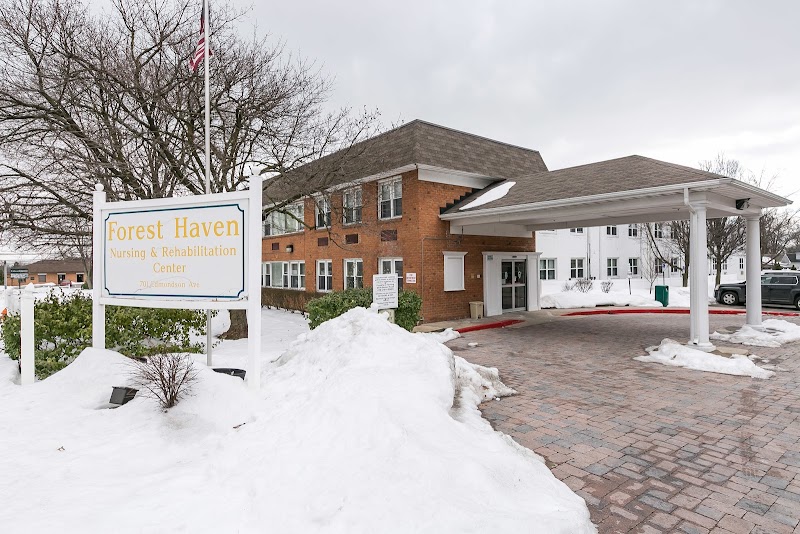
How is Forest Haven Nursing And Rehabilitation Ctr Staffed?

CMS rates FOREST HAVEN NURSING AND REHABILITATION CTR's staffing level at 3 out of 5 stars, which is average compared to other nursing homes. Staff turnover is 20%, compared to the Maryland average of 46%. This relatively stable workforce can support continuity of care.

What Have Inspectors Found at Forest Haven Nursing And Rehabilitation Ctr?

State health inspectors documented 69 deficiencies at FOREST HAVEN NURSING AND REHABILITATION CTR during 2018 to 2025. These included: 1 Immediate Jeopardy (the most serious level, indicating potential for serious harm or death), 3 that caused actual resident harm, 62 with potential for harm, and 3 minor or isolated issues. Immediate Jeopardy findings are rare and represent the most serious regulatory concerns. They require immediate corrective action.
Who Owns and Operates Forest Haven Nursing And Rehabilitation Ctr?

FOREST HAVEN NURSING AND REHABILITATION CTR is owned by a for-profit company. For-profit facilities operate as businesses with obligations to shareholders or private owners. The facility is operated by FUNDAMENTAL HEALTHCARE, a chain that manages multiple nursing homes. With 167 certified beds and approximately 120 residents (about 72% occupancy), it is a mid-sized facility located in CATONSVILLE, Maryland.
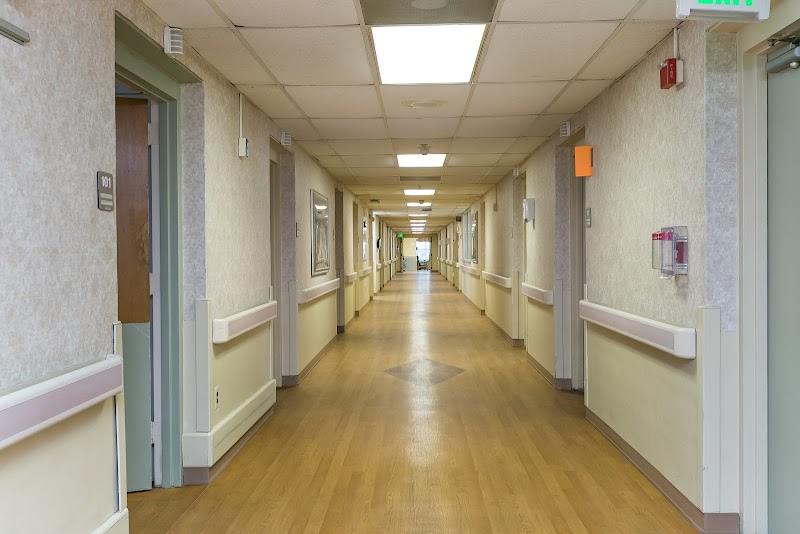
How Does Forest Haven Nursing And Rehabilitation Ctr Compare to Other Maryland Nursing Homes?

Compared to the 100 nursing homes in Maryland, FOREST HAVEN NURSING AND REHABILITATION CTR's overall rating (1 stars) is below the state average of 3.0, staff turnover (20%) is significantly lower than the state average of 46%, and health inspection rating (1 stars) is much below the national benchmark.

What Should Families Ask When Visiting Forest Haven Nursing And Rehabilitation Ctr?

Based on this facility's data, families visiting should ask: "What changes have been made since the serious inspection findings, and how are you preventing similar issues?" "What safeguards and monitoring systems are in place to protect residents from abuse or neglect?" "Can I visit during a mealtime to observe dining assistance and food quality?" "How do you handle medical emergencies, and what is your hospital transfer rate?" These questions are particularly relevant given the facility's Immediate Jeopardy citations and the substantiated abuse finding on record.

Is Forest Haven Nursing And Rehabilitation Ctr Safe?

Based on CMS inspection data, FOREST HAVEN NURSING AND REHABILITATION CTR has documented safety concerns. The facility has 1 substantiated abuse finding (meaning confirmed case of resident harm by staff or other residents). Inspectors have issued 1 Immediate Jeopardy citation (the most serious violation level indicating risk of serious injury or death). The facility has a 1-star overall rating and ranks #100 of 100 nursing homes in Maryland. Families considering this facility should ask detailed questions about what corrective actions have been taken since these incidents.

Do Nurses at Forest Haven Nursing And Rehabilitation Ctr Stick Around?

Staff at FOREST HAVEN NURSING AND REHABILITATION CTR tend to stick around. With a turnover rate of 20%, the facility is 25 percentage points below the Maryland average of 46%. Low turnover is a positive sign. It means caregivers have time to learn each resident's needs, medications, and personal preferences. Consistent staff also notice subtle changes in a resident's condition more quickly.

Was Forest Haven Nursing And Rehabilitation Ctr Ever Fined?

FOREST HAVEN NURSING AND REHABILITATION CTR has been fined $153,686 across 1 penalty action. This is 4.4x the Maryland average of $34,616. Fines at this level are uncommon and typically indicate a pattern of serious deficiencies, repeated violations, or failure to correct problems promptly. CMS reserves penalties of this magnitude for facilities that pose significant, documented risk to resident health or safety. Families should request specific documentation of what issues led to these fines and what systemic changes have been implemented.

Is Forest Haven Nursing And Rehabilitation Ctr on Any Federal Watch List?

FOREST HAVEN NURSING AND REHABILITATION CTR is not on any federal watch list. The most significant is the Special Focus Facility (SFF) program, which identifies the bottom 1% of nursing homes nationally based on persistent, serious quality problems. Not being on this list means the facility has avoided the pattern of deficiencies that triggers enhanced federal oversight. This is a positive indicator, though families should still review the facility's inspection history directly.