GLEN MEADOWS RETIREMENT COM.
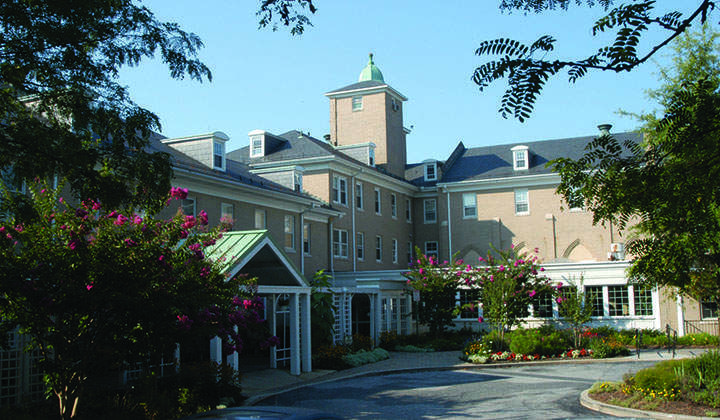
11630 GLEN ARM ROAD, GLEN ARM, MD 21057 (410) 592-5310
Non profit - Corporation 31 Beds PRESBYTERIAN SENIOR LIVING Data: November 2025 1 Immediate Jeopardy citation
Trust Grade
38/100
#164 of 219 in MD
Last Inspection: March 2025

Within standard 12-15 month inspection cycle. Federal law requires annual inspections.

Overview

Glen Meadows Retirement Community has received a Trust Grade of F, indicating poor performance with significant concerns. Ranking #164 out of 219 facilities in Maryland places it in the bottom half, and #31 out of 43 in Baltimore County shows that there are only two local options that are worse. The facility is worsening, with issues increasing from 16 in 2021 to 19 in 2025. Staffing is a strength here, with a perfect score of 5/5 stars and a turnover rate of 22%, which is much lower than the state average. However, the facility has concerning fines totaling $31,233, higher than 94% of Maryland facilities, suggesting ongoing compliance problems. While it boasts more RN coverage than 98% of state facilities, recent inspections revealed critical deficiencies, such as a failure to prevent residents with cognitive impairments from wandering unsupervised, which led to two residents being found outside the building. The kitchen also had expired food items and sanitation issues, raising potential health concerns for residents. Overall, while there are strengths in staffing and RN coverage, serious compliance and safety issues need to be addressed.

Trust Score
F
38/100
In Maryland
#164/219
Bottom 26%
Safety Record
High Risk
Review needed
Inspections
Getting Worse
16 → 19 violations
Staff Stability
✓ Good
22% annual turnover. Excellent stability, 26 points below Maryland's 48% average. Staff who stay learn residents' needs.
Penalties
⚠ Watch
$31,233 in fines. Higher than 75% of Maryland facilities, suggesting repeated compliance issues.
Skilled Nurses
✓ Good
Each resident gets 96 minutes of Registered Nurse (RN) attention daily — more than 97% of Maryland nursing homes. RNs are the most trained staff who catch health problems before they become serious.
Violations
⚠ Watch
36 deficiencies on record. Higher than average. Multiple issues found across inspections.
★★☆☆☆
2.0
Overall Rating
★★★★★
5.0
Staff Levels
★★★★★
5.0
Care Quality
★☆☆☆☆
1.0
Inspection Score
Stable
2021: 16 issues
2025: 19 issues

The Good

  • 5-Star Staffing Rating · Excellent nurse staffing levels
  • 5-Star Quality Measures · Strong clinical quality outcomes
  • Low Staff Turnover (22%) · Staff stability means consistent care
  • Full Sprinkler Coverage · Fire safety systems throughout facility
  • No fines on record
  • Staff turnover is low (22%)

    26 points below Maryland average of 48%

Facility shows strength in staffing levels, quality measures, staff retention, fire safety.

The Bad

2-Star Overall Rating

Below Maryland average (3.0)

Below average - review inspection findings carefully

Federal Fines: $31,233

Below median ($33,413)

Moderate penalties - review what triggered them

Chain: PRESBYTERIAN SENIOR LIVING

Part of a multi-facility chain

Ask about local staffing decisions and management

The Ugly 36 deficiencies on record

1 life-threatening
Mar 2025 19 deficiencies 1 IJ
CRITICAL (J) 📢 Someone Reported This

A family member, employee, or ombudsman was alarmed enough to file a formal complaint

Immediate Jeopardy (IJ) - the most serious Medicare violation

Accident Prevention (Tag F0689)

Someone could have died · This affected 1 resident

**NOTE- TERMS IN BRACKETS HAVE BEEN EDITED TO PROTECT CONFIDENTIALITY** Based on review of medical records and other pertinent documentation, interview with facility staff, and observations, it was de...

Read full inspector narrative →
**NOTE- TERMS IN BRACKETS HAVE BEEN EDITED TO PROTECT CONFIDENTIALITY** Based on review of medical records and other pertinent documentation, interview with facility staff, and observations, it was determined that the facility failed to have an effective system in place to prevent residents with cognitive impairments from leaving the facility without appropriate supervision. This failure led to 1) Resident #16, who was known to have exit-seeking/elopement behaviors with previous two elopement incidents, found outside of the building on 12/13/24 around 6 PM, and 2) Resident #20, who had a wanderguard placed due to high risk of elopement since May 2024, found in the Assisted Living (AL) library on 3/20/25 around 9 AM. This was evident for 2 of 5 reported elopement incidents reviewed during this annual survey. The above findings for Residents #16 and #20 were identified as Immediate Jeopardy on 3/25/25 at 7:45 PM. The facility submitted a plan for removal on 3/25/25 at 10:04 PM, which was rejected. The facility submitted a subsequent revised plan of action at 11:06 PM on 3/25/25, which was reviewed by the surveyor and the Office of Health Care Quality, and accepted to remove the immediacy at 3/25/25 at 11:30 PM. The Immediate Jeopardy was abated on 3/25/25. The surveyor team verified compliance with the plan on 3/31/25 at 10:00 AM. The findings include: A WanderGuard is a wander management system designed to protect memory care residents from elopement. It uses bracelets, sensors, and a technology platform to alert caregivers and automatically lock doors when a resident approaches a monitored area. BIMS (Brief Interview for Mental Status) is a standardized assessment tool used to screen the cognitive functioning of residents in long-term care facilities. A score of 13-15 points indicates an intact cognition, 8-12 points indicates moderately impaired cognition, and 0-7 points indicates severely impaired cognition. 1) During a review of the facility reported incident, MD00212713, on 3/25/25 around 8 AM, it was revealed that Resident #16 eloped from the nursing home building after dinner on 12/13/24 at 6:07 PM, was observed outside by an employee, and immediately escorted into the Main building. The surveyor noted that the facility's investigation packet contained written statements of staff dated 12/02/23. In an interview with the Director of Nursing (DON) and Nursing Home Administrator (NHA) on 3/25/25 at 9:20 AM, the DON confirmed that he mixed the documentation for two different incidents (December 2023 and December 2024) in one file. During the interview he verified that Resident #16 had exit-seeking behaviors and elopement incidents reported to the Office of Health Care Quality three times since his/her admission: [DATE], 7/28/2024, and 12/13/2024. Also, the DON said, That was one reason why Resident #16 was moved to the nursing home side of the facility where there's more staff. The resident is very mobile and moves quickly. On 3/25/25 at 11:10 AM, a review of the facility's elopement evaluation revealed that the most recent evaluation prior to the elopement episode was on 10/29/24: the resident scored 30; and the evaluation noted , '10 or more = at risk for elopement'. However, no evaluation was completed after the elopement incident on 12/13/24. In an interview with the DON and Assistant Director of Nursing (ADON) on 3/25/25 at 11:56 AM, they stated that the purpose of the evaluation was only to determine whether they needed a WanderGuard. So, it was not required to evaluate them after each episode. On 3/25/25 at 9:40 AM, review of Resident #16's medical records revealed that the resident had two WanderGuards (wrist and ankle) since the first elopement episode occurred on 12/02/2023. Additionally, the review showed that the resident's BIMS score was zero (0) to three (3), indicating severe cognitive impairment, upon his/her admission in October 2023. On 3/25/25 at 9:50 AM, a review of the facility's investigation documentation revealed that on 12/13/24, Resident #16 left the Healthcare Center (HCC, the facility's nursing home building) dining room after eating his/her dinner around 6:10 PM. An employee (Driver #8) found the resident at approximately 6:20 PM outside close to the facility van near the Manor House entry located near the front of the facility. The resident was escorted back into the facility. However, the review of the WanderGuard alarm details report for Resident #16 showed no record of when the resident eloped the building. Only one incident was recorded on 12/13/25 at 6:13 PM at the door connecting the AL and HCC buildings. During an interview with the DON on 3/25/25 at 3:30 PM, he confirmed that no alarm went off when the resident eloped on 12/13/24, and the alarm only recorded when the staff escorted the resident back through to the HCC building at 6:13 PM. On 3/25/25 around 4 PM, the surveyor made observations outside of the HCC building's Main Entrance and of the various roads, including the road where facility staff found Resident #16 on 12/13/24. Upon exiting the HCC's Main Entrance, there is a road (Valley View) to the left lined with parking along the left-hand side of the road. It is traveled to access Independent Living housing by residents, visitors, et cetera. The road to the sharp right of the HCC's Main Entrance leads to the loading dock where all deliveries are made and vehicles may be exiting or entering at any time of day. Upon exiting the HCC's Main Entrance, the road straight ahead leads to the traffic circle with facility vans and parking on both sides of the road with hazards such as cement, wheel stops for the parking spaces, sidewalks, and curbs. Residents, visitors, and vendors of the facility frequently access these three roads. On 3/25/25, between 6:00 PM and 6:40 PM, the surveyor observed a facility van and five cars driving on the road directly outside the HCC's (Nursing home) Main Entrance towards the Manor House (Assisted Living) building, where Resident #16 was found on 12/13/24. 2) On 3/25/25 at 5:20 PM, review of Resident #20's BIMS revealed that s/he scored four (4) to ten (ten) upon admission in April 2023. The most recent assessment on 12/31/24, the resident scored 4 out of 15 indicating severely impaired cognition. A review of Resident #20's medical record on 3/25/25 at 9:30 AM revealed he/she was at high risk of wandering based on evaluation on 3/31/24, and had a previous elopement episode on 5/29/24, according to the review of facility-reported incident MD00206159. After this elopement incident on 5/29/24 where the resident left the HCC building, the resident was assessed and a WanderGuard bracelet was placed. A review of the facility self-reported incident, MD00215933, on 3/25/25 around 9 AM, revealed that Resident #20 was found in the Assisted living library (located in a connected hall between the HCC and AL buildings) on 3/20/25 at 9:28 AM. On 3/25/25 at 5:14 PM, a review of Resident #20's progress note written by Licensed Practical Nurse (LPN #2) revealed that on 3/20/25 at 9:26 AM other nurse on duty reported to this writer that resident was in the library. Other nurse on duty stated social worker found him/her. About 10 mins later other nurse reported someone outside of nursing department called management. Head to toe assessment completed, no injury noted. Resident denies any pain or discomfort, when asked what had happened, he/she stated I don't know. Resident placed near the door, a WanderGuard to the right ankle triggered an alarm. Pager read that the resident was near the door at 9:26 AM. Physical Therapist stated that was the time she was transferred back to the HCC. On 3/25/25 at 12:12 PM, during a dual observation of the facility doors with the Maintenance Director (Staff #7), the surveyor observed that the HCC building has a locked door that connects to the AL library, with a WanderGuard alarm installed on it. However, review of the WanderGuard alarm record showed that no alarm went off on 3/20/25 when Resident #20 reached that door, allowing the resident to pass through. The WanderGuard alarm was only detected on the report at 9:15 AM on 3/20/25 when Resident #20 was escorted back to the HCC building and passed back through that door with facility staff. On 3/25/25 at 8:55 PM in an interview with the DON and NHA stated there was a time stamp for 9:15 AM on the WanderGuard alarm report. During the interview they stated Resident #20 was seen on the HCC unit at 9 AM and was being escorted back to the unit by 9:15 AM. The alarm only went off when s/he came back through the door. The NHA and DON confirmed that they do not know how Resident #20 was able to get through the door without it alarming. During continued interviews with the DON and NHA on 3/25/25 at 10:03 PM, the surveyor asked when did a WanderGuard alarm go off, the NHA stated anytime residents who had WanderGuard bracelets get close to a WanderGuard box. There are a total of 5 on doors throughout the building, it will alarm. During the interview, when asked when an entry will be captured on the WanderGuard alarm report, the NHA stated when a resident gets too close to the door and it sets off the alarm. The dual observation and interview with the Maintenance Director (Staff #7) on 3/25/25 at 12:20 PM revealed that: - The main entrance door for the HCC can be opened by pushing for 30 seconds while the WanderGuard alarm is on. A visitor or anyone on the other side of the door who is entering the facility can also open the door by pushing the 'bypass' button below the outside door handle while the WanderGuard alarm is on. - The computer for the WanderGuard alarm's sound is very faint and has no visual alerting signals. Additionally, the computer is set off to the side and not located where staff was observed sitting while at the nurse's station during the duration of the survey. - The door connecting the HCC to the AL library has a sign that says push until alarm sounds, door can be opened in 30 seconds. Staff #7 said, This door used to open when you pushed on it for 30 seconds, but now it does not. The life safety code did not allow us to remove the sign. During the observation near the main entrance door for HCC and interview with Staff #7 on 3/25/25 at 12:25 PM, the surveyor asked him if he was down the hallway and the computer alarm sounded if he thought he'd hear it. He stated, No. In an interview with the Nursing Home Administrator (NHA) on 3/25/25 at 12:30 PM, when asked if he would be able to hear the computer alarm sound for the wanderguard if he were down the hallway or in a resident's room, he stated, No, I probably wouldn't hear that computer alarm if I was down the hallway, but the alert is also sent to the GNA's (Geriatric Nursing Aide) pager. The ADON stated that there are three pagers for GNAs and that nurses have phones. When asked if the phones are connected to the wanderguard system, the ADON replied, No. On 3/25/25 at 7:45 PM an Immediate Jeopardy was called related to the facility's failure to have an effective system in place to prevent residents with cognitive impairments from leaving the facility without appropriate supervision. The facility's plan of correction was submitted to the State Agency at 10:04 PM on 3/25/25 and the plan was accepted at 11:30 PM. The Immediate Jeopardy Abatement Plan included: - Immediately on 3/25/25, the front entrance doors at nursing desk and the door exiting the healthcare center level of living and entering assisted level of living will have a team member present monitoring 24 hours a day, 7 days a week to ensure constant visual monitoring of individuals exiting the community until a mechanism is installed to create immediate notification to community staff for unauthorized exits. - The mechanism is installed as soon as possible but no later than one month. - On 3/25/25, the facility consulted [name of security company] to explore solutions to increase door security related to unauthorized exits. A senior technician plans to come on 3/26/25. - On 3/25/25, current community staff of all disciplines were educated, and additionally, community staff will be educated on this immediate process change noted related to door security. - Audit will be completed daily by NHA or designee on the front entry door monitoring and door between assisted living and nursing home. - Audit results will be submitted for review and recommendation to the Quality Assurance Performance Improvement Committee.
CONCERN (D) 📢 Someone Reported This

A family member, employee, or ombudsman was alarmed enough to file a formal complaint

Potential for Harm - no one hurt, but risky conditions existed

Free from Abuse/Neglect (Tag F0600)

Could have caused harm · This affected 1 resident

**NOTE- TERMS IN BRACKETS HAVE BEEN EDITED TO PROTECT CONFIDENTIALITY** Based on review of the facility's investigation file and medical records and interview with facility staff, it was determined th...

Read full inspector narrative →
**NOTE- TERMS IN BRACKETS HAVE BEEN EDITED TO PROTECT CONFIDENTIALITY** Based on review of the facility's investigation file and medical records and interview with facility staff, it was determined that the facility failed to ensure a resident remained free of abuse. This was evident for 1 (Resident #18) of 4 residents reviewed for abuse during the recertification/complaint survey. The findings include: The facility's investigation file related to facility reported incident MD#00209055 was reviewed by the surveyor on 3/24/2025 at 4:00 PM. Review of facility reported incident MD#00209055 revealed the following: On Friday, 8/23/2024 at approximately 7:30am Staff #4 observed Resident #18 reach for a laundry basket and Geriatric Nursing Assistant (GNA #25) allegedly open hand smacked Resident #18 on her left forearm. Included in the investigation file was a document titled, Interview Questions for the Facility Abuse Coordinator and had Staff #4's name and title along with the date and time (8/23/24 at 9:53 AM) that documented, at approximately 7:30 AM on 8/23, I [Staff #4's first and last name] saw GNA [#25] smack the left forearm of resident, [Resident #18's first and last name]. Resident #18 was in hallway outside [room] 152. Resident #18 reached for laundry basket; GNA [#25] then smacked Resident #18 on left forearm to get the resident to let go of the basket. Additionally, this document was signed by the DON as the interview witness. Furthermore, a documented interview with Resident #18 was included in the investigation file. The interview was conducted in the DON's office by the DON and Assistant Director of Nursing (ADON) following the reported allegation on 8/23/24 at 10:45 AM. When asked if anything concerning happened to him/her [Resident #18] this morning while receiving care, Resident #18 held his/her left hand in the air and demonstrated a swiping motion. When asked if s/he was implying that s/he was hit, Resident #18 nodded his/her head and grabbed her left arm. Staff #4 was interviewed on 3/26/25 at 8:25 AM. During the interview when asked to share what s/he remembered about the incident with Resident #18 and GNA #25 on 8/23/24 s/he stated, it was a quick second. GNA #25, was walking out of a resident's room pushing a metal laundry basket and Resident #18 was sitting in his/her wheelchair. S/he tends to grab things and reached out for the laundry basket and would not let go and GNA #25 smacked his/her left forearm. The facility's policy titled, Abuse Neglect Exploitation was reviewed on 3/36/24 at 8:50AM and revealed, It is the policy of Presbyterian Senior Living facilities that each resident is provided with a safe environment where they are not subject to mental, physical, verbal, and sexual abuse. Residents shall also be protected from mistreatment, neglect, exploitation, and misappropriation of property. Additionally, the definition of physical abuse noted in the policy stated, Physical Abuse: Includes but is not limited to hitting, slapping, pinching, and kicking. The DON and NHA were interviewed on 3/27/25 at 9:04 AM regarding the incident on 8/23/24 with Resident #18 and GNA #25. During the interview the surveyor stated there were several interviews in the facility's investigation file that was provided to the survey team on 3/24/25 that documented that Resident #18 was smacked. When asked if the GNA smacking the resident was abuse he stated, this is where we get into intentionality. We had a panel call (a phone call involving corporate staff) and the question was, did that employee, GNA #25, willfully abuse Resident #18. He stated he struggled with that question, and what we (on the panel call) talked about was did she [GNA #25] intentionally do that [smack the resident]. The surveyor again shared concerns regarding the incident and the DON then stated and that is why we terminated that employee. Additionally, he stated, Certainly, as the DON it is my goal to keep residents safe. I certainly do not think that behavior [smacking] has any place in senior care anywhere. At the end of the day, I was not going to have this employee work here to have this opportunity to happen again. On 3/27/25 at 9:09 AM in an interview with the NHA regarding GNA #25 and Resident #18 he stated on the panel call the discussion all around was: was there the willful intent [from GNA #25] to hurt [Resident #18]. During the interview the NHA stated, It is a fine line, and I do not think the intent was to hurt. The surveyor continued to share concerns about the incident. When asked yes or no, if you witnessed a GNA smacking a resident is that abuse, the NHA stated, He could not say yes or no. It depends on the intent. I struggle with this one knowing the resident. I think the way she [GNA #25] provided care was wrong, but I do not think she had an intent to hurt the resident.
CONCERN (D) 📢 Someone Reported This

A family member, employee, or ombudsman was alarmed enough to file a formal complaint

Potential for Harm - no one hurt, but risky conditions existed

Report Alleged Abuse (Tag F0609)

Could have caused harm · This affected 1 resident

Based on review of facility reported incidents, record review, and interview with staff, it was determined that the facility failed to timely report allegations of abuse to the State Survey Agency, th...

Read full inspector narrative →
Based on review of facility reported incidents, record review, and interview with staff, it was determined that the facility failed to timely report allegations of abuse to the State Survey Agency, the Office of Health Care Quality (OHCQ). This was evident for 2 (Resident #18 and #11) of 4 residents reviewed for abuse during the recertification/complaint survey. The findings include: The OHCQ is the agency within the Maryland Department of Health charged with monitoring the quality of care in Maryland's health care facilities and community-based programs. Allegations of abuse, serious bodily injury, and misappropriation of resident property are to be reported to the OHCQ in a timely manner (within 2 hours for the initial report and within 5 working days for the final report). 1) The facility's investigation file related to facility reported incident MD#00209055 was reviewed by the surveyor on 3/24/2025 at 4:00 PM. Review of facility reported incident MD#00209055 revealed the following: On Friday, 8/23/2024 at approximately 7:30am Staff #4 observed Resident #18 reach for a laundry basket and Geriatric Nursing Assistant (GNA #25) allegedly open hand smacked Resident #18 on her left forearm. Further review of the initial report documented 8/23/24 at approximately 7:30 AM as the date and time when staff became aware of the incident and 8/23/24 at 11:15 AM as the date and time the initial report was submitted. The initial report was submitted almost 4 hours after facility staff observed the incident. In an interview with the Director of Nursing (DON) and the Nursing Home Administrator (NHA) on 3/26/25 at 9:04 AM, when asked what the reporting time is for allegations of abuse the DON stated within 2 hours. On 3/27/25 at 11:03 AM in an interview with the Assistant Director of Nursing (ADON) and the Extended Care Services Support Manager (ECSSM #10), the ADON stated all staff receive abuse training and reporting. During the interview, the ADON stated if an employee witnesses or suspects abuse, they have all been educated to immediately inform the ADON, DON or NHA. Additionally, the surveyor shared the facility reported investigation documents with the ADON and ECSSM #10 showing that Staff #4 observed GNA #25 smacking Resident #18 at approximately 7:30 AM and that the initial report from the facility was not submitted to the OHCQ until 11:15 AM. When asked if this incident was submitted within the required 2 hour time frame for an allegation of abuse, the ECSSM #10 stated, No. The ECSSM #10 looked at the surveyor and stated this is a teaching moment and then explained the abuse reporting process to the ADON. The surveyor shared the concern that the allegation of abuse was not reported timely (within 2 hours) and the ADON then verified and confirmed that it was not. She stated she was new to the role and will know for the next time. 2) The facility's investigation file related to facility reported incident MD#00215348 was reviewed by the surveyor on 3/24/2025 at 5:00 PM. Review of facility reported incident MD#00215348 revealed the following: A family member of Resident #11 reported that one evening in the middle of February, s/he came to visit his/her family member [Resident #11] and s/he observed a male caregiver, who was later identified as GNA #16, push Resident #11 away from the door and hit him/her on the upper shoulders with closed hands twice. Further review of the initial report documented 2/5/25 at 9:50 AM as the date/time staff became aware of the incident and 3/5/25 at 4:25 PM as the date/time the initial report was submitted. The initial report was submitted 6.5 hours after the facility became aware of the allegation of abuse. On 3/31/25 at 1:43 PM the DON and surveyor made a dual observation of the initial report the facility submitted to the OHCQ that documented the facility became aware of the incident on 3/5/25 at 9:50 AM and the initial report was submitted to the OHCQ on 3/5/25 at 4:25 PM. When asked if the initial report was submitted timely, the DON stated that for Resident #11, the initial report was not submitted in the required 2 hour time frame.
CONCERN (D) 📢 Someone Reported This

A family member, employee, or ombudsman was alarmed enough to file a formal complaint

Potential for Harm - no one hurt, but risky conditions existed

Investigate Abuse (Tag F0610)

Could have caused harm · This affected 1 resident

2) During a portion of investigating self-reported elopement incidents on 3/25/25, it was revealed that Resident #16 eloped from the Heath care (nursing home) building on 12/02/23. The review of the f...

Read full inspector narrative →
2) During a portion of investigating self-reported elopement incidents on 3/25/25, it was revealed that Resident #16 eloped from the Heath care (nursing home) building on 12/02/23. The review of the facility's investigation records revealed: The first incident, MD00200549, occurred on 12/02/2023: the resident left the secure area of the Health care building and ambulated the assisted living building lobby. The resident had a WanderGuard bracelet when the incident happened. However, it failed to activate the Health Care door alarms, and he/she exited without a witness. During an interview with the Director of Nursing (DON) on 3/25/25 at 9:20 AM, he said Resident #16's WanderGuard alarm was not activated on 12/02/23. However, there was no documentation to support how the facility investigated the root cause and how and/or why it was not functioning, nor was there a further audit of other residents' WanderGuard. Additionally, a review of the facility's education documentation dated 12/05/23 about 'elopement in-service' listed eight staff members' names and signatures. On 3/31/25 at 8:54 AM, during an interview with the DON, the surveyor asked who was required to receive education regarding the above elopement incident. He stated it was supposed to be all staff. The DON confirmed that the facility had approximately 30 nursing staff, including Nurses and aides. He verified that not all staff received education at that time. 3) During a review of the facility self-reported incident, MD00212528, on 3/26/25 at 10:36 AM, it was revealed that the facility reported on 12/07/2024 that 15ml of liquid lorazepam (a medication used to treat anxiety disorders. Considered as controlled medications which are drugs that have the potential for abuse and addiction and are therefore regulated by the government) for Resident #85 was not counted by Licensed Practical Nurse ( LPN #11) and Registered Nurse (RN #27). Also, RN #26 failed to report the discrepancy in counting controlled medication in a timely manner. Further review of the facility's investigation revealed that on 12/07/24 dayshift LPN #11 was precepting RN#14. RN #14 performed counting controlled medication with RN #27 without LPN #11: RN #14 and RN #27 did not count liquid controlled medication, which was located in the medication refrigerator in the medication room. On 12/07/25, at the beginning of the evening shift, RN #27 and RN #26 counted the liquid lorazepam in the medication room refrigerator; they noted a discrepancy of amount 15ml: the controlled substance care reflected 30ml, and there was only 15ml noted in the vial. Instead of reporting the discrepancy to the DON, RN #26 contacted LPN #11 via phone to verify whether there was a missing Lorazepam dose. On 12/07/24, oncoming night shift RN #28 counted the controlled substances; it was noted that there was a discrepancy, and she reported it to the DON. During an interview with DON on 3/27/25 at 7:40 AM, the surveyor asked what the facility did to prevent similar incidents. He stated that the facility offered education to nursing staff and performed audits. The surveyor requested their education record and audit form. On 3/27/25 at 3:40 PM, the review of the in-service training sheet revealed 10 nurses listed and signed. There was no signature for LPN #14, who did not count the liquid controlled medication. The DON verified that not all nurses received the education. Also, he stated that he verified the amount of liquid controlled medication on 12/07/24, not thoroughly auditing. He said, I did not have audit form. The surveyor shared concerns about the absence of action from the facility to prevent similar incidents. The DON validated it. Based on review of facility reported incidents, medical record review, and interview with facility staff, it was determined that the facility failed to thoroughly investigate 1) an allegation of abuse by failing to perform an assessment of the alleged victim, 2) an elopement, and 3) failed to follow through on appropriate corrective action to prevent further instances of medication errors. This was evident for 3 (Resident #11, Resident #16, Resident #85) of 19 residents reviewed during the recertification/complaint survey process. The findings include: 1) The facility's investigation file related to facility reported incident MD#00215348 was reviewed by the surveyor on 3/24/2025 at 5:00 PM. Review of facility reported incident MD#00215348 revealed the following: A family member of Resident #11 reported that one evening in the middle of February, s/he came to visit his/her family member [Resident #11] and s/he observed a male caregiver, who was later identified as GNA #16, push Resident #11 away from the door and hit him/her on the upper shoulders with closed hands twice. Further review of the initial report documented in the All steps taken immediately to ensure resident(s) are protected section, Resident #11 was immediately assessed, and s/he has no injuries or concerns about his/her care. On 3/26/25 at 9:04 AM in an interview with the Director of Nursing (DON) when asked what constitutes a thorough investigation, the DON stated getting a statement from the resident, witnesses, and anyone that was on the unit and trying to ascertain what happened for time, place, person, and the surrounding events. The alleged employee's caseload [assignment] is interviewed by the Social Worker or designee and the DON and SW interview the resident together and interview the employee as well. On 3/26/25 at 9:19 AM in an interview with the Nursing Home Administrator (NHA), the surveyor shared concerns that the facility's investigation files provided to the surveyor on the first day (3/24/25) of the survey did not contain evidence that the initial and final reports stated were completed and therefore, thorough investigations were not completed. For example, while reviewing MD#00215348, in the initial self-report it stated there was an assessment of the resident but there was no evidence of an assessment in the facility's investigation file. The NHA verified and confirmed the concerns stating, I got it. If it says it is in there, it should be in there. On 3/31/25 at 9:41 AM in an interview with the DON, the surveyor shared the concern that even though we were given copies of the facility's investigation files for the facility reported incidents on the first day of the survey, more documents keep being presented to the survey team, but only upon request. For example, the DON verified and confirmed the concerns stating, the NHA and he talked about it. During the interview, the DON was asked to share what he remembered about the incident with GNA #16 and Resident #11. He stated he remembered the day it was reported. Staff #4 got the concern [from Resident #11's family member] when she was treating another resident: that the week his/her family member was admitted s/he was concerned coming in the door that a guy with red shoes who did not speak very good English was at the door and she did not appreciate his approach because he struck Resident #11 in the back repeatedly. The DON also stated that Resident #11 was checked, and he still had full range of motion of his upper body, but this was almost 2 weeks after the alleged incident. When asked if the facility would still complete an assessment on the resident he stated, Yes. The surveyor requested a copy of the assessment. On 3/31/25 at 10:48 AM review of Resident #11's medical record did not reveal any assessment of the resident, nor any progress notes related to the incident in the medical record during the time of the investigation (3/5/25 - 3/10/25). In an interview with the DON on 3/31/25 at 10:49 AM, he verified and confirmed there was no assessment completed (as the facility had documented on their initial self-report) of Resident #11 in the resident's medical record.
CONCERN (D)

Potential for Harm - no one hurt, but risky conditions existed

Comprehensive Assessments (Tag F0636)

Could have caused harm · This affected 1 resident

**NOTE- TERMS IN BRACKETS HAVE BEEN EDITED TO PROTECT CONFIDENTIALITY** Based on medical record review and staff interviews, it was determined that the facility failed to revise the interdisciplinary ...

Read full inspector narrative →
**NOTE- TERMS IN BRACKETS HAVE BEEN EDITED TO PROTECT CONFIDENTIALITY** Based on medical record review and staff interviews, it was determined that the facility failed to revise the interdisciplinary care plan to meet the residents' needs. This was evident for 1 (Resident #28) of 19 residents reviewed during the re-certification survey process. The findings include: A care plan is a personalized guide designed to meet the specific needs of each resident. It is used to assess, plan, implement and evaluate the effectiveness of the care provided to the resident. On [DATE] at 9:14 AM a review of the electronic health records revealed that Resident #28 went out with their family on [DATE] at 4 PM and returned to the facility later that evening at 9 PM in stable condition. On [DATE] cough medicine was ordered as well as a chest x-ray for Resident #28. On [DATE] the progress note written by Staff # 24 RN stated that at 7:15 PM Resident #28 was observed to be congested and had a dry cough. Resident #28 was not able to cough out their mucus, so Staff #24 performed oral suction on the resident. When Staff # 24 returned to Resident # 28's room to give the resident's night medications, Staff #24 noted Resident #28 had difficulty breathing. Oxygen was applied and 911 was called. Resident was a do not resuscitate (DNR) option B. Resident # 28 expired prior to the ambulance arriving. On [DATE] at 12:16 PM during an interview with Staff #10, the Corporate Extended Care Services Support Manger, was asked if documentation could be provided of what happened to Resident #28 from 12/24 -[DATE] from orders, progress notes and the care plan. On [DATE] at 1:15 PM during an interview with the Assistant Director of Nursing (ADON), documentation for chest x-ray results and an order for cough medicine were received for Resident #28. The ADON was then asked if documentation could be provided that the care plan was updated to reflect Resident # 28's resent respiratory issues. On [DATE] at 1:20 PM further record review revealed that Resident #28's care plan did not address Resident #28's respiratory issues. Resident #28's care plan was last updated on [DATE]. On [DATE] at 1:31 PM during an interview with Staff #10, documentation was provided for an order for oxygen, (prn) as needed, for Resident #28 from [DATE]. Staff #10 was asked, would it be your expectation that when Resident #28 had respiratory changes on [DATE] and was started on cough medicine, prn oxygen, and had a chest x-ray ordered that the care plan would be updated to reflect the resent respiratory changes? Staff #10 stated yes that would be my expectation.
CONCERN (D)

Potential for Harm - no one hurt, but risky conditions existed

Deficiency F0655 (Tag F0655)

Could have caused harm · This affected 1 resident

Based on medical record review and interviews with staff, it was determined that the facility staff failed to develop a baseline care plan and failed to provide residents/representatives with a copy o...

Read full inspector narrative →
Based on medical record review and interviews with staff, it was determined that the facility staff failed to develop a baseline care plan and failed to provide residents/representatives with a copy of their baseline care plan and medication list. This was evident for 1 (Resident #15) of 12 residents reviewed for care plans during the re-certification/complaint survey. The findings include: A care plan is a personalized guide designed to meet the specific needs of each resident. It is used to assess, plan, implement and evaluate the effectiveness of the care provided to the resident. On 3/31/25 at 8 :17 AM, record review revealed that Resident #15 did not have a baseline care plan in their electronic health records. On 3/31/25 at 9:46 AM during an interview with the Director of Nursing (DON), the DON was asked if a copy of Resident #15's baseline care plan could be provided. The DON stated currently I did not see a base line care plan for the resident but let me check with Social Work because the resident's daughter lives out of town, and I will get back with you. But right now, I do not see the baseline care plan in the resident's record. The DON was asked who completes the baseline care plan. The DON stated, the nurse does the baseline care plan and has the patient/representative sign the care plan. Then the baseline care plan will be scanned into the resident's electronic health record. On 3/31/25 at 1:04 PM The ADON and the Administrator were interviewed and asked if they could provide documentation that Resident #15 had their baseline care plan completed. The ADON and the Administrator said no we cannot. The baseline care plan was not in the residents' electronic health records.
CONCERN (D)

Potential for Harm - no one hurt, but risky conditions existed

Comprehensive Care Plan (Tag F0656)

Could have caused harm · This affected 1 resident

Based on medical record review and interview it was determined that the facility staff failed to update a person-centered care plan for a resident who was wearing a safety device to help prevent them ...

Read full inspector narrative →
Based on medical record review and interview it was determined that the facility staff failed to update a person-centered care plan for a resident who was wearing a safety device to help prevent them from leaving the facility unattended. This deficient practice was evidenced in 1 (Resident #86) of 3 resident records reviewed for WanderGuard care plans during the revisit survey. The findings include: A WanderGuard is a wander management solution used in senior living communities and other healthcare facilities to help protect residents who are at risk of wandering and leaving the premises. It utilizes technology like wearable bracelets, sensors, and a central platform to monitor resident movement and alert staff if a resident approaches a monitored area or attempts to leave the safe zone. On 05/22/25 at 8:20 am the surveyor reviewed Resident #86's electronic medical record (EMR) which revealed an order was written on 04/08/25 for the resident to wear a WanderGuard to help prevent the resident from leaving the facility unattended. Further review of the EMR revealed there was no nursing documentation to indicate why the device was applied, the location of the device, or an active plan of care for the nursing staff to care for the resident while wearing the safety device. A review of the resident's treatment administration record (TAR) revealed the site of the safety device was not documented, but as of 04/08/25 the staff signed off the device was on the resident. At 11:15 am the surveyor reviewed the resident's care plan in the Matrix Care EMR; there was not an active care plan for the WanderGuard safety device. On 05/22/25 at 11:10 am during an interview with the Director of Nursing (DON) the surveyor reported after reviewing Resident #86's EMR in PointClickCare and Matrix, the resident did not have a care plan for wearing a Wander-Guard safety device to help prevent elopement. The surveyor asked if Resident #86 should have a care plan. DON verbalized the resident should have a care plan for wearing the Wander-Guard safety device. On 05/22/25 at 12:21 pm the Director of Nursing provided the surveyor an inactive Behavioral care plan for Resident #86 that was last dated 08/14/24. The care plan did not indicate that the resident was currently wearing a WanderGuard and there were no updated interventions included. On 09/26/23 it was documented for the WanderGuard to be applied to the back right side of the resident's wheelchair.
CONCERN (D) 📢 Someone Reported This

A family member, employee, or ombudsman was alarmed enough to file a formal complaint

Potential for Harm - no one hurt, but risky conditions existed

Deficiency F0658 (Tag F0658)

Could have caused harm · This affected 1 resident

Based on interviews with facility staff and review of resident medical records and the facility incident report, it was determined that facility nursing staff failed to follow professional standards o...

Read full inspector narrative →
Based on interviews with facility staff and review of resident medical records and the facility incident report, it was determined that facility nursing staff failed to follow professional standards of nursing practice when performing controlled medication counts. This practice was noted for one (Resident #84) of two residents reviewed for controlled medication administration and one self-reported incident, MD00212528, reviewed during this recertification/complaint survey. The findings include: Controlled medications are drugs that have the potential for abuse and addiction and are, therefore, regulated by the government. They are classified into five schedules (I to V) based on their medical use, potential for abuse, and risk of dependence. As a result, it is a standard of nursing practice to administer narcotic medication only from sources that can be both accounted for and reconciled. This practice discourages the diversion of abusable medication and ensures that narcotic medication is tracked according to federally mandated standards. a) During a review of the facility self-reported incident, MD00212528, on 3/26/25 at 10:36 AM, it was revealed that the facility reported on 12/07/2024 that 15ml of liquid lorazepam (a medication used to treat anxiety disorders. Considered as controlled medications which are drugs that have the potential for abuse and addiction and are therefore regulated by the government) for Resident #85 was not counted by Licensed Practical Nurse (LPN #11) and Registered Nurse (RN #27). Also, RN #26 failed to report the discrepancy in the controlled medication timely. Further review of the facility's investigation revealed that on 12/07/24, dayshift LPN #11 was precepting RN#14. RN #14 performed counting controlled medication with RN #27 without preceptor: RN #14 and RN #27 did not count liquid controlled medication, which was located in the medication refrigerator in the medication room. On 12/07/25, at the beginning of the evening shift, RN #27 and RN #26 counted the liquid lorazepam in the medication room refrigerator; they noted a discrepancy of amount 15ml: the controlled substance care reflected 30ml, and there was only 15ml noted in the vial. Instead of reporting the discrepancy to the DON, RN #26 contacted LPN #11 via phone to verify whether there was a missing Lorazepam dose. On 12/07/24, oncoming night shift RN #28 counted the controlled substances; it was noted that there was a discrepancy, and she reported it to the DON. During an interview with DON on 3/26/25 at 10:47 AM, he stated that two nurses (oncoming duty and off duty) must verify all the controlled medication counts, enter the numbers on the medication cards, check the refrigerator, and sign. The DON acknowledged the above incident, which resulted from the facility's nurses not following professional standards while they counted controlled medications. b) On 3/26/25 at 10:50 AM, the surveyor reviewed the facility's shift change controlled medication accountability signature sheet for counting controlled medication at each shift change. The form had columns for date, shift, nurses' signatures for off-duty and on-duty, number of items added and delivered during shift, number of items removed during shift, and total number of items. The review revealed the following: - The sheet for cart 1 was documented from 3/08/25 to 3/23/25: no nurses' signature on 3/13/25 evening on-duty, and night off-duty, and no on- duty's signature on 3/20/25 day shift. A total number of items was blank on the 3/10/25 day and night shift, 3/12/25 evening shift, 3/16/25 night shift, 3/18/25 evening and night shift, 3/19/25 evening and night shift, 3/20/25 evening shift, and 3/21/25 evening shift. - The sheet for cart 2 was documented from 3/08/25 to 3/23/25: no nurses' signature on the 3/11/25 day shift on-duty and evening shift off-duty, the 3/12/25 day shift on-duty and evening shift off-duty, and the 3/22/25 evening shift off-duty. The total number of items was blank on the 3/08/25 evening and night shift, the 3/12/25 evening and night shift, the 3/13/25 night shift, the 3/16/25 day shift, the 3/18/25 night shift, the 3/19/25 night shift, and the 3/20/25 evening and night shift. During an interview with the Director of Nursing (DON) on 3/26/25 at 10:47 AM, he stated that two nurses (on-duty and off-duty) were required to verify controlled medication by counting, and they needed to fill out the shift change controlled medication accountability signature sheet with numbers with signatures. The surveyor reviewed sheets for cart 1 and cart 2 with the DON. He validated the above concerns.
CONCERN (D)

Potential for Harm - no one hurt, but risky conditions existed

Pressure Ulcer Prevention (Tag F0686)

Could have caused harm · This affected 1 resident

**NOTE- TERMS IN BRACKETS HAVE BEEN EDITED TO PROTECT CONFIDENTIALITY** Based on record review and interview with facility staff, it was determined the facility failed to implement measures to prevent...

Read full inspector narrative →
**NOTE- TERMS IN BRACKETS HAVE BEEN EDITED TO PROTECT CONFIDENTIALITY** Based on record review and interview with facility staff, it was determined the facility failed to implement measures to prevent pressure ulcer development and improvement on the right heel of a resident. This was evident for 1 (Resident #5) of 16 residents reviewed during the recertification/complaint survey. The findings included: A pressure ulcer also known as pressure injury, bed sore, or decubitus ulcer is any lesion caused by unrelieved pressure that results in damage to the underlying skin. Pressure ulcers are staged according to their severity from Stage I (area of persistent redness), Stage II (partial thickness loss of skin presenting as a shallow open ulcer), Stage III (full thickness skin loss involving damage to subcutaneous tissue presenting as a deep crater), Stage IV (full thickness skin loss with exposed tendon, muscle or bone) to Unstageable (the depth of tissue damage cannot be determined due to the presence of slough or eschar (both are types of dead skin that prevent healing). On 3/27/25 at 1:43 PM review of Resident #5's medical record revealed the resident was admitted to the facility on [DATE]. Further review of the resident's medical record revealed the following progress notes and care plans: - 8/6/24 progress note (the resident's admission date): The resident an [AGE] year old fe/male, transferred via stretcher from [hospital]. S/P (status post, meaning after a treatment, diagnosis or event) hospital stay related to a stroke with some right weakness. Skin intact, with multiple discoloration noted to BLE (bilateral lower extremities) and a scab to right ear. - 8/6/24 care plan: Resident #5 is at risk for pressure ulcers related to decreased mobility and occasional incontinence. Resident #5's skin will remain intact with no new open areas caused by pressure or friction through review date (Goal: 11/4/24). - 8/18/24 progress note: [Resident #5] alert with baseline confusion; today with generalized weakness and bilateral lower extremities generally weak. - 8/20/24 progress note: The resident remains a one person assist with ADLs (activities of daily living: the basic, essential self-care tasks people need to perform to maintain their health, safety, and well-being, such as bathing, dressing, eating, and toileting) and two person assist with transfer (the movement of a patient from one location or level of care to another). - 8/30/24 progress note: Skin dry and intact. Discoloration to both upper extremities, edema noted to left arm. - 9/1/24 progress note: Resident was noted with an open blister to his right heel. First aid administered, the heel was cleansed, pet dry, xeroform applied and cover with dry dressing. POA and MD made aware. Will continue to monitor. - 9/3/25 care plan updated: Resident [#5] has developed a stage 2 to right heel presenting as an open blister. - 9/5/24 progress note: Skin dry and intact, skin tear to right heel. - 9/5/24 progress note: ***Correction/Addendum (to above 9/5/24 progress note)***: wound is a blister, stage 2 pressure injury. Monitor closely to determine necessity for addition of Prostat (a liquid supplement). Skin update. Per nursing the wound seems to have had significant healing already. As wound appears to be healing well, will withhold recommending nutrition supplementation at this time. Upon further assessment from wound nurse, may recommend 30cc Prostat BID (two times a day), if deemed appropriate. Continue to monitor as needed/per plan of care. On 3/27/25 at 2:11 PM, the surveyor requested printed copied of any and all wound notes, assessments, evaluations, and new physician orders for Resident #5 between the dates of 8/30/24 through 9/10/24. On 3/28/25 at 7:50 AM the surveyor reviewed Wound Assessment Reports and Skin and Wound Notes from the Wound Nurse Practitioner (WNP #29). Of note, the first noted assessment and documentation from WNP #29 was dated 9/11/24 although per the facility's nursing staff's documentation, the resident was noted on admission [DATE]) to be at risk for developing pressure ulcers, to have an open blister to his/her right heel on 9/1/24, and it to have developed to a Stage 2 pressure ulcer on his/her right heel on 9/3/24. Further review of the Skin and Wound Note from WNP #29 dated 9/11/24 documented in the Wound Assessment section: Location: Right heel, Wound Status: New, Primary Etiology (the cause or origin of): Pressure, and Stage/Severity: Unstageable. Additionally, on the Wound Assessment Report with the same date, 9/11/24, it was noted that the unstageable, right heel pressure ulcer was acquired in house, in other words, the resident was not admitted into the facility on 8/6/24 with this pressure ulcer. In an interview with the DON on 3/28/25 at 7:55 AM, he verified and confirmed that 9/11/24 is the first wound note from WNP #29. The surveyor shared concerns that the resident was not seen by the WNP #29 until 9/11/24 at which time the pressure ulcer had worsened from a Stage 2 (on 9/3/24) to an Unstageable pressure ulcer, which the DON verified and confirmed. On 3/28/25 at 11:05 AM the Extended Care Services Support Manager (ECSSM #10) provided the surveyor with 2 physician orders between the dates of 8/30/24 through 9/10/24 for Resident #5, both of which were dated 9/11/24: 1) Apply Heel Boots while in bed every night and remove in the AM 2) Apply Skin Prep to heel every evening. In an interview with ECSSM #10 on 3/28/25 at 1:35 PM, the surveyor shared concerns that Resident #5 was noted with an open blister on his/her right heel on 9/1/24, a documented Stage 2 pressure injury on 9/3/24, and was not seen by the Wound Provider and did not have any new interventions (as evidenced by physician orders) implemented until 9/11/24. The ECSSM #10 verified and confirmed the concerns stating, It is a big concern, I understand.
CONCERN (D)

Potential for Harm - no one hurt, but risky conditions existed

Deficiency F0692 (Tag F0692)

Could have caused harm · This affected 1 resident

**NOTE- TERMS IN BRACKETS HAVE BEEN EDITED TO PROTECT CONFIDENTIALITY** Based on medical record review and staff interviews, it was determined that the facility staff failed to have a system to monito...

Read full inspector narrative →
**NOTE- TERMS IN BRACKETS HAVE BEEN EDITED TO PROTECT CONFIDENTIALITY** Based on medical record review and staff interviews, it was determined that the facility staff failed to have a system to monitor and respond to changes in residents' weights. This was evident for one (Resident #21) of 1 resident reviewed for nutrition during the recertification/complaint survey. The findings include: On 3/24/25 at 12:53 PM, the surveyor reviewed Resident #21's medical records for nutrition. The review revealed that the resident's body weight was documented as below: - 1/2/25: 183.4 lb. (pound) - 1/13/25: 183.4 lb. - 1/22/25: 165.8 lb. - 2/07/25: 204 lb. - 2/08/25: 184.4 lb. - 3/01/25: 180.2 lb. - 3/05/25: 181.2 lb. Further review of Resident #21's medical record revealed that there was no documentation regarding the weight of 1/22/25 (165.8 lb, losing 8.3 % within 9 days). There was no documentation about his/her weight of 2/07/25 (204 lb, about 23% gain from 1/22/25). The progress note written by the Dietitian (Staff #8) on 2/13/25 said, Wt clarification. Re-weighed in February with usual wt range at 184.4 lb. Wt has ranged 180-185 lb x 90 days with a noted wt loss from Sept to [DATE] from 191 to 180 lb. Suspected entry/weight error on wts of 204 lb on 2/7 and 165.8 on 1/22. During a phone interview with Staff #8 on 3/27/25 at 1:19 PM, the staff stated that the facility staff monitored residents' body weight monthly or weekly (based on the provider order). She said if any significant weight changes were noted, the facility staff discussed them in their risk meeting and provided interventions like starting supplements, changing diet orders, etc. Staff #8 also stated that the nursing staff performed the weight measurement, and she expected any variation to be noted within 48 hours. If it happened, it would be documented in residents' medical records. During an interview with the Licensed Practical Nurse (LPN #6) on 3/27/25 at 1:37 PM, she stated that the nurse aide measured residents' weight, and nurses put them in medical records. She confirmed that while they put the weight in, they would see residents' previous body weight: if any difference is noted, they can reweigh them immediately without obtaining new order and report to the Director of Nursing (DON). LPN #6 said, DON will do the next step. In an interview with DON on 3/27/25 at 2:43 PM, he stated when the body weight concern was noted, they did re-weigh, notified the dietitian and provider, document, and intervention started. The surveyor reviewed Resident #21's body weight record with him. He verified that there was no documentation to support the facility staff monitoring/responding to his/her body weight fluctuation. The DON validated the above concern.
CONCERN (D)

Potential for Harm - no one hurt, but risky conditions existed

Deficiency F0740 (Tag F0740)

Could have caused harm · This affected 1 resident

Based on medical record review and interview with facility staff, it was determined that the facility failed to provide behavioral health monitoring to ensure a resident's highest practicable mental a...

Read full inspector narrative →
Based on medical record review and interview with facility staff, it was determined that the facility failed to provide behavioral health monitoring to ensure a resident's highest practicable mental and psychosocial wellbeing. This was found to be evident for 1 (Resident #8) out of 5 residents reviewed for unnecessary medications during the recertification/complaint survey. The findings include: The Centers for Medicare & Medicaid Services (CMS) defines a psychotropic medication in the regulations at §483.45(c)(3), as any drug that affects brain activities associated with mental processes and behavior (CMS, 2023). These drugs include, but are not limited to, drugs in the following categories: anti-psychotic, anti-depressant, anti-anxiety, and hypnotic medications. These medications can have serious potential risks, including side effects, drug interactions, and the possibility of neuroleptic malignant syndrome (a rare but potentially life-threatening condition) or tardive dyskinesia (a movement disorder that can develop if you take an antipsychotic medication) requiring careful consideration and monitoring. Review of Resident #8's medical record on 3/26/25 at 8:37 AM revealed the resident had resided at the facility for several years and whose diagnoses included but were not limited to: bipolar disorder, Parkinson's disorder, history of falling, muscle weakness (generalized), and unsteadiness on feet. Further review of Resident #8's medical record revealed the resident's current psychotropic medications included Seroquel (an antipsychotic) 25 mg (milligrams) two times a day, Divalproex sodium ER (Extended Release) 500 mg tab two times a day, and Mirtazapine (an antidepressant) 15 mg daily. However, additional review of the resident's physician orders did not reveal any orders related to behavior or side effect monitoring. On 3/28/25 at 12:09 PM in an interview with the Director of Nursing (DON) when asked if a resident is ordered a psychotropic medication, is there any required behavior monitoring, he stated, Yes. During the interview the DON stated there is behavior monitoring for any resident on a psychotropic medication and he verified and confirmed that there would be a physician order that nurses document on every shift and that documentation would be observed in the resident's MAR (medication administration record). Additionally, the Extended Care Services Support Manager (ECSSM #10) said yes, any resident on a psychotropic medication should have a behavior monitoring order. The surveyor handed the printed physician orders for Resident #8 (that were provided to the survey team on 3/27/25 at 1:45PM by ECSSM #10) to the DON and ECSSM #10. They were asked if Resident #8 had the order for behavior monitoring that they had both just stated was required for residents on psychotropic medications and they both stated, No. The DON verified and confirmed that this resident did not but should have a behavior monitoring order.
CONCERN (D)

Potential for Harm - no one hurt, but risky conditions existed

Pharmacy Services (Tag F0755)

Could have caused harm · This affected 1 resident

Based on a review of the resident medical records and interview with facility staff, it was determined that the facility failed to ensure that drug records were maintained in a manner that allowed for...

Read full inspector narrative →
Based on a review of the resident medical records and interview with facility staff, it was determined that the facility failed to ensure that drug records were maintained in a manner that allowed for reconciliation of dispensed and administered medication. This was evident for 1 ( Resident #84) out of 2 residents reviewed for administration of narcotic medication during the recertification/complaint survey. The findings include: Oxycodone is a narcotic medication used to treat moderate to severe pain. It is at high risk for addiction and dependence. It can cause respiratory distress and death when taken in high doses or when combined with other substances, especially alcohol or other illicit drugs such as heroin and cocaine. A controlled medication utilization record (known as a count sheet) is a form to record controlled medication dispense. It documents the details for each use of any controlled substance amount removed from its original containers, including date, time, the dose given, the signature of the nurse administering medication, the amount remaining, wasted, and the signature of who checked. On 3/24/25 at 1:06 PM, the surveyor reviewed Resident #84's medical record. The review revealed that the resident was admitted to this facility in February 2025 for right digital radial fracture recovery. He/she was on Oxycodone 2.5mg by mouth every 6 hours as needed for pain. Further review of Resident #84's Medication Administration Record (MAR) for March 2025 and controlled substance records revealed: - Controlled substance records documented as given, but no documentation in MAR: 3/04/25 at 3:40 (not documented AM/PM), 3/06/25 at 6 AM, 3/08/25 at 5:45 AM, 5 AM, 5 AM (handwritten note present as error, however the remained dose counted as used), 3/09/25 at 9 PM, 3/12/25 at 4:30 PM, 3/13/25 at 5 PM, 3/18/25 at 9:00 (without AM/PM), 3/19/25 at 4:30 AM, and 3/22/25 at 8:54 PM. Also, there were discrepancies noted about documentation for 3/17/25 : - MAR documented as given at 4:45 AM, 2:37 PM, 10:42 PM - Controlled substance records documented as given at 7:45 AM, 4:45 PM, 4:45 AM, 2:40 PM, and 9:45 (without recording AM/PM). These records were not documented chronologically. During an interview with Licensed Practical Nurse (LPN #2) on 3/26/25 at 9:35 AM, she explained that when the facility nurses administer controlled medication to residents, they are supposed to verify the order, conduct pain assessment, administer medication, and document. LPN #2 confirmed that they needed to document both the MAR and the controlled sheet. In an interview with the Director of Nursing (DON) on 3/26/25 at 10:47 AM, the surveyor reviewed Resident #84's MAR and controlled sheet, which showed discrepancies in Oxycodone use. The DON stated that two documents should match. He validated the surveyor's concern.
CONCERN (D)

Potential for Harm - no one hurt, but risky conditions existed

Drug Regimen Review (Tag F0756)

Could have caused harm · This affected 1 resident

Based on a review of medical records and interviews with facility staff, it was determined that the facility failed to respond to recommendations made by consulting pharmacists in a timely manner. Thi...

Read full inspector narrative →
Based on a review of medical records and interviews with facility staff, it was determined that the facility failed to respond to recommendations made by consulting pharmacists in a timely manner. This was true for 1 (Resident # 13) of 5 residents reviewed for unnecessary medication review during the recertification/complaint survey. The findings include: During a review of Resident #13's medical record on 3/28/25 at 1:00 PM, the surveyor noted that the consultant pharmacist recommended on 2/21/25 as below: - His/her fingerstick have been fairly elevated (200s and 300s). Please consider increasing his/her Lantus to 20 unit. It might be worth further increasing his/her basal insulin to try and taper off of the [Diabetic medication name]. - He/she gets QID (four times a day) fingerstick and is noted as a hospice patient. He/she also refuses the fingerstick often. For comfort reason, please consider changing fingerstick to twice daily. However, the recommendation paper had no physician's response, signature, or date. During an interview with the Director of Nursing (DON) on 3/28/25 at 2:15 PM, he explained that the facility received Monthly Recommendation Report (MRR) from the pharmacy, communicated with providers with communication board, filled out the MRR note with their response, signature, and date, changed order (if needed), and uploaded them in residents' medical record. He stated that he expected the MRR to be reviewed within 72 hours. The surveyor reviewed Resident #13's MRR for February 2025 with the DON. He agreed that the facility failed to respond to MRR timely.
CONCERN (D)

Potential for Harm - no one hurt, but risky conditions existed

Deficiency F0868 (Tag F0868)

Could have caused harm · This affected 1 resident

Based on review of facility records and interview with facility staff, it was determined the facility staff failed to ensure the required committee members consistently attended monthly Quality Assess...

Read full inspector narrative →
Based on review of facility records and interview with facility staff, it was determined the facility staff failed to ensure the required committee members consistently attended monthly Quality Assessment and Assurance (QAA) meetings. The findings include: On 3/24/25 during the Entrance Conference with the Nursing Home Administrator (NHA), he provided the survey team a binder that included the QAA committee information and noted the committee members as: Medical Director, Healthcare Administrator, Director of Nursing, MDS Coordinator, Assistant Director of Nursing, Rehab Manager, Social Worker/Admissions, Community Life Director, Director of Environmental Services, Laundry Manager, Director of Food Services, Human Resources Manager, Dietician and GNA designee. On 3/31/25 at 2:22 PM review of the facility's QAA monthly attendance records for 2/2024 to 2/2025 revealed the following: 1. The Medical Director failed to attend 1 of 12 meetings (June 2024). 2. The Director of Nursing failed to attend 2 of 12 meetings (March 2024, July 2024). 3. The Infection Preventionist failed to attend 3 of 12 meetings (May 2024, September 2024, December 2024). On 3/31/25 at 2:35 PM in an interview with the NHA, he reviewed each month's attendance sheets for the QAA committee. During the interview, he verified and confirmed the surveyor's above findings.
CONCERN (D)

Potential for Harm - no one hurt, but risky conditions existed

Deficiency F0883 (Tag F0883)

Could have caused harm · This affected 1 resident

**NOTE- TERMS IN BRACKETS HAVE BEEN EDITED TO PROTECT CONFIDENTIALITY** Based on interviews with facility staff and a review of resident records, it was determined that the facility failed to 1) ensur...

Read full inspector narrative →
**NOTE- TERMS IN BRACKETS HAVE BEEN EDITED TO PROTECT CONFIDENTIALITY** Based on interviews with facility staff and a review of resident records, it was determined that the facility failed to 1) ensure that each resident was offered an influenza immunization during an active flu season and 2) monitor/document each eligible resident's pneumococcal vaccine status. This was evident for 2 (Residents #15 and #84) of 5 residents sampled for immunization review during the recertification/complaint survey. The findings include: Pneumococcal vaccine help prevents pneumococcal disease, which is any type of illness caused by streptococcus pneumonia bacteria. The Centers for Disease Control and Prevention (CDC) recommends a pneumococcal vaccine for age [AGE] years or older and adults 19 through [AGE] years old with certain medical conditions or risk factors. (Centers for Disease Control and Prevention- vaccines and preventable disease) Flu is a contagious disease that spreads around the United States every year, usually between October and May. Anyone can get the flu, but it is more dangerous for some people. Infants and young children, people 65 years and older, pregnant people, and people with certain health conditions or a weakened immune system are at the greatest risk of flu complications. Influenza (Flu) vaccines can prevent influenza. (Centers for Disease Control and Prevention- vaccines and preventable disease) The surveyor reviewed randomly selected five residents' immunization records on 3/27/25. The review revealed that: 1)Resident #84, who was admitted to the facility in February 2025, did not have Flu immunization records for this season and no record for the Pneumococcal vaccine. During an interview with the Assistant Director of Nursing (ADON, also Infection Control Preventionist) and Staff #10 (corporate support manager) on 3/26/25 at 1:51 PM, ADON stated that the facility staff updated newly admitted residents' vaccination ( including Flu and pneumonia, and COVID-19) status. She said sometimes it took longer to update their vaccination status due to the communication process: if the residents' responsible party was unreachable and/or took time to consent. The surveyor asked if the process was delayed due to communication issues the facility staff expected to see any documentation in the resident's medical records. Staff #10 said they should document residents' vaccination status in their medical records. In an interview with ADON on 3/27/25 at 12:30 PM, the surveyor reviewed Resident #84's vaccination status with her. ADON stated that the resident's Flu immunization status should be updated. Also, she said if residents had not received it yet, the facility staff supposed to offer it. Also, she validated that no Pneumonia vaccination status was documented in Resident #84's medical record. 2) Resident #15's medical record review revealed that pneumonia vaccination status was not documented. During an interview with ADON on 3/27/25 at 12:30 PM, she stated that since the resident only consented Flu vaccine, the pneumonia vaccination status was not updated. The surveyor asked to provide evidence to support that the facility offered education regarding immunization's benefits and potential side effects. ADON brought a copy of the ''Vaccine Informed Consent & Screening Form'' signed by Resident #15's responsible party via telephone consent on 10/14/24. However, the consent form checked only for Flu: Covid, RSV, PNA (pneumonia), RZV (shingles), and other check boxes were remained blank. The surveyor informed ADON there was no documentation to support Resident #15 receiving education for the Pneumonia vaccine. ADON validated it.
CONCERN (D)

Potential for Harm - no one hurt, but risky conditions existed

Deficiency F0887 (Tag F0887)

Could have caused harm · This affected 1 resident

Based on medical record review and staff interviews, it was determined that the facility failed to ensure employees' COVID-19 vaccination status. This was evident for 1 (Registered Nurse, RN #14) of 5...

Read full inspector narrative →
Based on medical record review and staff interviews, it was determined that the facility failed to ensure employees' COVID-19 vaccination status. This was evident for 1 (Registered Nurse, RN #14) of 5 employees' immunization records reviewed during the recertification/complaint survey. The findings include: A COVID-19 vaccine is intended to provide acquired immunity against severe acute respiratory syndrome coronavirus 2, the virus that causes coronavirus disease. During a portion of the infection control task on 3/27/25 at 11:00 AM, the surveyor randomly selected five employees to review their immunization records. The review revealed that the employee health file of RN #14 (hired in November 2024) did not have his/her COVID-19 vaccination record. In an interview with the Director of Nursing (DON), Assistant Director of Nursing (ADON), and corporate supporting manager (Staff #10) on 3/27/25 at 2:07 PM, ADON stated that the Human Resources department managed employees' health files, including their immunization data. The surveyor asked whether the facility monitored/tracked employees' COVID-19 vaccination status. ADON stated that since the facility no longer offered the COVID-19 vaccine, they did not have to keep their records. On 3/28/25 at 10:21 AM, Staff #10 confirmed that the facility did not have documentation to support RN #14's COVID-19 vaccination status. The surveyor informed her about the federal regulation regarding the COVID-19 vaccine, which she validated.
CONCERN (E)

Potential for Harm - no one hurt, but risky conditions existed

QAPI Program (Tag F0867)

Could have caused harm · This affected multiple residents

Based on staff interviews, review of pertinent documentation, and survey findings, it was determined that the facility staff failed to ensure that an effective Quality Assurance Performance and Improv...

Read full inspector narrative →
Based on staff interviews, review of pertinent documentation, and survey findings, it was determined that the facility staff failed to ensure that an effective Quality Assurance Performance and Improvement (QAPI) program was in place to identify quality concerns and have a system in place to correct identified concerns. This was found to be evident while conducting the facility's recertification/complaint survey. The findings include: The facility's annual and complaint surveys, including investigations of self-reported incidents, conducted from 3/24/25 to 3/31/25, identified non-compliance regarding Resident Abuse, free of accident hazards (elopement), and pharmacy service (related document of controlled medication use), and so on. During an interview with the Nursing Home Administrator (NHA) on 3/31/25 at 2:03 PM, he brought the QAPI binder and reviewed it with the surveyor team. NHA stated that the facility had QAPI meetings monthly and discussed issues like pressure ulcers, infection, falls, psychoactive medications, depression, implementation functions, medication errors, and deficiencies outstanding from the previous survey. The surveyor asked whether they discussed residents' elopement in their August 2024 QAPI meeting. NHA stated they discussed it at the monthly risk meeting: he showed two pages of printed risk meeting reports filed in the QAPI binder. The risk meeting report included the number of incidents per category, such as elopement, infection, and weight loss. However, it did not contain details of what they discussed or a corrective action plan. On 3/31/25 at 2:14 PM, the surveyor continuously interviewed NHA. The surveyor shared the facility's self-reported incident regarding Resident #16's elopement on 7/29/24, MD00208131, and questioned what the facility discussed about this issue. NHA explained that there was no monitoring for the elopement because they did not specify any of that in QAPI. The surveyor shared the facility's follow-up report for MD00208131, which mentioned that the facility would QAPI about this incident. NHA flipped through the QAPI binder and stated, I'm not seeing it. The surveyor asked what the goal for QAPI was. NHA said, What's wrong and how we fix it. The surveyor also asked if the facility team discussed employee-to-resident abuse after the facility reported the incident, MD00209055, on 8/23/24. NHA said no. The surveyor asked about the facility discussing the controlled medication documentation issue regarding the self-reported incident, MD00212528, which occurred on 12/07/24. NHA said, We didn't QAPI about that issue. The surveyor informed him that the surveyor team noted that the same issue still occurred (controlled medication was not appropriately documented by two nurses) while the surveyor teams conducted this annual survey. NHA verified and confirmed the facility's failure to identify quality concerns and to have a system in place to correct identified concerns.
CONCERN (F)

Potential for Harm - no one hurt, but risky conditions existed

Food Safety (Tag F0812)

Could have caused harm · This affected most or all residents

Based on observation and interview with facility staff, it was determined the facility failed to: 1) ensure expired food items were discarded 2) ensure the ice machine's filtration cartridge was repla...

Read full inspector narrative →
Based on observation and interview with facility staff, it was determined the facility failed to: 1) ensure expired food items were discarded 2) ensure the ice machine's filtration cartridge was replaced timely and 3) ensure required temperature levels were consistent for dishwashing sanitization. These deficient practices have the potential to affect all facility residents. The findings include: On 3/24/25 at 7:53 AM, the surveyor conducted an initial tour of the facility's kitchen. On 3/24/25 at 7:59 AM the surveyor observed the following: - Hulled sesame seeds with the following label: 3/4/24 6:20 PM, 3/4/25 6:20 PM - Ground ginger with the following label: 2/12/24 1:01 PM, 2/11/25 1:01 PM - Ground coriander with the following label: 3/10/24 11:22 AM, 3/10/25 11:22 AM - Ground cardamom with the following label: 3/4/24 11:49 AM, 3/4/25 11:49 AM - Ground marjoram with the following label: 3/10/24 7:59 AM, 3/10/25 7:59 AM - Whole poppy seeds with the following label: 2/11/24 12:00 PM, 2/10/25 12:00 PM - Whole cloves with the following label: 11/18/23 3:09 PM, 11/17/24 3:09 PM - Pork raw with the following label: 11/7/24 4:55 PM, 11/10/24 4:55 PM - Frozen open box (cookies) with the following label: 2/5/25 6:10 PM, 3/7/25 6:10 PM On 3/24/25 at 8:36 AM the surveyor observed the ice machine's filtration cartridge with the following label: Installed: [first initial and last name] of Maintenance Manager #31and Replace: 5/21/24 (6 months after installation). On 3/10/25 at 9:03 AM the Certified Dietary Manager (CDM #30) was interviewed. When asked what food items needs to be labeled, he stated anything that has been opened. When asked to describe the labeling process, he stated, opened items are labeled with the opened and use by date. If you do not use it by then, you have to get rid of it. He also stated we put receiving labels on everything. When asked who is responsible for labeling, he stated Everyone, if you open it, it's your responsibility to put a label on it. When asked who is responsible for disposing expired food items, CDM #30 stated, Everyone in the kitchen. When asked who is ultimately responsible for ensuring the process as described above was completed, he stated, me, Director of Dining Services. During the interview, the surveyor conducted a dual observation of the concerns (from the surveyor's initial tour) with CDM #30. While observing the spices he stated, Spices, the rule of thumb is 1 year. [After looking more closely at the label] Oh, it has been a year, so we will just get rid of this. When the other expired spices were observed, CDM #30 stated, Yup, so these probably all just need to go, so we can dispose of these and gathered all the expired spices and threw them into the trash. Additionally, when the surveyor and CDM #30 looked at the pork, he stated that pork is not raw, but we can throw it out. The next dual observation was of the frozen cookies and CDM #30 stated we made those cookies and after looking at the label stated, These have a longer life than that. He walked over to the kitchen's labeling system, Menu Pilot, and after checking stated, Oh, it is a month and disposed of the frozen cookies. On 3/24/25 at 9:19 AM the surveyor conducted an interview and dual observation of the ice machine's filtration cartridge with CDM #30. When asked how often the cartridge is replaced, he stated monthly. The surveyor then pointed to the label and CDM #30 stated, Oh that cartridge, yearly. The surveyor pointed out the label which stated Replace: 5/21/24 (6 months after installation) and CDM #30 stated maintenance, not Ecolab, replaces that cartridge and called maintenance to the kitchen. Maintenance Manager #31 (the same facility staff member whose initials are on the label as having last installed it) arrived and in an interview with him, he stated yes, it [ice filtration cartridge] should have already been replaced. On 3/24/25 at 9:26 AM at the end of the interviews and dual observations, the surveyor shared the concerns of the expired foods and timely replacement of the ice filtration cartridge with CDM #30 who verified and confirmed understanding of the concerns. CDM #30 was interviewed on 3/24/24 at 9:17 AM. When asked how dishes are cleaned and sanitized, CDM #30 stated the dishwashing machine was a high temperature machine. Dishwashing machines use either heat or chemical sanitization methods. For heat sanitization, the wash temperature must register between 150-165 degrees Fahrenheit (F) and the final rinse temperature must register 180 degrees Fahrenheit (F). These temperatures ensure proper and effective sanitization. On 3/31/25 at 10:11 AM the surveyor observed dishwashing with Dishwasher #31 who rinsed and ran dish trays through the machine while CDM #30 removed the trays as they finished and put the dishes away in storage bins. The first temperatures observed were as follows: Wash- 137 F and Final rinse- 176 F. The surveyor shared the concern about the machine's final rinse temperature not hitting 180 F and CDM #30 stated the machine was just turned on and so it might need to warm up. The next few rounds of dishes, the machine did register the 180 F or higher for the final rinse. However, at 10:22 AM when a load of silverware was being run through the machine, the final rinse temperature registered 176 F. During all of the abovementioned observations, neither Dishwasher #31 or CDM #30 were noted to be looking at or even in the direction of the temperature gauge on the dishwashing machine. Dishwasher #31 was going to put another tray of dishes through when upon surveyor intervention, CDM #30 was notified of the 176 F for the final rinse temperature and verified and confirmed it was not 180 F. He stated that this was just fixed a month ago and that they had fixed the heater. CDM #30 then instructed Dishwasher #31 to run the silverware back through and the final rinse temp registered 182 F. After observations in an interview with CDM #30 when asked how he ensures the dishwasher is consistently hitting the required temperatures he stated, the dishwashers have been trained to look at the gauges as they run a load through. If it does not hit temperatures, they would run the load back through. On 3/31/25 at 10:27 AM the surveyor reviewed the March 2025 dishwasher temperature log entries. For each day of the month, there are 3 readings documented. Between March 1st-30th, 38 out of 90 final rinse temperatures documented less than the required 180 F final rinse temperature. For these 39 readings the final rinse temperature ranged from 150-179 F. There were 6 documented readings in the 150's, 9 documented readings in the 160's and 23 documented readings in the 170's. At this time the surveyor again shared their concern that the final rinse temperature was not consistently reaching 180 degrees Fahrenheit. CDM #30 verified and confirmed understanding of the concerns. The Nursing Home Administrator was made aware of the surveyor's findings prior to the 3/31/25 exit conference and acknowledged and confirmed understanding of the concerns.
MINOR (C)

Minor Issue - procedural, no safety impact

Deficiency F0843 (Tag F0843)

Minor procedural issue · This affected most or all residents

Based on review of pertinent documentation and interview with staff it was determined that the facility failed to have a transfer agreement with a local hospital. This was found to be evident during t...

Read full inspector narrative →
Based on review of pertinent documentation and interview with staff it was determined that the facility failed to have a transfer agreement with a local hospital. This was found to be evident during the extended survey. The findings include: On 3/31/25 at 2:29 PM, the surveyor requested to provide a Transfer Agreement. The Nursing Home Administrator (NHA) confirmed that they did not have an agreement between the facility and a local hospital. During an interview with the NHA on 3/31/25 at 2:38 PM, the surveyor informed him of the federal regulation regarding transfer agreements. NHA validated it.
May 2021 16 deficiencies
CONCERN (D)

Potential for Harm - no one hurt, but risky conditions existed

Deficiency F0558 (Tag F0558)

Could have caused harm · This affected 1 resident

Based on observation, resident and staff interview, it was determined that facility staff failed to have a call bell within reach for a resident who was dependent on staff for activities of daily livi...

Read full inspector narrative →
Based on observation, resident and staff interview, it was determined that facility staff failed to have a call bell within reach for a resident who was dependent on staff for activities of daily living. This was evident for 2 (#10, #66) of 15 residents observed in the initial resident pool. The findings include: 1) On 5/3/21 at 12:49 PM, an observation was made of Resident #10, sitting in a chair located on the left side of the bed. The resident's call bell was observed hanging down on the right side of the resident's bed and not within reach of Resident #10. This observation was confirmed by a second surveyor on 5/3/21 at 1:00 PM. On 5/3/21 at 1:21 PM, the Director of Nurse's was made aware of the finding and confirmed that Resident #10's call bell was not within the resident's reach. 2) On 5/4/21 at 1:53 PM, an observation was made of Resident #66, sitting in a wheelchair located on the right side of the bed and in front of a bedside table. At that time, during an interview, Resident #66 indicated that he/she had poor range of motion in his/her arms and was getting therapy. On 5/4/21 at 2:02 PM, the resident's call bell was observed on top of the bedside table which was located behind the resident's back. When asked if the resident could reach the call bell, Resident #66, stated that he/she was unable to reach the call bell and indicated that the call bell was usually attached to him/her, On 5/4/21 at 2:09 PM, Staff #9 confirmed that the call bell was not within Resident #66's reach and attached the call bell cord to the resident's wheelchair.
CONCERN (D)

Potential for Harm - no one hurt, but risky conditions existed

MDS Data Transmission (Tag F0640)

Could have caused harm · This affected 1 resident

**NOTE- TERMS IN BRACKETS HAVE BEEN EDITED TO PROTECT CONFIDENTIALITY** Based on review of resident medical record, review of Minimum Data Set (MDS) assessments and transmission, and interview with fa...

Read full inspector narrative →
**NOTE- TERMS IN BRACKETS HAVE BEEN EDITED TO PROTECT CONFIDENTIALITY** Based on review of resident medical record, review of Minimum Data Set (MDS) assessments and transmission, and interview with facility staff, it was determined that the facility failed to ensure that a required subset of MDS information was encoded within 7 days and transmitted within 14 days of a resident's death. This was evident for 1 (Resident #1) out of 2 residents reviewed during the survey who had died. The findings include: The MDS (Minimum Data Set) is a federally mandated assessment tool that helps nursing home staff gather information on each resident's strengths and needs. Information collected drives resident care planning decisions. That information must be encoded in the form of an MDS Assessment within 7 days of when an assessment of a resident is completed, including (among other events) at the time of the death of a resident. It is also a requirement that MDS information be transmitted to the Centers for Medicare and Medicaid (CMS) System within 14 days of when an assessment of a resident is completed. Resident #1's medical record was reviewed on [DATE] at 9:32 AM. During the review, it was noted that the resident was admitted to the facility in early August, 2020, and expired at the facility on [DATE]. Concurrent review of Resident #1's MDS Assessment information showed that the most recent MDS Assessment that had been completed and transmitted for the resident was a quarterly MDS Assessment with an Assessment Reference Date (ARD) of [DATE]. No Assessment that encoded the required information for a resident's death could be found for Resident #1. During an interview with the Registered Nurse Assessment Coordinator (RNAC, Staff # 4) that took place on [DATE] at 01:22 PM, the RNAC confirmed that no MDS Assessment had been completed for Resident #1's death.
CONCERN (D)

Potential for Harm - no one hurt, but risky conditions existed

Assessment Accuracy (Tag F0641)

Could have caused harm · This affected 1 resident

Based on medical record review and staff interview, it was determined the facility staff failed to ensure Minimum Data Set (MDS) assessments were accurately coded. This was evident for 1 (#7) of 2 res...

Read full inspector narrative →
Based on medical record review and staff interview, it was determined the facility staff failed to ensure Minimum Data Set (MDS) assessments were accurately coded. This was evident for 1 (#7) of 2 residents reviewed for edema. The findings include: The MDS is part of the Resident Assessment Instrument that was Federally mandated in legislation passed in 1986. The MDS is a set of assessment screening items employed as part of a standardized, reproducible, and comprehensive assessment process that ensures each resident's individual needs are identified, that care is planned based on those individualized needs, and that the care is provided as planned to meet the needs of each resident. 1) On 5/4/21 at 1:15 PM, an observation of Resident #7 revealed the resident had edema (swelling) in both lower extremities and the resident was wearing TED stockings (compression stockings). On 5/5/21 at 2:02 PM, a review of Resident #7's medical record was conducted. Review of Resident #7's February 2021 MAR (medication administration record) revealed two 8/6/20 physician orders for Furosemide (Lasix) (diuretic) (water pill) with alternating doses to be given by mouth every day for CHF (congestive heart failure)/edema. The MAR documented that Resident #7 received the Furosemide every day, as ordered, in February 2021. Review of Resident #7's care plans revealed a care plan, Resident #7 has an alteration in cardiac status and potential for cardiac complications related to diastolic CHF, Pulmonary HTN (hypertension), A-Fib (atrial fibrillation), HTN and HDL (high-density lipoprotein) (cholesterol) resulting in bilateral edema and requiring a diuretic daily. Review of Resident #7's quarterly MDS with an ARD (assessment reference date) of 2/16/21, Section I, Active Diagnose failed to reveal documentation that Resident #7 had a diagnosis of edema for which he/she was being treated. On 5/6/21 at 11:13 AM, Staff #4 was made aware of the above findings and confirmed that the resident's edema diagnosis had been missed on the MDS. 2) Continued review of Resident #7's medical record revealed that, on 1/17/21 at 10:21 AM, in a progress note, the nurse wrote that Resident #7 was observed on the floor in his/her bathroom. On 1/18/21 at 5:07 PM, in progress note, the nurse wrote that Resident #7 was reviewed at Risk Meeting for a fall and indicated the resident had a fall on 1/17/21. Review of Resident #7's quarterly MDS with an ARD of 2/16/21, Section J1800, documented that Resident #7 had not had any falls since the previous assessment on 11/16/20, which was inaccurate. On 5/06/21 at 12:30 PM, Staff #4 was made aware of these findings and confirmed that the MDS failed to capture Resident #7's fall.
CONCERN (D)

Potential for Harm - no one hurt, but risky conditions existed

Deficiency F0655 (Tag F0655)

Could have caused harm · This affected 1 resident

Based on review of resident records and interview with facility staff, it was determined that the facility failed to develop baseline care plans for residents that included instructions needed to prov...

Read full inspector narrative →
Based on review of resident records and interview with facility staff, it was determined that the facility failed to develop baseline care plans for residents that included instructions needed to provide effective and person-centered care of the resident that meet professional standards of quality care. This was evident for 1 (Resident #14) of 1 resident who was a new admission to the facility and 1 (Resident #5) of 5 residents reviewed for unnecessary medications. The findings include: A baseline care plan must be prepared for all residents within 48 hours of a resident's admission. Its purpose is to provide the minimum healthcare with the information necessary to properly care for a resident until a comprehensive care plan can be completed for the resident. That information must be resident-specific and person-centered, and must address the resident's initial goals based on admission orders, the physician orders, the dietary orders, the therapy services and social services the resident will require, and a PASARR recommendation (if applicable). 1) Resident #14's medical record was reviewed on 5/7/21. During the review, it was noted that the resident had been admitted to the facility within 30 days of the start of the survey and was considered a new admission. Resident #14's care plan was reviewed on 5/7/21 at 10:30 AM. During the review, a care plan topic was found entitled Baseline Plan of Care. The baseline care plan had four goals listed: A Baseline Plan of Care will be developed to ensure [Resident #14's] needs are met thru review, [Resident #14] will understand their [sic] doctor's orders thru review, [Resident #14] will understand their [sic] diet thru review, and [Resident #14] will have their [sic] psychosocial needs met throughout their [sic] stay. This care plan had been initiated within 48 hours of the resident's admission to the facility. No other care plan topic was found that described or addressed the requirements of the baseline care plan, or had been initiated within 48 hours of the resident's admission. Review of the Baseline Care Plan topic, its goals, and the interventions for those goals described the required elements of a baseline care plan but did not provide any resident-specific or person-centered information. For example, it stated, Review Functional Abilities and Goals documentation to determine [Resident #14's] current level of function and what they want to accomplish while here, but did not state what the resident's current level of functioning was or what those goals were. It stated, [Resident #14] will be able to discuss their psychotropic medication regimen if any, but did not state if [Resident #14] was prescribed psychotropics or, if so, which ones. It stated, [Resident #14] will attend skilled therapy sessions with <physical therapy||occupational therapy||speech therapy> to regain their prior level of functioning, but never identified which of those services Resident #14 required. Nonspecific information such as these examples were the baseline care plan and no specific information about Resident #14's care could be determined from reviewing it. Resident #14's paper medical record was reviewed on 5/7/21 at 11:00 AM. The review failed to reveal any evidence of a paper-based baseline care plan. During an interview with the Director of Nursing (DON) and administrator that took place on 5/7/21 at 1:00 PM, the DON confirmed that the Baseline Plan of Care topic in Resident #14's care plan constituted the entirety of the resident's baseline care plan. The Administrator and DON were informed at that time of surveyors' concerns that the baseline care plan was nonspecific and not person-centered. 2) On 5/7/21 at 3:34 PM, a review of Resident #5's medical record was conducted and revealed documentation that Resident #5 was admitted to the facility in the beginning of August 2020, which was since the facility's last recertification survey. On 8/5/20, in an admission progress note, the CRNP (Certified Registered Nurse Practitioner) documented Resident #5 diagnosis included advanced dementia, urinary incontinence and hypertension. The CRNP indicated that prior to admission, Resident #5 had episodes of confusion and agitation, a history of frequent anxiety episodes, and the resident had declined in physical and mental function. Review of Resident #5's care plans revealed a Baseline Care Plan which was initiated with 48 hours of the resident's admission . The care plan, [Resident #5's] initial goals based on admission orders need to be developed to ensure the best outcome for discharge that had four goals listed, A baseline Plan of Care will be developed to ensure [Resident #5's] needs are met thru review [Resident #5] will understand [his/her] doctor's orders thru review, [Resident #5] will understand [his/ her] diet thru review, and, [Resident #5] will have their psychosocial needs met throughout [his/her] stay. The care plan goals were not resident specific and failed address the resident's needs on admission. Examples of Resident #5's base line care plan interventions for the resident's goal A baseline Plan of Care will be developed to ensure [Resident #5's] needs are met thru review included, but were not limited to, Review [Resident #5's] admission orders, Review functional abilities and goals documentation to determine [Resident #5's] current level of function and what they want to accomplish while here, Complete a Nursing Physical Evaluation on [Resident #5] and develop a plan to address any systemic barriers to discharge, and Discuss [Resident #5's] prior level of function to create a comprehensive plan of care while here. The interventions were not resident specific, instead were methods to develop a baseline plan of care. No other care plan was found that was developed within 48 hours of the resident's admission to the facility that addressed the minimum healthcare information necessary to properly care for a resident which included, but not limited to, initial goals based on admission orders, physician orders, dietary orders, therapy services and social services and the resident's needs. The Director of Nurses and the Nursing Home Administrator were made aware of these findings on 5/10/21 at 12:10 PM.
CONCERN (D)

Potential for Harm - no one hurt, but risky conditions existed

Comprehensive Care Plan (Tag F0656)

Could have caused harm · This affected 1 resident

**NOTE- TERMS IN BRACKETS HAVE BEEN EDITED TO PROTECT CONFIDENTIALITY** Based on medical record review and staff interview, it was determined that the facility staff failed to develop and implement pe...

Read full inspector narrative →
**NOTE- TERMS IN BRACKETS HAVE BEEN EDITED TO PROTECT CONFIDENTIALITY** Based on medical record review and staff interview, it was determined that the facility staff failed to develop and implement person centered care plans and failed to follow the care plan. This was evident for 2 (#10, #11) of 5 residents reviewed for unnecessary medications and 1 (#16) of 2 residents reviewed in the closed records sample. The findings include: A care plan is a guide that addresses the unique needs of each resident. It is used to plan, assess and evaluate the effectiveness of the resident's care. 1) On 5/7/21 at 10:52 AM, a review of Resident #10's medical record was conducted and revealed documentation that Resident #10 had diagnosis that included depression. Review of Resident #10's May 2021 MAR (medication administration record) revealed an order for a 7/28/20 physician order for Sertraline (Zoloft) (antidepressant) by mouth once daily that was documented as given every day in May 2021. Review of Resident #10's most recent quarterly assessment, with a reference date of 3/3/21, Section I documented Resident #10's diagnosis included depression and Section N. documented the resident recieved an antidepressant every day in the 7 day look back period. Review of the physician progress notes revealed , in a 3/4/21 progress note, the CRNP(Certified Registerd [NAME] Practitioner assessment/plan documentation included dementia/depression, behaviors stable, continue Zoloft, and, on 4/30/21, in a progress note, the CRNP assessment/plan documentation included dementia/depression, behaviors stable, continue Zoloft. Review of Resident #10's care plans revealed a care plan, Resident #10 requires use of psychotropic medication to manage mood and/or behavior issues related to diagnosis of depression, with the goal, Resident #10 will respond cooperatively to behavior interventions resulting in maintenance on lowest therapeutic doses of medication through review date, and the approaches (interventions), 1) Administer anti-depressant medication as ordered. See MAR (medication administration record) for current medication, dose and schedule, 2) Observe for antidepressant side effects: somnolence, insomnia, dry mouth, nausea, increased sweating, nervousness, restlessness, headache, diarrhea, anxiety, tremor, asthenia, anorexia, weight gain, orthostatic hypotension, tachycardia, fatigue. Notify MD of noted side effects to determine if benefits of therapy outweigh side effects, 3) Weekly B/P (blood pressure) - assess and report to MD drug related hypotension, and 4) Refer to psychiatrist or neuro-psychologist for effective and safe behavior and med management. The care plan was not comprehensive with resident centered, non-pharmaceutical interventions, and failed to identify the symptoms for which an antidepressant had been prescribed. Review of Resident #10's vital signs in the electronic record failed (EMR) to reveal Resident #10's BP was monitored every week, as per the care plan intervention. Resident #10 most recent BP was documented on 2/1/21. Continued review of the medical record failed to reveal evidence that Resident #10 was being monitored for antidepressant side effects. The facility staff failed to follow the care plan b failing to monitor and document Resident #10's BP every week and failing to monitor the resident for antidepressant side effects. Continued review of the resident's care plans failed to reveal that a comprehensive, resident centered care plan had been developed to address Resident #10's mood, depression, and behaviors for which an antidepressant had been prescribed. The Director of Nurses (DON) and Nursing Home Administrator were made aware of these findings on 5/7/21 at 2:50 PM. 2) A review of Resident #11's medical record on 5/10/21 at 12:57 PM revealed the resident had diagnoses that included depression. Review of Resident #11's May 2021 MAR revealed 3/16/21 physician order for Escitalopram (Lexapro) (antidepressant) by mouth once a day for depression that was documented as given every day in May, and an order for Mirtazapine by mouth every night for depression. Review of Resident #11's most recent Significant Change Assessment, with an assessment reference date of 3/23/21, Section I, documented the resident had a diagnosis of depression, and Section N. documented the resident received an antidepressant every day in the 7 day look back period. Review of Resident #11's care plans revealed a care plan Resident #11 requires use of psychotropic medication to manage mood and/or behavior issues related to diagnosis of depression, with the goal, Resident #11 will respond cooperatively to behavior interventions resulting in maintenance on lowest therapeutic doses of medication through the next 90 days, 1) Administer anti-depressant medication as ordered. See MAR (medication administration record) for current medication, dose and schedule, 2) Observe for antidepressant side effects: somnolence, insomnia, dry mouth, nausea, increased sweating, nervousness, restlessness, headache, diarrhea, anxiety, tremor, asthenia, anorexia, weight gain, orthostatic hypotension, tachycardia, fatigue. Notify MD of noted side effects to determine if benefits of therapy outweigh side effects, 3) Refer to psychiatrist or neuro-psychologist for effective and safe behavior and med management. The care plan was not comprehensive with resident centered, non-pharmaceutical interventions, and failed to identify the symptoms for which an antidepressant had been prescribed. Continued review of Resident #11's care plans failed to reveal that a comprehensive, resident centered care plan had been developed to address Resident #11's mood, depression and behaviors for which an antidepressant had been prescribed. 3) On 5/11/21 at 10:24 AM, a review of Resident #16's medical record revealed documentation that, following an acute hospitalization, Resident #16 was readmitted to the facility on palliative care. Palliative care is treatment, care, and support for people with a life-limiting illness, and their family and friends. On 3/28/21 at 10:43 PM, in a progress note, the Social Worker indicated that, per hospital recommendation to the family, Resident #16 would be receiving palliative care upon the resident's return to the facility. On 3/30/21 at 3/30/21 in a progress note, the CRNP (Certified Registered Nurse Practitioner) wrote that Resident #16 was seen and examined status post hospitalization. The CRNP indicated that while Resident #16 was in the hospital, the Palliative Care Team was consulted and, on return to the facility, the resident was on palliative care. On 4/8/21 at 1:02 PM, in a progress note, the nurse wrote that Resident #16 remains on palliative care, Review of Resident #16's care plans failed to reveal a comprehensive care plan with measurable goals and resident centered interventions had been develop to address Resident #16's palliative care needs. On 5/12/23 at 10:23 AM, the Director of Nurses confirmed that a palliative plan of care had not been developed for Resident #16.
CONCERN (D)

Potential for Harm - no one hurt, but risky conditions existed

Quality of Care (Tag F0684)

Could have caused harm · This affected 1 resident

Based on medical record review and staff interview, it was determined that the facility staff failed to ensure that each resident received treatment and care in accordance with professional stands of ...

Read full inspector narrative →
Based on medical record review and staff interview, it was determined that the facility staff failed to ensure that each resident received treatment and care in accordance with professional stands of practice as evidenced by the application of compression stockings to a resident without a physician's order. This was evident for 1 (#7) of 2 residents reviewed for edema. The findings include: On 5/4/21 at 1:15 PM, an observation of Resident #7 revealed the resident had edema (swelling) in both lower extremities and the resident was wearing TED stockings (compression stockings) on both lower legs. On 5/5/21 at 2:02 PM, a review of Resident #7's medical record was conducted and failed to reveal a physician's order for TED stockings. On 5/6/21 at 1:00 PM, a second observation of Resident #7 revealed the resident was wearing TED stockings on each of his/her lower legs. On 5/6/21 at 1:45 PM, accompanied by the surveyor, Staff #5 confirmed Resident #7 was wearing TED stockings. The surveyor asked Staff #5 if there was an order for the TED stockings, Staff #5 looked in Resident #7's electronic medical record (EMR) and indicated the resident did not have an order for the TED stockings. At that time, Staff #8 indicated that the order might be in the GNA (geriatric nursing assistant) point of care documentation in the EMR. Staff #8 then called the MDS Coordinator, Staff #4, and requested he/she look in the GNA documentation for an order. On 5/6/21 at approximately 2:00 PM, Staff #4 confirmed that Resident #7 was wearing TED stockings and confirmed that Resident #4 did not have a physician's order for the TED stockings.
CONCERN (D)

Potential for Harm - no one hurt, but risky conditions existed

Deficiency F0711 (Tag F0711)

Could have caused harm · This affected 1 resident

Based on medical record review and staff interview it was determined the facility staff 1) failed to ensure the physician review the resident's total program of care, including medications, at each vi...

Read full inspector narrative →
Based on medical record review and staff interview it was determined the facility staff 1) failed to ensure the physician review the resident's total program of care, including medications, at each visit, and 2) failed to ensure physician medical visit notes were in residents' medical records on the day the residents were seen. This was evident for 1 (#5) of 5 residents reviewed for unnecessary medications. The findings include: 1) A review of Resident #5's medical record was conducted on 5/10/21 at 9:51 AM. Review of Resident #5's physician progress notes revealed that, on 8/5/20 and 9/5/20, the physician wrote that the resident's assessment/plan (A/P) included: Ativan (Lorazepam) (anxiolytic medication) ordered PRN, and, on 1/1/21, 1/27/21, and 5/2/21, the physician wrote the resident's A/P included: Anxiety disorder: Ativan ordered PRN. Continued review of Resident #5's medical record failed to reveal evidence that Resident #5 had been prescribed Ativan since his/her admission to the facility in August 2020. The Director of Nurses (DON) and Nursing Home Administrator (NHA) were made aware of these findings on 5/10/21 at 12:10 PM. 2) Continued review of Resident #5's physician progress notes revealed that, between 9/15/20 and 1/1/21, and, between 1/27/21 and 4/24/21, there were no physician progress notes found in the residents paper or electronic medical record (EMR). On 5/10/21 at 12:10 PM, the Director of Nurses (DON) and Nursing Home Administrator (NHA) were made aware of these findings, and, on 5/11/21 at 10:21 AM, the DON provided the surveyor with 2 physician progress notes for Resident #5, one note dated 2/16/21 and a physician's note dated 4/11/21. At that time, the DON indicated that the notes were in the resident's EMR, which was unable to be verified by the surveyor. On 5/11/21 at 12:30 PM, the DON confirmed that, between the dates 9/15/20 and 1/1/21, no other physician progress notes were found for Resident #5. On 5/12/21 at 1:50 PM, when asked where the 2/17/21 & the 4/11/21 physician progress notes had been located, the DON stated the notes were provided by the physician and confirmed there was no physician progress note found to indicate the resident had been seen by the physician between 9/15/20 and 1/1/21.
CONCERN (D)

Potential for Harm - no one hurt, but risky conditions existed

Deficiency F0712 (Tag F0712)

Could have caused harm · This affected 1 resident

Based on medical record review and staff interview, it was determined that the facility failed to ensure that residents weree seen by a physician at least one every 30 days for the first 90 days. This...

Read full inspector narrative →
Based on medical record review and staff interview, it was determined that the facility failed to ensure that residents weree seen by a physician at least one every 30 days for the first 90 days. This was evident for 1 (#5) of 5 residents reviewed for unnecessary medications. The findings include: A review of Resident #5's paper medical record was conducted on 5/10/21 at 9:51 AM and revealed documentation that Resident #5 was admitted to the facility in the beginning of August 2020. Review of Resident #5's physician progress notes revealed a physician note dated 9/15/20 and physician note dated 1/1/21. There was a lapse of 107 days between the two physician visits and no other physician progress notes found to indicate the resident had been seen by the physician at least once every 30 days for the first 90 days after admission. On 5/11/21 at 12:30 PM, the Director of Nurses confirmed, that between the dates of 9/15/20 and 1/1/21, no other physician progress notes were found for Resident #5.
CONCERN (D)

Potential for Harm - no one hurt, but risky conditions existed

Drug Regimen Review (Tag F0756)

Could have caused harm · This affected 1 resident

Based on review of resident medical records and interview with facility staff, it was determined that the facility failed to ensure that the attending physician documented in the resident's medical re...

Read full inspector narrative →
Based on review of resident medical records and interview with facility staff, it was determined that the facility failed to ensure that the attending physician documented in the resident's medical record what actions had been taken, if any, based on irregularities identified during the medication regimen review. This was evident for 2 (Residents #2 and #10) of 5 residents reviewed for unnecessary medication. The findings include: Medication regimen reviews are performed by a consultant pharmacist and include a monthly review of the medication regimen of all residents. During the review, the consultant pharmacist identifies any irregularities in a resident's medication regimen and makes recommendations to the resident's attending provider. The provider is then responsible for responding to the recommendation in a timely manner with either actions to be taken based on the recommendation, or a rationale if no action is required. 1) Resident #2's medical record was reviewed on 5/10/21 at 9:56 AM. During the review, a document entitled 'Consultant Pharmacist Communication to Physician', dated 12/21/20, was found that made a recommendation based on the resident's medication regimen review from December, 2020. The recommendation stated, Resident noted with falls, frequently when attempting to self transfer or perform an independent function. Resident noted with hypotension with therapy. Blood pressure is monitored every evening. Would it be beneficial to also monitor orthostatic BP during this time to rule out hypotension as an increased risk for falls? The bottom of the document had a section labeled, 'physician response to recommendation/finding:' and had two check boxes: 'I agree,' and 'Other.' Below that is a place for the physician to write a clarifying statement. On this document, neither box was checked and nothing had been written in the section for the clarifying statement. The document was signed by a provider and dated 1/1/21. A review of Resident #2's orders was performed on 5/10/21 at 11:00 AM. The review failed to reveal any order for orthostatic blood pressure readings to be performed. A concurrent review of Resident #2's blood pressure readings failed to reveal evidence that orthostatic blood pressure measurements were taken on or about 1/1/21. The Administrator and Director of Nursing (DON) were made aware of the surveyor's concerns on 5/10/21 at 11:30 AM. The Administrator and DON indicated at that time that the signatory of the consultant pharmacist's recommendation from 12/21/20 was a physician but was not the resident's attending physician, and that the expectation of the signing physician was that the attending physician would respond to the recommendation later. The Administrator and DON did not produce evidence of a response from the attending physician by the time of survey exit. 2) On 5/6/21 at 2:58 PM, a review of Resident #10's medical record was conducted. The medical record documented that Resident #10 was admitted to the facility at the end of July 2020 with diagnoses that included dementia and depression. Review of Resident #10's May 2021 MAR (medication administration record) revealed an order for a 7/28/20 physician order for Sertraline (Zoloft) (antidepressant) by mouth once daily that was documented as given every day in May 2021. Continued review of Resident #10's medical record failed to reveal documentation that the resident had been evaluated for a Gradual Dose Reduction (GDR) for the prescribed psychotropic medication. Review of the monthly pharmacy reviews for Resident #10 revealed that, on 11/20/20, 12/21/20, 1/21/21, 2/24/21, 3/23/21 and 4/22/21, the pharmacist wrote that no irregularities were discovered. There were no pharmacy recommendations to alert the physician that a gradual dose reduction should be considered for Resident #10. On 5/7/21 at 2:50 PM, the Director of Nurses (DON) and Nursing Home Administrator (NHA) were made aware of these findings. On 5/7/21 4:09, during an interview, the NHA stated that he/she had spoken to the Pharmacist who indicated that it was an industry standard to not do gradual dose reductions of antidepressants because it was not sound therapy due to potential for adverse effects, and the elderly population is underdiagnosed and under treated.
CONCERN (D)

Potential for Harm - no one hurt, but risky conditions existed

Deficiency F0757 (Tag F0757)

Could have caused harm · This affected 1 resident

Based on review of resident medical records and interview with facility staff, it was determined that the facility failed to ensure that residents' medication regimen did not include unnecessary medic...

Read full inspector narrative →
Based on review of resident medical records and interview with facility staff, it was determined that the facility failed to ensure that residents' medication regimen did not include unnecessary medication as evidenced by Resident #13 having an as-needed acetaminophen order that, when combined with a scheduled acetaminophen order, exceeded the physician-ordered limit of 3 grams of acetaminophen per day. This was evident for 1 (Resident #13) of 1 resident reviewed for pain management. The findings include: Acetaminophen (Tylenol) is a analgesic medication that is available over the counter and used to treat mild to moderate pain. Because excessive acetaminophen can cause liver toxicity, it is a standard of practice as well as a recommendation of the FDA to not exceed 4 grams of acetaminophen per day. This limit is sometimes lowered to 3 grams per day for the elderly or those with diseases affecting the liver. In 2012, the FDA suggested, but did not mandate, a maximum daily dose for adults of 3 grams of acetaminophen with no more than 650 miligrams every 6 hours. Excessive amounts of acetaminophen can lead to liver damage, liver failure, and death. Resident #13's medical record was reviewed on 5/10/21 at 12:42 PM. The review revealed that the resident was prescribed acetaminophen 500mg tablets with the orders, Take 2 tablets by mouth 3 times daily max 3 gram / day. The medication was scheduled to be administered every 6:00 AM, 2:00 PM, and 9:00 PM. The start date of the order was 7/28/20. The resident was also prescribed an as-needed order of acetaminophen 500m tablets with the orders, Take 2 tablets by mouth 3 times daily. Max 3 grams / day. Based on these orders, even a single administration of the as-needed acetaminophen order would exceed the 3 gram / day limit. Resident #13's medication administration record (MAR) was reviewed on 5/10/21 at 1:00 PM. The review revealed that Resident #13 was documented as having received an as-needed dose of acetaminophen on 5/1/21 at 6:41 AM. The resident's scheduled 6:00 AM medication was also documented as having been given at 6:41 AM. Further review of Resident #13's MAR revealed that Resident #13 received a dose of the as-needed acetaminophen on 5/8/21 at 4:43 PM, only three hours after the resident was documented as having received the 2:00 PM routine dose. The resident's 9:00 PM scheduled dose was held with the note: As-needed Tylenol given at 5:00 PM. Will exceed 3 grams maximum daily dose. The Director of Nursing (DON) was notified of the surveyor's findings on 5/10/21 at 1:40 PM. The DON stated that she would look into Resident #13's acetaminophen orders. In a follow up interview that took place on 5/11/21 at 9:45 AM, the DON presented the survey team with a statement from Staff Nurse #22 who had documented both 6:41 AM administrations on 5/1/21. The statement indicated that the same medication got scanned twice and was documented as given twice. However, the resident was only given one dose of acetaminophen at 6:41 AM. During the follow up interview with the DON, she stated that there was no change to the resident's medication orders at that time.
CONCERN (D)

Potential for Harm - no one hurt, but risky conditions existed

Medication Errors (Tag F0758)

Could have caused harm · This affected 1 resident

Based on medical record review and staff interviews, it was determined that the facility staff failed to ensure that a resident's medication regimen was free from unnecessary medication by 1) failing ...

Read full inspector narrative →
Based on medical record review and staff interviews, it was determined that the facility staff failed to ensure that a resident's medication regimen was free from unnecessary medication by 1) failing to adequately monitor a resident for behavior, side effects, or adverse consequences related to psychotropic medication, and 2) failing to evaluate a resident for a gradual dose reduction of a psychotropic medication. This was evident for 1 (#10) of 5 residents reviewed for unnecessary medications. The findings include: On 5/7/21 at 10:52 AM, a review of Resident #10's medical record was conducted and revealed documentation that Resident #10 had diagnoses that included depression. Review of Resident #10's May 2021 MAR (medication administration record) revealed a physician order for Sertraline (Zoloft) (antidepressant) by mouth once daily that was initiated on 7/28/20 and documented as given every day in May 2021 Continued review of the resident's medical record failed to reveal evidence that the facility staff monitored Resident #10 for changes in behaviors that necessitated the use of the psychotropic medications or for side effects related to the use of psychotropic medication. The record also failed to reveal that the facility conducted ongoing monitoring of the resident for resident specific behaviors for which the antidepressant had been prescribed and failed to monitor for side effects. Further review of Resident #10's medical record, including physician progress notes, failed to reveal documentation that the resident had been evaluated for a Gradual Dose Reduction (GDR) for the prescribed psychotropic medication. On 5/7/21 at 2:50 PM, during an interview, the Director of Nurses indicated that behaviors, side effects and monitoring for adverse consequence of a resident on psychotropic medication would be documented in the resident's MAR. At that time, the DON looked at Resident #10's May 2021 MAR and confirmed there was no order to monitor the resident for behaviors and adverse consequences.
CONCERN (D)

Potential for Harm - no one hurt, but risky conditions existed

Food Safety (Tag F0812)

Could have caused harm · This affected 1 resident

Based on observation and interview with facility staff, it was determined that the facility failed to ensure that hot entrees being prepared for refrigeration were rapidly cooled from 135 degrees (Fah...

Read full inspector narrative →
Based on observation and interview with facility staff, it was determined that the facility failed to ensure that hot entrees being prepared for refrigeration were rapidly cooled from 135 degrees (Fahrenheit) to 70 degrees within 2 hours, and then cooled from 70 degrees to 41 degrees within 4 hours for the prevention of foodborne illness. This was evident for 1 of 2 tours of the kitchen and had the potential to affect all residents eating cooked and cooled foods. The findings include: During an observation of the kitchen that took place on 5/10/21 at 10:40 AM, the temperature log for the cooling of hot foods was reviewed. It was noted to contain cooling logs for only two food items in the month of May, the most recent being on 5/6/21. The Food Service Director (FSD), who was present for the tour, stated at that time that most entrees are cooked and served on the same day. The FSD stated that few entrees are kept as leftovers after a meal. The tour of the kitchen on 5/10/21 continued with an observation of the main refrigerator where it was found that between 10 and 30 chicken breast entrees were in a covered pan with a sticker indicating that they had been prepared on 5/9/21. The FSD stated that he did not expect a cooling log for the entree could be found and provided to the surveyor. The FSD had the chicken breast entree discarded on 5/10/21 at 11:10 AM. No cooling log for the chicken breast entree was provided to the survey team prior to exit.
CONCERN (D)

Potential for Harm - no one hurt, but risky conditions existed

Medical Records (Tag F0842)

Could have caused harm · This affected 1 resident

Based on medical record review and staff interview, it was determined that the facility failed to keep complete and accurate medical records. This was evident for 1 (#5) of 5 residents reviewed for un...

Read full inspector narrative →
Based on medical record review and staff interview, it was determined that the facility failed to keep complete and accurate medical records. This was evident for 1 (#5) of 5 residents reviewed for unnecessary medications. The findings include: 1) On 5/10/21 at 9:51 AM, a review of Resident #5's medical record was conducted. Review of Resident #5's physician progress notes in the resident's paper medical revealed a physician progress notes for Resident #6, Resident #7, Resident #67, Resident #12 and Resident #9 were stapled together and filed under the progress notes tab in Resident #5's paper medical record. The Director of Nurses (DON) was made aware of these findings and, on 5/11/21 at 12:30 PM, the DON indicated that the physician progress notes written for the other residents had been erroneously filed in Resident #5's medical record by the physician.
CONCERN (E)

Potential for Harm - no one hurt, but risky conditions existed

Deficiency F0657 (Tag F0657)

Could have caused harm · This affected multiple residents

Based on resident and staff interview and medical record review, it was determined the facility failed to have documentation which indicated care plans were reviewed and evaluated. This was evident fo...

Read full inspector narrative →
Based on resident and staff interview and medical record review, it was determined the facility failed to have documentation which indicated care plans were reviewed and evaluated. This was evident for 1 (#1) of 1 residents reviewed for edema, and 2 (#10, #5) of 5 residents reviewed for unnecessary medication. The findings include: A care plan is a guide that addresses the unique needs of each resident. It is used to plan, assess and evaluate the effectiveness of the resident's care. 1) On 5/4/21 at 1:35 PM, a review of Resident #7's medical record was conducted. Review of Resident #7's care plans revealed multiple care plans, including a care plan [Resident #7] has an alteration in cardiac status and potential for cardiac complications related to Diastolic CHF (congestive heart failure, Pulmonary HTN (hypertension), A-fib (atrial fibrillation), HTN (hypertension) and HDL (hyperlipidemia) resulting in bilateral edema and requiring a diuretic daily. History of Occipital Stroke, NSTEMI (non-ST segment elevation myocardial infarction) (heart attack) and s/p (status/post) aortic stent, that had the goal will have no cardiac complications noted through review date, and a care plan, [Resident] #7 has a history of C-diff (clostridium difficile) infection with diarrhea requiring antibiotic therapy prophylactic with the goal No C-diff symptoms will be noted through the review date. Continued review of the medical record failed to reveal documented evidence the care plan had been reviewed and Resident #7's progress or lack of progress towards his/her goals had been evaluated following the resident's most recent assessment with a reference date of 2/16/21. On 55/21 at 10:22 AM, during an interview, Staff #4, RNAC (Registered Nurse Assessment Coordinator) indicated that at the time of the quarterly assessment, he she reads over the problem and goals and if they are not changing, the goal date gets changed, which is done every 92 days. At that time, Staff #4 indicated that he/she does not document the evaluation of the resident's progress or lack of progress towards his/her care plan goals. The Director of Nurses (DON) was made aware of these concerns on 5/5/21 at 11:04 AM. 2) On 5/7/21 at 10:52 AM, Resident #10's medical record was reviewed. Review of Resident #10's care plans revealed multiple care plans including a care plan, initiated 7/30/20, [Resident #10] requires use of Psychotropic Medication to manage mood and/or behavior issues related to diagnosis of depression, with the goal, [Resident#10] will respond cooperatively to behavior interventions resulting in maintenance on lowest therapeutic dose of medication through review date. The care plan had 4 interventions, including the intervention, Weekly B/P (blood pressure), assess and report to MD drug related hypotension, initiated on 7/30/20. Review of Resident #10's medical record revealed the resident's most recent blood pressure was documented on 2/1/21. Resident #10's medical record failed to reveal evidence that the resident's blood pressure was monitored weekly. Continued review of the medical record failed to reveal evidence the care plan had been reviewed and Resident #10's progress or lack of progress towards his/her goals had been evaluated following the resident's most recent assessment with a reference date 3/3/21. On 5/7/21 at 2:50 PM, the DON and Nursing Home Administrator were made aware of the concerns related to evaluation of the care plan and the facility staff's failure to follow the care plan related to monitoring the resident's blood pressure. On 5/7/21 at 4:09 PM, during an interview, the NHA indicated that the intervention for weekly blood pressures in Resident #10's care plan was a human error selection and should not have been included in the care plan. 3) On 5/10/21 at 9:51 AM, Resident #5's medical record was reviewed. Review of Resident #5's care plans revealed a care plan '[Resident #5] requires use of psychotropic medication to manage mood and/or behavior issues related to depression and anxiety, with the goal, [Resident #5) will respond cooperatively to behavior interventions resulting in maintenance on lowest therapeutic doses of medication thru next 90 days, and the interventions, 1. Administer anti-anxiety medication as ordered - See POS for current med, dose and schedule, 2. Observe for antianxiety side effects: drowsiness, sedation, light headedness, somnolence, difficulty speaking, impaired coordination, memory impairment, fatigue, depression, confusion, anxiety, headache, dizziness, irritability, dry mouth, constipation, diarrhea, nausea, 3. Observe for antidepressant side effects, somnolence, insomnia, dry mouth, nausea, increased sweating, nervousness, restlessness, headache, diarrhea, anxiety, tremor, asthenia, anorexia, weight gain, orthostatic hypotension, tachycardia, fatigue, 4. Administer anti-psychotic medication as ordered - See POS for current med, dose & schedule, and Refer to psychiatrist or neuro-psychologist for effective & safe behavior & med management Continued review of the medical record failed to reveal documented evidence the care plan had been reviewed and the Resident #5's progress or lack of progress towards his/her goals had been evaluated following the resident's most recent assessment with a reference date of 2/4/21. The DON and NHA were made aware of the above findings on 5/10/21 at 12:10 PM.
CONCERN (E)

Potential for Harm - no one hurt, but risky conditions existed

Infection Control (Tag F0880)

Could have caused harm · This affected multiple residents

Based on observation, interview, and documentation review, it was determined the facility failed to ensure an effective infection prevention and control program by failing to implement an effective sy...

Read full inspector narrative →
Based on observation, interview, and documentation review, it was determined the facility failed to ensure an effective infection prevention and control program by failing to implement an effective system to ensure that symptomatic staff, visitors and vendors did not enter the facility during a declared health emergency. The findings include: According to the Centers for Disease Control and Prevention (CDC) published updated guidance on COVID-19 symptoms. In addition to fever, cough, and shortness of breath, chills, repeated shaking with chills, muscle pain, headache, sore throat, new loss of taste or smell, persistent pain or pressure in the chest, trouble breathing, new confusion, inability to arouse, and bluish lips or face, the CDC added gastrointestinal symptoms including nausea, vomiting and diarrhea. On 5/3/21 at 7:15 AM, two surveyors entered the facility through the unlocked, main entrance doors. At that time, the receptionist desk was unmanned, and there was no one observed to be in the lobby. An employee was observed on the lower level of the facility and assistance was requested. After several minutes, the surveyors were greeted by the Executive Director (ED) of the facility who was made aware the purpose of the surveyors visit. Shortly after, a person identified as security personnel, entered the reception area, checked the surveyors temperature and the surveyors signed in. Without being screened for signs and symptoms of COVID-19, the surveyors were escorted to the health care center and then to a room to conduct survey activities. A review of the Vendor Sign In sheet, and Visitor Sign In sheet revealed The Vendor Sign in form stated, If you are not symptom free or do not fit the Vendor Sign in Criteria, you may not enter the building. Review of the Visitor Sign In sheet stated By signing this you are attesting that you are free of signs and symptoms on the alert sheet, have not traveled to the travel advisory areas on the alert sheet, have not been exposed to a COVID-19 person, have not been on a cruise ship in the last 14 days and do not live in an area with community spread. If you are not symptom free or do not fit the other criteria, you may not enter the building. Observation of the reception area failed to reveal documentation of the criteria that the vendor or visitor would be attesting to by signing the sheet. On 5/3/21 at 1:21 PM, the Director of Nurses was made aware that surveyors had not been screened for virus prior to entering the health care facility. On 5/3/21 at 1:25 PM, accompanied by the NHA (Nursing Home Administrator) and Director of Nurses (DON), observation was made of the employee entrance attended by Staff #23. During an interview, Staff #23 stated that the only screening questions he/she asked were about shortness of breath, new cough, sore throat and took the employee's temperature and then directed that the employee sign The Staff Sign in Self-Attest Sheet. The form that the employees signed included the statement: by signing this you are attesting that you are symptom free and meet the Staff Sign in Criteria. If you are not symptom free or do not fit the Staff Sign in Criteria, you may not enter the building. The NHA stated that, when the employee signed in, the employee's signature was an attestation (evidence or proof of something) indicating that they were symptom free, however, observation of the employee entrance failed to reveal any documentation describing the attestation that the employee was signing. At that time, the NHA indicated that the attestation sheet was previously posted and would need to be replaced. On 5/4/21 at 8:40 AM, at the main entrance, prior to entering the health care facility, two surveyors had temperature checks and signed in. The surveyors were not screened for signs or symptoms of the virus. At that time, observation was made of a free standing printed sign that included Vendor and Visitor sign in criteria. The sign listed the criteria for signs and symptoms of COVID-19 that visitors and vendors must attest to be free of to enter the building. The screening criteria failed to screen for of signs and symptoms of gastrointestinal (GI) symptoms, such as nausea, vomiting or diarrhea. On 5/6/21 at 3:20 PM, during an interview, the NHA stated that the attestation sheet at the employee entrance had been moved to a table behind the screener. On 5/7/21 at 8:19 AM, upon entering the facility's main entrance, the surveyor's temperature was taken, and the surveyor was asked if he/she had a sore throat, cough, or shortness of breath. The surveyor was not directed to read the attestation or screened for GI symptoms. For the duration of the survey, when the surveyors entered the main entrance of the facility, the surveyors had their temperatures taken. The screeners at the reception area at the main entrance inconsistently directed the surveyors to read the Vendor or Visitor sign in screening criteria sign and inconsistently asked if the surveyor had shortness of breath, new cough, or shortness of breath. At no time during the survey, were the surveyors screened for GI symptoms and the facility's screening criteria tool in the main lobby was not updated to include the symptoms, nausea, vomiting or diarrhea On 5/12/21, at 4:25 PM, accompanied by the NHA and the DON, an observation was made of the sign in the main entrance lobby that listed the screening criteria of COVID-19 symptoms for attestation and confirmed the vendor and visitor screening criteria for signs and symptoms of COVID-19 failed to screen for GI symptoms.
MINOR (C)

Minor Issue - procedural, no safety impact

Deficiency F0577 (Tag F0577)

Minor procedural issue · This affected most or all residents

Based on observation and interview with facility staff, it was determined that the facility failed to ensure that the results of the most recent survey of the facility were available for residents to ...

Read full inspector narrative →
Based on observation and interview with facility staff, it was determined that the facility failed to ensure that the results of the most recent survey of the facility were available for residents to examine. This deficient practice had the potential to affect all residents and visitors. The findings include: The facility was surveyed by the Office of Health Care Quality on 2/24/21 to review facility reported incidents. The facility issued a plan of correction to the identified deficiencies with a date of compliance of 4/12/21. The plan of correction was accepted by the Office of Health Care Quality on 4/15/21. During the initial tour of the facility that took place on 5/3/21, an observation was made at 1:08 PM of the facility's survey results binder in the entryway to the skilled nursing portion of the facility. Review of the binder failed to reveal the results of the 2/24/21 survey. The Administrator was interviewed on 5/3/21 at 1:15 PM. During the interview, the Administrator confirmed that the results of the 2/24/21 survey were not in the survey results binder. The Administrator stated that she was responsible for keeping the survey binder up to date but had not yet placed the results of the 2/24/21 survey in the binder. In a follow up interview with the Administrator that took place on 5/6/21 at 3:20 PM, the Administrator stated that the results of the 2/24/21 survey had been placed in the survey binder on 5/3/21 after surveyors had identified they were missing.
Oct 2018 1 deficiency
CONCERN (D)

Potential for Harm - no one hurt, but risky conditions existed

Quality of Care (Tag F0684)

Could have caused harm · This affected 1 resident

Based on medical record review and interview, it was determined the facility staff failed to administer medication as ordered by the physician to Resident #123. This was evident for 1 of 29 residents ...

Read full inspector narrative →
Based on medical record review and interview, it was determined the facility staff failed to administer medication as ordered by the physician to Resident #123. This was evident for 1 of 29 residents selected for review during the survey process. The findings include: Medical record review for Resident #123 revealed on 9/21/18 the physician ordered: Fentanyl 50 mcg/hr. patch, apply 1 patch topically every 72 hours. Fentanyl patches are used to relieve severe pain in people who are expected to need pain medication around the clock for a long time and who cannot be treated with other medications. Fentanyl is in a class of medications called opiate (narcotic) analgesics. It works by changing the way the brain and nervous system respond to pain. Transdermal fentanyl comes as a patch to apply to the skin. The patch is usually applied to the skin once every 72 hours. Review of the Medication Administration Record revealed the facility staff failed to administer the patch on 9/22/18 as due. Further record review revealed the facility staff documented on 9/22/18 at 4:27 PM: called pharmacy about her/his scheduled Fentanyl patch. Patch will be delivered this evening; however, the facility staff failed to obtain and administer the medication as ordered. Interview with the Director of Nursing and Assistant Director of Nursing on 10/12/18 at 11:00 AM confirmed the facility staff failed to administer a medication to Resident #123 as ordered by the physician.
Understanding Severity Codes (click to expand)
Life-Threatening (Immediate Jeopardy)
J - Isolated K - Pattern L - Widespread
Actual Harm
G - Isolated H - Pattern I - Widespread
Potential for Harm
D - Isolated E - Pattern F - Widespread
No Harm (Minor)
A - Isolated B - Pattern C - Widespread

Questions to Ask on Your Visit

  • "What changes have you made since the serious inspection findings?"
  • "Can I speak with families of current residents?"
  • "What's your RN coverage like on weekends and overnight?"

Our Honest Assessment

Strengths
  • • 22% annual turnover. Excellent stability, 26 points below Maryland's 48% average. Staff who stay learn residents' needs.
Concerns
  • • Multiple safety concerns identified: 1 life-threatening violation(s), $31,233 in fines. Review inspection reports carefully.
  • • 36 deficiencies on record, including 1 critical (life-threatening) violation. These warrant careful review before choosing this facility.
  • • $31,233 in fines. Higher than 94% of Maryland facilities, suggesting repeated compliance issues.
  • • Grade F (38/100). Below average facility with significant concerns.
Bottom line: Trust Score of 38/100 indicates significant concerns. Thoroughly evaluate alternatives.

About This Facility

What is Glen Meadows Retirement Com.'s CMS Rating?

CMS assigns GLEN MEADOWS RETIREMENT COM. an overall rating of 2 out of 5 stars, which is considered below average nationally. Within Maryland, this rating places the facility higher than 0% of the state's 100 nursing homes. A rating at this level reflects concerns identified through health inspections, staffing assessments, or quality measures that families should carefully consider.
How is Glen Meadows Retirement Com. Staffed?

CMS rates GLEN MEADOWS RETIREMENT COM.'s staffing level at 5 out of 5 stars, which is much above average compared to other nursing homes. Staff turnover is 22%, compared to the Maryland average of 46%. This relatively stable workforce can support continuity of care.

What Have Inspectors Found at Glen Meadows Retirement Com.?

State health inspectors documented 36 deficiencies at GLEN MEADOWS RETIREMENT COM. during 2018 to 2025. These included: 1 Immediate Jeopardy (the most serious level, indicating potential for serious harm or death), 33 with potential for harm, and 2 minor or isolated issues. Immediate Jeopardy findings are rare and represent the most serious regulatory concerns. They require immediate corrective action.

Who Owns and Operates Glen Meadows Retirement Com.?

GLEN MEADOWS RETIREMENT COM. is owned by a non-profit organization. Non-profit facilities reinvest revenue into operations rather than distributing to shareholders. The facility is operated by PRESBYTERIAN SENIOR LIVING, a chain that manages multiple nursing homes. With 31 certified beds and approximately 28 residents (about 90% occupancy), it is a smaller facility located in GLEN ARM, Maryland.

How Does Glen Meadows Retirement Com. Compare to Other Maryland Nursing Homes?

Compared to the 100 nursing homes in Maryland, GLEN MEADOWS RETIREMENT COM.'s overall rating (2 stars) is below the state average of 3.0, staff turnover (22%) is significantly lower than the state average of 46%, and health inspection rating (1 stars) is much below the national benchmark.

What Should Families Ask When Visiting Glen Meadows Retirement Com.?

Based on this facility's data, families visiting should ask: "What changes have been made since the serious inspection findings, and how are you preventing similar issues?" "Can I visit during a mealtime to observe dining assistance and food quality?" "How do you handle medical emergencies, and what is your hospital transfer rate?" "Can I speak with family members of current residents about their experience?" These questions are particularly relevant given the facility's Immediate Jeopardy citations.

Is Glen Meadows Retirement Com. Safe?

Based on CMS inspection data, GLEN MEADOWS RETIREMENT COM. has documented safety concerns. Inspectors have issued 1 Immediate Jeopardy citation (the most serious violation level indicating risk of serious injury or death). The facility has a 2-star overall rating and ranks #100 of 100 nursing homes in Maryland. Families considering this facility should ask detailed questions about what corrective actions have been taken since these incidents.

Do Nurses at Glen Meadows Retirement Com. Stick Around?

Staff at GLEN MEADOWS RETIREMENT COM. tend to stick around. With a turnover rate of 22%, the facility is 24 percentage points below the Maryland average of 46%. Low turnover is a positive sign. It means caregivers have time to learn each resident's needs, medications, and personal preferences. Consistent staff also notice subtle changes in a resident's condition more quickly. Registered Nurse turnover is also low at 11%, meaning experienced RNs are available to handle complex medical needs.

Was Glen Meadows Retirement Com. Ever Fined?

GLEN MEADOWS RETIREMENT COM. has been fined $31,233 across 1 penalty action. This is below the Maryland average of $33,391. While any fine indicates a compliance issue, fines under $50,000 are relatively common and typically reflect isolated problems that were subsequently corrected. Families should ask what specific issues led to these fines and confirm they've been resolved.

Is Glen Meadows Retirement Com. on Any Federal Watch List?

GLEN MEADOWS RETIREMENT COM. is not on any federal watch list. The most significant is the Special Focus Facility (SFF) program, which identifies the bottom 1% of nursing homes nationally based on persistent, serious quality problems. Not being on this list means the facility has avoided the pattern of deficiencies that triggers enhanced federal oversight. This is a positive indicator, though families should still review the facility's inspection history directly.