COMPLETE CARE AT HAGERSTOWN
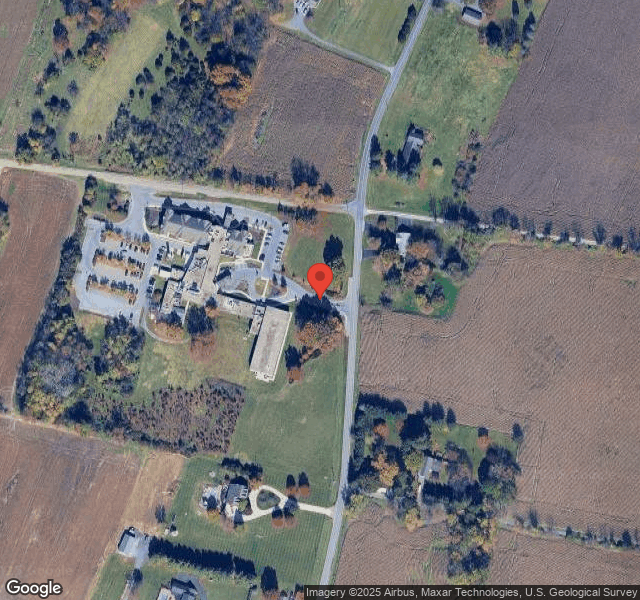
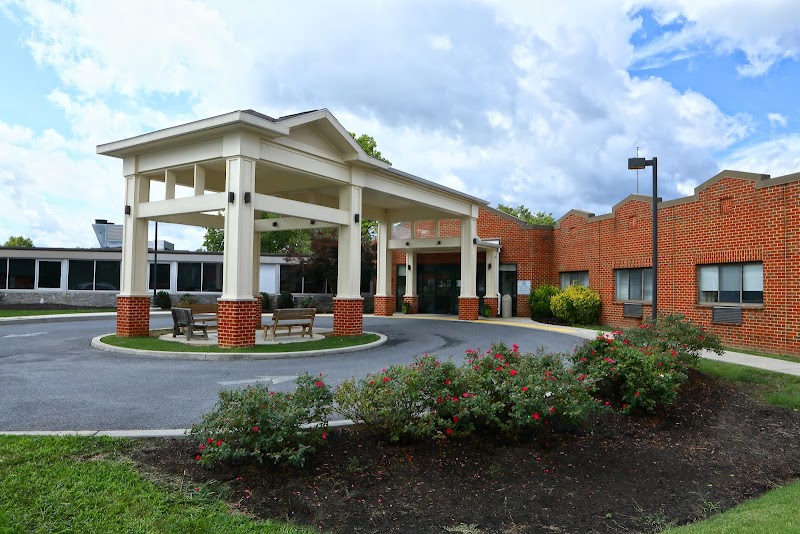
14014 MARSH PIKE, HAGERSTOWN, MD 21742 (301) 733-8700
For profit - Limited Liability company 60 Beds COMPLETE CARE Data: November 2025
Trust Grade
35/100
#150 of 219 in MD
Last Inspection: May 2025

Inspected within the last 6 months. Data reflects current conditions.

Overview

Complete Care at Hagerstown has received a Trust Grade of F, indicating significant concerns about the quality of care provided, which is below average compared to other facilities. Ranked #150 out of 219 in Maryland, the facility is in the bottom half, and #4 out of 10 in Washington County means only three local homes are rated better. The facility is worsening over time, with issues increasing from 23 in 2021 to 35 in 2025, and it has accumulated $29,270 in fines, which is higher than 85% of facilities in Maryland, suggesting ongoing compliance problems. Staffing is rated average with a turnover of 37%, which is slightly below the state average, and the facility has average RN coverage, meaning they have adequate nursing support but may not exceed state standards. Specific incidents of concern include a resident not receiving proper wound care for a pressure ulcer that worsened and led to hospitalization, and a failure to ensure proper fall prevention procedures were followed, putting residents at risk. Although there are some strengths like decent staffing levels, the overall picture raises serious red flags for families considering this nursing home.

Trust Score
F
35/100
In Maryland
#150/219
Bottom 32%
Safety Record
Moderate
Needs review
Inspections
Getting Worse
23 → 35 violations
Staff Stability
○ Average
37% turnover. Near Maryland's 48% average. Typical for the industry.
Penalties
⚠ Watch
$29,270 in fines. Higher than 99% of Maryland facilities. Major compliance failures.
Skilled Nurses
✓ Good
Each resident gets 53 minutes of Registered Nurse (RN) attention daily — more than average for Maryland. RNs are trained to catch health problems early.
Violations
⚠ Watch
58 deficiencies on record. Higher than average. Multiple issues found across inspections.
★★☆☆☆
2.0
Overall Rating
★★★☆☆
3.0
Staff Levels
★★★☆☆
3.0
Care Quality
★★☆☆☆
2.0
Inspection Score
Stable
2021: 23 issues
2025: 35 issues

The Good

  • Full Sprinkler Coverage · Fire safety systems throughout facility
  • No fines on record
  • Staff turnover below average (37%)

    11 points below Maryland average of 48%

Facility shows strength in fire safety.

The Bad

2-Star Overall Rating

Below Maryland average (3.0)

Below average - review inspection findings carefully

Staff Turnover: 37%

Near Maryland avg (46%)

Typical for the industry

Federal Fines: $29,270

Below median ($33,413)

Moderate penalties - review what triggered them

Chain: COMPLETE CARE

Part of a multi-facility chain

Ask about local staffing decisions and management

The Ugly 58 deficiencies on record

2 actual harm
May 2025 28 deficiencies
CONCERN (D)

Potential for Harm - no one hurt, but risky conditions existed

Deficiency F0577 (Tag F0577)

Could have caused harm · This affected 1 resident

Based on observation and interview, it was determined that the facility failed to ensure that the most recent facility survey was readily accessible to residents, family members, and legal representat...

Read full inspector narrative →
Based on observation and interview, it was determined that the facility failed to ensure that the most recent facility survey was readily accessible to residents, family members, and legal representatives of residents. This was evident for 1 Survey binder out of 1 survey binder reviewed during a survey. The findings include: On the morning of 5/8/25, an observation of the facility's entrance hallway revealed a binder titled Complete Care Hagerstown Survey Results. Further observation of the Binder failed to reveal the most recent Federal survey results. During a brief interview, the front desk receptionist (Staff #12) reported that she was unaware that the survey results were missing and would notify the manager. On 5/14/25 at 10:10 AM, during an interview with Staff #12, she confirmed that she did notify the administrator regarding the missing survey results. On 5/14/25 at 10:12 AM, the Regional Nurse Consultant Staff #2 confirmed that the Binder located in the entrance hallway titled Complete Care Hagerstown Survey Results did not contain the most recent federal survey results. On 5/14/25 at 10:18 AM, the above observation was shared with the Director of Nursing (DON). During the interview, she confirmed that the federal tags needed to be in the folder. On 5/14/25 at 11:18 AM, during a brief interview, Staff #2 confirmed that the front desk was the only location in the facility where the survey results were kept.
CONCERN (D)

Potential for Harm - no one hurt, but risky conditions existed

Deficiency F0578 (Tag F0578)

Could have caused harm · This affected 1 resident

Based on record reviews and interviews, it was determined that the facility failed to provide information to a resident to formulate an advanced directive. This was evident for 1 (Resident #4) of 4 re...

Read full inspector narrative →
Based on record reviews and interviews, it was determined that the facility failed to provide information to a resident to formulate an advanced directive. This was evident for 1 (Resident #4) of 4 residents reviewed for advanced directives. The findings include: An advance directive is a written statement of a person's wishes regarding medical treatment, often including a living will, made to ensure those wishes are carried out should the person be unable to communicate them to a doctor. It is a legal document in which a person specifies what actions should be taken for their health if they can no longer make decisions for themselves because of illness or incapacity. Resident #4 was admitted into the facility in early 2022. A quick look into the resident's medical record indicated that the resident was cognitively intact and was certified to understand and make medical decisions. Further review of the medical record failed to reveal an advanced directive. A subsequent review of Resident #4's medical record on 5/12/25 at 3:36 PM revealed a document titled Social Services Assessment and Documentation. The document stated that the resident was responsible for self and made his/her own decision. The following questions, whether additional conversation regarding advanced care planning was provided, opportunities to complete advanced directives offered, and advanced directive materials, including state form, were all answered No. The Social Services Director (Staff #12) was interviewed on 5/13/25 at 10:09 AM. During the interview, Staff #12 reported her process with advanced directives. She reported that it was initially discussed on admission with residents who were deemed capable and periodically reviewed during care plan meetings. She also reported that discussions about advanced directives were documented under Social Services Assessment and Documentation or in the care plan meeting progress notes. Staff #12 was asked if Resident #4 had an advanced directive. If not, was there documentation to indicate that information was provided to formulate one? After a quick review of the resident's medical record, she reported that the resident did not have one in place. She indicated that she would continue to review the resident's medical record and report back to the surveyor. On 5/13/25 at 12:15 PM, Staff #12 reported that Resident #4 did not have durable power of attorney for healthcare and was responsible for himself/herself. Staff #12 also reported that she did not find documentation that indicated that information was provided or opportunities were provided to complete an advanced directive. The concern was discussed with Staff #12 that there was no credible evidence to indicate that information to formulate an advanced directive was provided to a deemed capable resident. Staff #12 verbalized understanding and acknowledged the concern.
CONCERN (D) 📢 Someone Reported This

A family member, employee, or ombudsman was alarmed enough to file a formal complaint

Potential for Harm - no one hurt, but risky conditions existed

Notification of Changes (Tag F0580)

Could have caused harm · This affected 1 resident

2) A review of Resident #56's medical record on 5/9/25 revealed that the Resident received all nutrition via tube feedings since admission. A review of the Medical Nutrition Therapy Assessment, writte...

Read full inspector narrative →
2) A review of Resident #56's medical record on 5/9/25 revealed that the Resident received all nutrition via tube feedings since admission. A review of the Medical Nutrition Therapy Assessment, written by a Registered Dietician (RD Staff #4) with an effective date of 3/29/25, revealed the Resident's weight on that date was 122.7 lbs., the Resident met the criteria for severe malnutrition as evidenced by a BMI (body mass index) of less than 20 and the presence of moderate clavicle wasting. The documented goal was a weight gain of 2-4 lbs. per month towards 130 lbs. The recommended tube feeding would provide 1809 kcal per day. Further review of the medical record failed to reveal additional weights for March 2025. A review of the Medication Administration Record (MAR) revealed that nursing staff had documented with a check mark that weights were obtained every day from April 1 through April 7 and then on Monday, April 14th and 21st. However, a review of the weights and vitals section of the electronic health record revealed documentation of only four weights in April, on the 3rd, 10th, 17th, and 23rd. No other documentation was found in the medical record to indicate weight values were obtained on other dates in April 2025. On 4/3/25, the Resident's weight was 118.8 lbs. On 4/10/25 at 9:46 AM, the Resident's weight was documented as 113 lbs. This weight represents a more than 5 lb. loss in one week and a more than 9.7 lb. loss in less than 2 weeks. This 9.7 lb. represents a 7.9 % loss of body weight in less than 2 weeks. A review of the facility's Weight Assessment and Intervention Policy, with a Date Reviewed/Revised of 3/30/23, revealed Significant Weight Changes were defined as more than 5% within 30 days, more than 7.5 % within 90 days, and more than 10% within six months. This policy also stated that the Physician and Responsible Party of the Resident should be notified of significant weight change. The Director of Nursing (DON) was interviewed on 5/9/25 at 11:43 AM regarding the weight process in the facility. The DON reported they obtained a weight within 24 hours of admission and a re-weight in 48 hours, then weekly times four weeks. She reported that weights were usually done Monday or Tuesday, giving them Wednesday and Thursday for re-weights and that the nurses needed to supervise re-weights. Reweights were obtained the next day if the Resident had an off weight. The DON clarified an off weight as greater than 5%. The surveyor then informed the DON that no reweight was found following the 4/10/25 weight, which indicated a significant weight loss. A review of a nursing progress note, with an effective date of 4/10/25 at 12:12 PM, revealed documentation that the Resident's weight was 118.8 lbs. This note included documentation that the 118.8 lbs weight was from 4/3/25. Further review of the nursing progress notes, dated 4/11/25 at 3:59 AM and 4/12/25 at 3:37 AM, also included documentation of the 4/3/25 weight of 118.8 lbs. Documentation of the 4/10/25 weight of 113 lbs. was not found in a nursing progress note prior to a note on 4/15/25. On 4/17/25, the Resident's weight was 113.6 lbs. Further review of the medical record revealed a note completed by the registered dietician (#4) with an effective date of 4/20/25 that included a plan .to increase TF rate to address weight loss. This note also included documentation that the responsible party and the nurse practitioner were aware of the weight change. The new tube feeding orders were implemented starting on 4/21/25. Further review of the medical record failed to reveal documentation to indicate the physician/nurse practitioner, the registered dietician, the Resident, or the Resident's responsible party were made aware of the significant weight loss prior to 4/20/25, more than a week after it was initially identified. On 4/23/25, the Resident's weight was 111.2 lbs. On 5/2/25, the Resident's weight was 114.6 lbs. On 5/09/25 at 11:48 AM, the surveyor informed the DON that no documentation was found to indicate the physician/nurse practitioner, or the registered dietician was made aware of the weight loss until the RD assessment on 4/20/25. The surveyor also reviewed the concern with the DON that the nursing progress notes for 4/11 and 4/12 referenced 118 weight and that the 113 weight was not documented in the nursing progress note until 4/15/25. On 5/13/25 at 10:47 AM, when asked how they were notified of weight loss, RD (Staff #20) reported that the electronic health record system would trigger for 5% x 30 days. On 5/13/25 at 11:02 AM, when asked about notification of weight loss, RD (Staff #4) reported weight triggers are in weights and vitals [section of the electronic health record] and that RD #20 usually keeps daily track and the nurse's letting us know. She went on to report that notification was usually within a few days. If the weight seemed a little out of the norm, they would request a re-weight, and the re-weight would usually be within the next few days. The surveyor reviewed the concern that it was ten days before there was documentation to indicate the weight loss was reported to the RD. As of the time of survey exit on 5/14/25 at 1:15 PM, no additional documentation was provided to indicate the physician/nurse practitioner, or the responsible party was notified of the significant weight loss prior to 4/20/25. Based on record review and staff interviews, it was determined that the facility failed to notify attending physician, Residents' representative, and registered dietitian in a timely manner when there were documented changes in residents' condition. This was evident for one out of three complaints reviewed during the recertification survey and one (#56) out of three Residents reviewed for tube feeding. The findings include: 1) A review of complaint # MD00214514 on 5/14/25 at 8:22 AM contained an allegation that Resident #74's representative was not immediately made aware of a fall after the resident's admission to the facility. A review of Resident #74's record showed that s/he was admitted to the facility in November 2024 with diagnoses including post-right hip surgery. Continued review included a change in condition evaluation form completed for Resident #74 on 11/26/24. The form recorded that Resident #74 had a fall on 11/21/24. However, Resident #74's attending provider and representative were not notified of the change in condition until 11/26/24. Further review also found another change in condition evaluation form completed on 11/24/24 that indicated that Resident #74 had increased discomfort to right hip and change of bruise color/size at the surgical incision area on 11/22/24. However, Resident #74's attending provider and representative were not notified of the resident's change in condition until 11/24/24. In an interview on 5/13/25 at 8:01 AM, the director of nursing said that any change in a resident's condition should be reported immediately to the resident's attending provider and the representative. However, reviews completed earlier on showed that Resident #74's fall on 11/21/24 and increased discomfort to right hip and change of bruise color/size at the surgical incision area on 11/22/24 were reported two days and five days later to the Resident's attending provider and representative.
CONCERN (D)

Potential for Harm - no one hurt, but risky conditions existed

Safe Environment (Tag F0584)

Could have caused harm · This affected 1 resident

Based on observations and resident and staff interviews, it was determined that the facility failed to exercise reasonable care for the protection of the Resident's property from loss or theft. This w...

Read full inspector narrative →
Based on observations and resident and staff interviews, it was determined that the facility failed to exercise reasonable care for the protection of the Resident's property from loss or theft. This was evident for one (Resident #18) reviewed during the recertification survey. The findings include: In an interview on 5/8/25 at 10:13 AM, Resident #18 reported that my body wash and shampoo were stolen. Money has gone missing- $12.00. My big concern is that my lock has been broken right now for about a month or two. I've told the nurses many times- they don't do anything. On 5/8/25 at 10:38 AM, the surveyor observed the opened bedside cabinet drawer. A bank envelope, with presumably money in it, was readily visible. Resident #18's hearing aid was observed on the bottom of the drawer. Resident #18 closed the drawer and could not lock it. On 5/12/25 at 8:59 AM, the surveyor observed that the top drawer of the bedside cabinet drawer was ajar. The Resident was not in his/her room. A staff member stated, [S/he's ] in the shower. On 5/12/25 at 2:36 PM, the Director of Nursing (DON) was made aware of Resident #18's broken bedside cabinet drawer lock. The DON acknowledged that Resident #18 could not file a grievance without staff assistance and that a broken bedside cabinet drawer lock failed to protect Resident #18's property. On 5/12/25 at 3:01 PM, the maintenance assistant (Staff #31) was observed replacing the broken lock in Resident #18's room. Staff #31 acknowledged that the lock was broken and needed to be replaced. Staff #31 reported that a key would be provided to Resident #18, and the maintenance department would keep a spare. On 5/13/25 at 3:30 PM, Resident #18 was observed wearing a key on a necklace. The Resident stated, It's a key to my lock.
CONCERN (D)

Potential for Harm - no one hurt, but risky conditions existed

Grievances (Tag F0585)

Could have caused harm · This affected 1 resident

**NOTE- TERMS IN BRACKETS HAVE BEEN EDITED TO PROTECT CONFIDENTIALITY** Based on record reviews and resident and staff interviews, it was determined that the facility failed to identify a Grievance Of...

Read full inspector narrative →
**NOTE- TERMS IN BRACKETS HAVE BEEN EDITED TO PROTECT CONFIDENTIALITY** Based on record reviews and resident and staff interviews, it was determined that the facility failed to identify a Grievance Official in the facility's grievance policy, ensure that the policy in place processed grievances, and make prompt efforts to resolve a Resident's grievance. This was evident in one grievance investigation reviewed during the recertification survey. The findings include: On 5/9/25 at 12:59 PM, in an interview with a Registered Nurse (RN #25) and Certified Nursing Assistant (CNA #26) regarding how residents got hearing aids, Resident #24 stated, My hearing aids are missing. The surveyor asked staff, How will you help Resident #24? CNA #26 stated, I would tell the unit manager. RN #25 verbally acknowledged Resident #24's complaint. On 5/12/25 at 8:48 AM, a record review of the Grievance policy revealed a blank space for the Grievance Official's name and contact information. It also showed that the Grievance Official was responsible for overseeing the process, receiving and tracking grievances through to conclusion, leading investigations by the facility, and issuing written grievance decisions to Residents. On 5/12/25 at 2:44 PM, in an interview, the Director of Nursing (DON) stated that completed grievance forms were given to the Social Services Department (SSD). Each nurses' station had grievance forms. Any staff could help residents complete the form. The form had to be signed off by the Nursing Home Administrator (NHA) within 5 days to be considered resolved. And the SSD was to follow up in morning stand-up meetings. On 5/12/25 at 3:06 PM, a grievance form was observed and inserted into an acrylic frame on the nurse's station counter. In an interview, Licensed Practical Nurse (LPN #28) stated, there's usually a stack. The surveyor observed no stack. On 5/12/25 at 3:10 PM, in an interview, the Social Services Director (Staff #12) and Social Services Manager (Staff #27) reported that residents had access to grievance forms and could submit them anonymously to the SSD, who handed the forms to the unit manager. The unit manager was expected to investigate and document what they did to resolve the grievance, which was discussed in the morning clinical meetings. Both staff members acknowledged that they didn't know how the grievances got resolved on the unit for the resident. On 5/12/25 at 3:41 PM, a record review of the grievance log revealed that Resident #24 initiated a grievance on 1/13/25 related to missing hearing aids. On 1/17/25, the record showed concern resolved and signed by the NHA. On 5/13/25 at 9:16 AM, while the surveyor reviewed records at the [NAME] unit nurse's station, Resident #24 approached the surveyor and reported, I'm still missing my hearing aids. On 5/13/25 at 10:04 AM, the surveyor observed Resident #24 in a wheelchair in the hall without hearing aids. On 5/13/25 at 10:19 AM, in an interview, RN #25 was asked, What is your process when a resident complains about missing hearing aids? RN #25 replied, I tell my unit manager and usually write a nursing note. The surveyor asked, Would you complete a grievance form? RN #25 replied, I don't think I would. I didn't know about the grievance process. On 5/13/25 at 10:20 AM, the surveyor informed RN #25 that Resident #24 complained that her/his hearing aids were still missing. On 5/14/25 at 8:39 AM, in an interview, Staff #27 reported that SSD had not received a grievance form on behalf of Resident #24. On 5/14/25 at 8:48 AM, RN #5, [NAME] Unit Manager, acknowledged that she had not received a grievance form on behalf of Resident #24 and reported that one should have been initiated according to the grievance process. In an interview on 5/14/25 at 9:12 AM, the NHA identified himself as the facility's Grievance Official and described his responsibility as overseeing the process. The NHA acknowledged that he was unaware of Resident #24's grievance filed in January 2025. He agreed that the grievance process failed Resident #24.
CONCERN (D)

Potential for Harm - no one hurt, but risky conditions existed

Deficiency F0605 (Tag F0605)

Could have caused harm · This affected 1 resident

Based on record review and interviews, it was determined that the facility failed to ensure residents were free from unnecessary psychotropic medication, as evidenced by the lack of documentation for ...

Read full inspector narrative →
Based on record review and interviews, it was determined that the facility failed to ensure residents were free from unnecessary psychotropic medication, as evidenced by the lack of documentation for non-pharmacological interventions (NPIs) and adequate indication for its use. This was evident for 1 (#35) of 5 residents reviewed for unnecessary medications. The findings include: Resident #35 was admitted into the facility in late 2020. A review of the resident's medical record indicated that the resident was on a combination of psychotropic medications, including Ativan (Lorazepam), given on an as-needed basis. Lorazepam (Brand name- Ativan) is used to treat anxiety disorders. It is also used for short-term relief of the symptoms of anxiety or anxiety caused by depression. Lorazepam is a benzodiazepine that works in the brain to relieve symptoms of anxiety. Benzodiazepines are central nervous system (CNS) depressants, which are medicines that slow down brain activity and can cause a range of effects, including relaxation, drowsiness, and even unconsciousness. On 5/9/25 at 8:47 AM, a review of Resident #35's medical record, including the electronic Medication Administration Record (eMAR) for April 2025, revealed that Ativan was administered 16 times. Out of the 16 times that the Ativan was administered, concerns were identified that include: a) There was no documentation to indicate that NPIs were administered and/or attempted prior to the administration of the medication. (administered on 4/3/25- 2:10 AM, 7:25 PM; 4/4/25- 3:20 PM; 4/5/25- 1:05 PM; 4/6/25- 2:58 PM; 4/7/25- 12:07 PM; 4/8/25- 7:44 AM; 4/13/25- 3 AM, 8:32 AM; 4/17/25- 12:15 PM; 4/20/25- 6:03 PM; 4/25/25- 9 AM; 4/27/25- 11 AM; 4/28/25- 5 PM; and 4/29/25- 10:34 AM) b) There was no documentation that the resident had behaviors to support adequate indication for its use. (administered on 4/3/25- 2:10 AM, 7:25 PM and 4/13/25- 3 AM, 8:32 AM) The Nurse Manager (Staff #5) for the unit where Resident #35 resided was interviewed on 5/9/25 at 12:49 PM. During the interview, she reported her expectations from nursing staff on giving psychotropic medications on an as-needed basis. The expectations included documenting the behavior/s and NPIs' efforts before administering the medication. Staff #5 further reported that there were several ways to document. She indicated an actual order for NPIs on the eMAR, the medication order, where the nurse could add comments, progress notes, or the Task documentation for behavior monitoring & intervention. On 5/9/25 at 1:39 PM, the above findings were discussed with the Director of Nursing (DON). The DON stated, They (referring to the nursing staff) should be documenting more than that, and indicated that she would review Resident #35's medical record to look for further evidence. On 5/12/25 at 10:09 AM, the DON did not provide any further documentation to indicate NPIs were attempted, and behavior/s were documented prior to administering the psychotropic medication on the identified dates. The DON verbalized understanding and acknowledged the concern.
CONCERN (D)

Potential for Harm - no one hurt, but risky conditions existed

Deficiency F0628 (Tag F0628)

Could have caused harm · This affected 1 resident

Based on record review and interviews, it was determined that the facility failed to provide written transfer notice and written bed hold policy to a Resident's representative upon transfer to an acut...

Read full inspector narrative →
Based on record review and interviews, it was determined that the facility failed to provide written transfer notice and written bed hold policy to a Resident's representative upon transfer to an acute care facility. This was evident for 1 (#274) of 5 residents reviewed for hospitalization. The findings include: A review of Resident #274's medical record on 5/8/25 at 11:50 AM, showed that the resident was admitted to the facility in February 2025. And per an MDS assessment (Minimum Data Set assessment is a federally mandated assessment tool that nursing home staff use to gather information on each Resident) dated 2/11/25, Resident #274 had a moderate cognitive impairment. A continued review found that Resident #274 was transferred to an acute care facility on 4/28/25. However, the review lacked documentation that the resident's representative was notified in writing of the facility's bed hold policy and the resident's transfer to an acute care facility along with the reason for the transfer. In an interview on 5/9/25 at 9:05 AM, staff #29, a licensed practical nurse, said she was unsure what the facility's process was for ensuring a Resident's representative was notified in writing of the facility's bed hold policy and transfer notice. During an interview on 5/9/25 at 1:02 PM, the director of nursing reported that the facility's receptionist mailed a packet that included bed hold policy and transfer notice to residents' representative upon transfer to acute facilities. An interview on 5/9/25 at 1:09 PM, with staff #21, a receptionist, showed a lack of documentation that the facility's bed hold policy and transfer notice were mailed to Resident #274's representative upon transfer to an acute care facility on 4/28/25.
CONCERN (D)

Potential for Harm - no one hurt, but risky conditions existed

Assessment Accuracy (Tag F0641)

Could have caused harm · This affected 1 resident

Based on medical record review and interview, it was determined that the facility failed to ensure Minimum Data Set (MDS) assessments accurately reflected the residents' medication usage. This was evi...

Read full inspector narrative →
Based on medical record review and interview, it was determined that the facility failed to ensure Minimum Data Set (MDS) assessments accurately reflected the residents' medication usage. This was evident for one (Resident #31) out of one resident reviewed for Resident Assessment. The findings include: The MDS is a federally mandated assessment tool that nursing home staff use to gather information on each resident's strengths and needs. The information collected drives resident care planning decisions. On 5/9/25, a review of Resident #31's medical record revealed a Minimum Data Set (MDS) assessment, with an Assessment Reference Date of 3/8/25, documented that the resident had received insulin injections on 7 out of the 7 days of the assessment period. Insulin is a medication used to treat diabetes. Further review of the medical record failed to reveal documentation that the resident had a diagnosis of diabetes, failed to reveal current or past orders for insulin, and failed to reveal documentation to indicate the resident had received any injections during the look-back assessment period. On 5/9/25 at 3:05, when asked where she obtained information for Section N Medications, the MDS nurse (Staff #9) reported she reviewed the MAR (Medication Administration Record). The surveyor reviewed with the MDS nurse that Section N indicated seven days of insulin injections and asked the MDS nurse to show supporting documentation of this assessment. After looking at the electronic health record, the MDS nurse acknowledged the error and stated: I will do a modification right now. On 5/13/25 at 11:55 AM, a review of the modified MDS revealed documentation that no injections of any type were received by the resident during the 7-day look-back period. On 5/14/25 at 11:25 AM, the surveyor reviewed with the Director of Nursing the concern regarding MDS inaccuracy related to injections and insulin usage.
CONCERN (D)

Potential for Harm - no one hurt, but risky conditions existed

Deficiency F0645 (Tag F0645)

Could have caused harm · This affected 1 resident

Based on record review and staff interview, it was determined that the facility failed to ensure a required Level II Preadmission Screening and Resident Review (PASARR) evaluation was completed for 1 ...

Read full inspector narrative →
Based on record review and staff interview, it was determined that the facility failed to ensure a required Level II Preadmission Screening and Resident Review (PASARR) evaluation was completed for 1 (#68) of 3 Residents reviewed for PASARR compliance during the recertification survey. The findings include: The PASARR is a federally mandated process designed to ensure that individuals with serious mental illness (SMI), intellectual disability (ID), or related conditions are not inappropriately placed in Medicaid-certified nursing facilities (NFs) for long-term care. The PASARR process helps determine whether a person 1.) Has a diagnosis of SMI, ID, or a related condition; 2.) Requires the level of services provided by a nursing facility; 3.) Needs specialized services for their condition. The PASARR is divided into two levels: Level I Screening is a preliminary screening conducted prior to admission to identify individuals who may have SMI, ID, or a related condition. Level II Evaluation is conducted by the State Mental Health or Developmental Disabilities Administration to determine whether the individual requires nursing facility services and/or specialized services. On 5/9/25 at 9:48 AM, a record review of Resident #68's PASARR documentation revealed that the resident's PASARR Level I did not indicate that the resident triggered for a Level II evaluation or had been granted a 30-day short-term admission exemption. There was no evidence of further screening or exemption coordination prior to admission. Further record review revealed the resident was care planned for interventions related to agitation, schizoaffective disorder, and developmental delay. On 5/9/25 at 10:21 AM, during an interview, the facility's social worker (Staff #12) presented the two PASARR Level I forms, from preadmission and post-admission, which confirmed that the resident had not been evaluated for an exemption from Level II review. The post-admission PASARR contained documentation that stated, Level II required for ID. Please proceed with Level II clearance. During the interview, Staff #12 confirmed the deficiency. On 5/9/2025 at 4:09 PM, the facility's administrator was made aware of the deficiency, and no additional evidence was provided by the end of the survey.
CONCERN (D)

Potential for Harm - no one hurt, but risky conditions existed

Comprehensive Care Plan (Tag F0656)

Could have caused harm · This affected 1 resident

**NOTE- TERMS IN BRACKETS HAVE BEEN EDITED TO PROTECT CONFIDENTIALITY** Based on record review, interviews, and observations, it was determined that the facility failed to develop and implement compre...

Read full inspector narrative →
**NOTE- TERMS IN BRACKETS HAVE BEEN EDITED TO PROTECT CONFIDENTIALITY** Based on record review, interviews, and observations, it was determined that the facility failed to develop and implement comprehensive resident-centered care plans for residents. This was evident for 2 (#7, #276) of 32 residents reviewed during the recertification survey. The findings include: 1) A review of Resident #7's medical record on 5/12/25 revealed that the Resident had resided at the facility for several years, had significant cognitive impairment and had limited physical mobility. A review of the 2/19/25 Minimum Data Set (MDS) assessment, Section F Preferences for Routine & Activities, revealed it was very important to the Resident to listen to music s/he likes, to be around animals such as pets, to do things with groups of people, and to go outside and get fresh air when the weather is good. The MDS is a federally mandated assessment tool that nursing home staff use to gather information on each Resident's strengths and needs. The information collected drives resident care planning decisions. A review of Resident #7's medical record on 5/12/25 at 9:47 AM revealed a care plan addressing activities that had a focus of: [name of Resident] is dependent on staff, etc., for meeting emotional, intellectual, physical, and social needs r/t Cognitive deficits, physical limitations. The stated goal was that the Resident would attend/participate in group, 1:1, and/or independent leisure activities of choice 3-5 times weekly by the next review date. This care plan was initiated several years ago and had a revision date of 3/17/25. The interventions included: -All staff to converse with Resident while providing care. -Establish and record the Resident's prior level of activity involvement and interests by talking with the Resident, caregivers, and family on admission and as necessary. -Invite the Resident to scheduled activities such as music and socials. -Provide the Resident with materials for individual activities as desired. The Resident likes the following independent activities: (SPECIFY) No documentation was found in the care plan to indicate what independent activities the Resident liked to do. No documentation was found in the care plan regarding pet visits or going outside despite the MDS assessment that these things were very important to the Resident. On 5/12/25 at approximately 1:00 PM, an interview with the Activity Director (Staff #30) revealed that he had been the activity director at the facility for several years. In regard to Resident #7, the Activity Director reported that the Resident liked to listen to music, attended activities with entertainers, and liked hot chocolate. The surveyor reviewed the concern that the care plan was not individualized. After looking at the current care plan, the Activity Director confirmed he did not specify activities that the Resident liked in this care plan. Further review of Resident #7's medical record on 5/12/25 revealed that the Resident has a history of pressure ulcers and a care plan addressing reoccurring pressure ulcers. This care plan was initiated several years ago. One of the interventions, with a revision date of 4/4/23, included: Bariatric low air loss mattress with perimeter on bed at all times; Check every shift for placement and function. A review of the March and April 2025 Treatment Administration Records (TAR) revealed that a corresponding order was in place from 11/18/24 until discontinued on 4/27/25. The nursing staff documented every shift that the mattress was checked for placement and function until 4/23/25. Further review of the physician order and the TAR on 5/12/25 failed to reveal a current order regarding the bariatric mattress or documentation to support that nursing staff were checking for placement or function every shift as indicated in the care plan. On 5/13/25 at 10:04 AM, the surveyor observed that the air mattress on the Resident's bed was set at 350 lbs. The nurse (Staff #34) confirmed the mattress was set at 350. When asked if this setting was correct, Nurse #34 responded: [name of Central Supply Staff #35] sets up the mattresses. On 5/13/25 at 11:38 AM, the Director of Nursing (DON) was interviewed about air mattresses. The DON confirmed Resident #7 had a bariatric air mattress and that the weight setting would be at 220 lbs. The surveyor then reviewed the concern that no current order was found for the air mattress, and no documentation indicated that it was being checked each shift as indicated in the care plan. Surveyor also reviewed Nurse #34's response when asked if the setting was correct. The DON reported that it should be signed off by the nurses and indicated she would look for the orders. At 12:25 PM, the DON reported there was an order, but it was not re-ordered when the Resident was re-admitted . On 5/14/25, further review of the medical record revealed an order dated 5/13/25 that stated: Resident has a bariatric air mattress. Check placement every shift. This order did not include checking for function as previously ordered or indicated in the care plan. A care plan is a guide that addresses each Resident's unique needs. It is used to plan, assess, and evaluate the effectiveness of the Resident's care. Staff utilize care plans to provide resident-centered care that includes support, services, and resources to address a resident's needs. 2a) A record review showed that Resident #276 had resided in the facility since March 2025. The review also contained an activity care plan for Resident #276 initiated on 3/29/25. The care plan recorded a goal that stated, [Resident #276] will attend/participate in group, one-on-one and/or independent, leisure activities of choice 3-5 times weekly. The interventions recorded on the care plan stated All staff converse with Resident while providing care, Establish and record the Resident's prior level of activity involvement and interests by talking with the Resident, caregivers, and family on admission and as necessary, Invite the Resident to scheduled activities such as music, Provide the Resident with materials for individual activities as desired. The Resident likes the following independent activities: watch TV. A continued review of an MDS assessment dated [DATE] for Resident #276 showed that the Resident had a hearing impairment. The MDS also indicated that the activity preferences significant to Resident #276 included going outside to get fresh air when the weather was good and participating in religious services or practices. However, an earlier review of Resident #276's care plan failed to show that the Resident's personal activity preferences of going outside to get fresh air when the weather was good and participating in religious services or practices were addressed in the care plan. In an interview on 5/9/25 at 10:10 AM, staff #30, the activities director, reported that the activity care plan was individualized based on the data collected during the completion of the MDS assessment. Staff #30 confirmed that Resident #276's care plan did not address his/her preferences for activity and stated it would be corrected. 2b) In an observation of Resident #276 on 5/8/25 at 1:21 PM, s/he was lying in bed and had swelling in both legs. A record review included a nursing admission assessment dated [DATE] for Resident #276, that recorded that the Resident was admitted to the facility with pitting edema [a type of swelling characterized by the presence of indentations (pits) in the skin when pressure is applied] to bilateral legs. Continued review of an attending provider's notes dated 5/2/25 showed that Resident #276 continued to have edema in both legs. However, the review failed to show that the Resident's edema was addressed in his/her care plan. In an interview on 5/9/25 at 9:56 AM, staff #29, a licensed practical nurse, reported that Resident #276 always had edema in both legs since admission to the facility. During an interview on 5/14/25 at 10:20 AM, the director of nursing reported that Resident #276's edema in both legs should have been addressed in his/her care plan.
CONCERN (D) 📢 Someone Reported This

A family member, employee, or ombudsman was alarmed enough to file a formal complaint

Potential for Harm - no one hurt, but risky conditions existed

ADL Care (Tag F0677)

Could have caused harm · This affected 1 resident

**NOTE- TERMS IN BRACKETS HAVE BEEN EDITED TO PROTECT CONFIDENTIALITY** Based on record review and interviews, it was determined that the facility failed to provide a Resident with the amount of assis...

Read full inspector narrative →
**NOTE- TERMS IN BRACKETS HAVE BEEN EDITED TO PROTECT CONFIDENTIALITY** Based on record review and interviews, it was determined that the facility failed to provide a Resident with the amount of assistance needed during meals. This was evident for 1 out of 3 complaints reviewed during the recertification survey. The findings include: The Minimum Data Set (MDS) is a federally mandated assessment tool used by nursing home staff to gather information on each Resident's strengths and needs. The information collected drives resident care planning decisions. A review of complaint # MD00214514 contained an allegation that Resident #74 did not receive assistance from staff with his/her meals. A review of Resident #74's medical record contained an MDS assessment dated [DATE] that showed that Resident #74 had severely impaired cognition and required set up or clean up assistance from the facility's staff with his/her meals. A continued review was completed of geriatric nurse aides' (GNAs) ADL (activity of daily living) documentation of assistance provided to Resident #74 during meals from November 20 to January 31, 2025. The review lacked documentation for helping Resident #74 with his/her meals for 4 shifts in November, 9 shifts in December, and 8 shifts in January. In an interview with the director of nursing on 5/13/25 at 2:26 PM, she confirmed the lack of documentation and stated understanding of concerns.
CONCERN (D)

Potential for Harm - no one hurt, but risky conditions existed

Deficiency F0679 (Tag F0679)

Could have caused harm · This affected 1 resident

Based on medical record review, interviews, and observations, it was determined that the facility failed to provide an ongoing program of activities to meet the needs and preferences of residents. Thi...

Read full inspector narrative →
Based on medical record review, interviews, and observations, it was determined that the facility failed to provide an ongoing program of activities to meet the needs and preferences of residents. This was evident for 2 (#7, #276) out of 3 residents reviewed for activities. The findings include: 1) A review of Resident #7's medical record on 5/12/25 revealed that the resident has resided at the facility for several years and had significant cognitive impairment and limited physical mobility. A review of the 2/19/25 Minimum Data Set (MDS) assessment, Section F Preferences for Routine & Activities, revealed it was very important for the resident to listen to music s/he likes, to be around animals such as pets, to do things with groups of people, and to go outside and get fresh air when the weather is good. A review of the resident's care plans on 5/12/25 at 9:47 AM revealed a plan that addressed activities that had a focus of [name of resident] is dependent on staff etc. for meeting emotional, intellectual, physical and social needs r/t Cognitive deficits, physical limitations. The stated goal was that the resident would attend/participate in group, 1:1, and/or independent leisure activities of choice 3-5 times weekly by the next review date. This care plan was initiated several years ago and had a revision date of 3/17/25. The interventions included: All staff to converse with resident while providing care, establish and record the resident's prior level of activity involvement and interests by talking with the resident, caregivers, and family on admission and as necessary, Invite the resident to scheduled activities such as music and socials, Provide the resident with materials for individual activities as desired. The resident likes the following independent activities: (SPECIFY). No documentation was found in the care plan to indicate what independent activities the resident liked. No documentation was found in the care plan regarding pet visits or going outside despite the MDS assessment that these things were very important to the resident. On 5/12/25 at approximately 1:00 PM, an interview with the Activity Director (Staff #30) revealed he had been the activity director at the facility for several years. He confirmed that all the documentation related to activity participation is found in the TASKS section of the electronic health record and that he writes the care plans for activities. The Activity Director confirmed that a volunteer brought a dog for pet visits. However, she came when he was not in the facility and indicated he was not sure who she visited. Staff #30 confirmed that he did not provide a list of residents who would like pet visits to the volunteer. In regard to Resident #7, the Activity Director reported that he was aware that the resident liked to listen to music, attend activities with entertainers, and like hot chocolate. The surveyor reviewed the concern that the care plan was not individualized. After looking at the current care plan, the Activity Director confirmed he did not specify the activities that the resident liked in the care plan. The surveyor requested the activity documentation for the past 90 days for review. On 5/12/25 at 1:47 PM, the Activity Director provided the activities documentation for February 2025 through 5/12/25. A review of the documentation revealed that staff frequently documented family or friend visits as an activity. A review of the documentation for March 2025 failed to reveal documentation of activities for 23 out of the 31 days; this included no activity documented from March 1-7, 10-17, or 24-28. Of the 8 days where activities were documented, 3 of the 8 were documented as family or friend visits; 3 days had documentation of a movie, one staff visit, and one special event. A review of the documentation for April 2025 revealed documentation of activities for 12 out of the 26 days the resident was in the facility. However, 6 of these 12 days were only documented as family or friend visits. A review of the documentation for May 1-11, 2025, revealed documentation of activities on two of these eleven days. This consisted of a staff visit on 5/4 and an entertainer on 5/9. On 5/14/25 at 11:25 AM, the surveyor reviewed the concern regarding the failure to provide an ongoing program of activities in accordance with a resident's assessment with the Director of Nursing. A care plan is a guide that addresses each Resident's unique needs. It is used to plan, assess, and evaluate the effectiveness of the Resident's care. Staff utilize care plans to provide resident-centered care that includes support, services, and resources to address a resident's needs. The Minimum Data Set (MDS) assessment is a federally mandated assessment tool that nursing home staff use to gather information on each Resident's strengths and needs. The information collected is used in the Resident's care planning decisions. 2) In an observation on 5/8/25 at 9:16 AM, Resident #276 was observed sitting in a wheelchair in his/her room, by the bedside with his/her television turned off and no meaningful activity program going on. The Resident was asked about activities and stated, I just sit in this chair after therapy till 2 PM when I can get back to bed. The Resident continued to state that s/he did not like to turn on his/her television due to his/her hearing difficulty. In a subsequent observation on 5/9/25, Resident #276 was observed to be helped back to bed by staff. The Resident was asked what activity program she liked and responded, What is there to do here? A record review for Resident #276 showed that the Resident was admitted to the facility in March 2025 with diagnoses including Dementia. The review contained an activity care plan for Resident #276 initiated on 3/29/25. The care plan recorded a goal that stated, [Resident #276] will attend/participate in group, one-on-one and/or independent, leisure activities of choice 3-5 times weekly. A continued review of an admission MDS assessment for Resident #276, dated 4/3/25, showed that the Resident was interviewed about Preferences for Activities by staff #30, the activity director. The Activity preferences recorded revealed that it was essential for Resident #276 to go outside to get fresh air when the weather was good and participate in religious services or practices. A review of activity logs for Resident #276 for March 29- May 9, 2025, was completed. The review showed four family/friend visits, one movie, two coffee/news, two staff visits, and one resident refusal. However, the review failed to show that Resident #276 was involved in activities programs 3-5 times weekly, which included going outside to get fresh air when the weather was good, and participating in religious services or practices previously documented as his/her activity preferences during the admission activity assessment. In an interview on 5/9/25 at 10:10 AM, staff #30 stated understanding of concerns and said the concerns would be corrected.
CONCERN (D)

Potential for Harm - no one hurt, but risky conditions existed

Deficiency F0685 (Tag F0685)

Could have caused harm · This affected 1 resident

Based on interviews, observations, and record review, it was determined that the facility failed to assist a resident in gaining access to hearing services to maintain hearing abilities. This was evid...

Read full inspector narrative →
Based on interviews, observations, and record review, it was determined that the facility failed to assist a resident in gaining access to hearing services to maintain hearing abilities. This was evident for one resident (#18) investigated during the recertification survey. The findings include: The Minimum Data Set (MDS) is a federally mandated assessment tool that nursing home staff use to gather information on each resident's strengths and needs. The information collected drives resident care planning decisions. On 5/8/25 at 10:45 AM in an interview, Resident #18 stated, I'm legally blind and hard of hearing- I use a hearing aid in my right ear, but it doesn't work. Resident #18 confirmed that the staff knew about the broken hearing aid and did not address her/his needs. On 5/8/25 at 11:00 AM the surveyor observed Resident #18's hearing aid in the top bedside cabinet drawer. Resident #18 retrieved, inserted the hearing aid and stated, it needs a new battery or something. On 5/9/25 at 10:25 AM Resident #18 was observed in the hallway without hearing aid. On 5/9/25 at 10:30 AM a review of a nursing progress note dated 5/1/25 revealed that Resident #18 had hearing aids. On 5/9/25 at 11:29 AM a record review of Resident #18's MDS assessment revealed that s/he had a high hearing impairment. On 5/9/25 at 12:59 PM in an interview, Registered Nurse (RN #25) acknowledged that Resident #18 had a hearing aid that did not work and stated, the hearing aid provider is supposed to follow-up. She denied receiving training/education on how to use the hearing aid. On 5/9/25 at 1:05 PM in an interview, Geriatric Nurse Assistant (GNA #26) reported that she would help Resident #18 get the hearing aid fixed by telling the unit manager. On 5/12/25 at 10:02 AM Resident #18 was observed in wheelchair, waiting in the main entrance lobby without hearing aid. Resident #18 inquired, Will you look into that for me? On 5/12/25 at 10:30 AM in an interview, Licensed Practical Nurse (LP #37) reported that she did not tell the unit manager about the resident's broken hearing aid. On 5/12/25 at 11:12 AM in an interview, the unit manager, LP #5, reported that she was not made aware that Resident #18's hearing aid was broken. On 5/13/25 at 10:30 AM in an interview, the Director of Nursing (DON) acknowledged concerns that the facility failed to assist Resident #18 in gaining access to hearing services to maintain hearing abilities
CONCERN (D)

Potential for Harm - no one hurt, but risky conditions existed

Pressure Ulcer Prevention (Tag F0686)

Could have caused harm · This affected 1 resident

Based on medical record review, interview, and observation, it was determined that the facility failed to ensure wound care orders were entered correctly into the electronic health record and failed t...

Read full inspector narrative →
Based on medical record review, interview, and observation, it was determined that the facility failed to ensure wound care orders were entered correctly into the electronic health record and failed to ensure an air mattress was kept at the correct setting. This was evident for one (#7) out of three Residents reviewed for pressure ulcers. The findings include: Review of Resident #7's medical record on 5/12/25 revealed that the Resident had resided at the facility for several years, had significant cognitive impairment, and limited physical mobility. The Resident had a history of pressure ulcers, which included a stage 4 ulcer on the left hip that was first identified several years ago. A stage 4 pressure ulcer involves full thickness skin and tissue loss with exposed or palpable muscle or bone in the ulcer. Review of the medical record revealed documentation that the wound specialist assessed the Resident once per week, documenting wound status and treatment recommendations. Review of the 3/17/25 wound NP (Staff #36) Wound Assessment Report revealed documentation of the Stage 4 left hip ulcer. The treatment orders included to cleanse with 0.25% Dakins solution, use medial grade honey and collagen particles, and use betadine on the peri wound (area surrounding the wound) area. The dressing change frequency was every other day and PRN (as needed). Review of the Treatment Administration Record (TAR) for March 2025 revealed a corresponding order for every other day dressing changes from 3/13/25 until it was discontinued on 3/24/25. Review of the 3/24/25 wound NP (Staff #36) Wound Assessment Report revealed documentation of the Stage 4 left hip ulcer. The treatment orders included cleaning with betadine, using Mupirocin ointment and calcium alginate, and skin prep for the periwound. The dressing change frequency was daily and as needed. Review of the TAR for March revealed there was an order in effect from 3/24/25 until it was discontinued on 3/26/25 to Cleanse betadine, pat dry and apply Mupirocin cream to the wound bed, apply calcium alginate, cover with border gauze every day and PRN every day shift every other day for wound care. This order failed to include the site of the wound. Review of the March and April 2025 TARs revealed the following order in effect from 3/26/25 until it was discontinued on 4/14/25: Cleanse left hip betadine, pat dry, and apply Mupirocin cream to the wound bed, apply calcium alginate, cover with border gauze every day and PRN (Apply skin prep to the peri wound) every day shift every other day for wound care. No documentation indicated that the dressing change to the left hip was completed on March 28 or 30, 2025. Review of the 3/31/25 wound NP (Staff #36) Wound Assessment Report revealed documentation of the Stage 4 left hip ulcer. The treatment orders remained the same as the note for 3/24/25, including the recommendation for daily and as needed dressing changes. No documentation indicated the dressing change to the left hip was completed on April 1, 3, 5, 7, 9, 11, or 13, 2025. On 5/13/25 at 8:00 AM, the Director of Nursing (DON) was interviewed regarding the process when the wound specialist came to the facility. She reported that a facility nurse rounded with the wound Nurse Practitioner (NP). The NP did the wound care herself, took the measurements, and completed real-time charting. The NP gives orders to the nurse, who puts the orders into the electronic health record. She also reported that the orders had to go through the attending provider and that 10 times out of 10, the attending provider agreed with the wound NP orders. On 5/13/25 at 9:43 AM, the surveyor observed nurse #34 complete the Resident's pressure ulcer dressing changes for four wounds. The nurse completed the dressing change for three wounds on the Resident's lower backside area, then turned the Resident and completed the dressing change to the Resident's left hip. On 5/13/25 at 12:57 PM, an interview with the unit nurse manager (Staff #23) reported that if the nurse who usually rounded with the wound NP were unavailable, she would go with her on the rounds. Nurse #23 confirmed that the wound NP's recommendations were reviewed by the attending provider prior to being entered into the electronic medical record. Nurse #23 reported that the wound NP sends a wound sheet by the end of the day that she will print off and do another check and that sometimes the wound NP tells her something and then orders something else. Nurse #23 confirmed there would be a paper train if there were a change between what the wound NP said and what she put into writing. On 5/13/25 at 1:09 PM, a review of the 3/24/35 Wound Report with Nurse #23 revealed that the dressing change frequency for the hip wound should have been daily and prn. The surveyor then reviewed the concern that the order had been every other day and that the report indicated it should have been changed to every day. Reviewing the MAR, the order reads every day and every other day, and the area to document was every other day. Nurse #23 stated: I think it was put in wrong, I have caught that before, wrote every day but hit every other day. 5/13/25 at 2:35 PM Reviewed with the DON the concern regarding the wound orders that were put in as every other day when the wound specialist indicated the order was to be every day. The DON reported she had been made aware and indicated she needed to find out who was on wound rounds that day. Further review of the medical record revealed a care plan addressing the reoccurring pressure ulcers. This care plan was initiated several years ago. One of the interventions, with a revision date of 4/4/23, included: Bariatric low air loss mattress with perimeter on bed at all times; Check every shift for placement and function. Review of the March and April 2025 Treatment Administration Records (TAR) revealed that a corresponding order was in place from 11/18/24 until discontinued on 4/27/25. Nursing staff were documenting every shift that the mattress was checked for placement and function until 4/23/25. Further review of the physician order and the TAR on 5/12/25 failed to reveal a current order regarding the bariatric mattress or documentation to support that nursing staff were checking for placement or function every shift as indicated in the care plan. On 5/13/25 at 10:04 AM, the surveyor observed that the air mattress on the Resident's bed was set at 350 lbs. The nurse (Staff #34) confirmed that the mattress was set at 350. When asked if this setting was correct, Nurse #34 responded: [name of Central Supply Staff #35] sets up the mattresses. Further review of the air mattress control panel and user manual revealed an area for weight setting. The weight settings were at the following increments: 90 lbs, 150 lbs, 220 lbs, 290 lbs, 350 lbs, 420 lbs, 490 lbs, 550 lbs, 620 lbs and 660 lbs. Review of the Resident's weights from April 2024 through May 2025 revealed a range of 153 - 171 lbs. On 5/13/25 at 10:16 AM, the Central Supply Staff #35, who reported she is also a Geriatric Nursing Assistant (GNA), was interviewed in regard to the air mattresses. When asked about the settings, Staff #35 reported that: have to figure out what the person weighs, she also reported that the bariatric pumps are a little different but confirmed that they are also based on weight. Surveyor then informed Staff #35 that Resident #7's mattress was currently set at 350 lbs. Staff #35 responded: [s/he] doesn't weigh that. On 5/13/25 at 10:22 AM, observation of the air mattress control panel was done with Staff #35, who determined the lock button was on and needed to be pressed before the weight setting could be changed. Staff #35 spoke with the nurse and proceeded to adjust the level from 350 lbs to 220 lbs. On 5/13/25 at 11:38 AM, the Director of Nursing (DON) was interviewed in regard to the air mattresses. The DON reported that the physician gives an order, they are included in the care plan, central supply is contacted, and [name of Staff #35] sets it, and they shouldn't be changed unless there is a need for it. DON confirmed Resident #7's bariatric air mattress and that the weight setting would be 220 lbs. Surveyor then reviewed the concern that no current order was found for the air mattress and no documentation to indicate it was being checked each shift as indicated in the care plan. The DON reported that it should be signed off by the nurses and indicated she would look for the orders. At 12:25 PM, the DON reported she thought there was an order, but it was not re-ordered when the Resident was re-admitted . On 5/14/25, further review of the medical record revealed a new order regarding the bariatric mattress. On 5/14/25 at 8:54 AM surveyor requested from the DON the current order for the air mattress and the order from 2024 that was discontinued in April 2025. DON reported that must have been when [the Resident] went out to the hospital. Review of the 5/13/25 order provided by the DON revealed: Resident has a bariatric air mattress. Check placement every shift. This order did not include checking for function as previously ordered.
CONCERN (D)

Potential for Harm - no one hurt, but risky conditions existed

Accident Prevention (Tag F0689)

Could have caused harm · This affected 1 resident

**NOTE- TERMS IN BRACKETS HAVE BEEN EDITED TO PROTECT CONFIDENTIALITY** Based on observation and staff interview it was determined that the facility failed to ensure toxic chemicals were stored safely...

Read full inspector narrative →
**NOTE- TERMS IN BRACKETS HAVE BEEN EDITED TO PROTECT CONFIDENTIALITY** Based on observation and staff interview it was determined that the facility failed to ensure toxic chemicals were stored safely and appropriately. This was evident when toilet bowl cleaner was found in 1 ([NAME] Hall Pantry) of 4 nourishment pantries inspected during the recertification survey. The findings include: On 5/9/25 at 3:30 PM, an observation of the nourishment room refrigerators in the [NAME] Hall Pantry was conducted. The nourishment room was secured by keypad entry. A bottle of toilet bowl cleaner containing bleach was stored underneath the sink. Licensed Practical Nurse (Staff #3) and the unit manager for [NAME] Hall (Staff #5) were present during the observation and were immediately interviewed. Both staff members acknowledged that the chemical should not have been stored in that location. Staff #3 removed the bottle from the room and gave it to Staff #5. At approximately 4:00 PM on 5/9/25, the facility Administrator and the Director of Nursing were notified about the observed storage of a hazardous chemical in the nourishment area. Both said they were aware of the concern and affirmed the deficiency.
CONCERN (D) 📢 Someone Reported This

A family member, employee, or ombudsman was alarmed enough to file a formal complaint

Potential for Harm - no one hurt, but risky conditions existed

Deficiency F0697 (Tag F0697)

Could have caused harm · This affected 1 resident

Based on record review and staff interview, it was determined that the facility failed to manage a resident's pain effectively. This was evident for 1 out of 3 complaints reviewed during the recertifi...

Read full inspector narrative →
Based on record review and staff interview, it was determined that the facility failed to manage a resident's pain effectively. This was evident for 1 out of 3 complaints reviewed during the recertification survey. The findings include: A review of complaint # MD00214514 contained an allegation that Resident #74 did not receive adequate pain management when needed. A review of Resident #74's medical record showed that the Resident was admitted to the facility with diagnoses including post-right hip surgery for a fracture. A continued review contained an attending provider's order that was initiated on 11/20/24 for Resident #74 for the use of NPIs (Non-pharmacological Interventions - treatments without the use of medications, for example, repositioning, hot/ice pack, massage, music) before giving a PRN (as needed) pain medication and the specific interventions used to be documented in the Resident's record. Further review showed an attending provider's order dated 11/20/24 for Resident #74 to receive an opioid medication, one tablet every 4 hours as needed for pain levels 4-10 (A pain scale/level ranges from 0 to 10; 0 means no pain, and 10 means the worst pain. It is used to assess a patient's level of pain so that better treatment can be provided). The review also included Resident #74's medication administration records (MAR) from November 20 to February 4, 2025. The MAR showed that Resident #74 received the pain medicine on: 11/22/24 for a pain level of seven, 12/2/24 for a pain level of five, 12/3/24 for a pain level of six, 12/10/24 for a pain level of eight, 12/12/24 for a pain level of nine, 12/13/24 for a pain level of eight, 12/26/24 for a pain level of five, 1/2/25 for a pain level of seven, 1/3/25 for a pain level of five, 1/24/25 for a pain level of five, 2/2/25 for a pain level of four, and 2/3/25 for a pain level of seven. However, the review failed to show a record of Resident #74's pain assessment before administering the medicine, including the specific locations, type of pain, and non-pharmacological interventions implemented before administering the pain medicine. The review also noted that after administering the pain medicine, Resident #74 continued to have pain at a level of three on 11/24/24, two on 11/27/24, three on 11/28/24, three on 12/5/24, four on 12/6/24, three on 12/15/24, two on 12/24, three on 12/26/25, and two on 1/3/25. However, the review failed to show what the staff did to manage Resident #74's pain at those levels after receiving pain medicine. In an interview on 5/13/25 at 2:13 PM, the director of nursing (DON) said her expectation of the staff was to try NPI before giving Resident #74 the pain medicine. The DON continued to state that she expected the Resident's continued pain to be managed by the staff.
CONCERN (D) 📢 Someone Reported This

A family member, employee, or ombudsman was alarmed enough to file a formal complaint

Potential for Harm - no one hurt, but risky conditions existed

Deficiency F0699 (Tag F0699)

Could have caused harm · This affected 1 resident

Based on record review and interviews, it was determined that the facility failed to ensure that a resident with a history of trauma received the appropriate trauma-informed care. This was evident for...

Read full inspector narrative →
Based on record review and interviews, it was determined that the facility failed to ensure that a resident with a history of trauma received the appropriate trauma-informed care. This was evident for 1 (#74) of 32 residents reviewed during the recertification survey. The findings include: A care plan is a guide that addresses each Resident's unique needs. It is used to plan, assess, and evaluate the effectiveness of the Resident's care. Staff utilize care plans to provide resident-centered care that includes support, services, and resources to address a resident's needs. A record review contained a care plan initiated on 11/22/24 for Resident #74, which had recorded that Resident #74 had a history of past trauma related to surviving a house fire and the loss of [family] . The care plan recorded one intervention, which stated eval [evaluate] for psych consult. However, the care plan failed to address what Resident #74's triggers were for the traumatic event and how to mitigate or eliminate them to ensure the Resident was not traumatized again. During an interview on 5/13/25 at 2:42 PM, the director of nursing reported that she expected to see more interventions that staff would implement to avoid re-traumatization on Resident #74's care plan for trauma. In an interview on 5/13/25 at 3:12 PM, the social services director, staff #12, stated that if a resident had a history of trauma, then their care plan should have included specific triggers and interventions that staff would implement to lessen the Resident's chance of being traumatized again.
CONCERN (D)

Potential for Harm - no one hurt, but risky conditions existed

Deficiency F0730 (Tag F0730)

Could have caused harm · This affected 1 resident

Based on pertinent document review and interview, it was determined that the facility failed to ensure that Geriatric Nursing Assistants (GNAs) received annual performance reviews. This was evident fo...

Read full inspector narrative →
Based on pertinent document review and interview, it was determined that the facility failed to ensure that Geriatric Nursing Assistants (GNAs) received annual performance reviews. This was evident for 2 GNAs (GNA #14 and GNA #6) of 3 GNAs reviewed during the Sufficient and Competent staffing task portion of the recertification survey. The findings include: On 5/12/25 at 1:31 PM, the 2024 annual performance evaluations were requested for GNA # 13, GNA#14, and GNA #6. On 5/12/25 at 2:24 PM, the facility provided a performance evaluation for GNA Staff #13 but failed to give performance evaluations for GNA Staff #14 and GNA Staff #6. On 5/12/25 at 3:59 PM, during a brief interview with the Administrator, he confirmed that there was a lack of evidence that GNA#6 and GNA# 14 received an employee evaluation for 2024. On 5/14/25 at 8:25 AM, the above concerns were shared with the Director of Nursing. No additional information was provided before the end of the survey.
CONCERN (D)

Potential for Harm - no one hurt, but risky conditions existed

Pharmacy Services (Tag F0755)

Could have caused harm · This affected 1 resident

**NOTE- TERMS IN BRACKETS HAVE BEEN EDITED TO PROTECT CONFIDENTIALITY** Based on observation, staff interviews, and record review, it was determined that the facility failed to establish systems to ac...

Read full inspector narrative →
**NOTE- TERMS IN BRACKETS HAVE BEEN EDITED TO PROTECT CONFIDENTIALITY** Based on observation, staff interviews, and record review, it was determined that the facility failed to establish systems to accurately reconcile controlled medications using acceptable standards of practice. During observation of the facility's narcotic books, it was observed that 1 of 4 narcotic reconciliations was inaccurately documented during the recertification survey. The findings include: Standard practice for narcotic reconciliation count is conducted at the end-of-shift with two licensed personnel, the on-coming licensed personnel, and the outgoing licensed personnel, to count all controlled medications, verifying the count accuracy and documenting their initials in the narcotic book. Reconciliation refers to a system of recordkeeping that ensures an accurate inventory of medications by accounting for controlled medications. The reconciliation process identifies the loss or potential diversion of controlled drugs to minimize the time between the actual loss or potential diversion and the time of detection and follow-up to determine the extent of the loss. On 5/9/25 at 9:35 AM, a record review of the [NAME] unit's narcotic book signature page on May 9, 2025, provided by Registered Nurse (RN #25) revealed RN #25 initials were accurately signed for the on-coming 7 AM shift and inaccurately signed for the off-going 11 PM shift. In an interview, RN #25 stated, That's how I was trained in orientation. She seemed confused about the importance of accurately documenting a narcotic shift count. On 5/9/25 at 9:50 AM, the [NAME] Unit Manager, Licensed Practical Nurse (LP #5), reviewed and confirmed early and inaccurate documentation of RN #25's initials on the narcotic sheet dated 5/9/25. A record review of the facility's policy for Controlled Substances Administration and Accountability stated, in part, Two licensed nurses account for all controlled substances and access keys at the end of each shift. On 5/12/25 at 2:26 PM, the Director of Nursing acknowledged that the facility's narcotic reconciliation practice failed to employ acceptable standards of practice.
CONCERN (D)

Potential for Harm - no one hurt, but risky conditions existed

Drug Regimen Review (Tag F0756)

Could have caused harm · This affected 1 resident

Based on records review and interviews, it was determined that the facility failed to 1a) ensure pharmacy recommendations were reported to the facility in a timely manner, 1b) specify all necessary ti...

Read full inspector narrative →
Based on records review and interviews, it was determined that the facility failed to 1a) ensure pharmacy recommendations were reported to the facility in a timely manner, 1b) specify all necessary timeframes for the steps in the Medication Regimen Review (MRR) policy and 2) ensure that an attending provider documented in residents medical record that pharmacist's recommendations were reviewed and stated what if any, actions were taken to address them. This was evident for 2 (#35, #18) of 5 residents reviewed for unnecessary medications. The findings include: 1a) Resident #35 had resided in the facility since late 2020. A review of Resident #35's medical records was conducted on 5/9/24 at 12:33 PM. The review revealed that monthly medication regimen reviews (MRR) were conducted. However, the attending physician signed the MRR report with a service date of 3/5/25 on 4/3/25, and the MRR report with a service date of 4/2/25 was not found in the resident's medical record. On 5/9/25 at 1:28 PM, the Director of Nursing (DON) was interviewed regarding the facility's process with MRR. The DON reported that the pharmacist conducts MRRs monthly and sends the report in an encrypted format that only she and another Registered Nurse (RN #9) had access to. She indicated that she keeps hard copies of the MRR report in a binder. A review of the MRR reports for Resident #35 was conducted with the DON. The review revealed that the pharmacist had the same recommendation for the review conducted on 3/5/25 and 4/2/25. The DON reported that the MRR report on 3/5/25 was sent late and was signed by the attending physician a day after the 4/2/25 MRR report. 1b) A review of the facility's MRR policy was conducted on 5/12/25 at 7:41 AM. The policy was dated as reviewed/revised on 2/15/24. The review revealed the timelines and responsibilities for medication regimen review, which indicated that the pharmacist was to send written reports within 10 working days of the review. Further review of the MMR policy failed to specify a timeframe for the attending physician to respond to urgent needs. On 5/12/25 at 7:56 AM, the DON confirmed that the March 2025 MRR report was not sent to the facility until the next month's MRR was being conducted, prompting the pharmacist to have the same recommendation for the same identified irregularity. The concern was discussed with the DON that a) the MRR report was not sent in a timely manner and b) the MRR policy did not specify a timeframe for the attending physician to respond to urgent needs. The DON verbalized understanding and acknowledged the concern. 2) On 5/9/25 at 2:59 PM, the Director of Nursing (DON) explained the MRR process as follows: Geri-scripts (a pharmacy provider) conducted MRR at least once a month for all facility residents. Their recommendations were sent to the facility via On Guard (a software that transmits pharmacy reports). Geri-scripts emailed the DON, notifying her that the recommendations were completed. The DON printed the recommendations and provided a hard copy to the in-house Nurse Practitioner (NP.) She accepted/rejected the recommendations and returned the signed recommendations to the DON. The DON sent the signed recommendations to each unit manager who entered the information into Point Click Care (PCC), an electronic health record. The front desk staff scanned the hard copy into the medical record. On 5/12/25 at 7:56 AM, a record review of three random pharmacy recommendations for Resident #18 revealed pharmacy recommendations dated 10/9/24, 2/18/25, and 5/8/25. The review lacked documentation of the actions taken or not taken by the attending provider to address the pharmacist's recommendations. On 5/12/25 at 8:06 AM, the DON acknowledged concerns as evidenced by the lack of required documentation.
CONCERN (D)

Potential for Harm - no one hurt, but risky conditions existed

Deficiency F0757 (Tag F0757)

Could have caused harm · This affected 1 resident

Based on records review and interviews, it was determined that the facility failed to ensure residents were free from unnecessary medications. This was evident in 1 (Resident #35) of 5 residents revie...

Read full inspector narrative →
Based on records review and interviews, it was determined that the facility failed to ensure residents were free from unnecessary medications. This was evident in 1 (Resident #35) of 5 residents reviewed for unnecessary medications. The findings include: Resident #35 was admitted into the facility in late 2020 with diagnoses that include hypertension. Hypertension, or high blood pressure, is a condition where the force of blood pushing against the artery walls is consistently too high. It's often called a silent killer because it frequently has no noticeable symptoms but can lead to serious complications like heart attack and stroke if left unmanaged. Blood pressure is expressed as two numbers: systolic (top number) and diastolic (bottom number). Blood pressure medications, also known as antihypertensives, are a cornerstone treatment for hypertension and can significantly reduce the risk of serious complications. One of the most common side effects of blood pressure medication is dizziness or lightheadedness. This can occur due to a drop in blood pressure, especially when standing up quickly (orthostatic hypotension). A review of Resident #35's medical orders on 5/9/25 at 7:36 AM, revealed a blood pressure medication to be taken every morning and at bedtime with specific instruction to hold if the systolic blood pressure was less than 120. On 5/9/25 at 8:47 AM, a review of Resident #35's electronic Medication Administration Record (eMAR) for April 2025 was conducted. The review revealed that the blood pressure medication was given even when the systolic blood pressure was less than 120 on 4/11-9am, 4/12-9pm, 4/16-9am, 4/20-9am, 4/27-9am, and 4/30-9am. The Director of Nursing (DON) was interviewed on 5/12/25 at 10:09 AM. During the interview, Resident #35's eMAR was reviewed and the DON confirmed that the blood pressure medication was given outside the parameter on the identified dates and times.
CONCERN (D)

Potential for Harm - no one hurt, but risky conditions existed

Deficiency F0761 (Tag F0761)

Could have caused harm · This affected 1 resident

**NOTE- TERMS IN BRACKETS HAVE BEEN EDITED TO PROTECT CONFIDENTIALITY** Based on observation and interviews, it was determined that the facility failed to 1) maintain medical products within expiratio...

Read full inspector narrative →
**NOTE- TERMS IN BRACKETS HAVE BEEN EDITED TO PROTECT CONFIDENTIALITY** Based on observation and interviews, it was determined that the facility failed to 1) maintain medical products within expiration dates and in a secure location and 2) have a system to secure access to controlled medications. This was evident during the recertification survey. The findings include: 1a) On [DATE] at 1:11 PM, an observation was made with the Assistant Director of Nursing (ADON) (Staff # 3) of the emergency cart located in the first-floor dining room. Further observation of the first drawer of the emergency cart revealed approximately 10 packs of jelly lubrication. A closer examination of the lubrication Jelly packets revealed an expiration date of 2/2025. On [DATE] at 11:17 PM, during a brief interview with ADON Staff#3, she reported that the lubrication jelly was used to facilitate airway procedures. The ADON confirmed that the packets with lubrication jelly had expired and removed them. She reported that she would replace the packets with lubrication jelly within the expiration date. 1b) On [DATE] at 5:30 AM, the Observation of Longmeadow (back hall) revealed a medication cart next to the nursing station. Further observation revealed a glucometer on the cart with a glucometer strip, an alcohol pad, and four diabetic lancets. Continued observation of the medication cart failed to reveal a nurse in view of the cart. A diabetic lancet device is a small, spring-loaded device used to puncture the skin, typically on a finger, to obtain a small blood sample for testing blood glucose levels. People with diabetes commonly use it to monitor their blood sugar. On [DATE] at 5:37, the surveyor observed Nurse (Staff #15) walking up to the med cart. Staff #15 reported that the lancets should not be left unattended. On [DATE] at 7:38 AM, the concern that lancets were left unattended on the med cart was discussed with the Director of Nursing (DON). The DON confirmed that the lancets should not be left unattended in the resident hallway. 2) During observation of the facility's medication storage refrigerators, it was observed that 4 out of 4 medication refrigerators were found to have unaffixed storage compartments for controlled medications. Controlled Medications are substances that have an accepted medical use, have the potential for abuse, ranging from low to high, and may also lead to physical or psychological dependence. These medications fall under US Drug Enforcement Agency (DEA) Schedules II-V. On [DATE] at 7:40 AM, the [NAME] unit manager, a Licensed Practical Nurse (LP #5), unlocked and opened the unit's medication refrigerator. Surveyor and LP #5 observed that the narcotic box was not affixed to the fridge internally. She acknowledged that it needed to be attached and secured. On [DATE] at 7:51 AM, LP #5 unlocked and opened the medication refrigerator on the Long Meadow unit. It was observed that the narcotic box was attached to the internal wire shelf. However, LP #5 was able to remove the wire shelf with the attached narcotic box. S/he stated, I will get maintenance on it. On [DATE] at 8:02 AM, LP #5 unlocked and opened the medication refrigerator on the Paramount unit. It was observed that the narcotic lock box was missing. S/he stated, I don't understand why there's not a narcotic box here. On [DATE] at 8:07 AM, LP #5 unlocked and opened the medication refrigerator in the ventilator unit, [NAME]. It was observed that the narcotic lock box was missing. LP #23, [NAME]'s unit manager, acknowledged that the lock had been broken for at least a week and that maintenance was aware of it. On [DATE] at 8:20 AM in an interview, the surveyor and LP #5 informed the Director of Nursing (DON) and the Nursing Home Administrator (NH) that the medication refrigerators on all four of the facility's units failed to have a system to secure access to controlled medications. The DON and NH acknowledged the concern. In an interview on [DATE] at 8:27 AM, the Director of Maintenance (Staff #24) stated, I don't recall receiving a repair ticket from the [NAME] unit. On [DATE] at 8:51 AM, the surveyor observed Staff #24 remove the wire shelf with the attached narcotic box from the Long Meadow medication refrigerator. On [DATE] at 10:00 AM, a review of the facility's Controlled Substance Administration and Accountability Policy revealed, in part, areas without automated dispensing system utilize a substantially-contructed storage unit with two locks.
CONCERN (D)

Potential for Harm - no one hurt, but risky conditions existed

Dental Services (Tag F0791)

Could have caused harm · This affected 1 resident

Based on record reviews and interviews, it was determined that the facility failed to provide routine dental services to a resident. This was evident in 1 (Resident #19) of 1 resident reviewed for den...

Read full inspector narrative →
Based on record reviews and interviews, it was determined that the facility failed to provide routine dental services to a resident. This was evident in 1 (Resident #19) of 1 resident reviewed for dental care. The findings include: Resident #19 had been a resident of the facility since late 2019. The resident's medical record indicated that the resident was cognitively intact. An interview with Resident #19 was conducted on 5/8/25 at 9:18 AM. During the interview, the resident stated, I've never seen a dentist here. On 5/12/25 at 1:34 PM, Resident #19's medical records were reviewed. The review revealed a care plan that indicated the resident had broken teeth and likely cavities. This care plan was initiated on 1/7/21. However, there was no documentation to indicate that the residents had dental services to address these concerns. On 5/12/25 at 2:42 PM, the Director of Nursing (DON) was interviewed regarding dental services. The DON reported that Healthdrive was a program that the facility uses to enroll residents for hearing, vision, and dental services. The DON was asked if Resident #19 has had dental services and she indicated that the resident had refused dental services. The DON reported that she would review the resident's medical record for documentation regarding dental services. On 5/13/25 at 7:30 AM, the Business Office Manager (Staff #32), provided documentation that indicated the facility deducts $120 monthly from Resident #19's personal funds account, as premium for dental services. On a subsequent interview with the DON on 5/13/25 at 7:38 AM, she reported and verified that Resident #19 was enrolled in the dental program with Healthdrive. Again, she indicated that the resident had been refusing dental services. The DON was asked if there was documentation to indicate the refusal and she stated, That's what I'm looking for. Resident #19 was again interviewed on 5/13/25 at 10:55 AM if s/he had ever declined dental services offered/arranged by the facility, the resident stated, No. On 5/13/25 at 11:22 AM, the DON reported that there was no documentation to indicate that Resident #19 had refused dental services.
CONCERN (D)

Potential for Harm - no one hurt, but risky conditions existed

Medical Records (Tag F0842)

Could have caused harm · This affected 1 resident

**NOTE- TERMS IN BRACKETS HAVE BEEN EDITED TO PROTECT CONFIDENTIALITY** Based on medical record review and interviews, it was determined that the facility failed to ensure the orders for life sustaini...

Read full inspector narrative →
**NOTE- TERMS IN BRACKETS HAVE BEEN EDITED TO PROTECT CONFIDENTIALITY** Based on medical record review and interviews, it was determined that the facility failed to ensure the orders for life sustaining treatment in the electronic health record matched the orders found on the Maryland Orders for Life sustaining Treatment (MOLST) form and failed to ensure the accuracy of physician orders. This was evident for one (#56) out of four residents reviewed for advance directives and one (Resident #71) of 3 system selected closed record reviews during the recertification survey. The findings include: 1) On [DATE], a review of Resident #56's medical record revealed a MOLST, dated [DATE], that included order for No CPR (cardiopulmonary resuscitation) Option A-1, Intubate: Comprehensive efforts may include intubation and artificial ventilation. This MOLST was found uploaded in the Miscellaneous Section of the electronic health record (EHR). Review of the physician orders section of the electronic health record revealed an order, dated [DATE], for DNR (Do Not Resuscitate, i.e. No CPR), DNI (Do Not Intubate). This order co-insides with Option A-2 on the MOLST form. On [DATE] at 12:15 PM the nurse (Staff #25) reported, if a resident had no pulse or respirations she would check the resident's MOLST form to determine code status. She stated the MOLST forms are found on the crash cart (cart that contains supplies needed when performing CPR). The nurse proceeded to go to the crash cart and check the resident's MOLST, confirmed the resident's DNR (No CPR) status and confirmed, yes to intubate. The nurse went on to state that if her resident was just having a change in condition she would check the code status found in the orders section of the electronic health record. When surveyor reviewed the concern with Nurse #25 that the orders found in the EHR are for DNI, the nurse asked about the date. The surveyor clarified the order was put in the EHR in April, the nurse acknowledged the MOLST was dated May and stated: they may need to update that (regarding the order in the EHR). On [DATE] at approximately 1:30 PM further review of the medical record revealed the [DATE] order for DNR/DNI was discontinued; and a new order was put in place on [DATE]. On [DATE] at 11:54 AM the DON reported that when a MOLST is changed the social worker gets the MOLST, the new MOLST is scanned in, the old one is printed and voided and kept in a book and the nurse is informed to put a new order into the electronic health record. DON indicated she was aware of the surveyor's finding from the day before and reported they had a Quality Assurance meeting about it. 2) A review of Resident #71's medical record revealed a Maryland Order for Life Sustaining Treatment (MOLST) form dated [DATE] indicated the resident should have No Cardiopulmonary Resuscitation (CPR), no intubation and no transfer to the hospital. Further review revealed a physician's order dated [DATE] that indicated Do Not Resuscitate (DNR), do not intubate, and transfer to hospital for unmanaged symptoms. This review was conducted on [DATE] at 10:21 AM. On [DATE] at 10:52 AM an interview was conducted with the Director of Nursing and the Nursing Home Administrator to inform them of mismatch between Resident #71's MOLST form and the physician's resuscitation orders. They acknowledged the findings. No further evidence was provided by the end of the survey.
CONCERN (D)

Potential for Harm - no one hurt, but risky conditions existed

Infection Control (Tag F0880)

Could have caused harm · This affected 1 resident

**NOTE- TERMS IN BRACKETS HAVE BEEN EDITED TO PROTECT CONFIDENTIALITY** Based on observations, record review and staff interviews, it was determined that the facility failed to ensure staff use approp...

Read full inspector narrative →
**NOTE- TERMS IN BRACKETS HAVE BEEN EDITED TO PROTECT CONFIDENTIALITY** Based on observations, record review and staff interviews, it was determined that the facility failed to ensure staff use appropriate infection control practices. This was evident for 3 (#18, #51, #425) out of 32 residents reviewed during the recertification survey. The findings include: Personal Protective Equipment (PPE) refers to protective items such as masks, gowns, gloves, eye protectors, shoe covers, etc. worn to protect the body or clothing from hazards and to protect residents from cross-transmission. Enhanced Barrier Precaution (EBP) refers to an infection control practice designed to reduce the transmission of multidrug-resistant organisms (MDRO) that include donning a gown and gloves during high-contact care activities. There are certain criteria to place residents on EBP; when a resident has an infection or colonization with a MDRO or when a resident has a wound and/or when a resident has an indwelling medical device. 1) On 5/8/25 at 8:13 AM, it was observed that Residents #18 was on EBP and there was PPE stored in a clear plastic bin outside of the room. On 5/8/25 at 1:30 PM, a record review revealed that Resident #18 had Benign Prostatic Hyperplasia with urinary symptoms that required the use of an indwelling Foley catheter. A Foley catheter transports urine from the bladder to outside of the body which is collected into a catheter bag. On 5/9/25 at 3:28 PM, Certified Nurse Assistant (CAN #37) was observed transferring Resident #18 back to the bed. Transferring is considered high contact care. CAN #37 did not don gown or gloves before assisting the resident back to bed. On 5/9/25 at 3:38 PM, Licensed Practical Nurse (LP #28) was observed entering Resident #18's room without pumping-in, that is to apply alcohol-based hand rub (ABHR) designed for application to the hands to reduce the number of viable microorganisms. LP #28 stepped over the catheter bag that was on the floor and hugged and repositioned Resident #18 without donning gown or gloves. On 5/9/25 at 3:41 PM in an interview, LP #28 acknowledged that she had violated infection control practices. On 5/9/25 at 4:22 PM in an interview, the [NAME] unit manager, LP #5, acknowledged that staff had failed to use EBP in the delivery of resident care. 2) On 5/12/25 at 10:00 AM, a record review revealed that Resident #51 had a nephrostomy (an artificial opening between the kidney and the skin to allow urine to flow out of the body through a tube) and required EBP during high contact care. On 5/12/25 at 10:35 AM in an interview, LP #37 reported that Resident #51 required a dressing change to the nephrostomy site. On 5/12/25 at 11:05 AM, LP #37 entered Resident #51's room without hand hygiene. She donned gloves and began to remove Resident #51's absorbent dressing. The surveyor intervened and handed a gown to LP #37. LP #37 then washed hands, donned gown and clean gloves and completed the dressing change. On 5/12/25 at 11:10 AM, LP #37 wore the dirty gown and gloves, and carried the dirty dressing into the hallway and disposed them into a receptacle. On 5/12/25 at 11:11 AM, in an interview, LP #37 acknowledged that she did not use EBP nor proper hand hygiene. On 5/12/25 at 11:15 AM the unit manager, LP # 5, acknowledged the break in infection control practice. On 5/14/25 at 9:30 AM, the Director of Nursing was made aware that staff had failed to use EBP in the delivery of resident care. 3) Resident #425 is a Type 2 Diabetic and is being treated for Methicillin-Resistant Staphylococcus Aureus (MRSA). MRSA is a contagious bacterial infection caused by a type of staphylococcus bacteria that has become resistant to certain antibiotics. MRSA can cause various infections, including skin infections, pneumonia, and bloodstream infections. On 5/9/25 at 10:00 AM, the surveyor observed Nurse #22 during medication administration as he prepared to provide Resident #425 with an injectable medication. The nurse obtained the injectable pen from the medication cart, put on gloves, and administered the medication. He then removed his gloves. However, he failed to perform hand hygiene both before putting on the gloves and after removing them. The surveyor asked Nurse #22 about the standard practice for hand hygiene. In response, the nurse quickly used hand sanitizer and stated that he hadn't had time to do it yet. When the surveyor asked if he realized he had not sanitized his hands prior to preparing the resident's medication, the nurse admitted he must have missed it and confirmed that he had not performed hand hygiene between patients or after removing his gloves. When asked if he had received education about the moments for hand hygiene, the nurse confirmed that he had received such an education in the past. On 5/13/25 at 2:48 PM, the surveyor reviewed the facility's policy and procedure titled Hand Hygiene (revision date: 3/14/23). The policy states that all staff must perform hand hygiene to prevent the spread of infection to other personnel, residents, and visitors. This requirement applies to all staff working in all areas of the facility. The policy includes a hand hygiene table, which specifies that hand hygiene should be performed before and after using gloves, between resident contacts, and prior to preparing or handling medications. On 5/14/25 at 8:53 AM, the surveyor spoke with the Director of Nursing and informed her that Nurse #22 had failed to perform hand hygiene during medication administration for Resident #425. The Director confirmed that the expectation is for all staff to follow the facility's Hand Hygiene policy, which states that hand hygiene must be performed prior to handling medications, between residents, and before and after using gloves.
CONCERN (D)

Potential for Harm - no one hurt, but risky conditions existed

Deficiency F0887 (Tag F0887)

Could have caused harm · This affected 1 resident

Based on pertinent document review and interviews, it was determined that the facility failed to offer the current COVID-19 vaccination or document the refusal for the current COVID vaccine for their ...

Read full inspector narrative →
Based on pertinent document review and interviews, it was determined that the facility failed to offer the current COVID-19 vaccination or document the refusal for the current COVID vaccine for their staff. This was evident for 5 out of 6 staff reviewed for Infection Control during a survey. The findings include: On 5/8/25 at 10:20 AM, the Administrator provided the employee files for 6 staff requested by the surveyor that were randomly chosen. On 5/8/25 at 2:20 PM, the Review of the employee files failed to reveal documentation that the most recent COVID vaccine was offered to the following staff: GNA (Staff #6), GNA (Staff #7), Housekeeping (Staff #8), Nurse LP (Staff # 10), and GNA (Staff # 11). Further review failed to reveal documentation that the aforementioned staff accepted or refused the COVID vaccine. On 5/12/25 at 10:10 AM the regional Nurse Consultant (Staff #2), confirmed that the facility did not have documentation that the above staff were offered the COVID vaccine. On 5/14/25 at 8:25 AM the Director of Nursing confirmed that the facility was able to obtain declinations (documentation that the staff refused the vaccine) GNA (Staff #6), GNA (Staff #7), Housekeeping (Staff #8), Nurse LP (Staff # 10), dated after intervention. The DON reported that Staff #11 no longer worked at the facility, and she was unable to provide a declination for staff # 11.
CONCERN (D)

Potential for Harm - no one hurt, but risky conditions existed

Room Equipment (Tag F0908)

Could have caused harm · This affected 1 resident

Based on record review, observations and facility interviews, it was determined that the facility failed to maintain safe operating condition of facility exits equipped with the WanderGuard System, po...

Read full inspector narrative →
Based on record review, observations and facility interviews, it was determined that the facility failed to maintain safe operating condition of facility exits equipped with the WanderGuard System, potentially affecting six residents identified as elopement risk. This was evident for 1 of 2 exits alarmed with the WanderGuard System investigated during the recertification survey. The findings include: The WanderGuard System helps protect residents from elopement by ensuring resident safety with customizable door access. WanderGuard uses radio-frequency identification (RFID) technology that accurately detects wander-prone individuals by sounding alarms and automatically locking equipped exits. The facility identified six elopement risk residents (#2, #3,# 6, #18, #35, and #40.) On 5/12/25 at 10:02 AM, Resident #18 was observed in the main entrance lobby alone and unattended in a wheelchair. The top of the receptionist's head was observed as s/he was seated behind the welcome desk which was about 4 ft high from floor to countertop. On 5/13/25 at 8:41 AM, a review of Resident #18's record revealed that s/he was an elopement risk, had an order for WanderGuard and the Care Plan stated: locate WanderGuard on wheelchair as resident cannot ambulate. On 5/13/25 at 11:37 AM, a record review of the Elopements and Wandering Residents policy revealed elopement risk residents will receive adequate supervision and the Resident Alarms policy revealed supervision shall be provided. On 5/13/25 at 12:18 PM in an interview, Certified Nurse Assistant (CAN #33) acknowledged that she did not know how to assess whether the WanderGuard was working, I guess you take the wheelchair to the front door. On 5/13/25 at 2:06 PM two surveyors observed Maintenance Director (Staff #24) and Registered Nurse (RN #2) demonstrate the use of the main lobby WanderGuard system utilizing Resident #18's non-occupied wheelchair. The alarm triggered when the chair approached the main entrance, within 5-7 feet of the door, it was observed that the sliding glass doors did not close or lock down. On 5/14/25 at 10:08 AM Resident #18 was observed unattended in the main entrance lobby in her/his wheelchair. On 5/14/25 at 11:00 AM in an interview, the director of nursing (DON) verified that elopement risk residents should be supervised and that she was not aware that doors could open even when the WanderGuard System was activated. She indicated that the doors should be closed and locked when triggered by the WanderGuard System. On 5/14/25 at 11:24 AM surveyor reviewed with the DON and nursing home administrator (NH), that on 5/13/25 it was observed that the main entrance WanderGuard alarm sounded but the doors remained open, they did not lock down; A resident could have exited the building. On 5/14/25 at 11:28 AM the NH reported that the maintenance director had called WanderGuard Company this morning about concerns related to the doors not locking when triggered.
CONCERN (F)

Potential for Harm - no one hurt, but risky conditions existed

Food Safety (Tag F0812)

Could have caused harm · This affected most or all residents

Based on observation and interviews, it was determined that the facility staff failed to wear beard restraint in the kitchen. This was evident in 2 of 4 observations of meal preparation in the kitchen...

Read full inspector narrative →
Based on observation and interviews, it was determined that the facility staff failed to wear beard restraint in the kitchen. This was evident in 2 of 4 observations of meal preparation in the kitchen during the recertification survey. The findings include: On 5/8/25 at 7:05 AM, an observation of the facility's kitchen was conducted. During the observation, the Dietary Aide (Staff #16) was observed as he made pancakes. He had a long beard and did not wear a beard restraint. After he made pancakes, Staff #16 proceeded to prepare resident meal trays without a beard restraint in place at 7:16 AM. On 5/8/25 at 12:37 PM, the facility's kitchen manager (Staff #18) was informed of the deficiency related to Staff #16 without beard restraint. He made no acknowledgment of the deficiency. On 5/9/25 at 2:57 PM, an interview was conducted with the Nursing Home Administrator (NH) to review the finding that Staff #16 did not wear a beard restraint during meal preparation on 05/08/25. He acknowledged the finding. On 5/12/25 at 11:34 AM, another observation was conducted of the kitchen area during lunch meal preparation. The corporate Certified Dietary Manager (CDM), Staff #17, and the facility's kitchen manager (Staff #18) were observed in the kitchen without beard restraints, and both had facial hair. Staff #17 and #18 acknowledged not wearing beard restraints, and #17 stated, You tell me if we need a beard restraint. On 5/13/25 at 2:47 PM the NH was made aware of the second observation of no beard restraint use in the kitchen by the supervisors.
Jan 2025 7 deficiencies 2 Harm
SERIOUS (G) 📢 Someone Reported This

A family member, employee, or ombudsman was alarmed enough to file a formal complaint

Actual Harm - a resident was hurt due to facility failures

Pressure Ulcer Prevention (Tag F0686)

A resident was harmed · This affected 1 resident

**NOTE- TERMS IN BRACKETS HAVE BEEN EDITED TO PROTECT CONFIDENTIALITY** Based on record review, staff interviews, and review of facility policy Pressure Injury Prevention and Management, the facility ...

Read full inspector narrative →
**NOTE- TERMS IN BRACKETS HAVE BEEN EDITED TO PROTECT CONFIDENTIALITY** Based on record review, staff interviews, and review of facility policy Pressure Injury Prevention and Management, the facility failed to provide wound care to one resident (R#1) of 5 residents reviewed for pressure ulcers. This resulted in R#1's stage 3 pressure ulcer to worsen resulting in hospitalization. Findings include: Review of facility policy titled Pressure Injury Prevention and Management last reviewed 5/26/2023 revealed, This facility is committed to the prevention of avoidable pressure injuries, unless clinically unavoidable, and to provide treatment and services to heal the pressure ulcer/injury, prevent infection and the development of additional pressure ulcers/injuries. R#1 was admitted to the facility on [DATE] with diagnoses including but not limited to pressure ulcer stage 3, Charcot's Joint Right Ankle/Foot, type 2 diabetes mellitus, venous thrombosis and embolism, hereditary motor and sensory neuropathy, and chronic kidney disease stage 3. Review of R#1's Wound Assessment Report, dated 8/17/2023, noted R#1 to have Stage 3 pressure ulcer on the sacrum and revealed an order from the Nurse Practitioner (NP) for Dressing Change Frequency: Daily, and PRN(as needed) Clean Wound With: Cleanse with soap and water, pat dry; Primary Treatment: Zinc Oxide Paste Other Dressings: Bordered gauze. At the time of the wound assessment, the wound measured 1.1 centimeters (cm) length (L) x .7 cm width (W) x .20 cm depth (D). Review of Minimum Data Set (MDS) dated [DATE] revealed R#1 had a stage 3 pressure ulcer on admission. Review of Treatment Assessment Record dated August 2023 revealed the treatment orders from 8/17/23 were not placed on the Medication Administration Record (MAR) until 8/28/2023, eleven days after admission and the initial wound assessment by the NP. Review of R#1's Wound Assessment Report for 8/21/2023 revealed the pressure ulcer increased in size. At the time of the wound assessment, the wound measured 1.4 cm L x .7 cm W x .20 cm D. Review of R#1's Wound Assessment Report for 8/28/2023 revealed the pressure ulcer increased in size again. At the time of the wound assessment, the wound measured 1.6 cm L x .8cm W x .20 cm D. Additionally, as well as two new pressure ulcers were found to be unstageable. One unstageable pressure ulcer was on the left buttocks and measured 7.80 cm L x 5.0 cm W x .10 cm D. The other unstageable pressure ulcer was on the right buttocks and measured 6.50 cm L x 7.0 cm W x .10 cm D. Continued review revealed, R#1 had a change in condition on 8/28/2023 related to the presence of the wounds and was sent to the hospital for evaluation. R#1 was admitted to the hospital with diagnoses of pressure ulcers with sepsis and cellulitis to the site. Since R#1 was admitted to the hospital on [DATE], he never received the daily wound care treatment that was ordered by the NP, except when done on 8/17/2023, 8/21/2023, and 8/28/23 when completed by the wound care team. R#1 was at the facility for 12 days and missed nine wound care treatments and developed two additional pressure ulcers. During an interview on 12/30/2024 at 11:53 a.m., R#1's family member revealed R#1 was admitted to the hospital on [DATE] with a diagnosis of sepsis related to his/her wound. R#1's family member further revealed R#1 was hospitalized from [DATE] to 9/2/2023 and did not return to the facility afterward. R#1's family member stated the facility did not communicate with the family about the severity of the wounds. An interview on 1/3/2025 at 10:45 a.m. Licensed Practical Nurse (LPN) #5 revealed she was responsible to make wound rounds with the Nurse Practitioner in August 2023. LPN#5 stated she does not recall this resident. After reviewing the medical record, stated she did not make rounds on that particular day with the wound care NP because she did not work on Thursdays at that time. LPN #5 stated the Unit Manager or Director of Nursing (DON) would have made rounds with the NP that day. LPN #5 stated the Unit Manager would have been responsible to transcribe orders and ensure they were put into the MAR. LPN #5 further stated the Charge Nurse was responsible for doing daily treatments. LPN #5 confirmed R#1 did not have treatment orders transcribed from the NP in MAR until 8/28/23. During an interview on 1/3/2025 at 11:35 a.m., the DON stated LPN #5 was the full-time treatment nurse during the time frame of 8/17/2023 - 8/28/2023. The DON confirmed the wound care NP made note of the orders in the documentation. The DON stated the treatment nurse should have transcribed those orders in the Electronic Health Record (EHR) so that treatments could be completed daily by the charge nurses. The DON confirmed there were no orders in place for eleven days. The DON stated her expectation is when a wound is found, whether on admission or after, the MD is notified for orders to be received and implemented. The DON stated the family should be notified and updated of all changes in condition including wounds and the care plan should be updated.
SERIOUS (G) 📢 Someone Reported This

A family member, employee, or ombudsman was alarmed enough to file a formal complaint

Actual Harm - a resident was hurt due to facility failures

Accident Prevention (Tag F0689)

A resident was harmed · This affected 1 resident

**NOTE- TERMS IN BRACKETS HAVE BEEN EDITED TO PROTECT CONFIDENTIALITY** 2.) Review of the policy and procedure titled, Fall Prevention Program, last revised 9/5/2023, revealed it was the policy of the...

Read full inspector narrative →
**NOTE- TERMS IN BRACKETS HAVE BEEN EDITED TO PROTECT CONFIDENTIALITY** 2.) Review of the policy and procedure titled, Fall Prevention Program, last revised 9/5/2023, revealed it was the policy of the facility to assess each resident for the risk of falls and provide care and services in accordance with individual level of risk to minimize the likelihood of falls. Each resident's risk factors, and environmental hazards were to be evaluated during development of resident ' s comprehensive plan of care. Interventions in the plan of care were to be monitored for effectiveness and revised as needed. When residents experienced a fall, the facility was to assess the resident prior to moving them, complete a post fall assessment and incident report, obtain witness statements in case of injury, document all assessments/ actions and review the resident ' s care plan and update as indicated. Resident #12 was admitted to the facility with diagnoses which included dementia without behavioral disturbance, lack of coordination, abnormalities of gait and mobility and adult failure to thrive. The Minimum Data Set (MDS, an assessment tool) dated 5/20/2022 documented the resident was assessed with a Brief Interview for Mental Status (BIMS) score of 3/15 which was indicative of severe cognitive impairment. The resident required extensive assistance to complete activities of daily living (ADLs) and was documented to have had two or more falls since their last assessment on 3/8/2022. An Unwitnessed Fall Event Note dated 6/24/2022 documented Resident #12 was observed lying on the floor in their bathroom with the right side of their head resting against the wall. The resident was assessed for injury and was observed with a red mark on the right side of their forehead with a bump measuring one centimeter. The resident was unable to recall what they were doing. The resident was documented to be confused and had impaired memory and balance. The facility did not document any actions taken or new interventions implemented to prevent recurrence. An Unwitnessed Fall Event Note dated 6/28/2022, documented the unit nurse heard a noise from the hallway and went to search where the noise had come from. Resident #12 was found lying supine on the floor with the back of their head resting on their roommate ' s bed frame. Resident #12 was assessed and noted to be bleeding from a laceration on the back of their head. The resident was documented to have been found with a change in vital signs. Both paramedics and family were called and arrived at the facility shortly after. On 12/31/2024, review of Resident #12 ' s Care Plan, initiated 3/9/2020, revealed fall interventions were last updated on 7/19/2021 and no new interventions were implemented in 2022 after the Resident #12 experienced falls. During an interview on 12/31/25 at 12:50 PM, Licensed Practical Nurse (LPN) #3 stated that if a resident had a fall, they would immediately alert the nurse supervisor, and the resident would be assessed for injuries. They stated the facility would investigate the fall to determine what factors may have contributed to the fall and determine appropriate new interventions to prevent recurrence. During an interview on 1/8/2025 at 2:48 PM, the DON stated when a resident had a fall, the interdisciplinary (IDT) team should evaluate what occurred during the fall to identify contributing factors and evaluate what interventions should be implemented to prevent recurrence; new interventions should then be included in the resident ' s care plan. They stated the facility should have looked at what occurred during Resident #12 ' s fall and implemented interventions. They stated fall interventions could be implemented by different departments including therapy, nursing and activities staff and may include more frequent checks on the resident or adding activities that assisted with gait and balance. They stated therapy staff should assess residents after they had a fall. Based on record review and staff interview it was determined that the facility failed to 1.) ensure that residents were free of accidents and 2) ensure that interventions were initiated after a fall to prevent recurrence. This was evident for 1 (#31) of 17 residents reviewed for abuse and 1 (#12) of 6 residents reviewed for falls. The deficient practice resulted in actual harm to resident # 31. The findings include: Care plan - is a guide that addresses the unique needs of each resident. It is used to plan, assess, and evaluate the effectiveness of the resident's care. 1) A medical record review on 1/6/25, at 9:45 AM for Resident #31 revealed that on 12/7/20, facility staff initiated a care plan for self-care deficit related to the resident ' s impaired mobility and disease process. Interventions added on 4/29/21, read the resident required 2 staff for assistance while bathing and to turn and reposition in bed. A review of the [NAME] (which was a tool that geriatric nursing assistants should use to determine the level of care and assistance a resident required) revealed that for bed mobility it noted the resident required 2 staff members to assist with turning and repositioning and while bathing. Further review revealed a change in condition evaluation dated 10/23/24 at 10:53 AM that documented the resident had a fall on that day. According to the report, after the fall the resident complained of musculoskeletal pain in the coccyx (tailbone) and right foot and x-rays were ordered. In the summary section it was noted that Resident #31 reported s/he was too close to the edge of the bed and rolled out. On 1/6/25 at 8:40 AM a review of a copy of the facility ' s investigation file revealed in the initial report that Resident #31 had accused GNA #8 of pushing him/her out of bed on 10/23/24. The report read that the resident reported this allegation on 10/30/24, to a visitor, who subsequently informed the facility. According to GNA #8 ' s statement dated 10/30/24, she was bathing the resident while the resident was rolled towards the opposite side of the bed. The GNA turned to rinse her rag and still had a hand on the resident ' s hip. The GNA wrote that the air mattress fluctuated and the resident rolled out of bed onto the floor. A statement written by the Director of Nursing (DON) regarding an interview with the Resident ' s roommate revealed that s/he heard GNA #8 state to Resident #31 to stop moving around because the resident was too close to the edge of the bed and she [the GNA] was not able to reposition him/her without assistance. According to the statement, the roommate reported the curtain was closed, so s/he had not witnessed the resident ' s fall, but right after that statement s/he heard a noise that sounded like the resident fell to the floor. A review of the facility ' s incident report revealed Resident #31 had a skin tear on the left elbow and complained of pain in the coccyx (tailbone) area and the right foot. In the section titled, Other Info it was documented the resident had been rolled on their side, too close to the edge of the bed and was noted to have an air mattress. The resident required 2 staff for assistance and the fall was avoidable. A review of the x-ray reports revealed that on 10/23/24, the resident had a series of x-rays to include; the left wrist, left humerus (upper arm bone), sacrum and coccyx, right foot, and left shoulder. The right foot impression read the resident had a suspected, non-displaced hairline fracture along the base of the 2 and 3 toes. The left shoulder impression read that they found no definite fracture, but if symptoms continued a follow up x-ray was clinically warranted. A review of the care plans revealed a care plan for a right foot fracture had been added on 10/23/24. The facility included, in the investigation file, an educational power point for using a coding system to identify a resident ' s level of care and assistance by looking at their name tag on the door. During an interview with GNA #8 on 1/7/25, at 10:56 AM, via a phone call, she reported that on 10/23/24, she was assigned Resident #31 for the first time. She admitted that she failed to review the resident ' s [NAME] before providing care. She reported that while she was giving the resident a bed bath, she recognized the resident was too close to the edge of the bed but failed to intervene. Then stated while she had the resident rolled away from her the resident slipped out of bed. She reported the bed had been at her waist level at the time of the fall. An interview on 1/8/25 at 10:54 AM with Unit Manager #6 revealed it had not been the first time GNA #8 had worked with Resident #31. She stated that most bed bound residents in the facility were required to have the assistance of 2 staff for care to protect the resident and the staff. She reported she provided education to the GNA on 10/23/24, after the fall. The DON was interviewed on 1/8/25 at 3:18 PM regarding how staff were made aware of the needs and level of assistance each resident required. She stated that the GNAs were aware that they need to review the [NAME] for each resident assigned to them, so they can provide safe care.
CONCERN (D) 📢 Someone Reported This

A family member, employee, or ombudsman was alarmed enough to file a formal complaint

Potential for Harm - no one hurt, but risky conditions existed

Resident Rights (Tag F0550)

Could have caused harm · This affected 1 resident

Based on observation, record review, and interview it was determined that facility staff failed to treat their residents with dignity. This was evident for 1 (#31) of 17 residents reviewed for abuse. ...

Read full inspector narrative →
Based on observation, record review, and interview it was determined that facility staff failed to treat their residents with dignity. This was evident for 1 (#31) of 17 residents reviewed for abuse. The findings include: On 12/31/24, at 12:12 PM R31's (resident #31) call light was observed to be on. R31 was lying in bed slightly turned away from the doorway. Geriatric nursing assistant (GNA) #7 was observed going into the room, without knocking, and stated to the resident that she needed him/her to be patient because they [staff] were in the middle of passing lunch trays. GNA #7 failed to ask the resident what s/he needed, turned the call light off, and walked out of the room. The GNA came out of the room and continued to pass lunch trays. A medical record review for R31 on 1/2/25, at 3:21 PM revealed a minimum data set (MDS) with the assessment reference date of 10/29/24. Staff documented that the resident had no cognitive impairment and was able to make their needs known. Further review revealed the resident was dependent on a ventilator and was unable to get out of bed without staff assistance. During an interview with GNA #7 on 1/3/25 at 11:49 AM she was asked what was expected of staff when answering a resident's call light. She responded that she should knock and asked the resident what they needed. She reported that during lunch she will respond to call lights if the room was close by and asked the resident what they needed. She reported staff were taught to leave the call light on until they were able to meet the resident's need. The surveyor reviewed the observation, made on 12/31/24, with GNA #7 and she admitted that she should have asked the resident what s/he needed and left the call light on. She stated she was rushing to get the food trays passed versus paying attention to the resident's needs. An interview with the Director of Nursing (DON) on 1/3/25 at 1:30 PM revealed her expectation of staff while answering call lights was to knock and asked what the resident needed. She stated that staff should not turn off the call light prior to meeting the resident's need because of the possibility when they leave the room they could be distracted and forget to go back to the room. The surveyor reviewed the observation with the DON and she agreed GNA #7 had not treated R31 with dignity and respect during this observation. The findings were reviewed with the Nursing Home Administrator (NHA) with the DON present on 1/9/25 at 11:55 AM.
CONCERN (D) 📢 Someone Reported This

A family member, employee, or ombudsman was alarmed enough to file a formal complaint

Potential for Harm - no one hurt, but risky conditions existed

Investigate Abuse (Tag F0610)

Could have caused harm · This affected 1 resident

Based on record review and staff interview it was determined that the facility failed to conduct a thorough investigation of an allegation of abuse and to ensure that an employee had access to vulnera...

Read full inspector narrative →
Based on record review and staff interview it was determined that the facility failed to conduct a thorough investigation of an allegation of abuse and to ensure that an employee had access to vulnerable residents until it was determined they abused the resident or not. This was evident for 1 (#31) of 17 residents reviewed for abuse. The findings include: On 12/31/24 at 2:25 PM a review of the facility's policy titled, Abuse, Neglect, Exploitation that was implemented on 3/14/23 was conducted. The policy stated in #6 titled as, Protection that the alleged perpetrator was to be removed from the resident care areas. Then under the section titled, Procedures for Response and Reporting Allegations of Abuse/Neglect/Exploitation it read under #2b the administrator was to initiate and conduct a thorough investigation and obtain statements related to the incident from the victim, individuals reporting incident, alleged perpetrator, and any witnesses. #2c. read the administrator was to remove the accused employee from the facility and place them on administrative leave pending completion of the investigation. A review of the facility's investigation file for the facility reported incident #MD00207032 on 1/6/25 at 1:27 PM revealed an initial report form that read Resident #31 had reported an allegation of abuse on 6/24/24, at 9:53 PM to GNA #9. The GNA wrote a statement dated 6/24/24, that read she was told by Resident #31 that GNA #9 came in his/her room on dayshift and told the resident she was going to get him/her back and called them a curse word. GNA #9 further reported that she told LPN #13 immediately so she could notify the nurse on call. Then she wrote she tried to call Unit Manager (UM) #6 [the nurse on call] and left a message to call back regarding an incident. The GNA wrote she reported back to LPN #13, with Registered Nurse (RN) #14 present, and was told to write a statement and leave it under UM #6's office door. Further review of the file revealed no statements or interviews were conducted with LPN #13 and RN #14 to determine the delay in reporting the allegation of abuse. A statement from HR stated that GNA #7 was suspended pending the investigation. The final investigation report form indicated that the final investigation was sent to the state agency on 6/28/24. On 1/8/25 at 12:09 PM a review of GNA #7's time punches for 6/24/24 - 6/28/24 revealed she punched in on 6/25/24 and left early that day. However, she worked on 6/26/24 and 6/27/28, which meant she was not suspended pending the investigation. An interview with the Director of Nursing (DON) and the Nursing Home Administrator (NHA) on 1/8/25 at 3:04 PM revealed the DON's expectation was that the once the GNA reported the allegation of abuse then LPN #13 or RN #14 should have notified the on-call nurse. She stated that staff know that if they cannot reach the on-call nurse then they can call her directly. When asked if they interviewed or obtained statements from LPN #13 or RN #14, they reported they thought they had. The NHA stated he would check to see if they had additional information. When asked why the nurses had not reported the abuse immediately, the DON and NHA were unable to provide a rationale. Reviewed GNA #7's time punches and asked why she had been working with residents before they had completed their investigation regarding the allegation of abuse. The DON stated she thought the GNA had been suspended and wanted to check with human resources. On 1/9/25 at 11:55 AM reviewed the findings with the DON and NHA they offered no additional evidence regarding the interviews with the nurses to determine the reason for the delayed reporting or the fact that the GNA had continued to work before the investigation was completed.
CONCERN (D) 📢 Someone Reported This

A family member, employee, or ombudsman was alarmed enough to file a formal complaint

Potential for Harm - no one hurt, but risky conditions existed

Comprehensive Care Plan (Tag F0656)

Could have caused harm · This affected 1 resident

**NOTE- TERMS IN BRACKETS HAVE BEEN EDITED TO PROTECT CONFIDENTIALITY** Based on record review, staff interview, and review of facility policy Care Plans, Comprehensive Person-Centered , the facility ...

Read full inspector narrative →
**NOTE- TERMS IN BRACKETS HAVE BEEN EDITED TO PROTECT CONFIDENTIALITY** Based on record review, staff interview, and review of facility policy Care Plans, Comprehensive Person-Centered , the facility failed to implement a care plan for 1 resident (R#1) of 8 residents reviewed. Findings include: Review of policy titled Care Plans, Comprehensive Person-Centered last reviewed 5/26/2023 revealed Policy Statement: A comprehensive, person-centered care plan that includes measurable objectives and timetables to meet the resident's physical, psychosocial and functional needs is developed and implemented for each resident. Policy Interpretation and Implementation: 8. The comprehensive, person-centered care plan will: g. Incorporate identified problem areas; h. Incorporate risk factors associated with identified problems. R#1 was admitted to facility 8/17/2023 with diagnoses including but not limited to Charcot's Joint Right Ankle/Foot, type 2 diabetes mellitus, venous thrombosis and embolism, hereditary motor and sensory neuropathy, tachycardia, chronic kidney disease stage 3, and pressure ulcer stage 3. Review of Minimum Data Set, dated [DATE] revealed R#1 had a stage 3 pressure ulcer on admission. Review of R#1's care plan initiated on 8/17/2023 revealed R#1 has potential for impairment to skin integrity related to fragile skin, immobility and incontinence. This person-centered care plan did not address resident's actual impaired skin integrity. During an interview on 1/3/1025 at 11:35 a.m., the Director of Nursing stated her expectation is for the care plan to be accurate and updated with changes in condition including wounds with appropriate interventions in place.
CONCERN (D) 📢 Someone Reported This

A family member, employee, or ombudsman was alarmed enough to file a formal complaint

Potential for Harm - no one hurt, but risky conditions existed

Deficiency F0697 (Tag F0697)

Could have caused harm · This affected 1 resident

Based on observation, record review, and staff interview it was determined that facility staff failed to provide pain management in accordance with standards of professional practice. This was evident...

Read full inspector narrative →
Based on observation, record review, and staff interview it was determined that facility staff failed to provide pain management in accordance with standards of professional practice. This was evident for 1 (#31) of 1 resident reviewed for pain management. The findings include: An observation on 12/31/24 at 12:12 PM revealed that the resident had his/her call light on and geriatric nursing assistant (GNA) #7 was observed going into R31's (resident #31) room and stated she was going to need the resident to be patient because they [staff] were in the middle of passing lunch trays. GNA #7 proceeded to turn off the resident's call light and left the room. She failed to ask the resident the reason they had turned on their call light. On 12/31/24 at 12:15 PM GNA #7 was observed going back into R31's room and asked the resident what they needed. The resident could not be heard, but the GNA was overheard stating the resident was having pain in their g-tube (gastric feeding tube) and that she would let their nurse know. An interview with R31 on 12/31/24 at 12:17 PM confirmed s/he was having pain in the g-tube area. Subsequently, in the hallway 12/31/24 at 12:17 PM GNA #7 was overheard telling the resident's assigned nurse licensed practical nurse (LPN) #12 that R31 was complaining about their g-tube hurting but she thought maybe the resident wanted the dressing changed. LPN #12 was heard stating that she told R31 she would change the dressing after lunch. The LPN failed to go to R31's room to ask him/her about their pain and provide care. LPN #12 was observed on 12/31/24 at 12:25 PM at her medication cart preparing a cup of medications. However, she carried the cup of medications around while tending to other residents until 12:43 PM when she was observed taking the same cup of medications into R31's room. On 12/31/24 at 12:43 PM LPN #12 entered R31's room and sat the cup of medications on his/her bedside table. She asked the resident about their pain and attempted to release any air from the g-tube and palpated the abdomen. The nurse stated the resident was bloated as per his/her baseline. The nurse failed to check placement of the g-tube and to check the residual in the stomach. She failed to ask the pain level on a scale of 1-10 to determine the level of pain so she can later measure the effectiveness of treatment. After assessing and changing the dressing of the g-tube, the nurse stated to the resident that she brought in his/her pain medication and indicated the cup of medications she brought in. A standard of practice for nurses would be to assess the resident's pain and then determine if the resident had an order to treat the pain. On 1/2/25 at 3:21 PM medical record review for R31 revealed in the physician's orders that the resident had an order to receive routine Tylenol at 2:00 PM and an order for tramadol every 12 hours as needed for pain. Subsequent review of R31's medical record on 1/2/25 at 3:45 PM revealed that LPN #12 signed the routine Tylenol order and at 1:30 PM, 45 minutes after the observation the nurse signed off that tramadol was given. On 1/3/25 at 1:22 PM the surveyor attempted to call LPN #12 by phone for an interview and left a message to call back. However, LPN #12 failed to call back. An interview with the Director of Nursing (DON) on 1/3/25 at 1:30 PM revealed she expected staff to answer call lights during mealtimes and to at least ask the resident what they needed to determine the urgency. She reported that if a GNA reported to a nurse that the resident was having pain she would expect the nurse to go in and assess the pain and then determine the need for medication. The observation was reviewed with the DON who stated it was unacceptable for staff to make a resident wait 20 minutes before going in to assess for pain. She stated that she would have expected the LPN to ask the pain level on a scale of 1-10, to check the placement of the g-tube, and to check for residual contents in the stomach. She stated that the nurse should not have pulled the medications prior to conducting her assessment of the resident. The DON was made aware that LPN #12 was called, and a message was left for her to call the surveyor. She stated she would ask the LPN to call the surveyor. However, LPN #12 had not returned the surveyor's phone call for an interview. On 1/9/25 at 11:25 AM the concerns were reviewed with the Nursing Home Administrator.
CONCERN (E) 📢 Someone Reported This

A family member, employee, or ombudsman was alarmed enough to file a formal complaint

Potential for Harm - no one hurt, but risky conditions existed

Report Alleged Abuse (Tag F0609)

Could have caused harm · This affected multiple residents

Based on record review and interview it was determined that facility staff failed to ensure that all allegations of abuse were reported to the state agency within the required 2-hour timeframe. This w...

Read full inspector narrative →
Based on record review and interview it was determined that facility staff failed to ensure that all allegations of abuse were reported to the state agency within the required 2-hour timeframe. This was evident for 2 (#31 and #29) of 17 residents reviewed for abuse. The findings include: 1) On 1/6/25 at 1:27 PM a review of a copy of the facility's investigation file for the facility reported incident #MD00207032 revealed the initial report. According to the initial report form, on 6/24/24, at 9:53 PM R31 (resident #31) reported to geriatric nursing assistant (GNA) #9 an allegation of abuse. The resident reported that GNA #7 stated to him/her, she was going to get him/her back and called the resident a curse word. However, a review of the email confirmation for the initial report revealed that this report was sent to the state agency on 6/25/24, at 11:52 AM, which was over 24 hours later. Further review of the investigation file revealed a statement from GNA #9, that read she immediately reported the allegation of abuse to licensed practical nurse (LPN) #13. The statement did not include the response from LPN #13 but further noted that GNA #9 called Unit Manager (UM) #6 and left a message to call back regarding an incident. The GNA wrote she reported back to LPN #13, with Registered Nurse (RN) #14 present, and was told to write a statement and leave it under UM #6's office door. A statement from the Director of Nursing (DON) read that she was informed of the allegation of abuse on 6/25/24 by UM #6. The DON reported she checked UM #6's phone and confirmed there was no missed call or message on 6/24/24, as stated in GNA #9's statement. During an interview with UM #6 on 1/8/25, at 10:49 AM she confirmed she was not made aware of the allegation of abuse until the following morning [6/25/24] when she found the statement under her office door. The concerns were reviewed with the DON and the Nursing Home Administrator (NHA) on 1/8/25 at 3:04 PM. The DON reported that the expectations were the GNA reports the allegation of abuse to the nurse who then reports it to the nurse on call. She reported this should be done immediately following the allegation of abuse. 2) On 1/3/25 at 10:29 AM a review of the facility's investigation file for the facility reported incident #MD00210375 revealed the initial report. According to the initial report R29 reported to the Social Worker (SW) #15 on 9/19/24, at 10:12 AM that s/he was missing a wallet with $80.00 in it. However, according to the email confirmation, it was not reported to the state agency until 9/19/24 at 4:52 PM. On 1/9/25, at 11:55 AM reviewed the finding with the Nursing Home Administrator (NHA) and Director of Nursing (DON) who confirmed that it was reported late. The rational provided by the NHA was he found it difficult to send the initial report to the state agency within the required timeframe because of the number of questions that were on the initial report form.
Jul 2021 23 deficiencies
CONCERN (D)

Potential for Harm - no one hurt, but risky conditions existed

Safe Environment (Tag F0584)

Could have caused harm · This affected 1 resident

**NOTE- TERMS IN BRACKETS HAVE BEEN EDITED TO PROTECT CONFIDENTIALITY** Based on surveyor observation during an annual recertification of the facility, it was determined that the facility staff failed...

Read full inspector narrative →
**NOTE- TERMS IN BRACKETS HAVE BEEN EDITED TO PROTECT CONFIDENTIALITY** Based on surveyor observation during an annual recertification of the facility, it was determined that the facility staff failed to provide housekeeping and maintenance services necessary to maintain a sanitary, orderly, and comfortable interior. This was evident for 3 resident rooms and one resident hallway. The findings include: On 6/22/2021 at 8:57 AM, room [ROOM NUMBER] was observed with 2 bedside commodes stacked on the floor under the paper towel dispenser with a gray bed pan on top. At 11:32 AM, Resident #50's wheelchair was observed in disrepair with the left armrest vinyl ripped on the inside edge. On 6/28/2021, two water stained ceiling tiles were observed in the hallway outside room [ROOM NUMBER]. On 7/1/2021 at 11:25 am, dirt and food crumbs were observed on the floor of room [ROOM NUMBER]. At 11:26 AM, room [ROOM NUMBER]'s bathroom was observed with a layer of white dust on top of the paper towel dispenser, soap dispenser and the toilet assist bar. The Administrator and Director of Nursing were made aware of these findings during the exit conference on 7/2/2021.
CONCERN (D)

Potential for Harm - no one hurt, but risky conditions existed

Report Alleged Abuse (Tag F0609)

Could have caused harm · This affected 1 resident

Based on review of facility documents and staff interview, it was determined the facility failed to report an allegation of an injury of unknown injury to the State Agency, the Office of Health Care Q...

Read full inspector narrative →
Based on review of facility documents and staff interview, it was determined the facility failed to report an allegation of an injury of unknown injury to the State Agency, the Office of Health Care Quality (OHCQ), immediately but not later than 2 hours after the abuse allegation are made. This was evident for 1 (#59) of 11 residents reviewed for abuse. The findings include: On 6/23/21 at 9:46 AM, a review of facility reported incident MD00158868 related to an injury of unknown origin involving Resident #59 was conducted. The facility documentation indicated that, on 9/30/20, a nurse observed a discoloration to the right jaw line of Resident #59 and reported the injury of unknown origin to facility administration staff. The facility investigation determined the discoloration of the resident's right jaw was an injury of unknown origin. The email confirmation of the facility's report to the state agency documented that the injury of unknown injury was reported to the state agency on 10/1/20 at 2:53 PM, which was 1 day after the allegation of abuse was reported to the facility. The facility failed to report the allegation of abuse immediately, but not later than 2 hours of the event that caused the allegation. On 7/1/21 at 12:00 PM, the concerns related to timely reporting an allegation of unknown injury were discussed with the Nursing Home Administrator.
CONCERN (D)

Potential for Harm - no one hurt, but risky conditions existed

Investigate Abuse (Tag F0610)

Could have caused harm · This affected 1 resident

2) On 6/23/21 at 9:46 AM, a review of facility reported incident MD00158868 related to an injury of unknown origin involving Resident #59 was conducted. On 9/30/20 at 10:30 PM, in a self-report form, ...

Read full inspector narrative →
2) On 6/23/21 at 9:46 AM, a review of facility reported incident MD00158868 related to an injury of unknown origin involving Resident #59 was conducted. On 9/30/20 at 10:30 PM, in a self-report form, the previous Director of Nurses, Staff #40, documented that Staff #34 reported he/she had observed a discoloration to Resident #59's right jaw line. The self-report form documented that Staff #34 reported the incident, however, there was no documentation to indicate the time that the incident was reported, or to whom the incident was reported to. There was no written interview/witness statement from Staff #34, and there was no other description, such as size and color, of the discoloration that was observed on Resident #59's right jaw. The investigation documented 2 staff members who had been in the resident's room, during the time frame approximately 2 pm - 3:30 pm on 9/30/20, were interviewed. The investigation did not indicate the date or time the staff members were interviewed, and there was no documentation who the staff members were, there role in relationship to Resident #59 or what the staff members had observed when they were in Resident #59's room. The facility's investigation included an interview of Resident #59 by the Nursing Home Administrator (NHA) on 10/1/20 and did not indicate the time the interview was conducted. Continued review of the facility's investigation documentation failed to reveal that any other interviews or statements had been obtained from other potential witnesses, such as the clinical staff assigned to care for the resident in the hours or days preceding the identification Resident #59's injury of unknown injury. The facility failed to provide evidence that an injury of unknown origin was thoroughly investigated. On 7/2/21 at 10:28 PM, during an interview, the NHA was made aware of the concerns related to the lack of a thorough investigation and, the NHA confirmed the finding at that time. Based on review of facility reported incident investigations and interview, it was determined the facility failed to thoroughly investigate allegations of abuse, including an injury of unknown injury. This was evident for 2 (#58-1, #59) of 11 residents reviewed for abuse. The findings include: 1) Review of facility reported incident MD00155082 for Resident #58-1 on 6/28/21 at 11:44 AM revealed that Resident #58-1 reported that a Geriatric Nursing Assistant (GNA) was rough and threw Resident #58-1 around in the bed. The GNA was suspended and Resident #58-1 was assessed for injury. On 6/28/21 at 11:44 AM, review of the facility's investigation revealed the incident allegedly occurred on 6/9/20 during the 11:00 PM to 7:00 AM shift. It was documented that Resident #58-1 reported the incident, but the investigation did not document who the resident reported the incident to. The previous Director of Nursing (DON) documented on 6/9/20 that police officers came and stated that Resident #58-1 was confused, had no concerns related to being assaulted, and denied injury. The DON documented that the police officers said that Resident #58-1 had 3 different stories and appeared confused. The facility's investigation consisted of an interview of Resident #58-1, interview of the alleged GNA and 9 residents interviews/observations that were in close proximity to Resident #58-1's room regarding abuse. There were no staff interviews which would have consisted of an interview of the staff that Resident #58-1 reported the incident to, and the other staff members that worked on that shift. There was no concurrent review in the medical record or any other documentation found. On 7/2/21 at 10:40 AM, an interview was conducted with the Nursing Home Administrator (NHA)about the lack of a complete investigation. The NHA confirmed the finding. The NHA, Director of Nursing (DON) and employee that were employed at the facility when the incident occurred were no longer employed at the facility.
CONCERN (D)

Potential for Harm - no one hurt, but risky conditions existed

Transfer Requirements (Tag F0622)

Could have caused harm · This affected 1 resident

Based on medical record review and staff interview, it was determined that the facility failed to document that information was provided to the acute care facility when a resident was transferred ther...

Read full inspector narrative →
Based on medical record review and staff interview, it was determined that the facility failed to document that information was provided to the acute care facility when a resident was transferred there emergently. This was evident for 1 (#32) of 5 residents reviewed for transfer to an acute care facility. The findings include: 1) Review of Resident #32's medical record on 7/1/21 at 9:25 AM revealed a nursing note, dated 5/4/21 at 18:23 (6:23 PM), which documented that Resident #32 was lethargic, oxygen saturation was 85% on room air and had crackles in the lungs upon auscultation. The physician was notified and ordered for the resident to be transferred to the emergency room for further evaluation. Resident #32 was then transferred via 911 to an acute care facility for treatment. On 7/1/21 at 9:40 AM, review of a concurrent review dated 5/4/21 at 16:00 (4:00 PM) was completed. There was no documentation in the concurrent review that a report was given to the receiving facility. Further review of the medical record failed to produce documentation that the receiving facility received any type of communication from nursing staff about Resident #32 and there was no documentation that any paperwork was sent to the receiving provider. On 7/1/21 at 12:01 PM, an interview was conducted of Licensed Practical Nurse (LPN) #14, who was also the unit manager. LPN #14 looked through the medical record and confirmed that there was no documentation that the receiving facility was notified and received a report about Resident #32. Discussed with the Nursing Home Administrator on 7/2/21 at 10:40 AM.
CONCERN (D)

Potential for Harm - no one hurt, but risky conditions existed

Assessment Accuracy (Tag F0641)

Could have caused harm · This affected 1 resident

Based on medical record review and staff interview, it was determined the facility staff failed to ensure Minimum Data Set (MDS) assessments were accurately coded. This was evident for 1 (Resident #32...

Read full inspector narrative →
Based on medical record review and staff interview, it was determined the facility staff failed to ensure Minimum Data Set (MDS) assessments were accurately coded. This was evident for 1 (Resident #32) of 5 residents reviewed for unnecessary medications and 1 (#63) of 2 residents reviewed for neglect. The findings include: The MDS is part of the Resident Assessment Instrument that was Federally mandated in legislation passed in 1986. The MDS is a set of assessment screening items employed as part of a standardized, reproducible, and comprehensive assessment process that ensures each resident's individual needs are identified, that care is planned based on those individualized needs, and that the care is provided as planned to meet the needs of each resident. 1) Review of Resident #32's medical record on 6/24/21 at 8:00 AM revealed a 5 day Medicare MDS with an assessment reference date (ARD) of 5/19/21. Section N, Medications, documented that Resident #32 received an insulin injection on 5 days and antianxiety medication on 6 days during the lookback period. Review of Resident #32's May 2021 Medication Administration Record (MAR) revealed that the resident received Lantus Solostar pen injector subcutaneously at bedtime on 5/13/21 to 5/19/21, which was 7 days. The MAR also documented that Resident #32 received the antianxiety medication Buspirone 15 mg. 3 times a day beginning on 5/13/21 to 5/19/21, which was 7 days. Further review of the 5/19/21 MDS, Section I, diagnoses, failed to capture the anxiety diagnosis. Resident received the anti-anxiety medication Buspirone 3 times a day for anxiety. Continued review of the MDS with an ARD of 5/19/21, Section M1200C, Skin Conditions, documented that the resident was on a turning/repositioning program. Review of Resident #32's May 2021 physician's orders documented the order, Assist and/or encourage resident to turn and position every 2 hours for pressure relief every shift. The turning/repositioning program according to the RAI (Resident Assessment Instrument) Manual, M1200C Turning/Repositioning Program RAI PG M-35 includes a consistent program for changing the resident's position and realigning the body. Program is defined as a specific approach that is organized, planned, documented, monitored, and evaluated based on an assessment of the resident's needs. The turning/repositioning program is specific as to the approaches for changing the resident's position and realigning the body. The program should specify the intervention (e.g., reposition on side, pillows between knees) and frequency (e.g., every 2 hours). Progress notes, assessments, and other documentation (as dictated by facility policy) should support that the turning/repositioning program is monitored and reassessed to determine the effectiveness of the intervention. Review of Resident #32's care plan, at risk for skin breakdown r/t (related to) impaired mobility) had the intervention, assist and/or encourage resident to turn and position every 2 hours for pressure relief every shift and as needed. There was no specific plan on how to reposition and align the body. An interview was conducted with the MDS Coordinator on 6/30/21 at 9:41 AM. The MDS Coordinator confirmed that there was no additional information in the medical record. 2) Review of Resident #63's medical record, on 6/28/21 at 8:18 AM, revealed an MDS with an ARD of 10/13/20, Section M1200C, Skin Conditions, which documented that the resident was on a turning/repositioning program. Review of Resident #63's October 2020 Treatment Administration Record (TAR) documented a physician's order, turn and reposition frequently, every shift for preventative dated 10/11/20 to 10/13/20. There were no additional orders or treatments for turning and repositioning. There was no documentation found in the medical record that described the turning and repositioning program that the resident was receiving. On 6/30/21 at 11:32 AM, the surveyor requested a copy of the turning and repositioning policy. The Nursing Home Administrator (NHA) informed the surveyor there was no turning and repositioning policy. The NHA was advised at that time of the error.
CONCERN (D)

Potential for Harm - no one hurt, but risky conditions existed

Deficiency F0657 (Tag F0657)

Could have caused harm · This affected 1 resident

2) On 6/23/21 at 11:27 AM, a review of Resident #38's medical record was conducted. Review of Resident #38's Elopement Evaluation, with an effective date of 3/22/21 at 7:12 AM, documented that Residen...

Read full inspector narrative →
2) On 6/23/21 at 11:27 AM, a review of Resident #38's medical record was conducted. Review of Resident #38's Elopement Evaluation, with an effective date of 3/22/21 at 7:12 AM, documented that Resident #38 was at risk for elopement (when a resident who is incapable of adequately protecting himself departs the health care facility unsupervised and undetected). Review of Resident #38's quarterly assessment with an assessment reference date (ARD) of 5/28/21, Section E. 0900. Has the resident wandered? was coded 2, behavior of this type occurred 4 - 6 days, but less than daily. Section P0200. Alarms documented that Resident #38 used a wander/elopement alarm (monitoring device) daily. Review of Resident #38's progress notes revealed that, on 5/25/21 at 4:30 AM, in a behavior note, the nurse documented that the resident was agitated and angry if staff attempted to redirect them. The nurse wrote that Resident #38 stated that he/she was trying to get down the road to where he/she used to work, and that the resident attempted to walk behind a clinical area desk. The nurse wrote that Resident #38 was redirected when convinced there was no door to the outside behind the desk and then attempted to enter another resident's room. On 5/27/21 at 5:32 PM, in a behavior note, the nurse wrote that Resident #38 was cussing, yelling loudly, and telling staff that he/she wanted to leave the facility. Review of Resident #38's care plans revealed a care plan, Resident #38 wanders and exhibits exit seeking behavior, initiated on 3/22/21, with the goal, Resident #38 will have no elopements by review date. There were 5 care plan interventions, 1. Check placement of wanderguard on the left ankle, 2. Check wanderguard placement every shift, 3. Clearly identify resident 's room & bathroom, 4. engage resident in purposeful activity, 5. Provide care in a calm and reassuring manner, 6. Provide clear, simple instructions, and 7. Provide reorientation to surroundings, environment. On 5/31/21 at 2:53 PM, the nurse wrote in a Care Plan Update note that Resident #38 had no elopements, continue with current plan of care. The care plan evaluation did not evaluate Resident #38's exit seeking behaviors and failed to evaluate the resident's response to the care plan interventions and make revisions based on the effectiveness, or lack of effectiveness of the interventions. The Nursing Home Administrator was made aware of the above concern on 6/25/21 at 10:36 AM. Based on medical record review and staff interview, it was determined that the facility staff who evaluate care plans failed to revise the interdisciplinary care plans to reveal accurate interventions, and failed to evaluate the resident's response to care plan interventions and the effectiveness/ineffectiveness of the care plan. This was evident for 1 (#63) of 2 residents reviewed for neglect and 1 (#38) of 5 residents reviewed for accidents during the annual survey. The findings include: A care plan is a guide that addresses the unique needs of each resident. It is used to plan, assess, and evaluate the effectiveness of the resident's care. 1) Review of Resident #63's medical record, on 6/28/21 at 8:18 AM, revealed a care plan, has potential for pressure ulcer development r/t immobility with the goal will have intact skin, free of redness, blisters or discoloration by/through review date. The interventions on the care plan stated, instruct/assist to shift weight in w/c every 15 mins, monitor nutritional status, serve diet as ordered, monitor intake and record, monitor/document/report PRN any changes in skin status: appearance, color, wound healing, s/sx of infection, wound size (length x width x depth) stage. Pressure relief cushion in w/c every shift for comfort, weekly skin assessment. Resident #63's care plan was not updated to reflect that an air mattress that was put on the bed (start date 8/21/20), turn & reposition every 2 hrs, podus boots (start date of 10/7/20) , skin prep daily to medial and lateral aspects of both feet and heels (start date of 9/22/20) and elevate heels. The Nursing Home Administrator was informed on 7/2/21 at 10:40 AM.
CONCERN (D)

Potential for Harm - no one hurt, but risky conditions existed

Deficiency F0661 (Tag F0661)

Could have caused harm · This affected 1 resident

Based on review of a closed medical record and staff interview, it was determined that the facility staff failed to provide a resident with a completed discharge summary. This was evident for 1 (Resid...

Read full inspector narrative →
Based on review of a closed medical record and staff interview, it was determined that the facility staff failed to provide a resident with a completed discharge summary. This was evident for 1 (Resident #58) of 47 residents reviewed during an annual recertification survey. The findings include: Review of Resident #58's closed medical record on 6/30/2021 revealed that Resident #58 was discharged from the facility on 4/20/2021. Resident #58's medical record failed to reveal a completed discharge summary from Resident #58's attending physician that included a reconciliation of all pre-discharge medications with the post discharge medications. Interview with the Administrator, on 7/1/2021 at 9:54 AM, confirmed that the facility did not have a reconciliation of all pre-discharge medications with the post discharge medications included in Resident #58's discharge paperwork. The Administrator and Director of Nursing were made aware of these findings during the exit conference on 7/2/2021.
CONCERN (D)

Potential for Harm - no one hurt, but risky conditions existed

Quality of Care (Tag F0684)

Could have caused harm · This affected 1 resident

Based on medical record review, it was determined that the facility failed to provide treatment and care in accordance with professional standards of practice. This was evident for 1 (#58) of 47 resid...

Read full inspector narrative →
Based on medical record review, it was determined that the facility failed to provide treatment and care in accordance with professional standards of practice. This was evident for 1 (#58) of 47 residents reviewed during the annual survey. The findings include: Review of Resident #58's record on 6/30/2021 at 11:00 AM revealed the Control Drug Administration Record (CDAR) for Oxycodone 5mg/ml specified that oxycodone had been removed from the bottle on 3/1/2021 at 4:00 AM and 11:45 PM. Review of Resident #58's electronic medication administration record (eMAR) for March 2021 did not show any Oxycodone was administered to the resident on 3/1/2021. Further review of the CDAR for 3/2/2021 revealed that Oxycodone had been removed from the bottle on 3/2/2021 at 10:00 PM with no corresponding documentation of administration on the eMAR. On 3/3/2020, Oxycodone was removed from the bottle at 4:00 AM and 11:45 PM according to the CDAR but was only administered to the resident at 11:45 PM according to the eMAR. Additional review of the CDAR showed that Oxycodone was removed from the bottle on 3/9/2021 at 4:00 AM with no corresponding documentation of administration on the eMAR. Review of the facility's policy titled Controlled Medication Storage and Disposal revealed instructions stating All doses of controlled medication administered to residents must be properly recorded in the electronic medication administration record (eMAR) and the control sheet [CDAR] for that particular medication. The facility's Controlled Medication Storage and Disposal Policy also states that At each shift change, a physical inventory of all controlled medications is conducted by two licensed nurses and is documented on the controlled medication accountability record. Review of the facility's Narcotic Count Form revealed that Staff #34 had completed the narcotics count themselves by signing as both the oncoming and outgoing nurse on 2/27/2021, 2/28/2021, 3/1/2021, 3/3/2021, 3/5/2021, 3/15/2021, 3/20/2021 and 3/28/2021. In an interview on 7/1/2021 at 10:14 AM, the Director of Nursing stated that two separate nurses should be counting the narcotics together as the shift change occurs. The Administrator and DON were made aware of these findings during the exit conference on 7/2/2021. Cross reference F 842.
CONCERN (D)

Potential for Harm - no one hurt, but risky conditions existed

Pressure Ulcer Prevention (Tag F0686)

Could have caused harm · This affected 1 resident

Based on medical record review and interview, it was determined that the facility staff failed to provide a resident with necessary treatment and services, consistent with professional standards of pr...

Read full inspector narrative →
Based on medical record review and interview, it was determined that the facility staff failed to provide a resident with necessary treatment and services, consistent with professional standards of practice, to promote healing of a pressure ulcer. This was evident for 1 (#53) out of 47 residents reviewed during the annual survey. The findings included: A pressure ulcer (also known as pressure sore or decubitus ulcer) is any lesion caused by unrelieved pressure that results in damage to the underlying tissue. Pressure ulcers are staged according the their severity from Stage I (area of persistent redness), Stage II (superficial loss of skin such as an abrasion, blister or shallow crater), Stage III (full thickness skin loss involving damage to subcutaneous tissue presenting as a deep crater) or Stage IV (full thickness skin loss with extensive damage to muscle, bone or tendon). On 6/28/2021 at 9:19 AM, review of Resident #53's medical record revealed diagnoses of type 2 diabetes, pressure induced deep tissue damage of left heel, pressure ulcer of right heel - unstageable and pressure ulcer of sacral region - stage 4. Further review of Resident #53's medical record revealed an order to apply skin prep to blister on R lateral heel daily every shift for stage II ulcer. Review of Resident #53's electronic Treatment Administration Record (eTAR) revealed that this treatment was not completed on 4/3/2021 or 4/4/2021. An additional order to cleanse sacral ulcer with wound cleanser, pack with Dakins soaked kerlix and cover with dry dressing twice a day every day and evening shift related to osteomyelitis of vertebrae, sacral and sarcoccygeal region was observed in the April 2021 eTAR, which wasn't completed on the 4/3/2021 or 4/4/2021 day shifts. Resident #53's eTAR for May 2021 revealed an order to cleanse sacral wound with Dakins solution, apply wound vac to wound and set to 125 mmHg continuous suction every day shift Monday, Wednesday and Friday related to pressure ulcer of sacral region unstageable. Review of the eTAR for May 2021 showed this treatment was not completed on 5/10/2021, 5/19/2021 or 5/26/2021. Review of Resident #53's eTAR for June 2021 revealed that the same treatment was not given as ordered on 6/2/2021, 6/9/2021, 6/14/2021 or 6/16/2021 as ordered. In an interview on 6/29/2021 at 9:43 AM, the Director of Nursing stated that she was unsure where staff would document refusals, but that there should be a place on the TAR or staff could notify the physician. The DON was shown there were no documented refusals for the above treatments on the respective TAR's at this time. The Administrator and Director of Nursing were made aware of these findings during the exit conference on 7/2/2021.
CONCERN (D)

Potential for Harm - no one hurt, but risky conditions existed

Deficiency F0710 (Tag F0710)

Could have caused harm · This affected 1 resident

Based on record review and interview with the resident and staff, it was determined the facility staff failed to ensure that a physician, physician assistant, nurse practitioner or clinical nurse spec...

Read full inspector narrative →
Based on record review and interview with the resident and staff, it was determined the facility staff failed to ensure that a physician, physician assistant, nurse practitioner or clinical nurse specialist provided orders for the immediate care and needs of a resident with an indwelling urinary catheter. This was evident for 1 (#28) of 1 resident reviewed for Urinary catheter. The findings include: During the entrance conference, the facility was asked to complete a Resident Matrix identifying pertinent care categories for all residents residing within the facility. Review of the Matrix on 6/23/21, at approximately 8:00 AM, revealed that Resident #28 had an indwelling urinary catheter. During an interview on 6/23/21 at 8:57 AM, Resident #28 indicated that he/she did not currently have an indwelling urinary catheter, but did when first admitted in May of 2021. The MDS (Minimum Data Set) is a complete assessment of the resident which provides the facility information necessary to develop a plan of care, provide the appropriate care and services to the resident, and to modify the care plan based on the resident's status. Review of Resident #28's medical record on 7/1/21 at 8:47 AM revealed a 5 day admission MDS with a reference date of 5/17/21. Section H Bladder and Bowel Appliances was coded A. to indicate that an indwelling catheter was present during the assessment 7 day lookback period. The baseline admission Care Plan, dated 5/10/21, included Indwelling catheter in the Bowel and Bladder appliances section. A physician order, dated 5/10/21, stated D/C (discontinue) foley catheter after getting bariatric bed. However, the record failed to reveal that an order was written for the use of the urinary catheter including catheter size, retention balloon volume and catheter care. During an interview on 7/1/21 at 12:15 PM Staff #36 confirmed that Resident #28 came from the hospital with a foley catheter in place. When asked, she was unable to find a physician order for the foley catheter or catheter care. Staff #1 the Administrator and Staff #2 the Director of Nursing were made aware that the surveyor was unable to find evidence that the physician addressed and provided orders for Resident #28's immediate and/or ongoing care related to the foley catheter that was in place on admission. During an interview on 7/1/21 12:52 PM, Staff #2, the Director of Nursing, confirmed that she was unable to find orders related to the use and care of Resident #28's foley catheter. Cross reference F 842.
CONCERN (D)

Potential for Harm - no one hurt, but risky conditions existed

Deficiency F0761 (Tag F0761)

Could have caused harm · This affected 1 resident

Based on observations, record reviews and interviews, it was determined that the facility staff failed to ensure that opened medications were dated when opened and documented with an expiration date. ...

Read full inspector narrative →
Based on observations, record reviews and interviews, it was determined that the facility staff failed to ensure that opened medications were dated when opened and documented with an expiration date. This was found to be evident in 2 out of 3 medication carts, and 1 out of 2 treatment carts during observation of medication storage and labeling. This deficient practice had the potential to affect all residents. Findings include: An observation of the Medication and treatment carts on the first floor was conducted on 06/22/2021 at 07:22 a.m. Unit Manager #14 accompanied surveyors during the inspection of medication cart #1. Surveyor noted that an inhaler medication for Resident # 11 was labeled as used on 6/5/21 and 6/22/2021, however, no expiration date was noted on the inhaler. Surveyor observed that Resident # 13's nasal spray medication was found unlabeled when opened and without an expiration date. Surveyors immediately interviewed LPN #13, who was currently using the cart for medication administration. LPN #13 stated that the inhaler and the nasal spray should have been labeled with opened and expiration dates. On 06/22/2021 at 07:30 a.m. during an inspection of Treatment cart #1 on the Paramount hallway accompanied by Unit Manager #14, 2 opened multi-use vials of Normal Saline solution were observed to be unlabeled and undated. Unit Manager #14 was immediately interviewed and stated that the vials should have been labeled with a date when opened and first used, as well as marked with an expiration date. An inspection of the medication and treatment carts on the second floor was conducted on 06/22/2021 at 0745 a.m. in the presence of Unit Manager #14. In a medication cart #2, surveyors found a vial of insulin for Resident #29 opened without an expiration date. Unit Manager #14 was immediately interviewed and stated that it was expected that the insulin, when opened for the first time, should have been labeled with an open and expiration date. 06/22/2021 at 11:30 a.m., surveyors interviewed the Director of Nursing. During the interview the director stated that she would notify the staff of the discoveries and provide education related to medication storage and labeling. The Administrator was made aware of surveyors' concerns on 07/02/21 at 2:30 pm during the exit meeting.
CONCERN (D)

Potential for Harm - no one hurt, but risky conditions existed

Deficiency F0790 (Tag F0790)

Could have caused harm · This affected 1 resident

Based on interview and medical record review, it was determined that the facility failed to ensure that residents who require dental services on a routine or emergent basis receive necessary or recomm...

Read full inspector narrative →
Based on interview and medical record review, it was determined that the facility failed to ensure that residents who require dental services on a routine or emergent basis receive necessary or recommended dental services in a timely manner. This was evident for 1 (#107) of 4 residents reviewed for dental services. The findings include: On 6/22/21 at 8:52 AM, an interview was conducted with Resident #107's family member who stated that Resident #107 was missing his/her lower dentures. Review of Resident #107's medical record on 6/30/21 at 7:45 AM, revealed a progress note, dated 6/14/21 at 23:18 (11:18 PM), that stated, resident was observed missing lower dentures and son was updated. On 6/30/21 at 8:19 AM, an interview of geriatric nursing assistant (GNA) #30 revealed that Resident #107 would take his/her dentures out and wrap them in a napkin and would put them under the pillow on the bed and Resident #107 would hide them. Resident #107 had the top dentures but lost the bottom dentures. On 6/30/21 at 8:35 AM, an interview of LPN #14 revealed that Resident #107 had lost his/her dentures multiple times and wrapped them in a napkin. Staff #14 stated they had found the dentures, but the last time they went missing, they could not locate them. On 6/30/21 at 9:00 AM, a review of Resident #107's medical record revealed a care plan, resident wears upper and lower dentures. He/She takes his/her dentures out and wraps them in napkins frequently. Also places dentures in drink cups at bedside. Interventions on the care plan stated, check placement of resident dentures after each meal and at HS (bedtime) that was initiated on 6/6/21. Resident has upper and lower dentures. They should be put in mouth prior to breakfast in the AM and removed prior to bedtime in the HS (evening). Place in denture cup with cleaning tablet overnight., Provide mouth care as per ADL personal hygiene. Review of Resident #107's 2021 June TAR (Treatment Administration Record) documented, check placement of dentures after each meal and at HS at 8:30, 1330, 1830 and 2100. The TAR documented that this was done, however, the dentures were lost. The care plan was not implemented as Resident #107's lower dentures went missing. Resident #107 was in a private room and was dependent on staff for all transfers, toileting, personal hygiene, bathing, and ambulation per the medical record. Resident #107 did not leave his/her room unless he/she was going to therapy and that was while he/she was accompanied by therapy staff. Continued review of Resident #107's medical record revealed a physician's order for a dental consult that was put into the electronic medical record system on 6/14/21 for ill-fitting dentures. Further review of the medical record failed to produce results of a dental consult. On 6/30/21 at 10:37 AM, an interview with the Director of Nursing (DON) about the dentures revealed the DON was under the impression that the unit manager talked to the son and that the son did not want the dentures replaced. At that time, the surveyor informed the DON that there was no documentation that the conversation occurred. Additionally, there was an order, written on 6/14/21 by the speech therapist, for a dental consult for ill-fitting dentures. The surveyor asked if the request for the dental consult had been followed-up. The DON came back to the surveyor and confirmed there was no documentation in the medical record about the unit manager's conversation with the son not wanting the dentures replaced, and there was no follow-up for the dental consult after the order was put into the system. On 7/2/21 at 8:39 AM, an interview was conducted with the Speech Therapist, Staff #15. Staff #15 stated that Resident #107's lower dentures were flopping around and had an improper fit. Staff #15 submitted a request for a dental consult on 6/14/21 and he stated that he told the nurse working on the unit. He said he put the order in and that nursing follows-up and schedules. He stated that, after that order was submitted, Resident #107's dentures went missing. He stated that he would like to see dentures in Resident #107's mouth because he/she has a problem with mastication, like cubed pears as they are crunchy. He stated they had a care plan meeting and informed the son of the missing dentures. He related that the son said they were lost before, and that Resident #107 was on his/her second set of dentures. Staff #15 stated the son was aware of the dental consult for a lower set of dentures and was agreeable. Staff #15 provided the surveyor with a copy of his note, dated 6/17/21, which documented, Attended care plan meeting with social worker, nsg. manager, PT, COTA, and res (resident) present and res (resident) son participating via speaker phone. nformation was presented re: TPO and performance with goals. Dentures were discussed and res son stated that this was [his/her] 2nd set of dentures. The bottom piece is now misplaced and cannot be located. A dental consult is entered. Res son stated that the unusual gliding throat clearing pattern is historical for the res over the last 5-6 months. Information presented was understood at all times. The Nursing Home Administrator and Director of Nursing were informed on 7/2/21 at 10:40 AM.
CONCERN (D)

Potential for Harm - no one hurt, but risky conditions existed

Medical Records (Tag F0842)

Could have caused harm · This affected 1 resident

5) A medical record is simply a record of a resident's health and medical history. Consistent, current and complete documentation in the medical record is an essential component of quality resident ca...

Read full inspector narrative →
5) A medical record is simply a record of a resident's health and medical history. Consistent, current and complete documentation in the medical record is an essential component of quality resident care. On 6/30/2021, Medical record review for Resident #58 revealed an order for Oxycodone HCl Solution 5mg/ml. Give 5 ml via PEG-Tube every 4 hours as needed for pain levels 5-10. Oxycodone is a schedule II pain medication that has a high potential for abuse and is considered dangerous, therefore, facilities should take precautions to ensure that these drugs are stored and administered safely and correctly. In order to ensure that medications are stored properly and secured against theft, facilities utilize Controlled Drug Administration Records on which facility staff who are approved to administer the medications indicate the date, time, amount of the drug administered and, if appropriate, the amount destroyed. Staff are also required to sign the record and indicate the remaining amount of medication. Review of Resident #58's record on 6/30/2021 at 11:00 AM revealed the Control Drug Administration Record (CDAR) for Oxycodone 5mg/ml specified that oxycodone had been removed from the bottle on 3/1/2021 at 4:00 AM and 11:45 PM. Review of Resident #58's electronic medication administration record (eMAR) for March 2021 did not show any Oxycodone was administered to the resident on 3/1/2021. Further review of the CDAR for 3/2/2021 revealed that Oxycodone had been removed from the bottle on 3/2/2021 at 10:00 PM with no corresponding documentation of administration on the eMAR. On 3/3/2020 Oxycodone was removed from the bottle at 4:00 AM and 11:45 PM according to the CDAR but was only administered to the resident at 11:45 PM according to the eMAR. Additional review of the CDAR showed that Oxycodone was removed from the bottle on 3/9/2021 at 4:00 AM with no corresponding documentation of administration on the eMAR. Review of the facility's policy titled Controlled Medication Storage and Disposal revealed instructions stating All doses of controlled medication administered to residents must be properly recorded in the electronic medication administration record (eMAR) and the control sheet [CDAR] for that particular medication. The Administrator and the Director of Nursing were made aware of these findings during the exit conference on 7/2/2021. Cross reference F 684. 4) Elopement is legally defined as a patient who is incapable of adequately protecting himself, and who departs the health care facility unsupervised and undetected. A wanderguard bracelet, is an alarmed monitoring device used when a resident is at risk of wandering to minimize the risk of elopement. On 6/23/21 at 11:00 AM, a review of Resident #38's medical record was conducted and revealed that Resident #38 had a wanderguard device on his/her left ankle. Review of Resident #38's Elopement Evaluation, with an effective date of 3/22/21 at 7:12 AM, documented Resident #38 was at risk for elopement. Resident #38's June 2021 TAR (treatment administration record), revealed an order to check for wanderguard placement on resident left ankle every shift for elopement risk, that was signed off as done every shift, every day in June 2021. Resident #38's quarterly assessment with an assessment reference date (ARD) of 5/28/21, Section E. 0900. Has the resident wandered? was coded 2, behavior of this type occurred 4 - 6 days, but less than daily. Section P0200. Alarms documented Resident #38 used a wander/elopement alarm daily. Continued review of Resident #38's medical record failed to reveal a physician's order for the wanderguard and failed to reveal documentation that the physician had been made aware when the resident was identified as an elopement risk or that an order had been obtained prior to placing a wanderguard on Resident #38. 5) On 6/23/21 at 11:39 AM, a review of Resident #1's medical record revealed that Resident #1 had 3 signed MOLST forms with no indication that any of the MOLST forms had been voided. In the resident's EMR, under the Miscellaneous tab, there was a document heading named, MOLST, with Resident #1's name. pdf. Clicking on the heading revealed a MOLST for Resident #1 that was physician signed 6/4/21, there was a document heading named OLD MOLST, with Resident #1's name, VOID.pdf, that when opened was physician signed 10/23/20, and there was a document heading OLD MOLST - VOID.pdf, that when opened up revealed a MOLST that was signed on 7/21/20, None of the 3 scanned MOLST forms for Resident #1 had been voided in accordance with the forms instructions. 6) On 6/25/21 at 12:04 PM, a review of Resident #42's medical record reveaedl Resident #42 had 4 signed MOLST forms, with no indication that any of the MOLST forms had been voided. In the resident's EMR, under the Miscellaneous tab, there was a document heading named, MOLST with Resident #42's name. Clicking on the heading revealed a MOLST for Resident #42 that was signed 5/21/21, there was a document heading, MOLST, with the resident's name, 3.23.21 pdf, that when opened revealed a MOLST for Resident #42 that was signed 3/23/21, there was a document heading, OLD MOLST - VOID, that when opened revealed a MOLST form that was signed 3/21/21, and there was a document heading OLD MOLST _ VOID.pdf signed 3/10/21. None of the 4 scanned MOLST forms for Resident #42 had been voided in accordance with the forms instructions. On 6/28/21 at 1:04 PM, during an interview, when asked what the process was for voiding MOLST forms when a new MOLST had been created for a resident, Staff #16, Social Worker, stated that the MOLST with the most recent date would be the accurate one, and indicated that when a new MOLST was uploaded in the EMR, they would write old, and void as the document name in the EMR. When asked if the old MOLST was voided on the form, Staff #16 indicated that the MOLST itself would not be voided, only the name of the MOLST in the EMR. On 6/28/21 at 1:30 PM, the Corporate Nurse, Staff #18 was made aware of the concerns related to not voiding a MOLST form when a new MOLST was developed. On 6/29/21 at 12:58 PM, the Director of Nurses informed the surveyors that the facility's new process for voided MOLST forms would be to file the old, voided MOLST forms for residents in a binder, and indicated that a resident's voided MOLST form would not in filed in the resident's medical record. On 6/29/21 at 2:13 PM, the Nursing Home Administrator was made aware of surveyor concerns related to the improperly voided MOLST forms in the resident's record Based on review of the medical record and interview with residents and staff it was determined the facility staff failed to maintain medical records on each resident that were complete and accurately documented for 6 (#9, #39, #28, #42, #1, #58) of 47 residents reviewed during the annual survey 1) Maryland MOLST (Maryland Orders for Life Sustaining Treatment) is a portable and enduring medical order form covering options for cardiopulmonary resuscitation and other life-sustaining treatments. The medical orders are based on a patient's wishes about medical treatments. Per the MOLST instructions: Voiding the Form: To void this medical order form, the physician, NP, or PA shall draw a diagonal line through the sheet, write VOID in large letters across the page, and sign and date below the line. A nurse may take a verbal order from a physician, NP, or PA to void the MOLST order form. Keep the voided order form in the patient's active or archived medical record. Resident #9's electronic medical record (EMR) was reviewed on 6/22/21 at 11:22 AM. The Advance Directive section revealed a heading for a MOLST form uploaded 9/25/20. Clicking on the heading opened the form, which was signed and dated by the physician on 9/25/20. Another MOLST heading also included the word voided. Clicking on the heading opened the MOLST which was scanned, signed by the physician and dated 6/8/20. The scanned form did not indicate that the form was voided. During an interview on 6/29/21 at 12:51 PM, Staff #2 the Director of Nursing was made aware of the above concerns. 2) During an interview on 6/22/21 at 10:19 AM, Resident #39 indicated that he/she was edentulous and on a pureed diet . He/She indicated that they had seen a dentist regarding dentures, but had not had a follow up dental visit, that the dentist was coming that day, however, he/she was not on the list to be seen. In an interview, Staff #14 the Unit Manager, confirmed that the dentist was scheduled to visit the facility that afternoon and that Resident #39 was not scheduled to be seen. She indicated that the resident's financial representative was working on getting financing for dentures and that once that was arranged, the dentist would evaluate Resident #39. She also indicated that Resident #39 was on a pureed diet due to dysphagia, (swallowing problems) not because he/she was edentulous Review of Resident #39's medical record revealed that a Plan of Care for oral/dental health problems gingivitis r/t (related to) poor oral hygiene was initiated on 8/22/19. The interventions included Coordinate arrangements for dental care, transportation as needed/as ordered dated 8/22/19. and Dental Consult: eval and treat PRN (as needed) which was added 6/15/21. A physicians order was dated 2/28/20 for: May be seen by Health drive for Dental, Optometry, Podiatry and Audiology services, and another order was written by the physician on 6/15/21 for: Dental consult: Eval and treat PRN. A HealthDrive Dental Group note signed by the dentist for a visit dated 4/16/21 stated only Patient was scheduled to be treated today, but was not treated. Reason: Patient was Not Due for treatment: Pt needs to be scheduled for an Initial Exam. No documentation was found in the record to reflect what was being done to facilitate dental services for Resident #39 or an explanation of why services were not provided. An interview was conducted with Staff #16 the Social Worker on 6/30/21 at 11:05 AM. He indicated that he was aware that Resident #39 wanted to see a dentist for evaluation for dentures, however, Resident #39 wanted to see the dentist that he/she had previously seen in the community and the dentist was not seeing patients during the COVID pandemic. When restrictions were lifted, an attempt was made to make an appointment, however, the dentist had retired. He explained that Resident #39 had a financial POA who was in the process of obtaining Medicaid dental/eye & audiology coverage and then the resident would be seen by the HealthDrive Dental Group dentist. Staff #1 (the Administrator) was made aware of these concerns on 7/2/21 at approximately 10:35 AM. She provided copies of 3 fax communications between the facility and HealthDrive which included, but was not limited to, discussion of arranging a dental visit for Resident #39 and the status of his/her dental benefits. She confirmed that there was no documentation in Resident #39's medical record to reflect what was being done. 3) During the survey entrance conference on 6/22/21, the facility was asked to complete a Resident Matrix identifying pertinent care categories for all residents residing within the facility. Review of the Resident Matrix on 6/23/21 at approximately 8:00 AM, revealed that Resident #28 had an indwelling urinary catheter. During an interview on 6/23/21 at 8:57 AM, Resident #28 indicated that he/she did not currently have an indwelling urinary catheter, but had one when admitted in May of 2021. The MDS (Minimum Data Set) is a complete assessment of the resident which provides the facility with the information necessary to develop a plan of care, provide the appropriate care and services to the resident, and to modify the care plan based on the resident's status. Review of Resident #28's medical record, on 7/1/21 at 8:47 AM, revealed a 5 day admission MDS with a reference date of 5/17/21. Section H Bladder and Bowel Appliances was coded A. to indicate that an indwelling catheter was present during the assessment 7 day lookback period. A baseline admission Care Plan, dated 5/10/21, included Indwelling catheter in the Bowel and Bladder appliances section. An admission Screen Progress note, dated 5/10/21 20:17 (8:17 PM), page 11 Section J. Bladder indicated that the resident was incontinent (unable to control urine) for less than a week. Catheter was not checked off, however, on page 12 the section labeled CATHETER indicated the resident had a size 14 French catheter and also noted that the catheter was leaking. Further review of Resident #28's medical record revealed a physician order, dated 5/10/21, for D/C (discontinue) foley (urinary) catheter after getting bariatric bed, however, no order was found for the resident to have a foley catheter. A COMS - Skilled Evaluation Progress note dated 5/11/21 12:03 (2:03 PM), the day after admission, revealed documentation thatGenitourinary: Resident is incontinent of urine. New Onset Bladder Incontinence: NO. Resident utilizes an adult brief. The record failed to reveal documentation of the foley catheter including the care and services provided to the resident related to his/her foley catheter from admission until it was removed including when it was removed and if there were any assessed concerns or follow up after it was removed. During an interview on 7/1/21 at 12:15 PM Staff #36 confirmed that Resident #28 came from the hospital with a foley catheter in place. When asked when the foley catheter was discontinued, she indicated that the catheter was discontinued as soon as the bariatric bed was delivered, but was not sure when it arrived. During an interview on 7/1/21 at 1:49 PM, Resident #28 was asked if his/her urinary catheter was discontinued at the hospital prior to arriving at the facility or in the facility. He/She thought for a moment then indicated that it was removed at the facility, did not think it was on the day of admission, but within a few days. He/She could not recall when he/she received the bariatric bed. During an interview on 7/1/21 at 2:13 PM, Staff #14 the Unit Manager indicated that she thought Resident #28's urinary catheter was discontinued on 5/11/21 the day after his/her admission, however, she was not able to find documentation to reflect when it was removed on the Treatment Administration Record (TAR). She was asked if she would expect to see documentation in the resident's medical record of ongoing monitoring of the foley catheter until it was removed, including when it was removed, and an assessment of the resident and how the resident tolerated the procedure. She indicated yes. Staff #2 the Director of Nursing was made aware of these findings on 7/1/21 at 2:30 PM. Cross reference F 710.
CONCERN (D)

Potential for Harm - no one hurt, but risky conditions existed

Deficiency F0919 (Tag F0919)

Could have caused harm · This affected 1 resident

Based on observations and interviews with staff, it was determined that the facility failed to ensure that residents had a means of directly contacting staff. This was evident for Resident #30. The fi...

Read full inspector narrative →
Based on observations and interviews with staff, it was determined that the facility failed to ensure that residents had a means of directly contacting staff. This was evident for Resident #30. The findings include: On 6/22/2021 at 1:00 PM, Resident #30's call light was activated using the hand held controller at the bedside. The hallway alert light above Resident #30's door was observed to be not functional at this time. Staff #14 was notified at this time and indicated they would call maintenance. The Administrator and DON were made aware of these findings during the exit conference on 7/2/2021.
CONCERN (E)

Potential for Harm - no one hurt, but risky conditions existed

Deficiency F0624 (Tag F0624)

Could have caused harm · This affected multiple residents

Based on medical record review and staff interview, it was determined that the facility failed to orient, prepare and document a resident's preparation for a transfer to the hospital. This was identif...

Read full inspector narrative →
Based on medical record review and staff interview, it was determined that the facility failed to orient, prepare and document a resident's preparation for a transfer to the hospital. This was identified for 1 (#42) of 5 residents reviewed for hospitalization. The findings include: On 6/23/21 at 12:35 PM, a review of Resident #42's medical record was conducted. Review of Resident #42's progress notes revealed on 5/20/21 at 3:59 PM, in a progress note, the nurse documented that Resident #42 had hypoactive bowel sounds, the aspirated contents from his/her gastrostomy (feeding) tube were positive for blood, the physician was made aware, and a new order was received to send the resident to the emergency room. On 5/20/21 at 4:31 PM, in a progress note, the nurse documented the resident's relative was made aware of the resident's condition & orders to transfer to the ER, 911 was called, and the resident was just leaving for the ER. Continued review of the medical record failed to reveal any documentation that the resident had received an explanation of why he/she is going to the emergency room and the potential response of the resident's understanding. Based on medical record review and staff interview, it was determined that the facility failed to orient, prepare, and document a resident's preparation for a transfer to the hospital. This was identified for 2 (#32, #42) of 5 residents reviewed for hospitalization during the annual survey. The findings include: 1) Review of Resident #32's medical record on 7/1/21 at 9:25 AM revealed a nursing note, dated 5/4/21 at 18:23 (6:23 PM), which documented that Resident #32 was lethargic, oxygen saturation was 85% on room air and had crackles in the lungs upon auscultation. The physician was notified and ordered for the resident to be transferred to the emergency room for further evaluation. Resident #32 was transferred via 911 to an acute care facility for treatment. A review of a concurrent review, dated 5/4/21 at 16:00 (4:00 PM), was done on 7/1/21 at 9:40 AM. There was no documentation in the concurrent review or any where in the medical record that the resident was informed and oriented that he/she was going to the emergency room in a manner that he/she understood. Further review of the medical record revealed Resident #32 had diagnoses which included hemiplegia & hemiparesis following cerebral infarction (stroke) affecting the left dominant side, delusional disorders and major depressive disorder. On 7/1/21 at 12:01 PM, an interview was conducted of Licensed Practical Nurse (LPN) #14, who was also the unit manager. LPN #14 looked through the medical record and confirmed that there was no documentation that Resident #32 was prepared for transfer in a manner that Resident #32 could understand and there was no documentation as to what the staff did for Resident #32 prior to transfer. Discussed with the Nursing Home Administrator on 7/2/21 at 10:40 AM.
CONCERN (E)

Potential for Harm - no one hurt, but risky conditions existed

Deficiency F0655 (Tag F0655)

Could have caused harm · This affected multiple residents

**NOTE- TERMS IN BRACKETS HAVE BEEN EDITED TO PROTECT CONFIDENTIALITY** 2) A record review for Resident # 11 was conducted on 06/28/2021 at 1:30 pm. The resident was admitted with diagnosis that inclu...

Read full inspector narrative →
**NOTE- TERMS IN BRACKETS HAVE BEEN EDITED TO PROTECT CONFIDENTIALITY** 2) A record review for Resident # 11 was conducted on 06/28/2021 at 1:30 pm. The resident was admitted with diagnosis that included: weight change, potential for malnutrition, depression, dementia, HTN, and COPD. During an interview with Resident #11 on 06/22/2021 at 10:45 AM the resident denied receiving a copy of their baseline care plan or a summary of the medication list and the treatment plan. Surveyor requested a printed copy of resident #11s baseline care plan during an interview with the facility Nursing Administrator on 07/01/2021 at 09:30 AM The Nursing Administrator presented a copy of the resident's care plan during a follow up interview at 11:30 AM The administrator stated that sometimes, the resident and/or resident representative do not receive a hard copy of the baseline care plan and other times the resident's representative would receive a verbal report of the care plan via telephone. The Administrator added that they did not find documentation to support that Resident #11 received a copy of their baseline care plan. A review of the resident's care plan documentation on 07/01/2021 at 12:00 PM failed to show that copies of a summary of the medication list, the treatment plan, in addition to the baseline care plan was provided to the resident or the resident's representative. Based on medical record review and resident and staff interview, it was determined the facility failed to provide the resident or resident representative with a summary of their baseline care plan and a summary of their medications on admission. This was evident for 2 (#42, #1) of 5 residents reviewed for hospitalization, and 1 (#11) of 2 residents reviewed for Dementia Care. The findings include: A baseline care plan must be prepared for all residents within 48 hours of a resident's admission. Its purpose is to provide the minimum healthcare information necessary to properly care for a resident until a comprehensive care plan can be completed for the resident. The baseline care plan, along with a copy of their medications, is given to the resident and details a variety of components of the care that the facility intends to provide to that resident. This allows residents and their representatives to be more informed about the care that they receive. 1.1) On 6/23/21 at 12:35 PM, a review of Resident #42's medical record revealed that the resident was admitted to the facility near the middle of March 2021. Review of Resident #42's initial admission assessment, with an assessment reference date (ARD) of 3/16/21 revealed documentation that Resident #42 was severely cognitively impaired and was rarely/never understood. Review of Resident #42's baseline care plan (BCP, with a nurse signature date of 3/11/21, revealed Section D3. Current medication list provided to resident/representative was marked no. Section 5. BCP summary documented the nurse spoke to the resident's RP( resident representative) and indicated the RP wanted updates as they occurred and, when asked, indicated that he/she had no questions or concerns. The space on the BCP for the Resident Representative's Signature and date was blank. Continued review of the resident's baseline care plan and medical record failed to reveal documentation to indicate that the resident's representative had been offered or given a copy Resident #42's baseline care plan or a summary of his/her medications. 1.2) Continued review of Resident #42's medical record revealed the resident was transferred to the hospital on 3/19/21 and returned on 3/22/21 following an acute hospital stay. On 3/22/21 at 7:30 PM, in a progress note, the nurse documented the resident had returned to the faclity. On 3/23/21, in a History and Physical note, the Physician wrote that Resident #42 was transferred to the hospital for chest pain and transferred back to the facility for further care. Resident #42's baseline care plan with a nurse signature date of 3/23/21 reviewed. Section D3. Current medication list provided to resident/representative was marked no, and the space on the BCP for the Representative's Signature and date was blank. Continued review of the resident's baseline care plan and medical record failed to reveal documentation to indicate that the resident's representative had been given a copy of Resident #42's baseline care plan or a summary of his/her medications. 1.3) Resident #42's medical record revealed documentation that Resident was transferred to the hospital in May 2021 and readmitted to the facility on [DATE] following an acute hospital stay. On 5/24/21, in a progress note, the nurse wrote that Resident #42 was readmitted to the facility, had a new peg-tube (feeding tube inserted in the stomach through the abdomen, and indicated all medications were reviewed with the physician. Review of Resident #42's baseline care plan, with a nurse signature date of 5/24/21, revealed Section D. 3. Current medication list provided to resident/representative was marked no, and the space on the BCP for the Representative's Signature and date was blank. At the bottom of the last page of the care plan, the nurse hand wroteon 5/25/21 at 4:30 PM that a message was left for the resident's representative to call facility for update about the baseline care plan. Continued review of the baseline care plan and the resident's medical record failed to reveal evidence that a copy of the resident's baseline care plan, along with a copy of their medications had been provided to the resident's representative. The Nursing Home Administrator was made aware of the above concerns on 6/25/21 at 10:30 AM. 2) On 6/28/21 at 9:02 AM, a review of Resident #1's medical record was conducted and revealed that Resident #1 was transferred to the hospital in the beginning of June 2021 and readmitted to the facility following the acute hospital stay. On 6/16/21 at 5:05 PM, in an admit/readmit screen note, the nurse wrote that Resident #1 arrived to the facility via stretcher, was admitted from the hospital and admitting diagnosis included respiratory failure. On 6/16/21 at 5:05 PM, in a BIMS (Brief Interview for Mental Status) note, the Social Worker documented Resident #1's BIMS score was 15, indicating the resident was cognitively intact. Review of Resident #1's baseline care plan, with a nursing signature date of 6/16/21, revealed Section D. 3. Current medication list provided to resident/representative was marked no. Section 5. BCP Summary and Signatures, Resident Signature, was blank. At the bottom of the last page of the care plan was a handwritten signature by Resident #1 and the date 6/17/21. On 7/1/21 at 12:02 PM, during an interview, when asked if she/ he was given a copy of his/her baseline care plan, Resident #1 pointed to a copy of the baseline care plan on their over bed table that was dated 6/16/21. When asked if he/she had received a summary of her medications, Resident #1 indicated that he/she had not received a summary of his/her medications. The Director of Nurses was made aware of the above concerns on 6/30/21 at 11:05 AM.
CONCERN (E)

Potential for Harm - no one hurt, but risky conditions existed

Comprehensive Care Plan (Tag F0656)

Could have caused harm · This affected multiple residents

**NOTE- TERMS IN BRACKETS HAVE BEEN EDITED TO PROTECT CONFIDENTIALITY** 7) Review of Resident #27's medical record on 6/28/2021 at 8:28 AM revealed an order for Administer oxygen 2.0 liter/min (per na...

Read full inspector narrative →
**NOTE- TERMS IN BRACKETS HAVE BEEN EDITED TO PROTECT CONFIDENTIALITY** 7) Review of Resident #27's medical record on 6/28/2021 at 8:28 AM revealed an order for Administer oxygen 2.0 liter/min (per nasal canula) to keep O2 sat > or equal to 92% as needed for low O2 saturation as needed for COPD and Change oxygen tubing and humidification bottle weekly and prn every night shift every Sunday for oxygen therapy. Additional review of Resident #27's Care Plan revealed there was no focus related to the resident's use of artificial oxygen. An interview with the Director of Nursing (DON) on 6/29/2021 at 9:51 AM confirmed that there was no care plan focus for artificial oxygen. The Administrator and DON were made aware of these findings during the exit conference on 7/2/2021. 5) On 6/23/21 at 11:27 AM, a review of Resident #38's quarterly assessment with an assessment reference date (ARD) of 5/28/21, Section E. Behaviors, documented the resident had the potential indicators of psychosis, hallucinations and delusions, and that the resident had verbal behavioral symptoms directed toward others that occurred 1 to 3 days in the assessment look back period. Review of Resident #38's June 2021 MAR (medication administration record), revealed the resident received Depakote (Divalproex Sodium) (anticonvulsant, used to treat certain psychiatric conditions) by mouth 2 times a day for mood disorder, Trazodone (antidepressant) by mouth every day at bedtime for depression, and had an order for Hydroxyzine (antihistamine) (used to treat anxiety) by mouth every 12 hours as needed for anxiety. The MAR also documented Resident #38 received Buspirone (Buspar) (anxiolytic) by mouth twice a day for 15 of 30 days in June 2021. Review of Resident #38's progress notes revealed on 5/21/21 at 2:00 PM, in a Psychogeriatrics Services note, the CRNP-PMH (Certified Registered Nurse Practitioner - Psychiatric Mental Health) wrote the visit was medically necessary because of the resident's depression, anxiety, and issues related to substance abuse disorders and the goals addressed were anxiety, depressive symptoms, and inappropriate behavior. The CRNP's mental status exam indicated that Resident #38 had significant confusion, and delusions and hallucinations. On 5/25/21 at 11:49 PM, in a nurse's note, the nurse wrote that Resident #38 was going into another resident's room, and, when redirected, the resident hit the nurse with his/her wheelchair and grabbed the nurse's arm. The nurse wrote that, later in the night, the resident became aggressive, screaming and cursing the aides. On 5/26/21 at 4:16 PM, in a behavior note, the nurse wrote that Resident #38 was saying that someone was going to cut th resident's legs off, came into the hall and said he/she was going to stick a knife into someone for thinking they were going to cut off the resident's legs. The nurse wrote that other staff reported Resident #38's behaviors had gotten increasingly worse, the CRNP-PMH was called about the resident's behaviors, orders were received to increase the resident's Buspar and the resident was placed on the list to be seen by the CRNP. On 5/27/21 at 5:32 PM, the nurse wrote that Resident #38 had been verbally aggressive towards staff, cussing, yelling loudly, telling staff that he/she wanted to leave the facility, and had increased agitation when staff attempted to redirect him/her. On 6/8/21, in a Psychogeriatrics Services note, the CRNP-PMH wrote that Resident #38 was seen to evaluate mental status and adjust medications for behavioral disturbance. The CRNP stated the resident was seen tfor an evaluation of depression and anxiety, and was asked to see the resident for agitation and anxiety. Review of Resident #38's care plans, revealed a care plan, Resident #38 has a mood disorder, initiated on 6/9/21, with the goal, Resident #38 will have improved mood during next review, and the interventions, 1. Administer medications as ordered. Monitor/document for side effects and effectiveness, 2. Caregiver to provide opportunity for positive interaction, attention. Stop and talk with him/her as passing by, and 3. intervene as necessary to protect the rights and safety of others. Approach/Speak in a calm manner. Divert attention. Remove from situation and take to alternate location as needed. The care plan was not comprehensive, or resident centered. The goal was not measurable, and the care plan did not indicate the resident specific behaviors for which a mood disorder medication had been prescribed. The resident had a care plan, Resident #38, uses anti-anxiety medication r/t anxiety disorder, with the goal, Resident #38 will be free from discomfort or adverse reactions related to anti-anxiety therapy through the review date, and interventions, 1. Administer anti-anxiety medications as ordered by physician. Monitor for side effects and effectiveness q-shift (every shift), 2. Monitor/document/report PRN (as needed) any adverse reactions to anti-anxiety therapy which included multiple side effects to observe for, and 3. Monitor/record occurrence of for target behavior symptoms (pacing, wandering, disrobing, inappropriate response to verbal communication, violence/aggression towards staff/others. Etc.) and document per facility protocol The care plan was not comprehensive, or resident centered. The goal was not measurable, and the care plan did not include non-pharmaceutical interventions or actions to help with Resident #38's anxiety. Resident #38 had a care plan, Resident #38 uses antidepressant medication r/t depression, that had the goal, Resident #38 will be free from discomfort or adverse reactions related to antidepressant therapy through the review date, with the interventions, 1. Administer antidepressant medications as ordered by physician. Monitor side effects and effectiveness, q-shift, 2. Educate the resident/family/caregivers about risks, benefits and the side effects and/or toxic symptoms, 3. Monitor/document/report PRN adverse reactions to antidepressant therapy which listed multiple adverse reactions to observe for. The care plan was not resident specific, and the goal was not measurable. The interventions did not include non-pharmaceutical interventions or actions to help with Resident #38's depression or address the resident's behaviors for which an antidepressant had been prescribed. The Nursing Home Administrator was made aware of the above findings on 6/28/21 at 10:50 AM. 6.1) On 6/28/21 at 9:00 AM, a review of Resident #1's medical record revealed the resident was admitted to the facility in December 2020 with diagnoses that included dysphagia, oropharyngeal phase, indicating the resident had swallowing problems. The medical record documented Resident #1 had a gastrostomy tube, (g-tube) (feeding tube inserted thru the abdomen into the stomach) and the resident received all of his/her nutrition enterally (through the g-tube). Review of Resident #1's physician orders revealed an order for NPO diet, NPO consistency, for tube feed, and enteral feed orders that included specific tube feeding orders and the care to be provided related to the resident's enteral tube feedings. Review of the resident's quarterly assessment with an assessment reference date (ARD) of 3/13/21 revealed, K0300. Weight Loss, Loss of 5% or more in the last month or loss of 10% or more in last 6 months was checked Yes, on physician prescribed weight-loss regimen. Resident #1's discharge assessment, return anticipated with an ARD of 6/4/21, K0300. Weight Loss, Loss of 5% or more in the last month or loss of 10% or more in last 6 months was checked Yes, on physician prescribed weight-loss regimen. On 6/8/21 at 3:20 PM, in a Weight Change Note, the dietician documented that Resident # had a significant weight loss of 11.6 % in the past 6 months and the weight loss was desirable. Review of Resident #1's care plans revealed a care plan, Resident #1 has a swallowing problem r/t {related to) complaints of difficulty or pain with swallowing, that had the goal, Resident #1 will not have injury related to aspiration through the review date, with the interventions, Keep head of bed elevated 45 degrees during meal and thirty minutes afterwards, 2. Monitor for shortness of breath, choking, labored respirations, lung congestion, 3. New order received for vitamin d supplement, and 4. Refer to Speech therapist for swallowing evaluation. The care plan failed to address Resident #1's NPO status and need for enteral feedings. Continued review of Resident #1's care plans failed to reveal a comprehensive care plan with resident centered, measurable goals and interventions had been developed to address Resident #1's NPO status, his/her nutritional needs, the resident's need for enteral g-tube feedings, and there was no care plan found that addressed Resident #1's weight loss. On 6/30/21 at 8:17 AM, the above concerns were discussed with the dietician, Staff #19. At that time, Staff #19 stated that he/she had developed Resident's #1's swallowing care plan and indicated he/she could have put more detail in the resident's care plan. 6.2) Review of Resident #1's June 2021 MAR revealed documentation that Resident #1 received the following psychotropic drugs: Bupropion (Wellbutrin) (antidepressant medication) via g-tube 2 times a day for depression, Lorazepam (Ativan) (antianxiety medication) via G-tube every 6 hours for anxiety, Seroquel tablet (Quetiapine) (antipsychotic medication) via g-tube at bedtime for delusional disorders, and Trazodone (antidepressant) via g-tube at bedtime for depression. Review of Resident #1's care plans revealed a care plan, Resident #1 uses anti-anxiety medications r/t (relate to) anxiety disorder, that had the goal, Resident #1 will be free from discomfort or adverse reactions related to anti-anxiety therapy through the review date, with the interventions, 1. Administer anti-anxiety medications as ordered by physician. Monitor for side effects and effectiveness q-shift (every shift), 2. Monitor/document/report PRN (as needed) any adverse reactions to anti-anxiety therapy and included multiple side effects to observe for. The care plan goal was not measurable, the care plan did not address Resident #1's behavior for which an anti-anxiety medication had been prescribed and did not include non-pharmaceutical interventions or actions to help with Resident #1's anxiety. Resident #1 had a care plan, Resident #1 uses psychotropic medications r/t psychosis, that had the goal, Resident #1 will be/remain free of psychotropic drug related complications, including movement disorder, discomfort, hypertension, gait disturbance, constipation/impaction or cognitive/behavioral impairment through the review date, with the interventions, 1. Administer psychotropic medications as ordered by physician. Monitor for side effects and effectiveness q-shift, 2. Monitor/document/report PRN (as needed) any adverse reactions to psychotropic medications and included multiple adverse reactions to observe for. The care plan was not resident specific and did not indicate what psychotropic medication had been prescribed to address the resident's psychosis. The goal resident centered and the goal was not measurable. The goal addressed general psychotropic drug related complications and did not address the resident's psychosis or any behaviors for which a psychotropic drug was prescribe. The interventions failed to include non-pharmaceutical interventions or actions to help with Resident #1's psychosis. Resident #1 had a care plan, Resident #1 uses antidepressant medication r/t depression, that had the goal, Resident #1 will be free from discomfort or adverse reactions related to antidepressant therapy through the review date, with the interventions, 1. Administer antidepressant medications as ordered by physician. Monitor side effects and effectiveness, q-shift, 2. Educate the resident/family/caregivers about risks, benefits and the side effects and/or toxic symptoms, 3. Monitor/document/report PRN adverse reactions to antidepressant therapy which listed multiple adverse reactions to observe for. The care plan goal was not measurable, and the interventions were not resident specific and failed to include non-pharmaceutical interventions or actions to help with Resident #1's depression. Continued review of the resident's care plans failed to reveal that a comprehensive, resident centered care plans had been developed to address Resident #1's depression, anxiety and behaviors for which antidepressant medications, ant-anxiety medications and an antipsychotic had been prescribed. The Director of Nurses was made aware of the concerns related to Resident #1's care plans on 6/30/21 at 11:05 AM. Based on medical record review and staff interview, it was determined that facility staff failed to develop and initiate comprehensive, resident centered care plans with measurable goals. This was evident for 7 (#32, #63, #107, #64, #38, #1, #27) of 47 residents reviewed during the annual survey. The findings include: A care plan is a guide that addresses the unique needs of each resident. It is used to plan, assess, and evaluate the effectiveness of the resident's care. 1a) A review of Resident #32's medical record, on 6/24/21 at 8:00 AM, revealed an April 2021 physician's order for Carvedilol 6.25 mg. twice per day for hypertension. The order stated to hold for systolic (top number of a blood pressure reading) less than 120 or diastolic (bottom number of a blood pressure reading) less than 80. The medication was given on 15 days in April 2021 when it was outside of parameters. Cross Reference F757 A review of Resident #32's care plan for hypertension revealed the goal, will remain free of complications r/t (related to) CVA (cerebrovascular accident, also known as a stroke) with the goal, will remain free of complications r/t hypertension through review date, however, the goal was not measurable. The intervention on the care plan, antihypertensive meds per orders was not followed as the facility staff gave the medication outside of the physician ordered parameters. 1b) Continued review of Resident #32's care plans revealed a care plan, has an elevated ammonia level 1/1/21, refuses Lactulose at times. The goal, will have no complications r/t elevated ammonia level through next review was not measurable as the goal did not describe what complications the facility staff wanted the resident to avoid and what levels in the blood stream the facility was striving for the resident to obtain. The first intervention on the care plan stated, no description provided That was not a specific intervention. 1c) Further review of Resident #32's care plans revealed a care plan, uses antidepressant medication r/t depression with the goal will be free from discomfort or adverse reactions r/t antidepressant therapy through the review date, however, the goal was not measurable. The interventions on the care plan administer antidepressant medications as ordered by physician and monitor/document side effects and effectiveness q-shift, and monitor/document/report PRN (when needed) adverse reactions to antidepressant therapy did not include any interventions or actions to take to help with the resident's depression. The care plan was not specific to Resident #32. 1d) Review of Resident #32's care plan, uses anti-anxiety medications r/t anxiety disorder had the goal, will be free from discomfort or adverse reactions r/t anti-anxiety therapy through the review date, however, the goal was not measurable. The care plan had the same interventions as the antidepressant care plan and did not give any specific interventions to help the resident with anxiety. 2) Review of Resident #63's medical record on 6/28/21 at 8:18 AM revealed a care plan, has potential/actual impairment to skin integrity of the right knee; dark, non-blanchable area, 6 cm x 4 cm, r/t fragile skin with the goal, will have no complications (specify skin injury type) of the (specify location) through the review date. The goal was not specific to Resident #63 and was not measurable. There were only 3 interventions on the care plan: Avoid scratching and keep hands and body parts from excessive moisture. Keep fingernails short and identify/document potential causative factors and eliminate/resolve where possible. 3) On 6/22/21 at 8:52 AM, an interview was conducted with Resident #107's family member who stated that Resident #107 was missing his/her lower dentures. An interview was conducted with geriatric nursing assistant (GNA) #30 on 6/30/21. GNA #30 stated Resident #107 will take the dentures out and wrap them in a napkin and place under the pillow on the bed or will hide them. On 6/30/21 at 8:35 AM, LPN # 14 stated that Resident #107 has lost their dentures multiple times and they were unable to locate them the last time that they lost them. Review of Resident #107's care plan, resident wears upper and lower dentures. He/She takes his/her dentures out and wraps them in napkins frequently. also places dentures in drink cups at bedside. The goal for the dentures was, will be free of infection, pain or bleeding in the oral cavity by review date. The goal was not specific to Resident #107. Resident #107 was not having problems with the dentures. Resident #107's problem was that there was the potential to lose the dentures due to wrapping them in napkins and hiding the dentures in the room. Interventions on the care plan stated, check placement of resident dentures after each meal and at HS (bedtime) that was initiated on 6/6/21. Resident has upper and lower dentures. They should be put in mouth prior to breakfast in the AM and removed prior to bed time in the HS (evening). Place in denture cup with cleaning tablet overnight., Provide mouth care as per ADL personal hygiene. Review of Resident #107's 2021 June TAR documented, check placement of dentures after each meal and at HS at 8:30, 1330, 1830 and 2100. The TAR documented that this was done, however, the dentures were lost. The care plan was not implemented as Resident #107's lower dentures went missing. Resident #107 was in a private room and was dependent on staff for all transfers, toileting, personal hygiene, bathing and ambulation per the medical record. 4) On 6/25/21 at 8:06 AM, a review of Resident #64's medical record for an injury of unknown origin revealed that, on 11/6/20, the resident was sent to the emergency room due to right knee swelling and discomfort and was diagnosed with a closed displaced fracture of the right femur. The facility did an investigation and were unable to substantiate abuse or neglect, however, Resident #64 was assisted out of bed by GNA #12 into the wheelchair on 11/5/20. After dinner on 11/5/20 Resident #64 was placed back in bed by 2 GNAs. Resident #64 complained of bilateral leg pain with care and repositioning. During the investigation, an LPN wrote on 11/13/20 that Resident #64 was to be a 2 person assist for transfers, however GNA #12 transferred Resident #64 from the bed to the wheelchair by herself. GNA #12 wrote a statement on 11/13/20 that documented she got Resident #64 out of bed right before lunch by herself. Review of Resident #64's care plan, has an ADL (activities of daily living) self-care performance deficit r/t limited mobility, limited ROM (range of motion) had the intervention bathing: dependent on (2) staff to provide, dressing (extensive assistance) by (2) staff to dress, totally dependent on (2) staff for transferring which was initiated on 3/6/20 and was in effect until the care plan was updated on 11/13/20. The care plan was not followed. An interview was conducted with GNA #12 on 6/25/21 at 1:21 PM. GNA #12 stated that she got Resident #64 up in the wheelchair so Resident #64 could have a visit with family. GNA #12 stated that she would take care of Resident #64 every day and that she always transferred Resident #64 by herself. When the surveyor asked if she ever looked at the GNA [NAME] to see what care should be provided to the resident, GNA #12 stated, No, I never looked at the GNA [NAME]. GNA #12 stated that therapy would have told her that Resident #64 was a 1 assist. GNA #12 stated that Resident #64 was not a hard transfer. GNA #12 failed to follow the care plan. The Nursing Home Administrator was informed of the concerns on 7/2/21 at 10:40 AM.
CONCERN (E)

Potential for Harm - no one hurt, but risky conditions existed

Deficiency F0658 (Tag F0658)

Could have caused harm · This affected multiple residents

Based on medical record review, observation and interview, it was determined that the facility failed to ensure that nursing staff administered medications via g-tube according to accepted professiona...

Read full inspector narrative →
Based on medical record review, observation and interview, it was determined that the facility failed to ensure that nursing staff administered medications via g-tube according to accepted professional standards resulting in the administration of more than the resident's entire daily requirement of water during the administration of morning medications; and failed to ensure that staff did not document the administration of a medication that had not been given. This was found to be evident for two out of four residents (Resident #1 and #4) observed during medication administration observation. The findings include: 1) On 6/29/21, review of the medical record and observation revealed that Resident #1 had a g-tube for the administration of nutrition and medications. On 6/29/21 at approximately 9:10 AM, surveyor began an observation of nurse #29's preparation and administration of Resident #1's medications. The nurse was observed to crush 8 medications, and pour each crushed tablet into it's own 16 ounce cup. The nurse then brought the eight cups into the resident's room and proceeded to add tap water to each of the cups. When surveyor asked how much water the nurse was adding to each cup, the nurse showed the surveyor one of the cups which appeared to be slightly less than half full. When surveyor asked for clarification, the nurse reported that she was adding between 4 - 6 ounces per cup. One fluid ounce is equivalent to 30 ml. Four ounces equals 120 ml. Eight cups with 4 ounces (120 ml) each equals 32 ounces, which is 960 ml. The nurse proceeded to use a measuring device to measure and administer a 30 ml flush prior to the administration of the medication. The nurse then proceeded to administer the 8 dissolved medications. The nurse did not flush the g-tube with water after each administration nor did she flush with 30 ml of water after the final medication was administered. After the administration, the nurse confirmed that she had not administered the 30 ml flush after the last medication had been administered and indicated that water was coming out [of the tube]. After the observation, the resident stated: that was too much water. After the observation, review of the Enteral Tube Management and Feeding Guidelines: Gastric and Jejunostomy Policy (revised 4/29/21) revealed the following under Medication Administration: Dissolve approved tablets/capsules to be crushed in a medication cup with 10 - 30 ml of water; instill each medication separately, flushing between medications with a minimum of 5-10 ml of water to prevent tube occlussions; and Flush the tube at the end of the medication administration with 30 ml of tap water. On 6/29/21, further review of the medical record revealed current active order to flush the tube before and after Med Pass with 30cc of water and 5 cc of water between each medication. Additionally there was a seperate order for flushes six times a day with 125 ml of water with each flush for a total of flush volume of 750 ml. CC and ML are equal volumes. On 6/29/21 at 1:43 PM, surveyor reviewed with the Director of Nursing the observation of significantly more water being used to dissolve the medications than was indicated in the policy, that the nurse failed to administer a flush after the medication administration, and the resident's complaint afterward that it was too much water. On 6/30/21 at 8:18 AM, the registered dietitian (RD#10) reported that they were trying to limit the resident's fluid because this helped to keep the resident out of the hospital. She went on to report that the resident's daily fluid needs were 1502 ml, with 750 ml coming from feeding and 750 coming from water flushes. Surveyor reviewed the concern that, based on observation of the medication administration on 6/29, the resident had received more than the daily water requirement during the medication administration. RD acknowledged the concern. 2) On 6/29/21 at 8:05 AM, surveyor observed nurse #10 prepare and administer seven medications to Resident #4. After the observation, review of the resident's medical record revealed an order, in effect since 6/24/21, for Peridex Solution give 15 ml by mouth three times a day for swish and spit. The Peridex had not been administered during the observation. Further review of the medical record revealed that the Peridex was scheduled to be given at 9:00 AM, 1:00 PM and 5:00 PM. Further review of the Medication Administration Record, at approximately 12:30 PM, revealed nurse #10 had documented the administration of the Peridex at 9:00 AM. On 6/29/21 at 12:56 PM, nurse #10 confirmed that she had not yet administered the Peridex today, but that she had signed it off in the electronic health record. The concerns were reviewed with the Administrator and the Director of Nursing on 7/1/21 at approximately 3:30 PM. Cross reference to F759
CONCERN (E)

Potential for Harm - no one hurt, but risky conditions existed

Deficiency F0757 (Tag F0757)

Could have caused harm · This affected multiple residents

3) On 6/28/21 at 10:11 AM, a review of Resident #1's June 2021 MAR (medication administration record) revealed duplicate orders (2 orders for the same medication) for 2 different medications prescribe...

Read full inspector narrative →
3) On 6/28/21 at 10:11 AM, a review of Resident #1's June 2021 MAR (medication administration record) revealed duplicate orders (2 orders for the same medication) for 2 different medications prescribed as part of the resident's bowel regimen. 3.1 There was an order for Bisacodyl Suppository 10 mg (milligrams) insert 1 suppository rectally every 24 hours as needed for bowel regimen, and an order for Dulcolax suppository (Bisacodyl) 10 mg insert 1 suppository rectally every 24 hours as needed for bowel regimen, give if Milk of Magnesia is ineffective. Both the suppository orders contained the same medication, Bisacodyl, the same strength of medication, the same route, the same frequency, with instructions to follow the bowel protocol. 3.2 There was an order for Magnesium Hydroxide Suspension 400 mg/5 ml (milliliter), Give 30 ml via G-tube (gastrostomy tube) (feeding tube inserted thru the abdomen into the stomach) every 24 hours as needed for bowel regimen, and an order for Milk of Magnesia Suspension (Magnesium Hydroxide Suspension), Give 30 ml enterally (via g-tube) every 24 hours as needed for bowel regimen. If no bowel movement for 3 days. Both orders contained the same medication, Magnesium Hydroxide, the same strength, the same dose and the same frequency with instructions to follow the bowel protocol. Having duplicate orders of the same medication put the resident at risk of receiving the medications more frequently than prescribed which could result in unintended consequence to the resident. The Director of Nurses was made aware of the above findings on 6/30/21 at 11:05 AM and confirmed the findings at that time. Based on medical record review and staff interview, it was determined that the facility failed to keep a resident's drug regimen free from unnecessary drugs by 1) failing to follow physician ordered blood pressure parameters for administering a blood pressure medication, 2) failing to have all medications included for a bowel regimen and have indications on when to administer, and, 3) failing to ensure a resident did not have duplicate orders for the same medication. This was evident for 2 (#32, #1 ) of 5 residents reviewed for unnecessary medications during an annual survey. The findings include: 1) A review of Resident #32's medical record on 6/24/21 at 8:00 AM revealed an April 2021 physician's order for Carvedilol 6.25 mg. twice per day for hypertension. The order stated to hold for systolic (top number of a blood pressure reading) less than 120 or diastolic (bottom number of a blood pressure reading) less than 80. The medication was given on 15 days in April 2021 when it was outside of parameters. On the following days, the medication was not held: 4/1 144/78 4/2 124/69 4/3 122/64 4/4 134/72 4/5 132/66 4/7 114/69 4/8 132/76 4/9 138/78 at 9 AM and 5 PM 4/11 124/60 at 9 AM 4/11 128/84 at 5 PM 4/12 130/67 at 9 AM 4/12 127/72 at 5 PM 4/13 122/76 4/14 123/76 at 9 AM 4/14 128/66 at 5 PM 4/15 120/63 4/16 120/63 4/20 121/70 at 9 AM 4/20 123/76 at 5 PM On 6/25/21 at 8:37 AM, an interview was conducted with Certified Registered Nurse Practitioner (CRNP) #6. The surveyor showed CRNP #6 the above blood pressure readings and asked if the Carvedilol should have been held when the blood pressure readings were outside of the physician ordered parameters. CRNP stated, according to the parameters it should have been held. CRNP #6 stated, I would have expected the nurses to call and question if the medication should have been held. 2) Further review of Resident #32's June 2021 physician's orders on 6/24/21 at 8:00 AM revealed the order; Milk of Magnesium (MOM) 400 mg/5 ml, give 30 ml every 24 hrs. prn (when needed) for bowel regimen if no BM (bowel movement) for 3 days. Fleet Enema 7-19 GM/118 ml rectally every 24 hrs. prn bowel regimen, give suppository if ineffective and docusate sodium 100 mg every 12 hrs. prn bowel regimen. There was no suppository listed on the physician's orders for Resident #32, however, it was stated to give the Fleet Enema if the suppository did not work. The docusate sodium did not direct the nurse when to give the medication. The order just stated every 12 hours when needed. An interview was conducted with LPN #8 on 6/24/21 at 12:20 PM. LPN #8 was asked to explain the bowel protocol. LPN #8 stated, it is 3rd day or 9th shift, you would give MOM. Every night shift a report is run, the bowel list, and you have to have a medium size BM, small doesn't count. When asked if the MOM didn't work what would she do she stated, you would give a suppository and then an enema. When asked if the suppository would be a written order she stated, that is a standing order that is in the physician's order section and it would be signed off if given. When asked when she would give colace prn for the bowel regimen she stated, it would have the parameters in the order. On 6/24/21 at 12:39 PM, both the Director of Nursing (DON) and the Nursing Home Administrator (NHA) gave the bowel protocol to the surveyor. The surveyor explained to them that the Docusate sodium 100 mg PRN did not say when to give per the bowel protocol. The Bowel Protocol policy and procedure documented that the bowel protocol consists of: Step 1: first administration of 30 ML MOM or 30 ml lactulose (dialysis residents). Step 2: if the intervention above does not result in BM a bisacodyl suppository PR is administered on the next shift. Step 3: f this intervention does not result in BM, a fleet enema is administered on the next shift. If no BM occurs after the completion of the Bowel protocol; assess resident and notify the attending physician for additional intervention. There was nothing about the docusate sodium 100 mg. in the bowel protocol. Both the DON and NHA were informed of the medication concerns at that time.
CONCERN (E)

Potential for Harm - no one hurt, but risky conditions existed

Medication Errors (Tag F0758)

Could have caused harm · This affected multiple residents

Based on medical record review and staff interview, it was determined that the facility staff failed to ensure that a psychotropic medication was prescribed as needed for 14 days was transcribed and a...

Read full inspector narrative →
Based on medical record review and staff interview, it was determined that the facility staff failed to ensure that a psychotropic medication was prescribed as needed for 14 days was transcribed and administered as ordered. This was evident for 1 (#42) of 5 residents reviewed for hospitalization. The findings include: On 6/25/21 at 9:00 AM, a review of Resident #42's electronic medical record (EMR) was conducted. In the EMR, under the miscellaneous tab, revealed an uploaded, handwritten order for Ativan (Lorazepam) (anxiolytic) 2 mg (milligrams) tablet - give 1 tablet via peg tube (percutaneous endoscopic gastrostomy) (tube passed thru the abdomen into the stomach) every 12 hours as needed for anxiety for 14 days. Handwritten on the top of the order page was faxed 5/25/21 and the date the order was signed by the physician appeared to be 5/28/21. Review of Resident #42's June 2021 MAR (medication administration record) revealed an order for Ativan tablet 2 mg (Lorazepam) give 1 tablet via PEG Tube every 12 hours for anxiety, start 5/28/21 that was signed off as being given every 12 hours. The facility staff failed to transcribe the order for Ativan to be given every 12 hours as needed and stopped after 14 days. Instead, the Ativan order was transcribed as a routine order, to be given every 12 hours, resulting in Resident #42 receiving the psychotropic medication routinely every 12 hours for 25 days in June 2021. On 6/25/21 at 10:30 AM, the Nursing Home Administrator was made aware of the findings and shortly after, the Director of Nurses was made aware and confirmed the findings at that time.
CONCERN (E)

Potential for Harm - no one hurt, but risky conditions existed

Unnecessary Medications (Tag F0759)

Could have caused harm · This affected multiple residents

Based on observation, interview and medical record review, it was determined that the facility failed to ensure a medication error rate of less than 5% as evidenced by 4 errors out of 28 opportunities...

Read full inspector narrative →
Based on observation, interview and medical record review, it was determined that the facility failed to ensure a medication error rate of less than 5% as evidenced by 4 errors out of 28 opportunities for errors. This was found to be evident for 3 out of 4 residents (Resident #4, #2 and #1) observed during medication administration observation. The findings include: 1) On 6/29/21 at 8:05 AM, surveyor observed nurse #10 prepare and administer seven medications to Resident #4. After the observation, a review of the resident's medical record revealed an order, in effect since 6/24/21, for Peridex Solution give 15 ml by mouth three times a day for swish and spit. The Peridex had not been administered during the observation. Peridex is a prescription mouth rinse that provides antimicrobial activity. Further review of the medical record revealed the Peridex was scheduled to be given at 9:00 AM, 1:00 PM and 5:00 PM. Further review of the Medication Administration Record, at approximately 12:30 PM, revealed that nurse #10 had documented the administration of the Peridex at 9:00 AM. On 6/29/21 at 12:56 PM, nurse #10 confirmed that she had not yet administered the Peridex but that she had signed it off in the electronic health record as having given it at 9:00 AM. 2) On 6/29/21 at approximately 8:30 AM, surveyor observed nurse #10 prepare and administer medications to Resident #2. The last medication administered was Incruse Ellipta which was inhaled by the resident. The nurse did not instruct the resident to rinse mouth after the administration of this inhaled medication. After observation, review of the medical record revealed an order, in effect since December 2019, for the Incruse Ellipta Aerosol Powder 1 inhalation by mouth daily for COPD [chronic obstructive pulmonary disease], rinse mouth after use. 3) On 6/29/21 at approximately 9:10 AM, surveyor began an observation of nurse #29's preparation and administration of Resident #1's medications. During the observation, nurse #29 reported she did not have the Famotidine suspension (a medication used for the treatment of gastric reflux) in the medication cart. The nurse reported that, according to the electronic health record, the medication had been re-ordered on 6/27/21. The nurse looked in the medication supply room refrigerator but was unable to locate the medication. After the observation, review of Resident #1's medical record revealed the resident had a current order, originally dated 6/16/21, for Famotidine Suspension 40 mg to be given two times a day. Review of the medication administration record (MAR) revealed that the nurse had documented using a code that indicated the medication was not available. Further review of the medical record revealed the following progress note, completed by nurse #29 regarding the Famotidine: Resident is awaiting arrival of medication will notify md [medical doctor] and ask for substitution. Further review of the medical record revealed documentation that the Famotidine had been dispensed by the pharmacy on 6/27/21. Review of the pharmacy Shipping Manifest, provided by the Administrator, revealed that 50 ml of Famotidine Suspension had been delivered to the facility on 6/27/21. 4) On 6/29/21, further observation of nurse #29's preparation and administration of Resident #1's medications revealed 8 medications in tablet form were crushed, dissolved and administered one at a time via the g-tube. he nurse failed to flush the g-tube with water after the final medication had been administered. After the administration, nurse #29 confirmed that she had not administered the 30 ml flush after the last medication was administered. On 6/29/21, review of the current active orders revealed an order to flush the tube before and after Med Pass with 30cc of water and 5 cc of water between each medication. CC and ML are equal amounts. On 7/1/21 at 12:55 PM, surveyor reviewed with the Director of Nursing the four errors identified during the medication administration observation and that they result in an error rate above 5%.
CONCERN (E)

Potential for Harm - no one hurt, but risky conditions existed

Infection Control (Tag F0880)

Could have caused harm · This affected multiple residents

2) Facility staff failed to wear a face mask appropriately. Observation was made on 6/23/21 at 7:25 AM, while screening surveyors for COVID-19 signs and symptoms, of Staff #4 with her face mask below ...

Read full inspector narrative →
2) Facility staff failed to wear a face mask appropriately. Observation was made on 6/23/21 at 7:25 AM, while screening surveyors for COVID-19 signs and symptoms, of Staff #4 with her face mask below her nose. Her mask was below her nose during the entire screening process. At 8:15 AM, Staff #4 was again observed with her mask below her nose while talking to a resident, who was wheeled to the lobby by a staff member for an appointment. On 6/25/21 at 7:10 AM, Staff #4 was screening surveyors for COVID-19 signs and symptoms with her mask below her nose. Staff was observed again on 6/25/21 at 12:14 PM and at 2:15 PM with her mask below her nose. Staff #4 was observed on 6/28/21 at 7:15 AM and 9:30 AM wearing a face mask below her nose. On 7/1/21 at 8:52 AM, Staff #4 was observed with her face mask below her nose. The Nursing Home Administrator was informed of the observations on 7/1/21 at 10:40 AM. Based on interview and review of medical records and other pertinent documentation, it was determined that the facility 1) failed to ensure that the infection preventionist kept a line listing of residents and staff that were exhibiting signs and symptoms of infections to assist with the surveillance of infections in the facility, and 2) failed to ensure that facility staff failed to wear a face mask appropriately. This was found during review of the infection control program and surveyor observations and had the potential to affect all the residents. The findings include: 1) On 6/30/21, surveyor requested to see the line listing for the month of June from the infection control nurse. The infection control nurse reported they had no illness at present and did not have a line listing. A line listing is organized like a spreadsheet with each row representing one person or case of illness. Line listings allow for a quick review of the presence of infections. Depending on how it is set up, the line listing can also provide demographic information (age, room location), symptoms, testing and treatment information. On 6/30/21, review of Resident #59's medical record revealed that the resident had been experiencing loose stools on 6/22/21. The resident was seen by the nurse practitioner on 6/23/21 and was diagnosed with acute diarrhea, and new orders for isolation and stool for c-diff testing were put in place. Review of Resident #9's medical record revealed the resident had been treated with antibiotics in June. On 6/30/21 at 11:05 AM, surveyor requested documentation from the Director of Nursing pertaining to the monitoring of infections. The surveyor informed the DON that the infection control nurse had reported there was no illness in the building at present, but review of the records indicated that some residents had been having symptoms of infections in June. On 6/30/21 at approximately 12 noon, the infection control nurse provided the line listing information for the COVID outbreaks. Surveyor requested documentation of the monitoring of recent signs/symptoms of infectious disease. The infection control nurse indicated that, if a resident was having diarrhea but c-diff was negative, she would discard the tracking information. She went on to report that she used McGreer's Criteria for documenting infections and that this documentation was kept in a folder. Surveyor requested to review the folder. Review of the McGreer's documentation provided by the infection control nurse revealed a binder with Infection Report Forms. Each form was several pages long and included a worksheet to assist in identification of infections to be included in the facility's infection surveillance program. Review of the the Infection Report Forms revealed documentation that several residents were exhibiting signs and symptoms of infections and were receiving antibiotics during the month of June 2021. For example, review of the Infection Report Form for Resident #39 revealed documentation that the onset of the infection was 6/9/21, the resident was exhibiting signs of a respiratory infection and had been treated with antibiotics. The section Met Surveillance Criteria was marked Yes. Review of the facility's Infection Prevention and Control Program Policy, revised on 4/14/21, Surveillance section revealed that the infection preventiontist gathers surveillance data which includes review of monthly line listing of nosocomial (health care facility acquired), community acquired and antibiotic-resistant infections for identifiable trends. On 6/30/21 at 1:14 PM, the infection control nurse reported that she was not aware of any official tracking tool to monitor the infections in the facility. She went on to report that she keeps notebooks with information about the infections and that all antibiotic usage and illnesses are discussed at meetings. The concern regarding the failure to have line listings to monitor monthly infections for either residents or staff was reviewed with the Administrator and the Director of Nursing on 7/1/21 at approximately 3:30 PM.
MINOR (C)

Minor Issue - procedural, no safety impact

Deficiency F0922 (Tag F0922)

Minor procedural issue · This affected most or all residents

Based on observation and staff interview, it was determined that the facility failed to ensure that an adequate amount of available potable emergency water was maintained. This was evident during the ...

Read full inspector narrative →
Based on observation and staff interview, it was determined that the facility failed to ensure that an adequate amount of available potable emergency water was maintained. This was evident during the facilities annual survey. The findings include: Potable water on hand is calculated at 1 gallon per resident (total bed capacity) x 3 days. The total bed capacity was 105 at 3 gallons which would be a total of 315 gallons needed on hand. On 6/22/2021 at 10:45 AM, the facility's emergency water storage was observed to have 105.5 gallons of potable water on hand. On 6/25/2021, the Director of Maintenance obtained an additional 66 gallons of potable water bringing the facility's total to 171.5 gallons on hand; 143.5 gallons short of 1 gallon per resident per day for 3 days. The Administrator and Director of Nursing were made aware of these findings during the exit conference on 7/2/2021.
Understanding Severity Codes (click to expand)
Life-Threatening (Immediate Jeopardy)
J - Isolated K - Pattern L - Widespread
Actual Harm
G - Isolated H - Pattern I - Widespread
Potential for Harm
D - Isolated E - Pattern F - Widespread
No Harm (Minor)
A - Isolated B - Pattern C - Widespread

Questions to Ask on Your Visit

  • "Can I speak with families of current residents?"
  • "What's your RN coverage like on weekends and overnight?"

Our Honest Assessment

Strengths
  • • 37% turnover. Below Maryland's 48% average. Good staff retention means consistent care.
Concerns
  • • 58 deficiencies on record, including 2 serious (caused harm) violations. Ask about corrective actions taken.
  • • $29,270 in fines. Higher than 94% of Maryland facilities, suggesting repeated compliance issues.
  • • Grade F (35/100). Below average facility with significant concerns.
Bottom line: Trust Score of 35/100 indicates significant concerns. Thoroughly evaluate alternatives.

About This Facility

What is Complete Care At Hagerstown's CMS Rating?

CMS assigns COMPLETE CARE AT HAGERSTOWN an overall rating of 2 out of 5 stars, which is considered below average nationally. Within Maryland, this rating places the facility higher than 0% of the state's 100 nursing homes. A rating at this level reflects concerns identified through health inspections, staffing assessments, or quality measures that families should carefully consider.
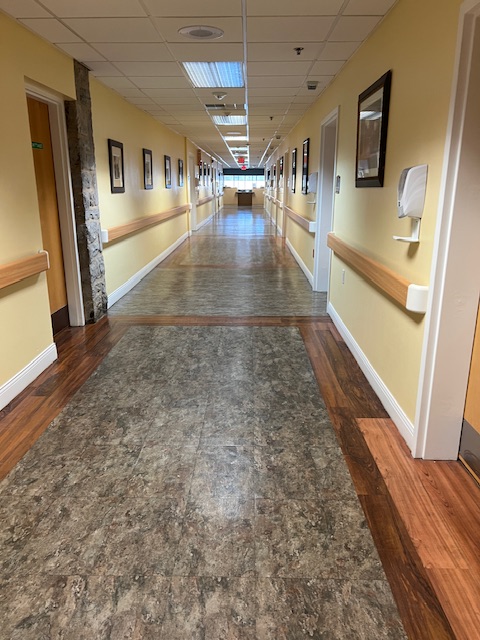
How is Complete Care At Hagerstown Staffed?

CMS rates COMPLETE CARE AT HAGERSTOWN's staffing level at 3 out of 5 stars, which is average compared to other nursing homes. Staff turnover is 37%, compared to the Maryland average of 46%. This relatively stable workforce can support continuity of care.

What Have Inspectors Found at Complete Care At Hagerstown?

State health inspectors documented 58 deficiencies at COMPLETE CARE AT HAGERSTOWN during 2021 to 2025. These included: 2 that caused actual resident harm, 55 with potential for harm, and 1 minor or isolated issues. Deficiencies causing actual harm indicate documented cases where residents experienced negative health consequences.
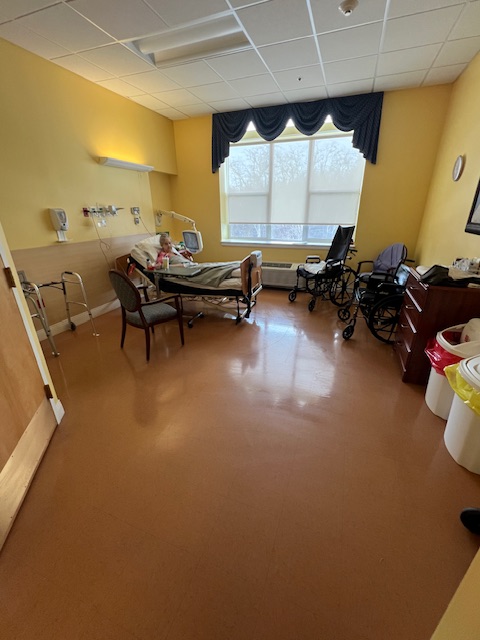
Who Owns and Operates Complete Care At Hagerstown?

COMPLETE CARE AT HAGERSTOWN is owned by a for-profit company. For-profit facilities operate as businesses with obligations to shareholders or private owners. The facility is operated by COMPLETE CARE, a chain that manages multiple nursing homes. With 60 certified beds and approximately 79 residents (about 132% occupancy), it is a smaller facility located in HAGERSTOWN, Maryland.
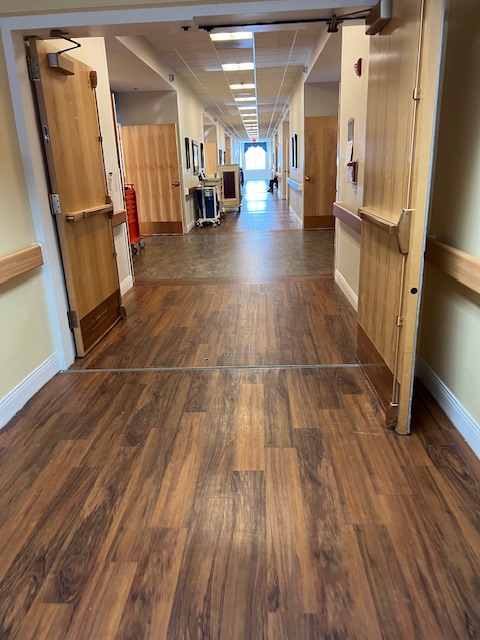
How Does Complete Care At Hagerstown Compare to Other Maryland Nursing Homes?

Compared to the 100 nursing homes in Maryland, COMPLETE CARE AT HAGERSTOWN's overall rating (2 stars) is below the state average of 3.0, staff turnover (37%) is near the state average of 46%, and health inspection rating (2 stars) is below the national benchmark.

What Should Families Ask When Visiting Complete Care At Hagerstown?

Based on this facility's data, families visiting should ask: "Can I visit during a mealtime to observe dining assistance and food quality?" "How do you handle medical emergencies, and what is your hospital transfer rate?" "Can I speak with family members of current residents about their experience?"

Is Complete Care At Hagerstown Safe?

Based on CMS inspection data, COMPLETE CARE AT HAGERSTOWN has a clean safety record: no substantiated abuse findings (meaning no confirmed cases of resident harm), no Immediate Jeopardy citations (the most serious violation level indicating risk of serious injury or death), and is not on the Special Focus Facility watch list (a federal program monitoring the lowest-performing 1% of nursing homes). The facility has a 2-star overall rating and ranks #100 of 100 nursing homes in Maryland. While no facility is perfect, families should still ask about staff-to-resident ratios and recent inspection results during their visit.

Do Nurses at Complete Care At Hagerstown Stick Around?

COMPLETE CARE AT HAGERSTOWN has a staff turnover rate of 37%, which is about average for Maryland nursing homes (state average: 46%). Moderate turnover is common in nursing homes, but families should still ask about staff tenure and how the facility maintains care continuity when employees leave.

Was Complete Care At Hagerstown Ever Fined?

COMPLETE CARE AT HAGERSTOWN has been fined $29,270 across 1 penalty action. This is below the Maryland average of $33,372. While any fine indicates a compliance issue, fines under $50,000 are relatively common and typically reflect isolated problems that were subsequently corrected. Families should ask what specific issues led to these fines and confirm they've been resolved.

Is Complete Care At Hagerstown on Any Federal Watch List?

COMPLETE CARE AT HAGERSTOWN is not on any federal watch list. The most significant is the Special Focus Facility (SFF) program, which identifies the bottom 1% of nursing homes nationally based on persistent, serious quality problems. Not being on this list means the facility has avoided the pattern of deficiencies that triggers enhanced federal oversight. This is a positive indicator, though families should still review the facility's inspection history directly.