CREEKSIDE CENTER FOR REHABILITATION AND NURSING
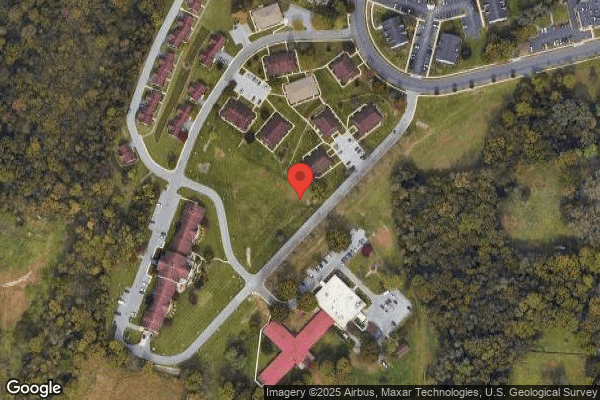

1183 LUTHER DRIVE, HAGERSTOWN, MD 21740 (301) 790-1000
For profit - Limited Liability company 80 Beds MORDECHAI WEISZ Data: November 2025 3 Immediate Jeopardy citations
Trust Grade
0/100
#196 of 219 in MD
Last Inspection: August 2024

Within standard 12-15 month inspection cycle. Federal law requires annual inspections.

Overview

Creekside Center for Rehabilitation and Nursing has received a Trust Grade of F, indicating significant concerns and poor overall conditions. It ranks #196 out of 219 facilities in Maryland, placing it in the bottom half of the state's nursing homes, and #7 out of 10 in Washington County, meaning there are only a few local options that are better. Although the facility shows some improvement in issues reported, reducing from 50 in 2024 to 4 in 2025, it still has a troubling history. Staffing is a significant concern with a low rating of 1 out of 5 and a high turnover rate of 71%, well above the state average. Additionally, the facility has faced substantial fines totaling $101,178, indicating repeated compliance problems. Specific incidents of concern include the failure to protect residents from staff who had previously restrained a resident and the lack of adequate supervision leading to vulnerable residents being able to exit the facility unsupervised. There was also a serious issue where the facility did not recognize significant changes in a resident's condition after a hospital stay, which could have serious implications for their care. Overall, while there are some signs of improvement, families should weigh the serious weaknesses against any potential strengths when considering this nursing home for their loved ones.

Trust Score
F
0/100
In Maryland
#196/219
Bottom 11%
Safety Record
High Risk
Review needed
Inspections
Getting Better
50 → 4 violations
Staff Stability
⚠ Watch
71% turnover. Very high, 23 points above average. Constant new faces learning your loved one's needs.
Penalties
✓ Good
$101,178 in fines. Lower than most Maryland facilities. Relatively clean record.
Skilled Nurses
○ Average
Each resident gets 35 minutes of Registered Nurse (RN) attention daily — about average for Maryland. RNs are the most trained staff who monitor for health changes.
Violations
⚠ Watch
106 deficiencies on record. Higher than average. Multiple issues found across inspections.
★☆☆☆☆
1.0
Overall Rating
★☆☆☆☆
1.0
Staff Levels
★★☆☆☆
2.0
Care Quality
★☆☆☆☆
1.0
Inspection Score
Stable
2024: 50 issues
2025: 4 issues

The Good

  • Full Sprinkler Coverage · Fire safety systems throughout facility
  • No fines on record

Facility shows strength in fire safety.

The Bad

1-Star Overall Rating

Below Maryland average (3.0)

Significant quality concerns identified by CMS

Staff Turnover: 71%

25pts above Maryland avg (46%)

Frequent staff changes - ask about care continuity

Federal Fines: $101,178

Well above median ($33,413)

Significant penalties indicating serious issues

Chain: MORDECHAI WEISZ

Part of a multi-facility chain

Ask about local staffing decisions and management

Staff turnover is very high (71%)

23 points above Maryland average of 48%

The Ugly 106 deficiencies on record

3 life-threatening 1 actual harm
Feb 2025 4 deficiencies
CONCERN (D) 📢 Someone Reported This

A family member, employee, or ombudsman was alarmed enough to file a formal complaint

Potential for Harm - no one hurt, but risky conditions existed

Comprehensive Care Plan (Tag F0656)

Could have caused harm · This affected 1 resident

Based on observation and medical record review, it was determined that facility staff failed to develop a comprehensive, resident centered care plan for a resident with a prosthetic eye. This was evid...

Read full inspector narrative →
Based on observation and medical record review, it was determined that facility staff failed to develop a comprehensive, resident centered care plan for a resident with a prosthetic eye. This was evident for 1 (#3) of 3 residents reviewed during a complaint survey. The findings include: A care plan is a guide that addresses the unique needs of each resident. It is used to plan, assess, and evaluate the effectiveness of the resident's care. On 2/21/25 at 8:45 AM a review of Resident #3's medical record revealed that Resident #3 was admitted to the facility in July 2023 with diagnoses that included late onset Alzheimer's disease, neurocognitive disorder with Lewy Bodies, and age-related physical debility. Resident #3 also had a prosthetic left eye since the age of 4. Review of January 2025 physician's orders revealed Resident #3 had a prosthetic left eye which required daily cleaning. The left eye was to be removed from the socket, cleansed with NSS (normal saline solution), patted dry with dry paper towel, and replaced back in the eye socket. Review of Resident #3's care plans failed to have a care plan specifically for the cleaning of the prosthetic left eye and how to manage attempting to remove and replace the eye when Resident #3 exhibited behaviors related to Alzheimer's disease and Lewy Body Dementia. A care plan, the resident has a behavior problem r/t not keeping prosthetic eye in place. Resident refuses to keep it in place was initiated on 2/20/25, however the resident has been at the facility since July 2023 and a resident centered care plan had not been in place related to the prosthetic eye. The care plan documented, Anticipate and meet the resident's needs, intervene as necessary to protect the rights and safety of others, approach/speak in a calm manner, divert attention, remove from situation and take to alternate location as needed. The care plan was not resident centered specific to Resident #3 and did not have approaches specific to Resident #3. On 2/21/25 at 2:00 PM the care plan was reviewed with the Director of Nursing who confirmed the findings.
CONCERN (D) 📢 Someone Reported This

A family member, employee, or ombudsman was alarmed enough to file a formal complaint

Potential for Harm - no one hurt, but risky conditions existed

Quality of Care (Tag F0684)

Could have caused harm · This affected 1 resident

Based on medical record review and interview, it was determined the facility failed to renew cleaning of a resident's prosthetic eye after the resident returned from the hospital on multiple occasions...

Read full inspector narrative →
Based on medical record review and interview, it was determined the facility failed to renew cleaning of a resident's prosthetic eye after the resident returned from the hospital on multiple occasions. This was evident for 1 (#3) of 3 residents reviewed during a complaint survey. The findings include: On 2/21/25 at 8:45 AM a review of Resident #3's medical record revealed the resident was admitted to the facility in July 2023 with diagnoses that included, but were not limited to, Alzheimer's disease with late onset, neurocognitive disorder with Lewy Bodies, dementia, and age-related physical debility. Review of the history of Resident #3 revealed Resident #3 had a left prosthetic eye since the age of 4 years old. Review of Resident #3's physician's orders revealed an order that was written on 1/16/25 that documented, left glass eye (prosthetic) qd (every day) cleaning. Remove left eye from socket, cleanse eye with NSS (normal saline solution), pat dry with dry paper towel, replace in eye socket. Further review of the medical record revealed the resident had the order to clean the prosthetic eye when the resident was first admitted to the facility in July 2023, and it was on the July 2023 and August 2023 Treatment Administration (TAR) record. On 2/11/25 at 11:26 AM an interview was conducted with the Assistant Director of Nursing (ADON). The ADON stated she had been a nurse at the facility for the past two and a half years. She stated she was Resident #3's nurse when he/she was first admitted to the facility. The ADON stated when the resident was first admitted the spouse stated that the resident would personally take care of the prosthetic eye, but over the course of his/her stay and the dementia, the resident was unable to do for him/herself. The ADON was asked why the order was just now written on January 16, 2025 and placed on the January 2025 TAR. The ADON stated that she had been doing chart audits and noticed that the order for the glass eye was not on the TAR. She stated the original order was to clean everyday and that is what the spouse said was the normal routine. When the resident was first admitted that was the recommendation for us. The order was discontinued when the resident was sent out to the hospital and with him/her coming and going it was one order that never got placed back into the treatments. The ADON stated that the staff used to remove the eye and then replace it. The ADON stated her position changed to ADON from charge nurse; therefore no one ever came to her asking about the order and the spouse never said anything to her. The ADON stated she knew it was a prior order, and that order was never discontinued by the physician, so she put that order back in as it was prior to now. The ADON was asked if the physician was notified that the order had not been on the treatment record. The ADON stated no, that she just put the order back on the TAR. The ADON was asked if she had informed the spouse that the order was placed back on the TAR. She stated that the spouse was called the evening that the resident refused to allow anyone to put the eye back in, as the spouse could usually convince the resident to allow staff to do that, however there was no documentation of that phone call. On 2/21/25 at 5:30 PM the concern of the treatment to the prosthetic eye was discussed with the Director of Nursing and the Nursing Home Administrator.
CONCERN (D) 📢 Someone Reported This

A family member, employee, or ombudsman was alarmed enough to file a formal complaint

Potential for Harm - no one hurt, but risky conditions existed

Deficiency F0757 (Tag F0757)

Could have caused harm · This affected 1 resident

Based on medical record review and staff interview it was determined the facility failed to keep a resident's drug regimen free from unnecessary drugs by failing to hold a medication when outside of p...

Read full inspector narrative →
Based on medical record review and staff interview it was determined the facility failed to keep a resident's drug regimen free from unnecessary drugs by failing to hold a medication when outside of physician ordered parameters and failure to notify the physician when the blood pressure was outside of physician ordered parameters. This was evident for 1 (#3) of 3 residents reviewed during a complaint survey. The findings include: On 2/21/25 at 8:45 AM a review of Resident #3's medical record was conducted and revealed Resident #3 had hypertension and was taking Lisinopril 40 mg. every day and Clonidine 0.1 mg. 2 times a day to treat the hypertension. Review of a physician's order for Clonidine 0.1 mg, documented to hold for systolic greater than 150. Systolic blood pressure, the amount of pressure in the arteries during the contraction of the heart muscle, is the top number of the blood pressure reading. Review of the January 2025 Medication Administration Record (MAR) documented on 1/18/25 at 9:00 AM and 8:00 PM the blood pressure was 155/63. The medication was administered both times. On 1/21/25 at 9:00 AM the blood pressure was 176/80, on 1/22/25 at 9:00 AM the blood pressure was 156/61, and on 1/27/25 at 9:00 AM the blood pressure was 164/74. The medication was administered on those dates when the systolic blood pressure was outside of physician ordered parameters. Further review of the January 2025 MAR documented the order, blood pressure every shift. Call MD if SBP (systolic blood pressure) was greater than 160. On 1/16/25 day shift the blood pressure was 168/73 and on 1/21/25 evening shift the blood pressure was 176/80. There was no notification to the physician found in the medical record. Review of the February 2025 MAR documented that the systolic blood pressure was above 160 on the following days with no physician notification documented in the medical record: Day shift: 2/7: 161/72, 2/9: 189/85, 2/11: 168/88, 2/12: 170/84, 2/14: 164/72 Evening shift: 2/6: 164/72, 2/9: 175/88, 2/10: 168/88, 2/11: 168/88 Night shift: 2/11: 162/92 On 2/21/25 at 1:55 PM the medications and the MAR were reviewed with the DON. The DON confirmed the errors.
CONCERN (E) 📢 Someone Reported This

A family member, employee, or ombudsman was alarmed enough to file a formal complaint

Potential for Harm - no one hurt, but risky conditions existed

Infection Control (Tag F0880)

Could have caused harm · This affected multiple residents

**NOTE- TERMS IN BRACKETS HAVE BEEN EDITED TO PROTECT CONFIDENTIALITY** Based on observation and staff interviews it was determined that the facility failed to follow infection control practices and g...

Read full inspector narrative →
**NOTE- TERMS IN BRACKETS HAVE BEEN EDITED TO PROTECT CONFIDENTIALITY** Based on observation and staff interviews it was determined that the facility failed to follow infection control practices and guidelines by failing to notify the local health department of a gastrointestinal outbreak and failed to post a sign in the facility and at the entrance to inform staff and visitors of the outbreak. This was evident for 1 day of a complaint survey. The findings include: On 2/21/25 at 8:30 AM a tour of the facility was conducted. While walking down the 400 hallway observation was made of several rooms with contact isolation signs on the door with PPE (personal protective equipment) outside of the door. PPE consists of gowns, masks, and gloves. Observation was made in room [ROOM NUMBER] of a resident with 4 cups on the over the bed tray table and a basin in the resident's lap. The surveyor asked the resident how he/she was and the resident stated he/she was nauseated, the reason for the basin. On 2/21/25 at 11:26 AM an interview was conducted with the Assistant Director of Nursing (ADON), who was also the Infection Preventionist. She stated that the past 24 hours that some residents had nausea, vomiting, diarrhea, coughing, and congestion.She stated that it appeared to be a 24 to 48 hour GI bug. She stated approximately 24 residents were not feeling well. The ADON was asked if she had notified the local health department. She said she had not. She stated that she reached out to the regional nurse, Director of Nursing, and the Nursing Home Administrator. The ADON stated she was in the midst of going around making sure signage was up and that PPE was available for each room with a sick resident. The ADON stated that contact precautions were in place with contact isolation signs up on the doors and PPE outside of the doors and that extra cleaning was being done. The ADON was informed that it was a requirement to notify the local health department when more than 2 residents were affected as it was considered an outbreak. The ADON was also informed that there was no signage at the front door alerting residents and visitors of the outbreak.
Aug 2024 50 deficiencies 2 IJ
CRITICAL (J) 📢 Someone Reported This

A family member, employee, or ombudsman was alarmed enough to file a formal complaint

Immediate Jeopardy (IJ) - the most serious Medicare violation

Deficiency F0604 (Tag F0604)

Someone could have died · This affected 1 resident

Based on medical record review and interview with facility staff, it was determined that the facility failed to protect residents after substantiating that GNA staff that restrained a resident (#926) ...

Read full inspector narrative →
Based on medical record review and interview with facility staff, it was determined that the facility failed to protect residents after substantiating that GNA staff that restrained a resident (#926) continued to have access to other vulnerable residents. This was evident during the review of 1of 13 incidents involving abuse. The findings include: On July 31, 2024 At 5:10 PM, an immediate jeopardy was called by the Office of Health Care Quality related to the facility's failure to remove from duty the GNA staff who restrained a resident and continued to have access to other vulnerable residents. A plan to remove the immediacy was accepted on July 31, 2024 at 6:32 PM and abated the following day at 9:30 AM. After the removal of the immediacy, the deficient practice remained at a potential for more than minimal harm with a scope/severity of D for the remaining residents. Review on 7/30/24 at 2:30 PM of the facility reported incident related to a resident being 'secured against the wall ' revealed that per facility investigation and direct observations from other facility staff, Resident #926 was secured against the wall in his/her wheelchair against a table in the sunshine room by facility staff. This resident was unable to independently move him/herself out from the area due to the table being pushed against him/her although s/he normally would be able to move about independently, and at times would use a rolling walker to mobilize around the facility. Resident #926 did have diagnoses including muscle weakness, abnormalities of gait, anxiety disorder and dementia without behavioral disturbances according to the resident's face sheet. Resident #926 was assessed on 3/9/24 to have a brief interview of mental status (BIMS) of 4 meaning that s/he was severely cognitively impaired. Nursing progress notes prior to the incident noted on 3/20/23 that resident is pleasantly confused with various attempts to exit [his/her] wheelchair and walk around. Had to be redirected multiple times .will continue to monitor. Progress notes also stated that s/he was unable to walk 150 feet due to medical condition and safety concerns. However, Resident #926 was actively participating in physical therapy and was documented at a care plan meeting, held a week prior on 3/15/23, as able to walk with supervision 150 feet with a rolling walker for balance support, with the plan for discharge to an assisted living facility. According to a progress note at 12:38 PM on 3/26/23, Resident #926 was noted to be ' non-compliant with his/her walker/wheelchair. S/he was documented as not having a steady gait and shuffles when s/he walks. Staff will assist him/her back to their wheelchair for safety and s/he was also documented as not easily redirected. ' The facility reported incident was documented as occurring around 2PM on 3/26/23. This report noted that facility staff found Resident #926 restrained against the wall with a table pushed up against the resident in their wheelchair. On 3/26/23, a ' mood/behavior ' progress note was completed. The resident was documented as walking around hallways and stated to the nurse s/he felt nervous was documented as visibly shaking, and fast paced breathing. This note was written 2 hours after the documented restraint report. The facility nurse practitioner ordered a one-time dose of Buspar, an anxiolytic, as no other interventions such as redirection were working for the noted anxious behavior and anxiety. Prior to this documented incident, Resident #926 had no documented ' mood/behavior ' incidents and did not require any as needed anxiolytics. Interview with staff #8 on 7/30/24 at 2:30 PM, revealed that she observed the incident and immediately notified her supervisor. This supervisor, staff #9, was then interviewed on 7/30/24 at 2:45 PM and confirmed that she too saw the incident and reported it to either the DON or the Administrator, she could not recall who specifically at the time of the interview. She stated that she knows she reported it immediately to nursing as she was not in the nursing department to intervene, but knew it was a concern. Interview with the facility ADON on 7/31/24 at 2:14 PM regarding a substantiated incident of restraining a resident would make the employee a ' DNR ' (do not return). According to the facility reported incident, they noted that 2 staff members had secured the resident in a way that s/he could not move, the resident did not have enough room between the their wheelchair the table and the wall to be able to push the wheelchair back to stand up or propel his/her wheelchair away from the table. Interview with the facility human resources director (HRD) on 7/31/24 at 2:20 PM regarding GNA staff #14 revealed that, for this employee, she was rehired in December of 2023. The HRD had asked the Administrator if there were any concerns as she was not here during staff #14's previous employment. The HRD reported to this surveyor that there were no reported concerns, and if there were, the employee would not have been rehired. The facility reported incident from 3/26/23 was reviewed. The HRD reported that the GNA staff #14 should have been an immediate DNR. During an interview with the Administrator on 7/31/24 at 2:35 PM regarding the incident, it was revealed that staff #14 was rehired. She stated that she didn't know her history and that the previous DON was the one that would have handled any disciplinary action and if it was not in the employee's file, they would not have known about it. The Administrator was notified at this time that there was nothing in the employees file and that she herself was here at the time of the incident and approved for the employee to be rehired in December. Review of the assignment sheets and schedules for the February-July 2024 time frame revealed that employee #14 is continuing to work the 7-3 shift. It was also noted on the assignment sheets that she is responsible for showers. This was also noted that those responsible for showers are responsible for dining in the 'sunshine room' and she worked as recently as the day prior on 7/30/24. The incident that occurred on 3/26/23 was in the sunshine room when Resident #926 was found secured against the wall. Surveyor interviewed the DON, NHA and RDCO on 7/31/24 at 5:10 PM regarding the second employee involved as they could not locate an employee file with any information in it relevant to this incident. The DON stated that she contacted payroll and was able to locate the agency that was used. The DON then reported that, sometime after this incident GNA staff #15 was made a ' DNR. ' GNA #15's punch card was reviewed at this time showing that she worked until at least 4/6/23, a week after the restraint incident with Resident #926. The concern was raised that this incident did not cause a DNR, however, there was another incident soon after the initial incident that caused the DNR and nothing was documented in the employee file. The DON and NHA were asked if they knew what caused the second DNR situation and the DON stated you have to ask the NHA, as she was not the DON at the time. The NHA was asked, and she did not know. The HRD was asked on 8/1/24 if they had the documentation as to why GNA #14 initially left the facility in 2023, as per the review completed on 7/31/24 there was no documentation. She stated that she had to contact the corporate office for that information. A secure email was received later on 8/1/24 regarding the requested information for GNA staff #14. The paperwork showed that she was terminated on 6/27/2023, that she quit without notice and then was able to return to the facility 6 months later with a pay raise. A plan to remove the immediacy was provided to the survey team on 8/10/24 at 6:09 PM and 6:12 PM and finally a removal plan was accepted at 6:32 PM. This plan included an audit of all current residents to ensure that they were not inappropriately restrained, education to the facility Executive Director and Director of Nursing on ensuring that any employee identified as a perpetrator in any alleged abuse report was immediately suspended pending investigation, which would then be documented in their employee file and the Quality Assurance and Performance Improvement (QAPI) committee would continue to meet to identify root causes of restraint of residents and why employee files were not updated with disciplinary actions.
CRITICAL (J) 📢 Someone Reported This

A family member, employee, or ombudsman was alarmed enough to file a formal complaint

Immediate Jeopardy (IJ) - the most serious Medicare violation

Quality of Care (Tag F0684)

Someone could have died · This affected 1 resident

Based on observation, record review, and interview, it was determined that the facility failed to recognize and address changes in the condition of residents. This was evident for 2 of 14 residents re...

Read full inspector narrative →
Based on observation, record review, and interview, it was determined that the facility failed to recognize and address changes in the condition of residents. This was evident for 2 of 14 residents reviewed for hospitalizations and quality of care. (#127 and #921) This failure resulted in an immediate jeopardy. The findings include: 1.On 7/23/24, upon entry to the facility, Resident #127 was observed sitting in a wheelchair in a common area near the nurses' station. A medical record review on 7/25/24 at 9:08 AM revealed that the resident had returned from the hospital 7/19/2024. Review of the orders revealed that, on 7/19/24, the resident was ordered a Hospice evaluation (end-of-life care) and Morphine 0.25 mg by mouth every 3 hours for pain. Review of the progress notes revealed that, on 7/19/24 at 5:13 PM, a pharmacy alert was sent stating, This order is outside of the recommended dose or frequency. Morphine Sulfate Oral Solution 20 MG/5ML (Morphine Sulfate) *Controlled Drug* Give 0.25 MG/5 ML by mouth every 3 hours for Pain. However, there was no documentation that staff called the physician to review this alert and clarify the order. Review of the medication administration record for July 2024 revealed the following order: Morphine Sulfate Oral Solution 20MG/5ML Give 0.25ml by mouth every 3 hours for Pain. The morphine was administered to Resident #127 on the following dates and times: 7/21/24- 12am, 6am, 9am, 12pm, 3pm 7/22/24- 9am, 12pm, 3pm, 7/23/24- 12am, 3am, 6am, 12pm, 3pm, 6pm, 9pm 7/24/24- 12am, 3am, 6am, 9am, 12pm, 3pm, 6pm 7/25/24- 12am, 3am, 6am, 9am Further review revealed that Licensed Practical Nurse (LPN) #2 wrote on 7/25/24, that the resident had been started on intravenous fluids (IV), that the patient was nonverbal but responded to touch. There was no other documentation about the resident's decline. There was no documentation that the doctor, family, or Hospice Care was notified of the change. Review of assessments revealed that no change in condition had been documented. Review of meal percentages for intake revealed that the resident had been eating 76% - 100% between 7/19/24 - 7/22/24 to eating 0% - 50% on 7/23/24. Then on 7/24/24 and 7/25/24, the resident was eating 0% - 25%. However, staff failed to notify hospice or the physician about this change and or investigate a possible cause of the change. An interview with LPN #2 revealed the resident was bed bound, and not eating and drinking. For this reason, she had called the resident's family who requested IV fluids, so she called the attending physician to get the order. An interview with the DON on 7/25/24 revealed that she was not aware that the resident was on morphine routinely. The DON was asked where the resident care policies and procedures were located, she reported that she does not have access to the resident care policies and procedures. She stated she knew they were electronic, but had to ask the Administrator to print them for her. An interview with the Administrator and [NAME] President of Clinical Operations (VPCO) on 7/25/24 revealed that staff had an icon on their computer desktop to access the resident care policies and procedures. The VPCO stated she was going to check to make sure they had the icon and provide education. The DON reported that when the employee's desktops were reviewed for the resident care policy icon, it was not present. A follow-up interview with the DON on 7/26/24 revealed that she had reviewed the resident's discharge summary and found that the attending physician [who was the physician who cared for the resident in the hospital] had ordered the morphine as it was entered in the orders. She reported that those orders were verified with the attending physician on the day of admission by the admitting nurse. She stated that, with these findings, she talked to the attending physician, and he stated that the morphine order was supposed to be as needed and not routinely. The DON reported that the morphine order had been changed to as needed versus routinely. An interview with the attending physician on 7/29/24 at 9:54 AM revealed that he had mistakenly put in the Morphine as a routine medication versus as needed. Furthermore, when the admitting nurse confirmed the orders with him, he failed to catch the error. He stated that the pharmacist and nurses should review the orders to check for errors. He reported that an RN or unit manager was supposed to review all new admissions to check orders and clarify them if there was a concern. When informed that a pharmacy alert had been in the progress notes, he stated nursing had not notified him regarding the alert. He stated that when Resident #127 was admitted to the facility, he observed the resident in the dining room with family eating a meal. When staff notified him that the resident was not eating and drinking and the family requested IV fluids, he stated he thought about the resident's medications, but was unsure of the cause of drowsiness. However, he did not further look into this concern, He reported that, if he had been aware of the error in the Morphine order, he would have realized that was causing the resident's drowsiness. When asked how the resident was doing now that the medication was corrected, he stated the resident was sitting up and visiting with family. After surveyor intervention, a subsequent observation on 7/29/24 at 11:35 AM revealed the resident was in a wheelchair, self-propelling in the hallway. The resident was observed interacting with staff. A medical record review revealed on 7/29/24 the morphine order was changed to as needed. On 7/26/24 the resident intake was back to the normal of 76% - 100%. A review of the medical record on 8/1/24 at 11:30 AM revealed a progress note written on 7/31/24 at 3:51 PM that read the resident was being discharged to assisted living. 2. Record review on 7/23/24 at 12:25 PM for Resident #921 revealed that, around 12/8/2022, Resident #921 began complaining of abdominal concerns. Mylanta was ordered at that time. Further review revealed around 1/7/2023 that Resident #921, according to the progress notes, presented as tearful and had complaints of pain in their right lower abdomen. There was noted dimpling and with some hardened areas with pain that had been going on for approximately 2 weeks duration. S/he was also having some loose stools and was given loperamide. On 3/3/23, Resident #921 was having more nausea, vomiting and dizziness and was refusing meals for over 3 days. S/he was noted as pale with cool skin. S/he was ordered Reglan and omeprazole for the nausea and vomiting but unable to always take medications. There was an order at that time to send him/her to the emergency room for evaluation. The resident went and returned that day. Resident #921 was seen on 3/4/22 by the attending for follow up to the hospitalization and nausea and vomiting. There were no new interventions or plans for the resident according to the attending physician's note. He noted that s/he may need a gastrointestinal evaluation if not improved and if symptoms worsened. He was asked on 7/29/24 about the following up of consultations and he acknowledged that this was not completed. On 3/9/23, Resident #921 was seen by the nurse practitioner (NP). Staff were reporting s/he was refusing meals, had weight loss (approximately 30 lbs. at this point over the past few months) was on Reglan, but still had nausea and vomiting and was refusing medications. The intervention order was for a GI consult, however, that was not put into the resident's order set until 3/22/23. Interview with the DON on 7/25/24 at 2:08 PM revealed that the consult was never completed. According to a change in condition completed on 3/21/23, the nurse documented that she reported to the NP that Resident #921 was still complaining over the past few weeks regarding nausea, vomiting, abdominal pain, heartburn, sleeping more often, not wanting to get OOB, refusing medications and refusing meals. The NP ordered a nutritional consult. This was completed on 3/31/23, however, the dietitian still noted that s/he continued with weight loss and more nausea and vomiting. On 4/2/23, Resident #921 was sent to the emergency room for a change in mental status. S/he was placed on a non-rebreather. Within 2 hours of the emergency room admission, the hospitalist notified the family that they needed to admit him/her to hospice as there was nothing further that could be done. The general diagnosis was sepsis, shock and circulatory failure. The resident passed away within 48 hours. The facility medical director was interviewed on 7/29/24 at 10:42 AM regarding this resident. He stated that this was an unfortunate incident. He further stated that if there is an ongoing medical issue he does follow up with the ordered consults. As a result of these findings, a state of immediate jeopardy (IJ) was declared on 7/29/24 at 2:07 PM and an IJ summary tool was provided to the facility at that time. The facility submitted a plan to remove the immediacy on 7/29/24 at 6:57 PM and the facility's written plan to remove the immediacy was accepted on 7/29/24 at 7:10 PM with an alleged date of compliance of 7/30/24. The immediate jeopardy was abated the following day on July 30, 2024 at 9:30 AM. The provisions of the plan to remove the immediacy included the following: Resident #921 no longer resided in the facility. Resident #127 was assessed on 7/29/24 for any changes in condition with updates to the physician if indicated, a medication review was completed and any discrepancies identified were corrected immediately. Current facility residents were assessed starting on 7/29/24 and will be completed on 7/30/24 to identify if there has been a change in condition and that the physician has been notified in a timely manner with appropriate interventions initiated if indicated and that documentation of the change in condition is present in the medical record. Current facility residents with new onset of complaints of pain or injuries of unknown source over the last 30 days were reviewed on 7/29/24 to ensure that results were reviewed timely by the physician and that if indicated, an investigation was started if the facility could not identify the source of the injury present. Current facility residents' medication orders were reviewed with the pharmacy consultant and attending physician to ensure that orders were correct and appropriate for the resident and that any pharmacy alerts had been addressed. Current facility residents' orders for consults over the past 30 days were reviewed to ensure they have been carried out or scheduled as ordered. Facility licensed nurses received education starting on 7/29/24 ( to be completed by 7/30/24) from the Director of Nursing on ensuring that residents are promptly assessed for any change in condition and ensuring that the physician was notified with documentation in the medical record along with implementing interventions in a timely manner, ensuring that physician orders with pharmacy alerts were addressed and the physician notified for changes to orders, if applicable. Staff members who did not receive the required education by 7/30/24 were to be educated prior to beginning their next shift. The facility Medical Director was re-educated on 7/29/24 by the Corporate Medical Director on the roles and responsibility of ensuring that residents are appropriately assessed for a change in condition with appropriate interventions and received follow up as indicated if the condition persists or worsens, that diagnostic tests are reviewed in a timely manner, that residents receive medication reviews according to physician and pharmacy standards and that ordered medications are reviewed with changes made if indicated by the pharmacy. The QAPI committee will continue to meet to identify the root causes, and to initiate improvements to the facility's processes and procedures ensuring that all residents are promptly assess for any changes in condition and ensuring that the physician is notified with appropriate documentation in the medical record along with implementing interventions in a timely manner, ensuring physician orders (especially related to narcotic orders) with pharmacy are addressed and physician notified for changes to the orders if applicable. Ensuring that diagnostic tests are completed and reviewed in a timely manner by the physician. If the diagnostic test reveals an injury of unknown origin the facility must investigate per regulation. Audits will occur weekly x [times] 4 weeks, biweekly x2 months, then monthly x2 months to ensure the facility remains in compliance. On 7/31/24 at 8:00 AM, after validation of the implementation of the facility's plan of removal, which included staff interviews, record reviews and direct observation, it was determined the facility met the minimum standards of compliance to remove the findings of an Immediate Jeopardy on 7/31/24 at 9:30 AM.
SERIOUS (G) 📢 Someone Reported This

A family member, employee, or ombudsman was alarmed enough to file a formal complaint

Actual Harm - a resident was hurt due to facility failures

Accident Prevention (Tag F0689)

A resident was harmed · This affected 1 resident

**NOTE- TERMS IN BRACKETS HAVE BEEN EDITED TO PROTECT CONFIDENTIALITY** Based on record review and interview with facility staff, it was determined that the facility failed to have a process in place ...

Read full inspector narrative →
**NOTE- TERMS IN BRACKETS HAVE BEEN EDITED TO PROTECT CONFIDENTIALITY** Based on record review and interview with facility staff, it was determined that the facility failed to have a process in place to ensure that staff 1.provided care in a manner to ensure residents were not injured. 2. provide safe equipment for residents and 3. provide care in a safe and professional manner. This was evident during the review of 1 (Resident #928) of 5 falls with injury. This deficient practice resulted in harm to resident #9 and resident #928. This was evident for 1 (#9) of 10 residents reviewed for accidents/hazards. The findings include: On 7/23/24 at 9:13 AM, a review of complaint #MD00206718 revealed that Resident #9 had been brought to the Emergency Department (ED) for treatment of a 15-centimeter (cm) leg laceration on the lower right leg. The complainant reported that the facility was unable to tell them what happened to cause the injury. The complainant reported that the resident stated that staff were transferring him/her from their wheelchair to the bed and something caught his/her leg, cutting it open. A review of the facility ' s investigation report, on 7/23/24 at 3:15 PM, revealed that, on 6/14/24 around 11:00 PM, 2 agency geriatric nursing assistants (GNA) #22 and #23 transferred Resident #9 from the wheelchair to the bed. The resident stated his/her leg hurt. When the GNAs took off the resident ' s pants, they found a large laceration that was gaping open with adipose tissue exposed. However, they were unable to say how the laceration occurred. A review of Resident #9 ' s hard chart, on 7/23/24 at 9:47 AM, revealed a history and physical dated 4/21/22, and documented by the attending physician, that stated the resident had come to the facility for rehabilitation after a hospitalization due to a fall. A medical record review, on 7/23/24 at 10:31 AM, revealed that the last attending physician ' s note was dated 6/17/22. On 7/25/24 at 1:41 PM, review of physical therapy notes for the treatment dates of 3/30/24 - 4/26/24 revealed the resident was non-ambulatory and required a mechanical lift for transfers. Further review of the medical record revealed a change in condition documented by LPN #2, for Resident #9, dated 6/14/24, that noted the resident had a deep skin tear. A review of the requested hospital ED visit notes for 6/14/24 on 8/1/24 at 8:35 AM revealed that the resident reported to the ED staff that, during a transfer from his/her wheelchair to the bed, s/he fell and cut his/her leg on the bed. The resident had a 15 cm laceration on the right calf that required 4 internal stitches and 30 external stitches to repair it. Surveyor attempted to interview Resident #9 on 7/23/24 at 9:27 AM, but the resident was unable to recall how s/he injured their leg. An interview on 7/23/24 at 1:00 PM with the Director of Nursing (DON) and Regional Director of Clinical Operations (RDCO) was conducted. The DON reported that after investigating the incident, she thought the resident had caught his/her leg on the two metal pieces that stabilize the footrest on the wheelchair. The DON brought the wheelchair to the interview room for inspection. The top metal piece had a rough area, but the wound was vertical and in a C shape and the metal piece ran horizontally. The DON failed to recognize this as an injury of unknown origin. On 7/23/24 at 2:14 PM, an interview with GNA #22 via a phone call, revealed that she was not assigned to Resident #9 that day. GNA #22 reported she was asked by GNA #23 to assist her with transferring the resident from the chair to the bed. She stated that both of them transferred the resident by standing on each side of the resident and pivoting the resident into the bed. GNA #22 reported that the transfer was fine but then the resident stated his/her leg hurt and when they looked, they found the laceration. The surveyor attempted to interview GNA #23 by phone on 7/23/24 at 2:55 PM and 7/25/24 at 11:48 AM and left a message, but the GNA did not call back. An interview with Licensed Practical Nurse (LPN) #2 on 7/25/24 at 9:25 AM revealed that, on 6/14/24, she had responded to GNA #22 and #23 yelling for assistance. She reported that when she went into the room the resident had a large laceration on his/her right leg that was fileted open. She stated neither of the GNAs were able to tell her what happened, nor was the resident. She stated that there was some blood on the floor but was unable to find any on the chair or the bed. LPN #2 showed the surveyor a picture of the laceration that was taken on a staff cell phone to send to the DON. Observation of the picture showed a large laceration that the skin was laid back and subcutaneous tissue (layer of tissue below the layers of skin) was exposed. LPN #24 was interviewed on 7/25/24 at 9:41 AM. She reported that she was assigned to Resident #9 that evening shift. She reported that she responded to the GNAs yelling for help around 11:00 PM. When she entered the room, she saw the gaping laceration on the resident ' s leg and the GNAs were unable to say how it happened. She reported she looked on the floor, bed, and the wheelchair looking for blood and was not able to find any. A subsequent interview with the DON on 7/25/24 at 9:54 AM revealed that the facility utilized agency staff frequently. However, there was no formal orientation given to the agency staff prior to their first shift. The DON reported that the expectation was for the agency staff to sign on to the computer and access the [NAME] to determine the care needs of their residents prior to starting their care and receive a report from the off-going GNA while walking from room to room. The DON was uncertain how the new agency staff would know these expectations. When concerns had been identified, the agency staff on duty have been educated, but there was no process to ensure that all agency staff were aware of the expectations to ensure resident ' s needs were provided in a safe manner. The DON reported that, when she was made aware of the incident with Resident #9 on 6/14/24, she went into the resident ' s [NAME] and found that the information on how to transfer the resident had been removed due to a computer programming glitch. If GNA #22 had known to check the [NAME] to see how to transfer the resident, the information would not have been available. The DON failed to interview the GNA #22 to determine the reason she had transferred the resident in the manner that she had. An interview with the attending physician (who is the Medical Director) on 7/29/24 at 9:54 AM revealed he was aware that Resident #9 had sustained a laceration during a transfer. When shown the photograph of the laceration, he reported that this type of injury would not occur during a routine transfer from a wheelchair to a bed. He stated it was likely the resident ' s leg was caught on something and pulled. 2) A facility reported incident regarding a resident (#928) falling out of bed on 3/3/23 during activities of daily living (ADL) care and sustaining a hematoma was received and reviewed on 7/30/24. Resident #928 had an admission diagnosis including morbid obesity, fluid overload, muscle weakness, and cellulitis of the bilateral lower legs. According to Resident #928 ' s medical record, s/he was assessed on 3/2/23 functionally as needing extensive assistance requiring 2-person for bed mobility which includes how the resident moves from a lying position and turns side to side, and total dependence of one person for bathing which excludes washing hair and back. According to the facility report while GNA staff #12 was bathing Resident #928, she asked the resident to roll over. The resident was rolled over away from the GNA. As Resident #928 grabbed the mattress to hold on, s/he rolled off the bed onto the floor. Staff were immediately notified and acquired a hoyer to assist Resident #928 back into bed. S/he was assessed by the nurse on duty and documented as having a hematoma on his/her forehead, since s/he was on a blood thinner, an order was made to send the resident to the emergency room for evaluation. On the facility report, the results of the investigation noted that the NHA and previous DON immediately had inspected the bed and noted that the mattress was larger than the bed frame, in addition the GNA had inappropriately rolled Resident #928 away from herself not safely towards her. On 7/24/24 at 7:17 AM the current DON had followed up with the survey teams and reported that there were multiple facility reported incidents that their team was unable to locate from 2022 and 2023, that included this one. The only investigative information related to this incident was what was available in the initial and the 5-day investigation reported to the State.
CONCERN (D)

Potential for Harm - no one hurt, but risky conditions existed

Deficiency F0558 (Tag F0558)

Could have caused harm · This affected 1 resident

**NOTE- TERMS IN BRACKETS HAVE BEEN EDITED TO PROTECT CONFIDENTIALITY** Based on observation and staff interviews, it was determined that the facility failed to accommodate resident needs by 1) failin...

Read full inspector narrative →
**NOTE- TERMS IN BRACKETS HAVE BEEN EDITED TO PROTECT CONFIDENTIALITY** Based on observation and staff interviews, it was determined that the facility failed to accommodate resident needs by 1) failing to ensure that a resident's call bell was within reach and 2) failing to respond to call bells in a timely manner. This was evident for 1(#64) of 24 residents reviewed in the initial pool and 4 (room [ROOM NUMBER], #501, #512, #503) of 4 rooms observed with activated call bells on 2 of 3 nursing units observed during the survey. The findings include: A call bell system is a method to ensure that residents in a long-term care facility have timely access to assistance by using the call bell system. 1) A medical record review on 7/23/24 at 2:45 PM found that Resident #64 was admitted to the facility in April 2024 with diagnoses that included Dementia. Continued review revealed an admission MDS assessment, dated 4/14/24, for Resident #64. The MDS had documentation that Resident #64's dignosis included moderate cognitive impairment and was dependent on staff for all his/her self-care needs. The Minimum Data Set (MDS) is a federally mandated assessment tool used by nursing home staff to gather information on each Resident's strengths and needs. Information collected drives resident care planning decisions. An observation on 7/25/24 at 1:50 PM showed Resident #64 sitting in a wheelchair by his/her bedside, with a call bell device clipped to the middle of the bed and not within his/her reach. When asked how he/she called for help, the Resident stated, I will call the police. In a subsequent observation on 7/26/24 at 8:56 AM, Resident #64 was lying on his/her right side of the bed, and the call bell device was attached to the head of his/her bed. In an interview, Resident #64 stated he/she could not reach the call bell device. In an interview on 7/26/24 at 9:16 AM, staff #50, a geriatric nurse aide, confirmed that Resident #64's call bell device was not within his/her reach. An interview with the director of nursing (DON) on 7/30/24 at 8:24 AM showed that a call bell device should be within a Resident's reach to help them call for help when needed. In a subsequent interview on 7/30/24 at 12:18 PM, the DON had just come from Resident #64's room and reported that the call bell device was clipped to the bed again and unreachable, so she moved it closer to the Resident. 2a) On 7/30/24 at 11:12 AM, while touring the 200 hall, the 400 hall, and the 500 hall, the surveyor heard a call bell alarming and observed that the call bell indicator light was on above room [ROOM NUMBER]'s door. At 11:17 AM, the call bell indicator above the room [ROOM NUMBER]'s door continued to be activated. At that time, a nurse was observed coming out of a resident's room near room [ROOM NUMBER], walking to the medication cart, and then walking to the nurse's station. At 11:21 AM, the nurse and transport personnel were observed walking into room [ROOM NUMBER]. After being observed to be activated for 10 minutes, the call bell indicator was noted to be off at 11:22 AM 2b) On 7/31/24 at 3:14 PM, while standing at the nurses' station, two surveyors heard a call bell alarming and observed the call bell indicator light was above room [ROOM NUMBER]'s door. The call bell indicator light and the call bell notification continued to alarm at the nurse's station. The call bell indicator light was noted to be off at 3:23 PM, after being activated for 9 minutes. 2c) On 7/31/24 at 3:15 PM, while standing at the nurses' station and observing the 200, 400, and 500 halls, 2 surveyors heard a call bell alarming and observed that the call bell indicator light above room [ROOM NUMBER] was activated. At the time of the observation, 5 facility staff were noted at the nurses' station. The call bell indicator light was noted to be off at 3:22 PM, after being activated for 7 minutes. 2d) On 8/2/24 at 7:11 AM, an observation was made of the call bell indicator light above room [ROOM NUMBER]. At that time, 2 nurses were noted to be at the nurses station and one nurse was walking down the 500 hall. At 7:19 AM, a geriatric nursing assistant (GNA) was observed walking into room [ROOM NUMBER], and the call bell indicator light was observed to be off at 7:19 AM, after being activated for 8 minutes. On 8/2/24 at 10:00 AM, a review of the facility's Call Bell Policy for Long-Term Care Facility, revealed that the call bell policy did not include the name of the facility, and was undated. The policy procedures included staff responsibilities. The policy for nursing staff was respond to call bells immediately, prioritizing those that may indicate urgent needs, and the policy for all staff was, all staff must aim to respond to call bells within 5 minutes. If unable to respond immediately, staff should inform the resident and provide an estimated time of response. On 8/2/24 at 12:27 PM, the Director of Nurses (DON) was made aware of the concern that resident call bells were not answered timely. The DON stated the facility did not have an electronic call bell auditing system to determine the length of time call bells were activated, but indicated that the facility had done observational audits.
CONCERN (D)

Potential for Harm - no one hurt, but risky conditions existed

Deficiency F0565 (Tag F0565)

Could have caused harm · This affected 1 resident

Based on record review and interviews, it was determined that the facility failed to resolve repeated concerns that were reported during Resident council meetings. This was evident in resident council...

Read full inspector narrative →
Based on record review and interviews, it was determined that the facility failed to resolve repeated concerns that were reported during Resident council meetings. This was evident in resident council meetings between January 2024 and June 2024. The findings include: A review of resident council meeting minutes for 2024 was completed on 7/25/24 at 10:09 AM. The review revealed that the following concerns were voiced during the monthly Resident Council Meetings: January- Call lights were not answered promptly, and staff used their phones while providing care to the residents. February -Call lights were not answered promptly, and the staff used their cell phones while caring for residents. March- Call lights were not answered promptly and some not answered at all. April- Call lights were unanswered, and ice water was not passed on days and afternoons. May- Call lights were not answered, Ice water was not passed on days and afternoons, and staff used their phones while providing care to the residents. June- Ice water was not passed on days and afternoons, staff were using their phones while providing care to the residents, and call lights were not answered. A continued review of the facility's Resident Grievance/Complaints Procedures contained a statement that within 5 working days of the date you filed the grievance, you will receive a written summary of the results of the investigation. However, the review failed to show that the facility promptly addressed concerns or grievances voiced at the council meetings from January to June 2024. On 7/26/24 at 2:15 PM, the surveyor held a resident council meeting with six residents, including the resident council president. During the meeting, the residents stated that they had repeatedly voiced concerns about call bell response, ice water, staff talking on their phones while providing care to residents, and their televisions being blurry and fuzzy, and they received no feedback. An interview on 7/29/24 at 4:50 PM with staff #51, the activity director, failed to show that staff followed up with the council with responses and actions regarding their concerns. A subsequent interview on 7/30/24 at 6:57 AM with the nursing home administrator (NHA) failed to show that residents received feedback after the facility's investigation or resolution of concerns voiced at the council meetings. During an interview was 8/5/24 at 9:37 AM, the NHA stated that concerns with the residents' TV cable were resolved after the surveyor's intervention.
CONCERN (D)

Potential for Harm - no one hurt, but risky conditions existed

Deficiency F0572 (Tag F0572)

Could have caused harm · This affected 1 resident

Based on observation, record review, and interviews, it was determined that the facility failed to ensure that residents were verbally provided with a notice of their rights and services during their ...

Read full inspector narrative →
Based on observation, record review, and interviews, it was determined that the facility failed to ensure that residents were verbally provided with a notice of their rights and services during their stay. This was evident during a resident council meeting conducted during the annual survey. The findings include: On 7/26/24 at 2:15 PM, the surveyor held a resident council meeting with six residents, including the resident council president. During the meeting, it was reported that no one reviewed residents' rights at the monthly council meetings. On the same day, a review of the meeting minutes from January to June 2024 showed a statement that Residents Rights reviewed for every month. In an interview on 7/29/24 at 4:50 PM with staff #51, activities director, she stated she did not review residents' rights at the monthly meetings as documented on the meeting minutes. Staff #51 said she would begin reviewing the rights at monthly council meetings. On 7/30/24 at 6:57 AM, the nursing home administrator was informed of the concern that residents were not verbally informed of their rights during their stay in the facility. The NHA indicated that she was unaware this was not being done at the resident council meetings.
CONCERN (D)

Potential for Harm - no one hurt, but risky conditions existed

Deficiency F0578 (Tag F0578)

Could have caused harm · This affected 1 resident

**NOTE- TERMS IN BRACKETS HAVE BEEN EDITED TO PROTECT CONFIDENTIALITY** Based on record review and staff interviews, it was determined that the facility failed to have a system in place to ensure that...

Read full inspector narrative →
**NOTE- TERMS IN BRACKETS HAVE BEEN EDITED TO PROTECT CONFIDENTIALITY** Based on record review and staff interviews, it was determined that the facility failed to have a system in place to ensure that an advanced directive was obtained for each resident and that there is only one active MOLST for each resident. This was evident for 2 (Resident # 59 and #127) of 4 residents reviewed for advanced directives. The findings include: 1) On [DATE], review of Resident #59's medical record revealed that the resident was admitted to the facility in [DATE] and was deemed incapable by two physicians to make health care decisions in [DATE]. An initial review of the Maryland Orders for Life Sustaining Treatment (MOLST) on [DATE], revealed that these orders were discussed with the Health Care Agent as named in the resident's advance directives. Further review of the medical record failed to reveal documentation of the resident's advance directives. On [DATE] at 9:52 AM, the surveyor reviewed the concern with the Social Worker (SW Staff #19) that the MOLST was completed per the Advanced Directive, but the surveyor was unable to find an Advance Directive in the resident's chart. On [DATE] at 8:50 AM, further review of the medical record continued to fail to reveal an Advance Directive for the resident, and the surveyor asked the Directive of Nursing (DON) if they were able to locate one for the resident. On [DATE] at 9:05 AM, the DON indicated that she checked the Electronic Health Record (EHR), paper chart, and business office but no Advance Directives were found for the resident. On [DATE], the Social Worker reported the Resident #59's spouse had the Advance Directive and was bringing them a copy to upload to the medical record. Further review of the resident's medical record on [DATE] revealed an uploaded Advanced Directive for Resident #59. On [DATE] at 12:03 PM, the surveyor reviewed the concern with the DON regarding the failure to ensure that residents' Advanced Directives were kept on file. 2) On [DATE], review of Resident #127's medical record revealed that the resident was admitted to the facility in [DATE]. A review of the MOLST found in the paper chart revealed a Do Not Resuscitate (DNR) order and that it was completed per instructions on the resident's advanced directives. Further review of both the paper and Electronic Health Record (EHR) failed to reveal documentation of the resident's Advance Directives. Additionally, a review of the EHR revealed another active MOLST for Resident #127 that included an order for the resident to be full code. On [DATE] at 09:52 AM, the surveyor reviewed the concern with the Social Worker (Staff #19) that Resident #127's MOLST was completed per advanced directive but no Advance Directive was found in the medical record. Surveyor also reviewed the concern that there were two active MOLSTs with conflicting orders regarding the administration of CPR. On [DATE] at 12:33 PM, Staff #19 provided an advanced directive for the resident. On [DATE] at 8:00 AM, the DON provided a copy of the MOLST that revealed documentation of the full code order being voided. On [DATE] at 12:03 PM, the surveyor reviewed the concern with the DON on the facility's failure to ensure that Resident #127's Advanced Directives are kept on file and that there was only one active MOLST for the resident.
CONCERN (D) 📢 Someone Reported This

A family member, employee, or ombudsman was alarmed enough to file a formal complaint

Potential for Harm - no one hurt, but risky conditions existed

Notification of Changes (Tag F0580)

Could have caused harm · This affected 1 resident

3) A medical record review for Resident #914 on 7/26/24 at 2:09 PM revealed a history and physical, dated 4/5/23, that documented the resident had a condition called multiple sclerosis (a chronic dise...

Read full inspector narrative →
3) A medical record review for Resident #914 on 7/26/24 at 2:09 PM revealed a history and physical, dated 4/5/23, that documented the resident had a condition called multiple sclerosis (a chronic disease of the central nervous system that can cause a person to lose the ability to see clearly, write, speak, or walk.), dementia, and frequent falls. Further review revealed that the resident had a fall on the following dates and staff failed to notify the doctor and family: 11/15/23, 12/5/23, 12/6/23, 12/8/23, and 3/20/24. On 3/14/24, a progress note was found that the resident was sent to the hospital for an unwitnessed fall and had hit his/her head. There was no evidence that an assessment or neurological check was completed by facility staff. There was no note that family and the doctor had been notified. An interview with the Medical Director on 7/29/24 at 9:54 AM revealed that, in the Quality Assurance Committee meetings, they had discussed the concern with staff not following the fall protocol. He stated that he was told that it was due to staffing levels. The concerns were reviewed with the Director of Nursing and Regional Director of Clinical Operations on 8/5/24 at 10:29 AM. Reviewed the concerns with the Administrator on 8/5/24 at 11:05 AM. Based on interviews, review of medical records, complaint allegations, and facility policies, it was determined that the facility failed to ensure that staff timely notified resident representatives and physicians of a changes in condition and the occurance of a resident falls. This was evident for 2 (Resident #915 and #900) of 5 residents reviewed for of an allegation of neglect with injuries of unknown origin and 1 (Resident #914) of 11 residents reviewed for falls. The findings include: 1. Review of the complaint related to Resident #915 revealed concerns related to neglect. A comprehensive review of Resident #915's medical record on 7/23/24 at 11:15 AM revealed admission to the facility for their after care related to a fall with fractures. A review of the progress notes documented that, on 5/27/24, Resident #915 was found on the floor in the bathroom. A note was entered on 5/28/24 that the resident's representative was notified, 24 hours later. At the time of the incident, resident was not noted as their own representative and was documented on the physician admission history and physical completed on 4/18/24 as alert and oriented to self only and had a designated medical power of attorney. The facility policy on Change in Condition and Notification was requested on 7/23/24. The concern that there was not a change in condition completed for Resident #915 and the process of notifying the appropriate representatives of a change in condition was reviewed at this time with the Director of Nursing and again on 8/1/24. 2. A. A review of the complaint related to Resident # 900, revealed concerns related to general care received while residing in the facility in 2022. Record review on 7/24/24 at 7:41 AM revealed an incident where Resident #900 complained of knee pain. Resident was treated with Tylenol and then received an x-ray on 7/23/22 due to continued complaints of pain. Per nursing progress notes, the family was not notified until 7/24/22 of the x-ray results, however, in the progress notes, it noted that the family was upset that they were not notified of the injury when it occurred on 7/21/22 after Resident #900 first reported the pain. Record review on 7/24/24 failed to reveal any notification or documentation that the family was notified of the change in condition noted with Resident #900 anytime between 7/21-7/24/22. 2. B. The review of the complaint for Resident #900 noted an injury of unknown origin. Record review on 7/24/24 at 7:41 AM failed to reveal that notification to the physician occurred timely when the resident had complaints of knee pain and reported that s/he was bumped into the bed frame during a transfer. There was a delay in getting an x-ray, which occurred on 7/23/22, 2 days after the reported pain. There was no documentation that the physician was notified until 7/23/22, when the nursing staff documented that the resident was crying in pain and his/her knee was observed turned outward, although Resident #900 was treated on 7/21/22 for complaints of new pain with a score of '9,' and regularly thereafter for continued complaints of pain. A facility SBAR (situation, background, assessment) was not completed until the resident was transferred to the hospital on 7/24/22 and there was documentation that the physician was notified that the family requested that Resident #900 transferred to the hospital. When the medical director was interviewed on 7/29/24 at 11:00 AM about notification, he stated that for new pain or changes in condition, he should be notified. According to the facility policy on Change in Condition last reviewed in 2016, 1. the nurse will notify the Residents attending Physician or Physician on call when there has been a. accident or incident involving the resident, b. discovery of injury of unknown source. cross reference F610, F684
CONCERN (D)

Potential for Harm - no one hurt, but risky conditions existed

Deficiency F0602 (Tag F0602)

Could have caused harm · This affected 1 resident

Based on record review and staff interviews, it was determined that the facility failed to monitor and prevent the misappropriation of resident property. This was evident for 1 (#21) out of 2 resident...

Read full inspector narrative →
Based on record review and staff interviews, it was determined that the facility failed to monitor and prevent the misappropriation of resident property. This was evident for 1 (#21) out of 2 residents reviewed for neglect. The findings include: A medical record review on 7/24/24 at 10:07 AM showed that Resident #21 had been residing at the facility since December 2022. A continued review contained an attending provider's order, dated 12/9/22, for Resident #21 for oxycodone 10mg, one tablet every 8 hours as needed for pain. A review of a facility-reported incident related to Resident #21 with MD #00193982 showed that, on 6/15/23, staff #52, a nursing supervisor, received 90 tablets of oxycodone 10 mg from the pharmacy for Resident #21. Continued review revealed that Resident #21 requested pain medicine on 6/29/23; however, it was discovered that all 90 tablets of oxycodone were missing from the narcotic box where they were stored. A review of the packing slip for 90 pills of 10mg oxycodone from the pharmacy was signed on 6/15/23 by staff #52. Further review of the Narcotic drug shift count sheet for June 2023 handed to the surveyor by the director of nursing (DON) showed no documentation for the 90 pills that were delivered on 6/15/23 for Resident #21. In an interview on 8/1/24 at 9:45 AM, the nursing home administrator stated that she could not show documentation that a complete investigation was conducted regarding Resident #21's missing medications when it was discovered on 6/29/23. In a subsequent interview on 8/2/24 at 8:30 AM, staff #53, the previous DON, reported that it was substantiated that 90 tablets of 10mg oxycodone were missing for Resident #21. In an interview on 8/2/24 at 1:44 PM, the DON said that usually, the off-going and oncoming nurses would sign the narcotic drug sheet count to indicate that the medications were counted and accounted for. However, she could not find any documentation showing that Resident #21's medication was being counted and accounted for from 6/15/23, when it was delivered, until 6/29/23, when it was discovered missing.
CONCERN (D)

Potential for Harm - no one hurt, but risky conditions existed

Report Alleged Abuse (Tag F0609)

Could have caused harm · This affected 1 resident

On 07/23/24 at 12:29 PM, Resident 59's responsible representative reported to the surveyor that the resident had been attacked by the roommate the night before and that the roommate had been moved to ...

Read full inspector narrative →
On 07/23/24 at 12:29 PM, Resident 59's responsible representative reported to the surveyor that the resident had been attacked by the roommate the night before and that the roommate had been moved to another room. On 07/23/24 at 02:35 PM, a review of the medical record failed to reveal documentation to indicate that a resident to resident altercation had occurred. On 07/23/24 at 02:36 PM, an interview with the Nursing Home Administrator (NHA) revealed she was unaware of any facility self-report from the previous day. On 07/23/24 at 02:40 PM, the NHA reported that the incident was a verbal altercation. The surveyor then informed the NHA that the responsible representative reported the resident was attacked. On 07/25/24 at 11:49 AM, an interview with a Licensed Practical Nurse (Staff #2) revealed that Resident #59 reported that Resident #13 pushed him/her but no one witnessed it. Further interview with Staff #2 revealed that she thinks she reported the physical push to the Director of Nursing (DON). On 07/25/24 at 06:00 PM, the surveyor expressed concern to the DON that Staff #2 reported the incident between Resident #59 and #13 as verbal and physical. The DON indicated she had obtained witness statements regarding the incident. The facility submitted a report regarding this incident to the Office of Health Care Quality on 7/23/24 at 8:56 PM. On 8/02/24 at 12:56 PM, a review of the initial report revealed that the incident occurred on 7/22/24. Further review of investigation documentation revealed an email dated 7/22/24 at 7:34 PM from the DON indicating that Resident #13 would be moved to a different room. An interview conducted by the DON with GNA (Staff #21) on 7/23/24 revealed that Resident #59 had reported that Resident #13 attacked him/her. A review of the final report revealed that the facility was unable to verify or refute the allegation of abuse due to insufficient information. On 8/02/24 at 01:05 PM, the surveyor reviewed the concern with the DON that staff failed to initially identify the incident as an abuse allegation. A review of the facility's grievances/concern binder on 7/30/24 at 7:52 AM revealed a grievance/concern form, dated 1/19/24. The form stated that, on 1/18/24, Resident #376's roommate witnessed a rough behavior from aide while giving care to Resident #376. The report indicated that the nurse aid did not use a Hoyer lift in transferring and tossed [Resident #376] in bed. Roommate very upset and wants to file police report. Continued review showed that the nursing supervisor and the nursing home administrator (NHA) were notified, and immediate action was taken not to allow the aide into the facility again. However, the review failed to show that the facility immediately reported the allegation of abuse to the state agency. During an interview with the NHA on 7/30/24 at 8:52 AM, she stated that an allegation of abuse must be reported to the state office within 2 hours, and a facility investigation should have been completed. The NHA confirmed that the allegation of abuse regarding Resident #376 was not reported to the state office. In an interview on 7/30/24 at 9:27 AM, the assistant director of nursing reported that she did not have any documentation to show that an investigation was completed for the allegation of abuse for Resident #376; however, the wound team assessed the resident's skin during rounds on 1/22/24. Based on record review and staff interview, it was determined that the facility failed to develop a process to ensure that injuries of unknow origin and allegations of abuse were reported to the state agency. This was evident for 1 (#9) of 5 residents reviewed for injuries of unknown origin and 2 (#376 and #59) of 13 residents reviewed for abuse. The finding include: On 7/23/24 at 9:00 AM, a review of complaint #MD00206718 revealed that Resident #9 had been transported to the local hospital for treatment of a 15 cm laceration of their right lower leg. The complainant was concerned because facility staff were unable to explain how this injury occurred. Secondly the resident reported that two staff were transferring him/her from the wheelchair to the bed and s/he caught it on something cutting it open. An interview was conducted with the Director of Nursing (DON) on 7/23/24 at 12:45 PM, with the Regional Director of Clinical Operations present. The DON reported that geriatric nursing assistant (GNA) #22 and GNA #23 were unable to tell her how the injury occurred. They reported transferring the resident from the wheelchair to the bed and when the resident was on the bed they found the laceration. The DON reported that she investigated the incident and was unable to determine the exact cause of the injury. However, she failed to report the incident to the State Agency. The Administrator was interviewed on 7/25/24 at 11:57 AM regarding the incident. She reported she was aware of the incident. However, she failed to recognize it as an injury of unknown origin and report it to the State Agency as required.
CONCERN (D) 📢 Someone Reported This

A family member, employee, or ombudsman was alarmed enough to file a formal complaint

Potential for Harm - no one hurt, but risky conditions existed

Transfer Requirements (Tag F0622)

Could have caused harm · This affected 1 resident

Based on record review and interview with staff, it was determined the facility staff failed to provide the minimal information required to the receiving provider at the time of transfer. This was evi...

Read full inspector narrative →
Based on record review and interview with staff, it was determined the facility staff failed to provide the minimal information required to the receiving provider at the time of transfer. This was evident for one (Resident #924) of four residents reviewed for hospitalization during the survey. The findings include: Review of Resident #924's medical record on 7/24/24 at 12:17 PM revealed that the resident was transferred to the hospital emergency room on 7/20/22 for evaluation of lethargy, low blood pressure, and low sodium level. A Hospital Transfer form was not found in the medical record. A Nursing progress note, dated 7/20/22 at 10:36 AM, by the former Director of Nursing (DON) (Staff #20), revealed Resident MOLST [Medical orders for Life Sustaining Treatment], capacity, current med orders, and copy of bed hold policy sent with resident. Resident prepared for transfer. 911 called and resident left facility via stretcher with 2 attendants in stable condition. Report called to ER. However, the note did not indicate that resident's Comprehensive Care Plan goals, identification and contact information for the resident's representative and the practitioner responsible for the care of the Resident #924 were provided to the receiving hospital. No other documentation was found that indicated the required minimal information was sent. On 7/25/24 at 9:05 AM, the surveyor requested a copy of Resident #924's Hospital Transfer form. It was not provided. The Director of Nursing (DON) was made aware of these findings on 7/29/24 at 8:55 AM. In an interview on 7/29/24 at 9:05 AM, the Administrator confirmed there was no Hospital Transfer form or evidence that the required minimal information was sent for Resident #924, to the receiving hospital on 7/20/22. On 7/29/24 at approximately 12:30 PM, the surveyor reviewed the facility policy for Transfer or Discharge, Emergency. The review revealed © copywrite date 2001 MED-PASS, Inc. (Revised December 2016) was written at the bottom of the policy. The policy included, but was not limited to: Prepare a transfer form to send with the resident and notify the representative (sponsor) or other family member. The policy included b. Notify the receiving facility that the transfer is being made and d. Prepare a transfer form to send with the resident. The facility policy did not identify the documentation staff were required to send to the receiving facility at the time of a resident's transfer.
CONCERN (D)

Potential for Harm - no one hurt, but risky conditions existed

Deficiency F0625 (Tag F0625)

Could have caused harm · This affected 1 resident

Based on medical record review and interviews, it was determined that the facility failed to notify residents and/or their representatives in writing of the facility's bed hold policy upon transfer to...

Read full inspector narrative →
Based on medical record review and interviews, it was determined that the facility failed to notify residents and/or their representatives in writing of the facility's bed hold policy upon transfer to an acute care facility. This was evident for 3 (#33, #45, #68) of 3 residents reviewed for hospitalization. The findings include: 1) A review of the medical record for Resident #33 revealed that, on 5/26/24, the resident was sent to the hospital for a change in his/her medical condition. Further review of the medical record failed to produce written evidence that the resident and /or the resident representative were given written notice of the bed hold policy. An interview with the Assistant Director of Nursing (ADON), on 07/31/24 at 01:45 PM, revealed that sometimes the facility keeps a paper copy of the bed hold policy for a resident if they are able to complete it, but occasionally, it is a verbal notice to the admissions director. Further interview with the ADON revealed that the bed hold policy was not provided in writing to the resident /resident representative when a resident transfer occurs and that she was not aware that the facility was required to provide one. On 08/02/24 at 12:03 PM, the surveyor reviewed the concern with the Director of Nursing regarding the failure to ensure that a written notice of the bed hold policy is provided to the resident /resident representative when a resident transfer occurs. 2) A medical record review on 7/24/24 at 12:41 showed that Resident #45 had lived in the facility since May 2023. Continued review revealed that the Resident was lethargic and having difficulty breathing on 6/22/24. The attending provider was notified and ordered Resident #45 to be transferred to the emergency room for evaluation. Further review failed to show that a copy of the facility's bed hold policy was mailed to the Resident's representative. On 7/31/24 at 2:57 PM, an interview with the ADON revealed that the nurses handed the emergency medical team a packet that included a copy of the Resident's face sheet, MOLST (Maryland Order for Life Sustaining Treatment), and a list of medications and treatments. 3) In an interview on 7/24/24 at 9:00 AM, Resident #68 reported that he/she had been hospitalized in July 2024; however, the facility failed to notify him/her in writing of the bed hold policy. A medical record review completed on 7/25/24 at 10:10 AM found a nurse's note, dated 7/1/24, documenting a change in condition for Resident #68. The attending provider was notified and ordered to send the Resident to the emergency room for evaluation. The review showed that Resident #68's representative was aware of the acute transfer. However, it failed to show that the Resident and/or representative were notified in writing of the facility's bed hold policy. In an interview on 7/31/24 at 1:46 PM, the assistant director of nursing (ADON) reported that the bed hold policy was typically discussed with residents upon acute transfer to the hospital and not mailed. In a continued interview, the ADON stated that she was unaware that a written copy of the bed hold policy would be given to the Resident or mailed to the representative.
CONCERN (D)

Potential for Harm - no one hurt, but risky conditions existed

Deficiency F0637 (Tag F0637)

Could have caused harm · This affected 1 resident

Based on record review and staff interviews, it was determined that the facility failed to complete a Significant Change in Status Minimum Data Set (MDS) assessment within 14 days for a resident who w...

Read full inspector narrative →
Based on record review and staff interviews, it was determined that the facility failed to complete a Significant Change in Status Minimum Data Set (MDS) assessment within 14 days for a resident who was admitted to hospice care. This was evident for 1 (#45) of 3 residents reviewed for hospitalization. The findings include: The Minimum Data Set (MDS) is a federally mandated assessment tool used by nursing home staff to gather information on each Resident's strengths and needs. Information collected drives resident care planning decisions. MDS assessments must be accurate to ensure that each Resident receives the care they need. The nursing home should complete a Significant Change in Status MDS assessment within 14 days when there's a major decline or improvement in a resident's status. A medical record review on 7/24/24 at 12:41 PM showed that Resident #45 had lived in the facility since May 2023. A continued review found that Resident #45's order summary report for July contained an attending provider's order, dated 7/2/24, that stated the Resident was admitted to hospice care on 7/2/24. Further review also found a Significant Change in Status MDS assessment, dated 7/15/24, for Resident #45. The MDS assessment was completed and signed in sections Z0500B & V0200B2 on 7/29/24, 27 days after admission to hospice care and 14 days late. An interview with staff #26, MDS coordinator, on 8/5/24 at 8:09 AM failed to show that staff were aware of the time frame for completing a Significant Change in Status MDS assessment after a resident was admitted to hospice care. During a subsequent interview, on 8/5/24 at 8:43 AM, staff #26 confirmed that Resident #45's Significant Change in Status MDS assessment, dated 7/15/24, was completed late and then stated that it should have been completed by 7/15/24.
CONCERN (D) 📢 Someone Reported This

A family member, employee, or ombudsman was alarmed enough to file a formal complaint

Potential for Harm - no one hurt, but risky conditions existed

Comprehensive Care Plan (Tag F0656)

Could have caused harm · This affected 1 resident

Based on medical record review of a facility reported incident and interview with facility staff, it was determined that the facility failed to develop a care plan related to a resident's elopement po...

Read full inspector narrative →
Based on medical record review of a facility reported incident and interview with facility staff, it was determined that the facility failed to develop a care plan related to a resident's elopement potential. This was evident for 1 (Resident #922) of 6 residents reviewed for elopement. The findings include: A care plan is a comprehensive and personalized document that outlines the specific needs, goals, and preferences of a patient. Care plans also address the specific services needed to attain and maintain a resident's highest practicable well-being through focus, goals and interventions. The review of the facility reported incident on 7/25/24 regarding Resident #922 revealed a completed elopement assessment on 5/1/23, showing a score of 15, and an actual elopement on 5/2/23, but failed to reveal a care plan related to these findings. A care plan related to these findings was never developed during the resident's 2 week stay in the facility. This was reviewed with the current facility Director of Nursing on 7/25/24 at 9:29 AM who verbalized that a care plan related to this concern should have been developed. cross reference F610, F744
CONCERN (D) 📢 Someone Reported This

A family member, employee, or ombudsman was alarmed enough to file a formal complaint

Potential for Harm - no one hurt, but risky conditions existed

Deficiency F0658 (Tag F0658)

Could have caused harm · This affected 1 resident

Based on record review and staff interview, it was determined that facility staff failed to conduct an assessment and neurological checks according to standards of professional practice after a reside...

Read full inspector narrative →
Based on record review and staff interview, it was determined that facility staff failed to conduct an assessment and neurological checks according to standards of professional practice after a resident had a fall. This was evident for 1 (Resident #914) of 11 residents reviewed for falls. The findings include: A care plan is a guide that addresses the unique needs of each resident. It is used to plan, assess, and evaluate the effectiveness of the resident's care. The MDS (Minimum Data Set) is a complete assessment of the resident which provides the facility information necessary to develop a plan of care, provide the appropriate care and services to the resident, and to modify the care plan based on the resident's status. Neurological checks is a set protocol to check the resident in set intervals that may include the following; vital signs, orientation, level of consciousness, pupils reaction and size, responsiveness, pain, and checking extremities for strength and feeling. 1) On 7/26/24 at 1:50 PM, a review of the facility investigation file for a facility reported incident #MD00200602 revealed an initial report that noted Resident #914 had been found on the floor with a laceration on his/her head on 12/13/23 at approximately 8:30 AM. S/he was sent to the emergency room for increased confusion. The Emergency Department (ED) report, dated 12/13/23, noted that Resident #914 told the ED staff that s/he had fallen. The CT scan noted the resident had a nose fracture and a fracture of the 9th, 10th, 11th, and 12th ribs. A medical record review on 7/26/24 at 2:09 PM revealed an MDS, with an assessment reference date of 11/24/23, that documented Resident #914 was cognitively intact. Further review revealed that staff failed to complete a head-to-toe assessment and a neurological check of the resident following the fall. 2) On 7/24/24 at 10:02 AM, a review of complaint #MD00205544, dated 5/9/24, revealed that the complainant had concerns regarding Resident #914's frequent falls and that s/he sustained fractures, hematomas, and bruising as a result. A medical record review on 7/26/24 at 2:09 PM revealed a history and physical, dated 4/5/23, that documented the resident had a condition identified as multiple sclerosis (a chronic disease of the central nervous system that can cause a person to lose the ability to see clearly, write, speak, or walk.), dementia, and frequent falls. Review of the resident's progress notes revealed that s/he had falls on 10/22/23, 11/15/23, 12/5/23, 12/6/23, 12/8/23, 3/8/24, 3/14/24, and 3/20/24, however, staff failed to do an assessment and complete neurological checks, when indicated, per standards of practice. Further review revealed that the resident had a fall on the following dates and facility staff failed to notify the doctor and family: 11/15/23, 12/5/23, 12/6/23, 12/8/23, and 3/20/24. On 3/14/24, a progress note was found that the resident was sent to the hospital for an unwitnessed fall and had hit his/her head. There was no evidence that an assessment or neurological check was completed by facility staff. There was no note that family and the doctor had been notified. An interview with the Medical Director on 7/29/24 at 9:54 AM revealed that, in the Quality Assurance Committee meetings, the concern was discussed regarding staff's failure to adhere to the fall protocol which was to assess the resident and conduct neurological checks when indicated. He stated that he was told that it was due to staffing levels. The concerns were reviewed with the Director of Nursing and Regional Director of Clinical Operations on 8/5/24 at 10:29 AM. Reviewed the concerns with the Administrator on 8/5/24 at 11:05 AM.
CONCERN (D) 📢 Someone Reported This

A family member, employee, or ombudsman was alarmed enough to file a formal complaint

Potential for Harm - no one hurt, but risky conditions existed

ADL Care (Tag F0677)

Could have caused harm · This affected 1 resident

Based on record review, interviews, and observations, it was determined that the facility failed to ensure that residents who required assistance with Activities of Daily Living (ADL) were provided wi...

Read full inspector narrative →
Based on record review, interviews, and observations, it was determined that the facility failed to ensure that residents who required assistance with Activities of Daily Living (ADL) were provided with showers. This was evident for 2 (#59 and #64) of 4 residents reviewed for ADL. The findings include: 1) A review of MD00196837 from September 2023 revealed an allegation that Resident #59 only had two showers in two months since their admission in July 2023. A review of the MDS, with an assessment reference date of 10/12/23, revealed that Resident #59 needed partial to moderate assistance with showers. Minimum Data Set- The MDS is a federally mandated assessment tool used by nursing home staff to gather information on each resident's strengths and needs. On 08/02/24 at 8:32 AM, the surveyor requested the shower task sheet for July 2023 to October 2023 for Resident #59. On 08/02/24 at 10:06 AM, an interview with the Director of Nursing (DON) revealed she was not able to provide documentation of showers for Resident #59 from July 2023 to October 2023. On 08/02/24 at 12:03 PM, the surveyor reviewed the concern regarding the facility's failure to ensure that a resident needing assistance with ADLs was receiving regularly scheduled showers. 2) In an interview on 7/24/24 at 10:37 AM, Resident #64's representative reported that the resident was supposed to receive showers twice a week in the mornings; however, the staff was not providing them. A medical record review found that Resident #64 was admitted to the facility in April 2024 with diagnoses that included Dementia. Continued review revealed an admission MDS assessment, dated 4/14/24, for Resident #64. The MDS had recorded that Resident #64 had moderate cognitive impairment and was dependent on staff for all his/her self-care needs. A review of the shower book and Geriatric Nursing Assistant ADL documentation for Resident #64 from May 1 to June 30, 2024, was completed on 7/25/24 at 9:16 AM. The review showed a record of showers on 5/4/24, 5/18/24, 5/20/24, 6/3/24, 6/11/24, 6/13/24, and 6/20/24. Bed baths on 5/2/24, 5/7/24, 5/8/24, 5/9/24, 5/12/24, 5/15/24, 5/16/24, 5/22/24, 5/23/24, 5/25/24, 5/28/24, 5/29/24, 5/30/24, 6/2/24, 6/12/24, 6/16/24, 6/18/24, 6/21/24, 6/23/24, 6/25/24, 6/29/24. Staff had documented N/A (not applicable) on 5/11/24, 5/13/24, 5/17/24, 5/24/24, and 5/27/24; the remaining days were left blank. An observation was made on 7/26/24 at 10:57 AM of Resident #64 lying in bed and staff #50, a geriatric nurse aid providing care to the Resident. Staff stated, I'm here trying to wash [him/her] up. In an interview on 7/26/24 at 2:51 PM, staff #50 stated, Let me be honest with you, sometimes you only have time to complete the basics, which doesn't include showers. With the number of residents, we are responsible for, sometimes it's impossible to give showers. Staff continued to confirm that Resident #64 did not receive his/her scheduled shower. During an interview on 7/30/24 at 7:57 AM, the director of nursing confirmed that Resident #64 did not receive his/her shower as scheduled on 7/26/24. The DON continued to state that Resident #64 was expected to have showers twice a week on Tuesday and Friday mornings, meaning that he/she would receive 8 showers monthly and bed baths on the non-shower days. However, the record review earlier showed that the Resident only received 3 showers and 13 bed-baths in May, 4 showers and 8 bed-baths in June.
CONCERN (D) 📢 Someone Reported This

A family member, employee, or ombudsman was alarmed enough to file a formal complaint

Potential for Harm - no one hurt, but risky conditions existed

Pressure Ulcer Prevention (Tag F0686)

Could have caused harm · This affected 1 resident

Based on pertinent document review, observation, and interview, it was determined that the facility failed to implement preventative measures to prevent pressure injuries. This was evident for 4 resid...

Read full inspector narrative →
Based on pertinent document review, observation, and interview, it was determined that the facility failed to implement preventative measures to prevent pressure injuries. This was evident for 4 residents (Resident #25, #47, #2, #75), out of 43 residents reviewed during a survey. The findings include: 1. On 7/26/24, the review of medical records for Resident #25, a long-term resident at the facility, revealed that the resident had a recently healed stage 3 pressure injury on the buttocks. A stage three pressure injury is when the full thickness of the skin is lost. Subcutaneous fat may be visible, but bone, tendon, or muscle is not exposed. On 7/26/24 at 10:10 AM, the Director of Nursing (DON) was interviewed regarding the facility's documentation for the turning and positioning of a resident to prevent pressure injuries. The Director of Nursing (DON) reported that the facility considers turning and repositioning part of the standard of care and that there was no order for turning and repositioning, nor documentation when turning and repositioning is done. The DON reported that she does not conduct any audits to ensure that turning and positioning of residents at risk for pressure injury was being done. Turning and repositioning patients is a strategy to prevent pressure injuries (PIs) by reducing pressure on areas at risk, maintaining circulation, and keeping skin healthy. This can help prevent bedsores, also known as pressure injuries. This allows offloading of a specific part of the body. Offloading is pivotal in facilitating healing and preventing injury reoccurrence by alleviating pressure from affected areas. On 7/29/24, multiple observations were made of Resident #25 in her/his room. Observation revealed the following: · 7:35 AM Resident # 25 lying in bed on his/her back, the buttock area was not offloaded, and the resident's heels were lying on the sheets against the mattress. · 7:59 AM Resident # 25 lying on his/her back with the Head of Bed (HOB), slightly inclined, the buttock area not offloaded. The resident's heels were lying on the sheets against the mattress. · 9:01 AM Resident # 25 lying on his/her back with the HOB at a slight incline, buttock area not offloaded. The resident's heels were lying on the sheets, against the mattress. · 9:45 AM Resident #25 lying on his/her back with the HOB at a slight incline, buttock area not offloaded. The resident's heels were lying on the sheets. A small wedge pillow was on the bedside table. · 10:29 AM Resident # 25 lying on his/her back, flat in bed, buttock area not offloaded. The resident's heels were lying on the sheets against the mattress. A small wedge pillow was lying on the bedside table. · 10: 53 AM Resident # 25 lying on his/her back, flat in bed, buttock area not offloaded. The resident's heels were lying on the sheets/mattress. A small wedge pillow was lying on the bedside table. · 11:35 AM Resident # 25 lying on his/her back in bed with the HOB at a slight incline, buttock area not offloaded. The resident's heels were lying on the sheets/mattress. · 12:30 PM Resident # 25 was sitting up in bed with their lower extremities (LE), on the mattress, eating lunch, with the buttock area not offloaded. The resident's heels were lying on the sheets/mattress. The small wedge pillow was under the resident's right arm. · 1:07 PM Resident #25 was on his/her back with the HOB at a slight incline, a wedge pillow under their right arm, LEs on the bed and the buttock area not offloaded. The resident's heels were lying on the sheets/mattress. · 1:30 PM Resident # 25 lying on his/her back in bed with the HOB and Foot of Bed (FOB) slightly inclined, buttock area not offloaded. The resident's heels were lying on the sheets/mattress. · 2:30 PM Resident # 25 on his/her back, in bed with the HOB slightly inclined, buttock area not offloaded. The resident's heels were lying on the sheets. On 7/29/24 at 2:35 PM, GNA #21, who was assigned to provide care to Resident #25, was interviewed regarding how she turns and repositions a resident. She reported that a resident is turned and repositioned by turning the resident first to face the window, then turning to face the door, and then to lie on their back. In addition, the resident's heels are floated (kept from rubbing against the bed) The GNA reported that Resident #25 had been turned and repositioned during the day shift (7-3) on 7/29/24. On 7/29/24, the surveyor and GNA #21 observed Resident #25 in his/her room. The observation revealed Resident # 25 lying on his/her back in bed, the HOB slightly inclined, and the buttock area not offloaded. The resident's heels were lying on the sheets/mattress. GNA #21 reported that the one pillow provided was not thick enough to raise the resident's legs off the bed to prevent the resident's heels from rubbing against the sheets and mattress. In addition, she reported that the small wedge underneath the resident's arm is not enough to keep the resident on his/her side. GNA #21 reported that the resident was difficult to reposition. On 7/29/24 at 2:35 PM, the LPN (Staff #2) providing care to Resident #25 was interviewed. She reported that Resident #25 had been turned and repositioned on 7/29/24 during the day shift. Then she reported that the surveyors' observations of the resident remaining on her/his back were because the resident gets agitated and is difficult to keep in a certain position. On 8/1/24, a review of the resident's progress notes from 7/29/24 through 12:00 PM 8/1/24 failed to reveal documentation that the resident refused to be turned or repositioned, or that s/he was unable to be turned and repositioned. On 8/1/24, a review of Resident #25's current care plan failed to reveal that the resident was difficult to turn and reposition or refused to be turned and repositioned. Further review revealed the resident was to be encouraged to turn and reposition with rounds every 1-2 hours and PRN (as needed) as tolerated and the wound was to be offloaded. On 7/29/24 at 10:17 AM, the facility's wound care Physician (Staff #27) was interviewed. He reported that Resident #25 recently had a healed pressure injury on the buttocks. He reported that his recommendations were to turn and reposition the resident every 1-2 hours, if possible. He reported that the nurses had not reported any difficulty with pressure injury interventions for Resident #25. On 8/01/24 the Director of Nursing (DON) provided a facility policy titled Turning a Resident on His/her Side Away from You, dated 2010. A review of the policy section under documentation revealed the following should be documented in the resident's medical records: any problems or complaints made by the resident related to the procedure, If the resident refused the treatment, the reason(s) why and the interventions taken. On 8/01/24 at 3:35 PM, during an interview with the Corporate Clinical Director, (Staff #16) and the Director of Nursing (DON) regarding the above concerns, no further information was provided concerning pressure injury prevention and care. 2. On 7/26/24, a review of complaint #MD00181130 revealed a concern that some residents at the facility were being provided incontinence care by using 2 briefs instead of one. On 7/31/24 at 5:34 AM, GNA (Staff #28), reported that Resident #47 requested that 2 diapers be put on him/her. A brief interview with Resident #47 at 5:36 AM, confirmed that the resident did request to wear 2 briefs. The GNA confirmed that Resident #47 was wearing 2 briefs. 3. On 7/31/24 at 5:53 AM, GNA (Staff #28), was observed exiting Resident # 2's room with a trash bag. GNA #28 reported she had just completed incontinent care for Resident #2. Further observation of the trash bag revealed one brief and one pull-up. GNA #28 confirmed that Resident #2 was wearing one brief, and one pull-up before receiving incontinent care. On 7/31/24 at 5:54 AM, during a brief interview with GNA #28, GNA reported that residents pee a lot, maybe because they are on medications that make them pee a lot sometimes have a diaper and brief on. 4. On 7/31/24 at 6:19 AM, CMA/GNA (Staff #29) was interviewed. During the interview, she reported that around 3:00 AM, she provided incontinent care to Resident #75. CMA/GNA #29 reported that before providing incontinent care, Resident #75 had a brief under a pull-up and an additional brief on the bed lying under the resident. On 7/31/24 at 10:17 AM, the Director of Nursing (DON) was interviewed regarding incontinent care. She reported that the expectation is that GNAs check for the need for incontinent care every 2 hours. She reported that it is never appropriate to double brief, even if the residents asked for 2 briefs. The DON reported she was aware that this had happened in the past and had provided on-the-spot education to correct the issue. On 8/01/24, The Director of Nursing provided a copy of an On the Spot of Education dated 5/3/2024. A review of the education document revealed that 11 staff members attended the education. Further review revealed the following instructions: EFFECTIVE IMMEDIATELY: Toileting/Incontinence Care rounds are to be done every 2 hours. Please reposition the resident in bed also at this time this causes skin breakdown. NO DOUBLE BRIEFS ALLOWED! Thank you.
CONCERN (D)

Potential for Harm - no one hurt, but risky conditions existed

Deficiency F0688 (Tag F0688)

Could have caused harm · This affected 1 resident

Based on observation, record review, and interviews, it was determined that the facility failed to ensure that a resident with a limited range of motion received treatment and services as ordered by t...

Read full inspector narrative →
Based on observation, record review, and interviews, it was determined that the facility failed to ensure that a resident with a limited range of motion received treatment and services as ordered by the attending provider to prevent further decline in the range of motion. This was evident for 1 (#24) of 4 residents reviewed for position and mobility. The findings include: The Minimum Data Set (MDS) is a federally mandated assessment tool used by nursing home staff to gather information on each Resident's strengths and needs. Information collected drives resident care planning decisions. On 7/26/24 at 2:15 PM, during a resident council meeting, it was reported that Resident #24 was supposed to be wearing a splint on the left hand; however, staff was not providing it. On 7/29/24 at 4:03 PM, Resident #24 was observed sitting at the nurses' station with no splint on his/her left hand. A record review on 7/29/24 at 4:30 PM showed that Resident #24 had been residing in the facility since 2017, and their diagnoses included left-sided weakness due to stroke. Further review contained an attending provider's order, initiated on 8/31/23 for a left resting hand splint to be worn during the day as tolerated for contracture management. A continued review found an MDS assessment for Resident #24, dated 5/7/24. The MDS recorded that the resident required maximal to full assistance from staff for all his/her self-care needs. Further review of the MDS showed that Resident #24 had functional limitations of his/her upper and lower extremities. A review of an occupational therapy discharge summary for Resident #24, dated 6/18/24, noted that splint and brace program established/trained: Patient unable to donn splint, nursing staff educated on application and purpose of splint (donn-wear). A review of the July treatment administration record showed documentation by staff #24, a licensed practical nurse, that the splint was put on Resident #24's left hand on 7/29/24. In an interview on 7/29/24 at 5:03 PM, staff #55, a geriatric nurse aide, confirmed that Resident #24 was not wearing the splint and stated she did not know why it was not put on. During an interview on 7/29/24 at 5:07 PM, staff #24 confirmed that the splint was not put on the Resident's left hand and then stated she documented it in error that she put it on when she did not. In an interview on 7/30/24 at 8:01 AM, the director of nursing (DON) was made aware of the concern about not providing the splint to Resident #24's hand. The DON stated that it was an error for a nurse to document that she performed a task when she did not.
CONCERN (D) 📢 Someone Reported This

A family member, employee, or ombudsman was alarmed enough to file a formal complaint

Potential for Harm - no one hurt, but risky conditions existed

Deficiency F0692 (Tag F0692)

Could have caused harm · This affected 1 resident

Based on interviews, and record reviews, it was determined that the facility failed to accurately document a resident's dietary consumption to ensure the resident received adequate nutritional intake....

Read full inspector narrative →
Based on interviews, and record reviews, it was determined that the facility failed to accurately document a resident's dietary consumption to ensure the resident received adequate nutritional intake. This was evident for 1 Resident (Resident #12) out of 3 residents reviewed for nutrition during the survey. The findings include: On 8/2/24, intake #MD00208140 was reviewed. Review revealed a concern that Resident #12 did not receive adequate nutrition. Further review revealed that Resident #12 was admitted for rehabilitation. On 8/2/24 at 1:52 PM, review of the dietician progress note, dated 7/11/24, revealed that Resident #12 received nutrition by mouth (PO) and, through a feeding tube. Further review revealed the registered dietician was monitoring the resident's PO intake and prescribing tube feedings based on Resident #25's weight and his/her PO intake. On 8/2/24 at 11:15 AM, Registered Dietician (RD) Staff # 25, was interviewed via phone. Staff #25 reported that she had monitored the percentage of meals the resident had eaten at every meal. She continued that, if the resident's PO intake fell below 50 percent eaten at each meal, she would adjust the tube feeding to provide additional nutrition. Staff #25 reported she obtained the information regarding how much the resident had eaten from reviewing the Geriatric Nursing Assistant (GNA) task documentation. On 8/2/24, the GNA task documentation of Resident #12's PO intake for July 1st through July 22nd of 2024 was reviewed. The review revealed 66 opportunities (meals) to document the percentage eaten. Further review failed to reveal any documentation of what Resident #12 had eaten for 23 out of 66 opportunities (meals) during that time period. The following dates and times failed to have any documentation of Resident #12's PO intake: 7/1/24 at 12:00PM 7/2/24 at 8:00AM & 12:00PM 7/3/24 at 8:00AM & 5:00PM 7/4/24 at 5:00PM 7/5/24 at 8:00AM & 12:00 PM 7/6/24 at 8:00AM & 12:00 PM 7/7/24 at 8:00AM & 12:00 PM 7/8/24 at 5:00PM 7/10/24 at 5:00 PM 7/11/24 at 8:00AM & 12:00 PM 7/12/24 at 8:00AM & 12:00 PM 7/15/24 at 5:00 PM 7/18/24 at 8:00AM & 12:00 PM 7/20/24 at 8:00AM & 12:00 PM 0n 8/2/24 at 12:00 PM, the above concerns were discussed with the Director of Nursing (DON). The DON failed to provide any evidence that the GNAs documented Resident #12's food intake on the above dates and times.
CONCERN (D) 📢 Someone Reported This

A family member, employee, or ombudsman was alarmed enough to file a formal complaint

Potential for Harm - no one hurt, but risky conditions existed

Respiratory Care (Tag F0695)

Could have caused harm · This affected 1 resident

2) An observation on 7/23/24 at approximately 8:40 AM during the initial tour of the facility showed Resident #68 lying in bed and receiving 2 Liters (L) of continuous oxygen via nasal cannula. The ob...

Read full inspector narrative →
2) An observation on 7/23/24 at approximately 8:40 AM during the initial tour of the facility showed Resident #68 lying in bed and receiving 2 Liters (L) of continuous oxygen via nasal cannula. The observation found no humidifier water attached to Resident #68's oxygen concentrator. A prefilled humidifier with sterile water is used with oxygen concentrators to offer comfortable humidity and moisture to continuous flow oxygen therapy to prevent upper airway dryness. A subsequent observation on 7/24/24 at 9:03 AM showed that Resident #68 continued to receive 2L of continuous oxygen via nasal cannula with no humidification. Resident #68 was interviewed at that time. During the interview, he/she stated that he/she asked the nurses several times for the humidification water, but no one provided one. A medical record review showed an attending provider's order for Resident #68 for oxygen at 2L via nasal cannula continuously every shift for shortness of breath. In an interview on 7/24/24 at 9:34 AM, staff #24, a licensed practical nurse, reported that before admitting an oxygen-dependent resident, she was expected to have ready a concentrator, oxygen tubing, and sterile water for humidification and then obtain an attending provider's order for changing the tubing and water weekly. During an interview on 7/24/24 at 10:18 AM, staff #56, a registered nurse, stated that humidification water should be attached to Resident #68's oxygen. Staff #56 stated that she was unsure why the resident did not have it. In an interview on 7/24/24 at 10:20 AM, staff #57, a nursing supervisor, reported that an admitting nurse was expected to obtain orders from an attending provider to change the oxygen humidification water weekly. However, an earlier review of Resident #68's medical record failed to show an attending provider's order for oxygen humidification. An observation made later the same day showed a humidifier bottle prefilled with sterile water attached to Resident #68's oxygen concentrator after the surveyor's intervention. Based on observation, interview and record review, it was determined that the facility failed to 1) administer respiratory therapy (oxygen) according to professional standards and 2) maintain respiratory care equipment for residents who required continuous oxygen via nasal cannula. This was evident for 2 (#25 and #68) of 2 residents reveiwed for respiratory care. The findings include: 1) Resident #25 was a long-term resident of the facility with a history of chronic obstruction pulmonary disease (a chronic lung disease, that can make it difficult to breath). On 7/26/24 at 9:50 AM, review of the medical record revealed the following orders: An order with a start date of 4/10/24, Check O2 sat every shift, (oxygen saturation rate) and an order with a start date of 4/10/24, for 02 L/min via nasal cannula, as needed, for SOB [shortness of breath] related to Chronic obstructive pulmonary disease. Please indicate when 02 has been applied. See nurse notes for detail. On 7/29/24, multiple observations were made of Resident #25. Observations revealed that the resident was on O2 via nasal cannula at the following times: 7:35 AM observation, revealed Resident #25 on oxygen 2 Liters nasal cannula. 7: 59 AM observation, revealed Resident #25 on oxygen 2 Liters nasal cannula. 9:01 AM observation, revealed Resident #25 on oxygen 2 Liters nasal cannula. 9: 45 AM observation, revealed Resident #25 on oxygen 2 Liters nasal cannula. 10:30 AM observation, revealed Resident #25 on oxygen 2 Liters nasal cannula. 10: 53 AM observation, revealed Resident #25 on oxygen 2 Liters nasal cannula. 11:35 AM observation, revealed Resident #25 on oxygen 2 Liters nasal cannula. 12:30 PM observation, revealed Resident #25 on oxygen 2 Liters nasal cannula. 1:30 PM observation, revealed Resident #25 on oxygen 2 Liters nasal cannula. 2:30 PM observation, revealed Resident #25 on oxygen 2 Liters nasal cannula. On 7/31/24 at 9:55 AM, Resident #25's Treatment Administration Record (TAR), for the month of July 2024, was reviewed. The review revealed a space to document the time and date of the resident's O2 saturations, and if they received oxygen. Further review of the documentation, failed to demonstrate that Resident #25 received oxygen on 7/29/24. On 7/29/24 at 12:28 PM, LPN Staff #2 was interviewed regarding how the Resident #25 was administered oxygen. During the interview, she reported that she was currently providing care to Resident #25, and s/he was on continuous oxygen, except for short periods of time when the resident removes the nasal cannula. On 8/1/24 at 3:35 PM, the above concerns were discussed with the Director of Nursing (DON) and the Regional Director for Clinical Operations/services (Staff #16). The DON confirmed that the documentation in the TAR, failed to accurately reflect the resident's oxygen use. On 8/1/24 at 2:41 PM, the DON provided an updated oxygen order. Review of the oxygen orders revealed that the order for oxygen, as needed was discontinued. Further review revealed a new order for Resident #25 was to receive continuously oxygen, via nasal cannula.
CONCERN (D) 📢 Someone Reported This

A family member, employee, or ombudsman was alarmed enough to file a formal complaint

Potential for Harm - no one hurt, but risky conditions existed

Deficiency F0697 (Tag F0697)

Could have caused harm · This affected 1 resident

Based on record review and staff interviews, it was determined that the facility failed to ensure that a resident received pain medication according to an attending provider's order and failed to docu...

Read full inspector narrative →
Based on record review and staff interviews, it was determined that the facility failed to ensure that a resident received pain medication according to an attending provider's order and failed to document pain assessments to include the location of the pain and type of pain for a resident reporting pain. This was evident for 1 (#64) of 1 Resident reviewed for pain management. The findings include: A pain scale is 0-10; 0 means no pain, and 10 represents the worst pain. It is used to assess the level of pain a patient is experiencing for better treatment. Non-pharmacological pain management is an intervention without the use of medications. A review on 7/25/24 at 1:25 PM of complaint record #MD00208061 indicated that Resident #64 was usually in pain; however, staff failed to assess and manage his/her pain. A medical record review on 7/2524 at 2:30 PM showed that Resident #64 had been residing in the facility since April 2024 with diagnoses including cervical spine fracture. The review also noted that the resident had pressure sores on both buttocks and his/her sacral area. A subsequent review on 7/25/24 at 5:08 PM showed a provider's order, dated 4/9/24, that directed staff to assess Resident #64's pain every shift and offer non-pharmacological interventions including, but not limited to, hot/cold compresses, repositioning, and turning before administering medication. Then, document the non-pharmacological interventions attempted before giving PRN medications. Further review showed another provider's order, dated 5/13/24, for pain medication to be administered to Resident #64 every 4 hours PRN (as needed) for pain. A review of Resident #64's medication administration record (MAR)for July 2024 was completed. The MAR had recorded that the nurses administered oxycodone 5mg to Resident #64 on 7/14 for a pain level of 9, 7/17 for a pain level of 1, 7/24 for a pain level of 6, 7/27 for a pain level of 8 and 7/28 for a level of 10. However, the review failed to show a record of Resident #64's pain assessment, including the location, type of pain, and non-pharmacological intervention implemented before administering pain medicine. In an interview on 7/30/24 at 11:20 AM, staff #24, a licensed practical nurse, stated that before she administered any PRN medication to a resident, she would first offer a non-pharmacological intervention like massage or repositioning, then provide the medication if that didn't help resolve the pain. In an interview on 8/01/24 at 10:58 AM, the assistant director of nursing (ADON) checked Resident #64's progress notes and then stated that there was no documentation to accompany what happened on 7/14, 7/17, 7/24, 7/27, and 7/28. The ADON continued to say that the provider's order for a nonpharmacological intervention before administering a medication was not followed through. She also reported that her expectation of the nurses was to include their assessment of the resident's pain in their notes, including the location and type of pain.
CONCERN (D)

Potential for Harm - no one hurt, but risky conditions existed

Deficiency F0698 (Tag F0698)

Could have caused harm · This affected 1 resident

Based on medical record review, observation, and interviews, it was determined that the facility staff failed to obtain pre- and post-dialysis treatment records for a resident. This was evident for 1 ...

Read full inspector narrative →
Based on medical record review, observation, and interviews, it was determined that the facility staff failed to obtain pre- and post-dialysis treatment records for a resident. This was evident for 1 (#68) of 1 resident reviewed for dialysis. The findings include: A medical record review on 7/23/24 at 10:10 AM showed that Resident #68 was admitted to the facility in June 2024 with diagnoses including chronic kidney disease, with dependence on hemodialysis. Hemodialysis, also known as dialysis, is a treatment that filters and purifies the blood using a machine in people whose kidneys can no longer perform these functions naturally. Further review found an attending provider's order for Resident #68 to receive dialysis 3x a week on Tuesday, Thursday, and Saturday @ 10:30 AM. The order stated, On dialysis days please send a new dialysis form filled in patients' full vitals including weight for the morning. Additionally, there was an order for Post Dialysis Weight every Tuesday, Thursday, and Saturday. An observation on 8/1/24 at approximately 10:00 AM, showed Resident #68 going for dialysis treatment. The facility driver was questioned about the Resident's dialysis communication binder, and indicated that neither she nor the Resident had it. In an interview on 8/1/24 at approximately 10:30 AM, the assistant director of nursing stated that she called the dialysis center and was told that Resident #68's dialysis book had been left there after treatment in the past but could not tell when it was left there. On 8/2/24 at 10:30 AM, a review of Resident #68's dialysis binder contained dialysis communication forms. A review of the forms for July 9-August 1, 2024, was done. The form included areas to document the resident's name, the date, pre- and post-dialysis weights, vital signs, and lines for any additional documentation of complications and relevant observance. The review revealed dialysis communication forms for 7/9, 7/13, 7/20, 7/23 and 7/30. However, the review failed to show communication forms for 7/11, 7/16, 7/18, 7/25, 7/27. The form for 8/1 failed to show full pre-dialysis vitals, including weights. In an interview with the ADON on 8/2/24 at 11:55 PM, she reviewed the Resident's post-dialysis weights on the facility's electronic health record then she confirmed that the staff failed to obtain the Resident's post-dialysis weights on 7/16, 7/20, and 7/25. The ADON also confirmed the lack of dialysis communication forms for Resident #68 on 7/11, 7/16, 7/18, 7/25, 7/27. In an interview on 8/2/24 at 12:11 PM, the director of nursing said failure to complete Resident #68's dialysis communication form could prevent the facility staff, as well as the dialysis staff, from effectively assessing and managing the resident's care.
CONCERN (D)

Potential for Harm - no one hurt, but risky conditions existed

Deficiency F0710 (Tag F0710)

Could have caused harm · This affected 1 resident

**NOTE- TERMS IN BRACKETS HAVE BEEN EDITED TO PROTECT CONFIDENTIALITY** 3) On 7/23/24 at 9:47 AM a review of Resident's #9's paper record revealed a history and physical conducted on 4/21/22. The atte...

Read full inspector narrative →
**NOTE- TERMS IN BRACKETS HAVE BEEN EDITED TO PROTECT CONFIDENTIALITY** 3) On 7/23/24 at 9:47 AM a review of Resident's #9's paper record revealed a history and physical conducted on 4/21/22. The attending physician documented the resident was admitted for therapy due to a disclosed fracture of the right shoulder and trouble swallowing. In addition, the resident had high blood pressure, high cholesterol, and diabetes. On 7/31/24 at 9:58 AM a review of Resident's #9's electronic medical record (EMR) revealed in the physician orders that the resident had an order for a statin 40 mg (milligrams) for high cholesterol from 4/21/22 - 11/28/23, it was ordered again for 11/30/23 - 7/17/24, and then currently ordered as of 7/20/24. The resident was ordered antidiabetic medication 500 mg from 4/21/22 - 1/6/23, 11/29/23 - 7/17/23, and currently ordered since 7/20/24. However, there was no evidence that the resident was ordered routine labs to monitor the high cholesterol and diabetes type 2 and evaluate effectiveness of treatment. An interview with the attending physician (who was the Medical Director) via a telephone call on 8/2/24 at 1:18 PM revealed the routine monitoring for a resident with high cholesterol was to order an annual complete metabolic panel and lipid panel. When asked about monitoring for a resident with diabetes type 2, he reported they should have a hemoglobin A1C completed every 6 months. When made aware that there was no order or lab results for these routine orders, he reported that it must have been an oversight on the part of himself and the nurse practitioner. However, the treatment plan was to be set by the physician prior to visits from the nurse practitioner. He was made aware of the concerns. The concerns were reviewed with the Administrator on 8/5/24 at 11:05 AM. Surveyor: [NAME], [NAME] 4) A medical record review on 8/1/24 at 10:39 AM showed that Resident #57 was admitted to the facility in April 2023 with diagnoses including diabetes. The review found an attending provider's note, dated 4/6/23, that stated the resident had an extended hospital stay, found to have elevated A1c (A1c- a blood test measuring a person's average blood sugar levels over the previous three months). Further review contained an attending provider's order, dated 9/26/23, for Resident #57 for an antidiabetic medication. However, the review failed to show that Resident #57's A1c had been tested since admission to the facility. In an interview on 8/2/24 at 11:30 AM, the Assistant director of nursing stated that Resident #57's medical record does not show a laboratory test of A1c since admission to the facility in April 2023. In an interview on 8/2/24 at 1:18 PM, Resident #57's attending provider reported that A1c is tested twice a year for residents who have a diagnosis of diabetes. The provider checked the resident's electronic medical record and confirmed that the resident's A1c had not been tested since admission to the facility. He stated that Resident #57 should have had an A1c laboratory test done six months after admission. The provider also said it was an oversight on his and his team's part and added that he would take care of it after the surveyor's intervention. Based on record review and interview, it was determined that the facility failed to ensure that the resident's care was overseen by a physician. This was found to be evident for 3 (#905, #920, and #9) of 6 residents reviewed for quality of care during the investigation of a complaint conducted during a recertification survey and 1 (#57) of 4 residents reviewed for unnecessary medications. The findings include: 1) A review on 7/26/24 at 11:30 AM based on facility treatment of Resident #905 after multiple consecutive falls that occurred on the day of admission, revealed concerns related to the resident's admission including the physician's medication review. Resident #905 was admitted to the facility on an anticoagulant, Eliquis. On the day of admission, s/he had 2 unwitnessed falls, the second sustaining a bloody nose. Secondary to the bleeding, and due to additional concerns for a gastrointestinal bleed and unwitnessed falls, s/he was transferred to the hospital for further assessment. Upon readmission to the facility, although the Eliquis was discontinued due to the bleeding and risk of continued falls, the facility readmitted him/her on the Eliquis and administered the anticoagulant to him/her. A review of the medication administration record (MAR) on 7/26/24 revealed that the order for the Eliquis was never discontinued when Resident #905 went to the hospital. An interview with the facility Assistant Director of Nursing (ADON) on 7/29/24 at 5:58 PM revealed that when a resident goes to the hospital, their orders are discontinued, and all orders get discontinued so when residents come back it's all fresh. The DON was made aware of the concern that Resident #905 was readmitted to the facility after almost a month's stay in the hospital, the old orders were present and the old medications were administered. She stated that the physician must approve any medications that the resident receives and any previous medications that were ordered would have to be clarified. According to Resident #905's MAR and physician orders, on the day of readmission on [DATE], Resident #905 received medications that were previously ordered at their previous admission occurring in November of 2022. During the December 2022 hospitalization, Resident #905 had a pacemaker placed. His/her hydralazine (medication for high blood pressure) dose was adjusted in the hospital. This change made it to the physician's orders, however, the anticoagulant did not. This concern was reviewed with the ADON on 7/29/24 and again with the Director of Nursing (DON) during exit on 8/1/24. 2) A review of the medical record for Resident #920 on 7/30/24 for a facility report of a fall revealed in the physician's notes that, the resident was a diabetic that was compliant with medications. Further review of the medication administration record revealed that, upon the day of the resident's admission [DATE]), s/he received blood glucose monitoring on a sliding scale and was given 2 units of insulin. On 5/7/23, that order was discontinued. However, according to physician notes completed after this, the medical director continued to document that: reported by patient' residents' control; usually well controlled, improved since last visit, normal range of home blood sugars, compliant with diet, compliant with home glucose monitoring. However, it was noted that the admission was to a resident with unspecified dementia, and type 2 diabetes and was unable to give an accurate history. The noted onset of the diabetes was 6/6/23, although the noted review was on 5/11/23 it was not documented as signed until 6/29/23. The DON was interviewed on 7/30/24 to determine the cause of the discontinued insulin from 5/6/23 as it was not addressed in any physician progress notes or nursing progress notes. The DON followed up with this surveyor on 7/31/24 and stated that the resident was on insulin in the hospital, and it appeared that the staff had reviewed the hospital medications and not the discharge medications. A previous interview with the ADON on 7/29/24 revealed that medications could not be ordered without the physician's consent. An interview with Staff #37 (a nurse) on 7/31/24 at 10:13 AM revealed that 'no' they cannot get or administer any medications without first getting physician approval.
CONCERN (D) 📢 Someone Reported This

A family member, employee, or ombudsman was alarmed enough to file a formal complaint

Potential for Harm - no one hurt, but risky conditions existed

Deficiency F0712 (Tag F0712)

Could have caused harm · This affected 1 resident

Based on record review and interview, it was determined that the facility failed to have a process in place to ensure that physicians visits were conducted every 30 days for the first 90 days and at l...

Read full inspector narrative →
Based on record review and interview, it was determined that the facility failed to have a process in place to ensure that physicians visits were conducted every 30 days for the first 90 days and at least every 120 days after, and the nurse practitioner (NP) visiting in between to ensure the resident had a visit every 60 days. This was evident for 2 (Residents #9 and #914) of 6 residents reviewed for quality of care. The findings include: On 8/1/24 at 10:56 AM, a review of the facility's policy titled Physician Visits revealed there was no date when the policy was written or implemented. The policy read in #3 that NPs may visit the resident after the initial physician visit and #4 read that NPs may alternate with the physician during the first 90 days of admission, which does not align with the regulatory requirement that the physician must visit the resident every 30 days for the first 90 days. The policy failed to mention the method in which the facility would track these visits to ensure they were done. At the bottom of the policy, it was noted under references the previous regulatory tag #s F387 and F388 versus the current tags. 1) On 7/23/24 at 9:47 AM, a review of Resident's #9's paper record revealed a history and physical conducted on 4/21/22. An electronic medical record (EMR) review for Resident #9 on 7/31/24 at 9:58 AM revealed that the resident had 3 physician visit notes uploaded in the record, dated 6/17/22, 8/4/22, and 7/19/24. A review on 7/31/24 at 9:49 AM with the medical record (MR) (Staff #4) revealed that additional visits were conducted by the physician but were not present in the medical record. Review of these revealed the attending physician failed to visit the resident in 5/2022 (the 2nd month after admission) and failed to conduct a visit every 120 days in 2023 and 2024. The attending physician was interviewed on 7/29/24 at 9:54 AM. He reported that his notes were written in his office electronic medical records and the nurse practitioner would print them and bring them in every Wednesday. During this interview, he reported that the last time he visited Resident #9 was on 7/29/24 when s/he was readmitted to the facility.After the surveyor and medical director reviewed the notes available in the medical record, the medical director stated that he was behind on visits. 2) A review of the electronic medical record (EMR) for Resident #914 on 7/26/24 at 10:26 AM revealed in the miscellaneous tab that three physician notes had been uploaded for 4/5/23, 8/23/24, and 12/22/23 all titled as history and physical visits. The resident was admitted in 4/2023 and should have been seen by the physician in 4/2023, 5/2023, and 6/2023 for the first 90 days, however, the physician failed to conduct the 3rd visit in 6/2023. A review on 7/31/24 at 9:49 AM with the medical record (MR) (Staff #4) revealed that additional visits were conducted by the physician and the NP, but were not present in the medical record. A review of the NP and physician notes revealed the resident was not visited in 6/2023 nor every 60 days, as there was no visit for 2/2024, and 4/2024. An interview with the attending physician on 7/29/24 at 9:54 AM revealed he comes to the facility at least 2 times a week and maybe more depending on admissions. He stated that he was behind on resident visits. During an interview with medical record (MR) (Staff #4) on 7/30/24 at 9:43 AM she reported that the Assistant Director of Nursing (ADON) let the physicians and NP know when visits were due. The ADON was interviewed on 7/30/24 at 9:56 AM regarding the process for ensuring residents had timely visits by the physician and NP. She reported that she does not manage the physician and NP visits for the residents. When asked if she was aware of the timeframes for each visit, she reported that she was not. An interview on 8/2/24 at 8:35 AM with the Director of Nursing (DON) and Medical Record (MR) #4 revealed that the Assistant Director of Nursing (ADON) was responsible for ensuring the timeliness of the physician and nurse practitioner notes. However, on 8/5/24 at 10:29 AM while reviewing the concerns with the Regional Director of Clinical Operations (RDCO) and the DON, the RDCO reported they had addressed this concern with the attending physician (and Medical Director) by showing him how to look up the physician visits in the Point Click Care (electronic medical record). It was unclear which process the facility was to follow to ensure the residents were seen in a timely manner. The concerns were reviewed with the Administrator on 8/5/24 at 11:05 AM. Cross Reference: F710 and F711
CONCERN (D)

Potential for Harm - no one hurt, but risky conditions existed

Staffing Information (Tag F0732)

Could have caused harm · This affected 1 resident

Based on observation, pertinent document review and staff interview, it was determined that the facility staff failed to maintain the posted daily nurse staffing data for a minimum of 18 months, or as...

Read full inspector narrative →
Based on observation, pertinent document review and staff interview, it was determined that the facility staff failed to maintain the posted daily nurse staffing data for a minimum of 18 months, or as required by State law, whichever is greater. This was evident during a review for sufficient and competent nurse staffing and has the potential to affect all residents. The findings include: On 7/30/24 at 10:58 AM, a review of the nurse's station revealed a Daily Staffing Report that had the facility's name, with a space to document the date, the facility census, and the PPD (patient per day), which documented the shift census for day, evening and night shifts, and the number and projected hours worked by licensed and unlicensed staff directly responsible for resident care per shift. In the morning on 8/1/24, the surveyor requested the Daily Staffing Reports for February 2024. Review of February 2024's Daily Staffing Reports provided to the surveyor failed to reveal a Daily Staffing Report for 16 (2/3, 2/4, 2/7, 2/8, 2/9, 2/10, 2/11, 2/12, 2/14, 2/17, 2/18, 2/19, 2/24, 2/25, 2/27,2/28, 2/29, 2024) of 29 days in February. On 8/1/24 at 3:39 PM, the concerns with the missing Daily Staffing reports were discussed with the Director of Nurses (DON) and Staff #16, Regional Director for Clinical Operations. The DON and Staff #16 acknowledged the concerns at that time and no further comments were offered at that time. On 8/2/24 at 1:16 PM, the NHA provided the surveyor with a Daily Staffing Report dated 2/28/24, and no further Daily Staffing Reports for February 2024 were provided to the surveyor by the time of exit on 8/5/24 at 5:30 PM. Cross Reference S3130
CONCERN (D)

Potential for Harm - no one hurt, but risky conditions existed

Deficiency F0740 (Tag F0740)

Could have caused harm · This affected 1 resident

Based on medical record review, interview, and observation, it was determined that the facility failed to ensure a resident's behaviors were being monitored and documented consistently. This was found...

Read full inspector narrative →
Based on medical record review, interview, and observation, it was determined that the facility failed to ensure a resident's behaviors were being monitored and documented consistently. This was found to be evident for one (#62) of one resident reviewed for behavioral health care. The findings include: On 7/23/24 at approximately 8:05 AM, Resident #62 was observed lying on the floor near the nursing station. Several residents and staff were in the area at the time of this observation. On 7/23/24 at 11:42 AM, Resident #62 was observed sitting on the floor next to his/her wheelchair in the hallway near the doorway of the resident's room. The resident then proceeded to lie down on the floor. No staff were present at the nursing station or within view of the resident at this time. On 7/23/24 at 11:46 AM, the Director of Nursing (DON) arrived at the unit and acknowledged the resident on the floor. The DON commented that the resident is care planned for this [behavior]. A care plan is a guide that addresses each Resident's unique needs. It is used to plan, assess, and evaluate the effectiveness of the Resident's care. A review of the care plan revealed a care plan focus that Resident #62 liked to place herself/himself on the floor from the wheelchair and will crawl around. The care plan focus further indicated that she/he is comfortable like that. Further review of Resident #62's medical record revealed a care plan focus that the resident was dependent on staff for needs and will sit on the floor at times. On 7/31/24 at 11:50 AM, a review of Resident #62's medical record revealed a section of the Treatment Administration Record (TAR) that had an area for staff to document Yes or No to indicate if behaviors were being observed. Behaviors listed on the TAR consisted of specific behaviors such as verbal aggression, agitation, and yelling out and included an option of other, but failed to include lying on the floor as a documentation option. Further review of the TAR from 7/23/24 revealed behavior documentation was marked as no which indicated none of the behaviors were observed. Further review of the medical record failed to reveal documentation to indicate Resident #62 was found lying on the floor on two occasions on the morning of 7/23/24. On 7/31/24 at 1:56 PM, an interview with the Assistant Director of Nursing (ADON) revealed that there had been some confusion regarding nurses' documentation of behaviors of residents during shifts and that everyone had a different interpretation, especially with the influx of agency nurses. Further interview revealed that if a behavior was noted the expectation was for it to be documented under progress notes. On 8/1/24 at 8:41 AM, an interview with Geriatric Psychiatric Nurse Practitioner (Staff #54) revealed that she relied on the documentation from nursing staff of resident behaviors to manage the medications they were prescribed and that there was a lack of documentation of behaviors. On 08/01/24 at 11:51 AM, an interview with the Director of Nursing (DON) revealed that the expectation was for the nurses to document the behaviors noted during their shift on the TAR by marking yes or no. Further interview revealed that, if the nursing staff marked yes, a progress note would be prompted upon documentation and the expectation was that they would free type behaviors noted during their shift; if none of the behaviors listed on the documentation prompt sheet were observed during a shift, then the nursing staff would chart no and no further explanation was needed. The DON was unable to confirm if education was completed by nurses on behavior charting. On 08/02/24 at 12:03 PM, the surveyor reviewed the concern to the DON regarding the facility's failure to ensure the resident's behaviors were being monitored and documented consistently.
CONCERN (D) 📢 Someone Reported This

A family member, employee, or ombudsman was alarmed enough to file a formal complaint

Potential for Harm - no one hurt, but risky conditions existed

Deficiency F0744 (Tag F0744)

Could have caused harm · This affected 1 resident

Based on review of the medical record and interview with facility staff, it was determined that the facility failed to implement appropriate interventions for a resident with identified elopement pote...

Read full inspector narrative →
Based on review of the medical record and interview with facility staff, it was determined that the facility failed to implement appropriate interventions for a resident with identified elopement potential on a resident with documented altered mental status. This was identified during the review of 1 of 6 residents (#922) reviewed for elopement. The findings include: Review of the facility reported incident on 7/25/24 reported on 5/2/23 an incident where Resident #922 was found outside the facility by the previous Director of Nursing (DON). According to the report, the resident was not known to the DON, she just found an individual on his/her knees outside the facility when she arrived to work on 5/2/23 at 7:29 AM. The nurse and the DON escorted the individual into the facility for an assessment and determined at that time that s/he was the missing resident identified as Resident #922. Resident #922 identified him/herself and stated that s/he was going home to pay my bills and see my dog. According to the facility investigation's initial and 5-day report, an elopement assessment is completed on admission. Anytime a resident scores 10 or higher, that must be discussed with the supervisor for appropriate interventions. Resident #922 was documented on the hospital discharge summary as having intermittent confusion, lacking capacity after being seen by psychiatry and requiring a 1-1 sitter for a time being related to behaviors of confusion and combativeness, although no interventions related to this was implemented at the time of the resident's discharge to the facility. Review on 7/25/24 at 8:42 AM revealed that a nursing admission assessment was completed for Resident #922. This noted that s/he was alert to person and place and verbally appropriate. Resident #922 was documented for all aspects of mobility as 'did not occur,' though s/he was independently mobile with a cane. Record review also revealed that Resident #922 had an elopement assessment completed on 5/1/23 with a resultant score of 15. There was no documentation or noted review with any supervisor regarding this acquired score. There was also no care plans or other interventions put in place regarding these findings in the elopement assessment. These concern were reviewed with the current DON on 7/25/24 at 9:29 AM. She stated that, at the time of the incident, the DON/Unit manager and the nurse admitting residents should be reviewing the hospital discharge of residents so they know the discharge history which would have included his/her ability to be mobile and behaviors that had required a 1-1 sitter. Cross reference F610, F656
CONCERN (D)

Potential for Harm - no one hurt, but risky conditions existed

Pharmacy Services (Tag F0755)

Could have caused harm · This affected 1 resident

Based on review of medical records and interview, it was determined that the facility failed to ensure that narcotic medications were consistently reconciled by two nurses at the change of shift. This...

Read full inspector narrative →
Based on review of medical records and interview, it was determined that the facility failed to ensure that narcotic medications were consistently reconciled by two nurses at the change of shift. This was evident for three out of the three medication carts reviewed for medication storage during the survey. The findings include: On 7/30/24 at 12:50 PM, the surveyor obtained copies of the narcotic shift count sheet from the 400 hall medication cart. A review of this sheet failed to reveal two licensed nurses' signatures on 7/19/24 7 PM shift, 7/23/24 6 AM shift, 7/25/24 11 PM shift, and 7/26/24 from the 7 PM shift change. On 7/30/24 at 12:58 PM, the surveyor obtained copies of the narcotic shift count sheet from the 200 hall medication cart. A review of this sheet failed to reveal two licensed nurses' signatures on 7/27/24 from the 7 AM shift change. On 8/1/24 at 9:34 AM, the surveyor obtained copies of the narcotic shift count sheet from the 500 hall medication cart. A review of this sheet failed to reveal two licensed nurses' signatures on 7/24/24 7 AM, 3 PM, and 5 PM shifts, 7/29/24 11 PM shift, and 7/30/24 from the 7 AM shift change. A review of the facility's controlled substance policy on 08/01/24 revealed that the nursing staff must count controlled substances at the end of each shift and that it was the nurse coming on duty and the nurse going off of duty to make the count together. On 8/2/24 at 11:14 AM, an interview with the Director of Nursing (DON) revealed that the facility does not audit the narcotic shift count sheets, but that it would happen going forward. The surveyor reviewed the concern with the DON regarding the failure to ensure the narcotic medications were consistently reconciled by two nurses at the change of shift.
CONCERN (D)

Potential for Harm - no one hurt, but risky conditions existed

Drug Regimen Review (Tag F0756)

Could have caused harm · This affected 1 resident

2) On 7/30/24 at 10:40 AM, a copy of the facility's policies and procedures for MRR was provided by the Regional Director for Clinical Operations (Staff #16). A review of the facility's MRR policies a...

Read full inspector narrative →
2) On 7/30/24 at 10:40 AM, a copy of the facility's policies and procedures for MRR was provided by the Regional Director for Clinical Operations (Staff #16). A review of the facility's MRR policies and procedures revealed the steps that the pharmacist and facility staff would do for the process, but failed to specify the time frame for each step. On 7/30/24 at 11:33 AM, the concern was discussed with Staff #16 that the facility's MRR policy and procedures did not specify time frames for the pharmacist to document his/her findings, timeframes for facility staff to report findings to the physician, time frames for the pharmacist to report an irregularity that required immediate action from the physician, and time frames for the physician to respond to urgent and non-urgent irregularities identified. Staff #16 acknowledged the concern and indicated that she would review the policy and verify that there was not another one on file. Later that day at 12:23 PM, Staff #16 confirmed with the surveyor that there was no other policy on file regarding the MRR and stated, The policy is being revised currently after the concern was brought to the facility's attention. Based on medical record review and interview with facility staff, it was determined that the facility pharmacist failed to comprehensively review the medical record and identify medication errors and alert the staff; and and the facility failed to develop policies and procedures for the monthly Medication Regimen Review (MRR) that include time frames for different steps in the process. This was evident for 1 (Resident #911) of 13 residents reviewed for medication concerns. The findings include: 1) Review of the medical record for Resident #911 related to a complaint revealed that on their admission they were inadvertently ordered Lasix incorrectly (a diuretic). On 7/31/24 at 10:13 AM, the facility pharmacist (Staff #13) was interviewed. His process for reviewing medications and audits was reviewed at that time. He stated that he would review discharge summaries of new admits, medications administration records and physician orders. The concern and findings related to Resident #911 was reviewed. Resident #911 was admitted on 80 mg of Lasix 7 days a week. Right away, Staff #13 stated that that's a lot of Lasix and asked if any interventions were in place i.e. weight monitoring. This surveyor stated that s/he had lost 7 lbs. in a week, but they were only admission weights, and no additional orders were in place for further weights and monitoring. It was also reviewed at that time that the hospital discharge orders were for only 5 days of the 40 mg of Lasix and 2 days of the 80 mg a week. During this interview, the surveyor confirmed that Staff #13 had completed a pharmacy review on this resident on 9/30/23, 12 days after this resident's admission and there were 'no noted irregularities.' The concern that this order went through the admission nurse, the attending and the pharmacist was reviewed at this time with Staff #13.
CONCERN (D)

Potential for Harm - no one hurt, but risky conditions existed

Deficiency F0757 (Tag F0757)

Could have caused harm · This affected 1 resident

Based on record review and staff interviews, it was determined that the facility failed to ensure residents received their medications according to the attending physician's orders. This was evident f...

Read full inspector narrative →
Based on record review and staff interviews, it was determined that the facility failed to ensure residents received their medications according to the attending physician's orders. This was evident for 2 (#24, #72) out of 6 residents reviewed for unnecessary medications. The findings include: 1) A record review on 7/29/24 at 4:30 PM showed that Resident #24 had been residing in the facility since 2017, with diagnoses that included hypertension. Further review contained an attending provider's order, dated 1/13/2023, for an antihypertensive medication to be administered daily to Resident #24. The order had a parameter to hold (not to give) the medicine for SBP less than 130 mmHg (millimeters of mercury). Blood pressure (BP) is often written as an upper and lower number. Systolic blood pressure (SBP) is the upper number. It measures the pressure in the arteries during heart muscle contraction. A review of Resident #24's medication administration records (MAR)for June 1- July 29, 2024, was completed on 7/29/24 at 6:06 PM. The review showed that Resident #24's antihypertensive medication was administered on 6/8/24 for SBP of 110, 6/9/24 for SBP of 118, 6/19/24 for SBP of 129, 6/20/24 for SBP of 123, 6/21/24 for SBP of 127, 6/22/24 for SBP of 124, 6/27/24 for SBP of 128, 7/1/24 for SBP of 126, 7/2/24 for SBP of 117, 7/5/24 for SBP of 125, 7/7/24 for SBP of 125, 7/19/24 for SBP of 121, 7/20/24 for SBP of 124, 7/24/24 for SBP of 124, 7/27/24 for SBP of 126, and 7/28/24 for SBP of 128. In an interview on 8/5/24 at 7:40 AM, the Director of Nursing (DON) stated that the antihypertensive medication should have been held per the attending physician's order. 2) A medical record review done on 8/1/24 at 11:29 AM showed that Resident #72 was admitted to the facility in July 2024 with diagnoses including hypertension. Continued review contained an attending provider's order for Resident #72 for an antihypertensive medication to be given daily. The order had a parameter to hold the medication for SBP less than 120 mmHg (millimeters of mercury). A subsequent review of Resident #72's MAR for July 5 - July 28, 2024, was conducted on 8/5/24 at 7:16 AM. The review found that the resident received the antihypertensive medication on 7/5/24 for SBP of 114, on 7/6 for SBP of 118, and on 7/21 for SBP of 111. In an interview on 8/5/24 at 7:46 AM, the DON confirmed that, per the MARs, Resident #72's antihypertensive medication was given to him/her by the nurses on 7/5/24, 7/6/24, and 7/21/24. The DON continued to state that her expectation of the nurses was to hold the medicine because the SBPs were lower per the ordered parameter.
CONCERN (D)

Potential for Harm - no one hurt, but risky conditions existed

Medical Records (Tag F0842)

Could have caused harm · This affected 1 resident

**NOTE- TERMS IN BRACKETS HAVE BEEN EDITED TO PROTECT CONFIDENTIALITY** Based on records review and interviews, it was determined that the facility failed to maintain complete and accurate medical rec...

Read full inspector narrative →
**NOTE- TERMS IN BRACKETS HAVE BEEN EDITED TO PROTECT CONFIDENTIALITY** Based on records review and interviews, it was determined that the facility failed to maintain complete and accurate medical records. This was evident in 1 (Resident #127) of 26 residents reviewed during the survey. The findings include: Resident #127 has been residing in the facility since July of 2022. The resident's record indicated that s/he was hospitalized on [DATE] for hyperglycemia. Hyperglycemia occurs when there's too much sugar (glucose) in your blood. It's also called high blood sugar or high blood glucose. This happens when your body has too little insulin (a hormone) or if your body can't use insulin properly (insulin resistance). On 7/25/24 at 9:32 AM, a review of Resident #127's progress notes revealed the resident's blood sugar (BS) was 600 mg/dl, and the doctor ordered to give 12 units of insulin and recheck the BS after an hour. This was documented by the Licensed Practical Nurse (LPN Staff #2) with an effective date of 7/2/24 at 4:52 PM. On 7/25/24 at 10:17 AM, Resident #127's electronic medication administration record (eMAR) was reviewed and revealed no evidence that the doctors order was transcribed and administered on 7/2/24. Further review of the eMAR revealed LPN Staff #3 had administered 12 units of insulin on 7/4/24 at 7:23 AM, and a BS check after 1 hour was documented by Staff #2. The term stat, which comes from the Latin statim, meaning immediately, is designed to give priority to orders that are needed most quickly. Generally speaking, a stat medication order should be administered within 30 minutes of the time it is ordered In an interview with the Assistant Director of Nursing (ADON) on 7/25/24 at 10:43 AM, the progress note documented by Staff #2 effective 7/2/24 at 4:52 PM was reviewed, and she confirmed that the physician gave a verbal stat order. A review of Resident #127's medical records was conducted with the ADON, and she confirmed that there was no evidence that the 12 units of insulin was administered on 7/2/24 and there was no order from the physician to support the 7/4/24 one-time administration of 12 units of insulin. The ADON indicated that the administration of the 12 units of insulin on 7/4/24 could have been an identical, but separate order from 7/2/24, however, the nurse who received the order failed to document it in the medical record. The ADON acknowledged that these were concerns that needed to be addressed. On 7/25/24 at 11:49 AM, Staff #2 was interviewed about her process with verbal orders. Staff #2 explained that after reading back an order to the physician for verification, she would document it in the resident's medical record and put the order in the computer system so she could document the administration of the order. Staff #2 was asked to review the progress note she wrote on 7/2/24 effective 4:52 PM, and she reported that the order was stat, administered the insulin as ordered, and then documented in the resident's medical record. Staff #2 was asked to show where in Resident #127's medical record did she document that she administered 12 units of insulin on 7/2/24. After reviewing the medical record, Staff #2 confirmed that she failed to document that she administered the insulin as ordered and failed to follow her process when she receives a verbal order. Later at 2:16 PM, Staff #2 was again interviewed and she reported that the one-time administration of the 12 units of insulin on 7/4/24 was an identical but separate verbal order from the doctor. Staff #2 reported that Staff #3 was the nurse who administered the medication and was in orientation with her at that time. On 7/31/24 at 9:59 AM, the concern was discussed with the Director of Nursing (DON) that after Resident #127's medical records were reviewed and staff interviews conducted, staff failed to keep a complete and accurate medical record by failing to document the administration of insulin on 7/2/24 and failing to document the doctors verbal order for the insulin administration on 7/4/24 at 7:32 AM. The DON acknowledged the concern and indicated that staff would be educated.
CONCERN (D)

Potential for Harm - no one hurt, but risky conditions existed

Deficiency F0868 (Tag F0868)

Could have caused harm · This affected 1 resident

Based on review of facility documentation, it was determined the facility staff failed to ensure thatthe Infection Preventionist (IP) attended and participated in the facility's quality assessment and...

Read full inspector narrative →
Based on review of facility documentation, it was determined the facility staff failed to ensure thatthe Infection Preventionist (IP) attended and participated in the facility's quality assessment and assurance (QAA) committee at least quarterly. This was evident during a review of the Quality Assurance Program (QAPI) and has the potential to affect all residents in the facility, The findings include: On 8/5/24, at approximately 3:00 PM, a review of the sign-in sheets for the facility's Quality Assurance (QA) Committee meeting attendance sheets revealed that, from July 2023 through July 2024, there was a QA committee meeting held monthly on 7/20/23, 8/15/23, 9/22/23, 10/2/23, 11/16/23, 12/19/23, 1/18/24, 2/22/24, 3/21/24, 4/11/24, 5/9/24, 6/13/24, and 7/11/24. A review of the attendance sheets revealed that the IP only attended 1 meeting, on 10/2/23, out of the 13 monthly meetings held. There was no evidence to indicate the infection preventionist attended the QA meetings at least quarterly. On 8/5/24 at 3:45 PM, during an interview, the Nursing Home Administrator (NHA) verified the findings that the attendance sheets failed to reveal evidence the IP attended the monthly QA meetings at least quarterly. Cross reference S3070.
CONCERN (D)

Potential for Harm - no one hurt, but risky conditions existed

Deficiency F0883 (Tag F0883)

Could have caused harm · This affected 1 resident

Based on record review and interviews, it was determined that the facility failed to ensure that residents were offered the pneumococcal vaccine. This was evident in 1 (Resident #54) out of 5 resident...

Read full inspector narrative →
Based on record review and interviews, it was determined that the facility failed to ensure that residents were offered the pneumococcal vaccine. This was evident in 1 (Resident #54) out of 5 residents reviewed for immunizations during the survey process. The findings include: Resident #54 has been a resident of the facility since July of 2023. On 8/5/24 at 9:28 AM, Resident #54's electronic health record (EHR) was reviewed and revealed no evidence that the pneumococcal vaccine was offered or administered. On 8/5/24 at 10:09 AM, the Assistant Director of Nursing (ADON) was interviewed about documentation for immunizations. The ADON reported that all vaccines administered in the facility should be documented in the resident's EHR under the immunization tab, and if it was a vaccine that they received outside, then the facility would request a copy of the record to be scanned in the EHR and saved under the miscellaneous tab. The DON further reported that when residents decline a vaccine and/or immunization, the documentation can also be found in the miscellaneous tab under the consent label. A review of the facility's policy for pneumococcal vaccine indicated that a vaccination status would be conducted within 5 working days from admission if it was not done prior to being admitted . Also, it would be offered within 30 days of admission to the facility. On 8/5/24 at 12:01 PM, the Infection Prevention (IP) nurse was interviewed about resident vaccinations/immunizations, and she reported that not all documentations are found in the EHR. Contrary to what the ADON had reported, some documents do not get scanned in the EHR and are kept in the resident's hard chart. The IP nurse was then given a list of 5 residents including Resident #54, whose pneumococcal vaccines were not documented in the EHR. Later at 12:33 PM, the IP nurse reported that 4 of the 5 residents in the list had documentation in the hard chart that they had declined the pneumococcal vaccine. However, Resident #54 had no documentation in the hard chart and after reviewing the EHR, the IP nurse confirmed that the resident had not received nor declined the vaccine. The concern was discussed with the IP nurse that the facility failed to offer the pneumococcal vaccine to Resident #54. The IP nurse acknowledged the concern.
CONCERN (E)

Potential for Harm - no one hurt, but risky conditions existed

Resident Rights (Tag F0550)

Could have caused harm · This affected multiple residents

Based on observation and interview, it was determined that the facility failed to maintain the residents' dignity by staff hovering over residents while assisting them to eat. This was evident for 3 (...

Read full inspector narrative →
Based on observation and interview, it was determined that the facility failed to maintain the residents' dignity by staff hovering over residents while assisting them to eat. This was evident for 3 (Resident #127, #62 and #14) of 3 residents observed being fed by staff. The findings include: On 07/29/24 at 8:09 AM, the surveyor observed GNA (Staff #43) standing over Resident #127 while feeding him/her in bed. On 07/30/24 at 12:37 PM, the surveyor observed GNA (Staff #44) standing over Resident #62 while feeding him/her in the smaller dining room. On 07/30/24 at 12:59 PM, the surveyor observed GNA (Staff #21) standing over Resident #14 while feeding him/her in the smaller dining room. On 07/30/24 at 01:04 PM, an interview with Staff #21 revealed that she was not aware of a feeding policy but knew to be in direct eye contact with the resident while feeding them. On 07/30/24 at 01:29 PM, an interview with the Director of Nursing (DON) revealed she would have to check if they have a feeding policy and that the expectation is to have eye contact with the resident and not be hovering over them while thet are being fed. The surveyor reviewed the findings of the three occasions when the surveyor observed a staff member standing over a resident while feeding them. On 7/30/24 at 3:05 PM, the surveyor reviewed the provided policy Assistance with Meals which revealed that staff should not be standing over residents when assisting them with meals. On 08/02/24 at 12:03 PM, the surveyor reviewed the concern with the Director of Nursing (DON) regarding the staff's failure to be seated when assisting residents with meals.
CONCERN (E) 📢 Someone Reported This

A family member, employee, or ombudsman was alarmed enough to file a formal complaint

Potential for Harm - no one hurt, but risky conditions existed

Investigate Abuse (Tag F0610)

Could have caused harm · This affected multiple residents

Based on record review and staff interview, it was determined that the facility failed to ensure that thorough investigations were completed for injuries of unknown origin and allegations of abuse and...

Read full inspector narrative →
Based on record review and staff interview, it was determined that the facility failed to ensure that thorough investigations were completed for injuries of unknown origin and allegations of abuse and neglect. This was found to be evident for 5 (Resident #917, #928, # 926, #922, and #900) out of 28 residents reviewed in relation to facility reported incidents. The findings include: 1) A review of the facility's investigation file for facility reported incident #MD00207144 revealed an initial report which read that Resident #917 was found to have a bruise to the right chest, the right inner arm, and on the top of the left 2nd toe. According to Geriatric Nursing Assistant (GNA) #42's statement, she was caring for the resident on 6/26/24 around 9:30 AM, and when she removed the resident's gown, she found the bruising. She also reported that she had cared for the resident on 6/25/24 during the 3 PM - 11 PM shift and the resident had no bruising at that time. GNA #40 who was assigned to the resident on the 11 PM - 7 AM shift starting on 6/25/24 was suspended pending the investigation. Further review of the file revealed that facility staff failed to complete the final report sent to the state agency (SA) by failing to note the alleged perpetrator and provide a summary of the investigation and the findings. Also, they failed to interview the other residents who had been on GNA #40's assignment that night. An interview was conducted on 8/1/24 at 9:00 AM with the Director of Nursing (DON) who conducted the investigation. She stated that it was obvious something happened to the resident however she was unable to determine how the injuries occurred and that GNA #40 was the abuser. She confirmed that she had not interviewed other residents on GNA #40's assignment. Reviewed the final report concerns with her at that time. The concerns were reviewed with the Administrator on 8/5/24 at 11:05 AM. 2) Review of the facility reported incident on 7/30/24 occurring on 3/3/23 regarding Resident #928 having a fall with injury, revealed that the facility failed to have any documentation related to the investigation for this injury of unknown origin related to the resident's fall out of bed. 3) Review of the facility reported incident on 7/31/24 that occurred on 3/26/23 regarding a Resident #926 being restrained in the facility sunshine room, revealed that the facility failed to maintain the investigation into the incident, in addition failed to maintain documentation in the employees' files related to the substantiation of the restraining of a vulnerable resident. 4) On 7/25/24, a review of the facility reported incident related to Resident #922's elopement on on 5/2/23 failed to reveal a facility investigation that included statements, interviews, and education for future prevention. This was confirmed with the facility Director of Nursing on 7/24/24 at 7:17 AM. 5) A. During the review of a complaint on 7/24/24 at 7:41 AM, it was noted that Resident #900 had an injury of unknown origin. This injury was not investigated or documented in the medical record. The only documentation in the progress notes was that Resident #900 stated that staff 'bumped [him/her] on the bed frame during a transfer.' Resident #900 was medicated regularly with Tylenol for a high score of '9,' and transferred 3 days later to the hospital with a diagnosis of a tibial fracture. During the attempted review on 7/24/24 of the facility reported incident involving Resident #900 regarding an allegation of abuse, the facility was unable to provide any investigation related to this incident that was reported to the Office of Health Care Quality on 8/9/22. Cross reference F580, F684
CONCERN (E)

Potential for Harm - no one hurt, but risky conditions existed

Transfer Notice (Tag F0623)

Could have caused harm · This affected multiple residents

On 07/24/24, review of Resident #33's medical record revealed that he/she was admitted to the facility in March of 2024 and was transferred to the hospital in May of 2024. Further review of the medica...

Read full inspector narrative →
On 07/24/24, review of Resident #33's medical record revealed that he/she was admitted to the facility in March of 2024 and was transferred to the hospital in May of 2024. Further review of the medical record failed to produce written evidence that the resident and /or the resident representative were given written notice of the reason for transfer to the hospital. On 07/31/24 at 01:45 PM, an interview with the Assistant Director of Nursing (ADON) revealed that when a resident is sent out to the hospital, it is documented in the progress notes and that the resident's representative would be notified. Further interview with the ADON revealed that she was unaware that a written reason for transfer to the hospital needed to be provided to the resident and resident representative/family. On 08/02/24 at 12:03 PM, the surveyor reviewed the concern with the Director of Nursing regarding the facility's failure to ensure that a written reason for transfer is provided to the resident /resident representative when a resident transfer occurs. A medical record review on 7/24/24 at 12:41 PM showed that Resident #45 had been residing in the facility since May 2023. Continued review found a nurse's note, dated 6/22/24, which recorded that Resident # 45 had been transferred out to the hospital due to difficulty breathing and being lethargic. Further review of the nurse's note showed that an attempt was made to notify Resident #45's representative of the transfer. However, there was no evidence in the resident's medical record that a written notice of the transfer was given to the resident or resident representative. In an interview on 7/31/24 at 4:36 PM, the assistant director of nursing reported that the staff notified a resident's representative of a hospital transfer via phone and not in writing. Based on record review and interview with staff, it was determined the facility staff failed to notify the resident and his/her representative in writing when the resident was transferred to the hospital. This was evident for 3 (#924, #45, and #33) of 4 residents reviewed for hospitalization during the survey. The findings include: Review of Resident #924's medical record on 7/24/24 at 12:17 PM revealed that the resident was transferred to the hospital emergency room on 7/20/22 for evaluation of lethargy, low blood pressure and low sodium level. A Nursing progress note, dated 7/20/22 at 10:36 AM, by the former Director of Nursing (DON) (Staff #20), included Call placed to POA (Power of Attorney) for notification. However, the note did not indicate that the resident and his/her representative were notified in writing of the hospital transfer. In an interview on 7/29/24 at 8:55 AM, the Director of Nursing (DON) was made aware that the surveyor was unable to find evidence that the resident and representative were notified in writing of his/her transfer to the hospital on 7/20/22. No further information was provided. The facility's Policy Statement titled Transfer or Discharge, Emergency was provided to the surveyor on 7/29/24 at approximately 12:30 PM. Review at that time revealed © copywrite 2001 MED-PASS, Inc. (Revised December 2016). The policy included: e. Notify the representative (sponsor) or other family member. The policy did not include that notification was to be made in writing to the resident and representative.
CONCERN (E) 📢 Someone Reported This

A family member, employee, or ombudsman was alarmed enough to file a formal complaint

Potential for Harm - no one hurt, but risky conditions existed

Deficiency F0711 (Tag F0711)

Could have caused harm · This affected multiple residents

**NOTE- TERMS IN BRACKETS HAVE BEEN EDITED TO PROTECT CONFIDENTIALITY** 3) On 7/23/24 at 9:47 AM a review of Resident #9's paper record revealed a history and physical (H&P) conducted on 4/21/22. The ...

Read full inspector narrative →
**NOTE- TERMS IN BRACKETS HAVE BEEN EDITED TO PROTECT CONFIDENTIALITY** 3) On 7/23/24 at 9:47 AM a review of Resident #9's paper record revealed a history and physical (H&P) conducted on 4/21/22. The attending physician (AP) documented the resident was admitted for therapy due to a disclosed fracture of the right shoulder and trouble swallowing. In addition, the resident had high blood pressure, high cholesterol, and diabetes. 3a) The H&P dated 4/21/22 read that the resident was on the medications as ordered and did not include the medications orders. Review of the note dated 5/31/22 revealed that the following orders (that were in the facility's EMR) were not listed in the note: Enoxaparin Sodium Solution, Cyanocobalamin, enema, oxybutynin, aspirin, docusate sodium, and acetaminophen. This indicated that the total plan of care was not reviewed during this visit. The resident was readmitted in July 2024 and an H&P was conducted by the AP on 7/19/24. Review of the notes revealed the AP documented he reviewed the resident's medications however, review of the facility's EMR revealed that no orders were entered until 7/20/24. The orders in the facility's EMR did not match those that were included in the physician's notes. An interview with the AP on 7/29/24 at 9:54 AM revealed that his EMR pulled information from the hospital's medical records and therefore the medications and treatment records may not match what was in the facility medical records. He failed to review the resident's total plan of treatment and ensure it was accurately depicted in his notes. 3b) An electronic medical record (EMR) review for Resident #9 on 7/31/24 at 9:58 AM revealed 3 AP notes had been uploaded: The visit dated 6/17/22 was not uploaded until 8/9/22, the visit dated 8/4/22 was not uploaded until 8/9/22, and the visit dated 7/19/24 was not uploaded until 7/29/24. The nurse practitioner's (NP) notes were not uploaded between 7 days to 3 months after the visit date. On 7/31/24 at 10:30 AM review of AP and NP notes provided by the facility as they had not been in the medical record revealed that 5 visits conducted by the AP in 2022, and 3 visits conducted in 2023 had not been uploaded into the medical record. There were 15 visits conducted by the NP in 2022 and 8 visits in 2023 that had not been uploaded in the medical record. These notes were not immediately available to staff caring for the resident to review. 4) A review of the EMR for Resident #914 on 7/26/24 at 10:26 AM revealed in the miscellaneous tab noting that the physician note dated 4/5/23 had not been uploaded into the EMR until 8/24/23. The NP notes had not been uploaded in a timely manner: the 4/6/23 visit was uploaded on 8/25/23, the 9/7/23 visit was uploaded on 9/29/23, the 9/21/24 visit was uploaded on 9/28/23, and the 3/8/24 visit was uploaded on 4/4/24. On 7/31/24 at 10:30 AM a review of the physician and NP notes that were printed by the medical records staff from the physician's medical record system revealed that 8 visits had not been upload to the facility's EMR for other staff caring for the resident to have access. An interview with the AP (and medical director) on 7/29/24 at 9:54 AM revealed that he and his NP do not document directly in the facility's EMR. They document in his EMR that he uses in his office. He reported that the NP should be printing his notes and bringing them to the facility each Wednesday. This process does not follow the regulatory requirements. During an interview with medical record (MR) Staff #4 on 7/30/24 at 9:43 AM she reported that she had access to the AP and NP notes written in his office EMR. She was not informed of each visit in order to know when to access the notes to upload them to the facility's EMR. She reported that the current NP either faxes or drops off their notes each Wednesday when they come in. However, they were not bringing the AP's notes. These concerns were reviewed with the Director of Nursing and the Regional Director of Clinical Operations (RDCO) on 8/5/24 at 10:29 AM. Based on medical record review, interview with complainants and facility staff, it was determined that the facility failed to have a process in place to ensure that physician notes were available in the medical record and failed to ensure that a review of the residents' total treatment was completed each visit. This was evident for 4 (Resident #911, #921, #9 and #914) of 6 residents reviewed for quality of care during a complaint survey conducted during the recertification survey. The findings include: 1) Review of the complaint for Resident #911 on 7/25/24 revealed concerns with his/her admission to the facility and the availability of their medications. A comprehensive review of their hospital discharge on [DATE] at 7:46 AM revealed discharge medications to include a regimen of Lasix, a diuretic, 1 tablet of 40 mg Tuesday-Thursday and Saturday and Sunday, while receiving 2 tablets of the 40 mg on Mondays and Fridays for edema. S/he was also ordered pain medication, hydrocodone-acetaminophen every 6 hours as needed for pain. A comparative review of the hospital discharge orders, and the admission orders noted that the Lasix order was entered and corrected 4 times with the final order entered still incorrect, ordering Resident #911 double the dose of 80 mg of Lasix every day, instead of just 5 days a week. Additionally, according to admission orders and the medication admission record, Resident #911's Synthroid, ordered for thyroid replacement was ordered and administered at the wrong dose of 100mcg instead of 125 mcg, which was administered for the first 2 days of his/her stay. The Medical Director was interviewed on 7/29/24 at 10:44 AM. Multiple concerns were brought to his attention at this time regarding history and physical notes that included medications that he had documented as receiving that they were not. His reasoning for the discrepancies on his admission notes was that his reports pull the residents medications from 'Epic' which is the hospital electronic record and does include all medications that the resident has received while a patient in the hospital, and may not reflect medications received or receiving while in the nursing home facility. 2) A record review of Resident #921's electronic health record (EHR) was initiated on 7/23/24 at 10:25 AM related to a complaint about the care they received during their stay in the facility from 2022-2023. At the time of the review, there were no physician notes physically or electronically available in the medical record, they needed to be requested by the surveyor. The physician notes for the time frame of January 2023 through April 2023 were requested on 7/24/24 and provided the same day from the Director of Nursing who acknowledged that they were not on either the electronic or the paper chart. Review of the progress notes completed by the facility medical director's Nurse Practitioner (NP-1,Staff #5) that was documented as occurring on 1/12/23, noted that the residents' medications were last reviewed on 10/3/22. Included in this list were 28 medications all noted as 'filled.' In this list included medications that were 'filled' as late as 2/8/23, 4 weeks after the documented assessment. Additionally, the medications listed included multiple medications that the resident was no longer taking, including a steroid from 12/20/21, and duplicate medications of Lasix listed at 20 mg and 40 mg and 3 different antibiotics that were 'filled' from June and July of 2022 that Resident #921 was no longer receiving. The progress note continued that there were no concerns from the nursing staff at the time and further documentation noted: the assessment plan; medically stable, continue present meds and care. The encounter was co-signed by the medical director on 3/11/23. Resident #921 was seen again on 1/19/23 by the same staff NP-1. She documented that the medications were reviewed. This list contained the same list of medications as in the list from the 1/12/23 visit. The progress note stated that the resident was medically stable and participating in physical therapy with no complaints from the nursing staff. Resident #921 was documented as seen on 3/9/23. The progress note completed by the same staff NP-1, documented that the medications were not reviewed and last reviewed on 1/19/23. Again, the same medications were listed. This progress note documented that the resident was recently hospitalized for ongoing vomiting and nausea, that staff had reported the resident was refusing meals, with a weight loss of approximately 30 lbs. The entry continued that the resident was on Reglan but continued to complain of nausea. This Reglan order was initiated on 3/3/23, however, was not listed as a current medication for the resident Interventions noted to continue current care and all medications as directed, but will need to refer out to gastroenterology due to nausea and vomiting despite nausea meds. This progress note was documented as signed on 3/23/23, despite the resident being seen on 3/9/23. The order for the gastroenterology consult was not documented into the resident's order set until 3/22/23. Resident #921 was seen again on 3/30/23 by NP-1. The medications were documented as reviewed on 1/19/23, with the same list noted as prior and still not including the Reglan that was added on 3/3/23. The assessment and plan for this visit noted; patient doing well, continue current regimen and all meds as directed. Medically stable. This note was signed on 4/15/23. In the meantime, Resident #921 had already been transferred to the hospital on 4/2/23 and was transferred into hospice for sepsis, shock and circulatory failure, passing away on 4/4/23. Interview with the medical director on 7/29/24 at 10:41 AM revealed that the medications and information on the physician progress notes are prepopulated and the information including the residents' demographics, medications and diagnoses are pulled from the hospital information that the medical director has access too, not necessarily the most up to date diagnosis and medications the resident was receiving while residing in the nursing home. This surveyor reviewed the concern that it was documented throughout the notes that the medications were reviewed, that they were incorrectly documented and that at other visits, it was clearly documented that the medications were not reviewed even though it is the responsibility of the medical director to to review the total plan of care at each visit. The medical director was asked about the notes not being reviewed and updated on the medical record. He stated that he would give them to the NP who would bring them in. He had no other reason for the physician notes not to be on the chart timely.
CONCERN (E)

Potential for Harm - no one hurt, but risky conditions existed

Unnecessary Medications (Tag F0759)

Could have caused harm · This affected multiple residents

Based on observation, interview, and medical record review, it was determined the facility failed to ensure a medication error rate of less than 5%. This was found to be evident based on errors identi...

Read full inspector narrative →
Based on observation, interview, and medical record review, it was determined the facility failed to ensure a medication error rate of less than 5%. This was found to be evident based on errors identified during medication observations of 4 residents (Resident #5, #11, #54, and #476) out of 5 residents observed. The observations were made on each of the three hallways of the facility and involved three different staff members including an agency certified medication aide, one agency Licensed Practical Nurse (LPN), and one staff LPN. The findings include: 1) On 07/29/24 at 08:02 AM, the surveyor observed LPN (Staff #2) prepare medications for Resident #5. The nurse was observed to obtain the following medication from the medication cart: 1 Finasteride 5mg 1 Isosorb 30 mg 1 Extra strength probiotic support 1 Metoprolol 25mg 1 Bumetanide 1mg 1 Lovastatin 40 mg 1 Gabapentin 100mg and placed these 7 medications in a medicine cup. The nurse also obtained a cup of nutritional shake. The LPN administered the 7 medications listed above. On 07/29/24 at 09:42 AM, after the observation was completed, a review of the medical record revealed Finasteride was ordered to be given at bedtime. It was observed to be administered at the 8:00 AM medication pass. A review of the Medication Administration Record (MAR) revealed that LPN (Staff #2) failed to document that it was administered at 8:00 AM. Further review of documentation from the 8:00 AM medication documentation on the MAR revealed that potassium 10 meq was signed off as given for 0900, Tylenol 650 mg was signed off as given for 0800, and sodium chloride 1 gm was signed off as given for 0900, but the two surveyors observing the administration did not see Staff #2 administer any of these three medications. This constituted 4 errors at the 8:00 AM medication administration with Resident #5 since one medication was given at the wrong time and three medications were documented as given but were not observed to be administered. On 07/29/24 at 11:25 AM, the surveyor reviewed the observed medication administration concerns with the Director of Nursing (DON). 2) On 07/31/24 at 08:07 AM, the surveyor observed LPN (Staff #2) prepare medications for Resident #476. The nurse was then observed to obtain the following medication from the medication cart: 1 memantine hcl 10mg 1 arthritis pain tylenol tab 650 mg 1 iron 1 multivitamin 1 calcium 600mg 1 vit D3 and placed these 6 medications in a medicine cup. The nurse proceeded to take the vitals machine used on the previous resident, obtained the blood pressure for Resident #476, and then administered the previously prepared medications. On 7/29/24 at 9:42 AM, after the observation was completed, a review of Resident #476 's medical record revealed calcium 500 mg was ordered and the surveyor observed calcium 600 mg being given. A review of the Medication Administration Record (MAR) revealed LPN (Staff #2) failed to document the administration of the Tylenol arthritis pain 650 mg that was observed given. This constituted 2 errors of the 8:00 AM medication administration with Resident #476 since one medication was given at the wrong dose and one medication was observed administered, but was not documented as administered. On 7/29/24 at 11:25 AM, the surveyor reviewed the observed medication administration concerns with the DON. 3) On 7/30/24 at 8:07 AM, the surveyor observed a Certified Medication Aide (CMA Staff #29) prepare medications for Resident #11. Staff #29 was observed to obtain the following medication from the medication cart: 1 sevelamer 800 mg 2 lidocaine patch 4% 1 bisacodyl EC 5 mg And placed the 2 pills in a medication cup Staff #29 proceeded to cut open both lidocaine patches, label and place one on the resident's left inner thigh and one on the left knee. Staff #29 administered the rest of the previously prepared medications. On 07/30/24 at 9:30 AM, after the observation was completed, a review of the medical record revealed an order for a 4% lidocaine patch for the left inner thigh but failed to reveal an order for a 4% lidocaine patch for the left knee. This constituted 1 error of the 8:00 AM medication administration with Resident #11 since one medication was given but was not ordered. On 7/30/24 at 11:15 AM, the surveyor reviewed the observed medication administration concern to the DON. 4) On 7/30/24 at 8:40 AM, the surveyor observed LPN (Staff #24) prepare to administer medications to Resident #54. Staff #24 was observed to obtain the following medication from the medication cart: 1 tramadol 50 mg 1 buspirone 7.5 mg 1 calcium 250 mg 1 Plavix 75 mg 1 duloxetine 60 mg 1 hydrochlorothiazide 50 mg 1 isosorb mono 30 mg ER 1 metoprolol tart 25 mg 2 lidocaine 4% patches 1 bottle 4% lidocaine cream 1 eliquis 2.5mg and placed these 9 medications in a medicine cup. Staff #24 proceeded to administer the previously prepared oral medications and opened the lidocaine patches. Staff #24 placed one 4% lidocaine patch on Resident #54's R knee and the resident's right front lower leg while reporting I am not sure where this goes. Staff #24 applied 4% lidocaine cream to Resident #54's right leg and rubbed it around the two lidocaine patches placed on his/her right leg and knee. On 7/30/24 at 9:30 AM, after the observation was completed, a review of the medical record revealed Resident #54 had an order for a 5% lidocaine patch to be applied to the right knee and a 4% patch for the right leg. A review of the MAR documentation from the 0800 and 0900 administration record revealed that the 5% lidocaine to the right knee and 4% patch to the right leg were both signed off based on initials. Further review of the medical record from the observed medication administration for Resident #54 revealed diclofenac sodium external gel 1% was documented as administered however, it was not observed to be given. Further review of the medical record failed to reveal an order for 4% lidocaine cream. On 7/30/24 at 10:12 AM, the surveyor asked LPN (Staff #24) if the initials from the MAR documentation were hers and she reported they were not her initials This constituted 3 errors of the 0900 medication administration for Resident #54 from two medications being administered but not ordered and one medication documented as administered, but was not observed to be given. On 7/30/24 at 11:15 AM, the surveyor reviewed the concern from the observed medication administration with the DON. Further interview with the DON confirmed that the initials documented under Resident #54's record were not Staff #24's and that she would have to go and find Staff #24 to determine how it happened. On 7/30/24 at 11:22 AM, the DON confirmed that (LPN, Staff #24) was signed in by a staff member on the previous shift. On 8/2/24 at 12:03 PM, the surveyor reviewed the concern with the DON that the total medication error rate for the medication observations was over 5%.
CONCERN (F) 📢 Someone Reported This

A family member, employee, or ombudsman was alarmed enough to file a formal complaint

Potential for Harm - no one hurt, but risky conditions existed

Deficiency F0660 (Tag F0660)

Could have caused harm · This affected most or all residents

Based on review of facility and medical records and interview with staff, it was determined the facility staff failed to provide discharge planning for a resident requesting transfer to another facili...

Read full inspector narrative →
Based on review of facility and medical records and interview with staff, it was determined the facility staff failed to provide discharge planning for a resident requesting transfer to another facility. This was evident for 1 (Resident #903) of 28 residents reviewed in relation to facility reported incidents. The findings include: Facility reported incident #MD00203381 was reviewed on 7/25/24 at 9:32 AM. The report included: 3/6/24 & 3/7/24 resident stated to facility Social Worker [he/ she] wanted to return to [another facility], that [he/she's] only at Creekside because [his/her] daughter wanted [him/her] closer to her. This was day 2 and 3 after his/her admission. On 3/7/24 Resident #903 called 911, was transferred to the hospital then discharged from the hospital to another facility. Review of the medical record at that time revealed Resident #903 was capable of making informed decisions on his/her own behalf. The record failed to reveal the Social Worker or other staff acted upon the resident's two transfer requests including any actions taken by the facility staff to address the resident's request. In an interview on 7/25/24 at 1:43 PM, the Director of Nursing (DON) confirmed that the Social Worker had spoken to the resident on two separate occasions in which the resident indicated that he/she wanted to go to another facility. When asked, she indicated that she thought the resident's daughter had spoken to the resident about living closer to her place of work. She confirmed that the resident's medical record contained no information regarding the resident's request to transfer to another facility or how the request was addressed by the Social Worker or other facility staff. The Social worker (Staff #19) was interviewed on 7/29/24 at 8:58 AM. She recalled the resident and stated the resident was adamant that [he/she] did not want to be here, wanted to be in [another facility]. She was made aware that the surveyor was unable to find documentation in the medical record that the facility staff addressed the resident's request. She indicated she would look at her notes and get back to the surveyor. At 11:50 AM on 7/29/24, the surveyor asked the Administrator to provide evidence pertaining to any measures the facility took to arrange/address discharge/transfer of Resident #903 to another facility when requested by the resident. No additional information/documentation was provided. On 7/29/24 at approximately 1:00 PM, the Social Worker confirmed that she was unable to find evidence that the facility addressed the resident's transfer requests.
CONCERN (F)

Potential for Harm - no one hurt, but risky conditions existed

Deficiency F0727 (Tag F0727)

Could have caused harm · This affected most or all residents

Based on records review and interviews, it was determined that the facility failed to ensure the Director of Nursing (DON) was working in that capacity on a full-time basis due to currently being assi...

Read full inspector narrative →
Based on records review and interviews, it was determined that the facility failed to ensure the Director of Nursing (DON) was working in that capacity on a full-time basis due to currently being assigned the duties of the infection prevention nurse in addition to being the Director of Nursing. This practice has the potential to affect all residents in the facility. The findings include: During an interview with the Nursing Home Administrator (NHA) on 8/2/24 at 8:17 AM, she reported that the Infection Preventionist (IP) nurse had resigned without notice and left the faciity on the same day, on 7/22/24. Since then, the DON had been assigned to take over the role of the IP nurse on top her duties as the DON. On 8/2/24 at 9:40 AM, the DON was interviewed and reported that she has the certification for the IP but knew that she should not be the IP nurse as well. The DON indicated that this was because of her other responsibilities in the facility as the DON. The DON also reported that another staff in the facility was currently in training to be the IP nurse. A Review of the state regulations revealed that the infection preventionist position shall be staffed at a ratio of 1.0 Full Time Equivalent for every 200 beds. The facility was licensed for 80 beds. This meant the infection preventionist responsibilities should occupy 40% of the DONs time. On 8/2/24 at 9:53 AM, the NHA was again interviewed and discussed the concern that currently, the DON is not working in that capacity on a full-time basis. The NHA confirmed that they knew the DON could not act as the IP nurse as well and stated, It was an unexpected vacancy of the position and the Assistant DON is working through her modules as fast as she can to take over the role of the IP nurse.
CONCERN (F)

Potential for Harm - no one hurt, but risky conditions existed

Deficiency F0730 (Tag F0730)

Could have caused harm · This affected most or all residents

Based on review of Geriatric Nursing Assistant (GNA) personnel files and staff interview, it was determined the facility failed to conduct yearly performance reviews at least every 12 months. This was...

Read full inspector narrative →
Based on review of Geriatric Nursing Assistant (GNA) personnel files and staff interview, it was determined the facility failed to conduct yearly performance reviews at least every 12 months. This was evident for 5 of 5 (Staff #29, #31, #32, #33, #34) Geriatric Nursing Assistant (GNA) staff reviewed and has the potential to affect the care received by all residents. The findings include: On 7/30/24 at 1:35 PM, the surveyor reviewed the employee files of 5 (Staff #29, #31, #32, #33, #34) geriatric nursing assistants (GNAs) who were employed by the facility for more than 12 months and selected from a list of employees provided by the facility. a) of Staff #29's employee file revealed a hire date of 11/30/22. No documentation was found that an annual performance review had been conducted in the past year. b) Review of Staff #31's employee file revealed a hire date 5/9/17. No documentation was found that an annual performance review had been conducted in the past year. c) Review of Staff #32's employee file, revealed a hire date. No documentation was found that an annual performance review had been conducted in the past year. d) Review of Staff #33's employee file, revealed a hire date. No documentation was found that an annual performance review had been conducted in the past year. f) Review of Staff #34's employee file, revealed a hire date. No documentation was found that an annual performance review had been conducted in the past year. On 7/31/24 at 11:49 AM, the Director of Nurses (DON) was made aware of the above findings. The DON confirmed the findings, and indicated GNA performance reviews and competency evaluations were not being completed since she has been the role of DON.
CONCERN (F)

Potential for Harm - no one hurt, but risky conditions existed

Administration (Tag F0835)

Could have caused harm · This affected most or all residents

**NOTE- TERMS IN BRACKETS HAVE BEEN EDITED TO PROTECT CONFIDENTIALITY** 4) A record review for Resident #9 on 10/29/24 at 12:10 PM revealed the resident had been seen by the attending physician on 8/1...

Read full inspector narrative →
**NOTE- TERMS IN BRACKETS HAVE BEEN EDITED TO PROTECT CONFIDENTIALITY** 4) A record review for Resident #9 on 10/29/24 at 12:10 PM revealed the resident had been seen by the attending physician on 8/16/24. Further review revealed that the physician had not visited the resident in over 60 days. On 10/29/24 at 1:54 PM a record review for Resident #947, revealed the resident's last visit with the attending physician was on 8/28/23. An interview with the Medical Records Staff #8 on 10/29/24 at 2:12 PM revealed she conducted an audit to ensure that residents had seen a provider in the last 30 days , but had not determined if the physician was seeing them every 60 days. She reported she was not aware that she was supposed to check which provider had seen the resident. Therefore, when auditing Resident #9's and Resident #947's medical record, she was not capturing that they had not been seen by the physician in the last 60 days. When asked what education she had received regarding the task of auditing and monitoring provider visits to ensure they were seen timely she stated she had not received the information that was reviewed with her by the surveyor. During an interview with the Director of Nursing (DON) on 10/29/24 at 3:34 PM it was reported that she had not been involved in the task of auditing and ensuring residents had been seen by the physician at least every 60 days. On 10/30/24 at 10:15 AM a subsequent interview with Medical Records Staff #8 revealed she had been entering a date of the last visit in point click care (their electronic medical record system) and then it generated a date that the resident was due for their next visit. According to Staff #8 the system did not differentiate between the attending physician and the nurse practitioner. Therefore, the facility had not developed a way to determine when the residents were due to see the attending physician verses the nurse practitioner in order to ensure ongoing compliance with the requirement. An interview with the Nursing Home Administrator on 10/30/24 at 10:58 AM revealed she thought that Medical Records Staff #8 had been educated by the Regional Director of Nursing. Reviewed the education sign in sheet for the education provided for this regulatory requirement based on their annual survey plan of correction and found Medical Records Staff #8 had not received any education regarding the timeliness of physician visits. The NHA reported that she gave Staff #8 the audit tool and reviewed with her to look for provider visits and no other education was provided. Cross reference F712. 5) According to the federal regulations all direct care staff were to receive communication training. On 10/22/24 at 8:59 AM a review of Licensed Practical Nurse (LPN) #10's training record, who had been hired on 10/9/24, failed to reveal he had received the required communication training. An interview with the Human Resources (HR) Director on 10/22/24 at 1:48 PM revealed that she was monitoring that all current staff had completed the communication education. When asked if the new hire orientation had included the communication training, she reported it had not been included. She stated that when she started at the facility there was no orientation process in place. After the survey in June 2024, she was trying to add the required trainings, as she learned about them, to the facility's orientation, however she had not fully implemented them. During an interview with the Nursing Home Administrator (NHA) on 10/22/24 at 3:12 PM she reported that the corporate office provided the trainings for staff. She confirmed they had failed to develop and implement an education plan for new hires. On 10/22/24 at 3:55 PM an interview with the [NAME] President of Clinical Services revealed she was creating an education plan for the facility after surveyor intervention. When asked why this had not been done by the compliance date, she reported she was unaware of the issue. Cross reference F941. 6) According to the federal regulation all staff in the facility were to receive behavioral health training. However, on 10/22/24 at 10:21 AM a review of Staff #10's employee file revealed he was hired on 10/9/24 and Staff #13 was hired on 8/14/23 and neither employee had the behavioral health training. An interview with the Human Resources Director on 10/22/24 at 1:48 PM revealed that she had been given the task to collect the employees posttest after each training and check off when it had been completed. She provided the checklist for the behavioral health training and review of this list revealed the training had been provided to nurses and nursing aides only. An interview with the Nursing Home Administrator on 10/22/24 at 3:12 PM revealed that she was not aware that all staff were required to have behavioral health training. Cross reference F947. Based on reviews of medical and administrative records, observations and interviews, it was determined the facility administration failed to develop and implement procedures based on the regulatory requirements to effectively attain and maintain the highest practicable wellbeing of each resident. This was evident for 6 (R#932, R#937, R#933, R#938, R#940 and R#931) of 43 residents reviewed during the revisit survey and has the potential to affect all residents in the facility. The findings include: 1) Resident (R) #932's medical record was reviewed on 10/21/24 at 10:40 AM. The record revealed a Notice of Transfer/Discharge indicating that R#932 was transferred to the hospital emergency room (ER) for evaluation and treatment on 10/14/24. R#937's medical record was reviewed on 10/22/24 at 9:55 AM. The record revealed a Notice of Transfer/Discharge indicating the resident was transferred to the hospital ER on [DATE] for evaluation and treatment. R#933's medical record was reviewed on 10/21/24 at 1:05 PM. The record revealed a Notice of Transfer/Discharge, dated 10/18(no year) indicating the R#933's health improved, and s/he was being discharged on to an Assisted Living Facility on that same date. R#938's medical record was reviewed on 10/22/24 at 10:26 AM. The record revealed a Notice of Transfer/Discharge indicating s/he was transferred to the hospital ER on [DATE] for evaluation and treatment. The same Notice of Transfer/Discharge form was used by the facility for each of the above residents. The notices failed to include an explanation of the right to appeal the transfer/discharge to the State; The name, address (mail and email), and telephone number of the State entity which receives such appeal hearing requests; Information on how to obtain an appeal form; And information on obtaining assistance in completing and submitting the appeal hearing request as is required. Additionally, the notices provided to R#932, R#937, R#933 and R#938 included a proposed date, approximately 10 days after their transfer/discharge date , for a meeting between the resident, their representative and the facility to develop a post-discharge plan. In an interview on 10/22/24 at 4:30 PM, the Director of Nursing (DON) indicated that she completed the transfer/discharge notices. She was asked to explain the post-discharge plan and rationale for conducting a meeting 10 days after the resident was transferred or discharged from the facility. She indicated she did not know, and that the surveyor would have to ask corporate. She explained that she was told to fill it out, give it to the resident. She added that she would either mail it or leave it in an envelope at the resident's bedside and notify the representative of its location. She indicated that she knew the representatives received the notices because they've called to ask about the proposed post-discharge plan meeting thinking it meant the resident was being discharged . She was unable to explain the purpose of the facility's form. An interview was conducted with Staff #6 the Social Worker on 10/23/24 at 10:04 AM. She was shown the Notice of Transfer/Discharge and indicated that nursing was responsible for providing notices to family for residents being transferred to the hospital. She was asked about the proposed discharge planning meeting at the bottom of the form and indicated that she was told that it's a date for the facility to meet with the family if they have any questions. She explained that she was told by the DON and Administrator that they have so many days after discharge to call us if they have any questions. At 10:05 AM on 10/25/24, the above concerns were reviewed with Staff #7 the Regional Nurse; the DON was also present. Staff #7 indicated that the transfer notice information regarding the appeals notice was provided by the corporate office and obtained from a federal regulation as well as the state regulations listed at the bottom of the page. Cross reference F623. 2) During the above medical record reviews for R#932, R#937 and R#938's medical records also revealed that the facility staff failed to provide the residents and their representative a written notice which specified the duration of the facility bed-hold policy, at the time of the resident's transfer from the facility to the hospital. The same deficient practice was identified during the last survey and the facility developed a plan to correct the deficient practice by 10/7/24. However, the form developed and utilized by the facility included a provision for staff to provide notification via telephone. The facility administration failed to develop a process to ensure that a written bed hold policy notification was provided to the resident and their representative as required. Cross reference F625. 3) The facility administration failed to develop and implement an effective discharge planning process to ensure that the discharge needs of each resident were identified and resulted in the development of a discharge plan. During review of the medical records for R#933 on 10/24/24 at 1:05 PM, R#940 on 10/23/24 at 11:03 AM, and R#931 on 10/23/24 at 12:12 PM, the surveyor identified that the facility staff failed to develop discharge plans of care, failed to assess and document the residents post discharge care needs, and the measures taken to facilitate safe and effective transition. Staff #6 the Social Worker was interviewed on 10/23/24 at 10:04 AM. She was asked if the facility had a written protocol for their discharge planning process. She indicated that, when she first came to the facility, there was no one in the department, and she had to develop a process herself. She indicated that her process did not have a written protocol. She described her process as - meet with resident who is admitted , find out their goal, it's usually written in their initial assessment, then follow up with them in the care plan meeting. When asked if a plan of care was developed, she indicated that his/her discharge plans were discussed in the Care Plan meeting. She was asked if the facility developed a plan of care for discharge. She confirmed that no discharge care plan was developed and stated, I typically don't do a care plan for discharge planning, I was not told to do that and I typically include it in my notes. Cross reference F660.
CONCERN (F) 📢 Someone Reported This

A family member, employee, or ombudsman was alarmed enough to file a formal complaint

Potential for Harm - no one hurt, but risky conditions existed

Deficiency F0838 (Tag F0838)

Could have caused harm · This affected most or all residents

Based on review on record review of facility documentation and staff interview, it was determined that the facility staff failed to conduct and document a comprehensive facility-wide assessment as evi...

Read full inspector narrative →
Based on review on record review of facility documentation and staff interview, it was determined that the facility staff failed to conduct and document a comprehensive facility-wide assessment as evidence by failing to address: 1) the facility's average number of residents, 2) staff competencies necessary to provide the level and types of care needed for the resident population, 3) an evaluation of the facility's training program to ensure that any training needs are met for all new and existing staff, and contractual individuals providing services and volunteers, consistent with their expected roles and 4) Failed to have a facility-based and community-based risk assessment, utilizing an all hazards approach. This was evidenced during a Sufficient and Competent Nurse Staffing review, and extended survey review. This deficient practice has the ability to affect all residents in the facility. The findings include: The intent of the facility assessment is for the facility to evaluate its resident population and identify the resources needed to provide the necessary care and services the residents require during both day-to-day operations and emergencies. The assessment is used to make decisions about the direct care staff needs as well as the facility's capabilities to provide services to the residents in the facility. The assessment must be reviewed as necessary and at least annually. Competency is a measurable pattern of knowledge, skills, abilities, behaviors, and other characteristics in performing that an individual needs to perform work roles or occupational functions successfully. On 8/2/24 at 9:00 AM, a review of the facility assessment, a 25-page document labeled with the facility's name and Facility Assessment 2024 identified concerns. 1) In the resident profile section, Part 1, Section 1A, Facility Capacity and Physical Characteristics revealed documentation that the total number of beds licensed by the facility was 80 but failed to include the number of residents. The facility assessment had the description, Average Daily Census (past 3 months) with no response documented to indicate the facility's average daily census. 2) Section 1.E Acuity: Special Treatments and Resident Care Need, identified an average of 60 residents a month that had behavioral health care needs, and an average of 60 residents a month had a mental illness diagnosis, and an average of 15 residents a month had a dementia and/or Alzheimer's diagnosis. 3) Part 3: Facility Resources Need to Provide Competent Support and Care of our Resident Population Every Day and During Emergencies documented: Section 3.B Staffing Plan: - the facility will have sufficient staff with competence and skills aligned to provide nursing and related services to assure resident safety and attain or maintain the highest practicable physical, mental and psychosocial wellbeing of each resident as determined by individual plans of care, census, acuity and diagnosis of facilities population, and - the facility has Psychogeriatric Services (Behavioral Health practitioners) that have competencies and skill sets to care for many behavioral diagnoses. These clinicians have appropriate training and supervision in caring for residents with mental and psychosocial disorders. Section 3.C Individual staff assignment: The facility considers areas such as, but not exclusively limited to the following: Resident care needs, acuity, census, being cared for by a specific gender, language and communication abilities. Section 3.D Staff training education and competencies Licensed nurses: Certification required: valid Nursing license; Competency requirements: See Licensed Nurse Competency Direct care Certification requirements: Valid GNA or CMA certification: Competency requirements: See GNA/CMA competency checklist Continued review of the facility assessment failed to reveal evidence that the facility identified and recommended staff training and competencies. During the recertification survey, review of employee files and staff training revealed that the facility had no system in place to provide staff the required training and competencies and record the hours and type of annual inservice training completed by each staff member to accurately evaluate and ensure competency of staff. In addition, the facility failed to include or address an evaluation of the facility's training program to ensure any training needs are met for all new and existing staff, individuals providing services under a contractual arrangement, and volunteers, consistent with their expected roles. Review of 5 randomly selected employees reviewed for continuing education and competencies revealed: 2 of 5 GNA staff members had not received abuse training. 5 of 5 GNA staff members had not received at least 12 hours of continuing education in the past year. 5 of 5 GNA staff members had not received an annual performance review. 5 of 5 GNA staff members had not received behavior management training. 5 of 5 GNA staff members had not received communications training. 4 of 5 GNA staff members had not received infection control and prevention training 4) Review of the facility assessment failed to reveal a facility-based and community-based risk assessment , utilizing an all-hazards approach had been included in the facility assessment. On 8/1/24 at 4:00 PM, the above concerns were discussed with the Director of Nurses (DON) and Staff #16, Regional Director for Clinical Operations. The DON and Staff #16 acknowledged the concerns, and no further comments were offered at that time. On 4:10 PM, the DON reported to the surveyor the Nursing Home Administrator was made aware of the concerns with the facility assessment. Cross Reference: F941, F943, F945, F947, F949F
CONCERN (F)

Potential for Harm - no one hurt, but risky conditions existed

QAPI Program (Tag F0867)

Could have caused harm · This affected most or all residents

Based on surveyor observation, interviews with staff and review of resident and facility records, it was determined that the facility failed to have an effective quality assessment and assurance progr...

Read full inspector narrative →
Based on surveyor observation, interviews with staff and review of resident and facility records, it was determined that the facility failed to have an effective quality assessment and assurance program by failing to implement plans of action to correct quality deficiencies identified during the prior recertification survey. The findings include: On 8/5/24 at 3:06 PM, a review of the last recertification survey with a plan of correction date of 9/15/19, and a recertification survey concluded in 2/2018 revealed that effective processes were not put in place to prevent repeat deficiencies. The corrective actions implemented by the facility after the recertification surveys failed to effectively correct deficiencies related to reasonable accommodation of needs (F 558), Pharmacy services/procedures/pharmacist/records (F755), drug regimen is free from unnecessary drugs (F757), and free of medication errors rates 5 percent or more (F759). These failures resulted in a continuation of the deficient practices as identified during the current recertification and complaint survey. Cross reference F558, F755, F757 and F759. On 8/5/24 at 3:45 PM, the Quality Assessment and Improvement program was discussed with the Nursing Home Administrator (NHA). The NHA was made aware of the deficient practiced cited during the last recertification survey were again identified during the current survey, and the corrective actions the facility implemented after the previous surveys failed to effectively correct these deficient practices. The NHA acknowledged the concerns verbalized understanding of the concerns at that time.
CONCERN (F)

Potential for Harm - no one hurt, but risky conditions existed

Infection Control (Tag F0880)

Could have caused harm · This affected most or all residents

**NOTE- TERMS IN BRACKETS HAVE BEEN EDITED TO PROTECT CONFIDENTIALITY** 2) On [DATE] at 8:20 AM, the surveyor observed Licensed Practical Nurse (Staff #35) prepare to administer insulin to Resident #4...

Read full inspector narrative →
**NOTE- TERMS IN BRACKETS HAVE BEEN EDITED TO PROTECT CONFIDENTIALITY** 2) On [DATE] at 8:20 AM, the surveyor observed Licensed Practical Nurse (Staff #35) prepare to administer insulin to Resident #475. Staff #35 obtained the insulin bottle and showed the surveyor that it matched the one ordered. Staff #35 obtained a syringe and needle and drew up 4 units of insulin then showed the surveyor the syringe. Staff #35 proceeded to take the syringe of insulin with the exposed needle into Resident #475's room and placed it on the edge of the tissue box while she performed hand hygiene and then administered the insulin to the resident. On [DATE] at 11:25 AM, the surveyor reviewed the observation of insulin administration with the Director of Nursing (DON) and she indicated that it was an infection concern. Later that day, the DON revealed that she provided education to the staff on [DATE] on capping needles for infection control and prevention when preparing and administering medications. 3) A tour of the facility's laundry room was conducted on [DATE] at 1:50 PM with the Housekeeping and Laundry Manager (Staff #30). During the tour, Staff #30 explained their process with laundry and reported that soiled laundry arrives in the laundry room in plastic bags tied from the top and transported in bins with wheels. Once the soiled laundry is ready for processing, staff sorts them in the same area, then loaded the laundry into the washer. It was observed that there was no physical separation between the clean and soiled area of the laundry room to prevent cross contamination. Shortly after at 1:58 PM, the surveyor observed a bin with soiled laundry that was ready to be processed. A Housekeeper (Staff #36) indicated that she was about to process that bin. Staff #30 helped Staff #36 sort the soiled laundry. Both staff were observed not wearing appropriate Personal Protective Equipment (PPE) while sorting soiled laundry to prevent cross contamination. Both Staff #30 and #36 continued to report their process with the laundry and was observed moving through the laundry room up to the area where they fold and store clean linens. The concern was discussed with Staff #30 that the clean linens were vulnerable to cross contamination since the laundry room had no physical separation between the clean and soiled area of the laundry room. Staff #30 reported that to her knowledge, the facility does not have a waiver regarding the laundry room's physical set up and indicated that the Nursing Home Administrator (NHA) may have more knowledge about it. Furthermore, the concern was discussed with both Staff #30 and #36 that they were sorting through the soiled laundry without appropriate PPE. Staff #30 stated, I thought about that. We are still learning. We weren't taught that when we started here. On [DATE] at 12:28 PM, the concerns were discussed with the Infection Preventionist (IP) nurse that the facility did not have a process in place to prevent the spread of infection as evidenced by the staff processing laundry without appropriate PPE and having no physical separation between the clean and soiled area of the laundry room. The IP nurse acknowledged the concern. 4) On [DATE] at 4:00 PM, the Maintenance Director (Staff #39) was interviewed about water management. Staff #39 reported that he sends water samples to an outside company for testing and indicated that he would get his documents about water management. Later at 4:46 PM, Staff #39 brought all his documents regarding the facility's water management. A review of the documents provided by Staff #39 revealed the results from the water samples sent to [NAME] County Labs where Legionella was not detected, Diagrams with pictures showing the flow of water in the facility, and printed guidance from the Centers for Disease Control and Prevention (CDC) regarding water management. Staff #39 was iquestioned if the facility had identified areas where pathogens like Legionella could potentially grow and if so, what measures did they have in place to prevent them from growing? Staff #39 answered by indicating that he sends water samples every 3 months to the lab for monitoring and results come back after a week. After further questioning about the facility's process, Staff #39 confirmed that they had not studied the flow of water in the facility to identify areas for potential pathogen growth and no process in place to prevent them from growing. The concern was discussed with the IP nurse on [DATE] at 12:28 PM, that the facility does not have a process in place to identify areas and prevent the growth of legionella in the facility. The IP nurse acknowledged the concern. 5) The policies and procedures of the facility's IPCP (Infection Prevention Control Program) was provided after the entrance conference of the survey. The document consisted of 3 pages and indicated that it was revised in August of 2012. On [DATE] at approximately 8 AM, the policies and procedures for IPCP were reviewed and failed to specify when and whom communicable diseases or infections should be reported and when and how isolation should be used for a resident. On [DATE] at 9:17 AM, the IP nurse was asked how often the policies and procedures for IPCP were reviewed? The IP nurse stated, I don't know, it just says on the bottom when they were revised and I'm assuming they were reviewed then. The IP nurse indicated that she would look if there was anything more current. After approximately 2 minutes, the IP nurse reported that she found a newer one and provided a copy to the surveyor. This document indicated that it was revised in October of 2018. After further review of the policies and procedures for IPCP, the concerns were discussed with the IP nurse on [DATE] at 12:01 PM, that they did not specify when and whom communicable diseases or infections should be reported, when and how isolation should be used for a resident, and that they were not reviewed at least annually. The IP nurse acknowledged the concerns. Based on observation, records review, and interview, it was determined that the facility failed develop and implement infection prevention and control policies and prodedures as evidenced by 1) facility staff's failure to don appropriate personal protective equipment (PPE) before giving direct care to 1a) a resident with a central line (an IV access to a person's veins), and 1b) a resident with an open wound, 2) facility staff's failure ot follow infection prevention and control practices during medication administration, 3) the failure to process laundry in a manner that prevents the spread of infection, 4) the failure to have a system in place to identify and prevent the growth of legionella in the facility's water system, and 5) the failure to review infection prevention and control policies and procedure annually. This was evident for 1 resident (#68) reviewed for dialysis, and 1 (#64) of 2 residents reviewed for pressure ulcers, 1 out of 5 medication administrations observed and has the potential to affect all residents in the facility. The findings include: 1a) An observation on [DATE] at approximately 8:40 AM, during the initial tour of the facility noted a dialysis central line to Resident #68's upper chest. The observation failed to show an EBP (Enhanced Barrier Precautions) signage on the Resident's door and a supply of gowns in the Resident's room. Enhanced Barrier Precautions (EBP) are infection control interventions designed to reduce transmission of infection in nursing homes. It involves gown and glove use during high-contact Resident care activities like dressing, bathing/showering, transferring, changing linens, providing hygiene, changing briefs, or assisting with toileting for residents with central line, urinary catheter, feeding tube, tracheostomy, or any skin opening requiring dressing. Further observation on [DATE] at approximately 9:00 AM showed staff #58 assisting Resident #68 to transfer from the bed to the wheelchair and the bathroom. Staff #58 continued to help the Resident with hygiene and dressing. Staff #58 had put on gloves. However, the observation failed to show that staff #58 wore a gown. A medical record review on [DATE] at 10:10 AM showed an attending provider's order, dated [DATE], for Resident #68 to receive dialysis three times a week for chronic kidney disease. In an interview on [DATE] at 9:03 AM, Resident #68 reported that the staff wore gloves when providing care to him/her, but not gowns. In an interview on [DATE] at 1:37 PM, the director of nursing said that because of his/central line for dialysis, there should have been an EBP signage on the door for all staff to know what to wear when providing direct care to the Resident. 1b) In an interview on [DATE] at 10:38 AM, Resident #64's representative mentioned that the Resident was admitted to the facility with a wound. A review on [DATE] at 9:16 AM of Resident #64's treatment administration record contained an attending provider's orders for daily wound dressing changes to the Resident's wounds to the right buttock, left buttock, and sacrum. An observation on [DATE] at 9:50 AM noted that staff #29, a geriatric nurse aide, was providing direct care to Resident #64. Staff #29 had put on gloves and not a gown. An observation was made on [DATE] at 10:57 AM of Resident #64 lying in bed and staff #50, a geriatric nurse aid providing direct care to the Resident. Staff #50 had put on gloves; however, she did not wear a gown. Staff #50 was questioned, and she stated she only wore gloves when she provided direct care to Resident #64. In an interview on [DATE] at 11:31 AM, staff #29 stated she only wore a gown before providing direct care to a resident whose wound had a bloody drainage. Staff #29 said that Resident #64's wounds did not drain blood, so she did not need to gown up before providing direct care.
CONCERN (F)

Potential for Harm - no one hurt, but risky conditions existed

Deficiency F0941 (Tag F0941)

Could have caused harm · This affected most or all residents

Based on review of employee files, pertinent documents and interview, it was determined that the facility failed to include effective communications as mandatory training for direct care staff. This w...

Read full inspector narrative →
Based on review of employee files, pertinent documents and interview, it was determined that the facility failed to include effective communications as mandatory training for direct care staff. This was evident for 5 of 5 (Staff #29, #31, #32, #33, #34) employees reviewed for the extended survey. The findings include: Effective communications describe a process of dialogue between individuals. The skills include speaking to others in a way they can understand and active listening and observation of verbal and non-verbal cues. Understanding what the resident is trying to communicate is essential to giving a response. Additionally, effective communication ensures that information provided to the resident is provided in a form and manner that the resident can access and understand, including in a language that the resident can understand. On 7/30/24 at 1:35 PM, a review of 5 randomly selected employee files failed to reveal documentation to indicate that the employees had received effective communications training: a) Staff #29, GNA, with a date of hire (DOH) of 11/30/22, had no documentation in the employee file to indicate s/he received effective communications training. b) Staff #31, GNA, with a DOH 5/9/17, had no documentation in the employee file to indicate s/he received effective communications training. c) Staff #32, GNA, with a DOH 6/9/10, had no documentation in the employee file to indicate s/he received effective communications training. d) Staff #33, GNA, with a DOH 5/18/20, had no documentation in the employee file to indicate s/he received effective communications training. e) Staff #34, GNA, with a hire date of 9/21/20, had no documentation in the employee file to indicate s/he received effective communications training. On 7/31/24 at 9:33 AM, Staff #10, Human Resources (HR) was made aware there was no training found in the employee files and responded that the employee files were in place prior to her hire at the end of late 2023. Staff #10 indicated she was unsure how the HR staff previously tracked mandatory inservice training but was told they had a book. Staff #10 stated she could not confirm training that occurred prior to January 2024, within the past few months, the corporate office had sent training materials to HR which she then sends to the department heads. On 7/31/24 at 11:25 AM, the above concerns were discussed with the Director of Nurses (DON). The DON indicated that, in the past, staff, training had been kept in a book, and, until recently, staff training was not occurring. The DON stated that, since April 2024, the corporate office had sent the facility monthly training materials, which is kept in a binder, and the DON provided the training to the clinical staff. On 7/31/24 at 11:47 AM, review of the corporate training materials failed to reveal documentation to indicate that the facility staff received effective communication training. The surveyor was provided a binder labeled Annual Education Fair which had evidence of limited training for some facility staff which occurred prior to 2024. In the binder were employee Annual Education In-Service Attendance Record forms with a list of training topics, and documentation to indicate when training was completed. There were education inservice attendance records for Staff #29, Staff #32, #33 and #34, however, the attendance records did not include documents for effective communication training. On 8/1/24 at approximately 4:00 PM, the DON and Staff #16 were made aware of the concerns. The DON and Staff #16 acknowledged the concerns at that time and offered no further comments. As of time of exit from the facility on 8/5/24, no documentation was provided to the surveyor to indicate the facility staff received communications training.
CONCERN (F)

Potential for Harm - no one hurt, but risky conditions existed

Deficiency F0943 (Tag F0943)

Could have caused harm · This affected most or all residents

3) On 8/2/24 at 7:48 AM, a review of Staff #41's employee record revealed a background check that was completed upon hire, however, the record failed to reveal that any abuse training was completed. S...

Read full inspector narrative →
3) On 8/2/24 at 7:48 AM, a review of Staff #41's employee record revealed a background check that was completed upon hire, however, the record failed to reveal that any abuse training was completed. Staff #41 was terminated on 7/5/24. On 8/2/24 at 12:03 PM, the surveyor reviewed the concern with the Director of Nursing (DON) regarding the failure to ensure abuse training was completed by all nurse aides and she said she would try and find abuse training for Staff #41. On 8/2/24 at 1:05 PM, the DON confirmed she was not able to find abuse training for Staff #41. Based on review of employee files, pertinent documents, and staff interviews, it was determined that the facility failed to ensure that required training on abuse, neglect, exploitation, misappropriation of resident property, and dementia management was completed. This was evident for 3 (#29, #31, #41) of 5 staff members reviewed during the survey. The findings include: On 7/30/24 at 1:35 PM, a review of the employee files for Staff #29, GNA, with a date of hire of 11/30/22, Staff #31, GNA, with a date of hire of 5/9/17, Staff #32 GNA with a date of hire of 6/29/10, Staff #33, GNA, with a date of hire of 5/18/20, and Staff #34, with a date of hire of 9/21/29 failed to reveal documentation to indicate the employees had received abuse and dementia management training. On 7/31/24 at 9:33 AM, Staff #10, Human Resources (HR) was made aware there was no training found in the employee files and responded that the employee files were in place prior to her hire at the end of late 2023. Staff #10 indicated she was unsure how HR previously tracked mandatory in-service training but was told they had a book. Staff #10 stated she could not confirm training that occurred prior to January 2024, however, within the past few months, the corporate office sent training materials to HR which she then sends to the department heads. On 7/31/24 at 11:25 AM, the above concerns were discussed with the Director of Nurses (DON). The DON indicated that in the past, staff training had been kept in a book, and, until recently, staff training was not occurring. The DON stated that since April 2024, the corporate office had sent the facility monthly training materials, which are kept in a binder, and the DON provided the training to the clinical staff. On 7/31/24 at 11:47 AM, the DON provided the surveyor a binder with the corporate training materials. Together with the DON, a review of the binder revealed training materials for Resident Rights and training for Transmission Based Precautions (TBP). There were no other training materials in the binder and no documentation to indicate the facility staff had received the training. At that time, the DON stated when the staff were trained, they completed a training-specific answer sheet attendance signature sheets were not obtained. The surveyor was provided a binder labeled Annual Education Fair which had evidence of limited training for some facility staff that occurred prior to 2024. In the binder were Annual Education In-Service Attendance Record forms that had the attestation, I attest that my signature below for each topic represents the education I received, and a place to record the employee's name and date. On the forms were 4 columns, labeled Topic, Print Name, Signature and Department, followed by rows that had a training topic, including abuse and dementia training, and space to document the employee's name, signature, and department. A review of the annual education fair binder revealed: 1) Staff #29, GNA had an undated annual education inservice attendance record that indicated s/he received abuse training with no evidence of dementia training. In addition, the in-service attendance record was undated, with no indication that the abuse training was completed within the past 12 months. 2) Staff #31 did not have an annual education in-service attendance form in the binder, and did not have evidence of abuse and dementia training in the binder On 7/31/24 at 4:49 PM, the DON and Staff #16, Regional Director for Clinical Operations were made aware of the concerns with limited evidence of staff training. At that time, Staff #16 stated that within the past year, all facility staff, except clinical agency staff, had received abuse training and provided the surveyor with a folder containing abuse training answer sheets for the employees who had received the training. On 8/1/24 at 10:15 AM, a review of the staff-completed abuse training answer sheets were compared with the facility's active staff roster failed to reveal documentation that Staff #29 had received abuse training and no documentation to indicate Staff #31 received abuse training. In addition, the review for abuse training failed to reveal evidence that 7 (including Staff #29, and #31) of 13 active GNAs had received abuse training, and 19 of 62 active employees had not received abuse training On 8/1/24 at approximately 4:00 PM, the DON and Staff #16 were made aware of the concerns. The DON and Staff #16 acknowledged the concerns at that time and offered no further comments.
CONCERN (F)

Potential for Harm - no one hurt, but risky conditions existed

Deficiency F0945 (Tag F0945)

Could have caused harm · This affected most or all residents

Based on review of employee files, pertinent documents and interview, it was determined that the facility failed to provide infection prevention and control training mandatory training that included t...

Read full inspector narrative →
Based on review of employee files, pertinent documents and interview, it was determined that the facility failed to provide infection prevention and control training mandatory training that included the written standards, policies, and procedures for the program. This was evident for 4 (Staff #29, #31, #32, #34) of 5 employee records reviewed for the extended survey. The findings include: A facility must include as part of its infection prevention and control program mandatory training that includes the written standards, policies, and procedures for the program On 7/30/24 at 1:35 PM, a review of 5 randomly selected employee files failed to reveal documentation to indicate the employees had received mandatory infection prevention and control training. a) Staff #29, GNA, with a date of hire (DOH) of 11/30/22, had no evidence of training, including infection prevention and control training in his/her employee file. b) Staff #31, GNA, with a DOH 5/9/17, had no evidence of training, including infection prevention and control training in his/her employee file c) Staff #32, GNA, with a DOH 6/9/10, had no evidence of training, including infection prevention and control training in his/her employee file d) Staff #33, GNA, with a DOH 5/18/20, had no evidence of training, including infection prevention and control training in his/her employee file. e) Staff #34, GNA, with a hire date of 9/21/20, had no evidence of training, including infection prevention and control training in his/her employee file On 7/31/24 at 9:33 AM, Staff #10, Human Resources (HR) was made aware there was no training found in the employee files and stated the employee files were in place prior to her hire at the end of late 2023. Staff #10 indicated she was not sure how mandatory inservice training previously had been tracked but was told they had a book. Staff #10 stated she could not confirm training that occurred prior to January 2024, and within the past few months, the corporate office has sent training materials to HR which she then sends to the department heads. On 7/31/24 at 11:25 AM, the above concerns were discussed with the Director of Nurses (DON). The DON indicated that in the past, staff training had been kept in a book, and, until recently, staff training was not occurring. The DON stated that since April 2024, the corporate office sent the facility monthly training materials, which are kept in a binder, and the DON provided the training to the clinical staff. On 7/31/24 at 11:47 AM, review of the corporate training materials failed to reveal documentation to indicate the facility staff received behavioral health training. The surveyor was provided a binder labeled Annual Education Fair which had evidence of limited training for some facility staff which occurred prior to 2024. In the binder were employee Annual Education In-Service Attendance Record forms with a list of training topics, and documentation to indicate when training was completed. There were education inservice attendance records for Staff #29, Staff #31, Staff #32, #33 and #34. The review of the Annual Education In-Service Attendance Record forms revealed an inservice attendance record dated 10/24/23 for Staff #33, that indicated s/he received infection control training, however, her signature was not noted on the document. Further review of the Annual Education In-Service Attendance Record forms failed to reveal documentation to indicate Staff #29, Staff #31, Staff #32, and Staff #34 had received infection control training. On 8/5/24 at 11:57 AM, Staff #10, HR was made aware of the findings, and stated that, since she has been at the facility, no infection control training for staff had occurred. On 8/5/24 at 12:02 PM, the DON was made aware of the above findings and stated that the corporate office had not provided infection control training for the facility staff.
CONCERN (F)

Potential for Harm - no one hurt, but risky conditions existed

Deficiency F0947 (Tag F0947)

Could have caused harm · This affected most or all residents

Based on the review of employee records and staff interview, it was determined that the facility failed to have documentation that Geriatric Nursing Assistance's (GNA) were given 1) in-service trainin...

Read full inspector narrative →
Based on the review of employee records and staff interview, it was determined that the facility failed to have documentation that Geriatric Nursing Assistance's (GNA) were given 1) in-service training no less than 12 hours per year, 2) abuse prevention and dementia management training, 3) a yearly performance review, and 4) training for GNA's that provide services to residents with cognitive impairments. This was evident for 5 of 5 (Staff #29, #31, #32, #33, #34) GNA employee records reviewed for sufficient and competent nursing staffing reviewed during the survey and has the potential to affect the care received by all residents. The findings include: On 7/30/24 at 1:35 PM, the surveyor reviewed 5 randomly selected employee files of geriatric nursing assistants (GNAs) who were employed by the facility for more than 12 months. Review of the employee file for Staff #29, GNA, with a date of hire of 11/30/22, Staff #31, GNA, with a date of hire of 5/9/17, Staff #32 GNA with a date of hire of 6/29/10, Staff #33, GNA, with a date of hire of 5/18/20, and Staff #34, with a date of hire of 9/21/29 failed to reveal documentation to indicate the GNA's had received any training or education in the past 12 months or that an annual performance review had been conducted on each GNA within the past year. On 7/31/24 at 9:33 AM, Staff #10, Human Resources (HR) was made aware that no evidence of training, competency or performance evaluations found in the GNA employee files reviewed by the surveyor. Staff #10 acknowledged the concerns and stated that the employee files had been in place prior to her hire in late 2023. Staff #10 indicated she was not sure how HR previously tracked mandatory inservice training but had been told they had a book. Staff #10 stated she could not confirm the annual training or performance reviews that occurred prior to January 2024. Staff #10 stated that performance reviews on all staff were to begin in August, and in recent months, the corporate office started sending training materials to HR monthly which HR then sends to each department head. On 7/31/24 at 11:25 AM, the above concerns were discussed with the Director of Nurses (DON). The DON indicated that in the past, staff training had been kept in a book, and, until recently, staff training was not occurring. The DON stated that since April 2024, the corporate office had sent the facility monthly training materials, which are kept in a binder, and the DON provided the training to the clinical staff. On 7/31/24 at 11:47 AM, the DON provided the surveyor a binder with the corporate training materials. Together with the DON, a review of the binder revealed training materials for Resident Rights, and training for Transmission's Based Precautions (TBP). There were no other training materials in the binder and no documentation to indicate the facility staff had received the training. At that time, the DON stated when the staff were trained, they completed a training specific answer sheet, and attendance signature sheets were not obtained. The DON also indicated she has been in the DON since the end of 2023 and clinical staff competency evaluations and performance reviews had not been done since she has been in her role. The surveyor was also provided binder labeled Annual Education Fair which had evidence of limited training for some facility staff which occurred prior to 2024. In the binder were Annual Education In-Service Attendance Record forms that had the attestation, I attest that my signature below for each topic represents the education I received, and a place to record the employee's name and date. On the forms were 4 columns, labeled Topic, Print Name, Signature and Department, with rows that had a training topic and space to document the employees' name, signature and department. The training topics listed were abuse, active shooter, ADL doc., COVID-19, infection control, cultural diversity, dementia, fire & disaster, planning, HIPPA, nutrition, hydration/oral, pain management, incontinence/skin care/cath, wounds, resident rights, restorative nursing and did not include cognitive impairment, communications or behavioral training. Review of the Annual Education Fair binder revealed: a) Staff #29, GNA had an undated annual education inservice attendance record that indicated s/he received abuse training. There was no evidence of dementia training and no documentation of the number of training hours completed. b) Staff #32, GNA had an annual education inservice attendance record dated 8/22/23, that indicated s/he received abuse and dementia training, with no documentation of the number of training hours completed. c) Staff #33, GNA had an annual education inservice attendance record, dated 10/24/23, that indicated s/he received abuse and dementia training, with no documentation of the number of training hours completed. d) Staff #34 had an annual education inservice attendance record, dated 8/22/23, that indicated s/he received abuse and dementia training, with no documentation of the number of training hours completed. e) There was no documentation in the binder to indicate Staff #31 had received annual training. On 7/31/24 at 4:49 PM, the DON and Staff #16, Regional Director for Clinical Operations were made aware of the concerns with limited evidence of staff training. At that time, Staff #16 stated that within the past year, all facility staff, including therapy, had received abuse training, however clinical agency staff were not included in the training. The surveyor was then provided a folder containing training answer sheets for the employees who had received the abuse training. On 8/1/24 at approximately 4:00 PM, the DON and Staff #16 were made aware of the concerns with failing to ensure the GNAs received the required in-service training for nurses' aides and failing to ensure the continuing competence of nurses' aides. The DON and Staff #16 acknowledged the concerns at that time and offered no further comments.
CONCERN (F)

Potential for Harm - no one hurt, but risky conditions existed

Deficiency F0949 (Tag F0949)

Could have caused harm · This affected most or all residents

Based on review of employee files, pertinent documents and interview, it was determined that the facility failed to include effective communications as mandatory training for direct care staff. This w...

Read full inspector narrative →
Based on review of employee files, pertinent documents and interview, it was determined that the facility failed to include effective communications as mandatory training for direct care staff. This was evident for 5 of 5 (Staff #29, #31, #32, #33, #34) GNA employee records reviewed for during the survey. The findings include: Effective communications describe a process of dialogue between individuals. The skills include speaking to others in a way they can understand and active listening and observation of verbal and non-verbal cues. Understanding what the resident is trying to communicate is essential to giving a response. Additionally, effective communication ensures that information provided to the resident is provided in a form and manner that the resident can access and understand, including in a language that the resident can understand. On 7/30/24 at 1:35 PM, a review of 5 randomly selected employee files failed to reveal documentation to indicate the employees had received effective communications training: a) Staff #29, GNA, with a date of hire (DOH) of 11/30/22, had no documentation in the employee file to indicate s/he received effective communications training. b) Staff #31, GNA, with a DOH 5/9/17, had no documentation in the employee file to indicate s/he received effective communications training. c) Staff #32, GNA, with a DOH 6/9/10, had no documentation in the employee file to indicate s/he received effective communications training. d) Staff #33, GNA, with a DOH 5/18/20, had no documentation in the employee file to indicate s/he received effective communications training. e) Staff #34, GNA, with a hire date of 9/21/20, had no documentation in the employee file to indicate s/he received effective communications training. On 7/31/24 at 9:33 AM, Staff #10, Human Resources (HR) was made aware there was no training found in the employee files and responded that the employee files were in place prior to her hire at the end of late 2023. Staff #10 indicated she was unsure how the HR previously tracked mandatory inservice training but was told they had a book. Staff #10 stated she could not confirm training that occurred prior to January 2024, however,within the past few months, the corporate office has sent training materials to HR which she then sends to the department heads. On 7/31/24 at 11:25 AM, the above concerns were discussed with the Director of Nurses (DON). The DON indicated that in the past, staff training had been kept in a book, and, until recently, staff training was not occurring. The DON stated that since April 2024, the corporate office had sent the facility monthly training materials, which is kept in a binder, and the DON provided the training to the clinical staff. On 7/31/24 at 11:47 AM, review of the corporate training materials failed to reveal documentation to indicate the facility staff received effective communication training. The surveyor was provided a binder labeled Annual Education Fair which had evidence of limited training for some facility staff which occurred prior to 2024. In the binder were employee Annual Education In-Service Attendance Record forms with a list of training topics, and documentation to indicate when training was completed. There were education inservice attendance records for Staff #29, Staff #32, #33 and #34, however the attendance records did not include effective communication training. On 8/5/24 at 2:30 PM, the DON and Staff #16 were made aware of the concerns. The DON and Staff #16 acknowledged the concerns at that time and offered no further comments. As of time of exit from the facility on 8/5/24, no documentation was provided to the surveyor to indicate the facility staff received communications training. Cross reference F940
Jul 2019 28 deficiencies 1 IJ
CRITICAL (J)

Immediate Jeopardy (IJ) - the most serious Medicare violation

Accident Prevention (Tag F0689)

Someone could have died · This affected 1 resident

**NOTE- TERMS IN BRACKETS HAVE BEEN EDITED TO PROTECT CONFIDENTIALITY** Based on review of facility investigation documentation and medical records; observations and interviews, it was determined that...

Read full inspector narrative →
**NOTE- TERMS IN BRACKETS HAVE BEEN EDITED TO PROTECT CONFIDENTIALITY** Based on review of facility investigation documentation and medical records; observations and interviews, it was determined that the facility failed to 1. provide adequate supervision to prevent vulnerable residents from exiting the facility unsupervised and 2. have a system in place to ensure that those residents not identified as at risk for elopement are leaving the facility only through the main exit. This was found to be evident for two out of eight residents (Resident #10 and #181) reviewed for accidents during the survey. On 7/19/19 at 9:44 AM, a determination of immediate jeopardy was made in regard to risk for elopement. On 7/19/19 at 4:25 PM, the facility provided an abatement plan which was accepted by the Office of Health Care Quality. On 7/25/19 at approximately 12 noon, an updated version of the abatement plan was provided with a more descriptive plan for the continued monitoring of the interventions. On 7/25/19 at 1:33 PM, after validation of the acceptable plan, the immediate jeopardy was lifted. The Administrator and DON were informed that the immediate jeopardy was lifted as of 1:33 PM at time of exit from the survey. After removal of the immediacy, the deficient practice remained with the potential for more than minimal harm for all remaining residents at a scope and severity of D. The findings include: 1) Review of the medical record revealed that Resident #10 was admitted to the facility in October 2018 with diagnoses which included but were not limited to dementia, hypertension and cognitive communication deficit. The 10/25/18 elopement risk assessment revealed an elopement risk of 0. Review of the Wandering/Elopement Risk Assessment form revealed the total elopement risk score could be from 0-9 and the instructions stated: If assessment indicates YES to any question, consider initiating a care plan or service plan for elopement risk. Review of the Wandering and Elopement Guide used by the facility for training revealed that a score of 1 or higher is considered at risk. On 11/19/18, Resident #10's elopement risk evaluation risk score was 3; interventions of an elopement deterrent device [wanderguard] and elopement prevention care plan were initiated. Further review of Resident #10's medical record revealed a 1/19/19 nursing note which revealed that the resident had been found on the floor in the lobby. Review of the Incident Report revealed that the resident, and the resident's wheelchair, had been found in the lobby on 1/18/19 at 8:45 PM. No documentation was found in either the incident report or the nursing note regarding the fact that the resident was in the main lobby of the facility at 8:45 PM. Review of facility self- report MD00136510 revealed that Resident #10 exited the facility by way of the exit door at the end of the 500 unit on the morning of 2/1/19. On 7/16/19, observation of the outside area where the resident was found revealed it offered unrestricted access to the entrance road, about a 30 foot walk on sidewalk. Approximately 20 feet from the area where the resident was found, is a drainage ditch that was approximately 10 feet deep. Per Accuweather.com the high temperature on 2/1/19 was 19 degrees. Review of the facility report investigation statements revealed that, on the morning of 2/1/19 at approximately 6:40 AM, geriatric nursing assistant ( GNA) #1 came out of room [ROOM NUMBER] and noticed an empty wheelchair by the exit door facing that door. The GNA looked in the sunroom and didn't see anyone there, then looked out the exit door window and saw some movement so she went outside. Resident #10 was noted on the concrete platform leaning on the building and waving arm. GNA #1 assisted the resident back into the building and notified the RN #2. On 7/16/19 at 12:50 PM during an interview and tour of the facility with the Director of Nursing, (DON) several exit doors were opened and the alarm sounded at the nursing unit. Alarms did not sound at the doors themselves. The alarm was audible in rooms even with the door closed, but was not as loud. It was observed that the alarms were turned off from the nursing unit. Once the exit door shuts, re-entry from the outside is not possible unless the door is opened from the inside. According to the DON, only the front door and the exit door located near the storage room were linked to the wanderguard system. Based on observation and review of facility floor plan, it was determined that there were 7 additional exits that were accessible to residents that were not linked to the wanderguard system. These exits are located as follows: 2 in the dining room, one in the sunshine room, one at the end of the 400 unit, one at the end of the 500 unit, one in the recreation room and one on the 200 unit near the therapy department. On 7/16/19 at 1:00 PM, the DON confirmed that staff can enter the facility thru the door on the 200 unit in the morning and that an alarm sounds each time the door is opened. At 2:55 PM on 7/16/19, interview with GNA #27 revealed that staff had to use the 200 unit door a few months ago when the facility was having work done on the front entrance and confirmed that an alarm would sound when this door was accessed. At 3:00 PM, the Administrator confirmed that the facility had some work done on the front door earlier in the year. On 7/17/19 at 7:04 AM, the unit nurse manager #4 reported that the exit alarm panel does state which door is open and that staff are to visualize the exit to ensure why the alarm is sounding prior to turning off the alarm. On 7/17/19, surveyor observed that the exits at the end of the 400 unit, 500 unit, storage room exit and the sunshine room exit could be visualized from nursing unit. The 200 unit exit and the exits from the dining room and recreation room were not able to be visualized from the nursing unit. On 7/17/19 at 8:48 AM, interview with Registered NurseN (RN) # 2 revealed that, during shift change, the door alarm sounds a lot due to maintenance going in and out the storage room exit. She also reported that the alarm was sounding more frequently on the morning of 2/1/19 due to staff using the therapy [200 unit] door because the main entrance door was broken. RN #2 confirmed that she had turned the alarm off prior to visualizing the area of the 500 unit door and stated, - should of turned it off after check, I know now. Review of staffing sheets and time card documentation revealed that, at the time of Resident #10's elopement, all six of the day shift GNAs and three day shift nurses had already started work. The GNAs all punched in between 5:56 AM and 6:07 AM. The two night shift nurses were also still working at the time of the elopement. Interview with GNA #1 on 7/23/19 confirmed that she found the resident outside on that February morning. When asked if she recalled hearing an alarm, the GNA reported she could not recall if she heard an alarm or not, but stated that the wheelchair was what caught her attention. 1b) Further review of the Incident Report for the 2/1/19 elopement and the witness statements revealed that, upon assessment, after being brought back into the facility, it was noted that Resident #10 did not have on the wanderguard bracelet. This was confirmed by RN #2 during the 7/17/19 interview who stated that a new bracelet was placed on the resident. On 7/17/19 at 10:00 AM, the DON reported that the bracelet had been found and that the Assistant DON [no longer employed at facility] had mentioned the bracelet looked stretched out. On 7/18/19, the DON reported that the wanderguard bracelet had been found in the resident's room. On 7/17/19 at 7:00 AM, the surveyor entered the facility thru the main entrance. The automatic doors opened as the surveyor approached the door from outside. No staff were present in the lobby or at the reception desk at this time. Approximately 15 residents were observed in the dining room, which was visible from the main lobby. The automatic doors opened as surveyor approached from the lobby to allow access to the front of the facility. Observation of the area outside of the main exit revealed that the sidewalk started to decline (allowing wheelchair/c access to the driveway/parking lot) approximately 15 feet from the exit. An interview, on 7/17/19 at 5:18 PM, with the corporate executive director revealed that, when the electronic eye is turned off, the front door will not automatically open and that anyone leaving would have to pull the door open. Staff, visitors and residents without a wanderguard are able to exit through the front door between 8:00 PM and 6:00 AM by manually opening the sliding door without any alert or alarm to the nursing station. On 7/18/19 at 4:17 PM, interview with unit manager #4 confirmed that, at 8:00 PM, the front door is locked to prevent access from the outside. The electronic eye, which enables automatic opening from the inside, is turned off when the front door is locked. On 7/19/19 at 12:44 PM, the corporate executive director reported that she had just tested the wanderguard at the front door and that it caused the electric eye to turn off so the door would not open automatically, but the door can be opened by pulling the sliding door open. On 7/18/19, the surveyor requested credible evidence that the front door was secured in the evening from the Administrator. A sheet titled Night Shift Daily Duties which included the following statement Nursing Supervisor or Unit Manager is responsible for ensuring all doors are secure and an Orientation Guide for Supervisor/Unit Manager/RN/LPN which included a statement of Verification of secured doors was the only documentation provided. No documentation was provided to indicate the evening supervisor is to lock the front door at a specific time. On 7/19/19 at 11:32 AM, interview with the front desk receptionist (Staff #28) revealed someone was at the front desk until 7:30 in the evening. Staff #28 cstated that she starts at 11:00 AM, but was not sure what time the morning receptionist comes in, but thought it was between 7:30 AM - 8:00 AM. 2) Review of Resident #181's medical record revealed the resident was admitted to the facility in June 2019 with diagnoses that included lung disease, diabetes, anxiety and peripheral vascular disease. The resident's admission assessment revealed a Brief Interview for Mental Status of 15 out of 15 and the resident's initial elopement assessment, completed on 6/27/19, revealed an elopement risk score of 0. Review of the Wandering/Elopement Risk Assessment form revealed the total elopement risk score could be from 0-9 and the instructions stated: If assessment indicates YES to any question, consider initiating a care plan or service plan for elopement risk. Review of the Wandering and Elopement Guide used by the facility for training revealed that a score of 1 or higher is considered at risk. Review of a facility reported incident revealed that, on 6/30/19, Resident #181 exited the facility thru the exit door on the 200 unit hallway. The alarm sounded and nurse #29 responded, finding the resident approximately 10-15 feet past the threshold. Further review of the medical record revealed a primary care physician note, dated 7/7/19, which included a diagnosis of advanced dementia. This diagnosis was confirmed by the primary care physician during an interview on 7/22/19. On 7/17/19 at 3:48 PM, the surveyor reviewed with the Administrator that there had been two elopements with residents who did not physically have a wanderguard on at the time of the elopement, one esident had an order but the wanderguard was not on at the time, the other had not yet been identified as an elopement risk. The concern was reviewed that there would not be any mechanism to have prevented or alerted staff to either of these elopements, if the residents had gone out the front door. In response to this concern, the corporate executive director reported that they use their assessment tools to mitigate risk and that they were looking to get a quote for a new door system. An elopement assessment completed on 6/30/19 for Resident #181 revealed an elopement risk of 4 and new interventions included elopement deterrent device and elopement prevention care plan initiated. On 7/18/19 at 2:50 PM, surveyor and Nurse # 29 observed the area where Resident #181 had been found on 6/30/19. It was confirmed that it was approximately 15 feet from the exit. Nurse #29 reported that the resident was moving in the wheelchair with his/her feet and said that s/he was heading to the front patio. Observation of the area outside the 200 exit on 7/16/19 revealed a patio and a walk-way down to the main entrance driveway. At approximately 40 feet from the exit, there was a noted decline of the walk way which lead directly onto the driveway/parking lot of the facility. Review of the facility's assessment, dated 7/8/19, revealed under Maintenance that the Door Alarms were not sufficient and that they were acquiring quotes for enhancement. The facility did provide evidence of a quote for a new wander management system, dated 1/21/19, but no documentation was provided that a new system had been approved, or was being implemented. On 7/16/19, observation of the area outside of the 400 unit door revealed a wooded area. This area was not visible from the front of the building. Review of facility reported incidents for 2018 revealed that, on at least two occassions in 2018, a resident was able to exit the facility unsupervised. Review of MD00123097 revealed that, on 2/16/18 at 1:50 PM, Resident #187 exited via the sunshine room exit. Resident #187 had a diagnosis of dementia and a wanderguard on at the time of the elopement. Review of MD00127694 revealed that on 6/12/18 at 5:20 PM a visitor reported observing Resident #40 in the parking lot beside a car. Resident #40 had a diagnosis of dementia and a wanderguard device was implemented after the incident. On 7/19/19 at 9:44 AM, a determination of immediate jeopardy was made in regard to risk for elopement. This determination was made based on the following: -At least 7 doors to the outside are in areas accessible to residents: 2 in the dining room; one in the sunshine room, one in the recreation room, one at the end of the 400 unit; one at the end of the 500 unit and one on the 200 unit near the therapy department. All of these doors are able to be opened from the inside. At the time to the survey, there was there is no mechanism for these doors to lock by the wanderguard system. -All of the facility exits accessible to residents lead to open areas in which a resident could proceed to wander into a dangerous area, ie: parking lot; drainage ditch; woods. -The facility has a system of alarms that alert staff if the exit doors are opened. This system can be turned off from the nursing unit prior to assessing that all residents are accounted for or the cause of the alarm has been identified. On at least two occasions in 2019, and two occasions in 2018 residents were able to exit the facility unsupervised. -A resident without a wanderguard is able to exit by way of the front door. The doors are set to open automatically upon approach during the day. At nigh,t the electronic eye, which enables automatic opening from the inside, is turned off when the front door is locked. Staff, visitors and residents without a wanderguard are able to exit through the front door when the electronic eye is turned off by manually opening the sliding door without any alert or alarm to the nursing station. -The potential for harm includes risks of weather related hazards as well as access to parking lots; woods and a drainage ditch. On 7/19/19 at 4:25 PM, the facility provided an abatement plan which was accepted by the Office of Health Care Quality. This plan included the following: - Doors are monitored by direct vision of staff until security cameras are in place. -Security cameras mounted at the interior identified accessible exit doors: 1. Dining room left door 2. Dining room right door 3. Sunshine room 4. End of 400 hall 5. End of 500 hall 6. Therapy [200 unit] entrance 7. Resident lounge [recreation room] 8. Front entrance -Video monitoring 24 hours a day until a permanent system is approved and installed/functioning. -A staff member will be identified for the purpose of solely monitoring the security cameras until approved system installed and functioning. -Education of staff to ensure providing continual monitoring of the identified doors that are accessible to the outside by the residents. On 7/25/19 at 8:24 AM, surveyor interviewed the Administrator and the corporate executive director regarding the monitoring of the interventions. The Administrator reported there would be regular auditing for at least 2-3 weeks covering different shifts and that the DON and the Administrator would be responsible for these audits. Surveyor requested to review the auditing tool that would be utilized. On 7/25/19 at approximately 12 noon, an amended version of the abatement plan was provided with a more descriptive plan for the continued monitoring of the interventions. A template for the auditing tool was also provided for review. The amended plan included: NHA[nursing home administrator]/Designee would conduct audits every day on every shift for 2 weeks to verify that the POC [plan of correction] was ongoing and effective. Then NHA/designee will conduct audits once daily at random times until door locking mechanism is installed/approved and operational. The Director of Maintenace/Designee will complete daily audits to ensure that the security camera system was operational until the door locking mechanism is installed/approved and operational. On 7/25/19 at 1:33 PM, after validation of the acceptable plan, the immediate jeopardy was lifted. The Administrator and DON were informed that the immediate jeopardy was lifted as of 1:33 PM at time of exit from the survey.
CONCERN (D)

Potential for Harm - no one hurt, but risky conditions existed

Deficiency F0558 (Tag F0558)

Could have caused harm · This affected 1 resident

2) On 7/9/19 at 10:05 AM, an observation was made of Resident #179's room. There was a bedside toilet wedged between the resident's bed and the wall on the left side, which was blocking the bedside st...

Read full inspector narrative →
2) On 7/9/19 at 10:05 AM, an observation was made of Resident #179's room. There was a bedside toilet wedged between the resident's bed and the wall on the left side, which was blocking the bedside stand that was sitting behind it. Furthermore, at the time of the observation, the resident was interviewed and when asked about the room and his/her ability to get around, the resident reported that since the bedside toilet was placed there, he/she could not get in the bedside stand drawers without assistance. He/she stated that staff had been made aware of the concern but did not move the bedside commode. During a walk through with the Chief Executive Officer (CEO) and Housekeeping Manager on 7/19/19 at 2:03 PM, the CEO was made aware of and acknowledged the concern. Based on surveyor observation and resident and staff interviews, it was determined the facility staff failed to provide reasonable accommodation of resident needs by 1) failing to ensure that a resident's call bell was within his/her reach and 2) failing to maintain an environment that allowed a resident to have access to all the furniture in the room. This was evident for 2 (#23 and #179) of 20 residents observed during the initial pool process. The findings include: 1) On 7/8/19 at approximately 11:50 AM, 2 caregivers were observed approaching Resident #23's room. They indicated to the surveyor that they were planning to provide ADL care to the resident and asked if the surveyor could wait a few minutes to meet with the resident. The surveyor waited in the hallway outside of the door, was given permission to enter by the resident, and entered the resident's room as the caregivers were observed exiting the room at 12:10 PM. Resident #23 was observed lying in his/her bed, the resident's call bell button was observed lying on the floor to the left of the resident's bed. At 12:22 PM on 7/8/19, Staff #33, indicated when asked, that she was familiar with Resident #23 and that the resident was capable of using his/her call bell to request assistance. At 12:26 PM Staff #4 was made aware, confirmed that the call bell was on the floor and placed the call bell within Resident #23's reach after surveyor intervention. The above concerns were reviewed with the Director of Nursing on 7/25/19 at 12:37 PM.
CONCERN (D)

Potential for Harm - no one hurt, but risky conditions existed

Notification of Changes (Tag F0580)

Could have caused harm · This affected 1 resident

Based on medical record review and staff interview, it was determined facility staff failed to notify the physician that a resident's blood pressure was outside of parameters before administering the ...

Read full inspector narrative →
Based on medical record review and staff interview, it was determined facility staff failed to notify the physician that a resident's blood pressure was outside of parameters before administering the medication. This was evident for 1 (16) of 3 residents reviewed for unnecessary medications. The findings include: Review of Resident #16's medical record on 10/31/19 revealed October 2019 physician's orders which stated, metoprolol tartrate 50 mg every 12 hours, Note: take BP manually and hold if systolic blood pressure (SBP) is less than 110; call provider for SBP greater than 160. The order was written on 10/23/19. Review of Resident #16's Medication Administration Record (MAR) revealed that, on 10/23/19 at 8:00 AM, the SBP was 180, on 10/24 SBP at 8:00 AM was 188, on 10/26 SBP at 8:00 AM was 168 and on 10/27 at 8:00 PM the SBP was 168. There was no documentation found in the medical record that the physician was notified of the elevated SBP. The Director of Nursing confirmed on 10/31/19 at 10:10 AM along with the unit manager, Registered Nurse #5.
CONCERN (D)

Potential for Harm - no one hurt, but risky conditions existed

Free from Abuse/Neglect (Tag F0600)

Could have caused harm · This affected 1 resident

Based on review of facility records and interview with staff it was determined the facility failed to ensure residents were free from abuse. This was evident for 1 (#183) of 3 residents reviewed for A...

Read full inspector narrative →
Based on review of facility records and interview with staff it was determined the facility failed to ensure residents were free from abuse. This was evident for 1 (#183) of 3 residents reviewed for Abuse. The findings include: A facility reported abuse allegation was reviewed on 7/10/19 at 1:53 PM. The report indicated that Staff #34 was alleged to have been verbally abusive while providing care to Resident #183. The facility's investigation included statements by the resident and Staff #35 who witnessed the incident. The facility substantiated that the resident was verbally abused by Staff #34 and reported this finding to the state agency in their follow up report. During an interview on 7/12/19 at 2:14 PM, the Administrator confirmed that she was aware and involved in the abuse investigation, and that Staff #34 was terminated as a result of this incident. The facility failed to ensure that the residents remained free from abuse. These concerns were reviewed with the Director of Nursing on 7/25/19 at 12:37 PM. Cross reference F 609.
CONCERN (D)

Potential for Harm - no one hurt, but risky conditions existed

Report Alleged Abuse (Tag F0609)

Could have caused harm · This affected 1 resident

2) During an interview with the resident's family member on 7/12/19 at 1:49 PM, it was revealed that the resident had a bruise on his/her upper left arm and the facility staff were not sure how it hap...

Read full inspector narrative →
2) During an interview with the resident's family member on 7/12/19 at 1:49 PM, it was revealed that the resident had a bruise on his/her upper left arm and the facility staff were not sure how it happened. Review of the facility's incident report on 7/12/19 at 1:50 PM, revealed that, on 7/6/19, a Geriatric Nursing Assistant (GNA) #46 reported to the Licensed Practical Nurse (LPN) #24 that she found a bruise on the resident's left upper arm while performing care. On 7/12/19 at 2:02 PM, an interview with LPN #24 revealed that she had reported the incident to her supervisor, Registered Nurse (RN) #45 and the Director of Nursing (DON). LPN #24 stated that it was a large bruise and she called the physician to obtain an order for an X-ray to rule out a broken bone because she was not sure how the resident injured the area. An interview with the DON on 7/15/19 at 10:11 AM, revealed that the DON did not report the bruised area as an injury of unknown injury to the state agency. The DON stated that she interviewed the staff and could not find the cause of the injury and thought it could be from the resident propelling herself in the hallway. On 7/16/19 at 10:32 AM, with further discussion regarding the incident, the DON stated that she understood that it should have been reported and then investigated. 3) On 7/23/19 at 11:06 AM, a review of the facility's reported incident #MD00132061, dated 10/2/18, revealed that the facility failed to indicate the date and time that missing medications were reported to them. During an interview with the Nursing Home Administrator (NHA) on 7/24/19 at 9:50 AM, it was revealed that, although she had received a report. the NHA was unable to give the name of the reporting nurse, the date and time of the incident, or confirm that the state agency received the report in a timely manner. (Cross Reference F602 and F610) Based on review of facility reports and medical records and interview with staff and resident's family, it was determined that the facility failed to have an effective system in place to ensure appropriate reporting of abuse and neglect as evidenced by: 1) failure to ensure that a witnessed incident of verbal abuse was reported to the administrator of the facility for 1 (#183) of 3 residents reviewed for Abuse, 2) Failure to report an injury of unknown origin to the appropriate reporting agencies for 1 (#67) of 3 residents reviewed for skin conditions (non-pressure), 3) failure to provide evidence that a report of misappropriation of resident's medications was reported to the appropriate reporting agencies within the required time frame for 1 (#MD00132061) of 2 facility reported incidents reviewed and 4) failure to report the results of an investigation of an elopement to the state survey agency for 1 (#181) of 8 residents reviewed for accidents. The findings include: 1) A facility Reported Incident was reviewed on 7/10/19 at 1:53 PM. The report indicated that Staff #34 was verbally abusive to Resident #183 during care on 7/30/18. An email confirmation reflected that Staff #36 sent the initial report to the state agency on 8/1/18 at 11:42 AM, 2 days after the event. A notice of suspension was signed and dated by Staff #34 and Staff #36 (a former acting director of nursing) 2 days after the event on 8/1/18. During an interview on 7/12/19 at 2:14 PM, the administrator was asked why the alleged verbal abuse was not reported immediately as required. The administrator indicated that she approached the resident on 8/1/18 to discuss his/her refusals of care. The administrator indicated her first knowledge of the alleged verbal abuse was when Resident #183 reporting it to her during their conversation on 8/1/18. The Administrator revealed that Staff #35 confirmed during a witness interview and written statement on 8/1/18, after the resident's report, that he/she witnessed Staff #34 verbally abuse Resident #183 on 7/30/18. Staff #35 failed to report the witnessed verbal abuse of Resident #183 to the Administrator. This failure to report resulted in the delay of timely reporting, investigation and implementation of measures to protect the residents from further potential abuse from Staff #34. These concerns were reviewed with the Director of Nursing on 7/25/19 at 12:37 PM. Cross reference F 600. 4) On 7/17/19, review of Resident #181's medical record revealed that the resident was admitted to the facility in June 2019 with diagnoses that included lung disease, diabetes, anxiety and peripheral vascular disease. Review of a 7/7/19 primary care physician note also revealed a diagnosis of advanced dementia. On 7/17/19, the facility provided a Self-Report Form, dated 7/1/19, which revealed that the resident had exited the facility on 6/30/19 via the exit near the therapy department. The door alarmed and staff found the resident approximately 10 -15 feet from the exit. The resident was brought back into the facility. After re-assessment on 6/30/19, the resident was determined to be at risk for elopement and a wanderguard bracelet was ordered. Further review of the facility documentation failed to reveal any documentation that the final investigation report had been sent to the state survey and certification office. On 7/17/19 at approximately 2:20 PM, the Administrator confirmed that the final investigative report had not been sent to the state office as required. Cross reference F 689.
CONCERN (D)

Potential for Harm - no one hurt, but risky conditions existed

Transfer Notice (Tag F0623)

Could have caused harm · This affected 1 resident

**NOTE- TERMS IN BRACKETS HAVE BEEN EDITED TO PROTECT CONFIDENTIALITY** Based on record review and interview with residents and staff, it was determined the facility staff failed to provide written no...

Read full inspector narrative →
**NOTE- TERMS IN BRACKETS HAVE BEEN EDITED TO PROTECT CONFIDENTIALITY** Based on record review and interview with residents and staff, it was determined the facility staff failed to provide written notice to the resident/representative upon transfer to the hospital. This was evident for 2 (#76 and #5) of 4 residents' reviewed for hospitalization. The findings include: During an interview, on 7/8/19 at 2:34 PM, Resident #76 indicated that he/she was hospitalized at the end of May or June. Review of the medical record revealed that Resident #76 was hospitalized [DATE] - 6/20/19. Resident #5's medical record was reviewed on 7/12/19 at 1:47 PM. A nursing progress note, dated 7/8/19 at 11:21 AM, revealed that the resident experienced a decline while at his/her scheduled dialysis appointment and was sent to Meritus Medical Center Emergency Room. He/She was later admitted to the hospital. No documentation was found in Resident #76 nor Resident #5's medical records' indicating they or their representative were provided with the required written notification of transfer to the hospital, including reason for transfer, effective date, location to which the resident was transferred, a statement of appeal rights and contact information for the Office of the State Long-Term Care Ombudsman. On 7/15/19 at 9:50 AM, the surveyor requested copies of the written transfer notifications that the facility provided to Resident #76 and Resident #5 or their representative when they were transferred to the hospital. No copies were provided. During an interview on 7/15/19 at 11:53 AM, the Administrator was made aware that the requested copies had not been provided to the surveyor and was asked again for evidence that the residents/representatives were provided with written notification of transfer to the hospital. The Administrator indicated that she would have to look for them. The facility failed to provide further evidence to the surveyor to indicate that Resident #76, Resident #5 or their representatives had been provided with a written notice of transfer. These concerns were reviewed with the Director of Nursing on 7/25/19 at 12:37 PM.
CONCERN (D)

Potential for Harm - no one hurt, but risky conditions existed

Deficiency F0625 (Tag F0625)

Could have caused harm · This affected 1 resident

Based on record review and interview with staff, it was determined the facility staff failed to provide written notice of bed hold policy to the resident/representative upon transfer to the hospital. ...

Read full inspector narrative →
Based on record review and interview with staff, it was determined the facility staff failed to provide written notice of bed hold policy to the resident/representative upon transfer to the hospital. This was evident for 1 (#5) of 4 residents' reviewed for hospitalization. The findings include: Resident #5's medical record was reviewed on 7/12/19 at 1:47 PM. A nursing progress note, dated 7/8/19 at 11:21 AM, revealed that the resident experienced a decline while at his/her scheduled dialysis appointment and was sent to Meritus Medical Center emergency room (ER). He/She was later admitted to the hospital. No documentation was found in Resident #5's medical record indicating that the resident/representative was provided with a notice of the facility's bed hold policy upon his/her transfer. During an interview on 7/12/19, the Director of Nursing indicated that the bed hold policy notice is usually sent with the resident to the hospital, but was not sure when it was sent to Resident #5, since he/she went to the hospital from dialysis. She indicated that she would look into it. As of 7/15/19 at 9:50 AM, the surveyor had not received information regarding Resident #5's bed hold policy notice and again requested evidence that the facility provided a copy to Resident #5 or his/her representative when he/she was transferred to the hospital. No copies were provided. During an interview on 7/15/19 at 11:53 AM, the Administrator was made aware that evidence of bed hold policy notice to Resident #5 had not been provided to the surveyor as requested. The Administrator indicated that a copy of the bed hold policy is in a transfer envelope that is sent to the hospital with the resident. A checklist is on the front of the envelope for the nurse to check off that the required documentation is included in the envelope. The administrator confirmed that Resident #5 did not have an envelope sent with him/her to the hospital since he/she was sent to the ER from dialysis. She was asked how the facility ensured that Resident #5 received a copy of the bed hold policy in light of this unusual circumstance. She indicated she was not sure if it had been sent and would check in to it. The facility failed to provide further evidence to the surveyor to indicate that Resident #5 was provided with a written notice of the facility's bed hold policy upon transfer to the hospital. These concerns were reviewed with the Director of Nursing on 7/25/19 at 12:37 PM.
CONCERN (D)

Potential for Harm - no one hurt, but risky conditions existed

Deficiency F0655 (Tag F0655)

Could have caused harm · This affected 1 resident

**NOTE- TERMS IN BRACKETS HAVE BEEN EDITED TO PROTECT CONFIDENTIALITY** Based on medical record review, resident interview, and staff interview, it was determined that the facility failed to have a pr...

Read full inspector narrative →
**NOTE- TERMS IN BRACKETS HAVE BEEN EDITED TO PROTECT CONFIDENTIALITY** Based on medical record review, resident interview, and staff interview, it was determined that the facility failed to have a process in place to ensure that residents received a summary of their baseline care plan and a list of their medications within 48 hours of admission. This was evident for 1 (#179) of 18 residents reviewed for care plans. The findings include: A care plan is a guide that addresses the unique needs of each resident. It is used to plan, assess, and evaluate the effectiveness of the resident's care. A base line care plan is developed to care for the immediate needs of the resident until the comprehensive care plan can be developed. A medical record review, on 7/9/19 at 10:55 AM, revealed a Care Transition Readiness Summary, dated 7/1/19, with a corresponding progress note, dated 7/1/19 at 12:30 PM, signed by Unit Manager (UM) #4. The summary documented a care plan meeting with the interdisciplinary team, the resident and spouse. The note did not document whether the care plan and medications were given to the resident. In addition, a progress note, dated 6/27/19 at 2:30 PM, signed by Licensed Practical Nurse (LPN) #24, documented that the resident was admitted on [DATE] at 2:30 PM, which was more than 48 hours since the admission when the meeting was held. During an interview with Resident #179 on 7/9/19 at 9:39 AM, resident stated that he/she did not receive a copy of his/her care plan and a list of his/her medications. An interview with the Director of Nursing (DON) and Nursing Home Administrator (NHA) on 7/16/19 at 10:32 AM, revealed that the facility used the Care Transition Readiness Summary for the baseline care plan and they did not have the meetings within 48 hours of admission. Concerns were discussed and acknowledged by DON and NHA.
CONCERN (D)

Potential for Harm - no one hurt, but risky conditions existed

Quality of Care (Tag F0684)

Could have caused harm · This affected 1 resident

Based on review of the resident record and interview with the resident and facility staff, it was determined the facility failed to ensure that residents received treatment and care in accordance with...

Read full inspector narrative →
Based on review of the resident record and interview with the resident and facility staff, it was determined the facility failed to ensure that residents received treatment and care in accordance with professional standards of practice and the comprehensive care plan by failing to recognize and avoid a resident's documented food allergen. This was evident for 1 (#11) of 3 residents reviewed for Nutrition. The findings include: Resident #11's medical record was reviewed on 7/23/19 at 12:28 PM. The Resident Information tab in the EMR (electronic medical record) listed the residents allergy to peanuts and tree nuts. The physicians diet orders, dated 6/30/19 7:42 PM, included ALLERGY:PEANUTS AND TREE NUTS A Nutritional Risk Assessment, dated 7/10/19, included Food Allergies: peanuts and tree nuts. A Nutrition Progress note, dated 7/14/19 8:50 AM indicated that the Dietitian felt the resident's diet did not likely meet his/her nutritional requirements, that she discussed this with the resident. The resident indicated that he/she felt his/her appetite was improving and desired discontinuation of fortified foods and to add a snack of PB (peanut butter) crackers and milk to POC (plan of care). A Nutrition Risk care plan indicated that the residents nutrition risk was related to problems which included but was not limited to, food allergy (peanuts/tree nuts). The interventions also identified both Peanut/tree nut allergy and Resident desires peanut butter crackers and milk as HS(bedtime) snack (can be obtained from nourishment room/nourishment cart). A care plan is a guide that addresses the unique needs of each resident. It is used to plan, assess and evaluate the effectiveness of the resident's care. The interdepartmental treatment team failed to recognize and address the residents documented allergy to peanuts and tree nuts when adding a bedtime snack of peanut butter crackers and milk to his/her plan of care. During an interview on 7/23/19 at 2:49 PM, Resident #11 was asked if he/she was allergic to tree nuts or peanuts. The resident stated: Not really. He/she was then asked of he/she was allergic to either, he/she shook his/her head no and stated: no. The resident's record failed however, to reflect that the resident's documented food allergy had been addressed by the physician to determine if it was a true food allergy. The Executive Director was made aware and confirmed the above concern on 7/23/19 at 3:12 PM. These concerns were reviewed with the Director of Nursing on 7/25/19 at 12:37 PM.
CONCERN (D)

Potential for Harm - no one hurt, but risky conditions existed

Pressure Ulcer Prevention (Tag F0686)

Could have caused harm · This affected 1 resident

**NOTE- TERMS IN BRACKETS HAVE BEEN EDITED TO PROTECT CONFIDENTIALITY** Based on medical record review and interview with staff, it was determined that the facility failed to ensure resident received ...

Read full inspector narrative →
**NOTE- TERMS IN BRACKETS HAVE BEEN EDITED TO PROTECT CONFIDENTIALITY** Based on medical record review and interview with staff, it was determined that the facility failed to ensure resident received interventions to prevent the development of pressure ulcers. This was evident for 1 (#47) of 5 residents reviewed for pressure ulcers. The findings include: On [DATE], review of Resident #47's medical record revealed that the resident had resided at the facility for several years and whose diagnoses included, but were not limited to, heart disease, dementia, diabetes and contracture of one leg. The resident is dependent on staff for bed mobility and transfers. The MDS (Minimum Data Set) is a complete assessment of the resident which provides the facility with the information necessary to develop a plan of care, provide the appropriate care and services to the resident, and to modify the care plan based on the resident's status. Review of the Minimum Data Set assessment with an assessment reference date of [DATE] revealed that Resident # 47 did not have any pressure ulcers at that time. Further review of the medical record revealed an order, in effect since [DATE], to: turn and position two times daily. A care plan is a guide that addresses the unique needs of each resident. It is used to plan, assess and evaluate the effectiveness of the resident's care. Further review of the medical record revealed a care plan, in place since at least [DATE], addressing the risk for pressure ulcers that included the following intervention: Turn and reposition every 2-3 hours while in bed, 1-2 hours OOB [out of bed], prn [as needed] as resident allows. Review of the Resident Care Summary Assessment sheets revealed this intervention was available for review by the Geriatric Nursing Assistants [GNA] since [DATE]. GNAs(Geriatric Nursing Assistants) have access to the Resident Care Summary Assessments at the kiosks. The Kiosks are video monitors located in the hallways and used by the GNAs to obtain information regarding the residents and complete their documentation. Review of the Treatment Administration Record for November and [DATE] revealed that nursing staff had been documenting that the resident was being turned and positioned two times a day. Further review of the medical record failed to reveal any documentation that the resident was being turned and repositioned every 2-3 hours while in bed, or every 1-2 hours while out of bed, as indicated in the care plan. Review of the [DATE] clinical note revealed hat the resident had complained of pain to the buttocks and sacrum area and the nurse had observed resident three open areas with 0.6 x 0.5 cm 0.2 cm dept [depth] to sacrum and 1 x 1.5 cm to left upper buttocks, 0.6 x 0.6 cm to lower buttocks. Further review of the medical record and observation of dressing change on [DATE] revealed that Resident #47 had a stage 2 pressure ulcer in the sacral region. On [DATE] at 12 noon, surveyor revivewed the concern with the Director of Nursing regarding the development of the pressure ulcer and failure of staff to implement the interventions included in the risk for pressure ulcer development care plan.
CONCERN (D)

Potential for Harm - no one hurt, but risky conditions existed

Deficiency F0692 (Tag F0692)

Could have caused harm · This affected 1 resident

Based on observation, review of the medical record and interviews with staff, it was determined the facility staff failed to implement measures to ensure the resident received the required number of c...

Read full inspector narrative →
Based on observation, review of the medical record and interviews with staff, it was determined the facility staff failed to implement measures to ensure the resident received the required number of calories and total fluid volume per the dietitian recommendation. This was evident for 1 (#181) of 3 residents reviewed for nutrition. The findings include: Resident #181 was observed on 7/18/19 at 6:49 AM lying in bed. He/She had a G-Tube (a gastric tube inserted through the abdominal wall into the stomach to provide nutrition). A feeding pump was at the resident's bedside. A 1000 ml bottle of Glucerna 1.5 cal with carbsteady (a nutritional formula) and a bag of water were connected via tubing to Resident #181's feeding tube. The tubing was running through the feeding pump. The pump was beeping at that time and displayed flow error clog in line downstream of pump. The Glucerna bottle was labeled: 7/17, Start 2000, 85ml/hr. (milliliters per hour) approximately 625 ml was remaining in the bottle. The nurse, Staff #26, entered the room and attended to the pump. The display on the pump indicated that the rate of the feeding was 85 ml/hr., 211 flush, amt fed = 2870, flush 30 ml every 4 hours, (V) 404ml. During a brief interview at that time, Staff #26 confirmed these readings and indicated that the entire set up was hung every evening at 7:00 PM when the resident's tube feeding started and it is discarded the following morning when the tube feeding was completed at 7:00 AM. When asked why the amount delivered exceeded the amount of the bottle, Staff #26 indicated that the pump must not have been cleared when the new feeding had started the evening before. Staff #26 indicated that Staff #42 was the nurse who started the tube feeding the prior evening. A discrepancy existed between the amount the resident had received. The Glucerna bottle held a total of 1000ml and was hung at 2000 (8pm). The pump indicated that the total amount fed was 2870 ml, which was almost triple the volume of 1 bottle of Glucerna. At the rate of 85ml/hr. approximately 935 ml should have been delivered between 8pm when the feeding was started and 6:49 AM when the surveyor observed it, however the bottle still contained approximately 625 ml of Glucerna which indicated that Resident #181 had only received approximately 375 ml of Glucerna by 6:50 AM. An interview was conducted with Staff #42 at that time. She indicated that, at 7:00 PM on 7/17/19, Resident #181 was restless and agitated due to pain. The tube feeding was hung later, after the resident's pain was managed and he/she was able to rest comfortably in bed. When asked what time the tube feeding actually started, Staff #42 indicated that it was about 9-10 PM. At 8:31 AM on 7/18/19, the surveyor observed Resident #181's tube feeding with the Director of Nursing (DON). Approximately 300 ml of Glucerna remained in the bottle at that time. The DON was made aware of the above concerns. The surveyor again interviewed Staff #26 with the DON present. Staff #26 was asked how she would know when the resident had received the correct amount of Glucerna. Staff #26 indicated that Staff #42 told her it was hung at 8:30 PM, that it should run for 12 hours, so it would be due to stop at 8:30 AM. At 8:42 AM on 7/18/19, the surveyor observed Resident #181 dressed and sitting in his/her wheelchair. The feeding pump was turned off and the tubing was disconnected from the residents G-Tube. Nurse #26 confirmed at that time that approximately 275 ml remained in the bottle. She stated, we always have a little left in the bottle. Resident #181's record was reviewed on 7/18/19 at 9:02 AM. A Physicians order, dated 7/9/19, was written for Glucerna 1.5 rate 85ml/hr for 12 hours on at 1900 and off at 0700 A Nutrition Risk Assessment completed by the registered dietitian, dated 6/26/19, reflected that the resident eats meals by mouth but his/her appetite and intake is very poor. The tube feeding is noted to be Glucerna 1.5 at 85 ml/hour from 8 PM to 8 AM with 60 ml/hr. flush. Total volume 1020 ml tube feeding 720ml of water flush. It calculated the resident's estimated nutrient needs and summarized that his/her meal intake was less than 50% of his/her estimated needs, the dietitian recommended to liberalize his/her diet and felt the Glucerna tube feeding remained appropriate. A Dietitian Progress note, dated 7/12/19, reflected that the resident received tube feeding of Glucerna 1.5 @ 85 ml/hour from 7 PM to 7 AM with 60 ml/hour flush. She again calculated the amount of nutrition the resident received. His/Her meal intake of about 31% accounted for approximately 680 kcal and the prescribed tube feeding provided 2210-2310 kcal. (The timing of the tube feeding had been changed to better facilitate the resident's meal intake.) A Nutrition Risk care plan included the intervention: Tube feeding as prescribed: Glucerna 1.5 @ 85 ml/hour for 12 hours from 7 p.m.-7 a.m.; flush 60 ml/hour (for a volume of 240 every 4 hours). The flush amount observed on the pump by the surveyor and Staff #26 at 6:49 AM indicated 30 ml every 4 hours. A review of Resident #181's MAR (medication administration record) on 7/18/19 at 4:30 PM revealed that, from 7/10/19 - 7/15/19, 1020 ml was documented as the amount of Glucerna the resident received each day. 85 was documented for 7/16/19, 0.00 was entered for 7/17/19 and on 7/18/19, 1020 was documented as administered. However, Staff #26 had confirmed at 8:42 AM that 275 ml of Glucerna remained in the bottle. Additional documentation of the amount of Glucerna administered was inconsistent. The surveyor was unable to find documentation of the amount of water administered to the resident via his/her G-tube. On 7/18/19 at 4:44 PM, the Director of Nursing was asked how staff had documented the administration of the tube feeding. She reviewed the MAR then confirmed that the MAR was not clear as to the amount of Glucerna the resident received. Further observation, on 7/19/19 at 6:48 AM, revealed Resident #181 in bed with his/her tube feeding running and labeled as started at 1955 (7:55 PM) on 7/18/19. The pump indicated 728 ml fed, 542ml flush. Approximately 450 ml of Glucerna remained in the bottle this would reflect that approximately 550 ml was already delivered not 728 as indicated on the pump. Staff #4, a unit manager, confirmed the above readings. The facility staff failed to have a system in place to accurately administer and document the resident's tube feeding and water intake to ensure that it was administered as ordered and met his/her nutritional and hydration needs as identified by the Registered Dietitian. On 7/19/19 at 8:42 AM, the DON was informed of the above findings.
CONCERN (D)

Potential for Harm - no one hurt, but risky conditions existed

Drug Regimen Review (Tag F0756)

Could have caused harm · This affected 1 resident

3) Review of Resident #68's medical record, on 7/16/19 at 8:53 AM, revealed diagnoses, which included but were not limited to, Alzheimer's Disease and Non-Alzheimer's Dementia, Anxiety Disorder and De...

Read full inspector narrative →
3) Review of Resident #68's medical record, on 7/16/19 at 8:53 AM, revealed diagnoses, which included but were not limited to, Alzheimer's Disease and Non-Alzheimer's Dementia, Anxiety Disorder and Depression. Current physicians orders included, but were not limited to, Quetiapine (Seroquel) (an antipsychotic medication)50 mg (milligram) tablet 2 times daily, Quetiapine 100 mg tablet HS (hour of sleep); and Trazodone (an antidepressant medication) 100 mg tablet 2 times. Both medications are classified as psychotropic medications. A nurse practitioner's progress note with visit date 2/20/18 indicated: Team recommended Seroquel be reduced for GDR and continue to monitor behaviors. Plan to also reduce Trazodone in future. Seroquel reduced at (Staff #38's(the attending physicians)) recommendation. Seroquel will be made 50 mg twice daily and 100 mg at HS. A Medical Director to Physician Communication form, dated 6/7/18, From the medical Director to the resident's physician (Staff #38) included Consider decreasing Seroquel 50 mg BID (twice a day), D/C (discontinue) Melatonin and please address this at your next visit. A hand written notation dated 6/10/18, on the form was signed by Staff #38 and stated Pt. doing very well on this dose of Seroquel. Will keep him/her at this dose. The physicians' progress notes, dated 5/2/18 and 6/22/18, did not include an evaluation of the resident for further GDR of either psychotropic medication nor a rationale as to why a GDR should not be attempted. Both noted Behavior: cooperative and Affect: appropriate. Review of the monthly pharmacy medication regimen reviews for the time period of 6/17/18 to 6/20/19 for Resident #68 were all checked off to reflect NI - no irregularities. The reviews failed to identify and report to the physician, the medical director and the DON, the facility's failure to attempt a GDR of Resident #68's psychotropic medications or provide an acceptable rationale by the physician, as per the standards of practice, of why a GDR may be considered clinically contraindicated for Resident #68. These concerns were reviewed with the Director of Nursing on 7/25/19 at 12:37 PM. Cross reference F 758. Based on medical record review and interview with staff, it was determined that the facility 1) failed to ensure that pharmacy reviews were addressed by attending physicians in a timely manner, 2)failed to ensure that recommendations were made for the correct resident and 3) the facility's clinical pharmacist failed to identify the facility's failure to address a GDR (gradual dose reduction) for a resident receiving psychotropic medications. This was evident for 3 (#31, #128, and #68) of 5 residents reviewed for unnecessary medications. The findings include: 1) On 7/15/19, review of Resident #31's medical record revealed that the resident had resided at the facility for more than one year and whose diagnoses included, but were not limited to, diabetes and high blood pressure. Documentation was found that indicated the pharmacist was completing monthly medication regimine reviews and identified irregularities in December 2018; February 2019; March 2019 and April 2019. When irregularities are identified, a Consultation Report is generated. Review of the Consultation Reports revealed a section for the pharmacist to include a comment and a recommendation and a place for the physician to respond and sign. Review of the Medication Regimen Review policy provided by the facility revealed : The attending physician should address the consultant pharmacist's recommendation no later than their next scheduled visit to the facility to assess the resident, either 30 or 60 days per applicable regulation. Review of the Consultation Report, dated 12/20/18, revealed the following: [resident] has an order for an opiod, tramadol, as the sole 'as needed' analgesic [pain reliever]. The pharmacist recomended an order for acetaminophen for mild pain and to clarify the tramadol as needed 'for severe pain' or discontinuing the tramadol if not needed. The section of this form for the physician response and signature were blank. There was a hand written note that read d/c'd [discontinued] 5/8/19 re-ordered with Tylenol Rec. This is more than 120 days after the recommendation had been made. Review of the Consultation Report, dated 2/21/19, revealed that Resident #31's as needed order for Tramadol had not been used lately, and recommended discontinuation due to lack of use. The section of this form for the physician response and signature were blank. There was a hand written note on the form d/c'd 5/8/19. On 7/15/19 at 3:42 PM, the DON reported that regarding the pharmacy reviews, she had met with the physicians and worked with the nurse practitioners to get them all caught up. 2) On 7/12/19, review of Resident #128's Medication Regimen Review 12 month log revealed that monthly reviews were being completed and that no irregularities had been identified for March, April or May of 2019. Further review of the medical record revealed a Consultation Report for Resident #128, dated 3/21/19, that included the following: [Resident] has a prn order for a sedative/hypnotic zolpidem [Ambien] without a stop date. The physician responded on 3/22/19 writing: can have Ambien for 14 days. There was a hand written note at the bottom of the report that the patient not on Ambien and the MD was aware. Futher review of the medical record failed to reveal any documentation that the resident had an order for Ambien in March. Further review of the medical record revealed another Consultation Report dated 3/21/19 for Resident #128 recommending that the physician clarify an order for morphine. The physician response was wrong patient [resident] is not on morphine. On 7/12/19 at 11:06 AM, when asked about the process after the pharmacist completes the monthly review, the unit nurse manager #4 reported that she would have to check with the Director of Nursing (DON) for that process. On 7/12/19 at 1:43 PM, the DON verbalized a process in which she was conducting all of the follow up herself. Surveyor reviewed the concern that the unit nurse manager was unaware of the process for the medication regimine review follow up. Surveyor also requested any additional information the DON could provide for the March recommendations made for Resident #128 for medications the resident was not receiving. On 7/23/19 at 9:12 AM, the DON reported that she was awaiting response back from pharmacy regarding the recommendations for medications that this resident was not received. As of time of exit on 7/25/19, no additional documentation had been provided. On 7/25/19 at approximately 12 noon, surveyor reviewed with the DON the concern regarding the facility's failure to address pharmacy reviews in a timely manner and failure to ensure that the pharmacy reviews reflected medications that were actually ordered for the resident.
CONCERN (D)

Potential for Harm - no one hurt, but risky conditions existed

Medication Errors (Tag F0758)

Could have caused harm · This affected 1 resident

Based on review of the medical record and interview with staff, it was determined that the facility staff failed to ensure that a resident who used psychotropic drugs received a gradual dose reduction...

Read full inspector narrative →
Based on review of the medical record and interview with staff, it was determined that the facility staff failed to ensure that a resident who used psychotropic drugs received a gradual dose reduction unless clinically contraindicated, and documented as per standards of practice, in an effort to discontinue these drugs. This was evident for 1 (#68) of 5 residents reviewed for Unnecessary Meds, Psychotropic Meds, and Med Regimen Review. The findings include: Review of Resident #68's medical record, on 7/16/19 at 8:53 AM, revealed diagnoses which included but were not limited to Alzheimer's Disease and Non-Alzheimer's Dementia, Anxiety Disorder and Depression. Current physicians orders included, but were not limited to, Quetiapine (Seroquel) (an antipsychotic medication)50 mg (milligram) tablet 2 times daily, Quetiapine 100 mg tablet (HS) hour of sleep; Related diagnoses listed for both orders was major depressive disorder, recurrent severe with psychotic symptoms, Dementia in other diseases classified elsewhere with behavioral disturbance; and Trazodone (an antidepressant medication) 100 mg tablet 2 times daily related diagnosis: Major depressive disorder recurrent severe with psychotic symptoms. Both medications are classified as psychotropic medications. A nurse practitioners progress note with visit date 2/20/18 indicated Team recommended Seroquel be reduced for GDR (gradual dose reduction) and continue to monitor behaviors. Plan to also reduce Trazodone in future. Seroquel reduced at Dr. (Staff #38's) recommendation. Seroquel will be made 50 mg twice daily and 100 mg at HS. Review of the physician's progress notes failed to reveal 1) that a further reduction of Resident #68's Seroquel or Trazodone was attempted or 2) rationale as to why a reduction may have been considered clinically contraindicated, since 2/2018. During an interview, on 7/16/19 at 10:40 AM, Staff #11 indicated that Resident #68 was not receiving psychiatric services. Staff #11 was asked what protocol staff had in place for ongoing monitoring for residents on psychotropic mediations and consideration for GDR? He/She indicated the interdisciplinary team reviews the resident's on psychotropic medications during morning meeting. He/She was asked for Resident #68's last evaluation for GDR, but was unable to find one. Further review of the resident's record, on 7/17/19 at 9:20 AM, revealed Resident #68's behavioral monitoring reports from 5/1/19 to 7/16/19 which identified 4 episodes of the resident having Other Behaviors (Describe in Notes) however, the nursing progress notes for the dates of the episodes failed to reveal descriptions or other documentation of the behavioral episodes. A Medical Director to Physician Communication form, dated 6/7/18, From the medical Director to the resident's physician (Staff #38) included Consider decreasing Seroquel 50 mg BID (twice a day), D/C (discontinue) Melatonin and please address this at your next visit. A hand written notation dated 6/10/18, on the form was signed by Staff #38 and stated Pt. doing very well on this dose of Seroquel. Will keep (him/her) at this dose. The physicians' progress notes dated 5/2/18 and 6/22/18 did not include an evaluation of the resident for further GDR of either psychotropic medication nor a rationale as to why a GDR should not be attempted. Both noted Behavior: cooperative and Affect: appropriate. Review of the resident's plan of care revealed that a plan of care was developed on 3/28/18 for the problem: Resident #68 is receiving antidepressant drugs on a regular basis. The interventions included Plan with (the resident) and the physician for a trial period of dose reduction which was dated 3/28/18 and was still active. The plan did not indicate when or how a GDR of the residents Trazodone would be done. No plan of care was developed for the provision of care and services that Resident #68 was to receive related to his/her psychotropic medication Quetiapine (Seroquel). The facility failed to ensure that residents were free from unnecessary medications by failing to attempt a GDR of Resident #68's psychotropic medications or provide an acceptable rationale by the physician, as per the standards of practice, of why a GDR may be considered clinically contraindicated for this resident. During an interview, on 7/17/19 at 10:22 AM, the Director of Nursing was made aware and confirmed the above concerns.
CONCERN (D)

Potential for Harm - no one hurt, but risky conditions existed

Administration (Tag F0835)

Could have caused harm · This affected 1 resident

2) On 7/23/19 at 11:06 AM, a review of the facility's reported incident report #MD00132061 dated 10/2/18, revealed that the facility identified 5 Residents (#42, #228, #229, #18, and #30) that had con...

Read full inspector narrative →
2) On 7/23/19 at 11:06 AM, a review of the facility's reported incident report #MD00132061 dated 10/2/18, revealed that the facility identified 5 Residents (#42, #228, #229, #18, and #30) that had controlled medications that were being signed out as given to the resident without a prescription from the physician. During an interview with the Nursing Home Administrator (NHA) on 7/24/19 at 9:50 AM, it was revealed that the NHA focused on the process of handling and securing the controlled drugs. She stated they did not investigate how Controlled Substance Prescription (II - V) (C2) forms were being sent to the pharmacy without a physician's order and how or why medications were being given to residents without a physician's order. The NHA stated that she had been through many Directors of Nursing (DON) and an Assistant Director of Nursing (ADON) and she had passed the information to them regarding the incident in October 2018. However, she was unable to provide evidence that the processes put into place was being followed consistently and the misappropriation of controlled drugs occurred again in December 2018. On 7/16/19 at 3:25 PM, a review of the facility's investigation report for the facility reported incident #MD00134506 revealed that on 12/9/18, 2 Residents (#129 and #30) were identified as having controlled medications that were being ordered by a Controlled Substance Prescription (II - V) (C2) forms and no corresponding physician's order. During an interview with DON #47 on 7/18/19 at 9:49 AM, she reported that another issue with missing medications was discovered in October 2018, before she was the DON. She reported that, during her investigation, she found that residents had C2 forms sent to the pharmacy without a physician's order. She stated she asked the physicians about the C2 forms and there was concern that they had been forged. 3) Review of Resident Council meeting minutes on 7/15/19 at 9:34 AM, revealed that residents had discussed issues with dining services in 6/2018, 7/2018, 8/2018, 9/2018, 11/2018, 2/2019, and 5/2019. In February 2019, the NHA reported that she would observe the dining room at meals, per resident council meeting minutes. The timeliness of staff (Geriatric Nursing Assistance) arriving to serve the food was mentioned often and the staff scheduler was assigned to ensure that staff arrive on time to serve. During a Resident Council meeting on 7/15/19 at 11:30 AM, all the Residents in attendance reported that the dining issues continued. The delay in dining services happens at all the meals and was the reason some of them did not go to the dining room to eat. An interview with the Director of Community Life on 7/15/19 at 2:49 PM, revealed that the meeting minutes are emailed to all the Directors and the Nursing Home Administrator (NHA). An observation was made on 7/15/19 at 12:06 PM, of the lunch dining experience for residents. This observation revealed that staff were unsure of the process related rotating tables and ensuring that residents who required feed assistance were fed when served. In addition, lunch was scheduled for 12:00 PM however by 12:50 PM, 8 residents were waiting to be served their meal. An interview with Dietary Aide #48 on 7/15/19 at 12:06 PM, the steam cart was ready at 12:00 PM, but the GNAs were not ready to serve the food. They were always running late and dietary staff would have to call the nurses station most of the time to ask if they are coming. Dietary staff were not permitted to serve the food, it must be served by nursing staff. During an interview on 7/16/19 at 10:32 AM, the Administrator stated it was an identified issue that they were working on fixing between the corporate office and contractual company for dining services. (Cross Reference F602 and F802) Based on review of pertinent documentation, observation and interview, it was determined that the facility administration failed to 1) address the need for upgraded doors to assist in the prevention of resident elopements for 7 out of 9 exits accessible to residents, 2) keep residents free of misappropriation of controlled drugs for 6 (#42, #228, #229, #18, #129, and #30) of 6 Resident identified in the facility's investigation reports and 3) provide dining services in a timely manner. This was evident for 7 months of Resident Council Meeting Minutes out of 12 months reviewed. The findings include: 1) Review of the facility assessment revealed under Maintenance that the Door Alarms were not sufficient and that they were acquiring quotes for enhancement. The facility did provide evidence of a quote for a new wander management system, dated 1/21/19, but no documentation was provided that a new system had been approved or was being implemented. On 7/16/19, while discussing an elopement that occurred in February 2019, the Director of Nursing reporting that the facility was looking into a new system for the doors. On 7/17/19, the corporate executive director reported that the facility was looking to get a quote for a new door system. On 7/19/19 at 9:44 AM, a determination of immediate jeopardy was made in regard to risk for elopement. This determination was made based on the following: -At least 7 doors to the outside are in areas accessible to residents: 2 in the dining room; one in the sunshine room, one in the recreation room, one at the end of the 400 unit; one at the end of the 500 unit and one on the 200 unit near the therapy department. All of these doors are able to be opened from the inside. At the time to the survey, there was There is no mechanism for these doors to lock by the wanderguard system. -All of the facility exits accessible to residents lead to open areas in which a resident could proceed to wander into a dangerous area, i.e.: parking lot; drainage ditch; woods. -The facility has a system of alarms that alert staff if the exit doors are opened. This system can be turned off from the nursing unit prior to assessing that all residents are accounted for or the cause of the alarm has been identified. On at least two occasions in 2019, and two occasions in 2018, residents were able to exit the facility unsupervised. -A resident without a wanderguard was able to exit by way of the front door. The doors are set to open automatically upon approach during the day. At night, the electronic eye, which enables automatic opening from the inside, is turned off when the front door is locked. Staff, visitors and residents without a wanderguard are able to exit through the front door when the electronic eye is turned off by manually opening the sliding door without any alert or alarm to the nursing station. -The potential for harm includes risks of weather related hazards as well as access to parking lots; woods and a drainage ditch. On 7/25/19 at 8:44 AM, interview with the Administrator who acknowledged the four elopements in the past 18 months. Reported that they got an estimate to enhance their current system in January. She went on to report that ultimately all the exits would have the wander guard system which would include mag locks on the doors. When asked if there was a date for these proposed upgrades the Administrator reported she would have to check, stating they were on a list and when the company came to town, they would be on a list with other buildings to receive an upgrade. Cross reference to F 689
CONCERN (E)

Potential for Harm - no one hurt, but risky conditions existed

Deficiency F0602 (Tag F0602)

Could have caused harm · This affected multiple residents

Based on record review, observation, and staff interview, it was determined that the facility failed to keep residents free of misappropriation of medications. This was evident for 6 (#18, #42, #228, ...

Read full inspector narrative →
Based on record review, observation, and staff interview, it was determined that the facility failed to keep residents free of misappropriation of medications. This was evident for 6 (#18, #42, #228, #229, #30, and #129) of 18 residents reviewed. The findings include: 1a. On 7/23/19 at 11:06 AM, a review of the facility's investigation report for the facility reported incident #MD00132061, dated 10/2/18, revealed that the facility identified missing medications when verifications to orders were completed. An audit of all resident's medication profiles was done by administration. The audit found that 5 Residents (#42, 228, 229, 18, and 30) were identified to have had medications that did not have a physician's order in the electronic medical record. However, it was not indicated that these medications were controlled substances and the medications were being signed out as being given to the resident mainly by one nurse, Registered Nurse (RN) #32. During an interview with the Nursing Home Administrator (NHA) on 7/24/19 at 9:50 AM, it was revealed that the NHA had received a report from a nurse, however, she could not remember their name or the date of the report. This nurse reported that RN #32's narcotic counts were off, which was the reason that the audits were completed. The NHA stated that they focused on the process of receiving and handling of the controlled substance but did not further investigate how Controlled Substance Prescription (II - V) (C2) forms were being sent to the pharmacy without a physician's order. She stated that the incident was reported to the local police department, but was not reported to the Board of Nursing. The NHA was able to produce some records that indicated the new process developed in October 2018 was being followed. 1b. On 7/16/19 at 3:25 PM, a review of the facility's investigation report for the facility reported incident #MD00134506 revealed that, on 12/9/18, RN #22 reported to the Assistant Director of Nursing (ADON) #23 and the NHA that RN #18 and Licensed Practical Nurse (LPN) #20 were acting funny while involved in a medication delivery from the pharmacy on 12/9/18. In addition, another nurse RN #21, indicated that she had concerns about RN #18 after they were doing a change of shift narcotic count. RN #22 reported that 6 narcotics were delivered in addition to other medications, and there were three pink delivery slips. One slip had 3 medications listed, one slip had 2 medications listed, and one had 1 medication listed. RN # 22 decided to check to make sure the 3 pink slips were placed in the designated bin and when she found they were not, she asked LPN #20, who stated she had left them on her clipboard. RN #22 observed LPN #20 retrieve them from her clipboard and place them in the bin. RN #22 made copies of the pink slips then she waited until LPN #18 reported off for her shift. She checked the bin again and found 2 of the 3 pink delivery slips were missing. RN #22 and RN #21 checked LPN #18's medication cart with the pink delivery slips and found that 2 of the narcotic medication blister packs were missing. Furthermore, RN #19 was referenced with concerns regarding her handling of the C2 forms as a supervisor. Further review of the facility's investigation report revealed that, on 12/11/18, attending physician #40 signed a statement that she did not complete and sign the C2 form for Resident #30 dated 9/6/18. On 12/13/18, attending physician #39 signed a statement that he did not complete a C2 form for Resident #30 dated 12/9/18. An email included in the investigative file from the previous Director of Nursing (DON) #41, dated 10/2/18, referenced an issue with the pharmacy filling prescriptions with the C2 form, and not checking the electronic medical record for a physician's order. During an interview with DON #47 on 7/18/19 at 9:49 AM, she reported that another issue with missing medications was discovered in October 2018, before she was the DON. She reported that during her investigation she found that residents had C2 forms sent to the pharmacy without a physician's order. She stated she asked the physicians about the C2 forms and there was concern that they had been forged. The DON stated another concern she noted was that the staff sent home unused medications with the residents and this was not being verified by 2 nurses. Also, when the medications were being destroyed the process and documentation was not clearly defined. She reported that staff were not consistently following the process for signing in the controlled substances that was put in place by the previous DON #42. DON #47 reported she was unsure that it was reported to the local police department and the Board of Nursing for further investigation. There were additional residents affected based on pharmacy and medical record audits in addition to Resident #30 and #129 that were named in the investigation. Furthermore, DON #47 reported that she had processes in place to ensure medications were not being misappropriated. One of those measures was that only the Unit Managers or DON was able to check-in controlled substances with another licensed nurse to sign off. An interview with the Chief Executive Officer (CEO) on 7/18/18 at 12:15 PM, revealed that because the local police department was unable to name a perpetrator the facility did not report to the Board of Nursing. During an interview with the NHA on 7/24/19 at 9:50 AM, she provided documents related to the October 2018 incident and the new process implemented by the facility, however the new process did not identify the second incident in December 2018. An observation was made on 7/25/19 at 5:35 AM, of a pharmacy delivery of medications that included controlled substances. LPN #42 and RN #43 were accepting the pharmacy delivery. LPN #42 made the copies for the DON, took the controlled medications to her medication cart and wrote them on the narcotic count sheet, but did not verify with RN #43 how many controlled substances were in the narcotic box as indicated on the sheet. The narcotic box was open, both nurses had access to it without the other one being present. The narcotic count was signed off by RN #43 as being responsible for the narcotic count. The process put in place by DON #47 was not followed. During an interview with RN #44 on 7/25/19 at 5:54 AM, she reported that there must be two nurses and the paperwork is given to the DON when signing in narcotics. She stated that she was not the supervisor because any Registered Nurse can be the supervisor. However, the staffing sheet for that day indicated that she was the supervisor. An interview with RN #43 on 7/25/19 at 6:01 AM, revealed she was on orientation with LPN #42. When asked about her understanding of the process to accept controlled substances from the pharmacy she stated that two people must be there and check the count sheet and put in safety box. However, the nurses being interviewed did not indicate that the medication was to be checked against the order in the electronic medical record or by a supervisor. During an interview with the CEO on 7/25/19 8:30 AM, it was revealed that there was no nurse designated on the schedule to be the supervisor. When asked about the process for checking in controlled substances she stated all licensed staff could check in the controlled substances because RNs and LPNs may be supervisors on night shift. Reviewed with CEO what the DON stated her expectations were that a Unit Manager (UM) or DON check in controlled substances. DON #47 was made aware on 7/25/19 at 11:29 AM, of the observation and that a supervisor was not designated on night shift. She stated she did not have a supervisor or UM on all the shifts. She stated they stopped designating someone because all licensed staff can potentially be in charge. She stated that as long as two licensed staff sign off on the controlled medication being received, she would accept it. (Cross Reference F609 and F610)
CONCERN (E)

Potential for Harm - no one hurt, but risky conditions existed

Investigate Abuse (Tag F0610)

Could have caused harm · This affected multiple residents

Based on resident interview, medical and investigation report review, and resident interview it was determined that the facility staff failed to thoroughly investigate 1) an injury of unknown injury a...

Read full inspector narrative →
Based on resident interview, medical and investigation report review, and resident interview it was determined that the facility staff failed to thoroughly investigate 1) an injury of unknown injury and 2) misappropriation of controlled substances. This was evident for 6 of 18 residents reviewed. 1 (#67) of 3 residents reviewed for skin conditions (non-pressure) 5 (#18, #42, #228, #229, and #30) of 18 residents reviewed. The findings include: 1) Review of the facility's incident report on 7/12/19 at 1:50 PM, revealed that, on 7/6/19, a Geriatric Nursing Assistant (GNA) #46 reported to Licensed Practical Nurse (LPN) #24 that she found a bruise on the resident's left upper arm while performing care. On 7/12/19 at 2:02 PM, an interview with LPN #24 revealed that she had reported the incident to her supervisor, Registered Nurse (RN) #45 and the Director of Nursing (DON). An interview with the DON on 7/15/19 at 10:11 AM, revealed that she did not have evidence that she conducted a thorough investigation regarding the cause of the resident's injury. Her conclusion stated that the resident had left-sided hemiparesis and neglect and tended to propel himself/herself in a wheelchair. She stated that, after the investigation, they were unsure how the resident was injured and unable to establish when the injury occurred. However, during an interview with GNA #16 on 7/15/19 at 10:17 AM and with RN#2 on 7/15/19 at 11:55 AM, it was revealed that the resident was unable to propel himself/herself in a wheelchair. On 7/16/19 at 10:32 AM, these concerns were discussed with the DON. 2) On 7/23/19 at 11:06 AM, a review of the investigation of facility reported incident #MD00132061, dated 10/2/18, revealed that the facility identified missing medications. An audit of all the facility's residents' medication profiles found that 5 Residents (#42, 228, 229, 18, and 30) were identified to have had medications (controlled substances) administered that did not have a physician's order in the electronic medical record. Further review revealed that the facility was unable to provide evidence that a thorough investigation was completed to indicate how or why the residents received medications without a physician's order. The Director of Nursing acknowledged the surveyor's findings on 7/18/19 at 9:49 AM. During an interview with the Nursing Home Administrator (NHA) on 7/24/19 at 9:50 AM, it was revealed that the NHA failed to conduct a thorough investigation which recognized that Controlled Substance Prescription (II - V) (C2) forms were being sent to the pharmacy without a corresponding physician's orders and that Registered Nurse (RN) #32 was the main nurse that signed them out as being given to the residents with an order. On 7/16/19 at 3:25 PM, a review of the facility's investigation report for the facility reported incident #MD00134506, dated 12/9/18, revealed that the same issue as in October 2018, occurred again by controlled substances being ordered from the pharmacy with a Controlled Substance Prescription (II - V) (C2) form and no corresponding physician's order. (Cross Reference F602 and F609)
CONCERN (E)

Potential for Harm - no one hurt, but risky conditions existed

Comprehensive Care Plan (Tag F0656)

Could have caused harm · This affected multiple residents

Based on medical record review and interview with staff, it was determined that the facility staff failed to develop and implement comprehensive person centered care plans including measurable objecti...

Read full inspector narrative →
Based on medical record review and interview with staff, it was determined that the facility staff failed to develop and implement comprehensive person centered care plans including measurable objectives. This was evident for 8 (#10, #70, #68, #181, #23, #11, #62 and #67) of 43 residents reviewed during the investigation phase of the survey. A care plan is a guide that addresses the unique needs of each resident. It is used to plan, assess and evaluate the effectiveness of the resident's care. The findings include: 1) On 7/11/19 at 11:10 AM, a review of Resident #62's active care plan revealed the following problem dated 6/13/19, [Resident #62] has the potential for mood impairment related to diagnosis of anxiety. The goal documented was [Resident #62's] symptoms of anxiety will be controlled with minimal side effects over the next 90 days. This goal did not provide staff with a minimal and an acceptable level of anxiety for this resident. Therefore, the staff would not be able to determine if the goal has been met. During an interview with Unit Manager #11 on 7/12/19 at 10:18 AM, she/he revealed that the resident fixated on his/her inhaler and at times the inhaler was provided to reduce the anxiety instead of for Chronic Obstructive Pulmonary Disease (COPD: when a person has two or more diseases of the lungs, which are chronic bronchitis, asthma, and emphysema) symptoms. She reported that, when his/her light was not answered promptly, then she/he would call 911, and this had been communicated to staff. UM #11 also reported that there was anxiety regarding his/her caregiver abandoning him. However, this information was not put in the care plan and UM #11 could not state why it had not been added. An interview with the Director of Nursing (DON) on 7/12/19 at 11:35 AM, revealed her expectation was that the care plan goals are measureable. 2) A medical record review on 7/16/19 at 8:31 AM, revealed a physical therapy (PT) treatment note, dated 6/5/18 - 6/11/19, that documented the resident needs continued services or he/she is at risk for contractures signed by PT staff #30. However, review of the resident's current care plan revealed no plan to continue restorative care to prevent the contracture. During an interview with Resident #67's family member on 7/9/19 at 11:55 AM, he/she expressed concerns that the resident's right arm and some of his/her left side was locking up on the resident. Family reported that therapy had worked with the resident for 3 months then stopped. These concerns had been reported to staff, but no one had reported back. Furthermore during this interview, the surveyor observed that the resident had kept the left arm bent across his/her chest during the entire interview. On 7/16/19 at 10:32 AM, the Director of Nursing and Administrator were made aware of the concerns and acknowledged that there was a breakdown in the communication to ensure that residents in need of restorative care were receiving the care. (Cross Reference F676) 5) Review of Resident #68's medical record on 7/16/19 at 8:53 AM revealed current physicians orders which included, but were not limited to, Quetiapine an (antipsychotic medication) and Trazodone (an antidepressant medication) Both medications are classified as psychotropic medications. A nurse practitioners progress note, with visit date 2/20/18, recommended that Seroquel be reduced for GDR (gradual dose reduction) and continue to monitor behaviors. Plan to also reduce Trazodone in future. Seroquel reduced at Dr. (Staff #38's) recommendation. Review of the physicians progress notes failed to reveal 1) that a further reduction of Resident #68's Seroquel or Trazodone was attempted or 2) rationale as to why a reduction may have been considered clinically contraindicated, since 2/2018. During an interview on 7/16/19 at 10:40 AM, Staff #11 was asked for Resident #68's last evaluation for GDR but was unable to find one. A plan of care was developed on 3/28/18 for the problem, Resident #68 is receiving antidepressant drugs on a regular basis. The interventions included Plan with (the resident) and the physician for a trial period of dose reduction, which was dated and created 3/28/18, and was still active. The plan did not indicate when or how a GDR of the resident's Trazodone would be done. No plan of care was developed for the provision of care and services the resident was to receive related to his/her antipsychotic medication Quetiapine (Seroquel). Cross reference F 758. 6) Resident #181 was observed, on 7/18/19 at 6:49 AM, lying in bed. He/She had a G-Tube (a gastric tube inserted through the abdominal wall into the stomach to provide nutrition). A feeding pump was at the resident's bedside. A 1000 ml bottle of Glucerna 1.5 cal (a nutritional formula) and a bag of water were connected via tubing to Resident #181's feeding tube. The display on the pump indicated that the rate of the feeding was 85 ml/hr., amt fed = 2870, flush 30 ml every 4 hours, During a brief interview at that time, Staff #26 confirmed these readings. Resident #181's record was reviewed on 7/18/19 at 9:02 AM. A Physicians order, dated 7/9/19, was written for Glucerna 1.5 rate 85ml/hr. for 12 hours on at 1900 and off at 0700 A Nutrition Risk care plan included the intervention: Tube feeding as prescribed: Glucerna 1.5 @ 85 ml/hour for 12 hours from 7 p.m.-7 a.m.; flush 60 ml/hour (for a volume of 240 every 4 hours). The flush amount ,observed on the pump by the surveyor and Staff #26 at 6:49 AM, indicated that 30 ml was being administered every 4 hours. Not 60 ml/hr. as per the plan of care. A review of Resident #181's MAR (medication administration record) on 7/18/19 at 4:30 PM revealed that, from 7/10/19-7/15/19, 1020 ml was documented as the amount of Glucerna the resident received each day. 85 was documented for 7/16/19, 0.00 was entered for 7/17/19 and on 7/18/19, 1020 was documented as administered. However, Staff #26 had confirmed at 8:42 AM that 275 ml of Glucerna remained in the bottle. Additional documentation of the amount of Glucerna administered was inconsistent. The surveyor was unable to find documentation of the amount of water administered to the resident via his/her G-tube. On 7/18/19 at 4:44 PM, the Director of Nursing was asked how staff had documented the administration of the tube feeding. She reviewed the MAR, then confirmed that the MAR was not clear as to the amount of Glucerna the resident received. The facility staff failed to follow the resident's plan of care to administer Glucerna at a rate of 85 ml/hr. for 12 hours daily. Cross reference F 692. 7) Review of Resident #23's medical record on 7/23/19 at 11:58 AM revealed a plan of care for altered skin integrity, related to pressure ulcers, on both heels and sacrum. The resident's Goal/Outcome: areas will resolve without complications. The plan did not include measurable objectives and time frames to meet the resident's goal. 8) Resident #11's medical record was reviewed on 7/23/19 at 12:28 PM. The Resident Information tab in the EMR (electronic medical record) listed the residents allergy to peanuts and tree nuts. The physician's diet orders, dated 6/30/19 7:42 PM, included ALLERGY:PEANUTS AND TREE NUTS The resident's allergy to tree nuts and peanuts was identified in several other places in the resident's record including the nutrition assessment. A Nutrition Risk care plan included that the resident's nutrition risk was related to problems which included, but was not limited to, food allergy (peanuts/tree nuts). The interventions identified both Peanut/tree nut allergy and Resident desires peanut butter crackers and milk as HS (bedtime) snack (can be obtained from nourishment room/nourishment cart). Cross reference F 684. These concerns were reviewed with the Director of Nursing on 7/25/19 at 12:37 PM. 3) Review of the medical record revealed that Resident #10 was admitted to the facility in October 2018 with diagnoseis which included, but werenot limited to, history of fall with hip fracture, dementia, hypertension and cognitive communication deficit. On 7/12/19 at 12:02 PM, the therapy supervisor #17 reported that, if a resident is going to be a long term resident, a functional maintenance program (FMP) is often established. It would be reviewed with the nursing staff and h/she would make the facility aware. Surveyor requested Resident #10's discharge summaries and any FMPs that had been established for the resident. On 7/22/19, review of the documentation provided by the therapy supervisor revealed that the resident received physical therapy services from 10/26/18 - 12/4/18. Review of the discharge summary, signed by physical therapist (PT) # 30 on 12/6/18, revealed the following: Discharge Recommendations: Recommend res have one assist for all transfers and gait using RW [rolling walker] along with FMP [functional maintenance program] for both standing and gait using RW. Review of the care plan failed to reveal any documentation regarding a FMP or assisting the resident with walking. 4) Failure to implement functional maintenance program recommendations that were added to the care plan: Review of Resident #70's medical record revealed the resident has resided at the facility for several years and whose diagnoses included, but not limited to, heart disease, high blood pressure and diabetes. On 7/8/19 at 2:09 PM, the resident expressed a concern that staff were supposed to assist him/her with walking to lunch, but this had not been happening Review of the Functional Maintenance Program form, dated 9/24/19 and signed off by Nurse Supervisor on 10/2/18, revealed the following goals: Patient will ambulate roughly 200-300 feet with staff; Patient will ambulate to and from Dining Room and Activities with wc [wheelchair] follow. There is a notation on this form that the care plan was completed on 10/2/19. On 7/16/19 at 8:54 AM, review of the care plan revealed a plan addressing self care deficit related to impaired mobility. Current interventions included Ambulate to meals and activities as desired with rolling walker, gait belt wheel chair follow. While viewing this care plan in the electronic health record, the section for evaluations was noted to be blank. On 7/16/19 at 9:01 AM, geriatric nursing assistant (GNA) #31, who was assigned to the resident, was unsure if she was suppose to walk with the resident stating it was his/her first day with the resident and that he/she would consult the kiosks. The GNA was able to access on the kiosk information regarding the resident that included the care plan intervention of walking with the resident. Review of the Minimum Data Set assessment, with an assessment reference date of 6/23/19, revealed that walking in the corridor [hallway] did not occur during the 7 day look back period. On 7/16/19 at 9:47 AM, review of the GNA documentation for May/June and July 2019 failed to reveal any documentation that the resident had walked in the hallway as all of the documentation was coded as an 8, indicating the activity did not occur. Further review of the medical record failed to reveal any documentation for May, June or July that the resident had refused staff offers to assist with walking. On 7/16/19, the MDS nurse #9 confirmed that there was no documentation that the resident had been walked to meals. Cross reference to F 676
CONCERN (E)

Potential for Harm - no one hurt, but risky conditions existed

Deficiency F0657 (Tag F0657)

Could have caused harm · This affected multiple residents

Based on review of the medical record and interview with staff, it was determined that the facility staff failed to review and revise the resident's plans of care based on changing goals, preferences ...

Read full inspector narrative →
Based on review of the medical record and interview with staff, it was determined that the facility staff failed to review and revise the resident's plans of care based on changing goals, preferences and needs and in response to current interventions. This was evident for 1 (#68) of 1 residents reviewed for dementia care, and for 1 (#23) of 5 residents' reviewed for pressure ulcer/injury. A care plan is a guide that addresses the unique needs of each resident. It is used to plan, assess, and evaluate the effectiveness of the resident's care. The findings include: 1) Resident #68's medical record was reviewed on 7/16/19 at 8:53 AM. Care plan evaluation notes, dated 7/3/18, 10/3/18, 1/2/19, 4/3/19 and 7/10/19 reflected a brief summary of the resident's status. The note, dated 7/10/19, indicated Requires assist with adls (activities of daily living), no adverse reactions from psychotropic medications, no skin issues, no falls, weight stable, slight decline on intake, no behaviors, mood stable. The notes did not measure Resident #68's progress or lack of progress toward reaching his/her goals nor did they reflect if any revisions had been made to the resident's goals or the interventions in response to the resident's progress or lack of progress. 2) Review of Resident #23's medical record, on 7/23/19 at 11:58 AM, revealed care plan evaluation notes, dated 5/15/19, 3/27/19, and 3/6/19. The notes reflected a summary of the resident including that the resident refuses medications and treatments at times, has delusions, wounds were improving, continues on nutrition alert, prefers to stay to him/herself, but did not include a measurement of the residents progress or lack of progress toward reaching his/her goals. These concerns were reviewed with the Director of Nursing on 7/25/19 at 12:37 PM. Cross reference F 656.
CONCERN (E)

Potential for Harm - no one hurt, but risky conditions existed

Deficiency F0676 (Tag F0676)

Could have caused harm · This affected multiple residents

**NOTE- TERMS IN BRACKETS HAVE BEEN EDITED TO PROTECT CONFIDENTIALITY** 2) A medical record review for Resident #67, on 7/16/19 at 8:31 AM, revealed a physical therapy treatment note dated 6/5/18 - 6/...

Read full inspector narrative →
**NOTE- TERMS IN BRACKETS HAVE BEEN EDITED TO PROTECT CONFIDENTIALITY** 2) A medical record review for Resident #67, on 7/16/19 at 8:31 AM, revealed a physical therapy treatment note dated 6/5/18 - 6/11/19, that documented the resident needs continued services or he/she is at risk for contractures signed by PT staff #30. During an interview with Resident #67's family member on 7/9/19 at 11:55 AM, he/she expressed concerns that the resident's left arm was locking up on her and some on his/her right side too. Family member reported that therapy had worked with the resident for 3 months then stopped. These concerns had been reported to staff, but no one had reported back. Furthermore, during this interview, the surveyor observed that Resident #67 kept the left arm bent across his/her chest during the entire interview. During an interview with Physical Therapy Assistant (PTA) #15 on 7/16/19 at 8:35 AM, it was revealed that the resident had reached her highest functional status, so he/she was discharged to have a Functional Maintenance Plan (FMP). The FMP is a plan to have nursing staff continue to walk the resident, allow them to do their own personal hygiene, and/or range of motion exercises to maintain the functional level they achieved in therapy. She stated that the therapy staff teach the Geriatric Nursing Assistants (GNAs) the items listed on the functional maintenance plan and a copy of the plan is given to the Director of Therapy #17. An interview with GNA #16 on 7/16/19 at 8:41 AM, revealed that they access the functional maintenance plan in the kiosk (touch screen computer). She reported all GNAs assigned to resident care are responsible for providing the care listed on the plan. However, the resident's care plan was reviewed on 7/16/19 at 8:55 AM, and there was no care plan for a functional maintenance plan. In addition, RNAC staff #9 was interviewed on 7/16/19 at 9:46 AM, and revealed that she was unable to locate a functional maintenance plan for this resident. She indicated that the plan was not signed by nursing staff and therefore no physician's orders were obtained and it was not put on the care plan. An interview with the Unit Managers RN #4 and RN #11 on 7/16/19 at 9:57 AM, revealed that they were not aware of the facility having functional maintenance plans. On 7/16/19 at 10:32 AM, the DON and Administrator were made aware of the concerns and acknowledged there was a breakdown in the communication to ensure that residents in need of restorative care were receiving the care. On 7/15/19 at 4:12 PM, a record review for Resident #12 revealed a Physical Therapy note, dated 1/28/19 by Physical Therapist (PT) #30, that recommended the resident have a FMP for passive range of motion (PROM) of bilateral lower extremities. An interview with Geriatric Nursing Assistant (GNA) #16, revealed that GNAs utilized the care plan and the kiosk view to determine the resident's FMP and document the care provided. The GNAs were taught by therapy the exercises on the FMP and signed the form when training was completed. The GNAs were taught to provide the FMP exercises during everyday care, which made it easier to complete the care. Further review of the current care plan revealed that a FMP was not added to the care plan for Resident #12. There was no physician's order noted on the order summaries for May -July of 2019. During an interview with PT #30 on 7/16/19 at 1:00 PM, she stated that she sets up the FMP and trains the GNAs to do PROM, and then gives it to the Director of Therapy. PT #30 stated she was not aware how the nursing staff received that information. During an interview with Director of Therapy Services (DTS) #17 on 7/16/19 at 10:08 AM, it was revealed that she takes the FMP to the Interdisciplinary Team (IDT) meetings and presents them to nursing verbally. The nurse did not sign the FMP form and DTS #17 placed the form into a GNA notebook at the nurses' station. However, review of the notebook with DTS #17 at the time of the interview, revealed that it contained no FMP papers. DTS #17 was unable to confirm that Resident #67 and #12's FMPs were presented to nursing. An interview on 7/16/19 9:57 AM, with Unit Managers #4 and #11, revealed that they were not aware of a FMP form, but they had been made aware of restorative needs through the IDT meetings. The therapy department would tell them during the meeting and they followed up by obtaining a physician's order, putting it on the care plan and Treatment Administration Record, and adding to the Kiosk for GNAs to review. On 7/16/19 at 10:32 AM, Administrator and Director of Nursing acknowledged there was a breakdown in communication with the restorative needs of the residents. Based on medical record review and interview, it was determined that the facility failed to 1) have an effective system in place to ensure the implementation and provision of functional maintenance programs as recommended by the therapists for 2 (#10 and #70) of three residents reviewed for activities of daily living and 2) failed to have a process in place to continue restorative therapy to allow residents to maintain their highest level of functioning and prevent contractures for 2 (#67 and #12) of 2 residents reviewed for rehabilitation and restorative care. The findings include: 1) Review of the medical record revealed that Resident #10 was admitted to the facility in October 2018 with diagnoses which included, but were not limited to, history of fall with hip fracture, dementia, hypertension and cognitive communication deficit. On 7/12/19 at 12:02 PM, the therapy supervisor #17 reported that, if a resident was going to be a long term resident, a functional maintenance program (FMP) is often established. It would be reviewed with the nursing staff and h/she would make the facility aware. Surveyor requested Resident #10's discharge summaries and any FMPs that had been established for the resident. On 7/15/19 at 3:36 PM, Director of Nursing (DON) reported that Functional Maintenance Programs should be reviewed with nursing to make sure it is followed up, there should be an inservice of staff by therapy, and typically added to the care plan then pushed out to the kiosks [video display terminal used for charting by GNAs] for GNAs and nursing. DON confirmed the facility does not currently have a restorative program or anyone specifically designated as a restorative aide and that they are dependant on GNAs and nursing staff to implement any FMPs. On 7/22/19, review of the documentation provided by the therapy supervisor revealed that the resident received physical therapy services from 10/26/18 - 12/4/18. Review of the discharge summary, signed by physical therapist (PT) # 30 on 12/6/18, revealed the following: Discharge Recommendations: Recommend res have one assist for all transfers and gait using RW [rolling walker] along with FMP [functional maintenance program] for both standing and gait using RW. The FMP form provided for review was dated 11/15/18 and only addressed standing transfers at walker. Review of the care plan failed to reveal any documentation regarding a FMP or assisting the resident with walking. Further review of the medical record failed to reveal any documentation that a FMP for walking had been established or implemented for the resident. On 7/22/19 at 10:47 AM, PT #30 confirmed that she had recommended a walking program for the resident, stating: sometimes [resident] gets ansy, maybe will distract [him/her] a little. PT #30 reviewed the FMP form, dated 11/15/18, and confirmed this was the form used to communicate a FMP. She went on to report that she writes up the FMP and then gives the form to her manager who is supposed to take the form to morning meeting with her and make copies. The PT also reported the FMP for walking for this resident was probably established a couple weeks after the 11/15/18 FMP. When surveyor reviewed the concern that there was no documentation that an FMP for walking, had been implemented the PT responded: it should have been. Review of Resident #70's medical record revealed that the resident has resided at the facility for several years and whose diagnosis include, but not limited to, heart disease, high blood pressure and diabetes. On 7/8/19 at 2:09 PM, the resident expressed a concern that staff were supposed to assist him/her with walking to lunch but this had not been occurring. On 7/15/19 at 3:36 PM, the DON confirmed that the facility does not currently have a restorative program or anyone specifically designated as a restorative aide and that they are dependant on GNAs and nursing staff to implement any FMPs. Review of the resident's medical record revealed the resident had received physical therapy services during the summer of 2018. Review of the Discharge summary, dated [DATE], revealed the following: Recommend CGA [care giver assist] for gait using RW [rolling walker] with w/c [wheelchair] follow for [his/her] FMP with nursing staff. A corresponding Functional Maintenance Program form, dated 9/24/19 and signed off by Nurse Supervisor on 10/2/18, revealed the following goals: Patient will ambulate roughly 200-300 feet with staff; Patient will ambulate to and from Dining Room and Activities with wc [wheelchair] follow. On 7/16/19 at 8:54 AM, review of the care plan revealed a plan addressing self care deficit related to impaired mobility. Current interventions included Ambulate to meals and activities as desired with rolling walker, gait belt wheel chair follow. While viewing this care plan in the electronic health record, the section for evaluations was noted to be blank. On 7/16/19 at 9:01 AM, geriatric nursing assistant (GNA) #31, who was assigned to the resident, was unsure if she was supposed to walk with the resident stating it was her first day with the resident and that she would consult the kiosks. The GNA was able to access on the kiosk information regarding the resident that included the care plan intervention of walking with the resident. Review of the Minimum Data Set assessment, with an assessment reference date of 6/23/19, revealed that walking in the corridor [hallway] did not occur during the 7 day look back period. On 7/16/19 at 9:47 AM, review of the GNA documentation for May/June and July 2019 failed to reveal any documentation that the resident had walked in the hallway; all of the documentation was coded as an 8, indicating activity did not occur. Further review of the medical record failed to reveal any documentation for May, June or July that the resident had refused staff offers to assist with walking. On 7/16/19, the MDS nurse #9 confirmed that there was no documentation that the resident had been walked to meals and reported that she would be adding this question to the GNAs documentation. On 7/22/19 at 10:47 AM, interview with PT #30 revealed that the facility used to have a designated FMP aide but now staff assigned to the resident for the day were responsible for implementation. The concern regarding failure to implement functional maintenance programs was addressed with the Director of Nursing and the Administrator at time of exit on 7/25/19.
CONCERN (E)

Potential for Harm - no one hurt, but risky conditions existed

Deficiency F0725 (Tag F0725)

Could have caused harm · This affected multiple residents

Based on observations, record review, and resident and staff interview, it was determined that the facility failed to have sufficient staffing to 1) answer call lights during meals and shower times an...

Read full inspector narrative →
Based on observations, record review, and resident and staff interview, it was determined that the facility failed to have sufficient staffing to 1) answer call lights during meals and shower times and 2) provide restorative care for residents to make sure they maintained their highest functional level. This was evident for 5 (#59, 39, 49, 70, and 31) of 5 residents attending Resident council meeting. This was evident for 2 (#67 and #12) of 29 residents reviewed for Rehabilitation and Restorative services. The findings include: 1) On 7/15/19 at 9:34 AM, the Resident Council Meeting minutes for June 2018 - May 2019 were reviewed and revealed that there were some concerns that were continually mentioned. One of the continued concerns listed in the meeting minutes was delay in the call lights being answered. During a Resident Council Meeting held on 7/15/19 at 11:30 AM, which was attended by Resident #59, #39, #49, #70, and #31, they reported the delay in call lights being answered was continuing. They reported that during shower time, because it took two Geriatric Nursing Assistants (GNA) to give the showers, no one was left to answer the call lights. Secondly, during meal time, they were unable to get their lights answered to use the restroom or for other needs they may have had. Furthermore, resident council members had made suggestions to have staff designated to take care of lights during these time, but they were being told that there was no one designated because they were short staffed. Some staff had turned off call lights and stated they would be back and never came back. Other times staff have told residents, I am not assigned to you. During an interview with the NHA and Director of Nursing (DON) on 7/16/19 at 10:36 AM, it was revealed that the DON was working on building staff numbers to have more GNAs assigned during the shifts to help with this issue. 2) A record review of 7/12/19 at 2:00 PM, revealed that Resident #67 had a history of a stroke (which is a caused by a blood clot or bleeding in the brain that damages brain cells) which left her paralyzed (no feeling and/or limited use) on the left side of his/her body. During an interview with the resident's family member on 7/09/19 at 11:55 AM, it was revealed that he/she had concerns about the resident's left arm locking up on him/her. The family member reported that therapy had worked with him/her for three months, then stopped. He/she had asked staff about this, but no one reported back. In addition, an observation during this interview revealed resident kept his/her left arm across the chest during the entire interview. A review of the medical record on 7/16/19 at 8:55 AM, revealed the current care plan did not have the FMP indicated. An interview with Resident #12's family member on 7/10/19 at 9:36 AM, revealed that he/she had a concern that the resident was not continuing therapy. An interview with Physical Therapy Assistant (PTA) #15 on 7/16/19 at 8:35 AM, revealed that Resident #67 had a Functional Maintenance Plan (FMP). She reported the GNAs were educated on the exercises or care on the FMP ,and then a copy was given to the Director of Therapy Services. On 7/16/19 at 8:41 AM, GNA #16 reported that the FMP was in the kiosk for them to sign off on it. However, when she looked at kiosk there was no FMP for Resident #67. On 7/16/19 at 9:46 AM, RNAC #9 confirmed that the FMP was not in the kiosk view for Resident #67 and was not on the current care plan. She was unable to offer a rationale for why it was not documented. Interview conducted with Unit Manager (UM) #11 and UM #4 on 7/16/19 at 9:57 AM, revealed they were unaware of the form for a FMP. They reported that the process for restorative needs was that it was discussed in the morning meetings that were attended by the Interdisciplinary Team, and therapy would make them aware to get a physician's order and document it in the resident's kiosk view and care plan. They were unable to give a rationale why this resident's FMP was not documented. An interview with Director of Therapy, on 7/16/19 at 10:08 AM, revealed that the company that she worked for and the facility decided to use the FMP and stopped having a restorative aid program On 7/16/19 at 10:32 AM, Administrator and DON made aware of concerns and acknowledged there was a breakdown in the communication of the Functional Maintenance program. During an interview with Director of Therapy on 7/16/19 at 1:00 PM, it wasrevealed this resident #4 was given a FMP on 5/7/19. A medical record review on 7/16/19 at 1:45 PM, revealed that, on the resident's Face Sheet, a diagnosis was listed that he/she had a stroke which left him/her paralyzed on the left side. Further review of the record revealed that the physician's order summary did not have a FMP documented. The current care plan did not indicate a need for a FMP and it was not on the kiosk view for the GNAs to follow. An interview with the Physical Therapist (PT) #30 on 7/22/19 at 10:57 AM, revealed that the breakdown with the FMP started when the facility stopped having a designated Restorative Aid. On 7/25/19 at 12:38 PM, the DON was made aware of concerns.
CONCERN (E)

Potential for Harm - no one hurt, but risky conditions existed

Pharmacy Services (Tag F0755)

Could have caused harm · This affected multiple residents

Based on review of pertinent documentation, observation and interview, it was determined that the facility failed to have a process in place to monitor pharmacy provision of controlled drugs received ...

Read full inspector narrative →
Based on review of pertinent documentation, observation and interview, it was determined that the facility failed to have a process in place to monitor pharmacy provision of controlled drugs received into the facility and to ensure that each resident receiving a controlled drug had a corresponding physician's order. This was evident for 2 (#MDOO132061 and #MD00134506) of 2 facility reported incidents of misappropriation of medication. The findings include: On 7/23/19 at 11:06 AM, a review of the facility's incident report #MD00132061, dated 10/2/18, revealed that the facility identified missing medications. An audit of all resident's medication profiles conducted by administration revealed that 5 Residents (#42, 228, 229, 18, and 30) were identified to have received medication without a corresponding physician's order. An interview with the Nursing Home Administrator (NHA) on 7/24/19 at 9:50 AM, revealed that the facility's investigation failed to recognize and determine how Controlled Substance Prescription (II - V) (C2) forms were being sent to the pharmacy and filled, without a corresponding physician's order. On 7/16/19 at 3:25 PM, a review of the facility's investigation report for incident #MD00134506, dated 12/9/18, revealed that controlled substances were being ordered from the pharmacy with Controlled Substance Prescription (II - V) (C2) forms and without corresponding physicians orders. During an interview with the Director of Nursing (DON) #47 on 7/18/19 at 9:49 AM, she reported that during her investigatio,n she determined that although staff are required to reconcile controlled drugs received from the pharmacy with the physician's orders, the facility did not have a process in place to make sure that it was done. (Cross Reference F602, F609, and F610)
CONCERN (E)

Potential for Harm - no one hurt, but risky conditions existed

Deficiency F0757 (Tag F0757)

Could have caused harm · This affected multiple residents

Based on medical record review and interview with staff, it was determined the facility failed to ensure each that resident's drug regimen was free from unnecessary drugs by: 1) failing to follow the ...

Read full inspector narrative →
Based on medical record review and interview with staff, it was determined the facility failed to ensure each that resident's drug regimen was free from unnecessary drugs by: 1) failing to follow the physician's order for pain management, 2) Administering insulin when none was indicated, 3) Administering a narcotic outside of ordered parameters and 4) failing to identify and eliminate duplicate and conflicting medication orders. This was evident for 3 (#179, #128 and #181) of 5 residents reviewed for unnecessary medications. The findings include: 1) A medical record review, conducted on 7/9/19 at 10:55 AM, revealed a physician's order summary, dated July 2019, that documented an order dated 6/27/19, hydromorphone HCL 2mg tablet oral (by mouth) as needed every 4 hours for pain in right knee and documented in the note section of the order, for moderate to severe pain (4-10). In addition, there was an order dated 6/27/19, Acetaminophen Extra Strength 500 mg give 2 tablets 3 times a day for chronic other pain. Further review of the Medication Administration Record (MAR) for July 2019, revealed that Resident # 179 was given the hydromorphone on the following dates outside the parameters provided in the physician's order: 7/2/19 at 1:35 PM, 7/3/19 at 11 PM, 7/4/19 at 4:09 AM, 10:00 AM, 3:49 PM, and 11:00 PM, 7/6/19 at 11:19 AM, 7/8/19 at 8:21 AM, 7/9/19 at 10:40 AM, and 7/10/19 at 7:00 PM. The pain medication was given for general pain and not right knee pain as ordered. During an interview with the Director of Nursing (DON) and Administrator on 7/16/19 at 10:32 AM, the DON stated she would need to educate her staff regarding the proper administration of pain medications. 4) A review of Resident #181's MAR (Medication Administration Record) on 7/23/19 revealed current medication orders which included but were not limited to: Dilaudid 2mg tablet (2mg) TABLET Oral As needed (PRN) every six hours starting 7/17/19 for pain (6-10). Order date 7/17/19. Hydromorphone 2mg tablet (2) Tablet Oral as needed every four hours as needed for pain 6/10 Starting 7/21/19. Ordered date 7/21/19. Dilaudid is the brand name for Hydromorphone. Resident #181 orders for Hydromorphone/Dilaudid were duplicate orders with conflicting frequencies. One order indicated to give every 6 hours as needed, the other to give every 4 hours as needed. The MAR revealed that the medication was signed off as administered per the 6 hour Dilaudid order 3 times on 7/18, once on 7/19, twice on 7/20 and 3 times on 7/21; It was signed off as administered per the 4 hour Hydromorphone order on 7/22. The CEO was made aware and confirmed the discrepancies on 7/23/19 at 9:47 AM. An interview was conducted with Staff #24 on 7/23/19 at 10:20 AM. She indicated that Resident #181 received PRN Dilaudid earlier that morning as well and confirmed there were 2 physicians orders for the same medication for pain level 6-10. When asked how she determined which physicians order to follow, she indicated she just pulled this one up and gave it. She then confirmed that the frequency was different and she would have to look at the physicians order, that one of them was probably old. The CEO was made aware of these additional findings on 7/23/19 at 11:44 AM. These concerns were reviewed with the Director of Nursing on 7/25/19 at 12:37 PM. 2) On 7/12/19, review of Resident #128's medical record revealed a diagnosis of diabetes and current order for blood sugars to be measured three times a day with the administration of insulin based on the blood sugar level. According to the order, if the blood sugar level is between 70 - 150 then 0 (none) units of insulin are to be administered. Review of the July 2019 Medication Administration Record (MAR) revealed that, on 7/8/19 at 7:00 AM, the resident's blood sugar level was 144 and the nurse administered 2 units of insulin. On 7/12/19 at 1:43 PM, after review of the MAR for the 7/8/19 blood sugar of 144 and administration of 2 units of insulin, the Director of Nursing confirmed that the nurse should not have given any insulin. 3) Further review of Resident #128's medical record revealed orders, dated 7/6/19 for acetaminophen 325 mg two tablets as needed every four hours for mild pain (1-3); and oxycodone 5 mg as needed every six hours as needed, for moderate pain (4-7). No order was found to address more severe pain that would be rated 8-10 on a 10 point pain scale. Review of the July MAR revealed that, on 7/6/19, Resident #128's pain level was a 10 and the 5 mg oxycodone was administered. On 7/7/19 at 5:34 AM, and again at 5:08 PM, the resident reported pain at the level of 8 and the oxycodone was administered. On 7/8/19 at 1:27 PM, the resident reported pain at the level of 8 and the oxycodone was administered. On 7/12/19 at 8:42 AM, the resident reported pain at the level of 8 and the oxycodone was administered. No documentation was found that the physician had been notified of the resident's reports of pain in the 8 - 10 level without an order to address this level of pain. On 7/12/19 at 11:10 AM, nurse #29 was asked what she would do if Resident #128 had a complaint of pain at a level of 9. The nurse responded that she would reposition the resident first and then reported the resident has a pain scale for different medications and that she would medicate with the medication that was appropriate for the pain scale. Upon reviewing the orders, the nurse identified the oxycodone then noticed the scale and reported she would contact the doctor since no order for pain on the 8-10 level. On 7/12/19 at 1:43 PM, the DON reported that the pain medication orders typically would cover a 1-10 pain scale. Surveyor then reviewed the concern that staff were medicating the resident's pain at a 8-10 level with medication ordered to be administered for pain at the 4 - 7 level.
CONCERN (E)

Potential for Harm - no one hurt, but risky conditions existed

Unnecessary Medications (Tag F0759)

Could have caused harm · This affected multiple residents

Based on medical record review, observation and interview, it was determined that the facility failed to ensure a medication error rate below 5% as evidenced by 2 errors identified out of 29 opportuni...

Read full inspector narrative →
Based on medical record review, observation and interview, it was determined that the facility failed to ensure a medication error rate below 5% as evidenced by 2 errors identified out of 29 opportunities for error, resulting in a medication error rate of 6.9 %. The errors were found to be evident for medications administered to two out of the four residents (Resident #35 and #9) observed during medication administration observations. The findings include: 1) On 7/11/19 at 8:11 AM, surveyor observed nurse #25 prepare and administer medications to Resident #35. Surveyor observed the nurse administer bumex 1 mg(milligrams) to the resident. Bumex is a diuretic medication used to treat fluid retention. After the medication observation was completed, review of the medical record revealed an order, written on 7/8/19, for Bumex 0.5 mg to be administered one time daily starting on 7/9/19. Further review of the medical record revealed that nurse #25 had documented that 0.5 mg tablet had been administered on 7/11/19. On 7/11/19 at 11:26 AM, nurse #25 confirmed that she had administered the 1 mg Bumex tab. Further review of the medication cart, with nurse #25, revealed 0.5 mg tablets were available but none had been removed from the supply. On 7/11/19 at 11:35 AM, surveyor reviewed the Bumix error with the unit nurse manager #11. 2) On 7/11/19 at 9:02 AM, surveyor observed nurse #26 prepare and administer medication to Resident #9. Surveyor observed the nurse administer half a tablet of Escitalopram 10 mg. Escitalopram, also known as Lexapro, is an antidepressant medication. On 7/11/19 at 9:50 AM, review of the medical record revealed an order, written 4/5/19, for 15 mg of Lexapro to be administered one time daily starting 4/6/19. The unit nurse manager #11 reviewed the order and confirmed that the resident should be receiving 15 mgs of Lexapro daily. Surveyor then observed the medication cart with nurse #26 who identified a supply of Lexapro whole 10 mg tablets in which none of the supply had been removed. Nurse #26 confirmed she had only given 5 mg to the resident. After reviewing the order, the nurse reported that she would give the additional 10 mg tablet. On 7/11/15 at 9:58 AM, surveyor reviewed with the unit nurse manager #11 the medication error and that a supply of 10 mg lexapro was found in the medication cart, but none of the supply had been removed. On 7/11/19, further review of the medical record revealed a new order for Lexapro which included the following: Give 15 mg po [by mouth] QD [once daily]; Give 10 mg + 5 mg = 15 mg. On 7/11/19 at 12:54 PM, surveyor reviewed the observed medication errors with the Director of Nursing. On 7/25/19, the concern regarding the medication error rate of more than 5% was addressed with the Director of Nursing and the Administrator.
CONCERN (E)

Potential for Harm - no one hurt, but risky conditions existed

Deficiency F0802 (Tag F0802)

Could have caused harm · This affected multiple residents

Based on observation, resident and staff interview, it was determined that the facility failed to provide adequate staff to serve residents in the dining room in a timely manner. This was evident for ...

Read full inspector narrative →
Based on observation, resident and staff interview, it was determined that the facility failed to provide adequate staff to serve residents in the dining room in a timely manner. This was evident for 2 of 2 observations in the dining room. The findings include: On 7/9/19 at 12:29 PM, an observation was made of lunch being served in the dining room. Lunch time was scheduled for 12:00 PM, however, at 12:30 PM staff had not served all residents in the dining room. Review of Resident Council meeting minutes on 7/15/19 at 9:34 AM, revealed that residents had discussed issues with dining services in June 2018, July 2018, August 2018, September 2018, November 2018, February 2019, and May 2019. The timeliness of staff (Geriatric Nursing Assistance) arriving to serve the food was mentioned often and the staff scheduler was assigned to ensure that staff arrive on time to serve. During a Resident Council meeting on 7/15/19 at 11:30 AM, all the Residents (#59, #39, #49, #70, and #31) in attendance reported that the dining issues continued. According to these residents, the delay in dining services happened at all the meals, and was the reason some of them did not go to the dining room to eat. An observation was made on 7/15/19 at 12:06 PM, of the lunch dining experience for residents. There were 9 Geriatric Nursing Assistants (GNAs) that were scheduled on the date of the observation. 4 GNAs were assigned to serve lunch. 2 GNAs were in the dining room at 12:06 PM, but they were not serving because they were preparing the lunch tickets. One GNA came in at 12:10 PM and the other arrived at 12:20 PM. There were 38 residents in the dining room. The process observed was as follows: a meal ticket was pulled, the trays were prepared by dietary and the GNA took it to the resident's table and then the GNA would go and get the resident's beverages. There was discussion by the GNA and Dietary staff regarding the rotating of tables, which caused them to serve the residents who required assistance to eat before the residents were independent. Once a resident was served who required assistance with eating the server would sit down and feed them. Then by 12:30 PM the 4 servers were feeding residents and other resident were sitting at their tables still waiting to be served their meal. At 12:35 PM the Chief Executive Officer (CEO), RNAC #9, and RNAC #50 entered the dining room to help serve the residents who were waiting. At 12:35 PM, 16 residents had not been served food and at 12:50 PM, there were 8 residents waiting to be served. An interview with Dietary Aide #48 on 7/15/19 at 12:06 PM, revealed that the steam cart was ready at 12:00 PM, but the GNAs were not ready to serve the food. They were always running late and dietary staff had to call the nurses station most of the time to ask if they were coming. Dietary staff were not permitted to serve the food, it must be served by nursing staff. During an interview with GNA #16, she reported that the CEO helped in the dining room about 2 times a month and the RNACs did not help in dining room when she was at work. On 7/16/19 at 10:32 AM, Administrator stated it was an identified issue that they were working on.
CONCERN (E)

Potential for Harm - no one hurt, but risky conditions existed

Medical Records (Tag F0842)

Could have caused harm · This affected multiple residents

3) Review of Resident #68's record, on 7/17/19 at 9:20 AM, revealed behavioral monitoring reports from 5/1/19 to 7/16/19 which identified 4 episodes of the resident having Other Behaviors (Describe in...

Read full inspector narrative →
3) Review of Resident #68's record, on 7/17/19 at 9:20 AM, revealed behavioral monitoring reports from 5/1/19 to 7/16/19 which identified 4 episodes of the resident having Other Behaviors (Describe in Notes) however, the nursing progress notes for the dates of the episodes failed to reveal descriptions or other documentation of the behavioral episodes. The Director of Nursing was made aware of the above concerns on 7/17/19 at 10:22 AM. Cross reference F 758. 4) Resident #181's record was reviewed on 7/18/19 at 9:02 AM. A Physicians order, dated 7/9/19, was written for Glucerna 1.5 rate 85ml/hr for 12 hours on at 1900 and off at 0700. Glucerna is a nutritional supplement that Resident #181 was receiving through a feeding tube inserted into his/her stomach through his/her abdominal wall. A Nutrition Risk Assessment completed by the registered dietitian, dated 6/26/19, reflected that the resident eats meals by mouth but his/her appetite and intake is very poor. The tube feeding is noted to be Glucerna 1.5 at 85 ml/hour from 8 PM to 8 AM with 60 ml/hr. flush. Total volume 1020 ml tube feeding 720ml of water flush. It calculated the resident's estimated nutrient needs and summarized that his/her meal intake was less than 50% of his/her estimated needs, the dietitian recommended to liberalize his/her diet and felt the Glucerna tube feeding remained appropriate. A Dietitian Progress note, dated 7/12/19, reflected that the resident received a tube feeding of Glucerna 1.5 @ 85 ml/hour from 7 PM to 7 AM with 60 ml/hour flush. She again calculated the amount of nutrition the resident received. His/Her meal intake of about 31% accounted for approximately 680 kcal and the prescribed tube feeding provided 2210-2310 kcal. (The timing of the tube feeding had been changed to better facilitate the resident's meal intake.) A Nutrition Risk care plan included the intervention: Tube feeding as prescribed: Glucerna 1.5 @ 85 ml/hour for 12 hours from 7 p.m.-7 a.m.; flush 60 ml/hour (for a volume of 240 every 4 hours). A review of Resident #181's MAR (medication administration record) on 7/18/19 at 4:30 PM revealed that, from 7/10/19 - 7/15/19, 1020 ml was documented as the amount of Glucerna the resident received each day. 85 was documented for 7/16/19, 0.00 was entered for 7/17/19 and on 7/18/19 1020 was documented as administered. However, Staff #26 had confirmed at 8:42 AM that 275 ml of Glucerna remained in the bottle. Additional documentation of the amount of Glucerna administered was inconsistent and 85 was documented for 7:00 PM on many days. The surveyor was unable to find documentation of the amount of water administered to the resident via his/her G-tube. On 7/18/19 at 4:44 PM, the Director of Nursing was asked how staff had documented the administration of the tube feeding. She reviewed the MAR then confirmed that the MAR was not clear as to the amount of Glucerna the resident received. Further review of #181's medical record on 7/23/19 at 9:29 AM revealed a physicians' order written on 7/21/19 for Lorazepam 0.5 mg (milligrams) PRN (as needed) 3 times daily for anxiety. Lorazepam is a psychotropic medication also known as Ativan. The physician's order did not limit the PRN psychotropic medication to 14 days. The CEO was made aware of this finding on 7/23/19 at 11:44 AM. Based on medical record review and interview, it was determined that the facility failed to ensure that medical records were complete and accurately documented in accordance with accepted professional standards. This was evident for 4 (#10, #128, #68 and #181) of 43 residents reviewed during survey investigations. The findings include: 1) Review of Resident #10's medical record revealed that the resident was admitted to the facility in 2018 with diagnoses which included but not limited to dementia, hypertension and cognitive communication deficit. On 7/10/19, review of the medical record revealed the resident had sustained a fall on 7/8/19 resulting in a hematoma [bruise] to the head. Further review of the medical record failed to reveal any documentation that the resident's physician or responsible party had been notified of the fall and injury. Review of the incident report revealed documentation regarding physician notification on 7/8/19 at 10:00 PM by nurse #29 via phone. The section for Resident Representative notification was incomplete with the sections for time and by whom noted to be blank. On 7/12/19, interview with nurse #29, who had completed the nursing documentation and the incident report, reported that she had notified the doctor and thought she left a message for the family but could not say for sure, stating can't remember. When asked about documentation, the nurse responded: probably in the incident report unless later, then made a note. On 7/12/19 at 1:37 PM, surveyor reviewed the concern with the Director of Nursing regarding the failure of the medical record to include documentation that either the physician or the family had been notified. DON acknowledged the concern and indcated she was following up with family. 2) Review of Resident #128's medical record revealed an order, written on 6/24/19, for a narcotic pain reliever, 1 tablet as needed, every six hours for pain 6-10. Review of the Medication Administration Record (MAR) revealed that this medication was administered on 6/25/19 for a pain level of 9 at 8:12 PM. Further review of the MAR revealed documentation that this pain medication was administered again at 9:15 PM for a pain level of 7. On 7/12/19 at 9:04 AM, after reviewing the MAR, the Director of Nursing (DON) reported that nursing may not have administered the second dose of the medication on 6/25/19 and indicated she would investigate. On 7/12/19 at 1:00 PM, the DON provided controlled medication utilization record for this medication which revealed that only one dose had been removed from the supply on 6/25/19. The next dose was not removed until 6:15 PM on 6/26/19. On 7/12/19 at 1:06 PM, after review of the MAR for the narcotic documentation, the MDS nurse #9 confirmed that the medication had been documented as administered at 8:12 PM and again at 9:15 PM on 6/25/19. On 7/25/19 at 12:25 PM, surveyor reviewed the concern with the DON regarding staff documenting administration of a medication that had not been given.
CONCERN (E)

Potential for Harm - no one hurt, but risky conditions existed

QAPI Program (Tag F0867)

Could have caused harm · This affected multiple residents

Based on interviews, reviews of records, current survey findings and the facility's prior annual and complaint surveys, it was determined that the facility failed to have an effective Quality Assessme...

Read full inspector narrative →
Based on interviews, reviews of records, current survey findings and the facility's prior annual and complaint surveys, it was determined that the facility failed to have an effective Quality Assessment Performance Improvement program to develop and implement effective plans of action to correct identified quality deficiencies. This was evident during review of the Quality Assurance Program. The findings include: A review of the facility's prior annual and complaint survey results and current survey findings on 7/25/19 at 5:56 AM revealed deficient practices identified during the prior years' annual survey were again evident during the current recertification survey. A review of the Quality Assurance Program with the Administrator and Director of Nursing on 7/25/19 at 10:38 AM revealed that the facility failed to effectively correct deficiencies identified during the annual survey dated 2/5/18. This failure resulted in the recurrence of the same deficient practices. The repeat deficient practices included but were not limited to: reasonable accommodations of needs and preferences related to resident access to call bells, development and Implementation of comprehensive care plans, care plan evaluation and revision, drug regimen reviews related to consultant pharmacist recommendations and unnecessary drugs. These concerns were reviewed with the Director of Nursing on 7/25/19 at 12:37 PM.
MINOR (B)

Minor Issue - procedural, no safety impact

Deficiency F0565 (Tag F0565)

Minor procedural issue · This affected multiple residents

Based on record review, resident and staff interview, it was determined that the facility failed to have a process in place to ensure that concerns and suggestions from the resident group were reviewe...

Read full inspector narrative →
Based on record review, resident and staff interview, it was determined that the facility failed to have a process in place to ensure that concerns and suggestions from the resident group were reviewed and responses provided to the group in writing. This was for 12 of the 12 months of meeting minutes reviewed during survey. The findings include: On 7/15/19 at 9:34 AM, the Resident Council Meeting minutes for June 2018 - May 2019 were reviewed and revealed that there were some concerns that were continually mentioned. The residents had the following concerns noted in the minutes: service in the dining room at mealtime, family members helping themselves to the service line or drinks, lack of towels and washcloths, delay in call light response time, and bedtime snacks were not being offered on a regular basis. During a Resident Council Meeting held on 7/15/19 at 11:30 AM, that was attended by Resident #59, #39, #49, #70, and #31, they reported the delay in dining services, lack of supply of towels and washcloths, delay in call light response time, and bedtime snacks not being offered were still continued. They stated that administration had not given them responses in writing, and they had been told we are working on it, but that nothing changed. The residents described the dining issues as the steam table being ready in the dining room at the scheduled meal time, but the Geriatric Nursing Assistants (GNA) assigned to serve were not ready because they were still bringing the residents to the dining room. When the GNAs started serving, the residents who relied on required assistance with eating was served, but they were not fed until all residents in the dining room were served. The Resident Council had made a suggestion to stagger the feeding times to allow staff to work with a smaller group. Other issues discussed in the meeting were the concern with towels and washcloths not being available for their showers or bed baths and they reported the bedtime snacks were not being offered by nursing staff. Furthermore, the call lights were not being answered in a timely manner. The residents stated that during shower times in the morning and meals, it was worse. They were concerned that they could not get assistance to use the restroom after meals because the staff were too busy. Suggestions had been made to have staff designated to take care of lights during these times, but they were being told that there was no one designated because they were short staffed. Some staff have turned off call lights and stated they would be back and never came back. Other times staff told residents, I am not assigned to you. An interview with the Director of Community Life on 7/15/19 at 2:49 PM, revealed that the meeting minutes were sent to all the Directors and the Administrator (NHA) however, there was no process to get a response from them to present back to the Resident Council. During an interview with the NHA and Director of Nursing (DON) on 7/16/19 at 10:36 AM, they revealed that they did not have a process to respond to Resident Council concerns with a plan to correct or provide rationale when not corrected. The concerns were reviewed and the NHA and DON acknowledged them. (Cross Reference F725 and F802)
MINOR (C)

Minor Issue - procedural, no safety impact

Staffing Information (Tag F0732)

Minor procedural issue · This affected most or all residents

Based on facility documentation review and staff interview, it was determined the facility failed to maintain the posted daily nurse staffing data in a clear and readable format that was readily acces...

Read full inspector narrative →
Based on facility documentation review and staff interview, it was determined the facility failed to maintain the posted daily nurse staffing data in a clear and readable format that was readily accessible and up to date. The findings include: On 10/29/19, a request was made to the Nursing Home Administrator (NHA) for the actual worked nursing schedules/assignments for the time period 9/25/19 through 10/29/19. A review was conducted on 10/31/19 of the nursing staffing, which included a form that was titled, Nursing Care Center Nursing Staffing which included the date, all 3 shifts, the census, number of RN, LPN and GNA along with hours. At the bottom of the form was the total actual hours worked based on PPD. Per patient day (PPD) calculations are determined by the number of residents in a skilled nursing facility (census) and the number of clinical staff caring for them during each shift. Along with that form was a form with each unit and shift along with what nursing staff member worked and a form with assignments. The surveyor discussed with the NHA and the Director of Nursing (DON) on 10/31/19 at 2:30 PM concerns about the facility not achieving at least a 3.0 PPD on specific days. The NHA stated that the sheets were wrong and then a discussion occurred which determined that the form that was filled out was not updated to reflect actual worked staffing. The NHA stated the form was what the facility was staffed for that day and didn't reflect callouts. The DON and NHA were not aware of the 3.0 PPD and the requirement that there needed to be an RN staff on all shifts per state regulations. Accurate data could not be readily obtained without going through all employee time punches. The NHA also stated that the facility didn't save the actual worked schedule and that the facility did not have a staffing coordinator, that the task was done by the NHA.
Feb 2018 24 deficiencies
CONCERN (D)

Potential for Harm - no one hurt, but risky conditions existed

Deficiency F0558 (Tag F0558)

Could have caused harm · This affected 1 resident

Based on complaint, a clinical record review and observations, it was determined that the facility failed to provide a resident with a longer call bell cable to reach the resident. This was evident fo...

Read full inspector narrative →
Based on complaint, a clinical record review and observations, it was determined that the facility failed to provide a resident with a longer call bell cable to reach the resident. This was evident for 1 (Resident #38) of 47 resident reviewed during an annual recertification survey. The findings include: In an interview on 02/05/18 at 1:30 PM, Resident #38's family member stated that Resident #38 frequently could not reach the call bell to summon the nursing staff when he/she needed assistance. Review of Resident #38's clinical record revealed that Resident #38 suffered a stroke, which left his/her left upper extremity weak/flaccid. Observations of Resident #38's bedroom revealed that the call bell cable was attached to the bed's left quarter side rail. Resident #38 does have strength to locate, maneuver, and press the call bell to summon the nursing staff with the use of his/her right hand only. The facility staff must take steps to accommodate every residents' environment to meet every residents' needs.
CONCERN (D)

Potential for Harm - no one hurt, but risky conditions existed

Deficiency F0578 (Tag F0578)

Could have caused harm · This affected 1 resident

**NOTE- TERMS IN BRACKETS HAVE BEEN EDITED TO PROTECT CONFIDENTIALITY** Based on record review, it was determined that the facility staff failed to 1) identify the discrepancy between a resident's MOL...

Read full inspector narrative →
**NOTE- TERMS IN BRACKETS HAVE BEEN EDITED TO PROTECT CONFIDENTIALITY** Based on record review, it was determined that the facility staff failed to 1) identify the discrepancy between a resident's MOLST form and the resident's face sheet which was located in 2 different health care records, and 2) follow a resident's wishes regarding laboratory testing and antibiotic administration. This was evident for 2 (#7, #9) of 47 residents reviewed during an annual recertification survey. The findings include: 1) Review of Resident #9's medical record on [DATE] revealed a Maryland MOLST (Medical Orders for Life-Sustaining Treatment) form, dated [DATE], that indicated Resident #9 wanted the following treatments: CPR/Attempt CPR, May use intubation and artificial ventilation, May give any blood products, Transfer to a hospital for any situation requiring hospital level care, May perform any medical tests indicated to diagnose and/or treat a medical condition, May use antibiotics, May give artificially administered fluids or nutrition, May give chronic dialysis for end stage renal disease. Further review of Resident #9's clinical record revealed a face sheet, dated [DATE] at 12:11 PM, indicating that Resident #9 was to be a No CPR - Option B. Review of Resident #9's dialysis communication book revealed the same [DATE] face sheet that indicated Resident #9 was to be a No CPR - Option B. 2) Review of Resident #7's medical record on [DATE] revealed a Maryland MOLST (Medical Orders for Life-Sustaining Treatment) form, dated [DATE], which indicated Resident #7's health care agent wanted the following treatments for Resident #7: No CPR, Option B (Palliative and Supportive Care): Do not use any ventilation (no intubation, CPAP or BiPAP), Do not give any blood products, Do not transfer to a hospital, but treat with options available outside the hospital, Do not perform any medical tests for diagnose or treatment, Do not treat with antibiotics, Do not provide artificially administered fluids or nutrition, Do not provide acute or chronic dialysis. Review of Resident #7's medical record revealed that the facility staff obtained a laboratory study (basic metabolic panel) on [DATE] and were administering the antibiotic, Augmentin 875 mg, orally, twice daily from [DATE] thru [DATE]. The facility staff must follow a Resident's treatment and end of life wishes and must be able to accurately communicate these wishes to other health care facilities that a resident may temporarily travel to.
CONCERN (D)

Potential for Harm - no one hurt, but risky conditions existed

Notification of Changes (Tag F0580)

Could have caused harm · This affected 1 resident

**NOTE- TERMS IN BRACKETS HAVE BEEN EDITED TO PROTECT CONFIDENTIALITY** Based on medical record review and staff interview, it was determined that the facility staff failed to notify the physician whe...

Read full inspector narrative →
**NOTE- TERMS IN BRACKETS HAVE BEEN EDITED TO PROTECT CONFIDENTIALITY** Based on medical record review and staff interview, it was determined that the facility staff failed to notify the physician when medications were not available to administer to a resident for 7 days. This was evident for 1 (#179) of 4 residents observed during medication administration. The findings include: Observation was made during medication observation, on 1/30/18 at 9:45 AM, of Staff #3 administering medications to Resident #179. The surveyor reviewed Resident #179's January 2018 physician orders which indicated the resident should have received Co Q-10-Vitamin E-Fish Oil 25 mg - 150 (90-60) mg-200 unit capsule (100 mg) every morning at 8:00 AM for hyperlipdemia. The resident should have also received Calcium 500 +D500 mg (1,250 mg) - 400 unit chewable tablet (500 mg) every morning at 8:00 AM for Nutritional Deficiency. During the observation, Resident #179 received 9 medications. The Vitamin E Fish Oil and the chewable Calcium were not given. The surveyor brought the oversight to the nurse's attention on 1/30/18 at 10:45 AM, after the surveyor did reconciliation of medications. Staff #3 stated well it wasn't available because the pharmacy doesn't carry those medicines. The resident had not received the medications since admission on [DATE], which was 7 days. There was no documentation that the physician or the resident were made aware until the surveyor brought it to Staff #3's attention. Staff #3 stated that he/she would call the physician. The Assistant Director of Nursing was made aware on 2/1/18 at 3:07 PM.
CONCERN (D)

Potential for Harm - no one hurt, but risky conditions existed

MDS Data Transmission (Tag F0640)

Could have caused harm · This affected 1 resident

Based on medical record and facility documentation review, and staff interview, it was determined the facility failed to submit to CMS (Centers for Medicare and Medicaid) a Minimal Data Set (MDS) disc...

Read full inspector narrative →
Based on medical record and facility documentation review, and staff interview, it was determined the facility failed to submit to CMS (Centers for Medicare and Medicaid) a Minimal Data Set (MDS) discharge assessment. This was evident for 1 (#1) of 3 residents reviewed for resident assessment. The findings include: The MDS is part of the Resident Assessment Instrument that was Federally mandated in legislation passed in 1986. The MDS is a set of assessment screening items employed as part of a standardized, reproducible, and comprehensive assessment process that ensures each resident's individual needs are identified, that care is planned based on those individualized needs, and that the care is provided as planned to meet the needs of each resident. Review of Resident #1's medical record on 2/2/18 revealed that MDS assessments were completed on 7/16/17 as a 5 day admission assessment, 7/23/17 as a 14 day assessment, 8/6/17 as a 30 day assessment and 8/21/17 as a (DCRNA) discharge return not anticipated assessment. Review of the CMS Submission Report PBJ Final File Validation Report, Batch #5712 with a submission date of 8/25/17 at 10:49 AM, that was given to the surveyor by the MDS Coordinator on 2/5/18 at 11:36 AM, revealed that Resident #1's DCRNA assessment was not transmitted to CMS. The assessment identifier number was 82072254. The Assistant Director of Nursing was advised on 2/5/18 at 3:05 PM.
CONCERN (D)

Potential for Harm - no one hurt, but risky conditions existed

Deficiency F0675 (Tag F0675)

Could have caused harm · This affected 1 resident

**NOTE- TERMS IN BRACKETS HAVE BEEN EDITED TO PROTECT CONFIDENTIALITY** Based on resident interview, medical record review and staff interview, it was determined the facility failed to focus on and su...

Read full inspector narrative →
**NOTE- TERMS IN BRACKETS HAVE BEEN EDITED TO PROTECT CONFIDENTIALITY** Based on resident interview, medical record review and staff interview, it was determined the facility failed to focus on and support a resident's request for a otolaryngology specialist visit. This was evident for 1 (#61) of 4 residents reviewed for nutrition. The findings include: Resident #61 was interviewed on 1/29/18 at 8:01 AM. The resident was asked about his/her diet and the resident stated I am on a pureed diet. I have problems swallowing and I need more Botox. I have to go back to Baltimore for more injections. Review of the medical record, on 2/5/18 at 4:36 PM, revealed a nurse's note written on 1/17/18 at 1:41 PM which stated Resident told this writer that she is having increased difficulty swallowing as she has in the past. Resident had a cricopharyngeal botox injection in May 2017 due to cricopharyngeal spasm. The resident told this writer and her son who was present that she feels that botox injection is wearing off. Resident told this writer and her son that she would like to schedule procedure to be done again. This writer called [name of facility] department of otolaryngology - head and neck surgery and left message for [name] at 13:35 to inquire about scheduling procedure. Waiting for return call. Continued review of the medical record failed to produce any further documentation regarding the scheduling of the visit. On 2/5/18 at 5:00 PM, an interview was conducted with the Assistant Director of Nursing (ADON) regarding follow-up. The ADON was asked did anyone ever follow-up. The ADON stated that they called down to [name] after the surveyor asked the questions and the girl that answered the phone stated she didn't know about [name] and was filling in. The ADON was asked by the surveyor how the nursing staff would have followed up if the surveyor had not brought it to their attention, and would a follow up have been done, the response was no follow up was done and probably not. Review of Resident #61's February 2018 physician's orders had a continuous order for schedule appt with Dr. [name] for f/u with dysphagia and s/p botox injections. The order was written on 6/14/16. Further review of the medical record, care plan section, had the care plan resident at nutrition/hydration risk r/t swallowing difficulty with Zenker's esophagus AEB as evidenced by) need for mechanically altered diet and decreased meal intake. The last care plan evaluation on 1/24/18 stated: IDT meeting : son [name] attended, resident requested not to attend. Resident would like to see dr. in Baltimore for another injection, nursing is working on scheduling appt. Zenker's Diverticulum is an out pouching of the feeding tube (esophagus) usually where it meets the throat. Symptoms are typically a feeling of a lump in the throat or it feels like food gets stuck. It is associated with tightness of the upper sphincter so the treatment involves relieving the spasm by injecting with Botox, cutting the muscle from the inside or outside and/or removing the diverticulum. There was a process failure; as on 1/17/18 the call was made for scheduling and on 1/24/18, during a care plan meeting, the issue was brought up again, however, there was no follow-up as of 2/5/18, until the surveyor inquired about the appointment.
CONCERN (D)

Potential for Harm - no one hurt, but risky conditions existed

Deficiency F0710 (Tag F0710)

Could have caused harm · This affected 1 resident

Based on medical record review and staff interview, it was determined that the physician failed to monitor a resident on Coumadin. This was evident for 1 (#57) of 6 residents reviewed for unnecessary ...

Read full inspector narrative →
Based on medical record review and staff interview, it was determined that the physician failed to monitor a resident on Coumadin. This was evident for 1 (#57) of 6 residents reviewed for unnecessary medications. The findings include: Review of the medical record revealed that Resident #57 received Coumadin (Warfarin) (blood thinner) every day to prevent blood clots. A PT/INR (Prothrombin/International Normalized Ratio) blood lab test monitors if a resident's Coumadin dose will prevent blood clots or could cause bleeding. On 11/22/17, the physician wrote an order to check Resident #57's PT/INR every Monday. Review of the medical record revealed Resident #57's last PT/INR lab test was on 11/27/17. Review of the medical record revealed that the physician failed to identify that Resident #57's PT/INRs were not being done, indicating Resident #57's Coumadin dose was not being monitored. The Assistant Director of Nurses was advised of these findings on 2/5/18 at 12:00 PM. Cross Reference F684, F757
CONCERN (D)

Potential for Harm - no one hurt, but risky conditions existed

Medication Errors (Tag F0758)

Could have caused harm · This affected 1 resident

Based on medical record review and staff interviews, it was determined that the facility staff failed to ensure that a resident's medication regimen was free from unnecessary medication by 1) failing ...

Read full inspector narrative →
Based on medical record review and staff interviews, it was determined that the facility staff failed to ensure that a resident's medication regimen was free from unnecessary medication by 1) failing to ensure that psychotropic medication had an adequate indication for use, 2) failing to adequately monitor a resident for behavior, side effects, or adverse consequences related to psychotropic medication use. This was evident for 1 (#40) of 6 residents reviewed for unnecessary medications. The findings include: 1) On 2/5/18 at 12:05 PM, a review of Resident #40's medical record revealed that Resident #40 was admitted to the facility following a transfer from another facility. On 12/13/17, in a Discharge Summary, the physician documented discharge diagnosis that included dementia with psychotic features, Alzheimer's dementia and depression. On 1/19/17, in an admission Medical History Physical Examination note, the physician documented Resident #40's history of present illness as advanced dementia and depression with psychosis. On 1/9/18, in a progress note, the physician documented the resident had dementia and depression with psychotic features. Review of Resident #40's February 2018 Medication Administration Record (MAR) revealed Resident #40 received Seroquel (an antipsychotic) by mouth 3 times daily and Trazodone (an antidepressant) by mouth 2 times daily. Review of the medical record failed to reveal physician documentation of the clinical rationale, evaluation of symptoms, risks and benefits and clear clinical indication for use related to Resident #40's use of the psychotropic medications, Seroquel and Trazodone. Further review of Resident #40's medical record failed to reveal evidence that the facility staff monitored Resident #40 for changes in behavior or medication side effects related to the resident's use of psychotropic medication. There was no documentation of behavior or medication side effect monitoring of Resident #40 in the resident's medical record.
CONCERN (D)

Potential for Harm - no one hurt, but risky conditions existed

Laboratory Services (Tag F0770)

Could have caused harm · This affected 1 resident

**NOTE- TERMS IN BRACKETS HAVE BEEN EDITED TO PROTECT CONFIDENTIALITY** Based on observation, it was determined that the facility failed to ensure accurate test reliability by having expired diagnosti...

Read full inspector narrative →
**NOTE- TERMS IN BRACKETS HAVE BEEN EDITED TO PROTECT CONFIDENTIALITY** Based on observation, it was determined that the facility failed to ensure accurate test reliability by having expired diagnostic supplies for resident diagnostic testing. This was evident in 1 of 1 medication storage rooms observed. The findings include: Observation was made in the medication storage room on [DATE] at 7:10 AM of (3) blue top Vacutainer blood collection tubes with an expiration date of [DATE], Lot #6342514 and (1) blue top Vacutainer blood collection tube with an expiration date of [DATE], Lot #703876. Staff #15, a registered nurse, was advised at that time.
CONCERN (D)

Potential for Harm - no one hurt, but risky conditions existed

Deficiency F0790 (Tag F0790)

Could have caused harm · This affected 1 resident

**NOTE- TERMS IN BRACKETS HAVE BEEN EDITED TO PROTECT CONFIDENTIALITY** Based on resident and staff interview and medical record review, it was determined the facility failed to have an effective proc...

Read full inspector narrative →
**NOTE- TERMS IN BRACKETS HAVE BEEN EDITED TO PROTECT CONFIDENTIALITY** Based on resident and staff interview and medical record review, it was determined the facility failed to have an effective process in place related to obtaining dental services so that all members of the interdisciplinary team were aware of the status. This was evident for 1 (#64) of 3 residents reviewed for dental. The findings include: On 1/29/18 at 10:59 AM, an interview was conducted with Resident #64. Resident #64 was asked if he/she had any problems with his/her teeth. Resident #64 stated some of the teeth have broken off under my dentures and they have to be removed because it gives me pain and they are starting to bleed. I am still waiting to get them fixed. Review of the consultation section of the paper medical record, on 2/1/18 at 2:30 PM, revealed a request for services/consultation for dental loose, ill-fitting, or broken dentures with weight loss. The consult form was signed by a Registered Nurse on 11/8/17. There was no further documentation found in the medical record concerning a dental consult. The surveyor asked the unit clerk if the resident ever had a dental consult and the unit clerk was unaware. The unit clerk looked through the entire medical record and then proceeded to go into the nursing office. The Assistant Director of Nursing (ADON) along with Staff #12, (medical records personnel) came out of the office with the unit clerk. They were asked what the process was. Staff #12 stated I fax over the request to [name] as they are responsible for providing dental, eyecare, podiatry and audiology services. [name] will then check the insurance and see if the resident has dental insurance and will notify the family. The surveyor asked what follow-up the facility did and Staff #12 was unable to answer. Later in the day, Staff #12 advised the surveyor that the resident didn't have dental insurance. The surveyor then asked if the facility contacted the family to see what they wanted to do and did anyone ask the resident. Staff #12 stated that he/she was not sure and the ADON confirmed there was no further documentation or follow-up that he/she could find. There was nothing found in nursing notes related to the ill fitting dentures and the requested consult from 11/8/17, until the surveyor inquired on 2/1/18. The consult form was in the consult section of the medical record and nursing did not follow up. There was not an effective process in place so that anyone on the interdisciplinary team could look at the medical record, and know the status of the resident's dental concerns. On 2/2/18 at 1:40 PM, the Nursing Home Administrator (NHA) advised the surveyor that he/she found out that the family had initially wanted to take the resident to someone they knew in [NAME] Virginia, but since the resident had not been complaining about his/her dentures, they decided not to do anything. The NHA also stated the resident did not have weight loss. The surveyor advised the NHA that there was a consult in the medical record that no follow up was found regarding the dental issue, and that no one in the facility knew until the NHA inquired.
CONCERN (D)

Potential for Harm - no one hurt, but risky conditions existed

Medical Records (Tag F0842)

Could have caused harm · This affected 1 resident

**NOTE- TERMS IN BRACKETS HAVE BEEN EDITED TO PROTECT CONFIDENTIALITY** 4) On 1/31/18 at 9:31 AM, a review of Resident #8's January 2018 Medication Administration Record (MAR) revealed a 9/20/17 order...

Read full inspector narrative →
**NOTE- TERMS IN BRACKETS HAVE BEEN EDITED TO PROTECT CONFIDENTIALITY** 4) On 1/31/18 at 9:31 AM, a review of Resident #8's January 2018 Medication Administration Record (MAR) revealed a 9/20/17 order for Carbamazepine (Tegretol) ER (extended release) (anticonvulsant medication used to treat seizures, nerve pain, and bipolar disorder) by mouth 2 times daily. The order did not document an indication for use of this medication. Review of the medical record revealed that, on 9/18/17, in a hospital progress note, the physician documented that Resident #8 had a seizure disorder and to continue Carbamazepine. Further review of Resident #8's January 2018 MAR revealed an order for Donepezil (Aricept) (medication to improve cognition in dementia) by mouth 1 time a day for anxiety. The order did not accurately document an appropriate indication for use of this Donepezil. On 2/1/18 at 11:27 AM, ADON was advised of these findings. 5) On 2/2/18, a review of Resident #57's February 2018 MAR revealed an 11/11/17 order for Gabapentin (Neurontin) (nerve pain and seizure medication) 600 mg (milligrams) by mouth every 12 hours for Osteoarthros (form of arthritis), an 11/12/17 order for Multivitamin (a dietary supplement) 1 tablet by mouth every morning for Osteoarthros and an 11/11/17 order for Aspirin (blood thinner/anti-inflammatory medication) 325 mg by mouth every day for Osteoarthros. Osteoarthros was an inaccurate indication for use of Gabapentin, multivitamin and Aspirin. On 2/2/18 at 12:00, the Assistant Director of Nurses was advised of the above findings and confirmed the Gabapentin, Multivitamin and Aspirin orders had an inaccurate indication for use. 6) On 2/5/18 at 12:05 PM, a review of Resident #40's February 2018 MAR revealed an order for Senna Plus (a medication used to treat constipation) by mouth two times daily for nutritional deficiency. Nutritional deficiency was an inaccurate indication for use of Senna. On 2/5/17 at 4:30 PM, the ADON was advised of the above findings. Based on medical record review and staff interview, it was determined the facility failed to 1) keep complete and accurate medical records and 2) failed to safeguard the confidentiality of a resident's medical record. This was evident for 6 (#172, #64, #168, #8, #57, #40) of 47 residents reviewed. The findings include: 1) Review of Resident #172's medical record revealed that the resident was admitted to the facility on [DATE]. There was a physician's order written on 10/30/17 which stated to remove the Foley catheter. A Foley is a name of an indwelling catheter (a flexible tube) inserted in the bladder to collect urine. There was no order found in the medical record for the resident to have a Foley catheter. The resident had a catheter for 2 days with no physician's order. On 2/2/18 at 12:40 PM, the Assistant Director of Nursing (ADON) stated there should have been an order for the Foley catheter. 2) Review of Resident #64's electronic and paper medical record revealed a consultation section in the paper medical record on 2/1/18 at 2:30 PM which requested services/consultation for dental loose, ill-fitting, or broken dentures with weight loss. The consult form was signed by a Registered Nurse on 11/8/17. There was no further documentation found in the medical record concerning a dental consult. The surveyor asked the unit clerk if the resident ever had a dental consult and the unit clerk was unaware. The unit clerk looked through the entire medical record and then proceeded to go into the nursing office. The Assistant Director of Nursing (ADON) along with Staff #12, (medical records personnel) came out of the office with the unit clerk, and were asked what the process was. Staff #12 stated I fax over the request to [name] as they are responsible for providing dental, eyecare, podiatry and audiology services. [name] will then check the insurance and see if the resident has dental insurance and will notify the family. The surveyor asked what follow-up the facility did, and Staff #12 was unable to answer. Later in the day Staff #12 advised the surveyor that the resident didn't have dental insurance. The surveyor then asked if the facility contacted the family to see what they wanted to do and did anyone ask the resident. Staff #12 stated he/she was not sure and the ADON confirmed there was no further documentation or follow-up that he/she could find. There was nothing found in nursing notes related to the ill fitting dentures and the requested consult from 11/8/17, until the surveyor inquired on 2/1/18. The consult form was in the consult section of the medical record and nursing did not follow up. There was not an effective process in place so that anyone on the interdisciplinary team could look at the medical record and know the status of the resident's dental concerns. Cross Reference F790 3) Observation was made, on 1/29/18 at 8:37 AM, of an unlocked and unattended medication cart sitting outside of a room in the 500 hallway. On the top of the medication cart, was an opened laptop computer which contained the medical information of Resident #168. During this observation, other staff members walked past the medication cart. As the surveyor stood there for at least 1 to 2 minutes, Staff Member #1, who was a registered nurse, walked up to the medication cart. The surveyor advised that the medication cart had been left unlocked and unattended and that the computer screen was not locked and Resident #168's medical information was on display. Staff Member #1 stated I had to go down to another resident's room for an emergency. I was coming right back. The Assistant Director of Nursing (ADON)was advised of the above on 2/5/18 at 3:10 PM.
CONCERN (E)

Potential for Harm - no one hurt, but risky conditions existed

Deficiency F0582 (Tag F0582)

Could have caused harm · This affected multiple residents

Based on a random sample of Medicare beneficiaries who were discharged from skilled therapy and nursing services, it was determined that 2 (#58, #64) of 3 Medicare beneficiaries did not receive writte...

Read full inspector narrative →
Based on a random sample of Medicare beneficiaries who were discharged from skilled therapy and nursing services, it was determined that 2 (#58, #64) of 3 Medicare beneficiaries did not receive written notice of Medicare Provider Non-Coverage. The findings include. If a skilled nursing facility provider believes on admission or during a resident's stay, that Medicare will not pay for skilled nursing or specialized rehabilitative services and that an otherwise covered item or service may be denied as not reasonable and necessary, the facility must notify the resident or his/her legal representative in writing. During the survey, a random selection from a list of Medicare beneficiaries who were discharged from skilled services (otherwise deemed to have reached their maximum Medicare coverage) were reviewed. The facility did not provide documented evidence that Residents #58 and #64 were notified in writing of the pending Medicare provider non-coverage. On 10/19/17, Resident #58 began Medicare part A skilled services and the facility had indicated the last day of skilled service was 11/6/17. The facility did not provide any documented evidence that this resident or legal representative was given a notice of non-coverage. On 11/2/17, Resident #64 began Medicare part A skilled services and the facility had indicated the last day of skilled service was 12/22/17. The facility did not provide any documented evidence that this resident or legal representative was given a notice of non-coverage. The Notice of Medicare Provider Non-Coverage Letter should include all the information that a resident or legal representative should need to appeal a decision of Medicare non-coverage and the steps required to file an appeal.
CONCERN (E)

Potential for Harm - no one hurt, but risky conditions existed

Assessment Accuracy (Tag F0641)

Could have caused harm · This affected multiple residents

**NOTE- TERMS IN BRACKETS HAVE BEEN EDITED TO PROTECT CONFIDENTIALITY** 7) On 2/1/18, a review of Resident #33's medical record was conducted. Review of the MDS revealed that Resident #33's quarterly ...

Read full inspector narrative →
**NOTE- TERMS IN BRACKETS HAVE BEEN EDITED TO PROTECT CONFIDENTIALITY** 7) On 2/1/18, a review of Resident #33's medical record was conducted. Review of the MDS revealed that Resident #33's quarterly MDS with an ARD of 12/11/17 was inaccurate. Section I, Active diagnosis, 18000. Additional active diagnosis, J. documented Encounter for attention to tracheostomy (surgical opening in wind pipe), indicating Resident #33 had a tracheostomy. Resident #33 was observed by the surveyor on 1/29/18, and did not have a tracheostomy at that time. Further review of the medical record failed to reveal documentation that Resident #33 had a tracheostomy. . On 2/2/18 at 1:30 PM, the MDS Coordinator confirmed the MDS inaccuracy. 8) A Pressure ulcer (bed sore) is an injury to the skin and underlying tissue that happens from sitting or lying in one position so long the blood supply in the skin is compromised by the pressure. The stage of a pressure sore is based on the depth of the pressure sore. Continued review of Resident #33's medical record revealed, on 12/11/17, in a Wound Care Specialist Evaluation note, the physician documented that Resident #33 had a State 4 Pressure Wound on the sacrum. Physician documentation stated this is a healing stage 4 wound. This stage is based on previous tissue levels that were involved. Currently it would present as a 3, but knowing it's history, it is a healing stage 4. Review of the MDS revealed Resident #33's quarterly MDS with an ARD of 12/11/17 was inaccurate. Section M. Skin Conditions, M0300 Current Number of Unhealed Pressure Ulcers at Each Stage, C. 1. Number of Stage 3 pressure ulcers, was coded 1, indicating the resident had 1 Stage 3 pressure ulcer and M0300, D. 1. Number of Stage 4 pressure ulcers, was coded 0, indicating Resident #33 did not have a Stage 4 pressure ulcer. On 2/2/17 at 2:15 PM, during an interview, the MDS Coordinator confirmed the MDS inaccuracies. 9) On 2/5/18 at 12:05 PM, a review of Resident #40's medical record revealed that Resident #40 was admitted to the facility following a transfer from another facility. On 12/13/17, in a Discharge Summary, the physician documented that Resident #40 had discharge diagnoses that included depression. On 12/20/17, in an admission History and Physical note, the physician documented Resident #40's history of present illness as advanced dementia and depression with psychosis. Review of Resident #40's physician orders revealed a 12/25/17 order for Trazadone (an antidepressant medication) 100 mg (milligram) two times a day. Review of the MDS revealed that Resident #40's admission MDS with an ARD of 12/26/17 was inaccurate. Section I, Active diagnosis, 15700 Depression was left blank. The MDS failed to capture Resident #40's active diagnosis of depression. On 2/5/18 at 5:59 PM, the MDS coordinator was advised of the findings. Based on medical record review and staff interview, it was determined the facility staff failed to ensure that Minimum Data Set (MDS) assessments were accurately coded. This was evident for 8 (#16, #31, #64, #61, #172, #173, #33, #40) of 47 residents reviewed. The findings include: The MDS is part of the Resident Assessment Instrument that was Federally mandated in legislation passed in 1986. The MDS is a set of assessment screening items employed as part of a standardized, reproducible, and comprehensive assessment process that ensures each resident's individual needs are identified, that care is planned based on those individualized needs, and that the care is provided as planned to meet the needs of each resident. 1) Review of Resident #16's medical record on 1/31/18 revealed documentation on 10/18/17 at 1:13 AM which stated Resident in bed at beginning of shift rounds, easily arousable and verbal, did not voice any pain or other adversities per s/p (status-post) fall. A 10/18/17 at 11:10 PM nursing note revealed no s/s (signs/symptoms) injury r/t (related to) fall on 10/17/17. A review of Resident #16's falls care plan had an entry dated 10/18/17 by the Assistant Director of Nursing (ADON) which stated Resident had a fall trying to transfer to bed without assistance on 10/17/17. No apparent injuries. Review of Resident #16's annual MDS assessment, with an assessment reference date (ARD) of 11/13/17, Section J1800 had coded no for falls since the last assessment, which was a quarterly assessment with an ARD of 9/8/17. 2) Review of Resident #31's MDS with an ARD of 9/8/17, Section C, Cognitive Patterns, C0500 Summary Score for Brief Interview for Mental Status (BIMS) was coded 13 which indicated that the resident was cognitively intact as the scoring ranges from 0 to 15, with 15 being the most cognitively intact. Review of the MDS with an ARD of 12/6/17 documented that Resident #31's BIMS was a 2, which indicated the resident had severe impairment. The surveyor interviewed the resident on 1/29/18 at 11:32 AM and the resident was alert and oriented. The resident was able to answer all questions appropriately which included the year, month, location and President of the United States. Review of progress notes in the electronic medical record dated, 12/6/17 at 4:43 PM, revealed documentation resident able to answer activity interview questions appropriately. There was no further documentation in the medical record between 9/8/17 and 12/6/17 that indicated the resident had a 11 point drop in cognition. On 2/1/18 at 12:41 PM, the Social Work Director was interviewed about Resident #31's BIMs score. The Social Work Director stated he/she didn't have any notes which addressed the sudden drop in the BIMS. He/she stated it was a learning curve when I came in December. When the surveyor asked if there was a drastic decrease in the BIMS score should it have been documented and reported to nursing, the answer was yes. This was an MDS inaccuracy as the Social Work Director stated it was a learning curve. 3) Review of Resident #64's MDS assessments revealed a 5 day admission MDS with an ARD of 11/9/17, a 14 day MDS assessment with an ARD of 11/16/17 and an assessment with an ARD of 12/22/17, Section C, Cognitive Patterns, C0500 Summary Score for Brief Interview for Mental Status (BIMS) that was coded 10 which indicated the resident was moderately cognitively impaired. The 30 day MDS assessment with an ARD of 11/30/17, Section C was coded 12 for BIMS. The 1/15/18 5 day MDS assessment with an ARD of 1/15/18 documented that Resident #64's BIMS was a 2 which indicated the resident had severe impairment. The surveyor interviewed the resident on 1/29/18 at 10:50 AM and the resident was alert and oriented, and was able to answer all questions appropriately. Review of progress notes in the electronic medical record dated 1/15/18 at 2:43 PM documented resident is alert and oriented x 3, able to communicate needs. Progress notes documented on 1/12/18 at 12:10 PM stated resident is A&Ox3 (alert and oriented) with some occasional confusion. Progress notes dated 1/11/18 at 5:58 AM documented resident is alert and oriented x 3 with no s/s (signs/symptoms) of confusion observed. On 2/1/18 at 12:41 PM, the Social Work Director was interviewed about Resident #64's BIMs score. The Social Work Director stated that he/she didn't have any notes which addressed the sudden drop in the BIMS. He/she stated it was a learning curve when I came in December. When the surveyor asked if there was a drastic decrease in the BIMS score should it have been documented and reported to nursing the answer was yes. This was an MDS inaccuracy as Social Work Director stated it was a learning curve. 4) Review of Resident #61's 2018 January and February physician's orders revealed orders for the resident to receive the following medications: Lasix 40 mg every day for edema (started on 1/13/16), Allopurinol 300 mg every day for gout (started on 1/13/16), Zantac 150 mg every day for GI mucositis (ulcerative) and Oxybutynin chloride ER 10 mg every day for urinary incontinence. There was also an order for MedPass 2.0 (120 ml) every day for dysphagia (trouble swallowing) and a pureed diet. Review of MDS assessments with an ARD of 1/13/18 and 10/16/17, Section I, Diagnosis, failed to capture the diagnosis of edema, gout, GI mucositis, urinary incontinence and dysphagia. On 2/5/18 at 2:45 PM, the MDS Coordinator confirmed that the diagnoses were not captured on the MDS. 5) Review of Resident Resident #172's significant change MDS with an ARD of 11/4/17, Section H0100A, indwelling catheter, was not captured as used during the 7 day look-back period which ranged from 10/29/17 to 11/4/17. Resident #172 was admitted to the facility on [DATE]. Review of the medical record revealed a physician's order for the catheter to be removed on 10/30/17. 6) Review of Resident #173's medical record included an SBAR Communication Form dated 11/6/17 which documented that the resident had a fall on 11/6/17 at 10:30 AM. The resident sustained a skin tear to the left elbow and back of neck. Further review of the medical record revealed a care plan for falls evaluation which documented that the resident had another fall on 11/23/17 at 9:30 AM, and a fall on 12/3/17, which resulted in a fracture. Review of the MDS with an ARD of 12/6/17 captured the fall with major injury during the look back period, but failed to capture the fall of 11/23/17 and 11/6/17 in section J1900 as J1900A no injury and J1900B injury except major, as they were both coded 0 which indicated no falls. The Assistant Director of Nursing was advised of all errors on 2/1/18 at 3:07 PM.
CONCERN (E)

Potential for Harm - no one hurt, but risky conditions existed

Comprehensive Care Plan (Tag F0656)

Could have caused harm · This affected multiple residents

**NOTE- TERMS IN BRACKETS HAVE BEEN EDITED TO PROTECT CONFIDENTIALITY** 5) On 1/29/18 at 9:41 AM, during an interview, Resident #8 told the surveyor that, while in the facility, the resident fell and ...

Read full inspector narrative →
**NOTE- TERMS IN BRACKETS HAVE BEEN EDITED TO PROTECT CONFIDENTIALITY** 5) On 1/29/18 at 9:41 AM, during an interview, Resident #8 told the surveyor that, while in the facility, the resident fell and broke his her/left leg. On 1/31/18 at 9:31 AM a review of Resident #8's medical record revealed on 10/18/17 at 4:02 AM, in a progress note, the nurse documented that Resident #8 had fallen at 11:15 PM, the nurse practitioner (NP) was notified and x-rays were ordered. A review of Resident #8's radiology reports revealed on 10/18/17, left knee x-ray results that indicated a possible recent fracture. Review of Resident #8's care plans failed to reveal a resident centered care plan with measurable goals and interventions to address Resident #8's left knee fracture. On 1/31/18 at 1:15 PM, the MDS Coordinator confirmed that a care plan had not been developed related to Resident #8's left knee fracture. 6) Review of Resident #8's January Medication Record (MAR) revealed a 10/20/17 order for Acetaminophen (Tylenol) by mouth two times daily for pain in left knee. Review of Resident #8's care plans revealed that a care plan was initiated on 9/21/17, Risk for alteration in comfort related to mononeuropathy with one intervention listed: Analgesics as ordered. The care plan did not address Resident #8's knee pain and there were no resident centered interventions with documented rational to reflect the resident's needs and preferences such as nonmedication interventions. On 2/1/18 at 11:27 AM, the Assistant Director of Nurses (ADON) was advised of these findings. 7) Review of Resident #8's January 2018 MAR revealed a 9/2017 order for Furosemide (Lasix) (a diuretic) (increases the production of urine) by mouth 1 time daily for heart failure (condition in which the heart doesn't pump blood as well as it should). Review of Resident #8's care plans revealed a care plan, resident is at nutrition risk related to diuretic use, with weight gain with care plan interventions that addressed Resident #8's nutrition. The care plan did not address Resident #8's use of a diuretic or heart failure. Further review of Resident #8's care plans failed to reveal a care plan with measurable goals and resident centered interventions to address Resident #8's use of a diuretic for heart failure. On 2/1/18 at 11:27 AM, the ADON was advised of these findings. 8) On 2/5/18 at 12:05 PM, a review of Resident #40's medical record revealed that Resident #40 was admitted to the facility following a transfer from another facility. On 12/13/17, in a Discharge Summary, the physician documented diagnoses that included dementia with psychotic features, Alzheimer's dementia and depression. The physician further documented that the resident had some behavior issues and needed to be followed by psychiatric services. On 12/20/17, in an admission History and Physical note, the physician documented Resident #40's history of present illness as advanced dementia and depression with psychotic features and depression with psychosis. On 1/9/18, in a progress note, the physician documented the resident had dementia and depression with psychotic features. Review of Resident #40's February 2018 MAR revealed that Resident #40 received Seroquel (an antipsychotic) by mouth 3 times daily and Trazodone (an antidepressant) by mouth 2 times daily. Review of Resident #40's care plans failed to reveal a resident centered care plan with measurable goals and interventions to address the resident's dementia care needs, the resident's psychosis and there was no care plan developed to address Resident #40's depression. 9) Further review of Resident #40's care plans found a care plan, Potential for medication side effects R/T (related to) use of anti-psychotic, anti-depressant had the interventions: Monitor for side effects as related to the medication and Monitor for changes in behavior. Review of the medical record failed to reveal evidence the facility staff monitored Resident #40 for changes in behaviors and medication side effects related to the resident's use of psychotropic medication. There was no documentation of behavior or medication side effect monitoring in Resident #40's medical record. The ADON was advised of the above findings on 2/5/17 at 4:30 PM. 10) On 2/2/18, a review of Resident #57's care plans revealed a care plan Risk for bleeding secondary to anticoagulation therapy with an intervention obtain labs as ordered and make the doctor aware of any abnormal results. Review of Resident #57's medical record revealed Resident #57 received Coumadin (Warfarin) (blood thinner) every day to prevent blood clots. A PT/INR blood test monitors if a resident's Coumadin dose will prevent blood clots or if it could cause bleeding. On 11/22/17, the physician wrote an order to check Resident #57's PT/INR every Monday. Review of the medical record revealed Resident #57's last PT/INR was on 11/27/17. The facility staff failed to follow the care plan by failing to obtain Resident #57's PT/INR labs as ordered by the physician. The ADON was advised of the above findings on 2/2/18 at 12:00 PM. Based on resident representative and resident interview, observation, medical record review, and staff interview, it was determined that the facility failed to develop and implement comprehensive person-centered care plans. This was evident for 7 (#16, #64, #61, #51, #8, #40, #57) of 47 residents reviewed. The findings include: A care plan is a guide that addresses the unique needs of each resident. It is used to plan, assess and evaluate the effectiveness of the resident's care. 1) An interview was conducted with Resident #16's representative on 1/30/18 at 1:10 PM and the question was asked if the resident attended activities. The reply was I doubt they ever try to get him to do anything. He sits in his room and vegetates. Observation was made several times from 1/30/18 to 2/5/18 of the resident and the resident was always sitting in a wheelchair in the resident's room. Review of the medical record revealed documentation that the resident did attend activities. The medical record did not have an individualized resident centered care plan for activities. The Activities Director was interviewed on 1/13/18 at 1:30 PM who stated that the resident did attend activities. When asked if the resident had an individualized care plan for activities the response was, No, not an activities care plan. I usually put interventions in other care plan problems. 2) On 1/29/18 at 10:59 AM, an interview was conducted with Resident #64. Resident #64 was asked if he/she had any problems with his/her teeth. Resident #64 stated some of the teeth have broken off under my dentures and they have to be removed because it gives me pain and they are starting to bleed. I am still waiting to get them fixed. Review of the consultation section of the paper medical record on 2/1/18 at 2:30 PM revealed a request for services/consultation for dental loose, ill-fitting, or broken dentures with weight loss. The consult form was signed by a Registered Nurse on 11/8/17. The medical record did not have an individualized care plan related to the resident's expressed concern about problems with his/her dentures. 3) An interview was conducted with Resident #61 on 1/29/18 at 8:04 AM. Resident #61 stated that he/she had urinary tract infections all the time and they can't give me anything to help it. Review of the medical record on 2/5/18 revealed a physician's visit of 1/23/18 which documented that the resident had a long spell last year with a refractory extended spectrum Beta Lactamore producing bacterium in her urine (ESBL) but seems to have gotten rid of it. A physician's note dated 9/19/17 indicated is now finally out of isolation for her ESBL organism causing her UTI (urinary tract infection). On 2/5/18, Resident #61's care plan for urinary continence was reviewed and the problem stated [name] is frequently incontinent and has a history of UTI. The goal stated Resident will remain free from skin breakdown thru review period. The goal was not resident specific related to the resident's long history of urinary tract infections and the prevention of future UTIs. Interventions listed on the care plan were related to the prevention of skin breakdown and not the prevention of UTIs. Check for incontinence; change if wet/soiled, clean skin with mild soap and water, apply moisture barrier, dress in clothing that is easily removed for toileting, evaluate incontinence pattern to determine voiding schedule, record output per shift, implement safety measures, and remind [name] to empty bladder before meals, at bedtime and before activities were the interventions listed. 4) Review of Resident #51's medical record on 2/2/18 revealed that the prescription for the administration of Digoxin 0.125 milligrams once daily detailed parameters to hold the medication. The order instructs the medication administer to hold the medication for AP (apical pulse) less than 60 (beats per minute). The apical pulse refers to the pulsation at the apex of the heart. An apical pulse is commonly assessed using a stethoscope (by placing the diaphragm of the stethoscope over the heart, listening to the heart's pulse rate for a full minute). Documentation in January 2018 MAR for Resident #51 indicates that that on 11 occasions, the pulse rate was not an apical pulse but a radial or brachial pulse. Facility staff failed to assess the resident's heart rate as prescribed.
CONCERN (E)

Potential for Harm - no one hurt, but risky conditions existed

Deficiency F0657 (Tag F0657)

Could have caused harm · This affected multiple residents

Based on interviews with the resident's representative, the resident and staff interview, and medical record review, it was determined that the facility failed to 1) have documentation that the reside...

Read full inspector narrative →
Based on interviews with the resident's representative, the resident and staff interview, and medical record review, it was determined that the facility failed to 1) have documentation that the resident and/or family member was invited and included in care plan meetings, 2) failed to have a care plan meeting and 3) failed to have documentation which indicated that care plans were reviewed and evaluated. This was evident for 2 (#16, #17) of 47 residents reviewed. The findings include: A care plan is a guide that addresses the unique needs of each resident. It is used to plan, assess and evaluate the effectiveness of the resident's care. 1) On 1/30/18 at 1:16 PM, an interview was conducted with Resident #16's family member. The question was asked if the family member attended care plan meetings and the response was I don't remember being invited to care plans. On 1/31/18 at 12:15 PM, the Social Work (SW) Director was asked how family members and residents were invited to care plan meetings. The SW Director stated that the receptionist sends out letters. On 1/31/18 at 12:20 PM, Staff # 4 (the Administrative Assistant) was asked what the process was for sending out care plan invitation letters. Staff #4 showed the surveyor a binder with pages that displayed a calendar by day. The names of the residents due for care plans were written/typed on the calendar. Staff #4 would write the name of who she sent the care plan meeting letters to. Staff #4 stated that the MDS Coordinator/RNAC would put in the computer when the resident was due for a meeting and it would automatically come up on the calendar, and that Staff #4 would print out the calendar pages. Review of the calendar pages for care plan letters for November 22, 2017 had Resident #16's name at 11:00 AM, but there was nothing written next to the resident's name. There were 9 names listed on the calendar page, and 2 names did not have a contact name written down, which would have indicated that a care plan letter was not sent. Further review showed on July 26, 2017 that the resident was listed for 11:20 AM. There was nothing written next to the resident's name. The other 10 names listed had contact names written, and on April 26, 2017, the residents name appeared for a 12:40 PM time and no contact name was written. In a second interview with Staff #4 on 1/31/18 at 12:40 PM, it was determined that a letter was not sent because I didn't feel comfortable sending since the step-daughter was not listed as the POA (Power of Attorney). However, review of the medical record revealed that the step daughter was listed as the first responsible party and the step daughter was the person that was notified in any change of conditions or accidents involving the resident. Review of the care plan section of the paper medical record revealed care plan sign-in sheets for 4/26/17, 7/26/17 and 11/22/17. There was not a family member signature on any of the sign-in sheets. In addition, the 7/26/17 only had 2 members of the IDT (Interdisciplinary Team) that attended which were the social worker and activities director. There was no one from nursing, medical, or dietary at the meeting. 2) Resident #17 was interviewed on 1/29/18 at 9:17 AM and asked if he/she attended care plan meetings. Resident #17 stated I was only asked when I first came in and have not been asked since. On 2/1/18 at 11:26 AM, Staff #9 was asked if a care plan meeting was held in November 2017. Staff #9 stated that he/she did not see where a care plan meeting was held. Review of the care plan section of the medical record had a sign in sheet for 8/23/17. There was no sign-in sheet for November 2017. Review of the calendar pages that Staff #4 kept did not have any care plan meetings scheduled for October, November or December 2017 for Resident #17. In addition, of the care plans that were initiated on 8/4/17, there were no evaluations for any of the care plans. Goal dates were revised to reflect 2/27/18, however, there was not a care plan meeting to discuss the care plan, the goals or the interventions. The Assistant Director of Nursing was advised on 2/1/18 at 3:10 PM.
CONCERN (E)

Potential for Harm - no one hurt, but risky conditions existed

Quality of Care (Tag F0684)

Could have caused harm · This affected multiple residents

Based on medical record review and staff interview, it was determined that the facility staff failed to follow physician orders for a resident on Coumadin. This was evident for 1 (#57) of 6 residents ...

Read full inspector narrative →
Based on medical record review and staff interview, it was determined that the facility staff failed to follow physician orders for a resident on Coumadin. This was evident for 1 (#57) of 6 residents reviewed for unnecessary medications. The findings include: Coumadin (Warfarin) (a blood thinner) is a medication used to prevent blood clots. A PT/INR (Prothrombin/International Normalized Ratio) blood lab test is used to monitor how well the Coumadin is working to prevent blood clots or if the dose could cause bleeding. On 2/2/18, a review of Resident #57's medical record revealed a 11/15/17 order for Coumadin 6 mg by mouth one time daily for acute embolism and thrombosis of unspecified deep veins of left lower extremity (DVT) (blood clot), indicating that Resident #57 received the Coumadin every day since 11/15/17 to prevent blood clots. Review of Resident #57's medical record revealed a 11/22/17 physician order to check Resident #57's PT/INR every Monday. Review of Resident #57's lab results revealed that Resident #57 had a PT/INR lab drawn on 11/27/17. Further review of Resident #57's lab results failed to reveal evidence that the resident was monitored for a PT/INR after 11/27/17, indicating that Resident #57 was not monitored for a response to Coumadin. On 2/2/18, during an interview, the Assistant Director of Nurses was advised of the above findings and confirmed the findings. Cross Reference F757
CONCERN (E)

Potential for Harm - no one hurt, but risky conditions existed

Deficiency F0712 (Tag F0712)

Could have caused harm · This affected multiple residents

Based on medical record review and staff interview, it was determined the physician failed to see residents every 60 days at a minimum. This was evident for 5 (#31, #18, #12, #6, #13) of 13 medical re...

Read full inspector narrative →
Based on medical record review and staff interview, it was determined the physician failed to see residents every 60 days at a minimum. This was evident for 5 (#31, #18, #12, #6, #13) of 13 medical records reviewed. The findings include: 1) During a review of Resident #31's medical record on 2/5/18, it was noted that the last physician's visit was dated 1/12/18. Prior to that visit, the resident was seen on 10/18/17, which was an 86 day lapse between visits. At that time, the surveyor asked the unit clerk how the facility kept track of physician visits. The unit clerk stated I look in the chart and then I tell them when they need to be seen. The surveyor asked if there was any type of spreadsheet used and the unit clerk printed out a document that listed all the residents that were under the Medical Director's care. Of the 27 residents that were under the Medical Director's care, 13 resident charts were looked at for compliance. Resident #18's medical record had physician visit notes dated 10/10/17 and 1/12/18. There was a 94 day lapse in physician visits. Resident #12's medical record had physician visits dated 7/12/17, 10/19/17 and 1/21/18. There was a 109 day lapse in physician's visits from 7/12/17 to 10/29/17 and a 75 day lapse from 10/29/17 to 1/21/18. Resident #6's medical record had physician visits dated 10/18/17 and 1/12/18. There was a lapse of 86 days from 10/18/17 to 1/12/18 between visits. The unit clerk confirmed that all the visits were in the charts. The Assistant Director of Nursing (ADON) was asked on 2/5/18 at 2:10 PM if there was a concern regarding physician visits and the answer was yes. Staff #9 also stated there was concern about timeliness of visits. 2) Review of Resident #13's medical record on 2/2/18 revealed that close to 90 days had elapsed between visits by a nurse practitioner and the resident's attending physician. A nurse practitioner had seen the resident on 10/16/17 by evidence of a progress note. The next physician note by the resident's attending (staff #18) was written on 1/12/18, and despite the note labeled as60 day, 88 days had lapsed between visits.
CONCERN (E)

Potential for Harm - no one hurt, but risky conditions existed

Deficiency F0730 (Tag F0730)

Could have caused harm · This affected multiple residents

Based on review of Geriatric Nursing Assistant (GNA) personnel files and staff interview, it was determined the facility failed to conduct yearly performance reviews at least every 12 months on 5 out ...

Read full inspector narrative →
Based on review of Geriatric Nursing Assistant (GNA) personnel files and staff interview, it was determined the facility failed to conduct yearly performance reviews at least every 12 months on 5 out of 6 personnel files reviewed. The findings include: On 1/31/18, GNA personnel files were reviewed for yearly performance reviews. Staff #19's date of hire (DOH) was 10/13/15. A yearly performance review was not found in the personnel file. The Assistant Director of Nursing (ADON) gave the surveyor an evaluation printed out of the computer for the year 2016 for a review in 2017. The evaluation was not signed or dated. On 1/31/18 at 2:36 PM, Staff #19 was interviewed in the presence of the ADON and asked if he/she received an evaluation last year and Staff #19 stated no, it was probably 2 years ago. Staff #20's personnel file was reviewed. Staff #20's DOH was 12/31/07. The last annual review in the personnel file was dated 3/15/16. The ADON gave the surveyor an evaluation for the year 2016 for review in 2017, which was not signed or dated. On 1/31/18 at 1:45 PM, Staff #5 (the Human Resources Director) was asked about yearly GNA evaluations. Staff #5 pulled up a spreadsheet in the computer that had all of the GNAs listed with a date of their last evaluation. Staff #5 showed the surveyor that Human Resources never received a yearly evaluation for Staff #19 and #20 because it would have been documented on the spreadsheet. Staff #21's personnel file was reviewed. Staff #21 had a DOH of 9/8/15. The last yearly review in the file was dated 4/10/16. Staff #22's file revealed a DOH of 7/8/14 with the last review dated 2/6/16. Staff #23's file revealed a DOH of 11/8/16 and no yearly review. Staff #5 looked into the computer spreadsheet and did not find yearly evaluations for Staff #21, #22 or #23. Staff #5 stated that the yearly evaluations were due to be done in March 2018.
CONCERN (E)

Potential for Harm - no one hurt, but risky conditions existed

Pharmacy Services (Tag F0755)

Could have caused harm · This affected multiple residents

**NOTE- TERMS IN BRACKETS HAVE BEEN EDITED TO PROTECT CONFIDENTIALITY** Based on review of the medical record, resident and staff interview, it was determined that the facility failed to provide resid...

Read full inspector narrative →
**NOTE- TERMS IN BRACKETS HAVE BEEN EDITED TO PROTECT CONFIDENTIALITY** Based on review of the medical record, resident and staff interview, it was determined that the facility failed to provide resident medications in a timely manner. This was evident for 3 (#172, 179, #120) of 6 residents reviewed for unnecessary medications. The findings include: 1) Review of Resident #172's medical record on 2/3/18 revealed admitting physician orders on 10/28/17 for the medication Lyrica 50 mg 2 times per day for pain. The order stated for the medication to start on 10/29/17. Continued review of the medical record revealed that the medication was not available through 11/5/17 which was 8 days. 2) Review of Resident #179's January 2018 physician's order revealed the order Co Q-10-Vitamin E-Fish Oil 25 mg - 150 (90-60) mg-200 unit capsule (100 mg) every day for hyperlipidemia and the order Calcium 500 + D 500 mg (1,250 mg) 400 unit chewable tablet (500 mg) every day. During medication administration on 1/30/18 at 9:45 AM it was observed that the Vitamin E Fish Oil and the Calcium 500 mg were not given. On 1/30/18 at 10:45 AM, the surveyor advised Staff #3 that the 2 medications were not given. Staff #3 stated the pharmacy doesn't carry them so we have not been giving. The Assistant DIrector of Nursing was advised on 2/5/18 at 3:10 PM. 3) Interview of Resident #120, on 1/30/18, revealed that there was a delay in receiving medications upon admission to the facility. Review of Resident #120's medical record on 2/5/18 revealed that this resident was admitted to the facility on [DATE]. Review of the medication administration record (MAR) revealed that the medication Spiriva prescribed on admission was not given until 1/26/18 (3 days after admission to the facility). Spiriva Respimat is an inhalation medication prescribed to this resident for a diagnosis of Chronic Obstructive Pulmonary Disease. The resident was unavailable for follow-up interview as resident was discharged back to the hospital on 2/1/18.
CONCERN (E)

Potential for Harm - no one hurt, but risky conditions existed

Drug Regimen Review (Tag F0756)

Could have caused harm · This affected multiple residents

3) On 2/2/18, a review of the medical record revealed that Resident #57 received Coumadin (Warfarin) (blood thinner) by mouth every day to prevent blood clots. A PT/INR (Prothrombin/International Norm...

Read full inspector narrative →
3) On 2/2/18, a review of the medical record revealed that Resident #57 received Coumadin (Warfarin) (blood thinner) by mouth every day to prevent blood clots. A PT/INR (Prothrombin/International Normalized Ratio) blood lab test is used to monitor how well the Coumadin is working to prevent blood clots or if the dose could cause bleeding. Review of Resident #57's medical record revealed a 11/22/17 physician order to check PT/INR every Monday. Review of Resident #57's lab results revealed that Resident #57 had a PT/INR lab drawn on 11/27/17, and there were no other PT/INR lab results in the medical record after that date. Further review of Resident #57's medical record revealed that the consulting pharmacist reviewed the resident's drug regimen every month. The medical record failed to reveal evidence that the pharmacist identified that Resident #57's PT/INR was not monitored after 11/27/18. On 2/2/18 at 12:00 PM, the ADON was advised of these findings. On 2/5/18, the ADON provided the surveyor with a copy of 2 pharmacist consult recommendations for Resident #57. On 11/16/17, the pharmacist wrote that the resident received Coumadin and Aspirin, a medication that may increase the risk of bleeding and recommended the physician re-evaluate the combination of the two medications. The Physician's response on the Consultation Report form was blank, indicating that the physician did not respond to the pharmacist's recommendation. On 1/19/18, the pharmacist wrote the recommendations were repeated from 11/16/17 and further wrote that the resident was on Coumadin and Aspirin, and noted that the last PT/INR in the chart was 11/27/17. At the bottom of the consult page, was a handwritten notation that ordered PT/INR twice weekly, and dated 2/5/18. The facility failed to ensure that the pharmacist identified irregularities in a resident's medication regimen were timely acted upon. On 2/5/18, the ADON was advised of these findings. 2) On 2/5/18, a review of Resident #61's January and February 2018 Physician's orders revealed orders for Bisac-evac 10 mg suppository, insert 1 suppository rectally every day when needed (prn) for constipation, DOK 100 mg every 12 hours prn constipation, MOM (Milk of Magnesia) 400 mg/5 ml (30 ml) at bedtime prn constipation and Enema disposable 19-7 gram/118 ml rectal every 3 days prn constipation. The physician's orders failed to give a clear indication as to which medication to give first for constipation. Further review of the medical record revealed pharmacy reviews which had been done monthly, with the last pharmacy review on 1/19/18. There have been no pharmacy recommendations in the last 12 months to alert the physician or facility staff that there was not a clear indication as when to administer prn medications for constipation. Discussed with the ADON on 2/5/18 at 3:10 PM. Based on medical record review and interview with staff, it was determined that the facility failed to ensure that the pharmacist identified irregularities related to monthly medication regimen reviews and that they were timely acted upon. This was identified for 4 (#5, #51, #61, #57) of 6 residents reviewed for unnecessary medications. The findings include. 1) Review of both Resident #5 and Resident #51's medical record on 2/2/18 revealed that a consulting pharmacist had identified irregularities in each resident's medication regimen on 12/22/17 and 1/19/18. Interview of the Assistant Director of Nursing (ADON) on 2/2/18 revealed that the irregularities identified on 1/19/18 for Resident #5 and #51 were acted upon on 2/2/18. The ADON acknowledged that she was unaware of any other irregularities for Residents #5 and #51. On 2/5/18, the ADON was asked again about the monthly physician consults for irregularities identified on 12/22/17. The ADON had provided the Consultation Reports dated 12/22/17 for both residents. Both consultation reports were acted upon by nurse practitioners dated 2/5/18.
CONCERN (E)

Potential for Harm - no one hurt, but risky conditions existed

Deficiency F0757 (Tag F0757)

Could have caused harm · This affected multiple residents

2) On 2/2/18, a review of Resident #57's medical record revealed a 11/15/17 order for Coumadin (Warfarin) (blood thinner) 6 mg by mouth one time daily for acute embolism and thrombosis of unspecified ...

Read full inspector narrative →
2) On 2/2/18, a review of Resident #57's medical record revealed a 11/15/17 order for Coumadin (Warfarin) (blood thinner) 6 mg by mouth one time daily for acute embolism and thrombosis of unspecified deep veins of left lower extremity (DVT) (blood clot), indicating Resident #57 received the Coumadin every day since 11/15/17 to prevent blood clots. A PT/INR (Prothrombin/International Normalized Ratio) blood lab test is used to monitor how well the Coumadin is working to prevent blood clots or if the dose could increase the risk of bleeding. Review of Resident #57's medical record revealed a 11/22/17 physician order to check Resident #57's PT/INR every Monday. Review of Resident #57's lab results revealed that Resident #57 had a PT/INR lab drawn on 11/27/17. Further review of Resident #57's lab results failed to reveal evidence the resident was monitored for a PT/INR after 11/27/17, indicating Resident #57 was not monitored for a response to Coumadin. On 2/2/18, during an interview, the ADON was advised of the above findings and confirmed the findings. Based on medical record review and staff interview, it was determined that the facility staff failed to ensure that a resident's medication regimen was free from unnecessary drugs by 1)failing to assure medication orders had adequate parameters to indicate when to administer as needed medications for constipation and 2) failing to monitor physician ordered lab tests for an anti-coagulant. This was evident for 2 (#61, #57) of 6 residents reviewed for unnecessary medications. The findings include: 1) On 2/5/18, a review of Resident #61's January and February 2018 Physician's orders revealed orders for Bisac-evac 10 mg suppository, insert 1 suppository rectally every day when needed (prn) for constipation, DOK 100 mg every 12 hours prn constipation, MOM (Milk of Magnesia) 400 mg/5 ml (30 ml) at bedtime prn constipation and Enema disposable 19-7 gram/118 ml rectal every 3 days prn constipation. The first 3 orders indicated the medication could be administered every day as needed for constipation, however, the order failed to give clear indications as to which medication to give first for constipation. On 2/5/18 at 12:44 PM, Staff #17, a licensed practical nurse was asked which medication he/she would administer first. Staff #17 stated if the resident had not gone in 3 days I would give MOM over dulcolax (DOK) so it would work quicker. If that didn't work, I would give a suppository, and then if that didn't work, the enema. On 2/5/18 at 12:46 PM Staff #15, a registered nurse was asked the same question and the response was I would give the DOK first and then the MOM. If that didn't work, I would then give the suppository. The Assistant Director of Nursing (ADON) was advised on 2/5/18 at 3:10 PM that the surveyor asked 2 different licensed staff members the same question and received 2 different answers.
CONCERN (E)

Potential for Harm - no one hurt, but risky conditions existed

Unnecessary Medications (Tag F0759)

Could have caused harm · This affected multiple residents

Based on medication administration observation, medical record review and staff interview, it was determined that the facility staff failed to ensure a medication error rate of less than 5 percent for...

Read full inspector narrative →
Based on medication administration observation, medical record review and staff interview, it was determined that the facility staff failed to ensure a medication error rate of less than 5 percent for 2 of 4 residents observed with 28 medication administration opportunities resulting in an error rate of 21.43% by 2 of 2 licensed practical nurses observed. The findings include: 1) Observation was made, on 1/30/18 at 8:56 AM, of Staff #2 preparing medications to administer to Resident #268. Staff #2 dispensed 18 pills in a white medication cup which included (9) 1 mg tablets of Prednisone, Atorvastin, Buspirone, a stool softener, Vitamin B12, Aspirin (white tablet), Escitalopram, Ferrous Sulfate, Metoprolol and Theo. Staff #2 also prepared a Lidoderm Patch, poly glycol in liquid, 2 inhalers which were Spiriva and Breo Ellipta. The surveyor observed Resident #268 swallow all of the pills. The surveyor observed the administration of the Lidoderm Patch and the administration of the inhalers. The resident refused the poly glycol. Review of Resident #268's January 2018 physician's orders revealed an order for Ecotrin 325 mg tablet, enteric coated, delayed release every day. The resident was given a regular Aspirin that did not have enteric coating. The resident also had an order for Pantoprazole 40 mg tablet, delayed release for gastro-esophageal reflux to be administered at 8:00 AM. This medication was not administered. There was an order for Symbicort 160 mcg-4.5 mcg/actuation HFA aerosol inhaler (2 inhalations) 2 times per day. The resident was given Breo Ellipta 100-25 mcg inhaler. The order did not match the medication given. In an interview with Staff #2, at 10:32 AM on 1/30/18, it was confirmed that Pantoprazole was not given as the resident received 18 pills, and that pill was not included in that count. Symbicort 160 mcg-4.5 mg 2 inhalations was the order. Breo Ellipta 100-25 1 inhalation was administered. Staff #2 stated he/she thought that was the equivalent, however, there was nothing in the paper or electronic medical record which indicated that the medications were the same, and the order did not match the medication given, or the number of inhalations. 2) Observation was made, on 1/30/18 at 9:45 AM, of Staff #3 preparing to administer medications to Resident #179. Staff #3 dispensed 10 pills into a medication cup which included Aspirin, Vitamin D, Clopidogrel, Vitamin B12, Isosorbide, Losartan, Labetol, Gabapentin and (2) Tylenol. The surveyor observed Resident #179 swallow all of the medications in the medication cup. Review of Resident #179's 2018 January physician's orders revealed the order for Cyanocobalamin (Vitamin B-12) 500 mcg sublingual every day. The order sublingual indicated the tablet should have been placed under the tongue so it could be absorbed. The Vitamin B-12 was placed in the medication cup and swallowed with all of the other medication. The physician's order was not followed. Further review revealed the order Co Q-10-Vitamin E-Fish Oil 25 mg - 150 (90-60) mg-200 unit capsule (100 mg) every day for hyperlipidemia and the order Calcium 500 + D 500 mg (1,250 mg) 400 unit chewable tablet (500 mg) every day. Both medications were not given. On 1/30/18 at 10:45 AM. the surveyor advised Staff #3 that the Vitamin B-12 was to be given sublingual. Staff #3 went to the medication cart and looked at the medication and stated Oh, I didn't realize that. At that time, the surveyor asked about the other 2 medications that were not given. Staff #3 stated the pharmacy doesn't carry them so we have not been giving. The surveyor asked if the physician was aware and Staff #3 stated I will call the physician and see what he wants to do. It was not until the surveyor brought up the missed medications, that Staff #3 stated he/she would notify the physician. The Assistant Director of Nursing was advised of the medication errors on 2/1/18 at 3:07 PM.
CONCERN (E)

Potential for Harm - no one hurt, but risky conditions existed

Deficiency F0761 (Tag F0761)

Could have caused harm · This affected multiple residents

Based on observation and staff interview, it was determined the facility failed to properly store medications as evidenced by failing to ensure that medication and treatment carts were locked when una...

Read full inspector narrative →
Based on observation and staff interview, it was determined the facility failed to properly store medications as evidenced by failing to ensure that medication and treatment carts were locked when unattended. This was evident on 1 of 3 nursing hallways observed. The findings include: 1) Observation was made, on 1/29/18 at 8:37 AM, of an unlocked and unattended medication cart sitting outside of a room in the 500 hallway. The surveyor opened the top left drawer and observed a medication cup with crushed medications in applesauce. The surveyor was able to open all of the other drawers. During this observation, other staff members walked past the medication cart. As the surveyor stood there for at least 1 to 2 minutes, Staff Member #1, who was a registered nurse, walked up to the medication cart. The surveyor advised that the medication cart had been left unlocked and unattended. Staff Member #1 stated I had to go down to another resident's room for an emergency. I was coming right back. 2) Observation was made, on 2/5/18 at 10:40 AM while walking past the 500 hallway, of the treatment cart in the hallway which was unlocked and unattended. There were various ointments, resident labeled treatments, such as Capsaicin 0.025% lotion for knee pain, normal saline solution, bandages, stool testing cards and solution, catheter kits, patches and other various nursing supplies observed in the cart. Approximately 1 minute later, the Assistant Director of Nursing (ADON) walked down the hall and observed that the treatment cart was left unlocked and unattended. The ADON then proceeded down the hall to advise the nurse for that hallway. Review of the Storage of Medications policy that was given to the surveyor by the ADON during the survey stated in procedure #7 (Compartments (including, but not limited to, drawers, cabinets, rooms, refrigerators, carts, and boxes) containing drugs and biologicals shall be locked when not in use, and trays or carts used to transport such items shall not be left unattended if open or otherwise potentially available to others. The ADON was advised on 2/5/18 at 3:10 PM.
CONCERN (F)

Potential for Harm - no one hurt, but risky conditions existed

Deficiency F0865 (Tag F0865)

Could have caused harm · This affected most or all residents

Based on review of facility documentation and interviews with the facility staff, it was determined the facility failed to ensure that effective quality assessment and assurance performance improvemen...

Read full inspector narrative →
Based on review of facility documentation and interviews with the facility staff, it was determined the facility failed to ensure that effective quality assessment and assurance performance improvement interventions were implemented to address deficiencies from the last annual recertification survey. The findings include: Review of the Quality Assurance Program with the Quality Assurance Nurse on 2/5/18 at 5:30 PM revealed that effective processes were not put in place regarding repeat deficiencies. The facility's action plans did not resolve quality deficiencies identified during the last recertification survey which concluded on 10/28/16. The facility had repeat deficiencies related to timely reporting of allegations of abuse, reasonable accommodation of needs, MDS accuracy, the development and implementation of care plans (3 years), revision of the care plan, drug regimen review, drug regimen is free from unnecessary medications and medication storage (3 years). This plan was noted to be ineffective as evidenced by multiple repeat deficiencies as cited above.
MINOR (C)

Minor Issue - procedural, no safety impact

Deficiency F0559 (Tag F0559)

Minor procedural issue · This affected most or all residents

Based on medical record review and interview with staff, it was determined that the facility failed to notify a resident/resident representative in writing of a room change. This was evident for 1 (#1...

Read full inspector narrative →
Based on medical record review and interview with staff, it was determined that the facility failed to notify a resident/resident representative in writing of a room change. This was evident for 1 (#16) of 5 residents reviewed for abuse. The findings include: Review of Resident #16's medical record on 1/30/18 documented that the resident was moved to a different room due to a resident to resident altercation on 10/19/17. There was no written notification found in the medical record. In an interview with Resident #16's family member on 1/30/18 at 1:20 PM, the family member indicated they did not receive written notification about the room move. Interview with the Social Services Director on 01/31/18 at 11:38 AM revealed we are not doing written notifications yet. They are trying to come up with a form. The surveyor advised that this regulation had been in place for the past 14 months and the Social Services Director stated I know. We have not been doing it. The Assistant Director of Nursing was advised on 2/1/18 at 3:07 PM.
Understanding Severity Codes (click to expand)
Life-Threatening (Immediate Jeopardy)
J - Isolated K - Pattern L - Widespread
Actual Harm
G - Isolated H - Pattern I - Widespread
Potential for Harm
D - Isolated E - Pattern F - Widespread
No Harm (Minor)
A - Isolated B - Pattern C - Widespread

Questions to Ask on Your Visit

  • "What changes have you made since the serious inspection findings?"
  • "What safeguards are in place to prevent abuse and neglect?"
  • "Why is there high staff turnover? How do you retain staff?"
  • "Can I speak with families of current residents?"
  • "What's your RN coverage like on weekends and overnight?"

Our Honest Assessment

Strengths
  • • Licensed and certified facility. Meets minimum state requirements.
Concerns
  • • Multiple safety concerns identified: Federal abuse finding, 3 life-threatening violation(s), Special Focus Facility, 1 harm violation(s), $101,178 in fines. Review inspection reports carefully.
  • • 106 deficiencies on record, including 3 critical (life-threatening) violations. These warrant careful review before choosing this facility.
  • • $101,178 in fines. Extremely high, among the most fined facilities in Maryland. Major compliance failures.
  • • Grade F (0/100). Below average facility with significant concerns.
Bottom line: This facility has a substantiated abuse finding. Extreme caution advised. Explore alternatives.

About This Facility

What is Creekside Center For Rehabilitation And Nursing's CMS Rating?

CMS assigns CREEKSIDE CENTER FOR REHABILITATION AND NURSING an overall rating of 1 out of 5 stars, which is considered much below average nationally. Within Maryland, this rating places the facility higher than 0% of the state's 100 nursing homes. A rating at this level reflects concerns identified through health inspections, staffing assessments, or quality measures that families should carefully consider.

How is Creekside Center For Rehabilitation And Nursing Staffed?

CMS rates CREEKSIDE CENTER FOR REHABILITATION AND NURSING's staffing level at 1 out of 5 stars, which is much below average compared to other nursing homes. Staff turnover is 71%, which is 25 percentage points above the Maryland average of 46%. High turnover can affect care consistency as new staff learn residents' individual needs.

What Have Inspectors Found at Creekside Center For Rehabilitation And Nursing?

State health inspectors documented 106 deficiencies at CREEKSIDE CENTER FOR REHABILITATION AND NURSING during 2018 to 2025. These included: 3 Immediate Jeopardy (the most serious level, indicating potential for serious harm or death), 1 that caused actual resident harm, 99 with potential for harm, and 3 minor or isolated issues. Immediate Jeopardy findings are rare and represent the most serious regulatory concerns. They require immediate corrective action.

Who Owns and Operates Creekside Center For Rehabilitation And Nursing?

CREEKSIDE CENTER FOR REHABILITATION AND NURSING is owned by a for-profit company. For-profit facilities operate as businesses with obligations to shareholders or private owners. The facility is operated by MORDECHAI WEISZ, a chain that manages multiple nursing homes. With 80 certified beds and approximately 76 residents (about 95% occupancy), it is a smaller facility located in HAGERSTOWN, Maryland.

How Does Creekside Center For Rehabilitation And Nursing Compare to Other Maryland Nursing Homes?

Compared to the 100 nursing homes in Maryland, CREEKSIDE CENTER FOR REHABILITATION AND NURSING's overall rating (1 stars) is below the state average of 3.0, staff turnover (71%) is significantly higher than the state average of 46%, and health inspection rating (1 stars) is much below the national benchmark.

What Should Families Ask When Visiting Creekside Center For Rehabilitation And Nursing?

Based on this facility's data, families visiting should ask: "What changes have been made since the serious inspection findings, and how are you preventing similar issues?" "What safeguards and monitoring systems are in place to protect residents from abuse or neglect?" "How do you ensure continuity of care given staff turnover, and what is your staff retention strategy?" "Can you walk me through typical staffing levels on day, evening, and night shifts?" These questions are particularly relevant given the facility's Immediate Jeopardy citations, the substantiated abuse finding on record, the facility's high staff turnover rate, and the below-average staffing rating.

Is Creekside Center For Rehabilitation And Nursing Safe?

Based on CMS inspection data, CREEKSIDE CENTER FOR REHABILITATION AND NURSING has documented safety concerns. The facility has 1 substantiated abuse finding (meaning confirmed case of resident harm by staff or other residents). Inspectors have issued 3 Immediate Jeopardy citations (the most serious violation level indicating risk of serious injury or death). The facility is currently on the Special Focus Facility watch list (a federal program monitoring the lowest-performing 1% of nursing homes nationwide). The facility has a 1-star overall rating and ranks #100 of 100 nursing homes in Maryland. Families considering this facility should ask detailed questions about what corrective actions have been taken since these incidents.

Do Nurses at Creekside Center For Rehabilitation And Nursing Stick Around?

Staff turnover at CREEKSIDE CENTER FOR REHABILITATION AND NURSING is high. At 71%, the facility is 25 percentage points above the Maryland average of 46%. High turnover means new staff may not know residents' individual needs, medications, or preferences. It can also be disorienting for residents, especially those with dementia who rely on familiar faces. Families should ask: What is causing the turnover? What retention programs are in place? How do you ensure care continuity during staff transitions?

Was Creekside Center For Rehabilitation And Nursing Ever Fined?

CREEKSIDE CENTER FOR REHABILITATION AND NURSING has been fined $101,178 across 1 penalty action. This is 3.0x the Maryland average of $34,091. Fines at this level are uncommon and typically indicate a pattern of serious deficiencies, repeated violations, or failure to correct problems promptly. CMS reserves penalties of this magnitude for facilities that pose significant, documented risk to resident health or safety. Families should request specific documentation of what issues led to these fines and what systemic changes have been implemented.

Is Creekside Center For Rehabilitation And Nursing on Any Federal Watch List?

CREEKSIDE CENTER FOR REHABILITATION AND NURSING is currently an SFF Candidate, meaning CMS has identified it as potentially qualifying for the Special Focus Facility watch list. SFF Candidates have a history of serious deficiencies but haven't yet reached the threshold for full SFF designation. The facility is being monitored more closely — if problems continue, it may be added to the official watch list. Families should ask what the facility is doing to address the issues that led to this status.