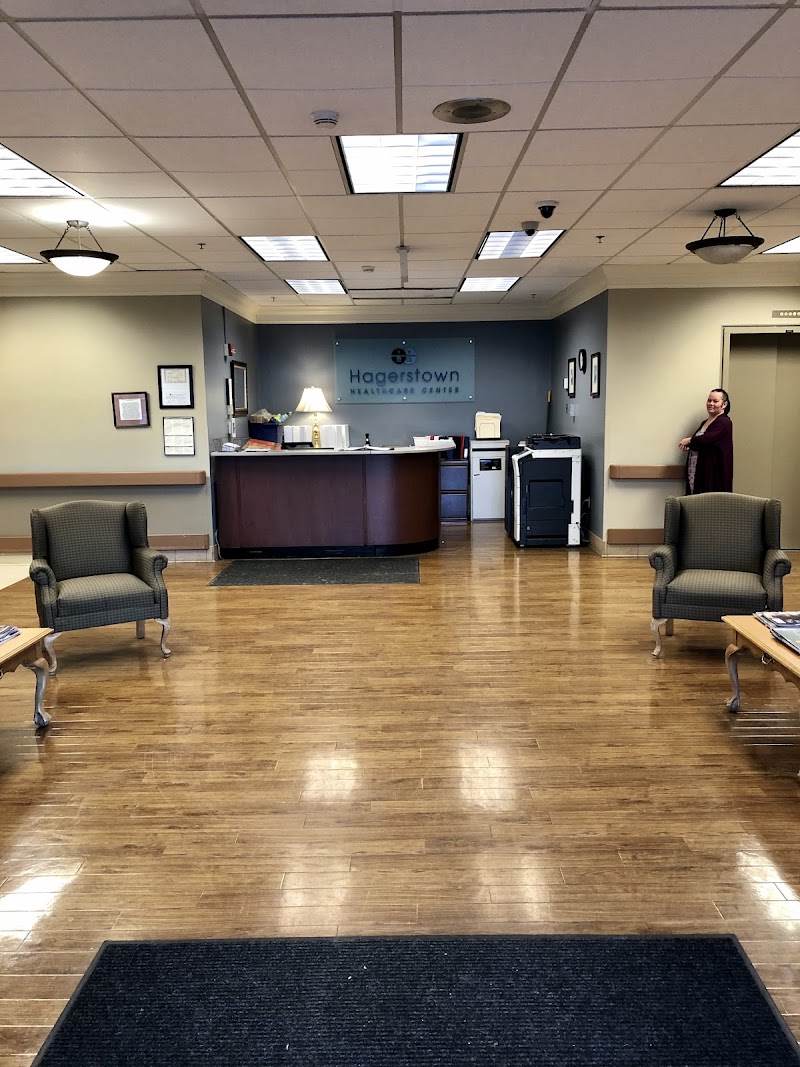
HAGERSTOWN HEALTHCARE CENTER
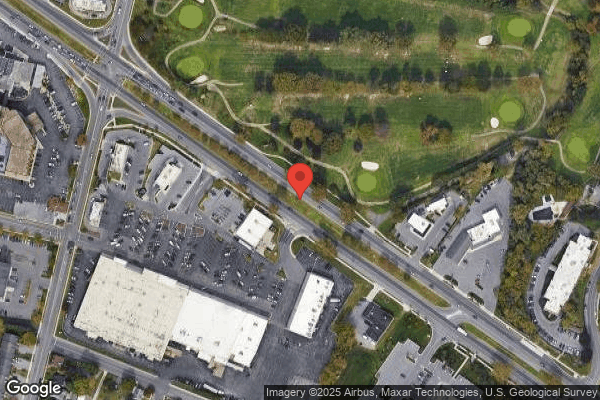
750 DUAL HIGHWAY, HAGERSTOWN, MD 21740 (301) 797-4020
For profit - Corporation 140 Beds COMMUNICARE HEALTH Data: November 2025 2 Immediate Jeopardy citations
Trust Grade
0/100
#203 of 219 in MD
Last Inspection: December 2023

Within standard 12-15 month inspection cycle. Federal law requires annual inspections.

Overview

Hagerstown Healthcare Center has received a Trust Grade of F, indicating significant concerns about its care quality and operations. Ranking #203 out of 219 facilities in Maryland places it in the bottom half, and #8 out of 10 in Washington County shows there are only two local options deemed better. While the facility is trending towards improvement, with a reduction in issues from 64 in 2023 to just 2 in 2025, it has a troubling history, including incidents where a resident did not receive CPR during a cardiac arrest due to unclear end-of-life wishes, and another resident suffered serious injuries from a fall due to improper use of mechanical lifts. Staffing is average with a 3 out of 5 rating, but the turnover rate is concerning at 42%, and the facility has faced high fines totaling $148,398, which is more than 95% of similar facilities in the state. Additionally, RN coverage is lower than 79% of Maryland facilities, meaning there may be less oversight for residents' needs.

Trust Score
F
0/100
In Maryland
#203/219
Bottom 8%
Safety Record
High Risk
Review needed
Inspections
Getting Better
64 → 2 violations
Staff Stability
○ Average
42% turnover. Near Maryland's 48% average. Typical for the industry.
Penalties
⚠ Watch
$148,398 in fines. Higher than 87% of Maryland facilities, suggesting repeated compliance issues.
Skilled Nurses
○ Average
Each resident gets 31 minutes of Registered Nurse (RN) attention daily — about average for Maryland. RNs are the most trained staff who monitor for health changes.
Violations
⚠ Watch
125 deficiencies on record. Higher than average. Multiple issues found across inspections.
★☆☆☆☆
1.0
Overall Rating
★★★☆☆
3.0
Staff Levels
★★★☆☆
3.0
Care Quality
★☆☆☆☆
1.0
Inspection Score
Stable
2023: 64 issues
2025: 2 issues

The Good

  • Full Sprinkler Coverage · Fire safety systems throughout facility
  • No fines on record
  • Staff turnover below average (42%)

    6 points below Maryland average of 48%

Facility shows strength in fire safety.

The Bad

1-Star Overall Rating

Below Maryland average (3.0)

Significant quality concerns identified by CMS

Staff Turnover: 42%

Near Maryland avg (46%)

Typical for the industry

Federal Fines: $148,398

Well above median ($33,413)

Significant penalties indicating serious issues

Chain: COMMUNICARE HEALTH

Part of a multi-facility chain

Ask about local staffing decisions and management

The Ugly 125 deficiencies on record

2 life-threatening 3 actual harm
Jul 2025 2 deficiencies 1 Harm
SERIOUS (G) 📢 Someone Reported This

A family member, employee, or ombudsman was alarmed enough to file a formal complaint

Actual Harm - a resident was hurt due to facility failures

Accident Prevention (Tag F0689)

A resident was harmed · This affected 1 resident

**NOTE- TERMS IN BRACKETS HAVE BEEN EDITED TO PROTECT CONFIDENTIALITY** Based on interviews and record review it was determined that the facility failed to provide sufficient supervision to prevent an...

Read full inspector narrative →
**NOTE- TERMS IN BRACKETS HAVE BEEN EDITED TO PROTECT CONFIDENTIALITY** Based on interviews and record review it was determined that the facility failed to provide sufficient supervision to prevent an avoidable accident from occurring by not following appropriate safety procedures while using a Hoyer lift (a mechanical device used to transfer and to lift Residents). As a result, Resident (R#7) suffered a fall with harm (fractures to collarbone and femur). This was evident for 1 (R#7) of 34 residents reviewed during a complaint survey. Findings Include: Record review of the facility undated policy titled “Mechanical Lifts and Transfer” documented, it was the facility policy to “provide resident centered care that meets the psychosocial, physical, and emotional needs and concerns of the Residents. Safety is a primary concern of our residents, staff and visitors. The use of mechanical lifts requires a competent and skilled user and requires the use of two (2) employees to perform the lift safely, for both residents and employees. The policy is to provide general guidance for the use of mechanical lifts, including manually operated Total Lifts, also known as (Hoyer Lift), fully mechanized total lifts, and Sit-to-Stand Lifts.” The policy further stated, “Lifts are utilized to provide a safe and ergonomic method to assist residents to transfer, stand, and toilet without physically or manually lifting them. Manual lifting can cause injury to both residents and staff and should be avoided. Staff are required to visually inspect slings, pads, belts, or chains and inspect prior to use. The policy documented, staff were not required to use a mechanical lift when there was evidence of broken, bent, or torn pieces of equipment that might render the device unsafe. “ 1.Record Review of the quarterly Minimum Data Set assessment (MDS) dated [DATE], revealed R#32’s had a Brief Interview of Mental Status (BIMS) was a score of 14/15, which indicated the resident was cognitively intact. During an interview on 7/18/2025 at 10:48 AM, R#32 stated s/he was the roommate of R#7, and they had been roommates for several months. R#32 stated s/he remembered when staff used a Hoyer lift and dropped R#7 on the floor. R#32 stated R#7 cried in pain and was sent to the hospital. 2. Record review of R#7s face sheet showed an admission date of 10/06/2023, diagnoses included End Stage Renal Disease stage five, Dependence on Renal Dialysis and Chronic Pain. Record review of R#7s care plan, initiated on 12/9/2021, documented R#7 required assistance with activities of daily living (ADL) and had a Self-Care Performance deficit. The care plan directed staff to use a Mechanical lift (Hoyer Lift) with two staff during transfers. Record Review of the quarterly MDS dated [DATE], revealed R#7s had a BIMS score of 15/15. R#7 was impaired on one side and required total assistance with ADLs. Record review of R#7s progress notes dated 10/13/2024 at 11:04 AM, showed Registered Nurse (RN)#7 documented that she was called to R#7s room by staff and was informed R#7 was on the floor. RN#7 found R#7 lying on iron bars which supported the Hoyer lift. R#7s shoulder and head were on the iron bars supporting the Hoyer lift. R#7 complained of leg pain in her left leg. R#7 stated she hit her shoulder. R#7 was verbal, alert and oriented. R#7 was in pain and distress. R#7s daughter was present and was aware of the fall. R#7s physician was notified and R#7 was sent out to the emergency department for further evaluation. Record review of the facility, Employee Corrective Action Form (ECAF) dated 10/14/2024 documented GNA#10 was suspended after GNA#10 dropped R#7 on the floor when she used a Hoyer lift to transfer R#7 without assistance from another staff and caused a fracture of the shoulder. Record review of the facility ECAF, dated 10/16/2024 documented GNA#10 was terminated after GNA#10 violated facility policy regarding safety and carelessness. Record review of R#7s progress notes dated 10/17/2024 at 01:00 PM, showed Nurse Practitioner (NP)#27 documented she made a follow up visit after R#7 experienced a fall from a Hoyer lift over the weekend and wrote the fall resulted in a left femoral condylar fracture and a left clavicle fracture. During an interview on 7/18/02025 at 10:13 AM, RN#7 revealed she was familiar with R#7 and worked with her in the past. RN#7 stated she recalled sometime in October 2024; she was called to R#7s room when GNA#10 dropped R#7 while she attempted to transfer R#7 from her bed to the chair. RN#7 stated GNA#10 was the only staff member in the room when the accident occurred. RN#7 explained R#7’s daughter was in the room visiting. RN 7 explained, the sling was not properly fastened and hooked and stated the Hoyer lift did not malfunction. According to RN#7 the Hoyer lift functioned properly and she concluded one of the Hoyer slings was not properly fastened when it came off and caused R#7 to hit the floor. During an interview on 7/18/2025 at 1:31 PM, the Human Resources Manager (HRM)#11 revealed that GNA#10 was terminated when she violated facility policy and explained GNA10 attempted to transfer R#7 using a Hoyer and dropped R#7 on the floor. According to HRM#11, GNA#10 did not request help from other staff during the transfer. During interview and observation on 7/21/2025 at 8:45 AM, R#7 was observed in her bed and stated she recalled sometime in October 2024, GNA#10 dropped her from the Hoyer lift, and she landed on the iron bars and broke her leg and collarbone. R#7 stated she spent several months in pain. During interview and observation on 7/21/2025 at 9:15 AM, Maintenance supervisor (MS)#13 revealed all the mechanical lifts were properly serviced and were in good working condition. During an interview on 7/21/2025 at 10:30 AM, GNA#15 revealed that GNA#10 did not ask for help. She stated she was on duty and worked on the same floor when GNA#10 dropped R#7 on the floor using a Hoyer lift. GNA#15 stated facility policy required two staff persons when assisting residents with a Hoyer at all times. During an interview on 7/22/2025 at 2:38 PM, GNA#10 explained on 10/14/2024 she used a Hoyer to transfer R#7 from the bed to the chair by herself. She stated she raised R#7 approximately six feet from the ground and the strap came loose and R#7 landed on the floor. According to GNA#10, R#7 cried and stated her leg was in pain. According to GNA#10, she was suspended immediately and was terminated the next day. GNA#10 stated she asked for help, and no-one came to assist her. During an interview on 7/22/2025 at 1:15 PM, Administrator#1 revealed facility policy required two staff persons to assist residents when using a Hoyer lift. Administrator#1 stated GNA#10 should have requested assistance from another staff member and concluded the accident was avoidable. Administrator stated Quality Assurance and Performance Improvement (QAPI) will be ongoing. During an interview on 7/25/2025 at 8:30 AM, the Director of Nursing (DON)#2 stated the accident was avoidable as R#7 was a two-person assist with transfers. During an interview on 7/25/2025 at 8:30 AM, DON 2 stated the facility will continue with ongoing audits and monitoring staff during resident transfers and concluded all staff were in serviced and continuous education will be provided. Record review of facility in-service record dated 10/14/2024 showed staff were in serviced on how to use a Hoyer lift with two staff at all times. Record review of facility in-service record dated 10/17/2024 showed staff were in serviced regarding a Hoyer lift size guide and how to properly use a Hoyer lift with two staff at all times. Based on the above actions taken by the facility and verified by surveyors on site, it was determined that the facility's deficient practice was past-noncompliance with a compliance date of 10/17/24.
CONCERN (D) 📢 Someone Reported This

A family member, employee, or ombudsman was alarmed enough to file a formal complaint

Potential for Harm - no one hurt, but risky conditions existed

Free from Abuse/Neglect (Tag F0600)

Could have caused harm · This affected 1 resident

**NOTE- TERMS IN BRACKETS HAVE BEEN EDITED TO PROTECT CONFIDENTIALITY** Based on record review, interviews, and observations, the facility failed to maintain an environment free from Resident-to-Resid...

Read full inspector narrative →
**NOTE- TERMS IN BRACKETS HAVE BEEN EDITED TO PROTECT CONFIDENTIALITY** Based on record review, interviews, and observations, the facility failed to maintain an environment free from Resident-to-Resident sexual abuse. Specifically, Resident #34 (R#34) made unwanted sexual contact with Resident #13 (R#13) one time. The facility census was 111 and the sample size was 34.The findings include:During an observation on 7/17/25 at 11:00 a.m., R#13 entered the room while this surveyor was speaking to his/her roommate. He/she was pleasant and engaging, sharing how R#13 and his/her roommate were close friends and always look out for one another. R#13 was clean and well-groomed without signs of distress. During an observation on 7/18/25 at 9:00 a.m., R#13 had no notable adverse reactions or concerns when asked about the incident with R#34, and he/she agreed to speak about the incident without hesitation. Review of the facility's policy titled, Maryland Abuse, Neglect, and Misappropriation, and dated 10/01/2024 revealed, Scope: This policy is applicable to all adult living centers in the State of Maryland. Definitions: . Sexual Abuse: non-consensual sexual contact of any type with a resident. Policy: It is the policy of this facility to provide resident-centered care that meets the psychosocial, physical and emotional needs and concerns of the residents. It is the intent of this facility to prevent the abuse, mistreatment, or neglect of residents. In the event an allegation is made, the facility will take measures to protect residents from harm during an investigation. Accurate and timely reporting of incidents, both alleged and substantiated, will be sent to officials in accordance with the state law. If the alleged violation is verified, appropriate corrective action will be taken by the facility. The facility will be alert for conspicuous activity that may indicate abuse activities. regardless of resident voicing such incidents. VI. Protection from Abuse. 2. When the alleged abuse involves a resident-to-resident altercation, the residents will be separated by the staff and the appropriate physical assessments will be completed on each resident. Record review of R#13's medical records revealed he/she was admitted on [DATE] with diagnoses including facial weakness following unspecified cerebrovascular disease, seizures, iron deficiency anemia, anxiety disorder, PTSD, major depressive disorder, mood disorder, hyperlipidemia, GERD, otitis media, muscle spasm, traumatic brain injury due to GSW and blunt force trauma. Review of Resident #13's Minimum Data Set (MDS) assessment dated [DATE], revealed a Brief Interview for Mental Status (BIMS) score of 8, an indication of moderate cognitive impairment. Review of Resident #13's capacity assessment dated [DATE] and signed by the nurse practitioner, reveal the resident, has adequate decision-making capacity (including decisions about life-sustaining treatments).Record review of R#13's Care Plan initiated on 4/14/25 documented that he/she was involved in alleged incident of being inappropriately touched by another resident with a goal of remaining safe and emotionally intact without enduring any adverse effects from alleged incidents by the following interventions: hand held bell provided to resident for alerting staff of unauthorized visitors, consultations with psychiatry and behavioral health, staff performing frequent rounds, and at STOP sign placed on the door in attempt to prevent others from entering her room. Review of R#13's progress notes revealed an encounter by the provider dated 4/14/25 documenting, .assessed at bedside today for acute visit for altercation with another resident. This resident reported that another resident came to [R#13's] room to visit and while they were talking [R#34] started touching [R#13] on the legs and arms. [R#13's] states that [he/she] asked [R#34] to stop a couple of times but [R#34] was still doing it. [R#13] states that he/she knows [R#34] was not something serious but he/she did not want [R#34]to get used to it. That is the reason [R#13] reported it to the Nurse. [R#13] states he/she does not want [R#34] to come to his/her room anymore. Education was provided to report to staff if the other resident approach (sic) again. Review of R#13's progress notes revealed a note by social services dated 4/14/25 documenting a Post-Traumatic Stress Disorder (PTSD) assessment was performed, and R#13 triggered for PTSD. The note further documented, Resident shared that [he/she] has been abused in the past. SSA will continue to assist and monitor as indicated. Care plan updated. Review of R#13's progress notes revealed a note by the psychiatric nurse practitioner dated 4/14/25 documenting, .resident reports, [R#34] came into my room yesterday about 4 p.m. and [he/she] touched me. [R#34] said ‘I'm gonna get some of that. [He/she]'s not getting none of this. I just can't defend myself like I used to.' Denies telling staff about incident; yet stated, ‘I'm from the streets, I'm used to handling it myself, further explaining that he/she and the other resident are friends and had been hanging out and talking, but not like that. There was no injury, and R#13 explained feeling safe on the unit and in his/her room and does not think [R#34] will touch him/her again and shared he/she will avoid being near [R#34] when alone. Review of R#13's progress notes dated 4/14/25 through 4/30/25, revealed additional assessments and daily (or more) monitoring of the resident regarding the incident annotating no ill effects from the incident, and no concerns were noted. Review of R#34's medical records revealed he/she was admitted on [DATE] with diagnoses to include bipolar disorder, schizophrenia, hypertension, type 2 diabetes mellitus, gastroesophageal reflux disease, and aphasia. MDS revealed a BIMS score of 15, an indication of intact cognition. Review of R#34's progress notes reveal and encounter by the provider on 4/14/25, documenting an assessment following the reported incident, noting .was assessed at bedside today for acute visit for altercation with another resident. Report received this resident went to another resident's room and was touching [him/her]. This writer asked the patient what happened, this resident states that he/she went to visit the other resident as he usually do (sic), he/she reports touching [R#13]'s arm just to be nice. [He/she] also mentions that they were playing. [He/she] states that [R#13] did not have any problem with [R#34] touching [R#13]'s arm. [R#34] states that [R#13] always gives him food, pickles. Education was provided not to go to the other resident anymore because he/she does not like that. [R#34] agreed not to visit [R#13] anymore.Review of R#34's progress notes revealed a note by social services dated 4/14/25 documenting a PTSD assessment was performed, and R#34 did not trigger for having PTSD. The note further documented, Resident shared that [he/she] has been abused in the past. SSA will continue to monitor and assist as indicated. Social services noted a meeting with the resident for psychosocial review wherein the resident stated being just friends and [he/she] never touched [him/her]. Review of R#34's progress notes dated 4/14/25 through 4/30/25, revealed additional assessments and monitoring of the resident regarding the incident annotating no unwanted behaviors and no ill effects from the incident, and no concerns were noted. Record review of the facility investigation dated 4/14/25 revealed the facility reported the initial report was made on 4/14/25, and the follow-up was reported on 4/21/25, documenting a thorough investigation with appropriate assessments and interventions. The incident was also reported to the local police department on 4/14/25. The resident made the initial report to facility staff on 4/14/25 at 11:30 a.m., stating the incident occurred the day prior on 4/13/25 at approximately 4:00 p.m. During an interview on 7/17/25 at 11:00 a.m., R#13 stated he/she was happy with his/her care and had had no problems or incidents at the facility. In an interview with the Director of Nursing (DON) and the Assistant Director of Nursing (ADON) on 7/17/25, they stated R#13 made the report to facility staff the day after the incident, and the facility investigation was initiated immediately, each resident was educated and assessed and appropriate interventions were put into place and monitored for recurrence. No harm and no injury were identified.During an interview on 7/18/25 at 9:00 a.m., R#13 stated he/she and R#34 are friends, and he/she is not afraid of him/her. R#13 further shared that there was one incident with R#34 where he/she went too far. R#13 stated he/she reported it to the nurse, and they made a really big deal out of it, sharing that he/she can handle himself/herself in those situations. R#13 stated that he/she is confident R#34 will not cross the line again. Four (4) attempts across two days were made to interview R#34. With each attempted, the resident was unavailable and/or unwilling to be interviewed. In an interview with the Social Worker (SW) on 7/18/2025 following a request for R#34's behavior contract that was annotated in the facility investigation report, the SW stated the behavior contract was unable to be located.
Dec 2023 28 deficiencies
CONCERN (D)

Potential for Harm - no one hurt, but risky conditions existed

Deficiency F0561 (Tag F0561)

Could have caused harm · This affected 1 resident

Based on observations, record review, and staff interviews, it was determined that facility staff failed to ensure that residents were able to make choices about their daily schedules. This was eviden...

Read full inspector narrative →
Based on observations, record review, and staff interviews, it was determined that facility staff failed to ensure that residents were able to make choices about their daily schedules. This was evident for 1 (Resident #19) of 4 residents reviewed for choices. The findings include: The MDS (Minimum Data Set) is a complete assessment of the resident which provides the facility information necessary to develop a plan of care, provide the appropriate care and services to the resident, and to modify the care plan based on the resident's status. A care plan is a guide that addresses the unique needs of each resident. It is used to plan, assess, and evaluate the effectiveness of the resident's care. 1) On 12/4/23 at 10:33 PM, an observation of Resident #19 revealed the resident was in bed and had not been bathed or dressed for the day. There was a sign posted next to the light switch in the resident's room that read the resident had a preferred time to be out of bed in the morning. An interview with Resident #19 at the time of the observation on 12/4/23 at 10:33 PM revealed that s/he was supposed to get out of bed by 11:00 AM and pointed to the sign hanging by the light switch. The resident reported that after s/he had complained about staff not getting him/her out of bed at the preferred time, facility staff had posted that sign, but no one paid attention to it. Furthermore, the resident reported that when s/he returned from dialysis treatments the transportation team would transfer him/her from the stretcher to the bed. The resident reported that the transportation team was not allowed to transfer them to the chair because s/he required a mechanical lift. The resident reported that when s/he requested staff to get him/her out of bed after dialysis, staff stated they were too busy to get him/her out of bed because it took 2 staff to use the mechanical lift. On 12/4/23 at 10:53 AM, during the interview with the resident, Geriatric Nursing Assistant (GNA) Staff #46 entered the room and was asked by Resident #19 if she could get the resident out of the bed. Staff #46 told the resident that she had two other residents ahead of him/her. Staff #46 stated she knew the resident liked to be out of bed by 11 AM, but she was unable to do that because of the number of residents assigned to her that day. A second observation was made on 12/4/23 at 11:50 AM that revealed Resident #19 was still in bed and Staff #46 was in the resident's room at that time. During the observation, Staff #46 stated that she had just started providing care to the resident so she could get the resident out of bed. On 12/6/23 at 1:55 PM a medical record review for Resident #19 revealed a minimum data set (MDS) with the assessment reference date of 8/23/23, that documented in section C that the resident was cognitively intact. Review of section G revealed that the resident relied on staff to transfer out of bed. Further review revealed a care plan for Activities of Daily living (ADL) self-care performance deficit. ADL's include bathing, dressing, personal hygiene, getting in and out of bed, and etc. Further review of the interventions failed to reveal when the resident preferred to get up in the morning. In addition, the care plan for hemodialysis failed to reveal that the resident preferred to get back out of bed upon return from hemodialysis. A subsequent interview with Staff #46 on 12/4/23 at 3:26 PM revealed that, due to staffing, it was difficult to get residents out of bed who required a mechanical lift. Mechanical lifts required 2 staff members to be present and it was difficult to find another staff member because everyone was busy. She reported that it was usually lunch time before she was able to get Resident #19 out of bed. An interview with GNA Staff #47 on 12/20/23 at 10:48 AM confirmed that Resident #19 would request to get out of bed by 11:00 AM. Furthermore, the resident had complained to Staff #47 that on days she was not assigned to him/her, that staff failed to get him/her out of bed by the requested time. Staff #47 confirmed that the resident would ask to get back out of bed once s/he came back from dialysis treatment and at times had to wait because staff were too busy to get him/her out of bed. On 12/21/23 at 12:53 PM, the concerns were reviewed with the Director of Nursing (DON). She reported that it was not acceptable practice for staff not to get the resident out of bed by the requested timeframe. The DON reported that the resident had made her aware of the issue and had intervened in the past.
CONCERN (D)

Potential for Harm - no one hurt, but risky conditions existed

Safe Environment (Tag F0584)

Could have caused harm · This affected 1 resident

**NOTE- TERMS IN BRACKETS HAVE BEEN EDITED TO PROTECT CONFIDENTIALITY** Based on observation and interview, it was determined that the facility failed to have an effective system in place to ensure th...

Read full inspector narrative →
**NOTE- TERMS IN BRACKETS HAVE BEEN EDITED TO PROTECT CONFIDENTIALITY** Based on observation and interview, it was determined that the facility failed to have an effective system in place to ensure that maintenance concerns were reported and addressed. This was found to be evident for rooms on 2 out of the 2 units in the facility. The findings include: During the initial information collecting portion of the survey, the following observations were documented by surveyors: On 12/4/23 at 11:21 AM in room [ROOM NUMBER], the bottom of the door frames for the 2 interior doors in the bathroom were noted to appear rusted from the floor to approximately 4-5 inches from the floor. On 12/4/23 at 10:17 AM in room [ROOM NUMBER], there was a 1 inch gap where the piping under the bathroom sink goes into the wall. On 12/4/23 at 2:30 PM, in room [ROOM NUMBER]'s bathroom, a gash in the wall was observed, approximately 6 inches x 1 inch. On 12/05/23 at 11:46 AM, in room [ROOM NUMBER]'s bathroom, a hole in the wall to the right of the toilet with pipe poking thru the wall. On 12/19/23 at 10:20 AM, the Maintenance Director (Staff #13) was interviewed in regard to how staff would report environmental issues that needed repair. The Maintenance Director reported staff would put the information into TELS and that everyone except housekeeping and laundry staff have access to the TELS system. TELS is an electronic system that assists maintenance staff with tracking work and repairs that need to be completed. Prior to a tour conducted with the Maintenance Director on 12/19/23 at 10:25 AM surveyor reviewed the observations noted by surveyors earlier in the survey in rooms 129, 100, 125 and 220. During the tour conducted between 10:25 - 11:00 AM the above observations were confirmed by the Maintenance Director to still be in need of repair. Additionally, during the tour, the area on the counter between the hallway and the second floor nursing station was noted to have a 1 x 1 inch chip at one corner and a 4 x 1.5 inch chip on the other corner. And the area around the sink in room [ROOM NUMBER] failed to have caulking where the backsplash met the wall. The Maintenance Director acknowledged these concerns during the tour. On 12/22/23 at 12:10 PM, surveyor reviewed with the Nursing Home Administrator (Staff #8) the concern that environmental items identified in the beginning of the survey had not been identified or reported by staff to maintenance during the following two weeks.
CONCERN (D) 📢 Someone Reported This

A family member, employee, or ombudsman was alarmed enough to file a formal complaint

Potential for Harm - no one hurt, but risky conditions existed

Grievances (Tag F0585)

Could have caused harm · This affected 1 resident

Based on review of medical records and other pertinent documentation and interviews, it was determined that the facility failed to ensure grievances regarding allegations of abuse were immediately rep...

Read full inspector narrative →
Based on review of medical records and other pertinent documentation and interviews, it was determined that the facility failed to ensure grievances regarding allegations of abuse were immediately reported to the administrator; and failed to ensure documentation of summary of investigation or follow up with the complainant. This was found to be evident for 2 (Resident #87 and #61) out of 37 residents reviewed for abuse during the survey. The findings include: 1) Review of Resident #87's medical record revealed the resident was admitted in 2022. Review of a Concern Form, dated 10/5/23, revealed the resident reported missing money from his/her wallet that was kept in the resident's drawer. Review of the facility's form used for grievances revealed they were titled Concern Form and included an area on the top half of the form to document: date, name of resident, room number, name of family member, relationship to resident, person presenting the concern (a check off for: resident, family or other), and description of concern(with lines for text to be added). The bottom portion of the Concern Form hads an area to document Notify: which included a check off area for the following: DON [Director of Nursing]; Nursing; Social Services; Housekeeping; Maintenance; Activities; Dietary; Business Office; Rehab; Receptionist; Admissions and Administrator. Following the Notification section was an area labeled Actions to resolve the concern: . which had lines for text to be added. At the bottom of the form there was a line titled Signature and another line titled Administrator's signature. Each of these lines had an area to document the date. No area was found on the Concern Form to document follow up with the resident. Further review of Resident #87's 10/5/23 Concern Form revealed in the Actions to resolve the concern section: lockbox and key to drawer provided. Reported to state and the police. The facility submitted an initial self report to the licensing agency on 10/6/23 regarding this allegation of misappropriation of money. Review of the facility documentation of the investigation revealed the majority of witness statements were obtained 10/11/23 and interviews with other residents were dated 10/12/23. Further review of the Concern Form revealed the Social Service Director (SSD Staff #16) signed the form on 10/5/23, which was the day before the concern was reported to the state. And the Administrator (Staff #1) signed the form on 10/9/23 which was before the investigation was completed. On 12/21/23 at 1:04 PM, the Social Service Director (Staff #16) was interviewed in regard to the Concern Forms. The SSD reported all of the Concern Forms go to her, she makes a copy and puts it in a binder then gives the concern form to the department head and when the completed form was returned she would replace the copy with the original. Review of the facility's Resident Grievance policy, with an effective date of 1/12/2017, revealed in the Procedure section: 6. Resident Notification: The Grievance Official will meet with the resident and inform the resident of the results of the investigation and how the resident's grievance was resolved or will be resolved, if applicable. On 12/22/23 at 11:32 AM the SSD reported that follow up with a complainant would be in a progress note. The SSD also stated that she told the resident there would be an investigation. Review of Resident #87's progress notes revealed a social service note, dated 10/11/23, in which staff informed the resident's family member of the missing money and that there was an active investigation. Further review of the medical record failed to reveal documentation to indicate either the resident or the family member were informed of the outcome of the investigation. On 12/22/23 at 12:14 PM, surveyor reviewed the concern with the current Nursing Home Administrator (Staff #8) that there was no documentation or report that staff followed up with the resident after the investigation was completed. 2) Review of Resident #61's medical record revealed the resident was admitted in 2022 and was her/his own responsible party. Review of a Concern Form, dated 10/16/23, revealed the resident reported that staff yelled at them. There were two versions of this Concern Form provided for surveyor review. These two forms were the same except for the documentation in the area to document Actions to resolve the concern: . Both were signed by the SSD in the section labeled Signature, but no date was documented for the SSD signature. Both were signed by the Administrator (Staff #1) on 11/7/23. The facility submitted an initial self report to the licensing agency on 11/8/23 regarding this allegation of verbal abuse. This was more than 3 weeks after the initial report was made by the resident. Review of the facility investigation documentation revealed that witness statements and interviews with other residents were obtained on 11/8/23. Further review of the first version of Resident #61's 10/16/23 Concern Form revealed significantly different hand writing in the Description of concern section and the Actions to resolve the concern section. On 12/21/23 during the 1:04 PM interview, the SSD reported her expectation was that whoever fills out the top portion of the Concern Form should sign in the Signature area. In regard to Resident #61's 10/16/23 Concern Form, the SSD reported that she wrote up the top portion and the unit nurse manager (Staff #3) completed the bottom section (Actions to resolve the concern). Review of the facility's Resident Grievance policy, with an effective date of 1/12/2017, revealed under the Procedure Section 5 Grievance Decision: Upon completion of the review, the Grievance Official will complete a written grievance decision that included the following: the date the grievance was received; a summary of the statement of the resident's grievance; the steps taken to investigate the grievance; a summary of the pertinent findings or conclusions regarding the resident's concerns; a statement as to whether the grievance was confirmed or not confirmed; whether any corrective action was or will be taken; if corrective action was or will be taken, a summary of the corrective action; If corrective action will not be taken, then an explanation of why such action is not necessary; and the date the written decision was issued. After review of the Concern Form, On 12/22/23 at 12:14 PM, the current Nursing Home Administrator (Staff #8) reported that the person completing the summary (Actions to resolve the concern section) should be the one that signs at the bottom of the form. Surveyor then reviewed that Resident #61's form was signed by SSD (Staff #16) but SSD reported the unit nurse manager was the one that wrote the summary. Further review of the medical record and the two versions of Resident #61's 10/16/23 Concern Forms failed to reveal documentation to indicate that facility staff followed up with the resident after the investigation was completed. Review of the facility's Resident Grievance policy, with an effective date of 1/12/2017, revealed: If the grievance included an allegation of abuse, neglect, mistreatment, exploitation or misappropriation of resident property, the Grievance Official will immediately notify the Administrator and the allegation will be reported, investigated and addressed in accordance with the facility's Abuse, Neglect, Exploitation & Misappropriation of Resident Property policy. On 12/21/23 during the 1:04 PM interview with the SSD, when asked if she considered the allegation in the 10/16/23 concern form to be an abuse allegation, the SSD reported she did not at the time but now knows that it was On 12/22/23 at 12:10 PM, surveyor reviewed with the current Nursing Home Administrator (NHA Staff #8) that the Concern Form, dated 10/16/23, indicated an allegation of abuse thatwas not reported to the licensing office or investigated until 11/8/23. After review of the Concern Form, which showed the 10/16/23 date and previous administrator's (Staff #1) signature on 11/7/23, the current NHA stated: No comment.
CONCERN (D) 📢 Someone Reported This

A family member, employee, or ombudsman was alarmed enough to file a formal complaint

Potential for Harm - no one hurt, but risky conditions existed

Free from Abuse/Neglect (Tag F0600)

Could have caused harm · This affected 1 resident

Based on record reviews and interviews, it was determined that the facility failed to protect a resident from abuse. This was evident for 1 (Resident #11) of 37 residents reviewed for abuse. The find...

Read full inspector narrative →
Based on record reviews and interviews, it was determined that the facility failed to protect a resident from abuse. This was evident for 1 (Resident #11) of 37 residents reviewed for abuse. The findings include: Resident #11 had been residing in the facility for more than a year. On 12/4/23 at 1:11 PM, Resident #11 was interviewed and reported that one geriatric nursing assistant (GNA staff #50) was mouthy and refused to change him/her. Resident #11 stated she looked in here and made an issue that she wouldn't change me, and she didn't. This was last Friday. Another girl came in and changed me. On 12/4/23 at 3:14 PM, the nursing home Administrator (NHA staff #1) reported to the surveyors that it was brought to his attention that there was an allegation of an employee to resident abuse and that a facility reported incident (FRI) has been initiated and the involved GNA was suspended pending investigation. On 12/11/23 at 10:21 AM, Resident #11's medical records were reviewed and revealed that the resident was cognitively intact, always incontinent for bowel and bladder, and required 2 or more persons for extensive physical assistance for toileting and transfers. On 12/19/23 at 12:51 PM, the investigation packet regarding the FRI was provided by the facility. A review of this investigation packet revealed a witness statement from the resident's roommate corroborating Resident #11's allegation and also identifying the same staff. Based on the facility's investigation, the allegation of abuse was substantiated and the GNA staff #50 was terminated.
CONCERN (D) 📢 Someone Reported This

A family member, employee, or ombudsman was alarmed enough to file a formal complaint

Potential for Harm - no one hurt, but risky conditions existed

Report Alleged Abuse (Tag F0609)

Could have caused harm · This affected 1 resident

Based on review of medical records and other pertinent documentation and interviews, it was determined that the facility failed to ensure allegations of abuse were reported in a timely manner. This wa...

Read full inspector narrative →
Based on review of medical records and other pertinent documentation and interviews, it was determined that the facility failed to ensure allegations of abuse were reported in a timely manner. This was found to be evident for 3 (Resident #31, #61, #86) of 37 residents reviewed for abuse during the survey. The findings include: 1) Resident #31 has been residing in the facility since 2021. On 12/15/23 at 9:12 AM, a facility reported incident (FRI) related to MD00190005 for misappropriation of resident property was reviewed and revealed that it was reported by Resident #31 him/herself on 3/1/23 using the facility's Concern Form. Based on this form, it was documented that the Nursing Home Administrator (NHA), Director of Nursing (DON), and Social Services (SS) were notified on the same day. The email confirmation sent by the NHA dates the initial report as being sent on 3/7/23 at 2:47 PM. On 12/18/23 at 3:41 PM, the current NHA (staff #8) was interviewed about his process when there was an allegation of misappropriation of resident property. Staff #8 indicated that he would report the incident within 2 hours, continue his investigation, and submit a 5-day follow up report. The investigation documents submitted by the facility were reviewed with Staff #8 and he affirmed that the initial report was sent on 3/7/23. The surveyors discussed the concern with the current NHA (staff #8) that he received the report of the allegation on 3/1/23 and had not submitted his initial report until 3/7/23. Staff #8 acknowledged the surveyor's concern and indicated that he would try to get more information regarding the incident. On 12/19/23 at 11:26 AM, Staff #8 reported no additional information regarding the incident was found and confirmed the submission of the initial report on 3/7/23. 3) On 12/15/23 at 12:30 PM, a review of facility reported incident MD00199566 revealed that, on 11/7/23, Resident #86 reported to facility staff that his/her wallet, along with $40 dollars and credit cards was missing. The facility's investigation included an Incident Initial Report Form that documented Resident #86 informed staff that his/her wallet was missing on 11/7/23 at 5:00 PM and the administrator was also notified at that time. The facility's initial self-report documented that the report was submitted to the state office on 11/8/23, and the email confirmation of the facility's initial self-report submission to the state office was dated 11/8/23 at 2:01 PM. The facility failed to ensure that an allegation of misappropriation of resident property was reported to the state office immediately, but not later than 2 hours after the allegation was made. The NHA (Staff #1) was made aware of the concerns related to the timely reporting of an allegation of misappropriation of property on 12/15/23 at 4:51 PM, and the NHA offered no further comments at that time. 2) Review of Resident #61's medical record revealed the resident was admitted in 2022 and was her/his own responsible party. Review of a Concern Form, dated 10/16/23, revealed that the resident reported staff yelled at them . There were two versions of this Concern Form provided for surveyor review. Both were signed by the Social Service Director (SSD Staff #16) in the section labeled Signature but no date was documented for the SSD signature. Both were signed by the former NHA (Staff #1) on 11/7/23. The facility submitted an initial self report to the licensing agency on 11/8/23 regarding this allegation of verbal abuse. This was more than 3 weeks after the initial report was made by the resident. Review of the facility investigation documentation revealed witness statements and interviews with other residents were obtained on 11/8/23. On 12/21/23 at1:04 PM, when asked if she considered the allegation in the 10/16/23 concern form to be an abuse allegation, the SSD reported that she did not know at the time, but is now aware that it was abuse. Review of the facility Abuse, Neglect & Misappropriation Policy revealed in Section VII Reporting of Incidents and Facility Response 1a. If the events that cause the allegations involve abuse and/or serious bodily injury the self-report must be made immediately, but not later than two (2) hours after the allegation is made. On 12/22/23 at 12:10 PM surveyor reviewed with the current NHA (Staff #8) that the Concern Form dated 10/16/23 indicated an allegation of abuse but was not reported to the state or investigated until 11/8/23. After review of the Concern Form which showed the 10/16/23 date and the previous NHA (Staff #1) signature on 11/7/23, the current NHA stated: No comment.
CONCERN (D) 📢 Someone Reported This

A family member, employee, or ombudsman was alarmed enough to file a formal complaint

Potential for Harm - no one hurt, but risky conditions existed

Investigate Abuse (Tag F0610)

Could have caused harm · This affected 1 resident

Based on records review and interviews, it was determined that the facility failed to conduct a thorough investigation regarding a misappropriation of property allegation. This was evident in 1 (Resid...

Read full inspector narrative →
Based on records review and interviews, it was determined that the facility failed to conduct a thorough investigation regarding a misappropriation of property allegation. This was evident in 1 (Resident #31) of 37 residents reviewed for abuse. The findings include: On 12/15/23 at 9:12 AM, a facility reported incident (FRI) related to MD00190005 was reviewed and revealed that an allegation of misappropriated property was reported by Resident #31 using the facility's Concern Form on 3/1/23. According to the Concern Form, the Nursing home Administrator (NHA), Director of Nursing (DON), and Social Services (SS) were all notified on the same day. On 12/15/23 at 9:21 AM, further review of the FRI revealed an interview conducted by the NHA (staff #8) with Resident #31 on 3/3/23. No other interviews were found regarding this allegation of missing property. On 12/18/23 at 12:30 PM, the Social Services Director (SSD staff #16) was interviewed about her process when she received a report about misappropriation of property or abuse. The SSD reported that she would notify the NHA and local authorities about the allegations and document her actions in the resident's progress notes, but in this particular case with Resident #31, the SSD indicated that she forgot to document in his/her progress notes. On 12/18/23 at 1:10 PM, further review of the medical record revealed a progress note with an effective date of 3/6/23, which was entered as a late entry on 3/20/23 by the Social Services Assistant (SSA staff #22) which stated, Resident turned in a list of missing items including a laptop. With the resident's permission the room was searched, no laptop was found. Upon further investigation the laptop was not inventoried, then resident stated No one knew that I had a laptop. Not able to substantiate missing items, resolution was communicated to the resident. Resident #31's medical record also revealed that s/he was out of the facility from 3/3/23 until 3/13/23. The SSA was interviewed about the progress note she had documented for 3/6/23. She reported that she was told by the NHA (staff #8) on what to document and stated, He told me what to say, so that's what I wrote in my note. On 12/18/23 at 3:41 PM, the investigation packet submitted by the facility was reviewed with the NHA (staff #8). He confirmed that he interviewed the resident on 3/3/23. Staff #8 was also asked if he interviewed any staff regarding Resident #31's missing belongings to which he replied, From my recollection, there was. The surveyors discussed the concern with Staff #8 that after reviewing Resident #31's medical records and the investigation documents provided by the facility regarding this allegation, no documentation was found to indicate staff or other resident interviews were conducted regarding this allegation. The NHA acknowledged the concern of the surveyors and indicated that he would try to get more information. On 12/19/23 at 11:26, the NHA (staff #8) reported that no additional information or interviews were found regarding this FRI. As of time of survey exit on 12/22/23 at 4:38 PM, no additional documentation was provided regarding this concern.
CONCERN (D)

Potential for Harm - no one hurt, but risky conditions existed

Assessment Accuracy (Tag F0641)

Could have caused harm · This affected 1 resident

**NOTE- TERMS IN BRACKETS HAVE BEEN EDITED TO PROTECT CONFIDENTIALITY** Based on medical records review, observations, and interviews, it was determined that the facility staff failed to document the ...

Read full inspector narrative →
**NOTE- TERMS IN BRACKETS HAVE BEEN EDITED TO PROTECT CONFIDENTIALITY** Based on medical records review, observations, and interviews, it was determined that the facility staff failed to document the residents Minimum Data Set (MDS) assessments accurately. this was evident for 3 (Resident #69, #81, #86) of 64 residents investigated during this survey process. The findings include: The MDS is a federally mandated assessment tool used by nursing home staff to gather information on each Resident's strengths and needs. Information collected drives resident care planning decisions. MDS assessments must be accurate to ensure that each Resident receives the care they need. Preadmission Screening and Resident Review (PASRR) is a federal requirement to help ensure that individuals are not inappropriately placed in nursing facilities for long-term care. The PASRR process requires that all applicants to Medicaid-certified nursing facilities (NFs) be given a preliminary assessment to determine whether they might have serious mental illness and/or intellectual disability. This is called a Level I Screen. Those individuals who test positive at Level I are referred to the local health department (LHD), where they receive an in-depth Level II PASRR evaluation. 1) On 12/21/23 at 10:48 AM, a medical record review revealed a preadmission screening and Resident Review (PASSR) level 2 evaluation report completed by a psychologist on 10/16/2023 for Resident # 64. It was noted on the PASSR that Resident #69 had a history of moderate Intellectual disability, and whose diagnoses included, but were not limited to, Cerebral Palsy. Continued medical record review revealed an MDS assessment, dated 11/4/23, that documented a no in section A- PASRR. However, further review for Resident #69 showed a social service note completed on 12/1/23 that stated that Resident # 64 had a level 2 PASSR. On 12/21/23 at 1:10 PM, an interview was conducted with the MDS coordinator (staff #34). During the interview, staff #34 reported that Resident #69 had a level 2 PASSR. When asked who was responsible for documenting PASSR level 2 on the MDS assessment, staff #34 responded that it was the social worker. A subsequent interview was conducted on 12/21/23 at 2:34 PM with Social services assistant (SSA Staff #22). The SSA confirmed that Resident #69 had a level 2 PASSR and that the MDS assessment, dated 11/4/23, was documented inaccurately. 2) On 12/4/23 at 10:21 AM, during an initial tour of the first-floor unit, an observation was made of Resident #81 to be able to move bilateral upper and lower extremities. A subsequent observation was made on 12/21/23 at 12:18 PM of Resident #81 sitting in a wheelchair in the residents' lounge. Resident #81 was seen raising both arms all the way up when asked if there were any limitations in his/her range of motion. On 12/21/23 at 11:43 AM, during a review of Resident #81's MDS assessment dated [DATE], it was noted that the MDS assessment documented that Resident #81 had impairments in both the upper and lower extremities in Section G0400- Functional limitation in range of motion. On 12/21/23 at 12:25 PM, an interview was done with the Director of Rehab services (staff #6). During the interview, she stated that Resident #81 could move his/her upper extremities without limits. On 12/22/23 at 12:17 PM, an interview was conducted with the MDS coordinator (staff #31). During the interview, Staff #31 confirmed that Resident #81's MDS assessment, dated 9/16/23, was documented in error and would modify the assessment. 3) On 12/6/23 at 12:13 PM, a review of Resident #86's medical record revealed the resident had been residing in the facility since September of 2022. On 9/22/22, in a History and Physical encounter note, the physician documented Resident #86 was admitted to the facility for rehab following an acute hospitalization and had a medical history of CVA (cerebral vascular accident) (stroke) with left leg weakness and pain, wheelchair bound, recent Covid infection, recent diagnosis of pulmonary embolism (PE), and seizure disorder and the resident's diagnoses were acute PE, seizure disorder, ambulatory dysfunction, history of CVA with residual deficit, alcohol dependence with unspecified alcohol-induced disorder, anxiety and other chest pain. Review of Resident #86's annual MDS assessment with an assessment reference date (ARD) of 9/27/23 documented Resident #86 BIMS (brief interview for mental status) summary score was 12, indicating the resident had moderate cognitive impairment. Section I, Active Diagnosis, I8000. Additional Active Diagnosis documented Resident #86 had a diagnosis of Amyotrophic Lateral Sclerosis (ALS) (a fatal motor nervous system disease). Further review of Resident #86's medical record failed to reveal documentation to indicatethat Resident #86's diagnosis of ALS, as captured in the MDS, was an accurate, active diagnosis, and no documentation was found to indicate Resident #86 had received treatment or was monitored for ALS. In addition, review of Resident #86's care plans failed to reveal evidence that a care plan that addressed the ALS diagnosis had been developed and implemented. On 12/13/23 at 1:51 PM, during an interview, when made aware of the above concern, Staff #34, stated that Resident #86's ALS diagnosis was listed in a psychiatric visit note on 8/14/23. At that time, the surveyor made Staff #34 aware that review of Resident #86's medical record failed to reveal evidence that Resident #86 was treated or monitored for ALS and requested Staff #34 to provide documentation to support that ALS diagnosis was active in the MDS look back period. On 12/13/23 at 3:50 PM, Staff #34 reported to the surveyor that the Resident #86's monthly physician order sheets which included ALS in a list of diagnosis, had been signed off by physician indicating the diagnosis was active. Staff #34 provided the surveyor with a psychiatric practitioner psychotherapy visit note dated 8/14/23 for Resident #86 which included a list of diagnoses that included the ALS diagnosis. There was no documentation in the note to indicate why the diagnosis had been added to the resident's diagnosis list, and there was no documentation in the note to indicate Resident #86 was being treated or monitored for ALS. Further review of Resident #86's medical record revealed that the ALS diagnosis was also listed with Resident #86's diagnosis in a psychiatric practitioner psychotherapy visit note dated 8/21/23. Continued review of Resident #86's medical record failed to reveal any other clinical provider or practitioner notes that indicated that ALS was an active diagnosis for Resident #86. During a phone interview, on 12/15/23 at 3:26 PM, the attending physician (Staff #35), stated that when she signed off a resident's physician orders, the physician was just signing that the monthly orders were active, and was not confirming that the diagnosis that populated on the resident's physician's orde sheet in the electronic medical record were active or accurate. When asked if Resident #86 had an active diagnosis of ALS, Staff #35 stated she was unaware of the resident having the diagnosis of ALS. When made aware that ALS was included in a list of diagnoeis for Resident #86 in a psychiatric visit note on 8/14/23 and 8/21/23, and coded by MDS as an active diagnosis, Staff #35 stated that Resident #86 was a talker, and would say things, then change his/her story, and may have told that to someone. The NHA (Staff #1), the Assistant Director of Nurses (ADON) and Infection Preventionist nurse were made aware of the concerns 12/15/23 at 4:51 PM. No comments were offered and no additional documentation regarding the MDS concerns was provided at that time.
CONCERN (D)

Potential for Harm - no one hurt, but risky conditions existed

Deficiency F0661 (Tag F0661)

Could have caused harm · This affected 1 resident

Based on record review and interviews, it was determined that the facility failed to ensure that a discharge summary was completed for all discharged residents within a reasonable time frame. This was...

Read full inspector narrative →
Based on record review and interviews, it was determined that the facility failed to ensure that a discharge summary was completed for all discharged residents within a reasonable time frame. This was evident for 2 residents (Resident #110, Resident #111) out of 3 residents reviewed for closed record review during a survey. The findings include: 1) On 12/07/23 at 10:45 AM, a review of Resident #110's medical record revealed s/he was a resident at the facility that received hospice care. Review of a social service note, dated 10/19/23, revealed that Resident #110 was transferred to the hospital and was then discharged from the emergency room to his/her home. On 12/11/23 at 12:28 PM, review of resident's progress notes from 10/10/23 through 11/30/23, around the time of his/her transfer to the hospital, failed to reveal a discharge summary for Resident #110. 0n 12/11/23 at 12:12 PM, during an interview with the Director of Nursing (DON) and the Corporate Clinical Nurse (CCN staff #33), both the CCN and DON confirmed that the expectation was that residents transferred to the hospital, that did not return to the facility, were required a written discharge summary. During this interview, the surveyor requested a copy of Residents #110 discharge summary. On 12/11/23 at 1:16 PM, Corporate Clinical Nurse #33 reported the facility was unable to provide discharge summary documentation for Resident #110. 2) Resident #111 was admitted to the facility for Rehabilitation following a hospital stay. Review of the resident's medical records under social services notes dated 9/7/23, revealed tht resident signed out of the facility on a leave of absence to sit on the patio for 2 hours. Further review revealed that Resident #111 never returned to the facility and was considered to have left the facility against medical advice (AMA). On 12/11/23 at 2:04 PM, a review of provider progress notes revealed a provider discharge note dated 11/15/23, written by Provider (staff #26) revealed, Patient left AMA on 9-5-23. See progress note. On 12/11/23 at 3:00 PM, the Social Services Designee was interviewed. During the interview she reported that on 9/7/23 the facility determined that the Resident would not be readmitted because s/he left the facility AMA. On 12/11/23, review of Resident #111's progress notes, following the resident leaving the facility, failed to reveal a progress note containing the required resident discharge information. On 12/22/23 at 12:18 PM, the above concerns were discussed with the current nursing home administrator (NHA staff #8) and the DON. The NHA and DON failed to provide any additional information and confirmed that the expectation was that residents leaving the facility, for any reason, would require a discharge summary.
CONCERN (D) 📢 Someone Reported This

A family member, employee, or ombudsman was alarmed enough to file a formal complaint

Potential for Harm - no one hurt, but risky conditions existed

ADL Care (Tag F0677)

Could have caused harm · This affected 1 resident

Based on record review and interview, it was determined that staff failed to ensure that residents were given assistance with activities of daily living (ADL which include but are not limited to showe...

Read full inspector narrative →
Based on record review and interview, it was determined that staff failed to ensure that residents were given assistance with activities of daily living (ADL which include but are not limited to showering, bathing, personal hygiene, dressing, and toileting) as needed. This was evident for 1 (#99) of 3 residents reviewed for ADL care. The findings include: An interview was conducted with a complainant on 12/5/23 at 1:22 PM regarding Resident #99's care. They revealed that, when they had visited the resident on several occasions at the beginning of the resident's admission to the facility, the resident appeared unkempt and had an odor. The complainant reported that she would take the resident home a couple times a week to allow the resident to get a shower and shave. She reported the resident was able to shower, dress, and shave independently, but needed a reminder to do so and determine which clothes were clean. The family member reported that the facility staff had hung a sign in the resident's room reminding him/her to take a shower, however, the resident still needed someone to tell him/her to do it. A medical record review on 12/19/23 at 3:28 PM for Resident #99 revealed a Minimum Data Set (MDS), with an assessment reference date of 6/27/23, that document in section C that the resident had severely impaired cognitive function. In section G, staff documented that the resident required staff supervision and cuing to bath, dress, and perform personal hygiene. A nurse practitioner's note, dated 12/9/23, revealed the resident had suffered a traumatic brain injury. On 12/21/23 at 1:13 PM, a review of the Geriatric Nursing Assistant (GNA) documentation for care provided for Resident# 99 revealed that, between 6/20/23 through 7/5/23, the resident had 4 bed baths and 1 shower. Staff had documented that the resident refused bathing on 6/24/23 and 6/30/23 and the remaining 9 days were marked N/A (not applicable) or left blank. Between 7/6/23 and 7/21/23, the resident had 1 bed bath and 1 shower. Staff documented 3 refusals of care on 7/6/23, 7/10/23, and 7/13/23, however, the other 11 days were left blank. Between the dates of 7/22/23 and 8/6/23, the resident had 4 showers and 1 bed bath. The remaining 11 days were left blank. Between 8/7/23 and 8/22/23, the resident had 4 showers, 1 refusal, and the remaining 11 days were left blank. Between 8/23/23 and 9/7/23, the resident had 2 showers, 3 refusals, and the remaining 11 days were either marked N/A or left blank. On 12/20/23 at 9:40 AM, the findings were reviewed with the Director of Nursing (DON). She reported that if staff had not documented that baths or showers were given then that meant they had not been given. Furthermore, she was made aware that family members were taking the resident home to provide showers and personal hygiene. The DON stated that this was unacceptable and that she would look into it. The DON had not reported any additional information by the time of exit.
CONCERN (D)

Potential for Harm - no one hurt, but risky conditions existed

Deficiency F0679 (Tag F0679)

Could have caused harm · This affected 1 resident

Based on observation, record review, and staff interviews, it was determined that the facility failed to develop and implement an activities program to meet the needs of their residents. This was evid...

Read full inspector narrative →
Based on observation, record review, and staff interviews, it was determined that the facility failed to develop and implement an activities program to meet the needs of their residents. This was evident for 1 (Resident #42) of 6 residents reviewed for activity programs. The findings include: Multiple observations of Resident #42 failed to reveal the resident involved in meaningful activities on 12/03/23 at 10:08 AM, 12/04/23 at 10:04 AM, 12/04/23 at 2:19 PM, 12/5/23 at 10:06 AM, 12/14/23 at 10:00 AM, 12/14/23 at 3:01 PM, 12/15/23 at 7:38 AM, and 12/20/23 at 10:48 AM. A medical record review for Resident #42 on 12/13/23 at 3:16 PM revealed an minimum data set (MDS) with an assessment reference date of 11/8/23, that documented in section C that the resident's cognitive ability to make daily decisions was severely impaired. In section I staff documented that the resident had a history of a stroke, was unable to speak, and had dementia. A review of the resident's activity care plan revealed a focus that was initiated on 11/9/22, that read the resident attended activities of interest and engaged in self-initiated leisure activities. The goal initiated on 11/9/22 and revised on 3/21/23, was that the resident would attend activities of his/her choice. The interventions listed were initiated on 11/9/22 and read to encourage the resident to participate in music and memory programs, ensure that staff comply with any diet and fluid restrictions, and invite the resident to scheduled activities. On 12/18/23 at 11:41 AM a review of the Activity Director's (AD) handwritten assessment revealed she was aware the resident had dementia and was non-verbal. She noted that the resident should have 1 on 1 activities provided and should be included in church services, music, and socials. Review of the 1 on 1 activity log for Resident #42 revealed that the activities program had provided a 1 on 1 visit on 10/11/23, 11/17/23, and 11/26/23. A review of the activity sheets which documented which residents attended the group activities over the last 3 months revealed that Resident #42 had not been included in group activities that included socials and church services. An interview with the AD on 12/14/23 at 4:23 PM revealed that she had been employed at the facility for 3 months. She reported she had not updated or implemented a resident-centered care plan for Resident #42. She reported that she would like to provide more activities to residents on the units who do not attend the group activities but had been spread a little thin with 1 activity aide to help her. The concerns were reviewed with the Director of Nursing on 12/21/23 at 12:53 PM.
CONCERN (D)

Potential for Harm - no one hurt, but risky conditions existed

Quality of Care (Tag F0684)

Could have caused harm · This affected 1 resident

**NOTE- TERMS IN BRACKETS HAVE BEEN EDITED TO PROTECT CONFIDENTIALITY** Based on record review, observation and interviews it was determined that facility staff failed to follow an order for enhanced ...

Read full inspector narrative →
**NOTE- TERMS IN BRACKETS HAVE BEEN EDITED TO PROTECT CONFIDENTIALITY** Based on record review, observation and interviews it was determined that facility staff failed to follow an order for enhanced barrier precautions. This was evident for 1 (Resident #18) out of 1 resident reviewed for urinary catheter and urinary tract infection during the survey. The findings include: Resident #18 is a long-term resident at the facility. On 12/19/23, a review of Resident #18's progress notes, nurses note, dated 11/15/2, revealed that the resident was re-admitted to the facility from the hospital with a urinary catheter in place. On 12/4/23 at 9:00 AM, an observation was made of Resident #18's room. Observation of the resident's door revealed a sign that indicated enhanced barrier precautions. Further review of the sign revealed instructions that everyone must wear gloves and a gown for certain high contact activities, including urinary catheter care. Enhanced Barrier Precautions (EBP) is an approach of targeted gown and glove use during high contact resident care activities, designed to reduce transmission of multidrug-resistant organisms in nursing homes. On 12/19/23, a review of orders revealed an order with a start date of 11/15/23, indicating enhanced barrier precautions (EBP) related to: (right basilic power midline; indwelling Foley catheter) When dressing/bathing/showering/transferring/personal hygiene, changing linens, toileting, and peri-care, providing care to resident with history of or colonized multi-drug resistant organism. On 12/19/23 at 7:39 PM, GNA staff #12 was interviewed. During the interview she reported she had been providing foley care for Resident #18 since he had returned from his recent hospitalization. GNA reported that the personal protection equipment (PPE) she had worn when providing foley care was limited to gloves. On 12/20/23 at 10:54 AM, geriatric nursing assistant (GNA staff #20) was interviewed. During the interview she reported that she had provided care to Resident #18 about 10 times. Staff #20 reported she has provided foley care to the resident and when she provided this care, the only PPE she donned were gloves. On 12/20/23 at 11:35 AM, the Assistant Director of Nursing/ Clinical Educator (ADON staff #41) was interviewed. During the interview she reported that GNA's were designated to provide urinary catheter care and peri care to residents. The nurses documented urinary catheter care provided by the GNA's in the treatment administration record. In addition, she reported that she has not provided urinary catheter care training to the GNA's this year. On 12/21/23 at 9:28 AM, the Infection Preventionist nurse (IP Staff #10) was interviewed. During the interview she reported that the facility's process for implementing EBP is a follow: The provider orders the EBP, this order is linked to the [NAME] (the GNA's documentation) and then the unit manager will place a sign on the door. GNA's are alerted to the EBP through the [NAME] and the sign on the door. The expectation is the GNA's wear gown and gloves when providing urinary catheter care when there is an EBP sign on the door. On 12/22/23 at 12:18 PM, the above concerns were reported to the current Nursing home administrator (NHA staff #8) and the Director of Nursing (DON). The NHA and the DON reported they had no additional information or response.
CONCERN (D)

Potential for Harm - no one hurt, but risky conditions existed

Deficiency F0688 (Tag F0688)

Could have caused harm · This affected 1 resident

Based on record review, observations, and interviews, it was determined that the facility failed to implement the physical therapist's therapeutic recommendations to prevent the worsening of contractu...

Read full inspector narrative →
Based on record review, observations, and interviews, it was determined that the facility failed to implement the physical therapist's therapeutic recommendations to prevent the worsening of contractures. This was evident for 1 (Resident #103) out of 3 residents reviewed for position and mobility during a survey. The findings include: On 12/12/23, review of residents medical records revealed that Resident #103 was admitted for rehabilitation following a hospital stay and then transitioned to long term care. While at the facility, the resident received occupational therapy services. On 12/12/23 at 2:55 PM, a review of the Minimum Data Set (MDS) with an assessment reference date (ARD) of 10/16/23 section GG0100 revealed that Resident #103 was totally dependent on the assistance of staff for all his/her activities of daily living. Further review of MDS section GG0115 revealed resident had functional limitations in the upper extremities. The MDS is a set of assessment screening items employed as part of a standardized, reproducible, and comprehensive assessment process that ensures each resident's individual needs are identified. It ensures that care is planned based on those individualized needs, and that the care is provided as planned to meet the needs of each resident. An observation on 12/04/23 at 11:51 AM, revealed Resident #103 was seated in a Geri Chair in the hallway. Further observation revealed that Resident #103 had contractures in the upper extremities and failed to reveal any therapeutic device on the resident's upper extremities. On 12/06/23 at 2:43 PM, geriatric nursing assistant (GNA staff #37) was interviewed. She reported that she had taken care of Resident #103 at least 5 times. During the interview, staff #37 reported that the resident had worn a right leg splint but reported that s/he had not worn anything on his/her hands. On 12/12/23, review of progress note dated 10/31/23, and signed by Nurse Practitioner (NP staff #26), revealed that Resident #103 had right wrist contractures and left arm and wrist contractures. On 12/12/23 at 3:05 PM, the Director of Rehab services was interviewed. During the interview she reported that when a resident is discharged form therapy, therapy will educate the GNA's and nursing staff regarding any therapeutic treatments that should be continued by the nursing staff. These recommendations were documented on a recommendations sheet and contain the signatures of the staff educated on the specific therapies. This document would have been given to nursing to ensure that the recommended treatment became part of the resident's care plan. In addition, a second document the Therapy Clinical Recommendation, was provided to nursing as a recommendation for the physician to place an order for the therapeutic treatment and device. On 12/13/23 the Occupational Therapy (OT) discharge (d/c) summary dated 11/22/23, was reviewed. The review revealed that Palm protectors to bilateral hands tolerated well when up in the chair and off when in bed. No s/s skin integrity noted. Further review of OT discharge summary revealed that staff were able to carry over post education. And that the educational sheets were being signed for palm guards to be on 2-4 hr. time frame when up in multi positional chair. Palm Protectors can offer relief from curling fingers, hand contractures and cramping. The Palm Protector is put on over the thumb and around the hand, providing a cushioning pad for the fingers to curl onto, preventing the nails from digging into the palms, whilst also keeping the fingers warm and supported. On 12/12/23 at 10:25 AM, review of care plan: failed to reveal any care plan for the use of palm protectors. A review of Resident #103's orders on 12/14/23 revealed that an order for palm protectors was started on 12/11/23. On 12/22/23 at 11:22 AM, the Director of Rehabilitation failed to provide the recommendations sheet with the names of the staff that were provided education, regarding the palm protectors or the Therapy Clinical Recommendations sheets. In addition, she confirmed that the resident was discharged from therapy on 11/22/23. The resident was d/c with recommendations for the use of the palm protectors. However, the order for the palm protector had a start date of 12/11/23. Review of the care plan failed to reveal a care plan for the palm protector prior to 12/11/23.
CONCERN (D)

Potential for Harm - no one hurt, but risky conditions existed

Deficiency F0697 (Tag F0697)

Could have caused harm · This affected 1 resident

Based on records review and interviews, it was determined that the facility failed to ensure that pain management was provided to the resident that is consistent with professional standards of practic...

Read full inspector narrative →
Based on records review and interviews, it was determined that the facility failed to ensure that pain management was provided to the resident that is consistent with professional standards of practice. This was evident for 1 (Resident #31) of 2 residents reviewed for pain management. The findings include: Resident #31 has been residing in the facility for several years. On 12/4/23 at 8:55 AM, a review of the resident's medical records indicated that Resident #31 had a diagnosis of chronic pain and was seen regularly by a pain management provider. On the same day at 11:16 AM, Resident #31 was interviewed. When Resident #31 was asked about how the facility manages his/her pain, Resident #31 stated, They give me opiates and it's not enough. Opioids - Opioids are a class of drugs that derive from, or mimic, natural substances found in the opium poppy plant. Opioids work in the brain to produce a variety of effects, including pain relief. Opioid is the proper term, but opioid drugs may also be called opiates, painkillers, or narcotics. On 12/6/23 at 12:36 PM, Resident #31's medication orders for pain management were reviewed and revealed that the resident was on 2 kinds of opioids, namely Oxycodone and Tramadol. Both opioids were ordered to be taken every 8 hours. On the same day at 1:27 PM, the progress note documented by the pain management provider, nurse practitioner (NP Staff #9), with a reference date of 11/28/23, was reviewed and revealed staff #9 assessed the resident and had recommended increasing the frequency of the Tramadol order from every 8 hours to every 6 hours. Further review of Resident #31's progress notes for pain management revealed that staff #9 assessed Resident #31 on 11/21/23 and had recommended the same treatment plan of increasing the Tramadol order to every 6 hours. On 12/12/23 at 12:54 PM, staff #9 was interviewed about his process. Staff #9 indicated that he worked collaboratively with the medical director and when he recommended a change in a resident's treatment plan, he would discuss it first with the medical director for her approval. Staff #9 confirmed in this interview that, when he documented a progress note a change in a residents treatment plan, that meant that he had already discussed it with the medical director. The surveyor discussed the concern that for the past 2 visits he had with Resident #31, the same recommendation of increasing the frequency of the Tramadol administration was noted but no change was seen on the resident's medication orders. Staff #9 indicated that he needed to go back and review the medical records. On the same day at 1:54 PM, staff #9 stated, That was an error on my side and that's why the change was not done. Staff #9 confirmed that Resident #31 should be taking the Tramadol every 6 hours as he had recommended and indicated that he would fix the order as soon as he got back to his office. On 12/14/23 at 3:51 PM, a review of Resident #31's medical administration record revealed that the Tramadol has been increased to be taken every 6 hours. On 12/19/23 at 11:54 AM, a review of Resident #31's medical record revealed that on 11/10/23, the Oxycodone 5 Mg 8 AM dose was not administered, and the licensed practical nurse (LPN staff #60) documented the reason as Pharmacy to deliver. On 12/19/23 at 12:23 PM, the Unit manager (UM staff #3) was interviewed and reported, when a narcotic is due for a resident and it was not available in the medication cart, it was her expectation that the nurse would check the Omnicell for availability and notify the physician to get their approval to pull the medication from the Omnicell. The UM further stated that a list of available medications in the Omnicell is kept in the medication cart as well. At 2:34 PM, the Infection preventionist nurse (IP staff #10) provided the surveyor with a report and verified that a supply of 5 mg Oxycodone is kept in the Omnicell. The concern was discussed with the infection preventionist nurse (IP staff#10) and assistant director of nursing (ADON staff #41) that No documentation was found to indicate the nurse notified the physician the Oxycodone supply was unavailable or that an attempt was made to obtain the ordered medication from the Omnicell for the dose due at 8 am.
CONCERN (D)

Potential for Harm - no one hurt, but risky conditions existed

Deficiency F0744 (Tag F0744)

Could have caused harm · This affected 1 resident

Based on records review, interviews, and observations, it was determined that the facility failed to provide a resident with dementia purposeful and meaningful activities to maintain his/her highest p...

Read full inspector narrative →
Based on records review, interviews, and observations, it was determined that the facility failed to provide a resident with dementia purposeful and meaningful activities to maintain his/her highest practicable physical, mental, and psychosocial well-being. This was evident in 1 (Resident #7) of 2 residents reviewed for dementia care. The findings include: Resident #7 was admitted to the facility in 2023 with a diagnosis of dementia. On 12/6/23 at 2:34 PM, Resident #7 was observed sitting in a wheelchair outside his/her room with no activity being provided. On 12/6/23 at 3:14 PM, Resident #7's record was reviewed and revealed no care plan for activities, and the dementia care plan indicated that the resident was at risk for impaired psychosocial well being related to personal health practices, beliefs/values, cultural needs/preferences, and/or linguistic needs/preferences. But review of the admission Initial Evaluation, dated 8/8/23, revealed that the resident does not have any cultural, spiritual, religious, or ethnic beliefs and/or values that could impact treatment and this assessment also revealed the resident communicated verbally in English. Further review of the dementia care plan failed to reveal resident specific interventions. It included interventions such as: Offer activities that are culturally relevant; Assist resident to participate in activities that support their spiritual needs; Approach the provision of care and services for those residents with cultural differences with dignity and respect; Assess resident's individualized, personal choices regarding health practices and cultural needs/preferences. On 12/7/23 at 10:30 AM, Resident #7 was observed in bed and again on 12/11/23 at 1:37 PM, the resident was observed in his/her wheelchair, in the hallway, in front of the nurses' station, and both times, no activities being provided. On 12/12/23 at 8:38 AM, Resident #7's minimum data set (MDS) with a reference date of 8/15/23, done by MDS coordinator (staff #31), was reviewed and revealed that the resident was not assessed for section F Preferences for Customary Routine and Activities. The areas where the staff was supposed to fill in the code for the assessments were marked with a dash. Minimum Data Set- The MDS is a federally-mandated assessment tool used by nursing home staff to gather information on each resident's strengths and needs. Information collected drives resident care planning decisions. On 12/14/23 at 12:11 PM, the activities director (AD staff #32) was interviewed about her process and indicated that for newly admitted residents with dementia, she would speak to family members to find out what preferences the residents might have, fill out section F of the MDS assessment, and update the care plan in the resident's electronic health record (EHR). The AD was asked specifically about Resident #7, and she indicated that she had spoken to the resident's family about Resident #7's preferences, wrote it on paper, but had not documented it in the EHR. The AD showed the surveyor the hand written notes she had documented about Resident #7's preferences and indicated that she keeps these notes herself. Also, when the AD was asked if she had made any updates in the resident's care plan, she indicated that she had not added anything for Resident #7 and updated only when there was a change. The AD further reported that daily, she goes to the rooms of residents who did not go down to attend activities, but does not document this in the EHR. The AD was asked, in your absence, how would other staff know what to do for the residents? She answered, they need to access the EHR. The concern was discussed with the AD that since she does not put her notes in the EHR, during her absence, a new staff member coming in would not be able to see her notes regarding resident preferences and activities. The AD indicated that she was waiting for additional training on the facility's EHR. On 12/14/23 at 12:45 PM, the section F of the MDS assessment with a reference date of 8/15/23 for Resident #7 was reviewed with the MDS coordinator staff #31. She reported that the previous activities director would do the assessment on paper and MDS staff would put it in the EHR. Staff #31 stated, That's why my name is there, I don't do the actual assessment. Staff #31 further reported that the assessment for Resident #7 was not completed and that is why she marked it with a dash. Staff #31 confirmed in this interview that Resident #7 does not have an assessment for activities. On 12/22/23 at 2:26 PM, the concern was discussed with the Director of Nursing (DON) and the Infection Preventionist nurse (IP) that residents with dementia are not being provided with purposeful and meaningful activities as evidenced by the absence of an assessment and care plan for activities.
CONCERN (D)

Potential for Harm - no one hurt, but risky conditions existed

Drug Regimen Review (Tag F0756)

Could have caused harm · This affected 1 resident

Based on medical records review and staff interviews, it was determined the pharmacist failed to identify a medication order discrepancy during a monthly pharmacy medication review. This was evident f...

Read full inspector narrative →
Based on medical records review and staff interviews, it was determined the pharmacist failed to identify a medication order discrepancy during a monthly pharmacy medication review. This was evident for 1 (#86) of 5 residents reviewed for unnecessary medications. The findings include: On 12/6/23 at 12:13 PM, a review of Resident #86's medical record was conducted. Review of Resident #86's December 2023 Medication Administration Record (MAR) revealed a 7/10/23 order for Lorazepam Injection Solution Inject 1 milligram (MG) intramuscularly (IM) as needed (PRN) once a day for seizures. The as needed order for Lorazepam was not limited to 14 days and the order did not have a discontinuation date. Review of the medical record failed to reveal physician documented rationale for continuing the order beyond 14 days. On 12/7/23 at 1:00 PM, a review of Resident #86's monthly medication regimen review (MRR) in the electronic medical record (EMR) failed to reveal evidence that the consultant pharmacist identified the irregularity with the as needed Lorazepam order during monthly MRR on 7/24/23, 8/25/23, 9/17/23, 10/25/23, and 11/4/23. On 12/7/23 at 1:16 PM, during an interview with Consultant Pharmacist (Staff #36), was made aware of the concern that Resident #86's Lorazepam order which was prescribed as needed, was not limited to 14 days, and did not have a duration with physician documented rationale for continuing the order beyond 14 days. At that time, Staff #36 responded that order did not have a stop date because the psychotropic medication was ordered as needed for seizures. On 12/13/23 at 10:55 AM, the Nursing Home Administrator (NHA Staff #1) was made aware of the above findings and verbalized understanding of the concern. Cross Reference F758
CONCERN (D)

Potential for Harm - no one hurt, but risky conditions existed

Deficiency F0757 (Tag F0757)

Could have caused harm · This affected 1 resident

Based on pertinent document review and interviews, it was determined that the facility failed to administer medication according to a physician's orders.This was evident for 1 (Resident #37) out of 4 ...

Read full inspector narrative →
Based on pertinent document review and interviews, it was determined that the facility failed to administer medication according to a physician's orders.This was evident for 1 (Resident #37) out of 4 residents reviewed for unnecessary medications during the survey. The findings include: Resident #37 was a long-term resident of the facility. On 12/14/23, the pharmacy recommendation reviews for Resident #37 were reviewed. Review of these documents revealed that Consultant Pharmacist (Staff #36) recommended that, prior to the administration of the medication epoetin, the resident's hemoglobin blood values should have been checked. If the resident's hemoglobin levels were greater that 10g/dl, the resident should not have received the medication. Further review revealed the rationale of the recommendation indicated that the administration of the medication, Epoetin, to a resident that had a hemoglobin value greater than 10g/dl may increase the risk of cardiovascular events and strokes according to clinical studies. Hemoglobin (Hb or Hgb) is a protein in red blood cells that carries oxygen throughout the body. The amount of hemoglobin in whole blood is expressed in grams per deciliter (g/dl). On 12/19/23 at 1:39 PM, a review of Resident #37's medical records revealed an order for Epoetin Alfa solution 10000 unit/ML inject 1.5 ml subcutaneously one time a day every Monday for anemia, hold if hemoglobin >10g/dl. On 12/19/23 at 2:00 PM, review of Resident # 37's Lab values dated 12/12/23 revealed that the resident's hemoglobin value was 10.3 g/dl. On 12/21/23 at 12:00 PM, a review of Residents #37's medication administration record (MAR) revealed that the medication Epoetin was administered on 12/18/23. On 12/21/23 at 12:24 PM, The Director of Nursing (DON) failed to provide any lab results that indicated the resident's hemoglobin lab values were less that 10g/dl at the time of administration of the medication epoetin on 12/18/23. In addition, the DON confirmed that the administration of the medication epoetin was unnecessary and was not administered according to the physician orders. In addition, The DON reported that she changed the medication administration document to include a place to document the resident's recent hemoglobin values every time the medication Epoetin was administered to avoid further errors.
CONCERN (D)

Potential for Harm - no one hurt, but risky conditions existed

Medication Errors (Tag F0758)

Could have caused harm · This affected 1 resident

Based on medical record review and staff interview, it was determined that the facility failed to ensure that a resident's medication regimen was free from an unnecessary psychotropic medication and f...

Read full inspector narrative →
Based on medical record review and staff interview, it was determined that the facility failed to ensure that a resident's medication regimen was free from an unnecessary psychotropic medication and failed to ensure that a psychotropic medication prescribed as needed was limited to 14 days. This was evident for 1 (#86) of 5 residents reviewed for unnecessary medications. The findings include: As needed (PRN) orders for psychotropic drugs are limited to 14 days. If the attending physician or prescribing practitioner believes that it is appropriate for the PRN order to be extended beyond 14 days, he or she should document their rationale in the resident's medical record and indicate the duration for the PRN order On 12/6/23 at 12:13 PM, a review of Resident #86's medical record was conducted. Review of Resident #86's December 2023 Medication Administration Record (MAR) revealed a 7/10/23 order for Lorazepam Injection Solution Inject 1 milligram (MG) intramuscularly (IM) as needed (PRN) once a day for seizures. The as needed order for Lorazepam was not limited to 14 days and the order did not have a discontinuation date. Review of the medical record failed to reveal aphysician documented rational for continuing the order beyond 14 days On 12/7/23 at 1:16 PM, during an interview with the Consultant Pharmacist (Staff #36), was made aware of the concern that Resident #86's Lorazepam order which was prescribed as needed, was not limited to 14 days, and did not have a duration with physician documented rational for continuing the order beyond 14 days. At that time, Staff #36 responded that order did not have a stop date because the psychotropic medication was ordered as needed for seizures. On 12/13/23 at 10:55 AM, the concern that Resident #86's Lorazepam order which was prescribed as needed was not limited to 14 days, and the order had no duration with physician documented rationale for continuing the order beyond 14 days, was discussed with the Nursing Home Administrator (NHA staff #1). At that time, the NHA expressed understanding of the concern and stated the physician would be made aware of the concern. On 12/13/23 at 3:15 PM, during an interview, the surveyor asked the Certified Registered Nurse Practitioner (CRNP Staff #26) for clarification of the concern with Resident #86's Lorazepam order and was made aware that the psychotropic medication, which was prescribed as needed for seizures, was not limited to 14 days, and failed to have a duration with physician documented rationale for continuing the order beyond 14 days. At that time, Staff #26 verbalized understanding and stated the order had been changed to 14 days for now.
CONCERN (D)

Potential for Harm - no one hurt, but risky conditions existed

Unnecessary Medications (Tag F0759)

Could have caused harm · This affected 1 resident

Based on observation, record review, and interview, it was determined that facility staff failed to have a medication administration error of less than 5%. This was evident for 1 of 3 staff observed f...

Read full inspector narrative →
Based on observation, record review, and interview, it was determined that facility staff failed to have a medication administration error of less than 5%. This was evident for 1 of 3 staff observed for medication administration. The findings include: An observation of Licensed Practical Nurse (LPN Staff #54) during his preparation and administration of Resident #21's medications on 12/7/23 at 7:57 AM revealed Staff #54 prepared and administered Calcium 600 + D5 micrograms (mcg) (calcium and vitamin D supplement) and while preparing a laxative powder (for bowel stimulation) he prepared and administered 30 milliliters (mL) in approximately 60 mLs of water and approximately 60 mLs of Ensure (a protein based dietary supplement). During the observation, Staff #54 reported that the resident was supposed to have prantoprozole 40 mg in the morning, but was out of the medication. A medical record review for Resident #21 on 12/11/23 at 11:36 AM revealed an order for Calcium 500 + D3 500/400 mg, which was not the formula administered. An order for laxative powder read [laxative powder] 17 grams mixed in 120 - 240 mLs of water or juice. Further review revealed the resident had an order for pantoprazole 40 milligrams (mgs) in the morning, however, Staff #54 had failed to administer the medication because the medication had not been sent from the pharmacy and was not available in the extra pharmacy medications. An interview with Staff #54 on 12/14/23 at 10:13 AM confirmed that he had administered the Calcium 600 + D5 versus what had been ordered [Calcium 500 + D3] because it was what had been sent in the facility stock order. He confirmed that it had been a medication error. When asked about his method of measuring the laxative powder was in a medication cup, he confirmed that the medication cup had no measurement for grams on it. When asked why he had measured out 30 mLs for an order that stated 17 grams, he reported that he was taught that method in nursing school. When shown that the lid of the laxative powder had the measurement of 17 grams inside, he reported he had not been aware of that. He poured the powder into the laxative container's lid and measured the dose of 17 grams then poured the powder into a medicine cup and it measured 20.5 mLs. He confirmed he had administered a higher dose of the laxative powder than what was ordered because he had not measured it properly. On 12/15/23 at 12:22 PM, an interview with the Director of Nursing (DON) confirmed that Staff #54 should clarify with the nurse practitioner the order for the Calcium + vitamin D prior to administering the different dose. Furthermore, she stated that it was a standard of practice to measure the laxative powder container's lid to measure the dose in grams. She was made aware of the missed dose of pantoprazole.
CONCERN (D)

Potential for Harm - no one hurt, but risky conditions existed

Deficiency F0761 (Tag F0761)

Could have caused harm · This affected 1 resident

Based on family interview, observation, record review, and staff interview, it was determined that facility staff were disposing of medications in an open trash can on the medication cart. This was ev...

Read full inspector narrative →
Based on family interview, observation, record review, and staff interview, it was determined that facility staff were disposing of medications in an open trash can on the medication cart. This was evident for 1 of 1 medication disposed of during an observation of medication administration. The findings include: An interview with a resident's family member on 12/5/23 at 1:22 PM revealed that she had observed staff throwing unused medications in the open trash bin on the side of the medication cart and had observed an unattended medication cart trash bin to have a medication cup with 2 white pills in it. While observing Licensed Practical Nurse (LPN Staff #54) during his preparation and administration of Resident #21's medications on 12/7/23 at 7:57 AM, Staff #54 was observed discarding a medication that he had pulled accidentally directly into the open trash bin on the side of the medication cart. An interview with Staff #54 on 12/14/2/3 at 10:13 AM, revealed he was aware that medications had to be stored in a locked location, however, he was not aware of the facility policy for discarding medications. He reported that in the past he had placed the medication in a red sharps container. On 12/15/23 at 12:22 PM, the Director of Nursing (DON) was made aware of the observation and confirmed that this was not a safe way to discard unused medications. She stated that unused medications should be discarded in a locked red sharps container and not placed in an open trash bin on the medication cart.
CONCERN (D)

Potential for Harm - no one hurt, but risky conditions existed

Menu Adequacy (Tag F0803)

Could have caused harm · This affected 1 resident

Based on interviews, pertinent documentation, and observation it was determined that the facility failed to develop menus that take into consideration the resident's food preferences. This deficient p...

Read full inspector narrative →
Based on interviews, pertinent documentation, and observation it was determined that the facility failed to develop menus that take into consideration the resident's food preferences. This deficient practice has the potential to affect all residents. The findings include: On 12/3/23 through 12/5/23, residents in the facility were interviewed. 13 out of 26 residents interviewed voiced some concerns regarding the food served at the facility. The residents' concerns included but were not limited to the following: Residents #95, #313, #31, #29, #66, #26, #11 and # 19 reported they were not satisfied with the food choices offered by the facility. On 12/05/23 at 8:46 AM, the Food Service Director (FSD) staff #48 was interviewed. During the interview he reported that he received the menu for the facility from the facility's parent company (Staff #61) and he received consultations regarding the menu from a separate healthcare consulting company (Staff #62). The FSD continued that he had the ability to make slight alterations to the menu but has not made any, since he was employed by the facility in January 2023. On 12/12/23 at 7:41 AM, the consulting District Manager, Certified Dietary Manager (CDM) staff #44 was interviewed. He stated he was employed by Staff #62 and provided dietary/kitchen consultation to the facility. He confirmed that the FSD had not altered the menu to reflect residents' preferences since his tenure at the facility. He stated that the menu that was used by the facility was the one dictated by Staff #61. The consulting District Manager CDM reported that parent company owns 137 long term care facility locations in the US and the parent company offered 2 different menus, one for all the Southern locations and another one for all the Northern locations. The 2 menus considered the different cultural food preferences in the North and South USA, however, do not account for the resident's food preferences within the facility. On 12/11/23 at 10:55 AM, the consulting Dietician Supervisor (staff #40) was interviewed. She reported that having a food committee meeting should be a standard meeting in a long-term care facility. The food committee meeting is made up of facility residents and staff formed to help plan, review, and revise the facility menu as needed. In addition, the Staff #40 reported she was unsure of how many food committee meetings the facility had in 2023 or of the outcomes of such meetings. On 12/14/23 at 8:15 AM, the nursing home administrator (Staff #1) provided all the Food committee notes for the year 2023. Review of these documents revealed there was only one food committee meeting in 2023 which occurred on 11/29/23. On 12/14/23 review of the food committee notes dated 11/29/23, revealed that 12 residents attended the meetings. Further review of the notes revealed the residents' voiced concerns that included but were not limited to the following: meals not being served hot, cups are extremely dirty, lack of any soup options, daily dates not being listed on the menus, lack of a variety of vegetables like lima beans, brussels sprouts, and squash. Continued review of meeting notes revealed that FSD was present at the meeting and that he would take all suggestions into consideration and make changes to the menu to better serve residents. Permission to review resident counsel notes was granted by the council's president and provided by the activity's director on 12/14/23 at 4:30 PM. The following council notes were received from the resident council meetings that occurred on 3/23/23, 10/29/23, and 11/29/23. Review of the president's council notes from 10/29/23 revealed the following concerns: meals not being served hot, daily dates not being listed on the menu, lack of any soup options, and carved turkey for Thanksgiving. Further review revealed that a dietary manager attended the meeting. On 12/20/23 at 2:30 PM, a small resident council meeting was held with the activity director present. The Resident Council President along with 3 other residents that regularly attend the resident council meeting was present. The residents reported that they had only one food committee in 2023, in addition they reported that their past suggestions including having carved turkey for thanksgiving have not been implemented. On 12/6/23 at 12:10 PM, during a phone interview with consulting Dietician (Staff #38) she reported that she provided dietician services 8 hours per week at the facility, and she was unaware of any concerns the Resident had with the food selection at the facility. On 12/07/23 at 02:40 PM, during a phone interview with consulting Dietician (Staff #39) she reported she provided dietician services 16 hours per week at the facility, and she was unaware of any concerns the Resident had with the food selection at the facility. On 12/21/23 at 10:35 AM, the consulting District Manager (staff #44) was interviewed. During the interview he reported that he had worked on including some of the suggestions for changes to the menu requested by the residents. He reported that there were 2 methods utilized by the facility to offer alternative foods to the residents. The first method is provided by the corporation's menu and written on the weekly menu as an alternative meal choice. The second is an additional menu made available to the residents by being posted on nursing units. On 12/21/23, review of current 4-week menu provided by consulting District Manager, Certified Dietary Manager (CDM) staff #44 failed to reveal any changes reflecting the residents' suggestions including adding the daily dates to the menu. On 12/21/23 at 10:58 AM, an observation of the second floor failed to reveal the additional menu posted. During an interview with geriatric nursing assistant (GNA) Staff #47, she reported that the unit had some copies of the additional menu, a long time ago, but she had not seen one in months. She reported that the alternative menu was kept near the main menu. Observation of the wall across from the nurse's station revealed the main menu however, failed to reveal the additional menu. On 12/21/23 at 11:05 AM, an interview with Infection preventionist nurse (IP) staff #10 reported that the residents take the menus and that was why there were not any additional menus posted. The IP nurse stated the additional menu was kept near the main menu on the wall across from the nurse's station. Further observation of the wall across from the nurse's station revealed the main menu behind a hard plastic cover but failed to reveal an additional menu.
CONCERN (D)

Potential for Harm - no one hurt, but risky conditions existed

Food Safety (Tag F0812)

Could have caused harm · This affected 1 resident

Based on observations, interviews, and pertinent documentation reviews, it was determined that the facility failed to practice proper hygiene, properly store food, monitor food and refrigerator temper...

Read full inspector narrative →
Based on observations, interviews, and pertinent documentation reviews, it was determined that the facility failed to practice proper hygiene, properly store food, monitor food and refrigerator temperatures, and maintain clean sanitary equipment to prevent foodborne illness. This was evident for 1 kitchen during the survey. This deficient practice has the potential to affect all the residents in the facility. 1) On 12/3/23 at 9:23 AM, an observation of the kitchen was made. The observation revealed a Dietary Aide (Staff #59) walking in the kitchen without a hairnet. On 12/3/23 at 9:28 AM, during an interview with Staff #59, he reported that he did not need to wear a hair net when washing the dishes. On 12/5/23 at 8:46 AM, the Food Service Director (FSD) Staff #48 was interviewed. He reported that his expectation is that all dietary aides wear hairnets 100 percent of the time while working in the kitchen. 2) On 12/3/23 at 9:26 AM, an observation of the kitchen's walk-in refrigerator was made with the [NAME] (Staff #42) accompanying the surveyor. The observation revealed a deep covered cooking pan resting on a high shelf out of view. The covered pan was ¼ full of cooked macaroni, but not labeled with the time and date that it was stored. In addition, Staff #42 reported she did not know the date and time macaroni was cooked or stored. Also, a bowel of salad was covered with plastic but was not labeled with time and date that it was covered. Continued observation revealed 2 cartons of 8 fluid ounce single serving chocolate milks with an expiration date of 11/30/23. Staff #42 removed the milk from the refrigerator. On 12/2/23 at 9:28 AM, an observation of the dry storage room was observed with Staff #42. The observation revealed the following: 1) a large bag of Panko rice opened to air, 2) a large bag of confectioner's cane sugar sitting on the floor with the top opened to air. The said bag was used to prop the storage room door open. 3) a large bag of enriched extra fancy long grain rice had the top open to air. Staff #42 confirmed the observation and reported that the FSD was in the process of storing the bagged dry goods into plastic storage containers. On 12/05/23 at 9:11 AM, the FSD was interviewed. During the interview the FSD acknowledged the bags containing food needed to be closed and contained, to be protected from contamination. He acknowledged the one on the floor was a concern. In addition, he reported that he had discussed with nursing staff to keep an eye out for any expired milk in the unit refrigerators. 3. An observation of the breakfast tray line was made on 12/5/23 at 8:30 AM, in the presence of Staff #42. The temperatures of the eggs and grounded ham were taken by Staff #42. The temperature of the ham read 100 degrees F. Staff #42 provided the service line checklist hanging on the wall. An observation of a check list dated 12/4/23 revealed spaces to document food temperatures and a check list of tasks that needed to be completed prior to the service line completion. The surveyor observed the service line check list for the previous day, 12/4/23. The observation failed to reveal that any of the temperature and additional items were checked off or documented. On 12/5/23 at 9:06 AM, the FSD was interviewed. The surveyor and FSD reviewed the copy of the service line check list. He confirmed the document was blank and not filled out appropriately. He reported that he was not trained in healthcare and was still learning what is required to be logged. The FSD did produce a binder that did have temperature recording for numerous dates, however he was unable to produce one for 2/4/23. The FSD reported that the service line check list including, temperature readings, should be documented before the start of serving food. 4) On 12/14/23 at 8:15 AM, the Nursing home Administrator (NHA) Staff #1 provided the Food Committee notes for 11/29/23. Review of the Food Committee notes revealed residents' concerns that the cups and utensils needed to be properly cleaned and that the cups were extremely dirty. On 12/15/23 at 7:01 AM, an observation was made in the kitchen. Dietary Aide (Staff #43) confirmed where the clean cups were stored. Staff #43 and the surveyor observed a white-chalky film on the inside of 3 out of 5 cups examined. The chalky-white film was easily wiped off with a gloved-hand. Staff #43 reported she was aware of the chalky residue in the cups and reported that it had been there since she began working in the kitchen, in Mid-November 2023. On 12/15/23 at 7:10 AM, an observation was made of the same rack of clean cups with the District Manager CDM (Staff #44). He picked up a cup and was able to wipe off the dry white-chalky substances. He reported that he thought it was a rinsing problem and would take care of the issue by calling the washing machine company. Staff #44 reported that he was unaware of the Residents council and Staff #43's concern with the dirty cups. On 12/21/2023 at 7:00 AM, the surveyor observed 4 cups in the clean cup rack. Three out of the 5 cups had some residue that could be wiped out. One additional cup was observed to have numerous surface deformations. She reported that she was going to throw it away. Staff #43 removed the cup from the rack. On 12/15/23 9:08 AM, Staff #44 reported he has had this issue at other facilities. He thinks it's from the hard water. He reported that he is replacing the rinsing mechanism with one that is recommended by the manufacturer. 5) On 12/19/23 at 7:46 PM, RN supervisor (Staff #45) was interviewed. She reported that she was the evening supervisor for the first-floor nursing on 12/19/23. She reported that the unit does not always receive evening snacks, but when they do it, it's before 8:00 PM, because that is when the kitchen closes. On 12/19/23 at 7:53 PM, an observation was made of the evening snack tray, with the Staff #45. The evening snack tray was retrieved from high up on a cabinet, where it was out of sight. The snack tray contained individual packets of graham crackers, saltines, goldfish, fig newton's and ice cream. The individual ice cream cups were very soft. On 12/19/23 at 7:53 PM, an observation was made of Staff #45. She delivered the snack tray to the refreshment room. During the observation, one of the ice creams fell on the floor and liquid ice cream leaked out. Staff #45 confirmed the ice cream had melted and she placed the remaining ice creams into the freezer. Further observation of the refrigerator section revealed a container of watermelon and bowl of salad with no label, to indicate whom the food belonged to and the date it was placed in the refrigerator. On 12/20/23 at 12:10 PM, the District Manager CDM (Staff #44) was interviewed. During the interview he reported that the ice cream should not be re-frozen, and the expectation was that melted ice cream would be discarded. In addition, he reported that all food items that were in the refreshment refrigerator should have been labeled with a date and the resident's name.
CONCERN (D)

Potential for Harm - no one hurt, but risky conditions existed

Medical Records (Tag F0842)

Could have caused harm · This affected 1 resident

**NOTE- TERMS IN BRACKETS HAVE BEEN EDITED TO PROTECT CONFIDENTIALITY** 2) Resident #31 has been residing in the facility since 2021. On 12/4/23 at 8:55 AM, a review of the resident's medical records...

Read full inspector narrative →
**NOTE- TERMS IN BRACKETS HAVE BEEN EDITED TO PROTECT CONFIDENTIALITY** 2) Resident #31 has been residing in the facility since 2021. On 12/4/23 at 8:55 AM, a review of the resident's medical records indicated that Resident #31 had a diagnosis of chronic pain and was receiving scheduled and as-needed pain medications. On 12/19/23 at 2:34 PM, Resident #31's electronic medication administration record was reviewed against the Controlled drug administration tablet sheet or also known as the narcotic sheet, and revealed that the narcotic sheet for the 5mg Oxycodone dose starting at 12/1/23 - 4 PM dose until 12/10/23 - 4 PM dose was missing. The narcotic sheet is used to document and track the administration of controlled substances. On the same day at 3:33 PM, the Infection preventionist nurse (IP staff #10) provided the surveyor with a pharmacy delivery confirmation report for 26 tablets of the 5mg Oxycodone received by the facility on 11/28/23 that accounted for all the doses for the above finding. However, Staff #10 still could not locate the narcotic sheet accounting for those doses. On 12/22/23 at 2:26 PM, the surveyor discussed the concern with the Director of Nursing (DON) and the IP nurse that the facility had been unable to provide the narcotic sheet for the period 12/1 - 12/10 and was a part of the resident's medical record. The exit conference was conducted on 12/22/23 at 4:38 PM, and at that time, the facility still had not provided the drug control sheet for the 26 doses of oxycodone. Based on record review and staff interviews, it was determined that the facility failed to maintain a complete resident medical record. This was evident for 2 (Resident #50, #31) of 64 residents investigated during the survey. The findings include: 1) On 12/05/23 at 11:14 AM, Resident #50 was observed wearing oxygen (O2) nasal cannula (n/c) tubing that was attached to an oxygen concentrator set at 3 L (liters). On 12/15/23 at 9:58 AM, a review of the resident's medical record revealed Resident #50 was initially admitted to the facility in March 2023, with diagnoses that included COPD (chronic obstructive pulmonary disease), respiratory failure and the resident was dependent on supplemental oxygen. The medical record documented that Resident #50 had a change in condition on 12/6/23, was transferred to the hospital, then readmitted to the facility on [DATE] with diagnoses that included COPD, respiratory failure, and Respiratory Syncytial Virus (RSV). On 12/14/23 at 10:30 PM, in a nurse's note, the nurse documented that Resident #50 was receiving oxygen via nasal cannula. On 12/14/23 at 11:09, in a Nursing admission Evaluation, the nurse documented Resident #50 was readmitted to the facility on [DATE] at 3:30 PM, the resident had diminished lung sounds, and continuous oxygen was ordered. An observation was made of Resident #50 on12/15/23 at 3:58 PM. At that time Resident #50 was observed wearing oxygen n/c tubing that was attached to an oxygen concentrator set at 2.5 L. Following the observation, a review of Resident #50's medical record failed to reveal current physician orders for the resident use of oxygen. During an interview on 12/15/23 at 4:31 PM, the 1st floor Nurse Unit Manager (UM) Staff #4 stated that Resident #50 returned to the facility from the hospital on the evening of 12/14/23, last evening and confirmed Resident #50 was receiving oxygen continuously via n/c. At that time, Staff #4 was made aware of the surveyor's observation of Resident #50 utilizing oxygen, the nursing documentation that indicated Resident #50 received continuous oxygen therapy, and that review of the medical record failed to show physician orders for Resident #50's continuous use of oxygen. At that time, Staff #4 reviewed the resident's physician orders and confirmed there were no oxygen orders for Resident #50. Staff #4 indicated that Resident #50's admission orders should have been checked by the evening and night shift nurses, and the oxygen orders should have been entered in the resident's electronic medical record (EMR) when the resident was readmitted to the facility. Staff #4 stated that when a resident was admitted to the facility, a contracted company entered the resident's admission orders into the EMR from the discharge summary and after the orders were confirmed with the physician, the facility nurse activated the orders. Staff #4 indicated that the facility nurse was responsible for entering the oxygen orders in the EMR, that oxygen orders come up as batched orders, and the nurse would select the appropriate orders to enter in the EMR.
CONCERN (D)

Potential for Harm - no one hurt, but risky conditions existed

Infection Control (Tag F0880)

Could have caused harm · This affected 1 resident

2) On 12/22/23 at 10:15 AM, during the tour of the facility's laundry room, it was observed by the surveyors that the door between the clean and soiled area of the laundry room remained open while the...

Read full inspector narrative →
2) On 12/22/23 at 10:15 AM, during the tour of the facility's laundry room, it was observed by the surveyors that the door between the clean and soiled area of the laundry room remained open while the laundry aid (staff #28) was processing clean linen. Also, in the soiled side of the room, uncovered bins of soiled linens were observed. Staff #28 was interviewed about her process and confirmed at that moment that she was processing clean linens in the clean side of the laundry room while the door to the soiled side remained open. On the same day at 10:22 AM, the Housekeeping Manager in Training (staff #29) was interviewed in the laundry room about his expectations of laundry service processes. Staff #29 confirmed the observation that the door between the clean and soiled area of the laundry room was open while laundry was being processed. Staff #29 stated that nothing prevented the door from being closed. The concern was discussed with staff#28 and #29 that the door between the two areas of the laundry room remained open during the processing of linens. Both staff #28 and #29 verbalized understanding that this practice puts the clean linens at risk for cross contamination since open bins filled with soiled linens were also present in the soiled area of the laundry room. On 12/22/23 at 2:26 PM, the surveyor discussed the concern identified in the laundry room with the Director of Nursing (DON) and the Infection Preventionist nurse (IP staff #10) that the door between the clean and soiled area remained open while processing linens to prevent cross contamination. Based on observation and interview, it was determined that the facility failed to ensure that staff sanitized their hands prior to the start of administering medications; and failed to keep a barrier in place between clean and dirty laundry. This was found to be evident during 1 out of 3 medication observations and 1 out of 1 observation of the laundry room. The finding include: 1) During an observation of Licensed Practical Nurse (LPN) Staff #54 administering medications to Resident #21 on 12/7/23 at 7:49 AM, it was observed that Staff #54 failed to sanitize his hands prior to the start of administering medications. At one point, he had to go to another medication cart and to a medication room to look for medication he did not have in his cart and when he returned to the medication cart to continue to pull the medications, he failed to sanitize his hands. Upon entry into the resident's room, he failed to sanitize his hands and after he had administered the medications to the resident, he failed to sanitize his hands before leaving the room. He moved the medication cart down the hallway to Resident #45's room. He failed to sanitize his hands prior to preparing the glucometer and glucometer strip. He failed to sanitize his hands upon entry into the resident's room. He pulled out gloves and applied them to his hands, tested the resident's blood sugar, and then removed his gloves and left the room and failed to sanitize his hands at that time. He went out in the hallway to the medication cart and began pulling the medications for Resident #45 and failed to sanitize his hands prior to preparing the medications. When he entered the resident's room to administer the medications, he failed to sanitize his hands and failed to do so when he left the resident's room. An interview with Staff #54 on 12/7/23 at 8:55 AM, following the observation, revealed that he was aware that he should sanitize his hands, however had no explanation for why he had not done so. Reviewed the findings with the Director of Nursing (DON) on 12/15/23 at 12:22 PM.
CONCERN (D)

Potential for Harm - no one hurt, but risky conditions existed

Deficiency F0909 (Tag F0909)

Could have caused harm · This affected 1 resident

Based on observation, record review, and staff interview, it was determined that the facility failed to have a preventative maintenance program to ensure that bed rails remained properly attached to t...

Read full inspector narrative →
Based on observation, record review, and staff interview, it was determined that the facility failed to have a preventative maintenance program to ensure that bed rails remained properly attached to the bed to ensure resident safety. This was evident for 3 (#81, #69, and #42) of 5 residents reviewed for bed rails. 1The findings include: 1) An observation of Resident #81's bed on 12/4/23 at 10:27 AM revealed the right bed rail was loose. A subsequent observation was made of Resident #81's bed with the Maintenance Supervisor present on 12/15/23 at 8:53 AM and he confirmed that the right bed rail was loose as well as the left side. When asked if he thought that an annual check was enough to properly maintain the bed rails for safety, he stated that they should be checked more frequently and based on how much the resident uses them. However, he failed to mention that they should be maintained according to the manufacturer's recommendations. A review of the data for annual maintenance on 12/15/23 at 8:30 AM revealed that the last time the resident's bed had been checked was on 6/14/23. 2) An observation of Resident #69 on 12/4/23 at 9:41 AM revealed the bed rails on both sides of the bed were loose. A subsequent observation with the Maintenance Supervisor was made on 12/15/23 at 8:53 AM and he confirmed that both bed rails were loose. A review of the data for annual maintenance on 12/15/23 at 8:30 AM, revealed the resident's bed was last checked on 8/8/23. 3) On 12/4/23 at 10:04 AM an observation of Resident #42 revealed that both bed rails were loose. A subsequent observation with the Maintenance Director was made on 12/15/23 at 8:53 AM and he confirmed that both bed rails were loose. A review of the data for annual maintenance on 12/15/23 at 8:30 AM revealed the resident's bed had last been checked on 9/5/23. On 12/15/23 at 7:38 AM an interview with the Maintenance Supervisor was conducted regarding preventative maintenance of the bed rails on the resident's bed. He reported that each month he checked 5 rooms for a deep check. He stated the checklist was kept in the maintenance program on the computer. When he provided the list, there was a category for the bed functioning properly/no unsafe conditions, but bed rails had not been listed. When asked if it was under the category of grab bar, he stated that they were in the bathrooms and that bed rails should be listed separately. However, bed rails had not been listed separately on the checklist for the 5 rooms reviewed. The concerns were discussed with the Director of Nursing on 12/20/23 at 9:41 AM. Cross Reference: F700
CONCERN (E)

Potential for Harm - no one hurt, but risky conditions existed

Deficiency F0578 (Tag F0578)

Could have caused harm · This affected multiple residents

Based on medical records review and staff interview, it was determined that the facility staff failed to reveal evidence that the resident or resident representative was informed of their right to for...

Read full inspector narrative →
Based on medical records review and staff interview, it was determined that the facility staff failed to reveal evidence that the resident or resident representative was informed of their right to formulate an advanced directive. This was evident for 4 (Resident #86, #50, #83, #26) of 4 residents reviewed for advanced directives. The findings include: Advanced Directive is a written instruction, such as a living will or durable power of attorney for health care, recognized under State law related to provision of health care when the individual is not able to make their own decisions. 1) On 12/4/23 at 2:02 PM, a review of Resident #86's electronic medical record (EMR) and paper medical record failed to reveal evidence that Resident #86 had an advanced directive in place and no documentation was found to indicate that Resident #86 had been informed of his/her right to formulate an advanced directive, or that the facility periodically reviewed with the resident and/or the resident representative regarding treatment, experimental research and any advance directive and its provisions, as preferences may change over time. On 12/6/23 at 12:13 PM, further review of the resident's medical record revealed Resident #86 was initially admitted to the facility in September 2022, following an acute hospitalization. Resident #86's annual assessment with an assessment reference date (ARD) of 9/27/23 documented Resident #86 BIMS (brief interview for mental status) summary score was 12, indicating the resident had moderate cognitive impairment. Further review of the medical record revealed Resident #86 was his/her own representative and responsible party. 2) On 12/5/23 at 11:22 AM, a review of Resident #50's EMR and paper medical record failed to reveal evidence that Resident #50 had an advanced directive in place and no documentation was found in the medical record to indicate the resident had been informed of his/her right to formulate an advanced directive. Further review of Resident #50's medical record revealed the resident was initially admitted to the facility in March 2023 following an acute hospital stay. Resident #50's quarterly assessment with an ARD of 10/20/23 documented Resident #50's BIMS summary score was 15, indicating the resident was cognitively intact. 3) On 12/5/23 at 11:29 AM, a review of Resident #83's EMR and paper medical record failed to reveal evidence that Resident #83 had an advanced directive in place and there was no documentation found to indicate the resident had been informed of his/her right to formulate an advanced directive. Further review of Resident #83's medical record revealed that the resident was admitted to the facility in October 2022 and currently resided in the facility for long term care. Resident #83's annual assessment, with an ARD of 10/25/23, documented Resident #83's BIMS summary score was 15, indicating the resident was cognitively intact. Continued review of the medical record failed to reveal documentation that Resident #83 had formulated an advanced directive, that the resident had been informed of his/her right to formulate an advanced directive, or that the facility periodically reviewed with the resident and/or the resident representative regarding treatment, experimental research and any advance directive and its provisions, as preferences may change over time. 4) On 12/4/23 at 12:26 PM, a review of Resident #26's EMR and paper medical record failed to reveal evidence that Resident #26 had an advanced directive in place and there was no documentation found to indicate the resident had been informed of his/her right to formulate an advanced directive. On 12/7/21 at 12:01 PM, further review of the medical record revealed Resident #26 resided in the facility for long term care since his/her admission to the facility in August 2019. Resident #26's quarterly assessment with an ARD of 11/8/23 documented Resident #26 BIMS summary score was 15, indicating the resident was cognitively intact. Continued review of the medical record failed to reveal documentation that Resident #26 had formulated an advanced directive, that the resident had been informed of his/her right to formulate an advanced directive, or that the facility periodically reviewed with the resident and/or the resident representative regarding treatment, experimental research and any advance directive and its provisions, as preferences may change over time. On 12/11/23 at 11:00 AM, during an interview with Social Service Director (SSD), Staff #16 stated advanced directives would be discussed with the resident and/or resident's health care agent during a social service visit following the resident's admission to the facility or when there was a change in the resident's condition, and capable residents who did not have an advanced directive would be given the paperwork to formulate an advanced directive. Staff #16 stated that a copy of the resident's advanced directive would be scanned into the resident's EMR and there would be documentation in a social service note as to whether the resident had an advanced directive, wanted an advanced directive or the resident did not want to formulate an advanced directive. At that time, Staff #16 was made aware that a review of the medical records of the above 4 residents (#86, #50, #83, #26) failed to reveal evidence that Resident #86, Resident #50, Resident #83, and Resident #26 had formulated an advanced directive, and that no documentation was found to indicate the residents had been informed of their right to formulate an advanced directive, or evidence that the facility periodically reviewed with the resident and/or the resident representative regarding treatment, experimental research and any advance directive and its provisions, as preferences may change over time. In response, Staff #16 indicated she would look in the medical records to see if any of the residents had formulated an advanced directives, and for documentation to indicate social services had discussed advanced directives with the residents. On 12/11/23 at 1:53 PM, Staff #16 confirmed that no further evidence was found to indicate Resident #86, Resident #50, Resident #83, and Resident #26 had an advance directive, and there was no documentation to indicate that the residents had been informed of their right to formulate an advanced directive. Staff #16 indicated that she has since informed Resident #86, Resident #26 and Resident #83 of their right to formulate an advanced directive, provided them with an advanced directive packet, and explained how to fill it out. Staff #16 stated that presently, Resident #50 was not in the facility, therefore s/he had not yet been provided with an advanced directive packet.
CONCERN (E) 📢 Someone Reported This

A family member, employee, or ombudsman was alarmed enough to file a formal complaint

Potential for Harm - no one hurt, but risky conditions existed

Deficiency F0657 (Tag F0657)

Could have caused harm · This affected multiple residents

Based on medical record review and resident and staff interviews, it was determined the facility 1) failed to ensure resident care plans were reviewed and revised by the interdisciplinary team after e...

Read full inspector narrative →
Based on medical record review and resident and staff interviews, it was determined the facility 1) failed to ensure resident care plans were reviewed and revised by the interdisciplinary team after each assessment, and 2) failed to ensure that a resident and resident representative, if applicable, had the opportunity to participate in the development, review, and revision of the resident's care plan after each assessment. This was evident for 4 (#84, #81, #83, #26) of 5 residents reviewed for care plan timing and revision. The findings include: A care plan is a guide that addresses the unique needs of each resident. It is used to plan, assess, and evaluate the effectiveness of the resident's care. The resident's care plan must be reviewed by the interdisciplinary team (IDT) after each assessment, except discharge assessments, and revised based on changing goals, preferences and needs of the resident and in response to current interventions. Resident and resident representative participation in care planning can be accomplished in many forms such as holding care planning conferences (meetings), holding conference calls or video conferencing. The MDS (Minimum Data Set) is a complete assessment of the resident which provides the facility with the information necessary to develop a plan of care, provide the appropriate care and services to the resident, and to modify the care plan based on the resident's status. 1) Interviews conducted as part of the resident pool sample selection process of the survey, revealed residents who indicated they had not participated in care plan meetings and had not participated in the planning of their care plan. On 12/3/23 at 12:11 PM, during an interview, when asked if the resident participated in care plan meetings and planning his/her care plan, Resident #84 stated s/he did not think s/he had ever been to a care plan meeting. On 12/4/23 at 10:08 AM, during an interview, when asked if s/he participated in care plan meetings and planning his/her care, Resident #81 stated s/he could only recall attending a care plan in November 2022, and a meeting a couple months ago. On 12/5/23 at 10:16 AM, during an interview, when asked if s/he participated in care plan meetings and planning his/her care plan, Resident #83 stated that they had attended a care plan meeting this year, could not recall if s/he had been invited to any other care plan meetings since the resident's admission to the facility. On 12/5/23 at 10:26 AM, when asked whether the resident participated in care plan meetings and planning his/her care plan, Resident #26 indicated that as far as the resident knew, s/he had not attended care plan meetings. During an interview, on 12/11/23 at 1:53 PM, the Social Service Director (SSD Staff #16) stated she was responsible for scheduling and attending resident care plan meetings on the 2nd floor and Social Service Assistant (SSA staff #22), was responsible for the care plan meetings with residents on the 1st floor. the SSD indicated that capable residents were given a written invitation to their care plan meeting as well as any family members the resident wanted to invite. When the resident was not capable, the written invitation would be mailed to the resident's representative (RP) and the SSD would call the representative on the day of the care plan meeting. The nurse unit manager (UM Staff #4) stated that the resident's care plan meeting would be documented in the care conference notes in the resident's electronic medical record (EMR). When asked who was responsible for evaluating resident care plans, the SSD stated the social services evaluated social service care plans but wasn't sure how nursing evaluated their care plans. During an interview, on 12/11/23 at 2:40 PM, the SSA stated that she tried to hold a resident's care plan meeting every 3 months, that sometimes the meetings would be scheduled around the resident's assessment, and sometimes they were a little before or after the assessment. the SSA stated that social services, the resident, the RP, the UM, activities, the dietician, when available, and therapy, if applicable attended the care plan meetings and attendance records were kept and if the resident didn't want to attend the meeting, it would be documented. At that time, the guidance related to the timing of care plan conferences and evaluation of the care plan was discussed with the SSA. 2) On 12/12/23 at 3:15 PM, a review of Resident #84's medical record revealed a quarterly assessment with an Assessment Reference Date (ARD) of 11/1/23 that documented Resident #84's Brief Interview for Mental Status (BIMS) score was 15, indicating the resident was cognitively intact. Further review of Resident #84's medical record failed to reveal documentation to indicate that a care plan conference had been conducted with the resident and/or representative following Resident #84's quarterly assessment on 11/1/23. There was no documentation that Resident #84 and/or resident representative had been provided with a notice of a care plan conference or an explanation that it was not practicable for the resident or resident representative to participate in the development of the resident's care plan In addition, Resident #84's medical record failed to reveal documentation to indicate the resident's care plan had been reviewed by the IDT and revised based on changing goals, preferences and needs of the resident and in response to current interventions following the resident's 11/1/23 assessment. 3) On 12/12/23 at 5:54 PM, a review of Resident #81's medical record revealed the resident's most recent quarterly assessment with an ARD of 9/16/23 that documented Resident #81's BIMS score was 15. Further review of Resident #81's medical record failed to reveal documentation to indicate a care plan conference had been conducted with the resident and/or representative following Resident #81's quarterly assessment on 9/16/23. There was no documentation that Resident #81 and/or resident representative had been provided with notice of a care plan conference or an explanation that it was not practicable for the resident or resident representative to participate in the development of the resident's care plan In addition, Resident #81's medical record failed to reveal documentation to indicate the resident's care plan had been reviewed by the IDT and revised based on changing goals, preferences and needs of the resident and in response to current interventions following the resident's 9/16/23 assessment. 4) On 12/12/23 at 7:05 PM, a review of Resident #26's medical record revealed the resident's most recent assessment with an ARD of 11/8/23 documented Resident #26 had a BIMS of 15. Continued review of Resident #26's medical record failed to reveal documentation to indicate a care plan conference had been conducted with the resident and/or representative following Resident #26's quarterly assessment on 11/8/23. Continued review of Resident #26's medical record failed to reveal documentation to indicate that Resident #26's care plans had been reviewed by the IDT, with no nursing documentation found to indicate that Resident #83's care plans had been reviewed and revised as applicable in the time following Resident #26's 11/8/23 quarterly assessment. 5) On 12/13/23 at 10:00 AM, a review of Resident #83's medical record revealed a quarterly assessment with an ARD of 7/25/23 that documented Resident #83's BIMS score was 15. Further review of Resident #83's medical record failed to reveal documentation to indicate a care plan conference had been conducted with the resident and/or representative following Resident #83's quarterly assessment on 7/25/23. There was no documentation that Resident #83 and/or resident representative had been provided with notice of a care plan conference or an explanation that it was not practicable for the resident or resident representative to participate in the development of the resident's care plan. Resident #83's medical record review failed to reveal documentation to indicate that in the time following the resident's 7/25/23 quarterly assessment, Resident #83's care plans had been reviewed by the IDT. There was no nursing documentation found to indicate that Resident #83's care plans had been reviewed by nursing and revised based on the resident's changing goals, preferences and needs and in response to current interventions. Further review of Resident #83's medical record review revealed a quarterly assessment with an ARD of 10/25/23 which documented Resident #83's BIMS score was 15. Continued review of Resident #83's medical record failed to reveal documentation to indicate a care plan conference had been conducted with the resident and/or representative following Resident #83's quarterly assessment on 10/25/23. There was no documentation that Resident #83 and/or resident representative had been provided with notice of a care plan conference or an explanation that it was not practicable for the resident or resident representative to participate in the development of the resident's care plan. On 12/13/23 at 11:08 AM, during an interview, the UM (Staff #4) stated that a resident care plans would be reviewed during the resident's care conference and updated as changes occurred. Staff #4 stated that during the care plan conference, how the resident was doing would be discussed, and whether the resident had any plans for discharge. Staff #4 stated that concerns were discussed with the IDT, that nursing issues were discussed by nursing and activities were discussed by activity staff. When asked if all care plans were reviewed during the care conference and revised based on changing goals, preferences and needs of the resident, Staff #4 stated that not all of the resident's care plans would be reviewed during a care conference. Staff #4 stated that the care plan would be reviewed if there was a change in the resident's status, such as a fall, then the care plan would then be reviewed, and interventions added. Staff #4 stated that nursing did look at care plans, but not at any specific routine time, and that nursing did look at the resident care plans during the care conference meeting. At that time, Staff #4 stated that when nursing reviewed a resident's care plans, the nurse would document the care plan review in the resident's progress notes or in a care plan note. On 12/13/23 at 11:33 AM, Staff #4 was made aware of the above concerns related to failing to ensure resident care plans were reviewed and revised by the IDT after each assessment and failing to ensure that a resident and resident representative, if applicable, had the opportunity to participate in the development, review and revision of his/her care plan after each assessment. The above concerns were discussed with the Nursing Home Administrator (NHA staff #1), the Assistant Director of Nurses (ADON) and the Infection Preventionist were made aware of the concerns related to the timing of resident care plan conferences, and the evaluation of care plans on 12/15/23 at 4:51 PM. The NHA offered no further comments at that time.
CONCERN (E)

Potential for Harm - no one hurt, but risky conditions existed

Deficiency F0700 (Tag F0700)

Could have caused harm · This affected multiple residents

**NOTE- TERMS IN BRACKETS HAVE BEEN EDITED TO PROTECT CONFIDENTIALITY** Based on observations, records review, and interviews, it was determined that the facility failed to have a process in place for...

Read full inspector narrative →
**NOTE- TERMS IN BRACKETS HAVE BEEN EDITED TO PROTECT CONFIDENTIALITY** Based on observations, records review, and interviews, it was determined that the facility failed to have a process in place for staff to install and maintain bed rails in a safe manner for their residents. This was evident for 3 (Resident #69, #42, and #58) of 5 residents reviewed for use of bed rails. The findings include: 1) An observation of Resident #69 on 12/04/23 at 9:41 AM, revealed the resident had ½ bed rails centered on both sides of the bed and were in the up position. A medical record review for Resident #69 on 12/13/23 at 2:52 PM revealed a minimum data set (MDS), with an assessment reference date of 11/4/23, that documented in section C that the resident's cognitive skill for daily decision making was severely impaired. In section I, it was documented that the resident had suffered from a neurological disorder, dementia, and contractures in the left and right wrist. A review of the bed rail assessments for the resident, dated 2/11/23, 5/10/23, 7/10/23, and 10/13/23, revealed that staff had failed to complete them accurately, obtain the measurements of the resident's bed to determine a risk for entrapment and failed to obtain informed consent from the resident's representative. Furthermore, staff failed to obtain a physician's order for the bed rails and failed to develop and implement a care plan for the resident's need/use of the bed rails. An interview with the Unit Manager (UM staff #3) on 12/18/23 at 10:19 AM revealed that she would not put bed rails on this resident's bed because the resident was unable to utilize them. She stated she would first try to have the resident's bed in the lowest position, fall mats on both sides, and implement checks on him/her every two hours. If that had not been effective, she would have referred the resident to therapy for an evaluation for safe installment of bed rails. Reviewed the concerns with the bed safety assessments accuracy, the lack of informed consent, and no physician's order. She reported that she would check on these concerns and report back. On 12/18/23 at 1:25 PM during an interview with the Director of Nursing (DON), she reported that due to training she had been in the facility for a week prior to the start of the annual survey. When asked about bed rails she reported she had not had a chance to evaluate who had bed rails and what the process was to implement them. She stated she would expect staff to follow the facility's policy. Reviewed the concerns with the DON and she reported she would look into the concerns and report back. On 12/19/23 at 1:37 PM, Staff #3 reported back that she was unable to find that the resident had an informed consent, a physician's order, or a care plan for the bed rails. During a subsequent interview with the DON on 12/20/23 at 9:41 AM, she reported that she had concerns with Resident #69 having bed rails due to his/her level of cognition and with the contracted wrist, his/her ability to use them. After reviewing the bed safety assessment dated [DATE] it had indicated the resident should not have bed rails and we removed them. When asked about the missing measurements of the bed on the 10/13/23 bed safety assessment she reported that she was not sure the resident had bed rails on his/her bed at the time of the assessment. An interview with geriatric nursing assistant (GNA Staff #47) revealed she had worked in the facility over 4 years and reported that Resident #69 had bed rails the entire time the resident had been admitted to the facility. When asked if the resident had the bed rails removed at any time she stated that s/he had not. 2) An observation of Resident #42 on 12/04/23 at 10:04 AM revealed the resident lying in bed with his/her face leaning on the right bed rail, gripping the side rail with his/her right hand. The resident had ½ bed rails on each side of the bed situated in the center which were in an upward position. A medical record review for Resident #42 on 12/13/23 at 3:16 PM revealed a bed safety assessment completed on 4/23/23, which documented the resident had bed rails on both sides of the bed. However, staff failed to complete the measurements for the bed to ensure the resident was not at risk for entrapment and obtained informed consent from the resident's representative. Review of the most recent bed safety review dated 10/26/23 revealed staff failed to obtain measurements of the bed and determine the risk for entrapment and failed to obtain informed consent. A review of the MDS with the assessment reference date of 11/8/23 revealed the resident had severely impaired cognition for daily decision making. Further review of the medical record revealed staff failed to obtain a physician's order for the bed rails and failed to develop a care plan for the resident's need/use of bed rails. An interview with the Staff #3 on 12/18/23 at 10:19 AM revealed that she was familiar with Resident #42 and reported the resident would be able to utilize the bed rails. Reviewed the concerns with the bed safety assessments accuracy, the lack of informed consent, and no physician's order or care plan. She reported that she would check on these concerns and report back. On 12/19/23 at 1:37 PM, Staff #3 reported back that she was unable to find that the resident had an informed consent, a physician's order, or a care plan for the bed rails. On 12/20/23 at 9:41 AM, the DON reported that she had reviewed Resident #42 bed safety assessment dated [DATE] which had not been completed because the resident had not had an order for bed rails. She reported she could not confirm nor deny s/he had bed rails at that time because she had not been employed at the facility at that time. She stated the nurses were going to obtain an order for the resident's bed rails because she believed that s/he was able to use them for turning and repositioning. However, when asked if the resident had been assessed for the risk of entrapment she stated she was going to need to ask the UM (Staff #3) and could not confirm if informed consent had been obtained for the bed rails. Furthermore, she confirmed that an assessment for entrapment needed to be completed because of the resident's cognitive impairment. An interview with GNA (Staff #47) on 12/20/23 at 10:48 AM, revealed she had worked at the facility over 4 years and Resident #42 had bed rails since s/he had been in the facility. A subsequent interview with Staff #3 on 12/20/23 at 11:15 AM revealed that she had assessed Resident #42 for a risk of entrapment for bed rails and determined that he/she had been at risk and had made the recommendation to remove the bed rails. 3) On 12/04/23 at 2:28 PM an observation of Resident #58 revealed the resident had ½ bed rails centered on each side of the bed. A medical record review for Resident #58 on 12/13/23 at 12:33 PM revealed that the resident had a Bed Safety Assessment (a tool used by the facility to assess the resident for use of bed rails.) on 5/3/23. The assessment read the resident had bed rails, however failed to obtain measurements of the bed to ensure the resident had not been at risk for entrapment and obtain informed consent. Review of subsequent bed safety assessments dated 7/27/23 and 10/27/23, revealed staff had failed assess the resident for the risk of entrapment and obtain informed consent. Review of the Minimum Data Set (MDS) with the assessment reference date of 4/5/23, revealed in section C that the resident had been cognitively intact and required extensive assistance from 1 or 2 staff for bed mobility. A review of the resident's current physician's orders revealed staff failed to obtain an order from the physician. Further review of the medical record revealed staff failed to have a care plan for the resident's need/use of bed rails. An interview with UM (Staff #4) who was assigned to the unit that the resident resided on revealed that the resident had requested the bed rails due to fear of falling out of bed. She reported that the interdisciplinary team had made the decision to allow the resident to have them. However, when asked about the bed safety assessment, the physician's order and the lack of care plan she was unable to provide rationale except that the MDS had not triggered the care plan and therefore, they get missed at times. On 12/18/23 at 1:25 PM the concerns were reviewed with the DON and she reported she would get back to the surveyor once she reviewed the resident's record and talked to the UM. On 12/20/23 at 9:41 AM an interview with the DON revealed she had directed facility staff to remove Resident #42's bed rails, however he/she refused to allow them to take the bed rails off. She reported that Staff #4 was present and explained that it had been the resident's choice to have them, but she had failed to document it in the resident's medical record. She confirmed the concerns and stated that she would address them. Cross Reference: F909
CONCERN (E)

Potential for Harm - no one hurt, but risky conditions existed

Deficiency F0801 (Tag F0801)

Could have caused harm · This affected multiple residents

Based on interviews of the facility staff and observations, it was determined that the facility failed to provide frequently scheduled consultations between a qualified dietitian and the facilities fo...

Read full inspector narrative →
Based on interviews of the facility staff and observations, it was determined that the facility failed to provide frequently scheduled consultations between a qualified dietitian and the facilities food service director for oversight of food preparation and daily kitchen operation. This has the potential to affect all residents. The findings include: On 12/5/23 at 8:46 AM, the Food Services Director (FSD) Staff #48 was interviewed. During the interview, he reported he had been in his position since January 2023. He reported that he had a ServSafe (Trademark) certification but was not a certified dietary manger (CDM) nor enrolled in a CDM course. The FSD reported he had a 2-year associate degree in the culinary arts, and he had previous employment as a chef but had no prior experience in healthcare. On 12/05/23 at 11:32 AM, a second interview was conducted with the FSD. He reported he had not had any contact with the two dieticians that provided the facility with dietician services in September through December 5th, 2023. He reported his last consultation with a dietician was in August 2023. The FSD reported that that facility did not employ a full-time dietician at the date of his interview. On 12/5/23 at 11:45 AM, an observation of completed temperature logs and cleaning schedules was made in the FSD's office. The observation failed to reveal a food line temperature log for the previous day. Further review of a copy of the previous days (12/4/23) food line sheet provided by cook (Staff #42) revealed that the spaces available to write the food line temperature for breakfast lunch and dinner for 12/4/23 were all blank. In addition, the FSD was unable to provide a completed cleaning schedule for the months of November 2023 and December 2023. On 12/5/23 at 12:00 AM, during a subsequent interview with the FSD, he reported that he was not trained in health care and when he came here, he was not sure about the regulations regarding the documentation of the line temperatures and there were no logs or binders with temperature and cleaning schedules, he was unsure about what logs and schedules he needed to maintain. On 12/6/23 at 12:10 PM, Registered Dietitian (staff #38) was interviewed via phone. During the interview, she reported that she had provided dietician services as a consultant to the facility remotely 8 hours every Friday since 11/17/23. She reported that she never had a consultation with the FSD. Staff #38 reported she did not know the qualifications of the current FSD. On 12/7/23 at 2:40 PM, Registered Dietician (Staff # 39) was interviewed via phone. During the interview, she reported that she had provided dietician services as a consultant to the facility remotely 16 hours a week. She reported that she has not had contact or provided any consultation with the FSD. In addition, she reported she did not know the qualifications of the current FSD. On 12/11/23 at 10:55 AM, Dietitian (Staff #40) was interviewed. She reported that she provided supervision of the remote dieticians, since September 2023 she visited the facility on site once or twice a week. She reported she speaks with the FSD when she is in the building. However, she reported that she was not sure of his qualifications and was unaware of any concerns regarding the food, kitchen sanitation, storage concerns, and the missing temperature and cleaning schedules. She denied having regular scheduled consultations with the FSD. On 12/21/23 at 2:26 PM. A review of Healthcare Services Group Dietitian Monthly Reports provided by Staff #40 included monthly reports dated 8/31/23, 9/29/23, 10/31/23 and 11/30/23. Review of audit questions revealed there were 11 questions included in the audit under the title dining consultations. Question #1 asked if kitchen sanitation and meal service audit complete and reviewed results with dietary manager. On 8/31/2 Question #1 was answered with, completed by previous dietitian. On 9/29/23, 10/31/23, and 11/30/23, question #1 was answered, no. The third question listed (question # 3) asked if In-service or on-the-spot education provided to the facility staff? The answer documented for question number 3 for the audit dates of 8/31/23, 9/29/23, 10/31/23 and 11/30/23, was no. On 12/22/23 at 12:18 PM, The above concerns were discussed with current Nursing home administrator (NHA) staff #8 and the Director of Nursing (DON). The NHA (staff #8) reported that a new dietitian began this week and would be providing dietician services on site.
Aug 2023 1 deficiency 1 Harm
SERIOUS (G) 📢 Someone Reported This

A family member, employee, or ombudsman was alarmed enough to file a formal complaint

Actual Harm - a resident was hurt due to facility failures

Accident Prevention (Tag F0689)

A resident was harmed · This affected 1 resident

**NOTE- TERMS IN BRACKETS HAVE BEEN EDITED TO PROTECT CONFIDENTIALITY** Based on medical record review and staff interview, facility staff failed to implement interventions to prevent a vulnerable, co...

Read full inspector narrative →
**NOTE- TERMS IN BRACKETS HAVE BEEN EDITED TO PROTECT CONFIDENTIALITY** Based on medical record review and staff interview, facility staff failed to implement interventions to prevent a vulnerable, cognitively impaired resident (resident #2) from experiencing a fall that resulted in harm. This was evident for 1 of 4 residents reviewed during a complaint survey. The findings include: Review of resident #2's medical record on 8/18/23 at 1:30 PM revealed the resident was admitted to the facility on [DATE] for long term care after receiving a diagnosis of Alzheimer's Disease and Dementia. The diagnosis of Dementia describes a group of symptoms affecting memory, thinking and social abilities severe enough to interfere with the daily life of a resident. Further review of resident #2's medical record revealed the resident was assessed by two physicians on 5/1/2020 to lack adequate decision-making capacity. Continued review of resident #2's medical records on 8/18/23 at 2:00 PM revealed the resident had an unwitnessed fall with major injury on 6/25/23 at 8:30 PM. The post-fall evaluation dated 6/25/23 revealed the resident was found on his/her back with the resident's bed in a high position. LPN #3 assessed the resident and discovered a skin tear to the left hand. Resident #2 reported no pain and was able to move all extremities. The resident's injury to the left hand was cleansed and bandaged. Resident #2 was assessed by provider #5 in a video/telehealth visit on 6/25/23 at approximately 8:50 PM. Provider #5 documented that the resident expressed no pain and LPN #3 reported no other injuries other than the left hand injury. LPN#3 documented that the resident received scheduled pain medications of a 625 mg tablet of Tylenol and a Lidocaine patch for any possible post fall pain. Provider# 5 gave orders to perform neurological checks based on facility post-fall protocols and to monitor the resident's progress. Provider #5's notes revealed the resident had no apparent sign of head injury noted during the telehealth assessment including bruising or lacerations. Provider #5 also documented, based on LPN#3's report, that the resident was found with his/her bed at a height that was approximately 3 feet from the floor. Additional review of resident #2's medical record revealed Unit Manager #4 documented on 6/25/23 at 8:58 PM that facility nursing staff heard a loud bump from resident #2 's room, went to the resident 's room to check on the resident, and found the resident on his/her back on the floor. Nursing staff assessed the resident, cleaned the left hand skin tear, and provided comfort care. When Unit Manager #4 attempted to assess the resident after LPN #3 's initial assessment, resident #2 was moaning and angry at any attempts to assess injuries sustained from the fall but denied any pain. Unit Manager #4 also stated no other injuries were found other than the left hand skin tear. Review of resident #2's medical record on 8/18/23 at 2:45 PM revealed LPN #7 assessed the resident at 11:38 PM and discovered the resident's pillow had blood on it from a wound behind the resident's left ear. LPN #7 also documented that the resident refused care because of extreme pain to the right leg which appeared swollen, red and displaced. LPN #7 called the on-call provider and received orders to send the resident out to the local hospital for emergency treatment. Hospital discharge records dated 6/26/23 revealed the resident was seen at the local hospital 's emergency room on 6/26/23 at 12:30 AM. The discharge record documented the resident was noted to have a small laceration to the left side of his/her head near the ear. The discharge record also documented the resident sustained a fracture of the right tibia (shinbone/lower leg) which required the resident to use a knee immobilizer to the right knee and to avoid placing weight on the injured leg. The immobilizer is a leg brace that is used to stabilize the knee to assist in the healing process. Review of resident #2's medical record on 8/18/23 at 3:00 PM revealed the resident sustained changes to his/her functional status due to the fall on 6/25/23. Resident #2 was evaluated as requiring extensive assistance for bed mobility (movement) and transfers (from the bed to his/her wheelchair) on 5/1/23, which was prior to the 6/25/23 fall. On 8/1/23, which is after the 6/25/23 fall, the resident now requires total dependence on facility nursing staff to transfer. Interview with Regional Director of Nursing (DON) #2 on 8/18/23 at 3:15 PM confirmed resident#2 sustained a fall with injury on 6/25/23 at approximately 8:30 PM. Regional DON #2 reviewed resident #2's medical records and confirmed the resident sustained harm from facility nursing staff failing to implement interventions to prevent a fall. Interview with the Regional Administrator #1 and Regional Director of Clinical Services #6 at 8/18/23 at 4:00 PM confirmed the resident sustained injuries from a fall from his/her bed on 6/25/23 that was higher than the lowest position. Interview with LPN #3 on 8/18/23 at 4:50 PM revealed the resident sustained a fall on 6/25/23 at approximately 8:30 PM after the resident fell from the bed being in the high position, approximately 2 feet from the floor. LPN #3 stated that the resident normally doesn't attempt to get out of the bed without assistance. LPN#3 was unable to determine why the resident attempted to get out of bed. LPN #3 could not recall any other injuries other than what was documented in the electronic record. During an interview with Regional Administrator #1 on 8/21/23 at 12:00 PM, the surveyor expressed concern that the facility failed to adequately supervise resident #2 which led to a fall incident where the resident sustained injuries that required transfer for emergency treatment. Regional Administrator #1 provided no new information regarding the deficient practice.
Jan 2023 35 deficiencies 1 Harm
SERIOUS (G) 📢 Someone Reported This

A family member, employee, or ombudsman was alarmed enough to file a formal complaint

Actual Harm - a resident was hurt due to facility failures

Free from Abuse/Neglect (Tag F0600)

A resident was harmed · This affected 1 resident

Based on record review, and interviews of staff and residents, it was determined that the facility failed to ensure that residents were free from abuse. This was found to be evident for 1 (Resident #8...

Read full inspector narrative →
Based on record review, and interviews of staff and residents, it was determined that the facility failed to ensure that residents were free from abuse. This was found to be evident for 1 (Resident #88) out of 11 residents reviewed for resident to resident abuse and 4 (Resident #20, #38, #16, #8) of 40 residents reviewed for facility reported abuse allegations. As a result, actual harm was identified for the facility's failure to ensure that resident # 88 was free from physical abuse and injury due to another resident's aggressive behavior. The findings include: An FRI (facility reported incident) is a self- report with investigations conducted by nursing home facilities. 1) On 01/05/23 at 08:47 AM, the surveyor interviewed the residents #72 and #74. Resident # 72 stated that, on 01/01/23 at around 10:00 AM, another resident, #73, entered his/her room and grabbed his/her left forearm, scratched the skin, twisted his/her wrist, and left bruising on the left forearm below the elbow. On 01/05/23 at approximately 10:30 AM, the surveyor requested that the Administrator provide a copy of the FRI related to Resident #72 and the surveyor completed the review of the FRI at approximately 2:30 PM on 01/05/23. A review of the medical record revealed documentation by LPN # 4 that, on 01/01/23 at 11:35 AM, Resident #73 entered another resident's room, grabbed their arm and caused discoloration. The Nurse practitioner (NP) on call was made aware and the resident's family members were updated on the situation. The surveyor reviewed the FRI for resident #73 which included an interview completed around 12 noon on 01/01/23 by the facility staff with Resident #88 who stated that he/ she went to their room to sit on the bed. Resident # 73 entered the room and was trying to take things from her roommate in bed #1 and the resident in bed #1 was telling resident #73 to stop. Resident # 73 proceeded to walk to bed # 2 and take something off the bed. Resident #88 told Resident # 73 to not bother the resident in bed 2 and to leave her things alone. Resident # 73 then walked to the window ledge and picked up Resident # 88's bible. Resident #73 proceeded to hit Resident #88 in the face with the bible and then exited the room. Resident # 88 stated that they went to the hallway and saw Licensed Practical Nurse (LPN) # 40 and informed them of the physical altercation. Resident # 88 was physically assessed and noted to have blood present on the bridge of the nose and a bruise on the forehead. Notifications were made to the on-call medical doctor and the nurse practitioner (NP). GNAs were instructed to watch/monitor Resident # 73 prior to a hospital transfer to the emergency room. A review of the S-BAR, Change in Condition document that was written on 01/01/23 at 11:17 AM by LPN #48, revealed that Resident #73 appeared to be agitated with a diagnosis of dementia and psychosis.The recommendations for nursing were to continue to monitor Resident #73. Primary care provider : Recommendations: monitor. Written by LPN # 48. New Intervention Orders: Removed Resident and de-escalated situation. During a telephone interview with LPN # 48 on 01/13/23 at approximately 2:52 PM, the surveyor asked: What preventive measures were instituted after the first display of aggressive behavior was demonstrated by Resident #73 around 10:00 AM on 01/01/23? LPN # 48 stated that staff (GNAs) were told to monitor Resident #73 and to shut all the other residents' door to discourage Resident #73 from wandering into the other resident's rooms. LPN # 48 also stated I did use de-escalation techniques with Resident # 73. and that All staff were assigned the task of monitoring resident #73 in the hallway. During an interview at 1:24 PM on 01/13/22, the DON stated: The resident should have been placed on 1:1 after the first display of aggressive behavior. The surveyor asked : Has any staff education been provided since related to resident/resident abuse? The DON responded: I provided an in-service to all staff on 01/02/23. During the in-service, I emphasized that any aggressive residents should be placed on 1:1 immediately in order to prevent potential harm to other residents or staff. On 01/12/23 at approximately 2:22 PM, the surveyor reviewed a FRI for a second resident-to-resident physical altercation that occurred on 01/01/23 at approximately 12 noon, that involved the same perpetrator, Resident # 73. The second victim of alleged resident to resident physical abuse was Resident #88. On 01/13/23 at 1:23 PM, the surveyor reviewed the progress notes related to Resident #73, written on 01/01/23 beginning at 12:18 PM. Staff # 50 wrote the following: Diagnosis: Altercations, Change in mental status, possible infection, UTI. Notified that resident has had x2 altercations with 2 other residents. The aggressive resident caused a bruised area to upper extremity during the first altercation, but no skin tears were noted. After the second altercation involving Resident #73, Resident #88 sustained injuries described as blood on the bridge of the nose and bruising to the forehead. Aggressive resident is typically calm and cooperative. She/he was alert and oriented x1 with known aphasia. She/he is currently aggressive toward other residents and now with staff. During video assessment, Resident #73 was verbally aggressive, yelling and charging at staff. Due to significant change in behavior and to provide safety to staff, NP recommended transfer of Resident #73 to the ER. NP felt she/he may be experiencing an infection such as UTI. On 01/13/23 at 1:32 PM, the surveyor reviewed the medical record related to resident #88. A change in progress notes written by LPN #40 at 12:18 PM on 01/01/23 revealed the resident had a skin condition change that involved the top of the scalp with redness and mild bruising to the forehead. Also, there was a second skin assessment signed by LPN #2 on 01/03/23 but dated for 01/01/23. The second skin assessment stated that Resident #88 had a new red colored abrasion that measured 0.2 X 0.2 (LxWxD) on the face/forehead. On 1/13/23 at 10:30 AM, a review of the electronic medical record revealed that, on 01/01/23, Resident #73 was transferred to Meritus Hospital. The change of condition form included the following information: Reason for transfer: Resident to be evaluated for the changes in mental status and physical aggression displayed towards other residents. The two resident/resident physical abuse allegations were substantiated by the facility. Resident #73 was identified as the aggressor in both facility investigations. In summary, the facility failed to ensure that resident # 88 were free from physical abuse due to resident #73's aggressive behavior. At 1:30 PM on 01/13/23, the Nursing Home Administrator and the DON were interviewed regarding the two FRI's submitted to OHCQ (the Office of Healthcare Quality) related to resident # 73. Additionally, both the Nursing Home Administrator and the DON were notified of the potential harm related to Resident #73, during the exit conference on 01/13/23 at 4:00 PM. A care plan is a guide that addresses the unique needs of each resident. It is used to plan, assess, and evaluate the effectiveness of the resident's care. The MDS (Minimum Data Set) is a complete assessment of the resident which provides the facility with the information necessary to develop a plan of care, provide the appropriate care and services to the resident, and to modify the care plan based on the resident's status. Brief Interview of Mental Status (BIMS) test is used to get a quick snapshot of cognitive function and is a required screening tool used in nursing homes to assess cognition. A score of 13-15 points indicates an intact cognition, 8-12 points indicates moderately impaired cognition, and 0-7 points indicates severely impaired cognition. 2. A medical record review on 12/28/22 at 9:24 AM for Resident #20 revealed the resident had been in the facility for approximately 2 years. A progress note written for a visit conducted on 1/4/22 by Certified Nurse Practitioner (CRNP) #6 revealed that Resident #20 suffered from many health issues to include, but not limited to diabetes, high blood pressure, chronic kidney disease, and bipolar disease. CRNP #6 documented that Resident #20 used a wheelchair to get around the facility. A review of the progress notes and administration records for medication and treatment for 12/21 revealed one documented behavior of medication refusal on 12/26/21. Otherwise, staff had not documented behaviors for this Resident #20. Further review of the medical record revealed that the resident was evaluated by the facility's mental health services on 12/16/21, following a readmission to the facility. The visit was conducted by CRNP #63. She noted that Resident #20 was being seen as a follow up requested by the facility. She documented that nursing staff reported the resident had no recent behavioral or mood concerns, elopement attempts, or episodes of resisting care. The note further read that Resident #20 was cooperative with medication administration and voiced no suicidal ideations or passive death wishes per nursing. Resident had questionable judgement, limited ability to effectively problem solve, and was goal directed. Resident was to continue antipsychotic medication for treatment of bipolar disease. On 12/28/22 at 9:33 AM, a review of the facility's investigation file for self-reported incident #MD00181051 was conducted. The self-report concluded that Resident #20 had been abused by an agency Licensed Practical Nurse (LPN) #49 on 1/9/22 during the evening shift. The facility provided in-service sign-in sheets as evidence that staff were given education about the different types of abuse and abuse reporting. There were interview sheets for the residents capable of an interview and skin sheets for residents who had not been capable of an interview, and no additional abuse concerns had been identified. A review of the witness statements collectively revealed that, on 1/9/22, the facility was in a COVID 19 outbreak and as residents tested positive for COVID 19 they were being moved to the COVID 19 positive unit referred to as the red zone and there was a plastic barrier between the red zone and the rest of the unit which was considered the green zone. According to the statements, the red zone staff were to stay in the red zone and green zone staff were not to go into the red zone and so forth. However, that day staff had been crossing over into the other zones to move residents and provide care. The Nursing Home Administrator (NHA) provided an undated statement from Resident #20 (but did note the date that the incident occurred was on 1/9/22). The statement described what Resident #20 had observed on 1/9/22 regarding staff not adhering to the red zone and green zone as they moved residents to the COVID 19 positive unit and provided care. It further described that Resident #20 had attempted to address the issues/concerns with staff to which they didn't seem to be listening. As LPN #49 was transporting a resident to the red zone, he tore a hole in the plastic barrier and Resident #20 asked him about it and was told that he would fix the hole. The resident left the unit for an hour and returned to see staff sitting in the nurses' station and LPN #49 had his mask off while talking to the other staff. Resident #20 noted that the hole had not been fixed and s/he became infuriated. Resident #20 started recording on his/her cell phone the hole in the plastic and the staff sitting in the nurses' station not wearing a mask. Resident #20 reports that an argument occurred between them and LPN #49 and they were cussing at each other. LPN #49 proceeded to come out of the nurses' station towards the resident to grab the resident's phone from them. Resident #20 then alleges that LPN #49 started to punch his/her hand so the resident would let go of the phone. Resident #20 then reported that s/he started punching LPN #49. Reportedly, LPN #49 backed off and stated he was going to call the police, but then started back towards the resident. At this point the resident grabbed a pair of scissors and told LPN #49 s/he would stab him if he attacked him/her again. Resident #20 reported that s/he went to the lobby and called the police. The statement provided by LPN #49, dated 1/9/22, read that he asked Resident #20 to stop recording on his/her cell phone because of HIPAA (The Health Insurance Portability and Accountability Act of 1996 a federal law that required the creation of national standards to protect sensitive patient health information from being disclosed without the patient's consent or knowledge. www.cdc.gov) and the privacy rights of the staff. LPN #49 reported that when Resident #20 continued to record with the cell phone he went over to the resident and attempted to grab the phone from the resident. Reportedly, when Resident #20 grabbed a pair of scissors and threatened to kill him, LPN #49 walked away to call the Director of Nursing (DON). LPN #49 reported that the DON advised him to call the police. Although it was mentioned in LPN #49's statement that he reported the incident to the DON, review of the investigation file revealed no documentation from the DON regarding the date, time, and content of the conversation. A statement from agency Registered Nurse (RN) #68 confirmed that Resident #20 had been upset regarding the way staff were going from the red zone to the green zone during the shift. She reported as the resident continued to get angry, calling us names, taking pictures, and recording us she had asked LPN #49 to assist because the resident was getting out of control. RN #68's statement confirmed that she had been present and that LPN #49 had attempted to take the resident's phone from his/her hand, however, she did not report that LPN #49 was cussing and arguing with the resident, only that he had been trying to explain things to Resident #20. According to RN #68's statement, During my time at Hagerstown Healthcare Center, I have not seen or heard of any employee abusing residents therefore, she had not identified this incident of a staff member arguing, yelling, and cussing at a resident and attempting to grab a cell phone from the resident's hand as abuse. Nor had she documented she had intervened to separate the abusive staff member from the resident to protect the resident. A statement from agency Geriatric Nursing Assistant (GNA) #69, dated 1/9/22, revealed that she had words with Resident #20 regarding the red zone and green zone and that the resident had been upset. Reportedly, she had been present during the abusive altercation between LPN #49 and Resident #20, by stating that LPN #49 had told Resident #20 to stop recording and a heated argument occurred. Based on GNA #69's statement, she had not attempted to intervene when abuse occurred to protect the resident. An unsigned, undated statement from GNA #66 indicated that on 1/9/22, she had been working on the yellow unit and overheard the arguing. GNA #66 went to see what was going on and heard Resident #20 saying that the staff were trying to give the residents COVID and that s/he had been upset about the hole in the tape. Reportedly, GNA #66 had not heard everything that had been said between Resident #20 and LPN #49 but confirmed that they had been loud and LPN #49 was trying to get his point across. She reported that, when Resident #20 threatened to kill LPN #49, she had intervened to calm the resident down. Based on her statement, she had not attempted to separate LPN #49 from Resident #20 to protect the resident, when in fact she walked away and went back to the yellow unit. She recounted that LPN #49 started to follow her, so he could move another resident. Then an unidentified nurse came in to let LPN #49 know that Resident #20 was further threatening him and that was when LPN #49 called someone who had told him to call the police. GNA #66 failed to recognize this incident as abuse due to a sentence she had in her statement that read, During my time at Hagerstown Healthcare Center, I have not seen or heard of any employee abusing residents. A statement from GNA #32, dated 1/9/22, revealed that she had seen Resident #20 in the lobby holding a pair of scissors. Reportedly, when she asked the resident what s/he had been doing with the scissors, the resident responded that s/he were defending themselves. GNA #32 asked the resident to give the scissors to her and the resident complied. A medical record review on 12/28/22 at 9:24 AM revealed a progress note that Resident #20 had been seen by CRNP #106 on 1/10/22. CRNP #106 documented that the resident was seen on rounds secondary to an incident that occurred over the weekend. Patient said to have become verbally abusive towards staff and then threatened a male staff member with scissors. Resident #20 was calm this morning and stated that he had no intention to hurt anyone. The resident stated that he felt threatened at the time of the incident and was only trying to defend himself. Patient stated that he was not worried about his personal safety. However, there was no mention that Resident #20 had been abused by staff. Further review of the medical record revealed a subsequent visit from the facility's psychiatric services provider on 1/11/22 in which Resident #20 was seen by CRNP #63. She documented in the note that resident was being seen following an incident of agitation, aggressive behavior towards staff, and threatening staff with scissors. CRNP #106 doesn't mention or address that Resident #20 had been abused by a staff member. On 12/28/22, a review of LPN #49's employee and education file revealed no behavioral health training. On 12/28/22, a review of RN #68's employee and education file revealed no behavioral health training. On 12/28/22, a review of GNA #66's employee and education file revealed no behavioral health training. During the review of LPN #49, RN#68, and GNA #69's employee files, it was determined that all three staff had worked for the same staffing agency. On 1/5/23 at 12:30 PM, a review of the staffing agency's contract with the facility, dated 5/21/21, revealed that the staffing agency was responsible to ensure that staff had the appropriate training to care for the residents in the facility. However, there was no process for the facility to inform the staffing agency of the training needed to care for their residents. On 12/28/22, a review of GNA #69's employee file revealed she had been employed by the facility. She had completed the online temporary nurses' aide training on 12/17/21. The facility provided no evidence of any training completed by GNA #69, no evaluation of resident care competencies, and no evidence that she had been trained on the behavioral health needs of residents. A review on 1/5/23 at 1:00 PM of the facility's assessment tool, dated 8/20/21, revealed the facility had failed to identify the training/competency needs for the staff to care for their resident population. On 12/28/22 at 11:15 AM, an interview was conducted with LPN #49 and he reported he remembered being asked by the DON to help move residents who were COVID 19 positive to the COVID 19 positive unit. He reported that he had 30 residents on the 2nd floor and had to go to the first floor to move the residents as requested ,which he felt doubled his workload. When asked about the specific events of 1/9/22, LPN #49 stated that due to the legal battle, he did not feel comfortable discussing it with the surveyor. On 1/5/23 at 10:53 AM, surveyor reviewed the concerns with the Director of Nursing and the Regional Director of Clinical Services #22. During an interview completed on 1/11/23 at 12:35 PM with the Nursing Home Administrator (NHA) and Corporate Executive Director #29 to review the concerns, it was stated that the facility relied on the staffing agency to send them staff who were able to provide care and services for the residents at the facility. However, they reported that, once a contract was signed with a staffing agency, there was no additional information sent to them regarding changes or updates in the resident population. While discussing the concern that none of the staff intervened to protect the resident and wrote statements indicating that LPN #49 was only trying to get his point across, the NHA reported that when things like that were identified, they provided training to the agency staff who were present on the days that the training had been offered. They had not held additional training to ensure that all agency staff had been trained. When asked the rationale for the facility's determination that physical abuse had not been substantiated, the NHA stated that they had substantiated the verbal abuse because it was recorded on the resident's phone. She stated that, when LPN reached the resident, the recording stopped, but she wanted to review the investigation notes and get back to the surveyor. A subsequent interview with the NHA on 1/11/23 at 2:45 PM revealed that they reviewed and determined that the intention of the staff member (LPN #49) was to remove the phone from the resident to stop him from recording them. However, when asked if it was appropriate for a staff member to grab a phone from a resident's hands, she responded, no it is not. The NHA stated she understood what the surveyor was asking, but they had identified a problem with residents recording things on their cell phones and was concerned about the privacy of the other residents. The NHA could not provide evidence that the facility had provided any guidance to staff on how the facility wanted them to handle an incident involving a resident recording within the facility. She stated that the staff would call management and they would instruct staff on what to do at that time. 3) On 1/4/23 at 9:32 AM, a medical record review for Resident #38 was conducted. A minimum data set with the assessment reference date of 3/22/22 revealed in section C that the resident had a BIMS of 15 which indicated no cognitive impairment and section E had no documentation indicating that this resident had behaviors. Review of the progress notes revealed this resident had a visit with the attending physician on 4/18/22 and she had documented the resident had the following, but not limited to diagnoses: morbid obesity, chronic back pain and now was having bilateral knee pain. His pain was treated with a narcotic and an analgesic for break through pain. A progress note written by Registered Nurse (RN) #71 on 4/21/22 revealed that resident was having uncontrolled pain at an 8/10 over the past 5 days. On 1/3/23 at 9:25 AM, a review of the facility's investigation file regarding self-report #MD00182599 revealed they had determined that, on 4/21/22 at 11:00 AM, RN #70 had abused Resident #38. According to the documentation, it was a witnessed altercation and RN #70 was removed from the area and an investigation was started. According to the statement provided by Resident #38, the resident had been asking RN #70 for pain medication on the morning of 4/21/22. At 10:10 AM, the resident was talking to Unit Nurse Manager (UM) #2 in his/her room. While they were talking, RN #70 came in and said to Resident #38 that he had told him/her he would be with them shortly. The resident reportedly became upset and attempted to get out of bed and that was when UM #2 stepped between them to try to deescalate the situation. A statement from RN #70 read that he thought that Resident #38 had called UM #2 into his/her room to complain about RN #70's delay with getting the pain medication as requested. A statement from UM #2 read that she had been in Resident #38's room talking with the resident about the situation with the pain medication being delayed when RN #70 came into the room and started yelling at the resident. She stated she had to step between them and was asking RN #70 to leave the room. There were additional statements from other staff who had been on the unit at the time of the incident and reported hearing RN #70 yelling. As a result of the investigation, RN #70 was terminated. The facility reported their interventions were to monitor Resident #38's psychosocial wellbeing and staff from Social Services were to meet with Resident #38 to discuss disrespectful behaviors from staff. 4) A medical record review for Resident #16 was conducted on 1/11/23 at 4:06 PM. A Minimum Data Set, with the assessment reference date 5/29/22 in section C, revealed this resident had a BIMS of 15/15 which indicated no cognitive impairment. According to Certified Nurse Practitioner (CRNP) #5's progress note, dated 9/23/22, Resident #16 was in the facility for management of Chronic Obstructive Pulmonary Disease (COPD - lung disorder that is defined by a person being diagnosed with at least two of the following lung conditions: asthma, chronic bronchitis, and/or emphysema), diabetes type 2, chronic kidney disease, and depression. Review of the record failed to reveal that staff had documented that Resident #16 had behaviors. Further review revealed this resident was locomotive throughout the facility on a motorized scooter. On 12/29/22 at 3:30 PM, a review of the facility's investigation file for the self-report #MD00184946 was conducted. The facility documented on the self-report form that, on 10/26/22 at 9:00 AM, Resident #16 had been waiting at the elevator on the 1st floor with an agency Licensed Practical Nurse (LPN) #71 who proceeded to state to the resident that s/he needed to let the ambulance people go first. An argument occurred and LPN #71 was overheard calling Resident #16 a curse word. A former Unit Manager (UM) #104 and a Geriatric Nursing Assistant (GNA) #105 had witnessed the altercation. Resident #16 and LPN #71 had been separated. Statement taken from UM #104 and GNA #105 confirmed that LPN #71 had called Resident #16 a curse word. The facility had concluded that the abuse was substantiated. As a result of the investigation, the facility reportedly contacted LPN #71's staffing agency and provided evidence that the following trainings were provided for all facility staff regarding Customer Service, 7 Types of Abuse, and Behavior Management. An interview conducted on 1/11/23 at 12:35 PM with the NHA and Corporate Executive Director #29 revealed that, in review of the abuse cases since January 2022, they had not provided any type of behavior management training for staff until recently they reached out to their psychiatric service provider to give a training on how to manage residents with behavior issues. When asked to provide behavior health training that was provided upon hire and annually, they provided training for residents with dementia, however, the residents involved in these incidents had no cognitive impairment. Cross Reference: F607, F609, and F610. 5) On 12/21/22 at 1:00 PM, a review of Facility Reported Incident MD00176589 revealed that, on 4/1/22, Resident #8 reported that a housekeeper, Staff #118, gave him/her the middle finger. The facility investigated the allegation and substantiated that the abuse occurred, and the employee was terminated for abuse. The substantiated abuse was discussed with the Director of Nurses (DON) on 1/3/23 at 4:07 PM.
CONCERN (D) 📢 Someone Reported This

A family member, employee, or ombudsman was alarmed enough to file a formal complaint

Potential for Harm - no one hurt, but risky conditions existed

Deficiency F0559 (Tag F0559)

Could have caused harm · This affected 1 resident

2) On 1/3/23 at 3:00 PM, a review of Resident #7's EMR (electronic medical record) revealed documentation that Resident #7 resided in a room on Wing 1, located on the first floor of the facility. On ...

Read full inspector narrative →
2) On 1/3/23 at 3:00 PM, a review of Resident #7's EMR (electronic medical record) revealed documentation that Resident #7 resided in a room on Wing 1, located on the first floor of the facility. On 1/3/23 at 3:30 PM, an observation of the Resident #7's assigned room on Wing 1 revealed the space where the Resident #7's was assigned was empty, and there was no evidence Resident #7 had a bed in the room. At that time, when asked where Resident #7's room was, an employee on Wing 1 indicated the resident had been moved to a room on Wing 2. On 1/3/23 at 3:58 pm, Resident #7 was observed lying in a bed in a room on Wing 2 of the second floor. Following the observation of the resident in a room on Wing 2, a review of Resident #2's EMR failed to reveal documentation that the resident had changed rooms, or that the resident/representative had received written notice, including the reason for the change prior to the resident's room change. On 1/5/22 at 9:58 AM, the above findings were discussed with Staff #22, Regional Clinical Director. At that time Staff #22 indicated a room transfer assessment should be completed prior to a resident's room change. On 1/12/23 at 4:25 pm the NHA (Nursing Home Administrator), the Corporate NHA, and the Director of Nurses were made aware of all concerns. Based on medical record review, it was determined that the facility failed to ensure that a resident received written notification prior to the implentation of a room change. This was found to be evident for 2 (Resident #51, Resident #7) out of 86 residents reviewed during the survey. The findings include: Review of Resident #51's medical record revealed that the resident had a room change on 8/5/22. The Notification of Room Change form documented that the change occurred on 8/5/22 at 0000 (midnight) but the form was noted to have a time stamp of 7:16 AM. The scanned version of this form, that was hand signed by the resident, was noted to have been printed on 8/9/22 at 7:18 AM. This was 4 days after the move occurred. On 1/3/23 at 4:50 PM, surveyor reveiwed the concern with the Administrator that the date on the signed notification of room change was 8/9/22, but the room change occurred on 8/5. As of time of survey exit on 1/13/23 at 4:00 PM, no additional documentation or information was provided regarding this concern. The DON and the Administrator were made aware of the concern regarding the failure to ensure resident was made aware of room change prior to the move at time of exit. Cross reference to F 689
CONCERN (D) 📢 Someone Reported This

A family member, employee, or ombudsman was alarmed enough to file a formal complaint

Potential for Harm - no one hurt, but risky conditions existed

Deficiency F0561 (Tag F0561)

Could have caused harm · This affected 1 resident

Based on record review and interview, it was determined that the facility failed to honor the resident choice in receiving a shower over a bath. This was evident for 1 resident ( Resident # 30) review...

Read full inspector narrative →
Based on record review and interview, it was determined that the facility failed to honor the resident choice in receiving a shower over a bath. This was evident for 1 resident ( Resident # 30) reviewed for grievances during a revisit survey. Th findings include: In an interview with Resident #30 on 4/10/23 at 2:05 PM, Resident #30 reported that he/she filed a grievance with the facility for not receiving showers. Resident #30 reported that his/her shower days are Tuesday and Fridays. The Resident also stated that he/she had only been receiving showers on Tuesdays. In an interview with the Director of Social Services on 4/10/23 at 2:18 PM, she indicated that Resident #30 had submitted a grievance form on 3/27/23 indicating that he/she wanted showers instead of bed baths. A review of the form revealed a description of the grievance that was written as Resident #30 wants his/her shower on the schedule shower days every time. A review of Resident #30's GNA task documentation record on 4/11/23 at 7:40 AM, revealed that, the under the heading bathing per resident's choice. the GNAs documented that the resident received a bed bath instead of a Shower on the following dates. Friday 3/17/23, Friday 3/24/23 , Friday 3/31/23, and the resident refused bathing on Friday 4/7/23. Further review of nursing progress notes failed to reveal documentation on why a shower was not provided on the above dates. During an observation on 4/12/23, the first-floor shower schedule revealed that resident #30 was to receive showers every Tuesday and Friday. In an interview on 4/12/23 at 10:03 AM, the first -floor unit manager (staff member #13) stated that she/he could not find any documentation as to why Resident #30 had not been given a shower on 3/17/23, 3/24/23, 3/31/23 and 4/7/23. The first-floor unit manager stated that the expectation was that Resident #30 would be given a shower on Tuesday and Friday.
CONCERN (D) 📢 Someone Reported This

A family member, employee, or ombudsman was alarmed enough to file a formal complaint

Potential for Harm - no one hurt, but risky conditions existed

Safe Environment (Tag F0584)

Could have caused harm · This affected 1 resident

**NOTE- TERMS IN BRACKETS HAVE BEEN EDITED TO PROTECT CONFIDENTIALITY** Based on record review, interview, and observation, it was determined the facility staff failed to provide a safe, clean, comfor...

Read full inspector narrative →
**NOTE- TERMS IN BRACKETS HAVE BEEN EDITED TO PROTECT CONFIDENTIALITY** Based on record review, interview, and observation, it was determined the facility staff failed to provide a safe, clean, comfortable, and homelike environment for all residents. This was evident for 1 (#83) out of 2 residents reviewed for resident grievances during the survey. The findings include: An observation was made of Resident #83's room [ROOM NUMBER]/11/23 at 12:17 PM, with the resident present. The room contained boxes, bags and belongings stacked approximately 2-3 feet high along the wall to the right of the entrance door, along the wall behind the head of the first bed, through the center of the room between the 2 beds, as well as under the room sink and bathroom sink. Resident #83 confirmed that he/she was not able to pull his/her motorized wheelchair up to either of the sinks to perform personal hygiene including, but not limited to handwashing and brushing his/her teeth, due to the items stacked below them. Built into the wall to the left side of the sink was a shelf with a television identified by Resident #83 as his/hers. Six to eight plastic clothing hangers were hanging on the shelf below the television. Two socks were draped over each hanger. A large dresser was located below the television shelf as well. These items were identified by Resident 83 as also belonging to his/her roommate. Approximately 6-8 flowerpots containing houseplants covered the windowsill of the only window in the room. The window was located beside the second bed. A cubby space approximately 2.5 feet wide by 2.5 feet deep near the foot of the second bed contained plastic totes, cardboard boxes, bags, and loose items stacked from the floor to within a few inches of the ceiling, a curtain hung at the front of the cubby. Upon inquiry at that time, Resident #83 explained that 1 of the 3 closets in the room contained a small dresser and his/her clothing. The other 2 closets as well as 2 large dressers and the cubby contained Resident #20's items. Resident #83 indicated that the second bed, closest to the window, was his/hers and that the items stacked throughout the room belonged to his/her roommate, Resident #20. Resident #83's bedside commode was located between the head of his/her bed and the far wall. A small, wheeled cart with 2-3 shelves that contained snack items was located against the wall beside the foot of the second bed to the left of the window. Resident #38 explained that this was the only place he/she had to store his/her snacks. Resident #83 indicated that Resident #20 placed the houseplants on the windowsill without his/her consent and routinely comes into his/her personal space to water them, that he/she was gradually losing all of his/her personal space to Resident #20. During another observation on 1/12/23 at 12:05 PM, the surveyor observed that 5 covered glass pickle jars containing clear liquid were lined up on the counter to the left of the bedroom sink. Resident #83 indicated that the jars were used by Resident #20 to water the houseplants on the windowsill. One of Resident #83's representatives was also present at that time. The Representative indicated that Resident #20 will wash his/her clothing in the bathroom sink and hang it around the room and in the bathroom to dry. Both Resident #83 and the Representative indicated that Resident #20's belongings were impacting Resident #83's personal space and ability to complete basic hygiene activities such as hand washing and brushing teeth. In an interview on 1/12/21 at 12:25 PM, the Administrator was made aware of the above concerns. Cross reference F 585.
CONCERN (D) 📢 Someone Reported This

A family member, employee, or ombudsman was alarmed enough to file a formal complaint

Potential for Harm - no one hurt, but risky conditions existed

Grievances (Tag F0585)

Could have caused harm · This affected 1 resident

2) During a phone interview conducted on 12/27/22 at 09:50 AM, the complainant stated that the key areas of concernwere expressed to for Resident # 42 that the facility were unclean laundry, not repos...

Read full inspector narrative →
2) During a phone interview conducted on 12/27/22 at 09:50 AM, the complainant stated that the key areas of concernwere expressed to for Resident # 42 that the facility were unclean laundry, not repositioned every two hours, was left dirty for extended periods of time, agency staff did not provide adequate care, facility understaffed, residents not provided with water, the kitchen was not up to standards, small meal portions, and the facility smelled of urine. The complainant also stated that he/she had talked to the facility staff and administration multiple times regarding his/her concerns and the facility failed to respond verbally or in written format. On 12/30/22 at 08:29 AM, the surveyor initiated an interview with the administrator regarding the grievance/concern form related to resident #42, dated 08/10/22. The administrator explained that the facility referred to grievances as concerns and maintained a concerns log book. During the review of the grievance form, the Administrator confirmed there was a delay in the initiation of the investigation by nursing. The administrator stated that an investigation was not initiated immediately after the receipt of the grievance in August 2022. On 12/30/22 at approximately 09:00 AM, the surveyor reviewed the electronic progress notes of resident #42. Staff #15, the social services director wrote on 12/17/2022: Concern placed in the concern binder on 08/01/2022 and given to nursing on 08/01/22. Concern was reissued to nursing on 12/07/2022. The grievance form showed that the social service assistant initiated and signed the grievance form on 08/10/22 and the Administrator signed the form on 12/19/22. The Director of Nursing (DON) was assigned to investigate the grievance, however, there was no record of the initiation and/or conclusion of the investigation, and no record that the complainant was informed of the outcome as of 12/30/22. The Administrator stated that he/she could not explain why there was a delay in response to the family member's grievance but stated that the normal turnaround time was within one week. During the continued interview, the Administrator stated that her responsibility was to oversee the facility's grievance process, the Director of Social Services and the Social Service Assistant were responsible for the initiation of the grievance form and forwarding the concern to the appropriate department manager for the investigation of the concern. In this example, the DON was responsible to investigate the grievance related to Resident #42. On 12/30/22 at approximately 11:30 AM, the surveyor reviewed the facility's grievance policy. The grievance policy had an effective date of 01/12/2017 and a last review date of 05/30/2019. On page 2 of the grievance policy under procedure 1: Prevent ongoing violations: the grievance official will take immediate action to prevent further potential violations of any resident right while the alleged violation is being investigated , and under Procedure 4: Time Frame a. The grievance review will be completed in a reasonable time frame consistent with type of grievance. On page 3. Procedure #5. Grievance Decision: iii Steps taken to investigate the grievance. the facility did not provide evidence of completing the following processes related to its grievance policy: 6. Resident Notification: the facility failed to document within the concern form nor during the interview with the administrator that the complainant had been notified of the outcome of the investigation. The facility failed to follow its own grievance policy which resulted in a four-month delay in the facility investigation, the application of corrective action with staff related to the complaints, and the timely notification of the resident or family member of the outcome of the grievance investigation. Based on record review, interview, and observation, it was determined the facility staff failed to develop and implement a process to address and ensure prompt resolution of all grievances, and failed to provide the residents with notice of the grievance resolution as required. This was evident for 2 (Resident #83 and #42) out of 2 residents reviewed for grievances during the survey. The findings include: An observation was made of Resident #83's room on 1/11/23 at 12:17 PM. The resident's room contained numerous boxes, bags and belongings stacked along the walls, through the center of the room between the 2 beds, as well as under the bedroom sink and bathroom sink and in a cubby space. Potted house plants lined the windowsill on the far side of the room. Upon interview at that time, Resident #83 indicated that the second bed was his/hers and that the stacked items observed by the surveyor belonged to his/her roommate. Resident #83 confirmed that he/she was not able to utilize either of the sinks due to the items stored below them. Resident #83 indicated that his/her roommate, Resident #20, had gradually spread their belongings into his/her side of the room leaving Resident #83 with very little personal space. The resident confirmed that he/she had spoken to staff in the past, and the Social Services Assistant #14 within the past week, regarding the clutter. The resident indicated that he/she was previously offered a room change and indicated that he/she did not want to move because he/she got along well with Resident #20 aside from the condition of the room, and was afraid of who he/she would be placed with and that he/she felt they had a right to have personal space within the current room. He/she added that nothing was being done by the facility to address this issue. In an interview on 1/11/23 at 3:28 PM Social Service Assistant #14 indicated that the Director of Social Services #15 was the facility grievance officer however, she was no longer employed in the facility. Staff #14 was not sure who was responsible now. When asked if she was familiar with the grievance process, she then indicated that the grievances were given to her, that she logged them into the grievance book indicating which department head they were forwarded to, that the department had 5 days to give it back to her. When asked who followed up with the resident she stated, usually the nursing staff and sometimes the Unit Manager asks me to go see them then added Whoever looked into it follows up with the resident. She was asked if the residents were given a copy of the resolution and stated No. Review of the facility's grievance/complaint logs revealed 6 entries pertaining to Resident #83 since 7/1/22. Four were related to missing clothing, one was a missing laptop, and one pertained to a dietary concerns. The notes/comments column indicated that the missing items were found and that dietary addressed the dietary concern. There were no entries related to the condition of the resident's room/roommate concerns. In an interview on 1/12/23 at 12:05 PM, one of Resident #83's representatives indicated that the condition of Resident #83's room was brought up by him/her and discussed during Resident #83's care plan meeting. He/she indicated that the treatment team said they would look into it, but he/she had not heard back. The representative also indicated that he/she had also spoken to the ADON (Assistant Director of Nursing) regarding the concerns with the room but received no follow up. In an interview on 1/12/23 at 12:25 PM, the Administrator was made aware of the above concerns that there was no evidence that the facility staff implemented resident grievance protocols to investigate, resolve, provide notification to the resident nor was there a record of the resolution regarding the resident's grievance. The facility's policy/procedure/protocol for grievances was reviewed on 1/12/23 at approximately 12:45 PM. The policy was titled: CommuniCare Family of Companies Policy and Standard Procedures Subject: Resident Grievance. The policy included that it was approved by the Chief Clinical Officer effective 01/12/2017 and renewed on 05/30/2019 however there was no signature nor indication that the policy was reviewed approved and implemented by the facility Administrator. Cross Reference F 584.
CONCERN (D) 📢 Someone Reported This

A family member, employee, or ombudsman was alarmed enough to file a formal complaint

Potential for Harm - no one hurt, but risky conditions existed

Deficiency F0602 (Tag F0602)

Could have caused harm · This affected 1 resident

**NOTE- TERMS IN BRACKETS HAVE BEEN EDITED TO PROTECT CONFIDENTIALITY** Based on record review and staff interview, it was determined that the facility failed to provide their residents with an enviro...

Read full inspector narrative →
**NOTE- TERMS IN BRACKETS HAVE BEEN EDITED TO PROTECT CONFIDENTIALITY** Based on record review and staff interview, it was determined that the facility failed to provide their residents with an environment that was free of misappropriation of property, as evidenced by facility staff taking cigarettes from one resident and giving them to another resident, while promising to replace the cigarettes borrowed, but were not tracking the cigarettes borrowed to ensure replacement. This was evident for 1 (#16) of 4 residents reviewed for misappropriation of property. The findings include: A medical record review for Resident #16 was conducted on 1/11/23 at 4:06 PM. A Minimum Data Set, with the assessment reference date 5/29/22, in section C revealed the resident had a BIMS of 15/15 which indicated no cognitive impairment. According to Certified Nurse Practitioner (CRNP) #5's progress note dated 9/23/22, Resident #16 was in the facility for management of Chronic Obstructive Pulmonary Disease (COPD - lung disorder that is defined by a person being diagnosed with at least two of the following lung conditions: asthma, chronic bronchitis, and/or emphysema), diabetes type 2, chronic kidney disease, and depression. On 1/11/23 at 3:21 PM, a review of the facility's investigation file for self-report #MD00185631 revealed a self-report form that had documentation that Resident #16 reported to staff that his/her cigarettes were stolen. This was reported to the facility on [DATE]. A statement taken from Resident #16 by the Nursing Home Administrator (NHA) read that, in early summer, the resident had multiple packs of cigarettes with the Activities Department. The resident reported that three staff from the Activities Department, Staff #100, Staff #102, and Staff #103 had been taking cigarettes from him/her to give to other residents with the intentions of returning them except for Staff #100. Review of the staff statements revealed that they had been allowing residents to borrow other resident's cigarettes with the promise to return them. However, when asked how they were tracking the borrowed cigarettes to ensure that they had been returned, staff had reported they had no tracking system and were not sure if the cigarettes borrowed had been replaced. Furthermore, staff reported that this had involved taking cigarettes from Resident #16. The facility failed to interview other residents who smoked to determine the procedure being used by the Activities Department for distributing cigarettes. On 1/13/23 at 8:43 AM, an interview was conducted with the Nursing Home Administrator (NHA), with the Director of Nursing, Director of Clinical Services #22, and Regional Clinical Director #7 present, regarding the rationale for the facility not substantiating the allegation of misappropriation of property. The NHA reported that their rationale for not substantiated misappropriation was because Resident #16 had given permission for the cigarettes to be borrowed. When asked if it was an acceptable practice to borrow cigarettes from one resident to give to another resident with the promise to replace them and then not replace them, the NHA reported she needed to review the investigation and get back to the surveyor. However, the NHA had not come back with the rationale for not determining this incident to be misappropriation of resident property. Cross Reference: F607, F609, and F610.
CONCERN (D) 📢 Someone Reported This

A family member, employee, or ombudsman was alarmed enough to file a formal complaint

Potential for Harm - no one hurt, but risky conditions existed

Abuse Prevention Policies (Tag F0607)

Could have caused harm · This affected 1 resident

Based on record review and interview, it was determined that the facility failed to implement their abuse policies and procedures by 1) failing to maintain an environment that was free of abuse for th...

Read full inspector narrative →
Based on record review and interview, it was determined that the facility failed to implement their abuse policies and procedures by 1) failing to maintain an environment that was free of abuse for the residents, 2) failing to report abuse incidents and allegations of abuse to the State Agency within the required timeframe, and 3) failing to conduct a thorough investigation of allegations of abuse. This was evident for 1 of 1 abuse policy and procedure reviewed and has the potential to affect all residents. The findings include: A review of the facility's Abuse, Neglect, and Misappropriation Policy NS 1300-03 was conducted on 12/16/22 at 1:40 PM. The policy was dated 10/7/14 and was last updated on 9/20/22. The policy failed to address the screening of agency staff, how their abuse education would be verified, and reference checks completed. In addition, the staff who perpetrated abuse in self-reported incident #MD00181051, MD00182599, and MD00184946 had not been reported to their state licensing board. Further review of the policy revealed a section regarding the reporting of abuse: VII. 1. a. If the events that cause the allegation involve abuse and/or serious bodily injury the self-report must made immediately, but no later than 2 hours after the allegation is made. Section VII. 1. Although this was in the facility policy it was determined that 10 abuse allegations out of the 40 reviewed that had not been reported to the state agency within the 2 hour timeframe. Furthermore, the abuse policy read in the Investigation of Incidents that statements will be obtained from staff related to the incident, including victims, person reporting, accused perpetrator, and witnesses. This statement should be in writing, signed and dated at the time it was written. Supervisors may write the statement for the a person giving a statement about the incident to them and the person giving the statement must sign and date it or a third party may witness the statements. Also documentation of the facts and findings will be completed in each resident medical record. Witness statements were to include the firsthand knowledge of the incident and a description of what was witness, seen or heard. Review of 40 self-reported incidents revealed that 6 of these incidents had not been fully investigated by obtaining witness statements that were signed and dated, and contained description of what was witnessed, seen, or heard. The facts and findings of each abuse allegation had not been found in the resident's medical record. In addition, the policy read that all investigations of abuse, neglect, and misappropriation will be reviewed by the Quality Assurance Improvement (QAPI) committee. However, the facility had been cited for F600, F602, F607, F609, and F610 during a complaint survey in 11/15/21. The first incident of abuse occurred in 1/22. A month after the facility alleged compliance with these deficiencies. A review of the concerns was conducted on 1/13/23 at 8:43 AM with the NHA, Director of Nursing, the Regional Clinical Director #7, and Regional Director of Clinical Services #22 present. Cross Reference: F600, F602, F609, and F610.
CONCERN (D) 📢 Someone Reported This

A family member, employee, or ombudsman was alarmed enough to file a formal complaint

Potential for Harm - no one hurt, but risky conditions existed

Report Alleged Abuse (Tag F0609)

Could have caused harm · This affected 1 resident

5) On 12/28/22 at 9:33 AM a review of the facility's investigation file for the self-report #MD00181051 revealed a self-report form that the facility sent to the State Agency (SA) documenting an incid...

Read full inspector narrative →
5) On 12/28/22 at 9:33 AM a review of the facility's investigation file for the self-report #MD00181051 revealed a self-report form that the facility sent to the State Agency (SA) documenting an incident of abuse perpetrated by LPN #49 against Resident #20. Review of the form revealed that the Nursing Home Administrator (NHA) had completed the form and entered a date of 1/10/22 at 4:00 PM and in the section titled Incident Date and Time she entered 1/10/22 on evening shift. Further review of the investigation revealed that the incident had occurred on 1/9/22 and although it had been a witnessed incident the facility had failed to document the time of the incident. According to the statements the Director of Nursing (DON) was notified by the LPN #49 who had abused Resident #20 and the DON failed to provide documentation of the date, time, and content of her conversation with LPN #49. The witness statements used by the facility had a place for the date the incident occurred, but not for the time. In addition, review of the email confirmation revealed that the incident had not been reported to the State Agency (SA) until 1/10/22 at 5:52 PM which was past the 2-hour timeframe required. 6) On 1/3/23 at 9:25 PM a review of the facility's investigation file for self-report # MD00182599 revealed a self-report form that the facility sent to the SA documenting an incident of abuse perpetrated by Registered Nurse (RN) #70 against Resident #38. The self-report form noted that the incident occurred on 4/21/22 at 11:00 AM. Further review of the investigation file revealed statements written by Resident #38 and staff that reported the incident occurred sometime between 9:40 AM and 10:00 AM, and although it was a witnessed incident facility staff failed to document a time at which it occurred. Furthermore, an email confirmation for when the self-report form had been sent to the SA showed it had been sent on 4/21/22 at 7:40 PM which was past the 2-hour timeframe required. 7) A review of the facility's investigation file for self-report #MD00182899 was conducted on 1/3/22 at 8:00 AM. The self-report form was dated 8/28/22 at 5:00 PM and in the section for the date and time of the incident the report form read 3/29/22 in the afternoon, however in the body of the self-report form it was noted the incident occurred on 8/27/22, but was not reported to facility staff until 8/28/22. Review of the witness statements revealed that Resident #33 reported to staff that during the night shift a Geriatric Nursing Assistant had been rough with him. Staff failed to document which shift the accused GNA had worked and what time the resident had reported the allegation of abuse to facility staff. Further review of the file revealed an email confirmation that showed the initial report had not been sent to the SA until 8/28/22 at 6:40 PM. 8) On 12/29/22 at 3:30 PM a review of the facility's investigation file for self-report #MD00184946 revealed a self-report form that documented a witnessed abuse incident perpetrated by LPN #71 against Resident #16 that occurred on 10/26/22 at 9:00 AM. Further review of the investigation file revealed an email confirmation that showed the facility sent the self-report to the SA on 10/26/22 at 1:09 PM which was past the 2-hour required timeframe. 9) On 1/3/23 at 7:40 AM a review of the facility's investigation file for self-report #MD00182254 which was an allegation of abuse reported by Resident #68 against GNA #72. According to the self-report form Resident #68 reported the incident on 8/12/22, but it had occurred on 8/11/22 during the evening shift. The facility failed to document when and to whom the allegation was reported. An email confirmation documented that the facility had notified the SA on 8/12/22 at 8:30 PM. 10) Additionally, the facility failed to report allegations of abuse within the required 2-hour timeframe for the residents: Resident #67 on 2/11/22, Resident #69 on 3/6/22, Resident #5 on 4/18/22, Resident #66 on 4/29/22, Resident #5 on 5/21/22, Resident #64 on 6/20/22, and Resident #16 on 11/8/22. A review of the facility's Abuse, Neglect, & Misappropriation NS 1300 03. Dated 10/7/2014 and last updated on 9/20/22 was conducted on 12/16/22 at 1:40 PM. The policy stated that staff were expected to report all allegations of abuse to the SA within 2 hours. During an interview with the DON on 1/11/23 at 9:41 AM the surveyor reviewed the concerns and the DON reported that the facility was working on a new process for abuse reporting. A review of the concerns was conducted on 1/13/23 at 8:43 AM with the NHA, Director of Nursing, the Regional Clinical Director #7, and Regional Director of Clinical Services #22 present. Cross Reference: F600, F602, F607, and F610 Based on record review and staff interview, it was determined that the facility failed to have a process in place to ensure prompt reporting of abuse incidents and allegations to the State Agency within the required timeframes by failing to maintain accurate and complete documentation of the date and time that an incident of abuse was witnessed, an allegation of abuse occurred, if known, and/or when an allegation of abuse had been reported to facility staff. This was evident for 15 (Residents #8, #13, #81, #7, #9, #20, #38, #33, #16, #68, #67, #69, #5, #66, and #64,) out of 40 residents reviewed for abuse allegations and this deficient practice has the potential to affect all residents in the facility. The findings include: 1) On 12/20/22 at 11:00 AM, a review of facility reported incident MD00176589 revealed that Resident #8 reported that an employee gave him the middle finger. The facility's initial self-report, dated 4/1/22 at 1:00 PM, documented the incident occurred in the afternoon on 3/29/22, the resident reported the allegation of abuse on 4/1/22 and local law enforcement were called on 4/1/22 at 12:55 PM. The facility reported the incident to OHCQ on 4/1/22 at 6:18 PM. The facility failed to report the allegation of abuse to the state agency, OHCQ, within 2 hours of the allegation. 2) Review of the facility's investigation related to the facility reported incident MD00176589 conducted on 12/20/22 at 11:00 AM, revealed resident interviews had been conducted. Review of the abuse questionnaires revealed on 4/1/22, during an interview, that 2 residents (Resident #13, #81) reported they had been abused. On 12/21/22 at 4:49 PM, when asked if Resident #13 and Resident #14's allegations of abuse on 4/1/22 had been investigated and reported to OHCQ, the DON (Director of Nurses) indicated she would have to follow up to see if the allegations of abuse had been investigated. On 12/29/22 at 3:30 PM, the NHA (Nursing Home Administrator) confirmed hat the abuse alleged by Resident #13 and Resident #81's on 4/1/22 in the abuse questionnaire had not been investigated at that time. The NHA stated that after becoming aware of the allegations [by the surveyor], Resident #13 and Resident #81 were interviewed and the resident concerns were deemed customer service concerns not abuse, indicating the allegations would not be investigated or reportable to the regulatory office. On 12/29/22 at 3:57 PM, the DON informed the surveyor that the facility would be investigating Resident #13 and Resident #81 abuse allegations. On 12/29/22 at 4:45 PM, the surveyor received a Concern Form, dated 12/22/22, for Resident #13, that documented Resident #13 did not recall the past event, however, the resident reported 2 new allegations of abuse, verbal abuse from a nurse on 11/6/22 and bullying by a nurse on 11/11/22. Also received was a Concern form, dated 12/22/22, for Resident #81 that documented an allegation that an agency nurse verbally abused Resident #81 when the resident asked for medication. On 12/30/22 at 12:55 PM, the NHA provided the surveyor with an initial self-report for Resident #13, and an initial self-report for Resident #81, and indicated the self-reports were in response to the allegation of abuse the residents alleged on 4/1/22. The initial self-report for Resident #13, dated 12/30/22 at 10:00 AM, documented that the type of report was abuse, the date and time of the incident was 11/6/22 & 11/22/22; unknown. The facility notified the regulatory office, OHCQ on 12/30/22 at 12:27 PM. The initial self-report for Resident #81, dated 12/30/22, documented the type of report was abuse, and the date and time of the incident were unknown. The facility notified the regulatory office on 12/30/22 at 12:35 PM. The self-reports did not reference the date that the resident initially reported an allegation of abuse on 4/1/22, the date the surveyor made the facility aware of the allegation on 12/21/22, or the date that Resident #13 alleged verbal abuse by an agency nurse as documented on 12/22/22 in a Concern Form. The facility failed to report Resident #13 allegation of abuse and Resident #81's allegation of abuse to the regulatory agency with-in 2 hours of the allegation on 4/1/22, failed to report the allegation of abuse, when again made aware of the allegation on 12/21/22, or in response to Resident #13 and Resident #81's allegation of abuse during an interview on 12/22/22. On 1/12/23 at 4:25 pm, the NHA (Nursing Home Administrator), the Corporate NHA, and the Director of Nurses were made aware of all concerns. 3) On 12/21/8122 at 10:30 AM, a review of facility reported incident MD00183174 revealed that, on 9/6/22, Resident #7 reported to staff that on the 11pm - 7am shift, that a GNA (geriatric nursing assistant) had scratched the resident and yanked the resident's brief during care. The facility's initial self-report, dated 9/6/22 at 9:00 AM, documented the date and time of incident as 9/5/22 - 9/6/22, with time unknown and the local law enforcement was called on 9/6/22 at 9:10 am. The facility reported the incident to the Office of Health Care Quality on 9/6/22 at 3:17 PM. The facility failed to report the allegation of abuse to the state agency, OHCQ, within 2 hours of the allegation. 4) On 12/30/22 at 10:30 AM, review of facility reported incident MD00177644 revealed that, on 5/26/22, Resident #9 was observed in a confrontation with another resident's family member. Initial self-report indicated the incident occurred during the day and was reported to the local law enforcement on 3:24 PM. The facility reported the incident to the State Agency, OHCQ on 5/26/22 at 5:59 PM. The facility failed to report the allegation of abuse to the state agency, OHCQ, within 2 hours of the allegation. The facility submitted the final self-report on 6/1/22 at 5:03 PM which was 6 days, not 5 days. The facility failed to report the final report to the state agency, OHCQ, within 5 days. On 1/12/23 at 4:25 pm the NHA (Nursing Home Administrator), the Corporate NHA, and the Director of Nurses were made aware of all concerns.
CONCERN (D) 📢 Someone Reported This

A family member, employee, or ombudsman was alarmed enough to file a formal complaint

Potential for Harm - no one hurt, but risky conditions existed

Investigate Abuse (Tag F0610)

Could have caused harm · This affected 1 resident

3) On 1/11/23 at 3:21 PM, a review of the facility investigation file for self-report # MD00185631 in which Resident #16 reported that Activity staff #100, 102, and 103 had been borrowing cigarettes f...

Read full inspector narrative →
3) On 1/11/23 at 3:21 PM, a review of the facility investigation file for self-report # MD00185631 in which Resident #16 reported that Activity staff #100, 102, and 103 had been borrowing cigarettes from him/her and had not replaced them. During the investigation other resident's had been interviewed in regard to missing property although it may be that residents had not been missing the cigarettes because they had been the one borrowing them. Therefore, the facility failed to conduct a thorough investigation by failing to determine other residents who may have been witness to the staff's smoking procedure and/or been a victim of misappropriation in the same manner. (Cross reference F602) 4) On 12/28/22 at 9:33 AM a review of the facility's investigation file for the self-report #MD00181051 revealed a self-report form that the facility sent to the State Agency (SA) documenting an incident of abuse perpetrated by LPN #49 against Resident #20. Although this incident had been witnessed by 3 staff members no one documented the time the incident occurred and staff failed to sign and date the statements. A review of the witness statements revealed the the Director of Nursing (DON) was notified by the LPN #49 at the time of the incident and the DON failed to provide documentation of the date, time, and content of her conversation with LPN #49. Lastly, the facility failed to determine through the investigation that Resident #20 had been agitated and was addressing staff by cursing at them and staff responded to the resident in a manner that had increased the agitation versus resolving it, as evidenced by Resident #20's statement and staff statements. 5) A review of the facility's investigation file for self-report #MD00182899 was conducted on 1/3/22 at 8:00 AM. The review revealed that Resident #33 had reported a GNA had been rough with him/her and squeezed the resident in places that should not have been squeezed. The facility failed to document the date and time the incident occurred and when and to whom Resident #33 reported the incident. Further review of the incident revealed that the facility failed to interview Resident #33 regarding his/her statement which did not describe what had occurred in order to further investigate the abuse allegation. The allegation of abuse was unsubstantiated by the facility; however, a thorough investigation had not been completed. 6) On 1/3/23 at 7:40 AM a review of the facility's investigation file for self-report #MD00182254 which was an allegation of abuse reported by Resident #68 against GNA #72. According to the self-report form Resident #68 reported the incident on 8/12/22, but it had occurred on 8/11/22 during the evening shift. The facility failed to document when and to whom the allegation was reported. Staff failed to obtain statements that were complete, dated and signed. On 12/16/22 at 1:40 PM a review of the facility policy titled Abuse, Neglect, & Misappropriation NS 1300 03, dated 10/7/2014 and last updated on 9/20/22 was conducted. In the section titled, Investigation of Incidents it read that statements would be obtained from staff related to the incident, to include victims, person reporting, accused perpetrator, and witnesses. The statement was to be in writing, signed and dated at the time it was written. Further instructing that supervisors may write the statement for the person giving the statement about the incident to them. If this occurred, the person who gave the statement must sign and date it or a third party must witness the statement. Witness statements were to include the firsthand knowledge of the incident and a description of what was witness, seen or heard. In addition, documentation of the facts and findings was to be completed in each involved resident's medical record. 1/13/23 at 8:43 AM this concern was reviewed with the Nursing Home Administrator, Director of Nursing, Regional Clinical Director #7, and Regional Director of Clinical Services #22. Cross Reference: F600, F602, F607, and F609. Based on record review and staff interview, it was determined that the facility failed to have a process in place to thoroughly investigate all allegations of abuse to take the appropriate corrective actions; and failed to have evidence that a resident's injury of unknown origin was thoroughly investigated. This was evident for 6 (Resident #13, #81, #16, #20, #33, and #68) of 40 residents reviewed for allegations of abuse, and 1 (Resident #32) of 2 residents reviewed during the survey in relation to facility reports of injury of unknown origin. The findings include: 1) On 12/20/22 at 11:00 AM, a review of facility's investigation of facility reported incident MD00176589, revealed that resident interviews were documented on Abuse Questionnaire forms. Review of the resident interviews revealed that, on 4/1/22, Resident #13's response to the question Has staff, a resident, or anyone else here abused you, was documented Y (yes) and Did you tell staff? was documented as Y, indicating Resident #13 had been abused and had told the staff, and Resident #81's response to the question Has staff, a resident, or anyone else here abused you, was documented Y (yes) and Did you tell staff? was documented as Y, indicating the Resident #81 had been abused and he/she had told the staff, and Resident #81 alleged he/she had been abused and had told the staff. On 12/21/22 at 4:49, when asked if the facility had investigated the allegations of abuse, the DON (Director of Nurses) indicated she would find out if they allegations had been investigated. On 12/29/22 at 3:30 PM, during an interview, the NHA (Nursing Home Administrator) indicated that Resident #13 and Resident #81's allegations of abuse on 4/1/22 had not been investigated at the time that the allegations of abuse were made. The NHA indicated that when Resident #13 and Resident #81 were talked to regarding their abuse allegations, both residents had customer service concerns, not abuse allegations, therefore, an investigation and facility report had not been initiated, and that the interviews with the residents were documented on a concern form. The surveyor requested a copy of the concern forms that documented the resident interviews. On 12/29/22 at 3:57, when the surveyor requested that the DON provide the documentation of the interviews conducted with Resident #13 and Resident #81 in regard to the residents' allegation of abuse on 4/1/22, the DON indicated that the facility would be investigating the allegations. The facility failed to conduct a thorough investigation of an allegation of abuse by 2 residents on 4/1/22 to determine whether alleged abuse had occurred. 2) On 12/29/22 at 4:45 PM, the surveyor received a Concern Form, dated 12/22/22, for Resident #13. In the form, Resident #13 alleged that Staff #43, LPN, agency nurse had verbally abused her/him on 11/6/22 during the evening shift and Staff #44, RN had bullied him/her on 11/11/22 during the late evening. The unsigned concern form did not indicate the time of the interview, who interviewed the resident and did not reference the resident's allegation of abuse on 4/1/22. On 12/30/22 at 11:00 AM, during an interview, Staff #14, SSA (social service assistant) stated that he/she conducted the interviews on 12/22/22 with Resident #13 and Resident #81 which were documented on the concern forms. Staff #14 stated that his/her understanding was that no one had followed up on Resident #13 and Resident #81 abuse allegations from the resident interviews on 4/1/22, and he/she was asked to go back and talk to the residents, which he/she did. On 12/30/22 at 12:55 PM, the NHA provided the surveyor with an initial self-report for Resident #13 dated 12/30/22 at 10:00 AM. The report was dated 12/30/22, the report type was abuse, and indicated the date and time was 11/6/22 & 11/22/22; unknown. The report indicated there were 2 perpetrators and documented Resident #13 reported concerns with staff on 11/6/22 and 11/11/22. On 1/12/23, a review of the facility's final self-report for Resident #13's allegation of abuse (facility reported incident MD00187177) and the facility's investigation was conducted. Review of the facility's investigation revealed that the facility interviewed the alleged perpetrators, Staff #43, and Staff #44 and no other staff were interviewed during the investigation. On 1/12/23 at 3:34 PM, during an interview, when asked why the facility's investigation failed to interview other staff members, the NHA stated it was because the resident specifically called them out, so they centered around them and interviewed the resident. At that time, the NHA was made aware of concerns related to failing to thoroughly investigate an allegation of abuse. On 1/12/23 at 4:25 pm the NHA, the Corporate NHA, and the Director of Nurses were made aware of all concerns. 7) . Review of facility reported incident #MD00180899 on 12/27/22 at 10:12 AM revealed that Resident #32 was observed with discoloration on his/her right hand on 1/5/22. The facility's investigative documentation included that the state agency and police were notified. Interviews were conducted with other residents asking if they were abused or had seen others abused. Statements were obtained from Staff #61 and #62, the GNA's (Geriatric Nursing Assistants) who discovered and reported the discoloration to Resident #32's hand. However, no statements were obtained from other staff or Resident #32 in an attempt to determine how or when the injury occurred. The Director of Nursing (DON) was made aware of these findings on 12/27/22 at 11:12 AM and indicated that she would look for additional statements. In another interview on 12/28/22 at 9:56 AM the DON indicated she was not able to find any additional statements.
CONCERN (D) 📢 Someone Reported This

A family member, employee, or ombudsman was alarmed enough to file a formal complaint

Potential for Harm - no one hurt, but risky conditions existed

Transfer Requirements (Tag F0622)

Could have caused harm · This affected 1 resident

Based on medical record review and interview, it was determined that the facility staff was unable to provide historical information for a resident being transferred to the hospital for altered mental...

Read full inspector narrative →
Based on medical record review and interview, it was determined that the facility staff was unable to provide historical information for a resident being transferred to the hospital for altered mental status, who also presented with signs and symptoms of trauma. This was found to be evident for one out of 1 (Resident #21) out of 26 residents reviewed related to complaint investigations. The findings include: 1) On 12/29/22, review of Resident #21's medical record revealed that the resident was originally admitted to the facility several years ago and whose diagnoses included, but were not limited to: chronic pain, kidney disease with dependence on dialysis, diabetes, muscle weakness with a history of falling, lung disease and dementia. Review of the medical record revealed a nursing note, dated 12/27/22 at 4:56 AM by Nurse #73,that revealed the resident had a rash to the left side of the body. A telehealth consult with a nurse practitioner (NP) was completed and No orders for treatment at this time just monitor and follow up with on-call today. No documentation was found to indicate the rash was re-assessed during the day or evening shift on 12/27/22. Further review of the medical record revealed a Change in Condition Evaluation, dated 12/28/22 at 3:52 AM revealed the resident was experiencing shortness of breath, unresponsiveness and seemed different than usual; a primary care provider was notified and the recommendation was to send the resident to the hospital for further evaluation. This note was completed by Temp 12 - Temp/Agency Nurse. Review of the corresponding Transfer Form revealed documentation that Nurse #74 was documenting under Temp 12 on 12/28/22. Review of the nurse's note, dated 12/28/22 at 5:00 AM revealed the resident appeared pale and skin was warm to touch all over and legs were red and splotchy; mouth was dry; physician was notified and was picked up at 4:00 AM by EMS (emergency medical services). On 12/29/22 at 3:00 PM interview with EMT #76, revealed that upon arriving at the facility on 12/28/22, the EMT received paperwork from someone in the lobby and then went up to the resident's room. Upon entering the resident's room, no staff were available, although someone got the nurse. The nurse indicated this was the first time working with the resident and was unable to provide information other than the resident attended dialysis. The EMT noted that the left leg was larger than the right, with dark discoloration. When asked, staff were unable to state if this was normal for this resident. Additionally, a skin tear was noted but facility staff were unable to provide information about the skin tear. Review of the documentation on the EMT report for the 12/28/22 date of service supported EMT #76's report that facility staff were unable to provide information regarding resident's baseline status. Review of the 12/28/22 hospital emergency room records revealed the resident presented for evaluation of respiratory distress and The nurse that was caring for this patient had never met the patient before tonight did not do anything about [his/her] medical history, baseline mental status, or any other pertinent medical information related to the patient. She states that she found the patient with apparent difficulty breathing which is what prompted her to call 911. No other staff at the facility was able to give a last known well time. No one there was able to say whether or not this patient experienced a fall. When EMS noted some discoloration of [his/her] leg staff said they were unaware of that. On 1/4/23 at 6:46 AM, interview with Nurse #74 revealed that she was a licensed practical nurse employed by a staffing agency and has been working at the facility a couple days a week, maybe since November or October. She only worked night shifts at this facility. The nurse went on to report that the 12/27/22 night shift was her first time on that side of the floor. In regard to Resident #21, Nurse #74 reported the resident was asleep when she first conducted her rounds. She was alerted by the GNAs #55 and #54 that the resident did not look right; she did not recall the time, but stated maybe around 2:00am. During the 1/4/23 interview, when asked what kind of report she received from the offgoing nurse, Nurse #74 reported: depends on what nurse you get report from. The nurse went on to state: nobody had mentioned anything to me about [him/her] not doing well; or [him/her] being on dialysis; someone said s/he may not be feeling well because just got back from dialysis, so thought that may have been the problem. Nurse #74 was not able to recall who informed her about resident having been at dialysis, and indicated it may be one of the supervisors. Review of Staffing and Assignment Sheets failed to reveal documentation to indicate that a supervisor or community nurse was on duty during the 12/27/22 night shift. An interview with Nurse #52 on 12/30/23 revealed that, when she worked as a community nurse, her role was to be a resource for agency staff. Nurse #74 reported obtaining the resident's vital signs, and due to the resident's mouth looking dry she attempted to give fluids to see if that would help, stating: I was spooning [him/her] fluids. The nurse indicated she worked with the resident for about 30 minutes then called the physician, then 911 and got the paperwork ready to send out. When asked if anything unusual about the resident's skin, the nurse reported: Guess they called the doctor about it the day before, purple bruising on half of his/her body, legs, trunk, don't remember which half. The nurse also reported the resident's legs did look a little swollen, but I never had [him/her] before so I don't know what [his/her] baseline is. When asked if the resident had a skin tear the nurse reported that there looked like an old one that got broke open, not sure if done while changing the resident. Further review of the hospital emergency room record, dated 12/28/22, revealed that, upon physical exam, the resident was found to have significant swelling and bruising involving the left leg compared to the right. And the summary included the following: Essentially no information was able to be obtained from the nursing home that would be helpful in determining a timeline of events, however, the patient also presents with signs of trauma/injury and work- up shows a displaced left intertrochanteric hip fracture. Further review of the hospital emergency room record revealed the resident had symptoms of septic shock, which included a high fever, low blood pressure, high respiratory rate and high heart rate. On 1/5/23 at 10:50 AM, surveyor discussed the concern with the Director of Nursing and the Regional Director of Clinical Services #22, that according to Nurse #74, there was purple bruising on half of Resident #21's body including their leg, that EMT reported no one could tell them if the bruising noted on the leg was a change for the resident or if there had been a fall, and Nurse #74's confirmation that it was the first night she had cared for the resident and did not know the resident's normal status. DON acknowledged that she had reviewed the hospital report.
CONCERN (D) 📢 Someone Reported This

A family member, employee, or ombudsman was alarmed enough to file a formal complaint

Potential for Harm - no one hurt, but risky conditions existed

Deficiency F0635 (Tag F0635)

Could have caused harm · This affected 1 resident

**NOTE- TERMS IN BRACKETS HAVE BEEN EDITED TO PROTECT CONFIDENTIALITY** Based on medical record review and staff interview, it was determined that the facility failed to ensure that physician orders w...

Read full inspector narrative →
**NOTE- TERMS IN BRACKETS HAVE BEEN EDITED TO PROTECT CONFIDENTIALITY** Based on medical record review and staff interview, it was determined that the facility failed to ensure that physician orders were obtained for the resident's immediate care at the time of admission. This was evident for 1 (#19) of 26 residents reviewed for complaints. The findings include: On 1/6/23 at 9:00 AM, a review of complaint #MD00185499 was conducted. The complainant reported that, on the morning of 10/16/22, Resident #19 was transferred to the facility from an acute hospital following orthopedic surgery. The complainant reported that, after being in the facility for a couple hours, Resident #19 was in severe pain from his/her broken bones, and when the complainant inquired about getting pain medication for the resident, he/she was told the medication needed to be delivered from another town, and when he/she pressed for more information, it was found out the resident had not been entered into the facility's system, which delayed things even more. On 1/6/23 at 9:00 AM, review of Resident #19's medical record revealed that the resident was admitted to the facility for rehab in mid-October 2022 following an acute hospitalization with diagnoses that included a fractured femur, lumbar fracture, and Type 2 diabetes, and transferred to the hospital on [DATE] at approximately 4:21 AM for management of uncontrolled pain. Review of the hospital's discharge instructions revealed a list of 15 medications which included: - Acetaminophen (Tylenol) 500 mg (milligrams) (pain reliever) 2 tabs by mouth every 8 hours - Albuterol (helps breathing difficulties) (Eqv-Proair HFA) 90 mcg/inh (microgram/inhalation) aerosol, 2 puffs inhalation every 6 hours as needed for shortness of breath. - Apixaban (Eliquis) (blood thinner) 5 mg by mouth 2 times a day - Atorvastatin (lowers cholesterol) 40 mg by mouth at bedtime - Calcium-Vitamin D 600 mg-12.5 mcg extended release by mouth once daily - Cholecalciferol (Vitamin D3) 50 mcg (2000 units) by mouth once daily. - Citalopram (antidepressant) 20 mg by mouth once daily - Famotidine (Pepcid) (digestive aid) 40 mg by mouth once daily - Furosemide (Lasix) (water pill) 40 mg by mouth once daily - Levothyroxine (thyroid hormone) 150 mcg by mouth once daily - Ondansetron (Zofran) (prevent nausea/vomiting) 4 mg by mouth once daily - Polyethylene glycol 3350 (MiraLAX) powder for reconstitution 17 gram by mouth once daily. - Tramadol (narcotic pain medication) 50 mg by mouth every 6 hours as needed Also, handwritten on the discharge medication form, were the orders: - Levemir (Insulin detemir) (injection) 14 Units am, 4 Units pm - Novolog (insulin aspart injection) sliding scale (varies the dose of insulin based on blood glucose level). In an initial progress note on 10/16/22 at 3:43 PM, Staff #27, LPN, agency nurse, documented Resident #19 had been admitted to the facility at approximately 9:30 AM. In an admission Initial Evaluation, with an effective date 10/16/22 at 5:00 PM, Staff #38, RN, documented Resident #19 was admitted to the facility on [DATE] at 9:00 AM. On 10/16/22 at 6:21 PM, Staff #38, RN documented that orders were verified. This was approximately 8 to 9 hours after Resident #19 was admitted to the facility. On 1/6/23 at approximately 3:00 PM, during an interview, Staff #38, RN, stated when he/she came into work for the evening shift on 10/16/22, Resident #19's admission orders had not yet been confirmed with the physician and indicated that is he/she confirmed the orders and completed the resident's admission assessment. The above findings were discussed with the DON (Director of Nurses) on 1/9/22 at 5:45 PM. During an interview, the DON stated that for new admissions, when the resident arrived at the facility, the expectation was for the resident's admission orders to be confirmed with the physician and transcribed to the resident's medical record promptly. Cross Reference F 684 Cross Reference F 697
CONCERN (D) 📢 Someone Reported This

A family member, employee, or ombudsman was alarmed enough to file a formal complaint

Potential for Harm - no one hurt, but risky conditions existed

Assessment Accuracy (Tag F0641)

Could have caused harm · This affected 1 resident

Based on observation, medical record review and staff interview, it was determined that the facility staff failed to ensure that Minimum Data Set (MDS) assessments were accurately coded. This was evid...

Read full inspector narrative →
Based on observation, medical record review and staff interview, it was determined that the facility staff failed to ensure that Minimum Data Set (MDS) assessments were accurately coded. This was evident for 1 (#9) of 40 residents reviewed for abuse. The findings include: The MDS (minimal data set) is part of the Resident Assessment Instrument that was Federally mandated in legislation passed in 1986. The MDS is a set of assessment screening items employed as part of a standardized, reproducible, and comprehensive assessment process that ensures each resident's individual needs are identified, that care is planned based on these individualized needs, and that the care is provided as planned to meet the needs of each resident. Brief Interview of Mental Status (BIMS) is a standardized test used to get a quick snapshot of the cognitive function and is a required screening tool used in nursing homes to assess cognition. Review of Resident #9's medical record on 12/30/22 revealed an incomplete MDS assessment. Review of Resident #9's quarterly MDS with an ARD (assessment reference date) of 10/24/22 revealed that Section C, Cognitive Patterns and Section D, Mood was not assessed. Section C. Cognitive Patterns, C0100. Should Brief Interview for Mental Status (BIMS) (C0200-C0500) be Conducted? was coded Yes, however, there was no documentation to indicate that Resident #9's BIMS assessment had been completed. C0200-C0500 were not coded as being assessed and the BIMS summary score was blank. C0600, Should the Staff Assessment for Mental Status (C0700-C1000) be Conducted? was coded 1, yes, however, C0700 - C1000 were not coded as being assessed. Section D, Mood, D0100. Should Resident Mood Interview be Conducted? Was coded 1, yes, continue to D0200 mood interview, however there was no evidence a mood interview had been conducted. D0200 Resident Mood Interview questions were not coded as being assessed and D.0300 did not document a total severity score. In addition, D0500. Staff Assessment of Resident Mood was not coded as being assessed. Staff #12, RN, MDS Coordinator, was made aware of the above concerns on 1/3/23 at 1:20 PM. At that time, Staff #12 confirmed the findings and indicated that a resident interview had not been conducted within the MDS look-back period, and per the RAI (Resident Assessment Instrument) (MDS user manual) they missed the dates an interview could have been documented the resident's MDS.
CONCERN (D) 📢 Someone Reported This

A family member, employee, or ombudsman was alarmed enough to file a formal complaint

Potential for Harm - no one hurt, but risky conditions existed

Comprehensive Care Plan (Tag F0656)

Could have caused harm · This affected 1 resident

**NOTE- TERMS IN BRACKETS HAVE BEEN EDITED TO PROTECT CONFIDENTIALITY** Based on review of facility and resident records and interview with staff, it was determined that the facility staff failed to d...

Read full inspector narrative →
**NOTE- TERMS IN BRACKETS HAVE BEEN EDITED TO PROTECT CONFIDENTIALITY** Based on review of facility and resident records and interview with staff, it was determined that the facility staff failed to develop and implement a resident's plan of care. This was evident for 3 (Residents #32, #37 and #36) of 86 residents reviewed during the survey. A care plan is a guide that addresses the unique needs of each resident. It is used to plan, assess, and evaluate the effectiveness of the resident's care. The findings include: 1) Review of a facility reported incident #MD00180369 on 12/27/22 at 12:10 PM revealed that Resident #32 was identified with discoloration to the left eye on 12/18/21. The facility's investigative documentation included that the facility reported the injury of unknown origin to the state agency and police. The investigation summary revealed that the facility was unable to determine the cause of Resident #32's injury and that the resident became combative and resistant to care at times and was made a two person assist with care. Review of Resident #32's medical record on 12/27/22 at 12:42 PM revealed a Plan of Care initiated on 12/21/21 for ADL (Activities of Daily Living) self-care performance deficit, requires assistance with ADLs, cognitive deficit, functional deficit. The plan indicated that Resident #32's goal was to maintain current level of function. The plan did not identify what Resident #32's current level of function was, nor did it include the objectives that the facility staff would measure to determine if the resident was reaching his/her goals. The plan identified several interventions which included that Resident #32 required total assistance with eating, hygiene, toileting, and transfers, however, the plan did not include that the resident was to be provided 2 person assistance during care as indicated in the facility report. In an interview on 12/28/22 at 9:45 AM, The Director of Nursing (DON) indicated that the Geriatric Nursing Assistants (GNA's) do not have access to the resident's plans of care but have access to an electronic [NAME]. Review of Resident #32's [NAME] failed to indicate that Resident #32 should be a 2 person assist with care. In an interview on 12/28/22 at 10:40 AM, GNA #13 confirmed she was familiar with and was caring for Resident #32 on that day. When asked how many staff were required to provide care for Resident #32, she indicated 1 person assist for ADL's, 2 for transfers using a Hoyer lift. She indicated that the resident was total assist with feeding. When asked if the resident was cooperative with care she stated, not really, he/she can be combative at times, he/she has slapped me before. On 12/28/22 at 11:33 AM, the DON showed the surveyor that an entry was made in the GNA [NAME] under personal hygiene on 12/27/21 that Resident #32 should be 2 person assist for care. However, when asked to show the surveyor where it was reflected on the actual [NAME] view that the GNA's were able to see, she confirmed that it was not there. 2) Review of facility reported incident #MD00182028 on 1/10/23 at 9:42 AM, revealed an altercation occurred on 3/6/22 in which Resident #37 struck Resident #36 with a reaching/grabbing tool. The residents were separated, a room change was made, the physician and resident representatives were notified and the facility reported and investigated the incident. A review of Resident #37's record revealed a plan of care with the focus Resident #37 has a behavior problem disease process, loss of independence, psychosocial issues as witnessed by verbal/physical aggression towards others; refusal of care and medications/treatments, lab, and weight monitoring. This plan was initiated on 2/17/21. The resident's goal was identified as Resident #37 will have fewer episodes of behaviors through the review date. The plan did not identify the objectives to be measured to determine the resident's progress toward reaching his/her goals. The plan was not clear how the treatment team would determine if the resident was having fewer episodes of behaviors. Review of the care plan notes, dated 3/15/22 - 12/22/22, revealed 3 entries which indicated that Resident #37 continued to refuse medications. Other entries indicated Care plan reviewed and updated. However, the facility failed to measure the resident's progress or lack of progress toward reaching his behavior problem or other care plan goals. Review of Resident #36's medical record, on 1/10/23 at 9:42 AM, revealed a plan of care initiated on 3/6/22 with the focus: Resident #36 was involved in a resident to resident altercation. The goal was that the resident would remain safe within the facility. The goal did not include measurable objectives. The interventions included but were not limited to CRNP (Certified Registered Nurse Practitioner) Evaluation and Social Services to evaluate and monitor for psycho-social implications. Further review of the record failed to reveal that CRNP, and Social Service evaluations were completed as per the plan of care. On 1/10/23 at 11:45 AM, Medical Records coordinator #8 confirmed that she was unable to find CRNP and Social Service evaluations completed after the resident to resident altercation as per the resident's plan of care.
CONCERN (D) 📢 Someone Reported This

A family member, employee, or ombudsman was alarmed enough to file a formal complaint

Potential for Harm - no one hurt, but risky conditions existed

Deficiency F0658 (Tag F0658)

Could have caused harm · This affected 1 resident

**NOTE- TERMS IN BRACKETS HAVE BEEN EDITED TO PROTECT CONFIDENTIALITY** Based on observation, medical record review and interview, it was determined that the facility failed to ensure that staff used ...

Read full inspector narrative →
**NOTE- TERMS IN BRACKETS HAVE BEEN EDITED TO PROTECT CONFIDENTIALITY** Based on observation, medical record review and interview, it was determined that the facility failed to ensure that staff used unique identifiers when documenting in the electronic health record, and failed to ensure that staff did not document assessments and administration of medications that were not actually completed as evidenced by documentation of neuro checks and vital signs being completed at a time the resident was not physically in the facility(Resident #51), and documentation of medication administration when the medications were not actually administered to the resident (Residents #91,and #90). This was found to be evident for 3 out of 86 residents reviewed during the survey. The findings include: 1. Review of Resident #51's medical record revealed the resident sustained a fall on 8/5/22 and neuro checks were initiated as per the facility policy. 1a. On 12/30/22, medical record review revealed that the Change in Condition form was completed by Temp 10/ Temp Agency nurse on 8/6/22 at 2:44 AM related to a fall that occurred on 8/5/22. Review of the Pain Observation Tool, with an effective date of 8/5/22 at 7:30 PM, revealed it was signed by Temp 10 on 8/6/22. Within the Pain Observation Tool there [NAME] a section J. Signature 1. Nurse completing this assessment. There is a box provided for staff to type in their name. The box on this Pain Observation Tool is noted to contain a period mark (.) only. No nurse's name was found on this assessment. On 1/3/23, further review of the medical record revealed documentation of neuro checks being initiated on 8/5/22 at 7:30 PM. The neuro checks were documented as completed every 15 minutes x 4, then every hour x 4; then every 4 hours x 1 by Temp 10/ Temp Agency nurse. The last assessment completed by Temp 10 was documented on 8/6/22 at 4:15 AM. As of time of survey exit on 1/13/23, the facility staff was unable to provide surveyor the name of the nursing staff who documented the Change in Condition note and the neuro checks that were documented using Temp 10. Cross reference to F 842 and F 689 1b. Further review of the medical record revealed four daily neuro checks were all documented as being completed by Nurse #106 at 0000 (midnight) on 8/7, 8/8, 8/9 and 8/10/22. All four of these assessments were signed by Nurse #106 on 8/22/22. Further review of the medical record revealed the resident was sent to the hospital and was admitted on [DATE]. Thus the resident was not physically in the facility on 8/10/22 at 0000 when the final neuro check was documented as having been completed Cross reference to F 689 2. On 1/13/23, medication pass observation was completed for Residents #90 and #91. Six of the medication errors identified during these observations included staff documenting the administration of medications that were not actually administered to the residents. Cross reference to F 759
CONCERN (D) 📢 Someone Reported This

A family member, employee, or ombudsman was alarmed enough to file a formal complaint

Potential for Harm - no one hurt, but risky conditions existed

ADL Care (Tag F0677)

Could have caused harm · This affected 1 resident

**NOTE- TERMS IN BRACKETS HAVE BEEN EDITED TO PROTECT CONFIDENTIALITY** 2) ADL (Activities of Daily Living) is used as an indicator of a person's functional status. The inability to perform ADLs resul...

Read full inspector narrative →
**NOTE- TERMS IN BRACKETS HAVE BEEN EDITED TO PROTECT CONFIDENTIALITY** 2) ADL (Activities of Daily Living) is used as an indicator of a person's functional status. The inability to perform ADLs results in the dependence of other individuals and/or mechanical devices. The inability to accomplish essential activities of daily living may lead to unsafe conditions and poor quality of life. Measurement of an individual's ADL is important as these are predictors of admission to nursing homes. The outcome of a treatment program can also be assessed by reviewing a patient's ADLs. During an interview conducted by a surveyor on 12/22/22 at 1:10 PM, the complainant stated his brother did not have his sheets changed nor was he bathed for the first eight days. Additionally, the complainant stated the resident's back wound became infected resulting in a transfer to Meritus hospital on December 24, 2021. Upon discharge from the hospital , the recommended follow-up instructions were for the resident's legs to be repositioned in bed every two hours to aid in the healing of a stage three right heal wound and these instructions were not followed per the complainant. A (pressure ulcer scale for healing ) PUSH score tool monitors the pressure ulcer healing . The PUSH score monitors three parameters: surface area of the wound, wound exudate (pus), and type of wound tissue. The scores are rated 0 to 10 according to the size of the wound. Zero indicates healed. Total score range is from 0 to 17. On 01/11/23 at 10:53 AM, the surveyor reviewed the copies of the ADL documentation related to Resident #47 from dates of service from November 23, 2021, through and including March 8, 2022. On the following dates, there was missing documentation of staff providing specific care for Resident #47 such as repositioning the resident, and/or evidence of the resident being provided personal hygiene or being bathed/groomed as part of the ADL process. The surveyor found that (geriatric nursing aides) GNAs either did not document performing the tasks, entered XX in the space, or entered N/A inappropriately for tasks related to bathing, repositioning, and or personal hygiene on the following dates, 11/25/21, 11/27/21,11/30/21, 12/11/21, 12/12/21, 12/14/21, 12/15/21,12/16 /21, 12/19/21,12/21/21, 1/06/22, 1/8, 1/9/22, 1/14/22,02/11/22, 02/14/22,02/15/22, 02/19/22,02/20/22, 02/22/22, and 02/27/22. There were twenty- two examples in the nursing forms that revealed that the facility did not document that the resident #47 received personal hygiene, bathing, right heel elevation, and/or bed mobility/repositioning. Review of the electronic medical record by surveyor was initiated at 10:20 AM on 01/09/22. The quarterly MDS (Minimum Data Set) had a submission date of 02/28/22 and a completion date of March 14, 2022. Review of Section G showed the resident's functional status described in section: G:0110-ADL Assistance as: The resident required extensive assistance (3) with bed mobility and transfer from bed to chair, dressing was extensive assistance, toileting (3), personal hygiene, extensive assistance (3). At 12:01 on 01/09/23, the surveyor continued the electronic medical record review of Resident #47. The wound care evaluation on 11/29/21 for (wound # 64215) on the right buttock was measured as 2.0 cm in length, 3.42 cm in width, 0.10 cm in depth, and tissue coloring is red for 4.5 centimeters of the wound bed. The right buttock wound was 80% slough/eschar and acquired on admission. The recommendation by the nurse practitioner were for Pressure Reduction/Offloading: Ensure compliance with turning protocol, wheelchair cushion, specialty bed, hydrogel dressing, as well as a secondary dressing of bordered foam and a PUSH score of 10.The 11/29/21 at 1:13 PM the (certified registered nurse practitioner) CRNP #60 documented the skin assessment and wound care treatment. On 12/20/21 at 09:58 AM, Wound ID: 64213 was identified as located on the right hand with wound status of healed and zero PUSH score. The evaluation was completed by CRNP #60. During the medical record review, on 01/11/23 at 11:03 AM, the surveyor found physician orders dated for 12/09/21. The physician orders instructed nursing staff to off load (elevate) the Resident # 47's right heel. The right heel was described as a right heel pressure ulcer with suspected (deep tissue injury) DTI. Nursing staff were instructed to use wedge/foam cushion to elevate the right heel and to provide wound treatment to right heel every shift. The surveyor did not find documentation that the right heel elevation was performed on every shift as required by the physician order. Further review of the medical record revealed that, on 12/23/21, the resident was transferred to the ER for evaluation of sacral wound and surgical wound debridement. Also, on 12/23/22, an Urgent surgical consult was written requesting a sacral debridement of a stage IV sacral decubitus as the reason for the hospital transfer. Continued review of the medical record on 01/11/23, the MDS Section GG, revealed that Resident #47 was described as dependent for showering and bathing and required maximum assistance with dressing. Section GG.0170 Mobility documented that Resident #47 was dependent for rolling from back to left and right side and return to his back while in the bed. Section M0100. Determination of Pressure Ulcer or Injury showed the following information: Yes, there was a pressure ulcer over a bony prominence. Under the functional status, section G of the MDS 3.0 MDS dated [DATE]: The resident was evaluated as requiring extensive assistance for bed mobility. Section G. Resident requires extensive assistance, H. Eating (1) requires supervision, I. Toileting: (3) Extensive assistance required. J. Personal Hygiene (3) Extensive Assistance. G0120. Bathing. (4) Total dependence. DON interview was initiated 01/11/23 at 10:45 AM regarding the ADL documentation related to bed mobility and bathing for resident # 47 for the months of November, December 2021, January 1 through January 31, 2022, February 1 through February 29, 2022 , March 1 through March 8, 2022. The surveyor reviewed the documentation of those dates in which the GNA's either documented N/A or did not document at all on specific dates for the ADLs of bathing and bed mobility with the DON. The DON stated that it is considered an error if the GNA used the code N/A inappropriately and it was not acceptable for the GNA to not document on each resident, each day whether ADL care, such as bathing, and bed mobility, were provided. The DON was advised that this concern regarding compliance with documentation of ADL's correctly would be reviewed further by the surveyor. Based on the lack of documentation in the medical record, the facility failed to provide ADL services to a dependent resident. The deficient practices related to documentation of the provision ADL activities for a dependent resident such as repositioning, bathing and/personal hygiene for resident # 47 were identified and discussed with the DON on 01/11/23 at 10:45 AM. Based on observation and interview, it was determined the facility staff failed to ensure that a resident unable to carry out activities of daily living received the necessary services to maintain grooming, personal and oral hygiene, bathing, incontinent care and repositioning while in bed. This was evident for 1 (Resident #75) of 26 residents reviewed for complaints, and 1 (Resident #47) out of 6 of residents reviewed for ADL (Activities of Daily Living) for a dependent resident. The findings include: 1) The MDS is part of the Resident Assessment Instrument that was Federally mandated in legislation passed in 1986. The MDS is a set of assessment screening items employed as part of a standardized, reproducible, and comprehensive assessment process that ensures each resident's individual needs are identified, that care is planned based on these individualized needs, and that the care is provided as planned to meet the needs of each resident. ADLs (activities of daily living) are activities that people perform every day such as, getting dressed, taking showers or baths, cooking, and eating. On 1/5/23 at 9:00 AM, a review of complaint #MD0077279 was conducted. The complainant reported that Resident #75's hygiene had been poor prior to being discharged from the facility to home. The complainant reported that upon discharge, when Resident #75 arrived home, the resident presented as unshaven, his/her fingernails were long, and there was staining from dried feces on the resident's buttocks. A review of Resident #75's medical record revealed that Resident #75 was admitted to the facility in November 2021, and discharged from the facility in December 2021. The medical record documented that Resident #75's diagnoses included moderate intellectual disabilities, cognitive communication deficits, and required assistance with all ADLs. Review of Resident #75's admission assessment with an ARD (assessment reference date) of 11/15/21 documented the resident had a BIMS (Brief Interview for Mental Status) score of 00, indicating the resident had severe cognitive impairment. The assessment documented that Resident #75 was dependent on staff for ADLs (activities of daily living) and required extensive assistance with 1 person physical assist for dressing, toileting, and personal hygiene and the resident was totally dependent with1 person physical assist for bathing. Review of Resident #75's care plans revealed a care plan, ADL Self Care Performance deficit, requires assistance with ADL Disease Process, Functional Deficit that included the interventions, Resident requires mod (moderate) assistance with hygiene, and Resident requires mod-max (maximum) assistance with bathing. Review of Resident #75's GNA (geriatric nursing assistant) task documentation, for November and December 2021, printed from the EMR, revealed Documentation Survey Report forms that included an intervention/task for Bathing per residents' choice, which was followed by space for the GNA to document the resident's bathing self-performance, bathing support provided, and the type of bath/shower given every shift on Monday, Wednesday and Fridays. The GNA task documentation form also included an intervention/task for personal hygiene, which included all personal hygiene tasks, except for bathing and showers, followed by a space for the GNA to document a resident's personal hygiene self-performance, the personal hygiene support provided to the resident every shift. Review of Resident #75's November 2021 Documentation Survey Report intervention/task for bathing per residents' choice indicated the resident revealed that, from 11/10/21 to 11/30/21, there was no documentation to indicate Resident #75 had been bathed on 8 of 9 scheduled bath days. Review of Resident #75's November 2021 Documentation Survey Report intervention/task for personal hygiene revealed that from 11/10/21 to 11/30/21, there was no documentation to indicate that Resident #75 received personal hygiene care of 11 of 21 day shifts, on 16 of 21 evening shifts and 11 of 21 night shifts. Review of Resident #75's December 2021 Documentation Survey Report intervention/task for bathing per residents' choice indicated the resident revealed that from 12/1/21 to 12/8/22, there was no documentation to indicate Resident #75 had been bathed on 1 of 4 scheduled bath days. Review of Resident #75's December 2021 Documentation Survey Report intervention/task for personal hygiene revealed that from 12/1/21 to 12/9/21, there was no documentation to indicate that Resident #75 received personal hygiene care of 1 of 9 day shifts, on 3 of 8 evening shifts and 5 of 9 night shifts. On 1/11/23 at 10:50 AM, the Director of Nurses was made aware of the above concerns and the GNA documentation failed to support evidence that Resident #75's bathing and the personal hygiene needs were met while a resident in the facility. At that time, the DON indicated residents were assigned to showers on the unit and no other comments were offered.
CONCERN (D) 📢 Someone Reported This

A family member, employee, or ombudsman was alarmed enough to file a formal complaint

Potential for Harm - no one hurt, but risky conditions existed

Quality of Care (Tag F0684)

Could have caused harm · This affected 1 resident

**NOTE- TERMS IN BRACKETS HAVE BEEN EDITED TO PROTECT CONFIDENTIALITY** 3) On 1/6/23 at 9:00 AM, a review of complaint #MD00185499 was conducted. The complainant reported Resident #19 was transferred ...

Read full inspector narrative →
**NOTE- TERMS IN BRACKETS HAVE BEEN EDITED TO PROTECT CONFIDENTIALITY** 3) On 1/6/23 at 9:00 AM, a review of complaint #MD00185499 was conducted. The complainant reported Resident #19 was transferred to the facility from an acute hospital following orthopedic surgery on the morning of 10/16/22. The complainant reported that, after being in the facility for a couple hours, Resident #19 was in severe pain from broken bones, and when the complainant inquired about getting pain medication for the resident, they were told the medication needed to be delivered from another town, and when they pressed for more information, they found out the resident had not been entered into the facility's system, which delayed things even more. Review of Resident #19's medical record revealed thathe resident was admitted to the facility for rehab in mid-October 2022 following an acute hospitalization with diagnoses that included a fractured femur, lumbar fracture, and Type 2 diabetes, and was transferred to the hospital on [DATE] at approximately 4:21 AM for management of uncontrolled pain. Review of the hospital's discharge instructions revealed a list of medications which included: - Acetaminophen (Tylenol) 500 mg (milligrams) (pain reliever) 2 tabs by mouth every 8 hours Also, handwritten on the discharge medication form, were the orders: - Levemir (Insulin detemir) (injection) 14 Units am, 4 Units pm - Novolog (insulin aspart injection) sliding scale (varies the dose of insulin based on blood glucose level). In an admission Initial Evaluation, with an effective date 10/16/22 at 5:00 PM, Staff #27, RN, documented Resident #19 was admitted to the facility on [DATE] at 9:00 AM. In the note, the nurse documented the resident was to receive routine pain medication, Acetaminophen (Tylenol) 500 mg (milligrams) 2 tabs every 8 hours and Tramadol (narcotic pain medication) 50 mg as needed. 1a) Review of Resident #19's October 2022 MAR (medication administration record) revealed an order for Acetaminophen 500 mg, 2 tablets by mouth 3 times a day, AM (6:00 AM to 11:00 AM), afternoon (12 pm to 3 pm), and HS (hour of sleep) (8:00 PM to 11:00 PM) for pain, transcribed to start on 10/17/22. There was no documentation in the medical record to indicate why the order for routine order for Acetaminophen every 8 hours had not been transcribed to start on 10/16/22, the day the resident was admitted to the facility, or why the order was entered with liberalized administration times, not every 8 hours as prescribed, and there was no documentation to indicate why the Acetaminophen was not administered to Resident #19 on 10/16/22 despite the resident's complaint of pain. On 1/11/23 at 4:00 PM, the DON (Director of Nurses) was made aware the Resident #19's hospital discharge order for Acetaminophen 500 mg, 2 tablets by mouth every 8 hours was not transcribed into eMar (electronic medical record) as prescribed, and instead transcribed to be administered with liberalized med administration times. At that time, the DON stated that the Acetaminophen order should have been transcribed to be administered every 8 hours as prescribed, not with a liberalized administration time and the order should have been transcribed to start on the day the resident was admitted to the facility. The DON also stated Acetaminophen 500 mg tablets were available in the facility as a stock medication and should have been administered to the resident as prescribed. Cross Reference F 697 1b) Resident #19's hospital discharge orders indicated that Resident #19 was to be administered insulin every morning and every evening. On 10/16/22 at 6:21 PM, Staff #38, RN documented that the orders were verified, that the orders for Levemir (Insulin detemir) were not clear, that the nurse spoke with the resident and family and the resident received 14 units in the am and 4 units in the pm. Review of Resident #19's October 2022 MAR revealed an order for Insulin Glargine 4 units subcutaneously at bedtime for DM2 (Diabetes Mellitus 2) that was entered in eMar to start on 10/17/22. There was no documentation in the medical record to indicate why the order was not transcribed for Resident #19 to receive insulin at bedtime on 10/16/22 as prescribed, or that the physician had changed the order. On 1/11/23 at 4:30 PM, the DON was made aware of the above findings and indicated that, if the insulin was in the Omnicell, (automated medication dispensing unit) it should have been transcribed to start on 10/16/22 and administered to the resident at bedtime. A review of the Omnicell's inventory list revealed that the Insulin Glargine 100 units/1ml, 3ml pen was available in the Omnicell, and on 1/11/23 at 4:43 pm, the DON was made aware that per the Omnicell inventory list, the insulin was available in the facility. Cross Reference F635, F697 Based on medical record review and interview, it was determined that the facility 1) failed to ensure that a newly developed rash was reported to the primary care physician and followed up on as indicated by the on call physician; 2) failed to ensure that a report of severe pain and inability to participate in therapy was reported to the primary care physician in a timely manner, and 3) failed to accurately transcribe and act upon physician orders for a newly admitted resident resulting in delayed treatment, placing the resident at risk for further discomfort and decline. This was found to be evident for 3 (Resident #21, #51, #19) out of 26 residents reviewed related to complaint investigations. The findings include: 1) On 12/29/22, review of Resident #21's medical record revealed that the resident was originally admitted to the facility several years ago with diagnoses that included, but were not limited to: chronic pain, kidney disease with dependence on dialysis, diabetes, muscle weakness with a history of falling, lung disease and dementia. Review of the medical record revealed a nursing note, dated 12/27/22 at 4:56 AM, by Nurse #73 revealed the resident had a rash to the left side of the body. A telehealth consult with a nurse practitioner (NP) was completed and No orders for treatment at this time just monitor and follow up with on-call today. Review of the corresponding NP note revealed the following: Nurse to mark borders of rash and notify PCP Telehealth should the patient develop pain, pruritus (itching), or enlarging rash. OK to go to dialysis today. Further review of the medical record revealed that the resident attended dialysis on 12/27/22. Review of the Pre Dialysis Evaluation form, dated 12/27/22 at 2:50 AM, revealed a notation about the rash to the left side of the body. A Post Dialysis Evaluation was completed by the day nurse on 12/27/22 at 2:49 PM, and no mention of the rash was found in this evaluation. Review of the Treatment Administration Record revealed documentation to indicate that a weekly skin assessment was completed during the day shift on 12/27/22. However, review of the corresponding Weekly Skin Check assessment form revealed that it had an effective date and time of 12/25/22 at 7:54 PM, although it was signed by Temp 12/Agency nurse on 12/27/22. This assessment documented No in regard to any skin conditions or changes, ulcers or injuries. [Cross reference to F 842 regarding identification of Temp ## in the electronic health record]. Further review of the medical record revealed a Change in Condition Evaluation, dated 12/28/22 at 3:52 PM, that revealed the resident was experiencing shortness of breath, unresponsiveness and seemed different than usual; a primary care provider was notified and the recommendation was to send the resident to the hospital for further evaluation. This note was completed by Temp 12 - Temp/Agency Nurse. Review of the corresponding Transfer Form revealed thatNurse #74 was documenting using Temp 12 on 12/28/22. Review of the nurse's note, dated 12/28/22 at 5:00 AM revealed that the resident appeared pale and skin was warm to touch all over and legs were red and splotchy; mouth was dry; physician was notified and was picked up at 4:00 AM by EMS (emergency medical services). On 1/4/23 at 6:46 AM, interview with Nurse #74 revealed she was a licensed practical nurse employed by a staffing agency and has been working at this facility a couple days a week, maybe since November or October 2022. She only worked night shifts at this facility. The nurse went on to report that the 12/27/22 night shift was her first time on that side of the floor, and indicated that she had not previously been assigned to care for Resident #21. In regard to Resident #21, nurse #74 reported that the resident was asleep when she first conducted her rounds. She was alerted by the GNAs that the resident did not look right; she did not recall the time, but stated maybe around 2:00am. During the 1/4/23 interview, when asked what kind of report she received from offgoing nurse, Nurse #74 reported: depends on what nurse you get report from; nobody had mentioned anything to me about [him/her] not doing well; or [him/her] being on dialysis; someone said s/he may not be feeling well because just got back from dialysis, so thought that may have been the problem. Nurse #74 was not able to recall who informed her about resident having been at dialysis, and indicated it may be one of the supervisors. Nurse #74 reported obtaining the resident's vital signs, and due to the resident's mouth looking dry she attempted to give fluids to see if that would help, stating: I was spooning [him/her] fluids. The nurse indicated that she worked with the resident for about 30 minutes then called the physician, then 911 and got the paperwork ready to send out. When asked if anything unusual about the resident's skin, the nurse reported: Guess they called the doctor about it the day before, purple bruising on half of his/her body, legs, trunk, don't remember which half. The nurse also reported the resident's legs did look a little swollen, but I never had [him/her] before so I don't know what [his/her] baseline is. When asked if the resident had a skin tear the nurse reported that there looked like an old one that got broke open, not sure if done while changing the resident. Further review of the medical record failed to reveal documentation to indicate that the area of the rash was assessed during the day or evening shift of 12/27/22. No documentation was found to indicate that the primary care provider or the facility nurse practitioner was notified of the rash during the day or evening shift on 12/27/22. On 1/5/23 at 3:00 PM, the Director of Nursing confirmed there was no follow up to the rash. Review of the hospital admission records revealed the resident was admitted to the hospital with a fever of 103 and signs of septic shock. Cross reference to F 622 2) On 12/28/22, review of Resident #51's medical record revealed the resident was originally admitted to the facility in July 2022 after a hospitalization for a broken hip sustained from a fall at home. Resident's diagnoses included, but were not limited to cancer involving the blood and kidneys; diabetes; and high blood pressure. Review of the 7/15/22 Minimum Data Set (MDS) assessment revealed the resident had cognitive impairment as evidenced by a BIMS (Brief Interview for Mental Status) score of 4 out of 15, the resident required two person physical assist for bed mobility, dressing, toilet use and personal hygiene, was totally dependent on staff for bathing, and the resident had lower extremity (leg) impairment on one side. The MDS (Minimum Data Set) is a complete assessment of the resident which provides the facility information necessary to develop a plan of care, provide the appropriate care and services to the resident, and to modify the care plan based on the resident's status. A care plan is a guide that addresses the unique needs of each resident. It is used to plan, assess, and evaluate the effectiveness of the resident's care. Brief Interview of Mental Status (BIMS) test is used to get a quick snapshot of cognitive function and is a required screening tool used in nursing homes to assess cognition. A score of 13-15 points indicates an intact cognition, 8-12 points indicates moderately impaired cognition, and 0-7 points indicates severely impaired cognition. Review of Resident #51's Physical Therapy Treatment Notes signed by Physical Therapy Assistant (PTA) #117 on 8/5/22 at 10:49 AM revealed the resident ambulated 3 x in parallel bars with care giver assist for balancing and left knee buckling at times; completed trunk-core activities and exercises to increase bilateral lower extremity strength and endurance. On 12/28/22 review of the medical record revealed a Change in Condition Evaluation with an effective date of 8/5/22 at 5:15 PM. This note included the following summarization: Resident found on the the floor as per GNA report,stated they where trying to transfer from the bed to the wheelchair, GNA picked up resident and transferred back to the wheel chair and conducted room change. The note was signed as completed on 8/6/22 by Temp #10. Further review of the progress notes revealed a note written by the nurse practitioner #108 on 8/5/22 at 9:45 PM that includes: s/p [status post] unwitnessed fall with no injuries per RN [registered nurse]. Neuro checks started. Further review of the medical record and interviews failed to reveal documentation to indicate that an RN conducted the post fall assessment. The facility was unable to provide documentation to indicate that an investigation was completed regarding the circumstances of the fall. Post fall assessments were not completed two times a day for 3 days as indicated in the facility policy. Cross reference to F 689. An interview was conducted with the Director of Nursing (DON) on 12/28/22 at 3:33 PM. The DON indicated that either a nurse practitioner or a physician, and therapy would assess a resident the day of the fall. Further review of the medical record failed to reveal documentation that a NP, MD or physical therapist completed an assessment the day of or for several days after the fall. As of time of survey exit on 1/13/23 at 4:00 PM, the facility had not provided documentation to indicate the name of the nurse who had written the Change in Condition and Neuro Check assessments that were documented under Temp 10 on 8/6/22. No documentation was found to indicate an RN had assessed the resident at the time of the fall. Further review of the medical record failed to reveal documentation of additional Fall Follow Up assessments after 8/6/22. Per the facility policy the Fall Follow Up assessments should of been completed twice daily for three days. Further review of the medical record did reveal Skilled Documentation UDAs with effective dates of 8/7/22 at 6:23 AM, and 8/8/22 at 6:23 AM. However there is no documentation in these assessments that the resident had sustained a fall on 8/5. Once a day neuro checks were documented as being completed by Nurse #106 at 0000 (midnight) on 8/7, 8/8, 8/9 and 8/10. All four of these assessments were signed by Nurse #106 on 8/22/22. Further review of the medical record revealed the resident was sent to the hospital and was admitted on [DATE]. Thus the resident was not physically in the facility on 8/10/22 at 0000 when the final neuro check was documented as having been completed. Review of the physical therapy treatment note, signed by PTA #117 on 8/8/22 at 3:57 PM revealed the resident reported [s/he] had fallen, with nursing initially not noting any fall. Resident was having a complaint of left lower extremity pain rated 8 out of 10 with swelling and warm to the touch with slight yellow discoloration noted to the front of the resident's knee. The resident was transferred with no weight bearing on left lower extremity (leg). The note indicates the Physical Therapist was aware of the fall and that the nursing was made aware of the findings in the note. The resident was noted to be limited that day by LLE (left lower extremity] pain. Further review of the medical record failed to reveal documentation to indicate the primary care provider was informed of the resident's pain or that it was causing a limitation in therapy on 8/8/22. On 1/4/23 at 10:04 AM PTA #117 reported, after review of the 8/8/22 note, that on Monday the resident told him something had happened Friday night. The PTA stated: I went to the the nurse who said no, nothing happened. The PTA does not recall which nurse he spoke to, stating: so many agency. The PTA said that the nurse said he did not believe the resident had fallen. But the PTA reports he did not believe this because you do not get that kind of change in status just laying in bed and that the resident was fine on Friday morning. Further review of the physical therapy treatment notes revealed that on 8/9/22 the resident's left lower extremity was swollen and painful with palpation. The resident's pain was documented as 9 out of 10. The provider was notified of the change in condition with the resident limited by knee pain and an order was received for stat x-ray of the left knee. Further review of the medical record revealed a corresponding progress note, written by NP #5 on 8/9/22 at 11:20 AM, which indicated the resident was assessed in the therapy area sitting in a wheelchair. The note also revealed the physical therapist stated that the patient fell on Friday and was unable to perform activities; therapist stated that patient was not their usual. The note documents left knee pain and tenderness and that an x-ray was ordered. Further review of the medical record revealed that an x-ray was obtained. On 8/9/22 at 8:55 PM, the Physician Assistant #78 documented: X-ray of L knee showing acute comminuted displaced fracture of the distal femur. Will sent to ED [emergency department] for evaluation. On 1/3/23 at 4:00 PM, surveyor reviewed with the DON the concern that review of the therapy notes revealed documentation that the resident was having pain of 8 out of 10 on 8/8/22, but no documentation was found to indicate that nursing or a primary care provider was made aware until 8/9/22.
CONCERN (D) 📢 Someone Reported This

A family member, employee, or ombudsman was alarmed enough to file a formal complaint

Potential for Harm - no one hurt, but risky conditions existed

Pressure Ulcer Prevention (Tag F0686)

Could have caused harm · This affected 1 resident

Based on medical record review and interview, it was determined that the facility failed to provide necessary treatment and services to prevent the development and infection of a pressure ulcer. This ...

Read full inspector narrative →
Based on medical record review and interview, it was determined that the facility failed to provide necessary treatment and services to prevent the development and infection of a pressure ulcer. This was found to be evident for ## 1(Resident #51) out of 26 residents reviewed related to complaint investigations. The findings include: On 12/28/22, review of Resident #51's medical record revealed the resident was originally admitted in July 2022 with diagnoses that included, but were not limited to, cancer involving the blood and kidneys; diabetes; and high blood pressure. The resident had a brief rehospitalization in August for a left femur fracture. The resident was re-admitted with a knee immobilizer and orders to be non-weightbearing on the left lower extremity. Review of the Minimum Data Set (MDS) assessments, dated 8/18/22 and 9/24/22, revealed the resident required extensive assist for bed mobility, dressing , toilet use and personal hygiene; and was totally dependent on staff for bathing; the resident did not have any pressure, arterial or venous skin ulcers, or other identified skin problems. The 9/24/22 assessment revealed a functional limitation in range of motion for both lower extremities that interfered with daily function or placed the resident at risk for injury. The MDS (Minimum Data Set) is a complete assessment of the resident which provides the facility information necessary to develop a plan of care, provide the appropriate care and services to the resident, and to modify the care plan based on the resident's status. A care plan is a guide that addresses the unique needs of each resident. It is used to plan, assess, and evaluate the effectiveness of the resident's care. Review of the Geriatric Nursing Assessment (GNA) documentation regarding bed mobility revealed areas for staff to document how the resident moves to and from lying position, turns side to side and positions body while in bed or alternate sleep furniture. Staff are able to document 0 for Independent if no help or oversight was provided; 1 for Supervision in which oversight, encouragement or cueing was provided; 2 for limited assistance in which the resident is highly involved in the activity and staff provide guided maneuvering of limbs or other non-weight bearing assistance; 3 for Extensive assistance in which the resident is involved in the activity but staff provide weight bearing support; or 4 for Total Dependence on staff for full performance. There was a second question in which staff could document the amount of assistance provided and a third that asked: how many times did this level of activity occur this shift? The instructions indicated a number between 1-10 must be entered in response to the third question. Additionally, there was a notation at the bottom of the print out of this documentation which stated: System Response that is available for all questions include: RX for resident not available; RR for resident refused; and NA for not applicable. Review of the GNA documentation for bed mobility for the 78 shifts between November 1st thru November 26 failed to reveal documentation of physical assistance having been provided on 23 of the 78 shifts as evidenced by 8 shifts with blanks, 3 shifts with NA and 12 shifts documented 0 indicating no help or oversight was provided. Further review revealed that, on 4 shifts when staff documented that limited assistance was provided, they also documented NA in response to how many times this level of activity occurred. Review of the Treatment Administration Record (TAR) revealed that nursing staff documented the completion of weekly skin assessments on Tuesday 9/6, 9/13, 9/20 and 9/27/22. This documentation consisted of a check mark in a box to indicate the assessment was completed. The TAR stated: Documentation to be completed on Weekly Skin Assessment every evening shift every Tue [Tuesday] for Skin Assessment. Further review of the medical record revealed Weekly Skin Check assessment forms were completed on three dates in September: 9/3, 9/17 and 9/27. No documentation was found to indicate that staff completed assessments as indicated by their sign off on the TAR on 9/6, 9/13 or 9/20. Review of the 9/17/22 Weekly Skin Check documentation revealed there were no skin conditions or changes, ulcers or injuries. Review of the 9/27/22 Weekly Skin Check assessment revealed that yes, there was a skin condition. The instructions stated If Yes, Review prior weekly skin check and/or most recent patient nursing evaluation to determine: Is this new since the last documented skin check? Staff documented No, but no other documentation was found to indicate the presence of this ulcer prior to 9/27/22. The nurse (LPN #40) did include in the comment section: unstageable pressure to sacral area. Further review of the medical record revealed that LPN #39 completed a Skin Grid Pressure assessment on 9/27/22. Review of this assessment revealed the pressure ulcer was acquired while in the facility, and the resident's risk factors included: dependent with care, unable to turn and reposition independently and impaired mobility. There is documentation that the wound was located on the sacrum and that eschar was present, but failed to include measurements. The note also documented that new treatment orders were in place. Eschar is dead tissue that will eventually come off. Staff are unable to determine the stage of a pressure ulcer when eschar is present. On 12/28/22 at 3:33 PM, the Director of Nursing (DON) reported that the weekly skin assessments are to be completed the same day every week, for example every Tuesday day shift. Surveyor reviewed the concern that only 3 weekly skin assessments were found for September and that there was more than a week between the 9/17 and 9/27 assessment when the sacral wound was identified. Further review of the GNA documentation for bed mobility from November 27 until October 7 failed to reveal documentation of physical assistance having been provided on 8 out of the 33 shifts reviewed as evidenced by 4 shifts with blanks and 4 shifts marked NA. Further review of the medical record revealed that the resident was seen by the primary care nurse practitioner on 10/3/22. This note addressed the presence of the unstageable sacral ulcer. The note indicated pressure reduction and turning precautions were discussed with staff including heel protection and pressure reduction to bony prominences. Further review of the orders and progress notes failed to reveal documentation to indicate that a heel protector was ordered or utilized for this resident between 10/3/22 and time of discharge. The resident was also seen by the wound specialist on 10/3/22 with an update to the dressing change orders which was implemented. Further review of the TAR revealed staff continued to document daily dressing changes to the sacral wound. On 10/8/22, the resident was sent to the emergency room due to being found unresponsive with a rapid respirator rate. Review of the hospital medical record's initial physical exam revealed the resident had a large stage 4 sacral decubitus ulcer, as well as a hemorrhagic bulla on the right heel. A Stage 4 ulcer indicates there is full thickness tissue loss with exposed bone, tendon or muscle. A hemorrhagic bulla is a fluid filled blister. Further review of the hospital medical record revealed the resident was admitted for septic shock, and required antibiotics. Wound, blood and urine cultures were found to be growing Proteus. Proteus is found abundantly in soil and water, and although it is part of the normal human intestinal flora it has been known to cause serious infections in humans. The concern regarding the failure to prevent the development of pressure ulcers was addressed with the DON and the Nursing Home Administrator on 1/13/23 at 4:00 PM.
CONCERN (D) 📢 Someone Reported This

A family member, employee, or ombudsman was alarmed enough to file a formal complaint

Potential for Harm - no one hurt, but risky conditions existed

Accident Prevention (Tag F0689)

Could have caused harm · This affected 1 resident

**NOTE- TERMS IN BRACKETS HAVE BEEN EDITED TO PROTECT CONFIDENTIALITY** Based on review of medical records and other pertinent documentation and interviews, it was determined that the facility failed ...

Read full inspector narrative →
**NOTE- TERMS IN BRACKETS HAVE BEEN EDITED TO PROTECT CONFIDENTIALITY** Based on review of medical records and other pertinent documentation and interviews, it was determined that the facility failed to ensure that the circumstances of a resident fall were investigated; that an assessment was completed by a registered nurse after the fall occurred; and that neuro checks and post fall assessments were completed as indicated by facility policy. This was found to be evident for 1 (Resident #51, 90, and ) out of 26 residents reviewed related to complaint investigations. The findings include: A care plan is a guide that addresses the unique needs of each resident. It is used to plan, assess, and evaluate the effectiveness of the resident's care. The MDS (Minimum Data Set) is a complete assessment of the resident which provides the facility information necessary to develop a plan of care, provide the appropriate care and services to the resident, and to modify the care plan based on the resident's status. Brief Interview of Mental Status (BIMS) test is used to get a quick snapshot of cognitive function and is a required screening tool used in nursing homes to assess cognition. A score of 13-15 points indicates an intact cognition, 8-12 points indicates moderately impaired cognition, and 0-7 points indicates severely impaired cognition. 1) On 12/28/22, review of Resident #51's medical record revealed that the resident was originally admitted to the facility in July 2022 after a hospitalization for a broken hip sustained from a fall. Resident's diagnoses included, but were not limited to, cancer involving the blood and kidneys; diabetes; and high blood pressure. Review of the 7/15/22 Minimum Data Set (MDS) assessment revealed that the resident had cognitive impairment as evidenced by a BIMS (Brief Interview for Mental Status) score of 4 out of 15, the resident required two person physical assist for bed mobility, dressing, toilet use and personal hygiene, was totally dependent on staff for bathing, and the resident had lower extremity (leg) impairment on one side. A care plan was initiated in July 2022 to address the resident's risk for falls. Interventions included, but were not limited to ensuring the resident's room was free of accident hazards and to place call bell within reach and remind the resident to call for assistance. Review of complaint MD00184382 revealed an allegation that the resident had fallen while trying to go to the bathroom on his/her own because the nurses wouldn't come for hours. On 12/28/22, review of the medical record revealed a Change in Condition Evaluation with an effective date of 8/5/22 at 5:15 PM. This note was signed Temp 10 Temp/Agency Nurse on 8/6/22. This note included the following summarization: Resident found on the the floor as per GNA report, stated they where trying to transfer from the bed to the wheelchair, GNA picked up resident and transferred back to the wheel chair and conducted room change. The note revealed the primary care clinician was notified at 9:00 PM and that the family was notified on 8/6/22 at 2:00 AM via a call back voice mail. Further review of the progress notes revealed a note written by the nurse practitioner #108 on 8/5/22 at 9:45 PM that includes: s/p [status post] unwitnessed fall with no injuries per RN [registered nurse]. Neuro checks started. Further review of the medical record revealed the resident did have a room change on 8/5/22. The Notification of Room Change form documented that the change occurred on 8/5/22 at 0000 (midnight) but the form was noted to have a time stamp of 7:16 AM. An interview was conducted with the Director of Nursing (DON) on 12/28/22 at 3:33 PM. When asked to explain the process after a resident falls, the DON reported: we get witness statements, question the resident if able and the roommates if able, and the aides. She also reported that a head to toe assessment would be completed to make sure that there was no injury, and if the fall was unwitnessed, or if resident was observed to hit their head, then neuro checks would be initiated, and the on call physician would be notified. Surveyor then reviewed the documentation regarding the fall with the DON. The DON confirmed that the NP note was a telehealth visit and it referenced an RN assessment. Surveyor reviewed that the Change in Condition note was documented by an agency nurse with temp credentials, and requested clarification. The DON indicated she would have to investigate to determine if the agency nurse that completed the assessment was an RN. RNs are registered nurses. LPNs are liscensed practical nurses. The educational and training requirements are more extensive for RNs than for LPNs. Review of the Fall Prevention and Management policy, with a revised date of 6/1/22, revealed the Investigation: Once the resident is safely transferred, a fall investigation should begin. Ask the resident what they were doing when they fell (this should be asked even if the resident has dementia). Identify if there were any witnesses to the fall. Ask them what they saw and have them write a statement if possible (immediately written statements provide much more detail than asking later). The policy also revealed that the Interdisciplinary Team should review all information for all falls at the next Daily Clinical Meeting. The team should discuss the fall, potential causes of the fall, interventions put into place and if they are effective. A deep root cause investigation should be discussed. On 12/29/22 at 9:30 AM the DON reported she was unable to find any of the witness statements related to the 8/5/22 fall. The DON went on to report that the agency nurse that completed the assessment note was an RN; and that the resident was seen by a physician on 8/9/22. On 12/30/22 at approximately 10:10 AM, when asked, the DON again reported she was unable find the investigation for the fall. Surveyor then requested the 8/5/22 assignment sheets and the name of Temp Nurse #10 who wrote the assessment evaluation related to the fall on 8/5/22. On 12/30/22 on 11:15 AM, the Unit Nurse Manager #2 was interviewed in regard to the process after a resident has a fall. She reported their was a physical assessment completed by the nurse, either an LPN or a RN depending on who was assigned to care for the resident. After the assessment, if physically ok, staff would pick up the resident and put them in the chair or the bed, notify the NP or MD and call the family, and obtain statements if witnessed, or unwitnessed. If unwitnessed, they automatically initiate neuro checks. After the statements are obtained, they notify the on-call manager and the DON is notified. She indicated the statements are uploaded to their email, she makes a physical copy to keep one for herself and gives a copy to the DON. She reported that she remembered Resident #51 did have a report of a fall, surveyor requested any witness statements or other investigation documentation she had regarding this fall. On 12/30/22 at 1:00 PM, surveyor informed the Nursing Home Administrator (NHA) that surveyor was told by DON that they could not locate the investigation of the fall for Resident #51. Interview with the unit manager revealed that witness statements are uploaded, emailed and copies are made. Surveyor requested clarification in regard to if an investigation was conducted. Also reviewed that the initial nursing note indicated the resident was found on the floor, but then it was stated that they were attempting to transfer the resident at the time. In response to the request for Temp Nurse #10's name, on 12/30/22 the facility provided Nurse #109's name and phone number. During an interview with Nurse #109 on 12/30/22 at 2:15 PM, the nurse reported she was a LPN, but there was always an RN in the building and if there was a fall, she and the RN would conduct the assessment together. During this interview, the nurse could not recall the resident. On 12/30/22 at 2:39pm, Nurse #109 called surveyor back and reported that after looking at her time sheets she remembered the incident. She reported that it was her second day working at the facility, that she had worked from 6:25 AM until 12:30 AM. She reported that a GNA found the resident at the change of shift. She reported that she did not assess the resident, that they sent the GNA to do vital signs. She reiterated several times that she did not go back to see the resident and that she did not assess the resident. She was not sure of the name of the GNA who found the resident. She also denied having written a witness statement for this fall. On 12/30/22 at 3:15 PM, surveyor reviewed with the NHA, corporate administrator #1 and Regional Director of Clinical Services #22 that, upon interview, Nurse #109 denied having completed the assessment of Resident #51. Also, the nurse stated she left for the day at 12:30 AM. The Change in Condition note was locked after 2:00 AM and referenced a call to the family at 2:00 AM. Surveyor again requested identification of the nurse that completed the assessment after the fall. On 1/3/23 at 12:25 PM, surveyor asked the Administrator if she had any additional information regarding Resident #51's fall, she indicated she would ask the DON. On 1/3/23 at 12:44 PM, the DON, corporate administrator #1 and Regional Director of Clinical Services #22 met with the survey team to discuss Resident #51's fall. The DON reported that, on 8/5/22, a Change in Condition was imitated at 1715 (5:15 PM) by Nurse #109. She reported the nurse was working a double shift, 16 hours, that day. She reported the oncall provider put their notes in themselves and that was documented at 2145 (9:45 PM). She went on to report that on 8/9/22, the resident was seen by the inhouse provider who ordered an x-ray of the left knee which came back with a fracture, the oncall provider was notified and the resident was sent out for further evaluation. When asked who found the resident on the floor, the DON reported: the GNA. When asked which GNA? the DON did not provide an answer to this question. The DON reported the resident was found in room [new room number]. Surveyor then discussed the concern that nursing note indicated the room change was conducted after the resident was found on the floor. On 1/3/23, further review of the medical record revealed revealed documentation of neuro checks being initiated on 8/5/22 at 7:30 PM. The neuro checks were documented as completed every 15 minutes x 4, then every hour x 4; then every 4 hours x 1 by Temp 10/ Temp Agency nurse. The last assessment completed by Temp 10 was documented on 8/6/22 at 4:15 AM. This was almost 4 hours after Nurse #109 had left the facility after having worked a double shift. Further review of the medical record revealed a Care Plan Note, written by the Unit Nurse Manager #2 on 8/8/22 at 4:39 PM, that stated the resident fell attempting to transfer self from bed to w/c [wheelchair]. No documentation was found in this note to indicate who reported that the resident fell while attempting to transfer, or what the circumstances were at the time of the fall. On 1/3/23 at 1:00 PM, after review of the Care Plan note, Unit Nurse Manager #2 reported that she had interviewed the resident herself, she confirmed this took place on the 8th and that the resident was trying to get self into a wheelchair. She reports she did conduct an investigation and obtained statements, but confirmed that the facility staff were unable to locate any of them at this time. She went on to state that she did not remember a whole lot about it, and was not at the facility when the resident was found on the floor. On 1/3/23 at 4:00 PM, the DON reported that she was attempting to reach RN #114 to determine if she was Temp 10 on 8/5/22. The DON confirmed that she previously reported it was LPN #109 since that was the nurse assigned to the resident's new room on the evening shift of 8/5/22. On 1/5/23 at 10:26 AM, the Regional Director of Clinical Services #22 reported they had identified the nurse that assessed the resident after the fall as Nurse #112 and that she was identified through the call to the nurse practitioner. A phone interview was completed by the surveyor with the DON, the corporate nurse and Nurse #112. Nurse #112 reported it was an evening shift, one of the GNAs found the resident, pretty sure it was the GNA assigned to the resident but did not recall the GNA's name. Nurse #112 reported that she had assessed the resident, took the vitals, and called the telehealth. She indicated she did some documentation, thought it was a Change in Condition but could not remember. She was unable to recall what the resident told her after the fall. Review of the Weekly Time Card Report for 7/31/22 - 8/6/22 for Nurse #112 revealed she worked from 6:00 AM until 11:00 PM on 8/5/22. No documentation was found to indicate Nurse #112 worked on 8/6/22. The Change of Condition and the Neuro Check assessments were both documented on after Nurse #112 had left the facility. Review of the assignment sheet for Resident #51's unit for the 8/5/22 evening 3-11 shift revealed the Unit Nurse Manager #2 was listed as the supervisor, the resident census was 64 and there were three nurses (LPN #109, RN # 114, and LPN #112) and four GNAs working on the unit. Nurse #112 was not assigned to either the resident's original room, or the room s/he was moved to on 8/5/22. All three nurses working on the unit were agency staff. Three of the four GNAs were agency staff. On 1/5/23 at 10:56 AM, surveyor reviewed the concern with the DON and Regional Director of Clinical Services #22 regarding the lack of an RN assessment prior to the resident being moved after being found on the floor. During the interview, it was determined that more than one staff person could document using the same temp agency number during the course of the day. Cross reference to F 842. On 1/13/23 at 11:00 AM, the DON provided a copy of a written statement, signed by GNA #111 on 1/4/23. This statement revealed GNA #111 had assisted the resident in the move between rooms and that the resident was observed in the hallway in a wheelchair prior to being found on the floor by GNA #111. Further review of the assignment sheets revealed thatGNA #111's assignment did not include either the resident's first room or the room the resident was moved to. As of time of survey exit on 1/13/23 at 4:00 PM, the facility had not provided documentation to indicate the name of the nurse who had documented the Change in Condition and Neuro Check assessments that were documented under Temp 10 on 8/6/22. No documentation was found to indicate that an RN had assessed the resident at the time of the fall. 1b) Failed to ensure follow up post fall as per facility policy. Review of the Fall Prevention and Management policy, with a revised date of 6/1/22, revealed Documentation: .If the resident hit their head or the fall was unwitnessed, complete Neuro Checks per policy .Complete the Fall Follow Up UDA at least twice each day x 3 days unless the resident's condition is such that it should be continued longer. A UDA is a user defined assessment. Review of the facility policy for Neurological Checks (NS1323-01) revealed neurological checks are to be performed when there is a fall with unknown head injury, and for stable or unchanging neuro-checks the following schedule should be used: every 15 minutes times 4; every 60 minutes times 4; every 4 hours times 4 and daily times 4. On 1/3/23, further review of the medical record revealed revealed documentation that neuro checks were initiated on 8/5/22 at 7:30 PM. The neuro checks were documented as completed every 15 minutes x 4, then every hour x 4; then every 4 hours x 1 by Temp 10/ Temp Agency nurse. The last assessment completed by Temp 10 was documented on 8/6/22 at 4:15 AM. This was almost 4 hours after Nurse #109 had left the facility after having worked a double shift. A second 4 hour neuro check was documented by LPN #40, but the date and time was documented as 8/6/2022 at 0000. Nurse #40 also completed a Fall Follow Up assessment on 8/6/22 at 7:30 AM. The third 4 hour neuro check was documented by Temp 13/Temp Agency nurse on 8/6/22 at 4:00 PM. Temp 13 also documented a Fall Follow Up assessment on 8/6/22 at 7:30 PM. Further review of the medical record failed to reveal documentation of additional Fall Follow Up assessments after 8/6/22. Per the facility policy the Fall Follow Up assessments should have been completed twice daily for three days. Further review of the medical record did reveal Skilled Documentation UDAs with effective dates of 8/7/22 at 6:23 AM, and 8/8/22 at 6:23 AM. However, there was no documentation in these assessments to indicate that the resident had sustained a fall on 8/5/22. The four daily neuro checks were all documented as being completed by Nurse #106 at 0000 (midnight) on 8/7, 8/8, 8/9 and 8/10/22. All four of these assessments were signed by Nurse #106 on 8/22/22. Further review of the medical record revealed the resident was sent to the hospital and was admitted on [DATE]. Thus, the resident was not physically in the facility on 8/10/22 at 0000 when the final neuro check was documented as having been completed. Cross reference to F 622, F 684, F 842, F 658, F 726 and F 836
CONCERN (D) 📢 Someone Reported This

A family member, employee, or ombudsman was alarmed enough to file a formal complaint

Potential for Harm - no one hurt, but risky conditions existed

Deficiency F0697 (Tag F0697)

Could have caused harm · This affected 1 resident

**NOTE- TERMS IN BRACKETS HAVE BEEN EDITED TO PROTECT CONFIDENTIALITY** Based on medical record review, and staff interviews, it was determined that 1) the facility failed to ensure that pain manageme...

Read full inspector narrative →
**NOTE- TERMS IN BRACKETS HAVE BEEN EDITED TO PROTECT CONFIDENTIALITY** Based on medical record review, and staff interviews, it was determined that 1) the facility failed to ensure that pain management was provided to residents who require such services, resulting in an increased level of pain and the resident's eventual transfer to the hospital for pain management, and 2) the facility failed to ensureb that regularly scheduled narcotic pain medication was administered as ordered to a resident with chronic pain. This was found to be evident for 2 (#19, #21) of 26 residents reviewed as part of complaint investigations. As a result of this failure actual harm was identified for Resident #19. The findings include: 1) On 1/6/23 at 9:00 AM, a review of complaint #MD00185499 was conducted. The complainant reported that Resident #19 arrived at the facility on 10:00 AM on 10/16/22 following hospitalization for surgical repair of a left distal femur fracture (bottom part of the thigh bone) sustained from a recent fall, and also had L-1 and L-2 (first and second vertebra of the lumbar spine) compression fractures and a fracture of the sacrum (large triangular bone at the bottom of the spine) from a previous fall. The complainant indicated that the resident received pain medication prior to leaving the hospital, and a couple of hours after arriving at the facility, the resident was in severe pain from his/her broken bones. The complainant indicated that when he/she inquired about Resident #19 receiving pain medication, he/she was told the medication needed to be delivered from a town that was not local, and when he/she pressed for more information, found out the resident had not been entered into the facility's system, which delayed things even more. The complainant indicated that between 10:00 PM and 2:00 AM, the resident was writhing in pain, at one point yelling out for help, and the staff were unresponsive. The complainant wrote that he/she must have gone to the nurse's station a dozen times, and they could not give the resident anything to ease his/her pain. The complainant wrote that, by 4:00 AM, the nurse called an ambulance to send the resident to the hospital to get the resident's pain under control. Review of Resident #19's medical record revealed that, on 10/16/22 at 3:43 PM, in an initial progress note, that the nurse documented that Resident #19 was admitted to the facility at approximately 9:30 AM and was s/p fall with a left femur fracture ORIF (open reduction, internal fixation) (surgery to fix severely broken bone). On 10/16/22 at 5:00 PM in an admission Note, the nurse wrote admission: [DATE] 9:00 AM. In the note, the nurse wrote that Resident #19 exhibited verbal/nonverbal pain upon admission. An admission Initial Evaluation assessment for Resident #19, with an effective date of 10/16/22 at 5:00 PM, documented that the resident's date and time of admission was 10/16/22 at 9:00 AM, and Resident #19's chief complaint was fracture distal end left femur. The nurse documented that Resident #19 verbalized and/or exhibited non-verbal pain, the pain was the distal end left femoral fracture, the pain was worse in the evening, and the feeling of pain was internal, external, and chronic. The nurse documented that based on the assessment, the resident's severity level of pain (0-10) was a pain level 5 (hurts even more/moderate significant pain) and the admission evaluation form indicated the physician was to be notified if the resident scores 3-4 or higher on the severity scale. The evaluation revealed documentation that the resident explained their pain felt like an ache, was tender and throbbing, and the pain affected Resident #19's ability to rest/sleep and the pain increased with movement. The nurse documented that the resident was to receive routine pain medication, Acetaminophen (Tylenol) 500 mg (milligrams) 2 tabs every 8 hours and Tramadol (narcotic pain medication) 50 mg as needed. The resident's 48 hour baseline care plan, included in the admission evaluation, documented that Resident #19 verbalized and/or exhibited non-verbal pain upon admission. Review of Resident #19's October 2022 MAR (medication administration record) revealed an order for Acetaminophen 500 mg, 2 tablets by mouth 3 times a day for pain, that was initiated to start on 10/17/22 with no documentation to indicate the resident received Acetaminophen for pain on 10/16/22 while residing in the facility. Resident #19's October 2022 MAR also documented an order for Tramadol 50 mg by mouth every 6 hours as needed for pain, was documented as given one time on 10/16/22 at 9:28 PM for pain level 9 (severe excruciating pain, the worst pain that can be imagined), and documented as given on 10/17/22 at 3:20 AM for pain level 10. There was no other documentation found in the MAR to indicate that Resident #19 received any other medication for pain while residing at the facility. In a progress note on 10/17/22 at 12:36 AM, the nurse documented that Resident #19 ' s family member reported the resident was in a lot of pain and could not get comfortable. In an eMar (electronic medication administration note), on 10/17/22 at 1:18 AM, the nurse indicated the Tramadol that was given to Resident #19 on 10/16/22 at 9:28 PM was ineffective for controlling the resident's pain and Resident #19's follow-up pain scale was 5. Following Resident #19's repeated complaints of pain, no documentation was found in the medical record to indicate that the physician had been notified when the resident ' s medication for pain was ineffective. On 10/17/22 at 3:20 AM, in a nurses note, the nurse wrote that Resident #19 reported pain level 10 out of 10 and Tramadol was given to the resident. On 10/17/22 at 3:51 AM, in an eMar note, the nurse documented the PRN administration of Tramadol was ineffective and the resident's follow-up pain scale was 10. On 10/17/22 at 3:55 AM, in a nurses note, the nurse wrote that resident's family member requested that the resident be transferred to the hospital because the pain medication Resident #19 received was not effective in managing the resident's pain. On 10/17/22 at 4:02 AM, in a nurses note, the nurse wrote that the NP (nurse practitioner) was made aware of the resident' s continuing pain 10/10 after medication and the family member's request for the resident to be transferred to the hospital and the NP would put in the order. On 10/17/22 at 4:05 AM, in a convergence consultation note, Staff #115, NP, wrote Resident #19's diagnosis was complaint of severe uncontrolled pain despite Tramadol and Tylenol. The NP indicated that Resident #19 had severe pain to the area of the leg fracture that extended into the resident's back, and Tramadol and Tylenol were not working to control the resident's pain since the resident arrived at the facility yesterday morning. The NP wrote that a family member with Resident #19 requested an ER (emergency room) evaluation, that the resident was diaphoretic (sweating heavily), visibly in distress from pain with a pain level 10/10 and the plan was to send Resident #19 to the ER for uncontrolled pain and suffering. On 10/17/22 at 4:21 AM, in a nurse's note, Staff #26, LPN, agency nurse documented that report was given to EMS (emergency medical system) and indicated that Resident #19 was leaving the facility in their care at that time. On 10/17/22 at 10:12 AM, in a convergence post transport note, Staff #116, Clinical NP, wrote that Resident #19 was sent to the emergency department for evaluation and management of uncontrolled pain, back and lower extremity and, per the ED, the resident was admitted for diagnosis of intractable pain (pain that can't be controlled with standard medical care). On 1/6/23 at approximately 3:00 PM during an interview, Staff #38, RN, stated he/she worked the 2nd shift on 10/16/22 and indicated that his/her assignment included caring for Resident #19. Staff #38 stated that, when he/she came into work on 10/16/22, nothing had been done related to Resident #19's admission to the facility, that Resident #19 had not been assessed, the resident's orders had not been confirmed with the physician and the resident had not been added to the electronic medical record. Staff #38 indicated that he/she completed Resident #19's admission assessment and confirmed the resident ' s orders with the physician. When asked wy Resident #19 was not administered medication for a pain level 5, Staff #38 indicated it was because he/she had to wait for the orders to go in the EMR before the medication could be given. Staff #38 stated that, before Resident #19's orders could be entered in the EMR, the resident ' s ADT (admission, discharge or transfer) information needed to be entered in the EMR, the orders confirmed with the physician, and the confirmed order sheet faxed to the admission line (admission order entry department). Once the orders were entered, the orders pop-up in the resident's EMR, and the nurse activated the order. Staff #38 stated that he/she did recall that the Tramadol was hard to get. Staff #38 stated he/she thought that a written prescription for the Tramadol had not come with the resident from the hospital and Staff #38 had to call the doctor to get a written prescription to fax to the pharmacy. The facility identified the nurses who cared for Resident #19 on 10/16/22 dayshift (Staff #27) and night shift (Staff #26) as agency nurses and phone numbers provided. Phone calls were placed to both Staff #26 and Staff #27, with messages left to return the surveyor's call, and no return calls were received. On 1/9/23 at 1:35 PM, Staff #77, Staffing Coordinator, was made aware of the need to talk to Staff #26 and #27. At that time, Staff #77 stated that Staff #26 was out of the country and Staff #27 no longer worked for the agency or the facility. The above findings were discussed with the DON (Director of Nurses) on 1/9/22 at 5:45 PM. During an interview, the DON stated that for new admissions, when the resident arrived at the facility, the expectation was for the resident's admission orders to be confirmed with the physician and transcribed to the resident ' s medical record promptly. The DON also indicated that he/she would have expected the resident's order for Acetaminophen by mouth for pain as needed, to have been transcribed to start on 10/16/22 and administered to the resident for pain as Acetaminophen was a house stocked item. On 1/12/23 at 4:25 pm, the NHA (Nursing Home Administrator), the Corporate NHA, and the Director of Nurses were made aware of all concerns. 2. On 12/29/22, review of Resident #21's medical record revealed the resident was originally admitted to the facility several years ago and whose diagnoses included, but were not limited to: chronic pain, kidney disease with dependence on dialysis, diabetes, muscle weakness with a history of falling, lung disease and dementia. On 1/4/23, review of Resident #21's medical record revealed an order, in effect in December 2022 until it was discontinued on 12/28/22, for Tramadol 50 mg tablet give 0.5 tablet by mouth in the morning for chronic pain. Review of the Medication Administration Record (MAR) revealed an area for nursing staff to document the resident's pain level at the time of administration. Further review of the medical record revealed an order for acetaminophen 500 mg every 6 hours as needed for pain that was in effect in December 2022. Pain level scale ranges from 0-no pain to 10-worse pain possible. Review of the drug control sheet for the resident's Tramadol 50 mg half tablets revealed that, on 12/5/22, the resident had 7 doses of Tramadol available. a) Review of the MAR revealed that, on 12/6/22, the nurse failed to document a pain level for the resident as evidenced by an X in the area of the MAR to document a pain level associated with the Tramadol order. Further review revealed the medication was not administered to the resident on 12/6/22 as evidenced by a 9 being documented rather than a check mark. The 9 indicated there was a related nursing note. Review of the 12/6/22 nursing note associated with this order revealed: Medication on route. Review of the drug control sheet revealed that one dose of the Tramadol was removed from the supply on 12/6/22, however, no documentation was found on the MAR, or the nursing notes, to indicate the dose was administered to the resident. b) Further review of the MAR revealed that, on 12/7/22, the nurse documented the resident's pain level as a 7 and that the medication was not administered as evidenced by a 9 rather than a check mark. Review of the associated nursing note, dated 12/7/22, revealed Medication on route. Review of the drug control sheet failed to reveal documentation to indicate a dose of the tramadol was removed on 12/7/22. Further review of the medical record failed to reveal documentation to indicate that the nurse offered non-pharmacological interventions, or other pain medications, when the nurse documented the resident had pain at a level of 7 and that the regularly scheduled pain medication was not available (on route). On 1/11/23 at 10:50 AM, when asked what it means when a nurse documents medication on route, the Director of Nursing reported this meant the nurse has called the pharmacy and they had been told it's on the way; and that the nurse should call to pull it from the interim supply. Surveyor then reviewed the concern regarding the staff documenting medication on route but it was available; and reviewed the drug control sheet with DON who acknowledged the medication was available on 12/6/22 and 12/7/22. Both the 12/6/22 and 12/7/22 notes were documented by Temp 01 Nursing-Temp/Agency Nurse. On 1/11/23, the Director of Nursing identified the Temp 01 nurse for both of these dates as Nurse #64. The DON reported Nurse #64 no longer worked with the facility, but did provide a phone number. Surveyor attempted to contact Nurse #64 on 1/11/23 but with no response. c) Further review of the MAR revealed the Tramadol was not administered when due on 12/8/22 as evidenced by the nurse documenting 9. Review of the corresponding nursing note revealed a notation of At dialysis. Review of the drug control sheet for the Tramadol failed to reveal documentation to indicate a dose of the Tramadol was removed from the supply on 12/8/22, although there were doses available on that day. Cross reference to F 698. d) Further review of the MAR revealed that an agency nurse documented a pain level of 7 on 12/18/23 and that the Tramadol was administered, however, no documentation was found to indicate that the Tramadol was pulled from the supply on 12/18/22. On 1/11/23 at 10:50 AM, the surveyor reviewed this information with the DON. The surveyor and DON then reviewed the drug control sheets and the DON ackowledged the Tramadol was signed out on 12/17/22 and the next date documented was 12/19/22. The 12/18/22 tramadol was documented as administered by Temp 13 Nursing -Temp/Agency Nurse. On 1/11/23, the Director of Nursing identified Nurse #65 as the nurse who documented the tramadol on 12/18/22. On 1/11/23 at approximately 5:00 PM an interview was conducted with Nurse #65 who did not recall the specific resident. Nurse #65 reported the EMAR (electronic Medication Administration Record) always get done and that the nurse to patient ratio is kind of hectic. When the concern regarding the documentation of the Tramadol without documentation to indicate the medication had been pulled from the supply the nurse responded: I don't know what happened - could be human error. Further review of the medical record, including the MAR and the progress notes, failed to reveal documentation to indicate the resident was offered or received any non-pharmacological interventions for pain relief or the as needed acetaminophen on 12/6/22, 12/7/22, 12/8/22 or 12/18/22. The concern regarding the failure to ensure regularly scheduled narcotic pain medication was administered as ordered was reviewed with the DON and the Nursing Home Administrator on 1/13/23 at 4:00 PM.
CONCERN (D) 📢 Someone Reported This

A family member, employee, or ombudsman was alarmed enough to file a formal complaint

Potential for Harm - no one hurt, but risky conditions existed

Deficiency F0725 (Tag F0725)

Could have caused harm · This affected 1 resident

**NOTE- TERMS IN BRACKETS HAVE BEEN EDITED TO PROTECT CONFIDENTIALITY** 2) A medical record review for Resident #68 on 1/11/23 at 10:17 AM revealed a discharge summary from the acute care hospital dat...

Read full inspector narrative →
**NOTE- TERMS IN BRACKETS HAVE BEEN EDITED TO PROTECT CONFIDENTIALITY** 2) A medical record review for Resident #68 on 1/11/23 at 10:17 AM revealed a discharge summary from the acute care hospital dated 8/6/22 that read Resident #68 had been brought to the emergency department following a fall at home for nausea, dizziness, and generalized weakness. According to the document Resident #68 was a fall precaution, had depression and was discharged to the facility. According to the progress notes the resident was at the facility for physical and occupation therapy and was to be discharged to the Assisted Living facility. According to the admission Assessment the resident was admitted to the facility on [DATE] at 4:46 PM and arrived in a wheelchair. There was a fall report that Resident #68 fell from the wheelchair on 8/11/22 at 8:45 PM and the resident reported s/he was trying to get her nightgown. There was no evidence in the medical record that Resident #68 had an admission assessment until after s/he fell at 8:45 PM. The admission assessment was signed off by temp agency nurse #14. The nurse assigned to Resident #68 was called but unable to leave a message, so an email was sent on 1/11/23 at 3:04 PM and there was no response. On 1/13/23 at 8:43 AM this concern was reviewed with the Nursing Home Administrator, Director of Nursing, Regional Clinical Director #7, and Regional Director of Clinical Services #22. Based on medical record review, staff interview, a review of facility staffing sheets, it was determined the facility failed to have sufficient nursing staff as evidenced by the failure to ensure newly admitted resident's were assessed and ordered were implemented in a timely manner. This was evident for 2 (#19, #68) of 86 residents The findings include: 1) On 1/6/23 at 9:00 AM, a review of complaint #MD00185499 was conducted. The complainant reported on the morning of 10/16/22, Resident #19 was transferred to the facility from an acute hospital following orthopedic surgery for left femur (thigh bone) fracture. The complainant reported that after being in the facility for a couple hours, Resident #19 was in severe pain from his/her broken bones, and when the complainant inquired about getting pain medication for the resident, he/she was told the medication needed to be delivered from another town, and when he/she pressed for more information, found out the resident had not been entered into the facility's system, which delayed things even more. Review of Resident #19's medical record revealed the initial progress note written since the resident was admitted was on 10/16/22 at 3:43 PM. In the progress note, the nurse documented that Resident #19 was admitted to the facility at approximately 9:30 AM. On 10/16/22 at 5:00 PM, the nurse wrote admission: [DATE] 9:00 AM. An admission Initial Evaluation assessment for Resident #19 with an effective date of 10/16/22 at 5:00 PM documented the resident's date and time of admission was 10/16/22 at 9:00 AM. In the assessment the nurse documented Resident #19 verbalized and/or exhibited non-verbal pain, the pain was the distal end left femoral fracture, and a pain level 5 (hurts even more/moderate significant pain) On 10/16/22 at 6:21 PM, Staff #38, RN (Registered Nurse) documented that Resident #19's orders were verified. This was approximately 8 to 9 hours after Resident #19 was admitted to the facility. Review of Resident #19's October 2022 MAR (medication administration record revealed the first time Resident #19 was medicated for pain was on 10/16/22 at 9:28 PM when the resident received Tramadol by mouth for pain level 9 (severe, excruciating pain). This was approximately 12 hours after arriving in the facility. During an interview on 1/6/23 at 3:00 PM, Staff #38, RN, indicated when he/she came into work the evening shift on 10/16/22, none of Resident #19 had not been entered into the electronic medical record, the resident's admission orders had not been confirmed with the physician, and the admission assessment was not done. Staff #38 stated that he/she confirmed the orders and completed the resident's admission assessment. A review of the staffing and assignment sheets for 10/16/22 revealed for the day shift, no supervisor was identified, there was no RN in the building and there was not a Community Nurse on duty. The facility had two agency LPNs (licensed practical nurse) on the first floor; with three GNAs (geriatric nursing assistant) (two of whom were agency staff). The second floor had two LPNs, (one of whom was agency), one med tech and four GNAs (three of which were agency). Additionally there were two Community GNAs who were on 1:1 assignment. Cross Reference F635, F697
CONCERN (D) 📢 Someone Reported This

A family member, employee, or ombudsman was alarmed enough to file a formal complaint

Potential for Harm - no one hurt, but risky conditions existed

Deficiency F0727 (Tag F0727)

Could have caused harm · This affected 1 resident

**NOTE- TERMS IN BRACKETS HAVE BEEN EDITED TO PROTECT CONFIDENTIALITY** Based on review of staffing sheets and interview, it was determined that the facility failed to ensure a registered nurse was wo...

Read full inspector narrative →
**NOTE- TERMS IN BRACKETS HAVE BEEN EDITED TO PROTECT CONFIDENTIALITY** Based on review of staffing sheets and interview, it was determined that the facility failed to ensure a registered nurse was working at least 8 hours a day; and failed to ensure the DON was working in that capacity on a full time basis due to currently being assigned the duties of the infection preventionist in addition to being the Director of Nursing. These practices have the potential to affect all residents. The findings include: 1) Review of the staffing sheets for Saturday December 3, 2022 through Sunday January 1, 2023 failed to reveal documentation to indicate that an RN was working during the following shifts: Sunday 12/18 - day shift Sunday 12/18 - evening shift Sunday 12/18 - night shift Additionally, review of State regulations require an RN to be on duty 24 hours per day 7 days per week. Further review of the staffing sheets failed to reveal documentation to indicate an RN was working during the following shifts: Saturday 12/3 - day shift Sunday 12/4 - day shift Thursday 12/15 - night shift Tuesday 12/20 - night shift Wednesday 12/21 - night shift Saturday 12/31 - night shift On 1/9/23, interview with the staffing coordinator #77 revealed the facility was actively looking for an RN for night shift to have 24 coverage. 2) On 1/5/23 during an interview at 9:36 AM, the Nursing Home Administrator reported that the Assistant Director of Nursing (Nurse #107) had submitted his resignation. On 1/9/23 at 3:00 PM, the Director of Nursing (DON) reported that the Assistant Director of Nursing (ADON) had been the infection preventionist (IP). The Regional Director of Clinical Services #22 then stated that the DON [NAME] now responsible for that role, but that corporate would be consultative. On 1/10/23 at 1:21 PM, the DON reported that she hads the IP certification, but confirmed that she had not previously held that position. Review of state regulations revealed that the infection preventionist position shall be staffed at a ratio of 1.0 Full Time Equivalents for every 200 beds. The faciltiy is licensed for 140 beds. This would mean the infection preventionist responsibilities should occupy 70% of the DONs time.
CONCERN (D) 📢 Someone Reported This

A family member, employee, or ombudsman was alarmed enough to file a formal complaint

Potential for Harm - no one hurt, but risky conditions existed

Deficiency F0741 (Tag F0741)

Could have caused harm · This affected 1 resident

Based on record review and interview, it was determined that the facility failed to have staff who were competent and had the skill set to work with residents with mental and psychosocial disorders. T...

Read full inspector narrative →
Based on record review and interview, it was determined that the facility failed to have staff who were competent and had the skill set to work with residents with mental and psychosocial disorders. This was found to be evident during the review of one (Resident #20) out of 40 residents reviewed for facility reported incidents involving allegations of physical or verbal abuse of residents' by staff, but had the potential to affect any of the residents with psychosocial disorders. The findings include: A medical record review, on 12/28/22 at 9:24 AM, for Resident #20 revealed that the resident had been in the facility for approximately 2 years. A progress note, written for a visit conducted on 1/4/22, by Certified Nurse Practitioner (CRNP) #6 revealed that Resident #20 suffered from many health issues to include, but not limited to bipolar disorder (formerly called manic-depressive illness or manic depression is a mental illness that causes unusual shifts in mood, energy, activity levels, concentration, and the ability to carry out day-to-day tasks. www.Nih.gov) Further review of the medical record revealed that the resident was evaluated by the facility's mental health services on 12/16/21, following a readmission to the facility. The visit was conducted by CRNP #63. She noted that Resident #20 was being seen as a follow up requested by the facility. She reported that nursing staff reported the resident had no recent behavioral or mood concerns, elopement attempts, or resisting care. The note further read that Resident #20 was cooperative with medication administration and voiced no suicidal ideations or passive death wishes per nursing. Resident had questionable judgement, limited ability to effectively problem solve, and was goal directed. Resident was to continue antipsychotic medication for treatment of bipolar disorder. On 12/28/22 at 9:33 AM, a review of the facility's investigation file for self-reported incident #MD00181051 was conducted. The self-report concluded that Resident #20 had been abused by an agency Licensed Practical Nurse (LPN) #49 on 1/9/22 during the evening shift. A review of the witness statements collectively revealed that, on 1/9/22, the facility was in a COVID 19 outbreak, and as residents tested positive for COVID 19, they were being moved to the COVID 19 positive unit referred to as the red zone and there was a plastic barrier between the red zone and the rest of the unit which was considered the green zone. According to the statements, the red zone staff were to stay in the red zone and green zone staff were not to go into the red zone and so forth. However, day staff had been crossing over into the other zones to move residents and provide care. A witness statement from LPN #67 read that Resident #20 had been upset with her because she had not started with the green zone and was telling her she did not know how to do her job and cussing at her. LPN #67 had been assigned to day shift on 1/9/22. She reported she told Resident #20, How about you mind your P's and Q's while we're giving report? To which the resident responded to negatively. LPN #67 reported she finished her report and just left. No attempt had been made to address Resident #20's behaviors and the fact that s/he had been upset. A statement given by Resident #20 read that on 1/9/22, the resident had observed staff not adhering to the red zone and green zone as they moved residents to the COVID 19 positive unit and provided care. It further described that Resident #20 had attempted to address the issues/concerns with staff to which they didn't seem to be listening. As LPN #49 was transporting a resident to the red zone, she/he tore a hole in the plastic barrier and Resident #20 asked him about it and was told that he would fix the hole. The resident left the unit for an hour and returned to see staff sitting in the nurses' station and LPN #49 had his mask off while talking to the other staff. Resident #20 noted that the hole had not been fixed and s/he became infuriated. Resident #20 started recording on his/her cell phone the hole in the plastic and the staff sitting in the nurses' station not wearing a mask. Resident #20 reported that an argument occurred between them and both had cussed at each other. LPN #49 proceeded to come out of the nurses' station towards the resident to grab the resident's phone from them. Resident #20 then alleged that LPN #49 started to punch his/her hand so the resident would let go of the phone. Resident #20 then reported that s/he started punching LPN #49. Reportedly, LPN #49 backed off and stated he was going to call the police, but then started back towards the resident. At this point, the resident grabbed a pair of scissors and told LPN #49 s/he would stab him if he attacked him/her again. Resident #20 reported that s/he went to the lobby and called the police. The statement provided by LPN #49, dated 1/9/22, denied that he had argued and cussed at the resident. LPN #49 did admit that he had tried to grab the phone from Resident #20. A statement from agency Registered Nurse (RN) #68 confirmed that Resident #20 had been upset regarding the way staff were going from the red zone to the green zone during the shift. She reported that, as the resident continued to get angry, calling names, taking pictures, and recording us. RN #68 called LPN #49 to assist because the resident was getting out of control. A statement from agency Geriatric Nursing Assistant (GNA) #69, dated 1/9/22, revealed that she had words with Resident #20 regarding the red zone and green zone and that the resident had been upset. Reportedly, she stated that when LPN #49 tore the hole in the plastic and Resident #20 asked him about it, LPN #49 responded to resident, you act like I did it on purpose. On 12/28/22, a review of LPN #49, RN #68, and GNA #66 employee and education files had been reviewed and found that all 3 staff had not had behavioral health training and they worked for the same staffing agency. Review of the Resident Census and Condition of Residents report, provided on 1/9/23, revealed that 57 residents of the 117 residents in the facility had documented psychiatric diagnosis, excluding dementias and depression. An interview on 1/11/23 at 12:35 PM with the Administrator and Corporate Executive Director #29 to review the concerns revealed the facility relied on the staffing agency to send them staff who were able to provide care and services for the residents at the facility. However, they reported that, once a contract was signed with a staffing agency, there was no continuing contact regarding the education the staffing agency needed to provide to the staff that they sent to the facility. On 1/13/23 at 8:43 AM, this concern was reviewed with the Administrator, Director of Nursing, Regional Clinical Director #7, and Regional Director of Clinical Services #22.
CONCERN (D) 📢 Someone Reported This

A family member, employee, or ombudsman was alarmed enough to file a formal complaint

Potential for Harm - no one hurt, but risky conditions existed

Deficiency F0836 (Tag F0836)

Could have caused harm · This affected 1 resident

Based on interview and record review, it was determined that facility staff failed to follow state licensing laws as evidenced by a Licensed Practical Nurse (LPN) who was in a Clinical Manager positio...

Read full inspector narrative →
Based on interview and record review, it was determined that facility staff failed to follow state licensing laws as evidenced by a Licensed Practical Nurse (LPN) who was in a Clinical Manager position which included duties that were outside the scope of practice. This was evident for 1 (Staff #2) of 1 unit nurse managers. The findings include: The Annotated Code of Maryland Health Occupations Article, Title 8 is the Nurse Practice Act and contains the laws and regulations in which licensed nurses must follow and defines their scope of practice. Licensed nurses are governed by the Maryland Board of Nursing. On 12/20/22 at 7:40 AM, an interview was conducted with Unit Manager #2. During the interview, she was asked to define her role as a Unit Manager in which she reported that she provided oversight for all the care provided to the residents by reviewing the care each day and determining the needs of the residents and delegating tasks to Geriatric Nursing Assistants (GNAs) and nurses to ensure the care was provided. UM #2 reported that her job included initiating and updating care plans for residents, reviewing newly admitted residents to ensure everything had been completed for the new admission. When asked if she had supervisory duties, she reported that she supervised the GNA, LPNs, and RNs to ensure that they were completing their assignments and that the residents were receiving quality care and services. RNs are registered nurses. The educational and training requirements are more extensive for RNs than for LPNs. A review of Unit Manager #2's employee file on 12/20/22 at 1:09 PM revealed she was a Licensed Practical Nurse and was offered the position of Clinical Manager LPN. A review of the Position Description revealed that the position 1) provides leadership to nursing staff to assure that care standards were met and the highest degree of quality resident care -including the performance of nursing personnel was provided at all times, 2) the position functioned as a team member, team leader, and supervisor to ensure that work was accomplished and quality of care delivered, 3) monitored job performance to assure staff were performing their work assignments within acceptable nursing standards, 4) participation in the development of written preliminary and comprehensive assessments of the nursing needs of each resident was required, 5) ensure that all staff involved in providing care to the resident were utilizing the care plan to provide daily care to the resident, and 6) monitor job performance to assure that staff were performing their work assignments within acceptable nursing standards. The qualifications for this position were noted as with an RN or LPN could hold the position. According to the Nurse Practice Act Title 10 Maryland Department of Health Subtitle 27: Board of Nursing Chapter 10: Standards of Practice for Licensed Practical Nurses: .01 Definitions - 6. a. Comprehensive nursing assessment means an assessment performed by a registered nurse which is the foundation for the analysis of the assessment data to determine the nursing diagnosis, expected client outcomes and the client's plan of care. .04 Prohibited Acts. The LPN may not: C. Perform the comprehensive nursing assessment, D. serve as a case manager for client care, E. Supervise the nursing practice of RNs and other LPNs, F. Analyze client data in order to determine client outcome identification and formulation of a nursing diagnosis. On 12/20/22 at 1:27 PM, an interview with the Director of Nursing (DON) confirmed that care plans were initiated by herself and/or Unit Manager #2. On 12/30/22 at approximately 6:40 AM, LPN #52, who was on the schedule as the community nurse for the 12/29/22 night shift, reported that, as the community nurse, she was a resource for the agency staff, and denied that she was the supervisor. When asked who the supervisor for the night shift was, Nurse #52 reported UM #2 was on call. On 1/5/23 at 9:35 AM, an interview with the Nursing Home Administrator, DON, Regional Director of Clinical Services #22, and Corporate Executive Director #29 revealed they had not been aware that an LPN cannot supervise other LPNs, however, were aware that an LPN cannot supervise or evaluate the care provided by a RN.
CONCERN (D) 📢 Someone Reported This

A family member, employee, or ombudsman was alarmed enough to file a formal complaint

Potential for Harm - no one hurt, but risky conditions existed

Deficiency F0840 (Tag F0840)

Could have caused harm · This affected 1 resident

Based on record review and interview with facility staff, it was determined that the facility staff failed to ensure that psychiatric consults were completed as ordered by the physician and reflected ...

Read full inspector narrative →
Based on record review and interview with facility staff, it was determined that the facility staff failed to ensure that psychiatric consults were completed as ordered by the physician and reflected the problem for which it was ordered. This was evident for 2 (Resident #34 & #35) of 11 residents reviewed for resident to resident abuse. The findings include: Review of a facility reported incident #MD00181132 on 12/29/22 at 1:26 PM revealed that Resident #34 and Resident #35 were involved in a resident to resident incident on 3/23/22. Review of Resident #35's medical record on 1/9/23 at 9:30 AM revealed a Change in Condition progress note, dated 3/23/22 5:46 PM, which indicated that the primary care physician was notified and recommended: a room change and psychiatric (psych) evaluation. The record revealed a physician order, written 3/24/22 at 16:11 (4:11 PM), for Psych eval, test and treat - Resident to resident altercation. A progress note entry by the Director of Nursing (DON) on 3/23/22 included Psych eval placed. Will continue to monitor. A plan of care was initiated on 3/24/22 for the problem: resident to resident altercation. The interventions included but were not limited to (name of provider) psych eval. Further review of the record failed to reveal a psychiatric consult report. The DON was made aware and indicated she would look into it. In an interview on 1/11/23 at 8:15 AM, the Medical Records coordinator #8 reported that she contacted the contracted psych services provider to inquire about the missing consult report. She indicated they reported to her that Resident #35 was scheduled to be seen on 4/8/22 but was taken off of the schedule. She said that the psych service provider explained to her that the consult was not cancelled by the facility, but by them. She was not sure why it was cancelled. She was asked if there was any follow up by the facility with the psych service provider to determine why the consult was cancelled, to reschedule, or to notify Resident #35's attending physician? She indicated that she would check with the DON. Resident #34's medical record was also reviewed on 1/9/23 at 9:30 AM. A nursing progress note late entry by the DON, with an effective date of 3/23/22 15:12 (3:12 PM) included that the resident was in a resident to resident altercation, the residents were separated, the resident was not injured, the Nurse Practitioner (NP) and Resident's responsible party were notified and Psych eval. A physicians order was written 3/24/22 at 16:17 (4:17 PM) for psych eval, indicating Resident to Resident. A plan of care was initiated on 3/24/22 for resident to resident altercation. The interventions included but were not limited to Behavioral health consults as needed. A psychiatry note indicating date of service 4/4/22 indicated: chief complaint/nature of presenting problem: Follow up mood, cognition, psychotropics, behavior. The Assessment/Plan/Orders/Recommendations section of the note indicated that the resident was seen for follow up visit. That the resident's behavior has improved and stabilized, he/she is more cooperative, and moods are better controlled. He/She is able to demonstrate an ability for improved patience with a reduction in impulsive agitation noted. The progress note did not include that the evaluation was requested after a resident to resident altercation on 3/23/22 nor did it include the resident's recent behaviors. In an interview on 1/11/23 at 10:31 AM, the DON was made aware of these concerns and explained the facility's process for psych consult referrals was to print the physicians order and the resident's face sheet, scan and email them to the contracted psych services provider. The printed copies are placed in a binder at the front desk. Once done, the consult notes are placed in the resident's medical record for the provider to review. She was asked if the facility had any follow up procedures to ensure that the consults are completed after the referral was made. She indicated she was not sure and that she did not recall if Resident #35's referral was discussed in morning meeting. The facility staff failed to provide any further information regarding follow up actions when Resident #35's Psychiatric consult was not provided as ordered. The DON added that, toward end of last year (2022), the Psych NP - made us aware that we need to attach to the referral email if the referral is requested in reference to a self-reported incident. She stated prior to that we were just doing a routine follow up. Now they are aware if the referral is made related to an incident involving the resident.
CONCERN (D) 📢 Someone Reported This

A family member, employee, or ombudsman was alarmed enough to file a formal complaint

Potential for Harm - no one hurt, but risky conditions existed

Deficiency F0865 (Tag F0865)

Could have caused harm · This affected 1 resident

Based on a review of medical records and other pertinent documentation, interviews and observations, it was determined that the facility failed to ensure that the Quality Assurance Performance Improve...

Read full inspector narrative →
Based on a review of medical records and other pertinent documentation, interviews and observations, it was determined that the facility failed to ensure that the Quality Assurance Performance Improvement (QAPI) Committee developed an effective plan of correction to address identified deficiencies as evidenced by the identification of multiple deficiencies in same areas as the November 2021 survey. This was found to be evident for 6 out of 36 deficiencies cited in 2021 that were repeated in the 2023 survey. The findings include: Review of the 2567 (statement of deficiencies) for a complaint survey with an exit of 11/3/21 revealed the facility was cited for multiple issues that were identified during the current survey. These repeat concerns include: 1) failure to ensure narcotics removed from the resident's supply were documented as administered to the resident; 2) failure to identify potential diversion as evidenced by drug control sheets indicating remaining doses ; 3) failure to ensure that staff assessed a resident's pain level when administering as needed pain medications ; 4) failure to ensure staff only documented care that was actually provided to the resident. Cross reference to F 755; F 757 , F 658; F842 Additionally, deficient practice was identified regarding abuse, abuse reporting and abuse investigations again this survey. Cross reference to F 600, F 609, and F 610. Review of the Plan of Correction revealed plans to monitor/audit these issues for at least 3 months and submit the results to the Quality Assurance Performance Improvement Committee for 3 months and then the committee was to determine the need for further audits and/or action plans. On 1/12/23 at approximately 4:30 PM, the Nursing Home Administrator (NHA) confirmed that she was in charge of the Quality Assurance program at the facility for the past year. On 1/13/23 at 12:30 PM, interview with NHA revealed that she had not received official training in Quality Assurance. She reported that corporate assisted the facility team and had a lot of involvement in developing the plan of correction for the survey which concluded in November 2021. She reported that, in February 2022, QA notes indicated the initial audits were completed and ongoing. The Administrator could not provide information, when asked, if the audits were finding issues. She was unable to provide information as to when the audits were stopped. On 1/13/23 at 4:00 PM, surveyor reviewed the concern regarding the failure to ensure effective QA program to develop effective plan of correction as eveidenced by multiple deficiencies in same areas as the November 2021 survey with the NHA, the DON and the Corporate Executive Director #29.
CONCERN (D) 📢 Someone Reported This

A family member, employee, or ombudsman was alarmed enough to file a formal complaint

Potential for Harm - no one hurt, but risky conditions existed

Infection Control (Tag F0880)

Could have caused harm · This affected 1 resident

2. On 1/4/23 at 11:29 AM, review of Resident # 86's medical records revealed that the resident had been admitted to the facility for rehabilitation following above knee amputations (AKA) on both legs....

Read full inspector narrative →
2. On 1/4/23 at 11:29 AM, review of Resident # 86's medical records revealed that the resident had been admitted to the facility for rehabilitation following above knee amputations (AKA) on both legs. Further review of the medical records revealed the following order, dated 11/9/22, Contact isolation related to MRSA of bilateral AKA wounds. Contact precautions refer to measures that are intended to prevent transmission of infectious agents which are spread by direct or indirect contact with the resident or the resident's environment. Methicillin-resistant staphylococcus aureus (MRSA) is a type of staph that is resistant to the antibiotics that are often used to cure staph infections. Contact Precautions means, whenever possible, patients with MRSA will have a single room or will share a room only with some else who also has MRSA. Healthcare providers and visitors will put on gloves and wear a gown over their clothing while taking care of patients with MRSA. When leaving the room, healthcare providers and visitors remove their gown and gloves and clean their hands. On 1/12/23, review of a progress notes titled skin/wound, dated 1/10/23, revealed that the resident had positive cultures which grew MRSA and Proteus. Further review of orders revealed the order for contact isolation related to MRSA of bilateral AKA wounds remained active. On 1/12/23 at 3:47 PM, the surveyor interviewed the Director of Nursing (DON). During the interview, the DON reported that, if a resident had an order for contact precautions, a sign would be placed on the door providing instructions on what should be worn prior to going into the room and how to discard the items prior to leaving the room. In addition, she reported that, to her knowledge, no one in the facility was on contact precautions, but she would investigate it. Multiple observations were made during the survey that failed to reveal any sign or notice, on the door of Resident # 86's room that alerted the staff or visitors that additional protections were required before entering the room. These observations were made on the following dates: 1/4/23 at 12:50 PM, 1/6/23 at 2:10, 1/9/23 at 7:47 AM and 1/12/23 at 9:45AM. In addition, these observations failed to reveal that any gowns were available outside the door or immediately upon entering the room. Multiple interviews revealed that facility staff relied on the door signs to alert them that additional protective clothing was required before entering the room. During an interview on 1/12/23 at 12:50 PM, Housekeeping Staff # 41 reported that, if she had seen any sign on a resident's door, she would have gone and asked the nurse for information about what she was supposed to wear, and in the absence of any sign she would enter room in normal work attire. On 1/13/23 at 10:57 AM, surveyor interviewed Speech Therapist # 47. The therapist reported that she had treated Resident # 86 shortly after admission and had discharged her/him a couple of weeks ago. She reported that she had not been aware of any special transition-based precautions for the resident. She reported that, if she had seen a sign on the resident's door, she would have talked to the nurse before entering the resident room. On 1/12/23 at 9:45, during a brief interview with Nurse# 39, she reported that no one on the first floor was on contact precautions. She continued that, when someone is on contact precautions, a sign is placed on the resident's door. On 1/9/23 at 7:47 AM, during a brief interview with Nurse #34,the nurse reported that her duties that day included administering medications on the floor where Resident # 86 resided. Nurse #34 reported that, to her knowledge, no one on the floor that she had worked on that day had transmission-based precautions. On 1/13/23 at 11:00 AM, the surveyor conducted an interview with the DON. The DON reported that Resident #86 was still considered to be infected with MRSA. She reported that a sign that alerted staff and visitors of contact precautions was just placed on the door, and the required protective clothing, including gloves and gowns, was placed in front of the room. The DON also reported that the facility would investigate placing the resident in a private room Based on observation and interview, it was determined that the facility failed to ensure that nursing staff followed basic infection control practices during medication administration (one out of three nurses observed during medication administration); failed to ensure that care was provided to prevent the development of wound and urinary tract infections; failed to ensure that the infection preventionist was monitoring infections that were acquired within the facility; and failed to implement transmission-based contact precautions for a resident according to current infection control standard. This was found to be evident for three (Resident #90, #51, and #86) out of 26 residents reviewed in relation to complaints. The findings include: 1) On 1/13/23 at approximately 8:10 AM, surveyor began a medication administration observation with Nurse #58, who was preparing medications for Resident #90. The nurse was observed putting the following medications into a medicine cup: Tylenol 325 two tabs Aspirin 81 mg 1 tab The nurse was noted to be was pouring these medications from a bottle directly into her bare hand prior to placing into the medicine cup. Surveyor then asked the nurse if this was her normal practice, the nurse indicated the medicine was supposed to go directly into the cup. For the remainder of the medication pass observation, the nurse poured/popped the pills directly into the medicine cup. This observation was reviewed with the Director of Nursing on 1/13/23 at 9:18 AM. 2) On 12/28/22, review of Resident #51's medical record revealed that the resident was originally admitted in July 2022. Further review of the medical record revealed the resident developed urinary retention in September and a foley catheter was ordered. A foley catheter is a flexible tube placed through the urethra into the bladder to drain urine. The tube remains in the bladder (indwelling) to provide continuous drainage of urine which collects in a bag. A resident with an indwelling foley catheter is not considered continent (able to control urinary voiding) or incontinent (not able to control urinary voiding) since the catheter allows for continuous removal of urine. Review of the resident's care plan failed to reveal a plan to address the use of the foley catheter. Review of the GNA documentation for bladder incontinence revealed that staff could document: 0 for continent; 1 for incontinent; 2 for did not void; 3 Continence Not Rated due to Indwelling Catheter; or 4 Continence Not Rated due to Condom Catheter. Review of the GNA documentation from September 15 until October 7 2022, revealed that GNA staff documented the presence of the indwelling catheter on 15 out of the 69 shifts. The majority of the other shifts the GNA staff documented that the resident was incontinent of urine. Additionally, on 7 shifts there was no documentation and on 3 shifts, staff documented NA (not applicable). No documentation was found to indicate the GNAs were completing foley catheter care. Review of the Treatment Administration Record (TAR) revealed the nurses began documenting, on 9/15/22, foley cath care every shift with soap and water. On 1/12/23 at 4:12 PM, interview with the DON revealed that both nurses and GNAs were responsible for completing foley catheter care. Surveyor then reviewed the concern that GNA staff were documenting the resident was incontinent rather than the presence of a catheter on multiple occassions, thus not acknowleging the presence of the catheter. Further review of the medical record revealed that a sacral pressure ulcer was identified on 9/27/22, with orders for daily dressing changes. The sacrum is located at the base of the spine. The resident was also seen by the wound specialist on 10/3/22 with an update to the dressing change orders which was implemented. Further review of the TAR revealed staff continued to document daily dressing changes to the sacral wound. On 10/8/22, the resident was sent to the emergency room due to being found unresponsive with a rapid respirator rate. Review of the hospital medical record's initial physical exam revealed the resident had a large stage 4 sacral decubitus ulcer. Further review of the medical record failed to reveal documentation to indicate the resident had left the facility from the time the foley catheter was initiated until the discharge to the hospital in October 2022. Further review of the hospital medical record revealed the resident was admitted for septic shock, required intubation, fluids and antibiotics. Wound, blood and urine cultures were found to be growing Proteus. Proteus is found abundantly in soil and water, and although it is part of the normal human intestinal flora, it has been known to cause serious infections in humans. The most common clinical manifestations of Proteus infection are urinary tract infections (UTIs). Urinary catheter use and improper catheter cleaning or care are risk factors related to UTIs. Further review of the medical record failed to reveal documentation to indicate the resident left the facility between the initiation of the foley catheter, the development of the pressure ulcer and the eventual admission to the hospital for sepsis. On 1/5/23 during an interview at 9:36 AM, the Administrator reported that the Assistant Director of Nursing (Nurse #107) had submitted his resignation. On 1/9/23 at 3:00 PM, the DON reported the Assistant Director of Nursing (ADON) had been the infection preventionist (IP). The corporate nurse #22 then stated that the DON was now responsible for that role, but that corporate would be consultative. On 1/10/23 at 1:21 PM, the DON reported that she had the IP certification, but confirmed that she had not previously held that position. When asked if the facility tracks infections found in residents who are discharged to the hospital, the DON responded: We talk about it, we discuss it, if it is something we see is going on. Surveyor asked if they had identified why Resident #51 was admitted to the hospital in October. Surveyor also requested the non-COVID line listing for October. Review of the documentation provided on 1/11/23 at 9:10 AM revealed Resident #51's name, but in relation to an antiviral medication the resident was receiving related to chemotherapy. This line listing failed to identify the fact that the resident had been diagnosised with positive Proteus cultures in the blood, wound and urine when sent to the hospital in October. On 1/12/23 at 4:12 PM, the DON reported that she had seen the hospital records and acknowledged the resident had sepsis.
CONCERN (E) 📢 Someone Reported This

A family member, employee, or ombudsman was alarmed enough to file a formal complaint

Potential for Harm - no one hurt, but risky conditions existed

Deficiency F0698 (Tag F0698)

Could have caused harm · This affected multiple residents

**NOTE- TERMS IN BRACKETS HAVE BEEN EDITED TO PROTECT CONFIDENTIALITY** Based on record review and interview, it was determined that the facility failed: to have a process in place to ensure that a co...

Read full inspector narrative →
**NOTE- TERMS IN BRACKETS HAVE BEEN EDITED TO PROTECT CONFIDENTIALITY** Based on record review and interview, it was determined that the facility failed: to have a process in place to ensure that a contract was developed between the facility and the dialysis center to ensure communication and collaboration for residents receiving dialysis treatments, to ensure that staff had dialysis orders and appropriately assessed the resident before and after treatment, and failed to have an effective system in place to ensure that resident attending dialysis received their daily medications on scheduled dialysis days. This was evident for 4 (Residents #21, #44,#5, and #26) of 5 residents reviewed for dialysis services. The findings include: End-Stage Renal Disease (ESRD) - The stage of renal impairment that appears irreversible and permanent, and requires a regular course of dialysis or kidney transplantation to maintain life. (42 CFR, Part 405 - §405.2102) Dialysis - A process by which dissolved substances are removed from a patient's body by diffusion from one fluid compartment to another across a semipermeable membrane. The two types of dialysis that are currently in common use are hemodialysis (HD) and peritoneal dialysis (PD). (§405.2102) Dialysis facility - means an entity that provides outpatient maintenance dialysis services or home dialysis training and support services, or both. (§494.10 Definitions) On 12/20/22 at 9:44 AM, a review of the facility's policy for Hemodialysis Care and Monitoring NS 1167-01 revealed that the facility was to have a written agreement between them and the dialysis centers that they utilized. The expectation was that facility staff would complete a pre-dialysis assessment and send it with the resident to the dialysis center. The form contained a section for the dialysis center nurse to complete and send back with the resident as a form of communication to let the facility know what had occurred during treatment. When the resident arrived back to the facility the staff were to complete a post-dialysis assessment form. In section II Physician orders, it read that the expectation was that the physician will write orders for medication management on days of hemodialysis (as hemodialysis will affect the way that medications are absorbed) and the monitoring of weights and blood pressure will be established. A sample list of orders were attached to the policy which included orders, but was not limited to the following: orders for the days a resident will go for the dialysis treatment, dialysis weights, dialysis log vital signs and weights, dialysis log daily site care of the access site, orders for flushing the access site when required, and when a pressure dressing that may be applied to the dialysis access site may be removed. In section II, the policy discusses the general access sites for hemodialysis and how to monitor and manage the sites. Section VIII discusses the expectations of staff pre-dialysis treatments that includes obtaining an accurate weight, vital signs, and making sure the resident either takes their medications or the medications are held. Post-dialysis treatment, the staff were expected to review the notes from the dialysis center to check how the resident tolerated the treatment, if they had received a blood transfusion during treatment, check the labs, and if the resident had any medications during the treatment. Staff were expected to do a post-dialysis assessment of the resident and check their access site, pulse in the access site limb, monitor access site for bleeding/swelling/abnormalities, vital signs, talk to the resident about any unusual occurrences during the treatment. Section IX reads that there was an expectation of 24 hour a day communication between the facility and the dialysis center to communicate the resident's clinical status. A review of 3 residents receiving dialysis treatments was conducted. 1) On 12/20/22 at 7:59 AM, a medical record review for Resident #21 was conducted because the Director of Nursing had reported that this resident was receiving dialysis treatments. A review of the physician orders for December 2022 revealed that Resident #21 had no orders for dialysis treatments, no orders for medication management on dialysis days, no orders for monitoring resident weights and blood pressure. A review of the resident's care plan revealed that they had a right arm arteriovenous fistula for the dialysis access port, however, had no orders to monitor the site. A review of the resident's dialysis notebook, the dialysis treatment dates, and the post-dialysis forms in the assessment section on 1/10/23 at 1:38 PM revealed that Resident #21 had 17 treatments between 11/1/22 - 12/15/22. Of those 17 treatment days, facility staff completed the pre-dialysis form and placed in notebook on 11 days, the dialysis center completed their part during the treatment on 4 of the 17 days, and staff completed a post-dialysis assessment on 2 of the 17 days. Additional pre-dialysis assessments were completed in the electronic medical record, but had not been included in the resident's dialysis notebook that they carry back and forth to the dialysis center. A review of the progress notes revealed no documentation that facility staff contacted the dialysis center regarding how the resident tolerated the treatment, whether the resident had a blood transfusion or received medications during the treatment, the lab values, and weights obtained. 1b) On 12/29/22, further review of Resident #21's medical record revealed the resident was originally admitted to the facility several years ago and whose diagnoses included, but were not limited to: chronic pain, kidney disease with dependence on dialysis, diabetes, muscle weakness with a history of falling, lung disease and dementia. In December 2022, the resident had orders for the following medications to be administered in the mornings: vitamin B 12; escitalopram (an antidepressant); furosemide (a diuretic); pantoprazole (used to treat gastroesphogeal reflux disease (GERD)); tramadol (narcotic pain medication); Vitamin C; Eliquis (an anticoagulant); and fluticasone aerosol inhaler. The resident's regularly scheduled dialysis days were Tuesday, Thursday and Saturday. The schedule indicated that the resident's start time was 10:15 AM and should be ready to go one hour before scheduled start time. Review of the Medication Administration Record revealed that, on Thursday 12/8/22, Temp nurse #06 documented 9 for all of the resident's morning medications. Review of the corresponding nursing note revealed that, on 12/8/22 at 1:04 PM, the nurse documented: At dialysis. Review of the drug control sheet for the tramadol failed to reveal documentation to indicate that a dose of the tramadol was removed from the supply on 12/8/22, although there were doses available on that day. Further review of the medical record failed to reveal documentation to hold regularly scheduled medications on dialysis days. On 1/12/23 at 4:06 PM surveyor requested if the facility had a policy regarding medications for residents on dialysis. The DON indicated she would have to check to see if there was a policy, and reported that the residents get their morning medications before they go to dialysis. Surveyor then reviewed the concern that the resident did not recieve morning medications on 12/8/22 and that the scheudle indicated the resident was to be ready to leave in the mornings around 9:00 AM. The DON confirmed there would be time to get medications prior to leaving for dialysis. As of time of exit on 1/13/23 no policy was provided regarding the administration of medications for residents on days they attend dialysis. On 1/13/23 at 4:00 PM surveyor reviewed the concern with the DON and the Administrator regarding the failure to have a process in place to ensure medications were administered on days resident's attend dialysis. 2) A medical record review, on 12/27/22 at 1:48 PM, for Resident #44 was conducted because the resident was identified by the DON as a resident on dialysis. A review of the physician orders for December 2022 revealed that the resident had no orders to monitor weight and blood pressure and no order regarding management of medications on dialysis days. A review of the resident's dialysis notebook, the dialysis treatment dates, and post-dialysis assessments in the electronic medical record, on 1/10/23 at 1:42 PM, revealed that the resident had 11 treatments between 11/1/22 and 12/13/22. Of these 11 treatment days facility staff completed 9 pre-dialysis assessments, the dialysis staff completed their portion of the assessment on 1 of the 11 days, and facility staff completed a post-dialysis assessment on 4 of the 11 days. A review of the progress notes revealed no documentation that facility staff contacted the dialysis center regarding how the resident tolerated the treatment, whether the resident had a blood transfusion or received medications during the treatment, the lab values, and weights obtained. 3) A medical record review for Resident #5 on 12/19/22 at 2:11 PM revealed a care plan, initiated 6/18/21, that read the resident had the need for hemodialysis treatments due to chronic kidney disease. A review of the physician orders for 10/22, 11/22, and 12/22 revealed no orders for dialysis treatments, no orders for medication management on dialysis days, no orders for monitoring resident weights and blood pressure. On 1/10/23 at 1:40 PM, a review of the treatment dates and assessments revealed that between 11/1/22 and 12/10/22 Resident #5 had 17 dialysis treatments and of those 17 treatments staff completed a pre-dialysis assessment on 15 days, the dialysis center completed the form on 5 days, and staff completed a post-dialysis assessment on 3 of the days. A review of the progress notes revealed no documentation that facility staff contacted the dialysis center regarding how the resident tolerated the treatment, whether the resident had a blood transfusion or received medications during the treatment, the lab values, and weights obtained. On 12/20/22 at 6:53 AM an interview with agency Registered Nurse (RN) #110 revealed that the pre-dialysis assessment was primarily completed by the night shift nurse and printed to give to the oncoming dayshift nurse. Staff were aware of dialysis residents as this information was posted at the nurses' station. An interview with the Unit Nurse Manager (UM) #2 on 12/20/22 at 7:40 AM revealed that she managed the care of the dialysis residents on 1st and 2nd floor. UM #2 reported that she had been reminding staff in a morning huddle which residents had dialysis and to make sure that the pre-dialysis assessment had been completed. When she found a missing pre-dialysis form, she would have the nurse complete the form at that time. UM #2 reported that she was aware that the dialysis staff had not been completing their portion of the dialysis form and stated that she called the center when she was asked for resident weights before and after treatments. UM #2 reported that the Director of Nursing (DON) had been aware of the communication concerns with the dialysis centers. When reviewing the post-dialysis assessments, she reported that she was not on duty when the residents returned from dialysis and was unable to remind staff to do the post-dialysis assessments. An interview with the DON on 12/20/22 at 8:28 AM revealed that the transferring hospital had already set up the dialysis treatment and that information was sent with the residents at the time of admission. The facility enters a set of dialysis orders and ensured that the resident was assessed before and after treatment and had a ride to treatment. During a subsequent interview on 12/20/22 at 9:34 AM, when the DON brought in the Dialysis policy, she reported she was not aware of a contract between the facility and the dialysis center, but would check with the Nursing Home Administrator (NHA). An interview was held with the DON on 12/20/22 at 1:27 PM to discuss the fact that the dialysis center had not been reporting back to the facility how the residents tolerated the treatment, if there had been any medications or blood transfusions given during treatment, the vital signs and weights. She reported that when there was something that the dialysis center needed to tell the facility, they would call. However, there was no documentation in the medical records for the 3 residents reviewed to support this information and this was not in line with the Dialysis policy. The DON reported that she had not contacted the dialysis centers regarding the lack of reporting even though she had been aware of the issue. On 12/20/22 at 10:04 PM, the NHA reported that she was unaware of a contract between the facility and the dialysis center but would check with the corporate office. On 12/27/22 at 2:00 PM, the Regional Clinical Director #7 reported that there was no contract between the facility and the dialysis centers as stated in the facility's policy. On 1/13/23 at 8:43 AM, this concern was reviewed with the Nursing Home Administrator, Director of Nursing, Regional Clinical Director #7, and Regional Director of Clinical Services #22. 4) Resident #26 was admitted to the facility on [DATE] with diagnoses that include but are not limited to congestive heart failure, diabetes, atrial fibrillation, liver cirrhosis, and anasarca. Resident #26 was again hospitalized and readmitted from the hospital on [DATE] with diagnoses that now also included acute kidney failure, chronic kidney disease stage 4, and now required hemodialysis. While in the hospital in October 2020, Resident #26 had a right-sided permacath placed to receive hemodialysis. Resident #26's physician gave orders instructing the nursing staff to have Resident #26 receive hemodialysis three times a week (Tuesday, Thursday, and Saturday). The facility does not have the ability to provide hemodialysis onsite. Resident #26 had to be transferred to an outside hemodialysis center to receive this service. On 10/14/2020 and 11/18/2020, Resident #26's physician also instructed the nursing staff to obtain weekly weights x 4 weeks. Further review of Resident #26's closed record revealed the following documented weights: 09/11/2020 - 130. 5 pounds. 09/16/2020 - 141.4 pounds. 09/22/2020 - 144.2 pounds. 09/25/2020 - 146.8 pounds. 09/28/2020 - 141.4 pounds. 10/14/2020 - 131.0 pounds. 10/15/2020 - 129.7 pounds. 10/21/2020 - 130.0 pounds. 01/05/2021 - 81.4 pounds. This weight was struck out and labeled as incorrect documentation. 01/06/2021 - 78.8 pounds. A review of the facility policy, Hemodialysis Care and Monitoring, on 12/29/2022, revealed that under section 8, Pre-Dialysis, within four hours of transportation to the dialysis center the nursing staff should obtain an accurate weight, a set of vital signs, receive medications or withhold medications, provide a meal or snack prior to leaving, and send a copy of the nursing evaluation and emergency contact information with the resident to the dialysis center. Upon transfer back from the dialysis center, the charge nurse is to review notes from the dialysis center, review the medications that may have been given at the dialysis center, and lab results, and observe and inspect the dialysis site for bleeding, swelling, or other abnormalities. Under section 11, Shared Communication, a 24-hour-per-day communication method is established to communicate a resident's clinical status between the dialysis center and the facility that may not be limited to telephone communication, providing a pre and post-dialysis assessment of the resident response, and medication administration timing, changes, and new orders. A review of Resident #26's care plan, dated 11/06/2020, revealed a goal for dialysis was that Resident #26 would not develop complications from dialysis. Nursing interventions included: checking the dialysis site for infection, monitoring for fluid and electrolyte imbalance, monitoring lab results, monitoring for peripheral edema and ascites, observing for abdominal distension, monitoring abdominal girth, and providing education to Resident #26 about dialysis. A review of the nursing documented weights, including pre or post-dialysis assessments, for Resident #26 between 10/21/2020 and 01/05/2021 only revealed the following documented weights: 11/05/2020 - 105 pounds. In a post-dialysis note. 11/21/2020 - 130 pounds, pre-dialysis weight, and 95.9 pounds in a post-dialysis note. 11/23/2020 - 95 pounds. In a post-dialysis note. 12/14/2020 - 95.2 pounds. In a post-dialysis note. 12/29/2020 - 130 pounds. In a pre-dialysis note. No dialysis facility documentation, regarding Resident #26 dialysis treatments, was identified in Resident #26's closed medical record on 12/29/2022. In an interview with Resident #26's family member on 12/30/2022 at 3:40 PM, Resident #26's family member indicated that Resident #26 lost a lot of weight and only weighed 70 pounds when Resident #26 took him/herself out of the facility in January 2021. In an interview with the facility dietician covering Resident #26's nutritional needs in 2020 and early 2021, on 01/07/2023 at 10:56 AM, the facility dietician stated that s/he was only working part-time, 3 days a week, when Resident #26 resided in the facility. The facility dietician stated that s/he was hired in April 2020 to be the dietician in the facility. The facility dietician stated that it was difficult obtaining the weights of residents from the nursing staff. Resident weights were just not done. The facility dietician also stated residents were not receiving supplements and this was one of the reasons s/he resigned from the dietician position in January 2021. On 01/04/2023, the facility was able to provide the nurse surveyor with the dialysis documentation listing the pre and post-dialysis weights for Resident #26. Resident #26 was first seen at the dialysis center for a hemodialysis treatment on 10/15/2020. 10/15/2020 - 57.7/60.9 Kg. 134/126.9 pounds. 10/22/2020 - 54.2/53 Kg. 119.2/116.6 pounds. 10/29/2020 - 57/56.6 Kg. 125.4/124.5 pounds. 11/7/2020 - 48.2/47.4 Kg. 106/104.2 pounds. 11/23/202 - 43.4/43 Kg. 95.5/94.6 pounds. 12/1/2020 - 40.7/39.9 Kg. 89.5/87.7 pounds. NO DOCUMENTATION between 12/9-12/21/2020. 12/22/2020 - 36.8/36.2 Kg. 81/79.6 pounds. 12/31/2020 - 37.4/36.5 Kg. 82.2/80.3 pounds. 1/3/2020 - 37.9/37.2 Kg. 83.3/81.8 pounds. 1/5/2020 - 37.3/36.1 Kg. 82.0/79.4 pounds. 1/7/2020 - 36.9/35.9 Kg. 81.1/79 pounds. 1/9/2020 - 37.9/36.2 Kg. 83.4/79.6 pounds. The facility nursing staff failed to 1) follow Resident #26's physician's orders and obtain a weekly weight between 10/28/2020 and 01/05/2021, and 2) communicate and document Resident #26's information including pre and post-weights, to and from the dialysis center. 1b) On 12/29/22, further review of Resident #21's medical record revealed the resident was originally admitted to the facility several years ago and whose diagnoses included, but were not limited to: chronic pain, kidney disease with dependence on dialysis, diabetes, muscle weakness with a history of falling, lung disease and dementia. In December 2022, the resident had orders for the following medications to be administered in the mornings: vitamin B 12; escitalopram (an antidepressant); furosemide (a diuretic); pantoprazole (used to treat gastroesphogeal reflux disease (GERD)); tramadol (narcotic pain medication); Vitamin C; Eliquis (an anticoagulant); and fluticasone aerosol inhaler. The resident's regularly scheduled dialysis days were Tuesday, Thursday and Saturday. The schedule indicated that the resident's start time was 10:15 AM and should be ready to go one hour before scheduled start time. Review of the Medication Administration Record revealed that, on Thursday 12/8/22, Temp nurse #06 documented 9 for all of the resident's morning medications. Review of the corresponding nursing note revealed that, on 12/8/22 at 1:04 PM, the nurse documented: At dialysis. Review of the drug control sheet for the tramadol failed to reveal documentation to indicate that a dose of the tramadol was removed from the supply on 12/8/22, although there were doses available on that day. Further review of the medical record failed to reveal documentation to hold regularly scheduled medications on dialysis days. On 1/12/23 at 4:06 PM surveyor requested if the facility had a policy regarding medications for residents on dialysis. The DON indicated she would have to check to see if there was a policy, and reported that the residents get their morning medications before they go to dialysis. Surveyor then reviewed the concern that the resident did not recieve morning medications on 12/8/22 and that the scheudle indicated the resident was to be ready to leave in the mornings around 9:00 AM. The DON confirmed there would be time to get medications prior to leaving for dialysis. As of time of exit on 1/13/23 no policy was provided regarding the administration of medications for residents on days they attend dialysis. On 1/13/23 at 4:00 PM surveyor reviewed the concern with the DON and the Administrator regarding the failure to have a process in place to ensure medications were administered on days resident's attend dialysis.
CONCERN (E) 📢 Someone Reported This

A family member, employee, or ombudsman was alarmed enough to file a formal complaint

Potential for Harm - no one hurt, but risky conditions existed

Pharmacy Services (Tag F0755)

Could have caused harm · This affected multiple residents

Based on medical record review and interview, it was determined that the facility failed to have an effective system in place to identify and investigate potential narcotic diversion as evidenced by f...

Read full inspector narrative →
Based on medical record review and interview, it was determined that the facility failed to have an effective system in place to identify and investigate potential narcotic diversion as evidenced by failure to identify and investigate multiple instances of staff removal of narcotics without documentation of the need for or administration to the resident; and faiure to identify drug control sheets that failed to account for the removal of all of the delivered doses. This was found to be evident for 3 (Resident #12, #11, and #51) out of 3 residents reviewed for narcotics. The findings include: 1a) On 12/21/22, review of Resident #12's medical record revealed the resident had resided at the facility for more than one year and whose diagnoses included but were not limited to chronic pain. The resident's pain is frequently treated with the use of oxycodone, a narcotic pain medication. Oxycodone is a narcotic pain medication. Narcotic pain medications are potent and effective at managing moderate to severe pain but have significant side effects and the potential for abuse. As a result, it is a standard of nursing practice to administer narcotic medication only from sources that can be both accounted for and reconciled. This practice discourages the diversion of abusable medication and ensures that narcotic medication is tracked according to federally mandated standards. On 12/21/22 at approximately 2:20 PM, the Unit Nurse Manager #2 reported that the control drug sheets were kept on a resident's paper chart. Review of Resident #12's paper chart with the Unit Nurse Manager revealed several controlled drug sheets, surveyor requested copies of the sheets to account for October thru present. On 12/22/22 review of the Medication Administration Records and the controlled drug sheets provided failed to reveal documentation for doses documented as administered after 11/7 at 10:10 AM and prior to 11/28/22 at 8:21 PM. The DON was informed on 12/22/22 at 12:50 that the controlled drug sheets for these doses were not included in the copies provided on 12/21/22. The controlled drug sheet for these doses were provided later in the survey. Review of the Chain of Custody for Controlled Substances policy and procedure, (NS 1197-01 with an approval date of 10/3/22) revealed; II. General: c. Keep orders with multiple count sheets together in the binder on the cart, i. Do not separate sheets, ii. Doses must be accounted for at all times. On 12/22/22 further review of the medical record revealed an order in effect in October 2022 for Oxycodone 5 mg give 1 capsule every 6 hours as needed for moderate to severe pain. Review of the controlled drug sheet for oxycodone 5 mg, dated 10/28/22, revealed 24 doses were delivered and that by 11/7/22 all 24 doses were removed from the supply. Review of the Medication Administration Record (MAR) revealed documentation of 19 of these doses being administered to the resident. On 12/22/22 at 12:50 PM the DON was informed of this concern and surveyor reviewed the five specific dates when the narcotic was documented as removed, but no documentation was found on the MAR regarding the administration. On 12/27/22 at 10:56 AM when asked about doses removed but not documented as administered, the DON reported: they [staff] are not signing on the narc [controlled drug sheet] sheet or not signing on the MAR. When asked if there is any documentation in the medical record to indicate the resident needed or requested the doses, the DON responded that many were agency nurses that have not returned and that she was unable to provide additional documentation. The DON went on to report that the staff is suppose to be signing on the control drug sheet and the MAR and that they have started education of staff. On 12/27/22 additional drug control sheets for the as needed oxycodone 5 mg for Resident #12 were provided for review. Multiple examples were found of oxycodone being removed from the supply without corresponding documentation on the MAR to indicate the medication was administered to the resident, or documentation that it was required or requested by the resident. These examples included: The drug control sheet dated 9/20/22 had 5 doses removed that were not documented on the MAR. The drug control sheet dated 10/12/22 had 4 doses removed that were not documented on the MAR. The drug control sheet dated 11/4/22 had 2 doses removed that were not documented on the MAR. The drug control sheet dated 11/16/22 had 2 doses removed that were not documented on the MAR. The drug control sheet dated 11/28/22 had 6 doses removed that were not documented on the MAR. On 12/27/22 at 11:45 AM surveyor reveiwed the concern with the DON and the Administrator that additional doses of the oxycodone being removed from the supply without documentation of being administered to the resident was being identified. 12/27/22 reviewed with the Administrator and the DON the concern that the same issue was identifed during the survey November 2021 survey. 1b) On 12/21/22 review of Resident #11's medical record revealed that the resident has resided at the facility for more than a year and whose diagnosies includes but is not limited to chronic pain. The resident has order for regularly scheduled and prn (as needed) narcotic pain medication. The current prn order, which has been in effect for several months is for oxycodone 10 mg 1 tablet every 6 hours as needed for moderate pain. On 12/22/22 review of the drug control sheets for the prn 10 mg oxycodone and the corresponding MARs for November and December 2022 revealed multiple examples of the narcotic being removed from the supply without corresponding documentation on the MAR to indicate the medication was needed, was actually administered to the resident, or if admininstered was effective. These examples include: The drug control sheet dated 10/21/22 revealed 13 doses were removed between 11/1 and 11/5, 4 of these doses were not documented on the MAR. The drug control sheet dated 10/30/22 had 7 doses removed that were not documented on the MAR. The drug control sheet dated 11/16/22 had 7 doses removed that were not documented on the MAR. The drug control sheet dated 11/23/22 had 8 doses removed that were not documented on the MAR. The drug control sheet for doses from 12/7/22 - 12/17/22 were not provided for review. Review of the MAR revealed 21 doses were administered during this time period but no control drug sheets were provided. The drug control sheet dated 12/17/22 had 2 doses removed that were not documented on the MAR. On 12/22/22 at 12:50 PM surveyor reveiwed the above examples of the oxycodone being removed without documentation on the MAR, and the need for the control sheet for the doses from 12/7 -12/17/22 with the Director of Nursing. 1c) On 12/28/22 review of Resident #51's medical record revealed an order in effect in September 2022 for oxycodone 5 mg give 1 tablet every 6 hours as needed for pain. Review of the corresponding drug control sheet revealed 30 doses were received on 8/19/22. Doses were documented as removed on the following dates : 9/14 at 9:30 (unable to determine AM or PM) 9/15 at 11:30 AM 9/15 at 10:00 PM 9/20 at 12:00 (unable to determine AM or PM but there was a dose documented as removed and administered on 9/20 at 4:00 AM) 9/20 at 4:05 PM 9/22 at 10:30 (no AM or PM designated) Review of the MAR failed to reveal documentation regarding these 6 doses of oxycodone. Further review of the medical record failed to reveal documentation to indicate the resident required or requested these doses of pain medication. On 12/28/22 at 3:30 PM, surveyor reviewed the concern with the DON that 6 doses of oxycondone was removed from Resident #51's supply but was not documented on the MAR. Further review of Chain of Custody for Controlled Substances policy and procedure, revealed the following statement: Failure to document controlled substances on the MAR is a medication error and must be investigated; and III. Administration of Controlled Substances: e. Nurse will sign both the MAR and the Drug Count sheet when administering a controlled substance to a resident. No documentation was provided during the survey to indicate the facility had identified the current issue of staff removing narcotics without documenting their administration on the MAR prior to surveyor report of the concern. The concern regarding the failure to ensure narcotics removed from the supply were documented as administered on the MAR was reviewed with the DON and the Administrator on 1/13/23 at 4:00 PM. 2) On 12/22/22 further review of Resident #11's drug control sheet for the prn 10 mg Oxycodone, dated 11/16/22, revealed one tablet of the Oxycodone remained. The area to document the disposition of the unused narcotic was noted to be blank. On 12/22/22 at 12:50 PM, surveyor reviewed the concern with the DON regarding the 1 unaccounted for narcotic on the 11/16/22 drug control sheet for Resident #11. On 12/27/22 at 10:00 AM, the DON reported, regarding the 11/16/22 drug control sheet with one pill remaining, that the nurse did document the administration on the MAR and provided a written statement from the nurse. When asked why this was not picked up during the narcotic count, the DON indicated the nurse removed the empty card and subtracted it from the total and removed the sheet from the book, so it was not included in the count. 2b) On 12/27/22, further review of Resident #12's medical record revealed an order for Oxycontin 10 mg give one tablet every 12 hours. This order was in effect in August and September 2022. Further review of the drug control sheets provided for Resident #12 revealed a controlled drug sheet for Oxycontin 10 mg that indicated a supply of 30 was received on 8/24/22. This sheet indicated that on 9/9 there was one remaining 10 mg tablet. On 12/27/22 at 11:00 AM, this information was brought to the DON's attention. The facility initiated an investigation on 12/27/22 and determined the dose was administered to the resident as evidenced by documentation of the adminisntration on the MAR of the second dose due on 9/9/22 and interview with the resident who denied any issues with not receiving scheduled pain medication. No documentation was provided during the survey to indicate the facility had identified either of these examples of incomplete drug control sheet documentation prior to surveyor alerting the facility to the concern. The concern regarding the failure to have an effective system in place to identify and investigate potential narcotic diversion was addressed with the DON and the Administrator on 1/13/23 at 4:00 PM.
CONCERN (E) 📢 Someone Reported This

A family member, employee, or ombudsman was alarmed enough to file a formal complaint

Potential for Harm - no one hurt, but risky conditions existed

Deficiency F0757 (Tag F0757)

Could have caused harm · This affected multiple residents

Based on observation, interview, and record review, it was determined the facility staff failed to ensure that each resident's drug regimen was free from unnecessary drugs by administering as needed p...

Read full inspector narrative →
Based on observation, interview, and record review, it was determined the facility staff failed to ensure that each resident's drug regimen was free from unnecessary drugs by administering as needed pain medication without adequate indication for use. This was evident for 1 (Resident#91) of 3 residents observed during medication administration review and 2 (12 and 11, 51) out of 3 resident's reviewed for narcotic use. The findings include: 1) An observation was conducted, on 1/13/23 at 8:36 AM, of agency LPN (Licensed Practical Nurse) #46 as she prepared and administered morning medications to Resident #91 who then requested medication for pain and nausea. He/she initially indicated a pain level of 7. Pain level scale ranges from 0-no pain to 10-worse pain possible. Nurse #46 returned to the medication cart checked the eMAR (electronic Medication Administration Record) and removed 1 tablet of Oxycodone (a narcotic pain medication) 5 mg and 1 tablet of Zofran (an anti-nausea medication) 4 mg. When asked how she knew that it was okay to give the Oxycodone, nurse #46 stated I checked to see when it was last given, if it's too soon, it would pop up to let me know and would not let me give it. Upon recheck, Resident #91 indicated his/her pain level was an 8. Nurse#46 proceeded to administer the medications to Resident #91. Resident #91's physician orders and eMAR were reviewed on 1/13/23 at approximately 9:30 AM. The physician orders revealed an order written 6/11/22 for Tylenol Extra Strength tablet 500 mg give 2 tablet by mouth every 8 hours as needed for pain, and an order written 1/12/23 for Oxycodone HCl Oral Tablet 5 mg give 1 tablet by mouth every 6 hours as needed for breakthrough pain. The physician orders failed to include parameters or clear indication of how staff were to determine which of the two medications they should administer if the resident complained of pain. Review of the eMAR revealed that Resident #91 received the Oxycodone 26 times between 1/1/23 and 1/13/23 for pain levels documented as 0, 2, 4, 5, 6, 7, 8, 9 and 10. The Extra Strength Tylenol was not signed off as administered during the same time period. There was no clear indication how staff determined that they should administer Oxycodone rather than Tylenol. The Director of Nursing was made aware of these findings on 1/13/23 at 1:20 PM. 2) On 12/21/22, review of Resident #12's medical record revealed that the resident had resided at the facility for more than one year and whose diagnoses included but were not limited to chronic pain. The resident's pain was frequently treated with the use of oxycodone, a narcotic pain medication. Oxycodone is a narcotic pain medication. Narcotic pain medications are potent and effective at managing moderate to severe pain but have significant side effects and the potential for abuse. On 12/22/22, further review of the medical record revealed an order in effect in October 2022 for Oxycodone 5 mg: give 1 capsule every 6 hours as needed for moderate to severe pain. Review of the Medication Administration Record (MAR) for the as needed pain medication revealed areas to document the pain level at the time of the administration, and if the dose was effective or ineffective. Review of the controlled drug sheet for oxycodone 5 mg, dated 10/28/22, revealed that 24 doses were delivered and that by 11/7/22, all 24 doses were removed from the supply. Review of the Medication Administration Record (MAR) revealed documentation of 19 of these doses being administered to the resident. On 12/22/22 at 12:50 PM, the DON was informed of this concern and surveyor reviewed the five specific dates when the narcotic was documented as removed, but no documentation was found on the MAR regarding the administration. Review of the Chain of Custody for Controlled Substances policy and procedure, (NS 1197-01 with an approval date of 10/3/22) revealed III. Administration of Controlled Substances: c. Nurse will verify the need for the controlled substance using the pain scale assessment, i. Use of non-pharmacologic interventions are used, where appropriate.; e. Nurse will sign both the MAR and the Drug Count sheet when administering a controlled substance to a resident. On 12/27/22 at 10:56 AM, when asked about doses removed, but not documented as administered, the DON reported: they [staff] are not signing on the narc [controlled drug sheet] sheet or not signing on the MAR. When asked if there was any documentation in the medical record to indicate that the resident needed or requested the doses, the DON responded that many were agency nurses that had not returned and that she was unable to provide additional documentation. The DON went on to report that the staff was supposed to be signing on the control drug sheet and the MAR and that they have started education of staff. On 12/27/22, additional drug control sheets for the as needed oxycodone 5 mg for Resident #12 were provided for review. Multiple examples were found of the oxycodone being removed from the supply without corresponding documentation on the MAR to indicate the resident's pain level at the time the medication was removed from the supply, the actual time it was administered or destroyed, and if the medication was effective or not. These examples included: The drug control sheet, dated 9/20/22, had 5 doses removed that were not documented on the MAR. The drug control sheet, dated 10/12/22, had 4 doses removed that were not documented on the MAR. The drug control sheet, dated 11/4/22, had 2 doses removed that were not documented on the MAR. The drug control sheet, dated 11/16/22, had 2 doses removed that were not documented on the MAR. The drug control sheet, dated 11/28/22, had 6 doses removed that were not documented on the MAR. On 12/27/22 at 11:45 AM, surveyor reveiwed the concern with the DON and the Administrator that additional doses of the oxycodone being removed from the supply without documentation on the MAR, were identified. 2b) On 12/21/22, review of Resident #11's medical record revealed the resident had resided at the facility for more than a year and whose diagnoses included but was not limited to chronic pain. The resident had order for regularly scheduled and prn (as needed) narcotic pain medication. The current prn order, which has been in effect for several months is for oxycodone 10 mg 1 tablet every 6 hours as needed for moderate pain. On 12/22/22 review of the drug control sheets for the prn 10 mg oxycodone and the corresponding MARs for November and December 2022 revealed multiple examples of the narcotic being removed from the supply without corresponding documentation on the MAR. These examples include: The drug control sheet, dated 10/21/22, revealed 13 doses were removed between 11/1 and 11/5, 4 of these doses were not documented on the MAR. The drug control sheet, dated 10/30/22, had 7 doses removed that were not documented on the MAR. The drug control sheet, dated 11/16/22, had 7 doses removed that were not documented on the MAR. The drug control sheet, dated 11/23/22, had 8 doses removed that were not documented on the MAR. The drug control sheet for doses, from 12/7/22 - 12/17/22, were not provided for review. Review of the MAR revealed 21 doses were administered during this time period, but no control drug sheets were provided. The drug control sheet, dated 12/17/22, had 2 doses removed that were not documented on the MAR. On 12/22/22 at 12:50 PM, surveyor reveiwed the above examples of the oxycodone being removed without documentation on the MAR, and the need for the control sheet for the doses from 12/7 -12/17/22 with the Director of Nursing. Further review of the medical record failed to reveal documentation of the need for, or the effectiveness of, more than 25 doses of narcotic removed from the resident's supply over a two month period. 2c) On 12/28/22, review of Resident #51's medical record revealed an order in effect in August and September 2022 for oxycodone 5 mg give 1 tablet every 6 hours as needed for pain. Review of the corresponding drug control sheet revealed 30 doses were received on 8/19/22. Doses were documented as removed on the following dates : 9/14/22 at 9:30 (unable to determine AM or PM) 9/15/22 at 11:30 AM 9/15/22 at 10:00 PM 9/20/22 at 12:00 (unable to determine AM or PM) but there was a dose documented as removed and administered on 9/20/22 at 4:00 AM) 9/20/22 at 4:05 PM 9/22/22 at 10:30 (no AM or PM designated) Review of the MAR failed to reveal documentation regarding these 6 doses of oxycodone. Further review of the medical record failed to reveal documentation to indicate that the resident required or requested these doses of pain medication. According to the drug control sheet, a dose was removed at noon on 9/20/22 and then again at 4:05pm. If administered to the resident at 4:05 PM as indicated by the drug control sheet, would constitute a medication error in regard to administering the medication 2 hours before it was allowed to be given per the every 6 hours order. On 12/28/22 at 3:30 PM, surveyor reviewed the concern with the DON that 6 doses of oxycondone was removed from Resident #51's supply but was not documented on the MAR On 1/13/23 at 4:00 PM surveyor reviewed the concern with the DON and Administrator regarding the failure to ensure documentation of the need for prn (as needed) narcotic pain medication and it's effectiveness.
CONCERN (E) 📢 Someone Reported This

A family member, employee, or ombudsman was alarmed enough to file a formal complaint

Potential for Harm - no one hurt, but risky conditions existed

Unnecessary Medications (Tag F0759)

Could have caused harm · This affected multiple residents

3) On 1/13/23 at 8:36 AM, the surveyor observed the morning medication administration on the first floor. Agency LPN (Licensed Practical Nurse) #46 entered Resident #91's room and attempted to assess ...

Read full inspector narrative →
3) On 1/13/23 at 8:36 AM, the surveyor observed the morning medication administration on the first floor. Agency LPN (Licensed Practical Nurse) #46 entered Resident #91's room and attempted to assess the resident's blood pressure. The resident refused. Nurse #46 educated the resident that the rationale for his/her blood pressure was as per the parameters to administer his/her Amlodipine (blood pressure medication). The resident again refused and also refused the Amlodipine dose. Staff #46 then sanitized her hands prior to preparing the medications for Resident #91. She removed tablets and capsules from cardboard punch cards as well as from plastic jars placing them into a medication cup and then handed the bottle or punch card to the surveyor to observe. As she placed the second medication tablet into the medication cup, she stated Multivitamin and handed the bottle to the surveyor. The bottle was labeled Vitamin D, 25 mcg (micrograms). The surveyor asked nurse #46 what she had just put into the medication cup. She stated Multivitamin then looked at the medication bottle and stated oh, that's Vitamin D. She then took a plastic spoon from the medication cart, removed a tablet from the cup and threw it into the trash. She proceeded to take a bottle labeled Multivitamin with Minerals from the medication cart and placed 1 tablet into the medication cup. During the observation, nurse #46 was observed by the surveyor to have placed the following medications into the medication cup: 1 tablet Morphine sulfate, 15 mg (milligrams), a narcotic pain medication, 1 tablet of Clopidrogel 75 mg, a blood thinner, 1 tablet of Furosemide (Lasix) 20 mg, a fluid pill, 1 capsule of Gabapentin 300 mg, for nerve pain, 1 capsule of Prazosin 2 mg, for blood pressure 1 tablet of Senna-Plus 8.6-50 mg., a stool softener, and 1 tablet of Cyanocobalamin (Vitamin B12) 1000 mcg, for supplement, along with the tablet of Multivitamin with Minerals. The surveyor asked nurse #46 to confirm the number of tablets/capsules in the medication cup. She verified that there were 8. When nurse #46 took the medications to Resident #91, the resident refused the Senna-Plus, removed it from the medication cup and stated, I don't want that orange poop pill. He/She then requested PRN (as needed) Oxycodone 5 mg for pain and Zofran 4 mg for nausea which the nurse administered at 9:06 AM and 9:12 AM respectively. A review of Resident #91's physician orders, at approximately 10:15 AM, revealed the 8 scheduled medications nurse #46 removed from the cart and administered to Resident #91. The review also revealed, however, that the resident was scheduled to receive 5 additional medications at that time as well: 1 tablet of Pantroprazole Sodium 40 mg for GERD (acid reflux), 1 capsule of Duloxetine HCl delayed release 30 mg for depression, 1 tablet of Fenofibrate 145 mg for high cholesterol, 1 tablet of Cholecalciferol 1000 Units for supplement, and 1 puff of a Combivent Respimat Aerosol inhaler for COPD (Chronic Obstructive Pulmonary Disease). Nurse #46 was not observed providing these 5 medications to Resident #91 with his/her other morning medications. Review of the eMAR (electronic Medication Administration Record) on 1/13/23 at approximately 12:20 PM revealed that nurse #46 signed off all of the morning medications as well as the 2 PRN medications as administered, and documented that the Amlodipine and Senna were refused. An observation of the medication cart, on 1/13/23 at 12:45pm, revealed that the 5 medications that were signed off, but not administered, were available in the medication cart. The Director of Nursing was made aware of these findings on 1/13/23 at 1:20 PM. These observations of Resident 91's medication pass represent 6 errors out of 16 opportunities for error. Based on observation, interview and medical record review, it was determined the facility failed to ensure a medication error rate of less than 5%. This was found to be evident based on errors identified during medication observations of three residents (Resident #89, #90 and #91) out of three residents observed. The observations were made on each of the two nursing units and involved three different agency nurses. The findings include: 1) On 1/12/23 at 10:33am, surveyor met Nurse #57 at a medication cart on the 2nd floor. Nurse #57 reported he was late and was preparing medications for Resident #89. The nurse was observed removing one tablet of Atenolol from a punch card and placing it in a medication cup. Atenolol is a beta blocker and is given for the treatment of high blood pressure. The nurse reported he would put this medication aside until after the resident's blood pressure was obtained. The nurse was then asked by another staff person to assist with a resident being prepared for transport in another room. The nurse locked the cup with the Atenolol in the medication cart. A few minutes later the nurse returned to the medication cart. The nurse was then observed to obtain the following medication from the medication cart: 2 Senna Plus 1 tizanidine 4 mg 1 cymbalta 30 mg 1 Eliquis 5 mg 1 Ferrous Sulfate 325 mg 1 Allergy tablet 10 mg and placed these 6 medications in a medicine cup. The nurse also obtained a container of Deep Sea Nasal Spray. At this point, the nurse reported that he was looking for potassium chloride, did not see it in the medication cart and that he would have to check the Pyxis. A Pyxis is an automated medication dispensing machine. This machine contains a variety of commonly used medications. It allows staff (who have access to it) to obtain ordered medications for a resident whose regular supply is not available on the medication cart. Nurse #57 then found Nurse #40 and informed her of the need for the potassium chloride. Nurse #57 and Nurse #40 then proceeded to a medication room where Nurse #40 accessed the Pyxis and obtained two Potassium chloride 20 meq tablets. After returning to the medication cart, surveyor observed Nurse #57 proceeded to pull another Atenolol and place it in the cup with the first Atenolol tablet. When surveyor stated: so it is two Atenolol, the nurse reported the first tablet was amlodipine. Amlodipine is calcium channel blocker also prescribed for the treatment of high blood pressure, but works differently than atenolol. Surveyor looked again at the two white pills in the medication cup and asked that the nurse pull the Amlodipine card from the cart to compare it to what was in the cup. After surveyor and nurse #57 observed that the Amlodipine in the punch card was larger than the two pills in the cup and with a different number on it, Nurse #57 disposed of the second Atenolol and proceeded to place one dose of the Amlodipine in the cup with the remaining tablet of Atenolol. The nurse then proceeded to attempt to obtain the resident's blood pressure using an automated machine. The cuff was put on the resident's lower arm, rather than above the elbow as is the normal standard of practice when obtaining a blood pressure. At 11:00 AM, the machine produced a very high reading, at this point the nurse stated the pressure needed to be checked again, manually. He then reported this was his first day at this facility. The nurse then went to the nurse's station to obtain a manual blood pressure cuff. Prior to obtaining the blood pressure from the resident with the manual cuff, Nurse #18 (another agency nurse) presented with a larger blood pressure cuff. Nurse #57 was then able to apply the properly sized cuff above the resident's elbow and obtain the resident's blood pressure using the automated blood pressure machine. After obtaining the blood pressure, the resident adminstered the medications previously prepared. The resident then reported that s/he take a Tylenol and another pain pill, nurse reported he would check. Nurse #57 is now at the medication cart, states he is looking for the diflocan gel and that it may be on the treatment cart. Diclofenac gel is used to releive joint pain. Nurse #57 then proceeded to look for the Diclofenac gel, asking other nurses on the unit for assistance. At 11:16 Nurse #57 reported he can call the pharmacy in regard to the Diclofenac gel. At this point, nurse #18 presents with Diclofenac gel 1%, which the nurse #57 proceeds to apply to each of the resident's shoulders. The resident is now asking for tramadol (a narcotic pain reliever) and tylenol. Nurse #57 signs out a dose of the Tramadol from the resident's supply but is unable to find the Tylenol dose required in the medication cart, he informs the resident he has her Tramadol but is looking for the Tylenol. At 11:23 AM, Nurse #57 informs Nurse #40 of the need for 325 mg Tylenol. Nurse #40 is able to provide the 325 mg Tylenol from a different medication cart. At 11:28 AM, the resident receives the Tylenol and the tramadol. Nurse #57 confirmed this is his first day in the facility. Reports he was shown around by Nurse #18. Denied having signed off on any orientation documentation prior to start of shift. On 1/13/23, review of the medical record revealed that the Diclofenac gel was ordered to be given three times a day and was scheduled to be given at 8:00 AM, 12:00 noon, and 5:00 PM. It was observed to be administered after 11:15 AM. The nurse documented that it was administered at 8:00 AM and again at 12:00 noon. This constitutes an error of a missed 8:00 AM dose, since it was not administered until after 11:15 AM which would fall in the time frame for the dose due at 12:00 Noon. These observations on 1/12/23 represents 2 errors out of 13 opportunities for error. Review of the facility's Medication Administration policy (NS-1197-05) revealed Medications will be administered within the time frame of one hour before up to one hour after time ordered. Further review of the Medication Administration Record (MAR) revealed that 9 of the 10 other regularly scheduled medications that were observed to administered on 1/12/23 after 10:30 AM were scheduled to be given at either 8:00 or 9:00 AM. 2) On 1/13/23 at approximately 8:10 AM, surveyor began a medication administration observation with Nurse #58 who was preparing medications for Resident #90. The nurse was observed putting the following medications into a medicine cup: Tylenol 325 two tabs Aspirin 81 mg 1 tab Eliquis 5 mg 1 tab Ferrous sulfate 325 one tab Finastride 5 mg 1 tab Fluxotine 10 mg 1 tab Furosemide (Lasix) 20 mg Metoprolol 25 mg er Pantoprazole 40 mg 1 tab Tamusoline 1 capsule Vit B 12 500 mcg 1 tab Wixela Inhal 500-50 - one inhalation When Nurse #58 documented the medications, surveyor requested that the nurse read off the medications as she documented. No discrepencies were identified, all meds read off were included in above list. After the nurse documented the medications, surveyor asked if the resident's blood pressure had been obtained today? Nurse #58 responded: not yet. After the observation was completed, review of the medical record revealed there were orders to hold the Metoprolol if the resident's SBP (systolic blood pressure - the top number) was less than 110 or if the pulse was less than 60. Further review of the medical record revealed the most recent blood pressure was recorded on 1/12/23 at 9:05 PM. Further review of the medical record revealed an order for Cholecalciferol 1000 units. This medication was not observed during the medication pass, however, the nurse did document that it was administered. These observations on 1/13/23 represent 2 errors out of 13 opportunities for error. On 1/13/23 at 9:18 AM, surveyor reviewed with the Director of Nursing the observations from 1/12/23 medication pass with Nurse #57, including the the medication errors involving the atenolol/amliodipine. Surveyor also reviewed 1/13/23 observations made during the 1/13/23 medication observation with Nurse #58, including the error of omission of the Cholecalciferol and failure to obtain the blood pressure prior to administration of a medication with ordered parameters. The total medication error rate for the three medication pass observations was over 5%. This was reviewed with the Administrator and Director of Nursing at the time of survey exit on 1/13/23 at 4:00 PM.
CONCERN (E) 📢 Someone Reported This

A family member, employee, or ombudsman was alarmed enough to file a formal complaint

Potential for Harm - no one hurt, but risky conditions existed

Deficiency F0761 (Tag F0761)

Could have caused harm · This affected multiple residents

Based on surveyor observation and interview with staff, it was determined that the facility failed to ensure that all drugs and biologicals were stored and labeled in accordance with currently accepte...

Read full inspector narrative →
Based on surveyor observation and interview with staff, it was determined that the facility failed to ensure that all drugs and biologicals were stored and labeled in accordance with currently accepted professional principles. This was evident by the facility's failure store medications in their original labeled packaging in 1 of 3 medication carts observed during medication administration observation. The findings include: An observation was made on 1/13/23 at 12:45 PM of a medication cart on first floor. The top drawer of the cart contained multiple medications in 6 plastic medication cups. Five of the cups were labeled with a last name written in black marker. The 1st cup contained 3 medications, the 2nd cup contained 13-14 medications, the 3rd cup contained 9 medications, the 4th cup contained 10 medications and the 5th cup contained 1 large pink tablet, 2 white tablets and ½ of a small white tablet. The 6th cup contained 5 medications and was not labeled. All of the medications were out of their original packaging and loose in the cups. Nurse #46 who was present during this observation, was asked to identify the 6th cup of medication. She initially stated that they were for 221 then 117. She was asked why the medications were out of their labeled packaging and indicated that when she took the medications to the residents, the residents indicated that they did not want them and that she wanted to reattempt to administer them so she placed them in the medication cart. Nurse #46 was asked if it was her normal practice to pre-pour medications and store them in the cart. She stated, I didn't pre-pour them but could not account for why multiple medications for 6 different residents were not administered to the residents at the time they were opened or properly discarded. When asked if she could identify the medications in the 6 medication cups, she stated, I can pull the cards and identify them if needed. The Director of Nursing was made aware of these findings on 1/13/23 at 1:20 PM.
CONCERN (F) 📢 Someone Reported This

A family member, employee, or ombudsman was alarmed enough to file a formal complaint

Potential for Harm - no one hurt, but risky conditions existed

Deficiency F0726 (Tag F0726)

Could have caused harm · This affected most or all residents

**NOTE- TERMS IN BRACKETS HAVE BEEN EDITED TO PROTECT CONFIDENTIALITY** Based on review of medical records, staffing sheets, assignment sheets, policies and other relevant documentation, observations ...

Read full inspector narrative →
**NOTE- TERMS IN BRACKETS HAVE BEEN EDITED TO PROTECT CONFIDENTIALITY** Based on review of medical records, staffing sheets, assignment sheets, policies and other relevant documentation, observations and interviews, it was determined that the facility failed to ensure staff provided nursing and related services to ensure resident safety and attain or maintain the highest level of well being possible; and failed to have an effective system in place to ensure that agency staff, who were providing a high percentage of resident care, were sufficiently oriented and supervised. This was found to be evident for 5 (Resident #21, #51,# 89, #90 and #91) out of 26 residents reviewed as part of complaint investigations but has the potential to affect all residents. The findings include: 1) On 12/29/22, review of Resident #21's medical record revealed the resident was originally admitted to the facility several years ago and whose diagnois included, but were not limited to: chronic pain, kidney disease with dependence on dialysis, diabetes, muscle weakness with a history of falling, lung disease and dementia. The resident was sent to the hospital via 911 in the early morning hours of 12/28/22. The agency nurse #74 was unable to provide historical information to the EMTs who arrived to transport the resident to the hospital due to the it being the first night she was assigned to care for Resident #21. No other personnel on duty were able to provide requested information. Review of Staffing and Assignment Sheets failed to reveal documentation to indicate that a supervisor or community nurse was on duty during the 12/27/22 night shift. Review of the Assignment sheets revealed documentation that two LPNs and two GNAs (#55 and #54) were working on Resident #21's unit on the 12/27/22 night shift. The resident census was listed as 62 residents. Although not listed on the assignment sheet, based on review of Staffing Sheets, interview with the DON, and review of timesheet data on 1/9/23, revealed that agency RN #56 was working on Resident 21's floor during the 12/27/22 night shift, but was not assigned to Resident #21's room. Further review of the medical record failed to reveal documentation to indicate that an RN was consulted or assessed Resident #21 when a change in condition was first noted around 2:00 AM. On 12/30/22, after completing a night shift, RN #56 reported that it (the 12/29 night shift) was only his fourth day working at the facility and denied any knowledge of Resident #21. On 1/4/23 at 6:46 AM, interview with nurse #74 revealed she was a licensed practical nurse employed by a staffing agency and had been working at this facility a couple days a week, maybe since November or October. The nurse went on to report that the 12/27/22 night shift was her first time on that side of the floor, indicating it was the first time she had cared for Resident #21. In regard to Resident #21, Nurse #74 reported she was alerted by GNAs #55 and #54 that the resident did not look right. On 1/5/23 at 6:30 AM, during the interview with agency GNA #55 and #54 neither GNA remembered caring for Resident #21 the week prior. On 1/5/23, an interview was conducted at 9:36 AM with the Director of Nursing (DON), Nursing Home Administrator (NHA), Regional Director of Clinical Services #22 and Corporate Executive Director #29. During this interview, the DON confirmed there were some occasions when all the nurses and GNAs on a unit were agency. When asked about assignments for agency staff, the DON reported that they do try to be consistent for continuity of care. On 12/30/22 at 6:54 at AM, agency RN #56 was interviewed. The RN reported this was his fourth day working at this facility. He reported he had the even rooms on the second floor last night; that some nights he was assigned the even, some the odds, and that there was wrap around assignement he had one night. He was unable to recall which assignment he had when. On 1/5/23 at 6:30 AM, interview with GNAs #55 and #54 confirmed that they were both employed by a staffing agency. When asked about a specific resident by name (Resident #21), neither GNA recalled the resident. They then asked for the resident's room number, reporting they didn't know the names of the residents, that they knew them by room number. Even after the room number was provided, neither GNA recalled caring for the resident. On 1/6/23 at 2:45 PM, agency GNA #83 reported they move their assignments around a lot, stating they were not given a permanent assignment. Reported she received a verbal report at the start of her shift. On 1/9/23 at 9:33 AM, Resident #13 expressed concerns to the surveyors regarding the number of agency staff, stating: they know nothing about any of us. Cross reference to F 622 3) On 12/28/22, review of Resident #51's medical record revealed the resident was found on the floor during the evening shift of Friday 8/5/22. Review of the staffing and assignment sheets revealed three nurses and four GNAs were working on the unit at the time the resident was found. All three nurses, and three out of the four GNAs working on the unit, were agency staff. One of the nurses was an RN. The Unit Nurse Manager #2 was listed as supervisor, but during an interview on 1/3/23 at 1:00 PM, the Unit Manager #2 reported she was not at the facility at the time of the fall. As of time of exit on 1/13/23, the facility was unable to definitively identify which agency nurse completed the post fall change in condition documentation and the corresponding neurochecks. On 1/5/23, LPN #112 reported to the surveyor that she had assessed the resident after the fall, contacted the provider (Nurse Practitioner) and indicated that she initiated the documentation, however, the documentation was signed off as completed after LPN #112 had left for the day. The Annotated Code of Maryland Health Occupations Article, Title 8, is the Nurse Practice Act and contains the laws and regulations which licensed nurses must follow and defines their scope of practice. Licensed nurses are governed by the Maryland Board of Nursing. Review of .04 Prohibited Acts. revealed the following: The LPN may not: C. Perform the comprehensive nursing assessment, and F. Analyze client data in order to determine client outcome identification and formulation of a nursing diagnosis. Despite NP #108's progress note, dated 8/5/22 at 9:45 PM, stating s/p [status post] unwitnessed fall with no injuries per RN [registered nurse]. Neuro checks started. there was no documentation found, or report provided, to indicate that a registered nurse had assessed the resident prior to being moved from the floor. On 1/5/23 at 10:56 AM, the surveyor reviewed the concern with the DON and corporate nurse #22 that no RN completed the assessment prior to the resident being moved, after being found on the floor. Cross reference to F 689, F 842, F 684 and F 658. 4) Multiple medication errors were identified during medication administration observations for Residents #89, #90 and #91. Observations were made of three different nurses on two different units. Errors were identified during all three observations. All three nurses (#46, #57 and #58) were agency nurses. On 1/12/23, during the medication administration observation, Nurse # 57 reported this was his first day working at the facility. Nurse #57 had to request assistance from other staff in obtaining 3 of the regularly scheduled medications due to the medications not being available in the medication cart. =One of the medications was available in the interim supply that the agency nurse did not have access to. The other two medications were not found on his medication cart but were located and provided by other nurses. Cross reference to F 759 Review of the staffing sheets from Saturday December 3, 2022 through Sunday [DATE] revealed multiple agency GNAs and nurses were working during every shift. On some dates, more than 50% of the staff working were agency. During the 1/5/23 interview at 9:36 AM with the Director of Nursing (DON), Nursing Home Administrator (NHA), Regional Director of Clinical Services #22 and Corporate Executive Director #29, The NHA reported there was an orientation packet for both GNAs and nurses. On 1/5/23 at 3:30 PM, the DON presented an Orientation Checklist for nurses and one for aides; as well as an Agency Nurse Orientation booklet, and Instructions for Use Agency Nurse Orientation Booklet. On 1/6/23 at 10:35 AM during an interview, the DON reported that the facility started using the checklist last week. The Staff Developer Nurse #104 confirmed this, and stated: I will have to assign it if I am not here. They also indicated that they were in the process of completing the checklist with agency staff who had been working there for awhile. On 1/6/22 at 11:25 AM, the DON reported that corporate initiated the checklist in February of 2022. Review of the Instructions for Use Agency Nurse Orientation Booklet revealed: Orientation to the unit is required for each agency (vendor) nurse. This orientation packet is a step-by-step guide to be completed prior to resident care. This is not busy-work; this is a mandatory requirement. The executive leadership will provide oversight and direction for compliance The booklet should be completed with a nurse at the facility at the same level or higher than the Agency nurse. Ideally, a Unit Manager or Director of Nurisng would complete this with the nurse and serve as a Facilitator .The facilitator will provide the Agency Nurse with: .Provide an adequate resident nursing report for each resident that the Agency Nurse will be responsible for, including current code status. Complete the competency at the end of the booklet, obtain signatures, provide a copy to the Agency Nurse and place the original in the Agency Nurse file at the facility. Cross reference to F 835 On 1/11/23, interview with agency nurse #82 revealed that one of two nurses who provided report during a recent shift only provided the residents' names. At the end of report, the nurse asked about code status, antibiotics and who had diabetes, this information could not be provided by the off going nurse, although the nurse was able to obtain this information after reviewing the medical record. After requesting, the nurse was provided a printout of the residents, however, several were listed in the wrong room. Cross reference to F 559 [Sherls writing]. During the 1/5/23 interview conducted at 9:36 AM with the Director of Nursing (DON), Nursing Home Administrator (NHA), Regional Director of Clinical Services #22 and Corporate Executive Director #29, the DON reported that the staff developer nurse or the scheduler gives the agency person a tour, orients them to the crash cart and medication cart and gives them their computer log ins. On weekends, the staff would conduct the tour or the manager on call would conduct the tour during the 4 hour period they would be in the building. The DON also reported there was a Manager on Duty, which could be any discipline, who could also assist with the tour. When asked for further clarification as to who conducts the orientations on the weekends, and if that individual had an assignment, the DON responded : we assign them as community nurse. When asked if there was a job description for what the community nurse was supposed to do, Corporate Executive Director #29 stated: we will look into that. As of time of exit no official job description was provided for the community nurse assignement. On 1/9/23, the staffing coordinator #77 reported that they were utilizing 9- 12 staffing agencies, but there were 5-6 that they usually used. Indicated they were typically able to cover with the 5-6 agencies that were regularly sending staff to them. On 1/9/23, interview with the staffing coordinator #77, revealed the facility was actively looking for an RN for night shift to have 24 hour coverage. She confirmed that they did not currenlty have a night shift supervisor, so she had 5 nurses working on night shift, two on each floor and a community nurse. If they were short staffed, then the community nurse would have an assignement. Review of the Staffing Sheet for 12/29/22 revealed that LPN #52 was listed as Community for the 10:15 PM to 6:45 AM shift (night shift). On 12/30/22 at approximately 6:40 AM, LPN #52 was interviewed. She reported she was assigned as the Community Nurse because there is so many agency [staff]. She reports she is a resource person and helps with paperwork or any incidents, dialysis paperwork, whoever needs help. When asked about who is the current supervisor, LPN #52 confirmed that she was not the supervisor, and reported Unit Nurse Manager #2 is on call. She also reported Nurse #56 is the current RN in the building. Review of staffing sheets confirmed Nurse #56 was scheduled for the 12/29 night shift. Interview with RN #56 on 12/30/22, prior to his leaving the facility at the end of his shift, revealed this was the 4th day he worked at the facility. Further review of the staffing sheets revealed an assignment category titled Community. This position was filled with a variety of staff including: LPNs (licensed practical nurse) both agency and regular staff, GNAs both agency and facility employees who were designated to be providing one on one supervision to specific residents; and sometimes with RNs who were facility employees. Review of the Assignment Sheets often listed Unit Nurse Manager #2 as the Supervisor for day shift for both the first and second floors. Unit Nurse Manager #2 is an LPN. The Annotated Code of Maryland Health Occupations Article, Title 8 is the Nurse Practice Act and contains the laws and regulations in which licensed nurses must follow and defines their scope of practice. Licensed nurses are governed by the Maryland Board of Nursing. Review of .04 Prohibited Acts. The LPN may not: E. Supervise the nursing practice of RNs and other LPNs. Cross reference to F 836
CONCERN (F) 📢 Someone Reported This

A family member, employee, or ombudsman was alarmed enough to file a formal complaint

Potential for Harm - no one hurt, but risky conditions existed

Administration (Tag F0835)

Could have caused harm · This affected most or all residents

Based on review of medical records, policies and other pertinent documentation and interviews, it was determined that the facility failed to ensure that corporate policies and procedures were being im...

Read full inspector narrative →
Based on review of medical records, policies and other pertinent documentation and interviews, it was determined that the facility failed to ensure that corporate policies and procedures were being implemented. This was found to be evident for facility policies related to the use of agency staff and contracts with dialysis centers but has the potential to affect all residents. The findings include: 1) Failure to ensure that the facility's corporate policy was implemented regarding orientation of agency staff. On 1/5/23, it was revealed that there was a Staffing Agency Policy, an Agency Nurse Orientation Packet and an Orientation Checklist for both nurses and GNAs. On 1/6/23, the DON and the Nurse Educator #104 confirmed they started using the Orientation Checklist last week. The DON later reported the checklist was in effect since February of 2022. Review of the Instructions for Use Agency Nurse Orientation Booklet revealed: Orientation to the unit is required for each agency (vendor) nurse. This orientation packet is a step-by-step guide to be completed prior to resident care. This is not busy-work; this is a mandatory requirement. The executive leadership will provide oversight and direction for compliance . During the survey multiple deficiencies were identified that involved agency staff. Cross reference to F 726 2) Failure to ensure that corporate policy and procedures were followed regarding assigning and monitoring electronic health record temporary accounts for use by agency staff. During the survey, it was determined that the facility was unable to accurately identify the name of agency staff that corresponded to documentation with signatures by Temp ##s. On 1/6/22 at 10:00 AM, Regional Director of Clinical Services #22 reported : we have a corporate policy on how to manage the log ins. Regional Director of Clinical Services #22 presented with Nurse PCC Temp Account Process document which outlined a process for assigning and tracking temp account numbers. He indicated this process had been emailed to the facility in 2022 and confirmed the facility was not following the process. On 1/11/23 at 2:45 PM, the Nursing Home Administrator reported she was made aware of corporate policies via calls and that emails are sent notifying us of the policies. She indicated she would have to check to see when she was made aware of the policies regarding the orientation of agency staff as well as the corporate policy regarding the electronic health record temporary account process. On 1/12/23 at 4:22 PM, the NHA reported that she could not remember when she was notified verbally about these policies, but that she had an email dated 2/18/22 that included both of them. Cross reference to F 842 and F 689 3) Failed to ensure there were contracts with dialysis centers providing service to residents as indicated in the facility's policy. On 12/20/22 at 9:44 AM, a review of the facility's policy, Hemodialysis Care and Monitoring NS 1167-01 revealed that the facility was to have a written agreement between them and the dialysis centers that they utilized. On 12/20/22 at 10:04 PM, the NHA reported that she was unaware of a contract between the facility and the dialysis center but would check with the corporate office. On 12/27/22 at 2:00 PM, the Regional Clinical Director #7 reported that there was no contract between the facility and the dialysis centers as stated in the facility's policy. Cross reference to F 698
CONCERN (F) 📢 Someone Reported This

A family member, employee, or ombudsman was alarmed enough to file a formal complaint

Potential for Harm - no one hurt, but risky conditions existed

Medical Records (Tag F0842)

Could have caused harm · This affected most or all residents

**NOTE- TERMS IN BRACKETS HAVE BEEN EDITED TO PROTECT CONFIDENTIALITY** 2) Maryland MOLST (Maryland Orders for Life Sustaining Treatment) is a portable and enduring medical order form covering options...

Read full inspector narrative →
**NOTE- TERMS IN BRACKETS HAVE BEEN EDITED TO PROTECT CONFIDENTIALITY** 2) Maryland MOLST (Maryland Orders for Life Sustaining Treatment) is a portable and enduring medical order form covering options for cardiopulmonary resuscitation and other life-sustaining treatments. The medical orders are based on a patient's wishes about medical treatments. If an updated MOLST form is completed, all older forms shall be voided in accordance with the MOLST's instructions: Voiding the Form: To void this medical order form, the physician, NP, or PA shall draw a diagonal line through the sheet, write VOID in large letters across the page, and sign and date below the line. A nurse may take a verbal order from a physician, NP, or PA to void the MOLST order form. Keep the voided order form in the patient's active or archived medical record. On [DATE] at 11:00 AM, during an interview, when asked how he/she would know a resident's MOLST status, Staff #40, LPN (licensed practical nurse), stated he/she would look in the resident's paper medical record, and the resident's MOLST should be found in the front of the medical record. On [DATE] at 11:05 AM, a review of Resident #58's paper medical record revealed there were 2 active MOLSTs in Resident #58's medical record. In the front of the resident's paper medical record was one MOLST form that was signed and dated [DATE] that documented Resident #58 elected Attempt CPR (cardiopulmonary resuscitation) indicating if cardiac and/or pulmonary arrest occurs, attempt CPR and, in the back of the medical record there was a MOLST form that was signed and dated [DATE] that documented Resident #58 elected No CPR, Option B, Palliative and supportive Care. The practitioner failed to void the previous MOLST form when a new MOLST had been created. On [DATE] at 3:40 PM, the above concern regarding the failure to ensure the old MOLST was voided when an updated MOLST was completed was discussed with the Director of Nurses. On [DATE] at 4:00 PM, copies of Resident #58's 2 active MOLSTs were provided to the surveyor. At that time, Staff #8, medical records, indicated that the MOLST in the back of the chart must have been from the hospital and that he/she removed the older MOLST from the chart for the physician to void. Based on review of medical records and policies, and interviews, it was determined the facility 1) failed to ensure that agency staff were assigned unique identifiable signatures to be used in the electronic health record. This failure resulted in an inablity to identify which staff documented assessments and progress notes. This was evident for 1 (Resident #51) out of 26 residents reviewed related to complaints, but was found to potentially affect all the residents in the facility, and 2) the facility failed to keep complete and accurate medical records as evidenced by failing to void a resident's MOLST form when an updated MOLST form was completed. This was evident for 1 (#58) of 26 residents reviewed as part of complaint investigations The findings include: 1. On [DATE], review of Resident #51's medical record revealed the resident was originally admitted to the facility in [DATE]. On [DATE], review of the medical record revealed a Change in Condition Evaluation with an effective date of [DATE] at 5:15 PM. This note was signed Temp 10 Temp/Agency Nurse on [DATE]. The note was in regard to Resident #51having been found on the floor. The note revealed that the primary care clinician was notified at 9:00 PM and that the family was notified on [DATE] at 2:00 AM via a call back voice mail. An interview was conducted with the Director of Nursing (DON) on [DATE] at 3:33 PM. Surveyor reviewed the documentation regarding the fall with the DON. Surveyor reviewed that the Change in Condition note was documented by an agency nurse with temp credentials, and requested clarification. The DON indicated she would have to investigate to determine if the agency nurse that completed the assessment was an RN. On [DATE] at approximately 10:10 AM, Surveyor requested the [DATE] assignement sheets and the name of Temp Nurse #10 who wrote the assessment evaluation related to Resident #51's fall. In response to the request for Temp Nurse #10's name, on [DATE] the facility provided nurse #109's name and phone number. During an interview with Nurse #109 on [DATE] at 2:15 PM, the nurse reported she was a LPN, and the nurse could not recall the resident. On [DATE] at 2:39 PM, Nurse #109 called surveyor back and reported that after looking at her time sheets she remembered the incident. She reported that it was her second day working at the facility, that she had worked from 6:25 AM until 12:30 AM. She reported she did not assess the resident. She reiterated several times that she did not go back to see the resident and that she did not assess the resident. Further review of the medical record revealed revealed documentation of neuro checks were initiated on [DATE] at 7:30 PM. The neuro checks were documented as completed every 15 minutes x 4, then every hour x 4; then every 4 hours x 1 by Temp 10/ Temp Agency nurse. The last assessment completed by Temp 10 was documented on [DATE] at 4:15 AM. This was almost 4 hours after Nurse #109 had left the facility after having worked a double shift. On [DATE] at 3:15 PM, surveyor reviewed with the Administrator, corporate administrator #1, and Regional Director of Clinical Services #22 that, upon interview, Nurse #109 denied having completed the assessment of Resident #51. Also, that the nurse stated she left for the day at 12:30 AM but the Change in Condition note was locked after 2:00 AM and referenced a call to the family at 2:00 AM. Surveyor again requested identification of the nurse that completed the assessment after the fall. On [DATE] at 12:44 PM, the DON, the corporate administrator #1, and the Regional Director of Clinical Services #22 met with the survey team to discuss Resident #51's fall. The DON reported that, on 8/5, a Change in Condition was initated at 1715 (5:15 PM) by Nurse #109. She reported the nurse was working a double shift, 16 hours, that day. During the [DATE] at 12:44 PM discussion with the DON and corporate it was revealed there are only a finite number of Temp numbers for agency nurses to use when at the facility. Surveyor then requested clarification if each temp nurse has a unique number or if multiple nurses are able to document on the same number. Regional Director of Clinical Services #22 indicated they would get clarification. On [DATE] at 2:15 PM, staff development Nurse #113 was interviewed in regard to the process of assigning electronic medical record access numbers to the agency nurses. She reported either she or the staffing coordinator #77 would assign the number. She confirmed there was a limited number of temporary log in numbers and that they recycle the log ins. She indicated there was a spreadsheet with the name and date of the log in used, and reported that agency staff that are here more often use the same number over again. She stated only one person can use the number at a time. Surveyor requested the documentation of who was documenting under Temp nurse 10 on [DATE]. On [DATE] at 4:00 PM, the DON reported that she was attempting to reach RN #114 to determine if she was Temp 10 on [DATE]. The DON confirmed that she previously reported it was LPN #109 since that was the nurse assigned to the resident's new room on the evening shift of [DATE]. Surveyor reviewed the concern that interview with the staff developer earlier today revealed there was a grid that would identify which nurse was documenting under which temp number but that the Temp 10 on [DATE] has not been identified. Reviewed concern that there is no process in place to identify who documented on which resident. This spreadsheet was not provided for review until [DATE] at 11:40 AM. The spreadsheet only provided information on 12 out of the 20 temporary nursing numbers. There was only one date documented for each of the numbers that did have names associated with them, but 5 of the dates had at least two nurse names associated with the number. The dates ranged from [DATE] to [DATE]. The date for #10 was [DATE] and identified two different LPNs, neither of which were working on Resident 51's unit on the evening of [DATE]. On [DATE] an interview was conducted at 9:36 AM with the DON, Nursing Home Administrator, Regional Director of Clinical Services #22 and Corporate Executive Director #29. The issue regarding the temporary agency staff documentation was brought up and the corporate executive director #29 reported: this issue came up yesterday and that they had no explanation at this point. On [DATE] at 10:26 AM the Regional Director of Clinical Services #22 reported they have identified the nurse that assessed the resident after the fall as Nurse #112 and that she was identified through the call to the nurse practitioner. A phone interview was completed by the surveyor with the DON, the corporate nurse #22 and Nurse #112. Nurse #112 reported it was an evening shift, one of the GNAs found the resident, pretty sure it was the GNA assigned to the resident but did not recall the GNA's name. Nurse #112 reported that she had assessed the resident, took the vitals, and called the telehealth. She indicated she did some documentation, thought it was a Change in Condition but could not remember. She was unable to recall what the resident told her after the fall. Review of the assignment sheet for Resident #51's unit for the [DATE] evening shift revealed the Unit Nurse Manager #2 was listed as the supervisor, the resident census was 64 and there were three nurses (LPN #109, RN # 114, and LPN #112) and four GNAs working on the unit. Nurse #112 was not assigned to either the resident's original room, or the room s/he was moved to on [DATE]. All three nurses working on the unit were agency staff. Review of the Weekly Time Card Report for [DATE] - [DATE] for Nurse #112 revealed she worked from 6:00 AM until 11:00 PM on [DATE]. No documentation was found to indicate Nurse #112 worked on [DATE]. The Change of Condition and the Neuro Check assessments were both documented on after Nurse #112 had left the facility. On [DATE] during an interveiw at 10:56 AM with the DON and Regional Director of Clinical Services #22 it was determined that more than one staff person could document using the same temp agency number during the course of the day. On [DATE] at 10:00 AM Regional Director of Clinical Services #22 reported : we have a corporate policy on how to manage the log ins. Regional Director of Clinical Services #22 presented with Nurse PCC Temp Account Process document which outlined a process for assigning and tracking temp account numbers. He indicated this process had been emailed to the facility in 2022 and confirmed the facility was not following the process. On [DATE] at 10:35 AM an interview was conducted with the staff developer Nurse #113 and the scheduler #77. During this interview it was determined that previously all of the temporary numbers shared the same password. They indicated that moving forward they would be following the corporate policy regarding the temp account process and indicated they had initiated the monitoring process as outlined. On [DATE] at 11:41 AM the staff developer Nurse #113 confirmed that prior to this survey she was not aware of the Nurse PCC Temp Account Process policy. On [DATE] at 4:22 PM the Administrator reported that she could not remember when she was notified verbally about the policy for the temp account process, but that she has an email dated [DATE] for this policy. The concern regarding the failure to have an effective system in place to track which staff person was using which temp number in the electronic medical record was reviewed at time of survey exit on [DATE] at 4:00 PM.
MINOR (C) 📢 Someone Reported This

A family member, employee, or ombudsman was alarmed enough to file a formal complaint

Minor Issue - procedural, no safety impact

Deficiency F0583 (Tag F0583)

Minor procedural issue · This affected most or all residents

Based on a complaint and staff interview, it was determined that the facility failed to ensure that a resident received an unopened package that was addressed to the resident and delivered to the faci...

Read full inspector narrative →
Based on a complaint and staff interview, it was determined that the facility failed to ensure that a resident received an unopened package that was addressed to the resident and delivered to the facility. This was evident for 1 Resident (Resident #15) out of 2 resident complaints received during a revisit survey. The Finding include: On 4/10/23 at 12:20 PM, during an interview with Resident #15, a long-term resident of the facility, s/he reported a complaint that the facility staff opened his/her mail without his/her permission. On 4/11/23 at 9:10 AM, The Social Service Assistant staff #8 reported that the facility received a package addressed to resident # 15, while resident #15 was in the hospital, sometime in early March. The facility suspected the package contained pills. The Social Service Assistant and the Director of Social work staff #3 opened that package in the social work office without Resident #15's permission or knowledge. The Social Service Assistant staff #8 reported that it was an error to open the pachage without the resident permission. On 4/11/23 at 12:00 PM, The Social Service Director staff # 15 confirmed that that she and the Social Service assistant opened the package in their office. Social Service Director staff # 15 reported the package contained 2 bottles of pills and the pills were shown to the Medical Director staff # 36. The Social Service Director staff # 15 reported it was an error to open the resident's package without permission.
Apr 2019 44 deficiencies 2 IJ
CRITICAL (J)

Immediate Jeopardy (IJ) - the most serious Medicare violation

Deficiency F0578 (Tag F0578)

Someone could have died · This affected 1 resident

Deficiency Text Not Available

Read full inspector narrative →
Deficiency Text Not Available
CRITICAL (J)

Immediate Jeopardy (IJ) - the most serious Medicare violation

Deficiency F0678 (Tag F0678)

Someone could have died · This affected 1 resident

**NOTE- TERMS IN BRACKETS HAVE BEEN EDITED TO PROTECT CONFIDENTIALITY** Based on review of resident medical records, interview with facility staff, interview with the staff of contracted Hospice servi...

Read full inspector narrative →
**NOTE- TERMS IN BRACKETS HAVE BEEN EDITED TO PROTECT CONFIDENTIALITY** Based on review of resident medical records, interview with facility staff, interview with the staff of contracted Hospice services, and review of facility policy, it was determined that, when the facility was unable to immediately identify a resident's end-of-life wishes upon his her/cardiac arrest, the facility failed to perform Cardiopulmonary Resuscitation (CPR) while they attempted to clarify the resident's wishes.As a result of these findings, a state of immediate jeopardy was declared on [DATE] at 12:30 PM and the facility was provided with the Immediate Jeopardy Template at that time. The facility submitted a removal plan on [DATE] at 4:00 PM and the State Agency was unable to accept this plan. The facility submitted a second plan on [DATE] at 6:30 PM and the removal plan was accepted at 7:00 PM. The immediate jeopardy was removed on [DATE] at 9:30 AM Following the removal of the immediate jeopardy finding on [DATE], the scope/severity of the tag was lowered to a D level deficiency. This was evident for 1 (Resident #327) of 3 residents reviewed for death. The findings include: Resident #327's medical record was reviewed on [DATE] at 11:25 AM. During the review, the following note was found by Licensed Practical Nurse (LPN) #28 written on [DATE] at 7:48 PM: While going to administer medications, [Resident #327] was unresponsive at 6:48 PM, with no pulse. RN made aware and hospice notified. Another note was found written by RN #21 on [DATE] at 8:53 PM that stated, Was called to 1st floor for [Resident #327] being unresponsive . Checked [Resident #327's] Maryland Orders for Life-Sustaining Treatment (MOLST) form and it was not clear. [Physician #23] was called immediately and s/he stated the resident was Do Not Resuscitate (DNR). Hospice was notified. Time of death 6:48 PM. RN #21 was interviewed by telephone on [DATE] at 1:00 PM. During the interview, RN #21 stated that s/he was on the second floor when s/he was called to come down to the first floor because Resident #327 wasn't breathing. Upon arrival to the unit, RN #21 stated that s/he went to the room, confirmed the resident was deceased , and then asked staff who were present in the room (doesn't recall who) if anyone knew the resident's code status. RN #21 stated that the staff all indicated they did not know. RN #21 stated that s/he then went to the paper medical record to refer to the resident's MOLST, however this form was ambiguous because both Perform CPR and Do Not Perform CPR were checked off. RN #21 stated the form had been filled out by the hospice physician (Staff #26). RN #21 stated that s/he then called the attending physician (Staff #23) who said not to do CPR because Resident #327 was on hospice and the code status had already been discussed. When asked what s/he would have done if s/he could not reach Physician #23, RN #21 refused to answer. When asked why s/he was called for this code event, RN #21 stated that, although s/he was not the supervisor, s/he was the RN on duty in the facility and is frequently called to code events to run the code. RN #21 confirmed that no CPR was performed on Resident #327. LPN #28 was called on [DATE] at 1:10 PM and stated that s/he could not recall events from a date as long ago as [DATE]. When asked about the resident, LPN #28 stated that s/he did not remember that resident. When the surveyor read him/her the above note that s/he had written on [DATE], LPN #28 stated that s/he did not remember writing that note nor the events of that night. There was no evidence in the medical record or provided by the facility to indicate that CPR was ever provided by the facility staff to Resident #327 when s/he was found unresponsive and his orders for end of life care were unclear on [DATE]. The facility provided a policy entitled, Initiate CPR, with an effective date of [DATE] to the survey team on [DATE]. The policy stated that, The facility will maintain and train staff on a communication method that will quickly alert staff as to the code status of a resident in the event heart or respirations cease. Residents found unresponsive, not breathing or without a pulse, will have staff immediately locate the Code Status and communicate this to the team. Code status will be reviewed and updated for any changes, new orders, new advance directives and with each transfer to remain current with the resident requests. The Director of Nursing (DON) was interviewed on [DATE] at 12:30 PM. During the interview, the DON stated that s/he was aware of the confusion that the MOLST dated [DATE] caused nursing staff on the night of [DATE] and had performed an investigation afterwards. The survey team requested evidence of the DON's investigation and a single page document entitled, Follow Up Investigation From [Resident], was provided on [DATE]. The investigation specified the following: Notified Medical Director - Had Med Director review chart on visit. Attending physician reviewed chart and made note regarding code status on [DATE]. Hospice Leadership accepted education and stated that they will educate their team. MOLST audit conducted on all hospice residents by Medical Director and no other residents were identified. The Follow Up Investigation did not specify any education that the DON provided to nursing staff or any education that the Medical Director provided to facility providers. As a result of these findings, a state of immediate jeopardy was declared on [DATE] at 12:30 PM and the facility was provided with the Immediate Jeopardy Template at that time. The facility submitted a removal plan on [DATE] at 4:00 PM and the State Agency was unable to accept this plan. The facility submitted a second plan on [DATE] at 6:30 PM and the removal plan was accepted at 7:00 PM. The immediate jeopardy was removed on [DATE] at 9:30 AM. After determination of immediate jeopardy concerns, an extended survey was conducted from [DATE] until [DATE]. The facility's accepted plan of removal contained the following provisions: -House wide audit on [DATE] by nursing leadership to identify other residents with MOLST forms containing conflicting code status orders. -Education of all nursing and social service staff by Staff Development on [DATE] and ongoing regarding requirement of clear and accurate MOLST forms. -Education of all nursing staff by Staff Development on [DATE] and ongoing to initiate CPR if the MOLST is unclear. -Facility physicians and extenders educated by Medical Director on [DATE] with in-person education on [DATE] regarding clear and accurate MOLST. -Auditing by social worker and medical records of 10% of MOLST forms for accuracy weekly x3, monthly x3. Report to QAPI committee meeting.
CONCERN (D)

Potential for Harm - no one hurt, but risky conditions existed

Deficiency F0561 (Tag F0561)

Could have caused harm · This affected 1 resident

Based on observation, resident interview, and record review, the facility failed to assess a resident's preference for activities and promote their participation in those activities by not assisting R...

Read full inspector narrative →
Based on observation, resident interview, and record review, the facility failed to assess a resident's preference for activities and promote their participation in those activities by not assisting Resident #86 out of bed to attend their preferred scheduled events. This was evident for 1 (#86) of 2 residents reviewed for activities. The findings include: During an observation made at the time of entrance into the facility on 3/20/19, resident #86 was lying in bed yelling out. Resident #86 was noted in bed over multiple observations. A resident interview conducted on 3/20/19 at 11:33 AM revealed that resident #86 wanted to get up for activities, but stated that the staff doesn't assist her/him to get out of her/ his bed. Activities that interested the resident included bingo and gardening. In an interview conducted on 3/28/19 at 9:00 AM with staff members #16 and #17, both staff members stated that they can't always get resident #86 up due to working short staffed, but they felt that resident #86 seemed to not holler out as much when out of bed for activities. During an interview conducted on 3/28/19 at 9:20 AM with the Activities Director, she stated that they read to resident #86 2-3 times a week in the room. When surveyor asked what the resident's preferences were for activities, she stated coffee hour. An interview on 3/28/19 at 11:45 AM, with staff members #18 and #15 revealed that they do not get resident #86 out of bed due to low staffing. A record review on 3/28/19 at 9:30 AM revealed a care plan that was not patient-centered towards activities of the residents choosing, such as bingo and/or gardening.
CONCERN (D)

Potential for Harm - no one hurt, but risky conditions existed

Deficiency F0582 (Tag F0582)

Could have caused harm · This affected 1 resident

Based on review of Medicare beneficiaries who were discharged from skilled therapy and nursing services and interview with staff, it was determined that the facility staff failed to provide 2 (#277, #...

Read full inspector narrative →
Based on review of Medicare beneficiaries who were discharged from skilled therapy and nursing services and interview with staff, it was determined that the facility staff failed to provide 2 (#277, #278)) of 3 Medicare beneficiaries reviewed with a written notice of Medicare Provider Non-Coverage. The findings include: The SNFABN (Skilled Nursing Facility Advanced Beneficiary Notice of Non-coverage) provides information to residents/beneficiaries that services may no longer be covered by Medicare and addresses the resident's liability for payment should they wish to continue receiving the skilled services. The NOMNC (Notice of Medicare Non-coverage) informs the beneficiary of his or her right to file appeal of the decision and right to an expedited review of Medicare non-coverage of services. On 3/22/19, a review of the SNF Beneficiary Protection Notification Review worksheet completed by the facility indicated that Resident #277 was discharged from skilled services on 10/28/18 with benefit days remaining. The worksheet indicated that a SNFABN form and NOMNC form had not been provided to the resident/representative with no explanation written on the worksheet. Also, on 3/22/19, a review of the SNF Beneficiary Protection Notification Review worksheet completed by the facility indicated that Resident #278 was discharged from skilled services on 9/24/18 with benefit days remaining. The worksheet indicated that a SNFABN form and NOMNC form had not been provided to the resident/representative with no explanation written on the worksheet. On 3/22/19 at 4:00 PM, during an interview, Staff #31 stated he/she was unable to find evidence that Resident #277 and Resident #278 had been issued the required SNFABN and NOMNC letter.
CONCERN (D)

Potential for Harm - no one hurt, but risky conditions existed

Investigate Abuse (Tag F0610)

Could have caused harm · This affected 1 resident

Based on review of resident, facility records, and staff interviews, it was determined that the facility staff failed to thoroughly investigate alleged abuse and prevent further potential abuse by fai...

Read full inspector narrative →
Based on review of resident, facility records, and staff interviews, it was determined that the facility staff failed to thoroughly investigate alleged abuse and prevent further potential abuse by failing to address an alleged staff to resident altercation. This was evident for 1 (#179) of 1 residents reviewed for abuse. The findings include: On 4/01/19 at 1:47 PM, a record review of a facility reported incident, MD # 00134760, revealed that facility staff failed to thoroughly investigate allegations of verbal abuse between a staff member and Resident #179. The investigation and witness statements contained very little information on the incident. An interview with the Regional nurse and the Director of Nursing on 4/1/19 at 2:15 PM, failed to reveal insight on the investigation.
CONCERN (D)

Potential for Harm - no one hurt, but risky conditions existed

Transfer Requirements (Tag F0622)

Could have caused harm · This affected 1 resident

Based on medical record review, it was determined that the facility failed to document the hospital transfer in the medical record for 1 (#76) of 1 residents. The findings include: On 3/27/19 at 10:22...

Read full inspector narrative →
Based on medical record review, it was determined that the facility failed to document the hospital transfer in the medical record for 1 (#76) of 1 residents. The findings include: On 3/27/19 at 10:22 AM, a review of the nursing notes revealed that Resident #76 was sent to the emergency room (ER) at 5p on 3/26/19. The concurrent review was not filled out and the nursing note failed to document that the transfer notice was given or that the family was notified of transfer.
CONCERN (D)

Potential for Harm - no one hurt, but risky conditions existed

Transfer Notice (Tag F0623)

Could have caused harm · This affected 1 resident

4) On 3/21/19 at 3:17 PM, during an initial review of Resident #4's medical record revealed a progress note that stated, Late Entry: Note Text: Resident was observed to have yellow emesis, on her shir...

Read full inspector narrative →
4) On 3/21/19 at 3:17 PM, during an initial review of Resident #4's medical record revealed a progress note that stated, Late Entry: Note Text: Resident was observed to have yellow emesis, on her shirt. Vitals were taken and temp was 101.0. CRNP was made aware. CRNP had nurse call family to see if they want the nurse to send the resident to the hospital. Family was called and they agreed to sending the resident to the hospital. Resident went to the hospital 911 approx. 1300. However, further review of the electronic medical record and paper medical revealed no documentation that written notice of transfer was sent to the resident's representative. An interview with the Social Worker, staff #31 on 3/22/19 at 4:54 PM, revealed that s/he had not been sending a written notification of transfer to the resident's representative or to the Office of the State Long Term Care Ombudsman. During an interview with the Administrator (NHA) and Director of Nursing (DON) on 3/22/19 at 4:58 PM, it was revealed that the facility had not been sending notification to the resident's representative upon transfer and the Social Worker was responsible for notification to the Office of the State Long Term Care Ombudsman. They were made aware of the findings. The Ombudsman confirmed on 3/25/19 at 11:51 PM, that the facility had not been sending notifications of transfers prior to January 2019. On 3/27/19 at 10:22 AM, a review of the nursing notes revealed that Resident #76 was sent to the hospital at 5p on 3/26/19. The documentation did not reveal information related to written notification of the transfer, nor was there information that the family was notified of the transfer to the hospital. 3) Resident #66's medical record was reviewed on 3/22/19 at 9:57 AM. During the review, it was found that the resident was hospitalized in early January and early February, 2019. Both were identified as a facility-initiated transfer due to the resident's condition worsening beyond what could be managed at the facility. The medical record was reviewed for evidence that the resident or the resident's representative received written notice of transfer for either of these hospitalizations and none could be found. Staff #31 was interviewed on 3/22/19 at 4:32 PM. During the interview, Staff #31 stated that s/he does not provide written notification to the resident, the resident's representative party, nor the ombudsman of a resident's transfer to the hospital. Based on medical record review and staff interview, it was determined that the facility: 1) failed to notify the resident/resident representative in writing of a transfer/discharge of a resident along with the reason for the transfer and, 2) failed to notify the Office of the State Long-Term Care Ombudsman of a transfer/discharge of a resident. This was evident for 4 (#102, #66, #4, and #76) of 7 residents reviewed for hospitalization and 1 (#120) of 5 residents reviewed for accidents. The findings include: 1) On 3/22/19, a review of Resident #102's medical record revealed on 2/22/19, in a progress note, the nurse documented that Resident #102 developed a fever and mild confusion, an order was given to send the resident to the hospital, the resident was sent to the hospital and admitted for Sepsis (potentially life-threatening complication of infection). There was no documentation found in the medical record that the resident or representative was notified in writing of the resident's transfer to the hospital. On 3/22/19 at 4:32 PM, during an interview, the Staff #31, stated that, when a resident was transferred from the facility to an acute care facility, the social worker did not notify the resident/representative in writing and did not notify the Ombudsman in writing of the resident's transfer to the hospital, and indicated that another department might provide written notifications. On 3/22/1 at 4:48 PM, during an interview with the Director of Nurses (DON) and Administrator, the DON stated that the social worker notified the Ombudsman when a resident was transferred to the hospital and could not confirm that a resident/representative was notified in writing of the reason for the transfer. The DON & Administrator were made aware of the surveyor's conversation with Staff #31 at that time. The facility staff was unable to provide evidence that resident #102/representative were notified in writing of the reason for the hospital transfer and failed to provide evidence the Ombudsman was notified when a resident was transferred from the facility. 2) On 4/2/19, a review of Resident #120's medical record revealed that, on 11/20/18 at 22:24, in a progress note, the nurse documented that Resident #120 was sent to the hospital emergency room following a fall resulting in a fracture. There was no documentation in the medical record that the resident/representative was notified in writing of the reason for the hospital transfer.
CONCERN (D)

Potential for Harm - no one hurt, but risky conditions existed

Deficiency F0635 (Tag F0635)

Could have caused harm · This affected 1 resident

**NOTE- TERMS IN BRACKETS HAVE BEEN EDITED TO PROTECT CONFIDENTIALITY** Based on interview with residents and review of the medical record, it was determined that the facility failed to ensure that ne...

Read full inspector narrative →
**NOTE- TERMS IN BRACKETS HAVE BEEN EDITED TO PROTECT CONFIDENTIALITY** Based on interview with residents and review of the medical record, it was determined that the facility failed to ensure that newly admitted residents had physician orders for the resident's immediate care at the time of admission. This was evident for 1 (Resident #328) of 40 residents reviewed during the investigation phase of the survey. The findings include: Resident #328 was admitted on [DATE] with a hip replacement that had been performed two days prior on 4/2/2019 at a nearby hospital. Resident #328 had come to the facility to receive rehabilitation services related to the hip replacement. Resident #328 was interviewed on 4/5/2019 at 2:33 PM. During the interview, the resident stated that s/he had been newly admitted the prior day, having arrived at the facility at about 2:30 PM on 4/4/2019. The resident stated that, despite being in the bed closer to the door with the door wide open, (indicating that s/he was clearly visible to staff walking by), nobody came in to welcome him/her, provide any services, or perform any form of evaluation. Resident #328 stated that, after a few hours, s/he was upset enough that s/he was crying. S/he stated that, at that time, the Admissions Director came in and comforted him/her but again did not provide any services or perform any noticeable evaluation. Resident #328 stated that s/he remembered waking up at 8:30 PM on the same day still feeling disoriented and not having received any services including pain medication. Resident #328 stated that s/he was in pain and decided to call his/her family member to request him/her to call the facility to tell them that Resident #328 was there and wanted to speak to staff. Resident #328's family member was present for this interview and confirmed that s/he called the facility at about 8:30 PM and spoke to a nurse on the second floor but could not confirm the staff member. The family member stated that the nurse told him/her that the nurse didn't know Resident #328 was in the facility and would let the responsible nurse know. Resident #328 continued the interview by stating that nobody entered the room until 10:00 PM when the nurse whom the family member had called came into the room and apologized. Resident #328 recalled that the nurse said, None of your medications are ordered. I am getting your pain medication. However, Resident #328 asserted that s/he did not receive a dose of pain medication until a different nurse came in at 10:30 PM to give the medication. Resident #328 indicated that no staff member had oriented him/her to the room's call bell and that s/he didn't know s/he had one until the surveyor indicated the device, which was on the floor at the time of the interview. Resident #328 also expressed concern that a dietary aid told him/her on the morning of 4/5/19 that there was no breakfast tray for him/her. Finally, Resident #328 stated that s/he did not receive his/her regular medications on the day of admission, including medications the resident characterized as important psychological meds that are dangerous for me to miss. Resident #328's medical record was reviewed on 4/5/2019 at 2:24 PM. During the review, it was revealed that the resident received his/her first pain medication on 4/4/19 at 10:32 PM. The first nursing note in the medical record was written on 4/5/2019 at 2:54 AM. The resident was noted to not have received any other medication on 4/4/2019. Cross Reference F 658, F 684
CONCERN (D)

Potential for Harm - no one hurt, but risky conditions existed

Comprehensive Assessments (Tag F0636)

Could have caused harm · This affected 1 resident

Deficiency Text Not Available

Read full inspector narrative →
Deficiency Text Not Available
CONCERN (D)

Potential for Harm - no one hurt, but risky conditions existed

Deficiency F0658 (Tag F0658)

Could have caused harm · This affected 1 resident

Deficiency Text Not Available

Read full inspector narrative →
Deficiency Text Not Available
CONCERN (D)

Potential for Harm - no one hurt, but risky conditions existed

Deficiency F0679 (Tag F0679)

Could have caused harm · This affected 1 resident

2.) An interview with resident #86 conducted on 3/20/19 at 11:33 AM revealed that he/she liked to play bingo and enjoyed gardening, however, had not been assisted by staff to attend activities. Obser...

Read full inspector narrative →
2.) An interview with resident #86 conducted on 3/20/19 at 11:33 AM revealed that he/she liked to play bingo and enjoyed gardening, however, had not been assisted by staff to attend activities. Observation of Resident #86 made during the 9 days of the annual survey recertification revealed that the resident did not get out of bed. On 03/28/19 at 9:20 AM, an interview was conducted with the Activities director and she stated that Resident #86 was out of bed on Monday for coffee hour, which the resident really enjoys. She also had stated that the resident is seen 2 - 3 times a week, in the room, for reading. A record review of the POC (Point of Care where the GNA's document) conducted on 3/28/19 revealed that the resident was not out of bed on that Monday for coffee hour. Based on observations, medical record review and staff interview, it was determined the facility failed to implement an ongoing resident centered activities program designed to meet the interests and support the physical, mental and psychosocial well-being of each resident for 2 (#59, #86) of 2 residents reviewed for activities. The findings include: 1.) Intermittent observations were made of Resident #59 by the surveyor during the morning and afternoon of 3/20/19, 3/21/19, 3/22/19 and 3/28/19. On each of these surveyor observations, Resident #59 was observed sitting up or lying down in his/her bed, in a quiet room without TV or a radio on. Resident #59 was not observed to be out of his/her room in a group activity and was not observed in a 1 to 1 with activity staff during the surveyor observations. On 3/28/19, Resident #59's medical record was reviewed. On 12/6/18 at 7:01 PM, in an annual Activity Preference Interview, the activities assistant documented Resident #59's current interest in activity pursuit patterns were: 1) crafts/arts/hobbies (coloring), 2) music, watching TV, watching movies, radio, 3) computer/keeping up with the news, 4) trips/shopping/community outings, 5) Spending time outdoors/walking or wheeling outdoors, 6) talking/conversing/helping others/volunteer work. A care plan is a guide that addresses the unique needs of each resident. It is used to plan, assess and evaluate the effectiveness of the resident's care. Review of Resident #59's care plans revealed an activity care plan, the resident attends activities of interest/choice and engages in self-initiated leisure activities with the goal, the resident will initiate leisure activities 1-2 x/day such as visiting with family/friends had the interventions 1) Inform of newspaper and daily chronicle availability in activity room, 2) Invite, encourage and assist as needed to activities of choice, interest as tolerated by the resident, 3) Provide activity calendar in room and 4) Respect wish to decline invitations when rest/leisure-type activities are preferred. The plan of care was not resident centered with measurable goals; the interventions were not resident specific to indicate the resident's preferences. Continued review of the medical record revealed an annual assessment with an ARD (assessment reference date) of 11/19/18, a quarterly assessment with an ARD of 1/14/19 and quarterly assessment with an ARD of 2/13/19 had been completed for Resident #59. There was no documentation in the medical record that Resident #59's plan of care had been reviewed after each of these resident assessments. On 3/28/19, at 12:55 PM, Staff #13 was made aware of above findings and asked to provide the surveyor with documentation of Resident #59's participation in activities. On 3/28/19 at 2:00 PM, during an interview, Staff #13 stated that Resident #59 had minimal attendance of activities and provided the surveyor with an Activities Attendance Record, dated 2/23/19. On the form, the activity mail was written, and Resident #59's name was hand written in attendance. No documentation was provided to indicate the resident received 1 to 1 activity visits and no documentation was provided to indicate the resident refused to attend activity programs.
CONCERN (D)

Potential for Harm - no one hurt, but risky conditions existed

Quality of Care (Tag F0684)

Could have caused harm · This affected 1 resident

**NOTE- TERMS IN BRACKETS HAVE BEEN EDITED TO PROTECT CONFIDENTIALITY** Based on medical record review and staff interview, it was determined that the facility staff failed to ensure that each residen...

Read full inspector narrative →
**NOTE- TERMS IN BRACKETS HAVE BEEN EDITED TO PROTECT CONFIDENTIALITY** Based on medical record review and staff interview, it was determined that the facility staff failed to ensure that each resident received treatment and care in accordance with professional standards of practice by failing to ensurethat physician orders were accurately transcribed, medications were administered as prescribed, and failing to inform a resident when there was a change in his her treatment. This was evident for 2 (#82, #328) of 6 resident's reviewed for care plans. The findings include: On 3/22/19, a review of Resident #82's medical record was conducted and revealed that, on 3/18/19, in a progress note, the physician documented that Resident #82's history of present illness included still has swelling of legs, under the heading review of systems, the physician circled peripheral edema (swelling due to accumulation of fluid) and under assessment/plan, the physician documentation included Increase Lasix (Furosemide) (diuretic) to 40 mg in AM. Continue Lasix 20 mg in PM. Review of Resident #82's physician orders in the resident's paper chart revealed, on 3/18/19, the physician hand wrote orders that included BMP (basic metabolic panel) once a month starting on April 1st. Increase Lasix to 40 mg in AM. Review of Resident #82's March MAR (medication administration record) revealed an order for Lasix 20 mg by mouth, which was discontinued on 3/19/19 was documented as given twice a day, March 1st through March 18, 2019. There was an order initiated on 3/19/19 to give Lasix 20 mg by mouth two times a day for edema until 3/31/19 that was documented as given twice a day, since 3/19/18. The MAR also documented an order for Lasix 40 mg by mouth one time a day for edema, to start on 4/1/19 and an order for Lasix 20 mg by mouth once a day in the evening for edema, to start on 4/1/19. The facility staff failed to correctly transcribe Resident #82's 3/18/19 physician's order to increase the resident's Lasix to 40 mg in the AM correctly, therefore the facility staff failed to administer the resident Lasix as the physician prescribed. Continued review of the medical record failed to reveal documentation that Resident #82 had been made of the physician ordered change in his/her treatment when the physician prescribed a change in the dose of resident's diuretic, Lasix. On 3/22/19 at 3:15 PM, during an interview, Staff #50, confirmed the above findings. 2) The facility failed to timely evaluate and provide pain relief for the first nine hours of admission to the facility for Resident #328. Resident #328 was admitted on [DATE] with a hip replacement that had been performed two days prior on 4/2/2019 at a nearby hospital. Resident #328 had come to the facility to receive rehabilitation services related to the hip replacement. Resident #328 was interviewed on 4/5/2019 at 2:33 PM. During the interview, the resident stated that s/he had been newly admitted the prior day, having arrived at the facility at about 2:30 PM on 4/4/2019. The resident stated that, despite being in the bed closer to the door with the door wide open, indicating that s/he was clearly visible to staff walking by, nobody came in to welcome him/her, provide any services, or perform any form of evaluation. Resident #328 stated that, after a few hours, s/he was upset enough that s/he was crying. S/he stated that, at that time, the Admissions Director came in and comforted him/her but again did not provide any services or perform any noticeable evaluation. Resident #328 stated that s/he remembered waking up at 8:30 PM on the same day still feeling disoriented and not having received any services including pain medication. Resident #328 stated that s/he was in pain and decided to call his/her family member to request him/her to call the facility to tell them that Resident #328 was there and wanted to speak to staff. Resident #328's family member was present for this interview and confirmed that s/he called the facility at about 8:30 PM and spoke to a nurse on the second floor but could not confirm the staff member. The family member stated that the nurse told him/her that the nurse didn't know Resident #328 was in the facility and would let the responsible nurse know. Resident #328 continued the interview by stating that nobody entered the room until 10:00 PM when the nurse whom the family member had called came into the room and apologized. Resident #328 recalled that the nurse said, None of your medications are ordered. I am getting your pain medication. However, Resident #328 asserted that s/he did not receive a dose of pain medication until a different nurse came in at 10:30 PM to give the medication. Resident #328 indicated that no staff member had oriented him/her to the room's call bell and that s/he didn't know s/he had one until the surveyor indicated the device, which was on the floor at the time of the interview. Resident #328 also expressed concern that a dietary aid told him/her on the morning of 4/5/19 that there was no breakfast tray for him/her. Finally, Resident #328 stated that s/he did not receive his/her regular medications on the day of admission, including medications the resident characterized as important psychological meds that are dangerous for me to miss. An interview was performed with Certified Registered Nurse Practitioner (CRNP) #27 on 4/5/2019 at 2:25 PM. During the interview, CRNP #27 stated that she had seen the resident earlier that morning after learning that the resident had not gotten any care yesterday. CRNP #27 stated that her expectation as one of the admitting providers is that nursing staff notify her of the arrival of a new admission within 2 hours of the admission's arrival. CRNP #27 stated that no staff notified her of Resident #328's arrival yesterday. Resident #328's medical record was reviewed on 4/5/2019 at 2:30 PM. During the review, it was revealed that the resident received his/her first pain medication on 4/4/19 at 10:32 PM. The first nursing note in the medical record was written on 4/5/2019 at 2:54 AM. The resident was noted to not have received any other medication on 4/4/2019. Cross Reference F 635
CONCERN (D)

Potential for Harm - no one hurt, but risky conditions existed

Deficiency F0685 (Tag F0685)

Could have caused harm · This affected 1 resident

Based on interview with the resident and facility staff and surgical center staff, and review of the medical record, it was determined that the facility staff failed to ensure that a resident received...

Read full inspector narrative →
Based on interview with the resident and facility staff and surgical center staff, and review of the medical record, it was determined that the facility staff failed to ensure that a resident received proper treatment to maintain vision abilities by failing to obtain required preoperative evaluations resulting in the cancellation of the resident's cataract surgery. This was evident for 1 (#8) of 2 residents reviewed for Communication-Sensory concerns. The findings include: During an interview on 3/20/19 at 8:22 AM, Resident #8 indicated that he/she was supposed to have cataract surgery that day, but it was cancelled because pre-operative blood work and EKG were not done. A technician came to obtain an EKG as the surveyor was leaving the resident's room. The resident's record was reviewed on 3/26/19 at 11:12 AM. A physicians order was written 1/25/19 for Ophthalmologist consult for possible cataract. A telephone physicians order was written 3/15/19 10:45 AM for NPO (nothing by mouth) after midnight for eye surgery. During an interview on 3/26/19 at 3:09 PM, Staff #11 confirmed that Resident #8 was scheduled to have cataract surgery. He/She did not think that it was done. A preoperative clearance form signed by the physician and dated 2/27/19 and an unsigned consent form for Cataract Extraction of Right eye were found in the paper record by Staff #21, he/she indicated that Resident #8 was NPO after midnight 3/18/19 and that a note indicted the surgery was cancelled but did not say why. A telephone interview was conducted with the director of nurses (Staff #52) at the surgical center on 3/26/19 at 3:56 PM. He/She indicated that Resident #8 had a cataract evaluation on 2/25/19 and that, on 2/27/19, the resident's surgery was scheduled. He/She indicated that it looked like the facility scheduled the surgery because an afternoon appointment was requested by the Resident. He/She went on to say that every time the Surgical Center called, the facility never knew that the resident was scheduled for surgery and that transportation was not set up for him/her. He/She indicated that the surgery has not been rescheduled because the surgical center was still waiting for clearance. On 3/26/19, the Director of Nursing (DON) was made aware of the above findings. He/She indicated that the resident did not have the surgery because the resident had to go by stretcher lying down and that the surgical center would not take the resident if he/she was sitting up. The DON was asked if everything else was in place for the resident to receive the cataract surgery and confirmed that the residents EKG had not been done and the preoperative clearance had not been sent.
CONCERN (D)

Potential for Harm - no one hurt, but risky conditions existed

Accident Prevention (Tag F0689)

Could have caused harm · This affected 1 resident

Based on observation and interview with facility staff, it was determined that the facility failed to 1) maintain an environment free of environmental hazards for confused residents as evidenced by ha...

Read full inspector narrative →
Based on observation and interview with facility staff, it was determined that the facility failed to 1) maintain an environment free of environmental hazards for confused residents as evidenced by having treatment carts unlocked and unattended in the hallway of the second floor unit. This was evident for 2 of 2 carts observed on the 2nd floor on the day of survey entry. The findings include: During an observation of the 2nd floor nursing unit, made on 3/20/19 at 7:48 AM, there were two treatment carts on the 2nd floor both unlocked and unattended by facility staff. Two surveyors made this observation at 7:48 AM. The carts were reviewed for contents and the following supplies were identified: a bottle labeled iodoform gauze, a bottle labeled hydrogen peroxide, and several loose razor blades. At 7:55 AM, 8:10 AM, and 8:32 AM, both carts were noted to still be unlocked and unattended. Multiple staff were observed walking past both carts without locking them during this time. At 8:50 AM, a brief interview was conducted with licensed practical nurse (LPN) #11. During the interview, LPN #11 stated that it was not the facility's practice to leave the treatment carts unlocked. LPN #11 confirmed that there are some residents on the 2nd floor who are both confused and wander the hallway. After being notified of surveyor observation, LPN #11 locked both treatment carts.
CONCERN (D)

Potential for Harm - no one hurt, but risky conditions existed

Incontinence Care (Tag F0690)

Could have caused harm · This affected 1 resident

**NOTE- TERMS IN BRACKETS HAVE BEEN EDITED TO PROTECT CONFIDENTIALITY** Based on interviews with the resident and staff and review of the medical record, it was determined that the facility failed to ...

Read full inspector narrative →
**NOTE- TERMS IN BRACKETS HAVE BEEN EDITED TO PROTECT CONFIDENTIALITY** Based on interviews with the resident and staff and review of the medical record, it was determined that the facility failed to ensure a resident admitted with an indwelling urinary catheter was assessed for removal of the catheter, or ensure that the record demonstrated that catheterization was necessary. This was evident for 1 (#122) of 3 residents reviewed for Urinary Catheter or UTI (Urinary Tract Infection). The findings include: During an interview, on 3/21/19 at 1:30 PM, Resident #122 indicated that he/she was not sure why he/she had a urinary catheter and thought the physician had told him/her about 3 weeks prior that it would be removed, but he/she had not heard anything since that time. Review of the resident's record on 3/25/19 at 8:53 AM revealed that the resident was admitted with the urinary catheter from the hospital. A urology evaluation from the hospital, dated 2/21/19, indicated: the Foley catheter should be removed for a voiding trial when His/her renal function has stabilized. The resident's Discharge summary, dated [DATE], indicated: has Foley catheter now urinary retention, started on Flomax (a medication that relaxes the muscles in the bladder neck and prostate making it easier to urinate). Follow-up included: urology as outpatient. The resident was then transferred to the skilled nursing facility. A nursing urinary incontinence assessment, dated 3/1/19, indicated that the catheter would not be removed at that time due to retention. Physicians progress notes, dated 3/8/19 and 3/18/19, indicated that the resident had a Foley catheter for urinary retention, but did not reflect that the physician had addressed the urology follow up, removing the catheter, voiding trials or document a rationale if the physician felt the catheter should not be removed. A review of the physician's orders and nursing progress notes failed to reveal that a urology follow up was ordered or scheduled for Resident #122. At 10:05 AM on 3/25/19 during an interview, Staff #6 (the Medical Director) was asked if he/she knew the plan for Resident #122's Foley catheter. Staff #6 reviewed the residents record. He/She indicated the resident should have a urology follow up, but confirmed there was no physician's order. He/She indicated that voiding trials and bladder scans could be done at the facility and that he/she thought the resident's Foley catheter had been overlooked. The Director of Nursing and Administrator were made aware of the above concerns. During an interview on 3/25/19 at approximately 11:10 AM, Staff #32 confirmed that Resident #122's urology consult had not been scheduled.
CONCERN (D)

Potential for Harm - no one hurt, but risky conditions existed

Respiratory Care (Tag F0695)

Could have caused harm · This affected 1 resident

Based on observation, medical record review and staff interview, it was determined that the facility staff: 1) failed to ensure that oxygen was administered at the rate ordered by the physician, 2) fa...

Read full inspector narrative →
Based on observation, medical record review and staff interview, it was determined that the facility staff: 1) failed to ensure that oxygen was administered at the rate ordered by the physician, 2) failed to accurately document the resident's oxygen rate in the treatment record and 3) failed to follow the resident's care plan related to oxygen administration.This was evident for 1 (#102) of 6 residents reviewed for respiratory care. The findings include: Resident #102 was observed by the surveyor in his/her room on 3/20/19 at 9:14 AM and on 3/22/19 at 2:29 PM receiving oxygen (O2) set at 3 l/min (liters per minute) via a nasal cannula (n/c) connected to an oxygen concentrator. On 3/22/19 at 3:30 PM, the unit manager (Staff #50) accompanied the surveyor to the resident's room and confirmed the oxygen rate setting. On 3/22/19, review of Resident #102's medical record revealed a 2/27/19 physician's order for Oxygen 2 l/m via nasal cannula every shift. Review of Resident #102's March 2019 TAR (treatment administration record) revealed an order for Oxygen 2 l/m via nasal cannula was signed off as administered on day shift on 3/20/19 and 3/22/19. The facility staff failed to administer oxygen per physician orders and then documented that it was administered per orders. Review of Resident #102's care plans revealed a care plan Alteration in Respiratory Status due to Chronic Obstructive Pulmonary Disease (COPD), frequent pneumonia with the goals, Patient with remain free of exacerbation of COPD and Patient will have adequate gas exchange as evidenced by no adventitious breath sounds, absence of respiratory distress and absence of shortness of breath had interventions that included Administer oxygen as needed per physician order and O2 (oxygen) per MD order. The facility staff failed to follow Resident #102's care plan by failing to administer the resident's oxygen as ordered.
CONCERN (D)

Potential for Harm - no one hurt, but risky conditions existed

Deficiency F0710 (Tag F0710)

Could have caused harm · This affected 1 resident

Deficiency Text Not Available

Read full inspector narrative →
Deficiency Text Not Available
CONCERN (D)

Potential for Harm - no one hurt, but risky conditions existed

Staffing Information (Tag F0732)

Could have caused harm · This affected 1 resident

Base on random review of staff postings, and comparison to other daily staffing sheets, it was determined that the facility failed to accurately document staff posting, including the correct census at...

Read full inspector narrative →
Base on random review of staff postings, and comparison to other daily staffing sheets, it was determined that the facility failed to accurately document staff posting, including the correct census at the beginning of each shift. This was exemplified by a review of 5 Federal staffing sheets with 3 days found to be inaccurate for the actual hours worked by licensed and unlicensed staff. The findings include. The Federal staffing sheets were found to be displayed on a bulletin board on the ground level of the facility across from the administrator's office. The staffing sheets were prepared once per day for all three shifts. The staffing for 2/2/19 was requested. Comparison of the daily staffing sheets with employee's name to the Federal staff sheets found discrepancies. The census for the day was posted once for the whole day and did not reflect changes related to discharges or new admissions (there was at least one discharge for evening shift on 2/2/19) The day shift listed 40 hours to mean a total of 5 Licensed Practical Nurses (LPN) on Day shift, but only 4 LPNS were identified on the daily staffing sheet with the employee names. The staffing sheets for 2/2/19 indicated thst one of the nurses had called out for day shift. Actual hours worked by Geriatric nursing aides/Certified nurse aides (GNA/CNA) displayed 64 hours for 8.5 GNA's. The daily staffing sheet had two GNA's crossed off the sheet, and only indicated that there were 6.5 GNA's listed for duty that day. For evening shift, the daily staff sheet indicated that an LPN worked half the shift, leaving at 6:30 PM, but the Federal staffing sheet indicated 16 hours of LPN's for the entire shift. The Federal staffing sheet posted 1.5 hours of RN's, but only one RN was listed on the staffing sheet. The facility created a fourth category and listed 1 Certified medication aide for evening shift, however, it is not a Federal requirement to make a separate category for a certified medication aide (CMA). The daily staffing sheets with employee names did not differentiate the nurses as an RN or an LPN. The two-week master RN and LPN schedules did not differentiate the nursing staff either. A list of all nursing staff 's names and titles was requested and received on 3/28/19 to aid in determining the actual hours worked for RNs and LPNs Review of the day shifts daily staffing sheets revealed 4 LPN names for day shift 2/24/19. The Federal staffing sheet indicated 3 LPNs and 1 RN. The names on the daily staffing sheets for 2/24/19 did not indicate which nurse was an RN on duty for the day. Review of the daily staffing sheets for 3/26/19 revealed that 2 nurses and 4 GNA's had called in. (names were crossed off the sheets). The daily sheets indicated that the nurse health coordinator nurse was pulled into count that day. The Federal staffing sheet indicated tht an RN was on day shift and that nurse was not identified on the daily staffing sheets. Evening shift for 3/26/19 indicated 32 actual hours worked for LPNs or 4 LPNs and no hours for RNs. The staffing sheets indicated 3 LPNs and 1 RN. The evening shift number for GNA's was 12 for 90 actual hours worked. The tally per daily staffing sheet review was only 10 GNA's (including a CMA) as there was two GNA's crossed off. The nursing staff scheduler (Staff # 32) was interviewed on 3/28/19 at 2:10 PM. The scheduler indicated that s/he provided the count for the staffing posting downstairs. S/he fills out the form in the morning for the Federal staff sheets that are posted on the ground floor. During the discussion, s/he identified nurses as RN's that were LPN's. S/he acknowledge having to change the Federal staffing sheet for 3/28/19 as s/he has previously identified LPNs as RNs.
CONCERN (D)

Potential for Harm - no one hurt, but risky conditions existed

Deficiency F0742 (Tag F0742)

Could have caused harm · This affected 1 resident

Deficiency Text Not Available

Read full inspector narrative →
Deficiency Text Not Available
CONCERN (D)

Potential for Harm - no one hurt, but risky conditions existed

Drug Regimen Review (Tag F0756)

Could have caused harm · This affected 1 resident

Based on medical record review and staff interview, it was determined that the pharmacist failed to identify excessive medication doses being administered to a resident who was to have medications tap...

Read full inspector narrative →
Based on medical record review and staff interview, it was determined that the pharmacist failed to identify excessive medication doses being administered to a resident who was to have medications tapered. This was evident for 1 (#20) of 3 residents reviewed for medical record accuracy. The findings include: Review of Resident #20's medical record on 7/24/19 revealed a handwritten physician's order for the medication Aricept to be given every other day for 2 weeks and then discontinued. A 6/27/19 physician's progress note documented the plan to taper Aricept. Review of Resident #20's June 2019 Medication Administration Record (MAR) documented that the resident received Aricept on 6/27/19, 6/28, 6/29 and 6/30/19 at 8:00 AM and on 6/27/19 at 3:39 PM and 6/29/19 at 3:50 PM. Review of the July 2019 MAR documented that the resident received Aricept on 7/1, 7/2 and 7/3 at 8:00 AM and then twice per day,at from 7/4/19 to 7/17/19 at 8:00 AM and 5:00 PM and then received a dose on 7/18, 7/20, 7/22 and 7/24 at 8:00 AM. The order was transcribed incorrectly, therefore the Aricept was not tapered. The resident received extra doses of Aricept. Resident #20's physician's orders and MAR were reviewed with the Nurse Practitioner (NP) on 7/24/19 at 12:20 PM. The NP confirmed that it was an error and the resident should have only received the Aricept every other day beginning on 6/27/19 and then after the 2 weeks, Aricept should have been discontinued. Further review of the medical record revealed a physician's order, written by the NP on 7/10/19, for Zantac 150 mg to be given every other day for 14 days and then discontinued. Review of Resident #20's July 2019 MAR revealed that the resident continued to receive Zantac 150 mg every evening at 8 PM and received additional doses of Zantac beginning on 7/10/19 every other day until 7/23/19. The NP confirmed on 7/24/19 at 12:20 PM that the Zantac was to be tapered and the resident was not to receive additional doses. The pharmacist did a medication review on 7/24/19 at 12:09 PM and failed to identify the excessive doses that the resident received. The Director of Nursing was advised of the medication issues on 7/24/19 at 1:40 PM.
CONCERN (D)

Potential for Harm - no one hurt, but risky conditions existed

Deficiency F0757 (Tag F0757)

Could have caused harm · This affected 1 resident

Based on medical record review and staff interview, it was determined the facility failed to keep a resident's drug regimen free from unnecessary drugs by 1) failing to follow the physician's order to...

Read full inspector narrative →
Based on medical record review and staff interview, it was determined the facility failed to keep a resident's drug regimen free from unnecessary drugs by 1) failing to follow the physician's order to taper and discontinue a medication and 2) failing to follow physician ordered blood pressure parameters for administering blood pressure medication. This was evident for 1 (#20) of 3 residents reviewed for medical record accuracy and 1 (#6) of 3 new admissions reviewed. The findings include: 1) Review of Resident #20's medical record on 7/24/19 revealed a handwritten physician's order for the medication Aricept to be given every other day for 2 weeks and then discontinued. A 6/27/19 physician's progress note documented the plan to taper Aricept. Review of Resident #20's June 2019 Medication Administration Record (MAR) documented the resident received Aricept on 6/27/19, 6/28, 6/29 and 6/30/19 at 8:00 AM and on 6/27/19 at 3:39 PM and 6/29/19 at 3:50 PM. Review of the July 2019 MAR documented that the resident received Aricept on 7/1, 7/2 and 7/3 at 8:00 AM and then twice per day from 7/4/19 to 7/17/19 at 8:00 AM and 5:00 PM and then received a dose on 7/18, 7/20, 7/22 and 7/24 at 8:00 AM. The order was transcribed incorrectly, therefore the Aricept was not tapered. The resident received extra doses of Aricept Resident #20's physician's orders and MAR were reviewed with the Nurse Practitioner (NP) on 7/24/19 at 12:20 PM. The NP confirmed that it was an error and the resident should have only received the Aricept every other day beginning on 6/27/19 and then after the 2 weeks, Aricept should have been discontinued. Further review of the medical record revealed a physician's order written by the NP on 7/10/19 for Zantac 150 mg, to be given every other day for 14 days, and then discontinued. Review of Resident #20's July 2019 MAR revealed the resident continued to receive Zantac 150 mg every evening at 8 PM and received additional doses of Zantac beginning on 7/10/19 every other day until 7/23/19. The NP confirmed on 7/24/19 at 12:20 PM that the Zantac was to be tapered and the resident was not to receive additional doses. The Director of Nursing was advised of the medication issues on 7/24/19 at 1:40 PM. 2) Review of the medical record for Resident #6 on 7/23/19 revealed a physician's order for an antihypertensive medication to be given every evening at 8:00 PM. The order stated to hold the medication if the blood pressure (b/p) was less than 110/60 or if the pulse (heart rate) was below 60. Review of Resident #6's July 2019 MAR revealed the b/p on 7/3/19 was 100/58 and on 7/12/19 was 106/62. In both instances the blood pressure medication was given. The resident's physician was interviewed on 7/25/19 at 11:59 AM and stated that she should have been called if the order was written like that. The Nursing Home Administrator was advised on 7/25/19 at 12:26 PM.
CONCERN (D)

Potential for Harm - no one hurt, but risky conditions existed

Unnecessary Medications (Tag F0759)

Could have caused harm · This affected 1 resident

**NOTE- TERMS IN BRACKETS HAVE BEEN EDITED TO PROTECT CONFIDENTIALITY** Based on observation, it was determined that the facility failed to ensure that the medication error rate was not greater than 5...

Read full inspector narrative →
**NOTE- TERMS IN BRACKETS HAVE BEEN EDITED TO PROTECT CONFIDENTIALITY** Based on observation, it was determined that the facility failed to ensure that the medication error rate was not greater than 5%. This was evident from observations made during the medication administration observation facility task. The findings include: Over the course of the survey, 28 medications were observed during the medication administration observation task. Of these 28 medications, errors were made during the administration of 2 of the medications, resulting in a medication error rate of 7.14%. During an observation of medication administration that took place on 3/26/19 at 8:45 AM, Licensed Practical Nurse (LPN) #11 was observed preparing and administering two medications intramuscularly to Resident #76. One medication was 4 mililiters (mL) of a steroidal anti inflammatory and the other was 4 mL of a diuretic. LPN #11 prepared 2 syringes containing 2 mL of medication for each of the medications and took these 4 syringes into the resident's room. LPN #11 asked the resident whether s/he would like the medications administered into the deltoid or into the buttocks and the resident chose the deltoid. LPN #11 then injected two syringes of medication into each deltoid, resulting in a total of 4 mL of fluid being injected into each. During the survey, the Staff Educator identified [NAME] & [NAME] as the resource used for nursing staff education. Review of intramuscular injection recommendations into the deltoid muscle from [[NAME], P. A., [NAME], A. G., Hall, A., & Stockert, P. A. (2017) Fundamentals of Nursing. Ninth edition. St. Louis, Mo.: Mosby Elsevier.] is for no greater than 2 mL of fluid be injected into the deltoid site. It is also a standard of nursing practice to minimize the number of needlesticks that a resident receives. The 4 mL that Resident #76 received in each of his/her deltoids could have been administered in one injection instead of two.
CONCERN (D)

Potential for Harm - no one hurt, but risky conditions existed

Deficiency F0760 (Tag F0760)

Could have caused harm · This affected 1 resident

Deficiency Text Not Available

Read full inspector narrative →
Deficiency Text Not Available
CONCERN (D)

Potential for Harm - no one hurt, but risky conditions existed

Deficiency F0868 (Tag F0868)

Could have caused harm · This affected 1 resident

Based on review of facility records it was determined the facility failed to ensure that the required committee members attended the quality assessment and assurance meetings quarterly. This was evide...

Read full inspector narrative →
Based on review of facility records it was determined the facility failed to ensure that the required committee members attended the quality assessment and assurance meetings quarterly. This was evident during review of the quality assessment and assurance review. The findings include: The QAPI committee sign in sheets from April 2018 to present were reviewed on 4/5/19 at 3:47 PM. The facility had sign in sheets for monthly meetings as required by the Code of Maryland Regulations, however the sign in sheets for 8/2018 and 3/2019 meetings were missing. The sign in sheets for 1/2019 and 2/2019 revealed the Medical Director was not present at those meetings. During an interview at that time the Administrator was made aware of the above findings and indicated that the 3/2019 meeting was not held because the survey was in progress. She indicated that the DON could not find the sign in sheet for 8/2018 but it was OK since (a meeting) only had to be held quarterly. The Medical Director was not present 1/2019, 2/2019 and no meeting was held 3/2019 therefore the Medical Director failed to attend a quarterly QAPI meeting during the first quarter of 2019.
CONCERN (D)

Potential for Harm - no one hurt, but risky conditions existed

Deficiency F0919 (Tag F0919)

Could have caused harm · This affected 1 resident

**NOTE- TERMS IN BRACKETS HAVE BEEN EDITED TO PROTECT CONFIDENTIALITY** Based on surveyor observation and interview with facility staff, it was determined that the facility staff failed to ensure that...

Read full inspector narrative →
**NOTE- TERMS IN BRACKETS HAVE BEEN EDITED TO PROTECT CONFIDENTIALITY** Based on surveyor observation and interview with facility staff, it was determined that the facility staff failed to ensure that residents had a means of directly contacting caregivers by failing to ensure the call bell system was operational for each resident. This was evident for 1 of 32 resident rooms observed on the second floor of the facility. The findings include: During an observation of room [ROOM NUMBER] on 3/20/19 at 8:35 AM, the surveyor attempted to test the call bell for the first bed by pressing the activation button. The light in the hallway above the room door failed to light when the button was pressed. A test of the call light for the second and third beds in the room also failed to activate the light in the hallway. The staff developer (Staff #44) was made aware and confirmed these findings.
CONCERN (E)

Potential for Harm - no one hurt, but risky conditions existed

Resident Rights (Tag F0550)

Could have caused harm · This affected multiple residents

4.) On 3/20/19 at 12:06 PM, the surveyor observed 2 residents sitting at a table in the dining room. Resident # 13 was awake and was noted to be looking at the covered plate sitting on the table. The ...

Read full inspector narrative →
4.) On 3/20/19 at 12:06 PM, the surveyor observed 2 residents sitting at a table in the dining room. Resident # 13 was awake and was noted to be looking at the covered plate sitting on the table. The other resident at the table was fed by a GNA (geriatric nursing assistant) staff #34. In an interview with Staff #34, on 3/20/19 at 12:07 PM, the surveyor asked if resident #13 needed assistance with eating and the Staff #34 stated, Yes but could only feed each resident, one at a time, due to the positioning of the residents reclining chair. Staff #34 started feeding resident #13 at 12:12 PM 5.) On 03/21/19 at 9:08 AM, the surveyor observed Resident #41 in his/her room eating breakfast. Utensils were noted to be within reach. The resident was using his/her fingers to scoop food from the plates/bowls. It was also observed that food was put in their cup on the table and there was food on the clothing, in the chair and on the floor. A record review, conducted on 03/21/19 09:49 AM, revealed a care plan for Resident #41 to be in group for all meals and staff assistance with feeding as needed. Staff was to monitor/document/report for signs and symptoms of swallowing difficulty, which included, pocketing food, choking, coughing and drooling. Based on surveyor observation, it was determined that the facility staff failed to protect and value residents' private space by failing to knock and request permission before entering a resident's room. This was evident, but not limited to, 3 (#69, #122, #174) residents observed on both units of the facility. Based on observation, record review and staff interview, it was determined that the facility failed to treat residents with dignity and respect by labeling and identifying resident's as feeders, hovering and standing over a resident, or staff conversing with other staff while assisting residents to eat, and failing to serve all residents at the same table at the same time. This was identified for 3 (#13, #41, #109) residents observed during dining observations. The findings include. 1.) On 3/21/19 at approximately 1:20 PM, the surveyor was conducting an initial interview with Resident #122 in his/her bedroom. The room contained 3 resident beds. At 1:30 PM, Staff #29 entered the room and tended to the resident lying in the first bed, then left the room. At 1:34 PM, Staff #30 entered the room, crossed the room to the 3rd bed, removed a bag of trash from the bedside trash can, then exited the room. Neither staff member knocked nor requested permission from either of the 2 residents who were present in the room, prior to entering their room. 2.) During an interview with Resident #69 on 3/21/19 at 10:47 AM, in his/her room with the door shut, staff opened door to place something on the bed. There was no knock and staff did not acknowledge that they had interrupted the resident. 3.) On 03/21/19 02:26 PM, while conducting an interview with resident #174 in the resident's room with the door closed on 3/21/19 at 2:26 PM, an unidentified staff member came into the room to retrieve a garment for the resident's roommate. The unidentified staff person failed to knock on the door. A few minutes later, the unit manager (staff #50) knocked on the door then immediately opened the door without waiting for a response. 6.) During a dining observation on 3/21/19 at 12:45 PM, it was noted that dignity and respect for resident #109 was not maintained as Staff #3 was observed standing and hovering over resident #109 while feeding the resident. While staff were passing lunch time meal trays on 3/27/19, staff #37 and #5 were over heard identifying residents as feeders. Staff #37 opened a meal cart stating these are the feeders closed the cart and walked away. Staff #5 removed a meal tray from the cart and indicated the tray was for a feeder. On 3/27/19 a GNA (staff #5) was sitting on the resident's bed facing away from resident conversing with another GNA in the room. Staff #5 would only turn toward the resident for each spoonful of food.
CONCERN (E)

Potential for Harm - no one hurt, but risky conditions existed

Notification of Changes (Tag F0580)

Could have caused harm · This affected multiple residents

2.) A record review conducted between 3/28/19 and 4/1/19 revealed that Resident #112 had an unwitnessed fall on 3/18/19. Documentation between 3/18/19 and 3/21/19 did not reveal that nursing staff had...

Read full inspector narrative →
2.) A record review conducted between 3/28/19 and 4/1/19 revealed that Resident #112 had an unwitnessed fall on 3/18/19. Documentation between 3/18/19 and 3/21/19 did not reveal that nursing staff had provided post fall assessment on the resident, which would have included neurological checks (obtaining vital signs; every 15 minutes x 4, then every hour x 4, then every 4 hours x 4, then daily x 4, monitoring pupil size, monitoring strength or range of motion in the extremities, and monitoring level of consciousness), skin assessment, or had notified the resident representative or the physician following the fall. On 3/21/19, resident #112's attending physician (staff #112) was informed that the resident's right arm looked bruised and was swollen. An x-ray of the right arm was ordered. The x-ray was obtained at 8:30 PM. The results were phoned to the physician at 11:30 PM. The x-ray revealed a distal humorous fracture with anterior displacement. A record review revealed that Nurse #10 wrote a notification note (an instrument to document a change of condition) on 3/22/19 at 2:30 AM and back dated for 3/18/19. In the note, the nurse stated she notified the physician on 3/18/19 at 5:40 PM and the resident's representative at 6 PM of the fall. A further record review revealed that a neurological check was completed on 3/24/19 at 2:22 PM a pain assessment, which indicated pain was noted, and a fall risk observation checklist was completed on 3/22/19 and back dated for 3/18/19. An interview was conducted with resident #112's attending physician (staff #6) on 3/28/19 at 3:02 PM. The attending physician indicated that s/he was not notified of the fall until 3/21/19 after s/he started investigating the swelling and bruising of the right arm. S/he stated that is when staff members came forward to tell her about the fall on 3/18/19. On 3/28/19 at 1:30 PM, a phone interview of the resident's representative revealed that he/she was notified of the resident's fracture on 3/21/19 at 11:39 PM and was not notified of the fall that had occurred on 3/18/19. The Director of Nursing was made aware of the findings on 3/29/19, prior to the exit interview. Based on review of the medical record and interview with the resident and staff, it was determined that the facility failed to notify the physician when a resident's prescribed medication was not available to administer, failed to notify physician and family of a resident falling and failed to provide prior notification to a resident of a room change. This was evident for 3 (#178, #69, #112) of 40 residents reviewed during the investigative stage of the survey. The findings include: 1.) During an interview with Resident #69 on 3/21/19 at 10:47 AM, it was reported that the resident was moved from his/her room while at an appointment, and when he/she returned he/she all their belongings were in a different room. An interview with the Social Worker Staff # 31 on 3/22/19 at 2:54 PM, revealed that the facility process was that resident are verbally informed and given written notices of a room change prior to the change. A medical record review on 3/22/19 at 3:01 PM, revealed no documentation that this resident was informed of the room change verbally or in writing. A subsequent interview with Social Worker Staff #31 on 3/22/19 at 4:32 PM, confirmed these findings. On 3/22/19 at 4:58 PM, the Administrator and Director of Nursing were informed of these findings. 3.) On 4/2/19, a review of Resident #178's medical record was conducted. Review of Resident #178's December 2018 MAR (medication administration record) revealed a 12/22/19 order for Temazepam (Restoril) (hypnotic) by mouth every day at bedtime that was documented as unavailable & not given on 10 days (12/22/18, 12/23/18, 12/24/18, 12/25/18, 12/26/18, 12/27/18, 12/28/18, 12/29/18, 12/30/18, 12/31/18). Review of Resident #178's January 2019 MAR revealed an order for Temazepam by mouth every day at bed time was documented as unavailable and not given on 1/1/19. The order was discontinued on 1/2/19. On 12/23/18 at 10:48 PM, in a progress note, the nurse documented that the physician was made aware that the resident had not received the Temazepam as the pharmacy had not yet delivered the medication. On 1/2/19 at 2:23 PM, in a progress note, the nurse documented that Temazepam was discontinued related to non-use. Continued review of Resident #178's medical record failed to reveal documentation that the pharmacy had been contacted to determine why the medication had not been delivered and there was no further documentation that the physician had been notified that Resident #178 was not receiving the Temazepam as prescribed. On 4/4/19 at 10:20 AM, the Director of Nurses (DON) was made aware of the above findings. On 4/4/19 at 4:13 PM, the DON confirmed the findings. The DON stated that he/she called the pharmacy and was told that the pharmacy had never received a prescription for Resident #178's Temazepam, therefore, the pharmacy did not deliver the medication.
CONCERN (E)

Potential for Harm - no one hurt, but risky conditions existed

Safe Environment (Tag F0584)

Could have caused harm · This affected multiple residents

**NOTE- TERMS IN BRACKETS HAVE BEEN EDITED TO PROTECT CONFIDENTIALITY** Based on surveyor observation, it was determined the facility staff failed to provide housekeeping and maintenance services nece...

Read full inspector narrative →
**NOTE- TERMS IN BRACKETS HAVE BEEN EDITED TO PROTECT CONFIDENTIALITY** Based on surveyor observation, it was determined the facility staff failed to provide housekeeping and maintenance services necessary to maintain a safe, clean, comfortable and homelike environment. This was evident throughout the survey on 2 of 2 nursing units. The findings include: 1.) On 3/20/19 at 10:34 AM, observation of room108's shared bathroom revealed the toilet seat was dirty and there was a brown ring of dried debris around the base of the toilet. 2.) On 3/21/19 at 10:58 AM, observation of room [ROOM NUMBER] revealed that the door knob insert was missing on the outer closet door. In the room, there was a blue vinyl chair with a loose chair back. Observation of room [ROOM NUMBER]'s shared bathroom revealed there was an over the toilet commode seat that had rust on top of the frame, rust under the metal bar in front of seat frame and there was rust on the lower legs of the frame. The floor around the toilet was soiled brown. 3.) The surveyor observed room [ROOM NUMBER] on 3/20/19 at 8:11 AM. A cardboard saltine cracker box was on the floor under the right side of the head of the first bed. [NAME] cereal and sunflower seed shells were scattered on the overbed table and the floor to the right of the bed. The edges of the overbed table were chipped with the edging pulling away and exposing the underlying particleboard. The surveyor observed the room again on 3/20/19 at 10:12 AM. The rice cereal and sunflower seed shells were gone but the saltine box remained under the head of the bed. Cross reference F 925. In the bathroom, the surveyor observed torn pieces of clear plastic bags tied around the safety grab bars on both sides of the toilet. A raised toilet seat with a tubular metal frame was over the toilet. Paint was peeled at the front and rear of the frame where it met the seat. The exposed metal was rust colored and rust colored powder was on the seat and the toilet bowl beneath. A towel was balled up in the sink. 4.) On 3/21/19 at 9:55 AM, the surveyor observed room [ROOM NUMBER]. The bathroom door and wall board on each side of bathroom doorway had deep scuffs into their surfaces. 5.) On 3/21/19 at 1:41 PM, the surveyor observed the bathroom in room [ROOM NUMBER]. The toilet seat had numerous dark brown spots, a ball of toilet paper with brown spots was on the floor to the left of the toilet. The toilet paper dispenser was empty. 6.) On 3/28/19 at 4:27 PM, an observation was made of Resident #46 sitting in his/her wheel chair in the dining room located on the main level of the facility. The lower frame of Resident #46's wheel chair was dirty with and there was caked on debris around the frame.
CONCERN (E)

Potential for Harm - no one hurt, but risky conditions existed

Deficiency F0624 (Tag F0624)

Could have caused harm · This affected multiple residents

4) On 3/21/19 at 3:17 PM, during an initial review of Resident #4's medical record revealed a progress note that stated, Late Entry: Note Text: Resident was observed to have yellow emesis, on her shir...

Read full inspector narrative →
4) On 3/21/19 at 3:17 PM, during an initial review of Resident #4's medical record revealed a progress note that stated, Late Entry: Note Text: Resident was observed to have yellow emesis, on her shirt. Vitals were taken and temp was 101.0. CRNP was made aware. CRNP had nurse call family to see if they want the nurse to send the resident to the hospital. Family was called and they agreed to sending the resident to the hospital. Resident went to the hospital 911 approx. 1300. However, further review revealed there was no documentation that indicated the resident was prepared and oriented for a safe transfer to the hospital. An interview on 3/22/19 at 4:48 PM, with the Administrator and Director of Nursing (DON) revealed that they was unaware of the regulatory requirement of documented sufficient preparation and orientation for a resident prior to a facility-initiated transfer to an acute care facility. Based on review of the medical record and interview with facility staff, it was determined that the facility failed to prepare residents for an orderly discharge or transfer from the facility. This was evident for 4 (#66, #126, #325, #4) of 7 residents reviewed for hospitalization and for 1 (#120) of 5 residents reviewed for accidents. The findings include: 1) Resident #66's medical record was reviewed on 3/22/19 at 9:57 AM. During the review, it was determined that the resident had been hospitalized at the beginning of January and the beginning of February, 2019. Review of the medical record failed to reveal evidence that facility staff provided sufficient preparation and orientation to the resident to ensure safe and orderly transfer from the facility. 2) Resident #126's medical record was reviewed on 4/3/19 at 3:22 PM. During the review, it was revealed that Resident #126 was hospitalized prior to the beginning of the survey. Review of the medical record failed to reveal evidence that facility staff provided sufficient preparation and orientation to the resident to ensure safe and orderly transfer from the facility. 3) Resident #325's medical record was reviewed on 3/27/19 at 12:30 PM. During the review, it was revealed that Resident #325 was hospitalized prior to the beginning of the survey. Review of the medical record failed to reveal evidence that facility staff provided sufficient preparation and orientation to the resident to ensure safe and orderly transfer from the facility. 5) On 4/2/19, a review of Resident #120's medical record revealed on 11/20/18 at 22:24, in a progress note, the nurse documented that Resident #120 was sent to the hospital emergency room following a fall resulting in a fracture. the note failed to document any information related to sufficient preparation and orientation to the resident to ensure safe and orderly transfer from the facility.
CONCERN (E)

Potential for Harm - no one hurt, but risky conditions existed

Assessment Accuracy (Tag F0641)

Could have caused harm · This affected multiple residents

3.) A record review conducted on 04/01/19 09:14 AM, revealed that resident #112 had a weight loss of 22.6% between 10/3/18 - 3/2/19. the quarterly MDS assessment with an ARD of 10/3/18 indicated resid...

Read full inspector narrative →
3.) A record review conducted on 04/01/19 09:14 AM, revealed that resident #112 had a weight loss of 22.6% between 10/3/18 - 3/2/19. the quarterly MDS assessment with an ARD of 10/3/18 indicated resident's weight was 177 pounds and the recorded weight on the quarterly assessment for 3/2/19 was documented as 137 pounds. This represents a 40-pound weight loss. A significant weight loss is defined as greater that 10% negative weight difference within a 6-month time frame. The quarterly assessment with an ARD date of 3/2/19 failed to capture the significant weight loss in section K swallowing/nutrition status at K0300. An interview with the Registered Nurse Assessment Coordinator (staff #14) on 4/1/19 at 3:31PM, failed to reveal insight into the discrepancy on the MDS assessment. 4) Based on medical record review and staff interview, it was determined that the facility staff failed to conduct an accurate, comprehensive assessment by failing to assess a resident's cognition and mood on comprehensive Minimum Data Set (MDS) assessments. This was identified for 1(#7) of 4 resident's reviewed for urinary catheter care. The findings include. The MDS is part of the Resident Assessment Instrument that was Federally mandated in legislation passed in 1986. The MDS is a set of assessment screening items employed as part of a standardized, reproducible, and comprehensive assessment process that ensures each resident's individual needs are identified, that care is planned based on these individualized needs, and that the care is provided as planned to meet the needs of each resident. Interview of resident #7 on 3/20/2019 revealed that resident #7 was alert and oriented to person, place, and time. Review of the medical record for resident #7 on 3/28/19, revealed an incomplete MDS assessment. Review of the admission MDS, with an assessment reference date (ARD) of 12/17/18, failed to assess the resident in Cognition and Mood, Section C & D. Interview of the director of nursing and nursing home administrator on 3/28/19 at 2:30 PM revealed that the MDS nurse assessor was to complete that section. Further review of resident #7's medical record revealed that the quarterly MDS assessment with an ARD of 3/18/19 failed to assess the resident's cognition and mood, sections C and D. Based on medical record review and staff interview, it was determined the facility staff failed to ensure that Minimum Data Set (MDS) assessments were accurately coded . This was evident for 1 (#69) of 5 residents reviewed for activities of daily living (ADLs), 2 (#59, #120) of 2 residents reviewed for activities, for 1 (#112) of 9 residents reviewed for nutrition, and 1 (#7) of 4 residents reviewed for urinary catheter care The findings include: The MDS is part of the Resident Assessment Instrument that was federally mandated in legislation passed in 1986. The MDS is a set of assessment screening items employed as part of a standardized, reproducible, and comprehensive assessment process that ensures each resident's individual needs are identified, that care is planned based on those individualized needs, and that the care is provided as planned to meet the needs of each resident. 1.) During an interview with Resident #69 on 3/21/19 at 10:38 AM, it was reported that the resident needed assistance to take a shower because he/she becomes shaky and unsteady at times. The residents stated that staff were not providing that assistance. When asked why staff were not helping, he/she reported that staff #50 would tell him/her they were capable of taking a shower without assistance. It was observed at this time that the resident used a wheelchair for locomotion. On 3/27/19 at 2:14 PM, a review of the resident's medical record revealed a quarterly MDS for Resident #69 with an Assessment Reference Date (ARD) of 2/2/19 that documented under section G that the resident was independent for showers (which included getting in and out of the tub). This MDS assessment also documented in the same section that he/she required the assistance of 1 staff member for personal hygiene. Further review of the medical record revealed a care plan that documented Resident #69 had impaired mobility. There was documentation of falls with interventions to remind the resident to use a call light for assistance. Resident also has a care plan initiated on 1/11/19, Resident is resistive to care AEB (as evidenced by) periodic refusals to participate in planned skilled rehab therapy sessions in order to improve balance and fall recovery skills in order to decrease risk for falls. Also, the review revealed a care plan initiated on 11/15/18 for ADL self-care performance deficit related to pain, physical limitations, and COPD (a respiratory condition that causes decreased energy). This care plan had an intervention to provide encouragement to use the call bell when assistance was needed and requires limited assist of 1 for ADLs. ADLs refer to basic skills performed each day of a person's life and include personal hygiene, eating, bathing, mobility, and similar skills. An interview with a nurse Staff #33 revealed that Resident #69 required at least supervision with a shower. This was noted to be different from the above MDS assessment which indicated that no supervision was necessary for bathing for this resident. During an interview with the Registered Nurse Assessment Coordinator (RNAC, Staff #14) on 3/28/19 at 11:26 AM, it was revealed that he/she reviewed the medical record and hospital reports to complete the MDS. However, he/she stated he/she knew this resident and, because the resident would go on leaves of absence with his/her family for days without a wheelchair, the RNAC determined that this resident was independent for ADLs. The RNAC reported he/she was aware that this resident has had issues with shortness of breath and high blood sugars which affected his/her functional abilities. The RNAC stated the assessment was accurate and that a resident may ask for help when needed despite what the assessment indicated. On a second interview 3/28/19 at 3:21 PM, the RNAC stated he/she is required to code the MDS with the most dependent level assessed and documented by staff members who work with the resident on a daily basis. This contradicted the RNAC's earlier statement that he/she utilized personal knowledge of the resident's capability when coding some ADLs as evidenced by recalling that the resident has gone on leaves of absence without his/her wheelchair. The RNAC was unable to clarify why he/she felt the coding for personal hygiene relied solely on staff documentation while the coding for bathing could incorporate the RNAC's personal experience with the resident. On 3/28/19 at 9:52 AM, Administrator and Director of Nursing made aware of the findings. 2.) On 3/28/19, a review of Resident #59's quarterly assessment with an ARD (assessment reference date) of 2/13/19, Section C100. Should Brief Interview for Mental Status (BIMS) (C0200-C0500) be conducted? was not coded yes and not coded no. The MDS failed to indicate whether the BIMS interview with the resident should be conducted and there was no documentation that a BIMS had been completed. Review of Section D, Mood, D0100. Should Resident mood interview be conducted? was not coded yes and not coded no. The MDS failed to indicate whether a resident mood interview should be completed and there was no documentation that a mood interview had been completed. Continued review of Resident #59's quarterly assessment with an ARD of 2/13/19, Section M, Skin Conditions, M0300. Current number of unhealed pressure ulcers/injuries at each stage, B. Stage 2 was coded 1, indicating the resident had 1 stage 2 pressure ulcer. Review of Resident #59's medical record revealed on 1/24/19, 1/30/19, 2/7/19 an 2/13/19, in a Skin Grid Non-Pressure note, the nurse documented Resident #59 had a non-pressure wound on the medial base of the left big toe. There was no documentation in the medical record that indicated Resident #59 had a pressure ulcer. On 3/29/18, during an interview, Staff #35, stated Resident #59's wound was an old wound that had reopened in the same area and had been identified by the wound doctor as a non-pressure wound. On 4/1/19, review of Resident #120's quarterly assessment with an ARD of 3/6/19, Section K0300. Weight loss, loss of 5% or more in the last month or loss of 10% or more in the last 6 months, was coded 0, No. Review of the resident's medical record indicated Resident #120 had weight loss of greater than 10% in 6 months. Review of the EMR (electronic medical record) revealed on 3/6/19 Resident #120's weight was documented as 166.2 lb. and on 9/1/18, the resident's weight was documented as 184.6. This was a weight loss 11.07%, indicating a weight loss greater than 10% in 6 months. Continued review of Resident #120's quarterly assessment with an ARD of 3/6/19, did not capture the resident's active diagnosis of heart failure and did not capture the resident's diagnosis of edema (swelling). Review of the medical record revealed documentation that the resident had heart failure and had edema. Review of Resident #120's March 2019 MAR (medication administration record) revealed an order for Lasix (furosemide) (diuretic) by mouth in the morning for CHF (congestive heart failure) that was documented as given every day. Review of Resident #120's progress notes revealed that, on 3/5/19 at 12:51 PM, in a progress note, the Nurse Practitioner wrote that the resident was seen for left lower extremity edema. Review of Resident #120's progress notes revealed on 2/24/19, in a 60 day visit note, the physician wrote the resident had recurrent congestive heart failure and edema. On 12/29/18, in a progress note, the physician documented Resident #102 had worsening edema and recurrent congestive heart failure. Staff #14 was made aware of the findings on 4/1/19 at 1:00 PM. The Director of Nurses was made aware of the above findings on 4/4/19 at 7:13 PM.
CONCERN (E)

Potential for Harm - no one hurt, but risky conditions existed

Deficiency F0655 (Tag F0655)

Could have caused harm · This affected multiple residents

**NOTE- TERMS IN BRACKETS HAVE BEEN EDITED TO PROTECT CONFIDENTIALITY** Based on review of the medical records and interviews with staff, it was determined that the facility staff failed to develop an...

Read full inspector narrative →
**NOTE- TERMS IN BRACKETS HAVE BEEN EDITED TO PROTECT CONFIDENTIALITY** Based on review of the medical records and interviews with staff, it was determined that the facility staff failed to develop and implement baseline care plans that included instructions needed to provide effective and person-centered care of the resident with physicians' orders and initial goals. Additionally, the facility failed to provide the resident and/or their representative a summary of the baseline care plan including medications. This was evident for 5 (#122, #70, #23, #174 and #60) of 40 residents reviewed during the investigation phase of the survey. A care plan is a guide that addresses the unique needs of each resident. It is used to plan, assess and evaluate the effectiveness of the resident's care. The findings include: 1) Resident #122's record was reviewed on 3/25/19 at 8:53 AM. The resident was admitted [DATE]. A Plan of care note, dated 3/24/19 17:08, indicated: admission care plan completed. Further review of the record failed to reveal an admission baseline care plan. At 10:18 AM on 3/25/19, Staff #33 confirmed that Resident #122's baseline care plan was not in the record. At 12:02 PM, the baseline care plan was provided to the surveyor; the DON indicated that it was found in a folder on the unit. Review of the baseline care plan failed to identify the resident's goals, safety needs or care and services that were to be provided. The Physicians Orders section was blank and failed to reflect that the resident's current medication list was reconciled with the resident/representative or that they were provided a copy of the medication list. The plan was not signed by the resident/representative and did not reflect that the resident/representative were invited to participate and their acceptance or declination. 2) A review of Resident #70's medical record was conducted on 3/25/19 at 1:29 PM. The record revealed a baseline care plan, dated 2/20/19. The Physicians Orders section was blank and failed to reflect that the resident's current medication list was reconciled with the resident/representative or that they were provided a copy of the medication list. The plan was signed by a Registered Nurse, Social Services, Activity personnel and Therapy. The lines labeled: Nursing assistant, Dietary, Physician or Practitioner, Resident and Representative were blank. Spaces provided at the bottom of the page to indicate if the Resident/Representative participated or declined to attend and accepted or declined a copy of the care plan were all blank. During an interview on 3/26/19 Staff #31 confirmed that the plan had not been reviewed with the resident and/or his/her representative and that a care plan meeting had not been held since the residents admission on [DATE]. Staff #31 confirmed when asked that the facility was behind with the resident's care plans. Cross reference F 656. 3) Resident #23's medical record was reviewed on 4/5/19 at 11:03 AM. The surveyor was unable to find a baseline care plan in the record. On 4/05/19 at 2:40 PM during an interview, the Director of Nursing (DON) indicated that a baseline plan of care had not been done because Resident #23 was admitted in October 2018 and the regulation did not go into effect until November. The DON and Administrator. were made aware that the regulation went into effect in November 2017 prior to the residents admission on [DATE]. 4) Resident #174 was admitted to the facility on [DATE]. The resident was interviewed on 3/21/2019 at 1:59 PM with acknowledgement that s/he had a discussion with staff, and s/he had been presented with a baseline care plan. Review of resident #174's medical record on 3/21/19 revealed that a copy of a baseline care plan was in the resident's paper medical record. The baseline care plan was signed by various members of the interdisciplinary team, dated for 3/18/19. Review of the Baseline Care Plan revealed that the facility did not provide the minimum healthcare information necessary to properly care for this resident immediately upon admission to the facility. Review of the hospital discharge summary (dated 3/6/19 for the day of h/his admission to the facility) revealed that the resident had extensive spinal surgery and was to wear a back brace when out of bed. The baseline care plan did not include any documentation related to rehabilitation from the resident's recent surgery nor was there any indication of use of a back brace. Further medical record review on 3/27/19 revealed one plan of care focus in the electronic record related to the resident's advanced directive choices. 5) Review of resident #60's paper medical record on 3/28/19 revealed a blank baseline care plan. There was not any documentation on the four pages of the Baseline care plan. Resident #60 was originally admitted in September of 2018. There was not any documentation in the electronic medical record related to the completion and presentation of a baseline care plan to resident #60.
CONCERN (E)

Potential for Harm - no one hurt, but risky conditions existed

Comprehensive Care Plan (Tag F0656)

Could have caused harm · This affected multiple residents

**NOTE- TERMS IN BRACKETS HAVE BEEN EDITED TO PROTECT CONFIDENTIALITY** 9) On 03/21/19 at 9:08 AM, the surveyor observed Resident #41 eating breakfast in his/her room, unassisted. A record review of a...

Read full inspector narrative →
**NOTE- TERMS IN BRACKETS HAVE BEEN EDITED TO PROTECT CONFIDENTIALITY** 9) On 03/21/19 at 9:08 AM, the surveyor observed Resident #41 eating breakfast in his/her room, unassisted. A record review of a care plan on 3/22/19 at 1:47 PM, revealed that resident #41 was to be in a feeding group for all meals with the staff assisting as needed. 10) On 3/22/19 at 2:55 PM, a review of the care plan revealed care area related to a right above knee amputation for resident #19, who had a diagnosis of left above the knee amputation. An interview on 3/22/19 at 3:31 PM, conducted with the registered nurse assessment coordinator (staff #14), revealed that the unit managers were to update the Care Plans daily. 11) On 3/25/19 at 02:03 PM, a record review for Resident #76 revealed a care plan for strict fluid restrictions, which was not reflected in the physician orders. This resident had at least 16 ounces of water on bedside table. An interview with staff #40 on 3/27/19 at 11:14 AM, revealed that resident #76 was not on fluid restrictions. 12) On 3/27/19 at 1:55 PM, a record review of Care plans initiated on 2/14/19 revealed that Resident #86 was receiving seizure medication for a seizure disorder. This resident did not have a physician order for seizure medication. 13) On 3/28/19, a review of Resident #120's medical record revealed a 3/18/19 physician order for weekly weights x 4 weeks every day shift, every Wed for 30 days with 3/20/19 start date and 4/19/10 end date. Review of Resident #120's weights in the EMR (electronic medical record) revealed Resident #120's last recorded weight was on 3/16/19. Review of Resident #120's MAR (medication administration record) revealed an order weekly weights x 4 weeks every day shift every Wed for 30 days was documented as 9 (other, see nurses notes) on 3/20/19 and 3/27/19. Review of Resident #120's nurses notes revealed on 3/20/19 at 2:04 pm, in a progress note, the nurse wrote Weekly weights x 4 every day shift every Wed for 30 days, na indicating the weight was not obtained. On 3/27/19 at 2:48 PM, in a progress note, the nurse wrote Weekly weights x 4 every day shift every Wed for 30 days, pass to on coming shift. On 4/1/19 at 1:25 PM, the unit manager, Staff #50, was made aware of these findings. At that time, during an interview, Staff #40, a nurse, confirmed Resident #120's weight was not obtained on 3/20/19, and stated it was because the resident was not in the building and the 3-11 shift should have followed up, and, confirmed the resident's weight was not obtained on 3/2719 and stated it may have been because they were short staff and it was passed on. Review of Resident #120's care plans revealed a nutrition care plan, Resident #120 has the potential for nutritional and hydration imbalances that included the interventions weights as ordered: monitor weights. The facility staff failed to follow the care plan by failing to monitor Resident #120's weights. The Director of Nurses was made aware of the above findings on 4/1/19 at 7:13 PM. 7) During an interview with Resident #69 on 3/21/19 at 10:38 AM, it was reported that the resident needed assistance to take a shower because he/she becomes shaky and unsteady at times. The residents stated that staff were not providing that assistance. When asked why staff were not helping, he/she reported that staff #50 would tell him/her they were capable of taking a shower without assistance. It was observed by the surveyor that the resident used a wheelchair for locomotion. On 3/27/19 at 2:14 PM, review of the medical record revealed a care plan which documented that Resident #69 had a self-care performance deficit related to pain, physical limitations, and COPD (a respiratory condition that causes decreased energy) that was initiated on 11/15/18 activities of daily living (ADLs).( ADLs refer to basic skills performed each day of a person's life and include personal hygiene, eating, bathing, mobility, and similar skills). An interview with staff# 4 on 3/28/19 at 8:55 AM, regarding shower schedules revealed that residents were not getting their showers due to staffing levels. The residents do not get most of the care they need, especially being turned and changed every two hours they are lucky to get changed 1-2 times a shift, because there is not enough time. On 3/28/19 at 9:41 AM, an interview with the Administrator (NHA) and Director of Nursing (DON) revealed they did not use agency staff because they mandate their staff to stay over when needed. They were trying to hire more staff. DON reported that she utilized the census to determine the number of staff scheduled. NHA and DON made aware of the above findings. 8) An interview with Resident #84's family member on 3/21/19 at 10:01 AM, revealed the facility had reported that the resident had an open area on his/her bottom. A record review on 3/22/19 at 9:53 PM, revealed an order written on 3/11/19, for wound care. However, there was no care plan for skin issues included. Further review of the care plan revealed a documented risk for a urinary tract infection (UTI) (an infection in the urinary system in the body) and the goal stated I (resident) will be free of UTI. This goal was not measurable or quantitative. On 4/8/19 at 2:00 PM, NHA and DON were made aware of the findings. 6) Resident #105 was interviewed on 3/25/19 at 10:17 AM. During the interview, the resident stated that s/he had sustained a hand injury on his/her right hand. Surveyor observation confirmed that the injury prevented the resident from gripping with the right hand, and impacted his/her ability to perform activities of daily living such as repositioning, bathing, dressing, and eating. Resident #105's medical record was reviewed on 3/25/19 at 11:40 AM. During the review, Resident #105's care plan was examined for whether or not Resident #105's right hand injury was addressed. Although a care plan topic that included activities of daily living was identified, no care plan addressed the needs of the resident in regards to his/her hand injury, including activities of daily living, therapy, and restorative treatment. Based on observations, medical record review and interviews with a resident and staff, it was determined that the facility failed to develop accurate, resident centered care plans with measurable goals and objectives and failed to follow a resident's care plan. This was evident for 13 (#108, #8, #23, #70, #122, #105, #69, #84, #14, #41, #76, #86 and #120) of 40 residents reviewed during the investigative phase of the survey. The findings include: 1) During an interview on 3/20/19 at 8:22 AM, Resident #8 indicated that he/she was scheduled to have cataract surgery that day, but it had to be cancelled. Review of the resident's record on 3/26/19 at 11:12 AM revealed a Cataract evaluation dated 2/25/19, which indicated Cataract, mixed; Both eyes. The Director of Nursing (DON) confirmed that the resident was scheduled to have Cataract surgery. Further review of the record revealed a plan of care for: Eye infection and allergies affecting eyes initiated 12/6/18. The resident's goal was: (Resident #8's) eye infection will be resolved without complications, however, no plan of care was developed to address the resident's needs related to his/her cataracts including planned surgical intervention. 2) During an interview on 3/20/19 at 10:19 AM Resident #122 was observed with a urinary catheter bag hanging under his/her wheelchair. The resident indicated that he/she was not sure why he/she had the catheter and thought that the doctor had told him/her about 3 weeks ago that it would be coming out but had not heard anything further. Review of the resident's record on 3/25/19 at 8:53 AM revealed a plan of care for an indwelling suprapubic catheter (a catheter that is surgically placed into the urinary bladder through the abdominal wall). The plan failed to identify if routine catheter care was to be provided. The DON was made aware of these findings and confirmed that the plan of care inaccurately identified the residents urinary catheter as suprapubic. 3) Resident #70's record was reviewed on 3/25/19 at 1:29 PM. The resident was admitted to Hospice services 2/19/19. A plan of care was developed on 3/11/19 for: (Resident #70) has a terminal prognosis an is on hospice service. The goal: (Resident #70's) comfort will be maintained through the review date. The goal did not include measurable objectives. The interventions included: Work cooperatively with hospice team to ensure the resident's spiritual, emotional, intellectual, physical and social needs are met however the plan did not reflect that he facility had collaborated with hospice and the resident to identify the residents needs and to identify interventions to assist the resident in reaching his/her goal. 4) Resident #23's medical record was reviewed on 4/4/19 at 12:48 PM. A Medication Admin Audit Report for November 2018 - January 2019 revealed that Resident #23's medications had been administered outside of the 1 hour administration window numerous times during the 3 month period. Further review of the record revealed a plan of care for: Medications are to be administered by family members per Residents request. The goal was that family members will administer the resident's medications at the correct time, dose and frequency. The interventions were to educate the family members on proper storage, purpose and side effects, evaluate ability to administer, monitor family members administering medications. The plan failed to address the care and services that staff were to provide to ensure the timely administration of the residents medications. During an interview on 4/5/19 at 11:36 AM, the DON was made aware that the plan of care did not provide details as to how family members were to administer the residents medications timely. The DON indicated that the family did not administer the medications , but wanted to be present and observe the staff administering the medications and that sometimes it took over an hour to administer the resident's medications. The facility failed to develop a plan of care to address the resident's individual medication administration needs. Cross reference F 760. Further review of Resident #23's plan of care for nutrition/fluid imbalance revealed a goal: weight maintenance within +/- 3%. The goal did not identify the resident's baseline weight for staff to accurately evaluate if he/she was reaching this nutrition goal. 5) Interview of resident #108 on 3/25/19 at 2:10 PM revealed that the resident was dependent on staff for activities of daily living. The resident had expressed concern that, at times, s/he was only getting one bath per week and there werere times when s/he was left in stool (bowel incontinence) for long periods of time. Review of a comprehensive assessment dated [DATE], indicated resident #108 was totally dependent on staff for bathing. The care plans for resident #108 were reviewed on 3/26/19. The facility had developed a plan of care related to the resident's activities of daily living self-care deficits. A goal for this care area was written as all needs will be anticipated and met This written goal was not measurable or quantitative.
CONCERN (E)

Potential for Harm - no one hurt, but risky conditions existed

Deficiency F0657 (Tag F0657)

Could have caused harm · This affected multiple residents

**NOTE- TERMS IN BRACKETS HAVE BEEN EDITED TO PROTECT CONFIDENTIALITY** Based on review of medical records and interview with residents and facility staff, it was determined that the facility failed t...

Read full inspector narrative →
**NOTE- TERMS IN BRACKETS HAVE BEEN EDITED TO PROTECT CONFIDENTIALITY** Based on review of medical records and interview with residents and facility staff, it was determined that the facility failed to review and revise care plans as resident needs change and at least quarterly. This was evident for 11 (#42, #108, #8, #23, #53, #105, #109, #325, #120, #59, #82) of 40 residents reviewed during the investigation phase of the survey. The findings include: 1) Resident #53's medical record was reviewed on [DATE] at 1:45 PM. During the review, the resident's Maryland Orders for Life Sustaining Treatment (MOLST) form was located. The MOLST form reflected that the resident did not wish to have cardiopulmonary resuscitation (CPR) performed if the resident developed cardiac arrest. This was different from what was listed in the resident's care plan which stated that the resident did want to have CPR performed in the event of cardiac arrest. The MOLST form, which contains physician orders and can be considered more authoritative than care plan interventions, had been updated more recently than the care plan and the care plan had not changed to reflect it. 2) Resident #105's medical record was reviewed on [DATE] at 10:17 AM. During the review, it was noted that the most recent review date for all of the goals of the care plan topics was in March, 2018. No revisions to the goals of any care plan topic were found in the medical record or provided by the facility. 3) Resident #109's medical record was reviewed on [DATE] at 2:54 PM. During the review, no evidence could be found that a care plan meeting had been held within the previous 5 months. Without a care plan meeting, the interdisciplinary team could never meet with the resident or his/her responsible party to evaluate and modify the care plan. It was also noted that the care plan goals had not been changed within the previous 5 months. 4) Resident #325's responsible party (RP) was interviewed on [DATE] at 11:45 AM. During the interview, the RP stated that s/he had not been invited to a care plan meeting during the resident's stay at the facility. Resident #325's medical record was reviewed on [DATE] at 1:40 PM. During the review, no evidence could be found that indicated the resident's RP had been invited to a care plan meeting or had attended a care plan meeting. 7) On [DATE], Resident #59's medical record was reviewed. On [DATE] at 7:01 PM, in an annual Activity Preference Interview, the activities assistant documented that Resident #59's current interest in activity pursuit patterns were: 1) crafts/arts/hobbies (coloring), 2) music, watching TV, watching movies, radio, 3) computer/keeping up with the news, 4) trips/shopping/community outings, 5) Spending time outdoors/walking or wheeling outdoors, 6) talking/conversing/helping others/volunteer work. Review of Resident #59's care plans revealed an activity care plan, the resident attends activities of interest/choice and engages in self-initiated leisure activities with the goal, the resident will initiate leisure activities 1-2 x/day such as visiting with family/friends had the interventions 1) Inform of newspaper and daily chronicle availability in activity room, 2) Invite, encourage and assist as needed to activities of choice, interest as tolerated by the resident, 3) Provide activity calendar in room and 4) Respect wish to decline invitations when rest/leisure-type activities are preferred. The plan of care was not resident centered with measurable goals; the interventions were not resident specific to indicate the resident's preferences. Continued review of the medical record revealed an annual assessment with an ARD (assessment reference date) of [DATE], a quarterly assessment with an ARD of [DATE] and quarterly assessment with an ARD of [DATE] had been completed for Resident #59. There was no documentation in the medical record that Resident #59's plan of care had been reviewed after each of these resident assessments. On [DATE], at 12:55 PM, Staff #13 was made aware of above findings 8) On [DATE], review of the medical record revealed Resident #120 had a quarterly assessment with a reference date of [DATE]. Review of Resident #120's care plans revealed a nutritional care plan, Resident #120 has the potential for nutritional and hydration imbalances had the goals: maintain adequate nutritional status by consuming >75% of 2 or more meals a day within the review period and Maintain wt between 170-176 lbs had interventions: 1) Diet as ordered, CCD (carbohydrate controlled diet), 2) Monitor po (oral) intake, 3) Weights as ordered: monitor weights, 4) HS (hour of sleep) snack as ordered: PBJ (peanut butter/jelly) at HS, 5) speech/OT (occupational therapy) consult as needed and 6) RD (registered dietician) to make recommendations as needed. The facility staff failed to follow the care plan by failing to monitor Resident #120's weights as ordered. There was no documentation in Resident #120's medical record that the resident's nutrition care plan had been reviewed after the assessment, including the resident's progress or lack of progress toward reaching his goals or revised to address the resident's weight loss. 5) Resident #8's medical record was reviewed on [DATE] at 8:47 AM. A plan of care was developed on [DATE] to address the care and services that the facility staff were to provide related to the resident receiving hemodialysis (filtering of blood through a machine). The resident's goal was Resident #8 will have no signs or symptoms of complications from dialysis through the review date. 15 interventions were identified to assist the resident in meeting his/her goal. Resident #8 also had a plan of care for potential for imbalanced nutrition. His/Her goal was: Resident #8 will not develop complications related to obesity, including skin breakdown, ineffective breathing pattern, altered cardiac output, diabetes, impaired mobility through review date. The plan included 10 interventions staff were to implement to assist the resident in reaching his/her goal. Further review of the record revealed Care Plan Notes (dated [DATE], [DATE] and [DATE]) which failed to measure the residents progress or lack of progress toward reaching his/her Dialysis and Nutrition goals including the effectiveness of the interventions. The record also failed to reflect that Resident #8's plans of care were reviewed and revised by the interdisciplinary team after each comprehensive or quarterly review assessments. 6) Resident #23's medical record was reviewed on [DATE] at 10:55 AM. The record revealed plans of care which included Activities, fall risk, medication administration by family, Skin impairment, risk for nutrition/fluid imbalances, anti-anxiety medications, altered respiratory status, potential for infection, Restorative nursing program, Antibiotic therapy r/t C-diff, end of life choices, and ADL self-care performance deficit. Progress notes entered into the record [DATE], [DATE], [DATE], [DATE], [DATE], [DATE] were labeled Care Plan progress notes. Some indicated that the plan of care was reviewed with the resident and/or family, the family's concerns, and plans to transfer the resident to another facility, however the notes failed to measure the residents progress or lack of progress toward reaching his/her care plan goals. 9) Resident #42's medical record was reviewed on [DATE]. Review of resident #42's paper and electronic medical record revealed no documentation that a plan of care meeting was held around the time that the annual minimum data set assessment (MDS) (with an assessment reference date (ARD) of [DATE]) was completed. Review of resident #42's care plans revealed indications of revisions to care plans, however, only the target dates of the plans were changed to reflect the next quarterly assessment. The last documented care plan meeting was dated [DATE]. During an interview with the resident on [DATE] at 1:15 PM, the resident acknowledged not being invited to a care plan meeting in a long time. There was not any other documentation to reflect the residents progress or lack of progress toward reaching his/her care plan goals for the annual assessment period. 10) Interview of resident #108 on [DATE] at 11:20 AM, revealed that s/he has not been invited and/or had a care plan meeting in a long while. Review of resident #108's medical record on [DATE] revealed the resident had a quarterly assessment, with a reference date of [DATE], and previous to that assessment, one was dated [DATE] without indication of a care plan meeting/conference. On [DATE] at 3:20 PM. an interview with the director of nursing (staff #2) and the social worker (staff #31) revealed that the social worker was responsible for writing a care plan meeting note. A copy of the care plan letter that invites resident to care plan meetings was requested as resident should have had a recent meeting. The social worker never provided a copy. Further review of the medical record did not reveal any social worker notes and/or any type of care plan meeting note related to the quarterly assessment of [DATE]. Without a care plan meeting, the interdisciplinary team could never meet with resident # 108 to evaluate and modify the care plan. Review of the entire plan of care did not reflect any recent revisions except that the target dates were changed to reflect the next quarterly evaluation period. Two notes labeled quarterly care plan note were reviewed. One note, dated [DATE], listed all the resident's diagnoses, and indicated that the care plan was reviewed and documentation was revealed that all interventions are current as per care plan. The second note was dated [DATE], and was written by the dietary manager in training. This note listed all of the resident's diagnoses and stated careplan reviewed goals/interventions remain appropriate. Will adjust as needed. It was noted that all care plan goals were not quantitative or measurable; cross reference to F656. 11) On [DATE] at 12:19 PM, during an interview, Resident #82 was asked if he/she attended his/her care plan meeting, Resident #82 stated that he/she was unable to say if he/she had had attended a care plan meeting or was invited to his/her care plan meeting. On [DATE], a review of Resident #82's medical record revealed that the resident had a quarterly assessment, with a reference date of [DATE], and a quarterly assessment with a reference date of [DATE]. There was no documentation in the medical record to indicate that a care plan meeting was held to review and update the care plan following the completion of Resident #82's quarterly assessments on February 18, 2019. On [DATE] at 3:00 PM, the Director of Nurses and the Administrator were made aware of the above findings.
CONCERN (E)

Potential for Harm - no one hurt, but risky conditions existed

Deficiency F0692 (Tag F0692)

Could have caused harm · This affected multiple residents

Deficiency Text Not Available

Read full inspector narrative →
Deficiency Text Not Available
CONCERN (E)

Potential for Harm - no one hurt, but risky conditions existed

Deficiency F0761 (Tag F0761)

Could have caused harm · This affected multiple residents

Based on observation and interview with facility staff, it was determined that the facility failed to store medications in a manner that protected the medications during storage. This was evident for ...

Read full inspector narrative →
Based on observation and interview with facility staff, it was determined that the facility failed to store medications in a manner that protected the medications during storage. This was evident for 1 (2nd floor) of 2 medication storage rooms. The findings include: Medications requiring specific refrigeration temperatures are at risk for breaking down or for changing in their effectiveness when exposed to temperatures that are either too high or too low. Insulin is known to be particularly sensitive to colder temperatures and can become ineffective at lowering blood sugar levels if the insulin is frozen (drops below 32° Fahrenheit). After review of the recommendations of the three manufacturers of insulin in the United States (Lilly, Sanofi-Aventis, and Novo Nordisk), all unopened insulin should be stored between 36° and 46° Fahrenheit (F) and no insulin should be used if it has been exposed to freezing temperatures. During an observation of the 2nd floor medication storage room that took place on 3/20/19 at 7:21 AM, it was noted that the medication refrigerator was measuring 22 degrees F. This was determined by observation of the internal refrigerator and in the presence of Staff #11. The refrigeration temperature logs were also reviewed. Only the month of March, 2019, was provided for the survey team. This log showed that staff had documented that the 2nd floor refrigerator had maintained a temperature of less than 24 degrees F. The top of the temperature log indicated that the refrigerator temperature should be between 36 - 46 degrees F. Review of the contents of the refrigerator in the presence of Staff #11 revealed various ophthalmic products, acetaminophen suppositories, and three varieties of insulin in vial and pen formulation. The Director of Nursing (DON) was interviewed on 4/1/19 regarding the frozen insulin and other medication products. The DON stated that all products in that refrigerator had been disposed of following surveyor identification of freezing temperatures.
CONCERN (E)

Potential for Harm - no one hurt, but risky conditions existed

Medical Records (Tag F0842)

Could have caused harm · This affected multiple residents

**NOTE- TERMS IN BRACKETS HAVE BEEN EDITED TO PROTECT CONFIDENTIALITY** Based on review of medical record and interview with facility staff, it was determined that the facility failed to ensure that r...

Read full inspector narrative →
**NOTE- TERMS IN BRACKETS HAVE BEEN EDITED TO PROTECT CONFIDENTIALITY** Based on review of medical record and interview with facility staff, it was determined that the facility failed to ensure that resident's medical records were maintained in an accurate and complete manner. This was evident for 5(Residents #53, #109, #178, #82, #122) of 40 residents reviewed during the investigation phase of the survey. The findings include: 1) Resident #53's medical record was reviewed on [DATE] at 1:45 PM. During the review of the paper medical record, a form called the MOLST form (Maryland Orders for Life Sustaining Treatment) was found that had been completed for the resident. The MOLST form contains physician orders for treatment that the resident wishes performed in the case of cardiac arrest. Resident #53's MOLST form reflected that the resident did not wish to have cardiopulmonary resuscitation (CPR) performed in the event of cardiac arrest. The MOLST form was dated February, 2019. During contemporaneous review of the resident's electronic medical record, an electronic order was found for CPR to be performed in the event of cardiac arrest. The date of the order preceded the date of the above MOLST form. The Director of Nursing (DON) was interviewed on [DATE] at 2:15 PM. During the interview, the DON stated that the MOLST was correct for the resident and was based on the resident's current wishes. The DON stated that the electronic order had failed to be updated when the resident's MOLST changed. 2) Resident #109's medical record was reviewed on [DATE] at 1:02 PM. During the review of the paper medical record, a pharmacy medication management record sheet was found that indicated the consultant pharmacist had made a recommendation in the most recent record review. However, the actual recommendation could not be found in the medical record. When this was brought to the attention of the Director of Nursing (DON), the DON was able to produce the recommendation from his/her own records. The recommendation had been documented and responded to correctly, however was not being maintained in the resident's medical record. 3) On [DATE], a review of Resident #82's medical record was conducted and revealed that, on [DATE], in a progress note, the physician documented that Resident #82's history of present illness included still has swelling of legs and the physician's assessment/plan documentation included Increase Lasix (Furosemide) (diuretic) to 40 mg in AM. Continue Lasix 20 mg in PM. Review of Resident #82's physician orders in the resident's paper chart revealed, on [DATE], the physician hand wrote orders that included Increase Lasix to 40 mg in AM. Review of Resident #82's March MAR (medication administration record) revealed an order for Lasix 20 mg by mouth, that was documented as given twice a day, [DATE]st through [DATE]; the order was discontinued on [DATE]. There was an order initiated on [DATE] to give Lasix 20 mg by mouth two times a day for edema until [DATE], an order for Lasix 40 mg by mouth one time a day for edema, to start on [DATE] and an order for Lasix 20 mg by mouth once a day in the evening for edema, to start on [DATE]. The facility staff failed to correctly transcribe Resident #82's [DATE] physician's order to increase the resident's Lasix to 40 mg in the AM which would have started on [DATE]. On [DATE] at 3:15 PM, during an interview, the unit manager (saff #50) confirmed the above findings. 4) On [DATE], a review of Resident #178's medical record was conducted and documented the resident was admitted to the facility in late [DATE] following discharge from an acute care facility where he/she had been treated for a wound infection. Review of Resident #178's hospital discharge summary indicated that Resident #178 was to receive Ampicillin/Sulbactam (antibiotic) 3 grams intravenously (IV) every 6 hours for 20 days. Review of Resident #178's [DATE] MAR (medication administration record) revealed an order for Ampicillin/Sulbactam Sodium Solution Reconstituted 3 grams, inject 3 gram intramuscularly (IM) every 6 hours for cellulitis and documented that Resident #178 received the medication IM for 1 dose on [DATE] and for 3 doses on [DATE]. The order was discontinued on [DATE] at 5:03 PM. Continued review of the MAR revealed an order for Ampicillin/Sulbactam Sodium Solution Reconstituted 3 grams intravenously every 6 hours for Cellulitis for 18 days that that documented Resident #178 received the medication IV 4 times a day from [DATE] through [DATE]. Continued review of the medical record failed to reveal documentation that the physician ordered the Ampicillin/Sulbactam Sodium Solution to be given intramuscularly. On [DATE] in a progress note, the physician documented that Resident #178 was in the facility for IV antibiotic. The facility staff failed to transcribe a physician's order as prescribed. On [DATE] at 4:13 PM, the Director of Nurses was made aware of these findings and confirmed the above findings. 5) During a review of Resident #122's record on [DATE] at 8:53 AM, a plan of care for an indwelling suprapubic catheter (a catheter that is surgically placed into the urinary bladder through the abdominal wall) was noted . Further review of the record failed to reveal any other documentation to support that the resident's urinary catheter was suprapubic. The DON was made aware of these findings and confirmed that the plan of care inaccurately identified the residents urinary catheter as suprapubic.
CONCERN (F)

Potential for Harm - no one hurt, but risky conditions existed

Deficiency F0553 (Tag F0553)

Could have caused harm · This affected most or all residents

3) Resident #199's medical record was reviewed on 4/3/2019 at 2:54 PM. During the review, although a care planning meeting sign-in sheet was found from November, 2018, no evidence could be found that ...

Read full inspector narrative →
3) Resident #199's medical record was reviewed on 4/3/2019 at 2:54 PM. During the review, although a care planning meeting sign-in sheet was found from November, 2018, no evidence could be found that a care planning meeting had been held within the previous 5 months. Without a care plan meeting, Resident #109 or his/her representative would not be able to participate in a setting where all the members of the resident's interdisciplinary team were available to answer questions and assist the resident or representative in deciding what care would be best for the resident. Based on resident and staff interview and medical record review, it was determined that the facility failed to include the resident/representative in the development and implementation of the resident's person-centered care plan by failing to have a care plan meeting to review the updated care plan. This was evident for 2 (#42, #199) of 6 residents reviewed for care plans and 1 (#70) of 1 reviewed for hospice care. The findings include: 1) Resident #70's medical record was reviewed on 3/25/19 at 1:29 PM. The record revealed that a 15 page care plan had been developed to address resident #70's needs. On 3/26/19 at 1:51 PM, the surveyor conducted an interview with Staff #31 regarding the coordination of Resident #70's Hospice care. Staff #31 indicated that the facility had not held a care plan meeting since the resident's admission in the middle of February 2019. He/She added we're aware that the care plans haven't been done. When asked why they have not been done, Staff #31 replied it's just something we are trying to get done. He/She was unsure of how far behind the facility's care plans were and added that an audit was done and the issue was referred to the QAPI (Quality Assurance and Performance Improvement) committee in February. 2) Resident #42's medical record was reviewed on 3/26/19. Review of resident #42's paper and electronic medical record did not reveal documentation that a care plan conference was held around the time that the (MDS) minimum data set assessment (with an assessment reference date (ARD) of 2/4/19) was completed. The last documented care plan meeting was dated 8/21/18. During an interview with the resident on 3/26/2019 at 1:15 PM, the resident acknowledged not being invited to a care plan meeting in a long time.
CONCERN (F)

Potential for Harm - no one hurt, but risky conditions existed

Deficiency F0725 (Tag F0725)

Could have caused harm · This affected most or all residents

Based on complaint allegations, resident and family interviews, observations and review of facility documents, it was determined that the facility failed to maintain sufficient staff to provide care t...

Read full inspector narrative →
Based on complaint allegations, resident and family interviews, observations and review of facility documents, it was determined that the facility failed to maintain sufficient staff to provide care to residents to maintain the highest practical physical, mental, and psychosocial well-being of each resident as evidenced by residents failing to receive sufficient help with activities of daily living (ADL) This was evident on 2 of 2 nursing units. The findings include. 1.) Review of the Resident Census and Conditions CMS 672 form that was completed by the Director of Nursing at the beginning of the survey indicated that 112 of the 118 residents in the building were either totally dependent on staff for bathing or required assist of 1 or 2 staff members. 115 of the residents were either totally dependent on staff or required the assist from one or two staff for dressing. There were 91 residents documented with occasional or frequently incontinent of the bladder, and 73 residents with occasional or frequent incontinent of bowel. 91 residents were on a urinary toilet program. Review of the monthly resident council minutes revealed multiple concerns by the council related to resident care issues: Concerns/issues from the 12/4/18 minutes, indicated concerns with residents not getting showers, bed linen not getting changed, call lights not getting answered (staff going to the same residents over and over and not answering all call lights), and ice not getting passed. Concerns/issues from the 1/1/19 meeting minutes include, lack of staffing, call lights not being answered, bed linens not getting changed, ice not being passed, staff on personal cell phones, and concerns about 1 to 1 residents being admitted to the facility and the aides being pulled from the floor to sit with the 1 to 1 residents. From the 2/5/19 resident council minutes revealed continued concerns related to residents not getting showers. The facility did not provide resident council minutes for March of 2019. 2.) Based on complaint #MD00137651 allegation dated 2/2/19 from the Hagerstown Police department documented; .Room (#118) was in deplorable conditions and it appeared the facility was under staffed. I observed several call lights on while I was on the scene and only two individuals appeared to be taking care of things. There were multiple instances of residents and family concerns of staff not responding to call lights/bells and not timely meeting residents request. 3.) Resident #8 stated on 3/20/19 at 8:15 AM sometimes takes about 1.5 hours to get call bell answered. Resident #8 implied that s/he is dependent on staff to get up and s/he is an early bird but sometimes is not assisted out of bed until just before lunch. 4.) Resident #102 stated on 3/20/19 at 8:56 AM they are short staffed often; especially on weekends .you better just forget anything you want done .morning shifts on the weekends are the worse. 5.) Resident #60 stated on 3/20/19 at 9:29 AM; We wait for what seems like hours .I don't like to urinate on myself but that is what happens when they don't come in time. The aides give excuses, short staff 6.) Resident #108 stated on 3/20/19 at 11:16 AM; they don't answer call lights like they should .it has gotten bad the last 5 months . I'm to get a bath twice a week but sometimes I only get one. Resident #108's spouse indicated that resident #108 is left in stool for long periods of time. 7.) Resident #119 stated on 3/20/19 at 11:21 AM They're short staffed a lot .I'm glad I don't need a lot from staff .the weekends are the worse. 8.) Resident #6 stated on 3/20/19 at 12:16 PM sometimes not enough help at night. 9.) Resident #86 indicated on 3/20/19 at 12:59 PM, that staff takes a long time to respond. 10.) Resident #17 indicated on 3/21/19 at 10:34, that night shift staff are slow to respond to call lights and further indicatied that is seems like it takes hours. 11.) An interview with resident #76 on 3/21/19 at 10:34 AM, revealed that the resident has to wait 35 minutes or longer for staff to answer the call light when he/she has to go to the bathroom. The resident stated that sometimes he/she has accidents wets themselves. The resident stated that he/she feels awful when that happens. The resident also stated that staff sometimes comes in, turns the call light off and walks out without finding out what the resident needed. 12.) Resident #70 indicated on 3/21/19 at 10:46 AM, the call light responses often takes about a half hour for response. Long waits occur all the time on no particular shifts or days. 13.) Resident #90 stated on 3/21/19 at 11:10 AM, There is not enough staff .sometimes there's 3 GNA's (Geriatric nurse aide) working that's not enough. Sometimes have to wait a really long time to get call bell answered. 14.) Resident #122 indicated on 3/21/19 at 1:25 PM, It takes a long time for staff to answer call bells, quickest was probably 15 minutes. Resident further indicated that s/he has waited up to about 45 minutes at times. The waits occur on no particular days or times. 15.) Resident #174 stated on 3/21/19 at 1:49 PM, staff are respectful, but movement is too slow for response. You can't put somebody on a bedside commode and tell them to push call bell and then not come back. They don't want you to get up, but you have to wait for them. 16.) An interview with Resident #2, on 3/26/19 at 11:33 AM, revealed the resident was tearful because staff had not given her a bath on Friday and stated he/she was told they would not have time to give one that day. 17.) Random Interviews with staff during the survey revealed the following; On 03/22/19 at 08:59 AM, during a brief discussion staff #40 acknowledge having over 30 residents to administer medications. Staff #40 indicated the s/he never had that many residents for a case load at previous facility worked. 18.) An interview conducted with staff # 17 on 3/26/19 at 9:43 AM, revealed that the residents are not getting their restorative nursing done because the restorative nurses are working on the hall with a full load of patients, due to being short staffed. The restorative nurses work with residents on both floors. 19.) On 3/26/19 at 12:31 PM, the unit manager (staff #50) was asked; How often are you pulled into count? and s/he responded, every day. 20.) On 3/27/19 at 12:12 PM staff #40 was asked. Are the first round of medication administration ever finished before beginning the next round? with staff #40 responding No, I'm on the cart all the time, I feel like a medication aide and not a nurse. 19.) An interview conducted with staff #20 on 3/28/19 at 8:27 AM, revealed that the second floor had only 2 nurses and an aide for the overnight shift and the other aide was utilized for a 1 to 1. Staff #20 indicated that s/he does not fell the residents get the care they deserve. 20.) On 3/28/19 at 8:55 AM, during an interview with staff #53, it was revealed that residents on Unit 1 were not receiving the care that they needed which included: being turned and repositioned every 2 hours, their attends changed every 2 hours, or getting a shower on their scheduled day. Staff #5 stated he/she has not had to work under these conditions in his/her career. He/she reported he/she will lose their job for having spoken out, but it has been terrible here. Stated the odd side of the hallway has several dependent residents with at least 13 residents that required a mechanical lift. 21.) In an interview conducted on 3/28/19 at 9:00 AM with staff members #16 and #17, the staff members stated that they can't always get resident #86 up due to working short staff, but they felt that resident #86 seemed to not holler out as much when out of bed for some of the activities. 22.) On 3/28/19 at 09:08 AM, an interview with staff #16, 17, and 19 revealed that they were told they would lose their jobs if they talked with State surveyors. They all stated they are short of staff; the residents aren't getting the care they need and that showers were not getting done. 23.) An interview on 3/28/19 at 11:45 AM, with staff members #18 and #15 revealed that they do not get resident #86 out of bed due to low staffing. Staffing sheets for the nursing staff in the facility were reviewed for the weekend of 3/23 and 3/24/19. The review revealed that that, on 3/23 the facility maintained a level of 1.89 nursing hours per patient day (PPD) based on the number of beds the facility was licensed for, which is lower than the Maryland state requirement of 2.0. The PPD for 3/24/19 was calculated to be 1.94.
CONCERN (F)

Potential for Harm - no one hurt, but risky conditions existed

Food Safety (Tag F0812)

Could have caused harm · This affected most or all residents

Based on observations of the facility's kitchen and food services, it was determined that the facility failed to maintain food service equipment in a manner that ensured sanitary food service operatio...

Read full inspector narrative →
Based on observations of the facility's kitchen and food services, it was determined that the facility failed to maintain food service equipment in a manner that ensured sanitary food service operations and failed to utilize appropriate hair restraints for employees preparing meals for residents. This was identified during multiple observations of the facility's kitchen and food services operation. The findings include. Observation of the food service operation in the kitchen on 3/25/2019 at 12:15 PM, revealed that a dietary employee (staff #43) with a goatee was working the tray line without a hair restraint covering beard/goatee. The certified dietary manager (CDM) staff #4 was in the kitchen during the meal service operation. The CDM also had exposed facial hair and was asked if the facility had hair/beard restraints/shields? Staff #43 was observed preparing meal plates to all the residents in the dining room without a beard restraint/protector at 12:30 PM. The person-in-charge failed to ensure that effective hair restraints were utilized to keep hair from contacting food and food contact surfaces. On 03/27/19 at 09:50 AM, observation of the dish machine revealed that the wash temp was stationary at 146 degrees Fahrenheit. The dietary manger was alerted, and he observed the same. The wash water temperature gauge remained steady at 146 degrees Fahrenheit while dietary employees continued to put dishware into the dish washing machine. The manufacture's plaque on the machine indicated that the minimal wash temperature is to be 160 degrees Fahrenheit. Review of the Dish Machine Log for March 2019 revealed that the wash temperature for the dinner time operation was less than 160 degrees Fahrenheit for the entire month. Additionally, the Dish Machine log indicated that the staff was recording a chemical sanitizing level of 200 parts per million or greater. The dish washing machine was a hot water sanitizing machine that did not have any chemical sanitation attached and running into the machine. Staff were observed washing dishware for the lunch dishes at 1:55 PM with the wash temperature gauge at 138 degrees Fahrenheit without a recording of the wash temperature on the dish machine log. The person-in-charge failed to ensure that the manufacturers specifications for wash water temperature of at least 160 degrees Fahrenheit was maintained.
CONCERN (F)

Potential for Harm - no one hurt, but risky conditions existed

Deficiency F0838 (Tag F0838)

Could have caused harm · This affected most or all residents

Based on review of facility records and interview with staff, it was determined that the facility failed to document a facility-wide assessment that included staff competencies that were necessary to ...

Read full inspector narrative →
Based on review of facility records and interview with staff, it was determined that the facility failed to document a facility-wide assessment that included staff competencies that were necessary to provide the level and types of care needed for the resident population. This was evident during sufficient staffing review. The findings include: During an interview on 4/5/19 at 2:40 PM, the facility's Acting Administrator (staff #1) indicated that he/she did not have access to Relias (a program used to provide staff training). The Facility Assessment was reviewed on 4/5/19 at 4:10 PM and revealed that the section related to staff competencies for meeting the needs of each resident was blank. The Acting Administrator confirmed this finding and stated, all we have to do is pull it up in Relias. He/She was asked to provide the surveyor with the staff competency information, however it was not provided.
CONCERN (F)

Potential for Harm - no one hurt, but risky conditions existed

QAPI Program (Tag F0867)

Could have caused harm · This affected most or all residents

Based on review of the facility's last recertification and complaint surveys, deficient practices identified during the current survey and interview with facility staff, it was determined that the fac...

Read full inspector narrative →
Based on review of the facility's last recertification and complaint surveys, deficient practices identified during the current survey and interview with facility staff, it was determined that the facility was noted to have an ineffective Quality Assurance and Performance Improvement (QAPI) program by failing to monitor measures that were developed to correct deficient practices. This was evident during Quality Assurance review. The findings include: A MOLST(Maryland Orders for Life Sustaining Treatment) form is used for documenting a resident's specific wishes related to life-sustaining treatments. It includes medical orders for Emergency Medical Services (EMS) and other medical personnel regarding cardiopulmonary resuscitation and other life-sustaining treatment options for a specific patient. The medical record of Resident #327, a hospice patient, was reviewed on 4/3/2019 at 11:25 AM. The record revealed that the facility failed to ensure that a clear and accurate MOLST form was present in the medical record that reflected the Resident's wishes for life sustaining treatment. Review of a complaint survey conducted 7/27/18 - 8/8/18 revealed that the same deficient practice was identified and plan of correction was developed and accepted by the state agency. The measures the facility developed to monitor their corrective action was Social Services to complete audit on new hospice residents MOLST, voided MOLSTS, incapacity certifications and surrogacy decision making as it relates to the MOLST for 3 months to ensure appropriateness and accuracy. The results of these audits will be forwarded to the QAPI committee for review and recommendations x 3 months. The On 4/4/19 at 10:25 AM, the surveyor requested copies of the audits and QAPI program follow up information. The documentation revealed 1 Advance Directive Audit of 90 residents conducted over 9/5/18, 9/7/18 and an unknown date. The audit did not contain voided MOLST information for 86 out of 90 residents and did not reflect which residents were new Hospice residents. No further audits and no QAPI follow up or recommendations were provided. During an interview at that time, Staff #2 was unable to identify who completed the audit and indicated that an action plan was done by the Social Worker,however ,no action plan was provided to the surveyor. During an interview on 4/8/19 at 10:14 AM, Staff #31 indicated that he/she did not work at the facility in August and did not know where any additional audits would be. The facility failed to monitor the corrective measures they developed to address the deficient practice identified during the complaint survey. This resulted in the recurrence of the same deficient practice.
CONCERN (F)

Potential for Harm - no one hurt, but risky conditions existed

Infection Control (Tag F0880)

Could have caused harm · This affected most or all residents

**NOTE- TERMS IN BRACKETS HAVE BEEN EDITED TO PROTECT CONFIDENTIALITY** 4.) On 3/21/19 at 9:41 AM, an observation of Resident #84 room was made during an initial tour of the facility. The resident's r...

Read full inspector narrative →
**NOTE- TERMS IN BRACKETS HAVE BEEN EDITED TO PROTECT CONFIDENTIALITY** 4.) On 3/21/19 at 9:41 AM, an observation of Resident #84 room was made during an initial tour of the facility. The resident's room had a dark brown, raised substance adhered to the wall next to the sink and under the sink. There was no trash bag in the trashcan under the sink. Trash can had a dried dark brown, raised substance on the inside around the top half of trashcan. There was a sheet rolled up on the floor behind the trashcan and a pair gloves lying on the floor. There was other debris noted on the floor, such as food and straw wrappers and napkins. 5.) During an interview on 3/21/19 at 9:41 AM with Staff #5, a dirty attends rolled on a white sheet was noted. He/she stated so this is what they are doing now. Staff #5 had come into the room and he/she stated he/she does not know what the other aides were doing, but he/she would not have discarded it in that manner. 6.) An observation was made on Unit 1 on 3/28/19 at 1:35 PM; staff #38 was passing ice water to residents. He/she was observed in a resident's room to retrieve ice water cups and the ice chest was wide open exposing the ice. During an interview with staff #38 on 3/28/19 at 1:35 PM, it was revealed that he/she knew the ice chest should be closed unless in use. 7.) An interview with Resident # 90 on 3/30/19 at 7:33 AM revealed that there was an issue with mice in the room. Observation revealed mouse droppings near a chair leading back to the wall. Also, a drawer in the bedside stand belonging to Resident #4 had a large amount of mouse droppings almost covering the bottom. On 3/28/19 at 2:58 PM, Director of Nursing was made aware of the findings. Based on surveyor observation, it was determined that the facility staff failed to maintain an effective infection control program by failing to ensure that resident care equipment and supplies were maintained in a in a manner to minimize the resident's exposure to infectious organisms. This was evident for 5 (#122, #29, 84, #96, #4) of 34 residents on both floors of the facility observed during the initial pool selection. These practices have the potential to affect all residents, staff, visitors, and volunteers in the facility. The findings include: 1.) Resident #122 was observed on 3/20/19 at 10:19 AM sitting in a wheelchair at his/her bedside. A urinary catheter drainage bag was lying directly on the floor beneath the resident's wheelchair. 2.) The surveyor observed Resident #29's bathroom on 3/20/19 at 10:52 AM. A pink fracture bed pan (a wedge shaped bed pan) and an open package of depends undergarments were lying directly on the floor to the right of the toilet. Neither were stored in a manner to minimize contact with potentially harmful organisms. The bed pan was not labeled to ensure it was not used for more than one resident. 3.) On 3/21/19 at 1:41 PM, the surveyor observed the bathroom for room [ROOM NUMBER]. The toilet seat had numerous dark brown spots, a ball of toilet paper with brown spots was on the floor to the left of the toilet. 2 graduated measuring containers were on the toilet tank and weren't labeled as to whom they belonged.
CONCERN (F)

Potential for Harm - no one hurt, but risky conditions existed

Deficiency F0925 (Tag F0925)

Could have caused harm · This affected most or all residents

**NOTE- TERMS IN BRACKETS HAVE BEEN EDITED TO PROTECT CONFIDENTIALITY** Based on observation, record review, staff and resident interview, it was determined that the facility failed to maintain an eff...

Read full inspector narrative →
**NOTE- TERMS IN BRACKETS HAVE BEEN EDITED TO PROTECT CONFIDENTIALITY** Based on observation, record review, staff and resident interview, it was determined that the facility failed to maintain an effective pest control program. This was evident for 2 of 2 nursing units. The findings include: 1.) An interview with Resident #96 on 3/20/19 at 7:33 AM, revealed that there was an issue with mice in the room. An observation made during this time, revealed mouse droppings near a chair and leading back to the wall. Also, He/she revealed a drawer in the bedside stand that belonged to Resident #4 that had a large amount of mouse droppings almost covering the bottom. 2.) The surveyor observed room [ROOM NUMBER] on 3/20/19 at 8:11 AM. [NAME] cereal and sunflower seed shells were scattered on the overbed table and the floor to the right of the first bed and a cardboard saltine cracker box was under the head of the bed. One of the 3 residents who reside in the room indicated at that time that a couple of mice had been caught in the room and that, on one occasion, 2 mice ran out from under a box when an aide picked it up from his/her nightstand. Another resident in the room confirmed that he/she had observed mice in the room on several occasions as well. 3.) On 3/20/19 at 8:59 AM, during an interview, when asked if the resident felt his/her room and building were clean and comfortable, Resident #102 stated we have mice; we have one that likes to come out & play at night. Resident #102 stated he/she saw one last night and indicated it came out from under the heater. 4.) A record review of the Pest Sighting Log conducted on 3/22/19 at 3:11 PM, revealed mice were reported on 4/12/18 in room [ROOM NUMBER]; 12/10/18, in rooms 105,110, 106, 104, and 101; and on 1/23/19 in rooms [ROOM NUMBERS]. 5.) An interview on 3/22/19 at 3:18 PM, with the Administrator (NHA) and Maintenance Supervisor staff #51, revealed they were unaware that there was a current issue with mice. Reported that they had purchase a bin to place outside for bird seed storage instead of allowing residents to keep it in their rooms. 6.) On 3/22/19 at 3:41 PM, an interview with staff #50 regarding the mice, revealed it was a known issue on the unit. Stated he/she communicated the issues to staff #51 either verbally or through a computer system Tels. 7.) On 3/22/19 at 3:59 PM, an interview with Resident #2 revealed that Staff #51 had been supplying him/her with sticky traps to place under a chair and heater in his/her room. He/she reported they have caught 6 mice in the last month and staff had been discarding them. At the time of the interview, mice droppings were observed by the heater and in the corner next to the doorway. 3/22/19 at 4:00 PM, the NHA observed the findings in this room and in resident #96's room.
MINOR (B)

Minor Issue - procedural, no safety impact

Deficiency F0625 (Tag F0625)

Minor procedural issue · This affected multiple residents

2.) On 3/27/19 at 10:22 AM, a record review revealed that Resident #76 was transferred to the emergency room (ER). The facility staff failed to document that the bed hold policy was given in writing t...

Read full inspector narrative →
2.) On 3/27/19 at 10:22 AM, a record review revealed that Resident #76 was transferred to the emergency room (ER). The facility staff failed to document that the bed hold policy was given in writing to the resident and/or resident representative. Based on record review and staff interview, it was determined that the facility failed to provide residents/resident representatives with a written notice of the facility's bed hold policy upon transfer or therapeutic leave. This was evident for but not limited to 2 (#4, #76) of 7 residents reviewed for hospitalization. The findings include: 1.) A record review on 3/21/19 at 3:17 PM of Resident #4's progress notes revealed a note, dated 9/14/18, that documented the resident was transferred to an acute care hospital. However, further review of the electronic and paper medical record revealed no evidence that the bed hold policy was provided to the resident's representative at the time of transfer. During an interview with the Administrator (NHA) and Director of Nursing (DON) on 3/22/19 at 4:58 PM, it was revealed that the facility had not been providing written notice of the facility's bed hold policy to the residents and/or the resident's representative.
Oct 2017 15 deficiencies
CONCERN (D)

Potential for Harm - no one hurt, but risky conditions existed

Deficiency F0157 (Tag F0157)

Could have caused harm · This affected 1 resident

Based on review of the medical record and staff interview, it was determined the facility staff failed to notify a resident's physician of a change in a resident's blood pressure. This was evident for...

Read full inspector narrative →
Based on review of the medical record and staff interview, it was determined the facility staff failed to notify a resident's physician of a change in a resident's blood pressure. This was evident for 1 (#9) of 5 residents reviewed for unnecessary medications. The findings include: On 10/25/17 at 1:30 PM, a review of Resident #9's October 2017 MAR (medication administration record) revealed a physician's order for Metoprolol Tartrate Tablet 25 mg (milligrams), give 1 tablet by mouth at bedtime for Hypertension (high blood pressure), hold if pulse < (less than) 60 or BP (blood pressure) < 110/60 notify MD/NP (medical doctor/nurse practitioner); Notify if BP > (greater than) 160/90. On 10/7/17 at 8:00 PM, Resident #9's blood pressure was documented as 170/76 which was greater than 160/90 indicating that the MD/NP should be notified. On 10/8/17 at 8:00 PM, Resident #9's blood pressure was documented as 170/68, which was greater than160/90 indicating that the MD/NP should be notified Further review of the medical record failed to reveal evidence that the facility staff notified the physician or nurse practitioner when Resident #9's blood pressure was documented as greater than 160/90. On 10/26/17 at 8:30 AM, the Director of Nurses was advised of the above findings.
CONCERN (D)

Potential for Harm - no one hurt, but risky conditions existed

Deficiency F0279 (Tag F0279)

Could have caused harm · This affected 1 resident

3) On 10/25/17, a review of Resident #4's medical record was conducted. Resident #4's significant change MDS with an ARD of 6/8/17, Section E. Behavior, E0900. Wandering - Presence & Frequency has the...

Read full inspector narrative →
3) On 10/25/17, a review of Resident #4's medical record was conducted. Resident #4's significant change MDS with an ARD of 6/8/17, Section E. Behavior, E0900. Wandering - Presence & Frequency has the resident wandered? was coded 1 Behavior of this type occurred 1 to 3 days. E1000. Wandering - Impact, A. Does the wandering place the resident at significant risk of getting to a potentially dangerous place? was coded Yes, indicating that the resident was at risk of wandering to a dangerous place; B. Does the wandering significantly intrude on the privacy or activities of others? was coded Yes, indicating that Resident #4's wandering intruded on others. Further review of the medical record revealed a 5/17/17 Wandering Observation tool that indicated Resident #4 was at risk for elopement, and an 8/17/17 Wandering Observation Tool indicating that Resident #4 was at risk for elopement. A review of Resident #4's physician orders revealed a 6/19/17 physician order that stated Accutech (an electronic monitoring device) to w/c (wheel chair) as a preventative measure for elopement, check every shift for placement and functioning. Observation of a facility binder labeled Elopement Book revealed Resident #4 was listed as an elopement risk. Further review of Resident #4's medical record failed to reveal a resident centered care plan with the appropriate goals and interventions related to Resident #4's risk of elopement and use of an electronic monitoring device. The Director of Nurses was advised of the above findings and confirmed the findings on 10/25/17 at 5:30 PM. Based on medical record review and staff interview, it was determined that facility staff failed to 1) initiate a care plan with the appropriate resident specific interventions to address a resident who was taking an anticoagulant and an antipsychotic medication, 2) failed to initiate a care plan for a resident who required extensive assistance with activities of daily living and 3) failed to develop a plan of care for a resident at risk of elopement (a type of unsupervised wandering). This was evident for 1 (#127) of 5 residents reviewed for unnecessary medications, 1 (#104) of 3 residents reviewed for activities of daily living, and 1 (#4) of 3 residents reviewed for accidents. The findings include: A care plan is a guide that addresses the unique needs of each resident. It is used to plan, assess and evaluate the effectiveness of the resident's care. 1) Review of Resident #127's medical record revealed documentation that the resident was recently admitted to the facility from an acute care hospital where the resident was admitted with atrial fibrillation (afib) with rapid ventricular response. The resident was placed on the medication Eliquis 5 milligrams (mg) two times per day for the afib. With afib, the top chamber of the heart, the atria, quivers/flutters and is too weak to send enough blood to the bottom chambers of the heart, the ventricles and the blood can sit in the top chamber and pool, causing blood clots that could cause a stroke or pulmonary embolism. Eliquis is an anticoagulant medication to reduce the risk of blood clots, however, carries the side effect of easy bruising and unusual bleed or bleeding that won't stop, including nosebleeds and bleeding gums. The resident was also ordered the medication Risperdal 0.25 mg every morning. Risperdal is an antipsychotic medication. The medical record was reviewed for Resident #127, and there were no care plans found for the anticoagulant and the antipsychotic medication. On 10/24/17 at 1:50 PM, the Director of Reimbursement stated that MDS Coordinators were responsible for care plans and confirmed there were no care plans. 2) The MDS is part of the Resident Assessment Instrument that was federally mandated in legislation passed in 1986. The MDS is a set of assessment screening items employed as part of a standardized, reproducible, and comprehensive assessment process that ensures each resident's individual needs are identified, that care is planned based on these individualized needs, and that the care is provided as planned to meet the needs of each resident. Review of the quarterly MDS with an assessment reference date (ARD) of 9/8/17 for Resident #104 documented that the resident required extensive assistance with bed mobility, personal hygiene, dressing and toilet use, and was totally dependent on staff for bathing. Upon review of all care plans for Resident #104, it was found that the facility failed to have a care plan in place for activities of daily living (ADL). The Director of Reimbursement confirmed on 10/25/17 at 12:54 PM that there was no ADL care plan.
CONCERN (D)

Potential for Harm - no one hurt, but risky conditions existed

Deficiency F0371 (Tag F0371)

Could have caused harm · This affected 1 resident

Based on surveyor observation, it was determined that the facility staff failed to handle food in a sanitary manner by failing to change gloves after contact with potentially contaminated objects. Thi...

Read full inspector narrative →
Based on surveyor observation, it was determined that the facility staff failed to handle food in a sanitary manner by failing to change gloves after contact with potentially contaminated objects. This was evident during dining observation in the main dining room. The findings include: Lunch service was observed in the main dining room on 10/23/17 at 1:00 PM. FSW (Food Service Worker) #1 was observed sitting on the piano bench conversing with 2 male residents who were seated in their wheelchairs at a dining table. FSW#1 was wearing gloves on both hands. He/She got up touched the handles of one of the wheelchairs as he/she passed and walked with arms folded with gloves touching his/her sweater, to the food service cart. He/She then picked up a plate of food and took it to a resident seated at the opposite end of the dining room. Upon returning to the food service cart, FSW#1 proceeded to remove 4 slices of bread from a bread bag using his/her hands, then entering the code into the keypad lock, took the bread into the kitchen. He/She was observed coming out of the kitchen at 1:04 PM holding 4 slices of toast in his/her hands, put the toast on a plate and made 2 tuna sandwiches touching the toast and a food scoop. FSW#1 was then delivered the sandwiches to a male resident on the far side of the dining room. FSW#1 was not observed changing his/her gloves during the above food service activities. The Regional Food Service Manager was made aware of the above findings on 10/23/17 at 1:32 PM.
CONCERN (D)

Potential for Harm - no one hurt, but risky conditions existed

Deficiency F0428 (Tag F0428)

Could have caused harm · This affected 1 resident

Based on record review, it was determined that the facility failed to identify and report irregularities in the resident's drug regimen by failing to identify lack of rationale for use of an antipsych...

Read full inspector narrative →
Based on record review, it was determined that the facility failed to identify and report irregularities in the resident's drug regimen by failing to identify lack of rationale for use of an antipsychotic and antianxiety medication. This was evident for 1 (#170) of 5 residents reviewed for unnecessary drug use. The findings include: Resident #170's medical record was reviewed on 10/25/17 at 9:16 AM. The Resident's physicians' orders included, but were not limited to, Ativan 0.5 mg (milligrams) give 0.5 mg by mouth every 24 hours as needed for insomnia and Risperidone give 0.5 mg by mouth at bedtime for generalized anxiety disorder. Ativan is a medication used to treat anxiety. Risperidone is an antipsychotic medication and has a black box warning of increased risk of death with elderly patients treated with antipsychotic drugs. The record revealed that a pharmacist review of Resident #170s record was completed on 10/9/17 and it noted 77 yo female MDiQ and wt and was signed, however it did not note any findings nor that recommendations were made to the physician. The Director of Nursing was made aware of these findings on 10/26/17 at 12:36 PM. Cross Reference F-329
CONCERN (D)

Potential for Harm - no one hurt, but risky conditions existed

Deficiency F0514 (Tag F0514)

Could have caused harm · This affected 1 resident

3) On 10/23/17 at 9:00 AM, an observation was made of Resident #26 sitting up in bed. The resident had a visitor introduced to the surveyor as Resident #26's family member. During an interview, the fa...

Read full inspector narrative →
3) On 10/23/17 at 9:00 AM, an observation was made of Resident #26 sitting up in bed. The resident had a visitor introduced to the surveyor as Resident #26's family member. During an interview, the family member stated he/she was assisting the resident to eat because the resident was unable to feed him/her self as the resident due to a CVA, (cerebral vascular accident) (blood flow to the brain is stopped by a blockage or bleeding and may result in brain damage) and lost the use of his/her right arm. The family member stated that Resident #26 was in bed most of the time and family members came in daily to help the resident eat. On 10/25/17 at 9:55 AM, a review of Resident #26's medical record was conducted and revealed a 10/1/17 physician order that stated OOB (out of bed) to attend assist dining room for meals every shift for nutrition encouragement. On 10/26/17 at 8:00 AM, a review of Resident #26's October 2017 MAR (medication administration record) revealed the order for Resident #26 to be OOB (out of bed) to attend assist dining room for meals every shift for nutrition encouragement. A review of facility staff documentation indicated that, on 10/23/17, the resident was out of bed to attend the assist dining room for meals on all 3 shifts (day, evening, nights), on 10/24/17, the resident was out of bed to attend the assist dining room for meals on day shift, and on 10/25/17 the resident was out of bed to attend the assist dining room on day, evening and night shift. On 10/23/17, 10/24/17, 10/25/17, surveyor observation was made of Resident #26 in bed during meals, indicating Resident #26 did not attend the assist dining room for meals as per the physician order. On 10/26/17, the Director of Nurses was advised off the above findings and confirmed that Resident #26 did not get out of bed for meals. Based on medical record review and staff interview, it was determined the facility failed to have complete and accurate medical records. This was evident for 1 (#127) of 3 residents reviewed for participation in care plan meeting, 1 (#118) of 5 residents reviewed for unnecessary medications and 1 (#26) of 3 residents reviewed for activities of daily living. The findings include: During an interview with Resident #127, on 10/23/17 at 11:38 AM, the resident was asked are you involved in decisions about your care? Resident #127 stated no. When asked if the resident attended care plan meetings, the response was I don't know anything about care plan meetings. Review of the medical record revealed documentation that, on 10/20/17 at 13:45, that social work held a care plan meeting with the resident's son and boyfriend. Further review of the medical record was void of a care plan sign in sheet for the meeting. On 10/25/17 at 10:00 AM, Social Worker #1 stated that the resident was at the meeting. The surveyor asked to see the care plan sign in sheet, which the social worker had in the social work office. The care plan sign in sheet did not have the signature of the resident. The social worker stated that the resident was at the meeting, however, confirmed that the medical record documentation and the care plan sign in sheet stated otherwise. The Nursing Home Administrator was advised on 10/26/17 at 12:15 PM. . 2) Review of the medical record for Resident #118, on 10/26/17, revealed that, on occasion, this resident was seen by consulting mental health professionals. Interview of the unit manager (LPN #2) on 10/26/17 at 8:30 AM revealed that Resident #118 was seen by the consulting mental health professionals on an as needed basis. The unit manager indicated that she/he received e-mails of the consulting mental health professionals visits, but she/he had not received any recent consultations. The unit manager indicated that Resident #118 was previously on another unit, and she/he would have to check if there was any recent visits. At 12:27 PM, the unit manager indicated that Resident #118 was seen by the consulting mental health professionals on 9/12/17 and 10/12/17, however, he/she indicated that he/she could not easily access the e-mails but he/she will be calling the consulting mental health company to obtain the written documentation of the consulting mental health professional visits. The unit manger eventually received the documentation to be placed in the resident's medical record.
CONCERN (E)

Potential for Harm - no one hurt, but risky conditions existed

Deficiency F0253 (Tag F0253)

Could have caused harm · This affected multiple residents

**NOTE- TERMS IN BRACKETS HAVE BEEN EDITED TO PROTECT CONFIDENTIALITY** 4) On 10/23/2017 at 12:27 PM, observation of room [ROOM NUMBER]'s shared bathroom revealed dark, discolored grout around the toi...

Read full inspector narrative →
**NOTE- TERMS IN BRACKETS HAVE BEEN EDITED TO PROTECT CONFIDENTIALITY** 4) On 10/23/2017 at 12:27 PM, observation of room [ROOM NUMBER]'s shared bathroom revealed dark, discolored grout around the toilet. 5) On 10/24/17 at 8:55 AM observation of room [ROOM NUMBER]'s shared bathroom revealed the base of the silver colored metal faucet was corroded and had sharp edges. 6) On 10/24/17 at 10:13 AM, observation of room [ROOM NUMBER]'s shared bathroom revealed the floor was soiled and stained brown around the base of the toilet commode; there was a paper towel on the floor under the sink and there was no trash receptacle in the bathroom. On 10/26/17 at 11:30 AM, a second observation of room [ROOM NUMBER]'s shared bathroom revealed a paper towel on the floor and there was not trash receptacle in the bathroom. At the time of the second observation, LPN #3 was present and confirmed the findings. 3) During the initial tour of the facility, on 10/23/17 at 8:05 AM, the surveyor observed the ceiling of the first floor hallway between rooms [ROOM NUMBERS]. The ceiling tile to the left of the heat pump unit had a circular tan stain, approximately 1 foot in diameter. A ceiling tile in the window alcove outside of room [ROOM NUMBER] had a tan half circle stain, measuring approximately 8 inches by 14 inches. Based on observations and staff interview, it was determined the facility failed to provide housekeeping and maintenance services to keep the residents' environment clean and in good repair. This was evident on both nursing care units with observations by multiple surveyors. The findings include: 1) Observations with the Director of Housekeeping, on 10/26/17 at 8:51 AM, confirmed that, in the shared restroom of Resident #19, the grout around the toilet was discolored brown. The Director of Housekeeping acknowledged that the brown discoloration was a rust ring around the toilet. 2) Discussion with the Director of Maintenance was held on 10/26/17 at 1:20 PM to review noted maintenance concerns previously identified by the surveyors to include; - In room [ROOM NUMBER], the shared bathroom the over the toilet commode has rusted leg frames and rusted leg frames with brown stain on the floor around the toilet. - Observed scuffs in the drywall to the left side of Resident #54's bed - In room [ROOM NUMBER], observations of the shared bathroom revealed that the wall to the left side of the sink had 2 large un-painted spackled areas. - In the shared bathroom of room [ROOM NUMBER], the silver colored metal faucet was corroded and had sharp peeling edges -- In room [ROOM NUMBER], a noted 7 to 8 inch length of drywall was noted to be missing above the base cove molding. - In room [ROOM NUMBER], there was a noted scrape in the bathroom wall on the right side of the toilet - In room [ROOM NUMBER], the wall left of the entrance to bathroom has noted scuffs in the plaster about 1 foot above the floor.
CONCERN (E)

Potential for Harm - no one hurt, but risky conditions existed

Deficiency F0257 (Tag F0257)

Could have caused harm · This affected multiple residents

Based on resident and staff interview and observation, it was determined the facility failed to keep the air temperature between 71 and 81 degrees Fahrenheit on 2 of 2 nursing units in which 4 (#87, #...

Read full inspector narrative →
Based on resident and staff interview and observation, it was determined the facility failed to keep the air temperature between 71 and 81 degrees Fahrenheit on 2 of 2 nursing units in which 4 (#87, #9, #24, #119) of 24 (16.7%) residents interviewed during Stage 1 of the Quality Indicator Survey stated it was too hot. The findings include: On 10/23/17 at 10:13 AM, an interview was conducted with Resident #87. Resident #87 was lying in bed on his/her back with disheveled sheets at the bottom of the bed around the resident's feet. The resident was wearing a hospital gown and had oxygen flowing through a nasal cannula. There was a white fan standing to the right of the resident's bed that was approximately 5 feet tall and was off. The resident told the surveyor that the room was hot and complained that the fan did not work. Resident #87 stated that the staff knew the fan did not work and did nothing about it. At the time, the surveyor tried to turn the fan on and it did not turn on. The room felt warm to the surveyor. The resident appeared anxious and was short of breath. At that time, the Maintenance Director was on the unit and the surveyor requested a room temperature to be taken, and also inquired if the Maintenance Director was aware that the resident's fan was broken. The Maintenance Director stated that he was unaware and took the fan out of the room. At that time, Licensed Practical Nurse (LPN) #4 stated that he/she would get another fan and also have someone come in and straighten up the bed. The surveyor also inquired if a maintenance request had been put in about the resident's fan, however, the staff never confirmed. On 10/23/17 at 10:28 AM, the Maintenance Director took the temperature in Resident #87's room after the new fan had been on for about 5 minutes and the air temperature was fluctuating between 83.5 degrees and 84.0 degrees Fahrenheit (F). The resident's room was directly across from the nurse's station. In the hallway next to the nurse's station where resident's sat in their wheelchairs, the air temperature measured between 84.0 degrees and 85.0 degrees (F). Further down the hall, the air temperatures were 81.0 degrees as there were ceiling fans in the hallway, and in other resident rooms tested, the windows had been opened. The Maintenance Director advised that he had to wait to turn the air conditioning on until the water temperature went down to 100 degrees, and at the current time, it was 130 degrees. This was the water that was used in the heating system. When other residents were asked if there were any concerns with room temperatures the morning of 10/23/17, Resident #9 stated They turned the air off too soon because people downstairs are cold, it's too hot; you can tell by looking at the windows. Resident #24 stated it's generally too hot for me; I try to keep the door closed because it's cooler but they keep opening it. I tell them all the time. Resident #119 stated the air isn't on right now and it is hot. The surveyor saw the Activities Assistant on 10/23/17 at 10:34 AM in the hallway next to the elevator on the third floor. The assistant stated it has been hot since the first part of October and the residents can only open the windows. The Maintenance Director advised the surveyor on 10/23/17 at 12:15 PM that he had been taking temperatures on both nursing units and the temperature had come down to the mid 70's with the exception of 1 room. Discussed the concern with the Nursing Home Administrator on 10/23/17.
CONCERN (E)

Potential for Harm - no one hurt, but risky conditions existed

Deficiency F0278 (Tag F0278)

Could have caused harm · This affected multiple residents

**NOTE- TERMS IN BRACKETS HAVE BEEN EDITED TO PROTECT CONFIDENTIALITY** Based on medical record review and staff interview, it was determined that the facility failed to ensure Minimum Data Set (MDS) ...

Read full inspector narrative →
**NOTE- TERMS IN BRACKETS HAVE BEEN EDITED TO PROTECT CONFIDENTIALITY** Based on medical record review and staff interview, it was determined that the facility failed to ensure Minimum Data Set (MDS) assessments were accurately coded. These concerns with inaccuracy were evident for 1 (#104) of 3 residents reviewed for pain, 1 (#47) of 3 residents reviewed for dental status and pressure ulcers and 1 (#200) of 3 residents reviewed for nutrition. The findings include: The MDS is part of the Resident Assessment Instrument that was federally mandated in legislation passed in 1986. The MDS is a set of assessment screening items employed as part of a standardized, reproducible, and comprehensive assessment process that ensures each resident's individual needs are identified, that care is planned based on these individualized needs, and that the care is provided as planned to meet the needs of each resident. 1) Review of Resident #104's quarterly MDS, with an assessment reference date (ARD) of 9/8/17, Section J1800, falls since admission or prior assessment, failed to capture a fall on 8/20/17 and 8/23/17 and failed to note in J1900A that it was a fall with no injury. Review of nursing notes, dated 8/20/17 at 22:10 PM documented slid OOB (out of bed) to the floor and the 8/23/17 at 01:21 AM nursing note documented unwitnessed fall. Both notes documented there was no injury. Review of Resident #104's annual MDS with an ARD of 6/9/17, Section J1800, failed to capture a fall on 5/6/17. Review of nursing notes dated 5/6/17 at 16:45 PM documented fall without injury. MDS Coordinator #2 confirmed the error on 10/26/17 at 10:08 AM. 2) Interview and observations of Resident #47, on 10/23/17, revealed that he/she did not have any teeth. Review of Resident #47's MDS assessments revealed that, section L Oral Dental Status at L0200, was coded inaccurately as resident was not assessed to be edentulous. The facility coded the resident's oral dental status inaccurately on three MDS assessments, including a significant change MDS dated [DATE], a readmission assessment dated [DATE], and an annual assessment dated [DATE]. On all three assessments, oral dental status did not trigger the facility to develop a plan of care as reviewed in the care area assessment section of each MDS assessment. Resident #47 was noted to have a stage III pressure ulcer on right heal. The resident received weekly wound consultation with documentation of pressure ulcer to be a stage III. On the significant change MDS assessment, dated 8/11/17 Section M Skin conditions, M0300 is coded as a stage II. Interview of the Director of Reimbursement on 10/25/17, and further review of the consulting wound physicians documentation, confirmed Resident #47 had a stage III pressure ulcer and the assessment of 8/11/17 was inaccurately coded at M0300. Additionally, the Director of Reimbursement confirmed inaccurate oral dental assessments going back to assessments in 2015. 3) Resident #200 was admitted to the facility on [DATE]. Review of Resident #200's closed medical record during the survey revealed that the resident had a significant weight loss within the first month of admission to the facility. Review of the MDS admission assessment, dated 9/14/17, and a 30 day assessment, dated 10/5/17, failed to assess/code Resident #200 for significant weight loss. Resident #200's admission weight was recorded as 223 pounds, and on 10/3/17, the weight was recorded as 203 pounds (which is 20 lbs. less than at Adm. or a 9.0% loss). The 10/5/17 MDS assessment Section K swallowing/ nutritional status K0300 failed to code a significant weight loss of greater than 5% within 30 days.
CONCERN (E)

Potential for Harm - no one hurt, but risky conditions existed

Deficiency F0280 (Tag F0280)

Could have caused harm · This affected multiple residents

2) On 10/25/17 at 9:55 AM, a review of the medical record revealed that in mid-September 2017, Resident #26 had a CVA (cerebral vascular accident) (stroke) (blood flow to the brain is stopped by a blo...

Read full inspector narrative →
2) On 10/25/17 at 9:55 AM, a review of the medical record revealed that in mid-September 2017, Resident #26 had a CVA (cerebral vascular accident) (stroke) (blood flow to the brain is stopped by a blockage or bleeding and may result in brain damage). The medical record indicated that Resident #26 required extensive assistance from staff for most activities of daily living, and following the CVA, Resident #26 had a decline in ability to feed self and a diagnosis of Dysphagia (difficulty swallowing). Review of Resident #26's progress notes revealed on 9/17/17 at 10:08 AM, in a Self-Care Functional Status note, under the caption Eating the nurse wrote Helper does all of the effort. Resident does none of the effort to complete the activity. Or, the assistance of 2 or more helpers is required for the resident to complete the activity. On 9/20/17, the NP (nurse practitioner) wrote in a progress note that Resident #26 was seen to follow-up with dysphagia, the resident had a recent CVA causing right paralysis (the loss of the ability to move part or all of the body), the resident reported trying to feed him/her self and may need assistance and wrote dysphagia: thickened liquids. On 9/28/17, in a progress note, the physician documented Resident #26 had a CVA and needed assisted feeding. On 9/30/17, the physician wrote that Resident #26 had a CVA, cannot chew very well, the resident's right arm was paralyzed (incapable of movement), the resident had dysphagia and was dependent for feeding Review of Resident #26's physician orders revealed a 9/19/17 order for Regular diet (includes a variety of food from all food groups), Ground Meat texture (food texture is mechanically altered), Nectar consistency (thickened liquid) (helps prevent choking and make it less likely a person who has trouble swallowing will breathe in the liquid). This order was discontinued on 10/2/17 and a new order was written for Regular diet, mechanical soft texture (food texture is mechanically altered) nectar consistency. The MDS (Minimum Data Set) is a complete assessment of the resident which provides the facility information necessary to develop a plan of care, provide the appropriate care and services to the resident, and to modify the care plan based on the resident's status. Review of Resident #26's quarterly MDS with an ARD (assessment reference date) of 9/25/17, Section G Functional Status, G0110. Activities of Daily Living (ADL) assistance, 1 ADL performance, H. Eating - how resident eats and drinks, 1. Self-performance was coded 3, extensive assist, indicating the resident's self-performance for eating was extensive assistance. 2. Support was coded 2, 1 person physical assist indicating that Resident #26 required 1 person physical assistance for eating. Review of Resident #26's quarterly MDS with an ARD of 9/25/17, Section K Swallowing/Nutritional Status, K0510. Nutritional Approaches C. mechanically altered diet - require change in texture of food or liquids was checked, indicating that Resident #26 required a mechanically altered diet. A review of Resident #26's care plans revealed a Nutritional Risk care plan, initiated on 1/20/12, revised on 10/2/17 failed to reveal goals and interventions that address Resident #26's dysphagia, need for a mechanically altered diet, need for nectar thick fluids and the resident's need for extensive assistance to eat. A physical functioning deficit care plan, initiated on 2/8/12, revised on 7/22/14 included the intervention Eating assistance of one: tray set up, revised on 3/16/14. The care plan was not updated to address Resident #26's decline in ability to feed self and need for extensive assistance in eating. Further review of all care plans for Resident #26's failed to reveal measurable goals, interventions and outcomes that would address the resident's dysphagia, need for a mechanically altered diet, need for nectar thick fluids and decline in ability to feed self. On 10/26/17 at 9:00 AM, The Director of Nurses was advised of these findings. On 10/26/17 at 9:10 AM, the dietician was advised of these findings. Based on medical record review and staff interview, it was determined that the facility failed to thoroughly evaluate and update care plans. This was evident for 1 (#104) of 3 residents reviewed for pain and 1 (#26) of 3 residents reviewed for a decline in ADL (activities of daily living) status. The findings include: A care plan is a guide that addresses the unique needs of each resident. It is used to plan, assess and evaluate the effectiveness of the resident's care. 1) On 10/23/17 at 11:28 AM, Resident #104 was asked during an interview if the resident had pain that was not relieved with medication. Resident #104 stated my back hurts. Review of the medical record revealed a physician's order for Tramadol 50 milligrams (mg) every day for polyosteoarthritis. The resident also had an order for Percocet 5-325 mg (1) every 4 hours when needed (prn) for pain. Review of the Medication Administration Record for October 2017 documented that the resident had received the prn Percocet 9 out of 23 days, and in September 2017, the resident received the prn Percocet 14 out of 30 days. Review of the pain care plan needs pain management and monitoring related to joint pain and back pain, which was initiated on 11/23/13, failed to produce thorough evaluations of the care plan. There was no documentation which indicated that the interventions were working or not working, and what was put in place when the resident requested additional prn medication. On 10/25/17 at 12:54 PM, the Director of Reimbursement stated you will not find any evaluations for care plans. The Director of Nursing was advised on 10/26/17 at 10:30 AM.
CONCERN (E)

Potential for Harm - no one hurt, but risky conditions existed

Deficiency F0329 (Tag F0329)

Could have caused harm · This affected multiple residents

Based on review of the medical record and interview with facility staff, it was determined that the facility failed to ensure that the residents' medication regimen was free from unnecessary drugs by ...

Read full inspector narrative →
Based on review of the medical record and interview with facility staff, it was determined that the facility failed to ensure that the residents' medication regimen was free from unnecessary drugs by failing to have adequate indication for use of antipsychotic and antianxiety medications. This was evident for 1 (#170) of 5 residents reviewed for unnecessary drug use. The findings include: Resident #170's medical record was reviewed on 10/25/17 at 9:16 AM. The Resident's physicians' orders included, but were not limited to Ativan 0.5 mg (milligrams) give 0.5 mg by mouth every 24 hours as needed for insomnia, and Risperidone give 0.5 mg by mouth at bedtime for generalized anxiety disorder. Ativan is a medication used to treat anxiety. Risperidone is an antipsychotic medication and has a black box warning of increased risk of death with elderly patients treated with antipsychotic drugs. Resident #170's MAR (Medication Administration Record) revealed that he/she did not receive any doses of Ativan since his/her admission, however, he/she received the Risperidone daily as ordered. Further review of Resident #170's medical record revealed that the resident was admitted to the facility from a general hospital. The residents' discharge medication list from the hospital included both Ativan for insomnia and Risperidone for anxiety.However, the record failed to reveal that the facility physician had reviewed, evaluated and documented rationale for continued use of these medications for conditions that they were not indicated for. On 10/26/17 at 12:36 PM, the DON confirmed the findings and indicated that a Pharmacy meeting was held in which Resident #107's medications were discussed. The plan was to recommend a gradual dose reduction of the Risperidone to the physician, however, the recommendations had never been made.
CONCERN (E)

Potential for Harm - no one hurt, but risky conditions existed

Deficiency F0431 (Tag F0431)

Could have caused harm · This affected multiple residents

**NOTE- TERMS IN BRACKETS HAVE BEEN EDITED TO PROTECT CONFIDENTIALITY** Based on surveyor observation and interview with facility staff, it was determined that the facility failed to properly store me...

Read full inspector narrative →
**NOTE- TERMS IN BRACKETS HAVE BEEN EDITED TO PROTECT CONFIDENTIALITY** Based on surveyor observation and interview with facility staff, it was determined that the facility failed to properly store medication and biologicals by failing to discard expired supplies. This was evident in 1 of 3 storage areas observed during the initial tour of the facility. The findings include: During the initial tour of the facility, the surveyor observed a clean utility room on the first floor on [DATE] at 8:20 AM. On the wall shelf were 3 Pure and Gentle mineral oil enemas, with an expiration date of [DATE]. Also found in the cabinet, were 29 packages of Povidone-Iodine antiseptic swab sticks in 2 boxes imprinted with expiration dates of 04-2017. On the counter were 1 box containing 74 Povidone-Iodine med. prep pads with imprinted expiration dates of 11-2016. LPN #2 was made aware, confirmed these findings and removed the expired items on [DATE] at 8:40 AM after surveyor identification.
CONCERN (E)

Potential for Harm - no one hurt, but risky conditions existed

Deficiency F0441 (Tag F0441)

Could have caused harm · This affected multiple residents

**NOTE- TERMS IN BRACKETS HAVE BEEN EDITED TO PROTECT CONFIDENTIALITY** Based on observation and staff interview, it was determined that the facility staff failed to properly store and label resident ...

Read full inspector narrative →
**NOTE- TERMS IN BRACKETS HAVE BEEN EDITED TO PROTECT CONFIDENTIALITY** Based on observation and staff interview, it was determined that the facility staff failed to properly store and label resident care equipment in a manner to prevent development and transmission of disease and infection. This was evident during both stages of the survey. The findings include: 1) On 10/23/17 at 11:26 AM, observation of room [ROOM NUMBER]'s shared bathroom revealed a pink plastic bed pan lying on the floor next to the toilet. The bed pan was labeled 117-2 and not covered. There was a round pink basin lying on the floor on the right of the sink. The basin was not labeled with name and was not covered. There was a reusable plastic beverage glass on top of the paper towel holder. On 10/23/17 at 11:59 AM, observation was made of room [ROOM NUMBER]'s shared bathroom. On top of the toilet tank, there was a clear, plastic graduated container (a measuring container used to measure liquid such as urine) labeled with Resident #26's name. Under the graduated container was a clear plastic bag that did not cover the container. On 10/23/17 at 12:24 PM, observation of room [ROOM NUMBER]'s bathroom revealed the toilet unflushed with discolored brown water. On top of the toilet tank, there was a clear, plastic graduated container not labeled with name and not covered. On 10/24/17 at 9:49 AM, observation room [ROOM NUMBER]'s shared bathroom revealed a metal framed commode chair over the toilet that had rust on the front frame and on the legs of the commode chair. LPN # 3 was advised of these findings on 10/26/17 at 11:30 AM. 2) On 10/26/17 at 11:30 AM, LPN #3 accompanied the surveyor when the following observations were made: On the floor of room [ROOM NUMBER]'s shared bathroom, there was a pink plastic bedpan, that was labeled 117-2 and was not covered and there was a round, pink, plastic basin on that was not labeled and not covered. There was a reusable plastic beverage glass on top of the paper towel holder room [ROOM NUMBER]'s bathroom toilet was unflushed and there was a clear plastic graduated container, not labeled and not covered on the top of the toilet tank. In room [ROOM NUMBER]'s shared bathroom, there was a clear, plastic graduated container, labeled with Resident #26's name, that was not covered on top of the toilet tank, In room [ROOM NUMBER]'s shared bathroom, over the toilet there was a metal framed commode chair that had rust on the front frame and on the legs of the commode chair. At the time of the above observations, LPN #3 was present and confirmed the findings.
CONCERN (E)

Potential for Harm - no one hurt, but risky conditions existed

Deficiency F0502 (Tag F0502)

Could have caused harm · This affected multiple residents

**NOTE- TERMS IN BRACKETS HAVE BEEN EDITED TO PROTECT CONFIDENTIALITY** Based on surveyor observation and interview with facility staff, it was determined that the facility failed to properly store me...

Read full inspector narrative →
**NOTE- TERMS IN BRACKETS HAVE BEEN EDITED TO PROTECT CONFIDENTIALITY** Based on surveyor observation and interview with facility staff, it was determined that the facility failed to properly store medication and biologicals by failing to remove laboratory supplies from service when expired. This was evident in 1 of 3 storage areas observed during the initial tour of the facility. The findings include: During the initial tour of the facility, on [DATE] at 8:20 AM, the surveyor observed a clean utility room on the first floor. In a cabinet drawer located to the right of the sink, were 11 Copan sterile transport culture swabs. All were imprinted with expiration dates of 2017/09. 39 additional Copan sterile transport culture swabs were observed in an open mylar bag lying on the counter top above the drawer. They were all imprinted with 2017/09 expiration dates as well. LPN #2 was made aware, confirmed these findings and removed the expired items on [DATE] at 8:40 AM after surveyor identification.
CONCERN (F)

Potential for Harm - no one hurt, but risky conditions existed

Deficiency F0520 (Tag F0520)

Could have caused harm · This affected most or all residents

Based on a review of facility documentation and interviews with facility staff, it was determined the facility failed to ensure that effective quality assessment and assurance performance improvement ...

Read full inspector narrative →
Based on a review of facility documentation and interviews with facility staff, it was determined the facility failed to ensure that effective quality assessment and assurance performance improvement interventions were implemented to 1) ensure that MDS assessments were accurate 2) ensure that effective development and evaluations of care plans were done and that care plans were followed 3) ensure adequate indications and monitoring of medications 4) ensure sanitary food delivery and monitoring of food expiration 5) ensure medications were not expired 6) ensure effective infection control and 7) ensure that medical record documentation was accurate and complete. This was evident during the facility's annual Medicare/Medicaid survey. The findings include: Review of the Quality Assurance Program with the Nursing Home Administrator, on 10/26/17 at 12:15 PM, revealed that the facility had been doing quality assurance audits on the deficiencies from the last annual survey of 9/20/16, for at least 3 months, but there had been no further monitoring related to the deficiencies. The facility had repeat deficiencies at F279, F280, and F282 related to the updating and evaluations of care plans, and following care plans. Cross reference F279, F280 and F282. The facility was also cited on 9/20/16 for failure to ensure adequate indications and monitoring of medications, sanitary food delivery and storage, effective medication storage, adequate monitoring of infection control, and complete and accurate medical record documentation. These were repeat deficiencies, as effective measures had not been implemented. Cross Reference F329, F371, F431, F441 and F514.
MINOR (C)

Minor Issue - procedural, no safety impact

Deficiency F0356 (Tag F0356)

Minor procedural issue · This affected most or all residents

Based on observations and staff interview, it was determined that the facility failed to post the total number and the actual hours worked of Registered Nurses, Licensed Practical nurses, and certifie...

Read full inspector narrative →
Based on observations and staff interview, it was determined that the facility failed to post the total number and the actual hours worked of Registered Nurses, Licensed Practical nurses, and certified nurse aides and the facility failed to retain/maintain the posted daily nurse staffing data. This is noted for 4 of 4 days of the survey. The findings include. Observations of the daily staffing assignment posting on the two nursing units did not reveal all required daily shift information per this regulation, it was noted there was not any posting of the total number and actual hours worked by licensed and unlicensed nursing staff (Registered Nurses, Licensed Practical Nurses, and Certified/Geriatric Nurse Aides). The daily unit posting of staffing assignments, as per state regulations, was noted with some individual staffing hours. The total number of actual hours worked was not observed. Interview of the Nursing Home Administrator, on 10/26/17 at 10:31 AM, revealed that there was not a posting of staffing per this regulation. The Nursing Home Administrator had referred to the posting of staffing information on the two unit white boards. The Nursing Home Administrator was asked; Where does the facility retain the required daily shift staffing information for review? The Nursing Home Administrator did not know where this information was kept. Upon request, the staffing is to be made available to the public and the facility is required to keep the total daily staffing information for a minimal of 18 months.
Understanding Severity Codes (click to expand)
Life-Threatening (Immediate Jeopardy)
J - Isolated K - Pattern L - Widespread
Actual Harm
G - Isolated H - Pattern I - Widespread
Potential for Harm
D - Isolated E - Pattern F - Widespread
No Harm (Minor)
A - Isolated B - Pattern C - Widespread

Questions to Ask on Your Visit

  • "What changes have you made since the serious inspection findings?"
  • "Can I speak with families of current residents?"
  • "What's your RN coverage like on weekends and overnight?"

Our Honest Assessment

Strengths
  • • 42% turnover. Below Maryland's 48% average. Good staff retention means consistent care.
Concerns
  • • Multiple safety concerns identified: 2 life-threatening violation(s), 3 harm violation(s), $148,398 in fines. Review inspection reports carefully.
  • • 125 deficiencies on record, including 2 critical (life-threatening) violations. These warrant careful review before choosing this facility.
  • • $148,398 in fines. Extremely high, among the most fined facilities in Maryland. Major compliance failures.
  • • Grade F (0/100). Below average facility with significant concerns.
Bottom line: Trust Score of 0/100 indicates significant concerns. Thoroughly evaluate alternatives.

About This Facility

What is Hagerstown Healthcare Center's CMS Rating?

CMS assigns HAGERSTOWN HEALTHCARE CENTER an overall rating of 1 out of 5 stars, which is considered much below average nationally. Within Maryland, this rating places the facility higher than 0% of the state's 100 nursing homes. A rating at this level reflects concerns identified through health inspections, staffing assessments, or quality measures that families should carefully consider.

How is Hagerstown Healthcare Center Staffed?

CMS rates HAGERSTOWN HEALTHCARE CENTER's staffing level at 3 out of 5 stars, which is average compared to other nursing homes. Staff turnover is 42%, compared to the Maryland average of 46%. This relatively stable workforce can support continuity of care. RN turnover specifically is 59%, which is notably high. RNs provide skilled clinical oversight, so turnover in this role can affect medical care quality.

What Have Inspectors Found at Hagerstown Healthcare Center?

State health inspectors documented 125 deficiencies at HAGERSTOWN HEALTHCARE CENTER during 2017 to 2025. These included: 2 Immediate Jeopardy (the most serious level, indicating potential for serious harm or death), 3 that caused actual resident harm, 117 with potential for harm, and 3 minor or isolated issues. Immediate Jeopardy findings are rare and represent the most serious regulatory concerns. They require immediate corrective action.
Who Owns and Operates Hagerstown Healthcare Center?

HAGERSTOWN HEALTHCARE CENTER is owned by a for-profit company. For-profit facilities operate as businesses with obligations to shareholders or private owners. The facility is operated by COMMUNICARE HEALTH, a chain that manages multiple nursing homes. With 140 certified beds and approximately 112 residents (about 80% occupancy), it is a mid-sized facility located in HAGERSTOWN, Maryland.

How Does Hagerstown Healthcare Center Compare to Other Maryland Nursing Homes?

Compared to the 100 nursing homes in Maryland, HAGERSTOWN HEALTHCARE CENTER's overall rating (1 stars) is below the state average of 3.0, staff turnover (42%) is near the state average of 46%, and health inspection rating (1 stars) is much below the national benchmark.

What Should Families Ask When Visiting Hagerstown Healthcare Center?

Based on this facility's data, families visiting should ask: "What changes have been made since the serious inspection findings, and how are you preventing similar issues?" "Can I visit during a mealtime to observe dining assistance and food quality?" "How do you handle medical emergencies, and what is your hospital transfer rate?" "Can I speak with family members of current residents about their experience?" These questions are particularly relevant given the facility's Immediate Jeopardy citations.

Is Hagerstown Healthcare Center Safe?

Based on CMS inspection data, HAGERSTOWN HEALTHCARE CENTER has documented safety concerns. Inspectors have issued 2 Immediate Jeopardy citations (the most serious violation level indicating risk of serious injury or death). The facility has a 1-star overall rating and ranks #100 of 100 nursing homes in Maryland. Families considering this facility should ask detailed questions about what corrective actions have been taken since these incidents.

Do Nurses at Hagerstown Healthcare Center Stick Around?

HAGERSTOWN HEALTHCARE CENTER has a staff turnover rate of 42%, which is about average for Maryland nursing homes (state average: 46%). Moderate turnover is common in nursing homes, but families should still ask about staff tenure and how the facility maintains care continuity when employees leave.

Was Hagerstown Healthcare Center Ever Fined?

HAGERSTOWN HEALTHCARE CENTER has been fined $148,398 across 2 penalty actions. This is 4.3x the Maryland average of $34,563. Fines at this level are uncommon and typically indicate a pattern of serious deficiencies, repeated violations, or failure to correct problems promptly. CMS reserves penalties of this magnitude for facilities that pose significant, documented risk to resident health or safety. Families should request specific documentation of what issues led to these fines and what systemic changes have been implemented.

Is Hagerstown Healthcare Center on Any Federal Watch List?

HAGERSTOWN HEALTHCARE CENTER is not on any federal watch list. The most significant is the Special Focus Facility (SFF) program, which identifies the bottom 1% of nursing homes nationally based on persistent, serious quality problems. Not being on this list means the facility has avoided the pattern of deficiencies that triggers enhanced federal oversight. This is a positive indicator, though families should still review the facility's inspection history directly.