GARRETT COUNTY SUBACUTE UNIT
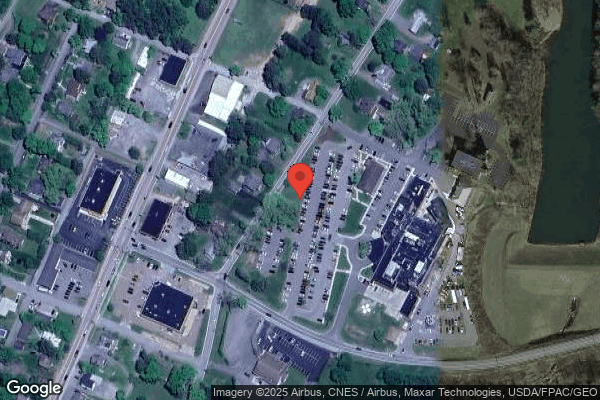
251 NORTH FOURTH STREET, OAKLAND, MD 21550 (301) 533-4220
For profit - Corporation 10 Beds WVU MEDICINE Data: November 2025
Trust Grade
90/100
#24 of 219 in MD
Last Inspection: August 2025

Inspected within the last 6 months. Data reflects current conditions.

Overview

Garrett County Subacute Unit in Oakland, Maryland, has received an impressive Trust Grade of A, indicating it is highly recommended and excels in care quality. Ranked #24 out of 219 nursing homes in Maryland, it sits comfortably in the top half, and is the best option among the four facilities in Garrett County. However, the facility's trend is concerning as it has worsened, increasing from one issue in 2023 to two in 2025. Staffing is a strong point with a 5/5 star rating and more RN coverage than any other facility in the state, although the 44% staff turnover is close to the state average. Notably, there have been no fines, which is a positive sign, but there are specific areas of concern, such as improper food storage practices and the lack of education and offers for the COVID-19 vaccine for staff, which could pose risks to residents and staff alike. Overall, while the facility has many strengths, it also shows some weaknesses that families should consider.

Trust Score
A
90/100
In Maryland
#24/219
Top 10%
Safety Record
Low Risk
No red flags
Inspections
Getting Worse
1 → 2 violations
Staff Stability
○ Average
44% turnover. Near Maryland's 48% average. Typical for the industry.
Penalties
✓ Good
No fines on record. Clean compliance history, better than most Maryland facilities.
Skilled Nurses
✓ Good
Each resident gets 260 minutes of Registered Nurse (RN) attention daily — more than 97% of Maryland nursing homes. RNs are the most trained staff who catch health problems before they become serious.
Violations
○ Average
8 deficiencies on record. Average for a facility this size. Mostly minor or procedural issues.
★★★★★
5.0
Overall Rating
★★★★★
5.0
Staff Levels
★★★★★
5.0
Care Quality
★★★★★
5.0
Inspection Score
Stable
2023: 1 issues
2025: 2 issues

The Good

  • 5-Star Staffing Rating · Excellent nurse staffing levels
  • 5-Star Quality Measures · Strong clinical quality outcomes
  • Full Sprinkler Coverage · Fire safety systems throughout facility
  • No fines on record
  • Staff turnover below average (44%)

    4 points below Maryland average of 48%

Facility shows strength in staffing levels, quality measures, fire safety.

The Bad

Staff Turnover: 44%

Near Maryland avg (46%)

Typical for the industry

Chain: WVU MEDICINE

Part of a multi-facility chain

Ask about local staffing decisions and management

The Ugly 8 deficiencies on record

Aug 2025 2 deficiencies
CONCERN (D)

Potential for Harm - no one hurt, but risky conditions existed

Deficiency F0887 (Tag F0887)

Could have caused harm · This affected 1 resident

Based on record review and staff interviews, it was determined that the facility failed to ensure that staff were offered and educated about the COVID-19 vaccine. This was evident for four of five emp...

Read full inspector narrative →
Based on record review and staff interviews, it was determined that the facility failed to ensure that staff were offered and educated about the COVID-19 vaccine. This was evident for four of five employee health files reviewed during the Infection Control task.Findings include:On 8/01/2025 at 1:59 PM, the surveyor reviewed staff immunization records and found that Staff #1, #5, #6, and the Director of Nursing (DON) were not offered or educated about the COVID-19 vaccine or most recent booster for 2024-2025.On 8/01/2025 at 2:31 PM, the surveyor interviewed the Nursing Home Administrator (NHA), who also serves as the facility DON. When asked whether staff were offered and educated about the COVID-19 vaccine or informed that it is an annual requirement, the NHA stated she was unaware of the requirement and confirmed that staff were neither educated nor offered the vaccine or booster. She advised the surveyor to confirm the process with the facility's Infection Preventionist Nurse (IPN #3).On 8/04/2025 at 1:20 PM, the surveyor interviewed IPN #3, who stated she was not aware that offering or educating staff about the COVID-19 vaccine and booster was a requirement. She further confirmed that the facility had not been offering or educating staff on the vaccine.On 8/04/2025 at 1:57 PM, the surveyor interviewed Staff #7, who is responsible for employee health. Staff #7 stated she was also unaware of the requirement to offer and educate staff regarding the COVID-19 vaccine and booster. She stated that the facility would adopt this process moving forward.On 8/05/2025 at 8:52 AM, the surveyor reviewed the facility's policy and procedure titled Employee Health Immunization Program (Policy V.032S, effective/reviewed on 6/20/2025), which stated in part: In accordance with WVUHS's (West Virginia University Health System) duty to provide and maintain a workplace that is free of known hazards, and consistent with guidance from CDC (Centers for Disease Control and Prevention) and other organizations, WVUHS adopts this policy to help safeguard the health of its Healthcare Workers (HCWs), their families, patients, clients, visitors, and the community at large from infectious diseases that may be reduced by vaccinations.Under General Guidelines:6.) COVID-19a) Vaccinate with 1 dose of an updated COVID-19 vaccine if HCW not up to date, and in accordance with current guidelines.
CONCERN (F)

Potential for Harm - no one hurt, but risky conditions existed

Food Safety (Tag F0812)

Could have caused harm · This affected most or all residents

Based on observations and interviews, it was determined that the facility failed to store food in accordance with professional standards. This deficient practice has the potential to affect all reside...

Read full inspector narrative →
Based on observations and interviews, it was determined that the facility failed to store food in accordance with professional standards. This deficient practice has the potential to affect all residents. The findings include: An initial tour of the facility's kitchen was conducted on 7/30/2025 at 9:53 AM with staff #9, the Director of Nutrition.Observation of the facility's walk-in coolers revealed the following:-An opened and almost finished buttermilk ranch dressing with a label dated 12/10/24. Staff stated that they received it on 12/10/24, but it should have been dated with an open and expiration date.-A Dusseldorf Mustard with a date on the container, 6/5/25. Staff #9 stated that the date on the container indicated when they received it, but it should have been labelled with an open and use-by date.-Banana pudding mix dated 7/28/25. Staff #9 stated that it was the preparation date and noted that it should have been labelled with a use-by date.-Chocolate pudding mix with a preparation date of 7/28/25, but had no use-by date.-Sour cream in a bowl lacked a use-by date.-Bagged provolone cheese, dated 7/29/25. Staff #9 stated that the date indicated was the preparation date; however, it lacked a use-by date.Further observation of the facility's walk-in freezer revealed an open bag of sausage links and an open bag of chicken tenders, both of which were missing their use-by dates.An interview later that day with staff #9 revealed that the facility's food labeling system had run out of labels. So, they had called the company, and it was on backorder. However, they had to use improvised labels, and their staff were inconsistent with their interim labeling process.
Mar 2023 1 deficiency
CONCERN (D)

Potential for Harm - no one hurt, but risky conditions existed

Medical Records (Tag F0842)

Could have caused harm · This affected 1 resident

Based on record reviews and interviews, it was determined that the facility failed to 1). document the route of oxygen delivery each time a patient's oxygen saturation was documented. This was evident...

Read full inspector narrative →
Based on record reviews and interviews, it was determined that the facility failed to 1). document the route of oxygen delivery each time a patient's oxygen saturation was documented. This was evident for 3 out of 3 residents (Resident #163, Resident #159, Resident #162) reviewed for Respiratory care and 2). failed to have hospice documentation in the medical recored. This was evident for 1 resident (Resident # 209) reviewed during an annual survey.The findings include: 1). On 3/16/23 at 8:37 AM, a review of medical records revealed that Resident #159 was admitted to the subacute unit on 3/6/23 for rehabilitation. Further review revealed a physician's order, dated 3/6/23, for the resident to receive oxygen 2 liters via nasal cannula when sleeping, and during the day when needed, to maintain an oxygen saturation level of 89%. A nasal cannula is a device designed to deliver oxygen directly to a patient's nose via a plastic tube that is tucked behind the ears and has two small soft flanges that aim for oxygen into the nostrils. Pulse oximetry is a technique of measuring the amount of oxygen in a patient's bloodstream (specifically peripheral capillary oxygen saturation, or 'SpO2') via a small device that is placed on the person's fingernail. The SpO2 measurement is given as a percentage. On 03/16/23 at 07:56 AM, a review of the vital signs that were recorded for Resident # 159 from 3/6/23 through 3/16/23 revealed that the pulse oximetry oxygen saturation was documented on the following dates and times: 3/6/23 at 21:30, 3/7/23 at 4:41 PM, 3/8/23 at 4:04, 3/9/23 at 4:11/23, 3/10/23 at 6:22 AM, 3/11/23 at 5:30 AM, 3/11/23 at 3:00 PM, Further review of the vital sign documentation for the above dates failed to reveal the route of oxygen delivery. On 03/16/23 at 08:27 AM, a review of medical records revealed that Resident # 169 was admitted to the subacute unit for rehabilitation on 3/8/23. Further review revealed a physician's order, dated 3/8/23, for the resident to be administered oxygen at 2/L via nasal cannula in order to maintain oxygen saturation rates above 89%. On 3/16/23 at 9:30 AM, a review of vital signs for Resident #169 from 3/11/23 through 3/15/23 revealed that the oxygen saturation was documented on the following dates and times: 3/11/23 at 3:00 PM, 3/12/23 at 7:08 PM., 3/13/23 at 3:59 PM, 3/14/23 at 3:45 PM, and 3/15/23 at 4:51 PM. Further review of the vital sign documentation for the above dates failed to reveal the route of oxygen delivery. On 03/16/23 at 09:12 AM, review of medical records revealed Resident # 162, was admitted to the subacute unit for rehabilitation on 3/10/23. Further review revealed a physician's orders for the resident to receive oxygen at a rate of 2/L nasal cannula to maintain oxygen saturation levels above 89 %. On 03/16/23 at 10:37 AM, a review of Resident #162's vital signs from 3/10/23 through 3/15/23 revealed that oxygen saturation was documented on the following dates and times: 3/10/23 at 4:00 PM. 3/11/23 at 3:00 PM, 3/13/23 at 3:59 PM, 3/14/23 at 5:30 AM, 3/15/23 at 5:30 AM. Further review of the vital sign documentation for the above dates failed to reveal the route of oxygen delivered. The Director of Nursing (DON) was interviewed on 03/16/23 at 08:07 AM. During the interview, she reported that the nurses are expected to document the route of oxygen administration, if the resident was receiving additional oxygen, and how much additional oxygen the resident was receiving every time the oxygen saturation level is documented. In addition, the DON reported that the subacute unit followed the Lippincott procedures guide for the administration of oxygen. On 3/16/23, a review of the Lippincott procedures Guide for the administration of oxygen revealed that documentation associated with oxygen administration should includes the type of delivery device( route). 2) On 3/14/23 at 1:00 PM, Resident #209's medical record was reviewed. A 3/7/23 documented history and physical from Resident #209's attending physician revealed that Resident #209 was transferred from acute care to the subacute unit for hospice care on 03/06/23. Further review of Resident #209's medical record failed to reveal documentation of the care provided from the contracted company that was providing hospice services. On 3/14/23 at 1:30 PM, an interview was conducted with RN #4 and the Director of Nursing (DON) about what communication was in place between the subacute unit's staff and the hospice staff. RN #4 stated that hospice staff wouild meet with the subacute's unit staff after their encounter with the resident and verbally shared what they did, and would give any updates related to the resident's care. RN #4 stated that hospice had been in to care for the resident since the resident's admission. The surveyor informed RN #4 and the DON that the hospice notes were not found in the medical record. The DON stated that hospice staff documented the information in their own medical record system and that they shared a care plan, however, the hospice notes were not kept in Resident #209's medical record. On 3/16/23 at 9:28 AM, a second interview was conducted with the DON regarding the hospice notes. The DON confirmed the hospice notes should have been filed in the resident's medical record.
Dec 2018 5 deficiencies
CONCERN (D)

Potential for Harm - no one hurt, but risky conditions existed

Assessment Accuracy (Tag F0641)

Could have caused harm · This affected 1 resident

Based on medical record review and staff interview, it was determined the facility staff failed to ensure that Minimum Data Set (MDS) assessments were accurately coded. This was evident for 2 (#2, #4)...

Read full inspector narrative →
Based on medical record review and staff interview, it was determined the facility staff failed to ensure that Minimum Data Set (MDS) assessments were accurately coded. This was evident for 2 (#2, #4) of 5 residents reviewed for unnecessary medications. The MDS is part of the Resident Assessment Instrument that was Federally mandated in legislation passed in 1986. The MDS is a set of assessment screening items employed as part of a standardized, reproducible, and comprehensive assessment process that ensures each resident's individual needs are identified, that care is planned based on those individualized needs, and that the care is provided as planned to meet the needs of each resident. The findings include: 1) Review of the medical record for Resident #2 on 12/13/18 revealed a physician's history and physical, dated 11/5/18, which documented the assessment diagnoses of subarachnoid bleed, subdural hematoma, NSTEMI (non-ST elevated myocardial infarction), multiple myeloma (in relapse), renal disease, bladder cancer and pulmonary hypertension. Review of the MDS assessment with an assessment reference date (ARD) of 11/14/18 and 11/21/18, Section I, diagnosis, failed to capture the diagnoses. Discussed with the Director of Nursing (DON) on 12/13/18 at 12:04 PM. 2) Review of the medical record for Resident #4 on 12/13/18 revealed a physician's history and physical, dated 11/22/18, which documented the assessment diagnoses of depression in which the resident took the antidepressant Citalopram, anemia in which the resident took Ferrous Gluconate twice per day, chronic kidney disease, protein-calorie malnutrition and cellulitis of the scrotum. Review of the MDS with an ARD of 12/4/18, Section I, diagnosis, failed to capture the diagnoses. Discussed with the DON on 12/13/18 at 12:44 PM.
CONCERN (D)

Potential for Harm - no one hurt, but risky conditions existed

Comprehensive Care Plan (Tag F0656)

Could have caused harm · This affected 1 resident

Based on medical record review, staff interview, and observation, it was determined the facility failed to develop comprehensive person-centered care plans with measurable goals. This was evident for ...

Read full inspector narrative →
Based on medical record review, staff interview, and observation, it was determined the facility failed to develop comprehensive person-centered care plans with measurable goals. This was evident for 2 (#4, #5) of 5 residents reviewed for unnecessary medications. The findings include: A care plan is a guide that addresses the unique needs of each resident. It is used to plan, assess and evaluate the effectiveness of the resident's care. 1) Review of the medical record for Resident #5 on 12/13/18 revealed the resident was admitted to the unit 11/20/18 with an order for the anticoagulant Eliquis. On 11/25/18, the resident was started on another anticoagulant medication, Coumadin. The resident took the Coumadin from 11/25/18 to 12/12/18. Review of care plans for Resident #5 failed to produce a care plan for the anticoagulant with specific interventions and measurable goals. Further review of the medical record revealed that Resident #5 took the pain medications Hydrocodone bitart/acetaminophen (lortab 5/325) 3 times per day when needed for pain and Tylenol 650 mg. every 4 hours when needed for pain. Observation was made on 12/13/18 during medication administration of Resident #5 receiving medication. The nurse asked the resident if he/she had any pain and the resident replied he/she had pain on a scale of 6-8. The nurse gave the resident Lortab for the pain. Review of care plans for Resident #5 revealed a care plan for pain, however, the goal was not measurable. Reviewed with the Director of Nursing on 12/13/18 at 9:57 AM. 2) Review of the medical record for Resident #4 on 12/13/18 revealed a physician's history and physical note, dated 11/22/18, which documented that the resident had uncontrolled Type 2 diabetes with complications. Review of Resident #4's December 2018 physician orders revealed diabetic medication orders for 17 units of Levemir Insulin every evening, 7 units of Novolog insulin 3 times per day with food and Metformin 1,000 mg every day. Review of care plans created for Resident #4 failed to produce a specific, resident centered care plan for diabetes that had resident centered, measurable goals. This was discussed with the Director of Nursing on 12/13/18 at 12:44 PM.
CONCERN (D)

Potential for Harm - no one hurt, but risky conditions existed

Deficiency F0660 (Tag F0660)

Could have caused harm · This affected 1 resident

**NOTE- TERMS IN BRACKETS HAVE BEEN EDITED TO PROTECT CONFIDENTIALITY** Based on medical record review and staff interview, it was determined the facility failed to develop an individualized discharge...

Read full inspector narrative →
**NOTE- TERMS IN BRACKETS HAVE BEEN EDITED TO PROTECT CONFIDENTIALITY** Based on medical record review and staff interview, it was determined the facility failed to develop an individualized discharge plan/care plan for a resident admitted to the facility for short term rehabilitation. This was evident for 1 (#7) of 1 resident reviewed for discharge. The findings include: Review of the medical record for Resident #7 on 12/12/18 revealed documentation that the resident was admitted on [DATE] and discharged on 9/14/18. Review of Resident #7's care plans failed to produce a care plan for discharge planning which would have identified the resident's person-centered discharge goals. Discussed with the Director of Nursing on 12/12/18 at 4:20 PM who confirmed the finding.
CONCERN (D)

Potential for Harm - no one hurt, but risky conditions existed

Food Safety (Tag F0812)

Could have caused harm · This affected 1 resident

Based on observation and interview with staff,, it was determined that the facility staff failed to date and label food items. The findings include: Observation was made, on 12/13/18 8:05 AM, during...

Read full inspector narrative →
Based on observation and interview with staff,, it was determined that the facility staff failed to date and label food items. The findings include: Observation was made, on 12/13/18 8:05 AM, during a tour of kitchen with the Dietary Manager of the first walk-in refrigerator. Observation was made of a storage rack with 2 trays of pie/cheesecake. The tray on the top shelf had 10 slices of pie/cheesecake and the second shelf had a tray with 12 slices of pie/cheesecake. The slices were wrapped in saran wrap, however, the items were not labeled or dated. The Dietary Manager confirmed the findings.
CONCERN (E)

Potential for Harm - no one hurt, but risky conditions existed

Room Equipment (Tag F0908)

Could have caused harm · This affected multiple residents

Based on observation and staff interview it was determined the facility failed to keep the walk-in freezer in the kitchen in safe operating condition. This was evident during the initial tour of the k...

Read full inspector narrative →
Based on observation and staff interview it was determined the facility failed to keep the walk-in freezer in the kitchen in safe operating condition. This was evident during the initial tour of the kitchen. The findings include: On 12/13/18 at 8:05 AM, during a tour of the kitchen with the Dietary Manager, observation was made of the walk-in freezer. There were ice formations on the ceiling in the freezer and under the 2 compressor fans. There was ice build-up on a bag of green beans and a box of cheese tortellini. There was a 2-inch-tall ice mound on top of a box of food which was located on the top shelf under the compressor fans. The Dietary Manager stated, we had that problem back in the summer and it is occurring again. I will have to call maintenance.
Understanding Severity Codes (click to expand)
Life-Threatening (Immediate Jeopardy)
J - Isolated K - Pattern L - Widespread
Actual Harm
G - Isolated H - Pattern I - Widespread
Potential for Harm
D - Isolated E - Pattern F - Widespread
No Harm (Minor)
A - Isolated B - Pattern C - Widespread

Questions to Ask on Your Visit

  • "Can I speak with families of current residents?"
  • "What's your RN coverage like on weekends and overnight?"

Our Honest Assessment

Strengths
  • • Grade A (90/100). Above average facility, better than most options in Maryland.
  • • No major safety red flags. No abuse findings, life-threatening violations, or SFF status.
  • • No fines on record. Clean compliance history, better than most Maryland facilities.
  • • 44% turnover. Below Maryland's 48% average. Good staff retention means consistent care.
Concerns
  • • No significant concerns identified. This facility shows no red flags across CMS ratings, staff turnover, or federal penalties.
Bottom line: Generally positive indicators. Standard due diligence and a personal visit recommended.

About This Facility

What is Garrett County Subacute Unit's CMS Rating?

CMS assigns GARRETT COUNTY SUBACUTE UNIT an overall rating of 5 out of 5 stars, which is considered much above average nationally. Within Maryland, this rating places the facility higher than 99% of the state's 100 nursing homes. This rating reflects solid performance across the metrics CMS uses to evaluate nursing home quality.

How is Garrett County Subacute Unit Staffed?

CMS rates GARRETT COUNTY SUBACUTE UNIT's staffing level at 5 out of 5 stars, which is much above average compared to other nursing homes. Staff turnover is 44%, compared to the Maryland average of 46%. This relatively stable workforce can support continuity of care.

What Have Inspectors Found at Garrett County Subacute Unit?

State health inspectors documented 8 deficiencies at GARRETT COUNTY SUBACUTE UNIT during 2018 to 2025. These included: 8 with potential for harm.

Who Owns and Operates Garrett County Subacute Unit?

GARRETT COUNTY SUBACUTE UNIT is owned by a for-profit company. For-profit facilities operate as businesses with obligations to shareholders or private owners. The facility is operated by WVU MEDICINE, a chain that manages multiple nursing homes. With 10 certified beds and approximately 6 residents (about 60% occupancy), it is a smaller facility located in OAKLAND, Maryland.

How Does Garrett County Subacute Unit Compare to Other Maryland Nursing Homes?

Compared to the 100 nursing homes in Maryland, GARRETT COUNTY SUBACUTE UNIT's overall rating (5 stars) is above the state average of 3.1, staff turnover (44%) is near the state average of 46%, and health inspection rating (5 stars) is much above the national benchmark.

What Should Families Ask When Visiting Garrett County Subacute Unit?

Based on this facility's data, families visiting should ask: "Can I visit during a mealtime to observe dining assistance and food quality?" "How do you handle medical emergencies, and what is your hospital transfer rate?" "Can I speak with family members of current residents about their experience?"

Is Garrett County Subacute Unit Safe?

Based on CMS inspection data, GARRETT COUNTY SUBACUTE UNIT has a clean safety record: no substantiated abuse findings (meaning no confirmed cases of resident harm), no Immediate Jeopardy citations (the most serious violation level indicating risk of serious injury or death), and is not on the Special Focus Facility watch list (a federal program monitoring the lowest-performing 1% of nursing homes). The facility has a 5-star overall rating and ranks #1 of 100 nursing homes in Maryland. While no facility is perfect, families should still ask about staff-to-resident ratios and recent inspection results during their visit.

Do Nurses at Garrett County Subacute Unit Stick Around?

GARRETT COUNTY SUBACUTE UNIT has a staff turnover rate of 44%, which is about average for Maryland nursing homes (state average: 46%). Moderate turnover is common in nursing homes, but families should still ask about staff tenure and how the facility maintains care continuity when employees leave.

Was Garrett County Subacute Unit Ever Fined?

GARRETT COUNTY SUBACUTE UNIT has no federal fines on record. CMS issues fines when nursing homes fail to meet care standards or don't correct problems found during inspections. The absence of fines suggests the facility has either maintained compliance or corrected any issues before penalties were assessed. This is a positive indicator, though families should still review recent inspection reports for the full picture.

Is Garrett County Subacute Unit on Any Federal Watch List?

GARRETT COUNTY SUBACUTE UNIT is not on any federal watch list. The most significant is the Special Focus Facility (SFF) program, which identifies the bottom 1% of nursing homes nationally based on persistent, serious quality problems. Not being on this list means the facility has avoided the pattern of deficiencies that triggers enhanced federal oversight. This is a positive indicator, though families should still review the facility's inspection history directly.