OAKLAND NURSING & REHABILITATION CENTER
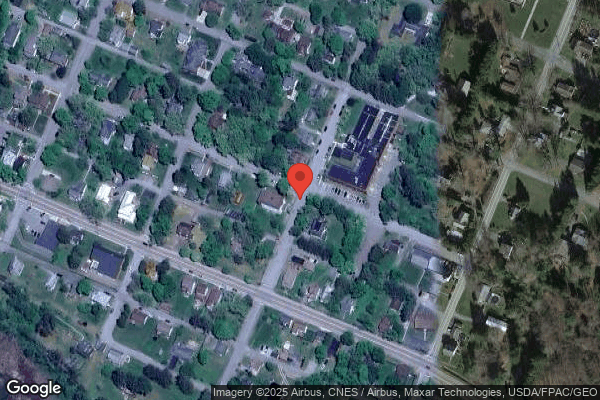
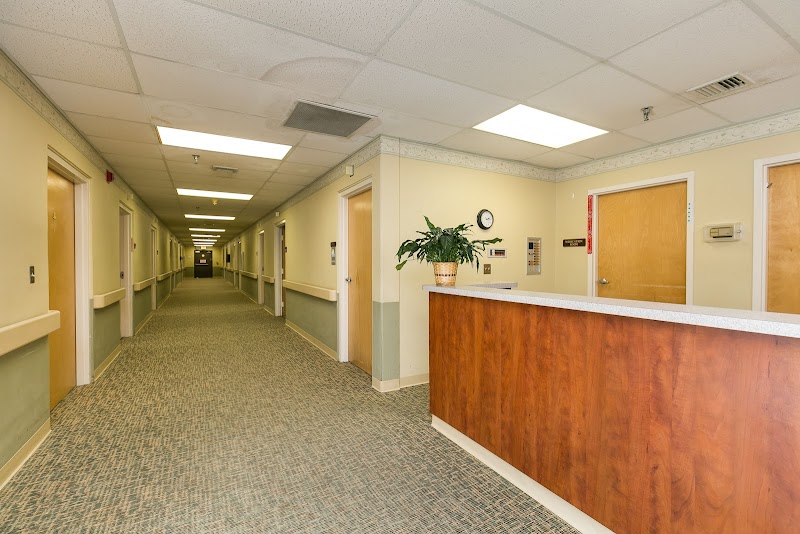
706 EAST ALDER STREET, OAKLAND, MD 21550 (301) 334-2319
For profit - Corporation 100 Beds FUNDAMENTAL HEALTHCARE Data: November 2025 1 Immediate Jeopardy citation
Trust Grade
23/100
#214 of 219 in MD
Last Inspection: June 2023

Over 2 years since last inspection. Current conditions may differ from available data.

Overview

Oakland Nursing & Rehabilitation Center has received a Trust Grade of F, indicating a poor level of care with significant concerns. It ranks #214 out of 219 facilities in Maryland, placing it in the bottom half statewide and #4 out of 4 in Garrett County, meaning there are no better local options. The facility is showing an improving trend, having reduced reported issues from 26 in 2023 to just 5 in 2025. Staffing at the center is average with a turnover rate of 40%, which is consistent with the state average, and there are no fines on record, suggesting some stability. However, there have been serious incidents, including a critical failure to secure a fire exit leading to a resident leaving the facility and being found a half-mile away, and another case where a resident was hospitalized due to inadequate monitoring of their fluid intake. While there are some improvements and areas of strength, families should weigh these serious concerns carefully when considering this facility.

Trust Score
F
23/100
In Maryland
#214/219
Bottom 3%
Safety Record
High Risk
Review needed
Inspections
Getting Better
26 → 5 violations
Staff Stability
○ Average
40% turnover. Near Maryland's 48% average. Typical for the industry.
Penalties
✓ Good
No fines on record. Clean compliance history, better than most Maryland facilities.
Skilled Nurses
○ Average
Each resident gets 36 minutes of Registered Nurse (RN) attention daily — about average for Maryland. RNs are the most trained staff who monitor for health changes.
Violations
⚠ Watch
55 deficiencies on record. Higher than average. Multiple issues found across inspections.
★☆☆☆☆
1.0
Overall Rating
★★★☆☆
3.0
Staff Levels
★★☆☆☆
2.0
Care Quality
★☆☆☆☆
1.0
Inspection Score
Stable
2023: 26 issues
2025: 5 issues

The Good

  • Full Sprinkler Coverage · Fire safety systems throughout facility
  • No fines on record
  • Staff turnover below average (40%)

    8 points below Maryland average of 48%

Facility shows strength in fire safety.

The Bad

1-Star Overall Rating

Below Maryland average (3.0)

Significant quality concerns identified by CMS

Staff Turnover: 40%

Near Maryland avg (46%)

Typical for the industry

Chain: FUNDAMENTAL HEALTHCARE

Part of a multi-facility chain

Ask about local staffing decisions and management

The Ugly 55 deficiencies on record

1 life-threatening 1 actual harm
Aug 2025 5 deficiencies 1 IJ
CRITICAL (J) 📢 Someone Reported This

A family member, employee, or ombudsman was alarmed enough to file a formal complaint

Immediate Jeopardy (IJ) - the most serious Medicare violation

Accident Prevention (Tag F0689)

Someone could have died · This affected 1 resident

Based on record review, interview, facility document review, and facility policy review, the facility failed to ensure an alarm on the fire exit door of the secured unit sounded to prevent elopement f...

Read full inspector narrative →
Based on record review, interview, facility document review, and facility policy review, the facility failed to ensure an alarm on the fire exit door of the secured unit sounded to prevent elopement for 1 (Resident #7) of 1 resident reviewed for elopement. The failure resulted in Resident #7 exiting the facility on the morning of 07/28/2024 at 6:10 AM and being found by staff approximately one-half mile from the facility at approximately 7:00 AM. It was determined the facility's non-compliance with one or more requirements of participation had caused or was likely to cause serious injury, serious harm, serious impairment, or death to one or more facility residents. The Immediate Jeopardy (IJ) was related to 42 CFR 483.25(d), F689, Supervision to Prevent Accidents at a scope and severity of J. The IJ began on 07/28/2024 when Resident #7 exited the facility through the fire exit door on the secured unit. The survey team notified the Administrator of the IJ and provided the IJ template on 07/28/2025 at 12:15 PM. Beginning 07/28/2024 and continuing until 08/05/2024, the facility implemented corrective actions to correct the identified deficient practice and prevent recurrence; thus, immediate jeopardy past non-compliance was cited. The findings include:A Resident Face Sheet revealed that Resident #7 on 02/20/2024 had a medical history that included diagnoses of Parkinson's disease, schizoaffective disorder, and dementia. A quarterly Minimum Data Set Assessment, with an Assessment Reference Date of 05/28/2024, revealed Resident #7 had a Brief Interview for Mental Status score of 6, which indicated the resident had severe cognitive impairment. Resident #7's Care Plan, revealed a problem statement with a start date of 02/23/2024 that indicated the resident was at risk for elopement and required the use of a wander guard. Interventions indicated the resident resided on the secure unit and directed staff to check the wander guard battery daily and check proper function of the wander guard every shift. Resident #7's Observation Detail List Report, dated 05/07/2024, revealed the resident was not alert and oriented to person, place and time, did not have safe decision-making capabilities, had a history of wandering, and had made no attempts to leave the facility. The report indicated the intervention was to have the resident reside on the secured unit and have a wander guard bracelet in place. A Progress Note, dated 07/28/2024 at 11:40 AM, revealed a geriatric nursing assistant was conducting rounds and noticed Resident #7 was not in their room. Per the Progress Note, a Code Pink was called and staff began looking in all rooms on all floors. Three staff members left the facility and drove around searching for the resident. According to the Progress Note, Resident #7 was located approximately one-half mile from the facility at approximately 7:00 AM and returned to the facility at 7:10 AM. The Progress Note revealed an assessment was completed and identified minor scrapes to the resident's left lower extremity from tall grass but indicated the resident had no complaints of discomfort. Review of the Facility Reported Incident Follow-Up Investigation Report Form, revealed Licensed Practical Nurse (LPN) #4 had last seen Resident #7 ambulating on the unit and had redirected the resident back to their room. During an interview on 07/22/2025 at 12:19 PM, Registered Nurse (RN) #6 stated she arrived for her shift on 07/28/2024 just after 6:00 AM and was informed Resident #7 was missing. She stated management and law enforcement had been notified, and a search began inside and expanded outside the facility. Per RN #6, Resident #7 was brought back to the facility just after 7:00 AM by staff. She stated the resident was assessed and had minor scratches to the left lower extremity. The resident was dressed for the day and wearing shoes, but no socks. She stated Resident #7 ambulated independently and resided on the secure unit and, at the time of the incident, the alarm on the exit door did not sound. During an interview on 07/22/2025 at 12:30 PM, the Administrator stated the fire exit door located at the end of the secure unit had an alarm; however, the toggle switch to the alarm was turned off while a family moved furniture into the unit. He stated that the toggle switch did not get turned back on; therefore, there was no electrical supply to the door and the alarm did not sound when Resident #7 exited the door. The Administrator stated no additional residents exited the facility during the time the alarm was not functioning. During a follow-up interview on 07/22/2025 at 1:47 PM, the Administrator stated the door Resident #7 exited was a fire door and was not equipped with a wander guard sensor. He confirmed that when the toggle switch for the door alarm was turned off, the alarm was non-functional because the electricity had been shut off; therefore, when the alarm was turned off, it would not sound when the door was opened. During a phone interview on 07/24/2025 at 11:18 AM, the Medical Director stated he was made aware of Resident #7's elopement and that the facility met regarding a mitigation plan. The Medical Director stated Resident #7 exhibited wandering behavior and had a wander guard, but unfortunately, left the facility through an exit door. Per the Medical Director, the resident was found nearby by a staff member, and as the Medical Director recalled, had no injuries, maybe scrapes. The Medical Director stated his expectation was that residents remained safe in the facility, especially those that wandered, and that interventions be in place, whether that be wander guards, re-directing, or placement on the secure unit. The Medical Director stated they wished to protect the residents and avoid any injury or harm. During an interview on 07/31/2025 at 1:27 PM, the Administrator stated his expectation regarding the protection of residents was to know the resident, meaning staff should know the resident and whether the resident was at risk for wandering or exit-seeking, know how to re-direct the resident, and always know the location of the residents. He stated that for any resident who could perceivably have wandering or elopement tendencies, it was the facility's job to protect them and know their location. He stated that was the purpose of a secure unit. A Mitigation Plan, dated 07/28/2024, revealed the facility initiated corrective actions on 07/28/2024 to remove the immediate jeopardy and correct the failed practices as follows: Resident returned to the facility without injury. Resident assessed for injury by licensed staff no injuries noted. Elopement Risk Evaluation was repeated by licensed staff. Assessed for wander guard. MD [Medical Director]/RP [Responsible Party] notified. Initiated Q [every] 15-minute checks initiated and completed by 2PM [2:00 PM]. AOC [allegation of compliance] Date 7/28/24 [07/28/2024].Elopement Risk Assessments were completed by licensed staff on current residents residing in the facility. Residents identified as having the potential for elopement will have care plan reviewed and interventions implemented as needed. AOC Date 7/28/24 [07/28/2024]. Facility staff will be re-educated on Policy and Procedure for elopement. As well as immediate notification of the Admin [Administrator]/DON [Director of Nursing] of any missing resident. This education will be completed on 7/31/2024. AOC Date 7/31/24 [07/31/2024].Educate facility staff upon finding a door to be non-functioning or ajar to report to management immediately and post an employee at the door until otherwise indicated and directed by a member of management. AOC Date 7/31/24 [07/31/2024]. Electrician/vendor will assess the door functioning on secured unit as well as other secured safety exits with keypads and make repairs as specified. AOC Date 7/30/24 [07/30/2024]. Elopement drill will be completed on 7/30/2024. Completion date 07/30/2024. New admissions will be reviewed in morning meeting Monday through Friday for completion of elopement assessment and implementation of interventions as part of the clinical morning meeting process. AOC Date 7/28/24 [07/28/2024].The DON will randomly audit a minimum of 5 elopement assessments weekly for 4 weeks then monthly for 2 additional months to validate appropriateness of interventions.The Medical Director was notified of this on 7/28/24. AOC Date 7/28/24 [07/28/2024].An Ad Hoc Quality Assurance Performance Improvement [QAPI] meeting was held on 07/30/24 regarding the contents of this plan.The data received will be reviewed in the QAPI meeting monthly for 3 months for determination of compliance and further actions. Any concerns identified will be addressed at time of discovery. AOC Date 7/30/24 [07/30/2024].In addition, records revealed and confirmed the facility purchased a new alarm system on 07/31/2024. The new alarm system was installed and confirmed functional on 08/05/2024. Observations were made of the fire exit door in the secure unit on 07/22/2025 at 2:05 PM with the Maintenance Director and the Administrator. The door was functioning; the alarm sounded when the door was opened. Staff were interviewed and validated in-services were held reviewing the elopement policy, checking doors to ensure they were not ajar, were working and if not, to report immediately and place staff at an exit for protection of the residents. After review and verification of the facility's corrective actions, to include review of the facility's investigation, monitoring tools, staff education, and interviews with facility staff regarding the education provided, the survey team determined the facility implemented the above corrective actions beginning on 07/28/2024 and conducted ongoing education and monitoring; therefore, immediate jeopardy past noncompliance was cited.
SERIOUS (G) 📢 Someone Reported This

A family member, employee, or ombudsman was alarmed enough to file a formal complaint

Actual Harm - a resident was hurt due to facility failures

Deficiency F0692 (Tag F0692)

A resident was harmed · This affected 1 resident

**NOTE- TERMS IN BRACKETS HAVE BEEN EDITED TO PROTECT CONFIDENTIALITY** Based on interview, record review, and facility document and policy review, the facility failed to monitor and assess a resident...

Read full inspector narrative →
**NOTE- TERMS IN BRACKETS HAVE BEEN EDITED TO PROTECT CONFIDENTIALITY** Based on interview, record review, and facility document and policy review, the facility failed to monitor and assess a resident's oral fluid intake, notify the physician of changes in intake, and put interventions in place to maintain adequate hydration for 1 (Resident #3) of 3 residents reviewed for dehydration. Specifically, the facility failed to identify and address Resident #3's inadequate fluid intake, which resulted in actual harm to Resident #3 who required hospitalization with diagnoses of encephalopathy and dehydration.The findings include:A facility policy titled, Hydration - Oral, dated 05/05/2023, indicated, 1. Recommend fluids (6-8 glasses per day) to patients/residents during and in-between meals and during periods of physical activity. The policy also specified, 3. Closely monitor all patients/residents at risk for dehydration, who have a history of poor oral intake and are enterally fed (NPO) [nothing by mouth] or have an indwelling catheter. I & O [Intake and Output] is recorded when indicated. A Resident Face Sheet revealed Resident #3 had a medical history that included diagnoses of cerebral infarction due to an unspecified occlusion or stenosis of the right middle cerebral artery, diabetes mellitus, dementia, dysphagia, and nutritional deficiency. An annual Minimum Data Set (MDS), with an Assessment Reference Date (ARD) of 11/14/2023, revealed Resident #3 had a Brief Interview for Mental Status (BIMS) score of 11, which indicated the resident had moderate cognitive impairment. The MDS indicated the resident required set-up or clean-up assistance from staff for eating. The MDS indicated the resident had no vomiting, fever, or dehydration and no signs/symptoms of swallowing disorders during the look-back period. The MDS revealed Resident #3 was 65 inches in height, weighed 141 pounds, and received a therapeutic diet. Resident #3's Care Plan, included a problem statement, dated as initiated 01/15/2020, for dehydration/fluid maintenance that indicated the resident was at risk for dehydration related to cerebrovascular accident and diabetes mellitus. Interventions directed staff to assess for dehydration (dizziness on sitting/standing, change in mental status, decreased urine output, concentrated urine, poor skin turgor, dry, cracked lips, dry mucus membranes, sunken eyes, constipation, fever, infection, electrolyte imbalance), assess risk factors for dehydration, assist with fluids as needed, encourage fluids throughout the day, keep fluids accessible, monitor laboratory work as ordered, and record intake and output every shift. A Dehydration Risk Evaluation and Care Planning Worksheet, dated 09/05/2023, indicated Resident #3 had the following risk factors: urinary incontinence, limited range of motion, used laxatives and anti-depressants, had depression/mood disorders, cerebrovascular accident, diabetes mellitus, and dysphagia. Potential interventions included: adaptive devices to assist with fluid consumption, encourage oral rehydration, offer fluids between meals and with medications, assist with fluids and meals, and monitor labs. Resident #3's Observation Detail List Report, revealed a dietary note dated 11/28/2023 at 11:48 AM, that indicated the resident's estimated fluid needs at their current weight was 1991 milliliters (ml) of fluid per day. The report indicated the resident's documented fluid intake ranged from [PHONE NUMBER] ml, with an average documented fluid intake of 1468 ml (which would represent a 523 ml per day fluid deficit). A document titled, Message History for Resident #3, revealed the resident consumed less than 1200 ml of fluid on the following dates: 01/07/2024, 01/08/2024, 01/10/2024, 01/11/2024, 01/13/2024, 01/17/2024, 01/18/2024, and 01/20/2024. Resident #3's Progress Notes, for the timeframe from 01/03/2024 through 01/19/2024, lacked evidence of any assessments of the resident's oral intake, symptoms of dehydration, or interventions to increase fluid intake. Resident #3's Progress Note, dated 01/20/2024 at 6:14 PM, indicated the resident looked pale and lethargic. Per the Progress Note, the resident was leaning more to their left side, and their hand grasps were weak on the left side. The physician was notified, and the resident was sent to the hospital for evaluation. Resident #3's Progress Note, dated 01/21/2024 at 10:43 AM, indicated the resident was admitted to a local hospital with a diagnosis of metabolic encephalopathy. The hospital admission H&P [History and Physical], dated 01/20/2024, indicated Resident #3 was seen for altered mental status. The resident presented to the emergency room hypotensive and visibly very dry. Per the H&P, the workup showed an acute kidney injury. The physical examination revealed an ill-appearing individual, cachectic (a complex condition characterized by weight loss and muscle wasting), with an unkempt appearance, dry mucous membranes, and dry mouth and tongue with cracked mucous membranes. The H&P indicated that the resident's skin was dry and pale and their laboratory results revealed a blood urea nitrogen (BUN) level of 46, with the normal range being 8 to 25 (BUN levels measure the amount of urea nitrogen in the blood, which helps assess kidney function). The assessment section revealed diagnoses that included metabolic encephalopathy, acute kidney injury, and dehydration. During an interview on 07/31/2025 at 8:55 AM, Licensed Practical Nurse (LPN) #18 stated Resident #3 was confused most of the time but was still able to feed themself. She stated the night nurse reviewed the intake and output for residents. LPN #18 said if a resident consumed fewer fluids than needed, she encouraged fluids. She stated staff always encouraged Resident #3 to drink, and most of the time, the resident would drink when encouraged to do so. She stated the resident liked milk, water, and occasionally Kool-Aid, and at times would even drink directly from the water pitcher. LPN #18 stated if she suspected any dehydration she would look for lethargy, cracked lips, sunken eyes, dry mouth, and always being thirsty. She stated she was unaware of Resident #3 refusing fluids, but the resident did refuse supplements and those were discontinued in 2023. According to LPN #18, Resident #3's meal intake was inconsistent. She stated at times, the resident needed assistance with meals because they would try and get the food to their mouth and drop it. LPN #18 stated that with any change in condition; she would notify the physician. During an interview on 07/31/2025 at 9:18 AM, LPN #15 stated that the night shift reviewed the bowel records but was unsure who reviewed fluid intake. She stated there were messages in the electronic health record with daily alerts (Message History) that nursing could view. She then stated she watched for dehydration in residents by looking for dryness of the mouth, which they saw during medication pass; sleeping more; not urinating; and with any change in condition, she would notify the physician immediately so the concern could be evaluated. She stated she did not recall Resident #3 having any signs of dehydration, as they drank fluids during the day. She said the resident was slowly declining and needed more assistance with activities of daily living. During an interview on 07/31/2025 at 9:57 AM, the Clinical Services Director stated the electronic health record sent messages daily related to bowel records and intake, and she believed the Assistant Director of Nursing (ADON) or Director of Nursing (DON) reviewed that daily. During an interview on 07/31/2025 at 10:31 AM, the DON stated that when a resident was admitted and the diet order was put into the electronic health record, the system automatically defaulted to I&O, so every resident in the facility had I&Os recorded. The I&Os were reviewed every morning by the hall nurse and the DON. The DON stated that when they logged in on the computer, the home screen would have alerts regarding bowel movements and fluid levels. If staff received a message, they encouraged the residents to drink fluids. She stated she checked after every morning meeting to ensure the staff were encouraging fluids. During an interview on 07/31/2025 at 9:40 PM, Registered Nurse (RN) #14 stated she ran the report at night for bowel records and intake and output. She stated she went back three days and calculated the intake. She then stated she had always been told to calculate 1200 ml of fluid per day for a resident. RN #14 stated fluids were documented by staff on the I&O in the electronic health record system and said the system would then send message alerts for any resident that received under 1200 ml of fluids per day. During an observation and interview on 08/01/2025 at 9:17 AM, LPN #16 opened a laptop and showed the surveyor the electronic health record section where the messages were displayed. Residents were listed with messages such as no bowel movement in two days and fluid intake below 1200 ml. She stated the messages were visible all day long on their computer. During a follow-up interview on 08/01/2025 at 9:54 AM, the Clinical Services Director stated the hydration policy read six to eight glasses per day as the recommended fluid intake and that the electronic health record defaulted to 1200 ml of fluid a day minimum. She then stated if the registered dietitian recommended additional fluids, that should be followed. During a telephone interview on 08/01/2025 at 12:40 PM, the prior Certified Dietary Manager stated the facility would have received the registered dietitian's recommendations, and her expectation was for the facility to follow the recommendations, provide the appropriate fluids, and have interventions in place. During an interview on 08/01/2025 at 12:50 PM, Geriatric Nursing Assistant (GNA) #28 stated that with any resident, she checked the skin for dryness, not urinating, or strong urine, and during mouth care looked to see if the teeth and gums were dry. If a resident's mouth looked dry, then she would provide oral care more often, offer fluids, and assist with meals. She stated she documented all fluid intake in the electronic health record. She then stated nursing received warnings related to fluid intake, but those were not shared with her. During an interview on 08/01/2025 at 12:55 PM, GNA #19 stated that when looking at their residents, they checked for dryness of the skin and the mouth and offered fluids. GNA #19 stated if a resident had any changes, they notified the nurse. GNA #19 then stated nursing staff did not share information with them about fluid levels and stated they usually found out a resident was dehydrated when the resident went to the hospital. During an interview on 08/01/2025 at 1:01 PM, GNA #8 stated the aides did rounds at the beginning of each shift. She stated the night nurse looked up bowel reports and checked if a resident had low fluid intake, then informed her which residents needed fluids. She stated when told a resident needed fluids, she encouraged more fluids. GNA #8 stated that when providing care, she checked the resident's skin, looked for bruising, and checked their mouth for sores. She stated the nurse aides were supposed to enter the resident's intake into the computer system, and if a resident refused care, the nurse should be told. During an interview on 07/31/2025 at 11:45 AM, the Medical Director stated Resident #3 had multiple strokes, vascular dementia, and was deteriorating over their last year in the facility. He stated he expected the facility to provide the appropriate amount of fluid required for all residents, to assess for any signs of dehydration, and to inform him of any changes in condition or concerns. He stated he was notified when Resident #3 had the change in condition in January 2024 with leaning more to one side and was sent to the hospital. Per the Medical Director, sometimes with the older population, they did not see what was happening until it happened, and almost everyone that came into the emergency department was dehydrated. The Medical Director stated Resident #3 was able to feed themself up until the last six to nine months and then required more assistance but had been able to take fluids on their own. During a follow-up phone interview on 08/01/2025 at 9:05 AM, the Medical Director stated he did not recall the registered dietitian's fluid recommendations for Resident #3; however, if the resident was not taking in adequate fluids, he would have wanted to be made aware of that to put interventions into place. Per the Medical Director, the facility typically used a system to send notes to him, but he was not aware of any hydration concerns. During a follow-up interview on 07/31/2025 at 12:41 PM, the DON stated she expected staff to complete dehydration assessments, and if a resident was at risk, to monitor signs and symptoms of dehydration and report any changes to the physician and dietary to ensure interventions were in place. During an interview on 07/31/2025 at 1:16 PM, the Administrator stated he expected staff to communicate within the unit, including nursing assistants, to encourage residents to drink and if there were any problems, to inform the physician so it could be addressed. He stated residents should be checked, looking for signs of dehydration. He stated all staff should document daily intake/output and communicate. He stated communication and documentation were essential to the care of the residents.
CONCERN (D) 📢 Someone Reported This

A family member, employee, or ombudsman was alarmed enough to file a formal complaint

Potential for Harm - no one hurt, but risky conditions existed

Free from Abuse/Neglect (Tag F0600)

Could have caused harm · This affected 1 resident

Based on record review, observation, interview, facility document review, and facility policy, the facility failed to protect residents from verbal and physical abuse for 2 (Resident #4 and Resident #...

Read full inspector narrative →
Based on record review, observation, interview, facility document review, and facility policy, the facility failed to protect residents from verbal and physical abuse for 2 (Resident #4 and Resident #5) of 7 residents reviewed for abuse. Findings included:A facility policy titled, Abuse, Neglect, Exploitation, or mistreatment, dated 10/23/2019, indicated, The facility's Leadership prohibits neglect, mental, physical and/or verbal abuse, use of a physical and/or chemical restraint not required to treat a medical condition, involuntary seclusion, corporal punishment and misappropriation of a patient's/resident's property and/or funds and ensures that alleged violations involving abuse, neglect, exploitation or mistreatment, including injuries of unknown source and misappropriation of resident property, and are reported immediately. 1. A Face Sheet revealed the facility admitted Resident #5 on 08/23/2024. According to the Face Sheet, the resident had a medical history that included an injury to the lumbar spine, anemia, insomnia, and coronary artery disease. A quarterly Minimum Data Set (MDS), with an Assessment Reference Date (ARD) of 11/28/2024, revealed Resident #5 had a Brief Interview for Mental Status (BIMS) score of 11, which indicated the resident had moderate cognitive impairment. The MDS indicated the resident had no behaviors and was independent with sitting to lying, lying to sitting, sitting to standing, chair/bed-to-chair transferring, and toilet transfers. The resident did not have any pressure ulcers or any skin conditions, and Resident #5 was receiving an anticoagulant. Resident #5's Care Plan included a problem statement initiated on 08/26/2024 that indicated the resident had socially inappropriate/disruptive behavioral symptoms and accusatory statements as evidenced by calling the police related to staff taking the remote, accusing staff and residents of multiple things like stealing items (all had been found), and attention seeking. There were no approaches listed in meeting the goal of not exhibiting socially inappropriate/disruptive behaviors with accusatory statements. A Facility Reported Incident Initial Report Form, dated 01/30/2025, indicated the Director of Nursing (DON) was made aware of an allegation of verbal and physical abuse related to Resident #5. Geriatric Nursing Assistant (GNA) #7 was asked by the resident to move items from the resident's bedside table, and the GNA responded, No, you have hands, and then the GNA allegedly grabbed Resident #5's wrist. The allegation was reported to Licensed Practical Nurse (LPN) #15. The GNA was interviewed and suspended pending investigation, and the agency was notified. The Activities Director was named as a witness. A Facility Reported Incident Follow-Up Investigation Report form, undated, revealed Resident #5 was interviewed on 01/30/2025 at 2:00 PM by the DON and Assistant DON (ADON). The resident stated they had dishes on their bedside table and asked the aide to take them up front. Resident #5 stated the aide told them that they had hands, and then the aide grabbed ahold of both of the resident's wrists and squeezed them. A full body assessment was completed, with no alterations noted. An interview on 01/30/2025 at 1:50 PM with GNA #7 revealed the resident had put on their call light and asked for their table to be cleaned off. The GNA told Resident #5 they could do it themself and that the resident had two hands. The GNA then stated she told the resident to give her hands to the GNA, and the resident placed their hands in GNA #7's hands. The resident then pulled back the GNA's thumbs, and the GNA had to force the resident to let go. The GNA then walked away. GNA #7 stated she did not do anything out of line. The facility substantiated the allegation of verbal and physical abuse based on GNA #7 stating she had told the resident she had hands and could do this themself and the resident's hands were held by the GNA. The GNA was suspended, and the agency was notified. The GNA was reported to the Maryland Board of Nursing. Resident #5 was observed during the survey and was up in their wheelchair, dressed appropriately, talkative, and active throughout the day. During an interview on 07/21/2025 at 9:55 AM, Resident #5 stated the resident did not recall anyone speaking badly or abusing them. During a phone interview on 07/23/2025 at 11:59 AM, GNA #7 stated she had gone into the resident's room, and the resident wanted their bed made. The GNA stated she informed the resident she was taking care of another resident at the time and would return. GNA #7 then stated the resident grabbed her hand and bent her fingers back. She stated that was what she had told the nurse. She then stated she never told the resident they could do things for themself, and she would never have grabbed a resident's hands to make them do anything. During an interview on 07/23/2025 at 9:45 AM, LPN #15 stated she did not ask GNA #7 what happened, but the GNA came to her and told her what she did, taking the resident's hands and telling the resident they could clean their table. The GNA stated to LPN #15 they felt certain the resident would report them. LPN #15 then stated she immediately informed the DON. LPN #15 also stated GNA #7 told her that Resident #5 never wanted to do anything for themselves, and that was why GNA #7 said what she did. During an interview on 07/23/2025 at 9:54 AM, the Activities Director stated she was not a witness, but one of her activity aides told her she overheard GNA #7 in with the resident. She then stated that aide was currently out of the country and could not be reached. She then stated she informed the DON. During an interview on 07/29/2025 at 11:47 AM, the DON stated her expectation was that staff would not verbally abuse residents or touch residents. They did not tolerate abuse. The Administrator was interviewed on 07/31/2025 at 1:23 PM. The Administrator stated no abuse was tolerated in the facility, and all abuse needed to be reported immediately and an investigation started. He then stated the staff involved were to be suspended, and all reports were to be completed and sent to the state survey agency within the appropriate timeframes. 2. A Face Sheet revealed the facility admitted Resident #4 on 11/19/2024. According to the Face Sheet, the resident had a medical history that included chronic atrial fibrillation, neuropathy, anxiety disorder, and adult failure to thrive. An admission Minimum Data Set (MDS), with an Assessment Reference Date (ARD) of 11/25/2024, revealed Resident #4 had a Brief Interview for Mental Status (BIMS) score of 13, which indicated the resident had intact cognition. The MDS indicated the resident had no behaviors, hearing was adequate, and no hearing aid was used. Resident #4 had no range-of-motion limitations and used a walker or cane. The resident required substantial/maximal assistance with rolling left and right and was a partial/moderate assistance with sitting to lying, lying to sitting, sitting to standing, chair/bed-to-chair transfers, and toilet transfers. The resident was occasionally incontinent of bladder and continent of bowel. Resident #4's Care Plan included a problem statement initiated on 02/10/2025 that indicated the resident had behavioral symptoms as evidenced by having mood and behavior needs with periods of verbal aggression, combative with care, and false allegations related to generalized anxiety disorder and a new room. Approaches directed the staff to attempt non-pharmacological interventions and document interventions on the behavior monitoring flow record, re-direct the resident, ensure physical needs were met, ensure communication was understood, prior to beginning task inform the resident of intent, offer verbal one-step directions for task and maintain a calm, slow approach, do not argue with the resident, and allow extra time for the resident to communicate their needs. A Facility Reported Incident Initial Report Form, dated 02/27/2025, indicated the Assistant Director of Nursing (ADON) was informed by Resident #4 that a dark-haired girl took their remote out of their hand and took the call bell too. The resident stated they were fighting with them to keep the remote. The time was unknown except it was a night shift. Geriatric Nursing Assistant (GNA) #8 fit the description. The Activities Aide was a witness. Review of Resident #4's statement, dated 02/27/2025, revealed a girl yanked the remote out of their hand because the television was too loud, and they got into a fight over the remote. The aide took the remote and the resident's call bell. The resident then said the Activities Aide was also in the room at the time. Review of GNA #8's written statement, undated, indicated that the night of 02/25/2025, she heard the Activities Aide telling Resident #4 to turn the television off. GNA #8 entered the room. The Activities Aide was trying to get the remote from the resident, and GNA #8 helped the Activities Aide. The resident switched the remote to the other hand and GNA #8 was unable to take the remote, but the Activities Aide was able to. Review of GNA #8's statement to the ADON on 02/27/2025 revealed the GNA heard the television up loud and the Activities Aide was trying to get the remote to turn down the television, and that was why GNA #8 entered the room. GNA #8 stated the resident switched the remote to the other hand, and the Activities Aide was able to take the remote. Review of the Activity Aide's written statement dated 02/27/2025 indicated Resident #4 and an aide had an incident. Resident #4 was watching television, and the Activity Aide had asked the resident to turn the television off for the roommate because they were sleeping. Resident #4 then proceeded to turn the volume up louder. He stated he then went into the room to ask Resident #4 for the remote, and as he entered the room, GNA #8 rushed in and grabbed the remote, prying it from the resident's hand and taking it. Review of the Activity Aide's statement to the ADON on 02/27/2025 revealed the Activity Aide stated he was sitting one-on-one with Resident #4's roommate and stated Resident #4 kept turning the volume louder on the television. He stated the roommate was asleep. He then stated Resident #4 would not give him the remote, and GNA #8 overheard what was happening and came into the room. When GNA #8 went to reach for the remote after speaking with Resident #4, Resident #4 switched hands with the remote, and the Activity Aide was able to get the remote from the resident. Review of the written statement dated 02/27/2025 revealed the ADON stated she was sitting with the roommate of Resident #4 when Resident #4 began telling her about someone taking their remote and call bell from them. The resident stated it was a dark-haired girl, and the Activity Aide was in the room when it happened. The resident was pleasant at the time and had no bruise or redness and no complaints of pain or discomfort. A Facility Reported Incident Follow-Up Investigation Report, dated 03/03/2025, revealed Resident #4 changed their description of the woman in the room multiple times. There was no evidence of bruising or redness to validate either staff put their hands on the resident or left the resident wet. Both the GNA and Activity Aide were suspended during the investigation and were required to do abuse training prior to returning to work. The facility substantiated both the GNA and Activities Aide tried to remove the remote from the resident's hand, eventually getting the remote. The resident was offered to speak with the Nurse Practitioner twice following the event and declined. The resident was seen by psychiatric services on 02/24/2025 for agitation, restlessness, and anxiety. The resident was calm, cooperative, and suspicious, oriented to person only, and had poor insight and judgement. Resident #4 was observed during the survey and was up in their wheelchair, dressed appropriately, talkative, and active throughout the day. During a resident interview on 07/31/2025 at 9:11 AM, Resident #4 stated they could not recall anyone taking their remote or if so, who it was and said never had anyone grabbed them. Resident #4 stated they wore a brief and the girls helped them to the bathroom, and during the night the staff changed them. During an interview on 07/21/2025 at 9:45 AM, GNA #27 stated the resident did not use their call bell but would holler for anything they needed. During an interview on 07/24/2025 at 12:15 PM, GNA #8 stated the resident was able to use their bed controls and was alert and on target with their conversations most days. GNA #8 then stated the resident could use the call bell but liked to holler. During a follow-up interview on 07/25/2025 at 2:10 PM, GNA #8 stated she was in the dining room on the night she heard the Activities Aide, who was sitting with Resident #4's roommate. The Activities Aide was asking Resident #4 to give him the television remote. The television was loud, and he was going to turn it down. GNA #8 stated she went into the room and the aide was trying to get the remote. The resident switched the remote to the other hand and GNA #8 told the aide, if you want it, there it is. She then stated the Activity Aide took the remote from Resident #4 and turned down the television. She then stated that she never touched the resident's hand and neither she nor the aide touched the resident's neck, and she had changed the resident when the resident asked to be changed. She then stated her abuse training was current but after the suspension, she was asked to complete the training again, which she did. During an interview on 07/09/2025 at 12:10 PM, the Director of Nursing stated the resident kept turning the television up. The Activities Aide was sitting with the roommate, and the resident wanted to turn up the tv and he asked for the remote, and Resident #4 did not want to give it up. She stated the aide should have explained better to Resident #4 the reason for wanting the remote or stepped away and returned later to ask for the remote. She stated her expectation would be that the staff would not speak harshly and not grab from a resident's hands. During an interview on 07/29/2025 at 12:20 PM, the Assistant Director of Nursing stated she was 1:1 sitting with Resident #4's roommate on 02/27/2025 when Resident #4 stated GNA #8 and the Activity Aide took their remote, yanking it from their hand. She stated she reported that to the Administrator and then began interviewing the staff involved. Both stories contradicted each other; however, when they put the two staff together, it was determined that the Activity Aide did take the remote. Both were suspended; neither were terminated. They returned after abuse training. During an interview on 07/31/2025 at 12:43 PM, the Director of Nursing stated abuse was not tolerated in the facility. The Administrator was interviewed on 07/31/2025 at 1:23 PM. The Administrator stated no abuse was tolerated in the facility, and all abuse needed to be reported immediately and an investigation started. He then stated the staff involved were to be suspended, and all reports were to be completed and sent to the State agency within the appropriate timeframes.
CONCERN (D) 📢 Someone Reported This

A family member, employee, or ombudsman was alarmed enough to file a formal complaint

Potential for Harm - no one hurt, but risky conditions existed

Report Alleged Abuse (Tag F0609)

Could have caused harm · This affected 1 resident

Based on facility document review, staff interview, and facility policy review, the facility failed to submit an initial allegation of a bruise of unknown origin and failed to submit a five-day follow...

Read full inspector narrative →
Based on facility document review, staff interview, and facility policy review, the facility failed to submit an initial allegation of a bruise of unknown origin and failed to submit a five-day follow-up report of verbal abuse timely for Resident #5. Additionally, the facility failed to submit a five-day follow-up report of misappropriation of property timely for Resident #6. These failures affected 2 (Resident #5 and Resident #6) of 7 residents reviewed for abuse. Findings included:A facility policy titled, Abuse, Neglect, Exploitation, or mistreatment, dated 10/23/2019, indicated, The facility's Leadership prohibits neglect, mental, physical and/or verbal abuse, use of a physical and/or chemical restraint not required to treat a medical condition, involuntary seclusion, corporal punishment and misappropriation of a patient's/resident's property and/or funds and ensures that alleged violations involving abuse, neglect, exploitation or mistreatment, including injuries of unknown source and misappropriation of resident property, and are reported immediately. Component V: Reporting/Response: 1. All alleged violations concerning abuse, neglect, or misappropriation of property are reported verbally immediately to the Facility Abuse Coordinator, the Administrator and to other officials in accordance with state law including the State Survey and Certification Agency (nurse aide registry or licensing authorities).1. A Face Sheet revealed the facility admitted Resident #5 on 08/23/2024. According to the Face Sheet, the resident had a medical history that included an injury to the lumbar spine, anemia, and coronary artery disease. A quarterly Minimum Data Set (MDS), with an Assessment Reference Date (ARD) of 11/28/2024, revealed Resident #5 had a Brief Interview for Mental Status (BIMS) score of 11, which indicated the resident had moderate cognitive impairment. The MDS indicated the resident had no behaviors, used a wheelchair, and was independent with sitting to lying, lying to sitting, sitting to standing, chair/bed-to-chair transferring, and toilet transfers. The resident did not have any pressure ulcers or any skin conditions, and Resident #5 was receiving an anticoagulant. A nursing Progress Note, dated 06/30/2024 at 1:05 AM, indicated Resident #5 was noted to have a large bruise on their inner left thigh, approximately two inches by two inches. The resident was unsure how or when they obtained the bruise. A nursing Progress Note, dated 06/30/2024 at 2:12 PM, indicated the Director of Nursing (DON) was made aware of a bruise to the inside of Resident #5's thigh. An initial report was submitted to the state survey agency on 06/30/2025 at 1:32 PM, which was not timely. A five-day follow-up report was submitted on 07/08/2025, which was timely. During a phone interview on 07/22/2025 at 8:01 PM, Registered Nurse (RN) #9 stated the nursing assistant noticed a bruise on the inner left thigh of the resident, and she was notified. RN #9 then stated she assessed the area, and the resident did not know when the bruise occurred or how they received the bruise. RN #9 then stated she had come from a hospital setting and although she had abuse training, she did not think to report it immediately and believed she had informed the oncoming nurse. During an interview on 07/29/2025 at 11:43 AM, the DON stated her expectation was for any injury of unknown origin to be reported immediately, primarily for the protection of the resident. The Administrator was interviewed on 07/31/2025 at 1:23 PM. The Administrator stated all reports of abuse should be completed and sent to the state within the appropriate timeframes.2. A Face Sheet revealed the facility admitted Resident #5 on 08/23/2024. According to the Face Sheet, the resident had a medical history that included an injury to the lumbar spine, anemia, and coronary artery disease. A quarterly Minimum Data Set (MDS), with an Assessment Reference Date (ARD) of 11/28/2024, revealed Resident #5 had a Brief Interview for Mental Status (BIMS) score of 11, which indicated the resident had moderate cognitive impairment. The MDS indicated the resident had no behaviors, used a wheelchair, and was independent with eating, following set up/clean up, sitting to lying, lying to sitting, sitting to standing, chair/bed-to-chair transferring, and toilet transfers. The resident did not have any pressure ulcers or any skin conditions, and Resident #5 was receiving an anticoagulant. A Facility Reported Incident Initial Report Form, dated 01/30/2025, indicated Resident #5 made an allegation of verbal abuse to Licensed Practical Nurse (LPN) #15 on 01/30/2025 at 1:45 PM. LPN #15 reported this to the Director of Nursing (DON) on 01/30/2025 at 1:45 PM. An initial report was submitted to the state survey agency on 01/30/2025, which was timely, and a five-day follow-up report showed no date/time of submission to the state survey agency. A Facility Reported Incident Follow-Up Investigation Report Form was undated/untimed. During an interview on 07/29/2025 at 11:43 AM, the DON stated her expectation was all allegations of abuse would be reported timely to the state agency. The Administrator was interviewed on 07/31/2025 at 1:23 PM. The Administrator stated all reports of abuse should be completed and sent to the state within the appropriate timeframes. 3. A Face Sheet revealed the facility admitted Resident #6 on 03/30/2010. According to the Face Sheet, the resident had a medical history that included intracranial injury, hemiplegia, and aphasia. Review of the Grievance Report dated 12/06/2024 revealed the resident reported missing two jackets. An initial report was submitted to the state survey agency on 12/06/2024, which was timely, and a five-day follow-up report showed no date/time of submission to the state survey agency. During an interview on 07/29/2025 at 11:43 AM, the Director of Nursing stated her expectation was allegations of abuse, including misappropriation, should be reported timely to the state agency. The Administrator was interviewed on 07/31/2025 at 1:23 PM. The Administrator stated all reports of abuse should be completed and sent to the state within the appropriate timeframes.
CONCERN (E) 📢 Someone Reported This

A family member, employee, or ombudsman was alarmed enough to file a formal complaint

Potential for Harm - no one hurt, but risky conditions existed

Room Equipment (Tag F0908)

Could have caused harm · This affected multiple residents

**NOTE- TERMS IN BRACKETS HAVE BEEN EDITED TO PROTECT CONFIDENTIALITY** Based on interview, facility document review, and policy review, the facility failed to check the automated external defibrillat...

Read full inspector narrative →
**NOTE- TERMS IN BRACKETS HAVE BEEN EDITED TO PROTECT CONFIDENTIALITY** Based on interview, facility document review, and policy review, the facility failed to check the automated external defibrillator (AED) daily for 157 days out of 421 days (37%). Findings included:Review of the manufacturer's Periodic Maintenance insert, undated, revealed the AED should be checked to ensure the Rescue [NAME] indicator is green, the battery had charge, the prompts were working on the LED (light emitting diode), the display was readable, the pads were ready for use, all buttons were working, and the case was intact. Review of the AED checks from 06/2024 until 07/25/2025 revealed 157 days out of 421 days went unchecked. During a phone interview on 07/26/2025 at 1:58 PM, Licensed Practical Nurse #18 stated her normally scheduled shift was 6:30 AM and it was the responsibility of the nurse working on Level 1 to do the crash cart on that level and the crash cart and AED on Level 3/2 when coming in for their shift. During a phone interview on 07/28/2025 at 4:07 PM, Registered Nurse (RN) #21 stated she worked the evening shift and it was not her responsibility to check the crash carts. During an interview on 07/25/2025 at 12:15 PM, the Director of Nursing stated she expected checks to be completed daily on the crash cart and the AED. She stated the facility did not have a specific policy, only the manufacturer's instructions for periodic maintenance. The Administrator was interviewed on 07/31/2025 at 1:38 PM. The Administrator stated he expected the AED equipment and crash carts to be checked daily to ensure all equipment was functioning and stocked.
Jun 2023 26 deficiencies
CONCERN (D)

Potential for Harm - no one hurt, but risky conditions existed

Resident Rights (Tag F0550)

Could have caused harm · This affected 1 resident

**NOTE- TERMS IN BRACKETS HAVE BEEN EDITED TO PROTECT CONFIDENTIALITY** Based on observation, record review, and interview, facility staff failed to treat residents with respect and dignity during mea...

Read full inspector narrative →
**NOTE- TERMS IN BRACKETS HAVE BEEN EDITED TO PROTECT CONFIDENTIALITY** Based on observation, record review, and interview, facility staff failed to treat residents with respect and dignity during meal time. This was evident for 2 (# 31 and #10) of 9 residents observed in Unit 1 Dining Room. The findings include: On 5/23/23 at 08:39 AM, an observation was made oof the 1st-floor Unit's dining room with 9 residents seated there. The DON was observed feeding Resident # 31 breakfast while other residents fed themselves. She left the room without finishing feeding Resident #31. Resident # 10 ( who required assistance with feeding) was observed sitting in a Geri chair, facing the other residents who were eating, and did not have a meal tray. At 8:44 AM on 5/23/23, the Assistant Director of Nursing (ADON) entered the dining room to finish feeding Resident #31 (approximately 5 minutes after the DON had left). At that time, Staff # 11(GNA, Geriatric Nurse Assistant) entered the dining room with Resident # 10's meal tray and sat down to feed them. On 6/06/23 at 03:48 PM, a record review was conducted for resident # 31 that revealed an MDS assessment, dated 3/21/2, in which it was documented in section G0110H that resident # 31 required staff's physical assistance at mealtime. A record review on 6/06/23 at 3:56 PM for resident # 10 revealed an MDS assessment dated [DATE]. The MDS documented in section G0110H that resident #10 required physical assistance from during mealtime. On 6/7/23 at 9.39 AM, an interview with staff # 11(GNA) revealed that during meal times, the trays were passed to the residents in the dining room that were able to feed themselves first, while residents who required assistance had to wait. Secondly, the trays were passed to the residents who could feed themselves, but ate in their rooms. Lastly, the trays were passed to residents in the dining room, who required staff to feed them. She stated this was the process because the two GNAs assigned to the units were usually the ones that fed the residents in the dining room on a daily basis. Concerns were reviewed with the Nursing Home Administrator, DON, and Staff #3 (Clinical Director of Nursing) on 6/07/23 at 4:43 PM.
CONCERN (D)

Potential for Harm - no one hurt, but risky conditions existed

Deficiency F0561 (Tag F0561)

Could have caused harm · This affected 1 resident

**NOTE- TERMS IN BRACKETS HAVE BEEN EDITED TO PROTECT CONFIDENTIALITY** Based on interviews, record reviews, and observations, it was determined that the facility failed to honor a resident's bathing ...

Read full inspector narrative →
**NOTE- TERMS IN BRACKETS HAVE BEEN EDITED TO PROTECT CONFIDENTIALITY** Based on interviews, record reviews, and observations, it was determined that the facility failed to honor a resident's bathing preference. This was evident for 1 resident (Resident #24) out of 1 resident reviewed for choices during an annual survey. The findings include: Resident #24 was admitted to the facility for long-term care. During an interview on 05/22/23 at 3:42 PM, the resident reported that she would have liked to have received more showers during her stay at the facility. On 06/1/23 at 11:28 AM, a review of the Resident's #24 quarterly minimum data set (MDS) dated [DATE], section F, revealed that the resident expressed that it was very important to him/her to choose between a tub, shower bed bath, or sponge bath. During an interview with the Activities Director on 6/1/23 2:18 PM, s/he reported that s/he asked the resident which type of bathing they would prefer. S/he reported that, at the time Resident #24 was admitted , s/he documented the resident's preference on a handwritten document titled shower preferences.' dated 5/23/22. In, additioin s/he reported that she provided the shower preferences. document to the Director of Nursing (DON). On 6/2/23 at 09:58 AM, a review of a handwritten hard copy of ' Shower Preference provided by Activity Director #13 on 6/1/23 at 3:07, revealed that Resident # 24 preferred a shower. On 06/2/23 at 10:40 AM, an observation was made of the resident shower schedule at the second level nursing station. The observation revealed that Resident #24 had been scheduled for showers every Tuesday evening. Review of point of care history type of bath form January 2023 through May 2023, provided by the DON on 6/2/23, revealed that GNA documentation indicated that Resident #24 had received one shower in the month of January, one shower in February, three showers in March. One shower in April, and no showers in May. The DON and the Administrator were interviewed on 06/02/23 at 10:57 AM. During the interview, they reported that Resident #24 frequently refused showers, and the expectation was that refusals should have been documented by the nursing staff in the bathing administration history. On 6/2/23 at 12:00 PM, the DON provided the bathing administration history. documentation for January 2023 through May 2023. A review of this documentation revealed that Resident #24 refused a shower on 1/25/23. Further review failed to reveal any additional documented refusals for the month of January, February, March, April, or March.
CONCERN (D)

Potential for Harm - no one hurt, but risky conditions existed

Notification of Changes (Tag F0580)

Could have caused harm · This affected 1 resident

Based on medical record review and interview, it was determined that the facility failed to ensure that significant weight losses were reported to the physician, registered dietitian and family in a t...

Read full inspector narrative →
Based on medical record review and interview, it was determined that the facility failed to ensure that significant weight losses were reported to the physician, registered dietitian and family in a timely manner. This was found to be evident for 2 (Resident #23, #39) out of 5 residents reviewed for nutrition. The findings include: A resident is considered to have a significant weight loss if they lose 5% in one month, 7.5% in 3 months or 10% in 6 months. 1) Review of Resident #23's medical record on 6/5/23 revealed that the resident had resided at the facility for several years and whose diagnoses included, but were not limited to, dementia and depression. Review of the 3/13/23 Minimum Data Set assessment noted the resident had severe cognitive impairment as evidenced by a BIMS (Brief Interview for Mental Status) score of 0/15. Review of the resident's weight record revealed that, on 2/2/23, the resident weighed 121 lbs. On 3/3/23, the resident weighed 114 lbs. This 7 lbs weight loss in one month indicated a significant weight loss of 5.7% in one month. Review of a progress note, written by the Director of Nursing, revealed documentation that indicated a physician and family were notified on 3/10/23. Further review of the medical record failed to reveal documentation to indicate that the responsible representative/family, primary care physician or nurse practitioner was made aware of this weight loss prior to 3/10/23. Further review of the medical record failed to reveal documentation that the registered dietitian assessed the resident's dietary needs related to the significant weight loss until 3/16/23. The RD made a recommendation on 3/16/23 to increase a supplement from twice a day to three times a day. This recommendation was 13 days after the significant weight loss was initially identified. Further review of the medical record revealed that, on 5/4/23, the resident's weight was 114 lbs and on 6/1/23 the weight was 103 lbs. This 11 lbs weight loss in one month indicated a severe weight loss of 9.6 % in one month. Both the May and June weights were entered into the medical record by Licensed Practical Nurse (LPN) Staff # 15. On 6/05/23 at 3:00 PM, further review of the medical record failed to reveal documentation that the physician, the responsible family member or the Registered Dietitian (RD) were notified of the severe weight loss that was identified on 6/1/23. A review of the facility's Policy and Procedures regarding weighing residents, with a revision date of 5/5/23, revealed that, if there was an actual 5% or more gain or loss in one month, notification to the patient/resident/family, physician, and the Nutrition/Culinary Services Director was required with documentation of the notification per facility protocol. On 6/05/23 at 3:10 PM, Nurse #15 confirmed that Resident #23's recent weight of 103 lbs represented an 11 lb weight loss from the previous month. When asked if this weight loss has been reported to anyone, the nurse reported that they were unaware and then attempted to reach a supervisor by phone. On 6/5/23 at 3:22 PM, the Director of Nursing was interviewed in regard to weights. When asked who was responsible for notification to the registered dietitian (RD), she reported that the CDM (Certified Dietary Manager looked at them (the weights) and then they got in touch with the RD, stating I assume so, I don't call the dietitian. When asked who notified the physician, the DON reported either herself or the nurse on the floor made the notification and, that if they were to call the physician first, then he would just say to contact the RD. When asked who contacted the family, she reported that, whoever took the order from the physician, would then notify the family. On 6/5/23 at 3:41 PM, the CDM (Staff #27) reported that, in regard to notification of the RD, they would she put the information in a book that the RD reviewed when she came in to the facility, and she thought that the RD was due to come in on Wednesday of that week. On 6/7/23 at 10:15 AM, the Registered Dietitian (RD Staff # 25) reported if the facility identified a significant weight loss she would expect them to contact her supervisor and for it to be noted in the RD charting book which was kept in the CDM's office. She went on to report that, if something really significant was identified, she would be notified prior to coming into the building, but confirmed that she was not aware of any current significant weight losses prior to her arrival today. She confirmed that a significant weight loss was 5% in one month, 7.5% in three months or 10% in six months. On 6/7/23 at 12:03 PM, the CDM reported that she had not notified the dietitian of Resident #23's weight loss because she knew the RD was coming to the facility the day of the interview. 2) Review of Resident #39's medical record on 6/5/23 revealed that the resident was admitted to the facility in March 2023 with diagnoses that included, but were not limited to, diabetes, dementia, and hypothyroidism. On 4/3/23, the resident's weight was 139 lbs with a BMI (body mass index) of 17.37 which indicated the resident was underweight. Further review of the medical record revealed that, on 5/4/23, the resident's weight was 124 lbs. This 15 lb weight loss represented a significant weight loss of more than 10 % in one month. Further review of the medical record failed to reveal documentation to indicate that the Registered Dietitian, primary care physician or the responsible representative/family were made aware of the weight loss prior to 5/15/23. This was more than a week after the facility initially identified the significant weight loss on 5/4/23. Further review of the medical record revealed that, on 5/15/23, RD Staff #29 reviewed the resident for weight loss in the past month. The RD recommendations included a supplement of Glucerna 90 mgs once daily. On 6/7/23 at 12:03 PM, the CDM reported that RD #29 worked remotely. Further review of the medical record revealed a physician order, dated 5/17/23, for the recommended Glucerna supplement. A corresponding progress note, dated 5/17/23, was found which indicated that the family was updated regarding the supplement order. This was 13 days after the weight loss was initially identified. Review of the primary physician note for a visit on 5/24/23 failed to reveal documentation to indicate that the physician was aware of the significant weight loss, and included a statement of weight stable. On 6/7/23 at 2:20 PM, surveyor reviewed the concern with the Nursing Home Administrator and the Clinical Service Director (Staff #3) regarding the failure to report weight losses to the family, dietitian or the physician when identified.
CONCERN (D)

Potential for Harm - no one hurt, but risky conditions existed

Safe Environment (Tag F0584)

Could have caused harm · This affected 1 resident

**NOTE- TERMS IN BRACKETS HAVE BEEN EDITED TO PROTECT CONFIDENTIALITY** Based on observation and interviews, it was determined that the facility failed to provide a home-like environment to residents....

Read full inspector narrative →
**NOTE- TERMS IN BRACKETS HAVE BEEN EDITED TO PROTECT CONFIDENTIALITY** Based on observation and interviews, it was determined that the facility failed to provide a home-like environment to residents. This was evident for 2 of 2 nursing units reviewed for environment. The findings include: On 5/22/23 at 3:14 PM, an observation was made of room [ROOM NUMBER]. It had three holes in the wall to the left of the window; each hole measured about a third of an inch, and two of the holes had drywall anchors inserted. Also, the room had four holes about the size of a nickel above the dresser with tape attached and drywall anchors inserted. Further observation revealed drywall cracks on both sides of the heating and cooling unit that extended from corner to corner. Also, another crack about the size of a half-moon was noted on the left side of the window. Multiple scrapes in the paint on the bathroom doorframe exposed the metal. The light on the ceiling outside the bathroom door had one bulb burned out, and the light over the sink was not working. The sink piping into the wall had a gap, and the covering for the piping was pushed forward, which may allow pests to enter the bathroom. The wall in the bathroom was separated from the floor trim exposing the drywall; it measured about 2 feet deep and an inch in height in some areas to the left and right of the toilet. This room was not maintained in way to provide a home-like environment for the resident. On 5/23/23 at 12:07 PM,, an observation on the 1st-floor Unit revealed a significant number of cracks in the hallway floor tiles extending into a resident room. During a subsequent observation on the 1st-floor Unit conducted on 6/7/23 at 9:58 AM, with the Maintenance Director present, measurements of the cracks were obtained. A crack extended from the nurses' station desk the full width of the hallway, which measured 7 feet and was 1/8th of an inch wide. The hallway to the right of the nurses' station had a crack in the middle that extended 14 feet and then would stop and start again. Another crack extended the full width of the hallway across from room [ROOM NUMBER] that ran into room [ROOM NUMBER] and the entire room width. The width of the crack at the widest section was 3/4 of an inch. An interview on 6/7/23 at 9:59 AM with the Maintenance Director revealed the cracks had existed since he had worked and agreed that it was not a home-like environment for the residents. He reported that he was the only Maintenance worker and was three months behind on building work requests, such as patching and painting residents' rooms.
CONCERN (D) 📢 Someone Reported This

A family member, employee, or ombudsman was alarmed enough to file a formal complaint

Potential for Harm - no one hurt, but risky conditions existed

Abuse Prevention Policies (Tag F0607)

Could have caused harm · This affected 1 resident

Based on record review and interview, it was determined the facility failed to develop and implement abuse policies and procedures. This was evident for 1 of 1 abuse policies reviewed. The findings i...

Read full inspector narrative →
Based on record review and interview, it was determined the facility failed to develop and implement abuse policies and procedures. This was evident for 1 of 1 abuse policies reviewed. The findings include: A review of the facility's policy for subject, Abuse, Neglect, Exploitation, or Mistreatment on 5/30/23 at 1:56 PM was conducted during the investigation of MD00181095 and revealed no date of implementation and showed that the last revision date was 10/1/20. In the section titled, Component VI: Investigation Number 4, read that, if an employee was accused of abuse/neglect, that they would be suspended during the investigation process. However, the facility failed to implement this policy by failing to suspend Staff #32 (Geriatric Nursing Assistant) when she had been accused of neglect for Resident #250 on 1/14/22. Number 5 of the same section was titled, Guidelines for Investigation. Letter section A. read to immediately assess the resident/patient at the time of discovery of the alleged abuse. However, a medical record review for Resident #250 revealed that, after an allegation of abuse on 1/14/22, staff failed to assess the resident. Letter section D. read to identify and remove the alleged perpetrator. Staff #32, the alleged perpetrator's, time clock punch report showed that she had not clocked out until 10:55 PM when the facility had been aware of the allegation of abuse at 8:30 PM. Letter section G. read to notify the attending physician, however, there was no evidence that the attending physician had been notified. Letter section J. read that employees/witness was to be interviewed. Further review revealed that in the section titled, Component VII: Protection it read Letter section A. removal of the alleged abuser from the patient/resident care setting. The concerns were discussed with the Nursing Home Administrator, Director of Nursing, and Staff #3 (Corporate Clinical Nurse) on 6/7/23 at 4:43 PM. Cross Reference F607
CONCERN (D) 📢 Someone Reported This

A family member, employee, or ombudsman was alarmed enough to file a formal complaint

Potential for Harm - no one hurt, but risky conditions existed

Investigate Abuse (Tag F0610)

Could have caused harm · This affected 1 resident

**NOTE- TERMS IN BRACKETS HAVE BEEN EDITED TO PROTECT CONFIDENTIALITY** Based on record review and interview, it was determined that facility staff failed to conduct a thorough investigation of an all...

Read full inspector narrative →
**NOTE- TERMS IN BRACKETS HAVE BEEN EDITED TO PROTECT CONFIDENTIALITY** Based on record review and interview, it was determined that facility staff failed to conduct a thorough investigation of an allegation of abuse and failed to further protect the residents until the investigation had been completed. This was evident for 1( Resident #250) of 5 residents reviewed for neglect. The findings include: On 5/30/23 at 2:15 pm, a review of the facility's investigation file for MD#00181095 revealed that facility staff reported, on 1/14/22 at approximately 8:30 PM, Resident #250's family memberb alleged that Staff #32 (Geriatric Nursing Assistant) had neglected the resident by telling him/her to just lay in their wet bed. The family member had met with a previous Director of Nursing to discuss the concerns. However, the previous Director of Nursing failed to write a statement about the conversation. The facility indicated on the self-report form that an investigation had been started. Further review of the file revealed that the facility failed to interview Resident #250, other staff who may have had knowledge of the incident, and other residents who may have had knowledge of the incident or to determine if Staff # had mistreated other residents. A statement was obtained from Staff #32, the alleged abuser, that stated when Resident #250 had asked for assistance, she told the resident she would come back after she picked up the dinner trays. Reportedly, when Staff #32 went back to Resident #250's room, the resident had a family member on the phone that wanted to talk to her and Staff #32 referred them to the nurse. Staff #32 reported that she made Staff #38 (Licensed Practical Nurse) the nurse assigned to the resident that day, aware of the situation. Furthermore, she reported that Staff #38 had gone to Resident #250's room to provide the care. However, no statement was obtained from Staff #38. Staff failed to document the actions taken to protect Resident #250 and other residents from Staff #32 until an investigation had been completed to determine if she had abused the resident. A medical record review for Resident #250 on 5/30/23 at 2:27 PM, revealed a Minimum Data Set (MDS) with an assessment reference date of 1/8/22 that documented in section C that the resident had scored a 14 out of 15 on the Brief Interview for [NAME] Status (BIMS). In section G staff documented that the resident was dependent on staff for personal care. Further review of the medical revealed staff failed to assess the resident after the incident and no documentation that the attending physician had been notified. An interview with the Nursing Home Administrator (NHA) was conducted on 5/30/23 at 3:41 PM. She reported that she had not conducted the investigation for this incident and that it was Staff #39 (Previous Director of Nursing) who talked to Resident #250's family member the day of the incident. The NHA stated that she could not speak as to why additional statement had not been obtained from other residents and staff who may have had knowledge of the incident. When asked what the facility does to protect the residents during an investigation of an allegation of abuse, she reported that the employee should be suspended until the wascompleted. She stated that Staff #32 had been suspended. Staff #32's time punches for 1/16/22, 1/17/22, 1/18/22, and 1/19/22 were requested. On 5/31/22 at 9:00 AM, a review of the time punches that the facility provided for Staff #32 revealed that, although the facility had been aware of the allegation of abuse on 1/14/22 at 8:30 PM, staff #32 had remained at work until 10:55 PM. In addition, she continued to work while the investigation was in progress on 1/16/22, 1/17/22, 1/18/22, and 1/19/22. An interview with the current Director of Nursing on 6/1/23 at 9:10 AM confirmed that when a family member alleges abuse, it was expected that the investigation file would include a statement written by the person who took the information. During an interview with the NHA, DON, and Staff #3 (Corporate DON on 6/6/23 at 2:30 PM, it was reported that the time punches may not have indicated that Staff #32 had worked because if the abuse was unsubstantiated, she would have been compensated for the days off. When asked for the best evidence to show the staff person had been suspended, they indicated it would be the work assignments for 1/16/22, 1/17/22, 1/18/22, and 1/19/22. Surveyor requested copies of those schedules. However. a subsequent interview on 6/7/23 at 4:44 PM with the NHA, she reported they had no evidence that Staff #32 had been suspended during the investigation. In addition, they had not been able to provide copies of the assignment sheets as requested. A review of the facility's policy for subject, Abuse, Neglect, Exploitation, or Mistreatment on 5/30/23 at 1:56 PM revealed under the section, Component VI: Investigation number 4, read that if an employee was accused of abuse/neglect that they would be suspended during the investigation process. However, the facility had failed to suspend Staff #32 per their policy. Cross Reference F607
CONCERN (D)

Potential for Harm - no one hurt, but risky conditions existed

Transfer Notice (Tag F0623)

Could have caused harm · This affected 1 resident

Based on medical record review and staff interview, it was determined that the facility failed to: 1) notify the resident/resident representative in writing of a transfer/discharge of a resident along...

Read full inspector narrative →
Based on medical record review and staff interview, it was determined that the facility failed to: 1) notify the resident/resident representative in writing of a transfer/discharge of a resident along with the reason for the transfer. This was evident for 1 (#42) of 4 residents reviewed for hospitalization. The findings include: 1) On 5/24/23 at 11:09 AM, a review of Resident #42's medical record revealed that the resident was transferred to the hospital on 4/13/23 following an acute change in condition. On 4/13/23 at 5:41 PM, in a progress note, the nurse indicated that the bed hold and discharge policy was sent with the resident to the hospital. Further review of the medical record failed to reveal documentation that a copy of the bed hold and discharge policy were provided to the resident upon transfer to the hospital. In addition, there was no documentation found in the medical record to indicate the resident's representative was notified in writing of the resident's transfer along with the reason why the resident was transferred to the hospital. On 5/24/23 at 4:39 PM, during an interview, Staff #3, RN, Clinical Service Coordinator, indicated that copies of the bed hold and transfer/discharge forms given to Resident #42 at the time of the resident's hospital transfer could not be found, and provided the surveyor with copies of the blank forms that would be filled out and sent with the resident at the time of transfer to hospital. The forms included the facility's bed hold policy and a Notice of Discharge or Transfer form. Review of the Notice of Discharge or Transfer form revealed the form did not include an area to document the location to which the resident was to be transferred. On 5/24/23 at 4:50 PM, during an interview, Staff #5, Social Services, stated that written notification of the transfer would be sent to the resident's representative the next day, and indicated that a copy of the notification would be kept in his/her office. When asked to see the copies of the representative notification of the resident's transfer, Staff #5 stated that the copies could not be found and also indicated that the staff do not make copies of the bed hold and transfer notification sent with the resident on transfer to the hospital. On 5/25/23 at 2:15 PM, Staff #5, confirmed that there was no evidence that Resident #42's representative was notified of the resident's transfer in writing. At that time, Staff #5 was made aware of the concern that the facility's notice of discharge or transfer failed to include an area to document the location to which the resident was transferred or discharged .
CONCERN (D)

Potential for Harm - no one hurt, but risky conditions existed

Deficiency F0625 (Tag F0625)

Could have caused harm · This affected 1 resident

Based on record review, and interview, it was determined that the facility failed to provide a resident's representative with a written bed hold policy when the resident was transferred to the hospita...

Read full inspector narrative →
Based on record review, and interview, it was determined that the facility failed to provide a resident's representative with a written bed hold policy when the resident was transferred to the hospital. This was evident for 1 resident (Resident # 9) out of 4 residents reviewed for hospitalizations during an annual survey. The finding include: Review of resident records on 5/24/23 at 3:19 PM revealed that Resident # 9 was a long-term resident of the facility and was transferred to the hospital on 4/21/23 at 11:00 PM. On 05/24/23 at 3:19 PM, review of a nursing progress note, dated 4/21/23 at 11:28 PM, revealed that Resident # 9's power of attorney (POA) was notified that Resident #9 was transferred to the hospital on 4/21/23. Further review of the progress notes from 4/21/23 through 4/24/23 failed to reveal that Resident # 9's POA was notified of the bed hold policy. On 5/25/23 at 2:25 PM, the Director of Nursing (DON) was interviewed. During the interview, the DON reported that she had no further documentation that a bed hold policy was provided to the Resident #9's POA. The DON stated that Social Services staff #5 may have documentation that the bed hold policy was provided to the residents. On 5/25/23 at 2:15 PM, Social services staff #5 reported that she was unable to provide any written documentation that a bed hold policy was provided.
CONCERN (D)

Potential for Harm - no one hurt, but risky conditions existed

Assessment Accuracy (Tag F0641)

Could have caused harm · This affected 1 resident

**NOTE- TERMS IN BRACKETS HAVE BEEN EDITED TO PROTECT CONFIDENTIALITY** Based on observation, record review, and interview, it was determined that facility staff failed to code the Minimum Data Set (M...

Read full inspector narrative →
**NOTE- TERMS IN BRACKETS HAVE BEEN EDITED TO PROTECT CONFIDENTIALITY** Based on observation, record review, and interview, it was determined that facility staff failed to code the Minimum Data Set (MDS) assessments accurately. This was evident for 1(# 36) of 4 residents reviewed for limited range of motion and 1 (#39) of 5 residents reviewed for unnecessary medications. The findings include: The MDS (Minimum Data Set) is part of the Resident Assessment Instrument, federally mandated in legislation passed in 1986. The MDS is a set of assessment screening items employed as part of a standardized, reproducible, and comprehensive assessment process that ensures each resident's individual needs are identified, that care is planned based on those individualized needs, and that the care is provided as planned to meet the needs of each resident. 1) During an observation of Resident #36 on 6/01/23 at 10:44 AM, the resident was asked to lift both arms, and s/he could not raise the left arm all the way up (full range of motion). On 5/23/23 at 10:44 AM, a record review for Resident # 36 revealed an attending physician's note, dated 5/10/22, that documented the resident had a diagnosis of left hemiparesis (paralysis of the left arm and leg) due to a stroke. On 5/30/23 at 10:46 AM, a review of the Occupational Therapy evaluation, dated 5/20/22, noted the resident had a limited range of motion in the left shoulder. Further record review revealed an MDS, with the assessment reference date of 6/1/22, that documented in section I the resident had a diagnosis of hemiparesis. However, in section G0400, staff failed to document that the resident had functional limitations in the range of motion related to hemiparesis. On 6/1/23 at 9:37 AM, an interview was conducted with Staff # 9 (Rehab Manager), who confirmed that Resident # 36 had limitations in the range of motion of the left shoulder. On 6/1/23 at 10:24 AM, Staff #4 (MDS Coordinator) was interviewed to determine what data sources had been used to document the information in section G0400, Functional Limitations in Range of Motion. During the interview, Staff #4 stated that the process for collecting data for documentation of section G0400 of the MDS was through the medical record review and observations of the resident. Staff #4 confirmed that Resident # 36 had limited range of motion in the left shoulder and should have been documented on the Minimum Data Set assessment dated [DATE], in section G0400. On 6/1/23 at 12:03 PM, the Director of Nursing was made aware of the concerns and agreed with the findings. 2) Review of Resident #39's medical record on 6/1/23 revealed that the resident was admitted to the facility in March 2023 with diagnoses that included, but were not limited to, diabetes. From 3/30/23 to 4/9/23, the resident had orders for sliding scale insulin, which required insulin administration based on the resident's blood sugar level that was measured before each meal. If the blood sugar level was below 150, no insulin was indicated. a) Review of the Minimum Data Set assessment (MDS), with an Assessment Reference Date (ARD)of 4/6/23, revealed documentation in Section N 0350 A, that the resident received insulin injections on 6 of the last 7 days. Review of the Medication Administration Record (MAR) for 3/31/23 through 4/6/23 revealed documentation that Resident #39 received insulin injections on 5 out of the the 7 days reviewed. No documentation was found to indicate that the resident required or received insulin on the other two days of the assessment time period. Review of Section N 0350 B revealed documentation that the insulin order was changed on one day during the past 7 days. Further review of the medical record failed to reveal documentation to indicate that the insulin order was changed during the assessment period. On 6/1/23 at 3:43 PM, the MDS Corporate Consultant (Staff #8) confirmed that the resident only received insulin on 5 days, and that she could not find a change in the insulin order during the assessment time frame. b) On 6/2/23, further review of the MDS, with an ARD of 4/6/23, revealed documentation in Section K0200 that the resident was 63 inches in height. Observations of the resident ambulating during the survey had revealed that the resident was more than 63 inches (5 foot 3 inches) tall. Review of the 4/4/23 Registered Dietitian note revealed that the resident's height was 6 ft. 3 inches. Further review of the medical record revealed documentation in the vital signs section, entered by registered nurse (RN Staff #26) on 4/3/23, that the resident was 6 ft 3.0 inches in height. On 6/2/23 at 1:08 PM, the MDS nurse (Staff #4) revealed that the height and weight were usually already entered in the MDS when she reviewed it, and indicated this information was usually entered by Staff #27 (the Certified Dietary Manager). She went on to report that her notes indicated the resident was 75 inches and confirmed that would be 6 ft 3 inches. She stated she usually looked in the vitals section for this information. Surveyor reviewed the concern with MDS Staff #4 of the inaccuracy regarding the height assessment in the MDS. On 6/7/23 at 2:20 PM, surveyor reviewed the concerns with the NHA and the Clinical Service Director regarding the failure to accurately assess the resident's height and insulin usage on the MDS.
CONCERN (D)

Potential for Harm - no one hurt, but risky conditions existed

ADL Care (Tag F0677)

Could have caused harm · This affected 1 resident

Based on observation, interviews, and record reviews, it was determined that the facility failed to provide the necessary care to ensure that a resident was kept well-groomed with clean hair. This was...

Read full inspector narrative →
Based on observation, interviews, and record reviews, it was determined that the facility failed to provide the necessary care to ensure that a resident was kept well-groomed with clean hair. This was evident for 1 resident (Resident #24) out of 1 resident reviewed for choices. The findings include: An observation on 5/22/23 at 1:10 PM in Residents 24's room revealed Resident #24 lying supine in bed. The resident's hair was noted to be matted and disheveled. On 6/2/23 at 10:40 AM, Geriatric Nursing Assistant (GNA ) #40 was interviewed. During the interview, GNA #40 reported that, after bathing a resident, she would document that either a partial bed bath or complete bed bath was provided to the resident. GNA #40 reported that the main difference between a partial bath and a complete bed bath was that the resident's hair was washed during a complete bed bath. On 6/2/23 at 10:52 AM, during an interview with GNA #11, they confirmed GNA #40'S statement that residents' hair was washed only during a complete bed bath or a shower. On 6/2/23, review of point of care notes (GNA documentation) type of bath from February 2023 through May 2023 revealed that the resident was totally dependent on the staff for his/her bathing needs. Further review of the GNA documentation revealed that the resident received a shower or complete bed bath on the following days February 21st, March 3rd, 21st, 28th and April 4th. A complete bath or shower was not provided in May. On 6/5/23 at 12:59 PM, the Director of Nursing (DON) was interviewed. During the interview, she reported that documentation of a partial bed bath does not normally include the hair being washed. In addition, the DON reported that the residents were scheduled to receive a shower once a week. The DON and the Administrator were interviewed on 06/02/23 at 10:57 AM. During the interview, they reported that Resident #24 frequently refused showers, and the expectation was that these refusals should have been documented by the nursing staff in the bathing administration history. On 6/2/23 at 12:00 PM, the DON provided the bathing administration history. Documentation for January 2023 through May 2023. A review of this documentation revealed that Resident #24 refused a shower on 1/25/23. Further review failed to reveal any additional documented refusals for the months of January, February, March, April, or March.
CONCERN (D)

Potential for Harm - no one hurt, but risky conditions existed

Quality of Care (Tag F0684)

Could have caused harm · This affected 1 resident

**NOTE- TERMS IN BRACKETS HAVE BEEN EDITED TO PROTECT CONFIDENTIALITY** Based on record review, and interviews, it was determined the facility 1) failed to ensure that a newly admitted resident was pr...

Read full inspector narrative →
**NOTE- TERMS IN BRACKETS HAVE BEEN EDITED TO PROTECT CONFIDENTIALITY** Based on record review, and interviews, it was determined the facility 1) failed to ensure that a newly admitted resident was provided the appropriate medications upon admission to the facility. This was evident for 1 (# 257) of 1 resident reviewed for general concerns. This was evident for 1 (#246) of 8 residents reviewed for complaints. The findings include: 1) Review of records on 5/31/23 at 4:30 PM, under History and Physical written by Physician #30, dated 5/24/23, revealed that Resident # 257 was admitted to the facility for rehabilitation following a hospitalization. Further review revealed that the resident had medical diagnoses that included, but were not limited to, hypothyroidism. On 5/31/23 at 3:56 PM, a review of Resident #257's hospital Discharge summary, dated [DATE], revealed the hospital's medication recommendations included Levothyroxine,(Thyroid medication) and melatonin (sleep aid). On 5/31/23 at 04:14 PM, a review of physician orders failed to reveal an order for Levothyroxine. In addition, the order for melatonin was started on 5/29/23, 18 days after the resident was admitted . The Director of Nursing (DON) was interviewed on 5/31/23 at 4:49 PM. During the interview, the DON reported that the admitting physician was notified of the newly admitted residents' medications through a direct phone call or through e-Medi (an electronic communication system). This notification to the physician was done by the admitting nurse or DON and documented on a Resident Medication Reconciliation Audit. In addition, a second nurse was expected to have reviewed the medications to ensure accuracy. On 5/31/23 at 5:18 PM, the DON provided the Resident Medication Reconciliation Audit for Resident #257, dated 5/11/23 at 5:07PM. Review of this audit revealed that a comprehensive reconciliation of over the counter and prescription medications from the hospital were documented as completed. Further review revealed that physician # 30 had no changes to medications. The DON was unable to provide an additional review of the medications by a second nurse. 6/01/23 at 9:08 AM during an interview with the DON, she clarified that the documentation of no changes to medication on the Resident Medication Reconciliation Audit indicated that the residents facility medication orders would be the same as the recommendations listed on the hospital discharge summary. On 6/1/23 at 9:27 AM, review of progress notes from 5/11/23-6/01/23 failed to reveal any documentation regarding the discontinuation of Levothyroxine or Melatonin. On 6/01/23 at 11:59 AM, during an interview the DON reported that Physician # 30 had ordered the Levothyroxine with a start date of 6/2/23.
CONCERN (D) 📢 Someone Reported This

A family member, employee, or ombudsman was alarmed enough to file a formal complaint

Potential for Harm - no one hurt, but risky conditions existed

Accident Prevention (Tag F0689)

Could have caused harm · This affected 1 resident

Based on medical records reviews, observations, and interviews, the facility failed to establish a process to safely monitor residents in the dining room without staff supervision nor were residents i...

Read full inspector narrative →
Based on medical records reviews, observations, and interviews, the facility failed to establish a process to safely monitor residents in the dining room without staff supervision nor were residents in the dining room provided with a means to communicate with the staff in case of an emergency and or routine requests. This was evident for two out two observations made during the investigation phase of the annual survey. The findings include: On 06/01/23 at 10:20 AM, the surveyor observed six residents in the second-floor dining room/lounge on level two. The surveyor also observed that there were two residents in recliners with the inability to reach a call bell or to get out of the recliner without assistance, four residents in wheelchairs, in the dining room between 10:20 AM and 10:45 AM. There were no tap call bells on the dining room tables. The surveyor asked both GNA #11and GNA #12 if there was a process for monitoring residents in the dining room. Both stated that they and the assigned LPN took turns checking in on the residents located in the dining room but there was no set schedule. The surveyor asked if there was a means for the residents in the dining room to contact staff if they required assistance. They both acknowledged that there was no call bell system located in the dining room. On 06/01/23 at 10:59 AM, the surveyor interviewed the charge nurse, LPN #31 and asked how the residents in the dining room were monitored, and if the residents in the dining room would be able to contact staff if needed. LPN #31 stated that was a problem since the facility was short of staff and asked the surveyor to speak with the leadership team. On 06/01/23 at 11:13 AM, the surveyor met with the ADON in the conference room and asked how the facility ensured that residents in the dining room were monitored and what method was available for the residents to contact staff for assistance while in the dining room. The ADON responded that the expectation was for the staff to make rounds. On 06/01/23 at 11:19 AM, the surveyor asked the DON how frequently did staff round on the residents in the dining room and they stated the expectation was for staff to make routine rounds on the residents in the dining room and that there were supposed to be a tap call bells in the dining room on each table for the residents to use to call for assistance. The surveyor accompanied the DON to the dining room to determine whether any tap call bells (portable ringing bells) were available. On 06/01/23 at 11:23 AM, the surveyor and the DON observed the maintenance employee placing two tap bells on two separate tables in the dining room. Maintenance manager #1 addressed the DON and stated that he was only able to find to two tap call bells, but that he would continue looking for more. At approximately 12:50 PM, the surveyor met with the administrator, staff #7, the DON, staff #6, and the corporate clinical director and shared her concerns related to the lack of staff monitoring of residents in the dining room for extended periods. Additionally, the surveyor discussed the concern that vulnerable residents did not possess a means to contact staff in case of an emergency or to request routine assistance. The facility failed to provide an environment that provided routine monitoring of residents in the dining room. Additionally, the facility failed to establish a call bell system in the dining room so that residents could contact staff for routine and /or emergency assistance.
CONCERN (D)

Potential for Harm - no one hurt, but risky conditions existed

Deficiency F0692 (Tag F0692)

Could have caused harm · This affected 1 resident

**NOTE- TERMS IN BRACKETS HAVE BEEN EDITED TO PROTECT CONFIDENTIALITY** 3) On 6/5/23, Resident #24's medical record was reviewed and noted that the resident had` resided at the facility for more that ...

Read full inspector narrative →
**NOTE- TERMS IN BRACKETS HAVE BEEN EDITED TO PROTECT CONFIDENTIALITY** 3) On 6/5/23, Resident #24's medical record was reviewed and noted that the resident had` resided at the facility for more that a year. Review of the weight record on 4/6/23, revealed the resident weighed 194 lbs, and on 5/1/23 the weight was 185lbs. Review of a note, dated 5/9/23 by registered dietitian # 25, revealed the resident was assessed by the RD on 5/1/23, however, the documentation was 8 days after the assessment. This RD note revealed documentation that the resident's weight was 194 lbs, not the 185 lbs that was found in the medical record for 5/1/23. An interview was conducted with RD # 29 on 06/07/23 at 10:30 AM. During the interview, s/he confirmed that s/he did not reference the weight taken on 5/1/23, but the weight from 4/6/23. Thus, the RD assessment did not reflect the resident's weight loss of 9 lbs in one month in the May assessment.Further review of the resident's weights revealed that on 6/2/23 the resident weighed 175 lbs. This weight represented a significant weight loss of over 5% in one month and over 9% in two months. Further review of the medical record on 6/5/23 failed to reveal documentation to indicate that a physician or other primary care provider was notified of the significant weight loss. Additionally, no documentation was found to indicate a re-weight was obtained to confirm this weight loss. Based on medical record review and interview, it was determined that the facility failed to evaluate and implement measures to address the resident's nutritional needs as evidenced by 1) failing to ensure resident weights were obtained timely following readmission to the facility and weights were obtained as recommended by the dietician, 2) failing to ensure that a resident's significant weight loss was confirmed and reported to the dietician and physician so it could be addressed in a timely manner, 3) failing to ensure the physician addressed a resident's significant weight loss, 4) failing to ensure the dietician recommendations were implemented, and 4) failing to ensure the resident's representative was notified when the resident had a significant weight loss. This was evident for 3 (#246, #23, #24) of 5 residents reviewed for nutrition. The findings include: A resident is considered to have a significant weight loss if the lose 5 % in one month, 7.5 % in 3 months or 10% in 6 months. 1) On 6/2/23 at 3:00 PM, complaint #MD00184730 was reviewed. The complainant alleged that in October, Resident #246 had a significant weight loss with no intervention, or discussion with the complainant, and that the resident was severely malnourished. Following a review of the complaint, a review of the resident's medical record revealed that Resident #246 resided in the facility for several years and was readmitted to the facility on [DATE] following an acute hospital stay with medical diagnoses that included dysphagia (difficulty swallowing). Resident #246 was discharged from the facility at the end of October 2022. Resident #246's weight record revealed the resident's weights from February 2022 to October 2022 as follows: On 2/22/22, the resident weighed 288 lbs, on 3/6/22, the resident weighed 287 lbs, on 4/4/22, his/her weight was 275 lbs, on 5/11/22, his/her weight was 274 lbs, on 6/1/22, the resident's weight was 275 lbs, on 7/22/22, the resident's weight was 241 lbs, on 8/7/22, the residents weigh was 234 lbs, on 8/29/22 and on 9/3/22, the resident weight was 233 lbs and on 10/2/22 Resident #246's weight was 228 lbs. Review of Resident #246's weight record revealed that following the resident's readmission to the facility on 7/1/22, there was no weight documented until 7/22/22 indicating the resident was not weighed upon his/her return to the facility. The resident's weight on 6/1/22 was 275 lbs, and his/her weight on 7/22/22 was 241, which was a 34 lb (12.36%) weight loss in one month. Continued review of the medical record failed to reveal evidence that Resident #246's significant weight loss of 12.36 % in one month was identified, the dietician and the physician was notified, or that the significant weight loss was addressed. There was no documentation to indicate resident had been reweighed until 8/7/22. 1.1) A review of Resident #246's dietary notes revealed on 7/11/22 at 5:16 PM, the CDM (certified dietary manager) documented that Resident #246 was readmitted to the facility on [DATE] following an acute hospital stay, but was unable to be weighed at that time and his/her prior weight was 275 on 6/1/22. The CDM documented that Resident #246's hospital lab results included a low total protein of 5.6 (normal 6.0 to 8.3 (g/dl) per NIH (National Institutes of Health) and a low Albumin (protein made in liver) level of 2.5 (normal 3.5 - 5.0 per NIH). A low total protein and low albumin level may indicate malnutrition or a liver or kidney problem. On 7/18/22 at 2:37 PM in a dietary note, RD (registered dietician) the RD indicated Resident #246 was being seen following the resident's readmission, and indicated the resident was not weighed because the weight equipment was broken. In the progress note, the RD recommended a nutritional supplement, Pro Stat Sugar Free every day related to Resident #246's a low albumin and low total protein. Review of the medical record revealed that an order for Pro Stat Sugar Free every day was implemented on 7/22/22. There was no documentation found in the medical record to indicate that Resident #246's representative were notified of the Pro Stat order. 1.2) No documentation was found in the medical record to indicate that following Resident #246's weight on 7/22/22, which signified a 12.36% weight loss in 1 month had been identified or addressed by the facility staff. 1.3) On 8/8/22 at 4:26 PM, in a weight trigger review note, the CDM documented on 8/7/22 that the resident's weight was 235 lbs which was a wt loss of 6 lbs since 7/22/22, the resident had a weight loss of 39 lb since 5/11/22, (a 14.2% wt loss in 3 months) and a wt loss of 53 lb since 2/2/22, (a 18.4% weight loss in 6 months) and documented to continue to monitor weights. Continued review of the medical record failed to reveal documentation to indicate the dietician and the physician were notified of Resident #246's significant weight loss of 14.2% in 3 months and 18.4% in 6 months, and no documentation found to indicate the resident's representative had been notified of the significant weight loss. 1.4) On 8/18/22 at 4:13 PM, the dietician documented Resident #246's current weight on 8/7/22 was 235 lb which was a 6 lbs (2.4%) since 7/22/22, a 39 lb, 14.2% loss since 5/11/22, and 53 lb, 18.4% loss since 2/2/22. The RD recommended Two Cal HN everyday related to significant weight loss & inconsistent meal intakes and recommended weekly weights x 4 weeks r/t significant weight loss. a) Review of a Registered Dietitian to Physician Recommendation form dated 8/18/22 revealed the RD documented nutritional concerns for Resident #246 were related to significant weight loss, inconsistent meal intakes, and significant weight loss. The RD recommended Two Cal HN (supplement) every day and recommended weekly weights for 4 weeks. Handwritten on the form, was 8/18/22 emedi sent with initials, indicating the recommendations were sent to the physician. The area for the physician response was blank and the form was unsigned by the physician. b) Further review of Resident #246's medical record revealed an 8/18/22 order for the Two Cal HN supplement. Continued review of the medical record failed to reveal an order for Resident #246 to have weekly weights and no documentation was found to indicate the physician addressed the resident's significant weight loss. c) On 8/18/22 at 10:20 PM, in a progress note, the nurse documented the resident's family member was in the facility and was made aware of the order for the Two Cal supplement and weekly weights per the dietician's recommendations. However, no orders for weekly weights were found in the medical record and there was no documentation found to indicate the resident's representative was made aware of Resident #264's significant weight loss. 1.5) On 8/24/22 at 11:24 AM, the RD recommended adding a pudding thickened supplement and a family member told the Care Plan Team that Resident #246 liked Ensure pudding. The RD documented that wt loss for the past 3 and 6 months was noted, and Resident #246 was on weekly weights. The RD recommended Two Cal HN pudding, in addition to the Two Cal HN, related to wt loss and poor meal intake. The medical record revealed an 8/25/22 order for Two Cal HN pudding, however, no documentation was found to indicate Resident #246 was being weighed weekly. 1.6) On 8/24/22 at 4:04 PM, in a dietary note, the CDM documented he/she spoke on the phone with Resident #246's family member regarding their concerns and the family member asked for the resident's supplement to be pudding thick. The CDM wrote that the family was aware the RD [NAME] made the recommendation and wrote, spoke about the resident's wt loss and meal intakes. There was no documentation to indicate that the family member (representative) was aware that Resident #246's weight loss was significant. 1.7) On 9/15/22 in a dietary note, the RD documented that Resident #246's weight on 9/3/22 was stable since 8/7/22, and recommended a Prealbumin lab to review nutritional related lab. Prealbumin is a protein made in the liver, and an early lab indicator of nutritional status. On 9/15/22 in a Registered Dietitian to Physician Recommendation Form, the RD wrote that nutritional concerns were to review nutrition related lab and recommended a prealbumin lab. No documentation was found on the form to indicate whether the physician agreed or disagreed with the recommendation and the form was unsigned by the physician. Continued review of the medical record failed to reveal evidence that the RD's recommendation had been implemented and there no evidence found that a Prealbumin lab had been ordered by the physician. 1.8) On 10/3/22 in a dietary note, the RD documented that a weight loss for the past 6 months was noted for Resident #246. The RD wrote that, on 10/2/22, the resident weighed 228 lb which was a 5 lb, 2.1% since 9/3/22 (one month), the resident had a 13 lb, 5.3% weight loss since 7/22/22 (3 months), and a 47 lb, 17% weight loss since 4/4/22 (6 months). The RD documented that a Prealbumin may be useful in further assessing resident's nutritional status and recommended a prealbumin with next lab draw and weekly weights x 4 weeks. The RD also recommended giving Two Cal HN at 2:00 PM, instead of 8:00 AM. On 10/3/22, in a Registered Dietician to Physician Recommendation Form, the RD wrote nutritional concerns for Resident #246 were weight loss, poor meal intake; recommended adjusting time of nutritional supplements to maximize intakes of both meals and supplements and wrote that prealbumin may be useful in further assessing resident's nutritional needs. The RD recommendations were 1) request prealbumin with next blood draw, 2) discontinue Two Cal HN at 8 AM and 3) Two Cal HN every day at 2:00 PM. No recommendation for weekly weights x 4 was made, by RD as indicated in his/her 10/3/22 dietary note. There was no physician documentation to indicate whether the physician agreed or disagreed with the RD's recommendations. There was a line drawn in the space for the physician's signature line, followed by the handwritten date 10/19/22, indicating that the physician signed the form 16 days following the RD's recommendations. The medical record revealed that the RD's recommendation for the Two Call HN at 2:00 PM was ordered on 10/22/22, however, continued review of the medical record failed to reveal an order for a prealbumin lab test as recommended by the RD. 1.9) Resident #246's medical record revealed that the resident was discharged from the facility at the end of October 2022. On 10/3/22, the RD documented that on 10/2/22, the resident weighed 228 lb, which was a 5 lb weight loss in one month, and 17% weight loss in 6 months, however Resident #246 had no other weights documented in October 2022, and there was no other documentation to indicate Resident #246 was monitored for weight loss prior to his/her discharge from the facility. 1.10) Continued review of Resident #246's physician progress notes failed to reveal evidence that the physician addressed Resident #246's weight loss when it was identified. Review of the medical record revealed no physician progress note to indicate Resident #246 was seen by the physician in July 2022. On 8/4/22, in a progress note, the physician documented Resident #246's nutritional status was good, he/she circled the resident had weight loss, and in the physical evaluation the physician circled well nourished. There was no documentation to indicate the physician identified or addressed the resident's significant weight loss. On 9/7/22, in a physician progress note, the physician documented Resident #246'appetite was decreased over time, however the space to document the resident's nutritional status was blank, and in the physical evaluation of the resident, the physician circled well developed, well nourished, with no documentation that addressed the resident's weight loss. On 10/19/22, in a progress note, the physician documented Resident #246's nutritional status was okay, and in the physical evaluation of the resident, the physician circled well developed, well nourished, with no other documentation found that addressed the resident's weight loss. On 6/5/23 at 4:50 PM, the DON (Director of Nurses) was made aware there was no evidence the RD recommendations on 8/18/22 for weekly weights x 4 weeks had been implemented and no evidence that the RD recommendations on 9/15/22 and on10/3/22 obtain a prealbumin lab had been implemented. The DON offered no explanation at that time. On 6/7/23 at 10:15 AM, during an interview, the RD was made aware that on 6/1/22, Resident #246 weight 275 lbs and on 7/22/22, the resident weighed 241 lbs, which was a 12.36% weight loss in one month. On 8/7/22, the CDM documented Resident #246 weighed 235 lbs, which was a 39 lb (14.2%) loss in 3 months, since 5/1122 and a 53 lbs (18.4%) loss since 2/2/22. When asked why RD did not address Resident #246's significant weight loss until 8/18/22, the RD indicated he/she was unable to answer the questions and stated he/she would have to talk to his/her boss about that one. The RD was also made aware that the RD's recommendations on 8/18/22 for weekly weights were not implemented and the RD's recommendations on 9/15/22 and on 10/3/22 for prealbumin labs were not implemented. At that time, the RD indicated that the facility takes care of the RD recommendations, that the RD addresses what's triggered, and the RD does not go back to see if the recommendations were followed, though would look back at residents if there was a significant concern. On 6/7/23 at 5:18 PM, the DON, the Nursing Home Administrator and the Clinical Service Director were made aware of the above concerns. 2) Review of Resident #23's medical record on 6/5/23 revealed that the resident had resided at the facility for several years and whose diagnosis included, but was not limited to, dementia and depression. Review of the resident's weight record revealed that on 12/5/22 the resident weighed 124 lbs, and on 2/2/23 the resident weighed 121 lbs Review of the 2/26/23 nurse practitioner's note for follow up for depression and medication management revealed documentation that staff were reporting low oral intake with poor appetite. The note documents the weight of 121 lbs and the plan includes Consider mirtazapine 7.5 mg for appetite if weight loss continues. Mirtazapine, also known as Remeron, is an antidepressant medication. On 3/3/23 the resident weighed 114 lbs. This 7 lbs weight loss in one month represents a significant weight loss of 5.7% in one month. No documentation was found of a re-weight until 3/27/23. A review of the facility's Policy and Procedure regarding weighing residents, with a revision date of 5/5/23, revealed: Newly admitted and re-admitted residents are to be weighed daily x 3 days, then weekly x 3 weeks, then monthly and/or per physician's orders. If the month-to-month weight shows more than a five-percent gain or loss, the patient/resident is reweighed within 24 hours in the presence of licensed personnel. If there is an actual 5% or more gain or loss in one month, notify the patient/resident/family, physician, and the Nutrition/Culinary Services Director. Document this notification per facility protocol. On 3/10/23 the Director of Nursing documented in the progress notes that a new order was received to start Remeron at bedtime x 8 weeks per psych recommendations and that the family member was updated. Further review of the medical record revealed the resident was seen by the primary care physician (Staff #30) on 3/10/23. Review of the corresponding physician note failed to reveal documentation to indicate the resident had a recent significant weight loss or that the resident was being started on a medication to assist with appetite. Further review of the medical record failed to reveal documentation to indicate the responsible representative, physician or nurse practitioner was made aware of this weight loss prior to 3/10/23. Further review of the medical record failed to reveal documentation that the registered dietitian assessed the resident until 3/16/23. The RD made a recommendation on 3/16/23 to increase a supplement from twice a day to three times a day. This recommendation was 13 days after the significant weight loss was initially identified. Further review of the medical record revealed that on 5/4/23 the resident's weight was 114 lbs and on 6/1/23 the weight was 103 lbs. This 11 lbs weight loss in one month represents a severe weight loss of 9.6 %. Both the May and June weights were entered into the medical record by Licensed Practical Nurse (LPN) Staff # 15. On 6/05/23 at 3:00 PM further review of the medical record failed to reveal documentation that the physician, the responsible family member or the Registered Dietitian was notified of the severe weight loss that was identified on 6/1/23. No documentation of a re-weight was found in the medical record. On 6/05/23 at 3:10 PM Nurse (Staff #15) reported that the nursing assistants obtain the weights and then the nurse enters the weight into the medical record. When asked what would occur if a significant weight loss was identified, the nurse reported that s/he would have to talk to his/her supervisor about that, and indicated that they might have to recheck the weight or put the resident on a supplement. When asked if s/he knew anything about Resident #23 current weight, the nurse proceeded to check the medical record and verbally reported that the current weight was 103, the previous weight was 114 so the resident had lost 11 lbs. When asked if this weight loss has been reported to anyone, the nurse reported he was just now realizing it, and that s/he will have to talk to the supervisor because that is a significant weight loss. The nurse then attempted to reach a supervisor by phone. On 6/5/23 at 3:22 PM the Director of Nursing was interviewed in regard to weights. She reported if there is a significant change they obtain a re-weight to confirm it, then the RD (Registered Dietitian) looks at it. The RD recommendations are then sent to the her (the DON). She went on to report that it was the nurse's responsibility to get the re-weight. The DON went on to report that she currently has two resident's for re-weights and provided two resident names, neither were Resident #23. When asked specifically about Resident #23, DON stated: hasn't come up yet. Surveyor then reviewed the concern with the DON that as of 6/1/23 a weight of 103, which represents a significant weight loss, was documented but there has been no re-weight. DON confirmed that she had not been made aware of a need for reweight and indicated the CDM (Certified Dietary Manager) alerts her of needed re-weights. On 6/5/23 at 3:41 PM the Certified Dietary Manager (CDM Staff #27) reported she does an audit every day until all the weights are done but that today was the first day she had been here to do an audit since the first [of the month]. She confirmed that she was working on Friday (June 2nd) but that she was working in the kitchen that day and did not have a chance to do the audit. In regard to Resident #23, the CDM reported that she just missed putting [him/her] on the DON's sheet this morning. On 6/7/23 at 10:15 AM the Registered Dietitian (RD Staff # 25) reported she is in the facility 1-2 times per month but that the dietitians are available 24 hours by phone and they do have access to the electronic health record when outside the facility. If the facility identifies a significant weight loss she would expect them to contact her supervisor and for it to be noted in the RD charting book which is kept in the CDM's office. She went on to report that if something really significant was identified she would be notified prior to coming into the building, but confirmed that she was not aware of any current significant weight losses prior to her arrival today. She confirmed that a significant weight loss is 5% in one month, 7.5% in three months or 10% in six months. In regard to Resident #23, RD Staff #25 reported the resident was on the list to be seen today and that they had obtained a reweight today of 107 lbs. This re-weight represents a weight loss of more than 6% in a month, the RD confirmed that a weight loss of 6% in one month was considered a significant loss. On 6/7/23 at 12:03 PM the CDM reported that she had not notified the dietitians of Resident #23's weight loss because she knew the RD was coming to the facility today. 2) Review of Resident #39's medical record on 6/5/23 revealed the resident was admitted to the facility in March 2023 with diagnosis that included but not limited to diabetes, dementia, high blood pressure and hypothyroidism. On 4/3/23 the resident's weight was 139 lbs with a BMI (body mass index) of 17.37. Review of a 4/4/23 Registered Dietitian (Staff #29) note revealed the resident's BMI indicated s/he was in the underweight range and included: will monitor for changes via facility staff. Further review of the medical record revealed on 5/4/23 the resident's weight was 124 lbs. This 15 lb weight loss represents a significant weight loss of more than 10 % in one month. No documentation was found to indicate a re-weight was obtained in May. During an interview with RD Staff #25, she confirmed that she was at the facility on 5/9/23 but that she did not see the resident during that visit. The RD was asked when she was made aware of the resident's weight loss, she responded that another dietitian charted on the resident on 5/15/23. Further review of the medical record failed to reveal documentation to indicate a RD, primary care physician or the family were made aware of the weight loss prior to 5/15/23. This was more than 10 days after the weight loss was initially identified. Further review of the medical record revealed that on 5/15/23, RD Staff #29 reviewed the resident for weight loss in the past month. The RD recommendations included a supplement of 90 ml of Glucerna 1.5 once daily. On 6/7/23 at 12:03 PM the CDM reported that RD #29 works remotely. Further review of the medical record revealed a physician order, dated 5/17/23, for the recommended Glucerna supplement. A corresponding progress note dated 5/17/23 was found which indicated the family was updated regarding the supplement order. This was 13 days after the weight loss was initially identified. Review of the primary physician note for a visit on 5/24/23 failed to reveal documentation to indicate the physician was aware of the significant weight loss, and included a statement of: weight stable. Further review of the medical record revealed the resident's weight was 122 lbs on 6/2/23. On 6/7/23 at 2:20 PM surveyor reviewed the concern with the NHA and the Clinical Service Director (Staff #3) regarding the failure to report weight losses to the family, dietitian or the physician in a timely manner as well as the failure of the RD to address Resident #39's significant weight loss despite being in the facility 5 days after the weight loss was identified.
CONCERN (D)

Potential for Harm - no one hurt, but risky conditions existed

Deficiency F0711 (Tag F0711)

Could have caused harm · This affected 1 resident

Based on medical record review, it was determined that the physician failed to address a residents' recent significant weight loss in the progress notes. This was found to be evident for 1 (Resident #...

Read full inspector narrative →
Based on medical record review, it was determined that the physician failed to address a residents' recent significant weight loss in the progress notes. This was found to be evident for 1 (Resident #23) out of 5 residents reviewed for nutrition. The findings include: A resident is considered to have a significant weight loss if they lose 5% in one month, 7.5% in 3 months or 10% in 6 months. 1) Review of Resident #23's medical record on 6/5/23 revealed the resident had resided at the facility for several years and whose diagnoses included, but were not limited to, dementia and depression. Review of the resident's weight record revealed that, on 2/2/23 the resident weighed 121 lbs. On 3/3/23, the resident weighed 114 lbs. This 7 lbs weight loss represents a significant weight loss of 5.7% in one month. Review of the 3/10/23 primary care physician (Staff #30) note revealed documentation that the physician Reviewed falls care plan vitals weights, the physician also documented under chief complaint: no falls, infections, weight problems and no wounds, stable at this time. Further review of the note failed to reveal documentation to indicate the resident had a recently identified significant weight loss.
CONCERN (D) 📢 Someone Reported This

A family member, employee, or ombudsman was alarmed enough to file a formal complaint

Potential for Harm - no one hurt, but risky conditions existed

Deficiency F0712 (Tag F0712)

Could have caused harm · This affected 1 resident

Based on medical record review and staff interview, it was determined the physician failed to see residents every 60 days at a minimum. This was evident for 1 (#246) of 5 residents reviewed for nutrit...

Read full inspector narrative →
Based on medical record review and staff interview, it was determined the physician failed to see residents every 60 days at a minimum. This was evident for 1 (#246) of 5 residents reviewed for nutrition. The findings include: On 6/6/23 at 8:30 AM, a review of Resident #246's medical record revealed that there had been an 85 day lapse between visits by the resident's attending physician. In the medical record, there was a physician visit note dated 5/10/22, which indicated Resident #246 was seen by the physician on that date. The next visit note by the resident's attending physician on dated 8/4/22 which was a lapse of 85 days between visits. On 6/6/23 at 11:30 AM, the Director of Nurses (DON) was made aware of the concern and a request was made for any physician visit notes to indicate that Resident #246 was seen by the physician between 5/10/22 and 8/4/22. No other physician visit notes for Resident #246 were provided by the end of the survey. The DON, the NHA and the Corporate Clinical Service Director were made aware of the finding on 6/7/23 at 5:18 PM.
CONCERN (D)

Potential for Harm - no one hurt, but risky conditions existed

Deficiency F0730 (Tag F0730)

Could have caused harm · This affected 1 resident

Based on review of Geriatric Nursing Assistant (GNA) personnel files and staff interview, it was determined the facility failed to conduct yearly performance reviews at least every 12 months. This was...

Read full inspector narrative →
Based on review of Geriatric Nursing Assistant (GNA) personnel files and staff interview, it was determined the facility failed to conduct yearly performance reviews at least every 12 months. This was found to be evident for all of the GNA's working in the facility. Based on review of employee files and staff interview, it was determined that the facility staff failed to put a system in place to ensure that Geriatric Nursing Assistants (GNA) were evaluated annually and provided appropriate re-education based on the outcome of these evaluations. This was found to be evident for 3 of 3 GNA (#14, #20, #23) reviewed for annual evaluations. This deficient practice has the potential to affect all the residents in the facility. The findings include: On 6/7/23 at 2:00 PM, a review of employee files revealed that annual evaluations for GNA's with over one year of service had not been completed. Review of Staff #20's employee file revealed no annual evaluation since 2017. A yearly performance review was not found in Staff #14's employee file. A yearly performance review was not found in the Staff #23's employee's personnel file. On 6/7/23 at 3:15 PM, during an interview, the Nursing Home Administrator (NHA) was made aware of the above concerns. At that time the NHA indicated she had looked in the employee files requested by the surveyor and confirmed that GNA performance evaluations had not been done in the past year.
CONCERN (D)

Potential for Harm - no one hurt, but risky conditions existed

Pharmacy Services (Tag F0755)

Could have caused harm · This affected 1 resident

Based on record review, and interviews, it was determined that the facility 1) failed to ensure a resident had a continuous supply of their prescribed medications. This was evident for 1 (Resident # 2...

Read full inspector narrative →
Based on record review, and interviews, it was determined that the facility 1) failed to ensure a resident had a continuous supply of their prescribed medications. This was evident for 1 (Resident # 25) out of 5 residents reviewed for unnecessary medications, and 2) failed to ensure staff followed porcedures related to the accounting of controlled substances. This was found to be evident on 2 of 2 nursing unit. The findings include: 1) On 5/31/23 at 10:30 AM, Resident #25's records were reviewed revealing the resident had resided at the facility for more than 2 years. On 5/31/23 at 8:56 AM, a review of Resident #25 medication administration record (MAR) between March 26th - April 30th, 2023, revealed multiple dates that prescribed medication was not administered with the corresponding documentation indicating that it was not administered because it was unavailable or awaiting delivery. The medications not administered included: Paxlovid ( oral treatment for COVID)was not available for a twice-a-day administration on 4/1/23 & 4/2/23, artificial eye lubricant was not available for daily administration from 3/11-3/14, Mirtazapine (for depression) was not administered on 3/28/23 with the comment awaiting delivery, Isosorbide mononitrate and metoprolol Tartrate ( for blood pressure) were not available for administration on 3/28/23. On 5/31/23, a continued review of the MAR revealed that Gabapentin (pain medication) was not administered with the comment awaiting delivery. A review of the Emergency Interim Box list of medications provided by LPN staff #15 on 5/24/23 at 3:15 PM, revealed that Gabapentin was available in the Interim box. During a previous interview with the Director of Nursing (DON) on 5/4/23, she confirmed that the emergency interim medications were kept in the medication room. During an interview with the DON on 6/6/23 at 11:18 AM, she failed to provide information why the gabapentin from the medication room was not given. 05/31/23 at 1:07 PM, during an interview with LPN staff # 2, she reported that, if a resident's prescribed medications were not available for administration, she would have notified the physician and the pharmacist and documented this notification in the progress notes. 0n 6 /06/23 at 9:55 AM, a review of progress notes for the month of March 2023 and April 2023 failed to reveal any documentation indicating that prescribed medications had not been administered because they were not available or any notification to the physician or pharmacy that medications were unavailable. On 6/06/23 at 11:18 AM, during an interview with the Director of Nursing (DON ), she reported the pharmacy automatically refilled the medications once a month. In addition, there were no processes in place for a nurse to request medications. First, there was a resupply link on the MAR. The second process to request medication refills was through the Pharmacy Refill Order Form. Once filled out this form was faxed to the Pharmacy. She reported that she was not aware of any issues where medications were not administered as ordered because they were not available. She continued that her expectation would be that the nursing staff would notify her and the pharmacy if medications were not available. 2) Controlled substances include narcotics such as oxycodone, morphine and fentynal. Review of the facility's Medication Management Program policy, with a revision date of 5/5/23, revealed: controlled substances are accounted for each patient/resident on a Controlled Substance Record; substances are counted by the authorized staff members at each change of shift; and a record of the controlled substance count is entered on the Shift Verification of Narcotic Accountability Record. Review of the Shift Verification of Controlled Substances Count form used by facility staff revealed an area to document the date, shift and signature of the on-coming nurse and signature of the off-going nurse. The directions on this form include: Indicate appropriate shift schedule and use this form to verify that the Controlled Drugs on hand have been counted and that each medication count is in agreement with quantity stated on Controlled Drug Records. On 6/6/23 at 2:35 PM, review of the Shift Verification of Controlled Substances Count sheet for the 2nd floor failed to reveal documentation to indicate that two staff completed the count at the 5/19/23 7:00 PM change of shift or at the 6/1/23 7:00 AM change of shift as evidenced by no signature for the off-going nurse for these shifts. Further review of the Shift Verification of Controlled Substances Count sheet for the 2nd floor on 6/6/23 at 2:35 PM revealed the day shift nurse (Staff #31) had already signed in the area for the 6/6/23 off-going nurse. The area for the on-coming nurse was noted to be blank. The nurse (Staff #31) confirmed that was his/her signature in the area to sign as the off-going nurse at the end of the shift, stating: I probably signed it early, didn't mean to. On 6/6/23 at 3:40 PM, review of the Shift Verification of Controlled Substances Count sheet for the 1st floor failed to reveal documentation to indicate that two staff completed the count at the 4/26/23 7:00 PM change of shift as evidenced by no signature for the off-going nurse for this shift. Further review of the Shift Verification of Controlled Substances Count sheet for the 2nd floor on 6/6/23 at 3:40 PM revealed the day shift nurse (Staff #26) had already signed in the area for the 6/6/23 off-going nurse at 7:00 PM. The area for the on-coming nurse was noted to be blank. The nurse (Staff #26) confirmed that this was his/her signature in the area to sign as the off-going nurse at the end of the shift and reported the on-coming nurse signs when they arrive. Surveyor reviewed the concern that the nurse had already signed indicating the count was correct at 7:00 PM. The concern regarding the missing signatures and the staff pre-signing that the count was correct was reviewed with the Clinical Service Director and the Nursing Home Administrator on 6/7/23 at 2:20 PM. 3) On 6/6/23 at approximately 5:10 PM observation of the 2nd floor medication room, with the Assistant Director of Nursing (ADON Staff #10), revealed the interim (emergency) supply of narcotics (Controlled Substances) was kept double locked and in a box secured closed with a green tag and a label indicating it was delivered in June 2023. The ADON reported that the green tag indicates the box has not yet been accessed and that when staff access the supply they re-secure the box with a red tag. Review of Controlled Substance (Schedule II Narcotics) Best Practices instructions, found in the medication room, revealed that, if medications were taken from the emergency box, staff were to place a numbered tag to the outside of the narcotic box, complete Form 4 with another nurse and both nurses must sign and verify the numbered tag that is placed on the emergency box. Review of the Form 4 Red Numbered Tag Verification sheets revealed areas to document the date, shift, tag number and area for Nurse 1 and Nurse 2 to sign. Review of the Form 4, with documentation from 10/30/22 to 5/30/23, failed to reveal a second nurse's signature for 17 out of the 32 entries. This included an entry on 5/25/23 in which one staff documented that 0.2 [ml] of MS [morphine sulfate] was wasted. State regulations require two nurses, or a nurse and an administrator, to dispose of controlled substances.
CONCERN (D)

Potential for Harm - no one hurt, but risky conditions existed

Drug Regimen Review (Tag F0756)

Could have caused harm · This affected 1 resident

Based on medical record review and interview, it was determined that the pharmacist failed to identify an order that was over the maximum recommended dose of a medication. This was found to be evident...

Read full inspector narrative →
Based on medical record review and interview, it was determined that the pharmacist failed to identify an order that was over the maximum recommended dose of a medication. This was found to be evident for 1 (Resident #39) out of 5 residents reviewed for unnecessary medications during the survey. The findings include: Review of Resident #39's medical record on 6/1/23 revealed the resident was admitted to the facility in March 2023 after a hospitalization, with diagnoses that included, but were not limited to type 2 diabetes and dementia. Since 3/30/23, the resident had an order for metformin 1000 mg to be given twice a day, and another order for metformin 500 mg to be given twice a day. Each of these two orders indicated they should be given together, that the resident was to receive 1500 mg of metformin twice a day. Review of the medication administration record revealed documentation that the resident was receiving the 1500 mg of metformin twice a day as ordered, except on some occasions when the resident refused the medication. When administered as ordered, the resident was receiving 3000 mg of metformin per day. According to drugs.com the maximum dose of metformin is 2550 mg/day. Further review of the medical record revealed a Resident Medication Reconciliation Audit, dated 3/30/23 and signed by the Director of Nursing (DON). This form revealed Patient Drug Regimen Review was completed upon admission and no clinically significant medication issues were identified based on the physician orders provided at the time of admission. Further review of the medical record revealed that the pharmacist (Staff #34) completed Monthly Pharmacist Reviews on 4/13/23 and 5/11/23. Review of the notes and corresponding recommendations failed to reveal documentation to indicate the metformin dose was addressed or questioned by the pharmacist. On 6/1/23 at 4:34 PM, a pharmacist (Staff #33) confirmed that the maximum dose of metformin per day was 2550 mg. When asked if he would expect a pharmacist to question a dosage of 3000 mg/day as part of the monthly review, Staff #33 started to speak about the clinical presentation of the resident and then indicated he would have the pharmacist (Staff #34), who completed the monthly reviews, contact the surveyor the next day. On 6/2/23 at 3:09 PM the pharmacist (Staff #34) was interviewed in the presence of the DON and the Clinical Services Director. In regard to the metformin, Staff #34 reported: clearly over the max, obviously this one got missed. Cross reference to F 757
CONCERN (D)

Potential for Harm - no one hurt, but risky conditions existed

Deficiency F0757 (Tag F0757)

Could have caused harm · This affected 1 resident

Based on medical record review and interview, it was determined that the facility failed to ensure a resident was free from excessive dose of a medication. This was found to be evident for 1 (Resident...

Read full inspector narrative →
Based on medical record review and interview, it was determined that the facility failed to ensure a resident was free from excessive dose of a medication. This was found to be evident for 1 (Resident #39) out of 5 residents reviewed for unnecessary medications during the survey. The findings include: Review of Resident #39's medical record on 6/1/23 revealed the resident was admitted to the facility in March 2023 after a hospitalization, with diagnoses that included but were not limited to, type 2 diabetes and dementia. Since 3/30/23, the resident had an order for metformin 1000 mg to be given twice a day, and another order for metformin 500 mg to be given twice a day. Each of these two orders indicated they should be given together, that the resident was to receive 1500 mg of metformin twice a day. Review of the medication administration record revealed documentation that the resident was receiving the 1500 mg of metformin twice a day as ordered, except on some occassions when the resident refused the medication. Metformin is a medication used to help control high blood sugar in people with type 2 diabetes. When administered as ordered, the resident was receiving 3000 mg of metformin per day. According to drugs.com the maximum dose of metformin is 2550 mg/day. Review of the hospital discharge summary revealed the following statement: [S/he] was managed medically while here with an increase in [his/her] Metformin to 1000 mg BID [two times a day] . Review of the Discharge Medications on the hospital discharge summary did reveal two seperate notations for metformin: metformin 500 mg tablet, 500 mg po [by mouth] BID with food; and metformin 500 mg tablet 1000 mg po bid with food. On 6/01/23 at 4:30 PM, surveyor discussed with Director of Nursing (DON) that that review of the medical record revealed the resident was currently receiving 3000 mg of metformin per day but review of the medication information revealed the maximum dose is 2550mg per day. Also informed her that the discharge summary indicated the dose was 1000 mg bid. When asked if she had ever seen a dose that high, the DON responded no. On 6/1/23 at 4:34 PM, surveyor and DON spoke with the pharmacist (Staff #33) regarding the maximum dose of metformin per day. The pharmacist confirmed that he maximum daily dose, according to the medication packaging, was 2550 mg/day. Surveyor requested from the DON any additional documentation the facility had to explain why the resident was receiving such a high dose of metformin. On 6/2/23, further review of the medical record failed to reveal documentation to indicate a rationale for the higher than maximum dose of the metformin. On 6/02/23 at 2:38 PM, surveyor reviewed with the DON and the Nursing Home Administrator the concern that review of the medical record did not support the high dose of the metformin. On 6/2/23 at approximately 3:30 PM, the DON reported she had contacted the physician and obtained a new order for metformin 750 mg twice a day. Cross reference to F 756
CONCERN (D)

Potential for Harm - no one hurt, but risky conditions existed

Deficiency F0761 (Tag F0761)

Could have caused harm · This affected 1 resident

Based on observation, review of pertinent documentation and interviews it was determined that the facility failed to ensure medications were stored according to accepted professional standards. This w...

Read full inspector narrative →
Based on observation, review of pertinent documentation and interviews it was determined that the facility failed to ensure medications were stored according to accepted professional standards. This was found to be evident for two out of two nursing units. The findings include: 1. Failed to ensure medication refrigerator was maintained at acceptable temperature for the storage of insulin. On 5/24/23 at approximately 3:15 PM observation of the medication refrigerator in the first floor medication room revealed the temperature was 34 degrees. This observation was confirmed by the nurse (Staff #15) who acknowledged that the temperature was too low and reported it needed to be adjusted. Insulin was observed being stored in this refrigerator. Insulin should be stored between 36 - 46 degrees Fahrenheit. On 6/06/23 at 3:40 PM observation of the medication refrigerator in the first floor medication room revealed a temperature of 32 degrees. This observation was confirmed by the nurse (Staff #26). Insulin was observed in this refrigerator. Surveyor reviewed the concern with the nurse that the temperature was too low. On 6/6/23 3:45 PM surveyor informed the Director of Nursing of the two observations of the medication refrigerator at too low of a temperature. On 6/7/23 review of the temperature logs for the first floor medication refrigerator revealed a temperature of 32 degrees on 5/28/23 at 7 PM. 2. Failed to ensure expired medications were discarded. Review of the facility's Medication Management Program policy, with a revision date of 5/5/23, revealed: Outdated medication is destroyed or returned to the pharmacy according to applicable state rules and regulations. On 5/24/23 at 3:18 PM review of the first floor medication room revealed several expired medications including: Nystatin topical Powder- expired 2/28/23 Ipratropium Bromide and Albuterol Sulfate- expired 3/2023- no resident name Albuterol Sulfate- 2.5mg/3ml 3 packs expired- November 2022- no resident name Santyl ointment 250 units/g expired-2/2022 The nurse (Staff #15) was present during this observation of expired medications and proceeded to discard them. On 6/07/23 at 2:20 PM surveyor reviewed with the Nursing Home Administrator and the Clinical Service Director these medication storage concerns.
CONCERN (D)

Potential for Harm - no one hurt, but risky conditions existed

Deficiency F0804 (Tag F0804)

Could have caused harm · This affected 1 resident

Based on resident interview, observation, and staff interview, it was determined that the facility failed to serve residents a meal that was appetizing in appearance and at the appropriate temperature...

Read full inspector narrative →
Based on resident interview, observation, and staff interview, it was determined that the facility failed to serve residents a meal that was appetizing in appearance and at the appropriate temperature. This was evident for 1 (#35) of 1 resident reviewed for food concerns. The findings include: On 5/22/23 at 2:56 PM, during an interview with Resident #35, s/he reported that the food was served cold. An observation of the kitchen on 5/26/23 at 7:05 AM revealed Staff #36 (Cook) and Staff #35 (Cook) was preparing food for breakfast and lunch. An observation of the steam table revealed they had begun to add items before the surveyors arrived. The eggs, grits, cream of wheat, and sausage gravy were on the steam table. During the observation, the bacon and sausage were added. At 7:28 AM, they started to prepare the residents' trays for breakfast. Prior to preparing the trays, Staff #36 failed to obtain the temperature of the food items on the steam table when they had been on the stream table for up to 23 minutes. After he prepared the first tray, the surveyor requested temperatures for the food items on the steam table. All the food item temperatures were above the required 135 degrees Fahrenheit except for the sausages, which were 125 degrees Fahrenheit. Staff #36 placed the sausages down in hot water instead of reheating them to 165 degrees Fahrenheit as required and continued to prepare the resident's breakfast trays. An interview with Staff #36 revealed he took the temperatures to determine if the food had been cooked to the correct temperature. However, a review of the temperature log revealed he had not recorded any temperatures. Furthermore, at the bottom of the form, it stated that if the temperature of the food dropped below 135 degrees Fahrenheit, staff should be reheated the food to 165 degrees Fahrenheit. When Staff #35 was asked about the temperature of the sausage dropping below the required 135 degrees Fahrenheit, she stated that some residents like their sausage cold. On 5/26/23 at 8:06 AM, the Administrator was made aware that the kitchen was continuing to prepare breakfast trays for the residents with food that needed to be at a safe temperature. She confirmed that the sausage should have been reheated before continuing to prepare the breakfast trays or not served at all. She stated she would address it immediately. On 6/6/23 at 08:28 AM, during an Interview with Staff # 27 (Certified Dietary Manager), she confirmed that she would expect staff to reheat any food item on the steam table to 165 degrees Fahrenheit when the temperature drops below 135 degrees Fahrenheit. On 6/6/23 at 12:44 PM, meal trays were served on the 2nd floor unit. A subsequent interview with Resident #35 on 6/6/23 at approximately 12:55 PM, when s/he had received his/her lunch tray, revealed the food did not look appetizing to the resident. An observation of the tray showed a serving of potatoes cut up into small pieces, a serving of light green waxed green beans, and a red smoked sausage on the plate. A test tray was obtained from the 2nd floor unit tray cart on 6/06/23 at 12:58 PM. The tray had a meal slip for Resident #13. The slip read that the resident had been on a NAS (no added salt diet) and was to be served minced, moist smoked sausage, seasoned wax beans, roasted red potatoes, chocolate ice cream, egg salad with no bread, chilled pears, juice of choice, and chocolate milk. An observation of the tray revealed on the plate was a serving of potatoes cut into small pieces, light green waxed green beans, and minced red meat. The food did not look appetizing. In addition, there were separate bowls for the egg salad and pears. However, the kitchen failed to provide the chocolate ice cream as indicated on the slip. The surveyor tasted each food item on the plate, and the minced meat had been so salty that it would have been difficult to eat the whole serving, the potatoes were bland, and the green beans had no flavor. The temperature of the food was suitable. Concerns were reviewed with the Nursing Home Administrator, Director of Nursing, and Staff #3 (Corporate Director of Nursing) on 6/7/23 at 4:43 PM.
CONCERN (D)

Potential for Harm - no one hurt, but risky conditions existed

Medical Records (Tag F0842)

Could have caused harm · This affected 1 resident

Based on record review and staff interview, it was determined that the facility failed to maintain complete medical records for residents. This was evident for 1 (#35) of 3 residents reviewed for hosp...

Read full inspector narrative →
Based on record review and staff interview, it was determined that the facility failed to maintain complete medical records for residents. This was evident for 1 (#35) of 3 residents reviewed for hospitalization and 1 (#36) of 9 residents reviewed for abuse. The findings include: 1) On 5/26/23 at 11:01 AM, a record review for Resident #35 revealed that the attending physician completed a Physician Certification Related to Medical Condition, Substitute Decision Making, and Treatment Limitations form on 2/1/23 that documented the Resident was capable of making medical decisions. Further review revealed that Staff # 28 (Registered Nurse) completed a Situation, Background, Assessment, and Recommendation (SBAR) form (SBAR is a written communication tool that nurses use to help provide essential and concise information when calling the doctor about patient care) on 02/16/23. The document read that Resident #35, who had a history of congestive heart failure (a long-term condition when the heart muscle doesn't pump blood like it should and blood often backs up and fluid can build up in the lungs and arms and legs.) and Chronic Obstructive Pulmonary Disease, was complaining of chest pain, trouble breathing, and weight gain. The attending physician was present at the time and gave the order to send Resident #35 to the hospital for further evaluation. However, further review of the medical record failed to reveal documentation that Resident # 35 had been provided a copy of the bed hold policy upon transfer. On 5/24/23 at 4:39 PM, an interview with staff # 3 (Corporate Clinical Coordinator) was conducted to determine the facility's process for providing a copy of the bed hold policy to residents upon transfer to the hospital. Staff #3 reported that the nursing staff had a transfer packet that included a bed hold policy and was expected to be given to residents upon transfer. On 5/25/23 at 2:25 PM, during a further interview with staff #6 (Director of Nursing), she reported that the nursing staff sent the bed hold policy with every resident upon transfer to the hospital. However, staff failed to document what was given to Resident # 35. On 5/31/23 at 2:30 PM, during an interview with Staff # 2 (Licensed Practical Nurse), she confirmed that a transfer packet was used when residents were transferred to the hospital, including the bed hold policy. A subsequent interview with Staff # 6 (Director of Nursing) on 6/2/23 at 11:32 AM revealed no evidence that staff had provided the bed hold policy to Resident #35 upon transfer to the hospital on 2/16/23. DON confirmed that staff failed to document that the bed hold policy was given to the resident. 2) A review of Resident #36's medical record revealed a resident progress note recorded as late entry for 6/22/2022, which reported that Resident # 36 received a skin tear from a nurse's nail. Review of a physician's order, dated 6/22/2022, that read to cleanse right shin skin tear with wound cleanser and apply dry dressing. Change daily once a day. Further review of the medical record revealed that no wound sheet was initiated for the skin tear to document the progression of the wound and evaluate the treatment. On 6/05/23 at 12:53 PM, an interview was conducted with the DON. During the interview, the DON was asked what was expected of staff when a new skin area was found. She indicated that an Incident report (a form for reporting incidents) should have been completed and the attending physician and resident representative notified. When asked about the documentation of the wound, she stated a skin sheet should have been initiated to monitor the wound. When DON was questioned about Resident #36's skin tear that she found on 6/21/2022, she responded that she was unsure why the skin tear had not been documented on a skin sheet to ensure that it was monitored. She confirmed that the skin sheet should have been initiated when she found it.
CONCERN (D)

Potential for Harm - no one hurt, but risky conditions existed

Infection Control (Tag F0880)

Could have caused harm · This affected 1 resident

**NOTE- TERMS IN BRACKETS HAVE BEEN EDITED TO PROTECT CONFIDENTIALITY** Based on observation, and interview, it was determined that the facility failed to ensure that appropriate hand hygiene was main...

Read full inspector narrative →
**NOTE- TERMS IN BRACKETS HAVE BEEN EDITED TO PROTECT CONFIDENTIALITY** Based on observation, and interview, it was determined that the facility failed to ensure that appropriate hand hygiene was maintained during wound care. This was evident for 1 resident (Resident #25) reviewed for pressure injury during an annual survey. The findings include: On 5/26/23, 2023 at 1:30 PM, wound care observations were conducted for resident #24 in room [ROOM NUMBER]. LPN staff #15 and the Director of Nursing (DON) participated in the wound care treatment. The observation included 3 separate wound sites. Continued wound observation on 5/26/23 at 1:38 PM, revealed that staff #15 cleaned scissors with an alcohol wipe and removed gloves and immediately donned new gloves. The observation failed to reveal that the nurse sanitized his hands after removing his gloves. Observation at 1:41 PM, revealed that staff #15 removed the soiled dressing from wound site #1. Staff # 15 then cleaned the wound. Staff #15 then immediately proceeded to apply a clean dressing on the wound. Observation failed to reveal that staff # 15 changed gloves and sanitized hands after removing the soiled dressing and cleaning the wound and before applying the clean dressing. Continued observation revealed that staff # 15 removed the soiled dressing from wound site #2. Staff # 15 then cleaned the wound. Staff #15 immediately proceeded to apply a new dressing on the wound. Observation failed to reveal that staff # 15 changed gloves and sanitized hands after removing the soiled dressing and cleaning the wound and before applying the clean dressing. Continued wound observation at 1:47 PM noted that staff # 15 removed the soiled dressing from wound site #3. Staff # 15 then cleaned the wound. Staff #15 immediately proceeded to apply a new dressing on the wound. Observation failed to reveal that staff # 15 changed gloves and sanitized hands after removing the soiled dressing and cleaning the wound before applying the clean dressing. On 5/26/23 at 2:00 PM, an interview was conducted with Staff #15 and the DON. During the interview, the DON and LPN acknowledged that staff #15 did not sanitize hands after removing gloves and donning new gloves and failed to sanitize hands and don new gloves after removing the soiled dressing and applying new dressing to the wound.
CONCERN (D)

Potential for Harm - no one hurt, but risky conditions existed

Safe Environment (Tag F0921)

Could have caused harm · This affected 1 resident

Based on observation and interview with facility staff, it was determined that the facility failed to maintain sidewalks and patios in a way that they were safe for the residents, staff, and the publi...

Read full inspector narrative →
Based on observation and interview with facility staff, it was determined that the facility failed to maintain sidewalks and patios in a way that they were safe for the residents, staff, and the public to use. This was evident for 3 of 3 sidewalks and 1 of 1 patio observed during the survey. The findings include: Upon entry to the facility on 5/22/23 at 10:30 AM, surveyors observed a sidewalk extending up the side of the building from the parking lot with a sloped area outside the exit door for Unit 2 that was covered with stones. Then a connecting sidewalk that extended from the road to the patio near the front door had three areas where the concrete was separating and was uneven. The patio had two cracks; one extended vertically, that measured 10 feet, and the other, horizontally, which measured 8 feet. Both areas had wide separations and were uneven. The sidewalk that led from the patio to the front door had two cracks extending the width of the sidewalk. When leaving the facility on 5/22/23 around 4:00 PM, some of the cracks had been filled in with concrete; however, the areas remained uneven and a safety hazard. A second observation was made on 6/7/23 at 9:58 AM with the Maintenance Director present. He reported that the area near the exit door for Unit 2 fills with stones from the road during the rain, and he had obtained estimates to get it fixed; however, he had yet to receive approval. He stated he had been aware that the other uneven areas on the sidewalks needed fixing and had not received approval for them either.
CONCERN (F) 📢 Someone Reported This

A family member, employee, or ombudsman was alarmed enough to file a formal complaint

Potential for Harm - no one hurt, but risky conditions existed

Deficiency F0727 (Tag F0727)

Could have caused harm · This affected most or all residents

Based on a review of staffing sheets and interview, it was determined that the facility failed to ensure that a registered nurse was onsite at the facility at least 8 consecutive hours a day, 7 days a...

Read full inspector narrative →
Based on a review of staffing sheets and interview, it was determined that the facility failed to ensure that a registered nurse was onsite at the facility at least 8 consecutive hours a day, 7 days a week. This practice has the potential to affect the health and safety of all residents. The findings include: On 6/7/23 at 8:44 AM, a review of the facility's actual working staffing sheets for April 2023 and May 2023 was conducted. Review of the staffing sheets for April 1 to 30, 2023 failed to reveal documentation to indicate that an RN (registered nurse) worked for 8 consecutive hours a days on 6 of 30 days in April 2023. There was no documentation to indicate that an RN worked or was present in the facility during the 6:30 AM to 6:30 PM shift, or the 6:30 PM to 6:30 AM shift on 4/1, 4/2, 4/14, 4/15, 4/29 and 4/30/23. Review of the staffing sheets for May 1 to 31, 2023 failed to reveal documentation to indicate an RN (registered nurse) worked for 8 consecutive hours a days on 6 of 31 days in May 2023. There was no documentation to indicate that an RN worked or was present in the facility during the 6:30 AM to 6:30 PM, or the 6:30 PM to 6:30 AM shift on 5/6, 5/13, 5/14, 5/20, 5/21, and 5/27/23. On 6/7/23 at 1:00 PM, during an interview, the Director of Nurses (DON) was made aware of the above concerns. At that time, the DON indicated that staffing with RNs had been a challenge, including the use of agency RNs, and the facility was actively attempting to hire more registered nurses. The DON stated that the facility now has 3 staff RN's as one returned from leave, and an RN had recently been hired for night shift. Cross Reference S 0680.
CONCERN (F)

Potential for Harm - no one hurt, but risky conditions existed

Food Safety (Tag F0812)

Could have caused harm · This affected most or all residents

**NOTE- TERMS IN BRACKETS HAVE BEEN EDITED TO PROTECT CONFIDENTIALITY** Based on observation of the kitchen and staff interview, it was determined that the facility failed to follow professional stand...

Read full inspector narrative →
**NOTE- TERMS IN BRACKETS HAVE BEEN EDITED TO PROTECT CONFIDENTIALITY** Based on observation of the kitchen and staff interview, it was determined that the facility failed to follow professional standards for food service safety. This deficient practice has the potential to affect all residents. The findings include: 1) On 5/22/23 at 10:57 am, during a tour of the facility ' s kitchen prep area revealed that the pipe plate under the prep sink was coming away from the wall, and the hole around the pipe was exposed. A freezer in the prep area had boxes of single-serving chocolate and strawberry ice cream that had been opened but not labeled with the date opened. A refrigerator that was located in a separate room behind the kitchen prep area was observed and found to have a carton of heavy whipping cream that was opened and dated 4/27/23. Per the label, it was to be discarded within seven days of opening, which would have been 5/3/23. A second refrigerator in that area, labeled as a produce refrigerator, was observed and revealed a tray of rice crispy treats that was partially uncovered, a tray of lasagna that was partially uncovered, and six heads of iceberg lettuce browning. A subsequent observation on 6/6/23 at 8:29 AM revealed the same lettuce had not been discarded and was brown with a collection of fluid in the packaging. An observation of the dry storage room on 5/22/23 at 11:24 AM revealed the following: A box of oatmeal pies, fig newtons, and [NAME] bars was opened and not dated. Further observation revealed the oatmeal pies had expired on 3/4/22, and the fig newtons had expired on 5/4/23. A box of ketchup packets was opened and not dated, and there was no expiration date on the package or the individual ketchup packets. There were six boxes of Quick Grits with Hominy that had expired on 4/14/23 sitting on a shelf. Also, a bottle of [NAME] cooking wine marked 9/9/20 had no expiration date. A metal shelf to the right of the entry door had a sign that read, Use dented cans first. On the shelf were a large dented can of pumpkin and a large dented can with no label attached. The following six items were observed sitting directly on the floor of the dry storage room: (1) a box that was opened with cans of fruit cocktail stored in it, (1) box of cornbread and muffin mix packages, (1) container of Worcestershire sauce, (1) container of dill pickle slices, (1) box of mayonnaise containers, and (1) box of cans of cut green beans. Against the back wall of the storage room, there was a bag of toasted breadcrumbs that had been opened on 3/3/23, and it was partially open with an area that was folded shut with a black binder clip on it. Also, a box of premium parboiled rice was sitting beside it in a blue bag. The bag was opened and had been laid over, but not closed up. Above these items was a pipe about 8 inches in diameter that ran the room's length attached to the wall. The following items were stored on the pipe and leaning against the wall: a box of grill bricks, sandwich bags, foil sheets, aluminum foil, etc. The items spanned across the pipe length until there were shelves that prohibited more items from being stored there. An interview with Staff #27 (Certified Dietary Manager) on 6/6/23 at 8:28 AM revealed that she called the food company when they received dented cans and was told to throw them away. Staff #27 stated she was unaware of the dry storage room sign that read to use the dented cans first. A tour of the refrigerators, freezers, and dry storage room was conducted with Staff #27 to make her aware of the concerns. 2) An observation of the kitchen staff preparing food and the resident ' s food trays on 5/26/23 at 7:05 AM revealed the following concerns: Staff #36 (Cook) had not sanitized his hand appropriately while preparing the resident's food, had not checked the food temperatures on the steam table before dishing out the resident's food. He was touching the tops of the plates and inside of the bowls before placing food on or in them. After the surveyor's intervention, he found the temperature of the sausage (which was a potentially hazardous food item) had dropped below the recommended temperature of 135 degrees Fahrenheit and failed to reheat the sausage safely. Staff #36 placed the sausage in hot water on the steam table and continued to serve the sausage on the resident's trays. On 5/26/23 at 8:06 AM, the Nursing Home Administrator (NHA) was made aware of the observation and that the staff had continued to place the sausage on the resident's plates. She stated that dietary staff should have checked the food temperatures on the steam table before starting the tray line. The NHA agreed that the sausage should not be served until it had been appropriately and safely reheated and that she would address it immediately. An interview with Staff #27 (Certified Dietary Manager) on 6/6/23 at 8:49 AM confirmed that Staff #36 had yet to provide food services in a safe and sanitary manner. 3) On 6/6/23 at approximately 10:00 AM, an observation of the dishwasher with Staff #27 and Staff #36 present revealed that it was a high-temperature dishwasher. A review of the temperature log revealed that at the top of the record was noted that wash cycles should be 140 - 160 degrees Fahrenheit which was different from the required temperature of 150 - 165 degrees Fahrenheit for heat sanitization. The staff documented the temperature during the wash and rinse cycles. There were dates when the wash temperature fell below the recommended 150 degrees Fahrenheit, and the rinse cycle fell below the recommended temperature of 180 degrees Fahrenheit. When Staff #27 was asked what staff were expected to do when this happened, she stated she was unsure. When asked if she monitored the temperature logs, she said she checked them the next day and was unsure what happened on the days the temperatures were below the recommendations. It was uncertain that the dishes had been fully sanitized on those days.
Mar 2019 16 deficiencies
CONCERN (D)

Potential for Harm - no one hurt, but risky conditions existed

Deficiency F0553 (Tag F0553)

Could have caused harm · This affected 1 resident

Based on resident and staff interview and medical record review, it was determined the facility failed to include the resident and the resident's representative in the development and implementation o...

Read full inspector narrative →
Based on resident and staff interview and medical record review, it was determined the facility failed to include the resident and the resident's representative in the development and implementation of the resident's person-centered care plan. This was evident for 1 (#14) of 2 residents reviewed for care plans. The findings include: On 3/11/19 at 1:05 PM, during an interview, Resident #14's family member indicated that s/he visited the resident every day, that s/he was the resident's representative, and s/he was notified by the facility if there was a change in Resident #14's condition. When asked if s/he participated in the resident's care plan, Resident #14's family member stated, I have to plead ignorance on that; I haven't been to one, and stated that s/he had not received notification of Resident #14's care plan meetings. On 3/12/19, 3/13/18 and the afternoon of 3/14/19, observations were made of Resident #14's family member visiting with Resident #14 and interacting with other residents in the facility. On 3/14/19, a review of Resident #14's medical record revealed that the resident had 3 persons listed as his/her contacts. The first contact listed was a family member with an out-of-state address and responsibilities listed as the resident's financial and health care power of attorney (POA). The second contact listed was a family member with a local address whose responsibilities listed included the resident's emergency contact, the resident's responsible party, his/her financial and health care POA, the resident's primary financial contact. The 3rd contact did not have responsibilities listed. Review of Resident #14's care plan notes revealed that, on 8/15/18, two of Resident #14's family members attended the care plan meeting. There was no further documentation that the resident's family members were included in care plan meetings. On 3/15/19 at 9:07 AM, during an interview, Staff #3 stated that Resident #14's out-of-state family member was invited to the care plan meetings but did not attend because s/he lived out-of-state. When asked why Resident #14's local family member, who visited every day, was not invited to care plan meetings, Staff #3 stated that the resident's out-of-state family member had told the facility staff to send everything to him/her and s/he would relay the information to the local family member because the local family member was forgetful. Staff #3 confirmed that the resident's local family member drove him/herself to the facility to visit the resident almost daily. Staff #3 stated he/she would speak to Resident #14's family member about attending the care plan meetings.
CONCERN (D)

Potential for Harm - no one hurt, but risky conditions existed

Deficiency F0561 (Tag F0561)

Could have caused harm · This affected 1 resident

Based on observation, record review, and resident interview, it was determined that the facility failed to allow a resident to participate in choosing fall prevention measures. This was evident for 1 ...

Read full inspector narrative →
Based on observation, record review, and resident interview, it was determined that the facility failed to allow a resident to participate in choosing fall prevention measures. This was evident for 1 (#42) of 2 residents reviewed for Activities of Daily Living (ADLs). The findings include: On 3/11/19 at 12:00 PM, an observation revealed that Resident #46's walker was sitting on the opposite side of room next to the bathroom door and a tab alarm on the bed next to the resident. A tab alarm is a device that is clipped to a resident's clothing with a pull string that is magnetically attached to an alarm box. The alarm sounds when the magnetic connection is broken. An interview with the Resident on 3/11/19 at 1:00 PM revealed that s/he was not able to go to the bathroom without the walker and could not leave the bed because of the alarm. When asked about the pull alarm, the resident stated that s/he did not want that alarm because it has kept him/her awake. Review of the resident's record on 3/15/19 at 11:11 AM revealed a fall risk care plan that had an intervention of safety device, such as a tab alarm. The tab alarm intervention was not resident-centered based on the above interview with the resident. The care plan did not mention the use of a walker. The Administrator, Director of Nursing (DON), and Regional Coordinator were made aware of these findings on 3/15/19 at 3:00 PM.
CONCERN (D)

Potential for Harm - no one hurt, but risky conditions existed

Assessment Accuracy (Tag F0641)

Could have caused harm · This affected 1 resident

Based on medical record review and staff interview, it was determined that the facility staff failed to ensure that Minimum Data Set (MDS) assessments were accurately coded. This was evident for 1 (#2...

Read full inspector narrative →
Based on medical record review and staff interview, it was determined that the facility staff failed to ensure that Minimum Data Set (MDS) assessments were accurately coded. This was evident for 1 (#26) of 5 residents reviewed for unnecessary medications. The findings include: The MDS is part of the Resident Assessment Instrument that was Federally mandated in legislation passed in 1986. The MDS is a set of assessment screening items employed as part of a standardized, reproducible, and comprehensive assessment process that ensures each resident's individual needs are identified, that care is planned based on those individualized needs, and that the care is provided as planned to meet the needs of each resident. On 3/13/19, a review of Resident #26's quarterly MDS (minimal data set) with an ARD (assessment reference date) of 1/15/19 revealed that Item N0410B, 'Medications Received: Antianxiety', indicated that during the last 7 days prior to the ARD (the assessment lookback period), the resident received antianxiety medication on 3 days. Review of Resident #26's January 2019 MAR (medication administration record) failed to reveal documentation that Resident #26 had received antianxiety medication during the assessment lookback period. On 3/13/19 at 12:20 PM, during an interview, the Director of Nursing was made aware of these findings. On 3/13/19 at 12:35, during an interview, Staff #9 confirmed the MDS inaccuracy.
CONCERN (D)

Potential for Harm - no one hurt, but risky conditions existed

Deficiency F0655 (Tag F0655)

Could have caused harm · This affected 1 resident

Based on resident interview and record review, it was determined that facility staff failed to implement a baseline care plan to ensure that Resident #68's pain was managed. This was evident for 1 (#6...

Read full inspector narrative →
Based on resident interview and record review, it was determined that facility staff failed to implement a baseline care plan to ensure that Resident #68's pain was managed. This was evident for 1 (#68) of 2 residents reviewed for pain management. The findings include: An interview with Resident #68 on 3/11/19 at 3:13 PM revealed that his/her pain scale level had been a 10/10 and that the pain was severe enough that s/he was experiencing emesis. The pain scale is a measurement of pain based on a resident's verbal report of pain from 1 to 10, 1 being the lowest level of pain and 10 being the highest level of pain. On 3/13/19, review of the resident's baseline care plan revealed a goal dated 3/20/19, Resident's immediate health and safety needs will be identified. An intervention for this goal, with a date of 2/28/19, was found that was labeled 'pain management' and specified, monitor pain in location of fractures. However, review of the MAR (Medication Administration Record) revealed that no pain management monitoring was documented. Administrator, Director of Nursing, and Regional Coordinator were made aware of these findings on 3/15/19 at 3:00 PM. (Cross Reference F697)
CONCERN (D)

Potential for Harm - no one hurt, but risky conditions existed

Deficiency F0697 (Tag F0697)

Could have caused harm · This affected 1 resident

Based on resident interview and record review, it was determined that the facility failed to provide pain management in accordance with professional standards by failing to monitor pain levels. This w...

Read full inspector narrative →
Based on resident interview and record review, it was determined that the facility failed to provide pain management in accordance with professional standards by failing to monitor pain levels. This was evident for 1 (#68) of 2 residents reviewed for pain management. The findings include: An interview with Resident #68 on 3/11/19 at 3:13 PM, revealed that her/his pain level (Based on a scale of 1 to 10, 1 being the lowest level of pain and 10 being the highest level of pain.) had been a 10/10 and s/he had emesis which was caused by the pain level. On 3/13/19 at 9:14 AM, a review of resident's record revealed that the resident was admitted from an acute care hospital to the facility following multiple fractures from a fall. Physician's orders revealed that the resident was prescribed a narcotic that was to be given 6 times a day and a antiepileptic that was to be used for pain and for seizures, 2 times a day. However, review of the MAR (Medication Administration Record) revealed that documentation of the resident's pain levels before and/or after administration of the pain medications were missing. Therefore, the effectiveness of the medication was unknown. Administrator, DON, and Regional Coordinator were made aware of finding on 3/15/19 at 3:00 PM. (Cross Reference F655) Based on medical record review and interview with facility staff, it was determined that the facility failed to ensure physician orders for as-needed pain medication contained parameters for nursing administration of the medication. This was evident for 1 (#25) of 2 residents reviewed for pain management. The findings include: 1) Resident #25's medical record was reviewed on 3/15/19 at 12:39 PM. During the reivew, it was found that Resident #25 was prescribed two pain medications for pain relief:: oxycodone/acetaminophen 5/325 mg (Percocet) every 4 hours as needed for pain, and acetaminophen 325 mg every 4 hours as needed for pain. The Percocet order contained a special instruction to give the medication for a pain scale of 4-6. A pain scale is a measurement of pain obtained by asking a resident to verbally report their current pain from 0 to 10. Special numeric instructions like this are referred to as 'parameters.' The above Percocet order specified what pain level it should be administered for; however, the acetaminophen order did not. The Director of Nursing was interviewed on 3/15/19 at 2:10 PM and confirmed that no parameters were present in the acetaminophen order for Resident #25.
CONCERN (D)

Potential for Harm - no one hurt, but risky conditions existed

Deficiency F0726 (Tag F0726)

Could have caused harm · This affected 1 resident

**NOTE- TERMS IN BRACKETS HAVE BEEN EDITED TO PROTECT CONFIDENTIALITY** Based on observation, medical record review, and interview with residents and facility staff, it was determined that the facilit...

Read full inspector narrative →
**NOTE- TERMS IN BRACKETS HAVE BEEN EDITED TO PROTECT CONFIDENTIALITY** Based on observation, medical record review, and interview with residents and facility staff, it was determined that the facility failed to ensure that residents received medication from competent nursing staff in a way that followed the standards of medication administration and assured resident safety. This was evident for 1 of 3 medication observations. The findings include: 1) During a medication observation of Staff #4 that took place on 3/14/19 at 9:12 AM, Staff #5 approached Staff #4 and the surveyor and offered to assist with medication pass by volunteering to run the medications to the residents to administer them so Staff #4 could continue to prepare the medications for the next resident. Staff #4 stated to Staff #5 that s/he didn't need help today because the surveyor was observing him/her. Staff #5 clarified the system nursing staff have set up to the surveyor to make it clear that, in order to be more efficient, the nurse from another unit would come over to the unit currently being observed when that nurse finished with his/her own medication pass. It was evident from Staff #5's description that when this happens, the nurse who gives the medications is not the nurse who prepared the medications. Staff #5 then jokingly stated that by observing medication administration, the surveyor was messing them up. While passing this same unit's nursing station on 3/15/19 at 9:35 AM, the surveyor observed Staff #5 standing beside a medication cart that Staff #11 was using. Staff #11 was pulling medications from the cart and documenting administration in the computer. Staff #5 was not looking at either the computer or the medications at this time. The surveyor walked beyond the cart and turned a corner to speak with a resident. Staff #5 was then seen coming around the corner behind the surveyor and entered Resident #31's room. The time was noted to still be 9:35 AM. The surveyor then observed Staff #5 administer oral medications to Resident #31. At 9:45 AM, Resident #31's medication administration record was reviewed. Staff #11 documented that s/he had given Resident #31 all of his/her medication on 3/15/19. Staff #5 had not signed off on any medication for 3/15/19. The Administrator, the Director of Nursing (DON), and the Regional Clinical Consultant (RCC) were interviewed on 3/15/19 at 9:50 AM. During the interview, the DON stated that Staff #5 had been suspended pending investigation. The DON confirmed that nurses from one unit are allowed to assist with medication pass from a second unit, but the DON expected the second nurse to use a second med cart. The RCC stated that s/he performed education with clinical staff and planned to observe medication pass with each nurse prior to allowing them to administer noon medications. The RCC also stated that the expectation of nursing staff is for one nurse to perform the whole administration start to finish with a given resident utilizing the method described in [NAME] and [NAME], a standard text on basic nursing skills.
CONCERN (D)

Potential for Harm - no one hurt, but risky conditions existed

Medical Records (Tag F0842)

Could have caused harm · This affected 1 resident

2) Review of the medical record, on 3/14/19 at 8:33 AM for Resident #9, revealed that the order for an antidepressant had been discontinued on 1/3/19. However, review of the MAR (Medication Administra...

Read full inspector narrative →
2) Review of the medical record, on 3/14/19 at 8:33 AM for Resident #9, revealed that the order for an antidepressant had been discontinued on 1/3/19. However, review of the MAR (Medication Administration Record) revealed that staff were continuing to sign an order to Monitor for side effects twice daily: Antidepressant from 3/1/19 until date of review on 3/14/19. On 3/15/19 at 3:00 PM, during an interview with Director of Nursing (DON) and Regional Coordinator, it was revealed that the medication monitoring for the discontinued antidepressant should have been discontinued within 2 weeks of the order. The Administrator was present at this interview. Based on review of medical record and interview with facility staff, it was determined that the facility failed to ensure that resident medical records were complete and accurate. This was evident for 2 (Residents #66 & #9) of 6 residents reviewed for unnecessary medication. The findings include: 1) Resident #66's medical record was reviewed on 3/15/19 at 11:15 AM. During the review, it was found that the resident had an allergy listed for a medication that s/he was prescribed and had been receiving daily since admission. Further review of the medical record revealed that the allergy was also listed on the discharge paperwork from the resident's most recent hospitalization. The administrator was interviewed on 3/15/19 at 3:34 PM and stated that the allergy was carried over to the facility's medical record system because of the discharge paperwork from the hospital. However, s/he also stated that the resident had not had the allergy listed prior to this hospitalization and had never had a reaction to the medication. The administrator described the presence of the allergy on the medical record as a mistake.
CONCERN (E)

Potential for Harm - no one hurt, but risky conditions existed

Resident Rights (Tag F0550)

Could have caused harm · This affected multiple residents

Based on resident and staff interviews, it was determined that the facility failed to treat residents with dignity and respect by failing to answer call bells in a timely manner. This was evident for ...

Read full inspector narrative →
Based on resident and staff interviews, it was determined that the facility failed to treat residents with dignity and respect by failing to answer call bells in a timely manner. This was evident for 1 (Resident #46) out of 16 residents interviewed the first day. The findings include: On 3/12/19 at 9:34 AM, an interview with Resident #46 revealed that s/he has turned on his/her call light for help to get on or off the bed pan and was told by staff that they start at the opposite end of the hallway for toileting and s/he would have to wait until they get to his/her room. An interview with staff #19 on 3/13/19 at 3:18 PM confirmed that the staff routinely started toileting rounds at the opposite end of the hallway. During toileting rounds no one is available to answer call lights unless the unit has been assigned a 3rd Geriatric Nursing Assistant, otherwise the residents waited until staff got to their room. Administrator, Director of Nursing (DON), and Regional Coordinator were made aware of the findings on 3/15/19 at 3:00 PM.
CONCERN (E)

Potential for Harm - no one hurt, but risky conditions existed

Comprehensive Care Plan (Tag F0656)

Could have caused harm · This affected multiple residents

3) A medical record review on 3/14/19 at 2:03 PM revealed a care plan for Chronic Diagnosis Chronic Kidney Disease Stage 5 which may interfere with resident's activities of daily living and may requir...

Read full inspector narrative →
3) A medical record review on 3/14/19 at 2:03 PM revealed a care plan for Chronic Diagnosis Chronic Kidney Disease Stage 5 which may interfere with resident's activities of daily living and may require medication changes, lab work, and follow up with physician when changes become acute. The goal was Acute episodes of chronic problem will be controlled throughout this review. This goal was not measureable. Further review of the resident's care plan revealed the topic: Resident requires therapeutic diet related to end stage renal disease. (Renal, Controlled Carbohydrate, 1.0 L/day fluid restriction). Resident is noncompliant with fluid restriction. The goal was, Resident will not have adverse effects from his/her noncompliance with diet orders and fluid restrictions of a renal diet. The first concern was that this was not a measureable goal. The second concern was that the interventions did not include monitoring orders, such as blood sugar checks and/or frequent weights, for noncompliance with diet and fluid restrictions. The third concern was that the care plan did not document a plan for nutrition as it related to the resident's diagnoses of Diabetes Type 2 and Chronic Renal Failure, and did not include monitoring by a Registered Dietitian. It also did not include a Diabetes Type 2 care plan related to the resident's noncompliance with the maintenance of this diagnosis. On 3/15/19 at 9:40 AM, an interview with staff #24 revealed staff relied on the care plan to let them how to care for each resident. The Administrator, Director of Nursing, and Regional Coordinator were made aware of these findings on 3/15/19 at 3:00 PM. 2) On 3/13/19, a review of Resident #26's March 2019 MAR (medication administration record) revealed that Resident #26 received an antipsychotic by mouth every day for unspecified dementia with behavioral disturbance. Review of Resident #26's March 2019 Behavior Monitoring Administration History revealed documentation that Resident #26 was monitored for behaviors (refusing care, hitting) for which an antipsychotic had been prescribed. Review of Resident #26's care plan revealed the care plan topic, [Resident #26] has diagnosis of dementia with behavioral disturbance, paranoid personality disorder, and is being treated with psychotropic meds. That care plan topic had the goals: non-drug interventions to maintain highest level, and, will maintain the highest level of function during this evaluation period and will not experience adverse effects from psychotropic meds. It had the approaches 1) to maintain highest level, 2) meds per order, 3) monitor and record behaviors, 4) monitor for side effects from meds, and 5) pharmacy to review meds per state regulations and recommend dosage reductions/discontinuance as needed. The care plan failed to address the resident-specific behavior for which a psychotropic medication had been prescribed with resident centered, measurable goals and resident-specific, non-pharmaceutical approaches to care. There was no evidence in the medical record that the care plan had been reviewed after the resident's most recent assessment with a reference date of 1/15/19 or updated based on the needs of the resident or response to current interventions. Staff #10 confirmed these findings on 3/13/19 at 12:45 PM. Based on interview with the resident and review of the medical record, it was determined that the facility staff failed to develop and implement person-centered care plans for each resident that included measurable objectives and timeframes. This was evident for 1 (Resident #10) of 1 resident reviewed for pressure ulcers and infections, 1 (Resident #26) of 5 residents reviewed for unnecessary medications, and 1 (Resident #17) of 2 residents reviewed for care plans. A care plan is a guide that addresses the unique needs of each resident. It is used to plan, assess and evaluate the effectiveness of the resident's care. The findings include: 1) Resident #10's medical record was reviewed on 3/11/19 at 3:04 PM and revealed that the resident had a Stage 4 pressure ulcer which was present on admission. A plan of care had been developed for the pressure ulcer with the goals: Ulcer will not increase in size; Ulcer will not exhibit signs of infection thru the next review. The plan of care failed to indicate the size of the pressure ulcer to enable staff to measure resident #10's progress or lack of progress toward reaching his/her care plan goal. Resident #10 had developed an infection and was receiving antibiotic therapy via a specialized IV (intravenous) line called a PICC (peripherally inserted central catheter) line. Further review of the record failed to reveal that a plan of care was developed to guide the care and services for Resident #10 related to his/her PICC line, the antibiotic therapy and infection. During an interview on 3/14/19 at 11:02 AM, Resident #10 indicated that s/he kept his/her smoking materials in his/her bag. In an interview on 3/14/19 at 11:22 AM, Staff members #1 and #23 indicated that Resident #10's smoking materials were kept in a locked cabinet in the medication room. They also indicated that the facility provided residents who smoke with scheduled supervised smoke breaks and all smoking materials were kept in the locked medication room. Staff #15 indicated that Resident #10 kept his/her smoking materials in his/her possession. Staff #5 indicated at 11:24 AM that Resident #10 used to keep his/her smoking materials in the medication room but a couple of years ago s/he started keeping them on him/herself. Further review of Resident #10's plan of care failed to reveal that a plan had been developed for smoking.
CONCERN (E)

Potential for Harm - no one hurt, but risky conditions existed

Deficiency F0711 (Tag F0711)

Could have caused harm · This affected multiple residents

Based on medical record review and staff interview, it was determined that the facility staff failed to ensure physician medical visit notes were in residents' medical records on the day the residents...

Read full inspector narrative →
Based on medical record review and staff interview, it was determined that the facility staff failed to ensure physician medical visit notes were in residents' medical records on the day the residents were seen. This was evident for 1 (#26) of 5 residents reviewed for unnecessary medications and 1 (#38) of 2 residents reviewed for activities of daily living. The findings include: 1) On 3/13/19, a review of Resident #26's medical record revealed that physician and nurse practitioner (NP) visit progress notes for Resident #26 were not in the resident's medical record the day the resident was seen. A 12/11/18 physician progress note was attached to the electronic medical record (EMR) on 2/7/19; a 12/21/18 NP note was attached to the EMR on 1/18/19; a 1/25/19 NP note was attached to the EMR on 2/12/19, and a 2/5/19 NP note was attached to the EMR on 2/12/19. 2) A review of Resident #38's medical record revealed that physician and NP visit progress notes for Resident # 38 were not in the resident's medical record the day the resident was seen. A 2/5/19 physician progress note was attached to the EMR on 3/12/19; a 1/25/19 NP note was attached to the EMR on 3/8/19; a 1/15/19 NP note was attached to the EMR on 2/13/19; a 2/5/19 physician progress note was attached to the EMR on 2/7/19; a 12/21/18 NP note was attached to the EMR on 1/18/19; an 8/22/18 NP progress note was attached on 2/26/19; a 7/3/18 physician progress note was attached to the EMR on 2/18/19; a 7/3/18 physician progress was attached to the EMR on 2/18/19; an 8/22/18 NP progress note was attached to the EMR on 2/26/19; a 12/21/18 NP note was attached to the EMR on 1/18/19; a 1/15/19 NP note was attached to the EMR on 2/13/19; a 1/25/19 NP note was attached to the EMR on 3/8/19, and a 2/5/19 physician progress note was attached to the EMR on 3/12/19. On 3/13/19 at 12:20 PM, during an interview, the Director of Nursing was made aware of these findings and stated that the medical record's staff person was responsible for scanning the practitioner's progress notes into the electronic medical record and now had someone helping him/her to get caught up. On 3/14/19 at 2:05 PM, with the Administrator present, an interview was conducted with Staff #13. When asked when physician and non-physician practitioner progress notes were added to the resident's medical record, Staff #13 stated that handwritten physician progress notes are given to medical records on the day of the physician's visit. Nurse practitioner (NP) and physician assistant (PA) progress notes were written in the practitioner's office after the resident's visit then faxed to the facility. The progress notes were uploaded to the EMR as soon as he/she could do it.
CONCERN (E)

Potential for Harm - no one hurt, but risky conditions existed

QAPI Program (Tag F0867)

Could have caused harm · This affected multiple residents

Based on review of facility documentation and interviews with the facility staff, it was determined that the facility failed to ensure that effective quality assessment and assurance performance impro...

Read full inspector narrative →
Based on review of facility documentation and interviews with the facility staff, it was determined that the facility failed to ensure that effective quality assessment and assurance performance improvement interventions were implemented to address deficiencies from a previous survey. This was evident during review of the Quality Assurance program. The findings include: Review of the Quality Assurance Program revealed that effective processes had not been put in place regarding repeat deficiencies from the annual survey dated 10/19/17 related to resident record accuracy and physician visits. The Quality Assessment and Improvement program was reviewed with the Nursing Home Administrator and these concerns were discussed on 3/15/19 at 6:50 PM.
CONCERN (F)

Potential for Harm - no one hurt, but risky conditions existed

Deficiency F0657 (Tag F0657)

Could have caused harm · This affected most or all residents

4) Resident #17's medical record was reviewed on 3/15/19 at 8:28 AM and revealed a care plan evaluation note, dated 10/26/18, that stated, Goal met continue plan, and that was signed by the Minimum Da...

Read full inspector narrative →
4) Resident #17's medical record was reviewed on 3/15/19 at 8:28 AM and revealed a care plan evaluation note, dated 10/26/18, that stated, Goal met continue plan, and that was signed by the Minimum Data Set (MDS) nurse. This note was written for all care planned areas. There was no documentation regarding the effectiveness or ineffectiveness of the interventions. The care plan did not have updated goals or new/updated interventions initiated at the time of the evaluation. A review of progress notes did not show additional documentation to indicate that an evaluation of the care plan had been performed. The Administrator, Director of Nursing, and Regional Coordinator were made aware of these findings on 3/15/19 at 3:00 PM. 2) On 3/13/19, review of Resident #26's care plans had a Cognitive loss/Dementia care plan with the goals: will maintain level of cognitive function allowing [Resident #26] to make choices s/he is capable of making, and, care needs will be met as evidenced by statements of satisfaction made by his/her (spouse/POA). The care plan had the approaches: 1) address resident by name, 2) anticipate needs and keep clean, dry and comfortable daily; explain procedures and reasons for doing, 3) approach in calm manner, 4) obtain input from family and friends regarding likes and dislikes; encourage family to bring familiar items from home, 5) offer simple choices allowing sufficient time for decision making. Provide verbal cues and demonstrate if unable to complete a task independently. Praise all efforts, 6) reduce distraction and negative environmental stimuli as much as possible. The care plan was not comprehensive with resident specific, measureable goals, and did not identify what choices the resident was capable of making. A 2/1/19 evaluation note stated, the resident scored a 2 out of 15 on the BIMS (brief interview for mental status). Unable to process information and respond adequately due to the progression of his/her Alzheimer's. The evaluation did not reflect the resident's progress or lack of progress towards reaching his/her goal of making choices and failed to reassess the effectiveness of the approaches in assisting the resident to reach his/her goal. Further review of Resident #26's care plans revealed that the following care plans were not reviewed after the resident's most recent assessment with a reference date of 1/15/19, or updated based on the needs of the resident or in response to current interventions: 1) Activity of Daily Living care plan with the goal, will be clean and odor free as s/he will continue to allow staff to provide care with expected decline related to Alzheimer's; 2) a care plan for disturbed sleep pattern related to dementia and anxiety, with the goal, will rest well to allow him/her to be awake for meals, 3) a care plan for potential for skin breakdown due to decreased cognition and incontinence related to dementia, with the goal, will be free from skin breakdown the next review, 4) a care plan for risk for falls and injuries, with the goal, free from major injury as defined by RAI (resident assessment instrument) manual related to falls through the next review period, 5) a care plan for potential for pain/alteration in comfort, with the goal, will not experience episodes of uncontrolled pain thru out next review. Resident care plans must be reviewed after each assessment and revised based on changing goals, preferences and needs of the resident and in response to current interventions. On 3/13/19 at 12:45 PM, during an interview, Staff #10 was made aware of these findings and confirmed that, in the past couple of months, evaluations were not done on all care plans. 3) On 3/14/19, a review of Resident #38's quarterly MDS assessment, with a reference date of 11/26/18 and Resident #38's annual MDS with a reference date of 1/30/19 revealed the resident had a decline in his/her self-performance in activities of daily living related to bed mobility, transferring, ability to walk in room, walk in corridor, locomotion on the unit, dressing, eating and personal hygiene which required increased support in walking, locomotion on the unit, eating and personal hygiene. Review of Resident #38's care plans revealed an ADL (activities of daily living) care plan with the goal, will continue to allow staff to provide needed assist with ADLs thru next review as decline is expected related to diagnosis of dementia. The goal was not resident-centered with measurable objectives. Continued review of the medical record failed to reveal that the care plan had been reviewed after each assessment or updated based on the needs of the resident or response to current interventions. On 3/15/19 at 9:59 AM, during an interview, Staff #10 was made aware of this finding and stated that s/he had missed writing an evaluation on the ADL care plan. Based on review of the medical record, it was determined that the facility staff failed to review and revise resident's care plans after each Minimum Data Set (MDS) Assessment and as needed. This was evident for 1 (#10) of 1 resident reviewed for pressure ulcers and infections, 1 (#26) of 5 residents reviewed for unnecessary medications, 1 (#38) of 2 residents reviewed for activities of daily living, and 1 (#17) of 2 residents reviewed for care plans. A care plan is a guide that addresses the unique needs of each resident. It is used to plan, assess, and evaluate the effectiveness of the resident's care. The findings include: 1) Review of Resident #10's medical record, on 3/11/19 at 3:04 PM, revealed that the resident had a pressure ulcer. A plan of care for the pressure ulcer included the goals: Ulcer will not increase in size. Ulcer will not exhibit signs of infection thru the next review. The target date for the goals was 9/16/18. The plan of care failed to reveal that the plan was evaluated on 9/16/18. A plan of care evaluation note, dated 10/5/18, stated, goals met continue plan. The care plan evaluation did not reflect the size of the pressure ulcer nor the measurable objectives the staff used when they determined that the resident had met his/her goals. Additionally, the record failed to reveal that Resident #10's pressure ulcer plan of care was evaluated during his/her care conference held on 12/31/18.
CONCERN (F)

Potential for Harm - no one hurt, but risky conditions existed

Deficiency F0725 (Tag F0725)

Could have caused harm · This affected most or all residents

2) An observation was made on 03/15/19 at 9:35 AM, as surveyor walked towards nursing station 4, Staff #11 was pulling medications at the medication cart and working on the computer. Staff #5 was stan...

Read full inspector narrative →
2) An observation was made on 03/15/19 at 9:35 AM, as surveyor walked towards nursing station 4, Staff #11 was pulling medications at the medication cart and working on the computer. Staff #5 was standing next to the medication cart at the opposite end from the computer. Within 30 seconds ,Staff # 5 was walking down the hallway with medications in her hands. Surveyor observed her walk into Resident #39's room and administer the medication. Medical record review of the resident's medication administration record revealed that staff #11 signed off the medications as administered, which was not the nurse who was observed passing them. The Director of Nurses (DON) was informed at the time of the observation. Subsequently, the DON acknowledge the concerns at 3/15/19 at 10:43 AM and stated that this was not the expected practice for administering medication in the facility. Based on interview with staff and review of the medical record, the facility failed to ensure that there were sufficient nursing staff to assure resident safety, to attain or maintain the highest practical well-being of each resident, and to administer medications in accordance with the standards of professional practice. This deficient practice had the potential to affect all residents. The findings include: 1) During an interview on 3/14/19 at 1:58 PM, Staff #15 was asked if there were any resident care tasks that staff were unable to complete during their shifts. S/he stated, there's lots of stuff that doesn't get done. Staff #15 indicated that ice water was not refilled as often as it should be, wheelchairs were not cleaned as scheduled, and residents were not receiving their scheduled showers/baths. Staff #15 indicated that staffing was bad and that staff were required to work 12 - 16 hour shifts. S/he indicated there were 3-4 staff who had physician notes specifying that they could not work 12 - 16 hour shifts but the rest of the staff were required to work the extended shifts. A review of Resident #47's bathing record on 3/14/19 at 3:37 PM revealed that the resident was scheduled to receive a shower/bath twice a week, on Tuesday and Thursday. Resident #47's bathing record for the period 2/3/19 - 3/14/19 revealed that Resident #47 missed his/her scheduled baths/showers on 2/13/19, 2/14/19 and 3/7/19. Staffing sheets for the nursing staff in the facility were reviewed on 3/14/19 at 2:15 PM. The review revealed that, on 3/13/19, the facility maintained a level of 1.92 nursing hours per patient day (PPD) based on the number of beds the facility was licensed for, which was lower than the Maryland state requirement of 2.0.
MINOR (B)

Minor Issue - procedural, no safety impact

Deficiency F0625 (Tag F0625)

Minor procedural issue · This affected multiple residents

2) A medical record review conducted on 3/15/19, of Resident #42's progress notes revealed resident was sent to an acute care facility on 2/20/19 and there was no documentation that the resident's res...

Read full inspector narrative →
2) A medical record review conducted on 3/15/19, of Resident #42's progress notes revealed resident was sent to an acute care facility on 2/20/19 and there was no documentation that the resident's responsible party was notified, in writing, of the facility's bed hold policy. Based on medical record review and staff interview, it was determined the facility failed to notify the resident/resident representative in writing of the bed hold policy when the resident was transferred to an acute care facility. This was evident for 2 (#66, #42) of 3 residents reviewed that were transferred to an acute care facility. The findings include: 1) Review of resident #69's medical record on 3/14/19 revealed that the resident was sent out of the facility to an acute medical facility on 2/17/19. There was documentation in the medical record that resident #69's power of attorney was notified of the transfer, but there was no indication that the resident's responsible party/power of attorney was given the written bed hold policy upon transfer to the acute care facility. Interview of the nursing home administrator, on 3/15/19 at 11:25 AM, revealed that the facility sends a bed hold policy documentation to the hospital upon transfer, but she acknowledged that she did not know if there was follow up with the resident/resident's responsible party in writing regarding the bed hold policy .
MINOR (B)

Minor Issue - procedural, no safety impact

Deficiency F0661 (Tag F0661)

Minor procedural issue · This affected multiple residents

Based on medical record review and interview with facility staff, it was determined that the facility failed to ensure that discharge summaries were completed for all discharge residents within a reas...

Read full inspector narrative →
Based on medical record review and interview with facility staff, it was determined that the facility failed to ensure that discharge summaries were completed for all discharge residents within a reasonable period of time. This was evident for 2 (#70, #71) of 3 residents reviewed for discharge. The findings include: 1) Resident #70's closed medical record was reviewed on 3/13/19 at 3:28 PM. The resident was noted to have been discharged from the facility to the community at the beginning of February, 2019. A document was found in the beginning of the closed record that was labeled discharge summary; however, it was blank. The Director of Nursing was interview on 3/14/19 at 11:10 AM and confirmed that the resident's discharge summary was never completed by the discharging physician. 2) Resident #71's closed medical record was reviewed on 3/13/19 at 3:13 PM. The resident was noted to have passed away at the end of December, 2018. A paper discharge notice was found that was written by the attending physician and dated 2/5/19. The Director of Nursing was interviewed on 3/14/19 at 11:10 AM and confirmed that the discharge summary was written greater than 30 days after the resident's death and stated that this does not meet his/her expectations for physician documentation in the facility.
MINOR (C)

Minor Issue - procedural, no safety impact

Transfer Notice (Tag F0623)

Minor procedural issue · This affected most or all residents

2) An interview with Resident #42's family member, on 3/11/19 at 12:13 PM, revealed that the resident was sent out on 2/20/19, however, s/he was not notified until the following day when s/he came to ...

Read full inspector narrative →
2) An interview with Resident #42's family member, on 3/11/19 at 12:13 PM, revealed that the resident was sent out on 2/20/19, however, s/he was not notified until the following day when s/he came to visit. On 3/15/19, a medical record review revealed a progress note, written on 2/20/19, that documented a transfer to the emergency department and stated that family was notified verbally of transfer. However, further review of medical record revealed no documentation that a written notification was sent to the family . 3) Resident #66's medical record was reviewed on 3/14/19. During the review, no evidence could be found that Resident #66 nor their responsible party received notification in writing of the hospital transfer that the resident experienced at the beginning of March, 2019. Interview of the nursing home administrator and the director of nursing on 3/15/19 at 10:54 AM revealed that they were unaware of how the facility notifies residents and/or power of attorneys in writing of facility-initiated transfers. The nursing home administrator followed-up at 11:25 AM (3/15/19), with information that there was no written notification of residents sent to the hospital. Based on medical record review and staff interview, it was determined the facility failed to notify the resident/resident representative in writing of a transfer/discharge of a resident along with the reason for the transfer. Additionally, the facility failed to routinely notify the Office of the State Long-Term Care Ombudsman of transfer/discharges of residents. This was evident for 3 (#69, #42, and #66) of 3 residents reviewed that were transferred to an acute care facility.The findings include: 1) Review of resident #69's medical record on 3/14/19 revealed that he resident was sent out of the facility to an acute medical facility on 2/17/19. There was documentation in the medical record that resident #69's power of attorney was notified of the transfer, but there was no indication that the resident's responsible party/power of attorney was notified in writing. Interview of the nursing home administrator and the director of nursing on 3/15/19 at 10:54 AM revealed that both were unaware of how the facility notified residents and/or power of attorneys in writing of facility-initiated transfers. The nursing home administrator followed-up at 11:25 AM (3/15/19) with the information that there was no written notification for residents sent to the hospital. The local ombudsman was called for interview on 3/15/19 at 11:43 AM. When asked, the ombudsman indicated that the facility was not always sending her discharge and or transfer information. She revealed that the last time the facility sent transfer and discharge information was in December 2018.
Oct 2017 8 deficiencies
CONCERN (D)

Potential for Harm - no one hurt, but risky conditions existed

Deficiency F0246 (Tag F0246)

Could have caused harm · This affected 1 resident

Based on observation and resident interview, it was determined the facility staff failed to place a call bell within reach of a resident. This was evident for 1 (#35) of 19 residents interviewed durin...

Read full inspector narrative →
Based on observation and resident interview, it was determined the facility staff failed to place a call bell within reach of a resident. This was evident for 1 (#35) of 19 residents interviewed during stage 1 of the Quality Indicator Survey. The findings include: 1) Observation was made, on 10/17/17 at 9:30 AM, of Resident #152's call bell cord lying on the bed while the resident was sitting in a geriatric chair next to the bed. The surveyor asked the resident how the resident called for help and the resident stated I guess I would use the call bell. Where is it? The call bell was out of the resident's reach. The surveyor pushed the call bell for the resident and Geriatric Nursing Assistant (GNA) #3 came in the room. The surveyor advised that the resident could not reach the call bell. At that time, the resident told the GNA that she wanted to be washed up. Review of the care plan for potential for falls and assistance with activities of daily living for Resident #35 had the interventions call bell within reach at all times. The Director of Nursing was advised on 10/19/17 at 9:00 AM.
CONCERN (D)

Potential for Harm - no one hurt, but risky conditions existed

Deficiency F0431 (Tag F0431)

Could have caused harm · This affected 1 resident

Based on observation, it was determined the facility failed to properly store medications and biologicals as evidenced by failing to date medications and glucose test strips when opened. This was evid...

Read full inspector narrative →
Based on observation, it was determined the facility failed to properly store medications and biologicals as evidenced by failing to date medications and glucose test strips when opened. This was evident for 1 of 3 medication rooms and 3 of 3 medication carts observed during an initial tour of the facility. The findings include: 1) On 10/16/17 at 12:30 PM, an observation of Level 1's medication room and a medication cart was conducted. In the Level 1 medication room, there was 1 Haloperidol Deconoate 50mg/ml vial, labeled with Resident #82's name, not labeled with date opened. An observation on Level 1 of a medication cart revealed 1 Evencare blood glucose meter test strips (disposable strips used with a meter to test blood for glucose) container, not labeled with date opened. Per manufacturer's recommendations, Evencare blood glucose meter test strips should be used within 6 months after first opening or before expiration date. LPN #1 confirmed the above findings at that time. 2) On 10/16/17 at 1:00 PM, observation was made on Level 3/2's of a medication cart revealed 1 Lantus Insulin pen labeled with Resident #75's name, not labeled with date opened. RN #1 confirmed at that time. 3) On 10/16/17 at 1:15 PM, observation was made on Level 2 of a medication cart revealed 1 Evencare blood glucose meter test strips container, not labeled with date opened. LPN #1 confirmed the findings at that time.
CONCERN (D)

Potential for Harm - no one hurt, but risky conditions existed

Deficiency F0514 (Tag F0514)

Could have caused harm · This affected 1 resident

**NOTE- TERMS IN BRACKETS HAVE BEEN EDITED TO PROTECT CONFIDENTIALITY** Based on medical record review and staff interview, it was determined the facility failed to keep complete medical record docume...

Read full inspector narrative →
**NOTE- TERMS IN BRACKETS HAVE BEEN EDITED TO PROTECT CONFIDENTIALITY** Based on medical record review and staff interview, it was determined the facility failed to keep complete medical record documentation by failing to document physician notification of abnormal laboratory results and failed to keep up to date documentation of physician visits. This was evident for 1 (#10) of 5 residents reviewed for unnecessary medications. The findings include: Review of the medical record for Resident #10 documented that the resident was being monitored for Congestive Heart Failure (CHF) and was on a high dose of the diuretic Lasix. A diuretic increases the production of urine to eliminate salt and water from the body. On 9/23/17, an order was written for Lasix 20 milligrams (mg) every morning and BMP (basic metabolic profile). A basic metabolic profile is a blood test that measures the sugar (glucose) level, electrolyte and fluid balance, and kidney function. Electrolytes keep the body's fluids in balance. On 9/25/17, the Lasix was increased to 60 mg. every day and an order for BMP was ordered for 9/28/17, 10/2/17, and then every week until stable. On 10/3/17, the Lasix 60 mg. was discontinued, and the resident was ordered Lasix 100 mg. for 2 days and then 80 mg. daily. Review of BMP results showed an increase in the Blood urea nitrogen (BUN) level, which is a test to evaluate kidney function. The normal range for BUN is 7-20 mg/dl. On 9/25/17, the BUN was 21, on 9/28/17 the level was 22, on 10/2/17 the level was 26, on 10/9/17 the level was 36 and on 10/16/17 the level was 42 which was double the high limit for normal. During further review of the medical record, on 10/18/17 at 1:45 PM, Registered Nurse (RN) #1 was asked if the physician was aware of the 10/16/17 lab result, as there were no nurse's notes indicating the physician was aware. RN #1 was not aware of the lab result and confirmed that there had not been any documentation on the resident in approximately 7 days, with the exception of a fall. The surveyor asked if there should have been documentation and RN #1 stated yes. On 10/18/17 at 2:00 PM, with the Director of Nursing (DON) and the Assistant Director of Nursing (ADON) the question was asked if anyone was aware of the elevated BUN. After searching the medical record, the initials of the physician were found on the lab results, but there wasn't any documentation as to when the physician was aware, as there was no date, and there was no documentation that the nursing staff was aware. The DON stated that the physician had been in to see the resident because the physician had been in the building, however, there was no documentation in the medical record. On 10/19/17 at 8:15 AM, the DON brought to the surveyor the physician's visit from 10/11/17 that Physician #1 faxed over to the facility on [DATE] at 5:53 PM, after the DON made a call to question if the resident had been seen. This was 7 days after the exam. Cross Reference F386. The DON also revealed that the resident came off of skilled services on 10/11/17, and that is why it was missed because the resident was pulled out of the everyday documentation. The DON stated that, since the labs had been abnormal, the resident should have had concurrent reviews done twice per day. The surveyor was also told by the ADON that Physician #1 had hand carried the lab result papers and gave them to a nurse. The results were put in a file to be scanned and the ADON never saw the labs, therefore, there was a breakdown in communication, as there was nothing documented in the medical record.
CONCERN (E)

Potential for Harm - no one hurt, but risky conditions existed

Deficiency F0241 (Tag F0241)

Could have caused harm · This affected multiple residents

Facility staff failed to ensure that residents were treated with respect and dignity by failing to carry out care activities that maintained and enhanced their self-esteem and self-worth. 1) During an...

Read full inspector narrative →
Facility staff failed to ensure that residents were treated with respect and dignity by failing to carry out care activities that maintained and enhanced their self-esteem and self-worth. 1) During an interview, on 10/17/17 at 10:27 AM, Resident #4 was asked if he/she is treated with respect and dignity. He/She indicated no and went on to explain that he/she is able to stand while holding on to something and is able to transfer with assistance of a caregiver. The resident added that, a couple of weeks prior, a nursing assistant came in to help him/her to bed. The assistant was domineering, picked him/her up under the arms from behind and slung him/her onto the bed. Resident #4 expressed that the GNA (Geriatric Nursing Assistant) didn't take the time to first determine how much assistance he/she needed. Resident #4 indicated that he/she felt scared because he/she already had trouble with his/her legs and worried that they would be injured. 2) Resident #49 was interviewed on 10/17/17 at 9:21 AM and was asked if he/she was treated with respect and dignity. Resident #49 indicated no, that there are 1 or 2 people who are rushed when they've provided care, they thrown him/her onto the bed and are kind of rough. Resident #49 indicated that he/she doesn't know staffs' names. The DON (Director of Nursing) was made aware of these findings on 10/18/17 at 8:30 AM and was asked how the facility trained staff on treating residents with respect and dignity. He/She indicated that staff are provided with initial training upon hire and annually at a minimum. When there are several new hires, training is done more frequently. Based on observation and interviews with residents and staff, it was determined that facility staff failed to treat residents with respect and dignity 4 times during a lunch observation. This was evident for 1 of 2 dining experiences observed. Facility staff also failed to ensure that residents were treated with respect and dignity by failing to carry out care activities that maintained and enhanced their self-esteem and self-worth. This was evident for 2 (#4, #49) of 3 residents reviewed for dignity. The findings include: Facility staff failed to treat residents with respect and dignity 4 times during a lunch observation. 1) A lunch time dining experience was observed in the second floor dining room, on 10/17/17 at 12:05 PM. At the time, the dining room was filled with 28 residents seated at 9 tables. Geriatric Nursing Assistant (GNA) #4 walked into the dining room and over to where Resident #50 was sitting. Resident #50 made a comment about being hungry, and when GNA #4 walked away from the resident, GNA #4 was overheard saying Well if you would have eaten your breakfast you wouldn't be hungry. This was overheard by the surveyor who was sitting at the other end of the dining room and in front of a room full of residents. 2) The second instance of disrespect occurred when GNA #4 walked back into the dining room with a stack of clothing protectors and proceeded to throw/toss/plop down the clothing protectors on a table where Resident #4, #105 and #41 were sitting. The clothing protectors slid across the table. GNA #4 distributed clothing protectors in that fashion to all tables. 3) The third instance of disrespect occurred during the same dining observation when GNA #4 walked to Resident #36 who was sitting in a wheelchair.Resident #36 was not sitting all the way back in the wheelchair. Two times GNA #4 asked the resident to scoot back, and without warning, GNA #4 put his/her arms under Resident #36's arms and pulled Resident #36 back in a quick and abrupt manner. 4) The fourth instance of disrespect occurred when GNA #4 delivered food to the table which had residents that required assistance. GNA #4 walked away from the table and said feeders to the other nursing assistants out loud for all residents to hear. All observations occurred during the 10/17/17 noon meal within 20 minutes. The Director of Nursing was made aware on 10/18/17 at 2:32 PM
CONCERN (E)

Potential for Harm - no one hurt, but risky conditions existed

Deficiency F0254 (Tag F0254)

Could have caused harm · This affected multiple residents

**NOTE- TERMS IN BRACKETS HAVE BEEN EDITED TO PROTECT CONFIDENTIALITY** Based on observation and staff interview, it was determined that the facility failed to provide bed linens that were in good con...

Read full inspector narrative →
**NOTE- TERMS IN BRACKETS HAVE BEEN EDITED TO PROTECT CONFIDENTIALITY** Based on observation and staff interview, it was determined that the facility failed to provide bed linens that were in good condition. This was evident in 4 of 30 rooms observed. The findings include: Observation was made in room [ROOM NUMBER], beds A and B, of the bed linen on 10/16/17 at 2:38 PM. There were small holes in the sides of the fitted sheets all along the side of the bed. In room [ROOM NUMBER] B on 10/17/17 at 9:33 AM, the bottom sheet had holes along the side and on the right bottom corner. Observed in room [ROOM NUMBER], on 10/18/17 at 9:45 AM, was a pillow with a blue plastic cover. The cover was ripped with the white underneath padding exposed. In room [ROOM NUMBER] B, on 10/18/17 at 9:47 AM, the bed was observed with holes on the sides of the fitted sheets. On 10/19/17 at 8:42 AM, the Housekeeping Director and Nursing Home Administrator were advised about the linen in disrepair. Both stated that the sheets should not have been on the bed and that the laundry staff should go through the sheets and discard the sheets containing holes
CONCERN (E)

Potential for Harm - no one hurt, but risky conditions existed

Deficiency F0371 (Tag F0371)

Could have caused harm · This affected multiple residents

**NOTE- TERMS IN BRACKETS HAVE BEEN EDITED TO PROTECT CONFIDENTIALITY** Based on surveyor observation and interview with staff, it was determined that the facility staff failed to protect food during ...

Read full inspector narrative →
**NOTE- TERMS IN BRACKETS HAVE BEEN EDITED TO PROTECT CONFIDENTIALITY** Based on surveyor observation and interview with staff, it was determined that the facility staff failed to protect food during storage by 1) failing to date label and properly wrap pasta when opened and 2) failing to protect food from thawing and dripping condensation in the walk in freezer. This was evident during both stages of the survey. Facility staff also 3) failed to serve food in a sanitary manner. This was observed during 1 of 2 dining observations. The findings include: An initial tour of the main kitchen was conducted on 10/16/17 at 12:35 PM. 1) The surveyor observed in the dry storage room a shelf which contained several 10 pound bags of dry pasta, 1 bag of [NAME] Macaroni and 1 bag of Pasta [NAME] bowtie pasta were each approximately ¼ full and closed with wire twist ties. Neither bag was labeled with the date it was opened. On the same shelf was 1 long brown corrugated cardboard carton approximately ¼ full of 20 inch Lasagna noodles. The top of the box was not sealed nor was the pasta wrapped to protect it from potential contamination. 2) The surveyor observed the walk in freezer had numerous small frozen droplets of condensation on the ceiling to the left and right of the compressor. A cardboard carton labeled cube steaks was located on the top shelf directly below the droplets to the left of the compressor. 3 flat discs of ice approximately 2-3 cm (centimeters) diameter were frozen to the top of the carton. A cardboard carton labeled chicken breasts was located on the top shelf directly below the droplets on the right hand side of the compressor. Ice approximately 1 cm thick, 3 cm wide and 6 cm long was frozen to the top of the carton. The FSM (Food Service Manager) was present and made aware of the above findings. He/She indicated that several contractors had been in to repair the freezer but could not find a problem. On 10/19/17 at 9:00 AM another observation was made of the walk in freezer. Ice droplets remained on the ceiling and the tops of the cartons of frozen meat. The ceiling directly in front of the compressor appeared to be damp. At 9:50 AM on 10/19/17 the FSM was made aware and confirmed that the ice remained on the ceiling of the walk in freezer as well as on the tops of food cartons. The Administrator was made aware of these findings on 10/19/17 at 10:05 AM. Cross reference F 456. The facility staff failed to serve food in a sanitary manner. 3) Observation was made, on 10/17/17 at 12:10 PM, in the second floor dining room of Geriatric Nursing Assistant (GNA) #4 setting up the lunch tray for Resident #12. GNA #4 pulled the bread out of the plastic wrap with his/her bare hands and handed the bread to the resident. GNA #4 also peeled a banana and touched the banana with his/her bare hands and handed the banana to the resident. GNA #4 then went over to help Resident #50, touching his/her hair and pushing the hair behind his/her ears, and then with Resident #50's utensils, cut up the roast beef, took the bread out of the plastic wrap with bare hands, touched his/her hair again and then touched utensils and handed them back to the resident. At 12:20 PM, GNA #4 then walked over to Resident #28 and touched his/her bread with bare hands. During the entire lunch observation, GNA #4 continued to touch hair and put behind ears. GNA #4 then delivered a lunch tray to Resident #35 and took the croissant sandwich out of the plastic wrap with bare hands and handed to the resident. On 10/18/17 at 2:32 PM the Director of Nursing was advised of the observation.
CONCERN (E)

Potential for Harm - no one hurt, but risky conditions existed

Deficiency F0386 (Tag F0386)

Could have caused harm · This affected multiple residents

**NOTE- TERMS IN BRACKETS HAVE BEEN EDITED TO PROTECT CONFIDENTIALITY** Based on medical record review and staff interview, it was determined the physician failed to write, sign and date progress note...

Read full inspector narrative →
**NOTE- TERMS IN BRACKETS HAVE BEEN EDITED TO PROTECT CONFIDENTIALITY** Based on medical record review and staff interview, it was determined the physician failed to write, sign and date progress notes at the time of each visit. This was evident for 2 (#10 & #78) of 5 resident medical records reviewed for unnecessary medications. The findings include: 1) Review of the medical record for Resident #10 revealed a physician's progress note dated 9/22/17. Review of the electronic stamp on the physician's note in the electronic portion of the medical record revealed a date attached of 9/27/17 which was 5 days after the exam of the resident. There were no other physician progress notes found in either the paper portion of the medical record or the electronic portion. During further review of the medical record, on 10/18/17 at 2:00 PM with the Director of Nursing (DON) and the Assistant Director of Nursing, (ADON) the question was asked if there were any other physician visits as the resident was being monitored for Congestive Heart Failure (CHF) and was on a high dose of the diuretic Lasix. On 10/3/17, the Lasix 60 milligrams (mg) was discontinued and the resident was to receive Lasix 100 mg. for 2 days and then 80 mg daily. The DON and ADON looked through the medical record and could not find any further documentation from Physician #1. The DON stated I know [Physician #1] has been in to see Resident #10. On 10/19/17 at 8:15 AM, the DON brought to the surveyor the note from the physician's visit from 10/11/17. Physician #1 faxed the note to the facility on [DATE] at 5:53 PM after the DON made a call to question if the resident had been seen. This was 7 days after the visit. Cross Reference F514 2) Review of the medical record, for Resident #78 on 10/18/17, revealed a nursing note that documented Resident #78's attending physician (Physician #1) visited the resident on 10/12/2017. Review of the medical record did not reveal any documentation by the attending physician related to the visit of 10/12/17. Interview of the medical records person on 10/18/17 at 11:08 AM, revealed that he/she had not received a progress note from Resident #78's attending physician. The medical records person indicated that Resident #78's physician turns in all of her monthly progress notes at once. Physician #1 is the attending physician for many residents in the facility. Further review of Resident #78's medical record revealed that the attending physician had visited the resident on 9/15/17 and that progress note was scanned into the electronic medical record on 9/27/17. In the month of August 2017, the attending physician visited Resident #78 on 8/17/17, and the note was scanned into the record on 8/30/17.
CONCERN (E)

Potential for Harm - no one hurt, but risky conditions existed

Deficiency F0456 (Tag F0456)

Could have caused harm · This affected multiple residents

Based on surveyor observation and interview with facility staff, it was determined that the facility failed to maintain essential kitchen equipment in safe operating condition by failing to maintain t...

Read full inspector narrative →
Based on surveyor observation and interview with facility staff, it was determined that the facility failed to maintain essential kitchen equipment in safe operating condition by failing to maintain the walk in freezer. This was evident in the main kitchen during both stages of the survey. The findings include: During the initial tour, on 10/16/17 at 12:35 PM, the surveyor observed the walk in freezer in the main kitchen. An icicle approximately, 4 inches long, was hanging from a copper pipe below the compressor which was located along the wall just below the ceiling. A build-up of ice was located directly beneath the icicle on an insulated pipe. Numerous small droplets of condensation were frozen to the ceiling on each side of the compressor. Cardboard cartons containing frozen meat products were stored directly below the frozen droplets. Moisture had dripped and accumulated onto the top surfaces of the cartons and froze in small puddles, which had adhered to the cardboard. Also during the initial tour, the surveyor observed an ice cream chest freezer. A thermometer located inside the freezer was broken and unreadable. The FSM (Food Service Manager) was present and made aware of the above findings. He/She indicated that several contractors had been in to repair the walk-in freezer, but could not find a problem. On 10/19/17 at 9:00 AM, another observation was made of the walk in freezer. Ice droplets remained on the ceiling and ice remained on the cartons below them. The ceiling directly in front of the compressor was damp. A 4 inch diameter ¼ inch thick disc of ice and a 2 inch thick, 2 inch diameter piece of ice were frozen to the floor directly in front of the compressor. At 9:50 AM on 10/19/17, the FSM was made aware, confirmed the above findings and indicated again that this problem has gone on for a while and he/she did not know what else to do. Essential equipment must be maintained to protect residents' food from exposure to potentially hazardous conditions. The Administrator was made aware of these findings on 10/19/17 at 10:05 AM. Cross reference F 371.
Understanding Severity Codes (click to expand)
Life-Threatening (Immediate Jeopardy)
J - Isolated K - Pattern L - Widespread
Actual Harm
G - Isolated H - Pattern I - Widespread
Potential for Harm
D - Isolated E - Pattern F - Widespread
No Harm (Minor)
A - Isolated B - Pattern C - Widespread

Questions to Ask on Your Visit

  • "What changes have you made since the serious inspection findings?"
  • "Can I speak with families of current residents?"
  • "What's your RN coverage like on weekends and overnight?"

Our Honest Assessment

Strengths
  • • No fines on record. Clean compliance history, better than most Maryland facilities.
  • • 40% turnover. Below Maryland's 48% average. Good staff retention means consistent care.
Concerns
  • • Multiple safety concerns identified: 1 life-threatening violation(s), 1 harm violation(s). Review inspection reports carefully.
  • • 55 deficiencies on record, including 1 critical (life-threatening) violation. These warrant careful review before choosing this facility.
  • • Grade F (23/100). Below average facility with significant concerns.
Bottom line: Trust Score of 23/100 indicates significant concerns. Thoroughly evaluate alternatives.

About This Facility

What is Oakland Nursing & Rehabilitation Center's CMS Rating?

CMS assigns OAKLAND NURSING & REHABILITATION CENTER an overall rating of 1 out of 5 stars, which is considered much below average nationally. Within Maryland, this rating places the facility higher than 0% of the state's 100 nursing homes. A rating at this level reflects concerns identified through health inspections, staffing assessments, or quality measures that families should carefully consider.

How is Oakland Nursing & Rehabilitation Center Staffed?

CMS rates OAKLAND NURSING & REHABILITATION CENTER's staffing level at 3 out of 5 stars, which is average compared to other nursing homes. Staff turnover is 40%, compared to the Maryland average of 46%. This relatively stable workforce can support continuity of care.

What Have Inspectors Found at Oakland Nursing & Rehabilitation Center?

State health inspectors documented 55 deficiencies at OAKLAND NURSING & REHABILITATION CENTER during 2017 to 2025. These included: 1 Immediate Jeopardy (the most serious level, indicating potential for serious harm or death), 1 that caused actual resident harm, 50 with potential for harm, and 3 minor or isolated issues. Immediate Jeopardy findings are rare and represent the most serious regulatory concerns. They require immediate corrective action.
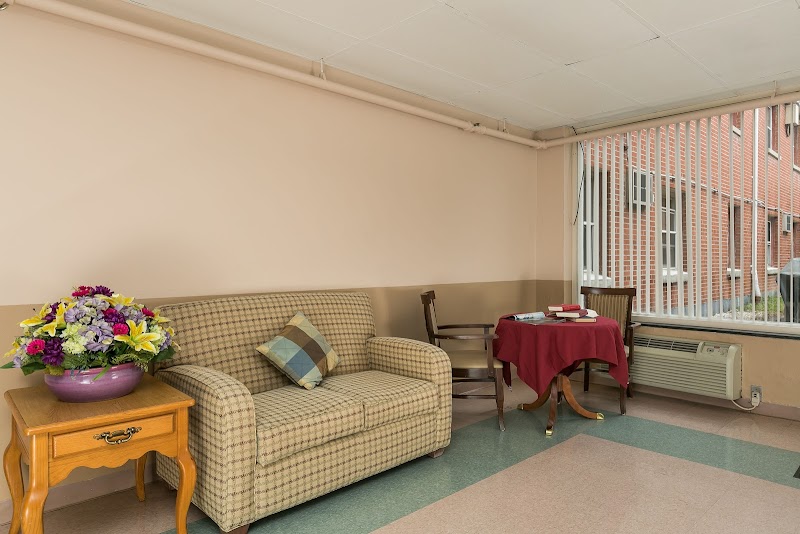
Who Owns and Operates Oakland Nursing & Rehabilitation Center?

OAKLAND NURSING & REHABILITATION CENTER is owned by a for-profit company. For-profit facilities operate as businesses with obligations to shareholders or private owners. The facility is operated by FUNDAMENTAL HEALTHCARE, a chain that manages multiple nursing homes. With 100 certified beds and approximately 53 residents (about 53% occupancy), it is a mid-sized facility located in OAKLAND, Maryland.
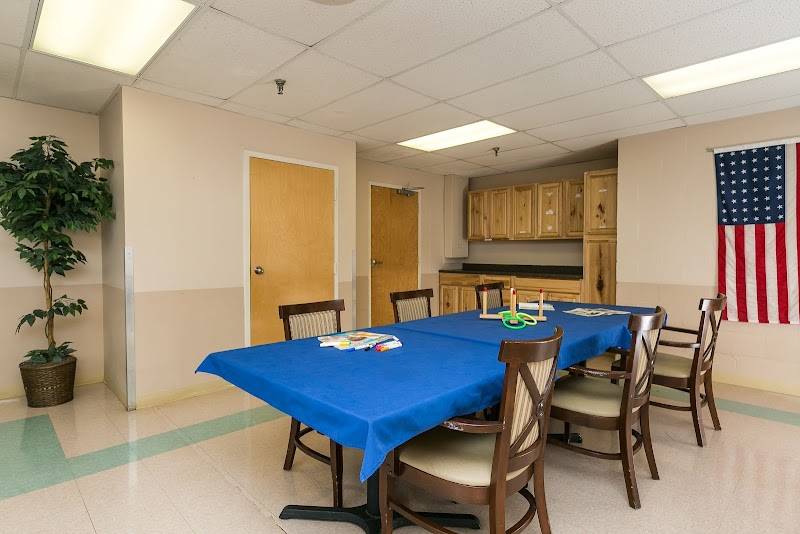
How Does Oakland Nursing & Rehabilitation Center Compare to Other Maryland Nursing Homes?

Compared to the 100 nursing homes in Maryland, OAKLAND NURSING & REHABILITATION CENTER's overall rating (1 stars) is below the state average of 3.0, staff turnover (40%) is near the state average of 46%, and health inspection rating (1 stars) is much below the national benchmark.

What Should Families Ask When Visiting Oakland Nursing & Rehabilitation Center?

Based on this facility's data, families visiting should ask: "What changes have been made since the serious inspection findings, and how are you preventing similar issues?" "Can I visit during a mealtime to observe dining assistance and food quality?" "How do you handle medical emergencies, and what is your hospital transfer rate?" "Can I speak with family members of current residents about their experience?" These questions are particularly relevant given the facility's Immediate Jeopardy citations.

Is Oakland Nursing & Rehabilitation Center Safe?

Based on CMS inspection data, OAKLAND NURSING & REHABILITATION CENTER has documented safety concerns. Inspectors have issued 1 Immediate Jeopardy citation (the most serious violation level indicating risk of serious injury or death). The facility has a 1-star overall rating and ranks #100 of 100 nursing homes in Maryland. Families considering this facility should ask detailed questions about what corrective actions have been taken since these incidents.

Do Nurses at Oakland Nursing & Rehabilitation Center Stick Around?

OAKLAND NURSING & REHABILITATION CENTER has a staff turnover rate of 40%, which is about average for Maryland nursing homes (state average: 46%). Moderate turnover is common in nursing homes, but families should still ask about staff tenure and how the facility maintains care continuity when employees leave.

Was Oakland Nursing & Rehabilitation Center Ever Fined?

OAKLAND NURSING & REHABILITATION CENTER has no federal fines on record. CMS issues fines when nursing homes fail to meet care standards or don't correct problems found during inspections. The absence of fines suggests the facility has either maintained compliance or corrected any issues before penalties were assessed. This is a positive indicator, though families should still review recent inspection reports for the full picture.

Is Oakland Nursing & Rehabilitation Center on Any Federal Watch List?

OAKLAND NURSING & REHABILITATION CENTER is not on any federal watch list. The most significant is the Special Focus Facility (SFF) program, which identifies the bottom 1% of nursing homes nationally based on persistent, serious quality problems. Not being on this list means the facility has avoided the pattern of deficiencies that triggers enhanced federal oversight. This is a positive indicator, though families should still review the facility's inspection history directly.