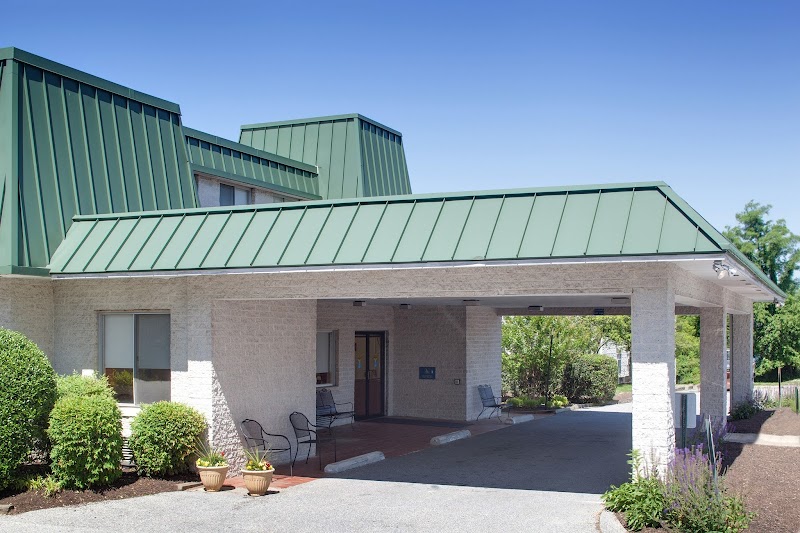

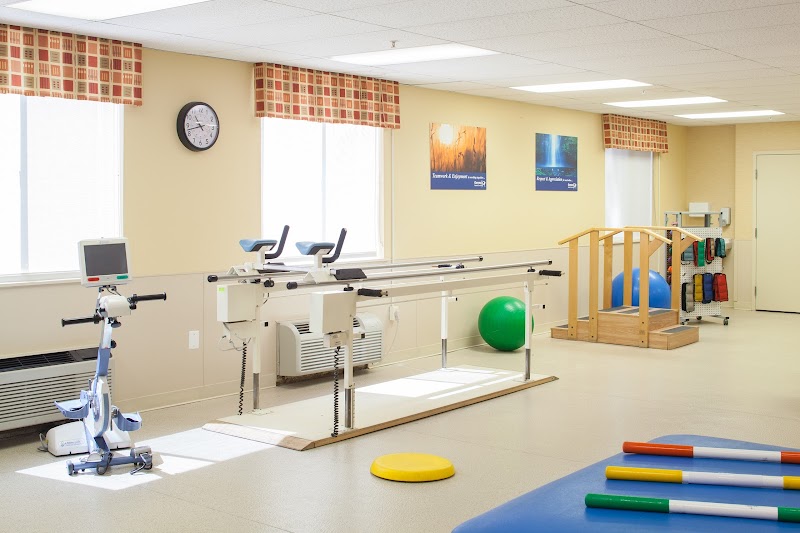

PATAPSCO HEALTHCARE

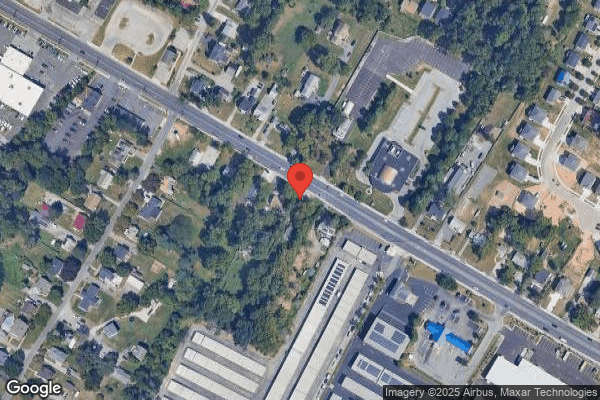
9109 LIBERTY ROAD, RANDALLSTOWN, MD 21133 (410) 655-7373
For profit - Corporation 172 Beds ENGAGE HEALTHCARE Data: November 2025 2 Immediate Jeopardy citations
Trust Grade
0/100
#215 of 219 in MD
Last Inspection: September 2024

Within standard 12-15 month inspection cycle. Federal law requires annual inspections.

Overview

Patapsco Healthcare has received a Trust Grade of F, indicating significant concerns about the facility's overall quality and care. It ranks #215 out of 219 nursing homes in Maryland, placing it in the bottom half of facilities in the state and #43 out of 43 in Baltimore County, making it one of the least favorable options locally. While the trend shows improvement, with issues decreasing from 26 in 2024 to 5 in 2025, there are still serious concerns, including $107,227 in fines, which is higher than 88% of Maryland facilities. Staffing is a weakness, with a 60% turnover rate, significantly above the state average, and only 2 out of 5 stars in staffing ratings, suggesting instability in care. Notable incidents include a critical failure to keep residents safe from harm and issues with medication accountability, raising alarms about both resident safety and medication management.

Trust Score
F
0/100
In Maryland
#215/219
Bottom 2%
Safety Record
High Risk
Review needed
Inspections
Getting Better
26 → 5 violations
Staff Stability
⚠ Watch
60% turnover. Above average. Higher turnover means staff may not know residents' routines.
Penalties
✓ Good
$107,227 in fines. Lower than most Maryland facilities. Relatively clean record.
Skilled Nurses
○ Average
Each resident gets 36 minutes of Registered Nurse (RN) attention daily — about average for Maryland. RNs are the most trained staff who monitor for health changes.
Violations
⚠ Watch
130 deficiencies on record. Higher than average. Multiple issues found across inspections.
★☆☆☆☆
1.0
Overall Rating
★★☆☆☆
2.0
Staff Levels
★★★☆☆
3.0
Care Quality
★☆☆☆☆
1.0
Inspection Score
Stable
2024: 26 issues
2025: 5 issues

The Good

  • Full Sprinkler Coverage · Fire safety systems throughout facility
  • No fines on record

Facility shows strength in fire safety.

The Bad

1-Star Overall Rating

Below Maryland average (3.0)

Significant quality concerns identified by CMS

Staff Turnover: 60%

13pts above Maryland avg (46%)

Frequent staff changes - ask about care continuity

Federal Fines: $107,227

Well above median ($33,413)

Significant penalties indicating serious issues

Chain: ENGAGE HEALTHCARE

Part of a multi-facility chain

Ask about local staffing decisions and management

Staff turnover is elevated (60%)

12 points above Maryland average of 48%

The Ugly 130 deficiencies on record

2 life-threatening 1 actual harm
Sept 2025 5 deficiencies
CONCERN (D) 📢 Someone Reported This

A family member, employee, or ombudsman was alarmed enough to file a formal complaint

Potential for Harm - no one hurt, but risky conditions existed

Notification of Changes (Tag F0580)

Could have caused harm · This affected 1 resident

Based on medical record review and review of pertinent document and interviews it was determined the facility staff failed to notify the resident's representative when there was a significant change i...

Read full inspector narrative →
Based on medical record review and review of pertinent document and interviews it was determined the facility staff failed to notify the resident's representative when there was a significant change in the resident's treatment plan. This was evident for 1 (Resident #14) of 24 residents reviewed for a complaint during the complaint survey.The findings include:Peripheral artery disease (PAD) is a condition where the arteries in the legs and arms become narrowed or blocked due to plaque buildup, reducing blood flow to these extremities.Angiogram-atherectomy-angioplasty-stent procedure uses angiogram (medical imaging procedure) to visualize blockages in leg arteries, then an atherectomy (removes plaque from arteries), an angioplasty (procedure to open blocked or narrow arteries) with a balloon to widen the artery, and finally a stent (metal tube inserted into the artery) to keep it open. This minimally invasive technique improves blood flow to the legs to relieve pain, heal wounds, and prevent amputation in patients with peripheral artery disease. On 9/10/25 at 1:00 PM a review of complaint #2562421 alleged the facility failed to notify resident representative when a medical procedure was performed on Resident #14 on 5/28/25. The complaint alleged the resident representative became aware of this when the resident received the health insurer's explanation of benefits statement that documented Resident #14 was billed by the physician for surgery on 5/28/25. A review of the electronic medical record (EMR), conducted on 9/10/25 at 1:07 PM revealed Resident #14 was admitted to the facility with complex medical condition in February 2024, and resided in the facility for long term care. The medical record also documented Resident #14 had multiple wounds, including a right ankle wound due to peripheral arterial disease, and was followed weekly by a wound Nurse Practitioner (NP). The medical record also documented Resident #14 had cognitive impairment. Resident #14's most recent quarterly assessment with an assessment reference date of 8/5/25 documented Resident #14's Brief Interview Summary score (BIMS) was 4, indicating the resident had severe cognitive impairment.Continued review of Resident #14's medical record revealed on 5/6/25 at 4:00 PM, In a SBAR (Situation, Background, Assessment, Recommendation) (tool for communicating medical information) note, the nurse documented that during activities of daily living (ADL) care, Resident #14 was observed to have an opening on his/her right ankle area. The SBAR documented that the Nurse Practitioner (NP) was notified, and ordered a wound treatment and wound consult, and the resident's representative was notified.Further review of the EMR revealed on revealed on 5/7/25 at 8:29 AM, in a Skin and Wound note, the wound NP wrote that Resident #14 had a new wound on his/her right ankle. In the EMR, an uploaded Wound & Amputation Prevention Consult note, dated 5/14/25 at 10;20 AM, documented Resident #14 was seen by the physician for evaluation and management of peripheral vascular disease. The physician documented that Resident #14, had a right ankle non-healing ulcer and was seen by the physician for evaluation and management of peripheral arterial disease. The physician further documented Resident #14 would benefit from right lower extremity angiogram for revascularization, that this was discussed with the patient who agreed and a RLE (right lower extremity) angiogram would be scheduled.In a Skin and Wound note, on 5/15/25 at 11:12 PM the NP wrote that the Resident #14 had a right lateral ankle arterial ulcer, his/her vascular consult was reviewed, and the resident would benefit from an angiogram, and an angiogram was to be scheduled. In a Nursing Progress Note on 5/16/25 at 6:41 PM, the nurse wrote Resident #14 had an appointment scheduled with a vascular specialist on 5/28/25 for a for a right lower angiogram-atherectomy-angioplasty-stent procedure.In an uploaded Wound & Amputation Prevention Consult note, on 5/28/25 at 11:55 AM, the physician documented a right lower extremity angiogram with intervention procedure was performed on Resident #14.On 5/28/25 at 3:16 PM, in an eMar Medication Administration Note, the nurse wrote that Resident #14 came back from vascular surgery at about 1:45 PM.Continued review of the medical record failed to reveal documentation to indicate Resident 14's representative had been notified when Resident #14 was scheduled for an outpatient appointment with a vascular specialist, or notified when the vascular specialist recommended and scheduled the resident for an angiogram with intervention, or notified when the resident completed the angiogram with intervention procedure and the outcome of the procedure.The above concerns were discussed with the Nursing Home Administrator (NHA) on 9/10/25 at 4:21 PM. The NHA acknowledged the concerns, and no further comments were offered at that time.
CONCERN (D) 📢 Someone Reported This

A family member, employee, or ombudsman was alarmed enough to file a formal complaint

Potential for Harm - no one hurt, but risky conditions existed

Investigate Abuse (Tag F0610)

Could have caused harm · This affected 1 resident

Based on review of facility investigative material and interview with residents and facility staff, it was determined that the facility failed to thoroughly investigate an injury sustained by a reside...

Read full inspector narrative →
Based on review of facility investigative material and interview with residents and facility staff, it was determined that the facility failed to thoroughly investigate an injury sustained by a resident. This was evident for 1 (Resident #9) of 11 residents reviewed for a facility reported incident during the complaint survey.The findings include:The Resident Assessment Instrument (RAI) -Minimum Data Set (MDS), a comprehensive, standardized process used in nursing homes to identify residents' needs, strengths, and preferences to create individualized care plans.On 9/10/25 at 9:10 AM, a review of facility reported incident #299724 alleged Resident #9 sustained an injury during care. The alleged incident occurred on 3/15/25 at 6:15 AM. The facility's initial self-report documented the RN (registered nurse) supervisor reported that Resident #9 had bruising to the left eye. When Staff #16, GNA (geriatric nursing assisted) who provided care to Resident #9 was questioned about the injury, the GNA stated that the resident poked herself in the eye during personal care and the resident lacked capacity to recall/verbalize the source of the injury. The initial self-report documented steps were taken to immediately ensure resident(s) were protected, that a head-to-toe RN clinical assessment of the resident was conducted, 911 was called, the MD was notified, the GNA was suspended pending investigation, a head-to-toe body assessment of all other patients on GNA assignment initiated, and in-service for resident abuse prevention and reporting initiated.The facility's follow-up investigation report form documented Resident #9 sustained bruising to the face from the incident with no other physical or mental harm identified. The self-report documented that Resident #9 sustained a fall during a transfer from her bed to her wheelchair while being assisted by one GNA, that Resident #9 was assessed for injuries, transferred to the emergency room for further evaluation where no serious injuries found and the resident was then transferred back to the facility.The follow-up investigation documented that a thorough investigation was conducted to determine the cause of the incident and included interviews with 2 GNAs involved in the incident. The first GNA reported Resident #9 became unsteady and fell when being assisted from the bed to the wheelchair. The second GNA witnessed the fall, corroborated this account and that staff responded promptly to assist the resident.The self-report documented an interdisciplinary team (IDT) meeting was held to review the incident, and the IDT reviewed Resident #9's care plan, Kardex, and the Section GG-related documentation for the lookback period of 3/13/2025 to 3/15/2025, that the resident was evaluated who determined s/he was a two-person assist with bed mobility and transfers, and recommended a high-back wheelchair. The RN Manager spoke with the GNAs involved in the incident and provided education on accurate Section GG coding and documentation requirements.The facility's self-report documented that the investigation into the resident's fall on 3/15/25 included comprehensive review of Resident #9's clinical record, a review of the RAI that indicated Resident #9 required extensive assistance with bed mobility and transfers, which aligned with his/her care plan indicating the resident was a two-person assist for transfer and the nursing notes from the date of the incident documented that when Resident #9 was assisted by one GNA, s/he became unsteady and lost his/her balance resulting in a fall.The facility self-report documented that action taken as a result of the investigation, included:-Corrective actions were implemented to prevent future incidents and ensure the accuracy of the resident care documentation.-An evaluation by therapy determined the resident required a two-person assist with bed mobility and transfers and provided the resident with a a high-back wheelchair to improve trunk support, and reduce risk of sliding from the wheelchair during transfers & position.-The Care plan was updated to reflect the resident was a two person assist.-The RN Manager conducted one-on-one education with the involved GNAs regarding accurate Section GG coding.-Staff were reminded to review the Kardex and care plan prior to providing care to ensure consistency with the resident's current needs.Following the surveyor's review of the facility's self-report, a review of the facility's investigation documentation and a review of Resident #9's medical record revealed the facility failed to conduct a thorough investigation.1) Continued review of the facility's investigation documentation and Resident #9's medical record failed to reveal documentation to indicate a comprehensive assessment of Resident #9 had been completed when the injury to the resident had been identified and prior to sending him/her to the hospital. In addition, no documentation was found to indicate an assessment of other residents had been conducted.2) In the facility's initial report documented Staff #16, GNA reported the resident had poked him/herself in the eye. The investigation documentation included 3 GNA staff interviews. Staff #16 documented the resident had poke him/herself in the eye, Staff #17, GNA documented the resident was observed with a wound on his/her left eye with a bump on his/her upper and lower eye, and Staff #18 GNA wrote that when s/he came on shift and saw the resident with an injury to his/her face and that Staff #16 told him/her that the resident had poked him/herself in the eye.Continued review of the facility's investigation documentation failed to reveal any other staff interviews, and there was no evidence that any residents had been interviewed or observed during the investigation.3) The facility report documented there were 2 GNA's who reported Resident #9's injuries were caused by a fall. The facility report failed to identify who were the GNAs who reported the fall, there were no statements from the GNA's, or evidence that staff interviews were conducted related to the fall. In addition, there was no documentation found to explain the discrepancy with the Staff #16, GNA's statement that Resident #9's injury was caused when the resident poked him/herself in the eye, as reported in the initial self-report and the conclusion that the resident had fallen as reported in the final self-report. Review of Staff #16's employee file, found no documentation to indicate a discussion about the discrepancy with the employee's statement and the facility's conclusion that the resident's injury was related to a fall.In addition, there was no documentation in the medical record to corroborate the resident had fallen prior to his/her hospital transfer, and that after becoming aware of the fall, a comprehensive assessment had been completed on Resident #9.4) Review of Resident #9's MDS revealed a discharge return anticipated MDS on 3/15/25, Section GG, Functional abilities documented Resident #9 was non-ambulatory and dependent for positioning and transferring. Review of Resident #9's September 2025 physician orders revealed a 9/28/25 order, Handheld assist with ambulation, indicating the resident required someone to hold his/her hand to walk. Review of Resident #9's care plan revealed a fall care plan, initiated on 2/7/24 that included the intervention, Resident #9 will have hand-held assistance while out of bed and PT screening, initiated on 9/28/23. Review of Resident #9's Kardex reflected the resident required handheld assistance for ambulation.Continued review of the medical record failed to reveal evidence the facility staff implemented their intervention to ensure the care plan reflected an accurate status of Resident #9's care needs related to transfer and positioning, and failed to reveal evidence that the care plan was revised when there was a change in Resident #9's status, or with each MDS assessment.5) There was no evidence of staff abuse training or education of staff related to RAI documentation was found in the facility investigation documentation.During the surveyor's review of the facility's investigation of the Resident #9's injury, the concerns with the facility's documentation were discussed with the Nursing Home Administrator (NHA), who indicated when the incident occurred, different administration and clinical staff were working at the facility and he would look to see if there was missing documentation. On 8/11/25 at approximately 12:00 PM, the above concerns with failing to complete a thorough investigation were discussed with the NHA. The NHA acknowledged the concerns at that time, and stated no further facility investigation documents had been found.
CONCERN (D) 📢 Someone Reported This

A family member, employee, or ombudsman was alarmed enough to file a formal complaint

Potential for Harm - no one hurt, but risky conditions existed

Deficiency F0628 (Tag F0628)

Could have caused harm · This affected 1 resident

**NOTE- TERMS IN BRACKETS HAVE BEEN EDITED TO PROTECT CONFIDENTIALITY** Based on medical record review, review of pertinent documents and staff interviews, it was determined that the facility failed t...

Read full inspector narrative →
**NOTE- TERMS IN BRACKETS HAVE BEEN EDITED TO PROTECT CONFIDENTIALITY** Based on medical record review, review of pertinent documents and staff interviews, it was determined that the facility failed to ensure the discharge information was sufficiently documented in the medical record. This was evident for 1 (Resident #30) of 24 residents reviewed for a complaint during the complaint survey. The findings include:The MDS (Minimum Data Set) is a complete assessment of the resident which provides the facility information necessary to develop a plan of care, provide the appropriate care and services to the resident, and to modify the care plan based on the resident's status. MDS assessments must be accurate to ensure that each Resident receives the care they need.On 9/8/25 at 12:00 PM, a review of complaint #299668 alleged on 10/26/24, the facility staff were asked to send Resident #30 to the emergency room because the resident's sacral wound had gotten worse. The complainant alleged that when s/he asked the nurse to send the Resident #30 to the hospital, the nurse said s/he had to call the physician, so the complainant called 911 and had the resident transported to the hospital where s/he was admitted for wound surgery.Review of the resident's closed electronic medical record (EMR) and closed paper medical record revealed Resident #30 was admitted to the facility in February 2024 with complex medical conditions, including pressure wounds, then transferred to the hospital in October 2024 and subsequently discharged from the facility. In an eMAR-Medication Administration Note, on 10/26/24 at 2:01 PM, the nurse documented that Resident #30 requested to go out 911 for wound assessment, and on 10/26/24 at 10:42 PM, in an eMAR-Medication Administration Note, the nurse documented that the outgoing nurse sent Resident #30 to the hospital wound evaluation.Resident #30's MDS discharge assessment, return anticipated, with an assessment date of 10/27/24 documented Resident #30 had an unplanned discharge on [DATE] and transferred to an acute hospital.Continued review of the medical record found no other documentation to indicate the reason for Resident #30's transfer to the hospital, and there was no documentation found to indicate a comprehensive assessment of Resident #30 had been completed prior to his/her transfer to the hospital. In addition, there was no documentation to indicate the physician had been made aware of Resident #30's request to go to the hospital, the resident's status and ultimate transfer to the hospital via 911.Further review of the medical record failed to reveal documentation to indicate that appropriate and necessary information, including a summary of the resident's status and the reason for the transfer, was communicated to the receiving health care institution to ensure a safe and effective transition of care. The medical record review failed to reveal evidence that prior to his/her transfer to the hospital, Resident #30 and his/her representative were notified of the transfer and the reasons for the move in writing and in a language and manner they understand, and there was no documentation to indicate at the time of the transfer, a written bed-hold notice which specified the duration of the bed-hold policy was provided to Resident #30. In addition to the above findings, no documentation was found to indicate that a discharge summary with a capitulation of the resident's stay had been completed by the resident's physician following the resident's transfer to the hospital and discharge from the facility.The above concerns were discussed with the Nursing Home Administrator on 9/10/25 at approximately 4:30 PM. NHA acknowledged the concerns and offered no further comments at that time.
CONCERN (D) 📢 Someone Reported This

A family member, employee, or ombudsman was alarmed enough to file a formal complaint

Potential for Harm - no one hurt, but risky conditions existed

Deficiency F0680 (Tag F0680)

Could have caused harm · This affected 1 resident

Based on facility staff roster and staff interview, it was determined that the facility failed to employ a qualified activities director from 10/2024 to 12/2024. This deficient practice was found duri...

Read full inspector narrative →
Based on facility staff roster and staff interview, it was determined that the facility failed to employ a qualified activities director from 10/2024 to 12/2024. This deficient practice was found during a complaint survey. The findings include: The surveyor reviewed intake # 299716 on 9/6/25 at 11:30am. The intake alleged that the facility failed to employ an activities director. The complainant stated that the last activities director left the facility in 10/2024. Interview with Activities Director #13 on 9/8/25 at 10:30am revealed that Activities Director #13 was hired in 12/2024. Interview with Unit Manager # 9 confirmed that the facility did not have an Activities Director in the month of 11/2024. On 9/10/25 at 10:06 AM, the surveyor interviewed the Administrator regarding the staff in the activities department. The Administrator stated that the activities department has a activities director that will transfer to the social services department on 9/27/25. A new activities director is expected to start on the same day. The surveyor informed the Administrator that the activities department failed to have a qualified activities director from 10/2024 to 12/2024. The Administrator stated that he/she was not employed with the facility until 5/2025 and he/she was not aware of the deficient practice.
CONCERN (D) 📢 Someone Reported This

A family member, employee, or ombudsman was alarmed enough to file a formal complaint

Potential for Harm - no one hurt, but risky conditions existed

Social Worker (Tag F0850)

Could have caused harm · This affected 1 resident

Based on facility staff roster and staff interview, it was determined that the facility has a bed capacity of 160 and did not employ a qualified social worker from 4/2025 - 5/2025 and then again from ...

Read full inspector narrative →
Based on facility staff roster and staff interview, it was determined that the facility has a bed capacity of 160 and did not employ a qualified social worker from 4/2025 - 5/2025 and then again from 7/2025 to the present on a full-time basis. This deficient practice was found during a complaint survey. The findings include: Interview with the Regional Behavioral Analyst #10 on 9/8/25 at 12:50pm revealed that the facility's social work department does not have a current full-time qualified social worker. The last full-time qualified social worker left the position in 6/2025. Currently, Activities Director #13 assists with the social services tasks. Also, Regional Social Worker #11 supervises the social work tasks and assists as needed until a qualified full-time social worker director is hired. On 9/10/25 at 10:06 AM, the surveyor interviewed the Administrator regarding the staff in the social services department. The Administrator confirmed that the facility has not had a full-time qualified social worker since former social worker director #12 left in 6/2025. The Administrator also added that the facility did not employ a full-time qualified social worker from 4/2025 - 5/2025. The Administrator also confirmed that Activities Director #13 and Regional Social Worker #11 assist with social service tasks as needed. The facility hired a new full-time social worker director who is expected to start on 9/15/25. The Administrator confirmed that the capacity of the facility is 160 beds. The surveyor expressed concerns that the facility failed to employ a full-time qualified social worker from 4/2025 - 5/2025 and then again from 7/2025 to the present.
Sept 2024 26 deficiencies 1 IJ
CRITICAL (J)

Immediate Jeopardy (IJ) - the most serious Medicare violation

Deficiency F0761 (Tag F0761)

Someone could have died · This affected 1 resident

2. A narcotic observation during medication administration with Agency Nurse #61 was completed on the Promenade unit on 9/26/24 at 8:15 AM. While reviewing the controlled substance shift inventory she...

Read full inspector narrative →
2. A narcotic observation during medication administration with Agency Nurse #61 was completed on the Promenade unit on 9/26/24 at 8:15 AM. While reviewing the controlled substance shift inventory sheets, four narcotic count sheets in the narcotic log were flagged, and the medications for those sheets could not be accounted for by Nurse #61. When asked about the missing medications, Agency Nurse #61 stated that it was their first day at the facility, and the outgoing LPN #62 had informed them that the medications were missing. Further review of the controlled substance shift inventory sheet with the Agency Nurse #61 revealed that on inventory sheets on 9/15/24 at 7:00AM, there was no signature from the outgoing nurse, although there was a signature from the incoming nurse. The Agency Nurse #61 was unable to provide any further explanation for the discrepancy. On 09/26/24 at 8:35 AM, the DON #2 was notified and confirmed that the four flagged narcotic sheets were related to the missing narcotics from the incident that occurred on 09/14/24 when Resident #78 took the medications from the medication cart. She stated that the investigation was still ongoing. The DON #2 also noted that the narcotic sheets should have been removed and proceeded to take them out of the book. She further confirmed that there should be signatures from both the outgoing and incoming nurses on the narcotic count sheets. Based on record reviews, staff interviews, and review of other pertinent information, it was determined that the facility failed to keep and maintain a safe and effective system for securing and counting narcotic medications. This was evident for 2 out of 7 medication carts reviewed for medication storage. These actions resulted in the finding of an Immediate Jeopardy which was identified on 9/26/24 at 5:45 PM. An IJ summary tool was provided to the facility on 9/26/24. The facility submitted a draft of their plan to remove the immediacy on 9/26/24 at 8:36 PM, and it was not accepted. The facility submitted a second draft of their plan to remove the immediacy on 9/26/24 at 9:30 PM, and it was not accepted. The facility submitted a third plan on 9/27/24 at 12:15 AM and it was accepted by the state agency at 9/27/24 at 12:30 AM. After removal of the immediacy, the deficient practice remained with a scope and severity of E. The Immediate Jeopardy was removed on 9/30/24 after on-site confirmation of the completion of the facility's plan of removal. The findings include: 1. On 09/26/2024 at 10:16 AM review of Facility Reported Incident MD00210153 investigation, revealed that on 09/14/24 during the 7:00am-3:00pm shift, agency Licensed Practical Nurse (LPN) #50 left the medication cart and narcotics box unlocked on the Promenade unit. During the change of shift on 9/14/24 at 3:15pm, LPN #50 and LPN# 53 identified there were 4 narcotic pain medications blister packs missing from the narcotic box. The medications belonged to Residents #17, #53, and #115. According to the investigation, Unit Manager #24 was notified of the incident on 09/14/24 at 3:23 pm. Unit Manager #24 notified Director of Nursing (DON) #2 on 9/14/24 at 3:38 pm and a facility investigation was initiated. During an interview with DON #2 on 9/26/24 at 12:15 pm it was reported that the Environmental Service (EVS) Director #36 had been informed by EVS employee #51 about an incident involving Resident #78. EVS #51 called after their shift to report she observed Resident #78 remove medication from an opened medication cart on the Promenade unit on 9/14/24 during the 7:00 am-3:00 pm shift. EVS #51 reported to EVS Director #36 that they followed Resident #78 and asked them to return the medication. Resident #78 responded back and stated, It's not my fault they left the cart open. EVS #51 reported that Resident #78 refused to return the medication. EVS employee #51 failed to report the incident until after the end of their shift. During an interview with the DON and the Administrator on 9/26/24 at 1:00 PM, both confirmed that the resident admitted to taking the medications to the police officer who was at the facility on 9/14/24, which was captured on the officer's body cam. The DON went on to say the resident stated, it's not their fault the nurse left the medication cart open. The DON advised as a result of their investigation the facility placed LPN #50 on a Do Not Return list, and a facility audit was completed on all medication carts to ensure they were locked. All licensed nurses were educated on the importance of securing medication carts properly. Additionally, random observational rounds were being conducted to ensure compliance with medication pass protocols. The involved resident had also been educated about not touching the medication cart. Review of the facility's medication administration policy revealed that areas without automated dispensing systems utilized a substantially-constructed storage unit with two locks and a paper system for 24-hr recording of controlled substance use. Patient-specific controlled substances are stored under double lock until administered to the patient. If any unauthorized person is seen lingering around a location where controlled substances are stored, staff are to call the police and notify their supervisor for such incident.3. On 09/26/24 at 8:33 AM, while on the [NAME] Cove Unit, the surveyor and Agency Nurse #63 checked the narcotics for accuracy. The controlled substance shift inventory form dated 09/26/24 at 7:00 AM, was signed by LPN #64, but had not been signed by the oncoming nurse. Agency Nurse #63 and the surveyor observed Resident #22 was prescribed Tramadol 50mg, take half a tablet by mouth every eight hours. Agency Nurse #63 and the surveyor observed one of the tablets had been removed from the blister pack, a pill was replaced and the blister pack was taped shut. Further review of the narcotic count revealed Resident #2 was prescribed Pregabalin 25 mg, take one capsule by mouth every 12 hours for pain. The surveyor and Agency Nurse #63 observed that a capsule had been removed from the blister pack, replaced and taped shut. On 09/26/24 at 11:23 AM the surveyor called LPN #64 to ask if they had completed the narcotic count that morning on [NAME] Cove as the outgoing nurse. The nurse explained that they had completed the narcotic count with another nurse and the count was accurate. When asked if they had noticed two narcotic blister packets taped shut, LPN #64 stated they did not remember. LPN #64 further explained that the narcotic count must be completed with a second nurse, and both nurses are required to sign the sheet. If a narcotic is wasted it must be witnessed by another nurse and signed by both nurses. On 09/26/24 at 11:32 AM, during an interview with LPN #26 on the [NAME] Cove unit, she was asked why she had not signed the controlled substance shift inventory form. LPN #26 explained that the incoming nurse was responsible for signing the form, as they were not working on that side of the [NAME] Cove unit. LPN #26 verbalized the narcotic count was correct. When asked if they had noticed any tape on medication blister packs, LPN #26 reported seeing one blister pack where the medication had been taped in place. The surveyor then inquired if they had noticed that Resident #38 who had been discharged still had narcotics being counted. LPN #26 explained that, typically, medications for discharged residents are removed from the facility every Thursday. An immediate jeopardy was declared on 9/26/24. The provision of the plan to remove the immediacy had a completion date 9/26/24 and included the following: Agency LPN #50: Agency was contacted and notified of the incident, staff member was DNR DO NOT RETURN Date of compliance: 9/14/24 Pain assessment will be completed on res #53, and #115, Resident #17 has discharged the facility. Date of compliance: 9/26/24 EVS Employee #51 was educated on reporting suspicious activities immediately. Date of compliance: 9/26/24 Agency staff #61 was educated on Controlled Substance Administration and Accountability Policy. Specifically, that two nurses signatures are required to reconsolidate the narcotic sheet. Specifically, that two nurses signatures are required to reconsolidate the narcotic sheet. Date of compliance: 9/26/24 Agency staff #61: Agency was contacted and notified of the incident, staff member was DNR DO NOT RETURN Date of compliance: 9/26/24 Nurse #63 was educated on Controlled Substance Administration and Accountability Policy, specifically not sealing medications with tape once removed from blister pack Date of compliance: 9/26/24 DON #2 will be educated on the Controlled Substance Administration and Accountability Policy by the Administrator Date of compliance: 9/26/24 LPN #26 has been educated on the Controlled Substance Administration and Accountability Policy specifically on transfer of care process highlighting two nurses must sign off on narcotic sheet. Date of compliance: 9/26/24 LPN #26 was educated on not taping meds back into the blister pack. Date of compliance: 9/26/24 Identification: The Director of Nursing, Unit Manager, MDS Coordinators inspected all med carts to ensure they were locked, secured, and all discharged and medications were pulled Compliance Date: 9/26/2024 System change: The DON, unit managers, supervisors, charge nurses, and/or administrator has educated licensed nursing staff including agency staff on the Controlled Substance Administration and Accountability Policy and locking the narcotic box and their med cart when not in use prior to their next shift. Education will be completed prior to licensed nursing staff's shift. Education is on going. Compliance Date: 9/26/2024 Monitoring: Director of Nursing, or designee, will check the medication carts used by licensed nursing staff including agency for five days, weekly for four weeks, and monthly for three months. Compliance Date: 9/26/2024
CONCERN (D) 📢 Someone Reported This

A family member, employee, or ombudsman was alarmed enough to file a formal complaint

Potential for Harm - no one hurt, but risky conditions existed

Free from Abuse/Neglect (Tag F0600)

Could have caused harm · This affected 1 resident

Based on a review of facility investigative material and interview with facility staff, it was determined that the facility failed to ensure that residents remained free of abuse. This was evident for...

Read full inspector narrative →
Based on a review of facility investigative material and interview with facility staff, it was determined that the facility failed to ensure that residents remained free of abuse. This was evident for 1 (Resident #151) out of 2 residents reviewed for abuse during the survey. The findings include: The facility's investigation related to facility reported incident MD00198074 was reviewed on 09/24/24 at 12:10 PM. The review revealed that the facility incident report indicated that on 10/03/23, a nurse that was assigned to the floor had made an allegation to the Director of Nursing of staff-to-resident abuse. The incident also stated that Geriatric Nursing Assistant (GNA) #60 was in the hallway collecting all the trays, and Resident #151 had a plate full of food. He/she was taking it down the hallway and the GNA #60 asked the resident, Can I have the plate please, and h/she ignored the GNA. GNA #60 repeated herself and grabbed the plate. Then, the resident took a handful of food and put it down GNA #60's shirt. The GNA said that it was her instinct to get the resident off her, so she pushed the resident off and the resident fell. The alleged incident occurred on 10/03/2023 and the Director of Nursing, DON was notified at 01:31 PM while the Administrator was informed at 2:00 PM and the initial report was sent to the state agency. On the same day, the facility also notified the law enforcement agency, ombudsman and physician. The GNA was suspended immediately pending further investigation and was terminated verbally on the same day. GNA #60 was also reported to the board of nursing. The final investigation report was sent to the State agency on 10/10/2023. On 09/24/24 at 1:10 PM in an interview with Human Resource Manager Staff #32, when surveyor asked why GNA #60's employment was terminated, she stated that GNA #60's employment was terminated because of a substantiated allegation of abuse. She stated that termination of the alleged staff member was done verbally after the staff admitted that she pushed the resident. She also added that a termination letter was not given because the investigation was completed almost immediately after the incident, and she provided a copy of the timesheet for that day which revealed that GNA #60 clocked out at 2:30PM on 10/03/2023 and did not work afterwards.
CONCERN (D) 📢 Someone Reported This

A family member, employee, or ombudsman was alarmed enough to file a formal complaint

Potential for Harm - no one hurt, but risky conditions existed

Deficiency F0602 (Tag F0602)

Could have caused harm · This affected 1 resident

2. Resident #104's resident representative was interviewed on 9/17/24 at 11:48 AM. He/she stated the resident's top and bottom dentures have been missing for about one year. Resident #104's resident r...

Read full inspector narrative →
2. Resident #104's resident representative was interviewed on 9/17/24 at 11:48 AM. He/she stated the resident's top and bottom dentures have been missing for about one year. Resident #104's resident representative stated in a meeting with the Ombudsman, the facility said he/she had canceled Resident #104's dental insurance. Resident #104's resident representative stated they never canceled the dental insurance and was then given a packet from the facility of forms to fill out. When the resident representative contacted the dental insurance company from the packet, they were told the dental insurance company was not contracted with the facility. After that, the resident representative reported speaking to Unit Manager (UM#24) along with forwarding him the email from the dental insurance company. The resident representative reported that UM #24 stated he shared that information with the Nursing Home Administrator (NHA) who said she would look into it, but the resident representative has not heard anything since. During the interview, the resident representative also stated that Resident #104 has been missing his/her hearing aids for about 8 months and this concern was shared with Resident Success Manager #29. Resident #104's resident representative stated they were his/her only pair so he/she should be eligible for a replacement. Review of the medical record for Resident #104 on 9/17/24 at 2:10 PM revealed Resident #104 with a documented Brief Interview for Mental Status (BIMS) of 1 out of 15, which indicates the resident had severe cognitive impairment. Further review revealed the resident had multiple diagnoses including dementia and a care plan that documented Resident #104 had the potential for oral/dental health problems related to edentulous (having no teeth) status. Documented interventions in the care plan included to monitor/document/report as needed any signs and symptoms of oral/dental problems needing attention and to provide mouth care. Continued review of the medical record revealed a care conference note dated 4/19/24 that stated, quarterly care plan meeting was held with resident and Power of Attorney (POA) at bedside. POA expressed her concern about denture she had reported two months ago, and she needed a response from facility administration. Facility administrator agreed to follow up and update her. Further review revealed an Attending Physician Request for Services/Consultation for Resident #104 for denture fitting from Medical Doctor #71 with UM #24 as the nurse who took the order, dated 6/7/24, and a Hearing Aid/Assistive Listening Device Delivery Receipt & Purchase Agreement that documented a left and right hearing aid were delivered to the facility on 8/3/23. On 9/18/24 at 1:25 PM in an interview with Geriatric Nursing Assistant (GNA #60) she stated she is Resident #104's GNA and confirmed Resident #104 used to have dentures on the top. She also confirmed that Resident #104 had hearing aids and stated, they each had a small loop and were on a wire to keep them from getting lost. One morning, GNA #60 went to provide Resident #104's care and one was missing. Then GNA #60 went on vacation and came back, and the other one was missing. When GNA #60 asked other staff about the hearing aids, she reported everyone said something different, but the hearing aides were gone. On 9/23/24 at 9:37 AM Unit Manager (UM#24) and the Director of Nursing (DON) were interviewed. During the interview, UM#24 stated the resident did have dentures when he started working at the facility about 1 year ago and that the GNAs would clean Resident #104's dentures. He also confirmed Resident #104 had hearing aids and it has been since about October 2023 that they did not have them. The DON stated when she started working at the facility, facility staff confirmed that Resident #104 had dentures, but she had never seen the resident with dentures. The DON then stated the resident's representative canceled his/her dental insurance, so when the facility was trying to get them replaced, he/she did not have insurance and the resident's representative had to reapply for dental insurance. Finally, the DON stated we do need to follow up with the dental provider from the packet not being contracted with the facility, but everything else was followed up on. At the time of survey exit, Resident #104 still did not have dentures or hearing aids. Based on medical record review and interview with facility staff and resident family members, it was determined that the facility failed to maintain accurate Controlled Drug Receipt/Record/Disposition and an environment that was free of misappropriation of property. This was evident during the review of 2 of 8 (Resident # 101, #104) residents reviewed during the survey. The findings include: A controlled drug log is delivered with the controlled medication. The log is completed as the medication is administered and once the medication is completed the form goes into the resident's medical record. Each form is designated to the packet of medications that it was delivered with. On a controlled drug log, the date the medication is delivered, the resident name, medication, amount that is delivered, dosage, and administration orders are all noted at the top of the form. As medication is administered, staff are to document date/time, dose, amount wasted if applicable, administered by, and amount remaining. Once a medication has been administered in its entirety, staff need to reorder the medication, and a new Controlled drug log will also be delivered with the corresponding medication. 1. Facility reported incident MD00204258 was reviewed on 9/19/24 at 10am. According to the facility's investigation, on 4/1/24 RN (Registered Nurse) staff # 54 notified the Nursing Supervisor staff #57 and the physician at 10:30am, and the (DON) Director of nursing (staff # 2) at around 1:35pm, that resident #101 asked for PRN (as needed) medication oxycodone 15mg and it was noticed that the medication and medication count log was not on the medication cart. According to the facility investigation on 4/1/24 during an interview with the night shift (11pm-7am) nurse RN (staff #55) stated she received 30 (15 milligram) tablets of Oxycodone for resident #101 from pharmacy on 3/31/2024 in which she placed the new blister package (medication) in the narcotic box along with placing the log in the narcotic book. According to staff #55, Resident #101 had two tablets left in the previous blister pack in which during her shift on 3/31/24 at approx. 5:45pm and 9:50pm Resident #101 received the medication. Once the blister pack was completed, she stated she updated the narcotic book with the updated narcotic count. Staff #55 stated that she properly completed the narcotic count with the oncoming day shift (7am-3pm) nurse RN (Agency nurse) staff #56; However, review of the Narcotic count sheet revealed that staff #54 completed the narcotic count with the oncoming day shift staff #56. Continued review of the facility investigation revealed during an interview with Resident #101 on 4/1/24. The resident stated s/he received Oxycodone oral tablet 15mg last on 3/31/2024 around 9:50pm. Throughout the night s/he slept and did not request another dose until 4/1/24 dayshift approx. 10:30am. At that time the nurse advised Resident #101 he had to contact the physician because he did not see the medication. According to the investigation the resident received three 5mg tablets of oxycodone at 10:45am. During an interview with the DON and the Administrator on 9/19/24 at 3pm the findings were verified. The Administrator stated after reviewing the camera footage the conclusion was that Agency staff #56 removed the oxycodone medication from the medication cart and the medication count sheet from the medication book. She stated all nurses that were involved in this incident were terminated and Agency staff #56 was reported to the board of nursing.
CONCERN (D) 📢 Someone Reported This

A family member, employee, or ombudsman was alarmed enough to file a formal complaint

Potential for Harm - no one hurt, but risky conditions existed

Investigate Abuse (Tag F0610)

Could have caused harm · This affected 1 resident

4. On 09/17/24 at 12:52 PM, during a review of complaint investigation MD00208860 it was revealed that an alleged incident occurred on 8/10/24, involving Resident #34 and Resident #89. Resident #89 ex...

Read full inspector narrative →
4. On 09/17/24 at 12:52 PM, during a review of complaint investigation MD00208860 it was revealed that an alleged incident occurred on 8/10/24, involving Resident #34 and Resident #89. Resident #89 expressed concerned about potential damage to their personal property. During an interview with Resident #89 on 09/20/2024 at 11:08 AM regarding complaint MD00208860, Resident #89 stated that Resident #34 made a false allegation to the police and facility, accusing Resident #89 of throwing yellow bodily fluids onto Resident #34. As a result of the allegations, Resident #89 reported that they were relocated to a new room. Resident #89 confirmed that their personal property was later returned undamaged. On 09/23/24 at 6:45 AM, the surveyor received a copy of the grievance documents related to the incident from the Administrator #1. The Administrator #1 stated that this was the only file concerning the incident and that no investigation had been conducted. When asked why the incident was not investigated, the Administrator #1 responded that they don't know why. Review of the grievance documents on 09/23/24 at 6:45 AM, revealed a handwritten statement from Resident #34, police report number, admission records for Resident #34 and #89, room transfer and/or new roommate notice for both residents, and a psychiatric progress note for Resident #89. Additional documents included an interview with Resident #34 conducted by Resident Success Manager (RSM) #29 on 8/10/24 at 11:00 PM. Further review of grievance documents showed no written statement or interview from Resident #89 nor any statements from nearby residents or staff members. On 09/24/24 at 09:57 AM, during an interview with RSM #29 regarding the incident between Resident #34 and Resident #89, RSM #29 was asked about the process for handling resident grievances. RSM #29 explained that the incident occurred while they were out of the office. Upon their return on 8/11/24, they were asked to meet with Resident #34 to initiate a grievance process and submit the finding Administrator #1 and Director of Nursing #2, who would then address the concerns. 3. On 9/18/24 at 04:29 PM, a review of facility reported incident MD00203897 was conducted. The incident report revealed that Resident #72 wandered into Resident #46's room and Resident #46 struck Resident #72 leaving a skin tear the size of quarter on the right cheek. On 9/19/24 at 9:30 AM, this surveyor requested for the facilities investigation from Administrator #1 regarding the incident on 3/21/24 relating to MD00203897. On 9/24/24 at 9:03 AM, this surveyor requested the facilities investigation relating to Resident #72 and Resident #46 from 3/21/24 for the second time. On 9/24/24 at 12:05 PM, an interview was conducted with Administrator #1. When asked if the facility had any record of the incident on 3/21/24, Administrator #1 stated that the facility had no investigation in their records. 2. Review of MD00203928 (FRI) and the MD00203241 on 09.17. 24 at 2:15 PM revealed the resident' family member was contacted by facility staff on 02.27.24 and on 03.05. 24 related to Resident #131's change in condition. The change in condition was related to a hematoma of the left breast, however the facility incident report was not initiated until 03.06.24. Further review of the hard copy radiology ultrasound results report by the surveyor on 09.23.24 at 07:03 AM revealed that on 03.05.24 at 21:34 the examination of Resident #131 revealed a ecchymosis, bruising, hematoma of the left breast, measuring 2.8x2.2 x1.6 cm. and routine screening was recommended. The resident was seen by the nurse practitioner, staff # 45 on 03.05.24 for a follow-up and management of the left breast hematoma. On 09.23.24 at 09:30 AM the surveyor interviewed the administrator and inquired whether the facility was aware of the requirement to report injuries of unknown origin to OHCQ within a two-hour time period. The administrator stated that the facility is now providing education to all clinical staff to report these types of incidents to administration as soon as they occur. The facility failed to initiate a thorough investigation in a timely manner and did not submit a facility incident report within the two -hour timeframe related to the injury of unknown origin to the OHCQ. Additionally, the facility failed to provide the surveyor with copies of the facility report related to MD00203928 prior to the surveyor's exit from the facility on 09.26.24. Based on facility administrative and medical records review and interviews, it was determined that the facility staff failed to complete thorough investigations of an alleged resident to resident abuse incident, injuries of unknown origin and failed to maintain and provide investigation documentation of a facility reported incidents reported to the state agency. This deficient practice was evidenced in 4 of 38 facility reported incidents for residents (#67, #131, #72, #89) reviewed during the survey. The findings include: 1. On 09/18/24 at 1:31 pm the surveyor requested to review the facility report for MD00208358 associated with Resident #67. The surveyor provided the resident's name and date the alleged incident occurred to Administrator #1. On 09/23/24 at the surveyor requested to view the investigation for the self-report again. On 09/26/24 1:32 pm Administrator #1verbalized not being able to find the investigation associated with the self-report. On 09/27/24 at 3:28 pm Administrator #1verbalized they had been filing the self- reports. An investigation would start immediately after the allegation is made and he/she is responsible for maintaining the investigation in their office.
CONCERN (D)

Potential for Harm - no one hurt, but risky conditions existed

MDS Data Transmission (Tag F0640)

Could have caused harm · This affected 1 resident

**NOTE- TERMS IN BRACKETS HAVE BEEN EDITED TO PROTECT CONFIDENTIALITY** Based on review of Minimum Data Set (MDS) Assessment documentation and interview with facility staff, it was determined that the...

Read full inspector narrative →
**NOTE- TERMS IN BRACKETS HAVE BEEN EDITED TO PROTECT CONFIDENTIALITY** Based on review of Minimum Data Set (MDS) Assessment documentation and interview with facility staff, it was determined that the facility failed to transmit MDS assessments within 14 days of completion of the assessment. This was evident for 1 (Resident #124) of 61 residents reviewed during the survey. The findings include: The MDS is a federally mandated assessment tool that helps nursing home staff gather information on each resident's strengths and needs. Information collected drives resident care planning decisions. Each assessment must be encoded within seven days and transmitted within fourteen days of the assessment being performed. On 9/26/24 at 11:21 AM review of the medical record revealed Resident #124 was admitted to the facility on [DATE]. On 9/26/24 at 1:54 PM review of the Final Validation Report revealed Resident #124's MDS assessment was not transmitted until 5/3/24. Transmission occurred 37 days after completion of the resident's MDS assessment. On 9/26/24 at 2:11 PM in an interview with MDS Coordinator #50 she stated Resident #124's MDS assessment was transmitted on 5/3/24. During the interview MDS Coordinator #50 confirmed Resident #124's MDS was not submitted within the 14 day time requirement.
CONCERN (D)

Potential for Harm - no one hurt, but risky conditions existed

Deficiency F0646 (Tag F0646)

Could have caused harm · This affected 1 resident

Based on a medical record review, interview with facility staff, and the resident RP (Responsible Party) it was revealed the facility staff failed to notify the physician in a timely manner of a resid...

Read full inspector narrative →
Based on a medical record review, interview with facility staff, and the resident RP (Responsible Party) it was revealed the facility staff failed to notify the physician in a timely manner of a resident (#135) change in condition. This occurred in 1 of 1 resident reviewed during the survey. The findings include: Review of the investigation of Facility Reported Incident MD00198432, on 9/16/24 at 10:00 AM revealed the following: On 10/7/23 at approximately 3AM Resident #135 complained of heartburn. The resident was assessed by the nurse #59 at least twice during the night shift (11pm-7am) to include review of pain. An antacid medication and pain medication was administered to Resident #135. Review of the medical record on 9/17/24 at 9am revealed at Approximately 5:30am nurse #59 received a call from Resident #135's daughter stating the resident called her complaining of abdominal pain, and if the facility intervention was not effective the resident should be transferred to the hospital. According to the medical record the physician was not contacted regarding the resident complaint of pain until 7am on 10/7/23 at that time the physician gave an order to transfer the resident to the hospital via 911. During an interview on 9/17/24 at 11am, the Administrator staff #1, verified the findings and stated the Nurse staff# 59 was terminated for not following the facility protocols.
CONCERN (D)

Potential for Harm - no one hurt, but risky conditions existed

Comprehensive Care Plan (Tag F0656)

Could have caused harm · This affected 1 resident

**NOTE- TERMS IN BRACKETS HAVE BEEN EDITED TO PROTECT CONFIDENTIALITY** Based on record review and interview it was determined that the facility failed to complete a care plan for a resident who was r...

Read full inspector narrative →
**NOTE- TERMS IN BRACKETS HAVE BEEN EDITED TO PROTECT CONFIDENTIALITY** Based on record review and interview it was determined that the facility failed to complete a care plan for a resident who was receiving hospice care and a resident who was receiving oxygen therapy. This deficient practice was evident in 2 (#67 & #129) out of 7 medical records reviewed for care plan during the survey. The findings include: 1. On [DATE] at 9:26 am a review of Resident #67's electronic medical record (EMR) revealed the resident was receiving hospice care. Further review of the EMR revealed the resident did not have a care plan for hospice. Review of Resident #67's care plans revealed a care plan was initiated on [DATE] that indicated the resident was a Full Code. Review of Resident #67's MOLST form revealed the resident's code status was No CPR Option B Palliative & Supportive Care. On [DATE] at 11:48 am during an interview with Director of Nursing #2 the surveyor asked if Resident #67 should have a care plan for hospice care. DON #2 verbalized the resident should have a care plan for hospice care. 2. On [DATE] at 1:45 pm a review of Resident #126's EMR revealed the resident was prescribed oxygen therapy and did not have a care plan for oxygen that should have been administered. DON #2 was made aware.
CONCERN (D)

Potential for Harm - no one hurt, but risky conditions existed

Deficiency F0657 (Tag F0657)

Could have caused harm · This affected 1 resident

Based on medical record review and interview it was determined the facility staff failed to have quarterly care plan meetings for a resident. This deficient practice was evident in 1(#42) of 3 records...

Read full inspector narrative →
Based on medical record review and interview it was determined the facility staff failed to have quarterly care plan meetings for a resident. This deficient practice was evident in 1(#42) of 3 records reviewed for care plan meetings during the survey. The finding include: On 09/18/24 2:10 pm a review of Resident #42 electronic medical record revealed there were no care plan meeting notes. On 09/19/24 at 9:08 am during an interview with Social Work Assistant #8, the surveyor asked when were care plan meetings held. SW Assistant #8 verbalized they receive a list the end of the month. They call the family and resident to let them know they have an upcoming meeting. The residents are made aware in person a week before the meeting or the morning of the meeting. Care plan meetings are held quarterly; new admissions within 48 hours, then quarterly however SW Assistant #8 revealed they had not been working at the facility for the past three quarters to schedule the quarterly meetings. On 09/19/24 at 2:03 pm during an interview with Social Work Director #9 who verbalized all department heads are supposed to attend the care plan meetings along with the resident, and family. If the family are unable to attend the are invited to participate on the phone. The surveyor and SW Director #9 reviewed the care plan notes; the meetings were not held quarterly. Also, the surveyor asked to review the sign-in sheets for the care plan meeting notes because other disciplines were not mentioned in the notes. SW Director #9 verbalized the other disciplines put their notes in, and the social work notes are added. The resident receives an invite, and the family member gets a phone call. When asked why Resident #42 had not received quarterly care plan meetings, Social Work Director #9 verbalized they identified in August 2024 that the resident was not receiving quarterly care plan meetings.
CONCERN (D)

Potential for Harm - no one hurt, but risky conditions existed

Deficiency F0658 (Tag F0658)

Could have caused harm · This affected 1 resident

3. On 09/26/2024 at 8:00 AM review of Facility Reported Incident MD00210153 investigation, revealed that on 09/14/24 during the 7:00am-3:00pm shift agency LPN #50 left the medication cart and narcotic...

Read full inspector narrative →
3. On 09/26/2024 at 8:00 AM review of Facility Reported Incident MD00210153 investigation, revealed that on 09/14/24 during the 7:00am-3:00pm shift agency LPN #50 left the medication cart and narcotics box unlocked on the Promenade unit. During change of shift on 9/14/24 at 3:15pm, LPN #50 and LPN# 53 identified there were 4 narcotic pain medications blister packs missing from the narcotic box. The medications belonged to Residents #17, #53, and #115. During a narcotic observation review on 9/26/24 at 08:15 AM on the Promenade unit, surveyor observed Agency Nurse (Staff # 61) during a medication administration pass. The surveyor reviewed narcotic count sheets with Staff #61. There were 4 narcotic count sheets in the narcotic book that were flagged. The medications for the four flagged sheets could not be accounted for. When asked about the unaccounted medications, the Nurse (#61) stated that today was her first day at the facility and she was told by the outgoing LPN #62 that the medications were missing. Further review of the Controlled Substance Shift Inventory Sheet with staff # 61 revealed that on 9/15/24 at 7:00AM, there was no nurse signature for the outgoing nurse, but there was a nurse signature for the incoming nurse. Staff #61 was unable to provide any further explanation. At 8:35 AM, the DON #2 was notified and confirmed that the 4 flagged narcotic sheets were for the missing narcotics for the incident that occurred on 9/14/24 as reported in MD00210153. She stated that the investigation was on-going. The DON (#2) stated that the narcotic sheets should have been removed and proceeded to remove the sheets from the book. She confirmed that there should be a nurse signature in the narcotic book for both the outgoing and the incoming nurse. Based on observations, medical record review and interviews it was determined that the facility staff failed to adhere to professional nursing standards as evidenced by not signing the narcotic form to verify the was completed during change of shift, failed to give resident report to the oncoming nurse, failed to report narcotics were taped in the blister packs, and administering oxygen therapy without a complete order. This was evident for 1 of 1 (Resident #67) reviewed for oxygen and 4 of 6 change-of-shift narcotic counts that were reviewed during the survey. The findings are: 1. On 09/23/24 at 9:45 am review of Resident #67's electronic medical record (EMR) revealed on 09/20/24 at 10:08 pm Nurse Practitioner ordered oxygen (02) nasal cannula (NC) as needed for shortness of breath (SOB). The order did not indicate how many liters of oxygen that should be administered. On 09/23/24 at 9:55 am the surveyor observed Resident #67 in bed with 2 liters (L) of 02 being administered by NC. On 09/23/24 at 10:09 am the surveyor asked LPN #26 to show the surveyor Resident #67's order for oxygen. The surveyor and LPN #26 reviewed the order together. The surveyor asked, how do you know how many liters of oxygen to administer to the resident. LPN #26 verbalized generally the residents are started on 2 liters of oxygen. The surveyor made LPN#26 aware, the order did not indicate how much oxygen the resident should receive. 2. On 09/26/24 at 8:21 am the surveyor asked Agency RN #63 if the narcotic count was completed. Agency RN #63 verbalized they did not complete the narcotic count on the [NAME] Cove unit at the beginning of their shift and LPN #26 did not give a report, they just threw the keys to them. LPN #26 did not report to Agency RN #63 the narcotic count was completed. The surveyor reviewed the Controlled Substance Shift Inventory Form and observed the form was incomplete and did not have a signature of the incoming nurse. On 09/26/24 at 9:40 am during an interview with Director of Nursing (DON) #2 the survey asked what the expectation of the nursing staff when counting the narcotics during change of shift. DON #2 verbalized the nurses should count how many narcotics there are and the outgoing and oncoming nurse are expected to sign the form. DON #2 was made aware the narcotic sheet on [NAME] Cove was not signed by the oncoming nurse and there were two medications taped to the blister pack. the DON advised the medication should have been wasted with two nurses but they should not pull it until they are with the resident. On 09/26/24 at 11:23 am the surveyor called LPN #37 who signed the Controlled Substance Shift Inventory Form dated 09/27/24 at 7am. The surveyor asked if the narcotic count was done and why the form was not signed. LPN #37 verbalized the narcotic count was completed during change of shift with LPN #26. The surveyor asked why the form was not signed by the oncoming nurse after the count was completed; LPN #37 did not have an answer. The surveyor asked LPN #37 if they noticed two narcotics were taped in the blister pack. They verbalized, yes. The surveyor asked LPN #37 who was made aware of the issue. LPN #37 verbalized they did not report the problem. On 09/26/24 at 11:32 am during an interview with LPN #26, the surveyor asked if the narcotic count was completed. LPN #26 verbalized completing the narcotic count with LPN #37. The surveyor asked LPN #26 if they completed the narcotic count, why they did not sign the Controlled Substance Shift Inventory Form. LPN #26 verbalized the incoming nurse was supposed to sign the form. The surveyor asked LPN #26 if they noticed two narcotics were taped in the blister pack and if so, was it reported. LPN #26 verbalized the count was correct and they did notice one medication was taped and they did not report the issue to Director of Nursing #2.
CONCERN (D) 📢 Someone Reported This

A family member, employee, or ombudsman was alarmed enough to file a formal complaint

Potential for Harm - no one hurt, but risky conditions existed

Deficiency F0660 (Tag F0660)

Could have caused harm · This affected 1 resident

Based on medical record review and facility staff interview, it was determined that the facility failed to implement a discharge process that ensured a a resident received continuity of care at the pr...

Read full inspector narrative →
Based on medical record review and facility staff interview, it was determined that the facility failed to implement a discharge process that ensured a a resident received continuity of care at the proposed post-discharge facility. This was evident for 1 (Resident # 78) of 3 residents reviewed for discharge during the revisit survey. The findings include: Minimum Data Set (MDS)- The MDS is a federally mandated assessment tool that helps nursing home staff members gather information on each resident's strengths and needs. Information collected drives resident care planning decisions. Activities of Daily Living, (ADLs), are the basic tasks of everyday life, such as eating, bathing, dressing, toileting, and transferring. The surveyor reviewed complaint MD00212969, which came into the Office of Health Care Quality on 12/27/24. The complainant alleged that Resident #78 was discharged from the facility on the evening of 12/26/24 without having an adequate discharge process in place. On 12/27/24 at 10 AM a review of resident #78's medical record revealed that Resident #78 was their own representative and was cognitively intact as per their most recent Minimum Data Set (MDS) assessment. The quarterly MDS showed Resident #78 was wheelchair bound, complete paraplegic and independent with all ADL's except showering. The assessment also revealed Resident #78 diagnoses included but not limited to Depression, Neurogenic bladder (requiring urinary catheterizations) and Schizophrenia. The classifications of medications captured on the assessment were: Antipsychotics, Antidepressants, Opioids, and Anticonvulsants. On 12/27/24 at 11:12 AM and interview was held with the Nursing Home Administrator (NHA) and the Director of Nursing (DON). They were asked to provide evidence regarding the reason for the involuntary discharge and the documented discharge process for Resident #78 on 12/26/24. The NHA stated that Resident #78 was found to have smoking materials and cigarette smoke in his/her room on 12/19/24. The DON stated that Resident #78 violated his/her smoking contract and behavioral contract which was grounds for an involuntary transfer/discharge according to a Settlement Agreement dated September 17, 2024. The surveyors reviewed the smoking contract, behavioral contract, and the settlement agreement that resulted from a mediation held at the Maryland Office of Administrative Hearings on 9/17/24. On 12/30/24 1 PM, surveyors verbally expressed to the NHA and the DON the concern that there was a lack of documentation regarding Resident #78's transfer/discharge plan. There was no evidence to show the receiving facility was aware of the resident's transfer/discharge. There was no evidence to support that the facility confirmed that the resident's care needs were addressed/discussed at the receiving facility.
CONCERN (D)

Potential for Harm - no one hurt, but risky conditions existed

Incontinence Care (Tag F0690)

Could have caused harm · This affected 1 resident

Based on observations, interviews, and record reviews, it was determined that facility staff fail to arrange medical transportation for a resident's follow up appointment. This deficient practice was ...

Read full inspector narrative →
Based on observations, interviews, and record reviews, it was determined that facility staff fail to arrange medical transportation for a resident's follow up appointment. This deficient practice was evident for 1 (#281) of 1 resident reviewed for incontinence during the survey. The findings include: On 9/16/24 at 9:36 AM, during the surveyors initial screening of Resident #281, both the resident and a family member reported that the resident had a scheduled follow up appointment on 09/16/24 at 8:30 AM to have their urinary catheter removed. According to Resident #281, transportation was not arranged, and the resident missed the appointment. On 9/16/24 at 3:28 PM, review of Resident #281 treatment administration records failed to reveal urinary catheter treatments or care plan. On 09/19/24 at 2:57 PM, during an interview with the DON #2 regarding Resident #281's care plan for their indwelling catheter, the DON #2 admitted that she failed to create a baseline care plan because the resident was admitted to the facility without a qualifying urinary diagnosis. When asked about the resident's missed urology appointment scheduled for 9/16/24, at 8:30 AM, the DON #2 explained that Resident #61's follow up appointment was in the resident's paper chart, however, the unit manager failed to arrange medical transportation. The DON #2 was not able to provide further information about the missed appointment.
CONCERN (D)

Potential for Harm - no one hurt, but risky conditions existed

Staffing Information (Tag F0732)

Could have caused harm · This affected 1 resident

Based on observations and interviews with facility staff it was determined the facility failed to ensure that the posted staffing schedule was updated and accurate. This was found to be evident when t...

Read full inspector narrative →
Based on observations and interviews with facility staff it was determined the facility failed to ensure that the posted staffing schedule was updated and accurate. This was found to be evident when tours of the facility were conducted during the facility's survey. Findings include: The survey team conducted a tour of the facility on 9/23/24 at 2:15 AM, and observations were made of the Memory Unit located on the second floor. The assignment board which listed the staff assignments was dated 9/22/24 7:00 AM, and had staff #48 as the assigned nurse for the unit and staff #46 and #47 as the assigned GNA's. The nurse who was present and working on the unit was staff #31, and not staff #48. The GNA's who were present and working on the unit were staff #42 and staff # 46. GNA # 47 was not working. An interview was conducted with the nurse #31 on the same date at 2:18 AM and she was asked who was responsible for ensuring that the assignment board was accurate, and her immediate response was, I don't usually work here, I am an agency nurse. The nurse further acknowledged that she received a report from the previous shift nurse (staff # 48) whom she relieved, but did not update the assignment board. The two GNA's (Staff #42 and #46) were at the nurse station during the interview with nurse #31 and they were not wearing name badges. They both told the surveyor their names, when asked, and said that they work for the agency and were not provided with a name badge. An interview was conducted with the NHA on 9/23/24 at 5:30 AM and she made aware that the assignment boards were not accurate and the agency staff were not wearing name badges. At this time the survey team asked her who was responsible for ensuring that the assignment boards are accurate, and that staff, including agency are wearing name badges. She stated that the nurse was responsible for updating the assignment board for accuracy, and that all agency staff have badges from their agency and if they don't have a badge on person, they are to stop at the front desk and get a printed-out sticker and/or create a temporary badge. She stated that staff will be re-educated. All concerns were discussed with the administration team at the time of exit on 9/30/24 at 4:30 PM.
CONCERN (D)

Potential for Harm - no one hurt, but risky conditions existed

Pharmacy Services (Tag F0755)

Could have caused harm · This affected 1 resident

Based on medical record review and interviews it was determined that the pharmacist failed to communicate timely the need to discontinue two unnecessary intranasal medications after the pharmacy revie...

Read full inspector narrative →
Based on medical record review and interviews it was determined that the pharmacist failed to communicate timely the need to discontinue two unnecessary intranasal medications after the pharmacy review was completed in August and September 2024. This deficient practice was evidenced in 1 (#9) of 2 resident records reviewed for unnecessary medications during the survey. The findings include: On 09/19/24 at 11:28 am a review of Resident #9's medication administration record revealed on 06/16/24 at 12:54 AM an order was written for Flonase 1 spray each Nare one time a day for allergy and on 08/11/24 at 10:38 am an order for Flonase Allergy Relief Nasal Suspension 50 mcg/act 2 sprays in both nostrils one time a day for allergy was ordered which was a duplicate medication order. Further review of the electronic medical record (EMR) revealed both medications were being signed off as given by the nurses. On 09/19/24 at 2:56 pm the surveyor reviewed Resident #9's Electronic Medical Record (EMR) with Pharmacist #23, the surveyor asked why the resident had two different orders for Flonase. Pharmacist #23 verbalized they would take a closer look at the resident's record and get back to the surveyor. On 09/19/24 at 3:12 pm the surveyor asked Agency LPN #3 to pull up Resident #9's EMR for review. Agency LPN #3 verbalized the two Flonase orders appeared to be repeat entries and both were signed off as given. Agency LPN #3 denied giving the medication twice even though it was signed off twice. On 09/19/24 at 3:35 pm in an interview with Pharmacist #23 they advised they spoke with the physician and made a recommendation and it was pending to send the information out. They also advised they had the recommendations sitting since last week and sometimes they are done staggered. They try to make sure everything is updated by the end of the month. Review of Resident #9's Monthly Medication Review dated 09/05/24 at 3:01 pm revealed there were no pharmacy recommendations. Review of the Monthly Medication Review dated 08/02/24 at 1:40 pm revealed there were no pharmacy recommendations.
CONCERN (D)

Potential for Harm - no one hurt, but risky conditions existed

Dental Services (Tag F0791)

Could have caused harm · This affected 1 resident

Based on interviews, and medical record reviews it was determined that facility staff failed to follow physician orders and fail to schedule dental appointments. This deficient practice was evident fo...

Read full inspector narrative →
Based on interviews, and medical record reviews it was determined that facility staff failed to follow physician orders and fail to schedule dental appointments. This deficient practice was evident for 1 (#120) of 1 residents reviewed for pain during the survey. The finds include: On 09/17/2024 at 09:53 AM, during an interview with Resident #120, the surveyor asked if they have any pain concerns. Resident #120 reported tooth pain in their left upper and lower molars due to cracked teeth. The surveyor asked Resident #120 if they had gone to the dentist to address the cracked teeth, Resident #120 replied No. When ask why, Resident #120 stated they did not know the reason. During an interview with the Director of Nursing (DON) #2 on 09/17/24 at 10:01 AM, the surveyor inquired about Resident#120's cracked teeth and any scheduled dental appointments. The DON #2 responded that they would need to review the resident's chart to provide information. Following the surveyor's inquiry about Resident #120's cracked teeth and dental appointment, a new dental appointment order was placed on 9/17/24 at 10:11am. On 9/17/24 at 10:57 AM, a review of Resident #120's medical record revealed an order dated 7/29/24 at 10:50 AM, for a dental consult regarding left upper tooth pain. Further review of the medical record revealed another order dated 8/20/24 at 12:05 PM, requesting a dental consult for left upper tooth pain. During an interview with the Administrator #1 on 9/19/24 at 1:52 PM, when asked about the dental consults for Resident #120 on 7/29/24 and 8/20/24, the Administrator #1 reported that the facility uses an in-house dental provider who did not accept Resident #120's dental insurance. When the surveyor asked for more information concerning the denial, and any attempts to address the resident's dental issues, the Administrator #1 stated they would look into the matter. On 9/19/24 at 2:11 PM, the Administrator #1 stated that there was no documentation to indicate any attempts were made to find another dental provider after the in-house provider declined Resident #120 dental insurance.
CONCERN (D)

Potential for Harm - no one hurt, but risky conditions existed

Food Safety (Tag F0812)

Could have caused harm · This affected 1 resident

Based on observations of the facility's kitchen and food services, it was determined that the facility failed to store food items to maintain the integrity of the specific item and accurately maintain...

Read full inspector narrative →
Based on observations of the facility's kitchen and food services, it was determined that the facility failed to store food items to maintain the integrity of the specific item and accurately maintain dishwasher temperature logs. This was evident during the initial tour of the kitchen. The findings include: 1. On 9/16/24 at 7:57 AM initial observations were made in the facility's kitchen. Dietary [NAME] (DC #75) stated she was the staff in charge as the cook until the Dietary Manager (DM) comes in. After surveyor observations in the kitchen, freezer and refrigerator, observations with DC #75 revealed the following: At 8:12 AM, the walk-in refrigerator had ham covered very loosely with saran wrap open to air and undated. When asked about the expectations for food storage, she stated it was supposed to be in a Ziplock bag and dated. There were 2 logs of ground beef without an expiration date. When the surveyor asked DC #75 what the expiration date of the ground beef was, she stated, there is not one. The surveyor asked how staff would know if it were safe to serve to residents and she stated, I do not know. Continued observations with DC #75 revealed most of the food products had a blue label with two date stacked horizontally one on top of the other. When asked to clarify the dates on the labels she stated the first/top date is the date the food was opened, and the second/bottom date is the expiration date. There was a box halfway filled with waffles with the first/top date 8/22/24 and the second/bottom date, expiration date 8/27/24 and an entire case of oat milk and half a case of prune juice with an expiration date of 8/3/24. DC #75 stated that the stock person was labeling wrong, and the products were actually not expired. However, on closer inspection, there was large plastic container of pickles and the expiration date on the container was 5/31/24. DC #75 confirmed they were expired. There was celery in an unsealed, open to air plastic bag that was all brown on the first 2 inches of the celery stalks and with an expiration date of 8/4/24, which DC #75 also confirmed as expired. At 9:04 AM, the walk-in freezer observation revealed 8 bags of hamburger and hotdog buns that were undated. Dietary Manager (DM) #72 confirmed, No I did not see an expiration date on any of the hot dog or hamburger buns in the freezer. As the surveyor and DM #72 were exiting the walk-in freezer, an open jar of jelly was observed in a Tupperware container of spices. The surveyor picked up the container which read, Refrigerate after opening. DM #72 confirmed the jelly should have been refrigerated. In addition, one of the loaves of bread on the vertical cart had an expiration date of 9/14/24 and there was mold on it. DM #72 confirmed the mold and disposed of the bread. 2. At 9:28 AM, in an interview with DM #72 when asked who was responsible for signing the dishwasher temperature logs, she stated she signed them. The surveyor pointed to the Dishwasher Temperature/Chemical Record for the month of September 2024 and noted September 1-15, 2024 had temperatures documented for breakfast, lunch and dinner's wash and rinse cycle. During the interview, DM #72 stated that all the recorded temperatures on the log were recorded by her. The surveyor reiterated the question and again asked if all the recorded temperatures were written by her and she stated, yes. However, when asked if she worked on Saturday, 9/14/24, she stated, no. When asked how she was able to observe the wash and rinse cycles for breakfast, lunch and dinner to document temperatures, she stated she asked the Sunday cook if the dishwasher was working ok and was told yes. When asked how she was able to determine the very specific temperatures recorded on the sheet, she stated, well, that's what it has usually been running.
CONCERN (D)

Potential for Harm - no one hurt, but risky conditions existed

Deficiency F0838 (Tag F0838)

Could have caused harm · This affected 1 resident

**NOTE- TERMS IN BRACKETS HAVE BEEN EDITED TO PROTECT CONFIDENTIALITY** Based on record review and interview it was determined that the facility staff did not update the facility assessment to reflect...

Read full inspector narrative →
**NOTE- TERMS IN BRACKETS HAVE BEEN EDITED TO PROTECT CONFIDENTIALITY** Based on record review and interview it was determined that the facility staff did not update the facility assessment to reflect how the facility with address all the needs of the residents. This deficient practice was discovered during the survey. The findings include: On 09/30/24 at 1:15 pm the surveyor reviewed the facility assessment and noticed the facility manager was not updated to reflect the current facility manager. The diagnoses that the facility staff can manage did not reflect the residents who were currently residing within the facility. The facility currently housed residents who receive wound care, and had compromised musculoskeletal system. There was no mention of the residents' acuity levels the facility was able to manage. The assessment did not mention how the ethnic, cultural, or religious factors of the current residents or potential residents are addressed or will be addressed. The staffing plan did not indicate how many nurses and geriatric nursing assistants are needed to care for the residents. The staff training, education, and competencies did not completely reflect the competency form provided to the surveyor by Director of Nursing #2. The competency and skills checklist did not completely reflect current residents and/or potential residents. There were no policies and procedures for provision of care included in the assessment. There was no mention of how the facility plans to recruit and retain nurse practitioners who are adequately trained and knowledgeable in the care of the residents. NP#17 is currently working in the facility. On 09/30/24 at 3:30 Administrator #1 provided an updated copy of the facility assessment dated [DATE]. The surveyor reviewed the facility assessment with Administrator #1 and verbalized the assessment had missing information.
CONCERN (D)

Potential for Harm - no one hurt, but risky conditions existed

Medical Records (Tag F0842)

Could have caused harm · This affected 1 resident

2. On 09/20/24 at 10:59 am during an interview with LPN Unit Manager #24 the surveyor asked what the process was for managing resident's personal items when they are in the facility. LPN Unit Manager ...

Read full inspector narrative →
2. On 09/20/24 at 10:59 am during an interview with LPN Unit Manager #24 the surveyor asked what the process was for managing resident's personal items when they are in the facility. LPN Unit Manager #24 verbalized when a resident is admitted to the facility the staff must complete the Inventory of Personal Effects form; the form is in the residents' paper chart. If the residents receive items while in the facility, the form is updated. On 09/20/24 at 11:10 am the surveyor checked the Resident #111's paper chart located on the unit, and the Inventory of Personal Effects form was not in the resident's paper chart. On 09/20/24 at 11:20 am the surveyor checked Resident #42's paper chart, and the Inventory of Personal Effects was in the chart. The surveyor compared the list to the items visualized in the resident's armoire. The resident also had a plastic bag with clothing on top of the armoire. The form did not coincide with the resident's belongings. The resident had more belongings that were documented on the form. On 09/20/24 at 1:23 pm the surveyor made Unit Manager #24 aware Resident #111 did not have a Inventory of Personal Effects form in their chart and Resident #42 did not have an updated Inventory of Personal Effects form in the chart to reflect the resident's actual belongings. Based on a review of the facility investigation, medical record, interviews with facility staff and other pertinent documentation it was determined that the facility nursing staff failed to document the administration of medication and failed to have updated and accurate records of the residents' belongings in the medical record. This was true for 3 of 4 residents (Resident #135, #42, #111) reviewed during the survey. The findings include: 1. Review of the investigation of Facility Reported Incident MD00198432, on 9/16/24 at 10:00 AM revealed the following that on 10/7/23 at approximately 3am Resident #135 complained of heartburn. The resident was assessed by the nurse (staff #59) at least twice during the night shift (11pm-7am) to include review of pain. An antacid medication and pain medication was administered to Resident #135. Review of the medical record on 9/17/24 at 9am revealed at Approximately 5:30am staff #59 received a call from Resident #135's daughter stating the resident called her complaining of abdominal pain, and if the facility intervention was not effective the resident should be transferred to the hospital. The physician was contacted and gave an order to transfer the resident to the hospital via 911. Continued review of the medical record, Medication Administration Record and progress notes failed to reveal an order for an antacid medication or pain medication, therefore the medications were not signed off as being administered. During an interview with the Director of Nursing on 9/17/24 at 11am, she stated she was not employed at the facility during that time. During an interview with the Administrator on 9/17/24 at 11;30am, she provided an Employee Counseling Form for staff #59 dated 8/16/23 which stated, Final Warning-orders received for Tums 500mg for heartburn and Tylenol 500mg for pain but not documented. When asked why the Counseling form was dated 8/16/23 (2 months prior to the incident) she stated the date was an error.
CONCERN (D)

Potential for Harm - no one hurt, but risky conditions existed

Infection Control (Tag F0880)

Could have caused harm · This affected 1 resident

**NOTE- TERMS IN BRACKETS HAVE BEEN EDITED TO PROTECT CONFIDENTIALITY** 2. On 09/16/24 at 10:35 am the surveyor entered the elevator on the first floor and observed two female employees on the elevato...

Read full inspector narrative →
**NOTE- TERMS IN BRACKETS HAVE BEEN EDITED TO PROTECT CONFIDENTIALITY** 2. On 09/16/24 at 10:35 am the surveyor entered the elevator on the first floor and observed two female employees on the elevator with bags of linen in the hands. The elevator went to [NAME] Cove located on the ground level. The two female employees got off the elevator and entered the laundry room. The surveyor walked down the long hall on [NAME] Cove, then went to the laundry room. At 10:39 am the surveyor entered the laundry room and observed uncovered linen on three linen carts and four bags of blankets wrapped in plastic on the floor in front of the room where the washing machines were located. On 09/24/24 at 7:42 am during an interview with Employee Success Manager #10 the surveyor asked why the laundry was placed on the floor. Employee Success Manger #10 verbalized they handed it over to the laundry person; they needed to supply linen and didn't know where it was stored. They don't know how it got on the floor. 3. On 09/20/24 at 10:46 am the surveyor went to Resident #2's room and observed urine and stool inside a plastic bag inside the pail of the bedside commode. Geriatric Nursing Assistant (GNA) #34 was in the resident's room providing Activities of Daily Living (ADL) care. Later the same day when entering the room with Director of Nursing #2, the surveyor asked GNA #34 where they put the bag with the resident's urine and excrement. GNA #34 verbalized discarding the bag with the resident's waste in the trash can. On 09/20/24 at 2:40 pm Director of Nursing #2 and the surveyor entered Resident #2's room and observed Environmental Services Director #36 standing on the resident's bedside commode. On 09/23/24 at 6:03 am the surveyor asked EVS Director #36 why they were standing on Resident #2 bedside commode. They verbalized that incident was totally out of their character. Based on observations and interviews with facility staff it was determined the facility failed to adhere to infection control practices and guidelines linen management and for resident's residing in the facility. This was found to be evident for 1 (Resident # 15, #2) of 77 residents observed during observations made during the survey. The findings include: 1. During a random observation of the facility on 9/23/24 at 2:15AM the following observations were made while on the second floor. Room # 213 had two cover pads on the floor with a medium size dark brown substance protruding through the top of the cover pads. Flies were observed in the room [ROOM NUMBER] and landing onto the Resident (#15). Staff at the nursing station were made aware of the observations. The NHA was made aware of the findings on the same date at 5:30AM. All concerns were discussed with the Administration team at the time of exit on 9/30/24 at 4:30PM.
CONCERN (D)

Potential for Harm - no one hurt, but risky conditions existed

Room Equipment (Tag F0908)

Could have caused harm · This affected 1 resident

**NOTE- TERMS IN BRACKETS HAVE BEEN EDITED TO PROTECT CONFIDENTIALITY** Based on observations and interviews it was determined that the facility staff failed to keep the facility in good operating con...

Read full inspector narrative →
**NOTE- TERMS IN BRACKETS HAVE BEEN EDITED TO PROTECT CONFIDENTIALITY** Based on observations and interviews it was determined that the facility staff failed to keep the facility in good operating condition. This deficient practice discovered on the [NAME] Cove unit during the survey. The findings include: On 09/16/24 at 8:19 during observation rounds the surveyor checked the shared bathroom in room [ROOM NUMBER] and observed urine and excrement in the commode. The surveyor attempted to flush the commode, and the commode contents almost overflowed onto the floor. At 10:56 am the surveyor observed the trim below the window on the floor in the Dayroom located on [NAME] Cove unit. At 11:25 am the surveyor observed Resident #2 in bed exposed. Agency LPN #3 attempted to pull the privacy curtain over to cover the resident, but the curtain was unable to be fully extended. Afterwards the surveyor made Agency LPN #3 aware the commode in room [ROOM NUMBER] was clogged and unable to be flushed. On 09/16/24 at 12:12 pm the surveyor observed Regional Director of Operations #5 pushing the trim under the window in the Dayroom on [NAME] Cove with their shoe. On 09/19/24 at 9:01 am during an interview with Maintenance Director #70 they verbalized the floor techs were supposed to take care of the curtains, and they are in the process of developing a preventative maintenance schedule. They use TELS system to address maintenance concerns; currently they are all over the building right now. On 09/23/24 at 9:24 am during an interview with Director of Nursing #2 they verbalized Maintenance and Environmental Services should make sure the curtains fit before they are installed, and the nursing staff are the second line of defense. On 09/23/24 at 2:15 am during observation rounds the surveyor noticed the call bell was on outside of room [ROOM NUMBER] on [NAME] Cove unit. LPN #37 verbalized they removed the light. When they started their shift, the light was on and they think it was removed because it was hypersensitive.
CONCERN (E) 📢 Someone Reported This

A family member, employee, or ombudsman was alarmed enough to file a formal complaint

Potential for Harm - no one hurt, but risky conditions existed

Quality of Care (Tag F0684)

Could have caused harm · This affected multiple residents

3. On 09/17/24 at 12:24 PM, during the review MD00195230 revealed that an alleged incident involving Resident #61, and a broken oxygen tank that occurred on 8/6/23. On 09/19/24 at 9:08 AM, the survey...

Read full inspector narrative →
3. On 09/17/24 at 12:24 PM, during the review MD00195230 revealed that an alleged incident involving Resident #61, and a broken oxygen tank that occurred on 8/6/23. On 09/19/24 at 9:08 AM, the surveyor observed Resident #61 sitting on the side of their bed with an oxygen concentrator infusing humidified oxygen at 2 liters via nasal cannula. Resident #61 reported a medical history of chronic obstructive pulmonary disease, asthma, being a former smoker, and asbestos exposure. When asked about an alleged incident in August of 2023 related to oxygen, the resident stated they did not recall much about the incident. They reported sitting on the side of the bed working with a geriatric nursing aide, then waking up in the hospital. Resident #61 mentioned they returned from the hospital with oxygen. On 09/19/24 at 10:07 AM, review of medical record progress note dated on 8/6/23 at 11:14 AM, revealed that resident was noted to have had a slight temperature around 6:28 AM. All vital signs were checked. Resident #61 was given as needed pain medication after he verbalized pain of 4 of their shoulder. Further assessment shows the temperature dropped and resident was found sleeping. Then the resident was found shaking in their room at around 8:33 AM and oxygen saturation level was around 89%. Fifth teen minutes later, the oxygen level was observed to have dropped to around 78%. The primary physician was called and reached around 9:33 AM. Emergency responders were called a few minutes later. The resident was taken out to the emergency department at around 9:50 AM. Resident #61's family member was called and informed at 9:51AM. On 09/19/24 at 10:34 AM, review of Resident #61 medication administration record and treatment administration record for July 2023 revealed an order for as needed supplemental oxygen 2-liter via nasal canula for chronic pulmonary disease. The medical record failed to show that Resident #61was given as needed oxygen as ordered by the doctor. After review of Resident #61's oxygen vital signs in August 2023, the records failed to include documentation of the resident's oxygen levels on 8/6/23. On 09/19/24 at 12:18 PM, during an interview with the DON #2 regarding the progress note from 8/6/23, the DON #2 stated that, based on the information documented in the medical record, the incident appeared to reflect no oxygen had been provided prior to the hospital transfer. The DON #2 stated that they were unable to identify any interventions that were implemented during the time Resident #61 was documented to have low oxygen levels. 2. Resident #104's resident representative was interviewed on 9/17/24 at 11:48 AM. He/she stated the resident's top and bottom dentures had been missing for about one year. Resident #104's resident representative stated in a meeting with the Ombudsman, the facility said he/she had canceled Resident #104's dental insurance. Resident #104's resident representative stated they never canceled the dental insurance and was then given a packet from the facility of forms to fill out. When the resident representative contacted the dental insurance company from the facility packet, they were told the dental insurance company was not contracted with the facility. After that, the resident representative reported speaking to Unit Manager (UM#24) and he stated this information was shared with the Nursing Home Administrator (NHA) who said she would look into it, but the resident representative had not heard anything since. During the interview, they also stated that Resident #104 had been missing his/her hearing aids for about 8 months and this concern was shared with Resident Success Manager #29. Review of the medical record for Resident #104 on 9/17/24 at 2:10 PM revealed Resident #104 with a documented BIMS of 1 out of 15, which indicated the resident had severe cognitive impairment. Further review revealed the resident was diagnosed with dementia. On 9/18/24 at 1:25 PM in an interview with Geriatric Nursing Assistant (GNA #60) she stated she was Resident #104's GNA and confirmed Resident #104 used to have dentures on the top. She also confirmed that Resident #104 had hearing aids and stated they each had a small loop and were on a wire to keep them from getting lost. GNA #60 advised one morning she went to provide Resident #104's care and one was missing and after she returned from vacation the other one was missing. When GNA #60 asked other staff about the hearing aids, everyone said something different, but they were gone. Continued review of the medical record revealed a care conference note dated 4/19/24 that stated, quarterly care plan meeting was held with resident and Power of Attorney (POA) at bedside. POA expressed her concern about denture she had reported two months ago, and she needed a response from facility administration. Facility administrator agreed to follow up and update her. Further review revealed an Attending Physician Request for Services/Consultation for Resident #104 for denture fitting from Medical Doctor #71 with UM #24 as the nurse who took the order, dated 6/7/24, and a Grievance/Concern Form dated 7/9/24, documented by Resident Success Manager #29 where the POA stated he/she has been asking for over a year about trying to get dentures for Resident #104. Furthermore, Hearing Aid/Assistive Listening Device Delivery Receipt & Purchase Agreement documented that a left and right hearing aid were delivered to the facility on 8/3/23. On 9/23/24 at 9:37 AM Unit Manager (UM#24) and the Director of Nursing (DON) were interviewed. During the interview, UM#24 stated the resident did have dentures when he started working at the facility about 1 year ago and that the GNAs would clean Resident #104's dentures. He also confirmed Resident #104 had hearing aids and it had been since about October 2023 that she did not have them. The DON stated when she started working at the facility, facility staff confirmed that Resident #104 had dentures, but she had never seen the resident with dentures. The DON then stated the resident's representative canceled his/her dental insurance, so when the facility was trying to get them replaced, he/she did not have insurance and the resident's representative had to reapply for dental insurance. Finally, the DON stated we do need to follow up with the dental provider from the packet not being contracted with the facility, but everything else was followed up on. At the time of survey exit, Resident #104 still did not have dentures or hearing aids. Based on observations, record reviews and interviews it was determine the facility failed to ensure residents received treatment and care in accordance with professional standards of practice for the residents' highest practicable being. This was evident for 4 of 82 residents (Resident #27, #104, #61) reviewed during the survey. The findings include: 1. On 9/17/24 at 3:00 PM, in an interview with Resident #27's Power of Attorney (POA) he/she stated that they had requested Resident #27 have an evaluation to see if they could go from a pureed diet to a mechanical soft diet. Review of Resident #27's medical record on 9/17/24 at 3:10 PM revealed the resident had a Brief Interview for Mental Status (BIMS) of 5 out of 15, which indicated the resident had severe cognitive impairment. Further review of the medical record revealed the resident was diagnosed with dementia. On 9/19/24 at 1:40 PM in an interview with the Director of Rehabilitation #11 she stated that Resident #27 was referred to therapy for a swallow evaluation, but when the Speech Language Pathologist (SLP #33) attempted to do the evaluation, he/she refused. During the interview the Director of Rehabilitation #11 provided a copy of the Screen/Referral Form for Resident #27's swallow evaluation dated 8/28/24, signed by SLP #33, and that documented pt (patient) refused assessment despite education. On 9/19/24 at 1:44 PM review of the medical record did not reveal documentation of Resident #27's refusal nor documentation that Resident #27's POA was notified of the refusal. On 9/19/24 at 1:48 PM in an interview with Director of Rehabilitation #11 she confirmed there was no note from SLP #33 documenting Resident #27's refusal of the swallow evaluation. Furthermore, she confirmed his/her POA was not contacted and also confirmed there was no documentation that the POA was notified. During the interview when asked the expectation if a resident diagnosed with dementia and a BIMS of 5 refused care, she stated the proper parties are contacted so we can have what we need in place to properly treat the resident. Additionally, she stated this resident did not have the capacity to refuse treatment and we should have reached out and contacted his/her POA. On 9/23/24 at 12:00 PM in an interview with the Administrator she was asked if Resident #27's swallow evaluation was completed, and she stated she would let the surveyor know. On 9/23/24 at 1:45 PM in an interview with the Administrator she stated Resident #27's POA was not contacted after his/her refusal on 8/28/24, the swallow evaluation was not completed, and that a new swallow evaluation was scheduled where the POA would come to assist.
CONCERN (E) 📢 Someone Reported This

A family member, employee, or ombudsman was alarmed enough to file a formal complaint

Potential for Harm - no one hurt, but risky conditions existed

Accident Prevention (Tag F0689)

Could have caused harm · This affected multiple residents

**NOTE- TERMS IN BRACKETS HAVE BEEN EDITED TO PROTECT CONFIDENTIALITY** 3. On 09/16/2024 at 8:00 AM during observation rounds, Resident # 34 was observed with a microwave that was plugged into the wal...

Read full inspector narrative →
**NOTE- TERMS IN BRACKETS HAVE BEEN EDITED TO PROTECT CONFIDENTIALITY** 3. On 09/16/2024 at 8:00 AM during observation rounds, Resident # 34 was observed with a microwave that was plugged into the wall and resting at the top of his/her bed. During interview with the resident on 9/16/24 at 8:15am s/he stated that the microwave was purchased to heat up food. The resident stated staff did not heat up his/her food when it is cold. On 9/16/24 at 12:30 PM, the surveyors, the Director of Nursing (DON), Administrator and the Maintenance Director went to Resident #34's room. The microwave was observed on the bedside table and removed by the Maintenance Director. The Administrator stated the resident was not to have a microwave located in his/her room. Based on record review and staff interview, the facility failed to provide supervision to prevent a resident-to-resident altercations and to ensure residents were free of accident hazard devices. This was evident for 3 (Resident #72, #140, #34 ) of 6 resident's reviewed for supervision. The findings include: 1. On 9/16/24 at 02:51 PM, facility reported incident MD00203897 was reviewed. The facility reported a resident-to-resident interaction that happened on 3/21/2024. The report incident stated that Resident #72 wandered into Resident #46's room. Based on the incident detail, Resident #46 struck Resident #72 on the right cheek leaving a quarter size skin tear. On 9/18/24 at 4:27 PM, a review of Resident #72's progress notes was conducted. Review of Change of Condition Assessment note on 3/21/24 stated, [Resident #72] in wheelchair wandered to [Resident #46]'s room [ROOM NUMBER]A. [Resident #46] started yelling get out of my room and punched [Resident #72] on right side of cheek and obtained a superficial skin tear about a size of a quarter. Resident denies pain upon assessment. In the interventions section of the note it states, The two residents were separated immediately and are now being monitored. NP was notified and Bacitracin and Dry dressing was applied until healed. Called police to report the incident. [Police case #]: RP was notified as well. On 9/18/24 at 4:40 PM, Resident #72's care plans were reviewed. There was a care plan with a focus stating, [Resident #72] is an elopement risk/wanderer r/t patient's intrusive behavior and history of wandering into other patient's rooms. This care plan was created and initiated on 10/09/2023. Interventions of this care plan include, Monitor location. Document wandering behavior and attempted diversional interventions in behavior log. Redirect resident if resident is seen attempting to enter another resident's room. Resident to be redirected away to an alternate task On 9/24/24 at 12:05 PM, An interview was conducted with Administrator #1. When asked if the facility had any record of the incident on 3/21/24, Administrator #1 stated that the facility had no investigation in their records. 2. On 9/24/24 at 12:32 PM, a review of facility reported incident MD00206040 was conducted. The facility reported that Resident #140 went into Resident #71's room and was struck on the head by Resident #71 causing a laceration on the top of Resident #140's head on 5/24/24. On 9/24/24 at 2:16 PM, a review of Resident #140's care plan and interventions for wandering were reviewed. The focus of the care plan was, [Resident #140] has a behavior problem r/t Wandering the Hall Ways and intermittent screaming. 05/24/2024 - Resident wandered into another resident's room and was hit by the resident. On 9/24/24 at 2:30 PM, a review of the facility's follow-up report was conducted. The report stated that staff were educated on redirecting residents who were wandering into other residents' rooms.
CONCERN (E)

Potential for Harm - no one hurt, but risky conditions existed

Deficiency F0711 (Tag F0711)

Could have caused harm · This affected multiple residents

4. On 09/24/2024 at 9:20 AM, a review was conducted of facility reported incident investigation MD00197034, and it revealed that on 09/11/2023 Nursing progress note showed that Resident #139 had a cha...

Read full inspector narrative →
4. On 09/24/2024 at 9:20 AM, a review was conducted of facility reported incident investigation MD00197034, and it revealed that on 09/11/2023 Nursing progress note showed that Resident #139 had a change in mental status. Oxygen saturation level was at 85% and he/she was on a non-rebreather mask. Nurse Practitioner, NP Staff #17 was notified. She assessed the resident ordered to be transferred out to hospital via 911. Resident was transferred to the hospital for a change in mental status and hypoxia. On the same day at 10:02 AM, the surveyor reviewed the electronic health record and closed record of the resident and there was no documentation of the NP Staff #17's assessment of the resident's condition at the time of the 9/11/23 hospital transfer in either of the facility records. On 09/25/2024 at 2:51 PM, in an interview with the NP Staff #17, she was asked what she knew about the fractured rib incident with Resident #139 on 09/11/2023. She stated she observed the resident to be in respiratory distress and started the paperwork for the resident to be sent out to the hospital. She also admitted that she saw bruises and the swelling on the resident's eyes but she neither documented the resident's lethargic and hypoxic condition nor documented the bruises and swelling of the eyes and observed on the resident. She stated that she should have documented the assessment and observation on her visit to the resident irrespective of whether the resident was in the facility or was going to the hospital. Based on medical record review and interview with facility staff it was determined that the nurse practitioner failed to ensure physicians documented resident conditions and treatments accurately, write complete orders, address, sign & date pharmacy recommendations, and failed to ensure that physician progress notes were entered into the medical record. This deficient practice was evidenced in 4 (#56, #67, & #129, #139) of 8 resident records reviewed for physician care during the survey. The findings include: 1. On 09/24/24 at 8:45 am the surveyor reviewed Resident #56's pharmacy recommendations. The pharmacy reviews for May 2024 were not signed, June 2024 had an unreadable signature without a date, and July 2024 had a date that was scratched out. The recommendation dated 05/06/24 Fluoxetine HCL 20 mg capsule give one tab by mouth one time day for mood was to change the order so the indication was for depression. Review of the medication administration record (MAR) for May 2024, revealed there was no change on the MAR in May or June 2024. The pharmacy recommendation was not addressed by NP #17 prior to the survey. On 09/24/24 at 9:46 am during an interview with Director of Nursing(DON) #2 who verbalized the pharmacy report comes monthly, and they are supposed to go to the psychiatric group and Nurse Practitioner (NP) #17. After they review the recommendation, they will agree or disagree. DON #2 advised they were not doing this before and she was not sure of the process before he/she was hired. 2. On 09/20/24 at 10:08 pm Nurse Practitioner #17 wrote an order for Resident #67 to receive Oxygen nasal cannula (NC) as needed for SOB (shortness of breath) every shift for monitoring. 3. Review of Resident #129's EMR revealed NP #17 wrote an order on 04/05/24 at 1:18 pm 02 (oxygen) NC x needed for SOB or keep sats above 94%. On 09/25/26 at 3:15 pm during an interview with NP# 17 the surveyor asked NP#17 to review the resident's oxygen orders. NP#17 verbalized the oxygen orders were incomplete because the orders did not indicate the amount of oxygen that should be received. The surveyor reviewed the pharmacy recommendations with NP#17 who confirmed Resident #56's May 2024 pharmacy recommendations were not signed and dated, the signatures on the pharmacy reviews for June & July were illegible signatures, the pharmacy review in June 2024 was not dated, and the pharmacy review for July 2024 had a date that was altered. On 09/25/24 at 11:27 am review of Resident#129's EMR revealed the resident had a diagnosis of Heart Failure on 03/22/24. The Resident had a chest x-ray on 06/20/24 which revealed a moderate right pleural effusion. On 06/27/24 the resident complained of difficulty breathing and a diuretic was ordered. Another chest x-ray was completed which revealed bilateral pleural effusions with bilateral basilar atelectasis (collapsed lungs). The resident's last documented weight was done on 05/03/24 at 5:59 am. NP#17 ordered a diuretic and increased the dosage but did not monitor the effectiveness of the treatment.
CONCERN (F)

Potential for Harm - no one hurt, but risky conditions existed

Resident Rights (Tag F0550)

Could have caused harm · This affected most or all residents

**NOTE- TERMS IN BRACKETS HAVE BEEN EDITED TO PROTECT CONFIDENTIALITY** 9. On 09/16/2024 at 8:00 AM during observation rounds, Resident's (#34's) wheelchair was observed on the left side of the room b...

Read full inspector narrative →
**NOTE- TERMS IN BRACKETS HAVE BEEN EDITED TO PROTECT CONFIDENTIALITY** 9. On 09/16/2024 at 8:00 AM during observation rounds, Resident's (#34's) wheelchair was observed on the left side of the room by with three blue pads soiled with a yellow and brown colored substance on it. The room smelled of urine and feces. On 09/16/2024 at 8:45 AM, this observation was relayed to RN Staff #15. She stated that someone would take care of the concern. Observation on 09/16/24 at 10:25 AM revealed the soiled blue pads were still on the wheelchair. On 9/16/24 at 12:30 PM, the surveyors, Director of Nursing (DON) and the Administrator went to the resident's room and the blue pads were still in the wheelchair and noted the flies were flying in the room over the blue pads. Resident #34 stated no one had been in his/her room to remove the soiled blue pads. 10. On 9/16/2024 at 8:15am, during observation round Resident (#15) was observed lying in bed with an incontinent brief on. The resident was uncovered and his/her room door opened and the resident could be seen from the hallway. There was a large blue pad lying on the floor that was also saturated with a yellow substance that smelled like urine. On 9/16/2024 at 8:30am, The Charge Nurse Staff (#15) was made aware of the findings. She stated she would take care of it now. On 9/16/2024 at 12:30am, the Director of Nursing (DON) and the Administrator were notified of the findings. The DON stated the resident room was cleaned every day. On 9/19/2024 11am during a follow up observation, a blue pad again was observed on the floor saturated with urine. Staff (#13) was made aware and removed the saturated pad. 6. On 09/16/24 at 9:36 AM, during an observation of Resident #281, both the resident and their family member reported that staff failed to offer or provide clean towels, wash clothes, and bed linens. The resident's family member stated that they must bring clean linens from home for Resident #281. On 09/16/24 at 9:36 AM, the surveyor observed a purple towel placed behind the resident's head and another purple towel draped across the resident's lap. The resident's family member reported that they had brought the purple towels from home. The surveyor also noted clutter on the resident's bedside table, side dresser, and sink. Further observation revealed that a shared toilet between room [ROOM NUMBER] (resident #281's room) and room [ROOM NUMBER] was clogged with a mixture of yellow, brown, and red substance along with toilet paper. 7. On 09/16/24 at 9:40 AM, the surveyor entered room [ROOM NUMBER] to conduct an initial observation of Resident #26 and Resident #85. Resident #26 pointed to a closed door and asked the surveyor to look inside the toilet room. The surveyor observed a clear plastic trash bag, and a towel placed directly behind the door. When asked about the items, Resident #26 explained that they had to placed them to prevent leakage from the clogged toilet into their room. Upon opening the door. The surveyor again observed a clogged toilet with a mixture of yellow, brown, and red substance along with toilet paper. Resident #26 stated that they reported the clogged toilet the day previous, but it had not been addressed. 8. On 09/16/24 at 10:09 AM, the surveyor observed a mostly empty linen cart on the [NAME] Cove Unit. The bottom shelf had a blanket, the second shelf had 2 fitted sheets, an open personal protective equipment gown package, and an unopened pack of briefs, and the top shelf had three sheets, two open boxes of gloves, clear plastic cup, and one brief. On 09/16/24 at 10:20 AM, the surveyor observed a mostly empty linen cart on the Promenade Unit. The bottom shelf had two gowns, the second shelf had three towels and one washcloth, and the top shelf had two open packs of briefs, one unopened pack of briefs, and a container of sanitation wipes. On 09/16/24 at 10:30 AM , the surveyor informed both the Administrator #1 and DON #2 about the two empty linen carts, residents reports of no available linens, and the clogged toilet in room [ROOM NUMBER] and 21 on the [NAME] Cove Unit. 3. On 9/16/24 at 08:49 AM, an observation of Resident #48's room was made. The resident was seen on their bed in room only wearing incontinence brief with no blanket or sheets covering the resident. The door to the resident's room was open, and the privacy curtain was not pulled. The floor of the room was scattered with articles of clothing and toilet paper with a brown substance on it. [NAME] substance also on the resident's hamper. On 9/16/24 at 08:52 AM, an interview was conducted with Geriatric Nursing Assistant (GNA) #25. When asked who was taking care of Resident #48, GNA #25 stated he was and that he will take care of cleaning the resident and getting him/her up. 4. On 9/16/24 at 8:30 AM, an observation of Resident #71's room was made. The floor in between the two beds was covered in urine. Once the surveyor entered the room the resident stated, be careful, the floor is covered in urine because I have to pee on the floor. When asked why the resident must urinate on the floor, the resident states that the staff does not provide a urinal to him in a timely manner. Resident observed to be wearing a soiled incontinence brief. There was a urinal by the sink in the room out of reach for the resident to use. On 9/18/24 at 3:45 PM, an observation of Resident #71 was made. The resident was observed in bed. The bed was placed in the middle of the room against the second bed closest to window. The resident was observed with a torn incontinence brief lying in bed. The resident stated that the staff do not give him a urinal and must urinate in bed. No urinal was observed in the room. On 9/18/24 at 3:46 PM, an interview was conducted with Geriatric Nursing Assistant (GNA) #25. When asked why the resident was unkempt and why s/he was in the middle of the room? he stated, [S/he] is not even my resident [s/he] does not belong on this unit, they just moved [him/her] here until they clean [his/her] room. When asked if he has tried repositioning the resident since he/she was brought over, he stated, Yes I helped move [him/her] over and we moved [him/her] 3 times since [s/he] came over. When asked why his/her incontinence brief had not been changed, he stated, I don't know. 5. On 9/18/24 at 4:31 PM, an observation of Resident #76's room was made. There was a strong odorous smell coming from the cabinet in the room which had a warped side wood panel. Administrator #1 moved the cabinet and a puddle of yellow liquid was seen. A family member who was present at the time of the observation stated that some residents come into [Resident # 76's] room and try to pee in the trashcan next to the cabinet but sometimes pee on the cabinet. Based on observation staff and resident interviews, it was determined that the facility failed to provide residents with an environment that promotes a dignified existence. This deficient practice was evidenced in 10 (Resident #2, #42, #48, #71, #76, #26, #85, #281, #34, #15 ) 21 resident's reviewed for dignity during the survey. The findings include: 1. On 09/16/24 at during observation rounds the surveyor observed Resident #42 in bed wearing a hospital gown. The surveyor observed clothes in a white trash bag on top of the resident's armoire and clothes were inside of the armoire. On 09/17/24 at 9:15 am the surveyor observed Resident #42 in bed wearing a hospital gown. On 09/18/24 at 2:46 pm the surveyor observed Resident #42 in bed wearing a hospital gown. On 09/18/24 at 2:51pm during an interview with LPN #16, the surveyor asked what the protocol was for getting residents dressed and out of bed (OOB) daily. LPN #16 verbalized some of the residents have physical therapy and they wait for therapy to come to assess them. The residents who want to get up, the staff get them out of bed and that Resident #42 prefers to stay in bed because they are blind. LPN #16 and the surveyor then went to the resident's room & the surveyor asked the resident if they want to get dressed and get out of bed. Resident #42 verbalized they wanted to get dressed and get OOB. The resident also asked could the staff turn the television on so they could listen to it. On 09/19/24 at 8:43 am during an interview with Director of Nursing #2 the surveyor asked about residents getting OOB daily. DON #2 verbalized the facility uses a get up list according to their shower list. Night shift is responsible for getting some of the residents up by 8 am. Day shift is supposed to get the resident's up by 10 am. The Get Up list and the shower book are separate. 2. On 09/20/24 at 10:46 am the surveyor went to Resident #2's room and observed urine and stool inside a plastic bag inside the pail of the bedside commode. Geriatric Nursing Assistant (GNA) #34 was in the resident's room providing Activities of Daily Living (ADL) care. The resident verbalized the GNA's would get angry when they had to empty and clean the pail so he/she put the bag in the pail. On 09/20/24 at 10:57 am during an interview with LPN Unit Manager #24 the surveyor asked if it was the facility's protocol to put plastic bags inside the pail of the residents' bedside commodes. LPN Unit Manager #24 verbalized that is not the protocol. They have seen some of the GNA's use plastic bags inside the pail of the bedside commode. They usually discard the entire bag. On 09/23/24 at 10:11 am the surveyor observed a plastic bag over the pail of the bedside commode of Resident #42.
CONCERN (F)

Potential for Harm - no one hurt, but risky conditions existed

Safe Environment (Tag F0584)

Could have caused harm · This affected most or all residents

**NOTE- TERMS IN BRACKETS HAVE BEEN EDITED TO PROTECT CONFIDENTIALITY** 2. On 09/23/24 at 4:38 am two surveyors were doing observation rounds on Promenade unit when the surveyor's noticed an alarm goi...

Read full inspector narrative →
**NOTE- TERMS IN BRACKETS HAVE BEEN EDITED TO PROTECT CONFIDENTIALITY** 2. On 09/23/24 at 4:38 am two surveyors were doing observation rounds on Promenade unit when the surveyor's noticed an alarm going off. When the surveyor's reached the nurse's station, LPN #39, RN #40, and GNA #41 were at the nurse's station. The surveyor asked if they heard the alarm and what was going on. GNA #41 verbalized there was water going into room [ROOM NUMBER] from upstairs. The surveyors went to room [ROOM NUMBER] and observed water coming through the sprinkler above the light fixture over the sink in the ceiling. The surveyor observed water trickling down the wall in the bathroom behind the commode. There was water on the floor in the bathroom and inside the resident's room. The surveyors went to the Liberty unit and observed a very large puddle of water outside of room [ROOM NUMBER]. GNA #42 was standing at the end of the hall looking at the resident who occupied the room. The resident was trying to figure out what was going on. The surveyor asked GNA #42 if they would assist the resident. GNA #42 verbalized there were no towels or blankets to help absorb some of the water on the floor. On 09/23/24 at 5:00 am Administrator #1 went to Liberty unit and assisted the resident away from the water outside their room. Administrator #1 verbalized maintenance had been notified of the problem and would be coming to rectify the situation. Based on observations, staff and residents' interview, it was determined the facility failed to provide safe clean homelike environment. This deficient practice was discovered on 5 units of 5 units observed during the survey. The findings include: 1. During a facility tour on 9/18/24 at 11am the laundry room was noted to have three laundry dryers with bath linens. The Laundry Aide staff #27 stated he was waiting for the linens to dry. When questioned about surplus of linen he stated there was not enough linens to send to every unit to meet the PAR (Periodic Automatic Replenishment) level. A par level is the minimum number of linens a floor and/ or facility should have on hand at any given time. On 9/18/24 at 11:30am, observation of the second-floor linen closet revealed there were no towels, washcloths, gowns or pillowcases. During interview with Resident #73 on 9/18/24 at 12:50pm, s/he stated there was not enough linen in the facility, the linen is removed from the bed washed and replaced. During an interview with staff # 52 and staff # 53 on 9/18/24 at 2pm revealed there was not enough linen to complete morning care, and they had to frequently wait for laundry to be washed and dried to complete care. During interview with the Administrator on 9/18/24 at 3:30pm, she stated extra linen was ordered; however, the linen continues to disappear. On 9/23/24 at 10am, during a tour the linen closet on the second-floor linen was observed to be stocked with new linens.
CONCERN (F) 📢 Someone Reported This

A family member, employee, or ombudsman was alarmed enough to file a formal complaint

Potential for Harm - no one hurt, but risky conditions existed

Report Alleged Abuse (Tag F0609)

Could have caused harm · This affected most or all residents

**NOTE- TERMS IN BRACKETS HAVE BEEN EDITED TO PROTECT CONFIDENTIALITY** 10. A review of intake MD00197034 was started on 09/24/2024 at 9:20 AM revealed that on 09/15/2023, Resident #139's daughter had...

Read full inspector narrative →
**NOTE- TERMS IN BRACKETS HAVE BEEN EDITED TO PROTECT CONFIDENTIALITY** 10. A review of intake MD00197034 was started on 09/24/2024 at 9:20 AM revealed that on 09/15/2023, Resident #139's daughter had called the facility and reported to the Administrator that the hospital had informed her that Resident #139 had a fractured rib. The facility also added that on initial investigation no one saw the resident fall and that the resident was currently in the hospital; however, staff were made aware of the occurrence to ensure that it did not happen upon the resident's return. The resident did not return to the facility. A record review of the facility's investigations showed that the resident went to the hospital on [DATE] for being lethargic and hypoxic, however, staff had observed that the resident had bruising and swelling on the face before the hospital transfer. The facility conducted an interview on the staff members who worked with the residents on 09/10/23 and they all stated that they did not observe any bruising or swelling on the face. The facility's staff conducted interviews with the staff members who worked with the resident on 09/11/2023. The following statements were included in the facility's investigation: Licensed Practical Nurse (LPN) Staff #55 stated that at approximately at 8:15 AM on 09/11/2023 while making his round, he observed Resident #139 lying in bed, alert and easy to arouse He also stated that the resident's left eyelid appeared a little swollen with no sign of distress, breakfast was served and he/she ate about 25% of his/her meal, Geriatric Nursing Assistant (GNA) assisted with Activities of Daily Living (ADL) after breakfast and resident was sitting at the edge of the bed. He added that at 11:40 AM, GNA #56 notified him that the resident was not looking well. He went to assess the resident and found him/her lethargic.He took his/her vital signs. He informed the nurse practitioner who saw the resident and ordered that resident's vital signs be repeated and ordered that resident be transferred to the nearest emergency room via 911. GNA Staff #56 in her statement to the facility on [DATE] stated that while she was helping an agency GNA Staff #25 to receive the report for the shift, they checked Resident #139 and he/she was seen tucked in bed, facing the windows with covers up to his/her shoulder. She added that it was not a little further after breakfast that the nurse told her that he was writing a change of condition on the resident's eye. GNA Staff #56 stated that she went to check on the resident, pulled the covers and noticed that the resident had bruises on his/her eyes, and his/her eyes were also swollen, and his/ her face was sealed shut. She also added that the resident's face was swollen from his/her eyes down to their neck and was not talking or responsive. GNA #56 stated she ran to liberty to get a nurse, and they began care. On 09/24/2024 at 11:57 AM, during an interview with GNA Staff #25, he was asked about the incident with Resident #139. He stated that his shift started from 7-3pm on 09/11/23 and as he was doing his rounds at the beginning of the shift with GNA staff #56, he said he noticed that the patient had bruises and he notified the nurse immediately. He added that the nurse told him to wash the resident up and get him/her ready for transfer to the hospital. On 09/25/2024 at 10:58 AM, the surveyor asked for a copy of the facility's assessment of the resident after the bruising and swelling was observed but the facility stated that they did not have documentation of the assessment after the incident. On 09/25/2024 at 12:09 AM, the Administrator notified the surveyor that she was informed that the hospital had called the facility, and that investigation started after she was told about the fractured rib of the resident. She added that the resident was ambulatory. On 09/25/2024 at 2:44 PM, surveyor reviewed the facility's policy on reporting abuse and it showed Reporting of all alleged violations to the Administrator, state agency, adult protective services and to all other required agencies (e.g., law enforcement when applicable) within specified timeframes: Immediately, but not later than 2 hours after the allegation is made, if the events that cause the allegation involve abuse or result in serious bodily injury, or Not later than 24 hours if the events that cause the allegation do not involve abuse and do not result in serious bodily injury''. In an additional interview with the Administrator and the Director of Nursing at 3:04 PM of the same day, they were asked about the facility's policies and procedures on injury of an unknown origin and the Administrator stated that any injury of an unknown origin should be reported to the state agency within 2 hours because injury of unknown origin could be a form of abuse. They were made aware that the bruising and swelling incident was not reported to the state agency at all until after the resident's daughter had called to report Resident #139's fracture of the ribs which was four days after the incident. 7. On 09/17/24 at 12:52 PM, during the review of MD00208860, the report revealed that an alleged incident involving abuse of Resident #89 occurred on 8/10/24. The incident was never reported to the state agency. On 09/23/24 at 06:45 AM, the Administrator #1 provided the surveyor with a copy of grievance documents related to the incident involving Resident #89. The Administrator #1 stated that this was the only file concerning the incident and confirmed that no investigation had been conducted. When the surveyor inquired about the reason for not investigating, the Administrator #1 explained that they did not know why it had not been done. 8. On 09/18/24 at 2:35 PM, during a review of investigation MD00198955 and review of facility self-report form, it revealed an alleged incident of staff abuse involving Resident #144 occurred on 10/25/23 at 5:00 PM. The incident was reported to the state agency on 10/25/23 at 8:19 PM. Upon further review of the facilities investigation, there were no evidence that the required five-day follow-up report had been completed. On 09/24/24, 09/25/24, and 09/26/24 the surveyor requested the facility's five-day follow-up investigation report involving Resident #144 from the Administrator #1. On 9/26/24 the Administrator #1 explained that the report had been completed by the previous Administrator, but they were unable to locate the follow-up investigation report. 9. On 9/20/24 at 12:47 PM, during a review of investigation MD00200065 and review of the facility's self-report form, it was revealed that an alleged incident of staff abuse involving Resident #145 occurred on 11/29/23 at 12:30 PM. The incident was report to the state agency on 11/29/23 at 9:44 PM. Further review of the facility's investigation showed that the follow-up investigation was not submitted until 12/6/23 at 9:24 PM. 4. The facility's investigation related to facility reported incident MD00201088 was reviewed on 9/26/2024 at 7:26 PM. In the investigation, it stated staff found Resident #78 unresponsive. Further review of the initial report documented 12/31/23 at 2:00 PM as the date and time when staff became aware of the incident, 12/31/23 at 3:00 PM as the date and time the administrator was notified of the incident, and 1/1/24 at 5:00 PM as the date and time the initial report was submitted. The initial report was submitted 27 hours after facility staff found the resident unresponsive. On 9/27/24 at 1:26 PM in an interview with the Administrator she stated the latest the incident should have been submitted to the state agency was 12/31/24 at 5pm and confirmed the initial report was submitted 1/1/24 at 5pm. When asked if it was submitted in the required 2 hour time frame, she stated, No. 5. On 9/26/24 at 5:52 PM MD00199215 facility investigation was reviewed. In the investigation, it stated staff found Resident #78 unresponsive. The initial report documented 11/5/23 at 10:30 PM as the date and time when staff became aware of the incident, 11/6/23 at 10:00 AM as the date and time the administrator was notified of the incident, and 11/6/23 at 9:15 PM as the date and time the initial report was submitted. The initial report was submitted 23 hours after facility staff became aware of the incident. 6. On 9/17/24 at 11:48 AM in an interview with Resident #104's resident representative he/she stated Resident #104's top and bottom dentures have been missing for about one year. On 9/17/24 at 2:10 PM review of the medical record revealed Resident #104 with a documented Brief Interview for Mental Status (BIMS) of 1 out of 15, which indicates the resident has severe cognitive impairment. Further review revealed the resident has multiple diagnoses including dementia. Continued review of the medial record revealed a care plan that documented Resident #104 had the potential for oral/dental health problems related to edentulous (having no teeth) status. Documented interventions included to monitor/document/report as needed any signs and symptoms of oral/dental problems needing attention and to provide mouth care. On 9/18/24 at 1:25 PM in an interview with Geriatric Nursing Assistant (GNA #60) she stated she is Resident #104's GNA and confirmed Resident #104 used to have dentures on the top. The Unit Manager (UM#24) and the Director of Nursing (DON) were interviewed on 9/23/24 at 9:37 AM. During the interview, the UM#24 stated the resident did have dentures when he started about 1 year ago and that the GNAs would clean the dentures. Furthermore, the DON stated when she started working at the facility, facility staff confirmed that Resident #104 had dentures. The DON confirmed that Resident #104's missing dentures were not reported to OHCQ. Based on surveyor review of a facility reported incidents, review of medical records, and family and staff interviews, it was determined that the facility failed to report and submit facility related incident reports (FRI) to OHCQ related to injury of unknown origin, serious bodily injury, elopement, misappropriation of resident property and potential employee related abuse towards a resident within the required two-hour framework and failed to submit a follow up investigation report within 5 days. This was evident 9 (Resident #131, #133, #117, #78, #104, #89, #144, #145, #139) out of 38 facility reported incidents reviewed during the survey. The findings include: The OHCQ is the agency within the Maryland Department of Health charged with monitoring the quality of care in Maryland's health care facilities and community-based programs. Allegations of abuse, serious bodily injury, and misappropriation of resident property are to be reported to the OHCQ in a timely manner (within 2 hours for the initial report and within 5 working days for the final report). 1. On 09.20.24 at 09:49 AM the surveyor reviewed MD00203928 related to Resident #131. On 09.23.24 at 09:39 AM the administrator stated that she would look for the documentation related to the Resident #131's documented left breast hematoma. On 09.20.24 at 11:00 AM the surveyor reviewed the reviewed the electronic medical record and reviewed the change in condition completed on 02.27.24 and 03.05.24 related to the resident's left breast hematoma of unknown origin. Resident # 131 was originally found to have left breast hematoma on 02.27.24 via a change in condition progress note and reported still present on 03.05.24. The initial facility incident report was dated 03.25.24 which was beyond the required timeline for submission and final facility incident report was dated 04.02.24. 2. On 09.19.24 at 11:00 AM the surveyor reviewed MD00195697, related to Resident #133. The Resident #133 eloped from the facility through a resident window on 08.16.23 on or about 9:30 PM. The Resident #133 was a [AGE] year-old, BIMS of 15, and who had been receiving intravenous (IV) antibiotics via an IV (PICC) line. The resident was ambulatory, alert and oriented times three according to the medical at the time of the elopement. However, the initial facility incident report (FRI) was submitted to OHCQ via email on 08.17.23 by the former administrator, staff # 5 which was beyond the required timeline for submission. The final facility incident report was submitted on 08.23.23 at 10:56 PM by staff #5 per the documentation provided by the facility on 09.24.24 at 08:42 AM. 3. On 09.21.24 at 4:00 PM the surveyor reviewed MD00206525, related to Resident #117 who currently resided in the facility. The resident accused GNA # 60 of throwing a food tray onto the resident's overbed table and called the resident a derogatory name on 06.08.24. The accusations were substantiated, and the employee was terminated. The facility incident report was not submitted to OHCQ until 06.11.24 by the current administrator. The surveyor discussed the concerns related to the late submission of facility related reports with the administrative staff on 09.24.24 and 09.25.24 as well as during the surveyor exit interview on 09.26.24.
CONCERN (F)

Potential for Harm - no one hurt, but risky conditions existed

Deficiency F0655 (Tag F0655)

Could have caused harm · This affected most or all residents

**NOTE- TERMS IN BRACKETS HAVE BEEN EDITED TO PROTECT CONFIDENTIALITY** 7. On 9/16/24 at 9:36 AM, during the surveyors initial screening of Resident #281, both the resident and a family member reporte...

Read full inspector narrative →
**NOTE- TERMS IN BRACKETS HAVE BEEN EDITED TO PROTECT CONFIDENTIALITY** 7. On 9/16/24 at 9:36 AM, during the surveyors initial screening of Resident #281, both the resident and a family member reported concerns about removal of the resident' indwelling catheter. On 9/16/24 at 3:28 PM, review of Resident #281's medical records reveal that the resident was admitted to the facility on [DATE] from a local hospital with an indwelling catheter. Further review of the medical records showed that the resident only had a treatment order to maintain a secure device to the urinary catheter every shift. There was no treatment order to assess or monitor the indwelling catheter daily. The records failed to reveal a urinary catheter care plan. On 09/19/24 at 2:57 PM, during an interview with the DON #2 regarding Resident #281's care plan for their indwelling catheter, the DON #2 admitted that she failed to create a baseline care plan because the resident was admitted to the facility without a qualifying urinary diagnosis. 3. On 9/20/24 at 12:40 PM, an interview was conducted with Director of Nursing (DON). When asked if a baseline care plan given to Resident #12 or their Representative (RP), the DON stated, I cannot provide any documentation confirm that Baseline Care plan was given to RP or resident. The DON provided a care plan meeting sign in from August of 2020. 09/20/24 12:49 PM, a review of Resident # 12's chart was conducted. Resident #12 was admitted on [DATE]. No documentation of baseline care plan being given to Resident Representative or Resident was in charts. 4. On 9/20/24 at 11:20 AM, a review of Resident #48's record was conducted. There were no notes or record indicating the baseline care plan was discussed or given to Resident #48 or their Representative. On 9/20/24 at 11:32 AM, an interview with the Director of Nursing (DON). When asked if the baseline care plan was given to resident/resident representative, the DON stated that she would get back to the surveyor with an answer. On 9/20/24 at 12:40 PM, an interview was conducted with the DON. When asked if a baseline care plan was given to Resident #48 or their Representative (RP), the DON stated, I cannot provide any documentation confirm that Baseline Care plan was given to RP or resident. 5. On 9/23/24 at 5:12 AM, Resident #49's baseline care plan was reviewed. The Baseline Care plan Assessment was completed, but no signatures from Resident #49 or the resident's representative under the section that states, I have received the above information and understand the content of this information. I understand any updated information will be communicated with me prior to, or at the care plan conference, after the comprehensive care plan is developed. On 9/23/24 at 7:15 AM, an interview was conducted with the Administrator. When asked if the facility could provide evidence that the baseline care plan was given to Resident #49 or their representative, the Administrator stated, We do not have any documentation to confirm resident or the resident's representative was given a copy of the baseline care plan. 6. On 9/23/24 at 9:41 AM, Resident #54's baseline care plan was reviewed. The Baseline Care plan Assessment was completed, but no signatures from Resident #54 or the resident's representative under the section that states, I have received the above information and understand the content of this information. I understand any updated information will be communicated with me prior to, or at the care plan conference, after the comprehensive care plan is developed. Based on review of medical records and interview with facility staff, it was determined that the facility failed to develop a baseline care plan within 48 hours of residents' admission to the facility and provide the resident and their representative with the baseline care plan. This was evident for 7 (#27, #104, #12, #48, #49, #54, #281) ) of 12 residents reviewed for baseline care plans during the annual survey. The findings include: A baseline care plan must be completed within 48 hours of a resident's admission to the facility and must include the minimum healthcare information necessary to properly care for each resident. Completion and implementation of the baseline care plan within 48 hours of a resident's admission is intended to promote continuity of care and communication among nursing home staff, increase resident safety, and safeguard against adverse events (undesirable outcomes) that are most likely to occur right after admission. 1. On 9/17/24 at 9:34 AM review of the medical record revealed Resident #27 was admitted on [DATE]. Further review of the medical record revealed the baseline care plan dated 9/1/22, 15 days after the resident was admitted to the facility. On 9/20/24 at 2:31 PM in an interview with the Director of Nursing (DON), she stated the baseline care plan must be completed within 48 hours of admission. During the interview, the DON confirmed Resident #27's baseline care plan was not completed within 48 hours of admission to the facility. 2. Resident #104's medical record was reviewed on 9/19/24 at 2:07 PM and revealed the resident was admitted to the facility on [DATE]. On 9/20/24 at 2:15 PM review of the baseline care plan provided by the DON was dated 8/27/22, 16 days after Resident #104's admission date. On 9/20/24 at 2:35 PM in an interview with the DON, when asked if the baseline care plan for this resident was completed in the required timeframe she stated, no.
Aug 2023 35 deficiencies 1 IJ
CRITICAL (J) 📢 Someone Reported This

A family member, employee, or ombudsman was alarmed enough to file a formal complaint

Immediate Jeopardy (IJ) - the most serious Medicare violation

Accident Prevention (Tag F0689)

Someone could have died · This affected 1 resident

**NOTE- TERMS IN BRACKETS HAVE BEEN EDITED TO PROTECT CONFIDENTIALITY** Based on review of the facility investigation, medical record review, observations, and interviews, it was determined the facili...

Read full inspector narrative →
**NOTE- TERMS IN BRACKETS HAVE BEEN EDITED TO PROTECT CONFIDENTIALITY** Based on review of the facility investigation, medical record review, observations, and interviews, it was determined the facility failed to keep Resident #10 safe. This action placed Resident #10 and other residents who wander in the facility at risk for serious harm. This finding was evident for 1 of 26 residents reviewed for wandering. This incident met the requirements of an Immediate Jeopardy and the Director of Nursing, Nursing Home Administrator, and Corporate Resource Nurse were notified at 9:22 AM on 07/31/2023. Findings include: The MDS is part of the Resident Assessment Instrument that The MDS is a set of assessment screening items employed as part of a standardized, reproducible, and comprehensive assessment process that ensures each resident's individual needs are identified, that care is planned based on those individualized needs, and that the care is provided as planned to meet the needs of each resident. The latest MDS assessment dated [DATE], in section G indicated that resident #10 needed assistance with all activities of daily living. Resident # 10 can walk and wander on the Memory Care Unit. BIMS stands for Brief Interview for Mental Status. It is a screening tool used to assist with identifying a resident's current cognition and to help determine if any interventions need to occur. A series of standardized questions in the BIMS are scored and when added result in a total score between 0-15. The numeric value falls into one of three cognitive categories: Intact which is 13 to 15 points, Moderate which is 8 to 12 points or Severe cognitive impairment which is 0 to 7 points. After comprehensive assessment completed on 05/06/2023, the facility care planned Resident #10 for impaired cognitive function related to dementia. Resident #10 had a BIMS score of 0, indicating severe cognitive impairment. A Review of facility reported incident MD00192189 on 07/26/2023 revealed resident # 10 wandered into the unlocked dirty utility room on Memory Lane on 5/6/23 at 8:44 AM. Staff # 26 went to empty the trash can and saw resident # 10 with a bottle of disinfectant liquid. Staff # 26 called for help and geriatric nursing assistant (GNA) # 28 came to the utility room and took the bottle of disinfectant from the resident. There was no evidence that the resident ingested the chemical. There were no spills on his/her clothing or the floor around him/her. Resident #10 had no traces of the chemical around his/her mouth. The Doctor was immediately notified and gave the order to send the resident to the ER for evaluation. On 5/6/23 at 9:44 AM Resident # 10 was seen at a local hospital and the discharge summary included instructions to keep the resident away from chemicals or household cleaning agents and follow up with a physician in 2 days. Review of Staff #23 ' s, Director of Plant Operations, interview completed on 5/6/23, revealed, staff # 23 reported to Memory Lane and fixed the door hinge that was broken on the utility closet, and placed a new lock on the door on 05/06/2023. In addition, staff member #10 also checked the locks on all doors in the facility that contained chemicals to ensure safety for all residents. The Director of Plant Operations, Staff # 23 was interviewed on 7/26/23 and stated there was a fixed hinge placed outside of the utility room door, and a combination lock placed on the door. Staff # 23 also stated prior to this, a baby lock was on the door that was plastic and had broken off. Staff #23 stated they were not on duty on 5/6/23, but was called in to fix the door. In an interview with the Director of Nursing (DON) on 7/26/23, the Director of Nursing stated that resident # 10 wandered all over the memory care unit. Resident # 10 wandered into other resident rooms and slept in their beds. Resident hid in closets, under the bed and climbed into the food cart. The DON stated, It is our fault that the doors to the dirty utility room were open and not secured. The door was fixed immediately. On 7/26/23 at 10:27 AM, Staff # 22 was interviewed and revealed that on Sunday 5/7/23, staff #22 was the manager on duty. Staff # 22 stated when they were told about resident # 10, they instructed the nurse on Memory Lane to contact the administrator. On 7/26/23 at 10:33 AM, Housekeeper Staff #24 was interviewed and stated they were not working on 5/6/23. Staff # 24 stated they worked on Memory Lane full time and the door was broken before the incident. Staff # 24 also stated, At one time, they had a baby lock on the utility room door that some staff members did not know how to use, so they would leave it open. Since the incident all the doors have been fixed with a keypad. On 07/26/2023, an Interview of Housekeeper Staff #26, revealed at the time of the incident, he pulled the trash around the units and on Memory Lane. He then took trash to the dumpsters. When he returned to Memory Lane to put the trash can back in the soiled utility room, he noticed a shadow. He opened the door and found resident # 10, inside the dirty utility room. Resident # 10 had a bottle of liquid that the resident was holding up as if the resident was going to drink it. Staff # 26 stated he never saw her/him drink the liquid. Staff # 26 stated No No! and staff # 26 grabbed the bottle. Staff # 26 did not notice any colored solution around resident ' s # 10 mouth or on her/his clothing. Staff # 26 yelled for help and GNA # 28 came right away and asked what happened. Both GNA # 28 and staff # 26 went to the nursing station and reported the incident to the nurse. Staff # 26 reported the soiled utility rooms did not have locks on the doors. He also stated, All utility doors are like this one, you just push the doors open. The facility took immediate action after the resident was found in the dirty utility room with cleaning chemicals. The facility developed, initiated, and completed a plan of correction to prevent injuries to residents who wander. On 07/26/2023 at 11 AM, a review of the facility ' s corrective action plan that was implemented immediately after the incident revealed the following actions taken by the facility: A. Resident # 10 was immediately assessed following the incident on 05/06/2023. B. On 05/06/2023, physician was notified of the incident and resident # 10 was sent to the hospital via 911. C. The Utility room was immediately secured on 05/06/2023. D. The Medical Director was notified on 05/06/2023 of the incident. E. On 05/09/2023, the DON completed a house wide audit of current residents with cognitive impairment and wandering behavior to evaluate if any were attempting to enter the utility rooms or any unsafe room and to ensure redirection is given. F. On 05/08/2023 through 05/10/2023, the Administrator educated housekeeping staff on the importance of securing the center ' s utility rooms, as well as every room that contains hazardous materials for resident safety. G. An emergency Quality Assurance (QA) meeting was held on 5/7/23. The attendance sheet revealed 20 staff attended. A performance Plan of Correction was put in place. H. On 05/09/2023, the Assistant Director of Nursing (ADON) educated the nursing staff on the importance of ensuring that utility room doors are always secured, as well as educated them to ensure that residents are redirected from gaining entrance. I. The Director of Nursing (DON) immediately initiated an audit to validate that no wandering residents gain entrance to utility rooms or unsafe areas. Audits will be conducted weekly for 4 weeks and are currently being done monthly for 3 months. Findings will be submitted to the Quality Assurance Performance Improvement (QAPI) committee for review and further recommendations. J. On 5/9/23, QA (Quality Assurance) committee met regarding the incident, 18 staff in attendance. K. On 05/06/2023, the Plant Operations Director replaced the lock on the memory care unit utility room door. L. On 05/06/2023, the Plant Operations Director checked all utility rooms to see if a lock is present and secure. M. On 05/09/2023, and 05/10/2023, the Plant Operations Director educated all maintenance staff to make sure all utility rooms are secured. N. On 05/08/2023, the Plant Operations Director initiated an audit to ensure utility rooms are secured with a lock. Audits have been completed daily for 3 weeks, weekly for 4 weeks then currently being done monthly for 3 months. Findings will be submitted to the QA committee. On 5/22/23 the remainder of staff were educated via email. All staff received an email regarding the content in the in-services. On 7/26/23 at 1:30PM a tour of the facility was conducted. All soiled utility rooms had a lock on the door and were secured. All possible unsafe areas of the center were checked and had a lock present on the doors. On 7/26/23 and 7/27/23, surveyors verified that all in-services and audits were completed Signatures were verified with the employee list provided by the facility. After review of all interventions and processes that were put in place by the facility, and 100% compliance in educating staff was achieved, a determination of past noncompliance for the immediate jeopardy for allowing a resident access to a dirty utility room with cleaners was confirmed. The date of compliance was 05/22/2023.
SERIOUS (G) 📢 Someone Reported This

A family member, employee, or ombudsman was alarmed enough to file a formal complaint

Actual Harm - a resident was hurt due to facility failures

Free from Abuse/Neglect (Tag F0600)

A resident was harmed · This affected 1 resident

**NOTE- TERMS IN BRACKETS HAVE BEEN EDITED TO PROTECT CONFIDENTIALITY** Based on medical record review and interviews, the facility staff failed to: 1. keep a resident free from abuse from another res...

Read full inspector narrative →
**NOTE- TERMS IN BRACKETS HAVE BEEN EDITED TO PROTECT CONFIDENTIALITY** Based on medical record review and interviews, the facility staff failed to: 1. keep a resident free from abuse from another resident which resulted in actual harm to Resident #25 and 2. failed to keep a resident free from abuse from facility staff (Resident #68). This was evident for 2 of 28 residents reviewed for abuse during a complaint survey. The findings include: 1. Review of Resident #24's medical record on 7/25/23 revealed the Resident was admitted to the facility on [DATE] with diagnosis to include adjustment disorder. Adjustment disorder is a group of symptoms, such as stress, feeling sad or hopeless, and physical symptoms that can occur after you go through a stressful life event. Further review of Resident #24's medical record revealed the Resident had punched Resident #78 on 6/5/23. Prior to the incident on 6/5/23, Resident #24 had not assaulted any other residents from admission on [DATE] until 6/5/23. After the incident Resident #24 was moved to a different unit in a room by him/herself. Review of the investigation of a facility reported incident dated 6/28/23 revealed Resident #25 was observed to have a left black eye. Review of the facility investigation revealed Resident #25 was moved into Resident #24's room on 6/27/23. Resident #24 was witnessed on 6/28/23 by Resident #77 standing at Resident #25's bed, pointing and yelling at the Resident shut the f up. Resident #77 told facility staff who called the night shift supervisor, Staff #9. Staff #9 went to talk to Resident #24 who was calm at the time and pulled the privacy curtain and told Resident #24 to stay in his/her bed. On 6/28/23 at approximately 6:30 AM Resident #25 was noted to have a bruised left eye caused by Staff #8 and was sent to the emergency room. Interview with Staff #9 on 7/25/23 at 7:50 AM, Staff #9 stated he got a call from Staff #19 that Resident #24 was harassing Resident #25 during night shift on 6/28/23. Staff #9 stated after he finished completing what he was doing for the residents he was caring for on another unit, he went to investigate at approximately 1:30 AM on 6/28/23. Staff #9 stated at that time Resident #24 was not exhibiting any behaviors and was in his/her bed. Staff #9 stated he pulled the curtain and told Resident #24 to stay on his/her side and updated Staff #19. Staff #9 stated he did not interview the witness to the event Resident #77 at the time. Staff #9 stated he was suspended for a day by the facility following the incident for not moving Resident #25 out of the room at the time Resident #24 was harassing Resident #25. During interview of the Director of Nursing (DON) on 7/25/23 at 8:22 AM, the DON was asked why Resident #25 was moved into Resident #24's room on 6/27/23 after the incident on 6/5/23 when Resident #24 punched Resident #78. The DON stated the team had decided on the move because Resident #24 had not had any recent behaviors. Interview with Resident #77 on 7/25/23 at 8:50 AM revealed Resident #77 stated he/she was wheeling past the room with Resident #24 and #25 and saw Resident #24 standing by Resident #25's bed yelling and pointing at the Resident, shut the f up, shut the f up b . Resident #77 stated Resident #25 was making the normal noises he/she makes. Resident #77 stated he/she went immediately to the nurse's station and told Staff #19. Interview with Staff #8 on 7/25/23 at 7:15 AM who first observed Resident #25 with a left discolored eye, revealed Staff #8 stated she went in to change Resident #25 on 6/28/23 at approximately 6 AM and that is when she noticed the black eye. Staff #8 stated at the time Resident #25 appeared upset and had tears in his/her eyes. Staff #8 was asked at that time if she had ever seen Resident #24 hit anyone, Staff #8 stated no but Resident #24 often makes a punching motion and she never gets too close to Resident #24. During interview with the DON on 7/26/23 at 11:00 AM, the DON stated she was at Resident #25's bedside on 6/28/23 at 7:15 AM with police when they interviewed Resident #25. The DON stated when the police asked Resident #25 if someone did something to him/her, Resident #25 nodded yes. When Resident was asked if someone hit him/her, Resident nodded yes. When the Resident was asked if his/her roommate hit him/her, the Resident nodded yes. During interview with the DON on 7/26/23 at 11:00 AM, the DON stated the facility concluded Resident #24 hit Resident #25 on 6/28/23. 2. On 7/27/23 at 8:49 AM complaint MD00179566 was reviewed and revealed the police were called to the facility on 6/23/22 for an allegation that a staff member, geriatric nursing assistant (GNA) #59, threw a cup of water at Resident #68 after Resident #68 threw a cup of water at GNA #59 on 6/13/22. It was also noted that the facility submitted a FRI (facility reported incident) MD00179067 regarding the incident. Review of the facility's investigation revealed that GNA #59 was assisting Resident #68 to the resident's room and gave Resident #68 a bedpan. When GNA #59 went back to the resident's room, Resident #68 became upset and was verbally abusive to GNA #59 and asked GNA #59 to leave the room. As GNA #59 was leaving the room, Resident #68 threw water at GNA #59. GNA #59 responded on impulse and threw water back at Resident #68. The facility documented, In conclusion, the incident that occurred between resident and staff were r/t (related to) resident's behavior and staff unable to control self. On 7/27/23 at 10:06 AM an interview was conducted with Staff #1, Assistant Director of Nursing (ADON). Staff #1 stated that she remembered the incident because the resident threw water on GNA #59 and GNA #59 threw it back on the resident. GNA #59 was suspended. Staff #1 stated that GNA #59 did admit to throwing water back on the resident. Staff #1 stated that the previous ADON was here at the time, and he called the police.
CONCERN (D) 📢 Someone Reported This

A family member, employee, or ombudsman was alarmed enough to file a formal complaint

Potential for Harm - no one hurt, but risky conditions existed

Deficiency F0563 (Tag F0563)

Could have caused harm · This affected 1 resident

**NOTE- TERMS IN BRACKETS HAVE BEEN EDITED TO PROTECT CONFIDENTIALITY** Based on medical record review and interview, the facility staff failed to allow a resident to receive a visitor. This was evide...

Read full inspector narrative →
**NOTE- TERMS IN BRACKETS HAVE BEEN EDITED TO PROTECT CONFIDENTIALITY** Based on medical record review and interview, the facility staff failed to allow a resident to receive a visitor. This was evident for 1 (#37) of 54 residents reviewed for complaints during a complaint survey. The findings include: Review of Resident #37's medical record revealed the Resident was admitted to the facility on [DATE] from the hospital. Review of a complaint from Resident #37's responsible party (RP) stated on Saturday 9/18/21 the Resident's mother passed away. The RP drove to the facility on 9/18/21 to notify the Resident of his/her mother's passing. At that time the facility stated the RP was denied access to the Resident and was told by the facility staff they needed to make an appointment for Monday 9/20/21. Further review of Resident #37's medical record revealed no evidence the RP was allowed access to the Resident on 9/18/21. Interview with the Administrator on 8/1/23 at 9:45 AM confirmed the RP was not allowed visitation with Resident #37 on 9/18/21.
CONCERN (D) 📢 Someone Reported This

A family member, employee, or ombudsman was alarmed enough to file a formal complaint

Potential for Harm - no one hurt, but risky conditions existed

Notification of Changes (Tag F0580)

Could have caused harm · This affected 1 resident

Based on medical record review and interview, the facility staff failed to notify the physician in a timely manner for medication availability. This was evident for 1 (#66) of 54 residents reviewed fo...

Read full inspector narrative →
Based on medical record review and interview, the facility staff failed to notify the physician in a timely manner for medication availability. This was evident for 1 (#66) of 54 residents reviewed for complaints during a complaint survey. The findings include: On 7/31/23 at 7:58 AM Resident #66's medical record was reviewed and revealed a physician's order for a Nicotine patch 24 hours to be applied to the skin every morning for smoking cessation for 14 days. Review of Resident #66's February and March 2022 Medication Administration Records (MAR) revealed initials from the nurses that the medication was not available. This corresponded with nursing notes that documented, awaiting pharmacy supply. The medication was documented on the MAR as not available from 2/21/22 to 3/6/22. Review of nursing progress notes failed to produce documentation that the attending physician was notified of the unavailability of the medication. On 7/31/23 at 11:22 AM an interview was conducted with the Director of Nursing (DON) who stated, the policy is that on day one if a medication is not available the nurse is to either call the doctor or notify the nurse practitioner (NP) that is in house every day. The nurse is to call the pharmacy to determine when it will be in and then notify the physician if the medication needs to be changed. At that time the surveyor showed the DON the MAR for February 2022 and March 2022 to show that the patch was not applied. On 7/31/23 at 12:29 PM the DON stated she could not find where the physician was notified, and she stated that she had someone go behind her to see if they could see find the documentation and they could not.
CONCERN (D) 📢 Someone Reported This

A family member, employee, or ombudsman was alarmed enough to file a formal complaint

Potential for Harm - no one hurt, but risky conditions existed

Deficiency F0602 (Tag F0602)

Could have caused harm · This affected 1 resident

**NOTE- TERMS IN BRACKETS HAVE BEEN EDITED TO PROTECT CONFIDENTIALITY** Based on medical record review and interview with facility staff, it was determined that the facility failed to 1) maintain accu...

Read full inspector narrative →
**NOTE- TERMS IN BRACKETS HAVE BEEN EDITED TO PROTECT CONFIDENTIALITY** Based on medical record review and interview with facility staff, it was determined that the facility failed to 1) maintain accurate Controlled Drug Receipt/Record/Disposition and, 2) return belongings to a resident. This was evident for 2 (# 29, #41) of 13 residents reviewed for misappropriation of property during a complaint survey. The findings include: 1) A controlled drug log is delivered with the controlled medication. The log is completed as the medication is administered and once the medication is completed the form goes into the resident's medical record. Each form is designated to the packet of medications that it was delivered with. On a controlled drug log, the date the medication is delivered, the resident name, medication, amount that is delivered, dosage, and administration orders are all noted at the top of the form. As medication is administered, staff are to document date/time, dose, amount wasted if applicable, administered by, and amount remaining. Once a medication has been administered in its entirety, staff need to reorder the medication and a new Controlled drug log will also be delivered with the corresponding medication. Facility report MD00184873 was reviewed on 7/27/23 at 10 AM. According to the facility's investigation oxycodone narcotic card containing 24 doses of 5 mg. that belonged to Resident #29 was missing and the narcotic reconciliation sheet was missing as well. Nurse #16 counted the narcotic cards with the Nurse #58, at the change of shift on 10/20/22 and those 33 narcotic cards were counted and documented on the inventory Narcotic Count Sheet log. Then on 10/21/22 at 7 AM when Nurse #16 returned to work she/he noticed that the Narcotic Count was 32 cards and the inventory Narcotic Count Sheet log was missing. Review of the Resident #29 revealed a physician order dated 8/17/22 to administer Oxycodone 5 mg. tablet every four hours as needed for pain. Review of Resident #29's (MAR) Medication Administration Record revealed the resident did not receive oxycodone for the month of October 2022. On 7/27/23 at 12:30 PM an interview with the Director (DON) revealed that Nurse #58 was asked to return to the facility and that after several attempts Nurse #58 refused to return to the facility. The DON stated that Nurse #58 has been suspended from the facility, the police was notified and an investigation was started. All staff was educated on administration of narcotic medications. This Surveyor tried to contact Nurse #58 on 7/27/23 at 1:20 PM and the phone number was disconnected.2) Review of Resident #41's medical record on 7/27/23 revealed Resident #41 was admitted to the facility on [DATE]. Review of 2 Inventory of Personal Affects completed on 12/27/19 revealed the Resident had a television, various clothing and toiletry items. Review of a complaint from Resident #41's responsible party (RP) stated after the Resident's death at the facility on 9/23/20 the facility failed to return the Resident's belongings. Further review of Resident #41's medical record revealed no evidence any of the Resident's belongings were returned to the RP. Interview with the Resident's RP on 8/1/23 at 11:40 AM confirmed the facility staff failed to return the Resident's belongings after the Resident's death. Interview with the Administrator on 8/1/23 at 9:48 AM confirmed there was no record of returning Resident #41's belongings to the RP or evidence of reimbursement.
CONCERN (D) 📢 Someone Reported This

A family member, employee, or ombudsman was alarmed enough to file a formal complaint

Potential for Harm - no one hurt, but risky conditions existed

Assessment Accuracy (Tag F0641)

Could have caused harm · This affected 1 resident

**NOTE- TERMS IN BRACKETS HAVE BEEN EDITED TO PROTECT CONFIDENTIALITY** Based on medical record review and staff interview, it was determined the facility staff failed to ensure Minimum Data Set (MDS)...

Read full inspector narrative →
**NOTE- TERMS IN BRACKETS HAVE BEEN EDITED TO PROTECT CONFIDENTIALITY** Based on medical record review and staff interview, it was determined the facility staff failed to ensure Minimum Data Set (MDS) assessments were accurately coded. This was evident for 2 (#67, 55) of 80 residents reviewed during a complaint survey. The findings include: The MDS is part of the Resident Assessment Instrument that was Federally mandated in legislation passed in 1986. The MDS is a set of assessment screening items employed as part of a standardized, reproducible, and comprehensive assessment process that ensures each resident's individual needs are identified, that care is planned based on those individualized needs, and that the care is provided as planned to meet the needs of each resident. 1) On 7/31/23 at 8:30 AM a review of Resident #67's medical record revealed Resident #67 was admitted to the facility on [DATE]. Review of the 4/26/22 nurse practitioner progress note for, Chief Complaint: Comprehensive skin and wound evaluation for new admission to facility documented wound - sacrum stage 4 PU (pressure ulcer). On 6/14/22 the wound care provider wrote for a specialty bed (low air loss/alternative pressure mattress system) that was provided on 6/16/22. Review of the admission MDS with an assessment reference date (ARD) of 5/3/22, Section M1200B, Pressure Reducing for Bed, was coded yes which indicated there was a pressure reducing mattress on the bed at the time of the assessment. Further review of the April and May 2022 Treatment Administration Record (TAR) and nursing notes failed to produce documentation that a specialty mattress was used prior to 6/16/22. 2) On 7/31/23 at 10:57 AM a review of Resident #55's medical record was conducted. Review of a 5/30/23 at 18:48 (6:48 PM) nursing note documented Resident #55 had an unwitnessed fall while in the hallway. Review of Resident #55's quarterly MDS with an ARD of 6/17/23, Section J1800, any falls since the last assessment, was answered, no. The facility failed to capture the fall of 5/30/23. On 8/3/23 at 1:50 PM an interview was conducted with Staff #11 who confirmed the MDS errors. Staff #11 stated that the MDS staff would do a corrected MDS.
CONCERN (D) 📢 Someone Reported This

A family member, employee, or ombudsman was alarmed enough to file a formal complaint

Potential for Harm - no one hurt, but risky conditions existed

Deficiency F0660 (Tag F0660)

Could have caused harm · This affected 1 resident

**NOTE- TERMS IN BRACKETS HAVE BEEN EDITED TO PROTECT CONFIDENTIALITY** Based on medical record review and interview, the facility staff failed to have an effective discharge plan for a resident (Resi...

Read full inspector narrative →
**NOTE- TERMS IN BRACKETS HAVE BEEN EDITED TO PROTECT CONFIDENTIALITY** Based on medical record review and interview, the facility staff failed to have an effective discharge plan for a resident (Resident #36). This was evident for 1 (#36) of 80 residents reviewed during a complaint survey. The findings include: Review of Resident #36's medical record on 7/31/23 revealed the Resident was admitted to the facility on [DATE] and discharged to home on 2/23/22. Further review of the Resident's medical record revealed a social work note on 1/12/22 that stated the Resident is a new admission and social work met with the Resident to complete initial assessment. There are no further social work notes. Further review of the Resident's medical record revealed no discharge planning notes, no discharge assessment or discharge instructions. Interview with the Director of Nursing on 8/1/23 at 11:10 AM confirmed the facility staff have no evidence of discharge planning or documentation of discharge instructions for Resident #36.
CONCERN (D) 📢 Someone Reported This

A family member, employee, or ombudsman was alarmed enough to file a formal complaint

Potential for Harm - no one hurt, but risky conditions existed

ADL Care (Tag F0677)

Could have caused harm · This affected 1 resident

Based on medical record review and Complaint and staff interviews, the facility failed to toilet dependent residents on each shift. This was evident for 2 (#8, #17) 54 of 20 residents reviewed. Findin...

Read full inspector narrative →
Based on medical record review and Complaint and staff interviews, the facility failed to toilet dependent residents on each shift. This was evident for 2 (#8, #17) 54 of 20 residents reviewed. Findings include: 1. On 7/28/23 at 10:59 AM a review of resident #17's medical record for GNA tasks was conducted and revealed resident # 17 was not toileted on the following days: 3/7/23 11 PM-7 AM 3/11/23 7 AM-3 PM 3/12/23 3 PM-11 PM 3/15/2311PM-7 AM 3/17/23 7AM-3 PM 3/19/23 11PM-7 AM 3/28/23 11PM-7 AM 3/30/23 11PM-7 AM 4/20/2311PM-7 AM 4/24.23 11PM-7 AM 5/2/23 11PM-7 AM 5/4/23 11PM-7 AM 5/5/23 11PM-7 AM 5/8/23 11PM-7 AM 2. On 8/1/23 at 12:21 PM a review of resident # 8's medical record for GNA tasks was conducted and revealed, resident was not toileted on the following days: 3/7/23 11PM-7 AM 3/11/23 7AM-3 PM 3/12/23 3PM-11 PM 3/15/23 11PM-7 AM 3/17/23 7AM-3 PM 3/19/23 11PM-7 AM 3/28/23 11PM-7 AM 3/30/23 11PM-7 AM 4/20/23 11PM-7 AM 4/24/23 11PM-7 AM 5/2/23 11PM-7 AM 5/4/23 11PM-7 AM 5/5/23 11PM-7 AM 5/8/23 11PM-7 AM Interview of Responsible Party (R.P.) for resident # 8 on 7/28/23 at 10:59 AM, revealed the R.P. was very concerned resident # 8 was not being toileted on a regular schedule. RP stated Resident #8 had a kidney trsnsplant. R.P. also stated, spoke the to the administrator about resident # 8 being soiled all the time. Interview of DON (Director of Nursing) on 7/28/23 at 11:30AM revealed the DON stated that staff will be educated on filling out the ADL (activities of daily living) record.
CONCERN (D) 📢 Someone Reported This

A family member, employee, or ombudsman was alarmed enough to file a formal complaint

Potential for Harm - no one hurt, but risky conditions existed

Deficiency F0685 (Tag F0685)

Could have caused harm · This affected 1 resident

Based on review of medical records and interview of staff on 7/28/23 at 12:20 PM the facility failed to administer medication as ordered. This was evident for 1 out of 54 residents reviewed. Findings ...

Read full inspector narrative →
Based on review of medical records and interview of staff on 7/28/23 at 12:20 PM the facility failed to administer medication as ordered. This was evident for 1 out of 54 residents reviewed. Findings include: Resident # 16 had a diagnosis of dry eye syndrome of bilateral lacrimal glands. Resident # 16 was ordered artificial tears solution 1-03% instill 1 drop in both eyes 4 times per day on 2/25/21. On 7/28/23 at 12:20 PM a review of the medication administration record for the month of December 2022 was reviewed. Resident missed 1 dose of eye drops on 12/15/22 and 12/25/22 at 5 PM and 9 PM. On 12/28/22 the medication administration record revealed that resident # 16 missed the 0900 AM and 1 PM dose of eye drops. Director of Nursing and Nursing Home Administrator were made aware on 8/4/23 at 3 PM. Interview of the Director of Nursing on 7/28/23, revealed the DON confirmed the medication had not been administered per MD orders The DON stated staff will be educated regarding missed doses of medication and documentation on the administration record.
CONCERN (D) 📢 Someone Reported This

A family member, employee, or ombudsman was alarmed enough to file a formal complaint

Potential for Harm - no one hurt, but risky conditions existed

Pressure Ulcer Prevention (Tag F0686)

Could have caused harm · This affected 1 resident

**NOTE- TERMS IN BRACKETS HAVE BEEN EDITED TO PROTECT CONFIDENTIALITY** 2) Review on [DATE] at 09:00 AM complaint Reported MD001772760 alleged Resident #74 was discharge from the hospital on [DATE] an...

Read full inspector narrative →
**NOTE- TERMS IN BRACKETS HAVE BEEN EDITED TO PROTECT CONFIDENTIALITY** 2) Review on [DATE] at 09:00 AM complaint Reported MD001772760 alleged Resident #74 was discharge from the hospital on [DATE] and back into the facility. The complaintant noted that wound dressing was dated [DATE] and not changed until days later. Further review of the medical record revealed the Resident was discharged to the hospital on [DATE] and returned to the facility on [DATE]. The Resident was seen by the Wound Care Specialist on [DATE] who documented daily treatment orders for the Resident's Unstageable sacral Pressure Ulcer. Review of the Resident's [DATE] Treatment Administration Records and nurses' notes revealed the facility staff failed to provide treatment to the Resident's pressure ulcer on 9/7, 9/8, 9/10, 9/11, 9/12, 9/13, 9/14, and [DATE]. Interview with the Director of Nursing on [DATE] at 10:30 AM confirmed the facility staff failed to provide treatment for Resident #74's Sacral Pressure ulcer on 9/7, 9/8, 9/10, 9/11, 9/12, 9/13, 9/14, and [DATE]. Based on medical record review and staff interviews it was determined the facility staff failed to provide appropriate treatment and services to promote healing of pressure ulcers. This was evident for 2 (#67, #74) of 54 residents reviewed for complaints during a complaint survey. The findings include: A pressure ulcer, also known as pressure sore or decubitus ulcer, is any lesion caused by unrelieved pressure that results in damage to the underlying tissue. Pressure ulcers are staged according the their severity from Stage I (area of persistent redness), Stage II ( superficial loss of skin such as an abrasion, blister or shallow crater), Stage III ( full thickness skin loss involving damage to subcutaneous tissue presenting as a deep crater), Stage IV (full thickness skin loss with extensive damage to muscle, bone or tendon) or Unstageable Pressure Ulcer (full thickness tissue loss in which the base of the ulcer is covered by slough and/or eschar in the wound bed). According to the National Institute of Health (NIH) osteomyelitis is a serious infection of the bone that can be either acute or chronic. It is an inflammatory process involving the bone and its structures caused by pyogenic organisms that spread through the bloodstream, fractures, or surgery. Hemiparesis is a mild or partial weakness or loss of strength on one side of the body. Hemiplegia is a severe or complete loss of strength or paralysis on one side of the body. 1) On [DATE] at 8:30 AM a review of complaint MD00182945 alleged that the facility failed to promote care to heal sores that Resident #67 had upon admission and failed to prevent further sores from developing. On [DATE] at 8:30 AM a review of Resident #67's medical record revealed Resident #67 was admitted to the facility in [DATE]. The [DATE] physician's progress note documented Resident #67 had osteomyelitis of vertebra, sacral and sacrococcygeal region, hemiplegia following cerebral infarction (stroke) affecting left nondominant side and pressure ulcer of sacral region that was unstageable along with other comorbidities. Review of the [DATE] nurse practitioner progress note for, Chief Complaint: Comprehensive skin and wound evaluation for new admission to facility documented wound - sacrum stage 4 PU (pressure ulcer). Once admitted to the facility, Resident #67 was seen weekly by a wound care provider. Review of a [DATE] wound care provider's note documented, Pressure Ulcer Stage 4, ensure compliance with turning protocol. Review of a [DATE] and [DATE] wound care provider's note documented, pack tunneling w/calcium alginate, hydrogel to wound bed & cover w/calcium alginate. That was the ordered treatment that the wound care provider prescribed. The notes also documented, ensure compliance with turning protocol. Calcium alginate dressings are used primarily for the granulating phase of wound repair. A tunneling wound is a chronic wound that has progressed to form an opening underneath the surface of the skin. Review of Resident #67's [DATE] Treatment Administration Record (TAR) had the treatment, Sacral - NS (normal saline), hydrogel, gauze. The treatment that the wound care provider prescribed was not what was being done by facility staff. Additionally, on [DATE] there were no nurse's initials on the TAR that would have indicated the treatment was done that day. Furthermore, there was no documentation on the TAR related to the turning protocol. There was no documentation from licensed nurses that the resident was turned and repositioned every 2 hours and when necessary to keep pressure off the sacrum. Review of a [DATE] wound care provider's note documented, Pressure Ulcer Stage 4, cleanse wound with normal saline (NS), calcium alginate dressing with bordered gauze. Review of the [DATE] TAR for [DATE] to [DATE] documented the treatment that was being done as, cleanse sacral wound with NS then apply hydrogel then cover with gauze. This was not the treatment that was ordered. Additionally, on [DATE] the TAR was blank, which indicated the treatment was not done. Resident #67 was sent out to the hospital on [DATE] and did not return to the facility until [DATE]. Review of the [DATE] wound care provider's note documented, ensure compliance with turning protocol. Review of the 6/14, 6/21, and [DATE] wound care provider's note documented, ensure compliance with turning protocol, wedge/foam cushion for offloading, Specialty bed. Continued review of Resident #67's medical record revealed the [DATE] TAR had a treatment ordered for the left heel. The nurse's initials were missing on 6/9, 6/10, 6/11, and [DATE] that would have indicated the treatment was done. The nurse's initials were also missing for the sacral treatment of Dakins one quarter, calcium alginate with honey and gauze on 6/10, 6/11, and [DATE]. Turning and repositioning was added to the [DATE] TAR on [DATE]. The nurse's initials were missing for all shifts on 6/9 and 6/10, and day and evening shift 6/11. Initials were also missing on 6/14 evening shift and 6/24 day and night shift. On [DATE] the wound care provider wrote for a specialty bed (low air loss/alternative pressure mattress system) that was provided on [DATE]. The resident was admitted to the facility with a Stage 4 sacral ulcer and did not have a specialty mattress placed on the bed until 59 days after admission. On [DATE] at 3:30 PM Staff #11 gave the surveyor a copy of the Standard AP/LAL Protekt Aire 3000 mattress (Low air loss/alternating pressure mattress). Staff #11 stated that the mattress had been on the bed but could not tell the surveyor the date of when the air mattress was put on the bed and as of exit on [DATE] no additional documentation was provided. On [DATE] at 11:48 AM an interview was conducted with Staff #1. Staff #1 was asked about an air mattress being put on the bed when the resident was admitted with a Stage 4 pressure ulcer. Staff #1 stated, we would put [him/her] on the low airless mattress. If we knew prior to them coming in that they have pressure ulcers, we would already have them on a specialty mattress. Continued review of Resident #67's medical record revealed a [DATE] wound care provider's note that documented for the sacral wound, pack wound with wet to moist Dakins for 1 week. Apply barrier cream. Review of the July and [DATE] TAR documented the treatment that was being done was, cleanse sacral wound with Dakins 1/4 solution, apply calcium alginate and medical grade honey and cover with bordered gauze. This was not what was ordered by the wound care provider. After the treatment for 1 week had expired on [DATE], there were no treatments for the sacrum from [DATE] to [DATE]. The resident was not seen by wound care for that week until [DATE]. The wound care note of [DATE] documented that the wound was worsening and wrote in capital letters, PLS (please) ENSURE PT. IS TURNED EVERY TWO HOURS. Resident #67 was sent out to the hospital on [DATE]. Resident #67 was readmitted to the facility on [DATE]. The [DATE] nursing admission assessment documented that Resident #67 now had a pressure ulcer on the right ear, coccyx, sacrum, right and left buttock, right shoulder (rear), and left heel. Review of the [DATE] TAR documented a treatment for the left heel and sacrum dated [DATE]. The TAR was blank on 8/21, 8/22, and [DATE] of nurse's initials that the treatments were done. The left ischium (hip) had a treatment for 3 times per day beginning on [DATE]. The TAR was blank on 8/21 and 8/22 all shifts and 8/23 for 8:00 AM and 1300 (1:00) PM and on 8/28 at 1:00 PM. Review of the [DATE] wound care provider's notes for the right ear, stage 2 pressure ulcer documented the treatment, cleanse with NS, medical-grade honey and bordered gauze. The left calcaneus (heel bone) had a Stage 2 pressure ulcer with the treatment, cleanse with NS, calcium alginate, medical-grade honey with bordered gauze. The right hip had an unstageable pressure ulcer with the order, cleanse with Dakins, calcium alginate, medical-grade honey with bordered gauze. The right and left upper back had an unstageable pressure ulcer with the treatment, wound cleanser, hydrogel, bordered gauze. Review of the [DATE] TAR failed to have any of the treatments on the TAR from [DATE] until [DATE] when the resident was sent back to the hospital. On [DATE] at 1:00 PM an interview was conducted with Staff #11. Staff #11 stated that she and the Director of Nursing (DON) went through Resident #67's medical record and saw that the treatments on the TAR were not matching the wound care provider's notes. On [DATE] at 2:04 PM the issues were discussed with DON who confirmed the findings.
CONCERN (D) 📢 Someone Reported This

A family member, employee, or ombudsman was alarmed enough to file a formal complaint

Potential for Harm - no one hurt, but risky conditions existed

Deficiency F0711 (Tag F0711)

Could have caused harm · This affected 1 resident

Based on medical record review and interview, it was determined the facility staff failed to ensure the physician wrote, dated, and signed progress notes at each resident's visit. This was evident for...

Read full inspector narrative →
Based on medical record review and interview, it was determined the facility staff failed to ensure the physician wrote, dated, and signed progress notes at each resident's visit. This was evident for 1 (#55) of 28 residents reviewed for facility reported incidents of abuse during a complaint survey. The findings include: 1) On 7/31/23 at 10:57 AM a review of facility reported incident MD00192674 revealed Resident #55 was involved in a resident to resident altercation with Resident #56. The facility conducted an investigation and had a psychiatric (psych) evaluation ordered. Review of Resident #55's medical record was conducted and revealed a 5/24/23 care plan note that documented, psych consult initiated. Further review of Resident #55's medical record revealed the resident was seen by psych on 5/16/23 and on 6/16/23 for a monthly visit. There was no evidence that the resident was seen by psych after the incident. On 8/3/23 at 11:54 AM an interview was conducted with Staff #1 (Assistant Director of Nursing) who stated she was the one that filled out the intake (facility reported incident) and put in for a psych consult. Staff #1 was asked where the psych consult could be located. Staff #1 confirmed that a consult was put in for Resident #55 on 5/26/23 and she called the psychiatrist and he was going to look into it. Staff #1 confirmed that there was no psych consult in the medical record. Staff #1 stated, yes, there is no consult in the medical record because I looked in my own computer. On 8/3/23 at 12:44 PM Staff #1 came back to the surveyor and stated that Resident #55 was seen by psych on 5/26/23, however the note was not in the medical record. Staff #1 stated that she asked the psychiatrist why the note was not in the medical record and he stated because he was sending it to a different Director of Nursing (DON).
CONCERN (D) 📢 Someone Reported This

A family member, employee, or ombudsman was alarmed enough to file a formal complaint

Potential for Harm - no one hurt, but risky conditions existed

Deficiency F0712 (Tag F0712)

Could have caused harm · This affected 1 resident

**NOTE- TERMS IN BRACKETS HAVE BEEN EDITED TO PROTECT CONFIDENTIALITY** Based on medical record review and staff interview it was determined the physician failed to see a resident once every 30 days f...

Read full inspector narrative →
**NOTE- TERMS IN BRACKETS HAVE BEEN EDITED TO PROTECT CONFIDENTIALITY** Based on medical record review and staff interview it was determined the physician failed to see a resident once every 30 days for the first 90 days after admission and at least once every 60 days thereafter. This was evident for 1 (#67) of 54 residents reviewed for complaints during a complaint survey. The findings include: On 7/31/23 at 8:30 AM Resident #67's medical record was reviewed and revealed Resident #67 was admitted to the facility on [DATE] and transferred out to the hospital on 8/28/22. Resident #67 was seen by the physician on 4/25/22. The surveyor was unable to locate any other physician's notes. There were nurse practitioner notes in the medical record but no physician's notes. On 8/2/23 at 2:04 PM an interview was conducted with the Director of Nursing (DON). The DON stated Physician #60 did not take over until 7/1/22. The DON agreed that the resident had only been seen once since admission and was not seen monthly by the physician.
CONCERN (D) 📢 Someone Reported This

A family member, employee, or ombudsman was alarmed enough to file a formal complaint

Potential for Harm - no one hurt, but risky conditions existed

Deficiency F0740 (Tag F0740)

Could have caused harm · This affected 1 resident

Based on medical record review and interview, it was determined the facility staff failed to provide behavioral health services for a resident involved in a resident to resident altercation. This was ...

Read full inspector narrative →
Based on medical record review and interview, it was determined the facility staff failed to provide behavioral health services for a resident involved in a resident to resident altercation. This was evident for 1 (#56) of 28 residents reviewed for abuse in facility reported incidents during a complaint survey. The findings include: 1) On 7/31/23 at 10:57 AM a review of facility reported incident MD00192674 revealed Resident #56 was involved in a resident to resident altercation with Resident #55 on 5/23/23. The facility conducted an investigation and had a psychiatric (psych) evaluation ordered. Review of Resident #56's medical record was conducted and revealed Resident #56 had diagnoses that included vascular dementia and major depressive disorder. The facility's investigation documented that Resident #56 was noted with verbal and physical aggression towards staff and other residents. Resident #56 was seen by the Nurse Practitioner on 5/23/23 at 15:48 (3:48 PM). The Nurse Practitioner documented, Confrontation-Reported that patient was involved with resident-to-resident altercation. Patient has capacity and the other patient does not have capacity. Patient educated to communicate needs to the nurse before confronting another patient. Patient denies pain. Psych consult for mood changes. The Nurse Practitioner also documented, Depression-Positive mood changes. Patient was involved with another patient. Patient is currently not on any medication. Psych consult. A 5/24/23 at 9:12 AM care plan noted documented, SW (social work) made aware to provide psychosocial support. Resident's name was placed in psych consult book. On 8/3/23 at 11:54 AM an interview was conducted with Staff #1 (Assistant Director of Nursing) who stated she was the one that filled out the intake (facility reported incident) and put in for a psych consult. On 8/3/23 at 12:44 PM Staff #1 confirmed that Resident #56 was not seen by a psychiatrist as ordered by the Nurse Practitioner.
CONCERN (D) 📢 Someone Reported This

A family member, employee, or ombudsman was alarmed enough to file a formal complaint

Potential for Harm - no one hurt, but risky conditions existed

Pharmacy Services (Tag F0755)

Could have caused harm · This affected 1 resident

Based on medical record review and interview with staff, it was determined the facility failed to timely provide medication to meet the needs of the residents. This was evident for 1 (#66) of 23 resid...

Read full inspector narrative →
Based on medical record review and interview with staff, it was determined the facility failed to timely provide medication to meet the needs of the residents. This was evident for 1 (#66) of 23 residents reviewed for neglect during a complaint survey. The findings include: On 7/31/23 at 7:58 AM Resident #66's medical record was reviewed and revealed a physician's order for a Nicotine patch 24 hour to be applied to the skin every morning for smoking cessation for 14 days. Review of Resident #66's February and March 2022 Medication Administration Records (MAR) revealed initials from the nurses that the medication was not available. This corresponded with nursing notes that documented, awaiting pharmacy supply. The medication was documented on the MAR as not available from 2/21/22 to 3/6/22. On 7/31/23 at 12:01 PM an interview was conducted with Licensed Practical Nurse (LPN) #35. LPN #35 stated, if a medication is not available I would contact the pharmacy and escalate it to the pharmacy manager if I had to. On 7/31/23 at 11:22 AM an interview was conducted with the Director of Nursing (DON) who stated, the policy is that the nurse is to call the pharmacy to determine when the medication will be in and then notify the physician if the medication needs to be changed. At that time the surveyor showed the DON the MAR for February 2022 and March 2022 to show that the patch was not applied. On 7/31/23 at 12:29 PM the DON stated she could not find any further documentation and did not know why the medication was not available.
CONCERN (D) 📢 Someone Reported This

A family member, employee, or ombudsman was alarmed enough to file a formal complaint

Potential for Harm - no one hurt, but risky conditions existed

Deficiency F0757 (Tag F0757)

Could have caused harm · This affected 1 resident

Based on medical record review and staff interview it was determined the facility failed to keep a resident's drug regimen free from unnecessary drugs by failing to monitor the blood pressure and hear...

Read full inspector narrative →
Based on medical record review and staff interview it was determined the facility failed to keep a resident's drug regimen free from unnecessary drugs by failing to monitor the blood pressure and heart rate prior to administering a blood pressure medication with physician ordered parameters. This was evident for 2 (#65, #66) of 54 complaint residents reviewed during a complaint survey. The findings include: 1) On 7/28/23 at 8:42 AM Resident #65's medical record was reviewed and revealed a physician's order for Amlodipine 10 mg. to be given every day and to hold for the SBP (systolic blood pressure) if below 110. Systolic blood pressure is the top number of a blood pressure reading. Amlodipine is used to treat high blood pressure. Review of Resident #65's September 2022 and October 2022 Medication Administration Record (MAR) revealed the Amlodipine was given every evening at 8:00 PM. This was indicated by nurses initialing and checking off the medication was given. There was no place on the MAR where the blood pressure and heart rate was documented as being done and monitored prior to the administration of the medication. Review of the vital sign section of Resident #65's medical record was inconsistent as to the days and times the vital signs were taken and the vital signs were not taken every day and in the evening to correlate when the medication was administered. 2) On 7/31/23 at 7:58 AM Resident #66's medical record was reviewed and revealed a physician's order for Losartan Potassium 50 mg. every day, hold for bp (blood pressure) below 110 or hr (heart rate) below 60. The order was written on 2/22/22. There also was an order for Metoprolol Tartrate 25 mg. to be given twice per day, hold for bp below 110 or HR below 60. The order was written on 2/21/22. Review of Resident #66's February and March 2022 MARs revealed the Losartan was given at 9:00 AM and the Metroprolol was given at 8:00 AM and 5:00 PM. This was indicated by nurses initialing and checking off the medication was given. There was no place on the MAR where the blood pressure and heart rate was documented as being done and monitored prior to the administration of the medication. Review of the vital sign section of Resident #66's medical record was inconsistent as to the days and times the vital signs were taken and the vital signs were not taken every day, three times a day. On 7/31/23 at 11:22 AM an interview was conducted with the Director of Nursing (DON) who stated that it may because it was not checked off when the medication was entered into the computer to monitor the blood pressure and heart rate. On 7/31/23 at 12:01 PM an interview was conducted with Licensed Practical Nurse (LPN) #35. LPN #35 stated there was a place on the MAR to document the vital signs prior to giving a medication with a parameter. On 7/31/23 at 1:11 PM the DON came back with her computer to show the surveyor that the staff failed to add supplemental documentation when the order was entered into the electronic medical record that would have allowed the staff to monitor the blood pressure and pulse. The DON stated she was starting an in-service to the staff.
CONCERN (D) 📢 Someone Reported This

A family member, employee, or ombudsman was alarmed enough to file a formal complaint

Potential for Harm - no one hurt, but risky conditions existed

Deficiency F0761 (Tag F0761)

Could have caused harm · This affected 1 resident

Based on observation, staff interview, and documentation review it was determined that facility staff failed to keep medication carts locked when unattended. This was evident on 1 of 4 nursing units o...

Read full inspector narrative →
Based on observation, staff interview, and documentation review it was determined that facility staff failed to keep medication carts locked when unattended. This was evident on 1 of 4 nursing units observed during random observations made during the complaint survey. The findings include: On 7/27/23 at 1:55 PM observation was made on the Memory Care Unit of an unlocked and unattended medication cart sitting in the hallway in front of the nurse's station. Initially, Licensed Practical Nurse (LPN) #35 was standing in the dining room with residents. There were 3 residents walking around in the hallway, 1 geriatric nursing assistant (GNA) sitting at the nurse's station and 1 GNA down the hall in a resident's room. Staff #35 left the unit to go get a resident a lunch tray as the resident was still hungry. The GNA that was sitting at the nurse's station left the station and walked a resident up and down the hallways. The surveyor was able to open all drawers of the medication cart and observe resident medications. Also observed in a drawer were lancets which were used to check the blood glucose levels of residents. The cart was left unlocked and unattended until Staff #35 returned to the unit at 2:02 PM. At that time the surveyor informed Staff #35 that he left the cart unlocked. Staff #35 locked the cart and told the surveyor that he did not mean to leave it unlocked. Review of the Medication Storage Policy that was given to the surveyor by the Director of Nursing (DON) documented under general guidelines, all drugs and biologicals will be stored in locked compartments (i.e. medication carts, cabinets, drawers, refrigerators, medication rooms) under proper temperature controls. Only authorized personnel will have access to the keys to locked compartments. On 8/4/23 at 11:41 AM the Assistant Director of Nursing (ADON) was informed of the observation. The ADON stated, Oh, he did not even tell me about that.
CONCERN (D) 📢 Someone Reported This

A family member, employee, or ombudsman was alarmed enough to file a formal complaint

Potential for Harm - no one hurt, but risky conditions existed

Deficiency F0840 (Tag F0840)

Could have caused harm · This affected 1 resident

**NOTE- TERMS IN BRACKETS HAVE BEEN EDITED TO PROTECT CONFIDENTIALITY** Based on medical record review and interview, it was determined the facility staff failed to ensure a resident went to a schedul...

Read full inspector narrative →
**NOTE- TERMS IN BRACKETS HAVE BEEN EDITED TO PROTECT CONFIDENTIALITY** Based on medical record review and interview, it was determined the facility staff failed to ensure a resident went to a scheduled out of the facility physician visit (Resident #30). This was evident for 1 of 54 residents reviewed for complaints during a complaint survey. The findings include: Review of Resident #30's medical record on 7/31/23 for investigation of a complaint for a missed nephrology appointment revealed the Resident was admitted to the facility on [DATE] from the hospital with a diagnosis to include chronic kidney disease. Further review of the Resident's medical record revealed a Nurse Practitioner Progress note that stated, Patient was to follow up with nephrologist. Consult put in again. A nephrologist is a doctor with expertise in the care of kidneys. Review of the Resident's physician orders revealed an order on 8/22/22 for nephrology consult patient was supposed to follow up with nephrologist on discharge summary. Review of the facility's Scheduled appointments log for September 2022 revealed the Resident was scheduled for a 9/2/22 nephrologist appointment that was rescheduled for 9/9/22. During interview with Staff #12 on 8/1/23 at 1:30 PM, Staff #12 was asked why the Resident did not go to the nephrologist on 9/2/22. Staff #12 stated at that time, he needed to get transportation certification for the appointment first so it had to be rescheduled. Interview with the Director of Nursing on 8/1/23 at 2:03 PM confirmed the facility staff failed to ensure Resident #30 went to his/her nephrologist appointment in a timely manner.
CONCERN (D) 📢 Someone Reported This

A family member, employee, or ombudsman was alarmed enough to file a formal complaint

Potential for Harm - no one hurt, but risky conditions existed

Medical Records (Tag F0842)

Could have caused harm · This affected 1 resident

Based on medical record review and interview it was determined the facility staff failed to maintain the medical record in the most complete and accurate form for Resident (#32 and #69). This was evid...

Read full inspector narrative →
Based on medical record review and interview it was determined the facility staff failed to maintain the medical record in the most complete and accurate form for Resident (#32 and #69). This was evident for 1 of 99 residents selected for review during the survey process. The findings include: 2) On 7/26/23 at 9 AM a review of resident #32's medical record revealed on 3/17/23 that the Resident had redness, blister, and scratches on her right upper back. The Medical doctor was notified and gave an ordered to monitor and moisturize the site 2 times a day. Further, review of the medical record revealed that no documentation was noted in the Resident's electronic Medical Record to monitor the area. On 7/26/23 at 11 AM an interview with the Wound Nurse revealed that the area is healed, and that no other documentation was noted in the resident record. On 7/26/23 at 2:30 PM, in an interview with the Director of Nursing confirmed the facility staff failed to maintain the medical record in the most complete form for Resident #32. 3) The facility staff failed to document the administration of medications for Resident #69. A medical record review for Resident #69 on 8/2/23 11:30 AM revealed the physician ordered: On 11/8/2022 oxycodone HCl Tablet 5 MG, give 1 tablet by mouth every 6 hours as needed for pain. oxycodone HCl is medication is used to help relieve moderate to severe pain. Oxycodone belongs to a class of drugs known as opioid analgesics. Oxycodone is a narcotic pain medication. Narcotic pain medications are potent and effective at managing moderate to severe pain but have significant side effects and the potential for abuse. As a result, it is a standard of nursing practice to administer narcotic medication only from sources that can be accounted for and reconciled. This practice discourages the diversion of abusable medication and ensures that narcotic medication is tracked according to federally mandated standards. On 6/5 at 7 PM, 6/6 at 4 PM, 6/7 at 4:30 pm, 6/10 at 4 PM, 6/11 at 12:30 PM, and 6/13/2022 at 11:50 AM, the narcotic sheet revealed that one oxycodone HCl Tablet 5 MG tablet were given to Resident #69, but the facility staff didn't assess the pain scale, the effectiveness of the pain medication and document in the Electric Medical Record On 8/2/23 12:30 PM, the Director of Nursing were informed of the concerns and agreed to the findings. Based on medical record review and interview, it was determined the facility failed to maintain complete and accurate medical records in accordance with accepted professional standards. This was evident for 3 (#72, #32, #69) of 80 residents reviewed during a complaint survey. The findings include. A medical record is the official documentation of a healthcare organization. As such, it must be maintained in a manner that follows applicable regulations, accreditation standards, professional practice standards, and legal standards. All entries to the record should be legible and accurate. 1) On 8/2/23 at 10:47 AM a review of complaint MD00164396 revealed the complaint documented that he/she went to the facility to pick up Resident #72's belongings, but there were items missing. The complaint alleged that the resident's wedding band, sneakers, glasses and jacket were missing. Review of Resident #72's closed medical record produced an Inventory of Personal Effects that included: eyeglasses, 1 t-shirt, 1 pair of pants, a handset and a charger. The form was signed on 10/30/20. There was a second inventory of personal effects form dated 11/2/20 that documented the following items: 1 pair of tennis shoes, 2 caps, 1 electric shaver, 2 bottles of vitamins, 1 green suitcase with items inside the suitcase, hangers, pictures, and readings. There was no documentation of a wedding band or a jacket on the inventory sheets. Further review of the medical record revealed Resident #72 passed away on 2/13/21 and there was no documentation as to what happened to Resident #72's belongings. On 7/26/23 at 3:51 PM Staff #10 (Director of Maintenance) was interviewed about personal belongings of residents. Staff #10 stated, we have revamped how we deal with patient belongings. We try to inventory everything they bring. We are putting a process in place of when we pack up the belongings, as to what is in the box, and who we give the belongings to. On 8/3/23 at 11:05 AM an interview was conducted with Staff #11 (regional director of care management). She said her and the Director of Nursing (DON) tore the file cabinets apart and cannot find anything related to this resident's belongings. Staff #11 confirmed that a process was going to be put in place.
CONCERN (D) 📢 Someone Reported This

A family member, employee, or ombudsman was alarmed enough to file a formal complaint

Potential for Harm - no one hurt, but risky conditions existed

Deficiency F0843 (Tag F0843)

Could have caused harm · This affected 1 resident

Based on review of facility agreements and staff interview, the facility failed to have in affect a written transfer agreement with one or more hospitals. The transfer agreement is to ensure residents...

Read full inspector narrative →
Based on review of facility agreements and staff interview, the facility failed to have in affect a written transfer agreement with one or more hospitals. The transfer agreement is to ensure residents will be transferred from the facility to the hospital and ensured of timely admission to the hospital when transfer is medically appropriate. The findings include: An extended survey was completed at the facility on 8/3 and 8/4/23 for findings of substandard quality of care. Included in the extended survey's tasks is to obtain of evidence of a written transfer agreement with one or more hospitals. Interview with the Administrator on 8/4/23 at 8:00 AM confirmed the facility failed to have a written transfer agreement in place with a hospital.
CONCERN (E) 📢 Someone Reported This

A family member, employee, or ombudsman was alarmed enough to file a formal complaint

Potential for Harm - no one hurt, but risky conditions existed

Resident Rights (Tag F0550)

Could have caused harm · This affected multiple residents

Based on observation and staff interview, it was determined that the facility staff failed to treat each resident in a dignified manner by 1) passing medications while wearing headphones and having a ...

Read full inspector narrative →
Based on observation and staff interview, it was determined that the facility staff failed to treat each resident in a dignified manner by 1) passing medications while wearing headphones and having a personal conversation on the phone and, 2) not passing the breakfast trays timely. This was evident on 1 of 4 nursing units observed during a complaint survey. This had the potential to affect 28 residents that resided on the Memory Care Unit. The findings include: On 8/4/23 at 8:40 AM the surveyor entered the Memory Care Unit. Observation was made of breakfast trays sitting in a cart outside of the day room. The nurse was standing at the medication cart adjacent to the breakfast cart with earbuds in her ears having a personal phone call while pouring the medications. The nurse then proceeded to pass medications to residents that were sitting in the dining room while having a personal conversation on the phone until she observed the surveyor observing her. At that time the nurse told the person on the phone she would have to call them back. Meanwhile, residents sat in the dining room waiting for their breakfast trays to be passed out. There was 1 resident in the dining room eating. The other residents were just sitting at the tables waiting for their breakfast trays. There were 3 Geriatric Nursing Assistants (GNA) on the unit that were observed trying to get other residents up and dressed. One GNA was passing trays down the hallway to the residents that were still in bed. Another GNA was trying to keep a resident from walking in other resident rooms. That resident was walking down the hall with nothing on from the waist down to the feet except for a blanket half wrapped around him/her. The third GNA was in a resident's room getting a resident dressed. While the one resident in the day room continued to eat the other residents were sitting around watching and asking when they were going to get to eat. It was noted that at 9:05 AM the breakfast trays were all distributed. On 8/4/23 at 9:10 AM an interview was conducted with the Dietary Manager (Staff #40). Staff #40 was asked what time the breakfast trays were sent up to the Memory Care Unit. Staff #40 showed the surveyor his phone which displayed a text message that the trays were sent up at 8:17 AM. Staff #40 stated that he sends the units a text when the trays were on their way. The breakfast trays sat on the unit for 45 minutes before they were all passed out. This was for 28 residents on the Memory Care Unit. On 8/4/23 the Director of Nursing was informed of the observation.
CONCERN (E) 📢 Someone Reported This

A family member, employee, or ombudsman was alarmed enough to file a formal complaint

Potential for Harm - no one hurt, but risky conditions existed

Abuse Prevention Policies (Tag F0607)

Could have caused harm · This affected multiple residents

Based on policy review, facility investigation review, and interview, it was determined that the facility failed to implement the abuse policy by failing to timely report allegations of abuse and fail...

Read full inspector narrative →
Based on policy review, facility investigation review, and interview, it was determined that the facility failed to implement the abuse policy by failing to timely report allegations of abuse and failing to do a thorough investigation of alleged abuse and neglect. This was evident for 4 (#52, #68, #45, #68) of 28 residents reviewed for abuse and neglect. The findings include: On 8/4/23 at 1:35 PM the Nursing Home Administrator (NHA) gave the surveyor a copy of the Abuse, Neglect and Exploitation Policy. Review of the Abuse, Neglect and Exploitation Policy revealed, VII. Reporting/Response. The facility will have written procedures that include: 1. Reporting of all alleged violations to the Administrator, state agency, adult protective services and to all other required agencies (e.g., law enforcement when applicable) within specified time frames: a. immediately, but not later than 2 hours after the allegation is made, if the events that cause the allegation involve abuse or result in serious bodily injury. B. The Administrator will follow up with government agencies, during business hours, to confirm the initial report was received, and to report the results of the investigation when final within 5 working days of the incident, as required by state agencies. Review of V. Investigation of Alleged Abuse, Neglect and Exploitation, revealed #4. Identifying and interviewing all involved persons and #6 providing complete and thorough documentation of the investigation. 1) On 7/24/23 at 10:24 AM a review of facility reported incident MD00188357 revealed Resident #52 was noted with a bruise under the left eye. Review of the Director of Nursing (DON)'s written investigation documented that the bruise was first noted on 1/20/23 during therapy. Assigned GNA (geriatric nursing assistant) to resident on 1/20/23 stated she reported to the nurse and that resident's roommate stated that [he/she], resident, hit [his/her] face on the side of the bed rails on Friday, 1/20/23. Review of the written statement from the interview of GNA #53 by facility staff documented, unit manager interviewed [name of GNA #53] who reported the incident on Friday night 1/20/23. GNA reported the bruise on resident's face immediately to the nurse. Review of the comprehensive and extended care facilities self-report form documented it was sent to OHCQ on 1/23/23 at 3:00 PM, which was not within 2 hours of when the bruise was first noted. On 8/3/23 at 1:17 PM the staff educator, Staff #56 was interviewed and stated that GNA #53 noticed the bruise on 1/20/23. Staff #56 confirmed that the incident was not reported timely. 2) On 7/27/23 at 8:49 AM facility reported incident MD00179067 was reviewed and revealed the police were called to the facility on 6/23/22 for an allegation that a staff member, GNA #59, threw a cup of water at Resident #68 after Resident #68 threw a cup of water at GNA #59 on 6/13/22. Review of the facility's investigation revealed a comprehensive and extended care facilities self-report form that documented the report was sent to OHCQ on 6/15/22 at 3:00 PM, which was not within 2 hours of when the facility staff found out about the alleged abuse. Further review of the form documented that the police were not notified until 6/23/22, which was 10 days after the incident. Review of the medical record revealed a change in condition note dated 6/13/22 at 8:48 PM that documented, Nursing observations, evaluation, and recommendations are: GNA reported to writer pt has poured water on her when providing care. She GNA in response poured water back on pt. The facility was aware on 6/13/22 but failed to report the incident until 6/15/22. Additionally, the facility did not send in the final report until 6/23/22, which was not within 5 days. On 7/27/23 at 10:06 AM Staff #1 was interviewed and confirmed that the incident was not reported timely. 3) On 7/25/23 at 10:42 AM a review of facility reported incident MD00190831 was conducted. Resident #45 alleged that money was missing from the resident's purse on 4/1/23. Review of the investigation packet that was given to the surveyor was void of any staff or resident interviews. The investigation was incomplete. 4) On 7/27/23 at 8:49 AM facility reported incident MD00179067 for Resident #68 was reviewed and revealed the facility's investigation only had 1 resident interview and 2 staff interviews. The investigation was not complete and thorough. On 7/27/23 at 10:06 AM Staff #1 was interviewed and confirmed the findings. Cross Reference F609 and F610
CONCERN (E) 📢 Someone Reported This

A family member, employee, or ombudsman was alarmed enough to file a formal complaint

Potential for Harm - no one hurt, but risky conditions existed

Report Alleged Abuse (Tag F0609)

Could have caused harm · This affected multiple residents

**NOTE- TERMS IN BRACKETS HAVE BEEN EDITED TO PROTECT CONFIDENTIALITY** 4) A review of the facility's self-report investigation file was conducted on 8/02/23 at 10:20 AM. Resident #49 stated that he/s...

Read full inspector narrative →
**NOTE- TERMS IN BRACKETS HAVE BEEN EDITED TO PROTECT CONFIDENTIALITY** 4) A review of the facility's self-report investigation file was conducted on 8/02/23 at 10:20 AM. Resident #49 stated that he/she reported in November 2022 that he/she was missing their wallet, IDs, credit cards, and cell phone, however, no one could verify that the resident had reported the missing items at that time. On 2/7/23 Resident #49 observed what he/she thought were the missing items on another resident's nightstand and an investigation was started at that time. Due to the time gap from the November 2022 date until February 2023, the investigation was incomplete and the facility could not substantiate the allegation. Further review found that the facility submitted its final self-report 22 days late on 3/1/23. During an interview on 8/3/23 at 9:30 AM with the DON, Staff #2, she confirmed the resident's investigation final report date was 22 days late. Therefore, the facility was made aware of the concern. 3) Review of Resident #54's medical record on 7/31/23 revealed the Resident was admitted to the facility on [DATE]. Review of a complaint from the Resident's responsible party (RP) regarding the Resident's belongings being stolen revealed 3 Inventory of Personal Effects containing jewelry, clothing and various other items. Further review of Resident #54's medical record revealed a Social Service Progress Note on 7/14/22 that stated, desires not to transfer resident until he/she is reimbursed for alleged missing items. Interview with the Administrator on 8/1/23 at 9:48 AM confirmed the facility had no record that Resident #54's missing items were reported as required.Based on record review and interview it was determined the facility 1) failed to report allegations of abuse within 2 hours of the allegation to the regulatory agency, the Office of Health Care Quality (OHCQ), 2) failed to report missing property and, 3) failed to report an alleged misappropriation of resident property. This was evident for 4 (#52, #68, #54, #49) of 64 residents reviewed for abuse, neglect, and misappropriation of property during a complaint survey. The findings include: 1) On 7/24/23 at 10:24 AM a review of facility reported incident MD00188357 revealed Resident #52 was noted with a bruise under the left eye. Review of the Director of Nursing (DON)'s written investigation documented that the bruise was first noted on 1/20/23 during therapy. The documentation revealed, resident noted to have a bruise under OS (left eye) during therapy session and stated that [he/she] was hit by a nurse. Assigned GNA (geriatric nursing assistant) to resident on 1/20/23 stated she reported to the nurse and that resident's roommate stated that [he/she], resident, hit [his/her] face on the side of the bed rails on Friday, 1/20/23. Review of the written statement from the interview of GNA #53 by facility staff documented, unit manager interviewed [name of GNA #53] who reported the incident on Friday night 1/20/23. GNA reported the bruise on resident's face immediately to the nurse. Review of the comprehensive and extended care facilities self-report form documented it was sent to OHCQ on 1/23/23 at 3:00 PM, which was not within 2 hours of when the bruise was first noted. On 8/3/23 at 1:17 PM the staff educator, Staff #56 was interviewed and stated that GNA #53 noticed the bruise on 1/20/23. Staff #56 stated that with all of the administration turnover the Director of Nursing (DON) reviewed all facility reported incidents and if something was found during the review then Staff #56 would do an in-service with the employee involved. Staff #56 educated other staff that did not report the bruise timely. Staff #56 confirmed that the incident was not reported timely. 2) On 7/27/23 at 8:49 AM facility reported incident MD00179067 was reviewed and revealed the police were called to the facility on 6/23/22 for an allegation that a staff member, geriatric nursing assistant (GNA) #59, threw a cup of water at Resident #68 after Resident #68 threw a cup of water at GNA #59 on 6/13/22. Review of the facility's investigation revealed a comprehensive and extended care facilities self-report form that documented the report was sent to OHCQ on 6/15/22 at 3:00 PM, which was not within 2 hours of when the facility staff found out about the alleged abuse. Further review of the form documented that the police were not notified until 6/23/22, which was 10 days after the incident. Review of the medical record revealed a change in condition note dated 6/13/22 at 8:48 PM that documented, Nursing observations, evaluation, and recommendations are: GNA reported to writer pt. has poured water on her when providing care. She GNA in response poured water back on pt. The facility was aware on 6/13/22 but failed to report the incident until 6/15/22. Additionally, the facility did not send in the final report until 6/23/22, which was not within 5 days. On 7/27/23 at 10:06 AM Staff #1 was interviewed and confirmed that the incident was not reported timely.
CONCERN (E) 📢 Someone Reported This

A family member, employee, or ombudsman was alarmed enough to file a formal complaint

Potential for Harm - no one hurt, but risky conditions existed

Investigate Abuse (Tag F0610)

Could have caused harm · This affected multiple residents

**NOTE- TERMS IN BRACKETS HAVE BEEN EDITED TO PROTECT CONFIDENTIALITY** 8) A review of the facility's self-report investigation file was conducted on 8/02/2023 at 10:20 AM. Resident #49 stated that he...

Read full inspector narrative →
**NOTE- TERMS IN BRACKETS HAVE BEEN EDITED TO PROTECT CONFIDENTIALITY** 8) A review of the facility's self-report investigation file was conducted on 8/02/2023 at 10:20 AM. Resident #49 stated that he/she reported in November 2022 missing their wallet, IDs, credit cards, and cell phone, however, no one could verify that the resident had reported the missing items at that time. On 2/7/23, Resident #49 observed what he/she thought were the missing items on another resident's nightstand and an investigation was started at that time. Due to the time gap from the November 2022 date until February 2023, the investigation was incomplete and the facility could not substantiate the allegation. Further review found inadequate investigation of conducting interviews, no other residents and only 4 staff interviews were in investigation file. During an interview on 8/4/2 at 12:30 3 PM with the DON, Staff #2, she confirmed the Resident's investigation was not thoroughly conducted due to lacking interviews. Facility was made aware of the above concerns. The purpose of a thorough investigation is first to determine if abuse or misappropriation of property of the resident has occurred. It is the expectation that any allegation of abuse or misappropriation of property be investigated by the facility. This investigation includes interviews with all direct care giver and staff for the reported allegation. 6) Review on 06/27/23 at 09:31 AM of Facility Reported Incident MD00184873 dated 10/21/22 alleged Resident #29' s Oxycodone 5mg (24 tablets) went missing. Oxycodone is an opioid pain medication sometimes called a narcotic. Oxycodone is used to treat moderate to severe pain. On 6/27/23 at 9:45 AM, review of the Facility Reported Incident (FRI) investigation revealed that Prior DON staff #58 completed the investigation but failed to identify the agency nurse on duty or received a statement from the agency nurse. The prior DON staff #58 also failed to interview all on duty staff that had access to the narcotic keys. During an interview on 6/28/2023 at 8:30 AM with the Director of Nursing it was confirmed the facility staff failed to thoroughly investigate the allegation of misappropriation of property for Resident #29 by not interviewing all nursing staff on duty who had access to the medication cart. 7) Review on 8/1/23 at 8 AM of Facility Reported Incident MD00190161 dated 3/9/23 alleged Resident #21 and Resident # 22 had a physical altercation. Resident #22 hit Resident #21 in the dining room during activities. Resident #21 has a diagnosis of unspecified dementia with behavioral disturbance. Behavioral disturbances in dementia are often globally described as agitation including verbal and physical aggression, wandering, and hoarding. Resident #22 has a diagnosis of bipolar disorder with psychosis. Bipolar disorder is a mood disorder that features extreme shifts in mood, during which psychosis can occur. Psychosis refers to a disconnected view of reality. It can involve hallucinations and delusions. On 8/1/23 at 9:45 AM, review of the Facility Reported Incident (FRI) investigation revealed that the prior DON staff #58 completed the investigation but failed to identify the Activities staff or identified other staff that were in the dining room at that time. No written statements were obtained from staff.3) Review of a facility reported incident MD00184500 on 10/13/22 revealed Resident #28 was sent to the hospital for 2 reported instances of alleged overdoses. Review of Resident #28's medical record on 7/26/23 revealed Resident #28 was admitted to the facility on [DATE]. Interview with the Director of Nursing on 7/26/23 at 1:00 PM confirmed the facility staff had no investigation into the reported incident on 10/13/22 for Resident #28. 4) Review of a facility reported incident MD00184502 on 10/15/22 revealed Resident #31 reported Resident #11 exposed him/herself to the Resident. Review of Resident #31's medical record on 7/26/23 revealed the Resident was admitted to the facility on [DATE] and was fully alert and oriented. Review of Resident #11's medical record on 7/26/23 revealed the Resident was admitted to the facility on [DATE] and had a BIMS (Brief Interview of Mental Status) of 5 out of 15 on 6/23/23 indicating severe cognitive impairment. Review of the facility investigation revealed the facility failed to have a written statement from Resident #11 or Resident #31. Interview with the Director of Nursing on 7/26/23 at 3:10 PM confirmed the facility staff failed to document interviews with Residents #11 and #31. 5) Review of a facility reported incident MD00182126 on 1/28/22 revealed Resident #42 was sent to the hospital for a reported instance of overdose. Review of Resident #42's medical record on 7/26/23 revealed Resident #42 was admitted to the facility on [DATE]. Interview with the Director of Nursing on 7/26/23 at 1:00 PM confirmed the facility staff had no investigation into the reported incident on 1/28/22 for Resident #42. Based on review of facility reported incident investigations and interview it was determined the facility failed to thoroughly investigate allegations of alleged abuse, neglect, exploitation, or mistreatment . This was evident for 8 (#45, #68, #28, #31, #42, #29, #21, #22) of 45 residents reviewed from facility self-reports during a complaint survey. The findings include: 1) On 7/25/23 at 10:42 AM a review of facility reported incident MD00190831 was conducted. Resident #45 alleged that money was missing from the resident's purse on 4/1/23. Review of the investigation packet that was given to the surveyor was void of any staff or resident interviews. The investigation was incomplete. On 7/25/23 at 3:09 PM the Director of Nursing (DON) was shown the folder and the lack of staff or resident interviews. The DON stated that she did not do that investigation and what was in the folder was what it was. The DON confirmed the surveyor's findings. 2) On 7/27/23 at 8:49 AM facility reported incident MD00179067 was reviewed and revealed the police were called to the facility on 6/23/22 for an allegation that a staff member, geriatric nursing assistant (GNA) #59, threw a cup of water at Resident #68 after Resident #68 threw a cup of water at GNA #59 on 6/13/22. Review of the facility's investigation revealed a comprehensive and extended care facilities self-report form that documented the report was sent to OHCQ on 6/15/22 at 3:00 PM, which was not within 2 hours of when the facility staff found out about the alleged abuse. Further review of the form documented that the police were not notified until 6/23/22, which was 10 days after the incident. Further review of the facility's investigation revealed 1 resident interview and 2 staff interviews. The investigation was not complete and thorough. Additionally, the facility included education that was dated 5/8/23 and was not after the incident. On 7/27/23 at 10:06 AM Staff #1 was interviewed and confirmed the findings.
CONCERN (E) 📢 Someone Reported This

A family member, employee, or ombudsman was alarmed enough to file a formal complaint

Potential for Harm - no one hurt, but risky conditions existed

Deficiency F0657 (Tag F0657)

Could have caused harm · This affected multiple residents

**NOTE- TERMS IN BRACKETS HAVE BEEN EDITED TO PROTECT CONFIDENTIALITY** 4. On 7/25/23 at 4:05 PM resident #10's responsible party came to the facility to speak with a surveyor. Responsible party spoke...

Read full inspector narrative →
**NOTE- TERMS IN BRACKETS HAVE BEEN EDITED TO PROTECT CONFIDENTIALITY** 4. On 7/25/23 at 4:05 PM resident #10's responsible party came to the facility to speak with a surveyor. Responsible party spoke to the surveyor about the other complaints he/she had filed and then stated the facility does not have care plan meetings. Medical record review on 7/28/23 at 9:32 AM revealed there were no care plan meetings documented after 5/20/21. Social worker # 6 (S.W.) was interviewed on 7/28/23 at 10:31 AM and stated when residents had care plan meeting's no one showed up. As of 7/28/23, the facility has a new social worker who was hired 2 weeks ago and will be setting up regular meetings. Responsible Party for resident # 10 will have a care plan meeting on 8/11/23. SW # 6 was unable to provide documentation that care plan meetings were held for resident # 10 in the last 2 years. Based on medical record review and interview, it was determined the facility staff failed to hold a care plan meeting to include the interdisciplinary team, resident and resident's representative quarterly. This was evident for 4 (#4, #38, #39, #10) of 80 residents reviewed during a complaint survey. The findings include: Once the facility staff completes an in-depth assessment (MDS) of the resident, the interdisciplinary team meet and develop care plans. Care plans provide direction for individualized care of the resident. A care plan flows from each resident's unique list of diagnoses and should be organized by the resident's specific needs. The care plan is a means of communicating and organizing the actions and assure the resident's needs are attended to. The care plan is to be reviewed and revised at each assessment time of the resident to ensure the interventions on the care plan is accurate and appropriate for the resident. Care plan meetings are held each quarter and as needed. 1. Review of Resident #4's medical record on 7/26/23 revealed the Resident was admitted to the facility on [DATE]. Further review of Resident's medical record revealed the Resident does not have a documented care plan meeting since admission. Interview with the Director of Nursing on 7/26/23 at 8:20 AM confirmed the facility staff failed to hold quarterly care plan meetings for Resident #4. 2. Review of Resident #38's medical record on 7/31/23 revealed the Resident was admitted to the facility on [DATE]. Review of the Resident's care plan meetings since admission revealed the Resident had documented care plan meetings on 11/23/21 and 5/5/22. Resident #38 was discharged from the facility on 1/28/23. Interview with the Director of Nursing on 8/1/23 at 1:27 PM confirmed the facility staff failed to have quarterly care plans for Resident #38 in February, August and November 2022. 3. Review of Resident #39's medical record on 7/31/23 revealed the Resident was admitted to the facility on [DATE]. Review of the Resident's care plan meetings revealed the no documented care meetings between 11/2/21 and 7/27/23. Interview with the Director of Social Work on 8/1/23 at 1:20 PM confirmed the facility staff failed to have quarterly care plan meetings in 2022 and 2023 until 7/27/23.
CONCERN (E) 📢 Someone Reported This

A family member, employee, or ombudsman was alarmed enough to file a formal complaint

Potential for Harm - no one hurt, but risky conditions existed

Quality of Care (Tag F0684)

Could have caused harm · This affected multiple residents

**NOTE- TERMS IN BRACKETS HAVE BEEN EDITED TO PROTECT CONFIDENTIALITY** The facility failed to schedule an appointment for an MRI and failed to provide treatment to a resident's knee as ordered. Find...

Read full inspector narrative →
**NOTE- TERMS IN BRACKETS HAVE BEEN EDITED TO PROTECT CONFIDENTIALITY** The facility failed to schedule an appointment for an MRI and failed to provide treatment to a resident's knee as ordered. Findings include. 3) According to complaint # MD00184426 on 7/24/23 at 2:36 PM, resident friend called 911 and resident # 46 went to the hospital. Review of hospital records revealed, hospital unable to perform MRI due to technical difficulties, therefore resident was to have an MRI without contrast as an outpatient per discharge summary. Staff # 12 (Scheduler) was interviewed on 7/25/23 at 10:54 AM. Staff # 12 stated that when a resident returns from an appointment or the hospital it is the scheduler's responsibility to get discharge summary and make appointments and arrange transportation for residents if needed. The nurses are to do the same. I did not know resident was in the hospital and returned. I did not get the discharge summary and did not make the appointments for resident to get MRI. Staff # 12 stated, I missed it. 4) On 8/1/23 at 12:21 PM a medical record review was conducted for resident # 8. Treatment administration record revealed wound care had not been documented for resident # 8 wound care per physician order of 3/22/23. Physician ordered right knee surgical site to be cleansed with Dakin's solution, pat dry, apply xeroform and cover with dry dressing and wrap with ACE wrap every day shift for wound healing. Treatment records revealed 3/17/23, 3/22/23, 4/15/23, and 4/17/23 dressing changes were not documented. DON (Director of Nursing) and Nursing Home Administrator were made aware 8/1/23. Interview of the DON (Director of Nursing) on 8/1/23/at 12:30 PM revealed the DON confirmed the treatment had not been documented and DON will educate staff. Based on medical record review and interview, the facility staff failed to provide treatment and care in accordance with professional standards of practice. This was evident for 4 (#36, #75, #46, #8) of 80 residents reviewed during a complaint survey. The findings include: 1) Review of Resident #36's medical record on 7/31/23 regarding the Resident's complaint on 2/23/22 the facility staff were not providing PICC line care and maintenance revealed the Resident was admitted to the facility on [DATE] and had a PICC line. A PICC line is a peripherally inserted central catheter that can be used for long-term intravenous (IV) antibiotics. Review of Resident #36's January and February 2023 Medication Administration Records revealed no documentation for the PICC line care and maintenance until 2/8/22. Interview with the Director of Nursing on 8/1/23 at 11:10 AM confirmed the facility staff failed to document PICC line care and maintenance for Resident #36 from admission on [DATE] until 2/8/22. Facility staff failed to follow physician's order by doing bladder scans and checking for urinary output in a resident's diaper every shift. 2) On 7/27/23 at 9:44 AM Resident #75's medical record was reviewed and revealed Resident #75 was admitted to the facility on [DATE] with diagnoses that included urinary tract infection and urinary retention. A 5/27/21 at 14:31 (2:31 PM) nursing note documented, Resident complained of not able to urinate. The note continued, Recommendations: MD by bedside, assessed resident, gave order for bladder scan every shift, resident diaper to be monitored every shift. Continued review of Resident #75's paper and electronic medical record failed to produce results of bladder scans and results of diaper checks every shift. Review of the treatment administration record for May and June 2022 did not have documentation related to bladder scans. On 8/2/23 at 2:15 PM the surveyor requested the bladder scans from the Director of Nursing (DON). On 8/2/23 at 3:27 PM the DON stated she did not see any evidence of bladder scans or diaper checks. At that time the surveyor showed the DON the 5/27/21 note which documented the physician wanted every shift bladder scans. The DON stated she would look some more. On 8/3/23 at 8:19 AM the DON stated that she could not find out anymore about the bladder scans. The DON confirmed it was a quality of care issue.
CONCERN (E) 📢 Someone Reported This

A family member, employee, or ombudsman was alarmed enough to file a formal complaint

Potential for Harm - no one hurt, but risky conditions existed

Food Safety (Tag F0812)

Could have caused harm · This affected multiple residents

Based on observation during the initial tour of the main kitchen it was determined that the facility staff failed to store, and prepare food under sanitary conditions. The findings include: On 7/26/23...

Read full inspector narrative →
Based on observation during the initial tour of the main kitchen it was determined that the facility staff failed to store, and prepare food under sanitary conditions. The findings include: On 7/26/23 at 9:30 AM, during the initial tour and observation of the main kitchen with the Food Service Director, it was found that: 1. The seal around the inside of the freezer door was missing. 2. A build up of ice on the ceiling and floor of the freezer was observed. 3. The floor outside of the freezer had standing water. 4. The double sink was not attached security to the wall causing a gap for debris to accumulate. 5. The drain below the double sink had noodles and vegetables in the drain basket. The Food Service Director stated that the food was left from last night dinner. 6. Behind the stove and oven there was a buildup of grease and dust on the wall and pipes. 7. An extension cord was hanging down from the ceiling approximately 4 feet with a build-up of grease and dust. 8. The coffee stand had rusted on the front, back and on the bottom shelves. These deficiencies were confirmed with the Food Service Director on 7/26/23 at 1:00 PM.
CONCERN (E) 📢 Someone Reported This

A family member, employee, or ombudsman was alarmed enough to file a formal complaint

Potential for Harm - no one hurt, but risky conditions existed

Deficiency F0868 (Tag F0868)

Could have caused harm · This affected multiple residents

Based on review of facility documentation and interview, it was determined the facility staff failed to have an Infection Preventionist participate on the facility's quality assessment (QA) and assura...

Read full inspector narrative →
Based on review of facility documentation and interview, it was determined the facility staff failed to have an Infection Preventionist participate on the facility's quality assessment (QA) and assurance committee. The findings include: During interview with the Director of Nursing (DON) on 8/4/23 at 10:20 AM, the DON stated Staff #64 serves as the certified Infection Preventionist (IP) for the facility and is in the building two days a week. Review of the monthly QA sign in sheets from September 2022 until July 2023 revealed the IP did not attend any monthly QA meetings. Interview with the DON on 8/4/23 at 10:30 AM confirmed the IP was not attending the facility's QA meetings.
CONCERN (E) 📢 Someone Reported This

A family member, employee, or ombudsman was alarmed enough to file a formal complaint

Potential for Harm - no one hurt, but risky conditions existed

Infection Control (Tag F0880)

Could have caused harm · This affected multiple residents

**NOTE- TERMS IN BRACKETS HAVE BEEN EDITED TO PROTECT CONFIDENTIALITY** The following observation was made, on 07/26/23 at 10:30 AM on the 2nd-floor Memory Unit. GNA #44 was sitting at the nursing sta...

Read full inspector narrative →
**NOTE- TERMS IN BRACKETS HAVE BEEN EDITED TO PROTECT CONFIDENTIALITY** The following observation was made, on 07/26/23 at 10:30 AM on the 2nd-floor Memory Unit. GNA #44 was sitting at the nursing station with the face mask below her chin and picking food debris from his/her teeth with a toothpick. The Director of Nursing was advised on 7/26/23 at 11:30 AM. Based on observation, review of complaint MD00188667 and staff interview it was determined the facility failed to ensure an effective infection prevention and control program that met minimum standards and minimized the risk for infectious spread. This was evident throughout the facility in resident rooms on 4 of 4 nursing units. The findings include: On 7/25/23 at 12:10 PM observation was made in room [ROOM NUMBER] of the oxygen tubing lying on the floor and the oxygen humidifier bottle was not dated when opened. On 7/26/23 at 12:10 PM observation was made in room [ROOM NUMBER] of an oxygen concentrator with a water humidification bottle and nasal cannula attached to the concentrator. The humidification bottle was hanging down and sitting on the floor in front of the concentrator. The nasal cannula was lying on the floor underneath the resident's bed. At that time Licensed Practical Nurse (LPN) #30 was informed. On 7/26/23 at 9:31 AM a review of complaint MD00188667 revealed, residents have no containers or areas to put their dirty linen or clothing in. On 7/26/23 at 12:07 PM observation was made of the following ways dirty linen was stored in resident rooms: Rm: 231 - a plastic bag on the floor under the sink containing resident clothing. Rm: 229 - gray pants, balled up gray socks, green pajama pants with the sports name Eagles lying on the floor on top of a plastic bag under the sink. Rm: 225: - a plastic bag under the sink containing resident clothing. Rm: 221 - a plastic bag under the sink containing resident clothing. Rm: 216 - a blue mesh bag on the floor containing resident clothing. Rm: 263 - dirty laundry that was in 2 plastic bags and 1 blue mesh bag in the corner on the floor by the radiator. Rm: 18 - a yellow mesh bag on the floor with a plastic bag under the sink. Rm: 19 - (2) yellow mesh bags on the floor with a plastic bag under the sink. Rm: 12 - resident clothes that were half in the bag and half on the floor. Observations were made on the Memory care unit of mesh bags with soiled clothing under the sinks. On 7/26/23 at 10:40 AM an interview was conducted with Housekeeper #24 who stated, the dirty linen is put in a net drawstring bag and the poopy smell comes through the bags. They are put under the sinks. On 7/26/23 at 11:07 AM an interview was conducted with Staff #25, Director of EVS (environmental services). Staff #25 stated, for laundry they have mesh bags. They go under the sink and lie on the floor. If it is personal clothing it goes in the mesh bag. If soiled it goes in a plastic bag and then the mesh bag. I have not seen this practice done in other places where I have worked. In other places I have seen hampers. On 7/26/23 at 12:21 PM an interview was conducted with Geriatric Nursing Assistant (GNA) #31 who stated, before Peak took over, they used to put dirty clothes in the utility room in buckets. Now they put a mesh bag under the sink. If the family does the laundry, they will bring in a hamper. GNA #31 stated, I do not think it is sanitary to put the clothes under the sink. On 7/26/23 at 12:27 PM Agency GNA #32 stated that she currently puts soiled clothes in the dirty utility room and was not aware of the other process. On 7/26/23 at 1:28 PM the Director of Nursing (DON) stated that the clothing, if family does laundry should be put in a receptacle by the family. If we do the laundry, then it should be put in plastic bags and put in the receptacle in the soiled utility room. There have been hiccups in the system. The surveyor informed the DON of what was observed and what staff stated the process was and that it was not consistent. The DON stated that she agreed that it was not sanitary to put the laundry on the floor and under the sink. On 8/4/23 at 8:28 AM an observation was made of a white blanket lying on the floor in the main dining room on the first floor. Staff #1 was informed of the concern on 8/4/23 at 11:38 AM. Staff #1 stated they were working on a process for soiled laundry.
CONCERN (E) 📢 Someone Reported This

A family member, employee, or ombudsman was alarmed enough to file a formal complaint

Potential for Harm - no one hurt, but risky conditions existed

Deficiency F0925 (Tag F0925)

Could have caused harm · This affected multiple residents

**NOTE- TERMS IN BRACKETS HAVE BEEN EDITED TO PROTECT CONFIDENTIALITY** Based on interviews, observations, and documentation review, it was determined that the facility failed to have an effective pes...

Read full inspector narrative →
**NOTE- TERMS IN BRACKETS HAVE BEEN EDITED TO PROTECT CONFIDENTIALITY** Based on interviews, observations, and documentation review, it was determined that the facility failed to have an effective pest control program as evidenced by numerous live insects seen throughout the facility during a complaint survey. This was evident on 2 of 3 floors in the building while the surveyors were onsite. The findings include: On 7/25/23 at 12:40 PM the resident in room [ROOM NUMBER] saw the surveyor at the elevator and requested that the surveyor come to room [ROOM NUMBER] to see the amount of gnats that were in the room. Upon entering room [ROOM NUMBER] there were gnats plastered on the back wall behind the resident's bed. There were live gnats and dead gnats. The gnats were also flying around the resident's room and over to the roommate's side by the window. The relative of the resident in the bed by the window stated that she was in the facility 1 to 2 times a week and that the gnats were bad and that she was swatting at them all last week. The relative also complained about the ants crawling along the window sill. Observation was made of a trail of ants crawling along the window sill. The resident in room [ROOM NUMBER] stated that he/she was tired of complaining and nothing being done. On 7/25/23 at 12:57 PM the surveyor asked the Nursing Home Administrator (NHA) and the Plant Operations Manager (Staff #23) to come into the room to see the gnats. They both said, we will get right on it. It was noted that the surveyor went back to the room on 7/26/23 at 12:32 PM and there were still gnats flying around the room. On 7/25/23 at 1:19 PM an interview was conducted with the interim NHA, the Administrator in Training (AIT), Staff #23, the Director of Maintenance (Staff #10), and Staff #11 (regional director of care management). The concerns about the pest control were discussed. Staff #10 stated, I was not aware of gnats in room [ROOM NUMBER]. This is the first I heard of room [ROOM NUMBER]. I would have expected that nursing would have said something about the gnats in that room. Further observations were made around the facility of gnats. On 7/28/23 at 9:15 AM there were gnats in the conference room and bathroom on the first floor. On 7/28/23 at 10:04 AM gnats were observed flying around on the willow cove unit at the nurse's station and there were gnats flying around in the willow cove hallway by the elevator. On 8/4/23 during the entire day there were a couple of gnats flying around in the conference room where the surveyors were located. A review of the pest management visits documented that pest log books on the nursing units documented no problems with the exception of 7/11/23. Review of visits from 1/1/23 to 7/25/23 revealed the pest control company was at the facility on 1/24/23, 2/14/23, 2/28/23, 4/11/23, 4/25/23, 5/9/23, 6/13/23, and 7/11/23. The entire administrative team and corporate representatives were informed of the concerns again at the exit conference on 8/4/23 at 2:15 PM.
CONCERN (F) 📢 Someone Reported This

A family member, employee, or ombudsman was alarmed enough to file a formal complaint

Potential for Harm - no one hurt, but risky conditions existed

Safe Environment (Tag F0584)

Could have caused harm · This affected most or all residents

**NOTE- TERMS IN BRACKETS HAVE BEEN EDITED TO PROTECT CONFIDENTIALITY** Based on review of complaints MD00181421, MD00186465, MD00182737, MD00185681, and MD00183036, observations, and interview it was...

Read full inspector narrative →
**NOTE- TERMS IN BRACKETS HAVE BEEN EDITED TO PROTECT CONFIDENTIALITY** Based on review of complaints MD00181421, MD00186465, MD00182737, MD00185681, and MD00183036, observations, and interview it was determined the facility staff failed to have a process to provide housekeeping and maintenance services necessary to keep resident rooms neat, attractive and in good repair. This was evident throughout the complaint survey on 4 of 4 nursing units. This resulted in substandard quality of care. The findings include. On 7/25/23 at 11:00 AM a review of complaints MD00181421, MD00186465, MD00182737, MD00185681, and MD00183036 revealed many environmental concerns in the facility which included, bathrooms not clean, rooms dirty and unkept, lack of maintenance, over the bed tray tables with rust and corrosion, and not clean and sanitized properly. An initial observational environmental tour of the facility was conducted on 7/25/23 at 12:10 PM. The following observations were made: In room [ROOM NUMBER] the over the bed tray table base was rusted. The bottom sheet of the bed was stained black on the side approximately one foot wide. There was a brown/orange stain on the sheet. In room [ROOM NUMBER] there was no armrest on the left side of the wheelchair. Both beds in the room had footboards where the laminate was peeling. In room [ROOM NUMBER] the bed by the door had over half of the footboard with laminate that was peeling which exposed the underneath particle board. In room [ROOM NUMBER] the laminate was peeling off the footboards and the carpet was sticky at the entrance to the room. In room [ROOM NUMBER] the laminate was peeling off the footboard on the bed by the door. There was a urinal on the floor behind the bed. In room [ROOM NUMBER] both footboards had peeling laminate and both over the bed tray table bases were rusted. In room [ROOM NUMBER] the bed by the door had peeling laminate on the footboard. In room [ROOM NUMBER] the bed by the window had peeling laminate on the footboard. In room [ROOM NUMBER] the bed by the window had 7/8's of the laminate peeled off the footboard and half off the headboard. Over one half of the floor had black marks on the floor. The bottom sheet on A bed had several small holes in the sheet. In room [ROOM NUMBER] A bed footboard laminate was peeling. There was a large brown spill in the middle of the floor. In room [ROOM NUMBER] the bottom drawer of the 4-drawer dresser laminate was peeling off the particle board. In room [ROOM NUMBER] there were stains and gray marks at the entrance of the room on the floor tile. In room [ROOM NUMBER] both bed's footboards had peeling laminate. On A bed half of the top headboard had peeling laminate. The bed by the door had an over the bed tray table that was slanted. The base on the over the bed tray table for the bed by the window was rusted. In room [ROOM NUMBER] there were (2) holes on the bottom sheet at the top of the bed. In room [ROOM NUMBER] the laminate on the footboard was peeling on both beds. In room [ROOM NUMBER] A bed had over half of the laminate that was peeling off the footboard. In room [ROOM NUMBER] the resident in A bed's wheelchair was missing armrests. The resident complained that the brakes on the wheelchair did not work. The privacy curtain was dragging on the floor and the resident was running over it with the wheelchair. The wall by the window was cracked approximately 3 inches with a hole in the plaster. Both beds had laminate peeling from the footboard. At 12:57 PM the surveyor got the Nursing Home Administrator and the plant operations manager to come in the room to observe the issues. They both stated, They would get right on it. In room [ROOM NUMBER] both footboards had laminate that was peeling. In room [ROOM NUMBER] and room [ROOM NUMBER] A bed's footboard laminate was peeling. In room [ROOM NUMBER] the footboard to the bed and the top drawer of the dresser had peeling laminate. In room [ROOM NUMBER] the footboard was crooked. In room [ROOM NUMBER] the base molding by the entrance to the room was torn away from the wall approximately 1 inch. On 7/25/23 at 12:31 PM Geriatric Nursing Assistant (GNA) #54 was asked what he did when he saw something was in disrepair. He stated that he would let the nurse know and then put it in the maintenance book. On 7/25/23 at 1:19 PM the interim Nursing Home Administrator (NHA), the Administrator in Training (AIT), the Plant Operations Manager, the Director of Maintenance, and the Regional Director of Care Management were informed of the concerns of the environment. The interim NHA stated, we did start a QAPI (quality assurance improvement plan) for the cleaning of the facility on 7/21/23, and we will be meeting every week. The interim NHA stated she had only been employed at the facility for 6 days. The Director of Maintenance stated, We do a walk through every day as far as auditing. Every month we go to rooms, and we also review the maintenance logs and TELS (electronic maintenance log) daily. The plant operations manager stated, I have been here 6 months and have been tackling issues as we go. They have been addressed on a case-by-case basis but not widespread.
CONCERN (F) 📢 Someone Reported This

A family member, employee, or ombudsman was alarmed enough to file a formal complaint

Potential for Harm - no one hurt, but risky conditions existed

Deficiency F0726 (Tag F0726)

Could have caused harm · This affected most or all residents

Based on record reviews and interviews, it was determined that the facility staff failed to put a system in place to ensure that Registered Nurses (RNs), Licensed Practical Nurses (LPNs) and Geriatric...

Read full inspector narrative →
Based on record reviews and interviews, it was determined that the facility staff failed to put a system in place to ensure that Registered Nurses (RNs), Licensed Practical Nurses (LPNs) and Geriatric Nursing Assistants (GNAs) were competent with their skill sets. This was found to be evident for 5 out of 5 employee files (Staff #49, #50, #51, #52, and #53) reviewed for competencies and skill sets. This deficient practice has the potential to affect all residents in the facility. The findings include: On 8/2/23 at 9:32 AM, a review of employee files for Staff #49, #50, #51, #52, and #53 revealed that nursing skill assessment competencies were not present. During the interview on 8/3/23 at 9:10 AM, the Director of Human Resources confirmed that nursing skill competencies assessments were not in the employee files for Staff #49, #50, #51, #52, and #53. On 8/3/23 at 12:30 PM interview of the Director of Nursing stated that In-Service Education is on-going based on incidents that occur in the facility. On 8/4/23 at 11:30 AM interview of Assistant Director of Nursing stated that no competencies and skill sets have been conducted since 2021 and one may be conducted in September 2023.
CONCERN (F) 📢 Someone Reported This

A family member, employee, or ombudsman was alarmed enough to file a formal complaint

Potential for Harm - no one hurt, but risky conditions existed

Deficiency F0730 (Tag F0730)

Could have caused harm · This affected most or all residents

Based on review of employee records (Employee #49, #50 and # 51, #52, and #53) and staff interview, it was determined that the facility staff failed to complete required performance reviews of geriatr...

Read full inspector narrative →
Based on review of employee records (Employee #49, #50 and # 51, #52, and #53) and staff interview, it was determined that the facility staff failed to complete required performance reviews of geriatric nursing assistants at least once every 12 months, in 5 of 5 employee records reviewed during this complaint survey. The findings: Performance appraisals are to be completed at least every 12 months to identify in-service education needed to address competencies of the geriatric nursing assistants. Employees #49, #50, #51 #52 and #53 did not have yearly performance reviews since their hire dates. Employee #49 was hired 2/1/20, Employee #50 on 2/2/22, Employee #51 on 12/01/20, Employee #52 on 6/29/21, and employee #53 on 10/8/21. Interview with the Director of Human Resources on 8/3/23 at 9:10 AM confirmed the facility did not complete a performance review on geriatric nursing assistants at least every 12 months.
CONCERN (F) 📢 Someone Reported This

A family member, employee, or ombudsman was alarmed enough to file a formal complaint

Potential for Harm - no one hurt, but risky conditions existed

Deficiency F0838 (Tag F0838)

Could have caused harm · This affected most or all residents

**NOTE- TERMS IN BRACKETS HAVE BEEN EDITED TO PROTECT CONFIDENTIALITY** Based on review of facility records and interview with staff, it was determined the facility failed to conduct and document an a...

Read full inspector narrative →
**NOTE- TERMS IN BRACKETS HAVE BEEN EDITED TO PROTECT CONFIDENTIALITY** Based on review of facility records and interview with staff, it was determined the facility failed to conduct and document an accurate/current facility-wide assessment that was up to date. This was evident during the review of the Staff training, education and competencies, Contracts, QAPI and Governing Bodies during the complaint survey and the extended survey. This had the potential to affect all residents within the facility. The findings include: A facility-wide assessment is conducted to determine what resources are necessary to care for its residents competently during both day-to-day operations and emergencies. The assessment is to include the care required by the resident population considering the types of diseases, conditions, physical and cognitive disabilities, overall acuity, and other pertinent facts that are present within that population. A copy of the Facility Assessment was provided to the Survey team by the Administrator on 8/3/23. The assessment reviewed with QAA/QAPI (Quality Assessment and Assurance/ Quality Assurance and Performance Improvement committee) was documented 11/8/22. The Facility Assessment staff involved in completing the assessment were the Administrator, Director of Nursing and Medical Director. The Facility Assessment review failed to include a member of the governing body per the federal regulation. The Surveyor team noted the following inaccuracies in the Facility Assessment: 1. The facility failed to ensure education is completed as stated in the Facility Assessment. On page 7 of the Facility Assessment, the plan documented under staff training/education and competencies, the facility documented the staff training/education and competencies that were necessary to provide the level and types of support and care needed for the resident population, however, the facility was not doing staff competencies, yearly evaluations, or the minimum of 12 hours of geriatric nursing assistant (GNA) education required per year. The facility assessment did not address the high quantity of agency staff that were utilized daily and the components to provide education/training and/or competencies for all the agency/contractual staffing. The facility did not have a staff developer that was tracking staff's yearly education or ensuring competencies were completed. 2. The facility failed to review contracts with third parties as stated in the Facility Assessment. On page 13 of the Facility Assessment, it states: List contracts, memoranda of understanding, or other agreements with third parties to provide services or equipment to the facility during both normal operations and emergencies. During the complaint survey process, it was determined the facility did not have a licensed social worker or qualified social worker at times during 2021, 2022 and 2023. The Surveyor asked the Regional Administrator on 8/1/23 to provide the contract with the supervising licensed social worker. On 8/1/23 the Regional Administrator provided the Survey team with a contract titled Psychiatric Consulting Agreement with a start date of 7/1/22. Review of the Agreement with the Regional Administrator at that time revealed it did not mention supervising social work services. The Regional Administrator on 8/1/23 at 11:30 AM stated the contract did include supervising social work services but the facility failed to have an agreement from May 2021 until July 2022. The Surveyor was provided the contact information for supervising Social Worker (Staff #63) on 8/2/23. During interview with Staff #63 on 8/2/23 at 11:40 AM, Staff #63 stated she or the company she works for does not provide supervising social work services for the facility. Interview with the Administrator on 8/3/23 at 9:20 AM confirmed the facility does not have a contract with a company to provide supervising social work services. 3. The facility failed to follow the QAPI plan as stated in the Facility Assessment. On page 15 of the Facility Assessment, it states: QAPI Initiatives/Performance Improvement Projects- Education on nursing processes as part of annual competencies. Interview with the Human Resources (Staff #38) on 8/4/23 at 10:30 AM confirmed she is unable to determine the last time the facility had annual competencies for staff or a date that is scheduled for annual competencies to be conducted. Interview with the Administrator on 8/4/23 at 11:30 AM confirmed the facility failed to include a member of the governing body in the review of the Facility Assessment, failed to review contracts, failed to follow the QAPI plan and failed to ensure education is completed as part of the Facility assessment dated [DATE]. Cross Reference F726, F730, F837, F867
CONCERN (F) 📢 Someone Reported This

A family member, employee, or ombudsman was alarmed enough to file a formal complaint

Potential for Harm - no one hurt, but risky conditions existed

Social Worker (Tag F0850)

Could have caused harm · This affected most or all residents

Based on written and verbal complaints, reviews of medical health records and staff interview, it was determined the facility failed to obtain a full time qualified social worker when the certified nu...

Read full inspector narrative →
Based on written and verbal complaints, reviews of medical health records and staff interview, it was determined the facility failed to obtain a full time qualified social worker when the certified number of beds exceeded 120 in the facility. Currently the facility was licensed for 160 certified beds. This was evident for 1 out of 1 required personnel and had the potential to affect all residents. The findings include: Review of the social worker qualifications related to complaints of lack of care plan meetings and discharge planning was conducted on 8/1/23. Staff #38 provided list of all the social work staff employed at the facility from May 2021 until current. The facility did not employ a social work director from May 2021 until 3/7/22. The facility did not have a social work director from 7/10/22 until 2/27/23 and then again 5/19/23 until the current Social Work Director (Staff #5) was hired on 7/10/23. The Social Work Assistant (Staff #6) has worked at the facility from 5/16/22 until 3/13/23 and then rehired 4/24/23 until current. During interview with the Social Work Assistant on 8/2/23 at 9:30 AM, she stated social work directors have come and gone and sometimes it is just me. Follow up interview with the Social Work Assistant on 8/3/23 at 8:50 AM revealed she stated she is currently in school working on her bachelor's degree in social work. The Surveyor asked the Regional Administrator on 8/1/23 to provide the contract with the supervising licensed social worker. On 8/1/23 the Regional Administrator provided the Survey team with a contract titled Psychiatric Consulting Agreement with a start date of 7/1/22. Review of the Agreement with the Regional Administrator at that time revealed it did not mention supervising social work services. The Regional Administrator on 8/1/23 at 11:30 AM stated the contract did include supervising social work services but the facility failed to have an agreement from May 2021 until July 2022. The Surveyor was provided the contact information for supervising Social Worker (Staff #63) on 8/2/23. During interview with Staff #63 on 8/2/23 at 11:40 AM, Staff #63 stated she or the company she works for does not provide supervising social work services for the facility. Interview with the Administrator on 8/3/23 at 9:20 AM confirmed the facility does not have a contract with a company to provide supervising social work services from a qualified social worker. See F657, F660
CONCERN (F) 📢 Someone Reported This

A family member, employee, or ombudsman was alarmed enough to file a formal complaint

Potential for Harm - no one hurt, but risky conditions existed

Safe Environment (Tag F0921)

Could have caused harm · This affected most or all residents

**NOTE- TERMS IN BRACKETS HAVE BEEN EDITED TO PROTECT CONFIDENTIALITY** Based on review of complaints MD00181421, MD00188667, and MD00188868, observations of common use areas of the facility, and inte...

Read full inspector narrative →
**NOTE- TERMS IN BRACKETS HAVE BEEN EDITED TO PROTECT CONFIDENTIALITY** Based on review of complaints MD00181421, MD00188667, and MD00188868, observations of common use areas of the facility, and interview, it was determined that the facility failed to provide a safe, functional, sanitary, and comfortable environment for residents, visitors, and staff. This was evident during a complaint survey. The findings include. On 7/25/23 at 11:00 AM a review of complaint MD00181421 revealed many environmental concerns in the facility which included, bathrooms not clean, rooms dirty, flooring with stains where residents urinate, and residents that smelled of urine. A review of complaints MD00188667/MD00188868 revealed the front doors did not work properly. An initial observational environmental tour of the facility was conducted on 7/25/23 at 12:10 PM. The following observations were made: On the first floor Promenade unit there were multiple stains on the carpet. On the Liberty Unit the bottom half of the walls had several black marks. Outside of room [ROOM NUMBER] and between room [ROOM NUMBER] and room [ROOM NUMBER], in the hallway, there were several black and tan stains in the carpet. There were several stains and gray marks at the entrance of room [ROOM NUMBER] on the floor tile. The first light in the shower room across from room [ROOM NUMBER] was dim and flickering. The second shower room had black material that was on top of the base and along the floor base. On the [NAME] Cove Unit that was located on the ground floor, observation was made of the ceiling tiles in the hallway. The ceiling tiles did not fit in the grids properly as there were several gaps. The ceiling tiles in the hallway outside of room [ROOM NUMBER] were sagging at the entrance to the doorway. The ceiling tiles by the exit doors were hanging down approximately 2 inches. In the elevator there was a brown panel that was broken in the corner. In the hallway on the memory care unit outside of the utility room were 6 empty cardboard boxes. In the day room there were 2 round tables that the residents sat at to eat their meals. Approximately three quarters of the brown laminate on the tabletops was peeled off the particle board. There were stains in the cushions in the orange covered chairs and green covered chairs. The tan, brown, and green flowered chair had multiple brown stains. There was spilled milk on the floor with several crumbs throughout the floor. There were corners of the base of the wall that were missing plastic coverings. In the hallway there were stains on the carpet across from room [ROOM NUMBER] and outside of room [ROOM NUMBER] and all through the unit. In the hallway by the crash cart, both corner molding bases were broken. On 7/25/23 at 12:31 PM geriatric nursing assistant (GNA) #54 was asked what he did when he saw something was in disrepair. He stated that he would let the nurse know and then put the concerns in the maintenance book. On 7/25/23 at 1:19 PM the interim Nursing Home Administrator (NHA), the Administrator in Training (AIT), the Plant operations manager, the director of maintenance, and the regional director of care management were informed of the concerns of the environment. The interim NHA stated, we did start a QAPI (quality assurance improvement plan) of the cleaning of the facility on 7/21/23. And we will be meeting every week. The interim NHA stated she had only been employed at the facility for 6 days. The Director of Maintenance stated, we do a walk through every day as far as auditing. Every month we go to rooms, and we also review the maintenance logs and TELS (electronic maintenance log) daily. The plant operations manager stated, I have been here 6 months and have been tackling issues as we go. They have been addressed on a case-by-case basis but not widespread. The following were additional environmental concerns related to common areas that were observed after entering the facility on 7/24/23: On 7/25/23 at 7:15 AM there were water drops that were coming from the ceiling to the right in the conference room where the surveyors were located. The plant operations manager (Staff #23) checked the ceiling and stated it was from a sink above the conference room. On 7/26/23 at 10:57 AM an interview was conducted with Staff #23 about the front doors to the facility. The surveyor and Staff #23 went to the first set of doors and stood in the area between the 2 sets of double doors. There was a door handle missing on the right door to enter the lobby area. It was on the automatic door for the handicapped in wheelchairs. There were 2 holes where screws were to be located. The top hole had a screw that was removable. The bottom screw area was a round hole with no screw. Staff #23 stated that it looked like someone had tried to fix it and it messed up the screw area. Staff #23 stated he would have to get a vendor out to fix it. Staff #23 was asked how long the door handle had been missing and Staff #23 stated, a while. Further review of the doors revealed a half-inch gap between the set of doors at the entry to the lobby and a quarter-inch gap between the set of doors to the outside. Staff #23 stated that the weather stripping was worn, and it would have to be replaced. Additionally, the cement pavers that were located in the middle of the entrance at the entry door were broken and missing part of the pavers. On 7/28/23 at 7:30 AM in the conference room where the surveyors were located was a leak in the ceiling to the left of the entrance. Upon entering the room there was a trash can catching the water as it was dripping on the conference room table and floor. The surveyors had to be moved to the administrator's office. At 9:15 AM there were gnats in the administrator's office where the surveyors were located and there were also gnats in the visitor's bathroom on the first floor. On 7/28/23 at 11:29 AM in the restroom in the hall by the lobby there was water leaking from under the toilet. There was caulking about 1 inch thick around the bottom of the toilet, however when the toilet flushed the water continued to leak. The toilet seat was also cracked. On 7/31/23 at 12:07 PM observation was made on the second floor Liberty unit. Upon entering the unit from the elevator there was a horrible stench in the hallway. At that time a geriatric nursing assistant (GNA) was on the unit and stated that the conditions were horrible. The surveyor got the Director of Maintenance (DOM) to see if he could determine what the odor was, and he thought it was coming from a resident's room that had not been cleaned yet. The GNA on the unit stated, don't go near the utility room. It smells like a dead body. The surveyor and the DOM went to the soiled utility room and the odor was overwhelming. The DOM stated he would get the housekeepers up into the room to empty the trash. At that time the surveyor informed the NHA. On 8/3/23 at 11:18 AM on the second floor Liberty unit, it was the fourth straight day the odor on the unit as you got off the elevator had a very strong pungent/urine odor. Interview of Licensed Practical Nurse (LPN) #16 stated that a resident urinates all over the unit. On 8/4/23 at 8:45 AM on the Memory care unit observation was made of an empty juice bottle and empty Pepsi can that was sitting on the handrail in the hallway outside of the dayroom. The administrative staff was informed of the additional observations on 8/4/23 at 2:20 PM.
Oct 2019 15 deficiencies
CONCERN (D)

Potential for Harm - no one hurt, but risky conditions existed

Resident Rights (Tag F0550)

Could have caused harm · This affected 1 resident

Based on observation and staff interview it was determined that the facility staff failed to ensure that a resident's health related information was protected (#159). This was true for 1 out of the 57...

Read full inspector narrative →
Based on observation and staff interview it was determined that the facility staff failed to ensure that a resident's health related information was protected (#159). This was true for 1 out of the 57 residents that make up the survey sample. The findings include: This surveyor was at the ground floor nursing station on 10/18/19 at 9:35 AM when a phone call was broadcast from the phone speaker. It was loud and clearly announced that it was regarding a medical appointment for Resident #159. Other residents' doors were open and could have overheard the message. The Administrator was interviewed on 10/22/19 at 8:35 AM and he said this would be addressed.
CONCERN (D)

Potential for Harm - no one hurt, but risky conditions existed

Notification of Changes (Tag F0580)

Could have caused harm · This affected 1 resident

Based on reviews of a medical record review and staff interview, it was determined the facility staff failed to notify a resident's physician and family member of a significant weight loss. This was e...

Read full inspector narrative →
Based on reviews of a medical record review and staff interview, it was determined the facility staff failed to notify a resident's physician and family member of a significant weight loss. This was evident for 2 (Residents #89 and #101) of 2 residents reviewed for notification of changes during an annual recertification survey. The findings include: 1) Reviews of Resident #89's medical record on 10/18/19 revealed the following monthly weights: 07/05/19 - 153.4 pounds 06/03/19 - 178.1 pounds Between 06/03/2019 and 07/05/2019, Resident #89 lost 24.7 pounds (13.8%). Further review of Resident #89's nursing documentation failed to reveal Resident #89's physician and family member were immediately notified of the 13.8% weight loss. In an interview with the facility nutritionist, staff member #6 on 10/22/19 at 9:15 AM, staff member #6 stated that s/he became aware of Resident #89's, 07/05/19 weight loss on 07/11/19 and notified Resident #89's physician and family member at that time. 2) Reviews of Resident #101's medical record on 10/18/19 revealed the following monthly weights: 03/01/19 - 124.2 pounds 02/05/19 - 150 pounds Between 02/05/2019 and 03/01/2019, Resident #101 lost 25.8 pounds (17.2%). Further review of Resident #101's nursing documentation failed to reveal Resident #101's physician and family member were immediately notified of the 17.2% weight loss. In an interview with the facility nutritionist, staff member #6 on 10/18/19 at 8:36 AM, staff member #6 stated that s/he became aware of Resident #101's, 03/01/19 weight loss on 03/07/19. Staff member #6 stated that s/he notified Resident #101's physician and family member at that time.
CONCERN (D)

Potential for Harm - no one hurt, but risky conditions existed

Investigate Abuse (Tag F0610)

Could have caused harm · This affected 1 resident

Based on record review and staff interview it was determined the facility failed to thoroughly investigate the allegation of abuse for Residents (#262 and #263). This was evident for 2 of 3 residents ...

Read full inspector narrative →
Based on record review and staff interview it was determined the facility failed to thoroughly investigate the allegation of abuse for Residents (#262 and #263). This was evident for 2 of 3 residents selected for review of facility reported incidents of alleged abuse and 2 of 57 residents selected for review during the annual survey process. The findings include: The purpose of a thorough investigation is first to determine if abuse or misappropriation of property of the resident has occurred. It is the expectation that any allegation of abuse or injury of unknown occurrence will be investigated by the facility. This investigation includes interviews with all direct care giver staff for a least 1-2 days prior to the reported allegation. 1. The facility staff failed to thoroughly investigate an allegation of abuse for Resident #262. Surveyor investigation of facility reported incident: MD00128663 revealed Resident #262 made an allegation of abuse in June 2018. The resident alleged the incident took place in 2017; however, failed to report the allegation to the facility until 2018. The facility removed the alleged offender from the scheduled and reported the alleged incident to the appropriate authorities. Review of the facility investigation and interview with the Director of Nursing and Nursing Home Administrator on 10/21/19 revealed the facility staff failed to obtain statements from direct care giver staff in reference to the alleged abuse of Resident #262. 2. The facility staff failed to thoroughly investigate an allegation of abuse for Resident #263. Surveyor investigation of facility reported incident: MD00128662 revealed Resident #263 made an allegation of abuse in June 2018. The resident alleged the incident took place in 2017; however, failed to report the allegation to the facility until 2018. The facility removed the alleged offender from the scheduled and reported the alleged incident to the appropriate authorities. Review of the facility investigation and interview with the Director of Nursing and Nursing Home Administrator on 10/21/19 revealed the facility staff failed to obtain statements from direct care giver staff in reference to the alleged abuse of Resident #263. Interview with the Director of Nursing and Nursing Home Administrator confirmed on 10/23/19 at 1:30 PM the facility staff failed to thoroughly investigate the allegation of abuse for Residents #262 and #263.
CONCERN (D)

Potential for Harm - no one hurt, but risky conditions existed

Assessment Accuracy (Tag F0641)

Could have caused harm · This affected 1 resident

Based on medical record review and staff interview, it was determined the facility staff failed to ensure Minimum Data Set (MDS) assessments were accurately coded. This was evident for 1 (Resident #82...

Read full inspector narrative →
Based on medical record review and staff interview, it was determined the facility staff failed to ensure Minimum Data Set (MDS) assessments were accurately coded. This was evident for 1 (Resident #82) of 57 residents reviewed during an annual recertification survey. The findings include: The MDS is part of the Resident Assessment Instrument that was Federally mandated in legislation passed in 1986. The MDS is a set of assessment screening items employed as part of a standardized, reproducible, and comprehensive assessment process that ensures each resident's individual needs are identified, that care is planned based on those individualized needs, and that the care is provided as planned to meet the needs of each resident. Observations of Resident #82 seated in the dining area at 9:00 am on 10/16/18 did not reveal that the nursing staff had applied any type of restraint to prevent Resident #82 from rising out of his/her chair. Review of the medical record for Resident #82 on 10/16/19 revealed Resident #82 was coded for having a restraint being applied to prevent Resident #82 from rising up out of chair daily. This was reviewed for the 09/17/19 quarterly assessment, under section P 100, G. Chair prevents rising and used daily. In an interview with the facility clinical reimbursement coordinator (CRC), staff member #3, on 10/16/19 at 12:20 PM, staff member #3 stated confirmed Resident #82 does not require nor do the staff apply any type of a restraint to prevent Resident #82 from rising of his/her chair.
CONCERN (D)

Potential for Harm - no one hurt, but risky conditions existed

Comprehensive Care Plan (Tag F0656)

Could have caused harm · This affected 1 resident

Based on medical record review and interview, it was determined the facility staff failed to initiate a care plan to address insomnia for Resident (#7). This was evident for 1 of 57 residents selected...

Read full inspector narrative →
Based on medical record review and interview, it was determined the facility staff failed to initiate a care plan to address insomnia for Resident (#7). This was evident for 1 of 57 residents selected for review of care plans during the annual survey process. The findings include: The Minimum Data Set (MDS) is part of the federally mandated process for clinical assessment of all residents in Medicare and Medicaid certified nursing homes. The Long-Term Care Minimum Data Set (MDS) is a health status screening and assessment tool used for all residents of long-term care nursing facilities certified to participate in Medicare or Medicaid. This process provides a comprehensive assessment of each resident's functional capabilities and helps nursing home staff identify health problems. Care Area Assessments (CAAs) are part of this process and provide the foundation upon which a resident's individual care plan is formulated. MDS assessments are completed for all residents in certified nursing homes, regardless of source of payment for the individual resident. Once the facility staff assessed the resident and completed the MDS, the intra-disciplinary team (physician, nurse, geriatric nursing assistant, dietician, social worker, resident or representative and activities) meet and based on the CAAs determine what needs the resident has. Based on those needs, the facility staff initiate a care plan to address the needs. A nursing care plan provides direction on the type of nursing care the resident may need. The focus of a nursing care plan is to facilitate standardized, evidence-based and holistic care. Nursing care plans have been used for quite several years for human purposes. A care plan includes the following components: assessment, diagnosis, expected outcomes, interventions, rationale and evaluation. It is the expectation that once care plans are initiated, they are reviewed and revised at each MDS assessment and updated to reflect current and appropriate interventions Medical record review for Resident #7 revealed on 4/15/19 the physician ordered: Trazodone 175 milligrams at hour of sleep for insomnia. Trazodone is used to treat major depressive disorder. It may help to improve your mood, appetite, and energy level as well as decrease anxiety and insomnia related to depression. Insomnia is a sleep disorder that is characterized by difficulty falling and/or staying asleep. People with insomnia have one or more of the following symptoms: difficulty falling asleep, waking up often during the night and having trouble going back to sleep, waking up too early in the morning or feeling tired upon waking. There are non-pharma logical interventions to address insomnia such as: Relaxation training, stimulus control, sleep restriction, and cognitive behavioral therapy are some examples. Other relaxation techniques that help many people sleep involve breathing exercises, mindfulness, meditation techniques, and guided imagery. Some other techniques to assist with insomnia are: Stick to a regular sleep schedule (same bedtime and wake-up time), seven days a week, get plenty of natural light exposure during the day, make sure your sleep environment is pleasant and relaxing. Further record review revealed the facility staff failed to initiate a care plan to address insomnia for Resident #7. (Of note, the facility staff assessed the resident and completed the MDS on 7/16/19; however, failed to initiate a care plan to address insomnia). Interview with the Director of Nursing on 10/22/19 at 1:00 PM confirmed the facility staff failed to initiate a care plan for Resident #7 to address insomnia.
CONCERN (D)

Potential for Harm - no one hurt, but risky conditions existed

Deficiency F0685 (Tag F0685)

Could have caused harm · This affected 1 resident

Based on medical record review and interview, the facility failed to provide treatment/services to maintain vision (Resident #106). This is evident for 1 out of 57 residents selected for review during...

Read full inspector narrative →
Based on medical record review and interview, the facility failed to provide treatment/services to maintain vision (Resident #106). This is evident for 1 out of 57 residents selected for review during the annual survey process. The findings include: Review of Resident #106's medical record revealed on 7/12/19 the Resident was seen by the eye doctor. The physician's plan stated Please schedule an appointment for this patient to see an opthalmologist for further evaluation of glaucoma with elevated IOP (intraocular pressure). Left untreated, high eye pressure can cause glaucoma and permanent vision loss in some individuals. Further review of the Resident's medical record on 10/17/19 revealed the Resident had not been seen by an opthalmogist specialist. After surveyor intervention, an follow up appointment for an opthalmogist was scheduled. Interview with the Director of Nursing on 10/18/19 at 10:25 AM confirmed the surveyor's findings.
CONCERN (D)

Potential for Harm - no one hurt, but risky conditions existed

Deficiency F0757 (Tag F0757)

Could have caused harm · This affected 1 resident

Based on medical record review and staff interviews, it was determined that the facility staff failed to initiate an AIMS test for a resident as recommended by the facility pharmacist and ordered by t...

Read full inspector narrative →
Based on medical record review and staff interviews, it was determined that the facility staff failed to initiate an AIMS test for a resident as recommended by the facility pharmacist and ordered by the resident's physician. This was evident for 1 (Resident #88) of 6 residents reviewed for unnecessary medications during an annual recertification survey. The findings include: An AIMS (Abnormal Involuntary Movement Scale) test records the occurrence of tardive dyskinesia (TD) in residents receiving neuroleptic medications. The AIMS test is used to detect TD and to follow the severity of a resident's TD over time. Review of Resident #88's medical record revealed a monthly pharmacist consultation report, dated 04/03/19, that recommended the staff monitor Resident #88 for involuntary movements and requested the staff conduct an AIMS test every 6 months. The pharmacist rationale for the recommendation was because Resident #88 receives the medication Metoclopramide that carries a Boxed warning for tardive dyskinesia that residents may develop symptoms of tardive dyskinesia. Early detection of symptoms and discontinuation of the offending agent may help to avoid tardive dyskinesia. Further review of Resident #88's medical record failed to reveal the staff had conducted the AIMS test for Resident #88 since 04/03/19. In an interview with staff member #7 on 10/18/19 at 1:40 PM, staff member #7 confirmed that the staff had not conducted an AIMS test on Resident #88 since the 04/03/19.
CONCERN (D)

Potential for Harm - no one hurt, but risky conditions existed

Medication Errors (Tag F0758)

Could have caused harm · This affected 1 resident

**NOTE- TERMS IN BRACKETS HAVE BEEN EDITED TO PROTECT CONFIDENTIALITY** Based on medical record review and interview it was determined the facility failed to keep a resident free from unnecessary psyc...

Read full inspector narrative →
**NOTE- TERMS IN BRACKETS HAVE BEEN EDITED TO PROTECT CONFIDENTIALITY** Based on medical record review and interview it was determined the facility failed to keep a resident free from unnecessary psychotropic medications (Resident #57). This was evident for 1 of 57 residents selected for review during the annual survey process. The findings include: Review of Resident #57's medical record revealed the Resident was admitted to the facility on [DATE]. Review of the Resident's diagnoses included: Dementia without Behavioral Disturbance, Altered Mental Status and Major Depression Disorder. Review of the physician's orders revealed an order on 10/7/19 for Risperdal 0.25mg at bedtime for psychosis. Risperdal is an atypical anti-psychotic used to treat symptoms of schizophrenia or Bipolar Disorder. Further review of the medical record revealed on 10/14/19 the Resident was seen by the Psychiatric Nurse Practitioner with a recommendation to discontinue the Risperdal. Review of the Resident's Medication Administration Record for October 2019 revealed the Resident received Risperdal 0.25mg at 9:00 PM on 10/14, 10/15, 10/16 and 10/17/19. After surveyor intervention, the Risperdal was discontinued. Interview with the Director of Nursing on 10/18/19 at 12:58 PM confirmed the facility staff failed to follow up with the Psychiatric Nurse Practitioner's recommendations in a timely manner.
CONCERN (D)

Potential for Harm - no one hurt, but risky conditions existed

Unnecessary Medications (Tag F0759)

Could have caused harm · This affected 1 resident

Based on record review, observation of medication pass and interview, it was determined the facility staff failed to obtain a medication error rate less than 5% for (Residents #84 and #259). This was ...

Read full inspector narrative →
Based on record review, observation of medication pass and interview, it was determined the facility staff failed to obtain a medication error rate less than 5% for (Residents #84 and #259). This was evident for 2 out of 5 residents observed for medication pass and 4 errors out of 31 opportunities for error and a medication error rate of 5.71%. The findings include: The Five Rights of Medication Administration. One of the recommendations to reduce medication errors and harm is to use the five rights: the right patient, the right drug, the right dose, the right route, and the right time. 1. The facility staff failed to administer a medication to Resident #84 as ordered by the physician. Medical record review for Resident #84 revealed on 9/21/19 the physician ordered: Iron, 325 milligrams by mouth 3 times a day as a supplement. Ferrous sulfate is used to treat iron deficiency anemia (a lack of red blood cells caused by having too little iron in the body). Observation of medication pass on 10/17/19 at 8:35 AM revealed facility staff #22 failed to administer the Iron to Resident #84 as ordered. During the observation of medication pass, staff #22 stated the Iron was house stock; however, was not available. House stock medications are frequently used medications that may not be delegated to specific residents. 2 A. The facility staff failed to hold a medication when the blood pressure was below the parameter as ordered by the physician. Medical record review for Resident #259 revealed on 10/16/19 the physician ordered: Lasix 20 milligrams by mouth every day, hold for systolic blood pressure (top number) less than 110. Lasix is used to reduce extra fluid in the body (edema) caused by conditions such as heart failure, liver disease, and kidney disease. This can lessen symptoms such as shortness of breath and swelling in the arms, legs, and abdomen. This drug is also used to treat high blood pressure. Lowering high blood pressure helps prevent strokes, heart attacks, and kidney problems. Lasix is a water pill (diuretic) that causes you to make more urine. This helps the body get rid of extra water and salt. Since Lasix increases the urinary output, it also has the potential to lower the blood pressure. Observation of medication pass on 10/17/19 revealed the facility staff #22 obtained the resident's blood pressure as 102/66; however, failed to hold the Lasix as ordered by the physician. 2 B. The facility staff failed to hold a medication when the blood pressure was below the parameter as ordered by the physician. Medical record review for Resident #259 revealed on 10/16/19 the physician ordered: Spironolactone 50 milligrams every day by mouth, hold for systolic blood pressure (top number) less than 110. Spironolactone is used to treat high blood pressure and heart failure and it is also used to treat swelling (edema) caused by certain conditions (such as heart failure, liver disease) by removing excess fluid and improving symptoms such as breathing problems. Spironolactone is known as a water pill. Since Spironolactone increases the urinary output, it also has the potential to lower the blood pressure. Observation of medication pass on 10/17/19 revealed the facility staff #22 obtained the resident's blood pressure as 102/66; however, failed to hold the Spironolactone as ordered by the physician. 2 C. The facility staff failed to administer a medication to Resident #259 as ordered by the physician. Medical record review for Resident #259 revealed on 10/16/19 the physician ordered: Testosterone patch, 4 milligrams/24 hours. Apply in morning and remove previous patch. Testosterone transdermal patches are used to treat the symptoms of low testosterone in adult men who have hypogonadism (a condition in which the body does not produce enough natural testosterone). Testosterone transdermal patches work by replacing the testosterone that is normally produced by the body. Observation of medication pass on 10/17/19 at 8:50 AM revealed facility staff #22 failed to apply the Testosterone patch as ordered by the physician. Interview with the Director of Nursing on 10/23/19 at 1:00 PM confirmed facility staff #22 failed to administer medications to Residents #84 and #259 per physician's order which resulted in a medication error rate of 5.71%.
CONCERN (D)

Potential for Harm - no one hurt, but risky conditions existed

Deficiency F0761 (Tag F0761)

Could have caused harm · This affected 1 resident

Based on observation, it was determined the facility staff failed to properly store medications. This was observed once during an annual recertification survey. The findings include: 2. An observati...

Read full inspector narrative →
Based on observation, it was determined the facility staff failed to properly store medications. This was observed once during an annual recertification survey. The findings include: 2. An observation was made on 10/25/19 at 10:30 AM on the second-floor Liberty Unit. The Surveyor observed a Refrigerator in the medication room with a buildup of ice inside the refrigerator. The inside temperature read 32 degrees. Medications were noted in the refrigerator that was soft to touch. A review of the temperatures log for the month of September and October 2019 revelated the temperature of 40 degrees. The charge nurse was immediately made aware of the observation. Based on observation, it was determined the facility staff failed to properly store medications. This was observed once during an annual recertification survey. The findings include: 1. An observation was made on 10/17/19 at 10:38 AM on the second floor Liberty nursing unit. The surveyor observed an unattended and unlocked medication cart. The computerized pharmacy medication administration screen, used by the nursing staff to sign off medication administration, was also available for reviewing by residents and visitors. The medication cart holds medications for the resident's residing on the second floor Liberty nursing unit. No nursing staff members were attending the medication cart at the time of the observation. The facility assistant director of nursing (ADON) (staff member #15) came out of a resident's room and immediately locked the medication cart and minimized the pharmacy computer screen. The ADON acknowledged that staff nurse #17 should have locked the medication cart and minimized the pharmacy administration computer screen before leaving the medication cart. Cross reference F 836
CONCERN (E)

Potential for Harm - no one hurt, but risky conditions existed

Quality of Care (Tag F0684)

Could have caused harm · This affected multiple residents

Based on medical record review and interview, it was determined the facility staff failed to provide care which promoted the highest practicable well-being for residents, failed to obtain finger stick...

Read full inspector narrative →
Based on medical record review and interview, it was determined the facility staff failed to provide care which promoted the highest practicable well-being for residents, failed to obtain finger sticks as ordered by the physician for Resident (7) and failed to initiate aspiration precautions for Resident (#7) per recommendations, and failed to follow a resident's care plan and apply a splint (Resident #7, #26 and #106). This was evident for 3 of 57 residents selected for review during the annual survey process. The findings include: 1. During review of Resident #106's medical record on 10/18/19 revealed the Resident's chart contained a scrap piece of paper stating Family request colonscopy history of rectal cancer and because resident complains of rectal pain. The paper did not contain a staff name who wrote request, date or evidence the request had been reviewed by the physician. Review of the physician orders revealed no order for a colonscopy. Review of the nurses' notes for September and October 2019 revealed no notification to the physician of the family's concern. After surveyor intervention, the family's concern was addressed by the Resident's nurse practitioner on 10/18/19. Interview with the Director of Nursing on 10/21/19 at 10:54 AM confirmed the surveyor's findings. 2 A. The facility staff failed to obtain finger sticks for Resident #7 as ordered by the physician. Medical record review for Resident #7 revealed on 7/16/19 the physician ordered: finger sticks at hour of sleep, call nurse practitioner or physician for finger stick below 70 or above 300. Finger stick is a procedure in which a finger is pricked with a lancet to obtain a small quantity of capillary blood for testing. Blood glucose (blood sugar) monitoring is the primary tool to find out if the blood glucose levels are within the target range. This tells the blood glucose level at any one time. Further record review revealed the facility staff failed to obtain a finger stick since 7/17/19. Interview with the Director of Nursing on 10/22/19 at 1:00 PM revealed the facility staff failed to correctly transcribe the order on the electronic Medication Administration Record with a cue for a finger stick response and the cue to submit that response. 2 B. The facility staff failed to initiate aspiration precautions for Resident #7 per recommendation. Medical record review for Resident #7 revealed on 6/27/19 the resident had a consultation with a pulmonologist to assess PFT. A pulmonologist is a physician who specializes in the respiratory system. The Pulmonary function tests (PFTs) are noninvasive tests that show how well the lungs are working. The tests measure lung volume, capacity, rates of flow, and gas exchange. This information can help the healthcare provider diagnose and decide the treatment of certain lung disorders. Further record review revealed the pulmonologist made the recommendation for: aspiration precautions. Aspiration is breathing in a foreign object (sucking food into the airway), usually, it's food, saliva, or stomach contents when you swallow, vomit, or experience heartburn. Aspiration precautions lowers the risk of serious lung infection or breathing problems by preventing aspiration before it happens. Some aspiration precaution strategies include: keep the person sitting upright at 90 degrees while eating and for 45 minutes after eating, Cut food into small, bite-sized pieces, check the mouth before eating to make sure it is clear of food, Give mouth care before and after each meal as directed by the Speech Language Pathologist (SLP) or health care team, give close or distant supervision as directed by the health care team and take small mouthfuls / sips ^ Alternate mouthfuls of food and drink to name a few. Further record review revealed the facility staff failed to initiate the aspiration precautions. Interview with Director of Nursing on 10/22/19 at 12:00 PM revealed when a resident returned from a consultation, the expectation is for the facility staff to contact the physician, notify the physician of the recommendations and obtain an order for those recommendations. Interview with the Director of Nursing and Nursing Home Administrator on 10/23/19 at 1:00 PM confirmed the facility staff failed to obtain finger sticks as ordered and failed to initiate aspiration precautions as recommended for Resident #7. 3. During an observation of Resident #26, on 10/15/19 at 11:06 AM, Resident #26 was seated in his/her mechanical wheelchair in the day room/dining room. Resident #26 appeared to have a weakened left arm. Reviews of Resident #26's medical record revealed a physician's order, dated 01/27/19, that instructed the nursing staff to apply a left resting hand splint and a left elbow splint, for 4 hours a day, to be placed on between 9 - 10 AM and then to be removed between 1 - 2 PM. A review of Resident #26's care plan revealed instructions for the splint: staff are to apply the left-hand splint during am care and remove at bedtime. The staff are also to observe Resident #26's skin before applying and when removing splint. In an interview with the second-floor nursing unit manager, staff member #11, on 10/22/19 at 8:23 AM, the staff member acknowledged the 2 different splint application instructions. Staff member #11 also reviewed Resident #26's splint application records and this revealed that the nursing staff were signing off that Resident #26 had his/her left-hand splint applied 24 hours a day. On 10/22/19 at 8:50 AM, staff member #11 clarified that Resident #24 should have his/her left-hand splint on for 4 hours a day.
CONCERN (E)

Potential for Harm - no one hurt, but risky conditions existed

Drug Regimen Review (Tag F0756)

Could have caused harm · This affected multiple residents

**NOTE- TERMS IN BRACKETS HAVE BEEN EDITED TO PROTECT CONFIDENTIALITY** Based on medical record review and staff interview, it was determined the facility staff failed to act upon the consultant pharm...

Read full inspector narrative →
**NOTE- TERMS IN BRACKETS HAVE BEEN EDITED TO PROTECT CONFIDENTIALITY** Based on medical record review and staff interview, it was determined the facility staff failed to act upon the consultant pharmacist recommendation in a timely manner for Residents (#7) This was evident for 1 of 6 residents selected for unnecessary medication review during the annual survey process and 1 out of 57 residents selected for review during the annual survey. The findings include: Medical record review for Resident #7 revealed the Consultant pharmacist was in the facility on 5/7/19. At that time the pharmacist reviewed the medical record for Resident [NAME] and made the following recommendation: resident has a diagnosis of high blood pressure and receives a product containing pseudoephedrine (Alavert allergy and sinus) which may elevate the blood pressure. Alavert is a combination medicine used to treat sneezing, runny or stuffy nose, sinus pain, itchy or watery eyes or nose, and other symptoms of allergies and the common cold. Loratadine Pseudoephedrine is a combination of an antihistamine and a decongestant. This medicine is used to treat the symptoms of allergies. It reduces congestion, sneezing, runny nose, and itching. At that time, the Consultant pharmacist made the recommendation: please re-evaluate the routine use of pseudoephedrine in this resident. Please consider switching to plain Alavert. Further record review revealed the physician or nurse practitioner was in the facility and assessed the resident on: 5/13/19, 5/17/19, 5/30/19, 5/31/19, 6/3/19, 6/19/19, 6/20/19, 6/21/19, 6/24/19, 6/28/19, 6/29/19, 7/16/19, 7/19/19, 8/5/19, 8/16/19, 8/19/19, 8/23/19, 8/30/19, 9/18/19, 9/23/19 and 9/26/19; however, failed to address the recommendations by the Consultant pharmacist. (After surveyor inquiry, on 10/23/19 the physician ordered: Alavert-10 milligrams by mouth 1 time a day for allergies). Interview with the Director of Nursing on 10/23/19 at 1:00 PM confirmed the facility staff failed to act upon the Consultant Pharmacist recommendation in a timely manner. mn,sxx
CONCERN (E)

Potential for Harm - no one hurt, but risky conditions existed

Dental Services (Tag F0791)

Could have caused harm · This affected multiple residents

**NOTE- TERMS IN BRACKETS HAVE BEEN EDITED TO PROTECT CONFIDENTIALITY** Based on medical record review, observation and interview, the facility failed to provide dental services for a resident(Residen...

Read full inspector narrative →
**NOTE- TERMS IN BRACKETS HAVE BEEN EDITED TO PROTECT CONFIDENTIALITY** Based on medical record review, observation and interview, the facility failed to provide dental services for a resident(Resident #55). This was evident for 1 out of 57 residents selected for review during the annual survey process. The findings include: Observation of the Resident #55 on 10/17/19 at 10:10 AM, revealed the Resident has multiple missing front upper and lower teeth. During interview with the Resident at that time, the Resident stated he/she has two broken back teeth and would like to be seen by a dentist. Review of the medical record revealed the Resident was admitted to the facility on [DATE]. On 5/9/19 the facility staff completed an Oral Health Evaluation of the Resident and documented abnormalities found and 1-3 decayed or broken teeth. Review of the Resident's care plans revealed a care plan initiated on 9/11/19 for Resident exhibits or is at risk for oral health or dental problems as evidenced by broken, loose and carious teeth. Further review of the Resident's medical record on 10/18/19 revealed the Resident has not been seen by a dentist. Interview with the Director of the Nursing on 10/18/19 at 10:40 AM confirmed the facility staff failed to obtain dental services for a resident.
CONCERN (E)

Potential for Harm - no one hurt, but risky conditions existed

Deficiency F0836 (Tag F0836)

Could have caused harm · This affected multiple residents

**NOTE- TERMS IN BRACKETS HAVE BEEN EDITED TO PROTECT CONFIDENTIALITY** Based on observation and interview, it was determined the facility staff failed to 1) maintain confidential information-HIPPA lo...

Read full inspector narrative →
**NOTE- TERMS IN BRACKETS HAVE BEEN EDITED TO PROTECT CONFIDENTIALITY** Based on observation and interview, it was determined the facility staff failed to 1) maintain confidential information-HIPPA located in a medication cart computer, and 2) follow the Maryland State regulation regarding the facility providing a copy of a resident's MOLST to the guardian within 48 hours. The HIPPA violation was observed one time and the MOLST violation was evident for (Residents #43, #69) of 57 residents selected for review during the annual survey. The findings include: 1) The Health Insurance Portability and Accountability Act (HIPPA) Privacy Rule is the first comprehensive Federal protection for the privacy of personal health. The HIPPA Privacy Rule establishes national standards to protect individuals' medical records and other personal health information and applies to health plans, health care clearinghouses, and those health care providers that conduct certain health care transactions electronically. The Rule requires appropriate safeguards to protect the privacy of personal health information and sets limits and conditions on the uses and disclosures that may be made of such information without patient authorization. The Rule also gives patients' rights over their health information, including rights to examine and obtain a copy of their health records, and to request corrections. Protected Health Information. The Privacy Rule protects all individually identifiable health information held or transmitted by a covered entity or its business associate, in any form or media, whether electronic, paper, or oral. An observation was made on [DATE] at 10:38 AM on the second floor Liberty nursing unit. The computerized pharmacy medication administration screen, used by the nursing staff to sign off medication administration, was also available for reviewing by residents and visitors. No nursing staff members were attending the medication cart at the time of the observation. The facility assistant director of nursing (ADON) (staff member #15) came out of a resident's room and immediately locked the medication cart and minimized the pharmacy computer screen. The ADON acknowledged that staff nurse #17 should have locked the medication cart and minimized the pharmacy administration computer screen before leaving the medication cart. 2) A Maryland MOLST (Medical Orders for Life-Sustaining Treatment) form is used for documenting a resident's specific wishes related to life-sustaining treatments. The MOLST form includes medical orders for Emergency Medical Services (EMS) and other medical personnel regarding cardiopulmonary resuscitation and other life-sustaining treatment options for a specific patient. Maryland Health-General Code, 5-608.1(e)(3) requires that a copy of the MOLST form be provided to the guardian within 48 hours of the MOLST form's completion. So, the guardian should have been given a copy of the MOLST form within 48 hours after it was completed. Review of Resident #43's medical record on [DATE] at 9:08 AM, revealed Resident #43 had a guardian of person and property in place. On [DATE] and [DATE], 2 facility physicians determined that CPR, mechanical ventilation and respirations, hospitalization, IV or IM antibiotics, Blood products, medical tests, artificial nutrition to be medically ineffective. On [DATE], a new MOLST for was created for Resident #43 that indicated providing CPR, mechanical ventilation and respirations, hospitalization, IV or IM antibiotics, Blood products, medical tests, and artificial nutrition to Resident #43 were medically ineffective. In an interview with Resident #43's guardian on [DATE] at 11:01 AM, Resident #43's guardian stated that s/he was not supplied with Resident #43's new MOLST form that was created on [DATE]. In an interview with the memory care program director, staff member #4 on [DATE] at 2:20 PM, staff member #4 stated that s/he was unaware if Resident #43's guardian was supplied with Resident #43's new MOLST on [DATE] or afterwards. 3) Review of Resident #69's medical record on [DATE] at 11:50 AM revealed that Resident #69 also had a guardian in place. On [DATE] and [DATE], 2 facility physicians determined that providing CPR, mechanical ventilation and respirations, hospitalization, IV or IM antibiotics, Blood products, medical tests, artificial nutrition to Resident #69 to be medically ineffective. On [DATE], a new MOLST for was created for Resident #69 that indicated CPR, mechanical ventilation and respirations, hospitalization, IV or IM antibiotics, Blood products, medical tests, and artificial nutrition were medically ineffective. In an interview with Resident #43's guardian on [DATE] at 11:00 AM, Resident #69's guardian stated that s/he was under the impression that currently Resident #69 was a Full Code. Resident #69's guardian also stated that s/he had not been supplied with a new MOLST form for Resident #69's that had been created on [DATE]. In an interview with the facility nurse practitioner, staff member #23, on [DATE] at 9:31 AM, staff member #23 stated that s/he did not speak with the guardian on [DATE], at the time resident #69's new MOLST form was created, but had a conversation about changing Resident #69's MOLST in a conversation on [DATE]. Staff member #23 stated s/he did not complete a new MOLST form on [DATE] was because the 2 physician certifications of medical ineffectiveness were not in place. Staff member #23 stated that s/he did not supply Resident #69's guardian with a copy of the new MOLST on [DATE].
CONCERN (E)

Potential for Harm - no one hurt, but risky conditions existed

Medical Records (Tag F0842)

Could have caused harm · This affected multiple residents

Based upon record review and staff interview it was determined that facility staff failed to ensure that the resident's medical record was accurate and complete (Resident #37, #40, #55, #61, #69 and #...

Read full inspector narrative →
Based upon record review and staff interview it was determined that facility staff failed to ensure that the resident's medical record was accurate and complete (Resident #37, #40, #55, #61, #69 and #87). This was evident for 6 of 57 residents selected for review during the annual survey process. The findings include: A medical record is the official documentation for a healthcare organization. As such, it must be maintained in a manner that follows applicable regulations, accreditation standards, professional practice standards, and legal standards. All entries to the record should be legible and accurate. 1. Review of Resident #37's medical record on 10/18/19 revealed the last documentation of a physician visit and progress note in the medical record was 8/28/19. After surveyor intervention, documentation of the physician visit and progress note for 9/18/19 and 10/13/19 was obtained and placed in the medical record for the Resident. Interview with the Director of Nursing on 10/18/19 at 10:40 AM confirmed the facility staff failed to maintain the medical record in the most complete and accurate form for Resident #37. 2. Review of Resident #55's medical record on 10/18/19 revealed the last documentation of a physician visit and progress note in the medical record was 8/28/19. After surveyor intervention, documentation of the physician visit and progress note for 9/18/19 and 10/13/19 was obtained and placed in the medical record for the Resident. Further review of Resident #55's medical record on 10/18/19 revealed the Resident had a physician's order in September 2019 for a CAT Scan of neck, chest, abdomen and pelvis but no results in the medical record. After surveyor intervention, documentation of the CAT Scan results from 9/18/19 were placed in the medical record. Interview with the Director of Nursing on 10/18/19 at 10:40 AM confirmed the facility staff failed to maintain the medical record in the most complete and accurate form for Resident #55. Based on reviews of a medical records and resident and staff interviews, it was determined that the facility failed to keep complete and accurate medical records. This was evident 2 (Residents #40, #69) of 57 residents reviewed during an annual recertification survey. The findings include: 3. In an interview with Resident #40 on 10/15/19 at 10:45 AM, Resident #40 stated that s/he was not receiving therapy nor was s/he receiving nursing restorative services. on Review of Resident #40's medical record on 10/23/19 revealed a physical therapy note dated 07/12/19 that indicated Resident #40 was discharged from Physical Therapy services due to reaching his/her goals. On 07/12/19, the physical therapy discharge note recommended that be treated by the facility Restorative Nursing/Maintenance Program. Further review of Resident #40's medical record failed to reveal that Resident had received any type of Restorative Nursing/Maintenance Program since being discharged from physical therapy. In an interview with the facility physical therapist, staff member #20, on 10/23/19 at 11:20 AM, staff member #20 stated that the recommendation to discharge Resident #40 to the Nursing Restorative/Maintenance Program on 07/12/19 was an oversight and that this was incorrect. Resident #40 should have been just discharged from therapy with no recommendations on 07/12/19. In an interview with the director of therapy on 10/23/19 at 11:20 AM stated that s/he is not able to read every discharge recommendation to have maybe caught the oversight of discharging Resident #40 to the facility Nursing Restorative/Maintenance Program. 4. Review of Resident #69's medical record on 10/15/19 at 11:45 AM failed to reveal a voided MOLST form. In an interview with the facility administrator on 10/21/19 at 1:02 PM, the facility administrator that the facility staff were unable to locate Resident #69's voided MOLST form. 5. A review of Resident #61's clinical record revealed that the resident had a weight recorded as 311.3 pounds on 10/18/19. A nursing progress note references this weight on 10/21/19. If accurate, this weight would represent a 38.5% increase in 7 days. The Director of Nursing (DON) was interviewed on 10/22/19 at 12:01 PM. She said dialysis took the weight on 10/18/19 and it was 228 pounds. DON stated that she believes the 311 was wrong and that it was due to an agency nurse documenting it in the clinical records. 6. An interview with Resident #87's power of attorney (POA) on 10/21/19 at 12:52 PM revealed that the POA requested a list of medications that the resident was receiving. The facility staff emailed a medication list on 10/2/19. The list of medications sent was different from the one the hospital gave the POA when the resident was being discharged from the hospital. The Administrator was interviewed on 10/22/19 at 8:27 AM. He said the social worker sent the family member a medication list for another resident. The medication list was sent via a secure email. A correct list was sent to the family.
May 2018 49 deficiencies
CONCERN (D)

Potential for Harm - no one hurt, but risky conditions existed

Deficiency F0557 (Tag F0557)

Could have caused harm · This affected 1 resident

Based on observations, resident and staff interviews and review of medical record and other pertinent documentation, it was determined that the facility staff failed to ensure effective system(s) were...

Read full inspector narrative →
Based on observations, resident and staff interviews and review of medical record and other pertinent documentation, it was determined that the facility staff failed to ensure effective system(s) were in place to maintain dignified environment for a vulnerable residents. This resulted in Resident #101 being in a position where his/her basic needs were not met and him/her not being treated with dignity. This was evident for 1 out of 9 residents reviewed for abuse/neglect. The findings include: The Minimum Data Set (MDS) is a comprehensive assessment completed to determine the needs of each resident and determine if care planning is needed. Review of the medical record on 5/11/18 revealed that Resident #101 was admitted to the facility during May 2016, with diagnoses including but not limited to quadriplegia and contractures of bilateral upper extremities (BUE) & bilateral lower extremities (BLE) and was receiving treatment for pain. In the Quarterly MDS assessment with reference date of 4/6/18, facility assessment staff determined that Resident #101 was cognitively intact with a BIMS (Brief Interview for Mental Status) score of 12/15. Further review of the medical record on 5/11/18 at 9:30 AM revealed a care plan where nursing staff indicated the following: 1). Resident is dependent for ADL (activities of daily living) care in bathing, grooming, dressing, eating, bed mobility, transfer, locomotion, toileting due to chronic disease compromising ability; initiated on 10/28/15 with revision on 1/3/17; 2). Resident is a risk for new skin breakdown as evidenced by limited mobility and dependent on staff for turning and positioning; initiated on 10/30/15 with revision on 10/10/17; 3). Resident has actual skin breakdown related to limited mobility; initiated on 10/30/15 with revision on 4/16/18; 4). Resident at risk for falls due to limited mobility which included: Place blow call light within reach while in bed or close proximity to bed; 5). Incontinent of Bowel and is unable to physically participate in retraining program due to medical diagnosis with includes Quadriplegia and spinal injury. A care plan for 'resistive to care' related to getting out of bed and ADLs was initiated on 4/16/18 with revision on 4/17/18 after the resident agreed to get out of bed at least 3 times a week. Continued medical record review on same date and time revealed physician's orders written on 10/27/15 that stated: Turn & Position every 2 hours, provide incontinence care, apply barrier cream each episode as needed, please use Soft Boot on Right Heel, on 2 Hours, off 2 hours, when off use Float with Pillow Right Heel cleanse. On 5/09/18 at 7:45 AM during an initial facility tour on the lower level nursing unit, Resident #101 was observed laying in a hospital gown on an air mattress bed. His/Her face, neck, chest and arms appeared sweaty, eyelids were dirty, and his/her fingernails were untrimmed. Resident #1 had a specialty air tubed call light which extended from his/her head board. The air tubed call light was observed out of reach from Resident #101's mouth therefore he/she was unable to blow into the tube to alert staff of his/her needs. The resident was also noted to be able to only turn his/her head. During this observation, there was also a strong order of stool permeating from and around Resident's #101 bed. On 5/09/18 at 8:00 AM during an interview with Resident #101 he/she stated, I must wait for staff to get around to me to change my brief and wash me up. Surveyor asked resident when he/she last received ADL care from staff and Resident #101 stated, it was yesterday on 5/8/18 from the afternoon shift was the last time staff changed my brief or offer me a drink of water. They cared for me once. No staff checked on me on the midnight shift and weekend is worse. I have waited an entire day to be changed and washed up; it's bad, but what can I do. At the time of the interview, the resident's mouth call light air tube was observed positioned out of reach of the resident's mouth. During a subsequent interview with Resident #101 on 5/9/18 at 8:54 AM, he/she informed the surveyor, I need assistance in everything. I can only move my head. The staff don't change. The staff changed my brief last night on 5/8/18 at 9:00 PM after I got my evening medication. Surveyor asked Resident #101 what happens when staff answer his/her call light, and he/she replied, the nurse comes into my room and turn off the light and tell me they will be right back and leave out and I still must wait for the nurse to return to be cleaned up or have a drink of water. During this interview surveyor smelled feces and urine. Surveyor asked the resident to initiate his/her call light and observed resident was unable to blow into his/her call light due to the call bell was positioned out of Resident #101 reach. At this time the resident's fingernails remained untrimmed, jagged and dirty with his/her face, neck and shoulders observed to be unclean and sweaty. On 5/21/18 at 9:15 AM Resident #101 was observed with specialized air tube call light not in position and extended over Resident #101's head and was in same position as bed head board and out of reach. On 5/21/18 at 9:50 AM, a strong smell of stool and urine was present on the [NAME] Cove Unit. The smell was evident from the moment the surveyor exited off the elevator and remained throughout the unit. On 5/21/18 at 9:55 AM upon entering Resident #101's room, a strong smell of stool was present around the resident's bed. Resident #101 was observed in bed with air tube call light out of reach for the resident to blow for nursing assistance. On 5/21/18 at 10:30 AM surveyor again observed the resident's air tube call light in the same position, at the bed head board and out of reach. On 5/21/18 at 11:40 AM GNA #29 was observed assisting in feeding Resident #101 his/her lunch tray. The smell of feces and urine was still present during the feeding and there was no evidence that incontinence or ADL care (washing face, brushing teeth) had occurred. During this observation it was also noted that in the same room, the bedding sheets on bed 1 (Resident #101's roommate) was soaked with urine and not changed out by staff prior to feeding resident #101. Again, at 1:45 PM on 5/21/18 Resident #101's call light was observed out of reach and unavailable for resident use. On 5/21/18 at 4:21 PM Corporate Administrator (Staff #53) shared with survey team the new updated facility policy on call lights/bells and staff in-service education for Call Light staff response. Surveyor asked Corporate Administrator if in-service education included answering and responding for resident's who have no use of his/her hands or wrist and only have physical use of their head. Corporate Administrator responded yes that it did. Surveyor asked Corporate Administrator if resident's who use specialized call bell were included in the in-service training which was implemented on Saturday 5/19/18. The Corporate Administrator again responded, yes. Surveyor then shared with Corporate Administrator (staff #53) the observation of specialized air tube call light was not positioned and out of R#101 reach. On 05/22/18 at 8:10 AM during interview with Resident #101 in the presence of two other State Surveyors, he/she informed surveyor's that he/she was used to waiting for staff clean him/her up every morning when he/she needed to be washed up and changed. At the time of the interview, surveyor observed that resident's face, neck, arms and chest was sweaty and dirty. Upon entering his/her room there was a strong smell of bowel and continence permeating throughout the resident's room. At the same time, the resident's roommate's bed was observed with urine stained sheets. Surveyor asked Resident #101 when the last time nursing staff provided him/her with ADL care or water. The resident replied on the night before (5/21/18) at 9:00 PM with his/her medication. Surveyor asked the resident how this made him/her feel. Resident #101 replied, What can I do? I must wait on them to help me with everything and I'm use to this. No one on weekend shift come to help us at all. It's worse. No staff changes me, offer me a drink of water and my call light blower is never positioned for me to blow in it. On 5/22/18 at 10:38 AM during interview with GNA #29, he/she stated that he/she worked on evening shift on another unit. He/she reported that the facility requested her/him to work on [NAME] Cove unit to assist with morning care which includes breakfast feeding. GNA #29 stated, I never cared for [Resident #101]. This is my first time working with [him/her]. On 5/22/18 at 11:22 AM surveyor observed GNA #29 and RN #15 providing ADL care for Resident #101 who stated to GNA #29, I haven't been changed since last night [5/21/18] I've been waiting a long time to be cleaned up by the nurse. On 5/22/18 at 1:28 PM during interview with Regional Corporate Nurse #16 and Nurse Manager in training (staff #31), surveyor asked the Regional Corporate Nurse what does nursing staff do when Resident #101 needs to be fed, turned and assisted due to his/her incontinence? What care is provided for Resident #101? The Regional Corporate Nurse replied, we do have the resistive to ADL care plan in place. I always attempt to encourage the resident to get out of bed. On 5/22/18 at 1:40 PM surveyor informed Regional Corporate Nurse (staff #16) with Staff #31 present of concerns involving Resident #101 and staff practices. On 5/23/18 at 10:06 AM during interview of Resident #101, surveyor asked if he/she had expressed his/her needs to be changed and cleaned up yesterday before staff fed him/her breakfast. Resident #101 stated, yes yesterday morning I asked them to change me and wash me up. I'm used to waiting. Surveyor asked the resident the last time staff had provided ADL care and a drink of water. Resident #101 replied, last night at 9:00 PM with my meds from nurse I had a sip of water and they changed me right after I got my meds.' At the time of the interview, a strong smell of urine and stool was present in Resident #101's room. The resident's face, neck, chest and arms were observed sweaty and dirty. There also was a strong smell of stool the resident's bedside. On 5/23/18 at 3:05 PM during staff interview with Corporate Administrator (staff #53) with Regional Corporate Nurse Manager (staff #16) was observed in Resident #101's room. Corporate Administrator (staff #53) asked if Resident #101 was alright Regional Corporate Nurse Manager (staff #16) answered yes I'm alright. On 5/23/18 at 3:05 PM during staff interview with Corporate Administrator staff #53 she/he stated, I saw that resident's call light was on and Corporate Regional Nurse staff #16 was in Resident #101's room. The Corporate Administrator (staff #53) stated, I asked Regional Corporate Nurse Manager (staff #16) if he/she was ok. I can't recall if I returned to the room again. I did see Resident #101 during my daily facility rounds not sure what day. Can't remember which day that was. All findings discussed with the Administrator and the DON and Corporate panel at the time of the survey exit.
CONCERN (D)

Potential for Harm - no one hurt, but risky conditions existed

Deficiency F0561 (Tag F0561)

Could have caused harm · This affected 1 resident

**NOTE- TERMS IN BRACKETS HAVE BEEN EDITED TO PROTECT CONFIDENTIALITY** Based on record review and interview it was determined that the facility staff failed to offer twice weekly showers as scheduled...

Read full inspector narrative →
**NOTE- TERMS IN BRACKETS HAVE BEEN EDITED TO PROTECT CONFIDENTIALITY** Based on record review and interview it was determined that the facility staff failed to offer twice weekly showers as scheduled or offer any showers. This was evident for 1 of 2 residents (Resident #68) reviewed for choices in the investigative stage of the survey. The findings include: During an interview with Resident #68 on 5/11/18 at 12:26 PM during the initial stage of the long-term care survey process the resident revealed that he/she had never had a shower or bath due to being unable to stand. The resident revealed that he/she was never asked about a shower or bath. Review of the clinical records on 5/11/18 revealed that the resident was admitted to the facility for rehabilitation and with diagnosis which included right and left leg fracture. Further review of the clinical records revealed a facility assessment dated [DATE] of the resident functional status which revealed that the resident required at least one person to physically assist with bathing as well as extensive assistance with physical transfers. During an interview with the unit manager Staff #27 on 5/21/18 at 10:00 AM during the investigative portion of the long-term care process she revealed that the facility had shower chairs and stretchers for residents who were unable to stand unassisted. She further revealed that if a resident refused a shower this would also be documented in the ADL/Shower/skin book. Further review of the shower book on 5/21/18 revealed that the resident's shower days were Tuesday and Friday on the 3-11 PM shift. Review of the shower and skin report for the month of May had no signatures to indicate that the resident received showers. During an interview with Corporate Nurse #3 on 5/21/18 at 2:00 PM and reviewing the geriatric nursing assistant bathing task and shower sheet revealed that the resident had not received any showers. The surveyor requested any documentation that indicated the resident received at least one shower or that he/she refused showers. As of exit date 5/23/18 no further documentation had been provided to show that the resident had received a shower. All findings discussed in depth at the survey exit on 5/23/18.
CONCERN (D)

Potential for Harm - no one hurt, but risky conditions existed

Deficiency F0565 (Tag F0565)

Could have caused harm · This affected 1 resident

Based on review of resident council meeting minutes and interviews it was determined that the facility failed to have an effective system in place to demonstrate their response and rationale for those...

Read full inspector narrative →
Based on review of resident council meeting minutes and interviews it was determined that the facility failed to have an effective system in place to demonstrate their response and rationale for those responses to concerns identified by the resident council as evidenced by failure to respond to the resident council's concern regarding call bell response and request for department heads to attend the meeting. This was found to be evident based on review of 3 months of resident council meeting minutes and has the potential to affect all residents. The findings include: On 5/11/18 interview with representatives of the resident council revealed issues regarding call bell response and that the issue had been brought to staff's attention. On 5/23/18 review of the February 2018's Resident Council Meeting minutes revealed a suggestion that a Department Head could come each month to address potential concerns/issues. Review of the March 2018 meeting minutes failed to reveal any documentation that any department head attended the meeting other than the activity director, who facilitates the meetings. Further review of the March meeting minutes revealed the following concerns: Nursing: Call Bells and the expected time frame in which they should be answered? (Invite Nursing DON to April's meeting). The DON is the Director of Nursing. Review of the April meeting minutes failed to reveal any evidence that any department head attended the meeting other than the activity director. Further review of the April meeting minutes revealed the following concern: Nursing Call Bells and the timeliness of them being answered (Invite to next Council Meeting May 2018). On 5/23/18 at 1:30 PM the Activity Director (staff #52) reported when concerns were identified during resident council she either completed a grievance form and followed up with an email if need be or sometimes she shared the concern at the 4 o'clock meeting and then could either follow up with a grievance form or an email. In regard to responses, the Activity Director reported that the responding staff could either come to address the council or document and send the response to them. In regard to the call bell issue, the Activity Director reported she had addressed that issue with the previous DON [who left facility in late March] who told her they were, constantly in-servicing. The Activity Director confirmed that the response regarding the call bell concern was only verbal and that no department head or representative from nursing attended the next meeting. On 5/23/18 at 1:43 PM the DON confirmed that she had not attended a resident council meeting stating that, something happened that day and I could not go. When asked if she was aware of the concern regarding call bell response the DON stated: no. The concern regarding failure to follow up with Resident Council concerns was reviewed with the new Administrator (staff #48) on 5/23/18 at 4:55 PM.
CONCERN (D)

Potential for Harm - no one hurt, but risky conditions existed

Notification of Changes (Tag F0580)

Could have caused harm · This affected 1 resident

Based on medical record review and interview with staff it was determined that the facility failed to 1. ensure a critically high lab value was reported to the primary care physician on the day it was...

Read full inspector narrative →
Based on medical record review and interview with staff it was determined that the facility failed to 1. ensure a critically high lab value was reported to the primary care physician on the day it was reported by the lab resulting in a delay in treatment to reverse the effects of a blood thinning medication and 2. inform the dialysis provider of the elevated lab value on the day of a dialysis treatment. This was found to be evident for one out of eight residents (Resident #144) reviewed for unnecessary medications during the investigative portion of the survey. The findings include: On 5/14/18 review of Resident #144's medical record revealed that the resident was admitted in April 2017 with diagnosis that included diabetes, end stage kidney disease requiring dialysis and atrial fibrillation (A-fib). Atrial fibrillation is an irregular heart beat which puts the resident at risk for developing blood clots. The resident's admission orders included Coumadin 9 mg daily for the treatment of A-fib. Coumadin, also known as warfarin, is a blood thinning medication that helps prevent the formation of blood clots and its effectiveness is monitored by a lab test known as a PT/INR. Further review of the medical record revealed the therapeutic goal level of the INR for this resident was between 2-3. An INR below the therapeutic level puts the resident at increased risk of a blood clot, above the therapeutic level puts the resident at increased risk for bleeding. Review of the 4/27/18 primary care physician (PCP) note revealed the following: On day of discharge [from hospital], INR is therapeutic and patient continues on 9 mg of warfarin. INR should be followed closely. Goal of INR is 2-3. Review of the Warfarin Therapy Flow Sheet revealed that on 4/27/18 the resident's INR was 1.9. The space for Next PT/INR Due: was blank. Review of the physician orders revealed that on 4/30/18 there was an order for a PT/INR on 5/5/18. Review of the Treatment Administration Record (TAR) for May revealed hand written documentation that the PT/INR had been ordered on 4/30/18 for 5/5/18, with an outline around the 5th for when the lab was due to be drawn. Further review of the May TARs revealed a second sheet with the same PT/INR information with another outline of the 5th when the lab was due. Further review of the medical record failed to reveal any documentation that the INR was obtained as ordered on 5/5/18. On 5/14/18 at approximately 1:40 PM the unit clerk (staff #35) confirmed that there were no test results for 5/5/18 for this resident but reported there were results for 5/7/18. Review of the 5/7/18 INR results revealed a critical value of 5.2. A corresponding physician order to discontinue the Coumadin and check the PT/INR on 5/8/18 for high INR was found. The Warfarin Therapy Flow Sheet revealed a notation on 5/7/18 that the INR was 5.2 and that the next PT/INR was due on 5/8/18. No entry was found on this flowsheet for 5/8/18. On 5/8/18 the resident attended dialysis. Review of the Dialysis Communication Sheet revealed the following under Pertinent information: Coumadin on hold, PT/INR this am. No documentation was found that the dialysis center staff was made aware of the critically high INR level of 5.2. On 5/15/18 at 2:33 PM the Clinical Manager #36 of the dialysis unit reported that they rely heavily on the communication sheet and that the nursing staff does sometimes call her with information. The Clinical Manager denied having been informed of the elevated INR for this resident. The Clinical Manager reported she would call the nephrologist to report an INR of 5 and that they have certain policies and procedures, they would assume the resident would bleed longer and hold the heparin that they normally administer. She went on to report if they held the heparin they would have documented that on the communication sheet. Further review of the Dialysis Communication Sheet failed to reveal any documentation regarding the administration of, or holding of heparin for this resident on 5/8/18. Review of the 5/8/18 INR, which according to the lab sheet was reported to facility at 11:58 AM, was 5.8. Further review of the medical record failed to reveal any documentation that the PCP, or any other primary care provider, was made aware of the increased INR on 5/8/18. Review of the 5/9/18 PCP note revealed the following: Patient lab data dated 5/8/18 was brought to my attention today. [His/Her] INR is supratherapeutic [too high]. [His/Her] Coumadin has been on hold. We will give vitamin K 5 milligrams 1 p.o. [by mouth] x 1 dose. We will repeat PT/INR on 5/10/2018 and will follow up. Further review of the medial record revealed corresponding physician orders for: AM lab for 5/10/18 for PT/INR and Vit K 5 mg X 1 STAT [immediately] for [high] INR. On 5/16/18 at 5:30 PM surveyor reviewed with the Director of Nursing and Corporate Nurse #3 the concerns regarding the failure to notify the primary care physician of the high INR on the day the results were available and failure to communicate a critically high INR to the dialysis provider. As of time of exit on 5/23/18 no further information had been provided in regard to this concern.
CONCERN (D)

Potential for Harm - no one hurt, but risky conditions existed

Deficiency F0608 (Tag F0608)

Could have caused harm · This affected 1 resident

Based upon record review and staff interview it was determined that the facility failed to report to the local law enforcement agency allegations misappropriation of funds for a resident (#58). This w...

Read full inspector narrative →
Based upon record review and staff interview it was determined that the facility failed to report to the local law enforcement agency allegations misappropriation of funds for a resident (#58). This was true for 2 of of 2 facility reported incidents (FRI) for misappropriation of resident funds reviewed during the survey. The findings include: 1. On 5/10/18 at 2:00 PM review of FRI #MD00126536 was conducted. The report sent to the State Agency revealed that on 5/08/18 Resident #58 reported to the facility that Geriatric Nursing Assistant (GNA; staff #21) had borrowed $40 from him/her while they were out on an appointment on 3/2/18. According to the report, the investigation was completed, the allegation was substantiated and the GNA was terminated. Further review of the facility's investigation file however revealed that there was limited documentation maintained in the packet. During an interview with the Administrator on 5/22/18 at 2:00 PM, surveyor requested all documentation pertaining to this investigation. Review of the documentation submitted failed to show that law enforcement was contacted. 2. On 5/10/18 at 2:00 PM review of FRI #MD00126537 was conducted. The report sent to the State Agency revealed that on 5/08/18 Resident #58 reported to the facility that Housekeeper #20 had asked to borrow $5 but received a $20 bill from the resident since it was all that he/she had. According to the report the investigation was done, and though this specific allegation could not be substantiated, the employee was terminated after admitting that she borrowed a DVD from another resident (#119) and had not returned it. However, further review of the facility's investigation file for the incident revealed that there was limited documentation maintained in the packet. During an interview with the Administrator on 5/22/18 at 2:00 PM, surveyor requested all documentation pertaining to this investigation. Review of the documentation submitted failed to show that law enforcement was contacted regarding the 2 incidents found in this investigation. (Cross Reference F 609 and F 610)
CONCERN (D)

Potential for Harm - no one hurt, but risky conditions existed

Report Alleged Abuse (Tag F0609)

Could have caused harm · This affected 1 resident

Based on record review and staff interview it was determined that the facility staff failed to report allegations of misappropriation of resident property to the appropriate authorities. This was true...

Read full inspector narrative →
Based on record review and staff interview it was determined that the facility staff failed to report allegations of misappropriation of resident property to the appropriate authorities. This was true for 2 of 3 residents (Resident #58 and #119) reviewed regarding accusations of misappropriation of property during survey. The findings include: 1a. On 5/10/18 at 2:00 PM, a review of Facility Reported Incident (FRI) #MD00126536 revealed that Resident #58 on 5/08/18, had reported to the Administrator that while out on an appointment on 3/02/18, GNA #21 had borrowed $40 dollars from them and had not paid back the money. Review of FRI #MD00126537 revealed that on 5/8/18 Resident #58 also reported that a housekeeper (staff #20) had asked to borrow $5 but received twenty dollars since the resident only had a $20 bill which the housekeeper had not paid back. On 5/22/18 at 11:00 AM during an interview with the Assistant Director of Nursing (ADON #27) it was revealed she was the nurse manager on the unit Resident #58 resided. Surveyor asked if she was aware of the allegations the resident reported to the Administrator on 5/8/18. She replied that she was aware of the allegations but never knew the names of the staff members. She went on to say that either the morning of that same day or a couple of days before, Resident #58 had approached her and asked, What would you do if someone owes you money and didn't pay you back. She responded to him/her that she would go and ask that person when they planned to pay the money back. She added that she asked the resident several times who the person was, but each time the resident said he/she did not want to get anyone in trouble. She added that later that day, the Administrator held a meeting with the Department Heads and brought to their attention that Resident #58 reported 2 individuals had borrowed money and had not paid it back. She also said that he (the Administrator) identified GNA #21 and housekeeper #20 by name. Although the Administrator did not go into much detail about housekeeper #20, he shared that the GNA allegedly used the resident's Automatic Teller Machine (ATM) card to withdraw the money while out with the resident for an appointment. The ADON continued, that after the meeting, she went to her unit to speak with Resident #58. The resident stated that GNA #21 needed lunch money that day and had promised to pay it back, but whenever pay day arrived the GNA would tell him/her that the money would be repaid the following pay week. The ADON asked the resident once again why s/he did not identify the GNA when they first spoke, and the resident replied that he/she did not want to get anyone in trouble. Surveyor asked ADON #27 if she informed the Administrator about the conversation and her response was Yes - during the meeting. Surveyor asked if the Administrator had instructed her to write a statement regarding the incident and she replied, No - no one approached me about documenting any of this. During an interview with the Administrator on 5/22/18 at 11:15 AM, surveyor asked how he found out about Resident #58's allegations. He stated another resident (Resident #119) had mentioned it to someone and he found out through that individual. When asked if ADON #27 was the person that informed him, he replied. No, I can't recall who it was. Surveyor asked if the ADON ever mentioned the conversation she had with Resident #58 regarding the allegations. The Administrator responded, No, she had not. The Administrator was asked by surveyor if he had a meeting with the department heads regarding Resident #58's concerns. The Administrator stated that he did not recall having a meeting that day, or a specific conversation with the Department Heads about the incidents but if he did he would have at some point told them about the 2 employees and what had happened to them. Surveyor shared ADON's statements with the Administrator then asked what he would expect staff to do if they had a conversation like the one the ADON had with Resident #58. He replied that he would expect staff to let him know immediately. Further review of the FRI revealed that during the investigation housekeeper #20 denied borrowing the money from Resident #58 but was terminated after admitting she borrowed a DVD from Resident #119 and had not returned it. During a follow-up interview with the Administrator on 5/22/18 at 2:00 PM, he acknowledged he was made aware of the housekeeper #20 statement regarding the borrowed the DVD and added that housekeeping staff interviews and most of the investigation were conducted by the facility's cleaning agency. Surveyor requested all documentation pertaining to the investigations. Review of the documentation submitted failed to show that the facility reported the misappropriation of property pertaining to Resident #119 to the state agency. 1b. Further review of FRI #MD00126537 revealed according to the report the investigation was done, and though this specific allegation could not be substantiated, the employee was terminated after admitting she borrowed a DVD from another resident (#119) and had not returned it. However, further review of the facility's investigation file for the incident revealed that there was limited documentation maintained in the packet. During an interview with the Administrator on 5/22/18 at 2:00 PM, surveyor requested all documentation pertaining to this investigation. Review of the documentation submitted failed to show that law enforcement and the State Agency was contacted regarding the incident. (Cross Reference F 608 and F 610)
CONCERN (D)

Potential for Harm - no one hurt, but risky conditions existed

Transfer Requirements (Tag F0622)

Could have caused harm · This affected 1 resident

Based on medical record review and interview with staff it was determined that the facility failed to have required Physician orders or Advance Directive documentation for residents being transferred ...

Read full inspector narrative →
Based on medical record review and interview with staff it was determined that the facility failed to have required Physician orders or Advance Directive documentation for residents being transferred out of the facility to the hospital. This was found to be evident for 1 of 59 residents (#33) reviewed during the investigative portion of the survey. The finding includes: On 5/17/18 during review of Resident #33's medical record, a nursing note dated 5/11/18 for transfer to the hospital revealed that the Resident #33 had an unplanned change in condition. The resident was transferred to the emergency room for further medical evaluation. Review of the medical record failed to reveal any documentation of resident's Advance Directive Code Status and lacked documentation from staff obtaining a physician's order for Resident #33's transfer out of the facility to the hospital. Review of the facility's policy on transferring resident's to the hospital revealed the documentation sent to the hospital with the resident would include but would not be limited to: transfer form, medication list and advance directives. On 5/17/18 at 2:30 PM during an interview with Corporate Nurse (Staff #3), Surveyor reviewed the nursing transfer note involving Resident #33 and verified the lack of Advance Directive Code Status and lack of physician's order to transfer resident out of the facility. All findings discussed with the Administrator and the DON and Corporate Panel at the time of the survey exit.
CONCERN (D)

Potential for Harm - no one hurt, but risky conditions existed

Deficiency F0625 (Tag F0625)

Could have caused harm · This affected 1 resident

2. On 5/17/18 Resident #33's medical records were reviewed. This review revealed a nurse's note written on 5/11/18 which revealed that the resident was being transferred out of the facility to the eme...

Read full inspector narrative →
2. On 5/17/18 Resident #33's medical records were reviewed. This review revealed a nurse's note written on 5/11/18 which revealed that the resident was being transferred out of the facility to the emergency room. Further review of the medical records revealed that the responsible party [RP] was called and given an update on the resident's transfer status. Review of the medical record failed to reveal any documentation that the resident or the responsible party had been provided written notification of the bed hold policy. During an interview with the Director of Nursing (DON) and the Social Service Director on 5/17/18 the surveyor requested documentation that was provided to the resident or RP notifying them in writing of the facility's bed hold policy. Neither one could provide written documentation that notification was given in writing. All findings discussed with the Administrator and the DON and Corporate panel at the time of the survey exit. Based on medical record review and interview with staff it was determined that the facility failed to have a system in place to ensure that residents or resident responsible party (RP) were given written notification of the facility bed hold policy when they are being transferred out of the facility to a hospital. This was found to be evident for 2 of 4 residents (#3 and #33) reviewed for hospitalization during the investigative process of the survey The finding includes: 1. On 5/11/18 Resident #3's medical records were reviewed. This review revealed that the resident was discharged to an acute care hospital multiple times from January thru March 2018. Review of the medical records failed to reveal any documentation that the bed hold policy was given to the resident or the resident's RP. During an interview with Corporate Nurse #3 on 5/11/18 she revealed that she was not sure if the business office gave the notice or mailed the notice out. She informed the surveyor she check to find out and report back the results. On 5/14/8 the surveyor was given a blank bed hold policy form with the resident's name, there were no signatures indicating that the form was mailed out to the RP or given to the resident. The surveyor asked Corporate Nurse #3 if the bed hold policy was given out to the RP or resident and she stated, I don't think so. All findings discussed at length at the survey exit on 5/23/18.
CONCERN (D)

Potential for Harm - no one hurt, but risky conditions existed

Comprehensive Assessments (Tag F0636)

Could have caused harm · This affected 1 resident

2. On 5/11/18 a review of Resident #15's medical record revealed an MDS with an Assessment Reference Date (ARD) of 2/2/18 which assessed the resident as being frequently incontinent, meaning that the ...

Read full inspector narrative →
2. On 5/11/18 a review of Resident #15's medical record revealed an MDS with an Assessment Reference Date (ARD) of 2/2/18 which assessed the resident as being frequently incontinent, meaning that the resident was able to use the bedpan on 1 out of the 7 days of the look period (2/1 - 2/8). Further review of the geriatric nursing assistant (GNA) documentation on the urinary task form revealed from admission in January thru May, the resident had been incontinent (having no or insufficient voluntary control over urination) except that one time in February. Further review of the MDS section B hearing, speech and vision) revealed that the resident's speech was slurred and mumbled. Review of section C (cognitive status) revealed that the facility failed to check the resident cognitive status due to the resident being rarely or never understood and that the resident could not make her/his needs known. During an interview with a nurse #33 on 5/14/18, she revealed that she took care of the resident when the resident first came in. She further reported that when the resident was first admitted the resident could not do anything, she further reported that the resident was non-verbal, and the nurse reported she could not see the resident asking for anything. All findings discussed in length at the survey exit on 5/23/18. Based on medical record review and interview with the facility staff it was determined that the facility failed to ensure Minimum Data Set (MDS) assessments accurately reflected 1. assessment of Resident #144's need for and usage of supplemental oxygen, and 2. urinary incontinence for Resident #15. This was found to be evident for 2 of 59 residents reviewed during the investigative stage of the survey. The findings include: 1) On 5/14/18 review of Resident #144 medical record revealed that the resident was admitted in April 2017 with diagnosis that included diabetes, end stage kidney disease requiring dialysis, arthritis, and a history of hypercapnic respiratory failure. Further review of the medical record revealed the resident was cognitively intact as evidenced by a BIMS [Brief Interview of Mental Status] of 15. Review of the Discharge Summary from the hospital revealed the resident had a diagnosis of hypercapnic respiratory failure and was maintained on nasal canula oxygen during the hospitalization. Further review of this discharge summary revealed that the discharge disposition was to be home and that in regard to the hypercapnic respiratory failure a durable medical equipment prescription had been provided. Further review of this discharge summary failed to reveal what was on the durable medical equipment prescription. Review of the Initial (Admission) Nursing Assessment failed to reveal any documentation regarding the need for or the use of oxygen for this resident. Review of the Expanded Nursing Assessment completed on 5/3/18 revealed that oxygen therapy had been provided while a resident at the facility. Review of the Minimum Data Set Assessment (MDS) with an Assessment Reference Date (ARD) of 5/3/18 failed to document the use of oxygen. On 5/18/18 interview with MDS nurse #19, he reported that he never saw the resident with oxygen on and there was no order. The other MDS nurse #18 reported that the oxygen use in the assessment had come over into the system but she checked and corrected it [removed it from the assessment]. On 5/17/18 review of the medical record revealed a social service note, dated 5/11/18, which included the following: Discussed discharge planning with the patient and [family member]. The patient will need Oxygen. On 5/17/18 at 11:54 AM, Nurse Practitioner #44 reported that the resident had been on oxygen since discharge from the hospital. On 5/17/18 at 1:12 PM the resident reported s/he had been started on oxygen while in the hospital and had been receiving oxygen since admission to the facility. Further review of the medical record revealed a nursing note, dated 5/11/18, which included the following: .continue on 02[oxygen] at 2L NC [2 liters via nasal cannula), no SOB [shortness of breath] noted . And a note, dated 5/14/18, which included: .Respirations even and unlabored. Oxygen continuous. SPO2 [oxygen saturation] checked on room air and decrease to 84% Further review of the medical record failed to reveal any orders for oxygen usage prior to 5/15/18. On 5/15/18 at 12:10 PM : Patient needs O2 at home 3 L for hypercapnic Respiratory Failure, history of sleep apnea and history of syncope [fainting]. On 5/15/18 at 2:30 PM the following order was written: 02 at 3 L/minute via NC to maintain POx [pulse ox, also known as oxygen saturation] > [greater than 92% prn [as needed]; and POX q shift. On 5/15/18 at 4 PM the corporate nurse #3 confirmed that oxygen had been provided without an order and reported that was why they got an order for the oxygen today. On 5/17/18 at 1:28 PM Surveyor then reviewed the concern with corporate nurse #3 and the Director of Nursing that according to the nurse practitioner and the resident, as well as the 5/3/18 nursing assessment, the resident had been receiving oxygen during this admission, however there was no order for the oxygen prior to 5/15/18, the MDS failed to pick up the oxygen usage and thus no care plan was developed to address this resident's needs in regard to supplemental oxygen use. As of time of exit on 5/23/18, no addition documentation or explanation had been provided by the facility regarding this concern.
CONCERN (D)

Potential for Harm - no one hurt, but risky conditions existed

Assessment Accuracy (Tag F0641)

Could have caused harm · This affected 1 resident

**NOTE- TERMS IN BRACKETS HAVE BEEN EDITED TO PROTECT CONFIDENTIALITY** Based on medical record review and staff interview it was determined that the facility staff failed to correctly provide an accu...

Read full inspector narrative →
**NOTE- TERMS IN BRACKETS HAVE BEEN EDITED TO PROTECT CONFIDENTIALITY** Based on medical record review and staff interview it was determined that the facility staff failed to correctly provide an accurate assessment of Resident #397's functional status. This was true in 1 of 59 (#397) residents reviewed during survey. The findings include: The Minimum Data Set (MDS) is a federally-mandated assessment tool used by nursing home staff to gather information on each resident's strengths and needs. On 05/14/18 at 03:02 PM Resident #397's MDS Assessments were reviewed. Section G; Functional Status is used to assess the need for assistance with activities of daily living (ADLs). A comparison of Section G was conducted between the admission MDS assessment dated [DATE] and the 14-day assessment dated [DATE]. The admission MDS revealed that the resident was coded for self-performance as a 1 indicating that the resident required supervision, oversight, encouragement or cueing and coded for score a 1 indicating set-up or verbal non-physical support for this task. However, review of the 14-Day MDS assessment dated [DATE] revealed that the resident scored a 2 for staff support which indicated that the 1 staff provided physical assistance for the resident to perform this task. Further review of Section G under personal hygiene revealed that for the admission MDS, the resident was coded for self-performance a score of 3 which indicated that the resident was involved in the activity and staff provided weight being support and coded a score of 2 for staff support which indicated that 1 staff provided physical assistance for the resident to perform the activity. However, review of the 14-Day MDS assessment dated [DATE] revealed that the resident scored a 3 for staff support which indicated that 2 staff persons provided physical assistance for the resident to perform this activity. Interview with Care Plan Coordinators (CRC) (staff #18 and #19) were conducted on 05/16/18 at 2:22 PM. Surveyor asked what was expected when a CRC discovers that a change in the MDS coding occurred for a resident. CRC #19 replied that they would observe the resident perform the activity, interview the GNAs that coded the cared they provided, and if necessary re-educate them if the coding was determined be incorrect. CRC #18 added that the CRC would then document any changes coded in the documentation or a reason why we did not consider it to be a change. The surveyor reviewed the compared MDS assessments for Resident #397 with the CRCs and asked if the information was verified. CRC #18 and 19 said that it was verified to be correct. Surveyor asked why they accepted the GNAs coding that indicated that the resident had a decline in their ADLS and required 2-person staff for assistance to perform walking in corridor and personal hygiene. CRC #18 replied that some GNAs work as buddies and when they do they are encouraged to document that way. CRC #19 added that agency and new hired GNAs are given extra support with residents since they are unfamiliar with them. When there are 2 people working with the resident, GNA's are expected to code the resident to indicate 2 people assisted. Surveyor asked if Resident #397 required 2-person assistance with walking in corridor and personal hygiene as indicated on the 14-Day Assessment. CRC #19 replied that he was not sure but believed that there were new and/or agency GNAs caring for the resident during that coding review timeframe. CRC #18 added that if there were 2 GNAs with the resident at that time, she would indicate that the resident required 2-person assistant and consider the coding to be correct. The CRCs were made aware of surveyor's concern that although 2 GNAs are working together with a resident, it did not indicate that the resident required 2 people to perform the task. Surveyor requested documentation to support that there was a change in the resident's condition, the new ADL coding was verified for both assessments, a list of the GNAs that cared for Resident 397 during the review periods, and verification of their hired date or agency status. A follow-up interview was conducted with CRCs #18 and #19 on 05/16/18 at 03:52 PM. CRC #19 stated that the requested documentation was not available and stated that the coding was changed because he recalled that some of the names observed during the 14-Day assessment time frame had names of GNAs that were not familiar to him. The Administrator and Director of Nursing (DON), were interviewed on 05/17/18 at 12:30 PM and stated that they were informed of surveyor's concerns by CRC #18 and #19 and confirmed surveyor's findings.
CONCERN (D)

Potential for Harm - no one hurt, but risky conditions existed

Deficiency F0645 (Tag F0645)

Could have caused harm · This affected 1 resident

Based on medical records review and interview with the staff it was determined that the facility failed to ensure that a Preadmission Screening and Resident Review (PASRR) had been completed prior to ...

Read full inspector narrative →
Based on medical records review and interview with the staff it was determined that the facility failed to ensure that a Preadmission Screening and Resident Review (PASRR) had been completed prior to accepting a resident from an acute care hospital. This was evident for 4 of 4 residents (#103, #15, #106 and #93) selected for PASRR review. The findings include: PASRR is a federal requirement to help ensure that individuals are not inappropriately placed in nursing homes for long term care. PASRR requires that 1) all applicants to a Medicaid-certified nursing facility be evaluated for serious mental illness (SMI) and/or intellectual disability; 2) be offered the most appropriate setting for their needs (in the community, a nursing facility, or acute care settings); and 3) receive the services they need in those settings. (Medicaid.gov) 1) On 5/18/18 medical records review for Resident #103 was conducted. This review revealed that the resident was admitted to the facility in March 2018 from an acute care hospital. Review of the Preadmission Screening and Resident review revealed that it was completed on the same day that the resident was admitted to the long-term care facility. Further review of the PASRR revealed that on section C. Serious Mental Illness, if the answer is checked yes then the person completing the form should have put the diagnosis and the Diagnostic and Statistical Manual of Mental Disorders, fourth edition, (DSM IV) official source on definitions related to mental illness. 2) Resident #15's clinical records were reviewed on 5/18/18. This review revealed that the resident was admitted to the facility in January 2018, further review of the clinical records revealed the PASRR was completed the same day the resident was admitted to the facility. Review of the PASRR revealed that the resident had 2 incomplete PASRRs initiated while in the hospital. 3) On 5/21/18 Resident #106 medical records was reviewed. This review revealed that the resident was admitted to the facility in November 2017 and with diagnosis which included major depressive disorder single episode, insomnia and diabetes. Review of the resident's PASRR coincided with the date that the resident was admitted to the facility. Further review of the PASRR revealed section C. Serious Mental Illness was checked yes and the diagnosis listed was anxiety without a DSM IV code. 4) Resident #93's medical records were reviewed on 5/21/18. This review revealed that the resident was admitted to the facility in June 2016 and with diagnosis which included anxiety disorder, dementia with behavioral disturbances and schizophrenia. Review of the PASRR revealed that it was completed in June 2016. Section C was incomplete due to it only having the diagnosis and not the code that is to be with the diagnosis. During an interview with the Social Worker on 5/21/18 and reviewing the residents PASRR she revealed that the PASRR had been completed by the former social service assistant and herself. She further acknowledged that the PASRR is incomplete if the DSM IV code is not included with the diagnosis. She was aware that it should be completed prior to accepting residents into the facility, and had no explanation as to why it wasn't required from the acute care hospital. All findings discussed at length during the survey exit on 5/23/18.
CONCERN (D)

Potential for Harm - no one hurt, but risky conditions existed

ADL Care (Tag F0677)

Could have caused harm · This affected 1 resident

3. On 5/9/18 at 9:45 AM, 11:45 AM and 2:30 PM, 5/10/18 at 8:30 AM and 1:15 PM, 5/21/18 at 8:50 AM, 5/22/18 at 9:15 AM and 2:00 PM and 5/23/18 at 8:30 AM and 2:20 PM Resident #33 was observed staying i...

Read full inspector narrative →
3. On 5/9/18 at 9:45 AM, 11:45 AM and 2:30 PM, 5/10/18 at 8:30 AM and 1:15 PM, 5/21/18 at 8:50 AM, 5/22/18 at 9:15 AM and 2:00 PM and 5/23/18 at 8:30 AM and 2:20 PM Resident #33 was observed staying in supine position in a hospital gown. Through-out the survey staff were not observed repositioning Resident #33 every 2 hours as care planned and physician ordered. There were also no observations of staff providing ADL care to resident and his/her call bell light was observed out of reach on floor or wrapped around at top of bed side rails. 4. On 05/09/18 at 7:45 AM during resident observation, Resident #101 who has admitting medical diagnosis which includes but not limited to quadriplegia with contractures of BUE & BLE, at wrist, and feet, he/she was only able to turn his/her head. Care plan noted he/she was totally dependent on staff to perform all activity of daily living. On 5/9/18, 5/10/18, 5/11/18, 5/15/18, 5/16/18,5/17/18, 5/18/18, 5/21/18 5/22/18 and 5/18/18 Resident #101 was observed with a specialized air mouth tube call light which must be positioned close to the resident's mouth to blow into the specialized call light system to alert staff of resident's needs. On the above listed dates, this call light was out of reach of Resident #101's mouth and therefore the resident could not activate it to get staff assistance. All findings discussed with the Administrator and the DON and Corporate Panel at the time of the survey exit Based on medical record review and interviews with facility staff it was determined the facility failed to 1. provide a resident assistance with routine activities of daily living (ADL's) who was dependent upon staff for this care, 2. ensure daily bed baths were provided to residents depended on staff for personal hygiene and bathing, and . This was found to be evident for 4 of 8 residents (Resident #107, #128, #33 and #101) reviewed for activities of daily living during the investigative portion of the survey. The findings include: 1) An observation was made of Resident #107 on 5/9/18 at 9:42 AM and the resident's fingernails were noted to be untrimmed. In addition, the resident's left thumb nail bed was very thick. Another observation was made of Resident #107's left thumb on 5/18/18 at 1:55 PM and the nail bed was thick and dark. Nurse #51 was working on the unit and observed the resident at that time. The nurse stated that s/he was not aware of the nail until it was brought to his/her attention. Review of the activities of daily living (ADL) care plan revealed the resident was dependent for ADL care in bathing, grooming, personal hygiene. Review of the resident's medical record on 5/21/18 revealed that a change of condition (COC) was completed on this resident on 5/18/18 which stated the resident had fungus to left thumb fingernail. The resident is alert and responsive, denied any pain or distress noted, skin warm and dry to touch. An interview was conducted with the Nurse Practitioner (NP) on 5/21/18 at 10:15 AM and s/he stated that Resident #406 was presently under his/her care. The NP further stated that on 5/18/18 s/he did an assessment and found the resident with possible fungus to the left nail bed. The NP went on to say the resident was ordered and started on Diflucan 150 mg po (by mouth) every week for 3 months. The NP was asked if the nursing staff made him/her aware of the resident left nail bed and s/he responded, no. The NP further stated that it was identified when the assessment was completed as the resident became a new patient to their service. The Nursing Home Administrator (NHA) and the Corporate Nurse was made aware of all concerns at the time of exit. 2) Review of Resident #128's medical record revealed the resident was cognitively intact based on a BIMS [Brief Interview of Mental Status] score of 15 out of 15. Review of the Minimum Data Set assessment with an Assessment Reference date of 4/11/18 revealed the resident had functional limited range of motion to one of the upper extremities [arm] and to both lower extremities and required extensive two person physical assist for personal hygiene and bathing. On 5/10/18 at 11:09 AM the resident reported that s/he had not been receiving daily bed baths. On 5/17/18 at 12:18 PM the GNA #50 reported that every resident should receive a bed bath every day and that the bath is documented in the electronic health record. Review of the bathing documentation failed to reveal any documentation of bed bath for 4/26, 4/27, or 5/14. On 5/18/18 surveyor reviewed with Corporate Nurse #3 the concern regarding failure to provide bed baths on 3 occasions. As of time of exit on 5/23/18 no additional documentation had been provided regarding this concern.
CONCERN (D)

Potential for Harm - no one hurt, but risky conditions existed

Accident Prevention (Tag F0689)

Could have caused harm · This affected 1 resident

**NOTE- TERMS IN BRACKETS HAVE BEEN EDITED TO PROTECT CONFIDENTIALITY** 3. On [DATE] facility reported incident MD00123251 was reviewed, it revealed the resident eloped on [DATE]. Review of the medica...

Read full inspector narrative →
**NOTE- TERMS IN BRACKETS HAVE BEEN EDITED TO PROTECT CONFIDENTIALITY** 3. On [DATE] facility reported incident MD00123251 was reviewed, it revealed the resident eloped on [DATE]. Review of the medical records revealed that the resident was admitted to the facility in [DATE] for long term care and with diagnosis which included Traumatic Brain Injury. Review of the physician notes revealed that the resident's short-term memory was mildly impaired, insight was poor and judgement impaired. Review of the investigation notes revealed that the resident's nurse was aware that the resident had put his/her clothes including his/her coat on between 2 AM - 3 AM. She further reported that she thought the resident was going to get breakfast. During an interview with the resident on [DATE] the surveyor asked the resident to tell her what went on that evening. The resident reported that he/she was upset with a family member and that the resident needed to go see the family member. The surveyor asked if staff knew that he/she wanted to leave, the resident reported that he/she was not sure. The resident further reported that that he/she put on his/her clothes and a coat because it was cold outside, and the nurse saw her/him go to the elevator, but she did not say anything. The resident reported that when someone left out the front door he/she went right behind the person. During an interview with the Administrator on [DATE] the surveyor asked if the resident was an elopement risk and he replied yes. The surveyor asked if he reviewed the investigation and he replied, yes. The surveyor asked the Administrator what the facility could have done different to prevent the resident from eloping knowing that the resident was a high risk for elopement and that the resident had on his/her clothes and coat. The administrator revealed staff could have kept a closer eye on the resident or have someone with the resident to prevent him from leaving. Because of the elopement the resident was assigned a continuous companion. The findings were discussed at the survey exit. Based on record review, observations and interviews with facility staff it was determined the facility failed to keep residents free from accidents and hazards as evidenced by failing to 1. remove a resident from a hazardous area (#21), 2. maintain supervision to keep a resident from falling (#3), 3. maintain a safe environment for a resident with documented high risk for elopement and exit seeking behaviors (#13), 4. reassess the resident's fall risk and determine the root cause of a fall for a resident who was found on the floor unresponsive (#128). This was evident for 4 of 59 residents reviewed during the investigative portion of the survey. The findings include: 1. On [DATE] at 12:35 PM the smell of smoke was noticed by a surveyor in the hallway near the front entrance. The surveyor alerted the administrative team who were all in the Director of Nursing (DON) office, located next to the front desk. The DON and Corporate Nurse #5 immediately came out into the hallway, and the person sitting at the front desk stated that the smoke was probably coming from the beauty salon and directed everyone to that location, in hallway next to the front entrance. Upon arrival to the beauty salon at 12:37 PM on the same date, 2 surveyors and the administrative team (DON), Corporate Nurse #5, Nursing Home Administrator #1 (NHA) were all present. The smell of smoke was even greater when the salon door was opened by a member of the administrative team. The beautician and Resident #21 were present in the salon. CN #5 entered the beauty salon and immediately went over to Resident #21 who was sitting in a wheelchair underneath a hair dryer, and removed the resident from the salon. An interview was conducted with the Beautician on [DATE] at 12:45 PM and s/he stated that his/her personal blow dryer was plugged into a surge protector and while drying Resident #21's hair with the blow dryer, it blew out. The Beautician went on to say that s/he wrapped the cord around the dryer and placed it in the trash. The Beautician further stated that s/he heard sparks, but when s/he turned around the trash can was filled with smoke. The Beautician stated that s/he opened the window slightly because of the smoke. The Beautician went on to say that this is when everyone came into the salon, and someone removed the resident. An interview was conducted with the DON and CN #3 on [DATE] at 9:00 AM and they were asked who was responsible for removing a resident when smoke is noticed in the facility? Both stated that the first person that acknowledges that a resident is in danger should remove the resident. The CN went on to say that at a minimum, the person should reach out for help; and that the Beautician failed to call for help and failed to remove the resident from a room filled with smoke. The DON and CN #3 stated the Beautician provided services at the facility before but is uncertain if the beautician knows what to do in an emergency. The DON and CN #3 stated that the Beautician was terminated by the company that hired him/her, as the facility made the company aware of the events that occurred. A phone interview was conducted on [DATE] at 9:40 AM with the Corporate Nurse #5. The CN stated that s/he responded to the smell of smoke in the hallway. Upon his/her arrival to the beauty salon where the smoke was found to be evident, s/he noticed that Resident #21 was sitting underneath the dryer and removed him/her immediately. CN #5 stated that s/he knew the resident was a Homestead Resident (Memory lane) and was cognitively confused. The resident was taken by CN #5 to the dining room and assessed. At this time Resident #21's vital signs were taken and a skin assessment was completed. The CN stated that the resident scalp was assessed as well without any concerns noted. Resident #21 was taken up to the unit and a change in condition was initiated. CN #5 stated that the change of condition was done because it prompts an every shift assessment. 2. A review of facility reported incident #MD00120173 was done on [DATE]. Resident #403 had multiple concerns that included timely call bell response, providing incontinence care timely and being left lying on the floor after a fall. According to the facility's investigation the resident was to be transferred via a hoyer lift. The resident was left unattended by the GNA and fell. There were no injuries noted. An interview was conducted with the Nursing Home Administrator #1 (NHA) on [DATE] at 11:45 AM and s/he was asked to explain what happened with Resident #3 and GNA #23. The NHA stated the resident was found in the bathroom and stated that s/he had a fall. The NHA went on to say s/he did not believe that GNA #23 was with the resident in the bathroom at the time of the fall. The NHA stated the resident reported he/she was on the floor for 5 minutes. The NHA further stated GNA #23 was terminated for gross misconduct. The NHA stated that resident #403 should not have been left unattended by GNA #23. The Nursing Home Administrator (NHA) and the Corporate Nurse #3 (CN) were made aware of all concerns at the time of exit. 4. Review of Resident #128's medical record revealed a diagnosis of end stage renal disease for which the resident received dialysis 3 times a week. Further review revealed the resident was cognitively intact based on a BIMS [Brief Interview of Mental Status] score of 15 out of 15. On [DATE] at 3:23 PM the resident reported having been re-hospitalized after a fall. Review of the medical record revealed the resident was transferred to the hospital on [DATE] after having been found on the floor non-responsive. On [DATE] surveyor requested the incident report for the [DATE] fall. The DON reported no incident report for [DATE] but did provide an incident report for a fall on [DATE]. On [DATE] at 4:54 PM the nurse #46 who had been assigned to the resident on the evening of [DATE] confirmed that the resident had been found on the floor, not breathing and that CPR had been initiated. When a resident is found on the floor, a fall is considered to have occurred. On [DATE] at 7:37 AM Corporate Nurse #3 reported falls are entered into the clinical outcome report and confirmed that the 3/31 fall was not in the report.
CONCERN (D)

Potential for Harm - no one hurt, but risky conditions existed

Deficiency F0692 (Tag F0692)

Could have caused harm · This affected 1 resident

Based on observations, medical record review, resident and staff interviews it was determined that the facility staff failed to ensure sufficient fluids were offered to maintain proper hydration. This...

Read full inspector narrative →
Based on observations, medical record review, resident and staff interviews it was determined that the facility staff failed to ensure sufficient fluids were offered to maintain proper hydration. This was evident for 1 (#101) of 2 residents reviewed for hydration. The finding includes: Resident #101's medical record review on 5/11/18 revealed that Resident #101 was admitted to the facility during May 2016, had known diagnoses related to impaired mobility (quadriplegia), and was receiving treatment for pain. In the Quarterly MDS assessment with reference date of 4/6/18, facility assessment staff determined that Resident #101 was cognitively intact with a BIMS (Brief Interview for Mental Status) score of 12/15. Record review revealed Resident #101 was assessed and care planned for dependent on staff for activity of daily living care which includes eating and drinking fluids (offering a drink of water every 2 hours during rounds or whenever in resident room). Dietary orders for house shakes at bedtime between meals. During observation on 5/9/18 at 8:00 AM, 5/10/18 at 9:30 AM, 5/11/18 at 13:30 AM, 5/16/18 at 9:15 AM and 3:30 PM, 5/17/18 at 9:20 AM, 5/21/18 at 9:15 AM, 9:50 AM, 11:40 AM and 4:21 PM, 5/22/18 at 8:10 AM, 10:38 AM, and 11:22 AM, and on 5/23/18 at 10:06 AM staff were not observed offering fluids or water for hydration. Review of nursing documentation the staff failed to document offering a drink of water every 2 hours during rounds or whenever per written order on 5/1/18 through 5/17/18. All findings discussed with the Administrator and the DON and Corporate Panel at the time of the survey exit.
CONCERN (D)

Potential for Harm - no one hurt, but risky conditions existed

Respiratory Care (Tag F0695)

Could have caused harm · This affected 1 resident

2. On 5/15/18 Resident #3's medical records were reviewed. This review revealed the resident was admitted to the facility in January 2018 for rehabilitation and with diagnosis which included muscle we...

Read full inspector narrative →
2. On 5/15/18 Resident #3's medical records were reviewed. This review revealed the resident was admitted to the facility in January 2018 for rehabilitation and with diagnosis which included muscle weakness, dysphagia (difficulty swallowing) pneumonitis due to inhalation of food and vomit and chronic obstructive pulmonary disease (a type of obstructive lung disease characterized by long-term breathing problems and poor airflow). Review of the physician orders revealed an order dated 3/18/18 to check pulse oximetry every shift. During an interview with the corporate nurse Staff #3 and reviewing the orders the surveyor asked to explain the order and she reported it meant to check the pulse oximetry every shift and record the results. The surveyor asked for a copy of the pulse oximetry results that staff had obtained. On 5/15/18 Staff #3 informed the surveyor that there were no pulse oximetry results available, just staff signature indicating that the pulse ox was done. The surveyor asked how the physician would be able to know the results she replied, he would not be able do. The findings and concerns was discussed at the survey exit. Based on interview and medical record review it was determined that the facility failed to provide respiratory care consistent with professional standards of practice as evidenced by failure to 1. document the completion of tracheostomy care, complete oxygen saturation assessments as ordered, obtain a respiratory therapy consult when ordered, and 2. monitor the resident's oxygen saturation as ordered by the physician and to maintain continuous oxygen. This was found to be evident for 2 of three residents (Resident #128 and #3) reviewed for respiratory care. The findings include: 1. On 5/17/18 review of Resident #128's medical record revealed the resident was originally admitted to the facility in March 2018 with a tracheostomy. Review of the hospital discharge summary revealed the trach was placed in 2/28/18 due to prolonged ventilation and the resident had been cleared to have the trach downsized while at the rehabilitation facility. As of 4/4/18 the resident had orders to check the resident's oxygen saturation every shift and to keep the saturation level at greater than 92%, there was also an order, as of 4/10/18 for oxygen at 4 L via humidifier at 80 % for trach as needed. Review of the Treatment Administration Record (TAR) for April revealed the nurses initialed each shift from 4/5 thru 4/30 that the oxygen saturation had been measured, however no documentation was found as to what the readings actually were. The staff was also documenting for 4/5 thru 4/30 that the 4L of oxygen was being administered continuously based on an order written on 4/4/18. Further review of the April TAR revealed the following dated 4/10/18: Clarification orders: 02 at 4L/m with Humidifier at 80% for trach prn [as needed]. There was only documentation for April 9th and 10th for this order. Further review of the medical record revealed an order, dated 4/17/18, for Respiratory for trials of discontinuation of trach collar. Further review of the medical record failed to reveal any documentation that the resident was seen or evaluated by respiratory therapy as a result of this order. Further review of the medical record revealed an order, dated 5/8/18, for Respiratory therapy eval. On 5/17/18 at 3:25 PM Corporate Nurse #5 provided a copy of a 5/11/18 respiratory note and reported this was the only respiratory note for this resident. On 5/18/18 further review of the medical record revealed an order, in effect since 4/4/18 to change the inner cannula of the trach daily. Review of the TAR for April and May failed to reveal any documentation that the cannula was changed on the following dates: April 12, 21, 22, 26, or May 4, 9, 11, 12, 14,15,16, or 17 as evidenced by blanks. On 5/18/18 at 4:32 PM surveyor reviewed with the Director of Nursing the concern regarding the failure to obtain the respiratory evaluation until after the second order on 5/8/18 as well as the failure to document ever day cannula change. Further review of the 5/11/18 respiratory therapy note revealed the respiratory therapist had provided trach care teaching to the resident including how to change the inner cannula. During the survey the resident's care plan was requested. Further review of this care plan failed to reveal any focus, goal or intervention in regard to the use of oxygen or the care of the residents tracheostomy.
CONCERN (D)

Potential for Harm - no one hurt, but risky conditions existed

Deficiency F0697 (Tag F0697)

Could have caused harm · This affected 1 resident

Based on medical record review and interview it was determined that the facility failed to address issues identified in a pain assessment. This was found to be evident for one out of three residents (...

Read full inspector narrative →
Based on medical record review and interview it was determined that the facility failed to address issues identified in a pain assessment. This was found to be evident for one out of three residents (Resident #144) reviewed for pain management. The findings include: On 5/14/18 review of Resident #144's medical record revealed that the resident was admitted in April 2017 with diagnosis that included diabetes, end stage kidney disease requiring dialysis, arthritis, hip pain and neuropathic pain. Further review of the medical record revealed the resident was cognitively intact as evidenced by a BIMS [Brief Interview of Mental Status] of 15. Review of a Nursing Assessment completed on 5/3/18 revealed the resident reported only experiencing pain rarely in the past five days and that the pain had not made it hard to sleep at night or limited day to day activities. On 5/10/18 at 11:59 AM surveyor interviewed the resident who was alert, oriented and able to verbalize without problem. The resident reported during the night shift the day before having experienced a cramp for 3 hours. On 5/16/18 review of the medical record revealed a pain assessment had been completed on 5/10/18 which revealed the following: Pain Assessment Interview Results: The resident responded that in the last 5 days he/she experienced pain occasionally. The resident stated the pain had made it hard to sleep at night. His/her pain is limited day-to-day activities. Pain intensity using the Verbal Descriptor Scale: Severe. The pt is not experiencing new pain or new sighs/symptoms of pain, therefore a pain evaluation was not indicated. The resident is NOT satisfied with his/her current level of pain. On 5/16/18 at approximately 12:00 PM Nurse #37 reported that pain assessments are completed on admission and if there is a change in condition. The nurse went on to report if an assessment revealed a resident was not satisfied with current pain level the nurse alerts the physician and follows up. The unit Nurse Manager #17 added that the physician will go see the patient and if needed the resident can be sent to pain management. Further review of the medical record failed to reveal any report to the primary care physician or changes to the care plan in regard to the 5/10/18 pain assessment. This concern was reviewed with the interim unit Nurse Manager #17 and the Director of Nursing on 5/16/18.
CONCERN (D)

Potential for Harm - no one hurt, but risky conditions existed

Deficiency F0698 (Tag F0698)

Could have caused harm · This affected 1 resident

Based on medical record review and interview with staff it was determined that the facility failed to 1. ensure a critically high lab value was reported to the dialysis provider, and 2. to ensure asse...

Read full inspector narrative →
Based on medical record review and interview with staff it was determined that the facility failed to 1. ensure a critically high lab value was reported to the dialysis provider, and 2. to ensure assessments post dialysis were completed and documented as ordered. This was found to be evident for one two of two residents (Resident #144 and #128) reviewed for dialysis during the investigative portion of the survey. The findings include: 1a) On 5/14/18 review of Resident #144's medical record revealed that the resident was admitted in April 2017 with diagnosis that included diabetes, end stage kidney disease requiring dialysis and atrial fibrillation (A-fib). Atrial fibrillation is an irregular heart beat which puts the resident at risk for developing blood clots. The resident's admission orders included Coumadin 9 mg daily for the treatment of A-fib. Coumadin, also known as warfarin, is a blood thinning medication that helps prevent the formation of blood clots and its effectiveness is monitored by a lab test known as an PT/INR. Further review of the medical record revealed the therapeutic goal level of the INR for this resident was between 2-3. An INR below the therapeutic level puts the resident at increased risk of a blood clot, above the therapeutic level puts the resident at increased risk for bleeding. Review of the 4/27/18 primary care physician (PCP) note revealed the following: On day of discharge [from hospital], INR is therapeutic and patient continues on 9 mg of warfarin. INR should be followed closely. Goal of INR is 2-3. Review of the 5/7/18 INR results revealed a critical value of 5.2. A corresponding physician order to discontinue the Coumadin and check the PT/INR on 5/8/18 for high INR was found. On 5/8/18 the resident attended dialysis. Review of the Dialysis Communication Sheet revealed the following under Pertinent information: Coumadin on hold, PT/INR this am. No documentation was found that the dialysis center staff was made aware of the critically high INR level of 5.2. On 5/15/18 at 2:33 PM the Clinical Manager of the dialysis unit reported that they rely heavily on the communication sheet and that the nursing staff does sometimes call her with information. The Clinical Manager denied having been informed of the elevated INR for this resident. The Clinical Manager reported she would call the nephrologist to report an INR of 5 and that they have certain policies and procedures, they would assume the resident would bleed longer and hold the heparin that they normally administer. She went on to report if they held the heparin they would of documented that on the communication sheet. Further review of the Dialysis Communication Sheet failed to reveal any documentation regarding the administration of, or holding of, heparin for this resident on 5/8/18. Clinical Manager reported if they normally give Heparin they would document if they held the heparin on the communication sheet, but that they don't necessarily document if the heparin was administered. Review of the 5/8/18 INR, which according to the lab sheet was reported to facility at 11:58 AM, was 5.8. Further review of the medical record failed to reveal any documentation that the PCP, the dialysis center staff or the nephrologist were made aware of the increased INR on 5/8/18. 1b) Further review of Resident #144's medical record revealed the following order, dated 4/26/18, Upon return from dialysis, evaluate resident's current condition, obtain vital signs and document both in PC [name of facility's electronic health record system]. Review of the Dialysis Communication Sheets revealed a section at the bottom of the form for the Receiving [facility initials] nurse signature. On 5/14/18 review of the Dialysis Communication sheets from 4/28 thru 5/12 revealed that the receiving nurse failed to sign the sheet on 4 out of 7 of occasions. Further review of the electronic health record failed to reveal any documentation of blood pressure following return from dialysis on 4/28, 5/5, 5/8, 5/10, or 5/12. 2) Review of Resident #128's medical record revealed a diagnosis of end stage renal disease for which the resident receives dialysis 3 times a week. Further review revealed the resident was cognitively intact based on a BIMS [Brief Interview of Mental Status] score of 15 out of 15. On 5/10/18 at 3:25 PM resident reported that staff do not assess him/her upon return from dialysis. On 5/16/18 further review of the medical record revealed a current order, originally written on 4/4/18, which stated: upon return from dialysis, evaluate resident's current condition, obtain vital signs and document both in [name of electronic health record system]. On 5/16/18 review of the Dialysis Communication Sheets from 4/24 thru 5/14 revealed that the receiving nurse failed to sign the sheet on 6 out of the 10 days the resident received dialysis. Further review of the medical record also failed to reveal any assessment notes post dialysis for those same dates. On 5/16/18 surveyor reviewed with the Director of Nursing and the corporate nurse #3 the concern regarding failure to assess residents after dialysis as ordered.
CONCERN (D)

Potential for Harm - no one hurt, but risky conditions existed

Deficiency F0725 (Tag F0725)

Could have caused harm · This affected 1 resident

Based on interviews, observations and review of medical records it was determined that the facility failed to have sufficient nursing staff to provide nursing and related services to maintain the resi...

Read full inspector narrative →
Based on interviews, observations and review of medical records it was determined that the facility failed to have sufficient nursing staff to provide nursing and related services to maintain the resident's highest well-being as evidenced by failure to 1. provide activities of daily living (ADL) care, 2. respond to call bells, and 3. complete post dialysis assessments as ordered . The findings include: Review of the Facility Assessment revealed a Staffing plan 3.2 Based on your resident population and their needs for care and support, describe your general approach to staffing to ensure that you have sufficient staff to meet the needs of the residents at any given time which includes a geriatric nursing assistant (GNA) to resident ratio of 1:11 for day and evening shifts. Review of assignment sheets for Liberty Hall revealed ratios of 1:12 or more on the following dates/shifts: -5/11/18 day shift had four GNAs scheduled with the following assignment ratios: 1:12, 1:13, 1:13 and 1:13; -5/11/18 evening shift the ratio was 1:17; -5/12/18 day shift had four GNAs scheduled with the following assignment ratios: 1:12, 1:13, 1:13 and 1:13; -5/12/18 evening 1:12, 1:12, 1:13 and 1:13, -5/13/18 evening 1:12, 1:12, 1:13 and 1:13. Review of assignment sheets for [NAME] Cove unit revealed that on 5/13/18 day shift the GNA to resident ration was 1:17. Review of Resident #128's medical record revealed the resident was cognitively intact based on a BIMS [Brief Interview of Mental Status] score of 15 out of 15. On 5/10/18 Resident #128 reported that on occasion having to sit in soiled incontinent brief for more than 3 hours. He/She also reported that staff will come in the room and say let me get someone and then disappear. Resident reports s/he has addressed these issues with whoever is assigned to him/her. Resident also report not receiving daily bed baths. This resident attends dialysis and reported that they often have to call several times to be picked up from dialysis [unit is located on lower level of facility] and although dialysis finishes at 5:30 PM, there have been occasions of not being picked up until 6 PM or 7 PM. Cross reference F 600, F 677, and F 698.
CONCERN (D)

Potential for Harm - no one hurt, but risky conditions existed

Staffing Information (Tag F0732)

Could have caused harm · This affected 1 resident

Based on observations during an initial tour of the facility and staff interview, it was determined the facility failed to document a daily nursing staffing form reflecting the total number of hours w...

Read full inspector narrative →
Based on observations during an initial tour of the facility and staff interview, it was determined the facility failed to document a daily nursing staffing form reflecting the total number of hours worked by registered nurses, licensed practical nurses and certified nursing aides on the daily nursing assignment sheet for 1 of 4 units during the facility's annual Medicare/Medicaid survey. The findings include: On 5/9/18 at 10:40 AM, during the initial tour of the building, the daily nursing staff assignment board was observed on the Memory Lane Unit. An interview was conducted with Nurse #61 at 11:00 AM on the same date, who was working on the unit and s/he confirmed the assignment board did not reflect the number of hours worked by registered nurses, licensed practical nurses and certified nursing aides. The Director of Nursing (DON) was made aware on 5/9/18 at 12:00 PM.
CONCERN (D)

Potential for Harm - no one hurt, but risky conditions existed

Deficiency F0745 (Tag F0745)

Could have caused harm · This affected 1 resident

**NOTE- TERMS IN BRACKETS HAVE BEEN EDITED TO PROTECT CONFIDENTIALITY** Based on medical records review and interview with the facility staff, it was determined that the facility failed to assure that...

Read full inspector narrative →
**NOTE- TERMS IN BRACKETS HAVE BEEN EDITED TO PROTECT CONFIDENTIALITY** Based on medical records review and interview with the facility staff, it was determined that the facility failed to assure that sufficient and appropriate social services was provided to meet the resident's needs as evidenced by failure to obtain surrogacy and/or guardianship on a resident in a timely manner. This was evident for 2 of 59 residents (#3 and #395) residents reviewed in the investigation stage of the survey. The findings include: 1. On [DATE] Resident #3's medical records were reviewed. This review revealed that the resident was admitted to the facility in [DATE] for rehabilitation and with diagnosis which includes muscle weakness, chronic obstructive pulmonary disease (a type of obstructive lung disease characterized by long-term breathing problems and poor airflow) and vascular dementia with behavioral disturbances. Vascular dementia is a general term describing problems with reasoning, planning, judgment, memory and other thought processes caused by brain damage from impaired blood flow to your brain. Review of the admission assessment completed in [DATE] revealed the resident was not able to complete the Brief Interview for Mental Status which is a test to measure cognitive skills. The resident's cognitive status was impaired. Further review of the multiple physician certifications related to decision making reveal that the resident lacks adequate decision-making capacity (including decisions about life-sustaining treatments). Review of the Maryland Medical Orders for Life-Sustaining Treatment (MOLST) dated [DATE] is a form that includes medical orders for medical personnel regarding cardiopulmonary resuscitation and other life sustaining treatment revealed that the patients surrogate made the resident a No CPR meaning the facility would not attempt to resuscitate the resident. Review of the social work specialist admission note dated [DATE] revealed the following: review of the hospital notes reveals the sister is the responsible person and that surrogate process addressed and paperwork initiated. Further review of the social services notes dated [DATE] reveal care plan meeting held attempted to contact sister, not available, resident in attendance and BIMS 15 which indicate that the resident is cognitively intact. Review of the social service notes dated [DATE] revealed that the resident's daughter participated via telephone and she wanted the resident to be long term care. Further review of the social service note dated [DATE] revealed that the Social Worker called the resident's sister and daughter to discuss the MOLST and their role as POA (power of attorney). It further revealed that when the resident had a stroke they made the resident a DNR (do not resuscitate) they both referred to themselves as the POA even though there has never been any firm documentation reflecting this. On [DATE] at 3:36 PM during an interview with the physician he verbalized that the resident was doing much better but was not able to make good decisions for his/her health. The physician further revealed that he spoke with the resident and informed the resident it would be best if he/she stayed here. During an interview with the Social Worker (SW) on [DATE] 04:48 PM the surveyor asked if the resident's sister was his/her POA she replied, no she is not. The SW revealed that the social work specialist was assigned this resident. She revealed that the social work specialist had been calling the sister for care plan meetings. She revealed the first time she had contact with the sister was when the social work specialist left. She further revealed that she received a phone call from the sister in March stating she was done with the resident she no longer wanted to be the POA. The SW went on to reveal that the daughter called and said she would take over being the POA. She further revealed that she does not have any documentation regarding the conversations. The SW confirmed that no follow up to the surrogacy was completed and moving forward she take care of it. All findings and concerns discussed at the survey exit on [DATE] 2. On [DATE] Resident #395's medical records were reviewed. This review revealed that the resident was admitted to the facility in [DATE] for rehabilitation and with a diagnosis which included difficulty in walking, altered mental status and hallucinations. Review of the medical records revealed that the resident had 2 physician certifications stating that the resident lacked adequate decision-making capacity (including decisions about life-sustaining treatments). Further review of the medical records revealed an uncompleted Surrogate Decision Making. Review of the social service notes revealed that the domestic partner that was listed to be surrogate had a medical emergency and therefore was unable to be the resident surrogate. Further review of the medical records revealed a note dated [DATE] to call the resident's step daughters for any concerns. On [DATE] the Business Office Manager informed the surveyor since the resident did not have anyone listed as the surrogate or guardian, the facility initiated guardianship papers for payment and was in the process of initiating guardianship for medical but the resident was discharged . Findings and concerns that the resident was in the facility from August to December without a guardian or surrogate were discussed during exit conference.
CONCERN (D)

Potential for Harm - no one hurt, but risky conditions existed

Drug Regimen Review (Tag F0756)

Could have caused harm · This affected 1 resident

**NOTE- TERMS IN BRACKETS HAVE BEEN EDITED TO PROTECT CONFIDENTIALITY** 2. On 5/16/18 Resident #15's medical records were reviewed. This review reveals that on April 5, 2018 a pharmacist completed the...

Read full inspector narrative →
**NOTE- TERMS IN BRACKETS HAVE BEEN EDITED TO PROTECT CONFIDENTIALITY** 2. On 5/16/18 Resident #15's medical records were reviewed. This review reveals that on April 5, 2018 a pharmacist completed the required monthly medication review. This review revealed irregularities with the resident's medications and recommendations were made. The consultation report revealed the following [name of the resident] has been receiving an anticoagulant thromboprophylaxis agent, Heparin since 1/27/18. Recommendation: Please consider clarifying this therapy by adding a potential stop date or discontinuing therapy if the individual condition warrants. On 5/1/18 the physician response: I accept the recommendations above, please implement as written. While reviewing the consultation report with the corporate nurse staff 3 on 5/17/18 the surveyor asked if the physician checked I agree with the recommendation above, please implement as written. She revealed that whatever the pharmacist recommended she would implement it as an order. The surveyor asked the corporate nurse to show her the order that was implemented from the recommendation. After reviewing the resident's physician orders and physician notes she acknowledged that there were no corresponding orders that go with the pharmacist recommendation. She revealed that she will discuss it with the doctor. During an interview with the physician on 5/17/18 at 11:15 AM the surveyor showed him the pharmacy review and the recommendations. He responded that it was showed to another physician that was covering and that he did not review it On 5/17/18 at 11:45 AM the corporate nurse gave the surveyor a copy of the consultation report which reveal the following, I accept the recommendations above please implement as written and Heparin was discontinued. On 5/17/18 the corporate nurse gave the surveyor a 3rd copy of the consultation report which revealed the following: I decline the recommendations above and do not wish to implement any changes due to the reasons below: Pt (patient) is not sufficiently mobile, issue was discussed with physical therapy director. She revealed that the resident will remain on heparin. All findings discussed at length during the survey exit. Based on review of medical records and facility policies, and interviews it was determined that the facility failed to 1. have an effective system in place to ensure newly admitted residents who were receiving high risk medications had their medication regimens reviewed by the pharmacist during pharmacy visits, and 2. have an effective system in place to ensure pharmacist review recommendations were addressed and acted on by the physicians. This was found to be evident for 2 out of 9 residents (#144 and #15) reviewed for unnecessary medications during the investigative portion of the survey and has the potential to affect all residents. The findings include: On 5/14/18 review of Resident #144 medical record revealed that the resident was admitted in April 2017 with diagnosis that included diabetes, end stage kidney disease requiring dialysis and atrial fibrillation (A-fib). Atrial fibrillation is an irregular heart beat which puts the resident at risk for developing blood clots. The resident's admission orders included Coumadin 9 mg daily for the treatment of A-fib. Coumadin, also known as warfarin, is a blood thinning medication that helps prevent the formation of blood clots and its effectiveness is monitored by a lab test known as an PT/INR. An INR below the therapeutic level puts the resident at increased risk of a blood clot, above the therapeutic level puts the resident at increased risk for bleeding. Many other medications can interact with Coumadin. Further review of Resident #144's medical record revealed the list of hospital discharge medications which included the following: multivitamin ([NAME]-Vite) 1 tab (s) by mouth three times a day. Review of the hand written physician admission orders revealed the following: Multivitamin 1 tab by mouth three times a day for supplement. Review of the primary care physician progress note, dated 4/27/18 revealed the following under Medication List: Nephro-Vite 1 po [by mouth] daily. On 5/15/18 the dialysis clinical manager #36 reported [NAME]-Vite is a one time a day dialysis specific supplement. Review of the printed physician orders for May 2018 revealed 4/27/18 Daily-Vite Tablet 1 tab by mouth 3 times a day. A line was drawn thru this printed order with a hand written notation to see clarification below. Hand written at the bottom of the page was the following: 4/27/18 [NAME]-Vit, 1 tab, po, tid [three times a day] for dietary supplement. Review of the Medication Administration Record (MAR) revealed that from 4/27/18 - 4/30/18 the staff documented the administration of [NAME]-Vite. Review of the May MAR revealed the staff documented the administration of [NAME]-Vite three times a day from 5/1/18 thru 5/10/18. On 5/11/18 a medication pass observation was completed. During this observation surveyor discovered staff had been administering a regular multivitamin rather than the [NAME]-Vite that they had been documenting. On 5/15/18 at 1:41 PM the unit nurse manager reported that she called the pharmacy [after the medication error had been identified by surveyor] about the [NAME]-Vite and was informed that it cannot be given three times a day and that the pharmacy reported they had only received the multivitamin order. She reports she did not call dialysis unit, just the primary care physician. Further review of the medical record revealed a physician order written on 5/11/18 at 11:45 AM to discontinue multivitamin 3 x a day; Start Rena Vite 1 tab po daily for supplement. On 5/16/18 surveyor requested the dates of the four most recent pharmacist visits to the facility. Review of this list revealed the pharmacist had completed a visit on 4/30/18. The resident had been admitted to the facility several days prior to 4/30. At 2:22 PM the Director of Nursing reported that the resident was not seen by the pharmacist on 4/30 but that they have 30 days to be seen. Further review of the facility's Medication Regimen Review Policy revealed the following: The drug regimen of each skilled nursing facility resident must be reviewed at least once a month by a licensed pharmacist. Further review of the policy failed to reveal a more specific time frame for these reviews, i.e. 30 days as referenced by the Director of Nursing. Review of the facility's Medication Regimen Review policy (Revised 12/12/16) revealed the following: Request an iMRR [Interim Mediation Regimen Review] upon admission or with change in condition if the patient's condition and risk of adverse consequences may be related to current medication regimen. Further review of the medical record failed to reveal any documentation that the pharmacist had reviewed the resident's medication regimen prior to the resident's discharge in May. On 5/16/18 at 5:30 PM surveyor reviewed the concern with the Director of Nursing and corporate nurse #3 that the facility failed to have a system in place to ensure newly admitted residents had a medication regimen review conducted.
CONCERN (D)

Potential for Harm - no one hurt, but risky conditions existed

Deficiency F0757 (Tag F0757)

Could have caused harm · This affected 1 resident

**NOTE- TERMS IN BRACKETS HAVE BEEN EDITED TO PROTECT CONFIDENTIALITY** 3. On 5/17/18 Resident #15's medical records were reviewed and revealed that the resident was admitted to the facility in Januar...

Read full inspector narrative →
**NOTE- TERMS IN BRACKETS HAVE BEEN EDITED TO PROTECT CONFIDENTIALITY** 3. On 5/17/18 Resident #15's medical records were reviewed and revealed that the resident was admitted to the facility in January 2018 for rehabilitation and with diagnosis which included muscle weakness and hypotension (low blood pressure). Review of the January physician orders revealed an order for Midodrine 5 mg(milligram) 3 tabs (15mg) via G-tube every 8 hours for hypotension. Hold for systolic blood pressure greater than 140. Midodrine is used to treat low blood pressure (hypotension). It works by stimulating nerve endings in blood vessels, causing the blood vessels to tighten. As a result, blood pressure is increased. Review of the resident's medication administration records failed to reveal blood pressure monitoring prior to the administration of midodrine for March, April and part of May. During an interview with corporate nurse staff #3 the surveyor requested copies of the medication administration records with blood pressure monitoring. During a follow up interview on 5/18/18 staff #3 gave the surveyor a copy of the MAR with the following information: Midodrine 5 mg give 3 tabs= 15 mg every 8 hours for hypotension hold for sys great than 140. She revealed she wrote the order on a brand-new MAR so that staff will take the blood pressure before giving Midodrine. The corporate nurse acknowledged that staff had not consistently monitored the resident's blood pressure prior to administering this medication. She further revealed that staff was educated on the importance of monitoring blood pressure before giving this type of medication. All findings discussed thorough out the survey and at the survey exit on 5/23/18 Based on medical record review and interview with staff it was determined that the facility failed to ensure each resident's drug regimen was free from unnecessary drugs as evidenced by failure to 1. adequately monitor the use of a blood thinning medication, obtain an ordered monitoring lab for two days, report a follow up critically high value to the attending physician on the day the lab was reported to the facility, ensure correct medication was administered to the resident (#144), and 2. consistently monitor a resident blood pressure before administering a medication known to affect blood pressures (#15). This was evident for 2 of 8 residents reviewed for unnecessary medications during the investigative portion of the survey. The findings include: 1) On 5/14/18 review of Resident #144's medical record revealed that the resident was admitted in April 2017 with diagnosis that included diabetes, end stage kidney disease requiring dialysis and atrial fibrillation (A-fib). Atrial fibrillation is an irregular heart beat which puts the resident at risk for developing blood clots. The resident's admission orders included Coumadin 9 mg daily for the treatment of A-fib. Coumadin, also known as warfarin, is a blood thinning medication that helps prevent the formation of blood clots and its effectiveness is monitored by a lab test known as an INR. Further review of the medical record revealed the therapeutic goal level of the INR for this resident was between 2-3. An INR below the therapeutic level puts the resident at increased risk of a blood clot, above the therapeutic level puts the resident at increased risk for bleeding. Review of the 4/27/18 primary care physician (PCP) note revealed the following: On day of discharge [from hospital], INR is therapeutic and patient continues on 9 mg of warfarin. INR should be followed closely. Goal of INR is 2-3. Review of the Warfarin Therapy Flow Sheet revealed that on 4/27/18 the resident's INR was 1.9. The space for Next PT/INR Due: was blank. Review of the physician orders revealed that on 4/30/18 there was an order for a PT/INR on 5/5/18. Review of the Treatment Administration Record (TAR) for May revealed hand written documentation that the PT/INR had been ordered on 4/30 for 5/5/18, with a outline around the 5th for when the lab was due to be drawn. Further review of the May TARs revealed a second sheet with the same PT/INR information with another outline of 5th when the lab was due. Further review of the medical record failed to reveal any documentation that the INR was obtained as ordered on 5/5/18. On 5/14/18 at approximately 1:40 PM the unit clerk confirmed that there were no test results for 5/5 for this resident but reported there were results for 5/7. Review of the 5/7/18 INR results revealed a critical value of 5.2. Further review of the medical record revealed a corresponding physician order to discontinue the Coumadin and check the PT/INR on 5/8/18 for high INR. The Warfarin Therapy Flow Sheet revealed a notation on 5/7/18 that the INR was 5.2 and that the next PT/INR was due on 5/8. No entry is found on this flow sheet for 5/8. On 5/15/18 at 4:04 PM corporate nurse #3 reported, in regard to the missing lab that was due on 5/5/18 [a Saturday], that they typically try not to draw labs on Saturday because they are STATs. [STAT means to be done immediately.] She went on to report that this lab could of been drawn on 5/4/18. Review of the 5/8/18 INR, which according to the lab sheet was reported to facility at 11:58 AM, was 5.8. Further review of the medical record failed to reveal any documentation that the PCP, or any other primary care provider, was made aware of the increased INR on 5/8/18. Review of the 5/9/18 PCP note revealed the following: Patient lab data dated 5/8/18 was brought to my attention today. [His/Her] INR is supratherapeutic [too high]. [His/Her] Coumadin has been on hold. We will give vitamin K 5 milligrams 1 p.o. [by mouth] x 1 dose. We will repeat PT/INR on 5/10/2018 and will follow up. Further review of the medical record revealed corresponding physician orders for: AM lab for 5/10/18 for PT/INR and Vit K 5 mg X 1 STAT for [high] INR. On 5/16/18 at 10:12 AM the Director of Nursing reported that for labs on the weekend they are either ordered STAT or the nurse draws the blood and calls the lab to get the courier to pick it up. Surveyor reviewed the concern that the PT/INR was not completed on Saturday or Sunday and no one called the lab to follow up. 2) Further review of Resident #144's medical record revealed the list of hospital discharge medications which included the following: multivitamin ([NAME]-Vite) 1 tab (s) by mouth three times a day. Review of the hand written physician admission orders revealed the following: Multivitamin 1 tab by mouth three times a day for supplement. Review of the primary care physician progress note, dated 4/27/18 revealed the following under Medication List: Nephro-Vite 1 po [by mouth] daily. On 5/15/18 the dialysis clinical manager #36 reported [NAME]-Vite is a one time a day dialysis specific supplement. Review of the printed physician orders for May 2018 revealed 4/27/18 Daily-Vite Tablet 1 tab by mouth 3 times a day. A line was drawn thru this printed order with a hand written notation to see clarification below. Hand written at the bottom of the page was the following: 4/27/18 [NAME]-Vit, 1 tab, po, tid [three times a day] for dietary supplement. Review of the Medication Administration Record (MAR) revealed that from 4/27-4/30/2018 the staff documented the administration of [NAME]-Vite. Review of the May MAR revealed the staff documented the administration of [NAME]-Vite three times a day from 5/1 thru 5/10. On 5/11/18 a medication pass observation was completed. During this observation surveyor discovered staff had been administering a regular multivitamin rather than the [NAME]-Vite that they had been documenting. On 5/15/18 at 1:41 PM the unit nurse manager reported that she called the pharmacy [after the medication error had been identified by surveyor] about the [NAME]-Vite and was informed that it cannot be given three times a day and that the pharmacy reported they had only received the multivitamin order. She reports she did not call dialysis unit, just the primary care physician. Further review of the medical record revealed a physician order written on 5/11/18 at 11:45 AM to discontinue multivitamin 3 x a day; Start Rena Vite 1 tab po daily for supplement. Cross Reference to F 759
CONCERN (D)

Potential for Harm - no one hurt, but risky conditions existed

Medication Errors (Tag F0758)

Could have caused harm · This affected 1 resident

Based on record review, staff interviews it was determined that the facility failed to put a system in place to ensure that gradual dose reductions (GDR) and non-pharmacological interventions were att...

Read full inspector narrative →
Based on record review, staff interviews it was determined that the facility failed to put a system in place to ensure that gradual dose reductions (GDR) and non-pharmacological interventions were attempted for residents on taking psychotropic medications. This was true for 1 (Resident #67) of 9 residents reviewed for unnecessary medications during survey. Findings include: A review of Resident #67's medical record was conducted on 5/22/18 at 8:00 AM. Resident's diagnosis included Dementia, major depressive disorder, and cerebral infarction affecting right dominant side. Review of the May 2018's physician order form revealed that since admission in February 2016, the resident had been prescribed to take the psychotropic medication Fluoxetine HCL (Prozac) 20 mg every day for depression. On 05/22/18 at 08:30 AM during an interview with the Director of Nursing (DON) Surveyor requested for the pharmacy Medication Regimen Review, Physician Order Sheets (POS), Psychiatric documentation and pharmacy consult records for the past six months for the resident. During a follow-up interview at 9:00 AM with the DON a review of December 2017's, January, February, March, April and May 2018's records revealed 4 psychiatric department visitation notes, however there was no GDR attempt mentioned in them. Review of the Medication Regimen Review and pharmacy consults reports failed to reveal that a GDR was considered for this resident. During an interview on 05/22/18 at 02:53 PM with the psychiatric nurse staff #30, she confirmed that the resident had been on the Fluoxetine HCL since 2/5/19 and admitted that a GDR or any non-pharmacological interventions had ever been attempted. The Director of Nursing and Administrator acknowledged surveyor's findings on 5/22/18 at 4:35 PM.
CONCERN (D)

Potential for Harm - no one hurt, but risky conditions existed

Unnecessary Medications (Tag F0759)

Could have caused harm · This affected 1 resident

Based on medication administration observation it was determined the facility staff failed to ensure a medication error rate of less than 5 percent (7.14%). The findings include: 1. Observation of m...

Read full inspector narrative →
Based on medication administration observation it was determined the facility staff failed to ensure a medication error rate of less than 5 percent (7.14%). The findings include: 1. Observation of medication administration passes performed by Nurse # 63 was conducted on 05/11/18 at 07:54 AM on the 2nd floor Memory Unit. Surveyor observed Nurse #63 prepare medications for Resident #34's 8:00 AM administration. Once medication selections were made, the nurse walked into the room without sanitizing their hands and placed the medication cup, a nasal spray bottle and 2 eye-drop vials onto the resident's table. Observation of the administration of the two pills revealed that one of the pills was a chewable tablet, however the nurse instructed the resident to swallow both pills. Observation of the nasal spray administration revealed that nurse administered the nasal spray before the eye drops and failed to sanitize hands before or after the administrations. In addition, surveyor noted Nurse #63 had administered the 1st and 2nd eye drop medications without waiting between doses. Discussion of findings and interview with Nurse #63 was conducted after the administration observation. Surveyor asked if he was aware that the one of the pills administered to the Resident #34 was a chewable tablet. He admitted that he did not realize that it was and that he should have separated the pills before he gave to them to the resident. He acknowledged that best practice was that he sanitized his hands after preparing the medications and before administrations. He also recognized that the nasal spray should have been administered after the eye drops to prevent possible contamination. He went on to say that it is expected that he would wait in between administering eye drops and that he failed to do so. The Director of Nursing was made aware of surveyor's findings on 05/11/18 at 10:45 AM.
CONCERN (D)

Potential for Harm - no one hurt, but risky conditions existed

Laboratory Services (Tag F0770)

Could have caused harm · This affected 1 resident

2. On 5/22/18 Resident #22's medical records were reviewed. This review reveals a physician order dated 4/27/18 for a HgA1C on Monday. Further review of the physician orders reveals an order dated 5/4...

Read full inspector narrative →
2. On 5/22/18 Resident #22's medical records were reviewed. This review reveals a physician order dated 4/27/18 for a HgA1C on Monday. Further review of the physician orders reveals an order dated 5/4/18 for Valproic acid level, CBC, BMP and HgA1C for Monday. Review of the medical record failed to reveal the results of the HgA1C which would have been completed on 4/30/18. Further review of the medical records failed to reveal the results of the CBC, BMP and HgA1C which were due to be drawn on 5/7/18. This information was reviewed with the corporate nurse (Staff #3) who indicated she would investigate. On 5/22/18 Staff #3 reported that the labs had not been completed as ordered and that the physician was contacted and made aware that the labs were not obtained as ordered. Staff #3 informed the surveyor an order was given to obtain the above labs on 5/23/18 Staff #3 informed the surveyor that the resident had all labs obtained on 5/24/18. All findings and concern discussed throughout the survey process and during the survey exit on 5/23/18. Based on medical record review and interview with staff it was determined that the facility failed to have a system in place to ensure laboratory tests were obtained when due as evidenced by failing to 1. ensure a PT/INR for the monitoring of a blood thinning medication was obtained when due [on a Saturday] (#144), and 2. to obtain physician ordered laboratory test (#22). This was found to be evident for 2 of 8 residents reviewed for unnecessary medication during the investigative portion of the survey. The findings include: 1. On 5/14/18 review of Resident #144 medical record revealed that the resident was admitted in April 2017 with diagnosis that included diabetes, end stage kidney disease requiring dialysis and atrial fibrillation (A-fib). Atrial fibrillation is an irregular heart beat which puts the resident at risk for developing blood clots. The resident's admission orders included Coumadin 9 mg daily for the treatment of A-fib. Coumadin, also known as warfarin, is a blood thinning medication that helps prevent the formation of blood clots and its effectiveness is monitored by a lab test known as an INR. Further review of the medical record revealed the therapeutic goal level of the INR for this resident was between 2-3. An INR below the therapeutic level puts the resident at increased risk of a blood clot, above the therapeutic level puts the resident at increased risk for bleeding. Review of the 4/27/18 primary care physician (PCP) note revealed the following: On day of discharge [from hospital], INR is therapeutic and patient continues on 9 mg of warfarin. INR should be followed closely. Goal of INR is 2-3. Review of the Warfarin Therapy Flow Sheet revealed that on 4/27/18 the resident's INR was 1.9. The space for Next PT/INR Due: was blank. Review of the physician orders revealed that on 4/30/18 there was an order for a PT/INR on 5/5/18. Review of the Treatment Administration Record (TAR) for May revealed hand written documentation that the PT/INR had been ordered on 4/30/18 for 5/5/18, with a outline around the 5th for when the lab was due to be drawn. Further review of the May TARs revealed a second sheet with the same PT/INR information with another outline of 5th when the lab was due. Further review of the medical record failed to reveal any documentation that the INR was obtained as ordered on 5/5/18. On 5/14/18 at approximately 1:40 PM the unit clerk confirmed that there were no test results for 5/5 for this resident but reported there were results for 5/7. Review of the 5/7/18 INR results revealed a critical value of 5.2. Further review of the medical record revealed a corresponding physician order to discontinue the Coumadin and check the PT/INR on 5/8/18 for high INR. On 5/15/18 at 12:53 PM Nurse #39 reported that labs are put in the computer for a specific date and time, specifically for the 11-7 shift. She reported that for consistency most labs are drawn on the unit, unless specifically ordered to be drawn in dialysis. On 5/15/18 at 4:04 PM Corporate Nurse #3 reported, in regard to the missing lab that was due on 5/5/18 [a Saturday], that they typically try not to draw labs on Saturday because they are STATs. [STAT means to be done immediately.] She went on to report that this lab could of been drawn on 5/4/18. On 5/16/18 at 10:12 AM the Director of Nursing reported that for labs on the weekend they are either ordered STAT or the nurse draws the blood and calls the lab to get the courier to pick it up. Surveyor reviewed the concern that the PT/INR was not completed on Saturday or Sunday and no one called the lab to follow up. Further review of the medical record failed to reveal any documentation that the PT/INR had been put in the computer system as a STAT order.
CONCERN (D)

Potential for Harm - no one hurt, but risky conditions existed

Deficiency F0773 (Tag F0773)

Could have caused harm · This affected 1 resident

2. On 5/18/18 Resident #15's medical records was reviewed. This review revealed a physician order dated 3/12/18 for a CMP (Comprehensive Metabolic Panel) . Further review of the medical records failed...

Read full inspector narrative →
2. On 5/18/18 Resident #15's medical records was reviewed. This review revealed a physician order dated 3/12/18 for a CMP (Comprehensive Metabolic Panel) . Further review of the medical records failed to reveal the results of the CMP. During an interview with the Corporate nurse (staff #3) the surveyor requested a copy of the result. The results of the lab were in the computer and was printed out. Review of the results failed to reveal any signatures indicating that the physician was called and made aware of the results. Further review of the laboratory results reveal that the results were available on 3/13/18 at 1:38 PM. During an interview with Staff #3 on 5/18/18, she acknowledged that as of 5/18/18 the physician was not aware of the results of the lab test that was ordered in March. The results were then given to the physician for review after surveyor intervention and additional follow-up was ordered. All findings discussed at the survey exit on 5/23/18. Based on medical record review and interview with staff it was determined that the facility failed to 1. ensure a critically high lab value was reported to the primary care physician on the day it was reported by the lab resulting in a delay in treatment to reverse the effects of a blood thinning medication and inform the dialysis provider of the elevated lab value on the day of a dialysis treatment (#144), and 2. notify the physician in a timely manner the results of the resident's laboratory test (#15). This was found to be evident for 2 of 59 residents (#144 and #15) reviewed for unnecessary medications during the investigative portion of the survey. The findings include: 1. On 5/14/18 review of Resident #144's medical record revealed that the resident was admitted in April 2017 with diagnosis that included diabetes, end stage kidney disease requiring dialysis and atrial fibrillation (A-fib). Atrial fibrillation is an irregular heart beat which puts the resident at risk for developing blood clots. The resident's admission orders included Coumadin 9 mg daily for the treatment of A-fib. Coumadin, also known as warfarin, is a blood thinning medication that helps prevent the formation of blood clots and its effectiveness is monitored by a lab test known as an INR. Further review of the medical record revealed the therapeutic goal level of the INR for this resident was between 2-3. An INR below the therapeutic level puts the resident at increased risk of a blood clot, above the therapeutic level puts the resident at increased risk for bleeding. Review of the 4/27/18 primary care physician (PCP) note revealed the following: On day of discharge [from hospital], INR is therapeutic and patient continues on 9 mg of warfarin. INR should be followed closely. Goal of INR is 2-3. Review of the Warfarin Therapy Flow Sheet revealed that on 4/27/18 the resident's INR was 1.9. The space for Next PT/INR Due: was blank. Review of the physician orders revealed that on 4/30/18 there was an order for a PT/INR on 5/5/18. Review of the Treatment Administration Record (TAR) for May revealed hand written documentation that the PT/INR had been ordered on 4/30 for 5/5/18, with a outline around the 5th for when the lab was due to be drawn. Further review of the May TARs revealed a second sheet with the same PT/INR information with another outline of 5th when the lab was due. Further review of the medical record failed to reveal any documentation that the INR was obtained as ordered on 5/5/18. On 5/14/18 at approximately 1:40 PM the unit clerk confirmed that there were no test results for 5/5 for this resident but reported there were results for 5/7. Review of the 5/7/18 INR results revealed a critical value of 5.2. A corresponding physician order to discontinue the Coumadin and check the PT/INR on 5/8/18 for high INR was found. The Warfarin Therapy Flow Sheet revealed a notation on 5/7/18 that the INR was 5.2 and that the next PT/INR was due on 5/8. No entry is found on this flowsheet for 5/8. On 5/8/18 the resident attended dialysis. Review of the Dialysis Communication Sheet revealed the following under Pertinent information: Coumadin on hold, PT/INR this am. No documentation was found that the dialysis center staff was made aware of the critically high INR level of 5.2. On 5/15/18 at 2:33 PM the Clinical Manager of the dialysis unit reported that they rely heavily on the communication sheet and that the nursing staff does sometimes call her with information. The Clinical Manager denied having been informed of the elevated INR for this resident. When asked about an elevated INR the Clinical Manager reported she would call the nephrologist to report an INR of 5 and that they had certain policies and procedures, they would assume resident would bleed longer and hold the heparin that they normally administer. She went on to report if they held the heparin they would of documented that on the communication sheet. Further review of the Dialysis Communication Sheet failed to reveal any documentation regarding the administration of or holding of heparin for this resident on 5/8/18. Clinical Manager reported if they normally give Heparin they would document if they held the heparin on the communication sheet, but that they don't necessarily document if the heparin was administered. Review of the 5/8/18 INR, which according to the lab sheet was reported to facility at 11:58 AM was 5.8. Further review of the medical record failed to reveal any documentation that the PCP, or any other primary care provider, was made aware of the increased INR on 5/8/18. Review of the 5/9/18 PCP note revealed the following: Patient lab data dated 5/8/18 was brought to my attention today. [His/Her] INR is supratherapeutic [too high]. [His/Her] Coumadin has been on hold. We will give vitamin K 5 milligrams 1 p.o. [by mouth] x 1 dose. We will repeat PT/INR on 5/10/2018 and will follow up. Corresponding physician orders for: AM lab for 5/10/18 for PT/INR and Vit K 5 mg X 1 STAT for [high] INR where found. Review of the Warfarin Flow Sheet revealed an INR on 5/9/18 was 5.0 with the next PT/INR due on 5/10/18. Further review of the medical record failed to reveal any physician order for a PT/INR to be drawn on 5/9. Review of the Medication Administration Record revealed that the 5/9/18 order for Vit K was put on the MAR but the area to document that the medication had actually been administered was blank. On 5/15/18 at 4:20 PM the facility was able to provide evidence that the medication had been removed from the interim supply on 5/9/18 at 3:12 PM. The nurse (Staff #37] who removed the medication from the supply reported that the nurse assigned to the resident did not have access to the interim supply so she got it for her.
CONCERN (D)

Potential for Harm - no one hurt, but risky conditions existed

Deficiency F0775 (Tag F0775)

Could have caused harm · This affected 1 resident

Based on medical records review and interview with the staff it was determined that the facility failed to assure that the laboratory results were available in the resident medical records. This was e...

Read full inspector narrative →
Based on medical records review and interview with the staff it was determined that the facility failed to assure that the laboratory results were available in the resident medical records. This was evident for 1 out of 59 residents (#15) reviewed during the investigative stage of the survey The findings include: Resident #15's medical records were reviewed on 5/18/18. This review revealed a physician order dated 3/12/18 for CMP, (comprehensive metabolic profile) and CBC with diff. (complete blood count with differential). A CMP is a blood test that provides information about: how the kidney and liver are functioning, it also measures the sugar (glucose) and protein levels in the blood. CBC is a broad screening test which can aid in the diagnosis of a variety of conditions and diseases such as Anemia, Leukemia, bleeding disorders, and infections Review of the resident's laboratory section of the medical records failed to reveal the results of the CMP and CBC w/diff. During an interview with the corporate nurse (Staff #3) on 5/18/18, the surveyor informed Staff #3 that the results could not be located in the chart and requested a copy of the ordered laboratory test. During a follow up interview with Staff #3 she supplied a copy of the results with a physician signature dated 5/18/18 which acknowledge he was aware of the results. Further review of the laboratory results revealed that the blood was collected on 3/13/18 at 7:05 AM and the results were available on 3/13/18 at 1:38 PM. Staff #3 acknowledged that the results were available for review on 3/13/18 but staff failed to put the results in the medical records or make the physician aware of the results. All findings discussed throughout the survey process and at the survey exit on 5/23/18. Cross Reference F 773
CONCERN (D)

Potential for Harm - no one hurt, but risky conditions existed

Menu Adequacy (Tag F0803)

Could have caused harm · This affected 1 resident

Based on observation, interview and review of medical records and kitchen documentation it was determined that the facility failed to have an effective system in place to communicate food preferences ...

Read full inspector narrative →
Based on observation, interview and review of medical records and kitchen documentation it was determined that the facility failed to have an effective system in place to communicate food preferences to the kitchen staff. This was found to be evident for one out of three residents (#128) reviewed for food during the investigative portion of the survey. The findings include: Review of Resident #128's medical record revealed the resident was cognitively intact based on a BIMS [Brief Interview of Mental Status] score of 15 out of 15. On 5/10/18 the resident reported a concern regarding receiving food items that s/he had specifically requested not to be served. On 5/16/18 at 8:44 AM surveyor observed resident's breakfast which included two waffles. The resident reported at that time that s/he had told the dietitian that s/he did not want waffles. Review of the medical record revealed a nutritional assessment, dated 5/10/18, which revealed the resident had recently had a significant weight gain and under section N. Nutritional Interventions : No desserts on trays. No waffles at breakfast. Emphasis on high quality protein foods. Further review of the medical record revealed a Care Plan Evaluation note, also dated 5/10/18, which included the following: Resident requests no desserts and no waffles. On 5/16/18 at 1:05 PM surveyor and the Food Service Director (FSD) reviewed the meal tracker printout which failed to reveal any information about the resident not wanting waffles or dessert. The FSD proceeded to review the current diet change slips and found nothing for this resident and confirmed the meal tracker information was current. The FSD went on to report that the do not have a consistent dietitian in this building, so in order to avoid miscommunication I have them bring them [diet change slips] to me. Surveyor then reviewed the concern that based on resident report and dietitian note the resident should not be receiving waffles and that waffles had been served this morning. On 5/16/18 at 5:30 PM surveyor reviewed the concern with the Director of Nursing and the Corporate Nurse #3 regarding the failure to ensure diet requests were honored.
CONCERN (D)

Potential for Harm - no one hurt, but risky conditions existed

Deficiency F0836 (Tag F0836)

Could have caused harm · This affected 1 resident

**NOTE- TERMS IN BRACKETS HAVE BEEN EDITED TO PROTECT CONFIDENTIALITY** Based on administrative record review and interviews with facility staff it was determined the facility failed to comply with ac...

Read full inspector narrative →
**NOTE- TERMS IN BRACKETS HAVE BEEN EDITED TO PROTECT CONFIDENTIALITY** Based on administrative record review and interviews with facility staff it was determined the facility failed to comply with accepted professional standards and principles that apply to professionals when providing services to residents. This was evident for 2 of 8 residents (#406 and #144) reviewed for abuse during the facility's annual Medicare/Medicaid survey. The findings include: 1. Review of the facility's investigation report for incident #MD00120982 revealed that Resident #406 was walking into his/her room, when s/he was pushed out of the room by the roommate. When Resident #406 was pushed, s/he fell onto the left side, and his/her head hit the floor. A full body assessment was done. Resident #406 was transferred to a wheelchair and complained of severe pain to his/her left groin and was unable to bear weight to left extremity. According to the facility's investigation, and a statement from Nurse #38, an Licensed Practical Nurse (LPN), s/he stated, I was standing in front of the medication cart in the hallway at around 5 PM when I heard Resident #61 shouting, 'get out of my way,' I turn around and I saw him/her push Resident #406 from the entrance of their room. Resident #406 fell in the hallway before I could get to him/her. S/he fell onto the left side and hit his/her head on the floor. I, Nurse #38 assessed Resident #406 and assisted him/her into a wheelchair with the assistance of another staff. When I asked Resident #61 why s/he pushed Resident #406, s/he stated, 'I'm going home, and s/he is always getting into my room. Review of the facility policy for falls care delivery process revised 7/25/16 indicates the following response to protocol: Immediate Intervention, did the resident sustain an injury? Look for lacerations, abrasions, and obvious deformities. Perform neurological assessment for all unwitnessed and witnessed falls with head injury. If an emergency, initiate EMS response system, contact physician and family, and remain with patient until EMS arrives. During an interview was conducted with Licensed Practical Nurse (LPN) #38 on 5/15/18 at 1:45 PM and s/he gave an account of the incident that occurred with Resident #406 on 12/20/17. LPN #38 stated that on this date at approximately 5:00 PM in the evening, s/he was in the hallway of the memory lane unit passing medications and saw Resident #406 go into his/her room. LPN #38 further stated that s/he heard the roommate, Resident #61 say, get out of my room, and then saw Resident #406 fall out of the room into the hallway. LPN #38 went on to say that Resident #406 was pushed by the roommate, Resident #61, and that it was so hard that s/he hit his/her head on the floor. LPN #38 stated that s/he could not make it to Resident #406 in time to prevent the fall. LPN #38, reported that the two residents have never had a physical altercation before. LPN #38 went on to explain that while s/he assessed Resident #406, the resident tried to get up and had to be told to lay down, which they did. LPN # 8 and two other GNA's tried to pick Resident #406 up and s/he c/o pain to the lower extremities. The LPN went on to say that Resident #406 remained on the floor with the two GNA's while s/he went to call the supervisor. LPN #38 stated that other residents started to gather around when s/he returned to Resident #406. The LPN stated that s/he instructed one of the GNA's to get a wheelchair and s/he and the two GNA's got Resident #406 up and into the wheelchair. LPN #38 stated that Resident #406 complainted of pain again as s/he was placed into the wheelchair, and again when the paramedics arrived and assessed the resident. Review of the nursing home to hospital transfer form dated 12/20/17 at 5:51 PM, it indicated the resident most recent pain level was at 7. The form was completed by LPN #38. An interview was conducted with the Corporate Nurse (CN), #3 on 5/16/18 at 9:00 AM. The CN was asked who is responsible for assessing the resident after a fall for a possible injury. The CN stated that an LPN can gather data, however, the Registered Nurse (RN) is responsible for assessing the resident for pain and injuries. The CN confirmed that Resident #406 should not have been moved and that the resident should have been assessed by an RN. The CN further stated that a change of condition form should have been completed by an RN. The CN confirmed that no RN assessment was completed on Resident #406, and that there was no change of condition form done for the incident on 12/20/17. Review of physician order revealed a verbal order was obtained to send resident out 911 for evaluation. According to the hospital documentation, Resident #406 presented with a left displaced femoral neck fracture upon arrival. Resident had a left hip hemiarthroplasty procedure done as a result. The NHA and the Corporate Nurses #3 were made aware of all concerns at the time of exit. 2. Review of Resident #144's medical record revealed the Initial (Admission) Nursing Assessment was completed by a Licensed Practical Nurse (LPN). According to the state regulations for Standards of Practice for Licensed Practical Nurses (LPN), [CO[DATE].27.10.04 C] Prohibited Acts include: Perform the comprehensive nursing assessment. On 5/23/18 the Corporate Nurse #3 confirmed that there was no evidence that a registered nurse had reviewed the admission assessment.
CONCERN (D)

Potential for Harm - no one hurt, but risky conditions existed

Deficiency F0843 (Tag F0843)

Could have caused harm · This affected 1 resident

Based on interview with staff it was determined that the facility failed to have a transfer agreement with a local hospital. This was found to be evident during the extended survey review and had the ...

Read full inspector narrative →
Based on interview with staff it was determined that the facility failed to have a transfer agreement with a local hospital. This was found to be evident during the extended survey review and had the potential to affect all residents. The findings include: On 5/23/18 at 2:20 PM the Administrator #1 and the new Administrator #48 reported that there was no transfer agreement with a local hospital.
CONCERN (D)

Potential for Harm - no one hurt, but risky conditions existed

Infection Control (Tag F0880)

Could have caused harm · This affected 1 resident

2). On 5/11/18 at 8:50 AM during meal observation of breakfast trays service on lower level nursing unit observed a geriatric nursing assistant (GNA) #23 scratching he/her skin on forearm, patting and...

Read full inspector narrative →
2). On 5/11/18 at 8:50 AM during meal observation of breakfast trays service on lower level nursing unit observed a geriatric nursing assistant (GNA) #23 scratching he/her skin on forearm, patting and touching their hair with bare hands, touching uniformed clothing with hands without washing hands or sanitizing hands before pulling and serving breakfast trays from food cart and delivered breakfast trays to Resident #33 and #101 rooms. On 5/11/18 at 9:10 AM conducted staff interview with GNA #23 in the presence of Regional Corporate Nurse Manager #16 and he/she informed surveyor he/she forgot to sanitize he/her hands. Both staff members explained the facility hand washing policy. Administrator, Corporate Administrator, Director of Nursing with Corporate Panel members were made aware of surveyor's finding during survey exit. Based on observation, record review and staff interview it was determined that the facility failed to follow infection control practices and guidelines to prevent the development and transmission of disease. These practices had the potential to affect all residents. The findings included: 1. Observation of medication administration passes performed by Nurse #63 was conducted on 5/11/18 at 7:54 AM on the 2nd floor Memory Unit. Surveyor noted several discrepancies regarding standard infection control practices. The nurse failed to sanitize hands before donning gloves. After administering oral medications, the nurse administered a nasal spray medication and then two eye medications without changing gloves or sanitizing hands in between or after the administrations. Nurse #63 was also noted going from room to room to take blood pressure (BP) readings on residents and failed to wipe the BP cuffs before or after use. Further observation revealed that there were no sanitizing wipes available on the BP cart. During observation on the [NAME] Cove unit on 5/11/18 at 8:40 AM, surveyor noted that there were no sanitizing wipes located on the BP cart. Surveyor asked Nurse #33 if she knew if there were sanitizing wipes available to use on the BP cuffs, she replied that she did not know since she uses her own BP cuff. Surveyor asked how often her personal BP cuff is cleaned. Nurse #33 replied that she does it at least once a day. A medication administration observation on the Promenade unit with Nurse #65 was conducted on 05/11/18 at 8:48 AM. Surveyor noted that Nurse failed to sanitize their hands in between residents. In addition, Nurse #65 entered in and out of residents' room on the unit to take blood pressure readings and did not use the sanitizing wipes located on the BP cart to clean the blood pressure cuffs. Further observations of the [NAME] Cove, Promenade, and Memory unit revealed 2 units [NAME] Cove and Memory Units did not have sanitizing wipes on the BP carts or in the medication carts for small multi- residents use devices such as glucometers. Surveyor made the Assistant Director of Nursing /Interim Unit Manager (ADON #17) aware of findings during an interview conducted on 5/11/18 at 9:54 AM. Surveyor asked what the expectation for staff regarding the use of sanitizing wipes on blood pressure cuffs. ADON #17 replied that on the Promenade units, the wipes are used on stains found on the outside of the cuff. Surveyor asked what was the expected of the staff regarding the use of wipes on glucometer devices and she if there are stains found on any of them they should be wiped off. During an interview with the Infection Control Nurse- Staff educator, on 5/22/18 surveyor team made her aware of their findings. She stated that she was responsible for monitoring and retraining of staff and tracking of infections and trends. She went on say that she compiles this information into reports and present her concerns to the Quality Assurance committee monthly for discussion, follow up guidance, and tracking however, responses from the committee were limited and follow up on the issues are almost never completed. Surveyors requested copies of Infection Control Nurse Educator's line listings, spread sheets graphs and documentation of follow up training and re-education. However, the documentation was not submitted during the time of survey. A review of the submitted line listing for the month of May failed to show residents that were on the antibiotic therapy were being tracked for the month of May. In addition, review of GNA #23 immunization record revealed that she checked that she did not have or was immunized or tested for immunization for Measles, Mumps and Rubella (MMR). Surveyor asked what would be expected if discovered that a GNA did not have proof of immunity for MMR. She replied that the GNA would be required to be tested for immunity before they would be able to work. She acknowledged that the verification was not done and confirmed surveyor's concerns. The Director of Nursing and Administrator was made aware of surveyor's findings during an interview on 05/17/18 at 12:30 PM. Cross reference F 658, F 759, F 883
CONCERN (D)

Potential for Harm - no one hurt, but risky conditions existed

Deficiency F0883 (Tag F0883)

Could have caused harm · This affected 1 resident

Based on observation, record review and staff interview it was determined that the facility failed to verify evidence of immunity when an employee stated that they never had or had been vaccination fo...

Read full inspector narrative →
Based on observation, record review and staff interview it was determined that the facility failed to verify evidence of immunity when an employee stated that they never had or had been vaccination for measles, mumps, rubella or was ever tested for evidence of immunity. The findings include: Review of GNA #23's declaration of immunization record on 5/17/18 at revealed that she checked that she did not have or was immunized or tested for immunization for Measles, Mumps and Rubella (MMR). During an interview with the Infection Control Nurse- Staff educator on 05/22/18 at 3:00 PM, surveyor asked what would be expected if discovered that a GNA did not have proof of immunity for MMR. She replied that the GNA would be required to be tested for immunity before they would be able to work. She acknowledged that the verification was not done. The Director of Nursing and Administrator was made aware of surveyor's findings during an interview on 05/17/18 at 12:30 PM. Cross Reference F 658, F 759, F 880
CONCERN (D)

Potential for Harm - no one hurt, but risky conditions existed

Deficiency F0923 (Tag F0923)

Could have caused harm · This affected 1 resident

**NOTE- TERMS IN BRACKETS HAVE BEEN EDITED TO PROTECT CONFIDENTIALITY** Based on observation and interview with staff it was determined that the facility failed to ensure exhaust fans were working pro...

Read full inspector narrative →
**NOTE- TERMS IN BRACKETS HAVE BEEN EDITED TO PROTECT CONFIDENTIALITY** Based on observation and interview with staff it was determined that the facility failed to ensure exhaust fans were working properly. This was found to be evident for one out of two rooms observed on the lower level unit of the facility. The findings include: On 5/15/18 at 2:08 PM surveyor noted the hallway of the lower level nursing unit to be between 82 - 84 degrees with odors noted. The Administrator and maintenance staff addressed the issue regarding the high temperatures and lowered the temperature to 72 degrees within an hour. On 5/16/18 at 6:00 PM the unit nurse manager #16 reported that it was stuffy downstairs. Surveyor proceeded to go to the lower level nursing unit and a strong urine smell was noted in the hallway. Surveyor, corporate administrator #53 and corporate maintenance supervisor #55 observed that the exhaust fan in the bathroom of room [ROOM NUMBER] was not functioning properly. The corporate administrator reported all the exhaust fans would be checked at that time. On 5/17/18 review of the audit provided by the maintenance supervisor #16 revealed that the exhaust fans were found not to be working properly in 9 out of 13 resident bathrooms. On 5/23/18 the concern regarding the ventilation on the lower level nursing unit was addressed with the new Administrator #48 and the Director of Nursing.
CONCERN (E)

Potential for Harm - no one hurt, but risky conditions existed

Resident Rights (Tag F0550)

Could have caused harm · This affected multiple residents

Based on observation and staff interview it was determined that facility staff failed to treat residents with respect and dignity by knocking on resident's room doors before entering rooms. This was e...

Read full inspector narrative →
Based on observation and staff interview it was determined that facility staff failed to treat residents with respect and dignity by knocking on resident's room doors before entering rooms. This was evident during meal service and involved 2 of 59 residents (#33 and #101) sampled during the survey. The finding include: On 5/11/18 at 9:10 AM during breakfast meal service on the lower level nursing unit, geriatric nursing assistant (GNA- staff #23) was observed delivering breakfast trays to Resident #33 and #101. GNA #23 did not knock prior to entering the rooms or wait for resident to grant permission to enter. On 5/11/18 at 10:10 AM during staff interview with GNA #23 and Regional Corporate Nurse (staff #16), GNA #23 informed surveyor of the facility dignity policy and stated, I forgot to knock on the resident's doors first and wait to enter the room. It's been a busy morning. This is the first time I'm working on this unit. On 5/11/18 at 10:20 AM the Regional Corporate Nurse (staff #16) stated that GNA staff #23 was from the company staffing pool and would be re-educated on the companies' policies regarding dignity towards residents. The Administrator, Corporate Administrator, Director of Nursing with Corporate Panel members were made aware of surveyor's finding during survey exit.
CONCERN (E)

Potential for Harm - no one hurt, but risky conditions existed

Deficiency F0558 (Tag F0558)

Could have caused harm · This affected multiple residents

4. Resident #33 was observed on the following dates and times in supine position in a hospital gown with the call bell out of reach on the floor or wrapped around the top of the bed side rails: -5/9/1...

Read full inspector narrative →
4. Resident #33 was observed on the following dates and times in supine position in a hospital gown with the call bell out of reach on the floor or wrapped around the top of the bed side rails: -5/9/18 at 9:45 AM, 11:45 AM and 2:30 PM, -5/10/18 at 8:30 AM, 1:15 PM, -5/21/18 at 8:50 AM, -5/22/18 at 9:15 AM and 2:00 PM, -and 5/23/18 at 8:30 AM and 2:20 PM. Resident #33 was care planned for repositioning every 2 hours and there was also a physician order in place for this intervention. 5. On 5/09/18 at 7:45 AM during observation of Resident #101, he/she was able to only turn his/her head. Medical record review revealed the resident's diagnosis included but was not limited to quadriplegia with contractures of both upper extremities (BUE) and both lower extremities (BLE), at wrist, and feet. He/She was care planned for total dependence on staff to perform all activity of daily living care (ADL's). On 5/9/18, 5/10/18, 5/11/18, 5/15/18, 5/16/18, 5/17/18, 5/18/18, 5/21/18 5/22/18 and 5/18/18, Resident #101 was observed with a specialized air tube call light which must be positioned close to the resident's mouth for he/she to blow into it to alert staff of his/her needs. The specialized call light was observed on the above listed dates out of reach of Resident #101's mouth. On 5/22/18 at 1:28 PM during interview with Regional Corporate Nurse (staff #16) she/he was informed of the surveyor's call light concerns. All findings were discussed with the Administrator, Director of Nursing and Corporate panel at the time of the survey exit. 3a. Observation on 5/9/18 at 11:02 AM revealed Resident #22 sitting in a geriatric chair against the wall with the nursing call light wrapped around side rail on bed out of reach of the resident. At 11:07 AM geriatric nursing assistant (GNA) #43 came into the resident's room after observing the surveyor motioning her towards the room. The surveyor asked her if the resident needed to use the call light for assistance or to call for help how would that happen. GNA #43 replied he/she would not be able to because the call light was too far for the resident to reach. Findings discussed with 2nd floor unit manager on 5/9/18 at 11:30 AM 3b. At approximately 11:29 AM on 5/18/18 the surveyor walked down to Resident #22's room, the resident was shaking the sides rails and the surveyor asked if he/she needed help. The resident shook his head up and down. The surveyor observed the call light on the chair out of reach of the resident. Surveyor informed the resident that he/she would get someone to help. As the surveyor looked down the hall the only staff present was housekeeping. The housekeeping staff informed the surveyor that she did not know where the GNA was. The resident continued to shake the rails. At 11:35 AM, Administration (Director of Nursing, Corporate Nurse staff #3 and #5) came to assist the resident after the surveyor called on the phone for assistance. Upon arrival to the resident's room the surveyor informed them that the resident had been shaking the side rails for assistance, the call light was on the floor and the surveyor was unable to locate staff to assist the resident. They informed the surveyor that the resident would be taken care of. All findings discussed at the survey exit on 5/23/18. Based on interview, observation and review of medical records and policies it was determined that the facility failed to ensure call bells were within reach of those residents able to use them. This was found to be evident for 5 of 59 resident's (#111, #409, #22, #33 and #101) reviewed during the survey. The findings include: 1. On 5/10/18 at 4:30 PM Resident #111 reported to surveyor that s/he was currently in a lot of pain but had not seen the nurse to report the pain. The call light was noted to be wrapped around the bed rail, however the resident was physically unable to access the call bell. Surveyor alerted the nurse that the resident needed to see her and that the resident was unable to access the call bell at this time. 2. On 5/18/18 while walking down the hallway surveyor heard Resident #409 call out for help. The resident stated s/he could not reach the call light. Surveyor then observed call light to be on the floor next to the resident's bed. A nurse then arrived to address the resident's needs.
CONCERN (E)

Potential for Harm - no one hurt, but risky conditions existed

Free from Abuse/Neglect (Tag F0600)

Could have caused harm · This affected multiple residents

Based on observations, resident and staff interviews and review of medical record and other pertinent documentation, it was determined that the facility staff failed to 1. ensure an effective system(s...

Read full inspector narrative →
Based on observations, resident and staff interviews and review of medical record and other pertinent documentation, it was determined that the facility staff failed to 1. ensure an effective system(s) were in place to maintain an environment free from neglect for vulnerable residents (#101), 2. keep a resident safe and free from abuse by another resident that was known to be verbally and physically aggressive with other residents (#406), 3. to ensure call lights are within reach for resident use (#22), and 4. protect the resident from misappropriation of property as evidenced by the a missing iPad, purse and $6.00 (#24). This was evident for 4 of 9 residents reviewed during the investigative portion of the survey for abuse/neglect. The findings include: The Minimum Data Set (MDS) is a comprehensive assessment completed to determine the needs of each resident and determine if care planning is needed. 1. Review of the medical record on 5/11/18 revealed that Resident #101 was admitted to the facility during May 2016, with diagnoses including but not limited to quadriplegia and contractures of bilateral upper extremities (BUE) & bilateral lower extremities (BLE) and was receiving treatment for pain. In the Quarterly MDS assessment with reference date of 4/6/18, facility assessment staff determined that Resident #101 was cognitively intact with a BIMS (Brief Interview for Mental Status) score of 12/15. Further review of the medical record on 5/11/18 at 9:30 AM revealed a care plan where nursing staff indicated the following: 1). Resident is dependent for ADL (activities of daily living) care in bathing, grooming, dressing, eating, bed mobility, transfer, locomotion, toileting due to chronic disease compromising ability; initiated on 10/28/15 with revision on 1/3/17; 2). Resident is a risk for new skin breakdown as evidenced by limited mobility and dependent on staff for turning and positioning; initiated on 10/30/15 with revision on 10/10/17; 3). Resident has actual skin breakdown related to limited mobility; initiated on 10/30/15 with revision on 4/16/18; 4). Resident at risk for falls due to limited mobility which included: Place blow call light within reach while in bed or close proximity to bed; 5). Incontinent of Bowel and is unable to physically participate in retraining program due to medical diagnosis with includes Quadriplegia and spinal injury. A care plan for 'resistive to care' related to getting out of bed and ADLs was initiated on 4/16/18 with revision on 4/17/18 after the resident agreed to get out of bed at least 3 times a week. Continued medical record review on same date and time revealed physician's orders written on 10/27/15 that stated: Turn & Position every 2 hours, provide incontinence care, apply barrier cream each episode as needed, please use Soft Boot on Right Heel, on 2 Hours, off 2 hours, when off use Float with Pillow Right Heel cleanse. On 5/09/18 at 7:45 AM during an initial facility tour on the lower level nursing unit, Resident #101 was observed laying in a hospital gown on an air mattress bed. His/Her face, neck, chest and arms appeared sweaty, eyelids were dirty, and his/her fingernails were untrimmed. Resident #1 had a specialty air tubed call light which extended from his/her head board. The air tubed call light was observed out of reach from Resident #101's mouth therefore he/she was unable to blow into the tube to alert staff of his/her needs. The resident was also noted to be able to only turn his/her head. During this observation, there was also a strong order of stool permeating from and around Resident's #101 bed. On 5/09/18 at 8:00 AM during an interview with Resident #101 he/she stated, I must wait for staff to get around to me to change my brief and wash me up. Surveyor asked resident when he/she last received ADL care from staff and Resident #101 stated, it was yesterday on 5/8/18 from the afternoon shift was the last time staff changed my brief or offer me a drink of water. They cared for me once. No staff checked on me on the midnight shift and weekend is worse. I have waited an entire day to be changed and washed up; it's bad, but what can I do. At the time of the interview, the resident's mouth call light air tube was observed positioned out of reach of the resident's mouth. During a subsequent interview with Resident #101 on 5/9/18 at 8:54 AM, he/she informed the surveyor, I need assistance in everything. I can only move my head. The staff don't change. The staff changed my brief last night on 5/8/18 at 9:00 PM after I got my evening medication. Surveyor asked Resident #101 what happens when staff answer his/her call light, and he/she replied, the nurse comes into my room and turn off the light and tell me they will be right back and leave out and I still must wait for the nurse to return to be cleaned up or have a drink of water. During this interview surveyor smelled feces and urine. Surveyor asked the resident to initiate his/her call light and observed resident was unable to blow into his/her call light due to the call bell was positioned out of Resident #101 reach. At this time the resident's fingernails remained untrimmed, jagged and dirty with his/her face, neck and shoulders observed to be unclean and sweaty. On 5/9/18 at 8:00 AM, 5/10/18 at 9:30 AM, 5/11/18 at 1:30 PM, 5/16/18 at 9:15 AM and 3:30 PM and 5/17/18 at 9:20AM surveyor observed Resident #101 in the same position laying horizontal on his/her back in bed. On 5/17/18 at 12:30 PM, conducted staff interview with Administrator, Director of Nursing, and Clinical Quality Specialist. Surveyor informed this panel of concerns related to lack of evidence of nursing staff following physician orders for turning every two hours for repositioning. On 5/21/18 at 9:15 AM Resident #101 was observed with specialized air tube call light not in position and extended over Resident #101's head and was in same position as bed head board and out of reach. On 5/21/18 at 9:50 AM, a strong smell of stool and urine was present on the [NAME] Cove Unit. The smell was evident from the moment the surveyor exited off the elevator and remained throughout the unit. On 5/21/18 at 9:55 AM upon entering Resident #101's room, a strong smell of stool was present around the resident's bed. Resident #101 was observed in bed with air tube call light out of reach for the resident to blow for nursing assistance. On 5/21/18 at 10:30 AM surveyor again observed the resident's air tube call light in the same position, at the bed head board and out of reach. On 5/21/18 at 11:40 AM GNA #29 was observed assisting in feeding Resident #101 his/her lunch tray. The smell of feces and urine was still present during the feeding and there was no evidence that incontinence or ADL care (washing face, brushing teeth) had occurred. During this observation it was also noted that in the same room, the bedding sheets on bed 1 (Resident #101's roommate) was soaked with urine and not changed out by staff prior to feeding resident #101. Again, at 1:45 PM on 5/21/18 Resident #101's call light was observed out of reach and unavailable for resident use. On 5/21/18 at 4:21 PM Corporate Administrator (Staff #53) shared with survey team the new updated facility policy on call lights/bells and staff in-service education for Call Light staff response. Surveyor asked Corporate Administrator if in-service education included answering and responding for resident's who have no use of his/her hands or wrist and only have physical use of their head. Corporate Administrator responded yes that it did. Surveyor asked Corporate Administrator if resident's who use specialized call bell were included in the in-service training which was implemented on Saturday 5/19/18. The Corporate Administrator again responded, yes. Surveyor then shared with Corporate Administrator (staff #53) the observation of specialized air tube call light was not positioned and out of R#101 reach. On 05/22/18 at 8:10 AM during interview with Resident #101 in the presence of two other State Surveyors, he/she informed surveyor's that he/she was used to waiting for staff clean him/her up every morning when he/she needed to be washed up and changed. At the time of the interview, surveyor observed that resident's face, neck, arms and chest was sweaty and dirty. Upon entering his/her room there was a strong smell of bowel and continence permeating throughout the resident's room. At the same time, the resident's roommate's bed was observed with urine stained sheets. Surveyor asked Resident #101 when the last time nursing staff provided him/her with ADL care or water. The resident replied on the night before (5/21/18) at 9:00 PM with his/her medication. Surveyor asked the resident how this made him/her feel. Resident #101 replied, What can I do? I must wait on them to help me with everything and I'm use to this. No one on weekend shift come to help us at all. It's worse. No staff changes me, offer me a drink of water and my call light blower is never positioned for me to blow in it. On 5/22/18 at 10:38 AM during interview with GNA #29, he/she stated that he/she worked on evening shift on another unit. He/she reported that the facility requested her/him to work on [NAME] Cove unit to assist with morning care which includes breakfast feeding. GNA #29 stated, I never cared for [Resident #101]. This is my first time working with [him/her]. On 5/22/18 at 11:22 AM surveyor observed GNA #29 and RN #15 providing ADL care for Resident #101 who stated to GNA #29, I haven't been changed since last night [5/21/18] I've been waiting a long time to be cleaned up by the nurse. On 5/22/18 at 1:28 PM during interview with Regional Corporate Nurse #16 and Nurse Manager in training (staff #31), surveyor asked the Regional Corporate Nurse what does nursing staff do when Resident #101 needs to be fed, turned and assisted due to his/her incontinence? What care is provided for Resident #101? The Regional Corporate Nurse replied, we do have the resistive to ADL care plan in place. I always attempt to encourage the resident to get out of bed. On 5/22/18 at 1:40 PM surveyor informed Regional Corporate Nurse (staff #16) with Staff #31 present of concerns involving Resident #101 and staff practices. On 5/23/18 at 10:06 AM during interview of Resident #101, surveyor asked if he/she had expressed his/her needs to be changed and cleaned up yesterday before staff fed him/her breakfast. Resident #101 stated, yes yesterday morning I asked them to change me and wash me up. I'm used to waiting. Surveyor asked the resident the last time staff had provided ADL care and a drink of water. Resident #101 replied, last night at 9:00 PM with my meds from nurse I had a sip of water and they changed me right after I got my meds.' At the time of the interview, a strong smell of urine and stool was present in Resident #101's room. The resident's face, neck, chest and arms were observed sweaty and dirty. There also was a strong smell of stool the resident's bedside. On 5/23/18 at 3:05 PM during staff interview with Corporate Administrator (staff #53) with Regional Corporate Nurse Manager (staff #16) was observed in Resident #101's room. Corporate Administrator (staff #53) asked if Resident #101 was alright Regional Corporate Nurse Manager (staff #16) answered yes I'm alright. On 5/23/18 at 3:05 PM during staff interview with Corporate Administrator staff #53 she/he stated, I saw that resident's call light was on and Corporate Regional Nurse staff #16 was in Resident #101's room. The Corporate Administrator (staff #53) stated, I asked Regional Corporate Nurse Manager (staff #16) if he/she was ok. I can't recall if I returned to the room again. I did see Resident #101 during my daily facility rounds not sure what day. Can't remember which day that was. All findings discussed with the Administrator and the DON and Corporate panel at the time of the survey exit. 3. On 5/9/18 at 11:02 AM Resident #22 was observed sitting in a chair in his/her room. Call light was wrapped around the side rail of the resident's bed outside of resident's reach. A staff member was walking down the hall. The surveyor called her into the room and ask if the resident needed assistance would he/she be able to call? The staff member replied no, because the call light is too far away, she unwrapped the cord and placed it on the chair. Review of Resident #22's medical record revealed resident is dependent on staff for transfers and is unable to independently ambulate. On 5/18/18 at approximately 11:29 AM resident was observed in his bed shaking his side rail. Surveyor asked resident if he/she needed help and the resident shook his/her head up and down. Call light was observed to be on the chair out of reach of the resident. The surveyor informed the resident that she would get someone to help him/her. The surveyor then went into the hallway and the only staff present was a housekeeper who informed the surveyor she did not know where the GNA was. The resident continued to shake the side rail and the resident then said two words pain and back, the resident was observed to have a grimace on her/his face. The surveyor informed the resident that he/she would go and find some help for his/her pain. The surveyor walked up to the nursing station and the only person at the station was the Nurse Practitioner (NP). The surveyor asked the NP if he/she knew how to call the receptionist, so the surveyor could get some help for the resident. The apologized and said he/she did not know the number. The surveyor started walking down towards the resident's room and saw GNA #50. The surveyor asked GNA #50 what rooms he/she had, and she proceeded to tell the surveyor what rooms she was covering (she did not name Resident #22's room). Surveyor then notified her that Resident #22 needed help and asked if she could help him. The GNA replied that Resident #22's GNA should be down there somewhere as he/she pointed towards the resident's room. As the surveyor was looking for the Resident's GNA, GNA #50 walked towards the resident's room. The surveyor called another surveyor from the first floor and asked her/him to ask Corporate Staff, the Director of Nursing or anyone to please come to the second floor to assist. The surveyor encountered Sstaff #50 who was coming out of the resident's room. Surveyor asked the GNA #50 how can the resident call for assistance or help with the call light draped around the chair. Upon arrival to the second floor, Corporate Nurse #3 was informed on the events that had just transpired and he/she said she would take care of the resident. 2. Review of the facility's investigation report for incident #MD00120982 revealed that Resident #406 was walking into his/her room, when s/he was pushed out of the room by the roommate. When Resident #406 was pushed, s/he fell onto the left side, and his/her head hit the floor. A full body assessment was done. Resident #406 was transferred to a wheelchair and complained of severe pain to his/her left groin and was unable to bear weight to left extremity. According to the facility's investigation, and a statement from Nurse #38, a Licensed Practical Nurse (LPN), s/he stated, I was standing in front of the medication cart in the hallway at around 5 PM when I heard Resident #61 shouting, 'get out of my way', I turn around and I saw him/her push Resident #406 from the entrance of their room. Resident #406 fell in the hallway before I could get to him/her. S/he fell onto the left side and hit his/her head on the floor. I, Nurse #38, assessed Resident #406 and assisted him/her into a wheelchair with the assistance of another staff. When I asked Resident #61 why s/he pushed Resident #406, s/he stated, 'I'm going home, and s/he is always getting into my room.' Review of the facility policy for falls care delivery process revised 7/25/16 indicated the following response to protocol: Immediate Intervention, did the resident sustain an injury? Look for lacerations, abrasions, and obvious deformities. Perform neurological assessment for all unwitnessed and witnessed falls with head injury. If an emergency, initiate EMS response system, contact physician and family, and remain with patient until EMS arrives. Review of Resident #61's care plan revealed that a care plan was initiated on 7/24/15 indicated that the resident could be physically and verbally aggressive when someone entered his/her room. It indicated the residetn could get verbally aggressive and in people's faces, and this could lead to him/her to being physically aggressive. An interview was conducted with Licensed Practical Nurse (LPN) #38 on 5/15/18 at 1:45 PM and s/he gave an account of the incident that occurred with Resident #406 on 12/20/17. LPN #38 stated that on this date at approximately 5:00 PM in the evening, s/he was in the hallway of the memory lane unit passing medications and saw Resident #406 go into his/her room. LPN #38 further stated that s/he heard the roommate, Resident #61 say, get out of my room, and then saw Resident #406 fall out of the room into the hallway. LPN #38 went on to say that Resident #406 was pushed by the roommate, Resident #61, and that it was so hard that s/he hit his/her head on the floor. LPN #38 stated that s/he could not make it to Resident #406 in time to prevent the fall. LPN #38, reports that the two residents have never had a physical altercation before. LPN #38 went on to explain that while s/he assessed Resident #406, the resident tried to get up and had to be told to lay down, which they did. LPN #38 and two other GNA's tried to pick Resident #406 up and s/he c/o pain to the lower extremities. The LPN went on to say that Resident #406 remained on the floor with the two GNA's while s/he went to call the supervisor. LPN #38 stated that other residents started to gather around when s/he returned to Resident #406. The LPN stated that s/he instructed one of the GNA's to get a wheelchair and s/he and the two GNA's got Resident #406 up and into the wheelchair. LPN #38 stated that Resident #406 complained of pain again as s/he was placed into the wheelchair, and again when the paramedics arrived and assessed the resident. Record review on 5/16/18 revealed that on 9/25/17 Resident #61 was verbally abusive to other residents during the morning hours. Resident #61 was redirected at that time. Then during lunch, Resident #61 began being verbally abusive to a resident that was sitting next to him/her. Resident #61 stated, I have a badge, I rule this floor, and I can do what I want. Resident #61 stood up and grabbed the resident that was sitting next to him/her, and that resident hit back and Resident #61 fell to the floor. Resident #61 got up on his/her own and there were no signs or symptoms of injuries. Resident #61 continued to be verbally abusive toward other residents and staff continued to redirect. An interview was conducted with the Nursing Home Administrator (NHA) on 5/16/18 at 4:45 PM and s/he was asked if Resident #61 had any other altercations with other residents. The NHA stated that Resident #61 was involved in an incident with another Resident on 9/25/17, however, Resident #61 was hit by the other resident. The NHA went on to say that Resident #61 was redirected by staff and was seen by psychiatric services after the incident. Another interview was conducted with the NHA on 5/17/18 at 9:30 AM and s/he stated that Resident #61 is currently in a room alone and had been since the second altercation that occurred on 12/20/17. The NHA was asked why the resident was not placed in a room alone after the first altercation and s/he stated that there were no rooms available because the unit was full. The NHA was asked if any additional safety measures were put in place and s/he stated that the resident was seen by psychiatric services after each altercation. The NHA provided a copy of the psychiatric consults to the survey team. According to the hospital documentation, Resident #406 presented with a left displaced femoral neck fracture upon arrival. Resident had a left hip hemiarthroplasty procedure done as a result. The NHA and the Corporate Nurses were made aware of all concerns at the time of exit. 4. On 5/18/18 a facility reported incident regarding the misappropriation of Resident #24's property was reviewed. Review of the information on the initial Self-Report Form, dated 2/19/18, revealed that on 2/17/18 the resident reported that an iPad was taken from [his/her] night stand and the resident also mentioned that a purse had been taken sometime the week before which had not been reported until now. Review of the final report revealed that the iPad remained unaccounted for and had been replaced by the facility and the money missing from the purse was $6.00 and was reimbursed by the facility. On 5/18/18 at 1:50 PM the resident reported now having a key for the locked drawer. Resident confirmed that facility replaced the iPad. The resident went on to report that s/he had reported the six $1 bills missing and then the next day the whole purse, that the money had previously been in, was gone.
CONCERN (E)

Potential for Harm - no one hurt, but risky conditions existed

Investigate Abuse (Tag F0610)

Could have caused harm · This affected multiple residents

2. On 05/10/18 at 2:00 PM review of FRI #MD00126536 was conducted. The report stated that Resident #58 had reported to the Administrator that on 3/02/18, GNA staff #21 had borrowed $40 dollars from th...

Read full inspector narrative →
2. On 05/10/18 at 2:00 PM review of FRI #MD00126536 was conducted. The report stated that Resident #58 had reported to the Administrator that on 3/02/18, GNA staff #21 had borrowed $40 dollars from the resident while they were out together on an appointment and had not paid back the money. Further review of the investigation report submitted by the facility revealed that there was no other documentation beyond the self-report form on file. Interview with the Administrator on 5/10/18 at 2:24 PM revealed that he was informed of the allegation by a staff member who stated that they heard it from another resident (Resident #119). However, the Administrator could not recall who the staff member was nor, did he get written statements from that staff member or from Resident #119 and #58. In addition, he acknowledged that it was expected of staff to utilize the required investigation forms for all FRIs to facilitate the investigation process and provide documentation that a thorough investigation had been conducted. He added that although he participated in the investigation he did not document GNA staff #21's interview, the investigation process, or outcome of the incident. 3. Review of FRI #MD00126537 on 5/10/18 at 9:00 AM revealed that housekeeping staff #20 had asked to borrow $5 from Resident #58. Since the resident only had a $20 bill, he/she lent the $20 to Staff #20, however the housekeeper did not pay back the money. According to the final report submitted to the state agency, the investigation was done, and though this specific allegation could not be substantiated, Staff #20 was terminated after admitting she borrowed a DVD from another resident (#119) and had not returned it. At the time of the FRI review, only one other document, a statement from the accused (housekeeping staff #20) was present with the self-report form in the facility investigation packet. Interview with the Administrator on 5/22/18 at 11:15 AM revealed that this allegation was relayed to him by Resident #58 during the same interview regarding report #MD00126536. When asked by surveyor he admitted he did not document any of his interviews and added that housekeeping staff interviews and most of the investigation were conducted by the facility's cleaning agency. The Administrator acknowledged the lack of documentation and failure to use the required forms for the facility FRIs made it unclear if a thorough investigation was done, confirming surveyor's concerns. During a follow-up interview with the Administrator on 5/22/18 at 2:00 PM, surveyor requested all documentation pertaining to the investigation. Although documentation of the investigation performed by the cleaning agency was provided after surveyor's intervention, no information pertaining to an investigation regarding the DVD that was borrowed by housekeeper #20 from Resident #119 was submitted to surveyor or reported to the state agency. (Cross Reference F 608 and F 609) 4. Review of FRI #MD00120912 on 5/22/18 at 8:30 AM was conducted. The report indicated that on 11/29/17 Resident #405 accused a GNA of entering his/her room and pushing them. Staff was suspended pending investigation, and it was later determined that the accused GNA was never assigned to the resident. Further review of the report revealed no documentation of the interview with the Resident or their family member who reported the event on their behalf. The report also indicated that the incident may not have occurred that day and that the alleged perpetrator could have been one of several staff members that cared for the resident. However, only one staff member (GNA #42) was suspended. This GNA had never been assigned to care for the resident. Due to the lack of documentation, the investigation details were not disclosed, and it was unclear as to what extent the investigation process proceeded. In addition, required forms for investigation per facility's Policy and Procedures were missing from the report. During an interview on 5/22/18 at 11:15 AM the Administrator acknowledged that the poor documentation and missing required forms used for FRI investigations made it difficult to verify that a thorough investigation was conducted. 5. Review of FRI #MD00123602 on 5/23/18 at 8:30 AM revealed that on 2/20/18 at 2:15 AM, Resident #404 asked his GNA to call 911 because he felt he was being abused and neglected. The report indicated that the resident's private GNA alerted the nurse that the resident had 4 episodes of loose stools. The resident became upset and used vulgar language with the staff. Although review of the resident's medical record indicated that the resident was cognitively intact, further review of the report revealed no documentation of an interview with the resident regarding his/her concerns. In addition, there were missing forms that were required for the FRI investigation packet. The Administrator acknowledged during an interview on 5/23/18 at 12:49 PM that the information in the FRI was insufficient in providing details of the investigation and stated that the required forms to verify documentation of a thorough investigation were not available for this report. 6. On 5/14/18 at 10:00 AM, a review of FRI #MD00122033 was conducted. It indicated that on 01/18/18, Resident #407 reported to rehabilitation staff that on the 11-7 shift s/he hit their head on the headboard while being positioned on their bed by 2 staff members. In addition, while being cleaned the staff had scrubbed him/her too hard. The report also stated that when law enforcement arrived the resident stated that the incident happened at another facility. The resident added that on the day of their admission, another GNA had entered their room, pointed a finger in their face, yelled at them, and elbowed him/her on the lip. Review of Resident #407's medical record was conducted on 5/23/18 at 10:00 AM. The admission record indicated that the resident was admitted on in mid January 2018 and discharged from the facility on 1/21/18. The resident's medical diagnosis included breast cancer with metastasis (spreading) to spine, ribs, lung and hip, chronic pain, and sacral pressure ulcers. Although the resident's mental status was not assessed, there was a care plan that indicated the resident had the potential to demonstrate verbal behaviors such as fabrication of facts related to metastasis (spreading of the cancer) to the brain. Although further review found no documentation to support this diagnosis, the report later indicated that due to the brain metastasis, the resident had fabricated the incident and the facility determined that the resident's allegations were unfounded. Further review of the incident report revealed that the resident stated he/she was unable to identify the staff and there were no witnesses who could corroborate the resident's allegation. The report also stated the evening and night shift staff for 1/18/18 were interviewed and 1 GNA (staff #23) was identified who had answered the resident's call light on 1/18/18 and admitted to repositioning the resident's head. However, further review of the GNA staff #23 statement revealed that on 1/17/18, the resident had to be repositioned several times with the assistance of other staff because staff were unable to get her/him comfortable. Further review of the report confirmed that on 01/18/18 the evening and night shift staff stated that the resident called numerous times for assistance but voiced no complaints. Review of the statement written by GNA #45 revealed that on 1/17/18 during the 11-7 shift she and Nurse #46 repositioned the resident twice. Review of a statement by the evening supervisor (staff #47) indicated that she spoke to the resident on the evening 01/17/18 of and the resident did not share any complaints. However further review of the statement revealed that the conversion occurred at 10:50 PM, prior to the night shift which is from 11:00 PM 01/17/18 to 7:00 AM of 01/18/18. Further review found statements were made to indicate that the nursing staff repositioned the resident in bed and performed ADL care. However, there was no documentation by the facility that the GNA or nursing staff were assessed or re-educated regarding positioning residents on the bed. During an interview with the Administrator on 05/23/18 at 12:49 PM, he acknowledged surveyor's concerns that; there were conflicting statements and missing documentation in the FRI, there were other staff members identified that were not placed on administrative leave to prevent further potential abuse, neglect, exploitation, or mistreatment while the investigation was in progress, and that background checks, evidence of abuse training, and competencies were not documented or included in the investigation for all staff that interacted with the resident. Based upon record review and staff interview it was determined that the facility staff failed to 1. protect the resident from misappropriation of property as evidenced by the a missing iPad, purse and $6.00 (Resident #24), 2. provide evidence that allegations of abuse, neglect, exploitation, or mistreatment were thoroughly investigated for 5 of 5 facility reported incidents (FRI) (Resident #58, #119, #405, and #404), and 3. prevent further potential abuse, neglect, exploitation, or mistreatment while the investigation was in progress for 1 of 5 FRIs (Resident #407). This was found to be evident for 5 of 9 residents reviewed for abuse during the investigative portion of the survey. The findings include: 1. On 5/18/18 a facility report investigation regarding the misappropriation of Resident #24's property was reviewed. Review of the information on the initial Self-Report Form, dated 2/19/18, revealed that on 2/17/18 the resident reported that an iPad was taken from [his/her] night stand and the resident also mentioned that a purse had been taken sometime the week before which had not been reported until now. Review of the final report revealed that the iPad remained unaccounted for and had been replaced by the facility and the money missing from the purse was $6.00 and was reimbursed by the facility. On 5/18/18 at 1:50 PM the resident reported now having a key for the locked drawer. Resident #24 confirmed that the facility replaced the iPad. The resident went on to report that s/he had reported the six $1 bills missing and then the next day the whole purse, that the money had previously been in, was gone. Review of the Grievance /Concern form revealed that on 2/17/18 the resident reported that an, iPad was taken out of top drawer in night stand. A sheet of paper with hand written notes regarding the missing iPad was found in the investigative material. Review of these notes failed to reveal documentation as to who the interview was with, who was documenting the interview, when the interview occurred or the dates of the events being documented. On 5/21/18 at 1:10 PM Administrator #1 identified these notes as his interview with the resident. Review of the interview conducted with the resident by the Administrator revealed the resident had the iPad on Friday and that s/he, put it back in my drawer which I did not have a key for, and on Saturday the resident was out of the room most of the day, returning after 6:00 PM. Further review of this interview failed to reveal any documentation regarding the missing money and purse. Review of the witness statements obtained from various staff members failed to reveal any information about the resident's missing purse or money. The statements all addressed the missing iPad only. Review of the Abuse Prohibition policy revealed the following: 6.8.1 Conduct interviews using the Alleged Perpetrator/Victim Interview Record and Witness Interview Record. On 5/21/18 at 3:28 PM Administrator #1 reported he thought the Alleged Perpetrator/Victim Interview Record and Witness Interview Record were used on the memory care unit. Surveyor requested a blank copy of these forms. Review of the form provided by the Director of Nursing revealed it was an Accident/Incident Witness Interview Tool. Interview with Administrator #1 at approx 4:30 PM revealed he did not have knowledge of the forms referenced in the abuse policy. On 5/21/18 surveyor reviewed the concern with Administrator #1 that the only information about the missing money/purse was in the final report but not in any of the interviews either with the resident or the staff. Also reviewed was that the resident had informed surveyor that s/he had reported the money missing and then the next day the purse was missing. As of time of exit on 5/23/18 no additional documentation or information had been provided regarding this concern.
CONCERN (E)

Potential for Harm - no one hurt, but risky conditions existed

Transfer Notice (Tag F0623)

Could have caused harm · This affected multiple residents

4. On 5/17/18 Resident #33 medical records were reviewed. This review revealed a nurse's transfer to hospital note written on 5/11/18 which revealed Resident #33 had an unplanned change in condition a...

Read full inspector narrative →
4. On 5/17/18 Resident #33 medical records were reviewed. This review revealed a nurse's transfer to hospital note written on 5/11/18 which revealed Resident #33 had an unplanned change in condition and was transferred to acute hospital for medical evaluation. Review of the medical record failed to reveal any documentation of resident's Advance Directive Code Status and lacked documentation of nursing staff obtaining a physician's order for resident's transfer to the hospital. Review of the nurse's transfer note revealed that the resident's responsible person (RP) was called and given an update on the resident's status and that the resident was being transferred out to the emergency room. Further review of the medical records failed to reveal any documentation that written notification was mailed out to the RP notifying him/her of the transfer and the rationale for the transfer. On 05/17/17 at 2:30 PM during an interview with Corporate Nurse staff #3 and review of the nurse's transfer note involving Resident #33 , he/she verified the lack of Advance Directive Code Status with lack of physician's order to transfer resident out of the facility. On 5/16/18 at 11:15 AM during an interview with responsible party, she/he informed surveyor he/she was not notified by facility of change in condition or of hospital transfer involving Resident #33. He/She stated they received a call from admitting acute hospital of resident's admission. During an interview with the Director of Nursing (DON) and the Corporate Nurse staff #3 on 5/17/18 the surveyor requested documentation that was provided to the RP notifying them in writing that the resident was being transferred to the hospital and the reason for the transfer. Neither one could provide written documentation that notification was given in writing. All findings discussed with the Administrator and the DON and Corporate Panel at the time of the survey exit. 3. A medical record review for Resident #396 was conducted on 05/14/18 at 8:30 AM. Review of the nursing note written on 3/26/18 revealed that the resident had a change in condition that required an immediate transfer to an acute care hospital for further evaluation. Review of the medical record failed to reveal any documentation that the resident or the responsible party had been provided a written notification of the transfer or the rationale for the transfer. During an interview with the resident's representative on 05/14/18 at 11:45 AM s/he confirmed that they received no written documentation of notification regarding the resident's transfer or the reason for the transfer. 2. On 5/11/18 Resident #3's medical records were reviewed. This review revealed that the resident was sent out to the hospital in February, March and April for various health concerns. Further review of the medical record failed to reveal any documentation that the resident or the responsible party had been provided written notification for each of the 3 transfers or the rationale for the transfer to the hospital. During an interview on 5/14/17 with the Director of Nursing (DON) the surveyor requested any documentation that was given to the resident or mailed out to the responsible person indicating that the resident was to be transferred to the hospital and the reason for the transfer. No documentation was provided to the surveyor prior to the survey exit. Based on medical record review and interviews it was determined that the facility failed to have an effective system in place to ensure residents and responsible parties were provided written notice of hospital transfers. This was found to be evident for 4 of 59 residents (#128, #3, #396, #33) reviewed for hospital transfers during the investigative portion of the survey. The findings include: 1. Review of Resident #128's medical record revealed the resident was cognitively intact based on a BIMS [Brief Interview of Mental Status] score of 15 out of 15. On 5/10/18 at 3:23 PM the resident reported having been re-hospitalized after a fall. Review of the medical record revealed the resident had been sent to the hospital on 3/31/18. Further review of the medical record failed to reveal any documentation to indicate that the resident, or family, had been provided written notification regarding the reason for the transfer, the location to which the resident was transferred, a statement of appeal rights or the contact information for the ombudsman. On 5/18/18 surveyor reviewed the concern that there was no evidence of anything in writing being sent to the resident or responsible party regarding the resident's transfer. On 5/18/18 at 4:27 PM the Director of Nursing confirmed that they were not sending anything regarding transfers. On 5/23/18 at 9:00 AM surveyor reviewed with the Director of Nursing, the new Administrator #48 and Corporate Nurse #3 the concern regarding failure to provide transfer information to residents or family members. As of time of exit at 6:00 PM no further information had been provided by the facility regarding this issue.
CONCERN (E)

Potential for Harm - no one hurt, but risky conditions existed

Comprehensive Care Plan (Tag F0656)

Could have caused harm · This affected multiple residents

**NOTE- TERMS IN BRACKETS HAVE BEEN EDITED TO PROTECT CONFIDENTIALITY** 2. A medical record review was conducted for Resident #124 on 5/11/18 at 11:57 AM. The resident's diagnosis included end-stage r...

Read full inspector narrative →
**NOTE- TERMS IN BRACKETS HAVE BEEN EDITED TO PROTECT CONFIDENTIALITY** 2. A medical record review was conducted for Resident #124 on 5/11/18 at 11:57 AM. The resident's diagnosis included end-stage renal disease, dependence on renal dialysis, pressure ulcer of the right hip (unstageable), hereditary spastic paraplegia, osteomyelitis of vertebra, sacral and sacrococcygeal region, adult failure to thrive, urinary tract infection, and generalized muscle weakness. Review of the quarterly Minimum Data Set (MDS) assessment dated [DATE] revealed that the resident required the following appliances, indwelling catheter and a colostomy. Review of the physician order revealed an order for staff to provide colostomy care every shift, however review of the resident's care plan revealed that there was no plan of care for these 2 appliances. During an interview with the Director of Nursing (DON) on 5/22/18 at 6:14 PM surveyor made her aware of findings and requested a copy of Resident #134's care plans, and May 2018 physician orders, and Medication and Treatment records. Review of the care plans submitted to survey team on 5/23/18 revealed that care plans related to the resident's use of a colostomy and indwelling catheter were created on 5/14/18 by Regional Corporate Nurse #16 confirming surveyor's findings. 3. A review of Resident #67's medical record was conducted on 5/22/18 at 2:15 PM. Review of the resident care plan revealed that the resident had an altercation (hit another resident) on 5/21/18. A care plan was initiated that day by the Assistant Director of Nursing (ADON; staff #27) and the interventions included: 'Resident has a daily behavioral checklist. Checklist every 30 minutes behavioral checks performed by assigned nurse and or assigned GNA. However, review of the physician order sheet, resident's behavior monitoring sheet, and electronic task failed to show that this was being done. The Director of Nursing and Administrator acknowledged surveyor's findings on 5/22/18 at 4:35 PM. Based on medical record review and interview with staff it was determined that the facility failed to develop comprehensive person-centered care plans as evidenced by failure to address: 1. the resident specific complaint of foot pain (#85), 2. an indwelling catheter and a colostomy (#124) and 3. conducting behavior checks for a resident. This was evident for 3 of 59 residents reviewed during the investigative stage of the survey. The findings include: A care plan is a guide that addresses the unique needs of each resident. It is used to plan, assess and evaluate the effectiveness of the resident's care. 1) On 5/18/18 Resident #85's medical records were reviewed. This review reveal that the resident was admitted to the facility in January 2018 for rehabilitation and with diagnosis which included diabetes, peripheral vascular disease (a condition in which the blood vessels in the lower extremities (feet, legs, or thighs) are narrowed, restricting blood flow which can cause pain and chronic ulcer of the left foot with necrosis of the muscle. Necrosis is a form of cell injury which results in the premature death of cells in living tissue or muscle. Review of the admission orders reveal an order for Neurontin 300 milligrams every day for pain. Neurontin is a medication used to treat seizures but can also be used for pain. Further review of the physician orders revealed an order for Oxycodone 5 milligram every four hours for pain. Oxycodone is a narcotic used for moderate to severe pain. The physician orders also revealed orders for wound consult related to open wound on left foot and vascular surgery consult. Review of the care plans revealed a generalized care plan initiated on admission for alteration in comfort related to generalized weakness. Further review of the care plans failed it was not patient centered regarding the resident's left foot pain and the potential complications. During an interview with the Unit Manager (Staff #27) on 5/21/18 and reviewing the care plan, the surveyor asked her if reading the care plan she could see detailed information on what is needed to care for the resident, and she replied no, that it is a general care plan for pain. All findings discussed in detailed at the survey exit on 5/23/18.
CONCERN (E)

Potential for Harm - no one hurt, but risky conditions existed

Deficiency F0657 (Tag F0657)

Could have caused harm · This affected multiple residents

2. During initial tour of the unit on 5/9/18 Resident was observed in his/her room and sitting outside of the room was geriatric nursing assistant (GNA) in training. The GNA informed the surveyor that...

Read full inspector narrative →
2. During initial tour of the unit on 5/9/18 Resident was observed in his/her room and sitting outside of the room was geriatric nursing assistant (GNA) in training. The GNA informed the surveyor that she stays with the resident. On 5/9/18 Resident #13's medical records were reviewed this review reveal that the resident was admitted to the facility in 2016 for long term care and with diagnosis that included End Stage Renal Disease and Traumatic Brain Injury. Review of the medical records revealed that in October 2016 an Elopement Evaluation was completed which revealed the resident was a high risk for elopement. Review of the care plans revealed an elopement care plan that was initiated in October 2016 with a goal that the Resident would not attempt to leave the facility without an escort. Review of the medical records revealed the resident eloped in February 2018. Further review of the care plans revealed a revision to the goals dated March 2018 and a revision to one intervention in February 2018. The care plan failed to initiate the intervention that the resident had a companion to prevent the resident from eloping. During an interview with the Corporate Nurse (Staff #3) on 5/14/18, the surveyor asked if there was any quarterly updates or revisions to the care plans to address the resident elopement. She replied, no and this was the only care plan that the resident had. All findings and concerns discussed at length during the survey exit. Based on medical record review and interviews with the resident family and facility staff it was determined the facility failed to 1. update a care plans for a resident who was treated for a nail fungus and diagnosed with pneumonia (#107), and 2. update and revise care plans that accurately reflect the resident's current assessment regarding, elopement (#13). This was evident for 2 of 59 residents reviewed during the investigative portion of the survey. The findings include: 1a. An observation was made of Resident #107 on 5/9/18 at 9:42 AM and the resident's fingernails were noted to be untrimmed. In addition, the resident's left thumb nail bed was very thick. Another observation was made of Resident #107 left thumb on 5/18/18 at 1:55 PM and the nail bed was thick and dark. Nurse #51 was working on the unit and observed the resident at that time. The nurse stated that s/he was not aware of the nail until it was brought to his/her attention. 1b. A phone interview was conducted on 5/10/18 at 4:21 PM with Resident #107's responsible party (RP) and he/she was asked if the resident had any recent respiratory infections or concerns. The RP stated that Resident #107 was diagnosed with pneumonia a couple of times recently. Review of Resident #107's medical record revealed the resident was diagnosed with pneumonia and received ABT (Antibiotic Therapy). Further review of a CXR [chest x-ray] showed right lower lobe infiltrates that was unchanged from November 27, 2017. Review of the resident's care plan revealed that there was no update to the resident ADL (Activities of Daily Care) care plan indicating that the resident had nail fungus and no update to the resident's respiratory care indicating the resident had pneumonia on 11/27/17 and again on 4/3/18 and received ABT. The Nursing Home Administrator and the Corporate Nurse was made aware of concerns at the time of exit.
CONCERN (E)

Potential for Harm - no one hurt, but risky conditions existed

Deficiency F0658 (Tag F0658)

Could have caused harm · This affected multiple residents

2. During medication administration observations on 5/11/18 at 07:54 AM on the Memory Lane unit, surveyor noted Nurse #63 failed to sanitize hands before donning gloves. After administering oral medic...

Read full inspector narrative →
2. During medication administration observations on 5/11/18 at 07:54 AM on the Memory Lane unit, surveyor noted Nurse #63 failed to sanitize hands before donning gloves. After administering oral medications, the nurse administered a nasal spray medication and then 2 eye medications without changing gloves or sanitizing hands in between or after the administrations. Nurse #63 was also noted going from room to room to take blood pressure (BP) readings on residents and failed to wipe the BP cuffs before or after use. Further observation revealed that there were no sanitizing wipes available on the BP cart. During a follow-up observation interview with Nurse #63, he acknowledged surveyor's concerns and stated that he would be more mindful of hand sanitizing when administrating medications and would try to locate sanitizing wipes to place on the BP cart for future use. During observation on the [NAME] Cove unit on 5/11/18 at 8:40 AM, surveyor noted that there were no sanitizing wipes located on the BP cart. Surveyor asked Nurse #33 if she knew if there were sanitizing wipes available to use on the BP cuffs, she replied that she did not know since she uses her own BP cuff. Surveyor asked how often her personal BP cuff is cleaned. Nurse #33 replied that she does it at least once a day. A medication administration observation on the Promenade Unit with Nurse #65 was conducted on 05/11/18 at 08:48 AM. Surveyor noted that Nurse #65 failed to sanitize his/her hands in between residents. In addition, Nurse #65 entered in and out of residents' room on the unit to take blood pressure readings and did not use the sanitizing wipes located on the BP cart to clean the blood pressure cuffs. Further observations of the [NAME] Cove, Promenade, and Memory unit revealed 2 units [NAME] Cove and Memory Units did not have sanitizing wipes on the BP carts or in the medication carts for small multi-resident use devices such as glucometers. Surveyor made the Assistant Director of Nursing /Interim Unit Manager (ADON #17) aware of findings during an interview conducted on 5/11/18 at 9:54 AM. Surveyor asked the expectation for staff regarding the use of sanitizing wipes on blood pressure cuffs. ADON #17 replied that on the Promenade units, the wipes are used on stains found on the outside of the cuff. Surveyor asked what was expected of the staff regarding the use of wipes on glucometer devices and she indicated if there were stains found on any of them they should be wiped off. The Director of Nursing and Administrator was made aware of surveyor's findings during an interview on 05/17/18 at 12:30 PM. Cross Reference F 759 and F 880 Based on administrative record review and interviews with facility staff it was determined the facility failed to follow professional standards when staff providing services for a resident involved in a resident to resident altercation who suffered an injury (#406). The nurse who witnessed the resident fall, and hit their head after the altercation, left the resident to get a supervisor and upon return moved the resident who was noted to be in pain from a lying position on the floor into a wheelchair. This was evident for 1 (Resident # 406) of 8 residents reviewed for abuse during the investigative portion of the survey. Also, staff on 3 of 3 units was observed not using or having available sanitizing wipes for blood pressure cups, and glucometer test devices in between residents. The findings include: 1. Review of the facility's investigation report for incident #MD00120982 revealed that Resident #406 was walking into his/her room, when s/he was pushed out of the room by the roommate. When resident #406 was pushed, s/he fell onto the left side, and his/her head hit the floor. A full body assessment was done. Resident #406 was transferred to a wheelchair as s/he complained of severe pain to his/her left groin and was unable to bear weight to left extremity. According to the facility's investigation, and a statement from Licensed Practical Nurse (LPN #38), s/he was standing in front of the medication cart in the hallway at around 5 PM when she/he heard Resident #61 shouting, get out of my way. LPN #38's statement indicated she/he turned around and saw Resident #61 push Resident #406 from the entrance of their room. Resident #406 fell in the hallway before LPN #38 could get to him/her. S/he fell onto the left side and hit his/her head on the floor. LPN #38 assessed Resident #406 and assisted him/her into a wheelchair with the assistance of another staff. When Resident #61 was asked why s/he pushed Resident #406, s/he stated, I'm going home, and s/he is always getting into my room. Review of the facility policy for falls care delivery process revised 7/25/16 indicated the following response to protocol: Immediate Intervention, did the resident sustain an injury? Look for lacerations, abrasions, and obvious deformities. Perform neurological assessment for all unwitnessed and witnessed falls with head injury. If an emergency, initiate EMS response system, contact physician and family, and remain with patient until EMS arrives. An interview was conducted with Licensed Practical Nurse (LPN) #38 on 5/15/18 at 1:45 PM and s/he gave an account of the incident that occurred with Resident #406 on 12/20/17. LPN #38 stated that on this date at approximately 5:00 PM in the evening, s/he was in the hallway of the memory lane unit passing medications and saw Resident #406 go into his/her room. LPN #38 further stated that s/he heard the roommate, Resident #61 say, get out of my room, and then saw Resident #406 fall out of the room into the hallway. LPN #38 went on to say that Resident #406 was pushed by Resident #61, and that it was so hard that s/he hit his/her head on the floor. LPN #38 stated that s/he could not make it to Resident #406 in time to prevent the fall. LPN #38 reported that the two residents had never had a physical altercation before. LPN #38 went on to explain that while s/he assessed resident #406, the resident tried to get up and had to be told to lay down. LPN #38 and two other GNA's tried to pick Resident #406 up and s/he c/o pain to the lower extremities. The LPN went on to say that Resident #406 remained on the floor with the two GNA's while s/he went to call the supervisor. LPN #38 stated that other residents started to gather around when s/he returned to Resident #406. The LPN stated that s/he instructed one of the GNA's to get a wheelchair and s/he and the two GNA's got Resident #406 up and into the wheelchair. LPN #38 stated that Resident #406 c/o pain again as s/he was placed into the wheelchair, and again when the paramedics arrived and assessed the resident. According to the hospital documentation, Resident #406 presented with a left displaced femoral neck fracture upon arrival. Resident had a left hip hemiarthroplasty procedure done as a result. The Nursing Home Administrator (NHA) and the Corporate Nurses were made aware of all concerns at the time of exit.
CONCERN (E)

Potential for Harm - no one hurt, but risky conditions existed

Quality of Care (Tag F0684)

Could have caused harm · This affected multiple residents

**NOTE- TERMS IN BRACKETS HAVE BEEN EDITED TO PROTECT CONFIDENTIALITY** 4). On 5/21/18 Resident # 15's physician orders were reviewed. This review revealed the following: NPO for breakfast and lunch o...

Read full inspector narrative →
**NOTE- TERMS IN BRACKETS HAVE BEEN EDITED TO PROTECT CONFIDENTIALITY** 4). On 5/21/18 Resident # 15's physician orders were reviewed. This review revealed the following: NPO for breakfast and lunch on 5/21/18. NPO means that the resident is not to have anything to eat for breakfast or lunch. Further review of the medical records reveal that the resident was NPO because she was scheduled to have a procedure that requires the resident not to have anything to eat or drink. During an interview with the unit manager (staff # 27) on 5/21/18 the surveyor asked if the resident had the procedure yet. Staff #27 replied no the procedure had to be canceled because we failed to keep the resident NPO, the resident was fed breakfast and lunch. Staff #27 said that the procedure was rescheduled for 5/22/18 and the resident needs to be NPO. The surveyor asked staff #27 why was the resident given breakfast and lunch when the resident was not supposed to eat, and she replied lack of communication. On 5/22/18 at 10:30 the surveyor asked the assigned geriatric nursing assistant (GNA- staff #28) if the resident had breakfast and the GNA replied, 'yes I fed the resident breakfast.' She then stated, why, was I not supposed to feed to resident? Further interview with the unit secretary (staff #66) on 5/22/18, the surveyor asked if the resident was NPO, and staff #66 replied, 'no was he/she supposed to be?' As the resident's chart was reviewed by staff #66 it was discovered that the resident was to be NPO on 5/22/18 for the procedure that was canceled the day before because the facility failed to follow the physician orders. Staff #66 called dietary and informed them to hold the resident's tray because the resident is not to have anything to eat and staff #66 called the radiology company to reschedule the procedure for later in the day. The surveyor asked the unit manager staff #27 why the physician order was not followed, and she replied lack of communication between staff members. All findings discussed on 5/22/18 with the corporate nurse staff #3 and corporate administrator staff #53. All concerns and findings also discussed at survey exit on 5/23/18. 5). On 5/15/18 Resident #13's physician orders were reviewed. This review revealed an order written on 4/16/18 for vascular surgery consult to work up circulation. Review of the consults failed to reveal a consult from the vascular surgery. During an interview with staff #66 on 5/15/18 the surveyor asked if the resident had his/her vascular consult. Staff #66 asked staff #27 if the resident had the consults. Staff #27 replied it had not been scheduled so therefore it was not done. Staff #66 replied that she would schedule it at that time. Staff #66 revealed that she was on an extended vacation and that is why it was not scheduled. After surveyor intervention the vascular consult was scheduled for 5/31/18. Staff #66 also revealed that staff is aware on how to schedule consults she had no reason as to why it was not scheduled when it was ordered. 6) On 5/18/18 Resident #85's medical records were reviewed. This review reveal that the resident was admitted to the facility in January 2018 for rehabilitation and with diagnosis which includes diabetes, peripheral vascular disease (a condition in which the blood vessels in the lower extremities (feet, legs, or thighs) are narrowed, restricting blood flow) which can cause pain and chronic ulcer of the left foot with necrosis of the muscle (necrosis is a form of cell injury which results in the premature death of cells in living tissue or muscle). Review of the orders revealed an order for Neurontin 300 milligrams every day for pain. Neurontin is a medication used to treat seizures but can also be used for pain. Further review of the physician orders revealed an order for Oxycodone 5 milligram every four hours for pain. Oxycodone is a narcotic used for moderate to severe pain. The physician orders also revealed orders for wound consult related to open wound on left foot and vascular surgery consult. During an interview with the resident on 5/16/18 during the pre-sample selection the resident verbalized that her/his leg hurt all the time and that staff did not have to ask about pain they should bring the pain medication in. The resident also verbalized that he/she will be going to the doctor hopefully to take care of the pain. During an interview with the Corporate nurse (staff #3) on 5/21/18 the surveyor requested all pain assessments and evaluations on the resident since admission. On 5/21/18 the surveyor went to interview the resident and was informed by the unit manager (staff #27) that the resident is currently in the hospital. During an interview with staff #3 on 5/22/18, she revealed that only 1 pain evaluation could be located for the resident. Staff #3 acknowledged that the resident should have more pain assessments and or evaluations. She further reported that the only evaluation was completed on 5/21/118. Review of the pain evaluation form revealed that it was completed on 5/21/18 while the resident was not in the facility. During an interview with the unit manager (staff #27) on 5/22/18 at 9:40 AM regarding the resident, she reported that the resident had been on her unit since December and she was aware of the resident's pain. Staff #27 was asked if she completed the pain evaluation on 5/21/18 she verbalized yes, because it was brought to her attention that the resident had not had a pain assessment/evaluation. She revealed she did the evaluation and not the assessment because the resident was not in the facility. She further reported that she is aware of the resident's pain. During a follow up interview on 5/22/18 at 12:30 PM staff #27 acknowledged that the evaluation should not have been completed without the resident present, she was just doing what she was told to do. All findings discussed at the survey exit on 5/23/18. Based on observation, medical record review and interview with staff it was determined that the facility failed to ensure that residents receive treatment and care in accordance with professional standards of practice, the comprehensive person-centered care plan, and the residents' choices as evidenced by: 1) Failure to ensure oxygen was only administered when ordered by a physician (#144), 2) failure to ensure initial comprehensive nursing assessments were completed by a registered nurse (#144), 3) failure to ensure complete discharge summaries were received from the discharging hospital (#408), 4) failure to follow the physician order by not keeping the resident NPO (nothing by mouth) for breakfast and lunch on 5/21/18 (#15), 5) failure to schedule a vascular study as ordered (#13), and 6) failing to complete the pain assessment and or evaluation according to the facility pain management (#85). This was evident for 5 of 59 residents reviewed during the investigative portion of the survey. The findings include: 1) On 5/14/18 review of Resident #144 medical record revealed that the resident was admitted in April 2017 with diagnosis that included diabetes, end stage kidney disease requiring dialysis, arthritis, hip pain and neuropathic pain. Further review of the medical record revealed the resident was cognitively intact as evidenced by a BIMS [Brief Interview of Mental Status] of 15. Review of the Discharge Summary from the hospital revealed the resident had a diagnosis of hypercapnic respiratory failure and was maintained on nasal canula oxygen during the hospitalization. Further review of this discharge summary revealed that the discharge disposition was to be home and that in regard to the hypercapnic respiratory failure a durable medical equipment prescription had been provided. Further review of this discharge summary failed to reveal what was on the durable medical equipment prescription. Review of the Initial (Admission) Nursing Assessment failed to reveal any documentation regarding the need for or the use of oxygen for this resident. Review of the Expanded Nursing Assessment completed on 5/3/18 revealed that oxygen therapy had been provided while a resident at the facility. Review of the Minimum Data Set Assessment (MDS) with an Assessment Reference Date (ARD) of 5/3/18 failed to document the use of oxygen. On 5/18/18 interview with the MDS nurse #19 reported that he never saw the resident with oxygen on and there was no order. The other MDS nurse #18 reported that the oxygen use in the assessment had come over into the system but the she checked and corrected it [removed it from the assessment]. On 5/17/18 review of the medical record revealed a social service note, dated 5/11/18, which included the following: Discussed discharge planning with the patient and [family member]. The patient will need Oxygen. On 5/17/18 at 11:54 AM the nurse practitioner #44 reported that the resident had been on oxygen since discharge from the hospital. On 5/17/18 at 1:12 PM the resident reported she had been started on oxygen while in the hospital and had been receiving oxygen since admission to the facility. Further review of the medical record revealed a nursing note, dated 5/11/18, which included the following: .continue on 02[oxygen] at 2L NC [2 liters via nasal cannula), no SOB [shortness of breath] noted . And a note, dated 5/14/18, which includes: .Respirations even and unlabored. Oxygen continuous. SPO2 [oxygen saturation] checked on room air and decrease to 84% . Further review of the medical record failed to reveal any orders for oxygen usage prior to 5/15/18. On 5/15/18 at 12:10 PM : Patient needs O2 at home 3 L for hypercapnic Respiratory Failure, history of sleep apnea and history of syncope [fainting]. On 5/15/18 at 2:30 PM the following order was written: 02 at 3 L/minute via NC to maintain POx [pulse ox, also known as oxygen saturation] > [greater than 92% prn [as needed]; and POX q shift. On 5/15/18 at 4 PM the corporate nurse #3 confirmed that oxygen had been provided without an order and reported that was why they got an order for the oxygen today. On 5/17/18 at 1:28 PM the corporate nurse #3 reported that as part of the admission process the expectation is that the nurse reads 100% of the discharge summary. Surveyor then reviewed the concern with the corporate nurse #3 and the Director of Nursing that according to the nurse practitioner and the resident, as well as the 5/3/18 nursing assessment, the resident has been receiving oxygen during this admission, however there was no order for the oxygen prior to 5/15/18, the MDS failed to pick up the oxygen usage and thus no care plan was developed to address this resident's needs in regard to supplemental oxygen use. As of time of exit on 5/23/18, no addition documentation or explanation had been provided by the facility regarding this concern. 2) Further review of Resident #144's medical record revealed the Initial (Admission) Nursing Assessment was completed by a Licensed Practical Nurse (LPN). According to the state regulations for Standards of Practice for Licensed Practical Nurses (LPN), [CO[DATE].27.10.04 C] Prohibited Acts include: Perform the comprehensive nursing assessment. On 5/23/18 the corporate nurse #3 confirmed that there was no evidence that a registered nurse had reviewed the admission assessment. 3) Review of Resident #408's medical record revealed the resident was admitted to the facility on Friday 5/11/18 with diagnosis that included intellectual disability, mood disorder and psychosis. On 5/14/18 at 3:38 PM the attending physician reported the resident had been admitted without a discharge summary and that he had been in contact with the hospital in an attempt to obtain the summary. Review of the partial discharge summary that was found on the resident's chart did reveal a list of medications and discharge instructions, however it failed to include a summary of the resident's hospital course. Further review of the partial discharge summary revealed the discharge disposition to be Home at assisted living/group home. On 5/15/18 at 12:35 PM nurse #37 reported that with a new admission the nurse gets the discharge summary and checks to make sure it is the final and signed by the physician. When asked if they receive a list of medications but not a summary what would she do, the nurse reported she would call the hospital and tell them they will have to send the patient back and usually you will get something. The nurse confirmed she would document the name of anyone she spoke with at the hospital. On 5/17/18 at 1:28 PM the corporate nurse #3 reported that as part of the admission process the expectation is that the nurse reads 100% of the discharge summary. Review of the medical record failed to reveal any documentation that nursing or any other staff member had attempted to obtain the completed discharge summary prior to the physician's attempts on Monday 5/14/18. Interview with the admission director revealed that she contacted the hospital on 5/15/18 to obtain the discharge summary. The admission director provided a flyer with a phone number that she reported staff could use to obtain a discharge summary. On 5/23/18 surveyor reviewed the concern with the Director of Nursing, the corporate nurse #3 and the new administrator #48 regarding the facility's failure to obtain a completed discharge summary for several days.
CONCERN (E)

Potential for Harm - no one hurt, but risky conditions existed

Deficiency F0726 (Tag F0726)

Could have caused harm · This affected multiple residents

Based on review of medical records, staffing sheets and employee files as well as interviews it was determined that the facility failed to ensure newly hired nursing staff demonstrated competency in c...

Read full inspector narrative →
Based on review of medical records, staffing sheets and employee files as well as interviews it was determined that the facility failed to ensure newly hired nursing staff demonstrated competency in caring for resident's with tracheostomies prior to being assigned to care for residents with tracheostomies. This was found to be evident for one out of three nurses (Nurse #46) hired in the past year. The findings include: Review of Nurse #46's employee file revealed the nurse had been hired in September 2017. On 5/17/18 review of Resident #128's medical record revealed the resident was originally to the facility in March 2018 with a tracheostomy. The resident has orders for trach care every shift and to suction as needed. Review of scheduling sheets and nursing notes revealed that Nurse #46 was assigned to care for Resident #128 on the evening shift of 3/31/18. On 5/18/18 Nurse #46 confirmed that she had been assigned to work with Resident #128 on the evening of 3/31/18. Review of The Licensed Nurse Orientation Checklist revealed the following: The Orientation checklist is to be maintained by the newly hired licensed nurse for the duration of their orientation phase and be provided to the assigned staff member during each shift to account for the completion of each objective listed. Completed checklists are to be returned to the NPE [Nurse Practice Educator]. Further review of this checklist revealed columns to mark each item Completed, the Date of completion and Initial of the observing nurse. For Nurse #46's Orientation Checklist the sections for Physician Related Processes; Medication/Pharmacy Processes; Nursing Care Processes; Competency/Skills Validation; Infection Control; Care Delivery Processes; and PCC [name of electronic health record system] all had blanks for in the Completed and Date of completion columns; although a staff's initials were found in that column for all of these items. The section of the Orientation Checklist for Competency/Skills Validation states: Respiratory Skills -as determined by patient population. No documentation was found specific for tracheostomy care on this orientation checklist. On 5/22/18 at 6:33 PM surveyor discussed with Administrators #1 and #48 that review of competency for Nurse #46 failed to reveal dates for the majority of the items, nor were they checked off as completed but they were initiated by a staff member. On 5/23/18 the facility provided Clinical Competency Validation Tracheostomy Care for Nurse #46. Review of this documentation revealed that it was completed on 5/3/18. On 5/23/18 at approx 3:30 PM the nurse educator #62 confirmed that the 5/3/18 validation was the only competency for trach care for Nurse #46. The nurse educator went on to report that it was completed by the respiratory therapist who she had come in every few months to complete training and she thought there was a training in January also. As of time of exit at 6:00 PM no additional documentation regarding validation of competency of trach care prior to being allowed to care for a resident with a tracheostomy was provided for this nurse.
CONCERN (E)

Potential for Harm - no one hurt, but risky conditions existed

Deficiency F0761 (Tag F0761)

Could have caused harm · This affected multiple residents

2. Observation of the [NAME] Cove medication storage room with nurse #14 was conducted on 05/17/18 at 09:15 AM. Observation on the medication refrigerator revealed an opened and undated vial of insul...

Read full inspector narrative →
2. Observation of the [NAME] Cove medication storage room with nurse #14 was conducted on 05/17/18 at 09:15 AM. Observation on the medication refrigerator revealed an opened and undated vial of insulin. Review of the freezer compartment revealed a missing door and approximately 2- 3 inches of accumulated ice surrounding it. Surveyor noted intravenous (IV) bags were pushed up against the ice. The contents of the IV bags had the appearance and feel of slush. Review of the [NAME] Cove medication refrigerator logs for March and April 2018 revealed missing temperature entries for March 22, April 7, and 28. Review of the Liberty Unit medication refrigerator logs for May 2018 revealed missing temperature recording entries for May 3rd and 9. Observation of Team 1 [NAME] Cove Team Medication Cart was conducted with Nurse #15 on 05/17/18 at 09:22 AM. Review of the second drawer revealed multiple dark stains and a yellow colored powdery substance throughout the drawer. In addition, several loose yellow pills were located and given to nurse. Review of the 3rd drawer revealed 4 loose pills of various colors and shapes on the bottom of drawer. In addition, sections of white and yellow powdery substances were visible throughout the blister packs. Surveyor noted an unlabeled syringed with a loosely capped needle lying on the floor of the drawer. Nurse #15 was unable to identify to which resident it was prescribed. In addition, the bottom drawer contained multiple dark sticky stains, and a white powdery substance in the drawer. The Bottom drawer of the cart revealed several dark stains, 2 loose pills, a white yellow powdery substance, opened labels from the backs of blister packs and loose trash. Regional corporate nurse #16 was present nearby during the observation and alerted to all of the surveyor's findings. She removed the items and stated she would address surveyor's findings immediately. The Director of Nursing and Administrator was made aware of surveyor's findings on 05/17/18 at 11:00 AM. Based on observation and interview it was determined that the facility failed to 1. ensure medications were secured in locked compartments, and 2. provide safe medication labeling and storage and provide consistent documentation of medication refrigeration temperatures for residents. This was found to be evident on one out of two medication carts on the Promenade unit of the facility. This was evident in 1 of 2 medication carts observed and 2 of 4 medication storage rooms reviewed during the survey. The findings include: 1. On 5/10/18 at 12:25 PM surveyor observed a blister pack containing 26 Sertraline tablets sitting on top of an unattended medication cart. The cart was located in the hall way next to the report room, however no nursing staff were within visualization of the cart at the time of the observation. The unit clerk #35 and a housekeeper #32 were in the general area at the time of the observation. Between `12:25 and 12:29 no nursing staff present in the area. At 12:30 nurse #37 was observed putting the Sertraline inside the medication cart and then locking the cart. Surveyor then asked nurse #37 to open the cart and the nurse responded that she did not have the key. Nurse #37 went on to confirm that she had place a blister pack inside the cart. On 5/10/18 at 12:33 PM surveyor reviewed the concern with the unit nurse manager #17 that the blister pack of Sertraline had been observed sitting on the unattended cart for at least five minutes, and that the cart was unlocked during this observation as evidenced by the nurse, who reportedly did not have a key, was able to open the cart and place blister pack in the cart and then lock the cart shut. The concern regarding unattended medications and unlocked medications carts was reviewed with the Director of Nursing and the corporate nurse on 5/16/18.
CONCERN (E)

Potential for Harm - no one hurt, but risky conditions existed

Medical Records (Tag F0842)

Could have caused harm · This affected multiple residents

**NOTE- TERMS IN BRACKETS HAVE BEEN EDITED TO PROTECT CONFIDENTIALITY** 6. Review of Resident #67's medical record was conducted on 5/22/18 at 1:50 PM. Review of a progress noted revealed that the res...

Read full inspector narrative →
**NOTE- TERMS IN BRACKETS HAVE BEEN EDITED TO PROTECT CONFIDENTIALITY** 6. Review of Resident #67's medical record was conducted on 5/22/18 at 1:50 PM. Review of a progress noted revealed that the resident had hit another resident on 5/21/18. Review of the resident's care plan revealed that the Assistant Director or Nursing (ADON #27) started a care plan regarding this behavior with interventions that included: Resident has a daily behavioral checklist. Checklist every 30 minutes behavioral checks. performed by assigned nurse and or assigned GNA. However, review of the physician order sheet, resident's behavior monitoring sheet, and electronic Task failed to show that this was being done. The Director of Nursing was informed of surveyor's findings on 5/22/18 at 2:30 PM 5) On 5/17/18 Resident # 15's physician orders, physician and nurse practitioner notes were reviewed. Review of the admission notes and follow up monthly notes reveal the following; Medication List: [Captopril 100 mg/cc, 15 cc equal to 1500 g via PEG twice daily]. Review of the physician orders admission and monthly reveal that the resident was never on the medication Captopril. Further review of the medical records reveals the resident has a history of hypotension (low blood pressure) and is currently taking medication to maintain her/his blood pressure. Captopril is used to treat high blood pressure. 1a) Review of Resident #15's medical records reveal a Consent for Treatment and Release of Information form, Review of this form has the physician signature and the representative name printed and signed with a date of 1/26/2018. Further review of the form failed to have the resident's name anywhere on this form. 2) On 5/18/18 Resident # 3's medical records were reviewed. This review reveals a MOLST form dated 2/1/18. Review of the resident medical records that was in a separate chart in the medical department storage reveals a MOLST dated 2/16/18. During an interview with the Corporate nurse (staff #3) she acknowledged that the MOLST on the resident's current chart should have been voided and the most updated MOLST should be in the resident's medical records. All findings and concerns discussed at the survey exit. 4) A review of facility incident report # MD00120982 was done on 5/16/18 in which there was an altercation involving Resident #61 pushing Resident #406 down and s/he sustained a hip injury. A medical record review was completed on Resident #61 and it revealed a care plan that was initiated on 7/24/15. The care plan indicated that Resident #61 can be physically and verbally aggressive when someone enters his/her room and that the resident can get verbally aggressive and in people's faces, which can lead to resident being physically aggressive. It was noted that Resident #61 had a history of aggressive behaviors. Further review of the medical record revealed that Resident #61 had an incident that occurred on 9/25/17 where Resident #61 exhibited behaviors of aggression towards another resident while at lunch and a progress note that indicated that on 1/16/18, the resident had increased behaviors in the afternoon and yelled at a resident for coming into his/her room. An interview was conducted with the Nursing Home Administrator and Corporate Nurse (CN) #3 on 5/16/18 at 4:00 PM and they were asked if additional supervision is in place for Resident #61 to ensure the safety of other residents. The CN stated that staff is to document any behaviors on the behavior flow sheet, but that the documentation is done by exception when the behaviors are displayed. A review of Resident #61's behavior monitoring and interventions flow sheets for September 2017 thru March 2018 did not have documentation of the resident's behaviors that occurred on 9/25/17, and on January 16, 2018. The NHA and Corporate Team were made aware of the concerns at the time of exit. Based on medical record review and interview with staff it was determined that the facility failed to ensure medical records were complete and accurately documented as evidenced by: 1) not documenting the administration of a medication to reverse the effects of an anticoagulant (#144), 2) not documenting the administration of a specialty supplement, when a regular vitamin was being administered (#144), 3) failure of the social worker to document interventions in the medical record (#31), 4). not maintaining complete and accurate records on a resident with known verbal and physical abusive behaviors (#61), 5) not accurately documenting medication usage in the physician and nurse practitioner notes and failing to maintain the most recent Maryland Medical Orders for Life-Sustaining Treatment (MOLST) (#15), and 6) not documenting behaviors per a resident's care plan (#67). This was evident for 5 of 59 residents reviewed during the investigative portion of the survey. The findings include: 1) On 5/14/18 review of Resident #144 medical record revealed that the resident was admitted in April 2017 with diagnosis that included diabetes, end stage kidney disease requiring dialysis and atrial fibrillation (A-fib). Atrial fibrillation is an irregular heart beat which puts the resident at risk for developing blood clots. The resident's admission orders included Coumadin 9 mg daily for the treatment of A-fib. Review of the 5/9/18 PCP note revealed the following: Patient lab data dated 5/8/18 was brought to my attention today. [His/Her] INR is supratherapeutic [too high]. [His/Her] Coumadin has been on hold. We will give vitamin K 5 milligrams 1 p.o. [by mouth] x 1 dose. We will repeat PT/INR on 5/10/2018 and will follow up. Further review of the medical record revealed a corresponding physician orders for: AM lab for 5/10/18 for PT/INR and Vit K 5 mg X 1 STAT for [high] INR where found. Review of the Medication Administration Record revealed that the 5/9/18 order for Vit K was put on the MAR but the area to document that the medication had actually been administered was blank. On 5/15/18 at 4:20 PM the facility was able to provide evidence that the medication had been removed from the interim supply on 5/9/18 at 3:12 PM. The nurse #37 who removed the medication from the supply reported that the nurse assigned to the resident did not have access to the interim supply so she got it for her. The corporate nurse #3 reported she interviewed the resident who reported having received the Vit K, and that the resident's INR did go down as evidence of administration of the medication. Surveyor reviewed the concern regarding failure to ensure documentation of medication administration with the Director of Nursing on 5/16/18. 2) Further review of Resident #144's medical record revealed the list of hospital discharge medications which included the following: multivitamin ([NAME]-Vite) 1 tab (s) by mouth three times a day. Review of the hand written physician admission orders revealed the following: Multivitamin 1 tab by mouth three times a day for supplement. Review of the primary care physician progress note, dated 4/27/18 revealed the following under Medication List: Nephro-Vite 1 po [by mouth] daily. On 5/15/18 the dialysis clinical manager #36 reported [NAME]-Vite is a one time a day dialysis specific supplement. Review of the Medication Administration Record (MAR) revealed that from 4/27-4/30/2018 the staff documented the administration of [NAME]-Vite. Review of the printed physician orders for May 2018 revealed an order, dated 4/27/18, for Daily-Vite Tablet 1 tab by mouth 3 times a day. A line was drawn thru this printed order with a hand written notation to, see clarification below. Hand written at the bottom of the page was the following: 4/27/18 [NAME]-Vit, 1 tab, po, tid [three times a day] for dietary supplement. Review of the May MAR revealed the staff documented the administration of [NAME]-Vite three times a day from 5/1 thru 5/10. On 5/11/18 a medication pass observation was completed. During this observation surveyor discovered staff had been administering a regular multivitamin rather than the [NAME]-Vite that they had been documenting. Further review of the medical record revealed a physician order written on 5/11/18 at 11:45 AM to discontinue multivitamin 3 x a day; Start Rena Vite 1 tab po daily for supplement. 3) On 5/9/18 Resident #31 reported s/he may be discharged the next day and expressed concerns regarding this discharge. On 5/9/18 Review of the medical record failed to reveal any interventions or discussions with the resident regarding the upcoming discharge. On 5/10/18 interview with the social worker #54 revealed that she had been working on the resident's discharge plan but had failed to document any of these interventions in the resident's medical record. The Social Worker went on to report that she keeps a notebook with notes regarding interventions with various residents however she confirmed that she does not document as she goes along but reported that she writes a summary of what she had done when the resident was ready for discharge. Surveyor reviewed with the social worker the concern regarding failure to document in the medical record according to professional standards.
CONCERN (E)

Potential for Harm - no one hurt, but risky conditions existed

Safe Environment (Tag F0921)

Could have caused harm · This affected multiple residents

Based on observation, record review and staff interviews and facility environmental tour it was determined that the facility staff failed to provide maintenance services necessary to maintain a sanita...

Read full inspector narrative →
Based on observation, record review and staff interviews and facility environmental tour it was determined that the facility staff failed to provide maintenance services necessary to maintain a sanitary, functional, and comfortable interior. The is evident for 1 out of 4 nursing care units The finding includes: 1). On 5/15/18 at 9:20 AM observed standing water in dishwashing area standing water observed in front of dish washer and sanitizing sink with Dietary Manager staff #10 present during observation. During interview with Dietary Manager staff #10 stated this area was an ongoing problem and always had standing water in this area. He/She stated it had been reported to maintenance department. On 5/15/18 9:20 AM during staff interview with Maintenance Manager staff #55, he/she stated the standing water in front of dishwasher and sanitizing sink room was covering 75% of floor in dishwasher area. On 5/15/18 at 2:30 PM facility Administrator accompanied surveyor to observe and verified kitchen standing water concerns 2). On 5/21/18 at approximately 3:05 PM observed on lower level nursing unit in resident's rooms 06, 13, 19, 16, 20, 22, 23, and 24 the air conditioner (AC) unit cover was missing control panels and unit knobs on air conditioner units. With missing panels and control knobs residents can not control their room temperatures. Throughout the survey a very strong smell of bowel and bladder incontinence was present on the entire lower level hallway. Administrator, Corporate Administrator, Director of Nursing with Corporate Panel members were made aware of surveyor's finding during survey exit.
CONCERN (F)

Potential for Harm - no one hurt, but risky conditions existed

Deficiency F0730 (Tag F0730)

Could have caused harm · This affected most or all residents

Deficiency Text Not Available

Read full inspector narrative →
Deficiency Text Not Available
CONCERN (F)

Potential for Harm - no one hurt, but risky conditions existed

Food Safety (Tag F0812)

Could have caused harm · This affected most or all residents

**NOTE- TERMS IN BRACKETS HAVE BEEN EDITED TO PROTECT CONFIDENTIALITY** Based on observation and staff interviews it was determined that the facility staff failed to ensure that food was stored and pr...

Read full inspector narrative →
**NOTE- TERMS IN BRACKETS HAVE BEEN EDITED TO PROTECT CONFIDENTIALITY** Based on observation and staff interviews it was determined that the facility staff failed to ensure that food was stored and prepared in sanitary manner. This practice has a potential of effecting all residents in facility. The finding includes: During the initial tour of the kitchen took place on 5/9/18 at 8:14 AM, Certified Dietary Manager (CDM- staff member #10) accompanied the surveyor. On 5/9/18 at 7:35 AM during initial facility kitchen tour,this surveyor observed on hanging wall clip board the kitchen Manual Ware Washing Sanitizing Log, which kitchen staff record chemical sanitizing and hot water levels. It was noted that staff failed to record wash temperature and rinse temperatures on 5/3/18 morning, noon, and evening shift. On 5/9/18 at 8:09 AM, standing water was observed in dishwasher and sanitizer sink station area covering 75% of the floor. On 5/09/18 at 8:12 AM during observation of breakfast meal preparation food line, observed the dietary cook (Staff #60) on food preparation line serving food with exposed braided hair with beads plating residents breakfast food trays. On same day and time observed dietary aide (staff #61) setting up resident's food trays with exposed hair on food line. On 5/09/18 at 9:11 AM during observation in walk-in refrigerator observed 1 - ¼ head of Romaine lettuce wrapped in plastic wrap with no opening date, 1-five pound bag of Arrezzio Shredded Low Moisture Part Skin Mozzarella Cheese wrapped in plastic with no date opening, 1-two pound block of Swiss Cheese with no opening date on refrigerator shelves. On 5/09/18 at 9:15 AM observed in walk-in freezer 1- two pound Breakfast Sausage Patties out of original manufacture packaging opened with meat exposed to freezer air on shelve. Observed Staff #10 dispose all opened meat and produce food during kitchen inspection. Staff #10 informed surveyor that kitchen staff are instructed to always date all open food item before storing food any refrigerator or freezer. On 5/15/18 at 9:20 AM observed standing water in dishwashing area. Standing water observed in front of dish washer and sanitizing sink. Dietary Manager (staff #10) was present during observation. During interview with Staff #10, he/she stated this area was an ongoing problem always has standing water in this area but it had been reported to maintenance department. On 5/15/18 at 9:20 AM during staff interview with Maintenance Manager (staff #55) stated the standing water in front of dishwasher and sanitizing sink room was covering 75% of floor in dishwasher area. On 5/15/18 at 2:30 PM observed kitchen porter (staff #11 and #62) walking in and out of kitchen with exposed breaded facial hair not covered transporting food trays, washing kitchen plates and utensils. On 5/15/18 at 2:45 PM during staff interview with Kitchen [NAME] #62, he/she informed surveyor he/she was instructed only to cover beard during flu season only. On 5/15/18 at 9:41 AM during kitchen dry storage inspection surveyor observed concerns with shelved food and bread opened with no visible opening date on product containers. Surveyor was accompanied by Kitchen Manager who confirmed the storage concerns with surveyor. On 5/15/18 at 9:41 AM during dry storage inspection with Dietary Manager #10, surveyor observed the following dented cans: -1- six pound can of Mandarin Oranges, -1- six pound can Sliced Pineapple by Sysco, -1- 66.5 ounce (oz.) can of Chuck light Tuna in Water by Empress, -1- six pound can of Classic Tapioca Pudding by Sysco, -1- 4.2 pound can of artificial flavor Butterscotch Topping by Sysco. Also noted was an opened undated 21 oz. Hamburger Buns with 5 buns in package, opened package of Italian bread buns opened with 2 buns in the package. The following dry food products were on the shelves undated: -three- 26 oz. bags of Kellogg's Corn cereal, -four- 56 oz. bags Kellogg's Raisin Bran cereal, -four- 27 oz. bags of Kellogg's [NAME] Krispies cereal, -ten- 2 lb. 32 oz. boxes of [NAME] Source Classic light [NAME] Sugar, -five- 16 oz. boxes of [NAME] Confectioners Sugar, -eight- 5 lb boxes Complete Pancake Mix by General Mills, -four- 8 lb. 7 oz. jars of Thick and Chunky Mild Salsa, On 5/16/18 at 12:46 PM a test tray was completed with Dietary Manager staff #10. Lunch menu consisted of the following: -chicken Tacos: 137.4 temperature (temp)reading out of range not acceptable normal internal holding temperatures for poultry foods-165 degrees; -refried beans: 164.0 temperature, -corn: 150 temperature, -sour cream: 72 temperatures (normal holding temperature is 41 degrees sour cream temperature of 72 is out of range). Dietary Manager verified and agreed with test tray temperature finding. Administrator, Corporate Administrator, Director of Nursing with Corporate Panel members were made aware of surveyor's finding during survey exit.
CONCERN (F)

Potential for Harm - no one hurt, but risky conditions existed

QAPI Program (Tag F0867)

Could have caused harm · This affected most or all residents

Based on staff interview, observations and review of the medical record it was determined that the facility staff failed to have an effective quality assurance program based on repeat deficiencies rel...

Read full inspector narrative →
Based on staff interview, observations and review of the medical record it was determined that the facility staff failed to have an effective quality assurance program based on repeat deficiencies related to resident council grievance responses, updating care plans of resident's who are non-compliant, obtaining laboratory tests to prevent a delay in treatment and maintaining complete accurate medical records. This was evident during the facility's annual Medicare/Medicaid survey and a review of the Quality Assurance Program. The findings include: Review of the Quality Assurance Program (QAP) with the Representative on 5/23/18 at 2:00 PM revealed that effective processes were not put in place regarding repeat deficiencies from the facility's prior annual survey that occurred on February 10,2017. The QAP Representative was made aware that there were repeat deficiencies identified with: -Resident Council Grievance Responses (Cross Reference F-565), -Care plan Updates and Revisions (Cross Reference F-657), -and Maintaining Complete and Accurate Medical Records (Cross Reference F-842). The QAP Representative was asked to explain the process in which the facility responds to identified concerns. The QAP Representative stated that the facility educates the staff and stated the facility responds quickly to identified concerns. The QAP Representative submitted copies of education that was completed with staff that includes the following: Physician Provider Order Review, Change in Condition: Notification, Pain Management, Controlled Drugs', Clinical Record: Charting and Documentation. The QAP Representative was asked, if the staff was provided education and if the facility responds quick to identified concerns, why did this survey identify repeat deficiencies. The QAP Representative stated to the surveyor that the facility dropped the ball. The QAP Representative went on to say that the facility recently educated staff on responding to resident's call lights timely and that there will be ongoing education of the staff on all identified concerns. The QAP Representative was made aware that substandard care deficiencies were cited. The QAP Representative stated that the facility is in the process of making changes to bring the facility in compliance.
Understanding Severity Codes (click to expand)
Life-Threatening (Immediate Jeopardy)
J - Isolated K - Pattern L - Widespread
Actual Harm
G - Isolated H - Pattern I - Widespread
Potential for Harm
D - Isolated E - Pattern F - Widespread
No Harm (Minor)
A - Isolated B - Pattern C - Widespread

Questions to Ask on Your Visit

  • "What changes have you made since the serious inspection findings?"
  • "What safeguards are in place to prevent abuse and neglect?"
  • "Why is there high staff turnover? How do you retain staff?"
  • "Can I speak with families of current residents?"
  • "What's your RN coverage like on weekends and overnight?"

Our Honest Assessment

Strengths
  • • Licensed and certified facility. Meets minimum state requirements.
Concerns
  • • Multiple safety concerns identified: Federal abuse finding, 2 life-threatening violation(s), 1 harm violation(s), $107,227 in fines. Review inspection reports carefully.
  • • 130 deficiencies on record, including 2 critical (life-threatening) violations. These warrant careful review before choosing this facility.
  • • $107,227 in fines. Extremely high, among the most fined facilities in Maryland. Major compliance failures.
  • • Grade F (0/100). Below average facility with significant concerns.
Bottom line: This facility has a substantiated abuse finding. Extreme caution advised. Explore alternatives.

About This Facility

What is Patapsco Healthcare's CMS Rating?

CMS assigns PATAPSCO HEALTHCARE an overall rating of 1 out of 5 stars, which is considered much below average nationally. Within Maryland, this rating places the facility higher than 0% of the state's 100 nursing homes. A rating at this level reflects concerns identified through health inspections, staffing assessments, or quality measures that families should carefully consider.

How is Patapsco Healthcare Staffed?

CMS rates PATAPSCO HEALTHCARE's staffing level at 2 out of 5 stars, which is below average compared to other nursing homes. Staff turnover is 60%, which is 13 percentage points above the Maryland average of 46%. High turnover can affect care consistency as new staff learn residents' individual needs. RN turnover specifically is 71%, which is notably high. RNs provide skilled clinical oversight, so turnover in this role can affect medical care quality.

What Have Inspectors Found at Patapsco Healthcare?

State health inspectors documented 130 deficiencies at PATAPSCO HEALTHCARE during 2018 to 2025. These included: 2 Immediate Jeopardy (the most serious level, indicating potential for serious harm or death), 1 that caused actual resident harm, and 127 with potential for harm. Immediate Jeopardy findings are rare and represent the most serious regulatory concerns. They require immediate corrective action.

Who Owns and Operates Patapsco Healthcare?

PATAPSCO HEALTHCARE is owned by a for-profit company. For-profit facilities operate as businesses with obligations to shareholders or private owners. The facility is operated by ENGAGE HEALTHCARE, a chain that manages multiple nursing homes. With 172 certified beds and approximately 131 residents (about 76% occupancy), it is a mid-sized facility located in RANDALLSTOWN, Maryland.

How Does Patapsco Healthcare Compare to Other Maryland Nursing Homes?

Compared to the 100 nursing homes in Maryland, PATAPSCO HEALTHCARE's overall rating (1 stars) is below the state average of 3.0, staff turnover (60%) is significantly higher than the state average of 46%, and health inspection rating (1 stars) is much below the national benchmark.

What Should Families Ask When Visiting Patapsco Healthcare?

Based on this facility's data, families visiting should ask: "What changes have been made since the serious inspection findings, and how are you preventing similar issues?" "What safeguards and monitoring systems are in place to protect residents from abuse or neglect?" "How do you ensure continuity of care given staff turnover, and what is your staff retention strategy?" "Can you walk me through typical staffing levels on day, evening, and night shifts?" These questions are particularly relevant given the facility's Immediate Jeopardy citations, the substantiated abuse finding on record, the facility's high staff turnover rate, and the below-average staffing rating.

Is Patapsco Healthcare Safe?

Based on CMS inspection data, PATAPSCO HEALTHCARE has documented safety concerns. The facility has 1 substantiated abuse finding (meaning confirmed case of resident harm by staff or other residents). Inspectors have issued 2 Immediate Jeopardy citations (the most serious violation level indicating risk of serious injury or death). The facility has a 1-star overall rating and ranks #100 of 100 nursing homes in Maryland. Families considering this facility should ask detailed questions about what corrective actions have been taken since these incidents.

Do Nurses at Patapsco Healthcare Stick Around?

Staff turnover at PATAPSCO HEALTHCARE is high. At 60%, the facility is 13 percentage points above the Maryland average of 46%. Registered Nurse turnover is particularly concerning at 71%. RNs handle complex medical decisions and coordinate care — frequent RN changes can directly impact care quality. High turnover means new staff may not know residents' individual needs, medications, or preferences. It can also be disorienting for residents, especially those with dementia who rely on familiar faces. Families should ask: What is causing the turnover? What retention programs are in place? How do you ensure care continuity during staff transitions?

Was Patapsco Healthcare Ever Fined?

PATAPSCO HEALTHCARE has been fined $107,227 across 2 penalty actions. This is 3.1x the Maryland average of $34,151. Fines at this level are uncommon and typically indicate a pattern of serious deficiencies, repeated violations, or failure to correct problems promptly. CMS reserves penalties of this magnitude for facilities that pose significant, documented risk to resident health or safety. Families should request specific documentation of what issues led to these fines and what systemic changes have been implemented.

Is Patapsco Healthcare on Any Federal Watch List?

PATAPSCO HEALTHCARE is not on any federal watch list. The most significant is the Special Focus Facility (SFF) program, which identifies the bottom 1% of nursing homes nationally based on persistent, serious quality problems. Not being on this list means the facility has avoided the pattern of deficiencies that triggers enhanced federal oversight. This is a positive indicator, though families should still review the facility's inspection history directly.