FUTURE CARE CHERRYWOOD
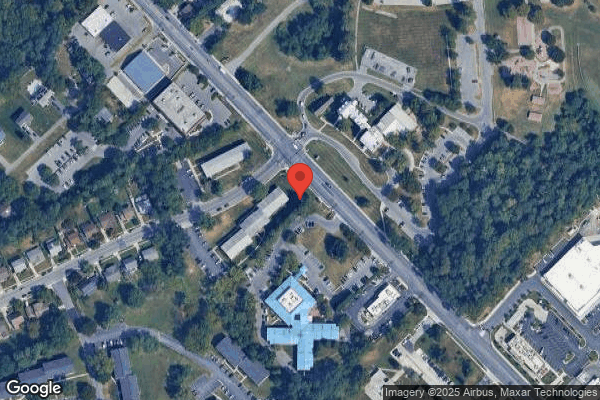
12020 REISTERSTOWN ROAD, REISTERSTOWN, MD 21136 (410) 833-3801
For profit - Partnership 151 Beds FUTURE CARE/LIFEBRIDGE HEALTH Data: November 2025 1 Immediate Jeopardy citation
Trust Grade
33/100
#161 of 219 in MD
Last Inspection: June 2023

Over 2 years since last inspection. Current conditions may differ from available data.

Overview

Future Care Cherrywood has received a Trust Grade of F, indicating significant concerns about the quality of care provided. With a state rank of #161 out of 219 facilities in Maryland, they are in the bottom half, and locally, they rank #30 out of 43 in Baltimore County, meaning there are only 13 facilities performing worse. The facility's trend is stable, with 27 issues reported consistently from 2019 to 2023, which raises concerns about ongoing compliance. Staffing is rated at 3 out of 5 stars, but the 60% turnover rate is concerning as it is higher than the state's average of 40%. Although there have been no fines recorded, which is a positive sign, there have been critical incidents, including failure to report a resident's verbal abuse and inadequate care plan communication, along with poor food safety practices that could potentially impact all residents. Overall, while there are some strengths, such as good RN coverage, the numerous issues and poor trust grade warrant careful consideration.

Trust Score
F
33/100
In Maryland
#161/219
Bottom 27%
Safety Record
High Risk
Review needed
Inspections
Holding Steady
27 → 27 violations
Staff Stability
⚠ Watch
60% turnover. Above average. Higher turnover means staff may not know residents' routines.
Penalties
✓ Good
No fines on record. Clean compliance history, better than most Maryland facilities.
Skilled Nurses
✓ Good
Each resident gets 69 minutes of Registered Nurse (RN) attention daily — more than 97% of Maryland nursing homes. RNs are the most trained staff who catch health problems before they become serious.
Violations
⚠ Watch
58 deficiencies on record. Higher than average. Multiple issues found across inspections.
★★☆☆☆
2.0
Overall Rating
★★★☆☆
3.0
Staff Levels
★★★★☆
4.0
Care Quality
★★☆☆☆
2.0
Inspection Score
Stable
2019: 27 issues
2023: 27 issues

The Good

  • 4-Star Quality Measures · Strong clinical quality outcomes
  • Full Sprinkler Coverage · Fire safety systems throughout facility
  • No fines on record

Facility shows strength in quality measures, fire safety.

The Bad

2-Star Overall Rating

Below Maryland average (3.0)

Below average - review inspection findings carefully

Staff Turnover: 60%

14pts above Maryland avg (46%)

Frequent staff changes - ask about care continuity

Chain: FUTURE CARE/LIFEBRIDGE HEALTH

Part of a multi-facility chain

Ask about local staffing decisions and management

Staff turnover is elevated (60%)

12 points above Maryland average of 48%

The Ugly 58 deficiencies on record

1 life-threatening
Jun 2023 27 deficiencies
CONCERN (D) 📢 Someone Reported This

A family member, employee, or ombudsman was alarmed enough to file a formal complaint

Potential for Harm - no one hurt, but risky conditions existed

Deficiency F0557 (Tag F0557)

Could have caused harm · This affected 1 resident

**NOTE- TERMS IN BRACKETS HAVE BEEN EDITED TO PROTECT CONFIDENTIALITY** Based on reviews of a clinical record and a facility reported incident (FRI), review of the facility investigation, and intervie...

Read full inspector narrative →
**NOTE- TERMS IN BRACKETS HAVE BEEN EDITED TO PROTECT CONFIDENTIALITY** Based on reviews of a clinical record and a facility reported incident (FRI), review of the facility investigation, and interviews with the resident and staff, it was determined that the facility staff failed to treat residents with dignity and respect by not assisting a resident with toileting when requested. This was evident for 1 (Resident #50) of 24 residents reviewed for abuse during the survey. The findings include: Review of facility reported incident MD00190945 on 05/23/23 revealed an allegation that GNA #29 told Resident #50 that S/he could not use the bedpan immediately on 04/05/23. A review of the facility Resident Right's and Services policy on 06/05/23 at 10 AM, revealed section C -2 which indicated the resident has the right to receive treatment, care and services that are in an environment that promotes maintenance or enhancement of each resident's quality of life. Section C - 3 indicates a resident has the right to have a dignified existence, self-determination, and communication with access to individuals and services inside and outside the nursing facility. A review of Resident #50's medical record on 05/23/23 revealed that Resident #50 was admitted to the facility on [DATE] with diagnoses that include an overactive bladder, urinary incontinence, and anxiety. Further review of Resident #50's clinical record revealed 3 Brief Interview for Mental Status (BIMS) that occurred on the 07/18/22 annual assessment, 12/12/22 quarterly assessment, and 02/26/23 quarterly assessment where each indicated a score of 15 which indicates Resident #50 is cognitively intact during the interviews. A review of the facility investigation into Resident #50's 04/05/23 allegation, that GNA #29 would not assist him/her with toileting when requested, on 05/23/23 revealed a typed statement from Staff Member #31. Staff Member #31 documented that Resident #50 complained on 04/05/23 at 4:27 PM that GNA #29 would not allow Resident #50 to use the bathroom until 6:30 PM that evening. Staff Member #31 also documented that during the 3 PM - 11 PM, 04/05/23 shift Resident #50 also complained that staff would not answer his/her call light, further assist Resident #50 with toileting requests, and at 8:23 PM GNA #29 assisted Resident #50 with the bedpan but left him/her lying flat and stated to Resident #50 that, you will have to wait until I come back and then closed the door. In an interview with Staff Member #31 on 05/24/23 at 1:02 PM, Staff Member #31 confirmed his/her typed statement regarding Resident #50's allegations that GNA #29 would not assist Resident #50 with toileting on 04/05/23. In an interview with Staff Member #33 on 05/24/23 at 1:40 PM, Staff Member #33 stated that S/he was made aware of Resident #50's comments, that GNA #29 would not assist him/her with going to the rest room on 04/05/23, by the facility staff. Staff Member #33 stated S/he was home and drove to the facility that evening. Staff Member #33 stated S/he arrived at the facility and immediately sent GNA #29 home, reassigned Resident #50 to a different staff person, started an investigation into the allegations, and notified the facility director of nurses. A review of Staff Member #33's handwritten statement, dated 04/06/23, on 05/24/23, revealed that Staff Member #33 interviewed Resident #50 at 8:40 PM on 04/05/23. Staff Member #33 documented that Resident #50 appeared to be upset and complaint that GNA #29 was not helping him/her. Staff Member #33 documented that Resident #50 stated that S/he asked GNA #29 to use the bedpan at 3:30 PM and GNA #29 stated that Resident #50 would have to wait until 6:30 PM. Resident #50 also stated that GNA #29 was mad with Resident #50 and called Resident #50 crazy and a demented person. Resident #50 also informed Staff Member #33 that GNA #29 placed him/her on the bedpan around 8:20 PM and stated to Resident #50 that, you will have to wait until I come back. Staff Member #33 documented that the facility director of nurses was made aware of the report at 8:45 PM on 04/05/23. In an interview with Resident #50 on 05/24/23 at 1:50 PM, Resident #50 stated that S/he recalled the incident and that it happened with GNA #29 a few weeks ago. Resident #50 stated that GNA #29 made him/her feel very uncomfortable and was glad that GNA #29 no longer provides care to him/her.
CONCERN (D) 📢 Someone Reported This

A family member, employee, or ombudsman was alarmed enough to file a formal complaint

Potential for Harm - no one hurt, but risky conditions existed

Deficiency F0561 (Tag F0561)

Could have caused harm · This affected 1 resident

**NOTE- TERMS IN BRACKETS HAVE BEEN EDITED TO PROTECT CONFIDENTIALITY** Based on observations and interviews with the facility staff and resident, it was determined the facility failed to ensure that ...

Read full inspector narrative →
**NOTE- TERMS IN BRACKETS HAVE BEEN EDITED TO PROTECT CONFIDENTIALITY** Based on observations and interviews with the facility staff and resident, it was determined the facility failed to ensure that a resident who chooses to go to the 1st floor to eat lunch in the main dining room and attend activities like bingo and music is aided to get prepared and transferred out of bed to a wheelchair for escort assistance. This was evident for 1 (#127) of 4 residents investigated for activities during a Medicare/Medicaid survey. The findings include: An interview was conducted with resident #127 on 5/18/23 at 10:37 AM. The resident was asked if he/she attends activities. Resident #127 pointed to a sign posted on the wall Please take downstairs for lunch, music and bingo. Review of resident #127's medical record on 5/23/23 revealed the resident was admitted to the facility on [DATE]. Review of the admission activity assessment dated [DATE] indicated that resident #127 presented with the activity potential to plan his/her own day but requires invitation, motivation, and encouragement needing escort assistance. A care plan review note dated 5/4/23 revealed that the resident started attending some group programs and communal dining. On 5/18, 5/19, 5/22, 5/23, and 5/24/23 the resident was noted to not eat lunch in the main dining area. Resident #127 was interviewed while in bed at 12:25 PM on 5/24/23. The resident indicated that they did not get him ready. He/she acknowledged not eating lunch downstairs in the main dining room for the past week. At 12:39 PM on 5/24/23, the unit manager (staff #51) was asked if she knew why resident #127 was not out of bed and downstairs for lunch. She did not have an answer and was going to find the GNA assigned to resident #127. At 12:46 on 5/24/23 the unit manager joined the conversation with the resident and asked the resident about going to the dining room for lunch. The resident stated that he wanted to go to the dining room for lunch. He/she stated that the staff does not ask him/her about going to the dining room. The surveyor pointed to the sign on the wall for the Unit manager's benefit and she indicated that she did not know about the sign. The nursing home administrator, director of nursing, and a corporate nurse (staff #36) were informed of the concern with resident #127 not being given the opportunity to attend communal dining for the first five days of the survey on 5/26/23 at 4:10 PM.
CONCERN (D) 📢 Someone Reported This

A family member, employee, or ombudsman was alarmed enough to file a formal complaint

Potential for Harm - no one hurt, but risky conditions existed

Deficiency F0578 (Tag F0578)

Could have caused harm · This affected 1 resident

**NOTE- TERMS IN BRACKETS HAVE BEEN EDITED TO PROTECT CONFIDENTIALITY** 2) On [DATE] at 11:01 AM, a review for Resident #44 revealed the resident was admitted to the facility in [DATE] with a past med...

Read full inspector narrative →
**NOTE- TERMS IN BRACKETS HAVE BEEN EDITED TO PROTECT CONFIDENTIALITY** 2) On [DATE] at 11:01 AM, a review for Resident #44 revealed the resident was admitted to the facility in [DATE] with a past medical history that included but was not limited to, hemiplegia and hemiparesis, chronic obstructive pulmonary disease, embolism, and thrombosis of deep vein of the right upper extremity. During a review of the clinical record on [DATE], the resident's MOLST was located on the paper chart. The MOLST form dated [DATE] documented, I hereby certify that these orders are entered as a result of a discussion with and the informed consent of the patient's health care agent as named in the patient's advance directive. However, there was no advance directive filed under the medical record. During an interview with the Director of Nursing (DON) on [DATE] at 9:10 AM, the DON stated that usually, facility social workers obtain/document/manage residents' advance directives. However, the DON confirmed that the facility did not have documented or advance directives for Resident #44 in his/her medical record. During an interview with the Director of Nursing on [DATE] at 09:00 AM, the surveyor shared concerns about Resident #44's advanced directive. Based on clinical record review and staff interviews, it was determined that the facility failed to 1) ensure the resident/responsible party was provided information in a manner easily understood by the resident or resident representative to formulate an advanced directive and offered the opportunity to develop an advanced directive, and 2) document/file the resident's advanced directive on their medical record. This was evident for 2 (Resident #40 and #111) of 10 sampled residents for advanced directives, and one resident ( #44) of 10 residents' advanced directive reviewed during the annual survey. The findings include: An advance directive is a written statement of a person's wishes regarding medical treatment, often including a living will, made to ensure those wishes are carried out should the person be unable to communicate them to a doctor. It is a legal document in which a person specifies what actions should be taken for their health if they can no longer make decisions for themselves because of illness or incapacity. A Maryland MOLST (Medical Orders for Life-Sustaining Treatment) form is used for documenting a resident's specific wishes related to life-sustaining treatments. The MOLST form includes medical orders for Emergency Medical Services (EMS) and other medical personnel regarding cardiopulmonary resuscitation (CPR) and other life-sustaining treatment options for a specific patient. 1a) On [DATE] at 10:00 AM a chart review for Resident #40 revealed the resident was admitted to the facility in September of 2021. On [DATE] resident #40 made her/his decisions on the MOLST form and on [DATE] the resident was deemed incapable of making her/his own healthcare decisions except She/he can appoint healthcare agent. The most recent quarterly Brief Interview for Mental Status ([DATE]) revealed resident #40 scored a 15/15 indicating an intact cognitive response. The social worker (staff # 21) was interviewed on [DATE] at 1:25 PM. She was asked questions about her documentation related to advanced directives. She indicated that in the admission social history, there is a section where residents are asked, and she stated that advanced directives are reviewed quarterly. Further review of resident #40's medical record revealed that there was not a quarterly advanced directive review between [DATE] and [DATE] (7 months). The advanced directive review documentation only reviewed the resident's CPR status. There was no documentation related to the resident being asked or helped to develop an Advanced directive with a selection of a healthcare agent. 1b) Resident #111's medical record was reviewed on [DATE]. Resident #111 was originally admitted to the facility in November of 2021 with diagnoses that included cerebrovascular disease, dementia, mood disturbance, and anxiety. On [DATE] resident #111 made her/his own MOLST decisions and was deemed incapable of making his/her own medical decisions on [DATE] except can appoint healthcare agent. The most recent quarterly Brief Interview for Mental Status ([DATE]) revealed resident #40 scored a 12/15 indicating moderate cognitive impairment. There was not any documentation of quarterly advanced directive reviews between [DATE] and [DATE] (8 months). Both notes indicated that the social worker met with the resident to address code status. The resident's son was listed as a surrogate decision maker as there was no documentation related to the resident being asked or helped to develop an Advanced directive with a selection of a healthcare agent. An interview was conducted with the social worker on [DATE] at 10:02 AM. Information was exchanged related to the physicians' documentation on the Physician's Certification of incapacity to make informed decisions and the 7 and 8-month gaps in her advanced directive review notes and only documentation about code status. She was asked to confirm. Copies of the Physician Certification of Incapacity to Make Informed Decisions and social work notes were requested for both residents #40 and #111. The concerns related to lack of advanced directive education and no documentation related to formulating advanced directives for residents #40 and #111 were shared with the nursing home administrator, director of nursing, and Corporate Nurse (staff # 36) on [DATE] at 4:10 PM.
CONCERN (D) 📢 Someone Reported This

A family member, employee, or ombudsman was alarmed enough to file a formal complaint

Potential for Harm - no one hurt, but risky conditions existed

Deficiency F0583 (Tag F0583)

Could have caused harm · This affected 1 resident

Based on observation, interviews, and reviews of the facility administrative records, it was determined that facility staff failed to promote care for a resident in an environment that maintains or en...

Read full inspector narrative →
Based on observation, interviews, and reviews of the facility administrative records, it was determined that facility staff failed to promote care for a resident in an environment that maintains or enhances each resident's dignity and privacy. This was evident for 2 (Resident #6, #259) of 2 residents observed during the annual recertification survey. The findings include: 1) The observation was made on 5/18/23 at 3:00 PM of Resident #6 lying in bed in his/her room with three beds and staying with one other resident. Resident #6's bed faced the window, so the resident's foot showed at the room door side. At 3:04 PM on 5/18/23, an X-ray technician (Staff #41) entered the room and prepared an X-ray for Resident #6. The surveyor came out of the room and observed staff #41's care from the hallway. The surveyor observed Resident #6 was shouting help, help without any procedure being performed. At 3:07 PM on 5/18/23, a Licensed Practical Nurse (LPN #42) entered the room to help the resident. The surveyor observed Resident #6's room was widely opened, and a privacy curtain was not applied during the procedure. The surveyor saw Resident #6's legs swung during the procedure. Right after the procedure, an interview was conducted with Staff #41. He stated that he usually opened the door while preparing the process, exited the room, and closed the door to prevent radiation exposure. At 3:10 PM on 5/18/23, the surveyor shared concerns regarding the failure to keep residents privacy with LPN #42. He said okay. In an interview with the Director of Nursing (DON) on 6/06/23 at 09:00 AM, the surveyor shared concerns with the DON. 2) On 05/19/23 at 9:10 AM, a nurse surveyor went to interview Resident #259 in his/her bedroom. An observation that Resident #259's door was open and the resident's privacy curtain was pulled back/open. Resident #259 agreed to the interview but stated that S/he was on the bedpan and asked if the surveyor could come back. At 9:20 AM, the nurse surveyor returned to Resident #259's room to continue the interview. Resident #259 complained that the nurse aide did not close the privacy curtain or close the door to the room. In an interview with GNA #30 On 05/19/23 at 11:46 AM, GNA #30 Stated that S/he has worked at the facility under an agency contract for 6 months. GNA #30 stated that S/he would tell the resident what S/he was going to do before assisting a resident. GNA #30 stated that Resident #259 had to prompt him/her to pull the curtain after placing the resident on the bedpan. GNA #30 Stated that S/he did not assist Resident #259 off of the bedpan earlier on 05/19/23. A review of the facility Resident Right's and Services policy on 06/05/23 at 10 AM, of section D, Personal Privacy, 2, revealed a statement that a resident has the right to privacy during personal care.
CONCERN (D) 📢 Someone Reported This

A family member, employee, or ombudsman was alarmed enough to file a formal complaint

Potential for Harm - no one hurt, but risky conditions existed

Safe Environment (Tag F0584)

Could have caused harm · This affected 1 resident

Based on observation and interview, it was determined that the facility failed to ensure that resident care areas were in good repair. This was evident for 3 of 33 resident rooms located on the first ...

Read full inspector narrative →
Based on observation and interview, it was determined that the facility failed to ensure that resident care areas were in good repair. This was evident for 3 of 33 resident rooms located on the first floor, and 1 of 3 unit nourishment rooms. The findings include: On 05/18/23 at 11:08 AM, an observation of Resident #67's room was conducted. The privacy curtain had a hole at the top of the curtain in the netted area, which was approximately 4-5 inches in diameter. There was also a loose, displaced floor tile in the resident's bathroom next to the toilet. On 05/22/23 at 09:23 AM, an interview with Resident #18 was conducted. The resident stated that cleanliness in the room and bathroom has been an issue, but only recently. On 05/22/23 at 11:11 AM, an observation of Resident #18's bathroom was conducted. There was damaged drywall with deep scrapes on the wall next to the toilet. The drywall was puckered, and there was a hole in the drywall at the level of the cove molding, an area of approximately 8-10 inches long, 4 inches wide. On the back wall, behind the toilet, the flange where the plumbing pipe enters the wall was covered with a brown discoloration. There were also gouges into the drywall in front of the toilet approximately 8 inches from the floor. There was also a dark spot on the ceiling tile directly above the toilet that measured approximately 5 inches in diameter. On 05/22/23 at 11:05 AM an observation of Resident #99's room and bathroom was conducted. The bathroom had cracked floor tiles with dark spots in cracked areas, the wallboard next to, and directly in front of, the toilet was damaged with deep scrape marks that were approximately 8 inches from the floor. The bare drywall was exposed and the paint was missing. The bathroom tile floor around the toilet was dirty and had dark brown discoloration. There was an over sink shelf in the resident's bedroom area that was not secured to the wall and the shelf was attached to the wall on only the left side. The sink counter was also not secured and could be moved up and down about 2 inches with little effort. There was one water spot on the ceiling tile in the center of the room. The windowsill had peeling paint. On 06/05/23 at 12:47 PM an observation of the Unit #1 nourishment room was conducted. There were two sinks in the nourishment room, one small, one large. The backsplash behind the large sink was spongy, had peeled veneer and had a black discoloration. The caulk around the backsplash tile was black and separated from the wall. When touched, the backsplash felt spongy. The discolored area was an approximately 3 foot section.
CONCERN (D) 📢 Someone Reported This

A family member, employee, or ombudsman was alarmed enough to file a formal complaint

Potential for Harm - no one hurt, but risky conditions existed

Deficiency F0604 (Tag F0604)

Could have caused harm · This affected 1 resident

Based on observation, review of a medical record, and staff interview, it was determined the facility staff failed to obtain a physician's order to use a restraint on a resident. This was evident for ...

Read full inspector narrative →
Based on observation, review of a medical record, and staff interview, it was determined the facility staff failed to obtain a physician's order to use a restraint on a resident. This was evident for 1 (Resident #117) of 2 residents reviewed for physical restraints during an annual recertification survey. The findings include: During an observation of the unit 3 on 05/19/23 at 11:09 AM, Resident #117 was observed in her room, seated in a wheelchair, with a lap seat belt across his/her lower abdomen. In an brief interview with Resident #117, Resident #117 was unable to answer any questions or unlock/remove the seatbelt when asked. In an interview with Staff Member #34 on 05/19/23 at 11:10 AM, Staff Member #34 stated that Resident #117 is unable to remove a connected seatbelt. Staff Member #34 stated that Resident #117 is currently using a rental wheelchair and that Resident #117 does not need a seatbelt while seated in the wheelchair. Staff #117 stated that a staff member must have hooked the seatbelt. In an interview with GNA #37 on 05/19/23 at 2:23 PM, GNA #37 stated that S/he was running late and forgot to review Resident #117's care plan before applying the seatbelt to Resident #117 lap while seated in the wheelchair. The nurse surveyor and GNA #37 went and reviewed Resident #117's care plans on the GNA documentation kiosk. GNA #37 was able to verify that Resident #117 did not have any nursing interventions that instructed the nursing staff to apply a seatbelt to Resident #117 while S/he was seated in a wheelchair. The seat belt was removed and the staff received education.
CONCERN (D) 📢 Someone Reported This

A family member, employee, or ombudsman was alarmed enough to file a formal complaint

Potential for Harm - no one hurt, but risky conditions existed

Report Alleged Abuse (Tag F0609)

Could have caused harm · This affected 1 resident

Based on reviews of a facility reported incident, reviews of administrative records, and staff interviews, it was determined that 2 GNA staff members failed to immediately notify administrative staff ...

Read full inspector narrative →
Based on reviews of a facility reported incident, reviews of administrative records, and staff interviews, it was determined that 2 GNA staff members failed to immediately notify administrative staff when they observed bruising to a resident's left hand. This was evident for 2 (GNA's #35, #38) of 2 GNA's reviewed for abuse during an annual recertification survey. The findings include: Review of facility reported incident (FRI) MD00183120 on 05/25/23 revealed an allegation of an injury of unknown source. Resident #359 was observed on 09/05/22 with edema, bruising, and discoloration to the left 4th and 5th fingers. The injury extended into the knuckle and lateral aspect of the left hand. Resident #359 suffers from cognitive impairment and was unable to tell staff what had happened. The facility initiated an abuse investigation at this time. Resident #359's physician was notified, and orders were obtained for pain medication and an X-ray of the left hand/fingers. The X-ray showed that Resident #359 showed a proximal fifth finger fracture with minimal displacement. Further review of the facility investigation on 05/25/23 revealed a statement from GNA #35 and GNA #38. On 09/05/22, GNA #38 stated that s/he and GNA #35 provided care to Resident #359 during the 3 pm to 11 pm evening shift on 09/04/22. GNA #38 indicated that both s/he and GNA #35 saw Resident #359's left fifth finger bruising when asked. GNA #38 indicated s/he did not notify the nurse immediately because s/he thought the injury was old. Further review of the facility investigation on 05/25/23 revealed a statement from GNA #35. On 09/05/22, GNA #35 stated that s/he saw Resident #359's left finger bruising on 09/04/22. GNA #35 stated that Resident #359 showed his/her hand to me, and I noticed his/her pinky finger was bruised. GNA #35 indicated s/he asked Resident #359 what happened to his/her finger, but Resident #359 never really did answer me. GNA #35 stated that s/he did not notify the nurse immediately because I thought it was already reported. It did not look new.
CONCERN (D) 📢 Someone Reported This

A family member, employee, or ombudsman was alarmed enough to file a formal complaint

Potential for Harm - no one hurt, but risky conditions existed

Investigate Abuse (Tag F0610)

Could have caused harm · This affected 1 resident

2) On 5/24/23 at approximately 3:00 PM the Nursing Home Administrator (NHA), Staff #1 informed the surveyors of an incident of alleged abuse for Resident #18 that occurred on the evening of 5/23/23. O...

Read full inspector narrative →
2) On 5/24/23 at approximately 3:00 PM the Nursing Home Administrator (NHA), Staff #1 informed the surveyors of an incident of alleged abuse for Resident #18 that occurred on the evening of 5/23/23. On 05/25/23 at 08:24 AM an interview and observation with Resident #18 was conducted regarding the allegation of abuse on 5/23/23. The resident stated that the evening staff Geriatric Nursing Aide (Staff #47) grabbed the call bell from the resident's grip and the resident thinks that his/her finger was bent backward and that it did not hurt then but hurts now. The resident reported the incident to staff and the facility conducted an investigation. Bruises were observed on the resident ' s left hand. On 5/31/23 at 10:45 AM a review of the facility investigative notes for the alleged incident on 9/26/22 (MD00192672) revealed that the facility used a form titled Investigation Interview Form. The facility used 2 versions of this form for their investigation. There were a total of 9 forms titled Investigation Interview Form provided. Seven of the forms contained the following questions for which staff answered only yes or no: i) Did you work with (Resident #18) during your scheduled shift?, ii) Did you see any changes in (Resident #18 ' s) skin?, iii) Did the resident report to you any changes in her skin condition? If yes, please describe. Of these 7 forms, 1 was undated. The facility failed to ask specific questions about abuse. On 6/6/23 at 11:15 AM, in an interview with Corporate Nurse (Staff #23) and the DON (Staff #3), the Corporate Nurse stated that the facility's usual practice was to use the interview tool with staff rather than asking for staff statements. The Corporate Nurse also stated that staff were not provided an opportunity to give witness statements. When asked if the interview tool had the specific question to elicit the necessary information for each situation investigated, the Corporate Nurse stated that it may not for all circumstances. Based on staff interviews and a review of the facility's self-report investigations, it was determined that the facility failed to thoroughly investigate alleged violations and employee-to-resident abuse. This was evident for 2 (Resident #6 and #18) of 22 facility reported incidents of abuse allegations investigated during the annual survey. The findings include: 1) On 5/22/23 at 10:26 AM, a review of facility-reported incident MD00188046 revealed that a Geriatric Nurse Aide (GNA #8) observed a Licensed Practical Nurse (LPN #20) slap Resident #6 on 1/13/23. Further review of the facility follow-up self-report dated 1/13/23 stated that LPN #20 stated that the resident swung his/her arm at LPN #20's face and knocked her shield off. LPN #20 stated that when the resident did that, LPN #20 put her arm up to block the resident from hitting her in the face. The surveyor reviewed the facility's investigation on 5/22/23 at 1:00 PM. The review revealed that the Director of Nursing (DON) interviewed with GNA #8 and LPN #20. The facility incident investigation form stated that three staff members (GNA #8, LPN #20, and GNA #13) listed all persons interviewed who cared for Resident #6 when the incident occurred. On GNA #8's investigation interview form written by the DON on 1/13/23 said, GNA #8 alleged that he was doing rounds, opened the door to the room [the resident's room number], and witnessed LPN #20 on the left side of the bed. Then, GNA #8 witnessed LPN #20 use her right hand to slap the resident on the left side of the face. GNA #8 stated that he immediately shut the door. GNA #8 said LPN #20 came out of the room and stated that the resident swung at his/her while providing wound care and knocked her shield off. On LPN #20's investigation interview form written by the DON on 1/13/23 showed, LPN #20 stated that she was attempting to provide wound care when the resident swung at her and hit her shield off her face. However, as the follow-up report concluded, no evidence was found to support LPN #20 putting her arm up to block the resident from hitting her in the face. Also, the facility investigation document had no GNA #13's interview or statement. During an interview with the Nursing Home Administrator (NHA) on 5/23/23 at 12:29 PM, the surveyor asked whether the facility had an interview with GNA #13, who had cared for Resident #6. The NHA said, I interviewed the staff. I will bring it. The NHA submitted a copy of a paper dated 4/17/23 about her interview with GNA #13, which included LPN #20 might be set up, and GNA #13 felt that may have been the reason for the report. The surveyor interviewed GNA #13 on 5/31/23 at 12:28 PM. GNA #13 stated that she was called for the interview the day this incident occurred and had an interview with the DON. GNA #13 insisted that GNA #8 also attended during the interview. Also, GNA #13 stated that she had a 1:1 interview with the NHA a few months later. During an interview with GNA #8 on 6/06/23 at 9:00 AM, GNA #8 confirmed that GNA #13 attended when he had an interview with the DON about the incident. The surveyor shared concerns that the incident investigation did not go thoroughly with the DON and Staff #23 on 6/06/23 at 9:00 AM. The DON verbalized understanding.
CONCERN (D) 📢 Someone Reported This

A family member, employee, or ombudsman was alarmed enough to file a formal complaint

Potential for Harm - no one hurt, but risky conditions existed

Transfer Requirements (Tag F0622)

Could have caused harm · This affected 1 resident

Based on a review of a complaint intake, medical record review, and staff interview it was determined that the facility failed to document the bases leading up to a transfer of a resident to the hospi...

Read full inspector narrative →
Based on a review of a complaint intake, medical record review, and staff interview it was determined that the facility failed to document the bases leading up to a transfer of a resident to the hospital in the medical record including an accurate reason for the transfer. This was evident for 1 (Resident #349) of 5 residents reviewed for hospitalization. The findings include: On 6/5/23 complaint intake, MD00169068 was reviewed related to resident #349. Based on a review of the complaint intake the resident passed on 7/8/21. A review of resident #349's closed medical record on 6/5/23 at 9:00 AM revealed that the resident was transferred out of the facility to a hospital on 6/8/21 and transferred back to the facility on 6/17/21. A review of the medical record did not reveal a change in condition assessment which would have described the resident's condition, and what interventions were performed for the resident, prior to EMS notification and transfer out of the facility. The Hospital Transfer Form dated 6/8/21 was the only document that indicated the resident's transfer to the hospital on 6/8/21. The Transfer form documented the reason for the transfer as Altered Mental Status with no additional supporting documentation. Review of the admission Information in the hospital discharge summary, indicated that the resident was found unresponsive and not moving at lunchtime (noon), and EMS (emergency medical services) was called around 1 PM. Upon EMS arrival the resident was noted to have left facial droop and left-sided weakness. This documentation in the hospital discharge summary was not documented in the resident's closed medical records. The documentation on the hospital discharge summary did not match the documentation of Altered Mental Status. The documentation in the hospital discharge summary was not documented in the closed medical record. An interview was conducted with the corporate nurse (staff #23) on 6/5/23 at 3 PM related to the lack of documentation in the medical record related to the resident's medical condition prior to the transfer Staff #23 confirmed that there was not an SBAR note (situation, background, assessment, and recommendation) that may have included the resident's change in condition. The LPN (Staff #15) who signed the hospital transfer form was interviewed with the director of nursing present on 3/6/23 at 11:15 AM. She was shown documentation from resident #349's medical record and asked if she remembered the situation with the resident and why the resident was transferred out. She remembered the resident but not the situation.
CONCERN (D) 📢 Someone Reported This

A family member, employee, or ombudsman was alarmed enough to file a formal complaint

Potential for Harm - no one hurt, but risky conditions existed

Transfer Notice (Tag F0623)

Could have caused harm · This affected 1 resident

Based on medical record review and interview, it was determined the facility failed to notify the resident/resident representative in writing of a transfer/discharge of a resident along with the reaso...

Read full inspector narrative →
Based on medical record review and interview, it was determined the facility failed to notify the resident/resident representative in writing of a transfer/discharge of a resident along with the reason for the transfer. This was evident for 1(#142) of 5 residents reviewed for hospitalization during the annual survey. The findings include: A review of Resident #142's closed medical record on 5/10/23 at 1:02 PM revealed the resident was transferred to the hospital on 4/11/23 due to a change in medical condition. The eINTERACT change of condition note that documented Resident #142 was transferred to the hospital indicated that the resident's family was updated, however, there was no written documentation that the responsible party and/or resident was notified in writing of the hospital transfer. On 5/22/23 at 3:24 AM the DON was asked if there was any documentation to show, who was notified in writing of the facility-initiated transfer of the resident to the hospital on 4/11/23 and a copy of the written notification. The DON indicated that notifications were done by phone and that written notifications are sent out only if the family requested it. She confirmed that there was no written notification to indicate that the resident and/or the resident's family was notified in writing of the resident's transfer to the hospital.
CONCERN (D) 📢 Someone Reported This

A family member, employee, or ombudsman was alarmed enough to file a formal complaint

Potential for Harm - no one hurt, but risky conditions existed

Deficiency F0624 (Tag F0624)

Could have caused harm · This affected 1 resident

Based on medical record review and staff interview, it was determined that the facility failed to orient, prepare, and document a resident's preparation for a transfer to the hospital. This was identi...

Read full inspector narrative →
Based on medical record review and staff interview, it was determined that the facility failed to orient, prepare, and document a resident's preparation for a transfer to the hospital. This was identified for 2 (#73 and #349) of 5 residents reviewed for hospitalization during the annual survey. The findings include: 1) Review of resident #73's medical record on 5/23/23 revealed resident #73 was transferred to a hospital due to abnormal blood work on 2/16/23 at 12:45 PM. The Hospital transfer form and SBAR Communication Form (situation, background, assessment, and recommendation) were written by a registered nurse (staff # 46). A review of both documents did not reveal that resident #73 was informed of the facility-initiated transfer and what was done to prepare the resident for transfer to the hospital. On 05/26/23 at 2:43 PM, staff #46 was interviewed as he was sitting at a computer to look up and review his documentation regarding the transfer of resident #73 to the hospital on 2/16/23. The registered nurse was unaware of the protocol to document the orientation and preparation of residents being transferred out of the facility. Copies of the transfer documentation were requested. Upon return of the transfer documentation at 3:05 PM on 5/26/23, the director of nursing was informed of the lack of sufficient preparation and orientation documentation related to resident #73's transfer to the hospital. At 4:10 PM on 5/26/23, the nursing home administrator, director of nursing, and corporate nurse (staff #36) were informed of the regulatory concern. 2) On 6/5/23 complaint intake MD00169068 was reviewed related to resident #349. Review of resident #349's medical record on 6/5/23 revealed that the resident was transferred out of the facility to a hospital on 6/8/21. There was not a nursing progress note indicating the resident's condition prior to the transfer on 6/8/21. Under the Evaluations tab in the electronic medical record, a Hospital Transfer Form dated 6/8/21 was reviewed. Review of this document written by an LPN (licensed practical nurse) (staff #15) did not document sufficient preparation and orientation for resident #349. An interview was conducted with Staff #15 with the director of nursing present on 3/6/23 at 11:15 AM. Staff #15 remembered the resident but not the event. She reviewed her documentation and collaborated that there was no documentation related to the sufficient preparation and orientation of the resident prior to transfer to the hospital.
CONCERN (D) 📢 Someone Reported This

A family member, employee, or ombudsman was alarmed enough to file a formal complaint

Potential for Harm - no one hurt, but risky conditions existed

Deficiency F0625 (Tag F0625)

Could have caused harm · This affected 1 resident

Based on medical record review and interview it was determined the facility failed to notify the resident/resident representative in writing of the bed hold policy upon transfer of a resident to an ac...

Read full inspector narrative →
Based on medical record review and interview it was determined the facility failed to notify the resident/resident representative in writing of the bed hold policy upon transfer of a resident to an acute care facility. This was evident for 1 (#142) of 5 residents reviewed for hospitalization during the annual survey. Findings include: The bed-hold policy describes the facility's policy of holding or reserving a resident's bed while the resident is absent from the facility for therapeutic leave or hospitalization. On 5/10/23 at 1:02 PM, a review of Resident #142's closed medical record revealed Resident #142 was transferred to the hospital on 4/11/23 for a change in medical condition. Further review of Resident #142's closed medical record documentation revealed the responsible party was notified, however, there was no written documentation that the resident or their responsible party was given a copy of the bed hold policy. On 5/22/23 at 3:24 PM, the Director of Nursing (DON) was asked about the notification process. She stated that it was done verbally by phone and that a written notification can be sent to the resident/resident representative only if requested. She confirmed that there was no written notification sent to the resident/representative regarding the hospital transfer.
CONCERN (D) 📢 Someone Reported This

A family member, employee, or ombudsman was alarmed enough to file a formal complaint

Potential for Harm - no one hurt, but risky conditions existed

Assessment Accuracy (Tag F0641)

Could have caused harm · This affected 1 resident

**NOTE- TERMS IN BRACKETS HAVE BEEN EDITED TO PROTECT CONFIDENTIALITY** Based on observation, record review, and interviews, it was determined that the facility failed to accurately complete a residen...

Read full inspector narrative →
**NOTE- TERMS IN BRACKETS HAVE BEEN EDITED TO PROTECT CONFIDENTIALITY** Based on observation, record review, and interviews, it was determined that the facility failed to accurately complete a resident's Minimum Data Set (MDS) assessment. This was evident for 1 (Resident #67) of 2 residents reviewed for position and mobility, and 1 (Resident #97) of 3 residents reviewed for misappropriation of property during this annual survey. The findings include: The Minimum Data Set (MDS) is a federally mandated process for clinical assessment of residents in Medicare and Medicaid certified nursing homes. MDS assessments are required for residents on admission to the nursing facility and then periodically, within specific guidelines and time frames. This process provides a comprehensive assessment of each resident's functional capabilities and helps nursing home staff identify health problems. The Assessment Reference Date (ARD) is the date the assessment is due to be completed and includes a 7-day look back period for assessment details of the resident. A contracture is a permanent tightening of the muscles, tendons, skin, and nearby tissues that causes the joints to shorten and become very stiff. 1) On 5/18/23 at 11:21 AM, Resident #67 was observed. Resident #67 appeared to have both knees propped on pillows in a highly bent position. On 05/26/23 at 09:50 AM, an interview with the Director of Physical Therapy and Rehabilitation Services (Staff # 28) was conducted. When asked what the resident's ability was, Staff #28 stated that the resident's lower extremities were very contracted, and described the condition as a windswept deformity, a contracture of both hips/knees. Staff #28 also stated that Resident #67 had not been ambulatory in many years. On 05/26/23 at 12:58 PM, a review of an Annual MDS assessment for the ARD of 4/27/23, revealed that in section G (Functional Status) the coding for G0400 Functional Limitation in Range of Motion B. Lower Extremity was coded as 1 for Impairment on one side. On 05/30/23 at 09:42 AM an interview with the Corporate MDS nurse (Staff #24) was conducted. When asked how she determined the assessment information to enter into the MDS she stated that she reviewed the medical record and also assessed the resident in person. She stated that the MDS for Resident #67 with the ARD of 4/27/23 was completed by her. This document was independently reviewed by Staff #24 during the interview. She noted that the MDS functional coding indicated impairment on just one side of the resident's lower extremities. She confirmed that it was coded in error, and that it should have indicated the resident's impairment in both lower extremities. She stated that she did not know why it was incorrectly coded, and stated that she would make the correction to the MDS. 2) A review of complaint MD00179837 was conducted on 6/05/23 at 1:20 PM. The complaint submitted on July 2022 was about Resident #97 who had lost hearing aids and the facility failed to replace them. Further review of Resident #97's medical records revealed that Resident #97 was admitted to the facility on [DATE] with diagnoses of dementia, heart failure, and depression. Resident #97's consultation records contained the resident was seen by audiology on 12/20/21. The audiology notes documented the resident's Responsible Party (RP) reported Resident #97 had hearing aids years ago but did not have them anymore, and they recommended both hearing aids. On 1/24/22 audiology record said, Resident #97's hearing aid fits well, and he/she heard well. On 4/11/22 audiology record documented that the patient's right hearing aid is missing; the audiology reordered the hearing aid. On 7/19/22, the audiology note recorded Resident #97's hearing aid fitting well, and the resident heard well. However, Resident #97's MDS assessment date 3/21/22, 4/15/22, and 7/14/22 section B coded no hearing aid or other hearing appliance used. During an interview with the Director of Nursing (DON) on 6/06/23 at 9:12 AM, the DON stated Resident #97's hearing aid were replaced a couple of times. It looked like the resident threw them away. The surveyor reviewed audiology documentation and MDS assessments section B with the DON. The DON was made aware that the MDS coded no hearing aid used for the resident even though his/her audiology visit documented hearing aid was used on both sides and/or one side.
CONCERN (D) 📢 Someone Reported This

A family member, employee, or ombudsman was alarmed enough to file a formal complaint

Potential for Harm - no one hurt, but risky conditions existed

Deficiency F0655 (Tag F0655)

Could have caused harm · This affected 1 resident

**NOTE- TERMS IN BRACKETS HAVE BEEN EDITED TO PROTECT CONFIDENTIALITY** Based on record review and interviews it was determined that the facility failed to provide the resident and their representativ...

Read full inspector narrative →
**NOTE- TERMS IN BRACKETS HAVE BEEN EDITED TO PROTECT CONFIDENTIALITY** Based on record review and interviews it was determined that the facility failed to provide the resident and their representative with a summary of the baseline care plan. This was evident for 1 (Resident #67) of 5 residents reviewed for baseline care plan. The findings include: 05/19/23 at 10:56 AM Resident #67 was interviewed and said that he/she did not remember being invited to or attending any care plan meetings or receiving any written care plan documents. Resident #67 also stated that he/she did not know if his/her spouse attended care plan meetings. On 05/25/23 at 11:47 AM, a record review revealed that the resident was readmitted to the facility on [DATE] and a baseline care plan was created on 4/27/23. Review of a printed copy of the baseline care plan provided by the facility revealed that the baseline care plan for Resident #67 had a blank signature line. On 5/24/23 at 1:30 PM, an interview with Unit Manager (Staff #18) was conducted. When asked about the facility ' s process for the baseline care plan, she stated that the process includes obtaining either the Resident or Resident's Representative's signature, and scanning the signed copy into the resident's record. On 05/26/23 at 12:44 PM, an interview with the Nursing Home Administrator (Staff #1) was conducted. The Administrator stated that she had looked in the resident's record and confirmed that she did not find a copy of a signed baseline care plan in the medical record for the baseline care plan that was created on 4/27/23.
CONCERN (D) 📢 Someone Reported This

A family member, employee, or ombudsman was alarmed enough to file a formal complaint

Potential for Harm - no one hurt, but risky conditions existed

Quality of Care (Tag F0684)

Could have caused harm · This affected 1 resident

**NOTE- TERMS IN BRACKETS HAVE BEEN EDITED TO PROTECT CONFIDENTIALITY** Based on a complaint, reviews of active and closed records, and staff interviews, it was determined that the facility staff fail...

Read full inspector narrative →
**NOTE- TERMS IN BRACKETS HAVE BEEN EDITED TO PROTECT CONFIDENTIALITY** Based on a complaint, reviews of active and closed records, and staff interviews, it was determined that the facility staff failed to administer eye medications to a resident as prescribed by the resident's physician. This was evident for 1 (Resident #352) of 13 residents reviewed for quality of care during an annual recertification survey. The findings include: A review of complaint MD00180778 on 05/31/23 revealed an allegation Resident #352 did not receive his/her eye medications as instructed by the physician. A review of Resident #352's closed medical record on 05/31/23 revealed that Resident #352 had been admitted to the facility on [DATE] with diagnoses that include a history of a torn retina, retina detachment, and glaucoma. Resident was seen by an ophthalmologist on 06/22/22. Resident #352 was given 2 prescriptions for eye drops at that time. The first eye medication order was for MURO 128, 5 %, place one drop into the right eye four times a day. The second eye medication order was for Durezol, 0.05%, place one drop into the right eye twice a day for 4 weeks. A review of Resident #352's June and July 2022 medication administration record (MAR) revealed that Resident #352 received the eye medication Durezol, 0.05%, one drop to the right eye, four times a day, starting 06/26/22 until 06/30/22 and 07/01/22 until 07/11/22. Further review of Resident #352's June and July 2022 medication administration record (MAR) revealed that Resident #352 did not receive the eye medication MURO 128, 5 %, one drop in the right eye four times a day from 06/22/22 through 07/11/22 when Resident #352 was transferred to a different Long Term Care facility. In an interview with the facility director of nurses on 06/01/23 at 12:05 PM, the DON stated that the facility staff were still reviewing Resident #352's eye medication allegation. During the exit conference on 06/06/23 at 1 PM, the staff had not produced any documentation or reason Resident #352 received the incorrect number of daily doses of the eye medication Durezol and did not receive any doses of the eye medication MURO 128 between 06/22/22 and 07/11/22.
CONCERN (D) 📢 Someone Reported This

A family member, employee, or ombudsman was alarmed enough to file a formal complaint

Potential for Harm - no one hurt, but risky conditions existed

Accident Prevention (Tag F0689)

Could have caused harm · This affected 1 resident

Based on observation and interviews it was determined that the facility failed to ensure that the resident's environment remained free of accident hazards. This was evident for 1 of 3 unit nourishment...

Read full inspector narrative →
Based on observation and interviews it was determined that the facility failed to ensure that the resident's environment remained free of accident hazards. This was evident for 1 of 3 unit nourishment areas observed. The findings include: On 6/5/23 at 12:25 PM, a tour of the nourishment rooms was conducted. In the Unit #1 nourishment room, a partially full, 32 ounce bottle of One Shot drain cleaner was found on the counter next to the microwave oven. There was no lock on the door. On 6/5/23 at 12:25 PM, the Corporate Director of Nursing (Staff #25), who was on the unit, was shown the bottle of One Shot drain cleaner on the counter. She immediately removed the bottle. When asked if there were any wandering residents who may have access to the unlocked nourishment room, she stated that there was one resident on the unit who wanders but that resident was under a one to one observation. On 6/6/23 at 11:10 AM in an interview with the Corporate Nurse (Staff #23), he stated that locks had been placed on all of the nourishment room doors.
CONCERN (D) 📢 Someone Reported This

A family member, employee, or ombudsman was alarmed enough to file a formal complaint

Potential for Harm - no one hurt, but risky conditions existed

Deficiency F0697 (Tag F0697)

Could have caused harm · This affected 1 resident

Based on a complaint, reviews of a medical record, and staff interviews, it was determined that the facility staff failed to 1) ensure follow-up with the pain doctor and 2) ensure documenting pain ass...

Read full inspector narrative →
Based on a complaint, reviews of a medical record, and staff interviews, it was determined that the facility staff failed to 1) ensure follow-up with the pain doctor and 2) ensure documenting pain assessment evidenced by no pain assessment recorded for a resident whose pain noted by a geriatric nurse aide. This was evident for 2 (Resident #44 and #356) of 5 residents reviewed for pain management during the annual survey. The findings include: 1) During an interview with Resident #44 on 05/18/23 at 11:40 AM, the resident stated that he/she had chronic knee, ankle, shoulder, and left-side pain. He/she also explained his/her routine pain medications were working, but the facility did not arrange a follow-up pain doctor's appointment. A review of Resident #44's medical record on 05/24/23 at 2:42 PM revealed that the resident was admitted to the facility in December 2021 with a past medical history that included, but was not limited to, hemiplegia and hemiparesis, chronic obstructive pulmonary disease, embolism, and thrombosis of deep vein of the right upper extremity. Further review of Resident #44's record revealed that the resident was seen by a pain doctor on 03/20/23, and a follow-up appointment had been scheduled on 04/18/23. However, Resident #44 did not go to this appointment. During an interview with Resident #44 on 05/31/23 at 8:22 AM, the resident stated that he/she had had a pain doctor appointment on 4/18/23 and an Orthopedics appointment the same day. The resident said, I went to an orthopedics appointment, but no pain doctor was rescheduled. In an interview with the unit secretary (Staff #11) on 5/31/23 at 2:32 PM, she said, I had not aware of two different appointments on the same day; usually, we did not put two schedules on the same day. During an interview with the Director of Nursing (DON) on 06/06/23 at 9:10 AM, the surveyor shared concerns about Resident #44's pain doctor appointment. The DON stated that the facility was aware of it and rearranged the schedule. 2) Portion of investigating complaint MD00173463 and facility-reported incident MD00173255 on 06/01/23 at 2:27 PM revealed that both intakes stated that Resident #356 had an injury of unknown origin on his/her left arm on 10/12/21. In MD00173463, the complainant insisted Resident #356 had his/her unusual pain since 10/08/21, and the resident's family members reported his/her pain to the nursing staff, who said they would examine it. Further review of the facility's investigation interview form regarding this incident revealed that Staff #48, a Geriatric Nurse Aide (GNA) who worked on 10/11/21, stated that Resident #356 had pain in his/her left arm when Staff #48 was getting his/her ready for bed, Staff #48 reported to the nurse. A documented interview with Staff #50, GNA, who worked 10/09/21 and 10/11/21, dated 10/13/21, showed that when I rolled Resident #356, he/she groaned. I stopped and asked if she/he was ok, and she/he said yes, it's not you. He/she asked me to put a pillow under his/her arm. The investigation interview form with Staff #49, a Registered Nurse who worked on 10/11/21, stated that the GNA told me she/he had pain during care. I went and assessed the resident. He/she had no complaint of pain. However, no documented pain assessment was found under Resident #356's medical record from 10/08/21 to 10/13/21. Further review of Resident #356's medical record revealed that the resident had resided in this facility since 2018 with diagnoses that include, but are not limited to, hemiplegia and hemiparesis affecting the left dominant side and vascular dementia. During an interview with a Licensed Practical Nurse (LPN #15) on 06/02/23 at 10:56 AM, LPN #15 stated that regardless pain medication was given or not, nursing staff should document residents' pain under a progress note. During an interview with the Director of Nursing (DON) and Staff #23 (corporate nurse) on 06/02/23 at 11: 30 AM, the surveyor asked how nursing staff document resident's pain reported from GNAs. Staff #23 stated it would be the same assessment as pain, but if the resident said there was no pain, he did not know whether the nursing staff should document it. The surveyor reviewed Resident #356's medical records and the facility's investigation interview forms regarding the resident's pain. The DON and Staff #23 were made aware that there was no supportive resource that the facility staff evaluated the resident's pain.
CONCERN (D) 📢 Someone Reported This

A family member, employee, or ombudsman was alarmed enough to file a formal complaint

Potential for Harm - no one hurt, but risky conditions existed

Deficiency F0711 (Tag F0711)

Could have caused harm · This affected 1 resident

Based on medical record review and staff interview it was determined the physician's progress notes were not in the resident medical records the day the resident was seen. This was evident for 1 (#73)...

Read full inspector narrative →
Based on medical record review and staff interview it was determined the physician's progress notes were not in the resident medical records the day the resident was seen. This was evident for 1 (#73) of 5 residents reviewed for hospitalization during the annual survey. The findings include: On 5/23/23 at 8:04 AM a record review was done for Resident #73. Review of resident #73's attending physician (staff #41) notes revealed multiple progress encounter notes that were created a few days after resident #73 was seen. An encounter note with an Effective Date (Date of Service) of 2/22/23 was created and signed by the physician on 2/28/23. An encounter note with an Effective Date of 3/24/23 was created and signed by the physician on 3/28/23. An encounter note with an Effective Date of 5/12/23 was created and signed by the physician on 5/17/23. Copies of the sample notes were requested on 5/26/23 and reviewed with the nursing home administrator and the director of nursing at 4 PM on 5/26/23. The director of nursing acknowledged the notes were not done on the day of the visit.
CONCERN (D) 📢 Someone Reported This

A family member, employee, or ombudsman was alarmed enough to file a formal complaint

Potential for Harm - no one hurt, but risky conditions existed

Pharmacy Services (Tag F0755)

Could have caused harm · This affected 1 resident

**NOTE- TERMS IN BRACKETS HAVE BEEN EDITED TO PROTECT CONFIDENTIALITY** Based on complaint and reviews of a closed clinical record, it was determined the facility failed to timely provide a medication...

Read full inspector narrative →
**NOTE- TERMS IN BRACKETS HAVE BEEN EDITED TO PROTECT CONFIDENTIALITY** Based on complaint and reviews of a closed clinical record, it was determined the facility failed to timely provide a medication to meet the needs of a resident. This was evident for 1 (Resident #355) of 14 complaints reviewed during a recertification survey. The findings include: A review of complaint MD00170436 on 06/05/23 revealed an allegation Resident #355 was not provided with quality care. Resident #355 was admitted to the facility on [DATE] with diagnoses that include but are not limited to prostate cancer and testicular hypofunction. A review of Resident #355's closed medical record on 06/05/23 revealed a physician order, dated 07/08/21, instructing the nursing staff to apply an Androderm 2 MG/24 HR, transdermal patch, one time every other day for hypogonadism. A review of Resident #355's July 2021 medication administration record (MAR) on 06/05/23, revealed that the nursing staff was unable to administer Resident #355's medicated patch from 07/09/21 thru 07/25/21 due to that patch not being delivered from the pharmacy.
CONCERN (D) 📢 Someone Reported This

A family member, employee, or ombudsman was alarmed enough to file a formal complaint

Potential for Harm - no one hurt, but risky conditions existed

Deficiency F0757 (Tag F0757)

Could have caused harm · This affected 1 resident

Based on medical record review and staff interview it was determined the facility failed to keep a resident's drug regimen free from unnecessary drugs by failing to follow the physician-ordered blood ...

Read full inspector narrative →
Based on medical record review and staff interview it was determined the facility failed to keep a resident's drug regimen free from unnecessary drugs by failing to follow the physician-ordered blood pressure parameters for administration. This was evident for 1 (#29) of 6 residents reviewed for unnecessary drugs during the annual survey. The findings include: Blood pressure is a measurement of the pressure that the blood places on the arteries as it is moving through the arteries. The top number is the systolic pressure, which is a measurement of the pressure when the heart pumps the blood out into the arteries. The bottom number is the diastolic pressure which is a measurement of the pressure when the heart is between beats (resting). On 5/24/23 at 10:21 AM a review was conducted of Resident #29's medical record. A review of the November 2022 physician's orders revealed an order for Losartan 50 mg a medication used to treat blood pressure. Give 1 tablet by mouth one time a day related to Essential Hypertension. The order stated to hold for Systolic Blood pressure (SBP) less than 130, Diastolic Blood Pressure (DBP) less than 60, or Heart Rate (HR) less than 60. A review of Resident #29's May 2023 Medication Administration Record (MAR) on 5/24/23 at 2:15 PM revealed that this medication was signed off as given on May 1, 3, 10, 11, 12, 20, and 22 when the SBP was below 130. The SBP parameter indicated that it should have been held. On 5/24/23 at 3:18 AM an interview was conducted with staff #15 a Registered Nurse (RN). She was asked about the hold parameters, and she indicated that the medication should be held when any one of the three parameters was out of range. On 5/24/23 at 3:36 PM, staff #18 a unit manager was also asked about the hold parameters. She indicated that staff are expected to hold the medication when any one of the three parameters were out of range. She was made aware of the concerns and indicated that she would let the physician know.
CONCERN (D) 📢 Someone Reported This

A family member, employee, or ombudsman was alarmed enough to file a formal complaint

Potential for Harm - no one hurt, but risky conditions existed

Deficiency F0761 (Tag F0761)

Could have caused harm · This affected 1 resident

**NOTE- TERMS IN BRACKETS HAVE BEEN EDITED TO PROTECT CONFIDENTIALITY** Based on observation, staff interview, and reviews of administrative records, it was determined that facility staff failed to ke...

Read full inspector narrative →
**NOTE- TERMS IN BRACKETS HAVE BEEN EDITED TO PROTECT CONFIDENTIALITY** Based on observation, staff interview, and reviews of administrative records, it was determined that facility staff failed to keep medication carts locked when unattended, and keep medications labeled/in their packaging. This was evident for 1 of 3 nursing units observed during the annual recertification survey. The findings include: During an observation of the first-floor nursing unit on 06/02/23 at 9:58 AM, the nurse surveyor observed an unlocked and unattended medication cart (Unit 1 cart C) outside in the hall by room [ROOM NUMBER]. LPN #42 Came out of the room and acknowledged that S/he failed to lock the medication cart before entering room [ROOM NUMBER] to pass medications to a resident. During an observation of medication cart for Unit 1, cart C on 06/02/23 at 10:25 AM, the surveyor observed a medication cup with pills (5 pills) in the top drawer of the medication cart. The pills were not in their original packaging, nor could they be identified. LPN #42 Stated that these pills were for another resident. LPN #42 Also stated that the resident did not want his/her medications at the time the pills were poured and offered. A review of the facility Medication Administration Policy 5.3, General Guidelines for medication administration on 06/05/23 revealed under procedure, #2 indicated that the medication cart should remain unlocked only when the nurse or authorized individual is physically present at the cart. Also under Procedure, #15 indicated that if a resident refuses medication, document the refusal on the MAR. Note refusal or ingestion of less than 100% of doses on the MAR in the designated area. Further under Procedures, #16 indicated that once a medication is removed from the package or container, unused doses should be destroyed following facility policy and documenting the destruction according to facility policy. s
CONCERN (D) 📢 Someone Reported This

A family member, employee, or ombudsman was alarmed enough to file a formal complaint

Potential for Harm - no one hurt, but risky conditions existed

Deficiency F0790 (Tag F0790)

Could have caused harm · This affected 1 resident

Based on medical record review and interview it was determined that facility staff failed to follow up on dental care. This was evident for 1 (resident #44) of 2 residents reviewed for dental during t...

Read full inspector narrative →
Based on medical record review and interview it was determined that facility staff failed to follow up on dental care. This was evident for 1 (resident #44) of 2 residents reviewed for dental during the annual survey. The findings include: On 5/26/22 at 10:00 AM the surveyor had an interview with Resident #44. During the interview the resident stated s/he needed to follow up with dentist regarding oral surgery which was not arranged. Further review of Resident #44's medical record revealed that the resident was seen by a dentist on 9/29/22 for referral oral surgery for extracting teeth. However, no follow-up schedule was arranged. During an interview with the Director of Nursing (DON) and Nursing Home Administrator (NHA) on 5/31/23 at 8:55 AM. The NHA stated that Resident #44 had a consultation with an outside dentist and the resident refused surgery at that time. However, there was no documentation regarding Resident #44's refusal.
CONCERN (D) 📢 Someone Reported This

A family member, employee, or ombudsman was alarmed enough to file a formal complaint

Potential for Harm - no one hurt, but risky conditions existed

Medical Records (Tag F0842)

Could have caused harm · This affected 1 resident

Based on record review and staff interviews, it was determined that the facility failed to maintain medical records that are complete and accurately documented. This was evident for 1 (Resident #67) o...

Read full inspector narrative →
Based on record review and staff interviews, it was determined that the facility failed to maintain medical records that are complete and accurately documented. This was evident for 1 (Resident #67) of 5 residents reviewed for pressure ulcers. The findings include: Pressure ulcers (commonly called bedsores) are injuries to skin and underlying tissue resulting from prolonged pressure on the skin. They most often develop on skin that covers bony areas of the body, such as the heels, ankles, hips and tailbone. Bedsores can develop over hours or days. Most sores heal with treatment, but some never heal completely. Pressure ulcers are categorized by their stage (1-4, or unstageable) which indicates their depth. Assessment also includes, but is not limited to, the location on the body, the size, any observed evidence of healing or worsening, and whether or not it was present on admission. On 05/30/23 at 12:42 PM in an interview with the DON, Staff #3, the DON stated that Resident # 67's left medial knee pressure ulcer resolved on 4/20/23, reopened 5/7/23, and the resident was seen and evaluated by the Wound Care Physician on 5/11/23. On 06/01/23 at 09:24 AM a record review of Resident #67 ' s Nursing Skin and Wound Record dated 5/7/23, described a new wound as reopened wound, and as Other for the type of wound. The facility staff failed to identify the wound as a pressure ulcer and failed to describe the characteristics such as the stage, size and whether it was present on admission. However, the Wound Physician's documentation dated 5/11/23 of the same wound, indicated that the reopened wound was a pressure ulcer. On 6/1/23 at 12:07 PM, an interview with the Unit Manager (Staff #18) was conducted. She stated that she spoke with the nurse who wrote the skin documentation for Resident #67 and that the nurse said that she made a mistake.
CONCERN (D) 📢 Someone Reported This

A family member, employee, or ombudsman was alarmed enough to file a formal complaint

Potential for Harm - no one hurt, but risky conditions existed

Deficiency F0943 (Tag F0943)

Could have caused harm · This affected 1 resident

Based on reviews of a facility reported incident, reviews of administrative records, and staff interviews, it was determined that the facility failed to confirm, and agency geriatric nursing assistant...

Read full inspector narrative →
Based on reviews of a facility reported incident, reviews of administrative records, and staff interviews, it was determined that the facility failed to confirm, and agency geriatric nursing assistant (GNA) had received abuse education prior to allowing the agency GNA to work with residents. This was evident for 1 (staff #35) of 2 GNA's reviewed for abuse education during an annual recertification survey. The findings include: Review of facility reported incident (FRI) MD00183120 on 05/25/23 revealed an allegation of an injury of unknown source. Resident #359 was observed on 09/05/22 with edema, bruising, and discoloration to the left 4th and 5th fingers. The injury extended into the knuckle and lateral aspect of the left hand. Resident #359 suffers from cognitive impairment and was unable to tell staff what had happened. The facility initiated an abuse investigation at this time. Resident #359's physician was notified, and orders were obtained for pain medication and an X-ray of the left hand/fingers. The X-ray showed that Resident #359 showed a proximal fifth finger fracture with minimal displacement. Further review of the facility investigation on 05/25/23 revealed a statement from GNA #35 and GNA #38. On 09/05/22, GNA #38 stated that S/he and GNA #35 provided care during the 3 PM to 11 PM evening shift on 09/04/22. GNA #38 indicated that both S/he and GNA #35 saw Resident #359's left fifth finger injury when asked. GNA #38 indicated S/he did not notify the nurse because S/he thought the injury was old. Further review of the facility investigation on 05/25/23 revealed a statement from GNA #35. On 09/05/22, GNA #35 stated that S/he saw Resident #359's left finger injury on 09/04/22. GNA #35 stated that Resident #359 showed his/her hand to me, and I noticed his/her pinky finger was bruised. GNA #35 indicated S/he asked Resident #359 what happened to his/her finger, but Resident #359 never really did answer me. In an interview with the facility DON on 05/30/23 at 10 AM, the DON stated that the facility was still waiting for GNA #35's agency to send over documentation that GNA #35 had received abuse education prior to 09/05/22. In an interview with the facility administrator on 06/01/23 at 3:10 PM, the administrator stated that the facility did not receive any documentation that GNA #35 had received abuse training before the 09/05/22 incident with Resident #359.
CONCERN (E) 📢 Someone Reported This

A family member, employee, or ombudsman was alarmed enough to file a formal complaint

Potential for Harm - no one hurt, but risky conditions existed

Comprehensive Care Plan (Tag F0656)

Could have caused harm · This affected multiple residents

1c) On 05/22/23 at 09:26 AM an observation and interview of Resident #18 was conducted. The resident's right hand was observed to be severely deformed with the fingers extended at an unnatural angle. ...

Read full inspector narrative →
1c) On 05/22/23 at 09:26 AM an observation and interview of Resident #18 was conducted. The resident's right hand was observed to be severely deformed with the fingers extended at an unnatural angle. The resident also had contractures of his/her right elbow and wrist. The resident stated that he/she was unable to use his/her right arm to perform any self care tasks due to the contracture. On 06/02/23 at 09:50 AM a record review was conducted for Resident #18. The record revealed that the resident was admitted to the facility with a diagnosis of hemiplegia and hemiparesis following cerebral infarction affecting the right dominant side. In lay terms, this meant that the resident had a stroke which impaired the function of the right side of the body. The record review also revealed that the facility developed a plan of care, created on 7/20/22 and revised on 4/1/23, with the problem that stated The Resident has a functional maintenance program r/t history of CVA as evident by generalized muscle weakness and dependence on caregivers. The resident's goal was written as The Resident will maintain flexibility and useful motion in the joints of the body through the review period. The interventions were written as Range of motion (active) 2X a week and INSTRUCTIONS: Seated exercises including LAQ and left hip flexion with 2#. R hip flexion with no weights. Ball squeezes. (2X10). The facility failed to identify interventions to address Resident #18 ' s right upper extremity contractures. On 06/02/23 at 11:38 AM an interview with the DON (#3) and the Corporate Nurse (Staff #23) was conducted. They were both shown Resident #18's current plan of care and asked what plan was developed for the resident's right upper extremity contracture. Both the DON and the Corporate Nurse agreed that the care plan lacked specific goals or interventions for the resident's right upper extremity contracture and said that they could not determine why this aspect of the patient's care was not included in the resident's plan of care. 2) A. On 05/18/23 at 11:21 AM an observation of Resident #67 was conducted. The resident's knees were highly bent and appeared to be propped up. On 05/26/23 at 09:24 AM a record review of the resident #67's care plan revealed an active care plan problem created on 9/23/20, and revised on 3/7/23 The Resident needs functional maintenance program r/t multiple sclerosis as evident by decreased motor control in bilateral upper extremities. The goal was written as The Resident will maintain flexibility and useful motion in the joints of the body through review period. The interventions were written as Range of motion (active): 2-3 X a week INSTRUCTIONS: 3 x 15 of LUE [left upper extremity] exercises including bicep curls, chest presses, chest pulls, and overhead presses with 2 pound and supervision/rest breaks as tolerated. Patient does not tolerate RUE [right upper extremity] ROM [range of motion]. On 05/26/23 at 09:50 AM an interview with the Director of Physical Therapy and Rehabilitative Services (Staff #28) was conducted. He stated that Resident #67 was not currently receiving physical therapy services, but he believed the resident was on a strength training program which would be under functional maintenance on the resident's care plan. The actual therapy would be done by an aide trained in restorative nursing, and he named the restorative aide, Staff #26, whom he said was trained by the Physical Therapy department to provide restorative therapy. On 05/26/23 at 10:45 AM an interview was conducted with Staff #26 and the Unit Manager (Staff #18) regarding Resident #67's restorative therapy services. When asked how restorative therapy services are scheduled, the Staff #26 stated that she had a list of people and saw the residents who were available on the days she worked. On 05/26/23 at 1:22 PM a record review was performed of the Restorative/Functional Management aide documentation for April and May 2023 for Resident #67. The task specified Range of Motion (active) 2-3 x week. The review revealed that restorative therapy services were signed off as provided to the resident only once per week, on 5/1/23, 5/8/23, 5/17/23, and 5/23/23 in May 2023 and on 4/14/23, 4/22/23, and 4/28/23 in April 2023, not 2-3 x week as per the care plan. 2) B. On 06/02/23 at 09:32 AM a record review of Resident #18's plan of care revealed that there is a problem for a Functional Maintenance Program, created on 7/20/22 and revised on 4/1/23 that listed the intervention of providing range of motion exercises 2 x week. On 06/02/23 at 11:35 AM a record review and interview with the Corporate Nurse was conducted regarding restorative therapy services for Resident #18. The Corporate Nurse provided a copy of the restorative therapy documentation that showed restorative therapy visits to the resident on 5/6/23, 5/20/23, and 5/29/23 (less than once per week). Per the Corporate Nurse, there were no restorative therapy documentation for Resident #18 prior to May 2023. The Corporate Nurse also confirmed that restorative therapy services for Resident #18 and Resident #67 were not provided as per the residents' care plans. Based on observation, record review and interview, it was determined that the facility failed to develop and implement appropriate, comprehensive, person centered care plans. The care plan was not developed for 3 (Residents #18, #53, and #356), or implemented for 2 (Resident #18 and #67) of 11 residents reviewed during the annual survey. The findings include: A care plan is a guide that addresses the unique needs of each resident. It is used to plan, assess and evaluate the effectiveness of the resident's care. A contracture is a permanent tightening of the muscles, tendons, skin, and nearby tissues that causes the joints to shorten and become very stiff. 1a) Investigation of self-reported incident MD00189698 was conducted on 5/30/23 at 10:00 AM. The incident was regarding Resident #53 who was noted to have two areas of purple discoloration on the right forearm dated 03/03/23. Further review of Resident #53's medical record revealed a diagnosis of vascular dementia, schizoaffective disorder, and deep vein thrombosis. Also, it showed that Resident #53 had taken anticoagulants from 1/31/23 to 4/11/23. However, a review of Resident #53's care plan did not indicate the use of anticoagulants while the resident took the medication and after the bruising incident was reported. During an interview with the Director of Nursing (DON) on 6/01/23 at 11:40 AM, the DON reviewed Resident #53's care plan and confirmed that there was no care plan initiated regarding anticoagulation use. The surveyor shared concerns about Resident #53's intervention regarding an unknown origin injury. 1b) Portion of investigating complaint MD00173463 on 6/01/23 at 2:27 PM revealed that Resident #356 had an unknown origin broken arm on his/her left side on 10/12/21. Further review of Resident #356's medical record revealed that the resident had resided in this facility since 2018 with diagnoses that include but are not limited to hemiplegia and hemiparesis affecting the left dominant side and vascular dementia. A review of Resident #356's medical record on 6/01/23 revealed that the facility's attending physician (Staff # 45) evaluated the resident after the unknown-origin broken arm on the left side was reported. A review of the physician's note dated 10/14/21 by Staff #45 stated that the etiology of the fracture is not clear: however, most likely it seems to be due to underlying severe osteoporosis. The resident with advanced age. Also, the orthopedic office's evaluation note dated 10/28/21 documented that it was felt that the fracture was associated with his/her being osteoporotic and, as such, a pathologic fracture without trauma. However, a further review of Resident #356's care plan revealed that the facility did not initiate his/her risk of injury related to his/her current condition. During an interview with Staff #45 via phone on 6/05/23 at 8:47 AM, Staff #45 confirmed that Resident #356's medical condition was at high risk of further bone, muscle, and/or tissue injury without trauma. Staff #45 also stated that he expected the facility to provide care more carefully when they provide care. On 6/06/23 at 9:00 AM, the surveyor shared concerns with the Director of Nursing about Resident #356's care plan not being initiated after the injured incident. The DON verbalized understanding.
CONCERN (F) 📢 Someone Reported This

A family member, employee, or ombudsman was alarmed enough to file a formal complaint

Potential for Harm - no one hurt, but risky conditions existed

Deficiency F0657 (Tag F0657)

Could have caused harm · This affected most or all residents

1g) On 05/19/23 at 10:56 AM, in an interview with Resident #67, the resident stated that he/she did not remember being invited to, or attending, any care plan meetings, or receiving any written care p...

Read full inspector narrative →
1g) On 05/19/23 at 10:56 AM, in an interview with Resident #67, the resident stated that he/she did not remember being invited to, or attending, any care plan meetings, or receiving any written care plan documents, and was unaware if his/her spouse attended any care plan meetings. On 05/19/23 at 01:45 PM, an interview with Resident #18 was conducted. When asked about his/her plan of care and attendance at care plan meetings, the resident stated, I don't know what care I am supposed to get, I don't know if they have meetings or not. The resident did not know if his/her family attended care plan meetings. On 5/24/23 at 9:05 AM, a record review revealed no care plan meeting documentation for Resident #67 that corresponded to the Minimum Data Set (MDS) assessments dated 1/25/23, 12/24/22, and 9/23/22. On 5/24/23 at 9:10 AM, a record review revealed no care plan meeting documentation for Resident #18 that corresponded to the MDS assessments dated 10/3/22, 1/3/23, and 4/5/23. On 05/24/23 at 09:35 AM, an interview with the facility's Director of Social Work (Staff #21) was conducted. When asked where Resident #67's care plan meeting documentation was for the resident's MDS assessments dated 1/25/23, 12/24/22, and 9/23/22, the Director of Social Work stated that the notes would be in the Progress Notes under a Care Plan Note. When informed that these notes were not found for the corresponding dates, she stated that she did not know why they could not be found there and she would have to look into it. On 05/25/23 at 08:19 AM, in an interview with the Administrator (Staff #1), the Administrator confirmed that for Resident #67 there was no documentation of care plan meetings, including attendance, for the corresponding MDS assessments of 1/25/23, 12/24/22, and 9/23/22. On 06/02/23 at 11:25 AM, in an interview with the Corporate Nurse (Staff #23), he stated that he could not produce copies of Resident #18 ' s care plan meetings for the corresponding MDS assessments dated 10/3/22, 1/3/23, or 4/5/23 because there were no care plan meetings held for the resident for any of those assessments. 2) On 6/1/23 at 2:20 PM, a record review for Resident #18 revealed an active care plan problem for altered mood due to diagnoses of MDD (Major Depression Disorder) and bipolar disorder. However, no diagnosis of MDD or bipolar disorder appeared on the resident's active list of diagnoses in the medical record. On 06/02/23 at 09:32 AM a record review of Resident #18's MDS section I dated 4/10/23 indicates No for Bipolar disorder for question I5900. Physician evaluation notes which included diagnoses did not contain a diagnosis of depression or bipolar disorder. Review of the diagnosis list in Resident #18 ' s medical record indicated that a diagnosis of bipolar disorder was created on 10/25/17, and resolved on 12/19/2020, however the active care plan continued to list an active problem with a related diagnosis of MDD and bipolar disorder. On 06/02/23 at 11:38 AM in an interview with the DON and the Corporate Nurse, Resident #18's current plan of care and active diagnosis list was reviewed. Both the DON (Staff #3) and the Corporate Nurse acknowledged that the care plan had an active problem with a diagnosis of MDD and bipolar disorder but there was no current active diagnosis or treatment of either MDD or bipolar disorder. Neither the DON or the Corporate Nurse could explain the discrepancy. On 6/6/23 at 11:10 AM in an interview with the DON and the Corporate Nurse, they both stated that they couldn't determine why there was a care plan for inactive diagnoses. 1d) On 5/19/23 at 9:03 AM, Resident #29 indicated in an interview that she/he did not get invited to a care plan meeting and had only gone once since admission to the facility. The resident stated that the brother who was the representative was not invited and did not attend. On 5/24/23 at 9:16 AM, a medical record review was conducted for Resident #29 and revealed that the resident was admitted to the facility in October 2022. Further review of the medical records revealed that the last documentation of a care plan meeting for Resident #29 was held on 11/1/2022. Staff #21, the Social Work Director, in an interview on 5/24/23 at 9:39 AM, indicated that care plan meetings are held quarterly and that since Covid-19, the meetings were held virtually and over the phone. She was made aware that documentation for Resident #29 related to a current quarterly care plan meeting could not be found and that the last documented care plan meeting was in November 2022. She was asked to provide the documentation. On 5/24/23 at 3:55 PM, the Administrator provided the Social Work progress notes and confirmed that there were no care plan meetings held for Resident #29 since November 2022. Based on a review of resident medical records and interviews with facility staff, it was determined that the facility failed to 1) hold/document care plan meetings of the interdisciplinary team for residents at the time of the quarterly revision of their care plan, and 2) revise residents' care plan based on their health status. This was evident for 8 (#18, #29, #40, #44, #49, #67, #111, and #115) of 10 residents reviewed for care plan meetings during the annual survey. The findings include: Care plans are developed for residents to guide the care that residents receive in the facility. They are required to be developed within 7 days of completion of a resident's admission comprehensive Minimum Data Set (MDS) assessment and revised at least every quarter (or more often as needed). The facility is required to have care plans developed and revised by an interdisciplinary team including: the attending physician, a registered nurse, a nursing aide, a representative from dietary services, the resident, and the resident's representative (as practicable). 1a) During a review of Resident #115's medical record on 5/23/23 at 10:40 AM, it revealed that the resident had MDS assessment completed on 4/27/22, 5/04/22, 8/02/22, 9/22/22, 12/23/22, 1/14/23, 3/20/23, and 4/19/23. Further review revealed that Resident #115's care plan meeting was documented on 5/09/22, 8/09/23, 3/10/23, and 4/19/23. A unit manager or social worker wrote the details of care plan meetings in the resident's electronic medical record under the progress note. No care plan meeting documentation was found for December 2022. 1b) During a review of Resident #49's medical record on 5/24/23 at 9:03 AM revealed that the resident had an MDS assessment completed on 9/09/20, 12/09/21, 3/11/21, 6/11/21, 9/10/21, 3/13/22, 6/13/22, 9/11/22, 12/11/22, and 3/14/23. However, the resident's care plan meeting was documented on 3/16/21, 9/21/21, 12/23/21, 3/22/22, and 6/23/22. No documentation was found for September 2022, December 2022, and March 2023. 1c) The surveyor reviewed Resident #44's medical record on 5/24/23 at 2:57 PM. The review revealed that Resident #44 had a quarterly and annual MDS assessments on 12/10/21, 2/07/22, 5/10/22, 8/10/22, 11/10/22, 12/29/22, and 3/31/23. Further review revealed that care plan meetings were held on 12/20/21, 5/23/22, 8/16/22, 11/15/22, and 4/11/23. However, there was no evidence in the medical record that a care plan meeting had been held with the resident and the interdisciplinary team in February 2022. 1e) On 5/23/23 at 10:00 AM a chart review for Resident #40 revealed the resident was admitted to the facility in September of 2021. A review of the social worker's care plan meeting documentation revealed that care plan meetings were not held quarterly (every 90 days). There was a 7-month gap between a documented care meeting on 8/16/22 and a care plan meeting on 3/28/23. On 5/25/23 the nursing home administrator provided copies of social work notes revealing care plan meetings were not held between August and March. 1f) Resident #111's medical record was reviewed on 5/22/23. A review of the social worker's care plan meeting documentation revealed that care plan meetings were not held quarterly (every 90 days). There was an 8-month gap between a documented care meeting on 8/9/22 and a care plan meeting on 4/4/23. A discussion was held with the social worker (staff #21) on 5/24/23 at 10:02 AM. The identified gaps related to the lack of care plan meetings for both resident #40 and resident #111 were discussed.
CONCERN (F) 📢 Someone Reported This

A family member, employee, or ombudsman was alarmed enough to file a formal complaint

Potential for Harm - no one hurt, but risky conditions existed

Food Safety (Tag F0812)

Could have caused harm · This affected most or all residents

Based on observation, interview, and record review, it was determined that the facility failed to adhere to professional standards for food service safety. This was evidenced by the facility's failure...

Read full inspector narrative →
Based on observation, interview, and record review, it was determined that the facility failed to adhere to professional standards for food service safety. This was evidenced by the facility's failure to: 1) seal, label, and properly store food, 2) maintain proper function of the walk-in freezer, 3) monitor refrigerator temperatures, 4) monitor food temperatures, and 5) ensure the removal of expired food supplements. This was evident in the facility kitchen and 2 of 3 unit nourishment rooms observed during the survey. This had the potential to affect all residents. The findings include: 1) On 5/18/23 at 08:15 AM a tour of the facility's walk in refrigerator in the kitchen was conducted. There were 2 drink cups on the refrigerator shelf with amber liquid, one covered with a lid, one uncovered. There was no identification of the contents or date for either of the cups. On another shelf there was a 5 pound bag of part skim shredded mozzarella cheese that was approximately 25% full, that was gaping open. There were 2 cardboard boxes on the floor containing food. One was labeled and contained 25 pounds of fresh whole tomatoes. The other box stacked on top of the box of tomatoes contained 1 bag of celery, 1 bag of lettuce, 1 bag of red onions, and a gallon sized plastic tub with chopped green peppers. On 5/18/23 at 8:20 AM an interview, the [NAME] Supervisor (Staff #5) stated that the unlabeled cups of liquid were sugar free water and were probably from last night and he immediately removed them from the refrigerator. On 5/18/23 at 08:34 AM an interview with the Food Service Manager (FSM), Staff #4, was conducted in the walk-in refrigerator. When the FSM was asked about the open bag of shredded mozzarella in the walk-in refrigerator, he stated that the bag should have been closed, and confirmed that the bag of cheese was not stored properly. Also in the middle of the walk-in refrigerator was a wheeled cart which contained 1 metal pan of chopped white meat, 1 pan of cooked brussel sprouts, 1 metal pan of corn kernels, a half sheet tray of cheese sandwiches and approximately 6 peanut butter and jelly sandwiches - all unlabeled and undated. The FSM confirmed that they should be dated and labeled. He stated that the boxes of food that were stored directly on the floor were improperly stored and he moved them to the metal shelves in the refrigerator. 2) On 5/18/23 at 08:15 AM a tour of the facility's walk-in freezer was conducted. There was a layer of ice covering the blue heavy duty rubber floor mat. In some areas the ice was 1-2 inches thick. Many of the mat's drain holes were filled with ice. There was ice hanging from the ceiling, icicles hanging from shelves, and cardboard boxes of food products were covered with frost and ice. The freezer fans were covered with ice crystals. There was also Ice buildup on the plastic flap curtains at the entrance to the freezer. On 5/18/23 at 8:34 AM an interview with the FSM was conducted in the walk-in freezer. During the interview the FSM was observed moving cardboard boxes from the freezer floor to the metal shelving. When he was asked about the ice in the walk-in freezer, the FSM initially stated that maybe something spilled and caused the ice buildup. When asked about how the ice got on the ceiling, he stated that the freezer is next to a hot area of the kitchen and that when the freezer door was opened, the hot and cold air mixed and caused condensation which caused the ice in the freezer. He stated that the freezer was new as of 3 years ago. On 5/24/23 at 1:13 PM a request to the Nursing Home Administrator (NHA), Staff #1, was made for any work orders for repairs related to the walk-in freezer. The NHA provided a copy of the receipt for the replacement of the walk-in freezer in 2019. She also provided a copy of a Work Order for a refrigeration company dated 5/24/23. The description of work read, in part, Check walk in freezer ice on ceiling due to door open to [too] long. Unit air curtain should be replaced. By the time of the exit from the facility on 6/6/23, no other documents regarding the walk-in freezer were provided by the facility. On 06/02/23 at 12:31 PM another observation of the walk-in freezer was conducted. There continued to be icicles hanging from the ceiling. 3) On 06/05/23 at 12:35 PM the nourishment area on Unit #3 was observed. The temperature log hanging next to the refrigerator was blank and had no dates/times, month, or any temperatures listed on it. The NHA was made aware of this finding at this time. On 6/6/23 at 10:10 AM the NHA provided a copy of temperature logs documented by the maintenance department. The logs contained temperature checks including Unit #3 nourishment area refrigerator dated 5/30/23 through 6/6/23. However no temperatures were documented for 5/30/23. 4) On 06/02/23 at 12:31 PM an observation of the lunch service tray line in the kitchen was conducted. When the surveyor requested the [NAME] Supervisor (Staff #5) produce the tray line food temperature logs for this meal service, the [NAME] Supervisor was unable to provide them. The temperature log provided for the breakfast tray line service had the date written as 6/3/23, although the date at the time the document was provided was 6/2/23. The above was also reviewed and confirmed with the FSM during the tray line observation. 5) On 06/05/23 at 12:35 PM the nourishment area on Unit #3 was observed. On the counter next to the refrigerator there were 2 opened bottles of Thickener (Simply Thick). One of the bottles had a manufacturer's expiration date of 6/2/23. On 06/05/23 at 12:47 PM an observation of the Unit #1 nourishment room was conducted. In the bottom left cabinet under the microwave was one partially full box of individual 0.14 oz packets of NutriSource Fiber with a manufacturer's expiration date written as 24 May 2023. On 06/05/23 at 02:00 PM an interview with the Director of Nursing (DON), Staff #3, the DON said that she was not aware that there were expired supplements in the nourishment areas. She said that the expired products should have been checked for expiration dates and removed. On 6/6/23 at 11:15 AM all of the above concerns were reviewed with the Corporate Nurse (Staff #23) and the DON.
Jan 2019 27 deficiencies 1 IJ
CRITICAL (J)

Immediate Jeopardy (IJ) - the most serious Medicare violation

Report Alleged Abuse (Tag F0609)

Someone could have died · This affected 1 resident

2) On 1/18/19 at 12:10 PM during observation of the facility, a picture was noted at the nurse's station. At that time an interview was conducted with Unit Manager #24 requesting information on the pi...

Read full inspector narrative →
2) On 1/18/19 at 12:10 PM during observation of the facility, a picture was noted at the nurse's station. At that time an interview was conducted with Unit Manager #24 requesting information on the picture. The staff member explained that it was a picture of a family member of Resident #6 who was no longer allowed to enter the facility due to verbal abuse directed at the Resident and a staff member a month ago. Review of the facility's investigation was conducted on 1/23/19 at 11:00 AM and it did not indicate that the incident had been reported to the state agency. During an interview on 1/23/19 at 1:36 PM with the Director of Nursing (DON), she/he was asked what the process was for suspected or known abuse of a Resident. The DON stated you must complete a self-report. When asked if this had been completed, he/she responded No. Based on review of medical records and other pertinent documentation and interviews it was determined that the facility failed to ensure that staff immediately reported observations of suspected abuse to the Administrator as evidenced by abuse being observed on three separate occasions by three different staff members prior to it being reported to the Administrator; failed to ensure supervisory staff reported abuse allegations to the Administrator within 2 hours after the allegation was made as evidenced by nursing supervisor waiting more than 8 hours before reporting the allegation to a Unit Nurse Manager (Resident #41); and failed to report allegations of abuse to the state survey agency (Resident #6). This was found to be evident for 2 out of the 38 residents reviewed during the survey. On January 18, 2019 at 6:25 pm an immediate jeopardy was called by the Office of Health Care Quality related to the facility's failure to protect a vulnerable resident from abuse as evidenced by the facility's failure to report observations of abuse when made; failure to conduct thorough investigation; and failure to have effective system in place to ensure family member #1 was not allowed access to the resident. Surveyors accepted the facility's plan and the immediate jeopardy was abated on January 18, 2019 at 11:40 PM with surveyors on-site. The findings include: On 1/18/19 review of Resident #41's medical record revealed a Minimum Data Set assessment, dated 11/14/18, that assessed the resident as totally dependent on staff for activities of daily living. The Minimum Data Set (MDS) is part of the federally mandated process for clinical assessment of all residents. This process provides a comprehensive assessment of each resident's functional capabilities and helps in the planning of care. Further review of the medical record revealed Resident #41 has a court appointed guardian of person due to lacking sufficient understanding or capacity to make or communicate responsible decisions concerning his/her person. Review of the 11/9/18 primary care provider note revealed a history of a brain injury and stated, Resident is not able to verbalize whether [s/he] is in pain or frustrated. On 1/18/19 review of the facility investigation of an abuse allegation regarding Resident #41 revealed that on 12/28/18 at 7 AM a report was made that a Geriatric Nursing Assistant (GNA) had observed the resident being inappropriately touched by [family member #1]. 1. Review of the facility investigation documentation revealed an Investigation Interview Form, dated 1/2/18, which documented an interview with GNA #3 completed by Assistant Director of Nursing (ADON)#13. Review of this form revealed the following: Tell me what you saw? 'Yes @ midnight I knocked on the door. The [person] was sitting close to the bed with [his/her] hands on [resident's] chest when [s/he] saw me come into the room, [s/he] removed [his/her] hands from [resident's] chest and raised [his/her] head.' Did you report this to anyone? 'I shared it with a co-worker'. No documentation was found as to the date that GNA #3's observation was made or what co-worker she reported it to. On 1/18/19 at 5:50 PM ADON #13, who documented GNA #3's interview, reported that GNA #3 was unable to provide the date of the observation but was definite that it was around midnight. ADON #13 went on to report that the co-worker GNA #3 had shared the information with was GNA #4. On 1/22/19 at 7:13 AM GNA #3 was interviewed in the presence of the Administrator. During this interview the GNA reported that she was familiar with the resident and confirmed that the resident was dependent for all care and was unable to verbally communicate. She reported that around midnight on a night in December, unsure of the date but confirmed it was before Christmas, she opened the resident's door and observed a [person] close to the bed with [his/her] hands on the resident's chest, upon seeing the GNA the [person] quickly sat back and then moved to another chair. The GNA reported that she then took the resident's vital signs, made sure the resident was ok then she left the room. GNA confirmed that the [person] was still in the room when she left, that she did not know at the time who the [person] was and that she thought [s/he] was [the resident's] [boy/girl]friend, although no one had ever informed her that the resident had a [boy/girl]friend. When asked if she told anyone about the unknown [person] in the resident's room she responded: No, because [s/he] was already there before my shift, the [person] was kind of old, did not know it was the [family member #1]. She went on to report that usually the door is open but that night the door was closed and that midnight was the first time she had entered the room that shift. At the end of the interview the GNA confirmed that in the future she would report if she were to witness anyone touching a dependent resident inappropriately. Review of the police report revealed that GNA #3 reported to police that the above referenced incident occurred around December 20, 2018. Review of time sheet documentation revealed GNA #3 worked the night shifts that started on 12/19 and 12/20. Review of the Visitor Sign-In Log for Resident #41 revealed the [family member #1] had signed in on 12/18 at 7:10. No designation of AM or PM and the Departure Time section for 12/18 was observed to be blank. Further review revealed the [family member #1] signed in again on 12/19 at 4:59. No designation of AM or PM and the departure time for the 12/19 entry was also noted to be blank. Review of the medical record revealed the following nursing note, dated 12/20/18 at 4:22 AM: family member [family member #1] spent the night in the room with patient. Patient had a quiet night no yelling nor crying noted. Patient respond to some stimulus and verbal command like open your eye or open your mouth . This note was written by Nurse #18. Further review of the medical record revealed a Change in Condition Evaluation, completed 12/20/18 at 3:08 PM, that revealed that a change had occurred in the morning and included the following: resident noted with increased agitation, continuously crying, yelling, drawing up a fist. appear very angry. unable to console. no relief with pain meds. (oxycodone and Tylenol). The physician had been made aware of the change in condition on 12/20/18 at 1:45 PM. Further review of the Visitor Sign-In Logs revealed the Family Member #1 visited on 12/21/18; 12/22/18; 12/23/18; 12/24/18; 12/25/18; 12/26/18 and 12/27/18. On 12/26/18 the family member #1 signed in at 7:44, the departure time for 12/26/18 was noted to be blank. No other visitors signed in on 12/26/18 after 7:44, although another visitor had signed in at 4:11 and no departure time was noted for this individual either. On 12/27/18 the Family Member #1 signed in at 4:50 and signed out at 6:00. No AM or PM designation was found for these Visitor Sign-In times. During the interview with GNA #3 on the morning of 1/22/19, when asked about having discussed her observation with any other staff, GNA # 3 reported that GNA #4 had told her during a change of shift report that the resident's [family member #1] was still in the room. GNA #3 stated: I told her I thought [s/he] was the [boy/girl]friend, how come the [family member #1] touch [resident] like that? Upon review of the statement, dated 1/2/19, GNA #3 confirmed that her statement about sharing her observation with a co-worker was in regard to the discussion with GNA #4 when GNA #4 had informed her the resident's [family member #1] was in the resident's room. GNA #3 confirmed that the night that she saw the [person] in the room touching the resident was a different night than when GNA #4 reported [him/her] being in the room during change of shift report. GNA #3 did not provide a date as to when this conversation had occurred, although she did state that she had not seen the [person] again after the conversation with GNA #4. Review of staffing sheets and time card documentation revealed that GNA #4 had worked the evening shift on 12/26/18 and GNA #3 had worked the night shift that started on 12/26/18. Further review of scheduling sheets and time card documentation failed to reveal documentation that GNA #3 had worked the night shift that started on 12/27/18 and ended on 12/28/18. Time card documentation revealed GNA #3 did not work at all on 12/27 and started a shift on 12/28 at 10:55 PM. 2. On 1/18/19 further review of the facility investigation documentation revealed a statement from Geriatric Nursing Assistant (GNA) #4, dated as having been written on 12/31/18, which stated, On the evening of December 24th, as I conducted my routine checkup of my patient upon opening the door I noticed the patient's [family member #1's] hands in [resident's] shirt around [resident's] [chest] area. I then said to [him/her], ok [sir/ma'am], I'll be back I close the door, and then reported what I had seen to my supervisor on duty that evening. Interview with GNA #4 on 1/18/19 at 3:08 PM confirmed that she was familiar with the resident and that she had reported something that she had seen. The GNA reported that on Christmas eve or Christmas day she walked in to perform care and saw the [family member #1] in the room with [his/her] hand in the resident's shirt and that she left the room and went and informed her supervisor. The GNA then reviewed her written statement and confirmed the date of December 24, 2018 as the day of the observation. Review of the police report revealed GNA #4 had reported to police that the above referenced incident had occurred on December 24, 2018. Review of the Visitor Sign-In Log for Resident #41 revealed Family Member #1 had arrived on 12/24 at 4:17 and departed at 8:30. No designation of AM or PM was found for these entries. Review of the staffing sheets and time card documentation for 12/24/18 revealed the supervisor on duty was Nurse Supervisor #7. No statement was found in the facility's investigation that a statement was obtained from Nurse Supervisor #7, or any other supervisor. On 1/28/19 at 2:32 PM Nurse Supervisor #7 was interviewed. Nurse Supervisor #7 denied having received any direct reports of abuse from staff. She reported the first time she heard about abuse regarding Resident #41 was when she picked up a shift on a Friday evening and the unit nurse manager #10 informed her the police would be coming into facility. December 28, 2018 was a Friday. 3. On 1/18/19 further review of the facility investigation documentation revealed Nurse #18 was listed as having been interviewed, however no documentation of an interview was found. On 1/23/18 at 7:12 AM Nurse #18 was interviewed in the presence of the Unit Nurse Manager #10. Nurse #18 reported she was familiar with the resident who she reported as nonverbal and requiring total care. When asked if she had been informed of possible abuse of Resident #41 the nurse reported that she personally had seen something, stating that she had seen the [family member #1] in a compromised position rubbing the left chest and arm. She went on to report that she had immediately reported this to Nurse supervisor #14. When asked when this occurred she responded before Christmas. Nurse #18 went on to report that maybe on the 24th [12/24/18] she was at the facility, but not working at the time, and that she and GNA #4 were talking about it. She stated: When I saw it, you have a gut feeling, when I saw it the [family member #2] was there and I was like who would do that, the [family member #2] was there. And when [GNA #4] said something, we put an eye on it. Nurse #18 confirmed it was just she and GNA #4 talking about this concern. On 1/28/19 the facility provided a copy of a statement written by Nurse #18. The statement was dated 1/19/19. The statement included the following: To whom it may concern I [name of Nurse #18] Nurse on 11pm-7 am night shift. Nurse walked in the room found patient's [male/female] family member's hand under gown rubbing left side of chest area. As soon as I walked in the room [s/he] pulled back but was still rubbing the left hand. I asked [him/her] to excuse me because I was getting ready to feed patient. This was reported to supervisor (name of Nurse #14) immediately. Patient's [family member #2] was in the room when all this happened but nonverbal with eyes closed. Further review of Nurse #18's written statement failed to reveal a date as to when this observation had been made and reported. Review of the police report revealed Nurse #18 reported to police that the above referenced incident had occurred on an unknown date in November 2018. 4. On 1/18/19 at 3:58 PM Nursing supervisor #14 was interviewed. She reported that GNA #4 had reported the abuse concerns to her towards the end of the evening shift of 12/27/18. Nurse #14 also reported that she had done a physical assessment of the resident. When asked where the assessment was documented Nurse #14 responded: nurses do documentation every shift and if you check the notes there should be a note from the nurse. Review of the medical record revealed a nursing note, dated 12/27/18 at 10:47 PM written by Nurse #31 which addressed basic care and medical status during the shift. Further review of the nursing notes failed to reveal documentation of an assessment during the 12/27/18 night shift or any shift on 12/28/18. A Late Entry for 12/28/18 was found, written by ADON #13, which referenced the GNAs observation of a [male/female] sitting in a chair beside the bed with [his/her] arms extended and both hands on resident's chest. This note included that the health care practitioner and responsible party were made aware but failed to include any information in regards to an assessment of the resident. Review of the medical record failed to reveal any documentation of a physical assessment of the resident by Nurse #14 on 12/27/18 or 12/28/18. The resident was not seen by a primary care provider until 1/10/19. On 1/24/19 at 10:00 AM when asked about expectations of an assessment after an allegation of abuse the Medical Director reported that he would expect a thorough assessment by nursing, then if any concerns a follow up with the doctor. Surveyor then reviewed the concern with the Medical Director, the Director of Nursing (DON) and corporate nurse that there was no documentation found in the medical record of an assessment of the resident following the abuse report. On 1/28/19 a copy of the electronic incident report, with a revision date of 1/24/19 included the following in the Immediate Action Taken: Description: Assessed. No injury found. This documentation was not found on the 1/3/19 version of the incident report originally provided on 1/18/19. On 1/28/19 the facility provided a copy of a statement written by Nursing Supervisor #14 on 1/18/19 that stated the following: [name of GNA #4] GNA 3-11 reported to this writer on the night of 12/27/18 @ about 10:50 PM that she observed [Resident #41's] [family member #1] hand in the Patient's shirt toward [his/her] [chest]. [GNA #3] when talked to also testified that she had noticed on several occasions that [family member #1] was too close to the Patient but thought he was [Resident #41's] [boy/girl]friend. This writer then went in assess the Patient especially around the [chest] area, but noticed no physical sign of trauma. [Resident #41's] [resident room #] has a foley catheter that was draining clear color urine at the time. No blood noticed. This writer then reported to the Unit Manager (#10) in the AM. Also during the 1/18/19 interview, Nursing Supervisor #14 confirmed that she did not contact the DON or the Administrator about the abuse allegation on 12/27/18 but waited until the morning of 12/28/18 to inform the Unit Nurse Manager #10. Nurse Supervisor #14 reported that GNA #4 reported the incident toward the end of the shift and she didn't want to call [Unit Manager #10] so late so I waited till the next day because [family member #1] wasn't around anymore that night. It was the end of the evening shift, before [GNA #4] left. Then I talked to [GNA #3] when she came to work and confirmed everything then called [Unit Manager #10] in the morning. Further review of the investigation documentation provided by the facility on 1/18/19 revealed the following: 1/2/18 - Allegation of family member inappropriately touching resident has been substantiated by witness. On January 18, 2019 at 6:25 pm an immediate jeopardy was called by the Office of Health Care Quality related to the facility's failure to protect a vulnerable resident from abuse as evidenced by the facility's failure to report observations of abuse when made; failure to conduct thorough investigation; and failure to have effective system in place to ensure family member #1 was not allowed access to the resident. The Abatement Plan to remove the Immediate Jeopardy included the following: - Education of staff regarding Protecting vulnerable residents and reporting observations of abuse immediately; with validation competency post training. -Education of Administrator and Nursing Management regarding conducting thorough investigations; with validation competency post training. -Education of nursing staff regarding conducting and documenting a thorough physical assessment of a resident post allegation of physical abuse. -The completion of in-servicing will be monitored by comparing training records with an employee staffing roster. -Receptionist and designated relief staff re-educated. -The Administrator, Manager on Duty or Nursing Supervisor will review a list of restricted visitors maintained in the Visitor Log Book daily and update as needed. -The DON will be responsible for the implementation of the abatement plan. Surveyors accepted the facility's plan and the immediate jeopardy was abated on January 18, 2019 at 11:40 PM with surveyors on-site.
CONCERN (D)

Potential for Harm - no one hurt, but risky conditions existed

Resident Rights (Tag F0550)

Could have caused harm · This affected 1 resident

Based on observation and interview with facility staff, it was determined that the facility staff failed to promote dignity for a resident in a manner and in an environment that maintained or enhanced...

Read full inspector narrative →
Based on observation and interview with facility staff, it was determined that the facility staff failed to promote dignity for a resident in a manner and in an environment that maintained or enhanced the resident's dignity and respect by failing to provide privacy for the resident who needed to use a bedside commode. This was found to be true for 1 (Resident #100) out of 1 resident reviewed for dignity. The findings include: During the initial interview and tour on 01/17/19 at 02:35 PM upon entering Resident #100's room the bedside commode was noted to be in the middle of the floor. During an interview with the resident he/she revealed that the bedside commode was in a bad place and that it does not provide privacy from the other roommates nor does it provide privacy from any one else entering the room. The resident also reported that it had been this way since he/she moved to the room. The resident further reported that the facility had not done anything to provide privacy. During a tour of the resident's room with the Director of Nursing (DON) and maintenance on 1/28/19 upon entering the resident's room the first thing noticed was the bedside commode and the lack of privacy. Interview with the DON on 1/28/19 revealed that recently she offered the resident a different room that would offer privacy and that the resident had refused. The DON acknowledged that the current room situation does not offer privacy and that the facility will come up with a plan that would offer the resident privacy with the bedside commode is being used. All findings and concerned discussed with the DON and the Administrator during the survey exit on 1/28/19.
CONCERN (D)

Potential for Harm - no one hurt, but risky conditions existed

Deficiency F0558 (Tag F0558)

Could have caused harm · This affected 1 resident

Based on observation, interview with the resident and facility staff it was determined that the facility failed to accommodate the toileting needs of the resident by not accommodating the wheelchair s...

Read full inspector narrative →
Based on observation, interview with the resident and facility staff it was determined that the facility failed to accommodate the toileting needs of the resident by not accommodating the wheelchair size used by a resident. This was true for 1 out of 4 residents (Resident #100) reviewed for activities of daily living in the investigative stage of the survey. The findings include: During observation and interview with the Resident #100 on 1/17/19 the surveyor observed the resident sitting in a large wheelchair and a bedside commode placed in the middle of the room. Further observation revealed that the other resident in the room had to walk past the bedside commode to exit the room. During an interview with Resident #100 on 1/23/19 the resident revealed that he/she was not satisfied with the location of the bedside commode, and that he/she was unable to go into the bathroom due to the size of the door frame. The resident also verbalized that there was no privacy. The surveyor, Director of Nursing (DON) and maintenance toured the resident's room on 1/28/19. They acknowledge that the current room does not provide privacy for the resident. They reported that the rehabilitation room where the patient came from was a larger room, they also acknowledged that it provided privacy for the resident. During an interview with the DON on 1/28/19, she revealed that she offered the resident another room, but the resident did not want to move, he/she enjoyed the roommates and the resident wanted the facility to help provide privacy while using the commode. All findings and concerns discussed with the DON and the administrator during the survey exit.
CONCERN (D)

Potential for Harm - no one hurt, but risky conditions existed

Deficiency F0561 (Tag F0561)

Could have caused harm · This affected 1 resident

Based on medical record review and interview with staff, it was determined that the facility failed to document and provide showers according to a resident's preference. This was found to be evident f...

Read full inspector narrative →
Based on medical record review and interview with staff, it was determined that the facility failed to document and provide showers according to a resident's preference. This was found to be evident for 1 out of 4 residents (Resident #131) reviewed for activities of daily living. The findings include: An attempt to interview Resident #131 occurred on 1/17/19 at 9:06 AM. Resident #131 was able to answer general questions but not the screening questions to complete a resident interview. During an interview on 1/24/19 at 12:50 PM a family member to Resident #131 complained that Resident #131 was not getting regular showers according to his/her preferences. A review of the resident's medical record on 1/18/19 at 10:11 AM confirmed that the resident had a Brief Interview for Mental Status score of 5 showing that s/he had severely impaired cognition. Brief Interview for Mental Status (BIMS) is an assessment that assists staff in determining a resident's cognitive status. Surveyor re-attempted to meet with resident on multiple occasions, however s/he was either in the process of having activities of daily living completed, not including showers, or had no concerns regarding care in the facility. Surveyor requested documentation of showers for Resident #131 on 1/28/19. At 1:48 PM on 1/28/19 shower sheets were reviewed by the surveyor and confirmed with the Director of Nursing. According to the shower sheet documentation forms for October 2018 through January 2019, Resident #131 was inconsistently offered showers twice a week. Of the 14 weeks reviewed 4 weeks were noted as not having a shower or bed bath offered.
CONCERN (D)

Potential for Harm - no one hurt, but risky conditions existed

Notification of Changes (Tag F0580)

Could have caused harm · This affected 1 resident

**NOTE- TERMS IN BRACKETS HAVE BEEN EDITED TO PROTECT CONFIDENTIALITY** Based on medical record review and interview with facility staff, it was determined that the facility failed to notify a residen...

Read full inspector narrative →
**NOTE- TERMS IN BRACKETS HAVE BEEN EDITED TO PROTECT CONFIDENTIALITY** Based on medical record review and interview with facility staff, it was determined that the facility failed to notify a resident's representative (RP) regarding 1. weight loss and 2. when the residents gastrostomy tube was dislodged. This was evident during the review of 1 of 12 residents (Resident #122) reviewed for nutrition. The findings include: 1A. Review of the medical record on 1/17/19 at 3:08 PM for Resident #122 revealed diagnosis including history of multiple strokes with subsequent resuscitation. Further review revealed Resident #122 had a significant weight loss according to an einteract change in condition evaluation of 7.5% from admission on [DATE] until 1/14/19. The resident's weight went from 232 lbs.(pounds) to 200.8 lbs. Further review revealed a weight loss between 10/24-10/29/18 from 232 lbs. to 220 lbs. and on 11/5/18 the resident's weight was noted at 208 lbs. an additional 12 lbs. weight loss for a total of 24 lbs. in 12 days. Further review of the medical record failed to reveal in the resident's documentation any nursing progress notes or dietitian notes that the resident's RP was notified of the resident's weight loss until 11/7/18. 1B. Further review of the medical record for Resident #122 revealed that on 11/2/18 and 11/4/18 Resident #122 pulled out his/her gastrostomy tube. The gastrostomy tube was reinserted by the staff on duty. According to the nursing notes on the respective days, the RP was not notified that the resident had removed the gastrostomy tube and that staff replaced the tube at the time of the incident. In addition, when asked, the facility was unable to provide documentation that the physician was notified at the time of the incident that the resident pulled out his/her gastrostomy tube. The physician assistant was interviewed on 1/28/19 at 2:22 PM and she was asked if she notifies the family if there are any changes and she stated at times and if she thinks they need to communicate. Surveyor requested further documentation regarding the weight loss or tube replacement notification to the family at the time they occurred by any of the staff and was not provided any documentation by the time of survey exit. These concerns were reviewed with the DON on 1/28/19 at 1:47 PM and she concurred with the findings.
CONCERN (D)

Potential for Harm - no one hurt, but risky conditions existed

Deficiency F0582 (Tag F0582)

Could have caused harm · This affected 1 resident

Based on medical record review and interview with the facility staff, it was determined that the facility failed to provide adequate notification and detailed notice to residents informing them that M...

Read full inspector narrative →
Based on medical record review and interview with the facility staff, it was determined that the facility failed to provide adequate notification and detailed notice to residents informing them that Medicare may deny payments for procedures or treatments and that residents may be personally responsible for full payment. This was evident in 2 of 3 residents (Resident #148 and #144) reviewed during beneficiary protection notification. The findings include: Advance Beneficiary Notice (ABN) is a written notice from Medicare, given to residents before receiving certain items or services notifying you that Medicare may deny payment for that specific procedure or treatment. The ABN gives you information to make an informed choice about whether to get items or services, understanding that you may have to accept responsibility for payment. The ABN notices should be given out with the Notice of Non-Medicare Coverage. 1. On 1/28/19 Resident #148 Beneficiary Protection and Notification task was conducted. This review revealed that the last covered day for Skilled Rehabilitation/Nursing was 1/28/19. Review of the ABN notice issued to the resident revealed the following: Your condition has improved such that you no longer require Medicare defined skilled services. Further review of the notification failed to give the resident specific information that enabled the resident to understand why Medicare may deny payment. During an interview with Corporate Business Manager #45 on 1/28/19 at 5:00 PM she revealed that all residents that received the ABN notices receive the generic letter. She further revealed since it is generated in the business office they are unaware of the specifics of what Medicare may pay. 2. Review of the Beneficiary Protection and Notification for Resident #144 was completed on 1/29/19. This review revealed that the last covered day was 1/15/19. Review of the ABN revealed Medicare Coverage is no longer available per Medicare guidelines. Review of the ABN notices revealed that the resident checked Option 1, indicating that he/she wanted the care listed above. Further review of the Beneficiary Protection and Notification task revealed that the Notice of Non-Medicare Coverage (NOMNC) was signed on 1/11/19 and the ABN was not signed until 1/16/19. During an interview with the Corporate Business Manager #45 on 1/18/19 at 5:14 PM the surveyor asked; if she knew the reason that the facility listed that Medicare Coverage was no longer available per Medicare guidelines, and what care the resident is requesting. She acknowledged that it was not listed, she further replied the business office is not clinical and we can only document what we are told. The surveyor asked why the ABN notice was not given within the 48-hour time frame, she replied she was not aware that there is a time frame when the ABN is given. During the survey exit on 1/18/19 all concerns regarding the ABN was discussed with the Administrator and the Director of Nursing.
CONCERN (D)

Potential for Harm - no one hurt, but risky conditions existed

Investigate Abuse (Tag F0610)

Could have caused harm · This affected 1 resident

**NOTE- TERMS IN BRACKETS HAVE BEEN EDITED TO PROTECT CONFIDENTIALITY** Based on review of medical records and other pertinent documentation and interviews it was determined that the facility 1) faile...

Read full inspector narrative →
**NOTE- TERMS IN BRACKETS HAVE BEEN EDITED TO PROTECT CONFIDENTIALITY** Based on review of medical records and other pertinent documentation and interviews it was determined that the facility 1) failed to ensure allegations of abuse were thoroughly investigated by facility staff as evidenced by failure to document a statement from one of three identified eye witnesses. This was found to be evident for 1 out of 7 residents (Resident #41) reviewed for abuse during the survey. The findings include: On 1/18/19 review of Resident #41's medical record revealed a Minimum Data Set assessment dated [DATE] that assessed the resident as totally dependent on staff for activities of daily living. The Minimum Data Set (MDS) is part of the federally mandated process for clinical assessment of all residents. This process provides a comprehensive assessment of each resident's functional capabilities and helps in the planning of care. Further review of the medical record revealed Resident #41 has a court appointed guardian of person due to lacking sufficient understanding or capacity to make or communicate responsible decisions concerning his/her person. Review of the 11/9/18 primary care provider note revealed a history of a brain injury and stated, Resident is not able to verbalize whether [s/he] is in pain or frustrated. 1) Failed to conduct a thorough investigation. On 1/18/19 review of the facility investigation of an abuse allegation regarding Resident #41 revealed that on 12/28/18 at 7 AM a report was made that a Geriatric Nursing Assistant had observed the resident being inappropriately touched by [family member #1]. Further review of the Incident Investigation Form under the section for Interviews Done: staff member revealed three staff members (GNA #3, GNA #4, and Nurse #18) as persons interviewed. The instructions on this section of the form include: Use separate Interview Form for actual interview documentation, and Attach documentation of interviews to Incident Investigation Form. On 1/18/19 further review of the facility investigation documentation revealed a total of two written witness statements. No documentation was found of a statement from Nurse #18. 1A.) Review of the statement completed by GNA #4 revealed that it was written on a plain sheet of paper and was dated as having been written on 12/31/18. Review of this statement revealed the following: On the evening of December 24th, as I conducted my routine checkup of my patient upon opening the door I noticed the patient's [family member's] hands in [resident's] shirt around [his/her] [chest] area. I then said to him, ok [sir/ma'am], I'll be back. I close the door, and then reported what I had seen to my supervisor on duty that evening. On 1/25/19 at 9:35 AM the Administrator confirmed that he did not interview GNA #4 himself and stated that he did not recall any dates in her statement. Review of the staffing sheets and time card documentation for 12/24/18 revealed the evening supervisor on duty was Nurse supervisor #7. No statement was found in the facility's investigation that a statement was obtained from Nurse Supervisor #7, or any other supervisor. 1B.) Further review of the facility investigation documentation revealed an Investigation Interview Form, dated 1/2/18, which documented an interview with GNA #3 that had been completed by Assistant Director of Nursing (ADON)#13. Review of this form revealed the following: Tell me what you saw? 'Yes @midnight I knocked on the door. The [person] was sitting close to the bed with [his/her] hands on [resident] chest when [s/he] saw me come into the room, [s/he] removed [his/her] hands from [resident's] chest and raised [his/her] head'. Did you report this to anyone? 'I shared it with a co-worker'. No documentation was found as to the date that GNA #3's observation was made or which co-worker she reported it to. On 1/18/19 at 5:50 PM ADON #13, who documented GNA #3's interview, reported that GNA #3 was unable to provide the date of the observation but was definite that it was around midnight. ADON #13 went on to report that the co-worker GNA #3 had shared the information with was GNA #4. 1C.) On 1/23/19 at 7:27 AM Unit Nurse Manager #10, who had completed the Incident Investigation Form, was interviewed. She reported that she had received a verbal report from Nurse Supervisor #14 and GNA #4 on the morning of 12/28/18 regarding the abuse of Resident #41. She went on to report that Nurse #18 wrote her statement that evening with the police and that she had asked Nurse Supervisor #7 to obtain a copy of the statement. Unit Nurse Manager #10 went on to state that she just assumed [ADON #13] and [Administrator] took over the investigation and it wasn't until recently that we were aware that we didn't have her [Nurse #18's] statement. On 1/22/19 at 12:31 PM the Administrator reported that he was responsible for sending the 5 day follow-up to the state survey and certification agency and that the investigation was in the hands of [Unit Nurse Manager #10]. The Administrator reported that he had reviewed the statements, adding it was at least two employees that may have seen something. On 1/23/19 at 7:12 AM interview with Nurse #18 revealed that on a date prior to Christmas she had witnessed the possible abuse, reported to a supervisor at the time, and had discussed it with GNA #4 around December 24. On 1/25/19 at 9:35 AM when asked if he had any concerns that the facility did not have a written statement from Nurse #18 the Administrator reported that he did not know what the nurse told the police. He reported that he does review investigations and stated that if nothing pops out at me I will sign off on it. He then confirmed that he had signed off on the investigation regarding the abuse of Resident #41. Further review of the investigation documentation provided by the facility on 1/18/19 revealed the following: 1/2/19- Allegation of family member inappropriately touching resident has been substantiated by witness.
CONCERN (D)

Potential for Harm - no one hurt, but risky conditions existed

Quality of Care (Tag F0684)

Could have caused harm · This affected 1 resident

Based on medical record review and interview with facility staff, it was determined that the facility staff failed to follow the standard of nursing practice in regard to care of a gastrostomy tube. T...

Read full inspector narrative →
Based on medical record review and interview with facility staff, it was determined that the facility staff failed to follow the standard of nursing practice in regard to care of a gastrostomy tube. This was evident in the review of 1 of 5 residents for hospitalization. (Resident #122). The findings include: 1. Review of the medical record for Resident #122 on 1/17/19 at 3:08 PM revealed diagnosis including a history of stroke and cardiopulmonary arrest on gastrostomy tube (gtube) feedings unable to take in any nutrition orally. Further review of the medical record for Resident #122 revealed that on 11/2/18 and 11/4/18 Resident #122 pulled out his/her gastrostomy tube. The gastrostomy tube was reinserted by the staff on duty. According to the nursing notes on 11/2/18, Nurse #44 documented that the resident pulled out his/her gastrostomy tube and an 18 French (fr.) catheter was replaced. On 11/4/18 the same nurse (#44) documented that the resident pulled out his/her gastrostomy tube and documented that a gastrostomy tube was immediately replaced. Review of the facility policy on gastrostomy tube placement revealed 1. must have physician order to change gastrostomy tube, 2. Physician order should include type of tube to be used, size of tube to be used and size of balloon if appropriate. The policy also addresses the specific documentation needed when a gastrostomy tube is changed. Staff are to note the date and time the tube is changed, size used and document any difficulties. In addition, the procedure is to be documented in the treatment administration record (TAR). Review of Resident #122's physician orders failed to reveal a physician order for staff to replace the gastrostomy tube. In addition, documentation in the resident's record documented that the size of the resident's gastrostomy tube was a 16 fr. According to the nursing note on 11/2, staff documented that they replaced the gastrostomy tube with an 18 fr. catheter, the next size larger. Review of the TAR failed to reveal documentation that the residents gtube was replaced on either occasion. Staff documented on the medication administration record (MAR) and the TAR that the gtube was in place and that the resident received 100% of of flushes and tube feedings. Additionally, according to the TAR and the MAR the size of the gtube was noted as a 16 fr. catheter. Further review of the employee file for nurse #44 failed to reveal any training in gastrostomy tube placement. This was confirmed with the Director of Nursing (DON) on 1/28/19 after the employee file was reviewed and further training was requested from the company training facility that failed to show that the company did not do corporate wide training in gtube re-placement. The concern that staff failed to follow the facility policy on gastrostomy tube change and in addition, the concern the facility was unable to provide documented training of the staff who did the gastrostomy tube change was reviewed with the facility DON and Corporate nurse during the review of the medical record and prior to exit on 1/28/19.
CONCERN (D)

Potential for Harm - no one hurt, but risky conditions existed

Accident Prevention (Tag F0689)

Could have caused harm · This affected 1 resident

Based on record review, observations and interviews it was determined that the facility failed to identify environmental hazards and/or assess individual resident risks of an accident, including the n...

Read full inspector narrative →
Based on record review, observations and interviews it was determined that the facility failed to identify environmental hazards and/or assess individual resident risks of an accident, including the need for supervision and/or assistive devices for Resident #115. This was evident for 1 out of 1 investigated for accidents during the survey process. The findings include: On 1/17/19 at 9:38 AM during observation of Resident #115 it was noted that the Resident's wheelchair was across the room out of reach. On interview at the same time, the Resident expressed fear of falling again because he/she could not reach it and it took a long time for someone to come help. A record review conducted on 1/18/19 at 2:49 PM revealed that Resident #115 had 4 falls between 12/24/18 and 1/4/19. An interview was conducted on 1/23/19 at 10:00 AM with Nurse #37. When the surveyor asked the staff member if he/she was aware that Resident #115 had multiple falls he/she answered, yes. When asked what interventions had been put into place to ensure the safety of the Resident and to avoid future falls, the staff member answered he/she wasn't sure of any interventions. An interview was conducted on 1/23/18 at 3:00 PM with Unit Nurse Manager #24, who stated that no re-evaluation of risks or implementation of interventions to reduce hazards were in place or had been put into place after any of the falls sustained by Resident #115. On 1/24/18 at 1:30 PM the Administrator and Director of Nursing were made aware of these concerns.
CONCERN (D)

Potential for Harm - no one hurt, but risky conditions existed

Deficiency F0692 (Tag F0692)

Could have caused harm · This affected 1 resident

2) Review of the medical record for Resident #127 on 01/22/19 at 10:38 AM revealed a documented significant weight loss of 13.55% from 10/1/18-10/8/18. Review of the RD clinical notes on 1/22/19 at 2:...

Read full inspector narrative →
2) Review of the medical record for Resident #127 on 01/22/19 at 10:38 AM revealed a documented significant weight loss of 13.55% from 10/1/18-10/8/18. Review of the RD clinical notes on 1/22/19 at 2:30 PM revealed that the RD recommended adding a supplement on 9/22/18 of (Medpass). However, review of the consult note on 10/11/18 revealed the increased amount was not an increase but the same amount of recommended supplement Review of the Registered Dietician (RD) consult from 10/11/18 for Resident #127 revealed the weight loss of >13% in 1 week was documented as a significant weight loss of unknown etiology. No documentation of an investigation of the weight loss was found to be included in the consult. No documentation was found to verify that the resident's physician was aware of the weight loss. Review of physician orders at this time revealed that the supplement was not actually increased until 10/23/18. On 01/23/19 at 3:45 PM an interview was conducted with the RD and the corporate dietician. The corporate dietician stated that they are were a new weight management process. The RD stated that although the resident had a significant weight loss she felt it was related to a medication the resident was receiving. The RD then acknowledged that she did not consult with the resident's physician regarding the weight loss. These concerns were discussed with the Director of Nursing and the Administrator as they were found during the survey process. Based on medical record review and interview with facility staff, it was determined that the facility failed to identify and modify a residents' diet regimen when a significant weight loss occurred. This was evident during the review of 2 of 10 residents reviewed for nutrition. (Resident #122 and #127) The findings include: 1. Review of the medical record for Resident #122 on 1/17/19 at 3:08 PM revealed diagnosis including a history of stroke and cardiopulmonary arrest, on gastrostomy tube feedings unable to take in any nutrition orally. Review of the dietary admission assessments completed on 10/24/18 revealed that the dietitian noted that the resident was 'obese and unkempt.' The dietitian further documented that gradual weight loss would not be undesired r/t (related to) obese weight status. The resident was weighed on 10/29/18 and was noted to weigh 220 lbs. a 12 lb. weight loss in 5 days for a resident on tube feeding, a 5.6% weight loss. On 11/1/18 a dietary assessment was completed and noted that the resident had a significant weight loss x 1 week and documented that it triggered for a 'significant acceptable weight loss, remains within severe obese range, weight loss beneficial.' On 11/2/18 the facility's physician assistant (PA) saw the resident secondary to the resident removing his/her gastrostomy tube. A general system review was completed and noted an 11 lb. weight loss since admission that was noted as desirable. The resident's attending physician saw the resident on 11/5/18 but made no reference or acknowledgement of the resident's documented weight loss. The PA saw the resident on 11/6/18 to address the resident's significant weight loss and noted that the resident's labs were stable. The PA documented that the weight loss was desired and partially due to leakage of the gastrostomy tube. The resident was weighed on 11/7/18 and was noted to weigh 201.8, a 31 lb. weight loss since admission 12 days ago, a 13% weight loss. Another assessment was completed by the dietitian (#25) on 11/7/18 and noted that 'weight loss was initially desired due to obese status although at a much more gradual weight.' Another significant weight loss was documented at 8.8% x 1 week and 13% x 3 weeks. It was at this assessment the resident's feeding was changed to a higher concentration. Further review of the medical record for Resident #122 revealed that on 1/16/19 nursing staff completed an 'interact change in condition evaluation' for weight loss that noted a 7.5% weight loss between 10/24/18-1/14/19. Further review on 1/22/19 at 9:05 AM revealed that on 11/9/18 section K of the Minimum Data Set (MDS - a standardized assessment tool) coded the resident as having a significant weight loss, not on a physician weight loss plan, with a weight loss of 5% or more in a month. Interview with the facility PA (Staff #30) on 1/28/19 at 1:57 PM revealed that she saw residents at the request of the nursing staff. She has no regularity to see residents or scheduled follow up but is there to see residents when the physicians are not available or if a resident is in need to be seen right away. The concerns related to: a resident not on a physician prescribed weight loss program, on a set gtube feeding, lost 31 lbs. that was not investigated as to the cause of the loss, and was not consistently monitored including notification to the attending physician and representative, as well as the concern that the weight loss was documented as 'acceptable secondary to obesity', was reviewed with the facility DON and corporate nurse, dietitian, Corporate Dietitian and PA throughout the survey.
CONCERN (D)

Potential for Harm - no one hurt, but risky conditions existed

Deficiency F0712 (Tag F0712)

Could have caused harm · This affected 1 resident

Based on medical record review and interview with staff it was determined that the facility failed to ensure residents were seen by a primary care physician at least once every 30 days for the first 9...

Read full inspector narrative →
Based on medical record review and interview with staff it was determined that the facility failed to ensure residents were seen by a primary care physician at least once every 30 days for the first 90 days and failed to ensure a resident was seen at least once every 60 days. This was found to be evident for 1 out of 6 resident's (Resident #56) reviewed for unnecessary medications. The findings include: On 1/24/18 review of Resident #56's medical record revealed the resident was admitted to the facility in late May of 2018. The resident was seen by primary care providers on several occasions in June and July. Further review of the medical record failed to reveal any documentation that the resident was seen by a primary care physician or other primary care provider at all from 7/25/18 thru 10/25/18. On 1/24/19 at 2:46 PM surveyor discussed the concern with the unit nurse manager #9 that the resident is to be seen at least every 60 days and requested any additional documentation of primary care physician notes. The unit nurse manager indicated she would follow up with medical records. At 2:50 PM the unit nurse manager returned and stated that medical records said visits only have to be every 3 months and that it depends on what the physicians says. At 2:54 PM the unit nurse manager confirmed that there were no additional nurse practitioner/physician assistant or physician notes available. On 1/24/19 at 3:48 PM surveyor reviewed the concern with the Director of Nursing regarding the failure to ensure the resident was seen by the physician as frequently as required by regulations.
CONCERN (D)

Potential for Harm - no one hurt, but risky conditions existed

Deficiency F0725 (Tag F0725)

Could have caused harm · This affected 1 resident

Based on review of medical records and interview with staff it was determined that the facility failed to ensure sufficient staff to provide restorative nursing services. This was found to be evident ...

Read full inspector narrative →
Based on review of medical records and interview with staff it was determined that the facility failed to ensure sufficient staff to provide restorative nursing services. This was found to be evident during the review of Rehab and Restorative services and has the potential to affect all residents. The findings include: On 1/23/19 review of Resident #87's medical record revealed the resident had resided at the facility for several years and had a current care plan for: Restorative Therapy to improve functional ability. This care plan was initiated on 9/27/18 and included the following: Ambulate 80 feet with rolling walker with contact guard by Restorative Aide; Participate in program two times a week. Review of the Physical Therapy Discharge Summary, signed 8/3/18, revealed the following Discharge Plans and Instructions: Pt [patient] d/c [discharge] from PT [physical therapy] at this time with restorative nursing to cont gait and exercises with pt. On 1/23/18 review of the Restorative Care Documentation Form revealed the following Instructions: Gait 100' [feet] with RW [rolling walker] and CG [contact guard] use gait belt; sitting exercises with 5# [pound] wt [weight]. On 1/23/19 at approximately 1:00 PM the restorative aide (Staff #39) for Resident #87's unit confirmed that she does document when restorative services are provided and that she also documents when a resident refuses services. The Staff #39 also reported that Resident #87 was put back on restorative services following the most recent discharge from therapy. Review of Occupational Therapy notes revealed the resident was discharged from OT on 12/14/18. 01/23/19 at 3:37 PM review of the Restorative Care Documentation Form for December revealed the resident refused services on 12/26/18. No other documentation was found that the resident refused or received restorative services during December. Review of the Restorative Care Documentation Form for January 2019 for this resident revealed documentation that on 1/9/19 the resident refused services, this included a note written by the aide: [name of resident] refused restorative care once this week. No other documentation was found on this form that the resident refused or received restorative services during January. On 1/24/19 the Director of Nursing (DON) confirmed the resident was discharged back to Restorative Nursing on 12/14/18. On 1/24/19 at 12:26 PM the DON reported that they had two restorative aides and that there might be holes in the documentation because the restorative aides are sometimes pulled to work on the floor as geriatric nursing assistants.
CONCERN (D)

Potential for Harm - no one hurt, but risky conditions existed

Deficiency F0726 (Tag F0726)

Could have caused harm · This affected 1 resident

Based on medical record and employee file review and interviews it was determined that the facility failed to ensure that geriatric nursing assistants (GNA) and nurses demonstrated skills competency p...

Read full inspector narrative →
Based on medical record and employee file review and interviews it was determined that the facility failed to ensure that geriatric nursing assistants (GNA) and nurses demonstrated skills competency prior to being allowed to work independently with residents. This was found to be evident for 1 out of 3 recently hired GNAs (GNA #40) and 1 out of 1 newly hired nurses. The findings include: 1) On 1/25/19 at 2:01 PM the education specialist nurse #41 reported that newly hired GNAs meet with a preceptor and keep a skills checklist with them for however long they are with the preceptor. She went on to report that the GNAs cannot work on the floor by themselves until the checklist is completed. Review of the Initial Skills Competency Checklist revealed it to be three pages long and included more than 70 specific skills that a GNA may need to perform. These skills included, but were not limited to: -active and passive ROM; -mouth care; transfers from bed to chair; -incontinence care; -routine Foley catheter care; -and restorative care including feeding, toileting and grooming. Each skill had a section for self assessment and a Skill Demonstration section which included areas for the date and initials of the individual who validated the demonstration of the skill. There was a section on the third page for the coach's signature with space for up to 3 signatures and dates. On 1/25/19 review of GNA #40's employee file revealed a hire date of 10/30/18 and an Initial Skills Competency Checklist. Only 7 skills listed had been initialed validating that the skill had been demonstrated, however no signature or name of a preceptor or coach was found on the form to identify who had validated the GNAs skills. All of the items, except one, on page two had a demonstration date of 11/7/18 but no initials of staff who observed these skills. The section for Proper body mechanics use of a stretcher had been marked N/A [not applicable]. Review of staffing sheets revealed GNA #40 had worked nights with a full independent assignment in December 2018. On 1/25/19 at 2:16 PM the Director of Nursing reported that newly hired GNAs work with a mentor and that they have to do a skill with a mentor who then signs it off. She went on to report that the form should come to her before they are given an assignment. After reviewing GNA #40's Skills Competency Checklist the DON reported that she could not identify who the initials belonged to for who had signed off on the 7 items. Surveyor then reviewed the concern that there is a process in place to ensure skills competency is documented, but this did not occur prior to GNA #40 being allowed to work independently on the unit. 2) Review of Nurse #42's employee file revealed a hire date of 10/3/18 and a skills checklist for respiratory care and some skills evaluation in a lab setting. Further review failed to reveal any other documentation of skills assessment once working with residents.
CONCERN (D)

Potential for Harm - no one hurt, but risky conditions existed

Deficiency F0742 (Tag F0742)

Could have caused harm · This affected 1 resident

Based on clinical records review and interview with the facility staff the facility failed to ensure when a resident was displaying mental adjustment concerns the facility failed to follow up or ackno...

Read full inspector narrative →
Based on clinical records review and interview with the facility staff the facility failed to ensure when a resident was displaying mental adjustment concerns the facility failed to follow up or acknowledge the behavioral health recommendation. This was true for 1 out of 38 (#100) residents reviewed in the investigative stage of the survey. The findings include: On 1/25/19 Resident #100's medical records were reviewed. This review revealed a physician note dated 9/15/18 with concerns related to the resident's behavior and significant risk for health hazard. Further review of the physician note revealed the following: I do believe this patient had made him/herself a non-resuscitative candidate. It is likely he/she may have been significantly depressed. So,`I have asked the resident to think about this and with social work involvement I will reevaluate the patient required request to be a non-resuscitative candidate. Review of the physician note dated 9/16/18 revealed the following: Reactive depression. Unrelenting I do believe that the resident has made him/herself a Do Not Resuscitate candidate because of his/her depression. The physician also documented that social work or psychiatry needed to speak with the resident as he/she was not certain this was what the resident wanted. Plan: social work intervention. On 9/19/18 the social worker went to visit the resident. The social worker (SW) documented that the resident endorsed significant depression and anxiety. Further documentation revealed that the SW administered the PHQ9 assessment with a score of 18 indicating moderately severe depression. The Patient Health Questionnaire (PHQ-9) is a brief, 9-item self-report screening tool which has been widely accepted to identify the symptoms that could relate to depression. Further review of the SW notes dated 9//19/18 revealed: SW conferred with the unit manager to advise and request psych evaluate. The SW also revealed that the resident stated: If I were to die tonight he/she wouldn't be bother. SW documented that the resident became agitated when the SW discussed recommendation for psych eval. The resident stated that he/she only wants to see his/her own psychiatrist. Social Work also advised the resident that it was standard procedure for resident's with significant depressive symptoms to be seen by the facility psych provider. During in interview with the attending physician (staff #46) on 1/28/19 the surveyor asked the physician to review his note that was written on 9/15/18. After reviewing the note, the surveyor asked if there was a follow up made based on the physician documenting that the resident's code status of do not resuscitate needing to followed-up on. The attending physician reported that he felt that the depression was a reaction to all the medication the resident was taking, but no psych consult was ordered. The physician reported he did not know if the resident was depressed or if it was the medication talking. Surveyor expressed concern to the physician about his note referencing the resident having reactive depression and making the resident a DNR when unsure if that is was the resident wanted., and suggestions of a psych consult as part of the plan but not being done. The physician acknowledged that no follow up was done and no psych consult was ordered. Review of the physician notes and the social work notes from October 2018 through January 2019 failed to reveal evidence of follow-up with the resident's depression. During an interview with the Director of Nursing, she acknowledged that the resident should have been followed-up with and seen by his/her own psychiatrist, moving forward an appointment has been made for the resident. All concerns addressed with the DON and the administrator during the survey exit on 1/28/19.
CONCERN (D)

Potential for Harm - no one hurt, but risky conditions existed

Drug Regimen Review (Tag F0756)

Could have caused harm · This affected 1 resident

Based on medical record review and interview with staff it was determined that the staff failed to have a system in place to ensure that physician response to the pharmacist recommendations were follo...

Read full inspector narrative →
Based on medical record review and interview with staff it was determined that the staff failed to have a system in place to ensure that physician response to the pharmacist recommendations were followed and that pharmacist recommendations was reviewed/addressed by the physicians in a timely manner This was evident for 1 of 7 residents (Resident #100) reviewed for unnecessary medications in the investigative stage of the long term care survey process. The findings include: On 1/25/19 Resident #100's medical records were reviewed. This review revealed that the pharmacist had completed the monthly medication reviews and made a written recommendation to the physician on 12/20/18. This pharmacy review revealed the following: The resident has been receiving Temazepam 30 mg qhs (every night) for insomnia since admission in September 2018. In order to achieve the minimum effective dose can we please attempt a reduction to 15 mg qhs. If no GDR (gradual dose reduction) is warranted, can documentation please be added to the medical records. On 12/26/18 the physician response was: I agree with the recommendations and to implement as written. Review of the medications administrations records and the consultation notes failed to reveal the facility followed the physician orders to decrease the Temazepam to 15 mg. During an interview with the Director of Nursing (DON) and reviewing the pharmacist recommendation on 1/25/19, the surveyor asked what the expectation of staff is after reviewing the physician response to the pharmacy recommendation. The DON revealed that staff responsibility is to follow the recommendation of the pharmacy review if the physician has agreed. The DON replied that on 12/26/18 when the physician agreed to decrease the dose of Temazepam to 15 mg qhs, staff should have initiated that order. The DON acknowledged that the order had not been carried out. All findings discussed at the survey exit on 1/28/19.
CONCERN (D)

Potential for Harm - no one hurt, but risky conditions existed

Medication Errors (Tag F0758)

Could have caused harm · This affected 1 resident

Based on medical record review and interviews with facility staff it was determined the facility failed to ensure that a resident was free from unnecessary medications by ensuring that residents who r...

Read full inspector narrative →
Based on medical record review and interviews with facility staff it was determined the facility failed to ensure that a resident was free from unnecessary medications by ensuring that residents who receive psychotropic medications are evaluated every 14 days for continued use. This was found to be evident for 1 (Resident #41) of 5 residents reviewed for unnecessary medications during the facility's annual Medicare/Medicaid survey. The findings include: A medical record review was conducted for Resident #41 on 1/22/19 at 10:07 AM. Review of the physician orders revealed an order for Ativan 0.5 mg via gastric tube (tube placed into the stomach for nourishment) as needed for 3 months. An interview was conducted with the Unit Nurse Manager (Staff #10) on 1/22/19 at 12:03 PM and s/he was asked to explain why the resident had an order for Ativan 0.5 mg for 3 months. Staff #10 did not provide an explanation, but instead stated, I will make a copy of the order for you. An interview was conducted with the Director of Nursing (DON) on 1/22/19 at 1:55 PM and s/he was made aware of the order for Ativan 0.5 mg for 3 months for Resident #41. The DON stated that the order should be written for 14 days and that the pharmacy would only send a 14-day supply.
CONCERN (D)

Potential for Harm - no one hurt, but risky conditions existed

Medical Records (Tag F0842)

Could have caused harm · This affected 1 resident

**NOTE- TERMS IN BRACKETS HAVE BEEN EDITED TO PROTECT CONFIDENTIALITY** 3. On [DATE] Resident #100's medical records were reviewed. This review reveal that the resident was admitted to the facility in...

Read full inspector narrative →
**NOTE- TERMS IN BRACKETS HAVE BEEN EDITED TO PROTECT CONFIDENTIALITY** 3. On [DATE] Resident #100's medical records were reviewed. This review reveal that the resident was admitted to the facility in [DATE] for rehabilitation and skilled nursing care. Review of the physician #28 notes dated [DATE] reveal the residents' age of 31, which was inaccurate. Review of the of the physician notes revealed a note written on 9/16 which revealed the resident's weight as being 91 pounds. Review of the resident' weights revealed the resident weighed 300+ pounds. Further review of the physician note dated [DATE] documented the wrong resident's name on the medical records. During an interview with the physician (staff #28) on [DATE] the surveyor informed the physician of the concerns with the residents' age, weight and name being sent to insurance companies for review. The physician reported some of the information is taken off the face sheet of the resident, the physician acknowledged that information in the resident's chart was inaccurate. During an interview with the Medical Director on [DATE] he acknowledged that it was a process issue. All findings discussed with the Director of Nursing and the administrator during the survey exit. 2. Review of the medical record for Resident #96 on [DATE] at 12:10 PM revealed an admission history and physical and discharge summary completed by the residents attending on [DATE] and [DATE] respectively. Further review of the resident's medical record failed to reveal documentation that the resident was seen by the residents attending physician again since [DATE]. Interview on [DATE] at 12:04 PM with the facility medical director and the resident's attending physician (staff #28) revealed that the physician saw the resident on [DATE] but failed to print the visit note and therefore it was not available on the resident's medical record. This concern was reviewed at that time with the facility medical director. Based on medical record review and interview with staff it was determined that the facility failed to ensure medical records were accurately documented as evidenced by 1) failure of the primary care physician to document the correct code status in the progress notes, 2) failure to ensure physician progress notes were documented in the medical record, and 3) failure to ensure resident assessment information was accurately documented in the physician progress notes. This was found to be evident for 3 out of 38 residents (Resident #56, #96 and #100 ) who had investigations completed during the investigative portion of the survey. The findings include: 1. On [DATE] review of Resident #56's medical record revealed a Maryland Medical Orders for Life-Sustaining Treatment (MOLST) that included orders for No CPR. Further review of this MOLST form revealed that it had been completed on [DATE] after a discussion with and informed consent of the resident. Review of the primary care physician's (staff #28) notes dated [DATE], [DATE], [DATE] and [DATE], revealed the following documentation under the Code Status on all notes: Refer to MOLST Full code per most form. A full code would mean that CPR would be performed if the resident was found to be without a pulse or respirations. On [DATE] at 3:48 PM surveyor reviewed the concern with the Director of Nursing regarding the physician's documentation of incorrect code status. On [DATE] at 11:55 AM an interview was conducted with the Medical Director and PCP #28. The concern regarding the inaccurate documentation of the code status was addressed. The Medical Director acknowledged the concerns stating: when you put something in the medical record it should be accurate.
CONCERN (D)

Potential for Harm - no one hurt, but risky conditions existed

QAPI Program (Tag F0867)

Could have caused harm · This affected 1 resident

Based on completion of a resident council meeting, review of pertinent documentation and interview with facility staff, it was determined that the facility failed to implement an acceptable plan to ad...

Read full inspector narrative →
Based on completion of a resident council meeting, review of pertinent documentation and interview with facility staff, it was determined that the facility failed to implement an acceptable plan to address resident concerns related to staff failure to answer call bells timely. This was evident secondary to the resident council task. The findings include: Review on 1/22/19 of the last 12 months of resident council meeting minutes revealed that of the 12 months reviewed, 7 included repeated complaints either individually or collectively related to staff failure to or the delay in staff answering the call bell. During a resident council meeting on 1/22/19 at 1:00 PM, the concern regarding staff not answering call lights was again reported to the surveyor. The facility's response to the residents' complaints each month of the complaint was for the respective Unit Manager to monitor and educate staff on the importance of answering call bells timely. These concerns were reviewed with the Director of Nursing on 1/24/19 at 7:51 AM. The current activities director (staff #17) was not present during the resident council meetings prior to December and was not aware of the concern. The Quality Assurance nurse (staff #13) was interviewed on 1/28/19 at 4:05 PM regarding the concerns from the staff meetings. She stated that nothing was formally done with staff as far as education that they were just told they must answer the call bells. Staff responded that there were high call volume times when residents complained and there were just all different scenarios. However, surveyor reviewed that of the 7 months, nothing new was done or attempted with staff to change the outcome of the residents' complaints.
CONCERN (D)

Potential for Harm - no one hurt, but risky conditions existed

Infection Control (Tag F0880)

Could have caused harm · This affected 1 resident

2) At 12:10 PM on 1/16/19 on floor one in the 100-109 resident rooms, the surveyor observed Staff #19 passing out lunch trays to residents in their rooms. This staff member failed to wash hands, or ut...

Read full inspector narrative →
2) At 12:10 PM on 1/16/19 on floor one in the 100-109 resident rooms, the surveyor observed Staff #19 passing out lunch trays to residents in their rooms. This staff member failed to wash hands, or utilize hand sanitizer that was located on the beverage cart, for 3 out of 5 tray deliveries. Staff #19 was again observed in the resident dining/activity room on 1/16/19 at 12:27 PM after setting residents trays up 3 out of 7 observations staff did not perform proper hand sanitization. At 12:24 PM on 1/17/19 Staff #20 was observed passing out trays in the resident's dining/activity room. For three out of six observations the staff member failed to wash hands or use hand sanitizer between residents that was located on the beverage cart. Interview with staff #21 at 12:57 PM revealed Staff #19 and #20 have had training on hand washing techniques and Infection Control on hire and yearly. Based on medical record review, observation and interviews with facility staff it was determined the facility failed to adhere to infection control practices and procedures during a dressing change. This was evident for 1 (Resident #41) of 3 residents reviewed for pressure ulcers and failed to use proper hand sanitation between residents on two separate observations of staff passing out lunch trays to residents. The findings include: 1) Record review conducted on 1/17/19 for Resident #41 had a stage 4 pressure ulcer (bed sore) to sacrum (bottom of the spine). A dressing change observation was conducted on 1/28/19 at 11:10 PM. A Registered Nurse (Staff #31) did the dressing change for Resident #41. The nurse used the table next to the resident's bed that contained medical supplies as his/her working field. The nurse did not create a clean field. The nurse was observed retrieving additional gauze from the box of gauze on the table to pack the resident wound. The nurse did not change his/her gloves prior to packing the resident wound and retrieving gauze from the box on the table. Review of the Facility's Skin Treatment Policy, under bullet #6 revealed the following: Unless specifically ordered by the physician, all wound care will be performed using clean dressing technique. An interview was conducted on 1/28/19 at 1:35 PM with the Director of Nursing and s/he was made aware of the concerns identified with the dressing change observation.
CONCERN (D)

Potential for Harm - no one hurt, but risky conditions existed

Deficiency F0914 (Tag F0914)

Could have caused harm · This affected 1 resident

Based on observation and interview with staff it was determined that the facility failed to provide privacy to a resident when the resident needed to complete bathing and toileting. This was true for ...

Read full inspector narrative →
Based on observation and interview with staff it was determined that the facility failed to provide privacy to a resident when the resident needed to complete bathing and toileting. This was true for 1 out of 1 resident (#100) reviewed for privacy during the investigation stage of the survey process. The findings include: On 1/25/19 Resident #100 was interviewed. During the interview the resident voiced concern about not having privacy. The resident further reported that when the privacy curtains are around the resident it does not provide full privacy and other residents, or visitors would be able to see him/her, and the resident verbalized that he/she felt embarrassed. During a tour of the resident's room with the maintenance director and the Director of Nursing on 1/28/19 the resident was sitting in a chair. The surveyor explained to the resident the purpose for the visit. The surveyor asked the maintenance director to pull the resident's privacy curtain around the resident and bed with the bedside commode next to the bed. The curtain was not able to provide full privacy to the resident. The Director of Nursing and the Maintenance Director acknowledged that the curtain was not wide enough to provide the resident with privacy. All findings discussed during the survey exit on 1/28/19.
CONCERN (D)

Potential for Harm - no one hurt, but risky conditions existed

Deficiency F0920 (Tag F0920)

Could have caused harm · This affected 1 resident

Based on observation of the facility's lunch time meal, the facility failed to ensure that residents who were eating in the first floor activity room/dining room were able to all sit together at the m...

Read full inspector narrative →
Based on observation of the facility's lunch time meal, the facility failed to ensure that residents who were eating in the first floor activity room/dining room were able to all sit together at the main table as there were not enough places for the resident chairs to congregate and have social interaction at meal time. This observation was true for 2 of 4 dining room observations made during the survey and affected residents #75, #124 and #22. The findings include: During an observation on 1/16/19 at 12:22 PM of the first floor activity/dining room when residents arrived to the dining room walking or ambulating in a wheel chair, the residents were placed at a long set of tables in the middle of the room. There were three residents, #75, #22, and #124, that were in wheel chairs that arrived at 12:26 PM. They were placed away from the main table due to no places open to sit at the long table. The three residents were placed behind the main table and were given bedside tray tables to use. During a second observation on 1/17/19 at 12:25 P.M. of the first floor activity/dining room, Resident #22 was observed to arrive and there was a place available at the long dining table, however the resident was placed behind the main long dining table and was given a bedside tray table to use.
CONCERN (D)

Potential for Harm - no one hurt, but risky conditions existed

Deficiency F0943 (Tag F0943)

Could have caused harm · This affected 1 resident

**NOTE- TERMS IN BRACKETS HAVE BEEN EDITED TO PROTECT CONFIDENTIALITY** Based on review of medical records and other pertinent documentation and interview with staff it was determined that the facilit...

Read full inspector narrative →
**NOTE- TERMS IN BRACKETS HAVE BEEN EDITED TO PROTECT CONFIDENTIALITY** Based on review of medical records and other pertinent documentation and interview with staff it was determined that the facility failed to 1. ensure their staff were trained on activities that constitute abuse as well as procedures for reporting incidents of abuse as evidenced by failure of staff to identify inappropriate touching of a dependent resident as abuse and failure of staff to immediately report this abuse to the Administrator once it was identified; 2. to ensure all nursing and geriatric nursing assistant staff received education regarding these specific issues after the educational deficit was identified by administration; and 3. to ensure all nursing staff received annual abuse training (Nurse #18 and GNA #29) . These failures directly affected 1 of 7 residents (#41) reviewed for abuse but has the potential to affect all the residents. The findings include: On 1/18/19 review of Resident #41's medical record revealed an 11/9/18 primary care provider note documenting a history of a brain injury and stating, Resident is not able to verbalize whether [s/he] is in pain or frustrated. Further record review revealed a Minimum Data Set, dated [DATE] that assessed the resident as totally dependent on staff for activities of daily living. The Minimum Data Set (MDS) is part of the federally mandated process for clinical assessment of all residents. This process provides a comprehensive assessment of each resident's functional capabilities and helps in the planning of care. Resident #41's medical record contained documentation indicating he/she had a court appointed guardian of person due to lacking sufficient understanding or capacity to make or communicate responsible decisions concerning his/her person. On 1/18/19 review of the facility investigation of an abuse allegation regarding Resident #41 revealed that on 12/28/18 at 7 AM a report was made that a Geriatric Nursing Assistant (GNA) had observed the resident being inappropriately touched by [family member #1]. 1. Review of the facility investigation documentation revealed an Investigation Interview Form, dated 1/2/18, which documented an interview with GNA #3 completed by Assistant Director of Nursing (ADON) #13. Review of this form revealed the following: Tell me what you saw? 'Yes @midnight I knocked on the door. The [person] was sitting close to the bed with [his/her] hands on [resident's] chest when [s/he] saw me come into the room, [s/he] removed [his/her] hands from [resident's] chest and raised [his/her] head'. Did you report this to anyone? I shared it with a co-worker. No documentation was found as to the date that GNA #3's observation was made or what co-worker she reported it to. On 1/18/19 at 5:50 PM ADON #13, who documented GNA #3's interview, reported that GNA #3 was unable to provide the date of the observation but was definite that it was around midnight. ADON #13 went on to report that the co-worker GNA #3 had shared the information with was GNA #4. On 1/22/19 at 7:13 AM GNA #3 was interviewed in the presence of the Administrator. During this interview the GNA reported that she was familiar with the resident and confirmed that the resident was dependent for all care and was unable to verbally communicate. She reported that around midnight on a night in December, (unsure of the date but confirmed it was before Christmas), she opened the resident's door and observed a [person] close to the bed with [his/her] hands on the resident's chest. Upon seeing the GNA the [person] quickly sat back and then moved to another chair. The GNA reported that she then took the resident's vital signs, made sure the resident was ok, then she left the room. GNA #3 confirmed that the [person] was still in the room when she left, that she did not know at the time who the [person] was and that she thought [s/he] was Resident #41's [boy/girlfriend], although no one had ever informed her that the resident had a [girl/boyfriend]. When asked if she told anyone about the unknown [person] in the resident's room she responded: No, because [s/he] was already there before my shift, the [person] was kind of old, did not know it was the [family member #1]. She went on to report that usually the door is open but that night the door was closed and that midnight was the first time she had entered the room that shift. At the end of the interview, GNA #3 confirmed that in the future she would report if she were to witness anyone touching a dependent resident inappropriately. Also, during the interview with GNA #3 on the morning of 1/22/19, when asked about having discussed her observation with any other staff, GNA #3 reported that GNA #4 had told her during a change of shift report that the resident's [family member #1] was still in the room. GNA #3 stated: I told her I thought [s/he] was the [girl/boy]friend, how come the [family member #1] touch [resident] like that?. Upon review of the statement, dated 1/2/19, GNA #3 confirmed that her statement about sharing her observation with a co-worker was in regard to the discussion with GNA #4 when GNA #4 had informed her the resident's [family member #1] was in the resident's room. GNA #3 confirmed that the night that she saw the [person] in the room touching the resident was a different night than when GNA #4 reported [family member #1] being in the room during change of shift report. GNA #3 did not provide a date as to when this conversation had occurred, although she did state that she had not seen the [person] again after the conversation with GNA #4. 2 On 1/18/19 further review of the facility investigation documentation revealed a statement from Geriatric Nursing Assistant (GNA) #4, dated as having been written on 12/31/18, which stated, On the evening of December 24th, as I conducted my routine checkup of my patient upon opening the door I noticed the patient's [family member #1's] hands in [resident's] shirt around her [chest] area. I then said to [him/her], ok [sir/ma'am], I'll be back I close the door, and then reported what I had seen to my supervisor on duty that evening. Interview with GNA #4 on 1/18/19 at 3:08 PM confirmed that she was familiar with the resident and that she had reported something that she had seen. The GNA reported that on Christmas eve or Christmas day she walked in to perform care and saw the [family member #1] in the room with [his/her] hand in the resident's shirt and that she left the room and went and informed her supervisor. The GNA then reviewed her written statement and confirmed the date of December 24, 2018 as the day of the observation. Review of the staffing sheets and time card documentation for 12/24/18 revealed the supervisor on duty was Nurse Supervisor #7. No statement was found in the facility's investigation that a statement was obtained from Nurse Supervisor #7, or any other supervisor. On 1/28/19 at 2:32 PM Nurse Supervisor #7 was interviewed. Nurse Supervisor #7 denied having received any direct reports of abuse from staff. She reported the first time she heard about abuse regarding Resident #41 was when she picked up a shift on a Friday [12/28/18] evening and the unit nurse manager #10 informed her the police would be coming in. 3. On 1/18/19 further review of the facility investigation documentation revealed Nurse #18 was listed as having been interviewed, however no documentation of an interview was found. On 1/23/18 at 7:12 AM Nurse #18 was interviewed in the presence of the unit nurse manager #10. Nurse #18 reported she was familiar with the resident who she reported as nonverbal and requiring total care. When asked if she had been informed of possible abuse of Resident #41 the nurse reported that she personally had seen something, stating that she had seen the [family member #1] in a compromised position rubbing the left chest and arm. She went on to report that she had immediately reported this to Nurse supervisor #14. When asked when this occurred she responded before Christmas. Nurse #18 went on to report that maybe on the 24th [12/24/18] she was at the facility, but not working at the time, and that she and GNA #4 were talking about it. She stated: When I saw it, you have a gut feeling, when I saw it the [family member #2] was there and I was like who would do that, the [family member #2] was there. And when [GNA #4] said something we put an eye on it. Nurse #18 confirmed it was just she and GNA #4 talking about this concern. On 1/25/19 review of Nurse #18's employee file revealed she had worked at the facility since 2014. Review of the training record failed to reveal documentation of abuse or dementia training for 2017 or 2018. This information was reviewed with the Director of Nursing on 1/25/19 at 3:45 PM. This information was also reviewed with the Human Resources (HR) director who reported staff receive reminders regarding when training is due. As of time of exit on 1/28/19 no additional documentation was provided to substantiate that Nurse #18 had received any abuse training in 2017 or 2018. 4. On 1/18/19 at 3:58 PM Nursing supervisor #14 was interviewed. She reported that GNA #4 had reported the abuse concerns to her towards the end of the evening shift of 12/27/18. Nursing supervisor #14 confirmed that she did not contact the DON or the Administrator about the abuse allegation on 12/27/18 but waited until the morning of 12/28/18 to inform the unit nurse manager #10. Nurse supervisor #14 reported that GNA #4 reported the incident toward the end of the shift and she didn't want to call [unit manager #10] so late so I waited till the next day because [family member #1] wasn't around anymore that night. It was the end of the evening shift, before [GNA #4] left. Then I talked to [GNA #3] when she came to work and confirmed everything then called [unit manager #10] in the morning. Further review of the investigation documentation provided by the facility on 1/18/19 revealed the following: 1/2/18 - Allegation of family member inappropriately touching resident has been substantiated by witness. On 1/18/19 at 4:16 PM an interview was conducted with the Director of Nursing (DON) and the Administrator. The concern regarding the statements indicating the abuse was observed on 12/24 but not reported until 12/28 was addressed. The DON reported they did conduct training after this incident because they wanted to make sure staff were familiar with reporting and identifying [abuse]. The Administrator then reported that the DON had been on vacation at the time and that he had contacted [corporate nurse] to discuss it and she advised doing the training. On 1/18/19 at approximately 6:00 PM the facility provided documentation of Abuse In Service that had occurred on 1/4/19 and 1/10/19 in response to the abuse incident regarding Resident #41. Review of the credible evidence of staff that had attended failed to reveal any evidence that neither Nurse #18 or GNA #4 had attended this in-service. Further review of this credible evidence revealed only 67 staff had received the abuse training. Of these 67 staff at least 20 were in departments other than nursing [they were not GNAs or Nurses]. Review of a list provided by the facility during the survey of all their currently employed GNAs and nurses revealed that the facility employs more than 70 GNAs and over 50 nurses. On 1/28/19 at 3:29 PM, during review of another investigation, review of GNA #29's employee file failed to reveal any abuse or dementia training for the calendar year 2018. Interview with the HR director revealed the GNA had been hired in January 2017 and was full time until March 2018 when he went prn [as needed] and stated: works a lot of hours. The concern regarding the lack of evidence of abuse training for this GNA was reviewed with the Administrator at approximately 3:30 PM. As of time of exit at 8:00 PM no additional documentation had been provided that this employee had received abuse training in 2018.
CONCERN (E)

Potential for Harm - no one hurt, but risky conditions existed

Assessment Accuracy (Tag F0641)

Could have caused harm · This affected multiple residents

Based on medical record review and interview with the facility staff it was determined that the facility failed to ensure Minimum Data Set (MDS) assessments accurately reflected the resident's status ...

Read full inspector narrative →
Based on medical record review and interview with the facility staff it was determined that the facility failed to ensure Minimum Data Set (MDS) assessments accurately reflected the resident's status as evidenced by failure to: 1. assess medication usage and 2. assess the resident's skin condition. This was found to be evident for 1 out of 8 residents (Resident #46) reviewed for pressure ulcers and 1 out 7 residents (Resident #42) reviewed for unnecessary medication during the investigative stage of the survey. The findings include: The MDS is a federally-mandated assessment tool used by nursing home staff to gather information on each resident's strengths and needs. Information collected drives resident care planning decisions. MDS assessments need to be accurate to ensure each resident receives the care they need. 1. On 1/28/19 Resident #42's medical records revealed an MDS with an assessment reference date (ARD) 11/3/18 which documented that the resident had not received any psychotropic medication during the 7 day look back. Review of the medical records reveals an order for Risperdal to be administered every 12 hours. Further review of the medication administration records (MAR) reveal that Risperdal was administered 7 times during the assessment period. During an interview with the Director of Nursing (DON) on 1/25/19 while reviewing the MDS and the MAR she acknowledged that the MDS was coded inaccurately and that the psychotropic was missed. All findings discussed during the survey exit on 1/28/19 with the DON and Nursing Home Administrator, she acknowledged understanding of the concern with the MDS inaccuracy. 2. Resident #46's medical records were reviewed on 1/25/19. This review revealed that the resident was admitted to the facility in July 2018 for rehabilitation and with one stage 4 pressure ulcer present on admission. Review of the weekly skin sheets reveals that on 7/18/18 the resident developed a stage 2 pressure ulcer on his/her right hip. Review of the MDS with an assessment reference date (ARD) of 7/27/18 documented that the resident had a stage 4 pressure ulcer that was present on admission. Further review of the MDS failed to reveal the additional stage 2 pressure ulcer that was acquired in the facility. During an interview with the DON on 1/25/19 and review of the weekly skin sheets and the 7/27/18 MDS she acknowledged that facility acquired stage 2 pressure ulcer was missing from the assessment. All findings discussed during the survey exit on 1/28/19 with the DON and Nursing Home Administrator.
CONCERN (E)

Potential for Harm - no one hurt, but risky conditions existed

Comprehensive Care Plan (Tag F0656)

Could have caused harm · This affected multiple residents

Based on medical record review and interview with facility staff, it was determined that the facility failed to develop a care plan related to a resident's activities preference/needs. This was eviden...

Read full inspector narrative →
Based on medical record review and interview with facility staff, it was determined that the facility failed to develop a care plan related to a resident's activities preference/needs. This was evident for 1 out of 5 residents (Resident #122) reviewed for activities. The findings include: A care plan is a guide that addresses the unique needs of each resident. It is valuable in preventing avoidable declines in functioning or functional levels. It must reflect immediate steps for assuring outcomes which improve the resident's status and progress. 1. Observation of Resident #122 on 1/17/19 at 9:06 AM, 11:31 AM and 1:32 PM, in the same position with the television on in the room. The assigned GNA (Staff #43) had entered the room at 11:31 AM and stated that she was in there to change his/her position. When Resident #122 was observed again at 1:32 PM s/he was in the same position in bed with the television on. There was no other noted interaction occurring with the resident. The room was noted as dark on all observations that day. Review of the medical record on 1/23/19 for Resident #122 revealed diagnosis including history of multiple strokes with subsequent resuscitation. The residents assessed BIMS (Brief Interview for Mental Status - an assessment tool for identifying cognitive status) was not completed as the resident was unable to participate in the assessment. A review of Resident #122's care plans on 1/23/19 at 3:07 PM failed to reveal any care plans in place related to activities. A review of the activity log completed by activity staff revealed blank resident participation records from November 2018 to January 2019. This was confirmed by the Corporate Activities director, Staff #17 on 1/23/19 at 3:15 PM. On the resident participation log it was noted that the resident's interests were: listening to music. Music was not noted on, or on the television, during any observations of Resident #122. Resident #122 was continued to be observed throughout the survey and was always in the same position in bed with the television on, not on a music channel. Review of the MDS (Minimum Data Set- an assessment tool used to assist staff in planning resident care) for Resident #122 completed on 12/5/18 noted that activities was triggered in the Care Area Assessment and should have been care planned. The concern regarding the failure to develop a care plan for activities for Resident #122 was addressed with the Director of Nursing on 1/23/19 at 4:27 PM.
CONCERN (E)

Potential for Harm - no one hurt, but risky conditions existed

Deficiency F0657 (Tag F0657)

Could have caused harm · This affected multiple residents

5) A medical record review conducted on 1/18/19 at 2:49 PM revealed that Resident #115 had 4 falls between 12/24/18 and 1/4/19. A record review on 1/23/19 at 2:45 PM of Resident #115's care plan faile...

Read full inspector narrative →
5) A medical record review conducted on 1/18/19 at 2:49 PM revealed that Resident #115 had 4 falls between 12/24/18 and 1/4/19. A record review on 1/23/19 at 2:45 PM of Resident #115's care plan failed to show revisions/updates after any of the four falls. A staff interview was conducted on 1/23/19 at 3:00 PM with the Social Worker (Staff #34) and the Social Work Assistant (Staff #33). The social work staff revealed that each section of the care plan is reviewed independently by each department. Surveyor asked who was responsible to make sure that revisions are made after a significant change in the Resident's status and the Social Worker Staff #34 stated it is a team responsibility. A staff interview was conducted on 1/23/19 at 3:00 PM with Unit Nurse Manager #24, and he/she stated that no revisions or other interventions had been added to the care plan after any of the falls sustained by Resident #115. 6) A record review on 1/22/19 at 10:38 AM revealed Resident #127 had a weight loss of 21 pounds in 7 days. Further review of the Resident's care plan did not reveal an update regarding significant weight loss. A staff interview was conducted on 1/23/19 at 3:45 PM with the Dietician (Staff #25). Surveyor asked if there had been any revisions/updates to the Resident's care plan with interventions to address this significant weight loss. Dietician #25 stated, no, the care plan was not updated. 4) Review of the resident medical record conducted on 1/18/19 revealed Resident #108 had a diagnosis of but not limited to Dermatitis. Further review of the record revealed the following change of condition note dated 12/13/18 as follows; rash noted to torso, red areas noted to right and left lower extremities, fungal rash to groin. Further review of the medical record revealed that Resident #108 had a care plan in place for potential/actual impairment to skin related to fragile skin. There was no update made to the resident's care plan to address the skin concerns and the development of a fungal infection to the groin. An interview was conducted with the Director of Nursing on 1/28/19 and s/he confirmed that Resident #108 care plan did not include the rash that was identified on 12/13/18 and stated that the facility will address these concerns. 2) Review of the medical record on 1/17/19 at 3:08 PM revealed Resident #122 had a significant weight loss according to an 'einteract change in condition evaluation' of 7.5% from admission on 10/24-1/14. The residents weight went from 232 lbs. (pounds) to 200.8 lbs. Further review revealed a weight loss between 10/24-10/29/18 from 232 lbs. to 220 lbs. and on 11/5/18 the resident's weight was noted at 208 lbs. which was an additional 12 lbs. weight loss for a total of 24 lbs. in 12 days. Further review Resident #122's medical record revealed a care plan initiated on 10/24/18 for requires tube feeding r/t (related to) dysphagia (difficulty swallowing), swallowing problem with tube feeding and flush meeting 100% nutrient needs. Goals included to maintain adequate nutritional and hydration status AEB (as evidenced by) weight stable. The facility dietitian was interviewed on 1/23/19 at 3:43 PM and stated that she was aware of the weight change and had documented in her notes, however according to what was available to the survey team the dietitian's notes did not connect to the care plan as she reported. The concern that the resident's care plan was not updated to reflect the change in weight status was reviewed with the Director of Nursing (DON) and the Dietitian throughout the survey and again at exit. Cross reference with F580 and F692. 3) Resident #131 was interviewed and observed on 1/17/19 at 9:06 AM. S/he was noted in bed watching television and stated that that was his/her preference. Resident #131 was observed again at 11:30 AM and 1:30 PM in bed and watching television. Resident #131 was interviewed again on 1/22/19 at 11:16 AM and asked if s/he would be interested in activities that the facility offered. S/he stated that s/he was not aware of any of the activities but would be open to hearing about them and to getting out of bed. Review of the care plan for Resident #131 regarding activities revealed it was initiated on 1/23/18 and there had been no updates or revisions completed since. According to the care plan one of the approaches include to invite and escort the resident to recreational groups of assessed interest. According to the residents Residential Participation Record under supplies delivered to room it states: self-directed enjoys watching television. From September to December 2018 on the record staff document 1 to 1 visits and individual directed activities including television. This was not updated and documented on the resident's care plan. The annual MDS assessment completed on 1/5/19 and reviewed on 1/25/19 at 8:10 AM, for Resident #131 noted that there should be an activity care plan according to the Care Area Assessment. Section F activity preferences documented that Resident #131 was interviewed and stated that it was very important to listen to music, keep up on news, do favorite activities. A review of the resident's care plan on on 1/25/19 does not appear updated with residents current identified preferences. Surveyor met with Activity Staff #17 on 1/23/19 at 1:47 PM regarding meeting with the resident on 1/22/19 and the documentation in the Participation record. She stated that yes staff meet with him/her all the time and agreed that staff failed to document and update the Resident #131's care plan. Based on medical record review and interview with staff it was determined that the facility failed to have effective systems in place to ensure residents and or responsible parties were included in the development and review of a resident's care plan (Resident #56); and the facility failed to revise care plans related to a residents transition to long term care (Resident #56); significant weight loss (Resident #127 and #122); activity preferences (Resident #131); development of a rash (#108); and a series of falls (Resident #115). This was found to be evident for 6 out of 38 residents reviewed during the investigative portion of the survey. The findings include: Minimum Data Set (MDS) is a standardized assessment tool used to assist with planning residents' care. 1) On 1/24/19 review of Resident #56's medical record revealed a diagnosis of dementia. A Minimum Data Set (MDS) assessment with an assessment reference date (ARD) of 11/25/18 revealed the resident had a BIMS (Brief Interview for Mental Status) score of 11 out of 15 indicating mild cognitive impairment. The resident transitioned to long term care during the summer of 2018. On 1/24/19 at 1:57 PM Social Worker # 34 confirmed that a care plan is updated to reflect a change to long term care. Review of the Resident Care Plan Attendance sheet revealed a responsible family member had attended the resident's initial care plan meeting in June 2018. Further review of the attendance sheets revealed care plan meetings were held in September and December of 2018 but no documentation was found that the resident or the family member were informed of or invited to these subsequent care plan meetings. Further review of the medical record failed to reveal any documentation as to why the resident and or responsible family member did not participate in the care plan meetings. Further review of the current care plans failed to reveal any documentation that the resident had transitioned to long term care. On 1/25/19 review of the current Activities care plan, which was initiated in June 2018, revealed the following: Anticipates a short term stay at care center: has stated that she is only here for rehabilitation and states contentment with social and recreational experiences she/he receives from frequent visits from family and friends. Short term anticipated stay. On 1/25/19 at 11:38 AM Acting Activity Director #17 reported that the expectation when a resident transitions to long term care is to update the care plan. Surveyor reviewed the concern with the Acting Activity Director #17 that the current care plan for activities failed to address the resident's current status as a long term care resident. On 1/25/19 at 12:45 PM the Corporate Social Worker #33 reported that in regard to notifying residents or responsible parties the Social Work Director generates letters that are mailed out or hand delivered. Surveyor reviewed the concern that there was no evidence of resident or family having been invited to the care plan meeting, no explanation found in the medical record as to why they were not participating and no update to reflect the resident's change in status to long term care.
CONCERN (E)

Potential for Harm - no one hurt, but risky conditions existed

Deficiency F0676 (Tag F0676)

Could have caused harm · This affected multiple residents

**NOTE- TERMS IN BRACKETS HAVE BEEN EDITED TO PROTECT CONFIDENTIALITY** 3) Observation of Staff #19 on 1/18/19 at 12:11 PM revealed the staff placed the tray of Resident #57 on the bed side table, cut...

Read full inspector narrative →
**NOTE- TERMS IN BRACKETS HAVE BEEN EDITED TO PROTECT CONFIDENTIALITY** 3) Observation of Staff #19 on 1/18/19 at 12:11 PM revealed the staff placed the tray of Resident #57 on the bed side table, cut one or two pieces of chicken from a whole chicken breast covered with tomato sauce and cheese, and placed straws into juice containers before leaving the resident to eat on his/her own. The surveyor returned to the resident's room at 12:19 PM on 1/18/19 to observe the resident grabbing at large piece of chicken breast with tomato sauce and cheese and attempting to navigate it into his/her mouth. Resident #57 had tomato sauce on his/her shirt and bed linens and no napkins were provided or clothing protector. The head of the bed was at a fifteen degree angle and the resident was in a supine position while eating and drinking. At the time of the initial observation by the surveyor the resident's roommate's spouse verbalized to the surveyor that the resident's adaptive cup was not being used for the resident's liquids. Record review and review of the Minimum Data Set (MDS) assessment dated [DATE] and nursing care plan revealed the resident had contractures of the left hand and used her/his right hand to pick up food. The assessment also indicated the resident was legally blind. Unit Manager #21 was interviewed on 1/18/19 at 3:40 PM and made aware of the surveyor's findings as well as the Administrator and Director of Nursing. 2) Review of the medical record for Resident #122 on 1/25/19 revealed that s/he was in a functional maintenance program (FMP) or restorative care following completion of therapy in December of 2018. Documentation regarding restorative care revealed a 'restorative care documentation form' completed by restorative aide (Staff #1) that showed during the 7-week review time from 12/17-1/25/19 there were 2 weeks that the resident was only seen 1 time by the restorative aide and there was 1 week that the resident was not seen at all. Staff #1, identified as the Unit 2 restorative aide, was interviewed on 1/25/19 at 10:16 AM regarding being a restorative aide. She was not working as a restorative aide on this day as she was pulled to the floor as a geriatric nursing assistant (GNA). She reported that she had been a restorative aide for 2 years and is trained by therapy. In addition, she stated that she will be pulled to the floor as a GNA as needed. At the time of the interview (Thursday 1/25/19) this was the first time she was pulled to the floor and unable to perform the duties of a restorative aide. Review of the plan of care progress note on 1/25/19 completed by the Director of Nursing (DON) revealed that the resident was seen twice a month by the restorative aide. The corresponding care plan approaches did not address the amount of times the resident would be seen. The care plan also noted that the resident, during passive range of motion was to use 1-2 lbs. (pound) weights depending on the extremity. The DON was asked on 1/25/19 at 2:11 PM where the information for the resident's restorative program came from and she stated from the Occupational therapy discharge. That information was requested at that time. On 1/25/19 at 4:03 PM the Rehab Director was interviewed about the process for restorative care. He stated that prior to his arrival in November 2018 the restorative plans were not kept, however, they have started to keep them now. He further stated that the physical therapist or occupational therapist trains the restorative aid prior to the resident's discharge from therapy and creates the care documentation flow sheet of what will be done. He stated the goal is to maintain function. Resident #122's occupational therapy (OT) discharge records were reviewed in the presence of the rehab director #26 and the DON on 1/25/19. Concurrently we were unable to find where in the discharge summary the OT recommended that the resident start using weights with the restorative therapist as there was no documentation available that the resident used weights during OT therapy. Surveyor reviewed the concern of inconsistency on how the therapy department is transmitting information to the restorative aide and inconsistencies in how often the restorative aide program is being carried out with the Rehab Director and the DON on 1/25/19. Based on medical record review, interview and observation it was determined that the facility failed to: have an effective system in place to ensure restorative nursing services were put in place after a resident was discharged from therapy (Resident #87 and #122); and to provide adequate assistance to the resident for nutritional intake while providing independence (Resident #57). This was found to be evident for 2 out of 2 residents reviewed for Rehab and Restorative services and 1 out of 4 meal observations. The findings include: 1) On 1/23/19 review of Resident #87's medical record revealed the resident had resided at the facility for several years and had a current care plan for: Restorative Therapy to improve functional ability. This care plan was initiated on 9/27/18 and included the following: Ambulate 80 feet with rolling walker with contact guard by Restorative Aide; Participate in program two times a week. Review of the Physical Therapy Discharge Summary, signed 8/3/18, revealed the following Discharge Plans and Instructions: Pt [patient] d/c [discharge] from PT [physical therapy] at this time with restorative nursing to continue gait and exercises with pt. On 1/23/19 at 12:32 PM the Rehab Director #26 reported that he did not have copies of the restorative plan for this resident, stating that the plan would of gone directly to nursing to the restorative aides. On 1/23/19 review of the Restorative Care Documentation Form revealed the following Instructions: Gait 100 ' [feet] with RW [rolling walker] and CG [contact guard] use gait belt; sitting exercises with 5 # [pound] wt [weight]. On 1/23/19 at approximately 1:00 PM the Restorative Aide #39 for Resident #87's unit confirmed that she does document when restorative services are provided and that she also documents when a resident refuses services. The Restorative Aide #39 also reported that Resident #87 was put back on restorative services following the most recent discharge from therapy. Review of Occupational Therapy (OT) notes revealed the resident was discharged from OT on 12/14/18. On 1/24/19 the Director of Nursing confirmed the resident was discharged back to Restorative Nursing on 12/14/18. 01/23/19 at 3:37 PM review of the Restorative Care Documentation Form for December 2018 revealed the resident refused services on 12/26/18. No other documentation was found that the resident refused or received restorative services during December 2018. Review of the Restorative Care Documentation Form for January 2019 for this resident revealed documentation that on 1/9/19 the resident refused services, this included a note written by the aide: [name of resident] refused restorative care once this week. No other documentation was found on this form that the resident refused or received restorative services during January 2019. On 1/24/19 at 12:26 PM the DON reported that they have two restorative aides and that there may be holes in the documentation because the restorative aides are sometimes pulled to work on the floor as geriatric nursing assistants. The DON was unable to provide documentation of the original restorative plan or any additional information in regard to the exercises with 5# weights, for example, how many repetitions or how many times per week. She confirmed that the weight exercises were not included in the care plan. On 1/25/19 surveyor discussed the concern with the Rehab Director #26 that staff had been unable to provide the original restorative plan or evidence that staff had been trained regarding Resident #87's restorative plan. The Rehab Director #26 reported that they do now keep copies of the restorative plans. On 1/28/19 at approximately 9:30 AM surveyor reviewed with the DON and the Administrator the concern regarding the failure to have an effective system in place to ensure restorative services were implemented as indicated by therapy and the care plan.
CONCERN (E)

Potential for Harm - no one hurt, but risky conditions existed

Deficiency F0679 (Tag F0679)

Could have caused harm · This affected multiple residents

3) Observations were made of Resident # 41 as follows: 1/17/19 at 2:44 PM resident observed in his/her room in bed sleeping. 1/18/19 at 2:30 PM Resident observed in his/her room in bed. 1/22/19 at 12:...

Read full inspector narrative →
3) Observations were made of Resident # 41 as follows: 1/17/19 at 2:44 PM resident observed in his/her room in bed sleeping. 1/18/19 at 2:30 PM Resident observed in his/her room in bed. 1/22/19 at 12:10 PM Resident observed in his/her room in bed. 1/22/19 at 1:30 PM Resident observed in his/her room. A request was made of activity records for Resident #41 on 1/22/19. Upon review of the facility's resident participation records it revealed the forms were blank for May, June, July and August 2018. An interview was conducted with the Corporate Consultant for Activities (Staff #17) on 1/22/19 at 10:30 AM and s/he was asked to explain why the participation records for Resident # 41 were blank, and she responded, I had to bring you back something and I realize the forms are blank. Staff #17 went on to say that s/he is covering the facility because the designated activity person is on maternity leave. An interview was conducted with the Director of Nursing (DON) and the Administrator on 1/23/19 at 10:15 AM and they were asked to explain what activities are being provided for Resident # 41 currently. The DON stated, I can't answer that, but I can tell you what I have observed. There is music playing at bedside. There is a lot of staff interaction with the resident. I'm not sure of any one on one activities that are provided. I will have to look at her care plan to see if there is something specific for one on one activities. Review of the resident's care plan revealed the following approaches: Invite Resident to group activity programs when resident health is enough for group social enjoyment. Provide supportive visits through staff volunteer and/or clergy. In another interview with the DON on 1/23/19 at 2:00 PM, s/he confirmed that one to one visit were not provided for the resident in the absence of the facility designated activity personnel and that this concern would be addressed. Based on medical record review, observation and interview with facility staff it was determined that the facility failed to provide activities for an individual based on their assessment. This was evident for 3 of 5 residents reviewed for activities (Resident #122, #131 and #41). The findings include: 1) Observation of Resident #122 was observed on 1/17/19 at 9:06 AM, 11:31 AM and 1:32 PM, in the same position with the television on. The assigned GNA Staff #43 had entered the room at 11:31 AM and stated that she was in there to change his/her position. When Resident #122 was observed again at 1:32 PM s/he was in the same position in bed with the television on. There was no other noted interaction occurring with the resident. The room was noted as dark on all observations that day. Review of the medical record on 1/23/19 for Resident #122 revealed diagnosis including history of multiple strokes with subsequent resuscitation. The residents assessed Brief Interview for Mental Status (BIMS) was not completed as the resident was unable to participate in the assessment. Brief Interview for Mental Status is an assessment that assists staff in determining a resident's cognitive status. A review of the activity log completed by activity staff revealed blank resident participation records from November 2018 to January 2019. This was confirmed by the Corporate Activities director on 1/23/19 at 3:15 PM. On the resident participation log it was noted that the resident's interests were: listening to music. Music was not noted on, or on the television during any observations of Resident #122. Resident #122 was continued to be observed throughout the survey and was always in the same position in bed with the television on, not on a music channel. Review of the Minimum Data Set (MDS) assessment for Resident #122 completed on 12/5/18 noted in section F-preferences noted that listening to music and attending religious activities was selected as very important to the resident. The concern of the lack of activities provided to Resident #122 was reviewed with the Corporate activity director and the DON throughout the survey and again during exit. 2) Resident #131 was observed and interviewed on 1/17/19 at 9:06 AM. S/he was noted in bed watching television and stated that that was his/her preference. Resident #131 was observed again at 11:30 AM and 1:30 PM in bed and watching television. Resident #131 was interviewed again on 1/22/19 at 11:16 AM and asked if s/he would be interested in activities that the facility offered. S/he stated that s/he was not aware of any of the activities but would be open to hearing about them and to getting out of bed. According to the residents Residential Participation Record under supplies delivered to room it states: self-directed enjoys watching television. From September to December 2018 on the record staff document 1 to 1 visits and individual directed activities including television. This was not updated and documented on the residents care plan. In addition, there was no documentation from the middle of December 2018 through January 2019 of any staff visitation with the resident. The annual MDS assessment completed on 1/5/19 and reviewed on 1/25/19 at 8:10 AM, for Resident #131 noted that there should be an activity care plan according to the Care Area Assessment. Section F activity preferences documented that Resident #131 was interviewed and stated that it was very important to listen to music, keep up on news, do favorite activities. A review of the resident's care plan on 1/25/19 did not show documentation of the residents updated current identified preferences. Surveyor met with the Corporate Activity Director on 1/23/19 at 1:47 PM regarding meeting with the resident on 1/22/19 and the documentation in the Participation record. She stated that yes staff meet with him/her all the time and agreed that staff failed to document and update Resident #131's care plan.
Sept 2017 4 deficiencies
CONCERN (D)

Potential for Harm - no one hurt, but risky conditions existed

Deficiency F0156 (Tag F0156)

Could have caused harm · This affected 1 resident

Based review of the medical record and other pertinent documentation and interview with staff it was determined that the facility failed to provide the required notice to residents, and or their respo...

Read full inspector narrative →
Based review of the medical record and other pertinent documentation and interview with staff it was determined that the facility failed to provide the required notice to residents, and or their responsible party, when skilled therapy services were ending. This was found to be evident for 1 out of 3 residents (Resident #7) reviewed for Liability Notice and Beneficiary Appeal during stage two of the survey. The findings include: Review of the Medicare Claims Processing Manual Chapter 30 Financial Liability Protections 70.2.3.1 Triggering Events (Rev. 1, 10-01-03) B Reduction of services, revealed the following: In the situation in which a SNF [skilled nursing facility] proposes to reduce a beneficiary's extended care items or services because it expects that Medicare will not pay for a subset of extended care items or services, or for any items or services at the current level and/or frequency of care that a physician has ordered, the SNF must provide a SNFABN [Skilled Nursing Facility Advanced Beneficiary Notice] to the beneficiary before it reduces items or services to the beneficiary. The SNFABN is also known as a cut letter. On 9/27/17 review of Resident #7's medical record revealed that the resident was admitted to the facility in April 2017 and discharged on 5/29/17. The resident received skilled nursing care for the treatment of wounds during the entire visit. The resident received Occupation and Physical Therapy until discharged from these two services on 5/23/17. On 9/27/17 at 10:05 AM the Administrator reported that Resident #7 had been discharged home prior to the end of service and that there was no cut letter provided. On 9/27/17 at 11:44 AM, Nurse # 4, who issues the cut letters in this facility, stated that she only gives cut letters if there is no skilled need at all. She does not give a cut letter if the resident is only being cut from therapy but still requires skilled nursing. She also confirmed that no cut letter is provided if being cut from one therapy (i.e. speech) but continuing to receive physical and or occupational therapy. On 9/28/17 at 12:18 PM surveyor reviewed the concern with the Administrator that no notification of liability and appeal rights is being provided when there is a reduction of skilled services.
CONCERN (D)

Potential for Harm - no one hurt, but risky conditions existed

Deficiency F0278 (Tag F0278)

Could have caused harm · This affected 1 resident

**NOTE- TERMS IN BRACKETS HAVE BEEN EDITED TO PROTECT CONFIDENTIALITY** Based on review of medical record documentation and staff interview, it was determined the facility failed to ensure Minimum Dat...

Read full inspector narrative →
**NOTE- TERMS IN BRACKETS HAVE BEEN EDITED TO PROTECT CONFIDENTIALITY** Based on review of medical record documentation and staff interview, it was determined the facility failed to ensure Minimum Data Set (MDS) assessments were accurately coded. These concerns for inaccuracy were evident for 1 of 2 residents (#144) reviewed for urinary incontinence. The findings include: The Minimum Data Set is part of the U.S. federally mandated process for clinical assessment of all residents. This process provides a comprehensive assessment of each resident's functional capabilities and helps nursing home staff identify health problems. At the end of the MDS assessment the interdisciplinary team develops the plan of care for the resident to obtain the optimal care for the resident. Medical record review revealed an admission MDS dated [DATE] for Urinary Incontinence. In section (H0300), Resident #144 was coded (0) indicating the resident was always continent. On the 90 day assessment dated [DATE], for Urinary Incontinence resident #144 was coded a (1) as occasionally incontinent. Review of the ADL flow sheet for Resident #144 indicated that on 5/29/17, full assistance of staff was required to perform activity for toilet use, and he/she was coded (4). An interview was conducted with the MDS Coordinator (Staff #11) on 9/28/17 at 1:40 PM and s/he stated that there was a shift (7-3) that missed charting on 4/29/17, so an assessment could not be obtained. The MDS Coordinator went on to say that there was a coding error and the resident should have been coded a 3, however, they had to abide by the RAI (Resident Assessment Instrument) manual for coding.
MINOR (B)

Minor Issue - procedural, no safety impact

Deficiency F0205 (Tag F0205)

Minor procedural issue · This affected multiple residents

Based on medical record review and interviews it was determined that the facility failed to have a system in place to provide a copy of the bed hold policy to the resident and or the resident's repres...

Read full inspector narrative →
Based on medical record review and interviews it was determined that the facility failed to have a system in place to provide a copy of the bed hold policy to the resident and or the resident's representative when discharged to the hospital. This was found to be evident for 1 out of 40 residents (Resident #152) reviewed during stage two of the survey. The findings include: Review of Resident #152's medical record revealed a recent discharge to the hospital. On 9/26/17 at 12:30 PM a family interview was conducted. When asked if they had been notified of the facility policy permitting the resident to return the family member responded, no. On 9/29/17 at 9:17 AM the unit nurse manager (Staff #22) denied any paperwork provided regarding bed hold when a resident is sent to the hospital and went on to report that the admission Director calls the family regarding the bed hold policy. On 9/29/17 at approximately 9:30 AM interview with the Admissions Director revealed that she does call and discuss bed hold with the family. She also referenced a form Bed Hold Policy upon Transfer to an Acute Care Hospital. In a follow up interview at 11:46 AM the Admissions Director confirmed that the Bed Hold Policy upon Transfer to an Acute Care Hospital form is not provided to resident/responsible party, stating it is an internal document. On 9/29/17 at 12:05 PM surveyor reviewed the concern with the Administrator that there is no written documentation regarding the bed hold policy being provided to the resident or responsible party at the time of a hospital discharge. Surveyor reviewed statements from the unit manager and admission Director with the Administrator. As of time of exit at 1:30 PM, no additional information had been provided.
MINOR (B)

Minor Issue - procedural, no safety impact

Deficiency F0456 (Tag F0456)

Minor procedural issue · This affected multiple residents

Based on observation and interview with staff it was determined that the facility failed to maintain the walk-in freezer in good operating condition as evidenced by a build up of ice in the kitchen's ...

Read full inspector narrative →
Based on observation and interview with staff it was determined that the facility failed to maintain the walk-in freezer in good operating condition as evidenced by a build up of ice in the kitchen's walk in freezer. The findings include: On 9/25/17 at approximately 9:40 AM observation of the walk in freezer, in the presence of the Certified Dietary Manager (CDM), revealed several patches of ice on the floor of the freezer, frozen droplets throughout the ceiling of the freezer and an approximately 2 inch in circumference mound of ice build up noted on a card board food storage box [contained raw turkey roast] located directly below the condenser fan. On 9/29/17 at 10:50 AM surveyor observed, in the presence of the CDM, frozen droplets throughout the ceiling of the freezer. The CDM reported that he had removed all the ice on Monday after the surveyor observation and confirmed that the current frozen droplets had formed since Monday. The CDM went on to report that maintenance was aware of the issue but confirmed that a repair/service company had not been contacted. Surveyor reviewed the concern that if the freezer were working properly the ice would not be building up. At the time of exit the Administrator reported that the service company was scheduled to come to the facility on Monday to address the freezer issue.
Understanding Severity Codes (click to expand)
Life-Threatening (Immediate Jeopardy)
J - Isolated K - Pattern L - Widespread
Actual Harm
G - Isolated H - Pattern I - Widespread
Potential for Harm
D - Isolated E - Pattern F - Widespread
No Harm (Minor)
A - Isolated B - Pattern C - Widespread

Questions to Ask on Your Visit

  • "What changes have you made since the serious inspection findings?"
  • "Why is there high staff turnover? How do you retain staff?"
  • "Can I speak with families of current residents?"
  • "What's your RN coverage like on weekends and overnight?"

Our Honest Assessment

Strengths
  • • No fines on record. Clean compliance history, better than most Maryland facilities.
Concerns
  • • Multiple safety concerns identified: 1 life-threatening violation(s). Review inspection reports carefully.
  • • 58 deficiencies on record, including 1 critical (life-threatening) violation. These warrant careful review before choosing this facility.
  • • Grade F (33/100). Below average facility with significant concerns.
  • • 60% turnover. Above average. Higher turnover means staff may not know residents' routines.
Bottom line: Trust Score of 33/100 indicates significant concerns. Thoroughly evaluate alternatives.

About This Facility

What is Future Care Cherrywood's CMS Rating?

CMS assigns FUTURE CARE CHERRYWOOD an overall rating of 2 out of 5 stars, which is considered below average nationally. Within Maryland, this rating places the facility higher than 0% of the state's 100 nursing homes. A rating at this level reflects concerns identified through health inspections, staffing assessments, or quality measures that families should carefully consider.
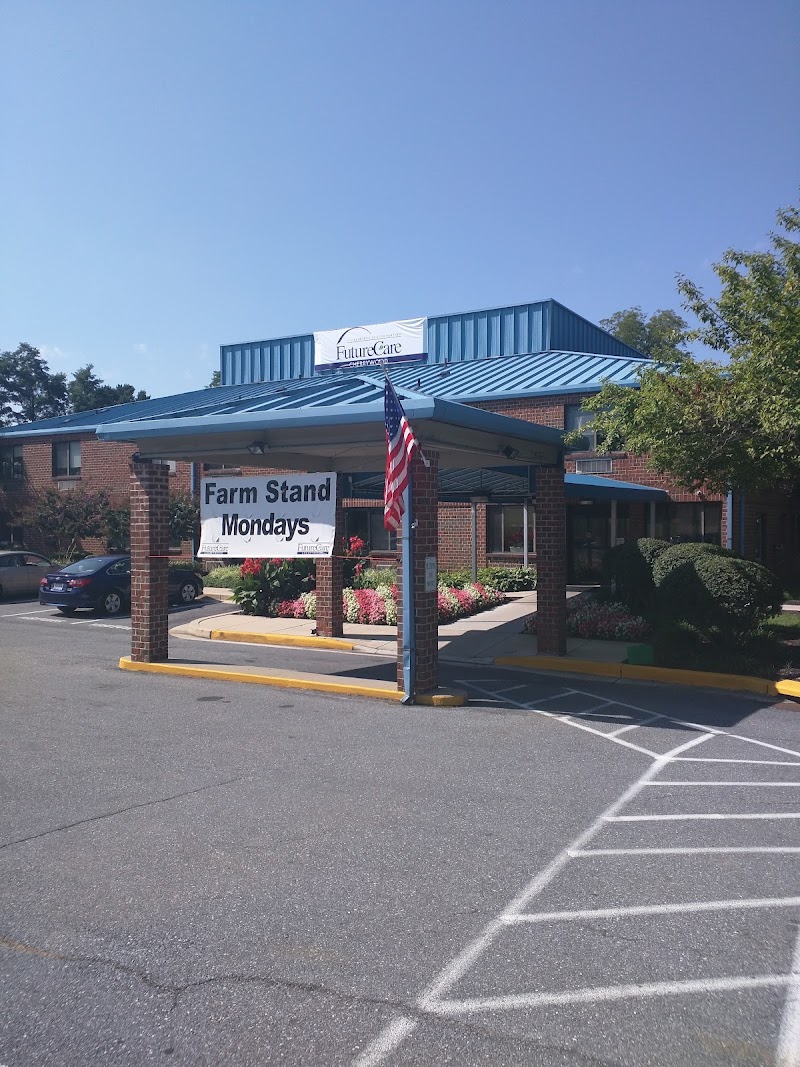
How is Future Care Cherrywood Staffed?

CMS rates FUTURE CARE CHERRYWOOD's staffing level at 3 out of 5 stars, which is average compared to other nursing homes. Staff turnover is 60%, which is 14 percentage points above the Maryland average of 46%. High turnover can affect care consistency as new staff learn residents' individual needs.

What Have Inspectors Found at Future Care Cherrywood?

State health inspectors documented 58 deficiencies at FUTURE CARE CHERRYWOOD during 2017 to 2023. These included: 1 Immediate Jeopardy (the most serious level, indicating potential for serious harm or death), 55 with potential for harm, and 2 minor or isolated issues. Immediate Jeopardy findings are rare and represent the most serious regulatory concerns. They require immediate corrective action.
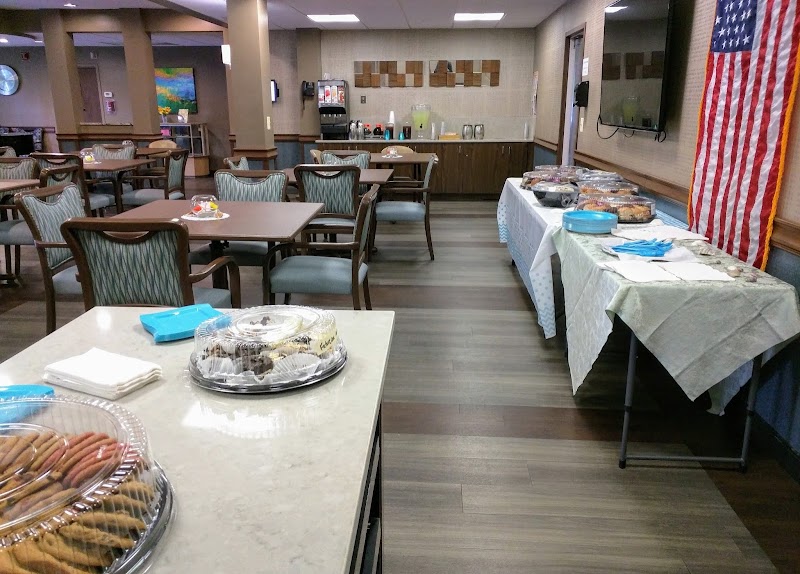
Who Owns and Operates Future Care Cherrywood?

FUTURE CARE CHERRYWOOD is owned by a for-profit company. For-profit facilities operate as businesses with obligations to shareholders or private owners. The facility is operated by FUTURE CARE/LIFEBRIDGE HEALTH, a chain that manages multiple nursing homes. With 151 certified beds and approximately 151 residents (about 100% occupancy), it is a mid-sized facility located in REISTERSTOWN, Maryland.

How Does Future Care Cherrywood Compare to Other Maryland Nursing Homes?

Compared to the 100 nursing homes in Maryland, FUTURE CARE CHERRYWOOD's overall rating (2 stars) is below the state average of 3.0, staff turnover (60%) is significantly higher than the state average of 46%, and health inspection rating (2 stars) is below the national benchmark.

What Should Families Ask When Visiting Future Care Cherrywood?

Based on this facility's data, families visiting should ask: "What changes have been made since the serious inspection findings, and how are you preventing similar issues?" "How do you ensure continuity of care given staff turnover, and what is your staff retention strategy?" "Can I visit during a mealtime to observe dining assistance and food quality?" "How do you handle medical emergencies, and what is your hospital transfer rate?" These questions are particularly relevant given the facility's Immediate Jeopardy citations and the facility's high staff turnover rate.

Is Future Care Cherrywood Safe?

Based on CMS inspection data, FUTURE CARE CHERRYWOOD has documented safety concerns. Inspectors have issued 1 Immediate Jeopardy citation (the most serious violation level indicating risk of serious injury or death). The facility has a 2-star overall rating and ranks #100 of 100 nursing homes in Maryland. Families considering this facility should ask detailed questions about what corrective actions have been taken since these incidents.

Do Nurses at Future Care Cherrywood Stick Around?

Staff turnover at FUTURE CARE CHERRYWOOD is high. At 60%, the facility is 14 percentage points above the Maryland average of 46%. High turnover means new staff may not know residents' individual needs, medications, or preferences. It can also be disorienting for residents, especially those with dementia who rely on familiar faces. Families should ask: What is causing the turnover? What retention programs are in place? How do you ensure care continuity during staff transitions?

Was Future Care Cherrywood Ever Fined?

FUTURE CARE CHERRYWOOD has no federal fines on record. CMS issues fines when nursing homes fail to meet care standards or don't correct problems found during inspections. The absence of fines suggests the facility has either maintained compliance or corrected any issues before penalties were assessed. This is a positive indicator, though families should still review recent inspection reports for the full picture.

Is Future Care Cherrywood on Any Federal Watch List?

FUTURE CARE CHERRYWOOD is not on any federal watch list. The most significant is the Special Focus Facility (SFF) program, which identifies the bottom 1% of nursing homes nationally based on persistent, serious quality problems. Not being on this list means the facility has avoided the pattern of deficiencies that triggers enhanced federal oversight. This is a positive indicator, though families should still review the facility's inspection history directly.