POTOMAC VALLEY REHABILITATION AND HEALTHCARE
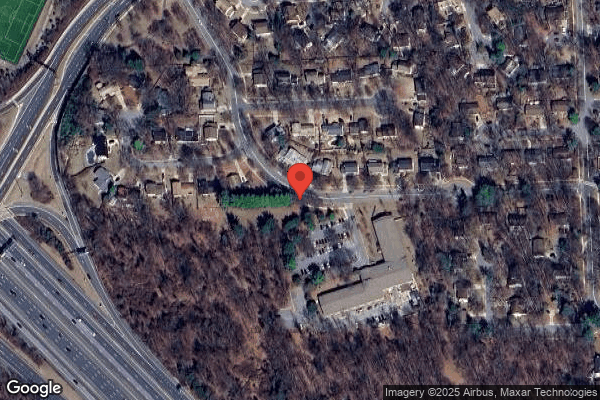

1235 POTOMAC VALLEY ROAD, ROCKVILLE, MD 20850 (301) 762-0700
For profit - Limited Liability company 175 Beds LIFEWORKS REHAB Data: November 2025 1 Immediate Jeopardy citation
Trust Grade
61/100
#78 of 219 in MD
Last Inspection: March 2025

Within standard 12-15 month inspection cycle. Federal law requires annual inspections.

Overview

Potomac Valley Rehabilitation and Healthcare has a Trust Grade of C+, indicating it is slightly above average but not exceptional. It ranks #78 out of 219 facilities in Maryland, placing it in the top half of the state, and #13 out of 34 in Montgomery County, meaning only a few local options are better. Unfortunately, the facility's trend is worsening, with issues increasing from 2 in 2024 to 18 in 2025. Staffing is average, with a turnover rate of 23%, which is better than the state average, but RN coverage is also average, potentially limiting oversight. The facility has incurred fines of $17,210, which is concerning but aligns with the average for Maryland facilities. There have been some critical incidents, including one where a cognitively impaired resident was able to leave the facility unnoticed, resulting in hospitalization for hypothermia. Additionally, there were concerns regarding the lack of documented care plan meetings for residents, which is essential for their ongoing care. Furthermore, a recent observation revealed that a resident did not receive their meals according to their preferences, which could affect their overall well-being. While there are strengths in staffing retention, the increasing number of issues and specific incidents raise valid concerns for families considering this nursing home for their loved ones.

Trust Score
C+
61/100
In Maryland
#78/219
Top 35%
Safety Record
High Risk
Review needed
Inspections
Getting Worse
2 → 18 violations
Staff Stability
✓ Good
23% annual turnover. Excellent stability, 25 points below Maryland's 48% average. Staff who stay learn residents' needs.
Penalties
✓ Good
$17,210 in fines. Lower than most Maryland facilities. Relatively clean record.
Skilled Nurses
○ Average
Each resident gets 33 minutes of Registered Nurse (RN) attention daily — about average for Maryland. RNs are the most trained staff who monitor for health changes.
Violations
⚠ Watch
29 deficiencies on record. Higher than average. Multiple issues found across inspections.
★★★★☆
4.0
Overall Rating
★★★☆☆
3.0
Staff Levels
★★★★★
5.0
Care Quality
★★★☆☆
3.0
Inspection Score
Stable
2024: 2 issues
2025: 18 issues

The Good

  • 5-Star Quality Measures · Strong clinical quality outcomes
  • Low Staff Turnover (23%) · Staff stability means consistent care
  • Full Sprinkler Coverage · Fire safety systems throughout facility
  • No fines on record
  • Staff turnover is low (23%)

    25 points below Maryland average of 48%

Facility shows strength in quality measures, staff retention, fire safety.

The Bad

Federal Fines: $17,210

Below median ($33,413)

Minor penalties assessed

Chain: LIFEWORKS REHAB

Part of a multi-facility chain

Ask about local staffing decisions and management

The Ugly 29 deficiencies on record

1 life-threatening
Mar 2025 18 deficiencies
CONCERN (D)

Potential for Harm - no one hurt, but risky conditions existed

Resident Rights (Tag F0550)

Could have caused harm · This affected 1 resident

Based on observation and interviews it was determined that the facility failed to treat residents with dignity. This was evident for 1 resident (Resident #157) of 32 residents observed during the rece...

Read full inspector narrative →
Based on observation and interviews it was determined that the facility failed to treat residents with dignity. This was evident for 1 resident (Resident #157) of 32 residents observed during the recertification survey. The findings include: On 3/19/25 at 10:06 AM Resident #137 was observed seated in a Geri chair in the hallway outside of the facility's rehabilitation department. Physical Therapy Aide (Staff #4) was observed to drag the resident in the Geri chair backwards down the hall to the resident's room. On 3/19/25 at approximately 10:11 AM, Staff #4 was interviewed in Resident #137's room and she confirmed that she pulled the resident backwards down the hall. She did not acknowledge that this was a concern. On 3/19/25 at 10:14 AM an interview with the Nursing Home Administrator (NHA) was conducted to review the observation of Resident #137 being pulled backwards through the hallway. On 3/19/25 at 11:01 AM an interview with the Director of Nursing (DON) was conducted to review the concern and she confirmed that she was aware of what happened and had already provided staff education that this was a deficiency.
CONCERN (D)

Potential for Harm - no one hurt, but risky conditions existed

Deficiency F0568 (Tag F0568)

Could have caused harm · This affected 1 resident

Based on records review and interviews, it was determined that the facility failed to ensure financial records were made available to residents through quarterly statements. This was evident for 1 (Re...

Read full inspector narrative →
Based on records review and interviews, it was determined that the facility failed to ensure financial records were made available to residents through quarterly statements. This was evident for 1 (Resident #90) of 1 resident reviewed for personal funds. The findings include: Resident #90 had been residing in the facility since 2023. An interview with the resident was conducted on 3/17/25 at 10:58 AM. During the interview, the resident indicated that s/he had a personal funds account managed by the facility but did not know how much was in it. When the resident was asked if the facility provided him/her with quarterly statements, s/he answered No, I would like to know. A review of Resident #90's medical records on 3/20/25 at 9:34 AM, revealed a progress note by the previous social worker (Staff #17) with a reference date of 8/12/24. The progress note documented a discussion between Staff #17 and the resident about salon services and that the resident had funds in the business office account. On 3/20/24 at 9:46 AM, the Business Office Manager (BOM Staff #18) was interviewed about personal funds. The BOM explained the facility's process in managing residents' personal funds and indicated that residents can inquire about their balance anytime and quarterly statements are provided to capable residents or to their representatives. Later in the interview on 3/20/24 at 10:14 AM, the Business Office Manager reported that for the last quarter ending on 12/31/24, none of the residents and/or resident representatives received a resident fund statement. Business Office Manager explained that it was the responsibility of the assistant BOM at that time and that the staff had left since. Currently, the Business Office Manager reported that the task of providing quarterly statements was now his responsibility. The Business Office Manager was questioned, what did you do when you confirmed that the resident fund statements were not provided to the residents and/or their representatives in the last quarter? The Business Office Manager reported that it was missed, and that his plan is to send the statement ending 12/31/24 with the next quarterly statement that will be ending on 3/31/25 to also save on the envelopes with prepaid postage. On 3/20/25 at 2:29 PM, the concern was discussed with the Nursing Home Administrator (NHA) that the facility failed to provide quarterly statements for personal funds to the residents and their representatives. The NHA acknowledged the concern and reported that it was already discussed with the Business Office Manager .
CONCERN (D)

Potential for Harm - no one hurt, but risky conditions existed

Deficiency F0578 (Tag F0578)

Could have caused harm · This affected 1 resident

Based on record review and interviews it was determined that the facility failed to offer information and education to residents regarding advance directives. This was evident for 2 residents (Residen...

Read full inspector narrative →
Based on record review and interviews it was determined that the facility failed to offer information and education to residents regarding advance directives. This was evident for 2 residents (Resident #40, #95) of 5 residents reviewed for advance directives. The findings include: 1). On 3/17/25 at 2:14 PM a review or Resident #40's medical records failed to reveal any advance directives documents. On 3/19/25 at 9:31 AM further medical record review revealed two social worker assessments, one dated 1/13/25, and one dated 10/15/24, written by social worker (SW #16). Both assessments indicated that the resident did not have an advance directive, and that no information was offered to the resident. Further review revealed additional social worker assessments dated 7/15/24, 4/18/24, 3/18/24, and 12/19/23 that were documented by SW #17 that also indicated the resident did not have an advance directive, and that no information was offered to the resident. On 3/19/25 at 10:15 AM an interview was conducted with SW #8. She explained the facility's process regarding advance directives which was to ask new residents prior to and at the time of admission if they had an advance directive. If they did not have one the facility social worker should provide a copy of the state advance directive forms, explain it, and encourage residents and/or their RPs to complete one. If the resident was unable to understand the information, the social worker should involve the family to determine what they may have known previously about the resident's wishes. If an advance directive was provided or completed, the document should be uploaded into the medical record and the social worker should document the conversation in the progress notes. She further explained that assessments were done quarterly and the resident/RP should be offered advance directive information each time if they did not already have one. On 3/19/25 at 11:30 AM an interview was conducted with the Director of Nursing (DON) to review that there was no evidence that Resident #40 or the resident's representative was ever offered advance directive information. She confirmed the finding. On 3/20/25 at 1:29 PM the Nursing Home Administrator and the Director of Social Services were also informed of the findings. 2). On 3/17/25 at 2:49 PM an initial record review of Resident #95's medical record failed to reveal any advance directive document. On 3/19/25 at 9:14 AM an additional record review revealed documentation on a form titled Discharge Planning Psychosocial Assessment dated 3/03/24, 6/03/24, and 10/01/24, all signed by SW #17, which indicated that the resident did not have an advance directive and that no information was offered to the resident. On 3/19/25 at 11:01 AM an interview was conducted with the DON and she was asked to provide evidence that Resident #95 had an advance directive or evidence that advance directive information had been offered. On 3/19/25 at 11:59 AM the DON confirmed that there was no evidence the Resident #95 had an advance directive or was offered advance directive information and education. On 3/20/25 at 1:29 PM an interview was conducted with the facility's Director of Social Services and the Nursing Home Administrator, and they confirmed the deficiency.
CONCERN (D) 📢 Someone Reported This

A family member, employee, or ombudsman was alarmed enough to file a formal complaint

Potential for Harm - no one hurt, but risky conditions existed

Assessment Accuracy (Tag F0641)

Could have caused harm · This affected 1 resident

**NOTE- TERMS IN BRACKETS HAVE BEEN EDITED TO PROTECT CONFIDENTIALITY** Based on observation, medical record review, and interviews, it was determined that the facility failed to ensure that Minimum D...

Read full inspector narrative →
**NOTE- TERMS IN BRACKETS HAVE BEEN EDITED TO PROTECT CONFIDENTIALITY** Based on observation, medical record review, and interviews, it was determined that the facility failed to ensure that Minimum Data Set (MDS) assessments were accurately coded. This was evident for 1 (Resident #32) of 3 residents reviewed for communication and sensory, 1 (Resident #119) of 2 residents reviewed for limited range of motion (ROM) and 1 (Resident #145) of 2 residents reviewed for Preadmission Screening and Resident Review (PASRR). The findings include: The MDS (Minimum Data Set) is a complete assessment of the resident which provides the facility information necessary to develop a plan of care, provide the appropriate care and services to the resident, and to modify the care plan based on the resident's status. MDS assessments must be accurate to ensure that each Resident receives the care they need. Preadmission Screening and Resident Review (PASRR) is a federal requirement to help ensure that individuals are not inappropriately placed in nursing facilities for long-term care. The PASRR process requires all applicants to Medicaid-certified nursing facilities (NFs) to be given a preliminary assessment to determine whether they might have serious mental illness or intellectual disability. This is called Level I Screen. Those individuals who test positive at Level I are referred to the local health department (LHD), receiving an in-depth Level II PASRR evaluation. 1) During an initial tour of the A wing on 3/17/25 at 12:56 PM, an observation was made of Resident #32's right eye to be partially closed and unable to open. The Resident was asked if s/he had any visual or hearing problems and responded yes and added that s/he was unable to read fine details including newspaper prints. A record review on 3/20/25 at 5:10 PM included a nursing admission assessment completed on 1/24/25 that had recorded that Resident #32 had poor vision and that Per hospital nurse report [pt- patient] is blind on right eye. A continued review of a trauma informed screen assessment completed on 1/24/25 contained a notation that Resident #32 had a Lack of sight conjoined with a recent hip surgery causes concerns for the resident that she might fall. A review of Resident #32's admission MDS dated [DATE] showed a documentation that Resident # 32 had adequate vision. In an interview on 3/25/25 at 9:06 AM, MDS nurse (Staff #27), reported that her process for documenting vision on the MDS assessment was to get the data from the nursing admission assessment. However earlier review of the nursing admission assessment showed that Resident #32 had poor vision and the MDS failed to capture the Resident's impaired visual status. 2) In an interview on 3/17/25 at 2:58 PM, Resident #119's representative mentioned that the resident is unable to move his/her left side due to history of stroke. A record review on 3/24/25 at 1:19 PM, for Resident #119 showed that he/she had been residing in the facility since March 2023 with diagnoses including history of stroke. The review also revealed MDS assessments dated 8/13/24, 11/13/24, 3/17/25. The MDSs had recorded in section GG that Resident #119 had no functional limitations in ROM. However, further review of occupational therapy evaluation noted that Resident #119 had a left-hand contracture. In an interview on 3/24/25 at 1:34 PM, MDS nurse (Staff #27) confirmed that Resident #119's MDS' dated 8/13/24, 11/13/24, and 3/17/25 were documented in error. 3) A medical record review on 3/18/25 at 9:58 AM, noted that Resident #145 had been living in the facility since September 2024 with diagnoses including mental illness. Further review showed a positive Level 2 PASSR evaluation report completed by a physician on 11/26/24 for Resident #145 due to mental illness. The review also contained an MDS assessment for Resident #145 dated 2/18/25. The MDS documented a no to the question: Is the resident currently considered by the state level II PASRR process to have serious mental illness and/or intellectual disability or a related condition in section A. In an interview on 3/24/25 at 1:41 PM, MDS nurse (Staff #27) confirmed that Resident #145's MDS dated [DATE] was recorded inaccurately.
CONCERN (D)

Potential for Harm - no one hurt, but risky conditions existed

ADL Care (Tag F0677)

Could have caused harm · This affected 1 resident

Based on record reviews and interviews, it was determined that the facility failed to provide residents with the necessary assistance to complete an activity for daily living. This was evident for one...

Read full inspector narrative →
Based on record reviews and interviews, it was determined that the facility failed to provide residents with the necessary assistance to complete an activity for daily living. This was evident for one (Resident #213) of four residents reviewed for activities of daily living. The findings include: 1) Resident #213 resided in the facility for about a month. On 3/18/25 at 3:08 PM, the complaint details related to MD00215554 were reviewed and indicated that the resident was not provided necessary assistance to maintain his/her weight. On 3/25/25 at 9:25 AM, a review of Resident #213's admission comprehensive assessment with a reference date of 2/11/25, coded the resident as needing supervision or touching assistance when eating. This is when the helper provides verbal cues and/or touching/steadying and/or contact guard assistance as the resident completes the activity. A review of the Geriatric Nursing Assistant's (GNA) task documentation for a) Eating (Support provided) was reviewed and compared to b) Meal intake (What percentage of the meal was eaten), on 3/25/25 at 10:26 AM. That review revealed a low percentage of meal intake (less than 50%) on days when the support provided was less than what Resident #213 was coded for in the comprehensive assessment. This was evident for 8 out of the 22 days in February of 2025 when the resident was in the facility. A review of Resident #213's weight on 3/25/25 at 11:16 AM, for the month of February indicated that the resident had a 10.04 % weight loss. A subsequent review of Resident #213's medical record on 3/25/25 at 11:38 AM, revealed a progress note from the Dietician (Staff #12) with an effective date of 3/3/25, noted the resident having a significant weight loss. An interview with the dietician #12 was conducted on 3/25/25 at 12:35. During the interview, the dietician #12 confirmed that the resident had a significant weight loss in less than a month and that she ordered to add a supplement to the resident's diet but was discharged 2 days after. The dietician #12 reported that she also reviewed the resident's meal intake. The GNA task documentation was reviewed with the dietician #12, and she confirmed the finding stated above of less than 50% consumption of meals on days when there was no physical help or setup help only from staff. On 3/25/25 at 1:02 PM, the concern was discussed with the Director of Nursing (DON) that Resident #213 had a significant weight loss because s/he was not provided with the required assistance to maintain his/her weight. The GNA task documentation was reviewed and the DON verbalized understanding and acknowledged the concern.
CONCERN (D)

Potential for Harm - no one hurt, but risky conditions existed

Incontinence Care (Tag F0690)

Could have caused harm · This affected 1 resident

Based on record reviews, observation and interviews, it was determined that the facility failed to ensure appropriate services and care were provided to a resident with an indwelling urinary catheter ...

Read full inspector narrative →
Based on record reviews, observation and interviews, it was determined that the facility failed to ensure appropriate services and care were provided to a resident with an indwelling urinary catheter by failing to secure the urine collection bag. This was evident for 1 (Resident #142) of 2 residents reviewed for urinary catheter. The findings include: A Foley catheter is a device that drains urine (pee) from your urinary bladder into a collection bag outside of your body when you can't pee on your own or for various medical reasons. Another name for a Foley catheter is an indwelling urinary catheter. The catheter is held in the bladder by a water-filled balloon, which prevents it from falling out. Securing a urine collection bag is crucial to prevent leaks, reduce the risk of infection, and ensure proper catheter function, as well as prevent damage to the bladder neck or urethra. An observation of Resident #142 was conducted on 3/18/25 at 10:14 AM. At this time, the resident was observed sleeping in bed with the urine collection bag lying directly on the floor, under the bed. No slack was observed from the tube that connected the collection bag to the resident. On 3/18/25 at 10:18 AM, the observation of Resident #142 was reported to the Geriatric Nursing Assistant (GNA #23) who was currently assigned to care for the resident. GNA #23 went into the resident's room, confirmed the finding and indicated that he would empty the urine collection bag. On 3/20/25 at 3:27 PM, a review of Resident #142's care plan indicated that the resident required the use of a urinary catheter with several interventions for catheter care. The interventions include checking placement and emptying of the urine collection bag as needed throughout each shift. On 3/21/25 at 11:49 AM, the concern was discussed with the Director of Nursing (DON) that Resident #142's urine collection bag was observed lying directly on the floor. The DON acknowledged the concern and indicated that it should have been secured under the resident's bed and off the floor to prevent complications and pulling of the catheter.
CONCERN (D) 📢 Someone Reported This

A family member, employee, or ombudsman was alarmed enough to file a formal complaint

Potential for Harm - no one hurt, but risky conditions existed

Deficiency F0692 (Tag F0692)

Could have caused harm · This affected 1 resident

Based on observation, record review, and interview, it was determined that the facility failed to have a system in place to ensure resident's nutritional status was accurately assessed. This was evide...

Read full inspector narrative →
Based on observation, record review, and interview, it was determined that the facility failed to have a system in place to ensure resident's nutritional status was accurately assessed. This was evident for 1 resident (Resident #128) of 5 residents reviewed for nutrition. The findings include: On 3/18/25 at 10:26 AM Resident #128 was observed as he/she walked in the hallway next to his/her room. A Geriatric Nursing Assistant (GNA) walked next to the resident. The resident appeared very tall, much taller than the GNA. On 3/18/25 at 11:01 AM a record review of Resident #128's height documentation revealed documentation dated 8/22/23 that the resident's height was 68 inches. On 3/20/25 at 3:49 PM an interview was conducted with the facility dietitian (Staff #12) and she was asked if she assessed Resident #128 in person. Staff #12 said yes. When asked if 68 inches was an accurate height for this resident, she said she thought so. When asked how any discrepancy would be determined, she said that nursing staff measured and documented residents' height and weight. She further explained that height should be assessed at admission and annually. On 3/20/25 at 4:06 PM an interview was conducted with the Director of Nursing (DON). She was asked what the process was to ensure that resident heights were accurately measured. She said that the facility did not have any such process. On 3/20/25 at 5:00 PM in another interview with the DON, she brought a document that indicated the resident was re-measured on 3/20/25 and that the resident was 74.5 inches tall, not 68 inches tall. She confirmed that the resident's admission height was inaccurate, and that the facility failed to notice the discrepancy.
CONCERN (D)

Potential for Harm - no one hurt, but risky conditions existed

Deficiency F0697 (Tag F0697)

Could have caused harm · This affected 1 resident

Based on records review and interviews, it was determined that the facility failed to ensure pain management was provided to residents according to professional standards of practice. This was evident...

Read full inspector narrative →
Based on records review and interviews, it was determined that the facility failed to ensure pain management was provided to residents according to professional standards of practice. This was evident for 2 (Resident #43, and #512) of 3 residents reviewed for pain management. The findings include: 1) Oxycodone is used to relieve moderate to severe pain. It belongs to the group of medicines called opioid analgesics (pain medicines). Non-pharmacological pain management is the management of pain without medications. This method utilizes ways to alter thoughts and focus concentration to better manage and reduce pain. Resident #43 was admitted to the facility in late 2020. A review of the resident's medical record on 3/19/25 at 9:15 AM revealed an order for Oxycodone to be taken every 4 hours as needed for severe pain. No other documentation was found to indicate other measures or interventions to manage the resident's pain. On 3/19/25 at 9:29 AM, Resident #43's electronic Medication Administration Record (eMAR) for February and March 2025 were reviewed. The review revealed that the resident received the pain medication 19 days out of the 28 days in February and 14 days out of the 19 days reviewed for March. On 3/19/25 at 2:09 PM, the findings were discussed with the Director of Nursing (DON), and she indicated that non-pharmacological interventions (NPI) should be offered and/or attempted first before administering as needed pain medications. She also reported that sometimes nurses would document this in the resident's progress notes and not in the eMAR. The DON indicated that she would review Resident #43's medical record and report back to the surveyor. On 3/20/25 at 9:16 AM, the DON reported to the surveyor that she did not find any documentation to indicate that NPI's were attempted and/or provided to Resident #43 prior to administering the pain medication. The DON acknowledged the concern and indicated that she would educate staff on NPI's and where to document them in the residents' medical records. 2) Resident #512 was recently admitted to the facility after a below-the-knee amputation with a history of diabetic neuropathy. A below-knee amputation is the surgical removal of the leg and foot below the knee. Diabetic neuropathy is weakness, numbness, and pain from nerve damage caused by diabetes. On 3/17/25 at 2:42 PM, the surveyor interviewed Resident #512, who reported difficulty obtaining pain medication on their admission day. S/he reported that they experienced pain but was told their medication would not be available until the next day. On 3/20/25 at 10:26 AM, the surveyor reviewed the resident's medical orders and found the following: Morphine Sulfate ER Oral Tablet Extended Release 12 Hour 30 MG/12HR Give 1 tablet by mouth every 12 hours for breakthrough pain or severe pain -Order Date: 3/10/2025. Monitor Pain every shift -Order Date: 3/10/2025 Further review of the resident's medical record showed that their pain level was not documented, and morphine was not administered on 3/10/25. Morphine is a narcotic pain medication used to treat pain severe enough to require daily, around-the-clock, long-term opioid treatment and when other pain medicines do not work well enough or cannot be tolerated. A review of the resident's admission note dated 3/10/25 revealed the following: At approximately 7:20 PM, Resident #512 was admitted via stretcher in a pleasant mood but complained of pain. Recently undergoing a below-the-knee amputation, the resident refused stump assessment due to severe pain. Additionally, multiple diabetic ulcers were noted on the remaining foot. Further review of the medical record failed to reveal documentation to indicate medication or non-pharmacological interventions were offered when the resident complained of pain during the admission process. On 3/20/25 at 11:01 AM, the surveyor interviewed Nurse (Staff #15) about the process for managing newly admitted residents without available medications. She explained that in such cases, extra medications from the facility stock are typically provided to residents in need. When asked about Resident #512, she was unsure why the resident had not received their medication. On 3/20/25 at 11:26 AM, the surveyor interviewed the unit nurse manager (Staff #14) about the process for managing newly admitted residents without available medications. He explained that staff can call the pharmacy for an order and confirmed that the facility has a stock box of medications. The surveyor then summarized the findings, noting that Resident #512's pain was not addressed until the day after admission, despite reporting severe pain to the admitting staff. The unit nurse manager stated that he was unsure why the pain was not addressed. On 3/25/25 at around 12:10 PM, the surveyor informed the Director of Nursing (DON) that Resident #512's pain was not addressed on the day of admission. The surveyor explained that both the unit nurse manager (staff#14) and another nurse (staff #15) confirmed that interventions are available when a new admission's prescribed medications are unavailable. However, no evidence was provided showing that the resident's pain was managed until the following day, 3/11/25.
CONCERN (D)

Potential for Harm - no one hurt, but risky conditions existed

Deficiency F0699 (Tag F0699)

Could have caused harm · This affected 1 resident

Based on record review and interviews, it was determined that the facility failed to ensure that a resident with a history of trauma received the appropriate trauma-informed care. This was evident for...

Read full inspector narrative →
Based on record review and interviews, it was determined that the facility failed to ensure that a resident with a history of trauma received the appropriate trauma-informed care. This was evident for one (Resident #145) out of one resident who was reviewed for mood and behavior. The findings include: A record review on 3/18/25 at 3:32 PM included a hospital discharge summary for Resident #145 that recorded a history of post-traumatic stress disorder (PTSD- a disorder in which a person has difficulty recovering after experiencing or witnessing a terrifying event). A continued review showed a Trauma-informed screen completed on 9/9/24 and 2/14/25, which noted that Resident #145 had a history of trauma. Further review contained a care plan initiated on 9/10/24 and revised on 2/14/25 for the history of trauma. However, the review failed to show what the triggers were for the specific traumatic event and how to mitigate or eliminate them to ensure the Resident was not traumatized again. In an interview on 3/20/25 at 2:58 PM, the director of nursing confirmed that the Resident's care plan for trauma did not include triggers and what the staff could do to reduce traumatization.
CONCERN (D)

Potential for Harm - no one hurt, but risky conditions existed

Pharmacy Services (Tag F0755)

Could have caused harm · This affected 1 resident

Based on observation, staff interviews, and record review it was determined that the facility failed to ensure that staff accurately reconciled controlled medications using acceptable standards of pra...

Read full inspector narrative →
Based on observation, staff interviews, and record review it was determined that the facility failed to ensure that staff accurately reconciled controlled medications using acceptable standards of practice. This was found to be evident on 2 out of 4 nursing units. The findings include: During observation of the facility narcotic books, it was observed that 3 out of 3 licensed personnel on 3 different care units had inaccurately documented narcotic reconciliation and 1 out of 3 licensed personnel inaccurately documented administering a narcotic. Typically, a reconciliation count for narcotics is conducted at the end-of-shift with the oncoming licensed personnel counting and the outgoing licensed personnel verifying the accuracy; both licensed personnel verify the accuracy via documented initials in the narcotic book. Reconciliation refers to a system of recordkeeping that ensures an accurate inventory of medications by accounting for controlled medications. The reconciliation identifies loss or potential diversion of controlled medications so as to minimize the time between the actual loss or potential diversion and the time of detection and follow-up to determine the extent of loss. On 3/17/25 at 9:28 AM Nurse #31 provided the surveyor with the narcotic book for the California Unit. Record review revealed inaccurate documentation. Completed narcotic counts were documented prematurely and only one licensed personnel conducted the count. On 3/17/25 at 9:31 AM a record review of Resident #74's narcotic medication administration sheet for Lorazepam revealed that it had been given for 8 PM even though it was only 9:30 AM. In an interview, Nurse #30 acknowledged that his/her documented initials in the narcotic book were inaccurate. On 3/17/25 at 9:48 AM the California Unit Manager (Staff #5), reviewed and confirmed that staff's documented initials in the narcotic book indicated the 3 PM end-of-shift narcotic count was completed even though it was 9:48 AM. The Staff #5 acknowledged inaccurate documentation and provided copies of the narcotic sheets to the surveyor. On 3/17/25 at 10:13 AM the surveyor reviewed the narcotic book on the Delaware Unit. It was observed that the 3 PM narcotic count was initialed as completed even though it was 10:13 AM. In an interview, Nurse #28 acknowledged that the narcotic count was inaccurately documented. On 3/21/25 at 9:46 AM, the Director of Nursing provided the facility Policy for Storage of Controlled Substances which stated, in part, at each shift change, or when keys are transferred, a physical inventory of all controlled substances .is to be conducted by two licensed personnel and is documented. Licensed nurses from the incoming and outgoing shift will count and verify all narcotic medications at each shift change. On 3/21/25 at 1:35 PM the Director of Nursing was notified that the facility's narcotic reconciliation practice failed to accurately reconcile controlled medications using acceptable standards of practice.
CONCERN (D)

Potential for Harm - no one hurt, but risky conditions existed

Drug Regimen Review (Tag F0756)

Could have caused harm · This affected 1 resident

**NOTE- TERMS IN BRACKETS HAVE BEEN EDITED TO PROTECT CONFIDENTIALITY** Based on record reviews and interviews, it was determined that the facility failed to ensure that the attending physician docume...

Read full inspector narrative →
**NOTE- TERMS IN BRACKETS HAVE BEEN EDITED TO PROTECT CONFIDENTIALITY** Based on record reviews and interviews, it was determined that the facility failed to ensure that the attending physician document in the resident's medical record included the rationale for not changing medications after being identified as an irregularity. This was evident for 1 (Resident #43) of 5 residents reviewed for unnecessary medications. The findings include: Resident #43 had been a resident of the facility since 2020. A review of the resident's medical record indicated that the resident was hospitalized and was readmitted on [DATE]. In an interview with the Director of Nursing (DON) on 3/19/25 at 10:04 AM, she reported the facility's process with Medication Regimen Review (MRR). The DON indicated that when reports are printed out for identified irregularities, the attending physician would write their response on the actual report and after implementation of the response, the reports are scanned into the resident's medical records. On 3/19/25 at 10:32 AM, Resident #43's medical records were reviewed and revealed an MRR was conducted by the pharmacist on 9/19/24 with identified irregularities. The irregularities include: a) Duloxetine HCL (antidepressant), Lacosamide (anticonvulsant), Phenobarbital (sedative-hypnotic), Risperodone (antipsychotic) and Oxycodone HCL (Narcotic analgesic) marked as high risk. b) Diphenhydramine HCL marked as high risk. c) Diphenoxylate with Atropine marked as high risk. The recommended action from provider for the 3 irregularities stated, this patient is currently receiving the above medication(s) which is considered a high risk medication for an elderly patient. Please evaluate, consider using a safer alternative, or document a risk/benefit analysis within the patient medication record for continued utilization. The report was acknowledged and signed by the Nurse Practitioner (NP #22) on 9/20/24. NP #22 wrote her response to the following irregularities respectively as: a) Psych consult b) Continue c) Continue On 3/19/25 at 11:29 AM, further review of Resident #43's medical record failed to reveal documentation for the rationale of NP #22 to continue the medications identified as an irregularity in the MRR report. NP #22 was interviewed on 3/19/25 at 1:11 PM. During the interview, she reported her process when an MRR report is brought to her attention for a response. NP #22 indicated that she writes down her responses/orders on the report. NP #22 also reported that when an irregularity pertains to a psychotropic medication, she would usually refer to the psych providers. NP #22 was questioned, what if the concern was regarding the combination of psychotropic medications and pain medications, she responded stating, I let psych deal with the psych meds then they can send it back for me to review the other medications, but indicated that she had not had that concern. On 3/19/25 at 1:25 PM, the MRR report for Resident #43 dated 9/19/24 was reviewed with NP #22. NP #22 confirmed the 3 irregularities mentioned above and indicated that the resident should continue with the narcotic pain medication, so she referred the other medications for the psych provider to review. NP #22 was asked if she documented her rationale for the continued use of the narcotic pain medication and she indicated that she does not do further documentation other than her written response on the MRR reports. NP #22 was further questioned about her response on the other 2 irregularities identified in the 9/19/24 MRR report. NP #22 reported that she did not document the reason for her decision for Resident #43 to continue the use of Diphenhydramine HCL and Diphenoxylate with Atropine. No further explanation was provided by NP #22. A subsequent interview was conducted with the DON on 3/19/25 at 1:59 PM. During the interview, the concern was discussed that NP #22 responded to an irregularity but failed to document her rationale for not changing a resident's medication. The DON indicated that she would be reviewing the MRR process with the providers and stated, they have to document the reason for their decisions.
CONCERN (D)

Potential for Harm - no one hurt, but risky conditions existed

Deficiency F0761 (Tag F0761)

Could have caused harm · This affected 1 resident

Based on observation, staff interview and record review, it was determined that the facility failed to maintain and secure controlled medications in a separately locked, permanently affixed compartmen...

Read full inspector narrative →
Based on observation, staff interview and record review, it was determined that the facility failed to maintain and secure controlled medications in a separately locked, permanently affixed compartment. During observation of facility medication storage refrigerators, it was observed that 1 out of 2 refrigerators were found to have an unlocked storage compartment that contained controlled medications. Controlled Medications are substances that have an accepted medical use (medications which fall under US Drug Enforcement Agency (DEA) Schedules II-V), have a potential for abuse, ranging from low to high, and may also lead to physical or psychological dependence. The findings include: On 3/20/25 at 12:24 PM Nurse #28 accessed the locked medication refrigerator on the Delaware Unit when it was observed that the inside controlled compartment containing Lorazepam (a scheduled IV drug) was unlocked and opened. Nurse #28 acknowledged that it shouldn't be like that. Nurse #28 did not possess or know the whereabouts of a key to lock the compartment. Eventually, Nurse #28 retrieved from Nurse #29, a key to lock the inside controlled compartment. On 3/21/25 at 9:46 AM, the Director of Nursing provided the facility Policy for Storage of Controlled Substances which stated, in part, Schedule II through V medications subject to abuse are stored in a permanently affixed, double locked compartment separate from all other medications and controlled substances that require refrigeration are stored within the locked box within the refrigerator. On 3/21/25 at 1:35 PM the Director of Nursing was notified that the facility failed to maintain and secure controlled medications in a separately locked, permanently affixed compartment inside of a refrigerator.
CONCERN (D)

Potential for Harm - no one hurt, but risky conditions existed

Dental Services (Tag F0791)

Could have caused harm · This affected 1 resident

Based on record reviews and interviews, it was determined that the facility failed to have an effective system in place to ensure dental recommendations were followed through. This was evident for 1 (...

Read full inspector narrative →
Based on record reviews and interviews, it was determined that the facility failed to have an effective system in place to ensure dental recommendations were followed through. This was evident for 1 (Resident #123) of 2 residents reviewed for dental care. The findings include: Resident #123 was admitted to the facility in 2023. On 3/17/25 at 10:28 AM, the resident was interviewed and reported having 2 bad teeth that were discovered sometime before Christmas. The resident stated: a dentist came in and x-rayed it and told me they needed to be pulled. I had abscess in the gums, they gave me antibiotics and it went down for a while but came back. An interview with the Director of Nursing (DON) was conducted on 3/21/25 at 9:12 AM. During the interview, the DON reported on the facility's process with providing dental care to the residents. The DON also reported that notes from dental visits should be in the resident's progress notes or uploaded in the medical record depending on the resident's insurance. Resident #123's medical record was reviewed with the DON but did not find the notes for the dental services that the resident had received. The DON reported that she would look and review the resident's medical records. A continued review of Resident #123's medical record revealed a progress note by the Nurse Practitioner (NP #22) with an effective date of 11/15/24 at 6:18 PM that indicated that the resident was seen. Parts of the note read, complaint of loose tooth with mild pain when s/he eats. No bleeding. No gum redness. Order placed for in house dental appointment. On 3/21/25 at 9:47 AM, the DON reported to the surveyor that she found 2 dental notes for Resident #123. The first note was found in the medical record with a service date of 11/27/24. The Dentist recommended extraction of tooth #6 and #7 and indicated that the resident agreed, pending medical clearance. The second note was taken from DON's email with a service date of 12/11/24 and noted that an x-ray was taken to confirm in-house extraction and was still pending completion of the medical clearance. The DON reported that she will upload the second dental note in Resident #123's medical record and indicated that she needs to follow up on the recommendation for tooth extractions and medical clearance request. A subsequent interview with the DON was conducted on 3/21/25 at 9:55 AM. In this interview, the DON reported that after a Dentist sees a resident, their notes are sent through e-mail. The DON further reported that multiple staff are included in the e-mail but confirmed that it was the unit manager's responsibility to review the note and follow up on recommendations and upload it to the resident's medical record. The DON stated, I will work on this right away, and acknowledge that the facility failed to follow up on the recommendation for tooth extraction and medical clearance.
CONCERN (D)

Potential for Harm - no one hurt, but risky conditions existed

Infection Control (Tag F0880)

Could have caused harm · This affected 1 resident

2) On 3/17/25 at 9:44 AM Resident #111 was observed sitting in bed. The door to the resident's room was open and a sign next to the door indicated Droplet Precautions. No personal protective equipment...

Read full inspector narrative →
2) On 3/17/25 at 9:44 AM Resident #111 was observed sitting in bed. The door to the resident's room was open and a sign next to the door indicated Droplet Precautions. No personal protective equipment (PPE) was seen outside the resident's room. On 3/17/25 at 3:02 PM an initial record review revealed orders for Resident #111, dated 3/17/25, for droplet precautions and an antibiotic for pneumonia. On 3/19/25 at 1:36 PM an interview was conducted with the unit manager (Staff #5). When asked where the resident's PPE was located, she stated it was kept inside the resident's room. On 3/20/25 at 11:16 AM an observation of Resident #111's room from the doorway was made with Geriatric Nursing Assistant (GNA #10). A 3-drawer clear plastic cart which contained gowns was visible inside the resident's room, against the wall directly across from the end of the resident's bed. When GNA #10 was asked where to obtain PPE to use for the resident's care, she said that she would get PPE supplies from the nursing station. When asked about the PPE supply inside the resident's room, she said she was told not to use them. When asked when she was told that, she replied yesterday. The Director of Nursing (DON) then joined the interview and confirmed that the PPE in the room would be considered infected and that it was not appropriate to keep PPE inside the room of a resident who had an infection or was suspected to have an infection. The DON confirmed the deficiency. On 3/20/25 at 2:32 PM the PPE storage deficiency was reviewed with the Nursing Home Administrator, and he acknowledged the finding. Based on observation, interview, and record review it was determined that the facility failed to follow accepted infection control procedures. This was found to be evident for two (Resident #32 and #111) out of the 32 residents observed during the initial stage of the survey. The findings include: 1) An observation on 3/17/25 at 10:23 AM showed signage on Resident #32's door that indicated that the Resident was on droplet precautions. Staff were required to wear masks, gowns, and gloves upon entry to the Resident's room. The observation also showed a supply of gowns in a clear plastic container at the entrance of the Resident's room. Droplet precautions are infection control measures that prevent infection transmission through respiratory droplets, such as coughs, sneezes, talking, or heavy breathing. Continued observation noted a geriatric nurse assistant (GNA Staff #20), in Resident #32's room and providing morning care to the Resident. GNA #20 wore gloves and a mask, but the observation failed to show that she wore a gown. GNA #20 was questioned then and stated that she was required to wear a gown before taking care of Resident #32 but forgot to. In an interview on 3/17/25 at 10:33 AM with Nurse (Staff #19), she confirmed that Resident #32 was on droplet precaution and required staff to wear gloves, gowns, and mask upon entry to the Resident's room. A medical record review on 3/19/25 at 7:34 AM showed an attending provider's order for Resident #32 stating, Droplet Contact Precautions every shift till 3/20/2025. In an interview on 3/19/25 at 7:55 AM, the infection preventionist (IP) nurse reported that the facility was experiencing a pneumonia outbreak and reported it to the local health department, which gave guidance to place residents involved, including Resident #32, on droplet precautions. The IP nurse continued to state that staff were expected to wear gowns, gloves, and masks upon entry to Resident #32's room.
CONCERN (E)

Potential for Harm - no one hurt, but risky conditions existed

Medical Records (Tag F0842)

Could have caused harm · This affected multiple residents

**NOTE- TERMS IN BRACKETS HAVE BEEN EDITED TO PROTECT CONFIDENTIALITY** 3) A medical record review on [DATE] at 3:32 PM revealed that Resident #145 had orders for a wander guard from [DATE] until it w...

Read full inspector narrative →
**NOTE- TERMS IN BRACKETS HAVE BEEN EDITED TO PROTECT CONFIDENTIALITY** 3) A medical record review on [DATE] at 3:32 PM revealed that Resident #145 had orders for a wander guard from [DATE] until it was discontinued on [DATE]. Wander guard is a system that uses bracelets and sensors to alert caregivers when a resident at risk of wandering approaches a monitored door or area, potentially triggering alarms or automatic door locks. The review also contained certifications from two attending providers that indicated that Resident #145 could make his/her own decisions, effective [DATE]. However, the continued review contained several notes written by provider #22 from [DATE] to [DATE] that recorded that Resident #145 had no capacity to make decisions. The notes also indicated that Resident #145 continued to use a wander guard for exit-seeking behaviors. In an interview on [DATE] at 9:49 AM, the Director of Nursing reported that Resident #145's wander guard had been discontinued since [DATE]. In an interview on [DATE] at 2:05 PM, attending provider #22 confirmed that her notes regarding Resident #145's decision-making capacity and use of a wander guard were inaccurate and that she would change how she wrote her notes going forward. Based on medical record review and interview it was determined that the facility failed to ensure residents' medical records were complete and accurately documented. This was evident for three (Resident # 104, #3 and #145) out of 37 resident's reviewed during the survey. The findings include: A Medical Orders for Life-Sustaining Treatment (MOLST) form is a medical order that reflects a patient's wishes regarding end-of-life care. It contains orders regarding the administration of cardiopulmonary resuscitation (CPR); and can contain additional orders for items like transfer to the hospital and the use of dialysis. 1)On [DATE] at 1:32 PM, the surveyor reviewed Resident #104's medical records and found a MOLST form dated [DATE]. This MOLST included orders for: Do Not Resuscitate and Do Not Hospitalize. Further review of the medical record revealed a progress note, dated [DATE], which revealed the family expressed concern over the current MOLST orders and indicated the primary care provider was contacted by staff for a MOLST review. Further record review revealed a progress note dated [DATE] from the resident's physician that indicated that the responsible family member had requested that the resident's MOLST be updated to include that the resident was to be transferred to the hospital. On [DATE] further record review failed to reveal the presence of an updated MOLST. The record failed to show that the changes to the MOLST had been updated as of [DATE]. On [DATE] at 3:15 PM, the surveyor interviewed the Director of Nursing (DON) about the process for updating a resident's MOLST. She explained that the old MOLST is marked as void and then rescanned into the system, the old MOLST is then deleted, while the new MOLST is added and made active. She stated that this process is completed the same day that changes are made to the MOLST. The Surveyor then reviewed with the DON that the [DATE] Primary Care Physician note indicated a new MOLST was completed but review of the medical record failed to reveal the presence of a new MOLST. The DON acknowledged the concern that the [DATE] MOLST was still active in the medical record and indicated she would investigate. On [DATE] at 4:05 PM, the DON provided the surveyor with a MOLST for Resident #104, dated [DATE], reflecting updated orders. She explained that the physician had left it in an inbox, and it had not yet been uploaded to the resident's medical record. She confirmed speaking with the physician about the issue. The surveyor expressed concern that this system breakdown caused a delay in updating the resident's chart with the most current MOLST orders. 2) On [DATE] review of Resident #3's medical record revealed two MOLST forms with different dates of completion. The older MOLST was not VOIDED. On [DATE] at 1:14 PM the Director of Social Services (DSS #9) confirmed that the old MOLSTs are to be voided. The surveyor then notified DSS #9 that Resident #3's medical record currently has two active MOLSTs in the chart. On [DATE] at 11:10 AM, the surveyor informed the DON of concerns regarding Resident #104's delayed MOLST update and Resident #3 having two active MOLSTs in the system. The DON stated that both issues have now been corrected.
CONCERN (F) 📢 Someone Reported This

A family member, employee, or ombudsman was alarmed enough to file a formal complaint

Potential for Harm - no one hurt, but risky conditions existed

Deficiency F0657 (Tag F0657)

Could have caused harm · This affected most or all residents

6). On 3/19/25 at 1:41 PM a record review of Resident #111's chart failed to reveal any care plan meeting notes after 4/26/24. In an interview with the unit manager (Staff #5), showed documentation of...

Read full inspector narrative →
6). On 3/19/25 at 1:41 PM a record review of Resident #111's chart failed to reveal any care plan meeting notes after 4/26/24. In an interview with the unit manager (Staff #5), showed documentation of a care plan meeting on 1/31/25, but she could find no care plan meeting documentation between 4/26/24 and 1/31/25. On 3/20/25 at 11:11 AM in an interview with the Director of Nursing (DON), she confirmed that the facility failed to hold the required care plan meetings for Resident #111. 7). On 3/19/25 at 9:42 AM a review of Resident #40's medical records failed to reveal any care plan meeting documentation after 9/09/24. Further review revealed a note written by social worker (SW #17) on 11/05/24 that indicated the resident was due for a care plan meeting in December 2024, but there was no documentation for any meeting in December. On 3/19/25 at 11:30 AM the Director of Nursing (DON) provided a copy of Resident #40's care plan meeting documentation for 9/09/24 but did not provide documentation for a December meeting. On 3/19/25 at 1:05 PM in a follow up interview with the DON, she said that Resident #40 did not have any care plan meetings after 9/09/24 and she confirmed that all residents should have care plan meetings quarterly. 8). On 3/19/25 at 12:32 PM a review of Resident #125's medical record revealed care plan meeting documentation dated 6/12/24. No more recent care plan meeting documentation was found in the record. On 3/19/25 at 1:05 PM an interview was conducted with the DON, and she was asked if Resident #125 had any care plan meetings after 6/12/24. She said she would check, and she also confirmed that care plan meetings should be held quarterly for all residents. No further evidence was provided by the end of the survey. On 3/25/25 at 12:48 PM an interview was conducted with the Nursing Home Administrator to review the survey findings. He confirmed the deficiency that care plan meetings were not held as required. Based on interviews and medical record review, it was determined that the facility staff failed to ensure interdisciplinary team (IDT) care plan meetings were conducted and failed to update a care plan after a change in status. This was found to be evident for five (Residents #90, 100, 104, 125 and 40) out of five residents reviewed for care planning specifically, and an additional three (Residents #111, #145 and #3) out of 32 other residents reviewed during the survey. The findings include: A care plan is a guide that addresses the unique needs of each resident. It is used to plan, assess, and evaluate the effectiveness of the resident's care. They are required to be developed within 7 days of completion of a resident's admission comprehensive Minimum Data Set (MDS) assessment and revised at least every quarter (or more often as needed). The Minimum Data Set (MDS) assessment is a federally mandated assessment tool that nursing home staff use to gather information on each Resident's strengths and needs. The information collected is used in the Resident's care planning decisions. The facility must have care plans developed and revised by an interdisciplinary team (IDT), including the attending physician, a registered nurse, a nursing aide, a representative from dietary services, the Resident, and the Resident's representative (as practicable). 1) In an interview on 3/17/25 at 11:03 AM, Resident #100 was asked if s/he participated in his/her care plan meeting. The Resident responded that s/he had been in the facility for 3 weeks but had not been to any meetings yet. A record review on 3/19/25 at 2:27 PM showed that Resident #100 was admitted to the facility in February 2025. The review also contained an attending provider's note dated 2/24/25 that stated that Resident #100 was alert, oriented, and able to make his/her own decisions. A review of Resident #100's admission MDS assessment showed that it was completed on 2/27/25; however, the review failed to show that a care plan meeting occurred following the Resident's admission to the facility and completion of the Resident's admission MDS assessment. In an interview on 3/20/25 at 1:46 PM, the director of nursing confirmed that there was no documentation in Resident #100's record to show that an IDT care plan meeting had occurred for the Resident. 2) A review of a facility self-report MD00214031 and a complaint MD00214173 on 3/18/25 at 3:32 PM for Resident #145 indicated that the Resident eloped (unauthorized exit) from the facility on 1/27/25. Review of the medical record revealed an MDS with an assessment date of 12/23/24. No documentation was found to indicate a care plan meeting occurred in December 2024 or January 2025. The continued review revealed a care plan initiated on 9/18/24 and revised on 2/12/25, indicating that Resident #145 remained at risk for elopement due to exit-seeking behaviors. One of the interventions on the plan of care stated that the wander guard removed as resident is now deemed competent. Wander guard is a system that uses bracelets and sensors to alert caregivers when a resident at risk of wandering approaches a monitored door or area, potentially triggering alarms or automatic door locks. In an interview with the Director of Nursing (DON) on 3/19/25 at 1:12 PM, she reported that Resident #145 was assessed and certified by 2 attending providers as having the capacity to make his/her decisions after s/he was returned from the elopement and therefore was no longer at risk for elopement. However, an earlier review of the Resident's care plan for elopement, revised on 2/12/25, failed to show an update to the care plan to reflect that s/he was no longer at risk. In a subsequent interview on 3/20/25 at 9:49 AM, the DON confirmed the concern that the care plan was not revised to reflect Resident #145's current elopement risk. 3) Resident #90 was admitted to the facility in late 2023. On 3/17/25 at 11:04 AM, the resident was interviewed and reported that s/he had not attended a care plan meeting. A review of Resident #90's medical record was conducted on 3/20/25 at 8:51 AM. The review revealed comprehensive assessments were completed on 8/15/24, 10/18/24, 10/28/24, 1/24/25 and 2/3/25. Further review of Resident #90's medical record on 3/20/25 at 9:28 AM, revealed care plan meeting progress notes. The progress notes indicated that a care plan meeting took place on 8/15/24 and 2/21/25. No other documentation was found to indicate that a care plan meeting was conducted between 8/15/24 and 2/21/25. On 3/20/25 at 1:09 PM, the Director of Social Services (Staff #9) was interviewed. During the interview, Staff #9 reported the facility's process with care plan meetings and that the responsibility of scheduling them was divided among him and the 2 other staff members of the social services department. The medical record of Resident #90 was reviewed with Staff #9 on 3/20/25 at 2:02 PM. Staff #9 indicated that a care plan meeting should have been conducted after the completion of the October 2024 comprehensive assessment. Staff #9 confirmed that there was no documentation to indicate that a care plan meeting was conducted between 8/15/24 and 2/21/25. On 3/25/25 at 1:08 PM, the concern was discussed with the Director of Nursing (DON) that a care plan meeting was missed after completing the comprehensive assessment for Resident #90. The DON verbalized understanding and acknowledged the concern. 4) On 3/19/25 at 11:38 AM, the record review for Resident #3 showed Minimum Data Set assessments on 10/15/24 and 1/15/25, but no documentation was found to indicate a care plan meeting occurred after either of these assessments. On 3/19/25 at 1:30 PM, the Director of Nursing (DON) provided documentation of a care plan meeting on 8/22/24 but confirmed that Resident #3 had no care plan meetings after the October or January assessments. For Resident #3, she provided a care plan meeting note from 8/22/24 and confirmed no meetings had occurred since that date. 5) On 3/19/25 review of Resident #104's medical record revealed two quarterly MDS assessments were completed in January 2025 (1/24/25 and 1/29/25). No documentation was found to indicate a care plan meeting was scheduled or held after the January MDS assessments. On 3/19/25 at 1:30 PM, the DON provided evidence of a care plan meeting for Resident #104 dated 10/31/24 but could not provide documentation to indicate a meeting occurred after the January assessments. On 3/20/25 at 1:14 PM, the surveyor interviewed the Director of Social Service (Staff #9), noting that a care plan meeting was due after Resident #104's January assessment. Staff #9 explained that no meeting had occurred since November 2024 because the family was unavailable. When asked if meetings proceed without family, he responded, We can, but why would we? He clarified that they aim to involve the family but did not provide documentation showing any attempts to contact them for a meeting after the January assessment He confirmed that the interdisciplinary team had not held the meeting. On 3/20/25 at 2:06 PM, the surveyor interviewed the Nursing Home Administrator about the care plan meeting requirements. He stated they should occur upon admission and at least quarterly. When asked about how they handle meetings when families are unavailable, he responded, We should probably still have it. The surveyor informed him that Resident #3 hadn't had a care plan meeting since August 2024 and Resident #104 since October 2024. On 3/25/25 at 11:10 AM, the surveyor spoke with the Director of Nursing (DON) to let her know the concerns that Residents #3 and #104 hadn't had timely care plan meetings.
CONCERN (F)

Potential for Harm - no one hurt, but risky conditions existed

Menu Adequacy (Tag F0803)

Could have caused harm · This affected most or all residents

Based on observations, record review, and interviews, it was determined that the facility failed to ensure that residents were served meals according to a predetermined menu that incorporated the resi...

Read full inspector narrative →
Based on observations, record review, and interviews, it was determined that the facility failed to ensure that residents were served meals according to a predetermined menu that incorporated the residents' preferences. This deficient practice has the potential to affect all residents. The findings include: 1) While observing the lunch tray line on 3/20/25 at 11:54 AM, the surveyor requested a test tray. The tray contained a meal ticket for Resident #148 that listed food items that were to be served: 1-3 oz BBQ chicken on BUN, 4 oz Calico coleslaw, 1/2 slice lemon cake, 4 oz apple juice, 8 oz milk 2%, 8 oz coffee. However, continued observation failed to show that Resident #148's tray contained 4 oz of coleslaw and 8 oz of 2% milk. The food service manager was present and was made aware of the concern that Resident #148's tray did not contain 4 oz of calico coleslaw and milk. She confirmed the concern. In an interview on 3/24/25 at 9:30 AM, the director of food services stated that the cook had used a 2 oz scoop to serve Resident #148's coleslaw on 3/20/25. The regional food services director was also present and stated that he would train the staff on the proper scoop to serve meals. 2) A dining observation on 3/24/25 at 8:17 AM on the Bermuda Unit showed Resident #133 in bed and eating breakfast. On the Resident's breakfast tray was a meal ticket that listed all the food items that were to be on the tray: 2 oz scrambled eggs, 6 oz oatmeal, 6 oz apple juice, 8 oz Milk 2%, one jelly and margarine, Tray notes- apple juice, two jellies. However, continued observation showed that Resident #133's tray did not have apple juice, milk, jelly, and margarine. The Resident was questioned at that time and indicated that s/he did not receive apple juice and milk but rather cranberry juice. The Resident also added that s/he did not get jelly, even though s/he had indicated on her meal preferences to always get 2 jellies. 3) An observation of breakfast in the Bermuda Unit Dining room on 3/24/25 at 8:25 AM showed Resident #85 eating breakfast. The observation showed bacon, orange juice, oatmeal, and scrambled eggs on the Resident's tray. However, the list of food items on the Resident's meal ticket noted were 4 oz orange juice, 4 oz oatmeal, scrambled eggs, sausage patty, pancake, jelly and margarine, and a fruit cup. The Resident stated, I only got bacon today. I did not get sausage patty, pancake, jelly, or margarine. 4) On 3/24/25 at 8:30 AM, Staff #26 was observed assisting Resident #144 to eat. The observation found on the Resident's meal ticket that s/he was to receive orange juice, oatmeal (Pureed), scrambled eggs (pureed), sausage patty (pureed w/gravy), pancakes, jelly and margarine, honey water, and nectar milk. A continued observation of Resident #144's tray showed that s/he received pureed oatmeal, scrambled eggs, pancakes, and honey water. Staff #26 was questioned and stated that there was no orange juice, milk, jelly, or margarine on the Resident's tray. In an interview on 3/24/25 at 9:39 AM, the Regional Food Services director stated that he would train the staff to serve the items listed on the residents' meal tickets.
CONCERN (F)

Potential for Harm - no one hurt, but risky conditions existed

Food Safety (Tag F0812)

Could have caused harm · This affected most or all residents

Based on observations, record review, and interviews, it was determined that the facility failed to store food in accordance with professional standards. This deficient practice has the potential to a...

Read full inspector narrative →
Based on observations, record review, and interviews, it was determined that the facility failed to store food in accordance with professional standards. This deficient practice has the potential to affect all residents. The findings include: An initial tour of the facility's kitchen with the food services supervisor on 3/17/25 at 8:50 AM revealed the following: -An opened container of French salad dressing labeled with the date opened as 2/10/25. Staff indicated that it should only be kept for one month after opening. -Leftover ground sausage links labeled with the date prepared as 3/1/25. The staff stated it was supposed to be kept for a day. - A bag of pancakes was found open without a label indicating its opening date. Staff confirmed that all opened food items should be labeled with the opening date to ensure proper freshness. - A plate of leftover cold salad had no label of the date it was prepared. A plate of leftover chef salad was not labeled with the date it was prepared. The staff stated that it should have been labeled. Later that day, a review of the facility's policy on Use of leftovers contained statements that leftovers will be covered, labeled and dated; then stored appropriately and leftovers can be used within 7 days (the day of preparation is counted as day 1). However, earlier observations of the walk-in refrigerator and reach-in refrigerators contained leftovers that were not labeled and dated. In an interview on 3/24/25 at 9:30 AM, the regional director of food services indicated that the leftover sausage links should have been disposed of after 7 days. He added that any leftover food in the refrigerator or freezer should be labeled and dated.
Dec 2024 2 deficiencies
CONCERN (D) 📢 Someone Reported This

A family member, employee, or ombudsman was alarmed enough to file a formal complaint

Potential for Harm - no one hurt, but risky conditions existed

Deficiency F0740 (Tag F0740)

Could have caused harm · This affected 1 resident

Based on medical record review and interview, the facility failed to provide a psychiatric evaluation for a resident that alleged abuse (resident #15). This is evident in 1 of 17 residents reviewed du...

Read full inspector narrative →
Based on medical record review and interview, the facility failed to provide a psychiatric evaluation for a resident that alleged abuse (resident #15). This is evident in 1 of 17 residents reviewed during a complaint survey. Findings includes: Review of Resident #15's medical records on 12/20/24 at 9:20am revealed the resident alleged that LPN #31 abused him/her on 8/24/22. Continued review resident #15's medical records revealed no evidence that the resident was offered a psychiatric evaluation/consultation after the alleged 8/24/22 abuse event. On 12/20/22 at 10:30am, the Director of Nursing (DON) confirmed that there was no evidence of a psychiatric evaluation/consultation offered to the resident after the alleged 8/24/22 abuse event.
CONCERN (D) 📢 Someone Reported This

A family member, employee, or ombudsman was alarmed enough to file a formal complaint

Potential for Harm - no one hurt, but risky conditions existed

Medical Records (Tag F0842)

Could have caused harm · This affected 1 resident

Based on interview, record review, and facility policy review, the facility failed to retain a complete medical record for five years from the resident discharge date for 1 (Resident #16) of 17 sample...

Read full inspector narrative →
Based on interview, record review, and facility policy review, the facility failed to retain a complete medical record for five years from the resident discharge date for 1 (Resident #16) of 17 sampled residents. Findings included: A facility policy titled, Medical Record Management, dated 01/09/2020, indicated, 1. Closed patient medical records are to be filed by discharge date . Keep until ten (10) years from discharge. 2. Closed patient medical records are to be kept 10 years plus five years from the date of majority (Date of majority is determined by state law. It is currently 18 years). An admission Record revealed the facility admitted Resident #16 on 09/14/2020. Per the admission Record, the resident discharged from the facility on 02/16/2021. Resident #16's medical record revealed no evidence of the resident's treatment administration records (TARs), medication administration records (MARs), or certified nursing assistant (CNA) task records for the period the resident was in the facility. During an interview on 12/19/2024 at 8:15 AM, the Director of Nursing (DON) stated she reached out to corporate and medical records because the electronic medical record system would not allow her to go back into 2020 for TARs, MARs, or CNA documentation. Per the DON, the facility had a change in ownership in 2020 and not all information migrated over in the electronic medical record system. During an interview on 12/19/2024 at 3:30 PM, the Executive Director stated it was the facility's responsibility to have residents' medical record for review for a minimum of what the federal requirement currently was, which was five years.
Dec 2022 1 deficiency 1 IJ
CRITICAL (J) 📢 Someone Reported This

A family member, employee, or ombudsman was alarmed enough to file a formal complaint

Immediate Jeopardy (IJ) - the most serious Medicare violation

Accident Prevention (Tag F0689)

Someone could have died · This affected 1 resident

**NOTE- TERMS IN BRACKETS HAVE BEEN EDITED TO PROTECT CONFIDENTIALITY** Based on record review and staff interview, it was determined that the facility staff failed to appropriately assess residents t...

Read full inspector narrative →
**NOTE- TERMS IN BRACKETS HAVE BEEN EDITED TO PROTECT CONFIDENTIALITY** Based on record review and staff interview, it was determined that the facility staff failed to appropriately assess residents to identify those with an elopement risk, to implement interventions when a resident was identified as an elopement risk, and to monitor, supervise, and search when they were unable to locate the resident. This was evident for 1 (#3) of 3 residents reviewed for wandering. As a result of this deficient practice, a cognitively impaired resident was able to exit the facility at an unknown time and was exposed to temperatures as low as 42 degrees Fahrenheit and rain. A bystander was concerned about the individual sitting on the curb outside their residence and called 911. Resident #3 was transported to a local hospital for treatment of hypothermia, lactic acidosis, and rhabdomyolysis on 11/30/22. Evidence was provided by the facility that an action plan was developed to remove the immediacy of the noncompliance and corrective measures were implemented on 11/30/22, immediately after the facility became aware of the elopement. On 12/8/2022 at 12:41 pm, a determination of immediate jeopardy was made regarding the deficient practice with the potential for past non-compliance. The Administrator, Regional Director of Clinical Services, and the Director of Nursing (DON) were informed at 12:41 PM. A review of all facility corrective actions implemented prior to the survey start date revealed that the facility had met minimum standards for the plan of correction and the concern was deemed past noncompliance. The findings include: A medical record review for Resident #3 on 12/7/22 at 12:18 PM, revealed a discharge summary from the hospital dated 3/9/21, that documented Resident #3 was admitted to the hospital due to severe malnutrition and bizarre behaviors. He was discharged to the facility for further management. Further review revealed a history and physical completed by the attending physician on 3/12/21, that documented Resident #3 ' s had the following diagnoses, but not limited to, intermittent episodes of catatonia (According to the National Institute of Health it is characterized by immobility, mutism, staring, rigidity, and a host of other clinical signs) and dementia. A review of the Physician Certification Related to Medical Condition, Substitute Decision Making, and Treatment Limitation form revealed that both the attending physician and Nurse Practitioner (NP) #5 deemed Resident #3 incapable on 3/12/21. A more recent progress note from NP #5, dated 4/7/22, read that Resident #3 was stable and to continue with the current plan of care. A review of Resident #3 ' s record revealed the facility failed to develop a care plan that addressed the risk for wandering. On 12/7/22 at 9:03 AM, a review of Resident #3 ' s medical record revealed that 3 quarterly wandering risk scale assessments were completed. (The facility required staff to complete a wandering risk scale for each resident on a quarterly basis for review during the care plan evaluation). The form provides staff with a score to determine the level of risk for the resident to wander as follows: 0-8 low risk, 9-10 at risk to wander, and 11 and above high risk to wander.) On 1/17/22, a Wandering Risk Scale was initiated, however, staff failed to accurately document that Resident #3 was ambulatory, so the score was a 6 versus a 9. On 4/17/22, another quarterly Wandering Risk Scale was initiated, and again staff failed to document that Resident #3 was ambulatory, so the score remained at a 6. If those wandering risk scale assessments had been completed accurately, then Resident #3 would have scored a 9, and according to the facility ' s elopement policy, this would have prompted staff to initiate a care plan to address the risk for wandering. Then on 7/17/22, a quarterly Wandering Risk Scale was completed by Licensed Practical Nurse (LPN) #10, who accurately answered each question, and the score was an 11. This score level indicated Resident #3 was a high risk for wandering and a care plan should have been initiated, however review of the medical record revealed that a care plan with interventions had not been initiated at that time. In addition, LPN #10 completed an elopement screening tool on 10/23/22 and failed to mark that Resident #3 had dementia. Further review of the elopement screening tool revealed that a scale was not included to indicate the level of risk for elopement. On 12/8/22 at 9:25 AM, a review of the facility ' s Elopement policy and procedures revealed that residents who were evaluated as at risk or high risk to wander will have a care plan to address appropriate interventions for the risk to wander and/or elope. Furthermore, high-risk residents will be placed on a secured unit if appropriate and space was available. On 12/7/22 at 9:03 AM, a review of the facility ' s investigation file for intake #MD00186247 revealed a self-report form that documented on 11/30/22 at 7:15 AM staff had been unable to find Resident #3 in the facility and they received a call from the local hospital who reported that Resident #3 was brought in by the Emergency Medical System (EMS). A review of the written investigation for [Resident #] Elopement on 11/30/22 revealed the facility determined that, at approximately 7:40 AM on 11/30/22, the on-coming dayshift nurse, LPN #7 was making rounds on the residents he was assigned and was unable to locate Resident #3. A code Silver (an announcement to staff to alert them that a resident was missing) was announced and a facility-wide search was conducted. When staff was still unable to find Resident #3, they notified the Administrator and were told to call the police. Before the staff was able to call the police, they received a phone call at 8:35 AM from the local hospital to verify Resident #3 lived at the facility and to report that s/he was brought in by EMS for treatment of hypothermia and hypotension. In addition, the facility reported that the last staff person to see Resident #3 was Geriatric Nursing Assistant (GNA[PM1] ) 13 on 11/29/22 at 10:00 PM. Further review of the investigation file revealed statements that were obtained from staff who were in the facility on 11/29/22 and 11/30/22. A review of the signed statement from Registered Nurse (RN) #8 revealed she had been assigned Resident #3 on 11/29/22 at 7:00 PM until 11/30/22 at 7:00 AM. RN #8 ' s statement read that she had failed to round on Resident #3 from 8:20 PM on 11/29/22 through 7:40 AM on 11/30/22 when she was made aware that s/he was missing. A review of the signed statement from GNA #9 revealed that she had been assigned Resident #3 from 11/29/22 at 11:00 PM until 11/30/22 at 7:00 AM. The statement read that GNA #9 made rounds at 11:15 PM and was unable to find Resident #3 and told RN #8, however, no one looked for the resident. Then at 5:45 AM, she was unable to locate Resident #3 for a second time and told RN #8 again who told GNA # 9 that Resident #3 was at the hospital. An interview conducted by the Director of Nursing (DON) with Resident #4, who was Resident #3 ' s roommate revealed that Resident #4 saw Resident #3 get up sometime between 2:00 AM and 4:00 AM to use the bathroom, but was not sure he got back into bed after that. A review of the Emergency Medical System (EMS) report on 12/6/22 at 8:05 AM revealed that a bystander had called 911 on 11/30/22 at 7:08 AM. Per the report, Resident #3 was transported to the local hospital via ambulance due to cold exposure with a body temperature of 88 degrees Fahrenheit (F) as opposed to the normal body temperature of 98.6 with a blood pressure of 90/64 ,the normal range being 120/80. Furthermore, it was noted that Resident #3 had been sitting on a curb in the rain, was cold to touch with pin size pupils and the ambulance crew had to remove the resident ' s wet clothing and wrap him/her in dry blankets. On 12/6/22 at 8:10 AM, a review of the local hospital emergency department notes revealed that Resident #3 had come to the emergency department shivering with hypothermia which required treatment with warmed intravenous (IV) fluids (warmed fluids directly flow into the veins) and a [NAME] system (a system with a blanket that is placed on the patient with warm air flowing through it). In addition, Resident #3 was diagnosed as dehydrated (not taking in enough fluids) and treated for rhabdomyolysis (a clinical syndrome involving the breakdown of skeletal muscle tissue per the online Merck Manual) stemming from the cold exposure. An interview with LPN #10 on 12/7/22 at 2:26 PM, revealed that, when she completed the wandering risk tool for Resident #3 on 7/17/202, she failed to report the results to her supervisor and confirmed that no interventions had been put in place for Resident #3 ' s high risk for wandering. An interview with Unit Manager (UM) #11 on 12/8/22 at 9:56 AM, revealed that, if a resident ' s wandering risk tool showed the resident to be high risk then she would have initiated a care plan (to include placement of a wander guard bracelet on the resident) and evaluated the resident for transfer to the facility ' s secured unit. When asked if she had reviewed the wander risk tools dated 1/17/22, 4/17/22, and 7/17/22 for Resident #3, she reported that she would have reviewed them at the time of the quarterly care plan evaluation. According to the Director of Social Work #1 ' s progress notes, a care conference was conducted for Resident #3 on 3/15/22 and 8/25/22. However, there was no evidence that UM #11 reviewed and corrected the wandering assessment tools, dated 1/17/22 and 4/17/22 that were inaccurate. Furthermore, when UM #11 reviewed the wandering risk assessment, dated 7/17/22 for the care conference on 8/25/22, she failed to initiate a care plan for Resident #3 ' s high risk for wandering as per the facility ' s policy on elopement. During an interview with RN #12 on 12/8/22 at 10:20 AM, he reported that he regularly took care of Resident #3. RN #12 stated that, had he known about the wandering risk tool, dated 7/17/22, deeming Resident #3 a high risk for wandering, he would have alerted his supervisor and placed a wander guard bracelet on Resident #3. He stated that, even though Resident #3 had not exhibited any exit-seeking behavior, the tool indicated there was a high risk for elopement and it was better to put a wander guard bracelet on him/her and then reevaluate the resident. The Director of Nursing (DON) was interviewed on 12/7/22 at 11:29 AM, regarding the incident. She reported that, after rounding the facility to try to figure out how Resident #3 left the building, staff determined that it had been through the front door (which has an alarm for the wander guard system) because the deadbolt was keyed on the outside but had a thumb turn on the inside. They determined that once the deadbolt was unlocked from the inside, the sliding door was easily opened to allow someone to exit. Resident #3 had no wander guard bracelet on, so he could have exited through the doors without setting off an alarm. The facility changed the lock to a double-keyed deadbolt on 11/30/22. The DON reported that, after the investigation was completed, it was determined that LPN #8 and GNA #9 failed to monitor and supervise Resident #3 and when GNA #9 checked on him/her twice and could not find the resident; she failed to continue to look for him/her to ensure their safety. The facility determined that education regarding identifying a resident with an elopement risk, frequent checks for residents on their shift, elopement policy and procedure, and calling a code silver when a resident could not be found was necessary for all staff in the facility. RN #8 [PM2] and GNA # 9 were terminated and reported to the state licensing department. A subsequent interview with the DON on 12/7/22 at 1:25 PM, regarding the elopement assessment tool the facility currently used, was conducted. The Elopement Risk tool was reviewed, and the DON agreed that there was no guidance or scale to indicate the level of risk when staff completed the tool. She reported that the facility identified a concern with the tool when there was a change in ownership. The previous tool used by the facility would alert the staff when the resident was deemed at risk. The DON reported that, prior to the elopement on 11/30/22, they reported the concern to the corporate office, however, at this time the elopement tool had not changed. The education provided to staff after the incident on 11/30/22 included instructions to base the risk of elopement on the risk level obtained from the Wandering Risk Scale. On 12/8/22 at 12:41 PM, the Administrator and DON with the Regional Director of Clinical Services present were made aware that an immediate jeopardy of past noncompliance had been determined by the State Agency. The facility developed the following plan of correction and implemented the plan on 11/30/22: 1) The deadbolt on the main sliding glass front door entrance with one keyed side and one thumb slide side had been changed to a double-keyed deadbolt on 11/30/22. 2) Facility staff conducted an audit of all residents in the facility to identify any resident who was at high risk for elopement. No new residents had been identified. Completed on 11/30/22. 2) All staff received re-education on elopement and the code silver process to include mock drills. Completed on 12/5/22. 3) All staff received training for identifying residents with exit-seeking behaviors. Completed on 12/5/22. 4) All staff received education regarding the frequency of rounding on residents and checking for wander guard placement and functionality every shift. Completed on 12/5/22. 5) Facility staff checked all current residents with a wander guard to ensure that they were in place and functioning properly. Completed on 12/2/22. After a review of the evidence for the plan of correction, it was determined that the facility was in substantial compliance as of 12/5/22, prior to the initiation of the complaint survey.
Jan 2020 5 deficiencies
CONCERN (D)

Potential for Harm - no one hurt, but risky conditions existed

Deficiency F0578 (Tag F0578)

Could have caused harm · This affected 1 resident

Based on clinical record reviews, and staff interviews, it was determined that the facility staff failed to follow an advance directive for 1 of 4 residents reviewed for advance directive care (Reside...

Read full inspector narrative →
Based on clinical record reviews, and staff interviews, it was determined that the facility staff failed to follow an advance directive for 1 of 4 residents reviewed for advance directive care (Resident #143). The findings include: An advance directive is a written instruction, such as a living will or durable power of attorney for health care, recognized under State law (whether statutory or as recognized by the courts of the State), relating to the provision of health care when the individual is incapacitated. On 01-07-2020, a review of Resident #143 clinical record revealed that the resident had an advance directive signed on 10-12-2018 which stated the resident was required to be certified incompetent for making medical decisions by two licensed physicians before Resident #143's named health care agent shall be granted authority to make health care decisions on their behalf. Further review of the clinical record revealed that on 12-19-2019 the attending physician certified Resident #143 as incompetent for making medical decisions. As of 01-08-2020 facility staff had failed to obtain the second certification of incompetency. The resident had Maryland Medical Orders for Life-Sustaining Treatment (MOLST) completed and signed by their attending physician on 12-19-2019. According to their MOLST, the facility staff had granted authority to Resident #143's named health care agent to make decisions for the resident without obtaining the second physician certification as documented in the advance directive. On 01-08-2020 at 1:18 PM, an interview with the facility Director of Social Services acknowledged that Resident #143's health care agent should not make health care decisions for the resident until two licensed physicians certified the resident being incompetent for medical decisions as stated in the resident's advance medical directive. On 01-09-2020 at 3:00 PM, interview with DON (director of nursing) revealed no additional information.
CONCERN (D)

Potential for Harm - no one hurt, but risky conditions existed

Deficiency F0638 (Tag F0638)

Could have caused harm · This affected 1 resident

Based on the review of clinical records and staff interviews, it was determined that the facility failed to complete the required Minimum Data Set (MDS) quarterly assessment for 1 of 33 residents revi...

Read full inspector narrative →
Based on the review of clinical records and staff interviews, it was determined that the facility failed to complete the required Minimum Data Set (MDS) quarterly assessment for 1 of 33 residents reviewed during the survey (Resident #1). The findings include: The MDS quarterly assessment is used to track a resident's status between comprehensive assessments to ensure critical indicators of gradual change in a resident's condition are monitored. On 1-08-2020 at 4:00 PM, a review of Resident #1's clinical record revealed a Minimum Data Set (MDS) quarterly assessment completed on 8-21-2019. There was no evidence in the clinical record that Resident #1 had a quarterly assessment completed for the following quarter (due on 11-21-19.) On 1-08-2020 at 4:46 PM, a surveyor interview with Staff #1 stated Resident #1 should have had a quarterly assessment completed on 11-21-2019, however, it was not completed. On 1-08-2020 5:19 PM, surveyor interview with the Director of Nursing revealed no additional information.
CONCERN (D)

Potential for Harm - no one hurt, but risky conditions existed

Quality of Care (Tag F0684)

Could have caused harm · This affected 1 resident

Based on the review of the clinical record and staff interview, it was determined that facility's staff failed to obtain a laboratory test as ordered. This finding was evident for 1 of 1 residents rev...

Read full inspector narrative →
Based on the review of the clinical record and staff interview, it was determined that facility's staff failed to obtain a laboratory test as ordered. This finding was evident for 1 of 1 residents reviewed for the hydration care area (Resident #24). The findings include: On 1-07-2020, a review of the clinical record for Resident #24 revealed the resident had an elevated blood urea nitrogen level (BUN) of 59. The BUN is a blood test which shows how well the kidneys and liver are functioning. As a result of the elevated BUN, the nurse practitioner ordered a repeat Comprehensive Metabolic Profile (CMP) lab test every two weeks on 12-11-19. Further review of the clinical record revealed no evidence that the CMP lab test ordered to be drawn on or about 12-25-19 had been completed. On 1-08-2020, at 10:15 AM, an interview with the Bermuda unit manager revealed that upon surveyor intervention the physician was notified of the missed lab and ordered the CMP to be drawn on 1-09-2020 for Resident #24.
CONCERN (E)

Potential for Harm - no one hurt, but risky conditions existed

Food Safety (Tag F0812)

Could have caused harm · This affected multiple residents

Based on observations and staff interview, it was determined that the facility's staff failed store opened food and condiments with a to print use-by dates on opened packages and containers of food st...

Read full inspector narrative →
Based on observations and staff interview, it was determined that the facility's staff failed store opened food and condiments with a to print use-by dates on opened packages and containers of food stored in the facility's kitchen freezer and refrigerator. The findings include: On 1-06-2020 at 8:30 AM, during the initial kitchen tour, the surveyor observed multiple packages of previously opened food items were without a use-by date on them in the freezer. Previously opened packages of breakfast and deli meats, vegetables, and cake batter were not dated in the freezer. Additionally, a container of mayonnaise and a container of Italian dressing in the walk in refrigerator were opened, but did not have a use-by date printed on the containers. On 01-07-2020 at 3:36 PM, an interview with the facility administrator revealed no additional information
MINOR (B)

Minor Issue - procedural, no safety impact

Deficiency F0625 (Tag F0625)

Minor procedural issue · This affected multiple residents

4. On 1-08-2020 a review of Resident #351's clinical record revealed the resident was transferred to the hospital on 9-27-19. However, there was no evidence in the clinical record that resident #351's...

Read full inspector narrative →
4. On 1-08-2020 a review of Resident #351's clinical record revealed the resident was transferred to the hospital on 9-27-19. However, there was no evidence in the clinical record that resident #351's representative had received written notification of the bed hold policy at the time of transfer. On 01-09-2020 at 1:30 PM, surveyor interview with the facility administrator revealed that at the time of admission residents are notified of the bed hold policy, but are not given written notification of the bed hold policy at the time of transfer. 3. On 1-09-2020, surveyor review of Resident #61's clinical record revealed that the resident was transferred to an acute hospital on five different occasions: 10-07-2019, 10-12-2019, 10-20-2019, 11-15-2019, and 11-28-2019. There was no evidence in the clinical record that the facility provided Resident #61 and/or the resident's representative with a bed hold notification at the time of the transfers to the hospital. On 1-09-2020 at 1:30 PM, surveyor interview with the facility administrator revealed, that the facility did not provide written notification of their bed hold policy to residents at the time of transfer. Based on the review of residents' clinical records, and a staff interview, it was determined that the facility staff failed to provide written notification of the facility's bed hold policy to 4 of 4 residents and/or representative at the time of transfer (Resident #24, #61, #103, and #351). The findings include: 1. On 1-07-2020 a review of the clinical record for Resident #24 revealed the resident was transferred out of the facility on 9-28-2019 to be evaluated in the emergency department. On 1-09-2020 at 1:20 PM, an interview with the Bermuda unit nursing manager revealed that facility did not provide a written copy of the bed hold notification for Resident #24 at the time of transfer. 2. On 1-09-2020 a review of the clinical record for Resident #103 revealed the resident was transferred to an emergency room on 1-08-19. There was no evidence in the clinical record that written notification of bed hold was provided to the resident/responsible party at the time of transfer. On 1-09-2020 at 1:30 PM, interview with the facility administrator revealed bed hold notification was provided at the time of admission.
Nov 2018 3 deficiencies
CONCERN (D)

Potential for Harm - no one hurt, but risky conditions existed

Comprehensive Care Plan (Tag F0656)

Could have caused harm · This affected 1 resident

**NOTE- TERMS IN BRACKETS HAVE BEEN EDITED TO PROTECT CONFIDENTIALITY** Based on surveyor observation, clinical record review, and interviews with facility staff, it was determined that the facility f...

Read full inspector narrative →
**NOTE- TERMS IN BRACKETS HAVE BEEN EDITED TO PROTECT CONFIDENTIALITY** Based on surveyor observation, clinical record review, and interviews with facility staff, it was determined that the facility failed to develop and implement a comprehensive person-centered care plan to meet a resident's medical and nursing needs. This finding was evident for 1 of 33 residents (#67) selected for this survey. The findings included: On 11-09-18 at 9:15 AM, surveyor observation revealed resident #67 had uncontrollable tremors to his/her face and arms. Surveyor review of resident #67's medical record revealed he/she was admitted to the facility on [DATE] with diagnoses that included Parkinson's disease and extrapyramidal disorder. Extrapyramidal disorder is a group of disorders marked by abnormal involuntary movements. There was no evidence in the clinical record that the facility assessed the severity of resident #67's tremors or developed a care plan to address the diagnoses of Parkinson's disease or extrapyramidal disorder since admission. On 11-15-18 at 7:15 AM, surveyor interview with the Delaware unit manager revealed resident #67's tremors have increased since admission. The facility contacted the psychiatrist to review the resident's medications because he/she takes psychotropic medication, which side effects include possible worsening of extrapyramidal symptoms. On 11-15-18 at 12 PM, surveyor interview with the Director of Nursing revealed no new information. On 11-15-18 at 2 PM, resident #67's care plan was updated and an assessment of their extrapyramidal symptoms was performed after surveyor intervention.
CONCERN (D)

Potential for Harm - no one hurt, but risky conditions existed

Deficiency F0658 (Tag F0658)

Could have caused harm · This affected 1 resident

2. On 11-14-18 at 09:15 AM, surveyor observation of resident's #26 medication administration revealed that the nurse (staff #2) commingled all of the resident #26's morning medications taken by mouth ...

Read full inspector narrative →
2. On 11-14-18 at 09:15 AM, surveyor observation of resident's #26 medication administration revealed that the nurse (staff #2) commingled all of the resident #26's morning medications taken by mouth into a plastic cup and transferred them into a crush pouch. The nurse crushed all the medications, poured them back into the plastic cup, mixed the medications with applesauce and then administered the crushed medications to resident #26. Review of the medication order revealed that one of those medication include an Aspirin EC tablet delayed release 81 mg. The order reads Give 81mg by mouth one time a day for CAD prophylaxis. EC is an abbreviation for Enteric-Coated aspirin and is designed to pass through the stomach and not disintegrate until it reaches the small intestine. Further review of the clinical record revealed that the care plan update on 05-17-18 lists a potential for bleeding related to aspirin intake. This indicates a resident sensitivity for aspirin. On 11-14-18 at 09:45 AM, interview with the C-wing unit manager revealed no additional information. On 11-14-18 at 12:30 PM, interview with the Director of Nursing revealed no additional information. Per the Nurse Practice Act 10.27.09.03 C (1) The RN shall acquire and maintain current knowledge and competency in nursing practice. Based on surveyor observations, review of the clinical record, and interview with facility staff, it was determined that the facility failed to ensure standards of nursing practice in medication administration for residents. This finding was identified for 2 of 33 residents selected for the survey. (#141 and #26) The findings include: 1. On 11-14-18, surveyor observation of Licensed Practical Nurse (LPN) #1 during medication pass revealed that the LPN administered 8 medications to resident #141 at 11:15 AM. However, review of the medication administration record revealed that these 8 medications were scheduled to be administered at 8 AM. On 11-14-18 at 11:30 AM, surveyor interview with LPN #1 revealed that the LPN did not administer the medications timely because he/she was waiting on one of the medications to be delivered from the pharmacy. According to the Maryland Nurse Practice Act 10.27.10.03B (2) (b), the LPN shall demonstrate knowledge and comply with: Relevant professional practice standards; relevant statutes and regulations governing licensed practical nursing; and the policies and procedures of the practice setting.
CONCERN (D)

Potential for Harm - no one hurt, but risky conditions existed

Pharmacy Services (Tag F0755)

Could have caused harm · This affected 1 resident

Based on surveyor review of the clinical record and facility staff interview, it was determined that the pharmacy failed to ensure timely delivery of medications to the residents. This finding was evi...

Read full inspector narrative →
Based on surveyor review of the clinical record and facility staff interview, it was determined that the pharmacy failed to ensure timely delivery of medications to the residents. This finding was evident for 1 of 6 (#141) resident records reviewed during the unnecessary medication review. The findings include: On 11-14-18 surveyor review of the clinical record for resident #141 revealed physicians orders, written on 11-12-18, for an antibiotic to be administered to the resident to treat pneumonia. Further review of the clinical record revealed a nurses note, written on 11-13-18 at 1:14 PM, that the antibiotic was not given and the facility staff was waiting on the pharmacy to deliver the medication. In addition, a nurses note, written on 11-13-18 at 11:30 PM, documented that staff had called the pharmacy because the antibiotic had still not been delivered by the pharmacy. On 11-14-18 at 11:30 AM, surveyor interview with LPN #1 revealed that the pharmacy did not deliver the antibiotic until 10 AM on 11-14-18.
Understanding Severity Codes (click to expand)
Life-Threatening (Immediate Jeopardy)
J - Isolated K - Pattern L - Widespread
Actual Harm
G - Isolated H - Pattern I - Widespread
Potential for Harm
D - Isolated E - Pattern F - Widespread
No Harm (Minor)
A - Isolated B - Pattern C - Widespread

Questions to Ask on Your Visit

  • "What changes have you made since the serious inspection findings?"
  • "Can I speak with families of current residents?"
  • "What's your RN coverage like on weekends and overnight?"

Our Honest Assessment

Strengths
  • • 23% annual turnover. Excellent stability, 25 points below Maryland's 48% average. Staff who stay learn residents' needs.
Concerns
  • • Multiple safety concerns identified: 1 life-threatening violation(s). Review inspection reports carefully.
  • • 29 deficiencies on record, including 1 critical (life-threatening) violation. These warrant careful review before choosing this facility.
  • • $17,210 in fines. Above average for Maryland. Some compliance problems on record.
Bottom line: Mixed indicators with Trust Score of 61/100. Visit in person and ask pointed questions.

About This Facility

What is Potomac Valley Rehabilitation And Healthcare's CMS Rating?

CMS assigns POTOMAC VALLEY REHABILITATION AND HEALTHCARE an overall rating of 4 out of 5 stars, which is considered above average nationally. Within Maryland, this rating places the facility higher than 99% of the state's 100 nursing homes. This rating reflects solid performance across the metrics CMS uses to evaluate nursing home quality.
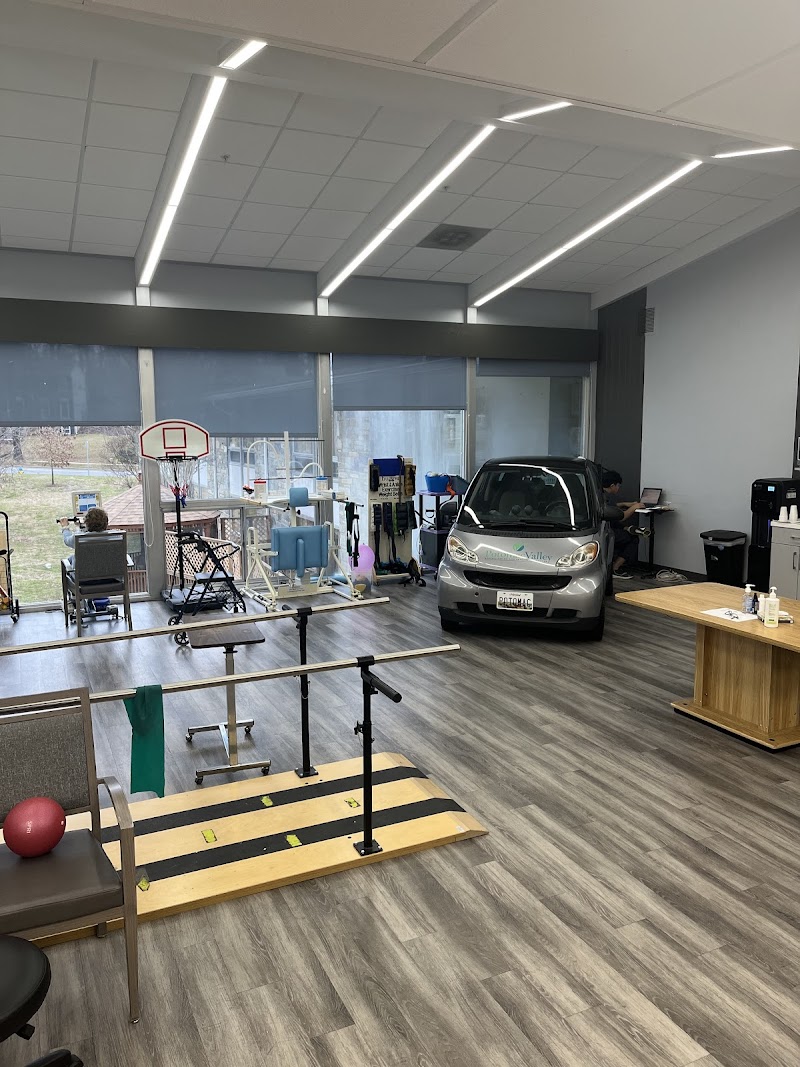
How is Potomac Valley Rehabilitation And Healthcare Staffed?

CMS rates POTOMAC VALLEY REHABILITATION AND HEALTHCARE's staffing level at 3 out of 5 stars, which is average compared to other nursing homes. Staff turnover is 23%, compared to the Maryland average of 46%. This relatively stable workforce can support continuity of care.

What Have Inspectors Found at Potomac Valley Rehabilitation And Healthcare?

State health inspectors documented 29 deficiencies at POTOMAC VALLEY REHABILITATION AND HEALTHCARE during 2018 to 2025. These included: 1 Immediate Jeopardy (the most serious level, indicating potential for serious harm or death), 27 with potential for harm, and 1 minor or isolated issues. Immediate Jeopardy findings are rare and represent the most serious regulatory concerns. They require immediate corrective action.

Who Owns and Operates Potomac Valley Rehabilitation And Healthcare?

POTOMAC VALLEY REHABILITATION AND HEALTHCARE is owned by a for-profit company. For-profit facilities operate as businesses with obligations to shareholders or private owners. The facility is operated by LIFEWORKS REHAB, a chain that manages multiple nursing homes. With 175 certified beds and approximately 166 residents (about 95% occupancy), it is a mid-sized facility located in ROCKVILLE, Maryland.
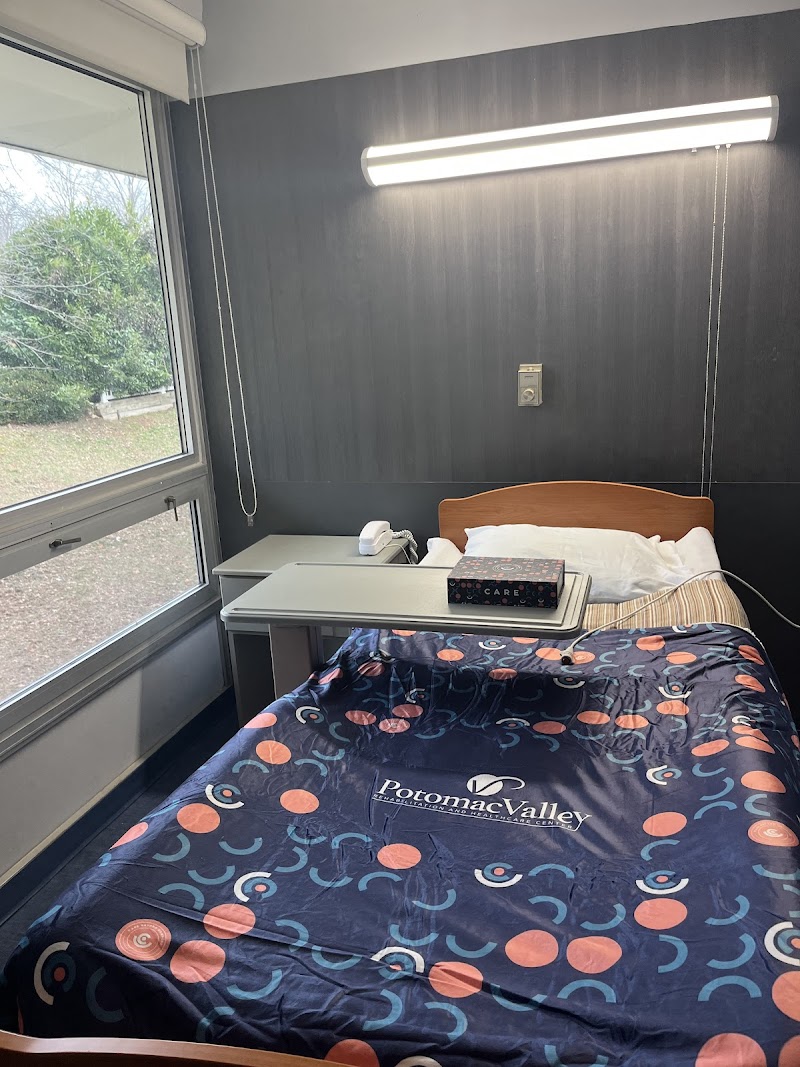
How Does Potomac Valley Rehabilitation And Healthcare Compare to Other Maryland Nursing Homes?

Compared to the 100 nursing homes in Maryland, POTOMAC VALLEY REHABILITATION AND HEALTHCARE's overall rating (4 stars) is above the state average of 3.0, staff turnover (23%) is significantly lower than the state average of 46%, and health inspection rating (3 stars) is at the national benchmark.

What Should Families Ask When Visiting Potomac Valley Rehabilitation And Healthcare?

Based on this facility's data, families visiting should ask: "What changes have been made since the serious inspection findings, and how are you preventing similar issues?" "Can I visit during a mealtime to observe dining assistance and food quality?" "How do you handle medical emergencies, and what is your hospital transfer rate?" "Can I speak with family members of current residents about their experience?" These questions are particularly relevant given the facility's Immediate Jeopardy citations.

Is Potomac Valley Rehabilitation And Healthcare Safe?

Based on CMS inspection data, POTOMAC VALLEY REHABILITATION AND HEALTHCARE has documented safety concerns. Inspectors have issued 1 Immediate Jeopardy citation (the most serious violation level indicating risk of serious injury or death). The facility has a 4-star overall rating and ranks #1 of 100 nursing homes in Maryland. Families considering this facility should ask detailed questions about what corrective actions have been taken since these incidents.

Do Nurses at Potomac Valley Rehabilitation And Healthcare Stick Around?

Staff at POTOMAC VALLEY REHABILITATION AND HEALTHCARE tend to stick around. With a turnover rate of 23%, the facility is 23 percentage points below the Maryland average of 46%. Low turnover is a positive sign. It means caregivers have time to learn each resident's needs, medications, and personal preferences. Consistent staff also notice subtle changes in a resident's condition more quickly. Registered Nurse turnover is also low at 24%, meaning experienced RNs are available to handle complex medical needs.

Was Potomac Valley Rehabilitation And Healthcare Ever Fined?

POTOMAC VALLEY REHABILITATION AND HEALTHCARE has been fined $17,210 across 1 penalty action. This is below the Maryland average of $33,251. While any fine indicates a compliance issue, fines under $50,000 are relatively common and typically reflect isolated problems that were subsequently corrected. Families should ask what specific issues led to these fines and confirm they've been resolved.

Is Potomac Valley Rehabilitation And Healthcare on Any Federal Watch List?

POTOMAC VALLEY REHABILITATION AND HEALTHCARE is not on any federal watch list. The most significant is the Special Focus Facility (SFF) program, which identifies the bottom 1% of nursing homes nationally based on persistent, serious quality problems. Not being on this list means the facility has avoided the pattern of deficiencies that triggers enhanced federal oversight. This is a positive indicator, though families should still review the facility's inspection history directly.