THE VILLAGE AT ROCKVILLE
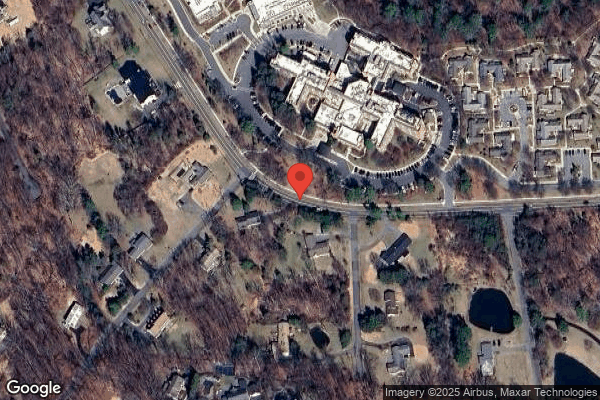
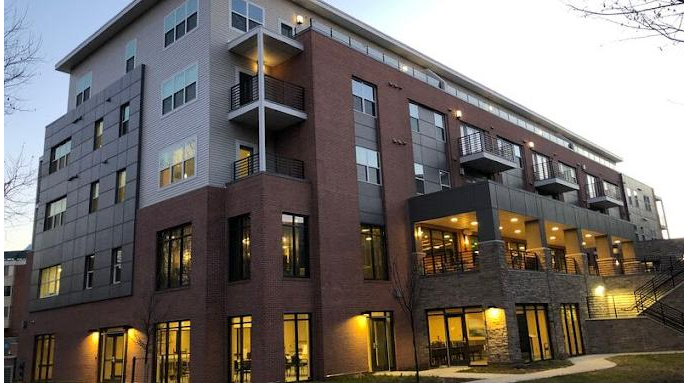
9701 VEIRS DRIVE, ROCKVILLE, MD 20850 (301) 424-9560
Non profit - Corporation 160 Beds NATIONAL LUTHERAN COMMUNITIES & SERVICES Data: November 2025 2 Immediate Jeopardy citations
Trust Grade
34/100
#130 of 219 in MD
Last Inspection: October 2024

Within standard 12-15 month inspection cycle. Federal law requires annual inspections.

Overview

The Village at Rockville has received a Trust Grade of F, indicating significant concerns about the quality of care provided. Ranking #130 out of 219 facilities in Maryland and #26 out of 34 in Montgomery County places it in the bottom half of options available to families. The facility is experiencing a worsening trend, with issues increasing from 6 in 2019 to 22 in 2024. Staffing is a relative strength with a 4/5 star rating and a turnover rate of 34%, which is better than the state average, suggesting that staff are generally stable. However, the facility has faced critical incidents, including failing to perform CPR on an unresponsive resident when required and allowing a resident to develop a serious pressure injury due to inadequate monitoring of their care plan. Overall, while the staffing situation is a positive aspect, the rising number of health and safety violations raises serious concerns.

Trust Score
F
34/100
In Maryland
#130/219
Bottom 41%
Safety Record
High Risk
Review needed
Inspections
Getting Worse
6 → 22 violations
Staff Stability
○ Average
34% turnover. Near Maryland's 48% average. Typical for the industry.
Penalties
✓ Good
$17,345 in fines. Lower than most Maryland facilities. Relatively clean record.
Skilled Nurses
✓ Good
Each resident gets 46 minutes of Registered Nurse (RN) attention daily — more than average for Maryland. RNs are trained to catch health problems early.
Violations
⚠ Watch
38 deficiencies on record. Higher than average. Multiple issues found across inspections.
★★★☆☆
3.0
Overall Rating
★★★★☆
4.0
Staff Levels
★★★★★
5.0
Care Quality
★★☆☆☆
2.0
Inspection Score
Stable
2019: 6 issues
2024: 22 issues

The Good

  • 4-Star Staffing Rating · Above-average nurse staffing levels
  • 5-Star Quality Measures · Strong clinical quality outcomes
  • Full Sprinkler Coverage · Fire safety systems throughout facility
  • No fines on record
  • Staff turnover below average (34%)

    14 points below Maryland average of 48%

Facility shows strength in staffing levels, quality measures, fire safety.

The Bad

3-Star Overall Rating

Near Maryland average (3.0)

Meets federal standards, typical of most facilities

Staff Turnover: 34%

12pts below Maryland avg (46%)

Typical for the industry

Federal Fines: $17,345

Below median ($33,413)

Minor penalties assessed

Chain: NATIONAL LUTHERAN COMMUNITIES & SER

Part of a multi-facility chain

Ask about local staffing decisions and management

The Ugly 38 deficiencies on record

2 life-threatening
Oct 2024 22 deficiencies 1 IJ
CRITICAL (J) 📢 Someone Reported This

A family member, employee, or ombudsman was alarmed enough to file a formal complaint

Immediate Jeopardy (IJ) - the most serious Medicare violation

Deficiency F0678 (Tag F0678)

Someone could have died · This affected 1 resident

**NOTE- TERMS IN BRACKETS HAVE BEEN EDITED TO PROTECT CONFIDENTIALITY** Based on record review and staff interviews, it was determined that the facility failed to provide Cardiopulmonary Resuscitation...

Read full inspector narrative →
**NOTE- TERMS IN BRACKETS HAVE BEEN EDITED TO PROTECT CONFIDENTIALITY** Based on record review and staff interviews, it was determined that the facility failed to provide Cardiopulmonary Resuscitation (CPR) to an unresponsive resident whose active Maryland Orders for Life Sustaining Treatment (MOLST) instructed to Attempt CPR if cardiac and/or pulmonary arrest occurs. This was evident for 1 (#137) of 21 residents reviewed for abuse during the survey. This deficient practice led to an immediate jeopardy for Resident #137 on [DATE]. Following the incident, the facility implemented effective and thorough corrective measures. The facility's plan and action were verified during this survey; therefore, this deficiency was cited as past noncompliance. The date of correction was [DATE]. The findings include: Cardiopulmonary resuscitation (CPR) refers to any medical intervention used to restore circulatory and respiratory function that has ceased. Maryland MOLST is a portable and enduring form for orders about cardiopulmonary resuscitation and other life-sustaining treatments. It makes one's treatment wishes known to healthcare professionals. Do Not Resuscitate (DNR)Order refers to a medical order issued by a physician or other authorized non-physician practitioner that directs healthcare providers not to administer CPR in the event of cardiac or respiratory arrest. Code Status refers to the level of medical interventions a person wishes to have started if their heart or breathing stops. A review of Resident #137's medical record revealed a MOLST, completed on [DATE], with Resident #137 as the decision maker and instructed to Attempt CPR. A review of a facility self-report MD00203965 for Resident #137, dated [DATE] indicated that, at approximately 4:30 AM on [DATE], staff #7, a geriatric nurse aid (GNA), noticed that Resident #137 was unresponsive upon entering his/her room. Staff #7 alerted the assigned nurse for Resident #137, staff #8, a registered nurse (RN). Further review revealed a clinical note for Resident #137 written by staff #8 and dated [DATE]. The note recorded that during routine check, resident was observed to have a cold clammy skin, no rise and fall of chest wall, pupils dilated to bright light. Vitals signs [respiration, pulse, blood pressure, temperature] weren't recordable. However, the review failed to show that staff #8 initiated CPR on Resident #137, as indicated on his/her MOLST form. A continued record review showed that staff #8 notified staff #9, the RN nurse supervisor, that Resident #137 was unresponsive and had a DNR order. Staff #9 then checked the resident's physical chart, which contained a MOLST that instructed staff to attempt CPR. The review failed to show that CPR was initiated at this point. In an interview on [DATE] at 1:04 PM with staff #1, an RN supervisor, she revealed that the form the nurses previously used for their change of shift report used to contain residents' code status. Staff #1 added that, due to inconsistencies, staff were educated to review the residents' physical charts for code status. In an interview on [DATE] at 9:06 AM, the director of nursing (DON) indicated that her investigation revealed that staff #8 used a form for her change of shift report with a code status for Resident #137. However, the DON was unaware of the form and expected staff # 8 to review Resident #137's MOLST for his/her code status. During an interview on [DATE] at 3:10 PM, staff #8 reported that this was her first time working with Resident #137 on [DATE]. Staff #8 continued to say that she did not initiate CPR on Resident #137 on that day because she was handed a report form at the start of her shift by the off-going nurse, which indicated that Resident #137's code status was DNR. Staff #8 added that she notified staff #9, who called Resident #137's attending provider. The provider ordered not to initiate CPR at that point because the resident was already cold to the touch and had no vital signs. A review of the certificate of death showed that Resident #137's date and time of death was [DATE] at 5:00 AM. In an interview on [DATE] at 8:33 AM, staff #16, a licensed practical nurse (LPN), indicated that the nursing staff used a form for their change of shift report, which contained residents' code status. However, after Resident #137's incident on [DATE], the nursing staff had been educated to check residents' physical charts for code status. A corrective action plan was developed and started on [DATE] after the incident occurred: 1) The staffing agency was notified of the occurrence, and staff #8 was placed on the Do Not Return list for the facility. 2) A document review was conducted on all units to ensure code status information was only available on the MOLST form in the residents' physical charts. 3) Nursing staff were re-educated on MOLST and the CPR process on [DATE]-[DATE] by the RN unit managers. 4) Policy on MOLST and CPR and education were activated in the facility's training software program for nursing staff review and acknowledgment. 5) The 3 Unit Managers (Care Coaches) also provided in-person training to all nursing staff. 6) The Medical Director provided education to all attending physicians (including Resident #137's attending provider) on [DATE]. 7) The facility audited and reviewed all residents' MOLST forms and orders. On [DATE] at 12:28 PM, after a review of the credible evidence of education, audits, and interviews with multiple staff, it was determined that the facility had identified this deficient practice and implemented interventions to prevent a recurrence. The date of compliance, as identified by the date on which the training was completed, was determined to be [DATE].
CONCERN (D) 📢 Someone Reported This

A family member, employee, or ombudsman was alarmed enough to file a formal complaint

Potential for Harm - no one hurt, but risky conditions existed

Deficiency F0558 (Tag F0558)

Could have caused harm · This affected 1 resident

Based on record review and interview, it was determined that the facility failed to respond timely when residents called for assistance. This was evident for 1 complaint (#MD00206835) of 6 complaints ...

Read full inspector narrative →
Based on record review and interview, it was determined that the facility failed to respond timely when residents called for assistance. This was evident for 1 complaint (#MD00206835) of 6 complaints reviewed during the recertification survey. The findings include: On 10/08/24 at 3:00 PM, a review of complaint #MD00206835 was conducted. It alleged that staff were slow to answer Resident #152's call bell on 11/20/23, 11/21/23, 11/25/23, 11/26/23, and 12/04/23. On 10/11/24 at 10:15 AM - the Nursing Home Administrator (NHA) was asked to provide the call bell response log for Resident #125 for the days of concern. A review of those records revealed that on 11/20/23, 11/21/23, 11/25/23, 11/26/23, and 12/04/23, Resident #152's call bell went unanswered for 42 minutes or longer at least once. On 11/20/23, 11/25/23, and 12/04/23, this occurred twice. On 10/11/24 at 10:20 AM in an interview with Geriatric Nursing Assistant (GNA #13), she described how the call bell system worked. She said that when the resident pressed their call device, the GNAs received a phone notification on an app. The app showed the room number and if it was from the bed or the bathroom. She further explained that the expectation was to answer the call bell within 8 minutes, that she was told this in staff meetings and in orientation. On 10/11/24 at 10:26 AM, an interview with Licensed Practical Nurse (LPN #1) was conducted. She explained that call bell alerts went to the GNAs first, and if the GNA does not turn it off in 5 minutes, the nurses were alerted. The expectation was that the call bell was answered within 5 minutes. She also said the supervisor was notified when the call bell was answered. When asked if a call bell response time of 40 minutes or more was acceptable, she said No. On 10/11/24 at 10:41 AM, an interview with the Director of Nursing (DON) was conducted. When she was asked to provide the facility's call bell policy she replied that the facility does not have one. On 10/11/24 at 11:10 AM, an interview was conducted with the NHA and DON and they confirmed the delay in call bell response time and said they knew this was a deficiency.
CONCERN (D)

Potential for Harm - no one hurt, but risky conditions existed

Notification of Changes (Tag F0580)

Could have caused harm · This affected 1 resident

Based on record review and interview with facility staff, it was determined that the facility failed to ensure that a primary care provider was notified of a lab result. This was evident for 1 (Reside...

Read full inspector narrative →
Based on record review and interview with facility staff, it was determined that the facility failed to ensure that a primary care provider was notified of a lab result. This was evident for 1 (Resident #120) of 3 residents reviewed for urinary tract infections. The findings include: On 10/02/24 at 1:42 PM, review of Resident #120's electronic medical record revealed a urine culture and sensitivity result from the lab, dated 9/20/24 at 12:00 PM, which indicated the urine specimen was spilled in transit and that Registered Nurse, Staff #14 was informed. On 10/08/24 at 9:19 AM, an interview with the second floor Registered Nurse Care Coach/Unit Manager (Staff #1) revealed that the responsibility of the nurse with lab results is to review and notify the primary care provider of the results. Further interview revealed the nurse should document the communication with the provider of the result and the provider response. Further review of Resident #120's medical record failed to reveal any documentation to indicate that the urine was spilled in transit was communicated to a primary care provider. On 10/09/24 at 7:59 AM, the surveyor reviewed the concern with the Director of Nursing (DON) regarding the failure to notify the provider of Resident #120's lab result from 9/20/24.
CONCERN (D)

Potential for Harm - no one hurt, but risky conditions existed

Safe Environment (Tag F0584)

Could have caused harm · This affected 1 resident

**NOTE- TERMS IN BRACKETS HAVE BEEN EDITED TO PROTECT CONFIDENTIALITY** 2) On 10/02/24 at 10:46 AM in room [ROOM NUMBER], the surface of the dry wall behind the residents bed was observed to be gouged...

Read full inspector narrative →
**NOTE- TERMS IN BRACKETS HAVE BEEN EDITED TO PROTECT CONFIDENTIALITY** 2) On 10/02/24 at 10:46 AM in room [ROOM NUMBER], the surface of the dry wall behind the residents bed was observed to be gouged in three different areas exposing the white chalk like surface beneath. On 10/03/24 at 11:09 AM in room [ROOM NUMBER], the surface of the dry wall behind the resident's bed was observed to be gouged in five different areas exposing the white chalk like surface beneath. During observation on 10/10/24 at 11:22 AM in room [ROOM NUMBER], the drywall directly behind the bed still had the same drywall missing from five places exposing the white chalk like surface beneath. On 10/10/24 at 11:50 AM during an interview, the maintenance director (Staff #12) was asked how work orders were processed and received by his department within the facility. Staff #12 stated that if the situation was non-emergent, the staff would call the front desk. The front desk would enter a work request into the computer system, which is what the facility uses to retrieve and track work orders. Once the front desk has put the work order in the computer, the maintenance department can retrieve and track the work orders. When Staff #12 was asked if he was aware that the dry wall in rooms [ROOM NUMBERS] had dry wall gouged in several places exposing the bare surface beneath Staff # 12 replied that he was not aware. The surveyor asked if there was documentation to indicate that the maintenance director received work orders for these two rooms. He said he would check. On 10/10/24 at 1:21 PM, Staff #12 reported that the rooms need to be vacant in order to complete the repairs and the two rooms were not currently on the vacant list. Staff #12 provided documentation to indicate that work had been completed for some rooms on the same unit in July and August, however, he failed to provide documentation to indicate there were current work orders for Rooms 3146 or 3149. Based on observation and interview, it was determined that the facility failed to 1) ensure the eanvironment in the facility was in good repair, and 2) failed to have an effective system in place to ensure that maintenance issues were reported to and addressed by maintenance staff in a timely manner. This was evident for 1) one housekeeping closet and three hallway bathrooms, and 2) for two out of thirty-two rooms observed during the survey. The findings include: 1a) On 10/02/24 at 1:00 PM, an observation of the Potomac Unit on the 2nd floor of the facility was conducted. A housekeeping closet was located across from room [ROOM NUMBER]. The closet door opened when the handle was turned. A keypad lock device was present on the door, but was partially separated from the door. The closet contained a vacuum, cleaning liquids in a wall dispenser, and large bottles of hand sanitizer. On 10/02/24 at 1:05 PM, Registered Nurse (RN #1) was interviewed, and she said the door should be locked. She turned the door handle and opened the door without using the keypad lock. She said she was unaware that the door lock was broken but said she could see that it was loose. On 10/02/24 at 1:57 PM, an interview was conducted with the Director of Nursing and Staff #1. They confirmed that the housekeeping closest was unlocked and that this was a deficiency. They said they had contacted Maintenance to make the repair. 1b) On 10/04/24 at 12:30 PM, a random observation in the Potomac hallway bathroom, located across from the 2nd-floor dining room, revealed a hole in the wall opposite the toilet. Further observation revealed that the hole in the wall was in the shape of the bathroom door's handle. The hole was approximately 7 inches long, and the widest portion was 3- 1/2 inches. Continued observation revealed that the hole was stuffed with toilet paper. A second observation of the same Potomac Hall bathroom on 10/10/24 at 12:35 PM, revealed no change in the hole in the wall. On 10/10/24 at 1:25 PM, the Maintenance Director (Staff #12) and surveyor made a joint observation of the hole in the wall of the Potomac hallway bathroom. The hole in the wall was filled with toilet paper. Staff # 12 stated that he was unaware that the hole was there and said that it would be repaired immediately. On 10/10/24 at 4:20 PM, in an interview with Staff #12 and the Nursing Home Administrator, they reported that repair of the hole in the wall was in progress. On 10/11/24 at 8:55 AM, an observation of the Potomac Hall bathroom revealed that the hole was no longer visible. The area where the hole had been was covered by spackle and white primer paint.
CONCERN (D) 📢 Someone Reported This

A family member, employee, or ombudsman was alarmed enough to file a formal complaint

Potential for Harm - no one hurt, but risky conditions existed

Free from Abuse/Neglect (Tag F0600)

Could have caused harm · This affected 1 resident

Based on review of medical records and facility reported incident investigation documentation and interviews, it was determined that the facility failed to keep a resident free from abuse. This was fo...

Read full inspector narrative →
Based on review of medical records and facility reported incident investigation documentation and interviews, it was determined that the facility failed to keep a resident free from abuse. This was found to be evident for one (Resident #33) of twenty-one residents reviewed for potential abuse. The findings include: Review of Resident #33's medical record revealed the resident required staff assistance with transfers from bed to wheelchair and back to bed. Review of a facility reported incident (MD00189254) revealed that, on 2/19/23 the geriatric nursing assistant (GNA Staff #15) refused to assist the resident back to bed when the resident requested assistance. Review of an interview with Resident #33, dated 2/21/23, revealed that, on 2/19/23, the resident was in the dining room for lunch. After lunch the resident asked GNA #15 to take them back to their room. The GNA said no, and indicated that, when she (the GNA) was ready she would take the resident back. The resident then told the GNA that his/her legs hurt and that he/she wanted to go back to his/her room. The GNA again refused to assist the resident and, according to the resident's statement, said: Shut up. I don't want to hear you complaining. You're going to have dinner there. At 3:00 PM, the resident said I'm going back, the GNA responded: No, I'll take you after dinner. Further review of the investigation documentation revealed the resident then attempted to wheel self back to his/her room, other staff noticed the resident and asked if assistance was needed and the resident was assisted back to bed. The resident reported the incident to the then Assistant Director of Nursing (Staff #27) on the morning of 2/20/23. Review of an interview with GNA #15, dated 2/21/23, revealed that, on 2/19/23 after lunch, the resident said that [s/he] wanted to go back to [his/her] room and I told [him/her], 'no'. [S/he] also asked a few visitors if they could help [him/her] to bed and I told the visitors, 'no' and that we would assist [him/her] to bed later. On 10/10/24 at 10:39 PM, the Director of Nursing confirmed that they did substantiate the abuse and that they terminated the GNA and reported her to the Board of Nursing. The facility also provided documentation of training provided to staff on 2/23/23 and 2/25/23 regarding the Resident's [NAME] of Rights and Reporting Abuse.
CONCERN (D) 📢 Someone Reported This

A family member, employee, or ombudsman was alarmed enough to file a formal complaint

Potential for Harm - no one hurt, but risky conditions existed

Investigate Abuse (Tag F0610)

Could have caused harm · This affected 1 resident

Based on review of facility reported incident investigations and interview, it was determined that the facility failed to thoroughly investigate allegations of abuse. This was evident for 1 (#138 ) of...

Read full inspector narrative →
Based on review of facility reported incident investigations and interview, it was determined that the facility failed to thoroughly investigate allegations of abuse. This was evident for 1 (#138 ) of 21 residents reviewed for abuse. The findings include: On 10/10/24 9:40 AM, a review of facility reported incident, MD00187540 was conducted. The facility's initial self-report documented that, on 1/9/23, a family member of Resident #138's reported to a supervisor that Resident #138 alleged s/he was abused and retaliated against by staff assigned to the resident. Review of the documents included with the facility's investigation revealed documentation of interviews that were conducted with staff members assigned to the resident during the time frame the alleged abuse was reported to have occurred, and interviews conducted with some residents. However, continued review of the facility's investigation failed to reveal documentation of the interview conducted with the family member who reported Resident #138 had an allegation of abuse. In addition, there was no documentation in the self-report to indicate who the supervisor was that initially received the report of alleged abuse from the family member, and there was no documented interview of the supervisor was found with the facility's investigation. On 10/10/24 at 4:05 PM, during an interview, the concerns with failing to thoroughly investigate an allegation of abuse were discussed with the Director of Nurses (DON). At that time, the DON was made aware that an interview with the complainant, an interview with Resident #138, and an interview with the supervisor who received the complaint were not included with the facility's investigation and the concerns with failing to thoroughly investigate an allegation of abuse were discussed with the DON. At that time, the DON acknowledged the concerns and indicated she was surprised that the interviews were not with included in the investigation.
CONCERN (D)

Potential for Harm - no one hurt, but risky conditions existed

Transfer Requirements (Tag F0622)

Could have caused harm · This affected 1 resident

**NOTE- TERMS IN BRACKETS HAVE BEEN EDITED TO PROTECT CONFIDENTIALITY** Based on staff interviews and record review, it was determined that the facility failed to include the resident care plan with t...

Read full inspector narrative →
**NOTE- TERMS IN BRACKETS HAVE BEEN EDITED TO PROTECT CONFIDENTIALITY** Based on staff interviews and record review, it was determined that the facility failed to include the resident care plan with the required documentation during a transfer. This was evident for 1 (Resident #45) of 3 residents reviewed for hospitalization. The findings include: On 10/03/24 at 10:41 AM, record review revealed that Resident #45 was hospitalized on [DATE] and 4/22/24. On 10/07/24 at 12:33 PM, an interview with Licensed Practical Nurse (LPN #28) and Licensed Practical Nurse (LPN #29) revealed that the nurses use a transfer checklist to ensure required documents are sent with the resident upon a transfer. Review of the transfer form checklist provided to the surveyor during the interview failed to reveal indication of a care plan. Further interview with LPN #28) and LPN #29 revealed that they would not send the residents care plan upon transfer. On 10/07/24 at 1:26 PM in an interview with the Director of Nursing (DON), she said that the care plan should be sent with the residents upon transfer. On 10/08/24 at 9:17 AM, LPN #30 was interviewed and said that they would not send the care plan with the resident upon transfer. On 10/08/24 at 9:37 AM, LPN Staff #31 was interviewed and said that they would not send the care plan with the resident upon transfer. On 10/09/24 at 7:52 AM, the surveyor reviewed the concern with the DON regarding the failure to ensure that individual resident care plans are sent with the resident upon transfer.
CONCERN (D)

Potential for Harm - no one hurt, but risky conditions existed

Transfer Notice (Tag F0623)

Could have caused harm · This affected 1 resident

**NOTE- TERMS IN BRACKETS HAVE BEEN EDITED TO PROTECT CONFIDENTIALITY** Based on record review and staff interview, it was determined that the facility failed to provide written notification of transf...

Read full inspector narrative →
**NOTE- TERMS IN BRACKETS HAVE BEEN EDITED TO PROTECT CONFIDENTIALITY** Based on record review and staff interview, it was determined that the facility failed to provide written notification of transfer to the resident and resident representative. This was evident for two residents (Resident #45, #98) of 3 residents reviewed for hospitalization. The findings include: 1) On 10/03/24 at 10:41 AM, a review of Resident #45's medical record revealed she/he was hospitalized on [DATE] and 4/22/24. Further review of Resident #45's electronic medical record and paper chart on 10/03/24 at 10:45 AM, failed to reveal a that a written transfer form was provided to the resident and resident representative for the 2/2/24 and 4/22/24 hospitalizations. On 10/07/24 at 1:13 PM in an interview with the Nursing Home Administrator (NHA), she said that the hospital transfer notice forms were typically not given to the resident, but the resident representative would verbally be told of the transfer. If the responsible representative was local and wanted a copy, then the facility would send a copy, but the facility would not always send a written notice to the resident representative. Further interview with the NHA, on 10/07/24 at 1:13 PM, revealed that the transfer notice form sometimes would not get uploaded into the electronic medical record, but could be found in the paper chart. On 10/07/24 at 1:26 PM during an interview with the Director of Nursing (DON), she said that the residents' responsible representative would be called for notice of transfer if they were not at the facility and the facility would document the verbal notice. On 10/09/24 at 8:24 AM, the DON made the surveyor aware that the facility was unable to find a transfer notice form for the hospitalizations on 2/2/24 and 4/22/24. On 10/09/24 at 8:25 AM, the surveyor interviewed the NHA and reviewed the concern regarding the failure to ensure that a written notice of transfer was provided to the resident and resident representative and the NHA confirmed the deficiency. 2) On 10/7/24 at 12:45 PM, a review of Resident #98's electronic medical record (EMR) revealed the resident was initially admitted to the facility in November 2023, where he/she resided for long term care, and recently transferred to a hospital on 9/29/24 following an acute change in condition. On 10/7/24 at 12:35 PM, a review of Resident #98's electronic medical record (EMR) revealed documentation that Resident #98 was transferred to an acute care facility on 9/29/24. Review of Resident #98's EMR revealed a SNF/NF (skilled nursing facility/nursing facility) to Hospital Transfer form, dated 9/29/24 at 1:00 PM, that documented Resident #98 was sent to the hospital on 9/29/24 at 9:55 AM, and documented the reason for the transfer was respiratory distress, and the resident's representative was notified of the transfer. In an SBAR (acronym for situation, background, assessment, recommendation; used to facilitate communication between health care members), on 9/29/24 at 9:55 AM, the nurse documented that Resident #98 had a change in condition, that the resident was having difficulty breathing, the resident was alert and responsive, the physician was notified, and ordered the resident transferred to the emergency room for respiratory distress. On 10/7/24 at 1:13 PM, during an interview, the Nursing Home Administrator (NHA) reported that when a resident was transferred to the hospital, a transfer notice form that included the facility's bed hold policy was completed and given to the resident, and a copy of the transfer notice should be found in the resident's hard chart. The NHA indicated the resident's representative (RP) would be notified of the resident's transfer verbally, and if the RP wanted a copy of the transfer notice, the RP could come into the facility to get a copy, or a copy of the transfer notice could be emailed or sent to the RP. During an interview on 10/7/24 at 1:25 PM, the Director of Nurses (DON) stated that when a resident was transferred out of the facility emergently, a transfer notification form was completed, and a copy of the transfer notice was included with a packet of documents sent with the resident upon transfer. The DON stated when the RP was in the facility, the RP would be notified of the transfer and the RP could be given a copy of the resident's transfer notice. The DON stated that when the RP was not in the facility, the RP would be notified of the resident's transfer by phone and the RP notification would be documented on the transfer form which would be then kept in the resident's medical record. Continued review of the medical record failed to reveal documentation Resident #98 and the resident's representative(s) were notified of the transfer and the reasons for the move in writing and in a language and manner they understand. On 10/7/24 at 2:00 PM, the DON provided the surveyor with a copy of a blank Notice of Transfer, Discharge, Bed-Hold and Return to the Village of Rockville form and indicated that, at the time of a resident's transfer, the form would be completed, a copy of the form would be given to the resident and/or RP, and a copy would be filed in the resident's hard chart. At that time, the above concerns were discussed with the DON who acknowledged the concerns and indicated she would check to see if medical records had a copy of the resident's transfer notice. No additional documentation was provided to the surveyor as of the time of exit on 10/11/24 at 2:00 PM.
CONCERN (D)

Potential for Harm - no one hurt, but risky conditions existed

Deficiency F0624 (Tag F0624)

Could have caused harm · This affected 1 resident

**NOTE- TERMS IN BRACKETS HAVE BEEN EDITED TO PROTECT CONFIDENTIALITY** Based on record review and staff interview, it was determined that the facility failed to orient, prepare, and document a reside...

Read full inspector narrative →
**NOTE- TERMS IN BRACKETS HAVE BEEN EDITED TO PROTECT CONFIDENTIALITY** Based on record review and staff interview, it was determined that the facility failed to orient, prepare, and document a resident's transfer. This was evident for two (Resident #45, #98) of 3 residents reviewed for hospitalization. The findings include: 1) On 10/03/24 at 10:41 AM, a review of Resident #45's medical record revealed that he/she was hospitalized on [DATE] and 4/22/24. On 10/09/24 at 8:24 AM, in an interview with the Director of Nursing (DON), she said that when a resident was sent to the hospital, the documentation of the residents transfer was written in the progress notes. On 10/09/24 at 8:24 AM, further interview with the DON on 10/09/24 at 8:24 AM revealed that the facility also used a transfer form where they documented the reason for the residents transfer and that the resident representative was notified of the transfer. On 10/09/24 at 8:25 AM, the surveyor reviewed progress notes around the two dates of hospitalization and the transfer form completed for Resident #45's hospital transfers on 2/2/24 and 4/22/24. The review failed to reveal that the resident was prepared and oriented for the transfer. On 10/09/24 at 8:28 AM, the surveyor reviewed the concern with the DON regarding the failure to ensure residents were prepared and oriented for transfers, and she confirmed the deficiency. 2) On 10/7/24 at 12:35 PM, a review of Resident #98's medical record revealed documentation that Resident #98 was transferred to an acute care facility on 9/29/24 and failed to reveal evidence that the resident was oriented and prepared for the transfers in a manner s/he could understand and there was no documentation of the resident's understanding of the transfer. On 9/29/24 at 9:55 AM, in a SBAR (acronym for situation, background, assessment, recommendation; used to facilitate communication between health care members), the nurse documented that Resident #98 had a change in condition, that the resident was having difficulty breathing, the resident was alert and responsive, the physician was notified, and ordered the resident transferred to the emergency room for respiratory distress. No documentation was found in the medical record to indicate that Resident #98 had received an explanation of why he/she was going to the emergency room and the potential response of the resident's understanding. On 10/11/24 at 11:00 AM, the Director of Nurses (DON) was made aware of the above concerns. At that time, the DON acknowledged the concerns, and the guidance related to preparing a resident for transfer was discussed with the DON.
CONCERN (D)

Potential for Harm - no one hurt, but risky conditions existed

Deficiency F0625 (Tag F0625)

Could have caused harm · This affected 1 resident

**NOTE- TERMS IN BRACKETS HAVE BEEN EDITED TO PROTECT CONFIDENTIALITY** On 10/03/24 at 10:41 AM, a review of Resident #45's medical record revealed that he/she was hospitalized on [DATE] and 4/22/24, ...

Read full inspector narrative →
**NOTE- TERMS IN BRACKETS HAVE BEEN EDITED TO PROTECT CONFIDENTIALITY** On 10/03/24 at 10:41 AM, a review of Resident #45's medical record revealed that he/she was hospitalized on [DATE] and 4/22/24, but failed to reveal a written bed hold policy notification form for either hospitalization. On 10/07/24 at 1:13 PM an interview with the Nursing Home Administrator (NHA) revealed that bed hold policy notification forms are not usually given to the resident, but the resident representatives were verbally told of the bed hold policy. If the responsible representative was local and wanted a copy, then the facility sent them a copy, but the facility did not always send a copy of the form to the resident's representative. Further interview with the NHA on 10/07/24 at 1:13 PM, revealed that the written bed hold policy notifications of transfer were not always uploaded into the electronic medical record, but could be found in the paper chart. On 10/07/24 at 1:26 PM, an interview with the Director of Nursing (DON) revealed that the residents' responsible representative would be called about the notice of transfer and then the facility documented the verbal notice. On 10/09/24 at 7:52 AM, the surveyor requested evidence that the bed hold policy was provided to the resident and resident representative for Resident #45's hospitalizations on 2/2/24 and 4/22/24. On 10/09/24 at 8:24 AM, the DON made the surveyor aware that the facility was unable to find documentation of the written bed hold policy notification for Resident #45's hospitalizations on 2/2/24 and 4/22/24. On 10/09/24 at 8:25 AM, the surveyor reviewed the concern regarding the failure to ensure a written notice of the facility's bed hold policy was provided to Resident #45 or their resident representative. Based on medical record review, it was determined that the facility failed to notify the resident and/or the resident representative in writing of the bed-hold policy upon transfer of the resident to an acute care facility. This was evident for 2 (#98, #45 ) of 3 residents reviewed for hospitalization. The findings include: On 10/7/24 at 12:35 PM, a review of Resident #98's electronic medical record (EMR) revealed documentation that Resident #98 was transferred to an acute care facility on 9/29/24. In an SBAR (acronym for situation, background, assessment, recommendation; used to facilitate communication between health care members), on 9/29/24 at 9:55 AM, the nurse documented that Resident #98 had a change in condition, that the resident was having difficulty breathing, the resident was alert and responsive, the physician was notified, and ordered the resident transferred to the emergency room for respiratory distress. In an admission note on 10/2/24 at 4:08 PM, the admissions manager documented Resident #98's bed hold status was confirmed with the resident's representative. Continued review of Resident #98's medical record failed to reveal documentation that upon transfer to the hospital, Resident #98 and his/her representative were given written notice of the facility's bed hold policy at the time of the resident's transfer, or in the case of an emergency transfer, within 24 hours. During an interview, on 10/7/24 at 1:13 PM, the Nursing Home Administrator (NHA) reported that when a resident was transferred to the hospital, the resident was given a transfer notice form that included the facility's bed hold policy and the resident's representative (RP) was verbally notified of the resident's transfer. The NHA indicated that, if the RP wanted a copy of the transfer notice, the RP could come into the facility to get a copy, or a copy of the transfer form could be emailed to the RP, and a copy of the transfer form should be in the resident's hard chart (paper medical record). During an interview on 10/7/24 at 1:25 PM, the Director of Nurses (DON) stated that when a resident was transferred out of the facility emergently, a copy of a completed a transfer notification form with the bed hold was included in a packet of documents sent with the resident upon transfer. The DON stated that if the RP was in the facility, the RP could get a copy of the resident's transfer notice, and, when the RP was not in the facility, the RP would be notified of the transfer by phone, and this would be documented on the transfer form. Continued review of the resident's EMR and hard chart failed to reveal evidence a transfer form that included the bed hold policy was completed and provided to Resident #98 and/or the RP upon the resident's transfer to the hospital on 9/29/24. On 10/7/24 at 2:00 PM, the DON provided the surveyor with a copy of a blank Notice of Transfer, Discharge, Bed-Hold and Return to the Village of Rockville form and indicated that at the time of a resident's transfer, the form would be completed, a copy of the form would be given to the resident and/or RP, and a copy would be filed in the resident's hard chart. At that time, the DON was made aware of the above concerns, and indicated that she check to see if medical records had a copy of the resident's transfer notice. No additional documentation was provided to the surveyor as of the time of exit on 10/11/24 at 2:00 PM.
CONCERN (D)

Potential for Harm - no one hurt, but risky conditions existed

Comprehensive Care Plan (Tag F0656)

Could have caused harm · This affected 1 resident

2) On 10/07/24 at 8:38 AM a review of Resident #120's recent Minimum Data Set (MDS) with an assessment reference date (ARD) of 9/4/24 revealed that the resident had a hearing aid. The Minimum Data Set...

Read full inspector narrative →
2) On 10/07/24 at 8:38 AM a review of Resident #120's recent Minimum Data Set (MDS) with an assessment reference date (ARD) of 9/4/24 revealed that the resident had a hearing aid. The Minimum Data Set (MDS) is an assessment of the Resident that provides the facility information necessary to develop a care plan, provide the appropriate care and services to the Resident, and modify the care plan based on the Resident's status. The assessment reference date (ARD) is the specific end point of look-back periods of resident status for the MDS assessment process. On 10/07/24 at 8:42 AM a review of Resident #120's care plan revealed a hearing deficit focus, but failed to reveal any indication that the resident had a hearing aid device. The most recent care plan meeting after the MDS was completed was on 9/18/24 and the care plan was not revised to reflect the resident 's status. On 10/11/24 at 8:23 AM, an interview with the Director of Nursing (DON) revealed that, when a resident had a hearing aid, it would be indicated on the care plan. On 10/11/24 at 8:25 AM, surveyor interviewed the DON who confirmed the deficiency that Resident #120's care plan lacked any indication that the resident had a hearing aid. Based on record review and staff interview, it was determined that facility staff failed to develop and implement comprehensive resident centered care plan plans for residents. This was evident for 1) one (#118) of 5 residents reviewed for unnecessary medications, and 2) one (Resident #120) of 3 residents reviewed for communication during the recertification survey. The findings include: A care plan is a guide that addresses the unique needs of each resident. It is used to plan, assess and evaluate the effectiveness of the resident's care. Staff utilize care plans to provide resident centered care that includes support, services, and resources to address the needs of a resident. 1) Psychosis is a condition that causes a person to lose touch with reality, making it difficult to distinguish what is real and what is not. It is a term used to describe a group of symptoms, rather than a diagnosis. Symptoms include hallucinations, delusions (false beliefs) disorganized thinking or speaking; difficulty trusting others, and withdrawing from others. On 10/3/24 at 2:02 PM, a review of Resident #118's medical record was conducted and revealed the resident was admitted to the facility in early September 2024. Review of Resident #118's admission assessment with an assessment reference date of 9/14/24 documented the resident's BIMS (brief interview for mental status) summary score was 11, indicating the resident was moderately cognitively impaired, and had diagnoses which included anxiety disorder, depression. Review of Resident #118's September 2024 Medication Administration Record (MAR) revealed that the resident received psychotropic medications. The resident had a 9/10/24 order for Quetiapine (Seroquel) (antipsychotic) by mouth one time a day for hallucinations, that was documented as given every day from 9/11/24 to 9/15/24, then discontinued, and a 9/16/24 order for Seroquel (Quetiapine) by mouth two times a day for psychosis, that was documented as given twice a day, since 9/17/24 On 9/16/24, in a Psychiatric Evaluation & Consultation visit note, the Nurse Practitioner (NP) documented that Resident #118's had a history of dementia, hallucination, agitation, and restlessness and was seen by the NP per facility request for agitation, restlessness, and anxiety and Resident #118 was alert, confused, agitated, anxious, and verbally responsive. The NP documented resident's diagnosis was other depressive episodes, moderate severity; chronic illness with exacerbation, and to continue to monitor symptoms. The NP further wrote that, upon assessment, it was recommended for Resident #118 to start Ativan twice a day for 14 days for agitation, restlessness and anxiety, and the resident took Seroquel for psychoses. Review of Resident #118's care plans revealed the resident had a care plan: The resident uses psychotropic medications r/t Behavior management, psychosis, created on 9/11/24, with the goal, The resident will be/remain free of psychotropic drug related complications, including movement disorder, discomfort, hypotension, gait disturbance, constipation/impaction or cognitive/behavioral impairment through review date, and the interventions, 1. Administer psychotropic medications as ordered by physician. Monitor for side effects and effectiveness q-shift, 2.Consult with pharmacy, MD to consider dosage reduction when clinically appropriate at least quarterly. 3.Monitor/document/report PRN any adverse reactions of psychotropic medications: unsteady gait, tardive dyskinesia, EPS (shuffling gait, rigid muscles, shaking), frequent falls, refusal to eat, difficulty swallowing, dry mouth, depression, suicidal ideations, social isolation, blurred vision, diarrhea, fatigue, insomnia, loss of appetite, weight loss, muscle cramps nausea, vomiting, behavior symptoms not usual to the person. The care plan goal addressed the resident's response to possible psychotropic drug related complications, however, continued review of Resident #118's care plans failed to reveal evidence that a comprehensive care plan with measurable goals and non-pharmaceutical interventions had been developed. The above concerns were discussed with the Director of Nurses (DON) on 10/8/24 at 5:20 PM and the DON acknowled the concerns at that time.
CONCERN (D)

Potential for Harm - no one hurt, but risky conditions existed

Accident Prevention (Tag F0689)

Could have caused harm · This affected 1 resident

Based on observation, interview and record review, it was determined that the facility failed to ensure that only licensed staff fed residents. This was evident for 1 resident (Resident #39) of 32 res...

Read full inspector narrative →
Based on observation, interview and record review, it was determined that the facility failed to ensure that only licensed staff fed residents. This was evident for 1 resident (Resident #39) of 32 residents observed during the recertification survey. The findings include: On 10/02/24 at 12:47 PM, an observation of the 2nd floor Potomac Unit dining room was conducted. Resident #39 was sitting in a wheelchair at a table with 3 other residents. An unidentified female without a name badge stood next to Resident #39, took a spoonful of food from the resident's tray and placed it in the resident's mouth, then walked away. The unidentified female returned at 12:53 PM, fed the resident one bite and walked away. The same female returned at 12:55 PM, fed the resident another bite, and walked away again. Multiple other facility staff were present in the dining area and in the hallways during this time. On 10/02/24 at 12:58 PM, an interview was conducted with Geriatric Nursing Assistant (GNA #3) who was in the hallway next to the dining room. When asked, GNA #3 reported that the female who fed Resident #39 was not staff, she was a private duty aide (PDA #2) for another resident (Resident #11). GNA #3 said she was familiar with Resident #39 and confirmed that the resident required feeding assistance. On 10/02/24 at 1:03 PM, an interview with Registered Nurse (RN #1) was conducted. She said she was the unit manager. When asked who fed Resident #39, she confirmed that it was a private duty aide (PDA #2) who was privately hired to assist Resident #11. RN #1 confirmed that PDA #2 was not staff, was not licensed, and should not have fed Resident #39. On 10/02/24 at 3:52 PM, the Director of Nursing (DON) was interviewed and explained that PDA #2 had worked with Resident #11 at the facility for at least for a year, maybe longer. The DON said that the Resident #11 and Resident #39 sat at the same lunch table and that Resident #11 asked PDA #2 to assist Resident #39 to eat. When the DON was informed that other GNA staff were present and observed PDA #2 feeding Resident #39, the DON could not explain why staff did not intervene. The DON said her expectation was that PDA #2 should have gone to the nurse or assigned GNA and informed them of the Resident #39's need for assistance. She confirmed the deficiency.
CONCERN (D)

Potential for Harm - no one hurt, but risky conditions existed

Deficiency F0757 (Tag F0757)

Could have caused harm · This affected 1 resident

Based on medical record review and staff interview, it was determined the facility failed to keep a resident's drug regimen free from unnecessary drugs by failing to ensure orders had adequate paramet...

Read full inspector narrative →
Based on medical record review and staff interview, it was determined the facility failed to keep a resident's drug regimen free from unnecessary drugs by failing to ensure orders had adequate parameters in place to indicate when to administer as needed medications for constipation. This was evident for 1 (#118) of 5 residents reviewed for unnecessary medications. The findings include: On 10/4/24 at 10:10 AM, a review of Resident #118's medical record was conducted. Review of Resident #118's September MAR revealed 3 medications to be administered as needed for constipation with no clear indication of when to give which one, and 2 of these orders were for the same medication. There was a 9/10/24 order for lactulose oral solution (laxative) by mouth every 12 hours as needed for constipation, a 9/10/24 order for Miralax Powder (Polyethylene Glycol) (laxative)17 GM (grams) by mouth every 24 hours as needed for constipation once a day as needed for no BM (bowel movement), and there was a 9/10/24 order for Polyethylene Glycol Powder, 17 GM by mouth every 24 hours as needed for constipation. There was no clear indication in the physician orders as to which as needed medication to give first for constipation. The above concerns were discussed with the Director of Nurses (DON) on 10/7/24 at 1:25 PM, and the DON expressed understanding of the concerns at that time.
CONCERN (D)

Potential for Harm - no one hurt, but risky conditions existed

Medication Errors (Tag F0758)

Could have caused harm · This affected 1 resident

Based on medical record review and staff interview, It was determined that the facility failed to ensure that a resident's medication regimen was free from an unnecessary psychotropic medication by 1)...

Read full inspector narrative →
Based on medical record review and staff interview, It was determined that the facility failed to ensure that a resident's medication regimen was free from an unnecessary psychotropic medication by 1) failing to adequately monitor a resident for behavior, side effects or adverse consequences related to psychotropic medication use. This was evident for 1 (118) of 5 residents reviewed for unnecessary medications. The findings include On 10/3/24 at 2:02 PM, a review of Resident #118's medical record was conducted and revealed the resident was admitted to the facility in early September 2024 following an acute hospitalization. Review of the resident's admission assessment, with an assessment reference date of 9/14/24, documented Resident #118 had moderate cognitive impairment, medically complex conditions, and multiple medical diagnoses which included dementia, anxiety disorder, and depression. The assessment also documented that Resident #118 was taking an antipsychotic, and an antidepressant, and received antipsychotics on a routine basis. Review of Resident #118's September 2024 Medication Administration Record (MAR) revealed the resident received psychotropic medications. Resident #118 had an order for Duloxetine HCl (Cymbalta) (antidepressant) by mouth one time a day for depression. a 9/10/24 order for Quetiapine (Seroquel) (antipsychotic) by mouth one time a day for Hallucination, which was discontinued on 9/16/24, and a 9/16/24 order for Seroquel (Quetiapine) by mouth two times a day for psychoses and a 9/16/24 order for Lorazepam (Ativan) by mouth 2 times a day for restlessness, agitation, and anxiety for 14 days, which was discontinued on 9/30/24. In a Psychiatric Evaluation & Consultation visit note on 9/16/24, the Nurse Practitioner (NP) documented that Resident #118 had a history of dementia, hallucination, agitation, and restlessness, the resident had the diagnosis other depressive episodes, and per facility request, the resident was seen for agitation, restlessness, and anxiety. The NP further wrote the recommendation for the resident to start Ativan twice a day for 14 days for agitation, restlessness and anxiety, that Resident #118 took Duloxetine, that the resident presently took Seroquel for psychosis, and indicated nursing would monitor the resident for mood and behavior changes and provide supportive care. In an Attending Physician's visit note on 9/16/24 at 8:10 PM, the physician documented that Resident #118 continued to be agitated and screaming for much of the day, and wrote to increase the resident's Seroquel from 12.5 mg daily to 25 mg twice a day, and to monitor the resident's response to Seroquel closely and monitor for sedation. A review of Resident #118's September 2024 Treatment Administration Record revealed a 9/10/24 order, to Monitor behavior of Agitation. Document # (number) of episodes and details of intervention and outcome on progress note every 7 AM to 7 PM shift, and every 7 PM to 7AM shift and a 9/10/24 order Monitor behavior of mood decline. Document # of episodes and details of intervention and outcome on progress note every 7 AM to 7 PM shift, and every 7 PM to 7AM shift. The behavior monitoring orders did not identify specific behaviors with individualized, non-pharmacological approaches to care. In addition, continued review of Resident #118's medical record failed to reveal documentation to indicate Resident #118 was monitored for the resident specific behaviors for which the antipsychotic, Seroquel had been prescribed. The above concerns were discussed with the Director of Nurses (DON) on 10/8/24 at 5:20 PM. At that time, the DON acknowledged the concerns and indicated that the concerns with monitoring the behavior of residents on psychotropic medications were being addressed.
CONCERN (D)

Potential for Harm - no one hurt, but risky conditions existed

Food Safety (Tag F0812)

Could have caused harm · This affected 1 resident

Based on observations and interviews, it was determined that the facility failed to properly store food items to prevent cross contamination. This was evident for two random observations of the facili...

Read full inspector narrative →
Based on observations and interviews, it was determined that the facility failed to properly store food items to prevent cross contamination. This was evident for two random observations of the facility's freezers and refrigerators. The findings include: On 10/2/24 at 9:09 AM, the surveyor toured the main kitchen with the Dining Services Supervisor (Staff #33). During the observation of the walk-in freezer, the surveyor noticed what appeared to be a sausage wrapped in plastic on the shelf. This item lacked a label or date. Staff #33 removed the item from the freezer at the time of the observation. On 10/4/24 at 2:43 PM, during an observation of the second-floor kitchen in the Maryland unit, the surveyor observed one metal container with red sauce in it, the container did not have a cover or a label. A second metal container was observed with an open bag of sour cream that was 3/4th full and a serving scoop was noted to be sitting in the sour cream. Staff # 35, a dining server, was then shown the containers and identified the red sauce as salsa and reported it was served with tacos that day. Staff #35 then removed both the salsa and sour cream from the refrigerator, placed them on a cart, and stated she would dispose of them. On 10/4/24 at 2:52 PM, the surveyor spoke with the Dining Director (Staff #34) and showed her the two metal containers containing the uncovered salsa and the opened sour cream with the scoop. Staff #34 acknowledged that these items should not be left uncovered and unlabeled in the refrigerator. She then instructed Staff #35 to dispose of the salsa and sour cream.
CONCERN (D)

Potential for Harm - no one hurt, but risky conditions existed

Medical Records (Tag F0842)

Could have caused harm · This affected 1 resident

**NOTE- TERMS IN BRACKETS HAVE BEEN EDITED TO PROTECT CONFIDENTIALITY** Based on medical record review and staff interview, it was determined that the facility staff failed to keep complete and accura...

Read full inspector narrative →
**NOTE- TERMS IN BRACKETS HAVE BEEN EDITED TO PROTECT CONFIDENTIALITY** Based on medical record review and staff interview, it was determined that the facility staff failed to keep complete and accurate medical records by failing to void a residents MOLST form when an updated MOLST form was completed. This was evident for 3 (#114, #118, #10) of 11 residents reviewed for advanced directives. The findings include: Maryland Orders for Life Sustaining Treatment (MOLST) is a medical order form covering options for cardiopulmonary resuscitation (CPR) and other life-sustaining treatments. The medical orders are based on a patient's wishes about medical treatments. It is valid in all healthcare facilities and programs throughout Maryland. Section 1 includes orders to Attempt CPR or No CPR. Included in the No CPR section are three options: A-1 Intubate; A-2 Do Not Intubate but comprehensive efforts may include limited ventilatory support by CPAP or BiPAP; or Option B No CPR, Palliative and Supportive Care, do not intubate or use CPAP or BiPAP. The MOLST form shall be voided and a new MOLST form prepared when there is a change to any of the orders. If modified, the physician, NP (nurse practitioner), or PA (physician's assistant) shall void the old MOLST form and complete, sign, and date a new MOLST. 1) On [DATE] at 12:01 PM, review of Resident #114's electronic medical record (EMR) and hard chart (paper medical record) revealed the resident had 2 active MOLST forms in his/her medical record. A review of documents scanned in the EMR revealed Resident #114 had an active MOLST that was that was signed and dated by the physician on [DATE] and included an order for No CPR, Option B. A review of the resident's hard chart revealed an active MOLST for Resident #114 with an order for No CPR, Option A-2, that was signed and dated by the physician on [DATE]. The practitioner failed to void Resident #114's's previous MOLST form when a new MOLST had been created. 2) On [DATE] at 12:13 PM, a review of Resident #118's EMR and hard chart revealed the resident had 2 active MOLST forms in his/her medical record. A review of documents scanned in the EMR revealed Resident #118 had an active MOLST with an order for No CPR, Option A-2, that was signed and dated by the physician on [DATE]. A review of the hard chart revealed an active MOLST for Resident #118 with an order for No CPR, Option A-1 that was signed and dated by the physician on [DATE]. The practitioner failed to void Resident #114's's previous MOLST form when a new MOLST had been created. 3) On [DATE] 12:18 PM, a review of Resident #10's EMR and hard chart revealed the resident had more than 1 active MOLST forms. A review of scanned documents in the resident's EMR revealed that Resident #10 had an active MOLST, with an order for No CPR, Option A-2, that was signed and dated by the physician on [DATE]. A review of the hard chart revealed an active MOLST for Resident #10 with an order for No CPR, Option B, that was signed and dated by the practitioner on [DATE]. The practitioner failed to void Resident #10's previous MOLST form when a new MOLST had been created. Following the medical record reviews, the surveyor requested a copy of the active MOLST forms for Resident #114, Resident #118, and Resident #10, and the copies for MOLST forms were provided to the surveyor on [DATE] at 2:10 PM. On [DATE] at 2:52 PM, the above concerns were discussed with the NHA (Nursing Home Administrator). The NHA indicated she became aware of the concerns when the surveyor requested copies of the MOLST forms and stated that a resident's MOLST was supposed to be in their paper chart only, and not in the EMR. The NHA stated that in-service training with the staff responsible for uploading documents in the EMR had begun, and once all persons responsible for uploading the MOLSTs were in-serviced, the MOLSTs in the EMR would be deleted. Also, at that time, the NHA acknowledged the concern
CONCERN (D)

Potential for Harm - no one hurt, but risky conditions existed

Infection Control (Tag F0880)

Could have caused harm · This affected 1 resident

Based on observation and interviews, it was determined that the facility failed to use appropriate infection control practices. This was evident for one (Resident #125) of two residents reviewed for u...

Read full inspector narrative →
Based on observation and interviews, it was determined that the facility failed to use appropriate infection control practices. This was evident for one (Resident #125) of two residents reviewed for urinary catheter use. The findings include: On 10/3/24, at 11:00 AM, a review of the records showed that Resident #125 had an order for an indwelling Foley catheter, which is used to drain urine from the bladder into a collection bag. On 10/3/24 at 11:09 AM, the surveyor observed Resident #125 lying in bed. The foley catheter bag was observed lying flat on the floor. On 10/3/24 at 11:12 AM, surveyor and the nurse (Staff #25), entered Resident #125's room, and the nurse confirmed the observation of the resident's Foley catheter bag lying flat on the floor. Staff #25 acknowledged that the Foley catheter bag should not be in contact with the floor. She then raised the bed to ensure that the catheter was no longer touching the floor and mentioned that someone had most likely lowered the bed to its lowest position.
CONCERN (D)

Potential for Harm - no one hurt, but risky conditions existed

Deficiency F0883 (Tag F0883)

Could have caused harm · This affected 1 resident

Based on record review and interviews, it was determined that the facility failed to ensure that residents or their representatives were educated on the risks and benefits of pneumonia vaccinations. T...

Read full inspector narrative →
Based on record review and interviews, it was determined that the facility failed to ensure that residents or their representatives were educated on the risks and benefits of pneumonia vaccinations. This was evident for 2 (#28, #129) of 5 residents reviewed for immunizations during the survey. The findings include: 1) Record review on 10/10/24, at approximately 8:16 AM, of Resident #28's immunization record noted that consent refused. The continued review contained a vaccination consent form, signed on 6/17/24, and documented that I do not give permission for any vaccines to be administered. Further review failed to show documentation that Resident #28 and his/her representative were fully informed of the health benefits and risks of receiving vaccinations. 2) Record review for Resident #129 showed that s/he was admitted to the facility in August 2024. Further review revealed that Resident #129's representative refused a pneumococcal vaccination on 8/26/24. However, the review failed to show that education was provided on the risks and benefits of vaccination. In an interview on 10/11/24 at 9:44 AM, staff #32, the Infection Preventionist (IP) nurse, confirmed that there was no documentation to show that education was provided to Residents #28 and #129 on the risks and benefits of vaccinations. Staff #32 added that she will email information on vaccinations to residents' representatives in the future and will also hand information to residents and their representatives upon admission to the facility.
CONCERN (E) 📢 Someone Reported This

A family member, employee, or ombudsman was alarmed enough to file a formal complaint

Potential for Harm - no one hurt, but risky conditions existed

Report Alleged Abuse (Tag F0609)

Could have caused harm · This affected multiple residents

1c) On 10/10/24 at 8:50 AM, facility report MD # 00181634 was reviewed. This review revealed that Resident # 139 reported an allegation of abuse on 8/2/22 at 4:30 PM. The date of the initial email reg...

Read full inspector narrative →
1c) On 10/10/24 at 8:50 AM, facility report MD # 00181634 was reviewed. This review revealed that Resident # 139 reported an allegation of abuse on 8/2/22 at 4:30 PM. The date of the initial email regarding the self-report was sent to the state survey agency on 8/3/22 at 11:23 AM. On 10/10/24 at 4:04 PM, the Director of Nursing was asked what the time frame was to report an allegation of abuse. The DON's response was 2 hours. She confirmed that the facility reported incident #MD00181634 was reported after the required timeframe. Based on record review and interview, it was determined that the facility failed to 1) report allegations of abuse within two hours, and 2) identify and report potential abuse to the administrator. This was evident for 1) four facility reported incidents (FRIs) (#MD00202347, #MD00198954, #MD00181634, MD00187540) of seventeen FRIs, and 2) one (Resident #33) of twenty-one residents reviewed for potential abuse. The findings include: 1a) On 10/08/24 at 11:55 AM, a review of the facility reported incident #MD00202347 revealed that Resident #36's responsible representative made the facility aware of an allegation that female residents on the second floor were being compromised at night. Staff were made aware of the allegation on 2/06/24 at 3:15 PM, but failed to report the allegation to the Office of Healthcare Quality until 2/07/24 at 6:07 PM. On 10/09/24 at 8:24 AM, the surveyor reviewed the concern with the Director of Nursing (DON) regarding the failure to report an allegation of abuse within 2 hours. 1b) On 10/09/24 at 9:03 AM, a review of the facility self reported incident #MD00198954 revealed that Resident #67's responsible representative made the facility aware of an allegation that Resident #67 told him a staff member put his/her head in the toilet but could not indicate if it happened at the facility. Staff were made aware of the allegation on 10/25/23 at 2:40 PM but failed to report the allegation to the Office of Healthcare Quality until 10/26/23 at 7:17 AM. On 10/09/24 at 08:25 AM, the surveyor reviewed the concern with the Director of Nursing (DON) regarding the failure to report an allegation of abuse within 2 hours. 1d) On 10/10/24 9:40 AM, a review of facility reported incident, MD00187540 revealed documentation that, on 1/9/23 at 1:16 PM, a family member of Resident #138 reported to facility staff that Resident #138 alleged s/he was being abused and retaliated against by the staff. Review of email confirmation of when the facility's initial self-report was sent to the state agency revealed documentation that the incident was reported to the state agency on 1/9/23 at 6:34 PM. The facility failed to forward a first report of an allegation of abuse to the state agency immediately, but not later than 2 hours once the facility staff became aware of the abuse allegation. On 10/10/24 at 4:05 PM, during an interview, the concerns with failing to report an allegation of abuse immediately, but not later than 2 hours were discussed with the Director of Nurses (DON). At that time, the DON acknowledged the concerns and stated that the time to report an allegation of abuse was within 2 hours. 2) A review of Resident #33's medical record revealed the resident required staff assistance with transfers from bed to wheelchair and back to bed. A review of the facility reported incident (MD00189254) revealed that on 2/19/23 the geriatric nursing assistant (GNA Staff #15) refused to assist Resident #33 back to bed when the resident requested assistance. The incident was reported to the state survey agency on 2/20/23. A review of the facility's interview with Resident #33, dated 2/21/23 revealed that on 2/19/23 the resident was in the dining room for lunch. After lunch the resident asked GNA #15 to take the resident back to his/her room. The GNA said No, and indicated when she (GNA) was ready she would take the resident back. The resident then told the GNA that his/her legs hurt and that he/she wanted to go back to his/her room. The GNA again refused to assist the resident and, according to the resident's statement, said: Shut up. I don't want to hear you complaining. You're going to have dinner there. At 3:00 PM the resident said I'm going back, the GNA responded: No, I'll take you after dinner. The resident then got upset and called the GNA a son of a #####. The resident then proceeded to wheel him/herself back toward his/her room until another staff person (GNA #24) came to assist the resident. A review of the facility's interview with GNA #15, dated 2/21/23, revealed the statement of events on 2/19/23: After lunch [the resident] said that [s/he] wanted to go back to [his/her] room and I told [the resident], 'no'. [The resident] also asked a few visitors if they could help [him/her] to bed and I told the visitors, 'no' and that we would assister [him/her] to bed later. Did [the resident] tell you that [s/he] called me a '#####'? A review of the facility's interview with Nurse #16, dated 2/20/23, revealed that on 2/19/23 Resident #33 requested to be put to bed. The Nurse #16 asked the assigned GNA (#15) to assist the resident back to bed but GNA #15 said: No, she is not going to put [the resident] to bed because [the resident] called her a #####. Nurse then asked GNA #24 to assist the resident. The Nurse #16 then informed the Care Coach (Staff #1) what happened on the unit. A review of the interview statement from Care Coach (Staff #1), dated 2/21/23, revealed she spoke with the GNA #15 after Nurse #16 had reported that the GNA did not assist a resident to bed when requested. The statement included: [GNA #15] stated to me that she just got the resident up and that she wanted to wait until after dinner to assist the resident back to bed. She told me that the resident called her a son of a ##### Further review of the Care Coach's interview statement failed to reveal documentation to indicate the Care Coach spoke with the resident on the evening of 2/19/23. On 10/10/24 at 9:35 AM an interview was conducted with Care Coach (Staff #1). She reviewed her statement from 2/21/23 and confirmed that it was correct. The Care Coach was unable to recall if she spoke with the resident that evening. When asked if she told anyone else about the incident that evening, the Care Coach reported that she did not think it was a customer complaint, she was not aware at the time that the resident had requested, and GNA had refused, to assist; and that she just thought it was the GNA telling the nurse no. Further review of the investigation documentation revealed the resident reported the incident to the then Assistant Director of Nursing (ADON) on the morning of 2/20/23. On 10/10/24 at 10:39 AM the Director of Nursing (DON) was interviewed. The DON confirmed that she was not aware of the incident until the day the report was sent in, and stated: I wasn't made aware until the 20th, from what I understand he/she (Resident #33) requested to speak with the ADON. When the surveyor expressed the concern that there was no follow up with the resident that evening, the DON reported they did identify the concern that the incident was not identified as abuse when it occurred. The DON went on to report that she did inform the Care Coach that she should have spoken with the resident and taken the GNA off the schedule. The facility also provided documentation that training was conducted with staff on 2/23/23 and 2/25/23 regarding the Resident's [NAME] of Rights and Reporting Abuse.
CONCERN (E)

Potential for Harm - no one hurt, but risky conditions existed

Deficiency F0700 (Tag F0700)

Could have caused harm · This affected multiple residents

Based on observation, record review and interview with facility staff, it was determined that the facility failed to obtain informed consent prior to the initiation of bed rails. This was evident for ...

Read full inspector narrative →
Based on observation, record review and interview with facility staff, it was determined that the facility failed to obtain informed consent prior to the initiation of bed rails. This was evident for 2 (Resident #23 and #120) of 4 residents reviewed for physical restraints. The findings include: Bedrails or side rails are adjustable bars that attach to the bed. They vary in size, including full, half, and quarter lengths depending on their intended purpose. They can be used to prevent falls, help assist residents with movement, and provide a feeling of security. Bed rails also have potential risks associated with them. The facility should obtain a signed consent form before the use of bedrails. 1) On 10/02/24 at 9:59 AM, the surveyor observed Resident #120 in bed with two bed rails up on either side of the top end of the bed. On 10/03/24 at 11:33 AM, a review of Resident #120's medical record failed to reveal a consent form for the bed rail use. On 10/09/24 at 7:47 AM during an interview with the Director of Nursing (DON), the DON explained that the facility used enabler quarter rails, the residents were assessed prior to their initiation, and the rails were assessed and maintained quarterly. The DON further explained that the consent could be found on the assessment form. During the interview with the DON on 10/09/24 at 7:47 AM, the surveyor reviewed the bed rail assessments for Resident #120 which failed to reveal consent. The surveyor requested documentation of consent for the resident's bed rail use. On 10/10/24 at 7:33 AM, the Nursing Home Administrator (NHA) informed the surveyor that there was no consent for Resident #120's bed rail use. On 10/10/24 at 7:49 AM, the surveyor reviewed the concern with the DON regarding the failure to ensure that consent was obtained prior to bed rail use. 2) On 10/02/24 at 9:38 AM, the surveyor observed Resident #23 in bed with two bed rails up on either side of the head end. On 10/03/24 at 11:33 AM, review of Resident #23's medical record failed to reveal a consent form for the bed rail use. On 10/09/24 at 7:47 AM in an interview with the DON, she explained that the facility used enabler quarter rails, the residents were assessed prior to their initiation, and the rails were assessed and maintained quarterly. The DON further explaind that the consent could be found on the assessment form. During the interview with the DON on 10/09/24 at 7:47 AM, the surveyor reviewed the bed rail assessments for Resident #23 which failed to reveal consent. The surveyor requested documentation of consent for the resident's bed rail use. On 10/10/24 at 7:33 AM the NHA informed the surveyor that there was noconsent for Resident #23's bed rail use. On 10/10/24 at 7:49 AM, the surveyor reviewed the concern with the DON regarding the failure to ensure consent is obtained prior to bed rail use.
CONCERN (E)

Potential for Harm - no one hurt, but risky conditions existed

Drug Regimen Review (Tag F0756)

Could have caused harm · This affected multiple residents

Based on record review and interview, it was determined that the facility failed to ensure the pharmacists recommendations regarding medications irregularities were communicated to the resident's phys...

Read full inspector narrative →
Based on record review and interview, it was determined that the facility failed to ensure the pharmacists recommendations regarding medications irregularities were communicated to the resident's physician. This was evident for three residents (Resident #51, # 111, and #117) of 5 residents reviewed for unnecessary medications during a survey. The findings include: 1) On 10/04/24 at 9:30 AM, Resident #51's medical records were reviewed. The review revealed that Resident #51 was a long-term resident at the facility and was receiving multiple medications. Further review revealed that a pharmacist reviewed Resident #51's medications for irregularities every month from November 2023 through September 2024. On 10/04/24 at 10:09 AM, a review of progress notes revealed a pharmacy note, dated 11/06/23, that indicated Resident #51's medications were reviewed and included that statement See report for any noted irregularities and or recommendations. On 10/04/24 at 12:20 PM, the Director of Nursing (DON) was interviewed and reported that she was unable to provide the 11/06/23 pharmacy report for Resident # 51. In addition, the DON failed to provide information about whether any irregularities were noted in the 11/06/23 pharmacy review and if they were addressed by the resident's physician. On 10/04/24 at 2:23 PM in another interview with the DON, she explained that the pharmacist reviewed residents' medications every month. If the pharmacist did not note any irregularities, they would document t in the progress notes as, No Irregularities noted. If the pharmacist found irregularities they would document see report for any noted irregularities and or recommendations. The pharmacist then emailed this report to the facility clinical management staff which included nursing supervisors (care coaches). The care coaches then printed the report out and gave it to the appropriate physician. The physician reviewed and signed the report, and documented on the report if he/she agreed or disagreed with the pharmacist recommendations and any new orders. After the physician documented on the report, it was then faxed back to the pharmacist. The report was kept in a binder at the unit nurses' station for three years. On 10/10/24 at 4:20 PM, the above concerns with discussed with the Director of Nursing (DON) and Administrator. The DON confirmed that there was no documentation that the above pharmacist recommendations were communicated to the Physician. 2). On 10/04/24 at 10:56 AM, Resident # 111's medical record was reviewed and revealed that the he/she was a long-term resident of the facility and had numerous medications ordered. Further review revealed that a pharmacist had reviewed the resident's medications for any irregularities every month between October 2023 and September 2024. On 10/04/24 at 12:20 PM, the Director of Nursing (DON) was interviewed interview and reported that she was unable to provide the 10/10/23 pharmacy review for Resident #111. In addition, she failed to provide what the noted irregularities were in the 10/10/23 pharmacy reviews and if they were addressed by the resident's physician. On 10/04/24 at 2:23 PM, the Director of Nursing was interviewed and she reported that the pharmacist reviews every resident's medication every month. If the pharmacist does not note any irregularities, they will document this in the progress notes as No Irregularities noted. If the pharmacist finds irregularities, this will be documented in the progress notes as see report for any noted irregularities and or recommendations. The pharmacist emails this report to the facility, clinical management staff, including the nurse unit's supervisor (care coaches). The care coaches print the report out and give it to the appropriate physician. The physician reviews and signs the report. In addition, he documents on the report if he agrees or disagrees with the pharmacist recommendations and any new orders. After the report is completed by the physician, the report is then faxed back to the pharmacist. The report is kept in a binder at the unit's nurses' station and kept for three years at the nurse's station. On 10/10/24 at 4:20 PM, the above concerns with discussed with the Director of Nursing (DON) and Administrator. The DON confirmed that there was no documentation that the above pharmacist recommendations were communicated to the Physician. 3.) On 10/08/24 at 2:00 PM, a review of Resident #117's medical record was conducted and revealed the resident resided in the facility since for long term care since February 2024. Review of Resident #117's progress notes revealed the pharmacist documented a review of Resident #117's medications monthly in a Consultant Pharmacist Note/Medication Regimen Review note, and when no irregularities were identified, the pharmacist wrote no irregularities noted, in the monthly note. Further review of the pharmacist's monthly medication regimen notes for Resident #117 revealed on 3/11/24 at 2:07 PM, 6/10/24 at 2:54 PM, and 8/2/24 at 4:15 PM, the pharmacist wrote see report for any noted irregularities and/or recommendations. Continued review of Resident #117's electronic medical record and paper hard chart, failed to reveal documentation as to what the pharmacist identified and/or recommended on these 3 pharmacy review dates. On 10/08/24 at 1:45 PM, the surveyor requested Resident #117's pharmacist's reports for the dates 3/11/24, 6/19/24 and 8/2/24. Shortly after, the Director of Nurses (DON) provided the surveyor with 3 pharmacist report forms for Resident #117 that were labeled, Note to Attending Physician/Practitioner/Prescriber, and dated 3/11/24, 6/10/24, and 8/02/24 that documented the irregularity identified by the pharmacist, the pharmacist's recommendations, and the physician/prescriber's response to the pharmacist's recommendations. At that time, the DON indicated the pharmacist's reports were kept in a binder, and were not in the resident's medical record. In the pharmacist's report, dated 6/10/24, the pharmacist identified that Resident #117 was receiving antipsychotic therapy and recommended the physician order an Abnormal Involuntary Movement Test (AIMS) now and every 6 months. The report documented the practitioner agreed with the pharmacist and was signed and dated by the Psychiatric-Mental Health Nurse Practitioner (PMHNP) on 7/04/24. There was no documentation in the report to indicate the attending physician reviewed the pharmacist's report, or documentation of the attending physician's potential response to the pharmacist's recommendation. In the pharmacist's report, dated 3/11/24, the pharmacist identified that Resident #117 had 2 orders for similar eye drop medication, and recommended the physician discontinue one of the orders to prevent duplication of therapy. The report documented the attending physician did not agree with the pharmacist's recommendations and the report was signed and dated by the attending physician on 3/13/24. In the pharmacist's report, dated 8/02/24, the pharmacist identified that Resident #117 had duplicate medication orders for GERD (gastroesophageal reflux disease) and recommended that one of the orders be discontinued. The report documented the attending physician agreed with the pharmacist's recommendation and attending physician signed and dated the report on 8/13/24. Continued review of Resident #117's medical record failed to reveal documentation that the attending physician documented in the resident's medical record that the identified irregularity had been reviewed and what, if any, action had been taken to address it. On 10/11/24 at 11:00 AM, the guidance regarding the attending physician documenting a response to the pharmacist's recommendation in the medical record was discussed with the DON, and the DON was made aware of the above concerns, who acknowledged the concerns at that time.
CONCERN (F)

Potential for Harm - no one hurt, but risky conditions existed

Deficiency F0941 (Tag F0941)

Could have caused harm · This affected most or all residents

Based on record review and interview, it was determined that the facility failed to ensure that direct care staff had mandatory communication training. This was evident for 8 staff (#15, #17, #18, #1...

Read full inspector narrative →
Based on record review and interview, it was determined that the facility failed to ensure that direct care staff had mandatory communication training. This was evident for 8 staff (#15, #17, #18, #19, #20, #21, #22, #23), of 8 staff training records reviewed for communication training during the extended survey portion of the recertification survey. The findings include: On 10/08/24 at 10:34 AM, eight randomly selected employee files were requested as part of the staffing facility task of the standard survey, and included Geriatric Nursing Assistants, Licensed Practical Nurses, and a Registered Nurse. On 10/09/24 at 3:53 PM, the extended survey task was triggered due to an Immediate Jeopardy situation determined during the standard survey. As a result, the survey team determined the need to review the randomly selected direct care staff for evidence of communication training. On 10/10/24 at 9:10 AM, a record review revealed a lack of evidence of communication training for GNA #15, GNA #17, GNA #18, GNA #19, GNA #20, and LPN #21, LPN #22, and RN #23. On 10/11/24 at 11:55 AM, the Nursing Home Administrator was made aware of the lack of evidence of mandatory communication training for direct care staff. No further evidence was provided.
Oct 2019 6 deficiencies 1 IJ (1 affecting multiple)
CRITICAL (K)

Immediate Jeopardy (IJ) - the most serious Medicare violation

Pressure Ulcer Prevention (Tag F0686)

Someone could have died · This affected multiple residents

**NOTE- TERMS IN BRACKETS HAVE BEEN EDITED TO PROTECT CONFIDENTIALITY** 2. On 10-21-19, review of the clinical record for Resident #221 revealed that the resident was admitted on [DATE] with a physici...

Read full inspector narrative →
**NOTE- TERMS IN BRACKETS HAVE BEEN EDITED TO PROTECT CONFIDENTIALITY** 2. On 10-21-19, review of the clinical record for Resident #221 revealed that the resident was admitted on [DATE] with a physician's order for a left boot to be worn at all times, secondary to foot drop. There were no orders at the time of admission for donning or doffing (putting on or taking off) the boot to assess the skin integrity underneath the boot. On 10-04-19, a nursing skin assessment revealed that Resident #221 developed a blister which opened. (pressure injury-stage II) on the left calf area due to pressure from the boot. Further review of the clinical record revealed that the facility staff continued to document that the boot remained on at all times as previously ordered. On 10-11-19, facility staff documented that Resident #221's left calf area wound had deteriorated to an unstageable pressure injury; full thickness tissue loss,in which the base of the ulcer is covered by slough (yellow, tan, gray, green or brown) and/or eschar (tan, brown or black) dead tissue in the wound bed. The attending physician for Resident #221 wrote an order on 10-11-19 for the facility staff to discontinue application of the left boot. There was no evidence documented in the clinical record to indicate that the facility staff assessed resident #221's skin or provided care to the skin underneath the boot prior to the development of the left calf wound on 10-04-19. There was documented evidence in the clinical record that the facility staff continued to apply the boot after the pressure injury was identified on 10-04-19. The facility staff failed to adequately assess, in a timely manner, the risk for impairment of Resident #221's skin integrity as a result of continuous use of the boot which resulted in a facility acquired pressure injury. On 10-21-19 at 1:00 PM, interview with the ADON revealed no additional information regarding the care or assessment of resident #221's wound. 3. On 10-21-19, review of the clinical record for Resident #11 revealed that the resident was admitted on [DATE] with score of 19 on the Braden Scale for pressure ulcers/injury. (low risk for impaired skin integrity) The facility staff implemented three interventions at that time: (1-encourage good nutrition and hydration in order to promote healthier skin; 2- keep skin clean and dry, use lotion on dry skin and 3-offer or assist to the bathroom as needed.). On 03-10-19, Resident #11 developed a stage II lumbar (low back) pressure injury measuring 1.5cm x 1.5cm x 0.1cm. (A Braden scale done on the day the wound developed (03-10-19) revealed the resident remained at moderate risk for pressure injury. The resident's care plan had the following revisions added on 03-10-19: Air mattress every shift, check pump for proper functioning & setting, weekly treatment documentation to include measurement of each area of skin breakdown's width, length, depth, type of tissue and exudate and any other notable changes or observations. Orders for scheduled toileting for bowel and bladder upon arising, before and/or after meals & activities, before bedtime, and during the night as needed added to the care plan on 03-17-19. The area healed on 04-19-19. Further review of the clinical record revealed that subsequent Braden scale scores for Resident #11 (completed on 06-10-19 and 09-10-19) continued to reflect a score of 13 (moderate risk for impaired skin integrity). In addition, on 10-11-19, the facility wound doctor documented that resident #11 developed a pressure injury of the thoracic spine that was unstageable at the time of his assessment. The National Pressure Ulcer Advisory Panel describes an unstageable injury as one in which the extent of tissue damage within the?ulcer?cannot be confirmed because it is obscured by slough or eschar (dead tissue). The wound doctor recommended extensive turning precautions and pressure reduction to reduce pressure related injury at the time of this 10-11-19 visit, however, the facility staff did not obtain an order to turn and reposition the resident until 10-18-19 (9 days after development of the 2nd facility acquired pressure injury). The facility staff failed to implement turning and repositioning for resident #11 after the initial development of the 1st pressure injury. On 10-21-19 at 12:00 PM, surveyor interview with the assistant director of nursing (ADON-designated facility wound nurse) revealed that the facility staff does not implement preventive measures unless resident is identified as severe risk for skin breakdown pursuant to the Braden Scale. On 10-21-19 at 4:15 PM, an immediate jeopardy (IJ) for residents at low (mild) to moderate risk for pressure injury was determined. On 10-21-19 at 6:43 PM the facility staff submitted the following removal plan for the immediate jeopardy citation which included the following measures: -On October 21, 2019, for Resident #105: the following orders and interventions were put in place, turning and repositioning, pressure relieving wheelchair cushion, float heels, nutritional supplement, and, air loss mattress. For resident #221: the following orders and interventions were put in place, turning and repositioning, float heels, pressure relieving wheelchair cushion, air loss mattress, and daily skin checks under brace when in use. For resident #11: the following orders and interventions were put in place, turning and repositioning, pressure relieving wheelchair cushion, nutritional supplement, and, air loss mattress, and float heels. -In addition, on October 18, 2019, members of the clinical team reviewed 100% of residents Braden scale score. The clinical team reviewed residents identified as High Risk, as well as a few identified as moderate risk, totaling twenty-seven (27) residents, and updated care plans to reflect interventions, completed a Braden Scale assessment as needed, and, orders added as appropriate. -By October 23, 2019, 100% of residents with splints/braces will be assessed for potential skin breakdown. Appropriate preventative measure intervention(s) in care planning, and orders, including turning and repositioning, will be added as clinically indicated. -Clinical Director worked with electronic medical record to place the prompt for an order of turning and repositioning, as clinically indicated, for newly admitted residents effective Friday, October 18, 2019. -By October 23, 2019, each newly admitted resident ' s Braden Scale Assessment will be reviewed by the Assistant Director of Nursing or Director of Nursing for accuracy, preventative measure intervention(s) in care planning, and orders, including turning and repositioning, as indicated. -By October 23, 2019, one-hundred twenty-one (121) residents identified as low risk or moderate risk on the Braden scale, as well as residents with orders for a splint or brace, will be reviewed for appropriate preventative measures in care plan, interventions, orders in place, and referral to Registered Dietitian, if appropriate. -By October 23, 2019, 100% of licensed nurses will be in-serviced regarding Braden Scale assessments, preventative measures for pressure ulcer, and updated policy. PRN licensed nurses and those on leave (FMLA, PTO, Leave of Absence) will not work until they have had the necessary in-service. -By October 23, 2019, to prevent skin breakdown, the clinical team will update policy to reflect appropriate preventative actions and/or interventions within each Braden Scale risk category (Low, Moderate, High). The updated policy will address residents with an order for splint/brace as well as residents who are non-compliant with interventions. -If residents go from one risk level to another (i.e. moderate risk to high risk), Registered Dietitian will assess for appropriate nutritional interventions. -Clinical team, including Registered Dietitians, will conduct 100% audit of new admissions, residents with Minimum Data Set (MDS assessments) of significant change of condition, and, residents with splint/brace orders weekly x3 months, then, monthly x3, then, quarterly x2; and, will report findings to Quality Assurance Performance Improvement (QAPI) committee monthly x3, then, quarterly x2 for further recommendations. The licensed nursing home administrator was designated as ultimately responsible for oversight of this plan. -On 10-23-19, surveyors verified in-service training as stated in removal plan, revision of facility policy on Pressure Injury Prevention and Wound Care which included interventions for residents at low (mild) and moderate risk for pressure injury, and auditing of new interventions for all residents who had been identified as low (mild) and moderate risk for pressure injury. As a result, the immediate jeopardy was abated on 10-23-19 at 8:25 AM. Based on surveyor observation(s), review of clinical records, facility policies and procedures, and resident and staff interview(s), it was determined that facility staff failed to implement preventive measures to prevent a pressure injury for residents identified at low (mild) or moderate risk for impaired skin integrity. These failures resulted in 3 of 3 residents with facility acquired pressure injuries that were reviewed during the survey (#105, #221 and #11). On 10-21-19 at 4:15 PM, an immediate jeopardy (IJ) for residents at low (mild) to moderate risk for pressure injury was determined. On 10-21-19 at 6:43 PM, the facility staff submitted an IJ removal plan related to residents at low (mild) to moderate risk for pressure injury to the Office of Health Care Quality (OHCQ) which was accepted. On 10-23-19 at 8:25 AM, the IJ related to low (mild) to moderate risk for pressure injury was removed. After removal of the immediacy the deficient practice remained at a scope and severity level H. The findings include: 1. On 10-21-19 at 8:50 AM, review of the facility policy on Pressure Injury Prevention and Wound Care with a revision date of January 2019, revealed there were no preventive interventions for residents identified by the Braden Scale as being at risk for alterations in skin integrity. On 10-21-19, review of the clinical record for Resident #105 revealed the resident was admitted on [DATE]. An admission Braden Scale risk for pressure ulcer development completed by registered nurse (RN) #1, dated 08-04-19, identified Resident #105 as being at a low (mild) risk for pressure ulcer development with a score of 15. However, the admission summary, also completed by RN #1, conflicted with the Braden Scale. The admission summary indicated that Resident #105 needed 2 people to assist with turning and repositioning and stated the resident was incontinent of bowel and bladder. The Braden Scale risk assessment tool is an evidenced-based tool that predicts the risk for developing a hospital or facility acquired pressure injury. The Braden Scale uses scores from less than or equal to 9 to as high as 23. The higher the score, the lower the risk. Further review of the clinical record revealed that the interventions implemented in the plan of care for Resident #105 on 08-04-19 did not include turning and repositioning the resident, who required 2-person assistance for bed mobility as described during interview and in the admission summary, nor did they include any specific toileting interventions for this resident identified as being incontinent of both bowel and bladder. On 10-11-19 Resident #105's Braden Scale was reassessed with a score of 17, which again reflected a low (mild) risk for skin breakdown, however, the resident on this same date was identified as having developed a stage III pressure injury. A stage III injury involves a full thickness loss of skin with adipose (fat) visible in the ulcer and slough, and/or eschar (dead tissue) may also be visible. Further review of the clinical record revealed that Resident #105 was seen by the wound doctor on 10-11-19, who documented the resident's immobility and nutrition as clinical factors affecting healing. A new Braden Scale, completed on 10-11-19, did not reflect the wound doctor's assessment of Resident #105's mobility and nutrition as contributing factors to the impaired skin integrity. These factors, along with the resident's continued urinary and bowel incontinence, would have resulted in a Braden Scale score change from low (mild) risk to a score of 12 (high risk). The wound doctor also documented in the 10-11-19 comprehensive wound care notes for Resident #105 that he/she had discussed pressure reduction and turning precautions with facility staff and recommended extensive turning precautions and pressure reduction to reduce pressure related injury at time of visit. On 10-15-19, Resident #105 developed two additional facility acquired areas. On this date, the facility staff obtained a physician's order for ProSource (protein supplement) to be administered twice daily to promote wound healing, and an air mattress and pressure relieving cushion to be used when the resident was in the wheelchair. On 10-17-19, facility staff obtained a physician's order to turn and reposition Resident #105 every 2 hours. It should be noted that this intervention came six days after the wound doctor recommended extensive turning precautions, and two days after the development of two additional pressure areas. On 10-21-19 at 10:15 AM, interview with RN #1 and geriatric nursing assistant (GNA) #6 revealed that Resident #105 was very weak and required the assistance of 1-2 staff for all activities of daily living (ADLs) at the time of admission. Both RN #1 and GNA #6 stated the resident was totally incontinent of urine and had a groin rash which required treatment. Both also stated that the resident was constantly moist. However, the Braden Scale did not reflect the constant moisture, nor did the Braden Scale reflect the moderate to maximum assistance in moving that the resident required (2 person assist). These changes would have decreased the overall risk score and increased the risk category. On 10-21-19 at 11:00 AM, interview with registered nurse (RN) #2 confirmed that Resident #105 was dependent in all ADLs at the time of admission. On 10-21-19 at 11:10 AM, interview with GNA #3 revealed Resident #105 was totally dependent at the time of admission, however, began to get a little better sometime toward the end of September. GNA #3 stated that the resident continued to remain incontinent of bowel and bladder. On 10-21-19 at 9:00 AM, interview with the Assistant Director of Nursing (ADON) (who was the designated facility wound nurse) revealed that facility staff did not implement preventive measures for potential skin breakdown unless a resident's Braden Scale indicated severe risk. Upon further questioning, the ADON confirmed that facility staff did not implement turning and repositioning or other preventive measures (i.e. pressure relieving devices) unless the Braden Scale reflected a severe risk for skin breakdown.
CONCERN (D)

Potential for Harm - no one hurt, but risky conditions existed

Comprehensive Care Plan (Tag F0656)

Could have caused harm · This affected 1 resident

2. On 10-15-19 at 1:15 PM, surveyor observation of resident #90 revealed that resident was non verbal. On 10-16-19 at 4:58 PM, review of clinical records revealed that resident #90 was aphasic (non-ve...

Read full inspector narrative →
2. On 10-15-19 at 1:15 PM, surveyor observation of resident #90 revealed that resident was non verbal. On 10-16-19 at 4:58 PM, review of clinical records revealed that resident #90 was aphasic (non-verbal) as a result of a stroke in August 2019. There were no interventions in the plan of care specific to the resident's communication needs, even though the Minimum Data Set assessment (MDS) with an assessment reference date of 09-14-19, indicated that communication was a concern for resident #90. The clinical record also revealed that the facility staff documented yes-proceed to care plan on the care area assessment summary (CAA), however, no care plan for communication was initiated. On 10-17-19 at 9:10 AM, interview with the director of nursing revealed no additional information. Based on surveyor review of the clinical record, and facility staff interviews, it was determined that the facility staff failed to develop and implement a comprehensive person-centered care plan to meet a resident's clinical and psychological needs. This finding was evident for 2 of 45 residents reviewed during the survey. (#70, #90) The finding includes: 1. On 10-16-19 at 10:30 AM, surveyor review of resident #70's medication administration record (MAR) revealed that resident #70 was taking multiple medications including, but not limited to, antidepressant medications (medications used to treat major depressive disorders). Further review of the physician order sheet (POS) revealed that the medication was ordered on July 24th, 2019. Additional record review revealed a psychiatrist documentation in August, September and October 2019, indicated the rational/diagnosis for the medication. However, there was no evidence that the facility staff initiated a care plan to address resident #70's antidepressant medication usage. Neither were there interventions put in place to address the monitoring of potential side effects of the medication use. On 10-16-18 at 1:45 PM, surveyor interview with the director of nursing (DON) revealed no additional information.
CONCERN (D)

Potential for Harm - no one hurt, but risky conditions existed

Pharmacy Services (Tag F0755)

Could have caused harm · This affected 1 resident

Based on review of the clinical record and surveyor observation, it was determined that the facility staff failed to ensure the accurate acquiring/receiving of medication from an authorized source. Th...

Read full inspector narrative →
Based on review of the clinical record and surveyor observation, it was determined that the facility staff failed to ensure the accurate acquiring/receiving of medication from an authorized source. This finding was evident for 1 of 32 records reviewed during the initial pool. (#92) The findings include: On 10-15-19 at 11:30 AM, review of the clinical record for resident #92 revealed physician's orders, dated 10-10-19 at 2:13 PM, for Aranesp injection. (medication used to treat anemia) with instructions family supplied. The physician's order did not provide instructions on holding the medication if the hemoglobin was greater than or equal to a certain level. On 10-15-19 at 2:37 PM, surveyor observed a Giant grocery store bag in the medication refrigerator which contained a syringe labeled with resident #92's name. The charge nurse of the 3 Virginia nursing unit identified the medication as the family supplied Aranesp, which facility staff were administering to the resident. The 3 Virginia charge nurse stated that, to her knowledge, the syringe had not been verified (by the pharmacy providing medication to the facility) as actually containing Aranesp. On 10-15-19 at 3:00 PM, interview with the director of nursing revealed that she was unaware family members were supplying medication for staff to administer. The director of nursing removed the syringe from the medication room at the time of the interview. A new order was obtained from the physician and submitted to the pharmacy to dispense the Aranesp for administration every two weeks on Thursday, along with an order to hold if the hemoglobin lab results were greater than or equal to 10.0.
CONCERN (D)

Potential for Harm - no one hurt, but risky conditions existed

Deficiency F0761 (Tag F0761)

Could have caused harm · This affected 1 resident

Based on surveyor observation and facility staff interviews, it was determined that the facility staff failed to label drugs and biologicals in accordance with accepted professional standards. This wa...

Read full inspector narrative →
Based on surveyor observation and facility staff interviews, it was determined that the facility staff failed to label drugs and biologicals in accordance with accepted professional standards. This was evident for 1 of 5 medication storage rooms selected for medication storage inspection during the survey. (3 Maryland nursing unit) The findings include: On 10-17-19 at 10:31 AM, surveyor observed a vial of tuberculosis(TB) skin test in the refrigerator with an open date marked 09-02-19. Based on facility practice and professional standards the vial should have been discarded 30 days after it was initially opened. (10-02-19). In addition, there was an open vial of pneumonia vaccine with no open or discard date on it. Finally, surveyor observation of phlebotomy tubes (used to draw blood for lab testing) were checked for expiration dates. There were 10 blue top tubes with expiration date 06-30-2019 and 6 yellow top tubes with expiration date 09-30-19. Upon surveyor intervention, the 3 Maryland charge nurse discarded the expired tubes. On 10-17-19 at 11:31 AM, interview with director of nursing revealed no additional information.
CONCERN (E)

Potential for Harm - no one hurt, but risky conditions existed

Deficiency F0657 (Tag F0657)

Could have caused harm · This affected multiple residents

**NOTE- TERMS IN BRACKETS HAVE BEEN EDITED TO PROTECT CONFIDENTIALITY** 2. On 10-21-19, review of the clinical record for resident #221 revealed the resident was admitted on [DATE] with a physician's ...

Read full inspector narrative →
**NOTE- TERMS IN BRACKETS HAVE BEEN EDITED TO PROTECT CONFIDENTIALITY** 2. On 10-21-19, review of the clinical record for resident #221 revealed the resident was admitted on [DATE] with a physician's order for facility staff to keep a left boot on for foot drop at all times. On 10-04-19, nursing skin assessment revealed that the resident developed pressure injury (open blister) on left calf area due to pressure from the boot. On 10-11-19, the wound deteriorated into an unstageable pressure ulcer (full thickness tissue loss in which the base of the ulcer is covered by slough (yellow, tan, gray, green or brown) and/or eschar (tan, brown or black dead tissue). There was no evidence in the clinical record that the facility staff revised the care plan to reflect the measures to prevent worsening of the pressure injury at the time of the initial pressure injury development. On 10-21-19 at 1:00PM, interview with the assistant director of nursing revealed no additional information. Based on review of the clinical record, it was determined that the facility staff failed to revise the plan of care to reflect the preventive measures for pressure injury in residents utilizing splints and/or braces. This finding was evident for 2 of 2 residents utilizing splints/braces that were reviewed during the survey. ( #99 and #221). The findings include: 1. Resident #99 was admitted to the facility on [DATE] and on 08-28-19 the facility staff obtained a physician's order for a back brace to be worn every day when the resident was out of bed. Review of the plan of care for resident #99 on 10-21-19 revealed a care plan for altered skin integrity related to skin tears. The facility staff failed to revise the care plan to reflect the potential for pressure injury related to daily use of the back brace until 10-22-19. On 10-22-19 the care plan was revised to reflect the potential for pressure injury related to immobility and the use of the back brace. Surveyor interview with DON on 10-21-19 at 1:30 PM provided no additional information.
MINOR (B)

Minor Issue - procedural, no safety impact

Deficiency F0655 (Tag F0655)

Minor procedural issue · This affected multiple residents

**NOTE- TERMS IN BRACKETS HAVE BEEN EDITED TO PROTECT CONFIDENTIALITY** Based on surveyor review of clinical records and interview with facility staff, it was determined that the facility failed to de...

Read full inspector narrative →
**NOTE- TERMS IN BRACKETS HAVE BEEN EDITED TO PROTECT CONFIDENTIALITY** Based on surveyor review of clinical records and interview with facility staff, it was determined that the facility failed to develop and implement a complete baseline care plan within 48 hours of a resident's admission. This finding was evident for 1of 5 residents selected for review of the unnecessary meds care area.(#71) The findings include: On 10-16-19 at 12 PM, review of resident #71's clinical record revealed the resident was admitted to the facility on [DATE] with physician orders for the medications Eliquis (a blood thinner), Atorvastatin (a medication used to treat an abnormally high concentration of lipids or fats in the blood), and Famotidine (a medication used to treat gastroesophageal reflux disease). There was no evidence of a baseline care plan addressing the use of these medications or the diagnoses associated with their use. On 10-16-19 at 01:50 PM, interview with the director of nursing revealed no additional information.
Jul 2018 10 deficiencies
CONCERN (D)

Potential for Harm - no one hurt, but risky conditions existed

Deficiency F0561 (Tag F0561)

Could have caused harm · This affected 1 resident

Based on review of the clinical record, and resident and staff interviews, it was determined that facility staff failed to inform the resident of the option to follow up with a cardiologist as recomme...

Read full inspector narrative →
Based on review of the clinical record, and resident and staff interviews, it was determined that facility staff failed to inform the resident of the option to follow up with a cardiologist as recommended. This finding was evident in 1 of 3 records reviewed for self determination. (#120) The finding includes: On 06-07-18, resident #120 was discharged from the acute care setting and admitted to the facility after having been diagnosed with a myocardial infarction.(heart attack) The hospital discharge instructions provided to the facility directed the resident to follow up with a cardiologist within two weeks. On 07-16-18, at 11:00 AM, interview with resident #120 revealed that he/she was not aware of the recommendation for the cardiology follow up. On 07-16-18 at 11:30 AM, interview with a family member of resident #120 also revealed no awareness of the recommendation for cardiology follow up. On 07-17-18 at 10:00 AM, interview with resident #120's attending physician revealed that the physician discussed the cardiac status of the resident with both the resident and family, informing both that the resident's heart condition could be managed within the facility. The attending did not mention the recommendation for a cardiology follow-up to the resident or family member during the visit. As of the time of survey, the resident had not had the recommended cardiology appointment.
CONCERN (D)

Potential for Harm - no one hurt, but risky conditions existed

Transfer Notice (Tag F0623)

Could have caused harm · This affected 1 resident

**NOTE- TERMS IN BRACKETS HAVE BEEN EDITED TO PROTECT CONFIDENTIALITY** 3. On 07-17-18 at 9:50 AM, interview with resident #155 revealed the resident recalled a transfer out of the facility to the hos...

Read full inspector narrative →
**NOTE- TERMS IN BRACKETS HAVE BEEN EDITED TO PROTECT CONFIDENTIALITY** 3. On 07-17-18 at 9:50 AM, interview with resident #155 revealed the resident recalled a transfer out of the facility to the hospital one day last month. The resident stated facility staff did not provide written notification of the transfer. On 07-19-18, review of the clinical record for resident #155 revealed that the resident was transferred out of the facility to the hospital on [DATE]. There was no evidence in the clinical record that either resident #155 or his/her responsible party had received written notification of the reason for transfer out of the nursing facility. On 07-19-18 at 2:50 PM, interview with the director of nursing revealed that facility staff identified non compliance with this requirement, with upcoming inservice education scheduled to achieve compliance. Based on surveyor review of the clinical record, and interview with facility staff, it was determined that the facility staff failed to notify a residents' representative in writing when the resident was sent to the hospital. This finding was evident for 3 of 5 residents selected for review during the survey. (#75, #95 and #155). The findings include: 1. On 07-18-18 at 10:30 AM, surveyor review of the clinical record revealed that resident #75 was transferred to the hospital on [DATE] due to an emergency situation. Review of the nurse's note, dated 04-18-18 at 12:02 PM, revealed that resident #75's representative was called and made aware of the transfer. However, there was no evidence that a documented written notification was provided to resident #75's representative nor documentation on notifying the ombudsman in writing about the transfer to the hospital. On 07-18-18 at 11:10 AM, the Director of nursing (DON) said notification to the resident representative was given by telephone; no written notification was given to resident #75 or the representative when the transfer occurred. The DON stated that the facility was working to correct this anomaly. No additional information was provided. 2. On 07-17-18 at 2:30 PM, surveyor review of the clinical record revealed that resident #95 was transferred to the hospital on [DATE] due to an emergency situation. Review of a nurse's note, dated 05-29-18 at 1:32 PM, revealed resident #95's son was called and made aware of the transfer. However, there was no evidence that a documented written notification was provided to resident #95's representative nor documentation on notifying the ombudsman in writing about the transfer to the hospital. On 07-18-18 at 11:10 AM, the DON said notification to the resident representative was given by telephone; no written notification was given to resident #95 or the representative, when the transfer occurred. The Director of nursing stated that the facility was working to correct this anomaly. No additional information was provided.
CONCERN (D)

Potential for Harm - no one hurt, but risky conditions existed

Deficiency F0757 (Tag F0757)

Could have caused harm · This affected 1 resident

Based on surveyor review of clinical records and interviews with facility staff, it was determined that the facility failed to ensure residents' drug regimens were free from unnecessary drugs. This wa...

Read full inspector narrative →
Based on surveyor review of clinical records and interviews with facility staff, it was determined that the facility failed to ensure residents' drug regimens were free from unnecessary drugs. This was evident in 1 of 6 residents selected for this survey (#96). The findings include: On 07-16-18 at 1:45 PM, review of resident #96's clinical record revealed that he/she has been taking an antibiotic since 09-15-16 for urinary tract infection (UTI) prophylaxis or prevention. Further review of the clinical record revealed that resident #96 last saw a urologist on 09-27-13 for a UTI. On 09-01-16, resident's #96's attending physician documented that the resident had a history of recurrent UTIs. There was no further evidence of clinical documentation justifying the continued use of the antibiotic for UTI prophylaxis since 09-01-16. Review of the facility's antibiotic stewardship program revealed that antibiotic orders must include the duration of treatment as indicated by a start and stop date, or number of days of therapy. There was no evidence that a duration of treatment was specified for resident #96's antibiotic use since 09-15-16. On 07-19-18 at 3 PM, interview with the Director of Nursing (DON) revealed no new information.
CONCERN (D)

Potential for Harm - no one hurt, but risky conditions existed

Medication Errors (Tag F0758)

Could have caused harm · This affected 1 resident

**NOTE- TERMS IN BRACKETS HAVE BEEN EDITED TO PROTECT CONFIDENTIALITY** Based on surveyor review of the clinical record and interviews with facility staff, it was determined that the facility staff fa...

Read full inspector narrative →
**NOTE- TERMS IN BRACKETS HAVE BEEN EDITED TO PROTECT CONFIDENTIALITY** Based on surveyor review of the clinical record and interviews with facility staff, it was determined that the facility staff failed to document a determined duration for the use of a PRN (as needed basis) psychotropic medication beyond the original 14 days. This finding was evident in 1 of 6 residents selected for the Unnecessary Medication Review (#47). The findings include: On 07-18-18, surveyor review of the clinical record of resident #47 revealed that the resident was admitted to the facility from an acute care hospital on [DATE], with a prescription for Ativan 0.5 mg every 6 hours, as need for agitation or anxiety. Further record review revealed that the pharmacy's Medication Regimen Review (MRR) for May 05-10-2018 through 05-31-2018, revealed a pharmacy recommendation advising that for PRN orders used past 14 days, the prescriber must document their rational in the medical record for continued use and indicate the duration for this PRN order. There was no evidence that the original prescription order was written with a stop date 14 days after admission to the facility, as required for a PRN psychotropic medication. Review of the May, June and July 2018 MARs (Medication Administration Record) revealed that staff administered one PRN dose in May, five PRN doses in June, and no doses through the current survey date in the month of July. On 06-19-18, the CRNP (Certified Registered Nurse Practitioner) documented on the pharmacy's MRR that the resident had to take Ativan 5 times in the month of June, last given 06-18-18 for severity of target symptoms and agitation. The CRNP signed the document as noted and reviewed on 06-19-18. However, there was no evidence that the nurse practitioner included a stop date for the medication in the review. On 07-18-18 at 10:30 AM, interview with staff #3 revealed that resident #47 did have occasional behaviors that were consistent with the need for use of a sedative medication, which was available for this resident in the automated dispensing system. On 07-19-18 at 2:30 PM, interview with the Director of Nursing provided no additional information.
CONCERN (D)

Potential for Harm - no one hurt, but risky conditions existed

Infection Control (Tag F0880)

Could have caused harm · This affected 1 resident

Based on surveyor review of the clinical records, observation and facility staff interview, it was determined that the facility staff failed to provide a safe, sanitary and comfortable environment to ...

Read full inspector narrative →
Based on surveyor review of the clinical records, observation and facility staff interview, it was determined that the facility staff failed to provide a safe, sanitary and comfortable environment to help prevent the development and transmission of disease and infection. This was evident in 1 randomly identified residents out of 11 residents selected for review during the survey. (#75). The findings include: On 07-16-18 at 08:30 AM, surveyor tour to resident #75's room revealed oxygen tubing connected to an oxygen tank. The tank was in a leather pouch hooked behind the resident's wheelchair. The wheelchair was stored in the resident's bathroom. The tubing was observed on the floor with the nostril section (the tip that goes into the nose) lying beside the toilet bowl. On 07-16-18 at 1:10 PM, additional tour to resident #75's room revealed oxygen tubing connected to a oxygen concentrator (a device which concentrates the oxygen from the surrounding air). The tubing was observed on the floor with the nostril section under the resident's bed. Surveyor review of the clinical records for resident #75 revealed a physician order that stated, Store nasal cannula/mask in plastic bag if not in use. However, facility staff failed to store the oxygen tubing in a plastic bag as indicated in the physician order or safe infection control practices. On 07-16-18 at 2:12 PM, surveyor interview with the Director of Nursing revealed that the oxygen tubing was to be stored in a plastic bag when not in use. No additional information was provided.
CONCERN (D)

Potential for Harm - no one hurt, but risky conditions existed

Deficiency F0943 (Tag F0943)

Could have caused harm · This affected 1 resident

Based on surveyor observation and interview of supplemental staff, it was determined that the facility staff failed to ensure that private duty companions/caregivers are properly screened for abuse, a...

Read full inspector narrative →
Based on surveyor observation and interview of supplemental staff, it was determined that the facility staff failed to ensure that private duty companions/caregivers are properly screened for abuse, and/or trained on abuse prohibition. This finding was evident in 1 of 46 residents selected for review during the survey. (#71). The findings include: On 07-16-18 during initial rounds, surveyor observed resident #71 lying supine in bed with a female sitting at the bedside. The female introduced herself as resident #71's aide. The aide informed the surveyor that she was private duty, and not an employee of the facility. The aide informed the surveyor that she assisted resident #71 with her/his activities of daily living every other day. On 07-16-18 at 2:15 PM, surveyor observed resident #71 ambulating in the hallway with a walker, with the aide walking beside him/her. On 07-18-18 at 1:50 PM, interview with the director of nursing revealed that the family of resident #71 had hired the aide to provide companionship for the resident, but not to provide any hands on care. However, the private duty aide had previously acknowledged assisting the resident with activities of daily living. The facility was unable to provide any evidence of abuse screening or training provided on abuse and neglect to this privately hired nursing assistant who spends a significant amount of time with resident #71. The lack of screening for and/or training on abuse has the potential to endanger the health and safety of the resident.
CONCERN (E)

Potential for Harm - no one hurt, but risky conditions existed

Deficiency F0625 (Tag F0625)

Could have caused harm · This affected multiple residents

**NOTE- TERMS IN BRACKETS HAVE BEEN EDITED TO PROTECT CONFIDENTIALITY** Based on surveyor review of the clinical record, and interview with facility staff, it was determined that the facility staff fa...

Read full inspector narrative →
**NOTE- TERMS IN BRACKETS HAVE BEEN EDITED TO PROTECT CONFIDENTIALITY** Based on surveyor review of the clinical record, and interview with facility staff, it was determined that the facility staff failed to provide written information about the bed-hold policy to residents or the representative when a resident was transferred to the hospital. This finding was evident in 5 of 5 resident selected for review during the survey. (#32, #75, #95, # 129, and #155). The findings include: 1. On 07-16-18 at 2 PM, surveyor review of resident #32's clinical record revealed the resident was transferred to the emergency room on [DATE]. There was no evidence in the clinical record that a written bed hold notification was given to the resident's representative or sent with the resident to the hospital. On 07-18-18 at 12:55 PM, interview with staff #1 revealed that residents on the long term care unit do not require a bed hold policy notification to be sent during transfer to the hospital because they are permanent residents and will always be accepted back from the hospital when they are ready to return. On 07-18-18 at 1 PM, interview with staff #2 revealed that residents on the long term care unit do not require bed hold policy notifications to be sent during transfer to the hospital because they are always accepted back when they are ready to return. On 07-18-18 at 2:50 PM, interview with the Director of Nursing (DON) revealed no new information. 4. On 07-18-18, review of the clinical record for resident #129 revealed the resident was transferred out of the facility to the hospital on [DATE]. There was no evidence in the clinical record that either resident #129 and/or his/her responsible party had received written notification of the facility's bed hold policy at the time of, or within twenty four hours of the hospital transfer. 5. On 07-17-18 at 9:50 AM, interview with resident #155 revealed that the resident recalled a transfer out of facility to the hospital one day last month. The resident stated facility staff did not provide written notification of the bed hold policy at the time of transfer. On 07-19-18, review of the clinical record for resident #155 revealed that the resident was transferred to the hospital on [DATE]. There was no evidence in the clinical record that either resident #155 or his/her responsible party had received written notification of the facility's bed hold policy at the time of, or within twenty four hours of the hospital transfer. On 07-19-18 at 2:50 PM, interview with the director of nursing revealed that the facility identified non compliance with this requirement, with in-service education scheduled to achieve compliance, scheduled to begin on 07-20-18. 2. On 07-18-18 at 10:30 AM, surveyor review of the clinical record revealed that resident #75 was transferred to the hospital on [DATE] due to an emergency situation. Review of a nurse's note, dated 04-18-18 at 12:02 PM, revealed that resident #75's representative was called and made aware of the transfer. However, there was no evidence in the clinical record to indicate that resident #75 or his/her representative was given a copy of the bed-hold policy, as required. On 07-18-18 at 3:30 PM, surveyor interview with the Director of Nursing revealed that we give the bed-hold policy on admission but not during transfer to a hospital. We always take our residents back from the hospital. In addition we have also identified this deficient practice and we are working to correct this. No further information was provided. 3. On 07-17-18 at 2:30 PM, surveyor review of the clinical record revealed that resident #95 was transferred to the hospital on [DATE] due to to an emergency situation. Review of a nurse's note, dated 05-29-18 at 1:32 PM, revealed that resident #95's representative was called and made aware of the transfer. However, there was no evidence in the clinical record to indicate that resident #95 or his/her representative was given a copy of the bed-hold policy as required. On 07-17-18 at 3:30 PM, surveyor interview with the Director of Nursing revealed that we give bed-hold policy on admission but not during transfer to hospital. We always take our residents back from the hospital. In additional we have also identified this deficient practice and we are working to correct this anomaly. No further information was provided.
MINOR (B)

Minor Issue - procedural, no safety impact

Deficiency F0583 (Tag F0583)

Minor procedural issue · This affected multiple residents

Based on surveyor observation, it was noted that the facility staff failed to maintain the privacy of a resident. This finding was evident in 1 of 46 residents selected for the survey. (#104) The find...

Read full inspector narrative →
Based on surveyor observation, it was noted that the facility staff failed to maintain the privacy of a resident. This finding was evident in 1 of 46 residents selected for the survey. (#104) The finding includes: On 07-16-18 at 09:27 AM, during initial rounds, surveyor noted signs posted in resident #104's room instructing staff on specific care related issues related to speech therapy swallowing strategies and occupational therapy transfer strategies. Interview of resident #104 revealed she/he did not request that information be posted at the head of his/her bed. On 07-16-15-18 at 3:00 PM, the signs were still posted and visible to anyone entering the room. On 07-17-18 at 7:50 AM, signs were still visible over the head of the bed On 07-17-18 at 4:00 PM, the signs were still present. The director of nursing was made aware, and had no additional information.
MINOR (B)

Minor Issue - procedural, no safety impact

Assessment Accuracy (Tag F0641)

Minor procedural issue · This affected multiple residents

Based on surveyor review of clinical records and interviews of facility staff and residents, it was determined that the facility failed to complete assessments that accurately reflect the residents' s...

Read full inspector narrative →
Based on surveyor review of clinical records and interviews of facility staff and residents, it was determined that the facility failed to complete assessments that accurately reflect the residents' status. This findings was evident in 2 of 46 residents (#96 & #101) selected for this survey. The findings include: The Minimum Data Set (MDS) is a mandated process for clinical assessment of all residents in Medicare or Medicaid certified nursing homes. This process provides a comprehensive and accurate assessment of each resident's functional capacity and health status to assist nursing home staff in identifying health problems. MDS assessments are required for residents on admission to the nursing facility and then periodically, within specific guidelines and time frames. 1. On 07-16-18 at 3 PM, surveyor review of resident #96's clinical record revealed that Section H of the quarterly MDS, submitted on 06-15-18, was coded stating that resident #96 had an external catheter (an external catheter or condom catheter is a type of catheter that consists of a flexible sheath that slides over the penis like a condom and is used to treat urinary incontinence). However, surveyor review of the clinical record revealed no evidence that resident #96 had an external catheter on that date, or ever had an external catheter. On 07-17-18 at 12:30 AM, surveyor interview with the MDS supervisor revealed that the staff member who coded the MDS for residents #96 on 06-15-18 was a new employee, and incorrectly completed Section H. 2. On 07-17-18 at 10 AM, surveyor review of resident #101's clinical record revealed Section H of the quarterly MDS, submitted on 06-15-18, was coded stating resident #101 had an ostomy (an ostomy is a surgical procedure in which an artificial opening is made so as to permit the drainage of waste products either into an appropriate organ or outside the body). However, review of the clinical record revealed no evidence that resident #101 had an ostomy or had ever had an ostomy. On 07-17-18, surveyor interview with the MDS supervisor revealed the staff member who coded the MDS for resident #101 on 06-15-18 was a new employee and incorrectly completed Section H. Following surveyor intervention, on 07-17-18, the MDS inaccuracies were corrected for residents #96 and #101.
MINOR (C)

Minor Issue - procedural, no safety impact

Food Safety (Tag F0812)

Minor procedural issue · This affected most or all residents

Based on surveyor observation and staff interviews, it was determined that the facility staff failed to store, prepare, and serve food under sanitary conditions. This finding was evident in the facili...

Read full inspector narrative →
Based on surveyor observation and staff interviews, it was determined that the facility staff failed to store, prepare, and serve food under sanitary conditions. This finding was evident in the facility's kitchen during the surveyor's initial tour. The findings include: On 07-16-18 at 8:30 AM, surveyor observation of the kitchen with the food service manager revealed an opened container of iced tea in a reach-in refrigerator with no opened date marked, an opened box of muffins in a reach-in refrigerator with no opened date marked, an opened bottle of clover honey in the pantry with no opened date marked, an opened bottle of vinegar in the pantry with no opened date marked, and an opened box of Orzo noodles in the pantry with no opened date marked. Surveyor observation of the walk-in freezer revealed a box of vegetables, a box of cookies, and a box of bagels stored directly on the floor of the freezer and not on an appropriate storage unit. Surveyor interview with the food service manager revealed the facility has an ongoing issue with unlabeled opened packages of food and the staff are working on the issue. On 07-16-18 at 2 PM, surveyor interview with the administrator revealed no new information.
Understanding Severity Codes (click to expand)
Life-Threatening (Immediate Jeopardy)
J - Isolated K - Pattern L - Widespread
Actual Harm
G - Isolated H - Pattern I - Widespread
Potential for Harm
D - Isolated E - Pattern F - Widespread
No Harm (Minor)
A - Isolated B - Pattern C - Widespread

Questions to Ask on Your Visit

  • "What changes have you made since the serious inspection findings?"
  • "Can I speak with families of current residents?"
  • "What's your RN coverage like on weekends and overnight?"

Our Honest Assessment

Strengths
  • • 34% turnover. Below Maryland's 48% average. Good staff retention means consistent care.
Concerns
  • • Multiple safety concerns identified: 2 life-threatening violation(s). Review inspection reports carefully.
  • • 38 deficiencies on record, including 2 critical (life-threatening) violations. These warrant careful review before choosing this facility.
  • • $17,345 in fines. Above average for Maryland. Some compliance problems on record.
  • • Grade F (34/100). Below average facility with significant concerns.
Bottom line: Trust Score of 34/100 indicates significant concerns. Thoroughly evaluate alternatives.

About This Facility

What is The Village At Rockville's CMS Rating?

CMS assigns THE VILLAGE AT ROCKVILLE an overall rating of 3 out of 5 stars, which is considered average nationally. Within Maryland, this rating places the facility higher than 0% of the state's 100 nursing homes. This mid-range rating indicates the facility meets federal standards but may have areas for improvement.

How is The Village At Rockville Staffed?

CMS rates THE VILLAGE AT ROCKVILLE's staffing level at 4 out of 5 stars, which is above average compared to other nursing homes. Staff turnover is 34%, compared to the Maryland average of 46%. This relatively stable workforce can support continuity of care.

What Have Inspectors Found at The Village At Rockville?

State health inspectors documented 38 deficiencies at THE VILLAGE AT ROCKVILLE during 2018 to 2024. These included: 2 Immediate Jeopardy (the most serious level, indicating potential for serious harm or death), 32 with potential for harm, and 4 minor or isolated issues. Immediate Jeopardy findings are rare and represent the most serious regulatory concerns. They require immediate corrective action.

Who Owns and Operates The Village At Rockville?

THE VILLAGE AT ROCKVILLE is owned by a non-profit organization. Non-profit facilities reinvest revenue into operations rather than distributing to shareholders. The facility is operated by NATIONAL LUTHERAN COMMUNITIES & SERVICES, a chain that manages multiple nursing homes. With 160 certified beds and approximately 133 residents (about 83% occupancy), it is a mid-sized facility located in ROCKVILLE, Maryland.

How Does The Village At Rockville Compare to Other Maryland Nursing Homes?

Compared to the 100 nursing homes in Maryland, THE VILLAGE AT ROCKVILLE's overall rating (3 stars) is below the state average of 3.0, staff turnover (34%) is significantly lower than the state average of 46%, and health inspection rating (2 stars) is below the national benchmark.

What Should Families Ask When Visiting The Village At Rockville?

Based on this facility's data, families visiting should ask: "What changes have been made since the serious inspection findings, and how are you preventing similar issues?" "Can I visit during a mealtime to observe dining assistance and food quality?" "How do you handle medical emergencies, and what is your hospital transfer rate?" "Can I speak with family members of current residents about their experience?" These questions are particularly relevant given the facility's Immediate Jeopardy citations.

Is The Village At Rockville Safe?

Based on CMS inspection data, THE VILLAGE AT ROCKVILLE has documented safety concerns. Inspectors have issued 2 Immediate Jeopardy citations (the most serious violation level indicating risk of serious injury or death). The facility has a 3-star overall rating and ranks #100 of 100 nursing homes in Maryland. Families considering this facility should ask detailed questions about what corrective actions have been taken since these incidents.

Do Nurses at The Village At Rockville Stick Around?

THE VILLAGE AT ROCKVILLE has a staff turnover rate of 34%, which is about average for Maryland nursing homes (state average: 46%). Moderate turnover is common in nursing homes, but families should still ask about staff tenure and how the facility maintains care continuity when employees leave.

Was The Village At Rockville Ever Fined?

THE VILLAGE AT ROCKVILLE has been fined $17,345 across 1 penalty action. This is below the Maryland average of $33,252. While any fine indicates a compliance issue, fines under $50,000 are relatively common and typically reflect isolated problems that were subsequently corrected. Families should ask what specific issues led to these fines and confirm they've been resolved.

Is The Village At Rockville on Any Federal Watch List?

THE VILLAGE AT ROCKVILLE is not on any federal watch list. The most significant is the Special Focus Facility (SFF) program, which identifies the bottom 1% of nursing homes nationally based on persistent, serious quality problems. Not being on this list means the facility has avoided the pattern of deficiencies that triggers enhanced federal oversight. This is a positive indicator, though families should still review the facility's inspection history directly.