AUTUMN LAKE HEALTHCARE AT ARCOLA
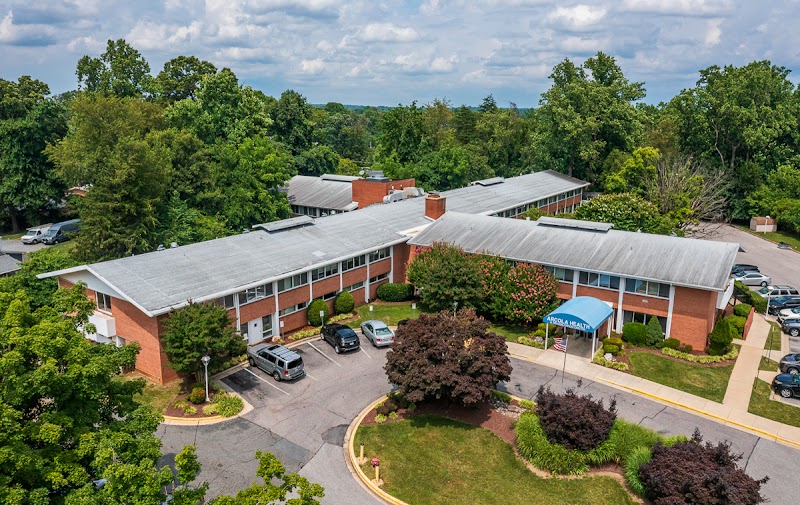
901 ARCOLA AVENUE, SILVER SPRING, MD 20902 (301) 649-2400
For profit - Corporation 151 Beds AUTUMN LAKE HEALTHCARE Data: November 2025 3 Immediate Jeopardy citations
Trust Grade
14/100
#135 of 219 in MD
Last Inspection: July 2024

Within standard 12-15 month inspection cycle. Federal law requires annual inspections.

Overview

Autumn Lake Healthcare at Arcola has received a Trust Grade of F, which indicates significant concerns about the quality of care provided. They rank #135 out of 219 nursing homes in Maryland, placing them in the bottom half of facilities in the state, and #27 out of 34 in Montgomery County, suggesting limited options for better care nearby. The facility is, however, showing signs of improvement, as the number of issues reported decreased from 20 in 2019 to 19 in 2024. Staffing is a strength, with a rating of 4 out of 5 stars and a turnover rate of 31%, which is below the state average, indicating staff stability. While there have been no fines issued, past incidents include failures to ensure decision-making support for residents without capacity, and concerns about the safety of residents with exit-seeking behavior, which highlight areas that need significant attention despite some positive aspects.

Trust Score
F
14/100
In Maryland
#135/219
Bottom 39%
Safety Record
High Risk
Review needed
Inspections
Getting Better
20 → 19 violations
Staff Stability
○ Average
31% turnover. Near Maryland's 48% average. Typical for the industry.
Penalties
✓ Good
No fines on record. Clean compliance history, better than most Maryland facilities.
Skilled Nurses
○ Average
Each resident gets 34 minutes of Registered Nurse (RN) attention daily — about average for Maryland. RNs are the most trained staff who monitor for health changes.
Violations
⚠ Watch
53 deficiencies on record. Higher than average. Multiple issues found across inspections.
★★☆☆☆
2.0
Overall Rating
★★★★☆
4.0
Staff Levels
★★★★☆
4.0
Care Quality
★★☆☆☆
2.0
Inspection Score
Stable
2019: 20 issues
2024: 19 issues

The Good

  • 4-Star Staffing Rating · Above-average nurse staffing levels
  • 4-Star Quality Measures · Strong clinical quality outcomes
  • Full Sprinkler Coverage · Fire safety systems throughout facility
  • No fines on record
  • Staff turnover below average (31%)

    17 points below Maryland average of 48%

Facility shows strength in staffing levels, quality measures, fire safety.

The Bad

2-Star Overall Rating

Below Maryland average (3.0)

Below average - review inspection findings carefully

Staff Turnover: 31%

15pts below Maryland avg (46%)

Typical for the industry

Chain: AUTUMN LAKE HEALTHCARE

Part of a multi-facility chain

Ask about local staffing decisions and management

The Ugly 53 deficiencies on record

3 life-threatening
Jul 2024 19 deficiencies
CONCERN (D)

Potential for Harm - no one hurt, but risky conditions existed

Deficiency F0574 (Tag F0574)

Could have caused harm · This affected 1 resident

**NOTE- TERMS IN BRACKETS HAVE BEEN EDITED TO PROTECT CONFIDENTIALITY** Based on observations, and interviews, it was determined that the facility failed to provide an accurate mailing address, email ...

Read full inspector narrative →
**NOTE- TERMS IN BRACKETS HAVE BEEN EDITED TO PROTECT CONFIDENTIALITY** Based on observations, and interviews, it was determined that the facility failed to provide an accurate mailing address, email address, and telephone number for the State regulatory agency. This was found in 2 of 2 postings located in the facility corridors. The findings include: On 6/17/24 at 6:19 AM, the surveyor observed a sign located on the wall leading to the resident's rooms stating, General Information with the information to contact OHCQ (Office of Health Care Quality) and the number [PHONE NUMBER]. The surveyor next called the number and verified it was not the direct number to OHCQ rather a direct number to a hospital facility surveyor. On 6/18/24 at 8:43 AM, the surveyor conducted an interview with Staff #34. During the interview the surveyor asked Staff #34 where the information and instruction to contact State agencies was located. Staff #34 walked over to the bulletin board just before the entrance to the Potomac floor. At this time the surveyor observed the board where the number listed was not the direct line to OHCQ, the address was the previous OHCQ office address and the website was not the current website that leads to the email address used to file a complaint. On 6/18/24 at 10:13 AM, the surveyor conducted an interview with the Nursing Home Administrator (NHA). During the interview the surveyor asked the NHA where the contact information for the State agencies was located. The NHA walked past the first sign located in the front hallway leading to the residents' rooms. The surveyor informed the NHA that the sign stating contacts and OHCQ's number was incorrect. The NHA stated he didn't realize that and would change the sign. He further stated the contact information for State agencies was just down the hallway. The surveyor again observed the same bulletin board, just outside the Potomac floor, with the wrong contact information seen previously. The surveyor informed the NHA that the mailing address, phone number and website to the OHCQ were all incorrect. The nursing NHA stated he would update the board with the correct information.
CONCERN (D)

Potential for Harm - no one hurt, but risky conditions existed

Deficiency F0577 (Tag F0577)

Could have caused harm · This affected 1 resident

Based on observation, survey results book review and interview, it was determined that the facility failed to have survey results available for the most recent surveys and reports of the facility read...

Read full inspector narrative →
Based on observation, survey results book review and interview, it was determined that the facility failed to have survey results available for the most recent surveys and reports of the facility readily available for review. The findings include: On 6/11/24 at 8 AM surveyors entered the facility and located a binder labeled CURRENT FACILITY SURVEY, near the receptionist's desk in the front lobby. Review of the survey results binder on 6/11/24 at 8:45 AM revealed the last survey results were from a Complaint survey conducted in February 26, 2019. The surveyor next reviewed the Certification and Survey Provider Enhanced Reporting (CASPER). The review revealed that the facility had additional complaint surveys completed in January of 2021 and January of 2024. No results from either of these surveys were in the binder. On 6/11/24 at 11:45 AM the surveyor interviewed the Director of Nursing (DON) who confirmed that the survey results from the last survey were not in the binder. The DON confirmed that he would update the binder. On 6/14/24 at 11:05 AM, the DON provided the surveyors with the updated survey results binder. Review of the binder revealed survey results from complaint surveys conducted January 2024 and January 2021. On 6/21/24, surveyors located the CURRENT FACILITY SURVEY near the reception area, which revealed the updated the most recent survey results from complaint surveys conducted January 2024 and January 2021.
CONCERN (D)

Potential for Harm - no one hurt, but risky conditions existed

Deficiency F0578 (Tag F0578)

Could have caused harm · This affected 1 resident

Based on medical record review and interviews, it was determined that the facility staff failed to obtain advance directives for residents. This was found evident for 3 (Resident #26, #38, and #122) o...

Read full inspector narrative →
Based on medical record review and interviews, it was determined that the facility staff failed to obtain advance directives for residents. This was found evident for 3 (Resident #26, #38, and #122) of 8 Residents reviewed for advanced directives during an annual survey. The findings include: 1a) During record review for Resident #26 on 6/12/24 at 11:14 AM, the surveyor did not find documents related to advance directives in the resident electronic record or hard chart. During an interview with Staff #35 on 6/17/24 at 11:16 AM, the surveyor asked about the process of obtaining advance directives for residents upon admission. She stated that a resident's advance directive gets collected at the time of entry, if they have them, then given to the Social Worker for them to follow up with residents within 72 hours. She also stated that advance directives don't necessarily have to be collected during admission and that after admission she does not follow up with residents. During an interview with Staff #15 on 6/17/24 at 1:36 PM, the surveyor asked about whether there was an advance directive on file for Resident #26. She stated she could not find any documents in the residents ' record. She stated that normally if a resident had an advance directive, they would give it to admissions upon entry to the facility. She then stated, otherwise, it would be obtained from the resident directly and she would offer if they did not have one. 1b) During record review for Resident #38 on 6/12/24 at 11:14 AM, the surveyor did not find documents related to advance directives in the resident electronic record or hard chart. During an interview with Staff #35 on 06/17/24 at 11:16 AM, the surveyor asked about the process of obtaining advance directives for residents upon admission. She stated that a resident's advance directive gets collected at the time of entry, if they have them, then given to the Social Worker for them to follow up with residents within 72 hours. She also stated that advance directives don't necessarily have to be collected during admission and that after admission she does not follow up with residents. During an interview with Staff #15 on 06/17/24 at 1:36 PM, the surveyor asked about whether there was an advance directive on file for Resident #38. She stated she could not find any documents in the resident's record. She stated that normally if a resident had an advance directive, they would give it to admissions upon entry to the facility. She then stated, otherwise, it would be obtained from the resident directly and she would offer one if they did not have one. 1c) During record review for Resident #122 on 6/12/24 at 11:14 AM, the surveyor did not find documents related to advance directives in the resident electronic record or hard chart. During an interview with Staff #35 on 06/17/24 at 11:16 AM, the surveyor asked about the process of obtaining advance directives for residents upon admission. She stated that a resident's advance directive gets collected at the time of entry, if they have them, then given to the Social Worker for them to follow up with residents within 72 hours. She also stated that advance directives don't necessarily have to be collected during admission and that after admission she does not follow up with residents. During an interview with Staff #15 on 06/17/24 at 1:36 PM, the surveyor asked about whether there was an advance directive on file for Resident #122. She stated she could not find any documents in the resident's record. She stated that normally if a resident had an advance directive, they would give it to admissions upon entry to the facility. She then stated, otherwise, it would be obtained from the resident directly and she would offer one if they did not have one.
CONCERN (D)

Potential for Harm - no one hurt, but risky conditions existed

Deficiency F0583 (Tag F0583)

Could have caused harm · This affected 1 resident

Based on observation and interview, it was determined that the facility staff failed to provide privacy for resident's protected health information. This was evident for 1 (Resident #239) of 67 reside...

Read full inspector narrative →
Based on observation and interview, it was determined that the facility staff failed to provide privacy for resident's protected health information. This was evident for 1 (Resident #239) of 67 residents reviewed during an annual survey. The findings include: During observation on 6/24/24 at 11:41 AM, the surveyor found a medication cart laptop open with Resident #239's medical information visible to anyone in the hallway. It was noted that no residents or facility staff were in the hallway. During an interview with Staff #33 on 6/24/24 at 11:50 AM, the surveyor identified the open laptop and resident record with Staff #33. She stated that she did not recall leaving the laptop open because there was a black screen present. During the interview, it was also revealed that Staff #33 was able to pull up Resident #239's record on the laptop by simply clicking the mouse without entering a secure password. During observation on 6/24/24 at 11:53 AM, the surveyor observed Staff #33 walk away from the laptop with the open browser tab that visibly stated on a white background, THIS SCREEN IS HIDDEN, at which the surveyor was still able to access resident protected health information from a secondary open browser tab.
CONCERN (D) 📢 Someone Reported This

A family member, employee, or ombudsman was alarmed enough to file a formal complaint

Potential for Harm - no one hurt, but risky conditions existed

Free from Abuse/Neglect (Tag F0600)

Could have caused harm · This affected 1 resident

Based on a review of a facility reported investigation, clinical record review, and staff interview it was determined that the facility staff failed to prevent abuse of a resident. This was evident fo...

Read full inspector narrative →
Based on a review of a facility reported investigation, clinical record review, and staff interview it was determined that the facility staff failed to prevent abuse of a resident. This was evident for 1 (#155) out of 67 residents in the resident sample. The findings include: An investigation of Facility Reported Incident MD00186212 was started on 6/25/24. On November 11, 2022, during the day shift Resident #155 had a bowel movement and needed assistance from the Geriatric Nursing Assistant (GNA). GNA #21 was assigned to the resident and went into the room to clean and change the resident. GNA #21 entered the room to assist. While changing the incontinence brief the resident grabbed GNA #21's hand and dug their nails into the GNA's skin causing it to bleed. GNA #38 alleged that GNA #21 then hit the resident's hand. GNA #38 then reported the incident to the charge nurse (Staff #39). A review of the facility investigation revealed that Staff #39 no longer works for the facility. The nurse reported the suspected abuse to the Director of Nursing (DON) on 11/29/22 and an investigation was initiated. Staff #39 was interviewed on 11/29/22. She stated that GNA #38 reported it to her on 11/29/22. She said GNA #38 saw GNA #21 hit the resident on the hand. GNA #38 gave a statement on 11/29/22: I was asked to assist with washing and cleaning the resident. The resident grabbed and slapped at myself and another GNA during care. The resident grabbed and scratched the GNA, and she removed the resident's hand from her arm, and I saw her hit the resident on the arm. The incident was reported to the charge nurse who came and placed a dressing on the resident's left arm open area. Resident was interviewed on 11/29/22 but unable to respond secondary to cognitive deficit. GNA #38 was interviewed on 11/29/22. She said . when we got to [resident's room] was soiled with feces and we were trying to help [resident]. [He/She] was fighting and combating with us, throwing [his/her] hands up and everywhere trying to scratch us and [GNA #21] explained to [him/her] that we were trying to change and wash [him/her]. When [GNA #21] tried to transfer [him/her] to the toilet commode [he/she] grabbed [the GNA's] hand on her wrist and started digging into [GNA's] hand. I saw [GNA]'s hand bleeding. [GNA #21] then freed her hands away and then she hit the resident's hand. There was bleeding from the resident's hand when we finished transferring [him/her] and I went and reported to the nurse. GNA #38 then said she reported to Staff #27 who was the nurse. She also mentioned the incident to Staff #7 who was the Certified Medication Aide. (CMA). She did not report to anyone else because she thought Staff #27 would tell Staff #39. Staff #27 was interviewed on 11/29/22. She said a GNA mentioned it while walking past her. GNA said she saw another GNA hit [the resident]. She assessed the resident and did not see anything. She also asked the alleged perpetrator who denied hitting the resident. GNA #21 was interviewed on 11/29/22. She noticed the resident had a bowel movement. She asked GNA #38 to help her and a housekeeper who spoke Spanish to translate. Resident was fighting them which was normal. GNA #21 stated I tried to have [him/her] stand up so I could changed [him/her], this was when [he/she] grabbed into my arm tightly and scratched me. I removed [his/her] hand, changed [him/her], and then noticed that [his/her] left hand was bleeding. The skin on [his/her] left hand had peeled. I then informed the nurse, and she came and dressed it. Staff #7 was interviewed on 11/29/22. She was asked by GNA #38 if they report abuse and she told GNA #38 that they report to the Charge Nurse and if the Charge Nurse does not report then you tell the manager. GNA #38 did not say what happened. Staff #7 admitted that she did not report the abuse. Staff #40 was interviewed on 11/29/22. She denied being asked to interpret or explain what was going on for the resident. She said she did not witness anything. The DON was interviewed on 6/26/24 at 10:55 AM. He said he suspends his staff when there is an allegation of abuse but does not tell the nursing agency except that he does not want the person to return secondary to an accusation of abuse. The alleged perpetrator cannot return to the facility. Staff #7 was interviewed on 6/26/24 at 12:37 PM. She said she does not recall the incident. The DON was informed of the findings on 6/28/24 at 1:15 PM.
CONCERN (D) 📢 Someone Reported This

A family member, employee, or ombudsman was alarmed enough to file a formal complaint

Potential for Harm - no one hurt, but risky conditions existed

Report Alleged Abuse (Tag F0609)

Could have caused harm · This affected 1 resident

Based on an investigation into a facility reported incident, clinical record review, and staff interview it was determined that the facility staff failed to ensure an incident of alleged abuse was rep...

Read full inspector narrative →
Based on an investigation into a facility reported incident, clinical record review, and staff interview it was determined that the facility staff failed to ensure an incident of alleged abuse was reported immediately to the Administrator and to the state agency. This was evident for 1 (#155) out of 67 residents that were part of the survey sample. The findings include: An investigation of Facility Reported Incident MD00186212 was started on 6/25/24. On November 11, 2022, during the day shift Resident #155 had a bowel movement and needed assistance from the Geriatric Nursing Assistant (GNA). GNA #21 was assigned to the resident and went into the room to clean and change the resident. GNA #38 entered the room to assist. While changing the incontinence brief the resident grabbed GNA #21's hand and dug their nails into the GNA's skin causing it to bleed. GNA #38 alleged that GNA #21 then hit the resident's hand. GNA #38 then allegedly reported the incident to the charge nurse (Staff #39). There was no evidence that Staff #39 reported the incident to the Administrator nor was there evidence that GNA #38 reported the incident herself. The incident was not reported until 11/29/22. The Director of Nursing (DON) was informed of the findings on 6/28/24 at 1:15 PM. The facility took corrective action as of 2/28/23. The nurse (Staff #39) was educated, and disciplinary action was taken. A 100% education of all staff to ensure all incidences of abuse is reported immediately to immediate supervisor, manager, the assistant director of nursing, and Director of Nursing. Facility staff will review all incidents of alleged abuse during quality assurance meetings to ensure the timely reporting of allegations of abuse. Past Non-compliant
CONCERN (D)

Potential for Harm - no one hurt, but risky conditions existed

Transfer Notice (Tag F0623)

Could have caused harm · This affected 1 resident

Based on interviews and medical record review it was determined the facility failed to provide notification to the Ombudsman of the Resident that transferred to the hospital. This was evident in 1 Res...

Read full inspector narrative →
Based on interviews and medical record review it was determined the facility failed to provide notification to the Ombudsman of the Resident that transferred to the hospital. This was evident in 1 Resident #123 out of 4 Residents reviewed for hospitalization notification. The findings include: On 6/12/2024 at 11:30 AM the surveyor reviewed Resident #123's medical record. The review of the medical record revealed that Resident #123 was transferred to the hospital on 1/30/2024. At 11:15 AM on 6/20/2024 the surveyor requested from the Director of Nursing the documentation of the Ombudsman notification of Resident #123's transfer to the hospital on 1/30/2024. During an interview with the Director of Nursing on 6/21/2024 at 11:00 AM he stated that he requested from the Ombudsman a copy of the email and transfer log that the facility Social Services Department sent to the Ombudsman for January 2024, because the facility was unable to locate documentation of notification to the Ombudsman for Resident #123's transfer on 1/30/2024. The Director of Nursing further stated in the interview that the Social Services Department had the responsibility of notification to the Ombudsman of residents that transfer to the hospital, and that the Admission/Discharge To/From Report is emailed to the Ombudsman monthly by the Social Services Department. The Director of Nursing at 11:15 AM on 6/21/2024 stated to the surveyor that the Ombudsman was unable to locate an email from the facility Social Services Department of residents that were transferred to the hospital during the month of January 2024. The surveyor confirmed with the Ombudsman on 6/24/2024 at 1:25 PM that she had not received notification via email from the Social Services Department that Resident #123 was transferred to the hospital on 1/30/2024.
CONCERN (D)

Potential for Harm - no one hurt, but risky conditions existed

Assessment Accuracy (Tag F0641)

Could have caused harm · This affected 1 resident

**NOTE- TERMS IN BRACKETS HAVE BEEN EDITED TO PROTECT CONFIDENTIALITY** Based medical record review and staff interview, it was determined the facility staff failed to ensure Minimum Data Set (MDS) as...

Read full inspector narrative →
**NOTE- TERMS IN BRACKETS HAVE BEEN EDITED TO PROTECT CONFIDENTIALITY** Based medical record review and staff interview, it was determined the facility staff failed to ensure Minimum Data Set (MDS) assessments were accurately coded. This was evident for 1 (Resident #65) of 67 residents selected for review during the recertification survey. The findings include: Minimum Data Set (MDS) is part of the U.S. federally mandated process for clinical assessment of all residents in Medicare or Medicaid certified nursing homes. This process provides a comprehensive assessment of each resident's functional capabilities and helps nursing home staff identify health problems. MDS assessments are required for residents on admission to the nursing facility and then periodically, within specific guidelines and time frames. On 06/13/24 at 12:40 PM a review of Resident's #65 medical record revealed that the resident was admitted to the facility on [DATE] with multiple diagnoses including Dementia, ETOH (alcohol) abuse and Hypertension (high blood pressure). On 4/16/24 Resident #65 sustained a fall and was hospitalized for Hip Fracture. Upon readmission to the facility on 4/21/24, the resident was prescribed and received Lovenox (Enoxaparin-a blood thinner or anticoagulant) injections for Deep Vein Thrombosis prophylaxis for the period 4/22/24 -5/5/24. Resident# 65's MDS dated [DATE] (5 day assessment) revealed that the resident received 6 injections for the assessment period. The Drug Classification, Anticoagulant, was not documented on the MDS for the Lovenox (Enoxaparin) injections. On 06/20/24 at 09:40 AM the surveyor interviewed the MDS Coordinator regarding the omission of the drug classification. The MDS Coordinator stated that she would look into the matter. Later at about 10:20 AM on 6/20/24, the MDS Coordinator informed the surveyor that she had corrected the inaccuracy and gave the surveyor a copy of the MDS document showing the correction.
CONCERN (D)

Potential for Harm - no one hurt, but risky conditions existed

Comprehensive Care Plan (Tag F0656)

Could have caused harm · This affected 1 resident

**NOTE- TERMS IN BRACKETS HAVE BEEN EDITED TO PROTECT CONFIDENTIALITY** Based on record review, and staff interview, it was determined that the facility staff failed to develop and initiate comprehens...

Read full inspector narrative →
**NOTE- TERMS IN BRACKETS HAVE BEEN EDITED TO PROTECT CONFIDENTIALITY** Based on record review, and staff interview, it was determined that the facility staff failed to develop and initiate comprehensive person-centered care plans for residents. This was evident for 3 (Resident #65, #36 and #80) of 10 residents reviewed for comprehensive care plannig. The findings include: A care plan is a guide that addresses the unique needs of each resident. It is used to plan, assess, and evaluate the effectiveness of the resident's care. The Minimum Data Set is a standardized assessment tool that measures health status in nursing home residents. MDS assessments are completed every 3 months on all residents of nursing homes. 1a) On 06/13/24 at 12:40 PM a review of Resident's #65 medical record revealed that the resident was admitted to the facility on [DATE] with multiple diagnoses which included Dementia, ETOH (alcohol) abuse and Hypertension (high blood pressure). On 4/16/24 Resident #65 sustained a fall and was hospitalized for hip fracture. The resident was readmitted to the facility on [DATE]. Resident #65 had active physician's orders dated 4/22/24 for Tramadol and Tylenol Extra Strength for pain. The resident's medication record confirmed that the resident was receiving the pain medications. Further review of Resident's #65 medical records on 6/14/24 01:06 PM revealed that a care plan was developed for pain on 3/19/24 and discontinued the same day. There was no active care plan for pain for Resident #65 in the medical record. On 6/17/24 at 09:05 AM the surveyor informed Unit Manager, Staff #5 of the care plans findings for Resident # 65. Staff #5 confirmed the findings and stated that they would take care of them. A care plan was initiated by the facility on 6/17/ 24 with interventions for Resident #65's pain. On 6/20/24 at 10:30 AM The surveyor also informed the Assistant Director of Nursing (ADON) of the care plan findings for Resident #65 and enquired about the process to ensure care plan initiation. The ADON stated that they use a triple check system in which licensed nurses would make changes and update the clinical record as events occur. The events are recorded on the 24 hour report and it is the responsibility of the supervisors and managers to further review. 1b) A review on 6/17/24 at 08:12 AM of Resident #36's medical record revealed the following. The resident was admitted to the facility on [DATE] with multiple diagnoses including Hypertension (high blood pressure), Atrial Fibrillation (abnormal heart rhythm), Diabetes Mellitus. Resident #36 had an active physician's order dated 2/22/24 for Xarelto for Atrial Fibrillation. Xarelto belongs to a category of blood thinners commonly called Direct Oral Anticoagulant. Resident #36's medication record confirmed resident was receiving the medication Xarelto. There was no care plan for Resident #36 relating to the anticoagulant medication, Xarelto. On 6/17/24 at 09:05 AM the surveyor informed Unit Manager, Staff #5 of the care plans findings for Resident #36. Staff #5 confirmed the findings and stated that they would take care of them. A care plan was initiated by the facility on 6/17/ 24 with interventions for Resident #36's relating to the medication, Xarelto. On 6/20/24 at 10:30 AM The surveyor also informed the Assistant Director of Nursing (ADON) of the care plan findings for Resident #36 and enquired about the process to ensure care plan initiation. The ADON stated that they use a triple check system in which licensed nurses would make changes and update the clinical record as events occur. The events are recorded on the 24 hour report and it is the responsibility of the supervisors and managers to further review. 1c) During a unit rounding, on 6/11/24 at 1:09 PM, Resident #80 stated he/she had a fall a few months ago. This resident was admitted on [DATE] to this facility with diagnoses of radiculopathy of cervical region, dementia, diabetes, malignant neuroendocrine tumors and diverticulosis of small intestine. An observation, on 6/12/24 at 10:00 AM, found that Resident #80 was in bed and the staff were providing complete morning care because this resident was unable to assist. Later Resident #80 was a total transferred to a wheelchair. Record review, on 6/17/24 at 01:40 PM, of Resident #80's record revealed that on 1/5/24 at 1:58 PM, the resident had lost his/her balance and sustained a fall while trying to use the bathroom by him/herself. The Resident was found in a supine position and stated that his/her head hit the floor. Further review of Resident #80's Minimum Data Set assessment, on 5/13/24, revealed that the resident's functional pattern was coded 02, which meant that the resident needed maximal assistance. Also coded 01 as the dependent in daily living transfers and toilet transfers. However, no care plan had been developed to address the resident's fall risk and safety level of functional assistant. During interview, on 6/23/24 at 02:27 PM, Unit Manager Staff #17 stated that staff were checking Resident #80 often and assisting his/her dependent level of needs. He admitted that there was no care plan developed for the fall prevention at this time.
CONCERN (D)

Potential for Harm - no one hurt, but risky conditions existed

Quality of Care (Tag F0684)

Could have caused harm · This affected 1 resident

Based on medical record review and interviews, it was determined that the facility failed to turn and reposition residents at risk for pressure ulcers. This was evident for 2 (Resident #26 and #158) o...

Read full inspector narrative →
Based on medical record review and interviews, it was determined that the facility failed to turn and reposition residents at risk for pressure ulcers. This was evident for 2 (Resident #26 and #158) of 4 residents reviewed for positioning during an annual survey. The findings include: During an interview with Resident #26 on 6/12/24 at 8:49 AM, the surveyor asked if staff repositioned them due to limited range of motion. The resident stated he/she was only repositioned when they asked the staff to do so and not done by a schedule. The resident confirmed that he/she could not reposition himself/herself and would need help. During an interview with Resident #26 on 6/18/24 at 1:08 PM, the surveyor asked if they had been repositioned during the night shift. The resident stated he/she was not repositioned the night before. During record review for Resident #26 on 6/18/24 at 9:46 AM, the records revealed documented care for turn and reposition was not done on 14 days for the night shift during the month of June. The record also revealed the night shift documented the resident as Substantial/maximal assist on 7 days and Dependent for 16 days in the month of June. During an interview with Staff #5 on 6/20/24 at 1:27 PM, she was asked about how do residents get turned and repositioned. Staff #5 stated the standard is that residents should be turned and repositioned on every shift. She also indicated that the aides are supposed to perform this task every two hours or as needed. Staff #5 was asked if Resident #26 should be turned and repositioned. She stated if he/she is able to reposition him/herself the staff would educate if they are not able to, or the aides would have to do it. Staff #5 stated that she was not sure why it was not done but would have to check. During an interview with Staff #2 on 6/28/24 at 2:04 PM, he was asked about insufficient documentation for residents who should be turned and repositioned. He stated he was not sure about why it was not done, but confirmed the task for turn and reposition was not done on the night shift. 1b) During record review for Resident #158 on 7/01/24 at 1:09 PM, records revealed the resident was not turned and repositioned according to physician orders and care plan. During an interview with Staff #5 on 6/20/24 at 1:27 PM, she was asked about how do residents get turned and repositioned. Staff #5 stated the standard is that residents should be turned and repositioned on every shift. She also indicated that the aides are supposed to perform this task every two hours or as needed.
CONCERN (D)

Potential for Harm - no one hurt, but risky conditions existed

Deficiency F0685 (Tag F0685)

Could have caused harm · This affected 1 resident

**NOTE- TERMS IN BRACKETS HAVE BEEN EDITED TO PROTECT CONFIDENTIALITY** Based on interview and record review it was determined that the facility staff failed to promptly make appointments for the prop...

Read full inspector narrative →
**NOTE- TERMS IN BRACKETS HAVE BEEN EDITED TO PROTECT CONFIDENTIALITY** Based on interview and record review it was determined that the facility staff failed to promptly make appointments for the proper diagnosis and treatment of vision impairment conditions. This was found to be evident for 1 (Resident #38) out of 2 residents reviewed for vision services during an annual survey. The findings include: During a floor rounding, on 6/12/24 at 2:53 PM, Resident #38 stated I only could see vague shadows, my eyesight was getting poor. I had not had an eye appointment since I got here which I was worried about and I feel helpless. Record review, on 6/13/24 at 1:27 PM, of Resident #38's record revealed that he/she was admitted on [DATE] with diagnoses of percutaneous pinning of pelvis on 2/12/24, vision impaired, cardiac arrhythmia and dementia. This resident was able to answer questions appropriately, making his/her own decisions about his/her care and made his/her needs known. Further record review found that the Medical Director Staff #32 had entered the order that the resident may be seen and treated by an Ophthalmologist dated on 2/21/24 at 5:44 PM. Additionally, the Minimum Data Set assessment dated on 2/29/23 under section B10000 vision section documented the resident as highly impaired. In terms of this resident's care plan on file the vision impaired was identified, however, the only intervention was to arrange consultation with eye care and the facility staff did not secure an eye appointment after 4 months later. During the interview, on 6/17/24 at 11:10 AM, Unit Manager Staff #17 confirmed that this resident did not have any eye examination since he/she was admitted to this facility on 2/21/24. He stated that he had just completed an eye referral to the provider system so the scheduling of a visit date was pending. Staff #17 was informed that the facility staff had identified that this resident's vision was highly impaired upon admission, but then failed to promptly make an eye appointment for finding the accurate diagnosis and effective treatments which it was a concern.
CONCERN (D)

Potential for Harm - no one hurt, but risky conditions existed

Accident Prevention (Tag F0689)

Could have caused harm · This affected 1 resident

Based on observation and interviews, it was determined that the facility staff failed to ensure residents are not exposed to hazards. This was evident for 1 (Resident #26) of 67 residents reviewed dur...

Read full inspector narrative →
Based on observation and interviews, it was determined that the facility staff failed to ensure residents are not exposed to hazards. This was evident for 1 (Resident #26) of 67 residents reviewed during an annual survey. The findings include: During observation on 6/18/24 at 1:12 PM, the surveyor observed Resident #26's call light with wires exposed. During observation on 6/20/24 at 1:50 PM, the surveyor observed Resident #26's call light with wires exposed. Staff #5 was asked to identify if the resident's call light was faulty and who should report and where. She identified the exposed wires, and stated anyone who sees a faulty call bell can report it. She also stated she will put it in the maintenance log book. During an interview with Staff #2 on 6/28/24 at 2:04 PM, he was asked about who should report faulty call lights. He said anyone should be able to identify and the nurses should have seen that and put it in the book.
CONCERN (D)

Potential for Harm - no one hurt, but risky conditions existed

Drug Regimen Review (Tag F0756)

Could have caused harm · This affected 1 resident

**NOTE- TERMS IN BRACKETS HAVE BEEN EDITED TO PROTECT CONFIDENTIALITY** Based on record review and interviews it was determined that the facility staff failed to track the pharmacy's irregularity mont...

Read full inspector narrative →
**NOTE- TERMS IN BRACKETS HAVE BEEN EDITED TO PROTECT CONFIDENTIALITY** Based on record review and interviews it was determined that the facility staff failed to track the pharmacy's irregularity monthly recommendation, assure the review by the medical staff and have timely action by the medical staff in response to the recommendation. This was found evident of 1 (#26) of 5 residents reviewed for medication regimen review during an annual survey. The findings include: Record Review, on 6/13/24 at 12:05 PM, of Resident #26's record revealed that he/she was admitted on [DATE] with diagnoses of chronic heart failure, arthritis, diabetes, fibromyalgia, hypertension, chronic renal failure, obesity and migraine. Further record review of a Monthly Pharmacy Report, dated on 5/15/24 at 5:42 PM, revealed that the report identified an irregularity that was marked recommendation written for the medical staff to respond. However, there was no record of a medical staff response on 5/15/24. During interview, on 6/13/24 at 12:58 PM, the Director of Nursing (DON) was aware that on 5/15/2024 at 5:42 PM the Pharmacy Consultant, Staff #42, made a recommendation to reduce the dosage, but no hard copy was found. The DON stated he was going to provide the document with the medical staff 's response. During the interview, on 6/14/24 at 12:06 PM, the DON stated that the Pharmacist Staff #42 failed to send the written recommendation to the facility. The report of the recommendations indicated as the following: 1) the standing order Diphenhydramine 50 mg for allergies; consider reducing the dosage. 2) the as needed order Diphenhydramine should be limited to before sleep since it may cause sedation. The DON presented a medical staff 's Prescriber Response to the recommendation after the surveyor's intervention. The response was a box checked off that indicated; agreed as above the recommendations, by Nurse Practitioner (NP) Staff #7, dated 6/13/2024. The facility failed to track the pharmacy's irregular monthly recommendation, review by the medical staff and to act upon the recommendation timely. The DON was informed that this was a concern due to being 28 days later.
CONCERN (D)

Potential for Harm - no one hurt, but risky conditions existed

Dental Services (Tag F0791)

Could have caused harm · This affected 1 resident

**NOTE- TERMS IN BRACKETS HAVE BEEN EDITED TO PROTECT CONFIDENTIALITY** Based on interview, observation and record review it was determined that the facility staff failed to promptly provide or obtain...

Read full inspector narrative →
**NOTE- TERMS IN BRACKETS HAVE BEEN EDITED TO PROTECT CONFIDENTIALITY** Based on interview, observation and record review it was determined that the facility staff failed to promptly provide or obtain visit/appointments for routine dental care or treatment for Medicaid Residents. This was found to be evident for 1 (Resident #33) out of 3 residents reviewed for dental services during an annual survey. The findings include: During a floor rounding, on 6/12/24 at 11:50 AM, Resident #33 stated that several months ago he/she had requested the facility staff to arrange a dentist appointment for his/her a few broken teeth. Record review, on 6/12/24 at 1:40 PM, revealed that Resident #33 was admitted on [DATE] to this facility for a short stay then re-admitted on [DATE] as a long-term care resident. This resident had a medical history with diagnoses of hypotension, chronic heart failure and asthma. The resident was able to answer questions appropriately, making his/her own decisions about his/her care and making his/her needs known. Further review record review found that the Medical Director Staff #32 had entered an active order on 3/3/24 that the resident may be seen and treated by a dentist. Additionally, Resident #33's Minimum Data Set assessment (MDS), on 3/12/24, revealed that the resident's dental assessment under section L0200 identified broken (chipped, cracked) teeth, which meant that the resident needed prompt dental treatments. The Minimum Data Set is a standardized assessment tool that measures health status in nursing home residents. MDS assessments are completed every 3 months on all residents of nursing homes. Observation, on 6/14/24 at 12:34 PM, revealed that Resident #33 was eating his/her lunch slowly and stated, I had mild pain sometimes when I bit on my broken tooth. Record review, on 6/14/24 at 2:16 PM, revealed that this resident had no dental visits by this time. During interview, on 6/17/24 at 11:10 AM, Unit Manager Staff #17 confirmed that this resident did not have any dental care since he/she was admitted to this facility on 3/3/24. Staff #17 was informed that the facility MDS assessment had identified broken teeth on 3/12/24, but then failed to promptly make an appointment for the proper diagnosis and treatment, which was a concern.
CONCERN (D) 📢 Someone Reported This

A family member, employee, or ombudsman was alarmed enough to file a formal complaint

Potential for Harm - no one hurt, but risky conditions existed

Medical Records (Tag F0842)

Could have caused harm · This affected 1 resident

1d) During an interview with Resident #26 on 6/12/24 at 8:34 AM, he/she was asked about whether he/she received showers since admission to the facility. He/she stated they tried to get a shower but st...

Read full inspector narrative →
1d) During an interview with Resident #26 on 6/12/24 at 8:34 AM, he/she was asked about whether he/she received showers since admission to the facility. He/she stated they tried to get a shower but staff told him/her to ask the next AM or PM shift and they wouldn't give them to him/her and knew nothing about shower preferences. During record review on 6/25/24 at 11:07 AM, the surveyor received hard copy shower records from Staff #2 for Resident #26. The hardcopy shower record was documented that a shower was given to the resident on 6/12/24 and 6/19/24. Under the tasks section in the electronic health record on 6/12/24 and 6/19/24 it was documented that a bath was given to the resident. Both methods used for the documented care specifically require a selection of whether a bath or shower was given. The records revealed the indicated dates of care did not accurately depict what type of care had been provided for the resident. During an interview with Staff #2 on 6/28/24 at 2:04 PM he was asked about the inaccuracy of documentation for resident records pertaining to baths and showers. He stated that this may be a Point Click Care system error and would have to check into that issue. He also mentioned that perhaps the staff who documented the resident records may have thought that both baths and showers coincided with one another. 1e) During record review on 7/01/24 at 11:30 AM, it was revealed the Notification of Change for Resident #158 by the facility on 9/23/23 was incomplete. The hospital information, to include phone number, was left blank. During record review on 7/01/24 at 11:30 AM, it was revealed the Bed Hold authorization for Resident #158 by the facility on 9/24/23 was incomplete. The resident signature or responsible party signature was left blank. 1c) During medical record review by the surveyor on 6/17/2024 at 8:15 AM it was revealed that there were multiple dates that initials were not documented on the enteral orders - medication and treatment administration record that Resident #121 had received prescribed enteral tube feedings. The following dates did not have documented initials that the prescribed enteral tube feedings were administered: January 6, 8 and 30; February 5, 8, 9, 13, 21, 22, and 23; March 6, 18, 25 and 31; April 23; May 14, 24 and 27; and June 15, 2024. During review of the nursing progress notes on these dates there was no documentation that the enteral tube feedings were held or any adverse effects on Resident #121. At 10:25 AM on 6/17/2024 the surveyor reviewed the facility's enteral tube feeding policy and procedure dated 12/12/2022. The policy on page 2 - #9 stated that Direction for staff regarding nutritional products and meeting the resident's nutritional needs will be provided ensuring that the administration of enteral nutrition is consistent with and follows the practitioner's orders. The surveyor conducted an interview with the Director of Nursing at 11:25 AM on 6/20/2024 and reviewed the enteral orders - medication and treatment administration record for January through June 2024 for Resident #121. The surveyor informed the Director of Nursing of the missing initials of the nursing staff for those dates. The Director of Nursing stated to the surveyor, I will look into that, there must be a reason. During follow-up interview with the Director of Nursing on 6/21/2024 at 1:07 PM the Director of Nursing confirmed with the surveyor that there were missing initials of the nursing staff on the enteral orders - medication and treatment administration records for Resident #121 for these dates. In addition, there was no documentation in the progress notes as to why the enteral tube feedings were not administered by the nursing staff as ordered by the physician for Resident #121. The Director of Nursing conveyed to the surveyor that the nursing staff was already being in-serviced on the enteral orders - medication and treatment administration record documentation. Based on interviews, and record review, it was determined that the facility failed to maintain medical records in accordance with acceptable professional standards and practices by keeping complete and accurate documentation. This was found evident in 5 (Resident #154, #143 #121 #26 and #158) of 67 residents reviewed during the survey. The findings include: 1a) On 6/12/24 at 10:55 AM, the surveyor reviewed Resident #154's medical record. The review revealed that Resident #154 had a past medical history that included, but was not limited to, below the knee amputation, and osteomyelitis (infection of the bone). On further review Resident #154 had a Peripherally Inserted Central Catheter (PICC) (a catheter inserted into a vein in the upper arm and guided into a large vein above the right side of the heart, used to give intravenous fluid, medications and blood products) on 10/11/22. Orders were also written on the same day for measuring external length of catheter each week, changing dressing every Friday, and measuring arm circumference every Friday. On 6/13/24 at 11:15 AM, the surveyor reviewed the October 2022 Treatment Administration Record (TAR). On 10/14/22, 10/21/22 and 10/29/22 the dressing changes for the PICC were documented as completed. On further review, on the same days of the dressing changes, the external length of the catheter was documented at 5 cm and the arm circumference was documented as 6 cm. On 6/13/24 at 11:15 AM, the surveyor conducted an interview with the Regional Nurse. During the interview the Regional Nurse stated the facility uses an outside agency to place PICC lines. The surveyor asked for documentation from the PICC line placement. On 6/17/24 at 8:05 AM, the surveyor reviewed the documentation from the company that placed Resident #154's PICC line. The review revealed that the PICC was placed on 10/11/22 and the arm circumference was documented at 28 cm on the day of insertion. On 6/17/24 at 9:37 AM, the surveyor conducted an interview with the Director of Nursing (DON). During the interview the surveyor asked why there was a 22 cm discrepancy from the placement of the PICC to the facility's documentation. The DON stated he would look into the concern and follow up. On 6/17/24 at 1:27 PM, the surveyor conducted a follow up interview with the DON. He further stated that the documentation was done in error and an in-service education was started on appropriate PICC line documentation. 1b) On 6/25/24 at 12:02 PM the surveyor reviewed Resident #143's medical record. The review revealed that Resident #143 was first admitted to the facility in early 2018 and had a past medical history, which included but not limited to, bipolar disorder, dementia with behavioral disturbances and schizoaffective disorder. On 7/2/24 at 11:02 AM, the surveyor reviewed the Task flow documentation that the Geriatric Nursing Assistance (GNA) used to document interventions/cares. Review of the May 2021 behavior monitoring for Resident #143 had no documentation on; 5/3/21 11PM-7AM shift, 5/8/21 7AM-3PM shift, 5/9/21 on 7AM-3PM shift 5/10/21 11PM-7AM shift, 5/14/21 7AM-3PM shift, 5/15/21 11PM-7AM shift, 5/21/21 11PM-7AM shift, 5/22/21 11PM-7AM shift, and 5/29/21 11PM-7AM shift. Further review revealed behaviors documented on 5/22/21 at rejecting care, push/grabbing/kicking hitting, on 5/23/21 rejecting cares, pushing/grabbing, kicking hitting, and biting and on 5/31/23 behaviors noted of pinching scratching and kicking hitting. On 7/2/24 the surveyor conducted an interview with the Director of Nursing (DON). During the interview the DON confirmed that documentation of behaviors was missing on the May 2021 GNA Task form. He further stated it is the expectation the behaviors be monitored and documented by the GNAs. He further stated that the nurses also monitor and document behaviors. The DON provided the May 2021 Treatment Administration Record (TAR) for Resident #143 to the surveyor. The monitoring stated, nursing to monitor behavior and mood and redirect patient every shift for being combative. On 5/4/21 there was no documentation that the behavior was monitored on the 11PM-7AM shift.
CONCERN (D)

Potential for Harm - no one hurt, but risky conditions existed

Infection Control (Tag F0880)

Could have caused harm · This affected 1 resident

**NOTE- TERMS IN BRACKETS HAVE BEEN EDITED TO PROTECT CONFIDENTIALITY** 1b) On 6/17/24 at 10:31 AM during rounds the surveyors observed Transmission Based Precautions signs posted on the wall outside ...

Read full inspector narrative →
**NOTE- TERMS IN BRACKETS HAVE BEEN EDITED TO PROTECT CONFIDENTIALITY** 1b) On 6/17/24 at 10:31 AM during rounds the surveyors observed Transmission Based Precautions signs posted on the wall outside of Resident's #188's room. The surveyors entered the resident 's room wearing Personal Protective Equipment (PPE) (disposable gloves, gowns and masks). In the room, the surveyor observed a trash can filled to capacity with an overflow of yellow gowns, one pressure relieving boot on the floor, one empty 10 millimeter needleless syringe on the window sill next to the resident 's bed. On 6/17/24 at 10:33 AM, the Assistant Director of Nursing (ADON) joined the surveyors in the resident's room and addressed the concerns. The ADON put the boot and syringe in the trash and stated that the trash would be cleared out. On 6/17/24 at 11:43 AM a record review revealed that Resident #188 was admitted to the facility on [DATE] with multiple diagnoses including Sepsis , Hypertension and Acute Respiratory Failure with Hypoxia and was placed on droplet precautions. A resident is placed on droplet precautions when he/she has an infection with germs that can spread to others by speaking, sneezing, or coughing. 1c) On 6/21/24 at 9:24 AM during rounds the surveyor observed all handrails on the Gateway Unit were marred and scratched. A gritty, grime-like sticky brown substance was evident on surveyor's fingers when the bottom of the handrails was touched. The findings were brought to the attention of the Director of Housekeeping. 6/25/24 at 11:08 AM the Director of Housekeeping reported to surveyors that he checked the handrails and the substance was identified as residual from the use of sanitizing solutions used to prevent the spread of the Covid-19 virus. He reported that the handrails were cleaned by the housekeeping staff. On 6/28/24 at 9:35 AM the surveyor observed all handrails in the halls of the Gateway unit were visibly clean on all sides. 1d) During observation of medication administration on 6/26/24 at 8:42 AM the surveyor observed Staff #34 enter Resident #115's room without washing or sanitizing her hands. The surveyor observed this room to be in use of Enhanced Barrier Precautions. During an interview with Staff #2 on 6/28/24 at 2:04 PM, he stated he was not sure why Staff #34 did not sanitize her hands, they are supposed to sanitize before entering the room because every cart has sanitizer. Staff #2 also stated that maybe Staff #34 sanitized before the entire process of medication administration began. 1e) During observation of medication administration on 6/26/24 at 8:42 AM the surveyor observed Staff #34 enter Resident #18's room without washing or sanitizing her hands. The surveyor observed this room to be in use of Enhanced Barrier Precautions. During an interview with Staff #2 on 6/28/24 at 2:04 PM, he stated he was not sure why Staff #34 did not sanitize her hands, they are supposed to sanitize before entering the room because every cart has sanitizer. Staff #2 also stated that maybe Staff #34 sanitized before the entire process of medication administration began. Based on observation and interviews it was determined that the facility failed to follow appropriate infection prevention and control practices to prevent the development and transmission of disease and infection. This was found to be evident on 5 random observation during the annual recertification survey. The findings include: 1a) During the initial tour of the laundry department on 6/18/2024 at 9:15 AM the two surveyors observed an employee's purse and personal items in the inside corner of a clean linen bin that was half full of clean folded linens. On tour of the laundry department at 9:30 AM on 6/18/2024 with the facility Nursing Home Administrator (NHA) the two surveyors observed an employee's purse on the clean laundry folding table. Adjacent and connected to the clean area of the laundry room was an open storage area that had four dirty file cabinets (one was empty and three contained unsecured medical records), several cardboard boxes rested directly on the floor filled with clothes, clothes laid on top of these cardboard boxes, clothes were directly on the floor, and there were at least five mattresses stacked against the wall. During an interview conducted on 6/18/2024 at 9:35 AM the Nursing Home Administrator acknowledged the areas of inappropriate infection control practices in the laundry room and in the adjacent storage area connected to the laundry clean area. The Nursing Home Administrator further stated that the facility will get it corrected.
CONCERN (E) 📢 Someone Reported This

A family member, employee, or ombudsman was alarmed enough to file a formal complaint

Potential for Harm - no one hurt, but risky conditions existed

Deficiency F0657 (Tag F0657)

Could have caused harm · This affected multiple residents

**NOTE- TERMS IN BRACKETS HAVE BEEN EDITED TO PROTECT CONFIDENTIALITY** Based on interviews and medical record review it was determined that the facility failed to: 1) revise a Resident's care plan an...

Read full inspector narrative →
**NOTE- TERMS IN BRACKETS HAVE BEEN EDITED TO PROTECT CONFIDENTIALITY** Based on interviews and medical record review it was determined that the facility failed to: 1) revise a Resident's care plan and 2) provide an invitation and/or invite a resident for a care plan meeting . This was evident in 4 Residents (#65, #36 #143, & #57) and 2 Residents (#63 and #38) out of 10 residents reviewed for care planning. The findings include: 1a) On 6/13/24 at 12:40 PM a review of Resident's #65 medical record revealed that the resident was admitted to the facility on [DATE] with multiple diagnoses which included Dementia, ETOH (alcohol) abuse and Hypertension (high blood pressure). On 4/16/24 Resident #65 sustained a fall and was hospitalized for Hip Fracture. Resident #65 was readmitted to the facility on [DATE]. A review of Resident #65 medical record on 6/14/24 01:06 PM revealed that the resident was administered Lovenox (Enoxaparin) injections for the period 4/22/24 to 5/5/24 for Deep Vein Thrombosis prophylaxis and a care plan was initiated on 4/22/24. The resident's care plan for Lovenox remained active even though the medication was discontinued on 5/5/24. On 6/17/24 at 09:05 AM the surveyor informed Unit Manager, Staff #5 of the care plans findings for Resident # 65. Staff #5 confirmed the findings and stated that they would take care of them. Further review of the residents' medical record on 6/28/24 at 12:55 PM revealed that the care plans for Resident #65 for Lovenox discontinued on 6/17/24. On 6/20/24 10:30 AM The Assistant Director of Nursing (ADON) was made aware of the findings. 1b) A review on 6/17/24 at 8:12 AM of Resident #36's medical record revealed the following. The resident was admitted to the facility on [DATE] with multiple diagnoses including Hypertension (high blood pressure), Atrial Fibrillation (irregular heart rhythm), Diabetes Mellitus. Resident #36 was administered Vancomycin (an antibiotic) for the period 5/9/24 -5/19/24 for C-diff (a bacteria that causes infection in the colon). The resident's care plan for Vancomycin remained active even though the medication was discontinued on 5/19/24. On 6/17/24 at 9:05 AM the surveyor informed Unit Manager, Staff #5 of the care plans findings for Resident #36. Staff #5 confirmed the findings and stated that they would take care of them. Further review of the residents' medical record on 6/28/24 at 12:55 PM revealed that the care plans for Resident #36 for Vancomycin were discontinued on 6/17/24. On 6/20/24 10:30 AM the Assistant Director of Nursing (ADON) was made aware of the findings. 1d) On 6/21/2024 at 8:36 AM the surveyor reviewed Resident #57's medical record. There was a current care plan for Seroquel which is an antipsychotic medication. Further review of the medical record revealed that there was not a current physician order for the medication and that the Seroquel was discontinued by the physician on 5/23/2024. The surveyor interviewed the Director of Nursing on 6/24/2024 at 12:25 PM and reviewed Resident #57's current care plan for Seroquel and the physician orders for the discontinuation of Seroquel on 5/23/2024. The Director of Nursing stated that he would have to investigate this. No additional information was provided to the surveyor by the Director of Nursing at the time of exit. 2a) During an interview on 6/12/2024 at 9:14 AM Resident #63 stated to the surveyor that he/she does not get invited to care plan meetings. The surveyor reviewed Resident #63's medical record on 6/17/2024 at 8:00 AM. There was no documentation that a care plan invitation was provided to Resident #63 for the December 2023 care plan meeting. During an interview conducted on 6/17/24 at 1:30 PM, the Social Services Director #15 conveyed that the facility was unable to locate the care plan invitation letter for Resident #63 for the December 2023 care plan meeting. The Social Services Director #15 was able to provide to the surveyor a copy of the September 2023 Care Conference Invitation letter that was provided to Resident #63 and the Responsible Party which is the expectation of the facility. 2b) During a floor rounding, on 6/12/24 at 2:43 PM, Resident #38 stated, No one had talked to me about what program that I was in since I got here. Record review, on 6/13/24 at 1:28 PM, revealed that Resident #38 was admitted to the facility, on 2/21/24, with diagnoses of percutaneous pinning of pelvis on 2/12/24, impaired vision, cardiac arrhythmia and dementia. The resident was authorized for skilled level nursing care upon admission. The resident was able to answer questions appropriately, making his/her own decisions about his/her care and making his/her needs known. Further review of the Social Worker Staff #16's notes, dated 2/28/24 at 16:18 PM and 5/24/24 at 9:40 AM, revealed that the interdisciplinary team had conducted care plan meetings telephonically with this resident's surrogate without inviting the resident. During the second care plan meeting on 5/24/24, the discharge plan was changed from going home to becoming a long-term care resident. Per facility staff that the surrogate had not visited this resident since 2/21/24 nor to explain the long-term care's decision. During interview, on 6/14/24 at 10:09 AM, Social Worker Staff #15 stated that the care plan meetings were conducted telephonically and because the surrogate had only very limited for each care plan meeting, Staff #16 excluded Resident #38 from the meeting. During interview, on 6/14/24 at 11:50 AM, the Director of Nursing (DON) stated he could not remember why this resident was not in his/hers care plan meetings. The surveyor informed the DON that this resident was excluded from his/her own care plan meetings which it was a concern. 1c) On 6/25/24 at 12:02 PM, the surveyor reviewed Resident #143's medical record. The review revealed that Resident #143 was first admitted to the facility in early 2018 and had a past medical history, which included but not limited to, bipolar disorder, dementia with behavioral disturbances and schizoaffective disorder. On further review the surveyor noted a care plan for Resident #143 initiated on 8/26/20 that stated, Resident #143 is to be on one-on-one monitoring. The goal stated Resident #143 will remain calm without hurting someone through the next review date. This goal was revised on 6/3/21 however, the intervention of, to monitor the resident as ordered that were initiated on 8/26/20 were not revised. An additional care plan stated, Resident #143 has the potential to be physically aggressive related to dementia and was initiated on 10/21/20. The goal for this care plan stated Resident #143 will not harm self or others through the review date and was last revised on 6/3/21. One intervention listed was for one on one and supervision ongoing for the resident's safety and the safety of others. This intervention was initiated on 8/25/20. This intervention was initiated before the care plan date and both the care plans and intervention were not revised and not updated when the goals were reviewed on 6/3/21. The surveyor noted a psychiatric progress note written on 9/10/20 that stated that Resident #143 was seen, and no behavior disturbance was reported or noted. If further recommended, discontinuing the one to one monitoring. Additionally, a progress note written by the Director of Nursing (DON) on 9/11/20 that stated, the Facility will continue One on One at this time as a plan of care not physician orders. On 7/2/24 at 12:16 PM, the surveyor conducted an interview with the DON and Nursing Home Administrator. During this interview the DON confirmed that the care plan was not up to date, that the resident did not need one to one monitoring, and the care plan was inaccurate.
CONCERN (E)

Potential for Harm - no one hurt, but risky conditions existed

Food Safety (Tag F0812)

Could have caused harm · This affected multiple residents

Based on observations, interviews and record review, it was determined that the facility failed to ensure sanitary and safe food handling practices were followed to reduce the risk of foodborne illnes...

Read full inspector narrative →
Based on observations, interviews and record review, it was determined that the facility failed to ensure sanitary and safe food handling practices were followed to reduce the risk of foodborne illness. This deficient practice has the potential to affect all residents. The findings include: On 6/11/24 at 9:01 AM during an initial tour of the kitchen, the surveyor observed two large white (approximately 4 gallon) containers quarter filled with yellow liquid in Refrigerator #2. The containers were unlabeled and undated. Staff #10 immediately removed the containers and stated that they contained leftover lemonade. On 6/25/24 at 08:08 AM the surveyor observed the following during a follow-up tour of the kitchen: - Six stacks of white saucers (approximately 20 saucers per stack), wet nesting (occurs when wet dishes or pots and pans are stacked together before they are completely dry, which can lead to bacterial growth) with surface up on the countertop next to the dishwasher. Air drying dishes is required to ensure adequate sanitization. Staff #29 stated that she would rewash them and proceeded to put them into the dishwashing basket. - Surveyors inspected a room at the back of the kitchen housing the ice machine. Surveyors observed one 32-ounce (oz) beige colored tumbler, half filled with a tan colored liquid along with a soiled paper towel sitting on the second shelf. - Sticky floors noted when the surveyors inspected a room used for storing chemicals and several types of kitchen equipment. Staff # 10 stated that some of the kitchen equipment were out of service. There were no signs posted identifying which equipment was out of service. - Two bags of cake mix powder with a labeled date showing stored 5/21/24 observed with no expiration or 'use by date. - On the floor next to door of the walk-in freezer, there was a build-up of ice in the size and shape of a doorstop. There was wetness and ice build-up on top of a cardboard box sitting on a shelf under the fan in the freezer. The surveyor observed the staff remove the ice and the cardboard box from the freezer and discard it. At the time of the observation Staff #10 informed the surveyor that the freezer was serviced the week before. The surveyor asked Staff #10 for a copy of the record verifying the maintenance service. The surveyors reviewed the record which did not verify service to the freezer. On 6/26/24 at 1:07 PM the surveyor conducted observations of the nourishment room on the Potomac Unit. The findings include: - One opened half-filled cranberry apple 64 oz bottle with no dates on bottle - One zip lock bag with half of a head of a withered green, leafy vegetable, no dates or name on the bag - One 32 oz cup with a tan colored liquid, half filled, no name or date on cup - One covered container with cooked food- one fried chicken drumstick, some short ribs, and loose corn kernels. Container was dated 6/10/24 - One banana in a cup in the overhead cupboard - One opened 8 oz vanilla boost carton, no name or date on the carton On 6/26/24 at 1:20 PM the surveyor interviewed Staff #17 who stated that it was the facility's policy to label and date food stored in the refrigerator and also to have food thrown out after two days. The surveyor observed Staff #17 trash the non-compliant items. The surveyors reviewed a facility policy titled, Food: Safe Handling for Foods from Visitors, last revised on July 2019, which stated: Section 4- Label food with resident name and the current date; Section 5- Daily monitoring for refrigerated storage duration and discard of any food items that have been stored for 7 or more days. On 6/26/24 at 1:22 PM the surveyor observed a soiled mobile steam table in the large dining room on the first floor. The top shelf contained 4 open trays with white residue at the bottom of each tray along with one empty plastic container, a used napkin, a white poster and deflated balloons. On the bottom shelf there were rust-like brown spots and a white powdered substance scattered along the length of the shelf. The DON was in the area, and he approached the surveyors while they were observing the steam table. He stated that steam table was used during the COVID-19 epidemic to give residents a homelike dining experience and it was no longer in service. He confirmed the findings of the surveyors and stated that he would arrange for the table to be removed. He was also made aware of findings relating to the refrigerator in the 1st Floor nourishment room. On 6/28/24 at 8:25 AM the surveyor observed the steam table had been removed
CONCERN (E)

Potential for Harm - no one hurt, but risky conditions existed

Safe Environment (Tag F0921)

Could have caused harm · This affected multiple residents

**NOTE- TERMS IN BRACKETS HAVE BEEN EDITED TO PROTECT CONFIDENTIALITY** Based on observations and interview, it was determined that the facility failed to ensure a process was in place to address prev...

Read full inspector narrative →
**NOTE- TERMS IN BRACKETS HAVE BEEN EDITED TO PROTECT CONFIDENTIALITY** Based on observations and interview, it was determined that the facility failed to ensure a process was in place to address preventative maintenance of hallway handrails, residents' closets, sofas and wheelchairs. This was evident during multiple tours on the Gateway Unit during the recertification survey. The findings include: On 6/21/24 at 9:24 AM during rounds on the Gateway Unit, the surveyor observed the following: -The left side closet door was off its hinges, and propped up in front of the closet. The right side closet door was in place with its handle missing. The first drawer at the bottom of the closet was missing its handle and the second drawer had a loose hanging handle, -The handrail in the short hallway was loose with 3 screws missing, - All handrails on the unit were marred and scratched, - An empty blue manual wheelchair observed on the long hallway with the back support, seat and armrests tattered, exposing padding material underneath, -A large dark brown single seat sofa chair in residents' dining area with both armrests torn exposing padding underneath. On 6/21/24 at 11:50 AM the surveyor interviewed Director of Maintenance regarding issues with broken closet, loose and marred handrails, tattered wheelchair and sofa chair. The Director of Maintenance stated that he was unaware of the issues but would look into them. On 6/28/24 at 9:35 AM The surveyor observed the following: -All handrails in the halls of the Gateway Unit were visibly clean on all sides. The handrail at the end of the Short Hall was sturdy and all screws were in place. - room [ROOM NUMBER]D's closet was repaired and with all closet/drawer parts operable. - Dark [NAME] single seat sofa chair was removed from dining area on Gateway Unit.
Aug 2019 20 deficiencies 2 IJ
CRITICAL (J)

Immediate Jeopardy (IJ) - the most serious Medicare violation

Resident Rights (Tag F0550)

Someone could have died · This affected 1 resident

**NOTE- TERMS IN BRACKETS HAVE BEEN EDITED TO PROTECT CONFIDENTIALITY** Based on surveyor review of clinical records, facility policies and procedures, and resident and staff interview(s), it was dete...

Read full inspector narrative →
**NOTE- TERMS IN BRACKETS HAVE BEEN EDITED TO PROTECT CONFIDENTIALITY** Based on surveyor review of clinical records, facility policies and procedures, and resident and staff interview(s), it was determined that facility staff failed to ensure that residents who lacked decision making capacity had an identified decision maker that could act on the resident's behalf for the resident's best interest. In addition, the facility failed to notify the hospital of the determination that a resident being transferred for evaluation lacked decision making capacity. This finding was the result of investigation of complaint #MD00142746, which was evident for 1 (#49) of 2 residents reviewed for hospitalization during the survey. On 08-22-19 at 7:00 PM, an immediate jeopardy (IJ) for resident rights/exercise of rights was determined. On 8-23-19 at 12:38 AM, the facility staff submitted an IJ removal plan to the Office of Health Care Quality (OHCQ) which was accepted, related to the refusal of a resident's readmission to the facility following evaluation at a community hospital. The IJ was removed on 8-27-19 at 3:30 PM after confirmation that the accepted plan had been fully executed. After removal of the immediacy, the deficient practice remained at a scope and severity of E. The findings include: Review of the clinical record for resident #49 revealed a diagnosis of schizophrenia/schizoaffective disorder as the basis for a certification of incapacity, signed by the psychiatrist on 09-24-18 and by the attending physician on 10-07-18. This certification deemed the resident unable to make medical decisions. There was no evidence in the clinical record that the facility staff notified the responsible party and/or emergency contacts to inform them of the physicians' determination of resident #49's incapacity, or the need to establish a clear authorized decision maker as a result of the incapacity certification. Review of a 11-2-18 social services note revealed that resident #49 threatened to harm him/herself if not transferred out of this place by Christmas. The note also stated that the social services department was working on discharge/transfer plan for the resident. There was no indication in the clinical record that an authorized decision maker had been contacted. Review of a 2-1-19 social services note from a previous care conference revealed that resident #49 was offered a transfer to another facility at his/her request. According to the note, the social worker informed the resident that he/she had been accepted for transfer to the facility in another county. The note also stated that the resident declined the transfer. The was no indication in the clinical record that an authorized decision maker had been contacted regarding transfer of resident #49 to another nursing facility, and there was no indication that the two physicians who had certified the resident as incapacitated had later determined that the resident could make medical decisions related to transfer on 02-01-19. On 07-12-19, resident #49 was transferred to the hospital emergency room for evaluation. There was no evidence in the clinical record that the facility staff had notified the emergency department's staff that two physicians had certified resident #49 to be incapable of making medical decisions at the time of transfer. Resident #49 remained on a stretcher with the escort of ambulance attendants as facility staff informed them that the patient was no longer welcome in the nursing home according to the EMT Patient Care Report dated 07-12-19. The EMT Patient Care Report also stated that, while resident #49 remained on a stretcher, facility staff shouted that we were not permitted through the front door (Refer to F-626) Review of an emergency department note, dated 07-12-19 at 10:47 PM, revealed director of nursing facility arrived and spoke with patient. Patient stated that she does not want to go back The administrator/DON gave patient paperwork to sign out of the facility. The note also stated Patient was cursing at staff from the facility. There was no evidence in the hospital record that two physicians had evaluated resident #49 for decision making capacity in the emergency department prior to the administrator and director of nursing giving the resident paperwork to sign out of the facility. In addition, emergency department staff documented the resident as calm upon arrival with no documented behaviors until after the 10:00 PM visit with the administrator and DON which resulted in documentation of the resident cursing. There was no documentation in the clinical record that the facility staff had notified the authorized decision maker that they allowed resident #49 to sign the notification of transfer or discharge in the emergency department, or that the authorized decision maker was informed that the resident no longer resided in the facility. On 08-21-19 at 2:40 PM, interview with the director from the emergency department that resident #49 was transferred to on 07-12-19, and interview with the RN charge nurse who was on duty in the emergency department at the time of resident #49's transfer revealed that the facility staff failed to notify them verbally or in writing that the resident had been determined by two physicians to be incapable of making medical decisions. As a result, the charge nurse stated that they allowed resident #49 to make all decisions pertaining to his/her care in the emergency department. The facility staff's failure to notify the emergency department staff of resident #49's incapacity to make medical decisions put the resident at risk for serious harm. On 08-22-19 at 5:00 PM, interview with the individual listed as the first emergency contact in the clinical record of resident #49 revealed that he/she had informed the facility social worker last year that he/she could not be a medical decision maker for resident #49. In addition, emergency contact #1 stated that he/she had not been made aware by facility staff of any changes in resident #49's medical condition since he/she had that conversation with the social worker last year. When asked, the individual emphatically stated he/she had no contact with anyone from the facility from 01-01-19 to the present date 08-22-19. On 08-22-19, review of the clinical record for resident #49's medical record revealed that, although the physician's certification of incapacity to make medical decisions was signed on 09-24-18 by the psychiatrist, and 10-07-18 by the attending physician, clinical records dated 11-12-18, 11-23-18, 01-03-19, 02-07-19, 03-12-19, 04-01-19, 04-30-19, 05-03-19, and 07-09-19 revealed that the facility staff notified the resident of his/her change in status, instead of notifying the authorized decision maker. On 08-22-19 at 5:30 PM, an attempt to reach the second emergency contact listed for resident #49 revealed that the name of the individual listed in the clinical record did not match the name of the person who answered the telephone. After surveyor verified the telephone number, the person who answered the telephone stated he/she did not know the person named as the second contact. On 08-22-19 at 5:40 PM, interview with the social work director revealed that she had not been hired at the time of resident #49's transfer to the hospital on [DATE], and that the former social work director was no longer employed with the facility. On 08-22-19 at 6:00 PM, interview with the director of nursing (DON) revealed that resident #49 was returned back to the facility via ambulance on 07-12-19 at around 5:00 PM, however, facility staff did not allow the resident's readmission per the DON because the hospital staff had not informed the facility staff that the resident was no longer a danger to self or others. On 08-22-19 at 6:00 PM, interview with the DON also revealed that, on 07-12-19 at approximately 10:00 PM, the facility administrator and DON presented to the hospital and observed resident #49 on a stretcher in the emergency department. A Notice of Transfer or Discharge Form was signed by resident #49 during this visit. (over 4 hours after refusing to readmit the incapacitated resident back into the facility). The administrator/DON failed to recognize resident #49's inability to sign documents related to the provision, withholding, or transfer of care as a result of their obtaining certifications of incapacity to make medical decisions, when the resident was allowed to sign the Notice of Transfer or Discharge form on the night of 07-12-19. Because of the facility staff's failure to recognize the determination of resident #49's incapacity based on mental illness, and failure to notify hospital staff of that incapacity, on 08-22-19 at 7:00 PM, the facility staff were notified of the Immediate Jeopardy (IJ) citation. On 8-22-19 at 12:38 AM, the facility staff submitted the IJ removal plan which included the following measures taken: On 08-22-19, the facility staff identified 64 residents who lacked capacity. The current administrator and director of nursing (DON) evaluated all identified residents to ensure that a responsible party, power of attorney or guardian was listed to ensure staff would notify the authorized decision maker in the event of the resident's transfer to the hospital. On 08-23-19, the administrator educated the social services staff that all residents lacking capacity must have an established responsible party, power of attorney, or guardian in place to facilitate resident care. On 08-27-19, the staff educator had educated 94% of licensed nursing staff about updating POA/Guardian/identifiable decision maker regarding transition of care. On 08-27-19 surveyors verified that the 64 residents who lacked capacity had an established responsible party, power of attorney or guardian in place to facilitate resident care. The removal plan also stated that the Director of Nursing will perform random audits of residents' records to identify inaccurate and incomplete information establishing POA/Guardianship/ Surrogacy/identifiable decision maker. Social Services will work with identified residents and family to ensure that appropriate documentation is in place in the resident's record. These audits will be performed weekly, times 4 weeks and monthly, times 2 months. Results of these audits will be reported at the facility's Quality Assurance and Performance Improvement Committee (QAPI) for appropriate action to be taken. On 08-28-19 at 3:30 PM, the IJ related to resident rights/exercise of rights was removed. (Refer to F-580)
CRITICAL (J)

Immediate Jeopardy (IJ) - the most serious Medicare violation

Safe Transfer (Tag F0626)

Someone could have died · This affected 1 resident

Based on review of clinical records, facility policies and procedures, hospital and ambulance company records, interviews with facility, hospital and ambulance company staff, it was determined that th...

Read full inspector narrative →
Based on review of clinical records, facility policies and procedures, hospital and ambulance company records, interviews with facility, hospital and ambulance company staff, it was determined that the facility failed to allow a resident to return to the facility after being transferred to the emergency room for evaluation. This was evident for 1 of 2 (#49) records reviewed for hospitalization during the survey, and was related to complaint #MD00142746. These failures resulted in an immediate jeopardy (IJ) being identified on 8-22-19 at 7:00 PM related to the facility's refusal to readmit a resident to the facility following evaluation at a community hospital (Resident #49). On 8-23-19 at 12:38 AM, the facility staff submitted an IJ removal plan which was accepted. The IJ was removed on 8-27-19 at 3:30 PM after confirmation that the accepted plan had been fully executed. After removal of the immediacy, the deficient practice remained at a scope and severity of D. The findings include: On 7-17-19, surveyor review of the clinical record revealed that Resident #49 was a long-term care resident who had resided in the facility since April 2018. The resident's diagnoses included, but were not limited to depression, anxiety, and schizophrenia. Further review of the clinical record for Resident #49 revealed that two physicians had signed certifications of incapacity to make medical decisions on 9-24-18 and 10-07-18. Review of the clinical record did not reveal any documentation to indicate that the facility staff had made attempts to obtain guardianship or seek an outside entity to make decisions on the resident's behalf due to their lack of capacity. A staff member documented on 7-12-19 that the resident requested the facility to call 911 for complaint of right leg pain and the resident was making suicidal statements and gestures. On 7-17-19, review of the hospital record for Resident #49 revealed a nursing note for 7-12-19 at 7:13 PM indicating that the resident was sent back to the hospital by a private ambulance company who reported to the hospital staff that, once they arrived at the facility, staff members were yelling at them stating they could not bring Resident #49 there. Surveyor review of the ambulance patient care report for 7/12/19 revealed that the ambulance arrived at the facility at 5:13 PM, left the facility at 5:31 PM and arrived back at the discharging hospital at 5:51 PM. In addition, further review of the hospital record revealed that the ER nurse called the facility on 7/12/19 and spoke to the DON and stated that Resident #49 was cleared medically by the ER doctor and cleared psychiatrically by the psychiatric services for discharge from the hospital and was safe to return to the facility. Further review revealed a nursing note, written on 7-12-19 at 10:47 PM, that noted the DON arrived at the hospital and spoke with Resident #49 and gave the paperwork to resident to be discharged from the facility. Surveyor review of Resident #49's clinical record at the facility revealed no documentation that the facility staff or the primary physician assessed Resident #49 prior to the refusal to readmit the resident to the facility and sent back to the hospital. There was no documentation that the facility staff called the hospital to inquire about Resident #49's medical condition prior to refusing to allow the resident to return to the facility. Further review of the clinical record revealed no evidence that the facility had documented that they could not meet the needs of the resident, or that they would not permit the resident to return. There was a note, documented on 7-12-19 at 12:09 PM, that stated Resident #49 was provided with the bed hold policy and the reason for transfer in writing. The next note, documented on 7-12-19 at 11:09 PM, stated the director of nursing (DON) and Administrator #1 gave Resident #49 a notice of discharge while the resident was at the ER and the resident signed the acknowledgment of notice. However, the resident was unable to make medical decisions and did not have the capacity to sign discharge papers from the facility. Surveyor review of a letter dated 7-12-19, signed by administrator #1, revealed that that the nursing facility's stance was that they were not able to take care of Resident #49 and the facility declined to re-admit the resident. However, there was no documented evidence in the resident's clinical record from the facility or the hospital that facility staff had communicated with the hospital to determine the resident's condition after being seen at the hospital and that the facility was unable to meet the needs of Resident #49 prior to refusing to allow the resident to return to the facility. Further review of a nurse's note, written on 7-12-19 at 11:09 PM, revealed that the DON documented that the resident did not want to return to the facility. However, review of a nurse's note written on 7-12-19 at 9:56 AM revealed that Resident #49 had recurrent behaviors of attention seeking and saying he/she wanted to leave but never leaves but keeps screaming [she/he] wants to. The note further documented that the resident had been to hospitals numerous times, but always asked to return to the facility. Surveyor review of the hospital record revealed a nurse's note, written on 7-12-19 at 10:50 PM, that documented the facility Director of Nursing arrived and spoke with Resident #49. The resident was cursing at staff from the nursing facility, and stated that he/she did not want to go back and was given the paperwork by facility staff to sign out of the nursing facility. On 7-17-19 at 11:00 AM, during the surveyor interview with the social worker from the hospital, she/he reported that on 7-12-19, Resident #49 was evaluated for medical and psychiatric complaints. The resident was cleared medically by the ER doctor and cleared psychiatrically by the psychiatric services for discharge from the hospital and was safe to return to the facility. Resident #49 was transported by a private ambulance company at approximately 5:00 PM to the facility. The social worker further stated that Resident #49 was transported back to the hospital by the private ambulance company. The report the hospital staff received from the ambulance staff was that, upon arrival to the facility, Resident #49 was refused readmission. Therefore, Resident #49 was returned to the hospital at approximately 6:00 PM with all the resident's belongings. On 8-21-19 at 9:00 AM, surveyor interview with the DON revealed that, when the ambulance staff brought the resident to the facility from the ER, Resident #49 was screaming, shouting, asking for her/his belongings and stated that he/she did not want to return to the facility. Resident #49 was outside the front entrance of the facility on the stretcher and refused to come back into the building. The DON called the hospital to inquire what were the medical findings for Resident #49 because there was no discharge summary paperwork with the resident. The DON stated that he called the hospital and spoke with the charge nurse that informed him that Resident #49 was calm prior to discharge from the hospital. The DON stated that the charge nurse would not give him any information about the medical findings for Resident #49. The DON stated that Resident #49 had to wait approximately one hour for the facility staff to pack up his/her belongings and administrator #1 to give the resident a letter declining his/her readmission. The DON further stated that he never refused to allow Resident #49 to return to the facility. On 8-21-19 at 2:30 PM, surveyor interview with the emergency room charge nurse revealed that he spoke to the DON on 7-12-19 at 6:00 PM to inquire why Resident #49 was returned to the emergency room when he/she was cleared medically by the emergency room doctor and cleared psychiatrically by the psychiatric services for discharge from the hospital and was safe to return to the facility. On 8-21-19 at 4:00 PM, during interview with the chief operating office for the ambulance company, he stated that his staff called the dispatch on 7-12-19 at 5:13 PM after arrival to the facility, stating that the staff refused to let Resident #49 through the front door. The ambulance staff loaded Resident #49 back into the ambulance. The facility staff then gave the ambulance staff three large moving boxes of the resident's belongings and helped to load them onto the ambulance. The ambulance staff were also given a letter from administrator #1 to be given to the hospital staff that stated the facility refused to allow Resident #49 to return. The ambulance attendant stated that it was the DON that came to the front door and refused to allow the resident in the door and made the resident and crew wait outside the lobby doors while the administrator #1 typed up a letter to give to the hospital. On 8-22-19 at 10:00 AM, surveyor interview with the administrator at the nursing home where resident #49 resided previously, revealed that Resident #49 was in their facility and had not had any behavioral outbursts or issues. On 8-22-19 at 3:30 PM, during interview with Resident #49's primary physician, he reported that he was notified after Resident #49 left the faciity on 7-12-19. He also stated that he called the emergency room and spoke to the charge nurse who stated that Resident #49 was there, but had not been evaluated yet. In addition, the physician stated that he did not receive a call that evening from the facility staff, so he thought Resident #49 had been admitted to the hospital. On 8-22-19 at 7:00 PM, an immediate jeopardy (IJ) was determined due to the facility's failure to readmit a resident after being transferred to a community hospital emergency room for evaluation. On 8-22-19 at 12:38 AM, the facility staff submitted the IJ removal plan which included the following: -On 7-16-19, discharge planning for Resident #49 was implemented by administrator #2 and hospital social worker to discharge the resident to a sister facility. -On 8-22-19, the facility identified 64 residents who lacked capacity who were evaluated by the DON and administrator #2 to ensure they have a responsible party, power of attorney or guardian listed to ensure staff may notify them in the event a hospital transfer should occur. -On 8-23-19, administrator #2 educated the social services staff that all residents lacking capacity must have an established responsible party, power of attorney or guardian in place to facilitate resident care. -On 8-27-19, the 64 residents who lacked capacity were verified to have an established responsible party, power of attorney or guardian in place to facilitate resident care. - The facility will ensure that residents who lack capacity and are sent to the hospital will be allowed to return after evaluation by DON or designee to ensure their needs can be met at the facility. -On 8-22-19, administrator #2 educated the DON regarding the return or readmission of residents lacking capacity after evaluation done by DON/designee. -On 8-23-19, the nursing supervisors were educated regarding the return or readmission of residents lacking capacity after evaluation done by DON/Nursing Supervisor. -The facility will ensure that residents determined to be a threat to self or others are treated with dignity and respect, provided an appropriate discharge notice if applicable, and when discharged are discharged in a safe, appropriate, orderly fashion. -On 8-22-19, the DON and administrator #2 educated the staff educator regarding treating residents who present with behaviors with dignity and respect, provide them with an appropriate discharge notice when applicable, and discharging such residents in a safe, appropriate and orderly fashion. The staff educator will provide the same education to nursing staff by 8-27-19. -94% of active licensed nurses were in-serviced by 8-27-19 to ensure that residentswho are determined to be a threat to self or others are treated with dignity and respect, provided an appropriate discharge notice if applicable, and when discharged , are discharged in a safe, appropriate, orderly fashion. The nurses that were not in-serviced due to being out of town and unreachable by phone, will not be allowed to return to duty until they have completed their in-service training. - Finally, the removal plan stated that the Director of Nursing will perform random audits of facility hospital transfers and resident therapeutic leaves of absence to ensure that federal regulations permitting residents to return to the facility after they are hospitalized or placed on therapeutic leave'// were followed. These audits will be performed weekly times 4 weeks and monthly times 2 months. Results of these audits will be reported at the facility's Quality Assurance and Performance Improvement Committee (QAPI) for appropriate action to be taken. On 8-28-19 at 10:30 AM, administrator #2 and the DON were notified that the surveyors had verified that the removal plan had been fully implemented as of 8-27-19 at 3:30 PM, and the immediacy was removed. (Refer to F550)
CONCERN (D)

Potential for Harm - no one hurt, but risky conditions existed

Deficiency F0583 (Tag F0583)

Could have caused harm · This affected 1 resident

Based on facility administrative and clinical record review and staff interviews, it was determined that the facility staff failed to protect resident #403's right to personal privacy. This finding wa...

Read full inspector narrative →
Based on facility administrative and clinical record review and staff interviews, it was determined that the facility staff failed to protect resident #403's right to personal privacy. This finding was evident for 1 of 18 residents reviewed during the revisit survey. The findings include: On 11-04-19, clinical record review of resident #403 revealed a diagnosis of dementia with significant cognitive impairment resulting in the need for a surrogate decision maker. On 11-05-19 at 4:18 PM, telephone interview with GNA staff #5, who had been accused of abusing resident #403, revealed that the Director of Nursing (DON) informed GNA staff #5 via telephone of an abuse allegation related to his care of resident #403. GNA staff #5 alleged that, on 10-22-19 at approximately 10 PM, the DON forwarded a photograph of resident #403 as a text message via his cellular phone to GNA staff #5. Upon interview on 11-05-19 at 4:35 PM, the DON stated he did not know anything about facility staff having taken a photograph of resident #403. He stated he did not have any photographs of the resident with him and did not know how GNA staff #5 got the resident's photograph while suspended. He said he knew the police officer had taken a photograph of the resident, but stated the police officer did not provide facility staff with the photograph that was taken by the officer. On 11-06-19 at 8:56 AM, interview with RN supervisor staff #6 revealed that she was shown a cell phone photograph of resident #403's left hip by the Gateway Unit Manager during the weekend of October 26th, 2019. On 11-06-19 1:07 PM, surveyor met with GNA staff #5. GNA staff #5 stated he received resident #403's photograph from the DON on his personal cellular phone while he was off duty. GNA staff #5 showed the photograph to the surveyor on his cellular phone. The text message with the photograph was sent by the DON's cellular phone (verified by comparing text message with the number the DON gave to the team leader to contact him during revisit survey). On 11-06-19 at 2:37 PM, interview with the Gateway Unit Manager revealed that, on 10-22-19 at approximately 07:30 AM, she took a photograph of resident #403's left hip with her personal cellular phone. She stated that she did not get consent from the resident's surrogate decision maker. Additionally, the Gateway Unit Manager sent resident #403's photograph to the DON's (Director of Nursing) cellular phone via text messaging upon the DON's request. On 11-07-19, review of the facility Resident admission Agreement for use of photographs revealed that, if the facility intends to use the photograph or videotape of resident for purposes other than for health-related purposes, the facility shall get written permission from the resident in advance of such use. However, the DON, the Gateway Unit Manager, and GNA staff #5 staff members a photograph of resident 403's hip on their personal cellular phones since 10-22-19. In addition, there was no evidence to support this photograph was used for a health related purpose. On 11-07-19 at 2:15 PM interview with the facility administrator revealed no additional information. On 11-13-19 at 2:15 PM telephonic interview with resident #403's surrogate decision maker confirmed that he/she was unaware of staff taking a photograph of the resident and he/she never provided the facility staff consent to do so. The facility staff failed to protect resident #403's dignity by taking his/her unauthorized photograph and sending the photograph to staff members on and off duty.
CONCERN (D)

Potential for Harm - no one hurt, but risky conditions existed

Free from Abuse/Neglect (Tag F0600)

Could have caused harm · This affected 1 resident

**NOTE- TERMS IN BRACKETS HAVE BEEN EDITED TO PROTECT CONFIDENTIALITY** Based on clinical record review, surveyor observation, and interviews with staff and local law enforcement authorities, it was d...

Read full inspector narrative →
**NOTE- TERMS IN BRACKETS HAVE BEEN EDITED TO PROTECT CONFIDENTIALITY** Based on clinical record review, surveyor observation, and interviews with staff and local law enforcement authorities, it was determined that the facility staff failed to recognize a resident's right to be free from neglect. This finding was evident for 1 of 3 residents reviewed for abuse/neglect care area (#403). The findings include: On 11-04-19 at 4:13 PM, surveyor observed resident #403 sitting in a wheelchair outside the dining area. On 11-05-19 at 4:18 PM interview with the GNA staff #5 revealed that resident #403 often become combative and agitated during ADL (activities of daily living) care. Resident #403 had a diagnosis of dementia and was assessed to be a high fall risk due to restlessness. According to staff #5, nursing staff put the resident in a wheelchair in the dining area (next to nurse's station) most of the time, so that staff could keep a close eye on him/her. GNA staff #5 further stated that, on 10-22-19, he/she was accused of abuse of resident #403 by resident #401 (roommate of resident #403). GNA staff #5 stated that resident #403 was sitting up in the wheelchair for most of the night which might have caused a pressure injury to resident #403's left hip bony area. On 11-06-19 12:11 PM, telephone interview with [NAME] County police officer revealed that she arrived to the facility on [DATE] at approximately 07:30 AM. She had taken a photograph of the resident's left hip and shared it with the detective from special victims' unit to follow up. On 11-05-19 at 9:55 AM, telephone interview with a detective from special victims' unit, revealed that he received resident #403's photograph from responding police officer. He provided a copy of photograph to the surveyor via email. On 11-05-19 at 1:30 PM, review of resident #403's photograph (provided by the detective) revealed that the resident had a reddened area over his/her bony prominence of the left hip which appeared to be consistent with a stage I pressure injury. On 11-05-19 at 2:00 PM, clinical record review revealed that resident #403's reddened area on the left hip bony prominence resolved on 10-24-19 (expected time frame for resolution of a non- blanchable reddened area on a bony prominence) without requiring any further medical intervention. On 11-05-19, review of the facility investigation report revealed that resident #403 was sitting in a wheelchair most part of the night. On 11-05-19 at 1:00 PM, interview with LPN staff #4 (7 AM to 3:30 PM shift) revealed that resident #403 sat in wheelchair most of the time. On 11-06-19 at 1:30 PM, surveyor observed the resident in wheelchair in the Potomac Unit dining area. On 11-06-19 at 1:30 PM, interview with GNA staff #7 revealed that he/she provided resident #403 ADL (activities of daily living) care at approximately 9:30 AM on 11-06-19 and brought him/her in wheelchair to dining area. Staff #7 further stated that resident #403 had been in dining area since 9:30 AM. When questioned by the surveyor as to when resident #403 would be taken for toileting and repositioning, staff #7 stated he/she would take the resident back to his/her room around 1:30 PM to provide incontinence care. However, it was already 1:30 PM at the time of interview and the resident remained in the dining room sitting in his/her wheelchair awaiting lunch. On 11-06-19 at 2:40 PM, resident #403 was taken back to his/her room for incontinence care. Surveyor observed resident sitting in the wheelchair between 09:30 AM to 2:40 PM. On 11-06-19, review of the care plan for resident #403 revealed that the facility staff were to turn and reposition the resident at least every two hours with incontinence care and toileting as ordered. There was no evidence upon interview of GNA staff #7 that this had occurred since 9:30 AM on 11-16-19. The facility staff allowed resident #403 to sit in a wheelchair for extended periods of time resulting in a reddened area on his/her left hip area which developed on 10-22-19 and resolved on 10-26-19.
CONCERN (D)

Potential for Harm - no one hurt, but risky conditions existed

Investigate Abuse (Tag F0610)

Could have caused harm · This affected 1 resident

Based on interviews with facility staff and review of a facility investigation involving an alleged employee to resident case of abuse, it was determined that the facility failed to thoroughly investi...

Read full inspector narrative →
Based on interviews with facility staff and review of a facility investigation involving an alleged employee to resident case of abuse, it was determined that the facility failed to thoroughly investigate an alleged employee to resident abuse incident. This finding was evident for 1 of 2 residents reviewed for abuse during the survey. The findings include: On 07-19-19, surveyor review of a facility reported incident investigation revealed that an alleged employee to resident abuse was reported on 07-10-19. The facility investigation report revealed that the abuse could not be substantiated. The investigation included interviews with facility staff, the alleged perpetrator, the involved resident, and one additional resident. There was no evidence that other residents that were assigned to the alleged perpetrator were interviewed or assessed for possible abuse. Furthermore, a skin assessment was conducted by facility staff on resident #39 on 07-10-19, which revealed pre-existing skin discolorations to resident #39's left big toe and left forehead. The facility investigation report stated that there were no abnormal findings noted on the skin assessment and did not state if resident #39 had any previous skin discolorations. On 07-19-19 at 02:12 PM, surveyor interview with staff #3, who completed the skin assessment on 07-10-19, revealed that the skin discolorations appeared to be fading, which indicated that the skin discolorations were not recently acquired. On 07-19-19 at 02:34 PM, interview with the Director of Nursing revealed no new information.
CONCERN (D)

Potential for Harm - no one hurt, but risky conditions existed

Transfer Requirements (Tag F0622)

Could have caused harm · This affected 1 resident

**NOTE- TERMS IN BRACKETS HAVE BEEN EDITED TO PROTECT CONFIDENTIALITY** Based on clinical record review, facility staff interview, and hospital social staff interview, it was determined that the facil...

Read full inspector narrative →
**NOTE- TERMS IN BRACKETS HAVE BEEN EDITED TO PROTECT CONFIDENTIALITY** Based on clinical record review, facility staff interview, and hospital social staff interview, it was determined that the facility failed to provide a safe and effective transition of care during a facility-initiated transfer. In addition, the facility failed to ensure that a facility-initiated discharge was necessary to meet the needs of resident #49. This was evident for 1 of 2 (#49) records reviewed for hospitalization during the survey and is related to MD00142746. The findings include: On 07-17-19 record review of resident #49's medical record revealed that on 07-12-19 the resident requested the facility to call 911 for a complaint of right leg pain. Also, staff documented that the resident was making suicidal statements and gestures. The resident was transferred to the emergency room (ER) at 10:50 AM. On 7-17-19 at 11:00 AM, interview with the social worker from the hospital revealed that, on 07-12-19, resident #49 was evaluated for medical and psychiatric complaints and was cleared medically by the ER doctor and cleared psychiatrically by psychiatric services for discharge from the hospital and was safe to return to the facility. Resident #49 was transported by a private ambulance company (at approximately 5:00 PM) back to the facility. The social worker further stated that resident #49 was transported back to the hospital by the private ambulance company. The report that the hospital staff received from the ambulance staff, was that, upon arrival to the facility, facility staff refused to readmit resident #49 to the facility. Therefore, resident #49 was returned to the hospital at approximately 6:00 PM with all the resident's belongings. On 07-17-19, review of the hospital records for resident #49 revealed a nursing note (07-12-19 at 7:13 PM) that the resident was sent back to the hospital by a private ambulance company who reported to the hospital staff that, once they arrived at the facility, staff members were yelling at them and stating they cannot bring resident #49 back to the facility. Also, the ER nurse called the facility and spoke to the Director of Nursing (DON) and told the DON that resident #49 was cleared medically by the ER doctor and cleared psychiatrically by the psychiatric services for discharge from the hospital and was safe to return to the facility. Further review of resident #49's hospital records revealed a nursing note (07-12-19 at 10:47 PM) that the facility DON arrived at the hospital and spoke with resident #49 and that the DON gave the paperwork to resident #49 to be discharged from the facility. However, review of resident #49's medical record revealed that a physician's certification of incapacity to make medical decisions for resident #49 was signed on 09-24-18 by the attending psychiatrist and 10-07-18 by the attending physician. There was no evidence that at the time of the facility-initiated transfer on 07-12-19 at that this information was provided to the ER to ensure a safe transfer. In addition, there was no evidence that the ER was made aware at the time of transfer from the facility to the hospital on [DATE] at 10:50 AM that the facility was discharging resident #49, nor did the facility provide the required discharge summary to the ER to help ensure a safe and effective discharge. There was no evidence that facility staff made any attempt to re-assess the resident to determine if a facility-initiated discharge was necessary. There was no physician documentation regarding specific needs of resident #49 that could not be met, any attempt the facility made to meet resident #49's needs or what services were available at the receiving provider to meet the needs of resident #49 prior to initiating the discharge of resident #49. On 7-17-19 at 2:00 PM, interview with the DON stated that he/she was the staff member who went to the hospital on [DATE] at approximately 10:30 PM to have the resident sign the notice of transfer or discharge.
CONCERN (D)

Potential for Harm - no one hurt, but risky conditions existed

Transfer Notice (Tag F0623)

Could have caused harm · This affected 1 resident

**NOTE- TERMS IN BRACKETS HAVE BEEN EDITED TO PROTECT CONFIDENTIALITY** Based on clinical record review, resident representative interview and staff interview, it was determined that the facility staf...

Read full inspector narrative →
**NOTE- TERMS IN BRACKETS HAVE BEEN EDITED TO PROTECT CONFIDENTIALITY** Based on clinical record review, resident representative interview and staff interview, it was determined that the facility staff failed to notify a resident's representative before transferring a resident out of the facility. In addition, the facility failed to provide a notice of discharge 30 days prior to the discharge. This finding was evident for 1 of 2 residents reviewed for hospitalization during the survey. (#49) The findings include: On 08-22-19, resident #49 was transferred to the hospital on [DATE] for a medical evaluation and a notice of discharge was given to the resident the same day. Review of resident #49's clinical record also revealed a physician's certification of incapacity to make medical decisions was signed on 09-24-18 by the attending psychiatrist and 10-07-18 by the attending physician. However, the facility staff had resident #49 sign and acknowledge the notice of transfer on 07-12-19 although two physicians had previously deemed the resident unable to make medical decisions. In addition, the facility discharged resident #49 from the facility on 7-12-19 without providing the representative or the resident 30 days' notice of the intent to discharge the resident from the facility as required. On 08-22-19, clinical record review revealed that resident #49's emergency contact #1 was notified of a change in resident #49's clinical status on 07-12-19. However, on 08-22-19 at 5 PM, telephonic interview with resident#49's emergency contact #1 revealed that he/she was not the responsible party for resident #49 and he/she did not get any notification of transfer or discharge regarding resident #49 on 07-12-19 nor had he/she been contacted on any reason about resident #49 from 01-01-19 to present (08-22-19). On 08-22-19 at 4 PM, surveyor attempted to contact emergency contact #2 listed for resident #49 via the telephone number listed in the clinical record. The person answering the call stated he/she was not the name listed as an emergency contact #2 in resident #49's clinical record. The individual denied knowing the person listed as an emergency contact #2 in the resident's clinical record. The facility staff failed to determine who the authorized decision maker for resident #49 after the resident was deemed incapacitated. On 08-22-19, interview with Director of Nursing (DON) revealed that emergency contact #2 for resident #49 did not update his/her contact number to the facility and the facility had not followed up.
CONCERN (D)

Potential for Harm - no one hurt, but risky conditions existed

Quality of Care (Tag F0684)

Could have caused harm · This affected 1 resident

Based on surveyor review of the clinical record, it was determined that the facility staff failed to follow a physician's order to hold a medication based on established parameters. This finding was e...

Read full inspector narrative →
Based on surveyor review of the clinical record, it was determined that the facility staff failed to follow a physician's order to hold a medication based on established parameters. This finding was evident in 1 of 3 records selected for review of the discharge care area during the revisit survey. (#71) The findings include: On 11-04-19, review of the clinical record for resident #71 revealed a physician's order for Metoprolol (beta blocker which slows the heart rate) 25mg twice daily. The order also included instructions for facility staff to hold (not administer) the medication if the heart rate was less than 60. On 10-25-19 at 4:30 PM, resident #71 received the Metoprolol with a documented heart rate of 51. On 10-28-19, the resident received the medication at 8:30 AM with a heart rate of 55, and a second dose at 4:30 PM with a heart rate of 51. On 10-29-19, the resident received the Metoprolol at 4:30 PM with a heart rate of 51. There was no documentation in the clinical record to support why the medication was administered outside the parameters established by the physician. There also was no documentation in the clinical record that the facility staff had notified the physician of the low heart rate to obtain orders to administer the medication outside the established parameter. On 11-04-19 at 4:05 PM, during interview of RN staff #8 and RN staff #9 both nurses stated they had notified the attending physician of the low heart rates and obtained a physician's order to administer the Metoprolol to resident #71 when the resident's heart rate was below 60 as previously ordered. However, review of the clinical record revealed no nurses note related to the date, time, and outcome of the alleged physician notification, and no physician's order to discontinue the previous parameters, or to administer the medication when the heart rate was below 60. On 11-04-19 at 4:20 PM, the director of nursing contacted the attending physician via telephone for clarification. The attending physician stated that he/she informed RN staff nurse #8 via telephone that facility staff could administer the Metoprolol to resident #71 if the resident was hypertensive, and the heart rate was in the upper 50's. However, there was no physician's order written by RN staff #8 consistent with the order that the attending physician stated was given, nor was there a nurse progress note related to a telephone conversation between RN staff #8 and the attending physician. The attending physician informed the surveyor that she authorized the administration of the Metoprolol for resident #71 under the two conditions of being hypertensive with a heart rate in the upper 50's and clarified upper 50's meant 57 or 58. Review of blood pressures for resident #71 revealed one blood pressure of 157/77 on 10-24-19, but the heart rate was 53. (not the recommended upper 50's). The physician did not acknowledge a conversation with RN staff #9 regarding the Metoprolol. RN staff #9 stated that he/she administered the Metoprolol on the 3 occasions resident #71's heart rate was 51 based on information received in the shift report from RN staff #8. The surveyor informed the physician that resident #71 had blood pressures of 115/61, 115/59 and 112/50 on three occasions when the heart rate was 51 and the Metoprolol was administered. The physician was asked by the surveyor if he/she instructed facility staff to administer the Metoprolol based of his/her awareness of the resident's heart rate of 51, and the physician responded, No I was not made aware of a pulse of 51. The director of nursing, who was present during the telephone interview with the attending physician, had no additional information.
CONCERN (D)

Potential for Harm - no one hurt, but risky conditions existed

Medication Errors (Tag F0758)

Could have caused harm · This affected 1 resident

Based on record review and interview with facility staff, it was determined that the facility failed to document the rationale or duration of an as needed (PRN) psychotropic medication in a resident's...

Read full inspector narrative →
Based on record review and interview with facility staff, it was determined that the facility failed to document the rationale or duration of an as needed (PRN) psychotropic medication in a resident's medical record. This finding was evident for 1 of 9 (#80) residents selected for review of unnecessary medications during the survey. The findings include: On 07-15-19, review of resident #80's clinical record revealed a physician's order, written on 04-01-19, for an as needed psychotropic medication. The order did not contain a duration limit for the medication. Further review revealed that resident #80 was examined by the psychiatrist on 04-01-19 and the psychiatric nurse practitioner on 04-05-19, 05-01-19, 06-12-19, and 07-03-19. There was no documented evidence in the psychiatrist's or psychiatric nurse practitioner's progress notes, that resident #80 was prescribed the as needed psychotropic medication. In addition, there was no documented evidence that a rationale was provided for the use of the as needed psychotropic medication or that a duration for the order was specified. On 07-18-19 at 09:35 AM, interview with the psychiatrist and Director of Nursing revealed no additional information.
CONCERN (E)

Potential for Harm - no one hurt, but risky conditions existed

Notification of Changes (Tag F0580)

Could have caused harm · This affected multiple residents

Based on clinical records review, resident representative interview and staff interview, it was determined that the facility staff failed to notify a resident's responsible party when the resident had...

Read full inspector narrative →
Based on clinical records review, resident representative interview and staff interview, it was determined that the facility staff failed to notify a resident's responsible party when the resident had a change in status. This finding was evident for 1 of 2 residents reviewed for hospitalization during the survey (#49). The findings include: On 08-22-19, review of resident #49's clinical record revealed a physician's certification of incapacity to make medical decisions was signed on 09-24-18 by the attending psychiatrist and 10-07-18 by the attending physician. However, clinical records dated 11-12-18, 11-23-18, 01-03-19, 02-07-19, 03-12-19, 04-01-19, 04-30-19, 05-03-19, and 07-09-19 revealed that the facility staff discussed medical information pertaining to resident #49 with the resident but not the resident's responsible party. On 08-22-19, clinical record review of resident #49 further revealed that resident #49 had two emergency contact persons listed on his/her clinical record. Clinical record revealed that resident #49's emergency contact#1 was notified of resident #49's change in status dated 11-05-18, 05-05-19 and 07-12-19. However, on 08-22-19 at 5:00 PM, a telephone interview with resident #49's emergency contact #1 revealed that he/she had informed the facility staff last year (2018) that he/she was not the responsible party for resident #49 and not to notify him/her regarding resident #49's medical needs or status. He/she concurred that he/she did not get any notification of changes in resident #49's medical status or transfer to hospital from the facility staff at any time in 2019. On 08-22-19 at 4 PM, surveyor attempted to contact emergency contact #2 listed for resident #49 via telephone number listed in the clinical record. The person answering the call stated he/she was not the name listed as an emergency contact #2 in resident #49's clinical record. The individual denied knowing the person listed as an emergency contact #2 in the resident's clinical record. The facility staff failed to determine who the authorized decision maker for resident #49 after the resident was deemed incapacitated. On 08-22-19, interview with Director of Nursing (DON) revealed that emergency contact #2 for resident #49 did not update his/her contact number to the facility and the facility had not followed up.
CONCERN (E)

Potential for Harm - no one hurt, but risky conditions existed

Safe Environment (Tag F0584)

Could have caused harm · This affected multiple residents

Based on surveyor observation and interviews with staff, it was determined that the facility failed to maintain a comfortable temperature between 71 to 81°F. This was evident for 1 of 3 nursing un...

Read full inspector narrative →
Based on surveyor observation and interviews with staff, it was determined that the facility failed to maintain a comfortable temperature between 71 to 81°F. This was evident for 1 of 3 nursing units (Rosemary/Chesapeake) observed during the survey. The findings include: On 07-17-19 at 1 PM, surveyor observation revealed a temperature of 93°F displayed on the Rosemary/Chesapeake thermostat. Further observation revealed no air circulation emitting from the ceiling vents in the hallways and nursing station. There were no residents in the hallways or nursing station at the time of the observation. Rooms 45-70 had individual air conditioner units that were functional and maintained a comfortable temperature in the resident rooms. Potomac unit had a temperature of 75°F and Gateway unit had a temperature of 78°F. On 07-17-19 at 1:57 PM, surveyor observation with the administrator and maintenance assistant on the Rosemary/Chesapeake nursing unit revealed a temperature of 93.4°F on the ceiling and 84°F on the floor, when measured with an infrared thermometer. On 07-17-19 at 2 PM, surveyor interview with the facility Administrator revealed no new information. On 07-17-19 at 2:30 PM, fans were placed in the Rosemary/Chesapeake unit and hallways after surveyor intervention. On 07-18-19 at 8 AM, portable air conditioners were placed in the Rosemary/Chesapeake unit and hallways after surveyor intervention.
CONCERN (E)

Potential for Harm - no one hurt, but risky conditions existed

Deficiency F0657 (Tag F0657)

Could have caused harm · This affected multiple residents

**NOTE- TERMS IN BRACKETS HAVE BEEN EDITED TO PROTECT CONFIDENTIALITY** 11. On 07-18-19 at 11:38 AM, record review revealed that resident #135 was on medication for insomnia which was discontinued on ...

Read full inspector narrative →
**NOTE- TERMS IN BRACKETS HAVE BEEN EDITED TO PROTECT CONFIDENTIALITY** 11. On 07-18-19 at 11:38 AM, record review revealed that resident #135 was on medication for insomnia which was discontinued on 05-24-19. The facility had resident #135's quarterly interdisciplinary MDS assessment with an ARD of 06-24-19. However, facility staff failed to update the care plan and discontinue her/his care plan for the insomnia medication. On 07-18-19 at 02:50 PM, surveyor interview with Director of Nursing revealed no additional information. 4. On 07-16-19 at 11:18 AM, interview with resident #3 revealed he/she has not had any care plan meetings with the staff in a long time. On 07-16-19 at 2 PM, surveyor review of resident #3's clinical record revealed the last care plan meeting was held with the resident on 04-26-18. On 07-19-19 at 3 PM, interview with the Director of Nursing and administrator revealed no additional information. 5. On 07-16-19, review of resident #47's clinical record revealed the last care plan meeting with the resident's representative was conducted on 02-11-19. On 07-19-19 at 3 PM, interview with the Director of Nursing and administrator revealed no additional information. 6. On 07-16-19 at 10:14 AM, interview with resident #71 revealed his/her family member was their surrogate decision maker and they did not recall if the facility has had any care plan meetings with them. Review of resident #71's clinical record revealed the last documented care plan meeting held with the resident and their representative was conducted on 10-31-18. On 07-19-19 at 3 PM, interview with the Director of Nursing and administrator revealed no additional information.7. On 07-18-19, review of resident #41's clinical record revealed the last care plan meeting with the resident was conducted on 11-27-18. The subsequent MDS assessment date had an ARD of 02-07-19. The most recent completed assessment had an ARD of 05-10-19. There was no documented evidence that any care plan meeting was held between 11-27-18 and 05-10-19 as required. On 07-19-19 at 4 PM, surveyor interview with the Director of Nursing and Administrator revealed no additional information. 8. On 07-16-19, surveyor interview with resident #65 revealed that the resident could not recall the last time a care plan meeting was held. Review of resident #65's clinical record revealed the that last documented care plan meeting with the resident was conducted on 11-27-18. However, the resident had two comprehensive assessments completed in 2019. The first ARD quarterly assessment date for resident #65 in 2019 had an ARD of 02-20-19. The subsequent ARD was 05-23-19. There wass no documented evidence of care plan meetings held between 11-27-18 and 07-16-19 as required. On 07-19-19 at 4 PM, surveyor interview with the Director of Nursing and Administrator revealed no additional information. 9. On 07-18-19, review of resident #69's clinical record revealed no documented evidence of any recent care plan conferences for the resident that should have coincided with previously completed assessments with ARDs of 11-30-18, 02-07-19 and 05-10-19. On 07-19-19 at 4 PM, surveyor interview with the Director of Nursing and Administrator revealed no additional information. 10. On 07-18-19, review of resident #97's clinical record revealed no documented evidence of any recent care plan conferences for the resident that should have coincided with previously completed MDS assessments with ARDs of 12-05-18, 03-07-19 or 06-07-19. On 07-19-19 at 4 PM, surveyor interview with the Director of Nursing and Administrator revealed no additional information. Based on record review, interviews with residents, resident representatives and facility staff, it was determined that the facility failed to ensure that interdisciplinary care plan conferences were conducted timely after each MDS assessment and failed to update resident care plans accurately. This finding was evident for 11 of 33 (#19, 40, 99, 3, 47, 71, 41, 65, 69, 97 and 135) residents selected for review during the survey. The findings include: Minimum Data Set (MDS) is part of the U.S. federally mandated process for clinical assessment of all residents in Medicare or Medicaid certified nursing homes. This process provides a comprehensive assessment of each resident's functional capabilities and helps nursing home staff identify health problems. MDS assessments are required for residents on admission to the nursing facility and then periodically, within specific guidelines and time frames typically done as comprehensive and quarterly review assessments. 1. On 07-19-19, surveyor review of the clinical record for resident #19 revealed that an admission MDS (Minimum Data Set) was completed, with an ARD (Assessment Reference Date) of 01-14-19, that was based on the resident's admission to the facility on [DATE]. Further review revealed an interdisciplinary care conference ,that included the resident's responsible party, was held on 01-08-19. Further review revealed the quarterly MDS assessment, with a ARD of 04-16-19, was conducted. However, there was no documented evidence in the clinical record of an interdisciplinary care conference conducted at the time of the 04-16-19 quarterly MDS assessment. There was no evidence of a care plan conference held that included the responsible party until 07-09-19. On 07-19-19 at 1:30PM, interview with the Director of Nursing and the facility administrator revealed no additional information. 2. On 07-19-19, surveyor review of the clinical record for resident #40 revealed a quarterly MDS, completed with an ARD of 12-24-18, while the annual MDS assessment with a ARD of 03-02-19 was completed. In addition, another quarterly MDS assessment with an ARD of 05-09-19 was completed. However, further record review revealed no documented evidence that the facility conducted interdisciplinary conferences since 11-27-18. Additionally, record review revealed copies of letters that identified interdisciplinary care plan meetings were scheduled for 02-22-19 and 03-26-19 and addressed to the responsible party for resident #40. However, there were no documented evidence that the above interdisciplinary care conferences were held. On 07-19-19 at 1:30PM, interview with the Director of Nursing and the facility administrator revealed no additional information. 3. On 07-18-19 surveyor review of the clinical record for resident #99 revealed that quarterly MDS assessments, with ARDs of 03-04-19, 05-08-19 and 06-08-19, were completed. However, further record review revealed no documented evidence of interdisciplinary care conferences completed at the time of the assessments. Further review revealed that the last documented interdisciplinary care conference that was documented on 07-24-18. On 07-19-19 at 1:30PM, surveyor interview with the Director of Nursing and the facility Administrator revealed no additional information.
CONCERN (E)

Potential for Harm - no one hurt, but risky conditions existed

Deficiency F0660 (Tag F0660)

Could have caused harm · This affected multiple residents

**NOTE- TERMS IN BRACKETS HAVE BEEN EDITED TO PROTECT CONFIDENTIALITY** Based on clinical records review, resident representative interview and staff interview, it was determined that the facility sta...

Read full inspector narrative →
**NOTE- TERMS IN BRACKETS HAVE BEEN EDITED TO PROTECT CONFIDENTIALITY** Based on clinical records review, resident representative interview and staff interview, it was determined that the facility staff failed to to provide effective discharge planning for resident #49. This finding was evident for 1 of 2 residents reviewed for discharge during the survey. The findings include: On 08-22-19 clinical record review revealed that resident #49 had a physician's certification of incapacity to make medical decisions signed on 09-24-18 by the attending psychiatrist and 10-07-18 by the attending physician. Further clinical record review revealed that the facility social services staff discussed transferring resident #49 to another skilled nursing facility in November 2018 and February 2019 although he/she had been deemed incapacitated by two physicians. In addition, there was no evidence that the facility staff attempted to involve resident #49's responsible party in discharge planning after he/she was deemed incapacitated. On 07-12-19 resident #49 was transferred to the hospital for an emergency medical evaluation. After the medical evaluation, the resident was deemed safe to return to the facility and was sent back to the facility. Review of medical transport patient care report dated 07-12-19 revealed that the facility staff refused to allow resident #49 to reenter the building and told the EMT staff that the facility staff could not readmit the resident back and the resident was no longer welcome in the nursing home. In the report, it was also documented that the facility staff brought resident #49's belongings packed in three large moving boxes and put them onto the ambulance. Resident #49 was then brought back to the hospital. On 08-22-19, hospital record review revealed that resident #49 was discharged directly to another facility from the hospital on [DATE]. Review of clinical record revealed no evidence of discharge planning for resident #49 after February 2019. Resident #49's responsible party nor the resident were provided with a 30 day discharge notice from the facility staff prior to discharge on [DATE]. On 08-26-19 at 4 PM, interview with the facility Ombudsman revealed that she was called on 07-12-19 at 8PM by the facility administrator and was told that resident #49 was competent to make medical decisions and the resident was discharged . On 08-22-19 at 5 PM, interview with emergency contact #1 of resident #49 revealed that he/she did not get any notification of transfer or discharge for resident #49 from the facility at any time in 2019. On 08-22-19 at 4 PM, surveyor attempted to contact emergency contact #2 listed for resident #49 via telephone number listed in the clinical record. The person answering the call stated he/she was not the name listed as an emergency contact #2 in resident #49's clinical record. The individual denied knowing the person listed as an emergency contact #2 in the resident's clinical record. The facility staff failed to provide effective discharge planning for resident #49. On 08-22-19, interview with Director of Nursing (DON) revealed that emergency contact #2 for resident #49 did not update his/her contact number to the facility. No additional information was provided.
CONCERN (E)

Potential for Harm - no one hurt, but risky conditions existed

Deficiency F0745 (Tag F0745)

Could have caused harm · This affected multiple residents

**NOTE- TERMS IN BRACKETS HAVE BEEN EDITED TO PROTECT CONFIDENTIALITY** Based on surveyor review of the clinical record and staff interview, it was determined that the facility staff failed to provide...

Read full inspector narrative →
**NOTE- TERMS IN BRACKETS HAVE BEEN EDITED TO PROTECT CONFIDENTIALITY** Based on surveyor review of the clinical record and staff interview, it was determined that the facility staff failed to provide appropriate assistance in establishing a clearly defined authorized decision maker for a resident deemed to be incapacitated. (#49) This finding was evident in the investigation of complaint #MD00142746 which was valid. The finding includes: Review of the clinical record for resident #49 on 08-22-19 revealed a diagnosis of schizophrenia/schizoaffective disorder as the basis for a certification of incapacity signed by the psychiatrist on 09-24-18 and by the attending physician on 10-07-18. This certification deemed the resident unable to make medical decisions. There was no evidence in the clinical record that the facility staff notified the responsible party and/or emergency contacts to inform them of the physicians ' determination of resident #49 ' s incapacity, or the need to establish a clear authorized decision maker as a result of the incapacity certification. (Refer to F-550) Further review of the clinical record revealed on 11-02-18 a social service note documented that resident #49 threatened to harm him/herself if not transferred out of this place by Christmas. The note also stated that the social services department was working on discharge/transfer plan for the resident. There was no indication in the clinical record that an authorized decision maker had been contacted related to a potential discharge to another facility. Additionally, on 02-01-19 a social service note revealed that resident #49 was offered a transfer to another facility at his/her request from previous care conferences that were held. According to the note, the social worker informed the resident that he/she had been accepted for transfer to the facility in another county. The note also stated the resident declined the transfer. The was no indication in the clinical record that an authorized decision maker had been contacted regarding transfer of resident #49 to another nursing facility, and there was no indication that the two physicians who had certified the resident as incapacitated had later determined that the resident could make medical decisions related to transfer on 02-01-19. There was no acknowledgement in the clinical record that the resident lacked capacity to decide his/her medical care should be provided by another facility, and as a result any decision related to the transfer of medical services should have involved the authorized decision maker. On -3-27-19 a social service note for resident #49 reflects that a representative from the social services department met with the incapacitated resident to obtain his/her consent to be moved to a different unit within the nursing facility. There was no evidence that the facility staff discussed the risks/benefits of relocating the resident authorized decision maker consented to the relocation of resident #49 with a history of mental illness to another room within the facility. On 04-01-19 the clinical record revealed that the resident began to demonstrate aggressive behaviors to include suicidal ideation and taking a fork jamming it into her skin, screaming he/she was going to kill him/herself. An emergency petition was obtained and resident #49 was transferred to the hospital to assess the resident for being a danger to self or others. Surveyor was unable to determine who was notified of the resident ' s transfer to the hospital on [DATE]. On 08-22-19 at 5:00 PM, interview with the individual listed as the first emergency contact in the clinical record of resident #49 revealed he/she had informed the facility social worker last year that he/she could not be a medical decision maker for resident #49. In addition, emergency contact #1 stated he/she had not been made aware by facility staff of any changes in resident #49 ' s medical condition since he/she had that conversation with the social worker last year. When asked, the individual emphatically stated he/she had no contact with anyone from the facility from 01-01-19 to the present date 08-22-19 for any reason. (Refer to F-580) On 08-22-19, review of the clinical record for resident #49 ' s medical record revealed that although the physician ' s certification of incapacity to make medical decisions was signed on 09-24-18 by the psychiatrist, and 10-07-18 by the attending physician, clinical records dated 11-12-18, 11-23-18, 01-03-19, 02-07-19, 03-12-19, 04-01-19, 04-30-19, 05-03-19, and 07-09-19 revealed that the facility staff notified the resident of his/her change in status instead of notifying the authorized decision maker. (Refer to F-580) On 08-22-19 at 5:30 PM, an attempt to reach the second emergency contact listed for resident #49 revealed that the name of the individual listed in the clinical record did not match the name of the person who answered the telephone. After surveyor verified the telephone number, the person who answered the telephone stated he/she did not know the person named as the second contact. (Refer to F-580) Based on the information in the clinical record and interviews conducted during the survey, in the event of an emergency, contact #1 had refused to be the authorized decision maker, and the telephone number was incorrect for contact #2, leaving no authorized decision maker for resident #49 who had been certified as unable to make medical decisions 9 months prior to his/her transfer to the emergency department and subsequent abrupt discharge from the facility on 07-12-19. (Refer to F-626) On 08-22-19 at 5:30 PM, the director of nursing stated that it was social services responsibility to ensure that the correct information was in the clinical record on who had guardianship, or who was the authorized decision maker. The director of nursing also added, nursing is not responsible for that, social services is, so we would not have known the information on the face sheet was incorrect. On 08-22-19 at 5:40 PM, interview with the social work director revealed that she had not been hired at the time of resident #49 ' s transfer to the hospital on [DATE], and that the former social work director was no longer employed with the facility.
CONCERN (E)

Potential for Harm - no one hurt, but risky conditions existed

Administration (Tag F0835)

Could have caused harm · This affected multiple residents

**NOTE- TERMS IN BRACKETS HAVE BEEN EDITED TO PROTECT CONFIDENTIALITY** Based on surveyor review of clinical records, and staff interview, it was determined that facility administrative staff failed t...

Read full inspector narrative →
**NOTE- TERMS IN BRACKETS HAVE BEEN EDITED TO PROTECT CONFIDENTIALITY** Based on surveyor review of clinical records, and staff interview, it was determined that facility administrative staff failed to recognize the rights of an incapacitated resident, failed to permit the resident to return to the facility after an emergency room visit, and failed to involve the authorized decision maker in the discharge planning process. (#49) This finding was evident during the investigation of complaint MD00142746 which was valid. The findings include: On 08-22-19, review of the clinical record for resident #49 revealed a diagnosis of schizophrenia/schizoaffective disorder as the basis for a certification of incapacity signed by the psychiatrist on 09-24-18 and by the attending physician on 10-07-18. This certification deemed the resident unable to make medical decisions. There was no evidence in the clinical record that the facility staff notified the responsible party and/or emergency contacts to inform them of the physicians ' determination of resident #49 ' s incapacity, or the need to establish a clear authorized decision maker as a result of the incapacity certification. (Refer to F550) Further review of the clinical record also revealed on 02-01-19, a social service note documented that resident #49 was offered a transfer to another facility at his/her request from previous care conferences that were held. According to the note, the social worker informed the resident that he/she had been accepted for transfer to the facility in another county. The note also stated the resident declined the transfer. The was no indication in the clinical record that an authorized decision maker had been contacted regarding transfer of resident #49 to another nursing facility, and there was no indication that the two physicians who had certified the resident as incapacitated had determined that the resident could make medical decisions related to transfer on 02-01-19. There was no acknowledgement in the clinical record that the resident lacked capacity to decide his/her medical care should be provided by another facility, and as a result any decision related to the transfer of medical services should have involved the authorized decision maker. On 07-12-19 resident #49 was transferred to the hospital emergency room for evaluation. There was no evidence in the clinical record that the facility staff had notified the emergency department ' s staff that two physicians had certified resident #49 to be incapable of making medical decisions at the time of transfer. On 08-21-19 at 2:40 PM, interview with the director from the emergency department that resident #49 was transferred to on 07-12-19, and interview with the RN charge nurse who was on duty in the emergency department at the time of resident #49 ' s transfer revealed that the facility staff failed to notify them verbally or in writing that the resident had been determined by two physicians to be incapable of making medical decisions. As a result, the charge nurse stated they allowed resident #49 to make all decisions pertaining to his/her care in the emergency department. The facility staff ' s failure to notify the emergency department staff of resident #49 ' s incapacity to make medical decisions put the resident at risk for serious harm. On 08-22-19 at 5:00 PM, interview with the individual listed as the first emergency contact in the clinical record of resident #49 revealed he/she had informed the facility social worker last year that he/she could not be a medical decision maker for resident #49. In addition, emergency contact #1 stated he/she had not been made aware by facility staff of any changes in resident #49 ' s medical condition since he/she had that conversation with the social worker last year. When asked, the individual emphatically stated he/she had no contact with anyone from the facility from 01-01-19 to the present date 08-22-19 for any reason. (Refer to F-580) On 08-22-19 at 6:00 PM, interview with the director of nursing (DON) revealed that resident #49 was returned back to the facility via ambulance on 07-12-19 at around 5:00 PM, however, facility staff did not allow the resident ' s readmission per the DON because the hospital staff had not informed the facility staff that the resident was no longer a danger to self or others. Resident #49 remained on a stretcher with the ambulance attendants as facility staff informed them that the patient was no longer welcome in the nursing home according to the EMT Patient Care Report dated 07-12-19. The EMT Patient Care Report also stated while resident #49 remained on a stretcher facility staff shouted that we were not permitted through the front door. The EMT ' s documented as a result the resident was loaded back into the ambulance for the return trip back to the hospital. (Refer to F-626) The former facility administrator created a letter informing the resident that he/she had been discharged from the facility during the 5-hour period between the transfer out to the emergency room. and the hospital ' s attempt to return the resident to the facility after being evaluated in the emergency department. This letter was given to the ambulance attendants when they unsuccessfully attempted to return the resident to the facility on [DATE] at 5:13 PM. Review of an emergency department note dated 07-12-19 at 10:47 PM revealed director of nursing facility arrived and spoke with patient. Patient stated that she does not want to go back The administrator/DON gave patient paperwork to sign out of the facility. The note also stated Patient was cursing at staff from the facility. There was no evidence in the hospital record that two physicians had evaluated resident #49 for decision making capacity in the emergency department prior to the administrator and director of nursing giving the resident paperwork to sign out of the facility. In addition, emergency department staff documented the resident as calm upon arrival with no documented behaviors until after the 10:00 PM visit with the administrator and DON which resulted in documentation of the resident cursing. There was no documentation in the clinical record that the facility staff had documented notifying the authorized decision maker that they allowed resident #49 to sign the notification of transfer or discharge in the emergency department, or that the authorized decision maker was informed that the resident no longer resided in the facility. On 08-22-19 at 6:00 PM, interview with the DON also revealed that on 07-12-19 at approximately 10:00 PM, the former facility administrator and DON presented to the hospital and observed resident #49 on a stretcher in the emergency department. A Notice of Transfer or Discharge Form was signed by resident #49 during this visit. (several hours after refusing to readmit the incapacitated resident back into the facility) Interview with the director of nursing also failed to reveal why he and the former administrator arrived in the emergency department on 07-12-19 at 10:00 PM with a Notice of Transfer or Discharge form to be signed by resident #49 who their physicians had deem incapable of making medical decisions, after they had refused his/her readmission to the facility. The former administrator and DON failed to recognize resident #49 ' s incapacity/inability to sign documents related to the provision, withholding or transfer of care when they went to the hospital at 10:00 PM on 07-12-19, failed to permit the resident to return to the facility after the resident had been assessed and cleared to return by the ER, and to communicate the discharge with a clear authorized decision maker for the resident.
CONCERN (E)

Potential for Harm - no one hurt, but risky conditions existed

Deficiency F0865 (Tag F0865)

Could have caused harm · This affected multiple residents

Based on surveyor review of the clinical record and staff interviews, it was determined that facility staff failed to provide evidence that the Quality Assurance Committee had made good faith attempts...

Read full inspector narrative →
Based on surveyor review of the clinical record and staff interviews, it was determined that facility staff failed to provide evidence that the Quality Assurance Committee had made good faith attempts to address deficient practice identified by the committee as it related to social services. On 08-22-19 at 5:30 PM, interview with the director of nursing revealed that it was social services responsibility to ensure that the correct information was in the clinical record on who had guardianship, or who was the authorized decision maker. The director of nursing also added, nursing is not responsible for that, social services is. We would not have known the information on the face sheet was incorrect. On 08-28-19 at 10:00 AM, an additional interview with the director of nursing revealed the facility had been addressing concerns related to social services as part of their Quality Assurance Committee meetings. The director of nursing stated that social services collected and analyzed trends and facility data and findings that were discussed in the meeting. The director of nursing also stated that QAPI worksheets were completed by the social worker but were not available for surveyor review. The director of nursing also indicated the social service department addressed Maryland Orders for Life Sustaining Treatment (MOLST), resident and family concerns, and power of attorney/guardianship during the Quality Assurance Committee meetings. However, the director of nursing refused surveyor access to QAA program information to substantiate compliance or to provide credible evidence of good faith efforts to correct identified concerns within the social services department. The survey identified non-compliance with authorized decision makers not being notified of changes in condition of incapacitated residents, (Refer to F-550) and residents deemed incapable of making medical decisions who were making medical decisions that included discharge planning (Refer to F-623, F-660 and F-745) As a result of facility staff ' s refusal to provide evidence of compliance the survey team was unable to verify if the facility staff had identified systemic problems related to social services and implemented corrective action(s) to address issues which led to the citation of the deficiencies.
MINOR (B)

Minor Issue - procedural, no safety impact

Assessment Accuracy (Tag F0641)

Minor procedural issue · This affected multiple residents

Based on surveyor observation, record review and interviews with facility staff, it was determined that the facility failed to accurately complete resident assessments. This was evident for 2 of 33 (#...

Read full inspector narrative →
Based on surveyor observation, record review and interviews with facility staff, it was determined that the facility failed to accurately complete resident assessments. This was evident for 2 of 33 (#78, 80) residents selected for review during the survey. The findings include: Minimum Data Set (MDS) is part of the U.S. federally mandated process for clinical assessment of all residents in Medicare or Medicaid certified nursing homes. This process provides a comprehensive assessment of each resident's functional capabilities and helps nursing home staff identify health problems. MDS assessments are required for residents on admission to the nursing facility and then periodically, within specific guidelines and time frames. 1. On 07-16-19 at 9 AM, surveyor observed that resident #78 was wearing a wanderguard bracelet. A wanderguard is a system designed to alert the staff if a resident leaves the nursing unit unaccompanied. On 07-18-19, record review revealed that a physician's order for a wanderguard for resident #78 was written on 03-19-19. Resident #78 was assessed as an elopement risk on 04-11-19 and 05-31-19 on the resident elopement assessment. Review of resident #78's annual MDS assessment on 05-31-19 revealed that staff coded that resident #78 was not using a wandering/elopement alarm. On 07-18-19 at 1:45 PM, interview with staff #2 revealed that the MDS entry was coded incorrectly. On 07-18-19 at 2:45 PM, surveyor interview with the Director of Nursing revealed no new information. 2. On 07-18-19, record review revealed that resident #80 was admitted to hospice services on 04-01-19. Review of the quarterly MDS assessment on 06-01-19 revealed that resident #80 was coded as not receiving hospice services. On 07-18-19 at 1:45 PM, interview with staff #2 revealed the MDS entry was coded incorrectly. On 07-18-19 at 02:45 PM, interview with the Director of Nursing revealed no new information. On 07-18-19, the quarterly MDS assessment entry was corrected after surveyor intervention.
MINOR (B)

Minor Issue - procedural, no safety impact

Medical Records (Tag F0842)

Minor procedural issue · This affected multiple residents

**NOTE- TERMS IN BRACKETS HAVE BEEN EDITED TO PROTECT CONFIDENTIALITY** Based on record review and interviews with facility staff, it was determined that the facility failed to maintain accurate, comp...

Read full inspector narrative →
**NOTE- TERMS IN BRACKETS HAVE BEEN EDITED TO PROTECT CONFIDENTIALITY** Based on record review and interviews with facility staff, it was determined that the facility failed to maintain accurate, complete, and readily accessible resident medical records. This finding was evident for 4 of 33 residents (#23, 47, 66 and 71) selected for review during the survey. The findings include: 1. On 07-15-19, record review of resident #23's medical record revealed he/she was admitted to the facility on [DATE]. The resident had a court appointed guardian assigned. Resident #23's face sheet listed someone as the resident's power of attorney of healthcare and legal guardian. There was no evidence of court or legal documents in resident #23's record to confirm that the resident had a court appointed guardian or healthcare power of attorney. On 07-19-19 at 02:00 PM, surveyor interview with the Director of Nursing revealed no additional information. 2. On 07-16-19, review of resident #47's record revealed he/she was admitted to the facility on [DATE]. Resident #47's face sheet listed a family member as the resident's healthcare and financial power of attorney. There was no evidence of legal documents in resident #47's record to confirm that the resident had a healthcare or financial power of attorney. On 07-19-19 at 02:00 PM, surveyor interview with the Director of Nursing revealed no new information. 3. On 07-16-19, review of resident #66's record revealed that he/she was admitted to the facility on [DATE] and had a court appointed guardian assigned to the resident. Resident #66's face sheet listed someone as his/her legal guardian. There was no evidence of court or legal documents in resident #66's record to confirm that the resident had a court appointed guardian. On 07-19-19 at 02:00 PM, surveyor interview with the Director of Nursing revealed no additional information. 4. On 07-18-19, review of resident #71's record revealed he/she was admitted to the facility on [DATE]. Further record review revealed that family member #1 signed a document naming him/her as resident #71's surrogate decision maker on 10-12-18. On 11-05-18, two facility physicians certified the resident as incapable of understanding medical diagnoses, treatments, risks, and benefits. Review of resident #71's face sheet lists family member #2 as his/her surrogate decision maker and not family member #1. On 07-19-19 at 02:00 PM, surveyor interview with the Director of Nursing revealed no additional information.
MINOR (C)

Minor Issue - procedural, no safety impact

Social Worker (Tag F0850)

Minor procedural issue · This affected most or all residents

Based on surveyor review of the clinical record, review of employee files and interview with facility staff, it was determined that the facility failed to ensure that there was a qualified social work...

Read full inspector narrative →
Based on surveyor review of the clinical record, review of employee files and interview with facility staff, it was determined that the facility failed to ensure that there was a qualified social worker on a full time basis for a facility with more than 120 beds. The findings include: On 07-19-19, surveyor review revealed that the facility has a licensed bed capacity of 151 beds. At the time of survey on 07-15-19, the facility census was 135. Surveyor review of SW (social worker) #5's employee file revealed that, as of 05-23-19, SW #5 was no longer acting as the full time social worker for the facility. Further review of Social Services Assistant (SSA) #4's employee file revealed he/she was hired by the facility on 07-11-19 as the facility's acting full time social worker. Additionally, review of SW #6's employee file revealed that he/she had a hire date of 05-29-19 as an independent contractor to work evening hours only in the capacity as a social worker. However, there was no evidence that SW #6 worked at the facility on a full time basis or had a current state license in Social Work. On 07-19-19, review of the employee file for SW #7 revealed in November 2016, SW #7 was hired by the facility as a social worker consultant to conduct quarterly audits with the provision of 8-9 hours of consulting time per quarter to the facility. However, further review revealed no documented evidence that the facility had a full time social worker from 05-23-19 until 07-11-19. On 07-19-19 at 1:30PM and 5:45PM, surveyor interview with the facility's Administrator and the Director of Nursing revealed no additional information.
MINOR (C)

Minor Issue - procedural, no safety impact

QAPI Program (Tag F0867)

Minor procedural issue · This affected most or all residents

Based on surveyor review of the facility's Quality Assessment and Assurance minutes, social services consultant audits and interviews with facility staff, it was determined that the facility failed to...

Read full inspector narrative →
Based on surveyor review of the facility's Quality Assessment and Assurance minutes, social services consultant audits and interviews with facility staff, it was determined that the facility failed to develop and implement an appropriate plan of action to correct identified quality deficiencies in relationship to care plan conferences and social services. The findings include: On 07-19-19, surveyor review of the Social Work Consultant (SW #7)'s audit tools revealed that the audits identified that the Care Plan Conference Summary format needed to address the residents' problems and needs as based on the residents' assessment. The resident's inputs should be incorporated into the care plan. In addition, care plans addressing social services needs are to be updated as the residents' assessment warrants, but not less than quarterly. During this survey, 11 of 33 residents were identified, in which the facility had failed to ensure that timely, interdisciplinary care plan conferences were conducted as required after each assessment. This survey identified this issue dating back to 2018. (Refer to F657 for additional information). On 07-19-19 at 2 PM, surveyor interview with the facility Administrator revealed that the Social Work Consultant Supervision, documented by SW #7, indicated that monthly visits were made by SW#7 to the facility between January 31, 2019 to June 28, 2019. These monthly visits were completed in conjunction with the audit documentation. The audits, which were performed over the 6 months January 2019 to June 2019 period, included 3 audit tools, of which only one was dated (06-28-19). However,the audits did not identify that care plan conferences were not being conducted until the audit in June 2019. Surveyor interview with the Director of Nursing on 07-19-19 at 5:50 PM revealed QAA committee topics for January, February, March, April and May 2019 indicated that social services areas that were identified, included documentation on residents' MOLST, guardianship and Power of Attorney documentation and ongoing processes. The Maryland MOLST is a portable and enduring medical order form covering options for cardiopulmonary resuscitation and other life-sustaining treatments. The medical orders are based on the resident's wishes about medical treatments. However, there was no documented evidence that the QAA committee identified, developed and implemented a plan of action regarding care plan conferences not being conducted timely until the 06-28-19 audit. In addition, there was no documented evidence that the QAA committee identified, developed and implemented a plan of action until June 2019 that ensured the facility maintained a full-time social worker, even when SW #5 had given notice on 04-24-19 to the facility of his/her last day as the facility's full-time social worker as of 05-23-19. Interview with the facility's Administrator and the DON on 07-19-19 at 6:10PM revealed no additional information.
Aug 2018 14 deficiencies 1 IJ
CRITICAL (J)

Immediate Jeopardy (IJ) - the most serious Medicare violation

Accident Prevention (Tag F0689)

Someone could have died · This affected 1 resident

Based on surveyor review of clinical and administrative records and staff interview, it was determined that the facility failed to maintain a safe environment for a cognitively impaired resident with ...

Read full inspector narrative →
Based on surveyor review of clinical and administrative records and staff interview, it was determined that the facility failed to maintain a safe environment for a cognitively impaired resident with a history of exit seeking behavior, and the facility failed to review and revise the plan of care and adequately supervise a resident with exit seeking behavior. This deficient practice placed the resident at risk for elopement and serious harm. This finding was evident for 1(#33) of 3 residents reviewed for elopement and was related to facility reported incident #MD00129717. Therefore, an Immediate Jeopardy for health and safety was called on 08-29-18 at 2:30 PM. The findings include: On 08-29-18, surveyor review of the facility reported incident revealed that Patient found outside of the facility and was re-directed back to facility. Investigation initiated, findings will be made known. Resident was placed in locked Unit. Elopement protocol initiated for facility. Further review of the facility's written investigation revealed no detailed information of how resident #33 was located. In addition, it was unclear of the exact location where the resident was found. On 08-29-18 at 10:45 AM, surveyor interview of the Director of Nursing revealed that resident #33 had walked to a bus stop and boarded a bus. Someone at the Metro transit station called the facility after seeing the resident's name band. Then the weekend supervisor went to the station and picked up the resident. Surveyor review of bus routes from the bus stop closest to the facility revealed that the route resident #33 likely traveled was approximately 16 minutes long with 19 stops. On 08-29-18, surveyor review of the clinical record revealed that, on 07-26-18 at 7:23 PM, a nurse's note was written that stated resident #33 had a wander guard intact and was wandering around the floor with his/her things trying to leave the building saying he/she has worked his/her shift and is ready to leave to take care of his/her son. He/she was put on [NAME] (locked) unit until later this evening There were no additional details of how resident #33 would be monitored when not on the locked unit. In addition, a nurse's note written on 07-26-18 at 7:27 PM revealed that the resident was scheduled to see the psychiatrist for evaluation for agitation and elopement. A wander guard system is an alarm system used to alert staff if a resident who has been determined at risk for elopement is trying to leave the facility or wander into a restricted area. A transmitter is placed on the at-risk resident (typically on a band around the wrist or the ankle) and when the resident approaches the door way or area equipped with a wander guard sensor an alarm sounds to notify staff. On 08-29-18 at 1:15 PM, surveyor interview of the Director of Nursing revealed that the interdisciplinary team had discussed the resident #33's attempted elopement at grand rounds on 07-26-18. The plan was to take the resident to the locked unit for activities if the resident was noted to be out of their room in the hallway. This was the plan until a room became available on the locked unit. Further review of the clinical record revealed no documented evidence of any increase or change in monitoring of resident #33 after the attempted elopement on 07-26-18. In addition, there was no revision of the care plan on 07-26-18 after the attempted elopement. Surveyor review of the nurse's notes written on 07-29-18 revealed that resident #33 was observed on the unit refusing medications at 9:50 AM. At 10:50 AM, the resident was observed in the hallway of the unit. There was no evidence that resident #33 was redirected or taken to the locked unit for activities as the Director of Nursing had stated was the plan. On 07-29-18 at 12:10 PM, the nurse's note revealed that resident #33 was not observed in own room. Dining room, basement and other units checked, and resident not observed. Elopement protocol activated. On 07-29-18 at 1:50 PM, a nurse's note was written that documented resident #33 was found outside of the facility and was returned back inside the facility. Further review of the facility investigation of the elopement revealed evidence that, after the elopement of resident #33, the wander guard system and doors were checked, an audit was completed on all residents who were wanderers, signs were posted on the doors to let family members know not to allow residents to go out the door with them and written notifications stating the same, were sent to family members. In addition, the facility stated they would educate all staff on the importance of supervision of vulnerable residents and include the need for staff to look beyond the area of any beeping alarm. However, surveyor review of staff training revealed that, since 07-29-18, only 63 of 154 facility staff were trained on elopement protocol and adequate supervision and only 27 of 154 facility staff were trained on prompt response to all beeps and alarms. On 08-29-18 at 2:15 PM, surveyor interview with the Director of Nursing and Administrator provided no additional information. The facility presented allegation of correction for Elopement/Abuse & Neglect and Resident Supervision. An elopement drill/post event was completed on 07-29-18. This included checks of the exit doors, functioning of the wander managements system, and functioning of wander management devices. Resident wander management device was checked upon safe return to the facility and was functioning properly. Review of administrative documents revealed that the Director Of Nursing conducted an audit on all residents who are wanderers to ensure that the appropriate plan of care/supervision level was in place. Residents assessed as being at risk for elopement were placed on increased location monitoring until all interventions were in place to ensure resident safety. The Nursing Home Administrator placed signage on both doors leading to the courtyard where the resident exited the lobby door. The signage notifies all visitors to ensure that the door is closed securely behind them upon exiting as well as not allowing any person to go through the door that is not visiting with them. The Administrator notified all responsible parties, emergency contacts, and vendors via mail of the importance of ensuring that exit doors are securely locked upon entering or exiting the facility, and that they should not allow anyone out of the building unless that individual is their family member. Review of administrative documents revealed that some staff received in-service education on 7/29/18 regarding the need to look beyond the area of any beeping alarm if there was no trigger in site. On 8/1/18, some staff received in-service education regarding the additional intervention of increased location monitoring for residents identified as high risk until all interventions to ensure patient safety were in place. As of 8/29/18, no staff would be cleared to return to duty until receiving additional training on elopement policy and interventions for residents at high risk for elopement. The Director of Nursing will conduct an ongoing audit of 3 residents' records per week that are deemed to be elopement risks for documentation of appropriate supervision of these residents. This will include the newly added interventions of increased location monitoring (i.e. every 15mins). Findings of these audit results will be reviewed in the QAPI meeting monthly for 3 months to ensure compliance. The Nursing Home Administrator will conduct on-going daily rounds to ensure that exit signage remains in place and that visitors are in compliance with the signage instructions. Findings will be reviewed in the monthly QAPI meeting for 3 months to ensure compliance. The Immediate Jeopardy was abated at 6:30 PM on August 29, 2018.
CONCERN (D)

Potential for Harm - no one hurt, but risky conditions existed

Report Alleged Abuse (Tag F0609)

Could have caused harm · This affected 1 resident

Based on surveyor interview of residents and facility staff, it was determined that the facility staff failed to report an allegation of abuse in a timely manner to the appropriate agencies. This find...

Read full inspector narrative →
Based on surveyor interview of residents and facility staff, it was determined that the facility staff failed to report an allegation of abuse in a timely manner to the appropriate agencies. This finding was evident for 1 of 8 residents selected for interview by the surveyor (#120). The finding includes: On 08-27-18 at 10:06 AM, during a surveyor interview with resident #120, the resident alleged that he/she was told by one of the nurses to shut up. The resident stated the incident occurred approximately one week prior. When asked by the surveyor if the resident informed facility staff of the allegation, he/she named the charge nurse, who was informed of the allegation. (Staff nurse #3) On 08-27-18 at 11:22 AM, interview with staff nurse #3 revealed that resident #120 had indeed informed him/her that a staff member told resident #120 to shut up. Staff nurse #3 stated that he/she was unable to identify the person the allegation was made against. On 08-27-18 at 11:35 AM, interview with the Director of Nursing (DON) revealed that no report of the allegation of abuse had been submitted because staff nurse #3 failed to report the allegation to the facility administrator or DON.
CONCERN (D)

Potential for Harm - no one hurt, but risky conditions existed

Quality of Care (Tag F0684)

Could have caused harm · This affected 1 resident

Based on surveyor observations, review of resident records, and interview with facility staff, it was determined that the facility failed to provide treatment and care in accordance with physician's o...

Read full inspector narrative →
Based on surveyor observations, review of resident records, and interview with facility staff, it was determined that the facility failed to provide treatment and care in accordance with physician's orders. This finding was evident for 2 of 54 (#30, 94) residents selected for this survey. The findings include: 1. Review of resident #94's clinical record revealed that a physician's order was written on 07-16-18 for an anti-anxiety medication twice a day for 14 days, and then to stop the medication. Review of the psychiatrist's progress note, written on 07-16-18, revealed that the physician ordered the anti-anxiety medication twice a day for 14 days to help the resident with their anxiety while he/she was receiving IV antibiotics. On 08-30-18 at 2PM, surveyor review of resident #94's medication administration record revealed the resident had been receiving the anti-anxiety medication twice a day since 07-16-18, with no stop date. On 08-30-18 at 4PM, interview with staff nurse #2 revealed that he/she transcribed the physician's order for the anti-anxiety medication on 07-16-18. Staff nurse #2 was unable to find evidence in resident #94's record that the anti-anxiety medication was to continue past the initial 14 days. Staff nurse #2 stated that there may have been a transcription error of the anti-anxiety medication compared to what the psychiatrist initially ordered. On 08-30-18 at 4:15PM, interview with the Director of Nursing revealed no new information. On 08-31-18 at 1PM, interview with the facility psychiatrist revealed that he/she initially ordered the anti-anxiety medication for resident #94 for a trial period, however, the staff saw much improvement in resident #94's anxiety that he/she decided to continue the medication. The psychiatrist was unable to state when the staff contacted him/her and when he/she gave an order to continue the medication past the initial 14 day trial period. On 08-31-18, the psychiatrist clarified the anti-anxiety medication after surveyor intervention. 2. On 08-27-18, review of the clinical record for resident #30 revealed a physician's order to float heels to prevent development of pressure ulcers. Surveyor observation of resident #30 in bed on 08-27-18 at 9:19 AM, 08-28-18 at 9:00 AM, 08-29-18 at 8:55 AM, 08-30-18 at 9:22 AM, and 08-31-18 at 9:51 AM revealed resident #30 lying supine in bed with both heels on the mattress. On 08-31-18 at 9:51 AM, Rosemary/Chesapeake unit manager accompanied surveyor in to observe resident #30's heels lying on the mattress. The facility staff failed to follow the physician's order to float the heels as an intervention to prevent skin breakdown. On 08-31-18 at 11:50 AM, interview with the Director of Nursing revealed no additional information.
CONCERN (D)

Potential for Harm - no one hurt, but risky conditions existed

Tube Feeding (Tag F0693)

Could have caused harm · This affected 1 resident

Based on surveyor observation, clinical record review, and staff interview, it was determined that facility staff failed to implement measures to prevent the potential for aspiration pneumonia in a tu...

Read full inspector narrative →
Based on surveyor observation, clinical record review, and staff interview, it was determined that facility staff failed to implement measures to prevent the potential for aspiration pneumonia in a tube fed resident. This finding was evident for 1 of 3 residents reviewed during the survey. (#87). The finding includes: On 08-27-18 at 8:25 AM, during initial rounds surveyor observation revealed resident #87 lying supine in bed with a tube feeding infusing at 225 cc's (cubic centimeters) per hour. The head of bed was flat. A charge nurse entered the room, and elevated the head of the bed. Review of the clinical record revealed a physician's order to elevate the head of bed 30-45 degrees during tube feeding. In addition, clinical record review revealed that the facility staff failed to care plan the physician's order to elevate the head of the bed 30-45 degrees to decrease the potential for aspiration pneumonia. On 08-28-18 at 9:14 AM, surveyor observation revealed that the tube feeding infusing (at 225 cc's hour) with the head of the bed not elevated as ordered. The Rosemary/Chesapeake unit manager was made aware and raised the head of bed as ordered after surveyor intervention. On 08-28-18 at 3:35 PM, interview of the Director of Nursing revealed no additional information.
CONCERN (D)

Potential for Harm - no one hurt, but risky conditions existed

Deficiency F0710 (Tag F0710)

Could have caused harm · This affected 1 resident

Deficiency Text Not Available

Read full inspector narrative →
Deficiency Text Not Available
CONCERN (D)

Potential for Harm - no one hurt, but risky conditions existed

Deficiency F0883 (Tag F0883)

Could have caused harm · This affected 1 resident

Based on surveyor review of the clinical records and staff interview, it was determined that the facility failed to document who gave consent for influenza immunization administration and provided edu...

Read full inspector narrative →
Based on surveyor review of the clinical records and staff interview, it was determined that the facility failed to document who gave consent for influenza immunization administration and provided education regarding the benefits and potential side effects of influenza immunization prior to administration of the vaccine. This finding was evident for 3 of 5 residents (#33, 58, and 89) selected for this survey. The findings include: 1. Surveyor review of resident #33's clinical record revealed that he/she received the influenza immunization on 09-29-17. Resident #33's clinical record indicated that he/she had a responsible party that made medical decisions for them. There was no documentation in the clinical record who the facility staff spoke to for consent for the immunization. In addition, there was no evidence that education regarding the benefits and potential side effects of influenza immunization was provided to the resident's responsible party prior to administration of the immunization. On 08-31-18 at 10AM, interview with staff nurse #1 revealed that they called resident #33's responsible party and received verbal consent, but he/she was unable to state who they talked to. On 08-31-18 at 11:30AM, interview with the Director of Nursing (DON) revealed no new information. 2. Surveyor review of resident #58's clinical record revealed that he/she received the influenza immunization on 09-29-17. Resident #58's clinical record indicated that he/she was self responsible. There was no documentation in the clinical record who the facility staff spoke with to give consent for the immunization. In addition, there was no evidence that education regarding the benefits and potential side effects of influenza immunization was provided to the resident prior to administration of the immunization. On 08-31-18 at 11:30AM, interview with the DON revealed no new information. 3. Surveyor review of resident #89's clinical record revealed that he/she received the influenza immunization on 10-11-17. Resident #89's clinical record indicated that he/she was self responsible. There was no documentation in the clinical record who the facility staff spoke with to give consent for the immunization. In addition, there was no evidence that education regarding the benefits and potential side effects of influenza immunization was provided to the resident prior to administration of the immunization. On 08-31-18 at 11:30AM, interview with the DON revealed no new information.
CONCERN (E)

Potential for Harm - no one hurt, but risky conditions existed

Deficiency F0578 (Tag F0578)

Could have caused harm · This affected multiple residents

**NOTE- TERMS IN BRACKETS HAVE BEEN EDITED TO PROTECT CONFIDENTIALITY** Based on surveyor review of clinical records and interviews with facility staff and residents, it was determined that the facili...

Read full inspector narrative →
**NOTE- TERMS IN BRACKETS HAVE BEEN EDITED TO PROTECT CONFIDENTIALITY** Based on surveyor review of clinical records and interviews with facility staff and residents, it was determined that the facility failed to provide written information to residents and their representatives concerning the right to accept or refuse medical or surgical treatment including life sustaining measures as evidenced by incomplete Maryland Medical Orders for Life-Sustaining Treatment (MOLST) forms. The Maryland MOLST form is a two-page portable and enduring medical order form covering options for cardiopulmonary resuscitation (CPR) and other life-sustaining treatments. The medical orders are based on a patient's/patient representative's wishes about medical treatments and makes those treatment wishes known to health care professionals. This finding was evident for 6 of 8 (#6, #30, #45, #66, #87, and #103) residents selected for this survey. The findings include: Page 2 of the Maryland MOLST does not apply to emergency medical services providers (EMS), and are for situations other than cardiopulmonary arrest. The orders on page 2 relate to: artificial ventilation, blood transfusion, hospital transfer, medical work-up, antibiotics, artificially administered fluids and nutrition , dialysis, or other specific orders. Instructions on page 1 of the Maryland MOLST direct if any of Sections 2-9 (page 2) do not apply, leave them blank. 1. Review of resident #66's clinical record revealed that no advanced directive was on file. On 06-19-18, a MOLST form was completed by the resident's nurse practitioner as a result of a discussion with the resident's responsible party. Page 1 of the MOLST form was completed, but page 2 of the MOLST was unavailable for review, and there was no evidence that page 2 of the form was discussed with the responsible party and given the opportunity to accept or refuse certain medical life-sustaining treatments. On 08-30-18 at 09:55AM, interview with the administrator revealed no new information. 2. Review of resident #103's clinical record revealed no advanced directive was on file. On 05-10-18, a MOLST form was completed by the resident's attending physician as a result of a discussion with the resident. Page 1 of the MOLST form was completed but page 2 of the MOLST was unavailable for review and there was no evidence that page 2 of the form was discussed with the resident and given the opportunity to accept or refuse certain medical life-sustaining treatments. On 08-30-18 at 09:55AM, interview with the administrator revealed no new information. 3. On 08-29-18, review of the clinical record for resident #45 revealed that page two of the two-page Maryland MOLST form was not available to review. Further review of the resident's Maryland MOLST form revealed that page one was found in the resident's chart and indicated that the resident provided the informed consent to attempt CPR. No further instruction or treatment stipulations for any other life sustaining treatment options were available, as there was no second page. However, the face sheet for the resident revealed that the resident's spouse was the responsible party. On 08-29-18 at 10:45AM, interview with the Social Services Assistant revealed that no second page of the MOLST was included in the chart because the resident does not have any extenuating beliefs or concerns that would result in exceptions to doing everything life sustaining possible and therefore just the first sheet is adequate guidance for rescue measures. On 08-29-18 at 11:00AM, interview with the Potomac Unit Manager, revealed that the resident's spouse was the responsible party (RP) and he/she and the resident do not agree on much. On 8-29-18 at 11:30AM, interview with the Director of Nursing, provided no additional information. 4. On 08-31-18 at 9:41 AM, review of the clinical record for resident #30 revealed that resident had a living will dated 06-05-13, which directed that his/her dying shall not be artificially prolonged if at any time he/she has an incurable injury, disease or illness certified to be a terminal condition by two physicians. Resident #30's diagnoses included but were not limited to dementia, which is an incurable disease and falls within the purview of the contents of the living will. Further review of the clinical record revealed 2 physician's certifications of resident #30's incapacity to make an informed decisions dated 11-05-14, however, there were no certifications of end stage condition related to the resident's diagnosis of dementia as required by the living will. A MOLST, dated 06-24-15, directed that CPR be attempted in the event that cardiac and/or pulmonary arrest occurred. This decision was based on a discussion held by the physician/nurse practitioner with resident #30's agent named in the advance directive, and was not consistent with the wishes expressed by the resident in the living will. The physician order sheet, dated 08-01-18, reflected the resident's code status as Full Code indicating that facility staff were to perform CPR in the event of cardiac and/or pulmonary arrest. On 08-31-18 at 11:00 AM, interview with the social worker for the Rosemary/Chesapeake units revealed no additional information as to why an end stage condition had not been completed by two physicians as stated in the living will of resident #30. On 08-31-18 at 3:25 PM, interview with resident #30's agent revealed his/her knowledge that the resident would never want CPR, however, the agent did want resident #30 to be treated if he/she developed an infection or had something that could be treated. The agent stated that facility staff did not explain the meaning of attempt CPR. Upon surveyor intervention, the facility social worker for the Rosemary/Chesapeake units stated that he/she would contact resident #30's agent for clarification, to facilitate having the physician change the code status to reflect the resident's wishes, as stated in the living will. 5. On 08-31-18, review of the clinical record for resident #87 revealed a Maryland MOLST, which had only page 1 of 2 in the clinical record. On 08-31-18 at 11:00 AM, interview with the social worker for resident #30 on the Rosemary/Chesapeake units revealed that he/she does not review Sections 2-9 (page 2) of the Maryland MOLST with the resident/responsible party if the resident/responsible party selects attempt CPR. As a result, resident #30 was not given the option to decide in advance if he/she want any or all of the options for medical situations related to artificial ventilation, blood transfusion, hospital transfer, medical work-up, antibiotics, artificially administered fluids and nutrition, dialysis, or other specific orders. 6. This finding was identified during the investigation of MD00129996 . The findings include: On 08-28-18, review of the clinical record for resident #6 revealed a Maryland MOLST with certification based on the physician's discussion with the health care agent named in advanced directive. Further review of the clinical record revealed no advance directive. On 08-30-18 at 1:06 PM, interview with the Rosemary/Chesapeake social worker revealed that he/she had contacted the family member listed as the primary contact, who revealed that resident #6 had no advance directive. The primary contact who made the decision for resident #6 to not be resuscitated in the event of cardiopulmonary arrest was not the authorized decision maker, as the resident had 4 children who had equal rights in decision making, but were not consulted. In addition, resident #6 was admitted on [DATE]. As of the time of the clinical record review, the facility staff had failed to obtain certification of incapacity for resident #6, and allowed another party to make end of life decisions in lieu of the resident.
CONCERN (E)

Potential for Harm - no one hurt, but risky conditions existed

Notification of Changes (Tag F0580)

Could have caused harm · This affected multiple residents

**NOTE- TERMS IN BRACKETS HAVE BEEN EDITED TO PROTECT CONFIDENTIALITY** Based on surveyor review of resident records and interviews with facility staff and residents, it was determined that the facili...

Read full inspector narrative →
**NOTE- TERMS IN BRACKETS HAVE BEEN EDITED TO PROTECT CONFIDENTIALITY** Based on surveyor review of resident records and interviews with facility staff and residents, it was determined that the facility failed to immediately inform residents, resident representatives, and their physicians of significant changes in residents' physical status. This finding was evident for 2 of 54 (#42, 120) residents selected for this survey. The findings include: 1. On 08-27-18 at 10:45AM, surveyor interview with resident #42 revealed that he/she had recent significant unplanned weight loss. Surveyor review of resident #42's clinical record revealed that, on 07-05-18, there was an 8.6% weight loss from the resident's last reported weight on 06-04-18. On 07-31-18, the resident was reweighed and lost an additional 3.1 pounds. Resident #42 and the resident's nurse practitioner were informed of the significant weight loss on 08-01-18. On 08-29-18 at 10AM, interview with the facility's registered dietician revealed that the staff did not notify him/her of resident #42's significant weight loss until 08-06-18. On 08-30-18 at 10AM, surveyor interview with the Director of Nursing revealed no new information. 2. On 08-27-18, review of the clinical record for resident # 120 revealed that the resident weighed 104 pounds upon admission to the facility on [DATE]. On 08-20-18, the facility staff recorded a weight of 87 pounds for resident #120 (a 16% weight loss in 3 weeks). The resident was receiving a diuretic and the dietitian documented that te weight loss was attributed to the resident being on a diuretic with the weight loss. On 08-27-18 at 11:30 AM, interview with the primary contact for resident #120 revealed that he/she had not been notified of the resident's significant weight loss. A re-weight obtained on resident #120 on 08-22-18 revealed a weight of 96.5 pounds and a weight on 08-23-18 revealed a weight of 94 pounds. This 08-23-18 weight was a 9.6 % weight loss since admission. The primary contact also denied having been notified of this weight loss. On 08-27-18 at 2:10 PM, interview of the Rosemary/Chesapeake unit manager revealed tha a visiting family member had been informed of the weight loss, however, the visiting family member was not the primary or secondary contact for information on resident #120. On 08-28-18 at 3:15 PM, interview with the Director of Nursing revealed no additional information.
CONCERN (E)

Potential for Harm - no one hurt, but risky conditions existed

Investigate Abuse (Tag F0610)

Could have caused harm · This affected multiple residents

Based on surveyor review of the clinical records, review of facility documentation, and facility staff interview, it was determined that the facility failed to thoroughly investigate the elopement of ...

Read full inspector narrative →
Based on surveyor review of the clinical records, review of facility documentation, and facility staff interview, it was determined that the facility failed to thoroughly investigate the elopement of resident #33 as an incident of possible neglect. This finding was evident for 1 of 4 residents reviewed and was related to facility reported incident #MD00129717. The finding includes: On 08-29-18, surveyor review of the facility reported incident for resident #33 revealed that the Patient found outside of the facility and was re-directed back to facility. Investigation initiated, findings will be made known. Resident was placed in locked Unit. Elopement protocol initiated for facility. The facility reported that their investigation involved record review, interview of staff and resident, environmental observations as well as resident assessment. The report documented that resident #33 left the facility through side door behind a family member. Staff identified that the resident was missing and started a resident search. Resident was located at the bus stop and brought back to facility. This investigation was unable to definitively identify how the resident made it to the bus stop. The facility noted that resident #33 was not injured and was transferred to the secured unit. Surveyor review of the facility's investigation revealed that the facility summary of incident and statements from staff documented that the resident was found at the bus stop. On 08-29-18 at 10:45 AM, surveyor interview of the Director of Nursing revealed that resident #33 had walked to a bus stop and boarded a bus. Someone at the Metro transit station called the facility after seeing the resident's name band. Then the weekend supervisor went to the station and picked up the resident. Surveyor review of bus routes from the bus stop closest to the facility revealed that the route resident #33 likely traveled was approximately 16 minutes long with 19 stops. Further review of the facility's written investigation revealed no detailed information of how resident #33 was located. In addition, it was unclear of the exact location where the resident was found. On 08-29-18 at 9:50AM, the Administrator demonstrated for the surveyor that the wander guard transmitter worked when passed by the front door sensor. Next, the administrator tested the breezeway door to the courtyard and the alarm did not sound when the transmitter was passed in front of the door sensor. The administrator then went to the patio door to the courtyard, again the alarm did not sound. The maintenance director came with the machine used to test the transmitters and the door sensors. The machine indicated that both the transmitter and the door sensors were functional. The Administrator, Maintenance Director, and the surveyor returned to the breezeway door when the corporate consultant walked over and demonstrated that the alarm was functional, but it only sounds when the door is opened. On 08-29-18 at 10 AM, surveyor observation of the alarm panels for the wander guard system located on the wall at the first-floor nursing station revealed three panels with speakers that were labeled with the door ways. The speaker on the first panel, that sounds for the breezeway door alarm, was covered with bandage tape. The alarm could still be heard but at a lower volume. On interview, the administrator could not say why the bandage was on the speaker or indicate how long it was on the speaker. Despite reported checks of the wander guard system, neither the Administrator or Maintenance Director knew how the system worked on the doors leading to the courtyard and were unaware of the tape that covered the speaker of the alarm panel box. Surveyor review of statements that the facility gathered for the investigation revealed that the investigation did not include statements from the receptionist who worked at the time of the event, other residents who might have witnessed the incident, family members who may have been visiting that day, or of the person at the bus station who identified resident #33 by the name band and called to notify the facility of the resident's location. In addition, interviews of staff only included the supervisor, the nurse who heard the alarm, the nurse who was assigned to the resident, and the nursing assistant who was assigned to the resident. There were no interviews of other staff who may have had information to add to the investigation. On 08-29-18 at 1 PM, surveyor interview with the corporate consultant revealed the consultant had interviewed additional staff on 08-29-18 and found that the resident had gone to the first floor for church activity around 10 am. The facility investigation failed to include all necessary interviews and details to determine the potential of neglect.
CONCERN (E)

Potential for Harm - no one hurt, but risky conditions existed

Deficiency F0657 (Tag F0657)

Could have caused harm · This affected multiple residents

**NOTE- TERMS IN BRACKETS HAVE BEEN EDITED TO PROTECT CONFIDENTIALITY** Based on surveyor observations, interviews with facility staff, and review of residents' clinical records, it was determined tha...

Read full inspector narrative →
**NOTE- TERMS IN BRACKETS HAVE BEEN EDITED TO PROTECT CONFIDENTIALITY** Based on surveyor observations, interviews with facility staff, and review of residents' clinical records, it was determined that the facility failed to revise residents' care plans in a timely and accurate manner to reflect the residents' current clinical status. This finding was evident for 4 of 54 (#24, 33, 42, 66) residents selected for this survey and was related to facility reported incident MD00129717. The findings include: 1. Surveyor review of resident #42's clinical record revealed that, on 04-12-18, the care plan for nutrition risk was last updated with a goal of maintaining adequate nutritional status as evidenced by no significant weight change per resident preference. On 07-05-18, there was an 8.6% weight loss from the resident's last reported weight on 06-04-18. On 07-31-18, the resident was reweighed and lost an additional 3.1 pounds. The resident's nurse practitioner was informed of the significant weight loss on 08-01-18. On 08-29-18 at 12:30PM, interview with the Director of Nursing revealed that the staff should have updated the resident's nutritional care plan when the significant weight loss was confirmed. 2. Surveyor review of resident #66's clinical record revealed that, on 07-16-18, the care plan for activities was last revised stating the resident has potential for little or no activity involvement related to immobility. On 08-31-18 at 8AM, interview with the Activities Director revealed the resident last participated in group activities on 08-09-18 and 08-28-18 and the activities department performs 1 on 1 visits three times a week with the resident in his/her room. In addition, the Activities Director stated the resident could participate in activities regardless of mobility status and the care plan should have been revised to reflect the resident's current activities status. On 08-31-18 at 09:45AM, interview with the facility administrator revealed no new information. 3. On 08-28-18 at 12:29 PM, interview with resident #24 revealed a complaint of a sacral pressure ulcer, with the resident stating they don't turn me. Review of the clinical record revealed that the resident was being treated for an unstageable sacral ulcer reported on 08-09-18. Additionally, the resident was also being treated for left and right heel wounds. Further review of the clinical record for resident #24 revealed a care plan, initiated during a previous admission [DATE]), which identified the potential for pressure ulcers with a goal that had a target date of 10-17-18 prior to resident #24's admission on [DATE]. The care plan was not revised to reflect the resident's status at the time of admission, and failed to identify any interventions for the prevention of pressure ulcers. On 08-28-18 at 3:20 PM, interview with the Director of Nursing revealed no additional information. 3. On 08-29-18, surveyor review of the clinical record revealed a nurses note, written on 07-26-18 at 7:23 PM, that documented Wander guard in place for safety awareness check for placement and battery function with electronic device every shift (resident #33) currently is wandering around the floor with his/her things trying to leave the building saying he/she has worked his/her shift and is ready to leave to take care of his/her son. Resident #33 was put on the [NAME] (locked) unit until later this evening. A wander guard system is an alarm system used to alert staff if a resident who has been determined at risk for elopement and is trying to leave the facility or wander into a restricted area. A transmitter is placed on the at-risk resident (typically on a band around the wrist or the ankle) and when the resident approaches the door way or area equipped with a wander guard sensor an alarm sounds to notify staff. In addition, review of a nurse's note written on 07-29-18 at 12:10 PM revealed that the resident had eloped. Surveyor review of the care plan for resident #33 revealed no evidence that it was revised after the elopement attempt to reflect any plan for increased monitoring or other interventions to prevent elopement. On 08-29-18 at 1:15 PM, surveyor interview with the Director of Nursing (DON) revealed that the interdisciplinary team had discussed resident #33's attempted elopement at grand rounds on 07-26-18. The plan was to take the resident to the locked unit for activities if the resident was noted to be out of his/her room in the hallway. This was the plan until a room became available on the locked unit. The Director of Nursing stated that there was a care plan update note written on 07-26-18. However, surveyor review of the nursing note revealed that the note was written on 07-29-18 at 4:54 PM after the actual elopement, as a late entry for 07-26-18.
CONCERN (E)

Potential for Harm - no one hurt, but risky conditions existed

Pressure Ulcer Prevention (Tag F0686)

Could have caused harm · This affected multiple residents

**NOTE- TERMS IN BRACKETS HAVE BEEN EDITED TO PROTECT CONFIDENTIALITY** Based on surveyor review of the clinical record, facility policy and procedure and resident and staff interview, it was determin...

Read full inspector narrative →
**NOTE- TERMS IN BRACKETS HAVE BEEN EDITED TO PROTECT CONFIDENTIALITY** Based on surveyor review of the clinical record, facility policy and procedure and resident and staff interview, it was determined that the facility staff failed to obtain the appropriate physician's orders to aid in the prevention and development of pressure ulcers, and failed to document as required interventions ordered by the physician to prevent the development of a pressure ulcers. This finding was evident for 1 of 7 residents reviewed for this requirement (#24). The finding includes: On 08-28-18, during interview of resident #24, the resident stated that he/she had a pressure sore on my butt for about a month and stated they don't turn me. Review of the clinical record revealed that the resident was admitted to the facility on [DATE], with no impairment in skin integrity. However, a risk assessment tool for pressure ulcer development (Braden Scale) identified the resident as being at risk for skin breakdown at the time of admission. Review of the facility policy on residents who are at risk for skin breakdown revealed appropriate preventive surfaces e.g. beds, wheelchairs etc. will be implemented for residents identified at risk. Interventions are documented on the care plan. The policy also states a care plan is developed upon admission identifying the contributing risks for breakdown, including history of skin impairment and the interventions implemented to promote healing and prevent further breakdown. On 12-18-17, the Minimum Data Set (MDS) identified resident #24 as requiring the extensive assistance of one of the nursing staff members to move to and from a lying position, turn side to side, and position body while in bed or alternate sleep furniture, however, the facility staff failed to obtain an order from the physician to turn and reposition the resident frequently to prevent skin breakdown, and as a result, the treatment administration record (TAR) did not reflect the need for the licensed nurse to ensure that facility staff assisted the resident with turning and repositioning while in bed as identified on the MDS. Additionally, at the time of admission, a physician's order was obtained and reflected on the treatment administration record (TAR) for licensed nurses to ensure that the resident's heels did not have direct contact with the mattress to prevent skin break down. The TAR reflected float bilateral heels with pillow while in bed. Further review of the clinical record revealed no licensed nurses initials on the TAR to indicate the floating of the heels as ordered between the date of admission [DATE]) and 06-18-18. The facility staff failed to document the intervention to float the heels as ordered. On 06-18-18, resident #24 was observed with a deep tissue injury of the left heel, measuring 1.5 x 1.5 cm's. The National Pressure Ulcer Advisory Panel describes a deep tissue injury as persistent deep red, maroon or purple discoloration of intact or non-intact skin with localized area of persistent non-blanchable deep red, maroon, purple discoloration or epidermal separation revealing a dark wound bed or blood filled blister. The National Pressure Ulcer Advisory Panel also states this deep tissue injury results from intense and/or prolonged pressure and shear forces at the bone muscle interface. This wound may evolve rapidly to reveal the actual extent of tissue injury, or may resolve without tissue loss. If necrotic tissue, subcutaneous tissue, granulation tissue, fascia, muscle or other underlying structures are visible, this indicates a full thickness pressure injury (unstageable, stage 3 or Stage 4. A physician's order for Marathon (skin protectant) to the left heel was ordered daily for resident #24's deep tissue injury on 06-18-18 There was also an order for a gel sock to the left heel at all times when the resident was in bed. The licensed nurses signed off the TAR each shift beginning on 06-18-18. A care plan was initiated on 06-18-18 to address the left heel wound. The order to float the heels was discontinued on 06-20-18 as reflected on the TAR. The facility staff failed to obtain a physician's order to implement measures for a gel sock or floating of the right heel on a pillow, to prevent the right heel from breaking down. On 07-23-18, a physician's order was obtained for resident #24 for a Prevalon boot to the left heel, as the wound measurement had increased in size from 1.5 x 1.5 cm's to 5.0 x 3.0 cm's, by 07-18-18. The Prevalon boot prevents the heels from touching the mattress, thereby eliminating pressure on the heel. The licensed nurses were signing the intervention of the Prevalon boot to the left heel each shift as required. On 07-29-18, the licensed nurses began a hydrogel treatment as ordered for resident #24's left heel which was described as an opened blister measuring 4.0x 3.0 cm's, and reflected on the TAR as required. On 08-02-18 Resident #24 was seen by the wound Dr. who stated that the resident was being evaluated for a left heel wound, and a new area of blister over the right heel. The right heel 's open area measured at 3.5 x 3.0 cm's. The wound Dr's evaluation at the request of the nursing staff due to a new area, increased necrosis (dead tissue) and increased size of the left heel wound. The wound Dr. documented due to a new a area and due to worsening of previously existing left heel, the patient will be evaluated every week until the frequency can be extended based on improvement. On 08-02-18, a weekly pressure ulcer record for resident #24 documented the presence of a fluid filled blister on the right heel measuring 3.5 x 3.0. An order was received for bilateral Prevalon boots at all times when in bed, and a gel sock to the right heel and an order to apply Marathon to the right heel daily. A care plan for the right heel was initiated on 08-03-18, and the licensed nurses signed off the treatments each shift on the TAR. Further review of the facility skin management policy revealed instructions for pressure reduction; if the resident has multiple stage 2 pressure ulcers, consider a special pressure reduction mattress. There is no evidence in the clinical record that the facility staff obtained or attempted to obtain a physicians order for a special pressure reduction mattress for the unstageable (necrotic) left heel wound, and the stage 2 right heel wound for resident #24. On 08-09-18, a nurse documented the presence of a new sacral wound with 100% necrosis (dead tissue) observed. On 08-09-18, after development of the third pressure area, the facility staff obtained a physician's order for a low air loss mattress to the bed to enhance wound healing and comfort. On 08-31-18 at 4:00 PM, interview of the treatment nurse revealed a statement that in general, the geriatric nursing assistants (GNA's) document turning and repositioning each shift. However, the treatment nurse was unable to find any evidence that resident #24 was turned and repositioned as a result of requiring extensive assistance with bed mobility. Further review of the clinical records (to include nurse progress notes) showed no evidence that any measures were implemented to prevent the sacral breakdown.
CONCERN (E)

Potential for Harm - no one hurt, but risky conditions existed

Deficiency F0711 (Tag F0711)

Could have caused harm · This affected multiple residents

**NOTE- TERMS IN BRACKETS HAVE BEEN EDITED TO PROTECT CONFIDENTIALITY** Based on surveyor review of the clinical record, resident interview, and staff and physician interview, it was determined that t...

Read full inspector narrative →
**NOTE- TERMS IN BRACKETS HAVE BEEN EDITED TO PROTECT CONFIDENTIALITY** Based on surveyor review of the clinical record, resident interview, and staff and physician interview, it was determined that the attending physician failed to review the resident's total program of care. This finding was evident for 1 of 54 residents selected for review during the survey (#10). The finding includes: On 08-28-18 at 1:50 PM, during the surveyor's interview of the facility's resident council, resident #10 complained of not seeing his/her physician for a year. Review of the clinical record on 08-28-18 revealed no physician progress notes in the clinical record between 08-11-17 and 08-28-18, which was consistent with the resident's complaint. There were, however, nurse practitioner progress notes in the clinical record. On 08-28-18 at 5:15 PM, interview with the Director of Nursing (DON) revealed no physician progress notes for resident #10 in the paper or electronic medical record. On 08-29-18 at 9:20 AM, the DON provided physician progress notes for the period between 08-11-17 and 08-28-18, for resident #10. Review of the attending physician's progress notes revealed the attending physician failed to acknowledge in the progress notes that the resident was seen by a cardiologist, required an extensive cardiac work up at John Hopkins Hospital, and no results of the work-up were documented in the progress notes dated 05-27-18 or 07-22-18. Further review of the clinical record revealed that the CRNP documented schedule echocardiogram, dexascan and [NAME] monitoring for resident #10 (tests to determine cardiac function) on 05-11-18, but there was no evidence in the clinical record that the attending physician was aware of the results of the testing. A report of consultation dated 05-31-18 in the clinical record revealed echocardiogram and [NAME] done today, Doctors report to follow. On 06-15-18, a report of consultation revealed Lexiscan nuclear stress test performed, report pending. On 08-29-18 at 9:00 AM, surveyor verified with the cardiologist's office that testing had been completed in May and June with a recommendation for a pacemaker implantation for resident #10 forwarded to the attending physician and facility. On 08-29-18 at 9:30 AM, interview with resident #10 revealed he/she had been informed of the recommendation for a pacemaker by the cardiologist, but declined to have the procedure. On 08-29-18 at 10:00 AM, interview with the attending physician revealed that he/she was unaware of the cardiology consult recommending a pacemaker for resident #10. On 08-29-18 at 12:54 PM, upon surveyor intervention, copies of the cardiac testing results for resident #10 were faxed to the facility, and reviewed by both the CRNP and the attending physician. On 08-30-18 a 2:00 PM, interview with the DON revealed no additional information.
CONCERN (E)

Potential for Harm - no one hurt, but risky conditions existed

Administration (Tag F0835)

Could have caused harm · This affected multiple residents

3. On 08-31-18 04:25 PM, an interview was held with the facility administrator to determine the role of the medical director, as the medical director was the attending physician for 117 of the 138 res...

Read full inspector narrative →
3. On 08-31-18 04:25 PM, an interview was held with the facility administrator to determine the role of the medical director, as the medical director was the attending physician for 117 of the 138 residents in the facility.The administrator was asked if there was an assistant medical director. The administrator responded in the affirmative, but stated that he did not know the physician's name as we never use him because we are always able to reach the medical director. The surveyor then asked the administrator who ws responsible for review of the clinical records of the medical director to ensure compliance with visits, documentation, etc. There was no response from the administrator. When asked again, the administrator responded We have a corporate medical director. Surveyor asked when the corporate medical director was last in the building and the administrator had no response. The surveyor asked again if there was evidence that the corporate medical director reviewed the clinical records of the facility's medical director and there was no response. Based on surveyor review of the clinical records, review of facility policy and procedures regarding abuse and neglect, and facility staff interview, it was determined that the facility administration failed to thoroughly investigate a case of possible neglect, which compromised the health and safety of resident #33, when the resident eloped. In addition, after the elopement the facility administration failed to ensure that all staff were trained regarding inadequate supervision that could lead to elopement, their elopement protocol, and neglect and abuse which compromised the safety of all the residents at risk for elopement. This finding was identified during the investigation of and was related to facility reported incident #MD00129717. The findings include: On 08-29-18, surveyor review of the facility reported incident for resident #33 revealed the following statement by the Director of Nursing who submitted the report: Patient found outside of the facility and was re-directed back to facility. Investigation initiated, findings will be made known. Resident was placed in locked Unit. Elopement protocol initiated. Further review of the facility reported incident revealed that the Administrator and Director of Nursing failed to conduct a thorough investigation of resident #33's elopement. Staff, residents, and family members who may have had information to add to the investigation were not interviewed. Statements received from the three staff who were interviewed were unclear and lacked specific details regarding the elopement (refer to F610). Per the facility's abuse and neglect policy, the facility will conduct a timely investigation of neglect in accordance with state law. On 08-29-18, surveyor observation revealed that the Administrator and Director of Maintenance did not have a clear understanding of how the wander guard system worked on the doors leading to the courtyard. These alarms only sound after the door is opened, which had to be explained and demonstrated by the corporate consultant (refer to F610). Per the facility's allegation of correction, the weekly door alarm checks should be checked by the Maintenance Director. In addition, neither the Administrator or Director of Nursing ensured that all staff training was completed regarding supervision of vulnerable residents and elopement procedures after resident #33 eloped. Per the facility's allegation of correction, the staff development nurse was responsible to train all staff after the elopement of resident #33 (refer to F689). On 08-29-18 at 2:30 PM, surveyor interview with the Administrator and Director of Nursing provided no additional information.
MINOR (B)

Minor Issue - procedural, no safety impact

Safe Environment (Tag F0584)

Minor procedural issue · This affected multiple residents

Based on surveyor observation and family interview, it was determined that facility staff failed to maintain window treatments in a homelike manner. This finding was evident in 8 of 16 rooms on the Ro...

Read full inspector narrative →
Based on surveyor observation and family interview, it was determined that facility staff failed to maintain window treatments in a homelike manner. This finding was evident in 8 of 16 rooms on the Rosemary/Chesapeake unit (room numbers #46, #47, #48, #50, #51,# 52, #58, and #59) and 1 of 3 family interviews (#49). The findings include: On 08-27-18, during initial tour of the facility, this surveyor observed window blinds in resident rooms with large missing sections, or blinds that were bent in rooms # 46, 47, 48, 50, 51, 52, 58 and 59. On 08-28-18 at 10:23 AM, surveyor interview with resident #49's responsible party complained about the window blinds in the resident's room stating they are not that old, I don't understand how they can be in such bad shape. I don't understand why they don't take care of them. On 08-30-18 at 2:58 PM, surveyor completed walking rounds with the facility administrator regarding the complaint of the responsible party of resident #49 and surveyor observation of blinds in disrepair. The administrator stated replacement blinds would be brought up immediately.
Understanding Severity Codes (click to expand)
Life-Threatening (Immediate Jeopardy)
J - Isolated K - Pattern L - Widespread
Actual Harm
G - Isolated H - Pattern I - Widespread
Potential for Harm
D - Isolated E - Pattern F - Widespread
No Harm (Minor)
A - Isolated B - Pattern C - Widespread

Questions to Ask on Your Visit

  • "What changes have you made since the serious inspection findings?"
  • "Can I speak with families of current residents?"
  • "What's your RN coverage like on weekends and overnight?"

Our Honest Assessment

Strengths
  • • No fines on record. Clean compliance history, better than most Maryland facilities.
  • • 31% turnover. Below Maryland's 48% average. Good staff retention means consistent care.
Concerns
  • • Multiple safety concerns identified: 3 life-threatening violation(s). Review inspection reports carefully.
  • • 53 deficiencies on record, including 3 critical (life-threatening) violations. These warrant careful review before choosing this facility.
  • • Grade F (14/100). Below average facility with significant concerns.
Bottom line: This facility has 3 Immediate Jeopardy findings. Serious concerns require careful evaluation.

About This Facility

What is Autumn Lake Healthcare At Arcola's CMS Rating?

CMS assigns AUTUMN LAKE HEALTHCARE AT ARCOLA an overall rating of 2 out of 5 stars, which is considered below average nationally. Within Maryland, this rating places the facility higher than 0% of the state's 100 nursing homes. A rating at this level reflects concerns identified through health inspections, staffing assessments, or quality measures that families should carefully consider.

How is Autumn Lake Healthcare At Arcola Staffed?

CMS rates AUTUMN LAKE HEALTHCARE AT ARCOLA's staffing level at 4 out of 5 stars, which is above average compared to other nursing homes. Staff turnover is 31%, compared to the Maryland average of 46%. This relatively stable workforce can support continuity of care.

What Have Inspectors Found at Autumn Lake Healthcare At Arcola?

State health inspectors documented 53 deficiencies at AUTUMN LAKE HEALTHCARE AT ARCOLA during 2018 to 2024. These included: 3 Immediate Jeopardy (the most serious level, indicating potential for serious harm or death), 45 with potential for harm, and 5 minor or isolated issues. Immediate Jeopardy findings are rare and represent the most serious regulatory concerns. They require immediate corrective action.
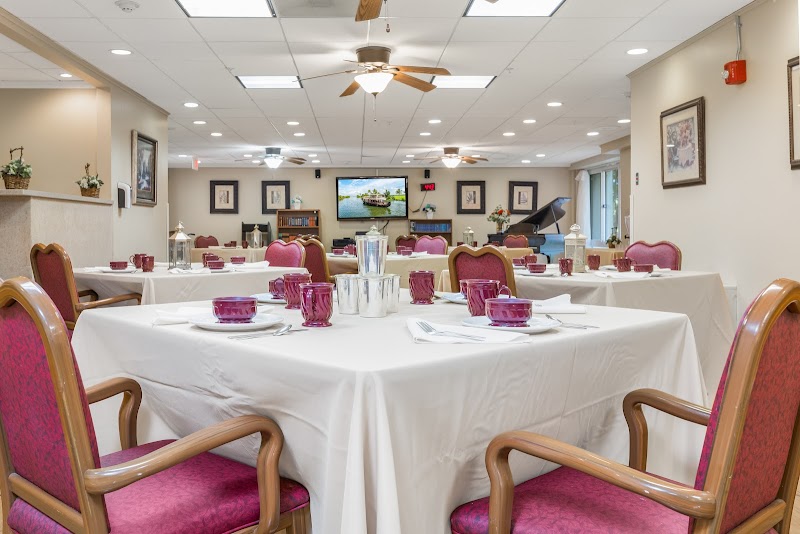
Who Owns and Operates Autumn Lake Healthcare At Arcola?

AUTUMN LAKE HEALTHCARE AT ARCOLA is owned by a for-profit company. For-profit facilities operate as businesses with obligations to shareholders or private owners. The facility is operated by AUTUMN LAKE HEALTHCARE, a chain that manages multiple nursing homes. With 151 certified beds and approximately 140 residents (about 93% occupancy), it is a mid-sized facility located in SILVER SPRING, Maryland.
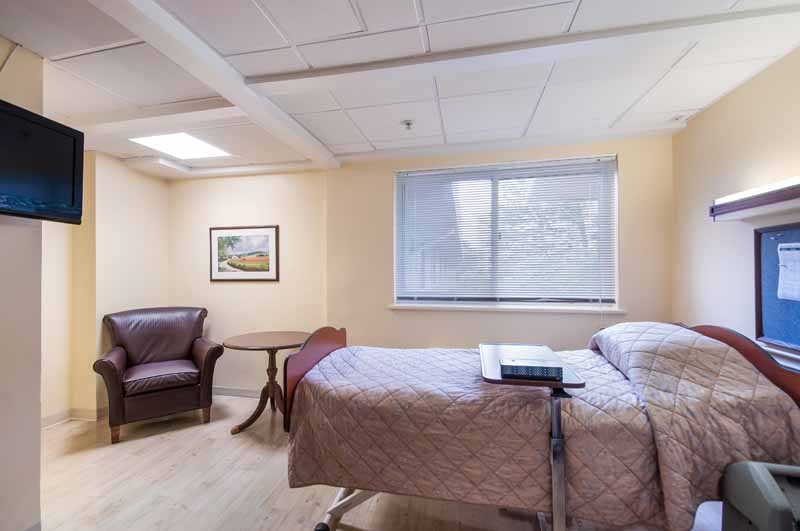
How Does Autumn Lake Healthcare At Arcola Compare to Other Maryland Nursing Homes?

Compared to the 100 nursing homes in Maryland, AUTUMN LAKE HEALTHCARE AT ARCOLA's overall rating (2 stars) is below the state average of 3.0, staff turnover (31%) is significantly lower than the state average of 46%, and health inspection rating (2 stars) is below the national benchmark.

What Should Families Ask When Visiting Autumn Lake Healthcare At Arcola?

Based on this facility's data, families visiting should ask: "What changes have been made since the serious inspection findings, and how are you preventing similar issues?" "Can I visit during a mealtime to observe dining assistance and food quality?" "How do you handle medical emergencies, and what is your hospital transfer rate?" "Can I speak with family members of current residents about their experience?" These questions are particularly relevant given the facility's Immediate Jeopardy citations.

Is Autumn Lake Healthcare At Arcola Safe?

Based on CMS inspection data, AUTUMN LAKE HEALTHCARE AT ARCOLA has documented safety concerns. Inspectors have issued 3 Immediate Jeopardy citations (the most serious violation level indicating risk of serious injury or death). The facility has a 2-star overall rating and ranks #100 of 100 nursing homes in Maryland. Families considering this facility should ask detailed questions about what corrective actions have been taken since these incidents.

Do Nurses at Autumn Lake Healthcare At Arcola Stick Around?

AUTUMN LAKE HEALTHCARE AT ARCOLA has a staff turnover rate of 31%, which is about average for Maryland nursing homes (state average: 46%). Moderate turnover is common in nursing homes, but families should still ask about staff tenure and how the facility maintains care continuity when employees leave.

Was Autumn Lake Healthcare At Arcola Ever Fined?

AUTUMN LAKE HEALTHCARE AT ARCOLA has no federal fines on record. CMS issues fines when nursing homes fail to meet care standards or don't correct problems found during inspections. The absence of fines suggests the facility has either maintained compliance or corrected any issues before penalties were assessed. This is a positive indicator, though families should still review recent inspection reports for the full picture.

Is Autumn Lake Healthcare At Arcola on Any Federal Watch List?

AUTUMN LAKE HEALTHCARE AT ARCOLA is not on any federal watch list. The most significant is the Special Focus Facility (SFF) program, which identifies the bottom 1% of nursing homes nationally based on persistent, serious quality problems. Not being on this list means the facility has avoided the pattern of deficiencies that triggers enhanced federal oversight. This is a positive indicator, though families should still review the facility's inspection history directly.