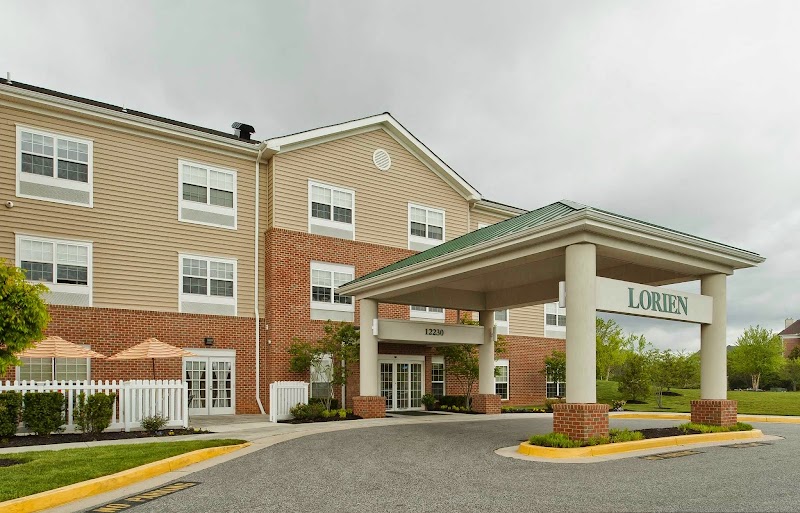
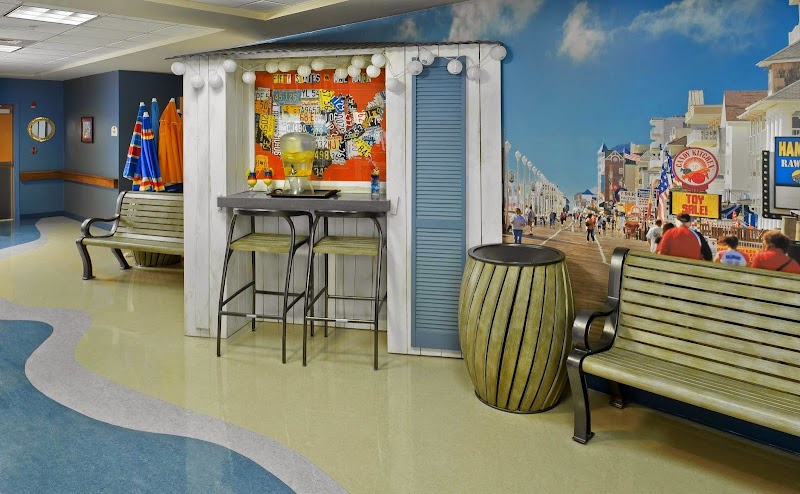
LORIEN MAYS CHAPEL

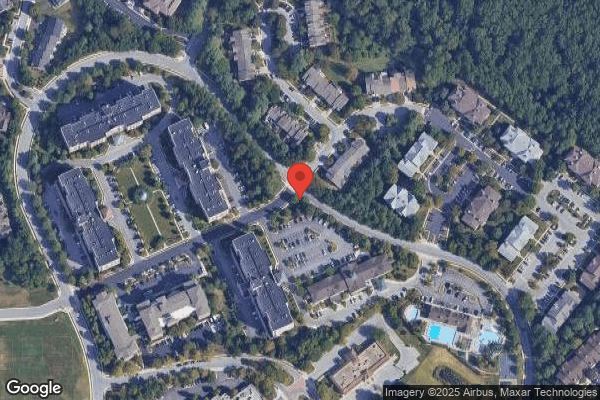
12230 ROUND WOOD ROAD, TIMONIUM, MD 21093 (410) 252-0880
For profit - Corporation 93 Beds LORIEN HEALTH SERVICES Data: November 2025
Trust Grade
60/100
#113 of 219 in MD
Last Inspection: January 2025

Within standard 12-15 month inspection cycle. Federal law requires annual inspections.

Overview

Lorien Mays Chapel has a Trust Grade of C+, which means it is considered decent and slightly above average. Ranking #113 out of 219 nursing homes in Maryland places it in the bottom half, while it is #20 out of 43 in Baltimore County, indicating that there are better local options available. The facility's trend is improving, as issues have decreased from 22 in 2020 to 19 in 2025. Staffing is a concern with a turnover rate of 54%, which is higher than the state average of 40%, and there is less RN coverage than 96% of Maryland facilities, which could impact care quality. The facility has had no fines, which is a positive sign, but there are notable incidents such as residents' medical records being left unsecured in a hallway, failure to properly label and date food items in the kitchen, and inaccuracies in the abuse reporting policy, highlighting areas needing attention.

Trust Score
C+
60/100
In Maryland
#113/219
Bottom 49%
Safety Record
Low Risk
No red flags
Inspections
Getting Better
22 → 19 violations
Staff Stability
⚠ Watch
54% turnover. Above average. Higher turnover means staff may not know residents' routines.
Penalties
✓ Good
No fines on record. Clean compliance history, better than most Maryland facilities.
Skilled Nurses
⚠ Watch
Each resident gets only 28 minutes of Registered Nurse (RN) attention daily — below average for Maryland. Fewer RN minutes means fewer trained eyes watching for problems.
Violations
⚠ Watch
51 deficiencies on record. Higher than average. Multiple issues found across inspections.
★★★☆☆
3.0
Overall Rating
★★★☆☆
3.0
Staff Levels
★★★★☆
4.0
Care Quality
★★★☆☆
3.0
Inspection Score
Stable
2020: 22 issues
2025: 19 issues

The Good

  • 4-Star Quality Measures · Strong clinical quality outcomes
  • Full Sprinkler Coverage · Fire safety systems throughout facility
  • No fines on record

Facility shows strength in quality measures, fire safety.

The Bad

3-Star Overall Rating

Near Maryland average (3.0)

Meets federal standards, typical of most facilities

Staff Turnover: 54%

Near Maryland avg (46%)

Higher turnover may affect care consistency

Chain: LORIEN HEALTH SERVICES

Part of a multi-facility chain

Ask about local staffing decisions and management

The Ugly 51 deficiencies on record

Jan 2025 19 deficiencies
CONCERN (D) 📢 Someone Reported This

A family member, employee, or ombudsman was alarmed enough to file a formal complaint

Potential for Harm - no one hurt, but risky conditions existed

Free from Abuse/Neglect (Tag F0600)

Could have caused harm · This affected 1 resident

Based on a facility reported incident MD00204294, observation, record review, and staff interviews, it was determined that the facility failed to protect a resident's right to be free from any type of...

Read full inspector narrative →
Based on a facility reported incident MD00204294, observation, record review, and staff interviews, it was determined that the facility failed to protect a resident's right to be free from any type of abuse. This was evident for 1(#28) of 15 residents reviewed for abuse during the facility's recertification/complaint survey. The findings include: On 1/8/25 at 10:26 AM during the initial pool selection, Resident #28 was observed in room sitting in a wheelchair watching TV. Resident #28 is a Korean speaking resident but able to understand and respond with limited English. When asked if everything was ok and if he/she has any concerns, he/she said OK and no problem. On 1/13/25 at 8:09 AM, review of the facilities investigative report MD00204294 had that on 4/2/24 a nurse aide, Geriatric Nursing Assistant (GNA) #23, was screaming and calling Resident #28 stupid and was pushing the resident back into the wheelchair. A review of the video footage confirmed this allegation. The nurse aide, GNA#23, was initially suspended pending investigation, he was later terminated and reported to the board of nursing. The Director of Nursing (DON) in an interview on 1/13/25 at 8:16 AM was asked the expectations for following up on allegations of abuse. She stated that when a resident makes an allegation, if it is an employee, the expectation is for them to go directly to a supervisor to report it or to the DON or Nursing Home Administrator (NHA) so an investigation can be started. She explained further that investigations are conducted following the facility's investigative policy and procedures. On 1/14/25 at 12:40 PM In another interview with the NHA, he stated that a thorough investigation for an allegation of this abuse was done. The investigation included talking to staff that were present including the alleged perpetrator, the resident, possibly anyone else that could be affected and anyone who would have some type of data on the alleged abuse. Camera footage review and key witness statements confirmed this allegation of abuse.
CONCERN (D) 📢 Someone Reported This

A family member, employee, or ombudsman was alarmed enough to file a formal complaint

Potential for Harm - no one hurt, but risky conditions existed

Employment Screening (Tag F0606)

Could have caused harm · This affected 1 resident

Based on interview and record review it was determined the facility failed to ensure a thorough review of background check results during the hiring process for a geriatric nursing assistant who had b...

Read full inspector narrative →
Based on interview and record review it was determined the facility failed to ensure a thorough review of background check results during the hiring process for a geriatric nursing assistant who had been employed with the facility for approximately one year. This was evident for 1 (GNA #16) out of 1 previously employed geriatric nursing assistant which was reviewed during investigation of an allegation of abuse for facility reported incident #MD00206160 during the facility's recertification/complaint survey. The findings include: On 1/10/25 at approximately 10:29AM the surveyor conducted a review of the employment file of Geriatric Nursing Assistant (GNA) #16 which revealed there was no background check present within the file, at which time the surveyor requested from the facility Administrator that a copy be provided. On 1/10/25 at approximately 12:00PM the surveyor reviewed the results of the background check documented as completed on 12/11/23 for GNA #16 which revealed the following documented information: second degree assault offense, guilty disposition, and sentencing details. On 1/15/25 at approximately 1:00PM the surveyor conducted an interview with the facility Administrator who reported GNA #16 was hired as a nurse aide in training by the facility and then during their employment with the facility, acquired their GNA certification through an approved program. When the surveyor inquired to the facility Administrator as to further details about the hiring of GNA #16 who had a resulted background check, they reported they did not have further information at this time and would need to get back to the surveyor. At this time, the surveyor offered opportunity for the Administrator to provide any and all supporting documentation as to the continued hiring of GNA #16 and the human resources recruiter contact information. On 1/21/25 at 11:50AM the surveyor conducted an interview with the facility Administrator who reported they were not made aware of the background check results regarding GNA #16 who was no longer employed with the facility. When the surveyor inquired as to the facility's process for screening for employment to the Administrator, they reported that when a background check results in a finding, they were expected to be notified and a discussion surrounding eligibility would take place prior to the applicant moving forward through the employment process. At this time the surveyor requested an interview with Human Resources department staff. At this time, the surveyor shared their concern with the facility Administrator who acknowledged and confirmed understanding of the concern. On 1/21/25 at 11:52AM the surveyor conducted an interview with Human Resources Director #18 who confirmed they were not made aware of the result of GNA #16's background check by Human Resources Recruiter #19 who is no longer in the recruiter role. After surveyor intervention, Human Resources Director #18 reported to the surveyor that since the situation had been brought to their attention, they were performing an audit to ensure no other employees background checks had a similar issue. At this time, the surveyor shared their concern with Human Resources Director #18 who acknowledged understanding of the concern. On 1/21/25 at 2:45PM the surveyor reviewed the concern during the exit conference with the facility's Administrator and Director of Nursing.
CONCERN (D) 📢 Someone Reported This

A family member, employee, or ombudsman was alarmed enough to file a formal complaint

Potential for Harm - no one hurt, but risky conditions existed

Report Alleged Abuse (Tag F0609)

Could have caused harm · This affected 1 resident

**NOTE- TERMS IN BRACKETS HAVE BEEN EDITED TO PROTECT CONFIDENTIALITY** Based on interview and record review it was determined the facility failed to ensure: 1) timely reporting of a serious injury of...

Read full inspector narrative →
**NOTE- TERMS IN BRACKETS HAVE BEEN EDITED TO PROTECT CONFIDENTIALITY** Based on interview and record review it was determined the facility failed to ensure: 1) timely reporting of a serious injury of unknown source (Residents #9, #82, #6 ), and 2) timely reporting of an allegation of abuse (Resident #81). This was evident for 4 (MD#00194057, MD#002044306, MD#00212835, #MD00181864) of 20 facility reported incidents reviewed during the facility's recertification/complaint survey. Findings Include: Situation, Background, Assessment, and Recommendation (SBAR) is a communication tool that helps healthcare professionals to share information about a patient's condition in a concise manner. 1) On 01/09/25 at 03:23 PM, a review of complaints MD#00193619 and #MD#00193826 submitted to the Office of Health Care Quality (OHCQ) alleged that on 5/31/23 Resident #9 was hit by a male aide, and the resident suffered blunt force head trauma to the entire left side of the forehead. A facility reported incident MD#00194057 alleged that the Resident #9 sustained an injury of unknown origin on 5/31/23. On 1/13/25 at 1:00 PM, a review of the facility's investigation file revealed that Resident #9 sustained an injury to the left side of the forehead/face on 5/31/23 at 8:00 PM; however, the facility reported the incident to OHCQ on 7/5/23 at 2:11 PM. On 1/13/25 at 1:52 PM, in an interview with Staff #27, the surveyor asked about the event of 5/31/23 and after reviewing the documents, she stated that they determined that Resident #9's injury was from the bedrail. On 1/14/25 at 12:50 PM, in an interview with the Nursing Home Administrator (NHA), he was asked about the delay in the reporting time for injury of unknown origin related to Resident #9 for the date of 05/31/23. The NHA stated that the patient representative expressed their concerns to the police and the ombudsman suggested that a facility self-report should be submitted to the OHCQ. He stated that the facility determined that the injury was from the bedrails as stated on the SBAR. The surveyor asked if there was a witness to Resident #9's injury, after further review of the documentation provided to the surveyor, he acknowledged that the injury was unwitnessed. He stated that they were interpreting the SBAR as a known origin injury from the bedrails and therefore they did not report the incident as required. 2) On 01/10/25 at 09:32 AM, a review of the facility reported incident form related to MD#002044306 revealed that on 4/2/24 a GNA noted a bruise on the Resident #82's arm; however, the GNA later stated that she thought it was an old bruise; therefore, the GNA failed to report the findings at that time. The facility's investigation report stated that on 4/3/24 near 09:00 AM, a second GNA notified the nurse about Resident #82's left arm bruise. On 4/3/24 near 09:45 AM the administrator was notified; however, OHCQ was notified 4/3/24 at 11:46 AM. On 01/10/25 at 11:25 AM, a review of Staff #28 (LPN) progress notes on 4/3/24 at 09:00 AM revealed that Staff#28 observed that Resident #82 had a mixture of black/Red/Brown discoloration to the left lateral forearm extended to the right mid arm(back). Staff #28 documented that she was unsure of the cause of injury. On 1/10/25 at 12:00 PM, in an interview with Staff #28, she was asked about the facility's process to report injuries of unknown origin, and she stated nurses are to report any issues to the administrator immediately, complete a skin assessment, review meds, complete the SBAR, and notify the supervisor, doctor and the resident's representatives. The surveyor asked her about the specific incident, and she stated that she does not remember the incident related to Resident #82. On 1/16/25 at approximately 2:53 PM, the NHA was notified that the facility failed to report the above-mentioned incident in a timely manner. 3) On 1/17/25 at 2:39PM the surveyor conducted a review of the facility's complete investigation file for facility reported incident MD#00212835. Review of the initial report made by the facility documented the report was made for an injury of unknown source for Resident #6. Surveyor review of the final radiology results report for Resident #6 revealed their x-ray results detailing serious injury was reported to the facility on [DATE] at 11:15AM. Review by the surveyor on 1/21/25 at 8:28AM revealed the facility's initial self report for serious injury was documented as having been made on 12/16/24 at 11:00AM to the Office of Health Care Quality, however, review of MD#00212835 indicated the report was made to the Office of Health Care Quality on 12/18/24. On 1/21/25 at 8:56AM the surveyor conducted an interview with the facility's Administrator and inquired as to why the serious injury of unknown source was not reported timely, to which they replied they would have to review the file and get back to the surveyor. On 1/21/25 at 9:04AM the surveyor conducted an interview with the facility Administrator who confirmed with the surveyor that the report was made late. Review by the surveyor on 1/21/25 at 9:07AM of email documentation provided by the Administrator confirmed the initial report was submitted to the Office of Health Care Quality on 12/18/24 at 2:23PM, approximately more than 51 hours after the facility received notification of the x-ray result for Resident #6. At this time, the surveyor shared their concern with the Administrator who acknowledged and confirmed understanding of the concern. On 1/21/25 at 2:45PM the surveyor reviewed the concern during the facility's exit conference with the Administrator and Director of Nursing. 4) On 1/14/25 at 12:38PM the surveyor conducted a review of the facility's complete investigation file for facility reported incident #MD00181864 in which a report was made by the facility to the Office of Health Care Quality for an allegation of abuse for Resident #81. Review of the initial self report form contained within the file revealed documentation that an allegation of abuse was made to the facility's social worker by Resident #81 on 8/8/22 at 2:15PM. Continued review of the contents of the facility's complete investigation file revealed a resident complaint form completed by Licensed Practical Nurse #21 on 8/7/22 which documented the allegation of abuse made to them by Resident #81 and their subsequent action taken to notify the facility's Director of Nursing. On 1/14/25 at 2:32PM the surveyor reviewed the email confirmation documentation provided by the facility Administrator which indicated the initial self report was not sent to the Office of Health Care Quality until 8/8/22 at 6:32PM. On 1/14/25 at 2:32PM the surveyor conducted an interview with the facility Administrator who acknowledged understanding of the concern, and no further documentation was provided prior to surveyor exit from the facility. On 1/21/25 at 2:45PM the surveyor again reviewed the concern during the facility's exit conference with the Administrator and Director of Nursing.
CONCERN (D) 📢 Someone Reported This

A family member, employee, or ombudsman was alarmed enough to file a formal complaint

Potential for Harm - no one hurt, but risky conditions existed

Investigate Abuse (Tag F0610)

Could have caused harm · This affected 1 resident

Deficiency Text Not Available

Read full inspector narrative →
Deficiency Text Not Available
CONCERN (D)

Potential for Harm - no one hurt, but risky conditions existed

Transfer Notice (Tag F0623)

Could have caused harm · This affected 1 resident

Based on record review and staff interviews, it was determined that the facility failed to notify the resident and the resident's representative(s) of the transfer or discharge and the reasons for the...

Read full inspector narrative →
Based on record review and staff interviews, it was determined that the facility failed to notify the resident and the resident's representative(s) of the transfer or discharge and the reasons for the move in writing. This was evident for 1 (#55) of 2 residents reviewed for hospitalization during the recertification/complaint survey. Findings Include: On 1/21/25 at 8:41AM review of Resident #55's medical records revealed that s/he was hospitalization on 3 different dates in 2024 which were 1/16/24, 8/25/24 and 10/12/24. Further review did not show that the resident or their representatives were given a written notification of the transfer. In an interview with the Director of Nursing on 1/21/25 at 11:47 AM, she was asked about the notification process. She explained that the families are notified by phone calls or verbally to let them know that their loved ones are being sent out and that facility staff are required to document who they notified. When asked about sending written notifications, she indicated that there was no written notification and that the facility does not send written notifications. She was made aware that this was a concern.
CONCERN (D)

Potential for Harm - no one hurt, but risky conditions existed

Deficiency F0655 (Tag F0655)

Could have caused harm · This affected 1 resident

Based on review of medical records and interview with facility staff, it was determined that the facility failed to provide a baseline care plan summary to residents. This was evident for 1 (#79) of 7...

Read full inspector narrative →
Based on review of medical records and interview with facility staff, it was determined that the facility failed to provide a baseline care plan summary to residents. This was evident for 1 (#79) of 7 residents reviewed for baseline care plans during the recertification/complaint survey. The findings include: On 1/13/25 at 1:58 PM review of Resident #79 's progress notes did not reveal any notes referring to the resident's Baseline Care Plan (BLCP). On 1/13/25 at 2:19 PM review of the medical record revealed Baseline Care Plan v1.1 - V 1: 78 days overdue - 10/27/2024 documented in red letters. On 1/13/25 at 3:03 PM in an interview with the Director of Nursing (DON), she stated there was not a BLCP for Resident #79. During the interview, she stated she was not sure why it was missed. The resident did come on a Friday after we left for the day, but she stated she was not sure why it was not caught on Monday.
CONCERN (D) 📢 Someone Reported This

A family member, employee, or ombudsman was alarmed enough to file a formal complaint

Potential for Harm - no one hurt, but risky conditions existed

Deficiency F0657 (Tag F0657)

Could have caused harm · This affected 1 resident

Based on record review and staff interview, it was determined that the facility failed to ensure the care plan was reviewed and updated by the interdisciplinary team after the care plan meeting. This ...

Read full inspector narrative →
Based on record review and staff interview, it was determined that the facility failed to ensure the care plan was reviewed and updated by the interdisciplinary team after the care plan meeting. This was evident for 1 (Resident #7) of 2 residents reviewed for the use of a feeding tube during the recertification/complaint survey. Findings Include: A gastrostomy tube (G-tube) is a tube that is surgically inserted through the abdomen and brings nutrition directly to the stomach. The Minimum Data Set (MDS) is a standardized comprehensive assessment tool that measures health status in nursing home residents. On 01/09/25 09:20 AM, record review revealed that Resident #7 had 4 separate incidents of G-tube dislodgement between the months of July 2024 and October 2024. On 2 of 4 G-tube dislodgment, the resident was transferred to the emergency room for further evaluation. On 1/15/25 at 11:45 AM Interview with Staff #6, he stated that the unit manager is responsible for updating the care plan. He also stated that care plan updates are usually done quarterly with MDS assessment or as needed. On 01/21/25 09:40 AM, a review of the care plan meeting notes in July 2024 revealed that the G-tube dislodgment was discussed; however, the facility failed to update Resident #7's care plan to reflect how the facility planned to care for the resident and prevent future dislodgement of the G-tube. On 01/21/25 at 10:07 AM, in an interview with Staff #1, she stated that the Unit Managers or Director of Nursing usually updates the care plan. The surveyor asked Staff #1 for an explanation on why the G-tube dislodgement was not found on the care plan until 10/2/24 and she stated that she updated the resident's care plan when she realized that the G-tube dislodgement was not addressed on the care plan as required.
CONCERN (D)

Potential for Harm - no one hurt, but risky conditions existed

Accident Prevention (Tag F0689)

Could have caused harm · This affected 1 resident

Based on a facility report MD00205422, record review, and staff interviews, it was determined that the facility failed to provide and utilize an assistive device to transfer a resident as ordered. Thi...

Read full inspector narrative →
Based on a facility report MD00205422, record review, and staff interviews, it was determined that the facility failed to provide and utilize an assistive device to transfer a resident as ordered. This was evident for 1(Resident #281) of 20 facility reported incidents reviewed during the recertification/complaint survey. The findings include: On 1/16/25 at 4:00PM review of MD00205422 had that on the night of 5/6/24, Resident #281 needed their air mattress installed. The aide was going to transfer resident from bed to wheelchair so that a new mattress could be placed. Resident stated that s/he was supposed to be transferred via Hoyer due to surgery but was not. Resident stated that the transfer was painful, their left leg jammed into the bed and their heel hit the floor hard. Resident stated they were having pain in their body during repositioning. Review of the resident's care plan on 1/17/25 at 10:50AM with initiation date of 5/6/24 documented that resident had a left leg fracture related to fall with interventions to follow orders for non-weight bearing to the affected leg. Further review of the Physical Therapist evaluation dated 5/5/24 on 1/17/25 at 1:55 PM coded Resident #281 as a total assist requiring substantial/maximal assist (with 2 people) with Chair/bed -to-chair transfer. In an Interview with staff #14, the rehab director on 1/17/25 at 12:34 PM, she explained that a total assist meant the resident required a Hoyer lift (transferring device) to transfer. On 1/17/25 at 1:55 PM: the Director of Nursing (DON) confirmed that resident was a total assist and should not have been transferred without the Hoyer lift. She was made aware that this was a concern
CONCERN (D)

Potential for Harm - no one hurt, but risky conditions existed

Deficiency F0757 (Tag F0757)

Could have caused harm · This affected 1 resident

Based on record review and interview it was determined the facility failed to ensure the monitoring of a medication for a resident. This was evident for 1 (Resident #4) out of 5 residents reviewed for...

Read full inspector narrative →
Based on record review and interview it was determined the facility failed to ensure the monitoring of a medication for a resident. This was evident for 1 (Resident #4) out of 5 residents reviewed for unnecessary medications during the recertification/complaint survey. The findings include: On 1/16/25 at 12:12PM the surveyor reviewed the medical record for Resident #4 which revealed the January 2025 medication administration record (MAR) documented the following order dated as beginning on 7/27/24 was present: Metoprolol Succinate ER Tablet 25mg, give 1 tablet by mouth in the morning for HTN (Hypertension) hold medication if pulse <60 and/or systolic blood pressure <100mmhg. Further review of the documentation revealed various staff had signed off on daily administration of the medication from 1/1-1/16/25, however, the fields for blood pressure and pulse to be recorded and input were observed to not be completed. On 1/16/25 at 12:44PM the surveyor conducted an interview with Licensed Practical Nurse (LPN) #20 who was assigned to the care of Resident #4. When the surveyor inquired as to where the values were input for monitoring of blood pressure and pulse when a resident has a medication ordered with parameters, they reported to the surveyor that usually they have access to an automated link to put the values in, but in this case, that link was not present. On 1/16/25 at 12:51PM the surveyor conducted an interview with Registered Nurse (RN) #17 who reported to the surveyor that if a medication has parameters ordered, it always has a box to input vital signs whether the medication is being held or not. On 1/16/25 at 12:54PM the surveyor conducted an interview with the Director of Nursing (DON) who reported to the surveyor that their expectation was for staff to document the vital signs for a medication with parameters in the medical record even if the medication is not being held. At this time, the concern was shared with the DON and Unit Manager #6, who both acknowledged and confirmed understanding of the concern.
CONCERN (D)

Potential for Harm - no one hurt, but risky conditions existed

Medication Errors (Tag F0758)

Could have caused harm · This affected 1 resident

Based on record review and interview it was determined the facility failed to ensure the monitoring of a psychotropic medication. This was evident for 1 (Resident #4) out of 5 residents reviewed for u...

Read full inspector narrative →
Based on record review and interview it was determined the facility failed to ensure the monitoring of a psychotropic medication. This was evident for 1 (Resident #4) out of 5 residents reviewed for unnecessary medications during the facility's recertification/complaint survey. The findings include: On 1/16/25 at 9:16AM the surveyor reviewed the medical record for Resident #4 which revealed a recommendation was made upon completion of the resident's medication regimen review by pharmacy for the month of November, 2024, however, there was no documentation of what that recommendation was. At this time, the surveyor notified the facility's Director of Nursing (DON) that the recommendation was not located within the resident's medical record, and requested a copy of the recommendation. On 1/16/25 at 9:30AM the surveyor conducted an interview with the DON who confirmed with the surveyor that Resident #4 was not on the no recommendations made list for November 2024 and they were unable to locate what recommendation was made. The DON stated to the surveyor: I'll check with the pharmacy and then provide further information to you. On 1/16/25 at 9:52AM the DON provided the medication regimen review recommendation for Resident #4 which revealed a nursing recommendation was made by pharmacy dated 11/2/24 for the institution of side effect monitoring on the medication administration record (MAR) for Seroquel, an antipsychotic medication. At this time, the surveyor conducted an interview with the DON who confirmed that the recommendation was missed, they are putting it in now. The DON further reported to the surveyor that behavior monitoring was being performed by Geriatric Nursing Assistants (GNA's), so behaviors are being monitored. At this time the surveyor shared their concern with the DON who acknowledged and confirmed understanding of the concern. On 1/16/25 at 12:12PM the surveyor reviewed the medical record of Resident #4 which revealed there was no side effect or behavior monitoring present on the January 2025 MAR until it was instituted beginning 1/16/25. On 1/16/25 at 12:54PM the surveyor shared the concern with Unit Manager #6 and the DON, who both acknowledged and confirmed understanding of the concern. On 1/21/25 at 2:45PM the surveyor again shared the concern during the facility's exit conference with the facility Administrator and Director of Nursing.
CONCERN (D)

Potential for Harm - no one hurt, but risky conditions existed

Deficiency F0760 (Tag F0760)

Could have caused harm · This affected 1 resident

Based on a complaint incident #MD00191927, record review and interviews, it was determined that the facility failed to ensure that a resident was free from significant medication errors. This was evid...

Read full inspector narrative →
Based on a complaint incident #MD00191927, record review and interviews, it was determined that the facility failed to ensure that a resident was free from significant medication errors. This was evident for 1 (Resident #86) of 10 complaints reviewed during the facility's recertification/complaint survey. The findings include: On 1/17/25 at 8:43AM review of a complaint incident MD00191927 had that a resident's family member found a pill that did not belong to the resident on their bed when the resident got up to go to the bathroom. The resident also stated to the family member that he was given 14 pills the evening of 4/15/2023 and felt weak with numerous body aches. The family member took a picture of the pill, turned it in and reported to Staff #15, the evening shift supervisor. Further investigation revealed that the medication was one of the pills taken by the resident's roommate who was on multiple pills. Review of the resident medication for the month of April 2023 on 1/17/25 at 8:46 AM revealed that Resident #86 only takes 3 pills in the morning and 1 at night. The pill found on the resident's bed on identification was not one of his prescribed medications. The pill was one of many prescribed for his roommate who was on 10 pills in the morning and 10 at night. On 1/17/25 at 9:05AM in a phone interview with Nursing Supervisor #14, she stated that Resident #86's family member brought the pill to her and said they found it on the resident's bed. That the said medication did not belong to the resident. Staff #14 said she took the pill, checked it out and it matched one of the pills that the roommate was on. She then reported the incident to the Director of Nursing (DON) and the Nursing Home administrator (NHA) for further investigation. She indicated that she believed Resident #86 got medications meant for their roommate. She was made aware that this was a concern.
CONCERN (D)

Potential for Harm - no one hurt, but risky conditions existed

Deficiency F0761 (Tag F0761)

Could have caused harm · This affected 1 resident

Based on a facility reported incident, complaint, observation, record review and interview it was determined the facility failed to: 1) secure residents medication properly, evidenced by leaving medic...

Read full inspector narrative →
Based on a facility reported incident, complaint, observation, record review and interview it was determined the facility failed to: 1) secure residents medication properly, evidenced by leaving medications unsupervised at the bedside, resulting in a foreign object accidental ingestion. 2) ensure a medication cart was locked while unattended. This was evident for: 1) 1 (Resident #282) of 30 intakes reviewed, and 2) 1 out of 4 medication carts located on the second floor of the facility, during the facility's recertification/complaint survey. The findings include: 1.) Gastro- Intestinal (GI) tract is the organ that food and liquids travel through when they are swallowed, digested, absorbed, and leave the body as feces. On 1/14/24 at 9:26 AM review of a facility reported incident MD00208443 and a complaint MD00208850 had that Resident #282 reported swallowing what looked like a horse-pill in his medicine cup. The nurse on duty verified she had left a lancet, a device used to obtain blood for testing blood sugar in the resident's medicine cup. The nurse turned around to get some water, when resident swallowed it with the pills before she could stop them. Provider was immediately notified, and resident was sent out to the emergency room for further evaluation following ingestion of foreign object. The allegation was verified as there was visualization of small linear foreign body in resident's gastro-Intestinal (GI) tract from hospital x-ray report. Resident #282 was discharged from the hospital with the recommendation to report and monitor for complaints of abdominal pain, nausea or vomiting. Resident #282 did not suffer any adverse effects from the incident, and did not voice any complaints after the incident on subsequent days. In an interview with Licensed Practical Nurse #13, the alleged perpetrator, on 1/15/25 at 7:29AM she recounts that she had Resident #282's medications prepared to take in the room. She had the pills in a medicine cup and placed the lancet to check residents blood Sugar in the same cup. She then placed the medicines at the resident's bedside, noticed that there was not enough water for the resident to take his pills. She went to get the water, leaving the pills at the resident's bedside. When she got back, the resident said or asked, what is this horse pill that I swallowed, that was when she realized that the resident had swallowed the lancet with the pills. She notified the providers and got orders to send resident out to the hospital for evaluation. On 1/14/25 at 9:31AM the Director of Nursing agreed that the staff should not have left the medication unsupervised at the resident's bedside. She was made aware that this was a concern. 2.) During the surveyor's initial tour on 1/8/25 at 8:34AM a medication cart was observed to be unlocked and unattended with the lock mechanism protruding outward. On 1/8/25 at approximately 8:56AM, upon continued further observation of the cart, the surveyor was able to openly access the medication cart drawers containing various supply of resident medications. On 1/8/25 at approximately 8:56AM the surveyor conducted an interview with Licensed Practical Nurse (LPN) #20 who confirmed with the surveyor that the facility's expectation was for medication carts to be closed and locked. At this time LPN #20 proceeded to show the surveyor how they are expected to lock the medication cart. The surveyor observed LPN #20 depress the locking mechanism on the cart. The surveyor shared their concern with LPN #20 who confirmed and acknowledged understanding of the concern. On 1/8/25 at 9:08AM the surveyor shared the concern with the facility Administrator and the Director of Nursing, who both confirmed understanding of the concern. On 1/21/25 at 2:45PM the surveyor reviewed the concern during the facility's exit conference.
CONCERN (D)

Potential for Harm - no one hurt, but risky conditions existed

Medical Records (Tag F0842)

Could have caused harm · This affected 1 resident

Based on record review and interview, it was determined that the facility failed to ensure that the resident medical records provided during the survey process contained sufficient information to iden...

Read full inspector narrative →
Based on record review and interview, it was determined that the facility failed to ensure that the resident medical records provided during the survey process contained sufficient information to identify the care provided to each resident. This was true for 2 (Resident #7 and Resident #82) of 18 resident medical records reviewed in the survey sample during the recertification/complaint survey. Findings Include: A gastrostomy tube (G-tube) is a tube that is surgically inserted through the abdomen and brings nutrition directly to the stomach. Situation, Background, Assessment, and Recommendation (SBAR) is a communication tool that helps healthcare professionals to share information about a patient's condition in a concise manner. 1) On 01/09/25 at 09:20 AM, a review of Resident #7's progress notes written on 10/4/24 at 8:45 AM, stated that the resident's G-tube was dislodged, and the nurse received an order to transfer resident to the emergency room; however, there was no additional documentation to suggest that the nurse conducted a thorough assessment of the resident following the incident and there was also no documentation to suggest that the resident's representative was notified of the hospital transfer. On 01/21/25 at 10:27 AM, in an interview with the Director of Nursing (DON), the DON was asked about Resident #7's nursing assessment for the above mentioned incident, and she stated the SBAR was to be completed by the nurse; however, it was not done within the required timeframe and when we realized that the SBAR was missing, it was too late to enter a late entry assessment. 2) On 1/10/25 2:18 PM, a review of a complaint MD#00181494 alleged that on 7/28/22 the Resident #82 suffered an unwitnessed fall and was subsequently found to have multiple fractures. On 1/10/25 2:20 PM, a review of Resident #82's progress notes revealed that on 7/28/22 the resident was found sitting on the bathroom floor, no injury noted upon a physical nursing assessment; however, the resident complained of right leg pain, the resident was medicated with Tylenol and returned to bed. On 7/29/22 the medical records showed that the resident complained of leg pain and had limited range of motion and was medicated with Tylenol at 09:27 AM; however, there was no documentation in the medical record to show that the nurse conducted a post pain medication assessment before 1:47 PM on 7/29/22 and the post pain medication assessment was documented as ineffective. The next progress note in the resident's medical record was on 7/29/22 at 3:46 PM which stated that resident was transferred to the emergency room at 3:13 PM per order of facility medical director. X-ray confirmed fracture of the right femur. The resident medical record failed to have evidence that the resident was reassessed for pain after an hour of the Tylenol administration at 09:27 AM. On 01/17/25 08:25 AM, in an interview with Staff #20 (License Practical nurse), she was asked about the expected timeframe for the reassessment of a pain medication's effectiveness, and she stated that the medication should be reassessed an hour after administration. On 01/21/25 01:00 PM, in an interview with the Director of Nursing (DON), the DON was asked about the expectation for post pain medication administration reassessment, she stated that the reassessment is to be completed after an hour of administration. The DON was notified that the documentation showed that Resident #82's pain was not assessed within 1 hour of pain medication being administered on 7/29/22. She was asked by the surveyor to provide any additional documentation to support that the resident was reassessed after an hour. On 01/21/25 at 1:33 PM, the DON provided a print out of a correspondence from an electronic medical communication service/system between nurses and practitioners, which showed that the resident was reassessed by the nurse at 10:10 AM and additional orders were obtained from the physician; however, this information was not transferred to the resident's medical record to accurately reflect all the interventions provided during the care of this resident. On 01/21/25 at approximately 3:00 PM during the exit conference, the DON and the Nursing home administrator were made aware that Resident #82's medical records failed to include pertinent information related to the resident's overall care.
CONCERN (D)

Potential for Harm - no one hurt, but risky conditions existed

Infection Control (Tag F0880)

Could have caused harm · This affected 1 resident

Based on observation, interview and medical record review it was determined the facility failed to: 1) ensure the accuracy of infection control signage, and 2) ensure all employees' required immunizat...

Read full inspector narrative →
Based on observation, interview and medical record review it was determined the facility failed to: 1) ensure the accuracy of infection control signage, and 2) ensure all employees' required immunizations were up to date, as it relates to infection prevention and control. This was evident for: 1) 5 of 83 resident occupied rooms at the time of the surveyor's initial tour, and 2) 3 (GNA #22, GNA#23, GNA#24) of 5 employees reviewed, during the facility's recertification/complaint survey. The findings include: 1.) On 1/8/25 at approximately 7:30AM surveyors observed signage present at the front reception desk indicating the facility was currently in outbreak status. On 1/8/25 at 7:59AM the surveyor conducted an entrance conference with the facility Administrator, at which time they informed the surveyor of positive resident cases of Covid 19 infection within the building which included Residents #64, #41, #8, and #69. On 1/8/25 at 9:40AM the surveyor observed the following infection control precaution signage: Room of Residents #64 and #41: special droplet/contact precautions, Room of Residents #51 and 65: droplet precautions, Room of Residents #32 and #50: droplet precautions, Room of Residents #55 and #56 had a specialized personal protective equipment container with no signage present, and Room of Residents #69 and #8: droplet precautions. On 1/8/25 at approximately 9:40AM the surveyor conducted an interview with the facility Administrator who confirmed with the surveyor that the only two rooms with Covid 19 positive residents were the rooms of Residents #64, #41, #8, and #69. On 1/8/25 at 10:08AM the surveyor conducted an interview with the Director of Nursing (DON) who reported the following in response to the surveyor's inquiry regarding why the room of Resident #64 and #41 had special droplet/contact precaution signage vs. the room of Residents #8 and #69 which had only droplet precaution signage: Staff should be fully gowned and gloved, with an N-95 mask, and faceshield in the rooms (of Residents #64, #41, #8, and #69.) When the surveyor inquired to the DON as to the differences in precaution signage and what was their expectation of the signage to be used for Covid 19 positive residents they responded: No that is an old one, special contact precautions, I can go get it for you, it's neither of those, the first one should be more accurate, but we made them new and more explanative. At this time the surveyor requested for a dual observation with the facility DON and Administrator, as it remained unclear as to what infection control signage was expected to be utilized to prevent spread of infection. On 1/8/25 at 10:15AM the surveyor conducted a dual observation of the infection control precaution signage on the second floor nursing unit with the facility Administrator and DON. At this time, the observation was made that the room of Residents #8 and #69 had no signage on the door and a droplet precaution sign was laying on a bedside table within the hallway of the nursing unit with a face shield laying on top of it. On 1/8/25 at 10:18AM the surveyor conducted an interview with the DON who reported to the surveyor that they would fix the signage and would be removing the droplet precaution signage from several room doors. On 1/8/25 at approximately 10:21AM the surveyor observed the DON removing the droplet precaution signage that was present on several room doors and they stated the following to the surveyor: I'm going to go get the Covid signs. Upon the DON's return with the signage they informed the surveyor that the special contact/droplet precautions signage was to be in place for Covid 19 positive residents. The DON further reported to the surveyor that the typical Infection Preventionist for the building was currently on leave. On 1/8/25 at 11:37AM the surveyor reviewed the resident matrix document completed and provided by the facility to the survey team in response to the 1/8/25 entrance conference documentation requests. Review of the resident matrix revealed all respiratory illnesses were not captured, and no transmission based precautions were identified as in place according to the document. Upon further surveyor request, the facility Administrator revised the resident matrix and provided the surveyor with a copy which captured that transmission based precautions were to be in place for Residents #64, #41, #8, and #69, however, not for Residents #51, #65, #32 and #50. On 1/16/25 at 2:53PM the surveyor reviewed the concern with the facility Administrator who acknowledged and confirmed understanding of the concern. On 1/21/25 at 2:45PM the surveyor again shared the concern during the facility's exit conference with the Administrator and DON. 2.) On 1/16/2025 at 8:28 AM, 5 employees' files were reviewed. The review included TB (tuberculosis) screenings and immunizations and revealed Geriatric Nursing Assistant (GNA #22) did not have a documented Tdap (tetanus, diphtheria, pertussis) on file, GNA #23 did not have a documented influenza or Tdap on file, and GNA #24 did not have a documented influenza, MMR (measles, mumps, rubella), or Tdap on file. On 1/17/25 at 9:06 AM the survey team requested evidence of the above mentioned immunizations, and all policies and procedures related to required employee immunizations. On 1/17/25 at 9:10 AM the Nursing Home Administrator (NHA) provided the 2 page policy, Employee Medical Records. Review of the document revealed: 1. The medical record will contain, as a minimum: d. Hepatitis B consent vaccination form; g. a copy of MMR and Varicella vaccination records; screening tool, PPD skin test results, or negative chest x-ray for Tuberculosis screening, i. a copy of current influenza and COVID vaccine data. The policy made no mention of the Tdap (Tetanus, Diphtheria, Pertussis) immunization. On 1/17/25 at 10:35 AM in an interview with the NHA he stated he did not have a Tdap for GNA #23. He provided the survey team with GNA#23 and GNA #24's influenza documentation. During the interview he stated he still had a call out to the Infection Preventionist for GNA #24's Tdap and MMR and was waiting to hear from the agency for GNA #22's Tdap. On 1/17/25 at 12:51 PM in an interview with the Director of Nursing (DON) when asked if TDap was a required immunization for employees she stated she would have to ask HR (Human Resources) and get back to the survey team. On 1/17/25 at 1:51 PM in a follow up interview with the DON when asked if Tdap is required for employees she stated it was a required immunization for employees. During the interview when asked why it is not in the facility's Employee Medical Records Policy, she stated she did not have an answer for that and could only revise the policy. On 1/21/25 at 9:18 AM the survey team made a 2nd request to the NHA for evidence of GNA#22's Tdap and GNA #24's Tdap and MMR. On 1/21/25 at 9:56 AM in an interview with the NHA he stated he did not have a Tdap for GNA #22 nor a Tdap or MMR for GNA#24.
CONCERN (D)

Potential for Harm - no one hurt, but risky conditions existed

Deficiency F0883 (Tag F0883)

Could have caused harm · This affected 1 resident

Based on review of resident records and facility policy and interview with facility staff, it was determined that the facility failed to ensure that each resident was offered a pneumococcal vaccine. T...

Read full inspector narrative →
Based on review of resident records and facility policy and interview with facility staff, it was determined that the facility failed to ensure that each resident was offered a pneumococcal vaccine. This was evident for 1 (Resident #19) of 5 residents sampled for review of influenza and pneumococcal vaccination. The findings include: On 1/15/25 at 11:48 AM 5 residents' (Residents #13, #43, #18, #19, #14) electronic medical records were reviewed for influenza and pneumococcal immunizations. There was no evidence that Resident #19 was offered, received, or refused the influenza and/or pneumococcal vaccine. On 1/17/25 at 9:06 AM the Director of Nursing (DON) was asked to provided evidence of Resident #19's being offered and/or receiving the influenza and/or pneumococcal vaccine. On 1/17/25 at 11:57 AM the DON provided documentation that Resident #19 had received an influenza vaccine on 9/19/24, however did not provide the survey team with any evidence of Resident #19's pneumococcal vaccine. During the interview the DON stated that any immunization documentation that was not provided, we do not have, and confirmed there was no documentation for Resident #19's pneumococcal vaccine. On 1/17/25 at 12:43 PM the surveyor reviewed the facility's policy, Immunization of Residents which revealed, Policy: Long Term Care residents have much higher risk for complications with pneumonia, COVID 19, and flu illness, so vaccination provides a measure to help achieve the highest level of functioning. On 1/17/25 at 2:20 PM In an interview with the DON she stated that Resident #19 was not offered the pneumococcal vaccine.
CONCERN (D)

Potential for Harm - no one hurt, but risky conditions existed

Deficiency F0887 (Tag F0887)

Could have caused harm · This affected 1 resident

Based on record review, staff interview, and policy review, it was determined that the facility failed to provide education to residents regarding the benefits and risks and potential side effects ass...

Read full inspector narrative →
Based on record review, staff interview, and policy review, it was determined that the facility failed to provide education to residents regarding the benefits and risks and potential side effects associated with the COVID-19 vaccine and the opportunity to accept or refuse a COVID-19 vaccine. This was evident for 1 (Resident #13) of 5 residents sampled for review of COVID-19 immunizations during the recertification/complaint. The findings include: On 1/15/25 at 11:48 AM 5 residents' (Residents #13, #43, #18, #19, #14) electronic medical records were reviewed for COVID-19 immunizations. There was no evidence that Resident #13 had been offered and/or educated about the risk and benefits and potential side effects of the COVID 19 vaccination. On 1/17/25 at 9:06 AM the Director of Nursing (DON) was asked to provided evidence of Resident #13 had been offered and/or educated about the risk and benefits and potential side effects of the COVID 19 vaccination. On 1/17/25 at 11:57 AM the DON was unable to provide any of the requested documentation for Resident #13. During the interview the DON stated that any immunization documentation that was not provided, we do not have, and confirmed there was no documentation to support facility staff had offered and provided education about the COVID-19 vaccine's benefits, risks, and side effects to Resident #13. On 1/17/25 at 12:45 PM when asked the facility's expectation regarding resident immunizations she stated we offer and if they want it we give it to them. Alert and oriented residents say yay or nay and those with Power of Attorneys, we would contact them to get the consent from them. If a resident refuses, it is documented on the consent form. On 1/17/25 at 12:43 PM the surveyor reviewed the facility's policy, Immunization of Residents which revealed, Policy: Long Term Care residents have much higher risk for complications with pneumonia, COVID 19, and flu illness, so vaccination provides a measure to help achieve the highest level of functioning. On 1/17/25 at 2:20 PM in an interview with the DON she stated that Resident #13 was not educated on or offered the COVID 19 vaccine.
CONCERN (E)

Potential for Harm - no one hurt, but risky conditions existed

Deficiency F0583 (Tag F0583)

Could have caused harm · This affected multiple residents

Based on observation, record review and interviews, it was determined that the facility failed to maintain residents' medical records in a secure location. This was evident for the 4 (Resident #s 8, 2...

Read full inspector narrative →
Based on observation, record review and interviews, it was determined that the facility failed to maintain residents' medical records in a secure location. This was evident for the 4 (Resident #s 8, 25, 53, and 56) of 4 residents' charts observed during the recertification/complaint survey on the 2nd floor nursing unit. Findings include: On 01/09/25 10:35 AM, an observation on the second floor revealed that residents' charts were located on top of a wide filing cabinet in the hallway. The surveyors noted that 4 charts with residents' name and physician orders were found unattended on top of the file cabinet with the physician's order pages flagged (sticking out of the chart) and visible. Resident # 8, # 25, # 53 and # 56's physician orders were visible to the public eye and were not securely stored to ensure confidentiality of the resident's medical records. On 01/09/25 at 10:35 AM, in an interview with Staff #17, Staff #17 was notified of the surveyor's concerns, and she removed the charts. When asked who was responsible for leaving the chart on top of the filing cabinet, she stated the person who wrote the rehab orders. She explained that usually new orders were flagged and placed next to the computer station for the nurse to review.
CONCERN (E) 📢 Someone Reported This

A family member, employee, or ombudsman was alarmed enough to file a formal complaint

Potential for Harm - no one hurt, but risky conditions existed

Abuse Prevention Policies (Tag F0607)

Could have caused harm · This affected multiple residents

Based on interview and record review it was determined the facility failed to ensure the abuse, neglect, exploitation and misappropriation policy was developed to include the required necessary report...

Read full inspector narrative →
Based on interview and record review it was determined the facility failed to ensure the abuse, neglect, exploitation and misappropriation policy was developed to include the required necessary reporting and response timeframes. This was evident during the surveyor's review of 1 out of 1 policy the facility had in place to prohibit and prevent abuse, neglect, expolitation and misappropriation during the facility's recertification/complaint survey. The findings include: On 1/8/25 at 7:59AM the surveyor conducted an entrance conference with the facility's Administrator at which time the surveyor requested a copy of the facility's abuse prohibition policy and procedures. On 1/10/25 at 12:15PM the surveyor conducted a review of the facility's abuse prohibition policy and procedures and noted the following information present in the reporting requirements section of the policy which contained numerous statements and included innaccurate reporting timeframes: The administrator will direct that a report of an allegation of abuse, exploitation, neglect, or unknown injury be faxed or emailed within 24 hours to the Office of Health Care Quality, In cases of reasonable suspicion of a crime the facility must notify OHCQ and one or more law enforcement agencies, Allegations of sexual abuse must be reported to the State Agency and law enforcement within 2 hours, The facility will report within two hours after forming the suspicion, if the events that caused the suspicion result in serious bodily injury, or not later than 24 hours if the events that caused the suspicion do not result in serious bodily injury, If the result that causes the suspension results in serious bodily injury, the individual shall report the suspension immediately, but not later than two hours after forming the suspicion, If the events that cause the suspension do not result in serious bodily injury, the individual shall report the suspicion not later than 24 hours after forming the suspicion, Other agencies, if any, that Administrator may need to notify could include law enforcement agencies, licensing boards and the local ombudsman. Further review of the policy revealed the following information under the investigation section of the policy: See policy and procedure on Investigation of Abuse, Neglect, or Injury of Unknown Origin. Continued review of the policy revealed the following information under the identification section of the policy: Staff will document the allegations on an occurrence report. On 1/10/25 at 12:30PM the surveyor requested all policies, procedures, and protocols related to abuse, neglect, exploitation, and misappropriation and investigation thereof, to be provided to the surveyor, and in response, the facility's Administrator then referred to the previously provided policy and stated: This is the policy we use. On 1/10/25 at 1:03PM the surveyor conducted an interview with the facility Administrator who confirmed this policy was the only policy in place surrounding abuse, neglect, exploitation and misappropriation, and there were no other policies or procedures that existed to provide to the surveyor. When the surveyor inquired as to the policy referencing a policy and procedure surrounding investigation, the Administrator states the policy was referring to itself, that there was no other investigation policy or procedure. When the surveyor inquired as to occurrence reports that are utilized by staff to document allegations, the Administrator confirmed the facility does not use occurrence reports. At this time, the surveyor shared their concerns with the facility Administrator who stated to the surveyor: I understand your concerns. The concern was again shared with the facility Administrator and Director of Nursing at the time of the exit conference on 1/21/25 at 2:45PM.
CONCERN (E)

Potential for Harm - no one hurt, but risky conditions existed

Food Safety (Tag F0812)

Could have caused harm · This affected multiple residents

Based on observation and staff interview, it was determined that the facility failed to ensure that stored food items were labeled and were not expired. This was evident during the initial tour of the...

Read full inspector narrative →
Based on observation and staff interview, it was determined that the facility failed to ensure that stored food items were labeled and were not expired. This was evident during the initial tour of the food service department during the recertification/complaint survey. Findings include: On 01/08/25 at 08:10 AM, an observation during the kitchen tour revealed that there were: a 3 lbs can of strawberry topping with a used by date of December 2024; a 6 lbs can of navy bean with unknown expiration date; 2 undated open bags cinnamon swirl bread with raisin and 2 undated open bags of hamburger buns. On 01/08/25 at 08:35 AM, an observation of the walk-in refrigerator revealed 2 open undated bags of mixed salad; an open undated bag of turkey breast deli meat, and a large open plastic container of cherry topping prepared on 12/31/24; however, there were no expiration dates on the above-mentioned items. On 01/08/25 at 08:35 AM, in an interview with Staff #15, he stated that the open, undated bread were usually used within the day and they don't usually have left overs. He was also unable to clarify the expiration date on the above-mentioned canned goods. Also, he was unable to provide the expiration dates for the above-mentioned walk-in refrigerator items.
Feb 2020 22 deficiencies
CONCERN (D)

Potential for Harm - no one hurt, but risky conditions existed

Notification of Changes (Tag F0580)

Could have caused harm · This affected 1 resident

Based on medical record review and interview, it was determined the facility staff failed to notify the physician when Resident (#75) had refused medication for 7 days. This was evident for 1 of 45 re...

Read full inspector narrative →
Based on medical record review and interview, it was determined the facility staff failed to notify the physician when Resident (#75) had refused medication for 7 days. This was evident for 1 of 45 residents selected for review during the survey process. The findings include: Medical record review on 2/19/20 at 12:00 PM for Resident #75 revealed on 1/31/20 the physician ordered: MiraLAX powder, 17 grams by mouth once a day. MiraLAX is a laxative solution that increases the amount of water in the intestinal tract to stimulate bowel movements. MiraLAX is used as a laxative to treat occasional constipation or irregular bowel movements. Review of the Medication Administration Record revealed the resident had refused the medication for 7 days, from 2/15/20 to 2/21/20 at 9:00 AM; however, there is no evidence the facility staff notified the physician or Certified Registered Nurse Practitioner (CRNP) that Resident #75 had refused a medication for 7 days. Interview with the Director of Nursing on 2/24/20 at 3:00 PM confirmed the facility staff failed to notify the physician or CRNP that Resident #75 had refused a medication for 7 days.
CONCERN (D)

Potential for Harm - no one hurt, but risky conditions existed

Safe Environment (Tag F0584)

Could have caused harm · This affected 1 resident

**NOTE- TERMS IN BRACKETS HAVE BEEN EDITED TO PROTECT CONFIDENTIALITY** Based on surveyor observation it was determined the facility staff failed to provide housekeeping and maintenance services neces...

Read full inspector narrative →
**NOTE- TERMS IN BRACKETS HAVE BEEN EDITED TO PROTECT CONFIDENTIALITY** Based on surveyor observation it was determined the facility staff failed to provide housekeeping and maintenance services necessary to maintain a safe, clean, comfortable and homelike environment. This was evident for 1 of 13 resident bathrooms observed on the 2nd floor. The findings include: On 2/18/20 at 9:52 AM, observation of room [ROOM NUMBER]'s shared bathroom revealed a strip of rubber on the right side of the walk-in shower was peeling. Towards the outer edge of the shower floor, there was a gouge in the shower floor with an area of floor missing, approximately 1-inch X 0.5-inch X 0.25-inches deep, that had sharp edges. These findings were observed again on 2/24/10 at 1:06 PM, and, at that time, the bathroom floor was observed to be noticeably dirty. On 2/24/20 at 1:10 PM, Staff #12 accompanied the surveyor to room [ROOM NUMBER]'s shared bathroom and confirmed the above findings.
CONCERN (D)

Potential for Harm - no one hurt, but risky conditions existed

Transfer Notice (Tag F0623)

Could have caused harm · This affected 1 resident

**NOTE- TERMS IN BRACKETS HAVE BEEN EDITED TO PROTECT CONFIDENTIALITY** Based on medical record review and interview, it was determined that the facility failed to notify the resident and/or responsib...

Read full inspector narrative →
**NOTE- TERMS IN BRACKETS HAVE BEEN EDITED TO PROTECT CONFIDENTIALITY** Based on medical record review and interview, it was determined that the facility failed to notify the resident and/or responsible party in writing of a Resident's (#43, #81) transfer to the hospital and the reason for transfer. This was evident for 2 of 2 residents reviewed for hospitalizations. The findings include: 1. Resident #81 was admitted to the facility on [DATE] and due to a change in condition that required hospital level care was transferred to the hospital on 2-7-2020. On 2-21-2020 at 8:30 AM the Administrator confirmed that the facility did not notify Resident #81 and/or the responsible party in writing and in a language and manner that they understand of the reason for the transfer to the hospital. 2. A review of Resident #43's clinical record revealed that the resident was discharged on 2/20/20. Further review revealed that a written notification of the reasons for discharge was not provided to the resident. The Administrator was interviewed on 2/21/20 at 8:45 AM. The Administrator confirmed that the resident was not notified in writing of the reason for the discharge.
CONCERN (D)

Potential for Harm - no one hurt, but risky conditions existed

Comprehensive Care Plan (Tag F0656)

Could have caused harm · This affected 1 resident

Based on medical record review and staff interview it was determined the facility 1) failed to develop and implement comprehensive, person-centered care plans with non-pharmacological approaches to ca...

Read full inspector narrative →
Based on medical record review and staff interview it was determined the facility 1) failed to develop and implement comprehensive, person-centered care plans with non-pharmacological approaches to care for a resident receiving psychotropic medication, and, 2) failed to follow a resident's care plan related to administering oxygen. This was evident for 1 (#16) of 6 residents reviewed for unnecessary medications and 1 (#28) of 1 resident reviewed for respiratory care. The findings include: A care plan is a guide that addresses the unique needs of each resident. It is used to plan, assess and evaluate the effectiveness of the resident's care. 1) On 2/19/20 at 12:09 PM, Resident #16's medical record was reviewed. Review of Resident #16's February 2020 MAR (medication administration record) documented that Resident #16 received Seroquel (Quetiapine) (antipsychotic) by mouth every day for dementia with behavioral disturbance. Review of Resident #16's care plans failed to reveal evidence that a comprehensive, resident centered care plan with measurable goals and non-pharmaceutical approaches to care had been developed that addressed Resident #16's behaviors for which an antipsychotic had been prescribed. 2) On 2/19/20 at 10:09 AM, observation of Resident #28 revealed the resident was receiving oxygen via a NC tubing connected to an oxygen concentrator that was set at 2.5 LPM. On 2/20/19 on 12:05 PM, Resident #28 was observed receiving oxygen via NC tubing that was connected to an oxygen concentrator set at 2.5 LPM. On 2/21/20 at 9:51 AM, Resident #28 was observed receiving oxygen via NC tubing connected to an oxygen concentrator set at 2 LPM. On 2/21/20 at 12:40 PM, Staff #12, LPN (licensed practical nurse) accompanied the surveyor to Resident #28's bedside and confirmed the resident's oxygen concentrator was set to deliver oxygen at 2 LPM. On 2/21/20 at 12:53, during an interview, when asked what Resident #28's oxygen rate should be per his/her physician's order, Staff #12 checked the resident's electronic medical record (EMR) and confirmed the resident's ordered oxygen rate should be 3 LPM. On 2/21/20 at 2:00 PM, Resident #28's medical record was reviewed, Review of Resident #28's care plans revealed a care plan, I require oxygen therapy r/t (related to) ineffective gas exchange that included the intervention administer oxygen as prescribed. The facility failed to follow Resident #28's care plan by failing to administer the resident's oxygen as prescribed. Cross reference F 695
CONCERN (D)

Potential for Harm - no one hurt, but risky conditions existed

Deficiency F0679 (Tag F0679)

Could have caused harm · This affected 1 resident

Based on observation, medical record review, and staff interview, it was determined the facility failed to implement an ongoing resident centered activities program to meet the interests and support t...

Read full inspector narrative →
Based on observation, medical record review, and staff interview, it was determined the facility failed to implement an ongoing resident centered activities program to meet the interests and support the physical, mental and psychosocial well-being of each resident. This was evident for 1 (#28) of 1 resident reviewed for activities. The findings include: During the day, on 2/18/20, 2/19/20, 2/20/20 and 2/21/20, multiple, intermittent surveyor observations were made of Resident #28. On each of these observations, Resident #28 was observed in his/her room, lying in bed. The resident was never observed out of bed and continued surveyor observations failed to reveal evidence that Resident #28 received one to one activity staff visits, attended activity programs or that the resident was offered the opportunity to observe or participate in an activity program. Review of Resident #28's admission assessment with an ARD (assessment reference date) of 9/24/19, Section F, Preferences for Customary Routine and Activities, F0500, Interview for Activity Preferences, revealed documentation that Resident #28's activity preferences were: A. very important to have books, newspapers, and magazines to read, B. very important to listen to music he/she liked, C. not very important to be around animals such as pets, D. very important to keep up with the news, E. very important to do things with groups of people, F. very important to do his/her favorite activities, G. very important to go outside to get fresh air when the weather is good. On 2/24/20 at 9:11 AM, a review of Resident #28's care plans revealed a care plan, initiated on 9/2519, I have the potential for decreased social interaction due to being LTC (long term care) and being on hospice care with the goal, I will accept 1:1 visits at least 3 x week x 90 days that had the interventions: 1) recreation staff will greet resident daily, 2) respect resident's choice in regard to limited or no activities, and 3) Staff will offer resident recreation materials such as books, magazines etc. The resident's care plan was not comprehensive with resident centered interventions based on the resident's preferences as identified in the resident's 9/24/19 admission assessment. Continued review of the resident's medical record failed to reveal evidence that the resident's care plan had been evaluated for the resident's progress or lack of progress towards meeting his/her care plan goals at the time of the resident's most recent quarterly assessment with an ARD 12/12/19. Further review of the medical record failed to reveal evidence that the resident attended activities or was provided with one to one visits. On 2/24/20, around 11:00 AM, during an interview, when the surveyor asked to speak to the Activity Director, the NHA (Nursing Home Administrator) indicated that he/she was no longer employed by the facility. At that time, the surveyor requested evidence of Resident #28's involvement in activities. On 2/24/20 at 11:35 AM, during an interview, the NHA stated that he/she had talked with the facility staff and was told that the resident gets out of bed to a Geri-chair and observes activities but does not participate. At that time, the NHA was made aware of the above findings including the multiple surveyor observations of the resident in bed and that no observations had been made of the resident engaged in an activity or in a one to one interaction with the activity staff. The NHA administrator responded that he/she would look for evidence that the resident attended some music programs. No further documentation or evidence was provided to the surveyor to indicate that that Resident #28 attended some music programs, received one to one visits, attended activity programs or had been provided self-directed activities.
CONCERN (D)

Potential for Harm - no one hurt, but risky conditions existed

Quality of Care (Tag F0684)

Could have caused harm · This affected 1 resident

Based on medical record review and interviews with facility staff, it was determined that the facility staff failed to follow a written physician order (Resident #81). This is evident for 1 of 2 resid...

Read full inspector narrative →
Based on medical record review and interviews with facility staff, it was determined that the facility staff failed to follow a written physician order (Resident #81). This is evident for 1 of 2 resident's reviewed for discharge to the community during the annual survey. The findings include: Resident #81 was admitted to the facility from the hospital on 1-29-2020. During hospitalization Resident #81 experienced delirium. The hospital physician started Resident #81 on Seroquel, an antipsychotic medication, to control the delirium. The resident was then discharged to the facility. On 1-30-2020, after medication review, the facility physician ordered a psychiatric physician consult to assist with a gradual dose reduction of the Seroquel medication. Unable to locate the psychiatric consult in the medical record on 2-20-2020 at 12:36 PM this surveyor asked the Director of Nursing (DON) for the consult. On 2-20-2020 at 1:00 PM the DON confirmed that the ordered for a psychiatric consult was followed and the consult was not obtained.
CONCERN (D)

Potential for Harm - no one hurt, but risky conditions existed

Accident Prevention (Tag F0689)

Could have caused harm · This affected 1 resident

Based on medical record review, observation and interview, it was determined the facility failed to maintain the environment for Resident (#19) free from potential accidents. This was evident for 1 of...

Read full inspector narrative →
Based on medical record review, observation and interview, it was determined the facility failed to maintain the environment for Resident (#19) free from potential accidents. This was evident for 1 of 1 resident selected for review of accidents and 1 of 45 residents selected for review during the annual survey process. The findings include: The Minimum Data Set (MDS) is part of the federally mandated process for clinical assessment of all residents in Medicare and Medicaid certified nursing homes. This process provides a comprehensive assessment of each resident's functional capabilities and helps nursing home staff identify health problems. MDS assessments contain standardized questions about several elements of functional and cognitive status and mobility, Behavioral symptoms - a number of items about behavioral symptoms common in dementia, Psychosocial functioning - resident participation in activities and resident preferences, Symptoms and geriatric syndromes - for example pain, continence, falls, nutritional status, activities of daily living and many others and Diagnoses and medications - selected diagnoses and recent use of selected medications (e.g. antipsychotics, sedative-hypnotics) to name a few. 1 A. The facility staff failed to transfer Resident #19 with 2 staff members. Medical record review on 2/20/20 at 10:00 AM for Resident #19 revealed on 11/22/19 the facility staff assessed Resident #19 and documented on the MDS Section G- Activities of Daily Living, subs-section B: Transfer, how the resident moved between surfaces- to and from bed to chair, wheelchair. The facility staff documented the resident was an extensive assist and 2 persons assist for transfer. Further record review revealed on 2/5/2020 at 12:30 PM the assigned aide was transferring resident from bed to wheelchair the wheelchair moved backwards while still locked so the aide eased resident on the floor. Interview with the Director of Nursing on 2/24/20 at 3:00 PM confirmed the facility staff failed to provide an environment for Resident #19 free from accidents by transferring the resident with 1 staff member while being assessed to be a 2-person transfer. 1 B. The facility staff failed to provide 100% supervision with eating for Resident #19. Medical record review on 2/20/20 at 10:00 AM for Resident #19 revealed on 12/23/19 the physician ordered: 100% supervision with all 3 meals. Observation of Resident #19 on 2/21/20 at 8:15 AM revealed Resident #19 in bed. The resident's breakfast tray was in the room, set up in front of the resident; however, there was no facility staff in the room to supervise Resident 19's eating. The Director of Nursing was made aware of the same at that time.
CONCERN (D)

Potential for Harm - no one hurt, but risky conditions existed

Respiratory Care (Tag F0695)

Could have caused harm · This affected 1 resident

Based on observation, medical record review and staff interview, it was determined the facility staff failed to ensure oxygen was administered at the rate ordered by the physician, failed to accuratel...

Read full inspector narrative →
Based on observation, medical record review and staff interview, it was determined the facility staff failed to ensure oxygen was administered at the rate ordered by the physician, failed to accurately document the resident's oxygen rate in the treatment record, failed to ensure the resident's oxygen tubing was changed per the physician's order, failed to ensure a physician's order addressed the resident's use of oxygen humidification and failed to follow the resident's oxygen therapy care plan. This was evident for 1 (#28) of 1 resident reviewed for respiratory care. The findings include: On 2/18/20 at 9:47 AM, observation of Resident #28 revealed the resident was wearing an oxygen nasal cannula (NC) tubing connected to a humidification water bottle which was connected to an oxygen concentrator that was set at 2 LPM (liters per minute). The oxygen tubing was labeled with the date 2/4/20 and the humidification bottle was dated 2/3/20. On 2/19/20 at 10:09 AM, an observation was made of Resident #28 wearing oxygen NC tubing connected to a humidification water bottle which was connected to an oxygen concentrator that was set at 2.5 LPM. The oxygen tubing was labeled with the date 2/4/20 and the humidification bottle was dated 2/18/20. On 2/20/19 on 12:05 PM, Resident #28 was observed wearing oxygen NC tubing, labeled with the date 2/4/20, that was connected to a humidification water botte labeled 2/18/20 which was connected to an oxygen concentrator set at 2.5 LPM. On 2/21/20 at 9:51 AM, Resident #28 was observed wearing oxygen NC tubing, labeled with the date 2/4/20 that was connected to a humidification water bottle labeled 2/18/20 which was connected to an oxygen concentrator set at 2 LPM. On 2/21/20 at 12:40 PM, accompanied by Staff #12, LPN (licensed practical nurse), an observation was made of Resident #28 wearing oxygen NC tubing connected to a water humidification bottle. At that time, Staff #12 confirmed the resident's oxygen tubing was labeled with the date 2/4/20, the water humidification bottle and stated Resident #28's oxygen rate was set at 2 LPM. On 2/21/20 at 12:53, during an interview, when asked what Resident #28's oxygen rate should be per his/her physician's order, Staff #12 checked the resident's electronic medical record (EMR) and confirmed the resident's ordered oxygen rate should be 3 LPM. Staff #12 was made aware of the above findings at that time. On 2/21/20 at 2:00 PM, a review of Resident #28's February 2020 TAR (treatment administration record) revealed an order for oxygen at 3 LPM continuous via NC for SOB (shortness of breath) every shift that was documented as administered every shift in February, including the 7-3 shift on 2/18/20, 2/19/20, 2/20/20 and 2/21/20, which was in contravention to the multiple surveyor observations of Resident #28's oxygen rate settings of 2.5 LPM and 2 LPM as documented above. Continued review of the Resident #28's February 2020 TAR revealed an order to change the oxygen tubing nasal cannula/mask weekly if in use that indicated the resident's oxygen tubing was to be changed every Wednesday on 11-7 shift. The order was documented as done on 2/12/20 and 2/19/20 which was in contravention to the observations of Resident #28's NC tubing which was labeled with the date 2/4/20. Continued review of Resident #28's medical record failed to reveal a physician's order for the resident's use of a oxygen humidification water bottle. Continued review of Resident #28's medical record revealed a care plan I require oxygen therapy r/t (related to) ineffective gas exchange that included the intervention administer oxygen as prescribed. The facility failed to follow Resident #28's care plan by failing to administer the resident's oxygen as ordered.
CONCERN (D)

Potential for Harm - no one hurt, but risky conditions existed

Deficiency F0711 (Tag F0711)

Could have caused harm · This affected 1 resident

Based on medical record review and staff interview it was determined the facility staff failed to ensure physician medical visit notes were in residents' medical records on the day the residents were ...

Read full inspector narrative →
Based on medical record review and staff interview it was determined the facility staff failed to ensure physician medical visit notes were in residents' medical records on the day the residents were seen. This was evident for 2 (#28, #63) of 5 residents reviewed for position, mobility. The findings include: 1) On 2/21/20 at 1:53 PM, Resident #28's medical record was reviewed. Review of Resident #28's physician and NP (nurse practitioner) progress notes in the resident's EMR (electronic medical record) revealed that the practitioner's progress notes were not in the resident's medical record on the day of the practitioner's visit. Resident #28's EMR indicated that a 11/25/19 physician consult note was uploaded (attached) to the EMR on 12/5/19, a 12/20/19 NP progress note was uploaded to the EMR on 12/23/19, and a 12/27/19 NP progress note was uploaded to Resident #28's EMR on 1/9/20. 2) On 2/24/20 at 9:30 AM, Resident #63's medical record was reviewed. Review of Resident #63's physician and NP progress notes in the resident's EMR revealed that the practitioner's progress notes were not in the resident's medical record on the day of the practitioner's visit. Resident #63's EMR indicated that a 10/30/19 physician visit progress note was uploaded to the EMR on 11/11/19, a 12/17/19 physician progress not was uploaded to the EMR on 1/9/20, a 2/14/20 NP progress note was uploaded to the EMR on 2/17/20 and a 2/18/20 physician progress note was uploaded to Resident #63's EMR on 2/21/20. On 2/24/20 at 10:01 AM, during an interview, when asked where in the medical record the practitioner's visit progress notes would be filed, the Administrator stated that the practitioner progress notes were filed in the resident's EMR. The Administrator stated that following the practitioner's visit with a resident, the practitioner writes a progress note in a computer program utilized by the practitioners. The Unit Secretary goes into the computer program, pulls off the progress notes, saves the progress note as a PDF (portable document format) and uploads (attaches) the resident's progress note to the resident's EMR. The Administrator indicated that there was a facility plan that would be implemented soon that would allow for practitioner written progress notes to upload into the resident's EMR automatically. The Administrator was made aware of the above findings on 2/24/20 at 10:05 AM.
CONCERN (D)

Potential for Harm - no one hurt, but risky conditions existed

Deficiency F0726 (Tag F0726)

Could have caused harm · This affected 1 resident

Based on review of employee files and staff interview, it was determined that the facility failed to have evidence of skills competencies for 2 geriatric nursing assistants (GNA #3, #4). This was iden...

Read full inspector narrative →
Based on review of employee files and staff interview, it was determined that the facility failed to have evidence of skills competencies for 2 geriatric nursing assistants (GNA #3, #4). This was identified for 2 of 4 GNA's reviewed during the annual survey. The findings include: Skills competencies on GNA's are usually completed during orientation to determine if the GNA has the skills to care for residents in a safe and accurate manner. A nurse or preceptor GNA observes the new GNA completing a list of skills, such as bathing a bedbound resident, and determines if the GNA is qualified to complete the task. A review of GNA #3 and GNA #4's employee file did not contain evidence that skill competencies were completed. On 2-21-2020 at 12:00 PM the Administrator confirmed the facility did not have skills competencies for the two GNA's.
CONCERN (D)

Potential for Harm - no one hurt, but risky conditions existed

Deficiency F0730 (Tag F0730)

Could have caused harm · This affected 1 resident

Based on review of employee files and staff interview, it was determined that the facility failed to have a Geriatric Nursing Assistant (GNA #3) complete the annual required 12 hours of education base...

Read full inspector narrative →
Based on review of employee files and staff interview, it was determined that the facility failed to have a Geriatric Nursing Assistant (GNA #3) complete the annual required 12 hours of education based on the annual performance review. This was identified for 1 of 4 GNA staff members reviewed during an annual recertification survey. The findings include: Review of GNA #3's employee file on 2-21-2020 at 10:50 AM revealed a hiring date of 8-29-18 and no evidence of the required 12 hours of continuing education for 2019. Interview with the Administrator on 2-21-2020 at 12:00 AM confirmed that GNA #3 did not complete any continuing education for 2019.
CONCERN (D)

Potential for Harm - no one hurt, but risky conditions existed

Deficiency F0757 (Tag F0757)

Could have caused harm · This affected 1 resident

Based on record review, observation and interview it was determined the facility staff failed ensure Resident (#48) was free from unnecessary medication. This was evident for 1 opportunity out of 28 f...

Read full inspector narrative →
Based on record review, observation and interview it was determined the facility staff failed ensure Resident (#48) was free from unnecessary medication. This was evident for 1 opportunity out of 28 for error and 1 out of 4 residents observed for medication pass. The findings include: When observing medication pass, the surveyor asks the facility staff as to what medications are to be administered to the resident in question at that time. The Surveyor will write the medications that are to be administered as noted by the facility staff. Then the surveyor will review the blister pack or unit-dose pack to ensure the correct medication is being administered. When the facility staff is finished administering medications to the observed resident, the surveyor will ask for the discarded-empty unit dose packages to verify the administration of the ordered medications. Surveyor observation of medication pass on 2/19/20 at 9:09 AM revealed LPN #5 indicated that she was administering Resident #48 a Mucinex Extended Release (ER) tablet, 600 milligrams. Mucinex is an expectorant. It helps loosen congestion in the chest and throat, making it easier to cough out through the mouth. Mucinex is used to reduce chest congestion caused by the common cold, infections, or allergies. Observation of the medication pass revealed a Mucinex ER was in the pharmacy pack. The LPN #5 administered the Mucinex to Resident #48. As the surveyor reconciled the medications with the current physicians' orders, Mucinex ER could not be detected as a current medication order. Review of the Medication Administration Record (MAR) for February 2020 failed to reveal Mucinex ER on the MAR for administration. Interview with the Director of Nursing on 2/20/20 at 12:30 PM revealed on 1/21/20 the physician ordered the Mucinex and it was discontinued the same day. The pharmacy also revealed the discontinuation of the Mucinex was noted; however, it is not known how the Mucinex was supplied to the facility for Resident #48 and administration by LPN #5 during medication pass. Refer to F 759
CONCERN (D)

Potential for Harm - no one hurt, but risky conditions existed

Medication Errors (Tag F0758)

Could have caused harm · This affected 1 resident

Based on medical record review and staff interview it was determined that the facility staff administered anti-psychotic medication without adequate indication of need. This was evident for 1 (#16) of...

Read full inspector narrative →
Based on medical record review and staff interview it was determined that the facility staff administered anti-psychotic medication without adequate indication of need. This was evident for 1 (#16) of 6 residents reviewed for unnecessary medications. The findings include: On 2/19/20 at 12:09 PM, Resident #16's medical record was reviewed. Resident #16's February 2020 MAR (medication administration record) documented that Resident #16 received Seroquel (Quetiapine) (antipsychotic) by mouth every day for dementia with behavioral disturbance. On 12/18/19, in behavioral health progress note, the CRNP (certified registered nurse practitioner) indicated that the reason for the psychiatric consult was the resident had increased restlessness and multiple falls and the resident's treatment plan included Resident #16 was to start Seroquel by mouth for dementia with behavioral disturbance. The CRNP did not identify the resident's behaviors for which the Seroquel had been prescribed and there was no clear rationale documented for use of the antipsychotic. Continued review of Resident #16's medical record failed to reveal documentation of a clear indication for the resident's use of the antipsychotic. Review of Resident #16's TAR (treatment administration record) revealed an order Behavior Monitoring every shift, that was documented as being done every shift in February and, the order failed to identify what behaviors Resident #16 was monitored for. Review of Resident #16's care plans failed to reveal a comprehensive, resident centered care plan with resident centered goals and non-pharmaceutical approaches to care to address Resident #16's behaviors for which an antipsychotic had been prescribed. The Administrator was made aware of the above findings on 2/20/20 at 10:43 AM and indicated he/she would look for information. On 2/20/20 at 11:10 AM, the Director of Nurses (DON) provided the surveyor with copies of the medical record previously requested as well as a copy of GNA (geriatric nursing assistant) documentation that indicated Resident #16 had behaviors in December 2019 and, the DON confirmed the above findings at that time.
CONCERN (D)

Potential for Harm - no one hurt, but risky conditions existed

Unnecessary Medications (Tag F0759)

Could have caused harm · This affected 1 resident

Based on record review, observation and interview it was determined the facility staff failed to obtain a medication error rate less than 5%. This was evident for 2 errors out of 28 opportunities and ...

Read full inspector narrative →
Based on record review, observation and interview it was determined the facility staff failed to obtain a medication error rate less than 5%. This was evident for 2 errors out of 28 opportunities and 1 out of 4 residents observed for medication pass (Resident #48) resulting in an error rate of 7.14%. The findings include: When observing medication pass, the surveyor asks the facility staff as to what medications are to be administered to the resident in question at that time. The Surveyor will write the medications that are to be administered as noted by the facility staff. Then the surveyor will review the blister pack or unit-dose pack to ensure the correct medication is being administered. When the facility staff is finished administering medications to the observed resident, the surveyor will ask for the discarded-empty unit dose packages to verify the administration of the ordered medications. Error 1. The facility staff failed to administer a Vitamin D supplement to Resident #48. Medical record review for Resident #48 on 2/19/20 at 12:00 PM revealed on 12/25/19 the physician ordered: Vitamin D3, 400 IU (international units) every morning as a supplement. Observation of medication pass on 2/19/20 at 9:09 AM revealed LPN (Licensed Practical Nurse #5) obtained the medication from the pharmacy package. Upon further review, the surveyor reviewed the unit-dose packages supplied to the surveyor and it was noted LPN #5 failed to ensure the Vitamin D was thoroughly secured from the package and administered to Resident #48. The Director of Nursing was notified of the medication error on 2/20/20 at 12:30 PM. Error 2. The facility staff administered a medication to Resident #48 without a physician's routine order. Surveyor observation of medication pass on 2/19/20 at 9:09 AM revealed LPN #5 indicated that she was administering Resident #48 a Mucinex Extended Release (ER) tablet, 600 milligrams. Mucinex is an expectorant. It helps loosen congestion in the chest and throat, making it easier to cough out through the mouth. Mucinex is used to reduce chest congestion caused by the common cold, infections, or allergies. Observation of the medication pass revealed a Mucinex ER was in the pharmacy pack. The LPN #5 administered the Mucinex to Resident #48. As the surveyor reconciled the medications with the current physicians' orders, Mucinex ER could not be detected as a current medication order. Review of the Medication Administration Record (MAR) for February 2020 failed to reveal Mucinex ER on the MAR for administration. Interview with the Director of Nursing on 2/20/20 at 12:30 PM revealed on 1/21/20 the physician ordered the Mucinex and it was discontinued the same day. The pharmacy also revealed the discontinuation of the Mucinex was noted; however, it is not known how the Mucinex was supplied to the facility for Resident #48 and administration by LPN #5 during medication pass. Refer to F 757
CONCERN (D)

Potential for Harm - no one hurt, but risky conditions existed

Laboratory Services (Tag F0770)

Could have caused harm · This affected 1 resident

Based on medical record review and interview, it was determined the facility staff failed to obtain laboratory blood specimen on Resident (#5) as ordered by the physician. This 1 of 45 residents selec...

Read full inspector narrative →
Based on medical record review and interview, it was determined the facility staff failed to obtain laboratory blood specimen on Resident (#5) as ordered by the physician. This 1 of 45 residents selected for review during the annual survey process. The finding includes: Medical record review on 2/21/10 at 1:00 PM revealed on 10/30/19 the physician ordered: Free Dilantin, BMP (Basic Metabolic Panel), Mg (Magnesium) and Dilantin level in the morning. Dilantin (phenytoin) is an anti-epileptic drug, also called an anticonvulsant. It works by slowing down impulses in the brain that cause seizures. Dilantin is used to control seizures. Dilantin doses are often adjusted to find the optimal dose based on measurement of blood levels. Free Dilantin: free phenytoin level is the best indicator of adequate therapy. BMP: The basic metabolic panel (BMP) is a frequently ordered panel of 8 tests that gives a healthcare practitioner important information about the current status of a person's metabolism, including health of the kidneys, blood glucose level, and electrolyte and acid/base balance. Magnesium: Magnesium is an important mineral, playing a role in over 300 enzyme reactions in the human body. Its many functions include helping with muscle and nerve function, regulating blood pressure, and supporting the immune system. Dilantin level: Therapeutic drug monitoring of phenytoin is carried out to ensure effective and safe levels. Further record review revealed the facility staff failed to obtain the BMP on 10/31/19 as ordered by the physician. It was also noted, the facility staff obtained a Digoxin level on Resident #5 on 10/31/19. Digoxin is a heart medication that lowers the heart rate. It was also noted Resident #5 was not ordered or administered Digoxin. Although, Resident #5 did not receive a specific needle stick to obtain the Digoxin, it was an unnecessary laboratory blood test. Interview with the Director of Nursing on 2/24/20 at 3:00 PM confirmed the facility staff failed to obtain a BMP as ordered by the physician for Resident #5.
CONCERN (D)

Potential for Harm - no one hurt, but risky conditions existed

Medical Records (Tag F0842)

Could have caused harm · This affected 1 resident

**NOTE- TERMS IN BRACKETS HAVE BEEN EDITED TO PROTECT CONFIDENTIALITY** Based on medical record review and interview, it was determined the facility staff failed to maintain the medical record for Res...

Read full inspector narrative →
**NOTE- TERMS IN BRACKETS HAVE BEEN EDITED TO PROTECT CONFIDENTIALITY** Based on medical record review and interview, it was determined the facility staff failed to maintain the medical record for Resident (#19) in the most accurate and complete form. This was evident for 1 of 45 residents selected for review during the annual survey. The findings include: A medical record is simply a record of a resident's health and medical history. Consistent, current and complete documentation in the medical record is an essential component of quality resident care. Medical record review on [DATE] at 12:00 PM for Resident #19 revealed the a MOLST form dated [DATE]. Maryland MOLST is a portable and enduring medical order form covering options for cardiopulmonary resuscitation and other life-sustaining treatments. The medical orders are based on a patient's wishes about medical treatments. Review of the MOLST revealed the orders for Resident #19 were based on the following: Or, I hereby certify that these orders are based on: ____X____ other legal authority in accordance with all provisions of the Health Care Decisions Act. All supporting documentation must be contained in the patient's medical records. It was also noted the resident was a No CPR- Palliative and supportive care. If cardiac and/or pulmonary arrest occurs, do not attempt resuscitation. Allow death to occur naturally. Further review of the medical record failed to reveal the supporting documentation to support the No CPR MOLST order. After surveyor inquiry, it was noted the resident had 2 physician's certifications of medical ineffectiveness completed on [DATE] and [DATE]. Medical ineffectiveness: I hereby certify that, to a reasonable degree of medical certainty, the following treatment, which under generally accepted medical practices are life-sustaining in nature, are being withheld because it would not prevent or reduce the deterioration of the individuals health or prevent his or her impending death. Both physicians indicated withhold CPR and mechanical respiration/ventilation; however, the facility staff failed to have these forms on the medical record as indicated on the MOLST. After surveyor inquiry, it was determined the forms were still in Resident #19's previous facility. After inquiry, the forms were obtained and placed on the medical record.
CONCERN (D)

Potential for Harm - no one hurt, but risky conditions existed

Infection Control (Tag F0880)

Could have caused harm · This affected 1 resident

**NOTE- TERMS IN BRACKETS HAVE BEEN EDITED TO PROTECT CONFIDENTIALITY** 2. On 2/18/20 at 10:34 AM, observation of room [ROOM NUMBER]'s shared bathroom revealed 2 gray, plastic basins on the floor in ...

Read full inspector narrative →
**NOTE- TERMS IN BRACKETS HAVE BEEN EDITED TO PROTECT CONFIDENTIALITY** 2. On 2/18/20 at 10:34 AM, observation of room [ROOM NUMBER]'s shared bathroom revealed 2 gray, plastic basins on the floor in front of hamper b. The basins were not labeled with a resident's name or room number to identify who the basin belonged to. On 2/19/20 at 9:46 AM observation of room [ROOM NUMBER]'s shared bathroom revealed a metal, adjustable, over the toilet seat riser that had paint missing with areas of rust on the front legs. At that time there was a gray plastic basin on top of a hamper that was not labeled with a resident's name or room number and, hanging on the railing to the right of the toilet, there was a plastic urinal that was not labeled with a resident's name or room number. On 2/24/20 at 1:00 PM, a second observation of room [ROOM NUMBER]'s shared bathroom revealed the findings of rust on the front legs of the over the toilet seat riser. On top of the toilet seat on the seat toilet seat riser, there was a gray plastic basin that was not labeled with the resident's name or room number, and there was a plastic urinal that was not labeled with a resident's name or room number hanging on the hand rail on the wall next to the toilet On 2/24/20 at 1:07 PM, a second observation of room [ROOM NUMBER]'s bathroom revealed 2 unlabeled, plastic, gray basins on the floor in front of hamper b, there was a resident hospital gown lying on the floor and the bathroom floor was very dirty. On 2/24/20 at 1:10 PM, Staff #12 accompanied the surveyor to room [ROOM NUMBER] and confirmed the above findings. On 2/24/20 at 1:15 PM, Staff #12 accompanied the surveyor to room [ROOM NUMBER], and prior to entering the room, a GNA (geriatric nursing assistant was observed going into room [ROOM NUMBER]'s bathroom. When the GNA came out of the bathroom, an observation of the bathroom by the surveyor and Staff #12 revealed there were 2 gray plastic bins in the trash and there was no gown on the floor, though the floor remained soiled. Staff #12 confirmed the floor was dirty and was made aware of the surveyor observations of room [ROOM NUMBER]'s bathroom which included the 2 unlabeled basins and the gown that had been previously observed on the floor. Based on observation of medication pass it was determined the facility staff failed to administer medications in a manner which promoted the most infection control for Resident (#48) and failed to follow infection control practices and guidelines to prevent the development and transmission of disease by failing to label and store resident care equipment in a manner to prevent development and transmission of disease and infection. This was evident for 1 of 4 residents observed for medication pass with 1 out of 28 opportunities for error and this was evident in 3 of 13 resident bathrooms observed on the 2nd floor during the survey. The findings include: 1. Medical record review on 2/19/20 at 10:30 AM for Resident # 48 revealed on 12/25/19 the physician ordered: Tylenol extra strength 500 milligrams, 2 tablets by mouth every day. Tylenol (acetaminophen) is a pain reliever and a fever reducer. Observation of medication pass on 2/19/20 at 9:09 AM revealed LPN (Licensed Practical Nurse) #5 obtained a multi-dose bottle of Tylenol. Further observation revealed the nurse proceeded to place 2 Tylenol in her/his hand and then place the Tylenol in the medicine cup for administration to Resident #48. The procedure for tablet or capsule medicine administration: a. Place the prescribed amount of medicine in a med cup. Interview with the Director of Nursing on 2/20/20 at 12:00 PM confirmed the expectation of nursing practice is to place the medicine in a cup prior to administering it to the resident.
CONCERN (E)

Potential for Harm - no one hurt, but risky conditions existed

Deficiency F0577 (Tag F0577)

Could have caused harm · This affected multiple residents

Based on interview with members of the Resident Council and a tour of the facility it was determined that the facility staff failed to ensure signage was posted to inform the residents of the location...

Read full inspector narrative →
Based on interview with members of the Resident Council and a tour of the facility it was determined that the facility staff failed to ensure signage was posted to inform the residents of the location of the state survey results. This was evident for 2 out of 2 resident units. The findings are: Members of the Resident Council were interviewed on 2/21/20 at 10:52 AM. They stated that they were unaware of where to find the state survey results. They said they were not told, and they have never seen any signs posted. This surveyor toured the facility on 2/21/20 at 12:16 PM. I did not observe any signage on either the second-floor nursing unit or the third-floor nursing unit. Another surveyor asked the Administrator on 2/21/20 to show her the signage near the receptionist desk. The sign was not present. The Administrator asked the receptionist where the sign was located. The receptionist replied, Here it is and picked it up off of her desk and put it on the counter.
CONCERN (E)

Potential for Harm - no one hurt, but risky conditions existed

Deficiency F0657 (Tag F0657)

Could have caused harm · This affected multiple residents

**NOTE- TERMS IN BRACKETS HAVE BEEN EDITED TO PROTECT CONFIDENTIALITY** Based on medical record review and staff interview it was determined that the facility staff failed to evaluate and update a res...

Read full inspector narrative →
**NOTE- TERMS IN BRACKETS HAVE BEEN EDITED TO PROTECT CONFIDENTIALITY** Based on medical record review and staff interview it was determined that the facility staff failed to evaluate and update a resident's plan of care after each assessment. This was evident for 1 (#16) of 6 residents reviewed for unnecessary medications and 1 (#28) of 1 residents reviewed for activities. The findings include: A care plan is a guide that addresses the unique needs of each resident. It is used to plan, assess and evaluate the effectiveness of the resident's care. 1) On [DATE] at 12:09 PM, review of Resident #16's medical record revealed the resident's most recent quarterly assessment had a reference date of [DATE]. Review of Resident #16's care plans revealed multiple care plans, including a care plan I use antidepressant medication (Sertraline) r/t (related to depression), with the goal I will be free from discomfort or adverse reactions related to antidepressant therapy through the review date. Continued review of the medical record failed to reveal evidence that Resident #16's care plans had been reviewed after the resident's most recent assessment, and revised based on changing goals, preferences and needs of the resident and in response to current interventions. On [DATE] at 8:30 AM, during an interview, when asked where the facility documented care plan evaluations, the Director of Nurses (DON) stated that evaluation of care plans were not documented in the resident's progress notes and indicated that care plan evaluations would not be found in the resident's medical record. At the time, the DON was made aware that the resident's care plans must be reviewed after each assessment, the resident's progress or lack of progress towards meeting his/her care plan goals was to be evaluated and the care plan revised or updated as needed. On [DATE] at 8:52 AM, the requirements for the evaluation of care plans following each assessment was discussed with the NHA. At that time, the NHA confirmed that evaluation of care plans was not being documented in the medical record. 2) On [DATE] at 9:11 AM, a review of Resident #28's care plans revealed a care plan, initiated on 9/2519, I have the potential for decreased social interaction due to being LTC (long term care) and being on hospice care with the goal, I will accept 1:1 visits at least 3 x week x 90 days. Continued review of the resident's medical record failed to reveal evidence that the resident's care plan had been evaluated for the resident's progress or lack of progress towards meeting his/her care plan goals at the time of the resident's most recent quarterly assessment with a reference date of [DATE]. 3) The facility staff failed to review and revise the care plan for Resident (#5) to reflect accurate and current interventions. The Minimum Data Set (MDS) is part of the federally mandated process for clinical assessment of all residents in Medicare and Medicaid certified nursing homes. This process provides a comprehensive assessment of each resident's functional capabilities and helps nursing home staff identify health problems. Once the facility staff completes an in-depth assessment of the resident, the interdisciplinary team meet and develop care plans. Care plans provide direction for individualized care of the resident. A care plan flows from each resident's unique list of diagnoses and should be organized by the resident's specific needs. The care plan is a means of communicating and organizing the actions and assure the resident's needs are attended to. The care plan is to be reviewed and revised at each assessment time of the resident to ensure the interventions on the care plan is accurate and appropriate for the resident. Medical record review on [DATE] at 10:00 AM for Resident #5 revealed on [DATE] the facility staff initiated a care plan to address end of life wishes for Resident #5. At that time, the facility staff indicated Resident #5 was a be a DNR- Do Not Resuscitate (DNR), also known as no code or allow natural death, is a legal order, written or oral depending on country, indicating that a person does not want to receive cardiopulmonary resuscitation (CPR) if that person's heart stops beating. Further record review revealed Resident #5 was a full code as of [DATE]. The facility staff assessed the resident and completed MDS on [DATE]; however, failed to review and revise the care plan for Resident (#5) to reflect accurate and current interventions related to end of life wishes.
CONCERN (E)

Potential for Harm - no one hurt, but risky conditions existed

Staffing Information (Tag F0732)

Could have caused harm · This affected multiple residents

Based on observation and staff interview it was determined that the facility staff failed to ensure staffing information was posted as required. This was evident for 2 out 2 nursing units. This survey...

Read full inspector narrative →
Based on observation and staff interview it was determined that the facility staff failed to ensure staffing information was posted as required. This was evident for 2 out 2 nursing units. This surveyor toured both nursing units on 2/21/20 at 12:17 PM. Other surveyors toured on 2/21/20 but at different times. The team did not observe postings for either floor. The Director of Nursing was interviewed on 2/21/20 at 2:00 PM. The findings were shared with her. The Administrator was informed of the finding on 2/24/20 at 2:30 PM.
CONCERN (E)

Potential for Harm - no one hurt, but risky conditions existed

Deficiency F0804 (Tag F0804)

Could have caused harm · This affected multiple residents

Based on resident interviews, surveyor observation and staff interview, it was determined that the facility failed to serve food at a preferable/palatable temperature. This was evident for 3 (#54, #87...

Read full inspector narrative →
Based on resident interviews, surveyor observation and staff interview, it was determined that the facility failed to serve food at a preferable/palatable temperature. This was evident for 3 (#54, #87, #83) of 22 initial pool residents and 4 of 4 food items tested for temperature. The findings include: On 2/18/20 at 10:09 AM, during an interview, when asked if the hot foods were served hot and the cold foods served cold, Resident #54 stated that the food is usually warm. On 2/18/20 at 10:39 AM, during an interview, Resident #87 stated that the food was cold. On 2/19/20 at 8:44 AM, during an interview, Resident #83 stated that the food was not bad but warm, could be hotter. On 2/21/20 at 11:45 AM, a test tray was requested from the Dietary Director. On 2/21/20 at 12:35 PM, on Unit 2, the test tray, which was the last tray on a mobile, metal food cart, was removed from the food cart and the Dietary Manager was observed checking the food temperatures with the facility's thermometer. The temperature of the Salmon was 125 degrees F (Fahrenheit), the pasta noodles were 125 degrees F, the lima beans were 118 degrees F and the fruit cocktail was 50 degrees F. On 2/21/20 at 12:53 PM, the Administrator was made aware of the above findings, and, during an interview, stated that the facility was aware of the resident concerns related to the food temperatures and a performance improvement plan on food satisfaction had been initiated.
CONCERN (E)

Potential for Harm - no one hurt, but risky conditions existed

Food Safety (Tag F0812)

Could have caused harm · This affected multiple residents

Based on surveyor observation and staff interview, it was determined that the facility staff failed to properly label, and date food items stored in the main kitchen. This was evident during the initi...

Read full inspector narrative →
Based on surveyor observation and staff interview, it was determined that the facility staff failed to properly label, and date food items stored in the main kitchen. This was evident during the initial tour of the kitchen. The findings include: On 2/18/20 at 8:30 AM, accompanied by the Dietary Director, Staff #11, an initial tour of the kitchen was conducted. Observation of the kitchen's main refrigerator revealed the following concerns: on the left side of the refrigerator, observation was made of a metal cart that held metal trays. There were two trays that each had 45 small juice filled glasses that were covered with a plastic lids which were not labeled with the date they were prepared, there was one tray that had 7 cups containing grapes and 4 cups containing peach puree that were not covered and not labeled with the date they were prepared. The tray also had several small beverage glasses filled with milk shake and several small glasses filled with water that were covered with a plastic lid and not labeled with the date they were prepared. On the top of the metal cart was a full tray of cups containing pears that were uncovered and unlabeled with the date the pear cups were prepared. At that time, during an interview, the Dietary Manager confirmed the findings. The Dietary Manager stated that the beverages and fruit cups had been prepared that morning for lunch and should be covered by butcher paper and dated
Aug 2018 10 deficiencies
CONCERN (D)

Potential for Harm - no one hurt, but risky conditions existed

Resident Rights (Tag F0550)

Could have caused harm · This affected 1 resident

Based on observation of lunch, it was determined the facility staff failed to provide food to all residents at the same table in a timely manner. This was evident for 3 of 25 residents observed. The f...

Read full inspector narrative →
Based on observation of lunch, it was determined the facility staff failed to provide food to all residents at the same table in a timely manner. This was evident for 3 of 25 residents observed. The finding includes: Surveyor observation of lunch on 8/20/18 at 12:22 PM in the 2nd floor dining room revealed Resident #9 was served lunch at 12:22 PM. Resident #29, sitting at the same table as Resident #9, was served lunch at 12:30 PM and Resident #28 was served at 12:33 PM. It is the expectation, that all residents be served foods at the same time (in a timely manner) when seated at the same table to allow eating together. Interview with the Director of Nursing on 8/23/8 at 1:00 PM confirmed the facility staff failed to provide Residents #9, #29 and #28 with lunch in a timely manner when all residents were seated at the same table.
CONCERN (D)

Potential for Harm - no one hurt, but risky conditions existed

Deficiency F0561 (Tag F0561)

Could have caused harm · This affected 1 resident

Based on record review and interviews it was determined the facility staff failed to provide showers to Resident (#10). This was evident for 1 of 38 residents selected for review during the annual sur...

Read full inspector narrative →
Based on record review and interviews it was determined the facility staff failed to provide showers to Resident (#10). This was evident for 1 of 38 residents selected for review during the annual survey process. The findings include: Surveyor interview with Resident #10 on 8/20/18 at 10:00 AM revealed the resident stated he/she did not receive showers. Review of the facility staff documentation record revealed from 7/23/18 to 8/21/18 the facility staff documented Resident #10 received showers on 8/6/18, 8/8/18 and 8/15/18 (on the 7-3 shift). It is the usual standard of practice to provide showers to residents at least 2 times a week. Interview with the Director of Nursing on 8/23/18 at 1:00 PM confirmed the facility staff failed to provide Resident #10 showers at least 2 times a week.
CONCERN (D)

Potential for Harm - no one hurt, but risky conditions existed

Deficiency F0676 (Tag F0676)

Could have caused harm · This affected 1 resident

Based on observation and interview, it was determined the facility staff failed to provide services that would allow residents the ability to achieve the greatest independence with performing Activiti...

Read full inspector narrative →
Based on observation and interview, it was determined the facility staff failed to provide services that would allow residents the ability to achieve the greatest independence with performing Activities of Daily Living to Residents (#29 and #37). This was evident for 2 of 28 residents selected for review during the survey process. The findings include: Activities of daily living are routine activities people do every day without assistance. There are six basic ADLs: eating, bathing, getting dressed, toileting, transferring and continence. It is the expectation the facility staff will provide dietary assistance to residents; cut food up, open milk and juice containers, butter breads and ensure the food is within reach to the resident. 1. The facility staff failed to provide straws and failed to remove a plastic lid from a juice cup for Resident #29. Medical record review for Resident #29 revealed on 8/8/17 the physician ordered: house shake 3 times a day. Health shakes are a convenient way to supplement high calories and protein in a small serving size to maintain health and weight. Surveyor observation of the resident's breakfast on 8/22/18 at 8:00 AM revealed the facility staff provided the resident with a carton of milk and the house shake. Both containers were opened; however, the facility staff failed to provide straws for the containers or glasses to transfer the milk and house shake into. It was further noted at that time, the resident was provided a glass of orange juice; however, the facility staff failed to remove the plastic lid covering the glass that would allow the resident to drink the juice. Based on observation of the resident throughout the survey and interview with the Director of Nursing, it was determined Resident #29 did not have the cognition or ability to remove the plastic lid from the orange juice or to be able to drink the supplement without a straw placed in it for the resident. 2. The facility staff failed to open a container of nectar thick ensure for Resident #37. Medical record review for Resident #37 revealed on 11/30/17 the physician ordered: nectar thick Ensure Plus at 10 and lunch. Ensure Plus provides complete, balanced nutrition. Every ready-to-drink shake has: 13 grams of high-quality protein, 26 essential vitamins and minerals and 350 nutritious calories. Drinking thickened liquids can help prevent choking and stop fluid from entering the lungs. Surveyor observation of the resident's breakfast on 8/22/18 at 8:00 AM revealed the facility staff provided the resident with a carton of nectar thick ensure; however, failed to open the container for the resident. Further record review revealed the facility staff assessed the resident on 7/8/18 and determined the resident needed extensive assistance for eating. The facility staff also assessed the resident on 7/8/18 and determined the resident had 1 sided limited range of motion (limited movement of shoulder, arm, wrist or hand). Range of motion is a measurement of movement around a joint and is usually its range of flexion (bending) and extension (straightening). Based on observation of the resident throughout the survey and interview with the Director of Nursing, it was determined Resident #37 did not have the cognition or ability to open the nectar thick ensure plus. Interview with the Director of Nursing on 8/23/18 at 1:00 PM confirmed the facility staff failed to provide services for Residents #29 and #37 to allow for the greatest independence for self-performance of Activities of Daily Living-eating.
CONCERN (D)

Potential for Harm - no one hurt, but risky conditions existed

Accident Prevention (Tag F0689)

Could have caused harm · This affected 1 resident

Based on record review, observation and interview, it was determined the facility staff failed to maintain the bed in the lowest position for Resident (#10) as ordered by the physician and failed to a...

Read full inspector narrative →
Based on record review, observation and interview, it was determined the facility staff failed to maintain the bed in the lowest position for Resident (#10) as ordered by the physician and failed to apply fall mats to both sides of the bed for Resident (#31) as ordered. This was evident for 2 of 38 residents selected for review during the survey process. The findings include: 1. The facility staff failed to maintain the bed in the lowest position for Resident #10 as ordered by the physician. Medical record review for Resident #10 on 6/2/18 the physician ordered: bed in the lowest position. Surveyor observation of Resident #10 on 8/22/18 at 7:50 AM revealed the facility staff failed to maintain the bed in the lowest position. It was noted at that time, the resident in bed (with no family or staff in the room with the resident) and the bed was noted not to be in the lowest position- approximately 3 feet off the ground. A bed in the low position is noted to be approximately 1.5 feet from the floor. The Activities director was made aware of the surveyor's observation at that time and placed the bed in the lowest position. (Subsequent observations of Resident #10's bed revealed it to be in the low position unless the resident was out of bed). Interview with the Director of Nursing on 8/23/18 at 1:00 PM confirmed the facility staff failed to maintain the bed of Resident #10 in the lowest position as ordered by the physician. 2. The facility staff failed to apply fall mats to both sides of the bed for Resident #31. Medical record review for Resident #31 revealed on 2/27/17 the physician ordered: floor mats. A fall mat is a dual density, multipurpose impact reduction floor mat. It can be placed next to a bed or chair of at-risk patients to cushion impact and help prevent injury from falls. Surveyor observation of Resident #31 on 8/22/18 at 8:00 AM revealed the facility staff failed to apply fall matt to both sides of the bed for the resident. Observation at that time revealed no fall matt on the door side of the room. The resident was noted in bed however, not attempting to get out of bed at that time. Interview with the Director of Nursing on 8/22/18 at 1:30 PM revealed fall mats should be on both sides of the resident's bed. Interview with the Director of Nursing on 8/23/18 at 1:00 PM confirmed the facility staff failed to apply a fall mat to each side of Resident #31's bed.
CONCERN (D)

Potential for Harm - no one hurt, but risky conditions existed

Deficiency F0692 (Tag F0692)

Could have caused harm · This affected 1 resident

Based on medical record review, observation and interview, it was determined the facility staff failed to provide Residents #6 and #10 with the dietary supplements as ordered by the physician. This wa...

Read full inspector narrative →
Based on medical record review, observation and interview, it was determined the facility staff failed to provide Residents #6 and #10 with the dietary supplements as ordered by the physician. This was evident for 2 of 38 residents reviewed during the survey process. The findings include: 1. The facility staff failed to provide Resident #6 with dietary supplements as ordered by the physician. Medical record review for Resident #6 review revealed on 2/13/18 the physician ordered: chocolate milk with all meals and on 3/1/18 ordered: ice cream with Breakfast, Lunch and Dinner. Surveyor observation of Resident #6's lunch on 8/21/18 at 12:20 PM revealed the facility staff failed to provide the resident with chocolate milk as ordered. Observation on 8/22/18 at 8:00 AM revealed the facility staff failed to provide the resident with chocolate milk and ice cream as ordered. Interview with the Director of Nursing on 8/23/18 at 1:00 PM confirmed the facility staff failed to provide Resident #6 with dietary supplements as ordered by the physician. 2. The facility staff failed to provide Resident #10 with dietary supplements as ordered by the physician. Medical record review for Resident #10 revealed on 7/2/18 the physician ordered: house shake with lunch and dinner. Health shakes are a convenient way to supplement high calories and protein in a small serving size to maintain health and weight. Surveyor observation of the resident's lunch on 8/20/18 and 8/21/18 at 12:20 PM revealed the resident in the dining room, eating lunch; however, the facility staff failed to provide the resident with the house shake as ordered. Interview with the Director of Nursing on 8/23/18 at 1:00 PM confirmed the facility staff failed to provide Resident #10 with dietary supplements as ordered by the physician.
CONCERN (D)

Potential for Harm - no one hurt, but risky conditions existed

Dental Services (Tag F0791)

Could have caused harm · This affected 1 resident

Based upon staff interview and medical record review it was determined the facility staff failed to assist a resident in obtaining routine dental care. This was evident for 1 of 38 residents (Resident...

Read full inspector narrative →
Based upon staff interview and medical record review it was determined the facility staff failed to assist a resident in obtaining routine dental care. This was evident for 1 of 38 residents (Resident #8) during the investigative portion of the survey. The findings include: Medical record review for Resident #8 revealed on 5/16/18 the physician ordered: dental consultation and treat. Further record review revealed on 5/16/18 the resident's family met with the facility staff, with the following note documented from the social worker: Family requested a dental consult and are willing to pay privately for any care that is not covered. It was noted, although the physician ordered a dental consultation and the family requested a dental consult, the facility staff failed to obtain the dental consultation. Interview with the Director of Nursing on 8/23/18 at 1:10 PM confirmed the facility staff failed to obtain the dental consultation for Resident #8 as ordered and requested by the family.
CONCERN (D)

Potential for Harm - no one hurt, but risky conditions existed

Deficiency F0825 (Tag F0825)

Could have caused harm · This affected 1 resident

Based on medical record review and interview, the facility staff failed to provide specialized rehabilitation services as ordered by the physician for Resident (#6). This was evident for 1 out of 38 r...

Read full inspector narrative →
Based on medical record review and interview, the facility staff failed to provide specialized rehabilitation services as ordered by the physician for Resident (#6). This was evident for 1 out of 38 residents selected for review during the investigation stage of the survey process. The findings include: Medical record review for Resident #6 revealed on 3/6/18 the physician ordered: Speech Language Pathology (SLP) consult for possible downgrade in diet. Speech-language pathologists (sometimes called speech therapists) assess, diagnose, treat, and help to prevent communication and swallowing disorders. A Speech Language Pathologist (SLP) would conduct an in-depth swallow evaluation and determine the least restrictive diet. They will also determine if therapy and additional testing is indicated. Further record review revealed the facility staff failed to obtain that consultation as ordered. Interview with the Director of Nursing on 8/23/18 at 1:00 PM confirmed the facility staff failed to obtain the SLP consultation as ordered for Resident #6.
CONCERN (D)

Potential for Harm - no one hurt, but risky conditions existed

Infection Control (Tag F0880)

Could have caused harm · This affected 1 resident

Based on review of employee health records and staff interview the facility staff failed to thoroughly screen for immunity to common childhood diseases and failed to have 2nd step Tuberculosis (PPD) c...

Read full inspector narrative →
Based on review of employee health records and staff interview the facility staff failed to thoroughly screen for immunity to common childhood diseases and failed to have 2nd step Tuberculosis (PPD) completed to those newly hired employees (Employee #2 and #3). The findings include: Measles is an infection of the respiratory system caused by a virus. The spread of Measles is through respiration contact with fluids from an infected person's nose and mouth, either directly or through aerosol transmission, and is highly contagious. Mumps is a contagious disease that leads to painful swelling of the salivary glands. A virus causes the mumps. The virus is spread from person-to-person by respiratory droplets (for example, when you sneeze) or by direct contact with items that have been contaminated with infected saliva. Rubella, also known as German measles is a disease caused by the rubella virus. Varicella, chicken pox, is a common contagious childhood disease that produced itchy blisters but rarely caused serious problems. However, if adults who did not have the disease as children contract it, it could cause complications. Bacteria are the cause of Tuberculosis that affects the lungs. Tuberculosis is spread from person to person through the air. When people with Tuberculosis cough, sneeze or spit, they propel the germs into the air. 1. Review of the health record for Employee #2 with the date of hire of 3/12/2018 revealed that facility staff failed to thoroughly, screen for immunity to Measles, Mumps, Rubella, and chicken pox. Employee #2 stated that she/he never had Measles, Mumps, and Rubella and was unsure if she/he was vaccinated. No action was taken by the facility staff to ensure immunity by screening, serologic testing or subsequent vaccination against these diseases to prevent possible exposure to residents and employees. 2. Review of the health record for Employee #3 with the date of hire of 6/18/2018 revealed that facility staff failed to thoroughly, screen for immunity to Measles, Mumps, Rubella, Tuberculosis and chicken pox. Employee #3 stated that she/he never had Measles, Mumps, and Rubella and was unsure if she/he was vaccinated. Employee #3 was screened for Tuberculosis on 8/3/2018 as step one of a 2-step screening. No action was taken by the facility staff to ensure immunity by screening, serologic testing or subsequent vaccination against these diseases to prevent possible exposure to residents and employees. Interview with the Director of Nursing and the Administrator on 8/22/2018 at 9:30 AM confirmed that the facility staff failed to thoroughly, screen employees for immunity to childhood diseases and Tuberculosis.
CONCERN (D)

Potential for Harm - no one hurt, but risky conditions existed

Deficiency F0883 (Tag F0883)

Could have caused harm · This affected 1 resident

Based on review of employee health records and staff interview the facility staff failed to thoroughly screen for immunity to common childhood diseases and failed to have 2nd step Tuberculosis (PPD) c...

Read full inspector narrative →
Based on review of employee health records and staff interview the facility staff failed to thoroughly screen for immunity to common childhood diseases and failed to have 2nd step Tuberculosis (PPD) completed to those newly hired employees (Employee #2, and #3). This is evident for 2 of 5 newly hired employees. The findings include: Measles is an infection of the respiratory system caused by a virus. The spread of Measles is through respiration contact with fluids from an infected person's nose and mouth, either directly or through aerosol transmission, and is highly contagious. Mumps is a contagious disease that leads to painful swelling of the salivary glands. A virus causes the mumps. The virus is spread from person-to-person by respiratory droplets (for example, when you sneeze) or by direct contact with items that have been contaminated with infected saliva. Rubella, also known as German measles is a disease caused by the rubella virus. Varicella, chicken pox, is a common contagious childhood disease that produced itchy blisters but rarely caused serious problems. However, if adults who did not have the disease as children contract it, it could cause complications. Bacteria are the cause of Tuberculosis that affects the lungs. Tuberculosis is spread from person to person through the air. When people with Tuberculosis cough, sneeze or spit, they propel the germs into the air. 1. Review of the health record for Employee #2 with the date of hire of 3/12/2018 revealed that facility staff failed to thoroughly, screen for immunity to Measles, Mumps, Rubella, and chicken pox. Employee #2 stated that she/he never had Measles, Mumps, and Rubella and was unsure if she/he was vaccinated. No action was taken by the facility staff to ensure immunity by screening, serologic testing or subsequent vaccination against these diseases to prevent possible exposure to residents and employees. 2. Review of the health record for Employee #3 with the date of hire of 6/18/2018 revealed that facility staff failed to thoroughly, screen for immunity to Measles, Mumps, Rubella, Tuberculosis and chicken pox. Employee #3 stated that she/he never had Measles, Mumps, and Rubella and was unsure if she/he was vaccinated. Employee #3 was screened for Tuberculosis on 8/3/2018 as step one of a 2-step screening. No action was taken by the facility staff to ensure immunity by screening, serologic testing or subsequent vaccination against these diseases to prevent possible exposure to residents and employees. Interview with the Director of Nursing and the Administrator on 8/22/2018 at 9:30 AM confirmed that the facility staff failed to thoroughly, screen employees for immunity to childhood diseases and Tuberculosis.
CONCERN (E)

Potential for Harm - no one hurt, but risky conditions existed

Deficiency F0757 (Tag F0757)

Could have caused harm · This affected multiple residents

2. Review of Resident #63's medical record revealed on 7/6/18 the physician ordered A) Amlodipine 5mg daily for hypertension, hold for systolic blood pressure < 110 and B) Atenolol 25mg daily hold ...

Read full inspector narrative →
2. Review of Resident #63's medical record revealed on 7/6/18 the physician ordered A) Amlodipine 5mg daily for hypertension, hold for systolic blood pressure < 110 and B) Atenolol 25mg daily hold for systolic blood pressure < 110 and diastolic blood pressure < 60. Review of the Resident's Medication Administration Record for August 2018 revealed the following: a) On 8/13/18 the Resident received both Amlodipine and Atenolol when documented blood pressure was 109/67 b) On 8/16/18 the Resident received both Amlodipine and Atenolol when no vital signs were documented. Interview with the Director of Nursing on 8/22/18 at 1:00 PM confirmed the facility staff failed to hold medications as ordered by the physician and failed to obtain blood pressure and pulse for a resident with parameters for medication administration. 3. Review of Resident #65's medical record revealed on 6/22/18 the physician ordered A) Lopressor 50mg twice daily for hypertension, hold for systolic blood pressure < 110, heart rate < 60. Review of the Resident's Medication Administration Record for August 2018 revealed the following: a) No vital signs documented on 8/7/18 and 8/16/18 b) No vital signs documented for the PM dose of Lopressor from 8/1-8/22/18 c) On 8/20/18 the Resident received Lopressor when documented heart rate was 56. Interview with the Director of Nursing on 8/22/18 at 1:00 PM confirmed the facility staff failed to hold medications as ordered by the physician and failed to obtain pulse and blood pressures for a resident with parameters for medication administration ordered by the physician. 4. Review of Resident #67's medical record revealed on 8/10/18 the physician ordered Lasix 20 mg daily times 3 days for edema, hold for systolic blood pressure < 110. Review of the Resident's Medication Administration Record for August 2018 revealed no vital signs documented on 8/10/18. Interview with the Director of Nursing on 8/22/18 at 1:00 PM confirmed the facility staff failed to obtain blood pressures for a resident with parameters for medication administration ordered by the physician. Based on medical record review and interview, it was determined the facility staff failed to ensure that medication regimens were free from unnecessary medications (Residents #29, #63, #65, and #67). This is evident for 4 of 38 residents selected for review during the survey process. The findings include: 1. The facility staff failed to hold a medication when the heart rate was below the set parameter. Medical record review for Resident #29 revealed on 2/23/17 the physician ordered: Atenolol 25 milligrams by mouth every day, hold for systolic blood pressure (top number) less than 100 or heart rate less than 60. On 2/23/17 the physician ordered: Norvasc 2.5 mg by mouth every day, hold for SBP less than 100 or HR less than 60. Atenolol belongs to a class of drugs known as beta blockers. It works by blocking the action of certain natural chemicals in the body, such as epinephrine, on the heart and blood vessels. This effect lowers the heart rate, blood pressure, and strain on the heart. Atenolol is used to treat high blood pressure (hypertension). Lowering high blood pressure helps prevent strokes, heart attacks, and kidney problems. Norvasc is a calcium channel blocker that dilates (widens) blood vessels and improves blood flow. Norvasc is used to treat chest pain and is also used to treat high blood pressure (hypertension). Review of the Medication Administration Record revealed on 8/21/18 at 8:00 AM the facility staff documented the resident's heart rate at 52; however, documented the administration of the Atenolol and Norvasc. Interview with the Director of Nursing on 8/23/18 at 1:00 PM confirmed the facility staff failed to hold a medication when the heart rate was documented below the set parameter.
Understanding Severity Codes (click to expand)
Life-Threatening (Immediate Jeopardy)
J - Isolated K - Pattern L - Widespread
Actual Harm
G - Isolated H - Pattern I - Widespread
Potential for Harm
D - Isolated E - Pattern F - Widespread
No Harm (Minor)
A - Isolated B - Pattern C - Widespread

Questions to Ask on Your Visit

  • "Can I speak with families of current residents?"
  • "What's your RN coverage like on weekends and overnight?"

Our Honest Assessment

Strengths
  • • No major safety red flags. No abuse findings, life-threatening violations, or SFF status.
  • • No fines on record. Clean compliance history, better than most Maryland facilities.
Concerns
  • • 51 deficiencies on record. Higher than average. Multiple issues found across inspections.
Bottom line: Mixed indicators with Trust Score of 60/100. Visit in person and ask pointed questions.

About This Facility

What is Lorien Mays Chapel's CMS Rating?

CMS assigns LORIEN MAYS CHAPEL an overall rating of 3 out of 5 stars, which is considered average nationally. Within Maryland, this rating places the facility higher than 0% of the state's 100 nursing homes. This mid-range rating indicates the facility meets federal standards but may have areas for improvement.

How is Lorien Mays Chapel Staffed?

CMS rates LORIEN MAYS CHAPEL's staffing level at 3 out of 5 stars, which is average compared to other nursing homes. Staff turnover is 54%, compared to the Maryland average of 46%.

What Have Inspectors Found at Lorien Mays Chapel?

State health inspectors documented 51 deficiencies at LORIEN MAYS CHAPEL during 2018 to 2025. These included: 51 with potential for harm. While no single deficiency reached the most serious levels, the total volume warrants attention from prospective families.

Who Owns and Operates Lorien Mays Chapel?

LORIEN MAYS CHAPEL is owned by a for-profit company. For-profit facilities operate as businesses with obligations to shareholders or private owners. The facility is operated by LORIEN HEALTH SERVICES, a chain that manages multiple nursing homes. With 93 certified beds and approximately 82 residents (about 88% occupancy), it is a smaller facility located in TIMONIUM, Maryland.

How Does Lorien Mays Chapel Compare to Other Maryland Nursing Homes?

Compared to the 100 nursing homes in Maryland, LORIEN MAYS CHAPEL's overall rating (3 stars) is below the state average of 3.0, staff turnover (54%) is near the state average of 46%, and health inspection rating (3 stars) is at the national benchmark.

What Should Families Ask When Visiting Lorien Mays Chapel?

Based on this facility's data, families visiting should ask: "Can I visit during a mealtime to observe dining assistance and food quality?" "How do you handle medical emergencies, and what is your hospital transfer rate?" "Can I speak with family members of current residents about their experience?"

Is Lorien Mays Chapel Safe?

Based on CMS inspection data, LORIEN MAYS CHAPEL has a clean safety record: no substantiated abuse findings (meaning no confirmed cases of resident harm), no Immediate Jeopardy citations (the most serious violation level indicating risk of serious injury or death), and is not on the Special Focus Facility watch list (a federal program monitoring the lowest-performing 1% of nursing homes). The facility has a 3-star overall rating and ranks #100 of 100 nursing homes in Maryland. While no facility is perfect, families should still ask about staff-to-resident ratios and recent inspection results during their visit.

Do Nurses at Lorien Mays Chapel Stick Around?

LORIEN MAYS CHAPEL has a staff turnover rate of 54%, which is 8 percentage points above the Maryland average of 46%. Moderate turnover is common in nursing homes, but families should still ask about staff tenure and how the facility maintains care continuity when employees leave.

Was Lorien Mays Chapel Ever Fined?

LORIEN MAYS CHAPEL has no federal fines on record. CMS issues fines when nursing homes fail to meet care standards or don't correct problems found during inspections. The absence of fines suggests the facility has either maintained compliance or corrected any issues before penalties were assessed. This is a positive indicator, though families should still review recent inspection reports for the full picture.

Is Lorien Mays Chapel on Any Federal Watch List?

LORIEN MAYS CHAPEL is not on any federal watch list. The most significant is the Special Focus Facility (SFF) program, which identifies the bottom 1% of nursing homes nationally based on persistent, serious quality problems. Not being on this list means the facility has avoided the pattern of deficiencies that triggers enhanced federal oversight. This is a positive indicator, though families should still review the facility's inspection history directly.