CHESTNUT GRN HLTH CTR BLAKEHUR
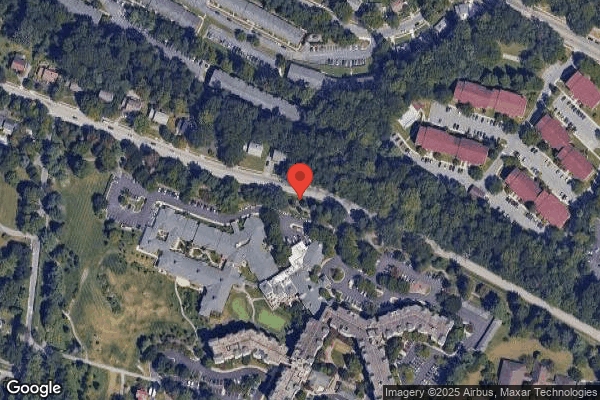
1055 WEST JOPPA ROAD, TOWSON, MD 21204 (410) 296-2900
For profit - Partnership 43 Beds LIFE CARE SERVICES Data: November 2025
Trust Grade
90/100
#9 of 219 in MD
Last Inspection: July 2024

Within standard 12-15 month inspection cycle. Federal law requires annual inspections.

Overview

Chestnut Green Health Center in Towson, Maryland has received an excellent Trust Grade of A, meaning it is highly recommended. It ranks #9 out of 219 nursing homes in Maryland, placing it in the top half of facilities statewide, and #3 out of 43 in Baltimore County, indicating only two local options are better. Unfortunately, the facility is experiencing a worsening trend in issues, increasing from 2 in 2019 to 7 in 2024. Staffing is a strength with a rating of 5 out of 5 stars, but turnover is at 45%, which is about average for Maryland. While there have been no fines recorded, some concerning incidents were noted, such as failures to keep proper food storage records and not providing written notices to a resident regarding hospital transfers, which may lead to confusion about their care. Overall, while there are notable strengths in quality and safety, families should be aware of the recent increase in compliance issues.

Trust Score
A
90/100
In Maryland
#9/219
Top 4%
Safety Record
Low Risk
No red flags
Inspections
Getting Worse
2 → 7 violations
Staff Stability
⚠ Watch
45% turnover. Above average. Higher turnover means staff may not know residents' routines.
Penalties
✓ Good
No fines on record. Clean compliance history, better than most Maryland facilities.
Skilled Nurses
✓ Good
Each resident gets 62 minutes of Registered Nurse (RN) attention daily — more than 97% of Maryland nursing homes. RNs are the most trained staff who catch health problems before they become serious.
Violations
○ Average
9 deficiencies on record. Average for a facility this size. Mostly minor or procedural issues.
★★★★★
5.0
Overall Rating
★★★★★
5.0
Staff Levels
★★★★☆
4.0
Care Quality
★★★★★
5.0
Inspection Score
Stable
2019: 2 issues
2024: 7 issues

The Good

  • 5-Star Staffing Rating · Excellent nurse staffing levels
  • 4-Star Quality Measures · Strong clinical quality outcomes
  • Full Sprinkler Coverage · Fire safety systems throughout facility
  • No fines on record

Facility shows strength in staffing levels, quality measures, fire safety.

The Bad

Staff Turnover: 45%

Near Maryland avg (46%)

Higher turnover may affect care consistency

Chain: LIFE CARE SERVICES

Part of a multi-facility chain

Ask about local staffing decisions and management

The Ugly 9 deficiencies on record

Jul 2024 7 deficiencies
CONCERN (D)

Potential for Harm - no one hurt, but risky conditions existed

Transfer Notice (Tag F0623)

Could have caused harm · This affected 1 resident

Based on record review, and interviews, it was determined the facility failed to provide written notice with the reason for transfer of a resident. This was found evident in 1 (Resident #45) of 3 resi...

Read full inspector narrative →
Based on record review, and interviews, it was determined the facility failed to provide written notice with the reason for transfer of a resident. This was found evident in 1 (Resident #45) of 3 residents reviewed for hospitalization during the survey. The finding include: On 7/17/24 8:54 AM, the surveyor reviewed Residents #45's medical record. The review revealed that Resident #45 was admitted to the facility in early February of 2024. Further review revealed Resident #45 was transferred to the hospital on 3/28/24, 4/4/24 and again on 5/1/24. Progress notes written on 3/28/24, 4/4/24 and 5/1/24 all described that Resident #45 was being transferred to the hospital, however there was no document that indicated that Resident #45 was given a written notice for the reason of transfer. On 7/17/24 at 12:12 PM, the surveyor interviewed the Director of Nursing (DON). In the interview the DON stated she was unable to provide documentation that the written notice was given to Resident #45 on the three occasions he/she was transferred to the hospital.
CONCERN (D)

Potential for Harm - no one hurt, but risky conditions existed

Deficiency F0625 (Tag F0625)

Could have caused harm · This affected 1 resident

Based on medical record review, and staff interviews, it was determined the facility failed to provide the Resident and/or Representative with a written notice of the facility's bed hold policy upon t...

Read full inspector narrative →
Based on medical record review, and staff interviews, it was determined the facility failed to provide the Resident and/or Representative with a written notice of the facility's bed hold policy upon transfer to an acute care facility. This was evident for 1 (Resident #45) of 3 residents reviewed for hospitalization. The findings include: On 7/17/24 8:54 AM, the surveyor reviewed Resident #45's medical record. The review revealed that Resident #45 was admitted to the facility in early February 2024. Further review revealed Resident #45 was transferred to the hospital on 3/28/24, 4/4/24 and again on 5/1/24. Progress notes written on 3/28/24, 4/4/24 and 5/1/24 all described that Resident #45 was being transferred to the hospital. Nowhere in the progress notes or medical record did it document that the bed hold policy was given to the resident. On 7/17/24 at 12:12 PM, the surveyor interviewed the Director of Nursing (DON). In the interview the DON stated she was unable to provide documentation that the bed hold policy was given to Resident #45 on the three occasions he/she was transferred to the hospital. The facility's bed hold policy states all residents/representatives are provided written information regarding the facility bed hold policies, which address holding or reserving a bed during a period of absence (hospitalization or therapeutic leave). Residents are provided written information about these policies at least twice; 1) well in advance of any transfer (admission packet) and 2) at the time of transfer (or, if the transfer was an emergency, within 24 hours).
CONCERN (D)

Potential for Harm - no one hurt, but risky conditions existed

Assessment Accuracy (Tag F0641)

Could have caused harm · This affected 1 resident

**NOTE- TERMS IN BRACKETS HAVE BEEN EDITED TO PROTECT CONFIDENTIALITY** Based on record review, and interviews, it was determined that the facility failed to accurately document oral assessments in a ...

Read full inspector narrative →
**NOTE- TERMS IN BRACKETS HAVE BEEN EDITED TO PROTECT CONFIDENTIALITY** Based on record review, and interviews, it was determined that the facility failed to accurately document oral assessments in a resident's medical record. This was found evident of 1 (Resident # 16) of 1 residents reviewed for dental concerns. The findings include: On 7/15/24 at 10:12 AM, the surveyor observed Resident #16 and during that observations it appeared that Resident #16 had no teeth. On 7/15/24 at 2:08 PM, the surveyor reviewed Resident #16 's medical records. The review revealed that Resident #16 was admitted to the facility in November of 2022 and had a past medical history of, but not limited to, muscle weakness, dysphagia (difficulty swallowing), malignant neoplasm of the tongue, partial glossectomy (removal of part of the tongue) restlessness and agitation, and dementia. Further review of Resident #16 's medical record revealed a care plan for nutrition, with a goal that Resident #16 will meet nutritional and hydration needs. On 7/18/24 at 1:05 PM, the surveyor reviewed Resident #16's Minimum Data Set (MDS) assessment. The admission MDS assessment completed in November of 2022, in section L (assessment of oral and dental status) documented Resident #16 had broken or loosely fitting full or partial dentures (chipped, cracked, uncleanable, or loose). The next MDS assessments dated 2/17/23 and 5/20/23 had the same oral assessment. The admission MDS assessment dated [DATE] documented Resident #16 with none of the above are present. Next the surveyor reviewed the nursing evaluation form from the admission assessment dated [DATE]. In the oral assessment the nurse documented Resident #16 had upper dentures. On 7/18/24 at 2:40 PM, the surveyor interviewed the Director of Nursing (DON). During the interview the surveyor asked about the inconsistency in the oral assessments on 8/10/23 from the nursing admission assessment to the MDS admission assessment. The DON stated that Resident #16 did have dentures, but they did not fit well and the family chose to take them home. She further stated the option of no natural teeth or tooth fragment(s) (edentulous) would have been the accurate coding on the MDS not none of the above.
CONCERN (D)

Potential for Harm - no one hurt, but risky conditions existed

Comprehensive Care Plan (Tag F0656)

Could have caused harm · This affected 1 resident

**NOTE- TERMS IN BRACKETS HAVE BEEN EDITED TO PROTECT CONFIDENTIALITY** 3. Eliquis (Apixaban) is an anticoagulant (blood thinner). It works by decreasing the clotting ability of the blood and helps to...

Read full inspector narrative →
**NOTE- TERMS IN BRACKETS HAVE BEEN EDITED TO PROTECT CONFIDENTIALITY** 3. Eliquis (Apixaban) is an anticoagulant (blood thinner). It works by decreasing the clotting ability of the blood and helps to prevent harmful clots from forming in the blood vessels. Blood thinners can increase the risk of bleeding from falls or injuries. On 07/16/24 at 12:48 PM a review of Resident #1's medical record revealed that resident was admitted to the facility on [DATE] with diagnoses including non-Hodgkin lymphoma, Repeated Falls, Congestive Heart Failure and Atrial Fibrillation. Resident #1 had an active physician's order dated 4/2/2024 for Eliquis for Atrial Fibrillation and the resident's medication administration record confirmed the resident was receiving the medication. There was no care plan for Resident #1 relating to the risks and interventions associated with anticoagulation therapy. On 07/19/24 at 07:15AM in an interview with Director of Nursing (DON) the surveyor enquired about the plan of care for residents on anticoagulant therapy since the surveyor did not observe a plan of care in Resident #1's clinical record. The DON stated that she would address the issue. On 07/22/24 at 09:25 AM the DON gave the surveyor a copy of a care plan for Resident #1 with the start date of 7/19/24. The care plan included interventions for bruising/bleeding which was consistent with risks for residents receiving anticoagulation therapy. Based on observation, record review, and interview with staff, it was determined that the facility failed to develop and implement a person-centered care plan for: 1) a resident with communication deficit, 2) a resident currently on a routine insulin regimen with frequent blood sugar monitoring, and 3) a resident receiving anticoagulation medication. This was evident for 3 (Resident #32, #10, #1) out of 21 residents with care plans reviewed during the annual survey. The findings include: 1. On 7/15/2024 at 11:15 AM during an interview with Resident #32, the Surveyor discovered that the resident was hard of hearing and had impaired vision. In the resident's room, the Surveyor observed a large white board on the floor, that leaned on a chair in front of the resident's bed and a telephone with large, numbered buttons on the nightstand next to the bed. The Surveyor did not observe eyeglasses or hearing aids. The MDS (Minimum Data Set) is a standardized, comprehensive assessment of a resident's functional, medical, psychosocial, and cognitive status to develop a plan of care based on the resident's individualized needs. On 7/18/2024 at 10:33 AM, a review of Resident #32's electronic medical record revealed a Quarterly MDS assessment from 7/05/2024 which stated that the resident can sometimes understand verbal content and has impaired vision with no corrective lenses. During further review of Resident #32's electronic medical record, the Surveyor discovered a note written by Social Worker #6 on 7/02/2024 which stated, [Resident #32] is very HOH (hard of hearing) and vision is impaired. Uses a magnifying glass to read. During an interview with Licensed Practical Nurse (LPN) #14 on 7/19/2024 at 8:51 AM, the Surveyor was informed that Resident #32 is hard of hearing with impaired vision. LPN #14 explained that a person must look directly at the resident, take their time, and speak loudly to attempt to communicate with the resident. Resident #32 will not use hearing aides or eyeglasses. The resident uses a magnifying glass to read. The staff uses a white dry erase board to write in large print for the resident to see the writing. A care plan is used to summarize a person's health conditions, specific care needs, and current treatments. It outlines what needs to be done to plan, assess, and manage care needs. This helps to evaluate the effectiveness of the resident's care. Additional review of Resident #32's electronic medical record failed to reveal a care plan to address the resident's specific communication needs. 2. Insulin is an essential hormone that helps your body turn food into energy and controls your blood sugar levels to keep them in the normal range of 70 mg/dl and 100 mg/dl. A sliding scale varies the dose of insulin based on the blood sugar level. The higher your blood sugar, the more insulin you receive. On 7/17/2024 at 1:40 PM during review of Resident #10's electronic medical record, the Surveyor discovered that the resident was hospitalized [DATE]-[DATE] due to a hyperglycemic event. The resident returned to the facility and was placed on an insulin regimen which included blood sugar monitoring through daily finger stick checks and a sliding scale insulin dose. Further review of Resident #10's electronic medical record failed to reveal a care plan to address insulin management on a sliding scale insulin dose. During an interview with the Assistant Director of Nursing (ADON) #5 on 7/19/2024 at 10:32 AM, the Surveyor was informed that a person-centered care plan should have been developed and implemented for Resident #32, to address their communication deficit and specific communication needs, and for Resident #10, to address insulin management on a sliding scale insulin dose.
CONCERN (D)

Potential for Harm - no one hurt, but risky conditions existed

Deficiency F0700 (Tag F0700)

Could have caused harm · This affected 1 resident

Based on observation, record review and interview with facility staff it was determined that the facility failed to obtain accurately documented informed consent prior to the use of the bed rails and ...

Read full inspector narrative →
Based on observation, record review and interview with facility staff it was determined that the facility failed to obtain accurately documented informed consent prior to the use of the bed rails and updated bed rail assessments. This was evident of 2 (Resident #14 #16) of 2 residents reviewed for bed rails during an annual survey. The findings include: Bed rails also known as side rails are adjustable bars that attach to the bed. They vary in size, including full, half, and quarter lengths depending on their intended purpose. They can be used to prevent falls, help assist residents with movement, and provide a feeling of security. Bed rails also have potential risks associated with them, such as suffocation, entrapment, and psychological risks. A Resident or Resident's Representative should be provided with the risks and benefits along with a signed consent obtained before the use of bed rails. 1a) On 7/15/24 at 10:49 AM, the surveyor observed Resident #14's bed and noted 1/4 length bed rails up on both sides of the bed. On 7/15/24 at 1:15 PM, the surveyor reviewed Resident #14 's medical records. The review revealed that Resident #14 was admitted to the facility in February of 2020 and had a past medical history of, but not limited to, difficulty in walking, muscle weakness, joint replacement, and vascular dementia. Further review of Resident #14's medical record revealed a mobility care plan that stated, Resident #14 is at risk of self care deficit: bed mobility, transfers, hygiene, dressing grooming, feeling, toileting and locomotion on/off the unit. No interventions for bed rails were listed. On 7/16/24 at 1:16 PM, the surveyor interviewed the Director of Nursing (DON). During the interview the DON described the process for bed rail use. She stated that nursing starts the bed rail assessment and the nurse would fill out an assessment form. She stated that therapies services also have input and their notes are uploaded and available. The DON stated that a consent for bed rails is also filled out before the use. The surveyor requested the facility's bed rail policy. On 7/16/24 the surveyor reviewed the facility's bed rail policy. In the section titled use of bed rails (section 3) it stated; the use of bed rails or side rails (including temporarily raising the side rails for episodic use during cares) is prohibited unless the criteria for use of bed rails have been met, including attempts to use alternatives, interdisciplinary evaluation, resident assessment, and informed consent. (Section 8) stated; the bed rail assessment should be completed prior to use, reviewed and revised quarterly, and with significant changes in the resident(s) condition and/or changes in the type of bed rail being used. On 7/17/24 at 7:08 AM, the surveyor conducted an interview with the DON. During the interview the surveyor requested bed rail evaluation/assessments and Resident #14's consent form for the use of bed rails. On 7/17/24 at 9:32 AM, the survey conducted a follow-up interview with the DON. During the interview the DON stated that in 2020 the assessment form was on the same paper as the consent form. She further stated she found no other bed rail assessment completed for Resident #14 and further stated it is the expectation that bed rail assessments are completely quarterly. The DON confirmed that Resident #14 had a recent change of condition assessment done in June of 2024 and a bed rail assessment should have been completed at that time. The surveyor next reviewed the consent form for bed rails for Resident #14, dated 2/28/20 with the DON. The signature of the representative was on the form however, neither box was checked that stated, I DO consent or I DO NOT consent . 1b) On 7/15/24 at 10:12 AM, the surveyor observed Resident #16's bed and noted the 1/4 length bed rails up on both sides of the bed. On 7/15/24 at 2:08 PM, the surveyor reviewed Resident #16' medical records. The review revealed that Resident #16 was admitted to the facility in November of 2022 and had a past medical history of, but not limited to, muscle weakness, unsteadiness on feet, restlessness and agitation and dementia. Further review of Resident #16's medical record revealed a fall care plan with multiple interventions to assist Resident #16 with mobility however, bed rails were not listed as an intervention throughout any of the care plans. On 7/16/24 at 1:16 PM, the surveyor interviewed the Director of Nursing (DON). During the interview the DON described the process for bed rail use. She stated that nursing starts the bed rail assessment and the nurse would fill out an assessment form. She stated that therapies services also have input and their notes are uploaded and available. The DON stated that a consent for bed rail use is also filled out before the use. The surveyor requested the facility's bed rail policy. On 7/16/24 the surveyor reviewed the facility's bed rail policy. In the section use of bed rails (section 3) stated; the use of bed rails or side rails (including temporarily raising the side rails for episodic use during cares is prohibited unless the criteria for use of bed rails have been met, including attempts to use alternatives, interdisciplinary evaluation, resident assessment, and informed consent. (Section 8) stated; the bed rail assessment should be completed prior to use, reviewed and revised quarterly, and with significant changes in the resident condition and/or changes in the type of bed rail being used. On 7/17/24 at 7:08 AM, the surveyor conducted an interview with the DON. During the interview the surveyor requested bed rail evaluation/assessments for Resident #16 and the consent form for the use of bed rails. On 7/17/24 at 9:32 AM, the surveyor conducted a follow-up interview with the DON. During the interview the DON provided assessments for bed rails used for Resident #16 dated 11/10/22 and 8/20/23. The DON reported no other bed rail assessments were found. The DON further stated it is the expectation that the bed rail assessment be completed quarterly. The DON confirmed that Resident #16 had a recent change of condition assessment done in June of 2024 and a bed rail assessment should have been completed at that time. The surveyor next reviewed the consent form for bed rails for Resident #16, dated 11/10/22 with the DON. The signature of the representative was on the form however, neither box was checked that stated, I DO consent or I DO NOT consent .
CONCERN (D)

Potential for Harm - no one hurt, but risky conditions existed

Medical Records (Tag F0842)

Could have caused harm · This affected 1 resident

**NOTE- TERMS IN BRACKETS HAVE BEEN EDITED TO PROTECT CONFIDENTIALITY** Based on record review and staff interview, it was determined that the facility failed to maintain complete and accurate medical...

Read full inspector narrative →
**NOTE- TERMS IN BRACKETS HAVE BEEN EDITED TO PROTECT CONFIDENTIALITY** Based on record review and staff interview, it was determined that the facility failed to maintain complete and accurate medical records in accordance with acceptable professional standards. This was evident for 2 (Resident #5 and #6) out of 21 resident records reviewed during the annual survey. The findings include: A medical record is the official documentation for a healthcare organization. As such, it must be maintained in a manner that follows applicable regulations, accreditation standards, professional practice standards, and legal standards. All entries to the record should be legible and accurate. 1. On 07/18/24 at 08:04 AM a review of Resident #5's medical record revealed that the resident was admitted to the facility on [DATE] with multiple diagnoses including Dementia, Depression, Hypertension, and Arthritis. The surveyor reviewed Resident #5's Influenza Immunization Informed Consent form located in the resident's hard chart at the nurse's station. At the bottom of the form Reason for Vaccine Decline, the words Got vaccine [DATE] was written. The document was signed by the resident's representative and witnessed by a facility staff on 03/08/24. The section identifying the name of the resident to whom the medical record referenced was left blank. On 07/19/24 at 07:15 AM the Surveyor interviewed the Director of Nursing (DON) regarding omission of the resident's name on the Influenza Immunization Informed Consent form. The DON acknowledged the omission and stated that a correction would be made. Later, on 07/19/24 at 01:01 PM the DON informed the surveyor that she had identified the signature of the responsible party. It was for Resident #5 and the document was updated. On 7/22/24 at 9.25AM the surveyor was given an updated copy of the document, Influenza Immunization Informed Consent by the DON with Resident #5's name on it. 2. On 7/24/2024 at 10:00 AM, during a review of Resident #6's electronic and paper medical record, the Surveyor discovered Physicians Wound Evaluation and Management Summary notes from 1/02/2024 through 7/16/2024 which listed the resident had an indwelling catheter in the Review of Systems during each visit. Further review of Resident #6's electronic medical record failed to reveal documentation that the resident had an indwelling catheter. During an interview conducted with the Director of Nursing (DON) #2 on 7/24/2024 at approximately 10:30 AM, the Surveyor was informed that Resident #6 didn't have an indwelling catheter as stated in the Physician's wound notes. On 7/24/2024 at 1:25 PM, the DON informed the Surveyor that the Wound Care Physician was made aware of the inaccurate documentation and would make the necessary corrections in Resident #6's Wound Evaluation and Management Summary notes.
CONCERN (E)

Potential for Harm - no one hurt, but risky conditions existed

Food Safety (Tag F0812)

Could have caused harm · This affected multiple residents

**NOTE- TERMS IN BRACKETS HAVE BEEN EDITED TO PROTECT CONFIDENTIALITY** Based on observation and interview with facility staff, it was determined that the facility failed to: 1) keep complete kitchen ...

Read full inspector narrative →
**NOTE- TERMS IN BRACKETS HAVE BEEN EDITED TO PROTECT CONFIDENTIALITY** Based on observation and interview with facility staff, it was determined that the facility failed to: 1) keep complete kitchen records and, 2) store food in accordance with professional standards for food service and safety. This was evident of 2 out of 3 observations of food storage during the annual survey. The finding include: 1) On 7/15/24 at 8:58 AM, the surveyor took a tour of the first-floor kitchen with the Dietary Manager Staff #7. During the tour the surveyor reviewed the area where the three compartment sink and dishwasher were located. On further review of the area the temperature and chemical log was missing documentation on July 12 through July 15th. Staff #7 stated she was not sure why the temperatures and chemical levels were not recorded, and she would speak with the weekend staff and get back to the surveyor. She further stated the expectation is for the control measures to be recorded. On 7/22/24 at 7:43 AM, the surveyor conducted a follow-up interview with Staff #7. During the interview staff #7 reported that she had spoken to the weekend dishwasher staff. He had reported to her that he must have overlooked recording the control measure and was very busy that weekend. She further stated she educated the staff on the importance of recording temperature and chemical levels. On review of the logs, the temperature and chemical levels were recorded completely for the following weekend dates July 19th, 20th and 21st . 2) On 7/15/24 at 8:18 AM, the surveyor took a tour of the first-floor kitchen. On further observation the surveyor observed the contents in multiple refrigerators. In the refrigerator labeled HCK1 there were trays of individual packaged items. A label was noted on the tray with the item name and the date made. No labeling was noted on the individual packages. Jello, lemons, peaches/pears, apple sauce, coleslaw were all labeled on the trays respectively, however a few applesauce containers were moved to peaches/pear tray. On review of the refrigerator labeled HCK7 a container labeled peaches was dated 7/6 and a container of what appeared to be mandarin oranges was dated but had no label. On review of the refrigerator labeled HCK8 a container of corn muffins was dated 6/16 and a box of what appeared to be brownies was open to air and had no date or label. On 7/15/24 at 8:36 AM, the surveyor observed three square vents in the ceiling of the kitchen that had condensation forming water droplets on the outer edges of the vents. On further observation the droplets were occasionally falling onto the floor in the area where the wheeled food transportation carts were being placed. On 7/15/24 at 8:38 AM, the surveyor interviewed Certified Dietary Manager (CDM) Staff #13 who had just walked into the kitchen. During the interview Staff #13 stated a work order was put in for someone to look at the vents. She further stated the condensation was noted to have starred in the last week or two with the outside temperatures being especially hot. She explained that staff was aware and asked to keep the food transportation carts away from this area. The surveyor reviewed the unlabeled and/or dated food concerns from the refrigerators with Staff #13. The surveyor showed Staff #13 refrigerator HCK1 where the trays were labeled and dated but the individual containers were not. The surveyor pointed out how containers of applesauce were moved to another tray which separated the apple sauce from the content label and the date it was made. The concern being the product could potentially be allowed to remain in the refrigerator beyond its expiration date with no way to identify when it was made. Staff #13 stated she understood the concern. She also stated she would toss the unlabeled and undated foods. She also would throw out the corn muffins and peaches as they were opened beyond acceptable time frame perishable foods. On 7/15/24 at 8:46 AM, the surveyor and Staff #13 observed the first-floor kitchen dry storage area. The surveyor asked Staff #13 what was in the container. It was unlabeled and did not have a date. She stated it was dry granola and would get rid of the contents. Next to the dry granola container was an open package of grits without a date noted to indicate when the box was opened. Staff #13 stated the box should have been dated when it was opened, and she would get rid of it. Syrup and soy sauce also were noted to be opened with no date. Staff #13 stated she would remove those items as well. Staff #13 reported that the Dietary Manager Staff #7 was the manager and in charge of the kitchen. On 7/15/24 at 8:58 AM, the surveyor continued the first-floor kitchen observation with Diet Manager Staff #7. During the tour the surveyor observed a metal ban on the floor just under the PVC piping next to the dishwasher. The pan was filled with a tan odorous liquid. Staff #7 stated that the facility was made aware of the leak and that she was not sure when the repair was due to be completed. On 7/15/24 at 9:13 AM, the surveyor notified the Nursing Home Administrator (NHA) of the drops coming from kitchen vents. The NHA stated she would evaluate and make sure there were no food contamination concerns. On 7/15/24 at 9:22 AM, the surveyor observed the 2nd level kitchen with the Food and Beverage Director Staff #11. Upon entry to the kitchen the surveyor observed refrigerator MK7. In the refrigerator was an open bottle of water along with a soda bottle opened with no cap on it. Staff #11 removed the contents of the refrigerator and tossed the items into the garbage. On interview with Staff #11, he described that the chef is in charge of ordering and receiving foods. He further stated that deliveries come twice a week and that monthly reviews are performed for monitoring food storing practices. Next the surveyor observed the dry storage area. Listed are the observations where the packaging was open and there was no date or legible date written to indicate when the contents were opened: An opened bottle of honey. A bag of bow tie pasta A bag of elbow pasta. (dated but unable to make of date) Two bags of egg noodles. A bag of croutons. A bag of dry gravy. Staff #11 stated he would get rid of all the items identified as opened and not dated. On 7/15/24 at 9:36 AM, the surveyor observed the freezer in the upper kitchen with Staff #11. Upon observation the items below were noted to have no label indicated the contents as well as no date to indicate the age of the items: A tray of egg rolls was observed laid out open to air. A tray of (staff identified) spanakopita. (covered in plastic wrap) Two long items wrapped in plastic wrap. (staff identified bread) A package of what appeared to be garlic bread. Two bags of salmon (located next to labeled salmon bags) 6 bags of cream corn per Staff #11. Canadian bacon package per Staff #11. A bag of patties (some type of meat). The following items did not have a label but were dated: A tray of bread slices. Diced carrots. Two bags of [NAME] (next to dated and labeled [NAME] bags). Plastic wrapped turkey. Plastic wrapped beef. The following items were labeled but had no date on them: A bag of meat sauce. A bag of beef tips. On interview Staff #11 stated he would be getting rid of all the identified items and anything that was unlabeled and/or not dated. Next the surveyor and Staff #11 observed the upper-level kitchen walk-in refrigerator. Several times were noted not to be covered and were open to air. Two metal containers of soups, a tray of individual cups of aspic, and beef that was thawing on a tray on the lowest rack. Also, a container was noted unlabeled and not dated. The Executive Chef Staff #10 was present and stated it was fruit soup and it was on the menu yesterday. He further stated he would get rid of the container. On 7/15/24 at 12:19 PM the surveyor interviewed the NHA and the Director of Nursing (DON). During the interview the NHA stated that when staff need to report or request maintenance, they email the maintenance administrator assistant and she then schedules a work order in their system. The NHA reported she would look to see when maintenance was updated on the needed repairs in the kitchen. On 7/22/24 at 7:36 AM, the surveyor observed that the pan under the PVC pipe in the dishwashing room was removed and the floor was dry. On further observations the surveyor noted new vents were installed in the ceiling and no condensation was noted. On 7/22/24 at 9:23 AM, the surveyor conducted a follow-up interview with the NHA. During the interview the administrator stated the drain was fixed by in-house staff on 7/16 and the vents were fixed by an outside contractor on 7/17. The NHA was able to produce the emails that were sent from Staff #11 asking for repairs on June 17th for the drain and on July 6th for the condensation. The NHA stated the facility attempted to fix these problems earlier but those repairs were unsuccessful.
Jul 2019 2 deficiencies
CONCERN (D)

Potential for Harm - no one hurt, but risky conditions existed

Transfer Notice (Tag F0623)

Could have caused harm · This affected 1 resident

Based on medical record review and interview, it was determined that the facility failed to notify the resident or responsible party in writing of the reason for a Resident's (#26) transfer to the hos...

Read full inspector narrative →
Based on medical record review and interview, it was determined that the facility failed to notify the resident or responsible party in writing of the reason for a Resident's (#26) transfer to the hospital. This was evident for 1 of 1 resident reviewed for hospitalization during the annual survey. The findings include: On 4-18-19 Resident #26 was transferred to the hospital for abdominal pain. The facility notified the responsible party verbally but did not send a written notice of the reason for the transfer. This finding was confirmed by the Director of Nursing and the Administrator on 7-3-19 at 8:00 AM.
CONCERN (D)

Potential for Harm - no one hurt, but risky conditions existed

Medical Records (Tag F0842)

Could have caused harm · This affected 1 resident

Based on medical record review and interview it was determined the facility staff failed to maintain a medical record in the most complete and accurate form (Resident #18). This was evident for 1 out...

Read full inspector narrative →
Based on medical record review and interview it was determined the facility staff failed to maintain a medical record in the most complete and accurate form (Resident #18). This was evident for 1 out of 18 residents reviewed during the annual survey. The findings include: A medical record is the official documentation for a healthcare organization. As such, it must be maintained in a manner that follows applicable regulations, accreditation standards, professional practice standards, and legal standards. All entries to the record should be legible, accurate and timely. On 7-2-19 when reviewing Resident #18's electronic and paper medical record the last physician or nurse practitioner's note was 4-22-19. The Director of Nursing (DON) on 7-2-19 at 9:00 AM stated she/he would look to see if a physician visit still needed to be filed. On 7-2-19 at 9:10 AM the DON produced a physician visit note from 5-27-19 that had not been filed in the medical record. On 7-3-19 at 8:00 AM the DON and Administrator confirmed Resident #18's medical record was not in it's most accurate form.
Understanding Severity Codes (click to expand)
Life-Threatening (Immediate Jeopardy)
J - Isolated K - Pattern L - Widespread
Actual Harm
G - Isolated H - Pattern I - Widespread
Potential for Harm
D - Isolated E - Pattern F - Widespread
No Harm (Minor)
A - Isolated B - Pattern C - Widespread

Questions to Ask on Your Visit

  • "Can I speak with families of current residents?"
  • "What's your RN coverage like on weekends and overnight?"

Our Honest Assessment

Strengths
  • • Grade A (90/100). Above average facility, better than most options in Maryland.
  • • No major safety red flags. No abuse findings, life-threatening violations, or SFF status.
  • • No fines on record. Clean compliance history, better than most Maryland facilities.
Concerns
  • • No significant concerns identified. This facility shows no red flags across CMS ratings, staff turnover, or federal penalties.
Bottom line: Generally positive indicators. Standard due diligence and a personal visit recommended.

About This Facility

What is Chestnut Grn Hlth Ctr Blakehur's CMS Rating?

CMS assigns CHESTNUT GRN HLTH CTR BLAKEHUR an overall rating of 5 out of 5 stars, which is considered much above average nationally. Within Maryland, this rating places the facility higher than 99% of the state's 100 nursing homes. This rating reflects solid performance across the metrics CMS uses to evaluate nursing home quality.

How is Chestnut Grn Hlth Ctr Blakehur Staffed?

CMS rates CHESTNUT GRN HLTH CTR BLAKEHUR's staffing level at 5 out of 5 stars, which is much above average compared to other nursing homes. Staff turnover is 45%, compared to the Maryland average of 46%. This relatively stable workforce can support continuity of care.

What Have Inspectors Found at Chestnut Grn Hlth Ctr Blakehur?

State health inspectors documented 9 deficiencies at CHESTNUT GRN HLTH CTR BLAKEHUR during 2019 to 2024. These included: 9 with potential for harm.

Who Owns and Operates Chestnut Grn Hlth Ctr Blakehur?

CHESTNUT GRN HLTH CTR BLAKEHUR is owned by a for-profit company. For-profit facilities operate as businesses with obligations to shareholders or private owners. The facility is operated by LIFE CARE SERVICES, a chain that manages multiple nursing homes. With 43 certified beds and approximately 37 residents (about 86% occupancy), it is a smaller facility located in TOWSON, Maryland.

How Does Chestnut Grn Hlth Ctr Blakehur Compare to Other Maryland Nursing Homes?

Compared to the 100 nursing homes in Maryland, CHESTNUT GRN HLTH CTR BLAKEHUR's overall rating (5 stars) is above the state average of 3.1, staff turnover (45%) is near the state average of 46%, and health inspection rating (5 stars) is much above the national benchmark.

What Should Families Ask When Visiting Chestnut Grn Hlth Ctr Blakehur?

Based on this facility's data, families visiting should ask: "Can I visit during a mealtime to observe dining assistance and food quality?" "How do you handle medical emergencies, and what is your hospital transfer rate?" "Can I speak with family members of current residents about their experience?"

Is Chestnut Grn Hlth Ctr Blakehur Safe?

Based on CMS inspection data, CHESTNUT GRN HLTH CTR BLAKEHUR has a clean safety record: no substantiated abuse findings (meaning no confirmed cases of resident harm), no Immediate Jeopardy citations (the most serious violation level indicating risk of serious injury or death), and is not on the Special Focus Facility watch list (a federal program monitoring the lowest-performing 1% of nursing homes). The facility has a 5-star overall rating and ranks #1 of 100 nursing homes in Maryland. While no facility is perfect, families should still ask about staff-to-resident ratios and recent inspection results during their visit.

Do Nurses at Chestnut Grn Hlth Ctr Blakehur Stick Around?

CHESTNUT GRN HLTH CTR BLAKEHUR has a staff turnover rate of 45%, which is about average for Maryland nursing homes (state average: 46%). Moderate turnover is common in nursing homes, but families should still ask about staff tenure and how the facility maintains care continuity when employees leave.

Was Chestnut Grn Hlth Ctr Blakehur Ever Fined?

CHESTNUT GRN HLTH CTR BLAKEHUR has no federal fines on record. CMS issues fines when nursing homes fail to meet care standards or don't correct problems found during inspections. The absence of fines suggests the facility has either maintained compliance or corrected any issues before penalties were assessed. This is a positive indicator, though families should still review recent inspection reports for the full picture.

Is Chestnut Grn Hlth Ctr Blakehur on Any Federal Watch List?

CHESTNUT GRN HLTH CTR BLAKEHUR is not on any federal watch list. The most significant is the Special Focus Facility (SFF) program, which identifies the bottom 1% of nursing homes nationally based on persistent, serious quality problems. Not being on this list means the facility has avoided the pattern of deficiencies that triggers enhanced federal oversight. This is a positive indicator, though families should still review the facility's inspection history directly.