COMPLETE CARE AT WHEATON
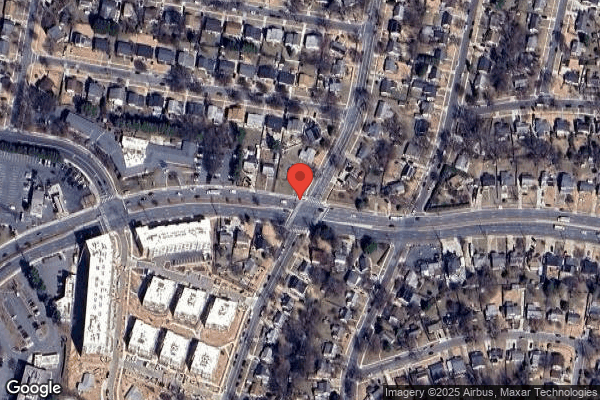
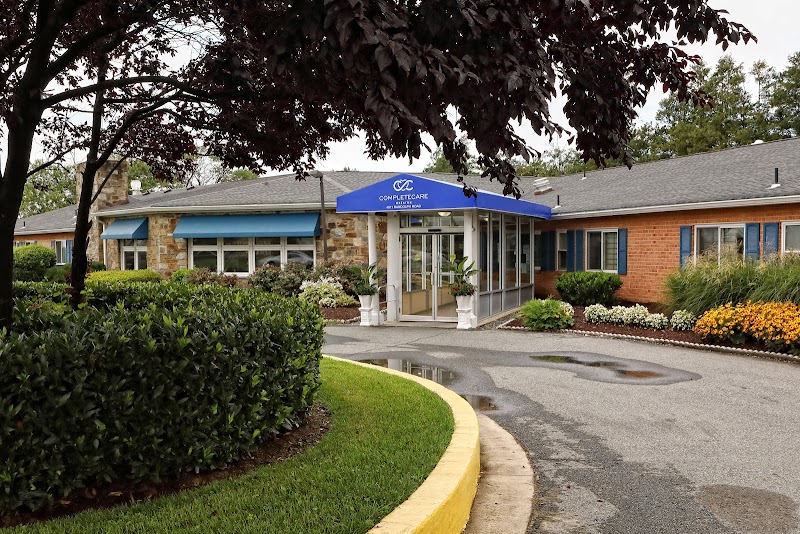
4011 RANDOLPH ROAD, WHEATON, MD 20902 (301) 933-2500
For profit - Limited Liability company 116 Beds COMPLETE CARE Data: November 2025 1 Immediate Jeopardy citation
Trust Grade
48/100
#103 of 219 in MD
Last Inspection: April 2025

Within standard 12-15 month inspection cycle. Federal law requires annual inspections.

Overview

Complete Care at Wheaton has a Trust Grade of D, indicating below-average performance with several concerns. It ranks #103 out of 219 facilities in Maryland, placing it in the top half, and #22 out of 34 in Montgomery County, meaning there are only a few local options that are better. Unfortunately, the facility's trend is worsening, with issues increasing from 12 in 2021 to 20 in 2025. While staffing is a strength with a turnover rate of 32%, which is better than the state average, the facility has had a concerning number of incidents, including failing to revise care plans for residents in a timely manner and not properly enforcing its smoking policy, which compromised resident safety. On a positive note, there have been no fines recorded, suggesting compliance with regulations, but the average RN coverage may not be sufficient to catch all potential issues.

Trust Score
D
48/100
In Maryland
#103/219
Top 47%
Safety Record
High Risk
Review needed
Inspections
Getting Worse
12 → 20 violations
Staff Stability
○ Average
32% turnover. Near Maryland's 48% average. Typical for the industry.
Penalties
✓ Good
No fines on record. Clean compliance history, better than most Maryland facilities.
Skilled Nurses
○ Average
Each resident gets 36 minutes of Registered Nurse (RN) attention daily — about average for Maryland. RNs are the most trained staff who monitor for health changes.
Violations
⚠ Watch
44 deficiencies on record. Higher than average. Multiple issues found across inspections.
★★★☆☆
3.0
Overall Rating
★★★☆☆
3.0
Staff Levels
★★★★☆
4.0
Care Quality
★★★☆☆
3.0
Inspection Score
Stable
2021: 12 issues
2025: 20 issues

The Good

  • 4-Star Quality Measures · Strong clinical quality outcomes
  • Full Sprinkler Coverage · Fire safety systems throughout facility
  • No fines on record
  • Staff turnover below average (32%)

    16 points below Maryland average of 48%

Facility shows strength in quality measures, fire safety.

The Bad

3-Star Overall Rating

Near Maryland average (3.0)

Meets federal standards, typical of most facilities

Staff Turnover: 32%

14pts below Maryland avg (46%)

Typical for the industry

Chain: COMPLETE CARE

Part of a multi-facility chain

Ask about local staffing decisions and management

The Ugly 44 deficiencies on record

1 life-threatening
Apr 2025 20 deficiencies
CONCERN (D)

Potential for Harm - no one hurt, but risky conditions existed

Deficiency F0553 (Tag F0553)

Could have caused harm · This affected 1 resident

**NOTE- TERMS IN BRACKETS HAVE BEEN EDITED TO PROTECT CONFIDENTIALITY** Based on interviews and medical record review, it was determined that the facility failed to invite a resident to their care pla...

Read full inspector narrative →
**NOTE- TERMS IN BRACKETS HAVE BEEN EDITED TO PROTECT CONFIDENTIALITY** Based on interviews and medical record review, it was determined that the facility failed to invite a resident to their care plan meeting. This was evident in 1 (Resident#35) of 7 residents reviewed for care planning. The findings include: On 03/31/25 at 10:55 AM Resident #35 informed the surveyor that he/she was not invited to and did not attend care plan meetings. On 04/02/25 at 08:26 AM a review of Resident #35's medical record revealed that the resident was admitted to the facility on [DATE] and care plan meetings were held on 1/30/25, 2/5/25 and 2/26/25. Resident #35 attended one care plan meeting on 1/30/25. However, the resident did not attend care plan meetings on 2/5/25 and 2/26/25. The records failed to reveal that the resident was notified. On 04/03/25 at 10:43 AM in an interview, the Regional Social Worker stated it was the practice of the facility to invite residents and their responsible parties in writing to care plan meetings. Further, she would check the records to ascertain whether Resident #35 was invited. On 04/03/25 at 10:43 AM The Regional Social Worker notified surveyor that she could not locate documented evidence to show that Resident#35 was informed of care plan meetings for February 2025. On 04/03/25 at 10:50 AM the Nursing Home Administrator and the Regional Clinical Nurse Consultant were notified of the surveyor's findings.
CONCERN (D)

Potential for Harm - no one hurt, but risky conditions existed

Deficiency F0578 (Tag F0578)

Could have caused harm · This affected 1 resident

**NOTE- TERMS IN BRACKETS HAVE BEEN EDITED TO PROTECT CONFIDENTIALITY** Based on surveyor record reviews and facility staff interviews, it was determined that the facility failed to offer the opportun...

Read full inspector narrative →
**NOTE- TERMS IN BRACKETS HAVE BEEN EDITED TO PROTECT CONFIDENTIALITY** Based on surveyor record reviews and facility staff interviews, it was determined that the facility failed to offer the opportunity to complete an advance directive and provide educational materials on advance directive for Residents and/or Resident Representatives. This was found to be evident for 3 (Resident #41, 93 and 95) out of 3 Residents reviewed for advance directives. The findings include: An advance directive is a legal document that specifies a person's wishes for end-of-life healthcare. It also specifies who should make healthcare decisions on your behalf if you are unable to do so yourself. On 03/31/2025 at 11:43 AM the surveyor conducted a record review of Resident #93's medical record. During the review of Resident #93's medical record, specifically the social services assessment and documentation - V6 forms dated 8/30/2024 and 11/20/2024, it revealed documentation that Resident #93 did not have an advance directive in place, and the opportunity to complete an advance directive was not offered and advance directive educational materials were not provided for Resident #93 or Resident Representative. The surveyor interviewed the Regional Social Worker at 11:10 AM on 04/03/2025. During this interview the surveyor conveyed to the Regional Social Worker that Resident #93 did not have an advance directive as documented on the August and November 2024 social services assessments. Additionally, the social services assessments indicated that the opportunity to complete an advance directive was not offered and educational materials for advance directive were not provided for the Resident #93 or Resident Representative. The Regional Social Worker acknowledged the surveyor. The surveyor conducted a record review of Resident #41's medical record on 03/31/2025 at 01:52 PM and it revealed that Resident #41 had a social services assessment and documentation - V6 form dated 04/08/2024. This social services assessment indicated that Resident #41 did not have an advance directive in place, and the opportunity to complete an advance directive was not offered and educational materials for advance directive were not provided for Resident or Resident Representative. The surveyor interviewed the Regional Social Worker at 11:10 AM on 04/03/2025. During this interview the surveyor conveyed to the Regional Social Worker that Resident #41's social service assessment in April of 2024 revealed that Resident did not have an advance directive on file, and that the opportunity to complete an advance directive was not offered and educational materials for advance directive were not provided for Resident #41 or Resident Representative. The Regional Social Worker acknowledged the surveyor. On 04/02/2025 at 12:45 PM the surveyor conducted a record review of Resident #95's medical record. Review of the medical record for Resident #95 revealed that the social services assessment and documentation - V6 form completed 11/21/2024 indicated that Resident #95 did not have an advance directive in place. Further review of the social services assessment indicated that the opportunity to complete an advance directive was not offered, and educational materials regarding advance directives were not provided for Resident #95 or Resident Representative. In an interview with the Regional Social Worker on 04/03/2025 at 11:10 AM, the surveyor conveyed to the Regional Social Worker that Resident #95 did not have an advance directive in place according to the documentation on the social services assessment dated [DATE], and the opportunity to complete an advance directive was not offered and educational materials regarding advance directives were not provided for Resident #95 or Resident Representative. The Regional Social Worker acknowledged the surveyor. In a follow-up interview with the Regional Social Worker on 04/04/2025 at 12:30 PM the surveyor confirmed with the Regional Social Worker that the documentation revealed that Residents #41, 93 and 95 did not have advance directives in place, and that these Residents or Resident Representatives were not offered an opportunity to complete an advance directive and were not provided educational materials for advance directives.
CONCERN (D) 📢 Someone Reported This

A family member, employee, or ombudsman was alarmed enough to file a formal complaint

Potential for Harm - no one hurt, but risky conditions existed

Free from Abuse/Neglect (Tag F0600)

Could have caused harm · This affected 1 resident

Based on review of facility investigation, record review, and interview, it was determined that the facility failed to ensure that a resident remained free of abuse. This was evident for 1 (Resident #...

Read full inspector narrative →
Based on review of facility investigation, record review, and interview, it was determined that the facility failed to ensure that a resident remained free of abuse. This was evident for 1 (Resident #105) of 31 abuse investigations reviewed during the survey. The facility implemented effective and thorough corrective measures following this incident prior to the start of this survey. The facility's plan and action were verified during this survey; therefore, this deficiency was found to be past noncompliance with a compliance date of 3/11/24. The findings include: On 4/2/25 at 9:00 AM, a review of the Facility- Reported incident MD00203253 revealed that on 3/5/2024 at 12:30 PM, Geriatric Nurse Assistant (GNA #8) reported to the Nursing Home Administrator (NHA) and alleged Licensed Practical Nurse (LPN #6) of grabbing Resident #105's arm and hitting him/her on the face. On 4/3/24 at 7:45 AM, a review of Resident #105's medical records revealed a BIMS (Brief Interview for Mental Status: an assessment used in nursing homes and other long-term care facilities to monitor cognition) score of 0 out of 15 on 12/27/2023, which meant severe impairment. A care plan that was initiated on 3/27/2023 indicated, has potential to be verbally and physically aggressive related to Dementia. Dementia is a general term for the gradual decline in memory, thinking and other cognitive functions that can significantly impact daily life. On 4/3/24 at 8:23 AM, a review of the facility's investigation revealed that the alleged incident happened on 2/29/24 around 1:30 PM. However, the allegation was reported to the NHA on 3/5/2024 at 12:30 PM. The following interviews from the involved staff were conducted: On 3/5/2024 at 12:20 PM, GNA #8 reported to the NHA that on 2/29/24 he/she responded to assist GNA #7 who was giving care to Resident #105. The resident started yelling and became agitated. LPN #6 came to the room to assist, however, the resident hit LPN #6. GNA #8 stated that he/she and GNA # 7 witnessed LPN #6 grab and pinch the left hand and slapped Resident #105 on the forehead. On 3/5/24 at 12:31 PM, GNA #7 stated that on 2/29/24, while giving care to Resident #105, the resident started yelling and shouting, GNA #8 and LPN #6 came to assist. However, the resident hit the LPN #6 on the chest and then he/she grabbed Resident #105's hand and hit him/her in the face. On 3/6/24, LPN #6 stated that he/she did not abuse Resident #105 and only raised his/her hands and then grabbed the resident's hands and told him/her to stop the aggressive behavior. On 4/3/2025 at 11:05 AM, the surveyor reviewed and verified the corrective measures the facility implemented in response to the 2/29/2024 incident: 1. The alleged employee and witnesses were immediately suspended pending investigation a. LPN #6, who was the alleged perpetrator was placed on administrative leave pending investigation. He/she was terminated on 3/10/24. b. GNA #8 was disciplined for failing to immediately stop and report the alleged abuse per facility policy and education. He/she was suspended from 3/5 to 3/9/24 and received education handling aggressive behaviors with NHA on 3/10/2024. c. GNA #7 was disciplined for failing to immediately stop and report the alleged abuse per facility policy and education. He/she stated, I was scared to report and didn't know it. He/she was suspended from 3/5 to 3/9/2024 and received education handling aggressive behaviors with NHA on 3/9/24. 2. Interviews were obtained from the involved staff. 3. 17 other Staff members were also interviewed, and no issues were reported. 4. The Resident Representative was notified on 3/5/24 at 12:30 PM. 5. The Local Law Enforcement was notified on 3/5/24 at 12:40 PM. 6. The Ombudsman was notified on 3/5/24 at 1:30 PM. 7. Skin assessment was conducted. 8. Other Residents on the unit were unable to be interviewed, thus, head to toe skin assessments were completed for each resident with no negative findings. 9. The Social Worker visited Resident #105 on-3/5/24. 10. The Psychiatrist visited the Resident on 3/19/24. 11. Abuse education was conducted on 3/8/24, which was attended by 10 staff members and on 3/9/24 which was attended by 9 staff members. 12. The incident was reported to the Maryland Board of Nursing on 3/11/2024 and confirmed receipt on 3/11/2024. On 4/4/25 at 8:21 AM, in an interview with the NHA, he described that as soon as an allegation of abuse was identified, the facility suspended the involved staff and started the investigation. He added that other residents and staff members were also interviewed, a one on one education to the involved staff members as well as house wide education was also conducted. On 4/4/25 at 10:08 AM, during an interview with GNA #9, he/she stated that the facility expected the staff to immediately report any kind of abuse to the administrator. He/she added that he/she had received online and regular classroom abuse trainings. On 4/4/25 at 10:10 AM, in an interview with LPN # 4, he/she stated that the staff had a couple of hours to 24 hours to report an abuse to the Unit manager, the Supervisor or the Administrator. He/she added that he/she had received abuse trainings either in classroom or on videos. On 4/9/25 at 12:23 PM, during an interview with the NHA, the [NAME] President of Operations and the Regional Clinical Nurse Consultant, the surveyor informed them that Resident 105's incident was considered Past Non- Compliance.
CONCERN (D) 📢 Someone Reported This

A family member, employee, or ombudsman was alarmed enough to file a formal complaint

Potential for Harm - no one hurt, but risky conditions existed

Transfer Notice (Tag F0623)

Could have caused harm · This affected 1 resident

Based on staff interviews and medical record review, it was determined that the facility failed to provide written notification for Residents that were transferred to the hospital. This was found to b...

Read full inspector narrative →
Based on staff interviews and medical record review, it was determined that the facility failed to provide written notification for Residents that were transferred to the hospital. This was found to be evident for 3 Residents ( #4, #18, #48) out of 3 Residents reviewed for hospitalization. The findings include: During medical record review for Resident #48 on 04/04/25 at 11:15 AM. It was revealed that the resident was transferred to the hospital on 4/2/24, 8/27/24 and 8/28/24, the facility did not provide written notification to the resident or the resident ' s representative regarding the reason for the transfer to the hospital. During continued records review on 04/04/25 at 12:57 PM Resident ' s #4 record review revealed resident was transferred to the hospital on 5/18/24, 6/18/24 and 2/16/25 with no evidence that the facility provided written notification and reason for transfer to resident or resident's representative during transfer to the hospital. During an interview with the Regional Clinical Nurse Manager (RCNM) on 04/04/25 at 1:00 PM regarding written notification to residents and/or their representatives about the reason for transfer or discharge to the hospital. The RCNM confirmed that the facility did not have a process in place for providing such notifications. The surveyor informed the RCNM of this concern, and he acknowledged the concern. A review of the nurse ' s note for Resident #18 was conducted on 04/09/25 at 08:13 AM. The note, dated 03/30/25 at 8:49 PM, stated Resident was in bed sleeping with no apparent distress. No further emesis noted. [Resident's family member] came to visit, as [resident's family member] said [resident's family member] was called earlier about the resident. The resident ' s [family member] stated [resident's family member] wanted the resident transferred to the hospital. Writer explained the interventions in place, but [resident's family member] insisted the resident be taken to the hospital. [Resident's family member] called 911; they arrived at approximately 3:05 PM and transported the resident to HCH [Holy Cross Hospital] at 3:16 PM. An interview conducted on 04/09/25 at 10:09 AM with License Practical Nurse (LPN) #1 regarding the process for transferring a resident to the hospital, LPN #1 stated, I will notify the physician for orders, prepare a transfer package which includes the face sheet, MOLST [Maryland Order for Life Sustaining Treatment] form, recent labs, medication list, and complete transfer assessment. I will also provide a copy of the transfer notification to the resident or the resident ' s representative. After the resident leaves, I will call the hospital for updates. The surveyor asked LPN #1, What is the process if a family member calls 911 LPN #1 responded, It ' s the same process. During the continued medical record review on 04/09/25 at 10:11 AM for Resident #18, there was no evidence of written documentation indicating that the reason for the hospital transfer was provided to the resident or their family representative. During an interview with the RCNM regarding hospital transfers on 04/09/25 at 10:30 AM, he acknowledged that no written documentation was provided to the residents (#4, #18, and #48) during the transfer. The surveyor informed the RCNM of this concern.
CONCERN (D)

Potential for Harm - no one hurt, but risky conditions existed

Deficiency F0625 (Tag F0625)

Could have caused harm · This affected 1 resident

**NOTE- TERMS IN BRACKETS HAVE BEEN EDITED TO PROTECT CONFIDENTIALITY** Based on facility staff and Resident interviews and surveyor record review, it was determined that the facility failed to provid...

Read full inspector narrative →
**NOTE- TERMS IN BRACKETS HAVE BEEN EDITED TO PROTECT CONFIDENTIALITY** Based on facility staff and Resident interviews and surveyor record review, it was determined that the facility failed to provide written notification of the bed hold policy for a Resident that was transferred to the hospital. This finding was found to be evident for 1 Resident (#95) out of 1 Resident reviewed for hospitalization. The findings include: A Bed Hold is the act of holding or reserving a Resident's bed while the Resident is absent from the facility for therapeutic leave or hospitalization. It must be provided to all facility Residents regardless of payment source. The Bed Hold policy should be disclosed in the admission packet during an initial admission to the facility and it should be disclosed to Resident/Resident Representative at the time of transfer. On 04/01/2025 at 07:40 AM during the tour of the nursing unit, the surveyor interviewed Resident #95. Resident #95 stated that he/she had a recent hospitalization due to stomach collapse. The surveyor reviewed Resident #95's medical record on 04/03/2025 at 07:03 AM and the review revealed that Resident #95 transferred to the hospital on [DATE] (an emergency room visit) and 02/04/2025 (inpatient). The surveyor did not locate any documentation that Resident #95 or Resident Representative received written notification from the facility of the bed hold policy for Resident #95's transfer and admission to the hospital on [DATE]. Further review of Resident #95's medical record revealed that on admission to the facility, the Resident signed an admission packet dated 10/10/2024 which indicated that if Resident #95 should be hospitalized , he/she would be consulted at that time as to whether he/she would choose to hold the bed at the facility. In an interview with the Licensed Nursing Home Administrator (LNHA) and the Regional Clinical Nurse Consultant on 04/03/2025 at 09:55 AM the surveyor asked what the procedure was for written notification of bed hold policy when a Resident was transferred to the hospital. The Regional Clinical Nurse Consultant stated, I know what you are asking for but the facility does not provide written notification of the bed hold policy for Residents when they transfer to the hospital. No additional information was provided by the facility at the time of exit.
CONCERN (D)

Potential for Harm - no one hurt, but risky conditions existed

Deficiency F0645 (Tag F0645)

Could have caused harm · This affected 1 resident

Based on record review and interview, it was determined that the facility failed to conduct an accurate Preadmission Screening and Resident Review (PASRR). This was found evident for 1 (Resident #27) ...

Read full inspector narrative →
Based on record review and interview, it was determined that the facility failed to conduct an accurate Preadmission Screening and Resident Review (PASRR). This was found evident for 1 (Resident #27) out of 1 resident reviewed for PASRR screening. The findings include: According to the Centers for Medicare and Medicaid (CMS), the Preadmission Screening and Resident Review (PASRR) is a federal requirement to help ensure that individuals are not inappropriately placed in nursing homes for long-term care. Furthermore, Congress developed the PASRR program to prevent inappropriate admission and retention of people with mental disabilities in nursing facilities. Federal law mandates that Medicaid-certified nursing facilities (NF) may not admit an applicant with serious mental illness (MI), mental retardation (MR), or a related condition, unless the individual is properly screened, thoroughly evaluated, found to be appropriate for NF placement, and will receive all specialized services necessary to meet the individual's unique MI/MR needs. If a resident tests positive for a Level I, they are then evaluated in depth, called ' Level II ' PASRR. The results of this evaluation result in a determination of need, determination of appropriate setting, and a set of recommendations for services to inform the individual's plan of care. On 04/01/25 at 10:02 AM, a record review for Resident #27 ' s PASRR Level 1 showed that in section D, all of the answers were checked No. The document stated that if all answers in part D are ' No ' , the individual must be referred to AERS [Adult Evaluation and Review Services] for a Level II Evaluation. There was not a PASRR Level II found in this Resident ' s record. On 04/02/25 at 12:45 PM, an interview was conducted with the Social Worker. Resident #27 ' s PASRR was reviewed with the Social Worker. This surveyor asked, based on the results of the PASRR, if she would expect this Resident to have had a PASRR Level II Screening. She reported that the mental disorders that this Resident has do not require him to need a PASRR Level II. She confirmed that the Resident ' s PASRR Level I was not filled out correctly, as it should not have been indicated that he/she needed a PASRR Level II.
CONCERN (D)

Potential for Harm - no one hurt, but risky conditions existed

Comprehensive Care Plan (Tag F0656)

Could have caused harm · This affected 1 resident

**NOTE- TERMS IN BRACKETS HAVE BEEN EDITED TO PROTECT CONFIDENTIALITY** Based on medical record review and staff interviews, it was determined that the facility failed to revise a care plan. This was ...

Read full inspector narrative →
**NOTE- TERMS IN BRACKETS HAVE BEEN EDITED TO PROTECT CONFIDENTIALITY** Based on medical record review and staff interviews, it was determined that the facility failed to revise a care plan. This was evident for 3 (#4, #48, and #445) out of 3 residents reviewed for care plans. The findings include: A review of a Nurse ' s note for Resident #4 was conducted on 04/02/25 at 12:43 PM. The note dated 03/04/2025 at 16:07 stated Writer went to assess the patient after receiving a verbal call from a caregiver that the patient was on the floor. Observed patient sitting near the bed and wheelchair with no visible injury. The patient denied pain upon assessment. No swelling or skin discoloration noted. The patient had a light scratch on [resident ' s gender] left side, not related to the fall but sustained while using the bathroom. The patient self-transferred from the floor to the bed. A care plan is a comprehensive, individualized plan of care developed for each resident. It outlines the residents ' medical, psychological, emotional, and social needs, as well as the goals, interventions, and services required to meet those needs. Care plans are created and maintained by the interdisciplinary care team. During continued medical record review on 04/02/25 at 1:14 PM, the care plan was not updated following the resident ' s fall on 03/04/25. An actual fall care plan was not initiated or revised. The original care plan was initiated on 08/05/2024, with the last revision also documented on 08/05/2024. A Gastrostomy tube (G-tube) is a flexible tube inserted through the skin and abdominal wall directly into the stomach to provide nutrition, fluids, and medications when an individual is unable to consume adequate nutrients orally. During a medical record review conducted on 04/03/25 at 7:30 AM, it was revealed that Resident #48 was transferred to the hospital on [DATE], 04/02/24, and 08/27/24 for gastrostomy tube (G-tube) dislodgement and replacement. However, there was no documentation indicating that a care plan for G-tube dislodgement and replacement was initiated or updated. On 04/03/25 at 12:24 PM, during an interview with the Assistant Director of Nursing/Infection Control Preventionist/Staff Educator (RN) (ADON/ICP). The surveyor inquired about the process and expectations for care plan revisions following G-tube dislodgement and replacement. The ADON/ICP further explained that care plans are to be updated whenever there is a change in the resident ' s condition, when concerns arise, as needed, and on a quarterly basis. Additionally, the ADON/ICP clarified that all members of the interdisciplinary team are responsible for updating the care plan in response to any changes in the resident ' s condition. The Unit Manager is responsible for ensuring that all changes are accurately reflected in the care plan. The ADON/ICP further confirmed that updates should be made immediately following any such changes. On 04/03/25 at 1:10 PM, the surveyor informed the Administrator and the Regional Clinical Nurse Manager of concerns regarding the revision of the care plan. During medical records review on 04/09/25 at 7:30 AM Resident #445 had a witnessed fall on 12/16/24, as documented in staff statements. However, there was no evidence that a fall-specific care plan revision was initiated or documented.
CONCERN (D) 📢 Someone Reported This

A family member, employee, or ombudsman was alarmed enough to file a formal complaint

Potential for Harm - no one hurt, but risky conditions existed

Quality of Care (Tag F0684)

Could have caused harm · This affected 1 resident

Based on record review and facility staff interview, the facility failed to 1) assess a Resident with an actual fall and 2) document a witnessed fall. This was evident for 1 (resident #445) of 1 resid...

Read full inspector narrative →
Based on record review and facility staff interview, the facility failed to 1) assess a Resident with an actual fall and 2) document a witnessed fall. This was evident for 1 (resident #445) of 1 resident reviewed for quality of care. The findings include: A fall is defined as an unintended descent to the floor or other lower surface, with or without injury to the resident or patient. This includes slips, trips, or loss of balance, whether witnessed or not, and whether or not the individual is able to get up without assistance. A fall assessment is a systematic process used by healthcare professionals to identify a patient's risk of falling and to determine contributing factors. It typically involves evaluating medical history, medications, cognitive status, mobility, gait, balance, and environmental risks. The goal is to guide the development of individualized interventions to prevent falls and improve patient safety. A nursing care plan is a structured, written document that outlines the nursing care to be provided to a patient, tailored to their specific healthcare needs and goals. It serves as a comprehensive guide for nurses, detailing the assessment, diagnosis, interventions, and outcomes related to the patient's health status. Nursing care plans are dynamic documents that evolve as the patient's condition changes, allowing for ongoing assessment and modification of the care provided. During a medical record review conducted on 4/19/25 at 7:30 AM, it was revealed that Resident #445 experienced a witnessed fall on 12/16/24. The resident ' s medical record revealed no documentation of an incident report related to the fall, post-fall assessment and revision or update to the resident ' s fall care plan to reflect the incident and resident condition. During an interview with the Regional Clinical Nurse Manager (RCNM) on 4/9/25 at 11:43 am, the RCNM acknowledged that fall assessments were required to be completed following resident falls. However, he confirmed that in the reviewed case, the facility did not complete the required fall assessment, nor was the resident ' s care plan revised to reflect the fall incident.
CONCERN (D)

Potential for Harm - no one hurt, but risky conditions existed

Respiratory Care (Tag F0695)

Could have caused harm · This affected 1 resident

Based on surveyor observation, facility staff interviews and surveyor record review it was determined that the facility failed to follow appropriate respiratory care and services. This finding was fou...

Read full inspector narrative →
Based on surveyor observation, facility staff interviews and surveyor record review it was determined that the facility failed to follow appropriate respiratory care and services. This finding was found to be evident in 1 (Resident #93) out of 1 Resident reviewed for respiratory care and services. The findings include: On tour of the East Wing Nursing Unit on 03/31/2025 at 11:49 AM the surveyor observed Resident #93 with oxygen in use. There was an oxygen humidifier bottle and oxygen tubing attached to the oxygen concentrator and an oxygen cannula in Resident #93's nostrils. The surveyor did not observe an oxygen usage sign on the Resident door or on the doorframe of Resident #93's room. The surveyor conducted a record review of Resident #93's medical record on 04/02/2025 at 10:30 AM. The record review revealed that Resident #93 had physician orders for oxygen and to change the oxygen humidifier bottle tubing every Thursday on the night shift. Further review of the medical record revealed that Resident #93 had a care plan for oxygen therapy related to respiratory illness. In addition, the surveyor reviewed the facility's oxygen administration policy dated 03/14/2023 and revised 09/12/2024 from The Compliance Store policy platform that was provided by the Director of Nursing (DON) on 04/10/2025 at 09:07 AM. The policy guidelines were to place an oxygen warning sign on the Resident's room door where oxygen was in use, change the oxygen tubing/cannula weekly and as needed, and change the oxygen humidifier bottle when empty or every seventy-two hours. The surveyor interviewed the Assistant Director of Nursing/Infection Preventionist (ADON/IP) on 04/10/2025 at 11:55 AM and reviewed Resident #93's oxygen usage and the facility's oxygen administration policy. The surveyor asked the ADON/IP what the expectation was for oxygen signage and changing oxygen tubing and humidifier bottles when oxygen was used for Residents. The ADON/IP stated that the oxygen tubing and humidifier bottles were to be changed weekly on the night shift, and that she was not aware of the posting of oxygen signage where oxygen was in use. The ADON/IP further stated that the facility does not place oxygen signs on the Residents' rooms where oxygen was in use. The surveyor conveyed to the ADON/IP that item #6 on the facility's oxygen administration policy indicated that oxygen warning signs must be placed on the door of the Residents' rooms where oxygen was in use. ADON/IP acknowledged the surveyor that item #6 on the facility's policy for oxygen administration indicated that oxygen warning signage must be placed on the Resident's room door where oxygen was in use. No additional information was provided by the facility at the time of exit.
CONCERN (D)

Potential for Harm - no one hurt, but risky conditions existed

Deficiency F0730 (Tag F0730)

Could have caused harm · This affected 1 resident

Based on review of employee records and staff interview, it was determined that the facility failed to complete annual performance reviews for Geriatric Nursing Assistants (GNAs). This was evident for...

Read full inspector narrative →
Based on review of employee records and staff interview, it was determined that the facility failed to complete annual performance reviews for Geriatric Nursing Assistants (GNAs). This was evident for 2 (#10, #17) out of 5 GNA staff members reviewed during the annual survey. The findings include: Performance evaluations are to be completed once every 12 months to identify in-service education needed to address competencies of the geriatric nursing assistants. On 04/08/25 at 1:44 PM, a review of GNA #10 and GNA #17's employee records revealed that no performance reviews for 2023 and 2024 were included. On 04/09/25 at 11:59 AM, an interview conducted with the Nursing Home Administrator (NHA) confirmed that annual GNA performance evaluations for 2023 and 2024 had not been done for GNA #10 and GNA #17. At the time of exit conference, the facility did not provide any additional evidence to show that performance evaluations for 2023 and 2024 were completed for GNA #10 and GNA #17.
CONCERN (D)

Potential for Harm - no one hurt, but risky conditions existed

Unnecessary Medications (Tag F0759)

Could have caused harm · This affected 1 resident

Based on observation of medication administration, medical record reviews, and staff interviews, it was determined that the facility licensed staff failed to maintain a medication error rate of less t...

Read full inspector narrative →
Based on observation of medication administration, medical record reviews, and staff interviews, it was determined that the facility licensed staff failed to maintain a medication error rate of less than 5 percent for 2 out of 2 residents ( #94 and #81). This finding was evident for 3 out of 26 opportunities observed for errors which resulted in a medication error rate of 11.54%. The findings Include: 1) On 04/02/25 at 8:20 AM, during a medication administration observation for Resident #94, the surveyors observed Licensed Practical Nurse (LPN) #1 administer scheduled medications to the resident. The medications included 1 tablet Amlodipine 10 mg (milligram). LPN #1 stated, I am holding the Amlodipine due to the resident ' s heart rate of 59 and I will contact the physician. 2) During medication administration on 04/02/25 at 8:52 AM for Resident #81, the surveyors observed Licensed Practical Nurse (LPN) #1 administer scheduled medications to the resident. The surveyors observed LPN #1 administer 1 drop of Brimonidine Tartrate Ophthalmic Solution 0.2% to the resident ' s right eye. During the continued medication administration observation, the LPN #1 stated that she was unable to administer Cholecalciferol 25 mcg (microgram) because it was not available . During medication administration reconciliation, on 04/02/25 at 9:30 AM, following medication administration, Resident #94 ' s April 2025 Medication Administration Record (MAR) was reviewed. The review revealed that there was no physician order to withhold Amlodipine 10mg heart due to a 59 bpm (beats per minute). Additionally, LPN #1 documented the medication as administered, despite having stated that it was to be withheld. On 4/2/25 at 10:05AM Resident #81 ' s April 2025 Medication Administration Record (MAR) was reviewed . The review revealed that Cholecalciferol 25mcg (Vitamin D) was documented as administered, although the medication was not available at the time of the observation. On 4/3/25 at 11:00AM during the continued medication administration reconciliation for Resident #81. The physician's order stated to instill 1 drop of Brimonidine Tartrate Ophthalmic Solution 0.2% (Brimonidine Tartrate) in both eyes three times a day for glaucoma. However, the surveyors observed LPN #1 instill 1 drop in the right eye only. During an interview on 04/03/25 at 12:07 PM, the surveyor asked LPN #1 about the process for medication administration when medication is not available. LPN #1 stated, I will call the pharmacy to send the correct dose, notify the physician, and document in the MAR using 'indicate 7' to show that the medication is not available. Sometimes I check in the Pyxis first, but most of the time, I call the pharmacy. LPN #1 confirmed that the eye drop was administered to the right eye only and that she used nursing judgment to hold the Amlodipine due to a low heart rate of 59. The surveyor informed LPN #1 that during medication reconciliation, both Vitamin D and Amlodipine were documented as administered. LPN #1 responded, I thought I documented '7' (which indicates 'not given'). I ' m sorry, I will fix it. The LPN #1 advised that the Amlodipine was administered later that day after speaking with the Nurse Practitioner (NP). On 04/03/25 at 12:50 PM, the surveyor notified the Nursing Home Administrator (NHA) and the Regional Clinical Nurse Manager (RCNM) regarding the medication error, and both acknowledged the concern.
CONCERN (D)

Potential for Harm - no one hurt, but risky conditions existed

Deficiency F0761 (Tag F0761)

Could have caused harm · This affected 1 resident

Based on observation, staff interviews and record review, it was determined that the facility failed to properly store medications. This was found to be evident in 2 of 2 medication storage rooms and ...

Read full inspector narrative →
Based on observation, staff interviews and record review, it was determined that the facility failed to properly store medications. This was found to be evident in 2 of 2 medication storage rooms and 3 of 3 medication carts observed during the recertification survey. The findings include: During a medication cart observation conducted on 04/07/25 at 9:17 AM of the [NAME] Wing (Cart #2) with Licensed Practical Nurse (LPN) #14, the following were observed, two Tylenol tablets and 1 Vitamin tablet were found stored in a medication cup inside the cart. LPN #14 stated that the resident initially requested the medications but later refused them and asked for Oxycodone instead. Further observations of the medication cart revealed an open, used and undated Basaglar 100-unit insulin pen, twelve 12 loose pills, 10 individually packaged Spiriva Handi Haler 18 mcg (microgram) capsules that were not labeled with a resident ' s name, and 1 individually packaged Ondansetron 4 mg (milligram) tablet also not labeled with a resident ' s name. On 04/07/25 at 9:25AM, the surveyor interviewed LPN#14 about the process for handling medications refused by a resident and the process of disposing of medications. LPN #14 stated, I will notify the physician, document the refusal, and discard the medication in a trash can. During the Medication administration reconciliation review conducted on 4/7/25 at 9:30AM, the Medication Administration Record (MAR) for April 2025 confirmed that Oxycodone was administered at 7:27 AM to Resident ' s #121. During an observation of the Camelot wing medication cart conducted on 04/07/25 at 9:44 AM, the surveyors and LPN #2 observed 2 loose brown oval tablets, 1 opened and undated bottle of Active Liquid Protein, and 1 opened and undated bottle of Vitamin C. During an interview conducted on 04/07/25 at 9:48 AM , the surveyor asked LPN #2 to explain what the facility ' s policy was for labeling a bottle of medication. The LPN stated, The process is to date bottles upon opening. LPN #2 confirmed that the bottles of Active Liquid Protein and Vitamin C had been opened but not dated. During the medication cart observation for the East Wing conducted on 04/07/25 at 10:08AM, the surveyors and LPN #13 observed 7 loose tablets found in the medication cart. The surveyors and LPN #13 observed 1 bottle of MiraLAX, 3 bottles of Robitussin, 1 bottle of mouthwash, 1 container of Aspercreme opened and undated. Further observation of the medication cart revealed 1 bottle of Liquid Morphine and 1 bottle of Liquid Lorazepam each belonged to expired resident #90. On 4/7/25 at 10:10:08AM, during an interview with LPN #13, the surveyor inquired about the process for handling medications belonging to discharged or expired residents. The LPN#13 stated that typically, two nurses crush the medications and place them in a Ziplock bag, which is then given to the Unit Manager. The Director of Nursing (DON) is usually responsible for disposing of narcotics. On 04/07/25 at 10:33 AM during the observation of the East Wing Medication Storage room with the Unit Manager LPN UM #5, medications that belonged to residents #90 and #18 were found in an open gray pharmacy bag on the bottom shelf of a metal rack. The drug buster medication disposal system deactivates and contains the active chemicals in unused OTC and prescription medications, preventing misuses, abuse and contamination. During an interview with Unit Manager #5 conducted on 4/7/25 at 10:33AM he stated that the process for handling medications of discharged or expired residents was to remove the medications from the cart and return them to the pharmacy. The Unit manager #5 noted that the pharmacy delivers medications daily, and depending on the delivery personnel, they may also collect returns. The Unit Manager #5 further confirmed that the expectation for refused medications that were not a narcotic should be crushed and flushed. For narcotics 2 licensed nurses must destroy the narcotic with the use of a drug buster. During an observation in the [NAME] Wing storage room on 4/7/25 at 10:51 AM with Unit Manager LPN #3, 1 bottle of enteral feeding formula (Nepro with CarbSteady) was observed to be expired (use before 1 Sep 2023). The refrigerator temperature log was missing signatures for three consecutive days (4/3/25, 4/4/25, 4/5/25). The Unit Manager LPN #3 admitted failure in monitoring and documentation. On 4/7/25 at 10:55AM, during an interview with Unit Manager #3, she stated that the process for disposing of medications for discharged or expired residents involves returning the medications to the pharmacy. Unit Manager #3 confirmed that the pharmacy delivers and collects medications daily. Additionally, Unit Manager #3 acknowledged that monitoring and documenting refrigerator temperatures is the responsibility of the nursing staff but stated, I guess they are not doing it. LPN #3 further confirmed that it is the responsibility of both the nurses and the unit manager to routinely check the medication storage room for expired medications and expired enteral feeding products. During an interview with the Regional Clinical Nurse Manager (RCNM) on 04/07/25 at 11:08AM, the surveyor inquired about the process for disposing medications and returning them to the pharmacy. The RCNM confirmed that the expectation is to dispose of non-narcotic medications by discarding them, while narcotic medications are destroyed using a Drug Buster by two licensed nurses. The RCNM also confirmed that the pharmacy picks up return medications during deliveries but was uncertain about the frequency of these pickups. Additionally, the RCNM acknowledged that the facility policy states all unused, contaminated, or expired medications must be disposed of in accordance with state laws and regulations, and that prescription drugs may not be flushed down the toilet, per EPA guidelines. The concerns observed were shared with the RCNM, who acknowledged them and stated that an in-service will be conducted for staff.
CONCERN (D)

Potential for Harm - no one hurt, but risky conditions existed

Dental Services (Tag F0791)

Could have caused harm · This affected 1 resident

**NOTE- TERMS IN BRACKETS HAVE BEEN EDITED TO PROTECT CONFIDENTIALITY** Based on interviews and medical record review, it was determined that the facility failed to ensure that residents who required ...

Read full inspector narrative →
**NOTE- TERMS IN BRACKETS HAVE BEEN EDITED TO PROTECT CONFIDENTIALITY** Based on interviews and medical record review, it was determined that the facility failed to ensure that residents who required dental services on a routine basis, received the necessary services in a timely manner. This was evident for 1(Resident#59) of 1 resident reviewed for dental services. The findings include: Resident #59 was admitted to the facility on [DATE] with diagnoses including Dementia, and Cognitive Communication Deficit. On 03/31/25 at 09:36 AM Resident#59 informed the surveyor that he/she experienced pain when chewing food. On 04/03/25 at 10:36AM a review of Resident# 59's clinical record revealed that the resident had not seen a dentist since admission to the facility on [DATE]. On 04/07/25 at 08:20 AM the surveyor observed Resident #59 for 25 minutes eating breakfast. The resident took small bites and at the end of the 25 minutes had consumed one slice of toast, one half bowl of Oatmeal and one serving of Cheerios. Resident #59 stated that he/she experienced pain in the right jaw while chewing the toast. On 04/07/25 at 08:49 AM in an interview the Registered Dietitian (RD) stated that Resident #59 was interviewed recently on 01/31/25 regarding concerns for weight loss and at that time, the resident did not mention any dental pain. 04/07/25 at 09:26 AM the surveyor informed the Regional Clinical Nurse Consultant (RCNC) and the NHA of the findings. After the surveyor's intervention on 04/07/25, the physician ordered medications to address the resident's oral pain. An oral health evaluation was completed on 04/07/25 at 10:18AM by Unit Manager Staff #3 and it revealed that Resident #59 had 1-3 decayed or broken teeth. On 4/10/25 at 10:06 AM the RCNC informed the surveyor that an appointment was scheduled for Resident #59 to see a Dentist on 04/12/25.
CONCERN (D)

Potential for Harm - no one hurt, but risky conditions existed

Food Safety (Tag F0812)

Could have caused harm · This affected 1 resident

Based on surveyor observation, facility staff interview and facility record review, it was determined that the facility failed to maintain proper sanitation for storage of food on the nursing units an...

Read full inspector narrative →
Based on surveyor observation, facility staff interview and facility record review, it was determined that the facility failed to maintain proper sanitation for storage of food on the nursing units and in the kitchen. This was found to be evident on 1 out of 3 nursing units and on the initial tour of the kitchen during review of food storage and sanitation. The findings include: During the initial tour of the kitchen on 03/31/2025 at 08:15 AM with the Food Services Director (FSD) in attendance, the surveyor observed the following sanitation concerns: personal coffee mug on meal tray cart; employee personal items (coat, back pack and keys) in the chemical storage room; opened container of stir fry sauce, opened container of distilled vinegar and opened container of salt not dated on bottom shelf of the food prep table; no thermometer on the inside of the walk in-freezer and walk-in refrigerator (only a thermometer on the outside of walk-in freezer and refrigerator). In an interview during the initial tour of the kitchen on 03/31/2025, the Food Services Director (FSD) acknowledged the surveyor's sanitation concerns and the FSD placed thermometers inside the walk-in freezer and walk-in refrigerator. On 04/01/2025 at 07:30 AM the surveyor conducted a review of the facility's policy and procedure for Use and Storage of Food Brought in by Family and Visitors dated 03/20/2023 and revised 03/26/2025. This food policy indicated that food items that were brought in by family and visitors and stored in the nourishment refrigerators on the nursing units were to be labeled and dated. At 07:20 AM on 04/02/2025 the surveyor toured the Camelot Nursing Wing of the facility and conducted an observation of the nourishment refrigerator. This observation revealed two rolls of bread each in an individual plastic bag on the refrigerator door without a label or date. On follow-up observation of the nourishment refrigerator on the Camelot Nursing Unit on 04/03/2025 at 12:30 PM, the surveyor observed a bag of red grapes in a plastic bag on the refrigerator door that was not labeled or dated. In an interview on 04/03/2025 at 12:40 PM with the LPN Unit Manager (UM) on the Camelot Nursing Unit, the surveyor asked what the expectation of labeling and dating food items that were stored in the nourishment refrigerators. The LPN Unit Manager (UM) stated that the food should be labeled and dated. The LPN Unit Manager (UM) acknowledged the surveyor and labeled and dated the bag of red grapes. The Licensed Nursing Home Administrator (LNHA) and the Regional Clinical Nurse Consultant were notified of sanitation and food storage concerns at 03:20 PM on 04/09/2025. No additional information was provided by the facility at the time of exit.
CONCERN (D)

Potential for Harm - no one hurt, but risky conditions existed

Garbage Disposal (Tag F0814)

Could have caused harm · This affected 1 resident

Based on surveyor observation and facility staff interview it was determined that the facility failed to dispose garbage and refuse properly. This finding was found to be evident during the tour of th...

Read full inspector narrative →
Based on surveyor observation and facility staff interview it was determined that the facility failed to dispose garbage and refuse properly. This finding was found to be evident during the tour of the outside dumpster area. The findings include: On 03/31/2025 at 08:55 AM the surveyor toured the outside dumpster area with the Food Services Director (FSD) in attendance. This tour revealed the observation of the dumpsters not covered with the attached lids. Additionally, next to the dumpsters were an old mattress, dresser and a soda can. In an interview on 03/31/2025 following the tour with the Food Services Director (FSD) the surveyor asked what the expectation was for the dumpsters being covered with lids. The FSD stated that the dumpsters should be covered with lids. The FSD acknowledged the surveyor and covered the dumpsters with the respective lids that were attached to the dumpsters. The surveyor reviewed the findings with the Licensed Nursing Home Administrator (LNHA) and the Regional Clinical Nurse Consultant on 04/09/2025 at 03:20 PM. No additional information was provided by the facility at the time of exit.
CONCERN (D)

Potential for Harm - no one hurt, but risky conditions existed

Medical Records (Tag F0842)

Could have caused harm · This affected 1 resident

**NOTE- TERMS IN BRACKETS HAVE BEEN EDITED TO PROTECT CONFIDENTIALITY** Based on medical record review and interview, it was determined that the facility failed to ensure that the medical records for ...

Read full inspector narrative →
**NOTE- TERMS IN BRACKETS HAVE BEEN EDITED TO PROTECT CONFIDENTIALITY** Based on medical record review and interview, it was determined that the facility failed to ensure that the medical records for a resident who was required to wear a cervical collar, were maintained in the most accurate form. This was evident for 1(Resident #35) of 1 resident reviewed for cervical collar application. The findings include: A Treatment Administration Record (TAR) is an essential document in health care settings that provides detailed information about the treatments prescribed to a resident, including dosage, administration times and special instructions. It serves as a crucial tool for nurses to ensure safe and accurate treatment administration. On 04/02/25 at 7:30AM a review of Resident #35's clinical record revealed that the resident sustained a fall on 02/14/25 which resulted in a head injury. The resident was transferred to the emergency room and returned to the facility on [DATE] with a physician's order for Aspen cervical collar to remain in place at all times. May remove to check skin integrity and provide ADL care and replace collar every shift for Cervical fracture On 03/31/25 at 10:50AM, 04/01/225 at 8:00AM and 04/03/25 at 10:15AM the surveyor observed the resident was not wearing the Aspen cervical collar. Further review of Resident 35's progress notes revealed that the resident refused to wear the Apen cervical collar on 03/17/25, 03/20/25, 03/21/25 and 03/29/25. A review of Resident #35's medical record revealed that the nurses signed the Treatment Administration Record (TAR) indicating the resident wore the cervical collar on the days of refusals and on the days the surveyor observed the resident was not wearing the cervical collar. On 04/03/25 at 10:19AM the surveyor interviewed the Unit Manager Staff #3 who stated that the resident sometimes refuses to wear the cervical collar, and the physician and responsible party were aware. Further, the nurses document the resident's refusal on the TAR and progress notes. Unit Manager Staff#3 reviewed the documentation in the presence of the surveyor and confirmed that the nurses were not accurately documenting Resident #35's refusals on the TAR. The Unit Manager Staff#3 stated that she would conduct an in-service on documentation to address the issue. On 04/03/25 at 10:45 AM the Nursing Home Administrator and Regional Clinical Nurse Consultant were made aware of the surveyor's findings. On 04/03/25 at 11:20 AM the Unit Manager gave the surveyor a copy of an inservice conducted on 04/03/25 by the Unit Manager Staff #3 for the nursing staff who worked on the morning shift that day.
CONCERN (D)

Potential for Harm - no one hurt, but risky conditions existed

Deficiency F0868 (Tag F0868)

Could have caused harm · This affected 1 resident

Based on record review and interview, it was determined that the facility failed to have the minimum required members in attendance at the Quality Assessment and Assurance (QAA) committee. This was fo...

Read full inspector narrative →
Based on record review and interview, it was determined that the facility failed to have the minimum required members in attendance at the Quality Assessment and Assurance (QAA) committee. This was found evident during the Quality Assurance and Performance Improvement (QAPI) and Quality Assessment and Assurance (QAA) review, which has the potential to affect all residents. The findings include: According to the Centers for Medicare and Medicaid, Quality Assessment and Assurance (QAA) specifies the QAA committee composition and frequency of meetings in nursing facilities and requires facilities to develop and implement appropriate plans of action to correct identified quality deficiencies. On 04/10/25 at approximately 10:50 AM, the facility's QAA attendance sheets were reviewed. It was found that there were inconsistencies with attendance sheet sign-ins. For the QAPI meetings of 02/25/25 and 03/25/2025, all signatures for the federal-required employees are present except for the Infection Preventionist (IP). Attendance sheets for the dates of 10/29/2024, 02/25/2025, 01/28/2025, 11/26/2025, and 01/28/2025, it is not clear who was in attendance and who was not. On the bottom of each attendance sheet, it stated the Federal Requirement for who needs to be in attendance to the QAA meetings. However, this was incorrect, as it did not include the IP. On 04/10/25 at 11:00 AM, an interview was conducted with the Administrator. He confirmed that his system for the attendance sheet has had issues, and it was not clear who was in attendance for the meetings. He admitted that there was inconsistency in the attendance sheets and a better system would be to utilize signatures of employees to ensure that they were in attendance.
CONCERN (D)

Potential for Harm - no one hurt, but risky conditions existed

Infection Control (Tag F0880)

Could have caused harm · This affected 1 resident

Based on observation, interview and record review, it was determined that the facility failed to follow Enhanced Barrier Precautions (EBP). This was evident for 1 (Resident #53) out of 1 Resident revi...

Read full inspector narrative →
Based on observation, interview and record review, it was determined that the facility failed to follow Enhanced Barrier Precautions (EBP). This was evident for 1 (Resident #53) out of 1 Resident reviewed for infection control. The findings include: According to the Centers for Medicare and Medicaid Services (CMS), Enhanced Barrier Precautions (EBP) refer to an infection control intervention designed to reduce transmission of multidrug-resistant organisms that employs targeted gown and glove use during high contact resident care activities. Furthermore, EBP are indicated for residents with any of the following: Infection or colonization with a CDC (Centers for Disease Control and Prevention)-targeted MDRO (multi-drug resistant organism) when Contact Precautions do not otherwise apply; or Wounds and/or indwelling medical devices even if the resident is not known to be infected or colonized with a MDRO. An indwelling urinary catheter is a thin, hollow tube that is inserted into the urethra to reach the bladder in order to drain urine into a bag. On 03/31/25 at 10:30 AM, an observation of Resident #53 ' s room showed that there was an EBP sign posted on the entry door. The sign indicated that the staff must use Personal Protective Equipment (PPE), such as gloves and a gown during High-Contact Resident Care Activities. At this time, it was observed that Geriatric Nursing Assistant (GNA) #11 was giving Resident #53 a bed bath and was not wearing a gown. This Resident had an indwelling urinary catheter. On 03/31/25 at 10:37 AM, an interview was conducted with GNA #11. When asked if she knew which resident was on EBP, she was not aware that Resident #53 was on EBP. When asked which Personal Protective Equipment (PPE) is required when caring for a resident with EBP, she stated gloves and a gown. During this interview, GNA #11 was made aware that it was a concern that she had given Resident #53 a bed bath (High-Contact Resident Care Activity) without a gown on. She confirmed understanding and reported she would remember to wear a gown in the future. On 04/08/2025 at approximately 1:30 PM, a record review of Resident #53 confirmed there was an order for Enhanced Barrier Precaution - PPE during High Contact Resident Care. On 04/08/2025 at 2:00 PM, an interview was conducted with the Administrator and Director of Nursing, to make them aware of the concern for GNA #11 not following EBP with Resident #53. On 04/09/25 at 11:31 AM, the Administrator provided documentation showing that education was provided to GNA #11 regarding utilizing proper PPE for EBP.
CONCERN (D)

Potential for Harm - no one hurt, but risky conditions existed

Safe Environment (Tag F0921)

Could have caused harm · This affected 1 resident

Based on observations and interviews, it was determined that the facility failed to keep a sanitary environment. This was evident during the tour of the laundry room conducted as part of the facility'...

Read full inspector narrative →
Based on observations and interviews, it was determined that the facility failed to keep a sanitary environment. This was evident during the tour of the laundry room conducted as part of the facility's annual recertification survey. The findings include: On 04/01/25 at 11:31 AM the surveyor did a tour of the laundry room with the Environmental Services Supervisor (ESS) and Staff# 16. The surveyor observed the floor tiles in the room with the washing machines were visibly dirty. There were brown spills on the floor covering an area of approximately 1.5 ft x1.5ft in front of a platform where the chemicals for the washing machines were located. A brown dirt-like substance was observed throughout the length of the laundry room leading to the platform. In the clean area of the laundry room was a Heating Ventilation and Air Conditioning (HVAC) unit with 3 rusty grille vent covers that had thick layers of dust. Staff #ESS acknowledged the findings and stated we need to do some cleaning On 04/02/25 at 07:00 AM the surveyor informed the Nursing Home Administrator (NHA) of the findings in the laundry room. On 04/02/25 at 01:05 PM the NHA invited the surveyor to do another walk through the laundry room. The surveyor observed that the floors were clean, and the HVAC vent covers were free of dust but remained rusty.
CONCERN (E) 📢 Someone Reported This

A family member, employee, or ombudsman was alarmed enough to file a formal complaint

Potential for Harm - no one hurt, but risky conditions existed

Deficiency F0657 (Tag F0657)

Could have caused harm · This affected multiple residents

**NOTE- TERMS IN BRACKETS HAVE BEEN EDITED TO PROTECT CONFIDENTIALITY** Based on surveyor record review, interviews with facility staff and Residents, it was determined that the facility failed to rev...

Read full inspector narrative →
**NOTE- TERMS IN BRACKETS HAVE BEEN EDITED TO PROTECT CONFIDENTIALITY** Based on surveyor record review, interviews with facility staff and Residents, it was determined that the facility failed to revise Resident care plans and conduct timely care plan meetings. This was found to be evident in 4 (Resident #10, 41, 93, and 106) out of 4 Residents reviewed for timing and revision of care planning. The findings include: 1) On the initial tour of the facility 03/31/2025 at 09:58 AM Resident #10 stated that he/she remembered attending one care plan meeting last summer and does not recall having received invitations for care plan meetings. Resident stated, I have been here for 2 years. A care plan is a document that outlines a person's healthcare or support needs, how those needs will be met, and by whom. It serves as a roadmap for providing consistent and effective care. The care plan helps organize and prioritize caregiving activities, ensures continuity of care, and promotes collaboration among healthcare providers. It is a vital tool for effective and personalized care. It ensures that individuals receive the right support, at the right time, and from the right people, ultimately improving their well-being and quality of life. The surveyor conducted a record review of Resident #10's medical record on 04/02/2025 at 09:30 AM. During the review of the medical record, it revealed that there were two care conference notes in the progress note section of the electronic medical record dated 05/22/2024 and 12/19/2024. Both care conference notes indicated that Resident #10 and his/her son attended the care conferences. However, there were no meetings held for February of 2024, August of 2024 and March of 2025. Additionally, there was a care plan attendance sheet located in the miscellaneous section of Resident #10's electronic medical record dated 12/19/2024 with Resident's signature on the sheet. There were no other care plan attendance sheets located in the electronic medical record for Resident #10 for the past year. In an interview with the Licensed Nursing Home Administrator (LNHA) on 04/02/2025 at 10:08 AM the surveyor requested care plan attendance sheets and care plan meeting notes for the past year for Resident #10. At 11:05 AM, the LNHA provided the surveyor with the care conference note and attendance sheet for 12/19/2024 and stated that was all the documentation that was found. In an interview with the Regional Social Worker on 04/03/2025 at 11:10 AM the surveyor conveyed to the Regional Social Worker that the only care plan meeting documentation for the past year was for December of 2024 for Resident #10. The Regional Social Worker stated that she would investigate this. On the follow-up interview with the Regional Social Worker at 12:30 PM on 04/04/2025 she provided the surveyor with the care conference notes for 05/22/2024 and 12/19/2024 and the care plan attendance sheet for 12/19/2024 for Resident #10. The Regional Social Worker acknowledged that there was no additional documentation on care planning meetings for the past year for Resident #10. The surveyor asked the Regional Social Worker what the expectation was for the care plan meeting process. The Regional Social Worker stated that written invitations were mailed to the Resident Representatives and given to the Residents, the attendance sheets were maintained in the miscellaneous section of the electronic medical record and the care plan meeting note was documented in the progress note section of the electronic medical record. 2) The surveyor conducted a record review of Resident #93's medical record, specifically the care plan on 04/02/2025 at 10:06AM. Review of Resident #93's care plan revealed that Resident had a care plan for anticoagulant therapy (blood thinner) dated 08/28/2024 with a revision on 09/11/2024 and a target date of 05/30/2025. Review of the physician orders revealed that there was no current physician order for anticoagulant therapy for Resident #93. According to the discontinued orders for Resident #93, the anticoagulant therapy (Lovenox) was discontinued on 10/15/2024. The surveyor interviewed the Regional Clinical Nurse Consultant (RCNC) at 09:50 AM 04/07/2025 regarding Resident #93's care plan and anticoagulant therapy. The surveyor conveyed to the RCNC that Resident #93 had a current care plan for anticoagulant therapy and that there was not a current physician order for an anticoagulant medication and that the anticoagulant medication was discontinued 10/15/2024. The RCNC reviewed Resident #93's physician orders and care plan and acknowledged the surveyor. The RCNC stated that Resident #93 was no longer receiving an anticoagulant medication (Lovenox), the medication was discontinued on 10/15/2024, and the care plan should have been resolved. A low air loss mattress (LAL) is a medical-grade mattress designed to prevent and treat pressure injuries by reducing moisture and health buildup. The LAL mattress uses a system of inflated air cells that continuously circulate air, providing a dry, comfortable sleeping surface that delivers consistent pressure redistribution. Pressure ulcers are injury to the skin and underlying tissue resulting from constant and prolonged pressure on the skin. This pressure can lessen blood flow to the affected area, which may lead to tissue damage and tissue death. Venous ulcers (stasis ulcers) are open wounds on the leg or ankle caused by abnormal or damaged veins due to poor circulation and high pressure in the veins. Arterial ulcers (ischemic ulcers) are painful skin wounds caused by poor blood circulation and inadequate blood supply to the lower extremities. 3) The surveyor conducted a review of Resident #41's medical record on 04/07/2025 at 08:10 AM. Review of Resident #41's medical record revealed that Resident #41 had a physician order for a low air loss mattress (LAL). Further review of the medical record revealed that Resident had care plans for pressure ulcers, arterial ulcers, venous ulcers and skin impairment that were resolved but remained on the current care plan. Review of the current physician orders for Resident #41 revealed that there were no treatment orders for any ulcers. In addition, Resident #41 had a care plan for an antiplatelet medication (inhibits blood clots), but review of Resident #41's physician orders revealed that there was not a current order for antiplatelet medication. In an interview with the Director of Nursing (DON) at 11:05 AM on 04/07/2025 the surveyor conveyed to the DON that Resident #41 had a care plan for an antiplatelet medication but did not have a physician order for an antiplatelet medication. The DON reviewed Resident #41's physician orders and care plan and acknowledged that Resident did not have an order for an antiplatelet medication but had a care plan for antiplatelet medication. The surveyor conducted an interview with the East Wing Nurse Unit Manager (UM) on 04/07/2025 at 12:55 PM. During this interview, the surveyor conveyed to the UM that Resident #41 had care plans for pressure, arterial and venous ulcers and these care plans were resolved but remained on the current care plan, and that there were no physician orders for wound treatment for these ulcers. The UM acknowledged the surveyor and confirmed that Resident #41 did not have any ulcers at present and all previous ulcers were healed, and that the care plan should have been revised to reflect Resident #41's current skin condition. No additional information was provided by the facility at the time of exit. Care Plan meetings are meetings with a team of care providers including the attending physician, a registered nurse with responsibility for the resident, a nursing assistant with responsibility for the resident, a member of food and nutrition services, the resident, and the resident ' s representative if applicable to ensure the care plan is continually adjusted to meet the changing needs or concerns of residents. Care Plan meetings are required to be held quarterly. 4) During a telephone interview with the family of Resident #106 on 4/03/25 at 5:31 PM he/she reported having difficulty scheduling Care Plan Meetings with the Interdisciplinary Team. During a review of Resident #106 Electronic Medical Records (EMR) on 4/04/25 at 07:45 AM it was discovered that Resident #106 was admitted to the facility on [DATE] and discharged on 9/04/24. The following Care Plan meetings were found in the EMR. On 11/16/23 a Care Plan Meeting was held. The sign-in sheet shows the attendees were the Social Worker, Director of Rehab, Nursing and family members. On 2/08/24 a Care Plan Meeting was held. The sign-in sheet shows the attendees were the Director of Rehab, Activities Director, Ombudsman, Registered Dietician, Unit Manager and family members. On 5/17/24 a Care Plan Meeting was scheduled but the family did not attend. The facility planned to reschedule. There were no additional Care Plan meetings documented. During an interview with the Regional Social Worker on 4/09/25 at 2:28 PM, the social worker was notified of the limited documentation of Care Plan Meetings and attendance rosters for Resident #106. She reported Care Plan meetings are done quarterly and would expect a Care Plan Meeting note to be documented along with an attendance sign in sheet to be scanned into the EMR when the Care Plan meeting occurred. She stated if the documents are not in the EMR, maybe they are in medical records and not uploaded yet. She advised she would attempt to find additional Care Plan documentation. During an interview with the Regional Social Worker 4/10/25 at 11:13 AM the Social Worker reported she was unable to find any additional Care Plan documentation for Resident #106.
Mar 2021 12 deficiencies
CONCERN (D)

Potential for Harm - no one hurt, but risky conditions existed

Notification of Changes (Tag F0580)

Could have caused harm · This affected 1 resident

Deficiency Text Not Available

Read full inspector narrative →
Deficiency Text Not Available
CONCERN (D)

Potential for Harm - no one hurt, but risky conditions existed

Assessment Accuracy (Tag F0641)

Could have caused harm · This affected 1 resident

2. On 03-12-2021 surveyor review of Resident #76's Minimum Data Set assessments, with Assessment Reference Dates of 04-24-2020, 07-25-2020, 08-11-2020, 10-29-2020, and 02-01-2021 revealed no evidence ...

Read full inspector narrative →
2. On 03-12-2021 surveyor review of Resident #76's Minimum Data Set assessments, with Assessment Reference Dates of 04-24-2020, 07-25-2020, 08-11-2020, 10-29-2020, and 02-01-2021 revealed no evidence that the facility staff had identified the resident's diagnoses of hyperlipidemia (elevated lipids in the blood) and atrial fibrillation (irregular heartbeat) in the Diagnosis section. On 03-12-2021 at 2:00 PM surveyor interview with the MDS coordinator revealed no additional information Based on surveyor review of the clinical record and interview with facility staff, it was determined that the facility failed to ensure accurate Minimum Data Set (MDS) assessments for residents. This finding was identified for 2 of 23 residents selected for review during the survey (Residents #30 and #76). The findings include: The Minimum Data Set (MDS) is a mandated process for clinical assessment of all residents in Medicare or Medicaid certified nursing homes. This process provides a comprehensive and accurate assessment of each resident's functional capacity and health status to assist nursing home staff in identifying health problems. MDS assessments are required for residents on admission to the nursing facility and then periodically, within specific guidelines and time frames. 1. On 03-10-2021 surveyor review of section E (Behavior) of the MDS assessment for Resident #30, with an Assessment Reference Date 01-14-2021, revealed staff indicated that the resident had no wandering behavior for the look back assessment period of 01-08-2021 through 01-14-2021. However, further record review revealed licensed nursing documentation on 01-09-2021 that the resident was observed pacing back and forth on unit. Then on 01-14-2021 documentation by a licensed nursing staff member that the resident was observed continue with wandering and exit seeking behavior intermittently. In addition, on 01-14-2021 staff documented that the resident has wandered halls at night, redirected by nursing staff as needed. On 03-10-2021 at 5:10 PM surveyor interview with the MDS coordinator revealed that section E of the MDS assessment is completed by the Director of Social Services. Further interview revealed that the MDS assessment would have been completed after an inclusion of a review of the documentation in the resident's record, staff interviews as well as observations by the social worker. On 03-11-2021 at 2:00 PM, 3:00 PM and 03-12-2021 at 7:15 AM, 10:00 AM, and 11:30 AM the surveyor made a request to interview the Director of Social Services. However, the Director of Social Services was not available upon request, and did not return a call request made by the Director of Nursing on 03-12-2021. Therefore, no additional information was provided.
CONCERN (D)

Potential for Harm - no one hurt, but risky conditions existed

Comprehensive Care Plan (Tag F0656)

Could have caused harm · This affected 1 resident

Based on surveyor review of the clinical record, surveyor observations and staff interviews, it was determined that the facility staff failed to develop and implement comprehensive care plans for resi...

Read full inspector narrative →
Based on surveyor review of the clinical record, surveyor observations and staff interviews, it was determined that the facility staff failed to develop and implement comprehensive care plans for residents. This finding was evident for 3 of 23 residents reviewed for care plan area during the survey (#289, #71, and #76). The findings include: 1. On 03-08-2021 at 1:51 PM surveyor observation of Resident #289 revealed a central line in place on the resident's right upper arm. A central line dressing was on the insertion site that was dated for 02-26-2021. A central line is a type of catheter for vascular access that is placed in a large vein that allows multiple intravenous (IV) fluids to be administered and blood to be drawn. On 03-08-2021 clinical record review of Resident #289 revealed facility staff had a comprehensive care plan initiated for the resident's central line. Per the care plan, the central line dressing was to be changed every seven (7) days per physician order. The next central line dressing was due to be changed on 03-5-2021. However as of 03-08-2021, the care plan had not been implemented for the central line dressing change. On 03-09-2021 at 4:54 PM, an interview with the East/Terrace unit manager revealed no additional information. 2. On 03-08-2021 clinical record review of Resident #71 revealed facility staff had a comprehensive care plan initiated for Resident #71's midline catheter. A midline is a peripherally inserted line, a type of vascular access. The midline catheter is advanced and placed so that the catheter tip is level or near the level of the axilla and distal to the shoulder. Per the care plan, the midline dressing was to be changed every seven (7) days. On 03-09-2021 at 9:26 AM, surveyor observation revealed Resident #71 had a midline in the resident's left upper arm. A midline dressing on the insertion site was dated for 3-01-2021, with the next midline dressing change due on 3-08-2021. However, as of 03-09-2021, the care plan had not been implemented for the midline dressing change. On 03-09-2021 at 5:10 PM, an interview with the East/Terrace unit manager revealed no additional information. 3. On 03-11-2021 clinical record review of Resident #76 revealed the resident had a diagnosis of chronic atrial fibrillation (irregular heartbeat) and was received an anticoagulant medication since the resident's admission to the facility. Further record review revealed no evidence of a care plan developed by staff in the use of anticoagulant medication and monitor for bleeding or bruising for the resident. On 03-11-2021 at 2:30 PM, an interview with the Director of Nursing revealed no additional information.
CONCERN (D)

Potential for Harm - no one hurt, but risky conditions existed

Deficiency F0658 (Tag F0658)

Could have caused harm · This affected 1 resident

**NOTE- TERMS IN BRACKETS HAVE BEEN EDITED TO PROTECT CONFIDENTIALITY** Based on review of the clinical record and interview with Resident #62's representative and facility staff, it was determined th...

Read full inspector narrative →
**NOTE- TERMS IN BRACKETS HAVE BEEN EDITED TO PROTECT CONFIDENTIALITY** Based on review of the clinical record and interview with Resident #62's representative and facility staff, it was determined that the facility failed to ensure standards of professional practice for Resident #62. This was evident for 1 of 23 residents selected for review during the survey. The findings include: On 03-08-2021 A review of Resident #62's clinical record revealed the resident was admitted to the facility on [DATE] with a percutaneous endoscopic gastrostomy tube (PEG) to receive artificial nutrition. A PEG tube is used to provide a route for artificial nutrition, hydration, and medication administration in residents who are likely to have prolonged inadequate or absent oral intake. Further review of Resident #62's clinical record revealed that page 2 of the resident's Maryland Medical Orders for Life-Sustaining Treatment (MOLST) was completed on 04-16-2020 by the resident's attending physician. Page 2, section 7C was selected by the physician, which states that, may give fluids for artificial hydration as a therapeutic trial, but do not give artificially administered nutrition. The Maryland MOLST form is a two-page portable and enduring medical order form covering options for cardiopulmonary resuscitation (CPR) and other life-sustaining treatments. The medical orders are based on a patient's/patient representative's wishes about medical treatments and makes those treatment wishes known to the health care professionals. On 03-8-2021 at 3:40 PM surveyor interview with Resident #62's representative stated that she does not remember the attending physician reviewing the MOLST form with her. However, she wants the resident to continue to receive the artificial nutrition via the PEG tube. In addition, she stated that a care plan meeting on 01-26-2021 with the Social Services director in attendance and the MOLST form was not mentioned during the meeting. On 03-11-2021 at 3:30 PM surveyor interview with the director of Social Services stated that it is the physician's responsibility to review and fill-out the MOLST. However, she does ask the residents or representatives if there are any changes to be made to the MOLST during the care plan meetings. On 03-11-2021 at 4:00 PM surveyor interview with the Administrator stated Resident #62's attending physician no longer works at the facility and is unavailable for an interview. The Administrator revealed no additional information. According to the Maryland MOLST Training Task Force for Healthcare Professionals, updated in February 2020, the MOLST form is to be completed by the healthcare provider based on consultation with the patient or an authorized decision maker (health care agent, guardian, or surrogate) on behalf of an incapacitated patient and is to be signed by a physician, nurse practitioner, or physician assistant (i.e., an authorized practitioner).
CONCERN (D)

Potential for Harm - no one hurt, but risky conditions existed

Quality of Care (Tag F0684)

Could have caused harm · This affected 1 resident

**NOTE- TERMS IN BRACKETS HAVE BEEN EDITED TO PROTECT CONFIDENTIALITY** Based on surveyor review of the clinical record, surveyor observations, resident and staff interviews, it was determined that th...

Read full inspector narrative →
**NOTE- TERMS IN BRACKETS HAVE BEEN EDITED TO PROTECT CONFIDENTIALITY** Based on surveyor review of the clinical record, surveyor observations, resident and staff interviews, it was determined that the facility staff failed to follow physician orders for residents. This finding was evident for 2 of 23 residents reviewed during survey (#289 and #71). The findings include: 1. On 03-08-2021 clinical record review of Resident #289 revealed that the resident was admitted to the facility on [DATE] with a central line located in the resident's right upper arm. A central line is a type of catheter for vascular access that is placed in a large vein that allows multiple intravenous (IV) fluids to be administered and blood to be drawn. Further record review revealed the attending physician ordered for staff to change the central line dressing every seven (7) days. The next central line dressing was scheduled to be changed on 03-5-2021; However, surveyor observation on 03-08-2021 at 1:51 PM revealed that the central line dressing on Resident #289's right upper arm was dated for 02-26-2021. On 03-09-2021 at 4:54 PM, an interview with the East/Terrace unit manager revealed no additional information. 2a. On 03-09-2021 a review of Resident #71 revealed facility staff had a comprehensive care plan initiated for Resident #71's midline catheter. A midline is a peripherally inserted line, a type of vascular access. The midline catheter is advanced and placed so that the catheter tip is level or near the level of the axilla and distal to the shoulder. Further review of Resident #71's clinical record revealed the attending physician ordered a midline dressing change every seven (7) days. The dressing change was due on 03-08-2021. However, on 03-09-2021 at 9:26 AM, surveyor observation revealed Resident #71 midline dressing was dated for 3-01-2021. On 03-09-2021 at 5:10 PM, an interview with the East/Terrace unit manager revealed no additional information. 2b. On 03-11-2021 surveyor review of the clinical record of Resident #71 revealed a physician's order, dated 02-16-2021, to obtain weekly weights for the resident. Further review revealed documentation of the resident's weight on 02-23-2021. However, there was no evidence of the resident's weight obtained on 03-02-2021 and 03-09-2021. On 03-11-2021 at 2:15 PM, an interview with Registered Nurse (RN) #3 revealed she was not aware Resident #71 needed to be weighed weekly. On 03-11-2021 at 2:38 PM, an interview with Geriatric Nursing Assistant (GNA) #4 revealed she was not aware Resident #71 needed to be weighed weekly. On 03-11-2021 at 4:30 PM, an interview with the Director of Nursing revealed no additional information.
CONCERN (D)

Potential for Harm - no one hurt, but risky conditions existed

Deficiency F0685 (Tag F0685)

Could have caused harm · This affected 1 resident

Based on surveyor review of the clinical record, and interview with Resident #76 and staff, it was determined that the facility staff failed to provide treatment/devices to maintain the hearing of 1 o...

Read full inspector narrative →
Based on surveyor review of the clinical record, and interview with Resident #76 and staff, it was determined that the facility staff failed to provide treatment/devices to maintain the hearing of 1 of 1 resident reviewed for the hearing and vision area during the survey (Resident #76). The findings include: On 03-08-2021 at 11:00 AM, surveyor interview of Resident #76 revealed the resident was having difficulty in hearing the surveyor. The resident on multiple times asked the surveyor to repeat questions and to speak louder. The resident informed the surveyor that he/she had hearing deficits in both ears. Further interview revealed that a hearing exam had been completed while in the facility, and was told that hearing aids were needed. However, the resident had never received the hearing aids. On 03-09-2020 surveyor review of the clinical record review of Resident #76 revealed that a hearing exam was completed on 03-23-2020. Further review of the results revealed the recommendation for hearing aids on both ears and for a medical consult to obtain clearance for the hearing aids. However, record review revealed no documented evidence that the facility staff had followed up with the attending physician to obtain the medical clearance in order for Resident #76 to obtain in getting the hearing aids. On 03-10-2021 at 1:32 PM, an interview with the East/Terrace unit manager revealed no additional information. On 03-10-2021 at 5:22 PM, an interview with the Director of Nursing revealed no additional information.
CONCERN (D)

Potential for Harm - no one hurt, but risky conditions existed

Deficiency F0692 (Tag F0692)

Could have caused harm · This affected 1 resident

Based on surveyor review of the clinical record and interviews with the facility staff, it was determined that the facility failed to address a significant weight loss for 1 of 4 residents reviewed fo...

Read full inspector narrative →
Based on surveyor review of the clinical record and interviews with the facility staff, it was determined that the facility failed to address a significant weight loss for 1 of 4 residents reviewed for nutrition during the survey (Resident #52). The findings include: On 03-09-2021, surveyor review of Resident #52's clinical record revealed the resident experienced a significant weight loss during the time frame from April to May 2020. On 04-10-2020, the resident weighed 138.1 lbs. On 05-5-2020, Resident #2's weight was 121.8 pounds. This is an 11.8% decrease in weight. There was no documented evidence that the facility had addressed any nutritional or therapeutic interventions for the resident's change in weight. On 03-11-2021 at 4:30 PM, surveyor interview with the facility's dietician revealed that she had started working at the facility in July 2020, which is when she started to monitor Resident #52's weight. She stated that she introduced interventions for the resident at that time. On 03-11-2021 at 5:00 PM, interview of the Director of Nursing revealed no additional information.
CONCERN (D)

Potential for Harm - no one hurt, but risky conditions existed

Drug Regimen Review (Tag F0756)

Could have caused harm · This affected 1 resident

Based on clinical record review and interviews with facility staff, it was determined that the facility's pharmacist failed to identify and/or report a gradual dose reduction (GDR) of a psychotropic m...

Read full inspector narrative →
Based on clinical record review and interviews with facility staff, it was determined that the facility's pharmacist failed to identify and/or report a gradual dose reduction (GDR) of a psychotropic medication irregularity for 1 of 5 residents reviewed for Unnecessary Medications Review during the survey (Resident #79). The findings include: On 03-11-2021 surveyor review of Resident #79's clinical record revealed a progress note from a psychiatric staff member on 10-22-20 who recommended a change in the GDR of the resident's psychotropic medication Seroquel from 0.5 mg in the morning and 1 mg at bedtime (a total of 1.5 mg), to 0.5 mg two times (A total of 1 mg). Further review of Resident #79's clinical record revealed an order dated 10-22-2020 for 0.5 mg of the psychotropic medication to be administered two times a day. However, a review of the October and November 2020 Medication Administration Records (MARs) revealed the 1 mg bedtime dose continued to be administered by facility staff in addition to the 0.5mg administered twice a day until 11-13-2020. Additional review of Resident #79's clinical record revealed on 11-08-2020 a medication regimen review was completed by the facility's pharmacist with no recommendations or irregularities identified for the review. On 03-12-2021 at 1:15 PM surveyor interview with the Director of Nursing revealed no additional information.
CONCERN (D)

Potential for Harm - no one hurt, but risky conditions existed

Deficiency F0757 (Tag F0757)

Could have caused harm · This affected 1 resident

Based on clinical record review and interviews with facility staff, it was determined that the facility failed to ensure 1 of 5 residents reviewed for the Unnecessary Medications remained free of an u...

Read full inspector narrative →
Based on clinical record review and interviews with facility staff, it was determined that the facility failed to ensure 1 of 5 residents reviewed for the Unnecessary Medications remained free of an unnecessary psychotropic medication (Resident #71). The findings include: On 03-11-2021 surveyor review of Resident #79's clinical record revealed a progress note from a psychiatric staff member on 10-22-2020 that recommended a Gradual Dose Reduction (Gradual Dose Reduction) of a psychotropic medication from 0.5 mg in the morning and 1 mg at bedtime (a total of 1.5 mg in a day), to 0.5 mg two times a day (a total of 1 mg a day) as a GDR attempt. Further review of Resident #79's clinical record revealed an order dated 10-22-2020 for the psychotropic medication Seroquel 0.5 mg to be administered two times a day. However, a review of the October and November 2020 Medication Administration Records (MARs) revealed that the full 1 mg dose at bedtime and the 0.5 mg twice daily (for a total of 2 mg per day). On 03-11-2021 at 3:00 PM surveyor interview with the Assistant Director of Nursing stated that when the facility staff receives the progress notes from a psychiatric staff member, it is reviewed and if there is a recommendation to change the current medication or a GDR recommendation, then the nurse will notify the primary care physician regarding the medication change or GDR recommendation. On 03-12-2021 at 1:15 PM surveyor interview with the Director of Nursing revealed no additional information.
CONCERN (D)

Potential for Harm - no one hurt, but risky conditions existed

Medical Records (Tag F0842)

Could have caused harm · This affected 1 resident

Based on surveyor review of the clinical record, surveyor observation and interview with facility staff, it was determined that the facility staff failed to ensure accurate documentation in the clinic...

Read full inspector narrative →
Based on surveyor review of the clinical record, surveyor observation and interview with facility staff, it was determined that the facility staff failed to ensure accurate documentation in the clinical record for 1 of 23 residents reviewed during the survey (Resident #71). The findings include: On 03-09-2021 surveyor review of the clinical record of Resident #71 revealed Registered Nurse (RN) #3 had documented on the March 2021 Treatment Administration Record (TAR) that she had changed Resident #71's midline dressing on 03-08-2021. A midline is a peripherally inserted line, a type of vascular access. The midline catheter is advanced and placed so that the catheter tip is level or near the level of the axilla and distal to the shoulder. However, on 03-09-2021 at 9:26 AM, surveyor observation revealed Resident #71's midline dressing was dated for 3-01-2021. On 03-10-2021 at 7:42 AM, an interview with RN #3 revealed that she had documented Resident #71's midline dressing change on 03-08-2021 on the TAR in error. On 03-09-2021 at 5:10 PM, an interview with the East/Terrace unit manager revealed no additional information.
CONCERN (E)

Potential for Harm - no one hurt, but risky conditions existed

Deficiency F0657 (Tag F0657)

Could have caused harm · This affected multiple residents

2. On 03-09-2021 at 11:00 AM surveyor interview with Resident #73 revealed that they had never been invited to or attended interdisciplinary (IDT) care conferences. On 03-10-2021 surveyor review of Re...

Read full inspector narrative →
2. On 03-09-2021 at 11:00 AM surveyor interview with Resident #73 revealed that they had never been invited to or attended interdisciplinary (IDT) care conferences. On 03-10-2021 surveyor review of Resident #73's clinical record revealed a quarterly minimum data set (MDS) assessment completed on 02-23-2021 for a Brief Interview of Mental Status (BIMS) score was noted as fifteen (15) on a scale of zero to 15. A BIMS score of 15 indicates no cognitive impairment. Further review of Resident #73's clinical record revealed signature pages for attendance to IDT care conference meetings dated for 05-19-2020, 08-04-2020, 11-10-2020 and 01-21-2021. However, there was no evidence of the resident's signature on the signature pages for the above conferences. On 03-11-2021 at 2:30 PM surveyor interview with the Social Services director stated that the IDT members and the residents or resident representatives sign the attendance sheets at each care conference. In addition, IDT care conferences with residents are conducted in the residents' rooms. On 03-11-2021 at 3:00 PM surveyor interview with Resident #73 and the social services director revealed the resident stated, I don't know you, I see you walking in the hallways but I don't know what you do. The resident further stated to the social worker, I have never had a meeting with you in my room. On 03-12-2021 at 1:15 PM surveyor interview with the Director of Nursing revealed no additional information. Based on surveyor review of the clinical record and interviews with residents and facility staff, it was determined that the facility failed to ensure interdisciplinary care conferences, including the participation of residents. This finding was evident for 2 of 23 residents selected during the survey (Resident #64 and #73). In addition, the facility failed to ensure the revision of a comprehensive plan of care for Resident #67. This finding was evident for 1 of 23 residents selected during the survey. The findings include: 1a. On 03-08-2021 at 3:30 PM surveyor interview with Resident #64 revealed that the resident had not been invited or attended an interdisciplinary care plan conference for some time now. Further interview revealed the resident was unable to recall a date of the last conference that he/she had attended. On 03-11-2021 surveyor review of the clinical record for Resident #64 revealed documentation the resident's total Brief Interview for Mental Status (BIMS) score of a 14 out of 15. BIMS is a test given by medical professionals that helps determine a resident's cognitive understanding. A BIMS score of 13-15 indicates cognitively intact. In addition, staff documentation included that the resident is alert and oriented and able to make his/her needs known and is own responsible party. Further record review revealed documentation on 03-18-2020 that the Director of Social Services of a care plan meeting was held and the interdisciplinary team was present and discussed resident current plan of care, and there were no concerns. Further review revealed nursing documentation for 03-18-2020 revealed that the care plan meeting was held today, with resident being own RP (responsible party) representing self. However, a review of the resident's care plan conference 03-18-2020 sign in sheet revealed under the sign in section for Resident/Family signatures, there was no documented evidence that Resident #64 had signed as being in attendance. The interdisciplinary team members' signatures were indicated as being present under the section for Facility Staff. In addition, surveyor review of the interdisciplinary care plan conference sign in sheets for 06-04-2020, 08-06-2020, 11-10-2020 and 02-11-2021 revealed again no documented evidence of Resident #64's signature as in attendance under the Resident/Family section on the form. Further record review revealed no documented evidence that resident #64 of being informed in advance of the above interdisciplinary care plan conferences. On 03-11-2021 at 2:00 PM, 3:00 PM and 03-12-2021 at 7:15 AM, 10 AM and 11:30 AM the surveyor made requests to interview the Director of Social Services. However, the Director of Social Services was not available upon request, and did not return a call request made by the Director of Nursing on 03-12-2021. Therefore, no additional information was provided. b. Additionally, record review revealed a Comprehensive plan of care for Resident #64 regarding the resident's Use of Psychotropic Medications related to Behavior Management which was initiated on 11-14-2019. Further record review revealed a 02-19-2020 a Concurrent review that the resident's psychotropic medication had been decreased by the attending physician from 15 mg once nightly to 7.5 mg nightly due to the resident's reported calm and cooperative behavior by staff. Then on 03-03-2020 another Concurrent review revealed documentation by staff that the resident's psychotropic medication 7.5 mg had been increased back to 15 mg once nightly by the attending nurse practitioner due to the resident's reported behavior of delusional, hallucinations and disorganized speech. A review of the facility's pharmacist Medication Regime Review for 03-13-2020 revealed a GDR (Gradual Dose Reduction) was attempted 2/2020 at 7.5 mg QD (once daily) but Failed. However, there was no evidence that facility staff had revised the Use of Psychotropic Medication comprehensive plan of care since 11-14-2019 to reflect the changes in resident #64's psychotropic medication dosage and the failed GDR until surveyor intervention on 03-12-2021. Surveyor interview on 03-12-2021 at 1:30 PM with the Director of Nursing revealed no additional information.
CONCERN (E)

Potential for Harm - no one hurt, but risky conditions existed

Infection Control (Tag F0880)

Could have caused harm · This affected multiple residents

**NOTE- TERMS IN BRACKETS HAVE BEEN EDITED TO PROTECT CONFIDENTIALITY** Based on surveyor review of administrative files, surveyor observations and staff interviews, it was determined that the facilit...

Read full inspector narrative →
**NOTE- TERMS IN BRACKETS HAVE BEEN EDITED TO PROTECT CONFIDENTIALITY** Based on surveyor review of administrative files, surveyor observations and staff interviews, it was determined that the facility staff failed to ensure staff to identify and wear the appropriate personal protective equipment in accordance with infection control procedures. This finding was evident for 2 of 4 units in the facility (the East and Terrace units). The findings include: 1. According to Centers for Disease Control and Prevention (CDC) guidelines published on November 20, 2020 for preparing for Covid-19 in nursing homes, HCP should wear an N95 or higher-level respirator (or facemask if a respirator is not available), eye protection (i.e., goggles or a face shield that covers the front and sides of the face), gloves, and gown when caring for these residents. Residents can be transferred out of the observation area to the main facility if they remain afebrile and without symptoms for 14 days after their admission. Testing at the end of this period can be considered to increase certainty that the resident is not infected. a. On 03-09-2021 at 7:57 AM, surveyor observation revealed that Geriatric Nursing Assistant (GNA) #1 was in room [ROOM NUMBER], which is located on the unit dedicated for COVID-19 observations (the Terrace unit). At the time of the observation, GNA #1 was providing hands on assistance to Resident #288, who was coming out of the bathroom. Further surveyor observation revealed that GNA #1 did not have the required Personal Protective Equipment (PPE) on an isolation gown, eye protection, and gloves. b. Then at 8:00 AM on 03-09-2021 a surveyor observed GNA #1 apply a face shield, prior to assisting Resident #288 with breakfast try set up and positioning. GNA #1 then washed her hands, put on gloves, stripped soiled linen and left the room with the soiled linen in a plastic bag. However, during this observation GNA #1 did not have an isolation gown on. On 03-09-2021 at 8:10 AM, GNA #1 revealed, in an interview, that she was unaware that a gown and gloves were required while she was assisting the resident inside the resident's room on the COVID-19 observation unit. On 03-10-2021 at 3:00 PM, an interview with the Director of Nursing did not reveal additional information. 2. On 03-09-2021 at 9:30 AM, clinical record review of Resident #71 revealed that the resident was on contact isolation related to a positive urine screening for Extended spectrum beta-lactamases (ESBL). ESBL is an enzyme found in some strains of bacteria. ESBL bacteria can be spread from person to person on contaminated hands of both patients and healthcare workers. On 03-09-2021 at 9:26 AM, surveyor observation of room [ROOM NUMBER] on the East unit revealed a contact isolation sign on the door for Resident #71. Contact precautions are used when a person has a type of bacteria or virus on the skin or in a sore, or elsewhere in the body, such as the intestine, that can be transmitted to someone else if that person touches the infected individual or contaminated surfaces or equipment near the infected individual. Health care personnel caring for patients on Contact Precautions must wear a gown and gloves for all interactions that involve contact with the patient and the patient environment. PPE should be donned prior to room entry and doffed at the point of exit. Further observation on 03-09-2021 at 9:26 AM revealed Geriatric Nursing Assistant (GNA) #2 provided incontinence care to Resident #71. However, there was no evidence that GNA #2 had the required PPE on for caring of a resident on contact isolation. On 03-10-2021 at 11:27 AM, an interview with GNA #2 revealed she was unaware Resident #71 was on contact isolation. Further interview revealed she had not notice the contact isolation sign on the resident's door. On 03-10-2021 at 3 PM, an interview with Director of Nursing revealed no additional information.
May 2019 12 deficiencies 1 IJ (1 affecting multiple)
CRITICAL (K)

Immediate Jeopardy (IJ) - the most serious Medicare violation

Accident Prevention (Tag F0689)

Someone could have died · This affected multiple residents

**NOTE- TERMS IN BRACKETS HAVE BEEN EDITED TO PROTECT CONFIDENTIALITY** 3). On 05-22-19 record review for resident #21 revealed smoking evaluations that were done on 12-09-18 and on 03-22-19. The eval...

Read full inspector narrative →
**NOTE- TERMS IN BRACKETS HAVE BEEN EDITED TO PROTECT CONFIDENTIALITY** 3). On 05-22-19 record review for resident #21 revealed smoking evaluations that were done on 12-09-18 and on 03-22-19. The evaluations determined that the resident was an independent smoker and required no supervision to smoke. It also revealed that resident #21 understood smoking materials were for use only in the designated smoking area and smoking materials were to be kept locked at the nurses' station or other secure location On 05-24-19 further review of the clinical record revealed a secure smoking materials acknowledgement form signed by Resident #21 on 05-01-19 that stated, facility will store all smoking materials in a secure location for residents who smoke. In addition, social worker documented on 05-02-19 that Resident #21 was known to go out and buy cigarettes for residents so he/she was educated on smoking policies. The social worker educated resident #21 that he/she must give smoking materials that he/she purchased on behalf of other residents to the receptionist so that they could be kept secured for the safety of all residents. Resident #21 agreed to sign the acknowledgement form and was informed of consequences (not specified) should he/she violate the safe smoking policy. On 05-24-19 review of a physician progress note dated 04-24-19 revealed resident #21 was giving cigarettes to other residents. The note also revealed the attending physician's awareness that the resident was going out and buying cigarettes for other residents as well. However, although Resident #21 continued to violate the safe smoking policy, there was no evidence that any further actions were taken to address the risk the resident's actions posed to the safety of others. On 05-21-19 at 11:56 AM, surveyor interview with resident #21 revealed that he/she smoked outside the facility (not in the designated smoking area) and kept cigarettes and lighter on his/her person. The resident then showed surveyor a pack of cigarettes and a lighter in his/her pocket at the time of the interview. Review of the plan of care for resident #21 revealed No smoking materials will be kept by the resident if deemed unsafe. On 05-22-19 at 10:00 AM, interview with staff #4 (who accompanies residents out to smoke and monitors the secured smoking container) confirmed that resident #21 bought and kept smoking materials on his/her person as stated during the resident interview. Staff #4 also confirmed that resident #21 bought cigarettes for other residents as well. On 05-23-19 at 11:07 AM surveyor interview with the administrator revealed that resident #21 was noncompliant with facility smoking policy. He/she kept smoking materials on person as well. The administrator stated she/he talked to the resident multiple times about the smoking policy including safety hazards for other residents, but the resident was noncompliant. On 05-24-19 at 3:51 PM, DON interview revealed Resident #21 was a safe and independent smoker but he/she was not allowed to keep smoking materials. On 05-28-19 at 11:52 AM, Resident #21 again showed the surveyor that he/she had a pack of cigarettes and a lighter in his/her pocket. In addition, on 05-22-19 at 10:00 AM, interview with Staff #4 confirmed that Resident #21 bought and kept smoking materials on his/her person as stated during the resident interview. Staff #4 also confirmed that Resident #21 bought cigarettes for other residents as well. Interview with Staff #2 on 05-28-19 at 1:20 PM revealed that neither safe or unsafe smokers were allowed to keep smoking materials on their person but were required to keep them secured with facility staff in one central location. According to Staff #2, Resident #21 was noncompliant with facility smoking policy. Although Resident #21 continued to violate the safe smoking policy, there was no evidence that any further actions were taken to address the risk the resident's actions posed to the safety of others. On 05-29-19 Resident #21 signed a behavior contract that stated, holding on to smoking materials is a violation of facility's guidelines for resident behavior and failure to comply with the guidelines may result in administration actions. 4.) On 05-24-19 surveyor review of the social worker's notes revealed that, on 10-30-18, resident #57 was assessed by the social worker as a dependent smoker due to body stance and inability to wheel himself/herself around. Further review of the social worker's notes revealed that, on 10-30-18, Resident #57 signed a Secure Smoking Materials Acknowledgement acknowledging that the facility staff were to store all smoking materials in a secure location, catalog them, and upon request, during scheduled smoking times, make these materials available to residents who signed the agreement. On 11-06-18, Resident #57 was re-assessed by the social worker for smoking and was determined to be a dependent smoker, (requiring supervision) with a need to wear a smoking apron. On 11-10-18, a nurse's note revealed that Resident #57's room had the smell of cigarette smoke coming from the room. The nurse and the supervisor recovered a pack of cigarettes from the resident's room at that time. On 03-20-19, a nurse's note revealed that Resident #57 was observed with an unlit cigarette in his/her mouth. The resident removed the cigarette from his/her mouth but refused to give it to the nursing staff. The note also revealed that the geriatric nursing assistant (GNA) who observed the resident with the cigarette in between his/her lips notified the nurse, who then notified the shift supervisor. The shift supervisor asked the resident for the cigarette and the resident refused to comply. The shift supervisor informed Resident #57 local law enforcement would be contacted if the resident lit the cigarette. The resident did not light the cigarette; however he/she was permitted by facility staff to return the unlit cigarette to his/her bag. There was no further documentation or evidence of follow up related to the cigarette known to be in the possession of this resident with unsafe smoking practices. On 04-13-19, a nurse's note for Resident #57 revealed that the unit hallway was filled with the smell of burning grass, but no cigarette was found on the resident. The resident was again educated not to smoke in their room. On 04-14-19, a nurse's note for Resident #57 revealed that, patient's room smelled like cigarettes. Writer did not see resident smoking. Writer and oncoming nurse asked resident to give up the cigarettes. Resident gave up the cigarettes and was reminded smoking was not allowed in resident rooms. On 04-15-19 a nurse's note for Resident #57 revealed resident room smelled of cigarette smoke. Writer did not see resident smoking. Writer tried to educate resident of the danger of smoking in the room. On 04-16-19, a nurse's note for Resident #57 at 07:54 AM revealed, resident room smells like weed/cigarette smoke. No cigarette noted in hand. Writer educated resident regarding the facility smoking rules and dangers of smoking in their room. On 04-16-19,a nurses note at 09:06 AM revealed, Resident #57 was noted smoking in his/her room approximately 07:30 AM. DON was made aware and tried to explain about not smoking in the room On 04-19-19, a nurse's note for Resident #57 revealed, writer smelled smoke in front of resident's room. Writer re-educated resident that it is not safe to smoke in their room as resident was found smoking in their room in the morning. On 04-19-19, resident was seen by the psychologist for aggressive behavior related to cigarette use in room on 04-16-19. Resident denied smoking in his/her room. Resident was explained that his/her actions were unacceptable and could have resulted in being discharged from the facility, as will acts of aggression. On 04-22-19, an attending physician's order was written to, check resident for smoking materials every shift. However, 04-22-19, a nurse's note for Resident #57 revealed, resident was noted smoking in their room at approximately 10:30 PM with half of the cigarette and ashes on the floor. Teaching was done and explained no smoking in room again about the smoking policy. Although Resident #57 continued to violate the safe smoking policy, there is no evidence that any further actions were taken to address the risk that the resident's actions posed to the safety of others. Despite a month of incidents involving unsafe smoking by Resident #57, the clinical record review revealed that the facility demonstrated no aggressive measures to ensure the safety of other residents jeopardized by this resident's continued non-compliance with safe smoking practice. There was only documented evidence of verbal counseling of the resident, and an order for a psychologist consult on 04-19-19. On 04-25-19, a social worker's note revealed that facility would revoke smoking privileges if the resident was caught smoking in their room. On 05-01-19, a second Secure Smoking Materials Acknowledgement form was signed by the resident. On 05-02-19, the social worker documented a re-education of Resident #57 related to the facility smoking policy. However, on 05-05-19, a nurse's note for Resident #57 revealed that a cigarette was also found in resident's bed; teaching was done. On 05-06-19, an administrative note revealed that the administrator spoke with Resident #57 regarding the smoking policy. The administrator explained to the resident that smoking was allowed only in the designated smoking area and that no cigarettes or lighting materials will be kept by residents, but rather in the reception area, in a lock box. The administrator stated that the resident verbalized understanding. Although facility staff spoke to, and reeducated Resident #57 multiple times about the smoking policy, the resident continued to violate the safe smoking policy and there was no evidence that any further actions were taken to address the risk that the resident's actions posed to the safety of others. On 05-29-19 at 10:40 AM, surveyor interview with the administrator revealed that Resident #57 was in possession of two cigarettes which were allegedly obtained from a visitor and the resident voluntarily gave them to the Administrator to be saved for some other time. On 05-29-19 at 11:15 AM, during surveyor interview with Resident #57, the resident admitted having cigarettes in his/her possession earlier that morning, however, the resident informed the surveyor that the cigarettes were obtained from another resident who smokes, not a visitor. On 05-29-19 at 11:30 AM, surveyor observed resident smoking tobacco in the designated smoking area during the designated smoking time. On 05-29-19 at 1:00 PM, surveyor interview with the DON revealed that the resident had been unsuccessfully educated and re-directed several times. The DON stated the facility staff's issuing Resident #57 with a 30-day notice of discharge because of danger to self and others would be of no use as there is no safe discharge available for the resident to another facility or the community. However, there was no evidence in the clinical or administrative records to demonstrate the facility staff had made an effort to find placement for the resident elsewhere. On 05-29-19 at 1:15 PM, surveyor review of the form Notice of Violation of Guidelines or Resident Behavior revealed that the resident was issued this violation for holding on to his/her smoking materials and that the facility was taking the following administrative action: smoking privilege revoked. This form was signed by the administrator, the social worker, and the resident. On 05-29-19 at 1:30 PM, surveyor interview with the Administrator provided no additional information. Based on surveyor observation(s), review of clinical records, facility policies and procedures, and resident and staff interview(s), it was determined that facility staff failed at the time of admission to accurately assess a cognitively impaired resident's risk for elopement, and failed to assess the cognitively impaired resident's safe smoking risk (Resident #102). The facility staff also failed to prevent repeated episodes of unsafe resident smoking within the facility when identified, and failed to maintain smoking materials in a secured environment. These failures resulted in 6 of 6 residents being at risk for accidents/hazards. (#102, #100, #21, #57, #86, and #113). These failures resulted in an immediate jeopardy (IJ) being identified on 05-24-19 at 9:40 AM related to a resident's risk for elopement (Resident #102). On 05-24-19 at 5:36 PM, the facility staff submitted an IJ removal plan related to the elopement to the Office of Health Care Quality (OHCQ) which was accepted. On 05-29-19 at 1:00 PM a second IJ was determined related to the omission of a smoking risk assessment, and unsafe resident smoking practices (Residents #102, #57, #21, #100, #86, and #113). On 05-29-19 at 11:51 PM, the facility staff submitted an IJ removal plan for safe smoking evaluations and safe resident smoking practices to the OHCQ which was accepted. Both immediate jeopardies were removed on 5/31/19 at 12:15 PM after confirmation that the accepted plans had been fully executed. After removal of the immediacy, the deficient practice remained at a scope and severity of E. The findings include: 1. During investigation of facility reported incident #MD00139450, on 05-24-19, review of the clinical record for Resident #102 revealed that the resident was admitted on [DATE] with a diagnosis of cognitive impairment. An elopement assessment was completed at the time of admission to determine the resident's risk for wandering away from the facility. However, review of the elopement assessment tool revealed that the admitting nurse (Nurse #6) failed to accurately assess the resident's cognitive status which resulted in a lower risk score which indicated the resident was not at risk for elopement. In addition, Nurse #6 documented, on 04-18-19 at 7:59 PM, that Resident #102 was not oriented to time, not oriented to place, had short and long-term memory problems, and was unable to recall after 5 minutes. Nurse #6 did not incorporate the pertinent observations made while completing the nursing admission assessment into the elopement evaluation. As a result, the resident was not identified as being at risk for elopement, and Resident #102 eloped from the facility the following morning (04-19-19.) This cognitively impaired resident was located by facility staff in the company of a police officer blocks away from the facility. Review of the facility investigation revealed a written statement by a geriatric nursing assistant (GNA) #11. In the statement, GNA #11 wrote that, on 04-19-19 between 7:45 AM and 8:15AM, Resident #102 informed the staff member twice that he/she was going out to smoke. Surveyor also reviewed a written statement by Nurse #7 which stated on 04-19-19 at 9:20 AM, he/she had a conversation with Resident #102 in the resident's room. The resident also expressed intent to go out to smoke to Nurse #7. A written statement, dated 04-19-19, by the facility's admission concierge stated that family members were leaving the building from visiting. Resident #102 walked out when visitors were exiting the building. A nurse's note, dated 04-19-19 at 3:51 PM, written by Nurse #7 read, patient is status post new admission day one. Patient received in bed in stable condition. Had breakfast served, after which he/she verbalized that he/she wanted to go out and smoke in the smoking area. The nurse's note went on to state that, at approximately 10:00 AM, Nurse #7 went to administer medication to Resident #102 and was unable to locate the resident on the nursing unit. Facility staff then began a search on and off facility property to locate the resident. Resident #102 had wandered away from the facility after expressing an intent to go out to smoke to both GNA #11, and Nurse #7. On 05-22-19 at 1:33 PM, interview with Nurse #6 revealed he/she had completed an elopement risk assessment, based solely on a conversation held with the resident. Nurse #6 did not utilize the information provided to the facility in the hospital discharge summary which diagnosed the resident with cognitive impairment. That diagnosis of cognitive impairment would have increased the elopement risk score resulting in Resident #102 being identified as being at risk for elopement. Although there was evidence in the clinical record that the facility staff used pertinent information that had been provided in the hospital discharge summary to complete admission documentation for Resident #102, Nurse #6, upon interview, did not explain why some of the discharge summary information was used during the admission process (i.e. list of medication) for Resident #102 and some of the discharge summary information was omitted (i.e. diagnosis of cognitive impairment). On 05-23-19 at 5:45 PM, interview with the 3-11 shift supervisor (Nurse #10) revealed that he/she reviewed the information in the admission packet both prior to, and at the time of Resident #102's admission to obtain admitting orders from the attending physician. Nurse #10 also informed the surveyor that the admission packet was uploaded into the computer prior to resident #102's arrival by the facility admissions department staff to allow the physician and facility staff to review pertinent medical information about the resident before the resident arrived at the facility. Nurse #10 stated that the discharge summary was received electronically immediately prior to the resident's arrival, and a paper copy of the discharge summary arrived with the resident. Nurse #10 stated that the discharge summary was used by the attending physician to provide admission orders to the facility staff to ensure continuity of care. Staff #10 also informed the surveyor that Nurse #6 was responsible for the head to toe assessment on Resident #102, and that he/she (staff #10) was present during the assessment to determine the need to obtain further orders from the attending physician. However, there was no discussion between the two nurses about the diagnosis of cognitive impairment on the discharge summary which would have given Resident #102 a score of 10 on the elopement risk evaluation tool. A score of 10 on the elopement risk evaluation would have identified the resident as being at risk for elopement. Staff #10 stated that residents identified as being at risk for elopement would have interventions implemented to keep them safe to include a wanderguard bracelet which would alert staff of the residents attempt to exit the building. Because Resident #102 was not identified as being at risk for elopement, those interventions were not implemented, and the resident wandered out of the building without staff awareness. On 05-28-19 at 9:00 AM, surveyor interviewed the admissions concierge who wrote the statement dated 04-19-19 to determine who the family members were that Resident #102 exited the building with. The admissions concierge at that time informed the surveyor that he/she did not witness Resident #102 leaving the facility with family members as the written statement indicated, and in actuality did not witness Resident #102 exiting the building on the morning of 04-19-19 at all. In the presence of a second surveyor, the admissions concierge was again asked if he/she had witnessed Resident #102 leaving the building as the written statement indicated. The admission concierge hesitated in responding, so surveyor repeated the question, did you see Resident #102 leaving the building. The admission concierge then responded, No, I did not see him/her leave the building. Surveyor then asked the admission concierge, why did you provide this statement? (allowing the admissions concierge to see the written statement titled employee/witness interview listing the admissions concierge as the person providing the statement). The admissions concierge responded, The director of nursing told me to write it. On 05-28-19 at 10:00 AM, the director of nursing and the corporate consultant were informed of the admission concierge's allegation that he/she was instructed to write the statement which indicated that Resident #102 was witnessed exiting the building with family members. The director of nursing neither confirmed nor denied the admission concierge's allegation that he/she was directed by the DON to write the statement and provided no additional information. On 05-24-19 at 9:40 AM, an immediate jeopardy (IJ) was determined for resident's safety related to the facility staff's failure to accurately assess Resident #102's elopement risk, resulting in the resident's elopement from the facility. On 05-24-19 at 3:22 PM, the facility staff submitted the IJ removal plan which included the following measures taken: -on 04-19-19 resident #102's elopement risk assessment was revised to reflect cognitive impairment and implemented interventions (wanderguard bracelet, photo of the resident at the front reception area, and psychological physician evaluation) to prevent further elopement; -Nurse #6 was in-serviced 04-22-19 on elopement assessment accuracy and the importance of reviewing hospital medical records; -The elopement assessment tool was revised to include the words cognitive impairment next to Alzheimer's/Dementia on the tool; -100% of active licensed nurses were in-serviced between 04-19-19 and 04-24-19 on the accurate method of elopement assessment utilizing the tool and reviewing the hospital medical records; -On 04-22-19, the administrator audited all active residents to verify the accuracy of the existing elopement assessments. Any discrepancies were corrected immediately by the assistant director of nursing. -The removal plan also stated to ensure compliance, the supervisor/manager on duty, audits all new admissions and readmissions from 04-19-19 forward to ensure accurate elopement assessments were done by the charge nurse and reflective of the hospital medical records. Audits consist of checking the elopement risk assessment, checking the hospital records and assessing the resident. This audit was completed on 04-24-19. -Finally, the removal plan addressed Quality Assurance Performance Improvement by stating that the director of nursing or the assistant director of nursing will audit all new admissions for the accuracy of elopement risk assessment on a weekly basis. The results of the audits will be submitted to the QAPI committee monthly. The QAPI committee will determine if any additional interventions are needed at the end of the three-month period. On 05-31-19 at 12:15 PM, the administrator and director of nursing were notified that the surveyors had verified that the removal plan had been fully implemented, and the immediacy was removed. Additionally, during review of facility reported incident #MD00139450, and further review of the clinical record for Resident #102 on 05-29-19, revealed that the facility staff did not complete a smoking assessment on the newly admitted Resident #102 prior to the resident leaving to smoke unsupervised. Surveyor review of the clinical notes, written on 04-19-19, revealed that Resident #102 informed the charge nurse (Nurse #7) that he/she was going out to smoke after breakfast. At the time of the resident's expressed intent to go smoke, no safe smoking evaluation had been completed to determine if the resident was safe to smoke independently or required staff to be in attendance to ensure safety. Resident #102, with a diagnosis of cognitive impairment, left the nursing unit to smoke (as he/she had informed Nurse #7 and geriatric nursing assistant (GNA) #11 he/she was going to do) unattended. The resident eloped during that smoke break. A smoking evaluation was completed on 04-19-19, after the resident's return, which determined Resident #102 was a dependent smoker (requiring supervision to smoke). A policy, titled Safe Smoking Policy for Cadia Maryland Facilities Where Smoking is Permitted with a revision date of 01-22-19 included the following statements: The facility shall designate a specific area or areas where residents may smoke. Smoking shall not be permitted on facility property outside of designated smoking areas. The facility shall make reasonable efforts to secure resident smoking materials such as: cigarettes, cigars, lighters, lighter fluids, pipes etc. it shall be the facility's responsibility to secure these materials when they are not in use and make them accessible to residents who wish to smoke during appropriate/designated times. Residents who smoke and/or their responsible parties shall be presented with a form advising them of the facility's policy with respect to securing smoking materials. Signed copies of these forms shall be maintained in the residents ' medical record. Review of the facility's safe smoking policy on 05-24-19 revealed no reference to when safe smoking evaluations would be completed, or who would be responsible for completing safe smoking evaluations in a timely manner. (prior to allowing residents to smoke independently) As a result, on 05-24-19 at 1:20 PM, interview with Nurse #7 revealed that he/she did not know who completed safe smoking evaluations upon admission and was not sure where resident #102's safe smoking evaluation could be located in the clinical record. On 05-24-19 at 1:40 PM, interview with the social worker revealed that he/she was solely responsible for doing safe smoking evaluations in the facility. The social worker also stated that, if residents were admitted when the social worker was not in the building, the safe smoking evaluation(s) would not be completed until his/her return. On 05-24-19 at 2:30 PM, interview with the director of nursing provided no additional information. 2) On 05-23-19, review of the clinical record for resident #100 revealed a physician's progress note, dated 04-29-19. The attending physician documented the patient was found smoking in the room. The clinical record also revealed psychologist progress notes, dated 05-01-19, which documented, addressed resident regarding reported smoking in the building On 05-24-19 at 11:00 AM, interview with the attending physician revealed that he/she did not observe resident #100 smoking in the room, but facility staff had reported the resident's smoking in the room on two separate occasions, which prompted the entry in the physician's progress note. A safe smoking evaluation for resident #100 conducted on 04-17-19 determined that the resident was a dependent smoker who requires supervision to smoke. A physician's order for resident #100, dated 04-22-19, instructed facility staff to check resident room for any smoking materials every shift, confiscate and notify MD, however, the attending physician's progress note, dated 04-29-19, stated that the resident was found smoking in the room. A psychologist progress note, dated 05-01-19, documented that he/she addressed smoking in the building with resident #100, with the resident being defensive during the discussion, at first denying his actions though he had been observed by staff. Both physician notes documented that unsafe resident smoking occurred after the initial order instructing facility staff to check the resident's room for any smoking materials on 04-22-19. On 05-29-19 at 4:00 PM, interview with the facility social worker who completes all resident safe smoking evaluations in the facility revealed no additional information as to how resident #100 obtained the smoking materials when found smoking, despite staff checking the room each shift for the presence of smoking materials. 5) On 05-22-19 at 11:00 AM, surveyor interview with resident #86 revealed that he/she kept his own cigarettes and lighter since admission on [DATE]. Resident #86 then proceeded to pull out a pack of cigarettes and a lighter from his/her pocket and showed it to the surveyor. Further review of the clinical record revealed that, on 12-18-18 and 5-02-19, Resident #86 signed a Secure Smoking Materials Acknowledgement that stated that the facility staff were to store all smoking materials in a secure location and give them to the resident during scheduled smoking times. Despite the signed agreement, there was no evidence that facility staff were monitoring for resident #86's compliance with the secure smoking materials acknowledgement forms that he/she previously signed. On 05-28-19 at 11:10 AM, surveyor interview with the administrator revealed that resident was a safe smoker and the facility keeps all his/her cigarettes and lighter. The administrator was unable to explain how resident #86 was in possession of the pack of cigarettes in his/her pocket on 05-22-19. The administrator reported that resident #86 subsequently turned in his/her cigarettes and lighter to facility staff on 05-22-19 after surveyor observation/intervention. The administrator stated that Resident #86 had never been observed smoking in his room or in an undesignated smoking area. f. On 05-22-19 at 11:00 AM surveyor observation in facility's therapy department revealed resident #113 was observed in therapy with a pack of cigarettes and a lighter on his/her person. Interview with the resident at that time revealed that the resident smoked in the facility's designated smoking area but keeps all smoking materials. Review of the clinical record for Resident #113 revealed that the resident was alert and oriented and able to verbalize his/her own needs. On 05-01-19 at 5:40 PM, documentation by the SW (Social Worker) #2 revealed a smoking assessment was completed that the resident could make their own decisions and was able to demonstrate safe smoking techniques through a smoking observation. The facility's determination, that was based on the 05-01-19 assessment, revealed that the resident was an independent smoker, who required no supervision to smoke. On 05-28-19 at 11:00 AM, interview with SW #2 revealed that residents' smoking assessments are completed by SW #2 usually within 48-72 hours at the time of the resident's admission/readmission. When the smoking assessment is completed, a determination of whether the resident is a dependent or independent smoker is indicated. When asked, SW #2 revealed that no other staff members conducted the smoking assessment at the time of resident's admission to the facility. On 05-28-19, further record review revealed that, on 05-01-19, Resident #113 signed a smoking contract (as indicated in the facility's smoking policy) that all smoking materials (lighters, matches, cigarettes, etc.) for residents who smoke, will be secured by the facility. This included that smoking materials are to remain in a secured location and catalog by the facility. On 05-29-19, review of the facility's 05-28-19 Smoking Material Check Log revealed that staff found Resident #113's smoking materials on his/her person. Further review of the 05-28-19 Check Log revealed that staff updated the resident's smoking plan of care to address the resident's non-compliance with the facility smoking policy to reflect having smoking materials in the room unsecured. The facility staff also obtained a physician's order for a psychiatric consult from the attending physician, implemented a behavior contract for the resident and re-educated Resident #113 on the facility's smoking policy. On 05-29-19 at 12:30 PM, surveyor interview with the facility's administrator and the Director of Nursing (DON) revealed that on , 05-28-19, the resident's smoking materials were removed immediately by the facility[TRUNCATED]
CONCERN (D)

Potential for Harm - no one hurt, but risky conditions existed

Resident Rights (Tag F0550)

Could have caused harm · This affected 1 resident

Based on surveyor review of the clinical record, surveyor observations and interview with facility staff, it was determined that the facility failed to ensure resident #97's freedom of choice. This fi...

Read full inspector narrative →
Based on surveyor review of the clinical record, surveyor observations and interview with facility staff, it was determined that the facility failed to ensure resident #97's freedom of choice. This finding was evident for 1 of 2 resident selected for the dignity review. The findings include: On 05-20-19 at 11AM, and 05-21-19 at 12:30PM, this surveyor observed resident #97 in their room and their left eye was noted to be red, with signs of conjunctivitis. Further observation revealed that isolation precautions and isolation supplies were in place outside the resident's room for staff/visitor use. On 05-20-19 at 11:15AM, surveyor interview with LPN (Licensed Practical Nurse) #5 revealed that resident #97 was on contact isolation for a diagnosis of conjunctivitis to the left eye. Further interview revealed that the resident was placed in a private room, with his/her own private bathroom, and that meals were delivered directly to his/her room. The resident had a follow up appointment scheduled with the eye doctor later in the week. Conjunctivitis is an inflammation of the conjunctiva, which is the thin clear tissue that lies over the white part of the eye and lines the inside of the eyelid. Prevention usually includes good hygiene, with the avoidance of rubbing the eyes with infected hands. Contact isolation precautions, per the CDC (Center for Disease Control and Prevention), are applicable when a specified resident known or suspected to be infected or colonized with microorganisms that can be transmitted by direct or indirect contact. Precautions include: hand hygiene before contact, use of Personal Protective Equipment (PPE), the use of gloves for physical contact with the resident, isolation gowns for care with potential for body fluids exposure, masks or eye shied if indicated and complete hand hygiene before leaving the room. Surveyor record review of resident #97's comprehensive plan of care for Infection related to conjunctivitis of the left eye, initiated on 05-13-19, revealed interventions that included good handwashing before and after care, administration of medications as ordered and to keep area clean and dry. However, on 05-21-19 at 12:34PM, surveyor interview with resident #97 revealed that the resident had been instructed by facility staff to stay in his/her room and could not go in the dining room for meals as other residents were in the dining room. Further interview revealed that the resident had only been out of the room for medical appointments and on one occasion ate in the facility's dining room, since there were no other residents located near the resident. Further record review revealed that, on 05-11-19, the attending physician ordered resident #97 be on contact isolation secondary to the diagnosis of conjunctivitis. On 05-12-19, staff initially offered the resident to be moved to a private room per the MD order for contact isolation. However, the resident initially refused the room change I don't want to be myself in the room, but later agreed to the room change. In addition, review of the 05-12-19 4:02PM nursing documentation revealed that resident #97 refused to stay in his/her room despite reeducate about proper hand wash and to stay in his/her staying in his/her room. On 05-23-19 at 4:30PM, interview with the Director of Nursing revealed no additional information.
CONCERN (D)

Potential for Harm - no one hurt, but risky conditions existed

Deficiency F0583 (Tag F0583)

Could have caused harm · This affected 1 resident

Based on surveyor review of the clinical record, surveyor observations and interview with facility staff, it was determined that the facility staff failed to ensure privacy for residents during blood ...

Read full inspector narrative →
Based on surveyor review of the clinical record, surveyor observations and interview with facility staff, it was determined that the facility staff failed to ensure privacy for residents during blood glucose monitoring with the use of a glucometer. This finding was evident for 3 of 3 residents observed during blood glucose monitoring, (#57, #45, #103). The findings include: A glucometer is blood glucose monitoring system used to test and obtain blood glucose readings for residents. Its use is to determine the approximate concentration of glucose in the blood. 1. On 05-20-19 at 11:40AM, this surveyor observed resident #57 sitting in the facility's smaller dining room with other residents within the area. Further observation revealed RN (Registered Nurse) #1 was obtaining a fingerstick from the resident for blood glucose monitoring while in the dining room. There was no evidence that RN #1 had provided any privacy for the resident during the blood glucose monitoring procedure. Record review for resident #57 revealed that the resident had a physician order for the blood glucose monitoring prior to meals. Surveyor interview with RN # 1, on 05-20-19 at 1150AM, revealed that resident #57 was not available on the resident's unit to obtain the fingerstick and therefore, RN #1 came upstairs and found the resident in the dining room awaiting lunch. No additional information was provided. On 05-20-19 at 11:55AM, interview with the facility's Director of Nursing revealed no additional information. 2. On 05-20-19 at 11:43AM, surveyor observed resident #45 sitting in the facility's main dining room with other residents waiting to be served lunch. Further observation revealed that RN #1 was obtaining a fingerstick from the resident for blood glucose monitoring while in the dining room. There was no evidence that RN #1 had provided any privacy for the resident during the blood glucose monitoring procedure. Record review for resident #45 revealed that the resident has a physician order for blood glucose monitoring prior to meals. Surveyor interview with RN # 1 on 05-20-19 at 11:50AM revealed that resident #45 was not available on the resident's unit to obtain the fingerstick and therefore, RN #1 came upstairs and found the resident in the dining room awaiting lunch. No additional information was provided. On 05-20-19 at 11:55AM interview with the facility's Director of Nursing revealed no additional information. 3. On 05-20-19 at 11:45AM, surveyor observed resident #103 sitting in the facility's main front lobby area with other residents and visitors. Further observation revealed RN #1 was obtaining a fingerstick from the resident for blood glucose monitoring while in the lobby area. There was no evidence that RN #1 had provided any privacy for the resident during the blood glucose monitoring procedure. Record review for resident #103 revealed that the resident had a physician order for blood glucose monitoring prior to meals. Surveyor interview with RN # 1 on 05-20-19 at 11:50AM revealed that resident #103 was not available within the resident's unit to obtain the fingerstick and therefore, RN#1 came upstairs and found the resident in the lobby area No additional information was provided. On 05-20-19 at 11:55AM, interview with the facility's Director of Nursing revealed no additional information.
CONCERN (D)

Potential for Harm - no one hurt, but risky conditions existed

Comprehensive Care Plan (Tag F0656)

Could have caused harm · This affected 1 resident

Based on surveyor review of the clinical record, interviews with residents and facility staff, it was determined that the facility staff failed to develop a comprehensive, resident centered care plan ...

Read full inspector narrative →
Based on surveyor review of the clinical record, interviews with residents and facility staff, it was determined that the facility staff failed to develop a comprehensive, resident centered care plan to meet the resident's medical condition. This finding was evident for 1 of 33 residents selected for review during the survey (#69). The findings include: 1. On 05-23-19 at 11:10 AM, surveyor review of the clinical records revealed that resident #69 was admitted to the facility's long-term care unit with multiple diagnoses including but not limited to Parkinson's disease. Further review of resident #69's medication administration record (MAR) revealed Mirapex (medication used to treat Parkinson's disease). However, there was no evidence that the facility staff developed a resident centered plan of care to address resident #69's identified medical condition (Parkinson's disease) when the resident was admitted . On 05-23-19 at 11:40 AM, surveyor interview with the unit manager and the Director of Nursing (DON) revealed no new information.
CONCERN (D)

Potential for Harm - no one hurt, but risky conditions existed

Deficiency F0658 (Tag F0658)

Could have caused harm · This affected 1 resident

Deficiency Text Not Available

Read full inspector narrative →
Deficiency Text Not Available
CONCERN (D)

Potential for Harm - no one hurt, but risky conditions existed

Quality of Care (Tag F0684)

Could have caused harm · This affected 1 resident

Based on surveyor review of the clinical record and interview with facility staff, it was determined that the facility staff failed to follow physician orders regarding obtaining blood work testing fo...

Read full inspector narrative →
Based on surveyor review of the clinical record and interview with facility staff, it was determined that the facility staff failed to follow physician orders regarding obtaining blood work testing for resident #113. This finding was evident for 1 of 33 residents selected for review during the survey. The findings include: On 05-30-19 surveyor review of the clinical record for resident #113 revealed May 2019 physician orders to obtain blood work for a Vancomycin Trough weekly on Wednesdays. Blood work trough test for Vancomycin is used to monitor the levels of the antibiotic vancomycin in the blood. When the dose of Vancomycin, the amount in the blood rises for a period of time, peaks, and then begins to fall, usually reaching its lowest level, or trough, just before the next dose. The next dose of the Vancomycin is timed to coincide with the falling concentration of the drug in the blood, and therefore, the trough levels are collected just prior to the next Vancomycin dose. Resident #113 had a PICC line (peripherally inserted central catheter) in place. A PICC is a long, soft, flexible tube or catheter, that is inserted through a vein in the arm. The PICC catheter is designed to reach one of the larger veins located near the heart. A PICC is usually used for the administration of antibiotics, chemotherapy and in obtaining blood for tests. Record review of the the May 2019 MAR (Medication Administration Record) for resident #113 revealed that the Vancomycin medication was administered by staff via the PICC at 8AM and 8PM. Further review of the May 2019 Laboratory Test Results for resident #113 revealed that the blood was collected for the Trough Vancomycin level on 05-15-19 at 5:05AM, and 05-22-19 at 4:40AM, which was approximately 3 hours prior to the scheduled 8AM dose of Vancomycin and not just prior to the dose as required for a Vancomycin Trough level, which had been ordered by the physician. On 05-30-19 at 1PM and 4PM, surveyor interview with the Director of Nursing revealed no additional information.
CONCERN (D)

Potential for Harm - no one hurt, but risky conditions existed

Incontinence Care (Tag F0690)

Could have caused harm · This affected 1 resident

Based on surveyor observation, clinical record review, and interviews with the resident and staff, it was determined that the facility staff failed to securely anchor a resident's Foley catheter in or...

Read full inspector narrative →
Based on surveyor observation, clinical record review, and interviews with the resident and staff, it was determined that the facility staff failed to securely anchor a resident's Foley catheter in order to prevent excessive tension and tugging during transfers in a resident with a Foley catheter. This was evident for 1 of 1 residents (#65) selected for the urinary catheter review during this survey. The findings include: A Foley catheter is a flexible tube which a clinician passes through the urethra and into the bladder to drain urine. On 05-20-19 at 11:30 AM, surveyor observation revealed resident #65 in bed with a Foley catheter drainage bag positioned on the floor, with no securement device attached to the catheter tubing to prevent it from pulling on the resident. Additional observation on 05-22-19 revealed that the resident's Foley Catheter was hanging on the bed with no securement device attached to the tubing. On 05-22-19 at 09:36 AM, surveyor interview with resident #65 revealed that he/she was admitted to the facility with the Foley catheter due to a medical condition. Resident #65 stated the staff does not take care of the Foley properly. In addition, on 05-22-19 at 1 PM, surveyor review of the clinical record revealed a physician's order which was written on 03-06-19 to monitor the Foley catheter every shift. However, review of the treatment administration record (TAR) revealed staff had not documented that they had monitored the Foley catheter on the 7 AM-3 PM shift on 04-22-19, 04-24-19, and 04-27-19. On 05-24-19 at 1 PM, surveyor interview with the Director of Nursing revealed no new information.
CONCERN (D)

Potential for Harm - no one hurt, but risky conditions existed

Infection Control (Tag F0880)

Could have caused harm · This affected 1 resident

Based on surveyor review of the clinical record, surveyor observations and interview with facility staff, it was determined that the facility staff failed to ensure infection control procedures for bl...

Read full inspector narrative →
Based on surveyor review of the clinical record, surveyor observations and interview with facility staff, it was determined that the facility staff failed to ensure infection control procedures for blood glucose monitoring via a glucometer for residents. This finding was evident for 2 of 3 residents observed for blood glucose monitoring. (#45, #103) The findings include: A glucometer is a blood glucose monitoring device used to test and obtain blood glucose readings for residents. Its use is to determine the approximate concentration of glucose in the blood. 1. On 05-20-19 at 11:43AM, surveyor observed resident #45 sitting in the facility's main dining room with other residents waiting to be served lunch. Further observation revealed that RN (Registered Nurse) #1 was observed obtaining a fingerstick from the resident for blood glucose monitoring while in the dining room (refer to F583 for additional information). RN #1 then proceeded to clean the glucometer with an individual alcohol prep pad prior to placing the glucometer back into its protective case. Surveyor interview with RN # 1 on 05-20-19 at 1150AM, revealed that the glucometer should be cleaned between residents' use with the required cleaning agent, but RN #1 had not brought the appropriate cleaning agent upstairs at the time. Further interview revealed that alcohol pads were available in the protective case and used them instead for cleaning at the time. The plan when returned to the nursing unit would be to clean the glucometer with the appropriate required agent. On 05-20-19 at 11:55AM, interview with the facility's Director of Nursing revealed that the facility procedure was to use the appropriate cleaning agent for the glucometers between each residents' use. The appropriate cleaning agent was made available on all nursing units and was portable, therefore RN # 1 should have obtained the required wipes for appropriate use. No additional information was provided. 2. On 05-20-19 at 11:45AM, surveyor observed resident #103 sitting in the facility's main front lobby area with other residents and visitors. RN #1 was observed obtaining a fingerstick from the resident for blood glucose monitoring in the lobby area. (Refer to F583 for additional information) Then RN #1 proceeded to clean the glucometer with an individual alcohol prep pad prior to placing the glucometer back into its protective case. Surveyor interview with RN # 1 on 05-20-19 at 1150AM revealed that the glucometer should be cleaned between residents' use with the required cleaning agent, but RN #1 had not brought the appropriate agent upstairs with him/her at the time. Further interview revealed that alcohol pads were available in the protective case and RN#1 used them instead for cleaning at the time. The nurse's plan was to clean the glucometer with the appropriate required agent when returned to the nursing unit. On 05-20-19 at 11:55AM, interview with the facility's Director of Nursing revealed that the facility procedure is to use the appropriate cleaning agent for the glucometers between each residents' use. The appropriate cleaning agent is made available on all nursing units and is portable, therefore RN # 1 should have obtained the required wipes for appropriate use. No additional information was provided.
CONCERN (E)

Potential for Harm - no one hurt, but risky conditions existed

Deficiency F0657 (Tag F0657)

Could have caused harm · This affected multiple residents

**NOTE- TERMS IN BRACKETS HAVE BEEN EDITED TO PROTECT CONFIDENTIALITY** 3. On 05/21/2019 11AM, interview with resident #21 revealed that he/she gave cigarettes to other residents and he/she also went ...

Read full inspector narrative →
**NOTE- TERMS IN BRACKETS HAVE BEEN EDITED TO PROTECT CONFIDENTIALITY** 3. On 05/21/2019 11AM, interview with resident #21 revealed that he/she gave cigarettes to other residents and he/she also went out and bought cigarettes for other residents. Resident #21 said he/she did so couple months ago (did not recall exact date). On 05/21/2019 2PM, record review of the smoking care plan for resident #21, dated on 12/09/2018, revealed that no smoking materials will be kept by the resident if deemed unsafe. Smoking evaluations, dated 12/09/2018 and 03/22/2019, determined resident #21 to be an independent/safe smoker who did not need supervision. However, on 5/24/19, review of the MD progress note, dated 04/24/2019, and a staff #2 progress note, dated 05/02/2019, revealed that resident #21 was giving other residents cigarettes and going out and buying cigarettes for them. A psychologist's progress note, dated 05/09/2019, revealed that he/she explained to resident #21 that his/her getting cigarettes for other residents undermined the staff's ability to keep the resident and other residents safe. On 05/22/2019 at 10 AM, interview with staff # 4 confirmed that resident #21 bought cigarettes for other residents. On 05/24/2019, record review revealed a non-compliance/smoking care plan that did not mention a potential fire hazard associated with resident #21 providing cigarettes to other residents who had been determined to require supervision to smoke, nor did the care plan mention any intervention to prevent and/or correct resident #21's behavior regarding buying cigarettes and giving them to other residents. The care plan had no specific goals and interventions related to the identified unsafe practices of resident #21. The facility failed to update the care plan for resident #21 to deem his/her behavior unsafe which would prohibit him/her from keeping smoking materials on his/her person. On 05/24/19 03:51 PM, upon interview, the Director of Nursing concurred that there was an absence of pertinent information related to the smoking/behavior practices of resident #21 in his/her care plan. Based on surveyor review of clinical records, interviews with residents and facility staff, it was determined that the facility failed to review and revise care plans, failed to conduct care plan meetings and failed to invite residents to participate in care plan meetings. This finding was evident for 4 of 33 residents selected for review during this survey (#21, #57, #100 & #263) . The findings include: 1. a. Surveyor review of the clinical record revealed that resident #57's care plan, dated 10-30-18, was never updated for recurring episodes of noncompliance with the facility smoking policy and secure smoking agreement signed by the resident on 10-30-18. Resident #57's record revealed that, on nine occasions, between 11-10-18 and 05-05-19, the resident's room was noted to be emitting an odor of cigarette smoke, and resident #57 was observed smoking in his/her room or that resident #57 was found with cigarettes and/or lighting materials on his/her person. However, the care plan was never updated to reflect these episodes. On 05-29-19, surveyor interview with the administrator provided no additional information. b. Surveyor review of the clinical record revealed that resident #57 was admitted to the facility on [DATE]. The resident had a baseline care plan meeting with family in attendance on 11-08-18. However, further review of the clinical record revealed that there was no documented evidence that any subsequent care plan meeting was held with the resident, until surveyor intervention resulted in a care plan meeting being scheduled for 05-23-19. Quarterly MDS assessments were done for resident #57 on 01-29-19 and 04-09-19 with no associated meetings held (MDS is an acronym for Minimum Data Set, a mandated process for clinical assessment of all residents in Medicare or Medicaid certified nursing homes). On 05-21-19 at 1PM, surveyor interview with resident #57 revealed that the resident has not had a care plan meeting with staff since the time I got here. On 05-24-19 at 1:45 PM surveyor interview with the social worker revealed that there had been no comprehensive and individualized care plan meeting with resident #57 since the initial baseline meeting held on 11-08-18. In addition, the social worker revealed that the meetings were just missed. This is inconsistent with the resident's goals and right to be informed and participate in his/her treatment. On 05-24-19 at 1PM, surveyor interview with the Administrator revealed no new information. 2. On 05-23-19, review of the clinical record for resident #100 revealed a physician's progress note, dated 04-29-19. The attending physician documented the patient was found smoking in the room The clinical record also revealed psychologist's progress notes, dated 05-01-19, which documented the following addressed resident regarding reported smoking in the building . On 05-24-19 at 11:00 AM, interview with the attending physician revealed that he/she did not observe resident #100 smoking in the room, however, facility staff had reported the resident's smoking in the room on two seperate occasions which prompted the entry in the physician's progress note. A safe smoking evaluation for resident #100, conducted on 04-17-19, determined that the resident was a dependent smoker who requires supervision to smoke, and a care plan for dependent smoking was initiated. A care plan, dated 05-03-19, identified that resident #100 was not following smoking guide-lines . There was no evidence in resident #100's care plan to indicate that facility staff implemented additional, resident specific interventions to give licensed and unlicensed staff clear guidance on measures to prevent accidents/hazards related to unsafe smoking practices. A care plan, dated 04-17-19, identified potential for alteration in comfort related to lung cancer. The care plan did not address smoking. A care plan, also dated 04-17-19, identified resident #100's altered respiratory status, secondary to chronic obstructive pulmonary disease (COPD) excerbation, lung cancer and long term smoking. One intervention was to administer oxygen as ordered. However, closer review revealed that the approaches did not address the resident's smoking. A care plan update on 04-22-19 mentioned that the resident was noted to be smoking in his/her room on 04-21-19. The goal was less than daily occurances which was non-specific. The update stated that the smoking materials were confiscated and stored in a safe place, however the approaches were not revised to specify which interventions would be implemented to maintain safety precautions. (safety precautions were not listed as approaches in this care plan). 4. On 05-24-19, surveyor review of the clinical record revealed that resident #263's comprehensive plan of care included a plan for Potential for falls with injuries. Further review of the clinical record for resident #263 revealed nursing documentation on 04-27-19 which indicated that the resident fell and sustained a swollen forehead above his/her right upper eye. Resident #263 was transferred to the hospital and was readmitted to the facility on [DATE] after a brief hospital stay. However, surveyor review of resident #263's care plan on 5-24-19, revealed that the care plan indicated that resident #263 had a potential for falls with injuries, despite documented evidence that resident had already fallen and sustained injury. There was no evidence that the facility's interdisciplinary team reviewed and revised resident #263's plan of care to address the resident's current condition. Following surveyor intervention, resident #263's care plan was updated on 05-24-19. On 05-24-19 at 11:42 AM, surveyor interview with the Director of Nursing did not reveal any new information.
CONCERN (F)

Potential for Harm - no one hurt, but risky conditions existed

Administration (Tag F0835)

Could have caused harm · This affected most or all residents

Based on surveyor observation, resident and staff interviews, and review of facility smoking policy and procedure during extended survey, it was determined that facility administrative staff failed to...

Read full inspector narrative →
Based on surveyor observation, resident and staff interviews, and review of facility smoking policy and procedure during extended survey, it was determined that facility administrative staff failed to use available resources effectively and efficiently to maintain the safety and well being of each resident. The administrative staff failed to ensure compliance with the safe smoking policy and failed to fully utilize administrative actions available as evidenced by repeated violations of the facility safe smoking policy. This failure compromised the health and safety of all residents within the facility. The findings include: On 05-24-19, review of the facility safe smoking policy revealed residents who smoke were expected to smoke only in the designated smoking area. The policy also stated the facility shall make reasonable efforts to secure resident smoking materials (cigarettes, lighters etc.) in a locked cart or other secure location. An addendum to the policy secure smoking materials acknowledgement) informed all residents who smoked that the facility staff would secure all smoking materials in a secure location, and to catalog all materials to make sure they remain available. However, surveyor observation, interview of residents, and review of the clinical records revealed unsafe resident smoking practices to include two residents with multiple episodes of smoking in the room(#57 and #100,). (Refer to F-689) Administrative staff were aware of recurrences of deficient practices related to allegations, or observations of smoking in room, and failed to effectively and efficiently utilize all available resources (i.e. behavior contract), or monitor effectiveness of interventions as related to facility safe smoking policy for residents that violated said safe smoking policy, which compromised the heath and safety of all residents within the facility. On 05-28-19 at 4:30 PM, interview of administrative staff (administrator and director of nursing) revealed no evidence that administrative actions to correct unsafe smoking practices were fully utilized.
MINOR (B)

Minor Issue - procedural, no safety impact

Assessment Accuracy (Tag F0641)

Minor procedural issue · This affected multiple residents

Based on surveyor observation, review of the clinical record and interviews with facility staff, it was determined that the facility staff failed to ensure the accuracy of the completed MDS. This find...

Read full inspector narrative →
Based on surveyor observation, review of the clinical record and interviews with facility staff, it was determined that the facility staff failed to ensure the accuracy of the completed MDS. This finding was evident or 1 of 33 residents selected for review during the survey (#69). The findings include: The Minimum Data Set (MDS) is a mandated process for clinical assessment of all residents in Medicare or Medicaid certified nursing homes. This process provides a comprehensive and accurate assessment of each resident's functional capacity and health status to assist nursing home staff in identifying health problems. MDS assessments are required for residents on admission to the nursing facility and then periodically, within specific guidelines and time frames. On 05-22-19, surveyor record review of the MDS assessment for resident #69 with an ARD (Assessment Reference Date) of 04-15-19, revealed staff documentation for section N (Medications) which indicated that resident #69 received drugs used to treat depression. On 05-22-19 at 11:40 AM, surveyor reviewed resident #69's medication administration record (MAR) for March, April and May 2019. There was no evidence in resident #69's medication administration records to indicate that any medication for depression was administered to resident #69 in those months. Additionally, there was no evidence of a physician order for the administration of any antidepressant medications for resident #69. On 05-22-19 at 12:15 PM, interview with the MDS coordinator, he/she stated that section N of the MDS with ARD of 04-15-19 was not accurate. On 05-23-19 at 1:12 PM, surveyor interview with the Director of Nursing revealed no new information.
MINOR (C)

Minor Issue - procedural, no safety impact

Deficiency F0843 (Tag F0843)

Minor procedural issue · This affected most or all residents

Based on surveyor review of administrative records during extended survey, it was determined that facility staff failed to have a current transfer agreement with local acute care facilities (hospitals...

Read full inspector narrative →
Based on surveyor review of administrative records during extended survey, it was determined that facility staff failed to have a current transfer agreement with local acute care facilities (hospitals). The finding includes: On 05-28-19 at 4:15 pm, interview with the facility administrator revealed that the facility had changed ownership 12 months ago. Review of administrative records revealed a transfer agreement between the previous owners, dated 09-01-15, with one local hospital. There was no evidence of an updated transfer agreement between the facility and one or more hospitals related to transfer of residents for acute care since the transfer of ownership.
Understanding Severity Codes (click to expand)
Life-Threatening (Immediate Jeopardy)
J - Isolated K - Pattern L - Widespread
Actual Harm
G - Isolated H - Pattern I - Widespread
Potential for Harm
D - Isolated E - Pattern F - Widespread
No Harm (Minor)
A - Isolated B - Pattern C - Widespread

Questions to Ask on Your Visit

  • "What changes have you made since the serious inspection findings?"
  • "Can I speak with families of current residents?"
  • "What's your RN coverage like on weekends and overnight?"

Our Honest Assessment

Strengths
  • • No fines on record. Clean compliance history, better than most Maryland facilities.
  • • 32% turnover. Below Maryland's 48% average. Good staff retention means consistent care.
Concerns
  • • Multiple safety concerns identified: 1 life-threatening violation(s). Review inspection reports carefully.
  • • 44 deficiencies on record, including 1 critical (life-threatening) violation. These warrant careful review before choosing this facility.
  • • Grade D (48/100). Below average facility with significant concerns.
Bottom line: Trust Score of 48/100 indicates significant concerns. Thoroughly evaluate alternatives.

About This Facility

What is Complete Care At Wheaton's CMS Rating?

CMS assigns COMPLETE CARE AT WHEATON an overall rating of 3 out of 5 stars, which is considered average nationally. Within Maryland, this rating places the facility higher than 0% of the state's 100 nursing homes. This mid-range rating indicates the facility meets federal standards but may have areas for improvement.
How is Complete Care At Wheaton Staffed?

CMS rates COMPLETE CARE AT WHEATON's staffing level at 3 out of 5 stars, which is average compared to other nursing homes. Staff turnover is 32%, compared to the Maryland average of 46%. This relatively stable workforce can support continuity of care. RN turnover specifically is 60%, which is notably high. RNs provide skilled clinical oversight, so turnover in this role can affect medical care quality.

What Have Inspectors Found at Complete Care At Wheaton?

State health inspectors documented 44 deficiencies at COMPLETE CARE AT WHEATON during 2019 to 2025. These included: 1 Immediate Jeopardy (the most serious level, indicating potential for serious harm or death), 41 with potential for harm, and 2 minor or isolated issues. Immediate Jeopardy findings are rare and represent the most serious regulatory concerns. They require immediate corrective action.
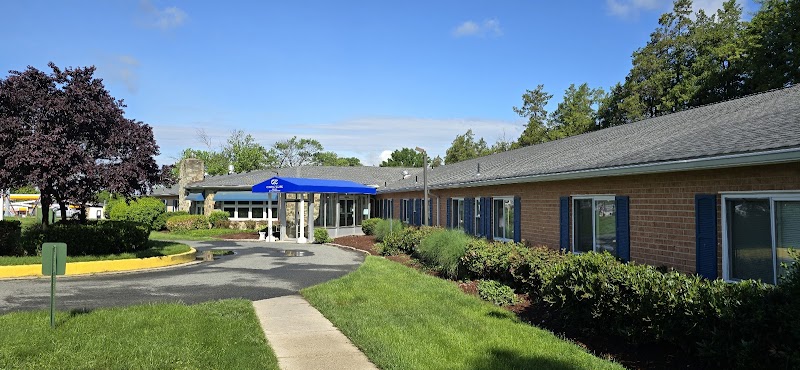
Who Owns and Operates Complete Care At Wheaton?

COMPLETE CARE AT WHEATON is owned by a for-profit company. For-profit facilities operate as businesses with obligations to shareholders or private owners. The facility is operated by COMPLETE CARE, a chain that manages multiple nursing homes. With 116 certified beds and approximately 110 residents (about 95% occupancy), it is a mid-sized facility located in WHEATON, Maryland.
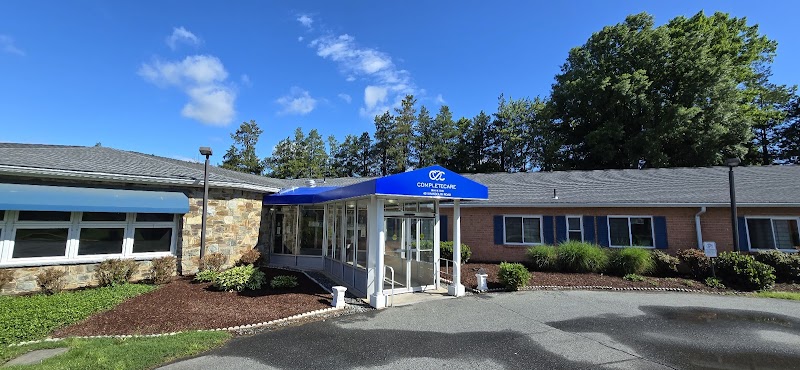
How Does Complete Care At Wheaton Compare to Other Maryland Nursing Homes?

Compared to the 100 nursing homes in Maryland, COMPLETE CARE AT WHEATON's overall rating (3 stars) is below the state average of 3.0, staff turnover (32%) is significantly lower than the state average of 46%, and health inspection rating (3 stars) is at the national benchmark.

What Should Families Ask When Visiting Complete Care At Wheaton?

Based on this facility's data, families visiting should ask: "What changes have been made since the serious inspection findings, and how are you preventing similar issues?" "Can I visit during a mealtime to observe dining assistance and food quality?" "How do you handle medical emergencies, and what is your hospital transfer rate?" "Can I speak with family members of current residents about their experience?" These questions are particularly relevant given the facility's Immediate Jeopardy citations.

Is Complete Care At Wheaton Safe?

Based on CMS inspection data, COMPLETE CARE AT WHEATON has documented safety concerns. Inspectors have issued 1 Immediate Jeopardy citation (the most serious violation level indicating risk of serious injury or death). The facility has a 3-star overall rating and ranks #100 of 100 nursing homes in Maryland. Families considering this facility should ask detailed questions about what corrective actions have been taken since these incidents.

Do Nurses at Complete Care At Wheaton Stick Around?

COMPLETE CARE AT WHEATON has a staff turnover rate of 32%, which is about average for Maryland nursing homes (state average: 46%). Moderate turnover is common in nursing homes, but families should still ask about staff tenure and how the facility maintains care continuity when employees leave.

Was Complete Care At Wheaton Ever Fined?

COMPLETE CARE AT WHEATON has no federal fines on record. CMS issues fines when nursing homes fail to meet care standards or don't correct problems found during inspections. The absence of fines suggests the facility has either maintained compliance or corrected any issues before penalties were assessed. This is a positive indicator, though families should still review recent inspection reports for the full picture.

Is Complete Care At Wheaton on Any Federal Watch List?

COMPLETE CARE AT WHEATON is not on any federal watch list. The most significant is the Special Focus Facility (SFF) program, which identifies the bottom 1% of nursing homes nationally based on persistent, serious quality problems. Not being on this list means the facility has avoided the pattern of deficiencies that triggers enhanced federal oversight. This is a positive indicator, though families should still review the facility's inspection history directly.