LIFE CARE CENTER OF AUBURN

14 MASONIC CIRCLE, AUBURN, MA 01501 (508) 832-4800
For profit - Limited Liability company 154 Beds LIFE CARE CENTERS OF AMERICA Data: November 2025
Trust Grade
48/100
#161 of 338 in MA
Last Inspection: June 2025

Inspected within the last 6 months. Data reflects current conditions.

Overview

Life Care Center of Auburn has received a Trust Grade of D, which indicates below-average performance and some concerns. Ranking #161 out of 338 facilities in Massachusetts places it in the top half, while its county rank of #24 out of 50 suggests that only a few local options are better. The facility is improving, with issues decreasing from 10 in 2024 to 7 in 2025, though it still has a high number of deficiencies, totaling 35. Staffing is a relative strength here, with a turnover rate of 28%, which is well below the state's average, and average RN coverage ensures basic medical needs are met. However, there are serious concerns, such as failing to manage a resident's pressure ulcer properly and neglecting to provide timely pain medication during a dressing change, indicating potential gaps in care.

Trust Score
D
48/100
In Massachusetts
#161/338
Top 47%
Safety Record
Moderate
Needs review
Inspections
Getting Better
10 → 7 violations
Staff Stability
✓ Good
28% annual turnover. Excellent stability, 20 points below Massachusetts's 48% average. Staff who stay learn residents' needs.
Penalties
⚠ Watch
$32,988 in fines. Higher than 83% of Massachusetts facilities, suggesting repeated compliance issues.
Skilled Nurses
⚠ Watch
Each resident gets only 29 minutes of Registered Nurse (RN) attention daily — below average for Massachusetts. Fewer RN minutes means fewer trained eyes watching for problems.
Violations
⚠ Watch
35 deficiencies on record. Higher than average. Multiple issues found across inspections.
★★★☆☆
3.0
Overall Rating
★★★☆☆
3.0
Staff Levels
★★★★☆
4.0
Care Quality
★★★☆☆
3.0
Inspection Score
Stable
2024: 10 issues
2025: 7 issues

The Good

  • 4-Star Quality Measures · Strong clinical quality outcomes
  • Low Staff Turnover (28%) · Staff stability means consistent care
  • Full Sprinkler Coverage · Fire safety systems throughout facility
  • No fines on record
  • Staff turnover is low (28%)

    20 points below Massachusetts average of 48%

Facility shows strength in quality measures, staff retention, fire safety.

The Bad

3-Star Overall Rating

Near Massachusetts average (2.9)

Meets federal standards, typical of most facilities

Federal Fines: $32,988

Below median ($33,413)

Moderate penalties - review what triggered them

Chain: LIFE CARE CENTERS OF AMERICA

Part of a multi-facility chain

Ask about local staffing decisions and management

The Ugly 35 deficiencies on record

2 actual harm
Jun 2025 4 deficiencies
CONCERN (D)

Potential for Harm - no one hurt, but risky conditions existed

PASARR Coordination (Tag F0644)

Could have caused harm · This affected 1 resident

Based on interviews, and record reviews, the facility failed to notify the state mental health authority (Pre-admission Screening and Resident Review [PASRR] Office) promptly of the need for Resident ...

Read full inspector narrative →
Based on interviews, and record reviews, the facility failed to notify the state mental health authority (Pre-admission Screening and Resident Review [PASRR] Office) promptly of the need for Resident Review for one Resident (#12) out of a total sample of 30 total residents, when the Resident experienced a significant change in his/her mental condition from his/her initial Level I PASRR. Specifically, the facility failed to notify the PASRR Office of the need for Resident Review when Resident #12, who was diagnosed with Depression, acquired new diagnoses of Delusional Disorders and Hallucinations during his/her stay at the facility and a new medication treatment of Seroquel (antipsychotic medication) was implemented. Findings include: Resident #12 was admitted to the facility in February 2024 with diagnoses including Depression. Review of Resident #12's Level I PASRR dated 2/2/24, indicated the following: -no documented diagnosis of a mental illness or disorder (MI/D: Schizophrenia, Somatoform Disorder, Delusional Disorder, Mood, PTSD, Severe Anxiety/Panic Disorder, Schizoaffective Disorder, Other Psychotic Disorder, Paranoia, Personality Disorder, other mental disorder that may lead to chronic disability). -screen for serious mental illness (SMI) was negative. -A Level II PASRR Evaluation was not indicated. Review of Resident #12's Physician Order dated 2/5/24, indicated: -Mirtazapine (antidepressant medication) Tablet 7.5 mg (milligrams), Give 1 tablet by mouth at bedtime for Depression. Review of Resident #12's Behavioral Health Visit Note dated 2/29/24, indicated: -was seen by Behavioral Health for initial evaluation and medication adjustment with chief complaint of recent delusional thoughts. -there was a concern during evening/night shifts that the Resident was becoming confused and having psychotic thoughts ranging from delusions to possible visual hallucinations (VHs). -family reported this was happening at home, though the frequency/intensity/examples were unknown. -will start with a recommendation for PRN(as needed) Trazodone and see how [he/she] responds. Review of Resident #12's Medical Diagnosis Listing indicated: -A new diagnosis of Delusional Disorders (mental illness where individuals hold strong, persistent beliefs that are not based on reality) was added on 2/29/24. -A new diagnosis of Hallucinations (sensing things such as visions, sounds, or smells that seem real but are not) was added on 3/1/24. Review of Resident #12's Physician orders dated 3/1/24, indicated: -Seroquel (Quetiapine Fumarate: antipsychotic medication) Oral Tablet, Give 12.5 mg by mouth at bedtime related to Hallucinations. Review of Resident #12's March 2024 Medication Administration Record (MAR) indicated the ordered Seroquel began being administered to the Resident on 3/2/24. Review of Resident #12's Behavioral Health Visit Note dated 3/14/24, indicated the following: -was seen by Behavioral Health for medication management with a chief complaint for delusional thoughts. -Seroquel (antipsychotic medication) had been added to the Resident's medication regimen on 3/1/24. -Per facility staff, the Resident had not exhibited any further delusional thinking nor hallucinations. Review of Resident #12's Behavioral Health Visit Note dated 12/30/24, indicated a gradual dose reduction (GDR) of Seroquel was recommended. Review of Resident #12's clinical record indicated: -Physician order to discontinue Seroquel Oral Tablet (Quetiapine Fumarate). Give 12.5 mg by mouth at bedtime related to Hallucinations on 12/31/24. -Physician order dated 12/31/24, with a discontinue date of 1/24/25, for Seroquel Oral Tablet, Give 12.5 mg by mouth at bedtime every other day for antipsychotics related to hallucinations. -Physician order dated 1/24/25, with no discontinue date, for Seroquel Oral Tablet. Give 25 mg by mouth at bedtime for antipsychotics related to Hallucinations. -Physician Order, dated 1/24/25, for Seroquel Oral tablet. Give 12.5 mg by mouth at bedtime for antipsychotics related to hallucinations for three days. Review of Resident #12's MARs from March 2024 through 6/16/25, indicated Seroquel was administered to the Resident as ordered by the Physician. Review of Resident #12's clinical record failed to include any evidence that Resident #12 was referred to the PASRR Office for Resident Review when the Resident experienced a change in mental condition from his/her initial Level I PASRR, dated 2/2/24. During an interview on 6/13/25 at 12:10 P.M., the Social Worker (SW) said Resident #12 had not been referred to the PASRR Office for Resident Review when the Resident experienced a change in mental condition from his/her initial Level I PASRR and required changes to be implemented to his/her psychotropic medication regimen. The SW said Resident #12 should have been referred to the PASRR Office for Resident Review when he/she was newly diagnosed with Delusional Disorders, Hallucinations, and required treatment with antipsychotic medication.
CONCERN (D)

Potential for Harm - no one hurt, but risky conditions existed

Quality of Care (Tag F0684)

Could have caused harm · This affected 1 resident

**NOTE- TERMS IN BRACKETS HAVE BEEN EDITED TO PROTECT CONFIDENTIALITY** Based on observations, interviews, and record reviews, the facility failed to identify a change in condition relative to bilater...

Read full inspector narrative →
**NOTE- TERMS IN BRACKETS HAVE BEEN EDITED TO PROTECT CONFIDENTIALITY** Based on observations, interviews, and record reviews, the facility failed to identify a change in condition relative to bilateral lower extremity edema (swelling) in a timely manner, for one Resident (#37) out of a total sample of 30 residents. Specifically, the facility failed to: -identify the onset of Resident #37's bilateral lower extremity edema in a timely manner when the Resident had previously been assessed to have no edema. -assess the Resident's bilateral lower extremity edema timely once the bilateral lower extremity (BLE) edema was identified, putting the Resident at risk for delayed assessment and treatment. Findings include: Review of the facility's Policy and Procedure titled Heart Failure, Long-Term Care, revised 1/13/25, indicated the following: -In Residents with Chronic Heart Failure, . drug therapy, diet changes, and activity restrictions usually help control symptoms. -Nursing interventions: >Inspect dependent areas, including the lower extremities for edema, note the amount and degree of pitting if present. -Monitoring: >Extremities, for peripheral edema and other signs and symptoms of fluid overload. Resident #37 was admitted to the facility in May 2025, with diagnoses including Malignant Neoplasm of Pancreas, Hypertension (HTN), Atrial Fibrillation (A-Fib), Stage Two Chronic Kidney Disease, and Chronic Heart Failure with Preserved Ejection Fraction. Review of Resident #37's Activities of Daily Living (ADL) Care Plan initiated 5/16/25, indicated: -Assist with mobility and ADLs as needed. Review of Resident #37's Nursing admission assessment dated [DATE], indicated: -Resident has a diagnosis of Heart Failure. -Resident had no edema. -Resident was admitted for palliative care (specialized care focused on improving one's quality of life for people with serious illness [es]). Review of the Nurse Practitioner (NP) Encounter Note dated 5/19/25, indicated Resident #37: -was newly admitted to the facility for long term, palliative care. -had a diagnosis of Chronic Heart Failure. -presented with no acute joint swelling. -presented with no edema. Review of the Minimum Data Set (MDS) assessment dated [DATE], indicated Resident #37: -was cognitively intact as evidenced by a Brief Interview for Mental Status (BIMS) score of 13 out of 15 total possible points. -did not exhibit any refusal of care. -required partial/moderate assistance (helper does less than half the effort. Helper lifts, holds, or supports trunk or limbs, but provides less than half the effort) for bathing and showering. Review of Resident #37's Physician orders indicated: -Furosemide (Lasix: diuretic medication used to remove excess fluid from the body) Oral Tablet 20 mg (milligrams), Give 1 tablet by mouth in the morning for CHF, dated 5/16/25. -Dabigatran Etexilate Mesylate (anticoagulant [blood thinning] medication) Oral Capsule. Give 150 mg by mouth every 12 hours for anticoagulants, dated 5/16/25. -Hydralazine (vasodilator medication that relaxes blood vessels and allow blood to flow more easily) HCl Oral Tablet 25 mg. Give 1 tablet by mouth two times a day for antihypertensives, dated 5/16/25. -No weights for comfort [sic], dated 5/22/25. -Diltiazem (medication used to treat high blood pressure, chest pain, and to control heart rate) HCl Oral Tablet 120 mg. Give 3 tablets by mouth one time a day for calcium channel blockers dated 5/16/25, with a discontinue date of 6/9/25. -Cardizem (Diltiazem HCl) Oral Tablet. Give 360 mg by mouth one time a day for prophylaxis dated 6/5/25, with a discontinue date of 6/10/25. -Cardizem LA Oral Tablet Extended Release 24 Hour 360 mg. Give 1 tablet by mouth in the morning for rate, bp (blood pressure), dated 6/10/25 with no discontinue date. On 6/12/25 at 8:16 A.M., the surveyor observed the following: -Resident #37 was sitting in a chair beside his/her bed, with both feet positioned on the floor. -The Resident wore a shoe with Velcro closures and open toe on his/her left foot and a slipper on his/her right foot. -The top of the Resident's right foot (portion not covered by the slipper) to just above the right ankle was puffy and shiny. During an interview at the time, Resident #37 said he/she had swelling in both lower extremities. Resident #37 said the swelling was new and began a couple of days prior. Resident #37 said he/she did not know what the swelling was from. The Resident then removed his/her slipper and open toe Velcro enclosure shoe and the surveyor observed an indentation in the skin across the top of the Resident's right foot where the top edge of the slipper made contact with the Resident's skin. The surveyor also observed that the top of the Resident's left foot was puffy and shiny. On 6/13/25 at 9:05 A.M., the surveyor observed the following: -Nurse #1 was passing medications for residents on the same side of the Unit where Resident #37 resided. -Resident #37 was sitting in a chair beside his/her bed, with both feet positioned on the floor. -The Resident wore slippers on both feet. -A portion of the tops of the Resident's feet not covered by the slippers and the Resident's ankles were visible to the surveyor. -The portion of the tops of the Resident's feet and ankles visible to the surveyor were puffy and shiny, and the right foot and ankle was larger than the left foot and ankle. During an interview at the time, Resident #37 said he/she still had swelling in his/her feet and he/she did not know why they were swollen. Resident #37 said he/she should really get after someone to look at his/her feet because he/she did not think anything was being done to address the swelling. During an interview on 6/13/25 at 9:05 A.M., Certified Nurses Aide (CNA) #1 said she frequently provided assistance with ADL care for Resident #37. CNA #1 said the Resident completed much of his/her own sponge bathing and dressing, with supervision and verbal reminders to be thorough, and that the Resident required assistance to bathe in the shower. CNA #1 said that Resident #37 had recently been requiring more supervision and cues while bathing as the Resident was starting to forget to bathe certain parts of his/her body. CNA #1 said she had provided Resident #37 with assistance to shower on 6/11/25, and that the Resident's feet looked swollen at that time. CNA #1 further said she did not think the Resident's feet looking swollen was new, so she did not alert the Nurse. CNA #1 said if she thought the swelling was new, she would have told the Nurse so that the Nurse could follow-up with the Resident. During an interview on 6/13/25 at 9:20 A.M., Nurse #1 said he worked regularly at the facility and provided care for Resident #37 often and that he was responsible for the Resident's care on 6/12/25. Nurse #1 said he was not aware of Resident #37 having any edema in his/her lower extremities. Nurse #1 then said he would see the Resident and alert the Physician if the Resident had lower extremity swelling. During an interview on 6/13/25 at 9:35 A.M., Nurse #1 said the Physician was in the facility and that he had alerted the Physician of Resident #37 having lower extremity edema. During a follow-up interview on 6/13/25 at 3:00 P.M., Nurse #1 said he thought the Physician had seen Resident #37 that day because he asked the Physician to see the Resident. Nurse #1 reviewed the Resident's clinical record and said he did not see a progress note from the Physician, so the Physician probably did not make any new orders for the Resident. Nurse #1 said that Physician was good about alerting the Nurses if he had new orders or changes in treatment for residents on the Unit. Review of Resident #37's clinical record on 6/17/25 at 7:23 A.M. failed to include any evidence that Resident #37's lower extremity edema had been assessed. During an interview on 6/17/25 at 7:35 A.M., Unit Manager (UM) #1 said she would have to look into whether Resident #37's lower extremity edema had been assessed. On 6/17/25 at 7:48 A.M., UM #1 requested the surveyor accompany her to observe Resident #37's lower extremities. The surveyor and UM #1 observed the following: -Resident #37 was lying in bed, covered with bed sheets and his/her lower extremities were not exposed. -UM #1 uncovered Resident #37's lower extremities, with the Resident's permission. -The top of the Resident's left foot to the front of the left lower ankle were puffy. -The top of the Resident's right foot to just above the right ankle was puffy and the skin had a firm, tight appearance. -UM #1 swept her hands, palm side down, over the Resident's front lower legs. During an interview at the time, UM #1 said this was the Resident's baseline and depending on who completed an assessment and how they completed the assessment, would determine whether or not a Resident had edema. UM #1 then said Resident #37 did not have any edema upon admission to the facility, and that the Resident did not currently have pitting edema. The surveyor then observed UM #1 complete the following: -UM #1 used a finger and thumb to apply pressure to Resident #37's right lower extremity, above the ankle, and the Resident's left ankle. -The surveyor observed impressions remaining in the areas of the Resident's lower extremities where UM #1 had applied pressure. During an interview at the time, UM #1 said Resident #37 did have pitting edema. During an interview immediately after exiting Resident #37's room, UM #1 said she was not sure if the Physician assessed the Resident on 6/13/25. UM #1 said the Physician may have seen the Resident and not provided new orders. UM #1 then said she would see whether the Physician was in the facility at this time and would update the surveyor on the results of the Physician's assessment of the Resident. During an interview on 6/17/25 at 9:37 A.M., the Director of Nursing (DON) said she spoke with the Physician and the Physician was unable to assess Resident #37 on 6/13/25 because the Resident was in an outdoor activity. The DON said Resident #37 would be assessed by a Provider on this date (6/17/25). Review of Resident #37's Physician orders dated 6/17/25, indicated: -Furosemide Oral Tablet 20 mg. Give 1 tablet by mouth in the morning for CHF. On hold from 6/17/25 to 6/20/25. -Furosemide Oral Tablet 40 mg. Give 40 mg by mouth one time a day for BLE edema for 3 Days. -BMP (basic metabolic panel: blood test used to measure several key substances in the blood, including kidney function markers) one time only for increase in diuretic for 1 Day, ordered 6/17/25 with a start date of 6/20/25. During an interview on 6/17/25 at 12:19 P.M., Physician Assistant (PA) #1 said nursing staff requested she assess Resident #37 on 6/17/25 for new onset of swelling in the Resident's lower extremities. PA #1 said the swelling was a new problem for the Resident. PA #1 said when she assessed the Resident on 6/17/25, the Resident had significant pitting edema, more in the right lower extremity than the left lower extremity. PA #1 said the Resident had 3 plus (+) pitting edema in the right lower extremity and 2+ pitting edema in the left lower extremity. PA #1 said she attributed Resident #37's lower extremity edema to the Resident's CHF. PA #1 said it was important for a new onset of edema to be identified and reported to the Provider right away so the Provider can assess the edema and provide instructions for care. PA #1 further said after assessing Resident #37 on 6/17/25, she provided an order to double the Resident's Furosemide and ordered a BMP to be drawn to ensure the increase in Furosemide did not impact the Resident's kidney function. During a follow-up interview on 6/17/25 at 1:30 P.M., UM #1 said if a Resident experienced a new onset of edema, the Nurse was responsible to write a Nursing Note or Health Status Note indicating the change of condition. UM #1 said the Nursing or Health Status Note would be where the Nurse would record the assessment of a Resident's edema. UM #1 said Nurse #1 should have completed a Nursing or Health Status Note relative to Resident #37's change in condition with an assessment related to the Resident's lower extremity edema on 6/13/25, but Nurse #1 did not. During an interview on 6/17/25 at 1:53 P.M., the Physician said he was not aware Resident #37 had any lower extremity edema until 6/13/25. The Physician said he was unable to assess the Resident while he was at the facility on 6/13/25, because the Resident was engaged in an outdoor activity. During an interview on 6/17/25 at 2:30 P.M., the DON said communication was left for PA #2 to assess Resident #37 on 6/14/25 for lower extremity edema after the Physician was unable to assess the Resident on 6/13/25. The DON said PA #2 worked at the facility on 6/14/25 and did not assess the Resident. The DON further said she did not know why PA #2 did not assess the Resident and that PA #2 was now on vacation. During an interview on 6/17/25 at 3:55 P.M., Nurse #2 said she was assigned to provide nursing care for Resident #37 that day (6/17/25) and that Nurse #1 did not work at the facility on 6/17/25. Nurse #2 said Residents with CHF required monitoring for changes including shortness of breath, decreased physical functioning, fatigue, and edema. Nurse #2 said some Residents with CHF may require daily weights to assist with monitoring their condition. Nurse #2 said if a Resident was not to be weighed daily, the Nurse was responsible to ask the Resident if they were experiencing any changes that were related to CHF and also observe the Resident for symptoms, including edema. Nurse #2 said orders or instructions for monitoring a Resident's symptoms of CHF and diuretic use would not be indicated in a Resident's record, but Nurses were responsible to monitor for any change in symptoms for Residents with CHF at a required frequency of every shift.
CONCERN (D)

Potential for Harm - no one hurt, but risky conditions existed

Infection Control (Tag F0880)

Could have caused harm · This affected 1 resident

**NOTE- TERMS IN BRACKETS HAVE BEEN EDITED TO PROTECT CONFIDENTIALITY** Based on observations, record reviews, and interviews, the facility failed to adhere to infection control standards of practice ...

Read full inspector narrative →
**NOTE- TERMS IN BRACKETS HAVE BEEN EDITED TO PROTECT CONFIDENTIALITY** Based on observations, record reviews, and interviews, the facility failed to adhere to infection control standards of practice to prevent contamination and the spread of infections for two Residents (#101 and #4) out of a total sample of 30 residents. Specifically, 1) for Resident #101, the facility failed to ensure that appropriate Personal Protective Equipment (PPE: items such as gowns and gloves worn to prevent the spread of infection) was worn as required for the Resident on Enhanced Barrier Precautions (EBP), and that hand hygiene was performed before donning (putting on) PPE and during provision of urinary catheter care, placing the Resident at increased risk of contamination and the spread of infections. 2) for Resident #4, the facility failed to ensure that the appropriate PPE was worn as required when providing urinary catheter care, placing the Resident at increased risk of the spread of infections. Findings include: Review of CDC Guideline for Frequently Asked Questions (FAQs) about Enhanced Barrier Precautions in Nursing Homes, revised 6/28/24, retrieved from https://www.cdc.gov/long-term-care-facilities/hcp/prevent-mdro/faqs.html indicated: -Enhanced Barrier Precautions are an infection control intervention designed to reduce transmission of multidrug-resistant organisms (MDROs) in nursing homes. -Enhanced Barrier Precautions involve gown and glove use during high-contact resident care activities for residents known to be colonized or infected with a MDRO as well as those at increased risk of MDRO acquisition (e.g., residents with wounds or indwelling medical devices). -Enhanced Barrier Precautions expand the use of gown and gloves beyond anticipated blood and body fluid exposures. They focus on use of gown and gloves during high-contact resident care activities that have been demonstrated to result in transfer of MDROs to hands and clothing of healthcare personnel, even if blood and body fluid exposure is not anticipated. -Enhanced Barrier Precautions are recommended for residents known to be colonized or infected with a MDRO as well as those at increased risk of MDRO acquisition (e.g., residents with wounds or indwelling medical devices). -Standard Precautions still apply while using Enhanced Barrier Precautions. For example, if splashes and sprays are anticipated during the high-contact care activity, face protection should be used in addition to the gown and gloves. Review of the facility policy titled Enhanced Barrier Precautions, revised 4/22/25, indicated the following: -EBP are indicated for residents with any of the following: >wound and/or indwelling medical devices even if the resident is not known to be infected or colonized with a MDRO {Multi-Drug-Resistant Organism} >indwelling medical device examples include urinary catheters . -The facility should develop a process to communicate which residents require the use of EBP for all high-contact care activities. The facility may choose to post signage on the door or wall outside of the resident room indicating the resident is on Enhanced Barrier Precautions. -Examples of high-contact resident care activities requiring gown and glove use include: >device care or use: central line, urinary catheter Review of the facility policy titled Hand Hygiene, reviewed 6/3/24, indicated the following: -Associates perform hand hygiene (even if gloves are used) in the following situations: >before and after contact with the resident. 1) Resident #101 was admitted to the facility in March 2021 with diagnoses including Alzheimer's Disease and Neuromuscular Dysfunction of the Bladder. Review of Resident #101's Minimum Data Set (MDS) assessment dated [DATE] indicated that the Resident had an indwelling urinary catheter. Review of Resident #101's June 2025 Physician orders indicated: -an active order initiated on 6/6/25 for Enhanced Barrier Precautions (EBP), Diagnosis: Foley [type of indwelling urinary catheter] Catheter. On 6/13/25 at 2:40 P.M., during an Indwelling Urinary Catheter observation with Nurse #1, the surveyor observed: -Nurse #1 did not perform hand hygiene, donned gloves only and entered Resident #101's room. -Nurse #1 performed a hands-on assessment of the size of Resident #101's indwelling urinary catheter. -Nurse #1 doffed gloves and performed hand hygiene before exiting the Resident's room. During an interview on 6/13/25 at 3:01 P.M., the surveyor, Nurse #1, Unit Manager (UM #1), reviewed the EBP sign at Resident #101's door. Nurse #1 said he had performed a hands-on assessment of the Resident's catheter but did not believe he needed to wear a gown. UM #1 said that any hands-on care of the catheter required a gown according to the EBP sign. Nurse #1 said that he had recently washed his hands but had not done so between using the computer at the nurses station and donning the gloves to assess Resident #101. UM #1 said that Nurse #1 should have performed hand hygiene before donning PPE and entering the Resident's room. 2) Resident #4 was admitted to the facility in March 2025 with diagnoses including incomplete Paraplegia and Neuromuscular Dysfunction of the Bladder. Review of Resident #4's MDS assessment dated [DATE], indicated the Resident had an indwelling urinary catheter. Review of Resident #4's June 2025 Physician orders indicated: -an active order initiated 4/2/25 for EB, Diagnosis: catheter, drains, wounds, colostomy. On 6/13/25 at 2:45 P.M., during an Indwelling Urinary Catheter observation with UM #2, the surveyor observed the following: -UM #2 performed hand hygiene, donned gloves only and entered Resident #4's room. -UM #2 performed a hands-on assessment of the size of Resident #4's indwelling urinary catheter. -UM #2 doffed gloves and performed hand hygiene before exiting the Resident's room. During an interview on 6/13/25 at 2:47 P.M., the surveyor and UM #2 observed the EBP sign outside Resident #4's door. UM #2 said the sign indicated a gown and glove were required for care of the indwelling urinary catheter. UM #2 said she had not worn a gown when she completed the hands-on assessment of the indwelling urinary catheter but should have due to infection control and potential contamination concerns.
MINOR (B)

Minor Issue - procedural, no safety impact

Assessment Accuracy (Tag F0641)

Minor procedural issue · This affected multiple residents

**NOTE- TERMS IN BRACKETS HAVE BEEN EDITED TO PROTECT CONFIDENTIALITY** Based on record reviews, and interviews, the facility failed to complete Comprehensive Minimum Data Set (MDS) Assessments that a...

Read full inspector narrative →
**NOTE- TERMS IN BRACKETS HAVE BEEN EDITED TO PROTECT CONFIDENTIALITY** Based on record reviews, and interviews, the facility failed to complete Comprehensive Minimum Data Set (MDS) Assessments that accurately reflected the status of two Residents (#14 and #141) out of a total sample of 30 residents. Specifically, 1. For Resident #14, the facility failed to accurately code for Hospice services when Resident #14 was ordered for and had been receiving Hospice services during the assessment period. 2. For Resident #141, the facility failed to accurately code for discharge return anticipated when the Resident was transferred to the hospital for evaluation of an acute change in health status. Findings include: Review of the CMS Resident Assessment Instrument (RAI) Manual 3.0, located at CMS.gov included but was not limited to: -The RAI process has multiple regulatory requirements which require the assessment accurately reflects the resident's status. 1. Resident #14 was admitted to the facility in December 2016, with diagnoses including Multiple Sclerosis (MS) and Dementia. Review of Resident #14's Medical Record included but was not limited to: -The Resident was severely cognitively impaired as evidenced by a Brief Interview for Mental Status (BIMS) score of zero out of a total possible score of 15. -The Resident had an invoked Health Care Proxy (HCP: person that can make decisions related to health care when someone is unable to do so themselves), effective 7/18/18. -The Resident had a Physician's order for Hospice services, effective 3/27/25. Review of Resident #14's Person-Centered Care Plan, revised on 4/4/25, included but was not limited to: -The Resident was admitted to Hospice Services on 3/27/25. Review of Resident #14's MDS with assessment reference date of 4/11/25, failed to indicate that the Resident received Hospice Services. During an interview on 6/16/25 at 10:45 A.M., MDS Nurse #1 said that the facility followed the RAI manual guidelines for coding of MDS assessments. MDS Nurse #1 said Resident #14 had been receiving Hospice Services since 3/27/25. MDS Nurse #1 said that the Hospice Services should have been coded on the Resident's MDS dated [DATE], because Hospice Services were in place. MDS Nurse #1 said that Resident#14's MDS data was inaccurate and did not reflect the Resident's status. 2. Resident #141 was admitted to the facility in July 2023 with diagnoses including Hypertension (HTN) and Atrial Fibrillation (A-Fib). Review of Resident #141's Medical Record included but was not limited to: -A Nursing Progress Note dated 3/22/25, indicated the Resident was unresponsive with abnormal vital signs, had shortness of breath, discomfort and low oxygen levels of 79% when breathing room air. -A Physician's order to send the Resident to the hospital for evaluation, effective 3/22/25. Review of the Resident's MDS with reference date of 3/22/25, included but was not limited to: -Resident #141 was discharged with return not anticipated. During an interview on 6/18/25 at 11:55 A.M., MDS Nurse #1 said at the time of the hospital transfer the facility had expected the Resident to return. MDS Nurse #1 said that the Resident passed away while at the hospital. MDS Nurse #1 said that the MDS coding was inaccurate because the facility did not have reason to believe that the Resident was not going to return to the facility at the time of the Resident's transfer to the hospital for evaluation. MDS Nurse #1 said that the MDS assessment should have been coded as discharge return anticipated but was not coded as required.
Jan 2025 3 deficiencies
CONCERN (D) 📢 Someone Reported This

A family member, employee, or ombudsman was alarmed enough to file a formal complaint

Potential for Harm - no one hurt, but risky conditions existed

Abuse Prevention Policies (Tag F0607)

Could have caused harm · This affected 1 resident

Based on interviews and records reviewed, for two of five sampled residents (Residents #2 and #3), the Facility failed to ensure staff implemented and followed the Facility Abuse Prohibition Policy, w...

Read full inspector narrative →
Based on interviews and records reviewed, for two of five sampled residents (Residents #2 and #3), the Facility failed to ensure staff implemented and followed the Facility Abuse Prohibition Policy, when Resident #2 and the family member of Resident #3 (Family Member #1) reported allegations of abuse by Housekeeper #1 to multiple staff members and staff did not immediately report the allegations to their immediate Supervisor, Administrator or designee. Findings include: The Facility Policy titled Abuse-Reporting and Response-No Crime Suspected, last reviewed 6/17/24, indicated that all associates are mandated to immediately report suspected resident abuse/neglect to their immediate supervisor and/or Facility representative. 1) Resident #2's medical record indicated he/she was admitted to the Facility during December of 2022. Resident #2's most recent Minimum Data Set (MDS) Assessment, dated 12/06/24, indicated his/her cognitive patterns were intact. During an interview on 1/03/25 at 12:20 P.M., Housekeeper #2 said that at some point after 11/15/24 (exact date unknown), Resident #2 told her about an incident he/she had with Housekeeper #1. Housekeeper #2 said that Resident #2 told her about an incident in which he/she was awakened by Housekeeper #1 giving him/her a kiss on the cheek. Housekeeper #2 said that she did not immediately report Resident #2's allegation to her immediate supervisor or the Administrator. During an interview on 1/03/25 at 1:45 P.M., the Administrator said that Housekeeper #2 came to her after speaking with the Surveyor 1/03/25 and reported that Resident #2 had previously told her that Housekeeper #1 had kissed him/her on the cheek. 2) Resident #3's medical record indicated he/she was admitted to the Facility during May of 2024. Resident #3's most recent Minimum Data Set (MDS) Assessment, dated 5/18/24, indicated his/her cognitive patterns were moderately impaired. During a telephone interview on 1/08/25 at 1:02 P.M, Family Member #1 said that, at some point during Resident #3's stay at the Facility (between May and July 2024, exact date unknown), Resident #3 told her that Housekeeper #1 came into his/her room and put his hands under his/her shirt. Family Member #1 said that she reported Resident #3's allegation about Housekeeper #1 to Nurse #2. During a telephone interview on 1/08/25 at 3:30 P.M., Nurse #2 said that Family Member #1 told her about an incident in which Resident #3 alleged Housekeeper #1 put his hands under his/her shirt. Nurse #2 said that she reported Family Member #1's allegation however, said she could not be certain to whom and said she thought she reported the allegation to Unit Manager #2, Unit Manager #3 or the Assistant Director of Nursing. During telephone interviews with Unit Manager #1 on 1/09/25 at 3:50 P.M., Unit Manager #2 on 1/10/25 at 11:30 P.M. and the Assistant Director of Nursing on 1/14/25 at 10:10 A.M., they said Nurse #2 did not report Family Member #1's allegation that Housekeeper #1 put his hands under Resident #3's shirt to them.
CONCERN (D) 📢 Someone Reported This

A family member, employee, or ombudsman was alarmed enough to file a formal complaint

Potential for Harm - no one hurt, but risky conditions existed

Report Alleged Abuse (Tag F0609)

Could have caused harm · This affected 1 resident

Based on interviews and records reviewed, for two of five sampled residents (Residents #1 and #4), the Facility failed to ensure they reported allegations of abuse by Housekeeper #1 to the Department ...

Read full inspector narrative →
Based on interviews and records reviewed, for two of five sampled residents (Residents #1 and #4), the Facility failed to ensure they reported allegations of abuse by Housekeeper #1 to the Department of Public Health (DPH) as required, when after being notified by staff that Housekeeper #1 potentially sexually abused Residents #1 and #4, the Director of Nursing and the Administrator did not report the allegations to the DPH, as required. Findings include: The Facility Policy titled Abuse-Reporting and Response-No Crime Suspected, last reviewed 6/17/24, indicated that all alleged violations, must be reported to the administrator of the Facility and to other officials in accordance with State law through established procedures, including the State Survey and Certification Agency. 1) Resident #1's medical record indicated he/she was admitted to the Facility during August of 2020. Resident #1's most recent Minimum Data Set (MDS) Assessment, dated 10/30/24, indicated his/her cognitive patterns were severely impaired. During an interview on 1/03/25 at 1:20 P.M., Certified Nurse Aide (CNA) #1 said that on 11/15/24 around lunch time (exact time unknown), she went to Resident #1's room, the bathroom door was closed and Resident #1 was not in the room. CNA #1 said that when she tried to open the bathroom door to see if Resident #1 was inside, the door would not open. CNA #1 said that she knocked and tried the door again after a few seconds and said she was able to open the door. CNA #1 said that Housekeeper #1 and Resident #1 were alone in the bathroom. CNA #1 said that she reported finding Resident #1 alone in the bathroom with Housekeeper #1 to Nurse #1, the Director of Nurses and the Assistant Director of Nurses. During an interview on 1/03/25 at 4:00 P.M. with the Administrator and the Director of Nursing, they said that Nurse #1 had reported to the Director of Nursing on 11/15/24 that Housekeeper #1 was found alone in the bathroom with Resident #1. The Director of Nursing and Administrator said that they initiated an investigation into CNA #1's observation and determined that nothing untoward happened to Resident #1. The Director of Nursing and Administrator said that they did not report the allegation to the Department of Public Health. The Administrator said that she did not think CNA #1's report was an allegation of abuse or having to do with harm to Resident #1, but thought it was an instance in which staff of the nursing department was telling on another department. 2) Resident #4's medical record indicated he/she was admitted to the Facility during August of 2024 and discharged during December 2024. Resident #4's most recent MDS Assessment, dated 11/14/24, indicated his/her cognitive patterns were intact. During a telephone interview on 1/08/25 at 3:30 P.M., CNA #4 said that, sometime during Resident #4's stay in the facility (exact date unknown), Resident #4 told her that he/she felt like Housekeeper #1 was stalking him/her and always staring at him/her, CNA #4 said that she reported Resident #4's complaint to one of the nurses (exact name unknown). During a telephone interview on 1/08/25 at 2:15 P.M., the Occupational Therapy Assistant said that Resident #4 expressed concerns to her about Housekeeper #1. The Occupational Therapy Assistant said Resident #4 told her that Housekeeper #1 was always around him/her, always in the hallway outside of his/her room and he/she could always hear his voice. The Occupational Therapy Assistant said that Resident #4's perception was that he/she got too much attention from Housekeeper #1. The Occupational Therapy Assistant said that she reported Resident #4's concerns to the Director of Nursing. The Occupational Therapy Assistant said a day or two later (exact date unknown), Resident #4 complained a second time about Housekeeper #1, saying that he/she felt uncomfortable with the degree that Housekeeper #1 was around him/her. The Occupational Therapy Assistant said she reported Resident #4's concerns a second time, reporting them to Unit Manager #2 or #3. The Occupational Therapy Assistant said that Resident #4 was fearful, anxious and upset when talking to him/her about Housekeeper #1. The Director of Nursing said that the Occupational Therapy Assistant told her about concerns that Resident #4 had reported regarding Housekeeper #1. The Director of Nursing provided a Written Statement, dated 9/04/24, (written and signed by herself) which indicated that Resident #4 told Occupational Therapy Assistant that he/she thought Housekeeper #1 was weird, that he spent a lot of time in his/her room and he must think that he/she was his/her boyfriend. The Written Statement indicated the Director of Nursing investigated Resident #4's concern by speaking to Resident #4 and he/she said he/she was not afraid of Housekeeper #1, worried or concerned and stated he/she felt safe and comfortable. The Director of Nursing said that based on her conversation with Resident #4, she did not report the allegation to the Department of Public Health.
CONCERN (D) 📢 Someone Reported This

A family member, employee, or ombudsman was alarmed enough to file a formal complaint

Potential for Harm - no one hurt, but risky conditions existed

Investigate Abuse (Tag F0610)

Could have caused harm · This affected 1 resident

Based on interviews and records reviewed, for two of five sampled residents (Resident #1 and #4), the Facility failed to ensure that after being made aware of allegations of potential sexual abuse by ...

Read full inspector narrative →
Based on interviews and records reviewed, for two of five sampled residents (Resident #1 and #4), the Facility failed to ensure that after being made aware of allegations of potential sexual abuse by a staff member that they obtained and maintained evidence that a thorough investigation was completed, including conducting and documenting assessments of both residents and obtaining and documenting staff member interviews. Findings include: The Facility Policy titled Abuse-Conducting an Investigation, last reviewed 6/17/24, indicated that all allegations of abuse are promptly and thoroughly investigated. The Policy indicated alleged victims will be examined for signs of injury, including a physical examination or psychosocial assessment. The Policy indicated the investigation was expected to include, although not be limited to, interviews with the alleged victim and their representative, the alleged perpetrator and witnesses. The Facility Policy titled Abuse-Reporting and Response-No Crime Suspected, last reviewed 6/17/24, indicated that at the time that an incident is reported, the nurse will immediately assess the resident. 1) Resident #1's medical record indicated he/she was admitted to the Facility during August of 2020. Resident #1's most recent Minimum Data Set (MDS) Assessment, dated 10/30/24, indicated his/her cognitive patterns were severely impaired. During an interview on 1/03/25 at 1:20 P.M., Certified Nurse Aide (CNA) #1 said that on 11/15/24 around lunch time (exact time unknown), she went to Resident #1's room, the bathroom door was closed and Resident #1 was not in the room. CNA #1 said that when she tried to open the bathroom door, it would not open. CNA #1 said that she knocked and tried the door again after a few seconds and said she was able to open the door. CNA #1 said that Housekeeper #1 and Resident #1 were alone in the bathroom. CNA #1 said that she reported finding Resident #1 alone in the bathroom with Housekeeper #1 to Nurse #1, the Director of Nurses and the Assistant Director of Nurses. During an interview on 1/03/25 at 4:00 P.M. with the Administrator and the Director of Nursing, they said that on 11/15/24, Nurse #1 reported that Housekeeper #1 was alone in the bathroom with Resident #1. The Director of Nursing and Administrator said that they initiated an investigation of CNA #1's observation and determined that nothing untoward happened to Resident #1. The Director of Nursing said that during the investigation, she and the Assistant Director of Nursing saw Resident #1 seated in his/her bedroom. The Director of Nursing said that Resident #1 looked OK, his/her clothes were not disheveled and his/her behavior was at baseline. The Director of Nursing said that she did not conduct a physical assessment of Resident #1, or ask another nurse to conduct a physical assessment, and instead relied on CNA #1's statement that she had provided incontinence care to Resident #1 after finding him/her alone in the bathroom with Housekeeper #1 and his/her incontinence brief and clothing appeared undisturbed. Review of the Facility's Internal Investigation, dated 11/21/24, indicated there was no documentation to support the Facility having had Resident #1 examined by a nurse or documented interviews with Housekeeper #1, other staff working on Resident #1's unit at the time of the alleged incident, or Resident #1's representative. 2) Resident #4's medical record indicated he/she was admitted to the Facility during August of 2024 and discharged during December 2024. Resident #4's MDS Assessment, dated 11/14/24, indicated his/her cognitive patterns were intact. During a telephone on 1/08/25 at 3:30 P.M., CNA #4 said that during Resident #4's admission in the facility, (exact date unknown), Resident #4 told her that he/she felt like Housekeeper #1 was stalking him/her and always staring at him/her. CNA #4 said that she reported CNA #4's complaint to one of the nurses. During a telephone interview on 1/08/25 at 2:15 P.M., the Occupational Therapy Assistant said that sometime in September 2024 (exact date unknown), Resident #4 expressed concerns to her about Housekeeper #1. The Occupational Therapy Assistant said Resident #4 told her that Housekeeper #1 was always around him/her, always in the hallway outside of his/her room and he/she could always hear his voice. The Occupational Therapy Assistant said that Resident #4's perception was that he/she got too much attention from Housekeeper #1. The Occupational Therapy Assistant said that she reported Resident #4's comments to the Director of Nursing. The Occupational Therapy Assistant said that, a day or two later (exact date unknown), Resident #4 complained a second time to her about Housekeeper #1, saying that he/she felt uncomfortable with the degree that he was around him/her and she reported Resident #4's second complaint to Unit Manager #2 or #3. The Occupational Therapy Assistant said that Resident #4 was fearful, anxious and upset when talking about Housekeeper #1. The Director of Nursing said that the Occupational Therapy Assistant had told her about concerns that Resident #4 reported. The Director of Nursing provided a Written Statement, dated 9/04/24 and signed by herself, which indicated that Resident #4 had told an Occupational Therapy Assistant that he/she thought Housekeeper #1 was weird, that he spent a lot of time in his/her room and he must think that he/she was his/her boyfriend. The Written Statement indicated the Director of Nursing investigated Resident #4's concern by speaking to him/her and that he/she said he/she was not afraid of Housekeeper #1, worried or concerned and stated he/she felt safe and comfortable. Review of the Facility's Internal Investigation, dated 9/04/24, indicated there was no documentation to support the Facility having had Resident #4 examined by a nurse or documented interviews with Housekeeper #1, other staff working on Resident #4's unit at the time of the alleged incident, or Resident #4's representative during the investigation of the allegation.
Apr 2024 10 deficiencies 2 Harm
SERIOUS (G)

Actual Harm - a resident was hurt due to facility failures

Pressure Ulcer Prevention (Tag F0686)

A resident was harmed · This affected 1 resident

**NOTE- TERMS IN BRACKETS HAVE BEEN EDITED TO PROTECT CONFIDENTIALITY** Based on observation, interview, record and policy review, the facility failed to provide care consistent with professional stan...

Read full inspector narrative →
**NOTE- TERMS IN BRACKETS HAVE BEEN EDITED TO PROTECT CONFIDENTIALITY** Based on observation, interview, record and policy review, the facility failed to provide care consistent with professional standards to prevent and treat a pressure ulcer (localized damage to the skin and/or underlying soft tissue usually over a bony prominence or related to a medical or other device) and prevent further skin and pressure injury for one Resident (#85), out of a total sample of 25 residents. Specifically, the facility staff failed to: -Assess the fit and use of an orthopedic surgical shoe (type of shoes that provides support and stability for the foot after an injury or surgery) for Resident #85 who had a high risk of developing pressure ulcers due to a history of Diabetes (condition that result in too much sugar [glucose] in the blood). -Provide skin care and treatments timely for ulcers on the right plantar foot, back of right ankle and right heel, resulting from the use of an orthopedic surgical shoe. Findings include: Review of the facility policy titled Skin Integrity and Pressure Ulcer/Injury Prevention and Management, reviewed March 2023, indicated the following: - A resident receives care, consistent with professional standards of practice, to prevent pressure ulcers and does not develop pressure ulcers unless the individual's clinical condition demonstrates that they were unavoidable; and - A resident with pressure ulcers receives necessary treatment and services, consistent with professional standards of practice, to promote healing, prevent infection and prevent new ulcers from developing. -Skin observations also occur throughout points of care provided by Certified Nursing Assistance (CNA) during activity of daily living (ADL) care (bathing, dressing, incontinent care, etc.) Any changes or open areas are reported to the Nurse. -Nurse will complete further inspection/assessment and provide treatment if needed. -When skin breakdown occurs, it requires attention and a change in the plan of care may be indicated to treat the resident. -Successful pressure injury treatment involves relieving pressure, restoring circulation, promoting adequate nutrition and, if possible, resolving or managing related disorders. Resident #85 was admitted to the facility in March 2024, with diagnoses including Diabetes with Neuropathy (condition that results in too much sugar in the blood resulting in high blood glucose[sugar] with nerve damage) and Peripheral Vascular Disease (PVD - circulatory disorder that causes the blood vessels outside of the heart and brain to narrow, block, or spasm). Review of the Minimum Data Set (MDS) assessment dated [DATE], indicated Resident #85: -was cognitively intact as evidenced by a Brief Interview of Mental Status (BIMS) score of 14 out of a total 15. -Had range of motion impairments affecting one side upper extremity. -Was dependent on staff for putting on and taking off footwear. -Required assistance from staff with upper and lower dressing, rolling side to side, lying to sitting and with transfers. -Was at risk for pressure ulcers -Had no pressure ulcers/injuries -Had two venous and arterial ulcers (no location identified). Review of the April 2024 Physician's orders, included the following: -Diabetic foot care, initiated 3/8/24 -Monitor heels every shift, initiated 3/7/24 -Bilateral heels: Apply skin prep, initiated 3/7/24 Review of the Norton Plus Pressure Ulcer Scale (used to determine whether a patient is at high risk of pressure ulcer development) dated 3/29/24, indicated a total score of 11 indicating moderate risk (high risk - score of 10 and below, moderate risk - score of 11-15) for skin breakdown. Review of the Weekly Wound assessment dated [DATE], indicated Resident #85 had the following: -Pink heels (the Weekly Wound Assessment did not specify one or both heels). Review of the Physical Therapy Treatment encounter dated 3/22/24, indicated Resident #85: -Had an x-ray taken of the right foot due to a loud crack experienced when ambulating to the bathroom [in the Resident's room in the facility]. -The x-ray report was negative, but the Resident is experiencing significant pain with putting pressure on the right foot. -Physician Assistant (PA) requested a right soft cushion orthopedic surgical shoe. Review of the Physical Therapy (PT) Treatment encounter dated 3/25/24, indicated Resident #85: -Was unable to initiate steps due to pain in right lower extremity. -Was wearing the right cast shoe (a soft cushion surgical shoe that provides support and stability for the foot after an injury or surgery). -Received pain medication prior to the therapy session. Review of the Physical Therapy Treatment encounter dated 3/28/24, indicated Resident #85: -continues to report pain in the right heel with weight bearing. -declined all additional standing and therapy activities. -An Orthopedic appointment was scheduled for 4/4/24 due to right heel pain. Review of the Physical Therapy Treatment encounter dated 3/29/24, indicated Resident #85: -had pain in the right heel with weight bearing. -declined gait training and standing activities. Review of the Physical Therapy Treatment encounter dated 4/2/24, indicated Resident #85: -had pain in right heel/ankle with weight bearing. -had pain medication prior to the PT session. Review of the Resident's Orthopedic Consultation dated 4/4/24, indicated the following: -Fracture of the Right Calcaneus with Achilles Tendon Disruption (an injury that is usually painful and likely to affect the ability to walk). -Skin Care for ulcers right plantar, right heel and back of right ankle. -Keep NWB (non weight bearing- for a certain period of time following injury or surgery you are not allowed to put any weight through the operated or injured limb to allow it to heal as much as possible). -Monitor skin back of [right] ankle. Review of the Physician's Progress Note, 4/5/24 indicated Resident #85: -Was seen by the Physician's Assistant (PA) on 3/22/24, for complaints of acute left [error] ankle pain when walking back from the bathroom. -Had an x-ray of right ankle 3/21/24 that showed no acute fracture. -Was seen by the PA on 3/26/24, for complaints of right heel pain, not able to bear weight without significant pain, is wearing a post-operative [soft cushion surgical]shoe on the [right foot] for support. -Was seen by the PA on 4/2/24, and continued with right heel pain, relieved with Tramadol (pain medication). -Orthopedic appointment scheduled 4/4/24. Review of the Nursing Progress Note dated 4/9/24, indicated Resident #85: -had a Deep Tissue Injury (DTI-purple or maroon localized area of discolored intact skin or fluid filled blister due to damage of underlying soft tissue from pressure) to the back of right heel, origin believed to be from back of the ortho (orthopedic) shoe. Further Review of the medical record indicated that Resident #85 was provided the surgical shoe (also referred to as post-op shoe/orthopedic shoe) on 3/22/24 and continued wearing it on the right foot until after the orthopedic appointment on 4/4/24. Review of the Physician's orders dated 4/10/24 (6 days after the ulcers were identified by the Orthopedic Physician), indicated the following: -Monitor DTI to right heel, initiated 4/10/24 -Maintain NWB to RLE (right lower extremity), initiated 4/9/24 -Monitor CSM (circulatory, motor, sensory- a physical exam of a resident whenever there is a high index of suspicion that there may be circulatory or neurological impairment to a limb) to right lower extremity (RLE), initiated 4/9/24 -Pain Assessment/Interventions prior to PRN (as needed) pain medication administration: Location of pain: ankle med interventions prior to administering pain medication, initiated 4/10/24 -Skin prep to bilateral heels and moisturize legs and feet two times a day, initiated 4/10/24 -Offload (minimizing or removing weight placed on the foot to help prevent and heal ulcers) pressure at all times, initiated 4/10/24 -Right plantar foot care, assess daily, clean foot with soap and water, pat dry, apply betadine to the small round Diabetic Ulcer on the mid-foot and cover with a padded dressing. -For Diabetic foot care assessments, initiated 4/10/24 Review of the current Diabetes Care Plan, initiated 3/7/24, indicated Resident #85 will have no complications related to Diabetes through the next review date. Review of the care plan, Unstageable DTI pressure ulcer right heel or potential for pressure ulcer development related to immobility, initiated 4/4/24, indicated Resident #85 -Pressure ulcer will show signs of healing and remain free from infection by/through next review date. -Administer treatments as ordered. -Assess wound healing. -Educate the resident/family/caregivers as to causes of skin breakdown, including transfer/positioning requirements, importance of taking care during ambulating/mobility, good nutrition and frequent repositioning. -Follow facility policies/protocol for the prevention/treatment of skin breakdown. Review of the Weekly Wound assessment dated [DATE], indicated Resident #85 had the following: -Right heel DTI pressure wound-unstageable acquired in facility 1.3 centimeters (cm) length by (x) 0.3 cm width x 0 cm depth. During an interview on 4/9/24 at 12:32 P.M., the Director of Nurses (DON) said that Resident #85 had an Orthopedic appointment on 4/4/24 with recommendations for the fracture of the Right Calcaneus with Achilles Tendon Disruption and the ulcers located on the right foot and heel areas. The DON further said the Resident had been ordered an orthopedic surgical shoe for comfort prior to the Orthopedic appointment. During an interview on 4/10/24 at 9:11 A.M., Nurse #3 and Physician Assistant (PA) #2 reviewed the medical record and Nurse #3 said Resident #85 had a new DTI to the right heel due to the orthopedic surgical shoe. Nurse #3 said the DTI was identified on 4/4/24 during the Orthopedic appointment but Nurse #3 only evaluated Resident #85 on 4/9/24 during the facility's weekly skin rounds. Nurse #3 said the last skin evaluation for Resident #85 was completed on 4/3/24 and not again until 4/9/24. PA #2 said she ordered the orthopedic surgical shoe for Resident #85 for comfort after the x-rays to the right heel on 3/22/24 were negative. Nurse #3 reviewed the Orthopedic consult from 4/4/24 and said when the Orthopedic Physician identified ulcers on the right plantar surface, right heel and back of right ankle, there was no evidence that any Physician orders for treatments were put into place and Resident #85 continued to wear the orthopedic surgical shoe. Nurse #3 said when a resident returns from a consultation the recommendations should be given to the medical provider and therapy department. Nurse #3 further said that based on the Orthopedic consultation, the Director of Nurses (DON) should have been notified and a skin assessment should have been completed immediately by the nursing staff to identify the areas of skin breakdown. Nurse #3 said Resident #85's skin was not assessed after the Orthopedic consult on 4/4/24 until weekly skin rounds on 4/9/24. During a follow-up interview on 4/10/24 at 9:26 A.M., PA #2 said she was notified of the Fracture of the Right Calcaneus on 4/4/24 and Resident #85 was still using the orthopedic surgical shoe that was provided on 3/22/24 in the facility, to keep the right foot off of the ground. PA #2 further said that she never saw any ulcers on Resident #85's feet and that she relies on the facility staff to assess those areas. PA #2 said she was not aware of any current skin breakdown. During an interview on 4/10/24 9:35 A.M., Resident #85 said he/she had pain in his/her right foot yesterday, and there is an ulcer. Resident #85 further said that he/she wears the orthopedic surgical shoe all of the time. During a follow-up interview 4/10/24 at 10:45 A.M., PA #2 said she saw Resident #85 on 3/22/24 after the first set of x-rays and there were no ulcers or open areas to the right foot and an orthopedic surgical shoe was given to the Resident at that time. PA #2 reviewed the medical record and found no evidence of an order for the orthopedic surgical shoe or instructions for care of the orthopedic surgical shoe. PA #2 said that facility staff should have done an assessment to make sure that the shoe was not too tight and that the Resident should only have the orthopedic shoe on when out of bed. PA #2 said because the Resident is Diabetic and at risk for skin breakdown, the facility staff should be doing foot care daily. PA #2 reviewed the Orthopedic consult dated 4/4/24 and said that her initials are on the consult and when she initialed the recommendation, the facility staff should enter the orders into the medical record and obtain follow-up. PA #2 said that she did not inspect Resident #85 right foot between 4/4/24 and 4/8/24. PA #2 further said that Resident #85 did not have proper treatment in place to treat the ulcerations to his/her right foot. During an interview and observation on 4/10/24 at 12:35 P.M., Resident #85 said that staff had not been removing the orthopedic surgical shoe at night and that he/she remained in the shoe throughout the night. Resident #85 said he/she had pain because of the ulcer. The surveyor, PA #2, and Nurse #3 viewed Resident #85's right foot ulcerations. During an interview on 4/10/24 at 12:59 P.M., PA #2 said the skin breakdown on the plantar surface of the right foot was the beginning of a diabetic ulcer. PA #2 further said that there is a DTI on the right heel and that orders would be put in place to treat the areas.
SERIOUS (G)

Actual Harm - a resident was hurt due to facility failures

Deficiency F0697 (Tag F0697)

A resident was harmed · This affected 1 resident

Based on observation, interview and record review, the facility failed to provide pain management that was consistent with professional standards of practice for one Resident (#18) out of a total samp...

Read full inspector narrative →
Based on observation, interview and record review, the facility failed to provide pain management that was consistent with professional standards of practice for one Resident (#18) out of a total sample of 25 residents. Specifically, the facility staff failed to offer Resident #18 prescribed pain medication prior to an identified painful dressing change procedure. Findings include: Review of the facility policy titled, Pain Assessment and Management dated 9/12/23, indicated the following: -The facility must ensure that pain management is provided to residents who require such services, consistent with professional standards of practice, the comprehensive person-centered care plan, and the resident's goals and preferences. -Based on the assessment, the facility, in collaboration with the attending physician/prescriber, other health care professionals, and the resident and/or his/her representative, develops, implements, monitors, and revises as necessary interventions to prevent or manage each individual resident's pain, beginning at admission. These interventions may be integrated into components of the comprehensive care plan, addressing conditions or situations that may be associated with pain, or may be included as a specific pain management need or goal. Review of the facility policy titled Treatment of Wounds dated 3/31/23, indicated the following: -Policy: It is the intent of this center that a resident having a wound receives necessary medical treatment to prevent infection, deterioration or development of wounds in keeping with the resident's medical condition. -Procedure: This facility will utilize the Lippincott procedures: Traumatic wound care: abrasion, lacerations, and puncture wounds. Review of the Lippincott Manual of Nursing Procedures-9th edition (2023), Traumatic Wound Management indicated the following: -Treat the patient's pain, as needed and ordered, using nonpharmacologic or pharmacologic approaches, or a combination. -Base the treatment plan on evidence-based practices and the patient's clinical condition, past medical history, and pain management goals. -Give the patient prescribed medication before painful dressing changes. Resident #18 was admitted to the facility in April 2023 with diagnoses including peripheral vascular disease (PVD-a circulatory condition in which narrowed blood vessels reduce blood flow to the limbs) and non-pressure chronic ulcer of the skin. Review of the Minimum Data Set (MDS) Assessment, dated 1/31/24, indicated Resident #18: -was cognitively intact as evidenced by a Brief Interview for Mental Status (BIMS) assessment score of 14 out of 15 points. -had almost constant, severe pain, that affected sleep and day-to-day activities. -received scheduled pain medication. -did not receive PRN (as needed) pain medication. -did not receive non-medication interventions for pain. Review of the At Risk for Pain care plan, revised 11/14/22, indicated the following intervention: -Anticipate the Resident's need for pain relief and respond immediately to any complaint of pain. Review of the Physician's Progress Note, dated 3/26/24, indicated the following: -Left foot dorsal ulcer: small, about 0.5 centimeters (cm), fibrinous debris (inflammatory fluid that forms at the site of tissue injury). -Continue Oxycodone PRN (as needed) for pain management AND Oxycontin 10 milligrams (mg) daily BID (twice a day). Review of the April 2024 Physician's orders indicated the following: -Left foot (dressing change, ordered to be done daily): *cleanse with normal saline (a mixture of salt and water often used to cleanse wounds), pat dry. *Apply silver sulfadiazine (an antibiotic cream used to prevent and treat infection) to top of left foot. *Cover with ABD pad (a bulky pad used where high absorbency is needed to manage heavy draining wounds) and wrap with KLING wrap (rolled gauze). *Secure with tape. -Oxycodone HCL ER 12-hour 10 mg (an extended-release opioid pain reliever, also known as Oxycontin)-give one tablet by mouth every 12 hours for moderate to severe pain. -Oxycodone HCL oral capsule 5 mg (an opioid pain reliever used to treat moderate to severe pain) - give 5 mg by mouth every six hours as needed for pain. -Acetaminophen oral tablet 325 mg - give three tablets by mouth every eight hours as needed for pain. Review of the Medication Administration Record (MAR), dated 4/8/24, indicated the Resident was administered the following medications: -Oxycodone HCL ER 12-hour 10 mg, one tablet at 8 A.M. -Acetaminophen oral tablet 325 mg, three tablets at 12:30 A.M. On 4/8/24 at 2:25 P.M., during a dressing change observation, the surveyor observed Nurse #1 began to cut the gauze wrap off the Resident's left foot when the Resident winced and told the Nurse to be careful. While Nurse #1 was removing the outer dressing, the Resident yelled STOP and began to cry. After Nurse #1 removed the outer dressing, she reached a small gauze pad covering the wound and the Resident said, it hurts so much and asked the Nurse to pour water, or whatever is in the bottle on it first. Nurse #1 then proceeded to soak a gauze pad with saline solution and placed it over the wound. The Resident screamed and said, it is like a knife being twisted! After the Resident screamed out in pain, the surveyor intervened and asked Nurse #1 to pause the dressing change and assess the Resident. Nurse #1 stopped and asked the Resident if he/she would like to take pain medication. The Resident responded by saying it won't work, it takes 45 minutes for it to work, you should have given me a pain pill before you started. Nurse #1 then proceeded to remove the gauze, cleanse, and re-dress the wound while the Resident was wincing and crying. When the dressing change procedure was completed, the Resident rated his/her pain level as nine out of ten and said he/she was going to be in pain all night. During an interview on 4/8/24 at 3:10 P.M., Nurse #1 said that she should have informed the Resident as to when she was going to do the dressing change and should have offered him/her pain medication prior to starting the dressing change procedure. Nurse #1 said she had asked the Resident if he/she wanted a pain pill during the dressing change, but the Resident said it would take too long to work and Nurse #1 determined it would only take five minutes to finish the dressing and that the Resident wanted the dressing change to be finished. Review of the April 2024 MAR indicated the following: -Gabapentin 100 mg - give 1 capsule by mouth every 8 hours: 6:00 A.M., 2:00 P.M. and 10:00 P.M. -Oxycodone HCL ER 12-hour 10 mg - give one tablet by mouth every 12 hours: at 8:00 A.M. and 8 P.M. Further review of the April 2024 MAR indicated that Oxycodone 5 mg PRN every 6 hours was administered as follows: -4/1/24 at 12:14 A.M. and 2:41 P.M. (administered after a dressing change completed at 1:45 P.M., pain level documented as 9 out of 10) -4/2/24 at 12:30 A.M. and 4:00 P.M.(administered after a dressing change at 3:20 P.M, pain level documented as 7 out of 10) -4/4/24 at 12:24 A.M. and 1:35 P.M. (prior to dressing change at approximately 3:00 P.M, pain level documented as 7 out of 10) -4/5/24 at 2:00 P.M.(prior to the dressing change at approximately 3:00 P.M., pain level documented as 8 out of 10) and 9:53 P.M. -4/7/24 at 10:01 P.M. -4/8/24 at 3:45 P.M. (after the dressing change observed by the surveyor) During an interview on 4/8/24 at 3:15 P.M., the Director of Nurses (DON) said the Resident should have been assessed and medicated if needed for pain prior to the dressing change. During an observation and interview on 4/8/24 at 4:00 P.M., approximately one hour after the dressing change procedure, the surveyor observed the Resident lying in bed. Resident #18 said he/she had received a pain pill after the dressing change and rated his/her pain level as 4 or 5 out of 10 at the current time. During an observation on 4/9/24 at 12:17 P.M., the surveyor observed the Resident lying in bed. The Resident said that his/her foot had hurt all night but not as bad as when the dressing was being changed. During an interview on 4/10/24 at 9:45 A.M., Nurse Practitioner (NP) #1 said the Resident is very sensitive to any touch of his/her foot. NP #1 said that at one point the Resident had been hospitalized and his/her narcotics had been discontinued but the NP has gradually been adding them back while the Resident is deciding if he/she is going to have surgery. NP #1 said that she would expect that the Resident with a known sensitivity would have been pre-medicated for pain prior to a dressing change. Please refer to F726
CONCERN (D)

Potential for Harm - no one hurt, but risky conditions existed

Quality of Care (Tag F0684)

Could have caused harm · This affected 1 resident

Based on observation, interview, and record review, the facility failed to provide treatment, services and care that met professional standards of quality for one Resident (#18) out of a total sample ...

Read full inspector narrative →
Based on observation, interview, and record review, the facility failed to provide treatment, services and care that met professional standards of quality for one Resident (#18) out of a total sample of 25 residents. Specifically, the facility staff failed to provide the correct topical wound medication as ordered by the Physician resulting in removal and re-application of the dressing causing additional discomfort to the Resident. Findings include: Review of the facility policy titled Treatment of Wounds, dated 3/31/23 indicated the following: -Policy: It is the intent of this center that a resident having a wound receives necessary medical treatment to prevent infection, deterioration, or development of wounds in keeping with the resident's medical condition. -Procedure: This facility will utilize the Lippincott procedures: Traumatic wound care: abrasion, lacerations, and puncture wounds. Review of the Lippincott Manual of Nursing Procedures -9th Edition (2023), Traumatic Wound Management indicated the following: -Apply antibacterial ointment, if prescribed, following safe medication administration practices to help prevent infection. Resident #18 was admitted to the facility in April 2023 with diagnoses including peripheral vascular disease (PVD-a circulatory condition in which narrowed blood vessels reduce blood flow to the limbs) and non-pressure chronic ulcer of the skin. Review of the Minimum Data Set (MDS) Assessment, dated 1/31/24, indicated Resident #18: -was cognitively intact as evidenced by a Brief Interview for Mental Status (BIMS) assessment score of 14 out of 15 points. -had an unstageable pressure ulcer (full-thickness skin and tissue loss in which the extent of the damage within the ulcer cannot be confirmed because the wound bed is obscured by dead tissue) that was present on admission. Review of the Wound Consultant's note, dated 3/11/24, indicated that the Resident had a wound on his/her left heel and a wound on his/her left dorsal foot (the upper surface of the foot) and was ordered to have daily dressing changes. Review of the Physician orders dated April 2023, indicated the following: -Left foot: *cleanse with normal saline (a mixture of salt and water often used to cleanse wounds), pat dry. *Apply Silver Sulfadiazine (an antibiotic cream used to prevent and treat infection) to top of left foot. *Cover with ABD pad (a bulky pad used where high absorbency is needed to manage heavy draining wounds) and wrap with KLING wrap (rolled gauze). *Secure with tape. Every day shift for wound care. -Left heel: *clean with normal saline and thoroughly dry. *Apply nickel thick amount of Santyl (an ointment that is used to remove dead tissue from chronic skin ulcers) with damp to dry 4 x 4 CDD (4-inch by 4-inch gauze dressing). *wrap with KERLIX fluff (rolled gauze) and paper tape. Every day shift. During a dressing change observation on 4/8/24 at 2:25 P.M., the surveyor observed the following: -Nurse #1 cut the gauze wrap off the Resident's left foot then reached a small gauze pad covering the left foot dorsal wound. -Nurse #1 soaked off the gauze on the left dorsal foot with normal saline. The surveyor observed that the wound measured approximately 0.5 centimeters (cm) in diameter, the wound bed was beefy red with white fibrous material and very tender to touch. -Nurse #1 cleansed and dried the wound, then proceeded to apply Santyl to a cotton swab and placed the Santyl in the wound bed. -Nurse #1 then applied Silver Sulfadiazine cream to a cotton swab and placed the Sulfadiazine cream on top of the Santyl, then applied an ABD pad to the top of the foot. -Nurse #1 then proceeded to the left heel wound where she cleansed and dried the wound. The surveyor observed the wound to measure approximately 0.5 cm in diameter, the wound bed contained dry yellow material, and appeared non-tender to touch. -Nurse #1 applied Santyl to a cotton swab and placed the Santyl in the heel wound bed, then applied Silver Sulfadiazine cream to a cotton swab and placed the Silver Sulfadiazine cream on top of the Santyl. -Nurse #1 then applied an ABD pad to the bottom of the foot and wrapped the foot, including both wound dressings, in gauze wrap. During an interview on 4/8/24 at 4:08 P.M., Nurse #1 said that she put Santyl and Silver Sulfadiazine on both wounds. The surveyor and Nurse #1 reviewed the Physician's orders and Nurse #1 said that she did the wound treatment incorrectly and that she would notify the Unit Manager (UM) of the mistake. During an interview on 4/8/24 at 4:31 P.M., the UM said Nurse #1 should have put Silver Sulfadiazine cream on the wound on the top of the left foot, and Santyl on the wound on the Resident's left heel. During an interview on 4/9/24 at 1:30 P.M., Physician #1 said he had been made aware of the wound care errors and said that utilizing both Santyl and Silver Sulfadiazine on the same wound is counterproductive to healing. Physician #1 said that he had recommended cleansing the area with normal saline and applying the treatment as ordered, Silver Sulfadiazine to top of left foot wound and Santyl to the left heel wound. Please refer to F697
CONCERN (D)

Potential for Harm - no one hurt, but risky conditions existed

Incontinence Care (Tag F0690)

Could have caused harm · This affected 1 resident

Based on observation, interview, and record review, the facility failed to provide services and to assist with obtaining a specialist consultation for one Resident (#102), out of a total sample of 25 ...

Read full inspector narrative →
Based on observation, interview, and record review, the facility failed to provide services and to assist with obtaining a specialist consultation for one Resident (#102), out of a total sample of 25 residents. Specifically, the facility staff failed to provide assistance for Resident #102, who had an indwelling urinary catheter (flexible tube inserted into the bladder to drain urine), to obtain a consultation with a Urologist (Physician who specializes in treatment of the urinary tract) when: a. The Resident developed a Ventral Erosion (complication of an indwelling urinary catheter that can result in a partial or full thickness wound and can increase one's risk for urinary tract infection [UTI]) of his/her [genitalia]. b. The Resident's Physician ordered facility staff to obtain a consultation appointment with a Urologist for Resident #102. Findings include: Resident #102 was admitted to the facility in October 2021 with diagnoses including: Neuromuscular Dysfunction (lack of muscle control) of the Bladder and Retention of Urine (when the bladder does not completely empty upon urinating). Review of Resident #102's Health Status Note, dated 2/2/24 and written by Nurse #3, indicated: -The Resident had a new order to obtain a urine sample for urinalysis (UA: urine specimen test used to detect a UTI) culture and sensitivity (C&S: set of tests performed on a clinical specimen, where isolation of bacteria is followed by antibiotic susceptibility testing) due to increased sediment (crystals, bacteria, or blood) in the Resident's Foley (also known as a urinary catheter) catheter urine. -The Resident should also be seen by Urology re: Ventral Erosion of [genitalia]. Review of a Physician's order, dated 2/2/24 with no stop date, indicated: -Patient should see Urology re: Ventral Erosion of [genitalia]. On 4/7/24 at 8:57 A.M., the surveyor observed a catheter tube exiting Resident #102's pant leg. The surveyor further observed the catheter tube led to a urine collection bag that was secured under the Resident's chair. On 4/9/24 at 12:19 P.M., the surveyor observed Resident #102 sitting up in bed. The Resident's lower body was covered with bed linens and the surveyor observed a catheter tube draining clear light yellow urine into a urine collection bag that was secured to the frame of the Resident's bed. During an interview at the time, Resident #102 said he/she had a urinary catheter and that he/she sometimes experienced an aching pain in his/her [genitalia], but had no pain at that moment. Resident #102 also said he/she did not think he/she had seen a specialist for the urinary catheter, and then said he/she probably should. Review of Resident #102's clinical record indicated no evidence the Resident had been seen by a Urologist at anytime since the Physician's order on 2/2/24, for the Resident to be seen by Urology. Review of the Primrose Unit's 2024 Appointment Book indicated no evidence Resident #102 had a Urology appointment scheduled anytime between 2/2/24 and 12/31/24. During an interview on 4/9/24 at 4:00 P.M., Medical Record Staff #1 said one of her job duties was to schedule appointments for residents to be seen by specialists. Medical records Staff #1said she did not recall being asked to schedule an appointment with a Urologist for Resident #102 anytime since February 2024, but that she would look into whether the appointment should have been scheduled and get back to the surveyor. During an interview on 4/9/24 at 5:00 P.M., the Director of Nurses (DON) responding to the inquiry made to Medical Record Staff #1, said appointments for residents to see specialists should be made when orders for appointments are obtained. The DON said an appointment for Resident #102 to be seen by a Urologist had not been scheduled until 4/9/24, after the surveyor's inquiry, and that the Resident would not be seen until August 2024. The DON further said that the Urology appointment should have been scheduled for Resident #102 when the order was obtained on 2/2/24.
CONCERN (D)

Potential for Harm - no one hurt, but risky conditions existed

Deficiency F0726 (Tag F0726)

Could have caused harm · This affected 1 resident

Based on observation, interview, and record reviewed the facility failed to provide sufficient nursing staff with the appropriate competencies and skills sets to provide nursing and related services t...

Read full inspector narrative →
Based on observation, interview, and record reviewed the facility failed to provide sufficient nursing staff with the appropriate competencies and skills sets to provide nursing and related services to assure resident safety and attain or maintain the highest practicable physical, mental, and psychosocial well-being of each resident for one Resident (#18) out of a total sample of 25 residents. Specifically, the facility failed to: -ensure that Nurse #1 had the specific competencies and skills necessary to provide appropriate pain management prior to administering dressing change procedure resulting in poor pain control for Resident #18. -ensure that Nurse #1 had the specific competencies and skills necessary to perform wound care during a dressing change resulting in the Physician orders not being followed for the wound treatment procedure and potential compromise of healing for the Resident. Findings include: According to the Board of Registration in Nursing, 244 CMR 9.00 &10.00: Standards of Conduct, Definitions and Severability; a competency is defined as the application of knowledge and the use of affective, cognitive, and psychomotor skills required for the role of a nurse licensed by the Board and for the delivery of safe nursing care in accordance with accepted standards of practice. Competency is a measurable pattern of knowledge, skills, abilities, behaviors, and other characteristics that an individual needs to perform work roles or occupational functions successfully. Review of the Facility Assessment, dated 5/20/23, indicated the following services and care offered based on Residents' needs: -Pain management- assessment for pain, pharmacological and nonpharmacological pain management. -Skin integrity-pressure injury prevention and care, skin care, wound care (surgical, other skin wounds). Resident #18 was admitted to the facility in April 2023 with diagnoses including peripheral vascular disease (PVD -a circulatory condition in which narrowed blood vessels reduce blood flow to the limbs) and non-pressure chronic ulcer of the skin. Review of the Minimum Data Set (MDS) Assessment, dated 1/31/24, indicated the following: -The Resident was cognitively intact as evidenced by a Brief Interview for Mental Status (BIMS) Assessment score of 14 out of a possible 15 points. -The Resident had almost constant, severe pain, that affected sleep and day to day activities. -received scheduled pain medication. -did not receive PRN (as needed) pain medication. -and did not receive non-medication interventions for pain. -The Resident had an unstageable pressure ulcer (full-thickness skin and tissue loss in which the extent of the damage within the ulcer cannot be confirmed because the wound bed is obscured by dead tissue) that was present on admission. Review of the At Risk for Pain Care Plan, revised 11/14/22, indicated the following: -Anticipate the Resident's need for pain relief and respond immediately to any complaint of pain. Review of the Skin Integrity Care Plan, revised 2/29/24, indicated the following: -wound treatment as ordered. Review of the Physician's orders dated April 2024, indicated the following: -Oxycodone HCL ER 12-hour 10 milligram (mg) (an extended-release opioid pain reliever)- give one tablet by mouth every 12 hours for moderate to severe pain. -Oxycodone HCL oral capsule 5 mg (an opioid pain reliever used to treat moderate to severe pain) - give 5 mg by mouth every six hours as needed for pain. -Acetaminophen oral tablet 325 mg - give three tablets by mouth every eight hours as needed for pain. -Left foot: *cleanse with normal saline (a mixture of salt and water often used to cleanse wounds), pat dry. *Apply silver sulfadiazine (an antibiotic cream used to prevent and treat infection) to the top of the left foot. *Cover with ABD pad (a bulky pad used where high absorbency is needed to manage heavy draining wounds) and wrap with KLING wrap (rolled gauze). *Secure with tape. Every day shift (7:00 A.M. to 3:00 P.M.) for wound care. -Left heel: *clean with normal saline and thoroughly dry. *Apply nickel thick amount of Santyl (an ointment that is used to remove dead tissue from chronic skin ulcers) with damp to dry 4 x 4 CDD (4-inch by 4-inch gauze clean dry dressing), *wrap with KERLIX fluff (rolled gauze) and paper tape. Every day shift. On 4/8/24 at 2:25 P.M., during a dressing change observation, the surveyor observed Nurse #1 began to cut the gauze wrap off the Resident's left dorsal foot (area of foot facing upwards when standing) when the Resident winced and told the Nurse to be careful. The Nurse proceeded to remove the outer dressing, causing the Resident to yell STOP and began to cry. Resident #18 said that it hurts so much, when Nurse #1 proceeded with removing the outer dressing, and reached for the gauze pad covering the wound. The Resident and asked Nurse #1 to pour water, or whatever is in the bottle on the dressing first. Nurse #1 then proceeded to a soak a gauze pad with saline solution and placed it over the Resident's wound, which caused the Resident to scream and say, the pain felt like a knife being twisted. The surveyor intervened and asked Nurse #1 to pause the dressing change and assess the Resident after the Resident screamed out in pain. Nurse #1 stopped and asked the Resident if he/she would like to take pain medication. The Resident responded that the pain medication would not work as it takes 45 minutes for it to work, and the Nurse should have given the pain pill before starting the dressing change. The surveyor further observed Nurse #1 proceed with the dressing change procedure as follows: >Left dorsal foot: -to soak off the gauze, cleanse the wound with normal saline and dried the wound. -apply Santyl to a cotton swab and placed the Santyl in the wound bed. -apply Silver Sulfadiazine cream to a cotton swab and placed the Sulfadiazine cream on top of the Santyl, -then applied an ABD pad to the top of the foot. >Left heel wound: -Nurse #1 cleansed and dried the wound. -applied Santyl to a cotton swab and placed the Santyl in the heel wound bed. -then applied Silver Sulfadiazine cream to a cotton swab and placed the Silver Sulfadiazine cream on top of the Santyl. -then applied an ABD pad to the bottom of the foot and wrapped the foot, including both dressings, in gauze wrap. When the dressing was completed by Nuse #1, the Resident rated his/her pain level as nine out of ten and said he/she was going to be in pain all night. During an interview on 4/8/24 at 3:10 P.M., Nurse #1 said that she should have informed the Resident when she was planning to do the dressing change and should have offered him/her pain medication prior to starting the dressing change procedure. Nurse #1 said she had asked the Resident if he/she wanted a pain pill during the dressing change, but the Resident said the pain pill would take too long to work and the Resident wanted the dressing change to be finished. During an interview on 4/8/24 at 3:15 P.M., the Director of Nurses (DON) said the Resident should have been assessed and medicated if needed for pain prior to the dressing change. During an interview on 4/8/24 at 4:08 P.M., Nurse #1 said that she put Santyl and Silver Sulfadiazine on both wounds. The surveyor and Nurse #1 reviewed the Physician's orders and Nurse #1 said that she did the treatment incorrectly and that she would notify the Unit Manager (UM) of the mistake. Review of Nurse #1's Education File indicated the following: -Facility Associate Orientation Checklist dated 4/26/23, indicated no evidence of training or competency in pain management or wound care. -Facility on-line training certificates dated April 2023, indicated no documented evidence of training or competency in pain management or wound care. -In-service education attendance, dated 6/5/23 and 3/8/24, indicated no documented evidence of trainng or competency in pain management or wound care. During an interview on 4/10/24 at 8:10 A.M., the surveyor and the Staff Development Coordinator (SDC) reviewed Nurse #1's Education File. The SDC said Nurse #1 had been hired in April 2023 and had completed general orientation, facility on-line computer trainings, and had attended two in-services since she was hired. The SDC said she was not sure of the content of the facility on-line training courses and did not know if the online trainings included pain management or wound care. The SDC further said that the in-service training provided on 6/5/23 and 3/8/24 did not include training on pain management or wound care. The SDC said that after general orientation new Nurses are assigned a preceptor and that pain management and wound care training may have been done by the preceptor. The SDC indicated that a skill check sheet would have been completed, but she could not provide the skills check sheet when the surveyor requested it. The SDC said she was not sure who decided when a Nurse had completed training and was ready to work independently. The SDC said that she was not aware of any education or training offered to Nurse #1 related to pain management or wound care and that she did not have any evidence of competency in those areas. During an interview on 4/10/24 at 10:41 A.M., the SDC said she checked with the Scheduler and determined that the facility had not yet implemented the skills check list for newly hired Nurses. During an interview on 4/10/24 at 12:21 P.M., the Administrator said the SDC had been hired three or four months ago. The Administrator said that she was not sure who decides when a Nurse is ready to come out of training and work independently and said that she would check with the DON because she wanted to connect the dots. The facility failed to provide any evidence to the surveyor of training or competency in pain management or wound care for Nurse #1 by the end of survey.
CONCERN (D)

Potential for Harm - no one hurt, but risky conditions existed

Food Safety (Tag F0812)

Could have caused harm · This affected 1 resident

1b. On 4/8/24 at 7:50 A.M., the surveyor observed the following during the follow-up visit to the main kitchen: -Dietary Staff #2 prepared food items on the service line with an improperly placed hair...

Read full inspector narrative →
1b. On 4/8/24 at 7:50 A.M., the surveyor observed the following during the follow-up visit to the main kitchen: -Dietary Staff #2 prepared food items on the service line with an improperly placed hair restraint on top of her head. -Large amounts of hair from the front, back and sides of Dietary Staff #2's head were hanging outside of the hair restraint. During an interview at the time, the FSD said Dietary Staff #2's hair restraint was not placed properly and should have been placed to cover all of Dietary Staff #2's hair. During interview on 4/9/24 at 3:14 P.M., the Assistant FSD said she was aware that dietary staff did not wear hair restraints while they worked in the kitchen on 4/7/24 and 4/8/24. The Assistant FSD said hair restraints were important for food safety and to prevent hair from falling into the residents' food. The Assistant FSD further said that it was the facility's expectation that hair restraints would be worn in the kitchen by all dietary staff. 2. Review of the facility policy titled Food Temperature Control, dated 3/5/2024 indicated the following: -Food temperatures are maintained during mealtimes to ensure residents receive safe food served at acceptable temperatures. -Food reheated in the microwave is heated so that all parts of the food reach 165 degrees Fahrenheit (F) and food is rotated, stirred, covered and allowed to stand covered for two minutes after reheating. Resident #86 was admitted to the facility in March 2024 with a diagnosis of Alzheimer's disease (a progressive disease that affects memory, thinking and behavior). On 4/8/24 at 8:43 A.M., during an observation on the Gardenia unit, the surveyor observed Resident #86's breakfast tray being removed from the Resident's room and delivered to the unit dining room where the Resident was sitting. The surveyor observed CNA #1 remove the plate containing scrambled eggs and toast, and bring it into the unit kitchenette to re-heat. The surveyor observed CNA #1 returning the breakfast plate to the Resident without checking the temperature of the re-heated food. During an interview on 4/8/24 at 8:50 A.M., CNA #1 said the Resident's breakfast meal was cold because it had been delivered to his/her room instead of the dining room. CNA #1 said that she had re-heated the Resident's plate in the microwave oven for one and a half minutes. CNA #1 said that she did not know how long she was supposed to heat up the food, and that there was no thermometer to check the temperature of the reheated food. CNA #1 said that after she takes the food out of the microwave, she holds her hand over the top of the food to see if it is warm. During an interview on 4/8/24 at 10:33 A.M., the Food Service Director (FSD) said nursing staff typically call the main kitchen for a new tray if food needs to be re-heated. The FSD said that Resident's families are allowed to use the microwave to reheat food and that she was unaware that staff were using the microwave to reheat resident meals. The FSD said that she placed thermometers and the policy for reheating resident food in the kitchenettes today. Based on observation, interview, and policy review, the facility failed to adhere to professional standards of practice for food service safety in the facilty's main kitchen, and for one Resident (#86) out of a total sample of 25 residents. Specifically, the facility staff failed to: 1. Ensure that three Dietary Staff (#3, #4, and #2) wore hair restraints while they worked in the food preparation and food service areas of the facility's main kitchen, increasing the risk for contamination of food and the spread of foodborne illness. 2. Re-heat Resident #86's meal in a safe and appropriate manner to prevent accidental burns and kill microorganisms that may cause foodborne illness. Findings include: 1a. Review of the facility policy titled, Associate Conduct and Dress Code dated December 2022, indicated: -Dietary staff must wear hair restraints; hair net, hat and/or beard restraint, to prevent hair from contacting food. 1. On 4/7/24 at 7:20 A.M., the surveyor observed the following in the main kitchen during the initial kitchen visit: -Dietary Staff #3 was covering small bowls of chocolate mousse with plastic wrap. -Dietary Staff #4 walked through the food service and food preparation areas while food was being prepared for the residents' breakfast meals. -Neither Dietary Staff #3 or Dietary Staff #4 wore hair restraints during the surveyor's observation. During an interview on 4/7/24 at 7:36 A.M., Dietary Staff #4 said all staff who worked with food in the kitchen were required to wear restraints. Dietary Staff #4 then said he was covering bowls of chocolate mousse in preparation for the residents' lunch meals that day and that he was not wearing a hair restraint, but he should have been. During an interview on 4/7/24 at 7:38 A.M., Dietary Staff #3 said he sometimes wore a hair restraint when he worked in the kitchen, but that he usually did not, and that he was not wearing a hair restraint when the surveyor observed him in the food preparation area. The surveyor observed Dietary Staff #3 walk from the food preparation area into the dry food storage area and back into the food preparation area. Dietary Staff #3 did not don (put on) a hair restraint. During an interview on 4/7/24 at 7:40 A.M., the Food Service Director (FSD) said all staff working in the kitchen were required to wear hair restraints. The FSD further said that both Dietary Staff #3 and Dietary Staff #4 should have been wearing hair restraints while they worked in the food preparation and food service areas of the kitchen, as required by the facility's policy.
CONCERN (E)

Potential for Harm - no one hurt, but risky conditions existed

Notification of Changes (Tag F0580)

Could have caused harm · This affected multiple residents

Based on interview, record and policy review, the facility failed to notify the Physician/Non Physician Practitioner (NPP: Nurse Practitioner) of a significant change in physical status for one Reside...

Read full inspector narrative →
Based on interview, record and policy review, the facility failed to notify the Physician/Non Physician Practitioner (NPP: Nurse Practitioner) of a significant change in physical status for one Resident (#102) out of a total sample of 25 residents, resulting in a lack of medical evaluation of the Resident's status relative to weight loss. Specifically, the facility staff failed to notify Resident #102's NPP of the Resident's severe weight loss (greater than five percent (%) in one month and greater than seven point five % in three months) when: a. Staff identified the Resident had a severe weight loss. b. The NPP requested to be notified if the severe weight loss was verified. Findings include: Review of the facility's policy titled Changes in Resident's Condition or Status, dated 11/26/18 and reviewed 8/9/23, indicated the following: -Facility would notify a resident's primary care provider (PCP: Physician/NPP) of changes in the resident's condition or status. -Notable changes included weight loss in excess of 5% of a resident's body weight. Review of the facility's policy titled Weights and Heights: Weight Monitoring Long-Term Care, revised 8/21/23, indicated the following: - Weight loss in adults can result from various conditions. - A decrease in weight of 5% or more in a month or of more than 10% in six months should be reported to the PCP for further evaluation. Resident #102 was admitted to the facility in October 2021 with diagnoses including: Diverticulitis (small, bulging pouches that can form in the lining of the digestive system and can cause abdominal pain, nausea, and vomiting) and Dysphagia (difficulty swallowing). Review of Resident #102's active Nutrition Care Plan initiated 5/4/22, indicated: -The Resident was at increased nutrition risk. -The Resident had a history of weight loss. -One of the Resident's goals was to maintain a stable weight. -Facility staff were to report significant weight loss to the Physician. Review of Resident #102's Minimum Data Set (MDS) Assessment, dated 1/31/24, indicated: -The Resident was severely cognitively impaired as evidenced by a Brief Interview for Mental Status (BIMS) score of seven out of 15 total possible points. -The Resident experienced signs and symptoms of a swallowing disorder. -The Resident did not have weight loss. Review of Resident #102's Plan of Care Note, dated 2/14/24, indicated: -The Resident was nutritionally stable. -Meal intakes ranged from 76%-100%. -The Resident's weight was stable. Review of a Physician's order dated 2/26/24, indicated: Weekly weights due to weight loss. Review of Resident #102's Weight Record indicated the following: -189.9 lbs. on 11/20/23 -189.6 lbs. on 1/26/24 -173.8 lbs. on 2/29/24 (indicating severe weight loss). Review of Resident #102's Weight Change Note, dated 3/5/24, indicated: -The Resident's weight was 173.8 lbs. -The Resident's weight loss was 16 lbs (severe). Further review of the Weight Change Note indicated the Resident's weight was much lower than his/her usual body weight (UBW) and that a re-weigh was requested. Review of Resident #102's Weight Record indicated the Resident was next re-weighed on 3/14/24 and was 173.8 lbs. Review of Resident #102's Weight Change Note, dated 3/15/24, indicated: -The Resident's UBW was upper 180s. -The Resident had no change in appetite. -Another re-weigh was requested. Review of Resident #102's Weight Change Note, dated 3/19/24, indicated: -Another re-weigh was requested for review with the Unit Manager (UM). -The Resident continued with good meal intakes. -The Resident's UBW ranged around 180s with most recent weight of 173.9 lbs. Review of Resident #102's clinical record included no evidence that facility staff notified the Resident's NPP of the Resident's severe weight loss at any time after weekly weights were ordered on 2/26/24. During an interview on 4/9/24 at 3:21 P.M., the Registered Dietician (RD) said she had been monitoring Resident #102 for weight loss since February 2024, when it was identified that the Resident had a potential severe weight loss. The RD said the severe weight loss was first identified on 2/26/24 and that she recommended weekly weight monitoring and requested the Resident be re-weighed to determine whether the severe weight loss was accurate. The RD said an order was obtained for weekly weight monitoring for Resident #102 on 2/26/24, and if the severe weight loss was verified, the NPP was to be notified. The RD said re-weights for Resident #102 were obtained on 3/14/24 and 3/18/24, both of which indicated severe weight loss, but she could not provide any evidence the NPP was notified. The RD further said she was not sure what the Resident's current weight was because the facility staff had not weighed the Resident for three consecutive weeks. Review of Resident #102's Weight Record indicated a weight was obtained on 4/9/24 at 4:08 P.M., following the surveyor's inquiry, and that the Resident weighed 171.8 lbs. During an interview on 4/10/24 at 8:10 A.M., the NPP said facility staff were required to notify her when a resident was identified to have a significant change in weight. The NPP said if a resident's weight changed significantly, facility staff would re-weigh the resident and that once the re-weight was obtained, facility staff were to notify her if the new weight confirmed a significant change in weight. The NPP said when staff notified her of a resident's significant change in weight, she would consult with the Physician and evaluate the resident for any medical concerns that could be related to the significant weight change. The NPP said she ordered weekly weights to be completed for Resident #102 in February 2024 when facility staff identified that the Resident had a potential severe weight loss. The NPP said facility staff communicated they would re-weigh the Resident to determine whether the weight loss was accurate. The NPP also said she requested facility staff to notify her if Resident #102's severe weight loss was identified to be accurate. The NPP said Resident #102 had not been feeling well over the previous two days with stomach upset, so that may have contributed to the Resident's most recent weight change from 173.9 lbs to 171.8 lbs, but this occurred after the Resident's confirmed severe weight loss on 3/14/24. The NPP further said facility staff did not notify her of Resident #102's severe weight loss until 4/9/24, but they should have notified her when the Resident's re-weight was obtained on 3/14/24, when severe weight loss was confirmed, so that a medical evaluation could have been initiated.
CONCERN (E)

Potential for Harm - no one hurt, but risky conditions existed

Deficiency F0692 (Tag F0692)

Could have caused harm · This affected multiple residents

Based on observation, interview, record and policy review, the facility failed to provide nutrition care and services for one Resident (#102) out of a total sample of 25 residents, with a history of w...

Read full inspector narrative →
Based on observation, interview, record and policy review, the facility failed to provide nutrition care and services for one Resident (#102) out of a total sample of 25 residents, with a history of weight loss. Specifically, facility staff failed to do the following when Resident #102 experienced severe weight loss (greater than: five percent[%] in one month, 7.5% in three months, and 10% in six months): a. Obtain weekly weights as ordered by the Physician. b. Monitor weights weekly as recommended by the Registered Dietician (RD). c. Coordinate care among the facility's interdisciplinary team (IDT), to include Resident #102's Physician/Non Physician Practitioner (NPP). d. Evaluate for causative factors relative to Resident #102's severe weight loss to determine if the Resident's weight loss was avoidable. Findings include: Review of the facility's policy titled Weights and Heights: Weight Monitoring, Long-Term Care, dated 8/21/23, indicated: -Residents were weighed as ordered by their Physician. -Weighing a resident in a Long-Term Care facility was an important part of assessing a resident's health. -Following a routine weighing schedule helps detect weight changes. -Some residents require frequent weight assessments. -Weight loss in older adults can result from various conditions. -Unplanned weight loss in residents is associated with increased mortality. -A decrease in five percent (%) or more in a month or 10% in six months should be reported to the Practitioner (Physician/NPP) for further evaluation. Review of the facility's policy titled Physician Orders, dated 2/26/24, indicated: -A Physician or NPP must provide orders for the resident's immediate care and ongoing care of the resident. -The facility is obligated to follow and carry out the orders of the prescriber (Physician/NPP) . Resident #102 was admitted to the facility in October 2021 with diagnoses including: Diverticulitis (small, bulging pouches that can form in the lining of ones digestive system and cause abdominal pain, nausea, and vomiting) and Dysphagia (difficulty swallowing). Review of Resident #102's active Nutrition Care Plan, initiated 5/4/22, indicated: -The Resident was at increased nutrition risk. -The Resident had a history of weight loss. -The Resident's goals included maintaining a stable weight. -Facility staff were to monitor and record weights as ordered. -Facility staff were to report significant weight loss to the Physician. Review of Resident #102's Weight Record indicated the following weights: -191 pounds (lbs) on 8/15/23 -189.9 lbs on 11/20/23 -189.6 lbs on 1/26/24 -173.8 lbs (indicating severe weight loss had occurred) per Weight Record dated 2/29/24 Review of Resident #102's Minimum Data Set (MDS) Assessment, dated 1/31/24, indicated: -The Resident was severely cognitively impaired as evidenced by a Brief Interview for Mental Status (BIMS) score of seven out of 15 total possible points. -The Resident experienced signs and symptoms of a swallowing disorder. -The Resident did not have weight loss. Review of Resident #102's Plan of Care Note, dated 2/14/24, indicated: -The Resident was nutritionally stable. -Meal intakes ranged from 76%-100%. -The Resident's weight was stable. Review of a Health Status Note, dated 2/22/24, indicated Resident #102 was experiencing difficulty swallowing and the Resident's diet texture was changed to a puree (soft, pudding consistency) diet. Review of a Physician's order, dated 2/26/24 with no stop date, indicated: -Weekly weights due to weight loss. Review of a Physician's Encounter Note, dated 2/27/24 indicated the following: -The Resident had been treated for a urinary tract infection (UTI) in February 2024. -The Physician evaluated the Resident on 2/27/24 for a rash, per Nursing request, and treatment was initiated. Further review of the Physician's Encounter Note indicated no evidence that the Resident was seen relative to weight loss. Review of Resident #102's Weight Change Note, written by the RD and dated 3/5/24, indicated: -The Resident's weight was 173.8 lbs as of 2/29/24. -The Resident's weight loss was 16 lbs (severe). Further review of the Weight Change Note indicated the Resident's weight was much lower than his/her usual body weight (UBW) and that a re-weight was requested. Review of Resident #102's clinical record indicated: -The Resident was not re-weighed until 3/14/24. -The Resident's weight on 3/14/24 was 173.8 lbs. (indicating severe weight loss). Review of Resident #102's Weight Change Note, dated 3/15/24, indicated: -The Resident's UBW was upper 180s. -The Resident had no change in appetite. -Another re-weigh was requested. Review of Resident #102's Weight Change Note, written by the RD and dated 3/19/24, indicated: -Another re-weigh was requested for review with Unit Manager (UM) #2. -The Resident continued with good meal intakes. -The Resident's UBW ranged around 180s with most recent weight on 3/18/24 of 173.9 lbs. Review of Resident #102's clinical record indicated the following: -No evidence that facility staff alerted the Resident's Physician/NPP of the Resident's severe weight loss or requested the Physician/NPP to evaluate the Resident for severe weight loss any time after the Resident was re-weighed on 3/14/24 and severe weight loss was documented. -No evidence any weights had been obtained and monitored after 3/18/24. On 4/7/24 at 8:59 A.M., the surveyor observed Resident #102 sitting in the dining room, eating breakfast. The surveyor observed pureed food items that covered the entire surface of the Resident's plate. The surveyor observed Resident #102 feed him/her self all of the food. When the Resident was done eating, he/she said I'm still hungry. At the time, the surveyor observed a facility staff member make a phone call and request more food for Resident #102. Review of an NPP Encounter Note, dated 4/8/24, indicated the NPP saw the Resident for nausea, loose stools, and vomiting two times that morning, which was reported by Nursing staff. Further review of the NPP Encounter Note indicated no evidence the Resident was evaluated for severe weight loss. On 4/9/24 at 7:47 A.M., the surveyor observed Resident #102 sitting upright in bed. During an interview at the time, Resident #102 said he/she had not been feeling well the previous day (4/8/24) and had experienced nausea and loose stools. Resident #102 said he/she did not think he/she ate any solid food the previous day, but drank a lot of fluids. Resident #102 also said he/she was hungry and wanted to eat breakfast. Resident #102 further said his/her food was made to be soft, and when asked whether the Resident liked the soft food, the Resident said, I'm all for it. Bring it on. On 4/9/24, between 9:09 A.M. and 9:29 A.M., the surveyor observed the following: -Resident #102 was sitting upright in bed. -Certified Nurse Aide (CNA) #2 delivered and set up Resident #102's meal tray on the Resident's rolling table which was positioned in front of the Resident. -The Resident's breakfast tray contained double portions of pureed toast and eggs, one bowl of hot cereal, one cup of coffee, and one small cup of cranberry juice. -CNA #2 sat at Resident #102's bedside while the Resident ate breakfast. -CNA #2 removed Resident #102's breakfast tray at 9:29 A.M. -The surveyor observed that Resident #102 had eaten the double portions of pureed toast and eggs, and drank all of the coffee and cranberry juice. -The surveyor observed that Resident #102 did not eat the bowl of hot cereal. During an interview on 4/9/24 at 9:31 A.M., CNA #2 said Resident #102 always received double portions and always ate very well. CNA #2 also said that Resident #102 would ask for additional food at times, and staff would provide it for him/her. When the surveyor asked how the facility monitored residents' weights, CNA #2 said that CNAs were to weigh residents on the residents' shower days and then enter the weights into the computer. CNA #2 said when CNAs entered the weights into the computer, the entry would automatically carry over to the residents' electronic administration records for the Nurses to review. CNA #2 further said when CNAs weighed residents, they did not need to tell the Nurses what the weights were because the weights were already in the computer for the Nurses to review. CNA #2 said CNAs also recorded resident weights in the Weight Book on the unit for the Dietitian to review. The surveyor observed the unit's Weight Book which included a list of residents who required weekly weights for the current week. Resident #102 was indicated on the current list. No other weeks' lists were stored in the Weight Book. When the surveyor asked about the previous weeks weights, CNA #2 said she was not sure whether anyone kept the previous weeks' lists of resident weights, but that Unit Manager (UM) #2 may have known where the lists were kept. During an interview on 4/9/24 at 9:35 A.M., UM #2 said the weight lists in the Unit's Weight Book were used by the RD. UM #2 said the RD may have had the previous weeks' weights for residents in the Dietary Office. UM #2 also said she would have to review Resident #102's clinical record to identify the Resident's current weight. /18/24. UM #2 further said she knew the Resident refused care at times, so there was a potential the Resident refused to be weighed. Review of Resident #102's Weight Change Note, written by the RD and dated 3/19/24, indicated: -Another re-weigh was requested for review with Unit Manager (UM) #2. -The Resident continued with good meal intakes. -The Resident's UBW ranged around 180s with most recent weight on 3/18/24 of 173.9 lbs. Review of Resident #102's clinical record indicated the following: -No evidence that facility staff alerted the Resident's Physician/NPP of the Resident's severe weight loss or requested the Physician/NPP to evaluate the Resident for severe weight loss any time after the Resident was re-weighed on 3/14/24 and severe weight loss was documented. -No evidence any weights had been obtained and monitored after 3/18/24. On 4/7/24 at 8:59 A.M., the surveyor observed Resident #102 sitting in the dining room, eating breakfast. The surveyor observed pureed food items that covered the entire surface of the Resident's plate. The surveyor observed Resident #102 feed him/her self all of the food. When the Resident was done eating, he/she said I'm still hungry. At the time, the surveyor observed a facility staff member make a phone call and request more food for Resident #102. Review of an NPP Encounter Note, dated 4/8/24, indicated the NPP saw the Resident for nausea, loose stools, and vomiting two times that morning, which was reported by Nursing staff. Further review of the NPP Encounter Note indicated no evidence the Resident was evaluated for severe weight loss. On 4/9/24 at 7:47 A.M., the surveyor observed Resident #102 sitting upright in bed. During an interview at the time, Resident #102 said he/she had not been feeling well the previous day (4/8/24) and had experienced nausea and loose stools. Resident #102 said he/she did not think he/she ate any solid food the previous day, but drank a lot of fluids. Resident #102 also said he/she was hungry and wanted to eat breakfast. Resident #102 further said his/her food was made to be soft, and when asked whether the Resident liked the soft food, the Resident said, I'm all for it. Bring it on. On 4/9/24, between 9:09 A.M. and 9:29 A.M., the surveyor observed the following: -Resident #102 was sitting upright in bed. -Certified Nurse Aide (CNA) #2 delivered and set up Resident #102's meal tray on the Resident's rolling table which was positioned in front of the Resident. -The Resident's breakfast tray contained double portions of pureed toast and eggs, one bowl of hot cereal, one cup of coffee, and one small cup of cranberry juice. -CNA #2 sat at Resident #102's bedside while the Resident ate breakfast. -CNA #2 removed Resident #102's breakfast tray at 9:29 A.M. -The surveyor observed that Resident #102 had eaten the double portions of pureed toast and eggs, and drank all of the coffee and cranberry juice. -The surveyor observed that Resident #102 did not eat the bowl of hot cereal. During an interview on 4/9/24 at 9:31 A.M., CNA #2 said Resident #102 always received double portions and always ate very well. CNA #2 also said that Resident #102 would ask for additional food at times, and staff would provide it for him/her. When the surveyor asked how the facility monitored residents' weights, CNA #2 said that CNAs were to weigh residents on the residents' shower days and then enter the weights into the computer. CNA #2 said when CNAs entered the weights into the computer, the entry would automatically carry over to the residents' electronic administration records for the Nurses to review. CNA #2 further said when CNAs weighed residents, they did not need to tell the Nurses what the weights were because the weights were already in the computer for the Nurses to review. CNA #2 said CNAs also recorded resident weights in the Weight Book on the unit for the Dietitian to review. The surveyor observed the unit's Weight Book which included a list of residents who required weekly weights for the current week. Resident #102 was indicated on the current list. No other weeks' lists were stored in the Weight Book. When the surveyor asked about the previous weeks weights, CNA #2 said she was not sure whether anyone kept the previous weeks' lists of resident weights, but that Unit Manager (UM) #2 may have known where the lists were kept. During an interview on 4/9/24 at 9:35 A.M., UM #2 said the weight lists in the Unit's Weight Book were used by the RD. UM #2 said the RD may have had the previous weeks' weights for residents in the Dietary Office. UM #2 also said she would have to review Resident #102's clinical record to identify the Resident's current weight. UM #2 reviewed Resident #102's clinical record and said no weights had been entered into the record since 3/18/24. UM #2 further said she knew the Resident refused care at times, so there was a potential the Resident refused to be weighed. Review of Resident #102's CNA Behavior Monitoring Report indicated no evidence that the Resident refused care provided by CNAs between 2/26/24 and 4/9/24. Review of Resident #102's clinical record indicated no evidence the Resident refused to be weighed between 2/26/24 and 4/9/24. During an interview on 4/9/24 at 3:21 P.M., the Registered Dietician (RD) said she had been monitoring Resident #102 for weight loss since February 2024, when the Resident was identified to have had a potential weight loss. The RD said the weight loss was first suspected on 2/26/24 and she recommended weekly weight monitoring and requested the Resident be re-weighed at that time to determine whether the severe weight loss was accurate. The RD said an order was obtained for weekly monitoring of Resident #102's weights on 2/26/24, and if the severe weight loss was verified, the NPP was to be notified that Resident #102 had severe weight loss. The RD said Resident #102 was weighed on 2/29/24, which was 173.8 lbs (down from 189.9 lbs on 11/20/23 and 189.6 on 1/26/24, indicating severe weight loss). The RD then said she requested another re-weight which was not obtained for Resident #102 until 3/14/24, and again on 3/18/24, which indicated severe weight loss had occurred over the last three months. The RD said she was not sure what the Resident's current weight was because facility staff had not weighed the Resident for three consecutive weeks. The RD further said there was no evidence the NPP had been alerted to Resident #102's severe weight loss so that the Resident could be evaluated for causative factors for weight loss and new interventions implemented. Review of Resident #102's Weight Record indicated the Resident's weight was obtained on 4/9/24 at 4:08 P.M., following the surveyor's inquiry, and that the Resident weighed 171.8 lbs. During an interview on 4/10/24 at 8:10 A.M., the NPP said facility staff were required to alert her when a resident was identified to have a severe change in weight. The NPP said if a resident's weight changed significantly, facility staff would re-weigh the resident and that once the re-weight was obtained, facility staff were to alert her if the re-weight confirmed the significant weight change. The NPP said when staff notified her of a resident's significant change in weight, she would confer with Nursing staff, the Speech Therapist if there had been a change in diet texture, consult with the Physician, and evaluate the resident for any medical concerns that could be related to the significant weight change. The NPP said she was aware Resident #102 had experienced difficulty swallowing and that the Resident's diet texture had been changed to pureed texture, but that the Resident continued to have a good appetite and eat well when the diet texture was changed. The NPP said she ordered weekly weights to be completed for Resident #102 in February 2024 when facility staff identified the Resident had a potential severe weight loss and that facility staff communicated they would re-weigh the Resident to determine whether the weight loss was accurate. The NPP also said she requested facility staff to alert her if Resident #102's weight loss was identified to be accurate. The NPP further said facility staff did not alert her that Resident #102's re-weight confirmed severe weight loss until 4/9/24, following the surveyor's inquiry, but the staff should have alerted her on 3/14/24 when the Resident's re-weight confirmed severe weight loss. The NPP said since the Resident had been receiving double portions at meals and eating well, alerting her to the severe weight loss would have prompted a medical evaluation of the Resident's condition. The NPP also said she was aware Resident #102 had not been feeling well over the previous two days with stomach upset, so that may have contributed to the Resident's most recent weight change from 173.9 lbs to 171.8 lbs, but this occurred after facility staff re-weighed the Resident on 3/14/24 and severe weight loss was indicated. The NPP said since facility staff did not alert her to Resident #102's severe weight loss, no medical evaluation had been initiated to determine causative factors, or to initiate interventions to treat the Resident's weight loss.
CONCERN (E)

Potential for Harm - no one hurt, but risky conditions existed

Infection Control (Tag F0880)

Could have caused harm · This affected multiple residents

2. Resident #95 was admitted to the facility in August 2023 with diagnoses including Pressure Ulcer of Left Heel, Pressure Ulcer of Right Heel, Pressure Ulcer of Unspecified Part of Back, and Pressure...

Read full inspector narrative →
2. Resident #95 was admitted to the facility in August 2023 with diagnoses including Pressure Ulcer of Left Heel, Pressure Ulcer of Right Heel, Pressure Ulcer of Unspecified Part of Back, and Pressure Ulcer of Sacral Region (buttocks). During an observation and interview on 4/10/24 at 7:51 A.M, the surveyor observed signage outside of Resident #95's room, which indicated Enhanced Barrier Precautions. The EBP sign indicated that staff were to wear gloves and a gown when providing care. The surveyor entered Resident #95's room and observed the Resident's bed was elevated with his/her left foot exposed and uncovered and Nurse #2 was measuring the Resident's wounds on the left foot. The surveyor observed Nurse #2 wearing gloves, but she was not wearing a gown as indicated by the EBP sign outside of the room. During an interview on 4/10/24 at 8:06 A.M., Nurse #2 said that she should have worn a gown in addition to gloves before she measured Resident #95's foot wounds, but she did not. Based on observation, interview, record and policy review, the facility failed to ensure that staff adhered to infection control standards for four residents (#18, #95, #58, and #44) out of a total sample of 25 residents, on two out of three Units observed (Primrose and Magnolia). Specifically, the facility staff failed to: 1. Wear appropriate Personal Protective Equipment (PPE) while performing nephrostomy care (nephrostomy-an artificial opening between the kidney and the skin which allows for the drainage of urine) and wound care for Resident #18, who was on Enhanced Barrier Precautions (EBP-an infection control intervention used to reduce transmission of multidrug-reisitant organisms [MDRO-an umbrella term for bacteria and other microorganisms that are resistant to antibiotics and other drugs designed to kill them] that employs targeted gown and glove use during high contact resident care activities), on the Primrose Unit. 2. Wear appropriate PPE while performing wound care for Resident on #95, who was on EBP, on the Magnolia Unit. 3. Perform appropriate hand hygiene for two Residents (#58 and #44) when the Residents were housed in the same room, and Resident #58 was on Contact Precautions (an infection control intervention used to prevent the transmission of infectious agents which are spread by direct or indirect contact) on the Primrose Unit. Findings Include: Review of the facility policy titled Enhanced Barrier Precautions, dated 3/21/24 indicated: -The facility should use EBP as an additional MDRO mitigation strategy for residents that meet the following criteria during high-contact resident care activities. EBP are indicated for residents with any of the following: -Wounds and or indwelling medical devices even if the resident is not known to be infected or colonized with an MDRO. -Wounds generally include chronic wounds .Examples of chronic wounds include .pressure ulcers (Injury to the skin and underlying tissue resulting from prolonged pressure on the skin), diabetic foot ulcers, unhealed surgical wounds, and venous stasis ulcers (a wound on the leg or ankle caused by abnormal or damaged veins). -Indwelling medical device examples include central lines, urinary catheters, feeding tubes, and tracheotomies (surgical construction of an opening in the windpipe for the insertion of a catheter or tube to facilitate breathing). -High Contact Care Activities include dressing, bathing/showering, transferring, providing hygiene, changing linens, changing briefs, or assisting with toileting, medical device care or use, and wound care. -The facility should develop a process to communicate in which residents require the use of EBP for all high contact resident care activities. The facility may choose to post signage on the door or wall outside of the resident room indicating the resident is on Enhanced Barrier Precautions. -Examples of high contact resident care activities requiring a gown and glove use include . device care or use: central line, urinary catheter, feeding tube, tracheostomy/ventilator, wound care: any skin opening requiring a dressing. -Enhanced Barrier Precautions should not be used for residents who are infected or colonized with an MDRO in the presence of one of the following situations .: -All residents who have another infection (e.g. C-difficile, Norovirus, scabies) or condition for which Contact Precautions is recommended . in CDC Guideline for Isolation Precautions. 1. Resident #18 was admitted to the facility in April 2023 with diagnoses including peripheral vascular disease (PVD-a circulatory condition in which narrowed blood vessels reduce blood flow to the limbs), non-pressure chronic ulcer of the skin and renal ureter calculus (kidney stone in a ureter) and nephrostomy. On 4/8/24 at 2:10 P.M, the surveyor observed the following posted on a sign outside of Resident #18's door: STOP-ENHANCED BARRIER PRECAUTIONS. EVERYONE MUST: -Clean their hands, before entering and when leaving room. PROVIDERS AND STAFF MUST ALSO: -Wear gloves and a gown for the following High-Contact Resident Care Activities. >Dressing Bathing/Showering >Transferring >Changing Linens >Providing Hygiene >Changing briefs or assisting with toileting >Device care or use: central line, urinary catheter, feeding tube, tracheostomy >Wound Care: any skin opening requiring a dressing. On 4/8/24 from 2:10 P.M. through 2:35 P.M., the surveyor observed Nurse #1 put on gloves and proceed to remove and re-apply a dressing to Resident #18's nephrostomy tube site. Nurse #1 did not wear a gown. After hand sanitizing and changing her gloves, Nurse #1 proceeded to remove and re-apply a dressing to the Resident's left foot. Nurse #1 did not wear a gown. During an interview on 4/8/24 at 3:10 P.M., Nurse #1 said that she should have worn a gown while doing the dressing changes to reduce the risk of infection. 3. Review of the facility's policy titled Transmission-Based Precautions (TBP: actions implemented in order to prevent or control infections) and Isolation Procedures, dated 9/15/23, indicated: -The facility would implement and utilize TBPs to ensure the mitigation of infection spread to ensure standards of infection prevention and control are followed. -Contact Precautions (type of TBP) were intended to prevent transmission of pathogens that are spread by direct (person to person) or indirect contact with the resident or environment. -The use of soap and water is more effective at removing spores than the use of alcohol-based hand rubs (ABHRs). -Alcohol does not kill spores of Clostridioides difficile (C. diff: contagious germ [bacterium] that causes diarrhea and colitis [an inflammation of the colon]). Resident #58 was admitted to the facility in November 2014 with a diagnosis of Escherichia (E.) Coli (bacteria found in the environment, foods, and intestines of people and animals). Resident #44 was admitted to the facility in September 2023 with a diagnosis of C. difficile. Review of Resident #44's April 2024 Physician's orders indicated: -Contact Precautions every shift due to C. difficile. -The Physician order was initiated on 3/27/24 and had no end date. On 4/9/24 at 10:00 A.M., the surveyor observed the following sign posted outside Resident #58's and Resident #44's shared room: -Staff were required to adhere to Contact Precautions when entering the Residents' room. -Staff were required to perform hand hygiene before entering and when leaving the room. -The picture image next to the instructions for hand hygiene indicated ABHR. On 4/9/24, from 10:00 A.M. through 10:29 A.M., the surveyor observed the following from the hallway outside of Resident #58's and Resident #44's shared room: -Housekeeper #1 performed hand hygiene using the ABHR immediately outside of the Residents' door and put on a pair of gloves and a disposable gown. -Housekeeper #1 walked to Resident #44's side of the room and removed the Resident #44's breakfast tray from the Resident's bedside table. -Housekeeper #1 then passed the breakfast tray to a staff member in the hallway. -Housekeeper #1 removed her gloves and gown, then performed hand hygiene using the ABHR. -Housekeeper #1 reached into the bin of clean Personal Protective Equipment (PPE: equipment one wears to protect themself from germs), removed a disposable gown and put it on, then put on a new pair of gloves. -Housekeeper #1 walked to Resident #58's side of the room, removed a small trash bag that was secured to Resident #58's rolling bedside table, then replaced the small trash bag with a new trash bag. -Housekeeper #1 then emptied the small trash can next to Resident #44's bed by removing the bag, then walked back to Resident #44's side of the room and emptied the small trash can located by Resident #44's bed. -Housekeeper #1 then took both trash bags from the small trash cans and placed them into the large trash bin that was positioned immediately inside the room's doorway. -The surveyor observed that the large trash bin contained disposable gowns and gloves. -Housekeeper #1 removed the trash bag containing disposable gowns and gloves from the large trash bin inside the room's doorway, then removed her gown and gloves and performed hand hygiene using ABHR. -Housekeeper #1 then exited Resident #58's and #44's shared room with the large bag of trash and with bare hands, proceeded to the Utility Room, used the door handle to open the door of the Utility Room, and discarded the trash. -Housekeeper #1 then walked back to Resident #58's and Resident #44's shared room, performed hand hygiene using ABHR, reached into the clean PPE bin, and retrieved and put on a new disposable gown. -Housekeeper #1 then retrieved a new pair of gloves from the top of the Housekeeping cart and put them on. -Housekeeper #1 then used a cleaning rag to wipe down Resident #58's pillows, mattress, and bed's footboard. -Housekeeper #1 did not wash her hands with soap and water at any time during the surveyor's observation. During an interview on 4/9/24 at 10:29 A.M., Housekeeper #1 said staff were required to adhere to instructions posted on the signs outside of residents' rooms if any TBPs were required. Housekeeper #1 also said she always performed hand hygiene before entering and upon exiting a resident's room, as well as in between glove changes and that she used the ABHR provided by the facility. Housekeeper #1 said she knew that Contact Precautions were required to enter Resident #58's and Resident #44's shared room because Resident #44 had an infection. Housekeeper #1 then said hand hygiene was required in between cleaning each Resident's environment in the room. Housekeeper #1 further said she did not know whether soap and water was required for hand hygiene when coming into contact and cleaning Resident #44's environment, but that she would find out. During a follow-up interview on 4/9/24 at 10:35., Housekeeper #1 said she spoke with Unit Manager (UM) #2 regarding hand hygiene requirements when working in Resident #44's room. Housekeeper #1 said she should have used soap and water for hand hygiene instead of ABHR because ABHR would not kill the germs from Resident #44's infection. Housekeeper #1 said performing hand hygiene with soap and water was important to keep the infection from spreading to Resident #58, and also to other residents and staff. The surveyor and Housekeeper #1 observed the Contact Precaution sign posted outside of Resident #44's and 58's shared room which indicated a picture of ABHR next to the instructions for hand hygiene and Housekeeper #1 said she was following the sign. During an interview on 4/9/24 at 10:50 A.M., UM #2 said Resident #44 was actively being treated, and was symptomatic for C. difficile. UM #2 also said Resident #58 did not have C. difficile. UM #2 said she thought staff had been educated to use soap and water for hand hygiene after handling items in Resident #44's environment. The surveyor and UM #2 discussed the sign posted outside of Resident #44's and Resident #58's shared room relative to the sign indicating use of ABHR for hand hygiene, and UM #2 said she thought staff were educated to use soap and water. During an interview on 4/9/24 at 11:04 A.M., the Director of Nurses (DON) said Resident #44 had C. difficile and that all staff were required to perform hand hygiene using soap and water anytime they came in contact with Resident #44 and the Resident's environment. The DON also said she did not realize the sign indicated use of ABHR for hand hygiene and that the sign needed to be fixed so staff knew to use soap and water instead of ABHR.
MINOR (C)

Minor Issue - procedural, no safety impact

MDS Data Transmission (Tag F0640)

Minor procedural issue · This affected most or all residents

**NOTE- TERMS IN BRACKETS HAVE BEEN EDITED TO PROTECT CONFIDENTIALITY** Based on interview and record review, the facility failed to accurately complete, encode and transmit Minimum Data Set (MDS) Ass...

Read full inspector narrative →
**NOTE- TERMS IN BRACKETS HAVE BEEN EDITED TO PROTECT CONFIDENTIALITY** Based on interview and record review, the facility failed to accurately complete, encode and transmit Minimum Data Set (MDS) Assessments as required for three Residents (#101, #164, and #131) out of a total sample of 25 residents. Specifically, the facility failed to: 1. Elecronically transmit a Discharge MDS Assessment for Resident #101, within 14 days of completing the Discharge MDS Assessment. 2. Complete a Death in Facility Tracking Record for Resident #164, when the Resident expired at the facility. 3. Complete a Discharge MDS Assessment for Resident #131, within 14 days of the Resident's discharge from the facility when the Resident's return to the facility was not anticipated. Findings include: 1. Resident #101 was admitted to the facility in [DATE] with a diagnosis of Congestive Heart Failure (CHF - a condition in which the heart does not pump blood the way it should resulting in fluid build-up in the lungs, arms, feet and other organs). Review of Resident #101's MDS Assessment, dated [DATE], indicated the Resident was discharged from the facility on [DATE]. Further review the MDS Assessment indicated that the MDS Discharge Assessment had not been transmitted to the Centers for Medicare and Medicaid Services (CMS) within 14 days of the final completion date as required. 2. Resident #164 was admitted to the facility in [DATE] with a diagnosis of Hypertension (HTN - high blood pressure). Review of Resident #164's medical record, indicated that the Resident expired in the facility on [DATE]. Further review the medical record did not contain any evidence that a Death in Facility Tracking Record had been completed for Resident #164. 3. Resident #131 was admitted to the facility in [DATE] with a diagnosis of Spinal Stenosis (a narrowing of space in the spinal canal). Review of Resident #131's Discharge MDS Assessment, dated [DATE], indicated the Resident was discharged from the facility on [DATE], but the MDS Discharge Assessment was not completed until [DATE] (six days past the completion due date of [DATE]). During an interiew on [DATE] at 2:45 P.M., the MDS Nurse said the facility was required to follow the CMS RAI (Resident Assessment Instrument) instructions for resident MDS data completion and processing. The MDS Nurse said Resident #101 had been discharged from the facility on [DATE] and the MDS was completed on [DATE]. The MDS Nurse then said Resident #101's Discharge MDS Assessment should have been transmitted to the CMS system no later than [DATE], but the Discharge MDS Assessment was never transmitted. The MDS Nurse also said Resident #164 expired in the facility on [DATE] and the facility never completed the required Death in Facility Tracking Record, but a Death in Facility Tracking Record should have been completed for Resident #164 and transmitted to the CMS system within 14 days of the Resident's death. The MDS Nurse further said that Resident #131 had been discharged from the facility on [DATE], so the Discharge MDS Assessment should have been completed by [DATE], but it was not completed until [DATE] (six days past the due date for completion). The MDS Nurse said that timely completion and processing of MDS data was important because it could affect facility data.
Dec 2022 18 deficiencies
CONCERN (D)

Potential for Harm - no one hurt, but risky conditions existed

Resident Rights (Tag F0550)

Could have caused harm · This affected 1 resident

Based on observations, interviews, and policy review, the facility failed to ensure its staff provided dignity and privacy for one Resident (#30), out of a total sample of 29 residents, relative to pl...

Read full inspector narrative →
Based on observations, interviews, and policy review, the facility failed to ensure its staff provided dignity and privacy for one Resident (#30), out of a total sample of 29 residents, relative to placement of a sign over the Resident's bed indicating the Resident's care needs. Findings include: Review of the facility policy titled, Preservation of Resident's Rights, revised 10/6/22, indicated the following: -Residents should not be excluded from conversations -nor should associates discuss residents in settings where others can overhear private or protected health information -or document in charts/electronic health records where others can see a resident's information. Resident #30 was admitted to the facility in September 2022. On 11/29/22 at 10:48 A.M., the surveyor observed the Resident lying in his/her bed with a sign displayed above him/her that indicated the following: -Please don't leave drinks for (Resident's Name) to drink by him/herself. -He/she is nectar thick (nectar thick means liquids needed to be thickened to the consistency of nectar to avoid choking) and needs to be supervised. -Don't leave his/her bed (head of bed) up all the way!! He/she may fall out of bed. During an interview on 11/29/22 at 10:48 A.M., with Nurse #6 and Certified Nursing Assistant (CNA) #5, Nurse #6 said the sign should probably not be placed above the Resident's bed. CNA #6 said she placed the sign over the Resident's bed and she was not aware she should not place signs with instructions to care for the Resident over the bed. During an interview on 11/30/22 at 1:08 P.M., Unit Manager (UM) #1 said the sign should not have been hung over the Resident's bed.
CONCERN (D)

Potential for Harm - no one hurt, but risky conditions existed

Notification of Changes (Tag F0580)

Could have caused harm · This affected 1 resident

Based on interviews and record review, the facility failed to ensure its staff provided notification of a change in condition for one Resident (#30), out of 29 sampled residents. Specifically, failure...

Read full inspector narrative →
Based on interviews and record review, the facility failed to ensure its staff provided notification of a change in condition for one Resident (#30), out of 29 sampled residents. Specifically, failure to notify the Resident's invoked (putting into effect) health care proxy (HCP, the Physician determined the Resident did not have the mental capacity to make their own health care decisions) when the Resident required diagnostic testing. Findings include: Review of the facility policy titled, Changes in Resident's Condition or Status, reviewed on 8/18/22 indicated that the facility will notify the resident, his/her primary care provider, and resident representative of changes in the resident's condition or status. Resident #30 was admitted to the facility in September 2022. Review of the Resident's care plan dated 10/5/22, indicated his/her HCP was invoked. Review of the Resident's medical record included a handwritten Nurse Practitioner's (NP) order, dated 11/30/22, that indicated to obtain a chest x-ray-2 views on 12/1/22. Further review of the Resident's medical record included the results of the chest x-ray, and indicated the exam had been completed on 12/1/22. During a telephone interview on 12/2/22 at 1:14 P.M., the Resident's invoked HCP said the Resident's niece told her that the Resident recently had a chest x-ray, but she did not know why the test was ordered and what the results of the test were. She further said the facility had not made her aware why the test was ordered. During an interview on 12/2/22 at 5:30 P.M., Unit Manager (UM) #1 said the facility staff should have notified the invoked HCP what the NP ordered, as well as the results of the chest x-ray for Resident #30.
CONCERN (D)

Potential for Harm - no one hurt, but risky conditions existed

Comprehensive Care Plan (Tag F0656)

Could have caused harm · This affected 1 resident

3. Resident #35 was admitted to the facility April 2019. Review of the facility policy titled Comprehensive Care Plans and Revisions, reviewed 8/17/22, indicated the following: -A comprehensive care p...

Read full inspector narrative →
3. Resident #35 was admitted to the facility April 2019. Review of the facility policy titled Comprehensive Care Plans and Revisions, reviewed 8/17/22, indicated the following: -A comprehensive care plan must be developed within seven days after completion of the comprehensive assessment. Review of the November 2022 Order Summary indicated Resident #35 was admitted to Hospice services on 3/2/22. Review of Resident #35's Minimum Data Set (MDS) Assessments indicated the Resident had a Comprehensive MDS Assessment corresponding with signing onto Hospice services completed on 3/23/22. Review of the Resident's medical record indicated no documented evidence that the facility staff developed a written plan of care related to Hospice services. During an interview on 11/30/22 at 4:35 P.M., Unit Manager (UM) #3 said a written Hospice plan of care was never developed when the Resident signed onto Hospice services, and one should have been developed when the Resident signed onto Hospice services in March as required. 4. Resident #125 was admitted to the facility in July of 2022 with Adjustment Disorder with Depressed Mood. During an observation and interview on 11/29/22 at 10:56 A.M., the surveyor noted that the Resident seemed depressed, made minimal eye contact, and sighed frequently. Resident #125 expressed frustration that he/she was not getting better as quickly as he/she would like. Review of the MDS Assessment, dated 8/1/22, indicated the Resident was cognitively intact with a score of 14 out of 15 on the Brief Interview of Mental Status (BIMS), and indicated the Resident expressed feeling down. Review of the MDS Assessment, dated 10/4/22, indicated the Resident expressed feeling down, depressed, tired with little energy, and decreased appetite. Review of the November 2022 Physician's Orders indicated the Resident was on the following medications: -Cymbalta (a medication used to treat depression and anxiety) capsule delayed release particles 30 milligrams (mg) by mouth for Depression, ordered on 11/4/22. -Trazodone HCL (a medication used to treat depression and sleep disorders) 50 mg by mouth at bedtime for insomnia, ordered on 10/26/22. Review of the record indicated the Resident was seen by behavioral health services on the following dates 9/1/22, 9/2/22, 10/20/22, 11/3/22 and was being treated with anti-depressant medication. Review of the Resident Care Plan indicated no evidence that a plan of care was developed to address the Resident's mood disorder and no documented evidence that the resident's mood and side effects to his/her psychotropic medications (medications that effect mood such as antidepressants) were being monitored. During an interview on 12/5/22 at 10:51 A.M., UM #1 said when a resident had a history of depression and was on psychotropic medications, they should have a mood care plan in place and they should be monitored for mood and medication side effects and this was not done as required. Based on observations, interviews, and record reviews, the facility failed to ensure its staff developed and/or implemented the plan of care for four Residents (#90, #105, #35 and #125), out of a sample of 29 residents. Specifically, 1) failure to implement the Physician's Orders relative to the administration time of scheduled medications for Resident #90, 2) failure to accurately implement the Physician's Order for the administration of Oxygen for Resident #105, 3) failure to create a written plan of care when Resident #35 signed onto Hospice services, and 4) failure to initiate a comprehensive care plan related to mood and behavior for Resident #125. Findings include: 1. Resident #90 was admitted to the facility in March 2020 with diagnoses including Anxiety Disorder and low back pain. Review of the December 2022 Physician's Orders indicated the following orders: -Xanax (anti-anxiety medication) 0.5 milligrams (mg), give 0.5 mg at bedtime -Percocet 5-325 mg, give 1 tablet twice daily- do not give within four hours of Xanax Review of the November 2022 and December 2022 Medication Administration Records (MARs) indicated the Percocet was scheduled to be administered at 9:00 P.M., while the Xanax was scheduled to be administered at 10:00 P.M. (which was one hour apart). Further review of the MARs indicated the medications were documented as administered as ordered on 29 out of 30 days in November 2022, and was administered 1 out of 1 day in December 2022. During an interview and review of the MARs and Physician's Orders on 12/02/22 at 2:02 P.M., the Director of Nurses (DON) said Resident #90's Percocet and Xanax medications were scheduled to be administered within one hour of each other. She said the Physician's Orders were not followed as it indicated not to administer these medications within four hours of each other. 2. Resident #105 was admitted to the facility in May 2022 with a diagnosis including Acute Respiratory Failure with hypercapnia (excessive carbon dioxide in the bloodstream, typically caused by inadequate respiration). Review of the December 2022 Physician's Orders indicated the following order: -administer Oxygen at 2 Liters Per Minute (LPM) continuously via nasal cannula (pronged tube that is inserted into the nose to facilitate administration of Oxygen). -document every shift, initiated 5/9/22. On 11/29/22 at 12:00 P.M., the surveyor observed Resident #105 lying in bed with eyes closed. A nasal cannula was in place and the tubing was connected to the wall. The surveyor observed that the ball which indicated the liter flow of Oxygen that was being administered was at zero, indicating that no amount of Oxygen was set to be delivered to the Resident. During the observation, Certified Nurse Aide (CNA) #4 entered the room. The surveyor asked the CNA to read the Oxygen flow set for the Resident and she said that the Oxygen was currently not being administered as it should be and the amount was supposed to be set at 2.5 LPM. The surveyor observed CNA #4 adjust the dial on the Oxygen flow to 2.5 LPM and exit the room. On 11/30/22 at 1:27 and 4:33 P.M., the surveyor observed Resident #105 lying in bed with Oxygen being administered at 2.5 LPM via nasal cannula. On 12/02/22 at 8:55 A.M., the surveyor observed Resident #105 lying in bed with his/her eyes closed. Oxygen was being administered via nasal cannula which was set between 2-2.5 LPM. On 12/02/22 at 3:52 P.M., Nurse #2 accompanied the surveyor to Resident #105's room. Resident #105 was lying in bed and had Oxygen that was being administered at 2.5 LPM via a nasal cannula. During an interview at this time, Nurse #5 said Resident #105 had a Physician's Order to administer Oxygen at 2.5 LPM. When the surveyor relayed the observation from 11/29/22 when it was observed that the Resident's Oxygen was not on and how the CNA adjusted the Oxygen dial to provide 2.5 LPM, Nurse #5 said that that if the CNA knew the amount of Oxygen that should be administered to the Resident, it was okay for them to adjust the amount. She further said that if the amount of Oxygen to be administered was unknown by the CNA, they should refer to Nurse. The surveyor requested Nurse #5 to check the Resident's order for Oxygen. Shortly after, Nurse #5 said that she checked the Physician's Order and it indicated to administer Oxygen at 2 LPM and not 2.5 LPM. Nurse #5 said that she would adjust the amount of the Resident's Oxygen being administered. During an interview on 12/02/22 at 4:40 P.M., the DON said that the CNA should not have administered the Resident's Oxygen when it was observed to be off. She said that the licensed Nurse was responsible for administering treatments like Oxygen administration.
CONCERN (D)

Potential for Harm - no one hurt, but risky conditions existed

Deficiency F0679 (Tag F0679)

Could have caused harm · This affected 1 resident

Based on observations, interviews, and record review, the facility failed to ensure its staff provided activities designed to support the physical, mental, and psychosocial well-being for one Resident...

Read full inspector narrative →
Based on observations, interviews, and record review, the facility failed to ensure its staff provided activities designed to support the physical, mental, and psychosocial well-being for one Resident (#30), out of 29 sampled residents. Specifically, the facility failed to ensure the staff offered and/or provided an activity program customized to the preferences and interests of Resident #30, who had limited ability to speak, was unable to sit upright for greater than 30 minutes at a time, and was at increased risk of isolation due to spending most of his/her time in his/her room. Findings include: Resident #30 was admitted to the facility in September 2022. Review of the admission Activities Evaluation, dated 9/26/22, indicated the following activities were very important to Resident #30: -animals -arts and crafts -music (radio) -reading -religious services -watching television Further review of the Evaluation indicated the sections which inquired about the Resident's preferred frequency of activities, preferred location, time of activities, preferred wake up and bedtime, family/friends' involvement and health status were blank. In addition, the sections of the Evaluation that addressed health status, cognition, psychosocial well-being, physical functioning and continence were also left blank. Review of the Resident's medical record indicated no documented evidence a plan of care was developed to address his/her psychosocial needs and preferences relative to activities. The surveyor observed the Resident lying in bed with the television on during the following dates and times: - 11/30/22 at 8:45 A.M., 9:30 A.M., 10:45 A.M., 11:33 A.M., 2:42 P.M., and 4:24 P.M. - 12/1/22 at 9:32 A.M., 11:10 A.M., 1:30 P.M., and 3:00 P.M. - 12/2/22 at 9:47 A.M., 10:32 A.M., 1:47 P.M., 3:12 P.M., and 4:28 P.M. During an interview on 12/2/22 at 12:15 P.M., the Activity Director (AD) said one to one visits were not conducted with Resident #30. She said resident visits are based on their individual plan of care, and that activity care plans are not developed for all residents within the facility. The AD said that if a family member requested activity involvement or if activities staff observe that a resident cannot leave their room, then an Activities Care Plan would be initiated, and the activities staff would conduct visits. She further said that all residents are assessed upon admission to the facility, and that the Activities staff try to incorporate the resident interests in the activities offered in the activity room. During an interview, on 12/2/22 at 1:14 P.M., the Resident's Responsible Person said when Resident #30 was admitted to the facility, he/she was unable to perform any independent activities other than watching television or listening to music. She said the Resident was an avid reader, had a career as a librarian, loved classical music, cats, travel and the game show Jeopardy. During a follow-up interview, on 12/2/22 at 4:49 P.M., the surveyor asked the AD what her process was when a new resident was admitted to the facility. The AD said every new resident was visited by activity staff within 24 hours of admission and that the visit included an assessment of the resident, their likes/dislikes, hobbies, an inventory of resident's belongings and completion of a Who Am I sign that that was hung in the resident rooms. The AD said the Who Am I signs give brief information about the resident for facility staff to use as conversation starters so staff can better understand a resident's preferences. She further said activity staff visit the subacute unit daily, however the activities were not as structured as they were on the long-term care units. When the surveyor asked the AD how facility staff would know what a resident's interests were when an Activity Care Plan was not developed, the AD said that facility staff would use the Who Am I tool hanging in the resident rooms. The AD said she did not attend care plan meetings on the subacute unit (where Resident #30 currently resides), and that she was not aware Resident #30 was at increased risk of isolation due to his/her pain/discomfort which prevented him/her to be out of bed for more than 30 minutes at a time. She further said there was no individualized Activity plan of care for Resident #30 and no documented evidence that the activity staff had interacted or offered activities of interest to him/her. On 12/2/22 at 5:14 P.M., the surveyor observed there was no Who Am I sign completed for the Resident in his/her room.
CONCERN (D)

Potential for Harm - no one hurt, but risky conditions existed

Quality of Care (Tag F0684)

Could have caused harm · This affected 1 resident

Based on observation, interviews, and record review, the facility failed to ensure its staff provided timely care and treatment for a chronic ulcer (open area) located on one Resident (#104)'s lower e...

Read full inspector narrative →
Based on observation, interviews, and record review, the facility failed to ensure its staff provided timely care and treatment for a chronic ulcer (open area) located on one Resident (#104)'s lower extremity when a change in the treatment was recommended by the Wound Specialist, out of a total of 29 sampled residents. Findings include: Review of the facility policy titled Treatment Orders, revised 4/19/22, indicated treatment orders were written per Physicians Orders. The policy also included: - quality of care was a fundamental principle that applied to all treatment and care provided to facility residents - based on the comprehensive assessment of the resident, the facility must ensure that residents receive treatment and care in accordance with professional standards of practice, the comprehensive person-centered care plan, and the resident's choices. Resident #104 was admitted to the facility in July 2021 with diagnoses including Chronic Peripheral Venous Insufficiency (when veins in the lower extremities/legs don't allow blood to flow back to the heart) and non-pressure chronic ulcer (open areas that result from inadequate blood supply) of the lower leg. Review of the Skin Integrity Plan of Care, initiated 7/8/21, indicated Resident #104 had venous stasis ulcers (wounds caused by abnormal or damaged veins) located on his/her bilateral lower extremities and included the following interventions: -provide treatments as ordered -follow with Wound Team as per facility protocol Review of the Wound Observation Tool Note, dated 11/23/22 indicated the following: -right lower extremity lateral (outer side of the leg) venous ulcer: partial thickness wound. -remained unchanged with granulation (part of the healing process where lumpy, pink tissue forms around the wound edges) noted. -dry scabbed outer edges. -presence of moderate serosanguious (pale, pink, watery drainage) and measured 8.5 (length) by 4.3 (width) by 0.2 (depth). Review of the December 2022 Physician's Orders indicated the following treatment order was obtained on 11/23/22: -cleanse the Resident's right lower extremity lateral wound with soap and water, rinse, pat dry -apply Aquacel AG (antimicrobial dressing used for wounds that have moderate to high amounts of drainage where there is increased risk of infection) -and then apply a dry clean dressing and gauze tape daily on the evening shift Review of the November 2022 Treatment Administration Record (TAR), indicated a Physician's Order, dated 11/23/22 to: -cleanse the Resident's right lower extremity lateral wound with soap and water, rinse, pat dry -apply Aquacel AG, -apply a dry clean dressing and gauze tape daily on the evening shift. Further review of the TAR indicated no documented evidence that the prescribed treatment was administered to the Resident's right lateral lower leg as ordered from 11/23/22 through 11/28/22, as the TAR was left blank. On 12/01/22 at 7:23 A.M., the surveyor observed Resident #104 lying in bed dressed in a hospital gown with bilateral lower legs exposed. A large oval shaped red open area was observed measuring approximately 6-7 inches in length and 3-4 inches in width on the Resident's right outer side of the calf, and the skin surrounding the wound was observed to be red in color. The surveyor did not note any dressing applied to the Resident's wound. During an observation and interview relative to Resident #104's open area on 12/01/22 at 7:39 A.M., Nurse #1 said a dressing was applied to the Resident's wound daily, and that the dressing probably fell off in the Resident's bed. She further said that the Resident was admitted with the wounds on his/her lower legs, and that overall they have improved. Nurse #1 said that the Resident had been seen by a surgeon at the local hospital and was followed by the Wound Team weekly in the facility. Nurse #1 said that she recently had the Nurse Practitioner (NP) assess the area on the Resident's right lateral leg due to the redness in the skin surrounding the open area, but that the NP said that there was no warmth or signs of infection. During an interview and review of the November 2022 TAR on 12/01/22 at 11:16 A.M., Unit Manager (UM) #2 said that there was missing documentation for the Resident's right lateral lower extremity wound from 11/23/22 through 11/28/22. She said she wondered if the nurses were confused because there are a number of treatments for the Resident's lower extremity wounds and would look into the missing treatment documentation. During a follow-up interview with the Director of Nurses (DON), Assistant DON and UM #2, on 12/01/22 at 2:15 P.M., UM #2 said that the Wound Specialist was in the facility and evaluated the Resident's lateral lower extremity wound on 11/23/22 and made a recommendation to change the treatment. UM #2 said that the recommendation was in the queue awaiting approval from the Physician. UM #2 said that when the Wound Specialist makes a recommendation for a treatment, the Physician should be notified and the order obtained within 24 hours. She further said that she understood the concern about the delay in obtaining a treatment change for the Resident's wound. She further said there was no evidence that a treatment was administered to the Resident's right lateral lower extremity wound from 11/23/22 through 11/28/22.
CONCERN (D)

Potential for Harm - no one hurt, but risky conditions existed

Deficiency F0688 (Tag F0688)

Could have caused harm · This affected 1 resident

**NOTE- TERMS IN BRACKETS HAVE BEEN EDITED TO PROTECT CONFIDENTIALITY** Based on observations, interviews, and record review, the facility failed to ensure its staff provided appropriate treatment and...

Read full inspector narrative →
**NOTE- TERMS IN BRACKETS HAVE BEEN EDITED TO PROTECT CONFIDENTIALITY** Based on observations, interviews, and record review, the facility failed to ensure its staff provided appropriate treatment and services to address one Resident's (#30) limited range of motion, out of a sample of 29 residents. Specifically, the facility failed to ensure its staff evaluated the Resident who was admitted to the facility with an existing contracture (a fixed tightening of muscles, tendons, ligaments, or skin which prevents normal movement of the associated body part), resulting in failure to appropriately assess the contracture, putting the Resident at risk for pain and further immobility of the affected body part. Findings include: Resident #30 was admitted to the facility in September 2022 with a diagnosis of Parkinson's Disease (a disorder of the central nervous system that affects movement which can result in tremors, slow movement, stiffness, and loss of balance). On 11/29/22 at 10:48 A.M., the surveyor observed the Resident lying in bed. A foam wedge was under the Resident's left shoulder, and his/her left arm was up off his/her body and bent at the elbow with his/her left hand held in a fist. The surveyor did not observe a device in the Resident's hand to assist with positioning, nor did the surveyor observe any such positioning devices in the Resident's room. During a telephone interview on 11/30/22 at 10:40 A.M., the Resident's Representative said she was concerned that the Resident's Parkinson's Disease was progressing, that the Resident was admitted with a left hand contracture, and would like to prevent it from worsening. She further said that she felt it would be helpful if Occupational Therapy (OT) could work with the Resident on some of the exercises. She said she had tried to manipulate the hand when she saw the Resident last and the Resident had said it was painful. Review of the Physical Therapy and Occupational Therapy Progress Notes did not indicate any evidence that the Resident's contracture was assessed. Review of the medical record did not include any evidence the contracture was assessed. Review of the Minimum Data Set (MDS) assessment dated [DATE] did not indicate the Resident had range of motion limitations to his/her upper extremities. During an interview on 12/02/22 at 10:51 A.M., the Director of Rehabilitation said the Resident's left hand contracture was not identified during the initial Rehabilitation evaluations and that the nursing staff did not notify therapy of the Resident's contracture. She further said that if nursing had a concern related to therapy, it was either communicated to the Rehabilitation Department verbally or by a nursing to therapy communication form. During an interview on 12/02/22 at 2:14 P.M., the Director of Nursing (DON) said if a resident had a contracture, nursing staff should have notified therapy of the Resident's contracture.
CONCERN (D)

Potential for Harm - no one hurt, but risky conditions existed

Accident Prevention (Tag F0689)

Could have caused harm · This affected 1 resident

Based on observations, interviews, and record review, the facility failed to ensure its staff assessed the safety of one Resident (#42), out of 29 sampled residents, to self-administer Albuterol (a me...

Read full inspector narrative →
Based on observations, interviews, and record review, the facility failed to ensure its staff assessed the safety of one Resident (#42), out of 29 sampled residents, to self-administer Albuterol (a medication used to treat and prevent difficulty breathing, wheezing, shortness of breath, coughing and chest tightness). Inapproriate use of this medication could result in tachycardia (rapid heart rate), palpitations (fluttering heart), blurred vision, chest pain, high or low blood sugar and low potassium levels in your blood. Findings include: Resident #42 was admitted to the facility in September 2022 with diagnoses including Acute and Chronic Respiratory Failure and Asthma (a respiratory condition in which a person's airways become inflamed (bronchospasm), narrow and swell, making it difficult to breathe). Review of the facility policy titled, Self-Administration of Medication, revised 10/13/21 indicated the following: - The facility will ensure that each resident who requests to self-administer medications is assessed by the interdisciplinary team (IDT) to determine if the resident is safe to self-administer medications. - The facility will determine through an interdisciplinary assessment if the resident is able to either safely administer medications that are requested from a central location or the resident is able to safely store the medication in a secure area in their room, and safely administer the medication as prescribed. Review of the Minimum Data Set (MDS) Assessment, dated 9/16/22 indicated the Resident was cognitively intact as evidenced by a Brief Interview for Mental Status (BIMS) score of 15 out of 15. During an observation and interview on 11/30/22 at 1:10 P.M., the surveyor observed the Resident lying in his/her bed utilizing Oxygen. The surveyor observed an Albuterol metered-dose inhaler on his/her bedside table. The Resident said he/she kept the medication at his/her bedside because he/she did not like to wait and did not want to be gasping for air having to wait for a nurse to assist him/her with the medication. Review of the December 2022 Physician's orders included the following: - Albuterol Sulfate Aerosol Powder Breath Activated, 108 micrograms (mcg) per actuation (act, the release of a substance to a patient), inhale two puffs orally every four hours as needed (PRN) for wheezing or shortness of breath. Further review of the Physician's orders did not include an order for Resident #42 to self-administer medications. During an interview on 11/30/22 at 5:05 P.M., Nurse #7 said if a Resident was allowed to self-administer medication, there should be a written order to do so. She further said that she was not aware of any formal assessment tool that needed to be completed in order to determine whether a Resident was allowed to self-administer medication. During an interview on 12/02/22 at 2:17 P.M., the Director of Nursing (DON) said there was a medication administration assessment tool that nursing should complete prior to a Resident being allowed to self-administer medications and that the residents must be assessed for safety and competency. She further said Resident #42 did not have a medication administration assessment completed as required.
CONCERN (D)

Potential for Harm - no one hurt, but risky conditions existed

Incontinence Care (Tag F0690)

Could have caused harm · This affected 1 resident

**NOTE- TERMS IN BRACKETS HAVE BEEN EDITED TO PROTECT CONFIDENTIALITY** 2. For Resident #128 the facility staff failed to ensure the Resident had appropriate orders for the care and services of a urin...

Read full inspector narrative →
**NOTE- TERMS IN BRACKETS HAVE BEEN EDITED TO PROTECT CONFIDENTIALITY** 2. For Resident #128 the facility staff failed to ensure the Resident had appropriate orders for the care and services of a urinary catheter. Resident #128 was admitted to the facility in July 2022. Review of the Minimum Data Set (MDS) Assessment, dated 10/27/22, indicated the Resident had moderately impaired cognition as evidenced by a Brief Interview of Mental Status (BIMS) assessment of 11 out of 15. Further review of the assessment indicated the Resident utilized an indwelling urinary catheter. Review of the medical record indicated the Resident had arrived to the facility from the hospital with the catheter in place due to urinary retention. Review of the current Physician's orders did not indicate there was an order for the usage, care and services of a Foley catheter other than to flush the catheter with 30 mls of sterile water if it were to become obstructed, which was initiated on 10/21/22. On 11/29/22 at 11:23 A.M., the surveyor observed the Resident lying in bed with a Foley catheter present. The catheter tubing was laying on the floor and the urinary drainage bag did not have a privacy cover. During an interview at this time, the Resident said he/she has had the catheter for about a month and was unsure why he/she needed it. During an interview on 12/2/22 at 2:12 P.M., the Director of Nursing (DON) said when a resident utilized a Foley catheter there should be an order in place that indicated the size of the catheter tubing, the size of the balloon that is inflated to maintain the catheter tubing within the bladder, and indications for changing the catheter, if needed. She further said that these orders were not in place when the Resident returned from the hospital as required. Based on observations, interviews, and record reviews, the facility failed to ensure its staff provided care and services according to professional standards of practice, related to the use of indwelling catheters (a tube used to drain urine from the bladder to a collection bag outside the body) for three Residents (#4, #128 and #104), out of a total sample of 29 residents. Findings include: Review of the facility titled Indwelling Urinary Catheter (Foley) Management, reviewed 8/22/22, indicated the facility will ensure the following: -a resident admitted with a urinary catheter, or determined to need a urinary catheter for a medical indication will have the following areas addressed: --documentation of the involvement of the resident/resident representative in the discussion of the risks and benefits for the use of the catheter, removal of the catheter when criteria or indication for use is no longer present, and the right to decline the use of a catheter, --timely and appropriate assessments related to the indication for use of the indwelling catheter, --identification and documentation of clinical indications for the use of a catheter; as well as criteria for the discontinuation of the catheter when indication for use is no longer present; --insertion, ongoing care and catheter removal protocols that adhere to professional standards of practice and infection prevention and control procedures . 1. For Resident #4, the facility staff: A) failed to position the catheter bag and tubing off the floor, and B) advanced a catheter that was displaced back into the bladder putting the Resident at risk for infection. Resident #4 was admitted to the facility in November 2022 with a diagnosis of urinary retention (difficulty urinating or completely emptying the bladder). A) Review of the Minimum Data Set (MDS) Assessment, dated 11/13/22, indicated Resident #4 had a diagnosis of urinary retention and an indwelling catheter. During an observation on 11/29/22 at 12:11 P.M., the surveyor observed the Resident seated in a wheelchair in his/her room. There was a catheter drainage bag hanging from the wheelchair underneath the seat, and the tubing was observed to be in contact with the floor. The surveyor did not observe a privacy cover on the drainage bag, which contained yellow urine. During an observation on 11/29/22 at 2:10 P.M., the surveyor observed the Resident seated at his/her bedside with the catheter drainage bag hanging from the wheel chair frame under the wheelchair. The catheter tubing was laying on the floor and the corner of the drainage bag was in contact with the floor. There was no privacy cover on the drainage bag. During an interview on 11/29/22 at 2:15 P.M., directly following the observation, Unit Manager (UM) #1 said that the catheter tubing and drainage bag should not be in contact with the floor to avoid potential infection, and the collection bag should have a privacy cover over it as required. B) Review of the November 2022 Physician's Orders included the following: -indwelling catheter 16 French (FR: a measurement of the size of the catheter tube) 30 milliliters (ml: liquid measurement) balloon change for leakage or obstruction, dated 11/15/22 -change catheter bag as needed, dated 11/7/22 -irrigate catheter as needed for obstruction with 30 mls sterile water, dated 11/7/22 -catheter care every shift, keep catheter bag placed below the level of the bladder, dated 11/7/22 Review of a Nursing Progress Note, dated 11/15/22 at 9:56 P.M., UM #1 indicated that the Resident had complained of pain from the Foley catheter, that UM #1 assessed the catheter and it had been 'pulled down' (was no longer positioned in the bladder) so she deflated the balloon and advanced the catheter back into the Resident's bladder. When the Resident complained of pain again, the catheter was removed, and a new catheter was inserted. Review of the Medication Administration Record (MAR) indicated there were no catheter changes documented. During an interview on 12/01/22 at 1:32 P.M., the Assistant Director of Nursing (ADON) said that if there was an issue with a catheter, staff would identify if there was an order for catheter irrigation and would irrigate it depending on the problem. If there was no order or that did not resolve the problem, staff would change the catheter and call the doctor for any further issues. She further said the protocol used when a catheter was migrating out of the bladder, would include deflating the balloon, removing the catheter, and inserting a new catheter. During an interview on 12/01/22 at 1:40 P.M., the Infection Control Nurse reviewed the note entered on 11/15/22 and said there was a concern about the introduction of bacteria from the outside of the body into the bladder when the catheter has been outside the bladder which can cause an infection. She further said that the catheter should have been changed and not advanced to avoid the possibility of infection. 3. For Resident #104, the facility failed to ensure its staff: A) completed an evaluation for the use of an indwelling catheter and provided a diagnosis to support its continued use, B) assessed for the removal of the indwelling catheter, and C) provided catheter care and services to reduce the risk of infection. Resident #104 was admitted to the facility in July 2021 with a diagnosis of Congestive Heart Failure (weakness in the heart that leads to a buildup of fluid in the lungs and surrounding body tissues). Review of the facility titled Indwelling Urinary Catheter (Foley) Management, reviewed 8/22/22, also included the following relative to Examples of Appropriate Indications for Indwelling Catheters: --acute urinary retention or bladder outlet obstruction --need for accurate measurements of urinary output in critically ill patients --assist in healing of open sacral (triangular bone between the hip bones) areas or perineal (area between the genitals and the anus) wounds in incontinent patients --patient requires prolonged immobilization --to improve comfort in end of life patients General Urinary Catheter Maintenance Guidelines: -keep the collecting bag below the level of the bladder at all times. -Do not rest the bag on the floor . Additional Care Practices Related to Catheterization: --attempts to remove the catheter as soon as possible when no indication exist for its continued use -monitoring for excessive post void residual, after removing a catheter that was inserted for obstruction or overflow incontinence . A) The facility failed to ensure its staff completed an evaluation for the use of the an indwelling catheter and provided a diagnosis to support its continued use. Review of the Nursing Admission/readmission Collection Tool, dated 7/8/21, indicated Resident #104 was incontinent of urine and did not have a urinary catheter. Review of the Hospital Discharge paperwork, dated 11/4/21, indicated: -Resident #104 was admitted to the hospital for acute Heart Failure exacerbation, rapid heart rate, and required intensive care management due to shortness of breath. -The Resident was placed on intravenous (IV) diuretics (medications that assist in the removing excess fluid from the body). -a urinary catheter was placed on 10/20/21, and intake and output were closely monitored. Further review of the Hospital Discharge Summary Notes indicated the catheter was placed for prolonged immobilization while hospitalized . Review of the Physician's Orders upon readmission to the facility indicated orders for an indwelling urinary catheter, initiated 11/4/21. The order was revised on 6/23/22 to include an order to change the urinary catheter for leakage and obstruction (blockage) monthly. Review of the History and Physical Evaluation, dated 8/15/22, indicated Resident #104 was stable and doing well. There was no edema (swelling) present, lung sounds were clear and the Resident was in no distress. The Certified Physician's Assistant (PA-C) indicated within the evaluation that the Resident had no CHF exacerbation, continued on diuretic therapy, and was to be monitored for weight gain, edema and shortness of breath. Relative to the urinary catheter use, the PA-C indicated that the Resident had long term use of the urinary catheter, but did not indicate the diagnosis to support its use. Review of the MDS Assessment, dated 11/9/22, indicated Resident #104 was cognitively intact as evidenced by a BIMS score of 13 out of 15, had an indwelling catheter in place and required extensive assistance of 1-2 staff with activities of daily living. The MDS Assessment also indicated Resident #104 had no range of motion deficits and utilized a wheelchair. Review of the Care Area Assessment (CAA) Summary, dated 11/9/22, indicated Urinary Catheter was a triggered area and that a plan of care would be developed. The CAA Summary indicated Resident #104 was hospitalized from [DATE] through 11/4/21 with severe acute CHF and overall edema. During the hospitalization, his/her weight decreased from 208 pounds (lbs.) to 159 lbs. and the urinary catheter was placed to monitor the Resident's output due to diuresis. Review of the Indwelling Catheter Care Plan, initiated on 11/22/21 and with a target date of 2/23/23, indicated Resident #104 had a need for accurate output monitoring due to a recent hospitalization for acute on chronic CHF, was on increased dose diuretics and included the following intervention: intake and output per facility policy. On 11/29/22 at 11:19 A.M., the surveyor observed Resident #104 seated in a wheelchair being assisted by a Certified Nurse Aide (CNA) out of the facility shower room. The Resident was dressed, and a urinary drainage bag was observed anchored under the seat of the wheelchair and the catheter tubing was observed on the floor under the wheelchair and contained rose colored fluid. After the Resident was brought to his/her room, the surveyor asked about the urinary catheter. During an interview at this time, the Resident said he/she was not sure why the urinary catheter was in place. Review of the December 2022 Physician's Orders indicated an the following order: -indwelling urinary catheter, change for leakage or obstruction as needed and monthly, initiated 6/23/22. There was no documented evidence a diagnosis(es) to support the continued use of the indwelling catheter was indicated in the Physician's Orders or throughout the Resident's clinical record. During an interview on 12/1/22 at 10:59 A.M., Nurse #1 said that Resident #104 was not on intake and output monitoring. She said that the CNA's document on the Resident's urinary output because of the urinary catheter, but did not monitor his/her fluid intake. Nurse #1 said the Resident's weight was monitored and has been stable. When the surveyor asked about the rationale for the Resident's continued use of the urinary catheter, Nurse #1 said that she thought the Resident had a diagnosis of urinary retention but would have to review the clinical record. During an interview and review of the Resident's clinical record on 12/1/22 at 11:16 A.M., UM #1 said that she did not know the rationale or supporting diagnosis for the continued use of the Resident's urinary catheter, and that she would need to check with the Physician. She further said that she would review the Resident's clinical record to find out if there was a diagnosis to support the continued use of the urinary catheter and would also check to see if Resident's catheter has been removed and if a voiding trial had been completed. The survey team exited the facility on 12/5/22 and the surveyor was not provided with evidence of a diagnosis to support the continued use of the urinary catheter for Resident #104. B) Review of the clinical record indicated no documented evidence that Resident #104 was assessed for the possible removal of the indwelling catheter. Review of the Urinary Incontinence Tools, dated 5/25/22, 7/29/22 and 11/2/22, indicated Resident #104 did not have a history of urinary tract infection, bladder tumors or cancer, presence of kidney stones or pelvic irradiation. The Assessments also indicated no diagnosis of bladder dysfunction nor trauma to the bladder or kidneys. There was no documented evidence that a Post Void Residual (PVR-amount of urine in the bladder after voluntarily urinating), that a bladder scan had been completed or that there had been referrals to Urology (a doctor who specializes in the study or treatment of the function and disorders of the urinary system). During an interview and review of the Resident's clinical record on 12/1/22 at 11:16 A.M., UM #2 said that she was not sure if voiding trials had been completed for Resident #104 but if they had been, there would be evidence in the clinical record. She said that she would continue to check the clinical record and get back to the surveyor. The survey team completed the survey and exited the facility on 12/5/22 and facility staff was unable to provide the surveyor with any additional information. C) The facility failed to ensure its staff maintained infection control practices relative to reducing the risk of infection for Resident #104's urinary catheter bag and tubing. On 11/30/22 at 1:43 P.M., and 4:35 P.M., the surveyor observed Resident #104 seated in a wheelchair in his/her room watching television. The urinary drainage bag was placed in a privacy bag and was anchored to the wheelchair seat. The urinary tubing was observed resting on the floor beneath the Resident's wheelchair. On 12/1/22 at 7:23 A.M., the surveyor observed the Resident lying in bed. The urinary drainage bag and tubing were resting on the floor next to the Resident's bed. During an interview following the observation on 12/01/22 at 7:39 A.M., Nurse #1, who accompanied the surveyor back the Resident's room, said that the urinary drainage bag and tubing should not be on the floor. During an interview on 12/1/22 at 11:16 A.M., UM #1 said that the facility staff informed her about the surveyors infection control concerns relative to Resident #104's urinary drainage bag and/or tubing resting on the floor. UM #1 said that the urinary catheter bag and/or tubing should not be on the floor.
CONCERN (D)

Potential for Harm - no one hurt, but risky conditions existed

Respiratory Care (Tag F0695)

Could have caused harm · This affected 1 resident

Based on observations, interviews, and record review, the facility failed to ensure its staff provided appropriate care and services relative to respiratory care for one Resident (#42), out of 29 samp...

Read full inspector narrative →
Based on observations, interviews, and record review, the facility failed to ensure its staff provided appropriate care and services relative to respiratory care for one Resident (#42), out of 29 sampled residents. Specifically, failure to ensure: 1) a Physician's order was in place for the use of a Continuous Positive Airway Pressure (CPAP- a type of non-invasive device which uses mild air pressure to keep the airways open, typically used by patients who have breathing problems during sleep), 2) respiratory equipment was stored in such a manner to prevent contamination and risk of infection, and 3) provide supplemental Oxygen at the rate ordered by the Physician, placing the Resident at risk for respiratory compromise. Findings include: Resident #42 was admitted to the facility in September 2022 with diagnoses including Obstructive Sleep Apnea (OSA- a breathing disorder that causes one to repeatedly stop and start breathing while asleep), Asthma (a condition that causes one's airways to become inflamed and narrowed at times, making it difficult to breathe), and dependence on supplemental Oxygen. Review of the facility policy titled: BiPAP (Bilevel positive airway pressure, a type of non-invasive ventilation)/CPAP Administration, reviewed 10//7/22 indicated when CPAP is ordered, the following must be included in the written order: 1. Mode (i.e., CPAP, BiPAP, etc.), 2. Pressure setting 3. Size and type of mask 4. Liters (LPM- the flow rate of Oxygen per minute) if ordered 5. Frequency of use (example - at night when sleeping and with naps as tolerated) Review of the facility policy titled, Oxygen Administration Safety/Storage/Maintenance, revised 8/2/21 indicated the following: - Oxygen will be administered in accordance with Physician orders and current standards of practice. - Store oxygen and respiratory supplies in a bag labeled with the resident's name when not in use. Review of the Minimum Data Set (MDS) Assessment, dated 9/16/22, indicated the Resident was dependent on supplemental Oxygen and required non-invasive ventilation. Further review of the MDS Assessment indicated the Resident was cognitively intact as evidenced by a Brief Interview of Mental Status (BIMS) score of 15 out of 15. Review of the current Physician's orders included the following: 1. CPAP cleaning guidelines: -wipe mask cushion with damp cloth every day -empty humidifier tub and allow to dry out of direct sunlight and every day shift every Sunday. -Wash non-disposable tubing in warm water allow to dry out of direct sunlight and once monthly starting on the 15th and ending on the 15th every month -wipe exterior of machine with a damp cloth. -Clean mesh air filter with warm water and allow to dry prior to use (do not clean hypoallergenic filter) -Check head gear and wash in warm water and gentle soap if soiled. Dry on towel, initiated 11/7/22 2. Oxygen at 3 LPM as needed (PRN) per nasal cannula (NC- a device consisting of a thin tube which one end splits into two prongs which are placed in the nostrils and from which a mixture of air and oxygen flows), effective 11/1/22 Further review of Physician's orders indicated the following CPAP orders were discontinued on 10/26/22 and no longer a part of the Resident's active orders: - provide CPAP while sleeping/napping and remove while awake, initiated 9/12/22. - apply CPAP set to 4-10 centimeters of water pressure (cm H2O) at night every evening shift, initiated 9/13/22. During an observation and interview on 11/29/22 at 1:10 P.M., the surveyor observed Resident #42 lying in bed. Oxygen was being delivered via NC with the oxygen concentrator (a device that provides supplemental oxygen) set at a flow rate of 4 LPM. The surveyor also observed a machine on the Resident's bedside table. The Resident said he/she thought it was a CPAP device but said he/she was not sure and that he/she used it at night. The Resident said that his/her provider outside outside of the facility said if his/her oxygen saturation (the percentage of Oxygen in a person's blood) was over 90 percent (%), he/she did not need to use supplemental Oxygen. The Resident further said that he/she was hoping the Oxygen could be decreased or eventually discontinued. During an observation on 11/30/22 at 12:20 P.M., the surveyor observed the Resident being wheeled back to his/her room on his/her way back from the hair cutting area. The Resident did not have supplemental Oxygen in place. On 11/30/22 at 2:00 P.M., the surveyor observed the Resident seated in a wheelchair next to his/her bed wearing a nasal cannula that was not connected to an Oxygen delivery source. The surveyor also observed the end of the NC was laying on the floor next to the oxygen concentrator which was set and running at 4 LPM. The Resident placed his/her own pulse oximeter (a device that is usually placed on a finger tip that utilizes light beams to estimate the oxygen saturation of the blood) on his/her finger with the surveyor present. The reading on the pulse oximeter was 88% (a normal level of oxygen is usually 95% or higher). The surveyor alerted Nurse #4 of the situation who entered the room to assess Resident #42. Nurse #4 said the flow rate of the Resident's oxygen should be set at 4 LPM and the tubing should not be on the floor due to risk for contamination. Nurse #4 proceeded to obtain new NC tubing, and connected the tubing to the oxygen concentrator which continued to be set at a flow rate of 4 LPM. During this time, the Resident applied the pulse oximeter and obtained a reading of 91% after the Resident had taken some deep breaths. During an interview on 11/30/22 at 2:22 P.M., the surveyor alerted Nurse #9 who was assigned to Resident #42 that the Resident had been found without his/her Oxygen in use. Nurse #9 said, oh, no they must not have hooked the Resident up to his/her Oxygen after returning from having his/her hair done. She further said the Certified Nursing Assistants (CNAs) were responsible for changing the Resident over from the portable concentrator to the stationary concentrator. In addition, she said the CNAs were also responsible for removing the Resident's CPAP mask in the morning and applying his/her NC that was connected to the oxygen concentrator. Nurse #9 said the Resident utilized Oxygen at a flow rate of 4 LPM and had a plan for titration (decrease in amount of Oxygen utilized) after the Resident completed treatment for a recent pneumonia infection. Additionally, Nurse #9 said it wasn't unusual for the Resident's Oxygen reading to be 88% even when utilizing Oxygen therapy. Review of a Respiratory Therapist Progress Note, dated 11/30/22, indicated the following: -Found him/her on 4 LPM via nasal cannula. -Oxygen saturation 93%. -Oxygen delivery setting decreased to 3 LPM per Physician's order. During an interview on 11/30/22 at 5:05 P.M., Nurse #8 reviewed the Physicians Orders with the surveyor and said the current order indicated Resident #42 was to receive Oxygen at a flow rate of 3 LPM, not 4 LPM. The surveyor told Nurse #8 that two other nurses said the Resident was bumped up to 4 LPM due to a recent pneumonia diagnosis, and Nurse #8 said the Physician's Order should reflect that and it did not. She further said there was no order in place for the Resident to use the CPAP device, and there should be.
CONCERN (D)

Potential for Harm - no one hurt, but risky conditions existed

Deficiency F0740 (Tag F0740)

Could have caused harm · This affected 1 resident

**NOTE- TERMS IN BRACKETS HAVE BEEN EDITED TO PROTECT CONFIDENTIALITY** Based on observation, interview, and record review, the facility failed to ensure that its staff provided comprehensive behavior...

Read full inspector narrative →
**NOTE- TERMS IN BRACKETS HAVE BEEN EDITED TO PROTECT CONFIDENTIALITY** Based on observation, interview, and record review, the facility failed to ensure that its staff provided comprehensive behavioral health services for one Resident (#4), out of a total sample of 29 residents. Specifically, obtaining a consultation for psychiatric (psych) services as ordered by the Physician. Findings include: Resident #4 was admitted to the facility in [DATE] with diagnoses of Depression and Anxiety Disorder. Review of the [DATE] Physician's Orders indicated the following handwritten order: -psych consult for anxiety/depression, dated [DATE] Review of the [DATE] Physician's Orders indicated: - a handwritten order dated [DATE] for a psych referral. Review of Resident #4's medical record indicated no evidence that a psych consult had been obtained for the Resident. Further review of the Medical Record indicated that Resident #4 declined psych services on [DATE]. Review of a Physician's Progress Note, dated [DATE], indicated that Resident #4 had lost his/her close family members to COVID-19 and brain cancer, and that a consult for psych services would be ordered. Review of Nursing Progress Notes indicated multiple entries that indicated ongoing anxiety: -[DATE] 10:26 P.M. indicated Resident complained of anxiety and requested company and someone to talk to. -[DATE] indicated Resident was weepy and anxious. -[DATE] at 11:24 P.M., the Resident reported he/she had a difficult day and just wanted someone to be with him/her. -[DATE] at 9:24 PM, the Resident was anxious about deceased family member. -[DATE] at 8:48 PM, the Resident displayed signs and symptoms of anxiety during the shift. -[DATE] at 10:10 A.M., the Resident very anxious. Further review of the record indicated no documented evidence that Resident #4 had been re-approached regarding obtaining psych services consent after the Physician order was written on [DATE]. During an interview on [DATE] at 9:42 AM., Unit Manager (UM) #1 said that if a resident refused psych services on admission and was then referred to psych services by the Practitioner, the resident should be re-approached about psych services, and an attempt made to obtain consent with a new consent form completed, and that this should be documented in the medical record. During a subsequent interview on [DATE] at 9:55 A.M., UM #1 said that Resident #4 had never been seen by psych services and there was no evidence in the medical record that the resident had been re-approached for consent for psych services after the Physician ordered a consult on [DATE], as required.
CONCERN (D)

Potential for Harm - no one hurt, but risky conditions existed

Medication Errors (Tag F0758)

Could have caused harm · This affected 1 resident

Based on interview and record review, the facility failed to ensure its staff obtained orders for a PRN (as needed) antipsychotic medication (medication used to manage psychotic disorders) that were l...

Read full inspector narrative →
Based on interview and record review, the facility failed to ensure its staff obtained orders for a PRN (as needed) antipsychotic medication (medication used to manage psychotic disorders) that were limited to 14 days, for two Residents (#35 and #54), out of a sample of 29 residents. Findings include: Review of the facility policy titled Area of Focus: Psychotropic (medications that alter mood and behavior symptoms) Management, reviewed 11/23/22, indicated the following: -Limiting PRN psychotropic medications, which are antipsychotic medications, to 14 days and not entering a new order without first evaluating the resident. 1. Resident #35 was admitted to the facility in April 2019 with diagnoses including Anxiety Disorder, Vascular Dementia with agitation, and he/she was on Hospice services. Review of the November 2022 Order Summary Report indicated Resident #35 had an order for: -Ativan Benadryl Haldol Gel (ABH gel-a topical gel made from the combination of the Ativan- an anti-anxiety medication, Benadryl- an antihistamine medication, and Haldol- an antipsychotic medication used to help settle agitation especially at the end of life) every 12 hours as needed (PRN) .with a start date of 9/13/22 and no end date. During an interview on 11/30/22 at 4:47 P.M., Nurse #3 was unable to explain to the surveyor if an order for a medication that contained a PRN antipsychotic should have a stop date or not, and that he would need to check with Hospice. 2. Resident #54 was admitted to the facility in April 2021 with diagnoses including Dementia with Mood Disturbance and Anxiety Disorder. Review of the December 2022 Order Summary Report indicated Resident #54 had an order for: - ABH gel every eight hours as needed (PRN) .with a start date of 11/18/22 and no end date. During an interview on 12/1/22 at 9:33 A.M., Unit Manager (UM) #3 said orders for PRN antipsychotic medications should be limited to 14 days and then re-evaluated by the Physician. She further said for Residents #35 and #54 the orders for PRN ABH gel did not have a stop date of 14 days as required.
CONCERN (D)

Potential for Harm - no one hurt, but risky conditions existed

Medical Records (Tag F0842)

Could have caused harm · This affected 1 resident

**NOTE- TERMS IN BRACKETS HAVE BEEN EDITED TO PROTECT CONFIDENTIALITY** Based on interviews and record review, the facility failed to ensure its staff maintained accurate documentation for one Residen...

Read full inspector narrative →
**NOTE- TERMS IN BRACKETS HAVE BEEN EDITED TO PROTECT CONFIDENTIALITY** Based on interviews and record review, the facility failed to ensure its staff maintained accurate documentation for one Resident (#128), out of a total of 29 sampled residents. Specifically, failure to accurately document the turning and positioning required of the Resident who was at risk for skin breakdown. Findings include: Resident #128 was admitted to the facility in July 2022. Review of the Resident's Care Plan included the following: -Activities of Daily Living (ADL) Care Plan, dated 7/21/22, indicated the Resident required the assistance of two persons with mobility and ADLs and required assistance with his/her bed mobility, noting this information also carried over to the Certified Nursing Assistant's (CNA) [NAME] (a system used to communicate pertinent patient information to relevant staff members). - Skin Care Plan, dated 7/21/22 and revised 7/29/22, indicated the Resident was at risk for break in skin integrity. Review of the August 2022 Certified Nursing Assistant (CNA) documentation relative to turning and positioning the Resident indicated the following: - 8/2/22 Documented as NA from 6:00 A.M. until 12:00 A.M. - 8/9/22 Documented as NA from 4:00 P.M. until 12:00 A.M. - 8/13/22 Documented as NA from 8:00 A.M. until 2:00 P.M. and from 4:00 P.M. until 12:00 A.M. - 8/14/22 Documented as NA from 8:00 A.M. until 4:00 P.M. and from 6:00 P.M. until 8:00 A.M. - 8/16/22 Documented as NA from 4:00 P.M. until 6:00 P.M., and 10:00 P.M. to 12:00 A.M. - 8/20/22 Documented as NA from 8 :00 A.M. until 4:00 P.M. and from 6:00 P.M. until 12:00 A.M. - 8/21/22 Documented as NA from 8:00 A.M. until 6:00 P.M. and from 8:00 P.M. until 12:00 A.M. - 8/23/22 Documented as NA from 4:00 P.M. until 12:00 A.M. - 8/30/22 Documented as NA from 4:00 P.M. until 12:00 A.M. Further review of the August 2022 CNA documentation indicated the Resident required staff assistance with bed mobility and positioning on those same dates. During an interview on 12/2/22 at 10:31 A.M., CNA #5 said the documentation of NA meant not applicable on the turning and positioning task and that meant that the Resident did not need the staff to provide assistance. During an interview on 12/2/22 at 2:03 P.M., the Director of Nursing (DON) said everybody that comes into the facility is on an every 2 hour turning schedule. The DON further stated there has been some issues with documentation, that if it is blank we have to assume it didn't happen, and will check into what NA means. During a follow-up telephone interview on 12/9/22 at 11:23 A.M., with CNA #6, who was unavailable to speak to during the survey, said that the Resident required staff assistance with turning and positioning. However during the times CNA #6 documented NA, it was because the Resident insisted he/she could position him/herself. CNA #6 said he did not want to force the Resident to do something he/she did not wish to do. He further said he should have documented the Resident refused so it did not appear the Resident did not require repositioning.
CONCERN (D)

Potential for Harm - no one hurt, but risky conditions existed

Deficiency F0849 (Tag F0849)

Could have caused harm · This affected 1 resident

Based on interview and record review, the facility failed to ensure its staff maintained a record that contained the most recent plan of care from Hospice and Hospice documentation that could be utili...

Read full inspector narrative →
Based on interview and record review, the facility failed to ensure its staff maintained a record that contained the most recent plan of care from Hospice and Hospice documentation that could be utilized by facility staff to collaborate care between Hospice and the facility for one Resident (#35), out of a total of 29 sampled residents. Findings include: Review of the facility policy titled Hospice Coordination of Care, reviewed 8/18/22, indicated the following: -The facility will .Obtain the most recent hospice plan of care specific to each resident. -A communication process, including how the communication will be documented between the long term care facility and the Hospice provider . Resident #35 was admitted to the facility April 2019. Review of the November 2022 Order Summary indicated Resident #35 was admitted to Hospice services on 3/2/22. Review of the Resident's medical record and the Resident's Hospice chart indicated: -only written recommendations from Hospice nursing staff with the last note dated 8/24/22. -There was no Hospice Plan of Care -or any additional documentation from other Hospice providers (Certified Nurse's Aide, Social Work, Chaplain, etc.) regarding what services were provided on a day to day basis by the Hospice providers that came into the facility. During an interview on 11/30/22 at 2:15 P.M., Nurse #3 said various Hospice providers came in a couple times a week to care for the Resident. He was unable to locate any Hospice paperwork to show: a) what services were provided weekly, b) who had been in to see the Resident during the current week, and c) was unsure if there should be paperwork available to the facility staff to review. During an interview, via phone call on 11/30/22 at 2:27 P.M., the Hospice Nurse said they did all their documentation electronically. She further said they did not provide any written information to the facility besides the handwritten nursing recommendations. When asked by the surveyor if the facility should have access to Hospice documentation, the Hospice Nurse said Hospice providers should be printing out notes, so the facility was aware of the services provided, but they currently did not do this. During an interview on 11/30/22 at 2:33 P.M., Unit Manager (UM) #3 said Hospice providers did not provide the facility with any documentation unless it was a nursing recommendation. She further said she would be unable to tell what services had been provided to the Resident on a weekly basis as there was no Hospice documentation to review. During an interview on 11/30/22 at 4:35 P.M., UM #3 said there was no recent Hospice Plan of Care available in the chart and no additional documentation about the services that were provided to the Resident on a day to day basis.
CONCERN (D)

Potential for Harm - no one hurt, but risky conditions existed

Deficiency F0883 (Tag F0883)

Could have caused harm · This affected 1 resident

Based on interviews and record review, the facility failed to ensure its staff maintained a medical record that included documentation that residents were offered, received or declined the pneumococca...

Read full inspector narrative →
Based on interviews and record review, the facility failed to ensure its staff maintained a medical record that included documentation that residents were offered, received or declined the pneumococcal immunization (a vaccine used to prevent possible life-threatening Pneumonia) for one Resident (#106), out of a total of five sampled residents. Findings include: Review of the facility policy titled Influenza Vaccine, Pneumococcal Vaccine, and Flu Outbreak Management, dated 7/30/19, indicated the following: -Each resident is offered a pneumococcal immunization unless the immunization is medically contraindicated, or the resident has already been immunized. -The resident or the resident's representative has the opportunity to refuse immunization. -The resident's medical record includes documentation that indicates, at a minimum, the following: a) the resident or resident's representative was provided education regarding the benefits and potential side effects of pneumococcal immunization; and b) that the resident either received the pneumococcal immunization or did not receive the pneumococcal immunization due to medical contraindications or refusal. -Education, assessment findings, administration, refusal or medical contraindications and monitoring are documented in the resident's medical record. Resident #106 was admitted to the facility in November 2020. Review of the Physician's Order Summary Report, dated 12/6/22, indicated an order to administer the pneumococcal vaccine per Center for Disease Control and Prevention (CDC) guidelines. Review of the Resident Immunization Report, dated 12/6/22, indicated the Resident had refused the pneumococcal vaccination, but the date of the refusal was not documented. Further review of the clinical record indicated no documented evidence that the Resident/Resident Representative had received education and/or signed a declination form refusing pneumococcal immunization. During an interview on 11/30/22 at 1:50 P.M., the Infection Preventionist said that the floor nurses were responsible for providing education and obtaining consent or refusal from Resident/Resident Representatives for pneumococcal immunization upon admission. During an interview on 12/1/22 at 2:17 P.M., Unit Manager (UM) #2 said she was unable to provide documentation that Resident #106 had received, been offered, or had refused pneumococcal vaccination. She said this information should be documented in the Consents Section of the medical record, and it was not.
CONCERN (E)

Potential for Harm - no one hurt, but risky conditions existed

Transfer Notice (Tag F0623)

Could have caused harm · This affected multiple residents

**NOTE- TERMS IN BRACKETS HAVE BEEN EDITED TO PROTECT CONFIDENTIALITY** Based on interviews and record reviews, the facility failed to ensure its staff provided a Notice of Transfer and Discharge to t...

Read full inspector narrative →
**NOTE- TERMS IN BRACKETS HAVE BEEN EDITED TO PROTECT CONFIDENTIALITY** Based on interviews and record reviews, the facility failed to ensure its staff provided a Notice of Transfer and Discharge to the Resident and/or Resident Representative in writing upon transfer from the facility for four Residents (#7, #140, #122 and #78), out of a sample of 29 residents. Findings include: 1. For Resident #7, the facility failed to ensure its staff provided the necessary notices of transfer/discharge to the Resident and/or his/her Representative. Resident #7 was admitted to the facility in February 2017. Review of a Nurse Progress Note, dated 6/9/22, indicated Resident #7 was transferred to the hospital. Review of the clinical record indicated no documented evidence that a Notice of Discharge was provided to the Resident and/or his/her Representative, as required. 2. For Resident #140, the facility failed to ensure its staff provided the necessary notices of transfer/discharge to the Resident and/or his/her Representative. Resident #140 was admitted to the facility in October 2022. Review of the Nursing Home to Hospital Transfer form dated 10/20/22, indicated the Resident was sent to the hospital on [DATE]. Review of the clinical record indicated no documented evidence that a Notice of Discharge was provided to the Resident and/or his/her Representative as required. During an interview on 12/1/22 at 2:37 P.M., Social Worker (SW) #1 said residents and/or their representatives should receive a Notice of Transfer and Discharge when the resident was transferred to the hospital. SW #1 said there was no evidence that this was completed for Resident #7 and Resident #140 as required. 3. For Resident #122 the facility failed to ensure its staff provided the necessary notices of transfer/discharge to the Resident, his/her Representative, and the State Ombudsman. Resident #122 was admitted to the facility in June 2022. Review of the Resident's medical record indicated he/she was transferred to the hospital on 6/18/22 and 10/5/22. Further review of the Resident's medical record did not include evidence that the facility staff provided notices of transfer/discharge to the Resident, his/her Representative, and the State Ombudsman. During an interview on 12/1/22 at 2:37 P.M., SW#1 said there was no evidence that these notices were provided as required. 4. For Resident #78 the facility failed to ensure its staff updated the Ombudsman timely regarding a transfer of the Resident to the hospital. Resident #78 was admitted to the facility in March 2020. Review of the Nursing Home to Hospital Transfer form dated 10/15/22, indicated Resident #78 was sent from the facility to the hospital on [DATE]. Review of a Nursing Note, dated 10/22/22, indicated the Resident returned to the facility on [DATE]. Review of the fax cover letter and Notice of Transfer and Discharge packet provided by SW #2 indicated the Ombudsman was not notified of Resident #78's transfer to the hospital until 12/1/22 after the Resident had already returned to the facility and after the Surveyor had asked if the Ombudsman had been notified of the Resident's transfer to the hospital on [DATE]. During an interview on 12/5/22 at 1:42 P.M., SW #2 said he usually sent the Notice of Transfer and Discharge letters to the Ombudsman monthly but Resident #78's letter from 10/15/22 was not sent until 12/1/22.
CONCERN (E)

Potential for Harm - no one hurt, but risky conditions existed

Deficiency F0625 (Tag F0625)

Could have caused harm · This affected multiple residents

**NOTE- TERMS IN BRACKETS HAVE BEEN EDITED TO PROTECT CONFIDENTIALITY** Based on interviews, record reviews, and policy review, the facility failed to ensure its staff provided the Resident and/or the...

Read full inspector narrative →
**NOTE- TERMS IN BRACKETS HAVE BEEN EDITED TO PROTECT CONFIDENTIALITY** Based on interviews, record reviews, and policy review, the facility failed to ensure its staff provided the Resident and/or the Resident Representative with a written notice regarding the facility's Bed-Hold Policy upon transfers out of the facility for three Residents (#7, #140 and #122), out of a total of 29 sampled residents. Findings include: Review of the facility policy titled Bed-Hold Policy, dated 8/16/22, indicated the facility will provide written information to the Resident or Resident Representative of the nursing facility policy on bed-hold period and the residents return to the facility to ensure that the Residents are made aware of the facility's bed-hold and reserve bed payments policy before and upon transfer to a hospital or when taking a therapeutic leave of absence from the facility. 1. Resident #7 was admitted to the facility in February 2017. Review of a Nurse Progress Note dated 6/9/22, indicated Resident #7 was transferred to the hospital. Review of the clinical record indicated no documented evidence that the Resident or Resident Representative was provided with a written Notice of Bed-Hold upon transfer, as required. 2. Resident #140 was admitted to the facility in October 2022. Review of the Nursing Home to Hospital Transfer Form, dated 10/20/22, indicated the Resident was sent to the hospital on [DATE]. Review of the clinical record indicated no documented evidence that the Resident or Resident Representative was provided with a written Notice of Bed-Hold upon transfer, as required. During an interview on 12/1/22 at 2:37 P.M., Social Worker (SW) #1 said nursing staff are responsible for sending the Bed-Hold policy with the Residents when they are transferred out of the facility to the hospital and that he was responsible for providing this information to the Resident Representatives. SW #1 said that he was unable to find evidence that this was completed as required for Resident #7 and Resident #140. 3. Resident #122 was admitted to the facility in June 2022. Review of the Resident's medical record indicated he/she was transferred to the hospital on 6/18/22 and 10/5/22. Further review of the Resident's medical record did not include evidence the notice of bed-hold policy and return was provided to the Resident and/or his/her Representative as required. During an interview on 12/1/22 at 2:37 P.M., the SW#1 said there was no evidence the notice of bed-hold policy and return was provided to the Resident and his/her Representative as required.
CONCERN (E)

Potential for Harm - no one hurt, but risky conditions existed

Infection Control (Tag F0880)

Could have caused harm · This affected multiple residents

Based on observations, interviews, and record reviews, the facility failed to ensure its staff: 1) implemented recommendations for infection control and prevention relative to the use of personal prot...

Read full inspector narrative →
Based on observations, interviews, and record reviews, the facility failed to ensure its staff: 1) implemented recommendations for infection control and prevention relative to the use of personal protective equipment (PPE), 2) implemented their policy relative to monitoring vital signs and respiratory symptoms three times a day while providing care to one Resident (#292) who had confirmed COVID-19 infection, out of three residents reviewed, 3) disinfected resident care equipment between resident use on one of three resident care units observed, 4) appropriately handled soiled items in order to help prevent the transmission of infections, including COVID-19, and 5) followed the guidance of contact precautions required when managing an intra-venous (IV) catheter. Findings include: Review of the Center for Disease Control and Prevention (CDC) Interim Infection Prevention and Control Recommendations for Healthcare Personnel During the Coronavirus Disease 2019 (COVID-19) Pandemic, dated 9/23/22, indicated Health Care Personnel who enter the room of a patient with suspected or confirmed COVID-19 infection should adhere to Standard Precautions (medical practice of avoiding contact with patient's bodily fluids, by means of wearing non-porous articles such as medical gloves gowns, masks and eye protection) and use a NIOSH-approved particulate respirator with N95 filters (a filtering mask, certified by the National Institute of Occupational Safety and Health, that blocks 95% of particles out of the air the user is breathing) or higher mask, gown, gloves, and eye protection (goggles or a face shield that covers the front and sides of the face). Review of the Commonwealth of Massachusetts Executive Office of Health and Human Services Department of Public Health Memorandum titled Update to Caring for Long-Term Care Residents during the COVID-19 Response, including Visitation Conditions, Communal Dining, and Congregate Activities, dated 10/13/22, indicated the following PPE was required when providing care to COVID-19 positive residents: full PPE upon entry (to the resident's room) including a fit-tested N95 respirator or alternative, face shield/goggles, gown, and gloves. Review of a facility policy titled Transmission-based Precautions and Isolation Procedures, revised 8/22/22, indicated when a resident is placed on transmission-based precautions, the staff should: -Use disposable or dedicated non-critical resident care equipment (i.e. Blood pressure cuff, thermometer). If non-critical equipment is shared between residents, it will be cleaned and disinfected following manufacturer's instructions after use. -Discard personal protective equipment (PPE) after removal, prior to exiting the room. -Handle soiled linen as little as possible. -Enhanced barrier precautions refer to the use of gown and gloves during high contact resident care activities such as central line care (care of a peripherally inserted central catheter-PICC line- inserted into the vein in an arm and threaded through to the heart to deliver medications, fluids). Review of the facility's policy titled Coronavirus, dated 4/4/21, indicated the following: -Facilities should follow local and state health department guidelines and state regulations as well as current the Centers of Medicare and Medicaid Services (CMS) and CDC guidelines. -Massachusetts facilities should refer to Memorandum Caring for Long-Term Care Residents during the COVID-19 Emergency. -PPE recommended for suspected or confirmed COVID-19 included eye protection (goggles or a face shield that covers the front and sides of the face) upon entry to the patient room or care area. Review of the facility's policy titled Transmission-based precautions and Isolation Procedure Chapter Four-Standard Precautions, dated 10/5/21, indicated the following: -Standard precautions represent the infection prevention measures that apply to all resident care, regardless of suspected or confirmed infection status of the resident, in any setting where healthcare is being delivered. -These evidence-based practices are designed to protect healthcare staff and residents by preventing the spread of infection among residents and ensuring staff do not carry infectious pathogens on their hands or via equipment during resident care. -Standard Precautions include cleaning and disinfecting or sterilizing of potentially contaminated surfaces and equipment between resident use. 1. Resident #292 was admitted to the facility in November 2022. Review of the Nurse Progress Note, dated 11/28/22, indicated Resident #292 was confirmed to have COVID-19. On 11/30/22 at 9:36 A.M., the surveyor observed Certified Nurse Aide (CNA) #1 enter Resident #292's room without donning (putting on) eye protection. On 11/30/22 at 9:47 A.M., the surveyor observed CNA #2 enter Resident #292's room without donning eye protection. During an interview on 11/30/22 at 9:47 A.M., CNA #1 said she was not aware she needed to wear eye protection when caring for Resident #292 and that she was only instructed to wear the N95 mask. During an interview on 11/30/22 at 9:51 A.M., CNA #2 said that she forgot to put on a face shield prior to entering the Resident's room because she was in a hurry to help CNA #1. During an interview on 11/30/22 at 11:05 A.M., the Director of Nurses (DON) said that full PPE, which included a face shield or goggles should have been worn by staff when entering Resident #292's room. 2. Review of the facility's policy titled Coronavirus, dated 4/4/21, indicated increased monitoring of the suspected or confirmed resident(s) to a minimum of three times a day to include: -symptom monitoring -vital signs -oxygen saturation -and a respiratory exam. Resident #292 was admitted to the facility in November 2022. Review of a Nurse Progress Note, dated 11/28/22, indicated the Resident was confirmed to have COVID-19. Review of the December 2022 Physician's Order Summary Report indicated Resident #292 had an order to check vital signs and oxygen saturation every evening shift. The order did not include for the nursing staff to conduct symptom monitoring and a respiratory exam nor was the assessment ordered three times daily, as required. Review of the December 2022 Treatment Administration Record (TAR) indicated no documented evidence that the nursing staff conducted symptom monitoring, obtained vital signs and oxygen saturation, or completed a respiratory exam for Resident #292 three times a day, as required. During an interview on 12/1/22 at 7:26 A.M., the Infection Preventionist (IP) reviewed the clinical record with the surveyor and said symptom monitoring had only been done daily and should have been done every shift (three times daily). 3. On 11/30/22 at 4:30 P.M., the surveyor observed CNA #3 exit a resident room with a vital signs machine (a piece of medical equipment used to collect vital signs such as blood pressure, pulse, oxygen saturation and temperature) and enter another resident room with the same vital signs machine without cleaning or disinfecting the equipment. During an interview on 11/30/22 at 4:38 P.M., CNA #3 said she does not clean or disinfect the vital signs machine between residents. During an interview on 11/30/22 at 4:48 P.M., Unit Manager (UM) #1 said the vital signs machine should be disinfected between each resident use. During an interview on 12/1/22 at 7:33 A.M., the IP said that shared resident equipment should be disinfected between each patient use. During an observation on the Gardenia Unit, on 11/29/22 at 12:23 P.M., the surveyor observed Nurse #5 remove her gown and gloves and perform hand hygiene prior to exiting the room of a COVID-19 positive resident. She exited the room still wearing her N95 mask, and wheeled the vital signs machine out of the room, down the hallway and parked it next to the medication cart at the nurses station. The surveyor observed Nurse #5 enter the Nurses station and don (put on) a surgical mask and discard the used N95 mask. While Nurse #5 changed her mask, another nurse grabbed the vital signs machine and brought it into the doorway of another resident's room. The surveyor intervened and asked if the equipment had been cleaned upon its removal from a precautions room. In an interview at the time of the observation, Nurse #5 said the equipment should have been cleaned upon removal from the precautions room and it was not, as required. She further said she also should have changed her mask upon exiting the room of the COVID-19 positive resident. 4. During an observation on the Gardenia Unit, on 11/29/22 at 2:19 P.M., the surveyor observed Unit Manager (UM) #1 as she walked out of a resident's room with unbagged used linens in her hands. She carried the soiled linens down the corridor and placed them in the laundry hamper. In an interview directly following the observation, UM #1 said she was supposed to bag soiled linens prior to bringing them into the hallway and did not, as required. 5. During an observation on the Gardenia Unit, on 12/05/22 at 12:42 P.M., the surveyor observed Nurse #4 as she entered a contact precaution room to manage a resident's Peripherally Inserted Central Catheter (an intra-venous- IV, line that is used to access the blood stream to deliver fluids, medications and nutrients). She was wearing gloves and a surgical mask. Signage on the room's doorjamb specified gown and gloves to be worn upon entry, and removed and hand hygiene done upon exiting the room. In an interview at the time of the observation, Nurse #4 said that she should have worn a gown when entering the room and she did not, as required. She said that the level of precautions had been downgraded from contact to enhanced barrier precautions but that still required her to put on a gown when in contact with the resident and she did not do that, as required.
MINOR (B)

Minor Issue - procedural, no safety impact

Assessment Accuracy (Tag F0641)

Minor procedural issue · This affected multiple residents

**NOTE- TERMS IN BRACKETS HAVE BEEN EDITED TO PROTECT CONFIDENTIALITY** Based on record reviews and interviews, the facility failed to ensure Minimum Data Set (MDS) Assessments were coded accurately f...

Read full inspector narrative →
**NOTE- TERMS IN BRACKETS HAVE BEEN EDITED TO PROTECT CONFIDENTIALITY** Based on record reviews and interviews, the facility failed to ensure Minimum Data Set (MDS) Assessments were coded accurately for two Residents (#111 and #8), out of a total of 29 sampled residents. Findings include: 1. For Resident #111 the facility failed to ensure its MDS staff coded the use of Oxygen correctly on a Comprehensive MDS Assessment. Resident #111 was admitted to the facility in September 2022 with diagnoses of Chronic Respiratory Failure with hypoxia (deficiency of the amount of oxygen reaching the tissues), Chronic Obstructive Pulmonary Disease (COPD- a chronic condition of the lungs), and dependence on supplemental Oxygen. Review of the most recent Comprehensive MDS assessment dated [DATE], indicated Oxygen use within the facility was coded NO (not used during the 14 day look back period). Review of the September 2022 and October 2022 Medication Administration Records (MARs) indicated the Resident utilized Oxygen 14 out of 14 days during the look back period from September 19, 2022 through October 2, 2022. During an interview on 12/1/22 at 11:40 A.M., the MDS Nurse #2 said the Resident utilized Oxygen during the 14 day look back period and that Oxygen was coded incorrectly on the MDS assessment dated [DATE] and should have been coded YES. 2. For Resident #8, the facility failed to accurately code the MDS Assessment relative to the use of Oxygen. Resident #8 was admitted in October 2022 with a diagnosis of COPD. Review of the MDS assessment dated [DATE], indicated Resident #8 had a history of Pneumonia and Asthma and was not on Oxygen. Review of the November 2022 Physician's Orders indicated Resident #8 had the following order which was initiated on 10/28/22: -Oxygen (O2) at 2 Liters per minute (the rate of oxygen delivery) related to COPD. -may titrate to keep oxygen saturation (the amount of Oxygen in the tissues) above 88%. During an interview on 12/05/22 at 8:50 A.M., the MDS Nurse #1 said that Resident #8 had COPD and was on Oxygen. She said that the MDS was incorrectly coded and needed to be modified.
Understanding Severity Codes (click to expand)
Life-Threatening (Immediate Jeopardy)
J - Isolated K - Pattern L - Widespread
Actual Harm
G - Isolated H - Pattern I - Widespread
Potential for Harm
D - Isolated E - Pattern F - Widespread
No Harm (Minor)
A - Isolated B - Pattern C - Widespread

Questions to Ask on Your Visit

  • "Can I speak with families of current residents?"
  • "What's your RN coverage like on weekends and overnight?"

Our Honest Assessment

Strengths
  • • 28% annual turnover. Excellent stability, 20 points below Massachusetts's 48% average. Staff who stay learn residents' needs.
Concerns
  • • Multiple safety concerns identified: 2 harm violation(s), $32,988 in fines, Payment denial on record. Review inspection reports carefully.
  • • 35 deficiencies on record, including 2 serious (caused harm) violations. Ask about corrective actions taken.
  • • $32,988 in fines. Higher than 94% of Massachusetts facilities, suggesting repeated compliance issues.
  • • Grade D (48/100). Below average facility with significant concerns.
Bottom line: Trust Score of 48/100 indicates significant concerns. Thoroughly evaluate alternatives.

About This Facility

What is Life Of Auburn's CMS Rating?

CMS assigns LIFE CARE CENTER OF AUBURN an overall rating of 3 out of 5 stars, which is considered average nationally. Within Massachusetts, this rating places the facility higher than 99% of the state's 100 nursing homes. This mid-range rating indicates the facility meets federal standards but may have areas for improvement.
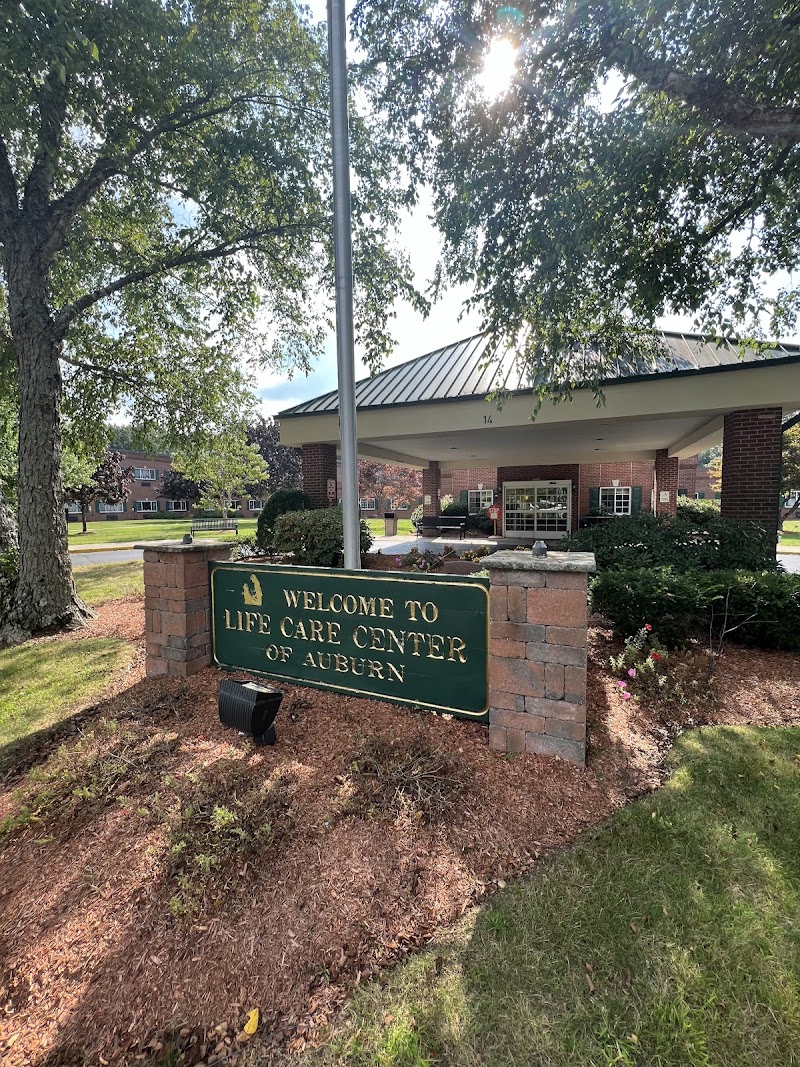
How is Life Of Auburn Staffed?

CMS rates LIFE CARE CENTER OF AUBURN's staffing level at 3 out of 5 stars, which is average compared to other nursing homes. Staff turnover is 28%, compared to the Massachusetts average of 46%. This relatively stable workforce can support continuity of care.

What Have Inspectors Found at Life Of Auburn?

State health inspectors documented 35 deficiencies at LIFE CARE CENTER OF AUBURN during 2022 to 2025. These included: 2 that caused actual resident harm, 30 with potential for harm, and 3 minor or isolated issues. Deficiencies causing actual harm indicate documented cases where residents experienced negative health consequences.

Who Owns and Operates Life Of Auburn?

LIFE CARE CENTER OF AUBURN is owned by a for-profit company. For-profit facilities operate as businesses with obligations to shareholders or private owners. The facility is operated by LIFE CARE CENTERS OF AMERICA, a chain that manages multiple nursing homes. With 154 certified beds and approximately 141 residents (about 92% occupancy), it is a mid-sized facility located in AUBURN, Massachusetts.
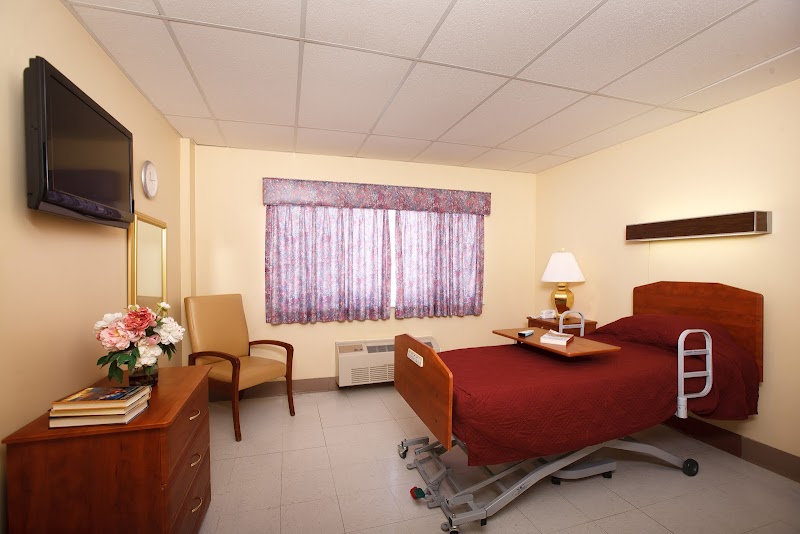
How Does Life Of Auburn Compare to Other Massachusetts Nursing Homes?

Compared to the 100 nursing homes in Massachusetts, LIFE CARE CENTER OF AUBURN's overall rating (3 stars) is above the state average of 2.9, staff turnover (28%) is significantly lower than the state average of 46%, and health inspection rating (3 stars) is at the national benchmark.

What Should Families Ask When Visiting Life Of Auburn?

Based on this facility's data, families visiting should ask: "Can I visit during a mealtime to observe dining assistance and food quality?" "How do you handle medical emergencies, and what is your hospital transfer rate?" "Can I speak with family members of current residents about their experience?"

Is Life Of Auburn Safe?

Based on CMS inspection data, LIFE CARE CENTER OF AUBURN has a clean safety record: no substantiated abuse findings (meaning no confirmed cases of resident harm), no Immediate Jeopardy citations (the most serious violation level indicating risk of serious injury or death), and is not on the Special Focus Facility watch list (a federal program monitoring the lowest-performing 1% of nursing homes). The facility has a 3-star overall rating and ranks #1 of 100 nursing homes in Massachusetts. While no facility is perfect, families should still ask about staff-to-resident ratios and recent inspection results during their visit.

Do Nurses at Life Of Auburn Stick Around?

Staff at LIFE CARE CENTER OF AUBURN tend to stick around. With a turnover rate of 28%, the facility is 18 percentage points below the Massachusetts average of 46%. Low turnover is a positive sign. It means caregivers have time to learn each resident's needs, medications, and personal preferences. Consistent staff also notice subtle changes in a resident's condition more quickly.

Was Life Of Auburn Ever Fined?

LIFE CARE CENTER OF AUBURN has been fined $32,988 across 2 penalty actions. This is below the Massachusetts average of $33,409. While any fine indicates a compliance issue, fines under $50,000 are relatively common and typically reflect isolated problems that were subsequently corrected. Families should ask what specific issues led to these fines and confirm they've been resolved.

Is Life Of Auburn on Any Federal Watch List?

LIFE CARE CENTER OF AUBURN is not on any federal watch list. The most significant is the Special Focus Facility (SFF) program, which identifies the bottom 1% of nursing homes nationally based on persistent, serious quality problems. Not being on this list means the facility has avoided the pattern of deficiencies that triggers enhanced federal oversight. This is a positive indicator, though families should still review the facility's inspection history directly.