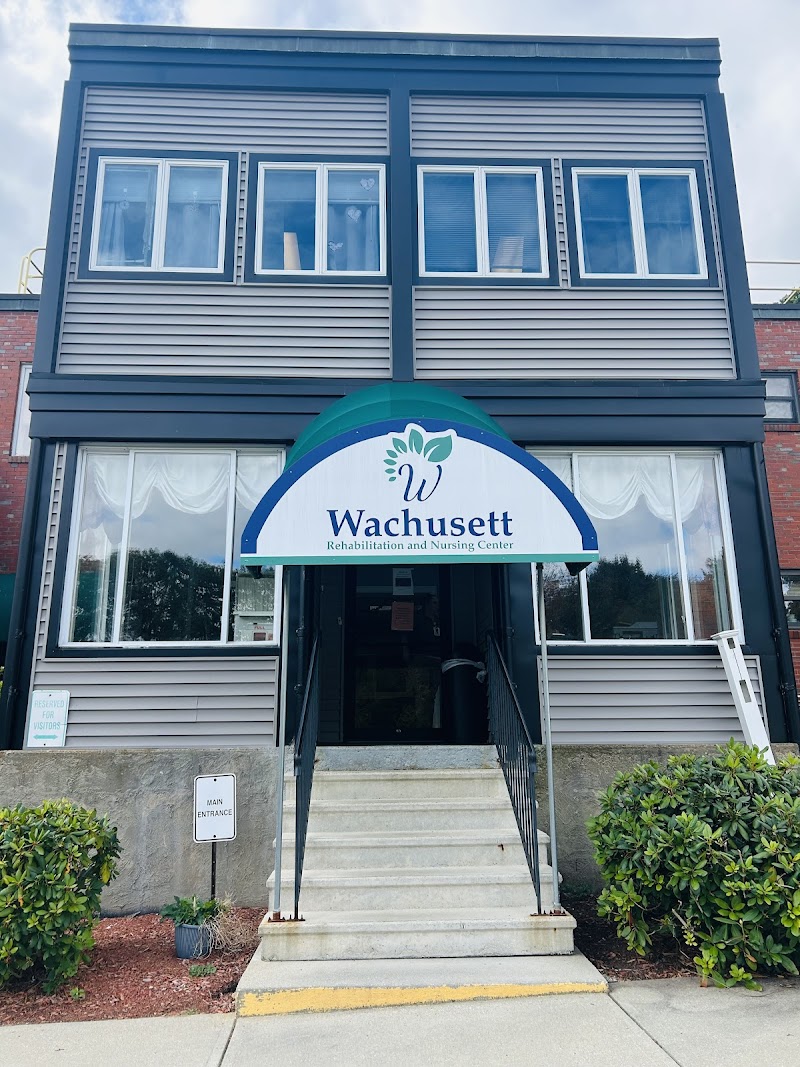
WACHUSETT MANOR

32 HOSPITAL HILL ROAD, GARDNER, MA 01440 (978) 632-5477
For profit - Limited Liability company 96 Beds EPHRAM LAHASKY Data: November 2025 3 Immediate Jeopardy citations
Trust Grade
0/100
#332 of 338 in MA
Last Inspection: August 2024

Within standard 12-15 month inspection cycle. Federal law requires annual inspections.

Overview

Wachusett Manor in Gardner, Massachusetts, received a Trust Grade of F, indicating poor quality and significant concerns about the facility. It ranks #332 out of 338 in the state, placing it in the bottom half of nursing homes in Massachusetts, and #49 out of 50 in Worcester County, meaning it is one of the least favorable options in the area. Although the facility is improving, with issues decreasing from 9 in 2024 to 2 in 2025, it still has a troubling history, including critical incidents where staff failed to provide necessary respiratory care for a resident with a tracheostomy, leading to serious health risks. Staffing is a weakness, rated at 1/5 stars with concerning RN coverage lower than 86% of facilities in the state, and the turnover rate is about average at 48%. Additionally, the facility has incurred $26,756 in fines, which is relatively common for the area, but reflects ongoing compliance issues.

Trust Score
F
0/100
In Massachusetts
#332/338
Bottom 2%
Safety Record
High Risk
Review needed
Inspections
Getting Better
9 → 2 violations
Staff Stability
⚠ Watch
48% turnover. Above average. Higher turnover means staff may not know residents' routines.
Penalties
○ Average
$26,756 in fines. Higher than 68% of Massachusetts facilities. Some compliance issues.
Skilled Nurses
⚠ Watch
Each resident gets only 22 minutes of Registered Nurse (RN) attention daily — below average for Massachusetts. Fewer RN minutes means fewer trained eyes watching for problems.
Violations
⚠ Watch
48 deficiencies on record. Higher than average. Multiple issues found across inspections.
★☆☆☆☆
1.0
Overall Rating
★☆☆☆☆
1.0
Staff Levels
★★★★☆
4.0
Care Quality
★☆☆☆☆
1.0
Inspection Score
Stable
2024: 9 issues
2025: 2 issues

The Good

  • 4-Star Quality Measures · Strong clinical quality outcomes
  • Full Sprinkler Coverage · Fire safety systems throughout facility
  • No fines on record

Facility shows strength in quality measures, fire safety.

The Bad

1-Star Overall Rating

Below Massachusetts average (2.9)

Significant quality concerns identified by CMS

Staff Turnover: 48%

Near Massachusetts avg (46%)

Higher turnover may affect care consistency

Federal Fines: $26,756

Below median ($33,413)

Moderate penalties - review what triggered them

Chain: EPHRAM LAHASKY

Part of a multi-facility chain

Ask about local staffing decisions and management

The Ugly 48 deficiencies on record

3 life-threatening
Jun 2025 2 deficiencies
CONCERN (D) 📢 Someone Reported This

A family member, employee, or ombudsman was alarmed enough to file a formal complaint

Potential for Harm - no one hurt, but risky conditions existed

Notification of Changes (Tag F0580)

Could have caused harm · This affected 1 resident

**NOTE- TERMS IN BRACKETS HAVE BEEN EDITED TO PROTECT CONFIDENTIALITY** Based on records reviewed and interviews for one of three sampled residents (Resident #1), who had recently been readmitted with...

Read full inspector narrative →
**NOTE- TERMS IN BRACKETS HAVE BEEN EDITED TO PROTECT CONFIDENTIALITY** Based on records reviewed and interviews for one of three sampled residents (Resident #1), who had recently been readmitted with new diagnoses of aspiration pneumonia (infection caused by inhaling something other than air into the lungs), and pericardial effusion (fluid around the heart), the Facility failed to ensure nursing notified the Provider when he/she experienced further decline with a change in condition. Findings include: Review of the Facility's policy titled, Acute Condition Changes-Clinical Protocol, revised March 2018 indicated: - The nurse will notify the residents' attending physician or physician on call when there has been a significant change in the resident (decrease in food intake, changes in skin color or condition). Resident #1 was admitted to the Facility in December 2024, diagnoses included Atrial Fibrillation, presence of cardiac pacemaker, hypertension, coronary artery disease, unstable angina, and protein calorie malnutrition. Review of Resident #1's Hospital Discharge summary dated [DATE], indicated he/she was seen in the Emergency Department for chest pain, diagnosed with Aspiration Pneumonia and started on antibiotic therapy. The Summary indicated Resident #1 had an echocardiogram (non-invasive ultrasound to create pictures of the heart), that showed cardiac effusion (fluid around the heart). During a telephone interview on 06/24/25 at 12:49 P.M., Certified Nurse's Aide (CNA) #1 said on 06/07/25, Resident #1 had not been feeling well and wasn't his/her usual self, and she reported her concerns to the Nurse. During a telephone interview on 06/24/25 at 12:27 P.M., Nurse #1 said that on 06/07/25 around 4 P.M., Resident #1 reported to her that he/she did not feel well, his/her color was extremely pale, and he/she was more lethargic than usual. Nurse #1 said she applied oxygen at 3 Liters via nasal cannula to Resident #1 due to his/her pale color and bluish tint to his/her lips. Nurse #1 said she continued to monitor Resident #1 and with the application of oxygen his/her lips returned to normal color and skin color improved, but he/she remained feeling unwell. Nurse #1 said she did not notify Resident #1's Provider his/her condition change, of the need to apply oxygen, or to obtain new orders. Review of Resident #1's medical record indicated there was no documentation to support nursing notified the provider on 06/07/25 of his/her decline in condition, despite the need to apply oxygen, which was new for him/her. During an interview on 06/24/25 at 12:42 P.M., the Nurse Practitioner (NP) said she was not notified by nursing staff on 06/07/25 that Resident #1 had a change in condition, that he/she had required oxygen. During an interview on 06/24/25 at 11:59 A.M., the Director of Nursing (DON) said there was no documentation to support that Nurse #1 called the Provider to notify that Resident #1 had a decline in condition, including the need to place oxygen on him/her, which was new. The DON said that it is the facility's expectation that nursing staff assess for acute changes in the resident's condition, notify the resident's Provider, and document and in this case it was not done. On 06/24/25, the Facility presented the Surveyor with a Plan of Correction that addressed the areas of concern identified in this survey; the Plan of Correction provided is as follows: A. Resident #1 no longer resides at the facility. B. On 6/10/25, a Facility wide audit was initiated by the Nursing Administration on residents with acute condition changes to ensure Facility policy was followed. C. Starting on 6/10/25, audits were conducted daily by the DON/designee to ensure that the provider has been notified of any residents with changes in condition, and will be reviewed at the daily morning report until substantial compliance is met and the results of the audits will be reviewed at the next monthly QAPI meeting on 6/25/25. D. On 6/10/25, the education of Nursing and Certified Nursing Assistant (CNA) staff was initiated by the Staff Development Coordinator on the Change in Condition Policy. E. On 06/13/25, an AD HOC Quality Assurance Performance Improvement (QAPI) meeting was conducted, concern areas discussed included: immediate response and ongoing monitoring plan to sustain compliance with Facility Policy on Acute Condition Changes-Clinical Protocol, and results of the Audits. F. On 6/19/25, the Facility completed the Education of all nursing staff on the correct process when a resident has a change in condition. G. The Director of Nursing and/or Designee are responsible for overall compliance.
CONCERN (D) 📢 Someone Reported This

A family member, employee, or ombudsman was alarmed enough to file a formal complaint

Potential for Harm - no one hurt, but risky conditions existed

Deficiency F0658 (Tag F0658)

Could have caused harm · This affected 1 resident

**NOTE- TERMS IN BRACKETS HAVE BEEN EDITED TO PROTECT CONFIDENTIALITY** Based on records reviewed and interviews, for one of three sampled residents (Resident #1), who was a full code, who during the ...

Read full inspector narrative →
**NOTE- TERMS IN BRACKETS HAVE BEEN EDITED TO PROTECT CONFIDENTIALITY** Based on records reviewed and interviews, for one of three sampled residents (Resident #1), who was a full code, who during the evening shift (3:00 P.M. to 11:00 P.M.) on [DATE], was found unresponsive, pulseless with no respirations by the nursing staff, the facility failed to ensure he/she was provided care and services that met professional standards of nursing practice, when although nursing staff initiated a Code Blue, called 911, and provided Cardiopulmonary Resuscitation (CPR), to him/her until Emergency Services arrived, nursing failed to obtain and use the facility's Automated External Defibrillator (AED) device, during the Code Blue. Findings include: Review of the Facility's Policy, titled Emergency Procedure-Cardiopulmonary Resuscitation and Basic Life Support, dated [DATE], indicated the following: - Activation and retrieval of the AED by the lone healthcare provider or by the second person sent by the rescuer, must occur immediately after the check for no normal breathing and no pulse, - Immediately begin CPR and use the AED/defibrillator, - When the second rescuer arrives, provide 2-rescuer CPR and use the AED. Review of the Report submitted by the Facility via the Health Care Facility Reporting System (HCFRS), dated [DATE], indicated on [DATE], Resident #1 was found unresponsive by a Certified Nurse Aide (CNA, later identified as CNA #1) who alerted the Nurse ( later identified as Nurse #1), a code was called, crash cart obtained and Nurse #1 began compressions and another staff member (later identified as Nurse #2 ) called 911 and assisted with CPR until EMS arrived. Further review of the report indicated Resident #1 expired at the facility. Resident #1 was admitted to the Facility in [DATE], diagnoses included Atrial Fibrillation, presence of cardiac pacemaker, hypertension, coronary artery disease, unstable angina, and protein calorie malnutrition. Review of Resident #1's Hospital Discharge summary, dated [DATE], indicated he/she was seen in the Emergency Department for chest pain, diagnosed with Aspiration Pneumonia and started on antibiotic therapy. Further review indicated Resident #1 had an echocardiogram (non-invasive ultrasound to create pictures of the heart), that showed cardiac effusion (fluid around the heart). During a telephone interview on [DATE] at 12:49 P.M., (which included review of her written statement) CNA #1 said on [DATE] sometime after 9:00 P.M., she found Resident #1 unresponsive and immediately notified the nurse, (later identified as Nurse #1) who assessed him/her. CNA #1 said Nurse #1 called a code blue over the hand held radio system and initiated CPR after retrieving the crash cart. CNA #1 said Nurse #2 called 911 to activate EMS services and then assisted Nurse #1 with CPR on Resident #1 until EMS arrived. CNA #1 said she was not directed to retrieve the AED device. During a telephone interview on [DATE] at 12:27 P.M., (which included review of her written statement) Nurse #1 said on [DATE] sometime after 9:00 P.M., (exact time unknown) CNA #1 told her that she found Resident #1 unresponsive and pale, that she assessed him/her, found no pulse or respirations and called a Code Blue three times via the hand held radio system, obtained the crash cart and began CPR. Nurse #1 said she did not direct a staff member to retrieve the AED. Nurse #1 said she had directed CNA #1 to alert Nurse #2 who activated EMS services (called 911) and then assisted her with CPR. Nurse #1 said when EMS arrived (exact time of arrival unknown) and took over CPR, they then determined Resident #1 had expired and informed them (herself and Nurse #2) that further resuscitation efforts would not be beneficial. Review of Nurse #2's witness statement (documented by the DON per telephone interview) dated [DATE], indicated he was alerted of the Code Blue, called 911 and went to Resident #1's room to assist with CPR, but did not see an AED in the room. Review of the EMS Provider Response Report, dated [DATE], indicated EMS was activated at 9:29 P.M., units arrived at the facility at 9:34 P.M. and observed two rescuer CPR in progress. The Report indicated the resident had no signs of life and they (EMS) determined further resuscitation efforts were futile. The Report also indicated there was no AED present on Resident #1 or on the scene (in the room). During an interview on [DATE] at 12:42 P.M., the Nurse Practitioner (NP) said, she would have expected nursing to apply to an AED to a resident during a Code Blue, but also said during this event, the use of the AED on Resident #1 would not have changed the outcome due to his/her poor cardiac effusion and cardiac history. During an interview on [DATE] at 11:14 A.M., the Director of Nursing (DON) said she spoke to Nurse #1, who said CNA #1 informed her (Nurse #1) that she found Resident #1 unresponsive and pale sometime after 9:00 P.M. (exact time unknown). The DON said Nurse #1 assessed him/her, he/she was pulseless without respirations and she called a Code Blue, obtained the crash cart and began compressions while, Nurse #2 called 911 to initiate EMS services and then went to assist Nurse #1. The DON said Nurse #1 should have delegated a staff member to retrieve the AED, and it should have been applied and used during the code, but it was not. The DON said her expectation is always nursing best practice, patient-centered care and that all Facility Protocols and Policies are being followed by the nurses and staff. The DON said she holds the nurses to the highest standard for professional conduct for residents' safety. On [DATE], the Facility presented the Surveyor with a Plan of Correction that addressed the areas of concern identified in this survey; the Plan of Correction provided is as follows: A. Resident #1 no longer resides at the facility. B. An Audit was conducted immediately by the Staff Development Coordinator (SDC ) to ensure Nursing staff were current on CPR certifications and determined all nursing staff were current. C. On [DATE], a Facility wide audit was initiated by the Nursing Administration to ensure the Code Cart Daily Checklist and the 11:00 P.M.-7:00 A.M. (night shift) Daily Checklist (which includes checking the AED) were completed. D. Ongoing audits will be conducted daily by the DON/designee to ensure both the Code Cart Daily Checklist, and the night shift Daily Checklist are completed and will be reviewed at the next monthly QAPI meeting on [DATE]. E. On [DATE], the education of Nursing and Certified Nurse Aide (CNA) staff was initiated by the Staff Development Coordinator on the Code Blue Policy, which included assigning and nursing responsibility to ensure a staff member (across all shifts) retrieves and brings the AED in event of Code Blue. F. On [DATE], an AD HOC Quality Assurance Performance Improvement (QAPI) meeting was conducted, concern areas discussed included immediate response and ongoing monitoring plan to sustain compliance with MOLST and Facility Policy on Emergency Procedures and results of the Audits. G. On [DATE], the Facility completed the Education of all nursing staff on the correct process for Emergency Procedures, including but not limited to ensuring the AED is brought and used as directed during a Code Blue. H. The Director of Nursing and/or Designee are responsible for overall compliance.
Aug 2024 9 deficiencies
CONCERN (D)

Potential for Harm - no one hurt, but risky conditions existed

Safe Environment (Tag F0584)

Could have caused harm · This affected 1 resident

Based on observation, interview, and policy review, the facility failed to maintain a clean and homelike environment on one Unit (#4) out of three units observed. Specifically, the facility failed to ...

Read full inspector narrative →
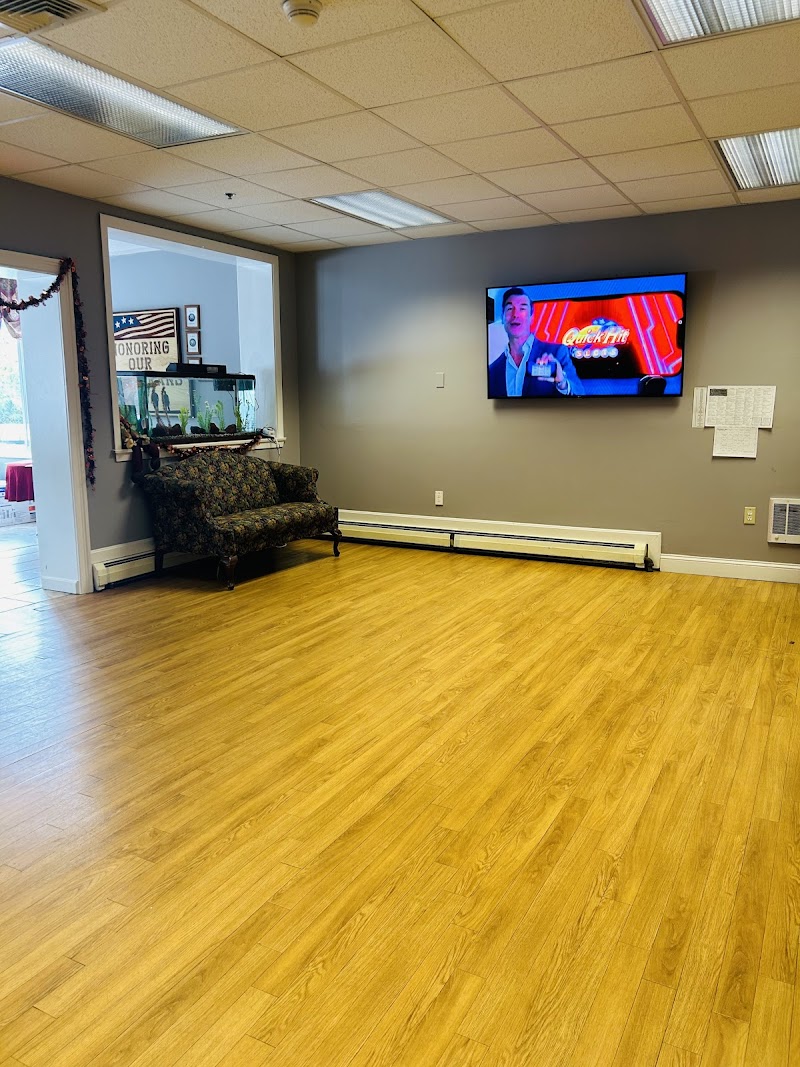
Based on observation, interview, and policy review, the facility failed to maintain a clean and homelike environment on one Unit (#4) out of three units observed. Specifically, the facility failed to ensure that the flooring in the Unit #4 multi-purpose room was in good repair and homelike condition. Findings include: Review of the facility's policy titled Homelike Environment, dated 2001 and revised February 2021, indicated the following: -Staff provides person-centered care that emphasizes the residents' comfort, independence, and personal needs and preferences. -Facility staff and management maximizes, to the extent possible, characteristics of the facility that reflect a personalized, homelike setting. On 8/8/24 at 7:45 A.M., the surveyor observed the following in the residents' multi-purpose room on Unit #4: -Several gouges and holes in the flooring throughout the room. -One area where the flooring was torn and lifted at the transition from the hallway into the multi-purpose room. On 8/8/24 at 8:45 A.M., the surveyor observed several residents seated in the Unit #4 multi-purpose room for breakfast. The surveyor also observed three staff members in the Unit #4 multi-purpose room at this time assisting the residents with the breakfast meal. During an interview on 8/9/24 at 12:10 P.M., the Maintenance Director said the flooring in the Unit #4 multi-purpose room was very old and had several gouged areas and holes in the flooring. The Maintenance Director said he thought the gouges and holes were from the use of equipment such as mechanical lifts and scraping the floor when it needed to be cleaned. The Maintenance Director said the floor had been like this for some time and this was not the first time he had been aware of the condition of the floor. The Maintenance Director also said he was not aware of any plans to make the multi-purpose room floor more homelike for the residents on the unit.
CONCERN (D)

Potential for Harm - no one hurt, but risky conditions existed

Deficiency F0658 (Tag F0658)

Could have caused harm · This affected 1 resident

**NOTE- TERMS IN BRACKETS HAVE BEEN EDITED TO PROTECT CONFIDENTIALITY** Based on observation, interview, record, and policy review, the facility failed to provide care in accordance with professional ...

Read full inspector narrative →
**NOTE- TERMS IN BRACKETS HAVE BEEN EDITED TO PROTECT CONFIDENTIALITY** Based on observation, interview, record, and policy review, the facility failed to provide care in accordance with professional standards of practice relative to providing a pressure redistribution cushion (cushion that spreads pressure more evenly across its surface to reduce the amount of pressure on any one part of the body) to a wheelchair when the Resident was at risk for skin breakdown for one Resident (#5) out of a total sample of 19 residents. Specifically, for Resident #5 the facility staff failed to: -Follow a Physician's order to provide a pressure redistribution cushion to the Resident's wheelchair. -Implement the Resident's care plan for a new cushion to the Resident's wheelchair. -Provide a pressure relieving device to the Resident's chair as indicated in the Minimum Data Set (MDS) Assessment and for the Resident who was assessed as being at a high risk for skin breakdown. Findings include: Review of the facility policy titled Support Surface Guidelines, dated September 2013, included: -Review the resident's care plan to assess for any special needs of the resident. -Redistributing support surfaces are to provide comfort for all bed or chairbound residents, prevent skin breakdown, promote circulation and provide pressure relief or reduction. -Any individual at risk for developing pressure ulcers should be placed on a redistribution support surface . Resident #5 was admitted to the facility in October 2016 with diagnoses of Spinal stenosis (an abnormal narrowing of the spinal cord resulting in pressure on the spinal cord causing pain or numbness in the arms or legs), abnormal posture, osteoarthritis (a degenerative joint disease that results from breakdown of joint cartilage and underlying bone), difficulty in walking, and muscle weakness. Review of the MDS assessment dated [DATE] indicated that Resident #5 was moderately cognitively impaired as evidenced by a Brief Interview of Mental Status (BIMS) score of 9 out of 15 and had a pressure reducing device for the wheelchair. Review of the Resident's care plan last revised on 7/30/24, included an intervention of new cushion applied to wheelchair, initiated 1/5/22. Review of the Resident's August 2024 Physician's orders included an active order for a pressure redistribution cushion to chair, initiated on 10/1/22. Review of the Resident's August 2024 Treatment Administration Record (TAR) included at the top heading under unscheduled other orders: Pressure redistribution cushion to chair. On 8/8/24 at 9:49 A.M., the surveyor observed Resident #5 sitting in a wheelchair with no pressure redistribution seat cushion. On 8/8/24 at 4:09 P.M., the surveyor observed Resident #5 sitting in a wheelchair, and there was no pressure redistribution seat cushion observed on the wheelchair. During an interview at the time, Resident #5 said he/she had not been in bed since the surveyor saw him/her last but did use the bathroom a couple of times with staff assistance. During an interview and observation on 8/12/24 at 8:40 A.M., Certified Nurses Aide (CNA) #2 said that she had taken care of the Resident before but does not ever remember using a seat cushion in the wheelchair. CNA #2 checked under the Resident, who was sitting in the wheelchair, and confirmed that there was no seat cushion in use on the Resident's wheelchair. During an interview and observation on 8/12/24 at 8:43 A.M., Nurse #1 said there was no seat cushion in use on the Resident's wheelchair. Nurse #1 reviewed the current Physician's orders and confirmed that there was an active order to use a pressure redistribution cushion on the Resident's wheelchair. During an interview on 8/12/24 at 8:48 A.M., Unit Manager (UM) #2 said that he went to the Resident's room and could not locate any seat cushion in the Resident's unit. UM #2 said that even if there wasn't an order there should have been a seat cushion in place (on the wheelchair). During an interview on 8/12/24 at 8:56 A.M., Resident #5 said that he/she did not remember ever having a seat cushion, but would like one because the wheelchair would be much more comfortable if there was a seat cushion.
CONCERN (D)

Potential for Harm - no one hurt, but risky conditions existed

Respiratory Care (Tag F0695)

Could have caused harm · This affected 1 resident

**NOTE- TERMS IN BRACKETS HAVE BEEN EDITED TO PROTECT CONFIDENTIALITY** Based on observation, interview, and record review, the facility failed to provide necessary respiratory care and services in ac...

Read full inspector narrative →
**NOTE- TERMS IN BRACKETS HAVE BEEN EDITED TO PROTECT CONFIDENTIALITY** Based on observation, interview, and record review, the facility failed to provide necessary respiratory care and services in accordance with professional standards of practice for one Resident (#43) out of a total sample of 19 residents. Specifically, the facility staff failed to: -verify the Physician orders for the appropriate liter per minute (LPM- the flow rate that supplemental oxygen is set for delivery) of Oxygen when the Resident was ordered for seven (7) LPM of Oxygen. -ensure that Resident #43 was administered the appropriate liter flow for the oxygen delivery device (nasal cannula - a thin flexible tube that provides supplemental oxygen to patients through the nose via nasal prongs) being used when the Resident was found to be ordered for and administered greater than six (6) LPM of Oxygen that was not compliant with professional standards of practice. Findings include: Review of the facility policy titled Oxygen Administration, revised October 2010, indicated the following: -Verify that there is a Physician's order for this procedure. Review the Physician's orders or facility protocol for oxygen administration. -Review the Resident's care plan to assess for any special needs of the Residents. -Adjust the oxygen delivery service so that it is comfortable for the Resident and the proper flow of oxygen is being administered. Review of the AARC (American Association for Respiratory Care) Clinical Practice Guideline, updated 2014: https://www.aarc.org/wp-content/uploads/2014/08/08.07.1063.pdf indicates: -All Oxygen must be prescribed and dispensed in accordance with federal, state, and local laws and regulations. -Oxygen is a medical gas and should only be dispensed in accordance with all federal, state, and local laws and regulations. -Undesirable results or events may result from noncompliance with Physicians' orders or inadequate instruction for Oxygen therapy. -There is a potential in some spontaneously breathing hypoxemic patients with hypercapnia [high carbon dioxide levels in the blood) and chronic obstructive pulmonary disease that oxygen administration may lead to an increase in PaCO2 (carbon dioxide). -Nasal cannulae provide approximately 24-40% oxygen with flowrates up to 6 L/min [LPM] in adults, although the patient's respiratory patterns can influence the actual, delivered FIO2; Oxygen supplied to adults by nasal cannula at flows </= to 4 L/min need not be humidified. -Equipment maintenance and supervision: All oxygen delivery equipment should be checked at least once daily . Facets to be assessed include proper function of the equipment, prescribed flowrates, remaining liquid or compressed gas content, and backup supply. Resident #43 was admitted to the facility in March 2024, with diagnoses including Chronic Obstructive Pulmonary Disease (COPD - a chronic lung disease that block airflow and make it difficult to breathe) and Chronic Respiratory Failure (CRF - a long term condition that occurs when the lungs cannot provide enough oxygen to the body or remove enough carbon dioxide from the body, identified with symptoms of trouble breathing and fatigue). Review of the most recent Minimum Data Set (MDS) assessment dated [DATE], indicated Resident #43 utilized Oxygen and was usually able to make him/herself understood. Review of the August 2024 Physician Order Summary Report indicated the following order: -supplemental Oxygen via nasal cannula (a thin flexible tube that provides supplemental oxygen to patients through the nose via nasal prongs) continuous (delivered around the clock) 7 liters (LPM) every shift for shortness of breath. -change humidification bottle every night shift, every seven days for maintenance of oxygen equipment. Further review of the August 2024 Physician's Order Summary Report indicated no orders to titrate (increase or decrease) the Resident's Oxygen liter flow from the ordered 7 LPM. Review of Resident #43's August 2024 Medication Administration Record (MAR) indicated that the Resident received Oxygen via nasal cannula continously at 7 LPM every shift for shortness of breath. During an observation and interview on 8/8/24 at 9:21 A.M., the surveyor observed Resident #43 seated in bed with Oxygen administered via nasal cannula. The surveyor observed that the liter flow on the oxygen concentrator (medical device that uses air in the atmosphere, filters it, and delivers air that is 90 - 95% oxygen concentrated) was set to 8 LPM and had a humidifier bottle attached. Resident #43 said that he/she does not touch the oxygen concentrator and that his/her LPM should be set at 7 LPM. During an observation on 8/12/24 at 7:51 A.M., the surveyor observed the Resident seated in bed with Oxygen administered via nasal cannula and the liter flow on the oxygen concentrator set to 6 LPM with a humidifier bottle attached. During an interview at the time, Resident #43 said that the oxygen concentrator is supposed to be set at 7 LPM. On 8/12/24 at 12:59 P.M., the surveyor and Nurse #3 observed Resident #43's oxygen concentrator and observed that it was set at 6 LPM. Nurse #3 said that it is the Nurse's responsibility to ensure that the oxygen concentrator is set to the appropriate setting, that it should have been set at 7 LPM and it had not been. Nurse #3 said the Resident had behaviors of adjusting the oxygen concentrator flow rate. Nurse #3 also said that breathing in too much oxygen could cause damage to the Resident's lungs and too little [oxygen] could cause shortness of breath and anxiety. Review of Resident #43's clinical record did not indicate documentation that the Resident had personally adjusted and/or changed the settings on his/her oxygen concentrator since his/her admission to the facility. Further review of the clinical record did not indicate care planning for Resident #43 self-adjusting his/her oxygen concentrator liter flow rate or that the facility staff verified the appropriate Oxygen liter flow for the Resident with diagnoses of COPD and CRF. During an interview on 8/13/24 at 8:53 A.M., the surveyor and the Director of Nursing (DON) spoke with Resident #43 regarding his/her oxygen concentrator. Resident #43 said that he/she does not touch the oxygen concentrator and that only the nursing staff adjusts the [liter flow] settings.
CONCERN (D)

Potential for Harm - no one hurt, but risky conditions existed

Deficiency F0699 (Tag F0699)

Could have caused harm · This affected 1 resident

**NOTE- TERMS IN BRACKETS HAVE BEEN EDITED TO PROTECT CONFIDENTIALITY** Based on interview and record review, the facility failed to ensure that one resident (#71) out of a total sample of 19 resident...

Read full inspector narrative →
**NOTE- TERMS IN BRACKETS HAVE BEEN EDITED TO PROTECT CONFIDENTIALITY** Based on interview and record review, the facility failed to ensure that one resident (#71) out of a total sample of 19 residents received trauma-informed care in accordance with professional standards of practice. Specifically, the facility failed to complete a trauma history assessment for Resident #71 who had a diagnosis of Post Traumatic Stress Disorder (PTSD: a mental and behavioral disorder that develops from having experienced a traumatic event, causing flashbacks, nightmares and severe anxiety), placing the Resident at risk for re-traumatization. Findings include: Review of the facility policy titled Trauma Informed and Culturally Competent Care Level III, last revised August 2022, indicated the following: -Purpose: >To guide staff in providing care that is culturally competent and trauma informed in accordance with professional standards. >To address the needs of trauma survivors by minimizing triggers and/or re-traumatization. -Resident Screening: >Utilize initial screening to identify the need for further assessment and care. -Resident Assessment: >Assessment involves an in-depth process of evaluating the presence of symptoms, their relationship to trauma, as well as the identification of triggers. Resident #71 was admitted to the facility in August 2022, with diagnoses including PTSD and Anxiety (feeling of unease, such as worry or fear, that can be mild or severe/ intense, excessive, and persistent worry and fear about everyday situations). Review of the most recent comprehensive Minimum Data Set (MDS) assessment dated [DATE], indicated Resident #71 was severely cognitively impaired as evidenced by a Brief Interview of Mental Status (BIMS) score of 5 out of 15 and had an active diagnosis of PTSD. Review of the August 2024 Physician's orders indicated the Resident had an active legal Guardianship (Guardian: a court appointed person who makes important personal and healthcare decisions for an adult who lacks the capacity to make their own decisions) in place. On 8/8/24 at 8:00 A.M., the surveyor observed that Resident #71 had his/her room door closed, privacy curtain closed around the bed, and bed linens pulled up over his/her head. During an interview on 8/8/24 at 9:57 A.M., Resident #71's Guardian said that the Resident had increased behaviors of self-isolating in his/her room and refusing care. During an interview on 8/12/24 at 10:56 A.M., Nurse #4 said Resident #71 refuses care occasionally and likes to keep covered up, with a coat and hat on all the time. Nurse #4 said when the Resident refuses care, staff will tell the Nurse and then the Guardian is notified as required. During an interview on 8/12/24 at 12:51 P.M., CNA (Certified Nurses Aide) #3 said Resident #71 refuses care at times and gets very angry and upset when clothing is removed for care. CNA #3 said the Resident likes to be in his/her room with the privacy curtain closed tight around the bed and the door shut all the time. Review of the comprehensive medical record failed to indicate evidence of any assessment for trauma history when the Resident had an active diagnosis of PTSD and demonstrated increased behaviors of refusal of care and self-isolation. During an interview on 8/12/24 at 4:43 P.M., the Director of Nursing (DON) said a trauma assessment had not been done for Resident #71. The DON said a trauma assessment is important because past history of trauma could affect the delivery of care. During an interview on 8/13/24 at 2:15 P.M., Social Worker (SW) #1 said the trauma informed care assessment should be completed on admission for each resident. SW #1 said Resident #71 had a diagnosis of PTSD and should have been assessed for trauma history and triggers so staff could provide personalized care and manage behaviors. SW#1 said the trauma assessment was not completed until the surveyor notified the DON on 8/12/24 that there was no trauma assessment found in the Resident's medical record. SW#1 further said Resident #71 should have been assessed for trauma informed care on admission to the facility.
CONCERN (D)

Potential for Harm - no one hurt, but risky conditions existed

Dental Services (Tag F0791)

Could have caused harm · This affected 1 resident

**NOTE- TERMS IN BRACKETS HAVE BEEN EDITED TO PROTECT CONFIDENTIALITY** Based on observation, interview, and record review, the facility failed to provide dental services for one Resident (#2) out of ...

Read full inspector narrative →
**NOTE- TERMS IN BRACKETS HAVE BEEN EDITED TO PROTECT CONFIDENTIALITY** Based on observation, interview, and record review, the facility failed to provide dental services for one Resident (#2) out of a total sample of 19 residents. Specifically, the facility staff failed to obtain consent for dental services from Resident #2's Health Care Proxy (HCP- the person chosen as the healthcare decision maker when the individual is unable to do so for themself) in a timely manner after the HCP had been invoked (made active by the Physician). Findings include: Resident #2 was admitted to the facility in May 2022, with diagnoses that included Alzheimer's Disease (a progressive disease beginning with mild memory loss and leading to the loss of the ability to carry on a conversation and respond to the environment, involves parts of the brain that control thought, memory, and language) and lack of coordination. Review of the facility policy for Dental Examination/Assessment, last revised December 2023, indicated: -That each resident will undergo a dental assessment within .90 days of admission. -Resident shall be offered dental services as needed. Review of Resident #2's clinical record indicated: -The Resident declined Dental Services on 5/31/22, shortly after admission to the facility. -The Resident's HCP had been invoked by the Physician on 8/4/22. -No evidence that the consent for Dental services had been reviewed and completed by the HCP after the Physician determination that the Resident lacked the capacity to make informed decisions regarding their own medical care. Review of Resident #2's Minimum Data Set (MDS) assessment dated [DATE], indicated the Resident had moderate cognitive impairment as evidenced by a Brief Interview for Mental Status (BIMS) score of 12 out of a total of 15, and was able to communicate their needs verbally. Further review of the MDS Assessment indicated that Resident #2 had no problems with their teeth. Review of Resident #2's care plan for Dentition last revised 5/24/24, indicated: -The Resident was at risk for altered dentition related to broken and missing teeth -An intervention for a dental consult as necessary was initiated 6/29/22 During an interview on 8/8/24 at 10:29 A.M., Resident #2 said he/she would like to receive dental services at the facility and had never been seen by the Dentist. The surveyor observed that Resident #2 had some missing teeth, broken teeth, and stained teeth. Review of the clinical record did not indicate that Resident #2 had been seen by the Dentist during his/her stay in the facility. During an interview on 8/12/24 at 10:05 A.M., Additional Staff #3 (Medical Record Personnel) said she was responsible for obtaining consent for residents to be seen by the contracted facility Dentist but she had not obtained a consent to date for Resident #2. During an interview on 8/12/24 at 11:05 A.M., Additional Staff #2 (Regional Registered Nurse) said that the facility should have contacted the HCP after the HCP had been invoked to obtain the consent for dental care and they had not.
CONCERN (D)

Potential for Harm - no one hurt, but risky conditions existed

Safe Environment (Tag F0921)

Could have caused harm · This affected 1 resident

Based on observation and interview, the facility failed to maintain resident wheelchairs in a clean and sanitary manner for two Residents (#291 and #293), out of a total sample of 19 residents. Speci...

Read full inspector narrative →
Based on observation and interview, the facility failed to maintain resident wheelchairs in a clean and sanitary manner for two Residents (#291 and #293), out of a total sample of 19 residents. Specifically, the facility failed to ensure that: 1. Residents #291's wheelchair was clean, sanitary, and in good repair. 2. Resident #293's wheelchair was clean and sanitary. Findings include: Review of the facility policy titled Cleaning Wheelchairs and Gerichairs (specialized recliners that are upholstered in non-permeable, easily sanitized vinyl), revised 9/5/2017, indicated: -If items (wheelchairs and gerichairs) are the responsibility of Environmental Services, the first step is .arrange to get wheelchairs or gerichairs from the residents at a convenient time for the resident. -Set up a schedule, with input from Nursing, to collect, wash, and dry chairs. -Take chairs to an open area - basement or shower room- use pressure washer or scrub by hand with a brush or sponge and germicide solution. -Rinse thoroughly with water and dry completely with rags. Pay special attention to the seats and wheels. 1. Resident #291 was admitted to the facility in August 2024, with diagnoses of muscle wasting and atrophy (thinning of muscle mass), and hemiplegia (paralysis of one side of the body). During an observation and interview on 8/8/24 at 9:18 A.M., the surveyor observed Resident #291 lying in bed with a wheelchair placed at his/her bedside. Resident #291 said that he/she was recently admitted to the facility for rehabilitation services and the wheelchair was provided to him/her by the facility. The surveyor observed that the left armrest of the wheelchair had a protective cover that was peeling away with no cushioning underneath. The surveyor also observed that the wheelchair cushion had a burn hole, and the wheelchair frame and wheel spokes were covered in dust and debris. 2. Resident #293 was admitted to the facility in August 2024 with diagnoses of Congestive Heart Failure (CHF- caused when the heart is unable to pump blood effectively resulting in fluid build-up in the lungs, arms, feet and other organs) and Chronic Obstructive Pulmonary Disease (COPD- a chronic lung disease that causes restricted airflow from the lungs and difficulty breathing). During an observation and interview on 8/8/24 at 9:55 A.M., the surveyor observed Resident #293 in bed with a wheelchair placed at the foot of his/her bed. Resident #293 said that he/she had recently been admitted to the facility for rehab services and the wheelchair was provided to him/her by the facility. The surveyor observed the facility wheelchair cushion to be ripped with duct tape patching an area, a metal connector on the left side was exposed, and the support frame and wheel spokes to be covered with dried brown substance, dust, and debris. During an observation on 8/9/24 at 9:42 A.M., the surveyor observed Resident #293's in bed with the same wheelchair from the day before at the foot of the bed. The surveyor observed the wheelchair frame underneath the seat was caked with debris and dust, observed the seat cushion was sticky and adhered to the frame with brown caked substance between the cushion and the chair when lifted. During an interview on 8/9/24 at 11:17 A.M., Unit Manager #1 (UM#1) said that the facility provides newly admitted residents with wheelchairs until rehab services can assess them for mobility needs. UM#1 said the facility has a wheelchair cleaning schedule and when a resident discharges, housekeeping will clean the wheelchair. She said that housekeeping will notify her at the beginning of the month on what wheelchairs need to be cleaned. During a second interview and observation at 11:26 A.M., the surveyor and UM#1 observed Resident #291's wheelchair. The surveyor observed the left wheelchair armrest had been replaced and was cushioned. The surveyor further observed the wheelchair frame and wheel spokes remained covered with dust and debris. UM#1 said that the wheelchair cushion had a burn hole and that the wheelchair frame was dirty. During the continued observation and interview at 11:26 A.M, the surveyor and UM#1 observed Resident #293's wheelchair. UM#1 lifted the wheelchair cushion which stuck to the seat surface and observed the frame to be dusty with debris. UM#1 said that Resident #291 and #293 wheelchairs were dirty, needed to be cleaned, and did not appear to have been cleaned since the two residents were admitted to the facility. UM#1 said that the housekeeping department was responsible for wheelchair cleaning. During an interview on 8/9/24 at 2:40 P.M. the Housekeeping Director said that she was new in the position and provided the surveyor with a wheelchair cleaning schedule beginning July 2024. The surveyor reviewed the schedule with Housekeeping Director which indicated the unit with Residents #291 and #293 was due to have wheelchairs cleaned the week ending August 3, 2024. The surveyor requested evidence that the wheelchairs were cleaned as indicated on the schedule. The Housekeeping Director said that there were no logs to show evidence that the cleaning schedule was completed. The Housekeeping Director said that a cleaning log would be implemented so she could follow the cleaning schedule more closely.
CONCERN (E)

Potential for Harm - no one hurt, but risky conditions existed

Infection Control (Tag F0880)

Could have caused harm · This affected multiple residents

Based on observation, interview, record and policy review, the facility failed to implement infection control practices designed to prevent development and transmission of infection and provide a sani...

Read full inspector narrative →
Based on observation, interview, record and policy review, the facility failed to implement infection control practices designed to prevent development and transmission of infection and provide a sanitary environment for two Residents (#20 and #67) out of a total sample of 19 residents. Specifically, facility staff failed to: 1. adhere to Standard Precautions (infection prevention measures that apply to all resident care, regardless of suspected or confirmed infection status) and Contact Precautions (infection prevention measures used to prevent transmission of infections which are spread by direct or indirect contact with the resident or the resident's environment) when Certified Nurse Aide (CNA) #1 provided personal care to Resident #20, who required Contact Precautions relative to a multi-drug resistant organism (MDRO), then handled Resident #67's wheelchair, increasing Resident #67's risk for illness. 2. distribute ice in a sanitary manner into bins used to keep residents' drink items cool for meal service, increasing the residents' risk for illness. 3. implement the facility's water management program, increasing the risk for illness in residents. Findings include: Review of the facility's policy titled Infection Control Policy and Procedure, dated 2022, indicated the following: -Staff were required to follow hand hygiene practice consistent with accepted standards of practice. -Infectious organisms may be transmitted by direct (skin to skin) or indirect (inanimate objects) contact. -Healthcare staff . often move from resident to resident and therefore may serve as a vehicle for transferring effective organisms. -Staff were required to perform hand hygiene before and after contact with a resident. Review of the Centers for Disease Control and Prevention (CDC) guidelines titled Clinical Safety: Hand Hygiene for Healthcare Workers, dated 2/27/24, indicated the following: -Protect yourself and your patients from deadly germs by cleaning your hands. -Cleaning one's hands reduces the spread of germs, including those resistant to antibiotics. -After touching a patient or patient's surroundings. -After contact with blood, body fluids, or contaminated surfaces. 1. Resident #20 was admitted to the facility in May 2024 with a diagnosis of urinary tract infection (UTI: bacterial infection of the urinary tract). Review of Resident #20's clinical record indicated the following: -The Resident had an indwelling urinary catheter. -The Resident required Contact Precautions due to having Vancomycin Resistant Enterococcus (VRE: MDRO) in his/her urine. -A Physician's order, start date 8/1/24, for Ampicillin (antibiotic medication) Oral Capsule 500 milligrams (mg), give 1 capsule by mouth every 6 hours for UTI for 7 Days. Resident #67 was admitted to the facility in December 2023, with a diagnosis of Need for Assistance with Personal Care. On 8/8/24 at 7:35 A.M., the surveyor observed a Contact Precautions sign posted outside of Resident #20's and #67's shared room. The surveyor observed the following listed on the Contact Precautions sign: -Everyone must put on gloves and gown before room entry. -Do not wear the same gown and gloves for the care of more than one person. On 8/8/24 at 9:00 A.M., the surveyor observed CNA #1 put on a disposable gown and gloves, and assisted Resident #20 into his/her room by pushing his/her wheelchair. Upon entering the room, CNA #1 released Resident #20's wheelchair handles, then moved to Resident #67 who was sitting in a wheelchair and used her same gloved hands to move Resident #67 closer to his/her bed. The surveyor observed CNA #1 place her hands back onto the handles of Resident #20's wheelchair and move the Resident to his/her bedside. The surveyor observed CNA #1 close the privacy curtain between the two beds. The lower part of Resident #20's wheelchair and the Resident's urinary catheter tubing and urinary collection bag as well as CNA #1's lower legs were visible to the surveyor below the bottom of the privacy curtain. The surveyor observed CNA #1 remove Resident #20's urinary catheter collection bag from underneath the wheelchair and drop it on the floor, then pulled the urinary catheter tubing and bag from underneath the wheelchair to beside the Resident's right foot, dragging the bag on the floor. CNA #1 then assisted Resident #20 into his/her bed. The surveyor then observed CNA #1 open the privacy curtain. The CNA held a full plastic bag in her left hand, walked toward Resident #67 who was still sitting in his/her wheelchair, and moved the Resident in his/her wheelchair to his/her bedside. CNA #1 did not remove her gloves and gown and she did not perform hand hygiene before she assisted Resident #67. The surveyor observed CNA #1 remove her gown and gloves and performed hand hygiene, then exited the room carrying the plastic bag. During an interview on 8/8/24 at 1:45 P.M., CNA #1 said she assisted Resident #20 back to bed that same morning. CNA #1 said she always had a hard time reaching around the Resident's chair to unsecure the urinary catheter collection bag from underneath the wheelchair, so every time she removed the collection bag, it would fall on the floor. CNA #1 said Resident #20's urinary catheter collection bag fell on the floor that morning when she was assisting the Resident back to bed, so she had to drag the urinary catheter collection bag on the floor, under the wheelchair, to make sure it did not get caught on anything when she transferred the Resident to bed. CNA #1 said she had also removed bed linens from Resident #20's bed and placed them in a plastic bag because the bed linens had some dried blood on them and the bed linens were the items in the plastic bag during the surveyor's observation. CNA #1 said she needed to move Resident #67 to his/her bedside in order to exit the room, so she moved the Resident by handling his/her wheelchair, but she did not remove her gloves and gown and perform hand hygiene after she provided personal care to and handled Resident #20's urinary catheter tubing and collection bag. CNA #1 said she should have removed her gloves and gown and performed hand hygiene after she assisted Resident #20, before she assisted Resident #67. During an interview on 8/8/24 at 2:00 P.M., the Infection Preventionist (IP) said Resident #20's urinary catheter collection bag should not have been on the floor, and should have either been properly disinfected or replaced. The IP said Contact Precautions were implemented for Resident #20 to reduce the risk for transmission of infection because the Resident was actively being treated with antibiotics for VRE in his/her urine. The IP also said CNA #1 should have removed her gloves and gown and performed hand hygiene after she assisted Resident #20, before she assisted Resident #67. 2. On 8/8/24 at 7:05 A.M, the surveyor observed that the ice machine in the facility's kitchen was empty and it was not running. The surveyor observed that two large bags of ice were stored in the facility's walk-in freezer. The surveyor also observed that the ice in both bags were thick, solid, and formed as blocks of ice. During an interview on 8/8/24 at 8:45 A.M., the Food Service Director (FSD) said that the ice machine in the facility's kitchen was not working and some parts were on order to fix the ice machine. The FSD said that while the facility awaited the parts and repair for the ice machine, the facility was purchasing large bags of ice and storing them in the walk-in freezer. On 8/8/24 at 11:30 A.M., the surveyor observed a staff member in the facility's kitchen handle a large bag of ice and throw it to the floor. During an interview on 8/8/24 at 3:30 P.M., Dietary Aide #1 said the ice machine in the facility's kitchen did not work and that large bags of ice were being used to place into the plastic bins where the kitchen staff stored containers of milk and juice used for resident consumption at meal times. Dietary Aide #1 said kitchen staff would dump the ice from the bags into the bins with the drinks. At this time, the surveyor observed a grey plastic bin located on top of a three tier cart that contained one unopened half gallon of milk and several plastic pitchers of juice in the kitchen next to Dietary Aide #1. Dietary Aide #1 said ice would be placed into the grey plastic bin to keep the drinks cool, then sent to a resident unit for resident consumption at the evening meal. During an interview on 8/8/24 at 3:43 P.M., the FSD said the ice machine in the kitchen had not been working for a couple of weeks and the facility had parts on order for it to be repaired. The FSD said the facility had been purchasing large bags of ice while waiting for the ice machine to be repaired and that the bags of ice were used to keep drinks cool for meal service. The FSD said the ice pieces in the large bags would stick together, so in order for staff to be able to dump the ice into the drink bins, they would have to drop the bags of ice on the floor, then dump the ice into the bins once the ice was broken up. At this time, the FSD removed one large bag of ice from the freezer and dropped it on the floor in the cold food storage room outside of the walk-in freezer. The FSD then said after breaking the ice, staff would open the bag and dump the ice into the bins that contained containers of drinks for resident consumption. When asked if there was any other way the ice could be broken other than dropping it on the floor, the FSD said the ice could probably be broken on a food preparation table instead. During an interview on 8/8/24 at 4:00 P.M., the IP said staff should not be breaking bags of ice on the floor when the ice was being used to keep resident drink containers cool. The IP said staff should break the ice on a surface that is not the floor, such as a table. 3. Review of the facility's Water Management Program, revised 5/19/23 and reviewed 6/12/24, indicated the following: -Identify where potentially hazardous conditions could exist where pathogens/Legionella (bacteria usually found in soil and water that can become a health hazard when it grows in human made water systems and is spread through the inhalation of contaminated aerosolized water particles) could grow . -Determine where control measures should be applied and conduct regular monitoring to ensure control measures are performing as designed. -Flush dead legs (stagnant or unused section of plumbing that can provide a habitat for the growth of microorganisms) quarterly. -Flush low utilization sinks and fixtures monthly (more often if needed). -Monitor and document implementation of control measures on record keeping logs. During an interview on 8/8/24 at 12:00 P.M., the Maintenance Director said he could not provide evidence that dead legs were flushed quarterly or that low utilization sinks and faucets were flushed monthly since the last recertification survey.
CONCERN (E)

Potential for Harm - no one hurt, but risky conditions existed

Deficiency F0925 (Tag F0925)

Could have caused harm · This affected multiple residents

Based on observation, interview, and record review, the facility failed to maintain an effective pest control program to ensure that the facility was free of pests in the main facility kitchen, on two...

Read full inspector narrative →
Based on observation, interview, and record review, the facility failed to maintain an effective pest control program to ensure that the facility was free of pests in the main facility kitchen, on two units (Unit Two and Unit Four) and in the residents rooms for three Residents (#17, #69 and #290). Specifically, the facility staff failed to implement measures to eradicate and contain small flies located in the facility's main kitchen, the kitchenette on Unit Two, dining room on Unit Four, and in Resident's #17, #69 and #290 rooms, increasing the risk for contamination of clean surfaces and transmission of infectious pathogens. Findings include: Review of the North Carolina State University Extension Publication titled Phorid Flies (https://content.ces.ncsu.edu/phorid-flies) dated 11/17/21 indicated: -Phorid flies are mainly nuisance pests, but there are some cases of larval infestations of human orifices such as the eyes, wounds, and intestines. -Phorid flies are capable of transmitting bacterial pathogens onto foods or working surfaces in food preparation facilities. -These instances are fairly rare and the presence of these flies in and around the home is typically only a nuisance to those affected. --Phorid fly control begins with finding and eliminating larval development sites such as rotting food, where moisture exists around plumbing lines and drains and cracks in structures like foundations, walls, windows Review of the facility's Pest Control Service Inspection Report, dated 5/8/24, indicated the following: -The storage area outside of the walk-in refrigerator (main kitchen) was inspected and no pest activity was observed. -The main kitchen's dry storage room was inspected and no pest activity was observed. -The main kitchen area was inspected. A few Phoroid Flies (mainly nuisance pests: flies that are capable of transmitting bacterial pathogens onto foods or working surfaces in food preparation areas) were observed on the trap next to the ice machine. Review of the facility's Pest Control Service Inspection Report, dated 6/12/24, indicated the following: -The scheduled pest control service was completed. -No pest problems were reported in the log book. Review of the facility's Pest Control Service Inspection Report, dated 7/5/24, indicated commercial pest control was provided to the facility relative to a service call for mice. Further review of the Pest Control Service Inspection Report included no evidence that routine pest control services were provided on 7/5/24. On 8/8/24 at 6:55 A.M., the surveyor observed small flies in the facility's main kitchen, specifically in the food preparation area, the cold storage room outside of the walk-in freezer and walk-in refrigerator, and in the dry food storage room. On 8/8/24 at 8:09 A.M., the surveyor observed a meal tray in Resident #17's room that contained uneaten food. The surveyor observed small flies on the uneaten food. On 8/8/24 at 9:36 A.M., the surveyor observed Resident #69 sitting on the edge of his/her bed. The surveyor further observed two small flies in the air above Resident #69's head. On 8/8/24 at 12:00 P.M., the Maintenance Director said that the facility had a pest control program in place. The Maintenance Director said he was not sure how often pest control services were provided, but he thought that someone from the pest control company serviced the facility every other month. The Maintenance Director also said that he was unsure when pest control services were last provided to the facility, but he thought it was a couple of weeks prior, and that the facility had been receiving services to treat for fruit flies. The Maintenance Director said that the pest control company had not left any paperwork from their visits at the facility, but he would contact the pest control company to acquire the pest control service records. On 8/8/24 at 5:15 P.M., the Maintenance Director said he had contacted the pest control company, but the pest control company had not called back as yet. On 8/9/24 at 7:05 A.M., the surveyor observed the following in the Unit Two Short Hall Kitchenette: -Three small dessert plates that were unevenly stacked, with the top plate and the middle plate containing brown food crumbs. -One plastic cup that contained a straw and a small amount of orange juice. When the surveyor tipped the cup to look inside it, the surveyor observed two small flies exit the cup. -One small flying in the air that landed and sat on the inner doorframe of the Kitchenette. During an interview on 8/9/24 at 7:08 A.M., [NAME] #1 said the facility had been dealing with small flies, off and on, for a while. [NAME] #1 said dietary staff from the Kitchen were responsible to make rounds in the mornings to pick up any food items from the evening prior and bring them back to the Kitchen for disposal. [NAME] #1 said that staff on the resident units were supposed to bag any food items still on the units after the Kitchen was closed and place them in the unit Kitchenettes to be picked up in the morning. He said Kitchen staff also left an enclosed cart on the units that meal trays could be placed in, to keep food items contained. [NAME] #1 said sometimes staff did not follow this process and food items were left open on the units. During an interview on 8/9/24 at 7:10 A.M., the Food Service Director (FSD) said the small flies observed by the surveyor in the kitchen areas on 8/8/24 were drain flies. The FSD said that the pest control company was actively servicing the facility for the drain flies and that the services were provided monthly. The FSD said the drain fly activity had not worsened, but it had not improved and that the drain flies had been present for about two years. During an interview on 8/9/24 at 7:30 A.M., the Administrator said that the facility had pest control services in place and that services were provided monthly. The Administrator said that he had not observed any small flies on the resident units at the facility and that he thought the small flies were only present in the lower level of the facility, where the main kitchen was located. The Administrator further said he thought the small fly activity was almost rectified. During an interview on 8/9/24 at 8:37 A.M., Resident #290 said he/she had been at the facility for the past two weeks and observed small flies in his/her room, but had not brought this up to facility staff. During an interview on 8/9/24 at 8:45 A.M., Resident #69 said he/she observed small flies in his/her room a few days prior, but had not brought this up to facility staff. During an interview on 8/9/24 at 10:28 A.M., Housekeeper #1 said the dining room sink on Unit Four often has small flies in it, but that she had not received any specific instruction on how to get rid of them. Housekeeper #1 did not say whether she had communicated observations of small flies in the Unit Four dining room sink to administration. During a follow-up interview on 8/9/24 at 12:10 P.M., the Maintenance Director said he received records from the pest control company relative to pest control services that same morning and provided a copy of the records to the surveyor for May 2024 through July 2024. The Maintenance Director said that he had not contacted the pest control company for the records of services provided until the surveyor requested evidence of a pest control program, so he had no way of knowing whether recommendations in addition to routine monthly services had been made to the facility relative to pest control. The surveyor and the Maintenance Director reviewed the pest control service inspection reports from May 2024, June 2024, and July 2024 with the Maintenance Director. The Maintenance Director further said he had not contacted the pest control company for any additional services relative to small flies anytime between 7/5/24, and when he requested the inspection reports on 8/8/24.
MINOR (C)

Minor Issue - procedural, no safety impact

Assessment Accuracy (Tag F0641)

Minor procedural issue · This affected most or all residents

**NOTE- TERMS IN BRACKETS HAVE BEEN EDITED TO PROTECT CONFIDENTIALITY** Based on observation, record review, and interview, the facility failed to ensure the Minimum Data Set (MDS) was accurately code...

Read full inspector narrative →
**NOTE- TERMS IN BRACKETS HAVE BEEN EDITED TO PROTECT CONFIDENTIALITY** Based on observation, record review, and interview, the facility failed to ensure the Minimum Data Set (MDS) was accurately coded to reflect the Resident's status for one Resident (#2) out of a total sample of 19 residents. Specifically, the MDS failed to accurately reflect that Resident #2 was diagnosed with Anxiety Disorder and had natural teeth that were broken. Findings include: Resident #2 was admitted to the facility in May 2022, with diagnoses including Anxiety Disorder (mental health disorder characterized by feelings of worry, anxiety or fear that are strong enough to interfere with daily activities) and lack of coordination (a muscle control issue that makes it difficult to coordinate movements). Review of Resident #2's care plans, last revised 5/24/24, indicated: -The Resident was diagnosed with Anxiety Disorder. -The Resident was prescribed medications to manage their Anxiety Disorder. -The Resident was at risk for altered dentition related to missing and broken teeth. Review of Resident #2's Physician's orders for August 2024 indicated: -To monitor the Resident for signs and symptoms of anxiety. -The Resident was prescribed Olanzapine (anti-psychotic [used to treat psychosis- a collection of symptoms that affect your ability to tell what is real and what is not] medication) 5 milligrams (mg) for anxiety. Review of Resident #2's most recent Minimum Data Set (MDS) assessment dated [DATE], indicated the Resident did not have a diagnosis of Anxiety Disorder, nor did the Resident have broken natural teeth. During an interview on 8/13/24 at 11:10 A.M., the MDS Nurse said that the MDS Assessment had been inaccurately coded and should have marked the Resident as having Anxiety Disorder and broken natural teeth.
May 2023 26 deficiencies 3 IJ
CRITICAL (J)

Immediate Jeopardy (IJ) - the most serious Medicare violation

Deficiency F0658 (Tag F0658)

Someone could have died · This affected 1 resident

**NOTE- TERMS IN BRACKETS HAVE BEEN EDITED TO PROTECT CONFIDENTIALITY** Based on interview and record review, the facility failed to ensure its staff provided treatment and care that met professional ...

Read full inspector narrative →
**NOTE- TERMS IN BRACKETS HAVE BEEN EDITED TO PROTECT CONFIDENTIALITY** Based on interview and record review, the facility failed to ensure its staff provided treatment and care that met professional standards of quality for one Resident (#89) out of one applicably sampled resident with a tracheostoma (opening to make a direct airway through the trachea [windpipe]) and laryngectomy (removal of the larynx [voice box] resulting in the trachea [airway] being brought to the skin as a stoma [opening] in the front of the neck) tube, out of two total discharged residents sampled. Specifically, the facility failed to ensure its licensed nursing staff provided necessary and timely respiratory care, in an effective manner, when Resident #89 experienced a decline in respiratory status at 11:45 A.M. on [DATE], and nursing staff administered Oxygen via nasal cannula and nebulizer (drug delivery device used to administer medication in the form of a mist into the lungs) treatments via nose/mouth versus laryngectomy tube, resulting in the Oxygen and medication not reaching the lungs. The Resident decompensated, found without pulse or respirations, was provided with inappropriate CPR practices for a laryngectomy tube and was transferred out of the facility with emergency medical technicians (EMTs) and experienced subsequent death. Findings include: Review of Georgetown University School of Medicine's document, titled Rescue Breathing for Laryngectomees and other Neck Breathers, dated [DATE], included: -Laryngectomees and other neck breathers are at great risk of getting inadequate acute care when they experience breathing difficulties or need cardiopulmonary resuscitation. - Many medical personnel are not familiar with the care of laryngectomees (total neck breathers) because laryngectomy is a relatively rare procedure. - The anatomy of laryngectomees is different than the normal anatomy. After total laryngectomy the patient is breathing through the stoma where the tracheostomy opens in the neck. There is no longer a connection between the trachea and the mouth and nose - It is important for medical personnel to differentiate partial neck breathers from total neck breathers (laryngectomees) because their management is different than that of total neck breathers. - In total neck breathers the trachea is not connected to the upper airways and all breathing is through the tracheostomy site. - In contrast in partial neck breathers although there is tracheostomy site there is still a connection between the trachea and the upper airway. Even though partial neck breathers breathe mainly through their stoma, they are able to breathe air through the mouth and nose. - The steps in rescuing a neck breather are to first determine their unresponsiveness; then activate the emergency medical services; position the person raising their shoulders; expose the neck and remove anything covering the stoma (filter, cloth) that may prevent access to the airway; secure the airway by checking the neck for a stoma, remove anything that blocks the airways such as the filter or HME if present; and clear any mucous from the stoma. - Listen for breathing sounds over the stoma. - In neck breathers' ventilation and oxygen administration is done through the stoma . - Although partial neck breathers inhale and exhale mainly through their stoma they still have a connection between their lungs and their nose and mouth. Therefore, air can escape from mouth and/or nose in partial neck breathers thus reducing the efficacy of ventilation. Partial neck breathers should also receive ventilation through their stoma. However, in these individuals the mouth should be kept closed, and the nose sealed to prevent air escape. Review of the American Heart Association CPR (cardiopulmonary resuscitation: an emergency lifesaving procedure performed when the heart stops beating) and First Aid Emergency Cardiovascular Care Adult Basic and Advanced Life Support document, dated 2020, included the following: - Outcomes from advanced airway and bag-mask ventilation interventions are highly dependent on the skill set and experience of the provider. - Prompt initiation of CPR is perhaps the most important intervention to improve survival and neurological outcomes. - A patent airway is essential to facilitate proper ventilation and oxygenation. Resident #89 was admitted to the facility in February 2023 with diagnoses including history of throat cancer, tracheostoma, and status post (s/p) laryngectomy with laryngectomy tube. Review of Resident #89's Hospital Critical Care History and Physical, dated [DATE], included: - Resident #89 had a history of throat cancer and status post (s/p) laryngectomy. - The Resident had a tracheal stoma and laryngectomy tube in place. - The Resident's medication list included Albuterol Sulfate (inhaled medication used to prevent and treat difficulty breathing) (Albuterol Sulfate (0.083%), 2.5 milligrams (mg)/3 milliliters (ml) Vial Neb) Albuterol 2.5 mg inhale every four hours, PRN (as the situation demands) for wheezing. Review of Resident #89's Hospital Otolaryngology Consult Note, dated [DATE], included: - Resident #89 had a history of laryngectomy with a permanent tracheostoma. Review of Resident #89's Hospital Discharge summary, dated [DATE], included: - Resident #89 was being discharged from the hospital to the facility. - Resident #89's discharge medication list included Albuterol Sulfate 2.5 mg/3 ml (0.083%) Solution for nebulization, 2.5 mg inhalation every four hours PRN for wheezing. Further review of Resident #89's Hospital Discharge Summary included the following hospital course: - status post (s/p: experienced previously) ENT (Ear Nose Throat) consult, s/p tracheostomy in the past, continue routine trach care. - Continue aggressive chest PT. - Continue bronchodilator protocol. Review of Resident #89's Nursing admission Assessment, dated [DATE], included: no tracheostomy. Further review of Resident #89's Nursing admission Assessment included no information relative to the Resident's tracheostoma, laryngectomy, or laryngectomy tube. Review of Resident #89's February 2023 Physician Orders included the following: - The Resident's advance directive status was full code (if one's heart stopped beating and/or they stopped breathing, all resuscitation procedures would be provided to keep them alive). - Albuterol Sulfate Inhalation Nebulization Solution (2.5 mg/3 ml) 0.083% (Albuterol Sulfate) 2.5 mg inhale orally (not indicated to inhale via tracheostoma/laryngectomy) every four hours as needed for wheezing. Review of Resident #89's Baseline Care Plan, dated [DATE], Section Three, Health Conditions, did not indicate a requirement for any special treatments or procedures (e.g., oxygen therapy, suctioning, laryngectomy care .). Review of Resident #89's Skilled Nursing Note, dated [DATE] at 4:43 A.M., included: .laryngectomy tube in place, occasionally will self-suction to remove excess phlegm. Lung sounds with diminished bases with coarse breath sounds . Review of Resident #89's clinical record included no evidence Resident #89 had been assessed to care for his/her own laryngeal tube independently and there was no evidence licensed nurse staff provided routine tracheostoma or laryngectomy tube care. Review of a Nursing Progress Note, dated [DATE] included: - Resident #89 was noted with bilateral wheezing at lung bases at 11:45 A.M. and Resident #89's oxygen saturation level was 88% (percent; normal oxygen saturation levels between 95% and 100%). - PRN Albuterol Sulfate 2.5 milligrams (mg)/ 3 milliliters (ml) were administered, and the Resident was placed on two liters per minute (LPM: rate of flow) of oxygen via nasal cannula (device used to supply oxygen to an individual through the nose). - Around 1:50 P.M., Nurse #3 re-assessed the Resident. The Resident was unresponsive, the Physician was notified, and CPR was initiated according to code status. - Emergency Medical Technicians (EMTs) arrived at the facility at 2:13 P.M., CPR continued, and Resident #89 was taken to the hospital. Review of Resident #89's Cardiopulmonary (CPR)/Automatic External Defibrillator (AED) Flow Sheet, dated [DATE], indicated the following: - Nurse #3 recognized Resident #89 was in arrest at 2:00 P.M. - 911 was called, and compressions and ventilations were initiated by licensed nurse staff at 2:02 P.M. - Resuscitation outcome indicated Resident #89 was transferred to the hospital and the Resident passed. - Review/comments indicated: Great effort by all team members. Code went according to regulations. Team worked well together and communicated clear and effectively. Review of Resident #89's Nursing Note, dated [DATE] and electronically signed by Resident #89's Physician included: - The Physician visited Resident #89 earlier in the day on [DATE] because the Resident was short of breath. - Resident #89 had a trach and was suctioning him/herself. - Resident #89 had upper respiratory effort and the decision was made to give more nebulizers and more suctioning. - After suctioning, Resident #89 felt better. - After a while, Nurse #3 went to check on Resident #89 and found the Resident without pulse and respiratory effort. - At 1:50 P.M., the Physician pronounced Resident #89 dead. During an interview on [DATE] at 1:14 P.M., Nurse #3 said she worked at the facility when Resident #89 was admitted and that the Resident had a laryngectomy tube. Nurse #3 said when a resident was admitted to the facility, the admitting nurse would contact the Physician to let them know the resident had been admitted and to obtain orders. Nurse #3 said no orders had been obtained relative to care of Resident #89's laryngectomy tube and that Resident #89 communicated that he/she cared for it him/herself. Nurse #3 said Resident #89 experienced shortness of breath and reduced oxygen saturation levels, in the 80's (normal oxygen saturation levels are between 95% and 100%), at 11:45 A.M. on [DATE]. Nurse #3 said she then went to the Oxygen Closet at the facility to obtain an oxygen tank for Resident #89, brought it to the Resident's room, and applied oxygen to the Resident's nose using a nasal cannula. Nurse #3 said she also administered a nebulizer (drug delivery device used to administer medication in the form of a mist into the lungs) treatment using a mask that covered Resident #89's mouth and nose. Nurse #3 said she checked on Resident #89 at 12:35 P.M., after the nebulizer treatment had been administered, and the Resident's oxygen saturation level was still in the 80's and had not improved. Nurse #3 said she thought Resident #89's oxygen level would improve, but that it would take some time since the nebulizer had just been administered. When the surveyor asked Nurse #3 whether administration of Oxygen through the nose or a nebulizer treatment through the mouth and nose would be effective for a resident with a laryngectomy tube, Nurse #3 said she could not recall. Nurse #3 then said she checked on Resident #89 again at 1:50 P.M., and the Resident was grey, cold, and without pulse or respirations. Nurse #3 said she then called for the Physician, who was seated at the Nurses' Station to come see the Resident. Nurse #3 said she initiated CPR as the Resident was a full code (all resuscitation procedures to be provided if one's heart stopped beating and/or they stopped breathing) status, and someone called 911. Nurse #3 did not say how much time elapsed between recognizing Resident #89 was grey, cold, and without pulse or respirations, and initiation of CPR. Nurse #3 further said she received no education or training from the facility on how to care for a resident with a laryngectomy tube. On [DATE] at 9:02 A.M., the surveyor attempted to contact Nurse #3 by telephone and a message was left. Nurse #3 did not respond to the Department of Public Health's request for a follow-up telephone interview. During an interview on [DATE] at 9:14 A.M., Unit Manager (UM) #1 and UM #2 said they worked the day (7:00 A.M through 3:00 P.M.) shift on [DATE] and were called to assist Nurse #3 when Resident #89 was identified with no pulse or respirations. UM #1 and UM #2 both said they did not know Resident #89 and that this was the first time they had seen Resident #89 since he/she was admitted to the facility on [DATE]. UM #1 said when the code was called, she obtained the crash cart and brought it to Resident #89's room. UM #1 and UM #2 said they noticed no emergency respiratory equipment in Resident #89's room at that time. UM #2 said when she arrived at Resident #89's room, the Resident was on his/her back, in the bed, that Oxygen had been applied to Resident #89, through his/her nose, via nasal cannula, and the AED was connected to Resident #89. UM #2 then said she obtained the BVM (manual resuscitator - Ambu bag and mask) from the crash cart and placed it over Resident #89's nose and mouth to provide ventilation. UM #2 also said compressions were started. UM #1 and UM #2 both said they did not know of Resident #89 having any kind of opening or tube in his/her neck, so ventilation was only provided using a BVM over Resident #89's nose and mouth. UM #1 and UM #2 said throughout the time CPR was being administered to Resident #89, no shock was advised by the AED. UM #1 and UM #2 said CPR was taken over by EMTs when they arrived at the facility, Resident #89 was transported out of the facility by the EMTs to be transferred to the hospital, and the Resident died. During an interview on [DATE] at 12:16 P.M., the Director of Nursing (DON) said she had no evidence licensed nurse staff had been educated or demonstrated competency to care for residents with tracheostomy or laryngectomy tubes. Please refer to F695.
CRITICAL (J)

Immediate Jeopardy (IJ) - the most serious Medicare violation

Respiratory Care (Tag F0695)

Someone could have died · This affected 1 resident

**NOTE- TERMS IN BRACKETS HAVE BEEN EDITED TO PROTECT CONFIDENTIALITY** Based on record review and interview, the facility failed to ensure its staff provided necessary respiratory care for one Reside...

Read full inspector narrative →
**NOTE- TERMS IN BRACKETS HAVE BEEN EDITED TO PROTECT CONFIDENTIALITY** Based on record review and interview, the facility failed to ensure its staff provided necessary respiratory care for one Resident (#89) with a tracheostoma (opening to make a direct airway through the trachea [windpipe]) and laryngectomy (removal of the larynx [voice box] resulting in the trachea [airway] being brought to the skin as a stoma [opening] in the front of the neck) tube, of one applicably sampled resident, out of a total sample of two discharged residents. Specifically, facility staff failed to provide necessary respiratory care when Resident #89 required assistance to manage his/her laryngectomy tube and experienced a decline in respiratory status on [DATE], and nursing staff administered oxygen and nebulizer (drug delivery device used to administer medication in the form of a mist into the lungs) treatments via nose/mouth versus laryngectomy tube, resulting in the oxygen and medication not reaching the lungs. Resident #89 further decompensated as a result, cardiopulmonary resuscitation (CPR) was initiated, and nursing staff used a bag valve mask (BVM) over Resident #89's nose and mouth versus through the laryngectomy tube, resulting in ventilations not reaching the lungs. Resident #89 was transferred out of the facility with emergency medical technicians (EMTs) and experienced subsequent death. Findings include: Review of the Tracheostomy Care Policy, dated [DATE], provided by the facility included: - Tracheostomy care should be provided as often as needed, and at least once daily for old established tracheostomies . - A replacement tracheostomy tube must be available at the bedside at all times. - A suction machine, supply of suction catheters, exam and sterile gloves, and flush solution must be available at the bedside at all times. - Apply a fenestrated gauze pad around the insertion site for site and stoma care. - Supplemental oxygen mask to be placed over tracheostomy. Resident #89 was admitted to the facility in February 2023 with diagnoses including history of throat cancer and status post (s/p) laryngectomy with laryngectomy tube. Review of Resident #89's Hospital Critical Care History and Physical, dated [DATE], included: - Resident #89 had a history of throat cancer and status post (s/p) laryngectomy. - The Resident had a tracheal stoma and laryngectomy tube in place. - The Resident was placed on empiric antibiotics for possible pneumonia. - The Resident's medication list included Albuterol Sulfate (inhaled medication to prevent and treat difficulty breathing) (Albuterol Sulfate (0.083%), 2.5 milligrams (mg)/3 milliliters (ml) Vial Neb) 2.5 mg inhale every four hours, PRN (as the situation demands) for wheezing. Review of Resident #89's Hospital Otolaryngology Consult Note, dated [DATE], included: - Resident #89 had a history of laryngectomy with a permanent tracheostoma (trach). - Resident #89 did not know how to manage cleaning of the stoma with a tube well. Review of Resident #89's Hospital Discharge summary, dated [DATE], included: - Resident #89 was being discharged from the hospital to the facility. - Resident #89's discharge medication list included Albuterol Sulfate 2.5 mg/3 ml (0.083%) Solution for Nebulization, 2.5 mg inhalation every four hours PRN for wheezing. Further review of Resident #89's Hospital Discharge Summary included the following hospital course: - status post (s/p: experienced previously) ENT (Ear Nose Throat) consult, s/p tracheostomy in the past, continue routine trach care. - Continue aggressive chest PT. - Continue bronchodilator protocol. Review of Resident #89's Nursing admission Assessment, dated [DATE], included: no tracheostomy. Further review of Resident #89's Nursing admission Assessment included no information relative to Resident #89's laryngectomy tube. Review of Resident #89's February 2023 Physician Orders included the following: - The Resident's advance directive status was full code (if one's heart stopped beating and/or they stopped breathing, all resuscitation procedures would be provided to keep them alive). - Vital signs: temperature, heart rate, blood pressure, respirations, oxygen saturation every shift for admission for three days. - Cover stoma to throat with dry dressing every day shift for wound care. - Albuterol Sulfate Inhalation Nebulization Solution (2.5 mg/3 ml) 0.083% (Albuterol Sulfate) 2.5 mg inhale orally every four hours as needed for wheezing. Further review of the Physician Orders included no orders for routine trach care, chest PT, or bronchodilator protocol. Review of Resident #89's Baseline Care Plan, dated [DATE], Section Three, Health Conditions, did not indicate suctioning or tracheostomy care as special treatments or procedures. Review of Resident #89's Nursing Progress Note, dated [DATE] at 12:07 A.M., included: .have suction at bedside . Review of Resident #89's Skilled Nursing Note, dated [DATE] at 4:43 A.M., included: .laryngectomy tube in place, occasionally will self-suction to remove excess phlegm. Lung sounds with diminished bases with coarse breath sounds . Review of Resident #89's clinical record included no evidence Resident #89 had been assessed to care for his/her own laryngeal tube independently. Review of a Nursing Progress Note, dated [DATE] included: - Resident #89 was noted with bilateral wheezing at lung bases at 11:45 A.M. and Resident #89's oxygen saturation level was 88% (percent; normal oxygen saturation levels between 95% and 100%). - PRN Albuterol Sulfate 2.5 milligrams (mg)/ 3 milliliters (ml) were administered, and the Resident was placed on two liters per minute (LPM: rate of flow) of oxygen via nasal cannula (device used to supply oxygen to an individual through the nose). - Around 1:50 P.M., Nurse #3 re-assessed the Resident. The Resident was unresponsive, the Physician was notified, and CPR as initiated according to code status. - Emergency Medical Technicians (EMTs) arrived at the facility at 2:13 P.M., CPR continued, and Resident #89 was taken to the hospital. Review of Resident #89's Cardiopulmonary (CPR)/Automatic External Defibrillator (AED) Flow Sheet, dated [DATE], indicated the following relative to resuscitation outcome: hospital transfer/Resident passed. Review of Resident #89's Nursing Note, dated [DATE] and electronically signed by Resident #89's Physician included: - The Physician visited Resident #89 earlier in the day on [DATE] because Resident #89 was short of breath. - Resident #89 had a trach and was suctioning him/herself. - Resident #89 had upper respiratory effort and the decision was made to give more nebulizers and more suctioning. - After suctioning, Resident #89 felt better. - After a while, Nurse #3 went to check on Resident #89 and found Resident #89 without pulse and respiratory effort. - At 1:50 P.M., the Physician pronounced Resident #89 dead. During an interview on [DATE] at 1:14 P.M., Nurse #3 said she worked at the facility when Resident #89 was admitted , and that Resident #89 had a laryngectomy tube. Nurse #3 said when a resident was admitted to the facility, the admitting nurse would contact the Physician to let them know the resident had been admitted and to obtain orders. Nurse #3 said no orders had been obtained relative to care of Resident #89's laryngectomy tube and that Resident #89 communicated that he/she cared for it him/herself. Nurse #3 said she saw Resident #89 occasionally clean his/her laryngectomy tube and that Resident #89 would sometimes take a small piece out of the tube and place it on the bedside table. Nurse #3 said Resident #89 experienced shortness of breath and reduced oxygen saturation levels, in the 80's, at 11:45 A.M. on [DATE]. Nurse #3 said she then went to the Oxygen Closet at the facility to obtain an oxygen tank for Resident #89, brought it to Resident #89's room, and applied oxygen to Resident #89's nose using a nasal cannula. Nurse #3 said she also administered a nebulizer (drug delivery device used to administer medication in the form of a mist into the lungs) treatment using a mask that covered Resident #89's mouth and nose. Nurse #3 said she checked on Resident #89 at 12:35 P.M., after the nebulizer treatment had been administered, and Resident #89's oxygen saturation level was still in the 80's and had not improved. Nurse #3 said she thought Resident #89's oxygen level would improve, but that it would take some time since the nebulizer had just been administered. When the surveyor asked Nurse #3 whether administration of oxygen through the nose or a nebulizer treatment through the mouth and nose would be effective for a resident with a laryngectomy tube, Nurse #3 said she could not recall. Nurse #3 then said she checked on Resident #89 again at 1:50 P.M., and the Resident was grey, cold, and without pulse or respirations. Nurse #3 said she then called for help and initiated CPR as the Resident was a full code (all resuscitation procedures to be provided if one's heart stopped beating and/or they stopped breathing) status. Nurse #3 further said she received no education or training from the facility on how to care for a resident with a laryngectomy tube. On [DATE] at 9:02 A.M., the surveyor attempted to contact Nurse #3 by telephone and a message was left. Nurse #3 did not respond to the Department of Public Health's request for a follow-up telephone interview. During an interview on [DATE] at 9:14 A.M., Unit Manager (UM) #1 and UM #2 said they worked the day (7:00 A.M. through 3:00 P.M.) shift on [DATE] and were called to assist Nurse #3 when Resident #89 was identified with no pulse or respirations. UM #1 and UM #2 both said they did not know Resident #89 and that this was the first time they had seen Resident #89 since he/she was admitted to the facility on [DATE]. UM #1 said when the code was called, she obtained the crash cart and brought it to Resident #89's room. UM #1 and UM #2 said they noticed no emergency respiratory equipment in Resident #89's room at that time. UM #2 said when she arrived at Resident #89's room, Resident #89 was on his/her back, in the bed, that oxygen had been applied to Resident #89, through his/her nose, via nasal cannula, and the AED was connected to Resident #89. UM #2 then said she obtained the BVM from the crash cart and placed it over Resident #89's nose and mouth to provide ventilation. UM #2 also said compressions were started. UM #1 and UM #2 both said they did not know of Resident #89 having any kind of opening or tube in his/her neck, so ventilation was only provided using a BVM over Resident #89's nose and mouth. UM #1 and UM #2 said throughout the time CPR was being administered to Resident #89, no shock was advised by the AED. UM #1 and UM #2 said CPR was taken over by EMTs when they arrived at the facility, Resident #89 was transported out of the facility by the EMTs to be transferred to the hospital, but Resident #89 died. During an interview on [DATE] at 12:16 P.M., the Director of Nursing (DON) said she had no evidence licensed nurse staff had been educated or demonstrated competency to care for residents with tracheostomy or laryngectomy tubes. Please refer to F726.
CRITICAL (J)

Immediate Jeopardy (IJ) - the most serious Medicare violation

Deficiency F0726 (Tag F0726)

Someone could have died · This affected 1 resident

**NOTE- TERMS IN BRACKETS HAVE BEEN EDITED TO PROTECT CONFIDENTIALITY** Based on record review and interview, the facility failed to provide competent nursing staff to care for one Resident (#89), of ...

Read full inspector narrative →
**NOTE- TERMS IN BRACKETS HAVE BEEN EDITED TO PROTECT CONFIDENTIALITY** Based on record review and interview, the facility failed to provide competent nursing staff to care for one Resident (#89), of one applicably sampled resident who had a tracheostoma (opening to make a direct airway through the trachea [windpipe]) and laryngectomy (removal of the larynx [voice box] resulting in the trachea [airway] being brought to the skin as a stoma [opening] in the front of the neck) tube, out of two total discharged residents sampled. Specifically, the facility had no evidence that its licensed nursing staff had the competency and skill sets required to provide the care and services for residents with a laryngectomy tube when Resident #89 experienced a decline in respiratory status on [DATE] and nursing staff administered Oxygen via nasal cannula and nebulizer (drug delivery device used to administer medication in the form of a mist into the lungs) treatments via nose/mouth versus laryngectomy tube, resulting in the Oxygen and medication not reaching the lungs. The Resident further decompensated as a result, cardiopulmonary resuscitation (CPR) was initiated with nursing staff using a bag valve mask (BVM) over Resident #89's nose and mouth versus through the laryngectomy tube, resulting in ventilations not reaching Resident #89's lungs. Resident #89 was transferred out of the facility with emergency medical technicians (EMTs) and experienced subsequent death. Findings include: Resident #89 was admitted to the facility in February 2023 with diagnoses including history of throat cancer and status post (s/p) laryngectomy. Review of Resident #89's Hospital Discharge summary, dated [DATE], indicated the Resident was discharged from the hospital to the facility s/p remote laryngectomy. Review of a Nurse Note, dated [DATE], indicated: .laryngectomy tube in place . Review of a Nurse Note, dated [DATE], included the following: - Resident #89 was noted with bilateral wheezing at lung bases at 11:45 A.M. and his/her oxygen saturation level was 88% (percent; normal oxygen saturation levels between 95% and 100%). - PRN Albuterol Sulfate (inhaled medication used to treat difficulty breathing) 2.5 milligrams (mg)/ 3 milliliters (ml) were administered, and the Resident was placed on two liters per minute (LPM: rate of flow) of oxygen via nasal cannula (device used to supply oxygen to an individual through the nose). - Around 1:50 P.M., Nurse #3 re-assessed Resident #89; the Resident was unresponsive, the Physician was notified, and CPR was initiated according to full code (if one's heart stopped beating and/or they stopped breathing, all resuscitation procedures would be provided to keep them alive) status. Review of Resident #89's CPR/Automatic External Defibrillator (AED) Flow Sheet, dated [DATE], indicated the following relative to resuscitation outcome: hospital transfer/Resident passed. During an interview on [DATE] at 8:57 A.M., Nurse #3 said the facility would sometimes provide Nurses with education and training relative to special resident conditions, but this did not always happen. Nurse #3 said if she was unsure about a resident's condition, she would often look it up on the Internet or ask the Director of Nursing (DON) for instruction. During a follow-up interview on [DATE] at 1:14 P.M., Nurse #3 said she worked at the facility when Resident #89 was admitted and that the Resident had a laryngectomy tube. Nurse #3 said the Resident experienced shortness of breath and reduced oxygen saturation levels, in the 80's, at 11:45 A.M. on [DATE]. Nurse #3 said she then went to the Oxygen Closet at the facility to obtain an Oxygen tank for the Resident, brought it to his/her room, and applied Oxygen to the Resident using a nasal cannula. Nurse #3 said she also administered a nebulizer (drug delivery device used to administer medication in the form of a mist into the lungs) treatment using a mask that covered the Resident's mouth and nose. Nurse #3 said she checked on the Resident at 12:35 P.M., after the nebulizer treatment had been administered, and the Resident's oxygen saturation level was still in the 80's and had not improved. She said she thought the Resident's oxygen level would improve, but that it would take some time since the nebulizer had just been administered. When asked whether administration of Oxygen through the nose or a nebulizer treatment through the mouth and nose would be effective for a resident with a laryngectomy tube, Nurse #3 said she could not recall. Nurse #3 then said she checked on the Resident again at 1:50 P.M., and the Resident was grey, cold, and without pulse or respirations. Nurse #3 said she then called for help and initiated CPR as the Resident was a full code (all resuscitation procedures to be provided if one's heart stopped beating and/or they stopped breathing) status. Nurse #3 further said she received no education or training through the facility to care for a resident with a laryngectomy tube. On [DATE] at 9:02 A.M., the surveyor attempted to contact Nurse #3 by telephone and a message was left. Nurse #3 did not respond to the Department of Public Health's request for a follow-up telephone interview. During an interview on [DATE] at 9:14 A.M., Unit Manager (UM) #1 and UM #2 said they worked the day (7:00 A.M. through 3:00 P.M.) shift on [DATE] and were called to assist Nurse #3 when Resident #89 was identified with no pulse or respiration. UM #1 and UM #2 both said they did not know the Resident and that this was the first time they had seen the Resident since he/she was admitted to the facility. UM #2 said when she arrived at the Resident's room, the Resident was on his/her back, in the bed. She said oxygen had been applied to the Resident via nasal cannula and was already being administered. Nurse #2 said compressions were started and she initiated respirations using a bag valve mask (BVM) over the Resident's mouth. UM #1 and UM #2 said they did not know of Resident #89 having any kind of opening or tube in his/her neck. During an interview on [DATE] at 12:16 P.M., the DON said she had no evidence that Nurse staff had been provided education or demonstrated competency to care for residents with laryngectomies. Please refer to F838.
CONCERN (D)

Potential for Harm - no one hurt, but risky conditions existed

Resident Rights (Tag F0550)

Could have caused harm · This affected 1 resident

Based on observation and interview the facility failed to ensure its staff provided a dignified environment for one Resident (#4) out of 24 sampled residents. Specifically, the facility staff failed t...

Read full inspector narrative →
Based on observation and interview the facility failed to ensure its staff provided a dignified environment for one Resident (#4) out of 24 sampled residents. Specifically, the facility staff failed to remove a bedpan, with feces in it, from the Resident's bed side table, that also had drinks for consumption on it. Findings include: Resident #4 was admitted to the facility in March 2023. On 5/7/23 at 9:33 A.M., the surveyor observed the Resident in bed, watching TV. The bed side table had a bed pan with feces in it and a covered drink next to it, on the bed side table. The surveyor observed Staff #2 enter the Resident's room and ask the Resident which nutritional supplement drink he/she preferred. Resident #4 answered and Staff #2 left the room to get the drink. The surveyor observed Staff #2 re-enter the Resident's room and place the drink next to the bed pan. Staff #2 left the room. During an interview on 5/7/23 at 9:34 A.M., the Resident said that sometimes the bed pan was left on the bed side table for hours and he/she did not like the smell of it. During an interview on 5/9/23 at 3:17 P.M., Staff #2 said she was the one that brought the nutritional supplement to the Resident the morning of 5/7/23. Staff #2 said she sometimes helped to pass the meal trays to the residents. She said she did not notice the bed pan on the bed side table.
CONCERN (D)

Potential for Harm - no one hurt, but risky conditions existed

Notification of Changes (Tag F0580)

Could have caused harm · This affected 1 resident

Based on record review and interview the facility failed to ensure its staff notified the Physician in a timely manner, of Hospice recommendations related to pain and mood management, for one Resident...

Read full inspector narrative →
Based on record review and interview the facility failed to ensure its staff notified the Physician in a timely manner, of Hospice recommendations related to pain and mood management, for one Resident (#88) out of 24 sampled residents. Findings include: Resident #88 was admitted to the facility in March 2023 with diagnosis including acute and chronic respiratory failure. Review of the April 2023 Physician's orders indicated to admit to Hospice services on 4/12/23. Review of a Hospice Note, dated 4/27/23, indicated a recommendation to increase Ativan (anti-anxiety) to 0.5 milligrams (mg) by mouth at bedtime. Review of a Hospice Note, dated 5/2/23, indicated a recommendation to increase frequency of Morphine Sulfate (narcotic analgesic) to 5 mg sublingual (under tongue) every 4 hours (scheduled). Review of a Hospice Note, dated 5/4/23, indicated a recommendation for Ativan 1mg sublingual every 6 hours (scheduled). Review of the progress notes did not indicate any evidence that the Physician was notified of the Hospice recommendations made on 4/27/23, 5/2/23, or 5/4/23. Review of the Hospice Recommendations, dated 5/6/23, indicated the following: -Increase Morphine to 10 milligrams every 4 hours (scheduled). Review of a progress note, dated 5/6/23, indicated the nurse called the on-call physician regarding Hospice recommendations, the on-call physician did not call back. The nurse on the next shift will call again. Review of the progress notes did not indicate any further attempts were made to notify the on-call Physician. Review of the May 2023 Medication Administration Records indicated the following orders: -No scheduled Ativan at bedtime (as recommended by Hospice on 4/27/23) -Morphine Sulfate oral solution 20 mg/milliliter (ml) give 0.25 ml (5 mg) every 6 hours for pain (not the 5 mg every 4 hours for pain as recommended by Hospice on 5/2/23; or the 10 mg every 4 hours as recommended on 5/6/23) -Ativan 0.5 mg by mouth every 6 hours for anxiety (not the 1 mg every 6 hours as recommended by Hospice on 5/4/23) During an interview on 5/09/23 at 8:52 A.M., Unit Manager (UM) #2 reviewed the Hospice recommendations and said she could see they were not followed up on. She said they recently changed the process in the facility, and the nurses were to notify only the Medical Director with Hospice recommendations. During a telephone interview on 5/10/23 at 9:16 A.M., the Medical Director said he was familiar with Resident #88 and was very familiar with the care of Hospice patients. The surveyor reviewed the Hospice recommendations, including the scheduled Ativan at bedtime and every 6 hours, also the increased dose and frequency of the scheduled Morphine Sulfate. He said that he was not aware that Physician #1 had not followed through with Hospice recommendations. He said he was not aware that the facility staff decided that he would be responsible for all Hospice recommendations, but he did not have a problem with the plan. The Medical Director said it was unacceptable for a resident to be in pain. Refer to F 697
CONCERN (D)

Potential for Harm - no one hurt, but risky conditions existed

Deficiency F0637 (Tag F0637)

Could have caused harm · This affected 1 resident

2. Resident #22 was admitted to the facility in November 2014. Review of Resident #22's Nursing Progress Note, dated 1/31/23, indicated the Resident was admitted to Hospice services on 1/27/23. Review...

Read full inspector narrative →
2. Resident #22 was admitted to the facility in November 2014. Review of Resident #22's Nursing Progress Note, dated 1/31/23, indicated the Resident was admitted to Hospice services on 1/27/23. Review of Resident #22's clinical record included no evidence facility staff completed a SCSA, as required, to align with the Resident's condition that resulted in his/her admission to Hospice services. During an interview on 5/9/23 at 12:00 P.M., the MDS Coordinator said no SCSA had been completed, as required, for Resident #22 to align with his/her condition that resulted in admission to Hospice Services on 1/27/23, but it should have been. Please Refer to F657. Based on record review and interview, the facility failed to ensure its staff completed Significant Change in Status Assessments (SCSA) for two Residents (#88 and #22) out of 24 sampled residents, when they entered into Hospice services. Findings include: 1. Resident #88 was admitted to the facility in March 2023. Review of the April 2023 Physician's orders indicated to admit to Hospice services on 4/12/23. Review of the Minimum Data Set (MDS) assessments indicated the SCSA was not initiated until 5/7/23. During an interview on 5/9/23 at 11:01 A.M., the MDS Coordinator said she initiated the SCSA when it was found during an audit that was done during that weekend. She said she thought the Resident had just signed on to Hospice services and if she had known the Resident was on Hospice services in April, she would have done the significant change assessment at that time. Refer to F 657
CONCERN (D)

Potential for Harm - no one hurt, but risky conditions existed

MDS Data Transmission (Tag F0640)

Could have caused harm · This affected 1 resident

Based on record review and interview, the facility failed to ensure its staff completed discharge Minimum Data Set (MDS) assessments for two Residents (#59 and #46), as required, out of 24 total sampl...

Read full inspector narrative →
Based on record review and interview, the facility failed to ensure its staff completed discharge Minimum Data Set (MDS) assessments for two Residents (#59 and #46), as required, out of 24 total sampled residents. Specifically, facility staff failed to complete discharge MDS assessments for: 1. Resident #59 when he/she was discharged home from the facility, and 2. Resident #46 when he/she was discharged from the facility to another facility. Findings include: 1. Resident #59 was admitted to the facility in December 2022. Review of Resident #59's Nursing Progress Note, dated 12/30/22 indicated the Resident was discharged home with medications and belongings. Review of Resident #59's clinical record indicated no evidence a discharge MDS assessment was completed, as required. 2. Resident #46 was admitted to the facility in December 2022. Review of Resident #46's Nursing Progress Note, dated 1/12/23, indicated the Resident was discharged to a different facility that day. Review of Resident #46's clinical record indicated no evidence a discharge MDS assessment was completed, as required. During an interview on 5/10/23 at 10:15 A.M., the MDS Coordinator said discharge MDS assessments were not completed for Resident #59 or Resident #46 when they were discharged from the facility, but they should have been.
CONCERN (D)

Potential for Harm - no one hurt, but risky conditions existed

Assessment Accuracy (Tag F0641)

Could have caused harm · This affected 1 resident

**NOTE- TERMS IN BRACKETS HAVE BEEN EDITED TO PROTECT CONFIDENTIALITY** Based on observation, record review, and interview, the facility failed to ensure its staff accurately coded Minimum Data Set (M...

Read full inspector narrative →
**NOTE- TERMS IN BRACKETS HAVE BEEN EDITED TO PROTECT CONFIDENTIALITY** Based on observation, record review, and interview, the facility failed to ensure its staff accurately coded Minimum Data Set (MDS) assessments for three Residents (#58, #72, and #22) out of 24 total sampled residents. Specifically, facility staff failed to accurately code: 1. Resident #58 for wandering behavior on one comprehensive MDS assessment when the Resident demonstrated wandering during the observation period while at the facility, 2. Resident #72 as having current use of tobacco on one comprehensive MDS assessment when the Resident actively smoked during the observation period while in the facility, and 3. Resident #22 as using oxygen on one quarterly MDS assessment when the Resident used oxygen during the observation period while at the facility. Findings include: 1. For Resident #58, facility staff failed to accurately code wandering behavior on one MDS assessment, dated 8/1/22, when the Resident demonstrated wandering behavior during the observation period at the facility. Resident #58 was admitted to the facility in July 2022 with a diagnosis of dementia. Review of Resident #58's July 2022 Documentation Survey Report for Behavior Monitoring indicated the Resident entered other resident's room/personal space during the evening (3:00 P.M. through 11:00 P.M.) shift on 7/27/22. Review of Resident #58's Nursing Progress Note, dated 7/29/22, included that the Resident wandered at times. Review of Resident #58's MDS assessment, dated 8/1/22, indicated the Resident exhibited no wandering behavior during the observation period. During an interview on 5/8/23 at 2:45 P.M., the MDS Coordinator said she did not code Resident #58's wandering behavior on the MDS assessment, dated 8/1/22, because she did not think the Resident had a pattern for wandering when he/she was admitted to the facility. The MDS Coordinator said she spent most of the time in her office, so she didn't know the residents that well, and the surveyor should follow-up with Unit Manager (UM) #1 to identify when Resident #58's wandering behavior began. During an interview on 5/8/23 at 2:47 P.M., UM #1 said she worked at the facility when Resident #58 was admitted and that she was familiar with the Resident. UM #1 said the Resident had always wandered since he/she was admitted to the facility. 2. For Resident #72, facility staff failed to accurately code the use of tobacco on the Resident's MDS assessment, dated 7/1/22, when the Resident actively smoked during the observation period at the facility. Resident #72 was admitted to the facility in July 2021 with a diagnosis of Chronic Obstructive Pulmonary Disease (COPD: chronic inflammatory lung disease that causes obstructed airflow from the lungs). Review of Resident #72's clinical record included the following: - A Smoking Evaluation, dated 8/25/21, indicated the Resident smoked. - A Smoking Care Plan, initiated 8/25/21 and revised 9/30/22, indicated the Resident smoked. Review of Resident #72's MDS assessment, dated 7/1/22, indicated the Resident did not use tobacco. During an interview on 5/8/23 at 8:18 A.M., Resident #72 said he/she had smoked since he/she was [AGE] years old and had never stopped. On 5/8/23 at 10:35 A.M., the surveyor observed Resident #72 outside, smoking on the patio. During an interview on 5/8/23 at 1:18 P.M., the MDS Coordinator said Resident #72's MDS assessment, dated 7/1/22, was not accurately coded to reflect the Resident's smoking status, as required, and that it should have indicated the Resident used tobacco. 3. For Resident #22, facility staff failed to accurately code the Resident's use of oxygen on the Resident's MDS assessment, dated 2/26/23, when the Resident used oxygen during the observation period at the facility. Resident #22 was admitted to the facility in November 2014 with a diagnosis of Cardiomegaly (condition causing an enlarged heart for which symptoms can include shortness of breath). Review of Resident #22's MDS assessment, dated 2/26/23, indicated the Resident used no oxygen within the previous 14 days while at the facility. Review of Resident #22's February 2023 Medication Administration Record (MAR) indicated the Resident used oxygen continuously to maintain comfort daily throughout the observation period for the MDS assessment, dated 2/26/23, while the Resident was at the facility. During an interview on 5/10/23 at 10:15 A.M., the MDS Coordinator said Resident #22 used oxygen during the MDS assessment observation period, so it should have been coded on the MDS assessment, dated 2/26/23, as required, but it was not.
CONCERN (D)

Potential for Harm - no one hurt, but risky conditions existed

Comprehensive Care Plan (Tag F0656)

Could have caused harm · This affected 1 resident

Based on observation, record review, and interview, the facility failed to ensure its staff implemented the plan of care for one Resident (#38), out of 24 total sampled residents, relative to meal int...

Read full inspector narrative →
Based on observation, record review, and interview, the facility failed to ensure its staff implemented the plan of care for one Resident (#38), out of 24 total sampled residents, relative to meal intake. Specifically, the facility staff failed to encourage the Resident to consume food, during two consecutive breakfast meals, when the Resident did not initiate self-feeding. Findings include: Resident #38 was admitted to the facility in May 2022 with diagnoses including dementia, cognitive communication disorder, and oral phase dysphagia (difficulty coordinating chewing and swallowing food placed in the mouth). Review of Resident #38's Nutrition Care Plan, initiated 8/10/22, included: Encourage greater than 50% fluid and food consumption. On 5/7/23 from 8:58 A.M. through 9:15 A.M., the surveyor observed Resident #38 seated at a table in the Unit Three Dining Room. There was a three-section divided plate on the table in front of the Resident with two sections containing pureed food. There was a covered bowl of hot cereal to the right of the Resident's plate with a small, covered container of brown sugar on top of it. There was also a glass of water on the table. The Resident was holding a spoon and pushing it down on top of the pureed food on the plate. He/she was not eating. There were four staff members in the Dining Room during this time. No staff were observed to encourage the Resident to eat. Review of Resident #38's May 2023 Documentation Survey Report (certified nurse aide [CNA] documentation for care provided to residents) included the following, relative to eating, for 5/7/23: - The Resident ate zero to 25 percent of his/her breakfast meal. - Set up help only was provided. - The Resident was independent with eating and no help was provided. On 5/8/23, from 9:06 A.M. through 9:23 A.M., the surveyor observed the following: - Resident #38 was seated at a table in the Unit Three Dining Room. There was a three-section divided plate in front of the Resident on the table with two of the sections containing pureed food. There was a bowl of oatmeal to the right of the Resident's plate and a glass of water on the table. The Resident held a spoon in his/her hand and pressed the spoon down onto the food occasionally, but was not eating. - Two staff members were in the back of the Dining Room assisting other residents to eat, and Activity Aide (AA) #1 was in the front of the Dining Room who talked with residents and verbally encouraged some residents to eat. - No staff were observed to encourage Resident #38 to eat during this time. - AA #1 removed Resident #38's plate and bowl of oatmeal at 9:23 A.M. and placed it on the meal cart. During an interview on 5/8/23 at 9:44 A.M., CNA #1 said Resident #38 required assist of one staff for all activities of daily living (ADLs) and that he/she had to be prompted through every step of the ADL process due to his/her cognitive status. CNA #1 said the Resident did not allow physical assistance from staff for eating, but that staff were to verbally encourage him/her to eat. During an interview on 5/8/23 at 9:47 A.M., AA #1 said she was not allowed to physically assist residents with eating, but that she could verbally encourage residents to eat. AA #1 said she knew to encourage residents to eat based on observing them and whether they were feeding themselves or not. AA #1 said Resident #38 would respond to verbal encouragement for self-feeding by either beginning to feed him/herself or by saying no. AA #1 said she did not provide any verbal encouragement for Resident #38 to eat during the breakfast meal on 5/8/23 before removing his/her food. During an interview on 5/8/23 at 9:54 A.M., Unit Manager (UM) #1 said staff should have encouraged Resident #38 to eat, as required, when his/her meal was provided and staff noticed he/she was not eating. UM #1 said staff in the Dining Room should have asked the Resident whether he/she was done eating or would have liked something different to eat before they removed his/her food from the table.
CONCERN (D)

Potential for Harm - no one hurt, but risky conditions existed

Deficiency F0657 (Tag F0657)

Could have caused harm · This affected 1 resident

2. For Resident #22, the facility failed to ensure its staff completed an interdisciplinary review and revision of the Resident's comprehensive care plan, with participation of the Resident/Resident's...

Read full inspector narrative →
2. For Resident #22, the facility failed to ensure its staff completed an interdisciplinary review and revision of the Resident's comprehensive care plan, with participation of the Resident/Resident's Representative, to align with the Resident's change in status which resulted in admission to Hospice services. Resident #22 was admitted to the facility in November 2014 with diagnoses including Cardiomegaly (condition causing an enlarged heart for which symptoms can include shortness of breath). and Parkinson's disease (chronic and progressive movement disorder). Review of Resident #22's Nursing Progress Note, dated 1/31/23, indicated the Resident was admitted to Hospice services on 1/27/23. Review of Resident #22's clinical record indicated no evidence the Resident's comprehensive care plan had been reviewed and revised by the interdisciplinary team, with participation of the Resident/Resident's Representative, as required, to align with the Resident's significant change in status that resulted in admission to Hospice services. During an interview on 5/9/23 at 12:00 P.M., the MDS Coordinator said Resident #22 had a change in condition and was admitted to Hospice services on 1/27/23. The MDS Coordinator said an MDS assessment had not been completed when the Resident's change in status occurred, so the interdisciplinary team was never alerted to complete a comprehensive care plan review and revision, so this had not been done, as required. Based on record review and interview, the facility failed to ensure its staff 1. reviewed the comprehensive care plan with the Resident/Resident Representative at least quarterly, for one Resident (#24), 2. and failed to revise the comprehensive care plan for one Resident (#22) after admission to Hospice services secondary to a significant change in health status, out of 24 sampled residents. Findings include: 1. For Resident #24 the facility failed to ensure its staff included the Resident/Resident Representative in the quarterly interdisciplinary team (IDT) care plan meetings. Review of the clinical record did not indicate any evidence of care plan meeting notes since 9/1/22. During an interview on 5/8/23 at 10:46 A.M., Social Worker #1 said they usually entered the care plan meeting notes in the Resident's clinical record. During an interview on 5/8/23 at 12:41 P.M., Unit Manager (UM) #2 said she could not find any care plan meeting notes since 9/1/22. She said the care plan had been reviewed but she could not provide any evidence of care plan meetings with the Resident/Resident Representative.
CONCERN (D)

Potential for Harm - no one hurt, but risky conditions existed

Deficiency F0679 (Tag F0679)

Could have caused harm · This affected 1 resident

Based on observation, record review and interview, the facility failed to ensure its staff offered a preferred activity of choice, based on the comprehensive assessment and care plan, for one Resident...

Read full inspector narrative →
Based on observation, record review and interview, the facility failed to ensure its staff offered a preferred activity of choice, based on the comprehensive assessment and care plan, for one Resident (#4) out of 24 sampled residents. Specifically, the facility failed to ensure its staff offered the Resident to go outside when the Resident communicated desire to go outside. Findings include: Resident #4 was admitted to the facility in March 2023. Review of the Minimum Data Set (MDS) assessment, with Assessment Reference Date (ARD) of 4/1/23, indicated the Resident had moderate cognitive impairment as evidenced by a score of 12 out of 15 on the Brief Interview for Mental Status (BIMS). Review of the care plan for activities, initiated 4/6/23, indicated the goal was for the Resident to engage in activities of interest daily. The interventions included, but were not limited to, the following: -The Resident loves to go outside to get fresh air when the weather is good. Review of the care plan for Activities of Daily Living (ADL), with goal date of 7/17/23, indicated the Resident required two staff for all transfers. Review of the April 2023 Activity Participation Record for Resident #4 indicated outside/gardening was marked important preference. Further review indicated that going outside was not offered for the entire month. Review of the May 2023 Activity Participation Record for Resident #4 indicated outside/gardening was marked important preference. Further review indicated the Resident had not been offered to go outside. On 5/7/23 at 9:31 A.M., the surveyor observed the Resident in bed watching TV. The Resident told the surveyor he/she stayed in bed and watched T.V. because there were no activities. On 5/8/23 at 7:55 A.M., the surveyor observed the Resident in bed, watching TV. On 5/8/23 at 9:54 A.M., the surveyor observed a group of residents being brought outside for smoking, (Resident #4 is a non-smoker and was not part of the group). On 5/8/23 at 12:29 P.M., the surveyor observed the Resident in bed, watching TV. On 5/9/23 at 10:23 A.M., the surveyor observed the Resident in bed, watching TV. On 5/9/23 at 1:05 P.M., the surveyor observed the Resident in bed, watching TV, with a visitor at the bedside. On 5/10/23 at 10:02 A.M., the surveyor observed a group of residents going outside to smoke. During an interview on 5/10/23 at 11:02 A.M., the Resident told the surveyor he/she would like to get outside. During an interview on 5/10/23 at 8:53 A.M., the Activities Director (AD) said she was familiar with the Resident. She said they offered the Resident word searches and trivia and the Resident refused them, (these activities were not listed as preferences on the Resident's Activity Assessment). The AD said she had never offered to take the Resident outside. She said the Activity Assistants all knew how to access each resident's activity preferences. The AD said she added Patio Time on the facility Activities calendar, to begin mid- May. The AD said that the residents who smoke were able to go outside four times per day.
CONCERN (D)

Potential for Harm - no one hurt, but risky conditions existed

Deficiency F0685 (Tag F0685)

Could have caused harm · This affected 1 resident

Based on record review and interview, the facility failed to ensure its staff provided vision services for one Resident (#41) out of 24 sampled residents. Findings include: Resident #41 was admitted ...

Read full inspector narrative →
Based on record review and interview, the facility failed to ensure its staff provided vision services for one Resident (#41) out of 24 sampled residents. Findings include: Resident #41 was admitted to the facility in March 2021 with diagnosis including Diabetes Mellitus. Review of the clinical record indicated the Resident signed a consent for ancillary eye care services on 3/15/21. Further review of the record did not indicate any evidence of visits from eye care services. Review of the Minimum Data Set (MDS) assessment, with Assessment Reference Date (ARD) of 3/7/23, indicated the Resident had no cognitive impairment as evidenced by a score of 15 out of 15 on the Brief Interview for Mental Status (BIMS) and the Resident had adequate vision with the use of corrective lenses. During an interview on 5/9/23 at 10:44 A.M., the Resident told the surveyor that he/she had been asking to see the Physician so he/she could get an eye exam. The Resident said his/her glasses needed to be checked. During an interview on 5/9/23 at 1:51 P.M., Unit Manager (UM) #2 said the Resident has signed up for eye care services but had not been seen by them.
CONCERN (D)

Potential for Harm - no one hurt, but risky conditions existed

Deficiency F0692 (Tag F0692)

Could have caused harm · This affected 1 resident

Based on record review, observations and interviews, the facility failed to ensure its staff evaluated the nutritional needs in a timely manner for one Resident (#75) out of one applicable sampled res...

Read full inspector narrative →
Based on record review, observations and interviews, the facility failed to ensure its staff evaluated the nutritional needs in a timely manner for one Resident (#75) out of one applicable sampled resident in a total sample of 24 residents, who was receiving oral food and feedings via gastrostomy (G-tube: an opening in the abdominal wall, made surgically for the introduction of food) tube. Specifically, the facility failed to ensure timely communication with the Registered Dietician (RD) to assess one Resident (#75) for an increase in G-tube feeding when the Resident had a history of weight loss, accepted limited food by mouth, and the Physician recommended the RD to assess the Resident for potential increase in G-tube feeding. Findings include: Resident #75 was admitted to the facility in April 2023 with diagnoses including severe protein-calorie malnutrition (an imbalance between the nutrients your body needs to function and the nutrients it gets), anorexia nervosa (an eating disorder causing people to obsess about weight and what they eat) and dysphagia (difficulty swallowing). Review of Resident #75's May 2023 Physician Orders included the following: - Regular diet, mechanical soft texture, thin consistency for diet, dated 4/6/23. - Enteral feed order, continuously infuse Jevity 1.2 (fiber-fortified therapeutic nutrition that provides complete, balanced nutrition for long- or short-term tube feeding) formula at 40 milliliters per hour, dated 4/6/23. Review of Resident #75's State of Nourishment Care Plan, initiated 4/10/23, included: - The Resident was at less than body requirement characterized by weight loss, inadequate intake, and decreased appetite related to anorexia, decreased appetite, depression, and difficulty swallowing. - The goal was to increase weight to greater than 77 lbs. - Refer to Dietician for evaluation/recommendations. Review of an email communication from the RD to Unit Manager (UM) #1, dated 4/12/23, included: .My goal is for [Resident #75] to gain weight, so we may end up increasing the rate, but will let [Resident] settle in first . Review of Resident #75's Nursing Progress Note, dated 4/24/23, included: Physician states .to follow-up with Dietician regarding increase of Jevity 1.2. Review of Resident #75's Physician Progress Note, dated 4/27/23 included: .Will .obtain Dietician consult regarding increase of Jevity 1.2. Review of Resident #75's Physician Progress Note, dated 5/4/23, included: - The Resident's current weight was 76.4 lbs., and was 77.4 lbs. on 4/6/23. - The Resident was to be followed by the Dietician. Review of Resident #75's clinical record included no evidence the RD assessed the Resident for an increase in Jevity 1.2, per the Physician's instruction. On 5/9/23 at 7:50 A.M., the surveyor observed Resident #75 lying in bed. The Resident was very thin and his/her tube feeding was running as follows: Jevity 1.2, infusing at 40 milliliters (ml) per hour. During an interview on 5/9/23 at 10:17 A.M. the RD said she worked 16 hours per week at the facility and that she usually attended weekly Risk Meetings where residents at risk for health declines were discussed amongst the interdisciplinary team. The RD said she had not attended Risk Meetings for the previous few weeks, but that she was available to the facility via phone, text, and email for Resident needs. The RD said no communication had been made to her regarding a request to increase Resident #75's Jevity 1.2 until 5/8/23 when she received an email from UM #1. The RD said she then assessed for an increase in Jevity 1.2 when she received the communication and that she recommended increasing Resident #75's Jevity 1.2 from 40 ml/hour to 50 ml/hour as the Resident was underweight. During an interview on 5/9/23 at 1:15 P.M., UM #1 said weekly Risk Meetings were held at the facility to discuss residents at risk for health concerns. UM #1 said the RD usually attended, but had not been there recently. When asked how the facility would communicate Physician instructions to the RD if the RD was not present at Risk Meetings, UM #1 said she could not speak to the RD's availability. UM #1 said Resident #75's family member spoke with UM #1 in the afternoon on 5/8/23 and inquired about increasing the Resident's Jevity 1.2, and it wasn't until then that UM #1 communicated the request to the RD to assess Resident #75 for an increase in Jevity 1.2.
CONCERN (D)

Potential for Harm - no one hurt, but risky conditions existed

Deficiency F0694 (Tag F0694)

Could have caused harm · This affected 1 resident

Based on policy review, observation, record review and interview, the facility failed to ensure its staff provided care for a peripherally inserted central catheter (PICC-catheter that enters the body...

Read full inspector narrative →
Based on policy review, observation, record review and interview, the facility failed to ensure its staff provided care for a peripherally inserted central catheter (PICC-catheter that enters the body through the skin and extends into the superior vena cava, to deliver medications for extended periods of time), for one Resident (#142), out of one applicable sampled residents, in a total sample of 24 residents. Specifically, the facility failed to ensure its staff entered Physician orders for care and services of the PICC onto the Medication Administration Record (MAR)/Treatment Administration Record (TAR) to ensure the nursing staff implemented the care as ordered. Findings include: Review of the facility's policy for Central Venous Catheter Care and Dressing Changes, dated March 2022, indicated the following: -The purpose of this procedure is to prevent complications associated with intravenous therapy, including catheter related infections that are associated with contaminated, loosened, soiled, or wet dressings. -Perform site care and dressing change at established intervals or immediately if the integrity of the dressing is compromised (e.g. damp, loosened or visibly soiled). -Measure the length of the external central vascular access device (catheter) with each dressing change . -After the sterile dressing is applied, label with intials, date and time. 1. Resident #142 was admitted to the facility in May 2023. Review of the Physician's progress note, dated 5/4/23, indicated under Assessment/Plan that the Resident had a Coronary Angioplasty (procedure done to open blocked coronary arteries) and would continue on Ertapenem Sodium (antibiotic) one gram intravenously daily x 18 days. Review of the May 2023 Physician's orders related to care and services of the PICC, indicated the following: -change transparent dressing on admission, then weekly and as needed thereafter -measure catheter length on admission and with each dressing change thereafter -change needless connector on admission, weekly and as needed thereafter Review of the May 2023 MAR indicated the Physician's orders related to care and services of the PICC were not transcribed to the MAR until May 7, 2023 (the day survey started, six days after the Resident's admission). On 5/08/23 at 9:06 A.M., the surveyor observed the Resident in bed with a PICC in the right upper extremity. The dressing had no date on it and the edges were peeling up and had a blueish tint with specks of lint. During an interview on 5/08/23 at 9:08 A.M., the Resident said that no one at the facility had changed the dressing. During an interview on 5/08/23 at 9:16 A.M., Unit Manager (UM) #2 said she did the Resident's admission. She said the process was to put in a batch order for the care and services of the PICC which included to change the dressing weekly and measure the catheter during the dressing change. She said she did not change the dressing or take any measurements at admission. During an interview on 5/08/23 at 9:20 A.M., the surveyor and UM #2 went to Resident #142's room and UM #2 looked at the PICC dressing. After exiting the Resident's room, UM #2 said there was no date on the dressing and it looked like it needed to be changed. During an interview on 5/08/23 at 9:47 A.M., UM #2 said the Regional Nurse had revised the orders the day before. UM #2 said when she put the batch orders in during admission, she didn't hit the button for the orders to appear on the MAR or TAR so the Regional Nurse revised the orders so they would show on the MAR and TAR to ensure nurses implemented them.
CONCERN (D)

Potential for Harm - no one hurt, but risky conditions existed

Deficiency F0697 (Tag F0697)

Could have caused harm · This affected 1 resident

Based on policy review, observation, record review and interview, the facility failed to ensure its staff provided adequate pain management for one Resident (#88) out of 24 sampled residents. Specific...

Read full inspector narrative →
Based on policy review, observation, record review and interview, the facility failed to ensure its staff provided adequate pain management for one Resident (#88) out of 24 sampled residents. Specifically, the facility failed to follow through, in a timely manner, with recommendations for pain management from the Hospice provider and failed to administer as needed (PRN) analgesic when pain was identified. Findings include: Review of the facility's policy for Pain, dated March 2018, indicated the following: -If a consultant is involved in managing pain, the attending physician will maintain an active role by reviewing the consultant's recommendations, addressing medical issues that affect pain, monitoring for complications related to treatment, and evaluating subsequent progress. Resident #88 was admitted to the facility in March 2023 with diagnosis including acute and chronic respiratory failure. Review of the April 2023 Physician's orders indicated to admit to Hospice services on 4/12/23. Review of the care plan for pain, with goal date of 7/7/23, indicated an intervention to: Anticipate the Resident's need for pain relief and respond immediately to any complaint of pain. Review of the Hospice Recommendations, dated 5/6/23, indicated the following: *Hospice Nurse Clinical Findings: Resident in bed, curled on right side. Can be heard from the hallway yelling out. Resident denies complaints of pain. Evidence of pain with legs drawn up/guarding, not eating, occasional sips of fluid, rapid shallow breathing, and heart rate tachycardic (fast). *Hospice Nurse Recommendations: Increase Morphine (narcotic analgesic) to 10 milligrams every 4 hours (scheduled). *Rationale for Recommendations: Pain and shortness of breath, management for end of life care. Review of a progress note, dated 5/6/23, indicated the nurse called the on-call physician regarding Hospice recommendations, the on-call physician did not call back. The nurse on the next shift will call again. Review of the progress notes did not indicate any evidence of further attempts to notify the on-call Physician. Review of the May 2023 Medication Administration Record (MAR) indicated the Resident was assessed to be 0 on the pain scale for the 3:00 P.M.-11:00 P.M. shift on 5/6/23, and the 11:00 P.M.-7:00 A.M. shift on 5/7/23. On 5/07/23 at 10:30 A.M., the surveyor observed the Resident in bed moaning with eyes closed. The Resident was curled to the right side of the bed, with legs writhing. Review of the May 2023 MAR indicated the following order: *Morphine Sulfate oral solution 20 mg/milliliter (ml). Give 0.25 ml (5 mg) by mouth every 6 hours for pain. (Not the 10 mg every 4 hours as recommended by Hospice). *Further review indicated the Morphine Sulfate oral solution 20 mg/ml, give 0.25 ml by mouth every one hour as needed for pain or shortness of breath was not administered during the month of May 2023. During an interview on 5/09/23 at 8:52 A.M., Unit Manager (UM) #2 reviewed the progress notes and said she did not see any evidence that staff attempted to verify the Hospice recommendations, other than the note on 5/6/23 that indicated no return call from the on-call physician and that it was passed to the next nurse. During an interview on 5/09/23 at 9:38 A.M., UM #2 said she spoke with Physician #1 who said she was on-call the previous weekend (5/6/23 and 5/7/23) and that the facility had called her about the Hospice recommendations. UM #2 said she asked Physician #1 if she implemented the Hospice recommendations over the weekend and UM #2 said Physician #1 had no response. On 5/09/23 at 2:23 P.M., the surveyor left a voice message for Physician #1. (The Physician never returned the surveyor's call for the duration of the survey). During a telephone interview on 5/10/23 at 9:16 A.M., the Medical Director said he was familiar with Resident #88. He said that he was not aware that Physician #1 had not followed through with Hospice recommendations. The Medical Director said he was very familiar with the care of Hospice patients, and that it was unacceptable for a resident to be in pain.
CONCERN (D)

Potential for Harm - no one hurt, but risky conditions existed

Deficiency F0700 (Tag F0700)

Could have caused harm · This affected 1 resident

Based on policy review, observation, record review and interview, the facility failed to ensure its staff assessed one Resident (#4) out of 24 sampled residents, for the risk of entrapment from bed ra...

Read full inspector narrative →
Based on policy review, observation, record review and interview, the facility failed to ensure its staff assessed one Resident (#4) out of 24 sampled residents, for the risk of entrapment from bed rails prior to installation. Findings include: Review of the facility's policy for Bed Safety and Bed Rails, dated August 2022, indicated the following: -The resident assessment to determine risk of entrapment includes, but is not limited to: *medical diagnois, conditions, symptoms, and/or behavioral symptoms: *size and weight *sleep habits *medication (s) *acute medical or surgical interventions *underlying medical conditions *existence of delirium *ability to toilet self safely *cognition *communication *mobility (in and out of bed) *risk of falling Resident #4 was admitted to the facility in March 2023. On 5/8/23 at 12:29 P.M., the surveyor observed the Resident in bed, on an air mattress, watching TV, with bilateral quarter bed rails in the raised position. On 5/9/23 at 10:23 A.M., the surveyor observed the Resident in bed, on an air mattress, watching TV, with bilateral quarter bed rails in the raised position. Review of the care plan, indicated an intervention for two quarter bed rails to aid in bed mobility, initiated on 4/3/23. Review of the clinical record did not indicate any evidence that an assessment for the risk of entrapment from the bed rails was completed prior to installation of the bed rails. During an interview on 5/10/23 at 8:42 A.M., UM #2 said that the bed rail assessment should have been done on admission but it was missed. Refer to F 909 .
CONCERN (D)

Potential for Harm - no one hurt, but risky conditions existed

Deficiency F0712 (Tag F0712)

Could have caused harm · This affected 1 resident

Based on record review and interview, the facility failed to ensure its staff provided required Physician visits within the first 90 days of admission to the facility for two Residents (#26 and #35) o...

Read full inspector narrative →
Based on record review and interview, the facility failed to ensure its staff provided required Physician visits within the first 90 days of admission to the facility for two Residents (#26 and #35) out of 24 total residents sampled. Specifically, facility staff failed to ensure Residents #26 and #35 received Physician visits at least every 30 days during their first 90 days of admission to the facility. Findings include: 1. Resident #26 was admitted to the facility in June 2022. Review of Resident #26's clinical record indicated the Resident received Physician visits on: 6/11/22, 6/17/22, 6/25/22, 8/26/22, and 9/12/22. Further review of Resident #26's clinical record included no evidence the Resident received any Physician visit in July 2022, as required. 2. Resident #35 was admitted to the facility in July 2022. Review of the clinical record indicated the Resident received visits from the Nurse Practitioner on 7/19/22, 7/25/22, 8/2/22, and 8/18/22. Further review of the clinical record did not indicate any evidence that the Resident received a Physician's visit in September 2022, as required. During an interview on 5/16/23 at 3:13 P.M., the Director of Nurses (DON) said Resident #26 should have had a Physician visit in July 2022. The DON said Resident #35 should have had a Physician visit in September 2022 and that did not happen.
CONCERN (D)

Potential for Harm - no one hurt, but risky conditions existed

Medical Records (Tag F0842)

Could have caused harm · This affected 1 resident

**NOTE- TERMS IN BRACKETS HAVE BEEN EDITED TO PROTECT CONFIDENTIALITY** Based on record review and interview, the facility failed to ensure its staff updated one Resident's (#142) paper clinical recor...

Read full inspector narrative →
**NOTE- TERMS IN BRACKETS HAVE BEEN EDITED TO PROTECT CONFIDENTIALITY** Based on record review and interview, the facility failed to ensure its staff updated one Resident's (#142) paper clinical record, related to the Advanced Directive order in a timely manner, to reflect the Resident's wishes to have Cardiac Pulmonary Resuscitation (CPR) administered in the event of cardiac or respiratory arrest, out of 24 sampled residents. Findings include: Resident #142 was admitted to the facility in [DATE]. Review of the paper clinical record indicated a Massachusetts Order for Life Sustaining Treatment (MOLST), dated [DATE], with directives that during a cardiac or respiratory arrest, Do Not Resuscitate (DNR), Do Not Intubate (DNI) and Do Not Transfer to Hospital (DNH)- unless needed for comfort). Review of the [DATE] Physician's orders indicated an Advanced Directives order for Full Code (CPR in the event of a cardiac or respiratory arrest), dated [DATE]. During an interview on [DATE] at 9:25 A.M., Unit Manager (UM) #2 said the process was that if a resident coded (respiratory or cardiac arrest) the nurses were instructed to go to the paper clinical record to follow the MOLST. The surveyor and UM #2 reviewed the current Physician orders that reflected Full Code. UM #2 showed the surveyor a new MOLST (which was not in the Resident's paper clinical record) that the Resident signed on [DATE] and the Physician signed on [DATE], which indicated the Resident wanted a Full Code. UM #2 said the new MOLST was in a binder and needed to be filed in the Resident's paper clinical record.
CONCERN (D)

Potential for Harm - no one hurt, but risky conditions existed

Deficiency F0883 (Tag F0883)

Could have caused harm · This affected 1 resident

Based on policy review, record review and interview, the facility failed to ensure its staff maintained medical records that included documentation indicating that the Resident or Resident's Represent...

Read full inspector narrative →
Based on policy review, record review and interview, the facility failed to ensure its staff maintained medical records that included documentation indicating that the Resident or Resident's Representative, had been provided education regarding the benefits and potential side effects of the pneumococcal vaccine, declined the vaccine or was administered the pneumococcal vaccine. Specifically, the facility staff failed to document the pneumococcal immunization status for two Residents (#76 and #63), out of five applicable sampled residents, in a total sample of 24 residents. Findings include: Review of the facility pneumococcal vaccine policy, last revised March of 2022, indicated the following: - all residents are offered pneumococcal vaccines to aid in preventing pneumonia/pneumococcal infections - assessments of pneumococcal vaccination status are conducted within five working days of the resident's admission if not conducted prior to admission. - before receiving the pneumococcal vaccine, the resident or legal representative receives information and education regarding the benefits and potential side effects of the pneumococcal vaccine. Provision of such education is documented in the resident's medical record. - residents/resident representatives have the right to refuse vaccination and appropriate information is documented in the resident's medical record indicating the date of the refusal of the pneumococcal vaccine. 1. Resident #76 was admitted to the facility in April 2022. Review of Resident #76's medical record did not show any evidence that he/she had been provided education on the pneumococcal vaccine, declined, or was administered the pneumococcal vaccine. 2. Resident #63 was admitted to the facility in March of 2023. Review of Resident #63's medical record did not show any evidence that he/she had been provided education on the pneumococcal vaccine, declined, or was administered the pneumococcal vaccine. During an interview on 5/8/23 at 3:20 P.M., UM# 1 said that she could not provide any evidence that education regarding the pneumococcal vaccine had been provided to Residents #63 or Resident #76 and/or their legal representatives. UM# 1 also said she could not provide any documentation of consent or declination for the pneumococcal vaccine signed by Residents #63 or Resident #76 and/or their legal representatives.
CONCERN (D)

Potential for Harm - no one hurt, but risky conditions existed

Deficiency F0909 (Tag F0909)

Could have caused harm · This affected 1 resident

Based on observation, record review and interview, the facility failed to ensure its staff completed an inspection of bed rails, to identify areas of possible entrapment, for one Resident (#4) out of ...

Read full inspector narrative →
Based on observation, record review and interview, the facility failed to ensure its staff completed an inspection of bed rails, to identify areas of possible entrapment, for one Resident (#4) out of 24 sampled residents. Findings include: Resident #4 was admitted to the facility in March 2023. On 5/8/23 at 12:29 P.M., the surveyor observed the Resident in bed, on an air mattress, watching TV with bilateral quarter bed rails in the raised position. On 5/9/23 at 10:23 A.M., the surveyor observed the Resident in bed, on an air mattress, watching TV with bilateral quarter bed rails in the raised position. Review of the care plan, indicated an intervention for two quarter bed rails to aid in bed mobility, initiated on 4/3/23. During an interview on 5/10/23 at 9:54 A.M., the Maintenance Director said when the staff got an order for bed rails, he was the person who installed them. He said he explained the use of the bed rails to the residents, then enters a record of the installation electronically. The surveyor requested the assessment related to potential entrapment from bed rails for Resident #4. The Maintenance Director looked through his electronic records and said he was unable to find anything relative to the bed rail installation or risk of entrapment, for Resident #4.
CONCERN (E)

Potential for Harm - no one hurt, but risky conditions existed

Accident Prevention (Tag F0689)

Could have caused harm · This affected multiple residents

Based on observation, record review, and interview, the facility failed to ensure its staff provided an environment as free of accident hazard as possible for four Residents (#34, #56, #72, and #24) o...

Read full inspector narrative →
Based on observation, record review, and interview, the facility failed to ensure its staff provided an environment as free of accident hazard as possible for four Residents (#34, #56, #72, and #24) out of 24 total sampled residents. Specifically, the facility failed to provide: 1. adequate supervision and assistance for Resident #34 when the Resident with diagnosis of dementia, was being transported to an appointment outside the facility, and exited the transport van on the roadway, 2. adequate assistance to Resident #56 relative to eating when the Resident had dysphagia (difficulty swallowing) and was being physically assisted by a staff member to eat when the staff member was not trained in feeding assistance, 3. a smoking apron for Resident #72 when the facility identified the need for the Resident to wear a smoking apron when he/she actively smoked, 4. a cigarette receptacle within reach for Resident #24 which resulted in the Resident depositing cigarette ashes on the ground while he/she smoked, and 5. adequate supervision for Resident #24 when the Resident gained access to and used the secure key code to exit the locked door onto the patio. Findings include: 1. For Resident #34, the facility failed to ensure its staff provided adequate supervision and assistance when the Resident, who had dementia, was being transported to an appointment outside the facility, and exited the transport van on the roadway. Resident #34 was admitted to the facility in October 2022 with diagnoses including vascular dementia, major depressive disorder with psychotic symptoms, and difficulty walking. Review of the Mobility Care Plan, initiated 10/6/22, included: Resident #34 required continual supervision to assist of one staff with ambulation at times, for direction and guidance to destination, due to intrusive wandering, agitation, and confusion. Review of the Behavior Care Plan, initiated 10/6/22, included: The Resident was verbally abusive (yelled, swore, and was accusatory toward others), was physically abusive (hit and grabbed), and was intrusive (in other's areas/space) related to a diagnosis of psychosis and vascular dementia. Review of the Quarterly Nursing Elopement/Wander Risk Evaluation, dated 2/7/23, included the following: - Resident #34 was disoriented, exhibited/expressed fear/anxiety, and had dementia with psychosis. - The Resident's risk score for elopement/wandering was seven, which indicated a moderate risk for elopement/wandering. Review of Resident #34's Nursing Progress Note, dated 2/10/23, included: .Resident out of bed all shift, dozing off in chair several times, but when staff attempted to direct Resident to bed, [he/she] refused, pacing the hall and frequently coming to writer to say [he/she] needed to get downtown . Review of Resident #34's Nursing Progress Note, dated 2/15/23 and entered into the Resident's record at 6:12 A.M., included: .continues with delusions .frequently talks about having to get downtown or to the mall . Review of Resident #34's Nursing Progress Note, dated 2/15/23 and entered into the Resident's record at 10:39 P.M., indicated: .Resident is simply restless .Resident stays up and wanders in unit .Resident has poor safety awareness and remains difficult to redirect. Resident .with confusion. Resident continuously hallucinates. Review of Resident #34's Nursing Progress Note, dated 2/17/23, included: Resident .continues with delusions, frequently talks about having to get downtown or to the mall . Review of Resident #34's Nursing Progress Note, dated 2/19/23, included: .Resident remains verbally aggressive and is very difficult to redirect .ambulates with ease on unit . Review of Resident #34's Nursing Progress Note, dated 2/23/23, included: .Resident .with baseline confusion. Resident paranoid with staff .and states no one will give [him/her] a ride home. Review of Resident #34's Behavior Note, dated 3/7/23, included: - The Resident was extremely agitated after talking with Nurse Practitioner. - The Resident was restless, and anxiety and hallucinations were more intense. - The Resident directed abusive language toward, and was threatening to the Nurse. - The Resident ambulated with ease. Review of Resident #34's Nursing Progress Note, dated 3/10/23, included: Resident reported to be behavioral and kept removing seatbelt during transport to [hospital] vascular appointment. Chair van driver pulled over to re-adjust Resident's seatbelt and Resident got out of chair van and started walking down the road. Resident difficult to redirect and 911 called. Resident transported to [hospital] for psych eval. NP made aware and message left for [healthcare proxy: HCP]. During an interview on 5/8/23 at 3:10 P.M., Nurse #1 said she was responsible for booking resident transportation for appointments. Nurse #1 said if a resident had dementia or was unsafe to go to an appointment without assistance, she would let the Scheduler know so that a staff member could be scheduled to accompany the resident. Nurse #1 said she spoke with another Nurse at the facility regarding Resident #34's appointment on 3/10/23 and that she felt the Resident was not safe to be transported and attend the appointment without supervision and assistance because the Resident was exit seeking and had behaviors that were difficult to manage. Nurse #1 said she did not think Resident #34 should have gone to the appointment without staff assistance. During an interview on 5/8/23 at 4:15 P.M., the Director of Nurses (DON) said if there were concerns regarding Resident #34's safety for being transported and attending an appointment without assistance, staff were expected to discuss this with Unit Manager (UM) #1. During an interview on 5/8/23 at 4:32 P.M., UM #1 said if concerns were identified relative to residents being transported or attending appointments without assistance or supervision, staff were supposed to alert her so that either a staff member or family member could be available to go with the resident. UM #1 said Resident #34 had behaviors that were difficult to manage, and that the Resident was transported out of the facility by a chair van driver, who was unfamiliar with the Resident, in order to attend a medical appointment on 3/10/23. UM #1 said no staff or family assistance to attend transport with the Resident had been arranged. 2. For Resident #56, the facility failed to ensure its staff provided safe feeding assistance when the Resident had oropharyngeal phase dysphagia (medical condition that causes a disruption or delay in swallowing) and was being physically assisted by a staff member to eat when the staff member was not trained in feeding assistance. Review of the facility policy, titled Assistance with Meals, dated March 2022, included: All employees who provide resident assistance with meals will be trained and shall demonstrate competency in the prevention of foodborne illness, including personal hygiene practices and safe food handling. Resident #56 was admitted to the facility in November 2019 with diagnoses including dementia and oropharyngeal phase dysphagia. Review of Resident #56's Activities of Daily Living Care Plan, initiated 3/3/21 and revised 4/18/23, included: Resident is dependent for eating. Further review of the Resident's active care plan indicated Resident #56 had impaired swallowing. Review of Activity Assistant (AA) #1's Education Record included no evidence he/she had been trained or completed competency relative to physically assisting residents to eat. During an interview on 5/8/23 at 9:47 A.M., AA #1 said he/she had no training to physically assist residents to eat. On 5/8/23 at 10:11 A.M., the surveyor observed AA #1 seated in a chair next to Resident #56 in the dining room. The surveyor observed AA #1 spooning a substance from a cup into Resident #56's mouth. During an interview on 5/8/23 at 10:12 A.M., Nurse #2 said staff trained and allowed to feed residents included Nurses, Certified Nurse Aides (CNAs), the Dietician, and the Speech Therapist. Nurse #2 said staff who worked in the Activities Department were not trained in feeding residents and were not allowed to feed residents. Nurse #2 said AA #1 should not have been feeding Resident #56 and he did not know why he/she was doing that. 3. The facility failed to ensure its staff provided a smoking apron to Resident #72, when the Resident was identified to require a smoking apron, for safety, when he/she actively smoked. Review of the facility's Resident Smoking Policy and Procedure, dated 2022, included: - The facility would maintain and environment as free of accident hazards as possible, and the facility would ensure each resident received adequate supervision and assistance to prevent accidents. - The facility would provide accommodation of individual needs and preferences, without endangering the health or safety of any resident in the facility. - The facility shall conduct an assessment to determine whether the resident requires a smoking apron and shall document this in the resident's care plan. - Designated smoking areas would have ash trays on noncombustible material in sufficient numbers. Resident #72 was admitted to the facility in July 2021 with a diagnosis of lack of coordination. Review of Resident #72's active Smoking Care Plan, initiated 8/25/21 and revised 9/30/22, included: - The Resident was at risk for side effects/injury from smoking. - The Resident lacked safety awareness. - Use smoking apron when actively smoking. Review of Resident #72's Smoking Evaluation, dated 5/1/23, included: - The Resident required supervision while smoking. - The Resident was required to wear a smoking apron at all times. On 5/8/23 at 10:35 A.M., the surveyor observed CNA #2 assisting Resident #72 outside to the smoking area. The surveyor observed a smoking apron, folded, behind the Resident and resting over the backrest of the Resident's wheelchair. CNA #2 was not observed to apply the smoking apron to the Resident. CNA #2 provided Resident #72 with a cigarette and lit the cigarette for the Resident. The Resident proceeded to smoke his/her cigarette without wearing the smoking apron. The surveyor also observed several chairs in the smoking area residents were seated in that had burn holes in the fabric. During an interview at this time, CNA #2 said he was still learning the smoking process at the facility because he had only worked at the facility for about four months. CNA #2 said Resident #72 often refused to wear the smoking apron while smoking, but he did not know if there was someone he should report this to. CNA #2 then said he would drape the smoking apron over the back of Resident #72's wheelchair just in case something happened. During an interview on 5/8/23 at 10:58 A.M., Unit Manager (UM) #1 said if a resident smoked, they would be assessed for safety and a plan put in place. UM #1 said if a resident refused to follow a safety plan, staff would report this to the Nurse or UM and the resident would be educated. UM #1 said the use of a smoking apron was part of Resident #72's safety plan for smoking and staff were required to apply the smoking apron to the Resident when he/she actively smoked. UM #1 said if Resident #72 refused to use the smoking apron, staff were required to notify the Nurse or her so that the Resident could be educated, and the safety plan followed. 4. For Resident #24 the facility failed to ensure its staff kept the code to the secured patio door confidential, and failed to ensure receptacles for cigarette ash were kept within the Resident's reach during smoke times. Review of the Minimum Data Set (MDS) assessment, with Assessment Reference Date (ARD) of 11/20/22, indicated the Resident had moderately impaired cognition as evidenced by a score of 12 out of 15 for the Brief Interview for Mental Status (BIMS). Review of a progress note, dated 1/4/23, indicated the Resident attempted to go smoke on the patio, became aggressive with staff redirection. Review of a progress note, dated 1/5/23, indicated the Resident was non-compliant with the smoking policy and went out to the patio three times during the shift. Review of a progress note, dated 4/14/23, indicated the Resident approached nursing staff asking for cigarettes stating he/she wanted to sneak outside to smoke. Resident educated on smoking times and policy. Review of the care plan for smoking, indicated the Resident will be supervised by staff during smoke times. On 5/08/23 at 9:54 A.M., the surveyor observed the schedule smoke time for the residents on Unit 2. Nurse Aide (NA) #1 assisted the Residents to the secured patio door. NA #1 did not know the code to open the patio door. Resident #24, who was seated in a wheelchair, entered the code into the key pad and the patio door opened. Resident #24 sat in the gazebo area and NA #1 gave Resident #24 a cigarette. The surveyor observed Resident #24 smoke the cigarette and he/she kept a long ash until he/she was close to the end of the cigarette, and then tapped the cigarette so the long ash fell to the decking floor of the gazebo. The surveyor observed two cigarette receptacles in the gazebo area but they were not in reach of Resident #24. There were darkened, ash areas on the decking floor of the gazebo. During an interview on 5/08/23 at 12:44 P.M., NA #1 said Resident #24 did put the code in to open the patio door for the morning smoke break. NA #1 said that she was new to the facility but had been told the Resident knew the code to the patio. During an interview on 5/09/23 at 1:33 P.M., the Director of Nurses (DON) reviewed the incidents of the Resident going outside to the patio. The DON said she has been at the facility for a few weeks and there had been no incidents of this Resident going outside unattended during that time. The surveyor told the DON that the Resident was the one to enter the code on the key pad during the morning smoke break. The DON said, that at a minimum, the code to the door should have been changed.
CONCERN (E)

Potential for Harm - no one hurt, but risky conditions existed

Deficiency F0868 (Tag F0868)

Could have caused harm · This affected multiple residents

Based on record review and interview, the facility failed to ensure its staff had the required members of the Quality Assessment (QA) and Assurance Committee attended two of the last four quarterly me...

Read full inspector narrative →
Based on record review and interview, the facility failed to ensure its staff had the required members of the Quality Assessment (QA) and Assurance Committee attended two of the last four quarterly meetings. Specifically, the facility staff failed to ensure the Infection Preventionist (IP) attended, as required. Findings include: Review of the QA Committee Meeting sign-in sheets for July 18, 2022 and October 17, 2022, indicated there was no IP in attendance. During an interview on 5/16/23 at 3:59 P.M., the Administrator reviewed the QA sign-in sheets for July 18, 2022 and October 17, 2022 and said there was no IP in the facility for six months and that was why there was no IP in attendance for those meetings.
CONCERN (E)

Potential for Harm - no one hurt, but risky conditions existed

Deficiency F0887 (Tag F0887)

Could have caused harm · This affected multiple residents

Based on policy review, record review and interview, the failed to ensure its staff maintained medical records that included documentation indicating that the Resident or Resident's Representative, ha...

Read full inspector narrative →
Based on policy review, record review and interview, the failed to ensure its staff maintained medical records that included documentation indicating that the Resident or Resident's Representative, had been provided education regarding the benefits and potential side effects of the COVID-19 vaccine, declined the vaccine or was administered the COVID-19 vaccine. Specifically, the facility staff failed to document the COVID-19 immunization status for four Residents (#34, #30, #63, and#82), out of five applicable sampled residents, in a total sample of 24 residents. Findings include: Review of the facility COVID-19 Vaccination of Residents Policy, last revised in June 2022, indicated the following: - each resident is offered the COVID-19 vaccine . - the resident or resident representative has the opportunity to accept or refuse a COVID-19 vaccine and to change his/her decision. - before the COVID-19 vaccine is offered, the resident is provided with education regarding the benefits, risks and potential side effects associated with the vaccine. - the resident's medical record includes documentation that indicates .the date education took place and signed consent. - if the resident did not receive the COVID-19 vaccine due to medical contraindications, prior vaccination or refusal, appropriate documentation is made in the resident's medical record. 1. Resident #34 was admitted to the facility in October of 2022. Review of Resident #34's medical record failed to indicate any evidence that he/she had been provided education regarding the COVID-19 vaccine, had refused the vaccine or had been administered the COVID-19 vaccine. 2. Resident #30 was admitted to the facility in November 2022. Review of Resident #30's medical record failed to indicate any evidence that he/she had been provided education regarding the COVID-19 vaccine, had refused the vaccine or had been administered the COVID-19 vaccine. 3. Resident #63 was admitted to the facility in March 2023. Review of Resident #34's medical record failed to indicate any evidence that he/she had been provided education regarding the COVID-19 vaccine, had refused the vaccine or had been administered the COVID-19 vaccine. 4. Resident #82 was admitted to the facility in October 2022. Review of Resident #82's medical record showed no evidence that he/she had been provided education regarding the COVID-19 vaccine, had refused the vaccine or had been administered the vaccine. During an interview on 5/8/23 at 3:20 P.M., Unit Manager (UM) # 1 said that she could not provide any evidence that education regarding the COVID-19 vaccine had been provided to Residents #34, #30, #63 or Resident #82 and/or their legal representatives. UM#1 also said she could not provide any documentation of consent or declination for the COVID-19 vaccine signed by Residents #34, #30, #63 or Resident #82 and/or their legal representatives.
CONCERN (F)

Potential for Harm - no one hurt, but risky conditions existed

Deficiency F0838 (Tag F0838)

Could have caused harm · This affected most or all residents

**NOTE- TERMS IN BRACKETS HAVE BEEN EDITED TO PROTECT CONFIDENTIALITY** Based on interview, record review, and Facility Assessment Tool review, the facility failed to ensure its staff implemented the ...

Read full inspector narrative →
**NOTE- TERMS IN BRACKETS HAVE BEEN EDITED TO PROTECT CONFIDENTIALITY** Based on interview, record review, and Facility Assessment Tool review, the facility failed to ensure its staff implemented the Facility Assessment Tool's staff training/education and competencies plan, and updated the Facility Assessment Tool to accurately reflect the resident population and care needs for day-to-day operations and medical emergencies for one Resident (#89) out of one applicably sampled resident with a laryngectomy (removal of the larynx [voice box] resulting in the trachea [airway] being brought to the skin as a stoma [opening] in the front of the neck) tube, out of a total of two discharged residents sampled. Specifically, the facility failed to ensure its staff identified the need for licensed nurse education/training and competencies relative to day-to-day care and emergency care for residents with laryngectomy tubes when Resident #89 was admitted to the facility, and laryngectomy tube care needs were not identified on the Facility Assessment Tool. Findings include: Review of the Facility Assessment Tool, updated [DATE], included the following: - The facility consisted of three units. - Each unit could take care of any admissions. - The facility accepted residents with respiratory conditions including respiratory failure. - Staff were to follow all proper guidelines based off each condition. - All residents were thoroughly screened prior to admission. - If a resident had a need the facility was less familiar with, the facility would work with Regional Nursing Director to clarify proper training and education for facility staff. - The facility would train nurses to develop new skills, and in-service and refresh on current skill level. - The facility would provide necessary resources for residents when conditions change. - Resident acuity over the previous year, or during a typical month included zero to 10 residents who required oxygen therapy and no residents who required suctioning or tracheostomy care. - Staff training/education and competencies necessary for the facility's resident population included suctioning and trach care. Further review of the Facility Assessment tool showed there was no evidence the facility identified residents with laryngectomies/laryngectomy tubes as part of the resident population they served and did not have a competency/education plan in place to address that population's needs. Resident #89 was admitted to the facility in February 2023 with diagnoses including history of throat cancer and status post (s/p) laryngectomy with laryngectomy tube. Review of Resident #89's Hospital Critical Care History and Physical, dated [DATE], included: - Resident #89 had a history of throat cancer and status post (s/p) laryngectomy. - The Resident had a tracheal stoma and laryngectomy tube in place. Review of Resident #89's Hospital Otolaryngology Consult Note, dated [DATE], included: - Resident #89 had a history of laryngectomy with a permanent tracheostoma. - Resident #89 did not know how to manage cleaning of the stoma with a tube well. Review of Resident #89's Hospital Discharge summary, dated [DATE], included: - Resident #89 was being discharged from the hospital to the facility. - Resident #89's discharge medication list included Albuterol Sulfate (inhaled medication used to prevent and treat breathing difficulty) 2.5 mg/3 ml (0.083%) Solution for Nebulization, 2.5 mg inhalation every four hours PRN for wheezing. Further review of Resident #89's Hospital Discharge Summary included the following hospital course: - s/p ENT (Ear Nose Throat) consult, s/p tracheostomy in the past, continue routine trach care. - Continue aggressive chest PT. - Continue bronchodilator protocol. Review of Resident #89's Nursing admission Assessment, dated [DATE], included: no tracheostomy. Further review of Resident #89's Nursing admission Assessment included no information relative to Resident #89's laryngectomy tube. Review of Resident #89's February 2023 Physician Orders included the following: - The Resident's advance directive status was full code (if one's heart stopped beating and/or they stopped breathing, all resuscitation procedures would be provided to keep them alive). - Albuterol Sulfate Inhalation Nebulization Solution (2.5 mg/3 ml) 0.083% (Albuterol Sulfate) 2.5 mg inhale orally every four hours as needed for wheezing. Further review of the Physician's Orders included no orders for routine trach care, chest PT, or bronchodilator protocol. Review of Resident #89's Baseline Care Plan, dated [DATE], Section Three, Health Conditions, did not indicate suctioning or tracheostomy care as special treatments or procedures. Review of a Nursing Progress Note, dated [DATE] included: - Resident #89 was noted with bilateral wheezing at lung bases at 11:45 A.M. and Resident #89's oxygen saturation level was 88% (percent; normal oxygen saturation levels between 95% and 100%). - PRN Albuterol Sulfate (inhaled medication used to treat difficulty breathing) 2.5 milligrams (mg)/ 3 milliliters (ml) were administered, and the Resident was placed on two liters per minute (LPM: rate of flow) of oxygen via nasal cannula (device used to supply oxygen to an individual through the nose). - Around 1:50 P.M., Nurse #3 re-assessed the Resident. The Resident was unresponsive, the Physician was notified, and cardiopulmonary resuscitation (CPR) was initiated according to code status. - Emergency Medical Technicians (EMTs) arrived at the facility at 2:13 P.M., CPR continued, and Resident #89 was taken to the hospital. Review of Resident #89's Cardiopulmonary (CPR)/Automatic External Defibrillator (AED) Flow Sheet, dated [DATE], indicated the following relative to resuscitation outcome: hospital transfer/Resident passed. Review of Resident #89's Nursing Note, dated [DATE] and electronically signed by Resident #89's Physician included: - The Physician visited Resident #89 earlier in the day on [DATE] because Resident #89 was short of breath. - Resident #89 had a trach and was suctioning him/herself. - Resident #89 had upper respiratory effort and the decision was made to give more nebulizers and more suctioning. - After suctioning, Resident #89 felt better. - After a while, Nurse #3 went to check on Resident #89 and found Resident #89 without pulse and respiratory effort. - At 1:50 P.M., the Physician pronounced Resident #89 dead. During an interview on [DATE] at 1:14 P.M., Nurse #3 said she worked at the facility when Resident #89 was admitted , and that Resident #89 had a laryngectomy tube. Nurse #3 said when a resident was admitted to the facility, the admitting nurse would contact the Physician to let them know the resident had been admitted and to obtain orders. Nurse #3 said no orders had been obtained relative to care of Resident #89's laryngectomy tube and that Resident #89 communicated that he/she cared for it him/herself. Nurse #3 said she saw Resident #89 occasionally clean his/her laryngectomy tube and that Resident #89 would sometimes take a small piece out of the tube and place it on the bedside table. Nurse #3 said Resident #89 experienced shortness of breath and reduced oxygen saturation levels, in the 80's (normal oxygen saturation levels are between 95% and 100%), at 11:45 A.M. on [DATE]. Nurse #3 said she then went to the Oxygen Closet at the facility to obtain an oxygen tank for Resident #89, brought it to Resident #89's room, and applied oxygen to Resident #89's nose using a nasal cannula. Nurse #3 said she also administered a nebulizer (drug delivery device used to administer medication in the form of a mist into the lungs) treatment using a mask that covered Resident #89's mouth and nose. Nurse #3 said she checked on Resident #89 at 12:35 P.M., after the nebulizer treatment had been administered, and Resident #89's oxygen saturation level was still in the 80's and had not improved. Nurse #3 said she thought Resident #89's oxygen level would improve, but that it would take some time since the nebulizer had just been administered. When asked whether administration of oxygen through the nose or a nebulizer treatment through the mouth and nose would be effective for a resident with a laryngectomy tube, Nurse #3 said she could not recall. Nurse #3 then said she checked on Resident #89 again at 1:50 P.M., and Resident #89 was grey, cold, and without pulse or respirations. Nurse #3 said she then called for help and initiated cardiopulmonary resuscitation (CPR) as the Resident was a full code status. Nurse #3 further said she received no education or training from the facility on how to care for a resident with a laryngectomy tube. On [DATE] at 9:02 A.M., the surveyor attempted to contact Nurse #3 by telephone and a message was left. Nurse #3 did not respond to the Department of Public Health's request for a follow-up telephone interview. During an interview on [DATE] at 9:14 A.M., Unit Manager (UM) #1 and UM #2 said they worked the day (7:00 A.M. through 3:00 P.M.) shift on [DATE] and were called to assist Nurse #3 when Resident #89 was identified with no pulse or respirations. UM #1 and UM #2 both said they did not know Resident #89 and that this was the first time they had seen Resident #89 since he/she was admitted to the facility on [DATE]. UM #1 said when the code was called, she obtained the crash cart and brought it to Resident #89's room. UM #1 and UM #2 said they noticed no emergency respiratory equipment in Resident #89's room at that time. UM #2 said when she arrived at Resident #89's room, Resident #89 was on his/her back, in the bed, that oxygen had been applied to Resident #89, through his/her nose, via nasal cannula, and the automatic external defibrillator (AED) was connected to Resident #89. UM #2 then said she obtained the BVM from the crash cart and placed it over Resident #89's nose and mouth to provide ventilation. UM #2 also said compressions were started. UM #1 and UM #2 both said they did not know of Resident #89 having any kind of opening or tube in his/her neck, so ventilation was only provided using a BVM over Resident #89's nose and mouth. UM #1 and UM #2 said throughout the time CPR was being administered to Resident #89, no shock was advised by the AED. UM #1 and UM #2 said CPR was taken over by EMTs when they arrived at the facility, Resident #89 was transported out of the facility by the EMTs to be transferred to the hospital, but Resident #89 died. During an interview on [DATE] at 12:16 P.M., the Director of Nursing (DON) said she had no evidence licensed nurse staff had been educated or demonstrated competency to care for residents with tracheostomy or laryngectomy tubes.
CONCERN (F)

Potential for Harm - no one hurt, but risky conditions existed

Infection Control (Tag F0880)

Could have caused harm · This affected most or all residents

Based on observation, document review and interview, the facility failed to ensure its staff implemented an infection prevention and control program to provide a sanitary environment and help prevent ...

Read full inspector narrative →
Based on observation, document review and interview, the facility failed to ensure its staff implemented an infection prevention and control program to provide a sanitary environment and help prevent the development and transmission of communicable diseases. Specifically, the facility failed to ensure its staff 1. implemented a surveillance plan to identify the potential presence of Legionella (a bacteria that can grow and multiply in moist areas of a building's water system and cause lung infection) within the facility, and 2. implemented the use of personal protective equipment (PPE), to prevent the transmission of infection, while handling soiled linen in the facility laundry room. Findings include: 1) Review of the facility document titled Interim Water Management Program for Legionella Risk Reduction created August of 2017 indicated the following: - each facility must establish a Water Management Team. - the team is responsible for implementing policies and procedures presented in the document. - hot water temperatures should be monitored and recorded daily, flush hot water in all unused locations three times a week. - cold water temperatures should be monitored and recorded daily in select locations, flush cold water in all unused locations three times a week until temperature reaches seventy degrees. During an interview on 5/9/23 at 3:19 P.M., with the Maintenance Director and facility [NAME] President of Operations, the Maintenance Director told the surveyor that he supposed he was in charge of the water management program. He said that the facility didn't have a water management team and he hadn't reported any information on Legionella at any facility meetings. The Maintenance Director could not provide any evidence that any areas of the facility had been identified, monitored or tested for Legionella. The [NAME] President of Operations said that he would follow up and provide to the surveyor any information on the facility Legionella water management program. During an interview on 5/9/23 at 4:00 P.M., the [NAME] President of Operations said that the facility did not have a Legionella water management plan, but they should have a plan in place. 2) Review of the facility policy titled Laundry and Bedding - Soiled, last revised September 2022, indicated that all used laundry is handled as potentially contaminated using standard precautions (e.g., gloves and gowns when sorting). During an observation on 5/8/23 at 8:48 A.M., the surveyor observed the facility washing machines in operation and an open box of gloves sitting on a table in the clean area of the facility laundry. The surveyor did not observe any personal protective equipment in the soiled area of the facility laundry room. During an interview on 5/8/23 at 8:48 A.M., with Laundry Staff #1 and Laundry Staff #2, both staff told the surveyor that they wore a facemask and gloves to sort soiled linen. They also said that neither of them wore a gown for protection when sorting soiled linen. During an interview on 5/9/23 at 1:49 P.M., the Director of Laundry Services said that laundry staff are required to wear a gown while sorting soiled linen to protect themselves and prevent the transmission of infection.
CONCERN (F)

Potential for Harm - no one hurt, but risky conditions existed

Deficiency F0888 (Tag F0888)

Could have caused harm · This affected most or all residents

Based on policy review, record review and interview, the facility failed to ensure its staff maintained a system to track and accurately document staff COVID-19 vaccination status. Findings include: R...

Read full inspector narrative →
Based on policy review, record review and interview, the facility failed to ensure its staff maintained a system to track and accurately document staff COVID-19 vaccination status. Findings include: Review of the facility COVID-19 Staff Vaccination Policy, last revised in June 2022 indicated the following: - the infection preventionist maintains a tracking worksheet of staff members and their vaccination status. - the tracking worksheet is the most current vaccination status of all staff who provide any care, treatment or other services for the facility and/or its residents. Review of the COVID-19 Staff Vaccination Status for Providers documentation provided by the Director of Nurses (DON) indicated there were 43 staff who were partially vaccinated for COVID-19, 20 staff were completely vaccinated for COVID-19 and nine staff who were granted non-medical exemptions for the vaccine. Further review indicated there was a total of 72 staff in the facility and 40.3% of the staff were completely vaccinated for COVID-19. Review of the National Healthcare Safety Network (NHSN) information for week ending 4/23/23 indicated the facility submitted data reflecting that 92.9% of staff were completely vaccinated for COVID-19. During an interview on 5/8/23 at 2:02 P.M., with the DON and the [NAME] President of Operations, the [NAME] President of Operations said that he had entered the facility data into the NHSN system for the week ending 4/23/23. He said he entered that the facility had a total of 60 staff and 55 of the staff were completely vaccinated for COVID-19. The DON told the [NAME] President of Operations and the surveyor that the facility now had a total of 72 staff members. He further said that there were 20 staff members who were completely vaccinated for COVID-19, 43 staff members who were partially vaccinated for COVID-19 and nine staff who had non-medical exemptions. During an interview on 5/9/23 at 11:18 A.M., with the DON and [NAME] President of Operations, the DON said that she is currently covering for the facility infection preventionist who is on vacation and the information she provided to the surveyor regarding staff vaccination status was incorrect. The [NAME] President of Operations said that the information on the spreadsheet provided to the surveyor was not updated or accurate and it should have been.
Aug 2021 11 deficiencies
CONCERN (D)

Potential for Harm - no one hurt, but risky conditions existed

Notification of Changes (Tag F0580)

Could have caused harm · This affected 1 resident

Based on policy review, record review and interview, the facility failed to notify the Physician of recommendations for a change in treatment to a pressure injury, for one Resident (#10), out of 19 sa...

Read full inspector narrative →
Based on policy review, record review and interview, the facility failed to notify the Physician of recommendations for a change in treatment to a pressure injury, for one Resident (#10), out of 19 sampled residents. Findings include: Review of the facility policy titled Skin Integrity Management, dated 1/31/20, indicated that the facility was required to notify the Physician/Advanced Physician Practitioner (APP) to obtain orders. Resident #10 was admitted to the facility in October of 2020. Review of Resident #10's active interdisciplinary care plan, revised 5/13/21, indicated the following: - Resident has a pressure ulcer to his/her coccyx - Consult with wound consultant and follow up as needed Review of Resident #10's clinical record indicated a Specialty Physician Wound Evaluation and Summary, dated 6/28/21, which indicated the following: - The Resident had a pressure ulcer to his/her lower coccyx - A recommendation to discontinue the use of calcium alginate dressing (often used to absorb fluid from a wound) and add Santyl (medicine used to remove dead tissue from a wound) to Resident #10's wound treatment plan, once daily for 30 days. Further review of the record indicated a Specialty Wound Evaluation and Summary, dated 7/30/21, which indicated a recommendation to continue Santyl once daily for 30 days. Review of Resident #10's June 2021 Treatment Administration Record (TAR) indicated the following: - A Physician Order, dated 6/26/21 with a stop date of 7/1/21, to cleanse coccyx with normal saline, dry, followed by calcium alginate to wound bed (base, or floor of a wound) daily and as needed, every day shift, for coccyx wound. Review of Resident #10's July 2021 TAR indicated the following: - A Physician Order, dated 7/2/21 with no stop date, to cleanse coccyx with normal saline, dry, followed by calcium alginate to wound bed. Review of Resident #10's August 2021 TAR indicated the following: - A Physician Order, dated 7/2/21 with no stop date, to cleanse coccyx with normal saline, dry, followed by calcium alginate to wound bed. Further review of Resident #10's clinical record indicated no documented evidence that the facility consulted with the Resident's Physician or APP regarding the recommendations made by the specialty Wound Physician on 6/28/21 or 7/30/21, to discontinue the use of calcium alginate and add Santyl to the Resident's wound treatment plan. During an interview on 8/4/21 at 11:54 A.M., Unit Manager (UM) #1 said that the Wound Physician evaluated residents with the unit nurse and that the unit nurse was required to notify the APP of recommendations made by the Wound Physician. UM #1 reviewed Resident #10's clinical record and said she found no documented evidence that the APP had been notified of the Wound Physician's recommendations on 6/28/21 or 7/30/21. During a follow up interview on 8/4/21 at 12:09 P.M., UM #1 said that she spoke with Resident #10's APP and that the APP reported no recall of having been notified of the recommendations made by the Wound Physician on 6/28/21 or 7/30/21.
CONCERN (D)

Potential for Harm - no one hurt, but risky conditions existed

Comprehensive Care Plan (Tag F0656)

Could have caused harm · This affected 1 resident

Based on policy review, record review and interview, the facility failed to develop and implement a care plan for three Residents (#19, #41 and #44) relative to smoking and urinary incontinence, in a ...

Read full inspector narrative →
Based on policy review, record review and interview, the facility failed to develop and implement a care plan for three Residents (#19, #41 and #44) relative to smoking and urinary incontinence, in a total sample of 19 residents. Findings include: 1. Resident #19 was admitted to the facility in February of 2021. Review of the facility policy for Smoking, revised 11/20/19, indicated the following: -The admitting nurse will perform a smoking evaluation on each patient (resident) who chooses to smoke -A patient's smoking status will be documented in the care plan. Review of a smoking evaluation, dated 2/19/21, indicated Resident #19 smoked. Review of the Resident's care plan did not include the Resident's smoking status or any interventions relative to smoking. During an interview on 8/4/21 at 5:10 P.M., the Minimum Data Set (MDS) nurse said no care plan was developed to address the Resident's smoking status, per facility policy. 2. Resident #41 was admitted to the facility in March of 2021. During an interview on 8/4/21 at 8:51 A.M., Resident #41 said he/she smoked. Review of the Resident's smoking evaluation, dated 6/3/21, indicated the Resident smoked. Review of the Resident's care plan did not include the Resident's smoking status or any interventions relative to smoking. During an interview on 8/4/21 at 11:43 A.M., Unit Manager (UM) #2 said no care plan was developed related to smoking, per facility policy. See F689 3. Resident #44 was admitted to the facility in June of 2021. Review of the policy for Continence Management, revised 11/1/19, indicated to develop a care plan based on information from (incontinence) assessments. Review of the MDS Assessment, dated 6/21/21, indicated Resident #44 was occasionally incontinent of bladder and that the interdisciplinary team would proceed with the development of a care plan. Review of the Resident's overall care plan did not indicate a care plan with interventions to address the Resident's urinary incontinence. During an interview on 8/5/21 at 9:07 A.M., Unit Manager #2 said the Resident's care plan did not include any interventions for urinary incontinence. See F690
CONCERN (D)

Potential for Harm - no one hurt, but risky conditions existed

Accident Prevention (Tag F0689)

Could have caused harm · This affected 1 resident

Based on policy review, record review, interview and observation, the facility failed to implement interventions to ensure one Resident (#41) was safe while smoking, in a total sample of 19 residents....

Read full inspector narrative →
Based on policy review, record review, interview and observation, the facility failed to implement interventions to ensure one Resident (#41) was safe while smoking, in a total sample of 19 residents. Findings include: Resident #41 was admitted to the facility in March of 2021. Review of the facility policy for Smoking, revised 11/20/19, indicated the following: -The admitting nurse will perform a smoking evaluation on each patient (resident) who chooses to smoke -A patient's smoking status will be documented in the care plan. -Ashtrays of non-combustible material and safe design shall be provided in all smoking areas. Review of a Minimum Data Set Assessment, dated 3/15/21, indicated the Resident was cognitively intact as evidenced by a Brief Interview of Mental Status Score of 15 of 15. Review of the Smoking Evaluation for Resident #41, dated 6/3/21, indicated the Resident smoked, did not have the fine motor skills needed to securely hold a cigarette, was unable to light a cigarette safely with a lighter, did not smoke safely, did not utilize ashtray safely and properly and was unable to extinguish a cigarette safely when finished smoking. The summary of the evaluation was that the Resident must be supervised and must wear a smoking apron at all times. During an interview on 8/4/21 at 8:51 A.M., Resident #41 said he/she smoked. Review of the Resident's care plan did not include the Resident's smoking status or any interventions relative to smoking. On 8/4/21 at 10:30 A.M., the surveyor observed Resident #41 in a supervised smoking area. He/she was not wearing a smoking apron as indicated on the smoking assessment. He/she was not disposing the ashes of the cigarette into an available covered receptacle, but was blowing them off the tip of the cigarette without intervention from the staff. During an interview on 8/4/21 at 11:43 A.M., Unit Manager (UM) #2 said no care plan was developed related to smoking. In addition, she said the Resident should have had a smoking apron on while smoking.
CONCERN (D)

Potential for Harm - no one hurt, but risky conditions existed

Incontinence Care (Tag F0690)

Could have caused harm · This affected 1 resident

Based on policy review, record review and interview, the facility failed to implement interventions for one Resident (#44), to ensure a resident who is incontinent of bladder on admission received ser...

Read full inspector narrative →
Based on policy review, record review and interview, the facility failed to implement interventions for one Resident (#44), to ensure a resident who is incontinent of bladder on admission received services to prevent further decline, in a total sample of 19 residents. Findings include: Resident #44 was admitted to the facility in June of 2021. Review of the policy for Continence Management, revised 11/1/19, indicated the following: -Purpose was to provide appropriate treatment and services for patients (residents) with urinary incontinence to minimize urinary tract infections and restore as much normal elimination function as possible. -A urinary incontinence assessment will be completed if the patient (resident) is incontinent upon admission. -Develop a care plan based on information from (incontinence) assessments. Review of the Minimum Data Set Assessment, dated 6/21/21, indicated Resident #44 was cognitively intact as evidenced by a Brief Interview of Mental Status score of 15 of 15; required extensive assistance of one staff for transfers and toilet use, that direct care staff believed Resident was capable of increased independence in at least some activities of daily living, was occasionally incontinent of bladder and the interdisciplinary team would proceed with the development of a care plan. Review of the Comprehensive Bladder and Bowel Evaluation, dated 6/21/21, indicated the Resident was incontinent of bladder, had functional incontinence. The incontinence program identified for the Resident would be prompted voiding, described as the Resident displays a pattern of incontinence due to urge or mixed incontinence, establish toileting times prior to incontinence episode. Indicate specific times in Plan of Care (POC) task. Review of the Resident's overall care plan did not indicate a care plan with interventions to address the Resident's urinary incontinence. Review of the Certified Nurses' Aides (CNA) Flow Sheet for June 2021 indicated the Resident was continent of urine from 6/19/21 to 6/31/21. Review of the CNA Flow Sheet for July 2021 indicated the Resident was incontinent of urine daily. Review of the CNA Flow sheet for August 2021 indicated the Resident was incontinent from 8/1/21 to 8/5/21. During an interview on 8/5/21 at 8:47 A.M., CNA #2 said he cared for Resident #44 regularly. He said the Resident called for assistance when he/she needed it, but was incontinent daily. During an interview on 8/5/21 at 9:07 A.M., Unit Manager #2 said the Resident's care plan did not include any interventions for urinary incontinence.
CONCERN (D)

Potential for Harm - no one hurt, but risky conditions existed

Deficiency F0761 (Tag F0761)

Could have caused harm · This affected 1 resident

Based on policy review, observation and interview, the facility failed to ensure that only authorized personnel had access to the storage of drugs and biologicals in one out of three medication rooms....

Read full inspector narrative →
Based on policy review, observation and interview, the facility failed to ensure that only authorized personnel had access to the storage of drugs and biologicals in one out of three medication rooms. Findings include: Review of the facility Medication Storage policy, undated, indicated the following: the medication supply is accessible only to licensed nursing personnel, pharmacy personnel, or staff members lawfully authorized to administer medications. On 8/03/21 at 10:15 A.M., the surveyor observed Nurse #1 unlock the door to the Unit 4 medication storage room for Certified Nurse's Aide (CNA) #3. CNA #3 entered the medication room and shut the door. Nurse #1 returned to her cart at the other end of the unit and left CNA #3 in the medication room without supervision. The surveyor observed the CNA exit the medication room, 6 minutes later, at 10:21 A.M. During an interview on 8/03/21 at 2:45 P.M., CNA #3 said she was in the medication storage room because she had been directed to check the stock of the over the counter (OTC) supplies. During an interview on 8/06/21 at 8:01 A.M., the Director of Nurses (DON) said only licensed nurses should have access to the medication storage rooms. She said the central supply clerk was also allowed access, but the nurse must stay in the medication room to provide supervision. The DON further said CNA #3 was not the central supply clerk. When the surveyor discussed the observation (detailed above), the DON said Nurse #1 should have stayed with CNA #3 while she was in the medication room.
CONCERN (D)

Potential for Harm - no one hurt, but risky conditions existed

Infection Control (Tag F0880)

Could have caused harm · This affected 1 resident

**NOTE- TERMS IN BRACKETS HAVE BEEN EDITED TO PROTECT CONFIDENTIALITY** Based on policy review, document review, observation and interview, the facility failed to implement required infection control ...

Read full inspector narrative →
**NOTE- TERMS IN BRACKETS HAVE BEEN EDITED TO PROTECT CONFIDENTIALITY** Based on policy review, document review, observation and interview, the facility failed to implement required infection control practices on the affected unit when a staff member tested positive for COVID-19 within the past 14 days. Findings include: Review of the facility COVID-19 Prevention and Control Policy, dated March 2020, indicated the following: -Facility leadership and clinical staff are implementing all reasonable measures to protect the health and safety of the residents and staff during the current outbreak of Coronavirus disease. -The response to the current outbreak of corona virus disease is based on the most current recommendations from health policy officials, state agencies and the federal government. Review of the Massachusetts Department of Public Health, Bureau of Health Care Safety and Quality, Update to Caring for Long-Term Care Residents During the COVID-19 Response (dated 6/28/21) indicated the following: -If any residents admitted for longer than 14 days or staff are confirmed to be COVID-19 positive in the last 14 days, healthcare personnel should wear additional personal protective equipment (PPE) for the care of all residents on affected units except COVID-19 recovered (less than 6 months from infection) residents. -COVID-19 Negative residents and COVID recovered residents (> 6 months from infection) when there are resident or staff case(s) identified within the last 14 days on the unit: Full PPE to include facemask, face shield/goggles, gown and gloves. Gown use can be prioritized for high-contact resident care activities. Gown and gloves must be changed between residents. -Post precaution signs immediately outside the resident rooms indicating appropriate infection control and prevention precautions. During the entrance conference on 8/3/21 at 7:45 A.M., the Director of Nurses (DON) said a staff member tested positive for COVID-19 on 7/21/21. The Administrator said the employee had worked on Unit 4 on 7/19/21; therefore the unit was under quarantine. The Administrator said they spoke with the state epidemiologist and were following the recommended testing frequency and infection control practices. When the surveyor asked what type of Personal Protective Equipment (PPE) was being used on unit 4 she said full PPE. When asked to elaborate, the Administrator said N-95 masks, eye protection and gloves. She said gowns were used for high contact care activities. On 8/3/21, the surveyor made the following observations on Unit 4: -8:55 A.M., all resident rooms had signs posted outside the door that indicated eye protection and face masks and gloves were required. The signs further indicated gowns were required for high contact care activities (dressing, bathing/showering, transferring, providing hygiene, changing linens, changing briefs or assisting with toileting .). -8:59 A.M., Nurse #1 was observed passing medications wearing standard eye glasses and did not have appropriate eye protection on when passing medications to residents. -9:38 A.M., Certified Nurse's Aide (CNA) #3 entered a resident's bathroom (room [ROOM NUMBER]) wearing a mask, eye protection and gloves. The CNA did not don (put on) a gown as indicated on the sign posted outside the resident's room. After a few minutes, CNA #3 exited the bathroom with bagged, soiled clothing. -9:40 A.M., 3 PPE stations were observed in the main hallway. 1 PPE station was stocked with a box of gloves and 1 disposable gown. A second PPE station had a box of gloves and 1 disposable gown. A third PPE station contained a box of gloves, but no other PPE. -9:54 A.M., CNA #3 was making the resident's bed in room [ROOM NUMBER]. She was not wearing a gown while changing the linens, as required. -10:00 A.M., CNA #3 returned to room [ROOM NUMBER] to assist the resident with getting washed and dressed and did not don a gown, as required. During an interview on 8/03/21 at 10:21 A.M., CNA #3 said she didn't usually work on the floor, but had been helping out that morning. When the surveyor asked if she was required to wear gowns with high contact activities, she said she wasn't sure but she probably should have been wearing a gown. The surveyor asked how she knew what PPE is required when caring for a resident; she said she should check the sign posted outside the resident's room. During an interview on 8/3/21 at 10:23 A.M., CNA #4 she said she was not aware that gowns should be worn for high contact care on the affected unit and she had not noticed anyone wearing them. She further said she was not sure why the PPE stations were not stocked with gowns. During an interview on 8/3/21 at 10:29 A.M., Nurse #1 said she did not realize she was not wearing appropriate eye protection. She further said that staff were not using gowns for high contact care activities because no one told them to. The surveyor asked if the expectation was to follow the precaution signs posted outside the resident rooms, which indicated gowns were required for high contact activities, and she answered yes. During an interview on 8/5/21 at 1:20 P.M., the Administrator said she was not aware that the PPE bins were not stocked with gowns (on 8/3/21). She said the staff on Unit 4 should have been wearing gowns for high contact activities for all residents, consistent with the signs on the door. The DON said that staff had been verbally educated on the requirement for additional PPE on Unit 4 when a staff member (that worked on that unit) tested positive for COVID-19. She further said staff on Unit 4 should have been wearing goggles or face shields.
CONCERN (E)

Potential for Harm - no one hurt, but risky conditions existed

Deficiency F0567 (Tag F0567)

Could have caused harm · This affected multiple residents

Based on policy review, the resident council and interviews, the facility failed to ensure residents had sufficient access to their personal funds. Findings include: Review of the facility policy for...

Read full inspector narrative →
Based on policy review, the resident council and interviews, the facility failed to ensure residents had sufficient access to their personal funds. Findings include: Review of the facility policy for Accounts Receivable Policies and Procedures, revised 10/1/18, indicated the following: -Each service location will maintain a resident petty cash box with an adequate balance to cover needs and an after hours resident cash box. -Residents should have access to petty cash on an ongoing basis and the facility will maintain an after hours cash box for use after banking hours. -The after hours cash box with an adequate balance to cover needs will be locked in the medicine room after hours. On 8/4/21 at 2:24 P.M., five (#12, #20, #48, #66, #68) of eight residents who attended the resident council meeting with a member of the survey team said they were only able to get money until 1:30 P.M. on Fridays. In addition, they said they could not get money on weekends or holidays. During an interview on 8/4/21 at 4:50 P.M., the Business Office Manager (BOM) said if a resident needed money on the weekend the nurse on duty would call her or the payroll manager. The BOM said the policy involved a 24 hours cash box, but they are re-establishing that, and that the facility had not had an overnight cash box since October of 2019. She said she did not know when or if the residents were informed of the new procedure for obtaining money when the business office was closed. During an interview on 8/5/21 at 11:24 A.M., the Administrator said the process for personal funds was not efficient. There was no formal system, or anyone assigned to be specifically available, to access resident funds when the business office was closed.
CONCERN (E)

Potential for Harm - no one hurt, but risky conditions existed

Deficiency F0760 (Tag F0760)

Could have caused harm · This affected multiple residents

Based on record review and interview, the facility failed to ensure that one Resident (#10), out of 19 sampled residents, was free from significant medication errors, related to the administration of ...

Read full inspector narrative →
Based on record review and interview, the facility failed to ensure that one Resident (#10), out of 19 sampled residents, was free from significant medication errors, related to the administration of Lantus (injectable medication used to treat diabetes). Findings include: Resident #10 was admitted to the facility in October of 2020 with a diagnosis of diabetes. Review of Resident #10's Physician Order Summary Report, dated 8/4/21, indicated an active Physician Order, dated 2/26/21 with no stop date, as follows: - Inject 44 units of Lantus, subcutaneously (injected under the skin), two times a day for diabetes. - Hold for blood sugar under 150. Review of Resident #10's July 2020 Medication Administration Record (MAR) indicated the following: - 44 units of Lantus was administered to Resident #10 when his/her blood sugar was under 150, on the day shift (7:00 A.M.-3:00 P.M.), on the following 10 dates: 7/1/21, 7/2/21, 7/4/21, 7/5/21, 7/6/21, 7/8/21, 7/11/21, 7/15/21, 7/19/21, and 7/26/21. - 44 units of Lantus was administered to Resident #10 when his/her blood sugar was under 150, on the evening shift (3:00 P.M.-11:00 P.M.), on the following 7 dates: 7/2/21, 7/3/21, 7/5/21, 7/9/21, 7/16/21, 7/17/21, 7/18/21. During an interview on 8/4/21 at 3:53 P.M., Unit Manager (UM) #1 said that check marks and nurse initials recorded on the MAR indicated that a medication was administered. UM #1 reviewed Resident #10's July 2021 MAR and said that the check marks and nurse initials recorded indicated that 44 units of Lantus had been administered to the Resident on the dates sited, but that it should have been held on those dates, as required, because the Resident's blood sugar was under 150.
CONCERN (F)

Potential for Harm - no one hurt, but risky conditions existed

Deficiency F0801 (Tag F0801)

Could have caused harm · This affected most or all residents

Based on interviews with the Food Service Director (FSD) and Dietician, the facility failed to ensure the FSD had the appropriate qualifications to carry out the functions of the food and nutrition se...

Read full inspector narrative →
Based on interviews with the Food Service Director (FSD) and Dietician, the facility failed to ensure the FSD had the appropriate qualifications to carry out the functions of the food and nutrition service in the absence of a full time dietician. Findings include: During an interview on 8/5/21 at 10:28 A.M., the FSD said she was not a certified food service manager, but was taking the test very soon. The dietician, present at the time, said she was not full time.
MINOR (B)

Minor Issue - procedural, no safety impact

Deficiency F0582 (Tag F0582)

Minor procedural issue · This affected multiple residents

Based on record review and interview, the facility failed to provide an Advanced Beneficiary Notice (ABN; notice to the beneficiary of his/her potential liability for payment) for two Residents (#40 a...

Read full inspector narrative →
Based on record review and interview, the facility failed to provide an Advanced Beneficiary Notice (ABN; notice to the beneficiary of his/her potential liability for payment) for two Residents (#40 and #332) out of two applicable residents. Findings include: Resident #40 was admitted to the facility in June 2020 and the last day of Medicare coverage was 2/12/21. The Residents remained in the facility. There was no evidence that an ABN notice was provided to the Resident, or the Resident's Representative, as required. Resident #332 was admitted to the facility in September 2020 and the last day of Medicare coverage was 4/9/21. The Resident remained in the facility. There was no evidence that an ABN notice was provided to the Resident, or the Resident's Representative, as required. During an interview on 8/5/21 at 9:43 A.M., the Administrator said that ABN notices were not given to Resident #40 and Resident #332, but that they should have been provided to both, as required.
MINOR (B)

Minor Issue - procedural, no safety impact

Deficiency F0868 (Tag F0868)

Minor procedural issue · This affected multiple residents

Based on record review and interview, the facility failed to maintain a Quality Assessment and Assurance (QAA) committee consisting of the required members for three out of four quarters, and failed t...

Read full inspector narrative →
Based on record review and interview, the facility failed to maintain a Quality Assessment and Assurance (QAA) committee consisting of the required members for three out of four quarters, and failed to ensure that the QAA committee met at least quarterly for one out of four quarters. Findings include: Review of a QAA meeting sign-in sheet, dated 11/30/20, showed no evidence that the Director of Nursing was in attendance. Review of a QAA meeting sign-in sheet, dated 1/25/21, showed no evidence that the Administrator or Medical Director were in attendance. There was no evidence of a QAA meeting or sign-in sheet available for the April 2021 quarter. During an interview on 08/06/21 at 11:03 A.M., the Administrator said that the QAA team met quarterly, but that she could not provide evidence of a meeting for April 2021. The Administrator said that she was not aware that all the appropriate members were not present at each meeting.
Understanding Severity Codes (click to expand)
Life-Threatening (Immediate Jeopardy)
J - Isolated K - Pattern L - Widespread
Actual Harm
G - Isolated H - Pattern I - Widespread
Potential for Harm
D - Isolated E - Pattern F - Widespread
No Harm (Minor)
A - Isolated B - Pattern C - Widespread

Questions to Ask on Your Visit

  • "What changes have you made since the serious inspection findings?"
  • "Can I speak with families of current residents?"
  • "What's your RN coverage like on weekends and overnight?"

Our Honest Assessment

Strengths
  • • Licensed and certified facility. Meets minimum state requirements.
Concerns
  • • Multiple safety concerns identified: 3 life-threatening violation(s), $26,756 in fines. Review inspection reports carefully.
  • • 48 deficiencies on record, including 3 critical (life-threatening) violations. These warrant careful review before choosing this facility.
  • • $26,756 in fines. Higher than 94% of Massachusetts facilities, suggesting repeated compliance issues.
  • • Grade F (0/100). Below average facility with significant concerns.
Bottom line: This facility has 3 Immediate Jeopardy findings. Serious concerns require careful evaluation.

About This Facility

What is Wachusett Manor's CMS Rating?

CMS assigns WACHUSETT MANOR an overall rating of 1 out of 5 stars, which is considered much below average nationally. Within Massachusetts, this rating places the facility higher than 0% of the state's 100 nursing homes. A rating at this level reflects concerns identified through health inspections, staffing assessments, or quality measures that families should carefully consider.

How is Wachusett Manor Staffed?

CMS rates WACHUSETT MANOR's staffing level at 1 out of 5 stars, which is much below average compared to other nursing homes. Staff turnover is 48%, compared to the Massachusetts average of 46%. RN turnover specifically is 57%, which is notably high. RNs provide skilled clinical oversight, so turnover in this role can affect medical care quality.

What Have Inspectors Found at Wachusett Manor?

State health inspectors documented 48 deficiencies at WACHUSETT MANOR during 2021 to 2025. These included: 3 Immediate Jeopardy (the most serious level, indicating potential for serious harm or death), 42 with potential for harm, and 3 minor or isolated issues. Immediate Jeopardy findings are rare and represent the most serious regulatory concerns. They require immediate corrective action.

Who Owns and Operates Wachusett Manor?

WACHUSETT MANOR is owned by a for-profit company. For-profit facilities operate as businesses with obligations to shareholders or private owners. The facility is operated by EPHRAM LAHASKY, a chain that manages multiple nursing homes. With 96 certified beds and approximately 89 residents (about 93% occupancy), it is a smaller facility located in GARDNER, Massachusetts.

How Does Wachusett Manor Compare to Other Massachusetts Nursing Homes?

Compared to the 100 nursing homes in Massachusetts, WACHUSETT MANOR's overall rating (1 stars) is below the state average of 2.9, staff turnover (48%) is near the state average of 46%, and health inspection rating (1 stars) is much below the national benchmark.

What Should Families Ask When Visiting Wachusett Manor?

Based on this facility's data, families visiting should ask: "What changes have been made since the serious inspection findings, and how are you preventing similar issues?" "Can you walk me through typical staffing levels on day, evening, and night shifts?" "Can I visit during a mealtime to observe dining assistance and food quality?" "How do you handle medical emergencies, and what is your hospital transfer rate?" These questions are particularly relevant given the facility's Immediate Jeopardy citations and the below-average staffing rating.

Is Wachusett Manor Safe?

Based on CMS inspection data, WACHUSETT MANOR has documented safety concerns. Inspectors have issued 3 Immediate Jeopardy citations (the most serious violation level indicating risk of serious injury or death). The facility has a 1-star overall rating and ranks #100 of 100 nursing homes in Massachusetts. Families considering this facility should ask detailed questions about what corrective actions have been taken since these incidents.

Do Nurses at Wachusett Manor Stick Around?

WACHUSETT MANOR has a staff turnover rate of 48%, which is about average for Massachusetts nursing homes (state average: 46%). Moderate turnover is common in nursing homes, but families should still ask about staff tenure and how the facility maintains care continuity when employees leave.

Was Wachusett Manor Ever Fined?

WACHUSETT MANOR has been fined $26,756 across 1 penalty action. This is below the Massachusetts average of $33,346. While any fine indicates a compliance issue, fines under $50,000 are relatively common and typically reflect isolated problems that were subsequently corrected. Families should ask what specific issues led to these fines and confirm they've been resolved.

Is Wachusett Manor on Any Federal Watch List?

WACHUSETT MANOR is not on any federal watch list. The most significant is the Special Focus Facility (SFF) program, which identifies the bottom 1% of nursing homes nationally based on persistent, serious quality problems. Not being on this list means the facility has avoided the pattern of deficiencies that triggers enhanced federal oversight. This is a positive indicator, though families should still review the facility's inspection history directly.