BLAIRE HOUSE OF MILFORD
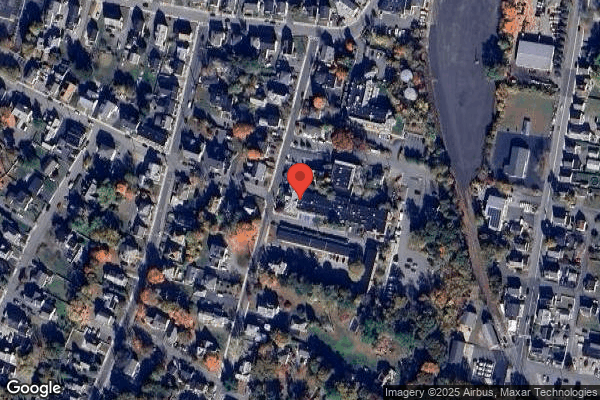

20 CLAFLIN STREET, MILFORD, MA 01757 (508) 473-1272
For profit - Corporation 73 Beds ELDER SERVICES Data: November 2025
Trust Grade
20/100
#203 of 338 in MA
Last Inspection: May 2025

Inspected within the last 6 months. Data reflects current conditions.

Overview

Blaire House of Milford has received a Trust Grade of F, which indicates significant concerns about the quality of care provided. They rank #203 out of 338 nursing homes in Massachusetts, placing them in the bottom half of facilities in the state. However, the facility's trend is improving, with reported issues decreasing from 19 in 2024 to 7 in 2025. Staffing is a concern, as their turnover rate stands at 52%, which is higher than the state average, and they have less RN coverage than 84% of Massachusetts facilities. The facility has faced substantial fines totaling $85,657, which is higher than 88% of similar facilities, suggesting ongoing compliance issues. Specific incidents of concern include a resident who experienced serious health complications due to the improper management of their psychotropic medications, resulting in hospitalization. Another resident developed a severe infection after the facility delayed notifying medical staff about an injury, leading to a prolonged lack of treatment. Additionally, a resident's significant weight loss went unaddressed, indicating a failure to monitor and implement necessary nutritional interventions. While there are strengths in the facility's health inspection rating, the overall care quality raises red flags for families considering this option.

Trust Score
F
20/100
In Massachusetts
#203/338
Bottom 40%
Safety Record
High Risk
Review needed
Inspections
Getting Better
19 → 7 violations
Staff Stability
⚠ Watch
52% turnover. Above average. Higher turnover means staff may not know residents' routines.
Penalties
✓ Good
$85,657 in fines. Lower than most Massachusetts facilities. Relatively clean record.
Skilled Nurses
⚠ Watch
Each resident gets only 25 minutes of Registered Nurse (RN) attention daily — below average for Massachusetts. Fewer RN minutes means fewer trained eyes watching for problems.
Violations
⚠ Watch
54 deficiencies on record. Higher than average. Multiple issues found across inspections.
★★☆☆☆
2.0
Overall Rating
★★★☆☆
3.0
Staff Levels
★☆☆☆☆
1.0
Care Quality
★★★☆☆
3.0
Inspection Score
Stable
2024: 19 issues
2025: 7 issues

The Good

  • Full Sprinkler Coverage · Fire safety systems throughout facility
  • No fines on record

Facility shows strength in fire safety.

The Bad

2-Star Overall Rating

Below Massachusetts average (2.9)

Below average - review inspection findings carefully

Staff Turnover: 52%

Near Massachusetts avg (46%)

Higher turnover may affect care consistency

Federal Fines: $85,657

Well above median ($33,413)

Moderate penalties - review what triggered them

Chain: ELDER SERVICES

Part of a multi-facility chain

Ask about local staffing decisions and management

The Ugly 54 deficiencies on record

4 actual harm
May 2025 7 deficiencies
CONCERN (D)

Potential for Harm - no one hurt, but risky conditions existed

Abuse Prevention Policies (Tag F0607)

Could have caused harm · This affected 1 resident

Based on interview and record review, the facility failed to implement their abuse policy when one Resident (#162), was involved in a resident to resident altercation, in a total sample of 16 resident...

Read full inspector narrative →
Based on interview and record review, the facility failed to implement their abuse policy when one Resident (#162), was involved in a resident to resident altercation, in a total sample of 16 residents. Specifically, the facility failed to ensure staff, who were aware of the incident and notified the Administrator, implemented their abuse protocol by notifying the local authorities of the potential abuse or implemented a system of follow up with interventions to prevent potential future incidents. Findings include: Review of the facility's policy titled Abuse Prevention Policy and Procedure, dated as reviewed 4/2024, indicated but was not limited to the following: - the purpose of the policy is to promote prevention, protection, prompt reporting and interventions in response to an alleged, suspected or witnessed abuse of any resident - reporting requirements: in general each covered individual shall report to the secretary and 1 or more law enforcement entities in which the facility is located any reasonable suspicion of a crime (as defined by the law) against any individual who is a resident; timing: if the event that caused the suspicion did not result in serious bodily injury, then the suspicion shall be reported not later than 24 hours after forming the suspicion - it is the responsibility of the staff to monitor/supervise the care and treatment of residents of the facility to identify abuse and/or inappropriate care and treatment and to promote an environment where no resident is subject to abuse - the procedural and investigational requirement for serious reportable events (procedure #0607), defines facility management responsibilities for conducting comprehensive investigations of allegations of abuse and steps to take to ensure resident safety post-allegation, and state and federal reporting Review of the facility's Investigational Guide for Resident to Resident Altercation, form #CN-019, reviewed 12/2024, indicated but was not limited to the following: - immediately separate the residents and implement safeguards to ensure they do not have access to each other during the cooling down period - SNF's - determination must be made if reasonable suspicion of a crime against a resident of the facility. If there is reasonable suspicion that a crime has been committed against a resident of the facility the staff forming the suspicion must timely report the events to local law enforcement (in cases not involving serious bodily injury to the resident report must be made within 24 hours of forming reasonable suspicion) - conduct assessments of involved residents, identify if injury was sustained and conduct interviews with the involved residents; if aggressive behavior of one or both involved residents is a change in mental status/baseline, conduct urine dip and/or request MD orders for urinalysis culture and sensitivity (U/A C&S), additional lab studies, medical record review and work up as required - identify staff who require interviews and obtain statements, review cameras to identify if event was captured on video, identify if involved residents have any history of conflict and any previous intervention and if interventions were followed - if the residents are roommates consider offering room changes on a space available basis, if appropriate - complete the online report for submission to the required State licensing authority - Executive director (administrator) signature and date are requested at the bottom of the form Review of the Massachusetts Assault and Battery Introduction Guide under G.L.c 265, § 13A, dated as revised June 2019, indicated but was not limited to the following: - Assault and battery includes three things: 1. the aggressor/defendant touched the person/victim; 2. the aggressor/defendant intended to touched the person/victim; and/or 3. that the touching was likely to cause bodily harm or was offensive. - Touch can be direct or indirect and any contact no matter how slight is physical contact: direct is when someone physically strikes someone & indirect is when one person sets in motion some force or instrument to strike another. Review of the facility's policy titled Resident to Resident Altercation, revised 4/2025, indicated but was not limited to the following: - purpose: to create and maintain a safe environment for all residents - an altercation free culture will be promoted through appropriate staff and resident screening, supervision and support - reporting, protection and investigation: all staff are to report any suspected resident to resident altercations immediately to their nurse, once the supervisor/nurse is aware they shall complete a resident accident/observed on floor/fall report (CN-124); all staff are to ensure the safety and welfare of all residents involved in the altercation during and after the investigational process; the reporting will adhere to the Department of Public Health guidelines -response and follow-up: a system of follow up with an emphasis to prevent further altercations will be in place, such as: updated care plans to incorporate recommendations in addition to immediate updates that may have occurred at the time of the incident or proactively prior to the altercation and identified staff educational needs will be identified and provided Resident #162 was admitted to the facility in March 2025 with diagnoses including sciatica left sided, Parkinsonism, and bipolar disorder. Review of the Brief Interview for Mental Status, dated 3/22/25, indicated the Resident was moderately cognitively impaired with a score of 11 out of 15. Review of the medical record indicated Resident #162 was involved in a resident to resident altercation on 4/27/25 and was the victim. During an interview on 5/22/25 at 11:28 A.M., Resident #162 said his/her roommate was rummaging through their belongings and he/she told them to knock it off. When it continued he/she yelled at his/her roommate leave it the hell alone. After that their roommate threatened him/her and then picked up a pillow off the middle bed in the room and threw it at him/her making contact with their face and left side. Resident #162 said he/she was surprised the roommate did that and told the roommate, you can't beat me up, I'll get up out of this bed and teach you a lesson. Then staff entered the room and took the roommate out. Review of the medical record for Resident #162 indicated the following: -Nursing note: 4/27/25: Resident #162 was involved in a resident to resident altercation on 4/27/25 at approximately 1:30 P.M. which resulted in Resident #162's roommate picking up a small pillow and striking him/her with it in the face and left flank area; no visible injuries observed; both residents heard yelling; staff intervened; Administrator, Director of Nurses (DON), Nurse practitioner (NP) and Power of attorney (POA) for Resident notified. The note proceeded to say no physical touch was made. The note failed to indicate that local law enforcement was contacted or any measures were put in place to potentially prevent future incidents. Review of Resident #162's care plan indicated: -Behavior related to diagnosis of Bipolar, resident can display behaviors of being socially inappropriate, verbally abusive, refusal out of bed. Sustained a resident to resident altercation as the victim on 4/27. (initiated: 3/24/25; revised: 5/6/25) The care plan failed to indicate any interventions were initiated or put in place on 4/27/25 following the resident to resident altercation to prevent further potential incidents. During an interview on 5/23/25 at 8:17 A.M., the Social Worker said he was made aware of the resident to resident altercation involving Resident #162. He said he was unsure if throwing a pillow and being struck by it would constitute abuse, but agreed that if someone throws an item at someone in the general public and strikes them with it then that counts as physical contact. He said he did not realize at the time this was a potential abuse situation, and he doesn't believe the facility abuse protocol was followed but he would have to check with the administrator. During an interview on 5/23/25 at 8:37 A.M., the DON said she did not have any incident reports or reports of a resident to resident altercation for Resident #162 from the time of admission in March 2025 to current. She said she was unaware that Resident #162 was involved in an incident in which he/she was struck with a pillow and said this is physical contact and the incident should have been investigated, reported and the abuse policy should have been implemented and it doesn't appear that it was. She said she would have to check with the Administrator to see if they are aware of the incident since she was just learning of it at this time. During an interview on 5/23/25 at 9:13 A.M., the Administrator said he was aware of the incident and investigated it but did not implement the abuse protocol because he thought that no physical contact was made between the two involved residents. He said the social worker had informed him today that the incident note indicates physical contact as Resident #162 was struck by their roommate with a pillow and that the abuse protocol should have been implemented and the police notified. He doesn't think the staff identified the incident as abuse, since he initially had not either, and believes being struck with a pillow, even if thrown, would constitute physical contact and potential abuse. During an interview on 5/23/25 at 10:31 A.M., the Administrator said he reviewed the investigation and incident involving Resident #162 on 4/27/25 and that he misinterpreted the situation. On review, he realized the incident was a potential assault on Resident #162 and the abuse protocol should have been implemented with the police being notified and the Resident having interventions in place to prevent future occurrences and that did not occur. During an interview on 5/23/25 at 10:39 A.M., Nurse #4 said he was the Nurse on duty at the time of the incident. He said Resident #162 was struck with a pillow by their roommate and the staff separated the two residents for the remainder of the shift. He said he reached out to the Administrator and DON for guidance, as he was unsure if the incident would constitute abuse and was not given the directive to implement the abuse policy. He said he did not contact local law authorities or complete an incident report or implement any interventions beyond separating the residents temporarily to potentially prevent further incidents. He said he thought physical contact would only occur if the two residents directly came in contact with each other but he realizes now that was a misinterpretation and someone striking someone else with an object directly or thrown would indeed be physical contact and therefore potential abuse. During an interview on 5/23/25 at 12:31 P.M., the Administrator said he does not have a completed incident report or CN-019 resident to resident altercation form completed and wasn't aware until review of the policies today that it was part of the facility process. He said he did notify local law enforcement of the incident on 4/27/25 today (26 days after the incident occurred) and the facility will look into interventions to prevent further incidents between the two roommates, who continue to be roommates at this time. He said it was an unfortunate circumstance in which the incident was misinterpreted and the abuse protocol should have been implemented and was not.
CONCERN (D)

Potential for Harm - no one hurt, but risky conditions existed

Report Alleged Abuse (Tag F0609)

Could have caused harm · This affected 1 resident

Based on interview and record review, the facility failed to report a resident to resident altercation as potential abuse in which one Resident (#162) was struck with a pillow by their roommate, in a ...

Read full inspector narrative →
Based on interview and record review, the facility failed to report a resident to resident altercation as potential abuse in which one Resident (#162) was struck with a pillow by their roommate, in a total sample of 16 residents. Findings include: Review of the facility's policy titled Abuse Prevention Policy and Procedure, dated as reviewed 4/2024, indicated but was not limited to the following: - the purpose of the policy is to promote prevention, protection, prompt reporting and interventions in response to an alleged, suspected or witnessed abuse of any resident - reporting requirements: in general each covered individual shall report to the secretary and 1 or more law enforcement entities in which the facility is located any reasonable suspicion of a crime (as defined by the law) against any individual who is a resident; timing: if the event that caused the suspicion did not result in serious bodily injury, then the suspicion shall be reported not later than 24 hours after forming the suspicion - the procedural and investigational requirement for serious reportable events (procedure #0607), defines facility management responsibilities for conducting comprehensive investigations of allegations of abuse and steps to take to ensure resident safety post-allegation, and state and federal reporting Review of the facility's Investigational Guide for Resident-to-Resident Altercation, form #CN-019, reviewed 12/2024, indicated but was not limited to the following: -SNF's - determination must be made if reasonable suspicion of a crime against a resident of the facility. If there is reasonable suspicion that a crime has been committed against a resident of the facility the staff forming the suspicion must timely report the events to local law enforcement (in cases not involving serious bodily injury to the resident report must be made within 24 hours of forming reasonable suspicion - complete the online report for submission to the required State licensing authority Resident #162 was admitted to the facility in March 2025 with diagnoses including sciatica left sided, Parkinsonism, and bipolar disorder. Review of the Brief Interview for Mental Status, dated 3/22/25, indicated the Resident was moderately cognitively impaired with a score of 11 out of 15. Review of the medical record for Resident #162 indicated the following: -Nursing note: 4/27/25: Resident #162 was involved in a resident to resident altercation on 4/27/25 at approximately 1:30 P.M. which resulted in Resident #162's roommate picking up a small pillow and striking him/her with it in the face and left flank area; Administrator, Director of Nurses (DON), Nurse Practitioner (NP) and Power of attorney (POA) for Resident notified. The note proceeded to say no physical touch was made. Review of the Healthcare Facility Reporting System (HCFRS) on 5/21/25 at 3:08 P.M., failed to indicate the facility had reported the incident to the State Agency as required. During an interview on 5/23/25 at 9:13 A.M., the Administrator said he was made aware of the incident on 4/27/25 and conducted an investigation but did not report the incident involving Resident #162 in HCFRS at that time since he initially thought no physical contact had occurred. He said he realizes now that the incident should have been reported in accordance with the investigation guidance and facility abuse policy. During a follow up interview on 5/23/25 at 10:31 A.M., the Administrator said he had reported the resident to resident incident involving Resident #162 in the HCFRS system today. (26 days after the incident occurred.)
CONCERN (D)

Potential for Harm - no one hurt, but risky conditions existed

Deficiency F0773 (Tag F0773)

Could have caused harm · This affected 1 resident

**NOTE- TERMS IN BRACKETS HAVE BEEN EDITED TO PROTECT CONFIDENTIALITY** Based on record review and interview, the facility failed to ensure laboratory results were reported and acted on timely for one...

Read full inspector narrative →
**NOTE- TERMS IN BRACKETS HAVE BEEN EDITED TO PROTECT CONFIDENTIALITY** Based on record review and interview, the facility failed to ensure laboratory results were reported and acted on timely for one Resident (#262), out of a total sample of 16 residents. Specifically, the facility failed to report Resident #262's 4/1/25 critically low hemoglobin (Hgb, a protein in red blood cells that carries oxygen from the lungs to the body's tissues and returns carbon dioxide from the tissues back to the lungs) level result to the Resident's provider until 4/3/25. Findings include: Review of the facility's policy titled Consults, Labs and Diagnostic Test Results - Clinical Protocol, dated 4/2024, indicated, but was not limited to, the following: -Nursing staff will review all consults, labs, diagnostic test results, and gather any other pertinent documentation that would be necessary for the provider to recommend the course of treatment. The nurse will notify the physician by calling into the provider's answering service, in which they will then document in the Electronic Health Record (EHR) whom they spoke with and the response. Notation of this information will also be documented on such consult, or diagnostic test results. -The consults and diagnostic test results will then only be placed in the Physician Book for the provider to sign off on during facility rounds. -The Director of Nursing or Designee will then monitor daily that only noted lab, x-rays, and or consults are in the folder, with each document listing the date and time of who specifically they reported the results/details to, and the signature of the reporting nurse. Resident #262 was admitted to the facility in March 2025 with diagnoses including chronic iron deficiency anemia and congestive heart failure. Review of Resident #262's CBC (Complete Blood Count, a blood test used to monitor or diagnose conditions that measures the size and amount of red blood cells, white blood cells, and platelets) laboratory results from 4/1/25 at 11:40 A.M. indicated the following: -Hgb critically low (CL) with results of 7.2 g/dL (grams/deciliter), and a normal range of 13.5-17.5 g/dL per the facility lab -Hematocrit (Hct, the percentage of red blood cells in the blood) low with results of 21.9%, and a normal range of 40-50% per the facility lab Further review of Resident #262's laboratory results indicated that the laboratory made two attempts to call the facility on 4/1/25 at 11:49 A.M. and 12:49 P.M. Review of Resident #262's nursing progress notes indicated, but was not limited to, the following: -On 4/3/25, the Resident appeared very lethargic with decreased verbal responsiveness. The nurse practitioner evaluated the Resident and his/her 4/1/25 laboratory results with critically low Hgb and Hct (7.2, 21.9) and ordered the Resident's transfer to the hospital. Further review of Resident #262's nursing progress notes failed to indicate that the Resident's provider was notified of the Resident's critically low Hgb level on 4/1/25 or 4/2/25. Review of Resident #262's provider progress notes indicated, but was not limited to, the following: -On 3/29/25, the Resident was seen by Physician #2. Physician #2's progress note indicated the physician discussed the Resident's case with a Registered Nurse (RN), reviewed the Resident's MAR, and ordered lab work to be done the next week. -On 3/31/25, the Resident was seen by Nurse Practitioner (NP) #1. NP #1's progress note indicated that a CBC was to be drawn the next day (4/1/25). -On 4/3/25, the Resident was seen by NP #1 for decreased alertness, weakness, and poor sleep. NP #1's note indicated that on 4/1/25, the Resident's Hgb was 7.2 and Hct was 21.9. NP #1's note indicated the Resident was seen and examined and was to be transferred to the emergency room due to his/her low Hgb and Hct. Review of Resident #262's hospital Discharge summary, dated [DATE], indicated the Resident presented to the hospital with low Hgb and Hct. While in the hospital, the Resident received a blood transfusion and his/her anticoagulant medication was stopped. During an interview on 5/28/25 at 11:30 A.M., Nurse #3, who was assigned to Resident #262's care on 4/1/25, said she could not recall if she notified the Resident's provider of his/her critically low Hgb lab results. Nurse #3 said when there is a critical lab result, staff at the facility are notified by phone by the lab. Nurse #3 said when a critical result is received, it should be reported to the Resident's provider immediately and documented in the medical record. During a telephonic interview on 5/28/25 at 11:55 A.M., NP #1 said that she was not made aware of Resident #262's 4/1/25 abnormal lab results before she saw the Resident on 4/3/25. NP #1 said she called NP #2 on 4/3/25 to see if she had been notified of the abnormal results by the facility, but NP #2 was not aware of the abnormal lab results either. NP #1 said she had to request for the lab results to be printed so she could review them on 4/3/25 because she did not have access to the EHR system. NP #1 said when she evaluated Resident #262 and reviewed the 4/1/25 lab results on 4/3/25, she was concerned that the Resident's Hgb level had decreased further and ordered his/her transfer to the emergency room. NP #1 said if she had been notified of the Resident's critically low Hgb level on 4/1/25, she would have at least ordered follow-up lab work be done. During a telephonic interview on 5/28/25 at 12:28 P.M., NP #2 said she was not notified of Resident #262's critically low Hgb level until NP #1 called her on 4/3/25. NP #2 said if she had been notified of the critically low Hgb result on 4/1/25, she would have ordered the Resident's transfer to the emergency room for further evaluation at that time. NP #2 said she did not have access to the facility's EHR system and was unable to view lab results unless provided to her by facility staff. During an interview on 5/28/25 at 1:49 P.M., the Director of Nursing (DON) said it is her expectation that critical lab results are called in to the provider immediately. During a telephonic interview on 5/28/25 at 1:56 P.M., Physician #2 said that she was overseeing the care of Resident #262 for his/her attending physician (Physician #1) on 4/1/25 through 4/3/25. Physician #2 said that she was not notified of Resident #262's 4/1/25 critically low Hgb results.
CONCERN (D)

Potential for Harm - no one hurt, but risky conditions existed

Food Safety (Tag F0812)

Could have caused harm · This affected 1 resident

Based on observation and interview, the facility failed to follow professional standards of practice for food safety and sanitation to prevent the potential spread of foodborne illness to residents wh...

Read full inspector narrative →
Based on observation and interview, the facility failed to follow professional standards of practice for food safety and sanitation to prevent the potential spread of foodborne illness to residents who are at high risk. Specifically, the facility failed to ensure food items were properly labeled and dated in three of three kitchenettes. Findings include: Review of the 2022 Food Code by the Food and Drug Administration (FDA), revised 1/2023, indicated but was not limited to the following: 3-501.17 Ready-to-Eat, Time/Temperature Control for Safety Food, Date Marking. (A) Except when packaging food using a reduced oxygen packaging method as specified under § 3-502.12, and except as specified in paragraphs (E) and (F) of this section, refrigerated, ready-to-eat, time/temperature control for safety food prepared and held in a food establishment for more than 24 hours shall be clearly marked to indicate the date or day by which the food shall be consumed on the premises, sold, or discarded when held at a temperature of 41°Fahrenheit (F) or less for a maximum of 7 days. The day of preparation shall be counted as Day One. Review of the facility's policy titled Resident Personal Food Storage Policy and Procedure, dated February 2025, indicated but was not limited to the following: -Resident food and beverage items stored in the unit kitchenettes must be clearly marked with the resident's name and the date the item was placed in the kitchenette. Review of the facility's policy titled Foods Brought in From an Outside Source Policy and Procedure, dated January 2024, indicated but was not limited to the following: -Food or beverages brought in from the outside will be labeled with the resident's name, and dated by staff with the date the item(s) are brought into the facility for storage. On 5/21/25 at 3:30 P.M., the surveyor observed the following in the East Unit kitchenette refrigerator: -one open container of thickened liquid, undated with a manufacturer's instruction to use within 7 days of opening; -eight single-serve yogurt cups with a manufacturer's expiration date of 5/20/25. On 5/21/25 at 3:40 P.M., the surveyor observed in the [NAME] Unit Kitchenette refrigerator: -one opened can of soda in the freezer, with no cover and no label or date; -one opened container of thickened liquid, undated with a manufacturer's instruction to use within 7 days of opening; -one plastic bag containing Tupperware with food and a can of soda, no label or date; -one bowl of mandarin oranges labeled with the contents and a first name, no date. On 5/27/25 at 8:45 A.M., the surveyor observed eight single-serve yogurt cups with a manufacturer's expiration date of 5/20/25 in the East Unit kitchenette refrigerator. On 5/28/25 at 8:08 A.M., the surveyor observed the following in the main dining room kitchenette: -two single-serve yogurt cups with a manufacturer's expiration date of 5/9/25; -four pre-poured containers of salad dressing, no label or date; -one bowl of garden salad wrapped with plastic, no label or date; -four plates of cake, no label or date. On 5/28/25 at 3:30 P.M., the surveyor observed the following in the East Unit kitchenette: -one pre-poured container of salad dressing with no label or date; -one opened bottle of water with no label or date; -four single-serve yogurt cups with manufacturer's expiration date of 5/20/25. During an interview on 5/28/25 at 3:30 P.M., the Food Service Director (FSD) said all food items in the kitchenettes should be labeled and/or dated to ensure proper storage. The FSD said there were signs posted in each kitchenette to remind staff to label and date food, but it doesn't always happen. The FSD said thickened liquids should be dated with the date it was opened; any resident food items should be labeled and dated and stored in the refrigerator for three days; any opened food items should be labeled and dated with the day it was opened. The FSD said there should be no food stored in the unit refrigerators that are beyond their expiration or storage date.
CONCERN (D)

Potential for Harm - no one hurt, but risky conditions existed

Infection Control (Tag F0880)

Could have caused harm · This affected 1 resident

Based on observation, document review, and interviews, the facility failed to establish and maintain an infection prevention and control program designed to provide a safe, sanitary, and comfortable e...

Read full inspector narrative →
Based on observation, document review, and interviews, the facility failed to establish and maintain an infection prevention and control program designed to provide a safe, sanitary, and comfortable environment. Specifically, the facility failed to: 1. Maintain an accurate surveillance system that reflected potential illnesses and infections in the facility in accordance with the most up to date pre-defined McGeer criteria; and 2. Ensure hand hygiene was performed by staff and residents during meals and tray pass. Findings include: Review of the facility's policy titled Infection Prevention and Control Policy, dated last revised 10/2024, included but was not limited to: - Purpose: to maintain an infection control and prevention program designed to provide a safe, sanitary, and comfortable environment and to help prevent the development and transmission of communicable diseases and infection. - A system for preventing, identifying, reporting, investigating, and controlling infections and communicable diseases for all residents, staff, volunteers, visitors and other individuals providing services under a contractual arrangement based upon the facility assessment conducted according to 483.70(e) and following accepted national standards. - A system of surveillance designed to identify possible communicable diseases or infections before they can spread to other persons in the facility. 1. Review of the facility's policy titled Surveillance for Infections, dated as revised September 2017, indicated but was not limited to the following: - the purpose of surveillance of infections is to identify both individual cases and trends of epidemiologically significant organisms and healthcare-associated infections (HAIs), to guide appropriate interventions, and to prevent future infections - the criteria for such infections is based on the current standard definitions of infections - infections that will be included in routine surveillance include: those with evidence of transmittability, available processes to prevent or reduce the spread of infections, clinically significant morbidity or mortality associated with infection (e.g., pneumonia, urinary tract infections (UTIs)) and pathogens associated with serious outbreaks - infections that may be considered in surveillance are those with limited transmittability in a healthcare environment and/or limited prevention strategies - nursing staff will monitor residents for signs and symptoms (s/s) that may suggest infection, according to current criteria, and will document and report suspected infections Gathering Surveillance Data: - the Infection Preventionist (IP) is responsible for gathering and interpreting surveillance data - the surveillance should include any or all of the following information to help identify possible indicators of infection: lab results, skin care sheets, infection control rounds/interviews, verbal reports, infection documentation record, temperature logs, pharmacy records, antibiotic review, transfer logs/summaries Data Collection and Recording: - for residents with infections that meet the criteria for definition of infection for surveillance, collect the following data as appropriate: identifying information, diagnoses, date of onset of infection, infection site (be as specific as possible, e.g., cutaneous infection should be listed as pressure ulcer left foot, pneumonia as right upper lobe, etc.), pathogens, risk factors, pertinent remarks (i.e., temperature, other symptoms of specific infection, etc.), treatment measures and precautions - using the current suggested criteria for HAIs determine if the resident has a HAI During an interview on 5/21/25 at 10:34 A.M., the Director of Nurses (DON) said she is the IP in the facility and the facility uses McGeer criteria to determine if an illness rises to the level of an infection. Review of the most recent McGeer criteria, last revised May 2021, indicated but was not limited to the following: Syndrome: Cellulitis, soft tissue, or wound infection (Skin) Criteria: Must fulfill at least 1 of the criteria. 1. Pus at wound, skin, or soft tissue site 2. At least four of the following: - New or increasing sign or symptom - Heat (warmth) at affected site - Redness (erythema) at affected site - Swelling at affected site - Tenderness or pain at affected site - Serous drainage at the affected site 2A. At least one of the following (can be counted as part of the four in criteria #2) - Fever - Leukocytosis - Acute change in mental status - Acute functional decline Syndrome: Pneumonia Criteria: Must fulfill 1,2 and 3 1. Chest x-ray (CXR) with pneumonia or new infiltrate 2. At least one of the following criteria: -new or increased cough -new or increased sputum production -oxygen saturation (O2 sat) less than (<) 94% or greater than (>) 3% decrease from baseline O2 sat -new or change in lung exam abnormalities -pleuritic chest pain -respiratory rate >25 breaths per minute 3. At least one of the following: -fever -leukocytosis -acute mental status change -acute functional decline Laboratory Surveillance Sheet Key: (in use by the facility) Categories: Skin and soft tissue = S; Pneumonia = PNU Symptoms: cough = C Count: Yes = Y Review of the facility provided infection surveillance from February through April 2025, indicated but was not limited to the following: February 2025: -Resident #32: Category: PNU, date of onset (DOO): 2/22, s/s: C, the sections for culture site and result were all blank, final status: HAI, count: Y -Resident #163: Category: S, DOO: 2/25, s/s: C, the sections for culture site and result were all blank, final status: HAI, count: Y Resident #32 did not have enough signs and symptoms documented or a chest x-ray with results documented on the surveillance sheets to meet surveillance criteria but was counted as an HAI infection indicating the surveillance was incomplete or inaccurate. Review of the medical record for Resident #32 failed to indicate any documentation of signs and symptoms of pneumonia, indicating the Feb surveillance was inaccurate. Resident #163 did not have any symptoms associated with a Skin infection documented on the surveillance sheet but was counted as a HAI infection indicating the surveillance was inaccurate. April 2025: Resident #22: Category: S, DOO: 4/12, s/s: abscess, the sections for culture site and result were all blank, final status: HAI, count: Y Resident #22 did not have any signs and symptoms of skin infection documented on the surveillance in accordance with McGeer criteria, indicating the surveillance was incomplete. Review of the medical record for Resident #22 indicated signs and symptoms of redness and serosanguinous drainage, but not enough documentation to indicate the area had the signs and symptoms necessary to meet McGeer criteria, indicating the surveillance was inaccurate. During an interview on 5/27/25 at 9:12 A.M., the IP said the facility also used infection control report sheets to ensure an illness rose to the level of an infection using McGeer criteria. On review of the sheets, it was identified that the facility was using an outdated version of McGeer criteria with the report sheets last revised 1/2013, making any of their content inaccurate for the Residents on surveillance. Review of the Infection Control Report Sheet for February and April 2025, indicated the following: - Resident #32's form failed to indicate a chest x-ray was completed or the required amount of signs and symptoms were identified for the Resident to have met McGeer criteria. - Resident #163's form was incomplete and provided no documentation or symptoms of any potential infection in any category. - Resident #22's form was incomplete and failed to provide any additional documentation of any potential infection. During an interview on 5/27/25 at 9:23 A.M., the IP reviewed the surveillance and all supporting documentation with the surveyor. She said the only available x-ray for Resident #32 indicated a humerus fracture and there was not an x-ray to support the surveillance for meeting criteria of pneumonia in February 2025. She said the documentation on the surveillance for Resident #163 was an error and the surveillance for February 2025 was inaccurate for these two Residents. She said in review of the information for Resident #22 that the documented signs and symptoms on surveillance and in the record did not support the Resident meeting criteria for a skin infection and the April surveillance for this Resident was inaccurate. She said she was not aware there was a new version of McGeer criteria making the criteria in use outdated. 2. Review of the Centers for Disease Control and Prevention guidance titled Infection Prevention and Long-term Care Facility Residents, dated 3/26/24, indicated but was not limited to: If you live in a nursing home, assisted living facility or other long-term care facility, you have a higher risk of getting an infection. There are steps you can take to reduce your risk: -Keep your hands clean. Remind staff and visitors to keep their hands clean. On 5/27/25, the surveyor observed the following: 11:50 A.M. - two Certified Nursing Assistants (CNAs) passing meals to resident rooms on the [NAME] Unit. The surveyor observed the CNAs did not clean or sanitize their hands when entering or exiting resident rooms, nor did they clean or sanitize their hands between trays. 11:50 A.M. to 12:10 P.M. - five residents in the main dining room, unsupervised at most times, waiting for lunch. One Resident was observed building blocks, another Resident was observed manipulating a sensory quilt (an object to provide sensory stimulation), and a third Resident was observed with a sensory quilt in front of them but was not seen touching it. 12:10 P.M. - CNA #1 and CNA #2 completed meal pass and went directly to the main dining room to pass and assist with meals. The surveyor did not observe either CNA perform hand hygiene between the unit meal pass and the main dining room meal pass. 12:10 P.M. - CNA #3 was observed seated between two residents, feeding them by alternating between each resident, and wiping the mouths of both residents. CNA #3 did not perform hand hygiene as she alternated between the two residents. On 5/28/25 the surveyor observed the following: 7:48 A.M. - two CNAs passing meals on the [NAME] Unit. The CNAs did not perform hand hygiene prior to entering or exiting five resident rooms. The CNAs were observed clearing items including remote controls from residents' tray tables and using their hands to brush items aside on the tray tables, their hand contacting the table. The surveyor observed the CNAs did not perform hand hygiene after these tasks and continued to serve trays to other residents. 7:55 A.M. - During meal pass, CNA #2 and another CNA grab a Resident's bed sheet to boost the Resident into an upright position for their meal. Neither CNA was wearing gloves. CNA #2 exited the room without performing hand hygiene and continued to pass meals to other residents. 7:56 A.M. - the surveyor observed five residents, unsupervised at most times, in the main dining room waiting for breakfast. One Resident was building blocks. 8:12 A.M. - a block fell on the floor in the main dining room. CNA #4 picked the block up off the floor and placed the block on the table in front of the Resident. The Resident touched the block with both hands. 8:19 A.M. - CNAs pass meals to residents in the main dining room. The surveyor did not observe hand hygiene offered to the residents. 8:19 A.M. - CNA #4 touch the handles and breaks of one Resident's wheelchair before assisting the Resident with his/her meal. CNA #4 was not observed performing hand hygiene prior to meal assistance. 8:19 A.M. - one Resident ate cereal pieces with his/her bare hands. CNA #3 held the Resident's toast with her bare hand to butter it. During an interview on 5/28/25 at 2:12 P.M., CNA #2 said residents should be encouraged to clean their hands before meals, and the facility has hand wipes they use for this purpose. The surveyor said she had not seen the hand wipes used during the survey. CNA #2 said they ran out of the hand wipes recently and currently used regular napkins to clean hands which was not as effective as the special hand wipes. CNA #2 said staff did not clean the hands of the residents in the main dining room prior to breakfast this morning but should have. During an interview on 5/28/25 at 2:26 P.M., Nurse #3 said staff should perform hand hygiene when they enter and exit rooms and residents' hands should be cleaned before meals. Nurse #3 said the facility had hand wipes to clean the residents' hands but could not find any when she looked around the unit. During an interview on 5/28/25 at 3:40 P.M., the Director of Nursing (DON) said she expected staff to practice hand hygiene when entering and exiting resident rooms. The DON said staff should perform hand hygiene before and after providing care, which included boosting residents in bed and feeding or assisting with meals, and after touching residents' items, such as moving items on tray tables. The DON said the facility had hand wipes to clean residents' hands prior to meals and was unaware that they were not currently being used. The DON said staff should offer and encourage residents to clean their hands prior to meals, especially residents who were cognitively impaired. The facility was unable to provide a policy that addressed hand hygiene protocol for staff during meal pass and meal assistance and hand hygiene for residents prior to meals.
CONCERN (D)

Potential for Harm - no one hurt, but risky conditions existed

Deficiency F0883 (Tag F0883)

Could have caused harm · This affected 1 resident

**NOTE- TERMS IN BRACKETS HAVE BEEN EDITED TO PROTECT CONFIDENTIALITY** Based on record review and interview, the facility failed to ensure two Residents (#14 and #28), out of a total sample of five r...

Read full inspector narrative →
**NOTE- TERMS IN BRACKETS HAVE BEEN EDITED TO PROTECT CONFIDENTIALITY** Based on record review and interview, the facility failed to ensure two Residents (#14 and #28), out of a total sample of five residents reviewed for immunizations, were screened for eligibility to receive the recommended PCV20 or PCV21 pneumococcal vaccination, the residents/residents' representatives were educated on the benefits and potential side effects of the vaccine, and were offered and administered (if applicable) the vaccine in a timely manner. Specifically, the facility failed: to identify that the Residents were eligible for the PCV20 or PCV21 pneumococcal vaccinations and were offered the opportunity through shared decision making to receive the vaccination if warranted and desired in accordance with Centers for Disease Control and Prevention (CDC) guidance. Findings include: Review of the facility's policy titled Facility Vaccine Procedure, last reviewed 12/2024, indicated but was not limited to the following: - Purpose: to offer residents the recommended immunizations against influenza and pneumonia - Schedule of administration: any additional vaccine administration for residents, i.e. pneumonia vaccine will follow the procedure of obtaining informed consent prior, obtaining a physician order, providing education and administering the vaccine and completing the documentation of the vaccine administration in [Name of facility's electronic medical record] Review of the CDC guidance titled Pneumococcal Vaccine Timing for Adults, dated October 2024, indicated but was not limited to the following: Adults 50 years or older: Shared clinical decision-making for those who already completed the series with PCV13 and PPSV23. Prior vaccines Shared clinical decision-making option for adults [AGE] years old or older Complete series: previously received PCV13 at any age & PPSV23 at or older than 65 yrs and it has been more than five years since the series was completed. Together, with the patient, vaccine providers may choose to administer PCV20 or PCV21 to adults that are [AGE] years old or older who have already received PCV13 (but not PCV15, PCV20, or PCV21) at any age and PPSV23 at or after the age of [AGE] years old. Review of the medical record for Resident #14 indicated the Resident was currently [AGE] years old and had received their PCV13 pneumococcal vaccination in 2015 and their PPSV23 pneumococcal vaccination in 2017 (approximately 8 years ago at the approximate age of 83). The record failed to indicate that the Resident or his/her responsible party was offered the PCV20 or PCV21 pneumococcal vaccination, even though they were eligible. Review of the medical record for Resident #28 indicated the Resident was currently [AGE] years old and had received their PCV13 pneumococcal vaccination in 2014 and their PPSV23 pneumococcal vaccination in 2012 (approximately 13 years ago at the approximate age of 66). The record failed to indicate that the Resident or his/her responsible party was offered the PCV20 or PCV21 pneumococcal vaccination, even though they were eligible. During an interview on 5/22/25 at 3:54 P.M., the Infection Preventionist said the facility is working off a Pneumococcal timing decision tree from February 2015 and was unaware of the recommendation to determine eligibility and offer the PCV20 or PCV21 pneumococcal vaccination to residents who have previously received both the PCV13 and PPSV23 vaccines. She reviewed the medical records for both Resident #14 and #28 and said there was no documentation that the Residents or their responsible parties were offered the PCV20 or PCV21 vaccinations.
CONCERN (E)

Potential for Harm - no one hurt, but risky conditions existed

Deficiency F0658 (Tag F0658)

Could have caused harm · This affected multiple residents

**NOTE- TERMS IN BRACKETS HAVE BEEN EDITED TO PROTECT CONFIDENTIALITY** 2. Resident #111 was newly admitted to the facility from home in 5/2025 with diagnoses which included hypertensive heart disease...

Read full inspector narrative →
**NOTE- TERMS IN BRACKETS HAVE BEEN EDITED TO PROTECT CONFIDENTIALITY** 2. Resident #111 was newly admitted to the facility from home in 5/2025 with diagnoses which included hypertensive heart disease with heart failure, combined systolic and diastolic (congestive) heart failure, atrial fibrillation, and unspecified dementia with other behavioral disturbance. The Resident had been living at home with his/her family and received services from a home Hospice agency. Review of the nursing policy for new admissions, revised in 10/2024, indicated that an admission Checklist (CN-011) was to be completed for each admission. Upon completion of the First Day tasks from the checklist, the nurse was to return the checklist to the Director of Nursing/Executive Director. First Day tasks included, but were not limited to the following: -Physician notification -Physician orders complete, including order to admit for skilled nursing and observation During an observation and interview on 5/22/25 at 11:18 A.M., Resident #111's family member said that they were concerned with the topical, antifungal medications they brought in on the day of admission. The topical medications were ordered by a dermatologist to treat fungal conditions on the Resident's nails and perineum. The family member said staff stored the medications in the Resident's nightstand drawer and no one from nursing had applied them to the Resident. The family member expressed concern that the Resident suffered from advanced dementia, and was not capable of making informed decisions, and would not know to ask for their medication. The family member went on to say that he/she spoke to the Director of Nursing (DON) about their concern that the Resident's oral and topical medications that the Resident was receiving at home were to be continued by the facility, such as Seroquel (antipsychotic) and other cardiac medications. The family member said that the Resident had significant heart failure and was taking a number of medications to treat his/her cardiac disease. Review of the medication list for the Resident's medications from home were as follows: Home Hospice Medication Orders: -Acetaminophen 325 mg 2 tabs by mouth daily/PRN -Acetaminophen 650 mg rectal suppository every 6 hours/PRN -Bisacodyl 10 mg rectal suppository daily/PRN -Donepezil 10 mg by mouth at bedtime -Eliquis 5 mg by mouth 2 times daily -Entresto 24 mg-26 mg 2 times by mouth daily (cardiovascular therapy) -Furosemide 20 mg by mouth daily (CHF) -Hydromorphone 4 mg/ml, give 0.5mg-1mg by mouth every 4 hours/PRN -Haloperidol Lactate 2 mg/ml oral concentrate 0.5 ml sublingually every 6 hours/PRN -Hyoscyamine 0.125 mg sublingually every 4 hours/PRN (secretions) -Jardiance 10 mg by mouth daily -Lorazepam 0.5 mg by mouth every 6 hours/PRN -Melatonin 3 mg, take 2 tabs by mouth at bedtime -Memantine 10 mg by mouth two times/day -Metformin 500 mg 2 tablets by mouth 2 times daily -Metoprolol Succinate 200 mg, extended release, by mouth once daily in the morning -MiraLAX 17 gm oral powder packet daily/PRN -Oxygen gas 2-4 liters PRN -Prochlorperazine Maleate 10 mg tablet orally every 6 hours for nausea/vomiting PRN -Seroquel 25 mg, give 12.5 mg by mouth daily in the afternoon -Trazodone 50 mg, give 0.5 tablet by mouth at bedtime -Atorvastatin 40 mg by mouth daily Review of the active Physician's Orders and Medication Administration Record (MAR) for medications from the time of Resident #111's admission to the facility to today (5/22/25) indicated the following medications were ordered: 5/21/25 Metformin 500 mg twice a day at 10 A.M. and 4 P.M. (not given on 5/20/25 at 4 P.M. or 5/21/25 at 10 A.M.) 5/21/25 Jardiance 10 mg every day at 10 A.M. (not given on 5/21/25 at 10 A.M.) 5/20/25 Acetaminophen 325 mg, give 2 tabs by mouth every 4 hours/as needed (abbreviated as PRN) 5/21/25 MOM 30 ml every night as needed every bedtime PRN 5/20/25 Bisacodyl 10 mg daily/PRN 5/20/25 Fleet Enema 1 rectally daily PRN for constipation Further review of the Physician's Orders and the Home Hospice Medication orders indicated that as of 5/22/25, 17 medications had not been ordered and/or administered: -Donepezil (used to treat dementia associated with Alzheimer's disease) -Eliquis 5 mg by mouth 2 times daily -Entresto (used to treat chronic heart failure) -Furosemide (used to reduce fluid in the body), -Hydromorphone (a narcotic pain reliever), -Haloperidol (an antipsychotic medication), -Hyoscyamine (used to decrease secretions) -Lorazepam (used to treat anxiety) -Melatonin (used as an adjunct for sleep) -Miralax (used for constipation) -Memantine (used to treat dementia associated with Alzheimer's disease), -Metoprolol Succinate, (used to lower blood pressure and treat heart failure), -Oxygen gas (used to improve respiratory status) -Prochlorperazine (used to treat nausea/vomiting) -Seroquel (an antipsychotic), -Trazodone (an antidepressant often used to treat major depressive disorder), -Atorvastatin, (used to lower cholesterol and triglyceride levels in the blood) Review of a Hospice Nurse Recommendation Form, dated 5/20/25, indicated: -Continue meds from home. Further record review indicated there was no evidence the medications from the home Hospice were reconciled with the physician resulting in many medications not being administered. During an interview on 5/22/25 at 12:04 P.M., the DON said that Nurse #5 admitted Resident #111 and was responsible for completing the Resident's admission Checklist, including reconciling medication/treatment orders from the home Hospice agency, and contacting the physician to complete/approve all the orders. The DON said Nurse #5 did not complete the tasks as required on the admission Checklist. The DON said that there were a number of discrepancies between the medication orders from the list the family member brought in, the orders from the home Hospice agency, and the Resident's current physician's orders and medications on the MAR. During an interview on 5/22/25 at 12:06 P.M., the Hospice Nurse Case Manager (CM) from the facility Hospice, said she reviewed the Resident's previous home Hospice orders with Nurse #5 on 5/20/25 at approximately 3:00 P.M. The Hospice CM said the expectation was that Nurse #5 would contact the physician to reconcile the orders to ensure the Resident's medications were complete and accurate. The Hospice CM said there were a number of discrepancies between the current facility medication orders from the facility physician, and the orders from the Hospice. The Hospice CM said that several cardiac medications, such as Entresto, Furosemide, and Metoprolol, that were not listed on the Resident's MAR upon admission, had not been administered to the Resident. During an interview on 5/22/25 at 3:00 P.M., the DON said she has now reconciled the Resident's current medications from the home Hospice agency with the physician. She said many of the Resident's medications, including cardiac medications, had been omitted since admission as a result of the failure by Nurse #5 to reconcile the Resident's medication orders with the physician, in accordance with the admission Checklist. The DON said Resident #111 had the potential for a decline in his/her medical status due to the omitted doses of multiple medications, including his/her cardiac medications. Based on observation, interview, and record review, the facility failed to provide care and services consistent with professional standards for three Residents (#52, #111, #262), out of a total sample of 16 residents. Specifically, the facility failed: 1. For Resident #52, to ensure a healthcare proxy (HCP) invocation/activation form was completed in accordance with the standard of practice; 2. For Resident #111, to ensure medication reconciliation and physician notification were completed at the time of admission to ensure the Resident received the required medications timely and without missed doses; and 3. For Resident #262, to implement physician's orders to discontinue Aricept (donepezil, a medication used to treat dementia) and Namenda (memantine, a medication used to treat dementia). Findings include: 1. Review of Massachusetts healthcare proxy act M.G.L C201D, Section 6 indicated, but was not limited to the following: The authority of a health care agent shall begin after a determination is made, pursuant to the provisions of this section, that the principal lacks the capacity to make or to communicate health care decisions. Such determination shall be made by the attending physician according to accepted standards of medical judgment. The determination shall be in writing and shall contain the attending physician's opinion regarding the cause and nature of the principal's incapacity as well as its extent and probable duration. This written determination shall be entered into the principal's permanent medical record. Resident #52 was admitted to the facility in December 2024 with diagnoses including: Unspecified dementia with severe behavioral disturbance and major depressive disorder. Review of the medical record for Resident #52 indicated a Brief Interview for Mental Status (BIMS) was completed on 2/28/25 with a score of 7 out of 15, indicating severe cognitive deficit. During an interview on 5/23/25 at 12:52 P.M., the HCP said she was making all medical decisions for Resident #52 and had signed all the consents at the facility. During an interview on 5/23/25 at 1:37 P.M., the Social Worker said Resident #52's HCP is activated and the HCP is making all the decisions since admission. During an interview on 5/27/25 at 9:48 A.M., the Director of Nurses (DON) said the process is for a HCP activation/invocation form should be completed once a resident has been deemed incapable of making medical decisions by a Physician. She said the Physician or Nurse Practitioner would complete the form and leave it in the medical record once the decision was made indicating the reason, nature and extent of the incapacitation. Further review of Resident #52's medical record indicated: - an order from the hospital (behind the medical orders for life sustaining treatment (MOLST)) that indicated the HCP was activated prior to admission - a MOLST signed by the HCP - a care plan for the Resident that indicated: decision making skills impaired, HCP activated prior to admission on [DATE] - all consents since the time of admission including consents to treat and consents for medications were signed by the HCP The medical record failed to indicate a HCP invocation form had been completed and was available on file for the Resident. During an interview on 5/27/25 at 10:32 A.M., the Medical Records Coordinator reviewed the medical record and said the Resident should have a HCP invocation form in their record and there is not one that could be located. She said in addition she did not have an invocation form that was to be filed for the Resident. During an interview on 5/27/25 at 10:42 A.M., Nurse #2 reviewed Resident #52's medical record and could not locate a HCP activation/invocation form. He said usually when a resident's HCP is activated the activation/invocation form is completed with the cause, nature and expected duration of the activation. He said the Resident's HCP had been activated since prior to admission and the HCP was making all the decisions and couldn't explain why a HCP invocation was not in the medical record. During an interview on 5/27/25 at 11:42 A.M., the DON said Resident #52's HCP was invoked and had been since prior to admission. She reviewed the Resident's medical record and said there was no invocation/activation form on file and there should be and it was possible that it was missed and not completed by the Physician. During an interview on 5/27/25 at 12:17 P.M., Physician #1 said Resident #52 was not capable of making complex medical decisions and their HCP was activated and making all the decisions. He said there should be a HCP invocation form in the record, but he does not recall completing one and said he thinks he likely just missed completing the form. He said the form should absolutely have been completed and in the medical record and it was his error. 3. Review of [NAME], Manual of Nursing Practice 11ed, dated 2019, indicated the following: -The professional nurse's scope of practice is defined and outlined by the State Board of Nursing that governs practice. Review of the Massachusetts Board of Registration in Nursing Advisory Ruling on Nursing Practice, dated as revised April 11, 2018, indicated: -Nurse's Responsibility and Accountability: Licensed nurses accept, verify, transcribe, and implement orders from duly authorized prescribers that are received by a variety of methods (i.e., written, verbal/telephone, standing orders/protocols, pre-printed order sets, electronic) in emergent and non-emergent situations. Licensed nurses in a management role must ensure an infrastructure is in place, consistent with current standards of care, to minimize error. -In any situation where an order is unclear, or a nurse questions the appropriateness, accuracy, or completeness of an order, the nurse may not implement the order until it is verified for accuracy with a duly authorized prescriber. Review of the facility's policy titled Prescriber's Telephone Order, revised 3/2017, indicated, but was not limited to, the following: -Verbal/telephone orders that follow this policy will be considered to be valid orders and will be executed as if the authorized Prescriber wrote them. -It is the Licensed Nurse's responsibility to note (implement) verbal/telephone orders. A nurse who records the order on the telephone order sheet must take whatever steps necessary to ensure that the order is carried out without delay. This includes, but may not be limited to, the following: a) Medication order *entering the order into the EHR -The overnight nurse will conduct a nightly 24-hour chart check to confirm that new orders received in the previous 24 hours have been implemented. In conducting the 24-hour chart check, the nurse should review the telephone order section of each resident to identify any new orders and then validate that all new telephone orders have been implemented. Resident #262 was admitted to the facility in March 2025 with diagnoses including dementia and heart failure. Review of Resident #262's Minimum Data Set (MDS) assessment, dated 4/3/25, indicated Resident #262 was moderately cognitively impaired, as evidenced by a BIMS score of 8 out of 15. Review of Resident #262's Physician's Orders in the electronic health record (EHR) indicated, but was not limited to, the following: -Memantine (Namenda) 5 milligrams (mg) oral every 12 hours (order date: 3/28/25) -Donepezil (Aricept) 10 mg by mouth every night (order date: 3/28/25) Further review of Resident #262's Physician's Orders in the paper record indicated a telephone order was written on 5/16/25 to discontinue Aricept and Namenda. Review of Resident #262's May 2025 Medication Administration Record (MAR) indicated the Resident was administered Donepezil nightly 5/16/25 through 5/27/25 and was administered Memantine 5mg at 9:00 A.M. on 5/16/25 through 5/28/25 and at 9:00 P.M. on 5/16/25 through 5/27/25. During an interview on 5/28/25 at 1:49 P.M., the Director of Nursing (DON) said she had transcribed the telephone order to discontinue Resident #262's Aricept and Namenda on 5/16/25. The DON reviewed the Resident's EHR and said that she did not discontinue the medication in the EHR and that should have been done.
May 2024 15 deficiencies
CONCERN (D)

Potential for Harm - no one hurt, but risky conditions existed

Deficiency F0558 (Tag F0558)

Could have caused harm · This affected 1 resident

Based on observations, interviews, and record review, for one Resident (#28) of 16 sampled residents, the facility failed to ensure his/her call light was accessible so he/she was able to call for ass...

Read full inspector narrative →
Based on observations, interviews, and record review, for one Resident (#28) of 16 sampled residents, the facility failed to ensure his/her call light was accessible so he/she was able to call for assistance. Findings include: Review of the facility's policy titled Answering the Call Light, dated as revised September 2022, indicated but was not limited to: -Ensure the call light is accessible to the resident when in bed, from the toilet, from the shower or bathing facility and from the floor. Resident #28 was admitted to the facility in November 2022 with the following diagnoses: cerebral infarction (stroke), hemiplegia (weakness or paralysis of one side of the body) affecting the right side and aphasia (defect or loss of the power of expression by speech, writing, or signs, or of comprehending spoken or written language, due to injury or disease of the brain). Review of the Minimum Data Set (MDS) assessment, dated 2/29/24, indicated Resident #28 had short and long-term memory problems as evidenced by staff interview. Further review of the MDS indicated Resident #28 had unclear speech, had limited range of motion on one side of his/her upper body, and was dependent on facility staff for self-care and mobility. On 4/29/24 at 9:25 A.M., the surveyor observed Resident #28 lying in bed with his/her call light on the floor on the left side of his/her bed and out of his/her reach. During an interview on 4/29/24 at 9:27 A.M., Certified Nursing Assistant (CNA) #1 said Resident #28 had a stroke and had paralysis of his/her right side and could not communicate verbally. The surveyor and CNA #1 observed the call light on the floor next to the Resident's bed and CNA #1 said the call light should be within reach and not on the floor. On 4/30/24 at 7:24 A.M., the surveyor observed Resident #28 lying in bed with the call light clipped to the top left corner of the mattress with the cord hanging down and the call light resting on the floor out of his/her reach. Resident #28 was pointing to his television and attempting to ask the surveyor for help. The surveyor made Nurse #1 aware that the Resident needed assistance and acknowledged the need to assist him/her. During an interview on 4/30/24 at 7:47 A.M., Nurse #1 said she had assisted Resident #28 and that he/she was all set. At 7:49 A.M., the surveyor returned to Resident #28's room and found the call light clipped to the top left corner of the mattress, hanging on the floor and out of his/her reach, in the same position previously observed. On 5/1/24 at 4:15 P.M., the surveyor observed Resident #28 lying in bed with the call light clipped to the top left side of the mattress with the cord hanging down and the call light resting on the floor out of his/her reach. The surveyor asked Resident #28 if he/she could reach the call light, and he/she was unable to do so. During an interview on 5/1/24 at 4:30 P.M., Nurse #4 said Resident #28 had a stroke and was unable to communicate verbally and could not use his/her right side. Nurse #4 said Resident #28 required staff assistance with bed mobility. Nurse #4 said the Resident's call light should always be within reach. The surveyor and Nurse #4 observed the call light on the floor and Nurse #4 said she had forgotten to put the call light within reach prior to leaving Resident #28's room. During an interview on 5/2/24 at 1:09 P.M., the Director of Nurses (DON) said the expectation was for call lights to be within reach at all times.
CONCERN (D)

Potential for Harm - no one hurt, but risky conditions existed

Comprehensive Care Plan (Tag F0656)

Could have caused harm · This affected 1 resident

Based on observations, interviews, policy review, and records reviewed, for three Residents (#14, #22, and #51), out of 16 sampled residents, the facility failed to develop and implement comprehensive...

Read full inspector narrative →
Based on observations, interviews, policy review, and records reviewed, for three Residents (#14, #22, and #51), out of 16 sampled residents, the facility failed to develop and implement comprehensive care plans to reflect the individual needs of the residents. Specifically, the facility failed: 1. For Resident #14, to develop and implement a care plan for an indwelling Foley catheter (tube placed in the body to drain and collect urine from the bladder); 2. For Resident #22, to develop and implement a care plan for an indwelling Foley catheter; and 3. For Resident #51, failed to a. develop a comprehensive care plan for self-administration of finger stick blood sugar testing (FSBS), and b. develop a comprehensive care plan for an implantable cardiac device. Findings Include: Review of the facility's policy titled Care Planning- Comprehensive, last revised May 2017, indicated but not limited to: -An individualized comprehensive care plan that includes measurable objectives and timetables to meet the resident's medical, nursing, mental, and psychological needs is developed for each resident. -Interpretation and Implementation 1. Our facility's Care Planning/Interdisciplinary Team, in coordination with the resident, his/her family or representative (sponsor), develops and maintains a comprehensive care plan for each resident that identifies the highest level of functioning the resident may be expected to attain. 2. Each resident comprehensive care plan is designed to: a. Incorporate identified problem areas; b. Incorporate risk factors associated with identified problems; e. Reflect treatment goals, timetables, and that objectives are measurable; f. Identify the professional services that are responsible for each element of care; and i. Reflect currently recognized standards of practice for problem areas and conditions. 3. Assessments of residents are ongoing and care plans are revised as information about the resident and the resident's condition change. 1. Resident #14 was admitted to the facility in March 2024 with diagnoses including hypertensive urgency, cognitive communication deficit, and urinary retention. Review of the most recent Minimum Data Set (MDS) assessment, dated 4/5/24, indicated that Resident #14 had moderate cognitive impairment as evidenced by a Brief Interview for Mental Status (BIMS) score of 9 out of 15. Review of Resident #14's May 2024 Physician's Orders indicated but was not limited to: -Foley Cath (Indwelling Catheter) care every shift (4/26/24) -Document Foley Cath output every shift (4/26/24) Further review of Resident #14's medical record indicated his/her indwelling catheter was inserted on 4/11/24. Review of Resident #14's care plans failed to indicate that a care plan for the indwelling catheter had been developed. During an interview on 5/2/24 at 12:31 P.M., Nurse #5 said residents who have an indwelling catheter should have a care plan which includes care of the indwelling catheter. Nurse #5 and the surveyor reviewed Resident #14's care plans. Nurse #5 said Resident #14 did not have a care plan for an indwelling catheter but should. During an interview on 5/2/24 at 5:07 P.M., the Director of Nursing (DON) said the expectation for a resident with an indwelling catheter was to have a care plan. The DON said Resident #14 did not have an indwelling catheter care plan but should have had one. 2. Resident #22 was admitted to the facility in January 2024 with diagnoses including dementia. Review of the MDS assessment, dated 3/7/24, indicated that Resident #22 had short and long-term memory problems as evidenced by staff interview. Review of Resident #22's May 2024 Physician's Orders indicated but was not limited to: -Foley Catheter care every shift, dated 4/16/24 Further review of Resident #22's medical record indicated his/her indwelling catheter was inserted on 4/15/24. Review of Resident #22's care plans failed to indicate a care plan for the indwelling catheter had been developed. During an interview on 5/2/24 at 12:33 P.M., Nurse #4 said, when a resident's plan of care changes, the care plans should be implemented and/or updated. During an interview on 5/2/24 at 3:32 P.M., Nurse #3 said Resident #22 had an indwelling catheter related to hospice recommendations. Nurse #3 reviewed the medical record and said there was no care plan for the indwelling catheter. During an interview on 5/2/24 at 5:07 P.M., the DON said the expectation for a resident with an indwelling catheter was to have a care plan. The DON said Resident #22 did not have an indwelling catheter care plan but should have had one. 3. Resident #51 was admitted to the facility in October 2022 with diagnoses including atrial fibrillation (a quivering or irregular heartbeat) and diabetes mellitus type 2. Review of the most recent MDS assessment, dated 3/14/24, indicated Resident #51 was cognitively intact as evidenced by a BIMS score of 15 out of 15, has diabetes mellitus, and receives insulin injections daily. During an interview on 4/29/24 at 10:17 A.M., Resident #51 said he/she is diabetic and showed the surveyor a small black box that he/she said contained supplies to test blood sugar. The Resident said he/she tests his/her blood sugar, then goes out to the nursing station so they know what the number is and administer insulin coverage if needed. The surveyor observed a small electronic device on a table. The Resident said it is a monitor for an implanted device to monitor his/her atrial fibrillation. He/she said if he/she goes into atrial fibrillation, a signal is sent to the monitor, and it is then sent to his/her cardiologist. a. Review of the medical record included, but was not limited to the following Physician's order: -Humalog (antidiabetic insulin) 100 units/1 milliliter (mL) solution per sliding scale, subcutaneous before meals and at hour of sleep (HS) (2/10/23): -fingerstick blood sugar (FSBS) 0 - 149=no coverage -FSBS 150 - 199=give 2 units -FSBS 200 - 249=give 4 units -FSBS 250 - 299=give 6 units -FSBS 300 - 349=give 8 units -FSBS 350 - 399=give 10 units -FSBS above 400=give 12 units, then re-evaluate in one week On 5/1/24 at 11:40 A.M., the surveyor observed Resident #51 walk out of his/her room and approach Nurse #2 at the medication cart. The Resident told the nurse that he/she had just checked his/her blood sugar and the value was 150. Nurse #2 said the Resident checks his/her own blood sugar levels and tells nursing the results. On 5/1/24 at 4:56 P.M., the surveyor observed Resident # 51 poke his/her finger, place a drop of blood onto a test strip (strip of material containing chemicals that react to certain substances) and insert it into the glucometer (used to measure how much glucose (a type of sugar) is in the blood). Review of comprehensive care plans included, but was not limited to: -Problem: Diabetes Mellitus, Alteration in Metabolic Function (10/20/22) -Interventions: Medication as ordered; Observe for signs and symptoms of hypo/hyperglycemia; Monitor blood sugar as ordered -Goals: Resident will be free from signs and symptoms of hypo/hyperglycemia daily through next review (goal date: 6/24/24) Further review of interdisciplinary care plans failed to indicate a care plan was developed for Resident #51's self-administration of FSBS testing before meals and at HS. b. Review of the medical record indicated a 3/8/23 consultation note from the Resident's Cardiologist. The note indicated Resident #51 had an implantable loop recorder (ILR: used for continuous electrocardiographic monitoring) inserted on 4/20/21. Review of comprehensive care plans failed to indicate a care plan had been developed for the use of an ILR device to monitor the Resident's atrial fibrillation. During an interview on 5/1/24 at 9:52 A.M., Nurse #2 said Resident #51 has an implanted cardiac device that transmits information to his/her cardiologist. The Nurse reviewed the Resident's medical record and said a care plan had not been developed for the use of the cardiac device and monitoring system. During an interview on 5/1/24 at 12:10 P.M., the Director of Nursing (DON) reviewed the medical record and said a care plan had not been developed for the Resident to self-administer FSBS testing and for the Resident's ILR device and monitoring system.
CONCERN (D)

Potential for Harm - no one hurt, but risky conditions existed

Deficiency F0661 (Tag F0661)

Could have caused harm · This affected 1 resident

Based on record review and staff interview, for one Resident (#66), of three closed records reviewed, the facility failed to document the recapitulation of the Resident's stay that included his/her co...

Read full inspector narrative →
Based on record review and staff interview, for one Resident (#66), of three closed records reviewed, the facility failed to document the recapitulation of the Resident's stay that included his/her course of illness/treatment. Findings include: Resident #66 was admitted to the facility in January 2024 with the following diagnoses: partial amputation of left great toe. Review of the medical record indicated Resident #66 was discharged home on 1/31/24. Review of the discharge paperwork, titled Discharge Plan, indicated the following information in the Summary of Stay and Discharge Observations sections were left blank: -admission diagnosis -Summary of Course of Stay -Final Diagnosis -Lab, X-ray, Skin Condition, Pain, etc. -Comments During an interview on 5/2/24 at 3:28 P.M., Social Worker #1 said the facility utilized a paper packet for discharge. Social Worker #1 said each department was responsible for completing a section of the discharge paperwork. During an interview on 5/2/24 at 3:32 P.M., Nurse #3 said when a resident was discharged home the nurse completing the discharge reviews the paperwork, provides education and reviews medications and discharge instructions with the resident. Nurse #3 said every department has a section of the discharge paperwork to complete and that usually the night shift nurse completed the nursing section. During an interview on 5/2/24 at 5:08 P.M., the Director of Nurses (DON) said the discharge paperwork is started when the discharge date was set and all departments complete a section. The DON and the surveyor reviewed Resident #66's discharge paperwork and the DON said the summary section should have been completed and the paperwork should have included a recapitulation/summary of his/her stay.
CONCERN (D)

Potential for Harm - no one hurt, but risky conditions existed

Quality of Care (Tag F0684)

Could have caused harm · This affected 1 resident

Based on record review and interviews, the facility failed to promote and manage the delivery of safe nursing care in accordance with accepted Standards of Nursing Practice for one Resident (#26), out...

Read full inspector narrative →
Based on record review and interviews, the facility failed to promote and manage the delivery of safe nursing care in accordance with accepted Standards of Nursing Practice for one Resident (#26), out of a total sample of 16 residents. Specifically, the facility failed to ensure a dietary aide did not move a resident off the floor and into a wheelchair after the Resident sustained an unwitnessed fall with a head strike, prior to having a nurse assess the Resident. Findings include: Review of the facility's Falls Policy & Procedure, last reviewed 12/2023, included but was not limited to: -The resident is to be left as found, and not moved, until the nurse has completed an assessment. Resident #26 was admitted to the facility in July 2017 and had diagnoses including malignant brain tumor and epilepsy. Review of the most recent Minimum Data Set (MDS) assessment, dated 3/14/24, indicated Resident #26 was unable to complete the Brief Interview for Mental Status (BIMS) assessment, had short and long-term memory problems, and severely impaired cognitive skills. Review of Nursing Progress notes, dated 4/25/24, indicated Resident #26 fell from his/her wheelchair in the unit dining room and hit his/her left forehead on the floor. The Resident complained of pain to the left forehead, was administered pain medication, and was sent to the hospital for evaluation. The Resident returned from the hospital with imaging results indicating no injuries were sustained as a result of the fall. Review of the Incident Report indicated Resident #26 had an unwitnessed fall out of his/her wheelchair in the unit dayroom at 10:00 A.M., was put back in his/her wheelchair, assessed, complained of head pain and sent to the hospital for evaluation. Review of a statement from Nurse #7 indicated the Resident was found on the floor and put back into his/her chair. Review of a statement from Certified Nurses Assistant (CNA) #4 indicated she was assisting another resident and did not witness the fall. There were no other statements as part of the 4/25/24 fall investigation. Review of the staffing schedule for 4/25/24 indicated CNA #2 and CNA #5 were working on Resident #26's unit at the time of the fall. During an interview on 5/1/24 at 1:40 P.M., CNA #4 said she worked the day Resident #26 fell out of his/her wheelchair in the dining room. She said she was helping another resident and did not see the Resident on the floor or assist him/her back into the wheelchair. During an interview on 5/1/24 at 1:57 P.M., CNA #2 said he worked the day Resident #26 fell out of his/her chair in the unit dining room. He said he was working with another resident at the time of the fall and did not see him/her on the floor and did not assist in getting the Resident back into the wheelchair. During an interview on 5/2/24 at 10:15 A.M., CNA #5 said she worked the day Resident #26 fell out of his/her chair in the unit dining room and hit his/her head on the floor. She said she fed him/her breakfast and the Resident remained in the dining room. She said Dietary Staff #1 found the Resident on the floor, picked him/her up and put the Resident back in the wheelchair. She said you are not supposed to move anyone that falls on the floor, but Dietary Staff #1 didn't know that. During an interview with Dietary Staff #1 in the presence of the Food Service Manager on 5/2/24 at 1:10 P.M., Dietary Staff #1 said on 4/25/24, he was coming off the elevator on the 2nd floor and heard Resident #26 shouting for help. He said he saw the Resident on the floor in the dining room, saw that there were no staff around, so he went over to the Resident and lifted him/her up and placed him/her back into their wheelchair. He said right after that, he saw a CNA walking toward him and he told her to get the nurse. He said he did not know he was not supposed to move a resident. During an interview on 5/2/24 at 1:22 P.M., the Director of Nursing (DON) said she was not aware the Resident was moved back into his/her wheelchair before being assessed by the nurse. She said the Resident should have been assessed by a nurse before being moved.
CONCERN (D)

Potential for Harm - no one hurt, but risky conditions existed

Incontinence Care (Tag F0690)

Could have caused harm · This affected 1 resident

Based on observation, interview, and record review, for one Resident (#14), of 16 sampled residents, the facility failed to provide indwelling catheter (a flexible tube inserted into the bladder to dr...

Read full inspector narrative →
Based on observation, interview, and record review, for one Resident (#14), of 16 sampled residents, the facility failed to provide indwelling catheter (a flexible tube inserted into the bladder to drain urine outside of the body) care consistent with professional standards related to infection control prevention. Specifically, the facility failed to maintain/secure the Resident's Foley catheter drainage bag away from contaminated surfaces. Findings include: Review of Centers for Disease Control and Prevention's Guidelines for Prevention of Catheter-Associated Urinary Tract Infections, page last reviewed November 2015, indicated but was not limited to: - Do not rest the catheter bag on the floor. Review of the facility's policy titled Catheter Care, Urinary, last revised September 2014, indicated but was not limited to: - Purpose: The purpose of this procedure is to prevent catheter associated urinary tract infections. - General Guidelines: Infection Control 2. Maintain clean technique when handling or manipulating the catheter, tubing, or drainage bag. b. Be sure the catheter tubing and drainage bag are kept off the floor. Resident #14 was admitted to the facility in March 2024 with diagnoses including hypertensive urgency, cognitive communication deficit, and urinary retention. Review of the most recent Minimum Data Set (MDS) assessment, dated 4/5/24, indicated that Resident #14 had moderate cognitive impairment as evidenced by a Brief Interview for Mental Status (BIMS) score of 9 out of 15. Review of Resident #14's May 2024 Physician's Orders indicated but was not limited to: - Foley Cath (Indwelling Catheter) care every shift (4/26/24) - Document Foley Cath output every shift (4/26/24) Further review of Resident #14's medical record indicated his/her indwelling catheter was inserted on 4/11/24. On 5/1/24, at the following times, the surveyor observed Resident #14's indwelling catheter drainage bag: -9:29 A.M., lying on the floor not in a privacy bag. -10:29 A.M., lying on the floor not in a privacy bag. -12:09 P.M., lying on the floor in a black privacy bag. During an interview with observation on 5/1/24 at 12:37 P.M., Certified Nursing Assistant (CNA) #2 said indwelling catheter drainage bags should be hanging on the bed. The surveyor and CNA #2 observed the indwelling catheter bag lying in a privacy bag on the floor. CNA # 2 said the indwelling catheter bag should not be on the floor and should be hanging from the bed frame. During an interview on 5/1/24 at 12:39 P.M., Nurse # 2 said indwelling catheter drainage bags should be in a privacy bag attached to a non-movable part of the bed and should not be on the floor. During an interview on 5/1/24 at 3:32 P.M., the Director of Nursing (DON) said the expectation is that catheter drainage bags are kept in a privacy bag and off the floor.
CONCERN (D)

Potential for Harm - no one hurt, but risky conditions existed

Medication Errors (Tag F0758)

Could have caused harm · This affected 1 resident

Based on records reviewed and interviews, the facility failed to ensure for one Resident (#27), out of a total sample of 16 residents, that each Resident's drug regimen was free from unnecessary psych...

Read full inspector narrative →
Based on records reviewed and interviews, the facility failed to ensure for one Resident (#27), out of a total sample of 16 residents, that each Resident's drug regimen was free from unnecessary psychotropic medications. Specifically, the facility failed to ensure an Abnormal Involuntary Movement Scale (AIMS) assessment (a clinical outcome checklist completed by a healthcare provider to assess the presence and severity of adverse outcomes, such as abnormal movements of the face, limbs, and body) was completed timely in accordance with standards of practice. Findings include: Review of the National Library of Medicine (NLM), dated 5/15/23, indicated but was not limited to: - The AIMS is administered every three to six months to monitor the patient for the development of TD (tardive dyskinesia, is a syndrome characterized by abnormal involuntary movements of the patient's face, mouth, trunk, or limbs. (https://www.ncbi.nlm.nih.gov/pmc/articles/PMC10292174/) Review of the facility's policy titled Antipsychotic Medication Use, last revised 2016, failed to indicate intervals at which an AIMS should be conducted. Resident #27 was admitted to the facility in September 2023 with diagnoses that included bipolar disorder and dementia with agitation. Review of Resident #27's Minimum Data Set (MDS) assessment, dated 2/20/24, indicated that the Resident was cognitively intact as evidenced by a Brief Interview for Mental Status (BIMS) score of 15 out of 15. Further review of the MDS indicated Resident #27 was receiving an antipsychotic medication on a regular basis. Review of Resident #27's Physician's Orders indicated but was not limited to: - Olanzapine (anti-psychotic) 5 milligrams (mg) by mouth every day at 1 P.M., 9/19/23-4/2/24 - Olanzapine 5 mg by mouth every day at 8 A.M., 9/19/23-3/22/24 - Olanzapine 10 mg by mouth every night at 8 P.M., 9/19/24-5/2/24 - Olanzapine 2.5 mg by mouth every day at 9 A.M., 3/22/24-3/29/22 - Olanzapine 2.5 mg by mouth every day at 1 P.M., 4/2/24 - 4/17/24 - Olanzapine 7.5 mg by mouth every night at 8 P.M., 5/2/24 Review of Resident #27's Medication Administration Record (MAR) for March, April, and May indicated he/she received Olanzapine per physician's orders. Review of Resident #27's Practitioner Notes/Psychiatric Follow-ups, dated 3/19/24 and 4/9/24, indicated an AIMS assessment had last been completed 9/25/23. During an interview on 5/2/24 at 5:07 P.M., the Director of Nursing (DON) said the expectation was for the Psychiatric Practitioner to complete an AIMS assessment every six months. During an interview on 5/2/24 at 5:55 P.M., the DON said the AIMS assessment for Resident #27 had not been completed every six months as expected.
CONCERN (D)

Potential for Harm - no one hurt, but risky conditions existed

Infection Control (Tag F0880)

Could have caused harm · This affected 1 resident

Based on observation, interview, and record review for one Resident (#16), of 16 sampled residents, the facility failed to maintain an infection prevention and control program designed to provide a sa...

Read full inspector narrative →
Based on observation, interview, and record review for one Resident (#16), of 16 sampled residents, the facility failed to maintain an infection prevention and control program designed to provide a safe, sanitary and comfortable environment and to help prevent the development and potential transmission of communicable diseases and infections. Specifically, for Resident #16, the facility failed to ensure transmission-based precautions (TBP) were implemented per physician's order for contact precautions. Findings include: Review of the Centers for Disease Control and Prevention (CDC) guidance titled Implementation of Personal Protective Equipment (PPE) Use in Nursing Homes to Prevent Spread of Multidrug-resistant Organisms (MDROs), dated 8/1/23, indicated but was not limited to: -Contact Precautions are one type of Transmission-Based Precaution that are used when pathogen transmission is not completely interrupted by Standard Precautions alone. Contact Precautions are intended to prevent transmission of infectious agents, like MDROs, that are spread by direct or indirect contact with the resident or the resident's environment. -Contact Precautions require the use of gown and gloves on every entry into a resident's room. Review of the CDC Transmission-Based Precautions, last updated January 2016, indicated but not limited to: -Contact Precautions: Use personal protective equipment (PPE) appropriately, including gloves and gown. Wear a gown and gloves for all interactions that may involve contact with the patient or the patient's environment. Donning (putting on) PPE upon room entry and properly discarding before exiting the patient room is done to contain pathogens. Resident #16 was admitted to the facility in November 2023 with the following diagnoses: sepsis and infection with Multi-Drug Resistant Organisms (MDRO). Review of Resident #16's current Physician's Orders indicated but was not limited to: -MDRO: contact precautions to urine and coccyx every shift, dated 4/23/24 -Vancomycin Resistant Enterococcus (VRE): contact precautions to coccyx every shift, dated 4/23/24 The surveyor observed an enhanced barrier precautions sign posted on the door entrance of Resident #16's room on: -4/29/24 at 8:33 A.M. -4/30/24 at 11:20 A.M. -5/1/24 at 4:26 P.M. -5/2/24 at 8:01 A.M. Further review of the facility posted enhanced barrier precations sign indicated but was not limited to: -Everyone must: -Clean their hands, including before entering and when leaving the room Providers and Staff must: -Wear gloves and a gown for the following High-Contact Resident Care Activities: dressing, bathing/showering, transferring, changing linens, providing hygiene, changing briefs or assisting with toileting, device care or use: central line, urinary catheter, feeding tube, tracheostomy, Wound care: any skin opening requiring a dressing On 5/1/24 at 4:26 P.M., the surveyor observed an enhanced barrier precaution sign posted on Resident #16's doorway. Nurse #4 was in the room and was observed applying skin prep and repositioning Resident #16 in bed. Nurse #16 was not wearing a gown. During an interview on 5/1/24 at 4:30 P.M., Nurse #4 said Resident #16 was on contact precautions related to an infection in his/her wound. Nurse #4 said she did not need to wear a gown unless she was going near his/her wound on his/her coccyx. Nurse #4 said because the Resident was on contact precautions due to an infection in the wound she did not need a gown if she was only giving medication, helping reposition and or touching the Resident's feet. Nurse #4 and the surveyor reviewed the sign posted outside of the door and Nurse #4 could not provide an answer as to why an enhanced barrier precaution sign was posted and not a contact precaution sign. Nurse #4 was unable to tell the surveyor the difference between enhanced barrier precautions and contact precautions. During an interview on 5/2/24 at 1:09 P.M., the Director of Nurses (DON) said Resident #16 had MDROs and should have had a contact precaution sign posted outside of his/her room and not an enhanced barrier precaution sign because the two were not the same. The DON said staff should have worn a gown and gloves when in the room with Resident #16 related per policy for contact precautions.
CONCERN (D)

Potential for Harm - no one hurt, but risky conditions existed

Deficiency F0883 (Tag F0883)

Could have caused harm · This affected 1 resident

**NOTE- TERMS IN BRACKETS HAVE BEEN EDITED TO PROTECT CONFIDENTIALITY** Based on record review, policy review, and interview, for one Resident (#46), of five residents reviewed, the facility failed to...

Read full inspector narrative →
**NOTE- TERMS IN BRACKETS HAVE BEEN EDITED TO PROTECT CONFIDENTIALITY** Based on record review, policy review, and interview, for one Resident (#46), of five residents reviewed, the facility failed to provide the pneumococcal vaccinations per the Centers for Disease Control and Prevention (CDC) recommendations and facility policy. Specifically, for Resident #46, the facility failed to ensure that pneumococcal vaccinations were administered after consent was obtained. Findings include: Review of the facility's policy titled Pneumococcal Vaccine, dated as revised October 2023, indicated but was not limited to: -Prior to or upon admission, residents are assessed for eligibility to receive the pneumococcal vaccine series, and when indicated, are offered the vaccine series within thirty (30) days of admission to the facility unless medically contraindicated or the resident has completed the current recommended vaccine series -Administration of the pneumococcal vaccines are made in accordance with current Centers for Disease Control and Prevention (CDC) recommendations at the time of the vaccination. Review of the CDC website Pneumococcal Vaccine Timing for Adults greater than or equal to 65 years (cdc.gov), dated 3/15/23, indicated but was not limited to the following: -For adults 65 and over who has had Pneumococcal Conjugate Vaccine 13 (PCV13) and it has been one year or greater since the last Pneumococcal Vaccination, then the patient and the vaccine provider may choose to administer the 20-Valent Pneumococcal Conjugate Vaccine (PCV20) or Pneumococcal polysaccharide vaccine (PPSV) 23. Resident #46 was admitted to the facility in January 2021 with the following diagnoses: diabetes mellitus and dementia. Review of Resident #46's medical record indicated: -consent to receive the pneumococcal vaccination was obtained on 8/25/21 (Resident #46 was [AGE] years old when the consent was signed) Review of Resident #46's vaccination administration record from Massachusetts Immunization Information System (MIIS) indicated Resident #46 received the PCV 13 vaccination on 12/31/20. During an interview on 5/2/24 at 1:09 P.M., the Director of Nurses (DON), who was also the Infection Prevention Nurse, said when the facility administered a vaccine, she recorded it in MIIS. The DON and surveyor reviewed the medical record for Resident #46. The DON said Resident #46 was eligible for the pneumococcal vaccine any time after 12/31/2021, and had signed consent for it, however there was no documented evidence that it had been administered.
CONCERN (D)

Potential for Harm - no one hurt, but risky conditions existed

Deficiency F0887 (Tag F0887)

Could have caused harm · This affected 1 resident

**NOTE- TERMS IN BRACKETS HAVE BEEN EDITED TO PROTECT CONFIDENTIALITY** Based on record review, policy review, and interview for one Resident (#63), of five sampled residents, the facility failed to p...

Read full inspector narrative →
**NOTE- TERMS IN BRACKETS HAVE BEEN EDITED TO PROTECT CONFIDENTIALITY** Based on record review, policy review, and interview for one Resident (#63), of five sampled residents, the facility failed to provide education, assess for eligibility, and offer COVID-19 vaccinations per the Centers for Disease Control and Prevention (CDC) recommendations and facility policy. Findings include: Review of Centers for Disease Control and Prevention (CDC) guidance titled Stay Up to Date with COVID-19 Vaccines, revised January 2024, indicated but was not limited to the following: -People aged 12 years and older who got COVID-19 vaccines before September 12, 2023, should get one updated Pfizer-BioNTech, Moderna, or Novavax COVID-19 vaccine. Resident #63 was admitted to the facility in January 2024 and was [AGE] years old at that time. Review of Resident #63's medical record indicated: -Consent to receive the COVID-19 vaccination was obtained on 1/28/24. Review of Resident #63's vaccination administration record from the Massachusetts Immunization Information System (MIIS), indicated he/she had received COVID vaccinations on 2/12/21, 3/12/21, and 10/13/22. Further review of the MIIS indicated Resident #63 was eligible for an updated COVID-19 vaccine as indicated in CDC guidance. During an interview on 5/2/24 at 1:09 P.M., the Director of Nurses (DON), who was also the Infection Prevention Nurse, said when the facility administered a vaccine, she recorded it in MIIS. The DON and surveyor reviewed the medication record for Resident #63 and the DON said Resident #63 had signed consent to receive an updated COVID-19 vaccination in January but there was no documented evidence that it was administered.
CONCERN (E)

Potential for Harm - no one hurt, but risky conditions existed

Deficiency F0565 (Tag F0565)

Could have caused harm · This affected multiple residents

Based on interviews, policy review, and review of Resident Council Minutes, the facility failed to ensure that grievances brought forward through Resident Council from 9/21/23 through 3/29/24 were add...

Read full inspector narrative →
Based on interviews, policy review, and review of Resident Council Minutes, the facility failed to ensure that grievances brought forward through Resident Council from 9/21/23 through 3/29/24 were addressed and promptly resolved as required. Findings include: Review of the facility's policies titled Resident Council Policy and Procedure, last revised 4/2018, and the Grievance and Missing Items Policy and Procedure, last revised 4/2017, included but was not limited to: -The Grievance Officer is the Executive Director or the Director of Nursing, in their absence. -The Grievance Officer is responsible for overseeing the grievance process, receiving and tracking grievances through to their conclusion; issue written grievances decision to the resident. -The facility must consider the views of a resident council and act promptly upon grievances and recommendations of the resident council concerning issues of resident care and life in the facility. -The facility must be able to demonstrate their response and rationale for their response. Review of the Resident Council Minutes, dated 9/21/23, indicated 13 residents participated in the meeting, and brought forward the following grievances: -One resident complained that staff do not come quick enough to assist him/her. -One resident complained that he/she is supposed to have two Flomax (medication), instead of one. Review of the Resident Council Minutes, dated 10/26/23, indicated nine residents participated in the meeting, and brought forward the following grievances: -One resident complained that he/she needs Citracal and ColEase (medications) everyday but is not receiving it. -One resident complained that he/she has a tear on her leg and that the dressing is not being changed every day and feels the nurses are not keeping an eye on those things. -One resident said he/she wants to know the rules about late night television and noise. -One resident complained that staff are putting his/her neighbor's briefs on the floor and not in bags. -One resident complained that he/she is not able to sleep at night due to his/her neighbors playing loud music and having the television on late at night. Review of the Resident Council Minutes, dated 11/24/23, indicated 16 residents participated in the meeting, and brought forward the following grievances: -One resident complained that the aides are not waking him/her up at 8:00 A.M. like they are supposed to. He/she said they have been waking him/her up around 10:00 A.M., which he/she dislikes. -One resident complained that his/her leg dressing is not getting changed daily like it's supposed to; only twice a week (repeated complaint from 10/23/23). Review of the Resident Council Minutes, dated 12/22/23, indicated 15 residents participated in the meeting, and brought forward the following grievances: -One resident complained that nursing staff should make rounds throughout their shifts. -Two residents voiced complaints during the meeting that were brought to the attention of the Director of Nursing (DON). -One resident requested to be toileted throughout the night so he/she doesn't wet the bed. Review of the Resident Council Minutes, dated 1/19/24, indicated 15 residents participated in the meeting, and brought forward the following grievances: -Four residents voiced complaints during the meeting that were brought forward to the attention of the DON. Review of the Resident Council Minutes, dated 2/23/24, indicated 13 residents participated in the meeting, and brought forward the following grievances: -One resident complained that he/she is being woken up too early (between 5:00 A.M. - 5:30 A.M.) for the nurses to take his/her blood pressure and temperature. -One of three residents' complaints that were voiced during the meeting that were brought forward to the attention of the DON were not addressed. Review of the Resident Council Minutes, dated 3/29/24, indicated 14 residents participated in the meeting, and brought forward the following grievances: -One resident requested to know how many pills he/she is supposed to take. -One resident complained that he/she doesn't want to be woken up at 6:00 A.M. (repeat complaint from 2/23/24). -One voiced complaints during the meeting that were brought forward to the attention of the DON. Review of the Grievance Book and Resident Council Book failed to indicate evidence that grievances brought forward through Resident Council were addressed and resolved. On 4/30/24 at 1:00 P.M., the surveyor held a Resident Group meeting with eight residents in attendance. The surveyor reviewed grievances identified in the 9/21/23 through 3/29/24 Resident Council minutes as listed above. The residents said they are frustrated because when they ask about the issues they brought forward during each meeting, they are told they are working on it. They said some of these issues have been raised repeatedly during monthly Resident Council meetings, which are unresolved and continue to be a problem. During interviews on 4/30/24 at 2:20 P.M. and 3:10 P.M., the Activity Director said she coordinates the Resident Council Meetings and takes the meeting minutes. She said she is responsible for ensuring the grievance process is followed for grievances brought forward during Resident Council meetings. She said for each grievance, she completes an Interdisciplinary Communication Form and provides it to the appropriate department to address and keeps a copy of the responses in the binder. The Activity Director reviewed the Resident Council Binder and found three undated Interdisciplinary Communication Form responses for grievances identified during the 2/23/24 Resident Council Meeting; one of which was incomplete and unsigned by the department head. The Activity Director said the former DON (no longer employed by the facility as of March 2024) did not address or resolve any grievances brought forward for her department. During an interview with the Administrator and DON on 5/1/24 at 7:22 A.M., the Administrator said that he and the Social Worker work together as Grievance Officials for general grievances from residents and families and the Activity Director maintains the grievance book for grievances brought forward through the Resident Council. He said he oversees both grievance processes. The Administrator and DON reviewed the grievance book from Resident Council and said there was no follow-up to the residents' grievances. He said the goal is to address grievances immediately, but some things may take longer. The DON said grievances should be resolved at least before the next Resident Council Meeting. The Administrator said they need to develop a process to ensure grievances brought forward through Resident Council are addressed, documented, and resolved timely.
CONCERN (E)

Potential for Harm - no one hurt, but risky conditions existed

Deficiency F0658 (Tag F0658)

Could have caused harm · This affected multiple residents

Based on record review, observation, interview, and policy review, the facility failed to follow professional standards for five Residents (#46, #27, #62, #17, and #51), out of a total sample of 16 re...

Read full inspector narrative →
Based on record review, observation, interview, and policy review, the facility failed to follow professional standards for five Residents (#46, #27, #62, #17, and #51), out of a total sample of 16 residents. Specifically, the facility failed: 1. For Resident #46, to transcribe a physician's order for a gradual dose reduction (GDR, the stepwise tapering of a dose to determine if symptoms, conditions, or risks can be managed by a lower dose or if the dose or medication can be discontinued) for Haloperidol (antipsychotic medication); 2. For Resident #27, a. to transcribe a physician's order for a GDR for Olanzapine (antipsychotic medication), and b. to follow a physician's order to re-evaluate a GDR for Olanzapine; 3. For Resident #62, to follow manufacturer's instructions for administering Metamucil (used to treat constipation); 4. For Resident #17, to follow a physician's order to obtain pathology results following surgical intervention to treat osteomyelitis in the Resident's right great toe; and 5. For Resident #51, to obtain a physician's order for the Resident to self-administer finger stick blood sugar (FSBS) testing. Findings include: Review of the Massachusetts Board of Registration in Nursing Advisory Ruling on Nursing Practice, dated as revised April 11, 2018, indicated: Nurse's Responsibility and Accountability: Licensed nurses accept, verify, transcribe, and implement orders from duly authorized prescriber's that are received by a variety of methods (i.e., written, verbal/telephone, standing orders/protocols, pre-printed order sets, electronic) in emergent and non-emergent situations. Licensed nurses in a management role must ensure an infrastructure is in place, consistent with current standards of care, to minimize error. 1. Resident #46 was admitted to the facility in January 2021 with diagnoses of major depressive disorder, brief psychotic disorder, and dementia with behavioral disturbance. Review of the Minimum Data Set (MDS) assessment, dated 4/15/24, indicated that Resident #46 had a severe cognitive deficit as evidenced by a Brief Interview for Mental Status (BIMS) score of 4 out of 15. Further review of the MDS indicated Resident #46 was receiving an antipsychotic medication on a regular basis. Review of Resident #46's Psychiatric Nurse Practitioner's (NP) follow up note, dated 4/9/24, indicated a recommendation to decrease Haldol (Haloperidol) from 1 milligram (mg) PO (by mouth) BID (twice daily) to 0.5mg PO AM and continue with PM dose x (for) 14 days. Review of Resident #46's Physician's Progress Note, dated 4/10/24, indicated he agreed with the psychiatric NP's recommendations and planned to decrease Haldol from 1 mg by mouth twice a day to 0.5 mg by mouth in a.m. (morning). Continue with p.m. dose x 14 days. Review of Resident #46's May 2024 Physician's Orders indicated but was not limited to: - Haloperidol 1 mg by mouth daily (12/8/22) - Haloperidol 1 mg every evening (2/18/23) Review of Resident #46's Medication Administration Record (MAR) for March, April, and May 2024 indicated he/she received Haloperidol per physician's orders. During an interview on 5/2/24 at 12:21 P.M., Nurse #3 said the physician reviewed the psychiatric recommendations and then he would either write an order for a medication change or he would give a telephone/verbal order for a medication change. During an interview on 5/2/24 at 12:27 P.M., Social Worker #1 said the Psychiatric NP provided recommendations on a visit summary report. Social Worker #1 said she would highlight all recommendations on the visit summary report and leave them in the Physician/NP communication book to be reviewed and/or approved. During a telephonic interview on 5/2/24 at 2:04 P.M., Physician #1 said he reviewed the Physician/NP communication book with each visit and initialed and dated any recommendations he agreed with. Physician #1 said the facility staff then transcribed and implemented the orders into the resident record. Physician #1 said, on 4/10/24, he reviewed the Psychiatric NP recommendation dated 4/9/24 and signed and initialed the visit summary report. Physician #1 said the expectation was for the nurse to initiate the order. During an interview on 5/2/24 at 2:22 P.M., Nurse #4 said the Physician reviewed the Physician/NP communication book and initialed and dated any recommendations he agreed with on the Psychiatric NP visit summary report and then the nurse working that day would write the orders. Nurse #4 and the surveyor reviewed the Physician/NP communication book which indicated that on 4/10/24 the physician had initialed and signed the 4/9/24 Psychiatric NP recommendations to decrease Resident #46's Haloperidol. Nurse #4 said a telephone order for the change in Haloperidol should have been written but it was not. During an interview on 5/2/24 at 5:07 P.M., the Director of Nursing (DON) said the nurse that was on when the Physician signed the recommendation should have written a telephone order for the medication change but the nurse did not. 2a. Resident #27 was admitted to the facility in September 2023 with diagnoses of bipolar and dementia with agitation. Review of Resident #27's MDS assessment, dated 2/20/24, indicated that Resident #27 was cognitively intact as evidenced by a BIMS score of 15 out of 15. Further review of the MDS indicated Resident #27 was receiving an antipsychotic medication on a regular basis. Review of Resident #27's Psychiatric Nurse Practitioner's (NP) follow up note, dated 4/9/24, indicated a recommendation to decrease HS (bedtime) Zyprexa (Olanzapine) from 10 mg to 7.5mg x 14 days. Review of Resident #27's Physician's Progress Note, dated 4/10/24, indicated he agreed with the Psychiatric NP's recommendations and planned to decrease bedtime Zyprexa from 10 mg to 7.5 mg x 14 days. Review of Resident #27's May Physician's Orders indicated but was not limited to: - Olanzapine 10 mg by mouth every night at 8 P.M., 9/19/24-5/2/24 - Olanzapine 7.5 mg by mouth every night at 8 P.M., 5/2/24 Review of Resident #27's MAR for March, April, and May 2024 indicated he/she received Olanzapine per physician's orders. During an interview on 5/2/24 at 12:21 P.M., Nurse #3 said the physician reviewed the psychiatric recommendations and then he would either write an order for a medication change or he would give a telephone/verbal order for a medication change. During an interview on 5/2/24 at 12:27 P.M., Social Worker #1 said the Psychiatric NP provided recommendations on a visit summary report. Social Worker #1 said she would highlight all recommendations on the visit summary report and leave them in the Physician/NP communication book to be reviewed and/or approved. During a telephonic interview on 5/2/24 at 2:04 P.M., Physician #1 said he reviewed the Physician/NP communication book with each visit and initialed and dated any recommendations he agreed with. Physician #1 said the facility staff then transcribed and implemented the orders into the resident record. Physician #1 said, on 4/10/24, he reviewed the Psychiatric NP recommendation, dated 4/9/24, and signed and initialed the visit summary report. Physician #1 said the expectation was for the nurse to initiate the order. During an interview on 5/2/24 at 2:22 P.M., Nurse #4 said the Physician reviewed the Physician/NP communication book and initialed and dated any recommendations he agreed with on the Psychiatric NP visit summary report and then the nurse working that day would write the orders. Nurse #4 and the surveyor reviewed the Physician/NP communication book which indicated that on 4/10/24 the physician had initialed and signed the 4/9/24 Psychiatric NP recommendations to decrease Resident #27's Olanzapine. Nurse #4 said a telephone order for the change in Olanzapine should have been written but it was not. During an interview on 5/2/24 at 5:07 P.M., the DON said the nurse that was on when the Physician signed the recommendation should have written a telephone order for the medication change but the nurse did not. 2b. Review of Resident #27's April Physician's Orders indicated but was not limited to: - Olanzapine 10 mg by mouth every night at 8 P.M., 9/19/23-5/2/24 - Olanzapine 5 mg by mouth every day at 1 P.M., 9/19/23 - 4/2/24 - Olanzapine 2.5 mg by mouth every day at 1 P.M., 4/2/24 - 4/17/24 Review of the medical record indicated that Resident #27 had a new order from the Physician on 4/2/24 to: -D/c (discontinue) 1 P.M. Zyprexa 5 mg dose. -Start Zyprexa 2.5 mg PO daily at 1 P.M. Continue Zyprexa 10 mg PO daily at 8 P.M. Re-eval (Re-evaluate) 14 days. Further review of the medical record indicated that the Zyprexa was discontinued on 4/17/24 and failed to indicate that the medication was re-evaluated. During an interview on 5/2/24 at 2:22 P.M., Nurse #4 said the medication should have been put in the Physician/NP communication book for the Physician or NP to re-evaluate the medication and whether or not to continue the medication or discontinue it, but it was not. Nurse #4 said the medication had just dropped off (stopped) after 14 days. During a telephonic interview on 5/2/24 at 2:04 P.M., Physician #1 said the expectation was for the nurses to put the need for a medication to be re-evaluated into the Physician/NP communication book for him, the NP, or another Physician to re-evaluate the medication. Physician #1 reviewed his notes and said the Zyprexa was not re-evaluated as ordered but should have been. 3. Resident #62 was admitted to the facility in August 2023 with diagnoses of hemiplegia and hemiparesis following other cerebrovascular disease affecting the left non-dominant side. On 5/1/24 at 9:00 A.M., the surveyor observed Nurse #3 administer 1 teaspoon of Metamucil in 5 ounces of water to Resident #62. Review of Resident #62's May 2024 Physician's Orders indicated but was not limited to: - Metamucil Clear and Natural powder 1 tea spoon (sic) oral every day at 9 A.M. daily. Mix with water or juice (9/13/23) Review of the manufacturer's recommendations for Metamucil said to fill glass with at least 8 ounces of water. During an interview on 5/1/24 at 10:00 A.M., Nurse #3 said she mixed Resident #62's Metamucil with 5 ounces of water instead of 8 ounces because she only had 5-ounce cups but should have mixed it with 8 ounces. During an interview on 5/1/24 at 10:45 A.M., the DON said the expectation was for the Metamucil to have been mixed in 8 ounces of fluid per manufacturer's recommendations. 4. Resident #17 was admitted to the facility in May 2022 with diagnoses including diabetes mellitus, end stage renal disease, and peripheral vascular disease. Review of the most recent MDS assessment, dated 4/4/24, indicated Resident #17 had severe cognitive impairment as evidenced by a BIMS score of 6 out of 15, and had one stage 2 pressure ulcer (an injury that breaks down the skin and underlying tissue). Review of the medical record indicated the Resident had a chronic venous ulcer and cellulitis of the right great toe. On 4/14/24, Resident #17 had a stat (urgent) x-ray (imaging study that takes pictures of bones and soft tissues) of the right great toe which indicated the Resident had developed osteomyelitis (a serious infection of the bone). The Resident was sent to the hospital for evaluation and returned to the facility on 4/19/24 following a partial amputation of his/her right great toe. Review of the medical record indicated a Physician's Interim Order, dated and signed by the Physician on 4/22/24: 1st toe osteomyelitis (call Pathology). Please follow up on final pathology/microbiology results of intraoperative bone margin to make sure it is clear of infection not requiring further antibiotics. Further review of the entire medical record failed to indicate facility staff called Pathology to obtain microbiology results as ordered by the Physician. During a telephone interview on 5/2/24 at 2:43 P.M., Physician #1 said that he had not heard any follow-up with Resident #17's pathology results. He said he was in the facility on 4/22/24 and remembered writing the order and directing the nurse on the unit to call the pathology department to get the pathology results to determine if the Resident would require antibiotic treatment. He said his expectation is that the nurse should have followed the order to obtain the pathology reports. During an interview on 5/2/24 at 3:05 P.M., Nurse #5 reviewed Resident #17's medical record and said he could not find any documentation that anyone followed up with pathology. He said if someone did follow-up, it would be documented in the progress notes. During an interview on 5/2/24 at 3:15 P.M., the Director of Nursing (DON) was unable to find any documentation that anyone followed up with the pathology department to obtain Resident #17's pathology results. She said she would call the pathology department at the hospital to get the results. During a subsequent interview on 5/2/24 at 3:56 P.M., the DON said she called the pathology department and requested a copy of the pathology report. She provided the survey team with a copy of the pathology report, dated 4/17/24 and a faxed date stamp of 5/2/24, 10 days after the Physician wrote the order to obtain results. The results indicated the Resident's right great toe was clear for infection margins. 5. Resident #51 was admitted to the facility in October 2022 with diagnoses including diabetes mellitus type 2. Review of the most recent MDS assessment, dated 3/14/24, indicated Resident #51 was cognitively intact as evidenced by a BIMS score of 15 out of 15, has diabetes mellitus, and receives insulin injections daily. During an interview on 4/29/24 at 10:17 A.M., Resident #51 said he/she is diabetic and showed the surveyor a small black box that he/she said contained supplies to test blood sugar. The Resident said he/she tests his/her blood sugar, then goes out to the nursing station so they know what the number is and administer insulin coverage if needed. Review of the medical record included but was not limited to the following Physician's Order: -Humalog (antidiabetic insulin) 100 units/1 milliliter (mL) solution per sliding scale, subcutaneous before meals and at hour of sleep (HS) (2/10/23): -FSBS 0 - 149=no coverage -FSBS 150 - 199=give 2 units -FSBS 200 - 249=give 4 units -FSBS 250 - 299=give 6 units -FSBS 300 - 349=give 8 units -FSBS 350 - 399=give 10 units -FSBS above 400=give 12 units, then re-evaluate in one week The Physician's orders failed to include an order for the Resident to self-administer FSBS testing. On 5/1/24 at 11:40 A.M., the surveyor observed Resident #51 walk out of his/her room and approach Nurse #2 at the medication cart. The Resident told the nurse that he/she had just checked his/her blood sugar and the value was 150. During an interview on 5/1/24 at 11:41 A.M., Nurse #2 said the Resident checks his/her own blood sugar levels and tells nursing the results. During an interview on 5/1/24 at 11:45 A.M., Resident #51 said no one has come in to assess him/her for their ability to conduct FSBS testing. During an interview on 5/1/24 at 12:10 P.M., the Director of Nursing (DON) said she is aware Resident #51 takes his/her own blood sugars. She said she does not know if the Resident has been assessed to self-administer finger stick blood sugar testing or if there is a physician's order to do so. On 5/1/24 at 4:56 P.M., the surveyor observed Resident #51 poke his/her finger, place a drop of blood onto a test strip (strip of material containing chemicals that react to certain substances) and insert it into the glucometer (used to measure how much glucose (a type of sugar) is in the blood). During an interview on 5/2/24 at 1:22 P.M., the DON said that she reviewed Resident #51's medical record and said an assessment had not been conducted and there was no physician's order for the Resident to self-administer FSBS.
CONCERN (E)

Potential for Harm - no one hurt, but risky conditions existed

Deficiency F0761 (Tag F0761)

Could have caused harm · This affected multiple residents

Based on observation, interview, and policy review, the facility failed to ensure all drugs and biologicals were stored in a safe and secure manner as required. Specifically, the facility failed to en...

Read full inspector narrative →
Based on observation, interview, and policy review, the facility failed to ensure all drugs and biologicals were stored in a safe and secure manner as required. Specifically, the facility failed to ensure all medication and treatment carts were locked when unattended and unsupervised on three of three units in the facility. Findings include: Review of the facility's policy titled Storage and Expiration Dating of Medications, Biologicals, last revised 8/7/23, indicated but was not limited to: -Applicability: This Policy 5.3 sets forth for the procedures relating to the storage and expiration dates of medications, biologicals . -Procedures: 3. General Storage Procedures: -3.3 Facility should ensure that all medications and biologicals, including treatment items, are securely stored in a locked cabinet/cart or locked medication room that is inaccessible by residents and visitors. The surveyor observed the following medication/treatment carts: - 4/29/24 at 8:14 A.M., East unit medication cart unlocked and unattended parked in front of the nurses' station. -4/29/24 at 9:36 A.M., Sub-acute treatment cart unlocked and unattended parked along the wall between nurses' station and dining area; two residents were in the dining area. -4/30/24 at 7:51 A.M., Sub-acute treatment cart unlocked and unattended parked along the wall between nurses' station and dining area; two residents in the dining area. -4/30/24 at 8:21 A.M., [NAME] Unit medication cart unlocked and unattended in front of the nurses' station. -4/30/24 at 8:35 A.M., [NAME] Unit medication cart unattended and locked, but with bottom drawer ajar with medication cards visible and accessible. -4/30/24 at 12:05 P.M., Sub-acute treatment cart unlocked and unattended parked along the wall between nurses' station and dining area; two residents in the dining area. -5/01/24 at 8:44 A.M., Sub-acute treatment cart unlocked and unattended parked along the wall between nurses' station and dining area; one resident in the dining area. -5/01/24 at 12:12 P.M., [NAME] Unit medication cart unlocked and unattended parked at nurses' station. During an interview on 5/01/24 at 10:33 A.M., Nurse #4 said the treatment cart should be locked when unattended or unsupervised. During an interview on 5/1/24 at 12:21 P.M., Nurse #3 said the medication cart should not have been left unlocked while unattended and she should have locked it before walking away. During an interview on 5/1/24 at 3:32 P.M., the Director of Nursing (DON) said the expectation was for all medication and treatment carts to be locked when unattended.
CONCERN (F)

Potential for Harm - no one hurt, but risky conditions existed

Deficiency F0847 (Tag F0847)

Could have caused harm · This affected most or all residents

Based on document review and interview, the facility failed to fully inform all residents of their right to not sign a binding arbitration agreement upon admission. Findings include: Review of the fac...

Read full inspector narrative →
Based on document review and interview, the facility failed to fully inform all residents of their right to not sign a binding arbitration agreement upon admission. Findings include: Review of the facility's Resident and Facility Arbitration Agreement, last revised 2/2022, indicated but was not limited to the following: It is understood and agreed by (the Facility) and (Resident, or Resident's Authorized Representative, hereinafter collectively the Resident) that any legal dispute, controversy, demand or claim (herein collectively referred to as claim or claims) that arises out of or relates to the Resident admission Agreement or any services or health care provided by the Facility to the Resident, shall be resolved exclusively by binding arbitration to be conducted at a pace agreed upon by the parties, or in the absence of such agreement, the Facility, in accordance with the American Arbitration Association (AAA) Alternative Dispute Resolution Services Rules of Procedure for Arbitration which are hereby incorporated into the agreement, and not by lawsuit or resort to court process except to the extent that applicable state or federal law provides for judicial review of arbitration proceedings or the judicial enforcement of arbitration awards. The parties understand and agree that by entering this Arbitration Agreement they are giving up and waiving their constitutional right to have any claim decided in a court of law before a judge and a jury. The Resident understands that (1) he/she has the right to seek legal counsel concerning this agreement, (2) the execution of this Agreement is not a precondition to the furnishing of services to the Resident by the Facility, and (3) this Arbitration Agreement may be rescinded by written notice to the Facility from the Resident within 30 days of signature. If not rescinded within 30 days, this Arbitration Agreement shall remain in effect for all care and services subsequently rendered at the Facility, even if such care and services are rendered following the Resident's discharge and readmission to the Facility. The undersigned certifies that he/she has read this Arbitration Agreement and that it has been fully explained to him/her, that he/she understands its contents, and has received a copy of the provision and that he/she is the Resident, or a person duly authorized by the Resident, which shall include a Responsible Party, Health Care Proxy, Power of Attorney, or Legal Guardian, or otherwise to execute this agreement and accept its terms. During the entrance conference on 4/29/24 at 8:05 A.M., the Administrator said every Resident in the facility has signed the binding arbitration agreement. During an interview on 5/2/24 at 8:55 A.M., the Business Office Manager (BOM) said the arbitration agreements are part of the admission packet and are reviewed with residents and/or their representatives. She said in 2023, they started asking all residents/representatives to sign the arbitration agreement and added by hand the words Accept and Decline with a line next to it. She said the reason they started having everyone sign it is because admissions staff were being questioned why residents were not signing the agreement, and she needed to prove to management that the agreements were being explained to the residents/representatives. During an interview with the Administrator and BOM on 5/2/24 at 11:23 A.M., they provided the survey team with copies of nine signed arbitration agreements for active residents, and 57 signed arbitration agreements for discharged residents all with the handwritten word Declined circled. The Administrator and BOM reviewed the arbitration agreement with the surveyor and said the agreement is confusing because it states that the resident/representatives sign to indicate they understand the agreement but also that they agree to enter into the agreement. They said they did not realize that, although the word Declined was circled on the form, by signing the agreement, the resident/representative was legally entering into the agreement. The Administrator and BOM said they need to come up with a process to track that arbitration agreements are reviewed with every residents/representative whether or not they want to enter into the agreement.
MINOR (B)

Minor Issue - procedural, no safety impact

MDS Data Transmission (Tag F0640)

Minor procedural issue · This affected multiple residents

Based on Minimum Data Set (MDS) assessment review and staff interview, the facility failed to ensure an MDS assessment was completed timely as required for four Residents (#5, #12, #11, and #59), out ...

Read full inspector narrative →
Based on Minimum Data Set (MDS) assessment review and staff interview, the facility failed to ensure an MDS assessment was completed timely as required for four Residents (#5, #12, #11, and #59), out of four records reviewed and 16 sampled residents. Specifically, the facility failed to ensure MDS discharge assessments were completed within the required timeframe. Findings include: Review of the Centers for Medicare and Medicaid Services (CMS) Resident Assessment Instrument (RAI) 3.0 Manual Chapter 2: Assessments for the RAI, dated October 2023, indicated but was not limited to: -A Discharge Assessment when return is anticipated must be completed no later than 14 calendar days after the discharge date . Review of the facility's policy titled MDS Completion and Submission Timeframes, dated as revised July 2017, indicated but was not limited to: -Our facility will conduct and submit resident assessments in accordance with current federal and state submission timeframes -Timeframes for completion and submission of assessments is based on the current requirements published in the Resident Assessment Instrument Manual. 1. Review of Resident #5's medical record indicated he/she was discharged from the facility on 2/28/24. Review of Resident #5's discharge MDS assessment indicated an assessment reference date (ARD) of 2/28/24, but the assessment had not been completed and therefore had not been transmitted. 2. Review of Resident #12's medical record indicated he/she was discharged from the facility on 1/18/24. Review of Resident #12's discharge MDS assessment indicated an assessment reference date (ARD) of 1/18/24, but the assessment had not been completed and therefore had not been transmitted. 3. Review of Resident #11's medical record indicated he/she was discharged from the facility on 12/19/23. Review of Resident #11's discharge MDS assessment indicated an assessment reference date (ARD) of 12/19/23, but the assessment had not been completed and therefore had not been transmitted. 4. Review of Resident #59's medical record indicated he/she was discharged from the facility on 11/21/23. Review of Resident #59's discharge MDS assessment indicated an assessment reference date (ARD) of 11/21/23, but the assessment had not been completed and therefore had not been transmitted. During a telephonic interview on 5/2/24 at 2:29 P.M., MDS Nurse #2 said she reviewed the medical records for Resident's #5, #12, #11, and #59 and the discharge MDS assessments had not been completed within 14 days of the discharge as required. During an interview on 5/2/24 at 1:09 P.M., the Director of Nurses (DON) said the expectation was for MDS assessments to be completed and submitted as required.
MINOR (B)

Minor Issue - procedural, no safety impact

Assessment Accuracy (Tag F0641)

Minor procedural issue · This affected multiple residents

**NOTE- TERMS IN BRACKETS HAVE BEEN EDITED TO PROTECT CONFIDENTIALITY** 4. Resident #46 was admitted to the facility in January 2021 with diagnoses of dementia and multiple fractures of the pelvis. Re...

Read full inspector narrative →
**NOTE- TERMS IN BRACKETS HAVE BEEN EDITED TO PROTECT CONFIDENTIALITY** 4. Resident #46 was admitted to the facility in January 2021 with diagnoses of dementia and multiple fractures of the pelvis. Resident #46 was hospitalized in February after a fall and returned to the facility in March 2024, with diagnoses of right lateral rib fracture. Review of the MDS assessment, dated 3/11/24, Section J, failed to indicate Resident #46 had a fall with major injury. During a telephonic interview on 5/2/24 at 2:02 P.M., MDS Nurse #2 said the MDS, dated [DATE], should have been coded as a fall with fracture but was not. During an interview on 5/2/24 at 1:09 P.M., the Director of Nurses (DON) said the expectation was for MDS assessments to accurately reflect the residents' status. Based on record review and interview, the facility failed to accurately complete the Minimum Data Set (MDS) assessment for four Residents (#47, #58, #22, and #46), out of 16 sampled residents. Specifically, the facility failed: 1. For Resident #47, to ensure falls were accurately coded on the MDS; 2. For Resident #58, to ensure falls were accurately coded on the MDS; 3. For Resident #22, to accurately code his/her hospice status on the MDS; and 4. For Resident #46, to accurately code a fall with fracture. Findings include: 1. Resident #47 was admitted to the facility in November 2022 with the following diagnoses: dementia and weakness. Review of Resident #47's medical record, including fall incident reports, indicated he/she had a fall on 1/25/24, 1/26/24, 3/3/24, 3/24/24, and 4/9/24. Review of the MDS assessment, dated 4/11/24, Section J, indicated Resident #47 had only one fall since the previous assessment on 1/18/24. During a telephonic interview on 5/2/24 at 2:29 P.M., MDS Nurse #2 said she reviewed the medical record for Resident #47 and said the MDS, dated [DATE], had not accurately reflected the Resident's number of falls. 2. Resident #58 was admitted to the facility in January 2024 with the following diagnoses: weakness and repeated falls. Review of Resident #58's medical record, including fall incident reports, indicated he/she had a fall while in the facility on 4/4/24. Review of the MDS assessment, dated 4/4/24, Section J, indicated Resident #58 had no falls since admission/re-entry. During a telephonic interview on 5/2/24 at 2:29 P.M., MDS Nurse #2 said she reviewed the medical record for Resident #58 and said the MDS, dated [DATE], had not accurately reflected the Resident's fall status. 3. Resident #22 was admitted to the facility in July 2021 with the following diagnoses: dementia and weakness. Review of Resident #22's medical record indicated he/she had been admitted to hospice on 12/6/23. Review of the MDS assessment, dated 3/7/24, Section O, failed to indicate he/she had received hospice services. During a telephonic interview on 5/2/24 at 2:29 P.M., MDS Nurse #2 said she reviewed the medical record for Resident #22 and said the MDS, dated [DATE], had not accurately reflected the Resident's hospice status.
Mar 2024 3 deficiencies 1 Harm
SERIOUS (G) 📢 Someone Reported This

A family member, employee, or ombudsman was alarmed enough to file a formal complaint

Actual Harm - a resident was hurt due to facility failures

Medication Errors (Tag F0758)

A resident was harmed · This affected 1 resident

**NOTE- TERMS IN BRACKETS HAVE BEEN EDITED TO PROTECT CONFIDENTIALITY** Based on records reviewed and interviews for one of three sampled residents (Resident #1), who was physician's orders included t...

Read full inspector narrative →
**NOTE- TERMS IN BRACKETS HAVE BEEN EDITED TO PROTECT CONFIDENTIALITY** Based on records reviewed and interviews for one of three sampled residents (Resident #1), who was physician's orders included the administration of an antipsychotic medication (clozapine) and an antianxiety medication (clonazepam), the Facility failed to ensure that Resident #1 was free from the use of unnecessary psychotropic medications, when although the dosages of his/her psychotropic medications were successfully titrated down while he/she was in the hospital, upon readmission to the Facility he/she was restarted on his/her previous higher dosages, Resident #1 became lethargic, was transferred to the Hospital Emergency Department for evaluation for mental status changes and required readmission related to drug-induced fever related to the rapid dose increase of clozapine. Findings include: Review of the Facility's policy, titled Medication Reconciliation/Drug Regimen Review Policy and Procedure, with a revision date of 02/2024, indicated the following: -To provide a systematic format for collecting information and identifying discrepancies; medication reconciliation is the process of creating the most accurate list possible of all medications the resident is taking. -Review all clarifications needed with the resident's primary care clinician and obtain orders for those medications that should be continued, stopped, or changed. Resident #1 was admitted to the Facility in March 2022, diagnoses included schizoaffective disorder. Review of Resident #1's medical record indicated he/she had a [NAME] guardianship (a type of guardianship where the court gives the guardian permission to agree to extraordinary treatment for an incapacitated person who cannot agree to treatment themselves. This usually refers to treatment with antipsychotic medication, but it may include other intrusive treatments and procedures. Yearly reviews are required at minimum). Review of Resident #1's [NAME] Authority Treatment Plan, with an expiration date of 04/01/24, indicated this/her Treatment Plan included the administration of psychotropic medications as follows: -clozapine 200 milligrams (mg) in the morning -clozapine 300 mg in the evening -clonazepam 1 mg twice daily. Review of Resident #1's Physcian's Orders for December 2023, indicated nursing was to administer: -clozapine 200 milligrams (mg) in the morning -clozapine 300 mg in the evening (at bedtime) -clonazepam 1 mg twice daily (for a daily total of 2 mg) Review of Resident #1's Hospital Discharge summary, dated [DATE], indicated Resident #1 had been hospitalized from [DATE] through 12/23/23 and the discharge diagnoses included aspiration pneumonia (caused when content from the mouth or stomach go to the lungs) and over-sedation secondary to psychotropic medications which increased the chances of further aspiration. The Summary indicated Resident #1 required multiple steps to reduce the psychotropic medications during his/her hospitalization. Further review of the Discharge Summary indicated, under the Changed Medication section, included the following: -clozapine 200 mg via feeding tube daily at 6:00 A.M. (there was no reduction in his/her morning dosage) -clozapine 100 mg via feeding tube daily at bedtime (which resulted in a 200 mg reduction in bedtime dosage) -clonazepam 0.5 mg via feeding tube daily. (which resulted in a 1.5 mg reduction in daily dosage) Although Resident #1 returned to the Facility with recommendations to continue to administer the lower dosage of his/her antipsychotic and anti-anxiolytic medications, upon return to the Facility he/she was restarted on his/her previous (higher) dosages. Review of Resident #1's Nursing Progress Note, dated 12/24/23 and written by Nurse #1, indicated the recommendations on the Hospital Discharge Summary which included to decrease Resident #1's psychotropic medications, could not be implemented at that time due to [NAME] (Treatment Plan) guidelines, and that the on-call NP covering for Physician #1 was notified, and the Director of Nurses (later identified as the Former Director of Nurses) was also notified. Review of Resident #1's Medication Administration Record (MAR) for the month of December 2023 indicated he/she was administered the following: -12/24/23, 12/25/23, 12/26/23 and 12/27/23, at 6:00 A.M., he/she was administered clozapine 200 mg via gastrostomy tube in accordance with the Hospital Discharge Summary medication list, However Resident #1 was restarted on his/her previous dosages upon readmission for the below listed medication administration and was administered the following: -on 12/23/23, 12/24/23, 12/25/23 and 12/26/23 at 8:00 P.M., he/she was administered clozapine 300 mg via gastrostomy tube (despite having been titrated down to 100 mg during his/her hospital admission) -on 12/23/23, 12/24/23, 12/25/23, 12/26/23 and 12/27/23 at 6:00 A.M., he/she was administered clonazepam 1 mg via (despite having been titrated down to 0.5 mg during his/her hospital admission). -on 12/23/23, 12/24/23, 12/25/23 and 12/26/23, at 6:00 P.M. he/she was administered clonazepam 1 mg via (despite having been completed titrated off the evening dose of the medication while in the hospital). Review of Resident #1's Nursing Progress Note, dated 12/27/23 at 5:47 A.M., indicated that Resident #1 appeared weaker than usual. Review of Resident #1's Nursing Progress Note, dated 12/27/23 at 5:02 P.M., indicated that Resident #1 was lethargic and had a congested cough. Review of Resident #1's Nursing Progress Note, dated 12/27/23 at 5:55 P.M., indicated that Resident #1 was examined by Physician #1 and was transferred to the Hospital Emergency Department (ED) to be evaluated. Review of Resident #1's Physician Progress Note, dated 12/27/23, indicated that upon review of Resident #1's Hospital Discharge Summary, Physician #1 identified that the discharge medications from the Hospital were not properly reconciled at the Facility as the Hospital Discharge Summary stated that Resident #1 was likely overmedicated and their recommendations included to decrease Resident #1's daily dose of clozapine from 500 mg to 200 mg and to significantly decrease the daily dose of clonazepam. Further review of the Physician's Progress Note indicated Resident #1 was restarted on clozapine 500 mg daily as well as the original benzodiazepine (clonazepam) order upon his/her readmission to the Facility which resulted in Resident #1 receiving incorrect doses of the medications from 12/23/23 through 12/27/23. The Note indicated Physician #1 ordered Resident #1 to be transferred to the Hospital ED due to several concerns that were revealed on examination. Review of Resident #1's Hospital Discharge summary, dated [DATE], indicated that Resident #1 presented to the ED with a fever on 12/27/23. The Summary indicated that during the hospital stay Resident #1's fever decreased, and they suspected that the fever was drug-induced in the setting of clozapine given the lack of evidence of an infectious process, that drug-induced fever was common with clozapine and could certainly occur with rapid dose increase. During a telephone interview on 03/14/24 at 3:52 P.M., Nurse #1 said he was on duty on 12/23/23 and 12/24/23 and had Resident #1 on his assignment. Nurse #1 said he verified Resident #1's readmission orders with the on-call Nurse Practitioner (NP), but that he could not identify specifically who he spoke with. Nurse #1 said the NP told him to put the recommendations from the Hospital regarding the psychotropic medications for Resident #1 in the Communication Book (a book used for communication between nursing and the Physician) for the Physician to address when he came to the Facility to see Resident #1. Nurse #1 said that it was his understanding that the dosage of the psychotropic medications could not be changed because they did not match Resident #1's current [NAME] Treatment Plan. Nurse #1 said that he called the (former) Director of Nurses (DON) and she told him that Resident #1 would need to resume the same dosage of psychotropic medications that he/she was on at the Facility prior to his/her hospitalization because they had to follow the [NAME] Treatment Plan. During a telephone interview on 03/15/24 at 8:25 A.M., the (former) Director of Nurses (DON) said that Nurse #1 had called her regarding Resident #1's Hospital Discharge Summary when Resident #1 returned to the Facility from hospitalization in late December 2023. The (former) DON said that it had been her understanding that the psychotropic medications could not vary from what was on Resident #1's [NAME] Treatment Plan. The (former) DON went on to say that she had since been educated by the Facility's Corporate Office that a decrease in the medication dosages listed on the [NAME] Treatment Plan was permissible since they were beneficial to the Resident. During a telephone interview on 03/15/24 at 10:24 A.M., Nurse Practitioner (NP) #1 said that she was on-call for the Facility the weekend of 12/23/23 and 12/24/23. NP #1 said that no one from the Facility called her on either day, regarding readmission orders for Resident #1. During a telephone interview on 03/15/24 at 9:37 A.M., Physician #1 said that he was not contacted by the Facility when Resident #1 was readmitted on [DATE]. Physician #1 said he saw Resident #1 at the Facility on 12/27/23 and that Resident #1 presented as over medicated and over sedated. Physician #1 said that the medications had not been properly reconciled when Resident #1 was readmitted to the Facility and that he/she had been placed back on the previous doses of the clozapine and clonazepam that he/she had been on prior to the hospitalization. Physician #1 said he immediately ordered that Resident #1 be transferred to the Hospital ED to be evaluated. During a telephone interview on 03/15/24 at 2:02 P.M., the (current) Director of Nurses (DON) said that when a resident was readmitted to the Facility following a hospitalization, the medications needed to be reconciled with a practitioner. The (current) DON said that nursing was responsible for reviewing the medications the resident was previously on and compare them to the medications listed on the hospital discharge summary. The (current) DON said if discrepancies were identified, nursing was to obtain clarification from the practitioner. The (current) DON said nursing should indicate which medications were to be resumed, any changes in medications, and the name of the practitioner they obtained the medication orders from. The (current) DON said there were no specific orders in Resident #1's medical record that indicated which medications were to be resumed and which medications required changes when Resident #1 was readmitted to the facility on [DATE].
CONCERN (D) 📢 Someone Reported This

A family member, employee, or ombudsman was alarmed enough to file a formal complaint

Potential for Harm - no one hurt, but risky conditions existed

Notification of Changes (Tag F0580)

Could have caused harm · This affected 1 resident

**NOTE- TERMS IN BRACKETS HAVE BEEN EDITED TO PROTECT CONFIDENTIALITY** Based on records reviewed and interviews, for one of three sampled residents (Resident #1), who had a physician's order, dated 2...

Read full inspector narrative →
**NOTE- TERMS IN BRACKETS HAVE BEEN EDITED TO PROTECT CONFIDENTIALITY** Based on records reviewed and interviews, for one of three sampled residents (Resident #1), who had a physician's order, dated 2/13/24, for a stat (immediate) x-ray of his/her left lower leg, the Facility failed to ensure nursing promptly notified the Physician when although they received Resident #1's x-ray results on 2/14/24 which indicated he/she had left distal tibia and fibula (lower leg bones, near the ankle) fractures, the physician was not made aware of the results until 2/16/24, resulting in a delay in treatment. Findings include: Review of the Facility's policy, titled Resident Change in Condition, with a review date of 02/2024, indicated that prior to contacting the physician, the nurse will conduct a clinical assessment and collect pertinent information to report to the physician; for example, history of present illness and test results. Resident #1 was admitted to the Facility in March 2022, diagnoses included Diabetes Mellitus and diabetic neuropathy (weakness or numbness in the hands/feet due nerve damage). Review of Resident #1's Nursing Progress Note, dated 02/13/24, indicated Resident #1's left lower extremity was swollen, slightly red on the outer ankle, and tender to touch. The Note indicated the Physician Assistant was notified and gave an order for a stat x-ray of Resident #1's left lower extremity. Review of Resident #1's x-ray result, dated 02/14/24 at 10:05 A.M., indicated he/she had left distal tibia and fibula fractures with mild displacement (bones were not in alignment). During a telephone interview on 03/14/24 at 9:37 A.M., Physician #1 said that he was in the Facility on 02/16/24 and found Resident #1's x-ray report (from 02/14/24) in the Communication Book (a book used for communication between nursing and the physician). Physician #1 said that only non-urgent issues and test results were supposed to be put in the Communication Book. Physician #1 said no one from the Facility had called him or his colleagues to report that Resident #1's x-ray indicated left tibia and fibula fractures. Physician #1 said he was concerned that Resident #1 may have tried to bear weight on the left leg over the previous couple of days which could have resulted in further displacement. Physician #1 said he ordered Resident #1 to be transferred to the Hospital Emergency Department (ED) for an orthopedic evaluation. Physician #1 said had he been notified of Resident #1's x-ray results on 02/14/24, he would have had him/her transferred at that time for an orthopedic evaluation. Review of Resident #1's Nursing Progress Note, dated 02/16/24, indicated that Physician #1 was in the Facility to see Resident #1 and that the x-ray report from 02/14/24 confirmed left tibia and fibula fractures. Resident #1 was transferred to the Hospital ED for an evaluation. During a telephone interview on 03/15/24 at 12:24 P.M., the Representative for the Mobile Radiology Company said that Resident #1's x-ray results were called into the facility on [DATE] at 10:38 A.M., and the results were also faxed to the Facility (the same day). During a telephone interview on 03/15/24 at 4:00 P.M., Nurse #2 said that on 02/14/24 she worked the 7:00 A.M. to 3:00 P.M. and 3:00 P.M. to 11:00 P.M. shifts and had Resident #1 on her assignment for both shifts. Nurse #2 said a technician from the x-ray company called her and she thought the technician said that Resident #1's x-ray results were normal. Nurse #2 said that she did not remember receiving a fax with Resident #1's x-ray results. Review of Resident #1's Hospital ED Visit Summary, dated 02/16/24, indicated Resident #1 was evaluated in the ED and was diagnosed with a fractured fibula. Further review indicated Resident #1 was discharged back to his/her Facility with a walking boot and was to maintain non-weight bearing restrictions until he/she was seen at his/her Orthopedic follow-up appointment. During a telephone interview on 03/15/24 at 2:02 P.M., the Director of Nurses (DON) said that nursing should have called the physician as soon as Resident #1's x-ray results were either reported or faxed to the Facility. The DON said that the treatment for Resident #1 was delayed because nursing filed the x-ray result in the Communication Book without first having read it.
CONCERN (D) 📢 Someone Reported This

A family member, employee, or ombudsman was alarmed enough to file a formal complaint

Potential for Harm - no one hurt, but risky conditions existed

Quality of Care (Tag F0684)

Could have caused harm · This affected 1 resident

Based on records reviewed and interviews, for one of three sampled residents (Resident #1), the Facility failed to ensure he/she was provided with quality of care that met professional standards of pr...

Read full inspector narrative →
Based on records reviewed and interviews, for one of three sampled residents (Resident #1), the Facility failed to ensure he/she was provided with quality of care that met professional standards of practice, when Resident #1 developed swelling, with redness and tenderness to his/her left ankle area which was later identified as a left fibula (lower leg) fracture, and he/she was not monitored for worsening or a change in condition and was not assessed for pain by nursing on the days following the injury. Findings include: Review of the Facility's policy, titled Pain-Clinical Protocol, with a revision date of March 2018, indicated the following: -Nursing will assess each individual for pain whenever there is a significant change in condition and when there is onset of new pain. -The staff will reassess the individual's pain and related consequences at regular intervals, at least each shift for acute pain. Resident #1 was admitted to the Facility in March 2022, diagnoses included Diabetes Mellitus and diabetic neuropathy (weakness or numbness in the hands/feet due nerve damage). Review of Resident #1's Nursing Progress Note, dated 02/13/24 at 3:38 P.M., indicated Resident #1's left lower extremity was swollen, slightly red on the outer ankle, and tender to touch. The Note indicated the Physician Assistant was notified and gave an order for a stat (immediate) x-ray of Resident #1's left lower extremity. Review of Resident #1's Nursing Progress Notes and Medication Administration Record (MAR) for the month of February 2024, indicated there was no documentation to support that nursing monitored him/her for the potential for changes to the swelling, redness or tenderness to his/her left lower leg, or for pain, on 02/14/24 during the 11:00 P.M. to 7:00 A.M. shift, while awaiting the results of the x-ray. Review of Resident #1's x-ray result, dated 02/14/24 at 10:05 A.M., indicated he/she had distal tibia and fibula fractures with mild displacement (bones were not aligned). During a telephone interview on 03/15/24 at 4:00 P.M., Nurse #2 said on 02/14/24 she worked during the 7:00 A.M. to 3:00 P.M. and the 3:00 P.M. to 11:00 P.M. shifts and had Resident #1 on her assignment. Nurse #2 said a technician from the x-ray company called her and she thought the technician said that Resident #1's x-ray results were normal. Nurse #2 said that she did not remember receiving a fax with Resident #1's x-ray results. Nurse #2 said that she thought Resident #1 had an order for scheduled Acetaminophen (Tylenol) but she was not completely sure. During an interview on 03/14/24 at 1:53 P.M., Certified Nurse Aide (CNA) #1 said that she had Resident #1 on her assignment on 02/13/24 through 02/15/24. CNA #1 said that on 02/13/24 Resident #1 complained that his/her left leg hurt. CNA #1 said that she and another CNA got Resident #1 up out of bed that morning, but after that day, Resident #1 wanted to stay in bed. CNA #1 said that Resident #1 told her that his/her leg hurt and that was why he/she did not want to get out of bed. CNA #1 said she told the nurse on duty that Resident #1 did not want to get out of bed. Further review of Resident #1's Medication Administration Record (MAR) for the month of February 2024 indicated he/she had an order for Acetaminophen 650 milligrams (mg) via gastrostomy tube (inserted directly into the stomach to deliver nutrients, fluids, and medications) every six hours as needed (PRN) for pain. The MAR indicated that between 02/13/24 (from the onset of his/her left leg swelling, redness and tenderness) through 02/18/24. PRN Acetaminophen was administered to Resident #1 only once, on 02/14/24 by Nurse #2 for Resident #1's complaint of leg pain. Review of Resident #1's medical record indicated, that despite receipt of an x-ray report on 02/14/24 during the 7:00 A.M.- 3:00 P.M. shift which indicated he/she had distal tibia and fibula fractures, there was no documentation to support that nursing monitored and assessed Resident #1 for changes to his/her left lower leg including assessing him/him for pain on the following shifts: -02/14/24, 3:00 P.M.-11:00 P.M. -02/15/24, 7:00 A.M.-3:00 P.M. -02/15/24, 3:00 P.M.-11:00 P.M. Review of Resident #1's MAR and Treatment Administration Record (TAR) for the month of February 2024 indicated there was no documentation to support that Resident #1's pain was assessed every shift until 02/21/24, which was more than one week after his/her x-ray was taken and results indicated he/she had fractures. During a telephone interview on 03/14/24 at 9:37 A.M., Physician #1 said that he was in the Facility on 02/16/24 and he found Resident #1's x-ray report (from 02/14/24) in the Communication Book (a book used for communication between nursing and the physician). Physician #1 said that only non-urgent issues and test results were supposed to be put in the Communication Book. Physician #1 said no one from the Facility had called him or his colleagues to report that Resident #1's x-ray indicated left tibia and fibula fractures. Physician #1 said he was concerned that Resident #1 may have tried to bear weight on the left leg over the previous couple of days which could have resulted in further displacement. During a telephone interview on 03/15/24 at 2:02 P.M., the Director of Nurses (DON) said that nursing should have called the physician as soon as Resident #1's x-ray results were either reported or faxed. The DON said that the treatment for Resident #1 was delayed because nursing filed the x-ray result in the Communication Book without first having read it. The DON said she reviewed Resident #1's Medication Administration Record for the month of February 2024 and that the order for nursing to assess him/her for pain every shift was not put into place until 02/21/24. The DON said that the order to assess Resident #1 for pain every shift should have been in place since his/her admission to the Facility.
Jan 2024 1 deficiency
CONCERN (D) 📢 Someone Reported This

A family member, employee, or ombudsman was alarmed enough to file a formal complaint

Potential for Harm - no one hurt, but risky conditions existed

Comprehensive Assessments (Tag F0636)

Could have caused harm · This affected 1 resident

Based on records reviewed and interviews for one of three sampled residents (Resident #2), the Facility failed to ensure staff completed all sections of the annual Minimum Data Set Assessment (MDS) no...

Read full inspector narrative →
Based on records reviewed and interviews for one of three sampled residents (Resident #2), the Facility failed to ensure staff completed all sections of the annual Minimum Data Set Assessment (MDS) no later than 14 calendar days after the Assessment Reference Date (ARD). Findings include: Review of the Centers for Medicare & Medicaid Services (CMS) Long Term Care Facility Resident Assessment Instrument (RAI) 3.0 User's Manual Version 1.18.11, for Annual Comprehensive Assessments, dated October 2023, included the following: -Assessment Reference Date (ARD) refers to the specific endpoint for the observation (or look-back) periods in the MDS assessment process; -The facility is required to set the ARD on the MDS Item Set or in the facility software within the required time frame of the assessment type being completed; -The MDS completion date must be no later than 14 days after the ARD (ARD + 14 calendar days); -The MDS Transmission Date is required no later than fourteen (14) calendar days after the completion of the Care Plan Decisions. Review of the Facility's Policy titled, MDS Policy and Procedure, dated as revised July 2012, indicated the following: -all MDS assessments and tracking forms will be completed and electronically encoded as part of an informational database transmitted to the Massachusetts Department of Public Health in compliance with federal regulations; -the facility is required to refer to the current CMS Long-Term Care RAI User's manual for guidance in completing the MDS; -it is the responsibility of the MDS coordinator to ensure that required MDS assessments are completed and electronically submitted for each resident in accordance with MDS completion and MDS submission requirements; -Resident Assessment-Due Date report and Resident Assessment-Assessment Status report is used by the MDS coordinator to determine assessment due dates and maintain the facility MDS schedules; -all responsible disciplines must complete their designated section(s) on the MDS; -in the absence of any discipline, the MDS coordinator/Director of Nurses (DON), RN or Nurse Manager is responsible for completion of any/all sections of the MDS; -all MDS assessments and tracking forms are completed in accordance with the RAI manual related to timing and scheduling requirements; -incomplete assessments due to be submitted within 10 days are to be investigated and resolved. Resident #2 was admitted to the Facility in January 2021, diagnoses included: fusion of spine, cervical region and major depressive disorder. Review of Resident #2's Comprehensive Annual MDS Assessment, with an Assessment Reference Date (ARD) of 10/26/23 indicated that section GG (Functional Abilities and Goals) had not been completed. During an interview on 1/23/24 at 3:00 P.M., the Director of Nurses (DON) said that section GG of Resident #2's Comprehensive Annual MDS, with an ARD date of 10/26/23, had not been completed. The DON said that the Facility did not have an MDS Coordinator and said that corporate was overseeing the MDS process in the Facility. The DON said it was her expectation that all residents have MDS's completed timely and thoroughly per the time frames as required by CMS.
Nov 2023 2 deficiencies
CONCERN (D) 📢 Someone Reported This

A family member, employee, or ombudsman was alarmed enough to file a formal complaint

Potential for Harm - no one hurt, but risky conditions existed

Notification of Changes (Tag F0580)

Could have caused harm · This affected 1 resident

Based on records reviewed and interviews, for one of three sampled residents (Resident #1), whose Health Care Proxy had been activated, the Facility failed to ensure that nursing staff notified Reside...

Read full inspector narrative →
Based on records reviewed and interviews, for one of three sampled residents (Resident #1), whose Health Care Proxy had been activated, the Facility failed to ensure that nursing staff notified Resident #1's Physician and Health Care Agent (HCA) in a timely manner, when on 8/27/23 nursing was made aware that the pinky finger on Resident #1's right hand was red and swollen, but the Physician and the HCA were not notified until more than 24 hours later. Findings include: The Facility Policy, titled Resident Change in Condition Policy, date revised 05/17/2021, indicated the following: -To facilitate nursing response for resident exhibiting change in condition, and to define requirements for notification of change in condition; to be followed by all licensed nurses -Whenever there is a change in a resident's condition, the nurse will follow protocols in accordance to the Nursing Services Policy and Procedure Manual, Change in a Resident's Condition or Status -Prior to contacting the physician, the nurse will conduct clinical assessment and collect pertinent information to report to the physician -The resident's Physician, legal representative and/or responsible party is to be notified -Nursing Administration is to be notified of all resident changes in condition -A change in condition will be documented in the nurses' notes, shift report book, and other area of the medical record as required Resident #1 was admitted to the Facility in July 2019, diagnoses included Cerebral Vascular Accident (stroke), Type II Diabetes Mellitus, Hypertension, Atrial Fibrillation (irregular heartbeat), Dysphagia (difficulty swallowing), Muscle Weakness, Pacemaker, and Gout (too much uric acid in the body). Review of Resident #1's Notice of Determination of Resident Incapacity Pursuant to Massachusetts Health Care Proxy Act, dated 11/19/2020, indicated Resident #1's Health Care Proxy (HCP) was activated. Review of Resident #1's Annual Minimum Data Set (MDS) Assessment, dated 06/14/23, indicated that Resident #1 had moderate impaired decision making. Review of Resident #1's Progress Note, dated 08/29/23 (written by Nurse #5), indicated that on 8/28/23, during weekly skin check this writer (Nurse #5) observed Resident #1's right pinky finger was red and swollen, his/her vital signs were within normal limits, and the on-call Physician was informed and ordered an X-ray. During an in-person interview on 11/28/23 at 12:35 P.M., Certified Nurse Aide (CNA) #1 said she worked the 7:00 A.M.-3:00 P.M. shift on 8/27/23 and was assigned to care for Resident #1. CNA #1 said that CNA #2 assisted her with providing care to Resident #1, and when they turned him/her onto his/her left side, he/she said oh my finger. CNA #1 said she looked at Resident #1's right hand and his/her pinky finger was swollen like a balloon. CNA #1 said CNA #2 told her that she would go tell the Nurse about Resident #1's right pinky finger. During an in-person interview on 11/28/23 at 1:09 P.M., CNA #2 said on 8/27/23 during the 7:00 A.M.-3:00 P.M shift she was assisting CNA #1 with Resident #1's care and when they turned him/her onto his/her left side they both saw that Resident #1's pinky finger on his/her right hand was swollen and red. CNA #2 said she told Nurse #3 that Resident #1's pinky finger was red and swollen on his/her right hand and that Nurse #3 told her (CNA #2) to tell Nurse #4 who was in charge of Resident #1 and taking care of him/her. CNA #2 said she then reported to Nurse #4 about Resident #1's finger. During a telephone interview on 11/29/23 at 2:59 P.M., Nurse #3 said on 8/27/23 she worked from 7:00 A.M.-8:30 P.M. on Resident #1's unit along with Nurse #4. Nurse #3 said she was not assigned to care for Resident #1. Nurse #3 said she was told by a CNA (exact name unknown) that Resident #1 had redness and swelling on his/her pinky finger (could not remember on which hand) and she told the CNA that she (Nurse #3) was not Resident #1's nurse and to report it to Nurse #4. Nurse #3 said Nurse #4 told her about Resident #1's pinky finger and she told Nurse #4 to go assess Resident #1 and to notify his/her Physician and HCP. Nurse #3 said that Nurse #4 was on orientation per the 8/27/23 schedule and said it was not her responsibility to oversee Nurse #4 that day because she was not told by the Director of Nurses (DON) to do so. Nurse #3 said she had not assessed Resident #1 or notified his/her Physician and HCA, because she thought Nurse #4 had assessed Resident #1's pinky finger and notified his/her Physician and HCP. During a telephone interview on 12/04/23 at 2:58 P.M., Nurse #4 said she worked 7:00 A.M.-7:30 P.M. on 8/27/23 with Nurse #3 (who was her preceptor (provides supervision and guidance) and training her that day. Nurse #4 said CNA #2 informed her that Resident #1's right pinky finger was red and swollen and that she went and assessed Resident #1. Nurse #4 said because she was still on orientation, she informed Nurse #3 about Resident #1's right pinky finger and Nurse #3 told her (Nurse #4) that she would take care of calling Resident #1's Physician and HCP. Nurse #4 said she had not written a progress note in Resident #1's medical record about his/her change in condition and said that she should have. Review of Resident #1's Medical Record, indicated there was no documentation to support his/her Physician and Health Care Agent were notified on 8/27/23, that Resident #1's right pinky finger on was red and swollen. During a telephone interview on 11/29/23 at 3:24 P.M., Nurse #5 said she worked the 7:00 A.M.-3:00 P.M. shift on 8/28/23 and while doing Resident #1's weekly skin check she observed that his/her right pinky finger was red and swollen. Nurse #5 said she notified Resident #1's Physician and obtained an order for an X-ray of his/her right pinky finger. Nurse #5 said she could not remember if she notified Resident #1's HCP but if she did, she would have documented it in his/her progress notes and on the incident report. However, Review of Resident #1's Incident Report, dated 8/28/23, and his/her Progress Note, dated 8/29/23 (both written by Nurse #5), indicated there was no documentation to support Resident #1's Health Care Proxy was notified on 8/28/23, that his/her right pinky finger on was red and swollen. Review of Resident #1's Physician Note, dated 8/28/23 at 7:00 P.M., indicated Resident #1 was seen for evaluation of injury of unknown origin to the fifth digit of his/her right hand. The Note indicated Resident #1's right hand fifth digit was very red, very swollen, warm, noted positive bruising to scattered areas of his/her finger and positive pain was noted with facial grimacing. Review of Resident #1's Radiology Report, dated 08/28/23, indicated two views of Resident #1's right finger(s) were taken, results and conclusion showed he/she had moderate soft tissue swelling and deformity in the proximal (near the center) and volar aspect (relating to palm of the hand) of Resident #1's distal phalanx (bones in the fingers) of his/her fifth digit could be secondary to trauma representing fracture or erosive secondary to osteomyelitis. Review of Resident #1's Physician Note, dated 8/29/23, indicated that the X-ray of Resident #1's right little finger showed a fracture of his/her distal (away from the center) phalanx. During an in-person interview on 11/28/23 at 3:22 P.M., the Director of Nurses (DON) said on 8/28/23 she was notified by Nurse #5 that Resident #1's right pinky finger was red and swollen, his/her Physician was notified and gave an order to X-ray his/her fingers. The DON said CNA #2 reported to Nurse #3 and Nurse #4 on 8/27/23 that Resident #1's right pinky finger was red and swollen and after she reviewed his/her medical record, determined that neither Nurse #3 or Nurse #4 had assessed Resident #1's right pinky finger and had not notified his/her Physician and HCA. The DON said that both Nurse #3 and Nurse #4 had not followed the Facility's policy, and that Nurse #4 was on orientation and Nurse #3 should have been overseeing Nurse #4. The DON said she expects all Nurses to assess any change in a resident's condition, notify the Physician and resident's HCA, and document all findings in the resident's medical record.
CONCERN (D) 📢 Someone Reported This

A family member, employee, or ombudsman was alarmed enough to file a formal complaint

Potential for Harm - no one hurt, but risky conditions existed

Deficiency F0658 (Tag F0658)

Could have caused harm · This affected 1 resident

Based on records reviewed and interviews for one of three sampled residents (Resident #1), who had developed redness and swelling of his/her right pinky finger, the Facility failed to ensure Resident#...

Read full inspector narrative →
Based on records reviewed and interviews for one of three sampled residents (Resident #1), who had developed redness and swelling of his/her right pinky finger, the Facility failed to ensure Resident#1 was provided nursing care and treatment in accordance with professional standards of practice, after he/she experienced a change in condition on 8/27/23, and nursing was made aware that Resident #1's pinky finger on his/her right hand was red and swollen, however he/she was not assessed by nursing until approximately 24 hours later, at which point the Physician was notified and new orders were obtained for an X-ray of his/her right hand. Findings include: Review of the Facility Policy titled, Charting and Documentation, dated revised July 2017, indicated the following: -all services provided to the resident, or any changes in the resident's medical physical, functional or psychosocial condition, shall be documented in the resident's medical record. The medical record should facilitate communication between the interdisciplinary team regarding the resident's condition and response to care -the following information is to be documented in the resident medical record: objective observations; medications administered; treatments or services performed; changes in the resident's condition; events, incidents or accidents involving the resident -documentation in the medical record will be objective, complete, and accurate Review of the Facility's Job Description Registered Nurse (RN) and Licensed Practical Nurse (LPN), indicated it included but was not limited to the following: -participation in the nursing process by sharing in assessment of patients, planning of patient care, implementing the patient care plan, and evaluating patient care -RN: recording all pertinent observations and treatments -notifying appropriate person about unusual symptoms and/or changes in condition of patient -maintaining all pertinent patient information in the clinical record -completing and maintaining all required facility paperwork -conveys clinical information to patients and their families as deemed necessary -performing according to the standards and expectations of the facility within the state regulatory acts Pursuant to Massachusetts General Law (M.G.L.), chapter 112, individuals are given the designation of Registered Nurse and Practical Nurse which includes the responsibility to provide nursing care. Pursuant to the Code of Massachusetts Regulation (CMR) 244, Rules and Regulations 3.02 and 3.04 define the responsibilities and functions of a Registered Nurse and Practical Nurse respectively. The regulations stipulate that both the Registered Nurse and Practical Nurse bear full responsibility for systematically assessing health status and recording the related health data. They also stipulate that both the Registered Nurse and Practical Nurse incorporate into the plan of care and implement prescribed medical regimens. The Rules and Regulations 9.03 define Standards of Conduct for Nurses where it is stipulated that a nurse licensed by the Board shall engage in the practice of nursing in accordance with accepted standards of practice. Resident #1 was admitted to the Facility in July 2019, diagnoses included Cerebral Vascular Accident (stroke), Type II Diabetes Mellitus, Hypertension, Atrial Fibrillation (irregular heartbeat), Dysphagia (difficulty swallowing), Muscle Weakness, Pacemaker, and Gout (too much uric acid in the body). Review of Resident #1's Progress Note, dated 08/29/23 (written by Nurse #5), indicated that on 8/28/23, during weekly skin check this writer (Nurse #5) observed Resident #1's right pinky finger was red and swollen, his/her vital signs were within normal limits, and the on-call Physician was informed and ordered an X-ray. Review of Resident #1's Skin Assessment, dated 08/28/23, indicated that Resident #1's right pinky finger was swollen and red. During an in-person interview on 11/28/23 at 12:35 P.M., Certified Nurse Aide (CNA) #1 said she worked the 7:00 A.M.-3:00 P.M. shift on 8/27/23 and was assigned to care for Resident #1. CNA #1 said that CNA #2 assisted her with providing care to Resident #1, and when they turned him/her onto his/her left side, and he/she said oh my finger. CNA #1 said she looked at Resident #1's right hand and his/her pinky finger was swollen like a balloon. CNA #1 said CNA #2 told her that she would go tell the Nurse about Resident #1's right pinky finger. During an in-person interview on 11/28/23 at 1:09 P.M., CNA #2 said on 8/27/23 during the 7:00 A.M.-3:00 P.M shift she was assisting CNA #1 with Resident #1's care and when they turned him/her onto his/her left side they both saw Resident #1's pinky finger on his/her right hand was swollen and red. CNA #2 said she told Nurse #3 that Resident #1's pinky finger was red and swollen on his/her right hand and Nurse #3 told her (CNA #2) to tell Nurse #4 who was in charge of Resident #1 and taking care of him/her. CNA #2 said she then reported to Nurse #4 about Resident #1's finger. During a telephone interview on 11/29/23 at 2:59 P.M., Nurse #3 said on 8/27/23 she worked from 7:00 A.M.-8:30 P.M. on Resident #1's unit along with Nurse #4. Nurse #3 said she was not assigned to care for Resident #1. Nurse #3 said she was told by a CNA (exact name unknown) that Resident #1 had redness and swelling on his/her pinky finger (could not remember on which hand) and she told the CNA that she (Nurse #3) was not Resident #1's nurse and to report it to Nurse #4. Nurse #3 said Nurse #4 told her about Resident #1's pinky finger and she told Nurse #4 to go assess Resident #1 and to notify his/her Physician. Nurse #3 said that Nurse #4 was on orientation per the 8/27/23 schedule and said it was not her responsibility to oversee Nurse #4 that day because she was not told by the Director of Nurses (DON) to do so. Nurse #3 said she had not assessed Resident #1, because she thought Nurse #4 had assessed Resident #1's pinky finger and notified his/her Physician. During a telephone interview on 12/04/23 at 2:58 P.M., Nurse #4 said she worked 7:00 A.M.-7:30 P.M. on 8/27/23 with Nurse #3 (who was her preceptor (provides supervision and guidance) and training her that day. Nurse #4 said CNA #2 informed her that Resident #1's right pinky finger was red and swollen and that she went and assessed Resident #1. Nurse #4 said because she was still on orientation, she informed Nurse #3 about Resident #1's right pinky finger. Nurse #4 said she had not written a progress note in Resident #1's medical record about her assessment or findings and that she should have. Review of Resident #1's Medical Record, indicated there was no documentation to support he/she was assessed by nursing on 8/27/23, after being made aware by the CNA that Resident #1's right pinky finger on was red and swollen. During a telephone interview on 11/29/23 at 3:24 P.M., Nurse #5 said she worked the 7:00 A.M.-3:00 P.M. shift on 8/28/23 and while doing Resident #1's weekly skin check she observed that his/her right pinky finger was red and swollen. Nurse #5 said she notified Resident #1's Physician and obtained an order for an X-ray of his/her right pinky finger. Review of Resident #1's Physician Note, dated 8/28/23 at 7:00 P.M., indicated Resident #1 was seen for evaluation of injury of unknown origin to the fifth digit of his/her right hand. The Note indicated Resident #1's right hand fifth digit was very red, very swollen, warm, noted positive bruising to scattered areas of his/her finger and positive pain was noted with facial grimacing. Review of Resident #1's Radiology Report, dated 08/28/23, indicated two views of Resident #1's right finger(s) were taken, results and conclusion showed he/she had moderate soft tissue swelling and deformity in the proximal (near the center) and volar aspect (relating to palm of the hand) of Resident #1's distal phalanx (bones in the fingers) of his/her fifth digit could be secondary to trauma representing fracture or erosive secondary to osteomyelitis. Review of Resident #1's Physician Orders, dated 8/29/23, indicated the following: -apply buddy splint to right hand fifth digit: gauze between fourth and fifth digits and wrap with paper tape until healed -ice pack to right hand fifth digit three times a day until healed During an in-person interview on 11/28/23 at 3:22 P.M., the Director of Nurses (DON) said on 8/28/23 she was notified by Nurse #5 that Resident #1's right pinky finger was red and swollen, his/her Physician was notified and gave an order to X-ray his/her fingers. The DON said CNA #2 reported to Nurse #3 and Nurse #4 on 8/27/23 that Resident #1's right pinky finger was red and swollen and after she reviewed his/her medical record, determined that neither Nurse #3 or Nurse #4 had assessed Resident #1's right pinky finger. The DON said both Nurse #3 and Nurse #4 had not followed the Facility's policy and said that Nurse #4 was on orientation and Nurse #3 should have been overseeing Nurse #4. The DON said she expects all Nurses to assess any change in a resident's condition, notify the Physician, and document all findings in the resident's medical record.
Oct 2023 3 deficiencies
CONCERN (D)

Potential for Harm - no one hurt, but risky conditions existed

Infection Control (Tag F0880)

Could have caused harm · This affected 1 resident

Based on interview, policy review, and document review, the facility failed to maintain and consistently implement an infection prevention and control program during a current COVID-19 outbreak in the...

Read full inspector narrative →
Based on interview, policy review, and document review, the facility failed to maintain and consistently implement an infection prevention and control program during a current COVID-19 outbreak in the facility. Specifically, the facility failed to implement a system for resident surveillance of COVID-19 within the facility to: a. ensure staff consistently documented an assessment of symptoms of COVID-19 during each shift for three Residents (#1, #2, and #3), out of a total sample of three residents reviewed; and b. maintain resident COVID-19 infection surveillance line listings to include symptomatic residents. Findings include: During an interview on 10/11/23 at 8:05 A.M., during the entrance conference, the Director of Nursing (DON) said the facility was experiencing a current COVID-19 outbreak that started on 9/25/23 with three of three units affected. She said there were two residents who were currently COVID-19 positive residing on the Subacute Unit with the last resident case being on 10/7/23. During an interview on 10/11/23 at 1:23 P.M., the Administrator said the facility followed Department of Public Health (DPH), Centers for Disease Control and Prevention (CDC), and Centers for Medicare and Medicaid Services (CMS) guidance but whichever was the most pressing. Review of the DPH Memorandum titled Update to Infection Prevention and Control Considerations When Caring for Long-Term Care Residents, Including Visitation Conditions, Communal Dining, and Congregate Activities, dated May 10, 2023, indicated but was not limited to the following: Screening of All individuals: -Residents included in outbreak testing or who are being tested following an exposure, should be assessed for symptoms of COVID-19 during each shift. a. Resident #1 was admitted to the facility in March 2023 and had diagnoses including atherosclerotic heart disease and diabetes mellitus type II. Resident #2 was admitted to the facility in September 2023 and had diagnoses including chronic kidney disease stage III and dementia. Resident #3 was admitted to the facility in May 2023 and had diagnoses including Parkinson's disease, dementia, and cognitive communication deficit. Review of Resident #1, Resident #2, and Resident #3's medical records failed to indicate staff were consistently assessing the Residents, who were part of outbreak testing, for signs and symptoms of COVID-19 during each shift. During an interview on 10/11/23 at 2:18 P.M, the surveyor reviewed Resident #1, Resident #2, and Resident 3's medical records with the DON who said Resident #1 and Resident #3 resided on the East Unit where the outbreak began on 9/25/23 and were moved to the Subacute Unit which also became affected on 9/27/23 with COVID-19 positive cases. She said Resident #2 resided on the [NAME] Unit where the outbreak began as well on 9/25/23 and he/she remained on that unit. The DON said all three Residents had resided on units that were affected by the current COVID-19 outbreak and should have been monitored for signs and symptoms of COVID-19 each shift but weren't. She said nursing staff documented signs and symptoms of COVID-19 in nurse progress notes, not on the Medication Administration Record of Treatment Administration Record. She said an assessment of signs and symptoms should have included whether the Residents had a cough, runny nose, fever, and anything out of the ordinary. She said there was no consistent documentation in the records to indicate signs and symptoms of COVID-19 were being monitored every shift during the current outbreak. She further said all three of the Residents were included as part of outbreak testing. b. Review of the September 2023 and October 2023 Resident COVID Line Listing (one document) failed to indicate documentation of any resident COVID-19 symptoms or, if so, the date on onset for 45 of 45 residents listed. During an interview on 10/11/23 at 12:37 P.M., the surveyor reviewed the resident COVID-19 line listing with the Director of Nursing (DON) who said that was what she had and whoever did it, did not include whether the residents had signs or symptoms of COVID-19 and, if so, the date when they occurred. She said she was just filling in for the Infection Preventionist that day who was unavailable for interview. During an interview on 10/11/23 at 1:59 P.M., the surveyor reviewed the resident COVID-19 line listing with the DON who said the document was incomplete and was unable to answer who of the residents listed were symptomatic if it was not documented. She said she could not tell by looking at it. She said the facility was testing residents daily anyway but was not able to determine who may have been tested due to symptoms.
CONCERN (D)

Potential for Harm - no one hurt, but risky conditions existed

Deficiency F0883 (Tag F0883)

Could have caused harm · This affected 1 resident

**NOTE- TERMS IN BRACKETS HAVE BEEN EDITED TO PROTECT CONFIDENTIALITY** Based on record review, policy review, and interview, the facility failed to provide education, assess for eligibility, and offe...

Read full inspector narrative →
**NOTE- TERMS IN BRACKETS HAVE BEEN EDITED TO PROTECT CONFIDENTIALITY** Based on record review, policy review, and interview, the facility failed to provide education, assess for eligibility, and offer pneumococcal vaccinations per the Centers for Disease Control and Prevention (CDC) recommendations and facility policy for one Resident (#1), out of a total sample of five residents reviewed for immunizations. Findings include: Review of the facility's policy titled Flu/Pneumovax Procedure, revised September 2021, indicated but was not limited to the following: Purpose: -To offer each resident immunization against pneumonia. -The licensed nurse under the direction of the Director of Nursing will administer immunization of pneumovax vaccine to residents. -Obtain informed consent on admission from each resident/responsible party to receive the pneumovax vaccine. Resident/responsible party will sign form ADM-G020 indicating their acceptance or declination of the vaccine. -The licensed nurse will administer the vaccine per physician's order. -Document administration of the vaccine in Immunization template. -The Infection Preventionist will maintain a copy of the resident consent and master listing in a vaccine binder, for future access. Review of the CDC website titled Pneumococcal Vaccine Timing for Adults (cdc.gov), dated 3/15/23, indicated but was not limited to the following: - For adults 65 and over who have not had any prior pneumococcal vaccines, then the patient and provider may choose Pneumococcal conjugate vaccine (PCV) 20 or PCV15 followed by Pneumococcal polysaccharide vaccine (PPSV) 23 one year later. Resident #1 was admitted to the facility in March 2023 and was [AGE] years old. Review of the immunization record and immunization template did not indicate Resident #1 had previously received any pneumococcal vaccinations. The record failed to indicate documentation of screening, an assessment for eligibility to receive the pneumococcal vaccine, the provision of education related to the vaccine, consent to receive, and administration of the vaccine in accordance with facility policy and CDC recommendations. During an interview on 10/11/23 at 8:05 A.M., during the entrance conference with the Director of Nursing (DON) and Administrator in training (AIT), the DON said if a resident needed the pneumonia vaccine, they would just call the pharmacy to obtain it. During an interview on 10/11/23 at 1:52 P.M., the DON said there was no record of the Resident previously receiving the pneumococcal vaccine and a consent was not obtained for the Resident to receive it at the facility. She said there was no documentation that the Resident had received education, was screened for eligibility, or was offered the vaccine and there wasn't a form in the record to indicate he/she or his/her representative had declined it. The DON said Resident #1 was not up to date with his/her pneumococcal vaccinations as he/she should be.
CONCERN (D)

Potential for Harm - no one hurt, but risky conditions existed

Deficiency F0887 (Tag F0887)

Could have caused harm · This affected 1 resident

**NOTE- TERMS IN BRACKETS HAVE BEEN EDITED TO PROTECT CONFIDENTIALITY** Based on record review, policy review, and interview, the facility failed to provide education, assess for eligibility, and offe...

Read full inspector narrative →
**NOTE- TERMS IN BRACKETS HAVE BEEN EDITED TO PROTECT CONFIDENTIALITY** Based on record review, policy review, and interview, the facility failed to provide education, assess for eligibility, and offer COVID-19 vaccinations per the Centers for Disease Control and Prevention (CDC) recommendations and facility policy for two Residents (#1 and #2), out of a total sample of five residents reviewed for immunizations. Findings include: Review of the facility's policy titled COVID-19 Vaccination Policy, revised September 2023, indicated but was not limited to the following: -Each resident will be offered the COVID-19 vaccine when available to the facility unless the immunization is medically contraindicated or the resident has already been immunized. -The resident's medical record includes documentation that indicates, at a minimum, that the resident or representative was provided education regarding the benefits and potential risks associated with the COVID-19 vaccine, each dose of the COVID-19 vaccine administered, and if the resident did not receive the COVID-19 vaccine due to medical contraindications or refusal. Review of the CDC guidance titled Stay Up to Date with COVID-19 Vaccines Including Boosters, revised September 2022, indicated but was not limited to the following: Adults ages 18 years and older: -1st Dose (Pfizer-BioNTech, Novavax), primary series, 2nd dose 3-8 weeks after the 1st dose -1st Dose (Johnson and Johnson), primary series -3rd Dose (Updated Booster), at least two months after 2nd dose or last booster, and can be Pfizer-BioNTech or Moderna a. Resident #1 was admitted to the facility in March 2023 and was [AGE] years old. Review of the immunization record did not indicate Resident #1 had previously received the recommended COVID-19 booster. The record failed to indicate documentation of screening, an assessment for eligibility to receive the recommended COVID-19 booster at the time of admission, the provision of education related to the vaccine, consent to receive, and administration of the vaccine in accordance with facility policy and CDC recommendations. During an interview on 10/11/23 at 8:05 A.M., during the entrance conference with the Director of Nursing (DON) and Administrator in training (AIT), the DON said they had the previous COVID-19 bivalent booster dose available for residents prior to the newer bivalent that was just made available to them by their pharmacy. During an interview on 10/11/23 at 3:00 P.M., the DON said she could not locate any information in the Resident's record that he/she was educated or offered the COVID-19 booster that was available at the time of admission. The DON said there was no consent or declination form signed by the Resident and would need to contact his/her family. She said Resident #1 was not up to date (UTD) with his/her COVID-19 vaccinations. b. Resident #2 was admitted to the facility in September 2023 and was [AGE] years old. Review of the immunization record did not indicate Resident #2 had previously received any COVID-19 vaccinations. The record failed to indicate documentation of screening, an assessment for eligibility to receive the recommended COVID-19 vaccinations at the time of admission, the provision of education related to the vaccine, consent to receive, and offering of the vaccine. During an interview on 10/11/23 at 3:00 P.M., the DON said she could not locate any information in the Resident's record that he/she was educated or offered the COVID-19 vaccination upon admission per facility policy. The DON said there was no consent or declination form signed by the Resident and would need to contact his/her family. She said Resident #2 was not up to date (UTD) with his/her COVID-19 vaccinations.
Aug 2023 1 deficiency
CONCERN (D) 📢 Someone Reported This

A family member, employee, or ombudsman was alarmed enough to file a formal complaint

Potential for Harm - no one hurt, but risky conditions existed

Medical Records (Tag F0842)

Could have caused harm · This affected 1 resident

Based on records reviewed and interviews, for one of three sampled residents (Resident #1), the Facility failed to ensure they maintained complete and accurate medical records related to documentation...

Read full inspector narrative →
Based on records reviewed and interviews, for one of three sampled residents (Resident #1), the Facility failed to ensure they maintained complete and accurate medical records related to documentation of his/her Foley catheter care, including changing and flushing the Foley catheter in the Treatment Administration Record (TAR). Findings Include: Review of the Facility's Policy tilted, Guidelines for Charting and Documentation, dated as revised April 2012, indicated that the Facility will provide a complete account of the resident's care, treatment, response to care and the progress of the resident's care. The Policy indicated that all entries in the medical record shall be concise, accurate, reflect the date, the time and the signature of the person recording the data. The Policy further indicated that treatment orders must specify what is to be done, location and frequency, and duration of the treatment. Review of the Facility Policy, titled, Charting and Documentation, dated as revised July 2017, indicated that all services provided to the resident shall be documented in the resident's medical record including treatments. The Policy indicated that documentation in the medical record will be objective, complete and accurate. The Policy further indicated that documentation of treatments will include care-specific details including: -the date and time the treatment was provided; -the name and title of the individual who provided the care; -the assessment data and/or any unusual findings obtained during the treatment; -how the resident tolerated the treatment; Resident #1 was admitted to the Facility in February 2023, diagnoses included: urinary retention, acute kidney failure, hydroureter, and benign prostatic hyperplasia with lower urinary tract symptoms. retention of urine requiring an indwelling Foley catheter, atrial fibrillation, and cerebral infarction. Review of Resident #1's Physician Orders, dated May 1, 2023, through May 31, 2023, indicated the following: -Foley catheter care every shift; -may change Foley catheter as needed for blockage; -may flush Foley catheter with 60 cubic centimeters (cc) of sterile water every shift, as needed (prn), for blockage or thick sediment. Review of Resident #1's May 2023 Treatment Administration Record (TAR) indicated he/she had a treatment order for Foley catheter care every shift. The TAR indicated there was a column for nursing documentation for shift 2 (7:00 A.M. to 3:00 P.M.) and shift 3 (3:00 P.M. to 11:00 P.M.) however, there was no column for Shift 1 (11:00 P.M. to 7:00 A.M.) to record documentation. Further review of the Resident #1's TAR indicated there was no documentation to support that Foley catheter care was provided to Resident #1 by Nursing on shift 1. Review of Resident #1's May 2023 TAR indicated he/she also had a treatment order that nursing may change Foley catheter, as needed (prn) for blockage. The TAR indicated he/she had a treatment order there was a column for nursing documentation for shift 2 (7:00 A.M. to 3:00 P.M.) and shift 3 (3:00 P.M. to 11:00 P.M., however there was no documentation to support that shift 1 had a column for nursing to document that the Foley catheter was changed. Further review of the TAR indicated nursing signed off that Resident #1's Foley catheter was changed twice a day on shift 2 and shift 3 for 31 days (therefore indicating nurses changed his/her Foley catheter 62 times). Review of Resident #1's May 2023 TAR related to changing his/her Foley catheter indicated the following: -for shift 1, there was no documentation; -for shift 2, Nurse #1 signed off on the TAR that she changed Resident #1's Foley catheter due to blockage on the following dates: 5/01/23, 5/02/23, 5/03/23, 5/22/23 and 5/29/23; -for shift 3, Nurse #1 also signed off on the TAR that she changed Resident #1's Foley catheter due to blockage on 5/02/23 and 5/29/23. During an interview on 8/02/23 at 11:50 A.M., Nurse #1 said that she had not changed Resident #1's Foley catheter and said that if she signed off the TAR that she changed Resident #1's Foley catheter on those dates, it was inaccurate. Nurse #1 said that she signed off that she changed Resident #1's Foley catheter in error because the order was entered incorrectly into the EMR as a scheduled treatment and should have been entered as a PRN treatment. Review of Resident #1's May 2023 TAR related to changing his/her Foley catheter indicated the following: -for shift 1, there was no documentation; -for shift 2, Nurse #2 signed off the TAR that she changed Resident #1's Foley catheter due to blockage on the following dates: 5/04/23, 5/08/23, and 5/30/23. During an interview on 8/02/23 at 1:28 P.M., Nurse #2 said that she had not changed Resident #1's Foley catheter and said that if she signed off the TAR that she changed Resident #1's Foley catheter, it was inaccurate. Nurse #2 said that she signed off that she changed Resident #1's Foley catheter in error because the order was entered incorrectly into the EMR as a scheduled treatment and should have been entered as a PRN treatment. -for shift 2, Nurse #5 signed off the TAR that she changed Resident #1's Foley catheter due to blockage on 5/10/23. During an interview on 8/03/23 at 1:22 P.M., Nurse #5 said that she had not changed Resident #1's Foley catheter and said that if she signed off the TAR that she changed Resident #1's Foley catheter, it was inaccurate. Nurse #5 said that she signed off that she changed Resident #1's Foley catheter in error because the order was entered incorrectly into the EMR as a scheduled treatment and should have been entered as a PRN treatment. -for shift 3, nurse #4 signed off the TAR that she changed Resident #1's Foley catheter due to blockage on 5/09/23, 5/15/23, 5/17/23, 5/23/23, 5/25/23 and 5/26/23. During an interview on 8/03/23 at 2:21 P.M., Nurse #4 said that she had not changed Resident #1's Foley catheter and said that if she signed off the TAR that she changed Resident #1's Foley catheter, it was inaccurate. Nurse #1 said that she signed off that she changed Resident #1's Foley catheter in error because the order was entered incorrectly into the EMR as a scheduled treatment and should have been entered as a PRN treatment. -for shift 2, the Unit Manager signed off the TAR that she changed Resident #1's Foley catheter due to blockage on 5/12/23; -for shift 3, the Unit Manager signed off the TAR that she changed Resident #1's Foley catheter due to blockage on 5/18/23. During an interview on 8/03/23 at 1:32 P.M., the Unit Manager said that she had not changed Resident #1's Foley catheter and said that if she signed off the TAR that she changed Resident #1's Foley catheter, it was inaccurate. Nurse #1 said that she signed off that she changed Resident #1's Foley catheter in error because the order was entered incorrectly into the EMR as a scheduled treatment and should have been entered as a PRN treatment. Review of Resident #1's May 2023 TAR indicated he/she had a treatment order that nursing may flush Foley catheter with 60 cc's of sterile water every shift as needed for blockage or thick sediment. The TAR indicated that there was a column for nursing documentation for shift 2 (7:00 A.M. to 3:00 P.M.) and shift 3 (3:00 P.M. to 11:00 P.M. The TAR indicated that nursing signed off that Resident #1's Foley catheter was flushed twice a day on shift 2 and shift 3, however there was no column for shift 1 to record documentation. Further review of Resident #1's TAR indicated there was no documentation to support that shift 1 had a column for nursing to document that the Foley catheter was flushed. Review of Resident #1's May 2023 TAR related to flushing his/her Foley catheter indicated the following: -for shift 1, there was no documentation; -for shift 2, nurse #5 signed off on the TAR that she flushed Resident #1's Foley catheter with 60 cc's of sterile water every shift as needed for blockage or sediment on 5/10/23. During an interview on 8/03/23 at 1:22 P.M., Nurse #5 said that she had not flushed Resident #1's Foley catheter and said that if she signed off the TAR that she flushed Resident #1's Foley catheter, it was inaccurate. Nurse #5 said that she signed off that she flushed Resident #1's Foley catheter in error because the order was entered incorrectly into the EMR as a scheduled treatment and should have been entered as a PRN treatment. During an interview on 8/03/23 at 4:05 P.M., the Director of Nurses (DON) said she could not explain why there was no treatment order for Shift 1 Foley catheter care entered into Resident #1's TAR. The DON said that all 3 shifts should have a column for the nurses to sign off that Foley catheter care was performed. The DON said that orders to change the Foley catheter as needed and flush Foley catheter as needed should have been entered as a PRN in the TAR and not as a scheduled treatment and said that Resident #1's TAR was inaccurate.
Dec 2022 22 deficiencies 3 Harm
SERIOUS (G)

Actual Harm - a resident was hurt due to facility failures

Quality of Care (Tag F0684)

A resident was harmed · This affected 1 resident

**NOTE- TERMS IN BRACKETS HAVE BEEN EDITED TO PROTECT CONFIDENTIALITY** Based on interview and record review, the facility failed to provide timely medical care resulting in the development of an infe...

Read full inspector narrative →
**NOTE- TERMS IN BRACKETS HAVE BEEN EDITED TO PROTECT CONFIDENTIALITY** Based on interview and record review, the facility failed to provide timely medical care resulting in the development of an infection requiring oral and intravenous antibiotics, a seven-day hospitalization, and recommendation for a third toe amputation for one Resident (#20), out of a total sample of 20 residents. Specifically, the facility failed to: a. Notify the physician and/or physician assistant immediately once the Resident reported the right third toe injury to staff, which delayed physician evaluation and treatment for over 48 hours, and b. Provide ongoing assessment for latent injuries and/or signs of infections of the right third toe wound over the course of 48 hours (Saturday and Sunday). Findings include: Resident #20 was admitted to the facility in May 2022 with diagnoses which included stroke, end stage renal disease requiring hemodialysis, peripheral vascular disease, and a recent left above knee amputation (September 2022). Review of the Minimum Data Set (MDS) assessment, dated 11/08/22, indicated Resident #20 scored a 10 out of 15 on the Brief Interview for Mental Status, indicating he/she had moderate cognitive impairment. Review of the Consultant Request Form, dated 10/13/22, indicated stable wounds of the toes and heel on the right. Necrotic nails on right and dry skin. - Continue heel relief boot to off-load the heel - Monitor wounds - Daily skin moisturizer on leg and foot. - Return to clinic in five months, sooner as needed. Review of the Weekly Skin Assessment, dated 11/11/22, indicated but was not limited to the following: - Dark area (Deep tissue injury) noted right heel and toes, and right lateral ankle. Treatment in progress. -Two small abrasions to right knee noted. a. Review of the Nursing Notes, dated 11/19/22 at 7:10 A.M., indicated diabetic foot care completed at bedtime, patient previously had a deep tissue injury to the right third toe . Resident #20 stated hit foot on the way to dialysis in the van. Resident denies any pain to the toe, able to wiggle toes. Note in communication book for physician to assess, and oncoming nurse made aware to redness to the right third toe. Review of the communication log used by nurses to communicate with the physician on the subacute unit indicated an entry was made on 11/18/22 for Resident #20 which indicated the following: -Can you please look at right foot, third toe, patient previously had a deep tissue issue. Patient said he/she hit foot getting into van for dialysis, toe is red, patient denies foot pain. During an interview on 12/14/22 at 9:23 A.M., Nurse #4 said Resident #20 reported to the evening nurse on 11/18/22, he/she banged his/her toe going to dialysis earlier in the day. Nurse #4 said when she returned to work on 11/21/22, Resident #20 reported the same thing to her. Nurse #4 said she assessed the foot which was open to air and the right third toe had a scab on it. Nurse #4 said the toe looked infected and she called Physician Assistant #1, who ordered Keflex (antibiotic) for Resident #20. Nurse #4 said prior to the injury to the right third toe, Resident had small areas of black eschar (dead tissue) scabs on his/her toes, but no redness or open areas. Nurse #4 said when Physician Assistant #1 examined the right toe wound on 11/21/22, that was the first time he had been notified of the Resident's injury. Nurse #4 and the surveyor reviewed Resident #20's medical record and was unable to find any documentation which indicated notification was made to the physician prior to 11/21/22. Nurse #4 said there were no new orders over the weekend to treat the toe injury which was red and inflamed on Friday (12/9). b. Review of Weekly Skin Assessment, dated 11/18/22, indicated but was not limited to the following: - Continues Deep tissue injury (DTI) to right foot, third toe is red inflamed, is not warm to touch, patient denies pain, patient stated toe bumped when transferring at dialysis. - Continues DTI right heel (1 x 1 cm), right lateral ankle (2.5 x 1 cm, right second toe (0.7 x 1 cm, right fifth toe (0.5 x 05 cm). - Are there new skin problems: Answer: yes - Right third toe: DTI Review of the Nursing Notes, dated 11/19/22 at 7:10 A.M., indicated diabetic foot care completed at bedtime, patient previously had a deep tissue injury to the right third toe Resident #20 stated hit foot on the way to dialysis in the van. Resident denies any pain to the toe, able to wiggle toes. Note in communication book for physician to assess, and oncoming nurse made aware to redness to the right third toe. Review of nursing note, dated 11/19/22 at 10:23 A.M., indicated skin prep continues to be used for third left toe and left ankle. Review of nursing note, dated 11/20/22 at 10:45 A.M., indicated treatment to right toes/ankle/buttocks in place. Review of nursing note, dated 11/21/22 at 4:14 A.M., indicated skin prep applied to areas of foot/heel. Review of nursing note, dated 11/21/22 at 12:01 P.M., indicated skin prep applied to areas of right toes/ankle /heel. Third toe noted to be reddened with small amount of bloody drainage. Resident #20 stated that the toe was injured during transportation to dialysis. Physician Assistant #1 was notified, at bedside to assess, antibiotics ordered. Review of nursing notes dated 11/22/22 at 2:33 A.M., indicated Physician in to see Resident today in regard to third toe on right foot. Resident had previously stated that during transport to dialysis someone stepped on his foot. Toe is swollen and preexisting scab opened, and small amount of serosanguinous drainage noted. Physician ordered Keflex three times a day times seven days. During an interview on 12/14/22 at 09:23 A.M., Nurse #4 said Resident #20 reported to the evening nurse on Friday 11/18/22, he/she banged her toe going to dialysis earlier that day. Nurse #4 said when she returned to work on 11/21/22, Resident #20 told her the same thing. Nurse #4 said she examined the foot that was open to air (No dressing) and the right third toe had a scab on it, but it looked infected. She called Physician Assistant #1, who started the Resident on Keflex (antibiotics). Nurse #4 said the toe was not looking any better by Wednesday and the decision was made to send the Resident to the emergency room for evaluation. Nurse #4 said prior to the injury to the right third toe, the Resident had small areas of black eschar (dead tissue) scabs on his/her toes, but no redness or open areas. Nurse #4 said the injured toe is not getting better, it now has exposed bone. Review of the Hospital Discharge summary, dated [DATE], indicated but was not limited to the following: - Resident presented with right third toe redness. Failed outpatient Keflex. X-ray without fracture of osteomyelitis. Seen by infectious disease and recommended Vancomycin and Ceftriaxone. Resident remains on Vancomycin. Seen by podiatry, feel there is no role for surgical debridement at this time. Bone scan was performed, and results were suspicious for osteomyelitis. Plan will be to discharge patient, to continue intravenous antibiotic therapy of Vancomycin 500 mg on hemodialysis days for six weeks. Nurse #4 and the surveyor reviewed Resident #20's medical record the only skin assessment documented after the reported injury (on 11/18/22) was the weekly skin assessment completed on 11/18/22. The medical record failed to include any additional documentation that Resident #20's right third toe was monitored for signs and symptoms of an infection or latent injury until 11/21/22 when Physician Assistant #1 was notified by Nurse #4. Review of Consultant Request Form, dated 12/08/22, indicated Exposed bone right third toe continue antibiotics. Possible osteomyelitis. -Continue intravenous antibiotics -Will assess for osteomyelitis and arterial circulation. -Do not remove third toe dressing, follow up in one week. -Vascular test scheduled for 12/15/22 Review of Consultant request form, dated 12/15/22, indicated recommendations to plan for a third toe amputation.
SERIOUS (G)

Actual Harm - a resident was hurt due to facility failures

Deficiency F0692 (Tag F0692)

A resident was harmed · This affected 1 resident

Based on interviews, record review, and policy review, the facility failed to ensure staff identified, addressed, and monitored gradual unplanned significant weight loss for one Resident (#20), out of...

Read full inspector narrative →
Based on interviews, record review, and policy review, the facility failed to ensure staff identified, addressed, and monitored gradual unplanned significant weight loss for one Resident (#20), out of a total sample of 20 residents. Specifically, the facility failed to: a. Assess nutritional interventions put in place on 10/7/22 for their effectiveness to prevent continued weight loss through 12/7/22, and b. Identify in a timely manner the Resident's food and flavor preferences to optimize the Resident's caloric intake to prevent continued weight loss. Findings include: Review of the facility's policy titled Resident Nutritional Policy and Procedure, dated May 2018, indicated but was not limited to the following: -Purpose: To promote optimal nutrition and provide a mechanism to identify significant weight changes and implement corrective action as well as providing nutritional interventions for residents with pressure ulcers. Weight monitoring: Each resident is to be weighed upon admission and thereafter, a minimum of once a month, and more frequently as medically necessary or as per physician order, by the Nutritional Coordinator (or other individual as designated by nursing). -If a significant weight loss occurs defined as Five percent (5%) in one month, seven and half (7.5%) in three months, or ten (10%) in six months, the Nutritional Coordinator or designee is to notify the Director of Nursing. A list of residents with significant weight loss will also be provided to the unit manager, MDS coordinator and dietitian. A. The Director of Nurses will: -Ensure that the attending physician is notified; a request may be made to the physician to review the resident's current orders and a notation in the physician progress notes be made. -Review significant weight changes through Case Management by utilizing quote Master weight intervention sheet. The resident's care plan will be updated at this time. B. The Nutritional Coordinator or designee shall: 1. Weigh residents upon admission and weekly once or at least once a month to establish weight pattern. If the resident exhibits significant change, the resident must be reweighed to assure accuracy. (Re-weighing process is to be noted in the weight book.) Once weight loss or gain is validated, the Nutritional Coordinator will notify the Director of Nursing, Charge Nurse, MDS Nurse, and Dietitian utilizing the Master Weight Intervention Sheet. 2. Monitor daily dietary intake. If daily intake of meals declined to less than 50% for two or more meals daily for four days, and this meal pattern is not the resident's normal intake, the resident will be placed on a weekly monitoring schedule. Notification of intake changes will be reported to the Director of Nurses, Unit Manager, and Dietitian. C. The Dietitian shall: -Assess the resident's current nutritional status when a significant change is noted and document intervention. Some interventions may include feeding programs, supplementation of liquid or medication, lab work, consults (speech, psych, etc.), alternate feeding plan, physician involvement, or any resident specific intervention which would benefit the resident in enhancing his or her nutritional status. Daily Eating Assessments: -Resident's intake for meals and nourishments are recorded daily on the monthly Eating Assessment/dietary intake form. This form, which is started upon admission, is used by the certified nursing assistants to document their resident's total intake percentage and performance for each meal. Specific problems, complications and/or precautions are also noted on this form. The Eating Assessment/Dietary Intake forms are kept in a loose-leaf binder accessible to nursing staff responsible to record this information. Resident Dietary Conferences: -The Food Service Supervisor is responsible to meet with the resident prior to the resident's care plan review. The Resident Focus Sheet shall be updated as necessary. In addition, the Food Service Supervisor will randomly visit resident dining areas to confer with residents and address any menu or dining concerns. All conferences with the resident, interview results are to be recorded on the Resident Focus Sheet, which shall be maintained and updated throughout the resident's length of stay. Resident's Focus Sheets shall be kept in the Food Service Supervisors office in a binder(s) by unit and room number. -The Request for Services form may be used at any other time for conferences with Food Service Supervisor concerning the resident's menu or dining review. Caloric intake: -The dietitian or attendant physician may request that the resident's caloric intake be tracked. The Caloric Count Chart can be used to record a resident's caloric intake for meals and nourishments for a period of time as designated by the physician. Food caloric intake is recorded for each meal by the licensed nursing staff and the daily total obtained. The dietitian will collect the caloric intake for the individual resident. The licensed nurse is responsible to contact and update the physician. Resident #20 was admitted to the facility in May 2022 with diagnoses of stroke, end stage renal disease requiring dialysis, peripheral vascular disease, and legally blind left eye. In addition, Resident #20 has a recently (September 2022) acquired absence of left above knee amputation (AKA). Review of the Minimum Data Set (MDS) assessment, dated 11/08/22, indicated Resident #20 scored a 10 out of 15 on the Brief Interview for Mental Status, indicating he/she had moderate cognitive impairment. The MDS further indicated Resident #20's weight to be 184 pounds. Review of Resident #20's current available weight history indicated the Resident had a significant weight loss in the past 30 days from 11/9/22 to 12/7/22 of 6.69% and past 51 days from 10/17/22 to 12/7/22 of 8.36%. Weight history: No weight obtained on re-admission 9/2022 per the policy 10/17/22 - 184 pounds (lbs.) 11/2/22- 183.70 lbs. 11/9/22- 181.00 lbs. 11/14/22 173.80 lbs. 11/16/22 178.40 lbs. 11/23/22 170.70 lbs. 12/7/22 168.90 lbs. Review of Resident #20's current plan indicated the Resident was at risk for weight loss and the following interventions were put in place 10/11/22: -Provide diet as ordered. Monitor daily oral intake. -Resident will feed self with supervision and verbal cues as needed -Dietary supplement as ordered -Monitor weights -Labs as ordered -Notify physician of significant weight changes -Skilled therapy services as ordered -Dietitian consult as needed a. During an interview on 12/14/22 at 08:49 A.M., Nurse #4 said she was aware Resident #20 has been refusing the dietary supplements Glucerna and Magic Cup for a couple of months and has had a significant weight loss. She said she has been trying to have the Resident seen by the dietitian for the last month, but she is only here one day a week, and we don't always see her. Nurse #4 said the Resident does not like the vanilla flavor Glucerna and he/she has been asking the kitchen for strawberry flavored Glucerna and just never got it. She said the only flavor we have on the floor to give the Resident is vanilla. Nurse #4 said last week the Dietitian saw Resident #20 and came up with a plan to have the kitchen mix the Glucerna with strawberry ice cream to make a strawberry flavored shake. She said the Resident #20 is now drinking more of the dietary shake because he/she likes the flavor. Review of the Interdisciplinary Communication Form, dated 10/11/22 indicated the following: -Please be aware Resident has had a significant weight loss. -Current weight is 182 lbs. -Oral intake is poor. To better meet calorie/protein needs, suggest: 1. Glucerna 120 ml four times per day (Thicken to honey thick) 2. Magic Cup at lunch 3. Suggest discontinue current zinc sulfate and start zinc sulfate 220 mg one time a day. 4. Discontinue current Vitamin C and start Vitamin C 500 mg two times a day for 30 days. Review of the medication administration record (MAR), dated from 11/13/22 to 12/12/22, indicated the Magic Cup ordered served with lunch was marked as held 18 of 23 opportunities. Review of the MAR, dated from 11/13/22 to 12/7/22, indicated the Glucerna Therapeutic nutrition shake ordered four times a day (9:00 AM, 1:00 PM, 4:00 PM and 9:00 PM) was marked as held 57 out of 67 opportunities. Of the 10 times, the Resident received the Glucerna, he/she only consumed 25%. Review of the Dietitian's note, dated 12/7/22, indicated the Dietitian was consulted for continued weight loss and nutrition supplement refusal. The Dietitian met with the Resident to discuss the effect of hemodialysis on their nutritional status and the need to increase protein intake. Provided basic brief nutrition education on hemodialysis renal diet, increased protein needs. Based on discussion, Resident appears to restrict his/her carbohydrate intake more than necessary. Attempted to educate, but still provided dietary department with updated preferences. Of note, he/she does accept the ProStat supplement. Unclear if he/she is accepting the Magic Cup. Resident #20 states he/she does not like Glucerna given to him. Also, of note Glucerna is not honey thick consistency but can be thickened. He/she agreed to try strawberry and chocolate flavored Glucerna as long as he/she does not receive it in the carton. -Recommend: Discontinue Glucerna 120 ML four times a day and recommend provide 237 ML strawberry or chocolate Glucerna twice a day blended with 120 ML of ice cream thickened to honey thick consistency. During an interview on 12/14/22 at 11:56 A.M., the Dietitian said she started in the facility on 11/9/22 and only works at the facility one day a week on Wednesdays. The Dietitian said, since starting at the facility, she has only met with Resident #20 one time, on 12/7/22. She is aware the Resident has a history of weight loss and is on dialysis, but she was unable to meet with him/her due to her schedule and Resident going out for dialysis and to the hospital. She said she did not make any dietary changes or revise the interventions in place the first month she worked at the facility. In addition, she said the last dietary interventions she can see were made by the previous dietitian in October. She said the Resident had not been consuming a lot of the meals, so she updated his/her meal preferences and that may help the Resident consume more of the meals served. b. During an interview on 12/14/22 at 08:49 A.M., Nurse #4 said she was aware Resident #20 has been refusing the dietary supplements Glucerna and Magic Cup for a couple of months and has had a significant weight loss. She said she has been trying to have Resident seen by the dietitian since October, but she is only here one day a week, and we don't always see her. Nurse #4 said the resident does not like the vanilla flavor and she has been asking the kitchen for strawberry flavored Glucerna and just never got it. She said the only flavor we have on the floor is vanilla. Nurse #4 said last week the Dietitian saw Resident #20 and came up with a plan to have the kitchen mix the Glucerna with strawberry ice cream to make a strawberry flavored shake. She said the Resident #20 is now drinking more of the dietary shake because he/she likes the flavor. Nurse #4 said she was not aware of any dietary interventions that were put in place since October 2022 to address the weight loss other than the Prostat 30 ml protein, Glucerna vanilla shake, and the Magic Cup ice cream. During an interview on 12/14/22 at 11:56 A.M., the Dietitian said she was told Resident #20 does not like the texture of the Glucerna and had poor oral intake of the meals. The surveyor reviewed Resident #20's weight since October and said the Resident has had a significant weight loss. The Dietitian said she met with Resident #20 on 12/7/202 and learned he/she did not like the Glucerna supplement drink because he/she hates the vanilla flavor and he/she doesn't eat a lot of the meals, because the food they serve him/her is not good for a diabetic. She said the Resident prefers to be on a more restrictive diet than he/she has to for the diabetes. The Dietitian said she had the kitchen add strawberry ice cream to the Glucerna to make a strawberry flavored and changed his/her meal ticket to reflect his/her preferences. Review of the Dietitian's handwritten note provided to the surveyor, dated 12/7/22, indicated the following food preferences were obtained through interview with Resident #20: -Magic cup- chocolate or strawberry only -No bread -Yogurt instead of eggs -Tell the Resident what he/she is eating. -Loves chocolate milk -No dessert even on special occasions -No macaroni and cheese -No mashed potatoes -No Potatoes except for baked -Question if can select his/her menu During an interview on 12/14/22 at 08:35 A.M., Resident #20 said he/she told them he/she doesn't like the taste of the vanilla flavored shake and can't drink them. The Resident said he/she likes the strawberry shakes they are now giving him/her. Resident declined to continue with the interview stating he/she was tired.
SERIOUS (G)

Actual Harm - a resident was hurt due to facility failures

Deficiency F0790 (Tag F0790)

A resident was harmed · This affected 1 resident

Based on observation, record review, and staff interview, the facility failed to ensure that one Resident (#10), out of a total sample of 20 residents, received dental care/treatment in a timely manne...

Read full inspector narrative →
Based on observation, record review, and staff interview, the facility failed to ensure that one Resident (#10), out of a total sample of 20 residents, received dental care/treatment in a timely manner to replace the Resident's damaged dentures, resulting in the Resident having trouble chewing food and experiencing a significant weight loss. Findings include: Resident #10 was admitted in August 2019 with diagnoses which included diabetes mellitus and cerebrovascular accident. Review of the Minimum Data Set (MDS) assessment, dated 9/6/22, indicated the Resident was assessed to be alert and oriented with a Brief Interview for Mental Status (BIMS) score of 15 out of 15 (no cognitive deficits) and had no memory issues. Section L0200-Dental-of the MDS was inaccurate and did not code for the Resident's missing dentures that were lost at the facility sometime in April 2022, had not been replaced, and made it difficult for the Resident to chew and eat properly. Section K0200 of the MDS-Swallowing/Nutritional Status indicated: Height and Weight: A. Height (in inches) 73 inches B. Weight (in pounds) 160 pounds Section K0300 of the MDS for Weight Loss indicated that the Resident had a: -Loss of 5% or more in the last month or loss of 10% or more in last 6 months -Code 2: Yes (weight loss), not on physician-prescribed weight loss regimen On 12/13/22, review of the Weight Report for Resident #10 indicated the Resident's weight decreased from 178.5 lbs. on 4/11/22 to 164.5 lbs. on 6/7/22 (7.8% weight loss in two months), to 160 lbs. on 7/12/22 (10% weight loss in three months), and remained at 160 lbs. on 8/1/22, with no weight available for 9/2022. During an interview on 12/13/22 at 2:45 P.M., the Resident said that her/his dentures were missing around Easter (April 2022). She/He said, It's been 8 months since the dentures were found damaged and unusable after going through the washer and dryer at the facility laundry. The Resident said that she/he had to cancel Thanksgiving dinner with her/his family, and would likely cancel Christmas dinner too, due to not being able to eat comfortably without her/his upper dentures. The Resident asked the surveyor to investigate the significant delay in getting replacement dentures. During the interview, the surveyor observed the Resident to have no upper teeth or dentures at that time. The surveyor assessed the Resident's upper extremities to appear thin, with little subcutaneous tissue on the arms, and with bony prominences visible. Review of a copy of a facsimile sent to the consultant dental provider by Social Services, dated 7/26/22, indicated the social worker communicated, Pt (patient) is asking to be fitted for bottom dentures. His/hers went through the wash, melted. ? if he/she would be eligible. Further record review indicated that the consultant dentist came to provide evaluation/treatment to the Resident on 9/7/22 and indicated, request for evaluation for full upper. Existing full upper was found in laundry after being lost according to patient. The full upper in her/his room is not her/his full upper. Will need replacement to help with function. The tooth grid diagram included in the dental assessment, showed that the Resident only had 7 teeth on the bottom for which to chew, and had no teeth on the top. During an interview on 12/13/22 at 2:53 P.M., the DON (Director of Nursing) said that the Resident's upper dentures had been damaged in the laundry back in April 2022 and had not been replaced by the facility. The DON said that she had received a signed consent form from the Resident approximately 2-3 weeks ago, and that the facility was waiting for the Resident to receive new upper dentures. The DON said that there had been multiple delays in following up on replacing the dentures. Review of a progress note by the DON, dated 11/14/22, indicated that the dental service called regarding the status of the Resident's dentures. They stated they had not received the consent for dentures faxed back to them that was previously sent back in September. The DON requested a new consent be re-faxed to her attention so we could proceed with the process. The DON indicated that she would follow up with the Resident to complete the form. Review of a progress note written by the DON, dated 11/15/22, indicated that the consent for the dentures was received by the facility, was reviewed and signed by the Resident, and faxed back to the dental service. During an interview on 12/13/22 at 4:15 P.M., the dental representative said that the dentures were ordered on 11/16/22, were in the process of being made, and should be completed soon. During an interview on 12/13/22 at 3:29 P.M., the DON said that there was an excessive delay by the facility to obtain replacement dentures for the Resident. The DON also said, that had the request for dental care/service been made sooner, the Resident would have likely received his replacement dentures by now.
CONCERN (D)

Potential for Harm - no one hurt, but risky conditions existed

Deficiency F0551 (Tag F0551)

Could have caused harm · This affected 1 resident

**NOTE- TERMS IN BRACKETS HAVE BEEN EDITED TO PROTECT CONFIDENTIALITY** Based on record review and interview, the facility failed to ensure a Roger's Treatment Plan (court approved treatment plan for ...

Read full inspector narrative →
**NOTE- TERMS IN BRACKETS HAVE BEEN EDITED TO PROTECT CONFIDENTIALITY** Based on record review and interview, the facility failed to ensure a Roger's Treatment Plan (court approved treatment plan for the administration of antipsychotic medications) was active and current for administration of an antipsychotic medication for one Resident (#13), out of a total sample of 20 residents. Findings include: Resident #13 was admitted to the facility in [DATE] with diagnoses which included schizoaffective disorder (depressive type) and generalized anxiety. Review of the medical record indicated Resident #13 was found to be incapable of taking care of himself/herself by reason of mental illness and Guardianship was appointed on [DATE] by the Commonwealth of Massachusetts Probate and Family Court. Subsequent review of the medical record indicated the court issued an expansion of the Guardianship on [DATE] and authorized administration of antipsychotic medication via a Roger's Treatment Plan, which expired on [DATE] at 4:00 P.M. Review of the Physician's Orders, dated [DATE], indicated: -Clozapine (antipsychotic) 300 milligrams (mg) by mouth at hour of sleep, date ordered, [DATE] -Clozapine 200 mg by mouth daily, date ordered, [DATE] Review of the Medication Administration Records (MAR), dated [DATE] through [DATE], indicated Resident #13 was administered Clozapine from [DATE] through [DATE] as ordered by the physician without an active [NAME] Treatment Plan in place. During an interview on [DATE] at 8:31 A.M., Social Worker #1 said Resident #13's Roger's Treatment Plan was currently expired and the paperwork for renewal of the Roger's Treatment Plan had been submitted to the court, but said she was unsure of the status of the renewal. During a subsequent interview on [DATE] at 12:35 P.M., Social Worker #1 said at the time of the expiration of the treatment plan on [DATE], the facility was without a social worker and the previous Executive Administrator submitted the Clinician's Affidavit to the court, but the documentation was not approved. Social Worker #1 said she was unsure of the status. Review of the documentation provided to the surveyor at that time indicated the previous Executive Administrator faxed the Clinician's Affidavit to the Attorney on [DATE], 10 days after the Roger's Treatment Plan expired. During an interview on [DATE] at 2:31 P.M., Social Worker #1 said she would speak with the Attorney to see what went wrong with the previously submitted paperwork.
CONCERN (D)

Potential for Harm - no one hurt, but risky conditions existed

Free from Abuse/Neglect (Tag F0600)

Could have caused harm · This affected 1 resident

Based on interview, record review, and review of an investigation, the facility failed to implement interventions to prevent a resident-to-resident altercation for one Resident (#53), in a total sampl...

Read full inspector narrative →
Based on interview, record review, and review of an investigation, the facility failed to implement interventions to prevent a resident-to-resident altercation for one Resident (#53), in a total sample of 10 residents. Specifically, following a resident-to-resident altercation between Resident #53 and Resident #2A, the facility failed to implement interventions to prevent an additional resident-to-resident altercation. Findings include: Review of the facility's policy titled Resident-to-Resident Altercations, revised in December 2016, indicated the following: -All altercations, including those that may represent resident-to-resident abuse, shall be investigated and reported to the Nursing Supervisor, the Director of Nursing Services, and to the Administrator. -If two residents are involved in an altercation, staff will: -identify what happened, including what might have led to aggressive conduct on the part of the one or more of the individuals involved in the altercation -review the events with the Director of Nursing and possible measures to try to prevent additional incidents; -make any necessary changes in the care plan approaches to any or all of the involved individuals; -document in the resident's record all interventions and their effectiveness; -complete a Report of Incident/Accident form and document the incident, findings, and any corrective measures taken in the resident's clinical record Resident #53 was admitted to the facility in October 2022. Review of the Minimum Data Set (MDS) assessment, dated 1/18/23, indicated Resident #53 scored a 13 out of 15 on the Brief Interview for Mental Status (BIMS), indicating he/she was cognitively intact. During an interview on 2/2/23 at 10:35 A.M., Resident #53 said he had been abused by another Resident twice in the last week. Resident #53 said Resident #2A had scratched him/her on the previous Friday (1/27/23) on the left arm. The surveyor observed that Resident #53 had two steristrips across an area of dried blood on the left forearm. Resident #53 went on to say that Resident #2A went after him/her again on Monday (1/30/23) by pushing an overbed table into him/her, grabbing his/her arm resulting in a bruise. Review of the Nursing Progress Notes for Resident #53 for 1/27/23 failed to indicate any altercation between Resident #53 and Resident #2A. During an interview on 2/2/23 at 11:04 A.M., the Director of Nurses said she was unaware of the incident from 1/27/23 until investigating the incident on 1/30/23. She said the nurse on 1/27/23 did not report the resident-to-resident altercation, per the facility policy. Review of the investigation indicated on 1/27/23 Resident #53 reported Resident #2A was swinging at him/her, swearing at him/her and grabbed their left arm, causing a skin tear. The statement from Certified Nursing Assistant (CNA) #3 indicated she heard Resident #53 yelling, approached the Resident who said Resident #2A pushed and scratched him/her. The statement from CNA #4 indicated Resident #53 was screaming help and stating Resident #2A had pushed and scratched him/her. The statement from Nurse #4 indicated Resident #53 approached the nurses' station stating Resident #2A had done worse in the past and presented with a 7-centimeter skin tear, the bleeding was stopped, and steristrips were applied. Review of the investigation for 1/30/23 at 1:30 P.M. indicated Resident #53 was in the room of Resident #2A (visiting the roommate of Resident #2A) when Resident #2A asked Resident #53 to move. When Resident #53 did not move, Resident #2A pushed the wheelchair of Resident #53 and grabbed the right arm of Resident #53. Review of the incident report indicated a new bruise to the right arm. Review of the investigation failed to indicate any interventions to prevent future altercations. Review of the medical records for Resident #53 and Resident #2A failed to indicate any interventions were implemented to prevent future altercations. During an interview on 2/2/23 at 12:55 P.M., CNA #1 said she was assigned to Resident #2A on this day. She said Resident #2A did not have any behaviors or any issues with any other residents. During an interview on 2/2/23 at 1:00 P.M., CNA #2 said she was assigned to Resident #53 on this day. She said Resident #53 did not have any behaviors and had no issues with any other residents. During an interview on 2/2/23 at 1:05 P.M., Nurse # 1 said she was assigned to Resident #2A on this day. She said she was familiar with Resident #2A who normally did not present with any behaviors and was very nice. She said she was aware that Resident #2A had an incident with Resident #53 at the beginning of the week, but she did not know what the plan was to prevent any further incidents, and no one had told her the plan. During an interview on 2/2/23 at 3:20 P.M., the Director of Nurses said the altercation from 1/27/23 had not been reported to her or the Administrator so there were no interventions implemented on 1/27/23 to prevent the altercation that occurred on 1/30/23. She said the current plan was that the Social Worker had visited both residents today 2/2/23 (three days after the altercation) and Resident #53 had been instructed to not visit the roommate of Resident #2A in the bedroom. She said she was not aware that staff did not know what interventions were immediately implemented to prevent further altercations.
CONCERN (D)

Potential for Harm - no one hurt, but risky conditions existed

Abuse Prevention Policies (Tag F0607)

Could have caused harm · This affected 1 resident

Based on policy review, record review, and interview, the facility failed to ensure staff implemented the facility's abuse policy for one Resident (#53), out of a total sample of 20 residents. Specifi...

Read full inspector narrative →
Based on policy review, record review, and interview, the facility failed to ensure staff implemented the facility's abuse policy for one Resident (#53), out of a total sample of 20 residents. Specifically, the facility failed to follow their policy and ensure an allegation of abuse was thoroughly investigated, an alleged staff member was removed pending an investigation, and the incident/allegation was reported to the Department of Public health within two hours. Findings include: Review of the facility's policy titled Abuse Prevention Policies and Procedures, dated April 2017, indicated but was not limited to the following: -Immediate action will be taken against anyone who abuses a resident, or anyone who fails to report witnessed or suspected abuse in accordance with specific timeframes once it becomes known that he/ she had prior knowledge of such information. -Section E: investigation: The facility has a procedure to investigate different types of incidences to identify the staff member responsible for the initial reporting, investigation of the alleged violations and reporting of results to the proper authorities. During the course of any investigation, the safety and protection of all residents is the utmost priority, and the facility makes provisions to protect residents from harm during investigations. Upon observation of potential/alleged resident abuse, the observing staff is required to intervene, stop the potential/alleged abuse and report to a supervisor. Upon the observation/allegation/formed suspicion of resident abuse, the supervising staff ensures the safety of all residents, and then initiates the investigation through recording known information on the quality assessment and quality incident report, and if an injury of unknown origin is identified, the injury of unknown origin investigation form. -Section F: Protection During the course of any investigation into allegations of resident abuse, it is the policy of the facility to protect residents from harm during the investigations. -Section G: Reporting/Response: -It is the policy of the facility to ensure that all alleged violations involving abuse, neglect, exploitation, or mistreatment, including injuries of unknown source and misappropriation of resident property, are reported immediately, but no later than two hours after the allegation is made, if the events that caused the allegation involve abuse or result in serious bodily injury, or no later than 24 hours if the events that caused the allegations do not involve abuse and do not result in serious bodily injury period to the Executive Director and the officials (including to the state survey agency) in accordance with state law. Resident #53 was admitted to the facility in October 2022 with diagnoses which included coronary artery disease and anxiety. Review of the Minimum Data Set (MDS) assessment, dated 10/26/22, indicated Resident #53 scored a 15 out of 15 on the Brief Interview for Mental Status, indicating he/she was cognitively intact. During an interview on 12/09/22 at 03:07 P.M., Resident #53 said he/she was visiting another resident's room, sitting in his/her wheelchair in the doorway, when a staff member came up from behind and pulled the wheelchair back startling him/her. The Resident said it was the blonde certified nursing assistant (CNA), who then grabbed his/her shoulders pulling him/her backwards, and verbally yelling at him/her to leave the room because the other residents have to go to bed. Resident #53 said a second CNA came to assist pulling him/her out of the room and the blonde CNA was still yelling at him/her. Resident #53 said he/she told the blonde CNA to stop yelling at him/her, but she didn't stop until a nurse came to help and then they stopped. Resident #53 was told by the nurse this would be reported to the head office. Resident #53 said he/she later learned the CNA only grabbed him/her because the wheelchair ran over her toes. Resident #53 said, Give me a break, that's not what happened. Resident #53 said he/she feels the blonde CNA did not have to come at him/her physically, there is a nicer way she could have handled the situation. Resident #53 said the blonde CNA regularly works nights and he/she would prefer never to have her provide care to him/her. On 12/09/22 the surveyor reviewed the Health Care Facility Reporting System (HCFRS), a web-based system that health care facilities must use to report incidents and allegations of abuse, neglect, and indicated the allegations of abuse involving Resident #53 were not reported to DPH as required within two hours. During an interview on 12/09/22 at 03:45 P.M., the Director of Nurses (DON) said she was aware of the incident involving Resident #53 and investigated the incident and then spoke with the CNA involved. The CNA was not immediately removed from working on the floor. The DON said she did not report the incident into the HCFRS. The surveyor requested the completed facility investigation into the alleged abuse. On 12/09/22 at 05:20 P.M., the Administrator provided the surveyor with a copy of the completed investigation. Review of the investigation file indicated the following: -Statement written by Social Worker #1 dated 11/29/22 -Statement written by CNA #2 (Identified as the blonde CNA) -In-service for Redirecting and approaching residents- Only for CNA #2 -Nursing notes The investigation did not include statements from other staff involved or working in the area and other residents. There was no indication Resident #53 or other residents were protected while the investigation was ongoing. During an interview on 12/12/22 at 09:15 A.M., the Senior Executive Director said in speaking with the Resident on Friday (December 9th), the Resident said the CNA grabbed the arm of the chair and pulled him/her back. Review of the statement with the Senior Executive Director indicated the social worker wrote on 11/29/22, Resident #53 said, I was afraid and the staff member grabbed his/her arms. During an interview on 12/12/22 at 9:20 A.M., the surveyor and the Senior Executive Director went up and met with Resident #53. Resident #53 said he/she was sitting in his/her wheelchair with the brakes locked and staff member (identified as CNA #2) came up from behind and was jerking the wheelchair backwards and yelling at him/her to leave the room. Resident #53 said there was another CNA there and he/she started yelling back at them. Resident #53 said CNA #2 physically grabbed his/her arms and pulled him/her backwards out of the room. Resident #53 yelled at the CNA to stop and that's when a heavy-set nurse/CNA came over and told the CNA #2 to stop. Resident #53 said CNA #2 has not been on his/her assignment, but if she was, he/she would refuse to work with her. Resident #53 was asked where specifically did CNA #2 put her hands on you, and Resident pointed to his/her forearms.
CONCERN (D)

Potential for Harm - no one hurt, but risky conditions existed

Report Alleged Abuse (Tag F0609)

Could have caused harm · This affected 1 resident

Based on policy review, record review, and interview, the facility failed to ensure staff implemented the facility's abuse policy for one Resident (#53), out of a total sample of 20 residents. Specifi...

Read full inspector narrative →
Based on policy review, record review, and interview, the facility failed to ensure staff implemented the facility's abuse policy for one Resident (#53), out of a total sample of 20 residents. Specifically, the facility failed to report the alleged allegation of abuse to the state agency within two hours. Findings include: Review of the facility's policy titled Abuse Prevention Policies and Procedures, dated April 2017, indicated but was not limited to the following: -Section G: Reporting/Response: -It is the policy of the facility to ensure that all alleged violations involving abuse, neglect, exploitation, or mistreatment, including injuries of unknown source and misappropriation of resident property, are reported immediately, but no later than two hours after the allegation is made, if the events that caused the allegation involve abuse or result in serious bodily injury, or no later than 24 hours if the events that caused the allegations do not involve abuse and do not result in serious bodily injury period to the Executive Director and the officials (including to the state survey agency) in accordance with state law. Resident #53 was admitted to the facility in October 2022 with diagnoses including coronary artery disease and anxiety. Review of the Minimum Data Set (MDS) assessment, dated 10/26/22, indicated Resident #53 scored a 15 out of 15 on the Brief Interview for Mental Status, indicating he/she was cognitively intact. During an interview on 12/09/22 at 03:07 P.M., Resident #53 said he/she was visiting another resident's room, sitting in his/her wheelchair in the doorway, when a staff member came up from behind and pulled the wheelchair back startling him/her. Resident #53 said it was the blonde certified nursing assistant (CNA), who then grabbed his/her shoulders pulling him/her backwards, and verbally yelling at him/her to leave the room because the other residents have to go to bed. Resident #53 said a second CNA came to assist pulling him/her out of the room and the blonde CNA was still yelling at him/her. Resident #53 said he/she told the blonde CNA to stop yelling at him/her, but she didn't stop until a nurse came to help and then they stopped. Resident #53 was told by the nurse this would be reported to the head office. Resident #53 said he/she later learned the CNA only grabbed him/her because the wheelchair ran over her toes. Resident #53 said, Give me a break, that's not what happened. Resident #53 said he/she feels the blonde CNA did not have to come at him/her physically, there is a nicer way she could have handled the situation. Resident #53 said the blonde CNA regularly works nights and he/she would prefer never to have her provide care to him/her. On 12/09/22 the surveyor reviewed the Health Care Facility Reporting System (HCFRS), a web-based system that health care facilities must use to report incidents and allegations of abuse, neglect, and indicated the allegations of abuse involving Resident #53 on 11/27/22 were never reported to the Department of Public Health. During an interview on 12/09/22 at 03:45 P.M., the Director of Nurses (DON) said she was aware of the incident involving Resident #53 and investigated the incident and then spoke with the CNA involved. The DON said she did not report the incident into the HCFRS.
CONCERN (D)

Potential for Harm - no one hurt, but risky conditions existed

Investigate Abuse (Tag F0610)

Could have caused harm · This affected 1 resident

Based on policy review, record review, and interview, the facility failed to ensure staff implemented the facility's abuse policy for one Resident (#53), out of a total sample of 20 residents. Specifi...

Read full inspector narrative →
Based on policy review, record review, and interview, the facility failed to ensure staff implemented the facility's abuse policy for one Resident (#53), out of a total sample of 20 residents. Specifically, the facility failed to fully investigate the allegations of abuse. Findings include: Review of the facility's policy titled Abuse Prevention Policies and Procedures, dated April 2017, indicated but was not limited to the following: -Section E: investigation: The facility has a procedure to investigate different types of incidences to identify the staff member responsible for the initial reporting, investigation of the alleged violations and reporting of results to the proper authorities. During the course of any investigation, the safety and protection of all residents is the utmost priority, and the facility makes provisions to protect residents from harm during investigations. Upon observation of potential/alleged resident abuse, the observing staff is required to intervene, stop the potential/alleged abuse and report to a supervisor. Upon the observation/allegation/formed suspicion of resident abuse, the supervising staff ensures the safety of all residents, and then initiates the investigation through recording known information on the quality assessment and quality incident report, and if an injury of unknown origin is identified, the injury of unknown origin investigation form. Resident #53 was admitted to the facility in October 2022 with diagnoses including coronary artery disease and anxiety. Review of the Minimum Data Set (MDS) assessment, dated 10/26/22, indicated Resident #53 scored a 15 out of 15 on the Brief Interview for Mental Status, indicating he/she was cognitively intact. During an interview on 12/09/22 at 03:07 P.M., Resident #53 said he/she was visiting another resident's room, sitting in his/her wheelchair in the doorway, when a staff member came up from behind and pulled the wheelchair back startling him/her. Resident #53 said it was the blonde certified nursing assistant (CNA), who then grabbed his/her shoulders pulling him/her backwards, and verbally yelling at him/her to leave the room because the other residents have to go to bed. Resident #53 said a second CNA came to assist pulling him/her out of the room and the blonde CNA was still yelling at him/her. Resident #53 said he/she told the blonde CNA to stop yelling at him/her, but she didn't stop until a nurse came to help and then they stopped. Resident #53 was told by the nurse this would be reported to the head office. Resident #53 said he/she later learned the CNA only grabbed him/her because the wheelchair ran over her toes. Resident #53 said, Give me a break, that's not what happened. Resident #53 said he/she feels the blonde CNA did not have to come at him/her physically, there is a nicer way she could have handled the situation. Resident #53 said the blonde CNA regularly works nights and he/she would prefer never to have her provide care to him/her. During an interview on 12/09/22 at 03:45 P.M., the Director of Nurses (DON) said she was aware of the incident involving Resident #53 and investigated the incident and then spoke with the CNA involved. On 12/09/22 at 05:20 P.M., the Administrator provided the surveyor with a copy of the completed investigation. Review of the investigation file indicated the following: -Statement written by Social Worker #1 dated 11/29/22 -Statement written by CNA #2 (Identified as the blonde CNA) -In-service for Redirecting and approaching residents- Only for CNA #2 -Nursing and social service notes The investigation did not include statements from other staff involved or working in the area or residents. There was no indication Resident #53 or other residents were protected while the investigation was ongoing. During an interview on 12/9/22 at 9:20 A.M., the surveyor and the Senior Executive Director went up and met with Resident #53. Resident #53 said he/she was sitting in his/her wheelchair with the brakes locked and staff member (identified as CNA #2) came up from behind and was jerking the wheelchair backwards and yelling at him/her to leave the room. Resident #53 said there was another CNA there and he/she started yelling back at them. Resident #53 said CNA #2 physically grabbed his/her arms and pulled him/her backwards out of the room. Resident #53 yelled at the CNA to stop and that's when a heavy-set nurse/CNA came over and told CNA #2 to stop. Resident #53 said CNA #2 has not been on his/her assignment, but if she was, he/she would refuse to work with her. Resident #53 was asked where specifically the CNA #2 put her hands on you and the Resident pointed to his/her forearms.
CONCERN (D)

Potential for Harm - no one hurt, but risky conditions existed

Transfer Requirements (Tag F0622)

Could have caused harm · This affected 1 resident

Based on record review and staff interview, the facility failed to ensure that for one Resident (#52), out of a total sample of 20 residents, that the Resident, and/or family were provided with a Disc...

Read full inspector narrative →
Based on record review and staff interview, the facility failed to ensure that for one Resident (#52), out of a total sample of 20 residents, that the Resident, and/or family were provided with a Discharge Notice upon discharge to an acute care hospital. Findings include: Resident #52 was admitted in January 2021 with diagnoses which included major depressive disorder with psychosis. Record review indicated that on 11/9/22, the Resident was observed to exhibit a change in mental status, hypotension, and loss of appetite and was sent to a local hospital for evaluation and treatment. Further record review indicated that there was no evidence that a Discharge Notice was provided to the Resident and/or the family. During an interview on 12/13/22 at 1:30 P.M., the Senior Executive Director said, I can't find it (the Discharge Notice) for the Resident's hospitalization on 11/9/22. She said that there was no evidence that one was provided.
CONCERN (D)

Potential for Harm - no one hurt, but risky conditions existed

Deficiency F0657 (Tag F0657)

Could have caused harm · This affected 1 resident

Based on record review and staff interview, the facility failed to ensure that for one Resident (#10), out of a total sample of 20 residents, that the plan of care was revised following a change in th...

Read full inspector narrative →
Based on record review and staff interview, the facility failed to ensure that for one Resident (#10), out of a total sample of 20 residents, that the plan of care was revised following a change in the Resident's dental status. Specifically, Resident #10's plan of care was not revised following the loss of her/his dentures and reported difficulty chewing and swallowing. Findings include: Resident #10 was admitted in August 2019 with diagnoses which included diabetes mellitus and cerebrovascular accident. Review of the Minimum Data Set (MDS) assessment, dated 9/6/22, indicated the Resident was assessed to be alert and oriented with a Brief Interview for Mental Status (BIMS) score of 15 out of 15 (no cognitive deficits), had no memory issues. On 12/13/22, further review of the MDS assessment, dated 9/6/22, indicated: Section L0200-Dental-of the MDS was inaccurate and did not code for the Resident's missing dentures that were lost at the facility sometime in April 2022, according to the Resident, (confirmed with the DON), had not been replaced, and made it difficult for the Resident to chew and eat properly. Section K0200 of the MDS-Swallowing/Nutritional Status indicated: Height and Weight: A. Height (in inches) 73 inches B. Weight (in pounds) 160 pounds Section K0300 of the MDS for Weight Loss indicated that the Resident had a: -Loss of 5% or more in the last month or loss of 10% or more in last 6 months -Code 2: Yes (weight loss), not on physician-prescribed weight loss regimen On 12/13/22, review of the Weight Report for the Resident indicated the Resident's weight decreased from 178.5 lbs. on 4/11/22 to 164.5 lbs. on 6/7/22, to 160 lbs. on 7/12/22, remained at 160 lbs. on 8/1/22, with no weight available for 9/2022. Review of the Resident's plan of care for nutrition was effective 6/8/22 and indicated, Resident requires a therapeutic diet related to DM (diabetes mellitus), HTN (hypertension). At risk for weight loss/decreased intake related to a history (history) of meal refusals, variable intakes. The plan of care failed to identify that the Resident had no upper dentures, only 7 teeth on the bottom, and was having difficulty chewing and eating without her/his upper dentures. The facility failed to revise the Resident's plan of care following damage to her/his upper dentures at the facility, weight loss, and failed to revise the plan of care to promote the Resident's nutritional well-being and maintain her/his nutritional status. During an interview on 12/14/22 at 4:35 P.M., the Director of Nursing (DON) acknowledged that the Resident's plan of care should have been revised to reflect the change in the Resident's ability to chew and eat and her/his weight loss.
CONCERN (D)

Potential for Harm - no one hurt, but risky conditions existed

Deficiency F0658 (Tag F0658)

Could have caused harm · This affected 1 resident

Based on observation, record review, and interview, the facility failed to ensure the nursing staff followed professional standards of practice during medication administration and observed the reside...

Read full inspector narrative →
Based on observation, record review, and interview, the facility failed to ensure the nursing staff followed professional standards of practice during medication administration and observed the resident's consumption of the medication for one Resident (#10), out of a total sample of 20 residents. Findings include: A review of the facility's policy titled General Dose Preparation and Medication Administration, revised 1/1/22, indicated but was not limited to the following: -During medication administration, facility staff should take all measures required by facility policy and applicable law including, but not limited to the following: observe the resident's consumption of the medication(s). Resident #10 was admitted to the facility in August 2019 with diagnoses which included hemiplegia (paralysis), cerebral infarct (stroke) and diabetes mellitus. Review of the Minimum Data Set (MDS) assessment, dated 9/6/22, indicated Resident #10 had a Brief Interview for Mental Status (BIMS) score of 15 out of 15 indicating he/she was cognitively intact. Review of the current Physician's Orders indicated but was not limited to: -Lisinopril 2.5 milligrams (mg) by mouth daily, date ordered, 6/4/20 -Metoprolol succinate 25 mg by mouth daily, date ordered, 7/14/20 -Eliquis 5 mg by mouth twice daily, date ordered, 4/18/20 -Lamictal 100 mg by mouth twice daily, date ordered, 11/2/22 -acetaminophen 1,000 mg by mouth twice daily, date ordered, 4/18/20 -Ultram 50 mg by mouth twice daily, date ordered, 9/17/21 -Tizanidine HCL 2 mg by mouth three times daily, date ordered, 7/16/20 -Glucerna therapeutic nutrition shake 237 milliliters (ml) by mouth three times daily with meals, date ordered, 6/7/22 Further review of the Physician's Orders indicated Resident #10 did not have an order to self-administer medication. On 12/07/22 at 12:14 P.M., the surveyor entered Resident #10's room and observed Resident #10 alone in his/her room sitting up in bed with a medication cup on his/her overbed table and multiple medications in the medication cup. Resident #10 told the surveyor that he/she had informed Nurse #1 that applesauce was needed for medication consumption and Nurse #1 left the medications with him/her and exited the room and had not yet returned. Resident #10 was unable to identify any of the medications inside of the medication cup and poured the medications onto his overbed table for observation. The surveyor observed the contents of the medication cup to include 10 tablets: -Three small round white tablets -One medium size round white tables -Two large round white tablets -Two half-moon white tablets -One oblong white tablet -One oblong peach tablet Facility staff member entered the room and observed the medication poured out onto Resident #10's overbed table and he/she explained that applesauce was needed. The staff member left the room and returned with applesauce and Resident #10 consumed the medication. During an interview on 12/7/22 at 2:22 P.M., Nurse #1 said she could not tell the surveyor what medications were administered to Resident #10, because once medications were signed off in the electronic medical record, the medications could not be viewed. Nurse #1 said she thought she gave Resident #10 a Glucerna shake and the medication, Tizanidine. Nurse #1 and the surveyor reviewed photos of the ten medications tablets which were observed by the surveyor. Nurse #1 said when she brought Resident #10 his/her medications, she had to leave the Resident's room to get applesauce. Nurse #1 said she left the medication in the room with Resident #10. During an interview on 12/07/22 at 5:02 P.M., the Director of Nurses said the expectation was medications are never left with a resident and that the nurse should always stay with the resident until medications are consumed.
CONCERN (D)

Potential for Harm - no one hurt, but risky conditions existed

Accident Prevention (Tag F0689)

Could have caused harm · This affected 1 resident

Based on interview, policy review, and record review, the facility failed to follow their policy and investigate a fall and implement interventions to decrease the risk for future falls for one Reside...

Read full inspector narrative →
Based on interview, policy review, and record review, the facility failed to follow their policy and investigate a fall and implement interventions to decrease the risk for future falls for one Resident (#35), out of a total sample size of 20 residents. Findings include: Review of the facility's policy titled Resident Accident Reporting Procedure, dated March 2017, indicated but was not limited to the following: - To identify and review factors associated with the resident's accident in order to implement interventions to address those factors. - To identify areas which require educational reinforcement for resident or the staff. Resident accident- An accident is defined as any episode which results in visible signs of injury, any resident observed on the floor, witnessed falls, or one in which follow up treatment or evaluation is necessary. Procedure: - License nurses are to complete the multi-purpose Quality Assessment and Assurance Incident Report. - Record date and time of accident. - Assess the resident's condition before the accident through factual data seen or communicated by the individual reporting the accident and note this on the report. - Assess to identify any possible contributing factors to the accident. - Describe in detail and to the extent known, the act and circumstances regarding the accident. - Identify any witnesses, request the witnesses write statements on the Employee Statement Form observed. - The licensed nurse will notify the supervisor of all accidents. - Follow up required by all licensed nurses: a. Notation to be made to nurses' notes b. Notation documented on change of shift report. c. Resident to be monitored and observed observations recorded in nurses' notes for 48 hours. d. All consult information must be initiated if required especially for psychiatric and rehab therapy consults on request for services form. e. Address in care plan and activity of daily living chart. - The nurse on duty will modify the care plan as necessary to include measures and interventions initiated to prevent similar accidents. - All accidents resulting in head injuries or medical treatments such as X-ray sutures or fractures must be communicated to the Department of Public Health within seven days via the online reporting system - The Quality Assessment and Assurance Incident Report form to be completed at the time the event occurred in preparation for review at the morning clinical meeting. - The Director of Nurses will record to the Case Management Documentation Form for the nursing follow through. - The Director of Nurses or Designee will record the accident to the Resident Accident /Incident fall/ observed on floor summary. Resident #35 was admitted to the facility in June 2022 with diagnoses which included Parkinson's disease, dementia, and anxiety. Review of the Minimum Data Set (MDS) assessment, dated 08/30/22, indicated Resident #35 scored an 11 out of 15 on the Brief Interview for Mental Status, indicating he/she had moderate cognitive impairment. Review of a Nursing Progress Note, dated 10/12/22, indicated at approximately 7:05 A.M., certified nursing assistant (CNA) called the nurse into Resident #35's room and indicated she found him/her lying on the floor next to the bed. Resident #35 said he/she had a dream. The physician was notified and will assess Resident #35 later today when he comes into the facility. No complaints of pain or discomfort, no noted bruising or skin issues. Family notified. Review of Resident #35's current care plan indicated but was not limited to the following: 1. Falls, at risk for, related to cognitive loss, confusion, decreased coordination, history of falls, impaired physical mobility, impaired vision, multiple medical issues, muscle weakness, osteoporosis, poor safety awareness, unsteady gait, use of psychoactive medication, initiated June 2022. - Bed alarm on when in bed and Tab alarm while up in wheelchair was initiated on 12/13/22. 2. Mobility, impaired, related to Parkinson's disease, history of falls, compression fractures, glaucoma, Alzheimer's disease. -Fall mat to resident's left side of bed, initiated 11/08/22. There were no care plan interventions initiated on or around 10/12/22 related to the fall. During an interview on 12/12/22 at 02:15 P.M., the Director of Nurses (DON) said Resident #35 did have a fall on 10/12/22. She said, she was unable to find a falls investigation packet and said it looks like there was no investigation into the fall and she is not sure of any interventions put in place after the fall.
CONCERN (D)

Potential for Harm - no one hurt, but risky conditions existed

Deficiency F0698 (Tag F0698)

Could have caused harm · This affected 1 resident

Based on record review and interviews, the facility failed to have an effective communication system in place between the facility and the dialysis center for one Resident (#20), out of a sample size ...

Read full inspector narrative →
Based on record review and interviews, the facility failed to have an effective communication system in place between the facility and the dialysis center for one Resident (#20), out of a sample size of 20 residents. Specifically, the facility did not document in the dialysis communication book changes in medication including new or held medications, vital signs, laboratory values, or nutritional concerns. Findings include: Resident #20 was admitted to the facility in May 2022 with diagnoses of stroke, end stage renal disease requiring dialysis, peripheral vascular disease, and legally blind left eye. In addition, Resident #20 had a recently (September 2022) acquired absence of left above knee amputation (AKA). Review of the Minimum Data Set (MDS) assessment, dated 11/08/22, indicated Resident #20 scored a 10 out of 15 on the Brief Interview for Mental Status, indicating he/she had moderate cognitive impairment. Review of the facility's policy titled End Stage Renal Disease Care of a Resident with, dated September 2010, indicated but was not limited to the following: -Residents with end stage renal disease (ESRD) will be cared for according to currently recognized standards of care. Agreements between this facility and the contracted ESRD facility include all aspects of how the resident's care will be managed, including: How information will be exchanged between the facilities. Review of Resident #20's Dialysis Communication Book included Resident #20's current orders and communication sheets with information recorded only from the Dialysis Center. The Dialysis Center provided the Resident's pre- and post-weights, blood pressure, pulse, and temperature. There was no documentation from the facility in the communication book, including lab reports, no nutritional information or concerns, no medications administered or held, or changes in medications. During an interview on 12/12/22 at 03:39 P.M., Nurse #4 said they send a communication book with Resident #20 to dialysis, but we do not write anything in the book. She said only the Dialysis Center writes on the communication form and it is generally the weights and vitals. Nurse #4 said the facility and the Dialysis Center do their own lab draws and they do not communicate the results. She said they send a copy of the Resident's medication orders in the book, so dialysis knows what medications the Resident takes, but they do not communicate what medications the Resident took that morning, if any medications were held or new medications. She said they do communicate via the phone if there is a concern. Nurse #4 said the Dialysis Center administers the intravenous Vancomycin and performs the blood work, but they do not communicate the results of blood work or if the Vancomycin is administered. During an interview on 12/12/22 at 04:17 P.M., the Director of Nurses (DON) said there should be regular written communication back and forth between the facility and the Dialysis Center. The DON said that includes medication changes, laboratory test results, and vitals.
CONCERN (D)

Potential for Harm - no one hurt, but risky conditions existed

Deficiency F0726 (Tag F0726)

Could have caused harm · This affected 1 resident

Based on interview and employee record review, the facility failed to ensure that agency nursing staff was provided an orientation to the facility's day-to-day operations including emergency services ...

Read full inspector narrative →
Based on interview and employee record review, the facility failed to ensure that agency nursing staff was provided an orientation to the facility's day-to-day operations including emergency services to ensure resident safety. Findings include: Review of the facility's procedure titled Staffing Agency Utilization and Orientation Procedure, revised 4/19, included but was not limited to: -If the scheduled agency staff has not previously worked at the facility and does not have completed documents in the Agency Staff Binder, the Scheduler will facilitate completion of the Agency CNA [Certified Nursing Assistant] and Licensed Nurse Orientation Checklist. - In the event of off-hours arrival of an agency staff new to the Facility, a Facility licensed nurse will verify the agency staff's identity and credentials, and complete, the Agency CNA and Licenses Nurse Orientation Checklist with the agency staff. During an interview on 12/09/22 at 12:20 P.M., (5 hours and 20 minutes into his shift) Nurse #5 (an agency nurse) told the surveyor that it was his first time in the building, and he could not figure out the computer system. Nurse #6 told the surveyor that the agency orientation process usually consists of completing a checklist. Nurse #5 said that he had not been oriented with the use of a checklist or an orientation book. Nurse #5 said that he was given a brief orientation by the nurse that he was relieving. Review of Nurse #5's Agency CNA and Licensed Nurse Orientation Checklist form was left blank, and no documentation of an orientation could be provided to the surveyor for review. During an interview on 12/9/22 at 12:22 P.M., Nurse #5 could not identify the location of the AED (automated external defibrillator, a device used for life-saving procedures), or what to do in the event of an emergency.
CONCERN (D)

Potential for Harm - no one hurt, but risky conditions existed

Medication Errors (Tag F0758)

Could have caused harm · This affected 1 resident

Based on record review, policy review, and staff interview, the facility failed to ensure that each Resident's drug regimen was free of unnecessary psychotropic medications. Specifically, the facility...

Read full inspector narrative →
Based on record review, policy review, and staff interview, the facility failed to ensure that each Resident's drug regimen was free of unnecessary psychotropic medications. Specifically, the facility failed to ensure targeted behaviors and signs and symptoms of side effects were adequately monitored to evaluate the effectiveness of psychotropic medication to promote or maintain the resident's highest practicable mental, physical, and psychosocial well-being for two Residents (#13 and #52), out of a total sample of 20 residents. Findings include: Review of the facility's policy titled Antipsychotic Behavioral Assessment, Intervention and Monitoring, revised December 2016, included but was not limited to the following: -When medications are prescribed for behavioral symptoms, documentation will include: a. Rationale for use; b. Potential underlying causes of the behavior; c. Other approaches and interventions tried prior to the use of antipsychotic medications; d. Potential risks and benefits of medications as discussed with the resident and/or family; e. Specific target behaviors and expected outcomes; f. Dosage; g. Duration; h. Monitoring for efficacy and adverse consequences; and i. Plans (if applicable) for gradual dose reduction. - The nursing staff and the physician will monitor for side effects and complications related to psychoactive medications; for example, lethargy, abnormal involuntary movements, anorexia, or recurrent falling. 1. Resident #13 was admitted to the facility in May 2022 with diagnoses which included schizoaffective disorder (depressive type) and generalized anxiety. Review of the Minimum Data Set (MDS) assessment, dated 11/1/22, indicated Resident #13 had a Brief Interview for Mental Status score of 9 out of 15, indicating he/she had severely impaired cognition. Review of the Physician's Orders for Resident #13, dated December 2022, indicated: -Clozapine (antipsychotic) 300 milligrams (mg) by mouth at hour of sleep, date ordered, 5/12/22 -Clozapine 200 mg by mouth daily, date ordered, 8/10/22 -Citalopram hydrobromide (antidepressant) 20 mg by mouth daily, date ordered, 8/10/22 -Clonazepam (antianxiety) 1 mg by mouth daily, date ordered, 8/10/22 -Clonazepam 0.5 mg by mouth once daily as needed for increased anxiety/agitation, date ordered, 9/8/22 Review of Resident #13's Medication Administration Record (MAR) for October 2022, November 2022, and December 2022, indicated he/she was receiving psychotropic medications per physician's order. Review of the behavior/intervention monthly flow records failed to indicate that Resident #13 was monitored for behaviors, interventions, and side effects to the psychotropic medications being administered as follows: - October 2022, no documentation for 60 out of 93 opportunities - November 2022, no documentation for 63 out of 93 opportunities - December 2022, no documentation for 25 out of 42 opportunities During an interview on 12/14/22 at 8:48 A.M., Nurse #2 said behaviors and side effects should be documented on a flow sheet but there will be some discrepancies because the facility uses a lot of agency staff and they do not always know the expectations. 2. Resident #52 was admitted in January 2021 with diagnoses which included major depressive disorder with psychosis. On 12/13/22, record review indicated Resident #52 was receiving Haloperidol (antipsychotic) twice daily to address behavioral symptoms. Additionally, the facility identified the Resident as an elopement risk as the Resident frequently wandered about the facility with a rolling walker. Further record review on 12/13/22, indicated that nursing staff were required to monitor and document target behaviors and medication side effects every shift and document their frequency on the Behavior/Intervention Monthly Flow Records. The target behaviors listed on the Resident's Behavior/Intervention Monthly flow records were listed as Paranoia and Exit Seeking. The Behavior/Intervention flow records from 6/22 to 12/22, were observed to be incomplete; behaviors/side effects were documented almost exclusively on the night shift and absent from the day and evening shifts. During an interview on 12/13/22 at 2:05 P.M., Nurse #2 said that the Behavior/Intervention Monthly Flow records are required to be completed by the nurse each shift, every day, in order to quantify target behaviors and medication side effects. He also said that the records were incomplete going back to at least 6/22 and were almost exclusively documented on the night shift (11:00 P.M. to 7:00 A.M.). During an interview on 12/14/22 at 4:30 P.M., the Director of Nursing acknowledged that the facility failed to follow its policy for behavioral assessment, intervention, and monitoring for Resident #52's psychotropic medication use.
CONCERN (E)

Potential for Harm - no one hurt, but risky conditions existed

Deficiency F0761 (Tag F0761)

Could have caused harm · This affected multiple residents

Based on observation and staff interview, the facility failed to ensure that drugs and biologicals were stored in accordance with currently accepted professional principles and included the appropriat...

Read full inspector narrative →
Based on observation and staff interview, the facility failed to ensure that drugs and biologicals were stored in accordance with currently accepted professional principles and included the appropriate accessory and cautionary instructions, and the expiration date when applicable for 2 of 2 medication rooms. Findings include: 1. On 12/8/22 at 10:28 A.M., the surveyor inspected the [NAME] Unit medication room with Nurse #2 present and observed the following: -A multidose vial of influenza vaccine was in the refrigerator opened and not labeled with the date that it was opened. -An emergency drug kit was opened on 12/3/22. The medication glucagon was removed from the drug kit and administered to a resident. A form was observed in the kit that indicated the same. There was no evidence to indicate that the facility had faxed the form to the pharmacy to request a replacement emergency drug kit. During an interview on 12/8/22 at 10:30 A.M., Nurse #2 said that the influenza vaccine should have been dated with the date it was opened. He said he would discard the vial of influenza vaccine as he did not know when it was opened. Nurse #2 also said that the emergency drug kit should have been replaced on 12/3/22. He said the policy is for the nurse who opens the emergency drug kit to fax the form with the medication used to the pharmacy, immediately, so the pharmacy can send a replacement emergency drug kit to the facility that same afternoon or evening. 2. On 12/8/22 at 11:30 A.M., the surveyor inspected the East Unit medication room with Nurse #3 present and observed the following: Review of the medication refrigerator temperature log for December 2022 indicated that there had been no refrigerator temperatures logged from 12/1/22 to 12/6/22. Further review of the temperature log indicated medications should be stored between 36-46 degrees Fahrenheit (F). -The surveyor observed the thermometer to read 24 degrees F. Although no medications (i.e., insulin) were observed to be frozen, the refrigerator felt significantly cold to the touch. During an interview on 12/8/22 at 11:32 A.M., Nurse #3 acknowledged there were no temperatures logged for 12/1/22 to 12/6/22. She also acknowledged the surveyor's observation that the temperature in the refrigerator was 24 degrees F, and that medications should be stored between 36-46 degrees F. Nurse #3 said she did not know that the temperature was that cold and said that she would have the facility maintenance staff inspect the refrigerator. On 12/8/22 at 1:45 P.M., the surveyor rechecked the medication refrigerator and the thermometer read 24 degrees F.
CONCERN (F)

Potential for Harm - no one hurt, but risky conditions existed

Deficiency F0800 (Tag F0800)

Could have caused harm · This affected most or all residents

Based on interviews and record review, the facility failed to allow residents to make individualized meal choices prior to meal service, and ensure residents were offered a choice and variety. Findin...

Read full inspector narrative →
Based on interviews and record review, the facility failed to allow residents to make individualized meal choices prior to meal service, and ensure residents were offered a choice and variety. Findings include: During an interview on 12/07/22 at 12:45 P.M., Resident #53, #56 and #62 all said they have no choices for meals. -Resident #53 said he/she calls it the Blaire surprise, you never know what you are going to get. -Resident #62 said he/she was not aware you could get something else to eat. He/she said the alternate is called Door Dash. -Resident #56 said there are no choices, if you don't like what is delivered you don't eat it and wait for the next meal. -Resident #56 said you can get snacks, but no sandwiches if you are hungry. During a meeting with the surveyor on 12/09/22 at 02:00 P.M., nine of nine residents in attendance said they never get menus to choose their meals in advance of the meal service. They all said they would like to have a choice in what they get for their meals. During an interview on 12/12/22 at 12:00 P.M., Resident #54 said he/she did not like the meal served today, so he/she requested an alternate meal. Resident said now he/she has to wait for his/her meal while everyone else eats. The surveyor observed the dining room, and the rest of the residents were almost done with their meals. On 12/13/22 at 12:00 P.M., the surveyor observed lunch in the main ding room and interviewed the following residents: -Resident #49 said he/she was not aware of an alternate meal choice, he/she does not get a menu. -Resident #24 said he/she did not get a menu and does not know what the alternate is today. -Resident #48 said he/she knows the only alternate is a peanut butter and jelly, turkey, or egg salad sandwich. He/she does not know about alternate meals. During an interview on 12/13/22 at 12:20 P.M., Resident #56 said he/she was not aware you could get an alternate dinner or order something off the always available menu. The surveyor asked him/her if they were aware the always available menu was on the back of the meal slip. Resident #56 flipped over the meal slip and read the choices and said, I have been here a couple weeks and never knew that; good to know. During an interview on 12/13/22 at 12:25 P.M., Resident #62 said he/she has never seen a menu here. The surveyor asked him/her if they were aware there is an always available menu was on the back of the meal slip. Resident said no. Nurse #4 got a meal slip off the meal truck and showed Resident #62 the always available menu. Resident #62 said if he/she had known, he/she would have ordered sandwiches for some of his/her meals. During an interview on 12/12/22 at 05:43 P.M., the Administrator said she is aware the residents do not get to choose their meals in advance. She said they discussed this in her first QAPI meeting, but she has not done anything about it yet.
CONCERN (F)

Potential for Harm - no one hurt, but risky conditions existed

Deficiency F0865 (Tag F0865)

Could have caused harm · This affected most or all residents

Based on interview, document review, and policy review, the facility failed to develop, implement, and maintain a Quality Assurance and Performance Improvement (QAPI) program that addressed the full r...

Read full inspector narrative →
Based on interview, document review, and policy review, the facility failed to develop, implement, and maintain a Quality Assurance and Performance Improvement (QAPI) program that addressed the full range of care and services, was comprehensive and data-driven, and focused on indicators of outcomes of quality of life, care, and services to residents in the facility. Findings include: Review of the facility's policy titled Quality Assurance and Performance Improvement Procedure, dated April 2022, indicated but was not limited to the following: -The facility will develop, and implement and maintain an effective, comprehensive, data-driven quality assurance and performance improvement QAPI program that focuses on indicators of outcomes of the quality outcomes of care and quality of life. -The quality assurance and performance improvement QAPI committee is held quarterly and is chaired by the executive director. -The committee will identify systematic identification, reporting, investigation analysis, and prevention of adverse events and documentation of demonstrating the development, implementation, and evaluation of corrective actions or performance improvement activities. -Monthly QAPI meetings with each department will be summarized and information graphed for the quarterly analysis. -Quality assurance and performance improvement is a management process that is ongoing, multi-level, comprehensive and facility wide. It deals with the full range of care and services offered by the facility, including the full range of departments. -Each department manager will be responsible for the quality assurance and performance improvement process in their department. This includes systems to foster feedback and monitoring of data collection systems. The facility will elicit feedback and input from direct care staff, other staff residents and resident representatives to identify problems that are high risk, high volume, or problem prone in opportunities for improvement. -The facility maintenance of an effective QAPI system to identify, collect, and use data and information from all departments will be used to develop and monitor performance indicators. -The facility will take action aimed at performance improvement and after implementing those actions, measures its success and tracks performance to ensure the improvements are realized and sustained. During an interview on 12/13/22 at 04:34 P.M., the Senior Executive Director said she could only find two of the last three QAPI meetings. She said she spoke with the previous Executive Director and was told he held an informal QAPI meeting with the members individually in August 2022. The Senior Executive Director said each department head brings forth a QAPI program that they run for their department. She was unable to provide the surveyor with any data driven current or completed QAPI programs that provided data and/or analysis to quantify outcomes of quality of care or quality of life for the residents. During an interview on 12/13/22 at 05:30 P.M., the Senior Executive Director said she looked for additional QAPI programs that were data driven and she could not find any. She said the QAPI program just was not being done.
CONCERN (F)

Potential for Harm - no one hurt, but risky conditions existed

Deficiency F0885 (Tag F0885)

Could have caused harm · This affected most or all residents

Based on interview and record review, the facility failed to notify residents, resident representatives, and families of positive COVID-19 cases (staff or resident) by 5:00 P.M. the following day as r...

Read full inspector narrative →
Based on interview and record review, the facility failed to notify residents, resident representatives, and families of positive COVID-19 cases (staff or resident) by 5:00 P.M. the following day as required. Findings include: During an interview on 12/12/22 at 10:26 A.M., the Infection Control Nurse said she does not have a line-listing of positive COVID-19 cases and that she records the dates of positive cases on a computerized vaccination list. The Infection Control nurse said that prior to 12/9/22 she was not sure of when previous COVID-19 cases occurred. Review of the facility's computerized vaccination list indicated positive COVID-19 cases on: a. 8/31/22- Dietary b. 9/22/22 - Human Resources c. 9/24/22 - Nursing d. 9/24/22 - Administration e .9/24/22- Activities f. 9/24/22 - Nursing g. 9/25/22 - Dietary h. 9/26/22- Housekeeping i. 9/27/22 - Rehab j. 9/28/22 - Rehab k. 10/11/22 - Housekeeping On 12/12/22 at 1:05 P.M., the Infection Control Nurse failed to provide documented evidence of family/resident representative notification. During an interview on 12/12/22 at 6:04 P.M., the Facility Administrator said the facility could not produce any letters between 7/2022 and 12/9/22. She said that at one point the person responsible for issuing notification was out of work because of COVID-19 and notification had not been made. The Facility Administrator said that it is just not there, the system is not working.
CONCERN (F)

Potential for Harm - no one hurt, but risky conditions existed

Deficiency F0886 (Tag F0886)

Could have caused harm · This affected most or all residents

Based on interview, policy review, and record review, the facility failed to manage COVID-19 in a manner consistent with professional standards of practice. Specifically, the facility failed to: 1. Pe...

Read full inspector narrative →
Based on interview, policy review, and record review, the facility failed to manage COVID-19 in a manner consistent with professional standards of practice. Specifically, the facility failed to: 1. Perform contact tracing for 12 positive staff members to include all resident and staff exposures and subsequently failed to perform outbreak testing, and 2. Perform surveillance testing for COVID-19 as indicated in the facility's policy. Findings include: 1. Review of the facility's policy titled Coronavirus (COVID-19) Pandemic Event Policy, revised 11/8/22, included but was not limited to: -The facility will comply with the requirements of the most recent DPH LTC Testing Guidance, which may be updated from time to time in response to further recommendations -The facility must conduct weekly testing of all staff -If the staff testing results indicate a positive COVID-19 staff member(s), then the provider must conduct outbreak testing of all residents and staff, including those who are up to date with COVID-19 vaccine and those who are not, to ensure that there are no resident cases and to assist in proper cohorting of residents. - Once a new case is identified, the facility should initiate outbreak testing. Outbreak testing should include: a. testing exposed staff and all residents on the affected unit(s) must take place as soon as possible. If the long-term care facility identifies that the resident or staff member's first exposure occurred less than 24 hours ago, then they should wait to test until, but not earlier than 24 hours after any exposure, if none. This testing can be performed with any FDA EUA authorized rapid antigen tests. Staff and residents who are recovered from COVID-19 in the last 30 days can be excluded from this testing. b. once the facility has completed the requisite outbreak testing described above, the facility should test all staff and residents every 48 hours on the affected unit(s) until the facility goes seven days without a new case or a DPH epidemiologist directs otherwise. The facility may use any FDA/EUA authorized rapid antigen test to perform this testing. -In some situations, a contact tracing approach, rather than a unit-specific approach may be appropriate (i.e., staff member with exposure to only a limited number of residents, etc.) - A facility-wide or group-level (e.g., unit, floor or other specific area(s) of the facility) approach should be considered if all potential contacts cannot be identified or managed with contact tracing or if contact tracing fails to halt transmission. During an interview on 12/12/22 at 10:26 A.M., the Infection Control Nurse said she does not have a line-listing of positive COVID-19 cases and she records positive cases on a computerized vaccination list. The Infection Control nurse said that prior to 12/9/22 she was not sure of when previous COVID-19 cases occurred. Review of the facility's computerized vaccination listed indicated a total of 12 positive COVID-19 cases on the following dates: a. 8/31/22- Dietary #2 b. 9/22/22 - Administration #2 c. 9/24/22 -Certified Nursing Assistant (CNA) #3 d. 9/24/22 - Administration #1 e. 9/24/22- Activities Director f. 9/24/22 - CNA #2 g. 9/25/22 - Dietary #1 h. 9/26/22- Housekeeping #2 i. 9/27/22 - Rehab #2 j. 9/28/22 - Rehab # 3 k. 10/11/22 - Housekeeping #1 During an interview on 12/12/22 at 10:26 A.M., the Infection Control Nurse said a staff member had tested positive on 12/9/22. l. 12/9/22 - Business Office Manager During an interview on 12/12/22 at 1:04 P.M., the Infection Control Nurse said she does not have any packets or investigations consisting of contact tracing for 12 out of 12 positive COVID-19 cases. The Infection Control nurse said the Business Office Manager tested positive at the end of her shift and did not have any resident exposure, and staff tracing had not been completed. The Infection Control Nurse also indicated that the Business Office Manager was symptomatic (had a cough) on 12/9/22 and did not conduct her routine testing until the end of her shift. 2. Review of the facility's policy titled Coronavirus (COVID-19) Pandemic Event Policy, revised 11/8/22, included but was not limited to: -The facility will comply with the requirements of the most recent DPH LTC Testing Guidance -For the purposes of a provider's surveillance testing program, a week, means from 7:00 A.M. Thursday morning through 6:59 A.M. the following Thursday morning. - The facility must conduct weekly testing of all staff. During an interview on 12/12/22 at 11:53 A.M., the Infection Control Nurse said that the facility staff is completing surveillance testing weekly. During an interview on 12/12/22 at 10:26 A.M., the Infection Control Nurse said she does not have a testing log and that the Business Office Manager enters the positive test results into the computerized vaccination list. The Infection Control Nurse also said that the testing week used by the facility is Sunday through Saturday. During an interview on 12/12/22 at 11:53 A.M., the Infection Control Nurse said the Business Office keeps tracks of tests, but she is backed up right now and tests have not been recorded. During an interview on 12/12/22 at 11:53 A.M., the Infection Control Nurse said that for the week of 12/4/22 to 12/10/22 she could not find the requested employee test results and the stack of Rapid Test Results seems to be a little thin. Comparison of the Rapid Test Results sheets for 11/13/22 to 11/19/22 to the employee vaccination list indicated: - Eight rapid tests had been conducted but test results were never interpreted - 13 employees had tested and were not listed on the vaccination list - 25 employees had no evidence of test results, with no documented explanation (i.e., on vacation, MLOA, per diem) or follow up. Comparison of the Rapid Test Results sheets for 12/4/22 to 12/10/22 to the employee vaccination list indicated: - Nine employees had tested and were not on the vaccination list - 25 employees had no evidence of test results, with no documented explanation (i.e., on vacation, MLOA, per diem) or follow up.
MINOR (B)

Minor Issue - procedural, no safety impact

MDS Data Transmission (Tag F0640)

Minor procedural issue · This affected multiple residents

Based on Minimum Data Set (MDS) assessment review and staff interview, the facility failed to encode and electronically transmit MDS data to the Centers for Medicare and Medicaid Services (CMS) proces...

Read full inspector narrative →
Based on Minimum Data Set (MDS) assessment review and staff interview, the facility failed to encode and electronically transmit MDS data to the Centers for Medicare and Medicaid Services (CMS) processing system, for one Resident (#12), out of one resident assessment reviewed. Findings include: A discharge MDS is required any time a resident is discharged from the facility. Facilities are required to encode and transmit (submitted and accepted into the QIES ASAP system) the MDS electronically no later than 14 calendar days after the MDS completion date. Resident #12 was admitted to the facility in August 2022 with diagnoses that included surgical aftercare and weakness and was discharged from the facility on 8/25/22. Review of the MDS assessment indicated that a discharge MDS had not been transmitted to CMS. During an interview on 12/13/22 at 12:35 P.M., the MDS Nurse said the discharge MDS assessment had not been completed by social services and was therefore not submitted to the CMS processing system.
MINOR (B)

Minor Issue - procedural, no safety impact

Assessment Accuracy (Tag F0641)

Minor procedural issue · This affected multiple residents

Based on record review and staff interview, the facility failed to ensure that for one Resident (#10), out of a total sample of 20 residents, that the Resident's Minimum Data Set (MDS) assessment accu...

Read full inspector narrative →
Based on record review and staff interview, the facility failed to ensure that for one Resident (#10), out of a total sample of 20 residents, that the Resident's Minimum Data Set (MDS) assessment accurately reflected the Resident's Oral/Dental Status. Findings include: Resident #10 was admitted in August 2019 with diagnoses which included, diabetes mellitus, cerebrovascular accident, and hemiplegia. On 12/13/22, record review indicated that a Quarterly MDS was completed on 9/6/22. Section L0200 of the MDS was inaccurate; the facility staff did not code for the Resident's missing dentures that were lost at the facility sometime in April 2022, and had not been replaced, which made it difficult for the Resident to chew and eat properly. During an interview on 12/14/22 at 4:25 P.M., the Director of Nursing (DON) said that the Resident had been without upper dentures since around April 2022, and that the MDS was not accurate regarding the Resident's dental status.
Understanding Severity Codes (click to expand)
Life-Threatening (Immediate Jeopardy)
J - Isolated K - Pattern L - Widespread
Actual Harm
G - Isolated H - Pattern I - Widespread
Potential for Harm
D - Isolated E - Pattern F - Widespread
No Harm (Minor)
A - Isolated B - Pattern C - Widespread

Questions to Ask on Your Visit

  • "Can I speak with families of current residents?"
  • "What's your RN coverage like on weekends and overnight?"

Our Honest Assessment

Strengths
  • • Licensed and certified facility. Meets minimum state requirements.
Concerns
  • • Multiple safety concerns identified: 4 harm violation(s), $85,657 in fines, Payment denial on record. Review inspection reports carefully.
  • • 54 deficiencies on record, including 4 serious (caused harm) violations. Ask about corrective actions taken.
  • • $85,657 in fines. Extremely high, among the most fined facilities in Massachusetts. Major compliance failures.
  • • Grade F (20/100). Below average facility with significant concerns.
Bottom line: Trust Score of 20/100 indicates significant concerns. Thoroughly evaluate alternatives.

About This Facility

What is Blaire House Of Milford's CMS Rating?

CMS assigns BLAIRE HOUSE OF MILFORD an overall rating of 2 out of 5 stars, which is considered below average nationally. Within Massachusetts, this rating places the facility higher than 0% of the state's 100 nursing homes. A rating at this level reflects concerns identified through health inspections, staffing assessments, or quality measures that families should carefully consider.

How is Blaire House Of Milford Staffed?

CMS rates BLAIRE HOUSE OF MILFORD's staffing level at 3 out of 5 stars, which is average compared to other nursing homes. Staff turnover is 52%, compared to the Massachusetts average of 46%. RN turnover specifically is 75%, which is notably high. RNs provide skilled clinical oversight, so turnover in this role can affect medical care quality.

What Have Inspectors Found at Blaire House Of Milford?

State health inspectors documented 54 deficiencies at BLAIRE HOUSE OF MILFORD during 2022 to 2025. These included: 4 that caused actual resident harm, 46 with potential for harm, and 4 minor or isolated issues. Deficiencies causing actual harm indicate documented cases where residents experienced negative health consequences.

Who Owns and Operates Blaire House Of Milford?

BLAIRE HOUSE OF MILFORD is owned by a for-profit company. For-profit facilities operate as businesses with obligations to shareholders or private owners. The facility is operated by ELDER SERVICES, a chain that manages multiple nursing homes. With 73 certified beds and approximately 61 residents (about 84% occupancy), it is a smaller facility located in MILFORD, Massachusetts.
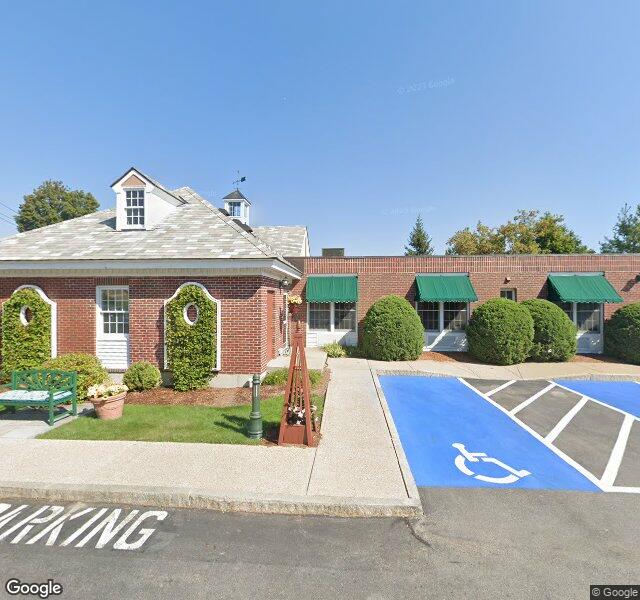
How Does Blaire House Of Milford Compare to Other Massachusetts Nursing Homes?

Compared to the 100 nursing homes in Massachusetts, BLAIRE HOUSE OF MILFORD's overall rating (2 stars) is below the state average of 2.9, staff turnover (52%) is near the state average of 46%, and health inspection rating (3 stars) is at the national benchmark.

What Should Families Ask When Visiting Blaire House Of Milford?

Based on this facility's data, families visiting should ask: "Can I visit during a mealtime to observe dining assistance and food quality?" "How do you handle medical emergencies, and what is your hospital transfer rate?" "Can I speak with family members of current residents about their experience?"

Is Blaire House Of Milford Safe?

Based on CMS inspection data, BLAIRE HOUSE OF MILFORD has a clean safety record: no substantiated abuse findings (meaning no confirmed cases of resident harm), no Immediate Jeopardy citations (the most serious violation level indicating risk of serious injury or death), and is not on the Special Focus Facility watch list (a federal program monitoring the lowest-performing 1% of nursing homes). The facility has a 2-star overall rating and ranks #100 of 100 nursing homes in Massachusetts. While no facility is perfect, families should still ask about staff-to-resident ratios and recent inspection results during their visit.

Do Nurses at Blaire House Of Milford Stick Around?

BLAIRE HOUSE OF MILFORD has a staff turnover rate of 52%, which is 6 percentage points above the Massachusetts average of 46%. Moderate turnover is common in nursing homes, but families should still ask about staff tenure and how the facility maintains care continuity when employees leave.

Was Blaire House Of Milford Ever Fined?

BLAIRE HOUSE OF MILFORD has been fined $85,657 across 2 penalty actions. This is above the Massachusetts average of $33,935. Fines in this range indicate compliance issues significant enough for CMS to impose meaningful financial consequences. Common causes include delayed correction of deficiencies, repeat violations, or care failures affecting resident safety. Families should ask facility leadership what changes have been made since these penalties.

Is Blaire House Of Milford on Any Federal Watch List?

BLAIRE HOUSE OF MILFORD is not on any federal watch list. The most significant is the Special Focus Facility (SFF) program, which identifies the bottom 1% of nursing homes nationally based on persistent, serious quality problems. Not being on this list means the facility has avoided the pattern of deficiencies that triggers enhanced federal oversight. This is a positive indicator, though families should still review the facility's inspection history directly.