SACRED HEART NURSING HOME
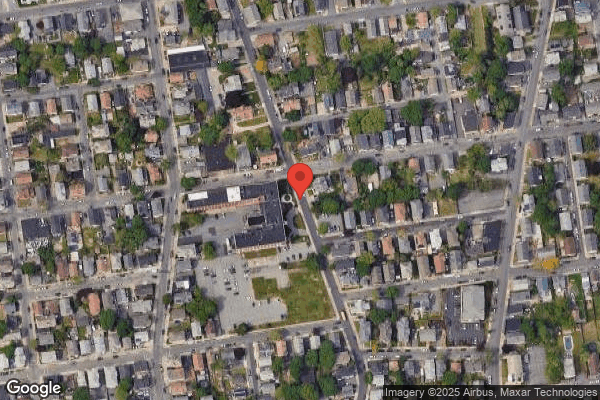
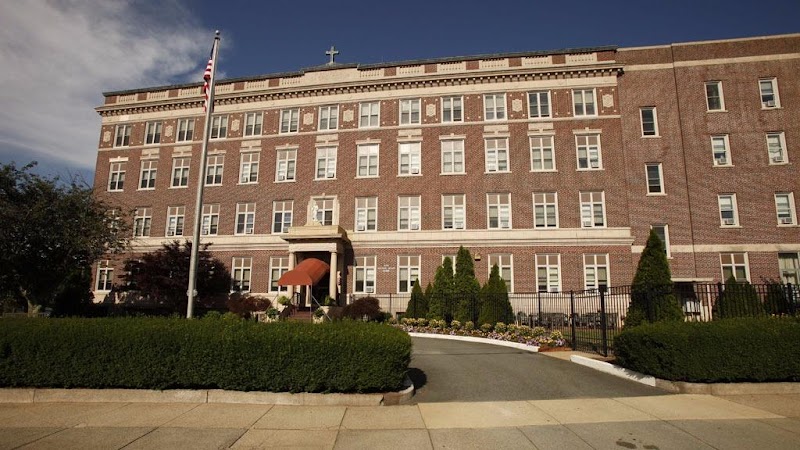
359 SUMMER STREET, NEW BEDFORD, MA 02740 (508) 996-6751
Non profit - Other 217 Beds DIOCESAN HEALTH FACILITIES Data: November 2025
Trust Grade
68/100
#120 of 338 in MA
Last Inspection: June 2024

Within standard 12-15 month inspection cycle. Federal law requires annual inspections.

Overview

Sacred Heart Nursing Home has a Trust Grade of C+, which means it is slightly above average but not exceptional. It ranks #120 out of 338 facilities in Massachusetts, placing it in the top half of the state, and #7 of 27 in Bristol County, indicating that only six local options are better. However, the facility is experiencing a worsening trend, with the number of issues increasing from 7 in 2023 to 9 in 2024. Staffing is a strong point, with a perfect 5-star rating and a turnover rate of 30%, which is below the state average, suggesting that staff members are experienced and familiar with the residents. On the downside, there were serious concerns regarding resident rights and food safety; for instance, one resident was not allowed to refuse visits from a psychiatrist, and there were multiple violations related to food storage and sanitation that could pose health risks.

Trust Score
C+
68/100
In Massachusetts
#120/338
Top 35%
Safety Record
Moderate
Needs review
Inspections
Getting Worse
7 → 9 violations
Staff Stability
✓ Good
30% annual turnover. Excellent stability, 18 points below Massachusetts's 48% average. Staff who stay learn residents' needs.
Penalties
✓ Good
No fines on record. Clean compliance history, better than most Massachusetts facilities.
Skilled Nurses
○ Average
Each resident gets 40 minutes of Registered Nurse (RN) attention daily — about average for Massachusetts. RNs are the most trained staff who monitor for health changes.
Violations
⚠ Watch
27 deficiencies on record. Higher than average. Multiple issues found across inspections.
★★★★☆
4.0
Overall Rating
★★★★★
5.0
Staff Levels
★★☆☆☆
2.0
Care Quality
★★★☆☆
3.0
Inspection Score
Stable
2023: 7 issues
2024: 9 issues

The Good

  • 5-Star Staffing Rating · Excellent nurse staffing levels
  • Low Staff Turnover (30%) · Staff stability means consistent care
  • Full Sprinkler Coverage · Fire safety systems throughout facility
  • No fines on record
  • Staff turnover is low (30%)

    18 points below Massachusetts average of 48%

Facility shows strength in staffing levels, staff retention, fire safety.

The Bad

Chain: DIOCESAN HEALTH FACILITIES

Part of a multi-facility chain

Ask about local staffing decisions and management

The Ugly 27 deficiencies on record

1 actual harm
Jun 2024 7 deficiencies
CONCERN (D)

Potential for Harm - no one hurt, but risky conditions existed

Comprehensive Care Plan (Tag F0656)

Could have caused harm · This affected 1 resident

Based on record review and interviews, the facility failed to develop and implement a person-centered plan of care which included care for residents who had experienced trauma and the identification o...

Read full inspector narrative →
Based on record review and interviews, the facility failed to develop and implement a person-centered plan of care which included care for residents who had experienced trauma and the identification of potential triggers to be avoided to help prevent potential re-traumatization for two Residents (#120 and #30), out of a total sample of 24 residents. Findings include: 1. Resident #120 was admitted to the facility in March 2024 with diagnoses including Parkinson's disease. Review of the most recent Brief interview for Mental Status (BIMS), dated 3/27/24, indicated the Resident was cognitively intact with a score of 15 out of 15. During an interview on 6/21/24 at 10:52 A.M., Resident #120 said he/she had a trauma in which he/she was robbed and sexually assaulted that occurred quite a few years ago. The Resident said the event had a lasting impact on him/her and he/she can be jumpy or reactive at times. The Resident said he/she shared the trauma with the facility. During an interview on 6/21/24 at 11:06 A.M., Certified Nurse Aide (CNA) #2 said she was familiar with Resident #120 but was not aware of any behaviors, traumas or potential triggers the Resident may have that would cause a behavior or reaction. During an interview on 6/21/24 at 11:31 A.M., CNA #1 said she knows Resident #120 well and cares for them frequently. She said she had never known the Resident to have behaviors or a history of trauma and she was unaware of any triggers or things that should be avoided to help prevent the Resident from having a negative reaction. Review of the Social History and Assessment for Resident #120, dated 3/27/24, indicated but was not limited to the following: - Resident is alert and oriented and able to communicate their needs and desires - Resident does not exhibit any behaviors - Resident enjoys sharing stories about their life - Mental health history: Resident reports being robbed and sexually assaulted in the past - Trauma: Does the Resident report or the record reflect any history of trauma: No - Does the Resident have disturbing memories or thoughts from a stressful experience in the past: No Review of the current care plans for Resident #120, as of 6/21/24, indicated, but were not limited to the following: PROBLEM: Mood/Behavior: I have a history of depression, can be stubborn and want things done a particular way, and it makes me upset if things go differently. I have a diagnosis of insomnia and am visually impaired with dry eyes. (6/21/24) GOAL: I would like to be free of acute emotional distress and feel safe and comfortable in my environment by evidence of no crying, sadness, or unacceptance of placement during the next 90 days. (6/21/24) INTERVENTIONS: Administer medications at the lowest effective dose, monitor for side effects of antidepressants and report significant findings, encourage me to participate in activities, if I appear upset talk to me to find out where I am from, I enjoy attending mass and family friends on the same unit, I have a tablet I play games on, refer to social services and psych services as needed, use a slow calm approach introduce yourself tell me what you are going to do and allow me to express myself and process what you have said (6/21/24) The current active care plans failed to indicate the Resident had suffered a trauma, or that his/her mental health history included a traumatic event or to identify any potential triggers to be avoided to help prevent potential re-traumatization to the Resident. During an interview on 6/21/24 at 4:32 P.M., Nurse #2 said she was not aware of any traumas in Resident #120's past, or any behaviors or potential triggers to be avoided while caring for the Resident. During an interview on 6/21/24 at 4:34 P.M., Nurse #3 said she knows the Resident well and cares for them often. She said she was unaware the Resident had any trauma or mental health history and she does not know of any behaviors the Resident has or any triggers to be avoided to ensure the Resident does not have a negative reaction. During an interview on 6/21/24 at 4:40 P.M., the Director of Social Services said residents have a social history and assessment completed upon admission and residents with a known trauma or history of a trauma would have a care plan developed and implemented to alert the staff to the concern and potential things to be avoided or behaviors to monitor. She reviewed the assessment for Resident #120 and said although the Resident indicated a history of sexual assault and being robbed, they declined psychotherapy. She said she did not indicate the Resident's experiences of sexual assault or being robbed as a trauma and that was an error. She reviewed the care plans for Resident #120 and said a care plan should have been developed and implemented to alert staff to the trauma and things to avoid or behaviors to be on the look out for but that did not happen. She said it is imperative that staff understand potential triggers to avoid any potential re-traumatization to the Resident and that process was not implemented for this Resident as it should have been. 2. Resident #30 was admitted to the facility in November 2019 with diagnoses including: schizoaffective disorder, bipolar disorder and generalized anxiety. Review of the most recent BIMS, dated 5/14/24, indicated the Resident was cognitively intact with a score of 14 out of 15. Review of the medical record for Resident #30 indicated but was not limited to the following: - a recent hospitalization in April of 2024 in which he/she had reported a history of trauma, but due to being in the hallway at the hospital chose not to elaborate - Resident was on services and received psychotherapy routinely at the facility During an interview on 6/18/24 at 9:17 A.M., the Resident said he/she has a history of trauma and bad thoughts that come up regarding that trauma but he/she did not want to speak to the surveyor about it in detail at that time and appeared suspicious of the surveyor. Review of the psychotherapy notes from May 2024 indicated, but were not limited to the following: - 5/10/24: Diagnoses: post-traumatic stress disorder (PTSD); precipitants and triggers of feelings and behaviors were explored, others report a suspicious demeanor and paranoia - 5/24/24: Diagnoses: PTSD; others have observed a suspicious demeanor, paranoia has improved, precipitants and triggers for feelings and behaviors were explored Review of the current care plans for Resident #30, as of 6/21/24, indicated, but were not limited to the following: PROBLEM: Mood/Behavior: I have schizoaffective disorder, manic episodes, bipolar disorder, anxiety, depression and insomnia. I am visually impaired and hard of hearing. I can be obsessed with my health and any changes that occur. My last severe manic episode was in 2023; in 2024 I have been more paranoid and hearing things from my inner voice. There are times I want to stay up late at night to watch television, eat snacks and write letters. (edited: 6/11/24) GOAL: I would like to be free of acute emotional distress and feel safe and comfortable in my environment as evidenced by not packing my items and no excessive worrying over my health conditions during the next 90 days. (edited: 5/13/24) INTERVENTIONS: Administer medications at the lowest effective dose, monitor for side effects of antidepressants, anxiolytics, mood stabilizers, and antipsychotics and report significant findings, encourage me to participate in activities, I enjoy attending mass, I often like to have a confessional to bring me comfort when my negative thoughts are overpowering, I see a psychotherapist, monitor me during times of excessive charity as it may be a sign of mania, reassure me that we are monitoring my health, refer to psych services and social services as needed (5/13/24); remind me the importance of having a good wake-sleep cycle (6/11/24) Review of the current care plans for Resident #30 failed to indicate the Resident had a trauma history, what the trauma entailed or what triggers should be avoided to help avoid potential behaviors and feelings or re-traumatization to the Resident. During an interview on 6/21/24 at 4:32 P.M., Nurse #2 said she knows Resident #30 and was aware the Resident had an extensive psychiatric history. She said she was not aware of any trauma or potential triggers that should be avoided to help the Resident avoid a negative reaction or behavior. During an interview on 6/21/24 at 4:34 P.M., Nurse #3 said she knows the Resident well and cares for him/her often. She said the Resident had delusional behaviors and a recent psych hospitalization. She said she was not aware of any trauma or any potential triggers to avoid when caring for the Resident to help potentially eliminate behaviors or negative feelings on the Resident's part. During an interview on 6/21/24 at 4:50 P.M., the Director of Social Services said she knows the Resident well and is aware the Resident has a history of trauma related to abandonment and not feeling good enough. She reviewed the current care plans for Resident #30 and said there was no indication of the trauma, potential triggers and what should be avoided to potentially prevent a behavior or re-traumatization to the Resident. She said there should be a care plan in place and it is not. During an interview on 6/25/24 at 11:58 A.M., the Director of Nurses (DON) said the facility should be developing and implementing a care plan for any resident with a known history of trauma which includes any triggers or potential triggers to help mitigate a potential negative consequence or outcome for the resident in the future.
CONCERN (D)

Potential for Harm - no one hurt, but risky conditions existed

Deficiency F0658 (Tag F0658)

Could have caused harm · This affected 1 resident

Based on observation, interview, and record review, the facility failed to provide services that met professional standards of practice for one Resident (#57), out of a total sample of 24 residents. S...

Read full inspector narrative →
Based on observation, interview, and record review, the facility failed to provide services that met professional standards of practice for one Resident (#57), out of a total sample of 24 residents. Specifically, the facility failed to ensure the Resident's foam dressing to the left heel unstageable deep tissue injury (DTI- pressure injury where the depth of the ulcer is obscured by a layer of dead tissue, or slough and/or eschar, covering the wound bed) was changed in accordance with the physician's order. Findings include: Review of the facility's policy titled Dressing Changes and Changing a Clean Dressing, revised November 2023, indicated but was not limited to the following: Purpose: -To promote wound healing. -Cleanse and rinse wound as ordered. Resident #57 was admitted to the facility in April 2024 and had diagnoses including peripheral vascular disease, displaced articular fracture of head of the right femur, and bilateral paralytic syndrome following cerebral infarction. Review of the Minimum Data Set (MDS) assessment, dated 4/19/24, indicated that Resident #57 was cognitively intact as evidence by a Brief Interview for Mental Status (BIMS) score of 13 out of 15, was at risk for developing pressure ulcers, was dependent on staff for mobility, and had two unstageable DTIs present upon admission. Review of the Skin Issue care plan, initiated 6/19/24, indicated Resident #57 had an unstageable area on the left heel upon admission which had gotten smaller in size. Care planned interventions included applying Allevyn foam dressing (used to keep the wound moist and clean, providing an optimal environment for healing) as ordered (6/19/24). Review of current Physician's Orders indicated the following: -Foam dressing -Cleanse left heel with normal saline, pat dry, cover with foam dressing, change every three days, and as needed for intactness/soilage. Monitor for pain with every dressing change, once a day every three days 7:00 A.M. - 3:00 P.M. (6/5/24) On 6/25/24 at 8:29 A.M., the surveyor observed Nurse #5 perform a dressing change to Resident #57's left heel unstageable DTI who was lying in bed. Nurse #5 removed the old dressing exposing the Resident's wound for observation. The wound was approximately 2 centimeters (cm) in length x 1 cm width with a dark wound bed in the center. There was no drainage or open areas. The surrounding skin was pink. Resident #57 denied any pain or discomfort. Nurse #5 measured the wound then applied a new foam dressing. Nurse #5 did not cleanse the wound with normal saline or pat dry prior to applying the new foam dressing per physician's orders. Nurse #5 said she performed the dressing change that was due for the night. During an interview on 6/25/24 at 8:35 A.M., the surveyor reviewed Resident #57's medical record with Nurse #5 who said the physician's order said to cleanse the wound with normal saline and pat dry before applying the foam dressing. She said she did not do that but should have and would have to go back and do it over again. During an interview on 6/25/24 at 12:43 P.M., the Director of Nursing (DON) said Resident #57 came in with heel issues and discoloration. The Assistant Director of Nursing (ADON) said she was the facility's wound care nurse, and the Resident came in with a left heel DTI. The ADON said the foam dressing was started on 6/4/24. She said the Resident was at risk for developing pressures because he/she did not move and was dependent on care. The ADON said wound dressing changes should be done per physician's orders.
CONCERN (D)

Potential for Harm - no one hurt, but risky conditions existed

Pressure Ulcer Prevention (Tag F0686)

Could have caused harm · This affected 1 resident

Based on observation, interview, and record review, the facility failed to ensure two Residents (#57 and #96), out of a total sample of 24 residents, received care and treatment to prevent and to prom...

Read full inspector narrative →
Based on observation, interview, and record review, the facility failed to ensure two Residents (#57 and #96), out of a total sample of 24 residents, received care and treatment to prevent and to promote the healing of pressure injuries consistent with professional standards of practice. Specifically, the facility failed: 1. For Resident #57, who had an existing left heel unstageable deep tissue injury (DTI- pressure injury where the depth of the ulcer is obscured by a layer of dead tissue, or slough and/or eschar, covering the wound bed), to consistently implement physician's orders to offload the Resident's heels and adjust the low air loss (LAL) mattress (distributes body weight over a broad surface area to help prevent skin breakdown) per physician's orders and care planned interventions; and 2. For Resident #96, who had an existing unstageable DTI on his/her coccyx, to ensure the Resident's LAL mattress settings were programmed in accordance with the physician's order. Findings include: Pressure Injury Care: -Make sure the patient's heels don't rest on the bed. Apply heel protection devices, as required, to prevent heel pressure injuries. The devices should completely offload pressure from the heels. If you're placing pillows under the patient's calves to decrease pressure, place each pillow longitudinally underneath the calf with the heel suspended in the air. Wolters Kluwer. Lippincott Nursing Procedures, Eighth edition, [Philadelphia: Wolters Kluwer, [2019]. Page 632. Review of the facility's policy titled Wound and Skin Protocol Policy, revised January 2024, indicated but was not limited to the following: -Interventions must be care planned and implemented during the admission process and revised as needed. Review of the facility's policy titled Low Air Loss Mattress, last reviewed March 2024, indicated but was not limited to the following: Purpose: -To treat and prevent wounds by facilitating blood circulation and decreasing pressure of each tissue's contact area. -If determined that the resident requires a low air mattress an order will be obtained by the physician to include low air loss mattress: Check accuracy of weight setting. Monitor for bottoming out. Check that the static button is set in the off position. -Check the resident's weight and adjust the low air loss mattress accordingly. This should be done weekly with the weekly weights and documented. -Caregivers should always perform a hand check by placing their hands underneath patient's pelvis area to check if there is sufficient air support to ensure the patient is not bottoming out. 1. Resident #57 was admitted to the facility in April 2024 and had diagnoses including peripheral vascular disease, displaced articular fracture of head of the right femur, and bilateral paralytic syndrome following cerebral infarction. Review of the Minimum Data Set (MDS) assessment, dated 4/19/24, indicated that Resident #57 was cognitively intact as evidenced by a Brief Interview for Mental Status (BIMS) score of 13 out of 15, was at risk for developing pressure ulcers, was dependent on staff for mobility, and had two unstageable DTIs present upon admission. Review of the Skin care plan, initiated 4/25/24, indicated Resident #57 was at risk for skin problems secondary to his/her incontinence and decreased mobility and was admitted with areas of DTI on the heels and buttock. Care planned interventions included the following: -Offload the heels, 4/24/24 -Low air loss mattress on the bed, 4/23/24 Review of current Physician's Orders indicated the following: -Offload the heels every shift three times a day, 7:00 A.M.-3:00 P.M., 3:00 P.M.-11:00 P.M., and 11:00 P.M.-7:00 A.M., 4/13/24 -Low air loss mattress, check accuracy of weight setting. Monitor for bottoming out. Check that static button is set in off position every shift 7:00 A.M.-3:00 P.M., 3:00 P.M.-11:00 P.M., and 11:00 P.M.-7:00 A.M., 4/18/24 During an observation with interview on 6/18/24 at 8:55 A.M., the surveyor observed Resident #57 lying in bed with a pillow underneath the left calf. The Resident's left heel was in contact with the mattress and not offloaded per physician's orders. The Resident's LAL mattress static mode button was in the on position indicating the mattress was distributing a constant level of air pressure evenly distributed across the mattress surface. Resident #57 said he/she had a sore on the left heel but wasn't sure how it got there and described his/her current pain level as a 7 out of 10 and stinging. The Resident said he/she had a history of a stroke and had limited range of motion in the upper extremities and difficulty speaking. During an interview on 6/18/24 at 12:35 P.M., Resident Representative #1 said Resident #57 had a bedsore on the back of his/her left heel. Resident Representative #1 said it was better, but still sore, and said sometimes he/she comes to visit in the middle of the night and the Resident's heels are flat on the bed, not elevated, so he/she will put a pillow or something underneath. During an interview on 6/20/24 at 9:53 A.M., Nurse #5 said the Resident had a 1.0 centimeter (cm) x 1.5 cm DTI on the left heel and interventions included to keep the heels offloaded. She said the Resident had not complained of pain. On 6/24/24 at 9:03 A.M., the surveyor observed Resident #57 lying in bed with a pillow underneath the left calf. The Resident's left heel was in contact with the mattress and not offloaded per physician's orders. The Resident's LAL mattress static mode button was in the on position. During an interview on 6/25/24 at 8:23 A.M., Certified Nursing Assistant (CNA) #5 said she was assigned to the Resident this day but didn't know if he/she had any wounds. CNA #5 asked CNA #4 who said he/she didn't have any wounds or pressure areas that she knew of but said the Resident was at risk for developing pressure ulcers. CNA #4 said the Resident had an air mattress and his/her heels were supposed to be elevated while in bed. On 6/25/24 at 8:17 A.M., the surveyor observed Resident #57 lying in bed with a pillow underneath the left and right calves. The Resident's left heel was in contact with the mattress and the right heel in contact with the pillow. The heels were not offloaded per physician's orders. The Resident's LAL mattress static mode button was in the on position. During an observation with interview on 6/25/24 at 8:27 A.M., the surveyor and Nurse #5 observed Resident #57 lying in bed. The Resident's LAL mattress static mode button was in the on position. The surveyor observed the Resident's left heel wound with Nurse #5. The wound was approximately 2 centimeters (cm) in length x 1 cm width with a dark wound bed in the center. There was no drainage or open areas. The surrounding skin was pink. Resident #57 denied any pain or discomfort. Nurse #5 said it was a DTI. She said the mattress was set at 200 pounds on static pressure and wasn't sure if that was the order but would check. She said the Resident's heels should be offloaded to treat the current left heel DTI and to prevent others from forming. She said the Resident was at risk for developing pressure ulcers. During an interview on 6/25/24 at 8:35 A.M., the surveyor reviewed the medical record with Nurse #5 who said the LAL mattress should not have been on static mode and said she didn't know the difference between static mode and alternating mode for air pressure or the benefit to the static mode being turned off. She said mattresses should be set per physician's orders but wasn't sure how to adjust the settings. During an interview on 6/25/24 at 12:42 P.M., the Director of Nursing (DON) and Assistant Director of Nursing (ADON) said the Resident was admitted with a left heel DTI and was at risk for developing pressure ulcers due to immobility and dependence on staff for care. The DON and ADON said care planned interventions should be consistently implemented. They further said the static pressure cycle holds the air pressure, it doesn't alternate it, and should have been turned off per physician's orders. They further said the Resident's heels should have been consistently offloaded while in bed. The DON and ADON said nursing or maintenance sets up the air mattresses, but nursing adjusts the settings. 2. Resident #96 was admitted to the facility in May 2024 and had diagnoses including muscle weakness, abnormalities of gait and mobility, and altered mental status. Review of the MDS assessment, dated 5/11/24, indicated Resident #96 had severe cognitive impairment as evidenced by a BIMS score of 0 out of 15, was dependent on staff for mobility, was at risk for developing pressure injuries, and had one unhealed unstageable DTI present upon admission. Review of a Nursing Progress Note, dated 5/6/24, indicated but was not limited to the following: -coccyx 1.0 x 2 cm open area, new Allevyn dressing applied, right buttock 3 x 1 cm excoriation, coccyx 7 x 10 cm dark pink/purplish in color. Review of current Physician's Orders indicated the following: -Low air loss mattress: Check accuracy of weight setting. Monitor for bottoming out. Check that static button is set in off position, 5/6/24 Review of the Skin care plan, initiated 5/20/24, indicated Resident #96 was at risk for skin problems secondary to incontinence and decreased mobility. Interventions included a low air loss mattress on his/her bed (5/8/24). Review of the Vitals Summary indicated the following weights for Resident #96: 6/12/24 - 130.0 pounds (lbs.) 6/19/24 - 133.0 lbs. On 6/20/24 at 9:48 A.M., the surveyor observed Resident #96 sitting in a recliner in his/her room. A LAL mattress was inflated on the bed with the weight setting programmed at 325 pounds. The static mode button was in the on position. On 6/24/24 at 8:49 A.M., the surveyor observed Resident #96 lying in bed. The LAL mattress weight setting was programmed at 325 pounds. The static mode button was in the on position. On 6/25/24 at 8:09 A.M., the surveyor observed Resident #96 lying in bed. The LAL mattress weight setting was programmed at 150 pounds. The static mode button was in the on position. Resident #96 was non-verbal but shook his/her head yes when asked if there was a wound on his/her coccyx. During an interview on 6/25/24 at 8:51 A.M., Certified Nursing Assistant (CNA) #4 said she was familiar with the Resident who didn't have any wounds or pressure injuries she knew of. She said other than repositioning, there were no other interventions to prevent pressure injuries that she knew of. During an observation with interview on 6/25/24 at 8:55 A.M., the surveyor entered the Resident's room with Nurse #7 and observed the LAL mattress settings programmed at 150 pounds, static pressure. Nurse #7 said the Resident had a small open area on his/her coccyx and was getting a wound treatment to the area. She said she wasn't sure what the correct settings would be for the mattress but would look. Nurse #7 said Resident #96 was at risk for developing pressure ulcers and interventions included the LAL mattress. On 6/25/24 at 9:15 A.M., the surveyor reviewed the medical record with Nurse #7 who said Resident #96 had an unstageable wound on his/her coccyx and the physician's order was to make sure the air mattress was not bottoming out, check the weight settings, and make sure the static mode setting was off. She said the Resident's current weight was 133.0 pounds. She said the weight setting should be adjusted to the Resident's weight with the static mode button in the off position per physician's orders. During an interview on 6/25/24 at 9:46 A.M., the Maintenance Director said nursing is responsible for adjusting the settings on the air mattresses because maintenance staff doesn't know what the residents' needs are, so they always defer back to nursing if the settings need to be adjusted. During an interview on 06/25/24 at 12:59 P.M., the DON and ADON said the Resident had a pressure ulcer on his/her coccyx when admitted from the hospital, but it was healing. They said the Resident was at risk of developing pressure ulcers and had a LAL mattress on the bed. They said the Resident's weight is considered when adjusting the settings and the weight should have been set per physician's orders and static mode turned off.
CONCERN (D)

Potential for Harm - no one hurt, but risky conditions existed

Deficiency F0699 (Tag F0699)

Could have caused harm · This affected 1 resident

Based on record review and interviews, the facility failed to identify the potential triggers to be avoided in two Residents (#120 and #30), with a history of trauma, to help prevent potential re-trau...

Read full inspector narrative →
Based on record review and interviews, the facility failed to identify the potential triggers to be avoided in two Residents (#120 and #30), with a history of trauma, to help prevent potential re-traumatization out of a total sample of 24 residents. Findings include: During an interview on 6/24/24 at 3:33 P.M., the Director of Nurses (DON) and Administrator said the facility does not have a policy on trauma informed care and there is no specific policy or procedure they follow. 1. Resident #120 was admitted to the facility in March 2024 with diagnoses including Parkinson's disease. Review of the most recent Brief interview for Mental Status (BIMS), dated 3/27/24, indicated the Resident was cognitively intact with a score of 15 out of 15. During an interview on 6/21/24 at 10:52 A.M., Resident #120 said he/she had a trauma in which he/she was robbed and sexually assaulted that occurred quite a few years ago. The Resident said the event had a lasting impact on him/her and he/she can be jumpy or reactive at times. The Resident believes a trigger would be someone coming up from behind him/her quietly or touching him/her from behind which would cause him/her to be frightened and likely lash out physically. The Resident said he/she shared the trauma with the facility but no one else had asked him/her about potential triggers that could cause upset. The Resident said it would be good for the facility to know his/her trigger so it can be avoided. During an interview on 6/21/24 at 11:06 A.M., Certified Nurse Aide (CNA) #2 said she was familiar with Resident #120 but was not aware of any behaviors, traumas or potential triggers the Resident may have that would cause a behavior or reaction. During an interview on 6/21/24 at 11:31 A.M., CNA #1 said she knows Resident #120 well and cares for them frequently. She said she had never known the Resident to have behaviors or a history of trauma and she was unaware of any triggers or things that should be avoided to help prevent the Resident from having a negative reaction. Review of the Social History and Assessment for Resident #120, dated 3/27/24, indicated but was not limited to the following: - Resident is alert and oriented and able to communicate their needs and desires - Resident does not exhibit any behaviors - Resident enjoys sharing stories about their life - Mental health history: Resident reports being robbed and sexually assaulted in the past - Trauma: Does the Resident report or the record reflect any history of trauma: No - Does the Resident have disturbing memories or thoughts from a stressful experience in the past: No Review of the current care plans for Resident #120, as of 6/21/24, failed to indicate the Resident had suffered a trauma, or that his/her mental health history included a traumatic event or to identify any potential triggers to be avoided to help prevent potential re-traumatization to the Resident. During an interview on 6/21/24 at 4:32 P.M., Nurse #2 said she was not aware of any traumas in Resident #120's past, or any behaviors or potential triggers to be avoided while caring for the Resident. During an interview on 6/21/24 at 4:34 P.M., Nurse #3 said she knows the Resident well and cares for them often. She said she was unaware the Resident had any trauma or mental health history and she does not know of any behaviors the Resident has or any triggers to be avoided to ensure the Resident does not have a negative reaction. During an interview on 6/21/24 at 4:40 P.M., the Director of Social Services said residents have a social history and assessment completed upon admission and residents with a known trauma or history of a trauma would have a care plan developed and implemented to alert the staff to the concern and potential things to be avoided or behaviors to monitor. She reviewed the assessment for Resident #120 and said although the Resident indicated a history of sexual assault and being robbed, they declined psychotherapy. She said the facility psychotherapist would typically help any trauma residents with psychotherapy sessions. She said she did not indicate the Resident's experiences of sexual assault or being robbed as a trauma and that was an error. She said since that was not documented, the Resident was not asked if he/she had any potential triggers. She reviewed the care plans for Resident #120 and said a care plan should have been developed and implemented to alert staff to the trauma and things to avoid or behaviors to be on the look out for but that did not happen. She said it is imperative that staff understand potential triggers to avoid any potential re-traumatization to the Resident and that process was not implemented for this Resident as it should have been. 2. Resident #30 was admitted to the facility in November 2019 with diagnoses including: schizoaffective disorder, bipolar disorder and generalized anxiety. Review of the most recent BIMS, dated 5/14/24, indicated the Resident was cognitively intact with a score of 14 out of 15. Review of the medical record for Resident #30 indicated but was not limited to the following: - a recent hospitalization in April of 2024 in which he/she had reported a history of trauma, but due to being in the hallway at the hospital chose not to elaborate - the last social services assessment had been completed since November of 2019 at the time of the Resident being admitted and failed to indicate a history of trauma or potential triggers - Resident was on services and received psychotherapy routinely at the facility During an interview on 6/18/24 at 9:17 A.M., the Resident said he/she has a history of trauma and bad thoughts that come up regarding that trauma but he/she did not want to speak to the surveyor about it in detail at that time and appeared suspicious of the surveyor. Review of the psychotherapy notes from May 2024 indicated, but were not limited to the following: - 5/10/24: Diagnoses: post-traumatic stress disorder (PTSD); precipitants and triggers of feelings and behaviors were explored, others report a suspicious demeanor and paranoia - 5/24/24: Diagnoses: PTSD; others have observed a suspicious demeanor, paranoia has improved, precipitants and triggers for feelings and behaviors were explored Review of the current care plans for Resident #30 failed to indicate the Resident had a trauma history, what the trauma entailed or what triggers should be avoided to help avoid potential behaviors and feelings or re-traumatization to the Resident. During an interview on 6/21/24 at 4:32 P.M., Nurse #2 said she knows Resident #30 and was aware the Resident had an extensive psychiatric history. She said she was not aware of any trauma or potential triggers that should be avoided to help the Resident avoid a negative reaction or behavior. During an interview on 6/21/24 at 4:34 P.M., Nurse #3 said she knows the Resident well and cares for him/her often. She said the Resident had delusional behaviors and a recent psych hospitalization. She said she was not aware of any trauma or any potential triggers to avoid when caring for the Resident to help potentially eliminate behaviors or negative feelings on the Resident's part. During an interview on 6/21/24 at 4:50 P.M., the Director of Social Services said she knows the Resident well and the Resident recently requested to be hospitalized psychiatrically related to paranoia and delusions that were felt to be uncontrolled. She said she checks in regularly with the Resident and is aware the Resident has a history of trauma related to abandonment and not feeling good enough. She reviewed the medical record and said there were no available social history and assessments completed since admission. She said the Resident is followed by psychotherapy who she believes manages the Resident's trauma and is aware of the Resident's triggers. She reviewed the current care plans for Resident #30 and said there was no indication of the trauma, potential triggers and what should be avoided to potentially prevent a behavior or re-traumatization to the Resident. She said there should be a care plan in place and it is not. On 6/25/24 at 9:06 A.M., the surveyor called and left a message for the facility psychotherapist to discuss the Resident's care but the call was not returned. During an interview on 6/25/24 at 11:58 A.M., the DON said the facility usually performs social history and assessments on admission and they need to consider a reassessment period to determine if things may have occurred or if the residents are triggered by an old trauma they now wish to share. She said the facility should be care planning for any resident with a known history of trauma and any triggers or potential triggers to help mitigate a potential negative consequence or outcome for the resident in the future. She confirmed the facility did not have a policy on trauma informed care or the care of residents with PTSD.
CONCERN (E)

Potential for Harm - no one hurt, but risky conditions existed

Food Safety (Tag F0812)

Could have caused harm · This affected multiple residents

Based on observation, record review, and interview, the facility failed to follow professional standards of practice for food safety and sanitation to prevent the potential spread of foodborne illness...

Read full inspector narrative →
Based on observation, record review, and interview, the facility failed to follow professional standards of practice for food safety and sanitation to prevent the potential spread of foodborne illness to residents who are at high risk. Specifically, the facility failed to maintain safe and clean equipment and ensured that food was stored properly, in three out of four kitchenettes. Findings include: Review of the facility's policy titled Kitchen/Pantry Cleaning Schedule, undated, indicated but was not limited to the following: -Check/Clean & sanitize microwave (inside & out) -Check all cabinets, shelving, drawers in good repair -If any equipment is in need of repair, please inform supervisor On 6/20/24 at 9:49 A.M., the surveyor observed the following in the Third Floor Unit kitchenette: -Inside the microwave, the bottom outer panel of the microwave was rusted, and peeling off. -Inside the microwave, on the right-side wall, there was food particle spatter and a dark brown stain. -Inside the microwave on the bottom left front corner was a brownish, sticky, crusted substance. -A toaster, three clear plastic serving bowls, a coffee machine, and two packages of drinking cups were stored under the sink next to plumbing piping. On 6/24/24 at 8:03 A.M., the surveyor observed the following in the Saint Michael's Unit kitchenette: -Inside the microwave on the upper left side wall was a brownish, orange crusted stain. -Inside the microwave on the back top right and left corners were areas of rust. -An aluminum foil food serving pan, one bottle of prune juice, and one plastic coffee mug were stored under the sink next to plumbing piping. On 6/24/24 at 11:27 A.M., the surveyor observed the following in the Saint Joseph's Unit kitchenette: -Inside the microwave on the top center, there were two areas of rust peeling off, food particle spatter and dark brown stains. -Inside the microwave on the top right and left corners were areas of rust. -A coffee pot and multiple bags of coffee in a bucket were under the sink next to plumbing piping. During an interview with observation of the Saint Michael's Unit kitchenette on 6/25/24 at 8:26 A.M., Unit Manager #1 said the dietary staff were responsible for stocking and cleaning the kitchenettes. UM #1 and the surveyor observed the microwave and she said she has never noticed the rusted areas before and will notify maintenance. The surveyor and UM #1 observed the cabinet under the sink and noted an aluminum foil food serving pan, one bottle of prune juice, one plastic coffee mug. She said nothing is supposed to be stored under the sink and removed the items. During an interview with observation of the Saint Joseph's Unit kitchenette on 6/25/24 at 8:39 A.M., the Food Service Director (FSD) said the microwaves are supposed to be cleaned and sanitized daily. The surveyor and FSD observed the microwave, and he said the areas on the top of the microwave appear to be rusted and flaking off, and it needed to be replaced. The FSD and surveyor observed the cabinet under the sink and noted a coffee pot, and multiple bags of coffee stored in a bucket. He said no food items should ever be stored under the sink due to the high risk of contamination. FSD said the dietary staff are responsible to check the cabinets daily and ensure nothing is placed in the cabinet, under the sink. During an interview with observation of the Saint Michael's Unit kitchenette on 6/25/24 at 8:48 A.M., the FSD and surveyor observed the microwave. He said the microwave appears to be rusted and needed to be replaced. The FSD and surveyor looked in the cabinet under the sink, and all items had been removed. The surveyor informed the FSD of the findings on 6/24/24 and 6/25/24 earlier in the morning, and he said no items are to be stored under the sink. During an interview with observation of the Third-Floor kitchenette on 6/25/24 at 8:48 A.M., the FSD and surveyor observed the microwave and noted that the inside, bottom outer panel was rusted, and peeling off, and continued to have food particle spatter and a dark brown stain on the right inside wall. He said it was in disrepair and should not be in use. He said the dietary staff never made him aware, and it needs to be replaced. The FSD and surveyor looked in the cabinet under the sink and noted a toaster, three clear plastic serving bowls, coffee machine, two packages of drinking cups. He said nothing is supposed to be stored under the sink, and the dietary staff should have removed the items when they do the daily cleaning of the kitchenette.
CONCERN (E)

Potential for Harm - no one hurt, but risky conditions existed

Antibiotic Stewardship (Tag F0881)

Could have caused harm · This affected multiple residents

Based on record review and interview, the facility failed to implement an antibiotic stewardship program which included antibiotic use protocols and monitoring of antibiotic use in accordance with the...

Read full inspector narrative →
Based on record review and interview, the facility failed to implement an antibiotic stewardship program which included antibiotic use protocols and monitoring of antibiotic use in accordance with the facility's antibiotic stewardship program. Findings include: Review of the facility's policy titled Antibiotic Stewardship Program Policy, last revised 11/2023, indicated but was not limited to the following: - it is the policy of the health facility to implement an antibiotic stewardship program which will promote the appropriate use of antibiotics while optimizing treatment of infections - facility action: an antibiotic review process, also known as a time out for all antibiotics prescribed in the facility - antibiotic time out (ATO) prompts clinicians to reassess the ongoing need for and choice of an antibiotic when the clinical picture is clearer - ATO can be considering a stop order of an antibiotic when diagnostic test results or symptoms of the resident do not support the diagnosis of infection During an interview on 6/20/24 at 10:45 A.M., the Infection Preventionist (IP) said the facility uses the pre-defined McGeer criteria to determine if an illness or set of symptoms rise to the level of an infection. She said antibiotic usage is tracked on the facility illness surveillance sheets which also indicate whether or not an illness meets infection criteria. Review of the facility surveillance sheets for April and May 2024 indicated but were not limited to the following: APRIL: Resident #73 had a skin concern with an onset date of 4/30/24, the surveillance indicated the issue did not rise to the level of an infection as determined by the facility criteria, however an antibiotic was prescribed for 7 days. Review of the progress notes, including physician and nurse practitioner notes for Resident #73 from 4/25/24 through 5/20/24, failed to indicate an ATO was performed for Resident #73's continued antibiotic use, even though the symptoms did not meet infection criteria. MAY: Resident #106 had a urinary issue with an onset date of 5/11/24, the surveillance indicated the issue did not rise to the level of an infection as determined by the facility criteria, however an antibiotic was prescribed for 7 days. Review of the progress notes, including physician and nurse practitioner notes for Resident #106 from 5/5/24 through 5/25/24, failed to indicate an ATO was performed for Resident #106's continued antibiotic use, even though the symptoms did not meet infection criteria. Further review of Resident #106's medical record indicated a urinalysis and culture was obtained related to a fall the Resident had and there were no symptoms of a potential illness or infection prior to the diagnostic test being obtained and the Resident completed a 7-day course of antibiotics and remained without urinary symptoms for the entirety of the treatment. During an interview on 6/20/24 at 3:29 P.M., the IP said the facility is supposed to complete a time out and document that in the medical record for all residents on antibiotics in the facility that do not meet infection criteria. She reviewed the information for Resident #73 and Resident #106 and said there was no evidence that an ATO had occurred for either Resident as it should have. She said neither Resident #73 or #106 met McGeer infection criteria and an ATO should have been documented in their medical records in accordance with the facility policy and it was not. During an interview on 6/25/24 at 11:54 A.M., the Director of Nurses said residents on antibiotic therapy are discussed daily in morning meeting. She said she was aware of the concerns discussed with the IP regarding the antibiotic stewardship. She said the expectation is that the policy is followed and an ATO is completed as it is required to be and it is not being done in accordance with the facility policy at this time.
CONCERN (E)

Potential for Harm - no one hurt, but risky conditions existed

Safe Environment (Tag F0921)

Could have caused harm · This affected multiple residents

**NOTE- TERMS IN BRACKETS HAVE BEEN EDITED TO PROTECT CONFIDENTIALITY** Based on observation and interview, the facility failed to ensure a functional, safe, and clean environment on two (2PY and 3PY)...

Read full inspector narrative →
**NOTE- TERMS IN BRACKETS HAVE BEEN EDITED TO PROTECT CONFIDENTIALITY** Based on observation and interview, the facility failed to ensure a functional, safe, and clean environment on two (2PY and 3PY) of four units in the facility. Specifically, the facility failed to ensure sharps containers were replaced when two thirds to three-quarters full to decrease the risk of needlestick injuries and exposure to bloodborne pathogens. Findings include: Review of the facility's policy titled Sharps Container Weekly Check Policy/Procedure, revised July 2018, indicated but was not limited to the following: -It will be the responsibility of the maintenance and nursing department to inspect and dispose of any sharps containers that are two thirds to three-quarters full. -Sharps containers will be checked weekly and disposed of according to department policy. -The maintenance department will routinely check/replace containers on a scheduled day, usually Monday, once a week -Sharps containers in resident rooms will be replaced on an as needed basis. Nursing staff will submit a request to the maintenance department indicating which rooms need new containers. Review of the Occupational Safety and Health Administration (OSHA) web-based fact sheet titled, Protecting Yourself When Handling Contaminated Sharps, indicated but was not limited to the following: - A needlestick or a cut from a contaminated sharp can result in a worker being infected with human immunodeficiency virus (HIV), hepatitis B virus (HBV), hepatitis C virus (HCV), and other bloodborne pathogens. The standard specifies measures to reduce these types of injuries and the risk of infection. Careful handling of contaminated sharps can prevent injury and reduce the risk of infection. Employers must ensure that workers follow these work practices to decrease the workers' chances of contracting bloodborne diseases. Sharps Containers: - The containers must be replaced routinely and not be overfilled, which can increase the risk of needlesticks or cuts. Occupational Safety and Health Administration. (2011, January). Protecting Yourself When Handling Contaminated Sharps. https://www.osha.gov/sites/default/files/publications/bbfact02.pdf On 6/25/24, during a tour of the 2PY and 3PY Units, the surveyors observed wall mounted sharps containers in the following residents' rooms filled above the three-fourths (3/4) full line marking with various sharps inside including but not limited to contaminated syringes, needles, and razors: 3PY Unit: 9:50 A.M. room [ROOM NUMBER] 2PY Unit: 10:33 A.M. room [ROOM NUMBER] (unoccupied after terminal clean) 10:34 A.M. room [ROOM NUMBER] 10:35 A.M. room [ROOM NUMBER] 10:37 A.M. room [ROOM NUMBER] 10:40 A.M. room [ROOM NUMBER] The sharps containers were all filled above the three-fourths (3/4) full line marking increasing the potential for needlestick injuries and exposure to bloodborne pathogens. Review of the Monthly Facility Inspection document, provided by the Maintenance Director, indicated monthly resident room checks were last completed in May 2024. No other documents were provided by the Maintenance Director including a sharps container weekly checklist to indicate that maintenance was routinely checking the containers on a scheduled day, once a week, per facility policy. During an interview on 6/25/24 at 9:59 A.M., Nurse #1 said maintenance was responsible for changing the sharps containers and, as far as she knows, it is not done on a schedule. She said the staff either verbally tell maintenance if they are on the unit or the staff can complete a maintenance slip to notify maintenance of the need for a needle box change. She said they request a change from maintenance if they notice it's at the line or if they use it and it seems that the needle doesn't fall freely, or if they have to jiggle it. During an interview on 6/25/24 at 10:35 A.M., Nurse #5 said if a sharps container is full, they would notify maintenance to replace it. She said a repair slip is completed then attached to a clip outside the maintenance office. She said the containers should not be filled above the fill line as it could be a potential hazard. She said she was aware the sharps container in room [ROOM NUMBER] was full yesterday but didn't notify maintenance yet. During an interview on 6/25/24 at 10:42 A.M., Certified Nursing Assistant (CNA) #3 said she wasn't sure who she would notify if the containers were full. She said the aides and nurses monitor them and said she had not seen any that were full this day. During an interview on 6/25/24 at 11:06 A.M., the Maintenance Director said nursing monitors the sharps containers on the units and if one is full and needs to be replaced then nursing makes out a request for maintenance to empty it. He said if maintenance staff are in a room and notice a container is full, they'll switch it out. The surveyor reviewed the repair slips with the Maintenance Director and Maintenance Staff #1 who said they had not received any for the observed rooms. The Maintenance Director said if the containers are too full there is a potential for needlestick injuries. During an interview on 6/25/24 at 1:09 P.M., the Maintenance Director said sharps containers should also be replaced if full during a terminal room clean or on an as needed basis. He said maintenance doesn't routinely check the residents' rooms, just once a month for the most part. He said he only has two staff for the whole facility, so they are not doing weekly checks. During an interview on 6/25/24 at 1:17 P.M., the surveyor reviewed the Monthly Facility Inspection document with the Maintenance Director and Maintenance Staff #1 who said resident room checks were last completed in May but wasn't sure what day.
Apr 2024 2 deficiencies
CONCERN (D) 📢 Someone Reported This

A family member, employee, or ombudsman was alarmed enough to file a formal complaint

Potential for Harm - no one hurt, but risky conditions existed

Deficiency F0557 (Tag F0557)

Could have caused harm · This affected 1 resident

Based on records reviewed and interviews, for one of three sampled residents (Resident #1), who was alert and oriented, frequently incontinent but able to made his/her needs known, the Facility failed...

Read full inspector narrative →
Based on records reviewed and interviews, for one of three sampled residents (Resident #1), who was alert and oriented, frequently incontinent but able to made his/her needs known, the Facility failed to ensure he/she was treated in a dignified and respectful manner, when on 03/18/24, Certified Nurse Aide (CNA) #1 spoke to Resident #1 in degrading and insulting manner Findings include: Review of the Facility Resident Rights Policy, undated, indicated residents had the right to reasonable accommodation of their needs and preferences. Resident #1 was admitted to the Facility in July 2021, diagnoses included hemiplegia (paralysis on one side of the body) and hemiparesis (muscle weakness or paralysis on one side of the body) following a non-traumatic intracranial hemorrhage. Review of Resident #1's Quarterly Minimum Data Set (MDS) assessment, dated 2/20/24, indicated he/she had intact cognitive function, was able to make his/her care needs known and was frequently incontinent. Review of Resident #1's Point of Care History, dated 3/01/24 through 3/31/24, indicated Resident #1 had episodes of being both continent and incontinent of bowel. The Point of Care History indicated Resident #1 was continent of bowel 20 days during the month of March 2024. Review of the Facility's Internal Investigation Summary, dated 3/20/24, indicated that on 3/18/24, in response to Resident #1's request to be put on the bedpan, CNA #1 told Resident #1 just go in your pants and I'll change you later. During a telephone interview on 04/24/24 at 10:15 A.M., CNA #2 said that around 3:30 P.M. on 3/18/24, she approached Resident #1, who was in bed, to provide incontinence care. CNA #2 said that Resident #1 told her that during the prior (7:00 A.M. to 3:00 P.M.) shift that guy (later identified as CNA #1) told him/her to shit in his/her pants and he would come back and clean him/her up. CNA #2 said that CNA #1 was the only male CNA who worked the previous shift and that CNA #1 had been assigned to care for Resident #1. CNA #2 said that Resident #1's bed was completely soiled with urine and feces and she had to completely change the linen on Resident #1's bed to clean him/her. CNA #2 said feces had dried onto Resident #1's skin, that it had to be scrubbed off and his/her skin was red and irritated. CNA #2 said that Resident #1 told her that he/she did not ring his/her call light again during the prior shift because he/she did not want to get CNA #1 in trouble. CNA #2 said Resident #1 cried when he/she talked with her about the incident with CNA #1 and complained that he/she paid a lot of money to get this type of treatment. CNA #2 said she reported Resident #1's statement and condition to Nurse #1. During a telephone interview on 4/18/24 at 2:30 P.M., Nurse #1 said that on 3/18/24 around 8:30 P.M., CNA #2 told her that Resident #1 had complained to her about care that he/she received during the 7:00 A.M. to 3:00 P.M. shift. Nurse #1 said she spoke to Resident #1 and he/she told her that when he/she asked CNA #1 to put him/her on the bedpan, CNA #1 told him/her to shit in his/her pants and he would come back and clean him/her later. Nurse #1 said Resident #1 told her that CNA #1 never came back to clean him/her. Nurse #1 said she reported Resident #1's allegation to Nurse #3, who was the supervisor that night. During a telephone interview on 04/17/24 at 1:10 P.M., CNA #1 said on 3/18/24 while he/she was passing lunch trays, Resident #1 asked to use the bedpan. CNA #1 said that he told Resident #1 that he/she was going to have to wait until after lunch to be put on the bedpan and Resident #1 said oh man. The Surveyor asked CNA #1 about statements Resident #1 reported to staff (CNA #2 and Nurse #1) that he (CNA #1) told him/her to shit in his/her pants and CNA #1 acknowledged that he had said that to Resident #1. During an interview on 04/16/24 at 12:55 P.M., the Administrator said that she spoke to CNA #1 on 3/20/24 about Resident #1's allegation and CNA #1 told her that on 3/18/24 when Resident #1 asked to use the bedpan, he told Resident #1 to move his/her bowels in his/her incontinence brief. During a telephone interview on 04/24/24 at 10:30 A.M., the Assistant Director of Nurses said that she spoke to CNA #1 on 3/20/24 about Resident #1's allegation and CNA #1 told her that on 3/18/24 when Resident #1 asked to use the bedpan, he told Resident #1 to shit in his/her pants. On 4/16/24, the Facility was found to be in past non-Compliance and presented the Surveyor with a plan of correction that addressed the area(s) of concern as evidenced by: A) On 3/20/24, Resident #1 was interviewed about the alleged incident by the Administrator, the Assistant Director of Nursing and the Director of Social Service and an investigation of his/her allegation was initiated. B) On 3/20/24, the Director of Social Service initiated a plan for offering Resident #1 on-going support. C) On 3/25/24, the Facility terminated CNA #1. D) On 03/20/24, the Assistant Director of Nursing and the Director of Social Service interviewed alert and oriented residents who resided on Resident #1's unit to surveil for other unreported allegations of potential abuse or neglect. E) On 03/20/24, the Administrator and Director of Nursing provided education to Nurse #1 and Nurse #3 regarding timelines and procedures for reporting allegations of abuse and neglect. F) Between 3/20/24 and 3/26/24, the Facility Administrator, Director of Nursing and Staff Development Coordinator educated all staff on the Facility Patient Abuse Policy and timelines of and mechanisms for reporting allegations of abuse and neglect. G) The Corrective Action Plan will be reviewed during the April 2024 QAPI meeting. H) The Administrator and/or designee are responsible for overall compliance.
CONCERN (D) 📢 Someone Reported This

A family member, employee, or ombudsman was alarmed enough to file a formal complaint

Potential for Harm - no one hurt, but risky conditions existed

Abuse Prevention Policies (Tag F0607)

Could have caused harm · This affected 1 resident

Based on records reviewed and interviews, for one of three sampled residents (Resident #1), who was cognitively intact, the Facility failed to ensure staff implemented and followed their Abuse Policy ...

Read full inspector narrative →
Based on records reviewed and interviews, for one of three sampled residents (Resident #1), who was cognitively intact, the Facility failed to ensure staff implemented and followed their Abuse Policy when on 3/18/24, Resident #1 told Certified Nurse Aide (CNA) #2 and Nurse #1 that CNA #1 had made an inappropriate and insulting statement to him/her, and although Nurse #1 told her supervisor (Nurse #3), about Resident #1's allegation and provided Nurse #3 with a written statement about the allegation, Nurse #3 did not immediately notify the Administrator and/or Director if Nurses (DON), but instead placed Nurse #1's written statement in the DON's mailbox where it was not seen or brought to Administration's attention for around 36 hours. Findings include: Review of the Facility Abuse Prohibition Policy and Procedure, dated as last reviewed 1/2024, indicated that allegations of abuse will be immediately reported to the Administrator and Director of Nurses. Resident #1 was admitted to the Facility in July 2021 and his/her diagnoses included hemiplegia (paralysis on one side of the body) and hemiparesis (muscle weakness or paralysis on one side of the body) following a non-traumatic intracranial hemorrhage. Review of Resident #1's Quarterly Minimum Data Set (MDS) assessment, dated 2/20/24, indicated he/she had intact cognitive function, was able to make his/her needs known and was frequently incontinent. Review of Resident #1's Point of Care History, dated 3/01/24 through 3/31/24, indicated Resident #1 had episodes of being both continent and incontinent of bowel. The Point of Care History indicated Resident #1 was continent of bowel 20 days during the month of March 2024. Review of the Facility's Internal Investigation Summary, dated 3/20/24, indicated that on 3/18/24, in response to Resident #1's request to be put on the bedpan, CNA #1 told Resident #1 just go in your pants and I'll change you later. During a telephone interview on 04/24/24 at 10:15 A.M., CNA #2 said that around 3:30 P.M. on 3/18/24, she approached Resident #1, who was in bed, to provide incontinence care. CNA #2 said that Resident #1 told her that during the prior shift that guy (later identified as CNA #1) told him/her to shit in his/her pants and he would come back and clean him/her up. CNA #2 said that CNA #1 was the only male CNA who worked the 7:00 A.M. to 3:00 P.M. shift and that CNA #1 had been assigned to care for Resident #1. CNA #2 said that when Resident #1 told her about the incident, he/she cried and complained about being treated in that way. CNA #2 said she reported Resident #1's statement to Nurse #1 on 3/18/24. During a telephone interview on 4/18/24 at 2:30 P.M., Nurse #1 said that on 3/18/24, CNA #2 told her that Resident #1 had complained to her about care that he/she received during the 7:00 A.M. to 3:00 P.M. shift. Nurse #1 said she spoke to Resident #1 and he/she told her that when he/she asked CNA #1 to put him/her on the bedpan, CNA #1 told him/her to shit in his/her pants and he would come back and clean him/her. Nurse #1 said she reported Resident #1's statement to Nurse #3, who was the supervisor, on 3/18/24. During a telephone interview on 4/24/24 at 10:40 A.M., Nurse #3 said that she worked during the 3:00 P.M. to 11:00 P.M. shift on 3/18/24 and was the supervisor. Nurse #3 said that around 10:30 P.M., Nurse #1 reported to her that Resident #1 alleged that during the prior shift, when he/she asked CNA #1 to assist him/her to the bathroom, CNA #1 told him/her to go in his/her incontinence brief and CNA #1 would clean him/her later, but never returned. Nurse #3 said that Nurse#1 provided her with a written statement documenting Resident #1's allegation and she (Nurse #3) placed the written statement in the Director of Nurse's mailbox. During an interview on 04/16/24 at 12:55 P.M., the Administrator and Director of Nurses (DON) said that because the DON did not work on 3/19/24 or 3/20/24, Nurse #1's written statement about Resident #1's allegation was not brought to the attention of Administration until later in the morning on 3/20/24 (about the 36 hours after Resident #1 initially reported the allegation). On 4/16/24, the Facility was found to be in past non-Compliance and presented the Surveyor with a plan of correction that addressed the area(s) of concern as evidenced by: A) On 3/20/24, Resident #1 was interviewed about the alleged incident by the Administrator, the Assistant Director of Nursing and the Director of Social Service and an investigation of his/her allegation was initiated. B) On 3/20/24, the Director of Social Service initiated a plan for offering Resident #1 on-going support. C) On 3/25/24, the Facility terminated CNA #1. D) On 03/20/24, the Assistant Director of Nursing and the Director of Social Service interviewed alert and oriented residents who resided on Resident #1's unit to surveil for other unreported allegations of potential abuse or neglect. E) On 03/20/24, the Administrator and Director of Nursing provided education to Nurse #1 and Nurse #3 regarding timelines and procedures for reporting allegations of abuse and neglect. F) Between 3/20/24 and 3/26/24, the Facility Administrator, Director of Nursing and Staff Development Coordinator educated all staff on the Facility Patient Abuse Policy and timelines of and mechanisms for reporting allegations of abuse and neglect. G) The Corrective Action Plan will be reviewed during the April 2024 QAPI meeting. H) The Administrator and/or designee is responsible for overall compliance. .
Mar 2023 7 deficiencies
CONCERN (D)

Potential for Harm - no one hurt, but risky conditions existed

Comprehensive Care Plan (Tag F0656)

Could have caused harm · This affected 1 resident

Based on record review and interview, the facility failed to ensure that individualized, comprehensive care plans were developed and consistently implemented for one Resident (#15), out of 24 sampled ...

Read full inspector narrative →
Based on record review and interview, the facility failed to ensure that individualized, comprehensive care plans were developed and consistently implemented for one Resident (#15), out of 24 sampled residents. Specifically, the facility failed to develop a care plan for the use of psychotropic medications that identified target behaviors, non-pharmacological interventions, and measurable goals of treatment. Findings include: Resident #15 was admitted to the facility in November 2019 with diagnoses including dementia, generalized anxiety disorder, and psychosis. Review of the 1/10/23 Minimum Data Set (MDS) assessment indicated Resident #15 had severe cognitive impairment as evidenced by a Brief Interview for Mental Status (BIMS) score of 2 out of 15 indicating a severe cognitive impairment, had anxiety, depression, psychotic disorder, and received psychotropic medication daily. Review of March 2023 Physician's Orders indicated the following psychotropic medications: -Wellbutrin HCI (antidepressant) 150 milligrams (mg) once a day (8/23/21) -Remeron (antidepressant) 15 mg at bedtime (8/23/21) -Klonopin (antianxiety) 1 mg three times a day (9/7/21 to 3/21/23) -Klonopin 1 mg twice a day (3/21/23) -Seroquel (antipsychotic) 12.5 mg twice a day (11/22/22 to 3/21/23) -Seroquel 12.5 mg once a day (3/21/23) Review of comprehensive care plans included, but was not limited to: -Problem: Mood/Behavior/Communication: I have a diagnosis of anxiety and depression. I have a history of suicidal ideation with attempts. I frequently will refuse care as I state I can take care of myself. (last revised 1/9/23) -Approach: Administer my medications at their lowest effective dose; monitor for side effects of antidepressants, antipsychotic and anxiolytics; I may refuse care often; I take the following medication for my mood: Wellbutrin, Klonopin, Remeron, Seroquel (last revised 1/9/23) -Goal: I would like to be free of acute emotional distress and feel safe and comfortable in my environment during the next 90 days (last revised 1/9/23) Further review of the care plan failed to identify Resident specific targeted signs and symptoms for the use of Wellbutrin, Klonopin, Remeron and Seroquel and any specific non-pharmacological approaches and measurable goals to meet the Resident's needs. During an interview on 3/30/23 at 2:28 P.M., the surveyor reviewed Resident #15's medical record with Nurse #4 and Unit Manager #3. They said the care plan does not include targeted behaviors, non-pharmacological interventions, and measurable goals but should.
CONCERN (D)

Potential for Harm - no one hurt, but risky conditions existed

Deficiency F0679 (Tag F0679)

Could have caused harm · This affected 1 resident

Based on observation, interview, and record review, the facility failed for one Resident (#70) to provide an ongoing activity program to meet and support the individual preferences of the resident, ou...

Read full inspector narrative →
Based on observation, interview, and record review, the facility failed for one Resident (#70) to provide an ongoing activity program to meet and support the individual preferences of the resident, out of a total sample of 24 residents. Specifically, the facility failed to provide support for the Resident to pursue their one to one (1:1) preferred activities of choice in the Resident's room. Findings include: Review of the facility's policy titled Resident Daily Activity Program, dated December 2022, indicated but was not limited to the following: -Provide activities at appropriate times, morning, afternoon and some evenings and weekends. -Provide activities which stimulate the cardiovascular system and assist in range of motion. Such activities include exercise, movement to music, wheelchair balloon volleyball, etc. -Offer activities which are intellectually challenging. Such activities include discussion of current events, book clubs, or reminiscing. -Provide activities designated specifically for the confused or disoriented on a regular basis. -Provide small group activities on a regular basis. -Schedule cultural and religious programming representative of Resident population on a regular basis. -Provide inter-generational programs on a regular basis. -Regularly schedule creative and expressive programs. -Provide programs which promote cognitive, physical, and emotional health. -Enhance each Resident's physical and mental status and promote each Resident's self-respect by providing activities that allow for self-expression, personal responsibility, and choice. -Provide in-room activities in keeping with Resident's life-long interests, or in-room projects for independent enjoyment. -Offer activities that appeal to both men and women. -Schedule seasonal and special event activities. Resident #70 was admitted to the facility in December 2022 with diagnoses including vascular dementia, moderate with agitation and other behavioral disturbance. Review of the most recently completed Activity Assessment for Resident #70, dated 2/22/23, indicated the following: - Resident can concentrate fifteen plus minutes on one task if interested - Ability to make his/her needs known - Alert and oriented to person and place with confusion (Short Term: fair; Long Term: good) - Resident best tolerated group size of 1:1 - Resident is included in 1:1 visit for conversation, exercise games, and coloring Review of the Minimum Data Set (MDS) assessment, dated 3/2/2023, indicated Resident #70 was severely cognitively impaired, as evidenced by Brief Interview for Mental Status (BIMS) of 1 out of a possible 15. Review of Resident #70's medical record indicated he/she benefits from 1:1 visits and needs encouragement at times with minimum assist. Review of the Care Plan for Activities, dated 2/22/23, indicated the following: Problem: 1. I plan my day to be informed and invited to group programs of interest; 2. I'm functioning but can be a loner and prefer independent or one to one activity in my room Goal: 1. I would like to be invited to Bingo, games, special events: musical entertainment; 2. I may need to have modifications made to help me to participate as independently as possible due to hearing limitation; 3. I would like to be included in one to one stimulation/intervention/visits for social stimulation and emotional support; 4. I would like to receive independent items like coloring; and 5. I enjoy programs like massage, nails, reminiscing, discussion (2/22/23) Approach: 1. Invite me to attend group programs off unit i.e., Bingo, cards, and games; 2. Invite me to musical entertainment for a change of environment; 3. Invite me to special events; 4. Invite me in one-to-one stimulation, intervention, and visit for emotional and social support. During the survey visit from 3/28/23 through 3/29/23, the surveyor observed the following: On 03/28/23 at 09:57 A.M., Resident up in chair by his/her bedside, television off, no diversional activities. 03/28/23 at 3:45 P.M., Resident sitting up in chair by his/her bedside, no 1:1 activity observed. 03/29/23 at 09:46 A.M., Resident observed in the same position, no 1:1 activity was observed. 03/29/23 at 10:17 A.M., the surveyor asked the Resident about his/her daily activity of interest, and he/she replied, I have nothing to do. 03/29/23 at 12:01 P.M., Resident sitting in the chair by his/her bedside. Surveyor asked him/her why your radio and your television are off the Resident replied that he/she was blind. Further review of the medical record indicated no documented activity participation for Resident #70 that reflected: - 1:1 visit for conversation - exercise games and coloring Review of the Activities/Recreational Notes for Resident #70 indicated the Resident attended calendar delivery, coffee cart, creative time, exercise, magazine cart, conversation, social visits, walking; but no indication that anyone documented 1:1 visit, conversation, exercise games and coloring with the Resident. During an interview on 03/29/23 at 02:45 P.M., Activity Director #1 said she was familiar with the Resident. She said the Resident likes creative things, such as painting. She said she used to provide activities to the Resident, but since she changed her position, she had stopped seeing him/her. She said she would not know if the Resident was reassessed, and if the activity care plan was implemented to reflect his/her activities of interest. During an interview on 03/29/23 at 03:43 P.M., Activity Director #2 said a housekeeper on light duty was to visit the Resident every day. She said the housekeeper never reported to her what she had done with the Resident when visiting him/her and there was no documentation to indicate 1:1 visits had been provided to Resident #70. Activity Director #2 said that the Resident required more cueing and experienced hearing difficulty but was unable to elaborate on the type of cueing that could benefit the Resident during activities. During an interview on 03/29/23 at 4:05 P.M., the Director of Nurses said the Resident should have been re-assessed in order to implement activities that meet his/her needs.
CONCERN (D)

Potential for Harm - no one hurt, but risky conditions existed

Deficiency F0757 (Tag F0757)

Could have caused harm · This affected 1 resident

**NOTE- TERMS IN BRACKETS HAVE BEEN EDITED TO PROTECT CONFIDENTIALITY** Based on observation, record review, and interview, the facility failed to reassess and document a clinical rationale for contin...

Read full inspector narrative →
**NOTE- TERMS IN BRACKETS HAVE BEEN EDITED TO PROTECT CONFIDENTIALITY** Based on observation, record review, and interview, the facility failed to reassess and document a clinical rationale for continued antibiotic use for one Resident (#15), out of a total sample of 24 residents. Specifically, the facility failed to ensure the Physician re-evaluated the use of Mucinex (generic name guaifenesin; used to help clear mucus or phlegm from the chest when you have congestion) following a hospitalization for pneumonia. Findings include: Resident #15 was admitted to the facility in November 2019 with diagnoses including chronic obstructive pulmonary disease (a group of diseases that cause airflow blockage and breathing-related problems). Review of the medical record indicated Resident #15 was hospitalized on [DATE] and treated with antibiotic therapy and guaifenesin for pneumonia of both lungs. Further review of hospital documentation indicated Resident #15's medications at discharge on [DATE] included guaifenesin 600 milligrams (mg) twice daily. Review of March 2023 Physician's orders included, but was not limited to: Mucinex extended release, 600 mg twice daily (8/23/21) Review of August 2021 through March 2023 Medication Administration Records indicated Mucinex extended release, 600 mg twice daily was administered as ordered by the physician. Further review of the medical record failed to indicate that from August 2021 to March 2023, Resident #15's Physician or Physician extender re-evaluated and documented a clinical rationale for continued use of guaifenesin 600 mg twice daily. During an interview on 3/31/23 at 12:54 P.M., the surveyor reviewed Resident #15's medical record with Unit Manager #3. He was unable to find any documentation to indicate the guaifenesin was re-evaluated by the Physician or Physician extender and had documented a clinical rationale for its continued use. During an interview on 3/31/23 at 1:00 P.M., the Assistant Director of Nursing said that she does rounds with Resident #15's Physician at every visit and said he had not re-evaluated the Resident's use of guaifenesin for continued use.
CONCERN (D)

Potential for Harm - no one hurt, but risky conditions existed

Deficiency F0760 (Tag F0760)

Could have caused harm · This affected 1 resident

Based on observation, record review, document review, and interview, the facility failed for one Resident (#4), out of a sample of 24 residents to administer Eliquis timely and consistently per admini...

Read full inspector narrative →
Based on observation, record review, document review, and interview, the facility failed for one Resident (#4), out of a sample of 24 residents to administer Eliquis timely and consistently per administration guidelines. Findings include: Resident #4 was admitted to the facility in December 2016 with diagnoses including paroxysmal atrial fibrillation (irregular, often rapid heart rate that commonly causes poor blood flow). Review of the Institute for Safe Medication Practices Eliquis Fact Sheet, dated 2018, included but was not limited to the following: -Eliquis is a high-alert medicine. This means that Eliquis has been proven to be safe and effective, but serious harm, such as severe bleeding or a stroke, can occur if it is not taken exactly as directed. -Take your Eliquis at the same time or times each day -Usual doses range from 2.5 milligrams (mg) to 10 mg twice daily (each dose taken 12 hours apart) Review of the Physician's Orders dated March 2023, indicated the following: 1.Tylenol (Pain Management) 500 Milligrams (MG) tablets, give two tablets to equal to 1,000 MG (9:00 A.M. and 7:00 P.M.) 2. Atorvastatin (decrease cholesterol level)20 MG tablets, give one tablet (7:00 P.M.) 3. Depakote (used for partial seizures) 125 MG tablets, give one tablet (7:00 P.M.) 4. Depakote 250 MG tablets, give one tablet (7:00 P.M.) 5. Eliquis (blood thinner) 5 MG tablets, give one tablet (9:00 A.M. and 7:00 P.M.) 6. Fenofibrate (reduce and treat high cholesterol) 48 MG tablets, give one tablet (7:00 P.M.) 7. Melatonin (used for sleep) 3 MG, give one tablet (7:00 P.M.) 8. Mirtazapine (antidepressant) tablets, give 7.5 MG tablet (7:00 P.M.) 9. Senna Plus (used to treat constipation) 8.6 MG tablets, give two tablets (7:00 P.M.) 10. Prosource Complete (used for protein deficiency), give 30 milliliters (5:00 A.M. and 7:00 P.M.) On 3/29/23 at 5:14 P.M., the surveyor observed Nurse #8 pouring the following medications to administer to Resident #4: 1. Tylenol 500 Milligrams (MG) tablets, give two tablets to equal to 1,000 MG 2. Atorvastatin 20 MG tablets, give one tablet 3. Depakote 125 MG tablets, give one tablet 4. Depakote 250 MG tablets, give one tablet 5. Eliquis 5 MG tablets, give one tablet 6. Fenofibrate 48 MG tablets, give one tablet 7. Melatonin 3 MG, give one tablet 8. Mirtazapine 7.5 MG tablet, give one tablet 9. Senna Plus 8.6 MG tablets, give two tablets 10. Prosource Complete, give 30 milliliters On 3/29/23 at 5:30 P.M., during medication reconciliation, the surveyor noticed that the above medications were initiated on 2/25/23 and were due to be administered at 7:00 P.M., specifically the Eliquis that must be administered at the same time was administered at 5:14 P.M., one hour and 45 minutes prior to the scheduled time. During an interview on 3/29/23 at 5:40 P.M., the Director of Nurses (DON) said medications are administered in accordance with prescriber orders, including required timeframes. The Director of Nurses said medications are to be administered according to the standard of professional practice an hour before and an hour after.
CONCERN (E)

Potential for Harm - no one hurt, but risky conditions existed

Safe Environment (Tag F0584)

Could have caused harm · This affected multiple residents

**NOTE- TERMS IN BRACKETS HAVE BEEN EDITED TO PROTECT CONFIDENTIALITY** Based on observations and interviews, the facility failed to ensure residents on 2 of 4 units had a comfortable and homelike din...

Read full inspector narrative →
**NOTE- TERMS IN BRACKETS HAVE BEEN EDITED TO PROTECT CONFIDENTIALITY** Based on observations and interviews, the facility failed to ensure residents on 2 of 4 units had a comfortable and homelike dining experience. Specifically, residents were provided meals on overbed tables while still on the food tray and inside heating elements, residents seated in the same area were provided meals at different times, staff stood while assisting residents with eating and residents not in a common area were placed in the doorway of their room to eat. Findings include: During dining observations throughout survey from 3/28/23 through 3/31/23, the surveyors observed the following on St. Michael's and St [NAME]'s units (identified by staff as secured units for residents with dementia). 1. St. Michael's Unit: During an interview on 3/28/23 at 9:40 A.M., Nurse #3 said the dining room was not being used and had not been used for many months. Nurse #3 said residents ate meals in the television area or their own room. On 3/28/23 at 11:49 A.M., the first meal truck arrived on the unit. Nine residents were seated in the television room. All residents were seated in either a wheelchair or dining chair and all had overbed tables placed in front of them. Eight residents were served their meals directly from the food truck and observed to eat lunch off the serving trays on the overbed tables. The heating element and food covers remained on the tray. One resident, seated in the television area, remained without a tray as the other eight residents ate. At 11:51 A.M., two residents were seated in a reclined position in recliner chairs, outside the television area, near the elevator. At 11:59 A.M., one resident, who was seated outside the television room, was served their meal directly from the food truck to the overbed table The heating element and food cover remained on the tray as a staff member stood beside the resident and fed him/her. At 12:08 P.M., the other resident who was seated outside the television room was offered a pudding thick drink by a staff member as the resident's tray was not provided on the first meal truck. At 12:09 P.M., the second meal truck arrived to the unit and staff were observed to pick up meal trays from other residents who finished their meals served from the first truck. At 12:19 P.M., the resident who was seated in the television room without a meal as the other eight residents ate, was provided a sandwich as staff removed trays from the eight residents who had completed their lunch. At 12:20 P.M., the resident who was seated outside the television room, who had previously been provided a pudding thick drink, was served a meal tray. The tray was placed on the overbed table. The heating element and food cover remained on the tray as a staff member stood beside the resident and fed him/her. On 3/29/23 at 11:49 A.M., four residents were seated in the television room. All residents were seated in either a wheelchair or dining chair and all had overbed tables placed in front of them. During an interview on 3/29/23 at 11:49 A.M., Certified Nurse Aide (CNA) #2 said the dining room had not been used for a long time and was unsure when residents would eat in the dining room again. CNA #2 said some residents ate in the television room and others ate in their room or seated in the doorway of their room. During an interview on 3/29/23 at 11:57 A.M., Nurse #3 said the dining room was not used, perhaps because of staffing, or the need to encourage residents to wear masks which made it difficult for residents to eat. At 12:00 P.M., the four residents seated in the television room were served their meals directly from the food truck and observed to eat lunch off the serving trays on the overbed tables. The heating element and food covers remained on the tray At 12:05 P.M., one resident was seated in a wheelchair in the doorway to his/her room and served their meal directly from the food truck and placed on an overbed table. The overbed table was observed to be crooked and leaned downward. The heating element and food cover remained on the tray as a staff member stood beside the resident and fed him/her. At 12:10 P.M., three additional residents were observed seated in wheelchairs in the doorway of their rooms, eating lunch from trays placed on overbed tables. The heating element and food covers remained on the trays. 2. St [NAME]'s Unit On 3/29/23 at 8:05 A.M., a resident was observed seated in a wheelchair in the doorway of his/her room with an overbed table placed in front of the resident. The resident was served a breakfast tray and observed to eat breakfast from the tray placed on the overbed table. On 3/30/23 at 8:01 A.M., a resident was observed seated in a chair in the doorway of his/her room with an overbed table placed in front of the resident. The resident was served a breakfast tray and observed to eat breakfast from the tray placed on the overbed table. During an interview on 3/30/23 at 10:31 A.M., Unit Manager #1 said the dining room on the St. [NAME] Unit was opened only for lunch time. She said staff would have some residents sit in their bedroom doorways for breakfast and dinner as the dining room remained closed for those meals. On 3/30/23 at 4:40 P.M., the surveyor observed eight residents seated in the television room in either a wheelchair or dining chair and all had overbed tables in front of them. Five residents were served their meals directly from the food truck and observed to eat dinner off the serving trays on the overbed tables. Three residents continued to wait for dinner trays. One resident who waited for the dinner tray was observed to touch the utensils and food on the tray of a resident seated next to him/her who was eating. During an interview on 3/30/23 at 4:50 P.M., CNA #7 said the first food truck arrived on the unit at approximately 4:30 P.M., and the second truck arrived at approximately 5:00 P.M. CNA #7 said the dining room had not been opened for dinner since the COVID-19 pandemic began and she had not been told to resume meals in the dining room. CNA #7 said residents eat in the television room or in their own room. At 5:07 P.M., the second truck arrived at the unit and staff were observed to pick up meal trays from the five residents who had completed the dinner meal. The three residents who had not been provided the dinner meal from the first truck, were provided meal trays at this time, which were placed on the overbed tables. On 3/31/23 at 12:05 P.M., the surveyor observed the dining room on unit 2PY. The dining room was set for 15 residents. The tables had white table clothes, draped with a purple overlay and a floral centerpiece. The settings for the 15 residents included cloth napkins, silverware, and water. During an interview on 3/31/23 at 12:15 P.M., the Director of Nurses said St. Michael's Unit had not opened the dining room yet, St. [NAME]'s Unit had the dining room opened for lunch only and the main dining room on unit 2PY was opened for units 2PY and 3PY. The surveyor reviewed the dining observations. The Director of Nurses said it was a slow process to get all the facility dining rooms up and available for the residents and said all residents should have a comfortable and homelike dining experience.
CONCERN (E)

Potential for Harm - no one hurt, but risky conditions existed

Deficiency F0712 (Tag F0712)

Could have caused harm · This affected multiple residents

Based on interviews and record review, the facility failed to ensure two Residents (#73 and #116), in a sample of 24 residents, had been seen by a physician every 30 days for the first 90 days of admi...

Read full inspector narrative →
Based on interviews and record review, the facility failed to ensure two Residents (#73 and #116), in a sample of 24 residents, had been seen by a physician every 30 days for the first 90 days of admission and then every 60 days thereafter and that required visits alternated between the Physician and the Nurse Practitioner. Specifically, the facility failed to ensure for 1. Resident #73, required visits alternated between the Physician and the Nurse Practitioner; and 2. Resident #116, visits occurred every 30 days for the first 90 days of admission. Findings include: Review of the Centers for Medicare and Medicaid Services (CMS) COVID-19 Emergency Declaration Blanket Waivers for Health Care Providers, updated 10/13/22, indicated the waiver for Physician Delegation of Tasks was terminated on 5/7/22. 1. Resident #73 was admitted to the facility in September 2017. Review of the Physician's Progress Notes indicated all visits from 5/17/22 through 1/31/23 were conducted by the Nurse Practitioner. The Primary Physician conducted a visit with the Resident on 2/8/23, five months after the required visits were to have been conducted. During an interview on 3/30/23 at 2:24 P.M., the Director of Nurses said she had been provided all of the Physician Progress Notes from the office of the Primary Physician and the Nurse Practitioner. She said the Primary Physician and the Nurse Practitioner should have been alternating visits. 2. Resident #116 was admitted to the facility in September 2022. Review of the Physician's Progress Notes indicated Resident #116 was seen for an initial visit on 10/3/22, the next 30-day visit on 11/8/22 and the next visit was conducted on 2/21/23, over 90 days after the previous visit. During an interview on 3/31/23 at 12:18 P.M., the Director of Nurses said the Physician or Nurse Practitioner should conduct visits every 30 days for the first 90 days of admission.
CONCERN (E)

Potential for Harm - no one hurt, but risky conditions existed

Deficiency F0804 (Tag F0804)

Could have caused harm · This affected multiple residents

**NOTE- TERMS IN BRACKETS HAVE BEEN EDITED TO PROTECT CONFIDENTIALITY** Based on observations and interviews, the facility failed to provide food that was palatable and at a safe and appetizing temper...

Read full inspector narrative →
**NOTE- TERMS IN BRACKETS HAVE BEEN EDITED TO PROTECT CONFIDENTIALITY** Based on observations and interviews, the facility failed to provide food that was palatable and at a safe and appetizing temperature. Findings include: On 3/29/23 at 12:00 P.M., the surveyor observed the second meal truck arrive to the St. [NAME] unit. At 12:27 P.M., four resident lunch trays remained on the meal truck. At 12:45 P.M., three lunch trays remained on the meal truck. The surveyor observed staff continue to take the lunch trays directly to residents, without reheating the food. On 3/29/23 at 12:58 P.M., two surveyors and the Assistant Director of Nurses (ADON) conducted food temperatures of the last lunch tray on the meal truck. The results were as follows: -roasted potatoes: 90 degrees Fahrenheit (F) -mixed vegetable (broccoli, cauliflower, carrots) 94 degrees F, cool to touch -chicken salad sandwich: 75 degrees F -chocolate milk in a cup: 60 degrees F -small carton of whole milk: 59 degrees F During an interview on 3/29/23 at 1:05 P.M., the ADON said the expectation was not for the meal to take one hour to be delivered to residents. She said staff should have been re-heating the hot portion of the lunch trays if the meals were still on the meal truck. On 3/30/23 at 11:59 A.M., the surveyor observed the second meal truck arrive on the St. [NAME] unit. At 12:25 P.M., there were four lunch trays remaining on the meal truck. On 3/30/23 at 12:27 P.M., two surveyors and Unit Manager #1 conducted food temperatures of a lunch tray on the meal truck. The results were as follows: -carrots: 102 degrees F, lukewarm to taste -roasted potatoes: 100 degrees F, tepid, not hot, with good flavor -chicken salad sandwich: 65 degrees F, lukewarm to taste, not cool -chocolate milk: 58 degrees F, cool, not cold -small carton of whole milk: 52 degrees F, cool, not cold to taste During an interview on 3/30/23 at 12:35 P.M., Unit Manager #1 said there were seven residents on the unit who needed assistance with eating, which was causing delays in the distribution of lunch trays. She said the dining process was a work in progress. During an interview on 3/30/23 at 1:40 P.M., the Food Service Director said the one-hour food delivery time on 3/29/23 was too long. He said he has conducted test trays with staff in the past and meal delivery takes about 18 minutes. He said when the food leaves the steamtable the internal temperature is about 160 to 165 degrees F and that he has educated the staff that the food can get to 130 to 135 degrees F in 15 minutes. He said he would not expect the food to hold their temperatures for an hour or even for the 25 minutes it took to distribute trays on this day.
Oct 2019 11 deficiencies 1 Harm
SERIOUS (G)

Actual Harm - a resident was hurt due to facility failures

Resident Rights (Tag F0550)

A resident was harmed · This affected 1 resident

Based on observation, record review, and staff interview, the facility failed to ensure that for 1 Residents, (#83), of a total sample of 35 residents, to uphold the residents' rights to self-determin...

Read full inspector narrative →
Based on observation, record review, and staff interview, the facility failed to ensure that for 1 Residents, (#83), of a total sample of 35 residents, to uphold the residents' rights to self-determination in regards to services provided at the facility or services obtained outside of the facility. For Resident #83, the facility failed to uphold the Resident's wish not to be seen by the facility's psychiatric consultant. Findings include: 2. Resident #83 was admitted in 8/2018, with diagnoses which included, mild anxiety, Parkinson's disease, and insomnia. The Resident was observed to be alert and oriented and able to make his/her own decisions. On 4/1/19, at 10:46 P.M., the 3:00 P.M. to 11:00 P.M. nursing supervisor sent an email to the administrator, Director of Nursing, and Food Service Supervisor detailing several complaints made by the Resident. One of the complaints made by the Resident was that the consultant psychiatrist would stop by his/her room, say Hello, and then bill him/her for a visit. The Resident told the nursing supervisor that he/she was going to call Medicare to confirm this and report it as fraud. The Resident further explained to the nursing supervisor that he/she had spoken to the MDS (Minimum Data Set) person about this and was assured that someone would meet with him/her to discuss his/her concern. He/She said that three weeks had gone by and he/she had still not seen anyone. On 4/2/19, the administrator went to speak to the Resident about his/her multiple concerns that were voiced to the 3:00 P.M. to 11:00 P.M. nursing supervisor on 4/1/19. The administrator indicated that she discussed the Resident's concern about the consultant psychiatrist. The administrator informed the Resident that the psychiatrist would no longer be involved with the Resident's care, per the Resident's request. The Resident was interviewed on 10/25/19 at 12:30 P.M. The Resident said to the surveyor that he/she never authorized care or services from the consultant psychiatrist and that he/she made this clear to the administrator during a discussion they had several months earlier. The Resident said, when asked about consenting to the psychiatrist's care or treatment, he/she indicated, Never ever. The Resident's record was reviewed on 10/25/19 and other days throughout the survey. Record review indicated, that since the interview the Resident had with the administrator on 4/2/19, when the administrator assured that the psychiatrist would no longer provide care to the Resident, progress notes for four psychiatric visits were observed in the Resident's medical record. The psychiatrist documented psychiatric evaluation/treatment sessions with the Resident on 4/15/19, 6/3/19, 9/9/19, and 10/21/19. Each of the visits was conducted without the consent of the Resident. On 10/29/19 at 3:16 P.M., the administrator was interviewed about the facility's failure to respect the Resident's right to not receive care or treatment from the psychiatrist. The administrator acknowledged the notes detailing care/treatment from the psychiatrist on 4/15/19, 6/3/19, 9/9/19, and 10/21/19, following the administrator's meeting with the Resident on 4/2/19, when the administrator assured the Resident that he/she would no longer receive the services of the psychiatrist. The administrator said to the surveyor that she failed to communicate to the psychiatrist that the Resident did not want him to treat him/her, and failed to honor the Resident's right to not receive care or treatment from the psychiatrist. The psychiatrist was interviewed by the surveyor on 10/29/19 at 3:40 P.M. The psychiatrist said, I see him/her regularly. Nice stable gentleman/lady. I do the psychopharmacology piece. The psychiatrist said to the surveyor that he was never told by the Resident or the facility that the Resident did not want to receive care or services from him. The psychiatrist said, That's the first I've heard of it. No one said anything to me. On 10/29/19, during interview with the administrator, the administrator said that the Resident was provided services from the psychiatrist, services that the Resident did not give consent for.
CONCERN (D)

Potential for Harm - no one hurt, but risky conditions existed

Deficiency F0557 (Tag F0557)

Could have caused harm · This affected 1 resident

Based on observation and interview, the facility failed to ensure that for 1 Resident, (#279), of a total sample of 35 residents, that the Resident's CD (continuous drainage) bag for the Foley cathete...

Read full inspector narrative →
Based on observation and interview, the facility failed to ensure that for 1 Resident, (#279), of a total sample of 35 residents, that the Resident's CD (continuous drainage) bag for the Foley catheter was covered, in order to promote dignity and privacy for the Resident. Findings include: Resident #279 was admitted in 4/2019 with diagnoses which included, anxiety disorder, COPD (chronic obstructive pulmonary disease, urine retention, fibromyalgia, CHF (congestive heart failure), and DVT (deep venous thrombosis). The Resident was observed on all days of survey, including on 10/29/19 at 11:00 A.M., with his/her CD bag hanging on on the side of the bed, fully within view of staff, other residents, and/or visitors passing by his/her room. Urine was observed in the CD bag at each time the surveyor entered, or passed by the Resident's room. Unit Manager #2 was interviewed on 10/29/19 at 11:15 A.M. about the lack of a privacy bag for the CD bag. Unit Manager #2 did not know why the facility had not provided the Resident with a CD bag. Unit Manager #2 said to the surveyor that she would make sure the Resident was provided with a privacy bag.
CONCERN (D)

Potential for Harm - no one hurt, but risky conditions existed

Deficiency F0604 (Tag F0604)

Could have caused harm · This affected 1 resident

Based on observation, clinical record review and staff interview, the facility failed to engage in a systematic process of assessment, evaluation and a gradual process toward the reduction of physical...

Read full inspector narrative →
Based on observation, clinical record review and staff interview, the facility failed to engage in a systematic process of assessment, evaluation and a gradual process toward the reduction of physical restraints for 1 Resident (#80) in a total sample of 35 residents. Findings include: For Resident #80 the facility failed to conduct quarterly restraint assessments for the use of a body pillow and for a seat belt. A physical restraint is defined as any manual method, physical or mechanical device, equipment, or material that meets all of the following criteria: - Is attached or adjacent to the resident's body - Cannot be removed easily by the resident - Restricts the resident's freedom of movement or normal access to his/her body The facility must ensure that the resident is free from physical or chemical restraints that are imposed for purposes of discipline or convenience and that are not required to treat the resident's medical symptoms. When the use of restraints is indicated, the facility must use the least restrictive alternative for the least amount of time and document ongoing re-evaluation of the need for restraints. Resident #80 was admitted to the facility in 3/2015 with diagnoses including , diabetes, anxiety, chronic respiratory failure and unspecified dementia with behavioral disturbances. Clinical record review indicated that Resident #80 had the following physician's orders for the following restraints: Resident has a body pillow to define the right edge of the bariatric mattress related to restlessness and poor insight to spatial awareness. Check every 30 minutes. Remove restraint every 2 hours for toileting, repositioning, exercise. Check for placement of pillow. Resident has a Velcro seat belt while in wheel chair related to impulsivity, lack of safety awareness and the inability to ambulate unassisted secondary to dementia. Check every 30 minutes. Remove restraint every 2 hours for toileting, repositioning, exercise. On 10/22/19 at 8:35 A.M., 10/23/10 at 7:20 A.M., 10/28/19 at 8:19 A.M., 10/29/19 7:05 A.M. and 10/30/19 at 7:10 A.M. the following was observed: Resident #80 was observed in his room, sleeping in bed. The left side of the bed was against the wall and the right side of the bed was noted to have long body pillows in place under the bottom/fitted sheet. The body pillows in place would make it extremely difficult for the Resident to get out of bed. The resident had 2 fall mats next to the bed, the bed was in the low position and a bed alarm was in place. Review of the Restraint Rationale form completed by the facility staff on 12/3/18 indicated that the body pillow was to be in place to define the right edge of the bariatric mattress. The pillows (two not one as per the physician's orders) were placed so that the Resident would have an extremely difficult time getting out of the bed and at times the pillows were placed towards the center of the bed. The pillows were improperly placed and the placement was more than just defining the right side edge of the mattress. Further clinical record review indicated that the facility had failed to complete ongoing re-evaluations of the need for restraints. A Restraint Rationale/assessment was completed on 12/3/18. The only other restraint assessment that could be located (Unit Manager #4 also looked in the medical record overflow) was dated 6/17/19. Unit Manager #4 stated that there should have been a restraint assessment completed in 3/2019 and again in 8/2109 (a significant change in status Minimum Data Set was completed). On 10/30/19 at 9:30 A.M. Unit Manager #4 said that the facility failed to follow the physician's order with regards to the number of body pillows that had been used and that the facility failed to complete ongoing restraint assessments.
CONCERN (D)

Potential for Harm - no one hurt, but risky conditions existed

Report Alleged Abuse (Tag F0609)

Could have caused harm · This affected 1 resident

Based on record review and staff interview, the facility failed to report an allegation of resident abuse, as per the Facility Abuse Policy, for 1 sampled Resident (#83), of a total sample of 35 resid...

Read full inspector narrative →
Based on record review and staff interview, the facility failed to report an allegation of resident abuse, as per the Facility Abuse Policy, for 1 sampled Resident (#83), of a total sample of 35 residents. Resident #83 reported refusing the care of the podiatrist, however, the podiatrist provided the Resident care against his/her wishes, and in the process, caused injury to the Resident. Findings include: Resident #83 was admitted in 8/2018, with diagnoses which included, mild anxiety, Parkinson's disease, and insomnia. The Resident was observed to be alert and oriented and able to make his/her own decisions. The Resident was interviewed by the surveyor on 10/23/19 at 1:55 P.M., at the Resident's request. The Resident expressed a number of concerns, including the care and treatment he/she received from the podiatrist several months earlier. The Resident said that several months earlier, at around 5:00 A.M., a podiatry assistant and a podiatrist, entered his/her room unannounced. The Resident reported that the podiatry assistant entered his/her room first, while he/she was sleeping, startled him/her, and then pulled the covers off to expose his/her feet. The podiatry assistant told the Resident, The doctor wants to look at your feet. The Resident said to the surveyor that he/she did not know it was the podiatrist, and thought that it was his/her primary care physician that wanted to examine him/her. The podiatry assistant said to the Resident that the doctor would be coming in shortly to examine his/her feet. The podiatry assistant told the Resident said it was the the podiatrist. The Resident said that he/she told the podiatry assistant and the podiatrist that he/she took care of his/her own feet and trimmed his/her toenails himself/herself and did not want the podiatrist's services. The Resident said that in spite of her refusal, the podiatrist said that he would look at his/her feet and might trim them. The Resident said that the podiatrist trimmed his/her nails, and while doing so nicked the skin on one of his/her toes. The Resident told the surveyor, It hurt. He/She said, I screamed. The Resident called out to Nurse #9 who was on duty to have the podiatrist come back to see him/her as his/her toe was bleeding. The Resident said the podiatrist came back to his/her room and Resident #83 showed the podiatrist his/her bleeding toe. The Resident said that the podiatrist left his/her room and came back shortly after with a cup of solution in a plastic cup and poured it onto the Resident's bleeding toe. The Resident said that his/her bare foot was resting on the floor and that the podiatrist poured the solution onto his/her foot, the bloody solution running off his/her foot onto the floor. The Resident said to the surveyor that he/she was upset by the incident and that he/she never wanted to see the podiatry assistant or the podiatrist again. The Resident also said to the surveyor that he/she had told everybody about the incident. Nurse #9, who was on duty at the time the podiatry assistant and the podiatrist went into the Resident's room, was interviewed on 10/25/19 at 7:00 A.M. Nurse #9 said that the podiatrist comes in between 6:00 A.M. to 7:00 A.M. The CNA told Nurse #9 that the Resident was very upset about the podiatrist and why he went in to see him/her. The Resident also told Nurse #9 that he/she wanted to talk to the podiatry assistant about why he/she wasn't told in advance about the podiatrist. Nurse #9 said that the podiatrist had already been in to provide care to the Resident at the time she spoke to the Resident. Nurse #9 said that the Resident complained to her that he/she was not notified in advance about the podiatrist's visit. The Resident told Nurse #9 that he/she cut his/her own toenails and reported that the experience with the podiatrist and podiatry assistant was rough. She commented to Nurse #9, how rude they were. Nurse #9 said that the Resident was adamant that he/she did not need her toenails cut and was surprised that the podiatrist trimmed his/her toenails anyway. The Resident said to Nurse #9 that he/she didn't want his/her toenails cut but the podiatrist did it anyway. Nurse #9 said the Resident reported that the podiatrist cut his/her toe and poured water on it. Nurse #9 said to the surveyor that, It's abuse if a provider is told by a resident that they do not want care or treatment and the provider performs the service anyway. Nurse #9 said to the surveyor that she passed along what was reported to her by the Resident about the incident with the podiatrist and podiatry assistant, to Unit Manager #2, and the nurses who were present at morning report. The administrator was interviewed by the surveyor on 10/25/19, at 1:00 P.M. about Resident #83's allegation of begin provided podiatry care against her will, and being injured by the podiatrist. The surveyor asked the Administrator if she knew about the incident that had occurred on 3/13/19. The administrator said that she was aware of the complaint by the Resident, in regards to the podiatrist, but she had not reported or investigated it. The Administrator said that she understood that the incident occurred back on 3/13/19, and that there was enough information at that time to warrant a report of potential abuse. She said that she would start an investigation immediately, report the incident to the State as potential abuse. The surveyor reviewed the facility's Abuse Policy. The facility failed to implement its Abuse Policy by failing to ensure that, allegations of abuse be reported and thoroughly investigated as defined in the Department of Public Health regulations.
CONCERN (D)

Potential for Harm - no one hurt, but risky conditions existed

Deficiency F0657 (Tag F0657)

Could have caused harm · This affected 1 resident

Based on record review and staff interview the facility failed to review and revise the comprehensive care plans for 1 Resident (#77 ) in a total sample of 35 residents. Findings include: For Resident...

Read full inspector narrative →
Based on record review and staff interview the facility failed to review and revise the comprehensive care plans for 1 Resident (#77 ) in a total sample of 35 residents. Findings include: For Resident #77 the facility staff failed to review and revise the comprehensive care plans for this Resident on return from a hospitalization during which time the Resident's care needs had changed. Resident #77 was admitted to the facility in 3/2018 with diagnoses that included cerebral vascular accident with hemiparesis on the left side, myocardial infarction, acute respiratory failure with hypoxia and gastrostomy tube placement (G-Tube, a tube inserted through the abdomen into the stomach to provide nutrition). The Resident had an acute care hospitalization from 10/15/19 through 10/21/19 for sepsis due to urinary tract infection, upper gastrointestinal bleeding and hypertension. Clinical record review indicated that the care plans had not been reviewed and revised on return from the hospitalization and problems, goals and interventions were not reflective of Resident #77's current status and care needs. During interview on 10/30/19 at 7:38 A.M., Unit Manager # 4 said that it was his responsibility to update the care plans and he did not.
CONCERN (D)

Potential for Harm - no one hurt, but risky conditions existed

Deficiency F0658 (Tag F0658)

Could have caused harm · This affected 1 resident

2. For Resident #129, the Facility failed to ensure that TEDs stockings (compression stockings used in the treatment of swelling in the feet and legs) were applied as ordered by the physician, and fai...

Read full inspector narrative →
2. For Resident #129, the Facility failed to ensure that TEDs stockings (compression stockings used in the treatment of swelling in the feet and legs) were applied as ordered by the physician, and failed to ensure that documentation was accurate on the Treatment Administration Record. Resident #129 was admitted to the facility in 4/2018 with diagnoses including hypertension, atrial fibrillation, anxiety, major depression, and resided on the facility's Dementia Special Care Unit. Review of the most recent quarterly Minimum Data Set with a reference date of 9/18/19, indicated that Resident #129 had moderate cognitive impairment as evidenced by a Brief Interview for Mental Status score of 7 out our 15, was dependent on staff for dressing, and had an activated Health Care Proxy. Review of 10/2019 physician's orders indicated the following orders: TEDS, apply every 8:00 A.M., and remove every evening at 8:00 P.M. (initiated 4/12/19). The following observations were made of Resident #129 not wearing TEDs stockings as ordered by the physician: -10/22/19 at 10:20 A.M. in the St. Michael's unit dayroom. Resident #129 was observed seated in a wheelchair. The resident's pant legs were raised which exposed his/her ankles and lower legs. No TED stockings were observed on the resident's legs as ordered. -10/23/19 at 8:40 A.M. in the St. Michael's unit dayroom. Resident #129 was observed seated at a table eating breakfast. The resident's pant legs were raised which exposed his/her ankles and lower legs. No TED stockings were observed on the resident's legs as ordered. -10/25/19 at 10:36 A.M. in the St. Michael's unit dayroom. Resident #129 was observed seated in a wheelchair during a musical activity program. The resident's pant legs were raised which exposed his/her ankles and lower legs. No TED stockings were observed on the resident's legs as ordered. -10/25/19 at 3:06 P.M. in the resident's room., Resident #129 was observed lying in bed with both legs resting on the mattress. The resident's pant legs were raised which exposed his/her ankles and lower legs. No TED stockings were observed on the resident's legs as ordered. Review of the 10/2019 Medication Administration Record and Treatment Administration Record indicated that during all days and times of the surveyor's observations of Resident #129 not wearing TEDs stockings as ordered, staff had signed off that they had been applied as evidenced by the letter A and staff initials in boxes corresponding to an application time of 8:00 A.M., and removal time of 8:00 P.M. There was no documentation in the medical record to indicate that the resident refused to have the TED stockings applied. On 10/25/19 at 3:15 P.M., the surveyor and Nurse #7 approached Resident #129's room and saw the Resident seated in a chair wearing white, low cut socks and no shoes. The nurse approached the resident and asked if he/she would like assistance putting on his/her shoes. The resident said yes, and as the nurse touched his/her feet and began to apply the first shoe, she said that the resident had swelling in both ankles and legs. The surveyor asked if the white, low cut socks were TED stockings, and she said no. Nurse #7 searched the resident's room for TED stockings, and was unable to find them. The nurse said that if they had washed and were drying, the stockings would have been draped over the sink in the resident's room to dry, and not sent out to the laundry. 3. For Resident #113, the facility failed to ensure that a left hand palm pillow was applied as ordered by the physician, and failed to ensure that documentation was accurate on the Treatment Administration Record (TAR). Resident #113 was admitted to the facility in 8/2011 with diagnoses including polyosteoarthritis. Review of the quarterly Minimum Data Set with a reference date of 9/7/19, indicated that Resident #113 required extensive assistance from staff for all activities of daily living. Review of the medical record indicated the following physician's order, initiated 10/16/19: left hand roll orthotic on at 8:00 A.M., remove at 12:00 P.M. Review of the 10/15/19 occupational therapy discharge note indicated that Resident #113 was to wear a left hand roll orthotic for 4 hours: 8:00 A.M. to 12:00 P.M. with staff demonstrating carryover for application and recognizing signs/symptoms for precautions to wear. On 10/22/19 at 9:16 A.M., Resident #113 was observed lying in bed resting. The left hand roll orthotic was not in place as ordered. On 10/25/19 at 9:51 A.M., 11:27 A.M., and 11:35 A.M., Resident #113 was observed seated in a wheelchair, asleep, positioned just inside his/her room, with both hands resting in his/her lap. Left hand roll orthotic was not in place as ordered. During interview with Nurse #2 on 10/25/19 at 11:35 A.M., she said that it was the therapy department's responsibility to ensure the resident's hand roll was in place and removed daily. The nurse searched the resident's room and finally found the hand roll underneath a pile on linens on a shelf in the resident's room. At 11:45 A.M., Occupational Therapist #1 was interviewed. She said that she had worked with the resident on difference types of devices to prevent contracture of the left hand, and the hand roll had been the most successful. The therapist said that while the resident was on active treatment, it was the therapy department's responsibility to apply and remove the hand roll. She said since being discharged from rehab services on 10/15/19, it was the Certified Nursing Assistant's (CNA) responsibility to apply and remove the hand roll. The therapist said that the resident had a history of being resistant a times, and instructed the CNAs to let her know if he/she refuses. She said that only 1 CNA had told her on 1 occasion that the resident was resistant to wearing it. Review of the medical record failed to indicate that Resident #113 had refused to wear the left hand roll orthotic as ordered by the physician. 4. For Resident #147, the facility failed to ensure that the resident's heels were offloaded according to the physician's order. Resident #147 was admitted to the facility in 4/2009 with diagnoses including dementia, osteoarthritis, and unspecified convulsions. Review of the most recent quarterly Minimum Data Set with a reference date of 9/25/19, indicated that Resident #147 was dependent on staff for positioning, bed mobility, and all activities of daily living, was at risk for developing pressure ulcers, and had pressure reducing devices in bed, and in a chair. Review of the medical record indicated the following physician's order initiated 12/30/16: -Heel alert-off load heels when in bed, or when legs are elevated when out of bed every shift During initial tour of the unit on 10/22/19 at 9:14 A.M., Resident #147 was observed lying in bed sleeping with his/her heels resting directly on the mattress. At 11:38 A.M., the resident was observed in the unit's small dayroom, fully reclined in a Broda chair with his/her heels resting directly on the elevated foot rest, and not off loaded according to the physician's order. On 10/23/19 at 1:53 P.M., the resident was again observed in the unit's small dayroom, fully reclined in a Broda chair with his/her heels resting directly on the elevated foot rest, On 10/24/19 at 7:50 A.M., Resident #147 was observed lying in bed sleeping with blankets covering his/her legs. The resident's heels appeared to be resting directly on the mattress and not off loaded. At 8:00 A.M., Unit Manager #3 lifted the blankets off of the resident's feet to reveal his/her heels resting directly on the mattress and not off loaded according to the physician's order. Unit Manager #3 said that the resident's heels should be off loaded. Based on interview, observation and clinical record review, the facility failed to ensure that the facility provided care and services according to accepted standards of clinical practice for four Residents (#77, #113, #129, and #147 ) from a total sample of 35 residents. Standard of Practice Reference: Pursuant to Massachusetts General Law (M.G.L.), chapter 112, individuals are given the designation of registered nurse and practical nurse which includes the responsibility to provide nursing care. Pursuant to the Code of Massachusetts Regulation (CMR) 244, Rules and Regulations 3.02 and 3.04 define the responsibilities and functions of a registered nurse and practical nurse respectively. The regulations stipulate that both the registered nurse and practical nurse bear full responsibility for systematically assessing health status and recording the related health data. They also stipulate that both the registered nurse and practical nurse incorporate into the plan of care, and implement prescribed medical regimens. The rules and regulations 9.03 define standards of Conduct for Nurses where it is stipulated that a nurse licensed by the Board shall engage in the practice of nursing in accordance with accepted standards of practice. Findings include: 1. For Resident #77 the facility failed to reconcile the Resident's medications as per facility policy/protocols upon return to the facility after a medical leave of absence. The purpose of the procedure (medication reconciliation) is to ensure medication safety by accurately accounting for the Resident's medications, routes and dosages upon admission or readmission to the facility. The goal is to provide correction medications to the resident at all transition points within the continuum of care The facilities Medication Reconciliation Form indicates that medication orders are reconciled with the referring facility's discharge medication summary and medications that the resident was on prior to the hospitalization. Only discrepancies need to be addressed. Resident #77 was admitted to the facility in 3/2018 with diagnoses that included cerebral vascular accident with hemiparesis on the left side, myocardial infarction, acute respiratory failure with hypoxia and gastrostomy tube placement (G-Tube-a tube inserted through the abdomen into the stomach to provide nutrition). The Resident had an acute care hospitalization from 10/15/19 through 10/21/19 for sepsis due to urinary tract infection, upper gastrointestinal bleeding and hypertension. Clinical record review indicated that upon readmission to the facility there was no reconciliation of the Resident's medications as per facility policy/protocols. The medication reconciliation form completed by the facility staff was incomplete and did not note the following discrepancies: a. Lisinopril 2.5 milligrams (mg)(anti hypertensive) was not restarted. The Resident's Lisinopril had been discontinued on 10/14/19, prior to the resident's hospitalization. While in the hospital it was initially not administered due to a low blood pressure, however it was restarted in the hospital and not continued in the facility. b. Atorvastatin 20 mg (used to treat high cholesterol) was not restarted. The Resident's Atorvastatin had been discontinued on 10/14/19, prior to the resident's hospitalization, however it was restarted in the hospital and not continued in the facility. c. Prevacid 30 mg ( used to treat gastric esophageal reflux) had been administered daily prior to hospitalization. The hospital discharge summary indicated that the medication had changed and was now to be administered twice a day. this was not implemented. d. The hospital's Registered Dietician (RD) had made recommendations for the Resident's tube feeding to be at a rate of 50 cc/hr for 24 hours (continuous) and the prior rate was 60 cc/hr for 20 hours (off for 4 hours). Another recommendation was for the water flushes to be 200 ml's every 8 hours and the prior water flushes were 200 ml's every 6 hours. The readmission nurse's note dated 10/21/19 was indicated that one medication had been discontinued and a new medication had been started however the nurse's note and the Medication Reconciliation Form did not address the above changes. On 10/28/19 at approximately 10:00. AM. the above issues were brought to the attention of Unit Manager #4. The Unit Manager called the physician and clarified the discrepancies. The facility staff failed to follow policies/protocols when reconciling the Resident's medications upon return from the hospitalization.
CONCERN (D)

Potential for Harm - no one hurt, but risky conditions existed

Deficiency F0692 (Tag F0692)

Could have caused harm · This affected 1 resident

Based on observation, record review and interview, the facility failed to ensure accuracy of recorded weight measurements for 1 Resident (#88) from a total sample of 21 residents. Findings include: Fo...

Read full inspector narrative →
Based on observation, record review and interview, the facility failed to ensure accuracy of recorded weight measurements for 1 Resident (#88) from a total sample of 21 residents. Findings include: For Resident #88, the facility failed to obtain an accurate weight measurement and/or validate discrepancies of weight changes. Review of the facility's policy (dated 2/2019) to ensure optimal weight maintenance and nutritional status included that nursing staff confirm a weight loss or significant change, and report to the dietician for further determination, and communicate to the physician as necessary. Record review indicated a hospital Discharge summary dated 8/2019, which indicated Resident #88 had a history of falls resulting in a lumbar fracture and pain. The Resident was identified with a BMI (body mass index) of 15, weighing 85 pounds 2 ounces, height at 5' 3. Resident #88 was admitted to the facility in 8/2019 with diagnoses of dementia, a stage one skin area, failure to thrive, and for long term care. Review of the admission Minimum Data Set (MDS) assessment, with a reference date of 8/23/19, indicated Resident #88's height and weight at 84 pounds and 63 inches, required assistance for all activities of daily living. Physician orders included to obtain weekly weights. The nutritional care plan (dated 8/23/19) for risk of weight loss and failure to thrive included to verify weight changes and notify the dietitian and physician. A dietary progress note, dated 8/28/19, questioned the accuracy of Resident #88's weight of 144 pounds as recorded for 8/23/19 on the MAR (medication administration record). The dietitian's progress note stated that likely an error in weight measurement was made as the Resident's admission weight of 84.4 pounds seems more accurate. However, there was no reweigh obtained to verify the significant weight change, greater than 55 pounds. Review of weekly weight records documented on the MAR for 9/2019 included no weight measurements for 9/6/19 or 9/13/19. For the weekly weight on 9/20/19, Resident #88's weight was recorded as 144.2 pounds. There was no weight recorded for 9/27/19. There was no documentation to indicate that any other weight measurements were obtained to verify the Resident's weight status questioned by the dietitian on 8/28/19. Review of the 10/2019 MAR weight records indicated the following: Resident #88 weighed 144 pounds on 10/4/19, 144 pounds on 10/11/19, and 144 on 10/18/19. During observation and conversations on 10/22/19 and 10/23/19, Resident #88 was friendly and conversant. The Resident was visibly frail and had documented fair appetite at meals. During interview on 10/29/19 at 9:29 A.M., Nurse #4 was asked about the accuracy of the weights recorded for Resident #88, relative to the admission weight of 84 pounds and recorded weights of 144 pounds. Nurse #4 said that she agreed from observation that Resident #88 could not weigh 144 pounds. Nurse #4 reviewed the shower schedule and said Resident #88's shower day was on Friday (3:00 P.M.-11:00 P.M. shift). Nurse #4 said weights are usually obtained on shower days using a stand up floor scale, but if a resident is unsteady the staff would use scale equipment that weighs the resident in a wheelchair. During follow-up interview on 10/29/19 at 9:41 A.M., Nurse #4 said she observed the weight measurement and said nurse aide staff had been incorrect in recording the Resident's weight. Nurse #4 said the Resident weighed 144 pounds in the wheelchair. Nurse #4 also said that usually each wheelchair has a label listing the chair weight, however Resident #88's wheelchair did not have a label identifying the chair weight. Nurse #4 said the chair weighed approximately 54 pounds. After deducting an estimate of an additional two pounds for the Resident's clothing, and the wheelchair, the Nurse determined that that staff had not been deducting the weight of the chair. Nurse #4 said the Resident's weight is more accurate at 88 pound range. During interview on 10/29/19 at 11:00 A.M., the Dietician said she had no further comment why the weight discrepancy of 60 pounds (144 pound range and the 84 pound admission weight) had not been addressed, until surveyor inquiry on 10/29/19, two months after admission. The Dietitian said she would discuss the issue with the evening nurse supervisor. During interview on 10/30/19 at 10:37 A.M., the Staff Development Nurse said that annual certified nursing assistant in-service training or competency skills did not currently include obtaining an accurate or proper weight measurement.
CONCERN (D)

Potential for Harm - no one hurt, but risky conditions existed

Menu Adequacy (Tag F0803)

Could have caused harm · This affected 1 resident

Based on observation and record review, the facility failed to ensure that for 1 Resident (#143), of a total sample of 35 residents, that the physician-ordered diet and supplements were provided to th...

Read full inspector narrative →
Based on observation and record review, the facility failed to ensure that for 1 Resident (#143), of a total sample of 35 residents, that the physician-ordered diet and supplements were provided to the Resident to meet the Resident's nutritional needs in accordance with the Resident's plan of care and the physician's orders. Findings include: For Resident #143, the facility failed to follow the tray card / menu plan for a resident with significant weight loss on a high calorie, high protein diet. The diet plan to provide a milkshake at each meal tray in addition to other nutritional supplements was not provided at 1 of 3 meal observations. Resident #143 was admitted to the facility in 1/2018 with current diagnoses which included dementia, anemia, osteoporosis, gout, anxiety, manic depression and dysphasia. Record review indicated the Resident experienced a weight loss (145 lbs to 122 lbs) of 23 pounds, or over 15 % in the past 6 months. Nutrition interventions for Resident #143's variable meal intake, and at times refusal to eat, included an increase (7/11/19) in high calorie supplements (120 ml three times a day), a high calorie, high protein diet, ground textured foods and a milkshake at each meal (7/23/19). The recent Minimum Data Set assessment, for a significant change in status, with a reference date of 9/22/19, indicated impaired cognition, (no BIMS) with mood indicators, verbal and wandering behaviors. For activities of daily living, the Resident required set up and at times assistance to eat, Resident #143 ambulated independently on the unit, and was dependent for other care areas. The assessment indicated a significant weight loss, status at height of 67 inches and weighed 122 pounds, a mechanically altered and therapeutic diet, with dental caries. The care plan included to provide HCHP (high calorie high protein) foods, ground texture with nutritional supplements as ordered, Remeron medication (appetite stimulant) and to offer an 8 ounce milk at meals, extra desserts and a milkshake added to each meal tray During the supper meal observation on 10/23/19 at 5:10 P.M., the Resident's meal tray did not include the milkshake as planned. Although the tray card listed the milkshake, and the certified nurse assistant reviewed the tray card before serving Resident #143, it was missed and not provided.
CONCERN (D)

Potential for Harm - no one hurt, but risky conditions existed

Deficiency F0919 (Tag F0919)

Could have caused harm · This affected 1 resident

**NOTE- TERMS IN BRACKETS HAVE BEEN EDITED TO PROTECT CONFIDENTIALITY** Based on observation and interview, the facility failed to ensure that an operational resident call light system was in place in...

Read full inspector narrative →
**NOTE- TERMS IN BRACKETS HAVE BEEN EDITED TO PROTECT CONFIDENTIALITY** Based on observation and interview, the facility failed to ensure that an operational resident call light system was in place in multiple resident rooms on 2 of 2 DSCUs (dementia special care units), that resulted, visitors and/or consultants not being able to contact caregivers when needed. Findings include: During initial tour of the St. [NAME]/Dementia Special Care Unit on 10/22/19 at 9:09 A.M., the following observations were made: -room [ROOM NUMBER], no call light cord was attached to the call light unit mounted on the wall above the resident's bed. There were no other call lights or alternative devices in the room -room [ROOM NUMBER], a call light cord was observed hanging from a string dangling from the call bell unit, but the cord was not attached to the call light unit mounted on the wall above the resident's bed. There were no other call lights or alternative devices in the room -room [ROOM NUMBER], no call light cord was attached to the call light unit mounted on the wall above the resident's bed. There were no other call lights or alternative devices in the room -room [ROOM NUMBER], no call light cord was attached to the call light unit mounted on the wall above the resident's bed. There were no other call lights or alternative devices in the room On 10/23/19 at 3:15 P.M., the Administrator accompanied the surveyor to the St. [NAME]'s unit observed the non operational call light systems in rooms #4403, #4410, #4421, and #4425. The Administrator said that she was not aware the rooms did not have functioning call lights. 2. Observations during the survey visit indicated that the facility failed to ensure call light systems were in place and equipped to alert staff for assistance in the following resident rooms: a). During the tour of the St. [NAME] Unit on 10/22/19 at 9:30 A.M. the following was observed: -In room [ROOM NUMBER] there was no call light cord present in the room to call for assistance. -In room [ROOM NUMBER], there was no call light cord visible. Although the call device system box was above the bed on the wall there was no cord attached and the box unreachable. -In room [ROOM NUMBER], there was no visible call light cord. The call system box was observed on the wall, above the bed without a call light cord device that was not accessible. -In room [ROOM NUMBER], although unoccupied, there was no call light cord present. -In room [ROOM NUMBER] there was no call light cord present in the room to alert assistance was needed. On 10/23/19, during interview, the Administrator was informed of the missing call light cords and room access to alert staff the need for assistance. The Administrator said that maintenance staff had replaced missing call light cords. b). During the facility tour on 10/22/19 at 9:30 A.M., and throughout the survey visit until 10/30/19, residents' call light cords were not always accessible to alert staff to the need for assistance including the following: On 10/22/19 at 9:35 A.M. in room [ROOM NUMBER], the call cord was not accessible to the resident as the bed was across the room. On 10/23/19 at 2:20 P.M., in room [ROOM NUMBER], the call light cord was observed across the room from the resident and inaccessible. The resident was observed seated in chair without call light access. In room [ROOM NUMBER], the resident had no access to the call light/cord when in bed the cord was located on the other side of the room, leaving the call light unreachable. For room [ROOM NUMBER], the call cord light was observed hanging down the wall with the call button hidden by the bed, which was located against the wall. The resident was observed sitting in a chair without access to a call light cord. On 10/29/19 at 11:36 A.M. to 12:30 P.M. residents observed seated in their rooms without access to a call system included : room [ROOM NUMBER], the resident was observed seated in a chair in the middle of the room with the call light hanging behind bed across room (no hand bell in sight). room [ROOM NUMBER], the resident frequently ambulated in the room and or sat in a chair across the room from the call light cord located on the wall behind the bed and out of reach. Often the call light hung down the wall behind the bed with the call button not visible (no hand bell in sight). room [ROOM NUMBER] call cord hanging on wall across room with resident seated in chair and call cord out of reach and not accessible. room [ROOM NUMBER], the resident was observed seated in a chair at the end on the bed with the call light hanging on wall out of reach in the middle of the bed and inaccessible. room [ROOM NUMBER], the resident was observed seated in a chair at the end of the bed with the call light cord hanging on wall in the middle of the bed inaccessible to the resident. room [ROOM NUMBER], the resident was observed in room sitting in a chair with a tray table and with call light visible across the room and not accessible for use. During interview on 10/29/19 with certified nursing assistants (CNA) at 3:00 P.M. CNA #1 and CNA #5 said that many times the residents on the unit do not use the call light or do not know what they are calling about.
CONCERN (F)

Potential for Harm - no one hurt, but risky conditions existed

Food Safety (Tag F0812)

Could have caused harm · This affected most or all residents

Based on observations, record reviews and staff interviews, the facility failed to store food in accordance with professional standards for food service safety in the main kitchen and in the 2PY and 3...

Read full inspector narrative →
Based on observations, record reviews and staff interviews, the facility failed to store food in accordance with professional standards for food service safety in the main kitchen and in the 2PY and 3PY satellite kitchens. Findings include: During the initial kitchen tour on 10/22/19 at 9:00 A.M. the surveyor observed that there were no records posted of the refrigeration and/or freezer temperatures in all units located in the main kitchen, and satellite kitchens on the 2PY and 3PY units. During an interview with the Food Service Director on 10/22/19 at 9:15 A.M., he indicated maintenance staff are solely responsible for checking and monitoring all facility refrigerator and freezer temperatures daily. During a follow-up tour of the 2PY satellite kitchen on 10/23/19 at 8:34 A.M. the surveyor noted the following observations: -There were 2 internal refrigerator thermometers, one registered 55 degrees Fahrenheit (F), the second registered 56 degrees F. The surveyor asked Dietary Staff #1 if the refrigerator door was recently left open. Dietary Staff #1 said no, the refrigerator door had been closed. Dietary Staff #1 said the lower shelf compartment on the refrigerator door recently broke off, so maintenance staff installed another refrigerators plastic shelf onto the 2PY refrigerator. Dietary Staff #1 said the refrigerator door frequently opens on its own because the shelf installed on the door is the wrong size for the 2PY refrigerator. -The refrigerator gasket had brown and black food particles built-up. - a Smart One's frozen meal in the refrigerator (not kept frozen) with no label or date, and 6 containers of oatmeal which also had no label or date. During follow-up tours of the 3PY satellite kitchen on 10/23/19 at 2:02 P.M. and again on 10/24/19 at 9:51 A.M. the surveyor noted the following observations: -Upon opening the freezer door, observed a reddish pink sticky substance on the freezer door handle. -Inside the freezer observed 1 blue ice pack, 1 white ice pack, and 1 instant hot pack all with no label or dates. The plastic material on the internal freezer shelf was cracked with sharp plastic pieces exposed. -Upon opening the refrigerator, the door handle was broken and nearly fell off. Inside the refrigerator observed an unwrapped muffin, with no label or date. -Inside the refrigerator the gasket was cracked, falling off and separating away from the door. The gasket had dirt and black food particles built-up. -The shelf on the refrigerator door had remnants of old dust, food particles, and a hardened reddish pink sticky substance. -Observed an unidentified hardened brown substance on the internal lower plastic shelf of the refrigerator. During a follow-up tour of the main kitchen on 10/24/19 at 7:53 A.M., the surveyor noted the following observations: -Maintenance Staff #1 entered the main kitchen with no hair restraint. He was observed to open refrigerator and freezer doors and took notes in a black and white notebook. Maintenance Staff #1 told the surveyor he was responsible to check the temperatures of the refrigerators and freezers in the kitchens, he indicated today (10/24/19) was the first day he was given this task. -The surveyor opened refrigerator #4, the internal thermometer read 53 degrees F. -The surveyor opened refrigerator #6, the internal thermometer read 50 degrees F. -The surveyor noted that all refrigerator/freezer units had white plastic Tupperware container lids crossing the door handles to keep the doors/gaskets fully closed. Maintenance Staff #1 indicated the gaskets were old, and don't always stay closed unless the plastic lids are pushed in between the door handles. The surveyor returned to the main kitchen on 10/24/19 at 1:59 P.M. with the Food Service Director present and made the following observations: -The surveyor opened refrigerator #4, the internal thermometer read 55 degrees F, the second internal thermometer read 50 degrees F. The Food Service Director indicated staff are in and out of this refrigerator many times throughout the day and have had issues keeping the refrigeration temperature down, so they place the white plastic lids in-between the door handles to keep the doors completely shut. -The surveyor opened refrigerator #5, the internal thermometer read 48 degrees F. -The surveyor requested to review the refrigerator/freezer logs from 10/7/19 through 10/24/19. Review of the refrigerator/freezer temperature logs (taken solely by the maintenance department) from 10/7/19 through 10/24/19 indicated there were no temperatures monitored or recorded on the following dates: -Wednesday 10/9/19 -Saturday 10/12/19 -Sunday 10/13/19 -Monday 10/14/19 -Saturday 10/19/19 -Sunday 10/20/19 -Wednesday 10/23/19 During an interview with the Maintenance Director on 10/24/19 at 3:09 P.M., the surveyor reviewed the concerns of inadequate consistent monitoring of all refrigerator/freezer units in the facility. The Maintenance Director said his staff doesn't work on Sundays or holidays, so no one is responsible to monitor the facility's refrigerator or freezer temperatures and function on those days. He had no response to why temperatures were not recorded on several Saturdays and Wednesdays, as listed. The Maintenance Director also said his staff are supposed to check the kitchen temperatures between 6:00 A.M. to 6:30 A.M. daily. No further information was provided to the surveyor to explain why there were so many gaps in the facilities refrigeration and freezer temperature monitoring logs. During an interview with the Food Service Director on 10/24/19 at 3:34 P.M., he said he has never reviewed or monitored the facility refrigeration/freezer logs before today because the maintenance department is supposed to check the temperatures daily. The Food Service Director said he would create template logs to have dietary staff be responsible for tracking and monitoring temperatures of the refrigerators and freezers in the kitchen and satellite kitchens. The Food Service Director was interviewed on 10/28/19 at 8:52 A.M. The surveyor and the Food Service Director toured the units together and had the following observations: -2PY- the internal refrigerator thermometer registered 53 degrees Fahrenheit. The surveyor checked the temperatures of a cup of milk from the top shelf of the refrigerator, which registered 57.9 degrees F, the surveyor checked the temperature of a cup of juice from the bottom shelf, which registered 49.2 degrees F. The Food Service Director, and Dietary Staff #2 were present during the temperature readings. The Food Service Director indicated the temperatures were inadequate and put tape around the refrigerator door with a sign to not use the refrigerator. The Food Service Director said the maintenance staff would be alerted immediately. -Multiple blue tiles were cracked and missing from the wall around the electrical panel to the right of the refrigerator door. -3PY- the 2 ice packs remained in the freezer with no label or dates, the internal plastic material of the freezer shelf remained cracked with sharp plastic pieces exposed. There was now an orange liquid spill inside the freezer door compartment. -Upon opening the refrigerator door, the door handle was broken and nearly fell off. Inside the refrigerator an unwrapped muffin was observed, with no label or date. -Inside the refrigerator the gasket was cracked, falling off and separating from the door, the gasket had dirt and food particles built-up. -The shelf on the refrigerator door had remnants of old dust, food particles, and reddish pink sticky juice substance spilled. -The Food Service Director said he was unaware of the poor conditions of the refrigerator/freezer on the 3PY unit and said he would alert maintenance department immediately.
MINOR (B)

Minor Issue - procedural, no safety impact

Deficiency F0638 (Tag F0638)

Minor procedural issue · This affected multiple residents

Based on record review, staff interview and observation, the facility failed to ensure that for 1 Resident (#34) out of 35 sampled Residents, the quarterly assessment for the use of bed rails was cond...

Read full inspector narrative →
Based on record review, staff interview and observation, the facility failed to ensure that for 1 Resident (#34) out of 35 sampled Residents, the quarterly assessment for the use of bed rails was conducted accurately to reflect the resident's use of bed rails. Findings include: Resident #34 was admitted to the facility in 4/2019 with diagnoses including chronic obstructive pulmonary disease, and sleep apnea. Review of the most recent quarterly Minimum Data Set with a reference date of 7/31/19, indicated that Resident #34 was cognitively intact as evidenced by a brief interview for mental status exam score of 15 out of 15, and was independent with bed mobility and transfers. Resident #34 was interviewed in his/her room on 10/28/19 at 9:25 A.M. No bed was observed in the resident's room; only a recliner chair and a straight back chair. Resident #34 said that he/she used to have a bed with side rails in his/her room, but had it removed in 5/2019 because he/she prefers to sleep in a chair. Review of the medical record indicated that Resident #34 did not sleep in bed, but would go back and forth sitting in a straight back chair and a recliner chair. The care plan for risk for skin problems was updated on 5/13/19 and indicated that the resident's bed was removed from his/her room. A quarterly Side Rail Rationale Assessment, dated 8/13/19 and signed by Unit Manager #1, indicated that Resident #34 had half side rails to enable the Resident to participate in care by holding on during care and position changes. The health care proxy understands risks of entrapment with continued desire for use. No appropriate alternatives exist. During interview with Unit Manager #1 on 10/28/19 at 2:00 P.M., he confirmed that he completed a Side Rail Rationale Assessment on 8/13/19 for Resident #34. The surveyor and Unit Manager #1 reviewed the medical record and he confirmed that the assessment was not accurate, and the resident did not have a bed or side rails in his/her room.
Understanding Severity Codes (click to expand)
Life-Threatening (Immediate Jeopardy)
J - Isolated K - Pattern L - Widespread
Actual Harm
G - Isolated H - Pattern I - Widespread
Potential for Harm
D - Isolated E - Pattern F - Widespread
No Harm (Minor)
A - Isolated B - Pattern C - Widespread

Questions to Ask on Your Visit

  • "Can I speak with families of current residents?"
  • "What's your RN coverage like on weekends and overnight?"

Our Honest Assessment

Strengths
  • • No fines on record. Clean compliance history, better than most Massachusetts facilities.
  • • 30% annual turnover. Excellent stability, 18 points below Massachusetts's 48% average. Staff who stay learn residents' needs.
Concerns
  • • 27 deficiencies on record, including 1 serious (caused harm) violation. Ask about corrective actions taken.
Bottom line: Mixed indicators with Trust Score of 68/100. Visit in person and ask pointed questions.

About This Facility

What is Sacred Heart's CMS Rating?

CMS assigns SACRED HEART NURSING HOME an overall rating of 4 out of 5 stars, which is considered above average nationally. Within Massachusetts, this rating places the facility higher than 99% of the state's 100 nursing homes. This rating reflects solid performance across the metrics CMS uses to evaluate nursing home quality.

How is Sacred Heart Staffed?

CMS rates SACRED HEART NURSING HOME's staffing level at 5 out of 5 stars, which is much above average compared to other nursing homes. Staff turnover is 30%, compared to the Massachusetts average of 46%. This relatively stable workforce can support continuity of care.

What Have Inspectors Found at Sacred Heart?

State health inspectors documented 27 deficiencies at SACRED HEART NURSING HOME during 2019 to 2024. These included: 1 that caused actual resident harm, 25 with potential for harm, and 1 minor or isolated issues. Deficiencies causing actual harm indicate documented cases where residents experienced negative health consequences.

Who Owns and Operates Sacred Heart?

SACRED HEART NURSING HOME is owned by a non-profit organization. Non-profit facilities reinvest revenue into operations rather than distributing to shareholders. The facility is operated by DIOCESAN HEALTH FACILITIES, a chain that manages multiple nursing homes. With 217 certified beds and approximately 116 residents (about 53% occupancy), it is a large facility located in NEW BEDFORD, Massachusetts.
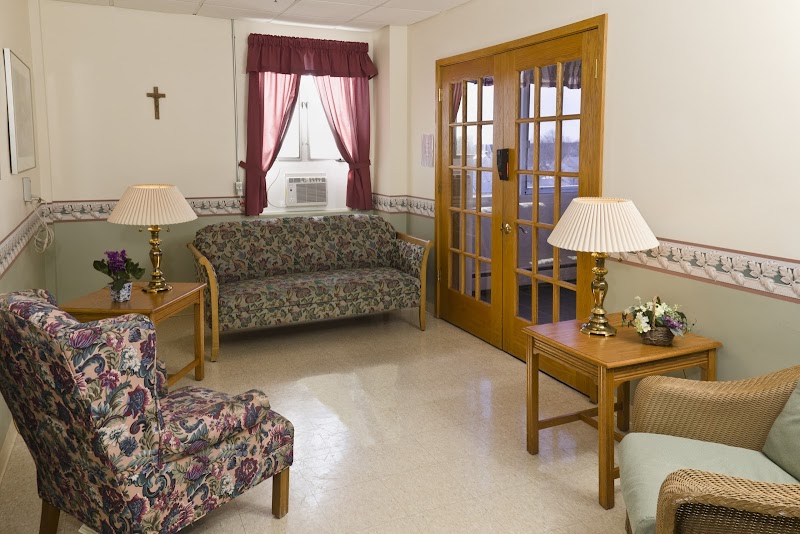
How Does Sacred Heart Compare to Other Massachusetts Nursing Homes?

Compared to the 100 nursing homes in Massachusetts, SACRED HEART NURSING HOME's overall rating (4 stars) is above the state average of 2.9, staff turnover (30%) is significantly lower than the state average of 46%, and health inspection rating (3 stars) is at the national benchmark.

What Should Families Ask When Visiting Sacred Heart?

Based on this facility's data, families visiting should ask: "Can I visit during a mealtime to observe dining assistance and food quality?" "How do you handle medical emergencies, and what is your hospital transfer rate?" "Can I speak with family members of current residents about their experience?"

Is Sacred Heart Safe?

Based on CMS inspection data, SACRED HEART NURSING HOME has a clean safety record: no substantiated abuse findings (meaning no confirmed cases of resident harm), no Immediate Jeopardy citations (the most serious violation level indicating risk of serious injury or death), and is not on the Special Focus Facility watch list (a federal program monitoring the lowest-performing 1% of nursing homes). The facility has a 4-star overall rating and ranks #1 of 100 nursing homes in Massachusetts. While no facility is perfect, families should still ask about staff-to-resident ratios and recent inspection results during their visit.

Do Nurses at Sacred Heart Stick Around?

Staff at SACRED HEART NURSING HOME tend to stick around. With a turnover rate of 30%, the facility is 16 percentage points below the Massachusetts average of 46%. Low turnover is a positive sign. It means caregivers have time to learn each resident's needs, medications, and personal preferences. Consistent staff also notice subtle changes in a resident's condition more quickly. Registered Nurse turnover is also low at 12%, meaning experienced RNs are available to handle complex medical needs.

Was Sacred Heart Ever Fined?

SACRED HEART NURSING HOME has no federal fines on record. CMS issues fines when nursing homes fail to meet care standards or don't correct problems found during inspections. The absence of fines suggests the facility has either maintained compliance or corrected any issues before penalties were assessed. This is a positive indicator, though families should still review recent inspection reports for the full picture.

Is Sacred Heart on Any Federal Watch List?

SACRED HEART NURSING HOME is not on any federal watch list. The most significant is the Special Focus Facility (SFF) program, which identifies the bottom 1% of nursing homes nationally based on persistent, serious quality problems. Not being on this list means the facility has avoided the pattern of deficiencies that triggers enhanced federal oversight. This is a positive indicator, though families should still review the facility's inspection history directly.