

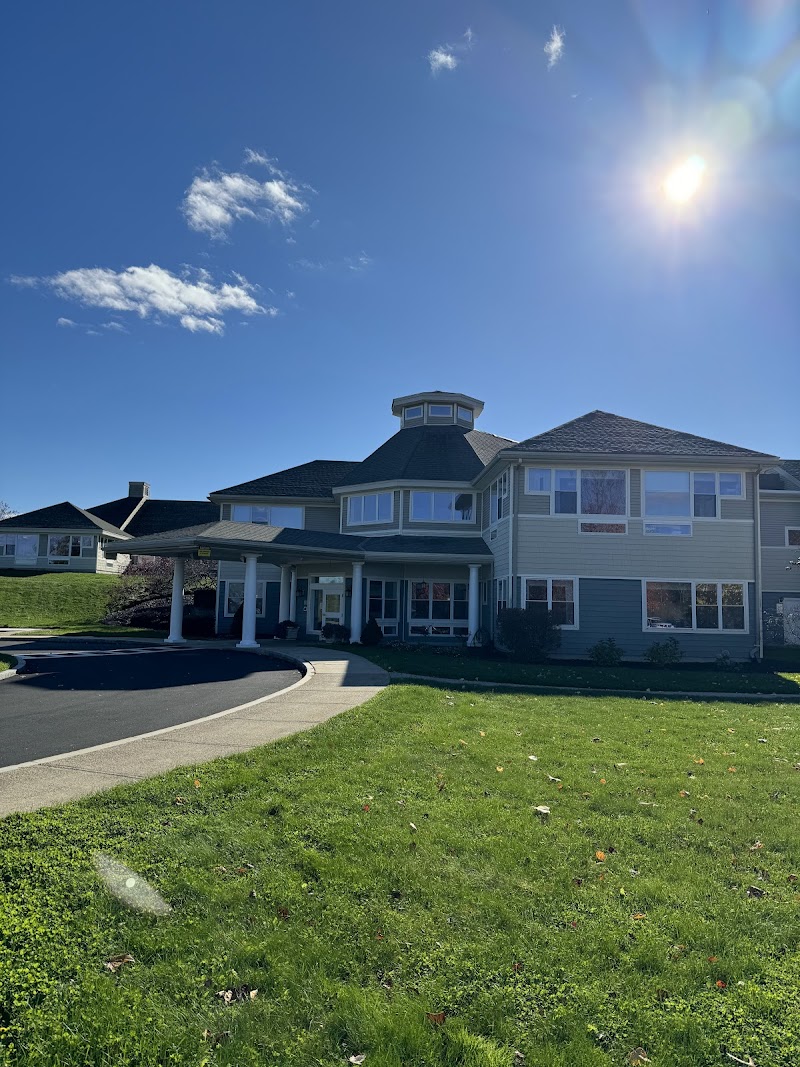


STERLING VILLAGE

18 DANA HILL ROAD, STERLING, MA 01564 (978) 422-5111
For profit - Partnership 143 Beds Independent Data: November 2025
Trust Grade
83/100
#55 of 338 in MA
Last Inspection: September 2024

Within standard 12-15 month inspection cycle. Federal law requires annual inspections.

Overview

Sterling Village in Sterling, Massachusetts, has received a Trust Grade of B+, indicating it is above average and recommended for families considering care options. It ranks #55 out of 338 facilities in the state, placing it in the top half, and #10 out of 50 in Worcester County, meaning there are only nine options locally that are better. The facility's performance trend is stable, with five reported issues in both 2023 and 2024. Staffing is a relative strength, with a turnover rate of 28%, which is better than the Massachusetts average of 39%, but the staffing rating itself is average at 3 out of 5 stars. While there have been no fines reported, which is a positive sign, there have been some concerning incidents. For example, the facility failed to provide proper care for a resident with pressure injuries, neglecting necessary treatment and infection control during dressing changes. Another resident's care plan for monitoring an IV catheter was not followed correctly, and a third resident's nutritional needs were not adequately addressed according to their care plan. Overall, while there are notable strengths in staffing and a lack of fines, families should be aware of the recent deficiencies in care practices.

Trust Score
B+
83/100
In Massachusetts
#55/338
Top 16%
Safety Record
Moderate
Needs review
Inspections
Holding Steady
5 → 5 violations
Staff Stability
✓ Good
28% annual turnover. Excellent stability, 20 points below Massachusetts's 48% average. Staff who stay learn residents' needs.
Penalties
✓ Good
No fines on record. Clean compliance history, better than most Massachusetts facilities.
Skilled Nurses
⚠ Watch
Each resident gets only 27 minutes of Registered Nurse (RN) attention daily — below average for Massachusetts. Fewer RN minutes means fewer trained eyes watching for problems.
Violations
⚠ Watch
17 deficiencies on record. Higher than average. Multiple issues found across inspections.
★★★★★
5.0
Overall Rating
★★★☆☆
3.0
Staff Levels
★★★★★
5.0
Care Quality
★★★★☆
4.0
Inspection Score
Stable
2023: 5 issues
2024: 5 issues

The Good

  • 5-Star Quality Measures · Strong clinical quality outcomes
  • Low Staff Turnover (28%) · Staff stability means consistent care
  • Full Sprinkler Coverage · Fire safety systems throughout facility
  • No fines on record
  • Staff turnover is low (28%)

    20 points below Massachusetts average of 48%

Facility shows strength in quality measures, staff retention, fire safety.

The Bad

No Significant Concerns Identified

This facility shows no red flags. Among Massachusetts's 100 nursing homes, only 1% achieve this.

The Ugly 17 deficiencies on record

1 actual harm
Sept 2024 4 deficiencies
CONCERN (D)

Potential for Harm - no one hurt, but risky conditions existed

Accident Prevention (Tag F0689)

Could have caused harm · This affected 1 resident

**NOTE- TERMS IN BRACKETS HAVE BEEN EDITED TO PROTECT CONFIDENTIALITY** 3. Review of the facility's policy titled Nutrition Policy, last revised 4/28/11, indicated: -A resident who is unable to carry...

Read full inspector narrative →
**NOTE- TERMS IN BRACKETS HAVE BEEN EDITED TO PROTECT CONFIDENTIALITY** 3. Review of the facility's policy titled Nutrition Policy, last revised 4/28/11, indicated: -A resident who is unable to carry out activities of daily living receives the necessary services to maintain good nutrition -the facility provides special eating equipment and utensils for residents who need them. Resident #92 was admitted to the facility in April 2024, with diagnoses including non-traumatic intracerebral hemorrhage (bleeding in the brain), dysphagia (swallowing difficulty) and hemiplegia (partial or total paralysis of one side of the body). Review of Resident #92's care plan for increased nutritional risk dated 4/26/24, indicated an intervention to provide and serve diet as ordered. Review of Resident #92's care plan for swallowing dated 4/29/24, indicated: -the Resident will have clear lungs, no signs and symptoms of aspiration (swallowing something that enters the airway or lungs). -monitor, document, report as needed any signs or symptoms of dysphagia (choking, coughing, drooling, holding food in mouth). -Resident to eat only with supervision. Review of the Speech and Language Pathology (assessment of communication disorders) Daily Note dated 5/24/24, indicated that the Speech Therapist (ST) recommended that Resident #92 have supervision for meals. Review of Resident #92's Nurses Progress Notes dated 7/4/24, indicated that the Resident had suffered a burn on the right thigh due to drinking hot tea that his/her spouse had given him/her. Further review of the Nurses Progress Notes indicated that the intervention for the burn incident was to provide a sip cup lid to prevent further burns from hot liquids. Review of Resident #92's Unusual Event Report dated 7/4/24, indicated: -that the Resident's spouse gave him/her tea, it had spilled on the Resident and burned him/her. -that it appeared the spouse had popped the blister of said burn. -that the intervention to prevent recurrence or injury was to provide a sip cup lid with hot liquids. Review of Resident #92's care plan for potential impairment to skin integrity last revised 7/4/24, indicated an intervention to provide a sip cup lid with hot drinks. Review of Resident #92's most recent Minimum Data Set (MDS) assessment dated [DATE], indicated Resident #92: -was unable to complete the Brief Interview for Mental Status (BIMS) exam because they are rarely or never understood. -required set up assistance with eating (the ability to use suitable utensils to bring food to the mouth and swallow food once the meal is presented on the table). Further review of the MDS Assessment revealed that Resident #92 had exhibited the following signs and symptoms of a swallowing disorder: -loss of liquids or solids from mouth when eating or drinking -coughing or choking during meals or when swallowing medications -complaints of difficulty or pain when swallowing Review of Resident #92's September 2024 Physician's orders indicated a sip lid with hot liquids, start date of 7/12/24. On 8/29/24 at 8:22 A.M., the surveyor observed Resident #92 sitting alone in his/her room eating breakfast. The surveyor observed there was a mug of thickened coffee with no sip cup lid on the Resident's breakfast tray. Review of Resident #92's meal ticket slip dated 9/3/24, generated by the facility's kitchen indicated a coffee mug with sip lid for all hot liquids. On 9/3/24 at 8:21 A.M., the surveyor observed Resident #92 sitting in his/her room eating breakfast and coughing. The surveyor requested CNA #2's assistance with the Resident as he/she had trouble communicating. During an interview at the time, CNA #2 said that the Resident wanted the assistance of the facility's ST because he/she was coughing because he/she had drank too much (breakfast beverage). On 9/3/24 at 8:26 A.M., the surveyor and CNA #2 observed Resident #92's breakfast tray and there was no sip cup lid observed on the Resident's coffee mug. During an interview at the time, CNA #2 said that she was familiar with Resident #92 and did not usually see a sip cup lid on the Resident's food tray. During an interview on 9/3/24 at 8:36 A.M., Nurse #2 said that Resident #92 was not supervised with meals. Nurse #2 also said that the Resident had required supervision with meals when he/she was first admitted to the facility, but they had improved and no longer required the supervision. On 9/3/24 at 12:09 P.M., the surveyor observed Resident #92 being supervised while eating in the dining room. During an interview at the same time, Nurse #2 said that there had been an err (error) and the Resident was now supervised with meals. During an interview on 9/3/24 at 12:41 P.M., the Dietitian said that he was aware that Resident #92 had experienced a burn while drinking and should have a sip cup lid with hot liquids for all meals. During an interview on 9/3/24 at 1:18 P.M., the Food Service Director (FSD) said that the facility had an ample supply of sip cup lids. The FSD also said that Resident #92 should have had a sip cup lid on his/her coffee mugs for all meals and he/she did not. During an interview on 9/3/24 at 1:34 P.M., Rehabilitation Services Staff (Speech Therapist) #1 said that he had evaluated Resident #92 and recommended that the Resident be supervised for all meals. Rehabilitation Services Staff #1 also said that his recommendations were noted in the Resident's electronic plan of care. Based on observation, interview, record and policy review, the facility failed to provide three Residents (#113, #20, and #92), out of a total sample of 25 residents, with an environment as free of accidental hazards as possible. Specifically, the facility staff failed to: 1. provide adequate supervision and food of the required texture to ensure Resident #113's safety while eating when the Resident had a diagnosis of Oropharyngeal Phase Dysphagia (disorder or impairment in the ability to swallow), required his/her food to be pureed (soft, smooth foods that require no chewing), and required supervision and verbal cues while eating, increasing the Resident's risk for aspiration (inhaling food/drink into one's airways or lungs, and can result in Pneumonia). 2a. appropriately review Resident #20's food allergy list, when the Resident with a documented allergy for green beans, was served green beans at mealtime, increasing the Resident's risk for adverse reactions to food consumption. 2b. provide adequate supervision for Resident #20 to ensure the Resident's safety while eating for a documented diagnosis of Oropharyngeal Phase Dysphagia, and required supervision and verbal cues for safety while eating, increasing the Resident's risk for aspiration. 3. provide supervision and adaptive equipment for Resident #92 when the Resident had a history of sustaining a burn from hot liquids, required hot liquids to be covered with a specialized lid, and required supervision for safety while eating/drinking, increasing the Resident's risk for sustaining further burn injuries. Findings include: Review of the facility policy titled Assisting the Resident to Eat, dated 9/1/04, indicated the following: -The purpose of the policy was to assist residents to eat and to provide nutrition for residents needing assistance to eat. -Examples of items that would be provided for residents included the ordered diet tray and self-help eating aids. -Staff were required to obtain the resident's tray, identify the resident, and verify that the correct diet was served. -Staff were to prepare food as necessary for the resident. -Staff were required to ensure that the consistency of foods were appropriate. -Staff were required to assist the resident as necessary. 1. Resident #113 was admitted to the facility in August 2023, with diagnoses including Dementia (the impaired ability to remember, think, or make decisions that interferes with doing everyday activities), Malignant Neoplasm (abnormal growth of tissue that can be non-cancerous or cancerous) of the tongue, and Oropharyngeal Phase Dysphagia. Review of Resident #113's Cognitive Function Care Plan, initiated 8/4/23 and revised 12/18/24, indicated staff were to cue . and supervise the Resident as needed. Review of Resident #113's Nutrition Care Plan, initiated 8/7/23 and revised 12/18/24, indicated the following: -The Resident was at increased nutritional risk related to Dementia, Dysphagia, and Tongue Neoplasm. -Staff were required to serve the ordered diet to the Resident. Review of Resident #113's Swallowing Risk Care Plan, initiated 9/28/23 and revised 12/18/24, indicated the following: -Instruct Resident to .eat slowly and to chew each bite thoroughly. -Staff were required to monitor the Resident for any signs of dysphagia, including: pocketing, choking, coughing, drooling, holding food in the mouth, several attempts at swallowing, refusing to eat, and appearing concerned at meals. -The Resident was to eat only with supervision. Review of Resident #113's Speech/Language Pathology Evaluation, dated 4/11/24, indicated the following: -The Resident's family reported the Resident having had a history for having a tumor removed from the base of his/her tongue. -The Resident had experienced an approximate 15-pound weight loss over the previous four months. -The Resident's diet texture was for mechanical soft (type of texture-modified diet for people who have difficulty chewing and swallowing solid food items. -The Resident was referred for a Speech/Language Pathology Evaluation due to reports of the Resident coughing with PO (per os: Latin for by mouth) intake. -Due to the progressive nature of Dementia in the setting of a history for Neoplasm of the Tongue, weight loss, and reports of difficulty with PO intake, the Speech/Language Pathology Evaluation was warranted to support the Resident's safety . and to reduce the risks for aspiration and infection. -The Speech/Language Pathologist (SLP) observed the Resident coughing while eating lunch during the Speech/Language Pathology Evaluation. Review of Resident #113's September 2024 Physician's orders indicated an active Dietary Order dated 4/15/24, for pureed texture. Review of Resident #113's Speech/Language Pathology Discharge summary dated [DATE], indicated the following: -Functional outcome skills for mastication (ability to chew), bolus preparation (when food is chewed into a cohesive unit, ready to be swallowed), anterior-posterior transfer (immediately before the initiation of a swallow, the front of the tongue rises as the back of the tongue drops, propelling the bolus backward), and swallow reflex were impaired. -The Resident required pureed foods. -Caregiver instruction had been completed. Review of Resident #113's Minimum Data Set (MDS) assessment dated [DATE], indicated the Resident was severely cognitively impaired as evidenced by a Brief Interview for Mental Status (BIMS) score of five out of a total 15 points. On 8/29/24 between 8:18 A.M. and 8:43 A.M., the surveyor observed a staff member tell Resident #113 that it was time for breakfast and that the Resident was to walk from his/her room to the dining room. The surveyor observed Resident #113 stand up from his/her bed and walk into the hallway with the staff member. The surveyor then observed the staff member move away from the Resident once the Resident walked to an area in the hallway close to the dining room entrance. At the same time, the surveyor observed another staff member remove a breakfast tray from the meal cart, turn toward Resident #113 and instructed the Resident to return to his/her room to eat breakfast. The surveyor then observed Resident #113 turn and walk with the staff member back to his/her room. The surveyor observed Resident #113 sit on the edge of his/her bed and the staff member set up the Resident's meal tray on the bedside table, and the meal tray included pureed eggs and hot cereal. The surveyor observed the staff member exit Resident #113's room once the meal tray was set up. The surveyor observed Resident #113 start to eat. The surveyor observed one staff member enter the Resident's room during this time to provide the Resident with some sugar for the meal, but no staff were observed remaining in the room to supervise the Resident. On 8/30/24 at 12:15 P.M., the surveyor observed Resident #113 seated in the hallway, eating lunch with two staff members present in the hallway assisting other residents to eat. The surveyor observed mashed potatoes, pureed green vegetables, and three chunks of solid white fish on Resident #113's plate. The surveyor observed Resident #113 use his/her spoon to press down on the fish, then mix it with the mashed potato, while the Resident cleared his/her throat. The surveyor then observed Resident #113's meal ticket on his/her meal tray that indicated the Resident required pureed food. At this time, Resident #113 said he/she had to be careful eating, and the surveyor immediately located Nurse #1 and notified her that the Resident had solid chunks of fish on his/her meal tray. Nurse #1 immediately went to Resident #113, observed the Resident's meal and said she did not know how the solid pieces of fish ended up on the Resident's tray. Nurse #1 said she would call the SLP to inquire about the Resident's ability to have fish that was not pureed. The surveyor observed Nurse #1 walk away from the Resident, down the hallway, and did not remove the fish from the Resident's plate. The surveyor then observed the Resident eat the pieces of fish that were left on his/her plate. During an interview on 8/30/24 at 12:25 P.M., with Nurse #1 and the Unit Manager (UM) #1, UM #1 said that Dietary Staff were required to send meals for residents to the units according to the residents' diet orders. At the time, Nurse #1 said she checked the meal trays prior to the meals being served on the unit and identified no discrepancies between diets ordered and diets served. UM #1 said having solid chunks of fish on Resident #113's meal tray must have been overlooked by both the Dietary Staff and Nurse #1 and would need to be investigated further. UM #1 also said she did not know why Resident #113 was instructed to eat in his/her room for the breakfast meal on 8/29/24. During a follow-up interview on 9/3/24 at 8:35 A.M., Nurse #1 said she was alerted by Certified Nurses Aide (CNA) #1 that Resident #113 had eaten most of his/her meal at lunch on 8/29/24, and had requested more potatoes. Nurse #1 said CNA #1 told her CNA #3 had scraped some potatoes from an unserved lunch tray onto Resident #113's plate and that the unserved lunch tray contained regular texture fish, not pureed fish. Nurse #1 further said CNA #3 should not have scraped food items from the unserved tray onto Resident #113's plate and that CNA #3 should have contacted Dietary staff to request additional food items specific to Resident #113's diet order when the Resident requested more food. CNA #3 was not available to be interviewed by the surveyor on 9/3/24. During an interview on 9/3/24 at 8:39 A.M., CNA #1 said she observed CNA #3 scrape mashed potatoes from an unserved lunch meal tray onto Resident #113's lunch plate on 8/30/24. CNA #1 said she observed that the unserved meal tray contained fish that had not been pureed, so she alerted CNA #3 to be careful because Resident #113 required pureed food items. CNA #1 said there must have been pieces of fish with the mashed potatoes that CNA #3 scraped onto Resident #113's plate. During an interview on 9/4/24 at 12:55 P.M., the SLP said he had provided services in the past relative to swallowing and cognition to Resident #113. The SLP said that Resident #113 was cognitively impaired, and also had Dysphagia. The SLP said that Resident #113 required a pureed diet and supervision while eating. The SLP said the Resident experienced food residue build up in his/her mouth with variable awareness that the food residue was present and required instruction from a staff member to perform a liquid rinse to clear the residue. The SLP further said the pureed food, supervision during meals, and cueing was required for the Resident's safety due to the risk for aspiration and Aspiration Pneumonia. The SLP also said that Resident #113's swallowing status had not changed since he/she was discharged from Speech/Language Pathology services on 6/18/24. 2. Resident #20 was admitted to the facility in December 2023, with diagnoses including Age-Related Cognitive Decline (difficulty with thinking, memory, concentration and other brain functions beyond what is typically expected due to aging), Chronic (persisting for a long time or continually occurring) Migraines (headaches that can cause severe throbbing pain or a pulsing sensation, usually on one side of the head and is often accompanied by nausea, vomiting, and extreme sensitivity to light and sound), and Oropharyngeal Phase Dysphagia. Review of Resident #20's Cognitive Function Care Plan, initiated 12/12/23 and revised 8/21/24, indicated the following: -The Resident had impaired cognitive function related to impaired decision making. -Staff were required to cue . and supervise the Resident as needed. Review of Resident #20's Swallowing Risk Care Plan, initiated 12/12/23 and revised 8/21/24, indicated the following: -All staff to be informed of Resident's special dietary and safety needs. -Alternate small bites and sips. -Use a teaspoon for eating. -Encourage Resident to . eat slowly and to chew each bite thoroughly. -Monitor . for signs of Dysphagia: pocketing, choking, coughing, drooling, holding food in mouth, several attempts at swallowing, refusing to eat, appearing concerned during meals. Review of Resident #20's Nutrition Care Plan, initiated 12/12/23 and revised 8/21/24, indicated the Resident was at increased nutritional risk related to . Dysphagia . Further review of the Resident's Nutrition Care Plan indicated staff were required to provide and serve the Resident's diet as ordered. Review of Resident #20's Speech/Language Pathology Discharge summary, dated [DATE], indicated the following: -The Resident's attention, memory, and executive function (cognitive skills used to manage everyday tasks) skills were impaired. -The Resident reported globus (a persistent or intermittent non-painful sensation of a lump in the throat) when using a high rate of intake. -The Resident no longer reported globus when cues to slow his/her rate for intake and cues for alternating bites and sips were provided. -The Resident demonstrated impaired: mastication, bolus preparation, anterior-posterior transfer of bolus, and swallow reflex. -Caregiver training and instruction had been provided. Review of Resident #20's September 2024 Physician's orders indicated an active Dietary order dated 3/1/24, for mechanical soft food texture. 2a. On 9/3/24 at 12:01 P.M., the surveyor observed the door to Resident #20's room was half-way closed. The surveyor observed the foot of the Resident's bed from the hallway but was unable to observe whether the Resident was in the room. When the surveyor knocked on Resident #20's door, the Resident responded to come in. Upon entering the Resident's room, the surveyor observed there was no staff in the room with the Resident. Resident #20 was sitting up in bed, eating his/her lunch meal. The surveyor observed mechanical soft texture meat with gravy, mashed potatoes and green beans on the Resident's plate and the Resident was eating with a fork. The surveyor observed Resident #20's meal tray ticket that indicated the Resident had an allergy to green beans. Resident #20 said he/she could not eat green beans because green bean consumption made his/her migraines worse. The surveyor immediately located Nurse #1 and alerted her that Resident #20 had green beans on his/her tray and that the Resident's meal ticket indicated an allergy to green beans. Nurse #1 immediately removed Resident #20's meal tray, then called Dietary Staff for a new meal tray without green beans for the Resident. During an interview at the time, Nurse #1 said that she was unsure whether the green bean allergy was an actual allergy for Resident #20 or if it indicated a dislike for green beans. Nurse #1 said that often resident dislikes for food were indicated under the allergy section of the meal ticket. During an interview on 9/3/24 at 12:20 P.M., the UM said she would have to investigate whether green beans were an actual allergy or dislike for Resident #20. The UM also said she was not aware of Resident #20 requiring the use of a teaspoon for eating or requiring cues to eat slowly and chew each bite thoroughly. The UM further said she was not aware of the Resident's need to alternate small bites and sips while eating. During an interview on 9/3/24 at 12:43 P.M., the Dietitian said if a resident told the facility they had a food allergy, the facility was required to indicate that food item as an allergy as there would be no way to confirm the allergy. The Dietitian said if a food allergy was indicated for a resident, then the Resident should not be served the food item. The Dietitian further said he would have to look into whether green beans were indicated as an allergy or if they were a disliked food item for Resident #20. During a follow-up interview on 9/3/24 at 1:15 P.M., the Dietitian said that he identified in Resident #20's record that green beans were indicated as a food allergy and that the Resident should not have received green beans with his/her lunch meal on 9/3/24. During an interview on 9/3/24 at 1:30 P.M., Dietary Staff #2 said she was responsible for calling off the resident diets for the lunch meal tray line on 9/3/24. Dietary Staff #2 said she missed calling off Resident #20's green bean allergy, so the Resident received green beans with his/her lunch meal but should not have. Dietary Staff #2 said Nurse #1 called the Dietary department to request a replacement meal tray for Resident #20, and the replacement tray was provided to the Resident with carrots instead of green beans. During an interview on 9/3/24 at 2:20 P.M., the SLP said Resident #20 had impaired cognitive function and Dysphagia and required a modified diet texture of mechanical soft foods. The SLP said that due to the Resident's level of cognitive function for problem solving, Resident #20 required staff intervention during meals for taking small bites and alternating solids and liquids. The SLP also said Resident #20 was supposed to be eating with a teaspoon. The SLP said he had communicated all these interventions to staff and had recorded the interventions in the Resident's care plan. The SLP said that the interventions were still required for the Resident's safety while eating. 2b. On 9/3/24 at 2:40 P.M., the surveyor observed Resident #20 positioned in his/her bed with the head of the bed in an upright position and no staff were present in the Resident's room. The Resident was observed leaning to the right side, his/her head positioned down with his/her chin resting on his/her chest, and his/her eyes closed. The surveyor also observed that the Resident's lunch meal tray was still in front of him/her and contained mechanical soft meat with gravy, mashed potato, and diced carrots. The surveyor observed that the Resident's fork was in his/her hand. At that time, the surveyor spoke to Resident #20, the Resident opened his/her eyes briefly, then began to verbalize something the surveyor could not understand. The surveyor observed several small pieces of diced carrot on the tip of the Resident's tongue and protruding from behind the Resident's inner upper and lower lips while he/she was attempting to speak. The Resident kept his/her eyes closed and placed his/her index finger and thumb in his/her mouth and removed some of the pieces of diced carrot. The surveyor did not observe any staff member enter the Resident's room to monitor the Resident during the observation. On 9/3/24 at 2:45 P.M., CNA #4 said she was familiar with Resident #20 and provided care for the Resident often. CNA #4 said the Resident required no intervention from staff for eating other than setting up and cleaning up his/her meal tray. On 9/3/24 at 3:45 P.M., the Director of Nursing (DON) said she was unsure which residents in the facility required supervision throughout meals versus check-ins from staff, and that she would need to work with the SLP to figure this out.
CONCERN (D)

Potential for Harm - no one hurt, but risky conditions existed

Deficiency F0760 (Tag F0760)

Could have caused harm · This affected 1 resident

**NOTE- TERMS IN BRACKETS HAVE BEEN EDITED TO PROTECT CONFIDENTIALITY** Based on record and policy review, and interview, the facility failed to ensure that one Resident (#52) out of a total sample of...

Read full inspector narrative →
**NOTE- TERMS IN BRACKETS HAVE BEEN EDITED TO PROTECT CONFIDENTIALITY** Based on record and policy review, and interview, the facility failed to ensure that one Resident (#52) out of a total sample of 25 residents was free from significant medications errors. Specifically, the facility staff failed to adhere to the Physician's orders to hold the dose of Losartan Potassium (a medication used to decrease blood pressure and decrease the incidence of Stroke in patients with Hypertension [HTN: high blood pressure. When the blood pressure measures consistently above 130/80 millimeters of mercury [mmHg]) for a Systolic Blood Pressure (SBP) of less that 110 mmHg. Findings include: Review of the facility policy titled Medication Pass Guideline, with a revision date of 2/12/15 indicated: >Physician's Orders: -Medications are administered in accordance with the written orders of the attending Physician. *If a dose seems excessive considering the resident's age and condition or a medication order seems to be unrelated to the resident's current diagnosis or condition, contact the Physician for clarification prior to administration of the medication. *Documentation of the interaction with the Physician in the progress notes and elsewhere in the medical record as appropriate. *The Nurse who receives the order is responsible for transcribing to the chart. Resident #52 was admitted to the facility in July of 2021, with diagnoses including Hypertension, Cerebral Vascular Accident (CVA: when blood flow to a part of the brain is stopped either by a blockage or a rupture of a blood vessel), Peripheral Vascular Disease (PVD: a slow progressive disorder of the blood vessels caused by narrowing, blockage or spasms in a blood vessel reducing blow flow to the limbs). Review of Resident #52's Minimum Data Set (MDS) assessment dated [DATE], indicated the following: -The Resident had a Brief Interview for Mental Status (BIMS) score of 13 out of 15 indicating the Resident was cognitively intact. -The Resident had diagnoses including Hypertension, PVD and CVA. Review of Resident #52's Physician's orders dated 7/16/24, indicated: -Losartan Potassium oral tablet 50 milligrams (MG) (Losartan Potassium), Give 1 tablet by mouth every 12 hours related to Essential (Primary) Hypertension. -Hold for Systolic Blood Pressure (SBP) of less than 110 (mmHg). Review of Resident #52's August 2024 Medication Administration Record (MAR) indicated the Losartan Potassium medication had not been administered per the Physician's orders on the following dates: -8/9/24 with a SBP reading of 114 mmHg (higher than the ordered parameters to hold the medication) -8/11/24 with a SBP reading of 114 mmHg (higher than the ordered parameters to hold the medication) -8/19/24 with a SBP reading of 110 mmHg (higher than the ordered parameters to hold the medication) -8/25/24 with a SBP reading of 120 mmHg (higher than the ordered parameters to hold the medication) -8/27/24 with a SBP reading of 118 mmHg (higher than the ordered parameters to hold the medication) Review of Resident's #52 progress notes and clinical record did not indicate that the Physician was contacted for clarification of orders. During an interview on 9/3/24 at 2:16 P.M., Unit Manager (UM) #2 said the Losartan Potassium medication should have been administered to Resident #52 on the days documented in the August MAR when the SBP was greater than 110 mmHg. During an interview on 9/4/24 at 8:40 A.M., UM #2 said she could not locate any evidence in the clinical record of why the (Losartan Potassium medication) doses were not administered to the Resident when the SBP were within the parameters for (medication) administration. UM #2 said the medication should have been administered as ordered. During an interview on 9/4/24 at 9:20 A.M., the Director of Nursing (DON) said the Nurse administering the Resident's Losartan Potassium medication should have followed the parameters in the Physician's order and should have contacted the doctor (Physician) and documented why the doses were not administered.
CONCERN (D)

Potential for Harm - no one hurt, but risky conditions existed

Infection Control (Tag F0880)

Could have caused harm · This affected 1 resident

Based on interview and policy review, the facility failed to develop an infection prevention and control policy and procedure (IPCP) in accordance with current accepted national standards and guidelin...

Read full inspector narrative →
Based on interview and policy review, the facility failed to develop an infection prevention and control policy and procedure (IPCP) in accordance with current accepted national standards and guidelines relative to controlling COVID-19 infection. Specifically, the facility failed to indicate what measures would be implemented to identify and control the spread of COVID-19 infection for residents and staff in the facility in the event of a COVID-19 outbreak. Findings include: Review of the CDC guidance titled Infection Control Guidelines: SARS-CoV-2, dated 5/8/23, indicated: -Asymptomatic patients with close contact with someone with SARS-CoV-2 infection should have a series of three viral tests for SARS-CoV-2 infection. -Testing is recommended immediately (but not earlier than 24 hours after the exposure) and, if negative, again 48 hours after the first negative test and, if negative, again 48 hours after the second negative test. This will typically be at Day 1 (where day of exposure is Day 0), Day 3, and Day 5. -Employers should be aware that other local, . state, . requirements may apply. Review of the Commonwealth of Massachusetts (MA) Executive Office of Health and Human Services Department of Public Health (DPH) Bureau of Health Care Safety and Quality guidance titled Update to Infection Prevention and Control Considerations When Caring for Long-Term Care Residents, including Visitation Conditions, Communal Dining, and Congregate Activities, dated 5/10/23, indicated: - . long-term care facilities are required to perform outbreak testing of residents and staff as soon as possible when a case is identified. -If the long-term care facility identifies that the resident or staff member's first exposure occurred less than 24 hours ago, then they should wait to test until 24 hours after any exposure, if known. -Once a new case is identified in a facility, following outbreak testing, long-term care facilities should test exposed residents and staff at least every 48 hours on the affected unit until the facility goes seven days without a new case unless a DPH Epidemiologist directs otherwise. Review of the Centers for Disease Control and Prevention (CDC) guidance titled Interim Guidance for Managing Healthcare Personnel with SARS-CoV-2 Infection or Exposure to SARS-CoV-2, dated 3/18/24, indicated: -Exposures that might require testing and/or restriction from work can occur both while at work and in the community. -Higher-risk exposures generally involve exposure of HCP's (Health Care Professionals - staff who work in healthcare settings) eyes, nose, or mouth to material potentially containing SARS-CoV-2 . -For this guidance an exposure of 15 minutes or more is considered prolonged. This could refer to a single 15-minute exposure to one infected individual or several briefer exposures to one or more infected individuals adding up to at least 15 minutes during a 24-hour period. -Following a higher-risk exposure, HCP should: -Have a series of three viral tests for SARS-CoV-2 infection. -Testing is recommended immediately (but not earlier than 24 hours after the exposure) and, if negative, again 48 hours after the first negative test and, if negative, again 48 hours after the second negative test. This will typically be at Day 1 (where day of exposure is Day 0), Day 3, and Day 5. -Employers should be aware that other local, . state, . requirements may apply. Review of the facility's policy presented during the survey period, titled COVID-19 Policy All Inclusive, dated 5/4/24, indicated the following: -The facility was expected to follow the infection prevention and control practices recommended by DPH. -The facility's procedure for testing residents who were newly admitted and a close contact of a case of COVID-19 was to test the resident as soon as possible, but not sooner than 24 hours following exposure, then again on Day three and Day five, but did not indicate continued testing every 48 hours until the facility goes seven days without a new case unless a DPH epidemiologist directs otherwise. -The facility's policy did not include any COVID-19 testing procedure for residents who were not newly admitted to the facility and had exposure to COVID-19. -The facility's policy did not include any COVID-19 testing procedure for facility staff with exposure to COVID-19. During an interview on 8/30/24 at 10:58 A.M., the Infection Preventionist (IP) said no outbreak or requisite outbreak testing was required if a positive case of COVID-19 was identified in the facility. The IP said that staff and residents only needed to be tested if they became symptomatic. During an interview on 9/3/24 at 11:25 A.M., the Risk Management Director said she was the responsible person to update the facility's COVID-19 policy and that she had updated the policy in May 2024. The Risk Management Director also said the facility was required to adhere to the MA DPH guidance relative to COVID-19 testing. The Risk Management Director said she thought that the COVID-19 testing guidance for staff had changed and that the facility would only test residents and staff who were symptomatic for COVID-19. The Risk Management Director further said she did not know that outbreak and requisite outbreak testing were still required when a positive COVID-19 case was identified in the facility.
MINOR (B)

Minor Issue - procedural, no safety impact

Assessment Accuracy (Tag F0641)

Minor procedural issue · This affected multiple residents

**NOTE- TERMS IN BRACKETS HAVE BEEN EDITED TO PROTECT CONFIDENTIALITY** Based on observation, record review and interview, the facility failed to ensure the Minimum Data Set (MDS) Assessment was accur...

Read full inspector narrative →
**NOTE- TERMS IN BRACKETS HAVE BEEN EDITED TO PROTECT CONFIDENTIALITY** Based on observation, record review and interview, the facility failed to ensure the Minimum Data Set (MDS) Assessment was accurately coded to reflect the correct status for one Resident (#129) out of three applicable residents. Specifically, the facility staff failed to ensure that the MDS Assessment accurately reflected that Resident #129 was discharged home. Findings include: Resident #129 was admitted to the facility in July 2024, with diagnoses including urinary tract infection (UTI: bacterial infection of the urinary tract) and Sepsis (a life-threatening medical emergency that occurs when an infection triggers the body's immune system to damage its own organs and tissues). Review of Resident #129's Nurses Progress Note dated 7/18/24, indicated that the Resident had chosen to be discharged home on the same day (7/18/24) against medical advice (AMA). Review of Resident #129's July 2024 Physician's orders indicated an order to discharge the Resident with medications and services on 7/18/24. Review of Resident #129's clinical record indicated that the Resident had signed a document releasing the facility of responsibility for his/her discharge on [DATE], and that the Resident would be discharged home with medications and Visiting Nursing Association (VNA) services. Review of Resident #129's most recent Minimum Data Set (MDS) assessment dated [DATE], indicated that the Resident was discharged to a short-term hospital. During an interview on 9/4/24 at 12:15 P.M., the MDS Nurse said that the MDS Assessment had been inaccurately coded and should have marked the Resident as discharged home.
Feb 2024 1 deficiency
CONCERN (D) 📢 Someone Reported This

A family member, employee, or ombudsman was alarmed enough to file a formal complaint

Potential for Harm - no one hurt, but risky conditions existed

Medical Records (Tag F0842)

Could have caused harm · This affected 1 resident

Based on records reviewed and interviews, for one of three sampled residents (Resident #1), whose physician's orders included the administration of a narcotic medication as needed for pain, the Facili...

Read full inspector narrative →
Based on records reviewed and interviews, for one of three sampled residents (Resident #1), whose physician's orders included the administration of a narcotic medication as needed for pain, the Facility failed to ensure they maintained a complete and accurate medical record when nursing failed to transcribe into the Controlled Substance Log (a book used by nursing to keep an accurate count of all narcotics and to record administration of narcotics), a change in the directions for the use of the narcotic, and failed to document the administration of the narcotic in his/her Medication Administration Record. Findings include: Review of the Facility's policy, titled Medication Pass Guidelines, with a revision date of 02/12/2015, indicated the purpose was to assure the most complete and accurate implementation of physicians' medication orders for administration of drugs in an accurate manner. Further review of the Policy indicated the following: -Medications are administered in accordance with written orders of the attending physician. -Verify the medication label against the Medication Administration Record (MAR) for accuracy of drug frequency, duration, strength, route and form. -If the label and MAR are different, the physician's orders are checked for the correct dosage schedule. -Do not administer the medication until the discrepancy is resolved. -Record the name, dose, route, and time of medication on the MAR. Resident #1 was admitted to the facility in February 2016, diagnoses included acute kidney failure and Diabetes Mellitus. Review of Resident #1's Physician's orders for the month of January 2024 included the following: -Oxycodone (narcotic pain medication) 5 milligrams (mg) give one tablet by mouth every six hours as needed for moderate pain for two weeks (start date 01/03/24, end date 01/17/24) -Oxycodone 5 mg give two tablets (total of 10 mg) by mouth every six hours as needed for severe pain for two weeks (start date 01/03/24, end date 01/17/24) -Oxycodone 5 mg give one tablet by mouth every six hours as needed for moderate pain (start date 01/18/24) Review of the Controlled Substance Log indicated Resident #1's entry page for Oxycodone 5 mg tablets included the following instructions: Give one tablet every six hours as needed, give two tablets (10 mg) every six hours as needed for pain. However, the instructions did not include: to administer one tablet of Oxycodone 5 mg for moderate pain, two tablets (10 mg) for severe pain, or that the physician's order for the Oxycodone 10 mg was discontinued as of 01/17/24 Further review of Resident #1's entry page indicated that Resident #1 was administered two tablets of Oxycodone 5 mg tablets (to equal 10 mg) on 01/19/24 at 1:00 A.M. by Nurse #1 and at 12:40 P.M. by Nurse #3 (despite the order for Oxycodone 10 mg no longer being in effect> Review of Resident #1's MAR for the month of January 2024 indicated that although two tablets of the Oxycodone 5 mg that were signed out of the Controlled Substance Log on 01/19/24 at 1:00 A.M. and 12:40 P.M., the doses were not documented as administered on the MAR. During a telephone interview on 02/21/24 at 5:02 P.M., Nurse #1 said he worked on 01/18/24 during the 11:00 P.M. to 7:00 A.M. shift and administered Oxycodone 5 mg two tablets (10 mg) to Resident #1 at 1:00 A.M. on 01/19/24. Nurse #1 said that Resident #1 could get two tablets of Oxycodone 5 mg for severe pain. Nurse #1 said that his practice was to check the instructions on the medication blister package and also to check the instructions on the Controlled Substance Log. Nurse #1 said that he did not need to check anywhere else and did not need to document the administration of narcotic medications on Resident #1's MAR. The Surveyor was unable to interview Nurse #3, as he did not respond to the Department of Public Health's telephone or letter request for an interview. During an interview on 02/21/24 at 3:45 P.M., the Director of Nurses (DON) said that Resident #1's order for the Oxycodone 5 mg give two tablets (10 mg) as needed every six hours for severe pain was discontinued on 01/17/24 and should not have been administered on 01/19/24. The DON said that nursing should have documented all medications they administered on the resident's MAR.
Jun 2023 1 deficiency
CONCERN (D) 📢 Someone Reported This

A family member, employee, or ombudsman was alarmed enough to file a formal complaint

Potential for Harm - no one hurt, but risky conditions existed

Notification of Changes (Tag F0580)

Could have caused harm · This affected 1 resident

Based on records reviewed and interviews, for one of three sampled residents (Resident #1), who had an activated Health Care Proxy, with his/her Health Care Agent (HCA) making health care decisions fo...

Read full inspector narrative →
Based on records reviewed and interviews, for one of three sampled residents (Resident #1), who had an activated Health Care Proxy, with his/her Health Care Agent (HCA) making health care decisions for him/her, the facility failed to ensure the HCA was notified of the need to alter Resident #1's treatment plan regarding his/her medications, when on 1/09/23 the Nurse Practitioner wrote an order for nursing to discontinue some of Resident #1's medications, however his/her HCA was not notified or consulted with regarding the decision to discontinue the medications. Findings include: Review of the Facility Policy titled Change in Condition, dated 09/01/04, indicated the Facility would immediately inform the resident or the resident's legal representative when there was a need to alter treatment significantly (i.e., a need to discontinue an existing form of treatment due to adverse consequences, or to commence a new form of treatment). Review of the Facilities General Orientation guide for staff, dated 04/09 indicated the Facility is required to notify the resident or the resident's family of any significant change in the resident's treatment. Resident #1 was admitted to the Facility in September 2021, diagnoses included dementia, hypertension, hyperlipidemia, and failure to thrive. Review of Physician Progress Note, dated 09/07/2021, related to Invocation of Health Care Proxy/Durable Power of Attorney for Health Care, indicated Resident #1's Health Care Proxy was invoked on this date. Review of Resident #1's Physician's orders for August 2022, indicated that on 08/12/2022, a Physician's Telephone Order was obtained for Hospice screen and admission to Hospice Services. Review of Resident #1's Care Plan Meeting Review Record, dated 11/29/2022, indicated a Care Plan meeting was held for him/her at the Facility on this date. During an interview on 06/26/2023 at 11:29 A.M., Resident #1's Health Care Agent (HCA) said she participated in a Care Plan Meeting for Resident #1 at the Facility on November 29, 2022. The HCA said that during the meeting she was asked if she wanted some of Resident #1's medications discontinued and said she told staff in attendance at the meeting that she did not want any of Resident #1's medications discontinued. The Health Care Agent (HCA) said she was not notified by nursing on 01/09/2023, that the Nurse Practitioner provided an order for Resident #1, and that his/her medications were discontinued. Review of Resident #1's Quarterly Minimum Data Set (MDS) assessment, dated 02/06/23, indicated he/she was totally dependent on nursing staff to meet his/her care needs and that he/she had a Brief Interview for Mental Status (BIMS) with a score of 3, and was severely cognitively impaired, (score range 0-7 indicates severe cognitive impairment, 8-12 indicates moderate cognitive impairment, 13-15 indicates cognitively intact). Review of Resident #1's Physician's orders for January 2023, indicated his/her orders for medications included the following: -Lisinopril (antihypertensive) 2.5 milligrams (mg) one tablet by mouth daily, -physician's parameters included to hold Lisinopril for systolic blood pressure less than 110, (systolic, top number in BP reading diastolic, bottom number in BP reading). -Amlodipine (antihypertensive) 10 mg one tablet by mouth every evening, -Lovastatin (treats high cholesterol) 20 mg one tablet by mouth every evening Review of Resident #1's Medication Administration Record (MAR) for January 2023, indicated that from 01/01/2023 through 01/09/2023 nursing documented the following; -Lisinopril administered daily, as ordered -blood pressure readings (related to the administration of the Lisinopril) ranged between 107/63 to 130/66. Further review of Resident #1's MAR from 01/01/2023 through 01/09/2023, indicated there was no documentation to support that his/her Lisinopril had been held by nursing, despite him/her having a documented BP of 107/63 (systolic pressure less than 110) on at least one occasion. -Amlodipine administered as ordered. - Lovastatin administered as ordered. Further review of Resident #1's Physician orders indicated that on 01/09/2023, a Physicians Telephone order was obtained and signed by the Nurse Practitioner to discontinue the following medications: -Lisinopril 2.5 mg, -Amlodipine 10 mg, and -Lovastatin 20 mg During an interview on 06/26/2023 at 10:40 A.M , the Nurse Practitioner (NP) said she did not speak with Resident #1's (HCA) prior to discontinuing his/her Lisinopril, Amlodipine and Lovastatin and said she thought the facility's nurse would speak with the HCA. The NP said her rationale for discontinuing Resident #1's medications was to maintain stable blood pressure readings. Review of Resident #1's Medical Record indicated there was no documentation to support that his/her Health Care Agent (HCA) was notified or consulted by nursing 01/09/23 regarding the Nurse Practitioners order to discontinue his/her medications. During an interview on 06/26/2023 at 1:20 P.M., Nurse #1 said that facility nurses can update the Health Care Agent if there are any change in treatment, but for a resident who is on Hospice it is mainly the Hospice nurse who does the family member/HCA updates for Hospice patients. During an interview on 06/26/2023 at 1:38 P.M., Nurse #2 said that if the resident's facility providers, (NP/MD) discontinued medications on a hospice resident, she said that she would update the Health Care Agent and the Hospice Nurse and then she would put the orders in the electronic medical system. During an interview on 06/26/23 at 1:50 P.M. the Unit Manager said Resident #1 had a steady decline and that his/her blood pressure was on the low side. The Unit Manager said that her expectation was that her staff (nurses on her unit) would call the Health Care Agent to ensure that they agree with any medication/treatment changes, the Unit Manager said that there was not a conversation with Resident #1's HCA in this case. During an interview on 06/26/2023 at 4:17 P.M., the Assistant Director of Nursing (ADON) said that if the resident cannot make their own health care decisions (and has an activated HCP) then their HCA would be the decision maker and the HCA would have the right to know about medication changes. During an interview on 07/11/2023 at 1:40 P.M., The Director of Nursing (DON) said for a resident with an activated HCP, if he/she experienced a significant change then his her HCA would be notified. The DON said for Resident#1 they felt his/her decline was more gradual and not considered a significant change. The DON said with a significant change the Physician or NP would speak to the nurses on the unit or the Unit Manager, and then they should notify the HCA.
Jun 2023 4 deficiencies
CONCERN (D)

Potential for Harm - no one hurt, but risky conditions existed

Deficiency F0578 (Tag F0578)

Could have caused harm · This affected 1 resident

Based on record review and interview, the facility failed to accurately execute Advance Directives (written documents that tells your health care providers who should speak for you and what medical de...

Read full inspector narrative →
Based on record review and interview, the facility failed to accurately execute Advance Directives (written documents that tells your health care providers who should speak for you and what medical decisions should be made if you become unable to speak for yourself) for one Resident (#21) out of a total sample of 26 residents. Specifically, the facility failed to ensure that the MOLST (Massachusetts Medical Order for Life-Sustaining Treatment) decisions were made by the designated and invoked (activated) Health Care Proxy (HCP- a legal document that allows you to appoint someone you trust to make medical decisions on your behalf if you are unable to do so) for Resident #21, when the Resident was deemed as lacking the capacity for informed decision making by the facility's Physician. Review of the facility policy for Advance Directives, last revised 3/15/23, indicated that Advance Directives go into effect only after a person is declared incapable of making their own medical decisions. Findings include: Resident #21 admitted to the facility in February 2022. Review of the clinical record indicated that the Physician had invoked Resident #21's Health Care Proxy (HCP) on 2/22/22 for an indefinite duration. Review of Resident #21's Physician's orders for June 2023 (start date 11/28/22), indicated to follow the MOLST instructions and invoked HCP (start date 1/12/23). Review of the clinical record revealed a MOLST form signed on 6/1/23 by Resident #21 after his/her HCP had been activated. During an interview on 6/14/23 at 7:17 A.M., Social Worker (SW) #1 said that the MOLST form was not valid as it had been signed by the Resident after he/she had been deemed incapacitated by his/her Physician. SW #1 further said that the HCP should have signed the MOLST form and they did not.
CONCERN (D)

Potential for Harm - no one hurt, but risky conditions existed

Deficiency F0691 (Tag F0691)

Could have caused harm · This affected 1 resident

Based on interview and record review, the facility failed to ensure one Resident (#337), out of a total sample of 26 residents, received care of a colostomy (a surgical procedure that creates an openi...

Read full inspector narrative →
Based on interview and record review, the facility failed to ensure one Resident (#337), out of a total sample of 26 residents, received care of a colostomy (a surgical procedure that creates an opening [stoma] from the large intestine through the abdomen allowing for stool to pass from the intestine to outside the body) system consistent with professional standards. Specifically, the facility staff failed to provide care and maintenance of the adhesive barrier/wafer pouching system per facility policy. Findings include: Review of the facility policy titled Colostomy and Ileostomy Care, dated 9/1/2004, indicated the following: - Most disposable pouching systems (used for the management of stool outside the body: consisting of a detachable bag to collect stool attached to an adhesive barrier/wafer that is affixed to the abdomen surrounding the colostomy opening) can be used from two to seven days. - Record the date and time of pouching system change in the treatment record. Resident #337 was admitted to the facility in June 2023 with a diagnosis of exploratory surgery with colostomy placement. Review of the Minimum Data Set (MDS) assessment information dated 6/7/23, indicated Resident #337 was cognitively intact as evidenced by a Brief Interview for Mental Status (BIMS) score of 15 out of a total score of 15. During an observation and interview on 6/14/23 at 2:02 P.M., the surveyor observed Resident #337 to have an adhesive barrier/wafer colostomy pouching system affixed to his/her left lower abdomen. Resident #337 said that he/she could not recall if the staff had ever changed the adhesive barrier/wafer pouching system. Review of the Physician's orders for Resident #337 dated June 2023, relative to colostomy management, indicated the following: - change colostomy bag every three days and as needed for soilage or displacement, order initiated on 6/7/23 - assess stoma site (opening of the intestine on the abdomen) and surrounding skin integrity every shift, order initiated on 6/7/23 Further review of the Physician's orders indicated no order to change the adhesive colostomy barrier/wafer pouching system. Review of the Resident's record indicated no documentation reflecting that the adhesive colostomy barrier/wafer pouching system had been changed. During an interview on 6/15/23 at 7:33 A.M., the surveyor and Nurse #3 reviewed the Physician's orders for Resident #337. Nurse #3 said that there were no Physician orders to change the adhesive colostomy barrier/wafer pouching system but there should have been orders to change the barrier/wafer pouching system routinely. During an interview on 6/15/23 at 7:47 A.M., Unit Manager (UM) #1 said that the Resident's adhesive colostomy barrier/wafer pouching system should be changed every three days. She then said that the adhesive colostomy barrier/wafer pouching system should be changed every day. She said that there were no orders for changing Resident #337's adhesive colostomy barrier/wafer pouching system in place, but there should be a Physician's order to change the pouching system routinely.
CONCERN (D)

Potential for Harm - no one hurt, but risky conditions existed

Infection Control (Tag F0880)

Could have caused harm · This affected 1 resident

2. Resident #52 was admitted to the facility in February 2021. Review of the Resident's Physician's progress note in the clinical record dated 5/2/23, indicated that the Resident returned from the hos...

Read full inspector narrative →
2. Resident #52 was admitted to the facility in February 2021. Review of the Resident's Physician's progress note in the clinical record dated 5/2/23, indicated that the Resident returned from the hospital on 5/2/23 with a diagnosis of infectious Gastroenteritis (an intestinal infection) and Colitis (an inflamed colon), and Enterocolitis (an inflammation throughout the intestine) due to Clostridium Difficile (C-diff: an infection of the intestine caused by the bacteria Clostridioides difficile). Review of the Resident's June 2023 Physician's orders included an order for Contact Precautions for C-diff every shift initiated on 5/2/23. Review of the Resident's June 2023 Treatment Administration Record (TAR) indicated that Contact Precautions for C-diff were in place for the Resident every shift from 6/1/23 through 6/13/23. On 6/13/23 at 1:15 P.M., the surveyor observed the Contact Plus Precaution sign located at the entrance to the Resident's doorway, which indicated that in addition to standard precautions staff and providers must wear gown and gloves when entering the room. On 6/13/23 at 1:40 P.M., during an observation and interview with Unit Manager (UM) #2, the UM told the surveyor that the Resident was on Contact Precautions for C-diff and she reviewed the Contact Plus Precaution sign with the surveyor. The surveyor then observed UM #2 enter the Resident's room without donning (putting on) a gown or gloves. UM #2 approached the Resident who was lying in bed, and picked up his/her bedside urinary drainage bag and tubing with her bare hands and relocated the bag and tubing to the other side of the bed. When the surveyor asked UM #2 about the use of gown and gloves when caring for the Resident, UM #2 said that she didn't need to wear a gown or gloves because she didn't handle the Resident's feces. During an interview on 6/14/23 at 8:32 A.M., the Infection Control Preventionist (ICP) said that the staff who entered the Resident's room to provide care should perform hand hygiene, and then don (put on) a gown and gloves because the Resident was on Contact Precautions due to a C-diff infection. The ICP said that the UM that touched the Resident's bedside urinary drainage bag and tubing should have been wearing a gown and gloves. Based on policy review, observation, record review and interview, the facility failed to ensure its staff maintained appropriate infection control measures related to the use of Personal Protective Equipment (PPE) for two Residents (#125 and #52) out of a total sample of 26 residents. Specifically, the facility failed to ensure staff wore gowns and gloves when providing care for Resident's #125 and Resident #52 who were both on Contact Precautions (intended to prevent transmission of infectious agents, including epidemiologically important microorganisms, which are spread by direct of indirect contact with the resident or the resident's environment). Findings include: Review of the facility's policy, titled Transmission Precautions: Contact, dated 9/1/04, indicated the following: -In addition to Standard Precautions, Contact Precautions are used for residents known or suspected to be, infected or colonized with important microorganisms that can be transmitted by direct contact with the resident, or indirect (touching) with environmental surfaces or resident care items in the resident's environment. -Gloves should be worn when providing care that involves personal contact (e.g. changing clothes, toileting, bathing) or contact with items that may be contaminated by the organism. -Wear a clean, non-sterile gown upon entering a resident's room if you anticipate substantial contact between your clothing and the resident, environmental surfaces, or items in the room. Review of the Centers for Disease Control and Prevention (CDC) website indicated health care personnel caring for patients on Contact Precautions must wear a gown and gloves for all interactions that involve contact with the patient and the patient environment. PPE should be donned (put on) prior to room entry and doffed (removed) at the point of exit. 1. Resident #125 was admitted to the facility in April 2023. Review of the infection line list for the Aspen Unit, provided by Unit Manager (UM) #3, indicated Resident #125 was on Contact Precautions for Vancomycin-Resistant Enterococci (VRE-germs that have developed a resistance to Vancomycin [an antibiotic used to treat some drug-resistant infections]) in the urine. Review of the June 2023 Physician's orders indicated an order to maintain Contact Precautions (VRE) every shift. On 6/13/23 at 4:04 P.M., the surveyor observed Resident #125 in bed, watching TV. There was a sign outside of the Resident's room that indicated the Resident was on Contact Precautions and gown and gloves were required to enter the room. On 6/14/23 at 10:10 A.M., the surveyor observed Housekeeper #1 in the Resident's room, mopping the floor. The Resident was seated in his/her wheelchair next to the bed. Housekeeper #1 held both sides of the wheelchair and moved the Resident to a different area in the room, so she could mop the rest of the floor. Housekeeper #1 did not have on a gown and gloves. During an interview on 6/14/23 at 10:13 A.M., the surveyor asked Housekeeper #1 if she needed to wear any PPE to enter the Resident's room. Housekeeper #1 said the gowns and gloves were only for Nurses and Certified Nurse Aides (CNAs). During an interview on 6/15/23 at 11:49 A.M., the Assistant Director of Nurses (ADON) said the Housekeeper should have had PPE on when she was in Resident #125's room.
CONCERN (E)

Potential for Harm - no one hurt, but risky conditions existed

Deficiency F0694 (Tag F0694)

Could have caused harm · This affected multiple residents

2. Resident #45 admitted to the facility in June 2021 with diagnoses including hammer toe of left foot and Dementia (group of symptoms that affects memory, thinking and interferes with daily life). R...

Read full inspector narrative →
2. Resident #45 admitted to the facility in June 2021 with diagnoses including hammer toe of left foot and Dementia (group of symptoms that affects memory, thinking and interferes with daily life). Review of the clinical record revealed a PICC Insertion Record, dated 5/20/23, for expected intravenous therapy (IV) greater than 14 days. Review of Resident #45's Physician's orders for June 2023 indicated to document external catheter length and arm circumference in centimeters-one time a day every Sunday and every 24 hours as needed, with a start date of 5/22/23. Review of Resident #45's care plan for IV therapy dated 5/22/23, indicated an intervention to measure the external length of the catheter and arm circumference 2 centimeters (cm) above the insertion site and to document findings. Review of Resident #45's Treatment Administration Record (TAR) for May 2023 and June 2023 indicated that the weekly measurements of the external length of the catheter and arm circumference had not been completed as ordered on 5/28/23 and 6/11/23. During an interview on 6/14/23 at 12:54 P.M., Nurse #1 said that it was important to measure the PICC line catheter and arm circumference in order know if the PICC line had migrated (moved) and that it could be caustic to the Resident's veins. Nurse #1 reviewed Resident #45's TAR and progress notes with this surveyor and confirmed that there was no evidence that the measurements had been completed as ordered. Based on observation, record review, and interview, the facility failed to provide peripherally inserted central catheter (PICC: flexible tube inserted through a vein in one's arm and passed through to the larger veins near the heart, used to deliver medications intravenously [IV]) care and services in accordance with professional standards of practice and plans of care for two Residents (#237 and #45), out of two residents receiving IV treatments via PICC, in a total sample of 26 residents. Specifically, facility staff failed to: 1. For Resident #237, obtain a baseline measurement for the external length of Resident #237's PICC from when it was placed to ensure the PICC had not migrated (moved from the heart to another area, which could have a significant impact on treatment, or cause serious harm) prior to administering antibiotic therapy to the Resident via PICC when he/she returned to the facility from the acute hospital. Facility staff also failed to accurately measure the external length of the PICC and the Resident's arm circumference, as ordered by the Physician, when changing the PICC line dressing. 2. For Resident #45, measure the external length of the PICC weekly, as ordered by the Physician to prevent the risk for inadvertent PICC migration. Findings include: Review of the facility policy, titled Intravenous Therapy Policy, dated September 2019, included: Dressing changes . every seven days and as needed. Document external catheter length, arm circumference, and any adverse effects to dressing change. Review of the Lippincott Manual of Nursing Practice, 11th Edition, dated 2021, included the following for documentation relative to PICC line migration and dressing changes: -Use a sterile measuring tape or incremental markings on the catheter to measure the external length of the catheter from hub to skin entry to make sure that the catheter hasn't migrated. - Measure upper arm circumference when clinically indicated to assess for the presence of edema and deep vein thrombosis (DVT: blood clot in a deep vein); take the measurement four inches (10 centimeters) above the antecubital fossa (area of transition between the forearm and upper arm) and compare this measurement to the baseline. 1. Resident #237 was admitted to the facility in December 2013 with diagnoses including parotitis (painful swelling of one's parotid [area just in front of the ears] glands most commonly caused by a virus or bacteria) and sepsis (life-threatening organ dysfunction caused by a dysregulated host response to infection). Review of Resident #237's Minimum Data Set (MDS) assessment, dated 3/13/23, indicated he/she scored 13 out of 15 points on the Brief Interview for Mental Status (BIMS) Exam, indicating the Resident was cognitively intact. Review of a Minimum Data Set (MDS) assessment, dated 5/26/23, indicated Resident #237 was discharged to the acute hospital with return to the facility anticipated. Review of Resident #237's acute hospital PICC insertion record, dated 6/1/23, included: - A PICC, total of 42 centimeters (cm) in length, was placed via the Resident's right basilic vein (large vein in the upper arm). - Chest radiograph, post procedure, showed the catheter tip at the cavoatrial junction (point at which the superior vena cava [large vein that carries deoxygenated blood from the upper half of the body to the right atrium of the heart] meets and melds into the superior wall of the cardiac right atrium) and no kinks along the course of the catheter. Further review of the PICC insertion record did not indicate how much of Resident #237's total catheter length was external. Review of a Nurse's Note, dated 6/2/23, indicated Resident #237 returned to the facility on 6/1/23 with a PICC in his/her right upper arm. Further review of the Note included no evidence baseline measurements for Resident #237's external catheter length had been obtained relative to when the PICC was placed. Review of Resident #237's PICC Care Plan, dated 6/2/23, included the following: - Total catheter length: 42 cm. - External length: 6 cm. - Arm circumference: 14 cm. - Obtain internal and total length of catheter. - Change transparent dressing . weekly. - Measure external length of catheter and arm circumference. - Document findings. Review of Resident #237's June 2023 Physician's orders included: PICC line dressing change weekly and PRN (as needed). Document external catheter length and arm circumference, dated 6/2/23. Review of Resident #237's June 2023 Treatment Administration Record (TAR) indicated the Resident's PICC line dressing was changed on 6/9/23 and included the following: - The external PICC line length was measured at 0.5 cm. - The Resident's arm circumference measurement was documented as N/A (not applicable). On 6/13/23 at 10:50 A.M., the surveyor observed Resident #237 in his/her room. The Resident wore a short-sleeve hospital gown and his/her right upper extremity was visible from mid upper arm to hand. The surveyor observed a PICC in the Resident's right upper arm and there was a transparent dressing over the PICC which was dated 6/9/23. The surveyor also observed an IV pole at the head of the Resident's bed that held an empty bag of Cefazolin Sodium (antibiotic medication used to treat infection), dated 6/13/23. During this observation, Resident #237 said he/she had been hospitalized recently and had been receiving medication through the PICC in his/her right arm. The Resident also said he/she was not sure what facility staff did to assess the PICC. During an interview on 6/14/23 at 9:42 A.M., Nurse #6 said Resident #237 was on his assignment that day and that the Resident received antibiotics through the PICC. Nurse #6 said that initial measurements for external catheter length and arm circumference would have been obtained when the PICC was placed and staff were not required to perform any measurements of the external length of the PICC because the dressing held it in place, so the line would not migrate. Nurse #6 also said Resident #237's PICC dressing would be changed on an as needed basis if it became soiled, and the external length of the PICC did not need to be measured when the dressing was changed. During an interview on 6/14/23 at 12:10 P.M., Nurse #4 said he worked the day (7:00 A.M. through 3:00 P.M.) shift on Resident #237's Unit on 6/9/23, but he did not recall changing the Resident's PICC dressing. At this time, Nurse #4 reviewed Resident #237's TAR with the surveyor and said the Resident's PICC dressing was changed on the evening (3:00 P.M. through 11:00 P.M.) shift, by Nurse #5. Nurse #4 said the Resident's right arm circumference should have been measured and recorded and compared to the Resident's baseline measurement, but it was not. He also said the external catheter length measurement of 0.5 cm was typical for a PICC but was significantly different that the initial facility measurement from 6/2/23 of 6 cm, which was indicated in the Resident's care plan. Nurse #4 then said one of the measurements was inaccurate. During an interview on 6/14/23 at 1:29 P.M., Nurse #5 said he worked the evening shift at the facility on 6/9/23 and that Resident #237 was on his assignment. Nurse #5 said PICC dressing changes were required to be completed per order of the Physician and that when those dressings were changed, the Nurse was required to measure the external length of the line and the resident's arm circumference and compare them to the baseline measurements obtained when the PICC was placed to ensure no migration occurred. Nurse #5 said if the external length of the PICC was shorter or longer than the baseline measurement, this would be a problem. Nurse #5 then said Resident #237's PICC dressing change was scheduled to be completed on the day shift 6/9/23, but the Nurse on the day shift was unable to complete it, so Nurse #5 completed it on the evening shift. Nurse #5 further said 0.5 cm was typical for the external length of a PICC and that he did not measure Resident #237's arm circumference because he thought the Nurse on the day shift did that. During an interview on 6/14/23 at 2:17 P.M., the Assistant Director of Nursing (ADON) said the purpose of measuring the external length of a PICC line was to ensure the tip of the catheter had not migrated, and that if this occurred it would be a 911 call due to a potential risk for air embolus (blockage of blood supply caused by air bubbles in a blood vessel or the heart), and Physician contact would be required. The ADON also said arm circumference measurement was important as an increase in swelling could indicate complications such as DVT or infection. The ADON said measurements taken during weekly and PRN dressing changes were to be compared to baseline measurements for accuracy. During an interview on 6/14/23 at 5:13 P.M., UM #2 said she was the one who measured the external length of Resident #237's PICC on 6/2/23, after the Resident returned to the facility. UM #2 said the total length of the PICC was 42 cm, but there was no information available that indicated baseline measurements for the external length of the PICC. UM #2 also said the documented length for Resident #237's external PICC was not measured properly on 6/9/23, resulting in an inaccurate measurement, and that the Nurse should have obtained and recorded the Resident's arm circumference when the dressing was changed. UM #2 further said baseline outer lengths of Resident #237's PICC had not been obtained, as required, when Resident #237 returned to the facility.
Feb 2020 7 deficiencies 1 Harm
SERIOUS (G)

Actual Harm - a resident was hurt due to facility failures

Pressure Ulcer Prevention (Tag F0686)

A resident was harmed · This affected 1 resident

Based on observation, record review and interview, the facility failed to prevent a Deep Tissue Pressure Injury (DTPI-a skin injury cause by pressure) from developing, failed to provide the necessary ...

Read full inspector narrative →
Based on observation, record review and interview, the facility failed to prevent a Deep Tissue Pressure Injury (DTPI-a skin injury cause by pressure) from developing, failed to provide the necessary treatment and services to promote healing for two pressure ulcers and failed to maintain infection control practices during a dressing change for one resident (#127) out of a total sample of 27 residents. Findings include: For Resident #127, the facility failed to A) Follow through with the initial rehabilitation screen in a timely manner, remove the source of identified pressure, provide physical therapy for positioning in a timely manner, and maintain an out of bed schedule. B) Failed to follow the plan of care recommended from the wound clinic and the Nurse Practitioner (NP) orders for positioning and pressure relief. C) Failed to maintain infection control while performing a dressing change. Resident #127 was admitted to the facility in June of 2018 with a diagnosis of Posterior encephalopathy syndrome (a syndrome characterized by confusion, headaches and seizures). Review of the Quarterly Minimum Data Set Assessment, dated 1/6/2020, indicated Resident #127 had severely impaired cognition as evidenced by a score of 7 out of 15 on the Brief Interview of Mental Status (BIMS), was an extensive assist of 2 for bed mobility, dependent for transfers, did not ambulate and had 2 facility acquired, unstageable pressure ulcers that were covered with either slough and/or eschar (dead tissue). A. Review of the Report of New Ulcer form, dated and timed on 11/15/19 at 12:30 P.M., indicated Resident #127 developed a DTPI (Wound #1), that measured 2 centimeters (cm), x 1.5 cm to the left calf. The report further indicated the cause of the DTPI was pressure and decreased immobility. A physician's orders was obtained to apply skin prep (a protective film) every shift and to obtain a rehabilitation screen. Review of the Report of a New Ulcer form, dated and times on 11/18/19 at 11:45 A.M., indicated Resident #127 developed a second DTPI (Wound #2) that measured 7 cm x 1.5 cm to the right calf. The report further indicated the cause of the DTPI was pressure, decreased mobility and external rotation of the hips. A physician's order was obtained to apply skin prep every shift, apply an alternating air mattress and apply Derma Savers (protective padded sleeve) to both lower legs at all times. Review of the Rehabilitation Screening Request form, dated 11/15/19, indicated Resident #127 needed to be screened for positioning due to the development of a new DTPI to the left calf. The Screening Request Form was signed and dated on 11/18/19 (3 days after originally requested), with the recommendation for the resident to be evaluated by a physical therapist for positioning. Under the comment section of the form, the physical therapist documented that she observed Resident #127 seated in a tilt in space wheelchair with elevating leg rest and a foot box (a device used for lower leg positioning in the wheelchair). The resident's hips were observed to be externally rotated which became even further rotated after 2 hours of sitting in the wheelchair. A Physical Therapy (PT) evaluation was recommended. Review of the PT Initial Evaluation form, dated 11/18/19, indicated Resident #127 had 2 new DTPI, one on each calf, and therapy was necessary to address proper positioning in the bed and wheelchair. The evaluation further indicated that therapy was needed to improve positioning and without therapy the resident was at risk for further skin breakdown. The Rehabilitation Staff (RS) #2 documented that she observed the resident with his/her hips externally rotated, while seated in the tilt in space wheelchair, with elevating leg rests and foot/leg support. The RS #2 also documented that Resident #127 was observed in bed with a heels-up cushion (a cushion that is placed under the resident's calves that keeps heels suspended off the bed) that applied pressure to the DTPI to both calves. Review of the Physician orders, dated 11/18/19, indicated: - Physical therapy 12 sessions in 4 weeks - Therapeutic exercise and activities - Wheelchair management The order did not address positioning in bed, although RS #2 identified a source of pressure to the resident's bilateral calves while in bed. Review of the daily therapy note, dated 11/18/19 (11 days after the physician orders were obtained), indicated Resident #127 was observed and positioned in his/her wheelchair by RS #3. The resident was not observed in bed. The plan was to consult with RS #2 before the next visit. Review of the daily therapy note, dated 12/4/19, indicated that RS #2 treated the resident. Resident #127 was observed in the wheelchair and in bed and repositioned to off load pressure to the bilateral lower calves. Review of a Rehabilitation Screening Request form, dated 12/5/19, indicated that nursing requested for Resident #127 to be seen by a physical therapist for positioning because the resident's DTPIs had worsened. Review of the Report of New Ulcer form, dated 12/6/19, indicated Resident #127 developed a new DTPI (this is the 3rd DTPI developed in 22 days) to the lower left calf (Wound #3) that measured 3 cm x 2.5 cm. Review of daily therapy note, dated 12/6/19, indicated that RS #2 treated Resident #127. The following care plan revisions were made: - Discontinue the heels-up cushion (this was 18 days after the physical therapist identified the cushion was causing pressure) -Place a flat line roll under the resident's ankles to off load heels without touching the pressure ulcers on the calves, and -Place linen rolls to both sides of the resident when in bed and in the wheelchair to prevent external rotation of the hip During an interview on 2/05/2020 at 7:23 A.M., the Rehabilitation Director (RD) said that she really could not remember when she received the Screening Request Form from nursing. If she received the screen on 11/15/19, and knew Resident #127 had developed a DTPI, the physical therapist would have screened the resident within 24 hours. The Rehabilitation Director said that the facility offers rehabilitation services 7 days a week. She said she really did not know why it took the department 3 days to screen the resident after the request was made. The surveyor asked if she was aware that over that 3 day period the resident developed a 2nd DTPI. The RD said that she was aware. During an interview on 2/05/2020 at 9:58 A.M., Rehabilitation Staff (RS) #2 said when she screened Resident #127 on 11/18/19 he/she had already developed the DTPI to both of his/her calves. She said on that day she screened the resident, she observed him/her in the wheelchair 2 times and in the bed 1 time. She said she noticed that when the resident was in the wheelchair for greater than 2 or 3 hours, the external rotation of the bilateral lower extremities would become worse and she believed the foot box on the wheelchair could have caused the pressure ulcers. RS #2 said she never made a formal out of bed schedule with nursing, but reinforced that the resident should not be out of bed any longer than 2 or 3 hours, but she did not document it anywhere. RS #2 said that when she observed the resident in bed, he/she was using the heels-up cushion and it was putting pressure on the DTPI, but she thought she should only make 1 adjustment at a time and believed the positioning in the chair was more important. RS #2 said after she initially screened Resident #127, she did not see the resident again until 12/6/19 (18 days later) because she was out sick. RS #2 said that when she assessed the resident on 12/6/19, she decided to discontinue the heels-up cushion. During an interview on 2/5/2020 at 1:30 P.M., with Rehabilitation Manager (RM), the surveyor asked, after the initial PT evaluation on 11/18/19, why Resident #127 wasn't seen for 11 days. She said that RS #2 was out sick for a period of time, so she reassigned the resident to RS #3. She was unable to answer the question related to the lapse in treatment. B. Review of the Weekly Wound Assessment Sheet indicated the following: - Left calf (Wound #1), 11/27/19, was a DTPI that measured 7 cm x 1.5 cm with no depth, no drainage. The skin was intact. - Wound #1, 12/5/19, DTPI that measured 7 cm x 1.5 cm, was covered with eschar had become worse, and is now an unstageable pressure ulcer. - Right calf (Wound #2), 11/27/19, was a DTPI that measured 2 cm x 1.5 cm. with no depth, no drainage. The skin was intact. - Wound #2, 12/5/19, the wound measure 1.5 cm x 1.5 cm, was covered by eschar, had become worse, and is now an unstageable pressure ulcer. - Left lower calf (Wound #3), 12/6/19 the resident developed a new, unstageable pressure ulcer. It measured 3 cm x 2.5 cm. it was covered by eschar. Review of the Nurse Practitioner (NP) note, dated 12/6/19, indicated Resident #127 had an unstageable pressure ulcer to the right calf and 2 unstageable pressure ulcers to the left calf. The upper left calf wound measure 1.5 cm x 1.5 cm and was covered by eschar and the lover calf wound was 3 cm x 2.5 cm and was necrotic. Review of the nurse's note, dated 12/6/19, indicated an order was obtained for a wound clinic consult for multiple non-healing lower extremity (calf) wounds. Review of the Weekly Wound Assessment Sheets for wound #1, #2 and #3 indicated from 12/6/19, until 1/15/20 when the resident went to the wound clinic the wounds remained unchanged. Review of the Wound clinic referral, dated 1/15/20, indicated the reason for the referral was Resident #127 had scabs to the bilateral lower extremities and the current treatment was skin prep. Further review indicated the following: -The left calf was debrided (a mechanical cleansing of a wound), -New treatment orders indicated to cleanse with soap and water, pat dry, apply Aquacel (a dressing that assist in prevention of infections and assist with healing) and wrap with gauze. -Pressure relief needed, place 2 pillows under the thighs to elevate calves off the bed surface, and -Reposition every 30 minutes during the day and every 2 hours in the evening and night. Review of the NP orders, dated 1/17/20, indicated: -place 2 pillows under thighs to elevate calves off bed surface and reposition every 30 minutes daily and every 2 hours at night. During an interview on 1/31/20 at 11:53 A.M., Resident #127's spouse said that he/she developed the pressure ulcers from being positioned incorrectly. On 2/4/20 at 10:10 A.M., the surveyor observed Resident #127 in bed. There was a pillow placed under the left calf and a pillow placed under the right calf. The pillows were applying pressure directly to the pressure ulcers. On 2/05/20 at 1:00 P.M., the surveyor observed Resident #127 in his/her room, seated in the tilt and space wheelchair, he/she had bilateral Derma Savers to the lower legs, there was one pillow under his/her calves causing pressure directly on the pressure ulcers. The resident's spouse was with the resident at that time and said that the staff always positions him/her with a pillow under his/her calves. During an interview on 2/05/20 at 2:28 P.M., Unit Manager (UM) #2 said when Resident #127 developed the first DTPI, on 1/15/20, he requested a PT screen. The resident then developed the second DTPI before the PT screened him/her. UM #2 said at that time, he never correlated it to the heels-up cushion. UM #2 said that when the physical therapist screened the resident on 11/18/19, it was not communicated to him that the physical therapist thought the heels-up cushion was causing pressure to the calves or he would have removed it. The surveyor asked if the facility every obtained a physician's order for the heels-up cushion and the UM #2 said, no, that it was a nursing measure to prevent pressure to the resident's heels. The surveyor then reviewed the wound clinic referral with UM #2 and asked if Resident #127 was positioned every 30 minutes as recommended by the clinic. UM #2 said that when he originally read the referral from the wound clinic, he had missed the recommendation for positioning, so the resident was never positioned every 30 minutes, as recommended. Directly after the above interview, the surveyor and UM #2 entered Resident #127's room. The resident was observed in bed with bilateral Derma Savers to his/her lower legs; there was one pillow under the right calf and another pillow under the left calf. UM #2 said that this was not the way the resident was supposed to be positioned because the pillows were causing pressure to his/her ulcers. UM #2 said Resident #127 was supposed to have a small roll under the ankles to relieve pressure to the calves and heels. C. On 2/4/20 at 11:20 A.M., during an observation of the treatment to Resident #127's pressure areas, Nurse #1 removed the Kerlix wrap from the resident's right calf. There was a Telfa pad (non-adherent dressing) stuck to the wound bed. Nurse #1 wet the Telfa pad and removed it. Once removed, the surveyor observed an open pressure ulcer that was approximately 6 cm long x 2 cm in width. The wound was covered with black eschar. Nurse #1 completed the right calf treatment with appropriate infection control. When Nurse #1 moved onto performing the dressing to the resident's left calf, she did not wash her hands or change her gloves in between different wound sites. After Nurse #1 removed the Kerlix wrap, there was an Abdominal pad (ABD- large dressing) and a Telfa pad under the Kerlix; the Telfa pad was stuck to the wound bed. She wet the Telfa pad and removed it. After the Telfa pad was removed, she then removed her gloves and washed her hands. Once the dressing was removed, the surveyor observed 2 wounds on the resident's calf. The upper wound measured approximately 2.5 cm x 1.3 cm with unknown depth due to the wound bed being covered with yellow slough. The lower wound was approximately 3 cm x 2 cm covered with black eschar. Nurse #1 performed the remaining of the treatment without any infection control issues. Directly after the above observation, the surveyor shared her observation of the breaches of infection control with Nurse #1. Nurse #1 said she made a mistake and was aware that she did not change her gloves or wash her hands in between the dressing changes to the left and right calf.
CONCERN (D)

Potential for Harm - no one hurt, but risky conditions existed

Employment Screening (Tag F0606)

Could have caused harm · This affected 1 resident

Based on interview and record review the facility failed to conduct Nurse Aide Registry checks prior to the hiring of two employees. Findings Include: Review of five personnel files of employees hire...

Read full inspector narrative →
Based on interview and record review the facility failed to conduct Nurse Aide Registry checks prior to the hiring of two employees. Findings Include: Review of five personnel files of employees hired between 10/17/2019 and 12/19/2019 indicated there was no evidence that a State Nurse Aide Registry check was performed prior to the hire for two out of five employees. Review of facility policy Abuse, Neglect, and Exploitation: Screening Revised on 11/28/2017 indicated that .The Nurse Aide Registry is checked prior to employment for all facility employees . During an interview on 2/5/2020 at 2:05 P.M. the Human Resources Director stated she did not have any documentation to show that she had run a Nurses Aide Registry check on the employees in question. She further stated she does not print out documentation to keep on file for non-nursing employees and could not provide the surveyors with any documentation showing Nurse Aide Registry checks had been completed
CONCERN (D)

Potential for Harm - no one hurt, but risky conditions existed

Report Alleged Abuse (Tag F0609)

Could have caused harm · This affected 1 resident

**NOTE- TERMS IN BRACKETS HAVE BEEN EDITED TO PROTECT CONFIDENTIALITY** Based on interview and record review, the facility failed to immediately report an allegation of abuse to the State Agency (SA)....

Read full inspector narrative →
**NOTE- TERMS IN BRACKETS HAVE BEEN EDITED TO PROTECT CONFIDENTIALITY** Based on interview and record review, the facility failed to immediately report an allegation of abuse to the State Agency (SA). Findings Include: Resident #71 was admitted to the facility in September 2018 with diagnoses of Parkinson's Disease and Dementia. Review of a nursing note, dated 2/8/2019, indicated Resident #71 stated someone kissed his/her roommate (Resident #70) inappropriately during care. Resident #70 was admitted on [DATE] with a diagnoses of Alzheimer's Disease and generalized anxiety. Review of Resident #70's most recent Brief Interview for Mental Status (BIMS), dated 12/2/2019, indicated the resident had severe cognitive impairment as evidence by a score of 1 out of 15. Review of the Health Care Facility Reporting System (HCFRS) indicated this incident had not been reported to the SA as required. Review of facility's Abuse, Neglect, and Exploitation: Investigation Policy, revised 11/28/2019, indicated .All alleged violations involving abuse, neglect, exploitation or mistreatment, including injuries of unknown source and misappropriation of resident property, shall be reported immediately: -but not later than 2 hours after the allegation is made, if the events that cause the allegation involved abuse During an interview on 2/5/2020 at 10:43 A.M., the DON stated the allegation of abuse was not reported to the SA. When asked if the facility had followed the federal regulations and facility policy regarding reporting all abuse allegations within two hours, she stated they had not.
CONCERN (D)

Potential for Harm - no one hurt, but risky conditions existed

Deficiency F0658 (Tag F0658)

Could have caused harm · This affected 1 resident

**NOTE- TERMS IN BRACKETS HAVE BEEN EDITED TO PROTECT CONFIDENTIALITY** Based on observation, interview and record review, the facility failed to meet professional standards of quality regarding the u...

Read full inspector narrative →
**NOTE- TERMS IN BRACKETS HAVE BEEN EDITED TO PROTECT CONFIDENTIALITY** Based on observation, interview and record review, the facility failed to meet professional standards of quality regarding the use of a specialty mattress to promote comfort and prevent skin breakdown for one Resident (#64) out of a total sample of 27 residents. Findings included: Resident #64 was admitted to the facility in November of 2013. Review of the Significant Change Minimum Data Set assessment dated [DATE] indicated that Resident #64 was at risk for the development of pressure ulcers and used a pressure relief device for bed and chair. Weight was 105 pounds (lbs.) at the time of the assessment. On 1/31/20 at 8:57 A.M., the surveyor observed Resident #64 lying in bed on an air mattress (Select Air Max Low Air Loss System), the air mattress pump was on setting #10 and the directions taped to the pump indicated the proper setting for this resident was #4. On 2/5/2020 at 2:45 P.M., the surveyor observed the resident lying in bed in his/her room on the air mattress. The setting of the mattress was on #10. The surveyor noted a piece of tape on the top of the pump attached to the mattress on which was written: weight 105.8, setting #4. Review of the record indicated Resident #64 was placed on Hospice care on 11/24/2019 and a pressure relief mattress was ordered for comfort and to prevent skin breakdown. Review of the manufacturer's instructions for the use of the Select Air Max Low Air Loss Mattress indicated that the setting on the pump should be at #4 for a patient weighing 100 pounds (lbs) but less than 125 lbs. During an interview on 2/5/20 at 2:45 P.M. Nurse #3 stated, after viewing the pump setting, that the pump setting was incorrect and should have been set at #4.
CONCERN (D)

Potential for Harm - no one hurt, but risky conditions existed

Deficiency F0700 (Tag F0700)

Could have caused harm · This affected 1 resident

Based on observation, interview and record review the facility failed to assess for risk of entrapment from bed rails prior to installation, failed to review risks and benefits of bed rails with the r...

Read full inspector narrative →
Based on observation, interview and record review the facility failed to assess for risk of entrapment from bed rails prior to installation, failed to review risks and benefits of bed rails with the resident or resident representative, and failed to obtain informed consent prior to installation of bed rails for one resident (#116) out of a total sample of 27 residents. Findings include: Resident #116 was admitted to the facility in March 2019. During an observation on 1/31/20 at 8:02 A.M., Resident #116 was in bed, with bilateral 1/4 side rails up. During an observation on 2/04/20 at 11:41 A.M., Resident #116 was laying in bed, dressed and awake, with bilateral 1/4 side rails up. Review of the facility's policy for bed rails, dated 11/28/17, indicated the following: The facility will attempt to use appropriated alternatives prior to installing a bed rail. Before a bed rail is used on a resident's bed, the facility will: -assess the resident for risk of entrapment -review the risks and benefits of bed rails with the resident or their representative and obtain informed consent prior to installation -ensure that the bed's dimensions are appropriate for the resident's size and weight . Review of the clinical record indicated no informed consent and no assessments for the use of bed rails. During an interview on 2/04/20 at 2:26 P.M., Unit Manager #1 said the side rail consent and assessment was all on one page and should have been in the consent section of the chart. She was unable to find the consent, the assessment, or the care plan for side rail use.
CONCERN (D)

Potential for Harm - no one hurt, but risky conditions existed

Deficiency F0761 (Tag F0761)

Could have caused harm · This affected 1 resident

Based on observation and interview, the facility failed to label two multi dose vials of medication in accordance with acceptable professional principles, in one out of the two medication rooms. Findi...

Read full inspector narrative →
Based on observation and interview, the facility failed to label two multi dose vials of medication in accordance with acceptable professional principles, in one out of the two medication rooms. Findings include: During an observation of the medication room on the Aspen Unit, with Unit Manager (UM) #1 present, on 1/31/19 at 11:47 A.M., the surveyor observed two opened multi dose vials of Purified Protein Derivative (PPD- a solution used for Tuberculosis skin testing), which where not labeled with the dates opened or the expiration dates. According to the Centers For Disease Control in their publication Frequently Asked Questions (FAQs) regarding Safe Practices for Medical Injections, multi dose vials should be discarded within 28 days of opening and should not be used after the expiration date due to the risk of contamination. During an interview on 1/31/20 at 1:20 P.M., UM #1 stated that the multi dose vials of medication should have been labeled with the date opened and the expiration date but they were not.
CONCERN (D)

Potential for Harm - no one hurt, but risky conditions existed

Medical Records (Tag F0842)

Could have caused harm · This affected 1 resident

Based on record review and interview, the facility failed to ensure the medical record was complete and accurate relative to a medication order, for 1 resident (#127) in a total sample of 27 residents...

Read full inspector narrative →
Based on record review and interview, the facility failed to ensure the medical record was complete and accurate relative to a medication order, for 1 resident (#127) in a total sample of 27 residents. Findings include: Resident was admitted to the facility in June 2018. Review of a Physician's order, dated 1/23/2020, indicated the following; multivitamins (MVI) with minerals daily. Review of the 1/2020 Medication Administration Record (MAR) indicated 1 tablet of MVI with iron was administered daily at 8:00 A.M. from 1/24/2020 through 1/31/2020. Review of the 2/2020 MAR indicated 1 tablet of MVI with iron was administered daily at 8:00 A.M. from 2/1/2020 through 2/5/2020. During an interview on 2/5/2020 at 9:40 A.M., Unit Manager (UM) #2 said that MVI with iron was a different supplement then MVI with minerals. He said the order should have been transcribed as MVI with minerals, not MVI with iron. He said nursing was administering MVI with minerals not MVI with iron because the facility did not have MVI with iron. He said nursing should not have been documenting that MVI with iron was administered if they were administering a different supplement.
Understanding Severity Codes (click to expand)
Life-Threatening (Immediate Jeopardy)
J - Isolated K - Pattern L - Widespread
Actual Harm
G - Isolated H - Pattern I - Widespread
Potential for Harm
D - Isolated E - Pattern F - Widespread
No Harm (Minor)
A - Isolated B - Pattern C - Widespread

Questions to Ask on Your Visit

  • "Can I speak with families of current residents?"
  • "What's your RN coverage like on weekends and overnight?"

Our Honest Assessment

Strengths
  • • Grade B+ (83/100). Above average facility, better than most options in Massachusetts.
  • • No fines on record. Clean compliance history, better than most Massachusetts facilities.
  • • 28% annual turnover. Excellent stability, 20 points below Massachusetts's 48% average. Staff who stay learn residents' needs.
Concerns
  • • 17 deficiencies on record, including 1 serious (caused harm) violation. Ask about corrective actions taken.
Bottom line: Generally positive indicators. Standard due diligence and a personal visit recommended.

About This Facility

What is Sterling Village's CMS Rating?

CMS assigns STERLING VILLAGE an overall rating of 5 out of 5 stars, which is considered much above average nationally. Within Massachusetts, this rating places the facility higher than 99% of the state's 100 nursing homes. This rating reflects solid performance across the metrics CMS uses to evaluate nursing home quality.

How is Sterling Village Staffed?

CMS rates STERLING VILLAGE's staffing level at 3 out of 5 stars, which is average compared to other nursing homes. Staff turnover is 28%, compared to the Massachusetts average of 46%. This relatively stable workforce can support continuity of care.

What Have Inspectors Found at Sterling Village?

State health inspectors documented 17 deficiencies at STERLING VILLAGE during 2020 to 2024. These included: 1 that caused actual resident harm, 15 with potential for harm, and 1 minor or isolated issues. Deficiencies causing actual harm indicate documented cases where residents experienced negative health consequences.

Who Owns and Operates Sterling Village?

STERLING VILLAGE is owned by a for-profit company. For-profit facilities operate as businesses with obligations to shareholders or private owners. The facility operates independently rather than as part of a larger chain. With 143 certified beds and approximately 136 residents (about 95% occupancy), it is a mid-sized facility located in STERLING, Massachusetts.

How Does Sterling Village Compare to Other Massachusetts Nursing Homes?

Compared to the 100 nursing homes in Massachusetts, STERLING VILLAGE's overall rating (5 stars) is above the state average of 2.9, staff turnover (28%) is significantly lower than the state average of 46%, and health inspection rating (4 stars) is above the national benchmark.

What Should Families Ask When Visiting Sterling Village?

Based on this facility's data, families visiting should ask: "Can I visit during a mealtime to observe dining assistance and food quality?" "How do you handle medical emergencies, and what is your hospital transfer rate?" "Can I speak with family members of current residents about their experience?"

Is Sterling Village Safe?

Based on CMS inspection data, STERLING VILLAGE has a clean safety record: no substantiated abuse findings (meaning no confirmed cases of resident harm), no Immediate Jeopardy citations (the most serious violation level indicating risk of serious injury or death), and is not on the Special Focus Facility watch list (a federal program monitoring the lowest-performing 1% of nursing homes). The facility has a 5-star overall rating and ranks #1 of 100 nursing homes in Massachusetts. While no facility is perfect, families should still ask about staff-to-resident ratios and recent inspection results during their visit.

Do Nurses at Sterling Village Stick Around?

Staff at STERLING VILLAGE tend to stick around. With a turnover rate of 28%, the facility is 17 percentage points below the Massachusetts average of 46%. Low turnover is a positive sign. It means caregivers have time to learn each resident's needs, medications, and personal preferences. Consistent staff also notice subtle changes in a resident's condition more quickly.

Was Sterling Village Ever Fined?

STERLING VILLAGE has no federal fines on record. CMS issues fines when nursing homes fail to meet care standards or don't correct problems found during inspections. The absence of fines suggests the facility has either maintained compliance or corrected any issues before penalties were assessed. This is a positive indicator, though families should still review recent inspection reports for the full picture.

Is Sterling Village on Any Federal Watch List?

STERLING VILLAGE is not on any federal watch list. The most significant is the Special Focus Facility (SFF) program, which identifies the bottom 1% of nursing homes nationally based on persistent, serious quality problems. Not being on this list means the facility has avoided the pattern of deficiencies that triggers enhanced federal oversight. This is a positive indicator, though families should still review the facility's inspection history directly.