


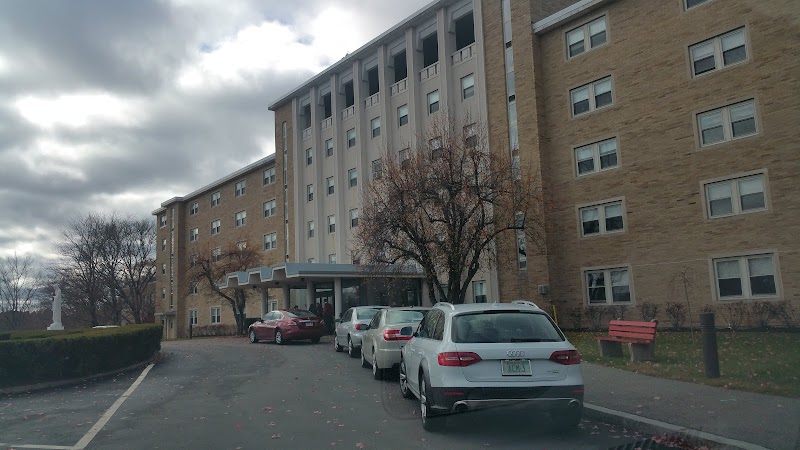

ELIZABETH SETON

125 OAKLAND STREET, WELLESLEY, MA 02481 (781) 237-2161
Non profit - Corporation 84 Beds Independent Data: November 2025
Trust Grade
95/100
#21 of 338 in MA
Last Inspection: August 2025

Inspected within the last 6 months. Data reflects current conditions.

Overview

Elizabeth Seton nursing home in Wellesley, Massachusetts, has a Trust Grade of A+, indicating it is an elite facility with top-tier care. It ranks #21 out of 338 facilities in Massachusetts and #4 out of 33 in Norfolk County, placing it well within the top half of providers in both contexts. The facility is improving, with reported issues decreasing from three in 2024 to none in 2025. Staffing is average with a 3/5 rating and an 18% turnover rate, which is significantly lower than the state average, suggesting that staff generally remain long enough to build relationships with residents. While there have been no fines, recent inspections revealed concerns, such as failing to implement comprehensive care plans for several residents and not providing necessary respiratory care, indicating areas needing attention alongside its overall strengths.

Trust Score
A+
95/100
In Massachusetts
#21/338
Top 6%
Safety Record
Low Risk
No red flags
Inspections
Getting Better
3 → 0 violations
Staff Stability
✓ Good
18% annual turnover. Excellent stability, 30 points below Massachusetts's 48% average. Staff who stay learn residents' needs.
Penalties
✓ Good
No fines on record. Clean compliance history, better than most Massachusetts facilities.
Skilled Nurses
○ Average
Each resident gets 31 minutes of Registered Nurse (RN) attention daily — about average for Massachusetts. RNs are the most trained staff who monitor for health changes.
Violations
○ Average
7 deficiencies on record. Average for a facility this size. Mostly minor or procedural issues.
★★★★★
5.0
Overall Rating
★★★☆☆
3.0
Staff Levels
★★★★☆
4.0
Care Quality
★★★★★
5.0
Inspection Score
Stable
2024: 3 issues
2025: 0 issues

The Good

  • 4-Star Quality Measures · Strong clinical quality outcomes
  • Low Staff Turnover (18%) · Staff stability means consistent care
  • Full Sprinkler Coverage · Fire safety systems throughout facility
  • No fines on record
  • Staff turnover is low (18%)

    30 points below Massachusetts average of 48%

Facility shows strength in quality measures, staff retention, fire safety.

The Bad

No Significant Concerns Identified

This facility shows no red flags. Among Massachusetts's 100 nursing homes, only 1% achieve this.

The Ugly 7 deficiencies on record

Sept 2024 3 deficiencies
CONCERN (D)

Potential for Harm - no one hurt, but risky conditions existed

Comprehensive Care Plan (Tag F0656)

Could have caused harm · This affected 1 resident

Based on observations, interviews, and record review, the facility failed to ensure staff developed and implemented a comprehensive person-centered care plan for two Residents (#63 and #34), out of a ...

Read full inspector narrative →
Based on observations, interviews, and record review, the facility failed to ensure staff developed and implemented a comprehensive person-centered care plan for two Residents (#63 and #34), out of a total sample of 18 residents. Specifically: 1.) For Resident #63, the facility failed to ensure nursing implemented a care plan intervention for bilateral floor mats for fall prevention. 2.) For Resident #34, the facility failed to ensure nursing developed and implemented a care plan intervention for bilateral floor mats for fall prevention. Findings include: Review of the facility policy titled 'Falls', undated, indicated, but was not limited to the following: - The licensed nurse, in conjunction with the interdisciplinary team will identify interventions to try to prevent subsequent falls. - Interventions that will be considered include but are not limited to: equipment-related interventions, surrounding environment modifications. - Care plans will be updated to reflect final interventions as necessary. 1.) Resident #63 was admitted to the facility in September 2023 with diagnoses including a history of a stroke and right sided hemiparesis (weakness on one side of the body). Review of the most recent Minimum Data Set (MDS) assessment, dated 6/23/24, indicated Resident #63 had severe cognitive impairment as evidenced by a Brief Interview for Mental Status (BIMS) score of 0 out of 15. Review of Resident #63's active physician's order, initiated 7/21/24, indicated: - Bed in low position with fall mats on both sides of the bed while Resident is in bed. Check fall mats placement every shift. Review of Resident #63's active care plan related to falls, dated as reviewed 8/3/24, indicated: - Bed in low position with fall mats on both sides of the bed while Resident is in bed. Check fall mats placement every shift. Further review of Resident #63's care plan failed to indicate any history of refusal of fall mats. On 9/3/24 at 1:50 P.M., 9/4/24 at 6:48 A.M., 9/4/24 at 7:55 A.M., 9/4/24 at 8:30 A.M., 9/4/24 at 9:28 A.M., and 9/4/24 at 10:10 A.M., the surveyor observed Resident #63 in bed. There was a fall mat in place only on the left side of his/her bed, and there was no fall mat in place on the right side of his/her bed. There was another fall mat stored leaning upright against the wall near the bathroom in the Resident's room. During an interview on 9/4/24 at 10:17 A.M., Certified Nurse Assistant (CNA) #1 said she consistently cares for Resident #63. CNA #1 said Resident #63 should have fall mats on both sides of his/her bed. CNA #1 and the surveyor visualized a fall mat in place on the left side of Resident #63's bed and another fall mat leaning upright against the wall near the bathroom in the Resident's room. CNA #1 said they must have forgotten to put the right fall mat into place, but it should have been in place in addition to the left fall mat. Review of Resident #63's Certified Nurse Assistant (CNA) Documentation Survey Report, dated August 2024, indicated CNA #1 provided care to Resident #63 during nine shifts in August 2024. During an interview on 9/4/24 at 10:25 A.M., Nurse #1 said Resident #63 should have fall mats in place on both sides of the bed, not just on the left side, because he/she has a physician's order and care plan intervention for fall mats on both sides of the bed while the Resident is in bed. During an interview on 9/4/24 at 10:40 A.M., Unit Manager #1 said Resident #63 should have fall mats in place on both sides of the bed, not just on the left side, because he/she has a physician's order and care plan intervention for fall mats on both sides of the bed while the Resident is in bed. Unit Manager #1 said it should have been documented in either the TAR or progress notes if there was any refusal or rationale for only one fall mat being in place instead of two. Unit Manager #1 said Resident #63 should have both fall mats in place whenever he/she is in bed, not just at night. Review of the medical record, including the TAR and progress notes, failed to indicate any refusal or rationale for the right fall mat not being in place on 9/3/24 or 9/4/24. During an interview on 9/4/24 at 11:19 A.M., the Director of Nursing (DON) said Resident #63 should have fall mats in place on both sides of the bed, not just on the left side, because he/she has a physician's order and care plan intervention for fall mats on both sides of the bed while the Resident is in bed. The DON said Resident #63 should have both fall mats in place whenever he/she is in bed, not just at night. 2.) Resident #34 was admitted to the facility in May 2024 with diagnoses including altered mental status and recent history of fall. Review of the most recent Minimum Data Set (MDS) assessment, dated 8/9/24, indicated Resident #34 had moderate cognitive impairment as evidenced by a Brief Interview for Mental Status (BIMS) score of 8 out of 15. This MDS also indicated Resident #34 had two falls since he/she was admitted to the facility in May 2024, one fall with injury (except major) and one fall with major injury. Review of Resident #34's active physician's order, initiated 5/9/24, indicated: - Bed in low position with fall mats on both sides of the bed while resident in bed, every shift. Review of Resident #34's fall investigation report, dated 8/3/24, indicated Resident #34 was found on the floor after being last seen in bed. This investigation indicated fall interventions utilized for Resident #34 included floor mats. Review of Resident #34's active care plan failed to indicate an intervention for fall mats on both sides of the bed while the Resident is in bed. On 9/3/24 at 8:45 A.M., 9/3/24 at 11:19 A.M., 9/3/24 at 1:55 P.M., and 9/4/24 at 6:53 A.M., the surveyor observed Resident #34 in bed. There was a fall mat in place only on the right side of his/her bed, and there was no fall mat in place on the left side of his/her bed. During an interview on 9/3/24 at 8:45 A.M., the surveyor observed Resident #34 in bed with a large purple bruise-like area on his/her forehead. Resident #34 said he/she sustained the bruise during a fall in his/her room. During an interview on 9/4/24 at 10:17 A.M., Certified Nurse Assistant (CNA) #1 said she consistently cares for Resident #34. CNA #1 said Resident #34 only has one fall mat that should be in place whenever he/she is in bed. CNA #1 and the surveyor visualized only one fall mat in Resident #34's room. Review of Resident #34's Certified Nurse Assistant (CNA) Documentation Survey Report, dated August 2024, indicated CNA #1 provided care to Resident #34 during nine shifts in August 2024. During an interview on 9/4/24 at 10:25 A.M., Nurse #1 said Resident #34 should have fall mats in place on both sides of the bed, not just on the right side, because he/she has a physician's order for fall mats on both sides of the bed while the Resident is in bed. During an interview on 9/4/24 at 10:40 A.M., Unit Manager #1 said Resident #34 should have fall mats in place on both sides of the bed, not just on the right side, because he/she has a physician's order for fall mats on both sides of the bed while the Resident is in bed. Unit Manager said if only one fall mat was available, the nurses should have clarified the order for fall mats to both sides of the bed or obtained another fall mat instead of signing it off as complete. During an interview on 9/4/24 at 11:19 A.M., the Director of Nursing (DON) said she wrote the interventions for floor mats in Resident #34's fall investigation report, dated 8/3/24, and that the plural meant that two fall mats should be in place. The DON said the intervention for Resident #34 to have fall mats on both sides of the bed, not just the right side, while in bed should have been part of the Resident's plan of care and should have been implemented, but was not. The DON further said that since the physician's order stated fall mats on both sides of the bed, the nurses should have clarified the order or obtained another fall mat if only one fall mat was available instead of signing it off as complete since the physician's order was not implemented as ordered.
CONCERN (D)

Potential for Harm - no one hurt, but risky conditions existed

Respiratory Care (Tag F0695)

Could have caused harm · This affected 1 resident

**NOTE- TERMS IN BRACKETS HAVE BEEN EDITED TO PROTECT CONFIDENTIALITY** Based on observations, interviews, and record review, the facility failed to provide respiratory care services in accordance wit...

Read full inspector narrative →
**NOTE- TERMS IN BRACKETS HAVE BEEN EDITED TO PROTECT CONFIDENTIALITY** Based on observations, interviews, and record review, the facility failed to provide respiratory care services in accordance with professional standards of care and the plan of care for one Resident (#31) out of a total sample of 18 residents. Specifically, the facility failed to ensure nursing implemented a physician's order to change Resident #31's oxygen tubing. Findings include: Review of [NAME], Manual of Nursing Practice 11th edition, dated 2018, indicated the following: - The professional nurse's scope of practice is defined and outlined by the State Board of Nursing that governs practice. Review of the Massachusetts Board of Registration in Nursing Advisory Ruling on Nursing Practice, dated as revised April 11, 2018, indicated the following: - Nurse's Responsibility and Accountability: Licensed nurses accept, verify, transcribe, and implement orders from duly authorized prescriber that are received by a variety of methods (i.e., written, verbal/telephone, standing orders/protocols, pre-printed order sets, electronic) in emergent and non-emergent situations. Licensed nurses in a management role must ensure an infrastructure is in place, consistent with current standards of care, to minimize error. Resident #31 was admitted to the facility in October 2018 with a diagnosis including respiratory failure. Review of the most recent Minimum Data Set (MDS) assessment, dated 7/5/24, indicated Resident #31 had severe cognitive impairment as evidenced by a Brief Interview for Mental Status (BIMS) score of 2 out of 15. Review of Resident #31's physician's order, initiated 12/26/21, indicated: - Change oxygen tubing every week on Sunday 11-7 (date and initial). Review of Resident #31's Treatment Administration Record (TAR) indicated the following order was documented as implemented on 9/1/24: - Change oxygen tubing every week on Sunday 11-7 (date and initial). On 9/3/24 at 8:39 A.M., 9/3/24 at 1:51 P.M., 9/4/24 at 6:52 A.M., and 9/4/24 at 10:26 A.M., the surveyor observed Resident #31 in bed receiving oxygen through a nasal cannula with tubing dated 8/26. During an interview on 9/3/24 at 8:3:9 A.M., Resident #31 said he/she always wears oxygen. During an interview on 9/4/24 at 10:28 A.M., Nurse #1 said oxygen tubing should be changed every seven days. Nurse #1 visualized the label on Resident #31's oxygen tubing dated 8/26 and said that the oxygen tubing change was overdue, and it should have been changed three days ago. Nurse #1 said the order to change oxygen tubing should not have been documented as implemented in the TAR because it was not done. During an interview on 9/4/24 at 10:35 A.M., Unit Manager #1 said oxygen tubing should be changed every seven days. Unit Manager #1 said nurses are supposed to check the oxygen tubing every shift, and if it was overdue, it should be changed immediately. Unit Manager #1 said the order to change oxygen tubing should not have been documented as implemented in the TAR because it was not done. Unit Manager #1 said if there was reason the oxygen tubing was not changed it should have been documented in the TAR or progress notes. Review of Resident #31's medical record, including the TAR and progress notes, failed to indicate any rationale for oxygen tubing not being changed as ordered by the physician on 9/1/24. During an interview on 9/4/24 at 11:17 A.M., the Director of Nursing (DON) said oxygen tubing should be changed every seven days and/or as ordered by the physician if it is being used. The DON said nurses are supposed to check the oxygen tubing every shift, and if it was overdue, it should be changed immediately. The DON said the order to change oxygen tubing should not have been documented as implemented in the TAR because it was not done.
MINOR (B)

Minor Issue - procedural, no safety impact

Assessment Accuracy (Tag F0641)

Minor procedural issue · This affected multiple residents

**NOTE- TERMS IN BRACKETS HAVE BEEN EDITED TO PROTECT CONFIDENTIALITY** Based on observation, interview and record review, the facility failed to accurately code the Minimum Data Set (MDS) for two Res...

Read full inspector narrative →
**NOTE- TERMS IN BRACKETS HAVE BEEN EDITED TO PROTECT CONFIDENTIALITY** Based on observation, interview and record review, the facility failed to accurately code the Minimum Data Set (MDS) for two Residents (#63 and #80) out of 18 total sampled residents. Specifically: 1.) For Resident #63, the presence external urinary catheter (a hollow, partially flexible tube that externally collects urine from the bladder and leads to a drainage bag) and ostomy (a surgically created opening from an area inside the body to the outside of the body) was inaccurately coded in the MDS. 2.) For Resident #80, the facility inaccurately coded the MDS to indicate the Resident had come off of skilled services. Findings include: 1.) Resident #63 was admitted to the facility in September 2023 with diagnoses including urinary retention and a history of a stroke. Review of the most recent MDS assessment, dated 6/23/24, indicated Resident #63 had severe cognitive impairment as evidenced by a Brief Interview for Mental Status (BIMS) score of 0 out of 15. This MDS also indicated the presence of bowel/bladder appliances including an indwelling urinary catheter, an external urinary catheter, and an ostomy. On 9/3/24 at 8:34 A.M., the surveyor observed Resident #63 in bed. Resident #63 showed the surveyor a clear tube that was protruding from his/her lower abdomen, which was connected to a urinary drainage bag, attached to his/her bed frame, containing clear yellow urine. Resident #63 was unable to answer additional questions related to this suprapubic urinary catheter (a tube that is surgically inserted into the lower abdomen and bladder, which drains urine directly from the bladder.) Review of Resident #63's physician's order, initiated 2/22/24, indicated: - Cleanse SPT (suprapubic catheter tube) site with n/s (normal saline) then apply DPD (dry protective dressing) daily. Review of Resident #63's medical record for June 2024 failed to indicate the presence of an external urinary catheter or an ostomy. During an interview on 9/4/24 at 10:43 A.M., Unit Manager #1 said she was the Unit Manager in June 2024, and that Resident #63 only had a suprapubic urinary catheter. Unit Manager #1 said Resident #63 never used an external urinary catheter or had an ostomy since she had known him/her. During an interview on 9/4/24 at 10:50 A.M., the MDS Nurse said Resident #63 only had a suprapubic urinary catheter, which was coded as an indwelling urinary catheter on the MDS. The MDS Nurse said Resident #63 did not use an external urinary catheter or have an ostomy, so those two bowel/bladder appliances had been coded in error. During an interview on 9/4/24 at 11:22 A.M., the Director of Nursing (DON) said the MDS should be coded according to the Resident Assessment Instrument (RAI) guidelines and that the presence of an external urinary catheter and ostomy had been coded in error. 2.) Resident #80 was admitted to the facility in April 2024 with diagnoses including hip fracture, kidney disease and high blood pressure. Review of the MDS assessment dated [DATE] indicated that the assessment was coded as a discharge return not anticipated and also coded as discharged off of skilled services. (When a resident comes off of their medicare benefit, the facility is required to complete an MDS assessment to notify the Centers for Medicare and Medicaid (CMS) that the facility will no longer be billing CMS for the residents stay at the facility). Review of the medical record indicated that Resident #80 was discharged off of skilled services on 5/14/24 not 6/14/24, as the MDS, dated [DATE], inaccurately coded. During an interview on 9/04/24 at 10:55 A.M., the MDS coordinator said that the MDS dated [DATE] was coded incorrectly as Resident #80 came off of skilled services on 5/14/24 and not 6/14/24.
Aug 2023 4 deficiencies
CONCERN (D)

Potential for Harm - no one hurt, but risky conditions existed

Deficiency F0657 (Tag F0657)

Could have caused harm · This affected 1 resident

Based on record review and interview, the facility failed to revise the physician's orders for one Resident (#43) out of a sample of 23 residents. Specifically, the facility failed to update the physi...

Read full inspector narrative →
Based on record review and interview, the facility failed to revise the physician's orders for one Resident (#43) out of a sample of 23 residents. Specifically, the facility failed to update the physician's orders after Resident #43 was determined to not be at risk for elopement. Findings include: A review of the facility policy titled 'Care Plans-Comprehensive' with no revision date indicated the following: *10. Assessments of residents are ongoing and care plans are revised as information about the resident and the resident's condition change. Resident #43 was admitted to the facility in June 2022 with diagnoses including Parkinson's disease. Review of the most recent Minimum Data Set (MDS) completed 5/25/23, indicated a Brief Interview Mental Status (BIMS) score of 4 out of a possible 15 indicating severe cognitive impairment. Review of Resident #43's August 2023 physician's orders indicated the following: *Resident has a wander guard alarm attached to his/her wheelchair, check for proper functioning of device Q shift, (every shift)for risk of elopement. A review of an elopement assessment completed on 8/22/23, indicated the following: *History of elopement episodes in the last 6 months-no history, not a risk for elopement. Further review of an elopement assessment completed on 8/31/23, indicated the following: *Resident is no longer a risk for elopement. During an interview on 8/31/23, at 8:43 A.M., Unit Manager #1 said the Resident is not an elopement risk anymore based on the last two recent elopement assessments, she said the Resident's physician's orders should have been revised to reflect that. During an interview on 8/31/23, at 11:02 A.M., the Director of Nurses said the Resident's physician's orders should have been revised to indicate that the Resident is not an elopement risk.
CONCERN (D)

Potential for Harm - no one hurt, but risky conditions existed

Deficiency F0761 (Tag F0761)

Could have caused harm · This affected 1 resident

Based on observation, interview, and policy review, the facility failed to ensure medications 1. were stored properly and labeled 2. medications were refrigerated per manufacturer's directions, 3. onc...

Read full inspector narrative →
Based on observation, interview, and policy review, the facility failed to ensure medications 1. were stored properly and labeled 2. medications were refrigerated per manufacturer's directions, 3. once opened were dated as required and 4. topical and treatment items were not stored with oral medications. Findings include: On 8/30/23, at 9:54 A.M., the surveyor observed the following in the 2A medication cart: 1. a Breztri inhaler (used to treat Chronic Obstructive Pulmonary Disease (COPD)) open and without a date. Review of the manufacturer's directions indicated that the inhaler expires three months after removal from foil pouch. 2. 2 Fluticasone propionate inhalers (used to treat COPD) open and without a date. The inhalers were not in the manufacturer's packaging. Review of the manufacturer's directions indicated that the inhaler expires according to the manufacturer's expiration date on the packaging. 3. a Levabuterol inhaler (used to treat asthma and COPD) open and without a date. The inhaler was not in the manufacturer's packaging. Review of the manufacturer's directions indicated that the inhaler expires according to the manufacturer's expiration date on the packaging. During an interview on 8/30/23, at 9:54 A.M., Nurse #3 said that she did not know when the inhalers were opened, but they are supposed to be dated. 1. On 8/30/23, at 11:02 A.M., the surveyor observed the following in the 1 D/E medication cart: A. a medicine cup containing 7 pills and labeled E6. During an interview on 8/30/23, at 11:02 A.M., Nurse #1 said that the resident had gone to mass so she saved them in the medication cart for later. 2. On 8/30/23, at 11:08 A.M., the surveyor observed the following in the 1 A/BC medication cart: 1 bottle of Latanoprost (used to treat glaucoma) open without a date. 1 bottle of Latanoprost unopened and not refrigerated. Review of the manufacturer's directions indicated to refrigerate until opened. 1 tub of Aquaphor cream. 1 Foley catheter insertion tray During an interview on 8/30/23 11:13 AM Nurse #4 said that the Aquaphor cream and the Foley catheter insertion tray belong in the treatment cart.
CONCERN (D)

Potential for Harm - no one hurt, but risky conditions existed

Medical Records (Tag F0842)

Could have caused harm · This affected 1 resident

Based on observations, record review and interviews, the facility failed to maintain accurate medical records for one Resident (#43) out of a sample of 23 residents. Specifically, the facility documen...

Read full inspector narrative →
Based on observations, record review and interviews, the facility failed to maintain accurate medical records for one Resident (#43) out of a sample of 23 residents. Specifically, the facility documented that Resident #43's wander guard alarm was administered, when it wasn't. Findings include: Resident #43 was admitted to the facility in June 2022 with diagnoses including Parkinson's disease. A review of the most recent Minimum Data Set (MDS) completed 5/25/23 indicated a Brief Interview Mental Status (BIMS) score of 4 out of a possible 15 indicating severe impairment. A review of Resident #43's August 2023 physician's orders indicated the following: *Resident has a wander guard alarm attached to his/her wheelchair, check for proper functioning of device Q shift, every shift for risk of elopement. On 8/29/23, at 9:14 A.M., the surveyor observed Resident #43 sitting at the dining table, his/her wheelchair did not have a wander guard alarm on. On 8/30/23, at 8:43 A.M., and 12:24 P.M., the surveyor observed Resident #43 sitting at the dining table, his/her wheelchair did not have a wander guard alarm on. A review of Resident #43's August 2023 Treatment Administration Record (TAR) indicated that on 8/29/23 and 8/30/23 day shift, staff had documented that the wander guard alarm was administered. During an interview with the Unit Manager #1 on 8/31/23, at 8:43 A.M. she said nurses are expected to maintain accurate documentation. During an interview with the Director of Nurses on 8/31/23, at 11:02 A.M., she said medical records should be documented to reflect what is going on with a Resident, she said the nurses are expected to document accurately.
CONCERN (E)

Potential for Harm - no one hurt, but risky conditions existed

Comprehensive Care Plan (Tag F0656)

Could have caused harm · This affected multiple residents

**NOTE- TERMS IN BRACKETS HAVE BEEN EDITED TO PROTECT CONFIDENTIALITY** Based on observation, record review and interview the facility failed to implement a comprehensive care plan for 4 Residents (#1...

Read full inspector narrative →
**NOTE- TERMS IN BRACKETS HAVE BEEN EDITED TO PROTECT CONFIDENTIALITY** Based on observation, record review and interview the facility failed to implement a comprehensive care plan for 4 Residents (#1, #17, #18, and #21) from a total sample of 23 residents. Finding Included: Review of the facility policy titled, Care Plans-Comprehensive, undated, indicated the following: Policy Interpretation and Implementation *2. Residents will have a person-centered comprehensive care plan developed and implemented to meet his other preferences and goals, and address the resident's medical, physical, mental and psychosocial needs. *10. Assessments of residents are ongoing and care plans are revised as information about the resident and resident's condition change. 1. For Resident #21 the facility failed to implement the medical plan of care for Resident #21's daily use of hearing aids for communication in accordance with the physician's orders. Resident #21 was admitted to the facility in August 2020 with diagnoses that include cerebral infarction unspecified, chronic systolic heart failure and unspecified hearing loss, bilateral. Review of Resident #21's Minimum Data Set (MDS) assessment dated [DATE], indicated he/she had a Brief Interview for Mental Status (BIMS) score of 15/15, indicating he/she is cognitively intact. Further review of the MDS indicated Resident #21 requires extensive assistance of one person for daily activities and has moderate difficulty hearing when using his/her hearing aids. During an interview on 8/29/23, at 9:25 A.M., Resident #21 had difficulty answering questions due to being hard of hearing. Resident #21 said he/she wears hearing aids and was currently not wearing them. Resident #21 said the hearing aids are kept in the medication cart and the nursing staff normally assist him/her putting them on in the morning. During an interview on 8/29/23, at 10:30 A.M., Resident #21 was asked if he/she received his/her hearing aids. Resident #21 said no. Review of Resident #21's physician orders dated 10/22/21, indicated the following: Give resident both hearing aids in the a.m. and remove at bedtime (place them in resident's box in med cart), two times a day. Further review of Resident #21's medical record indicated the following audiology recommendations on 7/28/22: Daily use of hearing aids is recommended; Staff should assist with insertion and care of hearing aid(s). On 8/30/23, at 8:33 A.M.,10:28 A.M., and 11:05 A.M., Resident #21 was observed sitting up in bed. Resident #21 did not have his/her hearing aids on. During an interview on 8/31/23, at 8:15 A.M., Nurse #1 was asked if Resident #21 uses a hearing device. Nurse #1 said yes, he/she wears hearing aids. Nurse #1 was asked if she had given them to Resident #21 this morning, she said no but I can give them to him/her now. During an interview on 8/31/23, at 10:33 A.M., the Director of Nursing said the expectation would be that the physician's orders should be followed as written for the on and off schedule for Resident #21's hearing aids, and the nursing staff is responsible for putting on and removing the Resident's hearing aids. 2. Resident #1 was admitted to the facility in August 2017 with diagnoses including dysphagia (difficulty swallowing), dementia and gastro-esophogeal reflux disease. Review of the care plan indicated a focus for risk for aspiration with the intervention for: supervise resident for all meals. On 8/29/23, at 12:45 P.M. the surveyor observed Resident #1 in her/his room eating without staff present. The surveyor observed a nurse set up Resident #1's meal and then leave the room. On 8/30/23, at 12:53 P.M., the surveyor observed Resident #1 in her/his room eating without staff present. The surveyor observed a nurse set up Resident #1's meal and then leave the room. 3. Resident #17 was admitted to the facility in April 2019 with diagnoses including dysphagia, stroke and hemiplegia. Review of the care plan indicated a focus for ADL (activities of daily living) with an intervention for eating with continual supervision after set up during the day. Further review indicated that Resident #17 is dependent on staff for eating on the 3-11 shift ( 3:00 P.M.-11:00 P.M.) Further review indicated a focus for nutrition related to dysphagia with an intervention to supervise with feeding. On 8/29/23, at 12:47 P.M., the surveyor observed Resident #17 eating alone in her/his room. On 8/30/23, at 12:46 P.M., the surveyor observed Resident #17 eating alone in her/his room. 4. Resident #18 was admitted to the facility in December 2020 with diagnoses including gastroesophogeal reflux disease, anxiety and depression. Review of the care plan with a focus for ADL (activities of daily living) assist dated 10/22/21, and an intervention for assist/supervise resident during meals. On 8/29/23,, at 12:47 P.M., the surveyor observed Resident #18 in her/his room eating without supervision. On 8/30/23, at 8:41 A.M., and 12:41 P.M., the surveyor observed Resident #18 in her/his room eating without supervision. On 8/31/23, at 8:32 A.M., the surveyor observed Resident #18 in her/his room eating without supervision. During an interview on 8/31/23, at 8:38 A.M., Nurse #2 said that continual supervision and supervision, with eating, means that somebody has to watch the resident while they are eating and can not leave them alone. During an interview on 8/31/23, at 8:49 A.M., Certified Nurse's Aide (CNA) # 1 said that the nurse's tell the CNAs what level of dependence a resident has for eating, if they require supervision with eating.
Understanding Severity Codes (click to expand)
Life-Threatening (Immediate Jeopardy)
J - Isolated K - Pattern L - Widespread
Actual Harm
G - Isolated H - Pattern I - Widespread
Potential for Harm
D - Isolated E - Pattern F - Widespread
No Harm (Minor)
A - Isolated B - Pattern C - Widespread

Questions to Ask on Your Visit

  • "Can I speak with families of current residents?"
  • "What's your RN coverage like on weekends and overnight?"

Our Honest Assessment

Strengths
  • • Grade A+ (95/100). Above average facility, better than most options in Massachusetts.
  • • No major safety red flags. No abuse findings, life-threatening violations, or SFF status.
  • • No fines on record. Clean compliance history, better than most Massachusetts facilities.
  • • 18% annual turnover. Excellent stability, 30 points below Massachusetts's 48% average. Staff who stay learn residents' needs.
Concerns
  • • No significant concerns identified. This facility shows no red flags across CMS ratings, staff turnover, or federal penalties.
Bottom line: Generally positive indicators. Standard due diligence and a personal visit recommended.

About This Facility

What is Elizabeth Seton's CMS Rating?

CMS assigns ELIZABETH SETON an overall rating of 5 out of 5 stars, which is considered much above average nationally. Within Massachusetts, this rating places the facility higher than 99% of the state's 100 nursing homes. This rating reflects solid performance across the metrics CMS uses to evaluate nursing home quality.

How is Elizabeth Seton Staffed?

CMS rates ELIZABETH SETON's staffing level at 3 out of 5 stars, which is average compared to other nursing homes. Staff turnover is 18%, compared to the Massachusetts average of 46%. This relatively stable workforce can support continuity of care.

What Have Inspectors Found at Elizabeth Seton?

State health inspectors documented 7 deficiencies at ELIZABETH SETON during 2023 to 2024. These included: 6 with potential for harm and 1 minor or isolated issues.

Who Owns and Operates Elizabeth Seton?

ELIZABETH SETON is owned by a non-profit organization. Non-profit facilities reinvest revenue into operations rather than distributing to shareholders. The facility operates independently rather than as part of a larger chain. With 84 certified beds and approximately 87 residents (about 104% occupancy), it is a smaller facility located in WELLESLEY, Massachusetts.

How Does Elizabeth Seton Compare to Other Massachusetts Nursing Homes?

Compared to the 100 nursing homes in Massachusetts, ELIZABETH SETON's overall rating (5 stars) is above the state average of 2.9, staff turnover (18%) is significantly lower than the state average of 46%, and health inspection rating (5 stars) is much above the national benchmark.

What Should Families Ask When Visiting Elizabeth Seton?

Based on this facility's data, families visiting should ask: "Can I visit during a mealtime to observe dining assistance and food quality?" "How do you handle medical emergencies, and what is your hospital transfer rate?" "Can I speak with family members of current residents about their experience?"

Is Elizabeth Seton Safe?

Based on CMS inspection data, ELIZABETH SETON has a clean safety record: no substantiated abuse findings (meaning no confirmed cases of resident harm), no Immediate Jeopardy citations (the most serious violation level indicating risk of serious injury or death), and is not on the Special Focus Facility watch list (a federal program monitoring the lowest-performing 1% of nursing homes). The facility has a 5-star overall rating and ranks #1 of 100 nursing homes in Massachusetts. While no facility is perfect, families should still ask about staff-to-resident ratios and recent inspection results during their visit.

Do Nurses at Elizabeth Seton Stick Around?

Staff at ELIZABETH SETON tend to stick around. With a turnover rate of 18%, the facility is 28 percentage points below the Massachusetts average of 46%. Low turnover is a positive sign. It means caregivers have time to learn each resident's needs, medications, and personal preferences. Consistent staff also notice subtle changes in a resident's condition more quickly.

Was Elizabeth Seton Ever Fined?

ELIZABETH SETON has no federal fines on record. CMS issues fines when nursing homes fail to meet care standards or don't correct problems found during inspections. The absence of fines suggests the facility has either maintained compliance or corrected any issues before penalties were assessed. This is a positive indicator, though families should still review recent inspection reports for the full picture.

Is Elizabeth Seton on Any Federal Watch List?

ELIZABETH SETON is not on any federal watch list. The most significant is the Special Focus Facility (SFF) program, which identifies the bottom 1% of nursing homes nationally based on persistent, serious quality problems. Not being on this list means the facility has avoided the pattern of deficiencies that triggers enhanced federal oversight. This is a positive indicator, though families should still review the facility's inspection history directly.