HERMITAGE HEALTHCARE (THE)
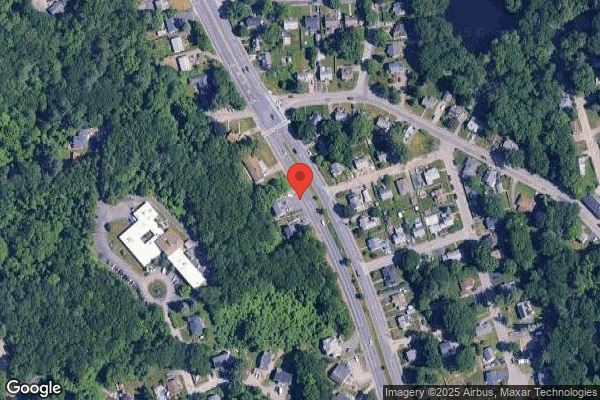

383 MILL STREET, WORCESTER, MA 01602 (508) 791-8131
For profit - Corporation 101 Beds NEXT STEP HEALTHCARE Data: November 2025
Trust Grade
61/100
#158 of 338 in MA
Last Inspection: August 2025

Inspected within the last 6 months. Data reflects current conditions.

Overview

Hermitage Healthcare has a Trust Grade of C+, indicating it is slightly above average but not exceptional. It ranks #158 out of 338 facilities in Massachusetts, placing it in the top half, and #23 out of 50 in Worcester County, meaning there are only a few better options locally. However, the facility is worsening, with issues increasing from 4 in 2024 to 12 in 2025. Staffing is a strength, with a 25% turnover rate, significantly lower than the state average, but the overall RN coverage is only average. Despite an average fine of $13,000, which is not particularly alarming, there are notable concerns. For instance, the facility failed to include required members in important meetings meant to improve quality, and it did not properly review infection control policies or implement a system to prevent infections. Additionally, there was no effective Antibiotic Stewardship Program in place to monitor the use of antibiotics, which is a critical area for resident safety. Overall, while there are some strengths in staffing, the increasing number of issues and specific deficiencies in care practices raise important concerns for families considering this home.

Trust Score
C+
61/100
In Massachusetts
#158/338
Top 46%
Safety Record
Low Risk
No red flags
Inspections
Getting Worse
4 → 12 violations
Staff Stability
✓ Good
25% annual turnover. Excellent stability, 23 points below Massachusetts's 48% average. Staff who stay learn residents' needs.
Penalties
✓ Good
$13,000 in fines. Lower than most Massachusetts facilities. Relatively clean record.
Skilled Nurses
○ Average
Each resident gets 31 minutes of Registered Nurse (RN) attention daily — about average for Massachusetts. RNs are the most trained staff who monitor for health changes.
Violations
⚠ Watch
33 deficiencies on record. Higher than average. Multiple issues found across inspections.
★★★☆☆
3.0
Overall Rating
★★★☆☆
3.0
Staff Levels
★★☆☆☆
2.0
Care Quality
★★★☆☆
3.0
Inspection Score
Stable
2024: 4 issues
2025: 12 issues

The Good

  • Low Staff Turnover (25%) · Staff stability means consistent care
  • Full Sprinkler Coverage · Fire safety systems throughout facility
  • No fines on record
  • Staff turnover is low (25%)

    23 points below Massachusetts average of 48%

Facility shows strength in staff retention, fire safety.

The Bad

3-Star Overall Rating

Near Massachusetts average (2.9)

Meets federal standards, typical of most facilities

Federal Fines: $13,000

Below median ($33,413)

Minor penalties assessed

Chain: NEXT STEP HEALTHCARE

Part of a multi-facility chain

Ask about local staffing decisions and management

The Ugly 33 deficiencies on record

Aug 2025 12 deficiencies
CONCERN (D)

Potential for Harm - no one hurt, but risky conditions existed

Deficiency F0557 (Tag F0557)

Could have caused harm · This affected 1 resident

Based on observation, interview, and record review, the facility failed to ensure that one Resident (#10) out of a total sample of 20 residents was treated with respect and dignity during dining exper...

Read full inspector narrative →
Based on observation, interview, and record review, the facility failed to ensure that one Resident (#10) out of a total sample of 20 residents was treated with respect and dignity during dining experiences when the Resident was identified as being dependent on staff assistance for meals. Specifically, for Resident #10, the facility failed to:-provide the Resident with appropriate eating utensils, when the Resident was observed utilizing a comb for eating during a lunch meal.-provide the Resident with the required supervision and intervene as needed when the Resident was left alone in his/her bedroom during breakfast and lunch meals and was observed spilling food items on their person, the meal tray, the tray table and the floor while trying to eat during the meals. Findings include: Review of the facility policy titled Resident Rights, revised January 2024 included but was not limited the following: -Federal and State laws guarantee certain basic rights to all residents of this facility. These rights include .the residents right to dignity. Resident #10 was admitted to the facility in February 2017 with diagnoses including Unspecified Dementia - severe with anxiety and bilateral cataracts. Review of Minimum Data Set (MDS) Assessment, dated 6/9/25, indicated Resident #10: -has unclear speech and was rarely or never understood by others and sometimes able to understand others. -has severely impaired decision-making regarding tasks of daily living (which included eating). -demonstrated continuous inattention (difficulty focusing attention, for example being easily distractible, or having difficulty keeping track of what was being said). -required supervision/touching assistance for eating. Review of Resident #10’s Person Centered Care Plan included but was not limited to the following: -Highly impaired vision, revised 6/11/25, with an intervention that included: >Tell the Resident where their items had been placed. -ADL self-care deficits as evidenced by the Resident’s inability to initiate or sequence task, highly impaired vision, cognition and anxiety, revised 6/18/25, with interventions that included: >Required assistance with care that fluctuated with mood and cognitive changes. On 8/14/25 from 12:10 P.M. through 12:30 P.M., the surveyor observed the following during the lunch meal: -Resident #10 was seated in a bedside chair, alone in his/her room with a meal tray positioned in front of him/her. -Resident #10 was holding a black comb and a fork together in his/her right hand. -Resident #10 was observed to stab at half of a grilled cheese sandwich with the comb and the fork. -Resident #10 stopped stabbing at the grill cheese sandwich and then used the comb and fork to take two bites of the vanilla ice cream. The vanilla ice cream was observed to drip through the fork and comb and fell on the Resident’s chest and lap before the fork and comb made it to his/her mouth. The Resident then bit down on the empty fork and comb. -Resident #10 then returned to stabbing at the grilled cheese sandwich with the fork and comb in his/her right hand. Half of the grilled cheese sandwich stuck to the fork for a moment and then fell to the floor. -Resident #10 then stabbed at pieces of chicken that were on the plate, a piece of chicken stuck to the fork for a moment and then fell on the tray table. Resident #10 was observed repeatedly stabbing three separate pieces of chicken three times with the fork from his/her plate and having the pieces of chicken fall on the tray table. Resident #10 then used his/her fingers of the left hand, retrieved a piece of the chicken that had fallen to the tray table and placed it into his/her mouth. The surveyor observed after a brief time of chewing the piece of chicken, the Resident removed the chicken out of his/her mouth and placed it into the vanilla ice cream cup. -Resident #10 then picked up the vanilla ice cream cup with his/her left hand and began to feed him/herself the ice cream using the comb and fork. The bite of ice cream was observed to contain the piece of chicken which the Resident had previously removed from his/her mouth and placed into the ice cream cup. The vanilla ice cream again dripped though the comb and fork onto the Resident’s chest and lap. -Resident #10 then placed the vanilla ice cream cup back on the meal tray and removed the piece of chicken from his/her mouth using his/her left-hand fingers and placed the piece of chewed chicken on his/her meal plate. -the Activities Director (AD) entered the Resident’s room during this time and said someone should be with the Resident because he/she always gets help at mealtimes. The AD was observed to locate the Resident's spoon which was in the plate cover, under two plastic lids, a piece of tinfoil and the Resident’s meal tray slip. -The AD was further observed to pick up the half of grilled cheese sandwich (which was on the floor) and throw it into the trash can. -The AD then removed the comb from the Resident's hand, provided him/her with the spoon, and said that she would locate a Certified Nurse Aide (CNA) to assist the Resident with the meal. During an interview at the time with CNA #2 and Nurse #4, CNA #2 said that she was the CNA assigned to Resident #10. CNA #2 said that she did not have a Resident Care Kardex (specific information about resident care needs) to follow for Resident #10. CNA #2 said she had been working at the facility for a long time and knew that Resident #10 could eat by him/herself and would sometimes require assistance from staff. Nurse #4 said that she was the Nurse assigned to Resident #10 and that there was a Resident Care Kardex for the staff to follow for Resident #10. The surveyor and Nurse #4 reviewed Resident #10’s Care Kardex and Nurse #4 said that the Care Kardex indicated Resident #10 could bring food to his/her mouth independently but required continuous supervision during meals in order to keep the Resident safe when eating due to his/her impaired vision and memory. On 8/15/25 at 7:55 A.M., the surveyor observed Resident #10 seated at the edge of his/her bed with a tray table positioned in front of the Resident. A breakfast tray was observed on the tray table with a meal consisting of toast, a bite sized omelet, a bowl of grits and a cup of milk. The surveyor observed that half of the grits were spilled on the breakfast tray. The surveyor did not observe any facility staff present in the Resident's room to supervise the meal as required. On 8/15/25 at 11:51 A.M., the surveyor observed Resident #10 eating lunch alone in his/her room, unsupervised by any facility staff. Resident #10 was observed to pick up an empty cup from his/her meal tray and a cup of milk and was attempting to pour the milk from one cup to another while spilling milk onto his/her clothing. During an interview on 8/19/25 at 1:43 P.M., the Director of Nursing (DON) said that spilling food on oneself, the meal tray, the tray table and the floor, as well as eating with a comb during a mealtime would be a dignity concern for any reasonable person. The DON said that Resident #10 should have been continually supervised at mealtime to provide for a dignified meal experience.
CONCERN (D)

Potential for Harm - no one hurt, but risky conditions existed

Deficiency F0558 (Tag F0558)

Could have caused harm · This affected 1 resident

Based on observations, interviews, and record reviews, the facility failed to provide reasonable accommodations by ensuring appropriate access to the call system for one Resident (#8) out of a total s...

Read full inspector narrative →
Based on observations, interviews, and record reviews, the facility failed to provide reasonable accommodations by ensuring appropriate access to the call system for one Resident (#8) out of a total sample size of 20 residents.Specifically, for Resident #8, the facility staff failed to place the call system within reach for the individualized use of the Resident, placing him/her at risk for unmet needs. Findings include: Review of the facility policy titled Answering Call Lights, established April 2018, and last revised January 2024, indicated: >The purpose of this procedure is to respond to the resident’s requests and needs. -Explain the call light to the new resident as needed. -Demonstrate the use of the call light as needed. -When the resident is in bed, provide the call light within easy reach of the resident. -Report all defective call lights to the nurse promptly. -Answer the resident’s call as soon as possible. Resident #8 was admitted to the facility in April 2021 with diagnoses including history of falling, muscle weakness, anxiety disorder and disorders of the muscle. Review of the Minimum Data Set (MDS) Assessment, dated 7/3/25, indicated Resident #8: -was sometimes understood and understands others. -has adequate hearing, hearing aid used -has adequate vision and clear speech. -refused to participate in Quarterly Assessment and Brief Interview for Mental Status (BIMS) Assessment, dated 7/2/25. Review of Resident #8’s Comprehensive Person-Centered Care Plan, initiated 4/18/21 and revised 7/9/25, indicated the Resident was at risk for falls with the following interventions: -have call light within reach and encourage the Resident to use it for assistance as needed. -The Resident needs prompt response to all requests for assistance. On 8/13/25 at 1:02 P.M., the surveyor observed Resident #8 lying in bed in his/her bedroom. The surveyor also observed that the Resident's call system was hanging on the wall behind the headboard of the Resident's bed and was not accessible to the Resident. On 8/13/25 at 3:28 P.M., Resident #8 was observed sitting on his/her bed in his/her bedroom watching Television. The surveyor observed that the call system was hooked to the cord on the wall behind the Resident’s head and was not within the Resident's reach. At this time, Nurse #3 was observed entering the Resident's room to assist Resident #8's roommate and then exited the room after assisting the roommate. On 8/13/25 at 3:45 P.M., the surveyor observed Resident #8’s call system hanging on the wall behind the Resident and not within reach of the Resident. On 8/14/25 at 7:50 A.M., the surveyor observed Resident #8 sitting on his/her bed with the head of the bed elevated and a bedside table in front of the Resident. The surveyor observed the call system was hanging on the wall behind the Resident and not within reach. During an interview at the time, when the surveyor asked the Resident how he/she calls for staff assistance, Resident #8 said that he/she uses the call light to call for help but is unable to reach it. Resident #8 said that the call light was behind him/her hanging on the wall. During an interview on 8/14/25 at 7:55 A.M., the surveyor and Certified Nurse Aide (CNA) #1 observed Resident #8’s call system hanging on the wall behind the Resident's head and not within reach and CNA #1 said that the call light should be within the Resident's reach to call staff for assistance when needed. CNA #1 said that the clip on the call light was broken and should be fixed so that it can be clipped to the Resident's bed. CNA #1 also said that without access to the call light, Resident #8 would be upset that he/she was unable to call for help and/or assistance from staff and would be yelling and screaming for staff. During an interview on 8/14/25 at 8:03 A.M., the Director of Nursing (DON) said that Resident #8 should has access to his/her call light at all times. The DON said staff should ensure that the Resident call light was within his/her reach so he/she can use it to call for staff assistance.
CONCERN (D)

Potential for Harm - no one hurt, but risky conditions existed

Deficiency F0658 (Tag F0658)

Could have caused harm · This affected 1 resident

**NOTE- TERMS IN BRACKETS HAVE BEEN EDITED TO PROTECT CONFIDENTIALITY** Based on observation, record review, and interviews, the facility failed to provide care and services according to accepted stan...

Read full inspector narrative →
**NOTE- TERMS IN BRACKETS HAVE BEEN EDITED TO PROTECT CONFIDENTIALITY** Based on observation, record review, and interviews, the facility failed to provide care and services according to accepted standards of clinical practice for two Resident's (#7 and #1) out of a total sample of 20 residents.Specifically, the facility failed to:1.For Resident #7, implement recommendations from the Wound Consultant for the use of a wound cleansing solution for the treatment of a right heel arterial ulcer.2.For Resident #1, ensure that Physician's orders relative to the correct size of the Resident's indwelling urinary catheter were obtained when the urinary catheter size was changed during a Urology Consult visit. Findings include: 1.Review of the facility policy titled Dressing, Dry/Clean, established 4/2018, and last revised 11/2024, indicated: >The purpose of this procedure is to provide guidelines for the application of dry, clean dressings. -Verify that there is a physician’s order for this procedure. -Review the resident’s current orders, and diagnoses to determine if there are special resident needs. -Assemble the equipment and supplies needed. >The following equipment and supplies will be necessary when performing this procedure. -Treatments supplies as indicated -Cleaning solution, as ordered Resident #7 was admitted to the facility in January 2020 with diagnoses including Atherosclerosis of native arteries of extremities bilateral legs, Hypertension, Peripheral Vascular Disease (PVD) and Generalized Anxiety Disorder. Review of the Minimum Data Set (MDS) assessment dated [DATE], indicated Resident #7: -was moderately cognitively impaired as evident by the Brief Interview for Mental Status (BIMS) score of eleven out of a total possible score of 15. -was at risk for Pressure Ulcers. -had an unstageable Pressure Ulcer that was not present on admission. -had Pressure ulcer/injury care. -total number of venous and arterial ulcers present - one Review of Resident #7’s August 2025 Physician's orders indicated: -Iodosorb (Cadexomer Iodine) External Gel 0.9% (antimicrobial wound dressing used to clean and heal chronic, wet wounds such as venous stasis ulcers). Apply to right heel topically every day shift (7:00 A.M - 3:00 P.M.) for wound dressing: Wash wound on right heel with Vashe (hypochlorous acid wound cleanser used to clean, moisten, and debride wound by removing microorganisms and disrupting biofilms), pat dry, apply Iodosorb gel to wound bed, cover with dry protective dressing (DPD) (4x4 gauze) gentle kling wrap, no foam dressing, initiated 6/10/25. Further review of Resident #7’s July 2025 and August 2025 Treatment Administration Record (TAR) indicated pressure wound treatments had been completed as ordered by License Nursing staff. Review of Resident #7’s Comprehensive Person-Centered Care Plan, initiated 3/27/25 and revised 5/21/25, indicated the Resident had actual impairment to skin integrity related to arterial ulcer located on the right with the following interventions: -Follow facility protocols for treatment of injury. -Provide treatment as ordered. Review of Resident #7’s Wound Care Specialist Notes for June 2025, July 2025, and August 2025 indicated wound treatment plan as follows: -wound - arterial ulcer (full thickness wound) is located on the right heel. Wound size: 2.5 cm length by (x) 3.0 cm width x non-measurable depth. -Wound dressing: Vashe (or similar antibacterial wound cleanser), Iodosorb, DPD (4x4 gauze), and gentle kling to the right heel wound, change daily and as needed (PRN). On 8/13/25 at 3:35 P.M., Resident #7 was observed lying on his/her bed reading. During an interview at the time, Resident #7 said that he/she had a wound on his/her right heel and thought the wound on his/her right heel was healed but the Nurses changed the dressing today and the wound is still open. On 8/14/25 at 12:30 P.M., the surveyor observed Nurse #1 complete wound dressing changes to Resident #7 right heel, and the following observations were made: -Nurse #1 gathered supplies for the pressure ulcer wound dressing, that included normal saline (sodium chloride solution in water), Iodosorb External Gel 0.9%, 4x4 gauze, kling wrap and paper tape. -Nurse #1 donned (put on) personal protective equipment (PPE: items such as gowns and gloves worn to prevent the spread of infection) prior to the wound treatment. -Nurse #1 used clean scissors to remove the old dressing wrapped on Resident #7's right heel and dispose of the soiled dressing in a trash container next to the Resident's bed. -Nurse #1 doffed (removed) her gloves, used an alcohol-based hand sanitizer and donned a clean pair of gloves. -Nurse #1 opened the normal saline solution, applied the solution to a 4x4 gauze, and cleansed the wound bed with the normal saline. -When the surveyor asked Nurse #1 what was being used to clean the wound, Nurse #1 said normal saline which was new as she had just opened the bottle to use for the wound. -Nurse #1 disposed of the 4x4 gauze, doffed her gloves, used alcohol hand base sanitizer and doffed a clean pair of gloves. Nurse #1 then pat dry the wound and applied Iodosorb External Gel 0.9% to a 4x4 gauze and applied to the wound bed. -Nurse #1 then wrapped the Resident's right foot with kling and secured the kling with paper tape. During an interview on 8/14/25 at 1:54 P.M., the surveyor and Nurse #1 reviewed Resident #7’s Physician orders for the wound dressing changes. Nurse #1 said that the Physician order indicated that Vashe solution should be used to clean the right heel wound. Nurse #1 said that Vashe was an antibacterial wound cleanser that should be used to clean the wound. Nurse #1 said Resident #7’s wound should have been cleaned with Vashe as recommended by the Wound Doctor and not the normal saline that she used to clean the wound. Nurse #1 said that normal saline was not an antibacterial agent and using it on Resident #7’s wound would lead to infection of the wound and other wound complications. During an interview on 8/14/25 at 1:58 P.M., the Assistant Director of Nurses (ADON) said that Resident #7 was followed by the wound team for wound healing. The ADON said that the expectation for nursing staff performing wound dressing changes was that staff should follow the Wound Doctor's recommendations of treatment supplies needed to clean the wound to prevent wound complications. 2. Review of the facility's policy titled Foley Catheter Insertion, [Gender] Resident, dated 4/2018 and last revised 3/2025, indicated: -Verify that there is a physician’s order for this procedure. -Review the resident’s care plan to assess any special needs of the resident. -Equipment needed Foley catheter tray (size specified in order). -no indication of a facility policy pertaining urinary catheter care. Resident #1 was admitted to the facility in April 2023 with diagnoses including BPH without Lower Urinary Tract Symptoms and Retention of Urine Unspecified. Review of Resident #1’s medical record indicated: -Resident #1 returned to the facility from an open treatment fracture, shaft of humerus with intramedullary implant (right) on 6/23/25. -The discharge summary from the hospital indicated the Resident returned with a urethral catheter Coude 18 French (Fr), please keep catheter in place until a follow up with Urology. Review of Resident #1's June 2025 Physician's orders indicated: >Foley Catheter 16 Fr/10 milliliter (ML), drainage bag every shift, initiated 6/23/25. >Foley Catheter care every shift, initiated 6/23/25. Review of the June 2025, July 2025, and August 2025, Treatment Administration Records (TARs) indicated Resident #1 had the 16 Fr/10 ML catheter in place from 6/23/25 - 8/18/25, and catheter care was completed daily by the licensed nursing staff as ordered by the Physician. Review of Resident #1’s Foley Catheter Care Plan, initiated 8/6/25 indicated: >Resident has a Foley catheter in place related to urinary retention postoperatively. >Interventions included, Resident has 16 Fr/10 ML catheter Review of the medical record indicated Resident #1 attended a Urology Consult on 8/5/25 and returned with a Urology Progress Note which indicated: -the Foley catheter was exchanged, and the size was 18 Fr Coude/ 10 cc (cubic centimeters, same measurement as milliliters). -return to the Urology clinic in 4 weeks. During an interview on 8/18/25 at 11:34 A.M., Nurse #8 said for urinary catheter care, the Nurse would monitor if the urinary catheter was draining, flush the catheter if needed, look for any skin changes or irritations and that the catheter tubing was labeled correctly and was functioning. Nurse #8 said she didn’t usually take care of Resident #1 and did not know what size urinary catheter he/she currently had in place. The surveyor and Nurse #8 observed Resident #1’s urinary catheter and Nurse #8 said the Resident’s current urinary catheter size was size 18 Fr/10 ML. Nurse #8 reviewed Resident #1’s Physician’s orders relative to the catheter and said the urinary catheter orders indicated the Resident’s catheter size was 16 Fr/10 ML. Nurse #8 said the size of the urinary catheter inserted into the Resident and the size indicated on the Physician’s orders should be the same, but they were not. During an interview on 8/18/25 at 12:07 P.M., Nurse #5 said as far she was aware the urinary catheter had not been replaced with a different size since the Resident went out to a Urology appointment on 8/5/25. Nurse #5 said the Physician’s orders in the chart should match the size of the urinary catheter the Resident had inserted. Nurse #5 said if she had to change Resident #1's urinary catheter, she would check the Physician’s orders to see what size catheter she should use. Nurse #5 said when a Resident returns from a Consultation, the Nurse should call the Physician and the Director of Nursing (DON) with the results of the Consult and get new orders if needed based on the results of the Consult. Nurse #5 said Resident #1's Physician’s orders should have been updated with the correct size urinary catheter when the Resident returned from his/her Urology appointment on 8/5/25. During an interview on 8/18/25 at 12:13 P.M., the DON said Resident #1's order should have been updated to reflect the change in urinary catheter size during the Resident's Urology Consultation on 8/5/25. The DON said when a Resident returns from a Consultation the Nurse should be reading the results of the Consultation, and the orders should be updated as needed.
CONCERN (D)

Potential for Harm - no one hurt, but risky conditions existed

ADL Care (Tag F0677)

Could have caused harm · This affected 1 resident

**NOTE- TERMS IN BRACKETS HAVE BEEN EDITED TO PROTECT CONFIDENTIALITY** Based on observation, interview, and record review, the facility failed to provide assistance while eating for one Resident (#10...

Read full inspector narrative →
**NOTE- TERMS IN BRACKETS HAVE BEEN EDITED TO PROTECT CONFIDENTIALITY** Based on observation, interview, and record review, the facility failed to provide assistance while eating for one Resident (#10) out of a total sample of 20 residents, when the Resident was identified to be dependent on staff assistance to eat. Specifically, the facility failed to provide constant supervision and one-person assistance while eating when Resident #10 was known to lack the ability to initiate or sequence tasks and had impaired vision. Findings include: Review of the facility policy titled, Activities of Daily Living (ADLs)-Supporting, last revised 11/2024 included but was not limited to the following: -Resident's who are unable to carry out activities of daily living independently will receive the services necessary for ADLs. -Appropriate care and services will be provided .and in accordance with the resident's plan of care. Including: Dining (meals and snacks). Resident #10 was admitted to the facility in February 2017 with diagnoses including Unspecified Dementia - severe with anxiety and bilateral cataracts. Review of Minimum Data Set (MDS) assessment dated [DATE], indicated the following relative to Resident #10: -has unclear speech and was rarely or never understood by others and sometimes able to understand others. -has severely impaired decision-making regarding tasks of daily living (which included eating). -demonstrated continuous inattention (difficulty focusing attention, for example being easily distractible, or having difficulty keeping track of what was being said). -require supervision/touching assistance for eating. Review of Resident #10's Person Centered Care Plan included but was not limited to the following: -Highly impaired vision, last revised 6/11/25, with an intervention that included: >Tell the Resident where their items had been placed. -ADL self care deficits as evidenced by the Resident's inability to initiate or sequence task, highly impaired vision, cognition and anxiety, last revised 6/18/25, with interventions that included: >Required assistance with care that fluctuated with mood and cognitive changes. >Eating: Independent to supervision, one assist as needed. On 8/14/25 from12:10 P.M. through 12:30 P.M., the surveyor observed the following: -Resident #10 was seated in a bedside chair alone in his/her room. -A tray table was positioned in front of the Resident at arm's length distance and the Resident's legs were extended straight forward and both feet were resting on the lower tray table bar. The Resident was observed holding a black comb and a fork together in his/her right hand. -A meal tray was observed on the tray table and contained a blue lipped plate with bite sized pieces of chicken, a grill cheese sandwich which was cut in half, coleslaw and baked beans. On the left side of the Resident's meal tray was a cup of chocolate pudding and one cup of vanilla ice cream. -Resident #10 made a long reach forward to his/her meal tray with his/her fingertips of the left-hand making contact in the baked beans and then in the coleslaw, with the black comb and fork remaining held in his/her right hand. -Resident #10 was observed to stab at half of the grilled cheese sandwich with the comb and the fork and at the same time used his/her left hand to put the full vanilla ice cream cup into the full chocolate pudding cup. -Resident #10 stopped stabbing at the grill cheese sandwich and then used the comb and fork to take two bites of the vanilla ice cream that was sitting in the chocolate pudding cup. The vanilla ice cream dripped through the fork and comb and fell onto the Resident's chest and lap before the fork and comb made it to his/her mouth. The Resident then bit down on the empty fork and comb. -Resident #10 returned to stabbing at the grilled cheese sandwich with the fork and comb in his/her right hand. Half of the grilled cheese sandwich stuck to the fork for a moment and then fell to the floor. -Resident #10 began to stab at the chicken pieces on the plate, the chicken stuck to the fork for a moment and then fell on the tray table, with the Resident repeating this action three times. -Resident #10 then used his/her fingers of the left hand and put a piece of the chicken that had fallen to the table into his/her mouth. After a brief time of chewing the piece of chicken, the Resident removed the chicken from his/her mouth and placed it into the vanilla ice cream cup. -Resident #10 then picked up the chocolate pudding cup which contained the vanilla ice cream cup with his/her left hand and began to feed him/herself the ice cream using the comb and fork. The bite of ice cream was observed to contain the piece of chicken which the Resident had previously removed from his/her mouth and placed into the ice cream cup. The vanilla ice cream again dripped though the comb and fork onto the Resident's chest and lap. -Resident #10 placed the chocolate pudding cup (containing the vanilla ice cream cup) back on the tray and removed the piece of chicken from his/her mouth using his/her left-hand fingers and then placed the piece of chewed chicken on his/her meal plate. During an interview at the time, the Activities Director (AD) said to the surveyor someone should be with the Resident because he/she always gets help at mealtimes. The AD was observed to move the Resident's tray table closer to him/her and located the Resident's spoon which was in the plate cover, under two plastic lids, a piece of tinfoil and the Resident's meal tray slip. The AD picked up the half of the grilled cheese sandwich from the floor and threw it into the trash can. The AD removed the comb from the Resident's hand, provided him/her with the spoon, and said that she would locate a Certified Nurse Aide (CNA) to assist the Resident with the meal. During an interview immediately following the observation, with Nurse #4 and CNA #2, CNA #2 said that she was the CNA assigned to Resident #10. CNA #2 said that she did not have a Resident Care Kardex (specific information about resident care needs) to follow for Resident #10. CNA #2 said she had been working at the facility for a long time and knew that Resident #10 could eat by him/herself and would sometimes require assistance from staff. Nurse #4 said that she was the Nurse assigned to Resident #10 and that there was a Resident Care Kardex for the staff to follow for Resident #10. Nurse #4 reviewed Resident #10's Care Kardex and said that the Care Kardex indicated Resident #10 could bring food to his/her mouth independently but required continuous supervision during meals in order to keep the Resident safe when eating due to his/her impaired vision and memory. On 8/15/25 at 7:55 A.M., the surveyor observed Resident #10 seated at the edge of his/her bed with a tray table positioned in front of the Resident. A breakfast tray was observed on the tray table with a meal of toast, bite sized omelet, a bowl of grits, and a cup of milk. The surveyor observed half of the grits was spilled on the breakfast tray. The surveyor failed to observe any facility staff present in the Resident's room. On 8/15/25 at 11:51 A.M., the surveyor observed Resident #10 eating lunch in his/her room unsupervised by facility staff. The Resident was observed to pick up an empty cup from his/her meal tray and a cup of milk and was attempting to pour the milk from one cup to another while spilling milk onto his/her clothing. On 8/18/25 between 11:40 A.M. through 12:20 P.M. the surveyor observed the following events from the hallway outside Resident #10's room: -11:40 A.M., CNA #2 entered Resident #10's room and said, your food is here, set up the meal tray (poured milk into a cup, removed the plate cover to reveal the meal of the day and a grill cheese sandwich cut in half, removed lids from a strawberry cup, a chocolate pudding and a vanilla ice cream). CNA #2 then exited the Resident's room. CNA #2 was not observed telling the Resident where the food/beverage items were located on the meal tray prior to exiting the Resident's room. -11:48 A.M., Nurse #4 entered the Residents' room and said time to eat your ice cream then exited the Resident's room. Nurse #4 was not observed to provide physical assistance or continuous supervision to the Resident. -11:49 A.M.- 12:10 P.M., Resident #10 remained in his/her room without staff supervision while the meal tray was present. The Resident was observed to say out loud, I need to get out of here. The Resident then finger walked across the meal tray and picked up half of the grilled cheese sandwich in his/her left hand which was observed to be shaking. The Resident was not observed to bite the sandwich. -12:10 P.M., Nurse #4 re-entered the Resident's room and said to the Resident take a bite of your fish with the Resident responding, I can't do all of it. Nurse #4 said you can try to eat what you can and then exited the room. Resident #10 was observed still holding the grilled cheese sandwich in his/her left hand. Nurse #4 was not observed to provide touching assistance prior to exiting the room. Resident #10 was observed saying, somebody better wait, why don't we call them and they can wait here, .,will you please tell someone to come. -12:14 P.M., CNA #3 said that she was working on the unit and was familiar with Resident #10, knew how much assist each resident needed on the unit. CNA #3 said that Resident #10 could feed himself/herself and staff just needed to check in on him/her. CNA # 3 said the Resident Care Kardex would tell her what type of assist the Resident would need if she didn't already know. -12:19 P.M., The Resident was in his/her room, unsupervised with the meal tray present and was heard saying someone stay here. I don't want you to go. -12:20 P.M., CNA# 3 entered the Resident's room and said to the Resident why don't you eat your sandwich. The Resident yelled back in nonsensical response. CNA #2 then collected the Resident's tray and left behind, the 1/2 a grill cheese sandwich (which was in the Resident's left hand) and a cup of milk on the tray table. During an interview, CNA #3 said that the Resident would continue to finish the grilled cheese sandwich and milk but was done with the meal tray. On 8/18/25 at 1:12 P.M., the surveyor and Director of Nursing (DON) reviewed Resident #10's Person-Centered Care Plan. During an interview at the time, the DON said Resident #10 was care planned for supervision while eating and should be supervised by nursing staff continuously when eating.
CONCERN (D)

Potential for Harm - no one hurt, but risky conditions existed

Deficiency F0685 (Tag F0685)

Could have caused harm · This affected 1 resident

**NOTE- TERMS IN BRACKETS HAVE BEEN EDITED TO PROTECT CONFIDENTIALITY** Based on observations, interviews, and record reviews, the facility failed to ensure one Resident (#22) out of a total sample of...

Read full inspector narrative →
**NOTE- TERMS IN BRACKETS HAVE BEEN EDITED TO PROTECT CONFIDENTIALITY** Based on observations, interviews, and record reviews, the facility failed to ensure one Resident (#22) out of a total sample of 21 residents, received an assistive device to maintain his/her hearing abilities.Specifically, the facility failed to follow-up with the audiology office to ensure Resident #22 received a hearing aid when the Resident had sensorineural hearing loss and a hearing aid was recommended for the Resident by the Audiologist, increasing the Resident's risk for hearing difficulties. Findings include: Review of the facility's policy titled Ancillary Physician Services, dated April 2018 and revised March 2025, indicated the following:-Routine . audiology services are available to meet the residents' health needs.- . audiologist will be available to provide follow-up care per resident's request.-Social services or nursing representatives will assist residents with appointments . Resident #22 was admitted to the facility in October 2022 with diagnoses including left ear hearing loss. Review of Resident #22's Request for Services Consent dated 10/7/22, indicated a signed consent for audiology services. Review of Resident #22's Communication Care Plan, initiated 10/10/22 and revised 1/2/25, indicated the Resident had impaired communication related to left ear deafness and cognitive communication deficit. Review of the Audiological Evaluation, dated 5/18/23, indicated Resident #22:-appeared to have no useable hearing in his/her left ear.-had mild to moderately severe sensorineural hearing loss in his/her right ear.-was a candidate for a hearing aid, which was discussed with the Resident.-The plan was to proceed with the process to obtain hearing aids. Review of Resident #22's Nursing Progress Note, dated 5/18/23, indicated:-The Resident went for an Audiology appointment.-No future appointment date had been scheduled.-A hearing aid had been ordered for the Resident.-Once the hearing aid arrived, the Audiology office would call the facility to schedule an appointment for the Resident. Review of the MDS assessment dated [DATE], indicated Resident #22:-was moderately cognitively impaired as evidenced by a Brief Interview for Mental Status (BIMS) score of nine out of 15 total possible points.-had minimal difficulty with hearing.-did not have hearing aids. On 8/13/25 at 8:37 A.M., surveyor #1 observed Resident #22 seated on the side of his/her bed. During an interview at the time, Resident #22 said that he/she was very hard of hearing and that his/her hearing would come and go. Resident #22 said that he/she did not have any hearing aids and would like to see someone about his/her hearing. The surveyor observed that Resident #22 was not wearing any hearing aids, and the Resident used his/her hand to cup his/her right ear when the surveyor spoke to the Resident. During an interview on 8/15/25 at 3:59 P.M., Resident #22's Legal Guardian said the facility was going to request information in November 2023 relative to the recommendations made by Audiology for Resident #22. The Resident's Legal Guardian said it looked like the ball was dropped after the appointment relative to the recommendations from the Audiologist. The Resident's Legal Guardian said that he/she would have no problem with purchasing hearing aids if Resident #22 wanted them. During an interview on 8/15/25 at 5:06 P.M., the Unit Manager (UM) said that the facility had contacted the Audiology office on 5/18/23 and the Audiology office informed the facility hearing aids had been ordered for Resident #22. The UM said that the Audiology office was supposed to contact the facility to schedule an appointment for the Resident once the hearing aids arrived at the Audiology office. The UM said she did not know what happened relative to follow-up with the Audiology office after 5/18/23, and she thought the Resident's Legal Guardian would have been responsible to follow-up. During an interview on 8/19/25 at 10:42 A.M., between surveyor #2 and the UM, the UM said she contacted the Audiology office and hearing aids had not been ordered for Resident #22 in May 2023. The UM said the facility should have followed up with the Audiology office for the Resident, and that no further contact had been made with the Audiology office for Resident #22 after May 2023.
CONCERN (D)

Potential for Harm - no one hurt, but risky conditions existed

Deficiency F0726 (Tag F0726)

Could have caused harm · This affected 1 resident

**NOTE- TERMS IN BRACKETS HAVE BEEN EDITED TO PROTECT CONFIDENTIALITY** Based on interviews, and record reviews, the facility failed to ensure that nursing staff possessed the competencies required to...

Read full inspector narrative →
**NOTE- TERMS IN BRACKETS HAVE BEEN EDITED TO PROTECT CONFIDENTIALITY** Based on interviews, and record reviews, the facility failed to ensure that nursing staff possessed the competencies required to meet the needs of one Resident (#4) of one applicable resident with a laryngectomy (surgical procedure in which one's voice box [larynx] is removed, separating one's airway from their mouth, nose, and esophagus, allowing for breathing to occur only through and opening in the front of the neck and omitting the mouth and nose as a means of receiving oxygenation and ventilation) tube, out of a total sample of 20 residents.Specifically, for Resident #4, the facility failed to evaluate competencies that demonstrated the knowledge and skills required by the direct care nursing staff to implement proper care and services of the Resident's laryngectomy tube. Findings include: Review of the National Library of Medicine abstract titled Standardized Nurse Training Strategies to Improve Knowledge and Self-Efficacy with Tracheostomy and Laryngectomy Care published August 2016 indicated:-appropriate tracheostomy and laryngectomy care requires nurses maintain specific knowledge and a particular skillset, to endure safe and competent care. Resident #4 was admitted to the facility in July 2024 with diagnoses including Laryngectomy tube and Alzheimer's Dementia. Review of the Facility assessment dated [DATE] failed to indicate that the facility:-had any residents that required laryngectomy tube care.-had any staff training/education or competencies necessary to provide care for residents with laryngectomy tubes. During an interview on 8/19/25 at 8:50 A.M., Nurse #5 said Resident #4 had a tracheostomy (surgical opening through the neck and into the trachea to allow placement of a tracheostomy tube to assist with breathing) and she did not know if Resident #4 had a laryngectomy tube. Nurse #5 said she did not know the difference between a tracheostomy and laryngectomy. During an interview on 8/19/25 at 9:16 A.M., Nurse #7 said she regularly worked the overnight (11:00 P.M. - 7:00 A.M.) shift and was familiar with Resident #4. Nurse #7 said Resident #4 had a tracheostomy tube and that she did not know the difference between a tracheostomy and laryngectomy. Nurse #7 said she could not recall receiving any specific training from the facility relative to the Resident's tracheostomy or laryngectomy tube. Nurse #7 said it may be good to have refresher training once in a while. During an interview on 8/19/25 at 9:53 A.M., the Assistant Director of Nurses (ADON), who was also the facility's Staff Development Coordinator (SDC), said tracheostomy care training and competency skills assessments had been provided for licensed nursing staff in July 2024 but no training and competency skill set assessment had been provided relative to the care of residents with laryngeal tubes. The ADON/SDC said that no training relative to caring for residents with laryngeal tubes had been completed since Resident #4 was admitted to the facility in July 2024. The ADON/ SDC said that the facility does not have a policy for residents with laryngectomy. The ADON/SDC also said there is no competency for laryngectomy. The ADON/SDC said tracheostomy and laryngectomy are different because the tracheostomy is larger. The ADON/SDC said he would have to check on a laryngectomy, and that nursing care would not be much different between a tracheostomy and a laryngectomy. During an interview on 8/19/25 at 12:06 P.M., Nurse #6 said that she remembered the facility providing education and competency relative to tracheostomy care for nurses in July 2024 when Resident #4 was admitted to the facility. Nurse #6 said that she did not recall any education and competency assessments completed relative to laryngectomy tube care. During an interview on 8/20/25 at 11:34 A.M, Resident #4's Physician said he did not realize Resident #4 had a different stoma from tracheostomy. The Physician said he thought there would be a Respiratory Therapist (RT) assigned not just for the suctioning of secretions but ensuring proper equipment was in the facility and that education to the staff about the equipment had been done. The Physician said he would expect the facility staff to follow Advanced Cardiovascular Life Support (ACLS) protocol for a Resident in respiratory distress and ensure staff training and assessment were in place. Please refer to F835
CONCERN (D)

Potential for Harm - no one hurt, but risky conditions existed

Unnecessary Medications (Tag F0759)

Could have caused harm · This affected 1 resident

Based on observation, interview and record review, the facility failed to maintain a medication administration error rate of less than five percent (%) for two Residents (#14 and #54), out of two appl...

Read full inspector narrative →
Based on observation, interview and record review, the facility failed to maintain a medication administration error rate of less than five percent (%) for two Residents (#14 and #54), out of two applicable residents, out of 27 medication pass opportunities. The medication error rate was calculated to be 11%. Specifically, 1. For Resident #14, the Resident was administered the wrong medication doses when one puff of Budesonide-Formoterol Fumarate (an inhaled combination medication used to manage asthma and chronic obstructive pulmonary disease) 160-4.5 micrograms per actuation (mcg/act) Inhalation and one puff of Spiriva Respimat (an inhaled medication used to manage chronic obstructive pulmonary disease) 1.25 mcg/act Inhalation were administered, and two puffs of Budesonide-Formoterol Fumarate 160-4.5 mcg/act and two puffs of Spiriva Respimat 1.25 mcg/act Inhalation were ordered by the Physician.2. For Resident #54, the Resident was administered the wrong dose of Omeprazole Delayed Release (DR) when 20 milligrams (mg) of Omeprazole DR was administered, and 40 mg of Omeprazole DR was ordered by the Physician. Findings include: Review of the facility's policy titled Administering Medications, effective February 2020 and revised in September 2024, indicated but was not limited to the following:-Policy: Medications are administered in a safe and timely manner and as prescribed.-The individual administering the medication checks the label to verify the right resident, right medication, right dosage, right time and right method (route) of administration before giving the medication.1. Resident #14 was admitted to the facility in May 2025, with diagnoses including asthma. Review of Resident #14's Order Summary Report indicating active orders as of 8/14/25, indicated the following:-Budesonide-Formoterol Fumarate Inhalation Aerosol 160-4.5 mcg/act two puffs inhale orally two times a day related to unspecified asthma. Rinse mouth with water after use. (Start: 5/8/25)-Spiriva Respimat Inhalation Aerosol 1.25 mcg/act (Tiotropium Bromide Monohydrate) two puffs inhale orally one time a day for shortness of breath or wheezing related to unspecified asthma. (Start: 7/8/25)On 8/14/25 at 8:24 A.M., during a medication administration pass, the surveyor observed Nurse #1 provide the following medications to Resident #14:- Budesonide-Formoterol Fumarate Inhalation Aerosol 160-4.5 mcg/act. Resident self-administered one puff. Nurse #1 did not encourage the Resident to self-administer two puffs of the medication, as was ordered by the Physician.-Spiriva Respimat Inhalation Aerosol 1.25 mcg/act. Resident self-administered one puff. Nurse #1 did not encourage the Resident to self-administer two puffs of the medication, as was ordered by the Physician.Review of Resident #14's Medication Administration Record (MAR), dated August 2025, indicated the following:- Nurse #1 electronically signed that she had administered Budesonide-Formoterol Fumarate 160-4.5 mcg/act Inhalation two puffs at 8:00 A.M. on 8/14/25.- Nurse #1 electronically signed that she had administered Spiriva Respimat 1.25 mcg/act Inhalation two puffs at 8:00 A.M. on 8/14/25.During an interview on 8/14/25 at 1:19 P.M., Nurse #1 said Resident #14 was ordered to receive two puffs of Budesonide-Formoterol Fumarate Inhalation and two puffs of Spiriva Respimat Inhalation. Nurse #1 said that there was a potential risk that the inhaled medications would not be as effective as they should have been when a lower dose of inhaled medications was administered than was ordered.During an interview on 8/14/25 at 1:34 P.M., the Director of Nurses (DON) said that the expectation was that all medications were administered according to the Physician's orders. 2. Resident #54 was admitted to the facility in December 2024 with diagnoses including dysphagia (difficulty swallowing), and gastro-esophageal reflux disease (a condition that causes heartburn or acid indigestion). Review of Resident #54's Order Summary Report indicating active orders as of 8/15/25, indicated the following:Omeprazole oral capsule Delayed Release 20 mg. Give two capsules by mouth one time a day related to gastro-esophageal reflux disease without esophagitis. (Start: 10/18/24) On 8/15/25 at 8:44 A.M., during a medication administration pass, the surveyor observed Nurse #9 prepare and administer Omeprazole DR 20 mg to Resident #54.Review of Resident #54's MAR, dated August 2025, indicated the following:Nurse #9 electronically signed that she had administered two capsules of Omeprazole DR 20 mg at 8:00 A.M. on 8/15/25.During an interview on 8/15/25 at 10:04 A.M., Nurse #9 said Resident #54's physician's order indicated to administer two capsules of Omeprazole DR 20 mg, and that she had administered one capsule of Omeprazole DR 20 mg. Nurse #9 said that she should have administered what the physician ordered.
CONCERN (D)

Potential for Harm - no one hurt, but risky conditions existed

Deficiency F0942 (Tag F0942)

Could have caused harm · This affected 1 resident

Based on interview and record review, the facility failed to ensure all staff received annual training on Resident's Rights. Specifically, 35 facility staff members were not in compliance for completi...

Read full inspector narrative →
Based on interview and record review, the facility failed to ensure all staff received annual training on Resident's Rights. Specifically, 35 facility staff members were not in compliance for completion of their mandatory annual Resident's Rights education as of 8/20/25 evidenced by the Annual All Employee Course Completion History Report. Findings include: During an interview on 8/19/25 at 8:48 A.M., the Staff Development Coordinator (SDC) said he was responsible for all education to all facility staff employed by the facility. The SDC said that most mandatory education is available to the employees through a computerized education platform, or he could develop education if/when needed. The SDC said that Resident Rights education should be done upon hire and annually by all staff. The SDC said that he did not have a tracking system in place to monitor staff members that were not up to date with mandatory education. During an interview on 8/19/25 at 12:00 P.M., the Director of Nurses (DON) said that he did have a way to track education compliance for staff members in the facility. The DON reviewed the Annual All Employee Course Completion History Report from the computerized education platform and said that many staff were out of compliance with Residents Rights training and that Residents Rights training should be done annually by all staff. Review of the Annual All Employee Course Completion History Report from the computerized education platform indicated 35 facility staff members were beyond their annual due date for Residents Rights education compliance. During an interview on 8/20/25 at 3:00 P.M., the Administrator said the facility did not have a policy on mandatory education frequency. During an interview on 8/20/25 at 3:46 P.M., the DON said that mandatory Residents Rights education was important so that staff are educated on the needs and services for the residents in the facility and to ensure that the staff are properly trained to care for the residents.
CONCERN (E)

Potential for Harm - no one hurt, but risky conditions existed

Administration (Tag F0835)

Could have caused harm · This affected multiple residents

**NOTE- TERMS IN BRACKETS HAVE BEEN EDITED TO PROTECT CONFIDENTIALITY** Based on observations, interviews, and records reviewed, the facility failed to provide effective administration related to nece...

Read full inspector narrative →
**NOTE- TERMS IN BRACKETS HAVE BEEN EDITED TO PROTECT CONFIDENTIALITY** Based on observations, interviews, and records reviewed, the facility failed to provide effective administration related to necessary care and services for one Resident (#4), out of a total sample of 20 residents when the facility reviewed Resident #4's clinical status of a laryngectomy (surgical procedure in which one's voice box is removed, separating one's airway from the mouth, nose, and esophagus, resulting in the ability to breathe only through an opening in the front of the neck) tube prior to the Resident's admission to the facility and accepted and admitted Resident #4, with a laryngeal tube in place, to the facility.Specifically, the facility administration failed to:-Develop policies and procedures relative to necessary care and services for residents with laryngeal tubes, placing the Resident at risk for ineffective respiratory care.-Identify staff competency levels for providing necessary care to residents with laryngeal tubes, placing the Resident at risk for ineffective respiratory care and airway management in the event of cardiopulmonary compromise.-Identify and obtain necessary emergency medical equipment required to effectively manage the Resident's airway in the event of cardiopulmonary compromise, which would result in the inability to appropriately ventilate the Resident.Findings include:Resident #4 was admitted to the facility in July 2024 with a diagnosis of Dementia and with a laryngectomy tube. Review of Resident #4's Hospital Discharge summary, dated [DATE], indicated the following:-The Resident's problem list included tracheostomy in place and difficult airway.-The Resident had a laryngectomy.-The Resident's advanced care planning was for full code. Review of the Facility Assessment, updated 7/28/25, indicated the following relative to decisions regarding caring for residents with conditions not listed under common diagnoses/conditions:-When the facility is not familiar with or have not previously provided care for a diagnosis of a potential admission, the interdisciplinary team (IDT) consisting of the Director of Nurses (DON) . along with the Physician or designee will review the details of the patient's requirements for care prior to admission if appropriate.-The review will consist of the education level/clinical skills of licensed staff .-Educational opportunities will be identified and training with validation will be provided to staff based on educational needs review.-Support will be provided by the DON and Assistant DON (ADON) to ensure clinical needs of the resident are being met.-The review will also include specialized equipment, ., and/or specialized needs of the patient to determine the facility's ability to meet those needs.-The acuity of the patient's medical condition will also be reviewed to determine if staffing adjustments need to be made to accommodate the patient's needs. Further review of the Facility Assessment did not list residents requiring laryngectomy tube care under common diagnoses/conditions and indicated:-The facility may submit recommendations and changes to policies and procedures to the Compliance and Quality Committee. -New, updated, modified policies and procedures are reviewed at QAPI.-Our nurse management team works closely with physicians and nurse practitioners . to review resident care needs .-This frequent communication ensures that all aspects of resident care are thoroughly addressed and coordinated, leading to more comprehensive and effective care.-Both the nurse practitioner (NP) and medical doctor (MD) are highly involved in the facility's operations . Review of Resident #4's Otolaryngology-Head and Neck Surgery Note, dated 8/13/25, indicated the Resident had undergone a total laryngectomy with tracheoesophageal prosthesis ([NAME]: device that is placed in the wall that separates the trachea and esophagus in order to enable a total laryngectomy patient to make voice) placement on 12/17/20. On 8/14/25 at 1:51 P.M., the surveyor observed Resident #4 lying in bed in his/her room. The surveyor observed the Resident to have a stoma (permanent opening) in his/her neck with a laryngectomy tube in place. During an interview on 8/19/25 at 8:50 A.M., Nurse #5 said Resident #4 had a tracheostomy and she did not know if the Resident had a laryngectomy. Nurse #5 then said she did not know the difference between a tracheostomy and laryngectomy. During an interview on 8/19/25 at 9:16 A.M., Nurse #7 said she normally worked the overnight (11:00 P.M.-7:00 A.M.) shift and was familiar with Resident #4. Nurse #7 said that Resident #7 had a tracheostomy and that she did not know the difference between a tracheostomy and laryngectomy. Nurse #7 said she could not recall receiving any specific training from the facility for the Resident relative to tracheostomy or laryngectomy tube care. Nurse #7 said it may be good to have a refresher training once in a while. During an interview on 8/19/25 at 9:53 A.M., the ADON, who was also the facility's Staff Development Coordinator (SDC), said tracheostomy care training and competency skills assessments had been provided for licensed nursing staff in July 2024 and that no training and competency skill set assessments had been provided relative to care of residents with laryngeal tubes. The SDC also said that no training relative to caring for residents with laryngeal tubes had been completed since the Resident was admitted to the facility in July 2024. During an interview on 8/19/25 at 12:06 P.M., Nurse #6 said that she remembered the facility providing education and competency assessments, relative to tracheostomy care, for licensed nurses in July 2024 when the Resident was admitted to the facility and that she did not recall any education and competency assessments completed relative to laryngectomy tube care. Nurse #6 said the Resident was transferred to the hospital during the morning on 8/19/25 after experiencing shortness of breath and required evacuation of a mucous plug. During an interview on 8/19/25 at 1:40 P.M., the DON said Resident #4 was currently in the hospital and doing well. The DON said that that all necessary equipment, education, training, and policies and procedures for laryngectomy tube care would need to be completed and in place before the facility could receive the Resident back at the facility. During an interview on 8/19/25 at 3:02 P.M., the DON said that the facility did not have any policies and procedures relative to the necessary care, including emergency ventilation, for a resident with a laryngectomy tube. The DON said that in the event the Resident needed to be ventilated, the facility would follow the facility's tracheostomy procedure policy to ventilate the Resident according to the facility's policy relative to tracheostomy. The DON said that using an Ambu bag and mask over the Resident's nose and mouth while covering the Resident's stoma with sterile gauze should be adequate to provide the Resident with ventilation. The surveyor then asked whether this stated Ambu procedure would be effective for a Resident with a laryngectomy and no upper airway, and the DON said it would not be effective. The surveyor then requested information relative to how ventilation would be provided to this Resident if needed, and the DON said he would have to look into that. During an interview on 8/19/25 at 3:16 P.M., the Director of Clinical Operations said Resident #4 had a complete laryngectomy and had no upper airway. The Director of Clinical Operations said if the Resident required ventilation, it would have to provided directly through the Resident's stoma. The Director of Clinical Operations said he was looking into what type of equipment would be required to provide adequate ventilation to Resident #4, if needed. The Director of Clinical Operations said he was reaching out to the facility oxygen provider to determine emergency equipment needs for the Resident. During an interview on 8/20/25 at 10:20 A.M. with the Director of Clinical Quality, Director of Clinical Operations, DON, and Administrator, the Administrator said when Resident #4 was being considered for admission to the facility, the facility's nursing liaison provided clinical information to the facility to review prior to the Resident being admitted . The DON said he reviewed the clinical information for Resident #4 prior to the Resident being admitted to the facility in July 2024, to determine whether the facility could provide effective care and the necessary equipment to care for the Resident prior to the Resident's admission. The DON said it was determined that the Resident was appropriate for admission, and that was why education and training was initiated with the licensed nursing staff relative to tracheostomy care. The DON then said the training provided did not include education relative to care of a resident with a laryngectomy tube.At this time, the Director of Clinical Operations said the facility had not obtained the required emergency equipment to provide adequate ventilation to Resident #4 when the Resident was admitted and that the facility had not obtained the equipment since the Resident's admission. The Director of Clinical Quality said he spoke with the facility's oxygen company that same day (8/20/25) and that the oxygen company recommended the facility obtain pediatric masks to ensure an adequate seal to ventilate the Resident effectively if needed. The Director of Clinical Quality then said the equipment necessary to adequately care for Resident #4 should have been identified and obtained by the facility for the Resident's admission in July 2024. The Director of Clinical Quality said that administration at the facility should have known there was a need to develop policies and procedures and conduct training and competency skill assessments for residents with laryngectomies when the facility decided to admit the Resident in July 2024. The Clinical Director of Operations also said the administration at the facility should have known the Resident required specialized medical equipment in the event the Resident needed to be ventilated, and that this equipment should have been obtained in preparation for the facility admitting the Resident. During an interview on 8/20/25 at 11:34 A.M., the Medical Director said he began working as the Medical Director at the facility in May 2025. The Medical Director said that he had been attending monthly meetings with the facility to review policies and procedures, and that he had no clear directive from administration relative to his role in implementing policies and procedures. The Medical Director said he was not aware the facility had not developed policies and procedures relative to laryngectomy tube care and that the facility had not assessed the competency of licensed nursing staff to care for residents with laryngectomy tubes. The Medical Director also said he was not aware the facility had not obtained the medical equipment necessary to adequately ventilate Resident #4 in the event ventilation was needed. The Medical Director said he would need to see if the facility had a protocol in place to address respiratory distress. The Medical Director said having the proper training, skill set assessments, and medical equipment was very important to ensure staff at the facility were able to care for the Resident. The Medical Director said it was important for staff to understand the difference between tracheostomies and laryngectomies as these are two different types of stomas and resident care needs are not the same. The Medical Director said the facility should have ensured policies and procedures, training, and competency assessments for care of residents with laryngectomies were completed in preparation for Resident #4's admission to the facility. The Medical Director also said the required medical equipment should have been obtained by the facility prior to the Resident's admission. Refer to F838
CONCERN (E)

Potential for Harm - no one hurt, but risky conditions existed

Deficiency F0838 (Tag F0838)

Could have caused harm · This affected multiple residents

**NOTE- TERMS IN BRACKETS HAVE BEEN EDITED TO PROTECT CONFIDENTIALITY** Based on records reviewed and interviews, the facility failed to update the Facility Assessment when the facility had a change i...

Read full inspector narrative →
**NOTE- TERMS IN BRACKETS HAVE BEEN EDITED TO PROTECT CONFIDENTIALITY** Based on records reviewed and interviews, the facility failed to update the Facility Assessment when the facility had a change in resident population not already identified in the Facility Assessment, increasing the risk for inadequate medical care.Specifically, the facility failed to re-evaluate its resident population and identify the resources needed to provide necessary care and services when Resident #4:-was admitted to the facility with a laryngectomy (surgical procedure in which one's voice box [larynx] is removed, separating one's airway from their mouth, nose, and esophagus, allowing for breathing to occur only through and opening in the front of the neck) tube.-required staff assistance for care of his/her laryngectomy tube.-required specialized equipment to manage his/her airway in the event of cardiopulmonary arrest. Findings include:Resident #4 was admitted to the facility in July 2024 with diagnoses including Dementia and with a laryngectomy tube. Review of Resident #4's Hospital Discharge summary, dated [DATE], indicated the following:-The Resident's problem list included tracheostomy in place and difficult airway.-The Resident had a laryngectomy.-The Resident's advanced care planning was for Full Code. Review of Resident #4's Nurse Practitioner Progress Note, dated 8/24/24 for a service date of 8/19/24, indicated the Resident had a [NAME] (laryngectomy) tube in place. Review of the Facility Assessment, updated 7/28/25, indicated the following:-The Administrator, Director of Nursing (DON), Governing Body, Medical Director, one direct care staff member, Assistant DON (ADON)/Staff Development Coordinator (SDC)/Infection Preventionist (IP) all participated in reviewing the Facility Assessment.-Common diagnoses/conditions for residents accepted to the facility indicated respiratory failure.-Special treatments and conditions indicated: -A range of 15-20 residents with Oxygen therapy. -A range of zero to one resident requiring suctioning, tracheostomy care, ventilator or respirator care, and BIPAP/CPAP. Further review of the Facility Assessment failed to indicate:-Any residents identified as requiring laryngectomy tube care.-Staff training/education and competencies necessary to provide necessary care for residents with laryngectomy tubes.-Specialized medical equipment needed to manage the airway of a resident with a laryngectomy tube in the event of respiratory arrest. During an interview on 8/20/25 at 10:20 A.M. with the Administrator and the Director of Clinical Operations, the Administrator said the Facility Assessment was reviewed annually and when a change in resident population occurred. The Administrator said the Facility Assessment was most recently reviewed and updated in July 2025 and did not include information relative to a resident population requiring care of a laryngectomy tube. The Administrator said the Facility Assessment probably should have been updated to reflect a resident population for laryngectomy tube care needs when Resident #4 was admitted to the facility in July 2024.
MINOR (B)

Minor Issue - procedural, no safety impact

Deficiency F0628 (Tag F0628)

Minor procedural issue · This affected multiple residents

Based on record review, and interview, the facility failed to provide written documentation related to transfer discharge notices, and bed-hold policy notice upon hospitalizations, and the Office of t...

Read full inspector narrative →
Based on record review, and interview, the facility failed to provide written documentation related to transfer discharge notices, and bed-hold policy notice upon hospitalizations, and the Office of the State Long-Term Care Ombudsman notification for four Residents (#2, #3, #1 and #89) out of a total sample of 20 residents. Specifically, the facility failed to: for Resident #2, provide evidence of written documentation relative to hospital transfer notice, bed-hold policy notification upon hospitalization, and Ombudsman notification. for Resident #3, provide evidence of written documentation relative to hospital transfer notice, bed-hold policy notification upon hospitalization and Ombudsman notification.for Resident #1, provide evidence of Ombudsman notification upon hospitalization.for Resident #89, provide evidence of written documentation relative to hospital transfer notice, bed-hold policy notification upon hospitalization and Ombudsman notification. Findings include: Review of the facility policy titled Transfer or Discharge Notice, established 4/2018, and revised 11/2024, indicated: >Our facility shall provide a resident and/or the resident’s representative with a thirty (30)-day written notice of an impending transfer or discharge. >Under the following circumstances, the notice will be given as soon as it is practicable but before the transfer or discharge: -The transfer is necessary for the resident’s welfare and the resident’s needs cannot be met in the facility. >The resident and/or representative will be notified in writing of the following information: -The reason of the transfer or discharge. -The effective date of the transfer or discharge. -The location to which the resident is being transferred or discharged . >A statement of the resident’s rights to appeal the transfer or discharge, including: -The name, address, email, and telephone number of the entity which receives such request; information about how to obtain, complete and submit an appeal form; and how to get assistance completing the appeal process. -The facility bed-hold policy. -The name, address, and telephone number of the Office of the State Long-Term Care Ombudsman. -A copy of the notice will be sent to the Office of the State Long-Term Care Ombudsman. 1. Resident #2 was admitted to the facility in April 2024 with diagnoses including Age Related Cognitive Decline, Mild Cognitive Impairment of Uncertain or Unknown Etiology, unspecified psychosis not due to a substance or known physiological condition. Review of Resident #2’s clinical record included but was not limited to the following: -Resident #2 had a Guardianship (a legally appointed person who makes decisions for someone that is unable to do so themselves) in place, effective 4/12/24. -Resident #2 was transferred to the hospital on 3/15/25 and returned to the facility on 3/17/25. Further review of Resident #2’s clinical record failed to indicate whether a transfer notice and bed-hold notice was issued to the Guardian, and that the Ombudsman's office was notified of the hospital transfer. During an interview on 8/14/25 at 2:23 P.M., the Social Worker (SW #1) said she was the person responsible for hospital transfer notifications. SW #1 said the facility did not have a specific policy for bed-hold, transfer and Ombudsman notification but that the Federal regulation should be followed for written notification to the responsible party and Resident. SW #1 said that she was unable to provide evidence that Resident #2 had the appropriate notifications sent to their Guardian or the Ombudsman office. 2. Resident #3 was admitted to the facility in January 2023 with diagnoses including Dementia, severe with agitation. Review of Resident #3’s clinical record included but was not limited to the following: -Resident #3 was rarely understood by others and sometimes understood others. -Resident #3 had an invoked Health Care Proxy (HCP- appointed person that is able to make decisions for a person when they are unable to do so themselves), effective 2/22/22. -Resident #3 was transferred to the hospital on 7/17/25. Further review of the Resident’s clinical record failed to indicate that a transfer notice and bed-hold notice was sent in writing to the HCP, and that the Ombudsman's Office was notified of the hospital transfer. During an interview on 8/14/25 at 2:23 P.M., SW #1 said that she was unable to provide evidence that Resident #3 had the appropriate transfer and bed-hold notifications sent to the HCP or the Ombudsman office. 3. Resident #1 was admitted to the facility in April 2023 with diagnoses including localized swelling, mass and lump lower limb and peripheral autonomic neuropathy. Review of the Medical Record indicated: -Nurse Progress Note dated 3/30/25, that indicated Resident #1 was having worsening lower extremity edema and having difficulty walking. -An order was obtained on 3/30/25 from the Nurse Practitioner (NP) to send Resident #1 to the hospital for evaluation and treatment. -No evidence that the Ombudsman's office was notified of Resident #1's transfer to the hospital. During an interview on 8/18/25 at 12:31 P.M., SW #1 said she was unable to provide evidence that the Ombudsman had been notified that Resident #1 was transferred to the hospital on 3/30/25. SW #1 said the Ombudsman should have been notified of Resident #1’s transfer to the hospital. 4. Resident #89 was admitted to the facility in March 2024, with diagnoses including Chronic Obstructive Pulmonary Disease (COPD), Dysuria, Type 2 Diabetes Mellitus, Major Depressive Disorder, anxiety disorder and paroxysmal Atrial Fibrillation. Review of the Resident #89’s Minimum Data Set (MDS) Assessment, dated 7/24/25, indicated that the Resident was severely cognitively impaired as evidenced by a Brief Interview for Mental Status (BIMS) score of six out of possible score of 15. Review of Resident #89’s clinical record included the following: -Nursing Progress Notes dated 7/11/25 which indicated Resident #89 was alert and oriented to self with a new onset of confusion and change of speech noted. Nurse Practitioner (NP) ordered to send Resident out to the emergency room (ER) for further evaluation and treatment. -MDS Assessment, dated 7/11/25, indicated that the Resident was discharged from the facility, with return anticipated. -Resident #89 returned to the facility on 7/13/25. Further review of Resident #89's clinical record failed to indicate any evidence that transfer, and bed-hold notification were provided to the Resident or that the Ombudsman was notified when the Resident was transferred to the hospital on 7/11/25. During an interview on 8/15/25 at 2:57 P.M., SW #1said that she was unable to provide evidence that the bed-hold policy, notice of intent to transfer, and the Ombudsman notification were sent when Resident #89 was sent to the hospital on 7/11/25. SW #1 said that the regulation should be followed regardless of whether the Resident returned to the facility shortly after being sent out to the hospital.
MINOR (B)

Minor Issue - procedural, no safety impact

Assessment Accuracy (Tag F0641)

Minor procedural issue · This affected multiple residents

**NOTE- TERMS IN BRACKETS HAVE BEEN EDITED TO PROTECT CONFIDENTIALITY** Based on record review, and interview, the facility failed to accurately code a Minimum Data Set (MDS) Assessment for one Reside...

Read full inspector narrative →
**NOTE- TERMS IN BRACKETS HAVE BEEN EDITED TO PROTECT CONFIDENTIALITY** Based on record review, and interview, the facility failed to accurately code a Minimum Data Set (MDS) Assessment for one Resident (#8), out of a total sample of 20 residents.Specifically, the facility failed to:-For Resident #8, accurately code for the use of corrective lenses (eyeglasses) during the MDS observation period. Findings include:Review of the Centers for Medicare and Medicaid Services (CMS) Long-Term Care Facility Resident Assessment Instrument (RAI) User's Manual version 1.19.1 dated October 2024, indicated the following:Hearing, Speech and Vision: Document whether the resident is comatose, the resident's ability to hear, understand, and communicate with others and the resident's ability to see objects nearby in their environment.Corrective Lenses:- >Decreased ability to see can limit the enjoyment of everyday activities and can contribute to social isolation and mood and behavior disorders.- >Many residents who do not have corrective lenses could benefit from them, and others have corrective lenses that are not sufficient. Resident #8 was admitted to the facility April 2021 with diagnoses including Hypertensive Chronic Kidney Disease, Essential Primary Hypertension, and History of Falling. Review of Resident #8's Optometry Evaluation, dated 3/25/25, indicated:-Resident was alert, oriented to person and place.-Resident has Cataract, mixed L>R Severe-Hyperopia and Presbyopia; Both eyes>Spectacle (Eyeglasses) Prescription-Right eye: +1.75, Add +2.50, DIST-Left eye: +1.75, Add +2.50, NEAR Review of Resident #8 Cataract Surgery Consultation/Referral Form dated 7/9/25, indicated:-Cataract surgery planned for both eyes, will do left eye and right eye second-Cataract both eyes, left eye > right eye-Cataract both eyes. Left eye more than right eye Review of the MDS assessment dated [DATE], indicated Resident #8:-refused to participate in Quarterly Assessment and Brief Interview for Mental Status (BIMS) dated 7/2/25.-had adequate vision.-did not use corrective lenses (contacts, glasses, or magnifying glass). On 8/13/25 at 10:17 A.M., Resident #8 said that he/she wears eyeglasses. Resident #8 said that he/she had seen an eye doctor and the eye doctor said that he/she would need cataract surgery to correct his /her vision. On 8/14/25 at 7:50 A.M., the surveyor observed Resident #8 sitting on his/her bed in his/her bedroom and a bedside table in front of the Resident. The surveyor further observed eyeglasses on the Resident's bedside table. During an interview at the time, Resident #8 said they were his/her eyeglasses. During an interview on 8/14/25 at 3:28 P.M., the MDS Nurse said the MDS assessment dated [DATE], was coded in error for corrective lenses used and the MDS should be corded as corrective lenses used to reflect that the Resident uses eyeglasses. During an interview on 8/14/25 at 4:08 P.M., the MDS Nurse said that her float (staff) was the person who completed the MDS assessment dated [DATE]. The MDS Nurse said that she knows that Resident #8 has cataracts and wears eyeglasses and the MDS Assessment should be coded to reflect that the Resident uses eyeglasses. The MDS Nurse said that Resident #8 has cataracts and without his/her glasses, Resident #8 cannot see.
Jun 2024 4 deficiencies
CONCERN (D)

Potential for Harm - no one hurt, but risky conditions existed

Safe Environment (Tag F0584)

Could have caused harm · This affected 1 resident

Based on observation, interview, and policy review the facility failed to maintain a clean and homelike environment for one Resident (#81) on one unit out of three units observed. Specifically, for Re...

Read full inspector narrative →
Based on observation, interview, and policy review the facility failed to maintain a clean and homelike environment for one Resident (#81) on one unit out of three units observed. Specifically, for Resident #81 who resided on the Sunburst Unit the facility failed to ensure that the Resident's enteral tube feeding (nutritional supplement through a tube to the stomach) equipment consisting of a pump and a pole was maintained in a clean manner. Findings include: Review of the facility policy for Cleaning and Disinfection of Environmental Surfaces, last revised 4/2018, indicated the following: -semi-critical items consist of items that come in contact with mucous membranes or non-intact skin. Such devices should be free from all microorganisms . -housekeeping surfaces will be cleaned on a regular basis, when spills occur and when the surfaces are visibly soiled -environmental surfaces will be disinfected (or cleaned) on a regular basis (e.g., daily, three times per week) and when surfaces are visibly soiled. On 5/30/24 at 11:13 A.M., the surveyor observed multiple stains and splattered dried brown material on Resident #81's feeding tube pump and on multiple large areas of the pole that the tube feeding supplies had been hanging from. On 6/03/24 at 8:42 A.M., the surveyor observed Resident #81's tube feeding pump and pole remained stained with multiple areas of dried brown splattered material. During an observation and interview on 6/3/24 at 9:03 A.M., the surveyor and Nurse #1 observed Resident #81's tube feeding pump and pole remained with multiple areas of dried brown splattered material. Nurse #1 said that Resident #81's tube feeding supplies should not have been soiled and should have been cleaned. Nurse #1 also said that the housekeeping staff were responsible for cleaning the surfaces in the Resident's room. During an interview on 6/3/24 at 9:05 A.M., Housekeeping Staff #1 said that she had not been made aware that Resident#81's tube feeding supplies had been soiled. Housekeeping Staff #1 also said that it was the responsibility of both the housekeeping staff and the nursing staff to keep these items clean.
CONCERN (D)

Potential for Harm - no one hurt, but risky conditions existed

Deficiency F0658 (Tag F0658)

Could have caused harm · This affected 1 resident

Based on observation, interviews, and records reviewed, the facility failed to arrange services according to professional standards of practice for one Resident (#42) out of a total sample of 20 resid...

Read full inspector narrative →
Based on observation, interviews, and records reviewed, the facility failed to arrange services according to professional standards of practice for one Resident (#42) out of a total sample of 20 residents. Specifically, facility staff failed to arrange services with the Hand Surgeon for Resident #42 to undergo surgery when the Hand Surgeon diagnosed the Resident with Carpal Tunnel Syndrome (CTS: occurs when the median nerve, which runs from your forearm, through your wrist, into the palm of your hand, becomes pressed or squeezed at the wrist) and a trigger finger (condition in which fingers remain in a bent position due to inflammation of tendons that bend the fingers) and recommended surgical intervention. Findings include: Review of the American Society for Surgery of the Hand's document titled Trigger Finger, dated 2020, indicated the following relative to a trigger finger: - Trigger finger is a common and treatable problem. - Trigger finger is diagnosed through review of one's history, symptoms, and by physical exam. - Risk factors for trigger finger include Diabetes. - Trigger finger symptoms include, but are not limited to pain and mechanical symptoms, such as abnormal movements described as popping, catching, or locking while bending or straightening the finger. - Surgical intervention may be recommended. Review of the National Institute of Arthritis and Musculoskeletal and Skin Disease' document titled Carpal Tunnel Syndrome, dated December 2023, indicated the following: - CTS usually occurs in adults. - Contributing factors for CTS include metabolic disorders, such as Diabetes. - Most cases of CTS can be diagnosed through physical exam by one's Physician. - In some cases where one's CTS can not be diagnosed using physical exam alone, other tests may be ordered. - Electromyography (EMG: diagnostic test using one or more small needles one or more small needles inserted through the skin into the muscle) can be used to determine the severity of muscle damage due to CTS. Resident #42 was admitted to the facility in June 2022 with a diagnosis of Type 2 Diabetes and pain in the right wrist. Review of Resident #42's Document of Resident Incapacity, dated 7/14/22 and signed by the Nurse Practitioner (NP), indicated the Resident lacked the capacity to make or communicate health care decisions related to moderate progressive Dementia and that the probable duration of incapacity was indefinite. Review of Resident #42's Physician's Order, dated 7/15/22, indicated: Health Care Proxy (HCP: person selected by an individual to make health care related decisions if the individual becomes incapacitated) activated. Review of Resident #42's Physician Consultation, dated 10/3/23, indicated the following: - EMG positive for . moderate right CTS. - Follow-up with the hand surgeon was recommended. - The Consultation section titled New Orders/Diagnosis indicated: surgery for R (right) Carpal Tunnel and trigger finger in November. Review of Resident #42's clinical record included no evidence the facility arranged for the Resident to follow-up with the hand surgeon relative to the recommended surgery for CTS and trigger finger. Review of two Physician's Orders for Resident #42, both dated 4/3/24, indicated: - OT (Occupational Therapy) eval and treat as indicated. - OT required three times per week over 30 days . Review of Resident #42's OT Evaluation, dated 4/3/24, indicated the following: - The Resident was referred for a quarterly evaluation. - One of the Resident's goals was to improve their hand problem. - Active range of motion (AROM) of the Resident's right middle finger was impaired. - Pain was present daily in the Resident's right middle finger at a level of six out of 10 with movement. - The Resident described the pain type as catching. - The Resident's pain limited their ability to open their hand. - The clinical impression indicated: potential right middle trigger finger that appears to catch when bent, requiring use of the Resident's opposite hand to extend the finger. - The focus of the plan of treatment was restoration and compensation. - The Resident reported possibly having hand surgery on the right middle trigger finger. - The Occupational Therapist planned to contact the Resident's hand clinic Physician to determine whether OT treatment would be beneficial for improving active movement and function. Review of Resident #42's clinical record included no evidence any facility staff contacted the Resident's hand clinic Physician as indicated in the OT Evaluation. Review of Resident #42's Minimum Data Set (MDS) Assessment, dated 4/4/24, indicated the Resident was cognitively intact as evidenced by a Brief Interview for Mental Status (BIMS) score of 14 out of 15 total possible points. During an interview on 5/31/24 at 11:00 A.M., Resident #42 said he/she was having trouble with right hand pain and that he/she was right hand dominant. Resident #42 said he/she had no pain when his/her right hand was at rest, but that the pain increased when he/she used their right hand. The Resident also said his/her middle finger got stuck in a bent position when he/she made a fist and then tried to open the hand. At this time, Resident #42 made a fist with his/her right hand, then opened the hand, and the surveyor observed that the Resident's middle finger did not fully open and remained bent at the joint furthest away from the palm. Resident #42 then said facility staff provided pain medicine to treat his/her hand pain, but that the medicine did not fix the problem. Resident #42 also said he/she had seen a hand specialist at a hand clinic and that the hand specialist recommended surgery. Resident #42 further said he/she had asked facility staff about following up with the specialist for surgery, but the Resident had not heard anything back yet. The Resident said he/she just wanted the problem with his/her hand fixed and did not think it was right that it was taking so long. During an interview on 5/31/24 at 1:00 P.M., Nurse #2 said that Resident #42 had gone to see a hand specialist, but she was not aware that surgery was recommended for the Resident. Nurse #2 said that she thought the Resident had been diagnosed with arthritis and that the Resident's pain was treated with medication. Nurse #2 said she thought no other interventions had been recommended for the Resident to correct the problem with his/her hand. During a follow-up interview on 6/4/24 at 9:45 A.M., Nurse #2 said when a resident came back to the facility following an appointment with a specialist, the Nurse was required to receive the recommendations from the specialist and communicate the recommendations to the resident's Physician and HCP, if the HCP was activated. Nurse #2 said the Nurse who received the recommendations for surgery from Resident #42's hand specialist should have communicated the recommendations to the Resident's Physician and HCP, and arranged for the Resident's follow-up services with the hand surgeon. Nurse #2 said the hand clinic had not been contacted until 6/3/24, after the surveyor's inquiry, to arrange follow-up services with the hand surgeon and that the Resident required another examination to be completed to ensure his/her condition had not deteriorated since October 2023 prior to being able to schedule surgery. During an interview on 6/4/24 at 11:55 A.M., the Physician said he could not recall whether facility staff had communicated the recommendation made from the hand specialist on 10/3/23 for Resident #42 to undergo surgery. During an interview on 6/4/24 at 12:12 P.M., Resident #42's HCP said although he/she was activated as Resident #42's HCP, the Resident was very aware of what he/she wanted was able to make his/her own health decisions with the HCP. The HCP said he/she could not recall when facility staff had communicated the recommendation made from the hand specialist on 10/3/23 to him/her for Resident #42 to undergo surgery, but that he/she assumed the surgery never occurred since the Resident was still reporting pain. During an interview on 6/5/24 at 10:40 A.M., following the survey period, the Occupational Therapist said he had evaluated Resident #42 in April 2024 for a quarterly evaluation and that the Resident reported having seen a hand specialist who recommended surgical intervention for the Resident's hand. The Occupational Therapist said he planned to contact the hand specialist to determine whether non-surgical intervention through occupational therapy could be beneficial for the Resident's hand condition. The Occupational Therapist said he reviewed Resident #42's clinical record and located no consultation from a hand specialist, so he made inquiries to the Nursing staff and the Resident's family members relative to which hand specialist had examined the Resident. The Occupational Therapist said the facility's Nursing staff and Resident #42's family members did not know who the specialist was or how to contact them. The Occupational Therapist further said that he as unable to obtain any information relative to the hand specialist prior to his last day of work at the facility which was 4/11/24.
CONCERN (D)

Potential for Harm - no one hurt, but risky conditions existed

Deficiency F0699 (Tag F0699)

Could have caused harm · This affected 1 resident

**NOTE- TERMS IN BRACKETS HAVE BEEN EDITED TO PROTECT CONFIDENTIALITY** Based on interview, policy and record review, the facility failed to ensure that residents who are trauma survivors receive cult...

Read full inspector narrative →
**NOTE- TERMS IN BRACKETS HAVE BEEN EDITED TO PROTECT CONFIDENTIALITY** Based on interview, policy and record review, the facility failed to ensure that residents who are trauma survivors receive culturally competent and trauma-informed care for one Resident (#86) out of a total sample of 20 residents. Specifically, the facility staff failed to develop and implement a trauma informed care plan for Resident #86's past history of trauma and/or triggers which may cause re-traumatization. Findings include: Review of the facility policy for Trauma Informed Care last revised October 2019, indicated: -to implement universal screening of residents for trauma -as part of the comprehensive assessment, identify history of trauma or interpersonal violence when such information is provided to the facility. Resident #86 was admitted to the facility in February 2024 with diagnoses including unspecified adult maltreatment (used for confirmed cases of adult maltreatment when clinical information is unknown or not available about a particular condition. It falls under the range of injury, poisoning, and certain other consequences of external causes), cognitive impairment and depression. Review of Resident #86's hospital discharge paperwork dated 2/7/24, indicated that the Resident had been a victim of nonconsensual sexual intercourse prompting the hospital to file an Elder At-Risk report with the local Elder Services organization. Further review of the hospital discharge paperwork indicated diagnoses of a Right Humerus fracture and multiple rib fractures. Review of Resident #86's Physician admission Progress note dated 2/15/24, indicated that the Resident had reported physical and sexual abuse by his/her (significant other), a Right humerus fracture and multiple rib fractures. Review of the Resident #86's Minimum Data Set (MDS) assessment dated [DATE], indicated that the Resident a Brief interview of Mental Status (BIMS) score of 3 out of a possible score of 15, indicating cognitive impairment. Further review of the MDS revealed that the Resident had a diagnosis of unspecified adult maltreatment subsequent encounter (routine care for the same condition) as well as exhibited physical behaviors, verbal behaviors, wandering and care rejection. Review of Resident #86's care plans did not indicate that a care plan had been initiated for trauma informed care. Further review of Resident #86's care plans indicated a Behavior care plan, last revised 2/20/24, that indicated that the Resident had been struggling with wandering, exit seeking, screaming, anger, disruptive sounds and refusing care. Review of Resident #86's Medication Administration Records indicated that the facility staff had attempted interventions for the Resident's behaviors without efficacy on the following dates: -Wandering: 3/6/24- 3/7/24, 3/10/24, 3/12/24, 3/21/24-3/22/24, 3/24/24, 3/28/24, 3/30/24 -Screaming: 3/8/24, 3/13/24-3/15/24, 3/17/24, 3/20/24, 3/24/24, 3/31/24, 4/2/24-4/5/24, 4/7/24, 4/10/24-4/11/24, 4/13/24, 4/17/24, 4/19/24, 4/21/24, 4/27/24-4/28/21, 4/30/24, 5/1/24, 5/5/24-5/6/24, 5/9/24-5/15/24, 5/17/24, 5/20/24, 5/22/24-5/23/24, 5/25/24-5/28/24 -Pacing: 3/9/24 -Disruptive Sounds: 3/29/24 -Refusing Care: 4/14/24-4/17/24, 4/20/24-4/21/24, 4/24/24-4/26/24, 4/28/24, Review of Resident #86's Social Services Evaluation dated 5/7/24 indicated the following: -that the Resident had an experience so upsetting that they thought it had changed them emotionally, spiritually, physically or behaviorally. -that the Resident thought that these problems bothered them now -that the Resident had experienced a serious accident at home, work or during recreational activity -that the Resident had experienced physical assault and sexual assault -that the Resident had witnessed life threatening illness or injury -that a trauma informed care plan had not been initiated. During an interview on 6/03/24 at 3:12 P.M., Social Worker (SW) #1 said that a trauma informed care plan should have been completed for Resident #86, that it had not been and that it was an oversight on her part.
CONCERN (D)

Potential for Harm - no one hurt, but risky conditions existed

Deficiency F0744 (Tag F0744)

Could have caused harm · This affected 1 resident

Based on observation, interviews, and records reviewed, the facility failed to provide two Residents (#49 and #48), who were diagnosed with Dementia, with appropriate treatment to attain or maintain t...

Read full inspector narrative →
Based on observation, interviews, and records reviewed, the facility failed to provide two Residents (#49 and #48), who were diagnosed with Dementia, with appropriate treatment to attain or maintain their highest practicable mental and psychosocial well-being, out of a total sample of 20 residents. Specifically, facility staff failed to adequately monitor Resident #48's verbal behaviors and implement effective behavior interventions to prevent Resident #48 from directing verbal behaviors towards Resident #49 when Resident #49 was receiving personal care from facility staff, which resulted in an undignified experience for both Residents. Findings include: Review of the facility's policy, titled Resident Rights, dated November 2017 and last revised January 2024, indicated Federal and State laws guarantee certain basic rights to all residents of the facility, including the resident's right to: - a dignified existence. - be treated with respect, kindness, and dignity . a. Resident #49 was admitted to the facility in October 2017 with diagnoses including: left knee pain, left elbow contracture (permanent tightening of the muscles, tendons, skin, and surrounding tissues that causes the joints to shorten and stiffen), history of traumatic brain injury (TBI: damage to the brain caused by external mechanical force), major depressive disorder (mood disorder that causes a persistent feeling of sadness and loss of interest), and pseudobulbar affect (condition where one may have sudden uncontrollable laughing or crying and can be a result of neurological conditions such as a stroke or TBI), and Dementia (group of symptoms affecting memory, thinking and social abilities). Review of Resident #49's Psychosocial Care Plan, initiated 10/3/17 and revised 3/5/24, indicated: - The Resident yelled and screamed during all care and transfers. - Getting up to a chair was a process of verbal noise, resistive . at times. - The goal was for the Resident to maintain psychosocial well-being throughout the next review date (target date identified as 7/24/24). Review of Resident #49's Activities of Daily Living (ADL) Care Plan, initiated 10/4/17 and revised 8/14/18, indicated the Resident was dependent on two staff for transfers using a mechanical lift. Review of Resident #49's Cognitive Deficit Care Plan, initiated 10/19/18 and revised 7/30/20, indicated the Resident was dependent on staff for meeting emotional . and social needs related to cognitive deficits. Review of Resident #49's Minimum Data Set (MDS) Assessment, dated 4/25/24, indicated the Resident was moderately cognitively impaired as evidenced by a Brief Interview for Mental Status (BIMS) score of eight out of 15 total possible points. Review of Resident #49's Behavior Visit Note, dated 5/7/24, indicated the following: - The Resident's baseline status was noted to be agitated with care, yell, scream at others, and exhibit tearfulness. - The Resident's current status included a labile (tendency to fluctuate quickly and abruptly between distinct emotional states) mood with episodes of agitation and resistance to care. - The Resident was noted to yell out frequently during care. b. Resident #48 was admitted to the facility in January 2020 with diagnoses including: Dementia with agitation. Review of Resident #48's Cognition Care Plan, initiated 1/3/20 and revised 4/9/21, indicated the Resident was alert and oriented, and had a diagnosis of Dementia. Review of Resident #48's Psychosocial Care Plan, initiated 3/11/20 and revised on 2/9/24, indicated: - The Resident had altered psychosocial well-being and coping mechanisms. - The Resident was quick to anger, specifically when the words no, don't, or stop. - Staff were to help the Resident to cope by suggesting possible solutions to conflict. Review of Resident #48's Behavior Care Plan, initiated 2/23/21 and revised 2/9/24, indicated: - The Resident had behaviors of yelling, screaming, and swearing at . residents. - One of the triggers for Resident #48's behavior was when staff verbally redirected the resident from engaging in negative behaviors. Review of Resident #48's Dementia with Behavioral Disturbance Care Plan, initiated 12/14/20 and revised 8/23/23, indicated the Resident had been involved in a previous resident to resident altercation and that staff were to: - encourage the Resident to go to a quiet environment with increased stimulation on the Unit. - offer activities of interest. Review of Resident #48's MDS Assessment, dated 2/15/24, indicated the Resident was moderately cognitively impaired as evidenced by a BIMS score of 10 out of 15 total possible points. On 5/30/24 between 2:52 P.M. and 3:14 P.M., the surveyor observed the following: - Resident #48 and Resident #49 in their shared room. Resident #48 was lying in bed, looking at the television (TV) and Resident #49 was positioned in his/her wheelchair beside the bed. Resident #49 was crying loudly and Resident #48, in a loud voice said, [He/she] expects everyone to wait on [him/her] just because [his/her] elbow and bum hurt. Resident #48 then turned his/her head toward Resident #49 and said, You just have to wait!. - At this time, the surveyor observed Resident #48 pull the privacy curtain between the two beds forcefully toward a closed position, then said, I'm not talking to you anymore. - The surveyor observed Resident #49 continue to cry out loud and stated loudly that his/her elbow hurt. - The surveyor then observed Resident #48 yell out, You are being a baby!. - The surveyor then alerted Nurse #2, who was at the Nurses' station, that Resident #49 was crying, expressing pain, and that Resident #48 was raising his/her voice at Resident #49. At this time, Nurse #2 said staff offered to assist Resident #49 to bed earlier that afternoon, but the Resident declined. Nurse #2 further said she would ask staff to assist Resident #49 to a more comfortable position, back to bed. Nurse #2 did not address Resident #48's verbal behaviors directed toward Resident #49 at this time. - At 3:03 P.M., the surveyor observed three staff members enter the room, one staff pushed a mechanical lift, and closed the door. - The surveyor heard Resident #49 repeatedly yell that his/her elbow hurt,and while Resident #49 yelled out, Resident #48 yelled, You are an [expletive]! . Now everyone knows about you . Would you be quiet! . I am trying to watch TV! . shut up please and be quiet! . You are crazy!. - The surveyor observed one staff member leave the room pushing the mechanical lift and two staff members remained in the room. The surveyor heard on staff member say, It's okay, we are almost there while Resident #49 yelled loudly. - At this time, the surveyor heard Resident #48 yell, Cover [his/her] face! . You are crazy! . Put some tape on [his/her] mouth! . Nobody likes you anymore! . You're an idiot! - At this time, the surveyor heard Resident #49 yell out, I am not an idiot! . - The surveyor again alerted Nurse #2 that Resident #49 was crying and Resident #48 was raising his/her voice at Resident #49. - By the time the surveyor and Nurse #2 returned to the Residents' room at 3:14 P.M., neither Resident was yelling, Resident #49 was in bed and no longer crying, and no staff were in the room. - At this time, Nurse #2 said Resident #49 yelled a lot during personal care and that he/she would stop yelling as soon as personal care was completed. During an interview on 5/30/24 at 3:22 P.M., Certified Nurse Aide (CNA) #1 said she was familiar with and had provided care for Resident #48 and Resident #49. CNA #1 said Resident #49 yelled and cried frequently during personal care and that Resident #48 became upset and would yell frequently at Resident #49 during these times. CNA #1 further said that when Resident #48 was yelling at Resident #49 during the surveyor's observation, staff in the room asked Resident #48 to stop and not say the things he/she was saying, but Resident #48 did not listen and did not stop. CNA #1 also said that Resident #48 was trying to watch TV while Resident #49 was yelling during care provided by staff, and that when Resident #48 was distracted from something he\she enjoyed, he/she would get upset and yell. During an interview on 5/31/24 at 2:17 P.M., CNA #4 said Resident #48 frequently got upset and began to yell when he/she saw staff enter the room with the mechanical lift and when Resident #49 yelled during care. Review of Resident #48's May 2024 Medication Administration Record indicated the Resident exhibited no verbal behaviors towards others during any shift on 5/30/24. Review of Resident #48's May 2024 Behavior Monitoring and Interventions CNA Flow Sheet indicated the Resident exhibited no behaviors toward others during any shift on 5/30/24. During a follow-up interview on 6/4/24 at 9:43 A.M., Nurse #2 said she did not record any behaviors on the MAR for Resident #48 on 5/30/24 because she did not directly observe the behavior, even though the behavior was reported to her. Nurse #2 further said the CNAs were supposed to record the Resident's verbal behavior toward Resident #49 because they were the staff to observe the behavior and intervene. Nurse #2 also said all behaviors were entered into the electronic medical record and there was no other location behaviors were recorded for residents. During a follow-up interview on 6/4/24 at 11:41 A.M., CNA #1 said she did not record Resident #48's verbal behavior toward Resident #49 on 5/30/23 because the behavior occurred from the day (7:00 A.M.-3:00 P.M.) shift into the evening (3:00 P.M.-11:00 P.M.) shift, so she thought the evening CNAs would record the behavior. During an interview on 6/4/24 at 10:40 A.M., the Director of Nursing (DON) said staff who observed resident behaviors and provided interventions for behaviors were to record the behaviors and interventions provided on the residents' behavior monitoring records in the electronic health record. The DON said that recording residents' behaviors, interventions provided, and the effectiveness of the interventions was the facility's process for behavior monitoring. The DON also said the other process to assist with behavior monitoring and identifying effective interventions was to discuss residents' behaviors at the facility's weekly Risk Meeting. The DON said staff who had observed Resident #48's verbal behaviors toward Resident #49 on 5/30/24 should have recorded the behaviors, interventions, and effectiveness of the interventions on Resident #48's electronic health record, but they did not. The DON also said Resident #48's verbal behaviors directed toward others had not been discussed at the facility's weekly Risk Meeting. The DON said staff had not made him aware that Resident #48 reacted with verbal behaviors towards Resident #49 when staff brought the mechanical lift into the Residents' room and that staff should think about offering an alternate activity to Resident #48 when Resident #49 was going to receive care in order to minimize the risk for verbal behaviors directed toward Resident #49.
Jan 2023 17 deficiencies
CONCERN (D)

Potential for Harm - no one hurt, but risky conditions existed

Comprehensive Care Plan (Tag F0656)

Could have caused harm · This affected 1 resident

Based on observation, interview, and record review, the facility failed to ensure that its staff implemented the plan of care for two Residents (#4, #58), out of a total sample of 20 residents. Specif...

Read full inspector narrative →
Based on observation, interview, and record review, the facility failed to ensure that its staff implemented the plan of care for two Residents (#4, #58), out of a total sample of 20 residents. Specifically, the facility staff: 1) failed to notify the Physician for one Resident (#1) when the Resident's blood sugar measurement was greater than 250 mg/dl (milligrams per deciliter), and 2) failed to implement the use of multipodus boots (used to aid in the treatment of injuries to the foot and ankle including foot drop and pressure ulcers) for one Resident (#58). Findings include: 1) Resident #4 was admitted to the facility in August of 2010 with a diagnosis of Type 2 Diabetes Mellitus (a chronic condition that affects the way the body processes blood sugar). Review of the current Physician orders, dated January 2023, indicated the following order initiated on 4/20/2021: -Check FSBS (finger stick blood sugar) three times daily prior to meals .please call MD (Medical Doctor) if BS (blood sugar measurement) is greater than 250 mg/dl. Review of the December 2022 Medication Administration Record (MAR) indicated the Resident's blood sugar measured greater than 250 mg/dl on the following dates: 12/7/22, 12/14/22, 12/23/22, 12/27/22 and 12/30/22. Review of the January 2023 MAR indicated the Resident's blood sugar measured greater than 250 mg/dl on 1/2/23. Review of the progress notes for December 2022 and January 2023 did not show any evidence that the MD had been notified as ordered, of the blood sugar measurements that were greater than 250 mg/dl. During an interview on 1/19/23 at 11:54 A.M., the Director of Nurses (DON) said that any blood sugar measurement that was greater than 250 mg/dl should have been called to the MD. She also said that there was no documentation in the progress notes reflecting calls to the MD regarding the Resident's blood sugar measurement but there should have been documentation. 2) Resident #58 was admitted to the facility in December of 2018. During observations on the following dates and times: - 1/18/23 at 9:30 A.M., -1/19/23 at 7:40 A.M., the surveyor observed the Resident in bed without multipodus boots on his/her lower extremities. Review of the current Physician orders for Resident #58, indicated the following order initiated on 5/22/22: -Multipodus boots on at all times while in bed. Further review of the Physician orders indicated a subsequent order, initiated on 12/6/22, for multipodus boots to be on at all times while the Resident was in bed. Review of the care plan, last revised 2/24/22, indicated a focus of: Potential for pressure related alteration in skin integrity with an intervention, initiated 12/6 22, for multipodus boots on at all times while in bed. Review of the Treatment Administration Records (TAR) dated December 2022 and January 2023, did not show any documentation reflecting the use of multipodus boots for the Resident. During an interview on 1/19/23 at 8:38 A.M., Physical Therapy Assistant (PTA) #1 said that she sees the Resident three times per week for therapy. She said there is a Physician's order for the Resident to wear multipodus boots while in bed but that she has not seen the boots on the Resident in a long while. She also said that she could not find any multipodus boots in the Resident's room. She said that the nursing staff are responsible for putting them on the Resident when he/she is in bed. During an interview on 1/19/23 at 8:54 A.M., Certified Nursing Assistant (CNA) #3 said she didn't know what multipodus boots looked like. During an interview and record review on 1/19/23 at 9:00 A.M., Nurse #3 said the use of the multipodus boots should be documented on the TAR. She also said that the Resident had not been wearing the multipodus boots at all times, while in bed, as ordered.
CONCERN (D)

Potential for Harm - no one hurt, but risky conditions existed

Deficiency F0657 (Tag F0657)

Could have caused harm · This affected 1 resident

Based on record review, policy review, and interview the facility failed to ensure that its staff included one Resident (#74) out of a total sample of 20 residents in the care planning process. Specif...

Read full inspector narrative →
Based on record review, policy review, and interview the facility failed to ensure that its staff included one Resident (#74) out of a total sample of 20 residents in the care planning process. Specifically, the facility failed to provide evidence that Resident #74 and the Resident's Representative had been invited to and participated in their care plan meetings. Findings include: Review of the facility policy for Care Plans, last revised November 2017, indicated: -the Resident will be informed of his/her right to participate in his/her treatment. -an explanation will be included in a Resident's medical record if the participation of the Resident .is determined not to be practicable. -the care planning process will facilitate Resident and/or Representative involvement. Resident #74 was admitted to the facility in September 2020. During an interview on 1/17/23 at 10:26 A.M., Resident #74 said that he/she had not been involved in his/her care planning meetings recently. Review of the medical record did not indicate that either the Resident or their Representative were invited to the care plan meetings held on the following dates: -4/14/22 -7/14/22 -10/11/22 -1/12/23 During an interview on 1/19/23 at 2:37 P.M., the Regional Infection Control Nurse said that there was no documentation that Resident #74 or their Representative were invited to their care plan meetings as required.
CONCERN (D)

Potential for Harm - no one hurt, but risky conditions existed

Deficiency F0692 (Tag F0692)

Could have caused harm · This affected 1 resident

Based on observation, record review, and interview, the facility and its staff failed to ensure one Resident (#48) received the care and services, based on their assessment, to maintain an acceptable ...

Read full inspector narrative →
Based on observation, record review, and interview, the facility and its staff failed to ensure one Resident (#48) received the care and services, based on their assessment, to maintain an acceptable nutritional status. Specifically, the facility failed to: 1) ensure a nutritional supplement was accepted and administered as ordered, 2) revise the care plan to include new interventions to arrest weight loss, and 3) provide the required assistance at meal times. Findings include: Resident #48 was admitted to the facility in April 2022 with a diagnosis of unspecified Dementia. 1) The facility staff failed to ensure documentation of the acceptance/refusal and intake amount, of a nutritional supplement to allow for evaluation of the supplemnt's effectiveness. Review of a Nutrition Therapy Assessment, dated 7/28/22, indicated the Resident's meal intake was 50-100% with most being 75% or more. Weight was stable at 114-118 pounds (lbs.) for the last three months. Review of a Nutrition Therapy Assessment, dated 8/25/22, indicated the Resident had a decline with a weight loss trend of 4 lbs. for one month and 8 lbs. for three months. Recommendation included Two Cal HN (nutritional supplement) - once a day. Review of a Nutrition Therapy Assessment, dated 9/17/22, indicated the Resident's meal intake had declined and he/she had a weight loss trend. Recommendation included a change to Two Cal HN- twice a day. Review of the November 2022, December 2022 and January 2023 Medication Administration Records (MARs) indicated the Two Cal HN was provided twice daily to the Resident (as evidenced by a check mark with the nurses initials). The MARs did not indicate if the Resident accepted or refused the supplement and also did not indicate the amount the Resident drank. During an observation on 1/18/23 at 8:58 A.M., the surveyor observed Resident #48 asleep in his/her bed. There were two unopened Two Cal HN drink boxes on the bedside table and one opened box that was partially gone. During an interview on 1/18/23 at 2:48 P.M., Nurse #1 reviewed the MARs and said that the check mark indicated that the supplement was offered, but did not indicate if the Resident accepted or refused it, or how much he/she drank. During an interview on 1/18/23 at 4:17 P.M., the Director of Nurses (DON) said the staff should have documented how much of the supplement the Resident drank each time it was administered, so the team could evaluate if the intervention was effective or not. 2) The facility failed to ensure its staff revised the care plan to arrest identified weight loss. Review of the Resident's weight record indicated the following: 7/29/22- 111.6 lbs. 9/1/22- 110.2 lbs. 10/3/22- 106.2 lbs. 11/1/22- 105.2 lbs. 12/2/22- 105 lbs. 1/4/22- 102 lbs. 1/12/23- 98.4 lbs. Review of the care plan for Altered Nutrition Status, with a goal to arrest weight loss by 4/30/23, indicated the following interventions which were all initiated on 4/5/22, unless otherwise noted: -Diet as ordered -Diet consult as needed -Medications as ordered and monitor for side effects and efficacy -Monitor diet texture tolerance and refer to Speech Language Pathologist as needed -Monitor labs as ordered -Monitor oral intake (initiated 4/10/22) -Supplements as ordered (initiated 9/30/22) Further review indicated no new interventions were put into place since September 2022, despite the continued weight loss. During an interview on 1/18/23 at 3:27 P.M., the Registered Dietician (RD) said that the Resident was at risk for weight loss due to variable intakes. She said the Two Cal HN had been started in September 2022. She said the goal was to keep the Resident's weight at 104 lbs. (+ or - 2 lbs.). The RD said she was in the facility the previous night and saw that the Resident had a 3.6 lb. weight loss and requested the staff obtain another weight but that it had not yet been done. She said the staff had not notified her of the weight obtained on 1/12/23. When the surveyor asked if the care plan interventions had been revised given the Resident had ongoing weight loss, the RD said there had been no new interventions since September 2022. During an interview on 1/18/23 at 4:17 P.M., the DON said new interventions should have been added to the care plan since the Resident continued to lose weight after the Two Cal HN was added in September 2022. The DON also said that the staff should have already done a re-weigh since there was a noted weight loss on 1/12/23. 3) Review of the care plan for Activities of Daily Living (ADLs), with goal date of 4/30/23, indicated the Resident required assistance with all tasks due to cognitive deficit and decreased strength and endurance and to provide continual supervision 1:8 ratio during periods of increased distraction/confusion. During an observation on 1/17/23 at 9:04 A.M., the surveyor observed Resident #48 asleep in bed, breakfast tray was untouched next to the bed. All items were covered and not touched. During an observation on 1/17/23 at 9:31 A.M., the surveyor observed Resident #48 still asleep in bed, breakfast tray untouched at the bedside. During an observation on 1/17/23 at 9:50 A.M., the surveyor observed Resident #48 still in bed and asleep, breakfast tray remained untouched at the bedside. During an observation on 1/17/23 at 10:19 A.M., the surveyor observed a staff member remove the untouched breakfast tray from Resident #48's room. During an observation on 1/17/23 at 10:49 A.M., the surveyor observed Resident #48 up and dressed, and seated in a wheelchair next to his/her bed. The Resident told the surveyor to bring him/her something to eat because he/she was starving. A staff member came into the room to assist. During an observation on 1/17/23 at 10:57 A.M., the surveyor observed the staff member go back into Resident #48's room and asked the Resident if he/she wanted a snack. The Resident said he/she did not want a snack, he/she wanted food. The surveyor observed the staff member leave the Resident's room. During an observation on 1/17/23 at 11:04 A.M., the surveyor observed the Resident wheel him/herself to the hallway and asked a different staff member for his/her breakfast. The staff member told the Resident that lunch was coming soon. During an observation on 1/17/23 at 11:08 A.M., the surveyor observed the staff member give the Resident a sandwich to eat. During an observation on 1/18/23 at 8:00 A.M., the surveyor observed the breakfast truck had been on the unit for 25 minutes. Resident #48 was asleep in his/her bed and no breakfast tray was delivered to his/her room. During an observation on 1/18/23 at 8:58 A.M., the surveyor observed Resident #48 asleep in his/her bed. There were two unopened Two Cal HN drink boxes on the bed side table and one opened box that was partially gone. During an observation and interview on 1/18/23 at 10:49 A.M., the surveyor observed Resident #48 in his/her room, eating cream of wheat. The Resident said it wasn't very warm but that he/she was very hungry. The Resident was eating alone in his/her room. The door was half shut and the roommate's curtain was drawn so Resident #48 was not visible from the doorway. During an observation on 1/18/23 at 11:57 A.M., the surveyor observed Resident #48 in his/her room eating lunch- meatloaf, potatoes, and a vegetable. The Resident was eating alone and was not visible from the doorway. During an interview on 1/18/23 at 12:02 P.M., Certified Nurse Aide (CNA) #1 said she was taking care of Resident #48 that day. She said she usually worked on a different unit but was familiar with the Resident. CNA #1 said they did not need to supervise the Resident for meals and that they only needed to set up his/her tray. During an interview on 1/18/23 at 4:17 P.M., the surveyor and the DON reviewed the Resident's care plan and the DON said the Resident should not have been left alone to eat in his/her room since the care plan indicated the Resident required supervision.
CONCERN (D)

Potential for Harm - no one hurt, but risky conditions existed

Deficiency F0698 (Tag F0698)

Could have caused harm · This affected 1 resident

Based on interview, record review, and policy review the facility failed to ensure that its staff provided care and services consistent with professional standards for Resident (#60), who required ren...

Read full inspector narrative →
Based on interview, record review, and policy review the facility failed to ensure that its staff provided care and services consistent with professional standards for Resident (#60), who required renal dialysis (a procedure to remove waste products and excess fluid from the body when the kidneys stop working properly), for one out of a total sample of 20 residents. Specifically, the facility staff failed to ensure complete and accurate communication and documentation with the dialysis facility as required. Findings include: Review of the facility policy titled, Skilled Nursing Facility (SNF) Outpatient Dialysis Services Agreement, dated March 1, 2021, indicated the following: -both parties shall ensure that there is documented evidence of collaboration of care and communication between the nursing facility and End Stage Renal Disease (ESRD) Dialysis Unit. Resident #60 was admitted to the facility in December 2022 with diagnoses including ESRD (End Stage Renal Disease - Renal/Kidney failure). Review of the signed Physician orders dated January 2023, indicated the following: - Dialysis every Tuesday-Thursday- Saturday . - Record weight from dialysis binder every evening shift on Tuesday-Thursday- Saturday . Review of the dialysis communication book for Resident #60 did not show any evidence of completed communication forms, including the Resident's weight as ordered by the Physician, for 6 of the 7 dialysis treatments from 1/1/2023, through 1/19/2023. Communication forms were not completed for the following January dates: -Tuesday 1/3/23, 1/17/23 -Thursday 1/5/23, 1/12/23 -Saturday 1/7/23, 1/14/23 During an interview and review of the dialysis communication book on 1/17/23 at 5:08 P.M., Nurse #4 said that Resident #60 went to dialysis three days a week on Tuesday, Thursday, and Saturday from 1/1/23 through 1/19/23, and said that the dialysis communication forms were not completed as required but that they should have been.
CONCERN (D)

Potential for Harm - no one hurt, but risky conditions existed

Drug Regimen Review (Tag F0756)

Could have caused harm · This affected 1 resident

Based on policy review, record review, and interview, the facility failed to ensure that its staff provided pharmaceutical services for two Residents (#41 and #14) out of a sample of 20 residents. Spe...

Read full inspector narrative →
Based on policy review, record review, and interview, the facility failed to ensure that its staff provided pharmaceutical services for two Residents (#41 and #14) out of a sample of 20 residents. Specifically, the facility staff failed to ensure: 1) Resident #41 had a diagnosis that indicated the need for an anti-psychotic medication (Abilify), and 2) that Resident #14 had monthly pharmacy reviews completed as required. Findings include: Review of the facility policy titled, Psychoactive Medication, dated, April 2018 indicated the following: -Obtain a Physician's order (a Physician's order and an appropriate diagnosis are required for all psychotropic medications.) -A Consultant Pharmacist reviews the appropriateness of the psychotropic medication order as part of each drug regimen review and monitors for: appropriateness of psychotropic administration based on diagnoses . 1) Resident #41 was admitted to the facility in October 2022, with diagnoses including Depression and anxiety disorder. Review of the January 2023, Physician's Order Summary Report indicated the following orders for psychotropic medication: Abilify (anti-psychotic) 5 Milligram (mg) by mouth one time a day (daily). Review of Resident #41's January 2023 Medication Administration Record (MAR) indicated Abilify 5mg was administered daily as ordered. Review of Resident #41's Consultant Pharmacist Recommendations to Prescriber form, dated 10/20/22, indicated the following recommendation: -The resident is receiving the antipsychotic Abilify without a supporting diagnosis located in the medical record. -An antipsychotic medication should be used only for an appropriate diagnosis as determined by Center for Medicare and Medicaid Services (CMS) regulations. -Please provide the supporting diagnosis/rationale for this medication. Further review of the form indicated the Physician signed the form on 10/24/22 but did not respond to the recommendation for a supporting diagnosis. Review of Resident #41's Consultant Pharmacist Recommendations to Prescriber forms, dated 11/25/22, and 12/15/22, indicated the following recommendations: -There does not appear to be a diagnosis listed on the Physicians Order/ (MAR) that indicates the need for this type of drug therapy . -Appropriate diagnosis to support antipsychotic use include Schizophrenia, Schizoaffective Disorder, psychotic mood disorder Further review of the forms indicated that the Physician did not respond to the recommendation for a supporting diagnosis, with the form remaining unsigned by the Physician. Review of Resident #41's Consultant Pharmacist Recommendations to Prescriber form for October 2022, November 2022, and December 2022 indicated there was no documented evidence that an appropriate diagnosis for the use of an antipsychotic medication had been added. During an interview on 1/18/23 at 9:05 A.M., the Director of Nurses (DON ) said that the pharmacy recommendations for October 2022, November 2022, and December 2022, did not have a signed recommendation from the Physician to add an appropriate diagnosis for the use of an antipsychotic medication as required and they should have. 2) For Resident #14 the facility failed to ensure the Pharmacist reviewed the drug regimen monthly. Resident #14 was admitted to the facility in August 2022. Review of the clinical record indicated no evidence that a Pharmacist reviewed the drug regimen in October 2022. During an interview on 1/19/23 at 12:57 P.M., the DON said she could not find any evidence that the Pharmacist reviewed the Resident's drug regimen in October 2022 as required.
CONCERN (D)

Potential for Harm - no one hurt, but risky conditions existed

Medication Errors (Tag F0758)

Could have caused harm · This affected 1 resident

Based on staff interview, record review, and policy review the facility and its staff failed to ensure that each Resident's drug regimen was free of unnecessary psychotropic medications. Specifically,...

Read full inspector narrative →
Based on staff interview, record review, and policy review the facility and its staff failed to ensure that each Resident's drug regimen was free of unnecessary psychotropic medications. Specifically, the facility staff failed to ensure anti-psychotic psychotropic consents were obtained for two Residents (#22 and #41's), out of a total sample of 20 residents. Findings include: Review of the facility policy titled, Psychoactive Medication, dated 4/2018, indicated the following: -An informed consent from the resident (or legally authorized individual in the case of resident incompetence) is required for administrations of psychotropic medication. 1) Resident #22 was admitted to the facility in October 2022 with diagnoses including Schizophrenia and Depression. Review of the Physician Order Summary Report dated January 2023, indicated the following orders for psychotropic medication: Abilify 15mg one tablet by mouth - one time a day (daily). Review of Resident #22's MAR, dated January 2023, indicated: Abilify 15mg was administered as ordered. During an interview and record review on 1/19/23 at 9:42 A.M., the Director of Nursing (DON) and the surveyor reviewed Resident #22's medical record and the DON indicated there was no evidence of a signed informed consent for Psychotropic Administration form for Abilify 15mg. She further said that prior to starting a psychotropic medication a consent should have been signed by Resident #22 and that it had not been. 2) Resident #41 was admitted to the facility in October 2022, with diagnoses including Depression and Anxiety Disorder. Review of the Physician Order Summary Report, dated January 2023, indicated the following orders for psychotropic medication: Abilify (anti-psychotic) 5mg by mouth- one time a day (daily). Review of the Medication Administration Record (MAR), dated January 2023, indicated: Abilify 5mg was administered daily as ordered. Review of the medical record indicated that there was no evidence of a signed informed consent for Psychotropic Administration form for Abilify 5mg. During an interview and record review on 1/18/23 at 9:01 A.M., the DON and the surveyor reviewed Resident #41's medical record and the DON indicated there was no evidence of a signed consent for Abilify 5mg. She further said that prior to starting a psychotropic medication a consent should have been signed by Resident #41 and that it had not been.
CONCERN (D)

Potential for Harm - no one hurt, but risky conditions existed

Laboratory Services (Tag F0770)

Could have caused harm · This affected 1 resident

Based on record review and interview, the facility and its staff failed to ensure laboratory services were provided for one Resident (#14), out of a sample of 20 residents. Specifically, the facility ...

Read full inspector narrative →
Based on record review and interview, the facility and its staff failed to ensure laboratory services were provided for one Resident (#14), out of a sample of 20 residents. Specifically, the facility staff failed to ensure weekly laboratory tests were obtained, as ordered by the Physician, while the Resident was being treated for an infection. Findings include: Resident #14 was admitted to the facility in August 2022. Review of the January 2023 Physician's orders indicated: -an order (initiated 12/13/22) to administer Doxycycline Monohydrate Capsule (antibiotic) 100 milligrams (mg) by mouth every 12 hours for Methicillin-resistant Staphylococcus Aureus (MRSA-an infection caused by a bacteria that is resistant to many antibiotics) and Osteomyelitis (bone infection) -administer for 6-12 weeks. Review of the Physician's order, dated 12/15/22, indicated to check the following laboratory tests weekly on Mondays due to diagnoses of MRSA and Osteomyelitis: -Complete Blood Count with differential (CBC-used to help diagnose and monitor different conditions, including infections), -Basal Metabolic Panel (BMP-to determine body's fluid balance and kidney function) -C-Reactive Protein (CRP-to determine level of inflammation in the body) Review of the clinical record indicated the laboratory tests were last obtained on January 2, 2023. The laboratory tests were not obtained on January 9th and January 16th, 2023, as ordered. During an interview on 1/19/23 at 11:21 A.M., the Director of Nurses (DON) said that the Resident should have had laboratory tests done on January 9th but he/she was out for an appointment and the tests were never re-booked. The DON said she did not know why the tests were not done on January 16th as ordered.
CONCERN (D)

Potential for Harm - no one hurt, but risky conditions existed

Food Safety (Tag F0812)

Could have caused harm · This affected 1 resident

Based on observation, policy review, and interview, the facility and its staff failed to adhere to food safety requirements to prevent foodborne illnesses. Specifically, the facility staff failed to: ...

Read full inspector narrative →
Based on observation, policy review, and interview, the facility and its staff failed to adhere to food safety requirements to prevent foodborne illnesses. Specifically, the facility staff failed to: 1) perform hand hygiene for sanitary distribution of food, and 2) store food in accordance with professional standards in the kitchenette located on the Sunburst Unit. Findings include: 1) Review of the Department of Public Health (DPH) Memorandum for Comprehensive Personal Protective Equipment Guidance, dated January 21, 2022, indicated that health care personnel should perform hand hygiene prior to donning (putting on) and after doffing (removing) gloves. During an observation on 1/18/23 at 11:26 A.M., during the lunch meal preparation, the surveyor observed the Food Service Director (FSD) distributing food for service. The FSD was observed removing her gloves after taking an item from the oven and putting on a new pair of disposable gloves. The FSD did not perform hand hygiene as required between taking off the old gloves and putting on a new pair of gloves. During an interview on 1/18/23 at 11:37 A.M., the FSD said that she should have washed her hands between doffing and donning of the disposable gloves. 2) Review of the facility policy for Food and Supply Storage, last revised 6/2018, indicated: -Food from non-approved sources should not be stored in the kitchen (i.e., staff food). -Discard food that exceeds their use by date or expiration date . -Refrigerated temperature-controlled food that is opened but not completely used should be labeled with the common name and a use-by date. -store food removed from its original package in containers or food-grade storage bags intended for food that are durable, leak-proof, and able to be sealed or covered. During an inspection of the kitchenette on the Sunburst Unit on 1/18/23 at 11:39 A.M., the surveyor observed the following: -one opened package of fig cookies exposed to air. -one (expired) package of nonfat yogurt with a use by date of 12/27/22. -one opened thickened lemon flavor water, undated- directions instruct that it may be kept up to 7 days after opening. -one opened thickened apple juice concentrate, undated- directions instruct that it may be kept up to 7 days after opening. -one opened diet ginger ale, undated. -one food lunch box and large orange drink (Staff Food). During an interview on 1/18/23 at 11:39 A.M., the FSD said that the fig cookies should have been sealed in a bag, that the expired food should have been thrown away, that the opened containers should have been labeled and dated and that the staff food should not be stored in the kitchenette.
CONCERN (E)

Potential for Harm - no one hurt, but risky conditions existed

Deficiency F0679 (Tag F0679)

Could have caused harm · This affected multiple residents

**NOTE- TERMS IN BRACKETS HAVE BEEN EDITED TO PROTECT CONFIDENTIALITY** 3) Resident #1 was admitted to the facility in March 2020 with diagnoses including mild intellectual disabilities and Bipolar Di...

Read full inspector narrative →
**NOTE- TERMS IN BRACKETS HAVE BEEN EDITED TO PROTECT CONFIDENTIALITY** 3) Resident #1 was admitted to the facility in March 2020 with diagnoses including mild intellectual disabilities and Bipolar Disorder ( a mental disorder characterized by periods of depression and periods of abnormally elevated moods). Review of the Significant Change Minimum Data Set (MDS) assessment dated [DATE] indicated the Resident was cognitively intact as evidenced by a Brief Interview for Mental Status (BIMS) score of 15 out of a possible score of 15. Further review of the MDS indicated the Resident was interviewed for activity preferences. Preferences listed as very important to the Resident included: -access to books, magazines and newspapers. -listening to music. -going outside and interacting with animals or pets. -Group activities and religious services were listed as somewhat important to the Resident. Review of the Resident's most current activities assessment, dated 9/12/22, indicated that the Resident participated in 1:1 room activity, participated in out-of-room activities weekly and had television, newspapers and other reading materials in his/her room. Review of the current care plan indicated the Resident was at risk for social isolation and had recreational interests including participating in trivia, entertainment, crafts and sitting outside socializing with staff. Care plan goals included that the Resident will attend group activities once weekly, meet new companions in group activities, and accept 1:1 visits at least two times weekly. Interventions included the following: -Resident will be given a monthly activity calendar and will be reminded for group activities. -offer a variety of activities and 1:1 visits will be conducted two times weekly and offered as needed. -Reading/leisure material will be provided as needed. During an interview on 1/17/23 at 11:22 A.M., the Resident said that they do not have any activities anymore. He/she said that there haven't been any activities since the previous Activities Director got another job and left. The Resident said he/she sits and listens to whatever is on the television most of the day. During an observation and interview on 1/18/23 at 1:48 P.M., the Resident was sitting in a chair next to the bed. The television was on and no magazines or newspapers were visible in the room. The Resident said the activities calendar taped to the wall was for December 2022 activities and the previous Activities Director had taped it there before she left. The Resident said that staff told him/her there would be no activities until they could hire someone to take the Activities Director job. During an interview on 1/19/23 at 2:34 P.M., the Activities Director said that she just started to work in the facility on Monday 1/16/23. She said that she was not aware of any activities being conducted in the facility at the current time. The facility was unable to provide any documentation of activity participation for Resident #1 for the last three months. Based on observation, record review, and interview the facility failed to ensure that its staff provided an ongoing program of group and independent activities designed to meet the interests and support the well-being for five Residents (#6, #81, #1, #14, and #27) out of a total sample of 20 residents. Specifically, the facility staff failed to provide independent activities for Residents #6, #81, #1, #14, and #27, and group activities on the Sunburst unit. Findings include: 1) Resident #6 was admitted to the facility in October 2019 with diagnoses including Alzheimer's (a progressive disease that destroys memory and other important mental functions), Major Depression (a mental health disorder characterized by persistently depressed mood or loss of interest in activities, causing a significant impairment in daily life), and cognitive communication deficit (difficulty with thinking and how someone uses language). Review of the Care Plan Meeting notes dated 1/11/22 and 4/14/22 indicated that Resident #6 enjoyed watching TV, reading newspapers, and socializing with staff. Review of the Recreation Annual/Comprehensive assessment dated [DATE] indicated that Resident #6 had a TV and reading materials available in his/her room. Review of the Comprehensive Minimum Data Set, dated [DATE] indicated: - Section C: that Resident #6 scored a 5 out of 15 on the Brief Interview of Mental Status Assessment indicating that the Resident was severely cognitively impaired - Section F: that Resident #6 felt it was very important to have books/magazines available, music to listen to, to do things with groups of people, and to go outside in the good weather. Review of Resident #6's care plan, revised 12/17/22, indicated that the Resident watched TV in his/her room, read books/magazines, and socialized with peers and staff. The goals for Resident #6 were to participate in self-directed activities of choice daily, and to participate in 1:1 visits at least 2 times per week. During observations on the following dates and times: -1/17/23 at 11:20 A.M., -1/18/23 at 2:00 P.M., -1/18/23 at 2:45 P.M., -1/19/23 at 9:45 A.M., the surveyor observed Resident #6 in his/her room lying on the bed fully dressed and groomed. On 1/18/23 at 2:00 P.M., the surveyor observed the Resident #6 staring at the ceiling, slowly bending his/her knees/legs up and down, and no music or any activity was observed occurring. The surveyor observed a TV on the wall that was turned off, and some books/magazines out of reach of the Resident on the bureau on the opposite wall. The December activity calendar was posted on the wall. On 1/19/23 at 9:45 A.M., the surveyor observed Resident #6 laying on top of the bed covers, fully dressed, calling out for someone to give him/her a magazine. The table in front of the Resident was empty of any items. During an observation on 1/19/23 at 10:49 A.M., the surveyor observed Resident #6 lying in bed staring at the ceiling, the head of the bed was slightly elevated, the TV was off, books and magazines remained out of the reach of resident on the bureau on the opposite wall. Group exercise planned for the unit at 10:30 A.M. was not held, the activity room had 6 residents sitting in the room, the TV was on but the volume was very low, and no residents were looking at the TV or engaged in any activity. During an interview on 1/19/23 at 2:25 P.M., the Administrator said that there were no daily activity logs available for any residents for the last three months. She said that daily logs should have been kept but was unable to show any evidence that the logs were ever completed. The Administrator was unable to show any evidence of group or individual activities occurring over the past three months. During an interview on 1/19/23 at 2:37 P.M., the Activities Director said that she just started in her position that week and due to orientation commitments, she had not conducted individual or group activities as scheduled. She further said that she had not yet been able to get around to meet all the residents. 2) Resident #81 was admitted to the facility in June 2021 with diagnoses including Alzheimer's (a progressive disease that destroys memory and other important mental functions), Dementia (progressive or persistent loss of intellectual functioning), delusional disorders (fixed false belief based on an inaccurate interpretation of an external reality despite evidence to the contrary), Major Depressive disorder (a mental health disorder characterized by persistently depressed mood or loss of interest in activities, causing a significant impairment in daily life), and generalized anxiety (ongoing anxiety that interferes with daily activities). Review of the comprehensive Minimum Data Set (MDS) assessment dated [DATE] indicated that the Resident was severely impaired cognitively, and per staff assessment the Resident prefers to: -have books/magazines -listen to music -be around animals -participate in favorite activities -and spend time outdoors Review of the Resident's care plan revised 12/20/22, indicated that the Resident would be encouraged to join group activities and would have at least 2 1:1 visits from staff weekly. During an observations on the following dates and times: -1/17/23 at 9:57 A.M., -1/18/23 at 2:00 P.M., the surveyor observed the Resident sitting up in the bedside chair staring straight ahead with his/her arms crossed, and not engaged in any activities. There was a TV in the room but it was not turned on. There was no music, no materials available on the table directly in front of the Resident, and the activity calendar for December 2022 was seen hanging on the wall. The surveyor did not observe any individual or group activity occurring on the unit. During an observation on 1/18/23 at 2:42 P.M., the surveyor observed the Resident sitting in the day room on the unit. There was a TV on with the volume very low, but the Resident was not looking at it, and there was nothing in front of the Resident on the table. The Resident was observed staring down at the empty table. There were no staff members in the day room. During an observation on 1/19/23 at 9:51 A.M., the surveyor observed the Resident sitting in the bedside chair, staring straight ahead. There were no activities occurring in the room. The TV was turned off, there was no music, and no materials on the table directly in front of the Resident. Review of the January 2023 activity calendar for Thursday January 19th at 10:30 A.M., listed Exercise on acu (Sunburst unit). During an observation on 1/19/23 at 10:35 A.M., the surveyor observed the activity room on the Sunburst unit. There were six residents sitting around not engaged in any activity. There was a TV on, but the volume was very low and no residents were looking at it. There were no staff members present in the activity room. Review of the December 2022 and the January 2023 activity calendars included the following activities: -lunch -snack -mail -hairdresser During an interview on 1/19/23 at 2:25 P.M., the Administrator said that there were no daily activity logs available for any residents for the last three months. She said that daily logs should have been kept but was unable to show any evidence that the logs were ever completed. The Administrator was unable to show any evidence of group or individual activities occurring over the last three months. During an interview on 1/19/23 at 2:37 P.M., the Activities Director said that she just started in her position that week and due to orientation commitments, she had not conducted individual or group activities as scheduled. She also said that she had not yet been able to get around to meet all the residents. The Activities Director further said that she was aware that the activity calendars posted in the resident rooms were from December 2022, and that a number of the activities listed on the calendar such as mail, lunch, and snack were not really valid activities. 4) Resident #14 was admitted to the facility in August 2022 with diagnoses including unspecified Dementia, major depressive disorder and anxiety disorder. Review of the Recreation Assessment, dated 10/4/22, indicated the Resident preferred to do self directed activities and that the activities were not modified to accommodate his/her cognitive deficit. Review of the Minimum Data Set (MDS) assessment, dated 1/7/23, indicated the Resident had severe cognitive impairment as evidenced by a Brief Interview for Mental Status (BIMS) score of 3 out of 15. Further review indicated the Resident identified that pets and going outside were very important to him/her. Review of the care plan for Activities, with a goal date of 1/7/23, indicated the Resident would accept/participate in 1:1 visits at least twice a week and would participate in self directed activities of choice daily. Interventions included the following, and were all initiated on 1/18/21 (previous admission): -Modify daily schedule, treatment plan as needed to accommodate activity participation and incorporate resident preference -Provide 1:1 visits twice a week -Provide leisure supplies for self directed pursuits per patient preference. During an observation on 1/17/23 at 10:55 A.M., the surveyor observed Resident #14 dressed and laying on the bed in his/her room, watching TV. The Activity Calendar posted on the Resident's wall was from December 2022. During an observation on 1/17/23 at 4:52 P.M., the surveyor observed the Resident dressed and seated on the bed, watching TV. During observations on the following dates and times: -1/18/23 at 9:58 A.M., -1/18/23 at 11:29 A.M., the surveyor observed the Resident dressed and laying on the bed, watching TV. During an observation on 1/18/23 at 1:12 P.M., the surveyor observed the Resident dressed and sleeping on top of the covers on his/her bed. During an observation on 1/19/23 at 1:13 P.M., the surveyor observed the Resident dressed and laying on the bed, watching TV. The Activity Calendar posted on the Resident's wall was still December 2022. During an interview on 1/19/23 at 2:34 P.M., the Activities Director (AD) said she was unfamiliar with the Resident since she was very new to the building. We reviewed the assessment and the surveyor's observations and the AD said it sounded as though the Resident needed to be re-assessed and that self directed activities were not appropriate for someone with a severe cognitive deficit. 5) Resident #27 was admitted to the facility in July 2022. Review of the Recreation admission Assessment, dated 7/7/22, indicated the Resident participated in the assessment and indicated that the following were very important: -books, newspapers, magazines -music -animals/pets -doing things with groups of people -doing your favorite activities -going outside for fresh air when the weather is good -participating in religious services or practices Review of the care plan for Activities, with a goal date of 1/19/23, indicated the Resident would participate in 1:1 visits at least twice a week and would participate in self directed activities of choice daily. Interventions indicated the following and were all initiated on 7/21/22: -Consider impact of medical problems on activity level -Modify daily schedule, treatment plan as needed to accommodate activity participation and incorporate resident preference -Provide 1:1 visits three times per week -Provide leisure supplies for self directed pursuits and patient preferences. Review of the MDS assessment, dated 10/21/22, indicated the Resident had severe cognitive impairment as evidenced by a BIMS score of 4 out of 15. During an interview on 1/17/23 at 9:27 A.M., the Resident was lying in bed watching TV and told the surveyor that sometimes he/she went to the common room but all they did was talk and he/she did not know anyone so he/she stopped going. The Activity calendar on the Resident's wall was from December 2022. During observations on the following dates and times: -1/18/23 at 10:02 A.M., -1/18/23 at 11:31 A.M., -1/18/23 at 2:01 P.M., the surveyor observed the Resident lying in bed, watching TV. During an observation on 1/19/23 at 1:15 P.M., the surveyor observed the Resident lying in bed, watching TV. The Activity calendar on the wall was still from December 2022. During an interview on 1/19/23 at 2:34 P.M., the surveyors reviewed the concerns related to Activities with the AD. The AD reviewed the Activities calendars from the last couple of months and said that she did not consider lunch, snacks, or passing out mail, as activities and was surprised to see them on the monthly calendar. She said she was new to the building and there had been no AD for about one month prior to her arrival. She said she was the only staff in the Activities Department at that time and they were advertising to hire at least two Activity Assistants, and also, that the facility was short on Activity Department supplies. The AD said based on the surveyors concerns, it appeared that several residents needed to be re-assessed and have their care plans updated to reflect their activity preferences. The AD said once there was more staff in their department, she hoped to provide more individualized care to the residents. She said all of the residents and staff should have had access to the January 2023 Activity calendar. The surveyors had previously requested activity logs for the residents listed above. The AD said the only activity logs she could find for any resident was from 2020. She said there were no activity logs for 2022.
CONCERN (E)

Potential for Harm - no one hurt, but risky conditions existed

Deficiency F0883 (Tag F0883)

Could have caused harm · This affected multiple residents

**NOTE- TERMS IN BRACKETS HAVE BEEN EDITED TO PROTECT CONFIDENTIALITY** Based on the Center for Disease Control and Prevention (CDC's) Pneumococcal and Influenza Vaccine guidance, record review, and i...

Read full inspector narrative →
**NOTE- TERMS IN BRACKETS HAVE BEEN EDITED TO PROTECT CONFIDENTIALITY** Based on the Center for Disease Control and Prevention (CDC's) Pneumococcal and Influenza Vaccine guidance, record review, and interview, the facility failed to ensure that its staff provided the appropriate Pneumococcal and Influenza vaccines for four Residents (#17, #22, #41 and #89) out of a sample of five applicable residents, putting them at risk for developing facility acquired Pneumonia and Influenza. Findings include: Review of the CDC's Pneumococcal Vaccine Timing for Adults, dated 4/1/22, indicated the following: CDC recommends Pneumococcal vaccination for the following: -Adults 19 through [AGE] years old with no underlying medical conditions- vaccine is not recommended. -Adults 19 through [AGE] years old with certain underlying medical conditions or other risk factors including: Diabetes Mellitus, Congenital or Acquired Immunodeficiencies, Chronic heart/liver/lung disease . administer 1 dose of PCV20, or 1 dose of PCV 15 followed by 1 dose of PPSV23 at least one year later. -For adults 65 years or older with or without an immunocompromising condition administer 1 dose of PCV20, or 1 dose of PCV 15 followed by 1 dose of PPSV23 at least one year later. -For adults 19 years or older who have never received a pneumococcal conjugate vaccine, administer one dose of either one of the following pneumococcal conjugate vaccines, PCV20 or PCV15, followed by one dose of PPSV23 at least one year later. - For adults 19 years or older who have previously received PPSV23, administer one dose of either PCV15 or PCV20 at least one year later. Review of the CDC's Prevention and Control of Seasonal Influenza with Vaccines, dated 8/25/22, indicated the following: -Routine annual Influenza vaccination is recommended for all persons aged >/= 6 months who do not have contraindications. 1) Resident #17 was admitted to the facility in July 2022. Review of the Resident #17's immunization record indicated that no Pneumococcal vaccines had been administered prior to or since admission to the facility. Review of the Resident #17's clinical record indicated that he/she signed the Pneumococcal immunization consent, dated 7/1/22, requesting that the Pneumococcal vaccine be given. Review of the Minimum Data Set (MDS) assessment, dated 10/7/22, indicated that the Pneumococcal vaccine was not offered to the Resident. During an interview on 1/19/23 at 12:55 P.M., the Director of Nursing (DON) reviewed the immunization and clinical records for Resident #17 and said that she did not see any evidence that the Pneumococcal vaccine was offered to Resident #17 and that it should have been. 2) Resident #22 was admitted to the facility in October 2022. Review of Resident #22's immunization record indicated that no Pneumococcal or Influenza vaccines had been administered prior to or since admission to the facility. Review of Resident #22's clinical record indicated that he/she did not have an immunization consent or refusal for the Pneumococcal and Influenza immunization. Review of the Minimum Data Set (MDS) assessment, dated 12/19/22, indicated the Pneumococcal and the Influenza vaccine were not offered to the Resident. During an interview on 1/19/23 at 9:42 A.M., the DON reviewed the immunization and clinical records for Resident #22 and said that she did not see any evidence of a signed immunization consent for the Pneumococcal or Influenza vaccine and that it should have been completed on admission. 3) Resident #41 was admitted to the facility in October 2022. Review of Resident #41's immunization record indicated that no Pneumococcal or Influenza vaccines had been administered prior to or since admission to the facility. Review of Resident #41's clinical record indicated that he/she signed the immunization consent, requesting that the Pneumococcal and Influenza vaccine be given. Review of the Minimum Data Set (MDS) assessment, dated 10/18/22, indicated the Pneumococcal and the Influenza vaccine were not offered to the Resident. During an interview on 1/19/23 at 1:00 P.M., the DON reviewed the immunization and clinical records for Resident #41 and said that she did not see any evidence that any Pneumococcal or Influenza vaccine was offered for Resident #41 and that it should have been. 4) Resident #89 was admitted to the facility in November 2022. Review of Resident #89's immunization record indicated that no Pneumococcal or Influenza vaccines had been administered prior to or since admission to the facility. Review of Resident #89's clinical record indicated that he/she signed the Pneumococcal and Influenza immunization consent, dated 11/14/22, however it did not indicate a consent or refusal for the vaccines. Review of the Minimum Data Set (MDS) assessment, dated 11/20/22, indicated the Influenza vaccine was not offered and had no information pertaining to the Pneumococcal vaccine. During an interview on 1/19/23 at 12:53 P.M., the DON reviewed the immunization and clinical records for Resident #89 and said that the consent for Pneumococcal and Influenza should have been completed to indicate Resident #89's preference for vaccination. She further said that she did not see any evidence that the Pneumococcal and Influenza was offered to the Resident.
CONCERN (E)

Potential for Harm - no one hurt, but risky conditions existed

Deficiency F0887 (Tag F0887)

Could have caused harm · This affected multiple residents

Based on policy review, record review, and interview, the facility and its staff failed to provide COVID-19 vaccines as indicated by the Centers for Disease Control and Prevention (CDC) for three Resi...

Read full inspector narrative →
Based on policy review, record review, and interview, the facility and its staff failed to provide COVID-19 vaccines as indicated by the Centers for Disease Control and Prevention (CDC) for three Residents (#22, #41 and #89), out of a sample of five applicable Residents. Specifically, facility staff failed to ensure: 1) that Resident #22 received the COVID-19 vaccinations in sequence and with a signed consent, 2) that Resident's #41 and #89 received COVID-19 vaccinations in the proper sequence. Findings include: Review of Centers for Disease Control and Prevention (CDC) guidance titled, Stay Up to Date with your COVID-19 Vaccines Including Boosters, updated September 2022, indicated but was not limited to the following: When are you up to date (UTD)? -You are up to date with your COVID-19 vaccines if you have completed a COVID-19 vaccine primary series and received the most recent booster recommended for you by the CDC. - If you have completed your primary series-but are not yet eligible for a booster-you are also considered up to date. On 1/19/23, the surveyor reviewed the resident COVID-19 immunization report provided by the facility which indicated three Residents (#22, #41 and #89), were not currently up to date with their COVID-19 immunizations. Documentation was as follows: 1. Resident #22 was admitted to the facility in October 2022. Review of the Immunization Report indicated that Resident #22 had no prior COVID-19 vaccinations and that he/she received the COVID-19 Bivalent booster (most recent booster recommended by CDC) in the facility on 10/13/22. Review of the Informed Consent for Vaccination in Long Term Care Facilities showed it was not signed by Resident #22 and was signed and dated 10/13/22 by the Registered Nurse (RN) administering the vaccine. During an interview on 1/19/23 at 12:53 P.M., the Director of Nursing (DON) reviewed the medical record with the surveyor and said that the Resident received his/her COVID-19 Bivalent booster (most recent booster recommended by CDC) vaccine. She further said that it appeared he/she was not up to date with the COVID-19 vaccine and that that the consent for immunizations was not completed and it should have been. 2) Resident #41 was admitted to the facility in October 2022. Review of the record on 1/19/23 indicated that Resident #41 had received COVID-19 vaccine dose one on 12/15/22 and the COVID-19 Bivalent booster in the facility on 10/13/22. During an interview on 1/19/23 at 12:53 P.M., the DON reviewed the medical record with the surveyor and said that the resident received his/her first COVID-19 vaccine and the Bivalent booster. She further said that the Resident was not up to date with the vaccine (vaccine series) or that it was offered (in the correct series), and it should have been. Resident #89 was admitted to the facility in November 2022. Review of the record on 1/19/23, indicated that Resident #89 received COVID-19 vaccination dose one on 12/15/22 and no subsequent COVID-19 vaccinations. During an interview on 1/19/23 at 12:53 P.M., the DON reviewed the medical record with the surveyor and said that the resident had only received his/her first COVID-19 vaccine. She further said that the Resident was not up to date with the vaccine and that the consent for immunizations was not completed and it should have been. During an interview on 1/19/23 at 2:01 P.M., the Administrator said that she updated the Resident Covid-19 vaccinations worksheet. The Administrator said she had identified multiple Residents including Resident's #22, #41 and #89 who we overdue for the COVID-19 vaccinations and that there was no evidence that the vaccine had been offered or administered. She said the procedure was to verify Covid-19 vaccination status on admission and offer the vaccine as recommended.
CONCERN (F)

Potential for Harm - no one hurt, but risky conditions existed

Deficiency F0868 (Tag F0868)

Could have caused harm · This affected most or all residents

Based on interview and record review, the facility and its staff failed to ensure that the required members were included in the Quality Assessment and Performance Improvement (QAPI) committee quarter...

Read full inspector narrative →
Based on interview and record review, the facility and its staff failed to ensure that the required members were included in the Quality Assessment and Performance Improvement (QAPI) committee quarterly meetings. Specifically, there was no evidence that the Medical Director attended any of the quarterly QAPI meetings in 2022. Findings include: Review of the attendance sheets for the quarterly QAPI meetings showed no evidence that the Medical Director or his/her designee participated in the QAPI meetings held on the following dates: -2/9/22 -4/14/22 -7/18/22 -10/21/22 During an interview on 1/19/23 at 3:56 P.M., the Administrator said that the Medical Director had not participated in any quarterly QAPI meetings in 2022, but that he should have as required.
CONCERN (F)

Potential for Harm - no one hurt, but risky conditions existed

Infection Control (Tag F0880)

Could have caused harm · This affected most or all residents

**NOTE- TERMS IN BRACKETS HAVE BEEN EDITED TO PROTECT CONFIDENTIALITY** Based on observation, record review, interview, and policy review, the facility and its staff failed to: 1) ensure staff at leas...

Read full inspector narrative →
**NOTE- TERMS IN BRACKETS HAVE BEEN EDITED TO PROTECT CONFIDENTIALITY** Based on observation, record review, interview, and policy review, the facility and its staff failed to: 1) ensure staff at least annually, reviewed and revised the infection control policies, 2) have an implemented system for identifying, investigating, reporting, controlling, and preventing infections and communicable diseases for all residents, staff, and visitors, and 3) use the appropriate Personal Protective Equipment (PPE) during an outbreak of COVID-19 to stop the spread of infection transmission. Findings include: 1) The facility failed to annually review and/or revise the infection control policies. During a review of several infection control policies titled: -Isolation - Categories of Transmission Based Precaution, last revised July 2021 -Covid Testing, last revised July 2021 -Coronavirus Disease (COVID-19) Prevention and Control, last Revised May 2020 -Interim Infection Prevention for COVID-19, revised May 2020 there was no evidence that they were reviewed annually. During an interview on 1/19/23 at 2:01 P.M., the Regional Clinical Nurse said that policies were reviewed with Quality Assurance and Performance Improvement (QAPI) and were computer driven. The Regional Nurse was unable to provide documentation that the policies were reviewed and updated annually as required. 2) The facility failed to ensure its staff had a system for identifying, investigating, reporting, controlling, and preventing infections and communicable diseases for all residents, staff, and visitors. Review of the Antibiotic Stewardship Program Line Listing indicated that there was no completed infection control tracking logs for December 2022 or January 2023. During an interview on 1/19/23 at 2:01 P.M., the Regional Clinical Nurse said that the line listing used to track infections and antibiotic use had not been done for December 2022 and January 2023. When the Surveyor asked for a list of current Residents on Transmission Based Precautions (TBP), the Regional Clinical Nurse was unable to identify who was currently on TBP. When further asked how staff would know what PPE to wear when providing care for Residents with infections or communicable diseases the Regional Clinical Nurse said that they would not know what PPE to wear. 3) The facility failed to ensure its staff used proper PPE during a COVID-19 outbreak. Review of the Centers for Disease Control and Prevention (CDC) Interim Infection Prevention and Control Recommendations for Healthcare Personnel (HCP) During the Coronavirus Disease 2019 (COVID-19) Pandemic, updated 9/23/22, indicated the following: -HCP who enter the room of a patient with suspected or confirmed SARS-CoV-2 infection should adhere to Standard Precautions and use a National Institute for Occupational Safety and Health (NIOSH) approved particulate respirator with N95 filters or higher, gown, gloves, and eye protection (i.e., goggles or a face shield that covers the front and sides of the face). Review of the facility's Confirmed Positive Staff list, dated 1/17/2023, indicated three positive COVID-19 cases among staff from 1/13/23-1/17/2023. Review of the Hermitage Healthcare Daily Census, dated 1/15/2023, indicated six positive COVID-19 Resident cases. Review of the Main Floor Plan, dated 1/15/23, indicated COVID positive Residents residing in rooms [ROOM NUMBERS]. During an observation on 1/17/23 at 9:46 A.M., the surveyor observed Nurse #4 enter room [ROOM NUMBER] wearing only a blue surgical mask and no other PPE. A precaution sign on the door of room [ROOM NUMBER] indicated staff must wear a gown, mask, eye protection and gloves upon entering the room. During an interview on 1/17/23 at 9:46 A.M., Nurse #4 said that she should have changed her blue surgical mask when she exited the room of someone on isolation precautions. When the surveyor pointed out the precaution sign located on the door of room [ROOM NUMBER], Nurse #4 said that she should have worn a gown, mask, goggles, and gloves and that she had not done that. During an observation on 1/17/23 at 9:55 A.M., the surveyor observed Certified Nursing Assistant (CNA) #4 enter room [ROOM NUMBER] wearing gloves, a gown, and a blue surgical mask. A sign on the door of room [ROOM NUMBER] indicated staff must wear a gown, mask, eye protection and gloves upon entering the room. When CNA #4 exited the room, the surveyor asked her about the precaution sign located outside of the door and what PPE should have been worn. CNA #4 said that she had a blue surgical mask on, and that they did not need to wear any other mask.
CONCERN (F)

Potential for Harm - no one hurt, but risky conditions existed

Antibiotic Stewardship (Tag F0881)

Could have caused harm · This affected most or all residents

Based on record review and interview, the facility and its staff failed to ensure an Antibiotic Stewardship Program was in place to monitor antibiotic use. Findings include: Review of the Antibiotic ...

Read full inspector narrative →
Based on record review and interview, the facility and its staff failed to ensure an Antibiotic Stewardship Program was in place to monitor antibiotic use. Findings include: Review of the Antibiotic Stewardship Program Line Listing indicated that there were no completed infection control tracking logs for December 2022 and January 2023. During an interview on 1/19/23 at 2:01 P.M., the Regional Clinical Nurse said that the line listing used to track infections and antibiotic use had not been done for December 2022 and January 2023.
CONCERN (F)

Potential for Harm - no one hurt, but risky conditions existed

Deficiency F0882 (Tag F0882)

Could have caused harm · This affected most or all residents

Based on interview and record review, the facility and its staff failed to designate a qualified person to serve as the Infection Preventionist (IP), as required. Review of the key personnel listing i...

Read full inspector narrative →
Based on interview and record review, the facility and its staff failed to designate a qualified person to serve as the Infection Preventionist (IP), as required. Review of the key personnel listing indicated that there was no current IP at the facility. During an interview on 1/18/23 at 3:45 P.M., the Regional Clinical Nurse said that that she had been designated to oversee the IP program at the facility as of 1/17/23. She further stated prior to that, the facility did not have a designated qualified person who had undergone specialized training in infection control to oversee the IP program as required.
CONCERN (F)

Potential for Harm - no one hurt, but risky conditions existed

Deficiency F0885 (Tag F0885)

Could have caused harm · This affected most or all residents

Based on document review, and interview, the facility failed to ensure that its staff notified Residents, families, and/or Resident Representatives of COVID-19 positive staff and resident cases in the...

Read full inspector narrative →
Based on document review, and interview, the facility failed to ensure that its staff notified Residents, families, and/or Resident Representatives of COVID-19 positive staff and resident cases in the facility by 5:00 P.M., the next calendar day during the recent COVID-19 outbreak in January 2023, as required. Findings include: Review of the Centers for Medicare and Medicaid Services Interim Final Rule Updating Requirements for Notification of Confirmed or Suspected COVID-19 cases of Residents and staff in nursing homes, Reference: QSO-20-29-NH dated May 6, 2022, indicated: -(3) Inform residents, their representatives, and families of those residing in facilities by 5 P.M., the next calendar day following the occurrence of either a single confirmed infection of COVID-19, or three or more residents or staff with new-onset of respiratory symptoms occurring within 72 hours of each other . Review of the facility's Confirmed Positive Staff list, dated 1/17/2023, indicated: three positive COVID-19 cases among staff from 1/13/23-1/17/2023. Review of the Hermitage Healthcare Daily Census, dated 1/15/2023, indicated: six positive COVID-19 cases among Residents. During an interview on 1/18/23 at 3:45 P.M., the Administrator was unable to provide the surveyor with evidence that notification of COVID-19 positive staff and Resident cases were provided to Residents, families, and/or Resident Representatives by 5:00 P.M., the next calendar day. The Administrator further said that notification should have been provided during the COVID-19 outbreak as required.
CONCERN (F)

Potential for Harm - no one hurt, but risky conditions existed

Deficiency F0886 (Tag F0886)

Could have caused harm · This affected most or all residents

Based on record review and interview, the facility and its staff failed to ensure weekly surveillance testing for COVID-19 was implemented for staff and also failed to conduct COVID-19 outbreak testin...

Read full inspector narrative →
Based on record review and interview, the facility and its staff failed to ensure weekly surveillance testing for COVID-19 was implemented for staff and also failed to conduct COVID-19 outbreak testing on staff and residents in a timely manner. Specifically, the facility failed to: 1) ensure weekly COVID-19 surveillance testing was done for three staff (Dietary staff #1, CNA#1, and CNA#5) out of a sample of three staff, 2) ensure COVID-19 outbreak testing was done every 48 hours after a COVID positive staff or resident was identified, for two staff (CNA #2 and CNA #5), out of three sampled staff, and 3) ensure COVID-19 outbreak testing was done every 48 hours after a COVID-19 positive staff or resident was identified, for two Residents (#14 and #41) out of a sample of three Residents, to stop the spread of infection. Findings include: Review of the Massachusetts Department of Public Health guidance titled Updates to Long-Term Care Surveillance Testing dated 12/1/22 indicated the following: - All Long-Term Care (LTC) staff who are up to date with COVID-19 vaccines must conduct weekly testing. - If the staff testing results indicate a positive COVID-19 staff member(s) who worked while potentially infectious, then the provider must conduct outbreak testing of all potentially exposed residents and staff . Review of the Commonwealth of Massachusetts Executive Office of Health and Human Services Department of Public Health Memorandum, dated 10/13/22, titled: Update to Caring for Long-Term Care Residents during the COVID-19 Response, including Visitation Conditions, Communal Dining, and Congregate Activities, indicated the following: -Once a new case is identified in the facility, following the requisite outbreak testing, the facility should test exposed residents and staff at least every 48 hours on the affected unit(s) until the facility goes seven days without a new case, then once per week until the facility goes 14 days without a new case, unless a DPH epidemiologist directs otherwise. -Residents who are a close contact of a case of COVID-19 and are not recovered from COVID-19 in the last 30 days should be tested as soon as possible, but not sooner than 24 hours following exposure, on Day 3 and Day 5, and should wear a mask around others through Day 10. 1) Failure to implement appropriate weekly COVID-19 surveillance testing for staff. Review of the timecard punches for vaccinated Dietary Staff #1, CNA #1 and CNA #5 indicated that they worked in the facility from 12/22/22, through 1/18/23. Review of the facility COVID-19 staff testing logs showed no evidence that Dietary Staff #1, CNA #1 and CNA #5 had been tested weekly, as required during surveillance testing. During an interview on 1/19/23 at 2:01 P.M., the Administrator said that the staff were being tested for COVID-19 weekly from Thursday-Wednesday during surveillance testing and that on 1/15/23 the facility began COVID-19 outbreak testing in response to a COVID-19 positive staff member on 1/13/23. The Administrator was unable to provide evidence of weekly surveillance COVID-19 testing being documented, or tracked, for Dietary Staff #1, CNA #1, and CNA #5. 2) Failure to implement outbreak testing every 48 hours during a COVID-19 outbreak. The facility staff was unable to provide documentation that outbreak testing was done every 48 hours for CNA #1 and CNA #5 during a COVID-19 outbreak in the facility. Review of the facility's Confirmed Positive Staff list, dated 1/17/2023, indicated three positive COVID-19 cases among staff from 1/13/23-1/17/2023. Review of the Hermitage Healthcare Daily Census, dated 1/15/2023, indicated six positive COVID-19 Resident cases. Review of the facility COVID-19 staff testing logs did not indicate any evidence that the facility conducted outbreak testing for CNA #1 and CNA #5 in response to the identification of COVID-19 positive staff and residents. During an interview on 1/19/23 at 2:01 P.M., the Administrator said that the staff were not being tested for COVID-19 every 48 hours as required during a COVID-19 outbreak. 3) Failure to implement outbreak testing for residents every 48 hours during a COVID-19 outbreak. Resident's #14 and #41 had not been tested for COVID-19 every 48 hours as required during a COVID-19 outbreak in the facility. Review of the facility's Confirmed Positive Staff list, dated 1/17/2023, indicated three positive COVID-19 cases among staff from 1/13/23-1/17/2023. Review of the Hermitage Healthcare Daily Census, dated 1/15/2023, indicated six positive COVID-19 Resident cases. The surveyor requested a COVID-19 testing and tracking system to identify which Residents were tested for COVID-19 and the facility was unable to provide a testing and tracking method. During an interview on 1/19/23 at 2:01 P.M., the Administrator said that they had not been testing Residents every 48 hours as required during a COVID-19 outbreak, and that they did not have a tracking method in place to record the testing that was completed. The Administrator was unable to provide any evidence of the 48-hour COVID-19 testing being documented, or tracked, for Residents (#14 and #41).
Understanding Severity Codes (click to expand)
Life-Threatening (Immediate Jeopardy)
J - Isolated K - Pattern L - Widespread
Actual Harm
G - Isolated H - Pattern I - Widespread
Potential for Harm
D - Isolated E - Pattern F - Widespread
No Harm (Minor)
A - Isolated B - Pattern C - Widespread

Questions to Ask on Your Visit

  • "Can I speak with families of current residents?"
  • "What's your RN coverage like on weekends and overnight?"

Our Honest Assessment

Strengths
  • • No major safety red flags. No abuse findings, life-threatening violations, or SFF status.
  • • 25% annual turnover. Excellent stability, 23 points below Massachusetts's 48% average. Staff who stay learn residents' needs.
Concerns
  • • 33 deficiencies on record. Higher than average. Multiple issues found across inspections.
  • • $13,000 in fines. Above average for Massachusetts. Some compliance problems on record.
Bottom line: Mixed indicators with Trust Score of 61/100. Visit in person and ask pointed questions.

About This Facility

What is Hermitage Healthcare (The)'s CMS Rating?

CMS assigns HERMITAGE HEALTHCARE (THE) an overall rating of 3 out of 5 stars, which is considered average nationally. Within Massachusetts, this rating places the facility higher than 99% of the state's 100 nursing homes. This mid-range rating indicates the facility meets federal standards but may have areas for improvement.

How is Hermitage Healthcare (The) Staffed?

CMS rates HERMITAGE HEALTHCARE (THE)'s staffing level at 3 out of 5 stars, which is average compared to other nursing homes. Staff turnover is 25%, compared to the Massachusetts average of 46%. This relatively stable workforce can support continuity of care.

What Have Inspectors Found at Hermitage Healthcare (The)?

State health inspectors documented 33 deficiencies at HERMITAGE HEALTHCARE (THE) during 2023 to 2025. These included: 31 with potential for harm and 2 minor or isolated issues.

Who Owns and Operates Hermitage Healthcare (The)?

HERMITAGE HEALTHCARE (THE) is owned by a for-profit company. For-profit facilities operate as businesses with obligations to shareholders or private owners. The facility is operated by NEXT STEP HEALTHCARE, a chain that manages multiple nursing homes. With 101 certified beds and approximately 90 residents (about 89% occupancy), it is a mid-sized facility located in WORCESTER, Massachusetts.

How Does Hermitage Healthcare (The) Compare to Other Massachusetts Nursing Homes?

Compared to the 100 nursing homes in Massachusetts, HERMITAGE HEALTHCARE (THE)'s overall rating (3 stars) is above the state average of 2.9, staff turnover (25%) is significantly lower than the state average of 46%, and health inspection rating (3 stars) is at the national benchmark.

What Should Families Ask When Visiting Hermitage Healthcare (The)?

Based on this facility's data, families visiting should ask: "Can I visit during a mealtime to observe dining assistance and food quality?" "How do you handle medical emergencies, and what is your hospital transfer rate?" "Can I speak with family members of current residents about their experience?"

Is Hermitage Healthcare (The) Safe?

Based on CMS inspection data, HERMITAGE HEALTHCARE (THE) has a clean safety record: no substantiated abuse findings (meaning no confirmed cases of resident harm), no Immediate Jeopardy citations (the most serious violation level indicating risk of serious injury or death), and is not on the Special Focus Facility watch list (a federal program monitoring the lowest-performing 1% of nursing homes). The facility has a 3-star overall rating and ranks #1 of 100 nursing homes in Massachusetts. While no facility is perfect, families should still ask about staff-to-resident ratios and recent inspection results during their visit.

Do Nurses at Hermitage Healthcare (The) Stick Around?

Staff at HERMITAGE HEALTHCARE (THE) tend to stick around. With a turnover rate of 25%, the facility is 21 percentage points below the Massachusetts average of 46%. Low turnover is a positive sign. It means caregivers have time to learn each resident's needs, medications, and personal preferences. Consistent staff also notice subtle changes in a resident's condition more quickly. Registered Nurse turnover is also low at 22%, meaning experienced RNs are available to handle complex medical needs.

Was Hermitage Healthcare (The) Ever Fined?

HERMITAGE HEALTHCARE (THE) has been fined $13,000 across 1 penalty action. This is below the Massachusetts average of $33,209. While any fine indicates a compliance issue, fines under $50,000 are relatively common and typically reflect isolated problems that were subsequently corrected. Families should ask what specific issues led to these fines and confirm they've been resolved.

Is Hermitage Healthcare (The) on Any Federal Watch List?

HERMITAGE HEALTHCARE (THE) is not on any federal watch list. The most significant is the Special Focus Facility (SFF) program, which identifies the bottom 1% of nursing homes nationally based on persistent, serious quality problems. Not being on this list means the facility has avoided the pattern of deficiencies that triggers enhanced federal oversight. This is a positive indicator, though families should still review the facility's inspection history directly.