PARSONS HILL REHABILITATION & HEALTH CARE CENTER
1350 MAIN STREET, WORCESTER, MA 01603 (508) 791-4200
For profit - Limited Liability company 162 Beds ATHENA HEALTHCARE SYSTEMS Data: November 2025
Trust Grade
53/100
#234 of 338 in MA
Last Inspection: March 2025

Within standard 12-15 month inspection cycle. Federal law requires annual inspections.

Overview

Parsons Hill Rehabilitation & Health Care Center has a Trust Grade of C, which means it is average-right in the middle of the pack. It ranks #234 out of 338 facilities in Massachusetts, placing it in the bottom half, and #38 out of 50 in Worcester County, indicating that there are better local options available. The facility is showing signs of improvement, as the number of issues decreased from 18 in 2024 to 13 in 2025. Staffing is a relative strength with a 3/5 rating and a low turnover rate of 26%, which is below the state average, suggesting staff stability. However, there were some concerning findings, including a lack of RN coverage for at least eight consecutive hours on one day and failures to conduct timely COVID-19 testing during an outbreak. Additionally, the facility did not provide proper discharge notices for some residents, highlighting areas that need attention. Overall, while there are strengths in staffing and a trend of improvement, there are significant weaknesses in compliance and communication that families should consider.

Trust Score
C
53/100
In Massachusetts
#234/338
Bottom 31%
Safety Record
Low Risk
No red flags
Inspections
Getting Better
18 → 13 violations
Staff Stability
✓ Good
26% annual turnover. Excellent stability, 22 points below Massachusetts's 48% average. Staff who stay learn residents' needs.
Penalties
✓ Good
No fines on record. Clean compliance history, better than most Massachusetts facilities.
Skilled Nurses
⚠ Watch
Each resident gets only 27 minutes of Registered Nurse (RN) attention daily — below average for Massachusetts. Fewer RN minutes means fewer trained eyes watching for problems.
Violations
⚠ Watch
53 deficiencies on record. Higher than average. Multiple issues found across inspections.
★★☆☆☆
2.0
Overall Rating
★★★☆☆
3.0
Staff Levels
★★★★☆
4.0
Care Quality
★★☆☆☆
2.0
Inspection Score
Stable
2024: 18 issues
2025: 13 issues

The Good

  • 4-Star Quality Measures · Strong clinical quality outcomes
  • Low Staff Turnover (26%) · Staff stability means consistent care
  • Full Sprinkler Coverage · Fire safety systems throughout facility
  • No fines on record
  • Staff turnover is low (26%)

    22 points below Massachusetts average of 48%

Facility shows strength in quality measures, staff retention, fire safety.

The Bad

2-Star Overall Rating

Below Massachusetts average (2.9)

Below average - review inspection findings carefully

Chain: ATHENA HEALTHCARE SYSTEMS

Part of a multi-facility chain

Ask about local staffing decisions and management

The Ugly 53 deficiencies on record

Aug 2025 1 deficiency
CONCERN (E) 📢 Someone Reported This

A family member, employee, or ombudsman was alarmed enough to file a formal complaint

Potential for Harm - no one hurt, but risky conditions existed

Deficiency F0628 (Tag F0628)

Could have caused harm · This affected multiple residents

Based on records reviewed and interviews, for three of four sampled residents (Resident #1, Resident #2, and Resident #4), the Facility failed to ensure that prior to the time of their discharge from ...

Read full inspector narrative →
Based on records reviewed and interviews, for three of four sampled residents (Resident #1, Resident #2, and Resident #4), the Facility failed to ensure that prior to the time of their discharge from the facility, that the Residents were provided with a Notice of Intent to Discharge which included the necessary information to appeal, and that a copy of the Notice of Intent to Discharge was sent to the Office of the State Long-Term Care Ombudsman.Findings include:Review of the Facility Policy, titled Discharge Planning Policy and Procedure, dated 08/2018 indicated the following:-Residents who are admitted for short term rehabilitation and request/indicated their desire to return home will work with social service staff, as a member of the interdisciplinary team, to formulate a viable discharge plan.-Social Service will verify the request to be discharged with the resident and/or responsible party.-Social Service will ensure systems are implemented to provide written notification to the resident and/or responsible party to transfer/discharge in accordance with Massachusetts Department of Public Health.-The Intent to Discharge Notice will be provided and include:-The reason and effective date of discharge/transfer.-The location to which the resident is to be transferred/discharged -An explanation of the right to appeal-The name, address and telephone number of the ombudsman and other parties/agencies required by the state.-The name, address and telephone number of protection and advocacy agencies for individuals with developmental disabilities or mental illness-A statement as to how the resident will be prepared/oriented to move.1. Resident #1 was admitted to the Facility in April 2025, diagnoses included acute and subacute infective endocarditis, depression, and bacteremia.Review of Resident #1's admission Minimum Data Set (MDS) assessment, dated 04/17/25, indicated he/she was alert, oriented and scored 15 on the Brief Interview for Mental Status (BIMS) assessment, (a score of 13-15 suggests no cognitive impairment, a score of 8-12 suggests moderate cognitive impairment, and a score of 0-7 suggests severe cognitive impairment).Review of Resident #1's Social Service Progress Note, dated 05/09/25, indicated the Director of Social Services informed Resident #1 that he/she would be medically cleared for discharge some time the following week, and Resident #1 requested a discharge date of 05/16/25.Review of Resident #1's Nursing Progress Note, dated 05/16/25, indicated Resident #1 was informed his/her new discharge date of 05/19/25.Review of Resident #1's medical record indicated there was no documentation to support that:-Resident #1 was issued a Notice of Intent to Discharge prior to the planned discharges on 05/16/25 or 05/19/25.-A copy of Resident #1's Notices of Intent to Discharge was sent to the Office of the State Long-Term Care Ombudsman.2. Resident #2 was admitted to the Facility in March 2025, diagnoses included chronic kidney disease and low back pain.Review of Resident #2's admission MDS assessment, dated 03/25/25, indicated he/she was alert, oriented and scored a 15 on the BIMS assessment.Review of Resident #2's Nursing Progress Note, dated 07/24/25, indicated Resident #2 was discharged to a local shelter with his/her medications and assistive medical devices.Review of Resident #2's medical record indicated there was no documentation to support that:-Resident #2 was issued a Notice of Intent to Discharge.-A copy of Resident #2's Notice of Intent to Discharge was sent to the Office of the State Long-Term Care Ombudsman.3. Resident #4 was admitted to the Facility in July 2025, diagnoses included acute and subacute infective endocarditis and pneumonia. Review of Resident #4's admission MDS assessment, dated 07/14/25, indicated he/she was alert, oriented and scored a 15 on the BIMS assessment. Review of Resident #4's Nursing Progress Note, dated 07/30/25, indicated Resident #4 was discharged to his/her family's home. Review of Resident #4's medical record indicated there was no documentation to support that: -Resident #4 was issued a Notice of Intent to Discharge. -A copy of Resident #4's Notice of Intent to Discharge was sent to the Office of the State Long-Term Care Ombudsman. During an interview on 08/19/25 at 1:39 P.M., the Director of Social Services said that she had not been issuing the Notices of Intent to Discharge to the short term stay residents and she had not been notifying the Office of the State Long-Term Care Ombudsman of the short term stay resident discharges. During an interview on 08/19/25 at 4:10 P.M., the Administrator said they were unaware they were required to issue Notices of Intent to Discharge to short term stay residents or notify the Office of the State Long-Term Care Ombudsman.
Apr 2025 1 deficiency
CONCERN (D) 📢 Someone Reported This

A family member, employee, or ombudsman was alarmed enough to file a formal complaint

Potential for Harm - no one hurt, but risky conditions existed

Deficiency F0557 (Tag F0557)

Could have caused harm · This affected 1 resident

**NOTE- TERMS IN BRACKETS HAVE BEEN EDITED TO PROTECT CONFIDENTIALITY** Based on records reviewed and interviews, for three of three sampled residents (Resident #1, #2, and #3), as well as interviews ...

Read full inspector narrative →
**NOTE- TERMS IN BRACKETS HAVE BEEN EDITED TO PROTECT CONFIDENTIALITY** Based on records reviewed and interviews, for three of three sampled residents (Resident #1, #2, and #3), as well as interviews with several non-sampled residents, the Facility failed to ensure the residents were treated in a dignified and respectful manner by a staff member, when all of the residents reported that Certified Nurse Aide (CNA) #1's behavior toward them was rude and aggressive, that CNA #1 yelled at and could be mean to them, and had stopped asking CNA #1 for assistance in order to avoid having any interaction with her. Findings include: Review of the Facility Policy titled Resident Rights, dated as revised July 2015, indicated that residents have the right to be treated with consideration, respect, and full recognition of their dignity and individuality. Review of the Report submitted Facility via the Health Care Facility Reporting System (HCFRS) on 02/20/25, indicated that during a resident council meeting on 02/13/25, residents expressed concerns about CNA #1's customer service. Review of the Facility's Internal Investigation Report, dated 03/07/25, indicated that following a resident council meeting held on 02/13/25, during which multiple residents raised concerns about a CNA (later identified as CNA #1), an internal investigation was conducted. The Report indicated that the Facility determined CNA #1's actions were inconsistent with the Facility's standards for care and professionalism, and that CNA #1 had been terminated. Review of the Resident Council Meeting minutes, dated 02/13/25, indicated that residents had voiced complaints about CNAs on the 3:00 P.M.-11:00 P.M. shift on the [NAME] Unit and said that they were not attentive to residents' needs and answering call lights. During an interview on 04/01/25 at 10:54 A.M., the Activities Director said during a Resident Council Meeting on 02/13/25, residents voiced general concerns about CNAs on the [NAME] Unit specifically on the 3:00-11:00 P.M. shift. The Activities Director said she notified administration, and that it was initially considered a customer service issue based on what residents reported. Resident #1 was admitted to the Facility in November 2023, diagnoses included chronic obstructive pulmonary disease, major depressive disorder, post-traumatic stress disorder, and generalized anxiety disorder. Review of Resident #1's Quarterly Minimum Data Set (MDS) Assessment, dated 02/10/25 indicated he/she was cognitively intact and dependent on staff for care. During an interview on 04/01/25 at 11:58 A.M. (which included a review of his/her Written Interview documented by Director of Social Services (SS), dated 02/19/25), Resident #1 said CNA #1 was rude and treated residents as less than. Resident #1 said CNA #1 was aggressive when she threw sugar packets onto his/her bedside table and slammed his/her cup of milk down onto his/her bedside table hard enough that it spilled. Resident #1 said he/she just stopped talking to CNA #1 and avoided her. Resident #2 was admitted to the Facility in October 2023, diagnoses included non-traumatic intracerebral hemorrhage (brain bleed) and seizures. Review of Resident #2's Quarterly MDS Assessment, dated 01/16/25, indicated he/she was cognitively intact and required supervision from staff for all care. During an interview on 04/01/25 at 12:03 P.M. (which included a review of his/her Written Interview documented by Director of SS, dated 02/19/25), Resident #2 said CNA #1 yelled at him/her when he/she asked her for more milk. Resident #2 said CNA #1 also slammed his/her cup down onto his/her bedside table hard enough that liquid spilled onto his/her computer, and she (CNA #1) would not help him/her clean it up. Resident #2 said CNA #1 was mean and very short with him/her so he/she would ask other CNAs for help in order to avoid her. Resident #3 was admitted to the Facility in January 2023, diagnoses included anoxic brain injury (due to lack of oxygen) and anxiety disorder. Review of Resident #3's Quarterly MDS Assessment, dated 01/16/25, indicated he/she was cognitively intact and dependent on staff for all care. During an interview on 04/01/25 at 12:11 P.M. (which included a review of his/her Written Interview documented by Director of SS, dated 02/19/25), Resident #3 said CNA #1 yelled a lot and was rude to residents. Resident #3 said CNA #1 was a bitch and made him/her wait for care. During an interview on 04/01/25 at 12:57 P.M. (which included a review of his/her Written Interview documented by Director of SS, dated 02/19/25, Resident #4 said he/she didn't like the way CNA #1 treated him/her, and that she was disrespectful and angry all of the time and did not want to help him/her. During an interview on 04/01/25 at 1:11 P.M. (which included a review of his/her Written Interview documented by Director of SS, dated 02/19/25), Resident #5 said CNA #1 is like a Pitbull, she is very unfriendly and has a bad attitude. Resident #5 said he/she stopped asking CNA #1 for help because she was so rude and demeaning. During an interview on 04/01/25 at 1:26 P.M. (which included a review of his/her Written Interview documented by Director of SS, dated 02/19/25), Resident #6 said CNA #1 yelled at him/her every time he/she had to go to the bathroom and yelled that she did not give out bedpans. Resident #6 said CNA #1 was mean and angry, so he/she was afraid to ask her for help sometimes During an interview on 04/01/25 at 2:29 P.M. (which included a review of his/her Written Interview documented by Director of SS, dated 02/19/25), Resident #7 said CNA #1 was moody, grumpy, and yelled that he/she (Resident #7) could not have a snack because it was not time yet. Resident #7 said he/she did not want to ask CNA #1 for anything, so he/she would avoid her at all cost. Review of Resident #8's Written Interview (documented by the Director of SS, dated 02/19/25), indicated that Resident #8 said CNA #1 had a very negative attitude and if he/she asked her to push his/her wheelchair, she (CNA #1) would tell him/her (Resident #8) No! Resident #8 was not available to be interviewed by the Surveyor. During an interview on 04/01/25 at 12:57 P.M., Resident #9 said he/she was the Resident Council President and during the Resident Council Meeting held on 02/13/25, several residents voiced concerns about the CNAs on the [NAME] Unit that worked the 3:00-11:00 P.M. shift. Resident #9 said the residents said one of the CNAs (later identified as CNA #1) was mean, rude, complained about the residents, and would not provide care when asked. During an interview on 04/01/25 at 11:37 A.M., the Director of SS said that the Administrator asked her to interview residents on the [NAME] Unit about their interactions with CNA #1. The Director of SS said she received several complaints about CNA #1 and brought the interviews back to the Administrator. During an interview on 04/01/25 at 3:35 P.M., CNA #4 said CNA #1 was rough, abrupt, and yelled for residents to stop ringing their call lights. During a telephone interview on 04/04/25 at 2:27 P.M., Nurse #2 said CNA #1 spoke rudely to residents and that she (Nurse #1) had redirected her (CNA #1) several times. Nurse #2 said CNA #1 raised her voice, was abrasive, and did not want to do what residents asked her to do. During an interview on 04/01/25 at 1:49 P.M., the Assistant Director of Nurses (ADON) said that when the Activities Director brought the Resident Council's concerns to administration, it was considered a customer service concern but then determined to be a reportable incident after the Director of SS conducted individual resident interviews specific to CNA #1's behavior. During an interview on 04/01/25 at 3:43 P.M., the Administrator said that the Activities Director told her that during a Resident Council meeting residents complained that 3:00 P.M.-11:00 P.M. CNAs on the [NAME] Unit were being rude. The Administrator said the complaints involving the CNAs were initially determined to be customer service related, but later identified CNA #1 specifically as a concern, so she had the Director of SS interview [NAME] residents specific to CNA #1's behavior. The Administrator said based on the results of the resident interviews, she determined that this was an abuse allegation. The Administrator said that based on the Facility's investigation, and CNA #1's abusive behavior, she terminated CNA #1's employment at the Facility.
Mar 2025 11 deficiencies
CONCERN (D)

Potential for Harm - no one hurt, but risky conditions existed

Deficiency F0552 (Tag F0552)

Could have caused harm · This affected 1 resident

Based on record review, and interview, the facility failed to ensure that residents and/or their representatives were informed and given necessary information to make health care decisions including t...

Read full inspector narrative →
Based on record review, and interview, the facility failed to ensure that residents and/or their representatives were informed and given necessary information to make health care decisions including the risks and benefits of psychotropic (any drug that affects behavior, mood, thoughts, or perception) medications prior to their use for one Resident (#205) out of a total sample of 29 residents. Specifically, for Resident #205, the facility failed to obtain informed consent from the Resident with notification of the risks and benefits for the use of Clonidine (antihypertensive medication that can also be prescribed for anxiety) prior to administering the medication to the Resident. Findings include: Review of the facility policy titled Psychotropic Medication Informed Consent - Massachusetts Only, dated February 2016, included: -Informed written consent shall include the following information: the purpose for administering the psychotropic medication, the prescribed dosage and, any known effect or side effect of the psychotropic medication. -Documentation of informed consent for prescribing psychotropic medication including but not limited to, drugs that treat Depression, anxiety disorders, or attention deficit/hyperactivity disorder. Resident #205 was admitted to the facility in March 2025 with diagnoses including Major Depressive Disorder and Anxiety Disorder. Review of Resident #205's March 2025 Physician's orders included: -Clonidine HCI Oral Tablet 0.1 mg (milligram), Give 1 tablet at bedtime for anxiety. Ordered 3/10/25, started 3/11/25. Review of Resident #205's March 2025 Medication Administration Record (MAR) indicated that the Clonidine medication was administered as ordered. Review of Resident #205's Minimum Data Set (MDS) Assessment, dated 3/14/25, indicated Resident #205: -was cognitively intact as evidenced by a Brief Interview for Mental Status (BIMS) score of 15 out of 15 possible points. -was receiving antianxiety medication. Further review of Resident #205's clinical record failed to indicate any evidence that the purpose, dosage, risks, or benefits of the medication were discussed with the Resident prior to the administration of Clonidine for anxiety. During an interview on 3/20/25 at 12:15 P.M., the Assistant Director of Nurses (ADON) and Unit Manager (UM) #1 said that they were unable to locate an Informed Consent for Psychotropic Medication for the administration of Clonidine for anxiety in the Resident's record, but there should be one. During an interview on 3/20/25 at 2:11 P.M., the Director of Nursing (DON) said that an Informed Consent for Psychotropic Medication administration should have been completed for the Clonidine prescribed for anxiety for Resident #205, but the Informed Consent had not been done.
CONCERN (D)

Potential for Harm - no one hurt, but risky conditions existed

Safe Environment (Tag F0584)

Could have caused harm · This affected 1 resident

**NOTE- TERMS IN BRACKETS HAVE BEEN EDITED TO PROTECT CONFIDENTIALITY** Based on observation, and interview, the facility failed to provide a safe and homelike environment for one Resident (#3) out of...

Read full inspector narrative →
**NOTE- TERMS IN BRACKETS HAVE BEEN EDITED TO PROTECT CONFIDENTIALITY** Based on observation, and interview, the facility failed to provide a safe and homelike environment for one Resident (#3) out of a total sample of 29 residents, and for residents on one Unit (Burncoat) out of five Units. Specifically, the facility failed to: -repair a hole located in the wall behind the headboard of Resident #3's bed. -enclose exposed pipes (from a water fountain removal) protruding from a wall in a hallway on the Burncoat unit, placing residents at potential risk of injury. Findings include: Resident #3 was admitted to the facility in December 2019, with diagnoses including Dementia and Schizophrenia. Review of a Minimum Data Set (MDS) assessment dated [DATE] indicated Resident #3 was severely cognitively impaired as evidenced by a Brief Interview of Mental Status (BIMS) score of three out of a total possible score of 15. On 3/19/25 at 9:34 A.M., the surveyor observed Resident #3 sitting on the edge of his/her bed eating breakfast. The surveyor also observed a large hole in the wall behind the headboard of Resident #3's bed. During an interview on 3/20/25 at 10:08 A.M., Nurse #2 said that Resident #3 was moved into his/her present room a few weeks ago. Nurse #2 said that the hole in the wall behind the headboard in Resident #3's room was made by the resident who was previously in the room. Nurse #2 also said that she was unaware whether maintenance had been notified of the hole in the wall in Resident #3's room. Nurse #2 said when staff have maintenance concerns they enter the concern into the maintenance log book at the nurses station or call down to the Maintenance staff and leave a voice message. Nurse #2 said she was unsure if the maintenance staff were aware of the hole in the wall behind Resident #3's bed. On 3/20/25 at 10:10 A.M., the surveyor observed exposed pipes protruding from a wall in the hallway of the Burncoat Unit. The surveyor further observed a resident standing in the hallway grab onto the exposed pipes and Nurse #2 had to redirect the resident away from the exposed pipes. During an interview at the time Nurse #2 said that maintenance staff had removed a drinking fountain from the hallway leaving the exposed pipes protruding from the wall. Nurse #2 said the exposed pipes protruding from the wall were not safe and she was afraid a resident might fall onto the exposed pipes and get hurt.
CONCERN (D)

Potential for Harm - no one hurt, but risky conditions existed

Deficiency F0685 (Tag F0685)

Could have caused harm · This affected 1 resident

**NOTE- TERMS IN BRACKETS HAVE BEEN EDITED TO PROTECT CONFIDENTIALITY** Based on record review, and interview, the facility failed to coordinate vision care services for one Resident (#129) out of a t...

Read full inspector narrative →
**NOTE- TERMS IN BRACKETS HAVE BEEN EDITED TO PROTECT CONFIDENTIALITY** Based on record review, and interview, the facility failed to coordinate vision care services for one Resident (#129) out of a total sample of 29 residents. Specifically, for Resident #129, the facility failed to schedule vision care appointments and ensure that the Resident was seen and received appropriate treatment to maintain vision abilities, when the Resident consented to and requested vision care services. Findings include: Review of the facility policy titled Consultant Services, dated April 2015, included: -identify and facilitate consultant services to meet the resident's needs, to ensure optimum care for each resident/patient through consultant services. -once the consultant is identified by the MD (medical doctor) and after the family has been notified and given the permission for the consult, the staff will call the consultant to notify him/her of the request and document response in medical record. Resident #129 was admitted to the facility in April 2024 with diagnoses including Complete Traumatic Amputation at level between Knee and Ankle Left Lower Leg and Adjustment Disorder with Anxiety. Review of Resident #129's current March 2025 Physician's orders included an order dated 4/8/24 for Consults: -Ophthalmic care as needed. Review of the Resident's clinical record included a Request for Service for Eye Care Services signed by the Resident, and dated 4/30/24. Review of the Resident's Minimum Data Set (MDS) assessment dated [DATE], indicated the Resident was cognitively intact as evidenced by a Brief Interview for Mental Status (BIMS) score of 14 out of 15 possible points. During an interview on 3/19/25 at 10:18 A.M., Resident #129 said that he/she was still waiting to see the eye doctor. Resident #129 said that he/she needed glasses for distance and reading. Resident #129 further said that he/she has worn glasses his/her whole life, but none since coming to the facility. During an interview on 3/24/25 at 1:06 P.M., the Director of Nursing (DON) said that she was unaware that Resident #129 had signed a consent for Visual Consultant Services on 4/30/24. During an interview on 3/24/25 at 2:45 P.M., the Assistant Director of Nurses (ADON) said that Resident #129 had not been seen by the Vision Consultants over the last year, but should have been. The ADON showed the surveyor a list of eight dates over the past year that the Vision Consultants had been in the facility since the Resident signed the consent for vision services but he/she had not been seen by the Vision Consultants.
CONCERN (D)

Potential for Harm - no one hurt, but risky conditions existed

Tube Feeding (Tag F0693)

Could have caused harm · This affected 1 resident

**NOTE- TERMS IN BRACKETS HAVE BEEN EDITED TO PROTECT CONFIDENTIALITY** Based on observation, interview, and record review, the facility failed to provide necessary care and services relative to enter...

Read full inspector narrative →
**NOTE- TERMS IN BRACKETS HAVE BEEN EDITED TO PROTECT CONFIDENTIALITY** Based on observation, interview, and record review, the facility failed to provide necessary care and services relative to enteral feeding (also known as tube feeding, is the delivery of nutrients directly into the stomach), for one Resident (#116), out of a total sample of 29 residents. Specifically, for Resident #116, the facility failed to label and date enteral feeds and fluids being administered to the Resident via Gastrostomy Tube (G-tube - tube placed directly into the stomach through an abdominal wall incision for administration of food, fluids, and medications) as required, to ensure the enteral nutrition administration was consistent with Physician orders and that the product had not exceeded the expiration date. Findings include: Review of the facility policy titled Nursing Policy & Procedure Manual: Enteral Feeding, dated 4/15, indicated the following: -Label formula and administration set with: >Date >Time >Resident's name >Nurse initials Resident #116 was admitted to the facility in January 2023, with diagnoses including Gastrostomy Status, Dysphagia Oropharyngeal Phase, and Mild Protein Calorie Malnutrition. Review of the Minimum Data Set (MDS) assessment dated [DATE], indicated Resident #116: -cognitively intact as evidenced by a Brief Interview for Mental Status (BIMS) score of 15 out of 15 possible points. -received nutrition via a feeding tube. -received over 51 percent (%) of their calories via tube feed. -received fluid intake via a feeding tube and received over 501cc (cubic centimeters) of fluid for hydration per day. Review of Resident #116's March 2025 Physician's orders indicated: -Enteral Feed order: At bedtime, Jevity 1.5 @100 ml/hr (milliliters per hour) up [start] at 10:00 P.M. down [end] at 11:00 A.M., initiated 1/14/25. -Administer 220 ml of H20 (water) every 6 hours via G-Tube every 6 hours, initiated 1/14/25. -Flush feeding tube with 60 ml of water before and after Tube Feed cycle, two times a day, initiated 10/7/24. -Flush G-Tube with 30 ml of H20 before and after medication administration every shift, initiated 11/26/23. On 3/19/25 at 12:19 P.M., the surveyor observed Resident #116 lying in bed and an enteral feeding pump on a pole positioned next to the bed. The surveyor also observed two graduated clear bags hanging on the pole above the enteral feeding pump. One clear bag contained approximately 50 ml beige colored liquid, and the second bag contained approximately 500 ml clear liquid. The enteral feeding pump was observed connected to the Resident and set to infuse at 100 ml/hr. The surveyor did not observe a label, date, or content identifiers on the two bags hanging on the enteral feeding pump pole and being administered to the Resident. On 3/20/25 at 8:32 A.M., the surveyor observed Resident #116 lying in bed and watching television. The surveyor observed that the enteral feeding pump was set to infuse at 100 ml/hr. The surveyor observed two graduated clear bags hanging on the feeding pump pole, one bag contained a beige liquid, and the second bag contained a clear liquid. The two bags did not have a label, a date, or the time they were hung. During an interview at the time, Resident #116 said that the 11:00 P.M. -7:00 A.M.(night) shift Nurses set up his/her enteral feeding, and that the time works best for him/her. On 3/21/25 8:01 A.M., the surveyor and Nurse #1 observed Resident #116 lying in bed with the enteral feeding pump running. During an interview at the time, Nurse #1 said that she works the 7:00 A.M. to 3:00 P.M.(Day) shift and Resident #116's enteral feed is hung by the 11:00 P.M. to 7:00 A.M. shift. Nurse #1 said she takes the enteral feeding down around 11:00 A.M. when the total amount of feeding is completed. Nurse #1 said that the rate of enteral feeds and water flushes are programmed by a Nurse into the enteral feeding pump and Resident #116 received Jevity 1.5 at 100 ml/hr with automatic water flushes set at 220 ml every 6 hours. The surveyor and Nurse #1 observed approximately 300 ml of beige liquid remaining in one of the graduated plastic bags, which Nurse #1 identified as Jevity 1.5 calorie product, and the bag of clear liquid was identified as water for water flushes. The surveyor observed the screen on the feeding pump machine indicated 696 ml of the beige liquid had been administered to Resident #116. Nurse #1 said that the water bag and Jevity bag were not labeled or dated and should have been. Nurse #1 said that typically when an enteral feeding bag and the water flush are administered, both bags should be labeled with the Resident name, date, time, formula administration set and the initial of the Nurse who hung the enteral feed and the water flushes bags. During an interview on 3/21/25 at 11:12 A.M., the Director of Nursing (DON) said that the expectation for the Resident's enteral feeds, is that the nursing staff should have used a sticker which is provided to label the enteral feed and the water flushes with the Resident's name, date, time, formula administration set by the Physician and the initials of the Nurse who hung the enteral feed bags.
CONCERN (D)

Potential for Harm - no one hurt, but risky conditions existed

Respiratory Care (Tag F0695)

Could have caused harm · This affected 1 resident

Based on observation, record review, and interview, the facility failed to provide respiratory care and services consistent with professional standards of practice for one Resident (#91), out of a tot...

Read full inspector narrative →
Based on observation, record review, and interview, the facility failed to provide respiratory care and services consistent with professional standards of practice for one Resident (#91), out of a total sample of 29 residents. Specifically, for Resident #91, the facility failed to ensure that the oxygen concentrator was set at 2 liters per minute (LPM) as ordered by the Physician, when the Resident was observed with the oxygen concentrator set at 1.5 LPM. Findings include: Review of the AARC (American Association for Respiratory Care) Clinical Practice Guideline, updated 2014: https://www.aarc.org/wp-content/uploads/2014/08/08.07.1063.pdf indicates: -All oxygen must be prescribed and dispensed in accordance with federal, state, and local laws and regulations. -Oxygen is a medical gas and should only be dispensed in accordance with all federal, state, and local laws and regulations. -Undesirable results or events may result from noncompliance with Physicians' orders or inadequate instruction for oxygen therapy. -There is a potential in some spontaneously breathing hypoxemic patients with hypercapnia [high carbon dioxide levels in the blood) and chronic obstructive pulmonary disease (COPD) that oxygen administration may lead to an increase in PaCO2. -Equipment maintenance and supervision: >All oxygen delivery equipment should be checked at least once daily . >Facets to be assessed include proper function of the equipment, prescribed flowrates, remaining liquid or compressed gas content, and backup supply. Review of the facility policy titled Oxygen Concentrators, undated, indicated the following: -Verify the Physician's order and review the patient's chart. -Adjust the liter flow in accordance with the Physician's order by rotating the flow selector knob on the flow meter located on the front panel of the unit. Resident #91 was admitted to the facility in April 2024 with diagnoses including Chronic Obstructive Pulmonary Disease (COPD) and chronic respiratory failure. Review of Resident #91's most recent Minimum Data Set (MDS) Assessment, dated 1/13/25, indicated: -Resident #91 was cognitively intact as evidenced by a Brief Interview for Mental Status (BIMS) score of 14 out of 15 possible points. -Resident #91 received oxygen therapy. Review of Resident #91's COPD Care Plan, last revised 2/10/25, indicated: -give oxygen 2 liters (via) nasal cannula continuously as the Resident has shortness of breath when lying flat, per Resident interview. Review of Resident #91's March 2025 Physician orders indicated the following: -oxygen continuously via nasal cannula at 2 liters a minute. -every shift check pulse ox (SpO2 - measure of oxygen in the blood as a percentage of the maximum oxygen the blood could carry) and Liters Per Minute (LPM), start date 11/11/24. On 3/19/25 at 12:39 P.M., the surveyor observed that Resident #91 was receiving oxygen via nasal cannula while lying in bed and the oxygen concentrator attached to the nasal cannula was set at 1.5 LPM. During an interview at the time, Resident #91 said that the oxygen concentrator should be set to 2 LPM. On 3/20/25 at 7:47 A.M., the surveyor observed Resident #91 lying in bed and receiving oxygen via nasal cannula with the oxygen concentrator set at 1.5 LPM. On 3/24/25 at 7:54 A.M., the surveyor observed Resident #91 receiving oxygen via nasal cannula while lying in bed and the oxygen concentrator was set to 1.5 LPM. During an interview on 3/24/25 at 9:44 A.M., Nurse #3 said that Resident #91 should have been receiving oxygen via nasal cannula at 2 LPM per the Physician's orders. The surveyor and Nurse #3 went into Resident #91's room and observed the oxygen concentrator was set at 1.5 LPM. Nurse #3 was observed to adjust the oxygen concentrator to 2 LPM and exit the Resident's room. During an interview on 3/24/25 at 12:43 P.M., the Director of Nursing (DON) said the oxygen that Resident #91 had been receiving via nasal cannula should reflect the liters per minute as prescribed by the Physician.
CONCERN (D)

Potential for Harm - no one hurt, but risky conditions existed

Deficiency F0698 (Tag F0698)

Could have caused harm · This affected 1 resident

2. Resident #147 was admitted to the facility in January 2025 with diagnoses including End Stage Renal Disease (ESRD) and Adult Failure to Thrive. Review of Resident #147's Care Plan for Hemodialysis,...

Read full inspector narrative →
2. Resident #147 was admitted to the facility in January 2025 with diagnoses including End Stage Renal Disease (ESRD) and Adult Failure to Thrive. Review of Resident #147's Care Plan for Hemodialysis, initiated 2/6/25, indicated the following: -Goal: to tolerate dialysis without signs of complications. -Intervention: monitor intake and output. -If Resident has decreased urinary output, increased confusion, fever, changes in usual mental status, poor skin turgor, Resident may be dehydrated. Review of Resident #147's most recent Minimum Data Set (MDS) Assessment, dated 2/25/25, indicated: -staff assessment for mental status had been completed as the Resident had been transferred out to the hospital. -short-term memory was okay. -cognitive skills for daily decision making coded as modified independence with some difficulty only in new situations. -receiving dialysis treatment. During an interview on 3/19/25 at 9:36 A.M., Resident #147 said that he/she went to the dialysis center three times a week on Monday, Wednesday, and Friday. Review of Resident #147's March 2025 Physician's orders indicated: -Dialysis days Monday, Wednesday, Friday at 4:00 P.M., pick up time 3:15 P.M. -Check dialysis book after treatment for any new recommendations or issues, update Physician or Nurse Practitioner(NP) if needed. -Ongoing assessment of Resident prior to dialysis. Review of Resident #147's dialysis communication book failed to provide evidence of any communication sent to the dialysis center from the facility for any dialysis days in January 2025, February 2025, or March 2025, except for 1/29/25 and 2/14/25. Review of Resident #147's clinical record failed to provide any evidence of ongoing dialysis communication between the facility and the dialysis center. During an interview on 3/20/25 at 9:02 A.M., UM #2 said that there was no dialysis communication on dialysis days from the facility to the dialysis center. UM #2 also said that the dialysis communication book for the Resident contains information from the dialysis center. UM #2 said the facility only complete a hemodialysis communication sheet for the Resident if there is an issue prior to the Resident leaving for dialysis. During an interview on 3/20/25 11:22 A.M., the ADON said that the Nurses should have been communicating Resident #147's vital signs and weights prior to each dialysis appointment, and they had not been communicating the information. Based on record review, and interview, the facility failed to provide care and services consistent with professional standards of practice related to renal dialysis (procedure to remove waste products and excess fluid from the body when the kidneys stop functioning properly) for two Residents (#93 and #147), out of a total sample of 29 residents. Specifically, the facility failed to communicate and maintain ongoing documentation with the dialysis center to ensure that the dialysis center and the facility received the most current information pertaining to Resident's #93 and #147. Findings include: Review of the facility policy titled Hemodialysis, dated April 2015, included but was not limited to: -Communication between the facility and the hemodialysis center will occur using a communication book/sheet that consists of: >vital signs >Copy of MAR (Medication Administration Record) >any change of condition from last hemodialysis treatment -Documentation will be completed prior to dialysis treatment. -The communication book/sheet will be reviewed upon return from dialysis. 1. Resident #93 was admitted to the facility in February 2023, with diagnoses including Chronic Kidney Disease Stage 4, Hypertensive Emergency, and Anemia in Chronic Kidney Disease. Review of Resident #93's Care Plan for Hemodialysis, initiated 2/20/23, indicated: -Goal: To tolerate dialysis without complications, revised 12/9/24. -Intervention: Complete Hemodialysis Communication form in Hemodialysis Communication book. Include vital signs and anything noteworthy since last appointment, initiated 7/26/23. Review of the most recent Minimum Data Set (MDS) Assessment, dated 2/14/25, indicated Resident #93: -was cognitively intact as evidenced by a Brief Interview for Mental Status (BIMS) score of 14 out of 15 possible points. -received Dialysis treatment. Review of Resident #93's March 2025 Physician's orders indicated: -Dialysis Days: Tuesday, Thursday, and Saturdays, at 10:30 A.M., initiated 12/15/23. -Hemodialysis pick up 9:30 A.M., with pick up scheduled Tuesday, Thursday, and Saturdays, initiated 1/23/25. Review of Resident #93's Dialysis Communication Book failed to provide evidence of any communication sent to the Dialysis Center from the facility for any dialysis days in January 2025, February 2025, or March 2025. Review of the Resident #93's clinical record failed to provide any evidence of ongoing communication by the facility with the dialysis center. During an interview on 3/19/25 at 9: 21 A.M., Resident #93 said that he/she went to the dialysis center three times a week on Tuesday, Thursday, and Saturday and had not missed any dialysis treatments. Resident #93 said that dialysis treatments were going well. On 3/20/25 at 8:50 A.M., the surveyor observed Resident #93's dialysis communication book/binder at the nurses station which contained copies of blank facility daily dialysis communication forms. The dialysis communication form required the Resident's face sheet, pre-weight, labs, medications administered, vital signs, allergies, and if the Resident had eaten a meal prior to leaving for dialysis treatment to be completed for dialysis center communication. The surveyor failed to find any evidence in Resident #93's dialysis communication book/binder that the dialysis communication forms were completed as required by the facility. Further review of Resident #93's clinical record failed to indicate that dialysis communication forms were completed for January 2025, February 2025, and March 2025. During an interview on 3/20/25 at 9:02 A.M., the Unit Manager (UM) #2 said that Resident #93 has dialysis treatments three times a week on Tuesday, Thursday, and Saturday. UM #2 said that there is no daily dialysis communication from the facility to the dialysis center when Resident #93 goes for dialysis. UM #2 said that the dialysis communication binder for Resident #93 contains dialysis communication from the dialysis center to the facility after treatment is completed. The surveyor and UM #2 reviewed the dialysis communication binder, and UM #2 said that nursing staff only complete the dialysis communication form if there was an issue before the Resident goes for dialysis treatments. During an interview on 3/20/25 at 11:22 A.M., the Assistant Director of Nurses (ADON) said that the Nurses should be communicating vital signs and weights prior to each dialysis appointment, and they have not been providing this information.
CONCERN (E)

Potential for Harm - no one hurt, but risky conditions existed

Drug Regimen Review (Tag F0756)

Could have caused harm · This affected multiple residents

**NOTE- TERMS IN BRACKETS HAVE BEEN EDITED TO PROTECT CONFIDENTIALITY** 3. The Food and Drug Administration (FDA) Highlights of Prescribing Levothyroxine Tablets for Oral Use, dated December 2017, ind...

Read full inspector narrative →
**NOTE- TERMS IN BRACKETS HAVE BEEN EDITED TO PROTECT CONFIDENTIALITY** 3. The Food and Drug Administration (FDA) Highlights of Prescribing Levothyroxine Tablets for Oral Use, dated December 2017, indicated: -In adult patients with primary hypothyroidism, monitor serum TSH (Thyroid Stimulating Hormone) levels after an interval of 6 to 8 weeks after any change in dose. -In patients on a stable and appropriate replacement dose, evaluate clinical and biochemical response every 6 to 12 months and whenever there is a change in the patient's clinical status. Resident #49 was admitted to the Facility in August 2023 with diagnoses including Human Immunodeficiency Virus, Chronic Viral Hepatitis, and Opioid Dependence with Unspecified Opioid Induced Disorder. Review of the most recent Minimum Data Set (MDS) assessment dated [DATE] indicated Resident #49: -was cognitively intact as evidenced by a Brief Interview for Mental Status (BIMS) score of 14 out of a possible 15 points. Review of Resident #49's clinical record indicated the Resident had a Physician's order for Levothyroxine Sodium (medication used to treat hypothyroidism [condition where the thyroid gland does not produce enough thyroid hormone]), oral tablet 150 micrograms (mcg), give one tablet by mouth in the morning for preventative maintenance, effective 8/25/23. Review of Resident #49's Medication Administration Records (MAR) for December 2024 and January 2025 through March 2025, indicated the Resident was administered the Levothyroxine medication as ordered by the Physician. Review of Resident #49's Medication Regimen Review completed by the Consultant Pharmacist on 12/18/24, indicated: -laboratory test for TSH to help assess the efficacy and potential side effects of continued use of Levothyroxine. Further review of the medical record failed to provide evidence that the TSH lab test was obtained or that the recommendation was reviewed with Resident #49's Physician. During an interview on 3/24/25 at 1:56 P.M. the DON said the Pharmacy Recommendation was reviewed in December 2024, but the TSH level had not been completed as recommended. The DON said the laboratory test for the TSH level should have been completed. Based on interview, and record review, the facility failed to ensure that recommendations made by the Consultant Pharmacist during a monthly Medication Regimen Review (MRR) were implemented as required for three Residents (#116, #122, and #49), out of a total sample of 29 residents. Specifically, the facility failed to: 1. For Resident #116, act upon the Consultant Pharmacist recommendations dated 10/19/24 and 11/23/24, to discontinue a Multivitamin and Calcium tablets to reduce polypharmacy (use of multiple medications at once, often exceeding what's clinically necessary) when the recommendations were reviewed and agreed upon by the Physician. 2. For Resident #122, act upon the Consultant Pharmacist recommendations dated 10/19/24 and 1/16/25, to update the Physician's order for Vitamin D3 50,000 IU (international units) monthly, when the recommendations were reviewed and agreed upon by the Physician. 3. For Resident #49, act upon the Consultant Pharmacist recommendations to obtain orders and complete a Thyroid Stimulating Hormone (TSH) level and ensure Physician review of the recommendations. Findings include: Review of the facility policy titled Policy and Procedure: Consultant Services, initiated April 2015, indicated: -A note should be recorded on the consultant form by any health care consultant who sees the resident/patient at the request of the MD (medical doctor) or the family. The consultant should document findings and recommendations on this form. -The charge nurse will then notify the attending physician of findings, and he/she can then order the specific treatment as outlined by the consultant. 1. Resident #116 was admitted to the facility in January 2023, with diagnoses including Gastrostomy Status, Dysphagia Oropharyngeal Phase, and Mild Protein Calorie Malnutrition. Review of the Minimum Data Set (MDS) assessment dated [DATE], indicated Resident #116 was cognitively intact as evidenced by a Brief Interview for Mental Status (BIMS) score of 14 out of a total possible score of 15. Review of the Consultant Pharmacist Recommendation to Prescriber Forms dated 10/19/24 and 11/23/24, indicated: -In an effort to reduce polypharmacy: Evaluate the continued use of these vitamins/supplements and consider discontinuing multivitamin and Calcium. -The Pharmacist recommendation had been reviewed and agreed to by the Physician. Review of Resident #116's March 2025 Physician Orders indicated the following: -Multivitamin Tablet, give 1 tablet via G-tube in the morning for preventative maintenance, initiated 11/26/23. -Calcium Carbonate Tablet, give 500 mg via G-tube in the morning for preventative maintenance, initiated 11/26/23. Review of Resident #116's Medication Administration Record (MAR) from 10/1/24 to 3/20/25, indicated that the Resident was administered multivitamin and Calcium daily. Review of Resident #116's Clinical Record failed to indicate that the Consultant Pharmacist Recommendations which had been agreed to by the Physician, had been implemented prior to the survey start. Further review of Resident #116's March 2025 MAR indicated the Physician's orders for Calcium Carbonate tablet 500 mcg via G-Tube and multivitamin tablet, 1 tablet via G-Tube were discontinued on 3/21/25 (153 days after the initial Consultant Pharmacist recommendation on 10/19/24). 2. Resident #122 was admitted to the facility in November 2023, with diagnoses including Alcohol Abuse, Hyperlipidemia, and Chronic Viral Hep C (Hepatitis C). Review of the Minimum Data Set (MDS) assessment dated [DATE], indicated Resident #122 was cognitively intact as evidenced by a Brief Interview for Mental Status (BIMS) score of 15 out of a total possible score of 15. Review of the Consultant Pharmacist Recommendation to Prescriber Forms dated 10/19/24 and 1/6/25, indicated: -Resident is receiving Vitamin D3 1000 IU daily. In order to save nursing med pass time and enhance Resident convenience, consider change to the following: monthly administration. If no change is indicated, note medical necessity of current therapy in progress note. -The Pharmacist recommendation had been reviewed and agreed to by the Physician. Review of Resident #122's March 2025 Physician's orders indicated: -Vitamin D3 Oral Tablet (Cholecalciferol), give 25 mcg (micrograms) by mouth in the morning for supplement, initiated 3/6/24. Review of Resident #122's Medication Administration Record (MAR) from 11/1/24 to 3/20/25, indicated that the Resident was administered Vitamin D3 Oral tablet 25 mcg daily. Review of Resident #122's Clinical Record failed to indicate that the Consultant Pharmacist Recommendations which had been agreed to by the Physician, had been implemented prior to the survey start. Further review of Resident #122's March 2025 MAR indicated a Physician's order for Vitamin D3 50,000 IU, to be administered monthly, was initiated 3/20/25 (152 days after the initial Pharmacist Recommendation had been made on 10/19/24). During an interview on 3/21/25 at 12:54 P.M., the Director of Nursing (DON) said that the Pharmacy Recommendations for Resident's #116 and #122 were signed by the Physician and should have been implemented, but the pharmacy recommendations had not been implemented. During a follow-up interview on 3/25/25 at 7:30 A.M., the DON said that she is responsible for sorting all the Pharmacy Recommendations for Residents. The DON said she puts all the Pharmacy Recommendations in an envelope for the Charge Nurses on the units. The DON said the Charge Nurses are responsible for ensuring that the Pharmacist Recommendations were given to the Physicians for review, and for updating the Resident records.
CONCERN (E)

Potential for Harm - no one hurt, but risky conditions existed

Infection Control (Tag F0880)

Could have caused harm · This affected multiple residents

Based on observation, and interview, the facility failed to adhere to infection control standards of practice, increasing the risk of contamination and the spread of infection to other residents withi...

Read full inspector narrative →
Based on observation, and interview, the facility failed to adhere to infection control standards of practice, increasing the risk of contamination and the spread of infection to other residents within the facility. Specifically, the facility failed to ensure that housekeeping staff on the Greendale Unit adhered to appropriate Personal Protective Equipment (PPE) use and hand hygiene when cleaning resident rooms. Findings include: Review of the Facility policy titled Hand Hygiene, dated April 2015, indicated: >Alcohol hand sanitizer should be used: -after removing gloves -before entering the residents' rooms -before exiting the residents' rooms Review of the facility clinical competency for putting on (donning) and removing (doffing) PPE indicated: >sequence for removal of PPE: -Remove PPE at the doorway of the room. -after all PPE has been removed, perform hand hygiene. -perform hand hygiene between steps if hands become contaminated and immediately after removing all PPE. On 3/24/25 at 9:18 A.M. through 9:22 A.M, the surveyor observed the following on the Greendale Unit: -Housekeeper #1 walked down the unit hallway with gloved hands, carrying two clear trash bags with refuse in both bags. -Housekeeper #1 opened the soiled utility room by entering the code on the locked door with the same gloves in place. -Housekeeper #1 disposed of the two trash bags in the soiled utility room, exited the soiled utility room and remained wearing the same gloves. -Housekeeper #1 walked back down the hallway to her utility cart located outside of a resident room, removed a broom from the cart and entered the resident's room without removing the used gloves. -Housekeeper #1 exited the resident's room with gloved hands, carrying a trash bag in the hallway to the soiled utility room. -Housekeeper #1 handed the trash bag to another staff member standing in the doorway of the soiled utility room and returned to her utility cart, removed her dirty gloves and disposed of the dirty gloves in the trash bag on the cart. -Housekeeper #1 re-entered the same resident room without performing hand hygiene. During an interview at the time, Housekeeper #1 said she should have removed her gloves before she left the resident's room and should not be wearing the gloves in the hallway. Housekeeper #1 said she did not remove her gloves because the trash bag was wet. Housekeeper #1 said she should not have gloves on leaving a resident room and she should wash her hands before entering and exiting a resident room. During an interview on 3/25/25 at 8:18 A.M., the Infection Preventionist (IP) said Housekeeper #1 should not be walking in the hallway with gloves on. The IP further said Housekeeper #1 should not be going from room to room with the same gloves on, and not performing hand hygiene upon entering and exiting a resident's room. The IP said all the staff are educated on proper PPE use annually and given a competency exam. The IP said Housekeeper #1 should have known the right procedure for hand hygiene and proper use of PPE. The IP said Housekeeper #1 was not completing PPE or hand hygiene the proper way, based on the training provided by the facility.
CONCERN (E)

Potential for Harm - no one hurt, but risky conditions existed

Deficiency F0925 (Tag F0925)

Could have caused harm · This affected multiple residents

**NOTE- TERMS IN BRACKETS HAVE BEEN EDITED TO PROTECT CONFIDENTIALITY** Based on observation, and interview, the facility failed to implement an effective pest control program on three Units (Tatnuck,...

Read full inspector narrative →
**NOTE- TERMS IN BRACKETS HAVE BEEN EDITED TO PROTECT CONFIDENTIALITY** Based on observation, and interview, the facility failed to implement an effective pest control program on three Units (Tatnuck, Greendale, and [NAME]) out of five units observed, and impacting nine Residents (#42, #97, #144, #53, #21, #85, #49, #119 and #63) on the three Units. Specifically, the facility failed to implement effective pest control measures when: -live mice were observed in Resident's rooms by the survey team for the duration of the survey. -Exterminator services were suspended when bi-weekly Exterminator visits were indicated in the facility's pest control plan and the pest control issues related to mice in the facility was not resolved. -Residents in Resident Council meetings reported ongoing mice activity. Findings include: During an interview and observation by surveyor #1 on 3/19/25 at 9:14 A.M., on the Greendale Unit, Resident #42 said that he/she saw mice nightly, in the halls and in his/her room. Surveyor #1 observed no sticky pads or mouse traps in the Resident's room. During an interview and observation by surveyor #4 on 3/19/25 at 9:19 A.M., on the Tatnuck Unit, Resident #97 said that he/she saw mice all day, everyday and he/she had to store any food in his/her room in locking plastic bins. At the same time, surveyor #4 observed a mouse crawling under the Resident's bed along the wall, behind a nightstand in the corner of the room and returned back in the same direction a moment later. Surveyor #4 did not observe any mouse traps in the Resident's room. During an interview by surveyor #2 on 3/19/25 at 9:20 A.M., on the [NAME] Unit, Resident #144 said that there were mice in the facility. During an interview by surveyor #2 on 3/19/25 9:34 A.M., on the [NAME] Unit, Resident #53 said that there were mice in the facility. During an interview by surveyor #1 on 3/19/25 at 9:47 A.M., on the Greendale Unit, Resident #21 said that he/she sees one or two mice a night when things quiet down. Resident #21 further said the building has not had sticky traps in more than a month and usually three to four mice would be caught with the sticky traps. During an interview and observation by surveyor #2 on 3/19/25 at 9:56 A.M., on the [NAME] Unit, Resident #85 said that there were mice in the facility and surveyor #2 observed a silver mouse trap in the Resident's room. During an interview and observation by surveyor #3 on 3/19/25 at 10:08 A.M. on the Tatnuck Unit, Resident #49 said that he/she sees mice and mice droppings in his/her room all the time. Surveyor #3 observed three black pieces of debris that looked like rodent droppings against the wall outside of the bathroom door in the Resident's room. Surveyor #3 did not observe any mouse traps in the Resident's room. During an interview by surveyor #1 on 3/19/25 at 10:08 A.M., on the Greendale Unit, Resident #119 said that he/she saw mice two to three times a week. During an interview on 3/19/25 at 9:48 A.M., the Regional Maintenance Director (RMD) said that he assessed Resident #97's room and that there is usually a mouse trap in the Resident's room. During an interview on 3/20/25 at 7:43 A.M., the RMD said that the facility is contracted with an Exterminator Company for visits every other week. The RMD said that he has a specific communication process with the Exterminator, and he utilizes a request log book which is located at the facility front desk and accessible for all staff or residents to note any observations of rodents or pests. The RMD said that there is a maintenance request log book on all of the units and he and his maintenance staff round daily to review any requests in the log books and that he is available by phone as well for any immediate issues. The RMD further said that he conducts additional rounds weekly to check for room cleanliness and that the facility has discussed concerns with clutter in resident rooms, resident food storage, and increased food and spills in the evenings when housekeeping were not available. During an interview on 3/20/25 at 8:21 A.M., the Exterminator said that he had not been in the facility since his last contracted visit in December 2024 and he was unsure if another staff from his agency had serviced the facility. The Exterminator said that he primarily uses Tin Cats as mouse trap boxes and those traps are in each resident room in addition to other traps around the perimeter of the facility. During an interview on 3/20/25 at 8:33 A.M., the front desk Receptionist said that she recognizes the Exterminator as he will review the Exterminator communication book at the front desk for any requests. The Receptionist said that she had not seen the Exterminator since December, until today. During an interview on 3/20/25 at 9:05 A.M., the RMD provided the Maintenance Weekly Rounding Logs for the Greendale, Tatnuck, and [NAME] Units, which failed to indicate any logged concerns relative to rodents or pests from December 2024 to current day for Resident's #42, #97, #53, #85, #49, and #119 rooms. The RMD said if there were observed issues or pest sightings reported by staff or residents during the weekly rounding, he would notify the Director of Nursing (DON) and the Administrator. During an interview on 3/20/25 at 9:28 A.M., the Exterminator said he had completed the consulting visit and that he usually has a total of roughly 156 tin cat traps in the facility, typically one per each resident room, and that there were about three dozen traps missing from his count. The Exterminator said the missing tin can traps would be replaced with bait stations and glue boards. During an interview and observation on the Tatnuck Unit on 3/20/25 at 10:07 A.M., Resident #63 asked if surveyor #4 wanted to see a mouse and said there was a mouse in his/her room. Surveyor #4 observed a sticky trap placed next to Resident #63's bed and nightstand with one live mouse caught in the trap. Resident #63 said that staff had just put the sticky trap in place that day. Review of the Work Order Summary for General Pest Control, dated 12/27/24 indicated: >Service Frequency: Biweekly. >Service type: Regular. >14 dead mice were found at Nurses Station. >8 dead mice found in patient rooms. >20 rodent glue traps were replaced in the facility. Review of the Work Order Summary for General Pest Control, dated 3/20/25 indicated: >Service Frequency: Biweekly. >Service type: Regular. >10 dead mice were found in patient rooms. >Recommend replacing tin cats . >60 rodent glue traps were replaced in the facility. Review of the Resident Council Meeting Minutes dated 1/9/25, indicated the following: -Despite the efforts of the housekeeping staff, mice continue to be an issue in resident rooms. -Clutter, opened containers, food not put away in plastic totes, food/spills on the floor from the evening before etc . -Rounds are done weekly on all the units . -Maintenance has a contract with the Exterminator. He comes every other week and as needed. Review of the Resident Council Meeting Minutes dated 2/13/25, indicated the following: -Despite the efforts of the housekeeping staff, mice continue to be an issue in resident rooms. -This topic was discussed again. It appears some rooms are seeing more mice than others. -Maintenance has a contract with the Exterminator. He comes every other week and as needed. -This too was re-discussed with the residents. They were encouraged to report mice sightings to staff. During an interview on 3/20/25 at 9:00 A.M., the RMD said that he was not aware of any concerns about mice or pests from Resident Council meetings in January 2025 or February 2025. During an interview on 3/20/25 at 9:02 A.M., the Activities Director (AD) said that she did not initiate any Resident Council response for Maintenance about mice from the January 2025 or February 2025 Resident Council meetings, because the conversation was to minimize concerns with resident's food storage and to communicate that the facility was aware of the issues with mice. During the Resident Council Meeting on 3/20/25 at 1:00 P.M., 8 Residents from the Greendale and [NAME] units attended and indicated the following: -8 out of 8 Residents were concerned about mice in the facility. -Maintenance puts mouse traps in rooms and an Exterminator comes to the facility, but they are not sure how often. -The facility staff provided locked plastic bins to the Residents for storing food in their rooms and educated the Residents on appropriate food storage. -Residents felt the issues with mice are ongoing. During an interview on 3/20/25 at 10:39 A.M., the Administrator said that the facility had a Quality Improvement plan relative to pest control and were working to establish a new contract with a different Extermination company. The Administrator said that services with the current Extermination company were suspended for January 2025 and February 2025, and the services were re-instated on 3/19/25 at 4:00 P.M. Review of the Quality Improvement Plan titled Food and Hoarding, initiated 1/1/22 and last revised 2/1/25, indicated: -Goal was to eliminate Pests and Congestion in Rooms -Action Steps were: >To have extra treatments done by pest company as needed. >Maintenance has also bought and set traps to rid pests from resident rooms. >To keep monitoring rooms on a weekly basis for food and hoarding. >To fill any holes created by pests. September 2024: >Exterminator is still coming [every other week] and checking stations that they supply for building and inside and outside. October 2024: >Exterminator is still on an [every other week] basis and will do any extra service needed. November 2024: >Exterminator to check all areas for any pests and Maintenance to do any work that is needed. >Exterminator is still on an [every other week] basis and on call as needed. >Exterminator has added an extra additive with traps to kill the pests faster. -January 2025: >Maintenance has continued to audit all residents rooms weekly and report . to DON. >Maintenance is still checking all units weekly and filling any holes. >Housekeeping was cleaning all rooms on all units. They will continue to monitor and report any problems to Maintenance. -February 2025: >Maintenance is still doing weekly audits of rooms on every unit. >The Administrator has walked around the building to check and we have seen zero mice running around or in traps. >We will continue to keep Exterminator on an [every other week] basis. Review of the January 2025 Quality Improvement Plan (QAPI) Meeting Minutes provided by the facility, indicated: -Maintenance reported an increase in things being chewed through by mice. -[12/27/24] Exterminator added into the traps a new additive. -Maintenance is doing check for holes and/or mouse droppings. -Exterminator pulled out 8 mice the last time he was here, is improvement, added extra bait traps, will put in problems rooms, filling holes to keep mice out, cleaning rooms, and keeping food out as much as we can. Review of the QAPI Meeting Minutes, dated 2/20/25, provided by the facility, indicated: >Administrator continues to work on eradicating pests in the building. >Administrator walking around the building, no mice found in traps. >Exterminator every other week. >Problem rooms identified with housekeeping and maintenance. During an interview on 3/20/25 at 2:26 P.M., the RMD said when the Exterminator did not come to the facility for the anticipated January 2025 visit, the RMD contacted the Extermination company and was informed that services were suspended due to non-payment of past invoices. The RMD further said Exterminator services were re-instated yesterday 3/19/25 to allow for a visit today.
MINOR (B)

Minor Issue - procedural, no safety impact

Deficiency F0582 (Tag F0582)

Minor procedural issue · This affected multiple residents

Based on interview, and record review, the facility failed to ensure that the Notice of Medicare Non-Coverage (NOMNC: notice issued to a resident who is receiving benefits under Medicare Part A when a...

Read full inspector narrative →
Based on interview, and record review, the facility failed to ensure that the Notice of Medicare Non-Coverage (NOMNC: notice issued to a resident who is receiving benefits under Medicare Part A when all covered services end) was accurately issued for one Resident (#130) out of three applicable residents, out of a total sample of 29 residents. Specifically, for Resident #130, the facility failed to ensure that a paper copy of the NOMNC was provided to the Resident's responsible party as required. Findings include: Review of the Form Instructions for the Notice of Medicare Non-Coverage (NOMNC) Centers for Medicare and Medicaid Services (CMS-10123), indicated the following: -Regardless of whether a paper or electronic version is issued and regardless of whether the signature is digitally captured or manually penned, the beneficiary must be given a paper copy of the NOMNC, with the required beneficiary-specific information inserted, at the time of electronic notice delivery. -The date of the conversation is the date of the receipt of the notice. Confirm the telephone contact by written notice mailed on that same date. Resident #130 was admitted to the facility in February 2024. Review of Resident #130's medical record indicated: -Resident #130 was not self-responsible and had a legal Guardianship established 4/26/23. -Resident #130 received Medicare Part A Skilled Services beginning on 1/13/25. -Resident #130's last covered day of Medicare Part A Skilled Services was 2/19/25. -The facility staff emailed the NOMNC form to the Guardian. -The facility staff person did not mail a paper copy of the NOMNC form to the Guardian. -The Resident remained in the facility after his/her Medicare Part A Skilled Services ended. Review of Resident #130's NOMNC form indicated: -Medicare Part A Services ended on 2/19/25. -Facility staff person called the Resident's Responsible party on 2/17/25 at 3:00 P.M. to notify them that the Resident's last day of coverage for Medicare A Skilled Services was on 2/19/25. -Facility staff person emailed the NOMNC form on 2/17/25 to the Guardian. Further review of the NOMNC form and Resident #130's clinical record failed to indicate that a paper copy of the NOMNC form was mailed to the Resident's Guardian. During an interview on 3/24/25 at 8:10 A.M., MDS Nurse #2 said that she had not mailed a paper copy of the NOMNC form to Resident #130's Guardian. MDS Nurse #2 also said that she was not aware that she needed to mail the NOMNC form to the responsible party and that she had emailed the form instead.
MINOR (B)

Minor Issue - procedural, no safety impact

Assessment Accuracy (Tag F0641)

Minor procedural issue · This affected multiple residents

**NOTE- TERMS IN BRACKETS HAVE BEEN EDITED TO PROTECT CONFIDENTIALITY** 2. Review of the Centers for Medicare and Medicaid Services (CMS) Long-Term Care Facility Resident Assessment Instrument (RAI) U...

Read full inspector narrative →
**NOTE- TERMS IN BRACKETS HAVE BEEN EDITED TO PROTECT CONFIDENTIALITY** 2. Review of the Centers for Medicare and Medicaid Services (CMS) Long-Term Care Facility Resident Assessment Instrument (RAI) User's Manual version 1.19.1 dated October 2024, indicated the following: -high risk drug classes use an indication: check if the resident is taking any medications by pharmacological classification. -Review the residents medical record for documentation that any of these medications were received by the resident and for the indication of their use during the 7-day look back period. -Check if there is an indication noted for all antidepressant medications taken by the resident any time during the observation period. Resident #67 was admitted to the facility in February 2019 with diagnoses including Post Traumatic Stress Disorder (PTSD) and Anxiety Disorder. Review of the Resident's MDS assessment dated [DATE], did not indicate that Resident #67 was taking an antidepressant medication. Review of Resident #67's March 2025 Physician's orders indicated that the Resident had an order for Trazodone 50 milligrams (mg), give 0.5 mg tablet via G-tube in the evening related to suicidal ideations, start date 3/4/21. Review of the Resident's March 2025 Medication Administration (MAR) indicated Resident #67 received Trazadone daily, as prescribed by the Physician. During an interview on 3/25/25 at 9:00 A.M., MDS Nurse #3 said that Resident #67's MDS should have been coded for the antidepressant Trazodone, and it was not coded. Based on interview, and record review, the facility failed to accurately complete the Minimum Data Set (MDS) Assessments for two Residents (#49 and #67) out of a total sample of 29 Residents. Specifically: 1. For Resident #49, the facility coded the Resident as utilizing an external catheter during the observation period for the MDS assessment, when he/she did not utilize an external catheter. 2. For Resident #67, the facility failed to accurately code that the Resident was utilizing an antidepressant medication (Trazodone) during the observation period for the MDS assessment. Findings include: 1. Review of the Centers for Medicare and Medicaid Services (CMS) Long-Term Care Facility Resident Assessment Instrument (RAI) User's Manual version 1.19.1 dated October 2024 indicated the following: -Examine the resident to note the presence of any urinary or bowel appliances. -Review the medical record, including bladder and bowel records, for documentation of current or past use of urinary or bowel appliances. -Check next to each appliance that was used at any time in the past 7 days. -Select none of the above if none of the appliances . were used in the past 7 days. Resident #49 was admitted to the facility in August 2023 with diagnoses including Human Immunodeficiency Virus, Chronic Viral Hepatitis, and Opioid Dependence with Unspecified Opioid Induced Disorder. Review of Resident #49's most recent Minimum Data Set (MDS) assessment dated [DATE], indicated the Resident was coded as having an external catheter (non-invasive device used to manage urinary incontinence). Review of Resident #49's clinical record failed to indicate any evidence that the Resident was utilizing an external catheter. During an interview on 3/20/25 at 1:36 P.M., the surveyor and MDS Coordinator #1 reviewed Resident #49's MDS assessment dated [DATE]. MDS Coordinator #1 said Resident #49 does not use an external catheter and the MDS was coded incorrectly. MDS Coordinator #1 said this had happened in the past on the previous MDS dated [DATE], due to the Certified Nurses Aides (CNAs) incorrectly checking off continence not rated due to use of external catheter on the CNA documentation. The surveyor and MDS Coordinator #1 reviewed the CNA documentation dated 2/18/25 - 3/20/25 and use of a specific external catheter was checked off by a CNA on 2/23/25. MDS Coordinator #1 said this was the reason why Resident #49's MDS was coded for use of an external catheter on his/her 2/25/25 MDS. MDS Coordinator #1 said the MDS would need to be corrected to reflect that Resident #49 does not use an external catheter.
Jul 2024 2 deficiencies
CONCERN (D) 📢 Someone Reported This

A family member, employee, or ombudsman was alarmed enough to file a formal complaint

Potential for Harm - no one hurt, but risky conditions existed

Deficiency F0727 (Tag F0727)

Could have caused harm · This affected 1 resident

Based on records reviewed and interviews, the Facility, (who had an in-house census of 148 residents) failed to ensure that the Director of Nurses (DON) did not serve as a charge nurse on a unit, when...

Read full inspector narrative →
Based on records reviewed and interviews, the Facility, (who had an in-house census of 148 residents) failed to ensure that the Director of Nurses (DON) did not serve as a charge nurse on a unit, when their daily occupancy rate was greater than 60 residents. Findings include: Review of the Facility's Job Description for the Director of Nursing Services, with a revision date of 10/2011, indicated the primary purpose of the position is to plan, organize, develop and direct the overall operation of the Nursing Services Department in accordance with federal, state, and local standards, guidelines, and regulations that govern the facility, and as may be directed by the Administrator and the Medical Director, to ensure that the highest degree of quality care is maintained at all times. Review of the Census Daily Report, dated 07/23/24, indicated the Facility Census was 148. Review of the Nursing Daily Schedule, dated 07/22/24, indicated the DON worked as a charge nurse on a unit, for the 11:00 P.M. through 7:00 A.M. (night) shift. During an interview on 07/23/24 at 3:13 P.M., the Assistant Director of Nurses (ADON) said the DON worked the night shift the night before because they did not have enough staff for that shift. The ADON said she had already worked three night shifts that week, therefore it was the DON's turn to work the night shift. During an interview on 07/23/24 at 4:00 P.M., the Administrator said the DON had to work as a charge nurse because they were very low on nurses for the night shift.
CONCERN (D) 📢 Someone Reported This

A family member, employee, or ombudsman was alarmed enough to file a formal complaint

Potential for Harm - no one hurt, but risky conditions existed

Medical Records (Tag F0842)

Could have caused harm · This affected 1 resident

**NOTE- TERMS IN BRACKETS HAVE BEEN EDITED TO PROTECT CONFIDENTIALITY** Based on records reviewed and interviews, for one of three sampled residents (Resident #1) who's Comprehensive Care Plan and Hos...

Read full inspector narrative →
**NOTE- TERMS IN BRACKETS HAVE BEEN EDITED TO PROTECT CONFIDENTIALITY** Based on records reviewed and interviews, for one of three sampled residents (Resident #1) who's Comprehensive Care Plan and Hospital Discharge Summary indicated he/she required supervision with eating, the Facility failed to ensure they maintained a complete and accurate medical record when Certified Nurse Aides (CNAs) documented that Resident #1 was independent for eating and his/her CNA Care Card (used by the CNAs to determine individual care needs) was incomplete. Findings include: Resident #1 was admitted to the Facility in June 2024, diagnoses included status post mitral valve replacement (surgical procedure to replace a damaged heart valve), Diabetes Mellitus, and Dysphagia (difficulty swallowing). Review of Resident #1's Hospital Discharge summary, dated [DATE], indicated Resident #1 was on a minced and moist diet with thin liquids and required supervision with eating. Review of Resident #1's Activities of Daily Living (ADL) Care Plan, dated 06/13/24, indicated Resident #1 required staff supervision with eating. Review of Resident #1's CNA Care Card, undated, (used by the Certified Nurse Aides to determine individual care needs) indicated that the level of staff assistance or supervision the CNAs needed to provide to Resident #1 to ensure his/her needs were met were incomplete and the following sections were left blank: -Nutrition (including aspiration precaution, adaptive devices, supplements) -Diet Consistency -Liquids (consistency and/or restriction) -Meal Location (resident's room or dining room) -Eating (level of required staff assistance) Review of Resident #1's Certified Nurse Aide (CNA) Flow Sheets for the month of June 2024 indicated the CNAs coded him/her as independent for eating on 12 out of 22 applicable shifts from (06/06/24 through 06/16/24). During an interview on 07/23/24 at 12:37 P.M., Certified Nurse Aide (CNA) #1 said that Resident #1 was on her assignment on 06/06/24, for the 7:00 A.M. to 3:00 P.M. (day) shift and 06/14/24, for the 3:00 P.M. to 11:00 P.M. (evening) shift. CNA #1 said that she coded Resident #1 as independent with eating because he/she could feed him/herself and could eat meals in his/her room. CNA #1 said when she was assigned a newly admitted resident to care for, she would ask another staff member on the unit what level of care the resident required. During an interview on 07/23/24 at 12:59 P.M., Certified Nurse Aide (CNA) #2 said that Resident #1 was on her assignment on 06/06/24 and 06/10/24 evening shift, and 06/13/24 day shift. CNA #2 said that she coded Resident #1 as independent with eating because he/she could feed him/herself and that it was his/her preference to eat meals in his/her room. CNA #2 said when she was assigned a newly admitted resident to care for, she would ask another staff member what the resident's preferences were, and if the resident had a care plan she would reference that as well. During an interview on 07/23/24 at 2:48 P.M., Certified Nurse Aide (CNA) #3 said when she was assigned a newly admitted resident to care for, she would check the CNA Care Card. During a telephone interview on 07/30/24 at 9:08 A.M., Certified Nurse Aide (CNA) #4 said she did not remember having Resident #1 on her assignment but that when she was assigned a resident she was unfamiliar with, she would check the CNA Care Card which provided information on the required level of assistance a resident required for bathing, dressing, transfers and eating. During a telephone interview on 07/24/24 at 10:58 A.M., the Director of Nurses (DON) said that the CNA Care Card should have been completed at the time of Resident #1's admission to the Facility. The DON said based on Resident #1's Hospital Discharge Summary and Comprehensive Care Plan, he/she should have been supervised at mealtimes and the CNA flow sheets should have been accurate.
Jan 2024 16 deficiencies
CONCERN (D)

Potential for Harm - no one hurt, but risky conditions existed

Deficiency F0557 (Tag F0557)

Could have caused harm · This affected 1 resident

**NOTE- TERMS IN BRACKETS HAVE BEEN EDITED TO PROTECT CONFIDENTIALITY** Based on observation, interview, and record review, the facility failed to ensure that one Resident (#40) out of a total sample ...

Read full inspector narrative →
**NOTE- TERMS IN BRACKETS HAVE BEEN EDITED TO PROTECT CONFIDENTIALITY** Based on observation, interview, and record review, the facility failed to ensure that one Resident (#40) out of a total sample of 31 residents was treated with dignity and respect. Specifically, the facility staff failed to intervene as needed when residents on the Tatnuck Unit directed yelling, using profane language, and name-calling at Resident #40. Findings include: Resident #40 was admitted to the facility in February 2018 with diagnoses including Schizoaffective Disorder (mental disorder characterized by abnormal thought process and unstable mood), Bipolar Disorder (mental health condition that can cause extreme mood swings), and Dementia (loss of cognitive functioning to such an extent that it interferes with a person's daily life and activities). Review of Resident #40's Minimum Data Set Assessment (MDS), dated [DATE], indicated the following: -The Resident was severely cognitively impaired, as evidenced by a total score of three out of 15 possible points on the Brief Interview for Mental Status (BIMS) assessment. -The Resident demonstrated continuous inattention (difficulty focusing attention, for example being easily distractible, or having difficulty keeping track of what was being said). -The Resident demonstrated disorganized thinking continuously (rambling or irrelevant conversation, unclear or illogical flow of ideas, or unpredictable switching from subject to subject). Review of Resident #40's Behavior Care Plan, initiated 2/14/18 and revised 11/30/23, indicated: -Intervene as needed to protect the rights and safety of others. -Approach in a calm manner. -Divert attention, remove from the situation and take to another location, as needed. On 1/17/24, between 8:21 A.M. and 8:28 A.M., the surveyor observed the following: -Resident #40 was seated on his/her bed, loudly calling out using some inaudible words, illogical flow of ideas, and switching from subject to subject as follows: You're going out! . [inaudible] . Just bought a dog! . Just passed on . Money! -One resident across the hall yelled out, Oh shut the [profanity] up, [Resident #40's name]! -Resident #40 yelled out, I like your underwear! . [several inaudible words] .Take me up here! . All the shampoo is dumped . I'm old!. -Nurse #4 was standing at the other end of the same hallway, between the medication cart and breakfast cart, near the dining room. -CNA #5 was observed to walk down the hallway, past Resident #40's room, while Resident #40 yelled loudly and the resident across the hall yelled back at Resident #40. -No staff were observed to intervene. -Resident #40 continued to yell loudly. -Another resident entered Resident #40's room from the next room, through the adjoining bathroom, stood over Resident #40 and said, Stop it. You've been doing this since 7:00 A.M., this morning. During an interview on 1/17/24 at 8:44 A.M., Certified Nurses Aide (CNA) #5 said Resident #40 had behaviors that included yelling and screaming. CNA #5 said Resident #40's behaviors impacted other residents on the Unit and that they would get annoyed with him/her. CNA #5 said other residents would yell at Resident #40 when he/she screamed or yelled and that when this happened, staff were supposed to intervene and attempt to calm the residents. CNA #5 also said when Resident #40's yelling behaviors escalated, staff were supposed to provide a diversional activity for him/her. CNA #5 said she did not notice that the resident across the hall had yelled at Resident #40 that morning when she walked down the hallway because she was busy collecting breakfast trays. CNA #5 also said that due to Resident #40's cognitive status, she did not think Resident #40 was aware that other residents were yelling at him/her. During an interview on 1/18/24 at 1:30 P.M., the Administrator said she thought some staff became desensitized to resident behaviors that occurred on the Tatnuck Unit, but that it was important for staff to attend to these behaviors and intervene when they occurred. The Administrator said staff should have intervened when Resident #40's yelling escalated and the other resident yelled and used profane language towards him/her. On 1/19/24, between 10:05 A.M. and 10:14 A.M., the surveyor observed the following: -Resident #40 and Resident #12 were both in their shared room. Both Residents were observed on their respective beds. -Resident #12 was observed yelling repeatedly into the hallway, I've had enough! [He/she] moved back in here!. -Nurse #4 entered the room, spoke to Resident #12 briefly, the yelling ceased, and the Nurse left the room. -Resident #12 then yelled, This is my room, [Resident #40's name]! Get out! . Get out of my room, [Resident #40's name] . Get out of here, you [name for one's sexual preference]!. -Resident #40 then yelled back, I am not a [name for one's sexual preference]! . -At 10:14 A.M., CNA #3 entered Resident #40 and Resident #12's room, the yelling ceased, and the CNA left the room. -No diversional activity was offered to either Resident and the surveyor did not observe any offer to remove Resident #40 from the situation or taking him/her to another location. During an interview on 1/19/24 at 10:15 A.M., Nurse #4 said Resident #40 had frequent behaviors of yelling and that his/her roommate (Resident #12) was always accusatory and yelled often at Resident #40.
CONCERN (D)

Potential for Harm - no one hurt, but risky conditions existed

Abuse Prevention Policies (Tag F0607)

Could have caused harm · This affected 1 resident

Based on observation, interview, record and policy review, the facility failed to prohibit and prevent abuse and retaliation following the reporting of an alleged violation to law enforcement for two ...

Read full inspector narrative →
Based on observation, interview, record and policy review, the facility failed to prohibit and prevent abuse and retaliation following the reporting of an alleged violation to law enforcement for two Residents (#77 and #248) . Specifically, the facility staff failed to intervene when Resident #248 used verbal threats and threatening physical gestures towards Resident #77, after Resident #77 filed charges with law enforcement against Resident #248, relative to a previous physical altercation between the two Residents that resulted in right eye injury to Resident #77. Findings include: Review of the facility's policy, titled Resident to Resident Altercation, dated April 2015, indicated the following: -It was the facility's policy to create and maintain a safe environment for all residents. -The resident pre-admission screening process will include an evaluation of the person's physical, emotional and behavioral history and present status. -Care plans should include behavior management strategies that utilize the least restrictive intervention before and after any incident and preventive strategies based on identification of any precipitating factors. -All staff is to ensure the safety, welfare and privacy of all residents involved in an altercation during and after the investigation process. Review of the facility's policy, titled Abuse, Neglect and Exploitation, dated February 2023, indicated the following: -The facility would implement policies and procedures to correct and intervene in situations in which abuse . is more likely to occur . -The facility would make efforts to ensure all residents are protected from physical and psychosocial harm, as well as additional abuse, during and after the investigation. -Examples include but are not limited to: Responding immediately to protect the alleged victim . protection from retaliation . Resident #77 was admitted to the facility in November 2020 with diagnoses including Bipolar Disorder (mental disorder that causes dramatic shifts in a person's mood or energy, and may affect the ability to think clearly) and Dementia (general term to describe a group of symptoms related to loss of memory, judgment, language, complex motor skills, and other intellectual function, caused by the permanent damage or death of the brain's nerve cells). Resident #248 was admitted to the facility in January 2024 with diagnoses including Adjustment Disorder (condition arising due to difficulty in managing the stressful life changes) with Depressed Mood (disorder that causes a persistent feeling of sadness and loss of interest) and Cognitive Communication Deficit (disorder in which a person has difficulty communicating because of injury to the brain that controls the ability to think which can make it difficult to properly speak, listen, read, write or interact in social situations). Review of Resident #248's Baseline Care Plan, dated 1/13/24, indicated the following: -The Resident had a history of angry outbursts. -Interventions for behavioral symptoms included: >Redirect by one to one >assess internal contributors >assess external contributors >rule out delirium. Review of an Incident Report, dated 1/14/24, indicated Resident #248 struck Resident #77's right eye when both Residents had a disagreement related to television volume. On 1/16/24 between 9:10 A.M. and 9:30 A.M., the surveyor observed a Law Enforcement Officer on the Tatnuck Unit, accompanied by a staff member, outside of the Unit's dining room. Residents #77 and #248 were both observed in the dining room, seated on opposite sides of the room. Resident #77 was observed leaving the dining area and moving to a private location with the Law Enforcement Officer, and then returned to the dining area. The surveyor then observed Resident #248 leaving the dining area with the same Law Enforcement Officer and moving to a private location. The Law Enforcement Officer was then observed to walk down the hallway and exit the Unit. Following the Law Enforcement Officer's exit from the Unit, the surveyor observed Resident #248 walking at a rapid pace down the hall and into the dining room. Resident #248 walked back and forth in the dining room, raised, and shook his/her fist in the air while looking at Resident #77 and said, I'll give you a reason to call 911!. Resident #248 continued to raise his/her fist in the air while looking at Resident #77 and said, This isn't over yet!. Resident #248 then exited and re-entered the dining room, again raising and shaking his/her fist while looking at Resident #77 and said, this isn't over yet! Resident #248 continued to walk raoidly around the right side and front of the dining room while Resident #77 sat on the left side of the dining room and held a cloth over his/her bruised and swollen right eye. Resident #77 did not respond to Resident #248's statements. The surveyor observed two staff members who were in the dining room during this time, and noted that both staff members were watching Resident #248, but neither staff intervened or attempted to redirect Resident #248 for the duration of time that he/she was threatening Resident #77. During an interview on 1/16/24 at 5:14 P.M., with the Administrator and the Director of Nurses (DON), the Administrator said Resident #248 was known to the facility and had resided there in the past. The Administrator said Resident #248 was known to have a history of angry outbursts and aggression toward staff and residents, and that Residents #248 and #77 had a physical altercation on 1/14/24 which resulted in Resident #248 striking Resident #77 in the eye. The Administrator further said this incident was currently being investigated. The DON said she was aware of Resident #248 being angry with Resident #77 the morning of 1/16/24 because Resident #77 had decided to file charges against Resident #248 for striking him/her in the eye, but she may not have been aware of the extent of Resident #248's anger until the surveyor shared details of the observation with her and the Administrator. When the surveyor asked what was being done to monitor and ensure the safety of both Residents, the Administrator said Resident #248 had been moved to a different room, which was in the same hallway and next to Resident #77's room. The Administrator further said 15-minute checks would be implemented, but this had not been done yet. During an interview on 1/17/24 at 9:22 A.M., Certified Nurse Aide (CNA) #4 said she was in the dining room on 1/16/24 when Resident #248 made verbal threats and shook his/her fist in the air toward Resident #77. CNA #4 said she reported the incident to Nurse #4 immediately after it occurred, but did not intervene during the incident. During an interview on 1/17/24 at 10:38 A.M., Nurse #4 reviewed Resident #248's Baseline Care Plan with the surveyor and said if Resident #248 demonstrated escalated behavioral symptoms, staff were to redirect the Resident through one-to-one intervention. Nurse #4 said staff reported Resident #248's behavior towards Resident #77 to her on 1/16/24, but she was not aware that staff did not provide immediate intervention. Nurse #4 said staff present during the incident should have immediately intervened when Resident #248 used verbal threats and threatening physical gestures towards Resident #77. During a follow-up interview on 1/18/24 at 1:30 P.M., the Administrator said she thought some staff had become desensitized to some of the behaviors that occurred on the Tatnuck Unit. She also said it was important for staff on the Unit to pay attention to the behaviors that occur, to ensure proper interventions and safety for the Residents. The Administrator said if staff observed a resident making threats toward another resident, the staff would be expected to intervene immediately to ensure the residents' safety. The Administrator also said staff that were present when Resident #248 made verbal threats and physical gestures toward Resident #77 on 1/16/24 should have provided immediate intervention, as required.
CONCERN (D)

Potential for Harm - no one hurt, but risky conditions existed

PASARR Coordination (Tag F0644)

Could have caused harm · This affected 1 resident

Based on interview and record review, the facility failed to re-submit a Level 1 Preadmission Screening and Resident Review (PASARR- is a federal requirement to help ensure that individuals are not in...

Read full inspector narrative →
Based on interview and record review, the facility failed to re-submit a Level 1 Preadmission Screening and Resident Review (PASARR- is a federal requirement to help ensure that individuals are not inappropriately placed in nursing homes for long term care. PASARR requires that: 1) all applicants to a Medicaid-certified nursing facility be evaluated for serious mental disorder and/or intellectual disability, 2) be offered the most appropriate setting for their needs [in the community, a nursing facility, or acute care setting], and 3) receive the services they need in those settings) when it was identified that one Resident (#15) out of a total sample of 31 residents, had a serious mental illness (SMI). Finding include: Resident #15 was admitted to the facility in March 2022. Review of Resident #15's Diagnosis Report dated 1/17/24, indicated that on 5/5/22 a diagnosis of Undifferentiated Schizophrenia (a mental disorder that may result in some combination of hallucinations, delusions, and extremely disordered thinking and behavior that impairs daily functioning) was added to the medical record. Review of Resident #15's Level 1 PASARR dated 3/8/22, indicated the Resident had no diagnoses of serious mental illness (SMI) which included Schizophrenia (of any type). Further review of the Resident's medical record indicated no documentation that the Level 1 PASARR was updated and re-submitted for an additional Resident Review (a review that assesses the need for a more in-depth assessment: Level 2 evaluation) when the diagnosis of Undifferentiated Schizophrenia was added on 5/5/22. During an interview on 1/17/24 at 10:53 A.M., Social Worker #1 (SW) said that the diagnosis of Schizophrenia was added on 5/5/22 after Resident #15's admission in March 2022. SW #1 further said when there is a change in a Resident's mental health, or a new diagnosis of a SMI is identified, a new PASARR Level I should be completed, and a Resident Review should be requested from the PASARR office. SW #1 said she reviewed the Resident's medical record and could find no documentation that this had been done as required, when it was identified that the Resident had a diagnosis of Undifferentiated Schizophrenia.
CONCERN (D)

Potential for Harm - no one hurt, but risky conditions existed

Comprehensive Care Plan (Tag F0656)

Could have caused harm · This affected 1 resident

**NOTE- TERMS IN BRACKETS HAVE BEEN EDITED TO PROTECT CONFIDENTIALITY** 2. Review of the facility policy Trauma Informed Care, undated, indicated the following: -It is the policy of this facility to e...

Read full inspector narrative →
**NOTE- TERMS IN BRACKETS HAVE BEEN EDITED TO PROTECT CONFIDENTIALITY** 2. Review of the facility policy Trauma Informed Care, undated, indicated the following: -It is the policy of this facility to ensure residents who are trauma survivors receive culturally competent trauma informed care in accordance with professional standards of practice. -Trauma informed care is defined as an organizational structure and treatment framework that involves understanding, recognizing, and responding to the effects of all types of trauma. -Trauma is defined as an event, a series of events, or a set of circumstances experienced by an individual as physically or emotionally harmful or life threatening that has lasting adverse effects on the individual's functioning and mental, physical, social-emotional, or spiritual well-being. Procedure: -Social services will screen each resident for a history of trauma upon admission. -If the screening indicates that the resident has a history of trauma and or trauma related symptoms, a physician's order will be obtained for the resident, with their consent, to be evaluated/assessed by the facility's behavioral health consultant professionals. -Social services will be responsible for making the referral to behavioral health services. -Documentation regarding the resident psychosocial well-being including their response to stressful life events/trauma and coping mechanisms will be reflected in the initial social services assessment and or social service progress note. -A trauma informed care plan will be documented in the resident's medical record by social services in conjunction with the interdisciplinary team (IDT). Resident #28 was admitted to the facility in December 2017, with diagnoses including personal history of other (healed) physical injury and trauma, major Depressive Disorder recurrent, (a serious mood disorder involving one or more episodes of intense psychological depression or loss of interest or pleasure), Anxiety Disorder (an abnormal and overwhelming sense of apprehension and fear often marked by physical signs), Bipolar Disorder (a serious mental illness characterized by extreme mood swings), personal history of Traumatic Brain Injury, Substance Abuse, Homicidal and Suicidal Ideations (SI). Review of the Minimum Data Set (MDS) assessment dated [DATE], indicated Resident #28 was cognitively intact as evidenced by a Brief Interview for Mental Status (BIMS) score of 15 out of a total score of 15. Review of the Behavioral Health note dated 7/20/23 indicated: -Other trauma: >gun shot wound to the abdomen, flashbacks. Further review of the medical record did not indicate that a trauma screen was completed for Resident #28. During an interview on 1/23/24 at 10:15 A.M., Social Worker (SW) #1 said that a trauma screen was not completed for Resident #28 and therefore a care plan was not developed and implemented and it should have been. During a subsequent interview on 1/23/24 at 1:04 P.M., SW #1 said that the previous Director of Social Services indicated to her that a trauma informed care assessment would be implemented at the time of admission and this policy was to be implemented moving forward. SW #1 further said that the conversation with the Director of Social Services occurred in 2021. SW #1 said that it was not communicated to her the expectation to go back and assess Residents admitted prior to 2021 and perform the trauma screen assessments. SW #1said that a corporate staff member completed an audit on 1/16/24, and directed her to complete the trauma assessments for residents identified from the audit as not previously assessed. SW#1 said that Resident #28 needed to be screened for trauma and had not been. Based on observation, interview and record review, the facility failed to ensure timely development and implementation of care plans relative to fall prevention and trauma informed care for two Residents (#66 and #28) out of a total sample of 31 residents. Specifically, the facility staff failed: 1. For Resident #66, to develop a fall prevention care plan when the Resident had been identified on admission to the facility, on a fall risk assessment, as being at risk for falls, and the Resident also sustained two separate falls in the facility. 2. For Resident #28, to develop and implement a care plan for the Resident who had a known history of trauma, and account for residents' experiences and preferences in order to eliminate or mitigate triggers that may cause re-traumatization of the Resident. Findings include: 1. Review of the facility policy titled Falls Management, revised August 2018, indicated the following: -Residents who are identified to be at risk on the admission fall risk evaluation will have a fall risk care plan developed with the information made available at the time of admission to implement a safety related care plan. -The interdisciplinary team will develop, initiate, and implement an appropriate individualized care plan based on the fall risk evaluation score. -A fall risk evaluation will be conducted by the nurse on duty/supervisor on any resident sustaining a fall with or without injury. -The interdisciplinary team will meet at the next morning meeting to review any falls. Resident #66 was admitted to the facility in August 2023 with diagnoses including Acute Respiratory Failure (condition where blood oxygen levels are too low and blood carbon dioxide levels are high), weakness, unsteadiness on feet, Anxiety, and Depression. Review of the Minimum Data Set (MDS) assessment dated [DATE], indicated Resident #66 was cognitively intact as evidenced by a Brief Interview for Mental Status (BIMS) score of 15 out of a total score of 15. Further Review of the MDS assessment dated [DATE], indicated the Resident was identified as at risk for falls and a fall prevention care plan should have been initiated. During an interview and observation on 1/16/24 at 12:02 P.M., the surveyor observed Resident #66 sitting on the edge of the bed sorting papers. The Resident said he/she had fallen ten times in the past two months. Review of the Fall Risk assessment dated [DATE], indicated: -the Resident had balance problems while standing -balance problems while walking -required the use of an assistive device (cane, walker wheelchair) -scored a five out of a total possible score of eight on the fall risk scale Review of the Nursing Progress Notes in the clinical record and fall investigation reports indicated: -Resident #66 sustained a fall with no injury on 10/7/23. -Resident #66 sustained a second fall with no injury on 11/7/23, and no evidence that a post fall assessment had been completed. Review of the Post-Fall assessment dated [DATE], indicated the Resident had balance problems while standing, balance problems while walking and required the use of an assistive device (cane, walker, wheelchair) and scored a five out of a total possible score of eight on the fall risk scale. Review of the current care plan for Resident #66, indicated a fall prevention care plan had not been initiated until 11/14/23. During an interview on 1/22/24 at 3:00 P.M., the Director of Nurses (DON) said that fall risk assessments are completed on admission with the MDS, quarterly with the MDS, and after any fall occurrences. The DON said that fall risk is measured in a score from one to eight with a score of eight being the highest risk level. During a review of the admission MDS information and subsequent fall risk assessment scores for Resident #66, the DON said that the Resident would be considered at risk for falls because the Resident had balance problems and scored a five out of eight on the completed fall risk evaluations. The DON said a fall prevention care plan should have been initiated when the Resident was admitted to the facility, but that there was no fall prevention care plan initiated until after the Resident had fallen two times. The DON also said that an updated fall prevention care plan should have been put into place after each fall occurrence but no care plan was put in place.
CONCERN (D)

Potential for Harm - no one hurt, but risky conditions existed

Deficiency F0679 (Tag F0679)

Could have caused harm · This affected 1 resident

Based on observation, interview, and record review, the facility failed to provide activities as scheduled, on the Tatnuck Unit and to meet the needs of three Residents (#12, #40, and #248), in a tota...

Read full inspector narrative →
Based on observation, interview, and record review, the facility failed to provide activities as scheduled, on the Tatnuck Unit and to meet the needs of three Residents (#12, #40, and #248), in a total sample of 31 residents, based on their comprehensive assessments and preferences. Specifically, the facility failed to: 1. Provide an activity to Residents on the Tatnuck Unit during the time an activity was scheduled to occur. 2. Alert Residents #12, #40, and #248 of a change in the activity schedule from a group discussion activity to a food social group activity. 3. Invite Residents #12, #40, and #248 to participate in a food social group activity when the Residents had preferences for food related activities. Findings include: 1. Resident #12 was admitted to the facility in November 2016 with a diagnosis of Dementia. Review of Resident #12's Minimum Data Set (MDS) Assessment, dated 12/12/23, indicated the Resident was moderately cognitively impaired as evidenced by a Brief Interview for Mental Status (BIMS) score of 12 out of 15 possible points. Review of Resident #12's Therapeutic Recreation Progress Note, dated 1/2/24, indicated the following: - The Resident required reminders to attend activities. - The Resident preferred to be out of his/her room. - The Resident communicated verbally and could make his/her needs known. - The Resident ambulated with a walker or cane. - The Resident's preferences for group activities included social groups. - The Resident may join into food socials if he/she is sitting outside of his/her room. 2. Resident #40 was admitted to the facility in February 2018 with a diagnosis of Dementia. Review of Resident #40's MDS Assessment, dated 11/10/23, indicated the Resident was severely cognitively impaired as evidenced by a BIMS score of three out of 15 possible points. Review of Resident #40's Activities Care Plan, revised 11/29/23, indicated the following: - The Resident had potential for activity deficit related to Dementia. - The Resident's goal was to engage to the best of his/her ability in one to two times weekly activities of interest . - The Resident especially enjoyed the snack cart and food socials. - Invite, encourage, . to activities of choice. Review of Resident #40's Therapeutic Recreation Progress Note, dated 12/5/23, indicated the Resident enjoyed coffee socials and most food socials. 3. Resident #248 was admitted to the facility in January 2024 with a diagnosis of Adjustment Disorder with Depressed Mood. Review of Resident #248's Baseline Care Plan, dated 1/13/24, relative to Activities indicated: -Introduce to activities offered. Review of Resident #248's Orientation and Adjustment Care Plan, initiated 1/15/24, indicated: -Orient to facility, staff, and routine. Review of Resident #248's Recreation re-admission Assessment, dated 1/17/24, indicated the Resident was very aware of the scheduled events and usually chose not to participate in any events. Review of the Tatnuck Unit's Activities Calendar indicated a Coffee Clutch activity to occur on 1/18/24 at 10:15 A.M. On 1/18/24, between 10:00 A.M. and 10:30 A.M., the surveyor observed the following on the Tatnuck Unit: -No residents were observed in the activity room on the Unit. -Several residents walked up and down the hallway and the hallway beyond the nurses' station was crowded with residents. -One Resident sat in the hallway with the telephone receiver to his/her ear while he/she yelled that no staff would help him/her there and that if he/she didn't get some help, he/she would [profanity] someone up. The Resident further said he/she did not care if it ended up being one of the other residents. -Another resident walked through the hallway, repeatedly yelling, Boring!. -Resident #12 and Resident #40 were in their shared room, both intermittently yelling loudly. -Another Resident was in his/her room calling out loudly into the hallway for pain cream. -No Coffee Clutch activity was observed in process. Review of the Tatnuck Unit's January 2024 Activities Calendar indicated the following scheduled activities for 1/19/24: 10:00 A.M. Hot topics 11:00 A.M. The Price is Right 11:30 A.M. Relaxing Tunes 2:30 P.M. Popcorn Social On 1/19/24, between 10:05 A.M. and 10:37 A.M., the surveyor observed the following on the Tatnuck Unit: -Resident #40 was in his/her room, lying on the bed and talking loudly. -Resident #12 was in his/her room, lying on the bed, intermittently yelling. -Resident #248 was in his/her room, seated on the edge of the bed watching television, privacy curtain partially drawn but the Resident was visible from the hallway. -The Activities Director (AD) and an additional Activities Staff entered the Unit with a rolling popcorn machine and entered the dining room. -The surveyor observed the AD popping popcorn in the popcorn machine in the dining room. -Some residents were observed to independently enter the dining room and participate in the activity. During an interview on 1/19/24 at 10:37 A.M., the AD said the activity happening on the Tatnuck Unit at the time was the Popcorn Social. The AD said there was a low resident activity participation rate on the Unit and that she hoped the smell of the popcorn would get residents to come to the activity. When the surveyor asked who was responsible for inviting the residents to the activity, the AD said that anyone could. The AD said all residents have activity calendars in their rooms, but not all residents looked at or read them. Immediately following the interview with the AD, the surveyor observed the following: -Resident #40 was in his/her room, lying awake on the bed, eyes open. -Resident #12 moved from his/her bed to a chair in the hallway outside of his/her room. -Resident #248 was still in his/her room, seated on the edge of the bed, watching television. During an interview on 1/19/24 at 10:43 A.M., Nurse #4 said she worked full-time at the facility and that this was the first time she had ever seen the popcorn machine brought on the Unit. On 10/19/24 at 10:52 A.M., the surveyor observed Resident #12 still seated in a chair in the hallway outside of his/her room. A staff member asked the Resident if he/she would like some popcorn and the Resident said yes. The staff member provided a cup of popcorn to the Resident, but the Resident was not invited to attend the activity. The staff member walked away but did not enter Resident #40's room to offer popcorn or to invite him/her to attend the popcorn activity. During an observation and interview on 1/19/24 at 11:05 A.M., the surveyor observed Resident #248 seated on the edge of his/her bed, watching television. Resident #248 said he/she was aware that the facility had scheduled activities and that there was a calendar on the wall of his/her room. Resident #248 said he/she had looked at the calendar, but did not see any activity of interest occurring that morning. Resident #248 said he/she had resided in the facility before and would occasionally attend activities, and was most apt to attend activities that were food related. Resident #248 said he/she had not been invited to any activities since returning to the facility and that he/she had not been alerted to any change in the activity schedule on 1/19/24. Resident #248 further said if he/she knew that there was an activity occurring that included food at that time, he/she may have attended. On 1/19/24 at 11:09 A.M., the surveyor observed Resident #248 leave his/her room and walk down the hallway to the dining room where the Popcorn Social was being held. At the same time, the surveyor observed Resident #12 was still seated in a chair in the hallway outside of his/her room. Resident #12 was eating popcorn from a cup. During an interview at the time, Resident #12 said he/she was unaware that they were having popcorn that day or that there was an activity occurring that included popcorn until staff offered some to him/her. Resident #12 said he/she had not been invited to attend the activity, but the staff member gave him/her the cup of popcorn while he/she sat in the hallway. The surveyor observed that Resident #40 was still in his/her room on the bed. During an interview on 1/19/24 at 11:25 A.M., Nurse #4 said activities would sometimes occur on the Unit in the morning or afternoon, which might be a small craft, trivia, or BINGO. Nurse #4 said residents on the Unit had escalated behaviors on 1/18/24 (the previous day) and that it may have been more calm if diversional activities had been provided. Nurse #4 said she noticed a difference in residents' behaviors and that the Unit was more calm when diversional activities were provided. During an interview on 1/23/24 at 10:14 A.M., Activities Assistant (AA) #1 said residents on the Unit had different preferences and activities needed to be tailored to each residents' needs. AA #1 said sometimes the activity scheduled needed to be changed, and when this happened, staff were to make the change on the calendar and alert the residents that there had been a change in schedule as well as what the change was. AA #1 said it was important to invite residents and encourage participation in the activities program. AA #1 said he worked full time on the Tatnuck Unit, but he did not know what occurred on 1/18/24 and 1/19/24 because he had been on vacation. During a follow-up interview on 1/23/24 at 12:01 P.M., the AD said if a scheduled activity changed, then word of mouth was used to alert people to the change. The AD said the full-time AA who typically worked on the Tatnuck Unit was on vacation the prior week, but that she had arranged for other staff to implement the scheduled activities on the Unit. The AD further said this was not carried out to the best that it could have been. The AD said Residents should have been alerted to the change in the activities schedule on 1/19/24 and that Residents #12 and #40 should have been invited to attend the Popcorn Social. The AD also said since Resident #248 was aware of scheduled activities by means of reading the calendar, he/she should have been alerted to the change in the schedule and invited to attend the Popcorn Social.
CONCERN (D)

Potential for Harm - no one hurt, but risky conditions existed

Deficiency F0685 (Tag F0685)

Could have caused harm · This affected 1 resident

**NOTE- TERMS IN BRACKETS HAVE BEEN EDITED TO PROTECT CONFIDENTIALITY** Based on record review and interview, the facility failed to provide proper assistive devices to maintain hearing abilities for ...

Read full inspector narrative →
**NOTE- TERMS IN BRACKETS HAVE BEEN EDITED TO PROTECT CONFIDENTIALITY** Based on record review and interview, the facility failed to provide proper assistive devices to maintain hearing abilities for one Resident (#28) out of a total sample of 31 Residents. Specifically, for Resident #28, the facility failed to follow-up on an Audiology recommendation for hearing aids. Findings include: Resident #28 was admitted to the facility in December 2017, with diagnoses including: Unspecified Hearing Loss, Unspecified Ear and Sensorineural (a type of hearing loss caused by damage to the inner ear or auditory nerve) Hearing Loss Bilateral (hearing loss in both ears). Review of the Minimum Data Set (MDS) assessment dated [DATE], indicated that Resident #28 was cognitively intact as evidenced by a score a 15 out of a possible 15 on the Brief Interview for Mental Status (BIMS). During an interview on 1/16/24 at 9:15 A.M., Resident #28 said that his/her hearing is bad in his/her left ear and that he/she has been waiting for a hearing aid for years and was not sure why it has taken so long. Review of the Audiology note dated 11/29/22, indicated the following: -Moderate to severe sensorineural hearing loss in both ears. -A recommendation for hearing aids and a medical consult to obtain medical clearance for hearing aids. Review of the Physician note dated 5/17/23, indicated the following: -Patient has decreased hearing bilaterally but significantly decreased hearing in the left ear. -Patient was seen by audiology, have reviewed all audiology notes and cleared patient for hearing instruments. During an interview on 1/19/24 at 2:34 P.M., with the Director of Nurses (DON) and Unit Manager #2 (UM), the DON and UM #2 both said that Resident #28 does not currently have hearing aids. The DON reviewed the medical record and said the Resident had seen Audiology on 11/29/22, and they made him/her impressions for hearing aids. The DON further said that the facility staff should have followed up to make sure that Resident #28 received the hearing aids and they did not.
CONCERN (D)

Potential for Harm - no one hurt, but risky conditions existed

Deficiency F0692 (Tag F0692)

Could have caused harm · This affected 1 resident

**NOTE- TERMS IN BRACKETS HAVE BEEN EDITED TO PROTECT CONFIDENTIALITY** Based on observation, interview and record review, the facility failed to provide adequate nutritional care and services for one...

Read full inspector narrative →
**NOTE- TERMS IN BRACKETS HAVE BEEN EDITED TO PROTECT CONFIDENTIALITY** Based on observation, interview and record review, the facility failed to provide adequate nutritional care and services for one Resident (#79), out of a total sample of 31 residents. Specifically, the facility staff failed to identify and address an unplanned significant weight loss for Resident #79 when the Resident had been identified as being at risk for nutritional decline. Findings include: Review of the facility policy titled Weights dated August 2015 indicated the following: -Residents will be weighed monthly unless clinically indicated. -All weight loss/gain of three pounds or more for a resident weighing 100 pounds or less and weight loss/gain of five pounds or more for residents weighing 100 pounds or more requires a reweigh for verification. A reweigh is done on the same scale, with a licensed nurse present. -If a significant weight loss/gain is identified (greater than five percent in 30 days or greater than ten percent in six months), the IDT (Interdisciplinary Team), Dietitian, Physician and family are notified. -All residents with significant weight loss are reviewed by the Interdisciplinary Team and the resident/responsible party and interventions implemented as appropriate and are monitored weekly. Resident #79 was admitted to the facility in June 2022 with diagnoses including Malnutrition and Diabetes Mellitus. Review of the Minimum Data Set (MDS) assessment dated [DATE], indicated Resident #79 was cognitively intact as evidenced by a Brief Interview for Mental Status (BIMS) score of 15 out of a total score of 15. During an observation and interview on 1/16/24 at 9:39 A.M., the surveyor observed Resident #79 lying in bed with the head of the bed elevated. The Resident said he/she speaks mostly Russian but can communicate with staff through broken English. The Resident said he/she eats some of the food on the meal trays and the food tastes okay. Review of the active Physician orders dated January 2024, indicated the following orders: -Controlled Carbohydrate, No Added Salt Diet, Regular Consistency Texture, Regular Thin Liquids, initiated 12/21/23. -Dietary Supplements: Ensure Enlive two times a day for weight loss, 237 milliliters per serving .initiated 11/10/22. -Monthly weight every day shift every one month(s), starting on the first for one day(s), initiated on 4/6/23. Review of the December 2023 documentation relative to meal consumption indicated Resident #79: -ate 26% to 50% of ten meals, -ate 51% to 75% of 20 meals, -ate 76% to 100% of 45 meals during the month -refused the remainder of meals for December 2023. Review of the January 2024 documentation to date, relative to meal consumption indicated Resident #79: -ate 26% to 50% of nine meals -ate 51% to 75% of 16 meals -ate 76% to 100% of 18 meals Review of the Medication Administration Record (MAR) for December 2023, indicated the Resident refused the Ensure Enlive dietary supplement 27 times out of a possible 60 administration opportunities. Review of the MAR for January 2024, indicated the Resident refused the Ensure Enlive dietary supplement 12 times out of a possible 35 administration opportunities. Review of the clinical record indicated the following weight measurements for Resident #79: -12/1/23: 150.0 pounds -12/9/23: 147.6 pounds -1/1/24: 128.6 pounds Further review of the weight measurement documentation indicated a significant weight loss of 12.8% from 12/1/23 to 1/1/24. Further review of the clinical record indicated no evidence that a re-weigh was completed for Resident #79 relative to the weight measurement taken on 1/1/24. Review of the current Nutrition Care Plan indicated that Resident #79 was at risk for nutritional decline and had a history of unplanned weight changes with a goal to maintain weight at 148 pounds plus or minus (+/-) five pounds. Further review of the Nutrition Care Plan indicated an intervention to monitor and evaluate weight changes as needed. During an interview on 1/18/24 at 9:10 A.M., Nurse #4 said that Resident #79 does not eat very much but loves chocolate. She said that resident weights are completed by the Certified Nurses Aides (CNA) on the first of the month but if a resident refuses on the first of the month, then the CNAs have until the fourth of the month to re-approach a resident and obtain a weight measurement. Nurse #4 said that if she notices a big change in a resident's weight measurement, she notifies the Dietitian and the Physician by phone and documents the notifications in the Nurse's progress notes in the clinical record. Review of the Nursing, Dietitian and Physician Progress notes in the medical record indicated no documentation pertaining to Resident #79's significant weight loss. During an interview on 1/18/24 at 10:16 A.M., the Dietitian said that she monitors resident weights by looking in the computer, by reviewing MDS data, and by discussions at daily morning meetings. The Dietitian also said that the Unit Managers will notify her if a resident has had weight loss. She said she reviews all resident weights once a month and also when she is alerted by the nursing staff of an issue. The Dietician said that she was aware of Resident #79's significant weight loss and had verbally asked the nursing staff to re-weigh the Resident. She said she wanted to wait for the re-weigh measurement before notifying the Physician or putting any interventions in place. The Dietitian said ideally the nursing staff should not have let more than three days pass before re-weighing the Resident. She also said that she was unsure if the Resident had been re-weighed and that she had not followed-up on the Resident's significant weight loss but she should done so. During an interview on 1/22/24 at 3:17 P.M., The Director of Nurses (DON) said that weight measurements should be done as ordered and compared to the previous weight for that resident. She said that if there is a big discrepancy with a resident's weight then the resident should be re-weighed as soon as possible, preferably the very same day. She said if it appears a significant weight loss has occurred, then the Nurse should notify the Dietician and Physician right away. The DON also said that she had not been made aware of Resident #79's significant weight loss and that the weight loss should have been addressed immediately.
CONCERN (D)

Potential for Harm - no one hurt, but risky conditions existed

Deficiency F0698 (Tag F0698)

Could have caused harm · This affected 1 resident

Based on interview, policy and record review, the facility failed to ensure that one Resident (#102) out of a total sample of 31 Residents, received dialysis care consistent with professional standard...

Read full inspector narrative →
Based on interview, policy and record review, the facility failed to ensure that one Resident (#102) out of a total sample of 31 Residents, received dialysis care consistent with professional standards of practice. Specifically, the facility failed to: 1. monitor and track the Resident's actual fluid intake as ordered. 2. to provide bedside equipment and supplies necessary to manage a medical emergency for a hemodialysis (machine that filters waste, salt and fluid from the blood when the kidneys can no longer function) access site. Findings include: Resident #102 was admitted to the facility in March 2022 with a diagnosis of End Stage Renal Disease (ESRD - a condition in which the kidneys stop functioning on a permanent basis). 1.Review of the facility policy titled Hemodialysis, dated April 2015, indicated but was not limited to: -Fluid Balance >If a Resident is placed on fluid restriction, monitor intake. >Allocate fluids to be given by nursing and dietary with amounts per shift. Review of the January 2024 Physician's orders included the following: -Fluid restriction to 1500 milliliters (ml) per 24 hours document intake on intake and output to be broken down as follows: *7:00 A.M.-3:00 P.M. shift: Nursing 340 ml, *3:00 P.M.-11:00 P.M. shift: Nursing 340 ml, *11:00 P.M.-7:00 A.M. shift: Nursing 190 ml *Dietary allowance 630 ml *Nepro (therapeutic nutrition designed to help meet the specific nutrition needs of people on dialysis) three times a day, 237 ml/serving include in liquid allocations from nursing, use to give medications. -Monitor for signs and symptoms of fluid overload every shift. Review of the January 2024 Medication Administration Record (MAR) indicated no documentation relative to the amount of actual fluids Resident #102 had consumed on each shift to adhere to the fluid restriction as ordered. Further review of the January 2024 MAR indicated no documentation relative to the actual amount of Nepro Resident #102 had consumed to adhere to the fluid restriction as ordered. During an interview on 1/19/24 at 2:19 P.M., Director of Nurses (DON) and Unit Manager (UM) #2 reviewed Resident #102's medical record. The DON and UM #2 that the order for fluid restriction and intake was not entered correctly into the computer software system and that it should have had a place on the MAR next to each shift for the Nurses to document the actual amount of fluids the Resident had received. UM #2 further said that it is important to document an accurate fluid intake for the Resident because he/she was at risk for fluid overload. UM #2 said that staff would not be able to know how much actual fluids the Resident was receiving because staff was not documenting the fluid intake and should have been doing this. 2. Review of the facility's policy titled Hemodialysis, dated April 2015 indicated but was not limited to: -Emergency care >Accidental dislodgement or removal of catheter a. Clamp the catheter using a non-serrated clamp (used to occlude medical tubing) b. Apply direct pressure with an occlusive (is an air-and water-tight medical dressing) dressing at the insertion site and transfer resident/patient to area hospital for treatment. -Bleeding from the AV Fistula (a medical condition where an artery and vein connect directly, causing blood to flow between them for dialysis treatment.) a. Apply direct pressure with an occlusive dressing to fistula site . Review of the January 2024 Physician's orders included the following: -HD (hemodialysis) on Tuesday, Thursday, and Saturday, pick up time 6:30 A.M. -Monitor for pain at right CRRT ([Continuous Renal Replacement Therapy] is a method of slower, continuous dialysis) site every shift. -Monitor bruit (sound of blood flow heard near fistula incision site) and thrill (vibration of blood flow through the fistula) felt every shift to right arm AV fistula. -Accidental dislodgement of central line dressing: check insertion site for bleeding or signs of dislodgement. If present, proceed to accidental dislodgement procedure. Apply dressing over catheter insertion site and notify Doctor and dialysis center as needed. -Accidental dislodgement or removal of catheter. Clamp the catheter using a non-serrated clamp. Apply direct pressure with an occlusive dressing at the insertion site and transfer resident to an area hospital for treatment notify Doctor, dialysis center and responsible party as needed. -Hemodialysis E (Emergency) kit at bedside includes gauze and large occlusive dressing, non-serrated clamps, check for placement every shift. -Hemodialysis emergency care, apply direct pressure with occlusive dressing large foam, and transfer to area hospital for treatment notify Doctor, dialysis center and responsible party as needed. On 1/17/24 at 9:01 A.M., Resident #102 was observed lying in his/her bed sleeping. The surveyor did not observe a hemodialysis E-kit with necessary supplies relative to providing emergency treatment in the Resident's room or at the bedside as required. During an observation and interview on 1/18/24 at 9:18 A.M., Nurse #2 said that there was no emergency pressure dressing or non-serrated clamp in Resident #102's room. Nurse #2 further said that if there was an emergency with the dialysis site, she would apply an emergency pressure dressing, the doctor would be notified and 911 would be called. Nurse #2 then went to the treatment cart and put gauze, an occlusive dressing and tape into a supply bag and taped it on the wall in the Resident's room above the television. Nurse #2 did not put a non-serrated clamp into the supply bag. During an interview on 1/19/24 at 2:19 P.M., the Director of Nurses (DON) and Unit Manager (UM) #2 reviewed Resident #102's medical record and both said that the CRRT is the site currently being used for dialysis and it has two lumens (arterial lumen (typically red) - withdraws blood from the patient and carries it to the dialysis machine, while the venous lumen (typically blue)- returns blood to the patient (from the dialysis machine). UM #2 said that Resident #102 should have emergency supplies available at the bedside that include an occlusive bandage and tape. When the surveyor asked about having non-serrated clamps available, UM #2 said that she did not know that they needed any kind of clamp. UM #2 further said that she does not know what the clamps are or how to use the clamps and asked if they should have one or two because the Resident has two different pigtails (lumens). UM #2 further said that she needed education on how to use the non-serrated clamps. The DON said that the emergency supplies including the non-serrated clamp should have been available in Resident #102's room in case of an emergency and but they were not available. The DON further said that because the Resident has two pigtails there should be two non-serrated clamps available in the emergency kit in Resident #102's room. Please Refer to F726
CONCERN (D)

Potential for Harm - no one hurt, but risky conditions existed

Deficiency F0730 (Tag F0730)

Could have caused harm · This affected 1 resident

Based on interview, record and policy review, the facility failed to ensure that performance reviews were completed every 12 months and regular in-service education was provided based on the outcome o...

Read full inspector narrative →
Based on interview, record and policy review, the facility failed to ensure that performance reviews were completed every 12 months and regular in-service education was provided based on the outcome of the reviews, for two Certified Nurses Aides (CNAs #6 and #7) out of a sample of three CNAs. Specifically, the facility failed to ensure that expectations, individual performance, and training requirements were communicated to CNA #6 and CNA #7 through the annual performance appraisal process as required. Findings Include: Review of the Facility Assessment, dated November 2023, indicated: -Staff Training/Education included the following: >Required in-service training for nurse aides. >In-service training must address areas of weakness as determined in Nurse Aides' performance reviews and facility assessment and may address the special needs of residents as determined by facility staff. Review of the facility policy titled Performance Appraisals, last revised February 2010, indicated: -The facility will evaluate the job performance of each employee on a periodic basis. -Department Heads and Supervisors will complete performance appraisals upon the following occasions: (a) By the end of the first six months of employment, and (b) Prior to the anniversary date of employment. Review of Employee Files indicated the following: -CNA #6's last employee performance evaluation was completed on 8/29/19 -CNA #7's last employee performance evaluation was completed on 7/18/19 During an interview on 1/23/24 at 3:31 P.M., the Director of Nurses (DON) said that CNA's #6 and #7 should have had updated performance evaluations completed since 2019, but the evaluations had not been completed as required.
CONCERN (D)

Potential for Harm - no one hurt, but risky conditions existed

Menu Adequacy (Tag F0803)

Could have caused harm · This affected 1 resident

Based on observation, interview, policy and record review, the facility failed to meet the nutritional needs for one resident (Resident #348) out of a total sample of 31 residents. Specifically, the ...

Read full inspector narrative →
Based on observation, interview, policy and record review, the facility failed to meet the nutritional needs for one resident (Resident #348) out of a total sample of 31 residents. Specifically, the facility staff failed to communicate and implement the Registered Dietitian (RD) recommendations to ensure that additional sandwiches were added to Resident #348's meal trays for improved nutritional intake and weight gain. Findings include: Review of the facility policy titled Food and Dining Service, dated April 2015, indicated the following: -The objective of food service is to supply to the resident/patient a diet comparable with his/her needs. -The responsibility of determining the residents/patients' dietary needs is the Physician, the Nurse in charge, and the Dietitian. -Cycle menus are prepared by the Dietitian for all diets. -Therapeutic diets are planned by a qualified Registered Dietitian. Resident #348 was admitted to the facility in January 2023 with the following diagnoses: Sepsis (presence of harmful microorganisms in the blood) and Cutaneous Abscess (localized collection of pus in the skin). On 1/16/24 at 10:58 A.M., the surveyor observed Resident #348 sitting on the bed in his/her room. During an interview at the time, Resident #348 said that he/she was evaluated by the Dietitian on 1/10/24 and the Dietitian recommended additional sandwiches to be added to the lunch and dinner meals to assist in gradual weight gain but he/she never received the recommended additional sandwiches. The Resident further said that he/she requested to see the dietary personnel and had asked the nursing staff about the additional sandwiches that were supposed to be added to his/her meals, but the facility staff did not follow through with his/her request. Review of the Dietary Nutrition Evaluation completed by the Registered Dietitian (RD) on 1/10/24, indicated that Resident #348 was malnourished and that additional sandwiches would be added to his/her lunch and dinner meals. On 1/17/24 at 1:22 P.M., the surveyor observed Resident #348 during the lunch meal. The surveyor did not observe that an additional sandwich was included on the Resident's meal tray. The surveyor also observed that the Resident's meal ticket did not include any notation to add an additional sandwich. During an interview on 1/17/24 at 1:40 P.M., Unit Manager (UM) #1 said she was not aware that the RD had recommended additional sandwiches to be added to Resident #348's lunch and dinner meals. During an interview on 1/17/24 at 2:23 P.M., the RD said Resident #348 had a low Body Mass Index (BMI - measure that uses height and weight to determine a healthy weight) and the Resident was started on supplements because his/her weight was not going up. The RD said she wanted the Resident to receive sandwiches in addition to his/her regular meals for lunch and dinner but never followed through with her recommendation. The RD further said Resident #348's ideal body weight (IBW) was 176 pounds and that he/she currently weighed 147 pounds. During a follow-up interview on 1/18/24 at 10:15 A.M., the RD said she should have updated Resident #348's diet order to include additional sandwiches at lunch and dinner meals but she had not done so.
CONCERN (D)

Potential for Harm - no one hurt, but risky conditions existed

Medical Records (Tag F0842)

Could have caused harm · This affected 1 resident

Based on observation, interview, policy and record review, the facility failed to maintain accurate medical records to reflect the status of the residents for two Residents (#130 and #141) out of a to...

Read full inspector narrative →
Based on observation, interview, policy and record review, the facility failed to maintain accurate medical records to reflect the status of the residents for two Residents (#130 and #141) out of a total sample of 31 residents. Specifically, the facility staff completed the following inaccurate documentation on the Treatment Administration Record (TAR): 1. For Resident #130, that his/her oxygen (O2) tubing had been changed. 2. For Resident # 141, that his/her foley catheter (a thin flexible tube placed through the urethra that carries urine from the bladder to outside of the body) had been changed every night shift. Findings include: Review of the facility's policy titled Oxygen Administration Nasal Cannula, revised November 2020, indicated to replace and date the nasal cannula (tubing inserted into the nose to deliver supplemental Oxygen from an Oxygen delivery device) and tubing weekly or when visibly soiled or damaged. Review of the facility's policy titled Nursing Documentation, dated February 2016, indicated: -Notes should be clear, concise, and not subject to misinterpretation. -The licensed nursing personnel documents information related to the resident's condition and care provided in the resident's medical record. Resident #130 was admitted to the facility in March 2023 with the following diagnoses: Chronic Obstructive Pulmonary Disease (COPD - a group of lung diseases that block airflow and make it difficult to breathe) and Respiratory Failure with Hypercapnia (serious condition that results when the body is unable to get rid of high blood carbon dioxide levels). Review of Resident #130's Physician's orders dated 9/5/23, indicated the following: -change O2 tubing every Sunday on the 11:00 P.M. to 7:00 A.M. (night) shift. Review of the TAR dated January 2024, indicated that the O2 tubing was changed by the nursing staff on 1/21/24 on the 11:00 P.M. to 7:00 A.M. shift. On 1/23/24 at 7:52 A.M., the surveyor observed Resident #130 lying in bed with Oxygen being administered at 2 liters per minute (LPM - flow rate) via nasal cannula. The surveyor observed that the O2 tubing was dated 1/10/24 (not the 1/21/24 date documented on the TAR). During an interview at the time, the Resident said the O2 tubing was not changed every Sunday as ordered. During an interview on 1/23/24 at 9:20 A.M., Unit Manager (UM) #2 said the Resident's O2 tubing was not changed on 1/21/24, and should not have been signed off on the TAR as completed. 2. Resident #141 was admitted to the facility in November 2023, with a diagnosis of Retention of Urine (inability to urinate). Review of Resident #141's Physician's orders dated 11/21/23, indicated the following: -Insert Foley catheter 14 French (Fr - size of the urinary catheter tubing) with 10 milliliters (ml) of balloon (amount to inflate for stabilization) monthly on Tuesday, 11:00 P.M. to 7:00 A.M. shift (night shift). -Insert Foley catheter 14 Fr with 10 ml balloon monthly on Tuesday, hold if foley is changed at the Urology clinic. Review of the TAR dated January 2024, indicated that the Resident's foley catheter had been changed every night with 14 Fr and 10 ml balloon. On 1/17/24 at 2:00 P.M., the surveyor and UM #1 observed Resident #141's foley catheter, and found that the size of the foley catheter was 16 Fr with 10 ml balloon. During an interview at the time, the Resident said that the catheter size had been changed at the Urologist clinic on 1/11/24. On 1/17/24 at 2:00 P.M., the surveyor and UM #1 reviewed the Resident's TAR. UM #1 said that the Nurses had not assessed the Resident's foley catheter. UM #1 further said the documentation that the foley catheter had been changed nightly was an error and that the foley catheter had not been changed every night. During an interview on 1/17/24 at 4:13 P.M., the Director of Nurses (DON) said the Nurses should not have signed off that Resident #141's foley catheter had been changed every night, and that Resident #130's O2 tubing was changed when it was not changed.
CONCERN (D)

Potential for Harm - no one hurt, but risky conditions existed

Deficiency F0883 (Tag F0883)

Could have caused harm · This affected 1 resident

**NOTE- TERMS IN BRACKETS HAVE BEEN EDITED TO PROTECT CONFIDENTIALITY** Based on interviews, records reviewed and policy review, the facility failed to ensure that the Pneumococcal Vaccine was offered...

Read full inspector narrative →
**NOTE- TERMS IN BRACKETS HAVE BEEN EDITED TO PROTECT CONFIDENTIALITY** Based on interviews, records reviewed and policy review, the facility failed to ensure that the Pneumococcal Vaccine was offered to and/or administered to two Residents (#87 and #123) out of five applicable residents, in a total sample of 31 Residents, placing them at risk for contracting facility acquired Pneumonia. Findings include: Review of the facility policy titled Immunization of Residents, dated July 2017, indicated the following: -All eligible residents will be offered the .Pneumococcal Vaccine unless medically contraindicated. -Each resident or their responsible party will be asked on admission if they have previously had any Pneumococcal Vaccinations. -The Pneumococcal Conjugate Vaccine (PCV) will be offered to all eligible residents. -Adults who have received PPSV23 (Pneumococcal Polysaccharide Vaccine Version 23) only may receive a PCV greater than a year after their last PPSV23 dose. Review of the Centers for Disease Control and Prevention (CDC) Pneumococcal Vaccine Timing for Adults Schedule, dated 3/15/23, indicated the following: -Adults 19-[AGE] years old with chronic health conditions that have received the PPSV23 only, are eligible for the PCV20 or PCV15 greater than one year after the last PPSV23 vaccination. -Chronic Health conditions include chronic lung disease and Congestive Heart Failure. 1. Resident #87 was admitted to the facility in January 2022 with diagnoses including: Chronic Obstructive Pulmonary Disease (COPD - condition where airflow is obstructed resulting in difficulty or discomfort with breathing) and Congestive Heart Failure (CHF- when the heart is unable to pump blood effectively resulting in fluid buildup in the feet, arms, and lungs). -was cognitively intact as evidenced by a Brief Interview of Mental Status (BIMS) score of 15 out of a total 15. -over the age of 60. During an interview on 1/18/24 at 4:45 P.M., Resident #87 said that he/she had not been offered the Pneumococcal Vaccine. The Resident said he/she would be interested in the vaccine but would want to discuss with his/her family for their input with medical decision making. Review of the Massachusetts Immunization Information System (MIIS) record for Resident #87 indicated the Resident received the PPSV23 vaccine on 9/19/17. Further Review of the medical record indicated that a Resident Vaccination Education Form dated 1/10/22, indicated the Resident received the PPSV23 Vaccine on 9/19/2017, but did not indicate whether the Resident agreed to receive or refused an updated Pneumococcal Vaccine. Further Review of the medical record indicated a second Resident Vaccination Education Form dated 11/9/23, but failed to indicate whether the Resident agreed to receive or refused an updated Pneumococcal Vaccine. 2. Resident #123 was admitted to the facility in January 2023 with diagnoses including: Acute Respiratory Failure (failure of the respiratory system to deliver adequate oxygen to areas of the body and eliminate high blood levels of carbon dioxide) and cerebrovascular disease (CVA- condition that affect blood flow and the blood vessels in the brain). -was cognitively intact as evidenced by a BIMS score of 15 out of a total 15. -over the age of 60. During an interview on 1/18/24 at 4:20 P.M., Resident #123 said he/she had not been asked about any Pneumococcal Vaccines. He/she said they had Pneumonia last year and he/she would be interested in receiving the Pneumococcal Vaccine if it was offered. Review of the Massachusetts Immunization Information System (MIIS) record for Resident #123 indicated the Resident received the PPSV23 vaccine on 8/14/17. Further Review of the medical record indicated a Resident Vaccination Education form dated 11/8/23, but failed to indicate whether the Resident agreed to receive or declined an updated Pneumococcal Vaccine. During an interview on 1/19/24 at 8:58 A.M., the Infection Preventionist (IP) said her understanding was that Pneumococcal vaccination eligibility was every ten years. The surveyor and the IP reviewed the facility policy titled Procedure for Pneumococcal Vaccination of Residents and the CDC guidance relative to the PPSV23 vaccination, age group 19-64 years, indicating that residents with the last dose of PPSV23 were eligible for updated vaccination greater than one year after their last dose. The IP said she was not aware that Residents #87 and #123 were eligible for an updated Pneumococcal Vaccine. During a follow-up interview on 1/23/24 at 11:31 A.M., the IP said there were no additional consent forms or documentation indicating that Residents #87 and #123 had been offered or provided updated Pneumococcal Vaccinations, as indicated by the CDC guidelines.
CONCERN (E)

Potential for Harm - no one hurt, but risky conditions existed

Assessment Accuracy (Tag F0641)

Could have caused harm · This affected multiple residents

**NOTE- TERMS IN BRACKETS HAVE BEEN EDITED TO PROTECT CONFIDENTIALITY** 2. Resident #141 was admitted to the facility in November 2023 with a diagnosis of Retention of Urine (inability to urinate) and...

Read full inspector narrative →
**NOTE- TERMS IN BRACKETS HAVE BEEN EDITED TO PROTECT CONFIDENTIALITY** 2. Resident #141 was admitted to the facility in November 2023 with a diagnosis of Retention of Urine (inability to urinate) and foley catheter (a tube inserted to drain urine from the bladder) use. Review of the MDS assessment dated [DATE], indicated indwelling catheter present and always continent of bladder. During an observation and interview on 1/16/24 at 9:30 A.M., Resident #141 was observed seated in a wheelchair with a urinary bag in a privacy cover hanging on the arm rest. Resident #141 said he/she had the foley catheter prior to admission to the facility. During an interview on 1/17/24 at 10:30 A.M., Unit Manager #1 said Resident #141 was admitted with the foley catheter related to the diagnosis of Urinary Retention. During an interview on 1/17/24 at 12:04 P.M., MDS Nurse #2 said that section H0300 was coded inaccurately and should have indicated that bladder assessment was 'Not Rated.' MDS Nurse #2 further said the MDS assessment will have to be modified because the Resident's continence status was coded incorrectly. Based on interview and record review, the facility failed to ensure that Minimum Data Set (MDS) assessments were accurately completed to reflect the status for six Residents (#97, #141, #39, #40, #24 and #13), in a total sample of 31 residents. Specifically, the facility staff failed to accurately reflect on the MDS assessment that: 1. For Resident #97, that he/she was not receiving dialysis services (a treatment that helps your body remove extra fluid and waste products from your blood when the kidneys are not able to) while residing in the facility. 2. For Resident #141, to document, Not Rated instead of continence (ability to control bladder movements), when the Resident had a foley catheter (a tube inserted to drain urine from the bladder). 3. For Resident #39, that he/she did not have a diagnosis of Pneumonia and Septicemia during the MDS assessment time frame 4. For Resident #40, that criteria had been met for Serious Mental Illness (SMI) when the Resident had been identified as having SMI through the Preadmission Screening and Resident Review (PASRR) process. 5. For Resident #24, to attempt the Brief Interview for Mental Status (BIMS) and Mood Interviews on two MDS Assessments, as required. 6. For Resident #13, code the use of an antiplatelet (used to prevent platelets [type of blood cell] from collecting and forming clots) medication when the antiplatelet was ordered by the Physician and was being administered to the Resident. Findings include: 1. Resident #97 was admitted to the facility in January 2023 with a diagnosis of Metabolic Encephalopathy (a condition in which brain function is disturbed either temporarily or permanently due to different diseases or toxins in the body). Review of the MDS assessment dated [DATE], Section O Special Treatments, Procedure, and Programs, documented that Resident #97 had received Dialysis while residing in the facility. During an interview on 1/18/24 at 8:04 A.M., the surveyor and MDS Nurse #2 reviewed the 10/23/23 MDS assessment and MDS Nurse #2 said that the MDS did not accurately reflect Resident #97's treatments and that he/she had not received dialysis since being admitted to the facility. 3. Resident #39 was admitted to the facility in July 2020 with diagnoses including Pneumonia (an infection that inflames the air spaces in the lungs which may fill up with fluid), Septicemia (a life threatening complication of an infection) and Colon Cancer. Review of the Minimum Data Set (MDS) assessment dated [DATE] indicated Resident #39 was moderately cognitively impaired as evidenced by a Brief Interview for Mental Status (BIMS) score of nine out of a total score of 15. Review of the MDS assessments dated 4/19/23, 7/18/23 and 10/17/23, under section I, indicated the Resident had diagnoses of Pneumonia and Septicemia. Review of the Physician's progress notes in the clinical record indicated no evidence that Resident #39 had diagnoses of Pneumonia and Septicemia during the months of April 2023, July 2023 and October 2023. During an interview on 1/17/24 at 5:11 P.M., the MDS Nurse #2 said that MDS assessment coding is based on a seven-day look back for the residents. She said that Resident #39 did not have a diagnosis of Pneumonia and Septicemia during the seven-days look back period relative to the MDS assessments completed on 4/19/23, 7/18/23 and 10/17/23. She said the MDS had been coded incorrectly for Resident #39. 4. Resident #40 was admitted to the facility in February 2018 with diagnoses including Schizoaffective Disorder (a mental disorder characterized by abnormal thought processes and an unstable mood) and Bipolar Disorder (a brain disorder that causes changes in mood, energy, and ability to function). Review of Resident #40's PASRR Unit for Department of Mental Health Determination Notice, dated 9/5/18, indicated: The PASRR criteria for Serious Mental Illness (SMI) has been met. Review of Resident #40's Minimum Data Set (MDS) Assessment, dated 11/10/23, indicated the Resident had not been determined through the PASRR process to have SMI. During an interview on 1/23/24 at 1:48 PM, the Social Worker (SW) said Resident #40 had met the criteria for SMI and that this was coded inaccurately on the MDS, dated [DATE]. 5. Resident #24 was admitted to the facility in June 2021 with a diagnosis of Dementia (loss of cognitive functioning to such an extent that it interfers with a person's daily life and activities). Review of Resident #24's MDS Assessments dated 6/13/23 and 12/12/23, indicated: -The Resident had adequate hearing. -The Resident was sometimes understood and sometimes understood others. -The Brief Interview for Mental Status (BIMS) should not be attempted because the Resident was rarely/never understood. -The Mood Interview should not be attempted because the Resident was rarely/never understood. Review of resident #24's MDS Assessment, dated 9/12/23, indicated: -The Resident had adequate hearing. -The Resident was sometimes understood and sometimes understood others. -The Resident was severely cognitively impaired as evidenced by a BIMS score of six out of 15 total possible points. -The Mood Interview was conducted with the Resident. During an interview on 1/18/24 at 1:04 P.M., the SW said Resident #24's ability to communicate fluctuated due to his/her Dementia and that if a Resident is sometimes understood and understands, the BIMS and Mood Interview should always be attempted. 6. Resident #13 was admitted to the facility in November 2021 with a diagnosis of Hypertension (high blood pressure). Review of Resident #13's November 2023 Physician orders indicated: Plavix (antiplatelet medication used to prevent platelets [type of blood cell] from collecting and forming clots) tablet, 75 milligrams (mg); give one tablet by mouth one time a day for high cholesterol. Review of Resident #13's November 2023 Medication Administration Record (MAR) indicated the Resident received the ordered dose of Plavix daily throughout the MDS Assessment's observation period. Review of Resident #13's MDS assessment dated [DATE], indicated the Resident was not taking and had no indication for the use of antiplatelet medication. Further review of the MDS Assessment indicated the Resident was taking and had indication for the use of anticoagulant (medication used to slow the body's process of making clots) medication. During an interview on 1/18/24 at 12:45 P.M., MDS Nurse #2 said Plavix had been coded as an anticoagulant medication on Resident #13's MDS, but that was inaccurate and should have been coded as an antiplatelet medication.
CONCERN (E)

Potential for Harm - no one hurt, but risky conditions existed

Deficiency F0726 (Tag F0726)

Could have caused harm · This affected multiple residents

Based on interview, policy and record review, the facility failed to ensure that three licensed nursing staff (Unit Manager #2, Nurse #5 and Nurse #6), out of a sample of five licensed nursing staff, ...

Read full inspector narrative →
Based on interview, policy and record review, the facility failed to ensure that three licensed nursing staff (Unit Manager #2, Nurse #5 and Nurse #6), out of a sample of five licensed nursing staff, completed the specific competencies and skill sets necessary to care for residents' needs as identified for one Resident (#102). Specifically, the facility failed to ensure: 1. that nursing staff competencies for three licensed nursing staff (Unit Manager [UM] #2, Nurse #5 and Nurse #6) were completed as necessary to provide safe nursing and related services for facility residents. 2. that Resident #102 could receive dialysis catheter care from licensed nursing staff who were able to demonstrate that they possess the competency to use emergency dialysis equipment in a manner that accomplishes their purpose. Findings include: 1. Review of the Facility Assessment, dated November 2023 indicated: Staff Training/Education included but not limited to the following Nurse Competencies: -Cardiovascular, Respiratory assessment and monitoring -Gastrointestinal (GI),Gastrocult testing, use of the feeding pump -Skin and wound care and dressing changes, central and peripheral line intravenous [IV] care and dressing change, use of infusion pump -Urinary/ rectal: continuous bladder irrigation, foley catheter insertion, Suprapubic Evaluation, hemoccult testing -Oxygen and respiratory: filling Oxygen (O2) portable tanks, Non-Invasive Ventilation (NIV), tracheostomy suctioning -Diabetes care: Glucose testing/glucometer care, insulin pen Review of the facility employee files indicated the following: 1. Review of Unit Manager (UM) #2, indicated that no Nurse competencies were completed as required. 2. Review of Nurse #5, indicated that no Nurse competencies were completed as required. 3. Review of Nurse #6, indicated that no Nurse competencies were completed as required. During an interview on 1/23/24 at 1:31 P.M., the Director of Nurses (DON) and the Staff Development Coordinator (SDC) said that the SDC was recently hired in November 2023. The DON said the facility had been without an SDC for some time and the facility have not had consistent staff to implement the annual licensed staff trainings and competencies. The DON said that UM #2 and Nurse #6 did not have annual competency evaluations completed as required. The DON said that Nurse #5 had been employed at a sister facility and the current facility had requested copies of the annual competencies, but the sister facility did not have a copy available at this time. The survey team was not provided a copy of the annual competency for Nurse #5 at the time of the survey exit. 2. Resident #102 was admitted to the facility in March 2022 with a diagnosis of End Stage Renal Disease (ESRD - a condition in which the kidneys stop functioning on a permanent basis) and AV Fistula (where an artery and vein connect directly, causing blood to flow between them) to facilitate dialysis (procedure to remove waste products and excess fluids from the blood when the kidneys stop working). Review of the January 2024 Physician's orders included the following: -HD (hemodialysis) on Tuesday, Thursday, and Saturday, pick up time 6:30 A.M. -Monitor for pain at right CRRT ([Continuous Renal Replacement Therapy] is a method of slower, continuous dialysis) site, every shift. -Accidental dislodgement of central line dressing: check insertion site for bleeding or signs of dislodgement. If present, proceed to accidental dislodgement procedure. Apply dressing over catheter insertion site and notify Doctor and dialysis center as needed. -Accidental dislodgement or removal of catheter. Clamp the catheter using a non-serrated clamp. Apply direct pressure with an occlusive dressing at the insertion site and transfer resident to an area hospital for treatment notify Doctor, dialysis center and responsible party as needed. -Hemodialysis E (Emergency) kit at bedside includes gauze and large occlusive dressing, non-serrated clamps, check for placement every shift. -Hemodialysis emergency care, apply direct pressure with occlusive dressing large foam, and transfer to area hospital for treatment notify Doctor, dialysis center and responsible party as needed. Review of the facility's policy titled Hemodialysis, dated April 2015 indicated but was not limited to: -Emergency care >Accidental dislodgement or removal of catheter: a. Clamp the catheter using a non-serrated clamp (used to occlude medical tubing) b. Apply direct pressure with an occlusive (is an air-and water-tight medical dressing) dressing at the insertion site and transfer resident/patient to area hospital for treatment. -Bleeding from the AV Fistula a. Apply direct pressure with an occlusive dressing to fistula site . On 1/17/24 at 9:01 A.M., the surveyor observed Resident #102 lying in his/her bed sleeping. The surveyor did not observe a hemodialysis E-kit with necessary supplies needed to provide emergency treatment for accidental dislodgement of the central line dressing or hemodialysis catheter in the Resident's room or at the bedside as required. During an interview on 1/19/24 at 2:19 P.M., Unit Manager (UM) #2 reviewed Resident #102's medical record and said that the CRRT is the site currently being used for dialysis and it has two lumens (arterial and venous). UM #2 said that Resident #102 should have emergency supplies available at the bedside that include an occlusive bandage and tape. When the surveyor asked about having non-serrated clamps available, UM #2 said that she did not know that the emergency supplies needed any kind of clamp. UM #2 further said that she does not know what the non-serrated clamps are or how to use the non-serrated clamps. UM #2 asked the surveyor if they should have one or two clamps because the Resident has two different pigtails (lumens). UM #2 said that she needed education on how to use the non-serrated clamps.
CONCERN (E)

Potential for Harm - no one hurt, but risky conditions existed

Infection Control (Tag F0880)

Could have caused harm · This affected multiple residents

**NOTE- TERMS IN BRACKETS HAVE BEEN EDITED TO PROTECT CONFIDENTIALITY** Based on observation, interview, and National Standards reviewed, the facility failed to provide a safe, sanitary environment fo...

Read full inspector narrative →
**NOTE- TERMS IN BRACKETS HAVE BEEN EDITED TO PROTECT CONFIDENTIALITY** Based on observation, interview, and National Standards reviewed, the facility failed to provide a safe, sanitary environment for all residents, staff, and visitors and failed to control the source of potential infection on one Unit (Tatnuck) out of five units observed and the rooms of three Residents (#115, #12, and #248). Specifically, the facility failed to: 1. Adequately clean Resident's #115, #12, and #248 rooms of rodent droppings when rodent infestation in the rooms was well known to the facility. 2. Implement cleaning techniques for rodent droppings according to National Standards in order to reduce the risk of infection for all individuals on the Unit. Findings include: Review of the Centers for Disease Control and Prevention (CDC) guidelines, titled How to Clean up After Rodents, dated 1/3/23, indicated the following: -Diseases are mainly spread to people from rodents when they breathe in contaminated air. -CDC recommends you NOT vacuum (even vacuums with a HEPA filter) or sweep rodent urine, droppings, or nesting materials. -These actions can cause tiny droplets containing viruses to get into the air. -Always take precautions when cleaning to reduce your risk of getting sick. -Before you begin cleaning, prepare by gathering the proper equipment. -Use a preferred disinfectant: General-purpose household disinfectant cleaning product (confirm the word Disinfectant is included on the label), or Bleach solution made with 1.5 cups of household bleach in 1 gallon of water (or 1 part bleach to 9 parts water). -Make bleach solution fresh before use. -Wear rubber or plastic gloves. -Additional precautions should be used for cleaning homes or buildings with heavy rodent infestation. -Step 1: Put on rubber or plastic gloves. -Step 2: Spray urine and droppings with bleach solution or an EPA-registered disinfectant until very wet. Let it soak for 5 minutes or according to instructions on the disinfectant label. -Step 3: Use paper towels to wipe up the urine or droppings and cleaning product. -Step 4: Throw the paper towels in a covered garbage can that is regularly emptied. -Step 5: Mop or sponge the area with a disinfectant. -Clean all hard surfaces including floors, countertops, cabinets, and drawers . -Step 6: Wash gloved hands with soap and water or a disinfectant before removing gloves. -Step 7: Wash hands with soap and warm water after removing gloves or use a waterless alcohol-based hand rub when soap is not available and hands are not visibly soiled. Resident #115 was admitted to the facility in February 2023 with a diagnosis of Depression. Review of the Minimum Data Set (MDS) assessment dated [DATE], indicated the Resident was cognitively intact as evidenced by a Brief Interview for Mental Status (BIMS) with a score of 13 out of a total score of 15. During an interview on 1/16/24 at 8:37 A.M., Resident #115 said there was a problem with mice in the facility and that he/she had a problem with mice in his/her room. Resident #115 gave the surveyor permission to look in his/her room, even if the Resident was not in the room. Resident #12 was admitted to the facility in November 2016 with a diagnosis of Dementia. Review of the Minimum Data Set (MDS) assessment dated [DATE], indicated the Resident was cognitively intact as evidenced by a Brief Interview for Mental Status (BIMS) with a score of 12 out of a total score of 15. During an interview on 1/16/24 at 10:56 A.M., Resident #12 said there as a problem with mice in his/her room and that he/she had seen mice running on the floor, under and around his/her nightstand. Resident #12 gave the surveyor permission to look in his/her room. Resident #12 further said someone at the facility should do something about the rodents. The surveyor observed that Resident #12's room housed two residents. The surveyor also observed rodent droppings behind and to the right side of Resident #12's nightstand, which was kiddie cornered against the wall beside the foot of the bed. The surveyor observed an unopened sugar packet behind the Resident's nightstand along with the rodent droppings. On 1/16/24 at 11:33 A.M., the surveyor observed a mouse run from the door side of Resident #115's room and under one of the beds in the room. The surveyor further observed the following pertaining to Resident #115's room: -The room housed four residents. -Mouse traps were placed in the corners of the room and under one resident's bed, one trap was positioned in the corner of the room by the fourth bed and the surveyor noted a malodor/ stench. -Rodent droppings in the corner of the room to the right of and behind the fourth bed in the room. -Rodent droppings in the corner of the room near a trap that was set to the left of the head of the third bed in the room. -Rodent droppings inside two drawers of the three-drawer bureau next to the first bed in the room. Resident #248 was admitted to the facility in January 2024 with a diagnosis of Adjustment Disorder with Depressed Mood. On 1/16/24 at 11:45 A.M., Resident #248 said there was a problem with mice in his/her room. Resident #248 said he/she had observed mice in the room and that the last time he/she saw the mice was the previous evening. Resident #248 gave the surveyor permission to look in his/her room. The surveyor further observed the following pertaining to Resident #248's room: -The room housed three residents. -Mouse traps were placed in the corners of the room. -Rodent droppings in three corners of the room and also in two drawers of Resident #248's bureau that was positioned next to his/her bed. On 1/17/24 at 1:10 P.M., the surveyor observed Resident's #115, #12, and #248 rooms and found: -Rodent droppings were still present in the corner of Resident #115's room, to the right of the fourth bed and a malodor was noted. -Rodent droppings were still present behind the fourth bed and to the left side of the head of the third bed in Resident #115's room. -Rodent droppings were still present inside two drawers of the three-drawer bureau next to the first bed in Resident #115's room. -Rodent droppings were still present behind and next to Resident #12's nightstand, and the sugar packet was still behind the nightstand. -Rodent droppings were still present in three corners of Resident #248's room and also in the same two drawers of Resident #248's bureau that was positioned next to the Resident's bed. During an interview on 1/17/24 at 4:11 P.M., the Housekeeping Supervisor said housekeeping staff cleaned high touch surface areas in resident rooms daily and that they would also sweep the floors in the resident rooms. The Housekeeping Supervisor said housekeeping staff were supposed to check behind the furniture in the rooms for evidence of rodent droppings daily and that if droppings were identified, the staff were to move the furniture pieces and clean up the droppings. The Housekeeping Supervisor said each resident room was to be thoroughly cleaned as 'room of the day' twice a month, where all furnishings would be moved out of the rooms, curtains removed and washed, and floors and walls cleaned. The Housekeeping Supervisor further said that Resident #115's room was the room of the day on 1/17/24, so this would have been done. At this time, the surveyor and the Housekeeping Supervisor went to the Tatnuck Unit and observed the corners of Resident #115's room, the area behind the fourth bed, the corner of the room where malodor was identified, and the drawers in the bureau next to the first bed. The Housekeeping Supervisor said the rodent droppings present must have accumulated since the room was thoroughly cleaned that day. When the surveyor asked whether there had been discussion regarding the frequency of cleaning the resident rooms, the Housekeeping Supervisor said no, but it seemed it may be necessary. The surveyor and the Housekeeping Supervisor then observed Resident #248's and #12's rooms. The surveyor shared that the rodent droppings in both rooms were present the previous day, as well as the sugar packet behind Resident #12's nightstand. The Housekeeping Supervisor said this should have been cleaned. The Housekeeping Supervisor also said when staff cleaned these areas, they were supposed to sweep the droppings from the floor and use a vacuum to clean the droppings from hard-to-reach areas. During an interview on 1/17/24 at 4:42 PM, the Maintenance Director (MD) said the facility had been experiencing a rodent infestation and that a pest control program was in place. The MD said that the pest control program had eliminated rodents coming into the facility from outside and that they were now working to rid the facility of any rodents that were already inside. The MD further said it was important to be sure the inside of the facility was kept clean. On 1/18/24 at 9:30 A.M., the surveyor observed a sign indicating Resident #12's room was the room for the day to be thoroughly cleaned. On 1/18/24 at 10:10 A.M., the surveyor observed Housekeeper #2 use a broom to sweep rodent droppings from the floor in one corner of Resident #12's room into an extended handle dustpan. Housekeeper #3 was also observed in the room. Both Housekeeper #2 and #3 said when they cleaned up rodent droppings, they were supposed to sweep and vacuum them from the floor, then Housekeeper #3 would mop, strip, and wax the floor. Housekeeper #3 said no one had ever instructed him to clean rodent droppings differently than that way. On 1/18/24 at 10:41 A.M., the Infection Preventionist (IP) said the facility followed CDC guidelines to prevent infections in the facility. The IP said it was important to keep the facility clean and provide a safe and sanitary environment in order to reduce the risk for infections and also to provide a sanitary home for residents. The IP said when staff cleaned rodent droppings from resident rooms, they would first sweep and vacuum, then they would mop the floors. The IP said she was not aware of any other particular way to clean up rodent droppings, but she would review the CDC guidelines and get back to the surveyor. On 1/18/24 at 10:57 A.M., the IP said she reviewed the CDC guidelines for cleaning up rodent droppings and found that staff should not have swept the droppings or used a vacuum to clean up the droppings. The IP further said the facility would need to change their method for cleaning up rodent droppings according to the CDC guidelines.
CONCERN (F)

Potential for Harm - no one hurt, but risky conditions existed

Deficiency F0727 (Tag F0727)

Could have caused harm · This affected most or all residents

Based on interview and record review, the facility failed to provide coverage as required by a Registered Nurse (RN) for at least eight consecutive hours a day for seven days a week. Specifically, th...

Read full inspector narrative →
Based on interview and record review, the facility failed to provide coverage as required by a Registered Nurse (RN) for at least eight consecutive hours a day for seven days a week. Specifically, the facility was unable to provide evidence that a Registered Nurse (RN) was scheduled and worked for a minimum of eight hours during the 24-hour period on Monday 1/1/2024, when no staffing waivers were in place. Findings include: Review of the facility's daily Nurse Staff Schedule provided to the surveyor by Administration for the period of 12/16/23 to 1/16/24, indicated that no RN had been scheduled to work on Monday 1/1/24 and there were no licensed nursing staff call-outs reported. During an interview on 1/17/24 at 3:22 P.M., the Scheduler said the facility does not use agency staff. She said if there is a call out by a scheduled Registered Nurse and another RN was not available in the facility, she will contact the Director of Nurses (DON) to come in and cover as the DON lives nearby. The scheduler stated that no calls were placed to the DON requesting coverage on 1/1/24. The surveyor and the Scheduler reviewed the 1/1/24 facility schedule for evidence of required RN coverage hours for that date. The Scheduler said that there was no RN scheduled to work in the facility on 1/1/24, and no calls were placed to the DON requesting coverage on 1/1/24. The scheduler further stated that there was no RN as required, for at least eight consecutive hours in the facility on 1/1/24.
Apr 2023 3 deficiencies
CONCERN (D) 📢 Someone Reported This

A family member, employee, or ombudsman was alarmed enough to file a formal complaint

Potential for Harm - no one hurt, but risky conditions existed

Comprehensive Care Plan (Tag F0656)

Could have caused harm · This affected 1 resident

**NOTE- TERMS IN BRACKETS HAVE BEEN EDITED TO PROTECT CONFIDENTIALITY** Based on records reviewed and interviews for one of three sampled residents (Resident #1), who required continual supervision wi...

Read full inspector narrative →
**NOTE- TERMS IN BRACKETS HAVE BEEN EDITED TO PROTECT CONFIDENTIALITY** Based on records reviewed and interviews for one of three sampled residents (Resident #1), who required continual supervision with ambulation, who was care planned as an elopement risk, required a responsible person to be with him/her while on a Leave of Absence (LOA) from the facility, and whose care plan interventions included that staff needed to diverted him/her away exits, and that he/she needed to be escorted to dialysis appointments, the Facility failed to ensure staff consistently implemented and followed interventions identified in his/her plans of care, when on 04/01/23, Receptionist #1 called a taxi for Resident #1 and allowed him/her to leave the Facility, unattended. Findings include: Review of the Facility's Policy, titled Comprehensive Care Plans, dated August 2015, indicated the Interdisciplinary Team (IDT) develops a comprehensive Care Plan for each resident that includes measurable objectives and timelines to accommodate preferences, special medical, nursing and psychosocial needs identified in the Resident Assessment Instrument (RAI) and IDT. The Policy indicated the Care Plan is evaluated and revised as needed, but at least quarterly. Resident #1 was admitted to the Facility in June 2021, diagnoses included type 2 diabetes mellitus (insulin dependent), metabolic encephalopathy (complex syndrome of cognitive and nervous system dysfunction seen in patients with acute or chronic kidney disease), end stage renal (kidney) disease with dependence on dialysis, cocaine dependence, and anxiety disorder. Review of Resident #1's Quarterly Minimum Data Set (MDS) Assessment, dated 03/17/23, indicated he/she ambulated without an assistive device and required staff supervision to ambulate off the unit. The Assessment indicated he/she was cognitively intact with a score of 14 out of 15 on the Brief Interview for Mental Status (BIMS). Review of Resident #1's Medical Record indicated his/her Health Care Proxy (HCP) was activated on 12/17/21, due to impaired decision making, related to uremic encephalopathy (cerebral dysfunction caused by an accumulation of toxins resulting from acute chronic renal failure). During an interview on 04/19/23 at 3:00 P.M., the Director of Nurses (DON) said that although Resident #1's score on the BIMS indicated his/her cognition was intact, said he/she had poor insight, made poor decisions, and had an activated Health Care Proxy because he/she had a history of refusing dialysis treatments and did not understand the potential ramifications associated with missing the treatment. The DON said Resident #1 was not his/her own responsible party. Review of Resident #1's At Risk for Elopement Care Plan, reviewed and renewed with Quarterly MDS completed 03/17/23, indicated he/she was at risk to elope from the facility due to a history of eloping from the dialysis facility on 05/31/22. The Care Plan included a goal that Resident #1 would not leave the facility unattended, for 90 days. Interventions included the following: -Encourage participation in positive meaningful activity programs of choice. -Establish and maintain daily routine to meet physical needs. -If resident is seen at an exit, encourage to come with staff. Review of Resident #1's Impaired Functional Mobility Care Plan, reviewed and renewed with Quarterly MDS completed 03/17/23, indicated he/she required continual supervision with ambulation. Review of Resident #1's Behavior Care Plan, reviewed and renewed with Quarterly MDS completed 03/17/23, indicated he/she had a history of eloping from dialysis on 05/31/22. The Care Plan interventions indicated Resident #1 needed to be escorted to dialysis by staff and escorted into the Facility upon return. Review of the Elopement Risk Binder (kept at the main reception desk, reference that includes identification forms for residents who are at risk for elopement), indicated Resident #1's Wandering/Elopement Identification Form, dated 05/31/22, was in the binder with his/her photo, indicating he/she was at risk for elopement. Review of Resident #1's Elopement and Wandering Assessment, dated 03/15/23, indicated he/she was not at risk for wandering or elopement. The Director of Nurses (DON) said that Resident #1 had been added to the Elopement Risk Binder on 05/31/22 because he/she had eloped from the dialysis center, and that Resident #1's information and photo were still in the Elopement Risk Binder on 4/021/23. The DON said that although Resident #1 did not score as an elopement risk on 03/15/23 on his/her assessment, said that Resident #1 was still an elopement risk, based on his/her previous elopement from dialysis. Review of the Report submitted by the Facility via the Health Care Facility Reporting System (HCFRS), dated 04/01/23, indicated that staff discovered Resident #1 was missing at 1:10 P.M., a search was initiated per facility policy and staff were unable to locate him/her on the premises. The Report indicated the Police, Administrator and Health Care Agent were notified of Resident #1's elopement between 1:25 P.M. and 1:35 P.M. The Report indicated that review of facility surveillance video showed that Resident #1 had left the facility, unattended, at 9:34 A.M. via taxi. The Report indicated that the Police learned Resident #1 had been brought by taxi, to a local shopping center, where they later located him/her and provided supervision until facility staff arrived and escorted him/her back to the facility after 2:00 P.M. The Report indicated that Resident #1 was assessed for injury, with no findings. Review of Resident #1's written statement, dated 04/01/23, as told to a translator, indicated Resident #1 asked the receptionist to call a taxi. Resident #1 said the receptionist called the taxi and held the door open for him/her when he/she exited the Facility. During an interview on 04/19/23 at 10:50 A.M., Resident #1 said he/she left the faciity on [DATE] sometime after 9:00 A.M., alone, to go to the bank and a shopping center. Resident #1 said the receptionist (later identified at Receptionist #1) called a taxi for him/her. Review of Receptionist #1's written witness statement, dated 04/01/23, indicated Resident #1 asked her to call a taxi but did not say where he/she was going. Receptionist #1 said she assumed Resident #1 was going to dialysis, because he/she usually had dialysis on Saturdays. However, the DON said Resident #1 went to dialysis treatments on Monday, Wednesday and Friday and did not go to dialysis on Saturday unless he/she refused a regularly scheduled session during the week. The DON also said Resident #1 did not go to dialysis via taxi but rather used the dialysis transportation service that was arranged by the unit clerk, not the receptionist. During an interview on 04/20/23 at 9:29 A.M., Receptionist #1 said that on Saturday, 04/01/23, she was working as receptionist at the main entrance to the facility. Receptionist #1 said that sometime after 9:00 A.M., Resident #1 asked her to call a taxi to go to dialysis. Although Receptionist #1 told the Surveyor that Resident #1 asked her to call a taxi to go to dialysis, her statement seems suspect given her written witness statement, prepared by her immediately following the incident in which she indicated that Resident #1 did not disclose his/her destination. Receptionist #1 said it was not normally the responsibility of the receptionist to arrange dialysis transportation and said she should have called the nurse to verify if Resident #1 had a dialysis appointment that day. Receptionist #1 said she did not check with the nurse before she called the taxi and let Resident #1 leave the facility unattended. Receptionist #1 further said she should have checked the Elopement Risk binder to see if Resident #1 was at risk for elopement, but she did not. During an interview on 04/20/23 at 10:31 A.M., Nurse #1 said she worked the day shift on Saturday, 04/01/23 and had last seen Resident #1 during the morning medication pass. Nurse #1 said lunch was running late and that around 1:10 P.M., she was unable to locate Resident #1 to administer his/her medications before lunch. Nurse #1 said that Receptionist #1 never called the unit to ask her if Resident #1 could leave the building unattended. During an interview on 04/19/23 at 2:40 P.M., the Assistant Director of Nurses (ADON) said she was at the Facility along with the DON on Saturday, 04/01/23, when they were notified, shortly after 1:00 P.M. that Resident #1 was missing. The ADON said she accessed the video surveillance footage from the front entrance of the Facility, when she heard that Resident #1 was seen in the area of the main entrance earlier that morning. The ADON said her detailed observations from reviewing the surveillance video were noted in her witness statement. Review of the ADON's written witness statement, dated 04/01/23, indicated Resident #1 followed a staff member out of the Facility's main entrance at 9:20 A.M. and approached a cab, but then he/she turned back and re-entered the facility. The Statement indicated Resident #1 exited the Facility again at 9:32 A.M., alone, and entered a taxi, which drove off the lot with him/her at 9:34 A.M. The DON said Resident #1 eloped from dialysis in May 2022, therefore, when he/she is transported to dialysis, the driver hands him/her off to a nurse upon arrival at dialysis and again when returning back to the Facility, to reduce elopement risk. The DON said that Receptionist #1 should have referenced the Elopement Risk Binder and should have called Nurse #1 when Resident #1 asked for assistance getting a taxi. The DON said Receptionist #1 did not follow the Resident #1's Care Plan when she let Resident #1 leave the Facility unattended.
CONCERN (D) 📢 Someone Reported This

A family member, employee, or ombudsman was alarmed enough to file a formal complaint

Potential for Harm - no one hurt, but risky conditions existed

Accident Prevention (Tag F0689)

Could have caused harm · This affected 1 resident

Based on records reviewed and interviews, for one of three sampled residents (Resident #1) who was care planned as being at risk for elopement, had his/her picture in the Elopement Risk Binder which w...

Read full inspector narrative →
Based on records reviewed and interviews, for one of three sampled residents (Resident #1) who was care planned as being at risk for elopement, had his/her picture in the Elopement Risk Binder which was kept by the receptionists in the front lobby, and required a responsible party to be with him/her for a Leave of Absences (LOAs), the Facility failed to ensure he/she was provided adequate supervision by staff to maintain his/her safety in an effort to prevent incidents/accidents including an elopement. On 04/01/23, Receptionist #1 called a taxi for Resident #1 and allowed him/her to leave the facility unattended, at 9:32 A.M., without checking with his/her assigned nurse (Nurse #1) and without checking the elopement book. Staff on Resident #1's unit were unaware that he/she was missing from the Facility until 1:10 P.M., when Nurse #1 went looking for him/her. Resident #1 was located by the Police at around 2:10 P.M., (more than fours hours after he/she eloped from the facility) at a shopping center, and was returned to the Facility, unharmed. Findings include: Review of the Facility's Policy, Elopement, dated July 2015, indicated residents identified at risk for elopement will have their photo maintained in a confidential manner at the main entrance to the facility and a care plan will be developed and implemented for any resident at risk for elopement. The Policy indicated the Licensed Nurse will have visual contact with each resident at the beginning of any shift and/or know where each resident is. Review of the Facility's Policy, Leave of Absence (LOA), dated December 2015, indicated nursing staff will obtain an order for LOA with responsible party for a resident/patient on admission. Responsible party may include self if the resident is his/her own responsible party. The Policy indicated if a resident is their own responsible party, they may go on LOA unattended. The policy indicated the LOA order will be a part of the admission orders and the ongoing monthly ancillary orders. The Policy indicated when a resident is leaving the facility, an attempt will be made to complete the LOA log acknowledging that the resident or person taking the resident on LOA accepts responsibility for his/her wellbeing while on LOA and has been educated on the resident's care needs while on LOA. Resident #1 was admitted to the Facility in June 2021, diagnoses included type 2 diabetes mellitus (insulin dependent), metabolic encephalopathy (complex syndrome of cognitive and nervous system dysfunction seen in patients with acute or chronic kidney disease), end stage renal (kidney) disease with dependence on dialysis, cocaine dependence, and anxiety disorder. Review of Resident #1's Medical Record indicated his/her Health Care Proxy (HCP) had been activated on 12/17/21, due to impaired decision making, related to uremic encephalopathy (cerebral dysfunction caused by an accumulation of toxins resulting from acute chronic renal failure). Review of the Report submitted by the Facility via the Health Care Facility Reporting System (HCFRS), dated 04/01/23, indicated that staff discovered Resident #1 was missing at 1:10 P.M., a search was initiated per facility policy and staff were unable to locate him/her on the premises. The Report indicated the Police, Administrator and Health Care Agent (HCA) were notified of Resident #1's elopement between 1:25 P.M. and 1:35 P.M. The Report indicated that review of facility surveillance video footage showed that Resident #1 had left the facility, unattended, at 9:34 A.M. via taxi. The Report indicated that the Police learned Resident #1 had been brought by taxi, to a local shopping center, where they later located him/her and provided supervision until staff arrived, sometime after 2:00 P.M. and escorted him/her back to the Facility. The Report indicated that Resident #1 was assessed for injury, with no findings. Review of Resident #1's Quarterly Minimum Data Set (MDS) Assessment, dated 03/17/23, indicated he/she ambulated without an assistive device and required supervision to ambulate off the unit. The Assessment indicated he/she was cognitively intact with a score of 14 out of 15 on the Brief Interview for Mental Status (BIMS). During an interview on 04/19/23 at 3:00 P.M., the Director of Nurses (DON) said that although Resident #1's score on the BIMS indicated his/her cognition was intact, said he/she had poor insight, made poor decisions, and had an activated Health Care Proxy because he/she had a history of refusing dialysis treatments and did not understand the potential ramifications associated with missing the treatment. The DON said Resident #1 was not his/her own responsible party. Review of Resident #1's Order Summary Report, dated as active orders as of 04/19/23, indicated he/she had orders dated effective 11/14/22, to go on LOA with a responsible party and medications. Review of Resident #1's At Risk for Elopement Care Plan, reviewed and renewed with Quarterly MDS completed 03/17/23, indicated he/she was at risk to elope from the facility due to a history of eloping from the dialysis facility on 05/31/22. The Care Plan included a goal that Resident #1 would not leave the facility unattended, for 90 days. Interventions included the following: -Encourage participation in positive meaningful activity programs of choice. -Establish and maintain daily routine to meet physical needs. -If resident is seen at an exit, encourage to come with staff. Review of the Elopement Risk binder (kept at the main reception desk, reference that includes identification forms for residents who are at risk for elopement), indicated Resident #1's Wandering/Elopement Identification Form, dated 05/31/22, was in the binder along with his/her photo, indicating he/she was at risk for elopement. Review of Resident #1's Elopement and Wandering Assessment, dated 03/15/23, indicated he/she was not at risk for wandering or elopement. The Director of Nurses (DON) said that Resident #1 had been added to the Elopement Risk Binder on 05/31/22 because he/she had eloped from the dialysis center, and that Resident #1's information and photo were still in the Elopement Risk Binder on 4/021/23. The DON said that although Resident #1 did not score as an elopement risk on 03/15/23 on his/her assessment, said that Resident #1 was still an elopement risk, based on his/her previous elopement from dialysis. During an interview on 04/20/23 at 9:37 A.M. Certified Nurse Aide (CNA) #1 said she worked the day shift on Saturday, 04/01/23 and that Resident #1 was on her assignment. CNA #1 said she last saw Resident #1 after breakfast, sometime between 8:00 A.M. and 9:00 A.M., while she was assisting his/her roommate with morning care. CNA #1 said, at the time of the elopement, Resident #1 resided the on the first floor, which was not on a secure unit. CNA #1 said Resident #1 sometimes walked in the hallway but mainly stayed in his/her room and watched television. CNA #1 said Resident #1's primary language was Spanish, and that it was difficult to determine his/her level of cognition due to his/her language barrier, but that he/she could make his/her needs known. Review of Resident #1's written statement, dated 04/01/23, as told to a translator, indicated Resident #1 asked the receptionist to call a taxi. Resident #1 said the receptionist called the taxi and held the door open for him/her when he/she exited the building. During an interview on 04/19/23 at 10:50 A.M., Resident #1 said he/she left the faciity on Saturday, 04/01/23 sometime after 9:00 A.M. to go to the bank and a shopping center. Resident #1 said the receptionist (later identified at Receptionist #1) called a taxi for him/her. Resident #1 said the cab driver told him/her that he could only drive him/her to the shopping center where there was an Automatic Teller Machine (ATM). Resident #1 said he/she could not get money at the facility, because it was Saturday, so he/she wanted to try to access a bank outside the facility. Review of Receptionist #1's written witness statement, dated 04/01/23, indicated Resident #1 asked her to call a taxi but did not say where he/she was going. Receptionist #1 said she assumed Resident #1 was going to dialysis, because he/she usually had dialysis on Saturdays. However, the DON said Resident #1 went to dialysis treatments on Monday, Wednesday and Friday and did not go to dialysis on Saturday unless he/she refused a regularly scheduled session during the week. The DON also said Resident #1 did not go to dialysis via taxi but rather used the dialysis transportation service that was arranged by the unit clerk, not the receptionist. During an interview on 04/20/23 at 9:29 A.M., Receptionist #1 said that on Saturday, 04/01/23, she was working as receptionist at the main entrance to the facility. Receptionist #1 said that sometime after 9:00 A.M., Resident #1 asked her to call a taxi to go to dialysis. Although Receptionist #1 told the Surveyor that Resident #1 asked her to call a taxi to go to dialysis, her statement seems suspect given that her written witness statement, prepared by her immediately following the incident, indicated that Resident #1 did not disclose his/her destination. Receptionist #1 said it was not normally the responsibility of the receptionist to arrange dialysis transportation and said she should have called the nurse to verify if Resident #1 had a dialysis appointment that day. Receptionist #1 said she did not call the nurse to ask if Resident #1 had an order for an LOA without a responsible party, before she called the taxi and let Resident #1 leave the facility unattended. Receptionist #1 further said she should have checked the Elopement Risk Binder to see if Resident #1 was at risk for elopement, but she did not. During an interview on 04/20/23 at 10:31 A.M., Nurse #1 said she worked the day shift on Saturday, 04/01/23 and had last seen Resident #1 during the morning medication pass. Nurse #1 said lunch was running late and that around 1:10 P.M., she was unable to locate Resident #1 to administer his/her medications before lunch. Nurse #1 said she notified the Director of Nurses (DON) and Assistant Director of Nurses (ADON), who made an announcement to broaden the search for the missing resident. Nurse #1 said Receptionist #1 never called the unit to ask her if Resident #1 could leave the building unattended/without a responsible party. During an interview on 04/19/23 at 2:40 P.M., the Assistant Director of Nurses (ADON) said she was at the Facility along with the DON on Saturday, 04/01/23, when they were notified, shortly after 1:00 P.M. that Resident #1 was missing. The ADON said she accessed the video surveillance footage from the front entrance of the Facility, when she heard that Resident #1 was seen in the area of the main entrance earlier that morning. The ADON said the observations noted in her witness statement were what she observed on the video. Review of the ADON's written witness statement, dated 04/01/23, indicated Resident #1 followed a staff member out of the Facility's main entrance at 9:20 A.M. and approached a cab, but then he/she turned back and re-entered the facility. The Statement indicated Resident #1 exited the facility again at 9:32 A.M., alone, and entered a taxi, which drove off the lot with him/her at 9:34 A.M. The ADON said the Police called the taxi company and learned that Resident #1 had been dropped off at a local shopping center, so she, the DON and Resident Ambassador (sometime after 2:00 P.M.) drove, with a police escort, to get Resident #1 and return him/her to the facility. The ADON said Resident #1 is primarily Spanish speaking and did not reside on a secure unit. The ADON said she had not had many conversations with Resident #1, due to the language barrier and was unsure of his/her level of cognition. The Director of Nurses (DON) said that Receptionist #1 should have referenced the Elopement Risk Binder and should have called Nurse #1 when Resident #1 asked her to call a taxi. The DON said the proper procedure, before letting a resident leave the facility, was to call the charge nurse to confirm that the resident has an active order for an LOA and that they had been signed out. The DON said Receptionist #1 had not followed facility policy and procedure when she called a taxi for Resident #1 and let him/her leave the building without first notifying Nurse #1.
CONCERN (E) 📢 Someone Reported This

A family member, employee, or ombudsman was alarmed enough to file a formal complaint

Potential for Harm - no one hurt, but risky conditions existed

Deficiency F0567 (Tag F0567)

Could have caused harm · This affected multiple residents

Based on records reviewed and interviews, the Facility failed to ensure their policy related to Patient/Resident Trust Accounts was implemented and followed when residents reported they did not have a...

Read full inspector narrative →
Based on records reviewed and interviews, the Facility failed to ensure their policy related to Patient/Resident Trust Accounts was implemented and followed when residents reported they did not have access to their funds on the weekends. Findings include: Review of the Facility's Policy, titled Patient/Resident Trust Account, dated as revised 02/01/21, indicated residents should have access, 24 hours a day, 7 days per week (24/7), to petty cash on an ongoing basis and should be able to request access for larger funds. The Policy indicated the Nursing Supervisor should have cash available for after hours and weekends with an updated trial Balance, this should be reconciled and balanced daily, weekend transactions will be reconciled Monday morning. Review of the Facility's Resident Fund Management Service Report, dated 04/19/23, indicated there were 95 residents with Resident Trust Accounts managed by the Facility. During an interview on 04/19/23 at 10:50 A.M., Resident #1 said he/she had a Resident Trust Account at the Facility but that he/she did not have access to his/her account funds on weekends. During an interview on 04/19/23 at 4:17 P.M., Resident #5 said that he/she only had access to his/her Resident Trust Account during the Facility's business office hours Monday through Friday. Resident #5 said he/she had no access to his/her funds on the weekend and needed to request funds in advance. During an interview on 04/19/23 at 2:15 P.M., the Business Office Manager said that residents had access to their personal funds during the regular business office hours, between 9:00 A.M. and 3:00 P.M., on Monday through Friday. The Business Office Manager said there was no system set up for residents to request petty cash from their personal funds on weekends. During an interview on 04/19/23 at 4:15 P.M. the Administrator said residents did not have access to their personal funds outside of the Facility's business office hours and said the business hours were not posted. The Administrator said she thought the facility may have been cited for the same issue in the past and that a system had been set up for residents to have access to their personal funds through a petty cash system that was monitored by nursing on the weekends. The Administrator said she discontinued the system sometime before October of 2022 when the new Business Office Manager started, because residents had not been utilizing it.
Feb 2023 2 deficiencies
CONCERN (D)

Potential for Harm - no one hurt, but risky conditions existed

Deficiency F0883 (Tag F0883)

Could have caused harm · This affected 1 resident

Based on policy review, record review and interview, the facility failed to ensure its staff implemented their policy for annual influenza vaccination for one Resident (#4) out of five applicable samp...

Read full inspector narrative →
Based on policy review, record review and interview, the facility failed to ensure its staff implemented their policy for annual influenza vaccination for one Resident (#4) out of five applicable sampled residents. Specifically, the facility failed to ensure its staff offered the annual influenza vaccination to the Resident or Resident Representative, as required. Findings include: Review of the facility's undated policy for Immunization of Residents, indicated the following: Policy: All eligible residents will be offered the influenza vaccine unless medically contraindicated. The resident or the resident's legal guardian will be provided education regarding the pros and cons of the vaccine prior to administration. Procedure: Identify residents who have not received the influenza vaccination for the current influenza season. Resident #4 was admitted to the facility in April 2021. Review of the clinical record indicated Resident #4 had a legal guardian in place. Review of the the Resident admission Vaccination Education Form, signed by the Resident's legal guardian and dated 4/12/21, indicated the Resident's legal guardian consented for the Resident to receive the annual influenza vaccine. Review of the Resident's Immunization Record, indicated the annual influenza vaccine was last administered on 11/14/21. Review of the clinical record indicated no evidence that the Resident's legal guardian was given the same opportunity to consent or decline the annual influenza vaccine, for Resident #4, for the 2022 influenza season. During an interview on 2/15/23 at 10:32 A.M., the Director of Nurses said the Resident's legal guardian was supposed to be offered the influenza vaccine annually for the Resident he/she represented.
CONCERN (D)

Potential for Harm - no one hurt, but risky conditions existed

Deficiency F0886 (Tag F0886)

Could have caused harm · This affected 1 resident

**NOTE- TERMS IN BRACKETS HAVE BEEN EDITED TO PROTECT CONFIDENTIALITY** Based on policy review, record review and interview, the facility failed to ensure its staff conducted COVID-19 outbreak testing...

Read full inspector narrative →
**NOTE- TERMS IN BRACKETS HAVE BEEN EDITED TO PROTECT CONFIDENTIALITY** Based on policy review, record review and interview, the facility failed to ensure its staff conducted COVID-19 outbreak testing every 48 hours for two Residents (#6 and #8) out of three applicable sampled residents, during an active COVID-19 outbreak. Findings include: Review of the facility's policy, COVID-19 New Facility Outbreak, dated 11/8/22, indicated the following: -Test all exposed residents and staff at least every 48 hours on the affected unit until the facility goes 7 days without a new case. During an interview on 2/15/23 at 11:01 A.M., the Assistant Director of Nurses (ADON) said they had their first positive COVID-19 case on 1/28/23 and they tested all residents on the affected unit on 1/30/23. She said they had a staff member test positive on 2/1/23, who had worked on the Tatnuck Unit on 1/30/23, so they tested all residents on the Tatnuck Unit on 2/1/23 and proceeded to put the whole facility on outbreak testing at that time as they had identified multiple COVID-19 positive residents. She said they tested all of the residents at least every 48 hours. She said the most recent positive COVID-19 resident was identified on 2/11/23. During an interview on 2/15/23 at 10:32 A.M., the Director of Nurses (DON) said they documented all of the resident testing in their progress notes only. 1. Resident #4 was admitted to the facility in November 2022. Review of the progress notes from 2/1/23 through 2/6/23 indicated the Resident was tested on [DATE] and not again until 2/6/23. 2. Resident #6 was admitted to the facility in May 2019. Review of the progress notes from 2/1/23 through 2/6/23 indicated the Resident was tested on [DATE], 2/3/23 and not again until 2/6/23. During an interview on 2/15/23 at 12:46 P.M., the ADON said they were unable to find any other test results for Resident #6 and Resident #8, and that they should have been tested every 48 hours.
Nov 2022 3 deficiencies
CONCERN (D)

Potential for Harm - no one hurt, but risky conditions existed

Deficiency F0883 (Tag F0883)

Could have caused harm · This affected 1 resident

**NOTE- TERMS IN BRACKETS HAVE BEEN EDITED TO PROTECT CONFIDENTIALITY** Based on policy review, record review, and interview, the facility failed to ensure its staff offered the pneumococcal vaccine t...

Read full inspector narrative →
**NOTE- TERMS IN BRACKETS HAVE BEEN EDITED TO PROTECT CONFIDENTIALITY** Based on policy review, record review, and interview, the facility failed to ensure its staff offered the pneumococcal vaccine to one Resident (#5) out of five applicable sampled residents. Findings include: Review of the facility's undated policy, titled Immunization of Residents, indicated all eligible residents will be offered the pneumococcal vaccine unless medically contraindicated. The resident/resident's legal representative will be provided education regarding the pros and cons of the vaccine prior to admission. The resident/resident's legal representative has the right to refuse the vaccine. Review of the facility's Procedure for Pneumococcal Vaccination of Residents, dated 1/28/22, indicated that for residents between the ages of 19-64 with underlying conditions included, but not limited to, alcoholism and Diabetes Mellitus(DM), would be offered one dose of pneumococcal conjugate vaccine (PCV20 or PCV15). Resident #5 was admitted to the facility in May 2022 with diagnoses including alcoholism and Diabetes Mellitus(DM), and was under [AGE] years of age. Review of the clinical record indicated no evidence that the pneumococcal vaccine was offered to the Resident. During an interview on 11/3/22 at 1:03 P.M., the Director of Nurses (DON) said she couldn't find any evidence that the pneumococcal vaccine was offered and/or declined by Resident #5. The DON said it should have been offered at admission and evidence that it was offered and/or declined should have been in the Resident's record and it wasn't.
CONCERN (E)

Potential for Harm - no one hurt, but risky conditions existed

Infection Control (Tag F0880)

Could have caused harm · This affected multiple residents

**NOTE- TERMS IN BRACKETS HAVE BEEN EDITED TO PROTECT CONFIDENTIALITY** 3. Review of the Centers for Disease Control (CDC) Interim Guidelines for Collecting and Handling of Clinical Specimens for COVI...

Read full inspector narrative →
**NOTE- TERMS IN BRACKETS HAVE BEEN EDITED TO PROTECT CONFIDENTIALITY** 3. Review of the Centers for Disease Control (CDC) Interim Guidelines for Collecting and Handling of Clinical Specimens for COVID-19 Testing, updated [DATE], indicated the following: For Healthcare providers collecting specimens or within six (6) feet of patients suspected to be infected with SARS-CoV-2, maintain proper infection control and use recommended personal protective equipment (PPE) which includes an N95 or higher-level respirator (or facemask if a respirator is not available), eye protection, gloves and a gown. Review of the facility policy titled COVID-19 Pandemic Resident and Staff Testing, updated [DATE], indicated the following: During any specimen collection, the facility must utilize appropriate PPE, which includes the use of an N95 mask, eye protection, gown and gloves (A surgical mask can be worn if an N95 mask is not available). During an observation on [DATE] at 7:00 A.M., the surveyor observed staff self-testing for COVID-19, using BinaxNow testing devices, in the facility foyer across from the reception desk. When staff completed the testing they handed the used testing device to the receptionist who took the used testing device with ungloved hands and placed it on a table next to the reception desk. During an interview on [DATE] at 11:58 A.M., the receptionist said that she took the used testing cards from the employees after they self-test and placed them on the table next to the reception desk so she could monitor the results for fifteen minutes. She said after the fifteen-minute time frame expired she logged the test results in a book and put the used testing device in an open box across from the reception desk. She said she didn't wear a gown or eye protection to handle the used testing devices but said she usually wore gloves. She said she did not wear gloves while handling the used testing devices that morning because it was so busy, but she should have worn gloves while handling the used testing devices. Based on observation, policy review, record review, and interview, the facility failed to ensure its staff maintained appropriate infection control measures related to Personal Protective Equipment (PPE) use: 1) for one Resident (#6) out of three applicable sampled residents, and 2) as required on three out of three COVID-19 affected units during an active ongoing outbreak of COVID-19. Additionally, the staff failed to 3) ensure the safe handling of COVID-19 test swabs. Findings include: 1. For Resident #6 the facility failed to ensure its staff implemented the use of PPE in an effort to contain the spread of Clostridium Difficile (C.Difficile-a colitis that results from disruption of normal healthy bacteria in the colon, often from antibiotics. C. difficile can also be transmitted from person to person by spores. It can cause severe damage to the colon and even be fatal). Resident #6 was admitted to the facility in [DATE]. Review of a hospital Discharge summary, dated [DATE], indicated the Resident was found to be C.Difficile positive and was started on Vancomycin 125 milligrams (mg) by mouth every six hours for 10 days beginning [DATE]. Review of the [DATE] Physician's Orders, indicated an order for Vancomycin 125 mg by mouth every six hours through [DATE]. Review of the facility's policy for Isolation, dated [DATE], indicated the following: -Transmission Based Precautions (TBP) is used for patients who are known or suspected to be infected with infectious agents, including certain epidemiologically important pathogens, which require additional control measures to effectively prevent transmission. They include Droplet Precautions and Contact Precautions. -For C.Difficile use Contact Precautions -Contact Precautions: Gowns are worn when clothing will have direct contact with the resident or potentially contaminated environmental surfaces or equipment in close proximity to the resident. Gowns and gloves should be put on before entering the resident's room and removed when leaving the room followed by hand hygiene. Review of the Contact Precaution sign, issued by the Centers for Disease Control and Prevention (CDC) indicated for Contact Precautions the providers and staff must put on gloves and gown before room entry. On [DATE] at 9:10 A.M., the surveyor observed Resident #6 seated in a wheelchair in his/her room. There was no sign at the room entry to indicate that the Resident required Contact Precautions. On [DATE] at 9:25 A.M., the surveyor observed Certified Nurse Aide (CNA) #2 enter Resident #6's room with a mask and eyeshield on. He did not put on a gown or gloves as required, for Contact Precautions. During an interview on [DATE] at 11:50 A.M., CNA #2 said he took care of Resident #6. He said sometimes the Resident was incontinent and needed help in the bathroom. CNA #2 said the Resident had no infection that he knew of. He said he was made aware of resident infections either from the nurses during report or from signs posted outside of the resident rooms. He said Resident #6 had no infection and pointed to the doorway where there was no sign. When the surveyor asked if he needed to wear any additional PPE for personal care he said no, just a mask. 2. The facility failed to ensure its staff implemented Enhanced Precautions for COVID-19 negative residents on three out of three units (Burncoat, Greendale and Transitional Care Unit) with multiple COVID-19 cases. Review of the Commonwealth of Massachusetts Executive Office of Health and Human Services Department of Public Health (DPH) Memorandum, titled Update to Caring for Long-Term Care Residents during the COVID-19 Response, including Visitation Conditions, Communal Dining, and Congregate Activities, dated [DATE], indicated the following: -For COVID-19 negative (refers to a resident who has not tested positive in the previous 30 days) residents on units with uncontrolled transmission and at facility discretion the recommended PPE includes: *Facemask *Face Shield/Goggles *Gown and Gloves *Gown and glove use can be prioritized for high-contact resident care activities. Gown and gloves must be changed between residents. -Recommened sign for resident room: Enhanced Precautions -High contact activities include: dressing, bathing/showering, transferring, providing hygiene, changing linens During the intial tours of the Burncoat, Greendale and Transitional Care Units (TCU) on [DATE], the surveyors observed no signs for Enhanced Precautions at the entry to the units or on resident dooways. During an interview on [DATE] at 9:30 A.M. with Nurse #1 on the TCU, she said the residents on the unit didn't require any extra PPE. During an interview on [DATE] at 2:08 P.M., the Infection Preventionist (IP) said she didn't think the facility needed to implement the Enhanced Precautions on the COVID-19 affected units, but that there may have been a misunderstanding. The Director of Nurses (DON) said the Enhanced Precautions during a COVID-19 outbreak was part of the facility policy and probably should have been implemented.
CONCERN (F)

Potential for Harm - no one hurt, but risky conditions existed

Deficiency F0886 (Tag F0886)

Could have caused harm · This affected most or all residents

**NOTE- TERMS IN BRACKETS HAVE BEEN EDITED TO PROTECT CONFIDENTIALITY** Based on policy review, record review, and interview, the facility failed to ensure its staff conducted COVID-19 testing for bot...

Read full inspector narrative →
**NOTE- TERMS IN BRACKETS HAVE BEEN EDITED TO PROTECT CONFIDENTIALITY** Based on policy review, record review, and interview, the facility failed to ensure its staff conducted COVID-19 testing for both staff and residents following an identified new outbreak. Specifically, they failed to conduct outbreak testing in a timely manner to ensure new COVID-19 cases were identified, and failed to have a tracking system in place with testing frequency and results, for both staff and residents. Findings include: Review of the Commonwealth of Massachusetts Executive Office of Health and Human Services Department of Public Health (DPH) Memorandum, titled Update to Caring for Long-Term Care Residents during the COVID-19 Response, including Visitation Conditions, Communal Dining, and Congregate Activities, dated October 13, 2022 indicated the following: - Once a new case (resident or staff) is identified, the facility should initiate outbreak testing. - Testing exposed staff and residents on affected units must take place as soon as possible. - Once a new case is identified in a facility, following the requisite outbreak testing, long-term care facilities should text exposed residents and staff at least every 48 hours on the affected unit until the facility goes seven days without a new case and then once per week until the facility goes 14 days without a new case unless DPH Epidemiologist directs otherwise. Review of the facility's policy, titled COVID-19 New Facility Outbreak, dated 10/14/22, indicated the following: -Test all close contacts as soon as possible regardless of vaccination status but not sooner than 24 hours following the exposure. -Exposed residents and staff should be tested at least every 48 hours on the affected unit until the facility goes 7 days without a new case and then once weekly until the facility goes 14 days without a new case. -May exclude those recovered within the past 30 days. During an interview on 11/3/22 at 7:50 A.M., the Infection Preventionist (IP) said the COVID-19 outbreak started on 10/24/22 with a Certified Nurse Aide (CNA) on the Burncoat Unit and that their most recent positive case was yesterday (11/2/22). During an interview on 11/3/22 at 1:43 P.M., the IP said there was a CNA that tested positive on 10/21/22. She said they did not start outbreak testing because it was just one COVID-19 positive staff member. She also said that around 10/24/22 or 10/25/22, when they noticed more positive staff and resident cases, they began testing more staff and residents for COVID-19. During an interview on 11/3/22 at 2:08 P.M., with both the IP and the Director of Nurses (DON), the IP clarified the information that was presented to the surveyors earlier in the day and said the first positive COVID-19 case was a CNA on 10/21/22, who worked on the [NAME] Unit (not the Burncoat Unit and not 10/24/22, as previously reported). She said following that positive, three more staff tested positive by 10/24/22, including an Activity Assistant on 10/22/22, a CNA from the Burncoat Unit on 10/23/22, and a Social Worker on 10/23/22. Review of the staff COVID-19 outbreak testing documents indicated there was no evidence that facility outbreak testing was performed in response to the COVID-19 positive CNA on 10/21/22 as required. The IP said all of the residents on the Burncoat Unit were tested on [DATE] and several positive cases were identified. The IP said all of the residents on the Greendale and [NAME] Units were tested on [DATE] (seven days after the CNA tested positive on the [NAME] Unit, not the required 24 hours after a newly identified case) and the Transitional Care Unit (TCU) testing was done on 10/28/22. She went on to say that per a DPH Epidemiologist, they were advised to do facility wide testing on 10/31/22, which identified 12 new positive cases. Following those findings, a DPH Epidemiologist reportedly advised them to do daily house-wide testing until no new staff or resident COVID-19 cases were identified. When the surveyor asked for evidence of resident testing frequency and results, on the affected units (Burncoat, Greendale and TCU) since the outbreak, the IP said they used a copy of the daily bed-board (a color coded map of resident rooms that indicates if residents are COVID-19 positive, negative, or newly recovered) to document the date the residents were tested and their results. When the surveyor asked for copies of those bed-board sheets, the IP said unfortunately, we didn't keep them. The DON said they could not provide evidence of the dates and results of the COVID-19 testing for residents and that their system needed work.
Jul 2022 14 deficiencies
CONCERN (D)

Potential for Harm - no one hurt, but risky conditions existed

Deficiency F0578 (Tag F0578)

Could have caused harm · This affected 1 resident

**NOTE- TERMS IN BRACKETS HAVE BEEN EDITED TO PROTECT CONFIDENTIALITY** Based on record reviews and interviews, the facility failed to ensure that its staff accurately identifed advance directives rel...

Read full inspector narrative →
**NOTE- TERMS IN BRACKETS HAVE BEEN EDITED TO PROTECT CONFIDENTIALITY** Based on record reviews and interviews, the facility failed to ensure that its staff accurately identifed advance directives relative to life sustaining treatment for one Resident (#119) out of a total sample of 30 residents. Specifically, the facility failed to ensure its staff accurately identified the wishes of the Resident and/or his/her invoked healthcare proxy (HCP) relative to whether or not the Resident wished to be a full code (resuscitated - action taken to revive someone from death, and/or intubated/ventilated - action taken to cause air to enter into one's body when they cannot breathe on their own) in the event that his/her heart stopped and/or he/she was in respiratory distress. Findings include: Review of the facility's policy titled, Medical Orders for Life Sustaining Treatment (MOLST- form that converts one's wishes regarding life sustaining treatment into medical orders), dated [DATE], included the following: - The purpose was to provide an outline for the process to follow when a resident was admitted to the facility with a MOLST form. - If the MOLST conflicted with the resident's other health care instructions .the most recent expression of the resident's wishes would govern. Resident #119 was admitted to the facility in [DATE]. Review of a MOLST form, dated [DATE], indicated that Resident #119 had elected to be a full code and wished to be resuscitated and intubated/ventilated. Further review of the MOLST form indicated that the Resident's Primary Care Physician (PCP) signed it on [DATE]. Review of a Physician Progress Note, dated [DATE], included that the Resident had a signed MOLST form which indicated that the Resident's status was full code and that the physician was awaiting a return call from the Resident's HCP to discuss advance directives. Review of the Advance Directive Care Plan initiated [DATE], included that the Resident had an advance directive for Do Not Resuscitate (DNR) and Do Not Intubate (DNI). Review of a Physician Order, dated [DATE], indicated that Resident #119's status was DNR/DNI. Review of Nurse Practitioner Progress Notes dated [DATE], [DATE], [DATE], [DATE], included that Resident #119's status was full code. During an interview on [DATE] at 11:06 A.M. with Nurse #2, she said that addressing a resident's code status was the first thing that was done when a resident was admitted to the facility. She said that to determine whether or not a resident was a full code, staff should look in the electronic health record (EHR) for the code status under the resident's name and it would be indicated there. Nurse #2 also said that staff usually knew the code status of the residents they cared for and that Resident #119 was a full code. She said that if the Resident's heart stopped, she would attempt to resuscitate the Resident. Nurse #2 then reviewed Resident #119's EHR and said that it indicated his/her code status was DNR/DNI. Nurse #2 further said that she would need to notify the physician the next time he came into the facility so that this conflict could be resolved. During an interview on [DATE] at 4:22 P.M.with the Director of Nursing (DON), she said that she recalled there being a conflict relative to Resident #119's advance directives and that she would have to investigate it further. Review of a Nursing Note, dated [DATE], included that the Resident's invoked healthcare proxy (HCP) clarified the Resident's advance directives and that the Resident's wishes were to be a DNR/DNI. During a follow-up interview on [DATE] at 9:51 A.M. with the DON, she said that Resident #119's advance directives were not clarified with the HCP until [DATE], after the surveyor inquired about the Resident's code status, but this should have been completed when the Resident was admitted to the facility.
CONCERN (D)

Potential for Harm - no one hurt, but risky conditions existed

Notification of Changes (Tag F0580)

Could have caused harm · This affected 1 resident

Based on observations, record reviews, and interviews, the facility failed to ensure that its staff: a) notified the Physician/Non Physician Practitioner (NPP) of changes in the condition of two Resid...

Read full inspector narrative →
Based on observations, record reviews, and interviews, the facility failed to ensure that its staff: a) notified the Physician/Non Physician Practitioner (NPP) of changes in the condition of two Residents (#71 and #151) and b) notified the healthcare proxy (HCP) of a change in condition for one Resident (#119) out of 30 total sampled residents. Specifically, the facility failed to ensure that its staff: 1) notified the Physician/NPP that Resident #151 did not receive Suboxone (buprenorphine - nalaxone; medication used to treat opioid dependence) as ordered over two consecutive days, 2) notified the HCP of one Resident's (#119) change in condition after a fall which required medical treatment, and 3) notified the Physician/NPP of a wound on Resident's # 71's hand, and obtained orders for treatment of the wound. Findings include: Review of the facility's policy titled: Condition Significant Change, dated April 2015, included the following: - Staff would communicate with the physician, resident, and family regarding changes in condition and provide timely communication of each resident status change, which was essential to quality care management. - The physician, resident, and/or responsible party would be notified by the nurse in the event of a change in condition. - Notification would be documented in the clinical record. 1. For Resident #151, the facility failed to ensure its staff notified the Physician/NPP that the Resident had not received Suboxone as ordered, over two consecutive days, until the Residents Suboxone supply ran out. Resident #151 was admitted to the facility in March 2022 with the following diagnoses: chronic pain, opioid dependence, and anxiety. Review of the July 2022 Physician Orders included an order, initiated 3/3/22, for Suboxone film 2-0.5 milligrams (mg): give one film sublingually (under the tongue) every eight hours related to opioid dependence. Review of the facility's Tatnuck Unit Narcotic Book on page 28, indicated that Resident #151 received the morning and evening doses of Suboxone on 7/3/22 and 7/4/22, but did not receive the afternoon dose on either of those two days. Further review indicated that the Resident received Suboxone one time only on 7/5/22, at 6:00 A.M After that administration, there was no Suboxone available for the Resident's use as prescribed. During an interview on 7/5/22 at 10:26 A.M. with Resident #151, he/she said that they had been prescribed Suboxone three times daily and that he/she had been receiving that medication for a long time. Resident #151 said that there was a problem with the medication supply and that he/she had not been getting the prescribed afternoon dose for two days. The Resident said that he/she had received the last dose in the morning on 7/5/22, and that the medication had run out. Resident #151 said that he/she was very upset that the medication was unavailable and that he/she did not know what to do without it. During an interview on 7/5/22 at 1:44 P.M. with Nurse #2, she said that Resident #151 was administered his/her last dose of Suboxone in the morning on 7/5/22 and that the Resident's supply had run out. Nurse #2 said that since this was not a medication that could be prescribed by the Primary Care Physician (PCP), the Resident would have no Suboxone until he/she saw the medication prescriber in the afternoon on 7/6/22, and that until then, there was nothing that could be done. During an interview on 7/5/22 at 4:13 P.M. with the DON and Assistant Director of Nursing (ADON), the ADON said that Resident #151 refused to take his/her ordered dose of Suboxone at 2:00 P.M. over the previous couple of days because his/her supply was running low and he/she was afraid of running out. She said that the Resident refused the afternoon doses in order to stretch the medication out closer to when he/she could see the new medication prescriber to have the prescription renewed. The DON said that there was no evidence that the PCP/NPP was notified that Resident #151 did not receive all doses of Suboxone as ordered. During a follow-up interview on 7/5/22 at 4:13 P.M. with Nurse #2, she said when a resident refused an ordered medication, the nurse was responsible to report it to the PCP/NPP. Nurse #2 said that she did not consider the Resident declining the afternoon doses of Suboxone as refusals, since the Resident chose to take the medication only two times a day in order to stretch the supply closer to when he/she could see the medication prescriber and have the prescription renewed. Nurse #2 further said that the PCP/NPP should have been notified at the time that Resident #151 did not receive the ordered doses of Suboxone, but that this did not happen until after the Resident ran out of Suboxone on the morning of 7/5/22. 2. For Resident #119, the facility failed to ensure its staff notified his/her HCP of a fall that the Resident sustained, which resulted in injury that required medical treatment. Resident #119 was admitted to the facility in May 2022 with the following diagnoses: weakness and unsteadiness on feet. Review of a Physician Progress Note, dated 5/20/22, included that Resident #119 had a cognitive deficit and that the Physician was going to invoke (activate) the Resident's HCP. Review of a document titled, Resident Incapacity Pursuant to Massachusetts HCP Massachusetts General Law (M.G.L.) C201D, dated 5/20/22 and signed by the Physician, included that Resident #119 lacked the capacity to make or communicate healthcare decisions and that the probable duration of the Resident's incapacity was indicated as lifetime. Review of a Nursing Note, dated 5/27/22, included that the Resident was seen in his/her room, lying on his/her right side with an approximate six-centimeter laceration on the bridge of his/her nose, with a moderate amount of bleeding. Further review of the Note included that the ambulance had been called for the Resident to be sent to the hospital emergency department for evaluation and that the Resident was his/her own HCP. There was no evidence that the Resident's HCP had been notified of the change in the Resident's condition. Review of a Nursing Note, dated 5/28/22, indicated that Resident #119 had returned from the hospital emergency department with diagnoses of a nasal fracture and pneumonia. There was no evidence that the Resident's HCP was notified of the change in the Resident's condition. Review of a Social Service Note, dated 5/28/22, included that Resident #119 had an unplanned transfer to the hospital emergency department on 5/27/22 after sustaining a fall. There was no evidence that the Resident's HCP was notified of the change in the Resident's condition. During an interview on 7/7/22 at 9:58 A.M., Social Worker (SW) #1 said that Resident #119's HCP was invoked by the physician on 5/20/22, but that it did not get entered into the electronic health record as a physician order until 6/2/22, so it did not trigger staff to notify the HCP of the Resident's condition when he/she fell on 5/27/22. SW #1 further said that since the HCP was invoked for Resident #119, they should have been notified of the Resident's fall and changed medical condition. Please refer to F623 3. For Resident #71, the facility failed to ensure its staff notified the physician and obtained orders for treatment of a wound to the Resident's left hand. Resident #71 was admitted to the facility in March 2022. Review of the Minimum Data Set (MDS) assessment, dated 4/4/22, indicated the Resident was cognitively intact as evidenced by a Brief Interview of Mental Status (BIMS) score of 14 out of 15. During an interview with Resident #71 on 7/5/22 at 12:53 P.M., the surveyor observed a dressing on the Resident's left hand. There was a gauze wrap around the palmar (palm) area and dorsal (top) area of the left hand, and anchored around the thumb. The Resident said he/she caught the hand in a door jam and has had the same dressing on it for a week. He/she said it was a blood blister on the top of his/her hand. The dressing had no date/time on it. During an interview on 7/6/22 at 1:39 P.M. with Nurse #6, she said she could not find any physician's order for a wound, or any documentation that the physician had been notified of any wound pertaining to Resident #71. During an observation on 7/6/22 at 3:15 P.M., the surveyor observed Nurse #1 remove the dressing from the Resident's left hand. A beefy red area with yellow perimeters, measuring 3.0 X 2.1 centimeters, was observed on the dorsal aspect of the Resident's left hand. Resident #71 said the wound was very sore. During an interview on 7/6/22 at 3:30 P.M. with the DON and Nurse #8, the DON said she did not know of any accident report completed regarding a blister or injury to the Resident's left hand. Nurse #8 said she had never changed the dressing, did not know anything about it, and had not notified the physician. Please refer to F684
CONCERN (D)

Potential for Harm - no one hurt, but risky conditions existed

Investigate Abuse (Tag F0610)

Could have caused harm · This affected 1 resident

Based on interviews, record review, and policy review, the facility failed to ensure that its staff investigated and reported a resident to resident altercation for one Resident (#10) out of a total s...

Read full inspector narrative →
Based on interviews, record review, and policy review, the facility failed to ensure that its staff investigated and reported a resident to resident altercation for one Resident (#10) out of a total sample of 30 residents. Findings include: Review of the facility policy titled, Resident to Resident Altercation, dated April 2015, included but was not limited to the following: -Policies will be in place to investigate and follow up on any incident of resident to resident altercations in an objective, timely, and complete fashion. -All staff are to report any suspected resident to resident altercations immediately to their supervisor. -All staff are to ensure the safety, welfare, and privacy of all residents involved in an altercation during and after the investigation process. -The reporting of resident to resident altercations will adhere to the Department of Public Health (DPH) guidelines which state that any incident which seriously affects the health or safety of the individual needs to be reported. Resident #10 was admitted to the facility in March 2022. Review of Nurse Progress Note, dated 6/7/22, indicated Resident #10 had an altercation on the smoking patio with other residents and said that he/she did not want to smoke out there anymore. The progress note indicated Resident #10 was reassigned to another smoking area and the Supervisor was informed of the incident. During an interview on 7/7/22 at 1:15 P.M., the Director of Nursing (DON) said she was unaware of an incident on 6/7/22 and she did not have an investigation from 6/7/22. She said she would initiate an investigation. During an interview on 7/8/22 at 1:45 P.M., the DON said that staff should have reported the altercation immediately to administration on 6/7/22, and that a timely investigation should have been conducted after the incident and reported as required.
CONCERN (D)

Potential for Harm - no one hurt, but risky conditions existed

Assessment Accuracy (Tag F0641)

Could have caused harm · This affected 1 resident

**NOTE- TERMS IN BRACKETS HAVE BEEN EDITED TO PROTECT CONFIDENTIALITY** Based on record review and interviews, the facility failed to ensure that its staff completed: a) a fall evaluation assessment f...

Read full inspector narrative →
**NOTE- TERMS IN BRACKETS HAVE BEEN EDITED TO PROTECT CONFIDENTIALITY** Based on record review and interviews, the facility failed to ensure that its staff completed: a) a fall evaluation assessment following a fall, and b) the Resident's Minimum Data Set (MDS) assessment accurately to reflect the Resident's updated status related to fall history, for one Resident (#23) out of a total sample of 30 residents. Findings include: Resident #23 was admitted to the facility in February 2021. Review of the Resident's clinical record indicated that the Resident fell on 2/7/22. a) Review of the facility policy titled Falls Management, revised August 2018, indicated that: - A fall risk evaluation will be conducted on each resident/patient .following a fall. Review of the Resident's clinical record did not show any evidence of a fall evaluation assessment conducted following the Resident's fall on 2/7/22. During an interview on 7/7/22 at 1:39 P.M., the Director of Nurses (DON) said that a fall risk evaluation should have been completed for the Resident after the Resident fell on 2/7/22 but one was not completed. b) Review of the Resident's comprehensive MDS assessment, dated 2/17/22, Section J, indicated that the Resident had not had any falls since the last assessment, entry, and/or re-entry to the facility. Review of the Resident's progress notes and MDS Assessment history did not indicate any fall assessments, entry, and/or re-entry MDS submissions before 2/7/22. During an interview on 7/7/22 at 1:00 P.M., the MDS Nurse said that the Resident's fall on 2/7/22 should have been identified on the MDS assessment dated [DATE], Section J, but it was not.
CONCERN (D)

Potential for Harm - no one hurt, but risky conditions existed

Deficiency F0655 (Tag F0655)

Could have caused harm · This affected 1 resident

Based on record review and interview, the facility failed to ensure that its staff developed a baseline care plan within 48 hours of admission to the facility for one Resident (#119) out of 30 total s...

Read full inspector narrative →
Based on record review and interview, the facility failed to ensure that its staff developed a baseline care plan within 48 hours of admission to the facility for one Resident (#119) out of 30 total sampled residents. Findings include: Review of the facility policy titled, Care Plan - Baseline, dated November 2017, included that the baseline care plan was to be developed within 48 hours of a resident's admission to the facility, as a guide for care until the comprehensive care plan was developed. Resident #119 was admitted to the facility in May 2022. Review of the clinical record indicated that no baseline care plan had been developed for Resident #119 within 48 hours of admission to the facility and that a comprehensive care plan had not been developed in its place. During an interview on 7/6/22 at 4:11 P.M., the Assistant Director of Nursing (ADON) said that baseline care plans were required to be developed for all residents within 48 hours of admission to the facility and that they were pertinent to the residents' immediate care needs until the comprehensive care plan was developed. The ADON said that there was no evidence a baseline care plan was developed for Resident #119 within 48 hours of admission, but that it should have been. Please refer to F689
CONCERN (D)

Potential for Harm - no one hurt, but risky conditions existed

Deficiency F0676 (Tag F0676)

Could have caused harm · This affected 1 resident

**NOTE- TERMS IN BRACKETS HAVE BEEN EDITED TO PROTECT CONFIDENTIALITY** Based on observation, interviews, and record review, the facility failed to ensure its staff assisted one Resident (#133) in obt...

Read full inspector narrative →
**NOTE- TERMS IN BRACKETS HAVE BEEN EDITED TO PROTECT CONFIDENTIALITY** Based on observation, interviews, and record review, the facility failed to ensure its staff assisted one Resident (#133) in obtaining an assistive device for hearing, out of a total sample of 30 residents. Findings include: Resident #133 was admitted to the facility in October 2013 with a diagnosis of legal blindness. Review of a Minimum Data Set (MDS) assessment, dated 6/1/22, indicated the Resident to be moderately cognitively impaired, as evidenced by a Brief Interview of Mental Status (BIMS) Score of 10 out of a possible total score of 15. Review of the current Physician Orders indicated an order for Audiology consult as needed, initiated on 5/25/21. Review of a Health Drive Audiology consult, dated 5/4/22, indicated the following reason for referral: Newly decreased participation in social activities including decreased interaction. Presents as HOH (hard of hearing). Further review of the Audiology Consult indicated the Resident exhibited moderately severe to profound sensorineural hearing loss (hearing loss caused by damage to the inner ear or the nerve from the ear to the brain) in both ears and a recommendation for an assistive listening device, specifically a [NAME] Sound Pocketalker. Review of the facility Hearing Instrument Medical Clearance Form and signed by the physician on 5/15/22, indicated the Resident was a good candidate for, and medically cleared for, assistive listening device usage. On 7/6/22 at 11:16 A.M., the surveyor observed the Resident sitting in the day room in a wheelchair with his/her face approximately six inches from the television screen. On 7/6/22 at 3:09 P.M. interview with Nurse #5, she said that the Resident used to have hearing aids but now he/she doesn't have anything to help him/her hear. She said there should have been follow-up on the audiology recommendations documented in the progress notes, but there was no follow up documented. On 7/6/22 at 3:30 P.M., the Assistant Director of Nursing said she was not made aware that the physician had authorized the assistive listening device for the Resident. She said the medical clearance form should have been forwarded to her so that she knew to order the device for the Resident, but she never recieved the form.
CONCERN (D)

Potential for Harm - no one hurt, but risky conditions existed

Quality of Care (Tag F0684)

Could have caused harm · This affected 1 resident

Based on observations, interviews, and record review, the facility failed to ensure its staff provided appropriate care and services for one Resident (#71), relative to a wound on the Resident's left ...

Read full inspector narrative →
Based on observations, interviews, and record review, the facility failed to ensure its staff provided appropriate care and services for one Resident (#71), relative to a wound on the Resident's left hand, in a total sample of 30 residents. Findings include: Resident #71 was admitted to the facility in March 2022. Review of the Minimum Data Set (MDS) assessment, dated 4/4/22, indicated the Resident was cognitively intact as evidenced by a Brief Interview of Mental Status (BIMS) score of 14 out of 15. During an interview on 7/5/22 at 12:53 P.M.with the Resident, the surveyor observed a dressing on Resident #71's left hand. It was a gauze wrap around the palmar (palm) area and dorsal (top) area of the left hand, and anchored around the thumb. The Resident said he/she caught the hand in a door jam and has had the same dressing on it for a week. He/she said it was a blood blister on the top of his/her hand. The dressing had no date/time on it. On 7/6/22 at 11:30 A.M., the surveyor observed Resident #71 in the smoking area. He/she had a dressing on the left hand, with no date/time. The palmar aspect of the dressing was soiled with dirt and the Resident said it was from propelling his/her wheelchair. He/she said the dressing had not been changed. During an interview on 7/6/22 at 1:39 P.M. with Nurse #6, she said she could not find any physician's order for a wound, or any documentation that the physician had been notified of any wound. During an interview on 7/6/22, also at 1:39 P.M. with Nurse #8, she said Resident #71 had some kind of blister but didn't know anything else about it. She said she would check under the dressing that day. During an observation on 7/6/22 at 3:15 P.M., the surveyor observed Nurse #1 remove the dressing from the Resident's left hand. A beefy red area with yellow perimeters, measuring 3.0 X 2.1 centimeters, was observed on the dorsal aspect of the Resident's left hand. Resident #71 said the wound was very sore. During an interview on 7/6/22 at 3:30 P.M. with the DON and Nurse #8, the DON said she did not know of any accident report completed regarding a blister or injury to the Resident's left hand. Nurse #8 said she had never changed the dressing and did not know anything about it, and had not notified the physician.
CONCERN (D)

Potential for Harm - no one hurt, but risky conditions existed

Accident Prevention (Tag F0689)

Could have caused harm · This affected 1 resident

3. For Resident #91, the facility failed to ensure its staff made certain that the Resident did not smoke cigarettes while wearing a nicotine transdermal patch. Resident #91 was admitted to the facili...

Read full inspector narrative →
3. For Resident #91, the facility failed to ensure its staff made certain that the Resident did not smoke cigarettes while wearing a nicotine transdermal patch. Resident #91 was admitted to the facility in July 2020. Review of the Minimum Data Set (MDS) assessment, dated 5/18/22, indicated the Resident was cognitively intact as evidenced by a Brief Interview of Mental Status (BIMS) score of 15 out of a possible total score of 15. Review of the Federal Drug Administration prescribing information for a nicotine transdermal patch indicated the following: Do not use if you continue to smoke, chew tobacco, or use a nicotine gum or other nicotine containing products. Review of the Resident's record indicated a physician order initiated on 10/12/21 for Nicotine Step 2 Patch 24 Hour, 14MG (milligram) / 24HR (Hour), apply one patch transdermally in the morning for smoking cessation and remove per schedule. Further review of the record indicated no physician documentation relative to approving the use of a nicotine transdermal patch while smoking. Review of a smoking evaluation, dated 5/12/22, indicated the Resident wished to smoke, required routine supervision, could hold his/her own smoking material, but could not light the smoking material. Review of the July 2022 Medication Administration Record (MAR) indicated the Resident wore a Nicotine Step 2 patch 7/1/22, 7/2/22, 7/3/22, 7/4/22, 7/7/22, 7/8/22, 7/9/22, 7/10/22, and 7/11/22. On 7/7/22 at 2:07 P.M., the surveyor observed Resident #91 in the outside smoking area smoking a cigarette. The Resident said that he/she had a nicotine patch on his/her arm and that he/she only smoked about two cigarettes a day. During an interview on 7/7/22 at 3:08 P.M., Nurse #3 said the Resident has a nicotine patch on today and the Resident had attended smoking group today. The Assistant Director of Nurses (ADON) said that the physician approved for the Resident to continue to smoke while wearing the nicotine patch. She said she would provide evidence to support the physician's approval. No evidence of physician approval was provided to the surveyor by the ADON prior to the end of the survey period. Based on observations, record reviews, and interviews, the facility failed to ensure that its staff provided an environment as free of accident hazards as possible for three Residents (#28, #91, and #119), out of 30 total sampled residents. Specifically, the facility failed to ensure its staff: 1) developed a care plan, implemented effective interventions, and provided adequate supervision for Resident #119 when he/she was identified as being at risk for falls, which resulted in a fall where the Resident sustained an abrasion (surface layers of the skin scraped away), 2) assessed Resident #28 for self administration of medication prior to leaving a topical medication with the Resident in his/her room at the bedside for the Resident to self administer, and 3) made certain that Resident #91 did not smoke cigarettes while he/she wore a nicotine transdermal patch (nicotine patch applied to the skin to help one stop smoking). Findings include: 1. For Resident #119, the facility failed to ensure its staff developed a care plan, implemented effective interventions, and provided adequate supervision, to reduce the Resident's risk for falls, when he/she was identified as being at risk for falls, which resulted in a fall where the Resident sustained an abrasion. Review of the facility policy titled, Falls Management, dated August 2018, included the following: - The facility will use all resident related information made available upon admission, and ongoing, to determine resident at-risk for fall status. This information includes, but is not limited to, .fall risk evaluation, .rehabilitation referral/screening/evaluation information. - The interdisciplinary team will develop, initiate, and implement an appropriate individualized care plan, based on the fall risk evaluation score. - Residents identified as at-risk on the admission fall risk evaluation will have a fall risk care plan developed, with the information made available at the time of admission, to implement a safety related care plan. Resident #119 was admitted to the facility in May 2022 with the following diagnoses: weakness, unsteadiness on feet, and abnormal gait and mobility. Review of a Fall Risk Assessment, dated 5/19/22, included that Resident #119 had balance problems while walking, decreased muscular coordination, was unstable while taking turns, and required the use of an assistive device. Further review of the Assessment included that Resident #119 had been taking three to four medications currently, or within the previous seven days, that could have impacted his/her risk for falls. Examples of these medications included, but were not limited to: diuretics (medication causing increased production of urine), psychotropics (medication that affects behavior, mood, thoughts, or perception), antihypertensives (medication used to treat high blood pressure), and anti-seizure medications (medication used to treat epileptic seizures). The Assessment also indicated that the Resident was categorized as at risk for falls. Review of the July 2022 Physician Orders indicated the following medications ordered for Resident #119: - Keppra (anti-seizure medication) Tablet 1000 milligrams (mg), give one tablet by mouth two times a day, initiated 5/19/22 - Lasix (diuretic medication) Tablet 20 mg, give 20 mg by mouth in the morning every Monday, Wednesday, Friday, initiated 5/19/22 - Metoprolol Succinate (antihypertensive medication) Tablet Extended Release (ER) 24 hour 25 mg, give one tablet by mouth in the morning, initiated 5/19/22 - Zyprexa (psychotropic medication) Tablet 2.5 mg, give one tablet by mouth two times a day, initiated 5/19/22 Review of a Physician Progress Note, dated 5/20/22, included the following: - Resident #119 demonstrated poor safety awareness when standing from the wheelchair as demonstrated by forgetting to lock the wheelchair. - The Resident demonstrated no regard for other residents at times, when self propelling in the wheelchair, as demonstrated by backing up into them or nearly knocking them over. - The Resident stated that he/she never had anything wrong with his/her legs or hips. - The Resident had lower extremity tremors when standing. - The Resident had chronic hip pain with severe degenerative changes of the right hip. - The Physician planned to invoke (activate) the Resident's healthcare proxy (HCP) at that time. Review of the Resident Incapacity Pursuant to Massachusetts Health Care Proxy M.G.L. C201D, dated 5/20/22, included that Resident #119 lacked the capacity to make or communicate health care decisions, caused by moderate dementia, and that the probable duration of the Resident's incapacity was lifetime. Review of the Resident Care Card, dated 5/20/22, included that Resident #119 required assistance of two staff for transfers, one staff for ambulation, and assist as needed, with continual supervision, for wheelchair use. Review of a Fall Incident Report and Investigation, dated 5/21/22, included that Resident #119 fell onto the floor in front of the bathroom at 7:00 P.M., while attempting to transfer from his/her wheelchair to the bathroom, and that the fall was unwitnessed. Interventions indicated in the Fall Incident Report and Investigation included education to the Resident on safety, for he/she to call staff for assistance, and a therapy evaluation for a floor mat. Review of the Physical Therapy (PT) Evaluation, dated 5/24/22, included the following: - The Resident required assistance for transfers and walking, and required the use of a rolling walker and a wheelchair. - The Resident presented with a forward trunk lean and inadequate toe clearance while walking, associated with pain, muscle weakness, and reduced activity tolerance. - The Resident presented with decreased step length for both lower extremities, a narrow base of support, and discontinuous steps while walking. - The Resident required supervision for wheelchair propulsion and for managing the brakes. - The Resident had impaired safety awareness, balance, and strength. - Fall predictors included discontinuity of steps, reduced strength, and lacking insight into disease process. Review of a Fall Incident Report and Investigation, dated 5/27/22, included that Resident #119 fell onto the floor in the bathroom at 5:50 A.M., and that the Resident's roommate called for help. The Resident was sitting on the floor in front of the toilet, leaning against the wall. A blood stain was identified on the floor and the Resident was observed to have sustained an abrasion to the right upper buttocks. Further review of the Report included that the fall was unwitnessed and the Resident was last seen sitting in the wheelchair, in the hallway. Interventions to prevent further occurrence included educating the Resident to ask for assistance before transferring and PT/Occupational Therapy. Review of a Fall Incident Report and Investigation, dated 5/27/22, included that Resident #119 fell in his/her room at 1:45 P.M., while attempting to transfer into bed from the wheelchair. The fall was unwitnessed and interventions identified to prevent further occurrence included encouraging the Resident to ask for help with transfers, educating the Resident to wear shoes or non-skid socks when transferring, and PT for strengthening. Review of the clinical record indicated that the Fall Care Plan was not initiated until 5/27/22, and there was no evidence that a baseline care plan was developed, relative to falls, after the Resident was admitted to the facility and was identified as at risk for falls. During an interview on 7/11/22 at 9:11 A.M., Unit Manager (UM) #1 said that when a Resident was identified as at risk for falls that a care plan was supposed to be developed and that interventions implemented should be individualized to the needs of that resident. She said that Resident #119 had been admitted to the facility on the Tatnuck Unit and that he/she was transferred to the Greendale Unit on 5/27/22. She said that the Resident had an unwitnessed fall after transferring to that Unit on 5/27/22, when he/she attempted to get back into bed in the afternoon from the wheelchair. UM #1 said that when she assessed the Resident at the time of the fall, he/she required extra time to communicate that he/she was trying to get into bed and that he/she wanted to go to bed. UM #1 also said that she initiated the care plan relative to falls for Resident #119 after the Resident's third fall at the facility, but that it should have been initiated when the Resident was identified as at risk for falls on admission, and effective interventions should have been put into place that were individualized for the Resident's needs. 2. For Resident #28, the facility failed to ensure its staff assessed the Resident to self-administer medication before leaving a container of Triamcinolole Acetonide Cream (anti-inflammatory medication used topically to treat various skin conditions) with the Resident, at the bedside, to self-administer. Review of the facility policy titled, Self-Administration of Medications, dated July 2015, included the following: - Residents are afforded the right to self-administer their own medications .after determination the practice is safe. - If a resident elected to self-administer medications, an evaluation of their cognitive, physical, and visual abilities to perform the task would be conducted to ensure accurate and safe-medication management. - If approved, obtain a physician order for self-administration of medication. -Update the care plan for self-administration to include where the medication will be stored, documentation of self-administration, and location of the drug administration. - Perform resident educations of all self-medication protocols and document any education. Resident #28 was admitted to the facility in June 2019 with the following diagnoses: dementia and lack of coordination. Review of the record indicated that Resident #28's assessment for self-administration of medication, dated 3/30/22, indicated that the Resident did not desire to self-administer medication. There was no further assessment of the Resident's abilities for self-administration of medication. Review a Dermatology Consult, dated 6/29/22, included that Resident #28 was diagnosed with eczema (condition making one's skin red and itchy) and tinea cruris (contagious, superficial fungal infection of the groin region). Recommendations from the Consult included: - Apply Econazole cream (cream used to treat fungal infections) twice a day for three weeks to groin and buttocks. - Apply Triamcinolone twice a day for two weeks to legs and back. On 7/5/22, from 9:36 A.M. through 9:41 A.M., the surveyor observed a container of Triamcinolone Acetonide Cream, dispensed 6/30/22, with the Resident's name on the prescription label, attached to the outside of the container, on Resident #28's bedside table. The label included instruction to apply topically to legs and back twice daily for skin rash until 7/14/22. There were no staff present in the room at the time of the observation. Resident #28 said that he/she had a rash on his/her body that was very itchy. The Resident said that he/she had been to the dermatologist who had prescribed two different creams, but that only one had been received and that he/she was waiting for the other one to come in. The Resident said that he/she kept the Triamcinolone Acetonide Cream in the room so that he/she could apply it to his/her skin. Resident #28 then then lifted his/her shirt and the surveyor observed a rash on the Resident's back and chest that was raised and pink in color. The Resident then said that he/she also had a rash on his/her legs, feet, and groin area. The Resident opened the container of Triamcinolone Acetonide Cream and applied the cream to his/her front upper torso and upper back. During a follow-up interview with Resident #28 on 7/7/22 at 7:59 A.M., he/she said that he/she used the Triamcinolone Acetonide Cream one to two times per day and that he/she applied it to his/her back, groin, front upper torso, legs, and feet, and that staff did not assist in applying the cream. The Resident further said that the cream was not working and that his/her skin was still very itchy. During an interview on 7/7/22 at 2:19 P.M., Nurse #2 said that Resident #28 wanted to apply his/her own medicated topical cream and that he/she knew what to do when applying it. Nurse #2 also said that Resident #28 had a different cream to treat the rash in his/her groin area and that he/she should not be applying the Triamcinolone Acetonide Cream to that area. Nurse #2 said that the Resident had not been assessed to self-administer the Triamcinolone Acetonide Cream, as required, prior to it being left with him/her in the room. During an interview on 7/7/22 at 4:26 P.M., the Director of Nursing (DON) said that if a resident desired to administer their own medication, facility staff were required to assess the resident for the ability to self-administer the medication and provide education to the resident. She said that if the resident was deemed able to self-administer, then an order would have to be obtained from the physician. The DON said that Resident #28 should have been assessed to self-administer the Triamcinolone Acetonide Cream prior to it being left with him/her, and that if he/she was deemed able to self-administer, a physician order should have been obtained.
CONCERN (D)

Potential for Harm - no one hurt, but risky conditions existed

Respiratory Care (Tag F0695)

Could have caused harm · This affected 1 resident

Based on observation, interview, record review, and policy review, the facility failed to ensure that its staff provided care consistent with professional standards, related to the changing of oxygen ...

Read full inspector narrative →
Based on observation, interview, record review, and policy review, the facility failed to ensure that its staff provided care consistent with professional standards, related to the changing of oxygen tubing, for one Resident (#10) out of a total sample of 30 residents. Findings include: Review of the facility policy titled, Oxygen Administration Nasal Cannula, dated November 2020, indicated to replace and date cannula tubing weekly or when visibly soiled or damaged. Resident #10 was admitted to the facility in March 2022, with the following diagnoses: COPD (chronic obstructive pulmonary disease), chronic respiratory failure with hypercapnia (excessive carbon dioxide in the blood stream) and Emphysema (a condition in which air is abnormally present within the body tissues). Review of a Minimum Data Set (MDS) assessment, dated 6/6/22, indicated Resident #10 was cognitively intact based on a score of 15 out of 15 on the Brief Interview for Mental Status (BIMS). On 7/6/22 at 4:15 P.M., Resident #10 was observed in bed, on 3 liters per minute (L/min) of oxygen administered via nasal cannula. The oxygen tubing was not labeled and dated. The Resident said the tubing had not been changed recently. During an interview on 7/06/22 at 4:30 P.M., Nurse #7 said the oxygen tubing (attached to the concentrator in the Resident's room) was not labeled and dated. He said that it should have been labeled with a date when it was last changed.
CONCERN (D)

Potential for Harm - no one hurt, but risky conditions existed

Deficiency F0698 (Tag F0698)

Could have caused harm · This affected 1 resident

**NOTE- TERMS IN BRACKETS HAVE BEEN EDITED TO PROTECT CONFIDENTIALITY** 2. Resident #9 was admitted to the facility in June 2021 with the following diagnoses: ESRD and dependence on renal dialysis. Re...

Read full inspector narrative →
**NOTE- TERMS IN BRACKETS HAVE BEEN EDITED TO PROTECT CONFIDENTIALITY** 2. Resident #9 was admitted to the facility in June 2021 with the following diagnoses: ESRD and dependence on renal dialysis. Review of a Minimum Data Set (MDS) assessment dated [DATE] indicated the Resident was cognitively intact as evidenced by a Brief Interview of Mental Status Score (BIMS) of 15 out of a possible total score of 15. Review of the Resident's July 2022 physician's orders included: -Ekit (emergency kit) at bedside (tape, gauze, pressure dressing; for use if there was any leakage from the Resident's dialysis port site) check every shift for placement related to dependence on renal dialysis. Order date 8/9/21. Review of the Resident's July 2022 Treatment Administration Record indicated: -Ekit at bedside (tape, gauze, pressure dressing) check every shift for placement related to dependence on renal dialysis, initiated 8/9/21 -The Ekit placement was checked off as in place and initialed by nursing staff every shift of every day from 7/1/22 through 7/5/22. On 7/5/22 at 2:45 P.M., the surveyor observed that there was no emergency equipment at the bedside of Resident #9. On 7/6/22 at 11:55 A.M., the surveyor was again unable to locate any Ekit at the Resident's bedside. During the observation the Resident said that there had never been any bandages and tape available at his/her bedside that he/she could remember. During an interview on 7/6/22 at 12:11 P.M. with Nurse #1, she told the surveyor that she was not aware of an Ekit available in the Resident's unit. Nurse #1 further said that she had cared for the Resident two days ago and although she had initialed on the TAR at that time that the Ekit was in place at the bedside, she did not recall actually seeing the Ekit. During an interview and observation on 7/6/22 at 1:40 P.M. with UM (Unit Manager) #1, UM #1 was unable to locate an Ekit at the Resident's bedside. She said that the Resident should have an Ekit at the bedside at all times, but there was none available at that time. Based on observations, interviews, and record reviews, the facility failed to ensure that its staff: 1) managed the scheduling of medications, including insulin, around one Resident's (#71) dialysis schedule in coordination with the physician orders and, 2) ensured that an emergency kit (Ekit) was provided at the bedside for one Resident (#9) who received dialysis services in the event that there was any leakage from the resident's dialysis port site, out of a total sample of 30 residents. Findings include: 1. Resident #71 was admitted to the facility in March, 2022 with a diagnosis of ESRD (end stage renal disease -when the kidneys no longer function well enough to meet a body's needs). Review of the Physician's orders, active as of 7/7/22, indicated the Resident went to dialysis (the process of removing excess water, solutes, and toxins from the blood through a port from people whose kidneys can no longer perform these functions naturally) on Monday, Wednesday, and Friday with a pickup time of 8:45 A.M. In addition, there was an order for Lantus Insulin, 10 units subcutaneous (SC) every morning, and sliding scale (dose based on fingerstick blood sugar test) Insulin Lispro Solution three times a day. During an interview on 7/7/22 at 7:51 A.M., Nurse #8 said the Resident was scheduled for dialysis on Tuesday, Thursday, and Saturday with a pickup time of 5:15 A.M., and returned around 11:00 A.M. Review of the June 2022 Medication Administration Record (MAR) indicated the Resident received Lantus Solution, 10 units, every day at 8:00 A.M. In addition, the Resident was administered Insulin Lispro Solution per sliding scale daily at 9:00 A.M., then again at 1:00 P.M. daily. Review of the July 2022 MAR indicated the Resident received Lantus Solution, 10 units, every day at 8:00 A.M. and was administered Insulin Lispro Solution per sliding scale daily at 9:00 A.M. and again at 1:00 P.M. During an interview on 7/7/22 at 8:30 A.M. with Nurse #8, she said Resident #71 was not in the facility at 8:00 A.M. on dialysis days and would get his/her morning dose of Lantus insulin when he/she returned around 11:00 A.M. Nurse #8 said the Resident had an order for sliding scale insulin at 9:00 A.M., but had that done before he/she left for dialysis around 5:15 A.M. Nurse #8 said the Resident's dialysis schedule had been changed so many times it was hard to stay on top of it. She said she would notify the physician that day, but had not notified the physician previously of the time discrepancies between the MAR and the actual medication administration.
CONCERN (D)

Potential for Harm - no one hurt, but risky conditions existed

Drug Regimen Review (Tag F0756)

Could have caused harm · This affected 1 resident

Based on record reviews and interviews, the facility failed to ensure that its staff documented in the medical record that the recommendations from the Pharmacist's drug regimen review had been review...

Read full inspector narrative →
Based on record reviews and interviews, the facility failed to ensure that its staff documented in the medical record that the recommendations from the Pharmacist's drug regimen review had been reviewed by the Physician and what, if any, action had been taken to address them, for two Residents (#49 and #51) in a total sample of 30 residents. Findings include: 1. Resident #49 was admitted to the facility in October 2020. Review of the record indicated a current order initiated 3/1/21, for Trazodone (antidepressant) 100 milligrams (mg), give two tablets at bedtime for insomnia. Review of a Consultant Pharmacist Recommendation to Prescriber form, dated 5/27/22, indicated the pharmacist recommended the Physician review the use of 200 mg of Trazodone for Resident #49 and consider a gradual dose reduction (GDR) or document the clinical rationale for why a GDR would impair the resident's function or cause psychiatric instability. Further review of the form indicated the section of the form, titled Physician/Prescriber Response, was not completed or signed. Review of the record did not indicate a GDR of Trazodone had been trialed and there was no rationale documented by the Physician that a GDR would have been contraindicated. During an interview on 7/6/22 at 3:33 P.M., the Director of Nursing (DON) said she received a copy of all Consultant Pharmacist Recommendation to Prescriber forms. She said she passed on the recommendations to the behavioral health Nurse Practitioner (NP) to address and document any recommendations related to psychotropic medications or gradual dose reductions (GDR). She further said the Nurse Practitioner had left at the end of June and she had no evidence the Pharmacist's recommendation had been addressed for Resident #49. 2. Resident #51 was admitted to the facility in April 2022 with the following diagnoses: cerebral infarction (stroke), gastronomy status (G-tube, feeding tube) and dysphagia (swallowing disorder). Review of a Consultant Pharmacist Recommendation to Nursing form, dated 5/27/22, indicated the following: acetaminophen orders and Trazodone orders stated by mouth when all other orders stated via feeding tube. Please clarify. Review of the 7/6/22 Order Summary Report indicated the following current orders: -NPO (nothing by mouth) -Acetaminophen tablet 325 mg by mouth every 6 hours as needed for elevated temperature .(started 4/6/22) -Acetaminophen tablet 325 mg by mouth every 6 hours as needed for pain .(started 4/6/22) -Trazodone hydrochloride tablet 50 mg, give 25 mg by mouth two times a day for sleep (started 4/10/22) During an interview on 7/6/22 at 3:33 P.M., the DON said Resident #51 was NPO and all orders for oral medications should have been written for administration via G-tube. She reviewed the current orders and said the acetaminophen and Trazodone orders should have been clarified as recommended by the Pharmacist on 5/27/22.
CONCERN (D)

Potential for Harm - no one hurt, but risky conditions existed

Menu Adequacy (Tag F0803)

Could have caused harm · This affected 1 resident

**NOTE- TERMS IN BRACKETS HAVE BEEN EDITED TO PROTECT CONFIDENTIALITY** Based on observation, record review, and interview the facility failed to ensure that its staff implemented the dietary plan of ...

Read full inspector narrative →
**NOTE- TERMS IN BRACKETS HAVE BEEN EDITED TO PROTECT CONFIDENTIALITY** Based on observation, record review, and interview the facility failed to ensure that its staff implemented the dietary plan of care to provide almond milk, ordered for therapeutic benefit for one Resident (#9) out of a sample of 30 residents. Findings include: Resident #9 was admitted to the facility in June of 2021 with the following diagnoses: ESRD (End Stage Renal Disease) and dependence on renal dialysis. Review of a Minimum Data Set (MDS) assessment dated [DATE] indicated the Resident was cognitively intact as evidenced by a Brief Interview of Mental Status Score (BIMS) of 15 out of a possible total score of 15. Review of the Resident's dietician consultant note dated 6/20/22 indicated that the Resident trialed almond milk and he/she liked the unflavored almond milk. Review of the Resident's progress note titled Nutrition Annual assessment dated [DATE] indicated that the Resident's PO4 (phosphate) level was very high (HH) due to high volumes of milk consumed and that the Resident had trialed unsweetened almond milk and had agreed to drink the almond milk in place of regular milk. Will continue to encourage almond milk with meals, and will update the plan of care. Review of the Nutrition Therapy assessment dated [DATE] indicated: Give almond milk in place of regular milk at meals. Review of the Resident's dietary care plan revised 6/29/22 indicated: -Provide almond milk in place of regular milk On 7/06/22 at 11:55 A.M., the surveyor observed a pitcher at the Resident's bedside half full of white liquid. During the observation the Resident told the surveyor that he/she had been receiving regular milk instead of Almond milk for the last few days because the facility had run out of almond milk. During an interview and observation on 7/06/22 at 12:11 P.M. with Nurse #1, she said that she was not aware that Resident #9 should be receiving almond milk as opposed to regular milk. The Resident confirmed with Nurse #1 that he/she had a pitcher of regular milk at his/her bedside. Review of the dietician consultant note of 7/6/22 indicated that the Resident was drinking unflavored almond milk on a regular basis. During an interview on 7/11/22 at 1:52 P.M. with Unit Manager (UM) #1, the UM said that the Resident's phosphorus level was sky high and he/she should only drink almond milk. The UM also said that the dietician had been trialing the Resident and determined that unflavored/unsweetened almond milk was acceptable to the Resident and should be used in place of regular milk. UM #1 also said that the doctor was aware and had agreed that the almond milk should be used in place of the regular milk.
CONCERN (D)

Potential for Harm - no one hurt, but risky conditions existed

Deficiency F0920 (Tag F0920)

Could have caused harm · This affected 1 resident

Based on observations and interviews, the facility failed to ensure that its staff provided adequate space and furnishings for resident dining on one of four units. Findings include: Review of the cen...

Read full inspector narrative →
Based on observations and interviews, the facility failed to ensure that its staff provided adequate space and furnishings for resident dining on one of four units. Findings include: Review of the census provided to the surveyor team on 7/5/22, day one of survey, indicated the census on the Transitional Care Unit (TCU) was 30 residents. On 7/5/22 at 9:25 A.M., during an observation of breakfast, the surveyor observed six intravenous (IV) medication poles stored in the designated dining area of the TCU. Four residents were seated at a square table. There was an additional empty rectangular table in the room with six chairs. No other tables for dining were observed. Four of the six unoccupied chairs with the rectangular table were loose and wobbled easily, and the formica/ linoleum on top of the table was peeling and lifting along the perimeter of the table. On 7/5/22 at 12:47 P.M., the surveyor observed three residents in the dining area at the square table with coffee and other beverages. All other residents were eating in their rooms. On 7/6/22 at 1:15 P.M., the surveyor observed the dining area. There was one table to accommodate four residents. This same room had a divider, which was now closed, cordoning off the rectangular table available with seating for six residents. During an interview on 7/6/22 at 1;15 P.M. with Certified Nurse Aide (CNA) #2, she said the room with the square table and four chairs was the only place residents on the TCU could dine, other than their rooms, so most residents ate in their rooms. CNA #2 said the residents did not leave the unit for a centralized dining area. She said the room divider was up because half the room was used for meetings and activities, but the residents never dined there. On 7/6/22 at 2:00 P.M. interview with Maintenance Staff #1, he confirmed four of the six chairs at the larger rectangular table were wobbly and needed to be looked at. He said the table looked terrible due to the peeling formica/ linoleum. In addition, he said the staff should not be using the dining area for the storage of IV poles.
MINOR (B)

Minor Issue - procedural, no safety impact

MDS Data Transmission (Tag F0640)

Minor procedural issue · This affected multiple residents

Based on record reviews and interview, the facility failed to ensure that its staff encoded and transmitted discharge Minimum Data Set (MDS) assessments for five Residents (#2, #3, #4, #5, and #46) ou...

Read full inspector narrative →
Based on record reviews and interview, the facility failed to ensure that its staff encoded and transmitted discharge Minimum Data Set (MDS) assessments for five Residents (#2, #3, #4, #5, and #46) out of six applicable residents. Findings include: 1. Review of the record indicated Resident #2 was discharged to the community on 1/21/22. Further review indicated a discharge MDS had not been encoded and transmitted as required. 2. Review of the record indicated Resident #3 was discharged from the facility on 4/21/22. Further review indicated a discharge MDS had not been encoded and transmitted as required. 3. Review of the record indicated Resident #4 was discharged from the facility on 2/9/22. Further review indicated a discharge MDS had not been encoded and transmitted as required. 4. Review of the record indicated Resident #5 was discharged from the facility on 4/8/22. Further review indicated a discharge MDS had not been encoded and transmitted as required. 5. Review of the record indicated Resident #46 was discharged to the community on 6/3/22. Further review indicated a discharge MDS had not been encoded and transmitted as required. During an interview on 7/7/22 at 2:15 P.M. with the MDS Nurse, she said she reviewed the records for Residents #2, #3, #4, #5, and #46. She said all five residents had been discharged from the facility and she had no evidence that discharge MDS assessments were encoded and transmitted for those residents as required.
Understanding Severity Codes (click to expand)
Life-Threatening (Immediate Jeopardy)
J - Isolated K - Pattern L - Widespread
Actual Harm
G - Isolated H - Pattern I - Widespread
Potential for Harm
D - Isolated E - Pattern F - Widespread
No Harm (Minor)
A - Isolated B - Pattern C - Widespread

Questions to Ask on Your Visit

  • "Can I speak with families of current residents?"
  • "What's your RN coverage like on weekends and overnight?"

Our Honest Assessment

Strengths
  • • No major safety red flags. No abuse findings, life-threatening violations, or SFF status.
  • • No fines on record. Clean compliance history, better than most Massachusetts facilities.
  • • 26% annual turnover. Excellent stability, 22 points below Massachusetts's 48% average. Staff who stay learn residents' needs.
Concerns
  • • 53 deficiencies on record. Higher than average. Multiple issues found across inspections.
  • • Grade C (53/100). Below average facility with significant concerns.
Bottom line: Mixed indicators with Trust Score of 53/100. Visit in person and ask pointed questions.

About This Facility

What is Parsons Hill Rehabilitation & Health's CMS Rating?

CMS assigns PARSONS HILL REHABILITATION & HEALTH CARE CENTER an overall rating of 2 out of 5 stars, which is considered below average nationally. Within Massachusetts, this rating places the facility higher than 0% of the state's 100 nursing homes. A rating at this level reflects concerns identified through health inspections, staffing assessments, or quality measures that families should carefully consider.
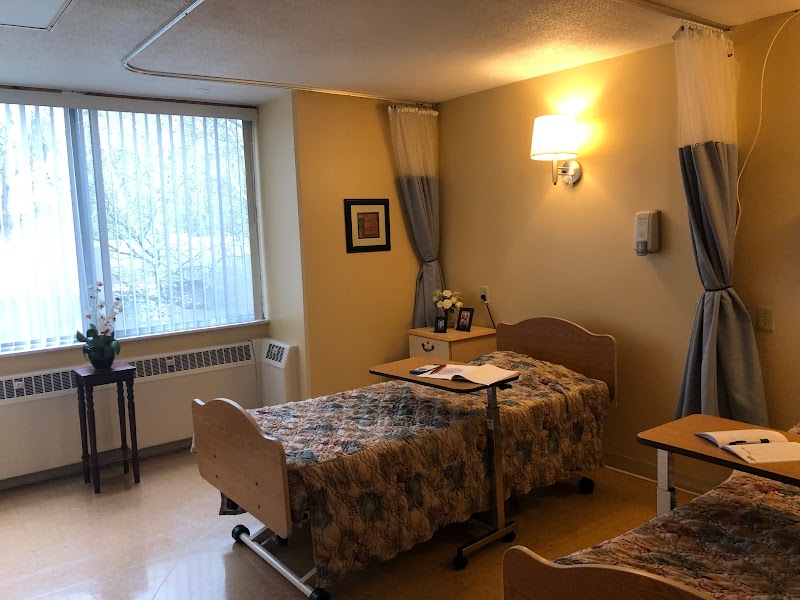
How is Parsons Hill Rehabilitation & Health Staffed?

CMS rates PARSONS HILL REHABILITATION & HEALTH CARE CENTER's staffing level at 3 out of 5 stars, which is average compared to other nursing homes. Staff turnover is 26%, compared to the Massachusetts average of 46%. This relatively stable workforce can support continuity of care.

What Have Inspectors Found at Parsons Hill Rehabilitation & Health?

State health inspectors documented 53 deficiencies at PARSONS HILL REHABILITATION & HEALTH CARE CENTER during 2022 to 2025. These included: 50 with potential for harm and 3 minor or isolated issues. While no single deficiency reached the most serious levels, the total volume warrants attention from prospective families.
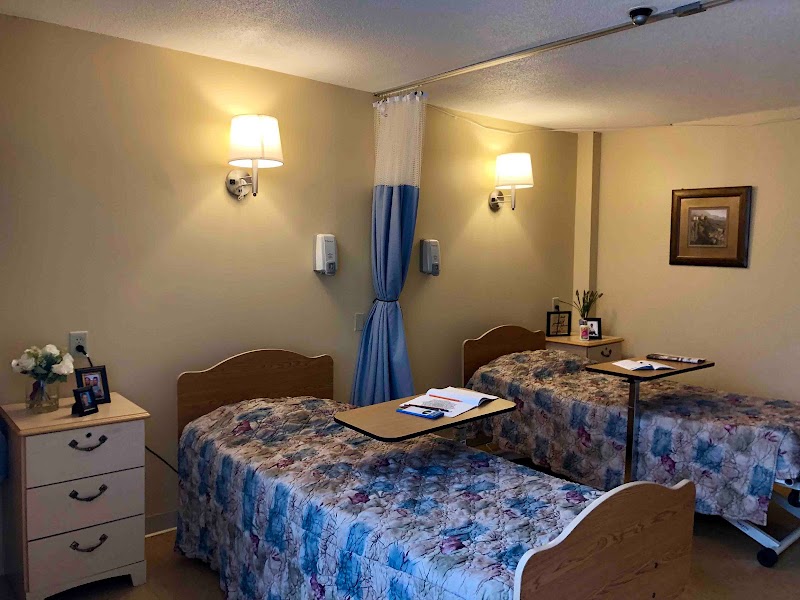
Who Owns and Operates Parsons Hill Rehabilitation & Health?

PARSONS HILL REHABILITATION & HEALTH CARE CENTER is owned by a for-profit company. For-profit facilities operate as businesses with obligations to shareholders or private owners. The facility is operated by ATHENA HEALTHCARE SYSTEMS, a chain that manages multiple nursing homes. With 162 certified beds and approximately 150 residents (about 93% occupancy), it is a mid-sized facility located in WORCESTER, Massachusetts.
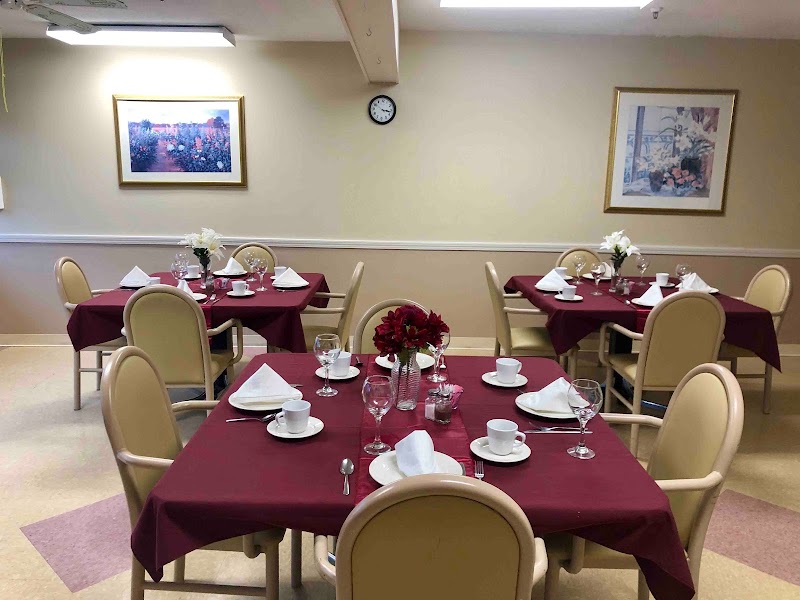
How Does Parsons Hill Rehabilitation & Health Compare to Other Massachusetts Nursing Homes?

Compared to the 100 nursing homes in Massachusetts, PARSONS HILL REHABILITATION & HEALTH CARE CENTER's overall rating (2 stars) is below the state average of 2.9, staff turnover (26%) is significantly lower than the state average of 46%, and health inspection rating (2 stars) is below the national benchmark.

What Should Families Ask When Visiting Parsons Hill Rehabilitation & Health?

Based on this facility's data, families visiting should ask: "Can I visit during a mealtime to observe dining assistance and food quality?" "How do you handle medical emergencies, and what is your hospital transfer rate?" "Can I speak with family members of current residents about their experience?"

Is Parsons Hill Rehabilitation & Health Safe?

Based on CMS inspection data, PARSONS HILL REHABILITATION & HEALTH CARE CENTER has a clean safety record: no substantiated abuse findings (meaning no confirmed cases of resident harm), no Immediate Jeopardy citations (the most serious violation level indicating risk of serious injury or death), and is not on the Special Focus Facility watch list (a federal program monitoring the lowest-performing 1% of nursing homes). The facility has a 2-star overall rating and ranks #100 of 100 nursing homes in Massachusetts. While no facility is perfect, families should still ask about staff-to-resident ratios and recent inspection results during their visit.

Do Nurses at Parsons Hill Rehabilitation & Health Stick Around?

Staff at PARSONS HILL REHABILITATION & HEALTH CARE CENTER tend to stick around. With a turnover rate of 26%, the facility is 19 percentage points below the Massachusetts average of 46%. Low turnover is a positive sign. It means caregivers have time to learn each resident's needs, medications, and personal preferences. Consistent staff also notice subtle changes in a resident's condition more quickly. Registered Nurse turnover is also low at 29%, meaning experienced RNs are available to handle complex medical needs.

Was Parsons Hill Rehabilitation & Health Ever Fined?

PARSONS HILL REHABILITATION & HEALTH CARE CENTER has no federal fines on record. CMS issues fines when nursing homes fail to meet care standards or don't correct problems found during inspections. The absence of fines suggests the facility has either maintained compliance or corrected any issues before penalties were assessed. This is a positive indicator, though families should still review recent inspection reports for the full picture.

Is Parsons Hill Rehabilitation & Health on Any Federal Watch List?

PARSONS HILL REHABILITATION & HEALTH CARE CENTER is not on any federal watch list. The most significant is the Special Focus Facility (SFF) program, which identifies the bottom 1% of nursing homes nationally based on persistent, serious quality problems. Not being on this list means the facility has avoided the pattern of deficiencies that triggers enhanced federal oversight. This is a positive indicator, though families should still review the facility's inspection history directly.