Regency At Bluffs Park
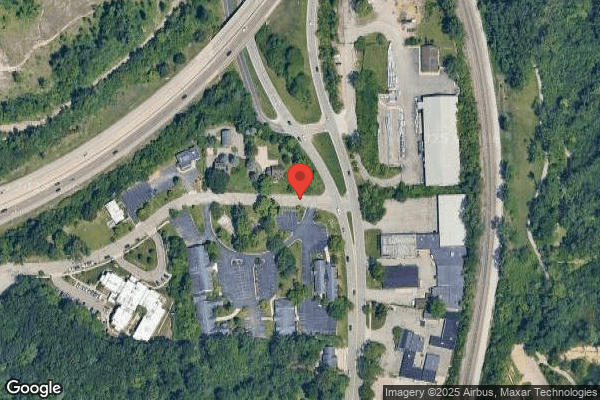

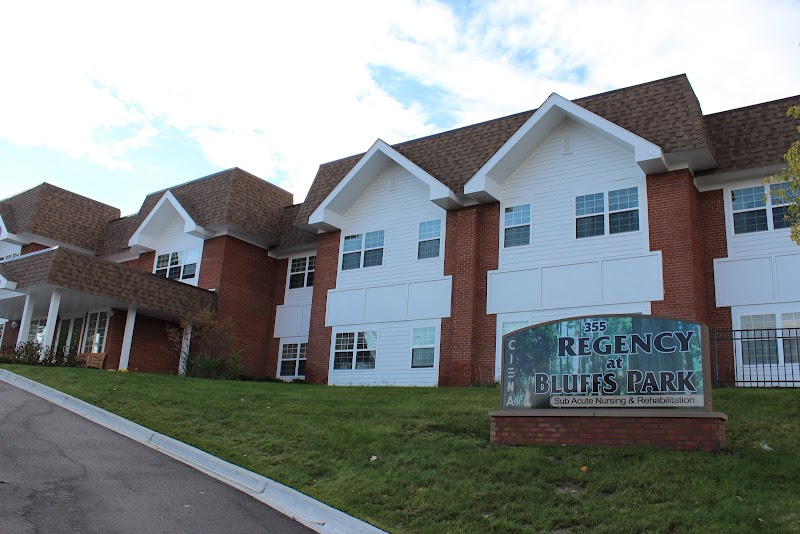
355 Huronview Blvd, Ann Arbor, MI 48103 (734) 887-8700
For profit - Corporation 71 Beds CIENA HEALTHCARE/LAUREL HEALTH CARE Data: November 2025
Trust Grade
15/100
#325 of 422 in MI
Last Inspection: April 2025

Within standard 12-15 month inspection cycle. Federal law requires annual inspections.

Overview

Regency At Bluffs Park has received a Trust Grade of F, indicating significant concerns about the quality of care provided. They rank #325 out of 422 facilities in Michigan, placing them in the bottom half, and #7 out of 9 in Washtenaw County, meaning only two local options are worse. The facility's situation is worsening, as the number of issues increased from 13 in 2024 to 19 in 2025. Staffing is a relative strength with a rating of 4 out of 5 stars, but the turnover rate is concerning at 55%, which is higher than the state average. However, the facility has faced serious issues, including failing to properly assess residents after changes in their condition, resulting in delays in treatment, and significant medication errors that led to hospital transfers for multiple residents. Overall, while there are some positive staffing ratings, the facility's poor trust grade and recent trend of increasing issues are concerning for potential residents and their families.
Trust Score
F
15/100
In Michigan
#325/422
Bottom 23%
Safety Record
High Risk
Review needed
Inspections
Getting Worse
13 → 19 violations
Staff Stability
⚠ Watch
55% turnover. Above average. Higher turnover means staff may not know residents' routines.
Penalties
⚠ Watch
$26,852 in fines. Higher than 90% of Michigan facilities, suggesting repeated compliance issues.
Skilled Nurses
✓ Good
Each resident gets 44 minutes of Registered Nurse (RN) attention daily — more than average for Michigan. RNs are trained to catch health problems early.
Violations
⚠ Watch
48 deficiencies on record. Higher than average. Multiple issues found across inspections.
★★☆☆☆
2.0
Overall Rating
★★★★☆
4.0
Staff Levels
★★★★☆
4.0
Care Quality
★★☆☆☆
2.0
Inspection Score
Stable
2024: 13 issues
2025: 19 issues

The Good

  • 4-Star Staffing Rating · Above-average nurse staffing levels
  • 4-Star Quality Measures · Strong clinical quality outcomes
  • Full Sprinkler Coverage · Fire safety systems throughout facility
  • No fines on record

Facility shows strength in staffing levels, quality measures, fire safety.

The Bad

2-Star Overall Rating

Below Michigan average (3.1)

Below average - review inspection findings carefully

Staff Turnover: 55%

Near Michigan avg (46%)

Frequent staff changes - ask about care continuity

Federal Fines: $26,852

Below median ($33,413)

Moderate penalties - review what triggered them

Chain: CIENA HEALTHCARE/LAUREL HEALTH CARE

Part of a multi-facility chain

Ask about local staffing decisions and management

Staff turnover is elevated (55%)

7 points above Michigan average of 48%

The Ugly 48 deficiencies on record

5 actual harm
Apr 2025 14 deficiencies
CONCERN (D)

Potential for Harm - no one hurt, but risky conditions existed

Resident Rights (Tag F0550)

Could have caused harm · This affected 1 resident

**NOTE- TERMS IN BRACKETS HAVE BEEN EDITED TO PROTECT CONFIDENTIALITY** Based on observation, interview and record review the facility failed to ensure dignity was maintained for one resident (residen...

Read full inspector narrative →
**NOTE- TERMS IN BRACKETS HAVE BEEN EDITED TO PROTECT CONFIDENTIALITY** Based on observation, interview and record review the facility failed to ensure dignity was maintained for one resident (resident #52) of four residents reviewed for dignity. Review of the clinical record Resident # 52 (R52) was admitted to the facility on [DATE] with diagnosis that include compression fracture and cognitive deficit. Review of the Minimum Data Set (MDS) dated [DATE] revealed R52 scored 9 out of 15 (moderate cognitive) on Brief Interview Status Score for Mental Status (BIMS) . On 04/15/25 at 10:37 AM R52 was observed resting in bed, next to the bed was a recliner chair, a pillow was on the chair and on top of the pillow was a pile of un-bagged pile of linen smeared with feces. The pile of un-bagged soiled linen sat approximately 2 to 3 feet away from R52's face. R52 was observed again 31 minutes later with the soiled linen still on the reclining chair. On 04/23/25 at 12:40 PM, during an interview with Certified Nursing Assistant (CNA) R reported the process for providing care for an incontinent resident who also had soiled linen, first step was to meet the resident needs, by providing peri care, changing the brief , clothing linen etc CNA R reported all soiled linen would immediately be put in a bag then brought to then taken to soiled utility room. When queried if there would ever be a reason for soiled linen not to be bagged and placed on resident furniture. CNA R stated no, that shouldn't happen. On 04/23/25 01:02 PM during an interview with Director of Nursing (DON) B reported it was not protocol to leave soiled linen un-bagged and nest to a resident. DON B stated perhaps whoever assisted R52 that day forgot to get a bag.
CONCERN (D)

Potential for Harm - no one hurt, but risky conditions existed

Deficiency F0557 (Tag F0557)

Could have caused harm · This affected 1 resident

**NOTE- TERMS IN BRACKETS HAVE BEEN EDITED TO PROTECT CONFIDENTIALITY** Based on observation, interview, and record review the facility failed to maintain resident dignity for three of three residents...

Read full inspector narrative →
**NOTE- TERMS IN BRACKETS HAVE BEEN EDITED TO PROTECT CONFIDENTIALITY** Based on observation, interview, and record review the facility failed to maintain resident dignity for three of three residents (Resident 25, 48, & 51) resulting in feelings of anger, embarrassment, degrading, feeling not important. Findings Included: Resident 51 (R51): Per the facility face sheet R51 had resided at the facility since 7/23/2024. On 4/16/2025 at 2:58 PM, R51 was visited in his room. R51 stated that he wore a brief, but stated he knew when he had to urinate, and have a bowel movement. R51 said staff who put briefs on him have not ever offered to allow him to wear his own underwear, and said he was not sure if he even had underwear in his room with his own belongings. With permission R52's top dresser drawer was opened, and several pairs of underwear were observed to be in the drawer that were R51's underwear. R51 stated he had no idea those pairs of underwear were there in the drawer, and again stated no one had ever offered him to wear his own underwear instead of a brief. An urinal was observed to be at R51's bedside with urine in it. R51 said he can either go in the urinal or the toilet in the bathroom, and stated he was able to walk with his walker. R51 stated that he did not need to wear a brief it made him feel like an invalid, stated that he was a grown man, said he was embarrassed to wear the brief. R51 stated that one time, could not recall who the Certified Nurse Aid (CNA) was or the exact date, he asked for assistance to use the toilet and stated the CNA told him, (as quoted by R51), they did not have time to provide any care to me, and to have my bowel movement in my brief. R51 said he reply to the CNA, did you just tell me to poop in my pants?, and said the CNA said yes because no one had time to provide him with care, R51 said that made him saw wow. R51 said he was not able to comprehend what he was just told. R51 stated he was embarrassed, felt like no one cared about him, he did not matter, and again said he could not comprehend what he was just told. R51 stated that he wants the brief off, did not want to wear the briefs anymore, and no one had offered him to wear his own underwear. R51 further stated that he did not wear briefs prior to coming to the facility, he used the toilet, and did not want to wear them now. Resident #25 (R25): Per the facility face sheet R25 was originally admitted to the facility on [DATE]. On 4/16/2025 at 3:29 PM, an attempt was made to visit R25 in her room. Upon knocking on R25's room door, R25 stated she was in the bathroom and would be available after she finished. In an interview on 4/17/2025 at 9:23 AM, R25 was visited in her room. R25 stated that she did make the statement in resident council in [DATE] that a CNA, could not recall who, told her that she did not have time to provide her with care, and told her to go to the bathroom in her brief. Review of grievances revealed that on 2/6/2025 R25 put in a grievance that revealed, CNA told resident They do not have time, use the bathroom in their brief, Between 4pm-8pm . In an interview on 4/21/2025 at 11:07 AM, Administrator A stated that she was the abuse coordinator, and all abuse including allegations of abuse were to be reported to her immediately. Administrator A stated that psychosocial/mental harm is the way the resident was feeling and included dismissal of their feelings by staff. Administrator A stated that resident grievances would be placed into her mailbox but stated if nursing received the grievance it would go to Director of Nursing B (DON), who would then give it to the appropriate staff member to follow up on. Administrator A stated that she did read the grievances. Furthermore, Administrator A stated that she had read the resident grievances that they were told by CNAs that they did not have time to provide them care, and to go to the bathroom in their briefs. Administrator A stated she took the statements as an issue with customer care and not allegations of abuse. In an interview on 4/21/2025 at 12:06 PM, DON B stated that there were concerns about residents being told to go to the bathroom in their briefs. DON B stated that education was provided to CNAs, and said the grievances regarding the briefs were considered customer service concerns, and not allegations of abuse. Resident #48 (R48) Review of the medical record reflected R48 was admitted to the facility on [DATE]. The Minimum Data Set (MDS), with an Assessment Reference Date (ARD) of 3/15/25, reflected R48 scored 13 out of 15 (cognitively intact) on the Brief Interview for Mental Status (BIMS-a cognitive screening tool). On 4/17/25 at 8:27 AM, R48 was observed in his room. R48 reported that call light response is incredibly long, and once he was denied assistance to use the bathroom for a bowel movement and was told to have a bowel movement in his brief while he was in bed. R48 described the situation as humiliating and degrading. R48 confirmed that he is occasionally incontinent of urine, however, continent of bowel and can report when he needs assistance to the bathroom. R48 stated that after that incident, he has forced himself to learn how to transfer himself to his wheelchair and assist himself to the bathroom, despite the need for staff assistance by one person. R48 stated that this became necessary so that he would never be made to have a bowel movement in his brief. R48 stated that he filled out a Grievance form related to this incident, however, never had any appropriate follow up or resolution for the concern and now just ensures that he self transfers to the bathroom for bowel movement. R48 stated that he feels like a second class citizen. Review of a Grievance form revealed R48's handwritten name at the top of the form with a concern which stated cna (certified nursing assistant) told resident they do not have time, use the bathroom in your brief.
CONCERN (D)

Potential for Harm - no one hurt, but risky conditions existed

Deficiency F0559 (Tag F0559)

Could have caused harm · This affected 1 resident

**NOTE- TERMS IN BRACKETS HAVE BEEN EDITED TO PROTECT CONFIDENTIALITY** Based on observation, interview, and record review, the facility failed to provide advanced written notice prior to a room chang...

Read full inspector narrative →
**NOTE- TERMS IN BRACKETS HAVE BEEN EDITED TO PROTECT CONFIDENTIALITY** Based on observation, interview, and record review, the facility failed to provide advanced written notice prior to a room change for one Residents (#30), of one residents reviewed for room changes. Findings include: Resident #30 (R30) Review of the medical record reflected R30 was admitted to the facility on [DATE], with diagnoses that included difficulty in walking. The Minimum Data Set (MDS), with an Assessment Reference Date (ARD) of 2/19/25, reflected R30 scored 14 out of 15 (cognitively intact) on the Brief Interview for Mental Status (BIMS-a cognitive screening tool). On 4/15/25 at 10:30 AM, R30 was observed in her room resting in bed. R30 expressed frustration with the lack of communication at the facility. R30 stated that she has had several room changes and typically, staff would not give her any notice and would state that they were moving her that day. R30 stated she had a variety of roommates and questioned the compatibility of a few of her previous roommates. Review of R30's room change history revealed R30 had four room changes since admission on [DATE], 3/14,24, 3/20/25, and 4/2/25. Review of R30's room change notice evaluations reflected two room change notifications, one dated 3/14/25 and one dated 3/20/25. In an interview on 04/23/25 at 10:58 AM, Social Worker (SW) D stated that prior to a room change, staff should inform the resident of the room change and document the conversation in the room change evaluation. SW D was unable to locate the missing room change notifications for R30.
CONCERN (D)

Potential for Harm - no one hurt, but risky conditions existed

Deficiency F0604 (Tag F0604)

Could have caused harm · This affected 1 resident

**NOTE- TERMS IN BRACKETS HAVE BEEN EDITED TO PROTECT CONFIDENTIALITY** Based on observation, interview and record review, the facility failed to assess a seatbelt as potential restraint for one (Resi...

Read full inspector narrative →
**NOTE- TERMS IN BRACKETS HAVE BEEN EDITED TO PROTECT CONFIDENTIALITY** Based on observation, interview and record review, the facility failed to assess a seatbelt as potential restraint for one (Resident #10) of one reviewed. Resident #10 (R10) R10 admitted to the facility on [DATE] and readmitted to the facility on [DATE], with diagnoses that included muscle wasting and atrophy and anoxic brain damage. The Minimum Data Set (MDS), with an Assessment Reference Date (ARD) of 4/2/25, reflected R10 scored 14 out of 15 (cognitively intact) on the Brief Interview for Mental Status (BIMS-a cognitive screening tool). Review of R10's Care Plan revealed R10 was dependent on two staff members with the use of a mechanical Hoyer lift for transfers. On 4/15/25 12:35 PM, R10 was observed in his room, sitting on a motorized wheelchair. R10 had a seatbelt across his lap. R10 was unable to self release his seatbelt. R10 stated due to limited use of only one hand, he knew he would not be able to release the seatbelt independently. R10 reported he had never been asked if he could release the seatbelt independently. In an interview on 04/18/25 at 10:19 AM, Certified Nursing Assistant (CNA) P stated that R10 was unable to unlatch his seatbelt. In an interview on 4/23/25 at 10:34 AM, CNA M stated that R10 was unable to unlatch his seatbelt. In an 4/18/25 at 10:36 AM, Therapy Director F reported that R10 had a physical restraint evaluation for the use of the seatbelt on his motorized power chair. Therapy Director F was unable to locate the physical restraint evaluation. One was then created after the interview due to surveyor intervention. A Physician order which stated Electric wheelchair for mobility with seat belt for proper positioning was created on 4/18/2025.
CONCERN (D)

Potential for Harm - no one hurt, but risky conditions existed

ADL Care (Tag F0677)

Could have caused harm · This affected 1 resident

**NOTE- TERMS IN BRACKETS HAVE BEEN EDITED TO PROTECT CONFIDENTIALITY** Based on observation, interview, and record review, the facility failed to ensure showers were offered and completed per residen...

Read full inspector narrative →
**NOTE- TERMS IN BRACKETS HAVE BEEN EDITED TO PROTECT CONFIDENTIALITY** Based on observation, interview, and record review, the facility failed to ensure showers were offered and completed per resident preference for one out of four residents (Resident #30). Findings include: Resident #30 (R30) Review of the medical record reflected R30 was admitted to the facility on [DATE], with diagnoses that included difficulty in walking. The Minimum Data Set (MDS), with an Assessment Reference Date (ARD) of 2/19/25, reflected R30 scored 14 out of 15 (cognitively intact) on the Brief Interview for Mental Status (BIMS-a cognitive screening tool). On 4/15/25 at 10:30 AM, R30 was observed in her room resting in bed. R30 expressed frustration with the lack of communication at the facility. R30 stated that she has had several room changes and typically, staff would not give her any notice and would state that they were moving her that day. R30 also stated that due to the constant room changes, she believes her shower days were mixed up, therefore, R30 had missed some of her scheduled shower days. R30 added that staff were offering her showers at unreasonable times in the evening, resulting in a refusal for a shower and on once instance, a shower was offered after her dressing changes were completed. R30 denied refusing other showers. R30 was unsure of what her scheduled shower days were. Review of R30's shower task documentation reflected the following: 3/22/25 refused, per shower sheet, R30 did not know about her shower in advanced, too late now. 3/26/25 refused, no refusal shower sheet 3/29/25 refused, legs wrapped per shower sheet 4/9/25 refused per shower sheet she said she had one yesterday 4/12/25 marked no shower 4/22/25 refusal, no shower sheet for refusal In an interview on 04/23/25 at 12:47 PM, Director of Nursing (DON) B stated that the expectation for showers was to document the refusal in the medical record, and/or document the refusal on a shower sheet. DON B stated that staff should not be marking no in the shower task ands should be offering showers per the shower schedule.
CONCERN (D)

Potential for Harm - no one hurt, but risky conditions existed

Accident Prevention (Tag F0689)

Could have caused harm · This affected 1 resident

**NOTE- TERMS IN BRACKETS HAVE BEEN EDITED TO PROTECT CONFIDENTIALITY** Based on observation, interview and record review, the facility failed to ensure prevention of a fall for one (Resident #10) of ...

Read full inspector narrative →
**NOTE- TERMS IN BRACKETS HAVE BEEN EDITED TO PROTECT CONFIDENTIALITY** Based on observation, interview and record review, the facility failed to ensure prevention of a fall for one (Resident #10) of two reviewed for falls. Findings include: Resident #10 (R10) R10 admitted to the facility on [DATE] and readmitted to the facility on [DATE], with diagnoses that included muscle wasting and atrophy and anoxic brain damage. The Minimum Data Set (MDS), with an Assessment Reference Date (ARD) of 4/2/25, reflected R10 scored 14 out of 15 (cognitively intact) on the Brief Interview for Mental Status (BIMS-a cognitive screening tool). Review of R10's Care Plan revealed R10 was dependent on two staff members with the use of a mechanical Hoyer lift for transfers. On 4/15/25 12:35 PM, R10 was observed in his room, sitting on a motorized wheelchair. R10 had a seatbelt across his lap. R10 reported that he fell out of chair recently. R10 explained that staff had transferred him to his wheelchair and after being placed in his wheelchair, staff had forgotten to put the armrest on his chair down. R10 stated that he has no trunk control, weakness on his left side of his body, and very limited use of his right side of the body. R10 stated that the staff member had moved on with his care duties and due to the armrest being up, he fell sideways out of his chair and suffered a hematoma to his head. R10 stated that he was transferred to the hospital. Review of an Incident report dated 3/1/25 revealed R10 had a fall out of his wheelchair and sustained an injury to the left side of his head. The resident description of the fall indicated that the left arm rest of the wheelchair was up when he was placed in his chair, causing him to fall out of the left side of his wheelchair. The intervention included to have the left arm rest of his wheelchair down during transfers. Review of a Seating and Mobility Evaluation dated 7/12/24 revealed R10 could not independently maintain a neutral upright posture and had poor posture when sitting. In an interview on 4/17/25 at 10:02 AM, Certified Nursing Assistant (CNA) O stated she was assisting with R10's transfer the day that he fell. CNA O reported that after assisting CNA M with the transfer, she removed the Hoyer lift from R10's room and heard the sound of R10 falling. CNA O stated that typically she stays and assists with transfers, however, she was assigned to a different hall that shift and had several call lights activated and had to report back to her assigned area. CNA O reentered the room and observed R10 on the floor on the left side of the chair. CNA O stated that R10 is very weak, with very little trunk control so it is important to ensure that the arm rests are down on the chair before you leave R10's side. CNA O indicated that she did not feel that the CNA's had sufficient training on how to transfer him into the motorized wheelchair. CNA O stated that after the fall, the facility trained the staff on how to safely transfer R10 to the motorized wheelchair In an interview on 4/23/25 at 10:34 AM, CNA M stated that he was present when R10 experienced the fall. CNA M stated that he used the Hoyer lift to transfer R10 to his motorized wheelchair and reported that it was his first time transferring R10 to this particular chair. CNA M confirmed that R10 had no trunk control and due to the left arm rest being left up after the transfer, R10 fell sideways out of the chair and hit his head. CNA M stated he had no training prior to this and had no idea that the arm rest needed to be down to prevent R10 from falling out. In an interview on 04/23/25 at 12:50 PM, Director of Nursing (DON) B stated that R10 was placed into his motorized wheelchair, however, the arm rest was not down and due to the lack of core strength, R10 fell sideways out of his wheelchair. DON B stated that staff education to ensure arm rests were down when R10 was in the motorized chair was provided after the fall.
CONCERN (D)

Potential for Harm - no one hurt, but risky conditions existed

Deficiency F0825 (Tag F0825)

Could have caused harm · This affected 1 resident

**NOTE- TERMS IN BRACKETS HAVE BEEN EDITED TO PROTECT CONFIDENTIALITY** Based on observation, interview and record review, the facility failed to provide Occupational Therapy (OT) services as ordered ...

Read full inspector narrative →
**NOTE- TERMS IN BRACKETS HAVE BEEN EDITED TO PROTECT CONFIDENTIALITY** Based on observation, interview and record review, the facility failed to provide Occupational Therapy (OT) services as ordered for one (R22) of two reviewed. Findings include: Review of the medical record reflected R22 admitted to the facility on [DATE] and readmitted [DATE], with diagnoses that included fusion of the spine and dependence on renal dialysis. At the time of review, R22's Admission/Medicare 5-day Minimum Data Set (MDS), with an Assessment Reference Date (ARD) of 4/10/25 was In Progress. On 4/15/25 at 10:50 AM, R22 was observed in bed, wearing a Miami J cervical collar (type of neck brace). R22 reported they were supposed to receive Physical Therapy (PT) and OT five times per week, for one hour per day, but were receiving less. R22 reported the facility was discussing discharge due to lack of progress and stated, how can I progress if they don't work with me more? In an interview on 4/17/25 at 9:48 AM, Physical Therapist (PT) E reported there were times therapy was unable to work with R22 during the week due to dialysis. It was reported the facility tried to adjust R22's therapy schedule around outside appointments, as well as provide therapy on the weekends. PT E reported R22 had an OT evaluation on 4/4/25 and received OT treatment/services on 4/5/25, 4/7/25, 4/8/25, 4/9/25, 4/10/25 and 4/11/25. R22's Physician Orders reflected they were to receive OT services six times per week for 12 weeks. R22's OT evaluation, dated 4/4/25, reflected they were to receive OT services five times per week for 12 weeks. In an interview on 4/17/25 at 10:27 AM, Therapy Director (TD) F reported OT was working on standing balance, bathing, toileting and commode transfers, upper extremity strengthening and activities of daily living (ADLs). TD F reported R22's orders were to receive OT five times per week, as noted on their therapy evaluations. According to TD F, they had to shift R22's therapy days and minutes due to not having OT staff in the facility. R22 was still on OT caseload at the time of the interview. On 4/17/25, review of R22's OT Service Log reflected they had not received any OT services since 4/11/25.
CONCERN (D)

Potential for Harm - no one hurt, but risky conditions existed

Infection Control (Tag F0880)

Could have caused harm · This affected 1 resident

**NOTE- TERMS IN BRACKETS HAVE BEEN EDITED TO PROTECT CONFIDENTIALITY** Based on observation, interview and record review, the facility failed to 1) ensure appropriate use of Personal Protective Equip...

Read full inspector narrative →
**NOTE- TERMS IN BRACKETS HAVE BEEN EDITED TO PROTECT CONFIDENTIALITY** Based on observation, interview and record review, the facility failed to 1) ensure appropriate use of Personal Protective Equipment (PPE) for one (R7) of three reviewed for Transmission-Based Precautions (TBP); and 2) ensure appropriate hand hygiene. Findings include: Resident #7 (R7): Review of the medical record reflected R7 admitted to the facility on [DATE] and readmitted [DATE], with diagnoses that included pain in thoracic spine and chronic obstructive pulmonary disease. The admission/Medicare 5-day Minimum Data Set (MDS), with an Assessment Reference Date (ARD) of 4/2/25, reflected R7 scored 15 out of 15 (cognitively intact) on the Brief Interview for Mental Status (BIMS-a cognitive screening tool). On 04/15/25 at 12:20 PM, R7's room door was observed to be open, with a droplet precaution sign and PPE hanging on the exterior of the door. Two staff members were observed in the room, each wearing a gown, gloves and an N95 mask. Neither of the staff members were observed wearing eye protection. At 12:23 PM, one staff member exited R7's room, wearing an N95 mask with a surgical mask beneath it. The staff member proceeded to walk through the hallway with both masks in place. At 12:27 PM, the staff member returned to R7's room with face shields and was observed wearing a surgical mask. In an interview on 04/15/25 at 2:43 PM, Director of Nursing (DON) B reported R7 was in Transmission-Based Precautions due to being tested for COVID-19. DON B reported a gown, gloves, N95 mask and face shield were to be worn in R7's room. According to DON B, the gown and gloves were to be removed prior to exiting the room. The face shield was to be disinfected, and the N95 was to be removed in the hallway, immediately upon exiting the room. On 04/16/25 at 9:41 AM, a droplet precaution sign and PPE were observed hanging on the exterior of R7's room door. R7 was observed in bed, wearing oxygen via nasal cannula. R7 reported they did not know why they were placed in TBP but expressed they wish they had been notified. A Progress Note for 4/16/25 at 10:14 AM reflected R7's respiratory panel was negative. The medical record reflected isolation (TBP) was discontinued on 4/16/25 due to a negative COVID-19 test. According to the Centers for Disease Control and Prevention, .HCP [Healthcare Personnel] who enter the room of a patient with suspected or confirmed SARS-CoV-2 [COVID-19] infection should adhere to Standard Precautions and use a NIOSH Approved particulate respirator with N95 filters or higher, gown, gloves, and eye protection (i.e., goggles or a face shield that covers the front and sides of the face) . (https://www.cdc.gov/covid/hcp/infection-control/index.html) During an interview and observation on 04/23/25 at 9:00AM, Licensed Practical Nurse (LPN) S was preparing medications to administer to R14. LPN S completed his preparation and picked up the medication cup and a glass of water and walked into R14's room. LPN S observed R14 take her oral pill form medications. LPN S did not was perform hand hygiene before or after entering R14s room and went back to the medication cart and started preparing the next residents medications. During an interview and observation on 04/23/25 at 9:25AM, LPN S preparing medications to administer to R10. LPN S completed his preparation, stated this resident was on contact precautions due to having Covid. LPN S begun donning up by putting on a disposable blue gown, he already had a blue surgical mask on, and did not change it, then put on gloves before going into the room. LPN S did not perform hand hygiene before putting on his gloves as the recommendation on R10's door. LPN S administered the medications and started to exit the room after removing the disposable gown, and gloves. LPN S did not remove and replace his blue surgical mask that he had been wearing prior to going into R10's room, and now after being in R10's room. LPN S did not follow the recommendation for the use of PPE for R10 or follow the policy and procedure for providing care to a resident on contact precautions, increasing the risk of cross contamination to other residents.
CONCERN (E)

Potential for Harm - no one hurt, but risky conditions existed

Report Alleged Abuse (Tag F0609)

Could have caused harm · This affected multiple residents

**NOTE- TERMS IN BRACKETS HAVE BEEN EDITED TO PROTECT CONFIDENTIALITY** Based on observation, interview, and record review the facility failed to ensure for 14 out of 14 residents (Resident # 5, 7, 13...

Read full inspector narrative →
**NOTE- TERMS IN BRACKETS HAVE BEEN EDITED TO PROTECT CONFIDENTIALITY** Based on observation, interview, and record review the facility failed to ensure for 14 out of 14 residents (Resident # 5, 7, 13, 15, 18, 25, 37, 48, 51, 69, 333, 335, 340, 341) allegations of abuse were reported to the state agency. Findings Included: Resident #5 (R5): Review of the grievance log revealed that on 3/7/2025, R5 had put in a grievance that it tool one and a half hours to get assistance to use the bathroom, and she had missed her shower two times. The grievance further revealed, I (R5) was told to get a private aid. NO! Hire more help. The resolution was to continue to hire more staff. Abuse was not identified, R5 refused to sign the facility's resolution. Resident #7 (R7): Review of the grievance log revealed that on 2/10/2025, R7's daughter put in a grievance that if R7 did not take a shower then she would have a refusal. No resolution was noted regarding showers. Resident #13 (R13): Review of the grievance log revealed that on 12/09/2024, R13 put in a grievance that she had gone to the kitchen and upon speaking with a staff member (did not reveal who the dietary staff member was) she was told that when she spoke with the staff member on the phone she had raised her voice, and she was not allowed to call the kitchen, and to stop calling everyday. The statement revealed that when R13 went to the kitchen to speak with the staff member the staff member would not come out of the kitchen to speak with her, but then told her that she was not going to do this, and then tried to slam the kitchen door. The resolution for the allegation of abuse was, discharged Resident #15 (R15): Review of a grievance log revealed that on 3/30/2025, R15 put in a grievance that she was told by a Certified Nurse Aid (CNA) that she was not dealing with this today and to suck it up. The statement also revealed that R15 was told to wait to go to the bathroom while others were being rounded on. Resolution was education to CNA, and remove CNA from case load (will not provide care to R15, but will for other residents). Resident #18 (R18): Review of a grievance log revealed that on 2/5/2025, R18 put in a grievance that a CNA transferred her with a lift by herself, but the lift required two people, and reported that the CNA yelled at her. The resolution did not address the allegation of abuse with the CNA yelling at the resident. Resident #25 (R25): Per the facility face sheet R25 was originally admitted to the facility on [DATE]. On 4/16/2025 at 3:29 PM, an attempt was made to visit R25 in her room. Upon knocking on R25's room door, R25 stated she was in the bathroom and would be available after she finished. In an interview on 4/17/2025 at 9:23 AM, R25 was visited in her room. R25 stated that she did make the statement in resident council in [DATE] that a CNA, could not recall who, told her that she did not have time to provide her with care, and told her to go to the bathroom in her brief. Review of grievances revealed that on 2/6/2025 R25 put in a grievance that revealed, CNA told resident They do not have time, use the bathroom in their brief, Between 4pm-8pm . Resident #37 (R37): Review of a grievance log revealed that on 10/20/2024, R37 put in a grievance that a CNA told her that .she wasn't going to change her. The resolution was a discussion with the resident, and to continue with receiving assistance as needed. No identifying of abuse was noted. Resident #51 (R51): Per the facility face sheet R51 had resided at the facility since 7/23/2024. On 4/16/2025 at 2:58 PM, R51 was visited in his room. R51 stated that he wore a brief, but stated he knew when he had to urinate, and have a bowel movement. R51 said staff who put briefs on him have not ever offered to allow him to wear his own underwear, and said he was not sure if he even had underwear in his room with his own belongings. With permission R52's top dresser drawer was opened, and several pairs of underwear were observed to be in the drawer that were R51's underwear. R51 stated he had no idea those pairs of underwear were there in the drawer, and again stated no one had ever offered him to wear his own underwear instead of a brief. An urinal was observed to be at R51's bedside with urine in it. R51 said he can either go in the urinal or the toilet in the bathroom, and stated he was able to walk with his walker. R51 stated that he did not need to wear a brief it made him feel like an invalid, stated that he was a grown man, said he was embarrassed to wear the brief. R51 stated that one time, could not recall who the Certified Nurse Aid (CNA) was or the exact date, he asked for assistance to use the toilet and stated the CNA told him, (as quoted by R51), they did not have time to provide any care to me, and to have my bowel movement in my brief. R51 said he reply to the CNA, did you just tell me to poop in my pants?, and said the CNA said yes because no one had time to provide him with care, R51 said that made him saw wow. R51 said he was not able to comprehend what he was just told. R51 stated he was embarrassed, felt like no one cared about him, he did not matter, and again said he could not comprehend what he was just told. R51 stated that he wants the brief off, did not want to wear the briefs anymore, and no one had offered him to wear his own underwear. R51 further stated that he did not wear briefs prior to coming to the facility, he used the toilet, and did not want to wear them now. Resident #69 (R69): Review of a grievance form dated 11/26/2024, revealed R69's daughter filled out the grievance which stated that staff told her if they did not have time then they would tell the R69 to go to the bathroom in her diaper. The resolution was staff education. Resident #333 (R333): Review of a grievance form dated 1/6/2025, revealed R333 filled out a grievance that he had asked a CNA to help him to the bathroom, but the CNA gave him a urinal instead, and then left his room. The statement revealed that R333 could not use a urinal, and wanted to use the bathroom. The resolution was education. Resident #335 (R335): Review of the grievance log revealed the on 10/18/2024, R335 put in a grievance that she had vomited while in an activity at around 2:30 PM, and stated that her wound bandages were saturated. R335 wrote on the grievance that a CNA told her that her wound dressings would not be changed until 6:00 or 7:00 PM. There was no documented resolution. Resident #340 (R340): Review of a grievance form dated 6/14 and 6/15/2024 revealed, R340's CNA would not assist her to the bathroom, but just stood there and watched her walk unassisted, would not straighten her bed, and threw the bed covers over her. Resolution was the CNA was terminated. Resident #341(R341): Review of a grievance form dated 6/8 & 6/9/2024, revealed R341 filled out a grievance which stated she had asked her CNA if she could help her with her colostomy bag, and the CNA just rolled her eyes at her and walked out. The form also revealed that the CNA had entered R341's room and rolled her eyes again when she saw R341 was not done eating her dinner. The resolution was the CNA was disciplined. In an interview on 4/21/2025 at 11:07 AM, Administrator A stated that she was the abuse coordinator, and all abuse including allegations of abuse were to be reported to her immediately. Administrator A stated that psychosocial/mental harm is the way the resident was feeling and included dismissal of their feelings by staff. Administrator A stated that resident grievances would be placed into her mailbox but stated if nursing received the grievance it would go to Director of Nursing B (DON), who would then give it to the appropriate staff member to follow up on. Administrator A stated that she did read the grievances. Furthermore, Administrator A stated that she had read the resident grievances that they were told by CNAs that they did not have time to provide them care, and to go to the bathroom in their briefs. Administrator A stated she took the statements as an issue with customer care and not allegations of abuse. In an interview on 4/21/2025 at 12:06 PM, DON B stated that there were concerns about residents being told to go to the bathroom in their briefs. DON B stated that education was provided to CNAs, and said the grievances regarding the briefs were considered customer service concerns, and not allegations of abuse. None of the allegations of abuse were reported to the state agency. Furthermore, review of the facility's policy and procedure titled, Care Program (grievances) dated 6/11/2024, revealed under Actions, If the concern is related to alleged abuse, neglect, and/or mistreatment the concerns should be forwarded immediately to the supervisor, administrator, and director of nursing. Resident #48 (R48) Review of the medical record reflected R48 was admitted to the facility on [DATE]. The Minimum Data Set (MDS), with an Assessment Reference Date (ARD) of 3/15/25, reflected R48 scored 13 out of 15 (cognitively intact) on the Brief Interview for Mental Status (BIMS-a cognitive screening tool). On 4/17/25 at 8:27 AM, R48 was observed in his room. R48 reported that call light response is incredibly long, and once he was denied assistance to use the bathroom for a bowel movement and was told to have a bowel movement in his brief while he was in bed. R48 described the situation as humiliating and degrading. R48 confirmed that he is occasionally incontinent of urine, however, continent of bowel and can report when he needs assistance to the bathroom. R48 stated that after that incident, he has forced himself to learn how to transfer himself to his wheelchair and assist himself to the bathroom, despite the need for staff assistance by one person. R48 stated that this became necessary so that he would never be made to have a bowel movement in his brief. R48 stated that he filled out a Grievance form related to this incident, however, never had any appropriate follow up or resolution for the concern and now just ensures that he self transfers to the bathroom for bowel movement. R48 stated that he feels like a second class citizen. Review of a Grievance form revealed R48's handwritten name at the top of the form with a concern which stated cna (certified nursing assistant) told resident they do not have time, use the bathroom in your brief.
CONCERN (E)

Potential for Harm - no one hurt, but risky conditions existed

Investigate Abuse (Tag F0610)

Could have caused harm · This affected multiple residents

**NOTE- TERMS IN BRACKETS HAVE BEEN EDITED TO PROTECT CONFIDENTIALITY** Based on observation, interview, and record review the facility failed to ensure for 14 out of 14 residents (Resident # 5, 7, 13...

Read full inspector narrative →
**NOTE- TERMS IN BRACKETS HAVE BEEN EDITED TO PROTECT CONFIDENTIALITY** Based on observation, interview, and record review the facility failed to ensure for 14 out of 14 residents (Resident # 5, 7, 13, 15, 18, 25, 37, 48, 51, 69, 333, 335, 340, 341) allegations of abuse were identified and investigated. Findings Included: Resident #5 (R5): Review of the grievance log revealed that on 3/7/2025, R5 had put in a grievance that it tool one and a half hours to get assistance to use the bathroom, and she had missed her shower two times. The grievance further revealed, I (R5) was told to get a private aid. NO! Hire more help. The resolution was to continue to hire more staff. Abuse was not identified, R5 refused to sign the facility's resolution. No investigation for an allegation of abuse was conducted. Resident #7 (R7): Review of the grievance log revealed that on 2/10/2025, R7's daughter put in a grievance that if R7 did not take a shower then she would have a refusal. No resolution was noted regarding showers. No investigation for an allegation of abuse was conducted. Resident #13 (R13): Review of the grievance log revealed that on 12/09/2024, R13 put in a grievance that she had gone to the kitchen and upon speaking with a staff member (did not reveal who the dietary staff member was) she was told that when she spoke with the staff member on the phone she had raised her voice, and she was not allowed to call the kitchen, and to stop calling everyday. The statement revealed that when R13 went to the kitchen to speak with the staff member the staff member would not come out of the kitchen to speak with her, but then told her that she was not going to do this, and then tried to slam the kitchen door. The resolution for the allegation of abuse was, discharged No investigation for an allegation of abuse was conducted. Resident #15 (R15): Review of a grievance log revealed that on 3/30/2025, R15 put in a grievance that she was told by a Certified Nurse Aid (CNA) that she was not dealing with this today and to suck it up. The statement also revealed that R15 was told to wait to go to the bathroom while others were being rounded on. Resolution was education to CNA, and remove CNA from case load (will not provide care to R15, but will for other residents). No investigation for an allegation of abuse was conducted. Resident #18 (R18): Review of a grievance log revealed that on 2/5/2025, R18 put in a grievance that a CNA transferred her with a lift by herself, but the lift required two people, and reported that the CNA yelled at her. The resolution did not address the allegation of abuse with the CNA yelling at the resident. No investigation for an allegation of abuse was conducted. Resident #25 (R25): Per the facility face sheet R25 was originally admitted to the facility on [DATE]. On 4/16/2025 at 3:29 PM, an attempt was made to visit R25 in her room. Upon knocking on R25's room door, R25 stated she was in the bathroom and would be available after she finished. In an interview on 4/17/2025 at 9:23 AM, R25 was visited in her room. R25 stated that she did make the statement in resident council in [DATE] that a CNA, could not recall who, told her that she did not have time to provide her with care, and told her to go to the bathroom in her brief. Review of grievances revealed that on 2/6/2025 R25 put in a grievance that revealed, CNA told resident They do not have time, use the bathroom in their brief, Between 4pm-8pm . No investigation for an allegation of abuse was conducted. Resident #37 (R37): Review of a grievance log revealed that on 10/20/2024, R37 put in a grievance that a CNA told her that .she wasn't going to change her. The resolution was a discussion with the resident, and to continue with receiving assistance as needed. No identifying of abuse was noted. No investigation for an allegation of abuse was conducted. Resident #51 (R51): Per the facility face sheet R51 had resided at the facility since 7/23/2024. On 4/16/2025 at 2:58 PM, R51 was visited in his room. R51 stated that he wore a brief, but stated he knew when he had to urinate, and have a bowel movement. R51 said staff who put briefs on him have not ever offered to allow him to wear his own underwear, and said he was not sure if he even had underwear in his room with his own belongings. With permission R52's top dresser drawer was opened, and several pairs of underwear were observed to be in the drawer that were R51's underwear. R51 stated he had no idea those pairs of underwear were there in the drawer, and again stated no one had ever offered him to wear his own underwear instead of a brief. An urinal was observed to be at R51's bedside with urine in it. R51 said he can either go in the urinal or the toilet in the bathroom, and stated he was able to walk with his walker. R51 stated that he did not need to wear a brief it made him feel like an invalid, stated that he was a grown man, said he was embarrassed to wear the brief. R51 stated that one time, could not recall who the Certified Nurse Aid (CNA) was or the exact date, he asked for assistance to use the toilet and stated the CNA told him, (as quoted by R51), they did not have time to provide any care to me, and to have my bowel movement in my brief. R51 said he reply to the CNA, did you just tell me to poop in my pants?, and said the CNA said yes because no one had time to provide him with care, R51 said that made him saw wow. R51 said he was not able to comprehend what he was just told. R51 stated he was embarrassed, felt like no one cared about him, he did not matter, and again said he could not comprehend what he was just told. R51 stated that he wants the brief off, did not want to wear the briefs anymore, and no one had offered him to wear his own underwear. R51 further stated that he did not wear briefs prior to coming to the facility, he used the toilet, and did not want to wear them now. Resident #69 (R69): Review of a grievance form dated 11/26/2024, revealed R69's daughter filled out the grievance which stated that staff told her if they did not have time then they would tell the R69 to go to the bathroom in her diaper. The resolution was staff education. No investigation for an allegation of abuse was conducted. Resident #333 (R333): Review of a grievance form dated 1/6/2025, revealed R333 filled out a grievance that he had asked a CNA to help him to the bathroom, but the CNA gave him a urinal instead, and then left his room. The statement revealed that R333 could not use a urinal, and wanted to use the bathroom. The resolution was education. No investigation for an allegation of abuse was conducted. Resident #335 (R335): Review of the grievance log revealed the on 10/18/2024, R335 put in a grievance that she had vomited while in an activity at around 2:30 PM, and stated that her wound bandages were saturated. R335 wrote on the grievance that a CNA told her that her wound dressings would not be changed until 6:00 or 7:00 PM. There was no documented resolution. No investigation for an allegation of abuse was conducted. Resident #340 (R340): Review of a grievance form dated 6/14 and 6/15/2024 revealed, R340's CNA would not assist her to the bathroom, but just stood there and watched her walk unassisted, would not straighten her bed, and threw the bed covers over her. Resolution was the CNA was terminated. No investigation for an allegation of abuse was conducted. Resident #341(R341): Review of a grievance form dated 6/8 & 6/9/2024, revealed R341 filled out a grievance which stated she had asked her CNA if she could help her with her colostomy bag, and the CNA just rolled her eyes at her and walked out. The form also revealed that the CNA had entered R341's room and rolled her eyes again when she saw R341 was not done eating her dinner. The resolution was the CNA was disciplined. No investigation for an allegation of abuse was conducted. In an interview on 4/21/2025 at 11:07 AM, Administrator A stated that she was the abuse coordinator, and all abuse including allegations of abuse were to be reported to her immediately. Administrator A stated that psychosocial/mental harm is the way the resident was feeling and included dismissal of their feelings by staff. Administrator A stated that resident grievances would be placed into her mailbox but stated if nursing received the grievance it would go to Director of Nursing B (DON), who would then give it to the appropriate staff member to follow up on. Administrator A stated that she did read the grievances. Furthermore, Administrator A stated that she had read the resident grievances that they were told by CNAs that they did not have time to provide them care, and to go to the bathroom in their briefs. Administrator A stated she took the statements as an issue with customer care and not allegations of abuse. In an interview on 4/21/2025 at 12:06 PM, DON B stated that there were concerns about residents being told to go to the bathroom in their briefs. DON B stated that education was provided to CNAs, and said the grievances regarding the briefs were considered customer service concerns, and not allegations of abuse. None of the allegations of abuse were identified as allegations of abuse, and no investigations were conducted. Resident #48 (R48) Review of the medical record reflected R48 was admitted to the facility on [DATE]. The Minimum Data Set (MDS), with an Assessment Reference Date (ARD) of 3/15/25, reflected R48 scored 13 out of 15 (cognitively intact) on the Brief Interview for Mental Status (BIMS-a cognitive screening tool). On 4/17/25 at 8:27 AM, R48 was observed in his room. R48 reported that call light response is incredibly long, and once he was denied assistance to use the bathroom for a bowel movement and was told to have a bowel movement in his brief while he was in bed. R48 described the situation as humiliating and degrading. R48 confirmed that he is occasionally incontinent of urine, however, continent of bowel and can report when he needs assistance to the bathroom. R48 stated that after that incident, he has forced himself to learn how to transfer himself to his wheelchair and assist himself to the bathroom, despite the need for staff assistance by one person. R48 stated that this became necessary so that he would never be made to have a bowel movement in his brief. R48 stated that he filled out a Grievance form related to this incident, however, never had any appropriate follow up or resolution for the concern and now just ensures that he self transfers to the bathroom for bowel movement. R48 stated that he feels like a second class citizen. Review of a Grievance form revealed R48's handwritten name at the top of the form with a concern which stated cna (certified nursing assistant) told resident they do not have time, use the bathroom in your brief.
CONCERN (E)

Potential for Harm - no one hurt, but risky conditions existed

Deficiency F0725 (Tag F0725)

Could have caused harm · This affected multiple residents

**NOTE- TERMS IN BRACKETS HAVE BEEN EDITED TO PROTECT CONFIDENTIALITY** On 04/16/25 at 02:20 PM during an interview with Licensed Practical Nurse U and V they reported the facility was understaffed an...

Read full inspector narrative →
**NOTE- TERMS IN BRACKETS HAVE BEEN EDITED TO PROTECT CONFIDENTIALITY** On 04/16/25 at 02:20 PM during an interview with Licensed Practical Nurse U and V they reported the facility was understaffed and there was not enough Certified Nursing Assistants (CNA's) to meet the needs of the residents. During this interview CNA T interrupted the interview reporting to LPN U and LPN V that she could not locate the other CNA that was assigned to the same hall. CNA T elaborated that she was fed up with the other CNA because they always hide and do not take care of their assigned residents leaving CNA T with her residents (approximately 15 residents) and the other CNA's assignment (another 15 residents) CNA T stated she cant take care of 30 residents. Based on observation, interview and record review, the facility failed to ensure sufficient nursing staff to respond to resident needs timely for five of 15 reviewed (R1, R14, R22, R48 and R62). Findings include: In an interview on 4/15/25 at 10:23 AM, Certified Nurse Aide (CNA) C reported they were caring for 16 residents that shift (day shift), and their ability to keep up with resident care needs was dependent upon acuity levels. Resident #22 (R22): Review of the medical record reflected R22 admitted to the facility on [DATE] and readmitted [DATE], with diagnoses that included fusion of the spine and dependence on renal dialysis. On 4/15/25 at 10:45 AM, R22 was observed in bed and reported slow response time when they used their call light. R22 reported they had waited 45 minutes or longer for staff assistance, three to four times, primarily on day shift. R22 reported they were typically calling to request pain medication. On 4/15/25 at 1:02 PM, R22 was observed seated in a wheelchair, in their room. R22 reported their call light had just been on for 50 minutes, and the nurse had not yet been back with their medication. Resident #1 (R1) Review of the medical record reflected R1 admitted to the facility on [DATE]. On 4/15/25 at 3:05 PM, R1 was observed in bed. They reported between the hours of 8:00 PM and 8:00 AM, it took 30 minutes for staff to respond to their call light. On 4/15/25 at 10:22 AM, Resident 14 (R14) was observed in their room. R14 stated that staffing is not good and it creates a delay in receiving her pain medication timely which impacts her physical therapy progress. On 4/15/25 at 10:00 AM, Resident #48 (R48) stated that there are significant call light response delays in the afternoon and midnights. Staff will tell R48 to shut his call light off and state they will be back, however, they do not return. R48 states it is an ongoing concern that is repeatedly brought up in Resident Council, however, nothing has been resolved. R48 states he hears other residents yelling out for help nearly every night. On 4/15/25 at 12:48 PM, Resident #62 stated that it takes staff up to an hour to answer his call light. R62 states he fears for the time that he experiences an actual emergency because he doubts staff will answer is call for help promptly. In an interview on 4/18/25 at 9:29 AM, Certified Nursing Assistant (CNA) L stated that it is difficult to find an additional CNA to assist with two person transfers and that he is unable to take his breaks due to insufficient staffing. In an interview on 4/18/25 at 10:19 AM, CNA P stated that current staffing levels make their job, really, really hard. CNA P states sometimes she has up to 18 residents and they often get really mad at you because of call light response times. CNA P states that she is constantly apologizing for the wait. CNA P stated that they are unable to take any breaks. In an interview on 4/17/25 at 10:02 AM, CNA O stated that staffing is poor and with the amount of resident needs required and the absence of sufficent staffing numbers, the job can be overwhelming and there is a likelihood in an increase of accidents. In an interview on 4/23/25 at 10:34 AM, CNA M stated that CNA's would instruct residents to use the bathroom in their brief as a time saving measure.
CONCERN (F)

Potential for Harm - no one hurt, but risky conditions existed

Food Safety (Tag F0812)

Could have caused harm · This affected most or all residents

Based on observations, interviews, and record reviews, the facility failed to effectively clean and maintain food service equipment effecting 58 residents, resulting in the increased likelihood for cr...

Read full inspector narrative →
Based on observations, interviews, and record reviews, the facility failed to effectively clean and maintain food service equipment effecting 58 residents, resulting in the increased likelihood for cross-contamination and bacterial harborage. Findings include: On 04/15/25 at 09:24 A.M., An initial tour of the food service was conducted with Dietary Manager G. The following items were noted: The Juice Machine interior surfaces (backsplash, undersplash, drip tray assembly) were observed soiled with accumulated and encrusted food residue. Dietary Manager G indicated she would have staff thoroughly clean and sanitize the Juice Machine as soon as possible. The Vulcan stove/oven backsplash and stove top burners were observed soiled (black) with accumulated and encrusted carbonized/caramelized food residue. The Vulcan interior and exterior surfaces were also observed soiled with accumulated and encrusted food residue. The Vulcan convection oven side exterior surface was further observed soiled (black) with accumulated and encrusted food residue. Dietary Manager G indicated she would have staff thoroughly clean and sanitize the Vulcan stove/oven as soon as possible. The can opener assembly was observed soiled with accumulated and encrusted food residue. Dietary Manager G indicated she would have staff thoroughly clean and sanitize the can opener assembly as soon as possible. The Berkel stand mixer support table surface was observed heavily soiled with accumulated and encrusted food residue. Dietary Manager G indicated she would have staff thoroughly clean and sanitize the Berkel stand mixer support table as soon as possible. The M3 Turbo Air refrigerator exterior surfaces were observed soiled with accumulated and encrusted food residue. Dietary Manager G indicated she would have staff thoroughly clean and sanitize the M3 Turbo Air' refrigerator exterior surfaces as soon as possible. The 2022 FDA Model Food Code section 4-601.11 states: (A) EQUIPMENT FOOD-CONTACT SURFACES and UTENSILS shall be clean to sight and touch. (B) The FOOD-CONTACT SURFACES of cooking EQUIPMENT and pans shall be kept free of encrusted grease deposits and other soil accumulations. (C) NonFOOD-CONTACT SURFACES of EQUIPMENT shall be kept free of an accumulation of dust, dirt, FOOD residue, and other debris. The Vulcan stove/oven door handles were observed loose-to-mount. Dietary Manager G indicated she would contact maintenance for necessary repairs as soon as possible. The 2022 FDA Model Food Code section 4-501.11 states: (A) EQUIPMENT shall be maintained in a state of repair and condition that meets the requirements specified under Parts 4-1 and 4-2. (B) EQUIPMENT components such as doors, seals, hinges, fasteners, and kick plates shall be kept intact, tight, and adjusted in accordance with manufacturer's specifications. (C) Cutting or piercing parts of can openers shall be kept sharp to minimize the creation of metal fragments that can contaminate FOOD when the container is opened. The food preparation sink faucet assembly was observed leaking water from the spout. The hot water and cold-water supplies could not be shut completely off, allowing a continuous water stream. Dietary Manager G indicated she would contact maintenance for necessary repairs as soon as possible. The 2022 FDA Model Food Code section 5-205.15 states: A plumbing system shall be: (A) Repaired according to LAW; and (B) Maintained in good repair. The mechanical dish machine wash temperature digital display screen was observed to read 130.1 degrees Fahrenheit during the cleaning cycle. The 2022 FDA Model Food Code section 4-501.110 states: (A) The temperature of the wash solution in spray type warewashers that use hot water to SANITIZE may not be less than: (1) For a stationary rack, single temperature machine, 74oC (165oF); (2) For a stationary rack, dual temperature machine, 66oC (150oF); (3) For a single tank, conveyor, dual temperature machine, 71oC (160oF); or (4) For a multitank, conveyor, multitemperature machine, 66oC (150oF). (B) The temperature of the wash solution in spray-type warewashers that use chemicals to SANITIZE may not be less than 49oC (120oF). On 04/15/25 at 10:30 A.M., An interview was conducted with Registered Dietician H regarding the mechanical dish machine warewashing temperature. Registered Dietician H indicated the facility had a contractual service for maintaining the mechanical dish machine. On 04/17/25 at 10:00 A.M., Record review of the Policy/Procedure entitled: Maintenance and Repairs of Equipment in Nutritional Services Department dated 12/19/2024 revealed under Policy: It is the policy of this facility that all malfunctions and need for repairs are reported to the Maintenance Department and the Administrator in a timely manner. Record review of the Policy/Procedure entitled: Maintenance and Repairs of Equipment in Nutritional Services Department dated 12/19/2024 further revealed under Procedure: (1) The Nutritional Professional will be notified when a piece of equipment malfunctions. (2) The Nutritional Professional will notify the Maintenance Department in writing of the equipment issue (or via TELS program). The Nutritional Professional will also notify the Administrator. (3) If the repair requires outside servicing, the Nutritional Professional will schedule this in conjunction with the Maintenance Director and Administrator. (4) Preventative maintenance will be completed for major equipment at regular intervals. The Nutritional Professional and Maintenance Department will be responsible to coordinate these projects. On 04/17/25 at 10:15 A.M., Record review of the Policy/Procedure entitled: Dietary Cleaning and Sanitation dated 11/12/2021 revealed under Policy: It is the policy of this facility to maintain the sanitation of the kitchen through proper cleaning and sanitizing stationary food service equipment and food contact surfaces to minimize the growth of microorganisms that may result in food contamination. Food-contact surfaces are washed, rinsed, and sanitized: (a) After each use., (b) Before switching preparation to another food type., (c) When the tool or items being used may have been contaminated.
CONCERN (F)

Potential for Harm - no one hurt, but risky conditions existed

Safe Environment (Tag F0921)

Could have caused harm · This affected most or all residents

**NOTE- TERMS IN BRACKETS HAVE BEEN EDITED TO PROTECT CONFIDENTIALITY** Based on observations, interviews, and record reviews, the facility failed to effectively clean and maintain the physical plant ...

Read full inspector narrative →
**NOTE- TERMS IN BRACKETS HAVE BEEN EDITED TO PROTECT CONFIDENTIALITY** Based on observations, interviews, and record reviews, the facility failed to effectively clean and maintain the physical plant effecting 60 residents, resulting in the increased likelihood for cross-contamination, bacterial harborage, reduced air quality, and potential cross-connections between the potable (drinking) and non-potable (non-drinking) water supplies. Findings include: On 04/16/25 at 08:30 A.M., A common area environmental tour was conducted with Maintenance Director I. The following items were noted: Jefferson Shower Room: The return-air-exhaust ventilation grill was observed soiled with accumulated and encrusted dust/dirt deposits. Maintenance Director I indicated he would have housekeeping thoroughly clean and sanitize the soiled grill assembly as soon as possible. [NAME] Staff Break Room: The Men's and Women's Restroom return-air-exhaust ventilation grills were observed soiled with accumulated and encrusted dust/dirt deposits. Maintenance Director I indicated he would have housekeeping thoroughly clean and sanitize the soiled grill assemblies as soon as possible. [NAME] Resident/Visitor Restroom: The return-air-exhaust ventilation grill was observed soiled with accumulated and encrusted dust/dirt deposits. Maintenance Director I indicated he would have housekeeping thoroughly clean and sanitize the soiled grill assembly as soon as possible. Occupational Therapy/Physical Therapy: 1 of 3 oval mobile chairs were observed (etched, scored, particulate), exposing the inner Styrofoam padding. The damaged surface measured approximately 1-inch-wide by 3-inches-long twice. Maintenance Director I indicated he would remove and replace the damaged chair as soon as possible. Nursing Station: 1 of 2 chairs were observed (etched, scored, particulate), exposing the inner Styrofoam padding. The damaged chair surface measured approximately 4-inches-wide by 30-inches-long. Maintenance Director I indicated he would remove and replace the damaged chair as soon as possible. [NAME] Resident/Visitor Restroom: The return-air-exhaust ventilation grill was observed soiled with accumulated and encrusted dust/dirt deposits. Maintenance Director I indicated he would have housekeeping thoroughly clean and sanitize the soiled grill assembly as soon as possible. Service Corridor Staff/Shower Room: The return-air-exhaust ventilation grill was observed soiled with accumulated and encrusted dust/dirt deposits. Maintenance Director I indicated he would have housekeeping thoroughly clean and sanitize the soiled grill assembly as soon as possible. Kitchen Storage Room: The atmospheric vacuum breaker was observed broken (missing bonnet) on the mop sink faucet assembly. Maintenance Director I indicated he would have staff replace the faulty atmospheric vacuum breaker as soon as possible. On 04/16/25 at 01:30 P.M., An environmental tour of sampled resident rooms was conducted with Maintenance Director I. The following items were noted: 122: The restroom return-air-exhaust ventilation grill was observed heavily soiled with accumulated and encrusted dust/dirt deposits. The maroon vinyl covered recliner was also observed (etched, scored, particulate), adjacent to Bed 1. The damaged headrest surface area measured approximately 12-inches-wide by 30-inches-long. The damaged armrest surface area measured approximately 3-inches-wide by 6-inches-long, along each armrest section. Maintenance Director I indicated he would have staff remove and replace the damaged recliner chair as soon as possible. Maintenance Director I also indicated he would have housekeeping thoroughly clean and sanitize the soiled grill assembly as soon as possible. 135: The shower wand assembly was observed missing an atmospheric vacuum breaker. Maintenance Director I indicated he would have staff install an atmospheric vacuum breaker on the shower wand assembly as soon as possible. 142: The shower wand assembly was observed missing an atmospheric vacuum breaker. Maintenance Director I indicated he would have staff install an atmospheric vacuum breaker on the shower wand assembly as soon as possible. 218: The shower wand assembly was observed missing an atmospheric vacuum breaker. Maintenance Director I indicated he would have staff install an atmospheric vacuum breaker on the shower wand assembly as soon as possible. 224: The maroon-colored vinyl recliner chair was observed (etched, scored, particulate), exposing the inner Styrofoam padding. The damaged headrest surface measured approximately 12-inches-wide by 30-inches-long. Maintenance Director I indicated he would have staff remove and replace the damaged recliner chair as soon as possible. 232: The restroom return-air-exhaust ventilation grill was observed soiled with accumulated and encrusted dust/dirt deposits. Maintenance Director I indicated he would have housekeeping thoroughly clean and sanitize the soiled grill assembly as soon as possible. 246: The maroon-colored vinyl recliner chair was observed (etched, scored, particulate), exposing the inner Styrofoam padding. The damaged headrest surface measured approximately 12-inches-wide by 30-inches-long. Maintenance Director I indicated he would have staff remove and replace the damaged recliner chair as soon as possible. On 04/16/25 at 03:15 P.M., An interview was conducted with Maintenance Director I regarding the facility maintenance work order system. Maintenance Director I stated: We have the TELS system. On 04/17/25 at 09:30 A.M., Record review of the Policy/Procedure entitled: Maintenance Department dated 09/19/2024 revealed under Policy: To assure proper maintenance of the physical plant. Record review of the Policy/Procedure entitled: Maintenance Department dated 09/19/2024 further revealed under (IV) General Facility Maintenance: The department will do on-going monitoring of the facility for areas needing repair and, if needed, will report to the supervisor for approval of the repairs needed. On 04/17/25 at 09:30 A.M., Record review of the Policy/Procedure entitled: Housekeeping Services dated 02/28/25 revealed under Policy: To promote a sanitary environment. Record review of the Policy/Procedure entitled: Housekeeping Services dated 02/28/25 further revealed under (I) Frictional Cleaning: (A) Thorough scrubbing will be used for all environmental surfaces that are being cleaned in resident care areas. On 04/17/25 at 09:45 A.M., Record review of the Direct Supply TELS Work Orders for the last 60 days revealed no specific entries related to the aforementioned maintenance concerns.
MINOR (C)

Minor Issue - procedural, no safety impact

QAPI Program (Tag F0867)

Minor procedural issue · This affected most or all residents

Based on interview and record review the facility failed to implement an effective Quality Assurance Performance Improvement Committee (QAPI) plan to address allegations of abuse from resident grievan...

Read full inspector narrative →
Based on interview and record review the facility failed to implement an effective Quality Assurance Performance Improvement Committee (QAPI) plan to address allegations of abuse from resident grievances. Findings Included: Review of resident concern/grievance logs revealed since June of 2024 there had been 15 grievances by 15 residents that were not identified as allegations of abuse. Per the facility's Quality Assurance Performance Improvement Committee (QAPI) policy and procedure dated 4/5/2024, revealed under Procedure #6 a list of reports and logs the committee used for improvement priorities and facility-identified concerns. Resident concern summary logs were listed. In an interview on 4/23/2025 at 1:05 PM, Administrator A stated that the QAPI committee met monthly. Administrator A stated that all required members attended all meetings. Administrator A stated that at the time there were no performance improvement plans (PIP) in place, and stated that allegations of abuse had not been identified as a concern with the QAPI committee. Review of the last QAPI meeting dated 4/9/2025 revealed, 7 .Concern Resolution- need to improve the turn around on form completion. No discussion was held regarding allegations of abuse or the number of resident allegations, and abuse was not identified but the committee upon review of the resident concerns.
Feb 2025 5 deficiencies
CONCERN (D) 📢 Someone Reported This

A family member, employee, or ombudsman was alarmed enough to file a formal complaint

Potential for Harm - no one hurt, but risky conditions existed

Deficiency F0676 (Tag F0676)

Could have caused harm · This affected 1 resident

**NOTE- TERMS IN BRACKETS HAVE BEEN EDITED TO PROTECT CONFIDENTIALITY** This citation pertains to Intake MI00149652. Based on observation, interview, and record review, the facility failed to provide...

Read full inspector narrative →
**NOTE- TERMS IN BRACKETS HAVE BEEN EDITED TO PROTECT CONFIDENTIALITY** This citation pertains to Intake MI00149652. Based on observation, interview, and record review, the facility failed to provide the necessary supplies to perform oral care for one (R5) of three reviewed. Findings include: Review of the medical record revealed R5 was admitted to the facility on [DATE]. The Brief Interview Status (BIMS-a cognitive screening tool) dated 1/31/25 revealed R5 scored 15 out of 15 (cognitively intact). On 2/3/25 at 11:34 AM, R5 was observed self-ambulating back to bed from the bathroom. R5 reported they had been in the facility for five days and had not been provided a toothbrush, toothpaste, or mouth wash and therefore had not had oral care since admission. On 2/4/25 at 9:16 AM, R5 was observed sitting on the edge of their bed. R5 reported they still had not received the necessary supplies to complete oral care. In an interview on 2/4/25 at 9:18 AM, Certified Nursing Assistant (CNA) F reported R5 required very light assistance with activities of daily living (ADL) and did most care independently. When asked about oral care, CNA F reported they believed R5 had the necessary supplies to complete their own oral care. CNA F then entered R5's room to locate oral care supplies. CNA F was unable to locate any supplies and asked R5 where the supplies were located. R5 then informed CNA F that oral care supplies had not been provided. Review of the Oral Care task reveled oral care had been documented as completed throughout R5's stay. In an interview on 2/4/25 at 1:00 PM, Director of Nursing (DON) B reported supplies given to new admissions included a basin with basic ADL supplies including toothpaste and a toothbrush.
CONCERN (D) 📢 Someone Reported This

A family member, employee, or ombudsman was alarmed enough to file a formal complaint

Potential for Harm - no one hurt, but risky conditions existed

Quality of Care (Tag F0684)

Could have caused harm · This affected 1 resident

**NOTE- TERMS IN BRACKETS HAVE BEEN EDITED TO PROTECT CONFIDENTIALITY** This citation pertains to Intake MI00149652. Based on interview and record review, the facility failed to follow-up on a change...

Read full inspector narrative →
**NOTE- TERMS IN BRACKETS HAVE BEEN EDITED TO PROTECT CONFIDENTIALITY** This citation pertains to Intake MI00149652. Based on interview and record review, the facility failed to follow-up on a change in vital signs for one (R2) of three reviewed. Findings include: Review of the medical record revealed R2 was admitted to the facility on [DATE] with diagnoses that included infection and inflammatory reaction due to cardiac and vascular devices, chronic obstructive pulmonary disease (COPD), history of cardiac arrest, and acute respiratory failure with hypoxia. The Minimum Data Set (MDS) with an Assessment Reference Date (ARD) of 5/6/24 revealed R2 scored 15 out of 15 (cognitively intact) on the Brief Interview for Mental Status (BIMS-a cognitive screening tool). Review of the Physician's Order dated 5/1/24 revealed an order for oxygen at 2 liters per minute continuously to maintain an oxygen level of 90% or better. This order was discontinued 6/24/24 as R2 was weaned off oxygen. Review of the Physician's Order dated 5/31/24 revealed check pulse ox (oximetry) on room air. Try to wean down/off oxygen one time a day for hypoxia. Review of the Medication Administration Record (MAR) revealed this order was scheduled for 9:00 AM every day. On 7/12/24 at 9:00 AM, R2's oxygen level was documented as 90%. Review of the Physician's Order dated 5/1/24 revealed an order for vital signs every day shift. According to the MAR, on 7/12/24, R2's oxygen level was documented as 85%. Review of the O2 Sats (Oxygen saturation) summary, on 7/12/24 at 9:03 AM, R2's oxygen level was 90% on room air (without the use of oxygen). On 7/12/24 at 3:41 PM, R2's oxygen level was documented as 85% on room air. On 7/12/24 at 8:00 PM, R2's oxygen level was documented as 83% on room air. In an interview on 2/3/25 at 2:30 PM, Registered Nurse (RN) C reported they worked day shift on 7/12/24. RN C reported R2 had been weaned off oxygen. RN C reported if an oxygen level below 90% was reported to them, they would follow up with their own assessment and notify the physician. According to the MAR, RN C documented the oxygen level of 90% at 9:00 AM and the oxygen level of 85% on 7/12/24. When asked about the oxygen level of 85%, RN C reported they could not recall what time that level was obtained. When asked if they were aware of the oxygen level below 90%, RN C stated they must not have been because they did not document any assessment or follow-up. RN C reported their shift ended at 7:30 PM on 7/12/24. Review of the medical record revealed no assessment of R2 after the oxygen level of 85% was documented. There was no documentation that oxygen was started or that the physician was notified. Review of the Nurse's Note dated 7/12/24 at 11:51 PM written by Licensed Practical Nurse (LPN) D, revealed writer went into resident's room at 2000 (8:00 PM) and found resident unresponsive, writer assessed resident and vitals checked and residents' vitals at 2000 was bp [blood pressure] 96/45, O2 [oxygen] 83, hr [heartrate] 80, resp. [respirations] 24, and temp 96.1. Resident was lethargic and had sob [shortness of breath]. O2 administered via rebreather mask. Vitals at 2010 (8:10 PM) bp 100/44, hr 85, O2 91, vitals at 2014 (8:14 PM) [BP] 81/46, hr 71, O2 96. Resident transferred out to [hospital name]. R2 did not return to the facility. In a telephone interview on 2/4/25 at 12:07 PM, Certified Nursing Assistant (CNA) H reported they worked afternoon shift (3:00 PM until 11:00 PM) on 7/12/24 and that day R2 was Definitely more out of it. You could tell. CNA H reported shortly after their break, which was after dinner was served at approximately 6:00 PM, they witnessed RN C in R2's room with the bladder scan machine outside the room. CNA H reported RN C did not have the vitals machine in R2's room. CNA H reported after RN C left R2's room, they went in to see R2. CNA H stated they could tell R2 was out of it and stated I was calling his [R2's] name and he wasn't responding until I like shook him. CNA H reported it was after their next break that R2 was sent to the hospital. When asked about the 85% oxygen level they documented on 7/12/24 at 3:41 PM, CNA H reported that was the approximate time they usually obtained vitals. CNA H reported when an oxygen level was low, a warning would pop up on their screen indicating the vital sign was out of range and that would indicate they should notify the nurse. CNA H reported the warnings also went directly to the nurses. CNA H could not recall if they notified RN C of R2's oxygen level of 85%. In a telephone interview on 2/4/25 at 9:07 AM, LPN D reported their shift began at 7:00 PM on 7/12/24. LPN D reported they received report from the day shift nurse, but the report did not include anything abnormal for R2. LPN D reported during normal rounds, they entered R2's room at approximately 8:00 PM and found R2 unresponsive. LPN D reported R2 did not have oxygen in place. In an interview on 2/4/25 at 1:00 PM, Director of Nursing (DON) B reported the computer alerted CNAs of abnormal vital signs and the CNAs had to confirm it. DON B reported alerts also went into the medical record and showed in red. DON B reported an alert was sent if an oxygen level was below 90%. DON B reported the CNA should reported to the nurse and then the nurse should report to the physician. When asked about R2's oxygen level of 85% on 7/12/24 at 3:41 PM, DON B reported they would expect the CNA to notify the nurse and then the nurse to evaluate. DON B reported the follow-up/assessment should be documented in the medical record.
CONCERN (D) 📢 Someone Reported This

A family member, employee, or ombudsman was alarmed enough to file a formal complaint

Potential for Harm - no one hurt, but risky conditions existed

Incontinence Care (Tag F0690)

Could have caused harm · This affected 1 resident

**NOTE- TERMS IN BRACKETS HAVE BEEN EDITED TO PROTECT CONFIDENTIALITY** This citation pertains to Intake MI00149652. Based on interview and record review, the facility failed to completed bladder sca...

Read full inspector narrative →
**NOTE- TERMS IN BRACKETS HAVE BEEN EDITED TO PROTECT CONFIDENTIALITY** This citation pertains to Intake MI00149652. Based on interview and record review, the facility failed to completed bladder scans and intermittent straight catheterization as ordered by the physician for one (R2) of two reviewed. Findings include: Review of the medical record revealed R2 was admitted to the facility on [DATE] with diagnoses that included retention of urine. The Minimum Data Set (MDS) with an Assessment Reference Date (ARD) of 5/6/24 revealed R2 scored 15 out of 15 (cognitively intact) on the Brief Interview for Mental Status (BIMS-a cognitive screening tool). Review of the Physician's Order dated 6/14/24 revealed PVR [post void residual/bladder scan] q 6 hours [every 6 hours]. ISC [intermittent straight catheter] if greater than 250 cc [cubic centimeter/1 cc is equal to 1 milliliter] and notify [Nurse Practitioner]. Review of the Physician's Order dated 6/18/24 revealed Bladder Scan PVR Q6hours, if unable to void and greater than 250cc then straight cath and place note in [doctor] book. Review of the Resident, Family, Employee, and Visitor Assistance Form dated 6/6/24-6/7/24 revealed Nurses stating that they need to bladder scan (today) and yesterday .not return to complete bladder scan. The action to be taken revealed education with staff. Review of the Guest/Resident, Family, Employee, and Visitor Assistance Form dated 6/10/24 revealed Yesterday the nurse came in and asked me if I was ready for my cath [catheter]. I asked if she was going to scan me first and she said no. She asked if I was refusing my cath and I said until I get scanned. She left. I saw her one more time and asked if she was going to scan me so I could get cath'd & she said no. Next shift scanned & cath'd me. The action to be taken revealed Education to nurse on following order PVR q 6 [hours] ISC > 250 mL [over 250 milliliters]. Review of the Medication Administration Records (MAR) revealed the following: On 6/15/24 at 6:00 AM, R2's bladder scan was not completed, but R2 was catheterized for 224 mL. On 6/16/24 at 12:00 PM, R2's bladder scan was not completed, but R2 was catheterized for 149 mL. On 6/16/24 at 6:00 PM, R2's bladder scan was not completed, but R2 was catheterized for 215 mL. On 6/17/24 at 12:00 PM, R2's bladder scan was not completed, but R2 was catheterized for 102 mL. On 6/18/24 at 12:00 AM, R2's bladder scan result was 190 mL and R2 was catheterized for 500 mL. Per the order, R2's catheterization was to be performed if the bladder scan resulted in more than 250 mL. On 6/18/24 at 12:00 PM, R2's bladder scan was not completed. On 6/18/24 at 6:00 PM, R2's bladder scan was not completed. On 6/19/24 at 12:00 AM, R2's bladder scan result was 500 mL, but R2 was not catheterized as ordered. On 6/23/24 at 12:00 PM, R2's bladder scan was not competed, but R2 was catheterized for 172 mL. On 6/26/24 at 12:00 PM, R2's bladder scan was not completed, but R2 was catheterized for 223 mL. On 6/29/24 at 6:00 AM, R2's bladder scan result was 195 mL and R2 was catheterized for 300 mL. On 6/29/24 at 6:00 PM, R2's bladder scan was not completed. On 6/30/24 at 6:00 PM, R2's bladder scan result was 185 mL and R2 was catheterized for 220 mL. On 7/1/24 at 12:00 PM, R2's bladder scan was not completed. On 7/1/24 at 6:00 PM, R2's bladder scan result was 400 mL, but R2 was not catheterized. On 7/2/24 at 12:00 PM, R2's bladder scan was not completed. On 7/4/25 at 6:00 AM, R2's bladder scan result was 233 mL and R2 was catheterized for 295 mL. On 7/4/24 at 6:00 PM, R2's bladder scan result was 204 mL and R2 was catheterized for 200 mL. On 7/11/24 at 6:00 AM, R2's bladder scan result was 226 mL and R2 was catheterized for 246 mL. On 7/12/24 at 12:00 AM, R2's bladder scan result was 75 mL and R2 was catheterized for 100 mL. In an interview on 2/4/25 at 1:00 PM, Director of Nursing (DON) B agreed R2's bladder scans and intermittent straight catheterizations were not documented as being completed as ordered by the physician. DON B reported the facility had identified this as a concern and implemented corrective action. During the onsite survey, past noncompliance (PNC) was cited after the facility implemented actions to correct the noncompliance which included all nurse re-education on physician orders, post void residuals and intermittent straight catheter completion. The facility was able to demonstrate monitoring of the corrective action and maintained compliance.
CONCERN (D) 📢 Someone Reported This

A family member, employee, or ombudsman was alarmed enough to file a formal complaint

Potential for Harm - no one hurt, but risky conditions existed

Deficiency F0773 (Tag F0773)

Could have caused harm · This affected 1 resident

**NOTE- TERMS IN BRACKETS HAVE BEEN EDITED TO PROTECT CONFIDENTIALITY** This citation pertains to Intake MI00149652. Based on interview and record review, the facility failed to notify the physician ...

Read full inspector narrative →
**NOTE- TERMS IN BRACKETS HAVE BEEN EDITED TO PROTECT CONFIDENTIALITY** This citation pertains to Intake MI00149652. Based on interview and record review, the facility failed to notify the physician of urine culture results for one (R2) of one reviewed. Findings include: Review of the medical record revealed R2 was admitted to the facility on [DATE] with diagnoses that included retention of urine. The Minimum Data Set (MDS) with an Assessment Reference Date (ARD) of 5/6/24 revealed R2 scored 15 out of 15 (cognitively intact) on the Brief Interview for Mental Status (BIMS-a cognitive screening tool). Review of R2's urinalysis dated 6/3/24 revealed a urine culture was pending. Review of the Nurse Practitioner Note dated 6/4/24 revealed Urine positive for LE [leukocyte esterase] - Await culture as patient is asymptomatic. On 2/4/25 at 10:44 AM, R2's urine culture results were requested from Nursing Home Administrator (NHA) A. Review of the urine culture results collected 6/3/24 and resulted 6/6/24 revealed R2's urine culture was positive for over 100,000 cfu/mL (colony forming unit/milliliter) Klebsiella pneumoniae and over 100,000 cfu/mL Escherichia coli (E-coli). The results revealed they were obtained from the laboratory on 2/4/25 at 10:49 AM. R2's medical record did not reveal any documentation that the physician was notified of the abnormal urine culture results or that the physician acknowledged the results. In an interview on 2/4/25 at 1:00 PM, Director of Nursing (DON) B reported on 6/4/24 the Nurse Practitioner documented that R2's urinalysis was positive, and they would wait for the culture results. DON B reported they did not see where the physician was notified of the results or that they reviewed the urine culture results.
CONCERN (D) 📢 Someone Reported This

A family member, employee, or ombudsman was alarmed enough to file a formal complaint

Potential for Harm - no one hurt, but risky conditions existed

Deficiency F0775 (Tag F0775)

Could have caused harm · This affected 1 resident

**NOTE- TERMS IN BRACKETS HAVE BEEN EDITED TO PROTECT CONFIDENTIALITY** This citation pertains to Intake MI00149652. Based on interview and record review, the facility failed to ensure urine culture ...

Read full inspector narrative →
**NOTE- TERMS IN BRACKETS HAVE BEEN EDITED TO PROTECT CONFIDENTIALITY** This citation pertains to Intake MI00149652. Based on interview and record review, the facility failed to ensure urine culture results were in the medical record for one (R2) of one reviewed. Findings include: Review of the medical record revealed R2 was admitted to the facility on [DATE] with diagnoses that included retention of urine. The Minimum Data Set (MDS) with an Assessment Reference Date (ARD) of 5/6/24 revealed R2 scored 15 out of 15 (cognitively intact) on the Brief Interview for Mental Status (BIMS-a cognitive screening tool). Review of R2's urinalysis dated 6/3/24 revealed a urine culture was pending. Review of the Nurse Practitioner Note dated 6/4/24 revealed Urine positive for LE [leukocyte esterase] - Await culture as patient is asymptomatic. R2's medical record did not include urine culture results. Review of the medical record revealed no documentation that R2's urine culture results were received. On 2/4/25 at 10:44 AM, R2's urine culture results were requested from Nursing Home Administrator (NHA) A. Review of the urine culture results collected 6/3/24 and resulted 6/6/24 revealed R2's urine culture was positive for over 100,000 cfu/mL (colony forming unit/milliliter) Klebsiella pneumoniae and over 100,000 cfu/mL Escherichia coli (E-coli). The results revealed they were obtained from the laboratory on 2/4/25 at 10:49 AM. In an interview on 2/4/25 at 1:00 PM, Director of Nursing (DON) B reported on 6/4/24 the Nurse Practitioner documented that R2's urinalysis was positive, and they would wait for the culture results. DON B reported they could not locate the culture results in R2's medical record but reported the physicians used a separate system where laboratory results synced into their system.
Apr 2024 13 deficiencies
CONCERN (D)

Potential for Harm - no one hurt, but risky conditions existed

Resident Rights (Tag F0550)

Could have caused harm · This affected 1 resident

**NOTE- TERMS IN BRACKETS HAVE BEEN EDITED TO PROTECT CONFIDENTIALITY** Based on observation, interview and record review the facility failed to maintain the dignity for 2 (Resident # 42 and 50) of 2 ...

Read full inspector narrative →
**NOTE- TERMS IN BRACKETS HAVE BEEN EDITED TO PROTECT CONFIDENTIALITY** Based on observation, interview and record review the facility failed to maintain the dignity for 2 (Resident # 42 and 50) of 2 residents reviewed resulting in anger, frustration and the potential for decreased self worth. Findings include: Resident #42 Review of the Face Sheet revealed Resident #42 (R42) was admitted to the facility on [DATE] and readmitted to the facility on [DATE] with diagnoses that included multiple fractures of ribs, muscle weakness, orthostatic hypotension (drop in blood pressure upon standing), hemiplegia and hemiparalysis following cerebral infarction affecting non dominant left side (weakness and/or total loss of function on left side of body after experiencing a stroke), bilateral chronic angle closure glaucoma (bulging of the iris resulting in fluid and pressure build up in the eye), and bilateral blepharitis (inflammation of the eyelids). Review of the Minimum Data Set (MDS) with an Assessment Reference Date (ARD) of 2/17/24 revealed R42 scored 15 out of 15 (cognitively intact) on the Brief Interview for Mental Status (BIMS-a cognitive screening tool). The Care Plan reflected R42 required partial/moderate assistance with (one, helper(s) and walker, supervision with wheelchair) for ambulation and one assist for toileting. On 4/23/24 at 10:42 AM, during an observation of a neighboring resident room, Staff Member (SM) E was observed in the doorway of R42's room to assist in answering her call light. R42 was seated at the end of her bed with her bedside table in front of her. SM E asked R42 if she needed to use the bathroom. R42 responded with bathroom and then proceeded to continue speaking in another language. SM E stated to R42 please speak English. R42 again attempted to communicate with SM E in a different language. SM E stated that she would let someone know that R42 had to use the bathroom. R42's call light was turned off and SM E exited the area. Resident #50 Review of the Face Sheet revealed Resident #50 (R50) was admitted to the facility on [DATE] with diagnoses that included diffuse large b-cell lymphoma, muscle weakness, and need for assistance with personal care. Review of the Minimum Data Set (MDS) with an Assessment Reference Date (ARD) of 4/3/24 revealed R50 scored 9 out of 15 (cognitively impaired) on the Brief Interview for Mental Status (BIMS-a cognitive screening tool). In an observation and interview on 04/23/24 at 3:21 PM, R50 was observed in his bed watching television. R50 was easily conversant, understood questions and answered appropriately. R50 reported having concerns with call light response time. R50 stated that he has to wait up to an hour for his call light to be answered and at times, his call light is not in reach. R50 reported more recently on 4/22/24 after dinner, he did not have his call light and required staff assistance. He stated the only was to notify staff was to yell out for help. R50 reported hearing a group of staff in the hall talking so he yelled out can someone come help me? R50 stated that after yelling out a few times, one of the staff members in the hallway replied no and he could hear them laughing afterward. R50 stated that it made him feel frustrated and worthless.
CONCERN (D)

Potential for Harm - no one hurt, but risky conditions existed

Deficiency F0558 (Tag F0558)

Could have caused harm · This affected 1 resident

**NOTE- TERMS IN BRACKETS HAVE BEEN EDITED TO PROTECT CONFIDENTIALITY** Based upon observation, interview and record review, the facility failed to provide repair services for a power wheelchair in a ...

Read full inspector narrative →
**NOTE- TERMS IN BRACKETS HAVE BEEN EDITED TO PROTECT CONFIDENTIALITY** Based upon observation, interview and record review, the facility failed to provide repair services for a power wheelchair in a timely manner for one (R19) of one residents reviewed for adaptive equipment, resulting in resident dissatisfaction and reduced resident independence with wheelchair mobility. Findings Include: Review of the Face Sheet revealed Resident #19 (R19) was admitted to the facility on [DATE] and readmitted on [DATE] with diagnoses that included difficulty in walking, shortness of breath, repeated falls, and paralytic gait. Review of the Minimum Data Set (MDS) with an Assessment Reference Date (ARD) of 3/3/24 revealed R19 scored 15 out of 15 (cognitively intact) on the Brief Interview for Mental Status (BIMS-a cognitive screening tool). Review of the Care Plan revealed R19 required assistance of one staff member for toileting and the use of a hemi walker. On 04/23/24 at 2:59 PM, R19 was observed in her room watching television. R19 was seated in a standard wheelchair. A power wheelchair was observed in the corner of the room. When queried about the power wheelchair, R19 stated that it was her chair and she had had it for over 5 years. R19 reported that the powerpack stopped working in her power wheelchair sometime in the fall. R19 stated that she had notified the social worker via telephone message months ago, however, no one had followed up with her about repairing her power wheelchair. R19 states that she hopes to have it repaired soon so that she can take herself outside with family when the weather is nice. Review of a Physical Medicine and Rehabilitation Note dated 1/24/24 revealed today patient reveals that she needs a new powerpack for her power wheelchair, discussed with rehab director today. Review of a Physical Medicine and Rehabilitation Note dated 2/7/24 revealed per discussion with rehabilitation director and SW (social work), they are working on obtaining a new battery for her power wheelchair. In an interview on 04/25/24 at 11:05 AM, Therapy Director (TD) H stated that she had just started the position in March, so she was unaware of R19's current need for a new battery for her power wheelchair. TD H denied ever being informed of the need from the previous Therapy Director. In an interview on 04/25/24 at 11:46 AM, Social Worker (SW) M stated that she had recently been informed of the need for a possible repair/new battery for R19's wheelchair. SW M stated that she had recently had a conversation with R19's daughter about the need and was not informed by the previous Therapy Director. SW M stated that she is in communication now with the power wheelchair manufacturer. In an interview on 4/25/24 at 12:19 PM, Director of Nursing (DON) B stated that she had just learned about the issue with R19's powerchair after social work followed up with her. DON B acknowledged that there was a delay in the timeliness of the repair and stated that the expectation would have been for the previous therapy director to inform staff of the needed repairs.
CONCERN (D)

Potential for Harm - no one hurt, but risky conditions existed

Assessment Accuracy (Tag F0641)

Could have caused harm · This affected 1 resident

**NOTE- TERMS IN BRACKETS HAVE BEEN EDITED TO PROTECT CONFIDENTIALITY** Based on observation, interview, and record review, the facility failed to accurately complete a Minimum Data Set (MDS) assessme...

Read full inspector narrative →
**NOTE- TERMS IN BRACKETS HAVE BEEN EDITED TO PROTECT CONFIDENTIALITY** Based on observation, interview, and record review, the facility failed to accurately complete a Minimum Data Set (MDS) assessment for 2 (Resident #s 5 and #22 ) of 14 reviewed for MDS assessments, resulting in the potential for inaccurate care plans and unmet care needs. Resident 5 (R5) Review of the clinical record, including the Minimum Data Set, dated [DATE] reflected R5 was a [AGE] year old female admitted to the facility on [DATE]. MDS section B question 0200 of the MDS reflected R5 had adequate hearing - no difficulty in normal conversation, social interaction, listening to TV. (with or without use of hearing aid or hearing appliances if normally used) and did not use a hearing aid. Section B 0300 Hearing aid or other hearing appliance used was coded as No. On 4/23/24 at approximately 11:00 am R5 was observed resting in bed, R5 initially did not respond to any questions, then stated I cant hear you. Multiple methods attempts were made to interview R5/getting closer, deeper tone etc however R5 was not able to engage in conversation. On 4/23/24 at 12:15 pm, family member Y was contacted and interviewed. Family member Y reported R5 has and has had hearing aids for several years. Family member Y stated R5 has profound hearing loss and was not able to communicate without them. Family member Y stated just last week R 5 received a new hearing aids as the former pair needed to be updated. Family member Y stated R5 was having some difficulty putting the new pair in (puts them in upside down) and may need some help until she get more familiar with the new air. 04/25/24 09:31 AM Interview with Social Worker M reported she was not aware that R5 had and routinely wore hearing aids. When queried if she was aware that R5 had hearing loss, SW M stated she was not aware. Resident #22 (R22) According to the clinical record including the quarterly Minimum Data Set (MDS) dated [DATE] reflected Resident #22 (R22) was a [AGE] year old female admitted to the facility on [DATE] with diagnoses that included borderline personality disorder and bipolar disorder. Review of R22's significant change MDS dated [DATE] question A1500 Is the resident currently considered by the state level II Pre-admission Screening and Annual Resident Review (PASARR) process to have serious mental illness and/or intellectual disability or a related condition? was coded No. Further review of the clinical record reflected two annual Level II Omnibus Budget Reconciliation Act (OBRA) assessments dated 6/11/22 and 7/11/23 that determined R22 had a severe mental illness. On 04/25/24 at 09:49 AM, during an interview with Social Worker M she reported R22 was determined to have a serious mental illness by OBRA and acknowledged question A1500 on MDS dated [DATE] was coded incorrectly.
CONCERN (D)

Potential for Harm - no one hurt, but risky conditions existed

Comprehensive Care Plan (Tag F0656)

Could have caused harm · This affected 1 resident

**NOTE- TERMS IN BRACKETS HAVE BEEN EDITED TO PROTECT CONFIDENTIALITY** Based on observation, interview, and record review, the facility failed to develop and implement comprehensive care plans for 1 ...

Read full inspector narrative →
**NOTE- TERMS IN BRACKETS HAVE BEEN EDITED TO PROTECT CONFIDENTIALITY** Based on observation, interview, and record review, the facility failed to develop and implement comprehensive care plans for 1 (Resident #42) of 14 reviewed, resulting in the potential for unmet care needs and continued falls. Findings include: Review of the Face Sheet revealed Resident #42 (R42) was admitted to the facility on [DATE] and readmitted to the facility on [DATE] with diagnoses that included multiple fractures of ribs, muscle weakness, orthostatic hypotension (drop in blood pressure upon standing), hemiplegia and hemiparalysis following cerebral infarction affecting non dominant left side (weakness and/or total loss of function on left side of body after experiencing a stroke), bilateral chronic angle closure glaucoma (bulging of the iris resulting in fluid and pressure build up in the eye), and bilateral blepharitis (inflammation of the eyelids). Review of the Minimum Data Set (MDS) with an Assessment Reference Date (ARD) of 2/17/24 revealed R42 scored 15 out of 15 (cognitively intact) on the Brief Interview for Mental Status (BIMS-a cognitive screening tool). The Care Plan reflected R42 required partial/moderate assistance with (one, helper(s) and walker, supervision with wheelchair) for ambulation and one assist for toileting. On 4/23/24 at 10:42 AM, during an observation of a neighboring resident room, Staff Member (SM) E was observed in the doorway of R42's room to assist in answering her call light. R42 was seated at the end of her bed with her bedside table in front of her. SM E asked R42 if she needed to use the bathroom. R42 responded with bathroom and then proceeded to continue speaking in another language. SM E stated to R42 please speak English. R42 again attempted to communicate with SM E in a different language. SM E stated that she would let someone know that R42 had to use the bathroom. R42's call light was turned off and SM E exited the area. A family interview was conducted in the room across the hallway from R42. The observation of R42 remained ongoing. In an observation and interview on 4/23/24 at 11:22 AM, R42 was seated in the same position but had her head down resting on the bedside table. As I entered the room, R42 reached up toward me and stated bathroom, bathroom. When queried if she still needed to use the bathroom, R42 pointed toward the bathroom and spoke in a different language. I motioned to her call light and R42 reactivated her call light. An observation around the room revealed no communication tools to utilize to assist with communicating. During the interview attempt, R42 spoke two words in English, bathroom and Romania. Translation services were used to conduct a brief interview and revealed that R42 spoke Romanian and had a concern with getting timely assistance to use the bathroom. R42 reported that she had sustained a fall. In an observation and interview on 4/23/24 at 11:31 AM, Licensed Practical Nurse (LPN) O entered the room to answer R42's call light. When queried how LPN O communicates with R42, LPN O stated that R42 used to speak more English, however, can communicate basic needs like bathroom. LPN O stated that translation services via phone are used for more complex conversations. Review of the Care Plan revealed R42 had a communication barrier related to Russian speaking as evidenced by language barrier. Interventions included ensure availability, functioning and effectiveness of adaptive communication equipment: message board, hearing aids, telephone amplifier, computer, pocket talker, ect and provider translator as necessary to communicate with resident . which included instructions on how to access the global translator service via telephone. Review of the same Care Plan revealed R42 had a Falls Care Plan initiated on 5/12/24 with interventions that included educating resident/family about safety reminders and what to do if a fall occurs, encourage resident to wear non-skid footwear when out of bed. Assist resident as needed. Put the call light in reach and encourage her to use it for assistance when needed. Review of a Nurses Note dated 5/14/2023 at 7:16 PM revealed Resident family speaking with writer and oncoming nurse r/t (related to) safety concerns with fall, lack of care night hours, and use of call light .No mention of a fall before this was identified in the progress note. Review of an Incident report dated 5/12/23 at 7:45 AM revealed R42 was discovered on the floor of her room by her bedside commode. R42 stated she had put her call light on, but couldn't wait and needed to use the commode, then slipped and fell to the floor. The post fall evaluation indicated that R42 was barefoot at the time. The immediate intervention was to encourage R42 to wear nonskid socks and wait for assistance. Review of a Nurses Note dated 5/16/2023 11:15 PM revealed Resident lowered to the floor by nurse to prevent fall. Resident was observed with butt half way off commode trying to assist self back to bed. Resident did not wait for assistance. Resident assisted back to bed by nurse and CNA (certified nursing assistant). Educated importance ofuse [sic] of call light. Bedside table/Call light within reach. Review of an Incident Report dated 6/15/23 at 8:02 PM revealed that R42 was discovered on the floor of her room next to her bed. The incident report revealed that R42 was unable to give a description of how the fall occurred. The post fall evaluation revealed that R42 was ambulating without assistance and staff believed the fall was due to environmental factors from R42's room being cluttered. An intervention was added to the Care Plan on 6/15/24 to ensure the room was free from clutter. The Incident Report or post fall evaluation did not describe how the cluttered environment caused the fall to occur. Review of a Nurses Note dated 6/16/2023 6:52 PM revealed Post fall resident [R42] denies acute distress. Alert and orient x4. English barrier. Education provided on safety precautions. Encouraged to use call light for assistance with all transfers. Review of a Nurses Note dated 6/17/2023 6:13 PM revealed Resident [R42] is in room resting [NAME] [sic] call light when needing assistance. Review of a Nurses Note dated 7/9/2023 at 9:00 AM reflected Resident observed by staff, sitting on her floor next to her bed and near her bedside commode. Resident was sitting on her buttocks with legs extended to the front . Review of an Incident Report dated 7/9/23 at 3:28 PM revealed staff responded to R42's room and observed R42 sitting on the floor in her room. Staff assisted R42 off the floor and R42 requested to go to the bathroom. The report indicated that R42 was unable to give a description of the fall. Review of the post fall evaluation reflected staff documentation stating that R42 could not describe what she was doing prior to the fall due to a language barrier and R42 was wet and continent at the time of the fall. The intervention for this fall included removing the bedside commode from R42's room to prevent self-ambulation to the bathroom. This was added to the Care Plan on 7/10/23. Review of a Nurses Note dated 8/1/2023 at 11:29 AM revealed writer went to go answer call light and upon arrival pt (patient) was on the floor next to her bed and in front of her nightstand, pt was assist for injury and decreased cognition, the resident was trying to get back into bed after going to the bathroom unassisted. Review of an Incident Report dated 8/1/23 at 7:55 AM revealed that when answering her call light, R42 was discovered on the floor. R42 reported that she was attempting to self-transfer to bed after using the bathroom. Review of the post fall evaluation revealed one of the initial interventions taken to prevent further falls included removing the bedside commode from R42's room. Removing the bedside commode was previously identified as an intervention on 7/9/23. Review of a Nurses Note dated 8/24/2023 6:26 PM revealed R42 was found on the floor of her room. Review of an Incident Report dated 8/24/23 at 7:28 PM revealed that R42 was discovered on the floor of her room and stated that she was trying to take herself to the bathroom. The post fall evaluation indicated that R42 was wearing slippers with no grip at the time of the fall. The initial intervention was to offer toileting every two hours. 2-hour toileting was initiated on the Care Plan on 8/25/23. Review of a Nurses Note dated 8/25/2023 12:01 PM revealed . Writer spoke to resident using global interpreter services to educate resident on using the call light and waiting for assistance for toileting, resident was able to provide return demonstration of call light, will continue to monitor. Review of a Nurses Note dated 2/9/2024 at 11:10 AM revealed Resident observed on floor in front of wheelchair,resident [sic] states she was trying to self tranfer [sic] to bathroom from the bed to the wheelchair and she fell . Review of an Incident Report dated 2/9/24 at 10:47 AM revealed R42 was discovered on the floor in her room in front of her wheelchair. R42 stated that she was attempting to take herself to the bathroom. Review of the post fall evaluation revealed the intervention for R42's fall was to offer toileting every two hours; however, this was already a previously initiated intervention. In an observation on 04/24/24 at 1:22 PM, R42 was in her recliner and appeared to be sleeping. R42's call light was on her bed, out of reach. In an observation on 04/24/24 at 3:20 PM, R42 was in her recliner and appeared to be sleeping. R42's call light was on her bed, out of reach. In an observation and interview on 04/24/24 at 3:27 PM, R42 was observed in her recliner and was awake. R42 sat herself up in her recliner and stated bathroom. When asked if R42 could press her call light for assistance, R42 looked over at the light and attempted to reach the cord to pull the light toward her but was unsuccessful. I assisted with providing R42 with her call light, which, she activated immediately. In an observation and interview on 04/24/24 at 3:31 PM, Registered Nurse (RN) FF entered the room to assist R42 to the bathroom. When asked where the communication board for R42 was, RN FF stated that she was unsure. When asked if the black landline telephone could be used to contact the global translator services, RN FF stated that she was unsure. In an interview on 4/24/24 at 4:00 PM, RN FF stated that she located R42's communication board in the bottom drawer of her dresser and placed it on the windowsill of R42's room. In an observation on 04/25/24 at 9:15 AM, R42 was observed in bed and appeared to be sleeping. An observation was made of the communication board that was in R42's dresser. The communication board had images of commonly requested items/feeling with the corresponding words underneath of the imagine written in English. In an interview on 04/25/24 at 10:33 AM, Certified Nursing Assistant (CNA) G stated that she was familiar with R42. CNA G reported that R42 can use her call light appropriately and that she can state a few words in English, but anything more than the basic needs would require use of the translation services. In an interview on 04/25/24 at 11:44 AM, Social Worker (SW) M stated that translation services are in place for R42 and can be accessed from any phone that has the capability to put the phone on speaker. SW M stated that the instructions for utilizing the translation services can be in R42's electronic medical record. In an interview on 4/25/24 at 12:19 PM, Director of Nursing B reported that the process for falls included filling out an incident report, post fall evaluation, and implementing an intervention to protect the resident from any further falls. The Interdisciplinary Team would review the fall in their meetings and discuss the need for additional intervention. When asked about R42's falls, DON B reported that she is familiar with R42's falls. When asked about the language barrier for investigating the cause of the fall, DON B stated that staff should be utilizing the translation services to inquire with R42 about the fall to try and determine a root cause for the falls. DON B agreed that R42's falls mostly occurred from attempting to use the bathroom which is why offering toileting every two hours is a triggered task for R42, however, the investigation revealed that R42 sustained a fall even when offering toileting was a current intervention and observations of not offering toileting every two hours were made.
CONCERN (D)

Potential for Harm - no one hurt, but risky conditions existed

Deficiency F0676 (Tag F0676)

Could have caused harm · This affected 1 resident

**NOTE- TERMS IN BRACKETS HAVE BEEN EDITED TO PROTECT CONFIDENTIALITY** Based on observation, interview, and record review the facility failed to ensure communication services were available and appro...

Read full inspector narrative →
**NOTE- TERMS IN BRACKETS HAVE BEEN EDITED TO PROTECT CONFIDENTIALITY** Based on observation, interview, and record review the facility failed to ensure communication services were available and appropriately utilized by staff for one (Resident #42) of two residents reviewed for communication. Findings include: Review of the Face Sheet revealed Resident #42 (R42) was admitted to the facility on [DATE] and readmitted to the facility on [DATE] with diagnoses that included multiple fractures of ribs, muscle weakness, orthostatic hypotension (drop in blood pressure upon standing), hemiplegia and hemiparalysis following cerebral infarction affecting non dominant left side (weakness and/or total loss of function on left side of body after experiencing a stroke), bilateral chronic angle closure glaucoma (bulging of the iris resulting in fluid and pressure build up in the eye), and bilateral blepharitis (inflammation of the eyelids). Review of the Minimum Data Set (MDS) with an Assessment Reference Date (ARD) of 2/17/24 revealed R42 scored 15 out of 15 (cognitively intact) on the Brief Interview for Mental Status (BIMS-a cognitive screening tool). The Care Plan reflected R42 required partial/moderate assistance with (one, helper(s) and walker, supervision with wheelchair) for ambulation and one assist for toileting. On 4/23/24 at 10:42 AM, during an observation of a neighboring resident room, Staff Member (SM) E was observed in the doorway of R42's room to assist in answering her call light. R42 was seated at the end of her bed with her bedside table in front of her. SM E asked R42 if she needed to use the bathroom. R42 responded with bathroom and then proceeded to continue speaking in another language. SM E stated to R42 please speak English. R42 again attempted to communicate with SM E in a different language. SM E stated that she would let someone know that R42 had to use the bathroom. R42's call light was turned off and SM E exited the area. A family interview was conducted in the room across the hallway from R42. The observation of R42 remained ongoing. In an observation and interview on 4/23/24 at 11:22 AM, R42 was seated in the same position but had her head down resting on the bedside table. As I entered the room, R42 reached up toward me and stated bathroom, bathroom. When queried if she still needed to use the bathroom, R42 pointed toward the bathroom and spoke in a different language. I motioned to her call light and R42 reactivated her call light. An observation around the room revealed no communication tools to utilize to assist with communicating. During the interview attempt, R42 spoke two words in English, bathroom and Romania. Translation services were used to conduct a brief interview and revealed that R42 spoke Romanian and had a concern with getting timely assistance to use the bathroom. R42 reported that she had sustained a fall. In an observation and interview on 4/23/24 at 11:31 AM, Licensed Practical Nurse (LPN) O entered the room to answer R42's call light. When queried how LPN O communicates with R42, LPN O stated that R42 used to speak more English, however, can communicate basic needs like bathroom. LPN O stated that translation services via phone are used for more complex conversations. Review of the Care Plan revealed R42 had a communication barrier related to Russian speaking as evidenced by language barrier. Interventions included ensure availability, functioning and effectiveness of adaptive communication equipment: message board, hearing aids, telephone amplifier, computer, pocket talker, ect and provider translator as necessary to communicate with resident . which included instructions on how to access the global translator service via telephone. Review of the same Care Plan revealed R42 had a Falls Care Plan initiated on 5/12/24 with interventions that included educating resident/family about safety reminders and what to do if a fall occurs, encourage resident to wear non-skid footwear when out of bed. Assist resident as needed. Put the call light in reach and encourage her to use it for assistance when needed. Review of an Incident Report dated 6/15/23 at 8:02 PM revealed that R42 was discovered on the floor of her room next to her bed. The incident report revealed that R42 was unable to give a description of how the fall occurred. Review of a Nurses Note dated 6/16/2023 6:52 PM revealed Post fall resident [R42] denies acute distress. Alert and orient x4. English barrier. Education provided on safety precautions. Encouraged to use call light for assistance with all transfers. Review of an Incident Report dated 7/9/23 at 3:28 PM revealed staff responded to R42's room and observed R42 sitting on the floor in her room. Staff assisted R42 off the floor and R42 requested to go to the bathroom. The report indicated that R42 was unable to give a description of the fall. Review of the post fall evaluation reflected staff documentation stating that R42 could not describe what she was doing prior to the fall due to a language barrier and R42 was wet and continent at the time of the fall. In an observation and interview on 04/24/24 at 3:31 PM, Registered Nurse (RN) FF entered the room to assist R42 to the bathroom. When asked where the communication board for R42 was, RN FF stated that she was unsure. When asked if the black landline telephone could be used to contact the global translator services, RN FF stated that she was unsure. In an interview on 4/24/24 at 4:00 PM, RN FF stated that she located R42's communication board in the bottom drawer of her dresser and placed it on the windowsill of R42's room. In an observation on 04/25/24 at 9:15 AM, R42 was observed in bed and appeared to be sleeping. An observation was made of the communication board that was in R42's dresser. The communication board had images of commonly requested items/feeling with the corresponding words underneath of the imagine written in English. In an interview on 04/25/24 at 10:33 AM, Certified Nursing Assistant (CNA) G stated that she was familiar with R42. CNA G reported that R42 can use her call light appropriately and that she can state a few words in English, but anything more than the basic needs would require use of the translation services. CNA GG denied using the translation services. In an interview on 04/25/24 at 11:44 AM, Social Worker (SW) M stated that translation services are in place for R42 and can be accessed from any phone that has the capability to put the phone on speaker. SW M stated that the instructions for utilizing the translation services can be in R42's electronic medical record. In an interview on 4/25/24 at 12:19 PM, Director of Nursing B reported that the process for falls included filling out an incident report, post fall evaluation, and implementing an intervention to protect the resident from any further falls. The Interdisciplinary Team would review the fall in their meetings and discuss the need for additional intervention. When asked about R42's falls, DON B reported that she is familiar with R42's falls. When asked about the language barrier for investigating the cause of the fall, DON B stated that staff should be utilizing the translation services to inquire with R42 about the fall to try and determine a root cause for the falls.
CONCERN (D)

Potential for Harm - no one hurt, but risky conditions existed

Deficiency F0688 (Tag F0688)

Could have caused harm · This affected 1 resident

Based on observation, interview, and record review the facility failed to ensure appropriate treatment and services for contracture management for one resident (#3) of one resident reviewed. Findings ...

Read full inspector narrative →
Based on observation, interview, and record review the facility failed to ensure appropriate treatment and services for contracture management for one resident (#3) of one resident reviewed. Findings Included: Resident #3 (R3) Review of the medical record demonstrated R3 was admitted to the facility 02/22/2013 with diagnoses that included chronic kidney disease, morbid obesity, macular degeneration, insomnia, bradycardia, depression, hyperlipidemia (high fat content in blood), anxiety, dementia, amputation of the left leg above the knee, acquired club foot,(deformity of the foot when compromised nerve connections o irregular blood vessels in the lower extremity due to injury or illness), peripheral vascular disease (PVD), pain in right leg, atherosclerotic heart disease (buildup of plaque in vessels) , colostomy, hypertension, gastroesophageal reflux, atrial fibrillation, congestive heart failure (CHF), and chronic ischemic heart disease (damage or disease in the heart's major blood vessels). Review of the Minimum Data Set (MDS), with an Assessment Reference Date (ARD) of 04/03/2024, revealed R3 had a Brief Interview for Mental Status (BIMS) of 12 (moderately impaired cognition) out of 15. During observation and interview on 04/25/2024 at 08:58 a.m. was observed lying down in bed. She explained that she was unable to move her right foot or toes. R3 explained that she wished that the staff would move her right foot and toes on a regular basis, as in the past. She explained that she was unable to wear a shoe on the right foot. R3 denied that the staff performed Range of Motion (ROM) while they were placing her sock on her right foot and denied that staff performed ROM at any other time. Licensed Practical Nurse (LPN) I removed the bed linens that were covering R3's lower extremities. As R3 was lying flat in bed, her right foot was observed to be in planter flexion and her toes were curled toward the bottom of her foot. R3 could not move her foot and only minimally could move her toes. She explained that she was unable to move her foot and toes back toward her head. Review of R3's medical record demonstrated a physician order, written 01/27/2024, which stated Physical Therapy evaluation completed, and treatment initiated. Review of Physical Therapy Treatment Encounter Note, dated 02/21/2024, demonstrated, RNP (Restorative Nursing Program): To facilitate patient maintaining current level of performance and in order to prevent decline, development of an instructions in the following RNPs has been completed with IDT(interdisciplinary Team) : bed mobility and ROM (Active). Review of R3's Point of Care Response (POC) History, demonstrated the task Daily maintenance AAROM (assisted active range of motion) to BL (bilateral) UE (Upper extremities)/LE (Lower extremities) to all major joints incorporated into ADLs (activity of Daily Living) as tolerated. Review of the response for the last 30 days did not demonstrate any documentation of completion or that R3 had refused to have the task performed. Review of R3's Point of Care Response (POC) history, demonstrated a task: ADL (activities of daily living) care statement, keep right float pillows at all times, report excoriation to peri-stoma for additional assistance. AROM (active range of motion) as tolerated incorporated into ADL's, AAROM (assisted active range of motion) to BL (bilateral) UE(upper extremities/LE (lower extremities) to all major joints incorporated into ADLs as tolerated Review of the response for the last 30 days was documented as yes. In an interview on 04/24/2024 at 01:30 p.m. Certified Nursing Aide (CNA) F explained that she had worked at the facility for 6 years and was currently a full-time employee. She explained that she frequently cares for R3. She explained that R3 has refused to perform range of motion in the past, so she currently does not offer R3 any range of motion while providing her routine daily care. In an interview on 04/25/2024 at 10:46 a.m. Director of Nursing (DON) B explained that facility incorporates ROM (range of motion) with residents into the daily care task. She explained that all Certified Nursing Aides are expected to perform ROM if the POC (Point of Care) documentation instructs that is necessary. DON B was asked how the staff was to document refusal of any ROM since the ADL (activities of daily living) documentation included several different items to be completed? DON B could not explain. DON B was asked to review R3's POC documentation and confirmed that R3 had two different POC task for need of ROM. DON B could not explain why no documentation was present for the POC task Daily maintenance AAROM (assisted active range of motion) to BL (bilateral) UE (Upper extremities)/LE (Lower extremities) to all major joints incorporated into ADLs (activity of Daily Living) as tolerated.
CONCERN (D)

Potential for Harm - no one hurt, but risky conditions existed

Accident Prevention (Tag F0689)

Could have caused harm · This affected 1 resident

**NOTE- TERMS IN BRACKETS HAVE BEEN EDITED TO PROTECT CONFIDENTIALITY** Based on observation, interview, and record review the facility failed to prevent falls for one (Resident #42) of 1 reviewed for...

Read full inspector narrative →
**NOTE- TERMS IN BRACKETS HAVE BEEN EDITED TO PROTECT CONFIDENTIALITY** Based on observation, interview, and record review the facility failed to prevent falls for one (Resident #42) of 1 reviewed for falls, resulting in recurrent falls and the potential for serious injury. Findings include: Review of the Face Sheet revealed Resident #42 (R42) was admitted to the facility on [DATE] and readmitted to the facility on [DATE] with diagnoses that included multiple fractures of ribs, muscle weakness, orthostatic hypotension (drop in blood pressure upon standing), hemiplegia and hemiparalysis following cerebral infarction affecting non dominant left side (weakness and/or total loss of function on left side of body after experiencing a stroke), bilateral chronic angle closure glaucoma (bulging of the iris resulting in fluid and pressure build up in the eye), and bilateral blepharitis (inflammation of the eyelids). Review of the Minimum Data Set (MDS) with an Assessment Reference Date (ARD) of 2/17/24 revealed R42 scored 15 out of 15 (cognitively intact) on the Brief Interview for Mental Status (BIMS-a cognitive screening tool). The Care Plan reflected R42 required partial/moderate assistance with (one, helper(s) and walker, supervision with wheelchair) for ambulation and one assist for toileting. On 4/23/24 at 10:42 AM, during an observation of a neighboring resident room, Staff Member (SM) E was observed in the doorway of R42's room to assist in answering her call light. R42 was seated at the end of her bed with her bedside table in front of her. SM E asked R42 if she needed to use the bathroom. R42 responded with bathroom and then proceeded to continue speaking in another language. SM E stated to R42 please speak English. R42 again attempted to communicate with SM E in a different language. SM E stated that she would let someone know that R42 had to use the bathroom. R42's call light was turned off and SM E exited the area. A family interview was conducted in the room across the hallway from R42. The observation of R42 remained ongoing. In an observation and interview on 4/23/24 at 11:22 AM, R42 was seated in the same position but had her head down resting on the bedside table. As I entered the room, R42 reached up toward me and stated bathroom, bathroom. When queried if she still needed to use the bathroom, R42 pointed toward the bathroom and spoke in a different language. I motioned to her call light and R42 reactivated her call light. An observation around the room revealed no communication tools to utilize to assist with communicating. During the interview attempt, R42 spoke two words in English, bathroom and Romania. Translation services were used to conduct a brief interview and revealed that R42 spoke Romanian and had a concern with getting timely assistance to use the bathroom. R42 reported that she had sustained a fall. In an observation and interview on 4/23/24 at 11:31 AM, Licensed Practical Nurse (LPN) O entered the room to answer R42's call light. When queried how LPN O communicates with R42, LPN O stated that R42 used to speak more English, however, can communicate basic needs like bathroom. LPN O stated that translation services via phone are used for more complex conversations. Review of the Care Plan revealed R42 had a communication barrier related to Russian speaking as evidenced by language barrier. Interventions included ensure availability, functioning and effectiveness of adaptive communication equipment: message board, hearing aids, telephone amplifier, computer, pocket talker, ect and provider translator as necessary to communicate with resident . which included instructions on how to access the global translator service via telephone. Review of the same Care Plan revealed R42 had a Falls Care Plan initiated on 5/12/24 with interventions that included educating resident/family about safety reminders and what to do if a fall occurs, encourage resident to wear non-skid footwear when out of bed. Assist resident as needed. Put the call light in reach and encourage her to use it for assistance when needed. Review of a Nurses Note dated 5/14/2023 at 7:16 PM revealed Resident family speaking with writer and oncoming nurse r/t (related to) safety concerns with fall, lack of care night hours, and use of call light .No mention of a fall before this was identified in the progress note. Review of an Incident report dated 5/12/23 at 7:45 AM revealed R42 was discovered on the floor of her room by her bedside commode. R42 stated she had put her call light on, but couldn't wait and needed to use the commode, then slipped and fell to the floor. The post fall evaluation indicated that R42 was barefoot at the time. The immediate intervention was to encourage R42 to wear nonskid socks and wait for assistance. Review of a Nurses Note dated 5/16/2023 11:15 PM revealed Resident lowered to the floor by nurse to prevent fall. Resident was observed with butt half way off commode trying to assist self back to bed. Resident did not wait for assistance. Resident assisted back to bed by nurse and CNA (certified nursing assistant). Educated importance ofuse [sic] of call light. Bedside table/Call light within reach. Review of an Incident Report dated 6/15/23 at 8:02 PM revealed that R42 was discovered on the floor of her room next to her bed. The incident report revealed that R42 was unable to give a description of how the fall occurred. The post fall evaluation revealed that R42 was ambulating without assistance and staff believed the fall was due to environmental factors from R42's room being cluttered. An intervention was added to the Care Plan on 6/15/24 to ensure the room was free from clutter. The Incident Report or post fall evaluation did not describe how the cluttered environment caused the fall to occur. Review of a Nurses Note dated 6/16/2023 6:52 PM revealed Post fall resident [R42] denies acute distress. Alert and orient x4. English barrier. Education provided on safety precautions. Encouraged to use call light for assistance with all transfers. Review of a Nurses Note dated 6/17/2023 6:13 PM revealed Resident [R42] is in room resting [NAME] [sic] call light when needing assistance. Review of a Nurses Note dated 7/9/2023 at 9:00 AM reflected Resident observed by staff, sitting on her floor next to her bed and near her bedside commode. Resident was sitting on her buttocks with legs extended to the front . Review of an Incident Report dated 7/9/23 at 3:28 PM revealed staff responded to R42's room and observed R42 sitting on the floor in her room. Staff assisted R42 off the floor and R42 requested to go to the bathroom. The report indicated that R42 was unable to give a description of the fall. Review of the post fall evaluation reflected staff documentation stating that R42 could not describe what she was doing prior to the fall due to a language barrier and R42 was wet and continent at the time of the fall. The intervention for this fall included removing the bedside commode from R42's room to prevent self-ambulation to the bathroom. This was added to the Care Plan on 7/10/23. Review of a Nurses Note dated 8/1/2023 at 11:29 AM revealed writer went to go answer call light and upon arrival pt (patient) was on the floor next to her bed and in front of her nightstand, pt was assist for injury and decreased cognition, the resident was trying to get back into bed after going to the bathroom unassisted. Review of an Incident Report dated 8/1/23 at 7:55 AM revealed that when answering her call light, R42 was discovered on the floor. R42 reported that she was attempting to self-transfer to bed after using the bathroom. Review of the post fall evaluation revealed one of the initial interventions taken to prevent further falls included removing the bedside commode from R42's room. Removing the bedside commode was previously identified as an intervention on 7/9/23. Review of a Nurses Note dated 8/24/2023 6:26 PM revealed R42 was found on the floor of her room. Review of an Incident Report dated 8/24/23 at 7:28 PM revealed that R42 was discovered on the floor of her room and stated that she was trying to take herself to the bathroom. The post fall evaluation indicated that R42 was wearing slippers with no grip at the time of the fall. The initial intervention was to offer toileting every two hours. 2-hour toileting was initiated on the Care Plan on 8/25/23. Review of a Nurses Note dated 8/25/2023 12:01 PM revealed . Writer spoke to resident using global interpreter services to educate resident on using the call light and waiting for assistance for toileting, resident was able to provide return demonstration of call light, will continue to monitor. Review of a Nurses Note dated 2/9/2024 at 11:10 AM revealed Resident observed on floor in front of wheelchair,resident [sic] states she was trying to self transfer [sic] to bathroom from the bed to the wheelchair and she fell . Review of an Incident Report dated 2/9/24 at 10:47 AM revealed R42 was discovered on the floor in her room in front of her wheelchair. R42 stated that she was attempting to take herself to the bathroom. Review of the post fall evaluation revealed the intervention for R42's fall was to offer toileting every two hours; however, this was already a previously initiated intervention. In an observation on 04/24/24 at 1:22 PM, R42 was in her recliner and appeared to be sleeping. R42's call light was on her bed, out of reach. In an observation on 04/24/24 at 3:20 PM, R42 was in her recliner and appeared to be sleeping. R42's call light was on her bed, out of reach. In an observation and interview on 04/24/24 at 3:27 PM, R42 was observed in her recliner and was awake. R42 sat herself up in her recliner and stated bathroom. When asked if R42 could press her call light for assistance, R42 looked over at the light and attempted to reach the cord to pull the light toward her but was unsuccessful. I assisted with providing R42 with her call light, which, she activated immediately. In an observation and interview on 04/24/24 at 3:31 PM, Registered Nurse (RN) FF entered the room to assist R42 to the bathroom. When asked where the communication board for R42 was, RN FF stated that she was unsure. When asked if the black landline telephone could be used to contact the global translator services, RN FF stated that she was unsure. In an interview on 4/24/24 at 4:00 PM, RN FF stated that she located R42's communication board in the bottom drawer of her dresser and placed it on the windowsill of R42's room. In an observation on 04/25/24 at 9:15 AM, R42 was observed in bed and appeared to be sleeping. An observation was made of the communication board that was in R42's dresser. The communication board had images of commonly requested items/feeling with the corresponding words underneath of the imagine written in English. In an interview on 04/25/24 at 10:33 AM, Certified Nursing Assistant (CNA) G stated that she was familiar with R42. CNA G reported that R42 can use her call light appropriately and that she can state a few words in English, but anything more than the basic needs would require use of the translation services. In an interview on 04/25/24 at 11:44 AM, Social Worker (SW) M stated that translation services are in place for R42 and can be accessed from any phone that has the capability to put the phone on speaker. SW M stated that the instructions for utilizing the translation services can be in R42's electronic medical record. In an interview on 4/25/24 at 12:19 PM, Director of Nursing B reported that the process for falls included filling out an incident report, post fall evaluation, and implementing an intervention to protect the resident from any further falls. The Interdisciplinary Team would review the fall in their meetings and discuss the need for additional intervention. When asked about R42's falls, DON B reported that she is familiar with R42's falls. When asked about the language barrier for investigating the cause of the fall, DON B stated that staff should be utilizing the translation services to inquire with R42 about the fall to try and determine a root cause for the falls. DON B agreed that R42's falls mostly occurred from attempting to use the bathroom which is why offering toileting every two hours is a triggered task for R42, however, the investigation revealed that R42 sustained a fall even when offering toileting was a current intervention and observations of not offering toileting every two hours were made.
CONCERN (D)

Potential for Harm - no one hurt, but risky conditions existed

Deficiency F0697 (Tag F0697)

Could have caused harm · This affected 1 resident

**NOTE- TERMS IN BRACKETS HAVE BEEN EDITED TO PROTECT CONFIDENTIALITY** Based on observation, interview, and record review the facility failed to ensure pain medications were given as ordered for two ...

Read full inspector narrative →
**NOTE- TERMS IN BRACKETS HAVE BEEN EDITED TO PROTECT CONFIDENTIALITY** Based on observation, interview, and record review the facility failed to ensure pain medications were given as ordered for two (resident #45 and #269) of three reviewed, resulting in increased pain and the potential for unmanaged pain. Findings include: Resident #45(R45) Review of the Face Sheet and Minimum Data Set (MDS) dated [DATE], reflected R45 was a [AGE] year old female admitted to the facility on [DATE], with diagnoses that included breast cancer, bone cancer, secondary cancer of liver and bile duct, chronic pain, stage 3 pressure wound(full thickness tissue loss), hip fracture and malnutrition. The MDS reflected R45 had a BIM (assessment tool) score of 14 which indicated her ability to make daily decisions was cognitively intact. Continued review of the MDS reflected R45 described pain as severe, almost constant pain and received both scheduled and as needed pain medications During an observation on 4/23/24 at 10:05 AM, CNA staff entered R45 room and answered call light. R45 was overheard reporting need for pain medications. CNA staff informed R45 nursing staff was on the way down the hall passing medications and would be to R45 room soon and turned off the call light. During an observation and interview on 4/23/24 at 10:32 AM, R45 was noted to be lying in bed with facial grimacing with minimal adjustments in position. R45 reported pain medications are frequently late including today and reported feeling ill related to elevated pain level. R45 reported when she reports to staff frequently told, five residents ahead of you, when nurse is passing medications. This surveyor exited R45 room and observed two nurses outside R45 door prepping medications. Review of R45's Medication Administration Record(MAR), dated 4/1/24 through 4/25/24, reflected, Morphine Sulfate ER Oral Tablet Extended Release 15 MG (Morphine Sulfate) Give 1 tablet by mouth every 12 hours for pain. The pain medication was scheduled twice daily for 9:00 a.m. and 9:00 p.m.(Observed administered to R45 on 4/23/24 after 10:35 a.m.) Review of the facility, Controlled Substances Proof of Use document, dated 4/17/24 to 4/25/24, reflected R45 was administered Morphine Sulfate ER on e tablet on 4/23/24 at 10:34 a.m.(Physician order was for 9:00am). Continued review of the Electronic Medical Record with no evidence Physician had been notified. Continued review of Controlled Substance Proof of Use record reflected two addition occasions of Physician ordered Morphine Sulfate ER administered greater than one hour after scheduled time including up to two hours and 15 minutes after schedule dose on 4/19/24. During an interview on 4/25/24 at 12:49 PM, Director of Nursing(DON) B reported would expect staff to follow Physician orders including administration of narcotic pain medications. DON B reported would expect nursing staff to administer medications within one hour prior or one hour after scheduled time and document on the Medication Administration Record immediately after medications administered as well as Controlled Substance Record Proof of Use record if applicable. DON B reported unable to provide Medication Audit Report for residents according to corporate policy to verify medication administration times. Resident #269(R269) Review of the Face Sheet and Minimum Data Set (MDS) dated [DATE], reflected R269 was a [AGE] year old female admitted to the facility on [DATE], with diagnoses that included disc degeneration, Osteoarthritis, spinal stenosis, and after care post hip replacement. The MDS reflected R269 had a BIM (assessment tool) score of 14 which indicated her ability to make daily decisions was cognitively intact. Continued review of the MDS reflected R269 described pain as, very severe, horrible, frequent pain and received both scheduled and as needed pain medications. During an observation and interview on 4/23/24 at 12:08 PM, R269 was observed in bed, and reported was recently admitted to the facility after right hip replacement surgery on 4/15/24. R269 reported was scheduled to have Fentanyl 75mg patched changed on 4/19/24 but was told was not available and did not receive until 4/21/24. R269 reported had order for Gabapentin for pain as well that did not receive as ordered. R269 reported had been on Fentanyl 75mg for pain prior to admission and started to go through terrible withdraw symptoms and uncontrolled pain of 8 out of 10 on pain scale and uncontrolled shaking in legs which caused increased pain in recent new hip joint. Review of R269 Hospital Discharge summary, dated [DATE], reflected, fentaNYL 75 mcg/hr Commonly known as: DURAGESIC Start taking on: April 19, 2024 Place 1 patch on the skin every 3rd(third) day .gabapentin 300 mg capsule .Take 1 capsule(300 mg total)by mouth 3(three) times a day for 3 days. Review of the MAR, dated 4/16/24 through 4/23/24, reflected R269 had a physician order for, Gabapentin Oral Capsule 300 MG .Give 1 capsule by mouth every 8 hours for pain .fentaNYL Transdermal Patch 72 Hour 75 MCG/HR .Apply 1 patch transdermally every 72 for pain and remove per schedule-Start Date-4/16/2024 2200 . The MAR reflected R269 missed two doses of Gabapentin on 4/19/24 and 4/20/24 and did not receive physician ordered Fentanyl on 4/19/24. Continued review of the MAR reflected did not receive Fentanyl patch until 4/21/24(2 days after scheduled dose). During an interview on 4/24/24 at 2:40 PM, Registered Nurse (RN) U reported facility had both Fentanyl 25mcg and 12mcg available in pharmacy backup as well as Gabapentin 100 and 300mg on both 1st and 2nd floor of the facility. RN U reported medications, including narcotics, can be drop shipped from pharmacy within 6 hours at the latest. During an interview on 4/24/24 at 3:14 PM, RN Unit Manager (RN) FF reported new admission process for residents with narcotic medications included request for paper scripts from hospital. RN FF reported would expect have medications to be drop shipped to the facility from the pharmacy no longer than three hours. RN U reported R269 should have received Fentanyl Patch 4/19/24 and should not have been 4/21/24. RN FF reported R269 EMR should have reflected documentation to reflect reason for delay. During an interview 4/25/24 at 10:01 AM, RN FF reported after review was unsure why script was not written and sent on admission on [DATE]. RN FF reported after knowledge of missing medication on 4/19/24 would expect script to be available the next day(4/20/24). RN FF reported Physician gave permission to keep prior patch on R269 until available and verified EMR reflected no evidence of communication. RN FF reported would expect staff to document in EMR. RN RR verified Gabapentin and Fentanyl are available in pharmacy back up in facility. During an interview on 4/25/24 at 12:43 PM, DON B reported would expect nursing staff to obtain written script for Controlled medications on admission. DON B reported would expect facility to order medications and pharmacy drop ship medications within no longer than six hours. DON B reported would expect nursing staff to contact physician and document in the medical record and verified Fentanyl and Gabapentin were available in pharmacy back up located in the facility.
CONCERN (D)

Potential for Harm - no one hurt, but risky conditions existed

Pharmacy Services (Tag F0755)

Could have caused harm · This affected 1 resident

**NOTE- TERMS IN BRACKETS HAVE BEEN EDITED TO PROTECT CONFIDENTIALITY** Based on observation, interview, and record review the facility failed to ensure proper storage of medications for two residents...

Read full inspector narrative →
**NOTE- TERMS IN BRACKETS HAVE BEEN EDITED TO PROTECT CONFIDENTIALITY** Based on observation, interview, and record review the facility failed to ensure proper storage of medications for two residents (Resident #7, 42) out of 56 residents, resulting in the potential for unauthorized access to medications, medication errors, and the potential for adverse reactions/side effects. Findings include: Resident #7 Review of the facesheet revealed Resident #7 (R7) admitted to the facility on [DATE] and readmitted to the facility on [DATE] with diagnosis which included obstructive sleep apnea and chronic obstructive pulmonary disease. Review of the Minimum Data Set (MDS) with an Assessment Reference Date (ARD) of 4/22/24 revealed R42 scored 15 out of 15 (cognitively intact) on the Brief Interview for Mental Status (BIMS-a cognitive screening tool). In an observation and interview on 04/23/24 at 11:54 PM, R7 was observed in her room and looking out the window. Two inhalers were observed on the bed of R7. R7 reported that they are her inhalers. She has kept them in the top drawer for about a year and uses them as needed. R7 stated that she knows how to use the inhalers and ensures that she writes her name and the date on the inhalers. An observation of the inhalers revealed that they were dated and had the residents name on them with a black sharpie. R7 verified that the inhalers were her Spiriva handihaler and an Breo Ellipta inhaler. On 04/24/24 at 1:51 PM, Licensed Practical Nurse (LPN) R was providing supervision while the medication cart was being inspected. R7's inhalers from the day before were observed in the bottom drawer of the cart. When asked if LPN R knew anything about the inhalers being removed from the room, LPN R reported that she did not know anything about the inhalers. LPN R stated that she took report from LPN Q. In an interview on 4/24/24 at 2:07 PM, R7 reported that someone came into her room this morning and said, state is here so we have to remove your inhalers from your room. R7 was unsure who the staff member was. In a telephone interview on 4/24/24 at 2:33 PM, LPN Q denied knowing who R7 was despite working on that unit hours prior. LPN Q denied being familiar with the name of R7 or the room number of R7. When asked if LPN Q removed inhalers from a resident's room during her last shift, she stated that she did. When asked why, she stated that she cannot remember anything. Review of R7's Physician Order's verified that the two inhalers were active orders. A list containing all residents with approved self-administration of medication assessments was provided. R7's or R14's name was not on the list. In an interview on 4/25/24 at 12:19 PM, Director of Nursing B reported that the process of administering and storing medication in a resident's room was to conduct an assessment to ensure that the resident understands the medication and can competently and safely administer the medication. DON B stated that medications required to be stored in a lockbox. DON B had been informed about the inhalers from LPN R and had started the process of assessing for self-administration but did not know about R42's medications. Resident #42 Review of the Face Sheet revealed Resident #42 (R42) was admitted to the facility on [DATE] and readmitted to the facility on [DATE] with diagnoses that included multiple fractures of ribs, muscle weakness, orthostatic hypotension (drop in blood pressure upon standing), hemiplegia and hemiparalysis following cerebral infarction affecting non dominant left side (weakness and/or total loss of function on left side of body after experiencing a stroke), bilateral chronic angle closure glaucoma (bulging of the iris resulting in fluid and pressure build up in the eye), and bilateral blepharitis (inflammation of the eyelids). Review of the Minimum Data Set (MDS) with an Assessment Reference Date (ARD) of 2/17/24 revealed R42 scored 15 out of 15 (cognitively intact) on the Brief Interview for Mental Status (BIMS-a cognitive screening tool). The Care Plan reflected R42 required partial/moderate assistance with (one, helper(s) and walker, supervision with wheelchair) for ambulation and one assist for toileting. In an observation and interview on 4/23/24 at 11:22 AM, R42 was observed in her room sitting on the side of her bed. Two inahlers and three eye drop bottles were observed on her windowsill. The two inhalers were Budesonide-Formoterol Fumarate Inhalation Aerosol 160-4.5 MCG/ACT (Budesonide-Formoterol Fumarate Dihydrate). One eye drop was labeled as Brimonidine Tartrate Ophthalmic Solution 0.2 %. One eye drop was labeled as Dorzolamide HCl-Timolol Mal Ophthalmic Solution 22.3-6.8 MG/ML (Dorzolamide HCl-Timolol Maleate). The last bottle of eyedrops was labeled as Lantaprost 0.005%. All four medications had R42's name on them. In an interview on 4/23/24 at 11:31 AM, Licensed Practical Nurse (LPN) O entered the room during my observation of the medications. LPN O stated that she thinks R42 has a self-administration assessment for the medications. The same medications were observed in R42's room on 4/24/24 and 4/25/24. Review of R42's Physician Order's verified that the two inhalers were active orders. A list containing all residents with approved self-administration of medication assessments was provided. R7's or R14's name was not on the list. In an interview on 4/25/24 at 12:19 PM, Director of Nursing B reported that the process of administering and storing medication in a resident's room was to conduct an assessment to ensure that the resident understands the medication and can competently and safely administer the medication. DON B stated that medications required to be stored in a lockbox. DON B had been informed about the inhalers from LPN R and had started the process of assessing for self-administration but did not know about R42's medications.
CONCERN (D)

Potential for Harm - no one hurt, but risky conditions existed

Medication Errors (Tag F0758)

Could have caused harm · This affected 1 resident

**NOTE- TERMS IN BRACKETS HAVE BEEN EDITED TO PROTECT CONFIDENTIALITY** Based on observation, interview, and record review, the facility failed to justify the use of an antipsychotic medication for on...

Read full inspector narrative →
**NOTE- TERMS IN BRACKETS HAVE BEEN EDITED TO PROTECT CONFIDENTIALITY** Based on observation, interview, and record review, the facility failed to justify the use of an antipsychotic medication for one (Resident #5) of five reviewed. Findings include: Review of the medical record revealed Resident #5 (R5) was admitted to the facility on [DATE] with diagnoses that included, visual hallucinations, adjustment disorder with depressed mood, and dementia. The Minimum Data Set (MDS) with an Assessment Reference Date of 1/5/24 revealed R5 had modified independence with cognitive skills for daily decision making. On 04/24/24 at 2:40 PM, R5 was observed sitting in a wheelchair in her room. R5 was pleasant and carried on a conversation about what she had for lunch that day. Review of the Physician's Order history revealed on 3/30/23 R5 was prescribed 75 mg of Quetiapine (Seroquel-antipsychotic medication) at bedtime for depression with delirium. On 4/11/23, the dose was reduced to 50 mg at bedtime for depression and delirium. On 5/24/23, the dose was further reduced to 25 mg at bedtime for depression with delirium. Review of the Nurse Practitioner Note dated 5/26/23 revealed Seroquel was reduced from 50 [mg(milligrams)] to 25 mg earlier this week. Pt [patient] requested 50 mg back. I called and spoke to pt's dtr [daughter], who reported that pt had previously gone through the GDR [Gradual Dose Reduction] and was unsuccessful. Pt and her dtr feel comfortable staying at 50 mg [at bedtime]. Will change back to 50 mg [at bedtime]. The note did not include any mention of hallucinations. On 5/26/23, R5's Quetiapine was increased back to 50 mg at bedtime for depression with delirium. Review of the Physician's Note dated 6/23/23 revealed In terms of confusion, patient has a history of delusions/hallucinations. She saw a psychiatrist a couple years ago who prescribed nightly Seroquel. The patient experiences sun downing but has never been agitated or caused herself harm. She has intermittently complained of insects crawling near her over the past day. Seroquel seems to help, but as noted confusion has been worse recently. Review of the pharmacy Consultation Report dated 7/13/23 revealed [R5 appears to have tolerated a dose reduction of her Quetiapine to 50 mg HS [at bedtime] on 4/11/23. Recommendation: Please consider a further reduction to Quetiapine 25 mg HS. The physician's response was checked off as I decline the recommendation(s) above because GDR is CLINICALLY CONTRAINDICATED for this individual as indicated below (NOTE: Please check option #1 or #2 AND provide patient-specific rationale on the lines below.) Option #2 was checked and revealed The resident's targe symptoms returned or worsened after the most recent GDR attempt [5/22/23 handwritten above GDR attempt] within the facility and a GDR attempt at this time is likely to impair this individual's function or cause psychiatric instability by exacerbating an underlying medical condition or psychiatric disorder AS DOCUMENTED BELOW. Please provide CMS REQUIRED patient-specific rationale describing why a GDR attempt is likely to impair function or cause psychiatric instability in this individual: The handwritten rationale revealed Did not tolerate documentation in PCC [electronic medical record]. The form was signed by the physician on 7/19/23. Review of the Social Services Note dated 7/27/23 revealed Patient's daughter stopped by SW [Social Work] office expressing continued concerns in regards to patient's increasing delirium and hallucinations. Patient's daughter reporting that patient's delusions are increasing in frequency and detail. Patient has been reporting to her daughter that she is set to marry a man named [man's name] and points to the direction of the window insinuating [man's name] is standing at the window. Patient reports to daughter that [man's name] family visited today to approve her marriage and that she has called her other daughter asking for a guest list and another daughter to make wedding favors. Daughter reports on another visit patient asked if she could hear the music and that it was repeating I love you, I love you. Today, daughter came to visit and patient was in her wheelchair talking with head tilted towards the floor. Patient reported she was talking to [man's name] in the floor and was having difficulty hearing him over the speaker. Patient's daughter reports the delusions are not harmful and patient is not distressed or disturbed but family is concerned they are becoming worse. On 7/28/23, R5's dose of Quetiapine was increased to 75 mg at bedtime for depression with delirium. Review of the psychiatric services progress note dated 11/15/23 revealed Adjustment disorder with depressed mood .May consider GDR of Seroquel as patient has remained stable. Would recommend to trial a GDR down to 50 mg [at bedtime] and monitor for failure. A GDR was not attempted. On 11/30/23, R5's Quetiapine order was rewritten with anxiety as an indication for use. Review of the pharmacy Consultation Report dated 12/1/23 revealed [R5] receives an antipsychotic, Quetiapine, without documentation of diagnosis and adequate indication for use, in the medical record .Please clarify diagnosis on the order as anxiety is not an appropriate diagnosis. Recommendation: If the antipsychotic order is to continue, please update the medical record to include: 1. the specific diagnosis/indication requiring treatment that is based upon an assessment of the resident's condition and therapeutic goals. 2. a list of the symptoms or target behaviors (e.g. hallucinations) including their impact on the resident (e.g., increases distress, presents a danger to the resident or others, interferes with his/her ability to eat) AND 3. documentation that other causes (e.g. environmental) and medications have been considered, that individualized nonpharmacological interventions are in place, and that ongoing monitoring has been ordered. Rationale for Recommendation: CMS requires the resident's medical record include documentation of adequate indications for medication use and the diagnoses condition for which a medication is prescribed. The physician's response was hallucinations, depression. On 12/4/23 the Quetiapine order was rewritten to include the indication for use as hallucinations, depression. The medical record did not reveal documentation of a negative impact of R5's hallucinations, other causes and medications that have been considered, and individualized nonpharmacological interventions that were in place. The psychiatric services progress note dated 2/8/24 revealed Adjustment disorder with depressed mood .May consider GDR of Seroquel as patient has remained stable. Would recommend to trial a GDR down to 50 mg [at bedtime] and monitor for failure. A GDR was not attempted. Review of the Antipsychotic Risk Benefit Medication Evaluation for Seroquel dated 3/14/24 revealed nothing was checked off for Diagnosis (check all that apply): *Hallucinations, Delusions and Paranoia must be documented in the medical record to be frightful in nature. Nothing was checked off for Existing disease states which may be affected or worsened by the addition of antipsychotic therapy or for The benefits of this anti-psychotic medication outweigh the above identified risks due to: In an interview on 04/24/24 at 2:50 PM, Licensed Practical Nurse (LPN) X reported they were familiar with R5 and had worked with R5 for quite a while. LPN X reported R5 did not have a history any behaviors, hallucinations, or delusions. In an interview on 04/25/24 at 8:33 AM, Certified Nursing Assistant (CNA) P reported R5 was very pleasant and did not have any behaviors, delusions, or hallucinations. Review of R5's behavior monitoring documentation revealed hallucinations and delusions were not listed as behaviors that were being tracked or documented. In an interview on 04/25/24 at 8:37 AM, Social Worker (SW) K and SW M reported behaviors, hallucinations, and delusions would be charted in the medical record. SW K reported R5's hallucinations and delusions included hearing people talking in the floor and the belief that she is getting married. SW K reported she spoke with R5's daughter who reported the delusions don't scare her; they make her happy. When asked about documentation of R5's hallucinations and delusions, SW M reported the last documentation was in July (the Social Services Progress note reference above) and that the physician's notes in February and March reference them, but they don't say details. SW K reported they spoke with R5's daughter often and no hallucinations or delusions have been reported recently. When asked about other causes and medications that have been considered and individualized nonpharmacological interventions that are in place, SW M reported family visits and because the hallucinations and delusions aren't so fearful to her, R5's daughter will discuss the hallucinations with R5 because they make R5 happy. In an interview on 04/25/24 at 10:50 AM, Director of Nursing (DON) B was asked about the did not tolerate documentation per the pharmacy Consultation Report dated 7/13/23. DON B reported the physician's notes dated 6/23/23 and 10/23/23 reflected In terms of confusion, patient has a history of delusions/hallucinations. She saw a psychiatrist a couple years ago who prescribed nightly Seroquel. The patient experiences sun downing but has never been agitated or caused herself harm. She has intermittently complained of insects crawling near her over the past day. Seroquel seems to help, but as noted confusion has been worse recently. When asked why Quetiapine was increased again after the attempted GDR, DON B reported it was not clear in the notes. When asked why another GDR was not attempted after the psychiatric progress notes from 11/15/23 and 2/8/24, DON B reported it was unclear. When asked about the pharmacy Consultation Report dated 12/1/23 and documentation for the list of symptoms or target behaviors including their impact on the resident and documentation that other causes and medications have been considered, and that individualized nonpharmacological interventions were in place, DON B reported the documentation should be in the progress notes. Documentation was requested at that time, but not provided prior to the survey exit.
CONCERN (E) 📢 Someone Reported This

A family member, employee, or ombudsman was alarmed enough to file a formal complaint

Potential for Harm - no one hurt, but risky conditions existed

Deficiency F0725 (Tag F0725)

Could have caused harm · This affected multiple residents

**NOTE- TERMS IN BRACKETS HAVE BEEN EDITED TO PROTECT CONFIDENTIALITY** Based on observation, interview and record review the facility failed to provide sufficient staff to meet residents' needs, as v...

Read full inspector narrative →
**NOTE- TERMS IN BRACKETS HAVE BEEN EDITED TO PROTECT CONFIDENTIALITY** Based on observation, interview and record review the facility failed to provide sufficient staff to meet residents' needs, as voiced by 6 resident and family interviews (Resident #19, 41, 42, 50, 167, and 323), from a total sample of 14 residents, resulting in unmet needs. Resident #19 Review of the Face Sheet revealed Resident #19 (R19) was admitted to the facility on [DATE] and readmitted on [DATE] with diagnoses that included difficulty in walking, shortness of breath, repeated falls, and paralytic gait. Review of the Minimum Data Set (MDS) with an Assessment Reference Date (ARD) of 3/3/24 revealed R19 scored 15 out of 15 (cognitively intact) on the Brief Interview for Mental Status (BIMS-a cognitive screening tool). In an observation and interview on 04/23/24 at 2:59 PM, R19 was in her room watching television. R19 reported that she felt staffing was an issue. When asked to explain, R19 stated that at home, her normal routine was to wake up at 6:00 AM, rest in the recliner until 9:00 AM when her home health aide arrived to assist her with getting around for the day. R19 reported that she would like to be up by 10:00 AM everyday. Now, despite communicating her preference of when she would like to get up with staff, she has to wait until 11:00 AM, and sometimes up to 12:00 PM to get out of bed. R19 stated that staff will answer her light and tell her that she is on the list, but, they cannot get to her until at least 11:00 AM to assist with getting her out of bed for the day. In on observation and interview on 04/24/24 at 1:27 PM, R19 was observed in her wheelchair watching television. R19 appeared to be a bit distressed. When queried if she was okay, R19 looked up at her clock and said that she had to go to the bathroom. When asked if she had informed a certified nursing assistant (CNA), R19 stated that a staff member had answered her call light around 1:00 PM. R19 asked for assistance into the bathroom and was told that the CNA would be back because she had to feed someone. In conversation, R19 stated I hope she comes soon, I really have to go to the bathroom. In an observation on 04/24/24 01:40 PM, a CNA entered R19's room and said ok [R19], I'm ready now. Resident #41 Review of the Face Sheet revealed Resident #21 (R21) was admitted to the facility on [DATE] and readmitted on [DATE] with diagnoses that included weakness and dysphagia. In an observation and interview on 4/23/24 at 12:37 PM, R21 was in her room, visiting with a family member. Family Member (FM) W stated that he visits often. R21 and FM W both expressed concerns with short staffing and longer call light response time on the weekends. Resident #42 Review of the Face Sheet revealed Resident #42 (R42) was admitted to the facility on [DATE] and readmitted to the facility on [DATE] with diagnoses that included multiple fractures of ribs, muscle weakness, orthostatic hypotension (drop in blood pressure upon standing), hemiplegia and hemiparalysis following cerebral infarction affecting non dominant left side (weakness and/or total loss of function on left side of body after experiencing a stroke), bilateral chronic angle closure glaucoma (bulging of the iris resulting in fluid and pressure build up in the eye), and bilateral blepharitis (inflammation of the eyelids). Review of the Minimum Data Set (MDS) with an Assessment Reference Date (ARD) of 2/17/24 revealed R42 scored 15 out of 15 (cognitively intact) on the Brief Interview for Mental Status (BIMS-a cognitive screening tool). The Care Plan reflected R42 required partial/moderate assistance with (one, helper(s) and walker, supervision with wheelchair) for ambulation and one assist for toileting. On 4/23/24 at 10:42 AM, during an observation of a neighboring resident room, Staff Member (SM) E was observed in the doorway of R42's room to assist in answering her call light. R42 was seated at the end of her bed with her bedside table in front of her. SM E asked R42 if she needed to use the bathroom. R42 responded with bathroom and then proceeded to continue speaking in another language. SM E stated to R42 please speak English. R42 again attempted to communicate with SM E in a different language. SM E stated that she would let someone know that R42 had to use the bathroom. R42's call light was turned off and SM E exited the area. A family interview was conducted in the room across the hallway from R42. The observation of R42 remained ongoing. In an observation and interview on 4/23/24 at 11:22 AM, R42 was seated in the same position but had her head down resting on the bedside table. As I entered the room, R42 reached up toward me and stated bathroom, bathroom. R42's call light was reactivated at this time. In an observation and interview on 4/23/24 at 11:31 AM, Licensed Practical Nurse (LPN) O entered the room to answer R42's call light. Resident #50 In an observation and interview on 04/23/24 at 3:21 PM, R50 was observed in his bed watching television. R50 was easily conversant, understood questions and answered appropriately. R50 reported having concerns with call light response time. R50 stated that he has to wait up to an hour for his call light to be answered and at times, his call light is not in reach. R50 reported more recently on 4/22/24 after dinner, he did not have his call light and required staff assistance. He stated the only was to notify staff was to yell out for help. R50 reported hearing a group of staff in the hall talking so he yelled out can someone come help me? R50 stated that after yelling out a few times, one of the staff members in the hallway replied no and he could hear them laughing afterward. In an observation on 4/24/23 at 2:57 PM, R50's call light was observed on. Human Resources (HR) D answered the light and assisted with finding help for R50. In an observation and interview on 04/24/24 at 3:13 PM, when asked if R50 had ever seen HR D before, he stated I have never seen her answer my call light in my life and stated that it was surprising. Resident #323 Review of the Medical Record revealed Resident #323 (R323) admitted to the facility on [DATE] with diagnosis which included a fall and muscle weakness. A quick review of R323's Care Plan prior to entry into the room revealed R323's primary language was Mandarin. In an observation and interview on 4/23/24 at 12:14 PM, R323 greeted me with a smile and waved me into her room. R323 quickly obtained her tablet which translated during real time. R323 stated that call light response was a concern and stated, I think this needs to be improved, I am worried that I will receive no help if something urgent happens. R323 stated that she typically has to approach the nurse's station in an attempt to get the attention of the staff. R323 asked if I wanted to test the call light and activated her light. On 4/23/24 at 12:16, Human Resources (HR) D knocked, asked permission before entering the room, and asked R323 if she needed anything because her call light was on. R323 blankly stared back because she speaks Mandarin and could not understand the question. HR D again asked if R323 needed anything, however, R323 cannot understand without the use of the translator. I reported that we did not need anything at the moment. HR D asked if R323 could shut off her call light by pulling the level back, however, R323 struggled with this instruction because the request was not translated into the tablet device and unable to be understood by R323. After HR D exited the room, R323 spoke in her tablet which translated to I have done this many times, this time was an accident. I have not seen that lady before. Resident #167 On 04/23/24 at 10:55 AM R#167 family member Z was interviewed and stated the family takes full shifts at the facility Someone must be here 24 -7, due to lack of staff. Family member Z gave the example of just last night between 7:00 pm and 8:00 pm R167's call light was on for over 45 minutes, family member Z reported she was forced to take her loved one to the bathroom because there was no staff to be found and her family member could not wait any longer. On 04/23/24 at 10:40am interview with Certified Nursing Assistant (CNA) P it was reported an assignement of 16 residents today with some residing on a different hallway. When queried if there was a pager or what system was used to be alerted to resident call light being activated, CNA P stated there was no system per say, there was no was to see or hear call lights on the other hallway that was assigned, I just need to leave this hall and go check on the other hall. Review of the most recent Resident Council minutes dated 4/10/24 call light response time was a concern. The facility response to the grievance form dated 4/12/24 reflected they would educate staff on call light response time.
CONCERN (E)

Potential for Harm - no one hurt, but risky conditions existed

Safe Environment (Tag F0921)

Could have caused harm · This affected multiple residents

**NOTE- TERMS IN BRACKETS HAVE BEEN EDITED TO PROTECT CONFIDENTIALITY** Based on observation and interview the facility failed to provide a safe, functional, and sanitary environment for the facilitie...

Read full inspector narrative →
**NOTE- TERMS IN BRACKETS HAVE BEEN EDITED TO PROTECT CONFIDENTIALITY** Based on observation and interview the facility failed to provide a safe, functional, and sanitary environment for the facilities census of 56 residents and its staff resulting in an increased potential for harm. Findings include: On 4/23/24 between 2:22 PM, and 2:48 PM, during an environmental tour of the facility the following observations were made: An accumulation of dust and debris was observed on the flooring of the [NAME] Hall's dietary storage closet. Two physical therapy cold compresses were observed stored in the activity room's freezer designated for food storage only. Lift batteries and charging stations were observed being stored in the first and second floor's soiled utility rooms. On 4/23/24 at 2:26 PM, the surveyor inquired Housekeeping Supervisor, Staff EE, on if the lift batteries and charging stations would normally be stored in a soiled utility room to which they replied, I think they always have been, but we can move them to a cleaner area.
CONCERN (F)

Potential for Harm - no one hurt, but risky conditions existed

Food Safety (Tag F0812)

Could have caused harm · This affected most or all residents

Based on observation, interview, and record review the facility failed to maintain sanitary conditions in the kitchen resulting in an increased potential for cross contamination of food and foodborne ...

Read full inspector narrative →
Based on observation, interview, and record review the facility failed to maintain sanitary conditions in the kitchen resulting in an increased potential for cross contamination of food and foodborne illness, potentially affecting the facility's total census of 54 residents who receive meal services (2 nothing by mouth residents, or NPO) out of the facility's total census of 56 residents. Findings include: On 4/23/24 at 11:26 AM, at 11:32 AM and at 12:11 PM, Dietary aide, staff DD, was observed not using a hand barrier to shut off the faucet when done washing their hands. On 4/23/24 at 11:54 AM, the surveyor requested the facility's hand hygiene policy from Dietary Manager, staff AA, to review. At this time the surveyor asked staff AA if they had conducted any trainings with staff on the proper procedure to wash their hands to which they stated, Yes, and we have a sign posted at our sinks. On 4/23/24 at 11:37 AM, and at 11:58 AM, Chef, staff CC, was observed not using a hand barrier to shut off the faucet when done washing their hands. On 4/23/24 at 11:43 AM, Registered Dietitian, staff BB, was observed not using a hand barrier to shut off the faucet when done washing their hands. On 4/23/24 at 12:05 PM, record review of the posted policy titled, personal hygiene revealed that the facility has a hand washing procedure in place identifying when it is required to wash hands and how it should be conducted. On 4/25/24 at 9:58 AM, Dietary aide, staff DD, was observed not using a hand barrier to shut off the faucet when done washing their hands. On 4/25/24 at 10:18 AM, Chef, staff CC, was observed not using a hand barrier to shut off the faucet when done washing their hands. Review of the U.S. Public Health Service 2017 Food Code, Chapter 2-301.12 Cleaning Procedure, directs that: (C) TO avoid recontaminating their hands or surrogate prosthetic Devices, FOOD EMPLOYEES may use disposable paper towels or similar clean barriers when touching surfaces such as manually operated faucet handles on a HANDWASHING SINK or the handle of a restroom door.
Nov 2023 2 deficiencies 2 Harm
SERIOUS (G) 📢 Someone Reported This

A family member, employee, or ombudsman was alarmed enough to file a formal complaint

Actual Harm - a resident was hurt due to facility failures

Quality of Care (Tag F0684)

A resident was harmed · This affected 1 resident

**NOTE- TERMS IN BRACKETS HAVE BEEN EDITED TO PROTECT CONFIDENTIALITY** This citation pertains to intakes MI00140976, MI00140959 & MI00141121. Based on observation, interview, and record review, the f...

Read full inspector narrative →
**NOTE- TERMS IN BRACKETS HAVE BEEN EDITED TO PROTECT CONFIDENTIALITY** This citation pertains to intakes MI00140976, MI00140959 & MI00141121. Based on observation, interview, and record review, the facility failed to perform a through assessment after a change of condition, in 2 of 7 reviewed for assessment (Resident #1 and #5), resulting in a delay in treatment and services. Findings include: Resident #1 (R1) R1's electronic medical record (EMR) revealed he admitted to the nursing home on 8/15/23; had the diagnoses of Chronic Obstructive Pulmonary Disease (COPD, lung disease) and heart failure. R1's EMR indicated he had transferred to the hospital 4 times since he admitted to the facility. R1's most recent re-admission was 10/23/23. R1's Care Plan dated 8/18/23, revealed he planned to return to the community after rehabilitation, to live with his daughter and grandchildren. R1's goal was to demonstrate correct administration of medications, treatments, and activities of daily living (ADL) to the level needed for a safe return to the community. R1's Oxygen Saturation Summary report indicated R1's pulse oximetry (oxygen in bloodstream) on 11/07/23 at 4:18 PM was 93 percent (%, normal 95 to 100%) with oxygen and his pulse (normal pulse 60-100 beats per minute at rest) was 100 beats per minute (bpm). Medication Error Report dated 11/07/23, and written statement signed by Licensed Practical Nurse (LPN) C; revealed LPN C set-up medications in medication cups for two residents at the same time. LPN C marked each cup with the resident's room numbers, room [ROOM NUMBER] and room [ROOM NUMBER]. On 11/07/23 at around 9:20 PM, R1 received medications intended for the resident that was in room [ROOM NUMBER]. LPN C explained in her statement, that when she attempted to administer medications to the resident in room [ROOM NUMBER], the resident dumped the medications on the bed and reported they were not his medications. In LPN C's statement, she wrote she saw the medication cup that she had labeled room [ROOM NUMBER], and realized she had administered medications to R1 that were not prescribed to him and had resulted in a serious medication error. Medication Error Report dated 11/07/23 at 9:20 PM, revealed the wrong medication was administered to the wrong resident that included: Oxycontin (opioid pain medication) Extended Release 80 milligrams (mg), Tizanidine (muscle relaxant) 2 mg, and Acetaminophen 1,000 mg. The same report indicated the reason for the error was failure to identify resident. LPN C indicated in her statement that she was scared and checked on R1 every 20 to 30 minutes. The same statement indicated on 11/08/23 at 1:00 AM, R1's oxygen saturation level was 80 % with 2 liters of oxygen provided via a nasal canula. R1 was not responding to stimuli. LPN C's statement went on to indicate she called another nurse to assist her. A call to 911 was placed and R1's physician was notified. R1's physician ordered Narcan (medication used to treat narcotic overdose) to be administered. Per Medication Error Report dated 11/07/23, R1 was transferred to the emergency department (ED) for evaluation and treatment. Nurses note created on 11/08/23 at 11:47 AM indicated effective date was 11/08/23 at 2:00 AM revealed at approximately 9:43 PM medication was provided to R1; at approximately 9:50 PM, LPN C realized that a medication error had occurred. LPN's statement indicated she started assessing R1 every 30 minutes; at about 10:30 PM R1's blood pressure was low, 98/65 (normal 120/80 millimeters of mercury, mm Hg), LPN C stated in the same nurses note that at approximately 1:00 AM R1's blood pressure was 108/65, his pulse was 112 bpm, and his pulse ox was 82 %. LPN C wrote she tried to sit R1 up, called out his name, but was not responding to verbal stimuli, R1 opened his eyes following a sternal rub. The same note indicated she called another nurse from the building for help. Medication error reports dated 11/07/23 at 9:43 PM indicated R1's medications were documented as administered, but were not administered: Midodrine (treatment for low blood pressure), Melatonin (sleep aid), Mucinex (expectorant) and Lotemax (steroid) eye drops. LPN C was contacted on 11/27/23 at 1:29 PM for an interview, but declined to be interviewed by this writer without her attorney present, as her employment was terminated by the facility. LPN D was interviewed on 11/28/23 at 11:10 AM, and stated on 11/07/23 at 1:20 AM, she was made aware of R1's change in condition; LPN C asked LPN D if she had ever cared for him and after LPN D assessed R1, she advised LPN C to call 911; then LPN C reported to her that she may have given R1 the wrong medication. LPN D stated that following the incident, the facility provided in- servicing education on medication error prevention. During an interview with Director of Nursing (DON) B on 11/28/23 at 10:00 AM, she stated nurses don't have assigned units and may work in any unit in the building. DON B stated on the night of 11/07/23, LPN C had worked on that unit before. As of 11/28/23, R1 had not re-admitted to the facility. Change in status, identifying and communication, long-term care policy dated revised 8/21/23, indicated a change in a resident's baseline status must be identified and addressed. A resident was more likely to return to baseline status and avoid complications when a condition was recognized early and treated. Resident #5 (R5) On 11/27/23 at 3:20 PM, R5 was observed sitting up in bed in her room. R5 stated due to a medication error, she had to go to the ED on Thanksgiving Day. R5 stated she really didn't want to go to the ED, but it was probably best because at least she was monitored. R5 stated the nurse didn't know her medications, she had medications prescribed for a-fib, and it took the nurse 32 minutes for her nurse to arrive to help her after her request. Prior to Thanksgiving Day, R5 stated she was not provided her nebulizer treatment medication for 3 treatments, and had mucus build up. Situation, Background, Appearance, Review/Notify (SBAR) dated 11/23/23 at 9:00 AM and progress note summary dated 11/23/23 at 6:40 PM indicated R5's vital signs (VS) were generated from 11/22/23 at 8:29 PM (Blood Pressure 155/77, Pulse 80, Apical pulse 125, Respirations 18 per minute [normal respiration rate for an adult was 12 to 20 breaths per minute, and her Temperature was 97.9 degrees Fahrenheit). R5's VS were not documented at the time when R5 reported she was in a-fib. The same progress note indicated R5 was not taking an anticoagulant; in which was not correct. The same progress note summary indicated patient said that she was in a-fib because her med [medication] didn't come in until 4 am. which would have prevented it. The same summary indicated Primary Care Provider feedback recommendations was she said if she wanted to go to the hospital let her. There was no mention of chest pain. In review of R5's November 2023's MAR, Propafenone 425 mg, extended release, was to be administered at 9:00 AM and 9:00 PM. On 11/22/23 at 9:00 PM Propafenone was documented as 5, hold/see nurses notes; and was not administered on 11/23/23 at 4:30 AM when pharmacy delivered the medication. R5's nurse progress note dated 11/22/23 at 9:10 PM indicated medication was re-ordered several days ago and Pharmacy was notified. Pharmacy stated that the medication was coming from another State. The same note did not indicate R5's physician was notified. R5's November 2023 MAR revealed an as needed order for Propranolol 10 mg every day for treatment of a-fib; and was not documented as administered on 11/22/23. The same order did not include any pulse or blood pressure parameters when administering the medication. In review of R5's care plans, there was no care plan regarding atrial fibrillation or decreased cardiac output (amount of blood pumped by the heart per minute). Adult Emergency Services Evaluation Note revealed R5 arrived in the emergency room on [DATE] at 9:48 AM. The same note revealed R5 reported she was receiving nursing home care due to a recent lower leg fracture. The same emergency room note indicated R5 was taking the anticoagulant Eliquis for atrial flutter (upper chambers of the heart beat too quickly). R5 reported she was informed by the nurse they had run out of her Proprafenone and was not able to get her medication until the morning. In the morning on 11/23/23 she reported to the nurse she was in a-fib and needed her Proprafenone. The same note indicated there was a delay in getting the medication and she continued with a-fib. R5 called her husband at home and he called for an ambulance. Emergency Medical Services arrived at the facility and R5 converted to normal sinus rhythm (healthy rhythm). R5 continued to complain of chest pain that did not radiate. The same note indicated R5 stated prior to not receiving her medication, she felt at her baseline state of health. The same note indicated R5 had a cardiac workup and determined her chest pain was likely from her brief episode of A-fib with rapid ventricular response (RVR, ventricles beat too fast, if ventricles beat too fast, not enough blood is received and meet body's need for oxygenated blood). R5 returned to the nursing home. In review of R5's Vital Signs Summary, vital signs were only documented once on 11/23/23 at 8:00 PM, after R5 returned from the emergency department. During an interview with Licensed Practical Nurse (LPN) E on 11/28/23 at 11:31 AM, stated on 11/23/23 at 9:00 AM, the nurse assistant reported R5 needed medication, and R5 reported she was in a-fib. LPN E stated she was in the middle of caring for another resident on a different unit when the nurse assistant reported R5's request for medication. LPN E stated she did not recall how long it was before she was able to get to R5's room. LPN E stated she had not administered R5 morning medications that day, that she asked what medication R5 needed, administered Propafenone (antiarrhythmic, treat or prevent a-fib) that had been delivered from the pharmacy at 4:30 AM. LPN E stated the nurse assistant took R5's VS, her pulse was 145 and went down to 85. LPN E stated she did not listen to R5's heart or take an apical pulse (auscultated with a stethoscope over the heart that has the most accurate reading of the heart rate). LPN E stated R5 was assessed by the ambulance staff. In review of R5's physician order dated 11/25/23, Propranolol 10 mg was increased to every 12 hours; and under notes indicated to give if systolic (top number) blood pressure was 100 or greater. The parameters were not transferred to R5's MAR. In review of R5's November 2023 MAR, Perforomist Inhalation Nebulization Solution was ordered to be administered via nebulizer two times a day for COPD, and was not administered on 11/21/23 at 9:00 AM and on 11/21 at 5:00 PM. Nurse progress notes dated 11/21/23 at 9:06 AM and 5:07 PM indicated Perforomist was re-ordered, and awaiting from pharmacy. The same notes did not indicate the physician was notified or a respiratory assessment was completed at 9:00 AM and 5:00 PM. DON B was interviewed on 11/28/23 at 2:00 PM and stated an assessment for a-fib would include listening to the heart and lungs. DON B stated she would have to look into why instructions (give when systolic blood pressure was 100 or greater) for Propranlol were not transferred to the MAR. DON B stated Medication Error reports were not generated for omission errors related to pharmacy not delivering medications timely.
SERIOUS (G) 📢 Someone Reported This

A family member, employee, or ombudsman was alarmed enough to file a formal complaint

Actual Harm - a resident was hurt due to facility failures

Deficiency F0760 (Tag F0760)

A resident was harmed · This affected 1 resident

**NOTE- TERMS IN BRACKETS HAVE BEEN EDITED TO PROTECT CONFIDENTIALITY** This citation pertains to intakes MI00140976, MI00140959 & MI00141121. Based on interview and record review, the facility failed...

Read full inspector narrative →
**NOTE- TERMS IN BRACKETS HAVE BEEN EDITED TO PROTECT CONFIDENTIALITY** This citation pertains to intakes MI00140976, MI00140959 & MI00141121. Based on interview and record review, the facility failed to prevent significant medication errors in 6 of 7 residents reviewed for medication errors (Resident #1, #3, #4, #5, #6, and #7), resulting in a transfer to the hospital for assessment and treatment (Resident #1 & #5), and the potential for a change in condition (Resident #3, #4, #6, and #7). Findings include: Resident #1 (R1) R1's electronic medical record (EMR) revealed he admitted to the nursing home on 8/15/23; had the diagnoses of Chronic Obstructive Pulmonary Disease (COPD, lung disease) and heart failure. R1's EMR indicated he had transferred to the hospital 4 times since he admitted to the facility. R1's most recent re-admission was 10/23/23. R1's Care Plan dated 8/18/23, revealed he planned to return to the community after rehabilitation, to live with his daughter and grandchildren. R1's goal was to demonstrate correct administration of medications, treatments, and activities of daily living (ADL) to the level needed for a safe return to the community. R1's Oxygen Saturation Summary report indicated R1's pulse oximetry (oxygen in bloodstream) on 11/07/23 at 4:18 PM was 93 percent (%, normal 95 to 100%) with oxygen and his pulse (normal pulse 60-100 beats per minute at rest) was 100 beats per minute (bpm). Medication Error Report dated 11/07/23, and written statement signed by Licensed Practical Nurse (LPN) C; revealed LPN C set-up medications in medication cups for two residents at the same time. LPN C marked each cup with the resident's room numbers, room [ROOM NUMBER] and room [ROOM NUMBER]. On 11/07/23 at around 9:20 PM, R1 received medications intended for the resident that was in room [ROOM NUMBER]. LPN C explained in her statement, that when she attempted to administer medications to the resident in room [ROOM NUMBER], the resident dumped the medications on the bed and reported they were not his medications. In LPN C's statement, she wrote she saw the medication cup that she had labeled room [ROOM NUMBER], and realized she had administered medications to R1 that were not prescribed to him and had resulted in a serious medication error. Medication Error Report dated 11/07/23 at 9:20 PM, revealed the wrong medication was administered to the wrong resident that included: Oxycontin (opioid pain medication) Extended Release 80 milligrams (mg), Tizanidine (muscle relaxant) 2 mg, and Acetaminophen 1,000 mg. The same report indicated the reason for the error was failure to identify resident. LPN C indicated in her statement that she was scared and checked on R1 every 20 to 30 minutes. The same statement indicated on 11/08/23 at 1:00 AM, R1's oxygen saturation level was 80 % with 2 liters of oxygen provided via a nasal canula. R1 was not responding to stimuli. LPN C's statement went on to indicate she called another nurse to assist her. A call to 911 was placed and R1's physician was notified. R1's physician ordered Narcan (medication used to treat narcotic overdose) to be administered. Per Medication Error Report dated 11/07/23, R1 was transferred to the emergency department (ED) for evaluation and treatment. Nurses note created on 11/08/23 at 11:47 AM indicated effective date was 11/08/23 at 2:00 AM revealed at approximately 9:43 PM medication was provided to R1; at approximately 9:50 PM, LPN C realized that a medication error had occurred. LPN's statement indicated she started assessing R1 every 30 minutes; at about 10:30 PM R1's blood pressure was low, 98/65 (normal 120/80 millimeters of mercury, mm Hg), LPN C stated in the same nurses note that at approximately 1:00 AM R1's blood pressure was 108/65, his pulse was 112 bpm, and his pulse ox was 82 %. LPN C wrote she tried to sit R1 up, called out his name, but was not responding to verbal stimuli, R1 opened his eyes following a sternal rub. The same note indicated she called another nurse from the building for help. LPN C was contacted on 11/27/23 at 1:29 PM for an interview, but declined to be interviewed by this writer without her attorney present, as her employment was terminated by the facility. LPN D was interviewed on 11/28/23 at 11:10 AM, and stated on 11/07/23 at 1:20 AM, she was made aware of R1's change in condition; LPN C asked LPN D if she had ever cared for him and after LPN D assessed R1, she advised LPN C to call 911; then LPN C reported to her that she may have given R1 the wrong medication. LPN D stated that following the incident, the facility provided in- servicing education on medication error prevention. During an interview with Director of Nursing (DON) B on 11/28/23 at 10:00 AM, she stated nurses don't have assigned units and may work in any unit in the building. DON B stated on the night of 11/07/23, LPN C had worked on that unit before. DON B stated LPN C had not given a reason why she set-up medications for 2 residents. DON B stated after the medication error incident, all nurses received education and a past non-compliance process was implemented with a compliance date of 11/10/23. DON B stated no nurses worked after 11/10/23 without receiving education. As of 11/28/23, R1 had not re-admitted to the facility. Resident #3 (R3) R3's Minimum Data Set (MDS) assessment dated [DATE] revealed she was admitted to the facility on [DATE] and had a BIMS score of 13 (13-15 Cognitively Intact). Discharge Summary with hospital stay dated 10/31/23 to 11/12/23, revealed R3 was hospitalized for heart failure. The same record indicated she had the diagnoses of diabetes, atrial fibrillation (a-fib; irregular, often rapid heart rate that could cause poor blood flow, increased risk of a stroke, and risk of blood clots in the heart). Medication Error Report dated 11/13/23 revealed a medication error occurred on 11/12/23 at 5:00 PM. Amiodarone (used to treat heart rhythm disorders) 200 mg, was scheduled to be started on 11/15/23; the order was transcribed incorrectly and should have been started on 11/13/23. Medication Error Report dated 11/13/23 revealed a medication error on 11/12/23 at 5:51 PM: Lispro Insulin 200 units/ml (short acting insulin used to treat diabetes), 2 units was administered and should have been of 2 units of Lispro Insulin 100 units/ml that was administered. Resident #4 (R4) Physician Progress Note dated 11/24/23 at 9:00 AM revealed R4 was a [AGE] year-old woman that had past medical history of back surgery, lung cancer, depression, anxiety, heart failure, lung disease, and high blood pressure. Prior to admission at the nursing home, she was seen in the ED for right ankle and knee following a fall. She was found to have a fracture of her right ankle and underwent surgery. R4 was non-weight bearing on her right leg, and had a splint and knee brace. The same note indicated R4 had the capacity for individual decision making. R4's goals of care included more complete pain management and improved level of function. Medication Error Report dated 11/27/23, revealed a medication error occurred on 11/24/23 at 9:00 PM. R4 received Oxycodone (immediate-release opioid) 10 milligrams (mg) instead of Oxycodone Extended Release (ER, prescribed for opioid-tolerant residents). R4's Medication Administration Record (MAR) dated 11/24/23 at 9:00 PM, revealed R4's pain level, on a 0 to 10 scale, with 0 being no pain, and 10 being the worse pain imaginable; was documented as 5. Mayo Clinic website at https://mayoclinic.org indicated oxycodone extended-release tablets work differently from the regular oxycodone tablets, even at the same dose. Resident #5 (R5) On 11/27/23 at 3:20 PM, R5 was observed sitting up in bed in her room. R5 stated due to a medication error, she had to go to the ED on Thanksgiving Day. R5 stated she really didn't want to go to the ED, but it was probably best because at least she was monitored. R5 stated the nurse didn't know her medications, she had medications prescribed for a-fib, and it took the nurse 32 minutes for her nurse to arrive to help her after her request. Prior to Thanksgiving Day, R5 stated she was not provided her nebulizer treatment medication for 3 treatments, and had mucus build up. Situation, Background, Appearance, Review/Notify (SBAR) dated 11/23/23 at 9:00 AM and progress note summary dated 11/23/23 at 6:40 PM indicated R5's vital signs (VS) were generated from 11/22/23 at 8:29 PM (Blood Pressure 155/77, Pulse 80, Apical pulse 125, Respirations 18 per minute [normal respiration rate for an adult was 12 to 20 breaths per minute, and her Temperature was 97.9 degrees Fahrenheit). R5's VS were not documented at the time when R5 reported she was in a-fib. The same progress note indicated R5 was not taking an anticoagulant; in which was not correct. The same progress note summary indicated patient said that she was in a-fib because her med [medication] didn't come in until 4 am. which would have prevented it. The same summary indicated Primary Care Provider feedback recommendations was she said if she wanted to go to the hospital let her. There was no mention of chest pain. In review of R5's November 2023's MAR, Propafenone 425 mg, extended release, was to be administered at 9:00 AM and 9:00 PM. On 11/22/23 at 9:00 PM Propafenone was documented as 5, hold/see nurses notes; and was not administered on 11/23/23 at 4:30 AM when pharmacy delivered the medication. R5's nurse progress note dated 11/22/23 at 9:10 PM indicated medication was re-ordered several days ago and Pharmacy was notified. Pharmacy stated that the medication was coming from another State. The same note did not indicate R5's physician was notified. R5's November 2023 MAR revealed an as needed order for Propranolol 10 mg every day for treatment of a-fib; and was not documented as administered on 11/22/23. The same order did not include any pulse or blood pressure parameters when administering the medication. In review of R5's care plans, there was no care plan regarding atrial fibrillation or decreased cardiac output (amount of blood pumped by the heart per minute). Adult Emergency Services Evaluation Note revealed R5 arrived in the emergency room on [DATE] at 9:48 AM. The same note revealed R5 reported she was receiving nursing home care due to a recent lower leg fracture. The same emergency room note indicated R5 was taking the anticoagulant Eliquis for atrial flutter (upper chambers of the heart beat too quickly). R5 reported she was informed by the nurse they had run out of her Proprafenone and was not able to get her medication until the morning. In the morning on 11/23/23 she reported to the nurse she was in a-fib and needed her Proprafenone. The same note indicated there was a delay in getting the medication and she continued with a-fib. R5 called her husband at home and he called for an ambulance. Emergency Medical Services arrived at the facility and R5 converted to normal sinus rhythm (healthy rhythm). R5 continued to complain of chest pain that did not radiate. The same note indicated R5 stated prior to not receiving her medication, she felt at her baseline state of health. The same note indicated R5 had a cardiac workup and determined her chest pain was likely from her brief episode of A-fib with rapid ventricular response (RVR, ventricles beat too fast, if ventricles beat too fast, not enough blood is received and meet body's need for oxygenated blood). R5 returned to the nursing home. In review of R5's Vital Signs Summary, vital signs were only documented once on 11/23/23 at 8:00 PM, after R5 returned from the emergency department. During an interview with Licensed Practical Nurse (LPN) E on 11/28/23 at 11:31 AM, stated on 11/23/23 at 9:00 AM, the nurse assistant reported R5 needed medication, and R5 reported she was in a-fib. LPN E stated she was in the middle of caring for another resident on a different unit when the nurse assistant reported R5's request for medication. LPN E stated she did not recall how long it was before she was able to get to R5's room. LPN E stated she had not administered R5 morning medications that day, that she asked what medication R5 needed, administered Propafenone (antiarrhythmic, treat or prevent a-fib) that had been delivered from the pharmacy at 4:30 AM. LPN E stated the nurse assistant took R5's VS, her pulse was 145 and went down to 85. LPN E stated she did not listen to R5's heart or take an apical pulse (auscultated with a stethoscope over the heart that has the most accurate reading of the heart rate). LPN E stated R5 was assessed by the ambulance staff. In review of R5's physician order dated 11/25/23, Propranolol 10 mg was increased to every 12 hours; and under notes indicated to give if systolic (top number) blood pressure was 100 or greater. The parameters were not transferred to R5's MAR. In review of R5's November 2023 MAR, Perforomist Inhalation Nebulization Solution was ordered to be administered via nebulizer two times a day for COPD, and was not administered on 11/21/23 at 9:00 AM and on 11/21 at 5:00 PM. Nurse progress notes dated 11/21/23 at 9:06 AM and 5:07 PM indicated Perforomist was re-ordered, and awaiting from pharmacy. The same notes did not indicate the physician was notified or a respiratory assessment was completed at 9:00 AM and 5:00 PM. DON B was interviewed on 11/28/23 at 2:00 PM and stated an assessment for a-fib would include listening to the heart and lungs. DON B stated she would have to look into why instructions (give when systolic blood pressure was 100 or greater) for Propranlol were not transferred to the MAR. DON B stated Medication Error reports were not generated for omission errors related to pharmacy not delivering medications timely. Resident #6 (R6) R6's Discharge Summary with discharge date of 11/14/23, revealed she was hospitalized due to a neck fracture and had a diagnosis of diabetes. Metformin (diabetes medication) 500 mg extended release (XR), 1000 mg was to be administered twice daily. In review of R6's November 2023 MAR, Metformin was transcribed as Metformin 500 mg immediate release (IR), give 2 tabs (1000 mg) twice a day. Nurse Practitioner progress note dated 11/16/23 at 12:37 PM revealed R6 reported she was taking Metformin 500 mg twice a day; and hospital records confirmed that she was transitioned over to 500 mg XR twice a day and would update the order on the same day. No medication error report was generated. In review of R6's November 2023 MAR, Metformin was changed on 11/16/23 to Metformin XR 500 mg, one tab, twice a day. During an interview with DON B on 11/28/23 at 2:25 PM, she stated she would clarify R6's Metformin dosage and release type with the nurse practitioner. Following the above interview, DON B presented a Medication Error Report for R6, dated 11/28/23, that indicated a transcription medication error occurred beginning on 11/14/23. Metformin 500 mg XR, 2 tablets were to be administered twice a day; and was transcribed as Metformin 500 mg IR, 2 tablets twice a day. The same report indicated measures taken to prevent the re-occurrence of similar errors included re-read orders. Resident #7 (R7) Hospital Discharge summary dated [DATE] revealed R7 had been hospitalized for 12 days following oral cavity surgery due to cancer. R7's had other diagnoses including diabetes. Discharge instructions indicated Trulicity 0.75 mg/0.5 milliliters (ml) insulin pen and 0.75 mg were to be administered every Monday, per her usual schedule. In review of R7's November 2023 MAR on 11/28/23 at 2:00 PM, Trulicity was to be administered on Monday 11/27/23 at 9:00 AM, 5 days after admission to the nursing home. The nurse documented Trulicity was held/see nurses notes. DON B was interviewed on 11/28/23 at 3:50 PM and stated R7's Trulicity medication came in from pharmacy Monday night, but still had not been administered. DON B stated the nurse was re-educated. Medication Administration Policy, date of last revision was 10/17/23 indicated to begin a new medication order timely. Begin routine orders on the same day ordered, unless the next dose would normally be given the next day. Verify the medication label against the Medication Administration Record (MAR) for resident name, time, drug, dose and route. Prepare medications immediately prior to administration. The same policy indicated if applicable and/or prescribed, take vital signs prior to administration of the dose; for example, pulse with digitalis, blood pressure with anti-hypertensive medication, etcetera (etc.). Administer medications within 60 minutes of the scheduled time to be considered timely.
Feb 2023 14 deficiencies 3 Harm
SERIOUS (G)

Actual Harm - a resident was hurt due to facility failures

Deficiency F0678 (Tag F0678)

A resident was harmed · This affected 1 resident

**NOTE- TERMS IN BRACKETS HAVE BEEN EDITED TO PROTECT CONFIDENTIALITY** Based on interview and record review, the facility failed to ensure cardiopulmonary resuscitation (CPR) was performed timely by ...

Read full inspector narrative →
**NOTE- TERMS IN BRACKETS HAVE BEEN EDITED TO PROTECT CONFIDENTIALITY** Based on interview and record review, the facility failed to ensure cardiopulmonary resuscitation (CPR) was performed timely by competent staff and according to standards of practice for one (Resident #60) of one reviewed for death, resulting in delayed CPR and the potential for ineffective CPR efforts and death. Findings include: Review of the medical record reflected Resident #60 (R60) was admitted to the facility on [DATE], with diagnoses that included unspecified severe protein-calorie malnutrition, atherosclerosis of coronary artery bypass graft(s) without angina pectoris, hypertension (high blood pressure), kidney transplant status, malignant neoplasm of kidney (except renal pelvis) and acute kidney failure. The Minimum Data Set (MDS) history reflected R60 died in the facility on [DATE]. Review of the medical record reflected R60 was a full code (full resuscitation and life sustaining treatment). The Miscellaneous tab of the Electronic Medical Record (EMR) reflected the code status document was effective [DATE] and was uploaded to the medical record on [DATE]. A Progress Note for [DATE] at 11:16 AM reflected, .CNA [Certified Nurse Aide] Trainee was changing resident, resident told trainee that she had difficulty breathing and as resident was on her side she rolled out of bed on to [sic] the floor. trainee [sic] aid came and notified nurse that resident fell to the floor and was non responsive, code blue was called at 10:56a [AM], paramedics was [sic] called at was called [sic] at 10:56a, compressions started at 11:00a, paramedics arrived @ [at] 11:05a took over cpr . A Progress Note for [DATE] at 11:55 AM reflected, .Paramedics called time of death at 11:40 . A Post Fall Evaluation for a fall date of [DATE] at 10:56 AM reflected R60 had a witnessed fall to the floor, while Certified Nurse Aide (CNA) Z was present, providing incontinence care.What did the guest/resident say they were trying to do just before they fell? reflected, Breathe. According to the Evaluation, R60 lost consciousness and became non-responsive. She was lying parallel to the bed, on her right side, with her face towards the wall. The section for re-enactment of the fall reflected that during incontinence care, the CNA rolled R60 onto her side to tuck her brief. R60 stated, I can't breathe, lost consciousness and rolled out of the bed, onto the floor. Code blue (cardiac/respiratory arrest) was called, and Emergency Medical Services (EMS) were called. An Incident Report for a fall on [DATE] at 11:16 AM reflected R60 was lying on her right side, on the floor, next to the bed. Bloody saliva was noted, and R60 was having difficulty breathing. The immediate action taken reflected, Attempted to clear airway, 911 called, CPR started. During a phone interview on [DATE] at 08:55 AM, CNA Z reported she only cared for R60 that day ([DATE]). CNA Z described that as she was changing R60 and doing a complete bed change, it seemed to her like R60 went into cardiac arrest. CNA Z then reported she did not know for sure, as she was not a nurse. CNA Z described that R60 launched onto the floor. CNA Z stated she wanted to say R60 landed on her side or maybe even on her face. She looked at R60, then ran to get the nurse immediately. CNA Z reported the incident to Licensed Practical Nurse (LPN) O. According to CNA Z, all the nurses in the facility responded, and 911 was called. After that, R60's vital signs were being checked, she was being assessed, and CNA Z went to call 911. The crash cart and suction were brought to the room, and maybe even the defibrillator, according to CNA Z. During an interview on [DATE] at 10:50 AM, LPN O reported nurses had to have their CPR up to date. Regarding R60, LPN O stated it was reported to her that between 10:00 AM and 11:00 AM, the CNA was providing pericare, cleaning R60, turned R60 on her side and was putting on her brief. R60 told the CNA she could not breathe, then went limp and went out of the bed. When LPN O responded to the room, R60 was non-responsive, lying on her side and still had a pulse and was still breathing. LPN O could see that it was difficult for R60, as she was using accessory muscles when breathing. LPN O called for another nurse and called a code. LPN O reported that she turned R60 over, and there was bloody saliva in her mouth, which she had tried to clear. 911 was called, and they were doing compressions when EMS arrived. LPN O reported it was difficult to bag R60 (provide breaths via an ambu bag), and stated, it was fighting. When LPN O responded to R60's room, she had to change R60's position, check her head and check for a pulse. R60 did not have any muscle tone. Except for bloody saliva, LPN O did not see any visible injuries to R60. She then stated it could have been bloody mucus that she saw. R60 was kind of rolled back on her side in attempt to clear her until they rolled R60 to her back to begin chest compressions. When asked how much time had passed until they had to perform chest compressions, LPN O stated maybe two minutes. (According to the Progress Note for [DATE] at 11:16 AM, code blue (cardiac/respiratory arrest) was called at 10:56 AM, and chest compressions began at 11:00 AM) LPN O reported R60 was still breathing and still had a pulse for that time (two minutes). She stated it looked like R60 wasn't getting anything. LPN O described that R60 was placed on her back, and after about 30 to 40 chest compressions, they tried to use the ambu bag (to deliver breaths). LPN O reported they kind of kept that pattern until they were tired and switched (with another nurse). She stated Registered Nurse (RN) DD took over, then LPN H was performing CPR when EMS arrived. LPN O reported the automated external defibrillator (AED) was also placed on R60, which had a beeping mechanism to keep pace (for CPR). LPN O reported a shock was not advised by the AED. LPN O was unable to report a ratio for chest compressions and breaths, reporting the number was escaping her. When asked if they were doing CPR according to a ratio (of compressions to breaths), LPN O reported they were doing it with an AED. During a phone interview on [DATE] at 11:55 AM, LPN O reported that in the moment (of R60's code), she relied on the AED for timing and count (for CPR). She stated she would not say there were exactly 30 compressions. According to American Heart Association CPR & First Aid Emergency Cardiovascular Care, .How is CPR Performed? There are two commonly known versions of CPR: 1. For healthcare providers and those trained: conventional CPR using chest compressions and mouth-to-mouth breathing at a ratio of 30:2 compressions-to-breaths . (https://cpr.heart.org/en/resources/what-is-cpr) During a phone interview on [DATE] at 02:03 PM, RN DD stated a new CNA reported they were needed in a patient room. When she responded to the room, R60 was on the floor. The crash cart was already there. RN DD reported R60 was taking her last breaths when she walked in the room, and she had pinkish stuff coming out of her mouth. RN DD reported there were a bunch of people in the room. RN DD denied that she assisted in the code (CPR) for R60. She was going to but was hit in the head, so she ran to the phone to call 911. RN DD reported she placed the backboard beneath R60, and LPN H and LPN O started CPR. She denied being present for CPR but reported CPR was to be administered with 30 chest compressions and two breaths. She reported the AED had been applied, and chest compressions were being delivered. There was no shock advised by the AED. RN DD reported they were required to have CPR certification. During an interview on [DATE] at 02:49 PM, LPN H reported there was an in-service on CPR a month or two prior, as well as the crash cart and everything in it. She reported CPR certification was required for her job and was to be renewed every two years. LPN H described the process for CPR was to tilt the chin and give three breaths. She then stated first, the AED pads were to be applied. She stated they were to listen for when to do breaths, and when it (AED) said to do chest compressions, they used the beat for 30 seconds, then they repeat. LPN H reported each round of CPR was to be delivered by 30 chest compressions and three breaths. LPN H reported she recently assisted in a code for a resident. The resident (R60) was on the floor, and the crash cart was in the room. She reported she just got down and started doing compressions. She stated LPN O gave three breaths with the ambu bag, and she started doing compressions until they got the AED on. Once the AED was on, they followed the prompts. She reported alternating CPR with LPN O until EMS arrived. LPN H reported R60 was not breathing and did not have a pulse when she arrived to the room. LPN H reported they could tell the breaths were not going in, like the air was splattering out when trying to get air in (give breaths). LPN H stated they did not see R60's chest expand (when breaths were delivered). She stated you could tell R60's airway was closed. LPN H reported the mask for the ambu bag was on properly and had a good fit. When asked if R60 was on oxygen, LPN H could not recall. On [DATE] at 5:23 PM, an email was sent to Nursing Home Administrator (NHA) A, requesting the most recent CPR certifications for all licensed nurses that were on duty on [DATE]. An email was received from NHA A on [DATE] at 6:12 PM, with CPR cards for licensed nurses, in response to the survey request. LPN H's Basic Life Support (BLS) Provider (CPR and AED) certificate was issued [DATE] and was to be renewed by 9/2022 (certificate was expired). An email was received from NHA A on [DATE] at 8:47 AM with an updated BLS card for LPN H, with an issue date of [DATE]. During a phone interview on [DATE] at 12:10 PM, LPN H reported having CPR training the prior Thursday ([DATE]). She stated her CPR certification had been expired. LPN H described CPR administration and reported they would watch for the chest to rise to see if the patient was receiving the breaths. If it appeared the breaths were not being delivered, LPN H reported she did not know what she would do and stated she would just continue with CPR until EMS arrived. According to the American Red Cross CPR Steps, .Giving CPR .Give 30 chest compressions .Give 2 breaths .Open the airway to a past-neutral position using the head-tilt/chin-lift technique .Ensure each breath lasts about 1 second and makes the chest rise; allow air to exit before giving the next breath Note: If the 1st breath does not cause the chest to rise, retilt the head and ensure a proper seal before giving the 2nd breath If the 2nd breath does not make the chest rise, an object may be blocking the airway .Continue giving sets of 30 chest compressions and 2 breaths. Use an AED as soon as one is available! . (https://www.redcross.org/take-a-class/cpr/performing-cpr/cpr-steps) During an interview on [DATE] at 01:32 PM, Director of Nursing (DON) B reported that other than speaking to LPN O on the phone the day of R60's code, there had been no discussion with the CPR process (for R60). When they met the prior Thursday ([DATE]), it was identified that some of their practices were incorrect (nurses involved in R60's code). DON B conveyed that the answers the nurses provided to the State Agency were incorrect, but they could not necessarily say they were wrong for the code. When queried on what had been identified as incorrect, DON B stated that when speaking to LPN O, she mentioned being asked about the compression ratio, and she was unaware. LPN H said breaths came before compressions. DON B acknowledged that LPN H had not been current on her CPR certification.
SERIOUS (G) 📢 Someone Reported This

A family member, employee, or ombudsman was alarmed enough to file a formal complaint

Actual Harm - a resident was hurt due to facility failures

Quality of Care (Tag F0684)

A resident was harmed · This affected 1 resident

**NOTE- TERMS IN BRACKETS HAVE BEEN EDITED TO PROTECT CONFIDENTIALITY** This citation pertains to intake M100134151 Based on observation, interview, and record review, the facility failed to monitor f...

Read full inspector narrative →
**NOTE- TERMS IN BRACKETS HAVE BEEN EDITED TO PROTECT CONFIDENTIALITY** This citation pertains to intake M100134151 Based on observation, interview, and record review, the facility failed to monitor for ongoing/worsening bruising, inflammation, and monitor/treat pain timely; complete physician notification and additional testing for 1 (Resident # 8) of 17 sampled residents reviewed for quality of care resulting in delayed identification and treatment of a fractured femur, and increased pain. Findings include: Resident # 8 (R8) initially admitted to facility 8/4/2021 with most recent facility readmission 1/11/23 with diagnoses including COVID-19, unspecified fracture of left femur, muscle weakness, unspecified atrial fibrillation, embolism and thrombosis of arteries of the upper extremities, and cognitive communication deficit. Review of Minimum Data Set (MDS) with an Assessment Reference Date (ARD) of 1/17/23 revealed that R8 had unclear speech, was usually understood and understands, and that a Brief Interview for Mental Status was not conducted. Staff assessment for mental status revealed short and long-term memory impairment and severely impaired cognitive skills for daily decision making. Section G of MDS revealed that R8 required two-person extensive assistance with bed mobility, personal hygiene, and toilet use; two-person total dependence with transfers; one-person extensive assistance with dressing; and set up assistance with eating. Review of the Discharge MDS dated [DATE], revealed that R8 had an unplanned discharge to an acute care hospital and that her return to the facility was anticipated. On 1/31/23 at 1:21 PM, R8 was observed sitting in wheelchair with meal tray positioned in front of her on over the bed table. R8 was dressed in personal clothing, well-groomed, and was noted to have consumed lunch meal with exception of rice. R8 denied pain right now but stated I have pain in my legs at which time resident was noted to point at left leg and began to rub left thigh with left hand. Irregular shaped fading purple bruise noted to dorsal left hand with R8 acknowledging stating they took my blood there. R8 recalled recent hospitalization for my left leg pain but denied injury or surgery to extremity. Review of R8's medical record complete with the following findings noted: Nurses Note dated 12/27/2022 at 1:47 PM, stated Writer informed Dr. (Doctor) of bruising and warmth to left upper thigh area. Patient denies pain/discomfort at this time. Dr. ordered venous ultrasound to LLE (left lower extremity) STAT (immediately) . No further assessment information noted within chart regarding size and color of bruise or range of motion of left lower extremity at time of identification with no additional entries on 12/27/2022 reflecting resident status or presentation of left lower extremity. Nurses Note dated 12/28/2022 at 8:33 AM, stated Pt (patient) tested positive for covid 12/28/22. MD (Medical Doctor) notified and family member notified. Upon assessing pt and obtaining vital signs pt had a non productive cough and temp (temperature) . No documentation contained within note regarding assessment of left lower extremity. Venous Doppler with 12/28/22 1:05 PM examination date and 12/28/22 5:27 PM reported date, indicated CONCLUSION: No evidence of deep venous thrombosis in the left lower extremity. No Nurses Note entry noted to be placed on 12/29/22. Nurses Note dated 12/30/2022 4:33 PM, stated Message left for (name of family) to call facility. Call was placed to inform of patient's refusal to get out of bed today. Patient stated she would get out of bed tomorrow. No documentation contained within note regarding assessment of left lower extremity. Nurses Note dated 12/30/2022 at 11:03 PM, stated writer spoke to Dr. about hematoma/bruise left posterior leg and pain 1st reported on 12/27 continues to bother patient. He ordered to discontinue Eliquis. No additional documentation contained within note regarding characteristics (size and color) of the hematoma/bruise to left leg, range of motion assessment to extremity, or pain assessment. Skin/Wound Progress Note dated 1/2/2023 at 4:17 PM, stated Cena (Certified Nurse Aide) (name of staff) raised concern over swelling and diffuse stages of bruising noted to lle (left lower extremity), vascular studies done and results negative for DVT (Deep Vein Thrombosis). Reassurance given to res. (resident) test results are negative. No additional documentation contained within note regarding characteristics (size and color) of the hematoma/bruise to left leg, range of motion assessment to extremity, or pain assessment. Physician Note dated 1/4/2023 at 8:55 AM, stated .History of present illness: Currently lying in bed and complains of left leg/thigh pain. Left thigh is swollen and also painful to move .ASSESSMENT AND PLAN Left thigh pain and swelling. No reported trauma. Could be spontaneous hematoma. Eliquis is on hold. Considering worsening pain, will send her to hospital for further evaluation . Nurses Note dated 1/4/2023 at 9:45 AM, stated MD (Medical Doctor) notified of increased discoloration to LLE. Pt (patient) not currently on Eliquis. MD examined pt. Per MD: send pt to hospital for evaluation and tx (treatment) of spontaneous hematoma without trauma. Review of notes titled Skilled Care Note - COVID - 19 dated 12/29/22, 12/30/22, 12/31/22, 1/2/23, 1/3/23, and 1/4/23 reflected no documentation which pertained to the assessment or monitoring of left lower extremity, range of motion, pain, or size and shape of the bruising. Hospital History and Physical dated 1/4/2023 indicated Pt (patient) has bruising (yellowish-purple) to left lateral calf with knee swelling .Pt complaining of pain to area, unknown if injury occurred as pt cannot give detailed description. CT (computerized tomography) scan results contained within same document reflected MUSCULOSKELETAL FINDINGS: There is a spiral fracture of the mid left femoral diaphysis. There is approximately three cm (centimeters) of medial displacement of the distal fracture fragment . Review of Medication Administration Record (MAR) dated 12/1/2022-12/31/2022 and 1/2/2023-1/31/2023 complete with an as needed dose of oxycodone (a strong opioid used medically for treatment of moderate to severe pain) noted to be administered x 1 on 12/1, 12/2, 12/5, 12/6, 12/7, 12/9, 12/11, 12/12, 12/16, 12/19, 12/21, 12/22, 12/24, 12/25, 12/27 with an increase frequency of administration noted to start on 12/30/22 as an as needed dose of oxycodone noted to be administered x 3 on 12/30, x 1 on 12/31, x 2 on 1/1/23, x 2 on 1/2/23, x 3 on 1/3/23 and x 1 on 1/4/23 prior to R8's hospital transfer. Comprehensive review of R8's medical record reflected that left thigh alteration identified on 12/27/2022 with physician notification on same date with no follow up assessment, documentation, or physician notification of left lower extremity status until 12/30/22, despite completion of negative left lower extremity venous doppler on 1/28/22, at which time physician order received for discontinuation of Eliquis. Further review reflected no documented assessment of left lower extremity status on 12/31/22, 1/1/23, and 1/3/23 with documentation contained within 1/2/23 Skin/Wound Progress Note indicating swelling and diffuse stages of bruising noted to lle (left lower extremity) with no follow-up physician notification despite reported ongoing pain with increased frequency of as needed oxycodone usage. Furthermore, no physician assessment complete from the time the alteration was initially identified on 12/27/22 until 1/4/23 at which time R8 was transferred to the emergency room with CT indicative of spiral fracture of the mid left femoral diaphysis. In a telephone interview on 2/06/23 at 9:33 AM, Licensed Practical Nurse (LPN) T stated that from what she could recall, R8 was transferred to the second floor on 12/27/22 as prior roommate had tested positive for COVID. LPN T stated that upon R8's arrival to unit, was notified by assigned CNA that R8's left thigh was swollen. Per LPN T, upon completion of assessment, noted swelling to left thigh and a bruise to middle aspect of left inner thigh which presented yellowish/blue to purple in color, irregular shaped and that area was inflamed and warm to touch. LPN T stated that R8 denied pain, known injury or fall and upon physician notification of leg presentation received orders for doppler of left lower extremity and labs. LPN T stated that her assessment led her to believe alteration was vascular in nature, denied that assessment included movement or range of motion of the left lower extremity, and did not even consider the need for an x ray. LPN T stated that she had not received report regarding any concerns to R8's left lower extremity and that to her knowledge, was the first to identify this change in status. In a telephone interview on 2/6/23 at 9:35 AM, nurses note dated 12/28/22 8:33 AM reviewed with LPN W with LPN acknowledging completion. LPN W stated that she worked part time at the facility and floated throughout the building but from what she could recall, did not receive anything in shift report regarding acute changes in R8's status involving her left lower extremity. LPN W further stated that, from what she could recall, a respiratory assessment was complete based on R8's symptoms and that she tested positive for COVID. Per LPN W, a skin assessment or a head-to-toe assessment was not completed and she did not recall the CNA reporting that R8 had any pain or skin alterations. LPN W stated, whatever assessment I did, was what was documented. In an interview on 2/02/23 at 2:30 PM, LPN G stated that she was a Unit Manager and therefore assisted in the oversight of all residents in the building. LPN G confirmed that on 12/30/22 she had worked as a nurse on the floor and was the nurse assigned to R8 from 7:00 AM to 7:30 PM. LPN G reviewed the 12/30/22 4:33 PM nurses note entry that she had completed regarding R8's refusal to get out of bed but stated that she did not complete a resident assessment or assess left lower extremity on the 12/30/22 shift. LPN G stated that she was unaware that R8 had concerns with her left leg or that a doppler had been completed previously as did not receive this information in shift report. LPN G stated that assigned CNA did not report any concerns regarding pain or alterations in skin status on 12/30/22 but noted that at 1:17 PM she had administered an as needed dose of oxycodone for indication of leg pain but did not recall specific location of reported pain. LPN G further stated that R8 may have had tearful episodes during the shift and that these were indications of pain for her. In a telephone interview on 2/02/23 at 12:09 PM, LPN I confirmed familiarity with R8 and that she was the assigned nurse on 1/2/23 and 1/3/23 from 7:00 AM to 7:30 PM. LPN I stated that she was informed in shift report from prior nurse on both dates that R8 was experiencing ongoing pain despite negative doppler results. LPN I also stated that assigned CNA, on both dates, had informed her of R8's ongoing pain, most notably with movement of left leg. LPN I stated that she witnessed R8 to be crying out in pain and that as needed oxycodone had been administered on both dates for a pain level as high as 9. LPN U stated that as R8 was in an even numbered room (132), routine COVID assessment/documentation was assigned to night shift and therefore she did not complete. Although LPN U acknowledged resident to be in distress, denied completion of any resident assessment including that of the left lower extremity. LPN U stated that she tried to contact physician via phone once on 1/3/23 without success and that no follow up attempt was complete. In an interview on 2/02/23 at 3:12 PM, Certified Nurse Aide (CNA) Q confirmed familiarity with R8 and stated that had frequently been assigned to her for the approximate 4-5 months that had been employed at facility. CNA Q stated that sometime after Christmas (was unable to provide a more specific time frame), R8 was noted to require more assist with incontinency care and bed mobility as would cry out in pain with movement of the left leg. CNA Q also stated that he noted a small purple bruise (which he estimated to be about the size of a quarter) at the middle of the inner thigh region and that he reported both the increase in pain and the bruise to Licensed Practical Nurse (LPN) U. CNA Q further stated that upon the start of shift on 1/2/23, as R8 was still painful and crying out when care was provided, was concerned and informed Registered Nurse (RN) S. CNA Q stated that RN S assisted with incontinency care and repositioning of R8 and that he noted ongoing bruising to left thigh region now, from what he could recall, presented as a small area of yellow/purple fading discoloration about the same quarter size. In a telephone interview on 2/06/23 at 8:45 AM, LPN U confirmed familiarity with R8 and that she was the assigned nurse on 12/29/22, 12/30/23, 1/2/23, and 1/3/23 from 7:00 PM to 7:30 AM. LPN U stated that on 12/29/22 she did not receive information in shift report regarding concerns with R8's left lower extremity or that a doppler had recently been complete. Per LPN U, a focused COVID assessment was complete that included a respiratory assessment but that an assessment of R8's left lower extremity was not completed as stated that she did not assist the assigned CNA with resident care that night and received no concerns from the CNA regarding pain or skin presentation. During same interview, LPN U stated that 12/30/22 shift report did not include any concerns with R8's left lower extremity, but that CNA Q notified her of discoloration and pain to left upper leg. Nurses Note dated 12/30/22 at 11:03 PM reviewed with LPN U which included writer spoke to Dr. about hematoma/bruise left posterior leg and pain 1st reported on 12/27 continues to bother patient . with LPN confirming to have completed. Per LPN U, upon notification of alteration by CNA, assessment complete with approximate half dollar size red and purple hematoma noted at posterior left upper thigh region. LPN U denied inflammation at site and to surrounding area stating that surrounding skin was within normal limits. Per LPN U, range of motion was not attempted as was using caution as R8 was not able to move extremity without being in pain. Per LPN U, R8 was noted to have moderate to severe pain in left lower extremity and as R8 had an existing order for as needed oxycodone, administered a dose, which LPN U stated was unusual as R8 had not been previously noted to require oxycodone for pain management on the night shifts that she had worked. LPN U stated that she proceeded to review R8's medical record, noted that the alteration was first identified 12/27/22 and that the dopplers were negative. LPN U stated that upon physician notification of the hematoma presentation and ongoing pain, order received to discontinue Eliquis. Per LPN U, physician was questioned if additional order changes were desired or if emergency room evaluation was warranted but that physician declined need as did not believe anything additional would be done. LPN U stated that she did not request additional testing, including a X Ray, from physician as had seen the negative doppler and did not make the connection that a fracture may be present. During the same interview, LPN U confirmed that she was the nurse assigned to R8 on 1/2/23 and 1/3/23 from 7:00 PM to 7:30 AM. LPN U confirmed that she completed and documented COVID assessments for these dates. Per LPN U, on both 1/2/23 and 1/3/23, R8's left thigh presented much the same as on 12/30/22 as was noted to have same hematoma with no additional discoloration or inflammation. LPN U stated that R8 was noted to have severe pain on both days and that movement of R8's left leg was minimized as movement of lower extremity was so painful for her. LPN U stated that assessment of left lower extremity was not documented on 1/2/23 or 1/3/23 and that physician was not contacted as stated that it would have been her preference to send R8 to the emergency room on [DATE] but as physician declined, did not follow up again. LPN U stated that although assessment was not documented, left lower extremity assessment information was passed onto day shift nurse through report in the morning of 1/4/23. In an interview on 2/02/23 at 3:07 PM, LPN O confirmed that on the morning of 1/4/23 she had received in shift report that the bruising at R8's left posterior thigh was extending anteriorly and that severe pain in the same extremity was ongoing. LPN O stated that she did not complete resident assessment on 1/4/23 and had never seen left lower extremity alteration as floated to various units and was not the assigned nurse when a skin assessment was due. LPN O stated that as the physician was at the facility in the morning of 1/4/23, she provided him with the assessment information that she had been provided in shift report and that the physician proceeded to assess resident and provided orders for R8's emergency room transfer. In an interview on 2/06/23 at 11:42 AM, Director of Nursing (DON) B stated that she would have expected that a comprehensive assessment be completed with any change in resident condition and that follow up assessment and documentation of resident status be completed thereafter. Per DON B, would have expected to see descriptive documentation of any skin alteration including color, size, and shape of alteration as well as a corresponding assessment of surrounding tissue, extremity range of motion, and signs and symptoms of pain as well as physician follow-up for any ongoing symptoms. Review of Lippincott procedures - Change in status, identifying and communicating, long-term care with an August 19, 2022 revision date that was provided by DON B and confirmed to be utilized by facility for a resident change in status, included .Introduction: In a long-term care setting, any change from baseline in a resident's status must be identified and addressed .When a nurse recognizes a potentially life-threatening condition or significant change in a resident's status, the nurse must communicate with other health care providers to meet the resident's needs .Implementation: Identify a suspected acute change in the resident, review the resident's medical record .Perform a complete physical assessment, focusing on the identified change in status .Communicate the change in the resident's condition to the appropriate practitioner .Document the procedure .
SERIOUS (G) 📢 Someone Reported This

A family member, employee, or ombudsman was alarmed enough to file a formal complaint

Actual Harm - a resident was hurt due to facility failures

Accident Prevention (Tag F0689)

A resident was harmed · This affected 1 resident

**NOTE- TERMS IN BRACKETS HAVE BEEN EDITED TO PROTECT CONFIDENTIALITY** Based on interview and record review, the facility failed to prevent a fall from bed during resident care for one (Resident #60)...

Read full inspector narrative →
**NOTE- TERMS IN BRACKETS HAVE BEEN EDITED TO PROTECT CONFIDENTIALITY** Based on interview and record review, the facility failed to prevent a fall from bed during resident care for one (Resident #60) of three reviewed for accidents, resulting in R60 being rolled away from staff and falling out of bed during care. Findings include: Review of the medical record reflected Resident #60 (R60) was admitted to the facility on [DATE], with diagnoses that included unspecified severe protein-calorie malnutrition, atherosclerosis of coronary artery bypass graft(s) without angina pectoris, hypertension (high blood pressure), kidney transplant status, malignant neoplasm of kidney (except renal pelvis) and acute kidney failure. The Minimum Data Set (MDS) history reflected R60 died in the facility on [DATE]. Review of the medical record reflected R60 was a full code (full resuscitation and life sustaining treatment). The Miscellaneous tab of the Electronic Medical Record (EMR) reflected the code status document was effective [DATE] and was uploaded to the medical record on [DATE]. A Progress Note for [DATE] at 11:16 AM reflected, .CNA [Certified Nurse Aide] Trainee was changing resident, resident told trainee that she had difficulty breathing and as resident was on her side she rolled out of bed on to [sic] the floor. trainee [sic] aid came and notified nurse that resident fell to the floor and was non responsive, code blue was called at 10:56a [AM], paramedics was [sic] called at was called [sic] at 10:56a, compressions started at 11:00a, paramedics arrived @ [at] 11:05a took over cpr . A Progress Note for [DATE] at 11:55 AM reflected, .Paramedics called time of death at 11:40 . A Post Fall Evaluation for a fall date of [DATE] at 10:56 AM reflected R60 had a witnessed fall to the floor, while Certified Nurse Aide (CNA) Z was present, providing incontinence care.What did the guest/resident say they were trying to do just before they fell? reflected, Breathe. According to the Evaluation, R60 lost consciousness and became non-responsive. She was lying parallel to the bed, on her right side, with her face towards the wall. The section for re-enactment of the fall reflected that during incontinence care, the CNA rolled R60 onto her side to tuck her brief. R60 stated, I can't breathe, lost consciousness and rolled out of the bed, onto the floor. Code blue (cardiac/respiratory arrest) was called, and Emergency Medical Services (EMS) were called. An Incident Report for a fall on [DATE] at 11:16 AM reflected R60 was lying on her right side, on the floor, next to the bed. Bloody saliva was noted, and R60 was having difficulty breathing. The immediate action taken reflected, Attempted to clear airway, 911 called, CPR started. During a phone interview on [DATE] at 08:55 AM, CNA Z reported she had been a CNA for 16 years and employed by the facility for about two weeks. Her training at the facility had been two weeks. When queried about the training process on the floor, CNA Z reported that being an older CNA, if she saw a call light on, she could answer it. Regarding R60, CNA Z stated she only cared for her that day ([DATE]). CNA Z described that as she was changing R60 and doing a complete bed change, it seemed to her like R60 went into cardiac arrest. CNA Z then reported she did not know for sure, as she was not a nurse. CNA Z described that R60 launched onto the floor. CNA Z stated she wanted to say R60 landed on her side or maybe even on her face. She looked at R60, then ran to get the nurse immediately. CNA Z reported the incident to Licensed Practical Nurse (LPN) O, and all the nurses in the facility responded, and 911 was called. After that, R60's vital signs were being checked, she was being assessed, and CNA Z went to call 911. The crash cart and suction were brought to the room, and maybe even the defibrillator, according to CNA Z. Just prior to R60 falling from the bed, CNA Z was putting the brief under R60. CNA Z reported R60 was facing towards the wall where the thermostat was and was turned away from her at that time. CNA Z reported she had never seen anything like that, and R60 launched out of the bed. According to CNA Z, it was sudden, and she would not watch her patient roll out of bed. CNA Z reported she was training with someone that day, who was in the bathroom at the time, so she began doing rounds. During an interview on [DATE] at 10:50 AM, LPN O stated it was reported to her that between 10:00 AM and 11:00 AM, the CNA was providing pericare, cleaning R60, turned R60 on her side and was putting on her brief. R60 told the CNA she could not breathe, then went limp and went out of the bed. When LPN O responded to the room, R60 was non-responsive, lying on her side and still had a pulse and was still breathing. LPN O could see that it was difficult for R60, as she was using accessory muscles when breathing. LPN O called for another nurse and called a code. LPN O reported that she turned R60 over, and there was bloody saliva in her mouth, which she had tried to clear. 911 was called, and they were doing compressions when EMS arrived. LPN O reported it was difficult to bag R60 (provide breaths via an ambu bag), and stated, it was fighting. When LPN O responded to R60's room, she had to change her position, check her head and check for a pulse. R60 did not have any muscle tone. Except for bloody saliva, LPN O did not see any visible injuries to R60. She then stated it could have been bloody mucus that she saw. R60 was kind of rolled back on her side in attempt to clear her until they rolled R60 to her back to begin chest compressions. When asked how much time had passed until they had to perform chest compressions, LPN O stated maybe two minutes. LPN O reported R60 was still breathing and still had a pulse for that time. (According to the Progress Note for [DATE] at 11:16 AM, code blue (cardiac/respiratory arrest) was called at 10:56 AM, and chest compressions began at 11:00 AM) During a phone interview on [DATE] at 02:03 PM, RN DD stated a new CNA reported they were needed in a patient room. When she responded to the room, R60 was on the floor. The crash cart was already there. RN DD reported R60 was taking her last breaths when she walked in the room, and she had pinkish stuff coming out of her mouth. RN DD reported there were a bunch of people in the room. She asked the CNA what happened, and it did not make a lot of sense to her (RN DD). She described that R60 was sitting up, talking to her (CNA) while doing care, and she just rolled out of the bed. The CNA told RN DD she had never seen anything like that and thought R60 had a heart attack or something. RN DD believed the CNA was supposed to be training with another CNA. RN DD stated if a patient was being rolled, they should be coming towards you, not away from you. RN DD conveyed that when rolling a patient towards you, your body would be protecting the patient, and they would not roll out of bed. During an interview on [DATE] at 02:49 PM, LPN H reported that as far as she heard when asking the CNA, the CNA was changing R60, and R60 told the CNA she was feeling weird, not feeling good, was on her side and rolled out of bed. LPN H reported the CNA was new. During an interview on [DATE] at 01:32 PM, Director of Nursing (DON) B reported believing CNA Z was on orientation at that time. When asked if the facility permitted an orientee/trainee to provide care alone, DON B reported they wanted them with work with CNAs for the first couple days. Positioning for care in bed would depend on what was going on with the patient, according to DON B. She reported each patient would be different based on what they were at the facility for. DON B denied knowledge of how care and rolling was done for R60. She reported CNAs were usually in training for a week before getting their own assignment, but it depended on the CNA and if they were new and needed more time. On [DATE] at 02:14 PM, DON B provided information that CNA Z's date of hire to the facility was [DATE]. Day two of her CNA orientation was [DATE], and her training dates on the floor were [DATE], [DATE], [DATE], [DATE] and [DATE].
CONCERN (D)

Potential for Harm - no one hurt, but risky conditions existed

Deficiency F0578 (Tag F0578)

Could have caused harm · This affected 1 resident

**NOTE- TERMS IN BRACKETS HAVE BEEN EDITED TO PROTECT CONFIDENTIALITY** Based on interview and record review, the facility failed to ensure accurate completion of advance directive information for 1 (...

Read full inspector narrative →
**NOTE- TERMS IN BRACKETS HAVE BEEN EDITED TO PROTECT CONFIDENTIALITY** Based on interview and record review, the facility failed to ensure accurate completion of advance directive information for 1 (Resident #268) of 2 residents reviewed for advance directives (legal documents that allow a person to identify decisions about end-of-life care ahead of time) resulting in the potential for a resident's preferences for medical care to not be followed by the facility. Findings include: Review of the MICHIGAN DO-NOT-RESUSCITATE PROCEDURE ACT, Act 193 of 1996 (Revised 3-25-14), revealed that, An order executed under this section shall be on a form described in section 4. The order shall be dated and executed voluntarily and signed by each of the following persons: (a) The declarant, the declarant's patient advocate, or another person who, at the time of the signing, is in the presence of the declarant and acting pursuant to the directions of the declarant. (b) The declarant's attending physician. (c) Two witnesses [AGE] years of age or older, at least 1 of whom is not the declarant's spouse, parent, child, grandchild, sibling, or presumptive heir. (3) The names of all signatories shall be printed or typed below the corresponding signatures. A witness shall not sign an order unless the declarant or the declarant's patient advocate appears to the witness to be of sound mind and under no duress, fraud, or undue influence. Further review of this Act revealed, Sec. 4. A do-not-resuscitate order executed under section 3 or 3a shall include, but is not limited to, the following language, and shall be in substantially the following form: DO-NOT-RESUSCITATE ORDER This do-not-resuscitate order is issued by _______________________________________, attending physician for _________________________________________. (Type or print declarant's or ward's name) Use the appropriate consent section below: A. DECLARANT CONSENT I have discussed my health status with my physician named above. I request that in the event my heart and breathing should stop, no person shall attempt to resuscitate me. This order will remain in effect until it is revoked as provided by law. Being of sound mind, I voluntarily execute this order, and I understand its full import. _______________________________________ _______________ (Declarant's signature) (Date) _______________________________________ _______________ (Signature of person who signed for (Date) declarant, if applicable) _______________________________________ (Type or print full name) B. PATIENT ADVOCATE CONSENT I authorize that in the event the declarant's heart and breathing should stop, no person shall attempt to resuscitate the declarant. I understand the full import of this order and assume responsibility for its execution. This order will remain in effect until it is revoked as provided by law. _______________________________________ _______________ (Patient advocate's signature) (Date) _______________________________________ (Type or print patient advocate's name) C. GUARDIAN CONSENT I authorize that in the event the ward's heart and breathing should stop, no person shall attempt to resuscitate the ward. I understand the full import of this order and assume responsibility for its execution. This order will remain in effect until it is revoked as provided by law. _______________________________________ _______________ (Guardian's signature) (Date) _______________________________________ (Type or print guardian's name) _______________________________________ _______________ (Physician's signature) (Date) _______________________________________ (Type or print physician's full name) ATTESTATION OF WITNESSES The individual who has executed this order appears to be of sound mind, and under no duress, fraud, or undue influence. Upon executing this order, the declarant has (has not)received an identification bracelet. ______________________________ ______________________________ (Witness signature) (Date) (Witness signature) (Date) ______________________________ ______________________________ (Type or print witness's name) (Type or print witness's name) THIS FORM WAS PREPARED PURSUANT TO, AND IS IN COMPLIANCE WITH, THE MICHIGAN DO-NOT-RESUSCITATE PROCEDURE ACT. Resident # 268 (R268) was admitted to facility 1/19/23 with diagnoses including peritonitis, Crohn's disease, pneumonia, systemic lupus erythematosus, muscle weakness and anxiety disorder. Review of Minimum Data Set (MDS) with an Assessment Reference Date (ARD) of 1/25/23 reflected Brief Interview for Mental Status (BIMS) score of 15 (cognitively intact). Section G of MDS revealed that R268 required two-person limited assist with bed mobility, two-person extensive assist with transfers and toilet use, one-person extensive assist with dressing, and set up assist with eating. Section H of same MDS reflected that R268 was receiving IV (intravenous) medications. Review of the Do-Not-Resuscitate Order scanned in the electronic medical record complete with R268 noted to sign in the indicated spot for Declarant's signature but the indicated spot on the same line labeled date was left blank. In the area labeled Attestation of Witness, the form was noted to be signed and dated by witness one with no second witness noted to have signed or dated the form. In an interview on 2/01/23 at 1:03 PM, Social Worker (SW) X stated that nursing staff typically completed the Resident Code Status form and, if warranted, the Do-Not-Resuscitate Order for each resident at admission. SW X stated that these forms were then audited by SW and that each resident's code status would be reviewed at the 72 hour admission care conference. Per SW X, a Resident Code Status form was completed by every resident and if they have opted to be a DNR (Do-Not Resuscitate-No Cardiopulmonary Resuscitation), then the corresponding Do-Not Resuscitate Order was complete. Per SW X, an accurate completion of the Do-Not-Resuscitate Order for a competent resident would include the declarant to both sign and date the form at the time of completion and be witnessed by 2 people both of which needed to be present at the time the resident was signing the DNR at which time the witnesses would sign and date the form as well. SW X then stated that the Physician would sign and date the form which was typically done on the same day that the form was complete. During the same interview, SW X confirmed familiarity with R268, reviewed the Do-Not-Resuscitate Order form scanned into the electronic medical record, and confirmed that R268 signed but did not date the form and that the form only contained 1 witness as the second witness spot was blank. SW X stated that she reviewed R268's code status with her at the 72 hour conference and confirmed that the Physician order in the medical record matched the Do-Not-Resuscitate Order on the form but that the review of the Do-Not-Resuscitate Order form itself may have been missed in the review.
CONCERN (D) 📢 Someone Reported This

A family member, employee, or ombudsman was alarmed enough to file a formal complaint

Potential for Harm - no one hurt, but risky conditions existed

Report Alleged Abuse (Tag F0609)

Could have caused harm · This affected 1 resident

**NOTE- TERMS IN BRACKETS HAVE BEEN EDITED TO PROTECT CONFIDENTIALITY** This citation pertains to intake M100134151 Based on observation, interview, and record review, the facility failed to timely id...

Read full inspector narrative →
**NOTE- TERMS IN BRACKETS HAVE BEEN EDITED TO PROTECT CONFIDENTIALITY** This citation pertains to intake M100134151 Based on observation, interview, and record review, the facility failed to timely identify, investigate, and report an injury of unknown origin to the Nursing Home Administrator, and failed to report the injury of unknown origin to the State Agency for 1 (resident # 8) of 2 residents reviewed for abuse resulting in delayed investigation, identification, and treatment of a fracture and the potential for further injuries of unknown origin to go unreported. Findings include: Resident # 8 (R8) initially admitted to facility 8/4/2021 with most recent facility readmission 1/11/23 with diagnoses including COVID-19, unspecified fracture of left femur, muscle weakness, unspecified atrial fibrillation, embolism and thrombosis of arteries of the upper extremities, and cognitive communication deficit. Review of Minimum Data Set (MDS) with an Assessment Reference Date (ARD) of 1/17/23 revealed that R8 had unclear speech, was usually understood and understands, and that a Brief Interview for Mental Status was not conducted. Staff assessment for mental status revealed short and long-term memory impairment and severely impaired cognitive skills for daily decision making. Section G of MDS revealed that R8 required two-person extensive assistance with bed mobility, personal hygiene, and toilet use; two-person total dependence with transfers; one-person extensive assistance with dressing; and set up assistance with eating. Review of the Discharge MDS dated [DATE], revealed that R8 had an unplanned discharge to an acute care hospital and that her return to the facility was anticipated. On 1/31/23 at 1:21 PM, R8 was observed sitting in wheelchair with meal tray positioned in front of her on over the bed table. R8 was dressed in personal clothing, well-groomed, and was noted to have consumed lunch meal with exception of rice. R8 denied pain right now but stated I have pain in my legs at which time resident was noted to point at left leg and began to rub left thigh with left hand. Irregular shaped fading purple bruise noted to dorsal left hand with R8 acknowledging stating they took my blood there. R8 recalled recent hospitalization for my left leg pain but denied injury or surgery to extremity. Review of R8's medical record complete with the following findings noted: Nurses Note dated 12/27/2022 at 1:47 PM, stated Writer informed Dr. (Doctor) of bruising and warmth to left upper thigh area. Patient denies pain/discomfort at this time. Dr. ordered venous ultrasound to LLE (left lower extremity) STAT (immediately) . No further assessment information noted within chart regarding size and color of bruise or range of motion of left lower extremity at time of identification with no additional entries on 12/27/2022 reflecting resident status or presentation of left lower extremity. Nurses Note dated 12/28/2022 at 8:33 AM, stated Pt (patient) tested positive for covid 12/28/22. MD (Medical Doctor) notified and family member notified. Upon assessing pt and obtaining vital signs pt had a non productive cough and temp (temperature) . No documentation contained within note regarding assessment of left lower extremity. Venous Doppler with 12/28/22 1:05 PM examination date and 12/28/22 5:27 PM reported date, indicated CONCLUSION: No evidence of deep venous thrombosis in the left lower extremity. No Nurses Note entry noted to be placed on 12/29/22. Nurses Note dated 12/30/2022 4:33 PM, stated Message left for (name of family) to call facility. Call was placed to inform of patient's refusal to get out of bed today. Patient stated she would get out of bed tomorrow. No documentation contained within note regarding assessment of left lower extremity. Nurses Note dated 12/30/2022 at 11:03 PM, stated writer spoke to Dr. about hematoma/bruise left posterior leg and pain 1st reported on 12/27 continues to bother patient. He ordered to discontinue Eliquis. No additional documentation contained within note regarding characteristics (size and color) of the hematoma/bruise to left leg, range of motion assessment to extremity, or pain assessment. Skin/Wound Progress Note dated 1/2/2023 at 4:17 PM, stated Cena (Certified Nurse Aide) (name of staff) raised concern over swelling and diffuse stages of bruising noted to lle (left lower extremity), vascular studies done and results negative for DVT (Deep Vein Thrombosis). Reassurance given to res. (resident) test results are negative. No additional documentation contained within note regarding characteristics (size and color) of the hematoma/bruise to left leg, range of motion assessment to extremity, or pain assessment. Physician Note dated 1/4/2023 at 8:55 AM, stated .History of present illness: Currently lying in bed and complains of left leg/thigh pain. Left thigh is swollen and also painful to move .ASSESSMENT AND PLAN Left thigh pain and swelling. No reported trauma. Could be spontaneous hematoma. Eliquis is on hold. Considering worsening pain, will send her to hospital for further evaluation . Nurses Note dated 1/4/2023 at 9:45 AM, stated MD (Medical Doctor) notified of increased discoloration to LLE. Pt (patient) not currently on Eliquis. MD examined pt. Per MD: send pt to hospital for evaluation and tx (treatment) of spontaneous hematoma without trauma. Review of notes titled Skilled Care Note - COVID - 19 dated 12/29/22, 12/30/22, 12/31/22, 1/2/23, 1/3/23, and 1/4/23 reflected no documentation which pertained to the assessment or monitoring of left lower extremity, range of motion, pain, or size and shape of the bruising. Hospital History and Physical dated 1/4/2023 indicated Pt (patient) has bruising (yellowish-purple) to left lateral calf with knee swelling .Pt complaining of pain to area, unknown if injury occurred as pt cannot give detailed description. CT (computerized tomography) scan results contained within same document reflected MUSCULOSKELETAL FINDINGS: There is a spiral fracture of the mid left femoral diaphysis. There is approximately three cm (centimeters) of medial displacement of the distal fracture fragment . Review of Medication Administration Record (MAR) dated 12/1/2022-12/31/2022 and 1/2/2023-1/31/2023 complete with an as needed dose of oxycodone (a strong opioid used medically for treatment of moderate to severe pain) noted to be administered x 1 on 12/1, 12/2, 12/5, 12/6, 12/7, 12/9, 12/11, 12/12, 12/16, 12/19, 12/21, 12/22, 12/24, 12/25, 12/27 with an increase frequency of administration noted to start on 12/30/22 as an as needed dose of oxycodone noted to be administered x 3 on 12/30, x 1 on 12/31, x 2 on 1/1/23, x 2 on 1/2/23, x 3 on 1/3/23 and x 1 on 1/4/23 prior to R8's hospital transfer. Comprehensive review of R8's medical record reflected that left thigh alteration identified on 12/27/2022 with physician notification on same date with no follow up assessment, documentation, or physician notification of left lower extremity status until 12/30/22, despite completion of negative left lower extremity venous doppler on 1/28/22, at which time physician order received for discontinuation of Eliquis. Further review reflected no documented assessment of left lower extremity status on 12/31/22, 1/1/23, and 1/3/23 with documentation contained within 1/2/23 Skin/Wound Progress Note indicating swelling and diffuse stages of bruising noted to lle (left lower extremity) with no follow-up physician notification despite reported ongoing pain with increased frequency of as needed oxycodone usage. Furthermore, no physician assessment complete from the time the alteration was initially identified on 12/27/22 until 1/4/23 at which time R8 was transferred to the emergency room with CT indicative of spiral fracture of the mid left femoral diaphysis. In a telephone interview on 2/06/23 at 9:33 AM, Licensed Practical Nurse (LPN) T stated that from what she could recall, R8 was transferred to the second floor on 12/27/22 as prior roommate had tested positive for COVID. LPN T stated that upon R8's arrival to unit, was notified by assigned CNA that R8's left thigh was swollen. Per LPN T, upon completion of assessment, noted swelling to left thigh and a bruise to middle aspect of left inner thigh which presented yellowish/blue to purple in color, irregular shaped and that area was inflamed and warm to touch. LPN T stated that R8 denied pain, known injury or fall and upon physician notification of leg presentation received orders for doppler of left lower extremity and labs. LPN T stated that her assessment led her to believe alteration was vascular in nature, denied that assessment included movement or range of motion of the left lower extremity, and did not even consider the need for an x ray. LPN T stated that she had not received report regarding any concerns to R8's left lower extremity and that to her knowledge, was the first to identify this change in status. LPN T confirmed that she was not aware of how the bruise to left thigh happened and stated that she did not report this injury of unknown origin to the Nursing Home Administrator. In a telephone interview on 2/6/23 at 9:35 AM, nurses note dated 12/28/22 8:33 AM reviewed with LPN W with LPN acknowledging completion. LPN W stated that she worked part time at the facility and floated throughout the building but from what she could recall, did not receive anything in shift report regarding acute changes in R8's status involving her left lower extremity. LPN W further stated that, from what she could recall, a respiratory assessment was complete based on R8's symptoms and that she tested positive for COVID. Per LPN W, a skin assessment or a head-to-toe assessment was not completed and she did not recall the CNA reporting that R8 had any pain or skin alterations. LPN W stated, whatever assessment I did, was what was documented. In an interview on 2/02/23 at 2:30 PM, LPN G stated that she was a Unit Manager and therefore assisted in the oversight of all residents in the building. LPN G confirmed that on 12/30/22 she had worked as a nurse on the floor and was the nurse assigned to R8 from 7:00 AM to 7:30 PM. LPN G reviewed the 12/30/22 4:33 PM nurses note entry that she had completed regarding R8's refusal to get out of bed but stated that she did not complete a resident assessment or assess left lower extremity on the 12/30/22 shift. LPN G stated that she was unaware that R8 had concerns with her left leg or that a doppler had been completed previously as did not receive this information in shift report. LPN G stated that assigned CNA did not report any concerns regarding pain or alterations in skin status on 12/30/22 but noted that at 1:17 PM she had administered an as needed dose of oxycodone for indication of leg pain but did not recall specific location of reported pain. LPN G further stated that R8 may have had tearful episodes during the shift and that these were indications of pain for her. In a telephone interview on 2/02/23 at 12:09 PM, LPN I confirmed familiarity with R8 and that she was the assigned nurse on 1/2/23 and 1/3/23 from 7:00 AM to 7:30 PM. LPN I stated that she was informed in shift report from prior nurse on both dates that R8 was experiencing ongoing pain despite negative doppler results. LPN I also stated that assigned CNA, on both dates, had informed her of R8's ongoing pain, most notably with movement of left leg. LPN I stated that she witnessed R8 to be crying out in pain and that as needed oxycodone had been administered on both dates for a pain level as high as 9. LPN U stated that as R8 was in an even numbered room (132), routine COVID assessment/documentation was assigned to night shift and therefore she did not complete. Although LPN U acknowledged resident to be in distress, denied completion of any resident assessment including that of the left lower extremity. LPN U stated that she tried to contact physician via phone once on 1/3/23 without success and that no follow up attempt was complete. In an interview on 2/02/23 at 3:12 PM, Certified Nurse Aide (CNA) Q confirmed familiarity with R8 and stated that had frequently been assigned to her for the approximate 4-5 months that had been employed at facility. CNA Q stated that sometime after Christmas (was unable to provide a more specific time frame), R8 was noted to require more assist with incontinency care and bed mobility as would cry out in pain with movement of the left leg. CNA Q also stated that he noted a small purple bruise (which he estimated to be about the size of a quarter) at the middle of the inner thigh region and that he reported both the increase in pain and the bruise to Licensed Practical Nurse (LPN) U. CNA Q further stated that upon the start of shift on 1/2/23, as R8 was still painful and crying out when care was provided, was concerned and informed Registered Nurse (RN) S. CNA Q stated that RN S assisted with incontinency care and repositioning of R8 and that he noted ongoing bruising to left thigh region now, from what he could recall, presented as a small area of yellow/purple fading discoloration about the same quarter size. In an interview on 2/02/23 at 2:12 PM, Registered Nurse (RN) S stated that she was not assigned to R8 or following resident for wound management but assisted CNA Q with resident care on 1/2/23 and assessed left leg. RN S stated that R8 was in bed and upon assisting CNA Q with incontinency care, noted irregular shaped fading purple discoloration at left inner mid-thigh no bigger than 5cm (centimeters) and greenish discoloration just below knee which presented as a fading bruise. Per RN S, R8 was smiling and interacting with CNA Q during care, was not sensitive to touch and that no swelling was noted to left thigh or knee. RN S stated that as resident had recently been diagnosed with COVID, thought that the discoloration was circulation related, reviewed chart, confirmed that dopplers had been complete and were negative. RN S that she had not seen bruising at R8's left leg prior and that she did not report bruising to the Nursing Home Administrator. In a telephone interview on 2/06/23 at 8:45 AM, LPN U confirmed familiarity with R8 and that she was the assigned nurse on 12/29/22, 12/30/23, 1/2/23, and 1/3/23 from 7:00 PM to 7:30 AM. LPN U stated that on 12/29/22 she did not receive information in shift report regarding concerns with R8's left lower extremity or that a doppler had recently been complete. Per LPN U, a focused COVID assessment was complete that included a respiratory assessment but that an assessment of R8's left lower extremity was not completed as stated that she did not assist the assigned CNA with resident care that night and received no concerns from the CNA regarding pain or skin presentation. During same interview, LPN U stated that 12/30/22 shift report did not include any concerns with R8's left lower extremity, but that CNA Q notified her of discoloration and pain to left upper leg. Nurses Note dated 12/30/22 at 11:03 PM reviewed with LPN U which included writer spoke to Dr. about hematoma/bruise left posterior leg and pain 1st reported on 12/27 continues to bother patient . with LPN confirming to have completed. Per LPN U, upon notification of alteration by CNA, assessment complete with approximate half dollar size red and purple hematoma noted at posterior left upper thigh region. LPN U denied inflammation at site and to surrounding area stating that surrounding skin was within normal limits. Per LPN U, range of motion was not attempted as was using caution as R8 was not able to move extremity without being in pain. Per LPN U, R8 was noted to have moderate to severe pain in left lower extremity and as R8 had an existing order for as needed oxycodone, administered a dose, which LPN U stated was unusual as R8 had not been previously noted to require oxycodone for pain management on the night shifts that she had worked. LPN U stated that she proceeded to review R8's medical record, noted that the alteration was first identified 12/27/22 and that the dopplers were negative. LPN U stated that upon physician notification of the hematoma presentation and ongoing pain, order received to discontinue Eliquis. Per LPN U, physician was questioned if additional order changes were desired or if emergency room evaluation was warranted but that physician declined need as did not believe anything additional would be done. LPN U stated that she did not request additional testing, including a X Ray, from physician as had seen the negative doppler and did not make the connection that a fracture may be present. LPN U stated that 12/30/22 was the first date that she had assessed R8's left lower extremity and saw the bruising and confirmed that she was unaware of how the injury was obtained but that she did not report the bruise of unknown origin to the Nursing Home Administrator. During the same interview, LPN U confirmed that she was the nurse assigned to R8 on 1/2/23 and 1/3/23 from 7:00 PM to 7:30 AM. LPN U confirmed that she completed and documented COVID assessments for these dates. Per LPN U, on both 1/2/23 and 1/3/23, R8's left thigh presented much the same as on 12/30/22 as was noted to have same hematoma with no additional discoloration or inflammation. LPN U stated that R8 was noted to have severe pain on both days and that movement of R8's left leg was minimized as movement of lower extremity was so painful for her. LPN U stated that assessment of left lower extremity was not documented on 1/2/23 or 1/3/23 and that physician was not contacted as stated that it would have been her preference to send R8 to the emergency room on [DATE] but as physician declined, did not follow up again. LPN U stated that although assessment was not documented, left lower extremity assessment information was passed onto day shift nurse through report in the morning of 1/4/23. LPN U confirmed that she did not report R8's bruising and associated pain to the Nursing Home Administrator on either her 1/2/23 or 1/3/23 shifts. In an interview on 2/02/23 at 3:07 PM, LPN O confirmed that on the morning of 1/4/23 she had received in shift report that the bruising at R8's left posterior thigh was extending anteriorly and that severe pain in the same extremity was ongoing. LPN O stated that she did not complete resident assessment on 1/4/23 and had never seen left lower extremity alteration as floated to various units and was not the assigned nurse when a skin assessment was due. LPN O stated that as the physician was at the facility in the morning of 1/4/23, she provided him with the assessment information that she had been provided in shift report and that the physician proceeded to assess resident and provided orders for R8's emergency room transfer. LPN O confirmed that although she notified R8's physician, she did not provide Nursing Home Administrator with a report of R8's worsening left leg bruising and pain. In an interview on 2/06/23 at 10:30 AM, Nursing Home Administrator (NHA) A initially stated that he was notified of R8's bruise on 12/27/22 but upon review of his records, stated that he had been notified on 1/5/23 by DON B after she was notified by the Hospital regarding the identified left femur fracture. NHA A stated that he would have been expected to be notified of R8's bruise on 12/27/22 when it was initially identified so that an investigation could have been initiated, further assessment could be completed, and R8's status could have been discussed at daily interdisciplinary team meeting. Per NHA, it is the expectation that any bruise of unknown origin be reported to the NHA immediately upon identification. During the same interview, NHA A confirmed that the State Agency was not notified on 1/5/23 when NHA A and DON B were notified by the Hospital of R8's bruising and fracture of unknown origin as stated that through follow-up investigations that the bruising and fracture correlated with the 12/24/22 and 12/25/22 1-person mechanical lift transfer although no injury was reported to have occurred with these transfers. NHA A further stated that when he contacted the hospital on 1/5/23, was informed by hospital staff that R8 reported that left leg injury occurred during a transfer, but that facility staff did not speak directly with resident at that time. NHA A offered no response when questioned as to why a resident injury resulting from the facilities failure to follow the plan of care was not immediately reported to the State Agency. In an interview on 2/06/23 at 11:42 AM, Director of Nursing (DON) B stated that she would have expected that a comprehensive assessment be completed with any change in resident condition and that follow up assessment and documentation of resident status be completed thereafter. Per DON B, would have expected to see descriptive documentation of any skin alteration including color, size, and shape of alteration as well as a corresponding assessment of surrounding tissue, extremity range of motion, and signs and symptoms of pain as well as physician follow-up for any ongoing symptoms. DON B stated that it would have been the expectation that R8's bruise was reported upon initial identification on 12/27/22 and that facility staff will report to herself or another manager, if not directly to abuse coordinator/Nursing Home Administrator and that the management team would then immediately report to the Nursing Home Administrator. Review of the facility policy titled Abuse Prohibition Policy with 9/9/2022 revision date, indicated .Definitions: Injuries of unknown source - An injury should be classified as an injury of unknown source when ALL of the following criteria are met: The source of the injury was not observed by any person; and the source of the injury could not be explained by the guest/resident; and the injury is suspicious because of the extent of the injury or the location .Reporting abuse and facility response to the allegation .1) The staff will report any allegation suspicion of mistreatment .injuries of unknown source to the Administrator and DON immediately 2) The Administrator or designee will notify the guest's/resident representative. Also, any State or Federal agencies of allegations per state guidelines (2 hours if abuse allegation or serious injury; all others not later than 24 hours.). At the conclusion of the investigation, and no later than 5 working days of the incident, the facility must report the results of the investigation and if the alleged violation is verified, take corrective action .
CONCERN (D)

Potential for Harm - no one hurt, but risky conditions existed

Comprehensive Assessments (Tag F0636)

Could have caused harm · This affected 1 resident

**NOTE- TERMS IN BRACKETS HAVE BEEN EDITED TO PROTECT CONFIDENTIALITY** Based on interview and record review, the facility failed to ensure the timely completion of an annual Minimum Data Set (MDS) as...

Read full inspector narrative →
**NOTE- TERMS IN BRACKETS HAVE BEEN EDITED TO PROTECT CONFIDENTIALITY** Based on interview and record review, the facility failed to ensure the timely completion of an annual Minimum Data Set (MDS) assessment for one (Resident #5) of 17 reviewed for MDS, resulting in a late MDS assessment and the potential for further late assessments. Findings include: Review of the medical record reflected Resident #5 (R5) admitted to the facility on [DATE], with diagnoses that included delusional disorder and insomnia. On 02/01/23 at 02:20 PM, review of R5's MDS history reflected the annual MDS, with an Assessment Reference Date (ARD) of 8/10/22, was completed on 9/3/22. During an interview on 02/06/23 at 01:10 PM, MDS Licensed Practical Nurse (LPN) FF reported an annual MDS was to be completed within 14 days after the ARD. LPN FF acknowledged R5's annual MDS with an ARD of 8/10/22 was late and was completed on 9/3/22. According to the Centers for Medicare & Medicaid Services Long-Term Care Facility Resident Assessment Instrument 3.0 User's Manual, dated October, 2019, .Annual Assessment .The MDS completion date (item Z0500B) must be no later than 14 days after the ARD (ARD + 14 calendar days) .
CONCERN (D)

Potential for Harm - no one hurt, but risky conditions existed

Deficiency F0637 (Tag F0637)

Could have caused harm · This affected 1 resident

**NOTE- TERMS IN BRACKETS HAVE BEEN EDITED TO PROTECT CONFIDENTIALITY** Based on observation, interview and record review, the facility failed to complete a Significant Change in Status Assessment (SC...

Read full inspector narrative →
**NOTE- TERMS IN BRACKETS HAVE BEEN EDITED TO PROTECT CONFIDENTIALITY** Based on observation, interview and record review, the facility failed to complete a Significant Change in Status Assessment (SCSA) for one (Resident #13) of 17 reviewed for Minimum Data Set (MDS), resulting in the potential for inaccurate Care Plans and unmet needs. Findings include: Review of the medical record reflected Resident #13 (R13) admitted to the facility on [DATE], with diagnoses that included urinary tract infection, unspecified hearing loss (bilateral/both sides), unspecified dementia and major depressive disorder. On 01/30/23 at 12:28 PM, R13 was observed seated in a recliner, in her room, with her head down and eyes closed. A meal tray was in front of her with the plate cover still on. The plastic wrapper was still covering her plate with cheesecake. Lids were observed on her beverage cups. The Admission/Medicare 5 day MDS, with an Assessment Reference Date (ARD) of 6/26/22, reflected R13 scored 11 out of 15 (moderate cognitive impairment) on the Brief Interview for Mental Status (BIMS-a cognitive screening tool). The same MDS reflected R13 performed bed mobility, transfers, walking in the room and in the corridor, locomotion on and off the unit, dressing, toilet use and personal hygiene with limited assistance of one person. R13 was independent for eating and required extensive assistance of one person for bathing. There was no coded weight loss or weight gain on the MDS. The Quarterly MDS, with an ARD of 9/25/22, reflected R13 performed bed mobility, transfers, dressing, toilet use, personal hygiene and bathing with extensive assistance of one person. There was no coded weight loss or weight gain on the MDS. The Quarterly MDS, with an ARD of 12/22/22, reflected R13 performed bed mobility with extensive assistance of two or more people. Transfers, dressing, toilet use, personal hygiene and bathing were performed with extensive assistance of one person. The same MDS reflected R13 was coded for a weight loss of five percent or more in the last month or loss of ten percent or more in the last six months and was not on a prescribed weight-loss regimen. In an interview on 02/06/23 at 01:10 PM, MDS Licensed Practical Nurse (LPN) FF reported that to her knowledge, a SCSA may have been warranted by dialysis, hospice and being deemed incompetent. LPN FF reported that it usually had to be two things to do a significant change or if there was a significant decline. When asked if weight loss was included as a change, LPN FF acknowledged that it was but stated it usually went with two things. She reported there had to be weight loss and dehydration or something else to go along with it. When asked if weight loss and a decline in activities of daily living (ADL) abilities could be a significant change, LPN FF reported she would have to ask Corporate. On 02/06/23 at 03:24 PM, LPN FF reported R13's only change in December (2022) was her weight because they charted her as extensive assistance in September (2022). LPN FF stated it would have to be two changes within that period. If someone had a significant change, they had 14 days to watch them, then set the ARD within that 14 days. According to the Centers for Medicare & Medicaid Services Long-Term Care Facility Resident Assessment Instrument 3.0 User's Manual, dated October, 2019, .The SCSA is a comprehensive assessment for a resident that must be completed when the IDT [Interdisciplinary Team] has determined that a resident meets the significant change guidelines for either major improvement or decline .An SCSA is appropriate when .There is a determination that a significant change (either improvement or decline) in a resident's condition from his/her baseline has occurred as indicated by comparison of the resident's current status to the most recent comprehensive assessment and any subsequent Quarterly assessments; and .The resident's condition is not expected to return to baseline within two weeks .Some Guidelines to Assist in Deciding If a Change Is Significant or Not .Decline in two or more of the following .Any decline in an ADL physical functioning area (at least 1) where a resident is newly coded as Extensive assistance, Total dependence, or Activity did not occur since last assessment and does not reflect normal fluctuations in that individual's functioning .Emergence of unplanned weight loss problem (5% change in 30 days or 10% change in 180 days) . The same User's Manual reflected, .The ARD must be less than or equal to 14 days after the IDT's determination that the criteria for an SCSA are met (determination date + 14 calendar days) .The MDS completion date (item Z0500B) must be no later than 14 days from the ARD (ARD + 14 calendar days) and no later than 14 days after the determination that the criteria for an SCSA were met .
CONCERN (D)

Potential for Harm - no one hurt, but risky conditions existed

Assessment Accuracy (Tag F0641)

Could have caused harm · This affected 1 resident

**NOTE- TERMS IN BRACKETS HAVE BEEN EDITED TO PROTECT CONFIDENTIALITY** Based on interview and record review, the facility failed to ensure the Minimum Data Set (MDS) assessment was coded to accuratel...

Read full inspector narrative →
**NOTE- TERMS IN BRACKETS HAVE BEEN EDITED TO PROTECT CONFIDENTIALITY** Based on interview and record review, the facility failed to ensure the Minimum Data Set (MDS) assessment was coded to accurately reflected the resident's status for one (Resident #5) of 17 reviewed for MDS, resulting for the potential for inaccurate Care Plans and unmet needs. Findings include: Review of the medical record reflected Resident #5 (R5) admitted to the facility on [DATE], with diagnoses that included delusional disorder and insomnia. R5's medical record revealed a Preadmission SCREENING (PAS)/ANNUAL RESIDENT REVIEW (ARR) Level I Screening (form DCH-3877), dated 3/14/22, which reflected R5 was marked as having a current diagnosis of mental illness and had received treatment for mental illness. A Comprehensive Level II Evaluation, with a submission date of 3/21/22, was noted in R5's medical record. An attached letter reflected a Level II Evaluation was needed by 3/27/23 if R5 remained in the nursing facility. R5's annual MDS, with an ARD of 8/10/22, revealed question A1500 for, Preadmission Screening and Resident Review (PASRR) reflected, Is the resident currently considered by the state level II PASRR process to have serious mental illness and/or intellectual disability or a related condition? was marked No. During an interview on 02/01/23 at 11:17 AM, MDS Licensed Practical Nurse (LPN) FF reported she completed the PASARR section of the annual MDS, and there was a coding error. LPN FF reported the PASARR question (A1500) should have been answered as Yes.
CONCERN (D)

Potential for Harm - no one hurt, but risky conditions existed

Comprehensive Care Plan (Tag F0656)

Could have caused harm · This affected 1 resident

**NOTE- TERMS IN BRACKETS HAVE BEEN EDITED TO PROTECT CONFIDENTIALITY** Based on observation, interview and record review, the facility failed to develop and implement comprehensive care plans for one...

Read full inspector narrative →
**NOTE- TERMS IN BRACKETS HAVE BEEN EDITED TO PROTECT CONFIDENTIALITY** Based on observation, interview and record review, the facility failed to develop and implement comprehensive care plans for one (Resident #36) of 17 residents reviewed, resulting in the potential for additional skin breakdown as well as unmet care needs and services. Findings include: Resident # 36 (R36) was initially admitted to facility 12/20/22 with diagnoses including osteomyelitis of vertebra, dysphagia, COVID 19, muscle weakness, age related osteoporosis, type 2 diabetes mellitus, unspecified severe protein-calorie malnutrition, malignant neoplasm of female breast, and malignant neoplasm of esophagus. Review of Minimum Data Set (MDS) with an Assessment Reference Date (ARD) of 12/26/22 revealed that resident was understood and understands with a Brief Interview for Mental Status (BIMS) score of 14. Section G of MDS revealed that R36 required 2-person extensive assist with bed mobility and toilet use, 2-person limited assist with transfers, 1-person extensive assist with dressing, eating, and personal hygiene. Section H of MDS reflected that R36 was frequently incontinent of bowel and bladder. Section M of MDS indicated that R36 had 1 unstageable pressure injury and was at risk of developing pressure injuries. On 1/30/23 at 11:23 AM, R36 was observed laying in bed positioned toward left side watching television with head of bed at an approximate 45-degree angle. R36 was noted to gripper socks on both feet with heels resting directly on mattress. R36 stated, I do have a sore on my butt, but it's fine and did not elaborate further. On 1/31/23 at 9:35 AM, R36 was observed laying in bed, on back, with head of bed at an approximate 45-degree angle. R36's left leg was noted to be extended straight out, right leg was bent at knee, and gripper socks were noted on feet with both heels in direct contact with mattress. On 2/01/23 at 1:00 PM, R36 was observed laying in bed positioned toward left side with head of bead at an approximate 30-degree angle. R36 observed to have bilateral lower extremities extended straight out with both heels in direct contact with mattress. ON 2/01/23 at 1:15 PM, Registered Nurse (RN) S was observed to complete R36's wound care in presence of Physician AA, Nurse Practitioner (NP) BB , and Certified Nurse Aide (CNA) R. Upon completion of wound care, RN S and CNA R were observed to position R36 toward right side with stuffed bear placed at back as CNA R looked in closet verifying no additional pillows in room with RN S confirming use of bear for positioning as the only pillow noted in room was beneath R36's head. R36's legs were noted to remain extended straight out with gripper socks on feet and both heels in direct contact with mattress. RN S and CNA R were then observed to pull blankets up around resident and moved the over the bed table back within R36's reach. In an interview on 2/1/23 at 1:48 PM, CNA R confirmed that she was assigned to R36 since 11:30 AM that date. When questioned regarding R36's care needs, CNA R stated that she had completed morning care including incontinency care at approximately 11:45 AM and stated that R36 required one-person extensive assist for incontinency care and dressing with two-person assist for repositioning. CNA R stated that she repositioned R36 every 2 hours and generally used pillows to position her off back but denied knowledge of special positioning for legs, feet, or heels as stated, I personally don't know because this is only the second time, I've worked this hallway. On 02/02/23 at 8:26 AM, R36 was observed sleeping in bed positioned toward right side with bilateral legs extended straight out. R36 was noted to have gripper socks in place at bilateral feet with both heels in direct contact with mattress. In in interview on 2/02/23 at 8:31 AM, Licensed Practical Nurse (LPN) O confirmed familiarity with R36 and that she had been R36's nurse from 7:00 AM to 7:30 PM on 2/1/22. LPN O confirmed that R36 had a pressure injury at her coccyx stating that she had a specialty mattress and that pillows were used at her back for positioning on side but stated that she couldn't think of any other positioning devices used for R36. When questioned regarding order for medix boots and order to float heels at all times, LPN O proceeded to R36's room, looked through two dressers and closet without finding boots stating, sometimes they are soiled and are sent to laundry. LPN O confirmed that although she had signed on the Medication Administration Record that boots were in place on 2/1/23, that she did not recall seeing the boots in R36's room on that date nor did she place the boots on 2/1/23. In an interview on 2/02/23 at 8:37 AM, RN S confirmed that she was the facilities wound nurse and generally completed treatments Monday through Friday with assigned nurse completing on the weekends. RN S confirmed that R36's heels were not offloaded upon entering room for wound care on 2/1/23 and confirmed that there were no pillows in room for offloading or positioning of resident. RN S confirmed that R36 was at risk for further skin breakdown, had a braden scale that indicated risk, and agreed that the order to offload the heels should be followed. RN S stated that she tried to make sure the care plan matched the orders so that there was flow to the [NAME]. Upon review of R36's care plan, RN S stated that her goal was to update the care plan to reflect the current orders to elevate both heels in heel medix boots while in bed and to Float heels at all times so that these interventions could be seen by the Certified Nurses Aides on the [NAME] for more routine implementation of the interventions. On 2/02/23 at 8:49 AM, LPN O was observed to return to unit with boots and enter R36's room. LPN O then confirmed that she had placed boots on R36 with R36 noted to have soft black boots in place at bilateral lower extremities with boots observed to position heels off mattress. Review of R36's medical record complete with the following findings noted: Review of Braden Scale for Predicting Pressure Sore Risk assessments complete since admission as follows: 12/22/22 Braden score = 16 (At risk for skin breakdown), 12/29/22 Braden score = 12 (High risk for skin breakdown), 1/26/23 Braden score = 16 (At risk for skin breakdown). Order dated 1/17/20/23 stated, elevate both heels in heel medix boots while in bed with review of both January and February Medication Administration Record (MAR) complete reflecting same order with each corresponding 12 hr (hour) box on MAR noted to be signed out as administered for 1/30/23, 1/31/23, and 2/1/23 although R36 was observed multiple times on these dates to be in bed without boots in place. Order dated 1/18/2023 stated, Float heels at all times with review of both January and February MAR complete reflecting same order with each corresponding Day, Evening, and Night box on MAR noted to be signed out as administered for 1/30/23, 1/31/23, and 2/1/23 although R36 was observed multiple times on these dates to be in bed without heels floated. Review of Care Plan Focus created 12/20/2022 and revised 12/23/22 stated, (Resident name) is at risk for impaired skin integrity/pressure injury R/T (related to) . with Care Plan Intervention to Encourage to float heels while in bed and assist as needed with 12/20/22 created date. No Care Plan Intervention noted to correspond to orders to elevate both heels in heel medix boots while in bed or float heels at all times. Review of Care Plan Focus created 12/21/23 and revised 2/1/23 stated, (Resident name) has actual impairments to skin integrity r/t (related to) Stage 4 PU (pressure ulcer) to coccyx . with no Care Plan Intervention noted to correspond to orders to elevate both heels in heel medix boots while in bed or float heels at all times. Review of the [NAME] reflected Care Plan Intervention to Encourage to float heels while in bed and assist as needed with no further interventions listed which would guide Certified Nursing Aides to assist in the implementation of the orders to elevate both heels in heel medix boots while in bed and float heels at all times. Review of the facility policy titled Care Planning with 6/24/2021 revision dated, stated Purpose .Every resident in the facility will have a person-centered Plan of Care developed and implemented that is consistent with the resident rights, based on the comprehensive assessment .Procedure .7) The care plan must be specific, resident centered, individualized and unique to each resident .It should be oriented toward preventing avoidable declines .utilize an interdisciplinary approach to include certified nurse aide .Involve and communicate the needs of the resident with the direct care staff (i.e. (such as )) CNA [NAME] .9) The care plan and resident [NAME] will be updated on Admission, Quarterly, Annually and with significant changes. This includes adding new focuses, goals, and interventions and resolving ones that are no longer applicable .
CONCERN (D)

Potential for Harm - no one hurt, but risky conditions existed

Deficiency F0761 (Tag F0761)

Could have caused harm · This affected 1 resident

**NOTE- TERMS IN BRACKETS HAVE BEEN EDITED TO PROTECT CONFIDENTIALITY** Based on observation and interview, the facility failed to ensure one of six medication carts and two of four medication rooms r...

Read full inspector narrative →
**NOTE- TERMS IN BRACKETS HAVE BEEN EDITED TO PROTECT CONFIDENTIALITY** Based on observation and interview, the facility failed to ensure one of six medication carts and two of four medication rooms reviewed were free of expired medications resulting in the potential for decreased medication efficacy and adverse side effects. Findings include: On 2/1/23 at 10:29 AM, [NAME] Hall Medication Cart was reviewed in the presence of Licensed Practical Nurse (LPN) FF. During the review, it was noted that R26 had an Insulin Lispro (Humalog) Kwikpen with the date opened indicated to be 12/26/22 and an Erythromycin 0.5% (percent) Eye Ointment with the date opened indicated to be 10/13/22. In an interview with LPN FF at the time of the medication cart review, LPN FF referenced the Omnicare Insulin Storage Recommendation Sheet that was found within a white binder on the medication cart that indicated that a Humalog Kwikpen was good for 28 days at room temperature after opening. During the same interview, LPN FF stated that she would have to double check but believed that all eye ointments were good for 1 month after opening and then should be disposed of. On 2/1/23 at 10:56 AM, [NAME] Hall Medication Room was reviewed in the presence of Director of Nursing (DON) B. During the review, it was noted that the medication refrigerator within the medication room contained an open Tuberculin vial with a date opened of 11/28/22 indicated on both the medication box and vial. DON B confirmed the opened date on the vial and confirmed that it should have been disposed of 30 days after opening. Additionally, two Intravenous Cefepime 2gm (gram) bags labeled with R30's name with the medication expiration date indicated to be 1/23/23 were noted within the medication refrigerator. DON B confirmed the expiration date on the intravenous bags as well as the need for the medication to be disposed of. DON B further stated that it would be the expectation that upon completion of an intravenous antibiotic course that any remaining dosage would be removed from the refrigerator and disposed of within the facility as these medications could be sent back to the Pharmacy. On 2/1/23 at 11:07 AM, [NAME] Hall Medication Room was reviewed in the presence of Director of Nursing (DON) B. During the review, it was noted that the medication refrigerator within the medication room contained an opened bottle of Omeprazole 2gm/ml (grams per milliliter) suspension labeled with R26's name. The tamper resistant seal on the bottle was broken but no open date was noted on the container. The label indicated use by: 1/10/2023 with DON confirming expiration of mediation as well as the need for the medication to be disposed of. A second bottle of Omeprazole 2gm/ml labeled with R26's name noted within same refrigerator with tamper resistant seal remaining intact with use by date indicated to be 2/27/23. Review of the policy titled LTC (Long Term Care) Facility's Pharmacy Services and Procedures Manual and the Medication Storage Guidance dated 2022 provided by DON B and confirmed to be utilized by facility for all pharmacy services indicated, Tuberculin Tests: .Aplisol Injection; Tubersol Injection .Date when opened and discard unused portion after 30 days .Ophthalmic Products .Date when opened and discard unused portion after 28 days .Humalog Pen .indicated to be good for 28 days at room temperature after opened.
CONCERN (D)

Potential for Harm - no one hurt, but risky conditions existed

Infection Control (Tag F0880)

Could have caused harm · This affected 1 resident

**NOTE- TERMS IN BRACKETS HAVE BEEN EDITED TO PROTECT CONFIDENTIALITY** Resident # 6 (R6) Resident # 6 (R6) was admitted to facility 4/8/22 with diagnoses including infection and inflammatory reaction...

Read full inspector narrative →
**NOTE- TERMS IN BRACKETS HAVE BEEN EDITED TO PROTECT CONFIDENTIALITY** Resident # 6 (R6) Resident # 6 (R6) was admitted to facility 4/8/22 with diagnoses including infection and inflammatory reaction due to indwelling urethral catheter, neuromuscular dysfunction of bladder, urinary tract infection, site not specified, and retention of urine. Review of Minimum Data Set (MDS) with an Assessment Reference Date (ARD) of 1/14/23 revealed that R6 did not have a Brief Interview for Mental Status conducted. MDS reflected that a staff assessment for mental status was conducted with indication that both short- and long-term memory was intact with resident able to recall current season, location of own room, and staff names and faces as well as indication that resident was able to make decisions regarding tasks of daily life with modified independence. Section G of MDS revealed that R6 required two-person extensive assist with bed mobility, two-person total dependence with transfers, and one-person extensive assist with dressing, toilet use, and personal hygiene. Section H of same MDS indicated that R6 had an indwelling catheter. In an observation and interview on 1/30/23 at 1:01 PM, R6 was observed sitting in bed with head of bed elevated at an approximate 90-degree angle feeding self lunch. Urinary catheter tubing was noted to extend out from under blankets at left side of bed and was attached to a urinary collection bag that was observed to be laying directly on carpeted floor. Cloudy yellow urine noted in catheter tubing and collection bag with approximately 300 ml (milliliters) of urine noted within collection bag. A black privacy bag was noted to be attached to the bed frame. R6 stated that she has had the catheter for quite some time, that she goes to a Urologist every now and then, and that was on antibiotic treatment for a urinary tract infection that keeps coming back. In an observation on 2/01/23 at 1:54 PM, R6 was observed laying in bed positioned toward left side with left upper extremity positioned on pillow. R6's urinary collection bag was noted to be hanging loosely on bed frame toward foot of the bed with bottom of the bag resting on carpeted floor. A black privacy bag was observed to be attached to the bed frame just to the left of the collection bag. In an interview on 2/06/23 at 11:43 AM, Director of Nursing (DON) B stated that a urinary collection bag should be maintained below the level of the bladder and attached to the bed frame or the underside of the wheelchair in a manner so that the collection bag does not come in contact with the floor. DON B stated that the urinary collection bag should also be placed inside a privacy bag for protection and dignity purposes. Review of R6's medical record complete with the following findings noted: Order dated 9/30/2022 which stated, 20 F (French) Foley catheter r/t (related to) neurogenic bladder. Review of Care Plan Focus created 10/24/2022 stated, (Resident name) is at risk for urinary tract and catheter-related trauma: has indwelling suprapubic catheter r/t (related to) neurogenic bladder with Care Plan Interventions which included Ensure catheter tubing is secured with 10/24/2022 created date, Ensure the drainage bag is secured properly with a dignity cover in place with 10/24/2022 created date, and Position catheter bag and tubing below the level of the bladder. Check tubing for kinks each shift with 10/24/2022 created date. Review of the [NAME] reflected Care Plan Intervention to Position catheter bag and tubing below the level of the bladder. Check tubing for kinks each shift with no further interventions listed which would guide the Certified Nurse Aide in the Care Plan Intervention to Ensure the drainage bag is secured properly with a dignity cover in place. Review of Lippincott procedures - Indwelling urinary catheter (Foley) care and management with a 12/2/2022 facility review date that was provided by DON B and confirmed to be utilized by facility for urinary catheter management, included Critical Notes! Ensure urinary drainage bag is concealed with a dignity bag .Implementation .Clinical alert .Keep the drainage bag below the level of the patient's bladder to prevent backflow of urine into the bladder .However, don't place the drainage bag on the floor to reduce the risk of contamination and subsequent CAUTI (catheter associated urinary tract infection) . During observation, interview, and record review the facility failed to change oxygen tubing and nebulizer oxygen mask for one resident (#26) and failed to keep a urinary collection bag off the floor for one resident (#6) out of a facility census of 67 residents reviewed for infection control standards resulting in an increased risk of residents acquiring facility acquired infections. Findings included: Resident #26 (R26) Review of the medical record revealed R26 was admitted to the facility 09/11/2020 with diagnoses that include abdominal aortic aneurysm (enlargement of aorta) , disorder of bone, dysphagia (difficulty swallowing),hematuria (blood in urine), anemia (low red blood cells), hypomagnesemia (low magnesium levels in blood), anxiety, type 2 diabetes, epilepsy (disrupted nerve cell activity in brain), neuromuscular dysfunction (dysfunction of muscle), morbid obesity, sever protein-calorie malnutrition, depression, thoracic aortic ectasia (enlargement of aorta), chronic pulmonary edema, chronic respiratory failure, diverticulosis (small pouches in digestive tract), abscess of liver, chronic pancreatitis (inflammation of the pancreas), rheumatoid arthritis (chronic inflammatory disease affecting bone joints), collapsed vertebra, chronic kidney disease, cystitis (inflammation of the bladder), hyperlipidemia (high fat content in blood), hypertension, atherosclerotic heart disease, chronic obstructive pulmonary disease, and chronic vascular disorder of intestine. The most recent Minimum Data Set (MDS), with an Assessment Reference Date (ARD) of 12/23/2022, revealed R26 had a Brief Interview of Mental Status (BIMS) of 15 (intact cognitive response) out of 15. During observation and interview on 01/31/2023 at 09:11 a.m. R26 was observed laying down in her bed. R26's oxygen tubing connected to the face mask nebulizer was dated 12/28/2022 and the nebulizer mask was laying on the floor. R26 explained that she received nebulizer treatments, which were initiated by the nurses, when she had difficulty breathing. She explained that the nebulizer treatments helped her breath more easily. R26 could not recall the last time she received a nebulizer treatment or the last time she had used the mask. During record review of R26's physician orders it was demonstrated that she was to receive nebulizer treatments of ipratropium-albuterol solution (0.5 milligrams ipratropium bromide; 2.5 milligrams albuterol) 3 milliliters for wheezing every 6 hours as needed. R26's medication administration record demonstrated that she had last received the above nebulizer medication and treatment on 01/16/2023. During observation and interview on 02/01/2023 at 02:15 p.m. R26 was observed laying in bed. It was observed that the oxygen tubing connected to the face mask nebulizer was still dated 12/28/2022 and the nebulizer mask was still laying on the floor at the head of her bed. R26 explained that she had not had any difficulty in breathing and had not used her nebulizer since the last time this surveyor visited with her. In an interview on 02/01/2023 at 02:21 p.m. the Director of Nursing (DON) B explained that it is the facility policy that oxygen tubing and nebulizer mask was to be replaced weekly. DON B explained that oxygen tubing connected to the face mask nebulizer should not be on a resident's floor but is to be cleaned and placed in a bag at the bedside after use. During observation and interview on 02/01/2023 with Director of Nursing B at the bedside of R26, DON B confirmed that the nebulizer mask was laying on the floor and that the oxygen tubing connected to the face mask nebulizer was dated 12/28/2022. DON B explained that the tubing and the mask should be discarded, and that new oxygen tubing and mask should have been replaced weekly. DON B proceeded to discard the oxygen tubing connected to the face mask nebulizer and the face mask nebulizer. DON B was observed placing new tubing and a new nebulizer mask at the bedside of R26. During review of facility policy entitled Use of Oxygen, origination date of 08/01/20210 and a review date of 08/17/2021, demonstrated (number 1) The O2 cannula or mask should be changed weekly and dated.
CONCERN (D)

Potential for Harm - no one hurt, but risky conditions existed

Deficiency F0887 (Tag F0887)

Could have caused harm · This affected 1 resident

**NOTE- TERMS IN BRACKETS HAVE BEEN EDITED TO PROTECT CONFIDENTIALITY** Based on interview and record review the facility failed to offer COVID-19 Immunization and obtain complete declination for COVI...

Read full inspector narrative →
**NOTE- TERMS IN BRACKETS HAVE BEEN EDITED TO PROTECT CONFIDENTIALITY** Based on interview and record review the facility failed to offer COVID-19 Immunization and obtain complete declination for COVID-19 Immunization for one resident (#4) out of 5 residents reviewed for vaccinations resulting in the potential for miscommunication and misunderstanding of resident COVID-19 Immunization preferences. Findings Include: Resident #4 (R4) Review of the medical record revealed R4 was originally admitted to the facility [DATE] and re-admitted to the facility [DATE] with diagnoses that include senile degeneration of brain, vertigo (feeling of spinning), arthropathic psoriasis (form of arthritis), encephalopathy (brain disease), sever protein calorie malnutrition, angina pectoris (chest pain), neuromuscular dysfunction of bladder, atherosclerotic heart disease, hypotension (low blood pressure), congestive heart failure (CHF), insomnia, type 2 diabetes, hyperlipidemia (high levels of fat in the blood), major depression, anxiety, atrial fibrillation, and gastro-esophageal reflux disease. The most recent Minimum Data Set (MDS), with an Assessment Reference Date (ARD) of [DATE], revealed R4 had a Brief Interview of Mental Status (BIMS) of 13 (intact cognitive response) out of 15. R4 was receiving Hospice services and died at the facility [DATE]. During record review of R4's COVID-19 Vaccination states it was revealed that R4 had signed a facility Consent/Declination of COVID-19 Vaccination that she declined the COVID-19 Vaccination. The document reviewed did not include a date for which she had signed or received the information regarding the risk or benefits of the COVID-19 Vaccination. During an interview on [DATE] at 08:44 a.m. the Director of Nursing (DON) B reviewed the Consent/Declination of COVID-19 Vaccination for R4. DON B confirmed that R4 had signed the document but that a date was not entered on the document. DON B explained that she could not determine the date the document was signed or the date that R4 had received information regarding the risk or benefits of the COVID-19 Vaccination. DON B explained that it was the facility expectation that the date be entered when the signature was completed. The DON B could not explain if R4 had been offered the COVID-19 Vaccination when she was re-admitted because a date was not on R4's Consent/Declination of COVID-19 Vaccination. Review of the facility policy entitled Guests/Resident COVID-19 Vaccination with the origination date of [DATE] and a last reviewed date of [DATE], was found to include (number 10) which stated, All new and re-admissions will be evaluated by the nurse and/or physician for previous immunization and will be offered the vaccine if appropriate and available.
CONCERN (E)

Potential for Harm - no one hurt, but risky conditions existed

Safe Environment (Tag F0584)

Could have caused harm · This affected multiple residents

**NOTE- TERMS IN BRACKETS HAVE BEEN EDITED TO PROTECT CONFIDENTIALITY** Resident #268 Resident # 268 (R268) was admitted to facility 1/19/23 with diagnoses including peritonitis, Crohn's disease, pneu...

Read full inspector narrative →
**NOTE- TERMS IN BRACKETS HAVE BEEN EDITED TO PROTECT CONFIDENTIALITY** Resident #268 Resident # 268 (R268) was admitted to facility 1/19/23 with diagnoses including peritonitis, Crohn's disease, pneumonia, systemic lupus erythematosus, muscle weakness and anxiety disorder. Review of Minimum Data Set (MDS) with an Assessment Reference Date (ARD) of 1/25/23 reflected Brief Interview for Mental Status (BIMS) score of 15 (cognitively intact). Section G of MDS revealed that R268 required two-person limited assist with bed mobility, two-person extensive assist with transfers and toilet use, one-person extensive assist with dressing, and set up assist with eating. Section H of same MDS reflected that R268 was receiving IV (intravenous) medications. In an observation and interview on 1/30/23 at 10:39 AM, R268 was observed laying in bed in facility gown with numerous blankets, including personal bed spread, noted to be covering her and tucked up to her neck. R268 stated that her room had been cold since her admission the prior week, staff including maintenance had been notified, and that maintenance tried covering the vent on the ceiling, stating that it may have helped some but nothing meaningful and that the covering that had been placed to the ceiling vent had since been removed. R268 Stated that she was always cold even with numerous blankets and that the staff tried to provide extra blankets but that they just became heavy and made it harder to move. R268's interview was conducted at bedside where cool air could be felt coming from the vent, on the ceiling, above the bed. Upon exiting room, R268 stated please leave the door open so maybe I'll get a little heat from the hall. In an interview on 1/30/23 at 2:33 PM, Maintenance Director E stated that he had checked the room temperature in room [ROOM NUMBER]-2 approximately one hour prior and stated that the room temperature was noted to range from 69 to 71 degrees Fahrenheit depending on where he stood in the room. Maintenance Director E further stated that the end rooms on each hall are going to be our cooler rooms which included room [ROOM NUMBER]-2 located at the end of [NAME] Hall. Maintenance Director E offered no further explanation as to the ongoing cool room temperature in 137-2. Resident #1 (R1) Review of the medical record revealed R1 was admitted to the facility 12/7/2022 with diagnoses that include hypothyroidism (low thyroid levels), type 2 diabetes, chronic obstructive pulmonary disease (COPD) and Gout (increased uric acid deposits in bone joints). The most recent Minimum Data Set (MDS), with an Assessment Reference Date (ARD) of 12/23/2022, revealed R1 had a Brief Interview of Mental Status (BIMS) of 15 (intact cognitive response) out of 15. During observation and interview 01/20/2023 at 09:27 a.m. R1 , in their room was observed lying in bed. She was observed to be covered with a bath robe and two blankets. R1 explained that she was requesting to be discharged today because she was tired of being frozen while in her room. The thermostat in the room demonstrated a temperature in the room as 76 degrees Fahrenheit. R1 explained stated, there is no way it is 76 degrees in this room. The room felt cold to this surveyor as well. During observation and interview on 01/20/2021 at 10:26 a.m. Maintenance Director E was observed taking a temperature with a facility infrared thermometer, at which time demonstrated a temperature of 68.9 degrees Fahrenheit in R1's room. Maintenance Director E explained that someone was working on the heating system currently. Resident #39 (R39) Review of the medical record revealed R39 was admitted to the facility 5/7/2021 with diagnoses that include chronic kidney disease, rhabdomyolysis (breakdown of muscle tissue), spinal stenosis, osteoarthritis, congestive heart failure (CHF), dorsalgia (back pain), and iron deficient anemia (low iron in blood). The most recent Minimum Data Set (MDS), with an Assessment Reference Date (ARD) of 11/12/2022, revealed R39 had a Brief Interview of Mental Status (BIMS) of 15 (intact cognitive response) out of 15. During observation and interview on 01/20/2023 at 09:55 a.m. R39, in their room, was observed lying in bed. R39 was observed to have gloves on both hands and was wrapped in several blankets. R39 stated, I'm freezing. She explained that the room had been freezing all weekend. The room thermostat was observed to read 78 degrees Fahrenheit. The room felt cold to this surveyor as well. During observation and interview on 01/20/2021 at 10:25 a.m. Maintenance Director E was observed taking a temperature with a facility infrared thermometer, at which time demonstrated a temperature of 67.8 degrees Fahrenheit in R39's room. Maintenance Director E explained that someone was working on the heating system currently. Based on observation, interview and record review the facility failed to maintain comfortable room temperatures for 8 residents (#'s1, 39, 114, 117, 118, 119, 256, 268 ) of 8 reviewed for ambient room temperatures and room [ROOM NUMBER]-2, resulting in discomfort of feeling cold and anger. Findings include: Resident#114 According to the Minimum Data Set (MDS) with an Assessment Reference Date (ARD) of 01/18/23, Resident 114 (R114) scored 15 of 15 (cognitively intact) on the Brief Interview for Mental Status. During the initial screening process on 1/30/23 that started at approximately 10:00 am, R114 reported his room had not had heat all weekend and he was told by staff that the heating system had been out for days. R114 stated he ate meals in his room and would like to sit near the window for the scenery (there was a fresh snow fall), but could not sit there due to the already frigid room temperature. Upon this surveyor leaving R114's room he requested to leave the door open in the hopes if there was any heat in the hall it would enter his room. Resident # 117 On 1/30/23 during the initial screen, at approximately 10:10 am, Resident 117 (R117) reported her room was very cold. This surveyor felt cold air blowing out of the ceiling vent. R117 stated she was admitted on Saturday 1/28/23 and had not had any heat in her room the entire time. R117 said someone from the maintenance was in her room twice over the weekend but it never warmed up. Resident #118 According to the Minimum Data Set (MDS) with an Assessment Reference Date (ARD) of 01/18/23, Resident 118 (R118) scored 15 of 15 on the Brief Interview for Mental Status, during the initial screening process at 10:30 am, R118 was observed sitting on his bed, and wearing an outdoor type of knit winter hat, R118 reported the heat had been out for days and he was cold. Resident#119 According to the Minimum Data Set (MDS) with an Assessment Reference Date (ARD) of 01/18/23- Resident 119 (R119) scored 15 of 15 on the Brief Interview for Mental Status (BIMS). R119 was admitted for short term rehab and resided in room [ROOM NUMBER]. During the initial tour on 01/30/23 at 10:11 am, R119 reported the heat had been out for days and she was freezing R119 was observed sitting in a chair, she was fully dressed and wrapped in blanket, cold air was felt blowing out of the vent, a small oscillating portable heater was observed on at her bedside. When R119 was queried about the portable heater R#119 stated her daughter had to bring a portable heater. On 01/30/23 10:48 AM , interview with Maintenance Director E he reported he was made aware of temperature problem on Friday stated We have a technician on the way now, its one unit I think isn't working. Maintenance Director E stated the facility had 2 different heating units with 8 sub units, but none of the facility heating units were designated for the Northwest climate. Maintenance Director E further stated he was not aware of heat out on the 100 hall, I was informed issues on [NAME] and McKinley hall but not the 100 hall/[NAME] unit. Maintenance Director E and surveyor entered rooms [ROOM NUMBERS], Maintenance Director E agreed rooms felt cold, observed portable heater in room [ROOM NUMBER] and felt cold air blowing out of vents. On 01/30/23 at 04:11 PM during an interview with Nursing Home Administrator (NHA) A He reported the facility had 2 heating systems and one of the systems went out last Friday (1/27/23) in which a heating and cooling company was called out and fixed Friday. NHA A stated he was not made aware of current issue on [NAME] (100) hall until after this surveyor spoke with Maintenance Director E this morning. On 1/31/23 at 7:50 am, the beauty shop (located on the [NAME] unit) was observed to have a large tube coming through the window to deliver heat. The tubing was observed to extend to the length of the beauty shop and the door to the beauty shop was observed closed. On 01/31/23 at 08:02 AM, room rounds with done with Maintenance Director E, he acknowledge the 100 hall was still cold and there was an additional heating company that would be delivering additional tubing today to extend to hall on first floor/[NAME] unit. Room temperatures were taken by Maintenance Director E during the rounds on 1/31, findings : room [ROOM NUMBER] 68 degrees Fahrenheit room [ROOM NUMBER] 69.8 degrees Fahrenheit room [ROOM NUMBER] 66.9 degrees Fahrenheit room [ROOM NUMBER] 64.5 degrees Fahrenheit room [ROOM NUMBER] 64 degrees Fahrenheit room [ROOM NUMBER] 65.4 degrees, Resident 1 (R1) was observed sitting on the edge of her bed eating breakfast, R1 was wrapped in blankets and wearing a winter hat. R1 was voiced how cold and angry she was about the situation, accused staff of giving false information about room temperatures They always tell me its 68 degrees, I keep my house at 68 and I don't have to wear a hat and gloves at my house. This is unacceptable, I am leaving here today! Of note, R1 was discharged home the following day. According to the National Weather services temperatures for [NAME] Arbor Michigan were a low of 20 degrees Fahrenheit on 1/27, 22 degrees Fahrenheit on 1/28, 1/29 27 degrees Fahrenheit, 1/30 19 degrees, and on 1/31 negative 3 degrees Fahrenheit.
CONCERN (F)

Potential for Harm - no one hurt, but risky conditions existed

Food Safety (Tag F0812)

Could have caused harm · This affected most or all residents

Based on observations, interviews, and record reviews, the facility failed to remove/discard expired ready-to-eat food products, effecting 59 residents that consume meals from the facility kitchen, re...

Read full inspector narrative →
Based on observations, interviews, and record reviews, the facility failed to remove/discard expired ready-to-eat food products, effecting 59 residents that consume meals from the facility kitchen, resulting in the increased likelihood for cross-contamination, bacterial harborage, and resident foodborne illness. Findings include: On 01/30/23 at 09:13 A.M., A tour of the food production kitchen was conducted with Chef C, the walk in cooler was observed to have cottage cheese with a Best by used date of 1/15/23 individual cottage cheese cups pre made and ready for delivery were made from that container per Chef C. A large container of Italian dressing was labeled with an open date of 11/23 and a discard date of 12/23. Opened applesauce container with handwritten date of 1/15, box of onions dated 1/17, box oranges dated 12/20, box lemons dated 12/13, box of cucumbers dated 1/24, box pork hand written on outside of the box dated 1/17, in the box 4 separate vacuumed packed packages pf pork was observed. An undated wrapped pre made salad was observed along with a clear plastic container that contained approximately 20 ounces of clear liquid, the container was not labeled or dated, but was identified by Chef C as nectar water, and stated all the fruit, vegetable and box of pork dates were the discard date, Chef C could not elaborate for the open date or explain why foods were not discarded per the discard date. Chef C reported the dated boxes of fruits, vegetables , the applesauce were the dates the items were to be discarded. Chef C further reported the cottage cheese with a best by used date was delivered a few days prior. When queried who accepted the delivery of expired foods, Chef C stated she didn't know it was expired the food delivery gets dropped off in crates. There was no explanation for why there were no open dates, why discarded food was not discarded. Dietary Manager D arrived by the end of the initial tour where concerns were reviewed. Dietary Manager D offered no explanation for the food storage findings. The 2017 FDA Model Food Code section 3-501.17 states: (A) Except when PACKAGING FOOD using a REDUCED OXYGEN PACKAGING method as specified under § 3-502.12, and except as specified in (E) and (F) of this section, refrigerated, READY-TO-EAT, TIME/TEMPERATURE CONTROL FOR SAFETY FOOD prepared and held in a FOOD ESTABLISHMENT for more than 24 hours shall be clearly marked to indicate the date or day by which the FOOD shall be consumed on the PREMISES, sold, or discarded when held at a temperature of 5ºC (41ºF) or less for a maximum of 7 days. The day of preparation shall be counted as Day 1. According to the facility policy titled Food Purchasing and Storagedate 08/01/11 with a revision date of 11/11/21, the facility identified the following attachment as part of their policy: Use by Date Storage Chart The attachment read in part: All unopened prepackaged processed products should be used or discarded by the Manufacturers' Expiration Date. Dairy Products Milk / Yogurt Opened 7 Days or expiration date (soonest) Cheese / Sour Cream Opened 14 Days or expiration date (soonest) Prepackaged and Processed Meats Meat & Poultry [NAME] within 5 days Cut or Prepared Fruits / Vegetables 7 Days or expiration date (soonest). Commercially Prepared Dressings / Condiments /Sauces (refrigeration required) 30 Days after opening. All food items in must be properly dated and labeled, and must be stored in either containers with lids, foil / film wrapped, sealed food storage bags or their original container. Foods should not be refrozen Refrigeration Date Storage Chart All unopened products should be used or discarded by the Manufacturers' Expiration Date Day 1 is the date the item is opened or prepared. Cook within 5 Days Meat & Poultry - unopened raw pulled from freezer 7 days - Or Manufacturers Date (Soonest) Opened Frozen Liquid eggs / Egg substitutes / Boiled eggs Milk / Yogurt Whipped Topping Pudding, canned Opened Hot dogs, Deli Meats (turkey/ham/roast beef) Raw Bacon pulled from freezer Raw sausage links / patties pulled from freezer Fully cooked imitation crab meat pulled from freezer Cut or Prepared Fruits / Vegetables (Uncut produce is to be marked with received date and discarded as needed) 30 days Margarine / Butter Frozen Leftovers Commercially Prepared Dressings / Condiments /Sauces (refrigeration required) All food items in must be properly dated and labeled, and must be stored in either containers with lids, foil / film wrapped, sealed food storage bags or their original container.
Understanding Severity Codes (click to expand)
Life-Threatening (Immediate Jeopardy)
J - Isolated K - Pattern L - Widespread
Actual Harm
G - Isolated H - Pattern I - Widespread
Potential for Harm
D - Isolated E - Pattern F - Widespread
No Harm (Minor)
A - Isolated B - Pattern C - Widespread

Questions to Ask on Your Visit

  • "Why is there high staff turnover? How do you retain staff?"
  • "Can I speak with families of current residents?"
  • "What's your RN coverage like on weekends and overnight?"

Our Honest Assessment

Strengths
  • • Licensed and certified facility. Meets minimum state requirements.
Concerns
  • • Multiple safety concerns identified: 5 harm violation(s), $26,852 in fines. Review inspection reports carefully.
  • • 48 deficiencies on record, including 5 serious (caused harm) violations. Ask about corrective actions taken.
  • • $26,852 in fines. Higher than 94% of Michigan facilities, suggesting repeated compliance issues.
  • • Grade F (15/100). Below average facility with significant concerns.
Bottom line: Trust Score of 15/100 indicates significant concerns. Thoroughly evaluate alternatives.

About This Facility

What is Regency At Bluffs Park's CMS Rating?

CMS assigns Regency At Bluffs Park an overall rating of 2 out of 5 stars, which is considered below average nationally. Within Michigan, this rating places the facility higher than 0% of the state's 100 nursing homes. A rating at this level reflects concerns identified through health inspections, staffing assessments, or quality measures that families should carefully consider.
How is Regency At Bluffs Park Staffed?
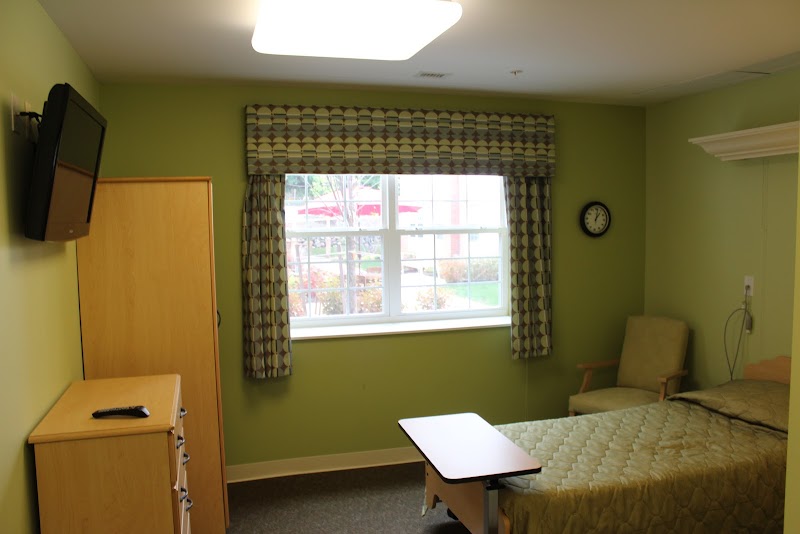
CMS rates Regency At Bluffs Park's staffing level at 4 out of 5 stars, which is above average compared to other nursing homes. Staff turnover is 55%, which is 9 percentage points above the Michigan average of 46%. High turnover can affect care consistency as new staff learn residents' individual needs.

What Have Inspectors Found at Regency At Bluffs Park?

State health inspectors documented 48 deficiencies at Regency At Bluffs Park during 2023 to 2025. These included: 5 that caused actual resident harm, 42 with potential for harm, and 1 minor or isolated issues. Deficiencies causing actual harm indicate documented cases where residents experienced negative health consequences.

Who Owns and Operates Regency At Bluffs Park?

Regency At Bluffs Park is owned by a for-profit company. For-profit facilities operate as businesses with obligations to shareholders or private owners. The facility is operated by CIENA HEALTHCARE/LAUREL HEALTH CARE, a chain that manages multiple nursing homes. With 71 certified beds and approximately 62 residents (about 87% occupancy), it is a smaller facility located in Ann Arbor, Michigan.

How Does Regency At Bluffs Park Compare to Other Michigan Nursing Homes?

Compared to the 100 nursing homes in Michigan, Regency At Bluffs Park's overall rating (2 stars) is below the state average of 3.1, staff turnover (55%) is near the state average of 46%, and health inspection rating (2 stars) is below the national benchmark.

What Should Families Ask When Visiting Regency At Bluffs Park?

Based on this facility's data, families visiting should ask: "How do you ensure continuity of care given staff turnover, and what is your staff retention strategy?" "Can I visit during a mealtime to observe dining assistance and food quality?" "How do you handle medical emergencies, and what is your hospital transfer rate?" "Can I speak with family members of current residents about their experience?" These questions are particularly relevant given the facility's high staff turnover rate.

Is Regency At Bluffs Park Safe?

Based on CMS inspection data, Regency At Bluffs Park has a clean safety record: no substantiated abuse findings (meaning no confirmed cases of resident harm), no Immediate Jeopardy citations (the most serious violation level indicating risk of serious injury or death), and is not on the Special Focus Facility watch list (a federal program monitoring the lowest-performing 1% of nursing homes). The facility has a 2-star overall rating and ranks #100 of 100 nursing homes in Michigan. While no facility is perfect, families should still ask about staff-to-resident ratios and recent inspection results during their visit.

Do Nurses at Regency At Bluffs Park Stick Around?

Staff turnover at Regency At Bluffs Park is high. At 55%, the facility is 9 percentage points above the Michigan average of 46%. High turnover means new staff may not know residents' individual needs, medications, or preferences. It can also be disorienting for residents, especially those with dementia who rely on familiar faces. Families should ask: What is causing the turnover? What retention programs are in place? How do you ensure care continuity during staff transitions?

Was Regency At Bluffs Park Ever Fined?

Regency At Bluffs Park has been fined $26,852 across 1 penalty action. This is below the Michigan average of $33,347. While any fine indicates a compliance issue, fines under $50,000 are relatively common and typically reflect isolated problems that were subsequently corrected. Families should ask what specific issues led to these fines and confirm they've been resolved.

Is Regency At Bluffs Park on Any Federal Watch List?

Regency At Bluffs Park is not on any federal watch list. The most significant is the Special Focus Facility (SFF) program, which identifies the bottom 1% of nursing homes nationally based on persistent, serious quality problems. Not being on this list means the facility has avoided the pattern of deficiencies that triggers enhanced federal oversight. This is a positive indicator, though families should still review the facility's inspection history directly.