Calhoun County Medical Care Facility

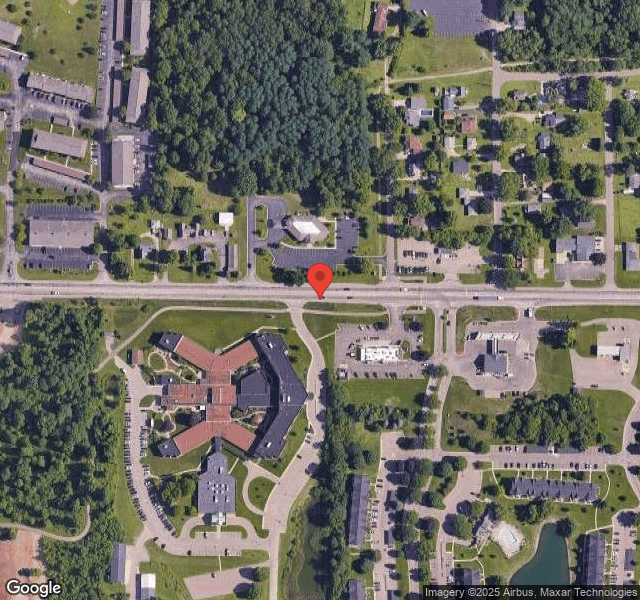
1150 E Michigan Avenue, Battle Creek, MI 49014 (269) 962-5458
Government - County 120 Beds Independent Data: November 2025
Trust Grade
85/100
#10 of 422 in MI
Last Inspection: February 2025

Within standard 12-15 month inspection cycle. Federal law requires annual inspections.

Overview

Calhoun County Medical Care Facility has a Trust Grade of B+, which means it is above average and is recommended for families considering options. It ranks #10 out of 422 facilities in Michigan, placing it in the top half, and is the best option among the 8 facilities in Calhoun County. However, the facility's trend is worsening, with issues increasing from 2 in 2024 to 7 in 2025, indicating a need for improvement. Staffing is a strength, rated 5/5 stars, but with a turnover rate of 45%, which is average for Michigan. There have been no fines recorded, which is a positive sign, and the facility has more registered nurse coverage than many others, enhancing care quality. However, some concerning incidents were noted during inspections. For example, the facility failed to regularly test sanitizer solutions in the kitchen, which could risk food safety, and it did not have a proper water management plan to reduce the risk of harmful pathogens, potentially exposing residents to respiratory infections. Additionally, food service equipment was not properly cleaned, and some food items did not have appropriate date markings, raising concerns about food safety and hygiene. Overall, while there are strengths in staffing and a good reputation, families should consider these weaknesses carefully.

Trust Score
B+
85/100
In Michigan
#10/422
Top 2%
Safety Record
Low Risk
No red flags
Inspections
Getting Worse
2 → 7 violations
Staff Stability
⚠ Watch
45% turnover. Above average. Higher turnover means staff may not know residents' routines.
Penalties
✓ Good
No fines on record. Clean compliance history, better than most Michigan facilities.
Skilled Nurses
✓ Good
Each resident gets 43 minutes of Registered Nurse (RN) attention daily — more than average for Michigan. RNs are trained to catch health problems early.
Violations
⚠ Watch
13 deficiencies on record. Higher than average. Multiple issues found across inspections.
★★★★★
5.0
Overall Rating
★★★★★
5.0
Staff Levels
★★★☆☆
3.0
Care Quality
★★★★☆
4.0
Inspection Score
Stable
2024: 2 issues
2025: 7 issues

The Good

  • 5-Star Staffing Rating · Excellent nurse staffing levels
  • Full Sprinkler Coverage · Fire safety systems throughout facility
  • No fines on record

Facility shows strength in staffing levels, fire safety.

The Bad

Staff Turnover: 45%

Near Michigan avg (46%)

Higher turnover may affect care consistency

The Ugly 13 deficiencies on record

Feb 2025 7 deficiencies
CONCERN (D)

Potential for Harm - no one hurt, but risky conditions existed

Deficiency F0637 (Tag F0637)

Could have caused harm · This affected 1 resident

**NOTE- TERMS IN BRACKETS HAVE BEEN EDITED TO PROTECT CONFIDENTIALITY** Based on interview and record review the facility failed to perform a Minimum Data Set (MDS) significant change in condition ass...

Read full inspector narrative →
**NOTE- TERMS IN BRACKETS HAVE BEEN EDITED TO PROTECT CONFIDENTIALITY** Based on interview and record review the facility failed to perform a Minimum Data Set (MDS) significant change in condition assessment for one of 19 residents (Resident #87) resulting in the potential for care needs to be unmet. Findings Included: Per the facility census R87 was admitted to the facility on [DATE]. Review of a, Supportive Care Goals Worksheet document dated 1/21/2025, revealed 87's family consented for R87 to have no measures to sustain life, a do not resuscitate (DNR) order, no hospitalization, no routine testing, no routine weights, only essential medication and vital signs were to be given. At the bottom of the form under Supportive Care it was revealed that 87's authorized decision maker signed the form on 1/21/2025 stating that consent was given for Supportive Care, and to provide treatments to promote quality of life and comfort, rather that achieve improvement in health for R87. The Nurse Practitioner signed the form on 1/21/2025, and the Physician signed the form on 1/24/2025. Review of a, Statement of Likely Terminal Illness revealed R87 was determined on 1/29/2025 to have deterioration of health or natural death may occur within six months. The document was signed by the Physician eight days after the family consented to 87's supportive care. Review of a Change in Condition (not a significant change in condition MDS assessment) assessment dated [DATE], revealed R87 had a decrease in responsiveness, weakness, swallowing difficulty, when stimulated R87's breathing would get louder, moaning with repositioning, and not respond to stimulation. The assessment revealed that R87 would transition to Comfort Care. In an interview on 2/21/2025 at 12:14 PM, Registered Nurse (RN) L RN, who was the MDS nurse, stated that she did do a significant change MDS assessment in October of 2024, and said the assessment was conducted because R87 had transitioned to Supportive Care. The last significant change MDS assessment was completed October 14 2024. Under Section J1400. of the October 2024 assessment, revealed, Prognosis. Does the resident have a condition or chronic disease that may result in a life expectancy of less than 6 months? . there was no check mark. R87 was not placed on supportive care until 1/21/2025. In an interview on 2/21/2025 at 1:10 PM, Director of Nursing (DON) B stated that Supportive Care was to provide the resident with all their wants and wishes. DON B said the resident would have no more hospitalizations, would become a DNR, would have no more blood drawn for laboratory testing. DON B said when the resident would have more changes that show end of life, the family would be encouraged to be around the resident more, comfort care would be provided, and what ever the resident needs and wants were would be provided. No significant change MDS assessment was completed for R87 as a result of R87's transition to Supportive Care, identification of a terminal illness with a life expectancy of less than six months to live.
CONCERN (D)

Potential for Harm - no one hurt, but risky conditions existed

Quality of Care (Tag F0684)

Could have caused harm · This affected 1 resident

**NOTE- TERMS IN BRACKETS HAVE BEEN EDITED TO PROTECT CONFIDENTIALITY** Resident #26 (R26) Review of the medical record demonstrated R26 was admitted to the facility 01/19/2024 with diagnose that incl...

Read full inspector narrative →
**NOTE- TERMS IN BRACKETS HAVE BEEN EDITED TO PROTECT CONFIDENTIALITY** Resident #26 (R26) Review of the medical record demonstrated R26 was admitted to the facility 01/19/2024 with diagnose that included chronic respiratory failure, venous insufficiency (improper functioning of the vein valves in the leg), peripheral vascular disease (PVD), Alzheimer's disease, dementia, hypertension, morbid obesity, congestive heart failure (CHF), type 2 diabetes, stage 3 kidney disease, obstructive sleep apnea, blepharoconjunctivitis (inflammation of both the eyelids and the conjunctiva), bilateral cataracts, chronic pain, gastro-esophageal reflux, hypothyroidism (low thyroid hormone), constipation, intellectual disabilities, and mental and behavioral disorder. The most recent Minimum Data Set (MDS) with an Assessment Reference Date (ARD) of 11/18/2024 demonstrated a Brief Interview for Mental Status (BIMS) of 00 (most server level of cognitive impairment) out of 15. During observation and attempted interview on 02/18/2025 at 11:47 a.m. R26 was observed sitting up in a wheelchair in his room. R26 did not answer questions. R26 left lower eye lid was observed to be red and drooping. Review of R26 medical record did not demonstrate any change of condition assessment or clinical documentation demonstrating observation of conjunctivas (redness/swelling of lower eye lid) for R26. Review of physician orders and plan of care did not demonstrate any treatment for conjunctivas. In an interview on 02/20/2025 at 10:50 a.m. Licensed Practical Nurse (LPN) D explained that R26 had a history of blepharoconjunctivitis (inflammation of both the eyelids and the conjunctiva). LPN D explained that she recently had observed that R26 currently had a dropping, red, and swollen left lower eye lid but that she had not written a condition change or called the physician for orders in the treatment of R26 lower eye lid. LPN D explained that she would notify the physician and document any orders as given. During observation and interview on 02/21/2025 at 09:35 a.m. R26 was observed sitting up in his wheelchair in his room. It was also observed that R26 had visible matting on bilateral eye lashes and redness and swelling was visible on his lower eyelid. When asked if R26 eyes itched or/and were painful he responded yes. Review of R26 medical record after the above observation still did not demonstrate any documentation of a change of condition or documentation of R26 matted bilateral upper eyelids or his red lower eyelid. R26 medical record did not demonstrate any orders for observation or treatment of the matting or treatment for the redness of his lower eye lids. In an interview on 02/21/2025 at 09:35 a.m. Director of Nursing (DON) B explained that it was her expectation that if a resident experienced a change in medical condition the nurse would notify the residents physician, the family, the Nursing Home Administrator, and the Director of Nursing or Assistant Director of Nursing. DON B confirmed that R26's record did not contain any information demonstrating an assessment of R26 lower left eye lid or any orders for treatment to date as of 02/18/2025. DON B could not explain why documentation of a condition change had been completed since the Licensed Practical Nurse was aware of R26 possible left eye conjunctivitis. Resident #57 (R57) Review of the Face Sheet and Minimum Data Set (MDS) dated [DATE], reflected R57 was a [AGE] year old female admitted to the facility on [DATE], with diagnoses that included acute and chronic respiratory failure, congestive heart failure(CHF), chronic obstructive pulmonary disease, history of lung cancer with lung removal, diabetes mellitus, history pneumonia, anxiety and depression. The MDS reflected R57 had a BIM (assessment tool) score of 15 which indicated her ability to make daily decisions was cognitively intact, and she required set up dressing, hygiene; supervision with bathing and toileting; and partial/moderate assist with transfers. During an observation and interview on 2/18/25 at 10:07 a.m., R57 in room sitting upright in recliner and appeared able to answer questions without difficulty. R57 reported was taking long acting insulin daily and staff were not monitoring blood sugars. Review of R57 physician orders, dated 2/7/25, reflected Basaglar KwikPen Subcutaneous Solution Pen-injector 100 UNIT/ML (Insulin Glargine) Inject 20 unit subcutaneously one time a day for DM[diabetes mellitus]. Continued review of R57 Physician Order, dated 11/5/24 through 2/6/25, reflected, Lantus Subcutaneous Solution 100 UNIT/ML (Insulin Glargine) Inject 15 unit subcutaneously one time a day for Steroid induced DM. Review of Physician order, dated 10/16/24 through 1/30/25, reflected, Admelog Injection Solution 100 UNIT/ML (Insulin Lispro) [fast acting insulin] Inject as per sliding scale .subcutaneously before meals for hyperglycemia. Review of the Medication Administration Record, date 1/1/25 through 1/31/25, reflected R57 blood sugars, were monitored three times daily and ranged from 72 to 353. R57 required use of fast acting insulin via sliding scale on 25 occasions in month of January. Review of R57 Electronic Medical Record(EMR), dated 1/31/25 through 2/18/25, reflected no evidence R57 blood sugar was monitored. Review of R57 Physician Orders, dated 2/1/25 through 2/18/25, reflected R57 had physician orders for two prophylactic antibiotics and daily steroids for chronic respiratory condition. (These types of medications known to cause increased blood sugar). Review of R57 Dietary Note, dated 1/30/2025 at 12:09 p.m., reflected, Quarterly nutrition assessment completed. Regular diet with thin liquids. Tolerating current diet texture well at this time .Significant weight gain x 3 months. Weight trend: 176# (1/18/25), 172# (12/18/24), 161# (10/16/24), and 166# (7/18/24). Resident remains at risk for weight fluctuations due to diagnosis of CHF with diuretic use .12/3/24 labs: Glucose 106 .HA1c[test to monitor blood sugar over past two to three months] 7.6%[normal level below 5.7%]. Sliding scale insulin in place to help prevent hyperglycemia. Resident is on a steroid which likely impacts blood glucose levels. Will follow up and update residents meal preferences as needed. Will follow weight trend. Continue current nutrition POC. Follow up as needed. Review of R57 Physician Progress Note, dated 2/6/25, reflected, Patient has increasing heartburn. Omeprozole will be added patient is on chronic steroid use and NSAID[class of medications for heartburn] sometimes and also i will increase lantus to 20 units once a day from 15 units. accu-check[method to monitor blood sugar] will be monitored. (Review of the EMR reflected no evidence of blood sugar monitoring.) During an interview on 2/21/25 at 11:19 AM, Licensed Practical Nurse(LPN) H verified R57 received Balsagar long acting insulin daily that was recently increase related to elevated blood sugars on 2/7/25 and R57 did not have physician order for blood sugar monitoring. LPN H reported after review of R57 EMR, reported last recorded blood sugar was 1/30/25. LPN H reported residents on insulin usually have a physician order for blood sugar. During an interview on 2/21/25 at 1:54 PM, Director of Nursing(DON) B reported would expect staff to follow physician orders including orders to monitor blood sugar. DON B reported reviewed R57 orders and reported appeared to be transcription error and R57 should have had a physician order to monitored blood sugar. Based on observation, interview, and record review the facility failed to ensure three out of 19 residents (Resident 26, 57, and 87) received care and services that met their care needs resulting in the potential for unmet care needs. Findings Included: Resident #87 (R87): Per the facility census R87 was admitted to the facility on [DATE]. During the entrance conference on 2/18/2025 at 10:04 AM Administrator A stated that the facility did not offer outside contracted Hospice services, but did offer services provided by the facility to residents. Review of the facility, Supportive Care Protocol policy dated 12/20/2022 and revised on 5/10/2023, revealed that the facility provided, .comfort, dignity, and support, as residents enter the last stages of their life. The policy revealed, This will allow the resident to focus their goals of care to support how they (the resident) choose to live rather than try to cure or aggressively treat their chronic health conditions. Further review of the policy revealed under POLICY INTERPRETATION & IMPLEMENTATION:, I. Clinical Dementia scale assessment and a Palliative Performance Scale assessment will be completed by an MDS (Minimum Data Set) nurse. The scoring of these assessments tools will be utilized by the interdisciplinary team (IDT) along with the resident's clinical signs and symptoms indicating a general decline. Under II. If the resident meets the criteria for Supportive Care (a terminal stage less than 6 months of life) by the IDT or the family members/resident's request, a care conference will be scheduled ASAP (as soon as possible) to discuss the resident's goals of care., A Statement of Likely Terminal Illness will be initiated by the NP (Nurse Practitioner) or designee, and then approved by the physician when deemed appropriate to do so. Review of a, Supportive Care Goals Worksheet document dated 1/21/2025, revealed 81's family consented for R87 to have no measures to sustain life, a do not resuscitate (DNR) order, no hospitalization, no routine testing, no routine weights, only essential medication and vital signs were to be given. At the bottom of the form under Supportive Care it was revealed that R87's authorized decision maker signed the form on 1/21/2025 stating that consent was given for Supportive Care, and to provide treatments to promote quality of life and comfort, rather that achieve improvement in health for R87. The Nurse Practitioner signed the form on 1/21/2025, and the Physician signed the form on 1/24/2025. Review of an IDT care conference dated 1/21/2025, revealed R87's decision maker was present at the meeting, and supportive care was discussed. No other IDT care conference was documented in R87's electronic medical record (EMR). Review of a, Statement of Likely Terminal Illness revealed R87 was determined on 1/29/2025 to have deterioration of health or natural death may occur within six months. The document was signed by the Physician eight days after the family consented to R87's supportive care. Review of Physician's orders dated active as of 2/4/2025, revealed R87 still had laboratory orders in place for annual complete blood count (CBC), comprehensive metabolic panel (CMP), lipid panel, thyroid screen, C-reactive protein (measures inflammation) that were ordered on 1/2/2025, and had not been discontinued per R87's family supportive care decision as outlined on the Supportive Care Goals Worksheet. The orders all revealed these were active orders. The orders also revealed R87 had an order that was still active as of 1/2/2025, and not discontinued, to obtain a weight every month. Review of R87's weight log revealed R87 continued to be weighed by staff after 1/21/2025 when R87 was placed on Supportive Care, and weighing R87 was discontinued. R87 was weighed on 1/23, 2/7, and 2/12/2025. Review of the facility policy titled, End of life Care Protocol dated 11/24/2000, last revised on 5/10/2023, and last reviewed on 12/27/2024, revealed that it was the policy of the facility to provide comfort, dignity and support, during the dying process. The policy revealed, This End of Life process will be known as Comfort Care. Review of a Change in Condition assessment dated [DATE], revealed R87 had a decrease in responsiveness, weakness, swallowing difficulty, when stimulated R87's breathing would get louder, moaning with repositioning, and not respond to stimulation. The assessment revealed that R87 would transition to Comfort Care. In an interview on 2/20/2025 at 11:12 AM, Staff Educator (SE) G stated that she provided end of life training for the staff on Supportive and End of Life Care with a power point presentation. SE G said Supportive Care is provided when a resident is determined to have six months or less to live, and Comfort Care or End of Life is when a resident is determined to have days to weeks to live, and actively dying. Review of the power point presentation SE G provided as the educational tool used to train staff revealed, no date of the creation of the educational power point presentation in order to determine current standards of practice, and no references to educational content to validate facts and best practices for end of life care (Palliative, Supportive, Comfort, End of Live Care). The education tool did not specify how a resident who receives these services, in regards to Supportive Care and End of Life Care, has an increase in care needs, nor how to provide for the resident and family those extra care needs. The education power point tool focused mostly on the symptoms a resident will show once in the active dying stage. In an interview on 2/20/25 at 3:34 PM, with CNA I and CNA J both stated that when a resident had six months to live that meant they could give the resident whatever the resident wanted. Both CNAs said they did receive the power point training which was from SE G, and said every year they have to review the training. In a continued interview with CNA I and J both CNAs stated that they did not provide any additional care to residents who receive Supportive or End of Life Care, and both agreed that they have not been told or trained that they are to provide any other extra care, that was more than the care they already provided. In an interview on 2/21/2025 at 1:10 PM, Director of Nursing (DON) B stated that Supportive Care was to provide the resident with all their wants and wishes. DON B said the resident would have no more hospitalizations, would become a DNR, would have no more blood drawn for laboratory testing. DON B said when the resident would have more changes that show end of life, the family would be encouraged to be around the resident more, comfort care would be provided, and what ever the resident needs and wants were would be provided.
CONCERN (D)

Potential for Harm - no one hurt, but risky conditions existed

Respiratory Care (Tag F0695)

Could have caused harm · This affected 1 resident

**NOTE- TERMS IN BRACKETS HAVE BEEN EDITED TO PROTECT CONFIDENTIALITY** Based on observation, interview and record review, the facility failed to ensure proper storage, cleaning and labeling of oxygen...

Read full inspector narrative →
**NOTE- TERMS IN BRACKETS HAVE BEEN EDITED TO PROTECT CONFIDENTIALITY** Based on observation, interview and record review, the facility failed to ensure proper storage, cleaning and labeling of oxygen/respiratory equipment for two Resident (R57 and R61), of four residents reviewed for oxygen and respiratory care, resulting in the likelihood for cross contamination, respiratory illnesses/disease. Findings include: Resident #57(R57) Review of the Face Sheet and Minimum Data Set (MDS) dated [DATE], reflected R57 was a [AGE] year old female admitted to the facility on [DATE], with diagnoses that included acute and chronic respiratory failure, congestive heart failure(CHF), chronic obstructive pulmonary disease, history of lung cancer with lung removal, diabetes mellitus, history pneumonia, anxiety and depression. The MDS reflected R57 had a BIM (assessment tool) score of 15 which indicated her ability to make daily decisions was cognitively intact, and she required set up dressing, hygiene; supervision with bathing and toileting; and partial/moderate assist with transfers. During an observation and interview on 2/18/25 at 10:07 a.m., R57 was in room sitting upright in recliner(no bed in R57 room) with oxygen in use via nasal cannula set at 3 liters per minute with tubing dated 2/10/25. R57 had nebulizer equipment including mask that was un-bagged/undated on bedside table and Continuous positive airway pressure(CPAP) machine on dresser un-bagged. R57 appeared able to answer questions without difficulty. R57 reported long history of respiratory issues including right lobecomy related to cancer and several episodes of pneumonia with hospital admissions. R57 reported used CPAP nightly and staff add water to chamber but do not rinse or clean mask and reported prior to admission to facility rinsed mask daily at home. During an interview on 2/21/25 at 11:19 AM, Licensed Practical Nurse(LPN) H reported oxygen tubing was changed weekly, every Monday, and nebulizer equipment was not reused. LPN H reported CPAP equipment and un-used oxygen tubing was stored in black cloth bags and changed monthly. Resident #61(R61) Review of the Face Sheet and Minimum Data Set (MDS) dated [DATE], reflected R61 was a [AGE] year old female admitted to the facility on [DATE], with diagnoses that included chronic obstructive pulmonary disease, diabetes mellitus, dementia and manic depression. The MDS reflected R61 had a BIM (assessment tool) score of 15 which indicated her ability to make daily decisions was cognitively intact. During an observation and interview on 2/18/25 at 11:31 AM, R61 was sitting in chair in room with oxygen running via nasal cannula. R61 appeared pleasant and able to answer questions without difficulty. Observed R61 Bilevel Positive Airway Pressure(BiPAP) equipment in room with mask resting directly on bed. R61 reported staff fill water chamber and connect oxygen but do not rinse mask. During an interview on 2/21/25 at 12:05 p.m., LPN H reported if residents had CPAP or BiPAP they usually had orders to clean masks weekly in Treatment Administration Record(TAR) and verified R57 or R61 did not have orders to clean CPAP/BIPAP and was unsure why. LPN H verified R61 had respiratory mask laying directly on bed and did not have black bag available in room for storage. During an observation on 2/21/25 at 12:15 PM, R57 was sitting in recliner in room with oxygen running via nasal cannula from room concentrator with tubing dated 2/10 (11 days old). During an interview on 2/21/25 at 1:54 PM, Director of Nursing(DON) B reported would expect CPAP/BiPAP equipment to be stored in black bags and orders in Treatment Administration Record for nurse to clean weekly. DON B reported would expect oxygen tubing to be changed weekly.
CONCERN (D)

Potential for Harm - no one hurt, but risky conditions existed

Deficiency F0760 (Tag F0760)

Could have caused harm · This affected 1 resident

**NOTE- TERMS IN BRACKETS HAVE BEEN EDITED TO PROTECT CONFIDENTIALITY** Based on observation, interview, and record review the facility failed to insure that one resident (R57) was free from significa...

Read full inspector narrative →
**NOTE- TERMS IN BRACKETS HAVE BEEN EDITED TO PROTECT CONFIDENTIALITY** Based on observation, interview, and record review the facility failed to insure that one resident (R57) was free from significant medications errors out of one resident reviewed for significant medication errors resulting in the potential for adverse physical reactions/outcomes to residents. Findings Included: Resident #57 (R57) Review of the Face Sheet and Minimum Data Set (MDS) dated [DATE], reflected R57 was a [AGE] year old female admitted to the facility on [DATE], with diagnoses that included acute and chronic respiratory failure, congestive heart failure(CHF), chronic obstructive pulmonary disease, history of lung cancer with lung removal, diabetes mellitus, history pneumonia, anxiety and depression. The MDS reflected R57 had a BIM (assessment tool) score of 15 which indicated her ability to make daily decisions was cognitively intact, and she required set up dressing, hygiene; supervision with bathing and toileting; and partial/moderate assist with transfers. During an observation and interview on 2/18/25 at 10:07 a.m., R57 in room sitting upright in recliner and appeared able to answer questions without difficulty. R57 reported had concern about medications related to medication error that occurred on 2/15/25 afternoon shift. R57 reported had been sleeping and was waken by male nurse who who administered medications and later came in and apologized after reporting had administered R57 another residents medications. R57 reported staff informed R57 that Nurse Practitioner had been notified who said R57 would be okay. R57 stated, I felt fuzzy the next day. R57 reported staff did not follow up with her after medication error and reported usually reviews her medications but had been sleeping that day. Review of R57 Nurse Progress Note, dated 2/15/2025 at 10:44 p.m., reflected, Patient given Percocet[controlled narcotic] 10-325mg, Atorvastatin[used to treat high cholesterol] 40mg, Gabapentin[used to treat seizure disorder or nerve pain] 300mg given in error. No adverse effects noted during this time. [Named Assistant Director of Nursing(ADON) N, Nurse Practitioner(NP) O, and Nursing Home Administrator(NHA) A] all notified of the event at 19:50[7:50 p.m.]. Medication error form was completed. BP: 143/76 R: 16 P: 74 O2: 97% Resident is alert and oriented. Review of R57 Medication Administration Record(MAR), dated 2/1/25 through 2/20/25, reflected R57 was administered Hydrocod [NAME]-Chlorphe [NAME] ER Oral Suspension Extended Release 10-8 MG/5ML Give 5 ml by mouth as needed for cough on 2/16/25 at 1:03 a.m.(cough syrup with codeine, controlled narcotic, five hours after given Percocet 10mg((controlled narcotic)) R57 was not prescribed, in error). Review of the facility, MEDICATION AND TREATMENT ERRORS AND OMISSIONS, dated 2/15/25 at 7:30 p.m., reflected R57 received another resident medications in error that included Percocet 10/325mg, Atrovastatin 40mg, and Gabapentin 300mg. The document included description, [named LPN Q] pulled meds to pass, I thought she instructed me to take them to [named R57], but they were intended for [named other Resident S]. Review of the facility, CONTROLLED DRUG RECEIPT/RECORD/DISPOSITION FORM, dated 2/15/25 through 2/20/25, reflected LPN Q signed out Percocet 10/325mg for other resident S at 7:29 p.m. The record reflected hand written note on document by same entry, med error, given to another res. During a telephone interview on 2/20/25 at 3:00 PM, Licensed Practical Nurse(LPN) P reported had worked at the facility for three weeks and was currently still with preceptor. LPN P reported worked 2/15/25 night shift from 7:00 p.m. to 7:00 a.m. with preceptor LPN R. LPN P reported received report from day nurse LPN Q. LPN P reported preceptor LPN R stepped away and while waiting for LPN R to return, day nurse LPN Q asked LPN trainee P to deliver prepared medications to R57. LPN R reported must have misunderstood day nurse LPN Q because he thought LPN Q said R57 first name but actually medications were for another resident S with similar name. LPN P reported discovered about 10 minutes later after day nurse LPN Q had left the facility. LPN P reported assessed R57, informed of the medication error, completed paperwork, informed Nurse Practitioner (NP) O and Assistant Director of Nursing (ADON) N. LPN P reported NP O ordered to hold xanax, ibuprofen and R57 lesser dose of Atrovastatin. LPN P verified R57 was given Percocet 10/325mg(controlled narcotic pain medication), Atrovastatin 40mg, Gabapentin 300mg in error. LPN P reported monitored R57 through out night, however, was unsure if assessments had been documented with exception of vitals at the time of the medication error. LPN P reported R57 complained of feeling hazy in morning and was unsure if that was documented. LPN P reported had not worked since event and reported after the medication error Preceptor LPN R educated LPN P not to pass resident medications prepared by another staff. During a telephone interview on 2/20/25 at 3:32 PM, LPN Q reported had worked at the facility for about three months and was a new nurse. LPN Q reported had worked 2/15/25 on day shift and given to report to LPN R and Trainee LPN P around 7:00 p.m. and reported that another resident needed pain medications. LPN Q reported did not recall asking Trainee LPN P to pass medications she had prepared. LPN Q reported if she had prepared controlled narcotic medications they would be signed out by her on the, Controlled Drug Record. LPN Q reported received call from Director of Nursing(DON) B that day(2/20/25) about R57 medication error and reported was not aware of medication error until today. LPN Q reported had not yet received education related to incident. During a telephone interview on 2/20/25 at 4:02 pm, Preceptor LPN R reported had worked at the facility about 3 months and was a new nurse. LPN R reported was LPN P preceptor on 2/15/25 for first time. LPN R reported was not asked prior to having to mentor new staff but felt comfortable. LPN R reported received report from LPN Q, who was behind and finishing medication pass at shift change. LPN R reported LPN Q prepped another resident medications and informed LPN R resident had also requested hair and tooth brush. LPN R reported she went to obtain items and returned to medication cart less than five minutes later and LPN Q was gone and Trainee LPN P reported LPN Q told him to administered prepared medications to R57. LPN R verified another resident medications had been given to R57 in error. LPN R reported medication error to Assistant Director of Nursing (ADON) N, NP O and R57 and orders were obtained to hold three of R57 own medications. LPN R reported monitored R57 and completed medication error report and reported unsure if R57 monitoring was documented. LPN R reported R57 did report she felt fuzzy to LPN P in the morning and was unaware of documented or reported to provider. LPN R reported, new nurses usually work seven shifts with preceptors. LPN R stated she did educated LPN P not to administer medications prepared by someone else. During an interview and record review on 2/21/25 at 1:02 PM, -02/21/25 01:50 PM, Staff Educator Registered Nurse G reported had been staff educator for five years. RN G reported new hire nurse staff received one to two day classroom orientation then received training with preceptor on floor for several shifts depending on skill level. RN G reported preceptors receive training on how to train prior to being asked to be preceptor. RN G reported schedules are completed by facility scheduler along with DON B and RN G was not involved. RN G reported LPN R had not been trained to be a trainer and had not been asked prior to shift if she could be preceptor. LPN G reviewed the 2/15/25 schedule and reported there was a more seasoned nurse on night shift who would have been qualified and trained to be LPN P preceptor. RN G reported would expect nurse who prepared medication to administer medications especially controlled narcotic medications. During an interview on 2/21/25 at 1:54 PM, Director of Nursing(DON) B reported was made aware of R57 medication administration error on 2/17/25 and ADON N was notified shortly after incident. DON B reported called individuals involved and reported Trainee LPN P was working with LPN R on 2/15/25 7:00 p.m. to 7:00 a.m. shift with LPN Q on day shift 2/15/25. DON B reported LPN Q prepped medications and asked LPN P to administer to another resident but LPN P heard R57. DON B reported would expect nurse who prepares medication to administer medications. DON B reported staff schedule completed by scheduler and Staff Educator G during training and reported DON B was not involved in scheduling new staff.
CONCERN (E)

Potential for Harm - no one hurt, but risky conditions existed

Deficiency F0761 (Tag F0761)

Could have caused harm · This affected multiple residents

Based observation, interview, and record review the facility failed to ensure proper storage of medication in three of three medication carts and one medication room of three reviewed for medication s...

Read full inspector narrative →
Based observation, interview, and record review the facility failed to ensure proper storage of medication in three of three medication carts and one medication room of three reviewed for medication storage. Findings include: During an observation and interview on 2/20/25 at 7:57 a.m., Registered Nurse (RN) T opened the Maple Grove Medication cart. RN T verified three opened undated eye drops including xalatin, cosopt, and alphagan. RN T reported should be dated when opened and reported some staff document items open date in binder on medication cart and verified was not documented. During an observation on 2/20/25 at 8:51 AM, Licensed Practical Nurse (LPN) U opened the [NAME] Court Medication cart. LPN U verified open undated eye drop prednisolone Acetate Ophthalmic Suspension 1 % and was unsure when it had been opened. During an interview on 2/21/25 at about 3:30 PM, Director of Nursing(DON) B reported would expect multidose medications including eye drops to be dated when opened and staff to follow, Medication with Shortened Expiration dates, guide placed in medication cart binders yesterday. DON B reported staff were educated on process starting yesterday. During an observation and interview on 2/20/25 at 10:51 AM, Licensed Practical Nurse (LPN) H opened the Red Oak Trail Medication cart. LPN H verified two opened undated eye drops including Brimonidine 0.2% and Latanoprost 0.005%. LPN H reported eye drops should be dated when opened. During an observation and interview on 2/20/25 at 11:19 AM, with LPN H the medication room on Red Oak Trail was reviewed, inside of an unlocked cupboard the following expired medications were found: an opened tube of triple antibiotic ointment labeled with a residents first initial and last name with a manufactures expiration date of 12/19, an opened tube of triamcinolone 0.1% ointment labeled with a residents first initial and last name with a manufactures expiration date of 12/13 and a bottle of carbamide peroxide ear drops with a manufactures expiration date of 7/24. When asked how expired medications should be handled, LPN H reported that they should be discarded. Review of the facilities policy titled Storage and Labeling of Drugs and Biologicals updated 12/30/24, documented in part All drugs must have an expiration date on the manufacture's container and will not be kept beyond this identified date .Specific medications such as insulins, ophthalmics and inhaler, for example, with shortened expiration dates once the medication is opened, will be dated when opened and will be discarded according to specific pharmaceutical guidelines .
CONCERN (F)

Potential for Harm - no one hurt, but risky conditions existed

Food Safety (Tag F0812)

Could have caused harm · This affected most or all residents

**NOTE- TERMS IN BRACKETS HAVE BEEN EDITED TO PROTECT CONFIDENTIALITY** During a tour of the kitchen, at 10:35 AM on 2/18/25, an interview with CDM K found that the facility does not regularly test th...

Read full inspector narrative →
**NOTE- TERMS IN BRACKETS HAVE BEEN EDITED TO PROTECT CONFIDENTIALITY** During a tour of the kitchen, at 10:35 AM on 2/18/25, an interview with CDM K found that the facility does not regularly test their sanitizer buckets. When asked about the availability of test strips, it was found that the only test strips available had manufacture expiration date of [DATE]. Further review found that the test strips were for bleach based sanitizer and the facility uses quaternary ammonium. According to the 2022 FDA Food Code section 4-302.14 Sanitizing Solutions, Testing Devices. A test kit or other device that accurately measures the concentration in MG/L of SANITIZING solutions shall be provided. During an evaluation of the kitchen, at 11:00 AM on 2/18/25, an interview with CDM K found that the large floor mixer is used approximately five times per week. At this time, the mixer was observed to have dried, white, food debris on the grated splash guard and the mixer was not in use. During an evaluation of the kitchen, at 11:10 AM on 2/18/25, the meat slicer was observed to have an accumulation of dried food debris in the back under side portion of the blade. During an evaluation of the satellite kitchen in the [NAME] hall, at 12:04 PM on 2/18/25, the ice dispenser was observed to have a buildup of an orange substance inside the shoot. During an evaluation of the satellite kitchen on the Red Oak hallway, at 12:49 PM on 2/18/25, it was observed that the ice dispenser shown a buildup of an orange substance inside the dispensing shoot. During an evaluation of the satellite kitchen on the Blue Spruce hallway, at 1:04 PM on 2/18/25, the ice dispenser was observed to have a buildup of an orange substance inside the dispensing shoot. During an evaluation of the satellite kitchen on the Beechwood Hill hallway, at 1:24 PM on 2/18/25, the ice dispenser was observed to have a buildup of an orange substance inside the dispensing shoot. According to the 2022 FDA Food Code section 4-601.11 Equipment, Food-Contact Surfaces, Nonfood-Contact Surfaces, and Utensils. (A) EQUIPMENT FOOD-CONTACT SURFACES and UTENSILS shall be clean to sight and touch. (B) The FOOD-CONTACT SURFACES of cooking EQUIPMENT and pans shall be kept free of encrusted grease deposits and other soil accumulations. (C) NonFOOD-CONTACT SURFACES of EQUIPMENT shall be kept free of an accumulation of dust, dirt, FOOD residue, and other debris. Based on observation, interview, and record review, the facility failed to prepare food in accordance with professional standards for food service safety. This deficient practice has the potential to result in food borne illness among all residents that consume food from the kitchen. Findings include: During an evaluation of the kitchen, at 10:02 AM on 2/18/2025, it was observed that clear plastic scoops of the bulk storage containers were found hanging on the outside perimeter of the containers facing where staff would walk by. Observation found two of the scoops with discolored dingy surfaces. When asked if the scoops are normally stored open exposed on the front of the bin about a foot or so off the ground, Certified Dietary Manager (CDM) K stated that's where they have been kept. Further observation found that neither of the three containers were labeled with the common name of the ingredients they contained. According to the 2022 FDA Food Code section 3-304.12 In-Use Utensils, Between-Use Storage. During pauses in FOOD preparation or dispensing, FOOD preparation and dispensing UTENSILS shall be stored: (A) Except as specified under (B) of this section, in the FOOD with their handles above the top of the FOOD and the container .(E) In a clean, protected location if the utensils, such as ice scoops, are used only with a food that is not time/temperature control for safety food . During a tour of the main kitchen, at 10:22 AM on 2/18/2025, it was observed that the two compartment preparation sink was found directly connected to the waste water line. When asked if there was a basement under the kitchen, staff were unsure and were not aware of the drain having an air gap. When asked what the sink is used for, CDM stated staff use the sink for food preparation. During a tour of the Beachwood kitchenette, at 1:24 PM on 2/18/2025, it was found that the overhead dish spray was observed hanging below the overflow rim of the sink. It was also observed that the small two compartment sink, had a sink sprayer on the back side of the sink that could be pulled out and lay below the overflow rim of the sink. These plumbing set ups create the potential for cross connections between potable water and wastewater. During an interview with Facilities Operations Manager M at 1:55 PM on 2/20/2025, it was found that there is no basement under the kitchen and that all plumbing is in the floor indicating an air gap would not be present. According to the 2022 FDA Food Code section 5-402.11 Backflow Prevention. (A) Except as specified in (B), (C), and (D) of this section, a direct connection may not exist between the SEWAGE system and a drain originating from EQUIPMENT in which FOOD, portable EQUIPMENT, or UTENSILS are placed . According to the 2022 FDA Food Code section 5-202.13 Backflow Prevention, Air Gap. An air gap between the water supply inlet and the flood level rim of the PLUMBING FIXTURE, EQUIPMENT, or nonFOOD EQUIPMENT shall be at least twice the diameter of the water supply inlet and may not be less than 25 mm (1 inch). During a tour of the main kitchen, at 10:21 AM on 2/18/2025, it was observed that a container of germicidal wipes was present on the three-compartment sink. The manufactures label stated the product was a high-level disinfectant and a further review of the label found it was not approved for food contact surfaces. When asked what staff use these wipes for, CDM K stated she doesn't think they use the wipes and are not sure why the container was stored there. During a tour of the janitors closet of the main kitchen, at 11:04 AM on 2/18/2025, it was observed that an open bottle of chemical (Spic and Span) was observed with no cap sealing the container. According to the 2022 FDA Food Code section 7-204.11 Sanitizers, Criteria. Chemical SANITIZERS, including chemical sanitizing solutions generated on-site, and other chemical antimicrobials applied to FOOD-CONTACT SURFACEs shall: (A) Meet the requirements specified in 40 CFR 180.940 Tolerance exemptions for active and inert ingredients for use in antimicrobial formulations (Food-contact surface sanitizing solutions)P, or (B) Meet the requirements as specified in 40 CFR 180.2020 Pesticide Chemicals Not Requiring a Tolerance or Exemption from Tolerance-Non-food determinations. During an initial tour of the facility, the following areas were observed to have an excess accumulation of debris: under the racks of the walk-in cooler floor, structural portions of the ventilation hood in the main kitchen, and behind the oven in the Red Oak kitchenette. When asked about the accumulation behind the oven on Red Oaks, CDM K stated that it's on our list to get done. According to the 2022 FDA Food Code section 6-501.12 Cleaning, Frequency and Restrictions. (A)PHYSICAL FACILITIES shall be cleaned as often as necessary to keep them clean .
CONCERN (F)

Potential for Harm - no one hurt, but risky conditions existed

Infection Control (Tag F0880)

Could have caused harm · This affected most or all residents

**NOTE- TERMS IN BRACKETS HAVE BEEN EDITED TO PROTECT CONFIDENTIALITY** Based on observation, interview, and record review, the facility failed to have an active and ongoing plan for reducing the risk...

Read full inspector narrative →
**NOTE- TERMS IN BRACKETS HAVE BEEN EDITED TO PROTECT CONFIDENTIALITY** Based on observation, interview, and record review, the facility failed to have an active and ongoing plan for reducing the risk of Legionella and other opportunistic pathogens of premise plumbing (OPPP). This deficient practice has the increased potential to result in water borne pathogens to exist and spread in the facility's plumbing system and an increased risk of respiratory infection among any or all the residents in the facility. Findings include: During an interview with Facilities Operations Manager (FOM) M, starting at 10:23 AM on 2/20/25, it was found that the facility does not currently have any routine testing on the facilities water supply. When asked if there was a team that oversaw the Water Management Program (WMP), FOM M stated she was unsure of a team. When asked what facility established control limits were in place in order to decrease the risk of Legionella and OPPP from growing a spreading in the facility, FOM M was unsure and stated she was slightly newer to the position and had not had much to do with WMP before. During a tour of the facility, with FOM M, starting at 10:53 AM on 2/20/25, the following water fixtures were identified as having an increased risk of developing OPPP / Legionella: A review of [NAME] Ridge soiled utility room hopper found discolored water momentarily dispensed from the faucet over the hopper. A review of the Red Oak janitors closet found the cold-water line was shut off and a sewer gas odor was present with air coming from the drain for the Janitors sink. This indicates that faucet has not been used in so long that the p-trap for the wastewater line has evaporated. A review of the Maple soiled utility room hopper found that brown and discolored water ran from the faucet above the hopper for roughly 10 seconds before becoming clear. When asked if she could see the discolored brown water, FOM M stated yes. Further review found that the foot pedals to the hopper spray were found turned off, creating a stagnant line. A review of the upstairs Service Hall found a large commercial humidifier attached to the water line that was left on. When asked if the facility uses the humidifier, FOM M stated no, it's been down for as long as she knows. A review of the Beachwood soiled utility hopper found that dark brown water dispensed from the hot water supply for roughly seven seconds. A review of the facilities policy entitled, Water Management Program - Legionella, revised 1/12/24, found that under the Preventative Maintenance heading, it states System Flushing - Flush all drain outlets (both hot and cold) that are used less than once per week. Purging should be approx. 1-3 minutes or until temperature stabilizes. The document goes on to state that these flushing's should happen weekly. A further review found that an example given under High Risk Conditions, states anywhere is the building where Stagnant water is present . and where Biofilm is present - sediment, sludge, scale, organic materials, and iron oxide . The document goes on to state, under the sub paragraph entitle Control Measures, that Conditions throughout the building water system are not always uniform. For this reason, control measures should be monitored in multiple locations throughout the building. Under monthly frequency it states Disinfection levels - Residual chlorine should be checked to ensure proper disinfection is available from municipal source. No Centers for Disease Control (CDC) Legionella tool-kit was observed completed as part of the facilities WMP.
Feb 2024 2 deficiencies
CONCERN (D)

Potential for Harm - no one hurt, but risky conditions existed

Comprehensive Care Plan (Tag F0656)

Could have caused harm · This affected 1 resident

**NOTE- TERMS IN BRACKETS HAVE BEEN EDITED TO PROTECT CONFIDENTIALITY** Based on observation, interview, and record review, the facility failed to develop and/or implement a comprehensive care plan fo...

Read full inspector narrative →
**NOTE- TERMS IN BRACKETS HAVE BEEN EDITED TO PROTECT CONFIDENTIALITY** Based on observation, interview, and record review, the facility failed to develop and/or implement a comprehensive care plan for 1 (Resident #25) of 19 residents reviewed, resulting in the potential for unmet care needs. Findings include: Review of the medical record revealed that Resident #25 (R25) was admitted to facility 11/1/2018 with diagnoses including hypertensive heart disease with heart failure and personal history of other venous thrombosis and embolism. Review of the Minimum Date Set (MDS) with an Assessment Reference Date (ARD) of 12/4/23 revealed that R25 had a Brief Interview for Mental Status (BIMS-a cognitive screening tool) score of 15 (cognitively intact). Review of an active Activities of Daily Living Care Plan reflected that R25 required extensive assist of 1 with upper and lower body dressing and was dependent for footwear placement. In an observation and interview on 2/25/24 at 1:44 PM, R25 was observed sitting in room, in high back wheelchair, with back of chair reclined slightly and lower extremities elevated on wheelchair leg rests. Blue non-skid socks were noted to bilateral feet with swelling observed to R25's lower legs, ankles, and feet. R25 stated that she used to wear special knee-high stockings on her legs that helped with the swelling but that she hadn't for the last couple of months as the girls don't get them to put them on me. R25 stated that she was unable to put the stockings on herself, did not even know where they were, but that they had seemed to help with the swelling when she had worn them. In an observation and interview on 2/26/24 at 11:53 AM, R25 was observed sitting in room, in high back wheelchair, with back of chair reclined slightly and lower extremities elevated on wheelchair leg rests. Blue non-skid socks were again noted to bilateral feet with ongoing swelling observed to R25's lower legs, ankles, and feet. R25 stated that staff had not assisted with placement or mentioned plan to place her special stockings yet that day. Review of R25's Physician Order dated 9/6/23 stated, apply knee high ted hose [TED hose-thromboembolic deterrent hose-compression socks designed to help prevent blood clots and swelling in legs] in AM [morning] and remove at HS [bedtime]. Review of R25's Activities of Daily Living Care Plan was noted to include an associated intervention which stated, I have swelling in my lower legs and need assistance putting compression stockings on in the morning and removing them at bedtime . with an initiated date of 5/13/19. Review of the Resident Care section of R25's [NAME] (tool used by the Certified Nurse Aide to guide them as to the care needs of a specific resident) reflected, I have swelling in my lower legs and need assistance putting compression stockings on in the morning and removing them at bedtime . Review of R25's Treatment Administration Record (TAR) dated 2/1/2024 - 2/29/2024 reflected order for knee high TED hose with order noted to be signed out as completed on both 2/25/24 and 2/26/24 although the hose had not been noted to be in place at R25's bilateral lower extremities on either date. In an interview on 2/26/24 at 11:59 AM, Certified Nurse Aide (CNA) D confirmed familiarity with R25 and stated that she was her assigned CNA that date. Per CNA D, R25 was conversant, able to make all needs known, and was able to feed self but required total assist for dressing including sock placement. CNA D stated that R25 had TED hose but that she did not currently have them on as believed they were only used at night. Upon review of R25's [NAME], CNA D stated that the [NAME] reflected that R25 should have compression socks placed in the morning, confirmed that she had not placed them herself yet that date, and would have to check to see if they were on. On 2/26/24 at 12:12 PM, CNA D was observed to enter R25's room, questioned her as to whether her stockings were in place at which time R25 denied, with CNA lifting R25's pant leg to confirm that the compression stockings were not in place. In an interview on 2/26/24 at 12:15 PM, Licensed Practical Nurse (LPN) E confirmed familiarity with R25 as stated that she resided on the unit where she was routinely assigned. LPN E stated the R25 was alert, able to use her call light to alert staff of needs, but required staff assist with both dressing and sock placement. LPN E initially denied that R25 had any specialized splints or stockings, then stated that she may have compression hose but could not say with any certainty and would have to reference R25's medical record to verify. LPN E further stated that any resident that had compression stockings would have an order to reflect and that the assigned CNA would assist the resident with placement each morning but again denied knowledge of whether R25 had an order for them. Upon referencing R25's medical record, LPN E stated that R25 had an order for knee high TED hose that were to be placed in the AM and removed at HS, confirmed that she had signed out R25's TED hose order earlier that date, thought that R25 had the hose on, but stated that she had not placed R25's TED hose herself that morning or verified that R25's assigned CNA had placed them. On 2/26/24 at 12:22 PM, LPN E entered R25's room, R25 again denied that she had TED hose in place with LPN E observed to lift R25's pant leg to confirm that the ordered hose were not in place. In an interview on 2/26/24 at 12:24 PM, Registered Nurse/Unit Manager (RN/UM) F confirmed familiarity with R25, stated that she had intermittent lower extremity edema, had an order for compression hose to be placed upon rising and would expect that the hose would be in place, at that time, per R25's physician order and as reflected on her care plan. Review of the facility policy titled, Resident Assessments with a 12/29/22 date of revision stated, .Comprehensive Care Plans: Each resident will have a person-centered comprehensive care plan developed and implemented to meet his other preferences and goals, and address the resident's medical, physical, mental and psychosocial needs .
CONCERN (D)

Potential for Harm - no one hurt, but risky conditions existed

Deficiency F0688 (Tag F0688)

Could have caused harm · This affected 1 resident

**NOTE- TERMS IN BRACKETS HAVE BEEN EDITED TO PROTECT CONFIDENTIALITY** Resident #17 (R17): Review of the medical record reflected R17 admitted to the facility on [DATE], with diagnoses that included ...

Read full inspector narrative →
**NOTE- TERMS IN BRACKETS HAVE BEEN EDITED TO PROTECT CONFIDENTIALITY** Resident #17 (R17): Review of the medical record reflected R17 admitted to the facility on [DATE], with diagnoses that included diffuse traumatic brain injury with loss of consciousness of unspecified duration, contracture of right elbow, contracture of left elbow, contracture of right wrist and contracture of left wrist. The admission Minimum Data Set (MDS), with an Assessment Reference Date (ARD) of 12/27/23, reflected R17 had impairments of both arms and both legs. During an observation on 02/25/24 at 12:12 PM, R17 was observed lying on his left side, in bed. His left arm was bent at the elbow and under his head. His right hand was observed to be clenched into a fist. On 02/25/24 at 12:30 PM, R17 was observed being assisted into the dining room by Certified Nurse Aide (CNA) I. R17 was seated in a high-back wheelchair, holding onto the left armrest with his right hand. R17's Care Plan reflected he had contractures (joint stiffness/limited range of motion) of both elbows and wrists. R17's Care Plan included an intervention for, Restorative nursing tasks per assigned tasks in POC. A Maintenance Care Program form, with an effective date of 2/6/24, revealed restorative recommendations that were consistent with R17's NURSING REHAB programs. The form was signed by Physical Therapy on 1/31/24. The task section of R17's medical record reflected, NURSING REHAB (PT): Seated bean bag grab and toss. Place bean bags and basketball net on left side, have resident grab bags with left and right hand and place in basketball net as tolerated. 3x/week [three times per week] or as tolerated. On 2/26/24, documentation for the past 30 days reflected the task has been signed out as being completed once, for five minutes, on 2/7/24. The task section of R17's medical record reflected, NURSING REHAB: Seated BLE [bilateral lower extremity] exercises. Add 3# [pound] ankle weights and use yellow theraball to kick 3 sets of 15 reps or as tolerated. 3x/week or as tolerated. On 2/26/24, documentation for the past 30 days reflected the task has been signed out once, for three minutes, on 2/7/24. For both of R17's NURSING REHAB programs, Resident Not Available was documented on 2/15/24. Not Applicable was documented on 2/6/24, 2/8/24, 2/9/24, 2/12/24, 2/13/24, 2/14/24, 2/16/24, 2/19/24, 2/20/24, 2/21/24, 2/22/24 and 2/23/24. No resident refusals were documented. Documented reasons for not available or not applicable included spa day/day of rest being documented 12 times and still in bed/sleeping being documented two times. During an interview on 02/26/24 at 2:17 PM, Restorative Licensed Practical Nurse (LPN) C reported the restorative department had three CNAs. It was reported that restorative CNAs were pulled from restorative to work the floor sporadically and not able to complete their programs. LPN C indicated the frequency of pulling restorative CNAs to work the floor had increased over the prior two weeks. Based on observation, interview, and record review, the facility failed to provide restorative services for two of two residents reviewed for limited mobility (Resident #17 & #40), resulting in unmet needs and goals. Findings include: Resident #40 (R40) On 2/25/24 at approximately 12:50 PM R40 was observed seated in a wheelchair at a table eating lunch. R40 held a fork in her right hand that was arthritic and appeared to be struggling with picking up food with her fork. On 2/26/24 at 12:44 PM R40 was observed eating lunch using a spoon; she was able to grip and control the spoon more easily when compared to a fork. R40's Minimum Data Set (MDS) assessment with assessment reference date of 12/06/23 revealed she was admitted to the facility on [DATE]; had a Brief Interview for Mental Status (BIMS), a short performance-based cognitive screener, score of 10 (08-12 Moderate Cognitive Impairment). The same MDS assessment indicated R40 did not have deficits in functional range of motion (ROM), in her upper and lower extremities. R40's Activities of Daily Living (ADL) Care Plan revised 11/14/23, revealed R40 had a memory deficit and arthritis in both of her hands; interventions included to provide functional maintenance/restorative program. R40's electronic medical record, under tasks, included restorative activities to be completed three times a week or as tolerated: open and close fists, one set of 10 repetitions to each hand as tolerated. Bend and straighten elbows, one set of 10 repetitions, to each arm as tolerated; turn head left to right, one set of 10 repetitions as tolerated. And to use an exercise machine 10 minutes as tolerated 2 to 3 times a week. Restorative Nurse/Licensed Practical Nurse (LPN) C was interviewed on 2/27/24 at 9:16 AM and stated she had three restorative nursing assistants that worked Monday through Friday from 7:00 AM to 3:00 PM. LPN C stated her restorative assistants and herself have been pulled to work on the units as nurse/nurse assistants to meet staffing needs. Restorative services may not be provided three to five times a week per therapy recommendations. LPN C confirmed R40 had not received restorative services since 2/16/24. LPN C stated restorative nursing assistants would document the resident was not available if they were in an activity or during a meal; and may not be able to provide services at another time during the day. LPN C stated the restorative assistant that was assigned to R40 worked on the floor, as a nurse assistant, the week prior for two days and was not able to provide restorative activities per plan of care. Nursing Rehabilitation and Restorative Care Policy revised 6/19/23, indicated residents would be given appropriate treatment and services to maintain or improve ability to carry out activities of daily living.
Dec 2022 4 deficiencies
CONCERN (D)

Potential for Harm - no one hurt, but risky conditions existed

Deficiency F0657 (Tag F0657)

Could have caused harm · This affected 1 resident

**NOTE- TERMS IN BRACKETS HAVE BEEN EDITED TO PROTECT CONFIDENTIALITY** Based on observation, interview and record review, the facility failed to revise Care Plans for one (Resident #75) of 15 reviewe...

Read full inspector narrative →
**NOTE- TERMS IN BRACKETS HAVE BEEN EDITED TO PROTECT CONFIDENTIALITY** Based on observation, interview and record review, the facility failed to revise Care Plans for one (Resident #75) of 15 reviewed for Care Plans, resulting in the potential for unmet care needs. Findings include: Review of the medical record reflected Resident #75 (R75) admitted to the facility on [DATE] and readmitted [DATE], with diagnoses that included unspecified convulsions, hemiplegia and hemiparesis following cerebral infarction, chronic diastolic (congestive) heart failure and long-term (current) use of anticoagulants (blood thinning medication). The Quarterly Minimum Data Set (MDS), with an Assessment Reference Date (ARD) of 9/27/22, reflected R75 scored 12 out of 15 (moderate cognitive impairment) on the Brief Interview for Mental Status (BIMS-a cognitive screening tool). The same MDS reflected R75 did not walk and required supervision to total assistance of one to two or more people for activities of daily living. On 12/06/22 at 01:53 PM, R75 was observed seated in a wheelchair, participating in an activity. Review of R75's medication list revealed she was admitted to the facility on Eliquis (an anticoagulant medication), with a start date of 3/23/22. R75 was also being administered Lasix (a diuretic medication, given to reduce edema associated with congestive heart failure), with a start date of 3/25/2022 and a dosage increase on 7/6/2022. A Physician progress note dated 7/5/2022 revealed R75 was experiencing increased edema with signs of CHF [congestive heart failure]. A nurses note on the same date revealed facility physician in to see resident today. Resident was noted during exam to have some pretty extensive edema noted to her left hand and ankle area. After chart review by physician, a new order was obtained to increase lasix from 20mg [milligrams] to 40mg . A Physician progress note dated 8/2/2022 revealed R75 had a new diagnosis of CHF. In an interview on 12/07/22 at 4:06 PM, MDS Registered Nurse (RN) O reported that anything that was a high risk diagnosis or a high risk medication needed to be included on the Care Plan, but, unfortunately they don't always get updated when they should . Usually initial revisions to the Care Plan are done during the initial care conference, then Care Plans are revised quarterly. MDS O reported, anticoagulant medications normally have a Care Plan as well as diagnoses of congestive heart failure. MDS O reported that the Care Plan revisions were new at some point and did not get added. R75's medical record reflected they were diagnosed with chronic diastolic (congestive) heart failure as of 8/2/2022, however, an altered cardiovascular status Care Plan was not initiated until 12/7/2022, after the interview with RN O. Furthermore, R75's medication list revealed that she was being administered an anticoagulant beginning 3/23/33, however, an anticoagulant Care Plan was not initiated until 12/7/2022, after the interview with RN O.
CONCERN (D)

Potential for Harm - no one hurt, but risky conditions existed

Incontinence Care (Tag F0690)

Could have caused harm · This affected 1 resident

Based on observation, interview, and record review, the facility failed to provide clinical rationale for routine indwelling urinary catheter changes in 1 (Resident #34) of 3 residents reviewed with c...

Read full inspector narrative →
Based on observation, interview, and record review, the facility failed to provide clinical rationale for routine indwelling urinary catheter changes in 1 (Resident #34) of 3 residents reviewed with chronic indwelling urinary catheters resulting in the potential for increased risk of urinary tract infections. Findings include: Resident #34 (R34) was admitted to facility 6/24/2022 with diagnoses including hereditary spastic paraplegia, obstructive and reflux uropathy, and presence of urogenital implants. Review of Minimum Data Set (MDS) with an Assessment Reference Date (ARD) of 9/28/22 revealed that R34 had a Brief Interview for Mental Status (BIMS) score of 12 (moderately impaired cognition). Section G of MDS revealed that R34 required extensive one-person physical assistance for bed mobility and dressing, and extensive two-person physical assistance with transfers and toileting. Section H of MDS reflected that R34 had an indwelling catheter. In an observation and interview on 12/06/22 at 9:53 AM, R34 was observed sitting in room at bedside in electric wheelchair. R34 confirmed that she continued to have an indwelling catheter, denied urology follow-up, and stated that catheter was changed monthly by facility staff. Review of R34's medical record was completed with the following findings noted: Order to Change 16Fr. 10mL indwelling Foley Catheter using sterile technique every evening shift starting on the 16th and ending on the 16th every month for maintenance and as needed for leaks or drainage difficulties dated 6/24/2022 (date of R34's admission to facility). Treatment Administration Record (TAR) reflected monthly indwelling catheter changes on the 16th of July, August, September, and November. Entry on the October TAR noted to be blank. Physician History and Physical (dated 6/24/2022) and follow up Physician Progress Notes (dated 7/12/22, 8/9/22, 9/6/22, 9/20/22, 10/6/22, 11/10/22) indicated chronic indwelling catheter placement but provided no indication of or rationale for monthly changes. R34's I have a persistent indwelling urethral Foley catheter Care Plan provided no indication of or rationale for monthly changes. In an interview on 12/7/22 at 1:45 PM with Nursing Home Administrator (NHA) A and Director of Nursing (DON) B, DON B stated that the frequency of a catheter change was based on clinical necessity and physician order but deferred additional questions to Infection Control Director. NHA A provided policy titled Foley Catheter Care with 6/30/22 revision date but deferred to Infection Control Director for additional information and denied knowledge of any facility policies/procedures that pertained to chronic indwelling catheters (i.e., when/why a chronic catheter would be changed). In an interview on 12/7/22 at 1:55 PM, Infection Control Director (ICD) N stated that current standard of practice would be to not change an indwelling catheter at routine intervals and acknowledged that Center for Disease Control guidelines advised against routine indwelling catheter changes. ICD N further stated that each resident had a resident specific plan of care and when the physician ordered monthly changes, the catheter would then be changed monthly. In the same interview, ICD N confirmed that R34 was admitted with the catheter and with the order for monthly changes and that the facility had continued the monthly change order since admission. ICD N denied physician follow up for rationale or ongoing necessity of the monthly indwelling catheter changes. In a follow up interview on 12/7/22 at 2:40 PM, DON B stated that as there was no documentation in R34's medical record regarding clinical rationale for monthly catheter changes, she questioned why the catheter was changed monthly. On 12/07/22 at 3:29 PM, RN M provided documentation from prior to R34's facility admission regarding 1/2020 emergency room visits but denied knowledge of any additional documentation and was unable to provide documentation pertaining to rationale for R34's monthly catheter change order since facility admission. In a follow up interview on 12/07/22 at 3:38 PM, ICD N stated that after review of R34's medical record, no additional information was available to provide regarding monthly catheter changes. ICD N also denied knowledge of any facility policies related to chronic indwelling urinary catheter management as stated that each resident and catheter was managed on an individualized basis. ICD N did not provide requested facility policies prior to end of survey. Review of the Centers for Disease Control and Prevention (CDC) Guideline for Prevention of Catheter-Associated Urinary Tract Infections (CAUTI) dated 2009, revealed .III. Proper Techniques for Urinary Catheter Maintenance .E. Changing indwelling catheters or drainage bags at routine, fixed intervals is not recommended. Rather, it is suggested to change catheters and drainage bags based on clinical indications such as infection, obstruction, or when the closed system is compromised . Within the same guideline under section titled Formulating Recommendations .Category II .1. For patients: Most people in the patient's situation would want the recommended course of action .2. For clinicians: Different choices will be appropriate for different patients, and clinicians must help each patient to arrive at a management decision consistent with her or his values and preferences . (https://www.cdc.gov/infectioncontrol/guidelines/cauti/index.html) However, R34's medical record reflected no coordination between Physician, Infection Control Director, and Nursing staff regarding rationale for routine indwelling catheter changes or resident/family education regarding risks associated with the routine replacement of a chronic indwelling catheter and no facility documentation was provided prior to end of survey.
CONCERN (D)

Potential for Harm - no one hurt, but risky conditions existed

Medication Errors (Tag F0758)

Could have caused harm · This affected 1 resident

Based on observation, interview, and record review, the facility failed to ensure adequate monitoring of psychotropic medications for 1 (Resident # 63) of 5 residents reviewed for unnecessary medicati...

Read full inspector narrative →
Based on observation, interview, and record review, the facility failed to ensure adequate monitoring of psychotropic medications for 1 (Resident # 63) of 5 residents reviewed for unnecessary medications resulting in the potential for adverse side effects including increased risk of falls. Findings Include: Resident #63 (R63) was initially admitted to facility 10/11/2019 with multiple rehospitalizations and facility readmissions including most recent 10/28/22 facility readmission. R63's medical diagnoses included fracture of right lower leg, Alzheimer's disease, obsessive-compulsive disorder, bipolar disorder, major depressive disorder, excoriation (skin-picking) disorder, post-traumatic stress disorder, anxiety disorder, insomnia, hypertension, and congestive heart failure. Review of Significant Change in Status Minimum Data Set (MDS) with an Assessment Reference Date (ARD) of 11/4/2022 reflected Brief Interview for Mental Status (BIMS) score of 12 (moderately impaired cognition). Section G of MDS revealed that R63 required extensive assist of two for bed mobility, transfers, and toileting and extensive assist of one for dressing. Section D reflected Resident Mood Interview (PHQ-9) score was 6 (mild depression). Section E reflected that R63 did not exhibit physical behavioral symptoms directed towards others (e.g., hitting, kicking, pushing, scratching, grabbing, abusing others sexually), verbal behavioral symptoms directed towards others (e.g., threatening others, screaming at others, cursing at others), delusions, or hallucinations. Review of Annual MDS with an ARD of 10/3/22 reflected BIMS score of 13 (cognitively intact). Section G of same MDS revealed that R63 was independent with bed mobility, transfers, walking in room, and toileting. On 12/06/22 at 11:04 AM, R63 was observed laying in bed with cushioned plastic boot on right lower extremity. Review of R63's medical record complete with the following findings noted: Order for Orthostatic BP (blood pressure) every month on the 15th: STANDING, order for Orthostatic BP every month on the 15th: SITTING, order for Orthostatic BP every month on the 15th: LAYING with 9/23/2020 order revision date and 10/24/2022 order end date. Order for Orthostatic BP every month on the 15th-standing with 10/27/2022 order date. No additional orders noted for either laying or sitting blood pressure monitoring included when obtaining Orthostatic BP. Order for Seroquel Tablet (antipsychotic) 100milligrams (mg) and Seroquel Tablet 50mg tablet (for total dose of 150mg) every night at bedtime for diagnosis of bipolar disorder. October 2022 Treatment Administration Record (TAR) reflected order for Orthostatic BP, but entries noted to be blank for each of the Laying, Sitting, Standing administration boxes. November 2022 TAR reflected order for Standing Orthostatic BP with value of 102/60 noted to be documented on 11/15/22. December 2022 TAR reflected order for only Standing Orthostatic BP, as well. R63's Blood Pressure Summary record reflected no recorded BP values on 10/15/22. BP value of 102/60 (indicated as standing BP) noted to be documented on 11/15/22 with no additional BP entries noted for that date. R63's Cognition and mood care plan reflected under the intervention section I take antipsychotic medication. Check Orthostatic BP every month on the fifteenth with 10/11/19 initiated date and 10/4/22 revision date. R63's Progress Notes reflected no entry for 10/15/22 or 11/15/22 in relation to Orthostatic BP values. Skilled Evaluation note dated 11/15/2022 at 2:37 PM reflected BP value of 135/74 indicated to be obtained in sitting position on 11/14/2022 at 11:36 AM. Nurses Notes dated 10/22/2022 at 11:50 AM reflected that CNA (Certified Nurse Aide) was assisting resident in bathroom. Resident was standing, holding the grab bar, when she lost strength and fell onto the toilet seat with her right leg and buttocks, breaking the right side of the toilet seat. Resident was assisted to the ground by CNA. Resident sustained minimal bruising on her right buttocks, bruising and swelling to her right knee, bruising, and swelling to her right ankle, and bruising on top of her left foot . Pharmacist Medication Regimen Review dated 10/12/22 and 11/11/22 reflected no recommendations. In an interview on 12/7/22 at 1:45 PM, Director of Nursing (DON) B stated that the facility policy for antipsychotic use and monitoring included antipsychotic batch orders. Per DON B, these orders included side effect monitoring, monthly blood glucose monitoring, every 6-month CRP (C-Reactive Protein-lab test to aid in identifying inflammation in your body) monitoring, annual lipid panel monitoring, and monthly Orthostatic BP monitoring. DON B stated that the monthly Orthostatic BP monitoring included obtaining laying, sitting, and standing BP values (if resident could tolerate) and would be documented on the MAR, TAR, Vital Sign record, or within a progress note. Upon review of R63's medical record, DON B confirmed that there was only a current order to monitor the standing Orthostatic BP monthly and stated that she would provide additional documentation regarding October Orthostatic BP values. In a follow-up interview on 12/7/22 at 2:36 PM, DON B stated that the November readmission orders for R63 were entered incorrectly and therefore only a standing Orthostatic BP was done and recorded. DON B stated that the order had now been corrected to reflect the laying and sitting values as well so that the December Orthostatic BP monitoring would include laying, sitting, and standing values. DON B confirmed that ordered October Orthostatic BP monitoring was not completed as it should have been. Review of facility policy titled Behavior Management Program & Behavior Committee with 9/23/2022 revision date indicated within section titled Orthostatic Blood Pressure: Orthostatic blood pressures will be completed monthly on residents who receive an antipsychotic. Those residents who are unable to sit or stand with minimal assistance or are transferred by a mechanical lift, will not have orthostatic blood pressure completed. This will be noted in the care plan. Orthostatic blood pressure checks are done by the Charge Nurse monthly on the 15th. However, there is no indication within R63's medical record that Orthostatic BP monitoring was unable to be completed in October or that a laying and sitting BP value could not be obtained in November as a standing BP was indicated to be obtained on 11/15/22.
CONCERN (F)

Potential for Harm - no one hurt, but risky conditions existed

Food Safety (Tag F0812)

Could have caused harm · This affected most or all residents

Based on observations, interviews, and record reviews, the facility failed to: (1) effectively clean and maintain food service equipment, and (2) effectively date mark all potentially hazardous ready-...

Read full inspector narrative →
Based on observations, interviews, and record reviews, the facility failed to: (1) effectively clean and maintain food service equipment, and (2) effectively date mark all potentially hazardous ready-to-eat food products effecting 80 residents, resulting in the increased likelihood for cross-contamination, bacterial harborage, plumbing leaks, and resident foodborne illness. Findings include: On 12/06/22 at 09:17 A.M., An initial tour of the food service was conducted with Culinary Services Director L. The following items were noted: One-half gallon of Prairie Farms 2% Milk was observed within the walk-in cooler, without an open or discard date. The manufacturer's use-by-date was observed to read 12/19/22. On 12/06/22 at 09:28 A.M., An interview was conducted with Culinary Services Director L regarding facility date marking practices. Culinary Services Director L indicated dietary staff have been instructed to place an open date on the container and use the manufacturer use-by-date printed on the container as the maximum discard date. The 2017 FDA Model Food Code section 3-501.17 states: (A) Except when PACKAGING FOOD using a REDUCED OXYGEN PACKAGING method as specified under § 3-502.12, and except as specified in (E) and (F) of this section, refrigerated, READY-TO-EAT, TIME/TEMPERATURE CONTROL FOR SAFETY FOOD prepared and held in a FOOD ESTABLISHMENT for more than 24 hours shall be clearly marked to indicate the date or day by which the FOOD shall be consumed on the PREMISES, sold, or discarded when held at a temperature of 5ºC (41ºF) or less for a maximum of 7 days. The day of preparation shall be counted as Day 1. The hand sink hot water valve assembly was observed leaking water, adjacent to the mechanical dish machine. The 2017 FDA Model Food Code section 5-205.15 states: A PLUMBING SYSTEM shall be: (A) Repaired according to LAW; and (B) Maintained in good repair. Red Oak Trail (600 Hall) Kitchenette: The mechanical ventilation hood filters were observed heavily soiled with accumulated dust and dirt deposits. Culinary Services Director L indicated he would have staff thoroughly clean the soiled hood filters as soon as possible. The 2017 FDA Model Food Code section 4-601.11 states: (A) EQUIPMENT FOOD-CONTACT SURFACES and UTENSILS shall be clean to sight and touch. (B) The FOOD-CONTACT SURFACES of cooking EQUIPMENT and pans shall be kept free of encrusted grease deposits and other soil accumulations. (C) NonFOOD-CONTACT SURFACES of EQUIPMENT shall be kept free of an accumulation of dust, dirt, FOOD residue, and other debris. One quart of Prairie Farms egg nog was observed with an open date that read 12-6-22. No discard date was observed printed on the container. The manufacturer's use-by-date was observed to read 12-21-22. One-half gallon of Prairie Farms 2% Milk was observed with an open date that read 12-5-22. No discard date was observed printed on the container. The manufacturer's use-by-date was observed to read 12-19-22. One-half gallon of Prairie Farms Chocolate Milk was observed with an open date that read 12-6-22. No discard date was observed printed on the container. The manufacturer's use-by-date was observed to read 12-10-22. The 2017 FDA Model Food Code section 3-501.17 states: (A) Except when PACKAGING FOOD using a REDUCED OXYGEN PACKAGING method as specified under § 3-502.12, and except as specified in (E) and (F) of this section, refrigerated, READY-TO-EAT, TIME/TEMPERATURE CONTROL FOR SAFETY FOOD prepared and held in a FOOD ESTABLISHMENT for more than 24 hours shall be clearly marked to indicate the date or day by which the FOOD shall be consumed on the PREMISES, sold, or discarded when held at a temperature of 5ºC (41ºF) or less for a maximum of 7 days. The day of preparation shall be counted as Day 1. Blue Spruce (200 Hall) Kitchenette: One-half gallon of Prairie Farms 2% Milk was observed with an open date that read 12-6-22. No discard date was observed printed on the container. The manufacturer's use-by-date was observed to read 12-19-22. The 2017 FDA Model Food Code section 3-501.17 states: (A) Except when PACKAGING FOOD using a REDUCED OXYGEN PACKAGING method as specified under § 3-502.12, and except as specified in (E) and (F) of this section, refrigerated, READY-TO-EAT, TIME/TEMPERATURE CONTROL FOR SAFETY FOOD prepared and held in a FOOD ESTABLISHMENT for more than 24 hours shall be clearly marked to indicate the date or day by which the FOOD shall be consumed on the PREMISES, sold, or discarded when held at a temperature of 5ºC (41ºF) or less for a maximum of 7 days. The day of preparation shall be counted as Day 1. Beechwood Hill (700 Hall) Kitchenette: The Juice Machine (backsplash, undersplash, and dispensing spouts) were observed soiled with accumulated and encrusted food residue/splash. The Ice Machine water dispensing spout, backsplash, and drip tray were observed soiled with accumulated mineral (lime and calcium) deposits. The 2017 FDA Model Food Code section 4-601.11 states: (A) EQUIPMENT FOOD-CONTACT SURFACES and UTENSILS shall be clean to sight and touch. (B) The FOOD-CONTACT SURFACES of cooking EQUIPMENT and pans shall be kept free of encrusted grease deposits and other soil accumulations. (C) NonFOOD-CONTACT SURFACES of EQUIPMENT shall be kept free of an accumulation of dust, dirt, FOOD residue, and other debris. One-half gallon of Prairie Farms Chocolate Milk was observed with an open date that read 12-5-22. No discard date was observed printed on the container. The manufacturer's use-by-date was observed to read 12-17-22. One-half gallon of Prairie Farms 2% Milk was observed with an open date that read 12-6-22. No discard date was observed printed on the container. The manufacturer's use-by-date was observed to read 12-19-22. One quart of Lactaid fat free milk was observed with an open date that read 12-6-22. No discard date was observed printed on the container. The manufacturer's use-by-date was observed to read 1-23-23. The 2017 FDA Model Food Code section 3-501.17 states: (A) Except when PACKAGING FOOD using a REDUCED OXYGEN PACKAGING method as specified under § 3-502.12, and except as specified in (E) and (F) of this section, refrigerated, READY-TO-EAT, TIME/TEMPERATURE CONTROL FOR SAFETY FOOD prepared and held in a FOOD ESTABLISHMENT for more than 24 hours shall be clearly marked to indicate the date or day by which the FOOD shall be consumed on the PREMISES, sold, or discarded when held at a temperature of 5ºC (41ºF) or less for a maximum of 7 days. The day of preparation shall be counted as Day 1. Maple Grove (700 Hall) Kitchenette: One-half gallon of Prairie Farms Chocolate Milk was observed with an open date that read 12-1-22. No discard date was observed printed on the container. The manufacturer's use-by-date was observed to read 12-10-22. One-half gallon of Prairie Farms 2% Milk was observed with an open date that read 12-2-22. No discard date was observed printed on the container. The manufacturer's use-by-date was observed to read 12-10-22. One quart of Lactaid fat free milk was observed with an open date that read 12-6-22. No discard date was observed printed on the container. The manufacturer's use-by-date was observed to read 1-23-23. The 2017 FDA Model Food Code section 3-501.17 states: (A) Except when PACKAGING FOOD using a REDUCED OXYGEN PACKAGING method as specified under § 3-502.12, and except as specified in (E) and (F) of this section, refrigerated, READY-TO-EAT, TIME/TEMPERATURE CONTROL FOR SAFETY FOOD prepared and held in a FOOD ESTABLISHMENT for more than 24 hours shall be clearly marked to indicate the date or day by which the FOOD shall be consumed on the PREMISES, sold, or discarded when held at a temperature of 5ºC (41ºF) or less for a maximum of 7 days. The day of preparation shall be counted as Day 1. The hand sink basin cold water valve assembly was observed installed backwards, allowing the valve handle to stop 90 degrees behind the faucet assembly. The 2017 FDA Model Food Code section 5-205.15 states: A PLUMBING SYSTEM shall be: (A) Repaired according to LAW; and (B) Maintained in good repair. The Ice Machine (water dispensing spout, backsplash, and drip tray assembly) were observed soiled with accumulated mineral (lime and calcium) deposits. The Juice Machine (undersplash and dispensing spouts) were observed soiled with accumulated and encrusted food residue/splash. The 2017 FDA Model Food Code section 4-601.11 states: (A) EQUIPMENT FOOD-CONTACT SURFACES and UTENSILS shall be clean to sight and touch. (B) The FOOD-CONTACT SURFACES of cooking EQUIPMENT and pans shall be kept free of encrusted grease deposits and other soil accumulations. (C) NonFOOD-CONTACT SURFACES of EQUIPMENT shall be kept free of an accumulation of dust, dirt, FOOD residue, and other debris. On 12/08/22 at 01:30 P.M., Record review of the Policy/Procedure entitled: Food Storage dated 11/15/22 revealed under Policy Interpretation & Implementation: (5) All products should be stored in covered containers or securely sealed/wrapped: For food removed from original packaging: Food will be dated when opened and with a dispose of date 7 days following. In case there is no manufacturer recommendation, the time periods on the Date/Label charts in each kitchen shall be referenced. (6) Culinary and Neighborhood staff are to ensure that foods placed in refrigerator or freezer are covered, labeled, and dated properly. (7) Refrigerated ready-to-eat, potentially hazardous food prepared and held for more than 24 hours shall be clearly marked to indicate the date by which the food shall be used or discarded, a maximum of seven days.
Understanding Severity Codes (click to expand)
Life-Threatening (Immediate Jeopardy)
J - Isolated K - Pattern L - Widespread
Actual Harm
G - Isolated H - Pattern I - Widespread
Potential for Harm
D - Isolated E - Pattern F - Widespread
No Harm (Minor)
A - Isolated B - Pattern C - Widespread

Questions to Ask on Your Visit

  • "Can I speak with families of current residents?"
  • "What's your RN coverage like on weekends and overnight?"

Our Honest Assessment

Strengths
  • • Grade B+ (85/100). Above average facility, better than most options in Michigan.
  • • No major safety red flags. No abuse findings, life-threatening violations, or SFF status.
  • • No fines on record. Clean compliance history, better than most Michigan facilities.
Concerns
  • • 13 deficiencies on record. Higher than average. Multiple issues found across inspections.
Bottom line: Generally positive indicators. Standard due diligence and a personal visit recommended.

About This Facility

What is Calhoun County Medical Care Facility's CMS Rating?

CMS assigns Calhoun County Medical Care Facility an overall rating of 5 out of 5 stars, which is considered much above average nationally. Within Michigan, this rating places the facility higher than 99% of the state's 100 nursing homes. This rating reflects solid performance across the metrics CMS uses to evaluate nursing home quality.

How is Calhoun County Medical Care Facility Staffed?

CMS rates Calhoun County Medical Care Facility's staffing level at 5 out of 5 stars, which is much above average compared to other nursing homes. Staff turnover is 45%, compared to the Michigan average of 46%. This relatively stable workforce can support continuity of care.

What Have Inspectors Found at Calhoun County Medical Care Facility?

State health inspectors documented 13 deficiencies at Calhoun County Medical Care Facility during 2022 to 2025. These included: 13 with potential for harm.

Who Owns and Operates Calhoun County Medical Care Facility?

Calhoun County Medical Care Facility is owned by a government entity. Government-operated facilities are typically run by state, county, or municipal agencies. The facility operates independently rather than as part of a larger chain. With 120 certified beds and approximately 92 residents (about 77% occupancy), it is a mid-sized facility located in Battle Creek, Michigan.

How Does Calhoun County Medical Care Facility Compare to Other Michigan Nursing Homes?

Compared to the 100 nursing homes in Michigan, Calhoun County Medical Care Facility's overall rating (5 stars) is above the state average of 3.2, staff turnover (45%) is near the state average of 46%, and health inspection rating (4 stars) is above the national benchmark.

What Should Families Ask When Visiting Calhoun County Medical Care Facility?

Based on this facility's data, families visiting should ask: "Can I visit during a mealtime to observe dining assistance and food quality?" "How do you handle medical emergencies, and what is your hospital transfer rate?" "Can I speak with family members of current residents about their experience?"

Is Calhoun County Medical Care Facility Safe?

Based on CMS inspection data, Calhoun County Medical Care Facility has a clean safety record: no substantiated abuse findings (meaning no confirmed cases of resident harm), no Immediate Jeopardy citations (the most serious violation level indicating risk of serious injury or death), and is not on the Special Focus Facility watch list (a federal program monitoring the lowest-performing 1% of nursing homes). The facility has a 5-star overall rating and ranks #1 of 100 nursing homes in Michigan. While no facility is perfect, families should still ask about staff-to-resident ratios and recent inspection results during their visit.

Do Nurses at Calhoun County Medical Care Facility Stick Around?

Calhoun County Medical Care Facility has a staff turnover rate of 45%, which is about average for Michigan nursing homes (state average: 46%). Moderate turnover is common in nursing homes, but families should still ask about staff tenure and how the facility maintains care continuity when employees leave.

Was Calhoun County Medical Care Facility Ever Fined?

Calhoun County Medical Care Facility has no federal fines on record. CMS issues fines when nursing homes fail to meet care standards or don't correct problems found during inspections. The absence of fines suggests the facility has either maintained compliance or corrected any issues before penalties were assessed. This is a positive indicator, though families should still review recent inspection reports for the full picture.

Is Calhoun County Medical Care Facility on Any Federal Watch List?

Calhoun County Medical Care Facility is not on any federal watch list. The most significant is the Special Focus Facility (SFF) program, which identifies the bottom 1% of nursing homes nationally based on persistent, serious quality problems. Not being on this list means the facility has avoided the pattern of deficiencies that triggers enhanced federal oversight. This is a positive indicator, though families should still review the facility's inspection history directly.