Heritage Manor Nursing and Rehabilitation Center
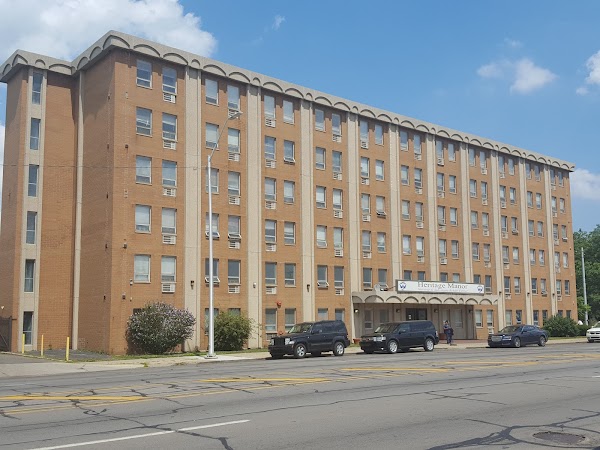
9500 Grand River Ave, Detroit, MI 48204 (313) 491-7920
For profit - Corporation 122 Beds PIONEER HEALTHCARE MANAGEMENT Data: November 2025
Trust Grade
23/100
#284 of 422 in MI
Last Inspection: December 2024

Within standard 12-15 month inspection cycle. Federal law requires annual inspections.

Overview

Heritage Manor Nursing and Rehabilitation Center has received a Trust Grade of F, indicating significant concerns and a poor overall quality of care. It ranks #284 out of 422 facilities in Michigan, placing it in the bottom half of nursing homes in the state, and #45 out of 63 in Wayne County, meaning only a few local options are worse. Although the facility is showing signs of improvement, decreasing from 24 issues in 2024 to 4 in 2025, it still has a concerning staffing turnover rate of 58%, which is above the state average. Additionally, there were serious incidents, including a resident being found unresponsive due to insufficient staff and a failure to maintain proper cleaning standards, which could lead to cross-contamination and health risks. While there are some strengths, such as efforts to improve care, families should weigh these against the significant weaknesses highlighted in the facility's recent inspections.
Trust Score
F
23/100
In Michigan
#284/422
Bottom 33%
Safety Record
High Risk
Review needed
Inspections
Getting Better
24 → 4 violations
Staff Stability
⚠ Watch
58% turnover. Above average. Higher turnover means staff may not know residents' routines.
Penalties
✓ Good
$9,955 in fines. Lower than most Michigan facilities. Relatively clean record.
Skilled Nurses
⚠ Watch
Each resident gets only 18 minutes of Registered Nurse (RN) attention daily — below average for Michigan. Fewer RN minutes means fewer trained eyes watching for problems.
Violations
⚠ Watch
36 deficiencies on record. Higher than average. Multiple issues found across inspections.
★★☆☆☆
2.0
Overall Rating
★★☆☆☆
2.0
Staff Levels
★★★☆☆
3.0
Care Quality
★★☆☆☆
2.0
Inspection Score
Stable
2024: 24 issues
2025: 4 issues

The Good

  • Full Sprinkler Coverage · Fire safety systems throughout facility
  • No fines on record

Facility shows strength in fire safety.

The Bad

2-Star Overall Rating

Below Michigan average (3.1)

Below average - review inspection findings carefully

Staff Turnover: 58%

12pts above Michigan avg (46%)

Frequent staff changes - ask about care continuity

Federal Fines: $9,955

Below median ($33,413)

Minor penalties assessed

Chain: PIONEER HEALTHCARE MANAGEMENT

Part of a multi-facility chain

Ask about local staffing decisions and management

Staff turnover is elevated (58%)

10 points above Michigan average of 48%

The Ugly 36 deficiencies on record

1 actual harm
Jul 2025 1 deficiency
CONCERN (D) 📢 Someone Reported This

A family member, employee, or ombudsman was alarmed enough to file a formal complaint

Potential for Harm - no one hurt, but risky conditions existed

Deficiency F0602 (Tag F0602)

Could have caused harm · This affected 1 resident

**NOTE- TERMS IN BRACKETS HAVE BEEN EDITED TO PROTECT CONFIDENTIALITY** This citation pertains to 1220384, 1220412, and 2569363.Based on interview and record review the facility failed to ensure that ...

Read full inspector narrative →
**NOTE- TERMS IN BRACKETS HAVE BEEN EDITED TO PROTECT CONFIDENTIALITY** This citation pertains to 1220384, 1220412, and 2569363.Based on interview and record review the facility failed to ensure that one resident (R406) of five residents reviewed was free from abuse and exploitation of personal funds resulting in certified nursing assistant (CNA) A using a R406's debit card to make purchases totaling $1,900.Findings include:According to a facility reported incident, CNA A used R406's debit card to make a personal purchase.On 7/30/25 at 2:05 PM, R406 was interviewed regarding the incident. R406 acknowledged the incident and said that the facility had recovered some of the money taken from their debit card.On 7/31/25 at 11:00 AM, the Nursing Home Administrator (NHA) was interviewed regarding the incident and reported CNA A had taken R406's money and had made payments toward the $1,900 debit balance, reducing the amount owed to $570.42. The NHA said the facility provides education regarding abuse and expects staff to follow facility policies.Record reviewed noted that R406 was admitted on [DATE] with the following diagnosis including hypertension, fracture of right ulna, fracture of sixth cervical vertebra, protein malnutrition and physical disability.Review of Quarterly Minimum Data Set (MDS) dated [DATE] documented R406 Brief Interview for Mental Status (BIMS) score was 12 out of 15 indicating R406 was moderately cognitively impaired.Record review revealed the following:On 7/10/25, R406's debit card declined when the facility attempted to process a payment. R406 was advised to cancel the debit card.On 7/11/25, CNA A informed the facility they had obtained R406's debit card number and had made purchases totaling $1,900.On 7/16/25, CNA A acknowledged they had broken a nursing home rule and resigned.Review of a facility document, Abuse, Neglect, Exploitation with a revised date of July 2025, noted, It is the policy of this facility to provide protections for the health, welfare and rights of each resident by developing and implementing written policies and procedures that prohibit and prevent abuse, neglect, exploitation and misappropriation of resident property. In addition the policy defined exploitation as taking advantage of a resident for personal gain through the use of manipulation, intimidation, threats, or coercion.
Jun 2025 2 deficiencies
CONCERN (F) 📢 Someone Reported This

A family member, employee, or ombudsman was alarmed enough to file a formal complaint

Potential for Harm - no one hurt, but risky conditions existed

Food Safety (Tag F0812)

Could have caused harm · This affected most or all residents

This citation pertains to intake MI00153787 Based on observations, interviews, and record reviews, the facility failed to effectively clean and maintain food service equipment effecting 107 residents ...

Read full inspector narrative →
This citation pertains to intake MI00153787 Based on observations, interviews, and record reviews, the facility failed to effectively clean and maintain food service equipment effecting 107 residents who consume food products, resulting in the increased likelihood for cross-contamination and bacterial harborage. Findings include: On 06/25/25 at 11:52 A.M., A comprehensive tour of the food service was conducted with Dietary Manager A. The following items were noted: The 3-compartment sink sanitizer basin chemical concentration was tested and observed to be more than 500 parts-per-million (PPM) quaternary ammonia. Dietary Manager A indicated she would contact the contractual vendor for necessary adjustments to the chemical dispensing assembly as soon as possible. The 2022 FDA Model Food Code section 4-501.114 states: A chemical SANITIZER used in a SANITIZING solution for a manual or mechanical operation at contact times specified under 4-703.11(C) shall meet the criteria specified under §7-204.11 Sanitizers, Criteria, shall be used in accordance with the EPA-registered label use instructions, and shall be used as follows: (A) A chlorine solution shall have a minimum temperature based on the concentration and PH of the solution as listed in the following chart; FDA Food Code 2022 Chapter 4 Equipment, Utensils, and Linens Chapter 4 - 19 CONCENTRATION RANGE (MG/L) MINIMUM TEMPERATURE PH 10 OR LESS °C (°F) MINIMUM TEMPERATURE PH 8 OR LESS °C (°F) 25 - 49 49 (120) 49 (120) 50 - 99 38 (100) 24 (75) 100 13 (55) 13 (55) (B) An iodine solution shall have a: (1) Minimum temperature of 20°C (68°F), (2) PH of 5.0 or less or a PH no higher than the level for which the manufacturer specifies the solution is effective, and (3) Concentration between 12.5 MG/L and 25 MG/L; (C) A quaternary ammonium compound solution shall: (1) Have a minimum temperature of 24oC (75oF), (2) Have a concentration as specified under § 7-204.11 and as indicated by the manufacturer's use directions included in the labeling, and (3) Be used only in water with 500 MG/L hardness or less or in water having a hardness no greater than specified by the EPA-registered label use instructions; (D) If another solution of a chemical specified under (A) - (C) of this section is used, the PERMIT HOLDER shall demonstrate to the REGULATORY AUTHORITY that the solution achieves SANITIZATION and the use of the solution shall be APPROVED; (E) If a chemical SANITIZER other than chlorine, iodine, or a quaternary ammonium compound is used, it shall be applied in accordance with the EPA-registered label use instructions; and (F) If a chemical SANITIZER is generated by a device located on-site at the FOOD ESTABLISHMENT it shall be used as specified in (A) - (D) of this section and shall be produced by a device that: (1) Complies with regulation as specified in §§ 2(q)(1) and 12 of the Federal Insecticide, Fungicide, and Rodenticide Act (FIFRA), (2) Complies with 40 CFR 152.500 Requirement for Devices and 40 CFR 156.10 Labeling Requirements, (3) Displays the EPA device manufacturing facility registration number on the device, and (4) Is operated and maintained in accordance with manufacturer's instructions The Manitowac ice machine interior stainless steel retention plate was observed heavily stained and corroded with rust scale deposits. Dietary Manager A indicated she would have maintenance remove and thoroughly clean and sanitize the retention plate assembly as soon as possible. The can opener assembly and mounting plate bracket were observed heavily soiled with accumulated and encrusted food residue deposits. The cutting blade surface was also observed black in color with excessive food residue build-up. Dietary Manager A indicated she would have staff thoroughly clean and sanitize the can opener assembly and mounting plate bracket as soon as possible. The Coffee Machine interior and exterior surfaces were observed soiled with accumulated and encrusted food residue deposits. Dietary Manager A indicated she would have staff thoroughly clean and sanitize the coffee machine as soon as possible. The 2022 FDA Model Food Code section 4-601.11 states: (A) EQUIPMENT FOOD-CONTACT SURFACES and UTENSILS shall be clean to sight and touch. (B) The FOOD-CONTACT SURFACES of cooking EQUIPMENT and pans shall be kept free of encrusted grease deposits and other soil accumulations. (C) NonFOOD-CONTACT SURFACES of EQUIPMENT shall be kept free of an accumulation of dust, dirt, FOOD residue, and other debris. The Amana commercial microwave oven exterior door handle was observed cracked and broken. The door handle could be moved completely around in a 360-degree circle. Dietary Manager A indicated she would contact maintenance for necessary repairs as soon as possible. The 2022 FDA Model Food Code section 4-501.11 states: (A) EQUIPMENT shall be maintained in a state of repair and condition that meets the requirements specified under Parts 4-1 and 4-2. (B) EQUIPMENT components such as doors, seals, hinges, fasteners, and kick plates shall be kept intact, tight, and adjusted in accordance with manufacturer's specifications. (C) Cutting or piercing parts of can openers shall be kept sharp to minimize the creation of metal fragments that can contaminate FOOD when the container is opened. On 06/25/25 at 01:31 P.M., An interview was conducted with Dietary Manager A regarding specific Policies/Procedures for cleaning and maintaining food service equipment. Dietary Manager A stated: I will see what I have. On 06/26/25 at 08:00 A.M., Record review of the Policy/Procedure entitled: Sanitation Inspection dated 11/01/2022 revealed under Policy: It is the policy of this facility, as part of the department's sanitation program, to conduct inspections to ensure food service areas are clean, sanitary, and in compliance with applicable state and federal regulations. Record review of the Policy/Procedure entitled: Sanitation Inspection dated 11/01/2022 further revealed under Policy Explanation and Compliance Guidelines: (1) All food service areas shall be kept clean, sanitary, free from litter, rubbish, and protected from rodents, roaches, flies, and other insects. On 06/26/25 at 08:15 A.M., Record review of the Policy/Procedure entitled: Manual Warewashing - 3 Compartment Sink dated 11/01/2022 revealed under Policy and Compliance Guidelines: (1) The facility utilizes a 3-compartment sink to wash, rinse, and sanitize pots, pans, and other utensils to prevent the spread of bacteria that may cause foodborne illness. (2) A 3-step process is used to manually wash, rinse, and sanitize dishware correctly: (a) First step: Thorough washing using hot water and detergent after food particles have been scraped off. (b) Second step: Rinsing with hot water to remove all soap residues. (c) Third step: Sanitizing with either hot water (at least 171 degrees Fahrenheit) for 30 seconds or a chemical sanitizing solution used according to manufacturer's instructions.
CONCERN (F) 📢 Someone Reported This

A family member, employee, or ombudsman was alarmed enough to file a formal complaint

Potential for Harm - no one hurt, but risky conditions existed

Safe Environment (Tag F0921)

Could have caused harm · This affected most or all residents

This citation pertains to intake MI00153787 Based on observations, interviews, and record reviews, the facility failed to effectively clean and maintain the physical plant effecting 107 residents, res...

Read full inspector narrative →
This citation pertains to intake MI00153787 Based on observations, interviews, and record reviews, the facility failed to effectively clean and maintain the physical plant effecting 107 residents, resulting in the increased likelihood for cross-contamination, bacterial harborage, and decreased air quality. Findings include: On 06/25/25 at 12:10 P.M., 6 of 9 first floor Main Dining Room Portable Terminal Air Conditioning (PTAC) unit filters were observed heavily soiled with accumulated and encrusted dust/dirt deposits. The interior and exterior (PTAC) cabinet surfaces were also observed soiled with accumulated and encrusted dust/dirt deposits. Maintenance Director C indicated he would have staff thoroughly clean the filters and cabinet surfaces as soon as possible. On 06/25/25 at 12:15 P.M., The first floor Main Dining Room flooring surface was observed soiled with accumulated and encrusted dust/dirt/food residue deposits. On 06/25/25 at 12:20 P.M, An interview was conducted with Director of Housekeeping and Laundry Services E regarding current staffing levels. Director of Housekeeping and Laundry Services E stated: I have ten housekeepers total. Director of Housekeeping and Laundry Services E also stated: I have six housekeepers on first shift. Director of Housekeeping and Laundry Services E additionally stated: I have one housekeeper on second shift. Director of Housekeeping and Laundry Services E further stated: The other three housekeepers cover the schedule during call offs and days off. On 06/25/25 at 01:52 P.M., An interview was conducted with Dietary Aide B regarding the food production kitchen floor drains. Dietary Aide B stated: The floor drain flooding is random. Dietary Aide B also stated: The floor drain sometimes floods daily and other times weekly. On 06/25/25 at 03:00 P.M., An interview was conducted with Corporate Life Safety and Maintenance/Environmental Director D regarding the floor drain flooding concern. Corporate Life Safety and Maintenance/Environmental Director D stated: The first time we experienced a wastewater issue was nine years ago. Corporate Life Safety and Maintenance/Environmental Director D also stated: I generally snake drains as needed. Corporate Life Safety and Maintenance/Environmental Director D additionally stated: I snaked drains in the basement last week (6-16-25). Corporate Life Safety and Maintenance/Environmental Director D further stated: The dietary grease traps were cleaned by (contractual service name) on 6-18-25. Corporate Life Safety and Maintenance/Environmental Director D also stated: The wastewater drain lines were cleaned on 11-6-24 for preventative measures. On 06/25/25 at 03:15 P.M., An interview was conducted with Corporate Life Safety and Maintenance/Environmental Director D regarding future plans for maintaining the facility wastewater drain system. Corporate Life Safety and Maintenance/Environmental Director D stated: Education of staff and continued monitoring. Corporate Life Safety and Maintenance/Environmental Director D also stated: The problem we continue to have is our dietary drain lines from excessive grease and solids/debris. On 06/26/25 at 08:45 A.M., Record review of the Policy/Procedure entitled: Sewage and Waste Disposal dated 01/2024 revealed under Policy: It is the policy of this facility to plan for safe and sanitary disposal of sewage and waste. Record review of the Policy/Procedure entitled: Sewage and Waste Disposal dated 01/2024 further revealed under Policy Explanation and Compliance Guidelines: (1) The facility sewer lines will be maintained to ensure that all sewage drains run freely at all times. (2) In the event that the facility encounters a drain that becomes blocked, the facility will contact its Director of Facilities to snake drains or contact vendor to clear the lines.
May 2025 1 deficiency
CONCERN (D) 📢 Someone Reported This

A family member, employee, or ombudsman was alarmed enough to file a formal complaint

Potential for Harm - no one hurt, but risky conditions existed

Deficiency F0627 (Tag F0627)

Could have caused harm · This affected 1 resident

**NOTE- TERMS IN BRACKETS HAVE BEEN EDITED TO PROTECT CONFIDENTIALITY** This citation pertains to intake MI00153011. Based on interview and record review the facility failed to document complete trans...

Read full inspector narrative →
**NOTE- TERMS IN BRACKETS HAVE BEEN EDITED TO PROTECT CONFIDENTIALITY** This citation pertains to intake MI00153011. Based on interview and record review the facility failed to document complete transfer and discharge information for one (R510) of two residents reviewed for the transfer/discharge process resulting in the potential for the receiving health care provider to be unaware of all the resident's healthcare needs. Findings include: The State agency received a complaint that R510 was improperly transferred. According to R510's Electronic Health Record the resident admitted to the facility on [DATE] with multiple diagnoses that included paraplegia and surgical repair of fractured right femur. A progress note dated 3/19/25 at 6:41 PM indicated R510 returned from the hospital and was then transferred to another long-term facility. There was no additional documentation. There was no transfer form to the hospital. There was no discharge plan, summary note or progress notes to indicate instructions had been given to either the receiving hospital or long-term care facility the resident was transferred to. On 5/15/25 during an interview with the Director of Nursing (DON) it was confirmed R510 had no transfer or discharge summary to indicate that instructions or a safe transfer/discharge had occurred for the resident. On 5/15/25 during an interview, the Nursing Home Administrator (NHA) said the facility should have included transfer information and a discharge summary to indicate the receiving healthcare providers had been informed of the resident's on-going healthcare needs. The NHA supplied the facility's policies for transfer and discharge procedures. According to the facility's Transfer and Discharge policy last revised 3/26/2025, read in part: 3. The facility's transfer/discharge notice will be provided to the resident and resident's representative in a language and manner in which they can understand. The notice will include all of the following at the time it is provided: a. The specific reason and basis for transfer or discharge. b. The effective date of transfer or discharge. c. The specific location (such as the name of the new provider or description and/or address if the location is a residence) to which the resident is to be transferred or discharged . According to the facility's Discharge Planning Process policy last revised 2/26/2025, read in part: 11. The evaluation of the resident's discharge needs and discharge plan will be completely documented on a timely basis in the clinical record. 12. The results of the evaluation and final discharge plan will be discussed with the resident or the resident's representative. All relevant information will be provided in the discharge summary
Dec 2024 13 deficiencies
CONCERN (D)

Potential for Harm - no one hurt, but risky conditions existed

Deficiency F0658 (Tag F0658)

Could have caused harm · This affected 1 resident

Based on observation, interview, and record review, the facility failed to follow the standards of practice for medication administration when 1.) an insulin pen was not primed (remove air bubbles fro...

Read full inspector narrative →
Based on observation, interview, and record review, the facility failed to follow the standards of practice for medication administration when 1.) an insulin pen was not primed (remove air bubbles from needle and cartridge) prior to administration of insulin to R53, 2.) medications through a PEG (feeding tube that is surgically placed through the abdominal wall directly into the stomach) were not individually crushed and separately flushed through the PEG tube for R9 and 3.) a physician's order for an anti-hypertensive medication was incorrectly transcribed on the Medication Administration Record (MAR) for R9, resulting in the potential for an inaccurate amount of medication to be administered and decreased efficacy of the medications. Findings include: RR53 On 12/19/24 at 8:33 AM, Licensed Practical Nurse (LPN) E was observed preparing to administer 35 units of lantus insulin to R53 at the medication cart. LPN E retrieved a new lantus insulin pen and dialed the insulin pen to 35 units. LPN E proceeded to R53's bedside to administer the insulin. LPN E was queried on the process of insulin administration from a pen. LPN E did not know what 'priming' was and did not prime the insulin pen prior to administration of the insulin to R53. According to the undated manufacturer's guidelines for use of insulin pen: It's important to prime the pen before every injection when using any insulin pen. If you don't prime before each injection, your dose may be lower than intended due to air collection in the insulin reservoir. To prime the insulin pen dial the dose knob to select '2', hold the pen so the needle is pointing upward, tap the cartridge to collect any air to the top, and depress the injection button. A few drops of insulin should be seen, if not repeat the process until drops of insulin are seen. According to the facility's policy for Insulin Pen implemented on 11/1/2022 in part read: 6. Insulin pens will be primed prior to each use to avoid collection of air in the insulin reservoir. R9 On 12/19/24 at 9:00 AM LPN E was observed at the medication cart preparing medications for R9. R9 had orders to have the following seven medications administered through a PEG tube. LPN E placed all the medications in one medicine cup: 1) ferrous sulfate 325 mg (milligrams) 1 tablet 2) folic acid 1 mg 1 caplet 3) paroxetine 10 mg 1 tablet 4) asa 81 mg 1 tablet 5) vitamin d3 1000 mcg (micrograms) 6) vitamin C 500 mg 7) zinc 50 mg LPN E then placed all seven medications in one plastic sleeve to crush all the medications together. LPN E was asked if all the medications should be administered together through the PEG tube. LPN E replied Yes. LPN E was asked to review the policy prior to administering all seven medications together through the PEG tube. According to the facility's policy for Medication Administration via Enteral Tube (PEG tube) implemented on 11/1/2022 in part reads; It is the policy of this facility to ensure the safe and effective administration of medications via feeding tubes by utilizing best practice guideline 6. Each medication will be administered separately, not combined 11. Procedure: - i. Flush the enteral tube with at least 15 milliliters (ml) of water prior to administering medications. - j. Dilute the medication and administer. - k. Flush the tube with at least 15 ml of water to ensure drug delivery. - l. Repeat with the next medication. R9 On 12/19/24 at approximately 9:00 AM, during observation of R9's medication administration, LPN E said, The resident has Metoprolol Tartrate 0.5 mg dose prescribed on the orders and that's what is on the MAR (medication administration record), but Metoprolol Tartrate 12.5 mg dose is what is available in the medication cart. LPN E did not give the Metoprolol Tartrate 12.5 mg to the resident at this time and called the physician for clarification. On 12/19/24 at 11:44 AM PM, the Director of Nursing (DON) said, After speaking with the physician and the pharmacy it was determined that the physician had ordered the resident (R9) to receive Metoprolol Tartrate 25 mg, half a tab to equal twelve and one half (12.5) milligrams. Not one half (0.5) of a milligram. It was a transcription error. The resident had been receiving the correct dosage of 12.5 mg. The DON acknowledged that the transcription error occurred on 11/24/24 and had not been clarified until 12/19/24 (25 administrations later). The DON acknowledged that the transription error should have been clarified and corrected earlier. According to the facility's policy for Medication Reconciliation implemented 11/1/2022 in part reads; Medication reconciliation refers to the process of verifying that the resident ' s current medication list matches the physician ' s orders for the purposes of providing the correct medications to the resident at all points throughout his or her stay. 1. Medication reconciliation involves collaboration with the resident/representative and multiple disciplines, including admission liaisons, licensed nurses, physicians, and pharmacy staff. 5. Daily Processes: a. Address any clinically significant medication irregularities reported by pharmacy consultant. b. Verify medication labels match physician orders and consider rights of medication administration each time a medication is given. c. Obtain and transcribe any new orders in accordance with facility procedures. Obtain clarification as needed.
CONCERN (D)

Potential for Harm - no one hurt, but risky conditions existed

ADL Care (Tag F0677)

Could have caused harm · This affected 1 resident

**NOTE- TERMS IN BRACKETS HAVE BEEN EDITED TO PROTECT CONFIDENTIALITY** Based on observation, interview and record review the facility failed to provide hair care for two residents (R5 and R7) and a s...

Read full inspector narrative →
**NOTE- TERMS IN BRACKETS HAVE BEEN EDITED TO PROTECT CONFIDENTIALITY** Based on observation, interview and record review the facility failed to provide hair care for two residents (R5 and R7) and a shave for one resident (R16) out of a sample of 14 residents reviewed for activities daily living (ADL's), resulting in unmet hygiene needs, loss of dignity and emotional distress. Findings include: On 12/17/24 at 10:20 A.M. during a tour of the third floor, R5 was identified as receiving care from a hospice company. The resident's hair was observed loose, standing straight to the ceiling and matted on the left side of R5's head. Mingled in the resident's hair were white balls and lint from the linen on the bed. R5 was observed on 12/18/27 at 1:50 P.M. and again on 12/19/24 at 12:00 P.M. R5's hair had not been combed and the presence of white lint balls were more pronounced. On 12/18/24 at 6:00 P.M. during an interview with the resident's guardian and brother, both family members mentioned that R5's hair at one time was combed by staff but had been told after inquiring that the Aide no longer worked at the facility. The guardian indicated R5's hair had not been combed or washed in a while and since the resident couldn't do it for herself it would be nice to observe R5 with her hair combed or braided. The guardian indicated R5's family was very involved in the resident's care and indicated, 'I don't think any person would like their hair all over their head. I don't think they even try to do anything to her hair. Review of the admission Face Sheet for R5 indicated the resident was admitted to the facility on [DATE], with diagnoses of acute respiratory disease, sarcoidosis, paranoid schizophrenia, anxiety disorder, Alzheimer disease, hypertensive heart disease, and gout. According to the Minimum Data Set MDS) assessment dated [DATE], R5 was severely impaired in cognitive skills for decision making, was incontinent of bowel and bladder and required one-two person to perform activities of Daily Living. Review of R5's care plan dated 7/5/22 revised 12/6/24 documented the following: I have a self-care deficit related to weakness, impaired balance and impaired cognition due to diagnoses of Alzheimer. R7 On 12/17/24 at 10:40 A.M. during an observation, R7's hair was observed pulled into a knotted ponytail positioned in the middle of the resident's head. R7's hair was tangled and twisted under a broken rubber band. R7 was observed with both hands contracted, requiring staff to feed the resident. R7 was asked if staff combed or brushed her hair. R7 responded No. According to the Minimum Data Set (MDS) assessment dated [DATE], R7 was moderately impaired for cognitive skills for decision making (required supervision), had no psychosis, no physical or behavioral difficulties and was always incontinent of bowel and bladder. Review of the care plan dated 7/13/21, revised 10/16/24, documented, I have a self-care deficit related to diagnoses: tachycardia, history of cardiovascular accident, diabetes mellitus, hypertension, I require assist with ADL's unable to make needs known, hearing and vision adequate. I prefer for my nails not to be cut. According to the admission Face sheet R7 was admitted to the facility 9/17/2018, with pertinent diagnoses of cerebral infraction, chronic systolic congestive heart failure, mild cognitive impairment, diabetes mellitus, and major depression. R16 On 12/17/24 at 10:50 P.M., R16 was observed with a thick mucus coating around his mouth. On 12/18/24 at 12:30 P.M. R16 (who was legally blind) was observed being taken for an appointment with a (½ inch long) visible speckled facial beard. R16 was observed on 12/20/24 at 10:54 A.M. with the front of his gown soiled with milk and scrambled eggs from breakfast. According to the MDS assessment dated [DATE] R16 was cognitively intact for decision making skills exhibited no physical, verbal or behavioral symptoms in the last 90 days, had upper and lower impairments on both sides and was always incontinent of bowel and bladder . Review of the revised care plan dated 10/24/24, documented, I have a self-care deficit related to impaired vision, weakness, impaired mobility I require supervision and assistance to perform my ADL care. According to the admission Face Sheet R16 was admitted to the facility on [DATE] with diagnoses which included: Chronic obstructive pulmonary disease, legal blindness, type 2 diabetes, heart disease, schizoaffective disorder and cerebral infract. On 12/19/24 at 2:00 P.M., in an interview with Licensed Practical Nurse (LPN)' R concerning who was responsible for grooming female resident's hair and providing shaves for the men. LPN R explained she thought R5's hair was taken care of by the hospice company that came in to provide services but was not sure if the two aides assigned to the unit could provide that care consistently since they had five residents that physically had to be fed their meals. LPN R stated the Activity Department had been given that assignment but was not aware if any of the residents on the unit had been provided the services. On 12/20/24 at 9:00 A.M., during interview with the Activity Director concerning residents from the third floor who had been referred or received a request to have their hair combed or men shaved, the Activity Director indicated none of the Activity assistance had been asked or directed to provide services on the third floor. The Activity Director explained the departmment just started to provide the service to everyone. The Activity Director added there was a barber that comes in for the men but there was no beautician for the women. Review of the facility's policy titled Activities of Daily Living (ADL's) dated 11/2/22 in part stated: Care and services will be provided for bathing, dressing, grooming and oral care. The facility will maintain individual objectives of the care plan and periodically review and evaluate.
CONCERN (D)

Potential for Harm - no one hurt, but risky conditions existed

Incontinence Care (Tag F0690)

Could have caused harm · This affected 1 resident

**NOTE- TERMS IN BRACKETS HAVE BEEN EDITED TO PROTECT CONFIDENTIALITY** Based on observation, interview, and record review, the facility failed to ensure appropriate supra-pubic catheter care for one ...

Read full inspector narrative →
**NOTE- TERMS IN BRACKETS HAVE BEEN EDITED TO PROTECT CONFIDENTIALITY** Based on observation, interview, and record review, the facility failed to ensure appropriate supra-pubic catheter care for one (R37) of two residents reviewed for catheter care, resulting in discomfort at the insertion site, the potential for dislodgment of the catheter, and urinary tract infection. Findings include: On 12/17/24 at 1:02 PM R37 was observed in a wheelchair in the hallway with a catheter tubing pulling straight down from the resident's lower abdomen to a collection bag that was hanging from the back of the wheelchair frame. The catheter tubing was taut and had dark amber urine with some mucus draining into a collection bag with a dignity cover. The resident said he wanted his catheter repositioned because it bothered him. R37 went to his room and lifted his shirt to reveal the a supra-pubic (s/p) catheter insertion site (supra-pubic or s/p catheter is a flexible tube surgically inserted through the lower abdomen directly into the bladder to drain urine). The s/p cath insertion site was slightly reddened and had a small amount of dried yellow crust around the tubing. There was no dressing at the insertion site and no anchoring device to secure the catheter to the resident's abdomen. At this time Certified Nursing Assistant H was asked about R37's catheter and replied, Its up to the nurse to care for the catheter. On 12/18/24 at 2:49 PM R37 was observed in a wheelchair in the hallway with the s/p catheter tubing coiled up on his lap and the collection bag is resting in the wheelchair next to resident, at the level of bladder (not below). Upon further inspection of R37's s/p catheter while in the resident's room, there is no anchoring of the catheter tubing or dressing to the insertion site. The insertion site had yellow crust around site. Yellow urine was draining into the collection bag. R37 denied pain at the site but said, It bothers me at times and sometimes they don't put a dressing on it. The doctor said I should have tape on it. On 12/19/24 at 8:17 AM R37 observed sitting in his room in a wheelchair. The s/p catheter was tucked inside his sweat pants along with the urinary collection bag. The collection bag was not below the level of the resident's bladder. There was no anchoring device or dressing on the insertion site. R37 placed his bare hands on the s/p catheter tubing and said, I don't know why they don't do anything with this. It's been pulled out before and I had to go to the hospital to have it put back in. R37 denied pain at the insertion site, but said, It's uncomfortable sometimes. On 12/19/24 at 12:06 PM Licensed Practical Nurse (LPN) E was asked about R37's s/p catheter care. LPN E observed R37's catheter and acknowledged that the resident should have an anchoring device on his catheter to prevent dislodgement but that he (R9) refuses at times. LPN E could not recall what catheter care had been completed for R37. LPN E did not reposition R37's urinary collection bag to a level lower than the resident's bladder. According to R37's Electronic Health Record (EHR) the resident admitted to the facility on [DATE] with multiple diagnoses that included neuromuscular dysfunction of the bladder, muscles spasms, and complications of the supra-pubic catheter. According to the resident's Minimum Data Set (MDS) dated [DATE] R37 had no cognition impairment and was independent with hygiene and transferring from surface to surface. A physician's order dated 3/8/24 for s/p catheter care is as follows; cleanse s/p catheter with normal saline, pat dry apply dry dressing if drainage and secure with tape. The Treatment Administration Record (TAR) included the following order for S/P catheter: ensure catheter is secured to the thigh. Change securement device as needed. Check every shift. A care plan for supra-pubic catheter care initiated on 2/10/22 included the following interventions; position collection bag below the level of the bladder. A progress note dated 9/19/24 revealed that R37's s/p catheter had become dislodged. R37 was transported to the emergency room for replacement of s/p catheter. According to the facility's Catheter Care policy implemented on 11/1/2022 read in part: 1. Catheter care will be performed every shift and as needed by nursing personnel. 9. Ensure drainage bag is located below the level of the bladder to discourage backflow of urine.
CONCERN (D)

Potential for Harm - no one hurt, but risky conditions existed

Medication Errors (Tag F0758)

Could have caused harm · This affected 1 resident

**NOTE- TERMS IN BRACKETS HAVE BEEN EDITED TO PROTECT CONFIDENTIALITY** Based on interview and record review, the facility failed to justify the use of a PRN (as needed) antianxiety medication and doc...

Read full inspector narrative →
**NOTE- TERMS IN BRACKETS HAVE BEEN EDITED TO PROTECT CONFIDENTIALITY** Based on interview and record review, the facility failed to justify the use of a PRN (as needed) antianxiety medication and document the rationale for open ended use for one resident (R54) of five residents reviewed for unnecessary medications. Findings include: Record review of R54's Electronic Health Record (EHR) revealed R54 was admitted into the facility on 7/15/23 with most recent readmission on [DATE] with diagnoses that included cerebral infarction (stroke), major depressive disorder, adjustment disorder with mixed anxiety and depressed mood. According to the quarterly Minimum Data Set (MDS) dated [DATE], R54 had intact cognition. Review of R54's physician orders documented the resident's current medications as follows: -Xanax (alprazolam)- Schedule IV tablet; 0.5 mg (milligrams); amt(amount) ;1 oral. Special instructions take one tablet by mouth twice daily as needed. Start date 10/12/24. End date open ended. There was no 14 days stop date noted to the order. Review of R54's care plan revealed Problem: start date: 4/21/2022 Category Psychotropic Drug Use Resident is at risk for adverse consequences related to receiving antidepressant/antianxiety medication for treatment of Depression and anxiety. Goal: Short Term Goal Target Date: 10/27/24. There was no gradual dose reduction or medical justification to continue the Xanax past 14 days found in the EHR. On 12/20/24 at 9:14 AM Social Worker (SW) O was interviewed and said there is no gradual dose reduction attempt for the Xanax or rationale for continued PRN use past 14 days in the EHR. SW O further said typically the visiting psychiatry group monitors the anti-psychotropic medications, but this was overlooked. On 12/20/24 at 9:35 AM the Director of Nursing (DON) agreed the physician did not respond to the pharmacist irregularity report from 10/12/24 and 11/13/2024 or document in the EHR justification for continued use of the as needed psychotropic past 14 days. The DON said the expectation is that the visiting psychiatry group monitors psychotropic medications and that the current psychiatry group did not address R54's Xanax.
CONCERN (D)

Potential for Harm - no one hurt, but risky conditions existed

Deficiency F0849 (Tag F0849)

Could have caused harm · This affected 1 resident

**NOTE- TERMS IN BRACKETS HAVE BEEN EDITED TO PROTECT CONFIDENTIALITY** Based on observation, interview and record review, the facility failed to ensure proper communication/documentation of Hospice s...

Read full inspector narrative →
**NOTE- TERMS IN BRACKETS HAVE BEEN EDITED TO PROTECT CONFIDENTIALITY** Based on observation, interview and record review, the facility failed to ensure proper communication/documentation of Hospice services provided to one Resident (R5) of two reviewed for Hospice services, resulting in a lack of coordination of comprehensive services and care provided to the resident. Findings include: A review of R5's Electronic Medical Record (EMR) revealed an admission date of 7/2/2022, with diagnoses of acute respiratory disease, sarcoidosis, paranoid schizophrenia, anxiety disorder, gout and hypothyroidism. A review of the Quarterly Minimum Data Set (MDS) assessment dated [DATE], indicated R5 was rarely understood and was severely impaired in cognitive skills for decision making, was incontinent of bowel and bladder and required one- two person to perform Activities of Daily Living (ADLs). On 12/18/24 at approximately 11:00 A.M. License Practical Nurse (LPN) R was queired concerning the location of the documentation from the hospice company that coordinated care with the facility. LPN R indicated the hospice logbook should be on the unit but was uncertain of the location. At approximately 12:10 P.M. a hospice notebook was presented and reviewed. During the review of the hospice notebook, it was noted there were no nursing notes or visits recorded, only a schedule of dates of visitations from the Social Worker, Chaplin and Nurse Aide. There were no notes or evidence of visitation for the nurse. Per care plan dated 5/24/24, revised 10/18/24, R5 was admitted to hospice services, interventions included in part: Facility and hospice services to provide collaborative care including comfort care, palliative and end of life care. On 12/18/24 at 12: 08 P.M. Corporate Consultant Q reported the hospice company had been contacted and the nurses' notes would be faxed over and could be reviewed in the resident's EMR later that day. The Corporate Consultant indicated all the notes including the nurses should have been placed in the resident's EMR after each visit with R5. On 12/19/24 at 10:00 A.M. the Director of Nursing (DON) was made aware of the concern. The DON was queired concerning communication with hospice staff regarding services provided. The DON indicated staff should be communicating with the hospice staff while on site. The DON was unable to explain how the facility's staff was able to communicate or coordinate any medical concerns when staff did not have access to the nurse's documentation of visits. A review of the Facility's Nursing Agreement dated 11/12/2014, documented under Joint Responsibilities in part: 3.2 Communication and access both parties will allow each other to: 3.2.1 access all records of hospice services rendered to hospice patients and 3.2.2 attend and participate in the other party's interdisciplinary team meeting held for the purpose of developing the plan of care for hospice patients. Clinical Records- Clinical record hospice maintain a complete and timely record on each hospice patient relating to all services rendered. All records of services and treatment are part of the hospice record.
CONCERN (D)

Potential for Harm - no one hurt, but risky conditions existed

Infection Control (Tag F0880)

Could have caused harm · This affected 1 resident

**NOTE- TERMS IN BRACKETS HAVE BEEN EDITED TO PROTECT CONFIDENTIALITY** Based on observation, interview and record review the facility failed to ensure enhanced barrier precaution were implemented for...

Read full inspector narrative →
**NOTE- TERMS IN BRACKETS HAVE BEEN EDITED TO PROTECT CONFIDENTIALITY** Based on observation, interview and record review the facility failed to ensure enhanced barrier precaution were implemented for two residents (R1 and R9) out of twenty four residents reviewed for infection control, resulting in the potential for the transmission of infectious t organisms. Findings include: R1 On 12/19/2024 at 9:25 AM, Certified Nursing Assistant, (CNA) C, was observed to change the brief and provide other care without wearing Personal Protective Equipment (PPE). On 12/19/24 at12:45 PM, observed Registered Nurse (RN) B and Wound Care Coordinator (WCC) A providing care to R1's stage IV sacral coccyx wound without wearing PPE. According to electronic health record (EHR), R1 was initially admitted on [DATE] with diagnosis of sepsis, bacteriuria, stage IV pressure ulcer, and dementia. R1quarterly Minimum Data Set, (MDS) Assessment with a reference date of 11/5/2024 indicate R1had moderately impaired cognition with a BIMS (brief interview for mental status) score of 6/15. 12/19/24 2:24 PM, Registered Nurse (RN) B, said during an interview that the staff know and understand enhanced barrier precautions, but they do not follow the procedure at the facility. RN B said Enhanced Barrier Precautions are to protect the residents. 12/19/24 2:38 PM, (CNA) C said they only wear PPE when a resident has a sign on the door (R1's door did not have signage). CNA C said they only use the PPE on the unit for diagnosis like clostridium difficile (infection in the stool). 12/20/24 9:03 AM, the Director of Nursing, (DON) said during an interview that staff have been trained but they need to be retrained. The DON said the facility did not want to place a sign on the resident door because of dignity. 12/20/24 9:07 AM, the Nursing Home Administrator, (NHA) said the staff understand that enhanced barrier precautions should be followed on individuals that have any type of opening, and there is no lack of PPE in the facility. 12/20/24 9:22 AM, during an interview WCC A confirmed that the facility did not have an enhanced barrier precautions in place. According to the facility's, 11/1/22 Enhanced Barrier Precautions policy, The facility will implement enhanced barrier precautions for the prevention of transmission of multidrug-resistant organisms. All staff will receive training on hire and annually. PPE is required when providing high contact care activities. High contact activates were defined as the following: Providing hygiene, changing linen, wound care, device care: urinary catheter, central lines, tracheostomy, and feeding tubes . R9: On 12/19/24 at 8:51 AM, Certified Nursing Assistants (CNA)s H and I were observed completing incontinence care for R9. R9 had a PEG (feeding tube). Both CNA H and CNA I put on gloves, but did not put on a gown. Both CNAs were asked about Enhanced Barrier Precautions (EBP). Neither could provide an accurate explanation. Neither could say what PPE (Personnel Protection Equipment) to apply before rendering care. Neither CNA was aware that R9 was on EBP. There was a sign in the hallway that indicated R9 was on EBP. There was a cart in the hallway that had appropriate PPE for staff to use. On 12/19/24 at 9:34 AM, Licensed Practical Nurse (LPN) E administered medications through the residents PEG tube without wearing a gown. LPN E was asked about EBP and appropriate PPE. LPN E was unaware that PPE for residents on EBP included wearing a gown. During in interview on 12/19/24 at 12:03 PM the Director of Nursing (DON) said that staff had been educated on proper use of PPE for residents on EBP. According to R9's Electronic Health Record the resident has resided at the facility since 11/4/14 with diagnoses of stroke, PEG tube, and vascular wounds on the shins. The resident was recently diagnosed with right eye bacterial conjunctivitis.
CONCERN (D)

Potential for Harm - no one hurt, but risky conditions existed

Deficiency F0919 (Tag F0919)

Could have caused harm · This affected 1 resident

Based on observation, interview and record review the facility failed to ensure residents call lights were properly functioning for one of four units, resulting in a potential for a delay in respondin...

Read full inspector narrative →
Based on observation, interview and record review the facility failed to ensure residents call lights were properly functioning for one of four units, resulting in a potential for a delay in responding to care needs of the residents that resided on the unit. Findings include: On 12/17/24 at 10:30 A.M. during an observation on the third floor. Residents were observed with assorted bells in their rooms. During the observation the residents were queired concerning the use of the bells. R47 who was alert and oriented indicated he was not sure where the bell was but when he needed a nurse he went to the nursing station. R47's roommate interjected and stated residents on the unit were given the bells because the call lights were not working, and residents were told to use them when they needed help. R35 indicated sometimes the nurses might be down the hall and could not hear the bell. According to R35 sometimes you can ask someone to tell the nurses you need help. On 12/19/24 at 12:05 P.M., Director of Maintenance (DM) K was interviewed concerning the replacement of the call lights and how many residents were affected. (DM) K reported initially it was only a few residents with bells, but an irate resident hit the main box at the nursing station and after that incident the call light system did not work properly. (DM) K reported the residents had been using the bells for about 3 weeks but the facility had obtained information concerning replacing the call light system on the third floor. A request was made to review the information. At 12/19/24 at 1:30 P.M. an undated estimated invoice was presented. The invoice described a proposal to update the existing nurse's call system on the third floor, which included all aspects of wiring on the unit including individual wiring of resident's room etc. The undated estimate was not signed. There was no evidence of a contract for work to be initiated or completed by the facility or corporate office. (DM) K indicated the current estimate was the only estimate of repair. On 12/20/24 at 2:00.P.M. the Administrator indicated the third floor was the last floor to be renovated however, no additional information (plans, quotes) was provided as to how long the renovation was projected to take before completion or started.
CONCERN (E) 📢 Someone Reported This

A family member, employee, or ombudsman was alarmed enough to file a formal complaint

Potential for Harm - no one hurt, but risky conditions existed

Pharmacy Services (Tag F0755)

Could have caused harm · This affected multiple residents

This citation pertains to intake MI00148648. Based on observation, interview, and record review the facility failed to establish a record of receipt, disposition, or reconciliation of controlled drugs...

Read full inspector narrative →
This citation pertains to intake MI00148648. Based on observation, interview, and record review the facility failed to establish a record of receipt, disposition, or reconciliation of controlled drugs (a drug that the government regulates for possession and use, i.e. narcotics) in the facility's back-up box (secured storage unit of controlled drugs), resulting in the facility being unable to account for the receipt of, disposition of, or discrepancies of controlled drugs in the facility's back-up box with the potential for drug diversion and controlled drugs being unavailable to administer to residents as prescribed. Findings include: On 12/19/24 at 12:52 PM observation of the facility's narcotic back-up box with the Director of Nursing (DON) revealed there was no plastic lock on the narcotic drawer. The lack of a lock indicated that the narcotic drawer had been opened after pharmacy had delivered a fully restocked narcotic supply. There was no documentation to indicate when pharmacy last delivered the back-up-box or when narcotics had been removed. A sheet of paper with multiple undated entries indicated narcotics had been removed. The last dated entry was 11/18/24 (31 days earlier) and indicated that an oxycodone 5 milligrams (mg) had been removed leaving 5 in the back-up-box. Upon visual inspection of the oxycodone 5 mg box there were 3 tablets present. The DON was asked how the facility reconciles narcotics taken from the back-up-box. The DON could not determine when narcotics had last been delivered from pharmacy, the number of narcotics that were delivered from pharmacy, what facility nursing staff received the narcotics, or when narcotics had been removed from the back-up-box. The DON could not explain the facility's process for narcotic reconciliation, what the plastic locks on the narcotic drawer were used for or if any dispensing forms were utilized. At this time the number for the pharmacy was requested. On 12/19/24 at 2:40 PM during a phone interview the facility's pharmacist (PH) M said that the pharmacy delivers a fully stocked back-up-box every week with a numbered plastic lock on it. The last delivery was on 12/10/24 and according to the dispensing sheets the following number of narcotics should be present. -Oxycodone 5 mg should have 4 tablets available for dispensing. Upon visual inspection there were 3 tablets available. (one tablet unaccounted for) -Norco 5 mg should have 3 tablets available for dispensing. Upon visual inspection there were 4 tablets available. (one tablet extra) -Norco 10 mg should have 5 tablets available for dispensing. Upon visual inspection there were 3 tablets available. (two tablets unaccounted for) -Percocet 5 mg should have 5 tablets available for dispensing. Upon visual inspection there were 5 tablets available. PH M could not account for the discrepancy in numbers of narcotics and said, We only have what dispensing forms the nursing staff fax to us. That is all we have. I don't know why the numbers don't match up. I will send someone out there tomorrow to reconcile the back-up-box. According to the facility's Pharmacy Services implemented 2/19/24 in part read: The facility in coordination with the licensed pharmacist, will provide for: a. A system of medication records that enables periodic accurate reconciliation and accounting for all controlled medications; b. Prompt identification of loss of or potential diversion of controlled medications; and c. Determination of the extent of loss or potential diversion of controlled medications.
CONCERN (E)

Potential for Harm - no one hurt, but risky conditions existed

Drug Regimen Review (Tag F0756)

Could have caused harm · This affected multiple residents

**NOTE- TERMS IN BRACKETS HAVE BEEN EDITED TO PROTECT CONFIDENTIALITY** Based on interview and record review the facility failed to obtain and address Medication Regimen Review (MRR) recommendations t...

Read full inspector narrative →
**NOTE- TERMS IN BRACKETS HAVE BEEN EDITED TO PROTECT CONFIDENTIALITY** Based on interview and record review the facility failed to obtain and address Medication Regimen Review (MRR) recommendations timely for two residents (R35 and R54) of five residents reviewed for medication regimen review, resulting in the continuance of unnecessary medications and a lack of communication of recommended medication changes between pharmacist and physician. Findings include: R35 On 12/20/24 at 12:00 P.M. review of monthly Pharmacy recommendations in the electronic Medical Record for R35, documented the following: Date: 9/9/24 Pharmacist Drug Regimen Review Please take the following action, described below See report. Recommend: please consider reducing this: Resident is on sliding scale insulin (Adelog) AMDA guideline does not suggest using sliding scale insulin because of its retrospective way Of treating hypoglycemic and the lack of evidence to support its efficiency in physiological needs of the body More according to the American Geriatric Society updated Beers Criteria, there is also to this recommendations a higher risk hyperglycemia without improvement in hypoglycemic management. Please consider reducing or discontinuing the use of SSI The Physician Prescriber responded and disagreed with the recommendation for the months of February, April 2024 and 9/9/24; however the physician did not review the pharmacist recommendation until 12/19/24. Record review of R35 Electric Health Record (EHR) revealed R35 was admitted into the facility on [DATE], with a recent readmission on [DATE], with diagnoses of: Diabetes Mellitus type 2, chronic obstructive pulmonary disease with (acute exacerbation), dementia with behavioral disturbance, atherosclerotic heart disease, morbid obesity and chronic kidney disease. According to the Annual Minimum Data Set, dated (MDS) 11/18/24 R35 was moderately impaired in cognitive skills for decision making. R54 Record review of R54's Electronic Health Record (EHR) revealed R54 was admitted into the facility on 7/15/23 with most recent readmission on [DATE] with diagnoses that included cerebral infarction (stroke), major depressive disorder, adjustment disorder with mixed anxiety and depressed mood. According to the quarterly Minimum Data Set (MDS) dated [DATE], R54 had intact cognition. Review of R54's physician orders documented the resident's current medication as follows: -Xanax (alprazolam)- Schedule IV tablet; 0.5 mg (milligrams); amt (amount) ;1 oral. Special instructions take one tablet by mouth twice daily as needed. Start date 10/12/24. End date open ended. Review of monthly pharmacy recommendations in the electronic medical record documented the following: -10/12/24- Pharmacist Drug Regimen Review . Please take the following action described below . See report: Recommend discontinuing PRN use of Xanax 0.5 mg BID for this resident OR reorder for a specific number of days, per the following federal guidelines . The Physician/Prescriber did not respond to this recommendation. -11/13/24- Pharmacist Drug Regimen Review . Please take the following action described below . See report: Recommend discontinuing PRN use of Xanax 0.5 mg BID for this resident OR reorder for a specific number of days, per the following federal guidelines . The Physician/Prescriber did not respond to this recommendation. On 12/20/24 at 9:35 AM the Director of Nursing (DON) was interviewed and said she receives the pharmacist irregularities report and then distributes them to the unit managers where they mark them for physician review. The DON agreed the physician did not respond timely for the irregularity reports and said the expectation is 30 days or less.
CONCERN (E)

Potential for Harm - no one hurt, but risky conditions existed

Deficiency F0760 (Tag F0760)

Could have caused harm · This affected multiple residents

**NOTE- TERMS IN BRACKETS HAVE BEEN EDITED TO PROTECT CONFIDENTIALITY** Based on observation, interview, and record review the facility failed to ensure that one resident (R9) was free from significan...

Read full inspector narrative →
**NOTE- TERMS IN BRACKETS HAVE BEEN EDITED TO PROTECT CONFIDENTIALITY** Based on observation, interview, and record review the facility failed to ensure that one resident (R9) was free from significant medication errors out of six residents reviewed for medication administration when only two doses of an antibiotic eye solution (Erythromycin Ophthalmic solution) was administered to the resident of the 56 doses prescribed, resulting in potential for prolonged signs and symptoms of a right eye infection. Findings include: On 12/17/24 at 12:07 PM R9 was observed lying in bed with tube feeding infusing through a feeding tube. The resident's right eye was sunken in and the lids were closed (the eyeball was not visible). A small amount of dried yellow crust was present on both the upper and lower lid. R9 was unable to be interviewed due to severe cognitive impairment. At 1:20 PM, R9's family member was interviewed and reported the resident had a right eye infection last month that was treated with antibiotic eye drops. R9's family member said the right eye infection had improved because there was less drainage than before. According to R9's Electronic Health Record (EHR) the resident initially admitted to the facility on [DATE] with multiple diagnoses that included history of a stroke, dysphagia (difficulty swallowing), a feeding tube for nutrition/hydration, and a ruptured right eye with partial loss of intraocular tissue. The Minimum Data Set (MDS) for significant change dated 12/10/24 indicated the resident had severely impaired cognition status and was totally dependent on staff for all Activities of Daily Living (ADLs). A nurse's progress note dated 11/5/24 at 2:43 PM read: Therapy staff noted the resident had some drainage from the right eye. Resident was observed with dried, green-tinged drainage from the right eye. The Physician's log was updated and the Infection Control Nurse was notified. On 11/6/24 at 7:18 PM a nurse's progress note indicated the physician ordered erythromycin ophthalmic solution for the right eye only, every 4 hours. (there was no time frame, or end date). On 11/6/24 at 9:49 PM a Physician's progress note read in part: patient was seen at the request of nursing staff due to right eye drainage Did have obvious right-sided purulent drainage, eyelids stuck to each other. Assessment/Plan: right eye bacterial conjunctivitis. The Physician's orders were as follows: Erythromycin ophthalmic solution. Clean right eye the place drop in right eye four times a day. (there was no time frame or end date). Review of R9's November 2024 Medication Administration Record (MAR) revealed two separate orders; 1.) Erythromycin ophthalmic solution to right eye and 2.) Monitor for adverse side effects for antibiotic therapy of Erythromycin ophthalmic solution for 14 days 11/7/24 - 11/21/24. R9 only received the Erythromycin ophthalmic solution to the right eye for one day; 11/7/24 at 9:00 AM and 1:00 PM, (two times). On 12/19/24 at 8:38 PM Nurse Practitioner (NP) G 's progress notes read in part: right eye has purulent drainage with eyelids stuck to each other. Assessment/Plan; right eye bacterial conjunctivitis. On 12/20/24 at 11:02 AM, NP G was asked about R9's right eye drainage. NP G said R9's right eye had improved after a 14-day course of antibiotic eye drops. NP G was asked to review and clarify the resident's antibiotic eye drop orders. NP G said, The order for the eye drops is 4 times a day and monitor for 14 days. She (R9) was supposed to receive a 14-day course of the antibiotic eye drops and be monitored while getting the eye drops. Not two seperate orders. Why would the eye drops only be for one day and the monitoring be for 14 days? That makes no sense. NP G said the orders were transcribed incorrectly on the MAR and the resident will be re-evaluated to determine if another order for the antibiotic eye drops needs to be prescribed. On 12/20/24 at approximately 11:10 AM during an interview with the Director of Nursing (DON) she reviewed R9's MAR and said, The order was transcribed wrong. The resident should have got the eye drops for 14 days, not just monitored for 14 days.
CONCERN (E)

Potential for Harm - no one hurt, but risky conditions existed

Antibiotic Stewardship (Tag F0881)

Could have caused harm · This affected multiple residents

Based on interview, and record review the facility failed to maintain a complete and accurate Antibiotic Stewardship Program, resulting in R9's antibiotic usage for an eye infection not being identifi...

Read full inspector narrative →
Based on interview, and record review the facility failed to maintain a complete and accurate Antibiotic Stewardship Program, resulting in R9's antibiotic usage for an eye infection not being identified, monitored, or administered as prescribed. This deficient practice has the potential to affect all residents receiving antibiotics in the facility. Findings include: On 12/20/24 at 10:40 AM a review of the facility's Infection Control Program was conducted with the Infection Control Nurse, (IFC) D. IFC D said the facility follows McGeer's criteria (a standardized approach to surveillance and reporting of infections) when prescribing antibiotics to review the (antibiotic) usage for accuracy. Residents prescribed antibiotics are documented on the facility's infection report log for monitoring. The IFC nurse said they become aware of residents who are prescribed antibiotics for infections through communications in the facility's daily meetings, infection reports, and a list obtained from pharmacy. During review of the infection report log for November 2024 with IFC D the line listing and infection reports of residents prescribed antibiotics was determined to be incomplete. Resident 9 (R9) was system selected for unnecessary medication review. Review of R9's Electronic Health Record (EHR) revealed the resident had been prescribed Erythromycin ophthalmic solution (antibiotic eye drops) for bacterial conjunctivitis of the right eye on 11/7/24. R9 was not listed on the November infection report. There was no documentation to indicate the IFC nurse was aware the resident had been diagnosed with bacteria conjunctivitis or prescribed antibiotics. On 12/20/24 at approximately 10:45 AM IFC D said, I run a report once a week and there is no evidence this resident (R9) was on an antibiotic. There is no infection report done by the nursing staff. I also use a tracker report to review signs and symptoms of the infections and there is nothing there either. The IFC nurse could not explain how the antibiotic usage was not documented in the facility's infection report or monitored to ensure appropriate antibiotic was prescribed for the recommended length of time. Further review of R9's EHR revealed a progress note dated 11/5/24 at 2:43 PM in part read: Resident was observed with dried, green-tinged drainage from the right eye. The Physician's log was updated and the Infection Control Nurse was notified. On 11/7/24 R9 was prescribed the following: Erythromycin ophthalmic solution to right eye, monitor for adverse side effects for antibiotic therapy of Erythromycin ophthalmic solution for 14 days 11/7/24 - 11/21/24. R9's November 2024 Medication Administration Record (MAR) revealed two separate orders; 1.) Erythromycin ophthalmic solution to right eye (no time frame) and 2.) Monitor for adverse side effects for antibiotic therapy of Erythromycin ophthalmic solution for 14 days 11/7/24 - 11/21/24. The MAR documented that R9 only received two doses of the antibiotic eye drops; 11/7/24 at 9:00 AM and 1:00 PM, and not for the entire 14 days prescribed. On 12/20/24 at 11:02 AM, NP G was asked to clarify R9's prescription for antibiotic eye drops. NP G said, The order for the eye drops is 4 times a day and monitor for 14 days. She (R9) was supposed to receive a 14-day course of the antibiotic eye drops and be monitored while getting the eye drops. Not two seperate orders. Why would the eye drops only be for one day and the monitoring be for 14 days? That makes no sense. On 12/20/24 at approximately 11:05 AM IFC D said she had no recall of being notified R9 was prescribed antibiotic eye drops and acknowledged that if the antibiotic prescription would have been on the infection report and line listing there would not have been an administration error. According to the facility's Infection Prevention and Control Program last revised 3/13/24 read in part: Policy: This facility has established and maintains an infection prevention and control program designed to provide a safe, sanitary, and comfortable environment and to help prevent the development and transmission of communicable diseases and infections as per accepted national standards and guidelines . 6. Antibiotic Stewardship: a. An antibiotic stewardship program will be implemented as part of the overall infection prevention and control program. b. Antibiotic use protocols and a system to monitor antibiotic use will be implemented as part of the antibiotic stewardship program. c. The Infection Preventionist, with oversight from the Director of Nursing, serves as the leader of the antibiotic stewardship program. d. The Medical Director, consultant pharmacist, and laboratory manager will serve as resources.
CONCERN (E)

Potential for Harm - no one hurt, but risky conditions existed

Deficiency F0883 (Tag F0883)

Could have caused harm · This affected multiple residents

**NOTE- TERMS IN BRACKETS HAVE BEEN EDITED TO PROTECT CONFIDENTIALITY** Based on interview and record review, the facility failed to ensure they consistently screened, educated, offered, and administe...

Read full inspector narrative →
**NOTE- TERMS IN BRACKETS HAVE BEEN EDITED TO PROTECT CONFIDENTIALITY** Based on interview and record review, the facility failed to ensure they consistently screened, educated, offered, and administered influenza vaccines for five (R4, R9, R40, R52, and R57) of five residents reviewed for vaccinations/immunizations resulting in R57 consenting to receive the influenza vaccine but not receiving it and the lack of vaccine screening, education, and offering to receive the vaccine for residents R4, R9, R40, and R52. Findings include: On 12/19/24 at approximately 2:00 PM, the five residents (R4, R9, R40, R52, and R57) reviewed for immunizations had no documentation to support they had been screened/assessed, educated on, offered, or administered the influenza vaccine in their Electronic Health Record (EHR). The Infection Control Nurse (IFC) D and the Corporate Clinical Director, Registered Nurse (RN) Q were interviewed at this time. IFC D said the facility used the State of Michigan Influenza Vaccination Assessment and Consent (VAC) form to document and track resident's vaccination status. The forms were kept in a separate binder and not scanned into the resident's Electronic Health Record (EHR) at this time. The binder was retrieved by IFC D and the following documentation was reviewed: R57 IFC D provided a VAC form for R57 dated 10/2/24. The form indicated the resident was screened, was eligible, and consented to receiving the influenza vaccine. The form included the resident's signature and documented the vaccine lot number with the expiration date. The nurse signature line was completed and included a second nurse's co-signature. However there was no documentation to support R57 had received the vaccine. IFC D said the resident received the vaccine. According to the R57's EHR, there was no documentation to support the resident had received the vaccine. There was no physician order for the vaccine and no progress note indicating the resident received the vaccine. The Medication Administration Records (MAR) were reviewed from 10/1/2024 - 12/19/2024 and no administration of the influenza vaccine was recorded. R57's Minimum Data Set (MDS) dated [DATE] indicated the resident admitted to the facility on [DATE] and had a Brief Interview for Mental Status Score of 12/15 indicating moderately impaired cognition status. Both IFC D' and RN Q acknowledged there was no evidence to support R57 received the influenza vaccine at this time. IFC D acknowledged that the facility did have the vaccine available. R4 IFC D provided a VAC form that was incomplete and undated. The assessment/ screening questionnaire on the consent form was crossed out and had no check marks in the boxes to indicate whether the resident had been screened, educated, consented, or declined. There was an undated handwritten note on the bottom of the form that read Declined flu vaccination. The 'nurse signature' section was blank. According to the resident's EHR, R4 has resided in the facility since 2018, was her own responsible party, and had no cognitive impairment. RN Q acknowledged that this immunization/vaccine consent form is incomplete and therefore invalid. R9 IFC D provided a VAC form that indicated the resident had been screened, but no acceptance or declination of the vaccine was marked. The document was incomplete. There was no indication the resident's Legal Guardian (LG) was contacted. The 'nurse signature' section was blank. According to the resident's EHR, R9 has resided in the facility since 2014 with valid LG documents with available contact information. R9 was identified to be nonverbal with severe cognition impairment. It was noted that the resident's LG has signed all other required consents. There was no documentation to support that R9's LG had been educated or offered to provide consent for R9 to receive the influenza vaccines since 12/6/2022. RN Q acknowledged that this immunization/vaccine consent form is incomplete and therefore invalid. IFC D acknowledged that this resident had been missed for immunizations/vaccines this year. R40 IFC D provided a VAC form that was incomplete and undated. The assessment/ screening questionnaire on the consent form was crossed out and had no check marks in the boxes to indicate whether the resident had been screened, educated, consented, or declined. There was an undated handwritten note on the bottom of the form that read Declined flu vaccination. The 'nurse signature' section was blank. According to the resident's EHR, R40 has resided in the facility since 4/17/2023 with valid LG documents and available contact information. There was no documentation to support R40's LG had been educated or offered to provide consent for R40 to receive the influenza immunizations/vaccine. RN Q acknowledged that this immunization/vaccine consent form is incomplete and therefore invalid. R52 IFC D provided a VAC form that was incomplete and undated. The assessment/ screening questionnaire on the consent form was crossed out and had no check marks in the boxes to indicate whether the resident had been screened, educated, consented, or declined. There was an undated handwritten note on the bottom of the form that read Declined flu vaccination. The 'nurse signature' section was blank. According to the resident's EHR, R52 has resided in the facility since 1/11/2021 with a valid LG documents and available contact information. The Minimum Data Set (MDS) dated [DATE] indicated the resident had moderately impaired cognition and the LG had signed all other required consent forms for resident's services at the facility. There was no documentation to support R52's LG had been educated or offered to provide consent for the resident to receive the influenza immunizations/vaccine. RN Q acknowledged that this immunization/vaccine consent form is incomplete and therefore invalid. According to the facility's Infection Prevention and Control Program last revised 3/13/24 read in part: Policy: This facility has established and maintains an infection prevention and control program designed to provide a safe, sanitary, and comfortable environment and to help prevent the development and transmission of communicable diseases and infections as per accepted national standards and guidelines . 7. Influenza and Pneumococcal Immunization: a. Residents will be offered the influenza vaccine each year between October 1 and March 31. unless contraindicated or received the vaccine elsewhere during that time. b. Residents will be offered the pneumococcal vaccines recommended by the CDC upon admission, unless contraindicated or received the vaccines elsewhere. c. Education will be provided to the residents and or representatives regarding the benefits and potential side effects of the immunizations prior to offering the vaccines. d. Residents will have the opportunity to refuse the immunizations.
CONCERN (E)

Potential for Harm - no one hurt, but risky conditions existed

Safe Environment (Tag F0921)

Could have caused harm · This affected multiple residents

**NOTE- TERMS IN BRACKETS HAVE BEEN EDITED TO PROTECT CONFIDENTIALITY** Based on observations, interviews, and record reviews the facility failed to effectively clean and maintain the physical plant a...

Read full inspector narrative →
**NOTE- TERMS IN BRACKETS HAVE BEEN EDITED TO PROTECT CONFIDENTIALITY** Based on observations, interviews, and record reviews the facility failed to effectively clean and maintain the physical plant affecting the fifth-floor and second-floor residents, resulting in the increased likelihood for cross-contamination and bacterial harborage. Findings include: On 12/19/24 at 9:55 AM the Director of Maintenance (DOM) K was interviewed and said maintenance completed ongoing monthly checklists for environmental and maintenance concerns. On 12/19/24 at 10:00 AM a fifth-floor environmental tour was conducted with the DOM K and the Regional Director of Maintenance (RDM) J. The following items were noted: -Elevator number two had lights not working and the light grates were soiled. -On the fifth floor directly across from the elevators observed a strong urine odor with the baseboard stained dark yellow/brown in color. -The fifth-floor hallways paint appeared dingy with multiple scratches. The (RDM) J said the fifth-floor walls should be painted as part of the overall repair process. -The fifth-floor day room had two chairs with ripped seat covers. - Fifth-floor residents R85 and R15 had damaged wheelchairs which included missing arm rests, torn wheelchair back. Record review of the Maintenance checklist from October to December 2024 revealed no specific entries related to the maintenance concerns. On 12/19/24 at 4:00 PM the Nursing Home Administrator (NHA) was interviewed and agreed cleaning and maintenance was an ongoing process and the above listed items should be repaired and or cleaned. This citation has two deficient practice statements. Deficient Practice #1 Based on observation and interview the facility failed to effectively clean and maintain the physical facility in good repair affecting 25 residents on the third floor, resulting in an unpleasant, non-homelike environment. Findings include: On 12/17/24 at 10:30 a.m. during an observation of the third-floor unit the floor tiles, walls, and base boards were observed to need deep cleaning. Floor tiles were observed cracked, chipped and needed to be replaced. Rooms were noted with cracked, missing floor tiles, broken resident equipment. The unit had a malodorous smell that lingered. Other concerns noted on the unit included: 1. Aluminum tape surrounding the air conditioning units were detached from the unit allowing air, gaping holes and visibility to the outside. 2. Floors in the hallway and resident's rooms had visible collection of dirt, food particles, dust and soiled areas around the base boards and perimeters of the floors. Floors were noted with broken, missing, soiled floor tiles in rooms 307, 312, 314 and 318. Bedside tables, walls and furniture in the common areas were scratched, soiled and needed to be replaced. A broken television was stored on the floor in the resident's lounge on the unit. 3. Broken hand sanitizer dispensers were noted in rooms [ROOM NUMBERS]. 4. Slots in the window blinds were missing, in room [ROOM NUMBER] and 318. 5. Resident's personal clothing's in room [ROOM NUMBER] were stored on the floor among food from outside and opened cans of soda pop. 6. Rusted, broken bed frames were observed in rooms [ROOM NUMBERS]. 7. Privacy curtains in room [ROOM NUMBER] had old stains and were detached from the curtain rod. 8. Floors, in the hallway and resident's room needed deep cleaning. walls in resident's rooms and hallway needed to be painted. Floors and walls were observed scratched with broken plaster and door frames. On 12/19/24 at 3:30 P.M., an interview with the Housekeeping/Laundry Director L concerning the cleaning of the unit, painting of the walls, floors and soiled areas of the floor was conducted. The Housekeeping/Laundry Director indicated one person was assigned to buff and wax the floors three times a week, but that person was recently hired. There was a cleaning schedule, and staff was assigned daily however there was no evidence or monitoring by management. Director L indicated staff cleaned the floors but the tiles needed replacing and no matter how much cleaning was performed cleaning could not remove the soiled areas embedded in the tile floors. Director L acknowledged the base boards of the rooms on the third floor were not done since the third floor was the last floor to be renovated. In a follow-up interview with Environmental Director J. The Environmental Director 'J' indicated the third floor was scheduled to be renovated and it was the last unit scheduled however the time frame was unknown. Upon exiting the facility on 12/20/24 at 2:00 P.M. no additional information was provided related to the physical environment on the third floor.
Sept 2024 2 deficiencies
CONCERN (D) 📢 Someone Reported This

A family member, employee, or ombudsman was alarmed enough to file a formal complaint

Potential for Harm - no one hurt, but risky conditions existed

Comprehensive Care Plan (Tag F0656)

Could have caused harm · This affected 1 resident

Based on observation, interview, and record review, the facility failed to review or revise the care plan following falls for two residents (R701 and R704) out of three reviewed for fall care plan int...

Read full inspector narrative →
Based on observation, interview, and record review, the facility failed to review or revise the care plan following falls for two residents (R701 and R704) out of three reviewed for fall care plan interventions. Findings include: R701 A review of the medical record revealed that R701 admitted into the facility on 1/8/2023 with the following diagnoses, Fracture of lower end of Right Tibia and Pressure Ulcer of Left Heel. A review of the Minimum Data Set assessment revealed a Brief Interview for Mental Status score of 6/15 indicating an impaired cognition. R701 also required assistance with bed mobility and transfers. Further review of Incident and Accident reports for R701 revealed that R701 had falls in the following days: 12/11/2023, 12/30/2023, 1/11/2024, and 4/11/2024. A review of the fall care plan revealed that the interventions had not been updated since 11/8/2023. R704 A review of the medical record revealed that R704 admitted into the facility with the following medical diagnoses, Cerebral Infarction and Epilepsy. A review of the Minimum Data Set assessment revealed a Brief Interview for Mental status score of 3/15 indicating an impaired cognition. R704 also required assistance with bed mobility and transfers. Further review of the Incident and Accident reports for R704 revealed that R704 had a fall on 8/28/2024. A review of the fall care plan revealed that R704 had two fall care plans in place. One fall care plan revealed that the interventions had not been updated since 7/13/2021 and the other fall care plan did not have interventions in place to minimize the risk of additional falls. On 9/25/2024 at 12:37 PM, an interview was conducted with the Director of Nursing (DON). The DON stated when a fall occurs the care plan should be updated with an intervention. A review of a facility policy titled, Fall Prevention Program noted the following, 8. When any resident experiences a fall, the facility will: .Review the resident's care plan and update as indicated.
CONCERN (D) 📢 Someone Reported This

A family member, employee, or ombudsman was alarmed enough to file a formal complaint

Potential for Harm - no one hurt, but risky conditions existed

Deficiency F0657 (Tag F0657)

Could have caused harm · This affected 1 resident

Based on observation, interview, and record review, the facility failed to implement an intervention from the care plan for one resident (R702) out of three reviewed for fall care plans. Findings inc...

Read full inspector narrative →
Based on observation, interview, and record review, the facility failed to implement an intervention from the care plan for one resident (R702) out of three reviewed for fall care plans. Findings include: On 9/25/2024 at 9:52 AM, R702 was observed in their room sitting in their wheelchair. R702 was in the room alone and a fall mat was observed on the floor beside the bed. A review of the medical record revealed tat R702 admitted into the facility on 9/30/2022 with the following medical diagnoses, Dysphagia and Disorder of Brain. A review of the Minimum Data Set assessment revealed a Brief Interview for Mental Status score of 2/15 indicating an impaired cognition. R702 also required assistance with bed mobility and transfers. Further review of the fall care plan revealed the following intervention, Start Date: 6/10/2024. Approach: Concave Mattress. On 9/25/2024 at 10:25 AM, the Director of Nursing (DON) was shown R702's mattress and was queried if it was a concave mattress. The DON stated R702's mattress was a regular mattress, not a concave one. The DON stated they were unsure why R702 did not have a concave mattress although it was on the care plan being that they were fairly new in the role. The DON stated they were going to have the mattress replaced with a concave per the fall care plan. A review of a facility policy titled, Fall Prevention Program noted the following, .h. Implement interventions from Moderate/High Risk Protocols.
May 2024 1 deficiency
CONCERN (D) 📢 Someone Reported This

A family member, employee, or ombudsman was alarmed enough to file a formal complaint

Potential for Harm - no one hurt, but risky conditions existed

Deficiency F0692 (Tag F0692)

Could have caused harm · This affected 1 resident

**NOTE- TERMS IN BRACKETS HAVE BEEN EDITED TO PROTECT CONFIDENTIALITY** This citation pertains to intake MI00144280. Based on observation, interview, and record review the facility failed to implement...

Read full inspector narrative →
**NOTE- TERMS IN BRACKETS HAVE BEEN EDITED TO PROTECT CONFIDENTIALITY** This citation pertains to intake MI00144280. Based on observation, interview, and record review the facility failed to implement interventions to obtain resident weights for two residents who refused to be weighed (R902 and R903) out of three residents reviewed for nutrition, resulting in significant weight changes to go undetected. Findings include: R902 During an interview on 5/15/24 at 9:40 AM with Concerned Family Member (CFM) A, it was reported that R902 was observed during a recent visit to have lost weight. It was believed the facility was not watching the resident's diet. During an observation on 5/15/24 at 11:22 AM, R902 was observed lying in bed and declined to answer any questions. Record review of R902's electronic medical record (EMR) revealed R902 was admitted into the facility on 6/7/23 with pertinent diagnosis of Alzheimer's disease. According to the Minimum Data Set (MDS) dated [DATE] revealed a brief interview of mental status (BIMS) score of 3/15 and resident required substantial/maximal assistance with most Activities of Daily Living (ADLS). A record review of R902's Vitals Report- Weights for the last six months revealed a last recorded weight on 3/6/24 at 9:43 PM of 182.5 lbs. No further weights were documented after that date. An observation on 5/15/24 at 2:30PM, R902 was observed being weighed by staff members. Residents weight was documented as 152.8 lbs. (29.7 lbs. weight loss). R902 had a 16.3% significant weight loss in a two-month period. Record review of Dietary Progress Notes revealed no nutritional documentation from 1/2024 to 5/14/24. Record review of EMR related to dietary revealed a Nutrition Assessment was last completed on 8/3/23. Further review revealed no other Nutrition Assessment had been completed since 8/3/23. Record review of dietary care plans revealed the following: First care plan documented Problem Start Date:2/20/23- Category: Nutritional Status- Resident is at risk for weight loss related to decreased appetite. Long Term Goal Target Date: 5/20/23. Resident will not exhibit signs of malnutrition or dehydration. Further review revealed this care plan had not been revised or new approaches implemented. It was last reviewed/revised on 2/2/23. Second care plan documented: Problem start date:7/2/2022- Category: Nutritional risk aeb (as evidenced by) Diagnosis of Rhabdomyolysis (damaged skeletal muscle breakdown) . Further review of this care plan revealed was not revised or had any nutritional interventions since 12/12 (no year given). No other dietary care plans were implemented in EMR. R903 During an observation and interview 5/15/24 at 11:32 AM, R903 was observed in a wheelchair and was morbidly obese. Resident reported that he was a dialysis patient and went twice a week. It was further reported that a weight is obtained before and after each session. Record review of R903's EMR revealed an original admission into the facility on 6/22/23 with a pertinent diagnosis of morbid (severe) obesity. According to the MDS dated [DATE], R903 had intact cognition with a BIMs score of 15/15 and required partial/maximal assist with ADLS. Record review of R903's Vitals Report- Weights for the last six months documented weight of 266.1 lbs. on 2/17/24 at 1:27 PM. On 3/28/24 and 4/10/24, Registered Dietician (RD) B documented not taken: Refused. During an interview on 5/15/24 at 1:35 PM with Director of Nursing (DON), It was reported that each time R903 went to dialysis a communication form was completed and returned to the facility. R903's weight is documented on that form. It was further explained that resident goes to hospital for dialysis. Record review of ED (Emergency Department) After Care Visit Summary dated 5/13/2024 at 3:24 PM. R903's weight was documented as 305 lbs. (38.9 lbs. weight gain). R903 had a 14.6% weight gain since 2/17/24. Record review of R903's Dietary Progress Notes electronically signed by RD B documented the following: 2/11/24 at 3:24 PM- . Weights as follows: 2/17 266.1#(lbs.), 11/10 ref(refused) x 2, 11/10 ref x 2 2/26/24 at 3:56 PM- . 2/28: ref wt. (weight)x 2. 3/31/24 at 3:56 PM . weights are as follows: 3/10 ref wt. x 3, 2/17: 266.1# . 4/23/24 at 7:49 PM . Residents is weights are as follows: 4/10 ref wt. x 2, 3/28: ref wt. x2, 3/10ref wt. x3 . Further review of R903's EMR revealed several Nutrition Assessments completed by RD B. First Nutritional Assessment completed 5/9/24 revealed the following areas of the assessment were not addressed: current weight, BMI (body mass index), weight status, and appetite. Second Nutritional Assessment completed 3/31/24 revealed the following areas were not addressed: current weight, BMI, weight status. Third Nutritional Assessment completed 2/28/24 revealed the following areas not addressed BMI and weight status. Under current weight it was documented 2/28- refused weight. Record review of nutritional care plans revealed no revision or review since 2/28/24 by RD B. During a phone interview on 5/15/24 at 2:18 PM with RD B, during this conversation RD B was not able to answer questions with clarity and was asked to review R902 and R903's EMR, and a follow-up interview would be done. No return call was received by 4:18 PM, Surveyor received a call from Corporate Registered Dietician (CRD) C. During an interview via phone on 5/15/24 at 4:20 PM with CRD C, it was reported that resident's weight should be monitored at least monthly. When residents refuse to have weights done a Nutritional Focused Physical Examination should be completed. This examination would assess if the resident had gained or loss weight. CRD C acknowledged that R902 had a significant weight loss over the last two months of 16% and R903 had a significant weight gain of 14% over the last 3 months. CRD C reported that it was acceptable to use resident's weights recorded at dialysis center and RD B should have used this information to assess and monitor R903's weight. CRDC reported that a nutritional assessment should be completed on admission, quarterly and with a significant change. CRD C acknowledged that a nutrition assessment had not been completed for R902 since 8/3/23, it was also confirmed that no documentation had been completed since 1/2024 related to R902's nutritional needs and that care plans had not been reviewed or revised. CRD C confirmed when completing a nutritional assessment all areas should be addressed. When asked if the physician should be made aware when a resident refuses to be weighed after several attempts, CRD C stated, Yes. During an interview on 5/15/24 at 5:23 PM with RD B, it was reported that physicians were not made aware of R902 and R903 refusal for weights and it had not been documented for R902. RD B confirmed that R902 had a significant weight loss and R903 had a significant weight gain. When asked if any other assessment tools were used to assess these residents, RD B responded, No. When asked how often nutritional assessments were to be completed, RD B responded on admission, quarterly and with a significant change. RD B acknowledged that R902 should have had additional nutritional assessments completed. When asked when completing a nutritional assessment is a resident's weight important to include, RD B responded, Yes. When asked if R903's weights acquired at dialysis could be used for assessments, RD B stated, Yes. During an interview on 5/15/24 at 5:50 PM with Nursing Home Administrator (NHA), after reviewing the information above regarding resident's weights, NHA was asked what the expectation was to assess and monitor residents. NHA, reported resident's weights should be monitored at least monthly. When a resident refuses; the physician and the interdisciplinary team should be made aware so interventions can be implemented to reduce resident's from having significant weight changes. Record review of policy Nutritional Management last revised on 5/2024 documented: The facility provides care and services to each resident to ensure the resident maintains acceptable perimeters of nutritional status in the context of his or her overall condition.
Apr 2024 7 deficiencies 1 Harm
SERIOUS (G) 📢 Someone Reported This

A family member, employee, or ombudsman was alarmed enough to file a formal complaint

Actual Harm - a resident was hurt due to facility failures

Accident Prevention (Tag F0689)

A resident was harmed · This affected 1 resident

**NOTE- TERMS IN BRACKETS HAVE BEEN EDITED TO PROTECT CONFIDENTIALITY** A physician note dated [DATE] documented, .answered to name however is unable to communicate meaningfully . The physician note f...

Read full inspector narrative →
**NOTE- TERMS IN BRACKETS HAVE BEEN EDITED TO PROTECT CONFIDENTIALITY** A physician note dated [DATE] documented, .answered to name however is unable to communicate meaningfully . The physician note further indicated R921 required frequent turning related to a sacral/tailbone pressure ulcer. A physician order dated [DATE] indicated resident was on contact precautions which would have required staff to don personal protective equipment when care was provided. A review of the progress notes documented the last progress notes by the nurse or physician were on [DATE]. A review of the progress note dated [DATE] at 8:10 AM by LPN A revealed, Upon rounds resident found face down and unresponsive, (cardiopulmonary resuscitation) CPR started, 911 called, nurse sent cena to call code code (sic), assessment done no noted respirations or pulse 911 notified instructions to grab defib, 911 rescue in building to take over CPR. On [DATE] at 3:12 PM, LPN A was asked via the phone about R921 and the incident on [DATE]. LPN A reported the facility was short staffed when LPN A entered the building for the day shift. LPN A reported the night nurse was LPN B and had worked the second and sixth floors during the night shift with one aide (CNA F) when there were normally two aides. At the time of shift change CNA C reported R921 was down and mentioned something about blood and LPN A went and assessed R921. LPN A reported R921 was prone, head faced toward the exit, was cold, had no pulse, and the blood around the head had dried to a gel and separated. 911 was called and attempts were made to get R921 turned over but LPN could not get R921 turned over to attempt resuscitation. LPN A reported CNA C was asked to call the code and attempted to get help from CNA E to help turn R921 over. Additional staff arrived at about the same time 911 arrived in the room and the code was handed off to 911. LPN A also reported that a number of staff had left around the time of the incident related to management changes. LPN A was also asked about a floor mat and reported R921 was not on a floor mat when found. On [DATE] at 6:38 AM, LPN B was asked about their night shift on [DATE] into [DATE]. LPN B reported they arrived on the floor around 7:10 PM and did rounds. LPN B reported they made two trips to the second floor and were not aware they had to cover the second floor until two hours into their shift. LPN B reported they did rounds three times on their shift with the last check of R921 around 4:30 AM. LPN B reported the night was a little difficult as they had to answer problematic call lights and had a wanderer who required redirection away from exits multiple times. LPN B further noted that if one staff was in a room the other would have to be in the hall or at the nurse station to keep and eye on the wanderer. LPN B reported the day shift aide came on the sixth floor around 7:10 AM and LPN A arrived around 7:45 AM and was not made aware of any concerns with R921 until after they had arrived home. A review of a statement related to R921's fall on [DATE] by Certified Nursing assistant (CNA) F documented CNA F came on shift at seven PM on [DATE] and deferred checking on R921 until between 12:30 AM and 1:00 AM and reported R921 did not request assistance the remainder of the night. Attempts to reach CNA F were made via phone on [DATE] at 3:39 PM and [DATE] around noon. Messages were left. The calls were not returned. On [DATE] at 7:26 AM, CNA K reported last rounds are generally done around 6:30 AM for the night shift and that is was likely rounds were not done by the night CNA as they were missing two CNA's that night. CNA K further reported they believed the incident with R921 on [DATE] could have been avoided. On [DATE] at 10:45 AM, CNA C was interviewed about the incident with R921. CNA C confirmed they had found R921 on the floor next to the bed with blood around the head. CNA C reported the room door was partially open and R921 was on the far side of the bed on the floor. A review of the facility policy titled Fall Prevention Program implemented 01/2024, revealed, Policy: Each resident will be assessed for fall risk and will receive care and services in accordance with their individualized level of risk to minimize the likelihood of falls .5. Low/Moderate Risk Protocols: b. Implement routine rounding schedule .6. High Risk Protocols: a. The resident will be placed on the facility's Fall Prevention Program. i. Indicate fall risk on care plan. ii. Place Fall Prevention Indicator (such as star, color coded sticker) on the name plate to resident's room. iii. Place Fall Prevention Indicator on resident's wheelchair. b. Implement interventions from Low/Moderate Risk Protocols. c. Provide interventions that address unique risk factors measured by the risk assessment tool: medications, psychological, status, or recent change in functional status. d. Provide additional interventions as directed by the resident's assessment, including but not limited to: i. Assistive devices ii. Increased frequency of rounds . 9. When any resident experiences a fall, the facility will: e. Review the resident's care plan and update as indicated . This citation pertains to intake MI00143878. Based on interview and record review, the facility failed to implement interventions and provide sufficient staff for supervision to prevent falls for one (R921) of four residents reviewed for accidents and supervision resulting in R921 being found unresponsive on the floor with a pool of blood around the resident's head. Findings include: The State Agency received a Facility Reported Incident (FRI) on [DATE] for an incident that occurred on [DATE]. The FRI reported that R921, a Hospice patient (receiving palliative care) was observed on the floor by Certified Nursing Assistant (CNA) C on [DATE] at 7:50 AM with an injury of unknown source with serious bodily injury. An Event Report dated [DATE] indicated R921 was observed on the floor next to the bed. Assessments including X-rays revealed R921 did not sustain any injuries. Interventions that were to be immediately taken included a floor mat. A review of R921's care plans on [DATE] did not include 'falls' as a concern and there were no interventions as identiifed. On [DATE] a fall mat was not in place under R921 when found. The facility provided a paper version of the baseline care plan initiated [DATE] that had floor mat 4-8-24 written in next to a signature. On [DATE] at 1:25 PM, Licensed Practical Nurse (LPN ) H said, I responded to a code that was called. When I got there the nurse (LPN A) was already there trying to roll him over. There was blood on the floor around his head. I did not see a floor mat. 911 had arrived and they took over. According to R921's Electronic Health Record (EHR) the resident admitted to the facility on [DATE] and expired in the facility on [DATE]. Diagnoses included history of a stroke with weakness/paralysis on the right side of the body. A fall risk assessment on [DATE] identified the resident as 'not at risk' for fall.
CONCERN (D) 📢 Someone Reported This

A family member, employee, or ombudsman was alarmed enough to file a formal complaint

Potential for Harm - no one hurt, but risky conditions existed

Grievances (Tag F0585)

Could have caused harm · This affected 1 resident

**NOTE- TERMS IN BRACKETS HAVE BEEN EDITED TO PROTECT CONFIDENTIALITY** This citation pertains to intakes: MI00143303 and MI00143980 Based on observation, interview, and record review, the facility fa...

Read full inspector narrative →
**NOTE- TERMS IN BRACKETS HAVE BEEN EDITED TO PROTECT CONFIDENTIALITY** This citation pertains to intakes: MI00143303 and MI00143980 Based on observation, interview, and record review, the facility failed to follow-up on grievances expressed by two (R912 and R919) of four Residents reviewed for grievances resulting in frustration and ongoing communication concerns. Findings Include: R912 R912 was admitted to the facility on [DATE]. R912's admitted diagnoses included Major depressive disorder, schizoaffective disorder, anxiety disorder and heart failure. Based on assessment dated [DATE], R912 had Brief Interview for Mental Status score of 14/15, indicative of intact cognition. An observation was completed on 4/24/24 at approximately 2:00 PM. During the observation R912 reported that they were missing a bag with their personal belongings that included some important receipts, debit card, and clothes. R912 reported that the bag with their belongings were taken to the laundry. They had spoken with several staff members in the last two weeks and they still have received any follow up from anyone and they were frustrated with the situation. R919 R919 was a long-term resident of the facility. R919 was admitted to the facility on [DATE]. R919's admitting diagnoses included heart failure, hemiplegia with right sided weakness, and diabetic neuropathy. Based on a Minimum Data Set (MDS) assessment dated [DATE], R919 had Brief Interview for Mental Status score of 15/15, indicative of intact cognition. An observation was completed on 4/23/24 - 10:30 AM. R919 was observed in their bed. During this observation an interview was conducted. R919 reported that they had concerns about their call light wait times on certain shifts, how some staff did not check their blood pressure before getting medications and staff on the floor had to take them to another floor to get their showers. Reported that they had made staff aware of their concerns. An e-mail request was sent to the facility administrator and director of nursing on 4/23/24 at 3:23 PM requesting the grievance forms and facility's follow up. Did not receive the grievance forms for R912 and R919. An interview with administrator was completed on 4/24/24 at approximately 9:15 AM. Administrator was queried on the grievance forms for the residents and their grievance process. Reported that staff should initiate a grievance form if a concern up and they would like to have the concerns resolved within five days. They were newer to the facility and would review and follow their facility policy. They were maintaining the resolved grievance forms on a binder to review during their Quality Assurance and Process Improvement (QAPI) meetings. Administrator reported that they understood the concerns and they would follow up their team. Review of the facility provided undated document titled Resident and Family Grievances read in part: Policy: It is the policy of this facility to support each resident's and family member's right to voice grievances without discrimination, reprisal or fear of discrimination or reprisal. Definitions: Prompt efforts to resolve include facility acknowledgment of a complaint/grievance and actively working toward resolution of that complaint/grievance. Policy Explanation and Compliance Guidelines: 1. (Name and Title) has been designated as the Grievance Official and can be reached at (list contact information). 2.The Grievance Official is responsible for overseeing the grievance process; receiving and tracking grievances through to their conclusion; leading any necessary investigations by the facility; maintaining the confidentiality of all information associated with grievances; issuing written grievance decisions to the resident; and coordinating with state and federal agencies as necessary in light of specific allegations. 3. Notices of resident's rights regarding grievances will be posted in prominent locations throughout the facility. 4. A resident or family member may voice grievances with respect to care and treatment which has been furnished as well as that which has not been furnished, the behavior of staff and other residents, and other concerns regarding their LTC facility stay. 5. The facility will not prohibit or in any way discourage a resident from communicating with external entities including federal and state surveyors or other federal or state health department employees. 6. Upon request, the facility will give a copy of this grievance policy to the resident.
CONCERN (D) 📢 Someone Reported This

A family member, employee, or ombudsman was alarmed enough to file a formal complaint

Potential for Harm - no one hurt, but risky conditions existed

Report Alleged Abuse (Tag F0609)

Could have caused harm · This affected 1 resident

This citation pertains to intake MI00143878. Based on interview and record review, the facility failed to immediately report an injury of unknown origin to the Nursing Home Administrator and/or the S...

Read full inspector narrative →
This citation pertains to intake MI00143878. Based on interview and record review, the facility failed to immediately report an injury of unknown origin to the Nursing Home Administrator and/or the State Agency (SA) for one ( R921) of 10 residents reviewed for abuse/neglect. Findings include: The State Agency received a Facility Reported Incident (FRI) on 4/12/24 for an incident that occurred on 4/10/24. The FRI reported that R921, a Hospice patient (receiving palliative care) was observed on the floor by Certified Nursing Assistant (CNA) C on 4/11/24 at 7:50 AM with an injury of unknown source with serious bodily injury. The facility's 'Unusual Occurrence Report' dated 4/10/24, (2 days prior to the FRI) indicated R921 was observed in the room unresponsive on the floor with bleeding around the head on 4/10/24 at 8:30 AM. The type of injury was documented as 'unknown'. R921 did not have vital signs. The Unusual Occurrence Report was signed by the Nursing Home Administrator (NHA)/Abuse Coordinator on 4/15/24. On 4/24/23 at 11:30 AM during an interview the NHA acknowledged that R921 was observed on the floor with an injury of unknown source on 4/10/24, not 4/11/24. The NHA acknowledged the FRI was reported to the SA late and said, I did not become aware of the full details under later and then reported it immediately. The NHA said, My staff should have reported this to me immediately as an injury of unknown source. According to the facility's policy 'Abuse, Neglect, and Exploitation' (undated) in part; VII. Reporting/Response A. The facility will have written procedures that include: 1. Reporting of all alleged violations to the Administrator, state agency, adult protective services and to all other required agencies (e.g., law enforcement when applicable) within specified timeframes: a. Immediately, but not later than 2 hours after the allegation is made, if the events that cause the allegation involve abuse or result in serious bodily injury, or b. Not later than 24 hours if the events that cause the allegation do not involve abuse and do not result in serious bodily injury. Definitions: Alleged Violation is a situation or occurrence that is observed or reported by staff, resident, relative, visitor or others but has not yet been investigated and, if verified, could be indication of noncompliance with the Federal requirements related to mistreatment, exploitation, neglect, or abuse, including injuries of unknown source, and misappropriation of resident property.
CONCERN (E) 📢 Someone Reported This

A family member, employee, or ombudsman was alarmed enough to file a formal complaint

Potential for Harm - no one hurt, but risky conditions existed

Deficiency F0565 (Tag F0565)

Could have caused harm · This affected multiple residents

This citation pertains to intakes: MI00143303 and MI00143980 Based on interview and record review the facility failed to assist Resident Council to meet for monthly meetings consistently and failed to...

Read full inspector narrative →
This citation pertains to intakes: MI00143303 and MI00143980 Based on interview and record review the facility failed to assist Resident Council to meet for monthly meetings consistently and failed to promptly follow up and resolve concerns and follow up consistently. Findings include: Multiple complaints received by the State Agency and reviewed during this survey had concerns with long call light wait times, concerns with facility's physical environment etc. A request was made to the facility administrator and director of nursing (DON) via e-mail on 4/23/24 at 11:35 AM to provide the resident council minutes for the facility from November-2023 to current date (April 2024) to review the Resident Council concern trends and facility's follow-up on the group concerns. On 4/23/24, at approximately 2:30 PM, Activities Director I reported the facility Administrator did not have any resident council meeting minutes or follow-up documentation for the requested dates. Activities Director I reported that they were new to the role and they had scheduled a day every month for their future meetings. An interview with Resident Council president/representative was completed on 4/24/24 at approximately 12 PM. During the interview they reported they had a meeting last month. They had reported that meetings were not consistent. They had reported that the representatives did not have enough chairs to sit during the meeting. They had brought up this concern prior and added that some of representatives were sitting on milk crates. An interview with the administrator was completed on 4/24/24 at approximately 2:00 PM. During the interview the Administrator reported that they had reviewed the resident council meeting binder and they did not have any meeting minutes and or facility follow up documentation for the requested dates and added that they had a new team and plan in place. A facility provided document titled Resident Council Meetings dated 01/24, read in part, Policy: This facility supports the rights of residents to organize and participate in resident groups, including a Resident Council. This policy provides guidance to promoting structure, order, and productivity in these group meetings. Definitions: Resident or family group is defined as a group of residents or residents' family members that meets regularly to discuss and offer suggestions about facility policies and procedures affecting residents' care, treatment, and quality of life; support each other; plan resident and family activities; participate in educational activities; or for any other purpose. Policy Explanation and Compliance Guidelines: 1. The Resident Council is a formal resident group with a President who is appointed by other residents. a. The President shall be a resident who is appointed by other residents by majority vote to serve for a term of at least one year. b. The President may be reappointed from year to year. 2. All residents are eligible to participate in the Resident Council and are encouraged by facility staff to participate. 3. The President serves as a liaison between the group and facility staff. In the absence of a President, facility staff shall communicate with active members of the Resident Council, as noted by participation logs. 4. The Resident Council meets at least quarterly, but no less than as determined by the group. The date, time, and location of the meetings are noted on the Activities calendar. 5. The Activity Director shall be designated, if approved by the group, to serve as a liaison between the group and the facility's administration and any other staff members. a. If the Activity Director is not approved by the group, the group's designee shall serve as the liaison, and documentation shall be maintained to reflect the group's designation. b. The designated liaison shall be responsible for providing assistance with facilitating successful group meetings and responding to written requests from the group meetings.
CONCERN (E) 📢 Someone Reported This

A family member, employee, or ombudsman was alarmed enough to file a formal complaint

Potential for Harm - no one hurt, but risky conditions existed

Investigate Abuse (Tag F0610)

Could have caused harm · This affected multiple residents

**NOTE- TERMS IN BRACKETS HAVE BEEN EDITED TO PROTECT CONFIDENTIALITY** R910 Review of the Electronic Health Record (EHR) revealed R910 admitted to facility on 1/7/2024 with pertinent diagnosis of met...

Read full inspector narrative →
**NOTE- TERMS IN BRACKETS HAVE BEEN EDITED TO PROTECT CONFIDENTIALITY** R910 Review of the Electronic Health Record (EHR) revealed R910 admitted to facility on 1/7/2024 with pertinent diagnosis of metabolic encephalopathy. Review of the Minimum Data Set (MDS) dated [DATE] for R910 revealed severely impaired cognition. R911 Review of the EHR revealed R910 admitted to facility on 12/23/2023 with pertinent diagnosis of spinal stenosis. Review of the MDS dated [DATE] revealed intact cognition. A facility self-reported incident (FRI) was received by the SA on 2/16/24 at 8:55 PM. The facility investigation report was received by the SA on 2/27/24 at 1:15PM. R915 Review of the EHR revealed R915 admitted to facility on 2/10/2023 with a pertinent diagnosis of schizophrenia. Review of the MDS dated [DATE] revealed intact cognition. R916 Review of the EHR revealed R916 admitted to facility on 6/7/2023 with pertinent diagnosis of left femur fracture, dementia. Review of the MDS dated [DATE] severely impaired cognition. A FRI was received by the SA on 2/20/24 at 3:38 PM. The facility investigation report was not submitted until 2/29/24 at 9:21 AM. R917 Review of the EHR revealed R917 admitted to facility on 4/21/2023 and discharged on 3/5/2024 with pertinent diagnosis of Parkinson's and schizophrenia Review of the MDS dated [DATE] revealed moderately impaired cognition. R918 Review of the EHR revealed R918 admitted to facility on 2/2/24 with a pertinent diagnosis of pneumonia. Review of the MDS dated [DATE] revealed intact cognition. A FRI was received by the SA on 2/20/24 at 8:12 PM. The facility investigation report was not submitted to the SA until 2/29/24 at 9:51 AM. A review of the facility policy titled, Abuse, Neglect and Exploitation undated revealed in part .An immediate investigation is warranted when suspicion of abuse, neglect or exploitation, or reports of abuse, neglect or exploitation occur. Reporting/Response. The facility will have written procedures that include: 1. Reporting of all alleged violations to the Administrator, state agency, adult protective services and to all other required agencies (e.g., law enforcement when applicable) within specified timeframes: a. Immediately, but not later than 2. hours after the allegation are made, if the events that cause the allegation involve abuse or result in serious bodily injury, or b. Not later than 24 hours if the events that cause the allegation do not involve abuse and do not result in serious bodily injury. 2. Assuring that reporters are free from retaliation or reprisal. 3. Promoting a culture of safety and open communication in the work environment prohibiting retaliation against any employee who reports a suspicion of a crime . The Administrator will follow up with government agencies, during business hours, to confirm the initial report was received, and to report the results of the investigation when final within 5 working days of the incident, as required by state agencies . This citation pertains to intake MI00143232. Based on interview and record review, the facility failed to promptly conduct a thorough investigation for allegations of abuse/neglect, including an injury of unknown origin for seven (R910, R911, R915, R916, R917, R918, and R921) of 10 residents reviewed for abuse/neglect. Findings include: R921: The State Agency received a Facility Reported Incident (FRI) on 4/12/24 for an incident that occurred on 4/10/24. The FRI reported that R921, a Hospice patient (receiving palliative care) was observed on the floor by Certified Nursing Assistant (CNA) C on 4/11/24 at 7:50 AM with an injury of unknown source with serious bodily injury. There was no corresponding 5-day investigation report for this incident. The facility's 'Unusual Occurrence Report' dated 4/10/24, (2 days prior to the FRI) indicated R921 was observed in the room unresponsive on the floor with bleeding around the head on 4/10/24 at 8:30 AM. The type of injury was documented as 'unknown'. R921 did not have vital signs. The Unusual Occurrence Report was signed by the Nursing Home Administrator (NHA)/Abuse Coordinator on 4/15/24. On 4/24/23 at 11:30 AM during an interview, the NHA acknowledged that R921 was observed on the floor with an injury of unknown source on 4/10/24, not 4/11/24. The NHA acknowledged the FRI was reported to the SA late and when they attempted to submit the 5-day investigation it was already closed. At this time the NHA was asked to provide the facility's investigation report. The NHA said, That's it. It is in the FRI report. The NHA reviewed the file and acknowledged there were no staff interviews, record review, or other investigation reports. The NHA said, The Director of Nursing (DON) must have the rest of the investigation file. On 4/24/23 at approximately 11:40 AM during and interview with the NHA, the DON, and the Clinical Corporate Registered Nurse (RN) G the staff interviews and additional record reviews were located on the DON's desk. The interview for staff were dated 4/15/24 and 4/22/24 (5-10 days after the incident). At this time the DON reported being out of the facility from 4/10/24 - 4/15/24 and began the investigation on 4/15/24. The DON could not explain why another nurse manager had not initiated an investigation immediately for R921's injury of unknown source with serious bodily injury. On 4/24/24 at 3:30 PM during an interview with the Nursing Home Administrator (NHA), the FRIs related to 'allegations of abuse' between R910 and R911, between R915 and R916, and between R917 and R918 were reviewed. The NHA acknowledged all the FRIs were not promptly or thoroughly investigated and did not comply with the regulations or the facility's policy.
CONCERN (F) 📢 Someone Reported This

A family member, employee, or ombudsman was alarmed enough to file a formal complaint

Potential for Harm - no one hurt, but risky conditions existed

Deficiency F0919 (Tag F0919)

Could have caused harm · This affected most or all residents

**NOTE- TERMS IN BRACKETS HAVE BEEN EDITED TO PROTECT CONFIDENTIALITY** This citation pertains to intakes: MI00140904, MI00141103, MI00141276, MI00143450, MI00141973, and MI00142724 Based on observati...

Read full inspector narrative →
**NOTE- TERMS IN BRACKETS HAVE BEEN EDITED TO PROTECT CONFIDENTIALITY** This citation pertains to intakes: MI00140904, MI00141103, MI00141276, MI00143450, MI00141973, and MI00142724 Based on observation, interview and ecord review, the facility failed to provide a functional call system that provides direct communication from the residents via the 2nd floor with no call light station, Resident rooms 215, 307, 312, 2nd floor shower room, 3rd floor shower room, and 4th floor shower rooms. This deficient practice had the potential to affect all residents that utilize the shower rooms and residents in rooms 215, 307 and 312. Findings include: During facility rounds on [DATE] at approximately 3:30 PM, it was observed that there was no call light panel/annunciator panel at the nurse's station to notify the staff members of any resident needs. A nurse on duty was queried about the missing panel and how they received alerts. Staff member reported that they did not realize that the call light box was not in place. Call lights in rooms 215, 307, 312 were not functional. Two residents reported that their call lights had not been working for over two weeks. R902 reported that their call had not worked in nearly six months. They usually get out of bed and go to the doorway to get help. Sometimes they needed help to get out of bed and they had to call out for help. On [DATE] at approximately 9:45 AM facility environmental rounds were completed with Corporate Life Safety support staff member J. During rounds it was observed the call lights on 2nd floor, 3rd floor, and 4th floor shower rooms did not have functional call lights due to varied reasons ranging from missing call light pull cords to non-functional audible and or visual alerts. They were tested and the concerns were confirmed by the staff member J. A request was sent via e-mail to the facility administartor on [DATE] at 8:22 AM to provide the facility's call light audit logs from December-2023 to April-2024. The requested audit logs were not provided. An interview was completed with corporate life safety support, staff member J on [DATE] at approximately 9:20 AM. Staff member was queried about the facility process to notify maintenance concerns. Staff member J reported that they had a log at floor nurses' station and maintenance personnel were supposed to round daily to resolve concerns and they were expected to do daily walking rounds throughout the facility to check for any concerns with physical environment. Staff member also reported that maintenance personnel were expected to sign off on the logs when concerns were resolved and unresolved items were addressed by the maintenance supervisor with the leadership team during their morning meeting. Staff member was queried if they had checked the facility maintenance logs during their monthly rounding. Staff member J reported that they did not check logs and they provided support on unresolved major facility maintenance or life safety concerns. Staff member J was queried during the physical environment rounds on the call light concerns, other facility maintenance concerns that were observed in resident rooms/common areas and unresolved maintenance concerns on the maintenance logs on all floors. Staff member J reported that they should have been addressed timely and they were following up with the facility maintenance personnel. After the facility rounds staff member J confirmed in administrator office that they were not able to locate any call light audit logs for the requested time frame (December - 2023 to April - 2024). An interview was conducted with facility administrator on [DATE] at approximately 9:10 AM regarding the call light concerns, maintenance rounding, notification process, and follow up. Administrator notified of the concerns and they reported that they understood the concerns. A facility provided document titled Call Lights: Accessibility and Timely Response dated 1/24 read in part, The purpose of this policy is to assure the facility is adequately equipped with a call light at each residents' bedside, toilet, and bathing facility to allow residents to call for assistance. Call lights will directly relay to a staff member or centralized location to ensure appropriate response. Policy Explanation and Compliance Guidelines: 1. All staff will be educated on the proper use of the resident call system, including how the system works and ensuring resident access to the call light. 2. All residents will be educated on how to call for help by using the resident call system. 3. Each resident will be evaluated for unique needs and preferences to determine any special accommodations that may be needed in order for the resident to utilize the call system. 4. Special accommodations will be identified on the resident's person-centered plan of care, and provided accordingly. (Examples include touch pads, larger buttons, bright colors, etc.) 5. Staff will ensure the call light is within reach of resident and secured, as needed. 6. The call system will be accessible to residents while in their bed or other sleeping accommodations within the resident's room. 7. The call system must be accessible to the resident at each toilet and bath or shower facility. The call system should be accessible to a resident lying on the floor. 8. Staff will report problems with a call light or the call system immediately to the supervisor and/or maintenance director and will provide immediate or alternative solutions until the problem can be remedied. (Examples include: replace call light, provide a bell or whistle, increase frequency of rounding, etc.) 9. Ensure the call system alerts staff members directly or goes to a centralized staff work area. 10. All staff members who see or hear an activated call light are responsible for responding. If the staff member cannot provide what the resident desires, the appropriate personnel should be notified .
CONCERN (F) 📢 Someone Reported This

A family member, employee, or ombudsman was alarmed enough to file a formal complaint

Potential for Harm - no one hurt, but risky conditions existed

Safe Environment (Tag F0921)

Could have caused harm · This affected most or all residents

**NOTE- TERMS IN BRACKETS HAVE BEEN EDITED TO PROTECT CONFIDENTIALITY** This citation pertains to the intakes: MI00140904, MI00141103, MI00141276, MI00141360, MI00141973, MI00142127, and MI00143303 B...

Read full inspector narrative →
**NOTE- TERMS IN BRACKETS HAVE BEEN EDITED TO PROTECT CONFIDENTIALITY** This citation pertains to the intakes: MI00140904, MI00141103, MI00141276, MI00141360, MI00141973, MI00142127, and MI00143303 Based on observation, interview, and record review the facility failed to maintain general repair and cleanliness of the resident rooms, and common areas with potential for avoidable contamination, injuries, and decrease in satisfaction of living affecting all 97 residents. Findings include: An initial observation was completed on 4/22/24 at approximately 10:30 AM. The surveyor was waiting near the elevator entrance. There were residents in wheelchairs and one other resident with no assistive device were coming out of the east elevator (elevator on the left side). The elevator had missing handrails on both sides. Multiple fixtures to secure the handrails were exposed. Two staff members were in the elevator. When the surveyor queried the staff member about the missing handrails the staff member reported that it had been missing for a few months. The lights on the elevator switches to select the floor were not lit/working properly. Surveyor was on their way to the 5th floor. The elevator stopped on the 3rd floor and door did not close for approximately 30 seconds. One staff member had asked the other staff member to step out of the elevator and step back in and push/activate the floor switch again for the door to close. When queried why that staff member reported that, I don't know, you have to do that sometimes for the door to close. At approximately 12 PM an observation was completed on room [ROOM NUMBER]. There were gnats flying in the room. R911 reported that they were always gnats flying in the room and they tried to swat them away when they see them. Observed gnats on the 4th floor hallways near the nursing station. There were gnats in the social workers office on the ground floor and second floor hallways. There were gnats in the 5th floor day room where 2 residents were sitting and watching TV and reported that it was not anything new. An observation on room [ROOM NUMBER] revealed missing insulation around the PTAC (Package Terminal Air Conditioner) unit. The seals were missing and was able to feel the draft and able see the sunlight around the unit. Resident reported that needs some insulation. Resident also pointed to their television that was placed on top of dresser and reported that their television did not work. When queried further I cannot plug my TV, no outlet. The outlet appeared sealed/not functional. They reported that it had been that way since they had moved in to the room and they listened to whatever program was playing their roommate's TV. The room had broken blinds. There was screw sitting on the window. When queried, resident reported that it was from the window and they could push the window open. An observation was completed on 4/23/24 in room [ROOM NUMBER] at approximately 10:30 AM. There were gnats in the room. R919 stated I think that's from the drain and I see them all the time. The clock in the room was not working. R919 reported that it had not been working for over six months and they use their cell phone. R919 reported that shower room on the 5th floor has not been working for a few months and the staff were taking them shower rooms to 6th floor for their showers. R919 reported that it was harder for the staff on the floor to work out a time between the scheduled showers for the residents on the 6th floor. Handrails in the hallways were missing end caps near the 4th floor nurses station and in the hallway near the elevator and by room [ROOM NUMBER]. There were several rooms on every floor with no clocks. One resident reported that I have to use my TV shows to figure out the time or I have to ask someone. During rounds it was observed that multiple rooms on 2nd, 3rd, 4th, and 5th floors had missing seal/ insulations around the PTAC (Packed Terminal Air Conditioner - heating/cooling) unit on resident rooms where exterior of the building/sunlight was clearly visible through the areas with missing seal/insulation. There were several resident rooms with broken window blinds. The cover of the hand sanitizer unit at the third floor nurse station was missing and the unit was filled with soap. room [ROOM NUMBER] had dried white spots of what looked like white paint on the floor. There were broken bedside tables in the 5th floor day room and observed in the hallway outside resident rooms. Observed a steel folding chair with missing back support in front of the 5th floor nurses station. An observation was completed on room [ROOM NUMBER] on 4/23/24 at approximately 1:40 AM. The room had broken toilet paper holder, missing threshold between the adjacent room the bathroom. The dry walls by the sink had several nail holes and gouges from the soap dispenser that was removed. The paper towel roll was sitting on top of the sink. R920 reported that the housekeeper left it on the sink. The PTAC unit in the room had missing insulation. R920 did not have a clock in the room and they reported that it really bothered them. On 4/24/24 at approximately 9:45 AM facility environmental rounds were completed with Corporate Life Safety support staff member J. During rounds it was observed that the facility maintenance logs on 2nd, 3rd, 4th, 5th, and 6th floor multiple entries on facility maintenance concerns that were not resolved. A review of the 3rd floor maintenance log first page had multiple unresolved entries that included: 12/15/23 - 316/2 - Heater does not work. 12/18/23 - Exit door needs battery. 12/19/23 - Bed too high for resident she can't sit on it - slide down. 12/22/23 - 304 - left brake does not work. Please fix it ASAP. 12/22/23 - 307 - Right brake doesn't work. 1/14/24 - All these room are cold. The windows need to be sealed - 310, 312, 314, 315, 318, and 319. A review of front page on 4th floor maintenance book revealed multiple unresolved entries that included: 1/20/24 - 401 - ceiling leaking. 2/17/24 - 415 - AC unit has sparks from socket. 3/8/24 - 413 and 417 - string on the lights broke. 3/14/24 - 419 - blinds and string for the light. 3/19/24 - 417 - Blinds broken. 3/20/24 - 417 - Blinds fell down from the window. A review of front page on 5th floor maintenance book revealed multiple unresolved entries that included: 1/28/24 - 503 - Bed remote not working. 2/3/24 - Shower not working. 2/21/24 - 519 - Toilet clogged. 3/2/24 - 503 - Bed remote 3/19/24 - 502- Heater does not work. 4/2/24 - 503 - bed remote broke (ongoing concern from 1/28/24) 4/2/24 - Need a shower handle. 4/3/24 - Need a shower handle. 4/18/24- Shower needs handle and it is leaking. 4/23/24 - shower still not working. 4/24/24 - several paper towel holders not working. A review of front page on 6th floor maintenance book revealed multiple unresolved entries. There were no entries after February 2024. 1/5/24 - 616 - tray table broke. 2/5/24 - 618 - call light not working. Shower room observations on all floors revealed the following: 2nd floor shower room had missing tiles in the front of the shower room and water damaged tile falling from the ceiling in the shower area. Floor in the shower had dark brown stains with soiled tissues/papers on the floor. 3rd floor shower room had broken soap dispenser, no trash can liners, briefs staked up on the paper towel dispenser and on bathtub, heater cover missing with exposed sharp edges. 4th floor shower room had a trash bag tied to the handrail filled with trash. The wall covering on the shower area was peeling off,. The floor had tiles and grout with brown stains and were visibly soiled. The were missing end caps on the handrail exposing the hard edges. The walls appeared with blacks spots as seen with mildew. The showers walls had a spray of white paint over the tiles so the the color of the tile was still visible. The toilet base was loose and could be moved with light pressure. 5th floor shower room shower was not functional. There was no handle to open/close the shower valve. There were several missing/broken tiles on the wall and floor. The shower drains did not have any cover. The handrails in the shower area were broken. There were larger brown stains indicative of water damage on multiple ceiling tiles. The stairwell door exits alarm by room [ROOM NUMBER] and on the first floor next to the administrator office were not working. An anonymous staff member CNA1 reported that the shower room on the 5th floor had not worked in over three weeks and it was brought to the attention of facility maintenance personnel. CNA1 reported that staff had been using the shower rooms on the other floor. An interview was completed with corporate life safety support, staff member J on 4/24/24 at approximately 9:20 AM. Staff member was queried about the facility process to notify maintenance concerns. Staff member J reported that they had a log at floor nurses' station and maintenance personnel were supposed to round daily to resolve concerns and they were expected to do daily walking rounds throughout the facility to check for any concerns with physical environment. Staff member also reported that maintenance personnel were expected to sign off on the logs when concerns were resolved and unresolved items were addressed by the maintenance supervisor with the leadership team during their morning meeting. Staff member was queried if they had checked the facility maintenance logs during their monthly rounding. Staff member J reported that they did not check logs and they provided support on unresolved major facility maintenance or life safety concerns. Staff member J was queried during the physical environment rounds on the shower room conditions, other facility maintenance concerns that were observed in resident rooms/common areas and unresolved maintenance concerns on the maintenance logs on all floors. Staff member J reported that they should have been addressed timely and they were following up. An interview was conducted with facility administrator on 4/24/24 at approximately 9:10 AM regarding the maintenance rounding, notification process, and follow up. Administrator notified of the concerns and they reported that they understood the concerns. A facility provided document titled Safe and Home Like Environment dated 1/24 read in part, In accordance with residents' rights, the facility will provide a safe, clean, comfortable and homelike environment, allowing the resident to use his or her personal belongings to the extent possible. This includes ensuring that the resident can receive care and services safely and that the physical layout of the facility maximizes resident independence and does not pose a safety risk. Definitions: Adequate lighting means levels of illumination suitable to tasks the resident chooses to perform or the facility staff must perform. Comfortable lighting means lighting that minimizes glare and provides maximum resident control, where feasible, over the intensity, location, and direction of lighting to meet their needs or enhance independent functioning. Comfortable and safe temperature levels means that the ambient temperature should be in a relatively narrow range that minimizes residents' susceptibility to loss of body heat and risk of hypothermia/ hyperthermia and is comfortable for the residents. Comfortable sound levels means levels that do not interfere with the resident's hearing, levels that enhance privacy when privacy is desired, and levels that encourage interaction when social participation is desired. Environment refers to any environment in the facility that is frequented by residents, including (but not limited to) the residents' rooms, bathrooms, hallways, dining areas, lobby, outdoor patios, therapy areas and activity areas. A homelike environment is one that de-emphasizes the institutional character of the setting, to the extent possible, and allows the resident to use those personal belongings that support a homelike environment. A determination of homelike should include the resident's opinion of the living environment. Orderly is defined as an uncluttered physical environment that is neat and well-kept. Sanitary includes, but is not limited to, preventing the spread of disease-causing organisms by keeping resident care equipment clean and properly stored. Resident care equipment includes, but is not limited to, equipment used in the completion of the activities of daily living .
Mar 2024 1 deficiency
CONCERN (D) 📢 Someone Reported This

A family member, employee, or ombudsman was alarmed enough to file a formal complaint

Potential for Harm - no one hurt, but risky conditions existed

Free from Abuse/Neglect (Tag F0600)

Could have caused harm · This affected 1 resident

**NOTE- TERMS IN BRACKETS HAVE BEEN EDITED TO PROTECT CONFIDENTIALITY** This citation pertains to intake MI00142890. Based on observation, interview, and record review, the facility failed to prevent ...

Read full inspector narrative →
**NOTE- TERMS IN BRACKETS HAVE BEEN EDITED TO PROTECT CONFIDENTIALITY** This citation pertains to intake MI00142890. Based on observation, interview, and record review, the facility failed to prevent employee to resident abuse for one resident (R602) of four residents reviewed for abuse, resulting in R602 being hit in the face and sustaining a laceration and hematoma (bruising). Findings include: On 3/6/2024 at 1:30 PM, review of the admission Face Sheet documented R602 was admitted to the facility on [DATE] with diagnoses of dementia, violent behavior, mood disorder, adjustment disorder, anxiety, and depressed mood. According to the Minimum Data Set (MDS) dated [DATE] indicated R602 was severely impaired in cognitive (ability to think) skills for daily decision making and required supervision to perform all activities of daily living (ADL's). On 3/6/2024 at 1:40 PM, R602 was observed seated on the unit, neatly dressed, pleasantly confused, and frequently wandering the hallway. R602 approached Certified Nurse Assistant (CNA) D gesturing and patting his chest smiling. Per the facility's Investigation Summary dated on 2/12/2024 at 2:00 PM, R602 punched and head-butted CNAC. CNAC hit the resident in the face. Both parties were immediately separated and CNAC was suspended pending the results of the facility's investigation. Further review of the Investigation Summary documented on 2/12/24 (time not known) the Administrator and Director of Nursing (DON) interviewed Registered Nurse (RN) A, CNA B and CNA C. All the identified staff was present during the alleged altercation and worked on the unit the day of the incident. Review of RN A witness and interview statement documented CNAC hit R602 with a closed fist in the face, after the resident head butted her. On 3/6/2024 at 3:30 PM, during an interview with RN A it was reported, CNAC hit R602 in the face with a closed fist. Review of CNA B witness and interview statement documented she heard (name of RN A) yell to CNAC NO and witnessed both R602 and CNAC being aggressive toward each other during the altercation. CNA B stated, prior to the incident CNAC was abrupt and aggressive toward R602. Further review from the Investigation Summary dated 2/12/24 at 2:00 P.M. documented CNAC denied hitting R602 but stated, she did put her hand over her face to protect herself after the resident head butted her. On 3/6/2024 at 2:10 P.M., review of the Electronic Medical Record (EMR) revealed on 2/12/24 at 2:20 PM, R602 was assessed by the DON and found to have a left orbital hematoma with a laceration. No other abnormalities were noted. Upon palpitation (examination by pressing on the surface of the body) R602 showed no pain, no grimacing or verbal expression of pain. A stat (immediate) X-ray was ordered on 2/12/24 which was negative for facial fracture. The facility's Investigation Summary dated 2/12/24 at 2:00 PM, This investigation concluded with the abuse being substantiated as evident by the hematoma and laceration on resident's cheek and witness statements. On 3/6/24 at 4:00 P.M. review of CNAC Employment File revealed a Disciplinary Record dated 2/13/24 which stated CNAC was terminated for physical abuse, which was a major violation, identified in the Employee Handbook on page 26 under subtitled #13. On 3/6/24 at 4:10 P.M. the DON was interviewed concerning the incident. The DON reported staff was educated over and over and was puzzled by the actions of the employee. Review of the facility's Policy Resident Abuse/Neglect, revised 1/30/2019, under subtitled Abuse Investigation: #12-Employees of this facility who have been accused of resident abuse will be suspended from duty until the results of the investigation have been reviewed by the Administrator, in addition #20 should the allegation be substantiated the employee will be terminated from employment. .
Nov 2023 1 deficiency
CONCERN (D)

Potential for Harm - no one hurt, but risky conditions existed

Deficiency F0658 (Tag F0658)

Could have caused harm · This affected 1 resident

**NOTE- TERMS IN BRACKETS HAVE BEEN EDITED TO PROTECT CONFIDENTIALITY** Deficient Practice Statement #2 Based on interview and record review, the facility failed to ensure medication administration wa...

Read full inspector narrative →
**NOTE- TERMS IN BRACKETS HAVE BEEN EDITED TO PROTECT CONFIDENTIALITY** Deficient Practice Statement #2 Based on interview and record review, the facility failed to ensure medication administration was documented timely for one resident (R87) of one resident reviewed for antibiotic use, resulting in the potential for less than therapeutic effect of the prescribed medication when medications were not taken or administered as ordered. In an interview on 10/30/23 at 10:55 a.m., Resisdent #87 (R87) reported taking an antibiotic for weeping (leakage of fluid from a wound) on the left leg. Review of an admission Record revealed, R87 admitted to the facility on [DATE] with pertinent diagnosis which included cellulitis of left lower limb. Review of a Minimum Data Set (MDS) assessment, with a reference date of 7/31/23 revealed R87 had Review of Physician orders revealed R87 had a order for Cephalexin (antibiotic) 500 mg take one tablet by mouth twice a daily for ten days with a start date of 10/24/23 and discontinued on 10/30/23. Review of an October 2023 Medication Administration Record (MAR) revealed Cephalexin was documented as administered late for the following scheduled times: 10/25/23 at 9:00 am, documented as administered at 11:02 am 10/25/23 at 9:00 pm, no documentation of administration (missed dose) 10/27/23 at 9:00 pm, documented as administered at 3:08 am 10/28/23 at 9:00 am, documented as administered at 12:54 pm 10/28/23 at 9:00 pm, documented as administered at 3:28 am 10/29/23 at 9:00 am, documented as administered at 10:51 am 10/29/23 at 9:00 pm, documented as administered at 12:08 am In an interview on 11/1/23 at 11:53 a.m., R87 reported receiving medications between 10:00 am and 12:00 pm every morning. In an interview on 11/1/23 at 11:57 a.m., Licensed Practical Nurse (LPN) A reported medications should be passed one hour before or one hour after scheduled time. LPN A then reported medications should be documented immediately after administration. In an interview on 11/1/23 at 1:04 p.m., the Director of Nursing (DON) reported medications should be administered one hour before or one hour after scheduled time. The DON then reported medications should be documented after they are given. Review of a Administering Medications policy with a revised date of 11/1/23 revealed, Medications will be administered in a safe and timely manner, and as prescribed . 3. Medications must be administered in accordance with the orders, including any required time frame. Medications must be administered within one (1) hour of their prescribed time, unless otherwise specified (for example, before and after meal orders) . 19. The individual administering the medication must initial the resident's MAR on the appropriate line after giving each medication and before administering the next ones . Resident #72 On 10/30/23 at 11:19 a.m., during the initial tour process, R72 was observed in the room, sitting in a wheelchair. R72 was observed with a bandage on the left foot with an opened toe diabetic shoe boot on. The bandage had spots of dried blood that had soaked through and onto the shoe. R72 unstrapped the Velcro fasteners on the shoe boot and the bandage was dated for 10/25/23. R72 removed the bandage from the heel of the left foot and revealed a small open area to the interior heel that was bleeding. The resident stated, The nurses are supposed to change my bandages every day. They were changed the other day. My foot is covered with sores, and I don't want my foot to get gangrene. On 10/31/23 at 12:49 p.m., review of the clinical record documented R72 was admitted into the facility on 9/18/23 with diagnoses that include type 2 diabetes, non-pressure chronic ulcer of other part of left foot, and heart failure. According to the admission MDS assessment dated [DATE], R72 was cognitively intact (BIMS score 15), and required partial moderate assistance with activities of daily living. The assessment also documented R72 had a diabetic foot ulcer(s), applications of dressings to feet (with or without topical medications). Review of the skin care plan dated 9/30/23 documented: Risk for alteration in skin related to medication side effects, comorbidities, has diabetic foot ulcers and weakness. The care plan did not include treatment interventions as indicated on the physician's orders. Review of the physician's orders documented the following: -9/18/23 Left plantar- cleanse with wound cleanser, pat dry, apply calcium alginate, cover with ADB (dressing) pad, wrap in kerlix daily/prn. Repeat Every Day. -9/18/23 Wound consult left foot has an ulcer. Review of the nurse's progress note documented on 10/27/2023 at 11:27 p.m.: .left foot wound pink base without foul odor. Serosanguinous drainage moderate . Review of the Treatment Administration Record (TAR) for the month of October did not document treatment was rendered on, before, or after 10/25/23. However, treatment was documented as administered on 10/30/23 at 6:47 p.m. prn (as needed) dressing change. On 10/31/23 the Wound Care LPN B and the DON was interviewed about the wound treatment for R72. The Wound Care nurse said R72's wounds were resolved as of 9/29/23 and had not changed the treatment orders from daily to prn. The Wound Care nurse was asked about the bleeding small open area on the left heel. The nurse stated, I wasn't told about that. It was heeled as far as I knew. The DON did not offer a response when asked why the soiled bandages were not changed and did not respond to why the treatment orders were not changed. The DON did say treatments are supposed to be documented on the TAR. Review of the facility's policy titled Wound Care review date 11/1/23 documented the following: The purpose of this procedure is to provide guidelines for the care of wounds to promote healing .Verify that there is a physician's order for this procedure . Review the resident's care plan to assess for any special needs of the resident .The following information should be recorded in the resident's medical record: 1.) The type of wound care given. 2.) The date and time the wound care was given. 3.) The position in which the resident was placed. 4).The name and title of the individual performing the wound care. 5.) Any change in the resident's condition. 6.) All assessment data (i.e., wound bed color, size, drainage, etc.) obtained when inspecting the wound. 7.)How the resident tolerated the procedure. 8.) Any problems or complaints made by the resident related to the procedure. 9.) If the resident refused the treatment and the reason(s) why. 10.) The signature and title of the person recording the data. This citation has two deficient practice statements. Deficient Practice Statement #1 Based on observation, interview, and record review the facility failed to administer and document wound care treatments consistently for two residents (R1 and R72) out of three residents reviewed for skin care, resulting in the potential for spread of infection and worsening of wounds. Findings include: Resident #1 During an interview on 10/30/23 at 2:40 PM with Licensed Practical Nurse (LPN) B, it was reported that R1's pressure ulcer had healed on right heel a couple months ago. Review of R1's face sheet revealed admission into the facility on 1/13/23 with a primary diagnosis of metabolic encephalopathy (chemical imbalance in blood). According to the Minimum Data Set (MDS) dated [DATE], revealed R1 had intact cognition and supervision during most Activities of Daily Living (ADLS). During an observation on 10/31/23 at 2:22 PM, R1's right heel was bandaged with gauze and was not dated. Upon further inspection R1 had an open area to right heel that was approximately 6 centimeters in length x 2 centimeters in width with greenish blue perimeter, and a 0.3 centimeter in circumference opened area in the middle with a pink and slough (dead tissue) wound base. Bandage observed to have small amount of dried bloody drainage. During an interview on 10/31/23 at 2:22 PM, R1 reported the previous wound had healed and about 10 days ago while entering the bathroom she stepped on a piece of glass. It was then reported that two days ago an unknown staff member had bandaged the wound. During a follow up interview on 10/31/23 at 2:30 PM, LPN B was questioned if the facility was aware of the wound on R1's right heel, LPN B responded, No. When asked if a staff member is aware of an open wound should it be reported to the physician and the Director of Nursing (DON), LPN B stated, Yes. Record review of R1's physician orders, treatment administration records, skin integrity care plan and weekly skin assessments revealed no documentation nor interventions for the month of October 2023 regarding the wound on R1's heel. During an interview on 11/1/23 at 10:05 am with DON, it was confirmed that the facility was not aware of the wound on R1's heel until examination by LPN B on 10/31/23. DON reported that whoever dressed that wound should have made the appropriate nursing staff aware and the physician should have been contacted for further orders.
Nov 2022 7 deficiencies
CONCERN (D)

Potential for Harm - no one hurt, but risky conditions existed

Deficiency F0554 (Tag F0554)

Could have caused harm · This affected 1 resident

**NOTE- TERMS IN BRACKETS HAVE BEEN EDITED TO PROTECT CONFIDENTIALITY** Based on observation, interview, and record review the facility failed to perform a resident assessment and obtain a physican or...

Read full inspector narrative →
**NOTE- TERMS IN BRACKETS HAVE BEEN EDITED TO PROTECT CONFIDENTIALITY** Based on observation, interview, and record review the facility failed to perform a resident assessment and obtain a physican order for the self administration of medication for one resident (R1) of one reviewed for self administration of medication, resulting in the potential for the mismanagement of medication and potential for adverse side effects. Findings include: In an observation and interview on 11/15/22 at 10:18 a.m., R1 reported she had yeast under her breast. A bottle of nystatin (used to treat fungal infections) topical powder sat on R1's bedside table. R1 reported she ran out of the nystatin and needed more. Review of a Face Sheet revealed R1 admitted to the facility on [DATE] with pertinent diagnosis which included Atopic Dermatitis (inflammation of the skin) and History of Rash and other nonspecific skin eruption. Review of a Minimum Data Set (MDS) assessment, with a reference date of 8/23/22, revealed R1 had no cognitive impairment with a Brief Interview for Mental Status (BIMS) score of 13 out of 15. R1 required the assistance of one staff with ADLs (Activities of Daily Living). Review of Physicians' orders revealed, R1 had an order for nystatin powder 100,000 unit/gram one application topically twice a day. R1 did not have an order to self-administer medications. In an observation and interview on 11/16/22 at 2:10 p.m., a bottle of nystatin powder sat on R1's bedside stand. R1 reported she applied the powder one to two times a day. In an observation and interview on 11/16/22 at 2:28 p.m., Licensed Practical Nurse (LPN) Q confirmed the nystatin bottle should not be in R1's room. LPN Q then picked up the bottle of nystatin and stated, it's empty. In an observation and interview on 11/16/22 at 2:30 p.m., LPN Q checked the treatment cart for nystatin and there was none in the cart. LPN Q then reported she would reorder R1's nystatin powder. Review of a Medication Administration Record (MAR) for R1 revealed, LPN Q documented the administration of nystatin powder on 11/16/22 7:00 am- 7:00 pm. In an interview on 11/17/22 at 9:30 a.m., the Nursing Home Administrator (NHA) reported R1 should have a self-administration medication assessment. Review of an Administering Medications policy with a revised date of 6/1/16 revealed . 3. Medications must be administered in accordance with the orders, including any required time frame. 4. Medications must be administered within one (1) hour of their prescribed time, unless otherwise specified (for example, before and after meal orders). 21. Topical medications used in treatments must be recorded on the resident's treatment record (TAR). 24. Residents may self-administer their own medications only if the Attending Physician, in conjunction with the Interdisciplinary Care Planning Team, has determined that they have the decision-making capacity to do so safely .
CONCERN (D) 📢 Someone Reported This

A family member, employee, or ombudsman was alarmed enough to file a formal complaint

Potential for Harm - no one hurt, but risky conditions existed

Deficiency F0558 (Tag F0558)

Could have caused harm · This affected 1 resident

**NOTE- TERMS IN BRACKETS HAVE BEEN EDITED TO PROTECT CONFIDENTIALITY** Resident #87 On 11/15/22 at 12:07 PM R#87 was observed in the room sitting in a wheelchair. R#87 said the only concern he had w...

Read full inspector narrative →
**NOTE- TERMS IN BRACKETS HAVE BEEN EDITED TO PROTECT CONFIDENTIALITY** Resident #87 On 11/15/22 at 12:07 PM R#87 was observed in the room sitting in a wheelchair. R#87 said the only concern he had was he can't stand for a long period of time and needed his mirror lowered so he could shave without assistance. Upon observation of the room, the mirror was positioned at standing eye level above the sink. On 11/18/22 at 12:50 PM the Maintenance Director was interviewed and asked how wheelchair dependent residents expected to see standing eye level mirrors. The Maintenance Director stated, I knew the resident was in a wheelchair, but I did not know he needed his mirror lowered. All mirrors are located at the same level in all residents' rooms in the facility. On 11/18/22 at 12:57 PM the NHA was interviewed about the position of mirrors in resident's rooms in the facility. The Administrator stated, I never even thought of it that way. It never crossed my mind the mirrors were up too high. Review of the clinical record documented R#87 was admitted into the facility on 5/26/21 with diagnoses that included heart disease, muscle weakness, fatigue, impaired balance, and respiratory failure with hypoxia. According to the quarterly Minimum Data Set assessment dated [DATE], R#87 was cognitively intact (BIMS=14) and required limited one-person assistance with personal hygiene. The assessment also documented R#87's walking and standing position were not steady, only able to stabilize with staff assistance. Review of the facility's policy titled Resident Rights dated 3/11/22 documented: .to be treated with respect and dignity in a manner and in an environment that promotes maintenance or enhancement of his or her quality of life and recognizes his or her individuality including . to reside and receive services in the facility with reasonable accommodation of resident needs and preferences except when to do so would endanger the health or safety of the resident or other residents . This citation pertains to intakes MI125721 & MI130509. Based on observation, interview, and record review, the facility failed to ensure that an overbed light for an unidentified resident and a mirror for Resident #87 were accessible for two of two residents reviewed for accommodation of needs, resulting in resident dissatisfaction with living conditions. Findings include: On 11/15/2022 at 10:30 AM, an unidentified resident, observed to be awake and fully oriented, was lying in her bed in room [ROOM NUMBER]-Bed 1. The overbed light over the resident's bed had a pull cord that was approximately two inches in length. When queried about the overbed light, the resident indicated she would like to be able to turn on her light but was unable to reach the cord. During an observation and interview on 11/16/2022 beginning at 4:20 PM of room [ROOM NUMBER]-Bed 1, the Nursing Home Administrator stated, the overbed light string needs to be longer.
CONCERN (D) 📢 Someone Reported This

A family member, employee, or ombudsman was alarmed enough to file a formal complaint

Potential for Harm - no one hurt, but risky conditions existed

Deficiency F0658 (Tag F0658)

Could have caused harm · This affected 1 resident

**NOTE- TERMS IN BRACKETS HAVE BEEN EDITED TO PROTECT CONFIDENTIALITY** This citation pertains to intakes MI00125721, MI00126612, MI00129741, and MI00129886. Based on interview, and record review, the...

Read full inspector narrative →
**NOTE- TERMS IN BRACKETS HAVE BEEN EDITED TO PROTECT CONFIDENTIALITY** This citation pertains to intakes MI00125721, MI00126612, MI00129741, and MI00129886. Based on interview, and record review, the facility failed to ensure medication was administered timely and per physician's orders for one resident (R8) of eight reviewed for medication administration, resulting in the potential for less than therapeutic effect. Findings include: In an interview on 11/15/22 at 10:28 a.m., R8 reported he does not receive Glipizide (used to lower blood sugar) or Metformin (used to lower blood sugar) before breakfast. R8 reported his blood sugars are high after meals when he does not receive medication on time. Review of a Face Sheet revealed R8 admitted to the facility on [DATE] with pertinent diagnosis which included Type 2 Diabetes and Dementia. Review of a Minimum Data Set (MDS) assessment, with a reference date of 10/6/22, revealed R8 had cognitive impairment with a Brief Interview for Mental Status (BIMS) score of 8 out of 15. Review of Physicians orders revealed: -Glipizide 5 mg give one tablet by mouth daily at 9:00 am -Metformin 500 mg give one tab by mouth twice a day at 9:00 am and 9:00 pm Review of a Medication Administration Record (MAR) from September through November 2022 revealed R8's Glipizide and Metformin was given late (past 10 am or 10 pm) on the following dates: September- 9/2, 9/3, 9/4, 9/5, 9/6, 9/7, 9/8, 9/11, 9/13, 9/14, 9/15, 9/17, 9/18, 9/19, 9/20/ 9/21, 9/23, 9/24, 9/25, 9/26, 9/28, 9/29, and no documentation on 9/1 or 9/12. October- 10/23, 10/24, 10/25, 10/27, 10/28, 10/29, 10/30, and 10/31. November- 11/1, 11/4, 11/5, 11/7, 11/9, 11/10, 11/12, 11/13, 11/14 and 11/16. In an interview on 11/17/22 at 2:53 p.m., LPN Q reported medication should be documented immediately after administration. LPN Q then reported medication can be given one hour before or after the scheduled time. In an interview on 11/17/22 at 3:23 p.m., Director of Nursing (DON) B reported medications should be documented when they are given. DON B reviewed R1 November MAR and confirmed late documented administration of medications. Review of a Administering Medications policy with a revised with a date of 6/1/16 revealed, Medications will be administered in a safe and timely manner, and as prescribed . 3. Medications must be administered in accordance with the orders, including any required time frame. 4. Medications must be administered within one (1) hour of their prescribed time, unless otherwise specified (for example, before and after meal orders) . 19. The individual administering the medication must initial the resident's MAR on the appropriate line after giving each medication and before administering the next ones .
CONCERN (D)

Potential for Harm - no one hurt, but risky conditions existed

Medical Records (Tag F0842)

Could have caused harm · This affected 1 resident

Based on interview and record review the facility failed to provide accurate documentation of an accident/incident on the progress note for one resident (#74) out of 30 resident records reviewed for a...

Read full inspector narrative →
Based on interview and record review the facility failed to provide accurate documentation of an accident/incident on the progress note for one resident (#74) out of 30 resident records reviewed for accuracy, resulting in the potential for inaccurate communication regarding care and unmet care needs. Findings Include: Review of Resident 74 (R74)'s Minimum Data Set (MDS) assessment dated for 11/3/22 revealed a brief interview for mental status (BIMS) score of 0 out of a total possible score of 15, indicating severe cognition. R74 required extensive assistance with a one person assist for walking on unit. A nursing progress note dated 11/01/2022 at 8:03 PM revealed, Licensed Practical Nurse (LPN) I stated, patient in room sitting on bed . writer at nursing station heard a very loud thud CENA reported that resident was walking in room fell backward and struck the crown of his head on the floor patient is noted to be conscious with normal baseline of dementia moderate amount of bleeding noted first aide given reddish colored 4 centimeter (cm) area noted on crown of head neuro checks started doctor notified 911 called patient in route. Guardian notified. Hospice notified. Temperature: 98.6, pulse: 65, respiratory rate: 18, blood pressure: 125/80, pulse ox: 98%. An incident report completed on 11/1/22 at 8:56 PM by LPN I revealed that the R 74 fell in the R 74's room. The incident/ accident report documented that there was no witness to the fall. The report did not reveal a location of the body that the injury was present and stated that there was bruising. The incident/ accident report stated the resident showed asymmetrical facial movement, and that no physician or resident representative/ guardian was contacted. In an interview with the Director of Nursing (DON) B on 11/18/22 at 11:40 AM the DON B verified the progress note should be reflective of what is on the incident report. Also, DON B stated that it doesn't matter that a progress note was written before an incident report. They should have the exact same information. The Incidents and Accidents/Physician Role policy (undated) documented, The facility will document and manage incidents and accidents appropriately.
CONCERN (D)

Potential for Harm - no one hurt, but risky conditions existed

Deficiency F0914 (Tag F0914)

Could have caused harm · This affected 1 resident

**NOTE- TERMS IN BRACKETS HAVE BEEN EDITED TO PROTECT CONFIDENTIALITY** Based on observation, interview, and record review the facility failed to provide a privacy curtain for one resident (#32) of 30...

Read full inspector narrative →
**NOTE- TERMS IN BRACKETS HAVE BEEN EDITED TO PROTECT CONFIDENTIALITY** Based on observation, interview, and record review the facility failed to provide a privacy curtain for one resident (#32) of 30 sampled residents reviewed for privacy and dignity, resulting in not having the full visual privacy needed to provide self care and being exposed to others. Findings include: On 11/17/22 at 9:40 a.m. R#32 was observed in the room sitting on the bed. When R#32 stood up from the bed, the resident was observed in boxer shorts underwear. R#32 stated, I'm waiting for them to bring me my pants. The resident was asked what happened to the privacy curtain. R#32 became visibly upset and stated, I don' know what happened to it. I haven't had one since I got here about a month ago. My partner (roommate) has one, so I do not know why I don't have one too. During the interview, the room door was opened as the resident stood in his underwear. CENA L entered the room, leaving the door opened and handed the resident pants. CENA L was asked where was the privacy curtain and the CENA stated, Oh, I'm not really sure what happened to the curtain. CENA L's attention was directed to R#32 standing in his underwear with the door that remained open once she entered with the pants. CENA L stated, I should have shut the door. I didn't even think about that when I saw you in here. During an interview beginning on 11/17/2022 at 11:42 AM, the Director of Nursing stated all residents should have a privacy curtain for dignity reasons, to respect their privacy, and not to have themselves exposed. On 11/22/22 at 1:03 p.m. review of the clinical record, R#32 was admitted into the facility on 8/19/22 with diagnosis that included dementia. According to the admission MDS assessment dated [DATE], R#32 had moderately impaired cognition (BIMS=9) and independent with activity of daily living, specifically dressing. A review of the facility policy titled, Environmental Services undated documented: .Replace privacy curtain(s) with temporary curtains as needed .
CONCERN (E) 📢 Someone Reported This

A family member, employee, or ombudsman was alarmed enough to file a formal complaint

Potential for Harm - no one hurt, but risky conditions existed

Infection Control (Tag F0880)

Could have caused harm · This affected multiple residents

Deficient Practice Statement #2: Based on observation, interview, and record review the facility failed to implement appropriate hand hygiene practices for one (R9) of one resident reviewed during ADL...

Read full inspector narrative →
Deficient Practice Statement #2: Based on observation, interview, and record review the facility failed to implement appropriate hand hygiene practices for one (R9) of one resident reviewed during ADL care resulting in the potential for cross-contamination. Findings include: On 11/18/22 at 3:13 PM Certified Nursing Assistant (CNA) N and CNA O were observed providing activities of daily living (ADL) for R9. CNA N positioned and prepared the resident for ADL care. With the same pair of gloves used to position and prep the resident, CNA N obtained clean gloves out of the glove box. Prior to performing care, CNA N donned clean gloves but did not perform hand hygiene. During the observation, CNA N was observed to doff (remove) gloves without performing hand hygiene in between obtaining items for the care being provided. While performing care, CNA N was observed to touch multiple surfaces with soiled gloves resulting in contaminating multiple surfaces. CNA O was then observed to wipe down the bedside table and touched the TV remote/call light with soiled gloves. After care was completed, during an interview, CNA N and CNA O acknowledged that they did not change their gloves every time they should have or perform hand hygiene when required. On 11/22/22 at 08:21 AM, CNA P was asked when someone should perform hand hygiene and change gloves during care. CNA P stated, before giving care and after giving care. If gloves get soiled during care, you should perform hand hygiene and then don new gloves. Never use the same gloves on another resident. You should not touch surfaces with soiled gloves. Do not touch dirty things before putting on new gloves. Try not to get your hands contaminated. Do not touch surfaces when clean gloves are on hands. On 11/22/22 at 8:46 AM, the Director of Nursing (DON) was asked when someone should wash their hands when providing care. The DON stated, wash hands before and after care and in the middle of care as needed; if not visibly soiled use hand sanitizer. The Handwashing/Hand Hygiene policy with a revised date 11/21/22 states, Use an alcohol-based hand rub containing at least 62% alcohol; or, alternatively, soap (antimicrobial or non-antimicrobial) and water for the following situations: .Before and after direct contact with the resident .After contact with a resident's intact skin. The use of gloves does not replace hand washing/ hand hygiene. Integration of glove use along with routine hand hygiene is recognized as the best practice for preventing healthcare-associated infections. This citation contains two deficient practice statements. Deficient Practice Statement #1: Based on observation, interview, and record review, the facility failed to: 1. Adequately clean shower chairs and a shower bed following resident use; 2. Store an ice scoop in a sanitary manner; and 3. Replace a damaged shower bed pad. These deficient practices resulted in the potential for spreading harmful pathogens among residents that resided in the facility. Findings include: During an observation and interview on 11/15/2022 at 10:50 AM with Unit Manager (UM) F, the shower chair in the sixth-floor tub room was noted to be stained and dirty. UM F stated the chair needs to be bleached down. (We need to) make sure the shower chair is clean for infection control. To ensure germs from one resident are not passed to the next (resident). During an observation and interview beginning on 11/15/2022 at 11:35 AM on the fourth floor, the scoop for the ice chest was stored in a disposable cup that also contained straws. The disposable cup was not covered, nor did it have holes for drainage. UM D stated, It (the ice scoop) should not have been stored in the cup. UM D instructed a staff member to take the ice scoop to dietary for sterilization. During an observation and interview beginning on 11/15/2022 at 11:40 AM in the fourth-floor tub room with UM D, a crack was noted in the shower bed mat. When asked about the length of the crack, UM D stated, it was about six inches long. Additionally, debris was observed on the screen/mesh located underneath the shower bed mat and a used disposable face mask and razor cover were observed on the full length drain pan located underneath the screen/mesh. During an observation on 11/15/2022 at 2:41 PM with Unit Manager G in the second-floor tub room, debris was noted on the shower chair. During an interview beginning on 11/17/2022 at 11:42 AM, the Director of Nursing (DON) stated that storing an ice scoop with straws was not correct because (the ice scoop) can become contaminated. The DON added that shower chairs and shower bed mats should be cleaned after each use. The DON said the cracked shower bed mat was a concern because, it can be an issue with infection control. It can't be properly cleaned if the seal is broken. A review of the facility policy titled, Ice Machines and Ice Storage Chest, dated 3/15/2022, revealed in part the following, Ice machines and ice storage distribution containers will be used and maintained to assure a safe and sanitary supply of ice .To help prevent contamination of ice machines, ice storage chest/containers of ice, staff shall follow these precautions .Keep the ice scoop/bin in a covered container when not in use . A review of the facility policy titled, Environmental Services, undated, revealed in part the following, It is the policy of this facility to keep the environment clean and sanitary by following a routine schedule of cleaning and disinfecting . A review of the facility document titled, Shower/Tub Bath, dated 3/17/2022, revealed in part the following, Steps in the Procedure .(following a shower/bath) Clean the bath tub. Use a disinfectant solution .
CONCERN (E) 📢 Someone Reported This

A family member, employee, or ombudsman was alarmed enough to file a formal complaint

Potential for Harm - no one hurt, but risky conditions existed

Safe Environment (Tag F0921)

Could have caused harm · This affected multiple residents

**NOTE- TERMS IN BRACKETS HAVE BEEN EDITED TO PROTECT CONFIDENTIALITY** This citation pertains to intakes MI00126175 and MI00126321. Based on observation, interview and record review, the facility fai...

Read full inspector narrative →
**NOTE- TERMS IN BRACKETS HAVE BEEN EDITED TO PROTECT CONFIDENTIALITY** This citation pertains to intakes MI00126175 and MI00126321. Based on observation, interview and record review, the facility failed to ensure: 1. Hallway ceiling light covers were in place and in good repair; 2. Empty basins and a blanket were not stored underneath resident PTAC (packaged terminal air conditioner) units; 3. Bedroom dressers, sink caulking, PTAC units, and utility sinks were in good repair; and 4. Shower wall tiles were adequately cleaned. These deficient practices resulted in unsanitary conditions and the potential for dissatisfaction of the resident's living area. Findings include: During the initial environmental tour of the facility on 11/15/2022 beginning at 10:20 AM, the following was observed: 1. Hallway florescent ceiling light covers were broken or missing in areas outside of room [ROOM NUMBER], room [ROOM NUMBER], room [ROOM NUMBER], and room [ROOM NUMBER]. The light fixture above the sink in room [ROOM NUMBER] was missing a cover. 2. Empty basins were left on the floor underneath the PTAC units in room [ROOM NUMBER] (one basin) and room [ROOM NUMBER] (one basin and folded blanket). 3. Wall insulation/weatherstripping was missing around the PTAC units in room [ROOM NUMBER], room [ROOM NUMBER], and room [ROOM NUMBER]. 4. The PTAC unit in room [ROOM NUMBER] was missing a control panel. 5. Bedroom dressers were not in good repair in the following rooms: room [ROOM NUMBER] (broken drawers and missing drawer handle) and room [ROOM NUMBER] (missing drawer handle). 6. Watertight caulking was not adequately applied around the perimeter of the sinks in the following resident rooms: room [ROOM NUMBER], room [ROOM NUMBER], room [ROOM NUMBER], room [ROOM NUMBER], room [ROOM NUMBER], room [ROOM NUMBER], room [ROOM NUMBER], and room [ROOM NUMBER]. The sink in the second-floor tub room was pulled away from the wall and watertight caulking was not adequately applied. 7. A leaky sink drain pipe was observed in room [ROOM NUMBER]. The left drain of the two-compartment sink in the sixth-floor dirty-utility room was observed to leak. During an interview at 11:10 AM, Housekeeper C said the sixth-floor two-compartment sink had been leaking for years. 8. Utility sinks were not maintained in good working order in the following soiled-utility rooms: - standing water and floating debris were observed in the third-floor utility sink. During an interview at 10:35 AM, Licensed Practical Nurse (LPN) E said the sink had not been flushed and noted floating debris in the water. When Unit Manager (UM) D flushed the utility sink, the water initially drained very slowly but then stopped. UM D stated the sink needs to be cleaned. - standing water was observed in the sixth-floor utility sink. When UM F pushed the lever to flush the sink, it did not flush. 9. room [ROOM NUMBER] was missing a toilet tank cover. An area that appeared to be dirty and grimy was observed on floor to the side and back of the toilet. 10. The wall tiles in the fourth-floor tub room shower stall had a gray, dark brown appearance which appeared to spread outwards in all directions from the tile grout. At approximately 11:40 AM, using a moist towelette, UM D wiped one of the wall tiles and was able to easily wipe the gray, dark brown substance from the tile. UM D stated, It should have been cleaned. During a facility tour with the NHA (Nursing Home Administrator) and Maintenance Director (MD) M on 11/16/2022 beginning at 4:20 PM the following occurred: - After observations of Rooms 407, 603, 607, 612, and 614, the NHA said the sinks needed to be recaulked. - After observations of ceiling light fixtures outside of room [ROOM NUMBER], 407, 501, and 507, the NHA indicated the fixtures needed to be repaired or replaced. - The NHA acknowledged the missing control knobs on the PTAC unit in room [ROOM NUMBER] and the missing insulation in room [ROOM NUMBER]. The NHA stated, (The PTAC unit) should have insulation. - The NHA said the resident in room [ROOM NUMBER] put the basin and blanket under the PTAC unit. When the resident in room [ROOM NUMBER], who appeared to be cognitively intact, was queried about this, he stated, I didn't put it there. Staff put it there. The (PTAC unit) is not (currently) leaking because the AC (air conditioning) is not on. - The NHA observed the missing drawer handles in room [ROOM NUMBER] and room [ROOM NUMBER]. - The NHA observed the leaking drainpipe in room [ROOM NUMBER]. - The NHA indicated housekeeping pours mop water in the utility sinks and he heard about the third-floor utility sink but they cleaned it. - When the NHA observed the toilet with the missing tank cover he stated, Where is the cover? During an interview beginning on 11/17/2022 at 11:42 AM, the Director of Nursing said shower walls should be cleaned daily and after resident use. The DON said empty basins should not be left under resident's PTAC units. A review of the facility policy titled, Equipment Management, dated 3/18/2022, documented in part the following, It is the policy of the facility to maintain equipment in safe and working order, in accordance to State and Federal regulations. A review of the facility policy titled, Environmental Services, undated, revealed in part the following, It is the policy of this facility to keep the environment clean and sanitary by following a routine schedule of cleaning and disinfecting Report immediately any identified source of contaminated water or fluid environmental reservoirs; including pipe leaks .and any signs of pooled water .Routine cleaning .Damp mop floors. Remove stains. Report any defective equipment to the Nurse and Maintenance Supervisor .Deep Cleaning Procedures. Deep cleaning shall follow a rotating schedule of every 7 days. This means that every room must be deep cleaned at least once every 7 days. Heavily soiled rooms may need to be deep cleaned more often .Remove privacy curtain. Send to Laundry Department for laundering .Toilets cleaned (at the base .) .Tile scrubbed clean and disinfected .Replace privacy curtain(s) with temporary curtains as needed .
Understanding Severity Codes (click to expand)
Life-Threatening (Immediate Jeopardy)
J - Isolated K - Pattern L - Widespread
Actual Harm
G - Isolated H - Pattern I - Widespread
Potential for Harm
D - Isolated E - Pattern F - Widespread
No Harm (Minor)
A - Isolated B - Pattern C - Widespread

Questions to Ask on Your Visit

  • "What safeguards are in place to prevent abuse and neglect?"
  • "Why is there high staff turnover? How do you retain staff?"
  • "Can I speak with families of current residents?"
  • "What's your RN coverage like on weekends and overnight?"

Our Honest Assessment

Strengths
  • • Licensed and certified facility. Meets minimum state requirements.
Concerns
  • • Multiple safety concerns identified: Federal abuse finding, 1 harm violation(s), Payment denial on record. Review inspection reports carefully.
  • • 36 deficiencies on record, including 1 serious (caused harm) violation. Ask about corrective actions taken.
  • • Grade F (23/100). Below average facility with significant concerns.
  • • 58% turnover. Above average. Higher turnover means staff may not know residents' routines.
Bottom line: This facility has a substantiated abuse finding. Extreme caution advised. Explore alternatives.

About This Facility

What is Heritage Manor Nursing And Rehabilitation Center's CMS Rating?

CMS assigns Heritage Manor Nursing and Rehabilitation Center an overall rating of 2 out of 5 stars, which is considered below average nationally. Within Michigan, this rating places the facility higher than 0% of the state's 100 nursing homes. A rating at this level reflects concerns identified through health inspections, staffing assessments, or quality measures that families should carefully consider.
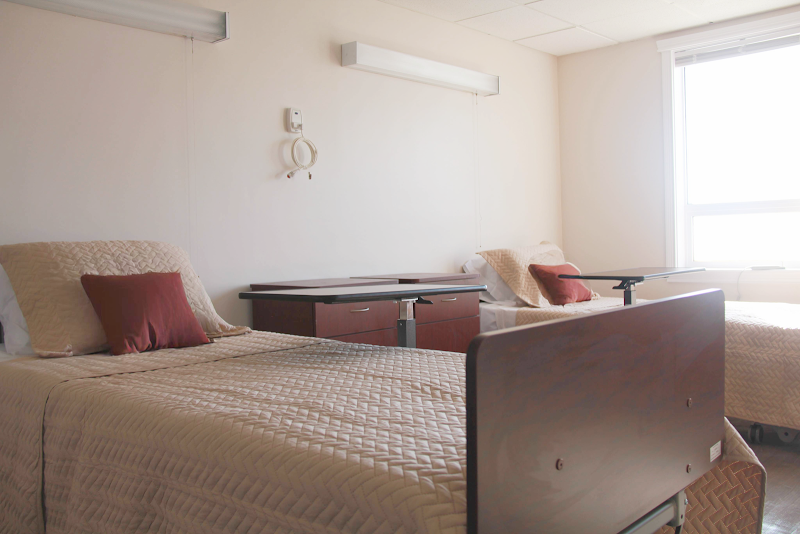
How is Heritage Manor Nursing And Rehabilitation Center Staffed?

CMS rates Heritage Manor Nursing and Rehabilitation Center's staffing level at 2 out of 5 stars, which is below average compared to other nursing homes. Staff turnover is 58%, which is 12 percentage points above the Michigan average of 46%. High turnover can affect care consistency as new staff learn residents' individual needs. RN turnover specifically is 88%, which is notably high. RNs provide skilled clinical oversight, so turnover in this role can affect medical care quality.

What Have Inspectors Found at Heritage Manor Nursing And Rehabilitation Center?

State health inspectors documented 36 deficiencies at Heritage Manor Nursing and Rehabilitation Center during 2022 to 2025. These included: 1 that caused actual resident harm and 35 with potential for harm. Deficiencies causing actual harm indicate documented cases where residents experienced negative health consequences.
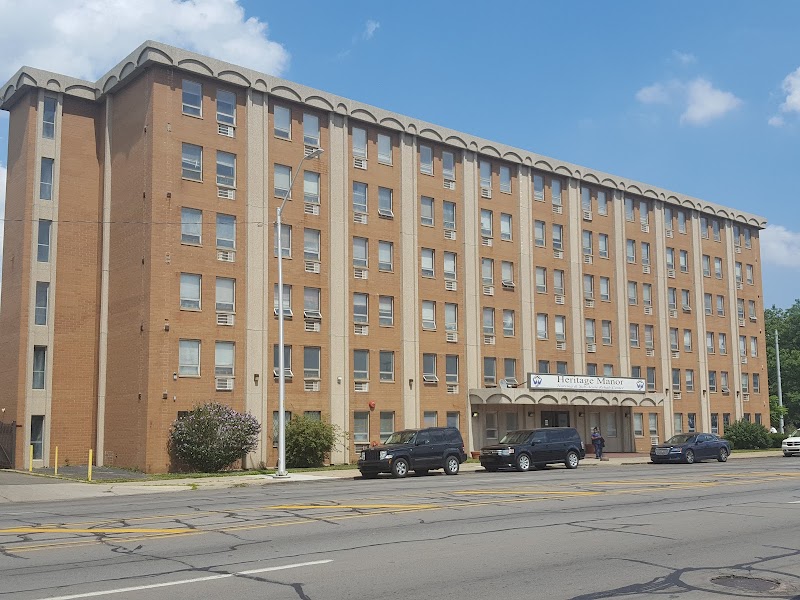
Who Owns and Operates Heritage Manor Nursing And Rehabilitation Center?

Heritage Manor Nursing and Rehabilitation Center is owned by a for-profit company. For-profit facilities operate as businesses with obligations to shareholders or private owners. The facility is operated by PIONEER HEALTHCARE MANAGEMENT, a chain that manages multiple nursing homes. With 122 certified beds and approximately 107 residents (about 88% occupancy), it is a mid-sized facility located in Detroit, Michigan.

How Does Heritage Manor Nursing And Rehabilitation Center Compare to Other Michigan Nursing Homes?

Compared to the 100 nursing homes in Michigan, Heritage Manor Nursing and Rehabilitation Center's overall rating (2 stars) is below the state average of 3.1, staff turnover (58%) is significantly higher than the state average of 46%, and health inspection rating (2 stars) is below the national benchmark.

What Should Families Ask When Visiting Heritage Manor Nursing And Rehabilitation Center?

Based on this facility's data, families visiting should ask: "What safeguards and monitoring systems are in place to protect residents from abuse or neglect?" "How do you ensure continuity of care given staff turnover, and what is your staff retention strategy?" "Can you walk me through typical staffing levels on day, evening, and night shifts?" "Can I visit during a mealtime to observe dining assistance and food quality?" These questions are particularly relevant given the substantiated abuse finding on record, the facility's high staff turnover rate, and the below-average staffing rating.

Is Heritage Manor Nursing And Rehabilitation Center Safe?

Based on CMS inspection data, Heritage Manor Nursing and Rehabilitation Center has documented safety concerns. The facility has 1 substantiated abuse finding (meaning confirmed case of resident harm by staff or other residents). The facility has a 2-star overall rating and ranks #100 of 100 nursing homes in Michigan. Families considering this facility should ask detailed questions about what corrective actions have been taken since these incidents.

Do Nurses at Heritage Manor Nursing And Rehabilitation Center Stick Around?

Staff turnover at Heritage Manor Nursing and Rehabilitation Center is high. At 58%, the facility is 12 percentage points above the Michigan average of 46%. Registered Nurse turnover is particularly concerning at 88%. RNs handle complex medical decisions and coordinate care — frequent RN changes can directly impact care quality. High turnover means new staff may not know residents' individual needs, medications, or preferences. It can also be disorienting for residents, especially those with dementia who rely on familiar faces. Families should ask: What is causing the turnover? What retention programs are in place? How do you ensure care continuity during staff transitions?

Was Heritage Manor Nursing And Rehabilitation Center Ever Fined?

Heritage Manor Nursing and Rehabilitation Center has been fined $9,955 across 1 penalty action. This is below the Michigan average of $33,178. While any fine indicates a compliance issue, fines under $50,000 are relatively common and typically reflect isolated problems that were subsequently corrected. Families should ask what specific issues led to these fines and confirm they've been resolved.

Is Heritage Manor Nursing And Rehabilitation Center on Any Federal Watch List?

Heritage Manor Nursing and Rehabilitation Center is not on any federal watch list. The most significant is the Special Focus Facility (SFF) program, which identifies the bottom 1% of nursing homes nationally based on persistent, serious quality problems. Not being on this list means the facility has avoided the pattern of deficiencies that triggers enhanced federal oversight. This is a positive indicator, though families should still review the facility's inspection history directly.