Burcham Hills Retirement Center
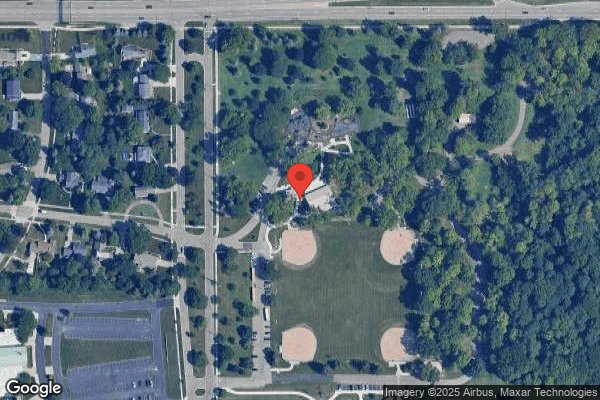
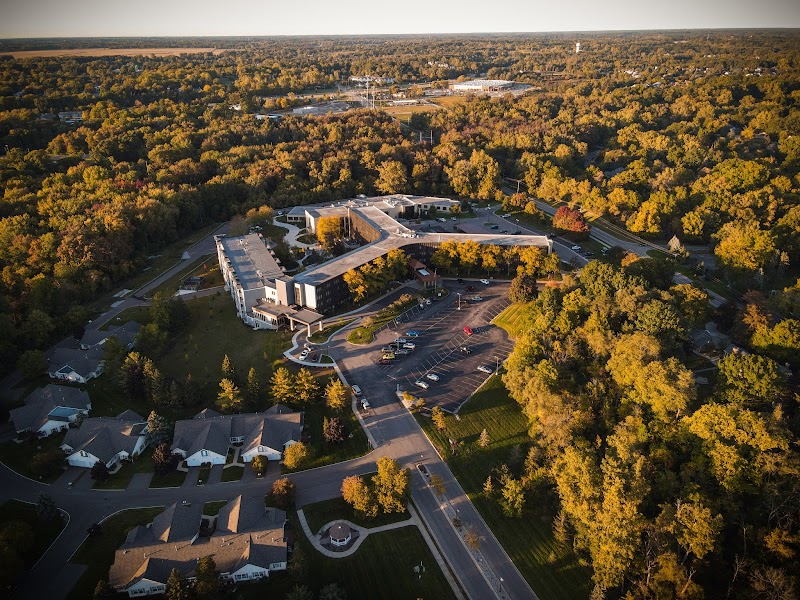
2700Burcham Drive, East Lansing, MI 48823 (517) 351-8377
Non profit - Corporation 133 Beds LIFE CARE SERVICES Data: November 2025
Trust Grade
0/100
#366 of 422 in MI
Last Inspection: May 2025

Inspected within the last 6 months. Data reflects current conditions.

Overview

Burcham Hills Retirement Center has received a Trust Grade of F, which indicates significant concerns about the quality of care provided. Ranking #366 out of 422 nursing homes in Michigan places it in the bottom half of facilities statewide, and it is last among the nine homes in Ingham County. Although the facility has shown improvement in reducing issues from 20 in 2024 to 14 in 2025, it still reports a concerning 66% staff turnover rate, higher than the state average, despite a solid staffing rating of 4 out of 5 stars. The facility also has a high fine total of $56,121, which is average but suggests potential compliance problems. On the positive side, Burcham Hills has more registered nurse (RN) coverage than 75% of Michigan facilities, which is beneficial for resident care. However, specific incidents raise red flags; for example, a resident suffered a fractured bone due to inadequate fall prevention measures, and another resident developed pressure ulcers that could lead to infection. These findings point to a need for improvement in care practices to ensure resident safety and well-being.

Trust Score
F
0/100
In Michigan
#366/422
Bottom 14%
Safety Record
High Risk
Review needed
Inspections
Getting Better
20 → 14 violations
Staff Stability
⚠ Watch
66% turnover. Above average. Higher turnover means staff may not know residents' routines.
Penalties
✓ Good
$56,121 in fines. Lower than most Michigan facilities. Relatively clean record.
Skilled Nurses
✓ Good
Each resident gets 63 minutes of Registered Nurse (RN) attention daily — more than 97% of Michigan nursing homes. RNs are the most trained staff who catch health problems before they become serious.
Violations
⚠ Watch
49 deficiencies on record. Higher than average. Multiple issues found across inspections.
★☆☆☆☆
1.0
Overall Rating
★★★★☆
4.0
Staff Levels
★★★★☆
4.0
Care Quality
★☆☆☆☆
1.0
Inspection Score
Stable
2024: 20 issues
2025: 14 issues

The Good

  • 4-Star Staffing Rating · Above-average nurse staffing levels
  • 4-Star Quality Measures · Strong clinical quality outcomes
  • Full Sprinkler Coverage · Fire safety systems throughout facility
  • No fines on record

Facility shows strength in staffing levels, quality measures, fire safety.

The Bad

1-Star Overall Rating

Below Michigan average (3.1)

Significant quality concerns identified by CMS

Staff Turnover: 66%

20pts above Michigan avg (46%)

Frequent staff changes - ask about care continuity

Federal Fines: $56,121

Above median ($33,413)

Moderate penalties - review what triggered them

Chain: LIFE CARE SERVICES

Part of a multi-facility chain

Ask about local staffing decisions and management

Staff turnover is elevated (66%)

18 points above Michigan average of 48%

The Ugly 49 deficiencies on record

6 actual harm
May 2025 12 deficiencies
CONCERN (D) 📢 Someone Reported This

A family member, employee, or ombudsman was alarmed enough to file a formal complaint

Potential for Harm - no one hurt, but risky conditions existed

Report Alleged Abuse (Tag F0609)

Could have caused harm · This affected 1 resident

**NOTE- TERMS IN BRACKETS HAVE BEEN EDITED TO PROTECT CONFIDENTIALITY** This Citation Pertains To Intake MI00152786 Based on interview and record review the facility failed to immediately report abuse...

Read full inspector narrative →
**NOTE- TERMS IN BRACKETS HAVE BEEN EDITED TO PROTECT CONFIDENTIALITY** This Citation Pertains To Intake MI00152786 Based on interview and record review the facility failed to immediately report abuse allegations to the Nursing Home Administrator for one allegation of a resident to resident altercation (Residents #63 and #88) of one abuse allegation reviewed. Findings include: Resident #R63 Review of the clinical record, including the Minimum Data Set (MDS) dated [DATE] revealed R63 was scored 14 out of 15 (cognitively intact) of on the Brief Interview for Mental Status. Resident #R88 Review of the clinical record, including the Minimum Data Set (MDS) dated [DATE] reflected R88 had intact long and short term memory. A BIMS score was not obtained for R88. Upon an interview with Social Worker CC on 5/15/25 at 1:00 PM she reported a BIMS was not obtained due to R88 being on frequent leave of absences but in her opinion R88 was alert and oriented to person, place and time. Review of the Facility Reported Incident (FRI) dated 5/05/25, revealed Licensed Practical Nurse (LPN) C received a telephone call on 5/4/25 from R63's family member alleging R63 had just been physically assaulted. On 05/14/25 01:49 PM during an interview with LPN C she reported she was assigned to both R63 and R88 on 5/4/25. LPN C reported R63 had been yelling out at about 4:30 PM, R63 wanted someone to go to the lobby and get his door dash order. LPN C stated she observed R88 in R63's doorway and overheard R88 tell R63 to stop yelling and then slammed R63's door shut. (R88 lived across the hall from R63 at the time of the incident.) LPN C stated on 5/4/25 at approximately 4:30 PM she received a phone call from R63's friend. The friend reported she overheard R63 being assaulted during her daily phone call with R63. LPN C stated she observed R63 and he did not have any red marks bruises and did not verbalize any alleged abuse to her. LPN C stated a few hours later the police arrived (police were called by R63's family). LPN C stated at that time R63 reported R88 struck him in the head. When queried why the Nursing Home Administrator (NHA) A or Director of Nursing (DON) B were not notified of the allegation of 5/4/25, LPN C stated because R63 seemed fine and she didn't think anything really happened. On 05/15/25 12:45 PM during an interview with NHA A who also serves as the facility's abuse prevention coordinator, she reported the expectation was to be notified of any abuse allegation immediately. When queried how she was made aware of the allegation she stated she was made aware by the DON B who attended a care conference with R63 and his family on 5/5/25 which was when the investigation was started.
CONCERN (D)

Potential for Harm - no one hurt, but risky conditions existed

MDS Data Transmission (Tag F0640)

Could have caused harm · This affected 1 resident

**NOTE- TERMS IN BRACKETS HAVE BEEN EDITED TO PROTECT CONFIDENTIALITY** Based on interview and record review, the facility failed to transmit Minimum Data Set (MDS) assessment timely in one of 21 revi...

Read full inspector narrative →
**NOTE- TERMS IN BRACKETS HAVE BEEN EDITED TO PROTECT CONFIDENTIALITY** Based on interview and record review, the facility failed to transmit Minimum Data Set (MDS) assessment timely in one of 21 reviewed for MDS assessments (Resident #95). Findings include: Review of the clinical record revealed R95 was admitted to the facility on [DATE] with diagnoses that includes kidney failure and diabetes. R95 was transferred to the hospital on 3/15/24. Further of R 95's clinical record reflected no discharge MDS had been completed or transmitted. On 05/15/25 at 12:03 PM, MDS Coordinators D and E were interviewed. MDS Coordinator E reported that MDS Nurse F was not working today but responsible for all discharge MDS's and their submissions. MDS Coordinator E stated he too tracked the discharge MDS's and it should have been completed and transmitted within 14 days of R95's discharge. MDS Coordinator E stated R95's discharge MDS was overlooked.
CONCERN (D)

Potential for Harm - no one hurt, but risky conditions existed

Assessment Accuracy (Tag F0641)

Could have caused harm · This affected 1 resident

**NOTE- TERMS IN BRACKETS HAVE BEEN EDITED TO PROTECT CONFIDENTIALITY** Based on interview and record review, the facility failed to ensure the accuracy of one discharge Minimum Data Set (MDS) assessm...

Read full inspector narrative →
**NOTE- TERMS IN BRACKETS HAVE BEEN EDITED TO PROTECT CONFIDENTIALITY** Based on interview and record review, the facility failed to ensure the accuracy of one discharge Minimum Data Set (MDS) assessment for one resident (resident #103) of three reviewed for discharge. Findings include: According to the clinical record, R103 was admitted to the facility on [DATE]. Nursing progress notes dated [DATE] reflected R103 was found unresponsive and transferred to the hospital. Review of the discharge MDS dated [DATE], question A2105 was coded that R103 went home. On [DATE] at 12:03 PM, MDS Coordinators D and E were interviewed. MDS Coordinator E reported that MDS Nurse F was not working today but responsible for all discharge MDS's . MDS Coordinator D reported she was certain R103 was sent to the hospital and later died and was not discharged home. MDS Coordinator D reported question A2105 should have been coded as a 4 which was acute care hospital.
CONCERN (D)

Potential for Harm - no one hurt, but risky conditions existed

ADL Care (Tag F0677)

Could have caused harm · This affected 1 resident

Based on observation, interview and record review, the facility failed to provide showers/baths for one (Resident 50) of two residents reviewed for activities of daily living. Findings include: A revi...

Read full inspector narrative →
Based on observation, interview and record review, the facility failed to provide showers/baths for one (Resident 50) of two residents reviewed for activities of daily living. Findings include: A review of the clinical record revealed R50 was admitted into the facility on 4/14/25, with diagnoses that included: depression, seizure disorder, fracture and required one person assistance for bathing. On 5/14/25 at 8:36 AM, R50 was observed sitting up at the edge of her bed. Her hair was observed to be greasy and unkempt. R50 reported that she had only received one shower since being admitted to the facility. R50 reported that she required assistance with showers and that her hair feels greasy (which she did not like). A review of R50's Task record for showers/Baths revealed no documentation indicating that the resident had received any showers since her admission. The only documented responses in the Task record were not applicable. On 5/15/25 at 10:51 AM, during an interview with Director of Nursing (DON), she reported that showers should be offered twice per week, when she first started at the facility, they were only offering them once per week, floors 2 and 3 have transitioned to twice weekly and the first floor is in the process of being transitioned to twice weekly showers. DON reported that if a resident refuses a shower, it should be documented in the electronic health record and that if a resident refuses a shower they should receive a full bed bath. When notified that R50 reported only having one shower since her admission to the facility, DON reported that R50 tell staff she wasn't getting her showers. R50 reported that staff was aware that her showers had not been completed. Reviewed R50's Task record with DON, no showers documented, only not applicable was marked. DON reported that there was a different screen (Task Care Record) that looked like they were being documented as completed. DON was asked to provide that documentation if applicable, no additional documentation was provided prior to survey end. A review of the facilities policy titled Activities of Daily living (ADL's), documented in part Appropriate care and services will be provided for residents who are unable to carry out ADLs independently, with the consent of the resident and in accordance with the plan of care, including appropriate support and assistance with .hygiene (bathing, dressing, grooming and oral care) .
CONCERN (D)

Potential for Harm - no one hurt, but risky conditions existed

Quality of Care (Tag F0684)

Could have caused harm · This affected 1 resident

**NOTE- TERMS IN BRACKETS HAVE BEEN EDITED TO PROTECT CONFIDENTIALITY** Resident #R60: Review of the medical record reflected R60 admitted to the facility on [DATE], with diagnoses that included deme...

Read full inspector narrative →
**NOTE- TERMS IN BRACKETS HAVE BEEN EDITED TO PROTECT CONFIDENTIALITY** Resident #R60: Review of the medical record reflected R60 admitted to the facility on [DATE], with diagnoses that included dementia, peritoneal abscess, cutaneous abscess of abdominal wall, major depressive disorder and bipolar disorder. The Quarterly Minimum Data Set (MDS), with an Assessment Reference Date (ARD) of 2/17/25, reflected R60 scored 13 out of 15 (cognitively intact) on the Brief Interview for Mental Status (BIMS-a cognitive screening tool) and was coded for open lesion(s) other than ulcers, rashes or cuts. On 05/13/25 at 11:46 AM, R60 was observed in bed. They reported having a wound on the lower left side of their abdomen, which was supposed to have a dressing change every three hours, per their report. R60 reported the dressing was not always being changed as it should be, and they would miss one of the dressing changes. The May 2025 Treatment Administration Record (TAR) reflected an order with a start date of 5/2/25 at 10:00 PM and a discontinue date of 5/8/25 at 1:51 PM for, Alternate dressing: abdominal draining tract: NS [normal saline] cleanse, pat dry, skin protectant to periwound [around wound], Aquacel under superabsorbent dressing (bordered or tape in place). Abdominal binder for added dressing securement, as tolerated. every 8 hours. The treatment was scheduled for 6:00 AM, 2:00 PM and 10:00 PM. The treatment was not documented as being completed for the 10:00 PM scheduled time on 5/2/25, 5/3/25, 5/4/25 and 5/6/25. There was no documentation pertaining to the reason for the treatment not being completed. The May 2025 TAR reflected an order with a start date of 5/8/25 at 2:00 PM for, Abdominal draining tract: NS cleanse, pat dry, skin protectant to periwound, Aquacel under superabsorbent dressing (bordered or tape in place). Abdominal binder for added dressing securement, as tolerated. every 8 hours. The treatment was scheduled for 6:00 AM, 2:00 PM and 10:00 PM. The treatment was not documented as being performed on 5/13/25 at 2:00 PM and 10:00 PM. There was no documentation pertaining to the reason for the treatment not being completed. Attempts to contact night shift Registered Nurse (RN) Z and night shift RN AA via phone during the survey were unsuccessful. During an interview on 05/15/25 at 9:17 AM, Director of Nursing (DON) B reported R60's wound was a fistula with copious amounts of drainage that made R60 uncomfortable and self-conscious. DON B stated she did not see documentation pertaining to the rationale for R60's treatments not being completed as ordered. Based on observation, interview, and record review, the facility failed to ensure wound treatments were in place as ordered for one resident (Resident 60) and failed to administer medication as ordered for one resident (Resident 305) of 21 residents reviewed for quality of care. Findings include: Resident #R305 A review of the clinical record revealed R305 was admitted into the facility on 4/4/25, with diagnoses that included: Type 2 Diabetes Mellitus with diabetic neuropathy, major depressive disorder and anxiety disorder. On 5/13/25 at 1:17PM, R305 was observed sitting in her manual wheelchair in her room. R305 reported that the facility had not been consistently administering her weekly diabetes medication, Mounjaro. R305 reported concern related to potential diabetes related complications due to not receiving her Mounjaro regularly. A review of physician's orders for R305 revealed: 4/5/25 Mounjaro Subcutaneous Solution 5mg/0.5ML, inject subcutaneously (under the skin) one time a day, every Saturday for DM (diabetes mellitus) A review of R305's April 2025 Medication Administration Record (MAR) revealed Mounjaro was scheduled to be given every Saturday and on dates 4/12/25 and 4/19/25 doses were not administered as ordered. Associated progress notes read as follows: 4/12/25 Medication is unavailable at the facility. It is not in the refrigerators or in the StatSafe 4/19/25 out of med. And reordered A review of R305's May 2025 MAR revealed the medication was scheduled to be given every Saturday and on 5/10/25 a dose was not administered. Associated progress note read as follows: 5/10/25 not available in the facility, onecare (facility pharmacy provider) was called by nurse, onecare said they will email DON (Director of Nursing) to get approval. Patient is aware of it. It should be noted that of the 6 doses R305 was scheduled to receive while being admitted to the facility, she only received 3. It should also be noted that there was no documentation that the facility physician was notified of any of the 3 missing doses. A review of the progress notes indicated that on 4/12/25 the progress note related to the missing dose, was written by LPN FF. On 5/15/25 at 12:57 PM, during an interview with LPN FF, when asked what she could tell me about the missing dose, reported that she believed that they did not have the medication in the facility. When asked what the expectation is when a medication is not available, LPN FF reported that they are expected to reach out to the doctor and the pharmacy. It should be noted that LPN FFs progress note did not indicate she called either the pharmacy or the physician. On 5/15/25 at 1PM, during an interview with DON, when asked what the expectation is for follow-up and documentation when a medication is not available to be administered as ordered, she stated that the staff should contact the pharmacy to see if it is something that can be pulled from the backup supply or if the pharmacy can get it delivered. DON reported that the pharmacy makes multiple deliveries per day. DON further reported that attempts to contact the pharmacy should be documented in the electronic health record. When asked if medication administration is audited, DON reported that the unit managers should be auditing medication administration five days per week. A review of the facilities policy titled Medication Administration, documented in part If a medication is not available to be administered, the nurse will contact the pharmacy for clarification and the physician/nurse practitioner will be notified as necessary.
CONCERN (D)

Potential for Harm - no one hurt, but risky conditions existed

Deficiency F0761 (Tag F0761)

Could have caused harm · This affected 1 resident

**NOTE- TERMS IN BRACKETS HAVE BEEN EDITED TO PROTECT CONFIDENTIALITY** Based on observation, interview and record review, the facility failed to ensure medications were safely stored and administered...

Read full inspector narrative →
**NOTE- TERMS IN BRACKETS HAVE BEEN EDITED TO PROTECT CONFIDENTIALITY** Based on observation, interview and record review, the facility failed to ensure medications were safely stored and administered for one (R7) of one reviewed. Findings include: Review of the medical record reflected R7 admitted to the facility on [DATE], with diagnoses that included hemiplegia (paralysis or weakness on one side of the body) and hemiparesis (weakness on one side of the body) following cerebral infarction (stroke). The quarterly Minimum Data Set (MDS), with an Assessment Reference Date (ARD) of 4/7/25, reflected R7 scored 15 out of 15 (cognitively intact) on the Brief Interview for Mental Status (BIMS-a cognitive screening tool). On 05/14/25 at 9:22 AM, R7 was observed seated in a wheelchair, in their room. A medication cup containing six pills was observed on the stand, under their TV. On 05/14/25 at 9:24 AM, Registered Nurse (RN) R was at the medication cart, in the hallway, and reported the pills in R7's room were from that morning. RN R stated R7 had an order not to hover over him while he took his pills. R7's medical record reflected an order dated 9/23/16 for, Resident prefer [sic] that nursing do not stand over him while taking medication, may observe resident from a visual distance to ensure all medication has been taken. The May 2025 Medication Administration Record (MAR) reflected R7's morning medications included 81 milligrams (mg) of chewable Aspirin, 100 mg of Colace (stool softener), 10 mg of lisinopril (for high blood pressure), 500 mg of extended release metformin (for diabetes), Thera-M (multi-vitamin) and 5 mg of Eliquis (blood thinner). In an interview on 05/15/25 at 9:17 AM, Director of Nursing (DON) B reported unless a resident was assessed to self-administer medications and had an order from the Physician, the nurse should observe residents taking their medications. DON B reported approval was not granted for R7 to self-administer medications, which was the reason there was an order that R7 preferred that nurses did not stand over him.
CONCERN (D)

Potential for Harm - no one hurt, but risky conditions existed

Deficiency F0882 (Tag F0882)

Could have caused harm · This affected 1 resident

Based on interview and record review, the facility failed to ensure the Infection Preventionist completed specialized training in infection prevention and control. Findings include: On 5/14/25 at 2:47...

Read full inspector narrative →
Based on interview and record review, the facility failed to ensure the Infection Preventionist completed specialized training in infection prevention and control. Findings include: On 5/14/25 at 2:47 PM, Registered Nurse (RN) DD reported that she was the facilities Infection Preventionist. RN DD stated that she could not locate her training certificate for her Infection Preventionist role. On 5/15/25 at 12:32 PM, RN DD reported that she had recently began retaking the course, however, was not completed with the training. On 05/15/25 at 1:21 PM, Director of Nursing (DON) B reported that the facility was unable to locate the certificate of completion for RN DD and the program was not overseen by any other employee.
CONCERN (E) 📢 Someone Reported This

A family member, employee, or ombudsman was alarmed enough to file a formal complaint

Potential for Harm - no one hurt, but risky conditions existed

Deficiency F0725 (Tag F0725)

Could have caused harm · This affected multiple residents

**NOTE- TERMS IN BRACKETS HAVE BEEN EDITED TO PROTECT CONFIDENTIALITY** This citation pertains to intake MI00151684. Based on interview and record review, the facility failed to ensure sufficient nurs...

Read full inspector narrative →
**NOTE- TERMS IN BRACKETS HAVE BEEN EDITED TO PROTECT CONFIDENTIALITY** This citation pertains to intake MI00151684. Based on interview and record review, the facility failed to ensure sufficient nursing staffing to meet resident needs timely for three (R29, R46 and R61), from a census of 105 residents. Findings include: Resident #R29: Review of the medical record reflected R29 admitted to the facility on [DATE], with diagnoses that included heart failure. The Quarterly Minimum Data Set (MDS), with an Assessment Reference Date (ARD) of 3/17/25, reflected R29 scored 14 out of 15 (cognitively intact) on the Brief Interview for Mental Status (BIMS-a cognitive screening tool). On 05/14/25 at 9:58 AM, R29 was observed seated in a wheelchair, in their room. R29 stated the facility did not have enough help, and it was difficult to get assistance to the dining room due to needing assistance to propel their wheelchair. R29 reported using their call light for assistance to the bathroom and waiting approximately five to six minutes before going to the bathroom independently. R29 reported they then waited approximately ten additional minutes for assistance with their bathroom call light on when finished. Resident #R46: Review of the medical record reflected R46 admitted to the facility on [DATE] and readmitted [DATE], with diagnoses that included heart failure. The Quarterly MDS, with an ARD of 2/24/25, reflected R46 scored 15 out of 15 (cognitively intact) on the BIMS. On 05/13/25 at 1:04 PM, R46 was observed lying in bed. R46 reported the facility was understaffed. At least once per day, they waited for an hour and a half for their call light to be answered after bowel incontinence, due to staff providing feeding assistance or performing other tasks. Resident #R61: Review of the medical record reflected R61 admitted to the facility on [DATE] and readmitted [DATE], with diagnoses that included heart failure. The Quarterly MDS, with an ARD of 2/24/25, reflected R61 scored nine out of 15 (moderate cognitive impairment) on the BIMS. On 05/13/25 at 12:55 PM, R61 was observed lying in bed. They reported assistance on midnight shift was sometimes non-existent. Call light response time ranged from almost spontaneous to three hours. R61 reported delayed response times occurred more in the evening. During a phone interview on 05/14/25 at 3:38 PM, Certified Nurse Aide (CNA) U reported the second floor of the facility had approximately 34 residents and was usually staffed with two nurses and two CNAs on the 11:00 PM to 7:00 AM shift. The expectation was that nurses helped with resident care, but agency staff nurses did not help the CNAs. CNA U indicated if nurses helped, they were able to keep up with resident care needs. CNA U reported they were able to provide quality care when staffed with three CNAs at night. According to CNA U, the second floor of the facility had residents that exhibited behaviors and were at risk for falls. CNA U reported that about a month and a half prior, they worked the second floor as the only CNA with one nurse due to additional staff being pulled to the first floor of the facility. During a phone interview on 05/14/25 at 3:54 PM, CNA K reported the second floor of the facility typically had 34 residents. They reported there had been times when the second floor had one CNA for third shift. On Easter (4/20/25), the second floor was staffed with two CNAs on first and second shifts. CNA K reported there were too many residents to care for and many that required assistance to consume meals. CNA K stated staff also had to assist the kitchen with serving food. On 05/14/25 email requests were sent to Nursing Home Administrator (NHA) A for actual working schedules for CNAs and Nurses for the dates of 3/16/25 through 3/30/25, 4/19/25 through 4/21/25 and 5/1/25 through 5/14/25. Review of nursing staffing schedules included but was not limited to the following pertaining to staffing: -The second floor of the facility was staffed with two CNAs from 7:00 AM to 3:00 PM on 3/22/25. -On 3/25/25, the second floor of the facility was staffed with two CNAs for the 3:00 PM to 11:00 PM shift and one CNA from 11:00 PM on 3/25/25 to 7:00 AM on 3/26/25. -On 3/26/25 and 3/27/25, the second floor was staffed with two CNAs on the 3:00 PM to 11:00 PM shift. -The third floor of the facility was staffed with one CNA from 11:00 PM on 3/27/25 to 7:00 AM on 3/28/25. -The second floor of the facility was staffed with one CNA from 11:00 PM on 3/29/25 to 7:00 AM on 3/30/25 and from 11:00 PM on 3/30/25 to 7:00 AM on 3/31/25. -On 4/20/25, the second floor was staffed with two CNAs from 7:00 AM to 11:00 PM. -The second floor of the facility was staffed with one CNA from 11:00 PM on 4/20/25 to 7:00 AM on 4/21/25. -The second floor of the facility was staffed with one CNA from 11:00 PM on 5/3/25 to 7:00 AM on 5/4/25. -The second floor was staffed with one CNA from 11:00 PM on 5/9/25 to 7:00 AM on 5/10/25. In an interview on 05/15/25 at 9:45 AM, Staffing Coordinator (SC) W reported schedules were based on occupancy (census) and acuity. According to SC W, with 32 or more residents, it was ideal to staff the second and third floors of the facility with four CNAs on first shift (7:00 AM to 3:00 PM) and second shift (3:00 PM to 11:00 PM), but they could staff with three CNAs. The second and third floors were to be staffed with two CNAs on third shift (11:00 PM to 7:00 AM). During an interview conducted on 5/15/24 at 11:31 AM, Certified Nursing Assistant (CNA) EE indicated that staffing levels remain inadequate, particularly on weekends. CNA EE described multiple shifts where only two CNAs are assigned to the entire unit. Compounding the issue, CNAs have also been tasked with meal service due to ongoing dietary staff shortages. As a result, CNA EE reported that it is not feasible to deliver care in alignment with residents' care plans. In an interview on 5/15/24 at 11:40 AM, CNA I confirmed the pattern of working weekend shifts with just two CNAs. CNA I stated that the lack of staffing has made it unmanageable to meet residents' care plan requirements. Critical care activities, including turning and repositioning residents, as well as performing daily hygiene routines, are reportedly not being completed due to insufficient staffing.
CONCERN (F) 📢 Someone Reported This

A family member, employee, or ombudsman was alarmed enough to file a formal complaint

Potential for Harm - no one hurt, but risky conditions existed

Deficiency F0802 (Tag F0802)

Could have caused harm · This affected most or all residents

**NOTE- TERMS IN BRACKETS HAVE BEEN EDITED TO PROTECT CONFIDENTIALITY** This citation pertains to intake MI00152944. Based on observations, interviews, record reviews, and 7 (R1, R14, R27, R29, R34, R...

Read full inspector narrative →
**NOTE- TERMS IN BRACKETS HAVE BEEN EDITED TO PROTECT CONFIDENTIALITY** This citation pertains to intake MI00152944. Based on observations, interviews, record reviews, and 7 (R1, R14, R27, R29, R34, R46, R67) reviewed for untimely meal delivery service, the facility failed to provide sufficient dietary staff to ensure a timely meal service affecting 103 residents who consume food products, resulting in the increased likelihood for delayed meal tray service and resident emotional/physical discomfort. Findings include: On 05/14/25 at 09:25 A.M., An interview was conducted with Director of Food and Beverage (DFB) M regarding daily mealtime service parameters. (DFB) M stated: We serve Breakfast from 7:30 AM to 8:30 AM, Lunch from 12:00 PM to 1:30 PM, and Dinner from 5:30 PM to 6:30 PM every day. On 05/14/25 at 09:30 A.M., An interview was conducted with (DFB) M regarding resident food product meal options. (DFB) M stated: We provide a main menu option, alternate menu option, and an always available menu option for each meal. On 05/14/25 at 10:05 A.M., An interview was conducted with (DFB) M regarding current dietary staffing levels. (DFB) M stated: The full and part time employee totals should be 75. (DFB) M also stated: The full and part time employee total currently is 63. (DFB) M additionally stated: The plan for staffing replacement is underway. (DFB) M further stated: I have six interviews today. (DFB) M also stated: I have three new employees for orientation tomorrow. (DFB) M additionally stated: We are looking for servers, specifically PM servers. (DFB) M further stated: Weekends are staffed about the same as Monday thru Friday. On 05/14/25 at 11:55 A.M., An interview was conducted with Dietary [NAME] (DC) N regarding the Centers for Health and Rehabilitation (CHR) 3rd Floor Satellite Kitchenette operation. (DC) N stated: The 3rd floor kitchen is closed due to staffing. (DC) N also stated: We are having trouble with servers. (DC) N additionally stated: We are currently serving 3rd floor from the 2nd floor kitchen. On 05/14/25 at 03:58 P.M., An interview was conducted with (DFB) M regarding how dietary staffing levels are determined. (DFB) M stated: Staff are either full, part-time, or contingent. (DFB) M also stated: Contingent staff select their individual schedule based upon open areas within the schedule. (DFB) M further stated: Contingent staff must work a minimum of shifts throughout the month, including weekends. On 05/15/25 at 08:15 A.M., Record review of the Policy/Procedure entitled: Food and Nutrition Services dated (no date) revealed under Policy Statement: Each resident is provided with a nourishing, palatable, well-balanced diet that meets his or her daily nutritional and special dietary needs, taking into consideration the preferences of each resident. Record review of the Policy/Procedure entitled: Food and Nutrition Services dated (no date) further revealed under Policy Interpretation and Implementation: (5) The food and nutrition staff will be available and adequately staffed to assist residents with eating as needed. Nurse aides and feeding assistants will provide support to enhance the resident experience, but not as a critical component to the functioning of the department. On 05/15/25 at 08:30 A.M., Record review of the Policy/Procedure entitled: Staffing Patterns dated (no date) revealed under Standards: Proper staffing levels should be set to ensure adequate levels of food production and service staff. Record review of the Policy/Procedure entitled: Staffing Patterns dated (no date) further revealed under Purpose: Proper staffing levels will enable the department to provide all the services required by the residents and their guests. Resident #R27: Review of the medical record reflected R27 admitted to the facility on [DATE] and readmitted [DATE]. The admission Minimum Data Set (MDS), with an Assessment Reference Date (ARD) of 3/25/25, reflected R27 scored 15 out of 15 (cognitively intact) on the Brief Interview for Mental Status (BIMS-a cognitive screening tool). On 05/13/25 at 11:52 AM, R27 was observed seated in a wheelchair, in their room. R27 reported their breakfast was one hour late that morning, and their dinner was two hours late the prior Saturday (5/10/25). R27 reported they had heard reports from staff of the kitchen being short-staffed. R27 reported breakfast was supposed to be served at 8 AM, and dinner was supposed to be served at 5:00 PM. During a dining observation of the third floor dining room, which began on 05/13/25 at 12:02 PM, one staff member was observed to serve trays to three residents. At 12:07 PM, there were 13 residents seated in the dining room, with three of those residents having received their trays. One of the three residents was receiving feeding assistance from a visitor, one was receiving feeding assistance from a staff member, and one was eating independently. Staff were observed in the hallway, serving room trays. At 12:08 PM, a fourth tray was delivered to the dining room. At 12:14 PM, R1 began yelling due to not having their tray yet, despite other residents at their table having already received their meals. R1's tray was delivered at 12:15 PM. R29's tray arrived at 12:15 PM. R67's tray arrived at 12:17 PM, after they had been watching other resident's, seated at the same table, eating. At 12:17 PM, 13 residents were seated in the dining room, and eight of those residents had received a meal tray. At 12:26 PM, R14 and R34 had not yet received their lunch trays, although the other residents seated at their tables had received their meals. R14 was notified by staff that their grilled cheese was still being made. At 12:30 PM, R14 was observed to have a tray with a grilled cheese sandwich. At 12:31 PM, a staff member notified R34 that they were going to check on their food and thanked them for their patience. At 12:32 PM, R34's tray was delivered to the table. Resident #R46: Review of the medical record reflected R46 admitted to the facility on [DATE] and readmitted [DATE], with diagnoses that included heart failure. The Quarterly MDS, with an ARD of 2/24/25, reflected R46 scored 15 out of 15 (cognitively intact) on the BIMS. On 05/13/25 at 1:04 PM, R46 was observed lying in bed. According to R46, a couple days prior, the food was not ready (on time). R46 believed it was at the dinner meal but was unable to recall which particular day. Resident #R29: Review of the medical record reflected R29 admitted to the facility on [DATE], with diagnoses that included heart failure. The Quarterly MDS, with an ARD of 3/17/25, reflected R29 scored 14 out of 15 (cognitively intact) on the BIMS. On 05/14/25 at 9:58 AM, R29 was observed seated in their wheelchair. They reported the prior Friday night (5/9/25), they were sent to the dining room at 5:00 PM and remained there until 6:00 PM. R29 reported asking the nurse where their food was, and at 8:30 PM, staff brought a ham sandwich to their room. During an interview on 05/15/25 at 10:08 AM, with Community Dining Manager (CDM) X and Assistant Dietary Manger (ADM) Y, it was reported that there had been a kitchen staffing shortage, and third floor meals were coming from the second floor. It was reported that all meals came from the first floor on Saturday (5/10/25), and residents on the third floor had received their dinner meals by 7:45 PM to 7:50 PM that day. It was reported that the expectation for serving meal trays was that all residents seated at the same table should have been served together or close to the same time.
CONCERN (F) 📢 Someone Reported This

A family member, employee, or ombudsman was alarmed enough to file a formal complaint

Potential for Harm - no one hurt, but risky conditions existed

Deficiency F0804 (Tag F0804)

Could have caused harm · This affected most or all residents

Based on observations, interviews, record reviews, and 1(R307) of 1 reviewed for food product temperatures, the facility failed to provide palatable food products affecting 103 residents who consume f...

Read full inspector narrative →
Based on observations, interviews, record reviews, and 1(R307) of 1 reviewed for food product temperatures, the facility failed to provide palatable food products affecting 103 residents who consume food products, resulting in the increased likelihood for decreased resident food acceptance and clinical nutritional decline. Findings include: On 05/14/25 at 09:25 A.M., An interview was conducted with Director of Food and Beverage (DFB) M regarding specific mealtime parameters. (DFB) M stated: We serve Breakfast from 7:30 AM to 8:30 AM, Lunch from 12:00 PM to 1:30 PM, and Dinner from 5:30 PM to 6:30 PM. On 05/14/25 at 12:48 P.M., Resident lunch meal food trays were observed leaving the Centers for Health and Rehabilitation (CHR) 1st Floor Satellite Kitchenette, within a Rubbermaid 4-tier plastic resin non-insulated transport cart. On 05/14/25 at 12:50 P.M., Resident lunch meal food trays were observed arriving to B-Hall, within a Rubbermaid 4-tier plastic resin non-insulated transport cart. On 05/14/25 at 12:52 P.M., Food product temperatures were monitored utilizing a ThermoWorks Super-Fast Thermapen model CR2032 digital thermometer. The following food product temperatures were recorded for R307's lunch meal food tray: Pork Loin - 121.9 degrees Fahrenheit* Fried [NAME] - 113.2 degrees Fahrenheit* Snap Peas - 116.4 degrees Fahrenheit* Egg Roll - 121.8 degrees Fahrenheit* Beverage (Water) - 42.1 degrees Fahrenheit* Mocha Blend Brownie - Room Temperature (*) The 2022 FDA Model Food Code section 3-501.16 states: (A) Except during preparation, cooking, or cooling, or when time is used as the public health control as specified under §3-501.19, and except as specified under (B) and in (C) of this section, TIME/TEMPERATURE CONTROL FOR SAFETY FOOD shall be maintained: (1) At 57°C (135°F) or above, except that roasts cooked to a temperature and for a time specified in 3-401.11(B) or reheated as specified in 3-403.11(E) may be held at a temperature of 54oC (130oF) or above; or (2) At 5°C (41°F) or less. On 05/15/25 at 07:45 A.M., Record review of the Policy/Procedure entitled: Tray Service dated (no date) revealed under Purpose: The purpose of this policy is to ensure that the quality of takeout meals received by a resident, or a guest meets high quality standards that mirror the food quality of meals served in the main dining room. Record review of the Policy/Procedure entitled: Tray Service dated (no date) further revealed under Guidelines: (1) The Food & Beverage Director will develop a system for taking room service orders. This system will include who will be assigned to take the orders, the times that orders will be taken, and the time meals will be delivered. On 05/15/25 at 08:00 A.M., Record review of the Policy/Procedure entitled: Food and Nutrition Services dated (no date) revealed under Policy Statement: Each resident is provided with a nourishing, palatable, well-balanced diet that meets his or her daily nutritional and special dietary needs, taking into consideration the preferences of each resident. Record review of the Policy/Procedure entitled: Food and Nutrition Services dated (no date) further revealed under Policy Interpretation and Implementation: (7) Food and nutrition services staff will inspect food trays to ensure that the correct meal is provided to each resident, the food appears palatable and attractive, and it is served at a safe and appetizing temperature. (a) If an incorrect meal is provided to a resident, or a meal does not appear palatable, nursing staff will report it to the food service manager so that a new food tray can be issued. (b) Foods that are left without a source of heat (for hot foods) or refrigeration (for cold foods) longer than 2 hours will be discarded.
CONCERN (F) 📢 Someone Reported This

A family member, employee, or ombudsman was alarmed enough to file a formal complaint

Potential for Harm - no one hurt, but risky conditions existed

Food Safety (Tag F0812)

Could have caused harm · This affected most or all residents

Based on observations, interviews, and record reviews, the facility failed to: (1) effectively clean and maintain food service equipment, and (2) effectively date mark all potentially hazardous ready-...

Read full inspector narrative →
Based on observations, interviews, and record reviews, the facility failed to: (1) effectively clean and maintain food service equipment, and (2) effectively date mark all potentially hazardous ready-to-eat food products affecting 103 residents, resulting in the increased likelihood for cross-contamination, bacterial harborage, and resident foodborne illness. Findings include: On 05/14/25 at 09:10 A.M., A comprehensive tour of the food service was conducted with Director of Food and Beverage (DFB) M. The following items were noted: On 05/14/25 at 09:25 A.M., An interview was conducted with (DFB) M regarding specific mealtime parameters. (DFB) M stated: We serve Breakfast from 7:30 AM to 8:30 AM, Lunch from 12:00 PM to 1:30 PM, and Dinner from 5:30 PM to 6:30 PM. On 05/14/25 at 09:30 A.M., An interview was conducted with (DFB) M regarding resident food product meal options. (DFB) M stated: We provide a main menu option, alternate menu option, and an always available menu option for each meal. On 05/14/25 at 09:45 A.M., An interview was conducted with (DFB) M regarding facility satellite kitchenettes. (DFB) M stated: The Centers for Health and Rehabilitation (CHR) has three satellite kitchenettes. (CHR1) Satellite Kitchenette Two unopened half-gallon containers of Prairie Farms fat free milk were observed in the Victory 2-door reach-in cooler with a manufacturer's use-by-date that read 4-27-25. On 05/14/25 at 09:55 A.M., An interview was conducted with (DFB) M regarding potentially hazardous ready-to-eat food date marking practices. (DFB) M stated: We use day of plus 6 for a total of 7 days not to exceed the manufacture's use-by-date. The 2022 FDA Model Food Code section 3-501.17 states: (A) Except when PACKAGING FOOD using a REDUCED OXYGEN PACKAGING method as specified under § 3-502.12, and except as specified in (E) and (F) of this section, refrigerated, READY-TO-EAT, TIME/TEMPERATURE CONTROL FOR SAFETY FOOD prepared and held in a FOOD ESTABLISHMENT for more than 24 hours shall be clearly marked to indicate the date or day by which the FOOD shall be consumed on the PREMISES, sold, or discarded when held at a temperature of 5ºC (41ºF) or less for a maximum of 7 days. The day of preparation shall be counted as Day 1. (CHR3) Satellite Kitchenette The Scotsman ice machine ice dispensing spout was observed with accumulated and encrusted mineral (lime and calcium) deposits. The Bunn coffee machine (dispensing spouts, undersplash, backsplash, drip tray assembly) was observed soiled with accumulated and encrusted food residue. (DFB) M was queried regarding how often the coffee machine was cleaned. (DFB) M stated: Daily. The 2022 FDA Model Food Code section 4-601.11 states: (A) EQUIPMENT FOOD-CONTACT SURFACES and UTENSILS shall be clean to sight and touch. (B) The FOOD-CONTACT SURFACES of cooking EQUIPMENT and pans shall be kept free of encrusted grease deposits and other soil accumulations. (C) NonFOOD-CONTACT SURFACES of EQUIPMENT shall be kept free of an accumulation of dust, dirt, FOOD residue, and other debris. On 05/15/25 at 09:00 A.M., Record review of the Policy/Procedure entitled: Cleaning Kitchenettes in Health Center dated 06/20/2001 revealed under Policy: Kitchenette cupboards, drawers, refrigerators, and other equipment will be cleaned on a regular basis, by Nursing and Hospitality Services staff. Record review of the Policy/Procedure entitled: Cleaning Kitchenettes in Health Center dated 06/20/2001 further revealed under Procedure: Hospitality Services/Kitchen Staff Responsibilities: Clean/Sanitize: (6) Juice/Cocoa/Coffee Makers, (7) Ice Machines. On 05/15/25 at 09:15 A.M., Record review of the Policy/Procedure entitled: Perishables Storage dated (no date) revealed under Standard: Perishables will be stored in a safe manner that retains maximum nutrient quantity, product freshness, and aesthetic quality. Record review of the Policy/Procedure entitled: Perishables Storage dated (no date) also revealed under Purpose: To ensure compliance with HAACP, maintain nutrient content, maintain aesthetic quality, and ensure food safety of all perishable food items through proper storage and labeling. Record review of the Policy/Procedure entitled: Perishables Storage dated (no date) further revealed under Procedure: (1) All perishables will be labeled with item name, employee initials, date and time of preparation, and USE BY date. The USE BY date for perishable items is today's date plus six days or less.
CONCERN (F) 📢 Someone Reported This

A family member, employee, or ombudsman was alarmed enough to file a formal complaint

Potential for Harm - no one hurt, but risky conditions existed

Garbage Disposal (Tag F0814)

Could have caused harm · This affected most or all residents

Based on observations, interviews, and record reviews, the facility failed to: (1) maintain 2 of 5 outdoor waste receptacles, and (2) effectively clean the waste receptacle concrete pad surface effect...

Read full inspector narrative →
Based on observations, interviews, and record reviews, the facility failed to: (1) maintain 2 of 5 outdoor waste receptacles, and (2) effectively clean the waste receptacle concrete pad surface effecting 105 residents, resulting in the increased likelihood for cross-contamination, bacterial harborage, and pest attraction/harborage. Findings include: On 05/14/25 at 10:00 A.M., An environmental tour of the facility outdoor waste receptacles and storage pad area was conducted with Director of Food and Beverage (DFB) M. The following items were noted: 2 of 5 waste receptacles were observed with 1 of 2 broken plastic lids. (DFB) M stated: I will submit a work order into the maintenance software system. 1 of 5 waste receptacles were observed with 1 of 2 broken plastic slider panels. (DFB) M stated: I will submit a work order into the maintenance software system. Miscellaneous items (wooden pallet, vinyl gloves, paper products, etc.) were observed resting on the concrete pad surface, adjacent to the five outdoor waste receptacles. On 05/15/25 at 08:45 A.M., Record review of the Policy/Procedure entitled: Garbage and Trash Cans dated (no date) revealed under Procedure: (I) Operation of Equipment: (5) The dumpster area must be free of debris on the ground and the lid must be closed.
Mar 2025 1 deficiency
CONCERN (D) 📢 Someone Reported This

A family member, employee, or ombudsman was alarmed enough to file a formal complaint

Potential for Harm - no one hurt, but risky conditions existed

Resident Rights (Tag F0550)

Could have caused harm · This affected 1 resident

**NOTE- TERMS IN BRACKETS HAVE BEEN EDITED TO PROTECT CONFIDENTIALITY** This citation pertains to Intake Number MI00151168. Based on observation, interview, and record review, the facility failed to ...

Read full inspector narrative →
**NOTE- TERMS IN BRACKETS HAVE BEEN EDITED TO PROTECT CONFIDENTIALITY** This citation pertains to Intake Number MI00151168. Based on observation, interview, and record review, the facility failed to treat one resident (Resident #3) with dignity and respect out of three residents reviewed. Findings include: Review of the medical record revealed R3 was admitted to the facility on [DATE] with diagnoses that included: traumatic subdural hemorrhage with loss of consciousness and muscle weakness. The Minimum Data Set (MDS) with an Assessment Reference Date (ARD) of 2/27/25 revealed R3 scored 15 out of 15 (cognitively intact) on the Brief Interview for Mental Status (BIMS-a cognitive screening tool) and required substantial/maximal assistance with lower body dressing. On 3/17/25 at 9:28 AM, during a telephone interview with Family member D they reported that on 2/28/25 RN A sent R3 to an outside appointment without any pants, hat or coat on. When Family member D met R3 at his appointment his lap was covered with only a sheet and on the bottom of his torso he was only wearing a brief. On 3/18/25 at 8:02 AM, R3 was observed sitting up in a recliner. When queried about his outside appointment on 2/28/25, he confirmed that he was sent out without any pants, coat or hat on. He further stated that RN A was more concerned about getting him to the transportation provider than his wellbeing and that nobody would go outside without pants, hat and a coat themselves. On 3/18/25 at 11:55 AM, R3 was observed sitting up in a recliner with Family member D also present. When asked how he felt the day he was sent out to his appointment without pants/hat and coat, he replied he felt cold and humiliated. R3 stated that the only way he could have felt more humiliated was if they had dressed him in a pink dress. Family member D stated and R3 confirmed that his coat/hat were set out on the love seat (oversized chair) that is positioned next to the recliner. They both reported the coat and hat were easily visible and not buried under anything. Family member D reported that a pair of clean pants was also with his coat/hat. Family member D reported that the resident had 3 pairs of pants with him at the facility. The coat was observed to be a men's, size large, charcoal colored winter coat and the hat was observed to be a charcoal colored, herringbone pattern, stocking style hat. On 3/18/25 at approximately 4:20 PM, RN A was interviewed regarding R3 being sent to an outside appointment not being properly dressed. RN A stated that she remembered this event because R3's wife was upset. RN A reported that she changed R3 twice due to incontinence of urine and that he did not have any additional clean/dry pants. RN A reported that she felt rushed because the transportation driver was already there and she did not want R3 to miss his appointment. RN A felt her only option was to wrap him in a blanket. She was unable to recall if the linen that was used was a blanket or a sheet. She admitted that it was not ideal and that it could be humiliating but her focus was on him not missing his appointment. RN A reported looking in the resident's closet and drawers for pants and stated that she did not see his coat/hat or any clean/dry pants. On 3/19/25 at 10:22 AM, Laundry Team Lead E, stated that the facility does keep clothes for residents to keep or borrow in cases of emergency's or when they are in need. A hanging rack with several articles of clothing was observed. Laundry Team Lead E, reported that they are always able to find requested items in an emergency. On 3/19/25 at 12:18 PM, Director of Nursing (DON) was interviewed regarding R3 being sent to an outside appointment without being properly dressed. DON reported that she had discussed the incident with RN A, who had reported that the resident did not have any clean/dry clothes available. DON reported that she had let RN A know that this could be considered a dignity issue and education was provided on reaching out to laundry to find proper attire for resident prior to sending them out for an appointment. DON added that R3's family member was asked to bring in additional clothes. A review of the CHR Concern Form dated 2/28/25 revealed in part Concern: res (resident) was sent to doc. apt (doctors appointment) without pants, after urinating on pants (no other clothing available). According to the website Weather Underground (wunderground.com) the temperature outside on 2/28/25 (the date of R3's outside appointment) was 39 degrees Fahrenheit at 11:53 AM and 44 degrees at 12:53 PM. R3's appointment time was 12pm. It should be noted that R3 is bald. Review of the facilities policy titled Resident right and responsibilities updated 10/19/23, documented in part The Resident has the right to be treated with dignity and the right to courteous, respectful and considerate treatment from all with who he/she comes in contact .The Resident has the right to privacy, to the extent feasible, in treatment and in caring for personal needs with consideration, respect and full recognition of his/her dignity and individuality .
Jan 2025 1 deficiency
CONCERN (D) 📢 Someone Reported This

A family member, employee, or ombudsman was alarmed enough to file a formal complaint

Potential for Harm - no one hurt, but risky conditions existed

Quality of Care (Tag F0684)

Could have caused harm · This affected 1 resident

**NOTE- TERMS IN BRACKETS HAVE BEEN EDITED TO PROTECT CONFIDENTIALITY** This citation pertains to intake MI00149664. Based on interview and record review, the facility failed to 1) assess and monitor ...

Read full inspector narrative →
**NOTE- TERMS IN BRACKETS HAVE BEEN EDITED TO PROTECT CONFIDENTIALITY** This citation pertains to intake MI00149664. Based on interview and record review, the facility failed to 1) assess and monitor respiratory status for one (Resident #3); and 2) administer respiratory medications as ordered for one (Resident #6) of six reviewed. Findings include: Resident #3 (R3): Review of the medical record reflected R3 admitted to the facility on [DATE] and readmitted [DATE], with diagnoses that included chronic obstructive pulmonary disease (COPD), chronic respiratory failure with hypoxia and dependence on supplemental oxygen. The quarterly Minimum Data Set (MDS), with an Assessment Reference Date (ARD) of [DATE], reflected R3 scored 10 out of 15 (moderate cognitive impairment) on the Brief Interview for Mental Status (BIMS-a cognitive screening tool). R3 died in the facility on [DATE]. A Physician's Order, with a start date of [DATE], reflected R3 was to receive oxygen, titrated at a rate of two to five liters per minute, to maintain blood oxygen saturation levels between 88 and 92 percent (%). A Progress Note for [DATE] at 4:45 AM reflected R3's oxygen saturation was 73%, and new oxygen tubing and a new nebulizer kit were provided. R3's vitals signs documentation reflected their oxygen saturation was 83% while receiving oxygen at four liters per minute on [DATE] at 4:45 AM. According to the medical record, there was no follow-up for R3's oxygen saturation levels until [DATE] at 7:38 AM, when it was recorded as 89% while receiving oxygen. Review of the [DATE] Medication Administration Record (MAR) reflected R3 had an order for Ipratropium-Albuterol Inhalation Solution (respiratory medication) 0.5-2.5 (3) milligrams (mg) per 3 milliliters (mL) to be inhaled orally, via nebulizer, every two hours as needed for COPD. The MAR reflected that lung sounds were to be auscultated (listened to/assessed) before treatment, indicated as LSB, and after treatment, indicated as LSA. The nebulizer was administered 57 times during the month of December. Documentation reflected that R3's lung sounds were assessed 17 out of 57 times that the medication was administered. The [DATE] MAR reflected R3's Ipratropium-Albuterol Inhalation Solution every two hours as needed was administered nine times between [DATE] and [DATE]. Lung sounds were not documented as being assessed before or after administration for any of nine the doses. R3's medical record reflected their blood oxygen saturation level was 86% while receiving oxygen, on [DATE] at 7:40 AM. The [DATE] MAR reflected R3 received an as needed Ipratropium-Albuterol Inhalation Solution nebulizer at 8:20 AM, with a recorded blood oxygen saturation level of 86%. The medical record did not reflect that R3's blood oxygen saturation level had increased to 88% to 92%, per their orders, and did not reflect further follow-up until [DATE] at 3:02 PM. On [DATE] at 3:02 PM, R3's blood oxygen saturation level was 80% on room air (without the use of oxygen). On [DATE] at 3:08 PM, R3's blood oxygen saturation level was 82% with oxygen in place. The [DATE] MAR reflected an as needed Ipratropium-Albuterol Inhalation Solution nebulizer was administered on [DATE] at 3:02 PM, with a recorded oxygen saturation level of 80%. The medical record did not reflect that R3's blood oxygen saturation level had increased to 88% to 92%, per their orders, and did not reflect further follow-up until [DATE] at 8:43 PM, when their blood oxygen level was 90% with oxygen in place. On [DATE] at 2:13 PM, R3's blood oxygen saturation level was 86% while receiving oxygen. The [DATE] MAR reflected an as needed Ipratropium-Albuterol Inhalation Solution nebulizer treatment was administered. The medical record did not reflect that R3's blood oxygen saturation level had increased to 88% to 92%, per their orders, and did not reflect further follow-up until [DATE] at 7:27 PM, when their blood oxygen saturation was 88% with oxygen in place. According to the [DATE] MAR, R3 received as needed Ipratropium-Albuterol Inhalation Solution nebulizer treatments on [DATE] at 7:38 AM and 2:10 PM. A Progress Note for [DATE] at 3:43 PM reflected R3 was observed removing their nebulizer right after it was provided, stating they could not breathe and needed another breathing treatment. In an interview on [DATE] at 10:26 AM, Licensed Practical Nurse (LPN) G reported they were unaware of what LSA and LSB meant pertaining to R3's as needed Ipratropium-Albuterol nebulizer order documentation. LPN G reported they did not always remain with R3 when administering their nebulizer treatments. LPN G stated they went back after the nebulizer treatments were complete and disassembled the nebulizer kit. LPN G reported they did not remain with R3 when administering their as needed nebulizer treatment in the morning on [DATE] or in the afternoon of [DATE], despite being aware that R3 removed their nebulizer mask at times, including that day. In an interview on [DATE] at 12:49 PM, Director of Nursing (DON) B indicated that lung sounds should have been assessed with administration of R3's as needed nebulizer treatments. DON B reported nurses should have remained with R3 when their nebulizer treatments were being administered. DON B reported LSB stood for lung sounds before, and LSA stood for lung sounds after (administration of R3's as needed nebulizer treatment). DON B reported R3 removed their oxygen at times. Regarding the expectation for monitoring and follow-up of blood oxygen saturation levels, DON B reported they would expect the nurses to assess first. If the resident had their oxygen off, they could replace the oxygen and recheck the resident in a few minutes. If they had their oxygen in place but continued to have lower blood oxygen saturation levels, DON B stated the expectation was that the nurse would call the physician. Resident #6 (R6): Review of the medical record reflected R6 admitted to the facility on [DATE], with diagnoses that included acute and chronic respiratory failure with hypoxia, influenza due to identified novel influenza A virus with pneumonia and asthma. The 5-day Medicare MDS, with an ARD of [DATE] reflected R6 scored 15 out of 15 (cognitively intact) on the BIMS. R6 died in the facility on [DATE]. The [DATE] MAR reflected an order for Budesonide Inhalation Suspension (respiratory medication) 0.5 mg per 2 mL to be inhaled orally, twice daily, for asthma. The MAR reflected the medication was not administered in the evening on [DATE], the morning or evening of [DATE], the evening of [DATE] or the morning and evening of [DATE] and [DATE]. R6 received five of their 13 scheduled doses of Budesonide between [DATE] and [DATE]. A Progress Note for [DATE] at 10:26 PM reflected the Budesonide was on order. There was no documentation that the Physician was notified that the dose was not administered. A Progress note for [DATE] at 12:53 PM reflected Budesonide was not available. There was no documentation that the Physician was notified that the dose was not administered. A Progress Note for [DATE] at 10:33 PM reflected Budesonide was n/a. There was no documentation that the Physician was notified that the dose was not administered. A Progress Note for [DATE] at 10:07 PM reflected Budesonide was not available. There was no documentation that the Physician was notified that the dose was not administered. A Progress Note for [DATE] at 10:50 AM reflected Budesonide was not available. There was no documentation that the Physician was notified that the dose was not administered. A Progress Note for [DATE] at 10:33 PM reflected Budesonide was not available. According to the note, the pharmacy was made aware and would ship the medication. There was no documentation that the Physician was notified that the dose was not administered. A Progress Note for [DATE] at 8:35 AM reflected Budesonide was n/a. There was no documentation that the Physician was notified that the dose was not administered. A Progress Note for [DATE] at 7:39 PM reflected Budesonide was not available, and the facility was awaiting shipment. There was no documentation that the Physician was notified that the dose was not administered. In an interview on [DATE] at 12:49 PM, DON B reported if a medication was not in a residents supply, the expectation was for pharmacy to be contacted to see when the medication was expected to be delivered. DON B reported they expected nurses to administer medications that were available in the facility's backup supply. DON B stated their expectation was for the Physician to be notified that R6's respiratory medications were not given, for any reason, for guidance on how to proceed.
Oct 2024 1 deficiency
CONCERN (D) 📢 Someone Reported This

A family member, employee, or ombudsman was alarmed enough to file a formal complaint

Potential for Harm - no one hurt, but risky conditions existed

Accident Prevention (Tag F0689)

Could have caused harm · This affected 1 resident

**NOTE- TERMS IN BRACKETS HAVE BEEN EDITED TO PROTECT CONFIDENTIALITY** This citation pertains to Intake #MI00147551. Based on interview and record review, the facility failed to educate non-clinical ...

Read full inspector narrative →
**NOTE- TERMS IN BRACKETS HAVE BEEN EDITED TO PROTECT CONFIDENTIALITY** This citation pertains to Intake #MI00147551. Based on interview and record review, the facility failed to educate non-clinical staff regarding wander guards, alarmed exit doors and staff reliabilities during an elopement, resulting in Resident #102 exiting the facility on 9/5/24 at 1:35 p.m., the likelihood for severe injury, and an increase in anxiety and fear. Findings Include: Review of the Face Sheet, progress notes dated 9/5/24 through 9/10/24, and care plans dated 9/3/24 revealed Resident #102 was 86 years-old, admitted to the facility on [DATE], and required supervision due to wandering with a history of attempts to exit the building. The resident was alert with a BIMS (cognitive assessment tool) of 8 (alert, able to be interviewed), and was assessed to be an elopement risk with a wander device placed on her wrist (on 9/3/24). The residents diagnosis included, difficulty walking with unsteadiness, seizures, history of stroke, Cognitive Communication Deficit, Dementia, Anxiety Disorder, Psychotic Disturbance and Mood Disturbance. Review of the residents Elopement Risk care plan dated 9/3/24, revealed the wander device was placed on the reisdnet's wrist. After she walked out of the facility on 9/5/24, the care plan was up-dated to include monitor location throughout shift. Review of the facility Community Emergency Operations Missing Resident procedure (un-dated), revealed upon activation of doors with wander guard devices, staff were to, immediately search area; staff persons and other available personnel will immediately go to the site of activation (notification comes on staff phones), and account for all resident's. Review of the facility Incident Report and Investigation Report revealed on 9/5/24, revealed on 9/4/24 at 1:35 p.m., 3 visitors left the building and Resident #102 followed close behind them, exiting out the front door when Admissions Director C used her badge to open the front door. She was fully clothed, shoes on and had a purse over her shoulder. The resident was out of the facility for approximately 1 minute; she was seen by Receptionist D who brought her back into the facility without any harm. When Admissions Director C opened the front door to let the visitors out, Resident #102 exited with them. The door alarm went off when she went past it, activating it with the wander device on her wrist. Admissions Director C did not fully understand what the alarm indicated and did not go outside to identify and bring the resident back into the building. Admissions Director C had never worked Long Term Care and was not aware of what a wander guard was or how it worked. Review of the facility nursing progress notes dated 9/5/24 at 14:00 (2:00 p.m.), stated Writer was notified that resident was outside in parking lot. Writer immediately went outside to assess resident. Resident was being escorted back into building by 2 staff members. Resident was wearing her own clothing, had purse over her shoulder, she was dressed appropriately for a clear, warm summer day. Wonder guard remains in place. Review of the facility nursing progress notes dated 9/5/24 at 14:42 (2:42 p.m.), stated Resident has a wander guard. Staff members assisted resident back into building. Per secretary (Receptionist D) resident was observed walking in the parking lot. Resident stated she was looking for downstairs. During an interview done on 10/28/24 at 1:18 p.m., Receptionist D stated I was sitting in my car (on break) and saw (Resident #102) walking (near the main door in the parking lot). I grabbed my phone and ran down there and talked to her. She had her purse but no coat. It was not cold; it was approximately 300 feet (from her car to the resident). She came in easily with me. She walks ok and she had [NAME] on. During an interview done on 10/28/24 at 1:30 p.m., Admissions Director C stated I opened the doors for visitors and she was behind them, she walked out. I heard the alarm but I did not fully understand what to do. I was orientated but not given details on what to do (regarding elopement, wander devices and door alarms). During an interview done on 10/28/24 at 9:55 a.m., Maintenance I stated We don't educate anyone on the doors and alarms. Maintenance I educated new staff during orientation. Upon request, no documentation of his part of the orientation was given to this surveyor, he said he did not document it. During an interview done on 10/28/24 at 11:40 a.m., Director of Maintenance and Grounds F stated I do not cover that (roam alert/wander guard system and alarming doors); I tell them it is their responsibility to read it (the policy). Director of Maintenance F denied giving new employees during orientation any handouts regarding wander alert devices or wander alert doors with staff responsibilities upon elopement. During an interview done at 10:30 a.m., Director of Nursing/DON (New DON 3 days at facility) stated (Director of Maintenance & Grounds F) talked about the doors a little bit, I did not sign anything. The DON denied being taught during orientation what to do if the door alarms go off or given any handouts regarding the facility elopement policy. During an interview done on 10/28/24 at 10:25 a.m., Infection Control/Staff Development, RN stated I only orientate the clinical staff, I don't do the non-clinical; we should document education on the roam alert (wander guard). Admissions Director C was non-clinical staff. During an interview done on 10/28/24 at 12:00 p.m., Administrator and DON at 12:00 p.m., stated We need to improve orientation. Review of the facility Resident Wandering Elopement policy dated 10/19/23, stated If a resident should elope, follow the elopement procedures in the community emergency operations plan located at all nursing stations. Review of the facility Wandering Resident Monitoring System policy dated 10/19/23, revealed Wandering Resident books were at the front desk across from the front door. All resident's with wandering devices were to be in the books and they needed to be frequently up-dated. The Director of Admissions was not informed during orientation of wander guards, alarmed doors, or staff responsibilities during attempts or actual elopements.
Aug 2024 4 deficiencies 1 Harm
SERIOUS (G) 📢 Someone Reported This

A family member, employee, or ombudsman was alarmed enough to file a formal complaint

Actual Harm - a resident was hurt due to facility failures

Accident Prevention (Tag F0689)

A resident was harmed · This affected 1 resident

**NOTE- TERMS IN BRACKETS HAVE BEEN EDITED TO PROTECT CONFIDENTIALITY** This citation pertains to intake: MI00146060 Based on observation, interview, and record review the facility failed to prevent a...

Read full inspector narrative →
**NOTE- TERMS IN BRACKETS HAVE BEEN EDITED TO PROTECT CONFIDENTIALITY** This citation pertains to intake: MI00146060 Based on observation, interview, and record review the facility failed to prevent accidents (falls) by not following the plan of care, for two Resident (#2, #3) out of three Residents reviewed for accidents and hazards resulting in actual harm, fractured bones resulting in decline in Activities of Daily living for Resident #3 and potential for injury for Resident #2. Findings Included: Resident #3(R3) Review of the medical record revealed R3 was admitted [DATE] with diagnoses that included chronic obstructive pulmonary disease (COPD), type 2 diabetes, lung cancer, unstageable sacral pressure ulcer, fibromyalgia (widespread and long term body pain), epilepsy, anemia (low red blood cells), gastro-esophageal reflux disease, hypomagnesemia (low magnesium levels in blood), hyperlipidemia (high fat content in blood), sleep apnea, right foot drop, bipolar disorder, anxiety, nicotine dependence, and history of falls. R3's medical record demonstrated she was discharged from the facility on 07/29/2024 and was re-admitted [DATE] that included new diagnoses of a closed fracture of upper end of the right tibia and a fracture of the upper end and lower end of right fibula. The most recent Minimum Data Set (MDS), with an Assessment Reference Date (ARD) of 05/25/2024, revealed a Brief Interview for Mental Status (BIMS) of 15 (cognitively intact) out of 15. During an interview on 08/07/2024 at 11:29 a.m. R3 was observed sitting up in first floor conference room. R3 explained that she had come to the facility so that she could get stronger and return home. She explained that she was in a lot of pain because of a fall which had resulted in a fracture of her right leg. R3 explained that the fall happened at the facility. R3 explained that she was being transferred from the toilet in her bathroom, with the assistance of one person, her leg gave out and she fell to the floor. R3 explained that the recent fracture of her right leg has set her back in her progress to return home. R3 also explained that it was now necessary for her to be transferred using a total mechanical lift. Review of R3's medical record demonstrated a plan of care which stated, Risk for falls r/t (related to) deconditioning, which was implemented as of 05/18/2024. R3's plan of care also stated, (Resident name) has ADL (Activity of Daily Living) deficits r/t recent hospitalization for pressure ulcer unstageable to sacrum, deconditioning, which was implemented 05/18/24. The same plan of care demonstrated an intervention that stated, Transfer: 2-person max assist, which was implemented 05/18/24 and was revised on 08/06/2024 to state Transfer: Hoyer (mechanical lift), NWB (Non-wt. bearing) on right lower extremity. Review of facility incited report demonstrated R3 had sustained a fall on 07/29/2024 at 09:00 p.m. Review of that incident report demonstrated Resident transferring from toilet to wheelchair, right leg gave out, patient fell to ground. Resident in pain ++, unable to move patient at time. Description of the incident demonstrated Physical/pain assessment, vitals, sheet placed under resident/pillow against right leg for support in non-movement, physician notified telephone message left,. Resident son notified, ambulance called. Resident transferred to (name of hospital) ED (emergency department) on stretcher, via (by) ambulance. Review of R3's hospital Discharge summary, dated [DATE], revealed R3 had presented to the emergency department for a fall from standing with a closed right tibial fracture, a closed fracture of proximal end of right fibula, and closed fracture of proximal end of right tibia. The same discharge summary revealed R3 had required open reduction internal fixation right tibia on 08/02/2024. During an interview on 08/07/2024 at 11:35 a.m. Nurse Manger (NM) I explained that she was aware of R3's fall that had occurred on 07/29/2024. NM I explained that she had investigated R3's fall. NM I explained that her investigation demonstrated that R3 was being transferred from the toilet to her wheelchair by Certified Nurse Aide (CNA) D. NM I explained that according to R3's plan of care, she was to be transferred with the assistance of 2 staff. NM I explained that CNA D did not follow the plan of care. NM I agreed that by not following the plan of care, R3 had sustained right a closed fracture of upper end of the right tibia and a fracture of the upper end and lower end of right fibula. NM I explained that staff is expected to read the plan of care and the [NAME] before providing care. NM I explained that that expectation was not followed by CNA D During a telephone interview on 08/08/2024 at 09:34 a.m. Certified Nurse Aide (CNA) D explained that she had worked at the facility for a month. CNA D explained that she was working with R3 on 07/29/2024 and was assisting her to transfer from the toilet to her wheelchair when R3's right leg gave out and R3 fell to the floor CNA D explained that she was not aware that R3 required to be transferred by 2 person max assistance . CNA D explained that she does not usually read the [NAME] of residents and only relies on what she is told about resident care from other CNA's. CNA D was asked if she was educated on the necessity of reading the [NAME] of Residents prior to providing care. CNA D explained that she was not taught to read the [NAME] prior to providing Resident care. Record review of the facility staff personnel records demonstrated Certified Nurse Aide (CNA) D was hired by the facility 06/17/2024. The personnel record of CNA D had not demonstrated a completed competency evaluation upon completion of her orientation. Resident #2 (R2) Review of the medical record revealed R2 was admitted [DATE] with diagnoses that included peripheral vascular disease (PVD), Alzheimer's disease, dementia, hypertensive kidney disease, stage 3 chronic kidney disease, hypothyroidism (low thyroid hormone), hyperlipidemia (high fat content in blood), polyneuropathy (damage or disease affecting peripheral nerves), second degree atrioventricular block (delayed cardiac conduction in cardiac node), venous insufficiency, osteoarthritis, low back pain, depression, absence of right leg below knee. The most recent Minimum Data Set (MDS), with an Assessment Reference Date (ARD) of 07/08/2024, revealed a Brief Interview for Mental Status (BIMS) of 12 (mildly impaired cognition) out of 15. During an interview on 08/07/2024 at 01:55 p.m. R2 was observed setting up in a chair. R2 explained that he recently had a fall that had occurred in the bathroom. He explained that he needed assistance to get off the toilet and that a Certified Nursing Aide (CNA) was assisting him, and she was unable to hold him up and another CNA assisted him and lowered him to the floor. R2 explained that he was supposed to be transferred with an easy stand but that the staff did not use it at that time. R2 explained that it was a new CNA and she did not know that he was to be transferred with the easy stand. R2 explained that he did not sustain any injury. Review of R2's medical record demonstrated a physician order mechanical lift for transfers which was entered 08/08/2024. Review of R2's plan of care demonstrated . is at risk for falls r/t(relate to) spondylosis, R (right) BKA (below the knee amputation) polyneuropathy, Alzheimer's disease. R2's plan of care demonstrated an intervention EZ stand, which was entered 07/08/2024. Review of R2's [NAME] (document used by staff that are providing care of the resident) demonstrated Transfer-Mobility- Transfer EZ stand. Review of facility incident report demonstrated R2 had experience a fall on 07/29/2024 at 04:30 p.m. The report demonstrated Resident was being toileted, unable to continue standing by self-using safety bars, fell to floor. The same incident report demonstrated that R2 did not sustain any injuries. Review a provided facility summary demonstrated Certified Nurse Aide (CNA) D was assisting R2 while he was standing up holding onto the assistance bar when he was non longer able to stand. The summary then identified that CNA E arrived in the bathroom and lowered R2 to the floor. During a telephone interview on 08/08/2024 at 09:34 a.m. Certified Nurse Aide (CNA) D explained that she had worked at the facility for a month. CNA D explained that she was assisting R2 in the bathroom on 07/29/24. During the transfer from the toilet R2 was unable to stand. CNA D explained that CNA E arrived in the bathroom and observed R2 being unable to stand and asked CNA D to remove the wheelchair while CNA E lowered R2 to the floor. CNA D explained that she was not aware that R2 required to be transferred with a mechanical device called a EZ-Stand. CNA D explained that she does not usually read the [NAME] of residents and only relies on what she is told about resident care from other CNA's. CNA D was asked if she was educated on the necessity of reading the [NAME] of Residents prior to providing care. CNA D explained that she was not taught to read the [NAME] prior to providing Resident care. Record review of the facility staff personnel records demonstrated Certified Nurse Aide (CNA) D was hired by the facility 06/17/2024. The personnel record of CNA D had not demonstrated a completed competency evaluation upon completion of her orientation. During a telephone interview on 08/08/2024 at 10:31 a.m. Certified Nurse Aide (CNA) E explained that she had worked at the facility for almost a year. CNA E explained that she was working with CNA D on 07/29/24. CNA E explained that she was aware that R2 was on the toilet when she first arrived for her shift. She explained that she was aware that R2's [NAME] demonstrated that R2 needed a EZ-Stand for the use of transfers. CNA E explained that she had told CNA D to contact her when R2 was ready to be transferred from the toilet to the wheelchair. CNA E explained that it had been a prolonged amount of time and CNA D had not contacted her for the transfer yet, so she went to R2's bathroom. CNA E explained that when she entered the bathroom, she observed that R2 could not stand while being helped by CNA D so she asked her to move and CNA E assisted R2 to the floor. CNA E explained that an EZ-Stand was not in the bathroom and because R2 was observed falling she assisted him to the floor.
CONCERN (D) 📢 Someone Reported This

A family member, employee, or ombudsman was alarmed enough to file a formal complaint

Potential for Harm - no one hurt, but risky conditions existed

Report Alleged Abuse (Tag F0609)

Could have caused harm · This affected 1 resident

**NOTE- TERMS IN BRACKETS HAVE BEEN EDITED TO PROTECT CONFIDENTIALITY** Based on observation, interview, and record review the facility failed to report allegations of abuse/neglect for one Resident (...

Read full inspector narrative →
**NOTE- TERMS IN BRACKETS HAVE BEEN EDITED TO PROTECT CONFIDENTIALITY** Based on observation, interview, and record review the facility failed to report allegations of abuse/neglect for one Resident (#3) of one resident sampled for abuse reporting of abuse/neglect. Findings Included: Resident #3(R3) Review of the medical record revealed R3 was admitted [DATE] with diagnoses that included chronic obstructive pulmonary disease (COPD), type 2 diabetes, lung cancer, unstageable sacral pressure ulcer, fibromyalgia (widespread and long term body pain), epilepsy, anemia (low red blood cells), gastro-esophageal reflux disease, hypomagnesemia (low magnesium levels in blood), hyperlipidemia (high fat content in blood), sleep apnea, right foot drop, bipolar disorder, anxiety, nicotine dependence, and history of falls. R3's medical record demonstrated she was discharged from the facility on 07/29/2024 and was re-admitted [DATE] that included new diagnoses of a closed fracture of upper end of the right tibia and a fracture of the upper end and lower end of right fibula. The most recent Minimum Data Set (MDS), with an Assessment Reference Date (ARD) of 05/25/2024, revealed a Brief Interview for Mental Status (BIMS) of 15 (cognitively intact) out of 15. During an interview on 08/07/2024 at 11:29 a.m. R3 was observed sitting up in first floor conference room. R3 explained that she had come to the facility so that she could get stronger and return home. She explained that she was in a lot of pain because of a fall which had resulted in a fracture of her right leg. R3 explained that the fall happened at the facility. R3 explained that she was being transferred from the toilet in her bathroom, with the assistance of one person, her leg gave out and she fell to the floor. R3 explained that the recent fracture of her right leg has set her back in her progress to return home. R3 also explained that it was now necessary for her to be transferred using a total mechanical lift. Review of R3's medical record demonstrated a plan of care which stated, Risk for falls r/t (related to) deconditioning, which was implemented as of 05/18/2024. R3's plan of care also stated, (Resident name) has ADL (Activity of Daily Living) deficits r/t recent hospitalization for pressure ulcer unstageable to sacrum, deconditioning, which was implemented 05/18/24. The same plan of care demonstrated an intervention that stated, Transfer: 2-person max assist, which was implemented 05/18/24 and was revised on 08/06/2024 to state Transfer: Hoyer (mechanical lift), NWB (Non-wt. bearing) on right lower extremity. Review of facility incident report demonstrated R3 had sustained a fall on 07/29/2024 at 09:00 p.m. Review of that incident report demonstrated Resident transferring from toilet to wheelchair, right leg gave out, patient fell to ground. Resident in pain ++, unable to move patient at time. Description of the incident demonstrated Physical/pain assessment, vitals, sheet placed under resident/pillow against right leg for support in non-movement, physician notified telephone message left,. Resident son notified, ambulance called. Resident transferred to (name of hospital) ED (emergency department) on stretcher, via (by) ambulance. Review of R3's hospital Discharge summary, dated [DATE], revealed R3 had presented to the emergency department for a fall from standing with a closed right tibial fracture, a closed fracture of proximal end of right fibula, and closed fracture of proximal end of right tibia. The same discharge summary revealed R3 had required open reduction internal fixation right tibia on 08/02/2024. During an interview on 08/07/2024 at 11:35 a.m. Nurse Manger (NM) I explained that she was aware of R3's fall that had occurred on 07/29/2024. NM I explained that she had investigated R3's fall. NM I explained that her investigation demonstrated that R3 was being transferred from the toilet to her wheelchair by Certified Nurse Aide (CNA) D. NM I explained that according to R3's plan of care, she was to be transferred with the assistance of 2 staff. NM I explained that CNA D did not follow the plan of care. NM I agreed that by not following the plan of care, R3 had sustained a right closed fracture of upper end of the right tibia and a fracture of the upper end and lower end of right fibula. NM I explained that staff is expected to read the plan of care and the Kardex before providing care. NM I explained that that expectation was not followed by CNA D During a telephone interview on 08/08/2024 at 09:34 a.m. Certified Nurse Aide (CNA) D explained that she had worked at the facility for a month. CNA D explained that she was working with R3 on 07/29/2024 and was assisting her to transfer from the toilet to her wheelchair when R3's right leg gave out and R3 fell to the floor CNA D explained that she was not aware that R3 required to be transferred by 2 person max assistance . CNA D explained that she does not usually read the Kardex of residents and only relies on what she is told about resident care from other CNA's. CNA D was asked if she was educated on the necessity of reading the Kardex of Residents prior to providing care. CNA D explained that she was not taught to read the Kardex prior to providing Resident care. Record review of the facility staff personnel records demonstrated Certified Nurse Aide (CNA) D was hired by the facility 06/17/2024. The personnel record of CNA D had not demonstrated a completed competency evaluation upon completion of her orientation. During an interview on 08/07/2024 at 12:21 p.m. Nursing Home Administrator (NHA) A explained that she was aware of R3's fall, which has occurred on 07/29/2024. NHA A explained that she was made aware of the incident on the date that it occurred but was on vacation at that time. NHA A explained that she had asked the covering person to investigate the incident to see if the plan of care was followed. NHA A explained that she had just returned from vacation on 08/06/2024. NHA A' explained that she was made aware that the plan of care was not followed resulting in R3's fall on 08/06/2024. NHA A was asked if not following the plan of care, resulting in a fracture, could be defined as an allegation of neglect? NHA A responded yes, it could be an allegation of neglect. NHA A could not explain why it had not been investigated immediately or reported to the appropriate State Agency. NHA A explained that she would report the allegation of neglect immediately now.
CONCERN (D) 📢 Someone Reported This

A family member, employee, or ombudsman was alarmed enough to file a formal complaint

Potential for Harm - no one hurt, but risky conditions existed

Investigate Abuse (Tag F0610)

Could have caused harm · This affected 1 resident

**NOTE- TERMS IN BRACKETS HAVE BEEN EDITED TO PROTECT CONFIDENTIALITY** Based on observation, interview, and record review the facility failed to investigate, implement preventive measures, and take c...

Read full inspector narrative →
**NOTE- TERMS IN BRACKETS HAVE BEEN EDITED TO PROTECT CONFIDENTIALITY** Based on observation, interview, and record review the facility failed to investigate, implement preventive measures, and take correction action for an allegation of abuse/neglect for one resident (#3) of one resident review for abuse/neglect. Findings Included: Resident #3(R3) Review of the medical record revealed R3 was admitted [DATE] with diagnoses that included chronic obstructive pulmonary disease (COPD), type 2 diabetes, lung cancer, unstageable sacral pressure ulcer, fibromyalgia (widespread and long term body pain), epilepsy, anemia (low red blood cells), gastro-esophageal reflux disease, hypomagnesemia (low magnesium levels in blood), hyperlipidemia (high fat content in blood), sleep apnea, right foot drop, bipolar disorder, anxiety, nicotine dependence, and history of falls. R3's medical record demonstrated she was discharged from the facility on 07/29/2024 and was re-admitted [DATE] that included new diagnoses of a closed fracture of upper end of the right tibia and a fracture of the upper end and lower end of right fibula. The most recent Minimum Data Set (MDS), with an Assessment Reference Date (ARD) of 05/25/2024, revealed a Brief Interview for Mental Status (BIMS) of 15 (cognitively intact) out of 15. During an interview on 08/07/2024 at 11:29 a.m. R3 was observed sitting up in first floor conference room. R3 explained that she had come to the facility so that she could get stronger and return home. She explained that she was in a lot of pain because of a fall which had resulted in a fracture of her right leg. R3 explained that the fall happened at the facility. R3 explained that she was being transferred from the toilet in her bathroom, with the assistance of one person, her leg gave out and she fell to the floor. R3 explained that the recent fracture of her right leg has set her back in her progress to return home. R3 also explained that it was now necessary for her to be transferred using a total mechanical lift. Review of R3's medical record demonstrated a plan of care which stated, Risk for falls r/t (related to) deconditioning, which was implemented as of 05/18/2024. R3's plan of care also stated, (Resident name) has ADL (Activity of Daily Living) deficits r/t recent hospitalization for pressure ulcer unstageable to sacrum, deconditioning, which was implemented 05/18/24. The same plan of care demonstrated an intervention that stated, Transfer: 2-person max assist, which was implemented 05/18/24 and was revised on 08/06/2024 to state Transfer: Hoyer (mechanical lift), NWB (Non-wt. bearing) on right lower extremity. Review of facility incited report demonstrated R3 had sustained a fall on 07/29/2024 at 09:00 p.m. Review of that incident report demonstrated Resident transferring from toilet to wheelchair, right leg gave out, patient fell to ground. Resident in pain ++, unable to move patient at time. Description of the incident demonstrated Physical/pain assessment, vitals, sheet placed under resident/pillow against right leg for support in non-movement, physician notified telephone message left,. Resident son notified, ambulance called. Resident transferred to (name of hospital) ED (emergency department) on stretcher, via (by) ambulance. Review of R3's hospital Discharge summary, dated [DATE], revealed R3 had presented to the emergency department for a fall from standing with a closed right tibial fracture, a closed fracture of proximal end of right fibula, and closed fracture of proximal end of right tibia. The same discharge summary revealed R3 had required open reduction internal fixation right tibia on 08/02/2024. During an interview on 08/07/2024 at 11:35 a.m. Nurse Manger (NM) I explained that she was aware of R3's fall that had occurred on 07/29/2024. NM I explained that she had investigated R3's fall. NM I explained that her investigation demonstrated that R3 was being transferred from the toilet to her wheelchair by Certified Nurse Aide (CNA) D. NM I explained that according to R3's plan of care, she was to be transferred with the assistance of 2 staff. NM I explained that CNA D did not follow the plan of care. NM I agreed that by not following the plan of care, R3 had sustained right a closed fracture of upper end of the right tibia and a fracture of the upper end and lower end of right fibula. NM I explained that staff is expected to read the plan of care and the Kardex before providing care. NM I explained that that expectation was not followed by CNA D. During a telephone interview on 08/08/2024 at 09:34 a.m. Certified Nurse Aide (CNA) D explained that she had worked at the facility for a month. CNA D explained that she was working with R3 on 07/29/2024 and was assisting her to transfer from the toilet to her wheelchair when R3's right leg gave out and R3 fell to the floor CNA D explained that she was not aware that R3 required to be transferred by 2 person max assistance . CNA D explained that she does not usually read the Kardex of residents and only relies on what she is told about resident care from other CNA's. CNA D was asked if she was educated on the necessity of reading the Kardex of Residents prior to providing care. CNA D explained that she was not taught to read the Kardex prior to providing Resident care. Record review of the facility staff personnel records demonstrated Certified Nurse Aide (CNA) D was hired by the facility 06/17/2024. The personnel record of CNA D had not demonstrated a completed competency evaluation upon completion of her orientation. During an interview on 08/07/2024 at 12:21 p.m. Nursing Home Administrator (NHA) A explained that she was aware of R3's fall, which has occurred on 07/29/2024. NHA A explained that she was made aware of the incident on the date that it occurred but was on vacation at that time. NHA A explained that she had asked the covering person to investigate the incident to see if the plan of care was followed. NHA A explained that she had just returned from vacation on 08/06/2024. NHA A' explained that she was made aware that the plan of care was not followed resulting in R3's fall on 08/06/2024. NHA A was asked if not following the plan of care, resulting in a fracture, could be defined as an allegation of neglect? NHA A responded yes, it could be an allegation of neglect. NHA A was asked why it was not investigated immediately and report to the appropriate State of Michigan Agency? NHA A could not explain why it had not been investigated immediately or reported to the appropriate State Agency. NHA A explained that she would report the allegation of neglect immediately now.
CONCERN (D) 📢 Someone Reported This

A family member, employee, or ombudsman was alarmed enough to file a formal complaint

Potential for Harm - no one hurt, but risky conditions existed

Deficiency F0726 (Tag F0726)

Could have caused harm · This affected 1 resident

This citation pertains to intake: MI00146060. Based on interview and record review the facility failed to ensure that five Certified Nurse Aides (CNA)(D, E, F,G, and H) had the required initial compet...

Read full inspector narrative →
This citation pertains to intake: MI00146060. Based on interview and record review the facility failed to ensure that five Certified Nurse Aides (CNA)(D, E, F,G, and H) had the required initial competency evaluation and techniques necessary to care for Residents. Findings Included: Record review of the facility staff personnel records demonstrated Certified Nurse Aide (CAN) D was hired by the facility 06/17/2024. The personnel record of CNA D had not demonstrated a completed competency evaluation upon completion of her orientation. Record review of the facility staff personnel records demonstrated Certified Nurse Aide (CNA) E was hired by the facility 08/24/2023. The personnel record of CNA E had not demonstrated a completed competency evaluation upon completion of her orientation. Record review of the facility staff personnel records demonstrated Certified Nurse Aide (CNA) F was contracted CNA that started at the facility 12/28/2023. The personnel record of CNA F had not demonstrated a completed competency evaluation upon completion of her orientation to the facility. Record review of the facility staff personnel records demonstrated Certified Nurse Aide (CNA) G was hired by the facility 05/30/2024. The personnel record of CNA G had not demonstrated a completed competency evaluation upon completion of his orientation. Record review of the facility staff personnel records demonstrated Certified Nurse Aide (CNA) H was hired by the facility 05/16/2024. The personnel record of CNA H had not demonstrated a completed competency evaluation upon completion of his orientation. During an interview on 08/24/2024 at 10:57 a.m. Human Resource Director O explained that she could not locate the completed competency evaluation forms for the above listed Certified Nursing Aides (CNA's). During an interview on 08:25;2024 at 12:25 p.m. Nurse Educator P explained that each employee was to have a completed competency evaluation once the orientation process was completed. She explained that the competency evaluations were to be completed by the Nurse Managers and once completed the staff would be allowed to work independently. Nurse Educator P explained that each Certified Nurse Aide (CNA), listed above, had been working independently. Nurse Educator P explained that she could not locate the five CNA's completed competency evaluations. Nurse Educator P could not explain why the completed competency evaluations had not been completed.
May 2024 12 deficiencies 2 Harm
SERIOUS (G)

Actual Harm - a resident was hurt due to facility failures

Pressure Ulcer Prevention (Tag F0686)

A resident was harmed · This affected 1 resident

**NOTE- TERMS IN BRACKETS HAVE BEEN EDITED TO PROTECT CONFIDENTIALITY** Based on observation, interview, and record review the facility failed to prevent the development and worsening of a pressure ul...

Read full inspector narrative →
**NOTE- TERMS IN BRACKETS HAVE BEEN EDITED TO PROTECT CONFIDENTIALITY** Based on observation, interview, and record review the facility failed to prevent the development and worsening of a pressure ulcer for three (Resident #13, 24, and 45) of seven reviewed, resulting in multiple facility acquired pressure ulcers and the potential for infection and increased pain. Findings Include: Resident #13 Review of the medical record revealed Resident #13 (R13) was admitted to the facility on [DATE] with diagnoses that included hypertension, anxiety, and depression. Review of the Quarterly Minimum Data Set (MDS) dated [DATE] revealed R13 was cognitively intact, did not have a pressure ulcer, and was at risk for pressure ulcer development. Review of the same MDS revealed R13 required assistance of one for most activities of daily living. On 05/21/24 at 12:56 PM, R13 was observed in her room. R13 was dressed, nicely groomed, and seated in her wheelchair. Gauze bandages were observed on both of R13's feet and heels. When queried what the purpose of the bandages were, R13 reported that she had cuts (pressure ulcers) on both of her feet. When asked how the cuts on her feet were obtained, R13 replied that the cuts (pressure ulcers) were from her heels resting on her bed for too long. R13 reported that she could not feel her feet due to a chronic peripheral neuropathy (nerve damage that often causes weakness, numbness, and pain, usually in the hands and feet) diagnosis. R13 stated that prior to the development of her pressure ulcers, she did not utilize any devices to assist with keeping her heels off the mattress for pressure reduction purposes. She stated that after staff had discovered the pressure ulcers, they offered her some boots to offload pressure from her heels, but those made her feet very sweaty. R13 stated that after the boots, the facility provided her with a foam wedge to aide in keeping her heels off the bed and she regularly utilized that. Review of an active Physician Order dated 9/8/23 reflected Monitor skin daily with care and full skin checks weekly with shower. Review of the Skin assessment task dated 4/10/24 revealed that R13 was marked for no skin issues. Review of a Shower sheet dated 4/13/24 revealed R13 had received a shower and there were no suspicious skin areas determined. Review of a Progress Note dated 4/15/2024 at 2:12 PM reflected CNA [certified nursing assistant] alerted this writer of skin issue to BIL [bilateral] heels. both heels have what appears to be pressure injuries. R [right] heel is discolored and appears to have been a blister that has popped open. the L [left] heel is discolored but not with a blister. physician and wound nurse notified to assess and set treatment. CNAs and resident were advised to elevate heels whenever in bed. heel foam dressing applied to BIL heels to alleviate possible further breakdown. Review of a Skin/Wound dated 4/16/2024 at 1:46 PM revealed Wound nurse notified of skin breakdown to bilateral heels. On assessment, left heel presents with elongated purple discoloration, consistent with deep tissue injury. Right heel presents with large, irregular shaped blister with small pinpoint opening distally, scant serosanguinous [Serosanguineous fluid is a type of wound drainage typically in response to wound damage. The drainage is typically thin and watery with a light red or pink hue] area consistent with a stage two pressure injury. Skin prep applied to intact skin of bilateral heels with foam bordered dressing to cover. Resident initially resistant to offloading heels with pillow or foam boots. With staff encouragement, resident agreeable to use pillow to offload heels or foam boots when in bed . Review of a Skin assessment dated [DATE] revealed R13's left heel was an in house acquired deep tissue injury. The left heel had an area of 0.8 centimeters (cm), length of 2.0 cm, and a width of 0.6 cm. Review of a Skin assessment dated [DATE] revealed R13's right heel was an in house acquired stage two (partial tissue skin loss with exposed dermis). The right heel had an area of 5.8 cm, length of 3.4 cm, and a width of 2.5 cm. A note at the bottom of the skin assessment stated that staff reported that R13 was resistant to change in routine such as offloading heels with pillows in bed. Review of R13's Behavior MDS dated [DATE] revealed that R13 did not have any refusals in care. Review of the Physicians Orders for R13 revealed new orders which included offloading heels at rest which was initiated on 4/15/24, achilliease (wedge) to bed of loading heels which was initiated on 4/19/24, and foam boots to bilateral heels when in bed, as tolerated with an active date of 4/26/24 and a discontinued date of 4/29/24. These orders were implemented after the development of the bilateral heel pressure injuries. Review of a Skin/Wound Note dated 4/23/2024 at 1:12 PM revealed Weekly wound assessment: Deep tissue injury to left heel presents with reduced redness, slight reduction in measurements .Right heel presents with partially ruptured blister (10% open, 90% epithelium), with light serosanguinous drainage .Resident using Achillease to end of bed to float heels, reporting comfort and ease of use . Review of a Skin/Wound Note dated 5/1/2024 at 2:31 PM revealed Weekly wound assessment: Right heel stage two presents with ruptured blister, light serous drainage, no sign of infection. Left heel deep tissue injury presents with stable measurements, epithelium intact. New scab to left heel noted with assessment. Resident reports no pain . Review of a Skin/Wound Note date 5/14/2024 1:56 PM revealed Weekly wound assessment: Left heel pressure injury presents with scabbing along achilles and small open area to heel with light serous exudate. Left heel measurements stable. Right heel pressure injury presents with slough to 90% of wound bed and 10% granulation tissue. Light serous exudate noted . Review of a Skin assessment dated [DATE] revealed R13's left heel fit the description of a Stage Two pressure ulcer. The left heel pressure ulcer had an area of 0.8 cm, a length of 0.9 cm, a width of 1.2 cm, and a depth of 0.1 cm. Review of a Skin assessment dated [DATE] revealed R13's right heel fit the description of a Stage Three pressure ulcer. The right heel pressure ulcer had an area of 3.2 cm, a length of 2.9 cm, a width of 1.4 cm, and a depth of 0.3 cm. In an interview on 05/24/24 11:16 AM, Registered Nurse (RN) F stated that she was the Wound Nurse for the facility and was familiar with R13. RN F reported that prior to the development of the bilateral heel pressure ulcers, the intervention for pressure ulcer prevention in place included a foam mattress. After the discovery of the pressure ulcers on R13's heels, an order was placed to offload her heels with foam boots initially, and then a foam wedge on the end of her bed. RN F stated that just prior to the development of the bilateral heel pressure ulcers, R13 had a health decline which caused her to stay in bed more frequently. RN F stated that she was unaware that R13 had been spending additional time in bed and would have liked to see the intervention of offloading heels in bed implemented during that time. Resident #24 Review of the medical record revealed Resident #24 (R24) was admitted to the facility on [DATE] with diagnoses that included cognitive communication deficit, muscle weakness, myasthenia gravis, schizoaffective disorder-bipolar type, anxiety disorder, major depressive disorder, displaced bimalleolar fracture of left lower leg, closed fracture with routine healing, dislocation of left ankle joint, and orthostatic hypotension. Review of the Quarterly Minimum Data Set (MDS) dated [DATE] revealed R24 was cognitively intact with a Brief Interview for Mental Status of 12, did not have a pressure ulcer, and was at risk for pressure ulcer development. Review of R24's Care Plan revealed R24 required limited assistance by one person for bed mobility and utilized the Hoyer lift for transfers. On 5/21/24 at 11:20 AM, R24 was observed in bed. R24 had an ACE wrap on his lower left extremity along with a hard boot. His left lower extremity was resting directly on the mattress. R24 was pleasantly confused and did not appear to answer questions appropriately. When asked how R24 notified staff if he needs anything, R24 held up his bed remote and stated, well I don't know, I haven't thought about that before. When asked what happened to his left leg, R24 stated oh, I don't know. They say I have a bad habit. Review of the Hospital Discharge summary dated [DATE] revealed R24 admitted to the trauma service after experiencing a fall at home resulting in a left ankle dislocation and fracture. An external fixator device (a device which consists of a metal frame and pins surgically placed into the bone to help maintain the length, alignment, and rotation of the fracture) was placed on 2/15/24. Post-operative assessments revealed that R24's left external fixator device was in place and wrapped with an ACE bandage to protect the skin from the device. R24 was able to wiggle his toes and had no visible injury. Review of the After Visit Summary dated 2/22/24 revealed orthopedic instructions which stated, non weight bearing on left lower extremity . Keep left foot elevated above heart level while at rest: only allow left foot to be in a dependent position for 10-to-15-minute intervals while up/active . Sponge bath only keeping pin sites and surrounding dressings dry . please change out dry dressings on pins daily as needed when saturated. Review of a Physician Order dated 2/22/24 revealed R24 was to maintain a non-weight bearing status on his left lower extremity. Additionally, the order stated May reinforce or replace ACE wrap as needed. Use foam cushion to elevate LLE (left lower extremity). Bed bath only. This order was discontinued on 5/17/24. Review of an After Visit Summary from a follow up orthopedic appointment on 3/1/24 revealed the following instructions: no weight bearing left lower extremity .Xeroform, Kerlix, and ace wrap to LLE. Change daily or more if drainage . apply ice to site several times per day . Review of an After Visit Summary dated 5/17/24 revealed R24 had the external fixator device removed from his left lower extremity. The post operative instructions included instructions to apply ice to the left lower extremity several times a day and to elevate the left lower extremity above heart level while at rest. In an observation on 5/21/24 at 12:36 PM, R24 was observed in bed. R24 had an ACE wrap on his lower left extremity along with a hard boot. His left lower extremity was resting directly on the mattress. R24's left foot was in a relaxed position and was observed to be tilted over and resting on the left lateral side of his foot. In a wound care observation on 05/23/24 at 10:23 AM R24 was observed in bed. R24 had an ACE wrap on his lower left extremity along with a hard boot. His left lower extremity was resting directly on the mattress. R24's left foot was in a relaxed position and was observed to be tilted over and resting on the left lateral side of his foot. Review of a Progress Note dated 5/10/2024 at 6:19 PM Some tenderness noted today when performing dressing change on LLE. Discharge noted on both medial and lateral aspects of the ankle. Used an ABD pad when bandaging today, as it looks like the hardware is being pressed into the left side of the foot, causing pain. Redness noted on tissue surrounding insertion site. Cleaned area with NS, xeroform, ABD for extra cushioning, and Curlix. Wrapped with ACE bandage . Review of a Progress Note dated 5/11/2024 3:44 PM When the nurse did the wound dressing change today, nurse found a pressure injury on the left foot which was related with the medical device .Nurse will notify the wound care nurse to evaluate the skin changes on Monday. Nurse cleansed the pressure injury with normal saline, put the pad in between the pressure injury for protection . Review of a Physician order dated 5/11/24 revealed LLE wound care: NS cleanse, Xeroform, ABD pad to lateral side of foot to protect from hardware pressing in, kerlix and ACE wrap. Change daily or more if drainage . This order was discontinued on 5/17/24. Review of the initial pressure ulcer photograph revealed a pressure ulcer on the lateral side of R24's foot that was caused from the screw and nut of the external fixator device digging into the lateral side of R24's left foot. The pressure ulcer was the same size as the screw and nut and appeared to have an indentation on the skin. The wound bed was covered with slough. Review of a Skin/Wound note dated 5/21/2024 at 1:34 PM revealed Weekly wound assessment: left lateral foot pressure injury presents with slough to ~80% of wound bed and and [sic] pink granulation tissue to remaining wound bed. Light serosanguinous drainage. Depth reduced, remaining measurements stable . Review of The Skin and Wound evaluation dated 5/21/23 revealed R24's pressure ulcer was classified as a medical device related unstageable wound. The wound had an area of 1.7 cm, a length of 1.8 cm, a width of 1.3 cm, and a depth of 0.2 cm. In an interview on 05/23/24 at 2:31 PM, Certified Nursing Assistant (CNA) T stated familiarity with R24. CNA T denied seeing a foam cushion used to elevate R24's left lower extremity when R24 had his external fixator applied. In an interview on 5/24/24 at 8:55 AM Certified Nursing Assistant (CNA) D stated familiarity with R24. CNA T denied seeing a foam cushion used to elevate R24's left lower extremity when R24 had his external fixator applied. In an interview on 5/24/24 at 09:07 AM Certified Nursing Assistant (CNA) R stated familiarity with R24. CNA T denied seeing a foam cushion used to elevate R24's left lower extremity when R24 had his external fixator applied. Review of the Kardax (portion of medical record where CNA's access care needs) revealed no instruction to elevate R24's left lower extremity. Review of the Care Plan revealed no instruction to elevate R24's left lower extremity. In an interview on 5/24/24 at 11:33 AM, Registered Nurse (RN) F stated that she was the Wound Nurse for the facility and was familiar with R24. RN F stated that she as unaware of how the medical device related pressure injury developed. RN F stated that the pressure injury should have been prevented if all preventative orthopedic instructions were implemented. RN F stated that R24 was not always compliant. Review of the Progress Notes revealed no refusals for propping R24's foot or refusals of protective ace bandage application. In an interview on 5/24/24 at 3:07 PM, Licensed Practical Nurse (LPN) E stated that she was unsure how R24's medical device related pressure injury developed. Resident #45 Review of the medical record revealed Resident #45 (R45) was admitted to the facility on [DATE] with diagnoses that included overactive bladder, cognitive communication deficit, vascular dementia, severe, with anxiety, and dysphagia. Review of the Annual Minimum Data Set (MDS) dated [DATE] revealed R45 was cognitively impaired, did not have a pressure ulcer, and was at risk for pressure ulcer development. Review of the Activity of Daily Living Care Plan revealed R45 required assistance of two people for bed mobility and transferred with the use of a Hoyer. On 5/21/24 at 11:11 AM, R45 was observed lying in bed, positioned toward the left side. R45's right leg was extended straight out with pillow under her lower legs with her heel resting directly on mattress. R45's left leg was bent at the knee and her lateral leg and foot was resting directly on a pillow. A foam dressing was noted on R45's left heel. R45 did not respond when spoke to. Review of the Physician Order's revealed an active order implemented on 12/6/2023 which stated Keep LLE [left lower extremity] elevated on a pillow r/t [related to] edema. Review of a Skin/Wound Note date 4/17/2024 at 9:06 AM revealed CNA [certified nursing assistant] alerted wound nurse of skin breakdown to left heel. On assessment, small, deep tissue injury noted to medial left heel with small area of blanchable redness just superior .Foam mattress in place, pillow beneath heels (flattened), new foam boots for use in bed to be supplied . Review of a Skin and Wound Evaluation dated 4/17/24 reflected R45 had an in house acquired deep tissue injury on her left heel which had an area of 1.4cm, length of 1.7cm, and a width of 1.2cm. Review of the Care Plan revealed a focus area which stated R45 has a deep tissue injury to the left medial heel and stage two pressure injury to the coccyx related to pressure. A foam mattress intervention was implemented on 4/17/24. Offload heels at rest was implemented on 4/17/24 after the development of the deep tissue injury on the left heel. Review of a Progress Note dated 4/27/2024 at 3:19 PM revealed R45 has a 2cm open area on coccyx area . Review of the Skin and Wound assessment dated [DATE] revealed an in house acquired stage two pressure ulcer. The pressure ulcer had an area of 5.9 cm, a length of 3.7 cm, a width of 3.2 cm, and a depth of 0.1 cm. In an interview on 5/24/24 at 9:43 AM, Certified Nursing Assistant (CNA) W stated that she was familiar with R45's care needs. CNA W stated that R45 required frequent turning and repositioning. In an interview on 5/24/24 at 11:27 AM, Registered Nurse (RN) F stated that she was the Wound Nurse for the facility and was familiar with R45. RN F was notified of her left heel pressure ulcer on 4/17/24. About two weeks later, RN F was notified of the wound on the coccyx. RN F stated that R45's situation and staffing played a role in R45's development of her pressure ulcers. R45's regularly assigned CNA was on vacation causing an irregularity in R45's usual staff, which may have played a role. When asked how R45 developed a pressure ulcer to her left heel when an order for elevating her left foot was already implemented, RN F stated that the use of flat pillows may have contributed. RN F reported that she provided staff education regarding offloading, turning, and repositioning.
SERIOUS (G)

Actual Harm - a resident was hurt due to facility failures

Accident Prevention (Tag F0689)

A resident was harmed · This affected 1 resident

**NOTE- TERMS IN BRACKETS HAVE BEEN EDITED TO PROTECT CONFIDENTIALITY** Based on observation, interview and record review, the facility failed to implement timely interventions, provide appropriate su...

Read full inspector narrative →
**NOTE- TERMS IN BRACKETS HAVE BEEN EDITED TO PROTECT CONFIDENTIALITY** Based on observation, interview and record review, the facility failed to implement timely interventions, provide appropriate supervision and ensure that staff assisted with transfers to prevent recurrent falls for two resident (Resident #70 and #547) of three reviewed for falls, resulting in a head laceration requiring emergency care and staples. Finding include: Resident #70(R70) Review of the Face Sheet and Minimum Data Set (MDS) dated [DATE], reflected R70 was a [AGE] year old male admitted to the facility on [DATE], with diagnoses that included Parkinson's Disease, polyosteoarthritis, wedge compression lumbar fracture, spinal stenosis, radiculopathy, disc degeneration, low back pain, unsteadiness on feet, reduced mobility, repeat falls, assistance with personal care and anxiety. The MDS reflected R70 had a BIM (assessment tool) score of 13 which indicated his ability to make daily decisions was cognitively intact, and he required max assist with transfers. R70 MDS reflected no behaviors including rejection of care. During an observation and interview on 5/21/24 at 9:24 AM, R70 was observed sitting in chair with wife at side. R70 reported currently planning on surgical procedure this week and elevated pain related for need for back surgery. R70 and family reported R70 had history of falls prior to admission that contributed to current pain and had a fall at the facility on 4/15/24, three days after admission on [DATE]. R70 and family reported R70 was admitted into room toward end of hall, room [ROOM NUMBER], and door was closed and R70 called wife from cell phone to say he had fallen and hit his head on 4/15/24 and did not no how to get help. R70 family reported she had been home ill and attempted to call the facility to assist R70 but no one answered at the facility. R70 family reported called friend to go to facility an check on R70 and continued several attempts to reach facility by phone and spoke to someone who attended to R70 after several calls and R70 remaining on the floor in room. R70 family reported after staff found R70 he was transferred to the hospital related to head laceration that required several staples. R70 family reported did not want R70 to fall again so family hired one on one sitter to supervised R70 to prevent additional falls to ensure there would not be delay in needed surgical procedure because facility did not have enough staff. Review of the Nursing Progress Note, dated 4/15/2024 at 6:53 p.m., reflected, Staff was called to patient's room after receiving a phone call from patient's wife who was called by patient and stated he had fallen. Patient was observed on the floor in front of his recliner on his right side with obvious lacerations to right side of head. Patient stated I was on my way to the dining area to brush my teeth [named physician] was notified and order received to send patient to ER for further evaluation. Patient's daughter [named], called this nurse for more information, questions answered. Review of the History and Physical, dated 4/15/24, reflected, [named R70] is a [AGE] year-old man with Parkinson ' s disease with Osteoarthritis, osteopenia, history of thoracic compression fracture with history of L1 vertebral compression fracture repair by [named surgeon] and history of left femoral neck fracture on 01/15/2024 with status post ORIF by [named physician]. The patient had mechanical fall at home. The patient had x-rays shows pain on the low back and the patient was taken to the hospital. The patient was diagnosed with L4 compression fracture. The patient had kyphoplasty in setting of the Parkinson ' s disease. The patient is following with neurosurgery. The patient is stabilized. After stabilizing his condition on 04/12/2024, the patient desired to be transferred to the subacute rehabilitation at [namded facility] . Review of R70's Nurse Progress Note, dated 4/15/2024 at 10:03 a.m., reflected.Client was admitted to [named] for rehabilitation on 4/12/24. Client had a fall on 3/13. C/o back pain. Went to [named ] hospital, studies showed a L4 compression fracture. Kyphoplasty was performed on 3/27/24. Went to inpatient rehabilitation and then discharged to facility .Client is asking for a stronger pain medication with codeine. Has Ibuprofen scheduled for pain management. Has order for Tylenol PRN. BAT to ABLE. Client requires 2 person assist for transfers . Review of the N ADV Clinical admission Note dated, 4/12/2024 at 6:44 p.m Level of cognitive impairment: Alert (some forgetfulness). Mental Status Note: Known to get confused at times through the night .Safety Note: Occasionally wakes up confused during the night .Gait is unsteady. Balance is poor . Review of the Fall Risk Evaluation, dated 4/12/2024 at 5:07 p.m., reflected R70 had a high risk for falls with score of 20(>10 equals fall risk). Review of the Fall Incident/Accident Report, dated 4/15/24 at 5:30 p.m., reflected R70 had an unwitnessed fall in room with head laceration to right side of head. The reported reflected R70 was oriented to self. The provided information did no mention when the resident was last observe, toileted, or if intervention was in place or if call light was on. The reported was competed by Licensed Practical Nurse(LPN) Q. During an interview on 5/23/24 at 9:05 AM, LPN Q reported was present for R70 fall on 4/15/24. LPN Q reported was alerted to room when wife called facility by phone and there was a delay because call went to general line first. LPN Q reported eventually R70 wife spoke with Unit Manager on the phone and R70 was then found on the floor in his room with a lot of blood related to head laceration and transfer to hospital via Emergency Medical Services(EMS). LPN Q reported pressure was held to head to control bleeding and EMS transfer R70 from floor to gurney. LPN Q reported R70 returned to the facility with 7 staples that were removed 10 days later. LPN Q reported was unable to recall what other staff were present and verified completed Fall Incident Accident Report the next day because had for got to complete prior to end of shift. LPN Q reported no witness statements were part of investigation. LPN Q reported was unsure how long R70 had been on the floor before alerted by wife on phone and was unsure if investigation completed. LPN Q reported design of rehab rooms makes it difficult for residents to be seen from hall and can not physically visualize all rooms from one area. During an interview on 5/23/24 at 12:52 PM, Director of Nursing (DON) B reported no witness statements for falls including R70 and R547 falls with injury who both required hospital transfers for staples within 72 hours of admission. DON B reported recent identified need for improvement with root cause analysis and additional information gathered at the time of the falls. DON B reported IDT note should be part of fall report and progress notes. During an interview on 5/24/24 at 9:54 AM, Registered Nurse (RN) F reported was responsible for completing fall investigations at facility. RN F reported R70 had fall on 4/15/24 in room and was unable to answer how long resident was on the floor prior to staff arrival and reported R70 room was moved closer to Nurse Station after returning from the hospital for increased supervision. RN F verified R70 was at high risk for falls on admission. Resident #547 Review of the Face Sheet and Minimum Data Set (MDS) dated [DATE], reflected R547 was a [AGE] year old female admitted to the facility on [DATE], with diagnoses that included Hypotension(low blood pressure), history of falls including fall with traumatic subdural hematoma and craniotomy in 2023, acute rash, bilateral lower leg edema, weakness, and abnormal gait. The MDS reflected R547 had a BIM (assessment tool) score of 15 which indicated her ability to make daily decisions was cognitively intact, and she required one person physical assist with transfers. R547's MDS reflected no behaviors. During an observation on 5/21/24 at 10:17 AM, R547 was noted sitting in recliner, unable to view from hall, in room and appeared calm and able to answer questions with minimal confusion. R547 had a large border dressing over left temple area and reported was related to fall. R547's room was located at the beginning of A Hall about 7 room down from the nurse station. Review of the facility Matrix, dated 5/21/24, reflected R547 admitted to the facility on [DATE] and had a fall with injury. Request for all R547 incident/accidents(I/A) with complete investigations was sent via email to the Nursing Home Administrator(NHA) A on 5/22/24 at 3:34 PM. Received two fall with injury I/A reports for R547, dated 5/17/24 and 5/20/24, on 5/22/24 at 4:33 p.m. The provided documents included I/A report with no evidence of witness statements. Review of the facility, Fall Risk Evaluation,, dated 5/15/24, reflected R547 had a score of 14 that indicated high risk for fall. Review of the Intra Disciplinary Team(IDT) Progress Note, dated 5/16/2024 at 9:42, reflected, Client was admitted to facility for rehabilitation on 5/15/24. Went to [named] hospital on 5/10 from [named adult foster care] for generalized weakness and a rash. Also had edema to BLE[bilateral lower extremities] and increased confusion. Primary diagnosis .Metabolic Encephalopathy. Also diagnosed with Malaise, Failure to Thrive, Edema, Rash, Leukocytosis. PMH[past medical history]: Hypotension, Subdural Hemorrhage, Neurocognitive Deficits .2 Person for transfers . Review of the Physician Progress Note, dated 5/16/24, reflected, She was seen today for admission assessment in her room. She was sitting in a chair, comfortably reports no pain, but feels concerned about her risk of falls. She is a [AGE] year-old female, who had a history of subdural hematoma last year and had a craniotomy XXX[AGE] year female with history of subdural, hematoma status post craniotomy, hypertension and falls, is admitted for skilled care after being in the hospital for worsening leg edema, contact, dermatitis, and mental status changes .Her goal is to be able to return home after improving her balance, Gait and strength .PT and OT evaluation and treatment . Review of the Incident Progress Note, dated 5/17/24 at 4:27 p.m., reflected, Staff alerted nurses to patient's room via emergency call light system, patient observed on her left side, bleeding from her head, pressure dressing applied to the laceration to the upper left side of her head. VSS, neurochecks WNL, AxO x4 at time of incident, EMS transport service arrived for transport to [named Emergency Room] for further tx, [named physician] notified, [named], patient's son, returned call and was updated on patient's incident. Review of the facility I/A Fall with Injury Report, dated 5/17/24 at 4:35 p.m., reflected R547 was alert and oriented and had an unwitnessed fall coming out of bathroom and found in doorway of room bleeding from left temple area. The report did not mention when resident was last observed or if call light was on at the time of the fall. The reported reflected, Upon return from ED and IDT review: intervention to education on importance of call light use. AXOx4, able to demonstrate use of call light and understanding of when to use. Review of the Baseline Care Plan(BLCP) Summary, dated 5/15/24, reflected R547 fall prevention measure in place that included, oriented to room, encouraged use of call light, and ensure items in place/reach. The BLCP included interventions that included one to two persons assist with toileting, transfers and two person assist with bed mobility. The BLCP indicated R547 used a wheelchair for mobility and included, Fall Risk under other care plan considerations. Review of the facility Working Schedules, dated 5/17/24, reflected 2 nurses and 3 cna staff for 45 rooms on first floor including one cna call in. During an interview on 5/24/24 at 9:00 AM, Licensed Practical Nurse (LPN) Q reported was R547 nurse on 5/17/24 at the time of the fall. LPN Q reported R547 had self transferred to bathroom and fell in room coming out of bathroom and hit head and was found in doorway with laceration to left temple with a large pool of blood on floor. LPN Q reported pressure was held to head to control the bleeding and vitals taken and EMS transferred R547 off the floor to the Emergency Room. LPN Q was unsure when resident last observed prior to fall or if call light was on. LPN Q reported R547 returned to the facility with 7 to 8 stable to left side of head and reported was very concerned post fall related to history of fall with subdural hematoma and craniotomy and decision to send R547 directly to hospital for follow up. LPN Q reported was unable to recall other staff present. LPN Q reported unfortunately the facility layout had a poor design for rehab because not able to physically be in view of all rooms from any one location. LPN Q reported rehab unit with several new admissions and with large turn over rates. LPN Q reported poor decision to place new residents with high acuity and high risk for falls at end of unit with less foot traffic because increases the risk for residents who need more supervision. LPN Q reported example of current resident in furthest end of hall(not visible from main nurse station) was new admission post hospital admission for respiratory failure, extubated the day prior, with confusion and high risk for falls. Review of the Nursing Progress Note, dated 5/20/2024 2:10 PM, reflected, CNA alerted this writer to resident's room. resident had fallen when ambulating from the BR back to room, hitting head on the floor. CNA was present and witnessed fall but unable to stop fall. resident remained alert and talking to staff. laceration to L temple area. resident assisted up to w/c. laceration cleansed with NS and dry dressing applied. vitals obtained and are wnl, no other injuries observed and pain denied. staff will continue to monitor. Review of the facility I/A Fall with Injury Report, dated 5/20/24 at 1:30 PM, reflected, CNA alerted this writer to resident's room. resident had fallen when ambulating from the BR[bathroom] back to room, hitting head on the floor. (Same type of fall as on 5/17/24) resident was walking with walker. CNA was present and witnessed fall but unable to stop fall. resident remained alert and talking to staff. laceration to L temple area. The report reflected, IDT review of fall: intervention to encourage non-slip footwear when up, as patient had removed shoes. Continue with therapy efforts to address gait impairments (has crisscross step patterns). The report did not mention the last time R547 was observed prior to the fall, last toileted, if the call light was on or off or if gait belt had been used during the transfer. Review of the Care Plans, dated 5/17/24 through 5/20/24, reflected no new interventions post 5/17/24 fall that required hospital visit and several staples to left temple area related to laceration. Review of the Progress Notes, dated 5/17/24 to 5/20/24, reflected no mention of follow up fall documentation. During an interview on 5/24/24 at 9:54 AM, Registered Nurse(RN) F reported was responsible for fall investigations along with Director of Nursing(DON) B and also verify appropriate interventions in place. Reported R547 had history of fall upon admission on [DATE] and had unwitnessed fall on 5/17/24 post self transfer that caused left head laceration and staples. RN F reported intervention was to remind R547 to use call light. RN F was unable to answer if that same intervention was effective prior to the 5/17/24 fall. RN F reported staff were expected to document fall Progress Note every shift for 3 days post fall and verified R547 did not have any post fall progress notes in the medical record and was unsure why. RN F reported R547 had additional fall with similar situation and hit head that caused another head laceration on 5/20/24(3 days after prior fall with head laceration, hospital transfer and staples). RN F verified R547 did not have any new interventions added to the fall care plan after the 5/17/24 fall with injury and should have. RN F verified nurse staff had indicated post fall charting had been completed in the Treatment Administration Record after the 5/20/24 fall but was unable to locate complete post fall charting every shift for 3 days.
CONCERN (D)

Potential for Harm - no one hurt, but risky conditions existed

Quality of Care (Tag F0684)

Could have caused harm · This affected 1 resident

**NOTE- TERMS IN BRACKETS HAVE BEEN EDITED TO PROTECT CONFIDENTIALITY** Based on observation, interview, and record review, the facility failed to provide services that met the acceptable standards of...

Read full inspector narrative →
**NOTE- TERMS IN BRACKETS HAVE BEEN EDITED TO PROTECT CONFIDENTIALITY** Based on observation, interview, and record review, the facility failed to provide services that met the acceptable standards of clinical practice for peripherally inserted central catheter (PICC) line dressings in 1 of 1 sampled resident (Resident #543) reviewed for PICC lines, from a total sample of 18 resident, resulting in the increased likelihood for infection. Findings include: According to Clinical Nursing Skills & Techniques, 6th edition, ([NAME], A., [NAME], P. 2006. page 937), A transparent dressing should be changed with annual site rotation and immediately if integrity of the dressing is compromised. Gauze dressings should be changed routinely every 48 hours and immediately if integrity is compromised. Gauze used underneath a transparent dressing is considered a gauze dressing and should be changed every 48 hours. According to the publication American Nurse Today, dated May 2014, volume 9, number 5, under PICC line dressing changes: Change a transparent dressing every 7 days, if the dressing is no longer intact, oozing or has become bloody or contaminated, change it as soon as possible. Review of the facility, Central lines dressing change, dated 10/19/23, reflected, PURPOSE: To minimize the risk of catheter infection, damage, displacement and other complications by providing a uniform technique for dressing changes. To maintain patency of central venous catheters .Sterile gauze dressings for central lines will be changed every 48 hours. Note: gauze under a transparent dressing is considered a gauze dressing. 5. Transparent dressings on both percutaneous and surgically-placed lines will be changes every 7 days. It is recommended that they be changed within the first 24 hours after insertion when there is accumulation of blood or serosanguinous drainage under dressing. More frequent changes are needed if the dressing is no longer occlusive or if there is drainage under the dressing . Resident #543(R543) Review of the Face Sheet dated 5/23/24, reflected R543 was a [AGE] year old male admitted to the facility on [DATE], with diagnoses that included recent right great toe amputation post osteomyelitis with current Intravenous(IV) antibiotic treatment, hypertensive heart disease with heart failures, diabetes mellitus, and depression. During an observation and interview on 5/21/24 at 9:39 AM, R543 was sitting up in chair appeared calm and able to answer questions without difficulty. R543 reported concern that during breakfast that morning nurse came in to administer IV antibiotics and reported would return after breakfast but nurse had not yet returned. R543 had a single lumen PICC located in the right upper arm with dressing dated 5/20/24 with gauze observed over insertion site under clear occlusive dressing. R543 right arm appeared visibly swollen compared to left arm. R543 reported was admitted to the hospital for infection in right foot that went to blood and had right toe amputation and was taking IV antibiotics every 24 hours. During an observation and interview on 5/23/24 at 8:18 AM, R543 had right leg elevated on pillow in bed with ace in place. R543 continued to have PICC in right upper are with same clear dressing with gauze over insertion site, with quarter size blood stain, dated 5/20/24. R543 right arm continued to appear visibly swollen compared to left arm. R543 reported right arm continued to itch and staff had not asked about or measured right arm. Review of the Nursing Progress notes, dated 5/20/24 through 5/23/24, with no mention of R543's right arm swelling. During an interview on 5/23/24 at 10:19 AM, Physician N reported was not aware of issues with R543 right arm where PICC was located including increased swelling. Unit Manager (UM) O approached Physician N and reported R543 right arm swelling had been reported to her that day and requested Physician N to assess. During an interview on 5/23/24 at 10:23 AM, Licensed Practical Nurse (LPN) P reported observed R543 right arm for the first time since admission today and reported increased swelling to UM O. LPN P reported if a resident has a PICC in place, nurse staff assess PICC site, and reported unable to see R543 insertion site related to gauze covering site. LPN P reported PICC dressings with gauze over insertion site should be changed within 24 hours and arm measurements taken. During an interview on 5/23/24 at 10:46 AM, Physician N reported R543 was assessed including right upper arm. Physician N reported changed R543 PICC dressing and removed the gauze dressing and reported PICC dressings with gauze over insertion site should be changed within 24 hours to removed gauze. During an observation on 5/23/24 at 11:23 AM, R543 was observed in hall with staff assist with clear occlusive dressing over right upper arm PICC. During an interview on 5/23/24 at 11:34 AM, UM O reported would expect new PICC dressings with gauze to be changed within 48 hours of admission to assess insertion site for signs of infection and reported was unsure why R543 dressing was not changed before 5/23/24. UM O verified R543 had unplanned transfer to the hospital 5/22/24 and returned within few hours related to uncontrolled bleeding from surgical site. During an interview on 5/23/24 at 11:48 AM Director of Nursing (DON) B reported would expect new admission with PICC to have orders followed that included PICC dressing change within 48 hours if gauze under dressing(to better assess site), and every 7 days along with assessments every shift on Treatment Administration Record. DON B reported measures should include external exposed line length and arm circumference. DON B reported staff are expected to report abnormal findings to physician and document in medical record.
CONCERN (D)

Potential for Harm - no one hurt, but risky conditions existed

Deficiency F0692 (Tag F0692)

Could have caused harm · This affected 1 resident

**NOTE- TERMS IN BRACKETS HAVE BEEN EDITED TO PROTECT CONFIDENTIALITY** Based on observation, interview, and record review, the facility failed to ensure resident received an assessment for meal consu...

Read full inspector narrative →
**NOTE- TERMS IN BRACKETS HAVE BEEN EDITED TO PROTECT CONFIDENTIALITY** Based on observation, interview, and record review, the facility failed to ensure resident received an assessment for meal consumption assistance and received sufficient food intake, in one of four residents reviewed for nutrition and hydration (Resident #24), resulting in significant weight loss. Findings include: Resident #24 Review of the medical record revealed Resident #24 (R24) was admitted to the facility on [DATE] with diagnoses that included cognitive communication deficit, muscle weakness, myasthenia gravis, schizoaffective disorder-bipolar type, anxiety disorder, major depressive disorder, displaced bimalleolar fracture of left lower leg; closed fracture with routine healing, dislocation of left ankle joint, and orthostatic hypotension. Review of the Quarterly Minimum Data Set (MDS) dated [DATE] revealed R24 was cognitively intact with a Brief Interview for Mental Status of 12, did not have a pressure ulcer, and was at risk for pressure ulcer development. Review of R24's Care Plan revealed R24 was independent for eating. On 5/21/24 at 11:20 AM, R24 was observed in bed. R24 had an ACE wrap on his lower left extremity along with a hard boot. R24 was pleasantly confused and did not appear to answer questions appropriately. When asked how R24 notifies staff if he needs anything, R24 held up his bed remote and stated, well I don't know, I haven't thought about that before. When asked what happened to his left leg, R24 stated oh, I don't know. They say I have a bad habit. On 5/21/24 at 12:56 PM, R24 was observed in bed with his lunch on his bedside table. R24 had not consumed any of his lunch and appeared to be sleeping. R24 woke up when spoken to, however, did not stay alert and awake for more than 30 seconds. On 05/21/24 at 1:30 PM, Med Pass Fortified Nutritional Shake Medication (Med Pass- a supplemental drink used to assist with acquiring additional nutrition) was observed in a cup with a straw unattended on R24's bedside table. On 5/21/24 at 3:06 PM, the Med Pass was observed untouched on R24's bedside table. In an interview on 5/21/24 at 3:12 PM, Licensed Practical Nurse (LPN) E stated that Med Pass should be administered to R24 and not left out on the bedside table. In an interview on 5/22/24 at 3:16 PM, CNA X reported to the nurse that R24 did not eat lunch the day prior on 5/21/24 and did not consume any of his breakfast on 5/22/24. Review of R24's weights revealed the following: On 2/22/2024 R24 weighted 207.8 Lbs. (pounds). On 2/27/2024 R24 weighted 194.0 Lbs. On 3/19/2024 R24 weighted 205.0 Lbs. On 4/3/2024 R24 weighted 183.9 Lbs. On 5/2/2024 R24 weighted 169.0 Lbs. On 5/21/2024 R24 weighted 165.1 Lbs. On 02/22/2024, the resident weighed 207.8 lbs. On 05/21/2024, R24 weighed 165.1 pounds which is a -20.55 % (percent) loss. On 5/23/24 08:19 AM, R24 was observed in bed. R24's breakfast tray was placed on the bedside table in front of him. Breakfast consisted of an omelet, toast, and a banana. The breakfast tray did not contain any beverages. R24 did not awaken when spoken to. On 5/24/24 at 8:40 AM, R24 was observed in bed. R24's breakfast tray was placed on the bedside table in front of him. R24 reported that he did not have an appetite. A cup of orange juice was observed on R24's bedside table with a date of 5/23. The cup did not contain a straw and was nearly full. A water cup was observed on the bedside table labeled with the date of 5/23. The cup of water was nearly full. Review of R24's Food Acceptable Record revealed R24 had several days where he consumed 50% or less of his meal. In an interview on 5/24/24 at 11:57 AM, CNA (Certified Nursing Assistant) R stated that R24 was not staying awake during breakfast and lunch mealtimes, therefore, was not consuming much of his meals. Review of a Dietary-Nutrition Profile note dated 3/1/24 revealed R24 was being evaluated for admission. R24's current weight was 208 lbs. R24 was ordered a Mighty Shake supplement to be given at lunch time for self-reported poor appetite and to increase nutritional needs required for wound healing. Review of the notes revealed the next nutritional assessment occurred on 5/17/24. The Nutrition High Risk note stated RD {Registered Dietician] met with resident to discuss new wound and refusal of reweight/suspected continued weight loss. Resident had lunch tray at bedside but was sleeping at time of visit. Attempted to speak with resident and offered to feed resident lunch .MightyShake on tray untouched. Notified nurse and CNA's that resident was unable to fully wake up, reported that this is baseline for resident at times . recommend to discontinue MightShake. Add MedPass 2.0 90 ml [milliliters] TID [twice a day] plan to follow up when resident more aware . In an interview on 5/24/24 at 12:05 PM, Registered Dietician (RD) V stated that when a resident is newly admitted to the facility she will visit with the resident and monitor how the resident does consuming their meal. RD V will make a therapy recommendation if she feels that the resident requires assistance with their meals. RD V stated that monitoring intake for R24 has been difficult due to his decrease in cognition and alertness. When R24 first admitted to the facility, he was able to conversate with RD V, however, when she attempted another nutritional assessment with him after she observed his weight loss, R24 was unable to stay awake and seemed different. RD V stated that she implemented administering Med Pass in-between meals to assist in desired weight gain.
CONCERN (D) 📢 Someone Reported This

A family member, employee, or ombudsman was alarmed enough to file a formal complaint

Potential for Harm - no one hurt, but risky conditions existed

Deficiency F0725 (Tag F0725)

Could have caused harm · This affected 1 resident

**NOTE- TERMS IN BRACKETS HAVE BEEN EDITED TO PROTECT CONFIDENTIALITY** This citation pertains to intakes: MI00142495, MI00142637 Based on observation, interview and record review, the facility failed...

Read full inspector narrative →
**NOTE- TERMS IN BRACKETS HAVE BEEN EDITED TO PROTECT CONFIDENTIALITY** This citation pertains to intakes: MI00142495, MI00142637 Based on observation, interview and record review, the facility failed to ensure sufficient levels of nursing staff to meet resident needs and supervision for two residents (Resident #70 and #547), resulting in repeat falls including injury, and the potential for unmet care needs and facility residents to not attain or maintain the highest practicable physical, mental, and psychosocial well-being. Finding include: Review of the Facility assessment, dated 8/1/23, reflected average census 83. Review of the assessment included data based on census of 93(5/21/23 census of 88), of which 86 required assistance of one or two staff for bathing, 86 required assistance of one or two staff for dressing, 72 required assistance of one or two staff for transferring, 82 required assistance of one or two staff for toilet use, and 82 required assistance of one or two staff for eating. The assessment also revealed 6 residents were dependent on staff for bathing, 3 were dependent on staff for dressing, 14 were depending on staff for transferring, 6 were dependent on staff for toilet use, and 3 were dependent on staff for eating. Resident #70(R70) Review of the Face Sheet and Minimum Data Set (MDS) dated [DATE], reflected R70 was a [AGE] year old male admitted to the facility on [DATE], with diagnoses that included Parkinson's Disease, polyosteoarthritis, wedge compression lumbar fracture, spinal stenosis, radiculopathy, disc degeneration, low back pain, unsteadiness on feet, reduced mobility, repeat falls, assistance with personal care and anxiety. The MDS reflected R70 had a BIM (assessment tool) score of 13 which indicated his ability to make daily decisions was cognitively intact, and he required max assist with transfers. R70 MDS reflected no behaviors including rejection of care. During an observation and interview on 5/21/24 at 9:24 AM, R70 was observed sitting in chair with wife at side. R70 reported currently planning on surgical procedure this week and elevated pain related for need for back surgery. R70 and family reported R70 had history of falls prior to admission that contributed to current pain and had a fall at the facility on 4/15/24, three days after admission on [DATE]. R70 and family reported R70 was admitted into room toward end of hall, room [ROOM NUMBER], and door was closed and R70 called wife from cell phone to say he had fallen and hit his head on 4/15/24 and did not no how to get help. R70 family reported she had been home ill and attempted to call the facility to assist R70 but no one answered at the facility. R70 family reported called friend to go to facility an check on R70 and continued several attempts to reach facility by phone and spoke to someone who attended to R70 after several calls and R70 remaining on the floor in room. R70 family reported after staff found R70 he was transferred to the hospital related to head laceration that required several staples. R70 family reported did not want R70 to fall again so family hired one on one sitter to supervised R70 to prevent additional falls to ensure there would not be delay in needed surgical procedure because facility did not have enough staff. Review of the Nursing Progress Note, dated 4/15/2024 at 6:53 p.m., reflected, Staff was called to patient's room after receiving a phone call from patient's wife who was called by patient and stated he had fallen. Patient was observed on the floor in front of his recliner on his right side with obvious lacerations to right side of head. Patient stated I was on my way to the dining area to brush my teeth [named physician] was notified and order received to send patient to ER for further evaluation. Patient's daughter [named], called this nurse for more information, questions answered. Review of the History and Physical, dated 4/15/24, reflected, [named R70] is a [AGE] year-old man with Parkinson ' s disease with Osteoarthritis, osteopenia, history of thoracic compression fracture with history of L1 vertebral compression fracture repair by [named surgeon] and history of left femoral neck fracture on 01/15/2024 with status post ORIF by [named physician]. The patient had mechanical fall at home. The patient had x-rays shows pain on the low back and the patient was taken to the hospital. The patient was diagnosed with L4 compression fracture. The patient had kyphoplasty in setting of the Parkinson ' s disease. The patient is following with neurosurgery. The patient is stabilized. After stabilizing his condition on 04/12/2024, the patient desired to be transferred to the subacute rehabilitation at [namded facility] . Review of R70's Nurse Progress Note, dated 4/15/2024 at 10:03 a.m., reflected.Client was admitted to [named] for rehabilitation on 4/12/24. Client had a fall on 3/13. C/o back pain. Went to [named ] hospital, studies showed a L4 compression fracture. Kyphoplasty was performed on 3/27/24. Went to inpatient rehabilitation and then discharged to facility .Client is asking for a stronger pain medication with codeine. Has Ibuprofen scheduled for pain management. Has order for Tylenol PRN. BAT to ABLE. Client requires 2 person assist for transfers . Review of the N ADV Clinical admission Note dated, 4/12/2024 at 6:44 p.m Level of cognitive impairment: Alert (some forgetfulness). Mental Status Note: Known to get confused at times through the night .Safety Note: Occasionally wakes up confused during the night .Gait is unsteady. Balance is poor . Review of the Fall Risk Evaluation, dated 4/12/2024 at 5:07 p.m., reflected R70 had a high risk for falls with score of 20(>10 equals fall risk). Review of the Fall Incident/Accident Report, dated 4/15/24 at 5:30 p.m., reflected R70 had an unwitnessed fall in room with head laceration to right side of head. The reported reflected R70 was oriented to self. The provided information did no mention when the resident was last observe, toileted, or if intervention was in place or if call light was on. The reported was competed by Licensed Practical Nurse(LPN) Q. During an interview on 5/23/24 at 9:05 AM, LPN Q reported was present for R70 fall on 4/15/24. LPN Q reported was alerted to room when wife called facility by phone and there was a delay because call went to general line first. LPN Q reported eventually R70 wife spoke with Unit Manager on the phone and R70 was then found on the floor in his room with a lot of blood related to head laceration and transfer to hospital via Emergency Medical Services(EMS). LPN Q reported pressure was held to head to control bleeding and EMS transfer R70 from floor to gurney. LPN Q reported R70 returned to the facility with 7 staples that were removed 10 days later. LPN Q reported was unable to recall what other staff were present and verified completed Fall Incident Accident Report the next day because had for got to complete prior to end of shift. LPN Q reported no witness statements were part of investigation. LPN Q reported was unsure how long R70 had been on the floor before alerted by wife on phone and was unsure if investigation completed. LPN Q reported design of rehab rooms makes it difficult for residents to be seen from hall and can not physically visualize all rooms from one area. During an interview on 5/23/24 at 12:52 PM, Director of Nursing (DON) B reported no witness statements for falls including R70 and R547 falls with injury who both required hospital transfers for staples within 72 hours of admission. DON B reported recent identified need for improvement with root cause analysis and additional information gathered at the time of the falls. DON B reported IDT note should be part of fall report and progress notes. During an interview on 5/24/24 at 9:54 AM, Registered Nurse (RN) F reported was responsible for completing fall investigations at facility. RN F reported R70 had fall on 4/15/24 in room and was unable to answer how long resident was on the floor prior to staff arrival and reported R70 room was moved closer to Nurse Station after returning from the hospital for increased supervision. RN F verified R70 was at high risk for falls on admission. Resident #547(R547) Review of the Face Sheet and Minimum Data Set (MDS) dated [DATE], reflected R547 was a [AGE] year old female admitted to the facility on [DATE], with diagnoses that included Hypotension(low blood pressure), history of falls including fall with traumatic subdural hematoma and craniotomy in 2023, acute rash, bilateral lower leg edema, weakness, and abnormal gait. The MDS reflected R547 had a BIM (assessment tool) score of 15 which indicated her ability to make daily decisions was cognitively intact, and she required one person physical assist with transfers. R547's MDS reflected no behaviors. During an observation on 5/21/24 at 10:17 AM, R547 was noted sitting in recliner, unable to view from hall, in room and appeared calm and able to answer questions with minimal confusion. R547 had a large border dressing over left temple area and reported was related to fall. R547's room was located at the beginning of A Hall about 7 room down from the nurse station. Review of the facility Matrix, dated 5/21/24, reflected R547 admitted to the facility on [DATE] and had a fall with injury. Continued review of the Matrix reflected four new admissions had fall with injury and one long term resident had a fall with major injury on the 100 unit first floor. Request for all R547 incident/accidents(I/A) with complete investigations was sent via email to the Nursing Home Administrator(NHA) A on 5/22/24 at 3:34 PM. Received two fall with injury I/A reports for R547, dated 5/17/24 and 5/20/24, on 5/22/24 at 4:33 p.m. The provided documents included I/A report with no evidence of witness statements. Review of the facility, Fall Risk Evaluation,, dated 5/15/24, reflected R547 had a score of 14 that indicated high risk for fall. Review of the Intra Disciplinary Team(IDT) Progress Note, dated 5/16/2024 at 9:42, reflected, Client was admitted to facility for rehabilitation on 5/15/24. Went to [named] hospital on 5/10 from [named adult foster care] for generalized weakness and a rash. Also had edema to BLE[bilateral lower extremities] and increased confusion. Primary diagnosis .Metabolic Encephalopathy. Also diagnosed with Malaise, Failure to Thrive, Edema, Rash, Leukocytosis. PMH[past medical history]: Hypotension, Subdural Hemorrhage, Neurocognitive Deficits .2 Person for transfers . Review of the Physician Progress Note, dated 5/16/24, reflected, She was seen today for admission assessment in her room. She was sitting in a chair, comfortably reports no pain, but feels concerned about her risk of falls. She is a [AGE] year-old female, who had a history of subdural hematoma last year and had a craniotomy XXX[AGE] year female with history of subdural, hematoma status post craniotomy, hypertension and falls, is admitted for skilled care after being in the hospital for worsening leg edema, contact, dermatitis, and mental status changes .Her goal is to be able to return home after improving her balance, Gait and strength .PT and OT evaluation and treatment . Review of the Incident Progress Note, dated 5/17/24 at 4:27 p.m., reflected, Staff alerted nurses to patient's room via emergency call light system, patient observed on her left side, bleeding from her head, pressure dressing applied to the laceration to the upper left side of her head. VSS, neurochecks WNL, AxO x4 at time of incident, EMS transport service arrived for transport to [named Emergency Room] for further tx, [named physician] notified, [named], patient's son, returned call and was updated on patient's incident. Review of the facility I/A Fall with Injury Report, dated 5/17/24 at 4:35 p.m., reflected R547 was alert and oriented and had an unwitnessed fall coming out of bathroom and found in doorway of room bleeding from left temple area. The report did not mention when resident was last observed or if call light was on at the time of the fall. The reported reflected, Upon return from ED and IDT review: intervention to education on importance of call light use. AXOx4, able to demonstrate use of call light and understanding of when to use. Review of the Baseline Care Plan(BLCP) Summary, dated 5/15/24, reflected R547 fall prevention measure in place that included, oriented to room, encouraged use of call light, and ensure items in place/reach. The BLCP included interventions that included one to two persons assist with toileting, transfers and two person assist with bed mobility. The BLCP indicated R547 used a wheelchair for mobility and included, Fall Risk under other care plan considerations. Review of the facility Working Schedules, dated 5/17/24, reflected 2 nurses and 3 cna staff for 45 rooms on first floor including one cna call in. During an interview on 5/24/24 at 9:00 AM, Licensed Practical Nurse (LPN) Q reported was R547 nurse on 5/17/24 at the time of the fall. LPN Q reported R547 had self transferred to bathroom and fell in room coming out of bathroom and hit head and was found in doorway with laceration to left temple with a large pool of blood on floor. LPN Q reported pressure was held to head to control the bleeding and vitals taken and EMS transferred R547 off the floor to the Emergency Room. LPN Q was unsure when resident last observed prior to fall or if call light was on. LPN Q reported R547 returned to the facility with 7 to 8 stable to left side of head and reported was very concerned post fall related to history of fall with subdural hematoma and craniotomy and decision to send R547 directly to hospital for follow up. LPN Q reported was unable to recall other staff present. LPN Q reported unfortunately the facility layout had a poor design for rehab because not able to physically be in view of all rooms from any one location. LPN Q reported rehab unit with several new admissions and with large turn over rates. LPN Q reported poor decision to place new residents with high acuity and high risk for falls at end of unit with less foot traffic because increases the risk for residents who need more supervision. LPN Q reported example of current resident in furthest end of hall(not visible from main nurse station) was new admission post hospital admission for respiratory failure, extubated the day prior, with confusion and high risk for falls. Review of the Nursing Progress Note, dated 5/20/2024 2:10 PM, reflected, CNA alerted this writer to resident's room. resident had fallen when ambulating from the BR back to room, hitting head on the floor. CNA was present and witnessed fall but unable to stop fall. resident remained alert and talking to staff. laceration to L temple area. resident assisted up to w/c. laceration cleansed with NS and dry dressing applied. vitals obtained and are wnl, no other injuries observed and pain denied. staff will continue to monitor. Review of the facility I/A Fall with Injury Report, dated 5/20/24 at 1:30 PM, reflected, CNA alerted this writer to resident's room. resident had fallen when ambulating from the BR[bathroom] back to room, hitting head on the floor. (Same type of fall as on 5/17/24) resident was walking with walker. CNA was present and witnessed fall but unable to stop fall. resident remained alert and talking to staff. laceration to L temple area. The report reflected, IDT review of fall: intervention to encourage non-slip footwear when up, as patient had removed shoes. Continue with therapy efforts to address gait impairments (has crisscross step patterns). The report did not mention the last time R547 was observed prior to the fall, last toileted, if the call light was on or off or if gait belt had been used during the transfer. Review of the Care Plans, dated 5/17/24 through 5/20/24, reflected no new interventions post 5/17/24 fall that required hospital visit and several staples to left temple area related to laceration. Review of the Progress Notes, dated 5/17/24 to 5/20/24, reflected no mention of follow up fall documentation. During an interview on 5/24/24 at 9:54 AM, Registered Nurse(RN) F reported was responsible for fall investigations along with Director of Nursing(DON) B and also verify appropriate interventions in place. Reported R547 had history of fall upon admission on [DATE] and had unwitnessed fall on 5/17/24 post self transfer that caused left head laceration and staples. RN F reported intervention was to remind R547 to use call light. RN F was unable to answer if that same intervention was effective prior to the 5/17/24 fall. RN F reported staff were expected to document fall Progress Note every shift for 3 days post fall and verified R547 did not have any post fall progress notes in the medical record and was unsure why. RN F reported R547 had additional fall with similar situation and hit head that caused another head laceration on 5/20/24(3 days after prior fall with head laceration, hospital transfer and staples). RN F verified R547 did not have any new interventions added to the fall care plan after the 5/17/24 fall with injury and should have. RN F verified nurse staff had indicated post fall charting had been completed in the Treatment Administration Record after the 5/20/24 fall but was unable to locate complete post fall charting every shift for 3 days. Review of the Facility assessment, dated 8/1/23, reflected average census 83. Review of the assessment included data based on census of 93(5/21/23 census of 88), of which 86 required assistance of one or two staff for bathing, 86 required assistance of one or two staff for dressing, 72 required assistance of one or two staff for transferring, 82 required assistance of one or two staff for toilet use, and 82 required assistance of one or two staff for eating. The assessment also revealed 6 residents were dependent on staff for bathing, 3 were dependent on staff for dressing, 14 were depending on staff for transferring, 6 were dependent on staff for toilet use, and 3 were dependent on staff for eating.
CONCERN (D)

Potential for Harm - no one hurt, but risky conditions existed

Drug Regimen Review (Tag F0756)

Could have caused harm · This affected 1 resident

**NOTE- TERMS IN BRACKETS HAVE BEEN EDITED TO PROTECT CONFIDENTIALITY** Based on interview and record review the facility failed to ensure the attending physician documented in the medical record that...

Read full inspector narrative →
**NOTE- TERMS IN BRACKETS HAVE BEEN EDITED TO PROTECT CONFIDENTIALITY** Based on interview and record review the facility failed to ensure the attending physician documented in the medical record that identified medication review irregularities were reviewed, the action taken, and/or the rationale for no changes to the medications for one (Resident #30) of five reviewed. Findings include: Resident #30 (R30) Review of the medical record revealed R30 was admitted to the facility on [DATE] with diagnoses that included Alzheimer's Disease, schizophrenia, and major depressive disorder. The Minimum Data Set (MDS) with and Assessment Reference Date (ARD) of 2/12/24 revealed R30 scored 14 out of 15 (cognitively intact) on the Brief Interview for Mental Status (BIMS-a cognitive screening tool). Review of the Physician's Order dated 4/13/23 revealed an order for risperidone (antipsychotic medication) 8 milligrams (mg) by mouth at bedtime for schizophrenia. Review of the Recommendations to the Prescriber from the Pharmacist revealed the following: 8/27/23: The pharmacist recommended decreasing the dose of pantoprazole from 40 mg daily to 20 mg daily. The recommendation was not addressed and there was no documentation in the medical record that reflected why the order was not changed. 12/31/23: The pharmacist again recommended decreasing the dose of pantoprazole from 40 mg daily to 20 mg daily. The physician/prescriber response was to maintain the dose related to R30's tracheostomy. This was not documented in the medical record and/or the form was not scanned into the medical record. 3/18/24: The pharmacist recommended obtaining a fasting lipid panel due to the potential of antipsychotic medications to cause hyperlipidemia. The recommendation was not addressed and there was no documentation in the medical record to reflect why the lipid panel was not obtained. 5/16/24: The pharmacist recommended laboratory tests which included a lipid panel. The physician agreed and wrote to write an order to check every six months. Review of R30's medical record revealed the last lipid panel was done on 2/21/23. In an interview on 05/24/24 at 11:16 AM, Director of Nursing (DON) B agreed R30's recommendations from 8/27/23 and 3/18/24 were not addressed. DON B agreed the physician follow up to the recommendation on 12/31/23 was not documented in the medical record. DON B reported the order for laboratory tests recommended on 5/16/24 was written on 5/24/24.
CONCERN (D)

Potential for Harm - no one hurt, but risky conditions existed

Medication Errors (Tag F0758)

Could have caused harm · This affected 1 resident

**NOTE- TERMS IN BRACKETS HAVE BEEN EDITED TO PROTECT CONFIDENTIALITY** Based on interview and record review, the facility failed to ensure adequate monitoring with the use of an antipsychotic medicat...

Read full inspector narrative →
**NOTE- TERMS IN BRACKETS HAVE BEEN EDITED TO PROTECT CONFIDENTIALITY** Based on interview and record review, the facility failed to ensure adequate monitoring with the use of an antipsychotic medication for one (Resident #30) of five reviewed. Findings include: Review of the medical record revealed R30 was admitted to the facility on [DATE] with diagnoses that included Alzheimer's Disease, schizophrenia, and major depressive disorder. The Minimum Data Set (MDS) with and Assessment Reference Date (ARD) of 2/12/24 revealed R30 scored 14 out of 15 (cognitively intact) on the Brief Interview for Mental Status (BIMS-a cognitive screening tool). Review of the Physician's Order dated 4/13/23 revealed an order for risperidone (antipsychotic medication) 8 milligrams (mg) by mouth at bedtime for schizophrenia. Review of the Physician's Order dated 8/27/20 revealed an order to check lipid panel every 6 months. Review of the Recommendations to the Prescriber from the Pharmacist dated 3/18/24 revealed Antipsychotic medications may induce hyperlipidemia. Please consider obtaining a Fasting Lipid Panel at next lab draw. Last lipid in [medical record] was drawn on 2/21/23. Review of the Recommendations to the Prescriber from the Pharmacist dated 5/16/24, revealed the pharmacist again recommended a Fasting Lipid Panel. Review of R30's medical record revealed the last lipid panel was done on 2/21/23. In an interview on 05/24/24 at 12:31 PM, Director of Nursing (DON) B reported R30's most recent lipid panel was completed in February 2023.
CONCERN (D)

Potential for Harm - no one hurt, but risky conditions existed

Unnecessary Medications (Tag F0759)

Could have caused harm · This affected 1 resident

**NOTE- TERMS IN BRACKETS HAVE BEEN EDITED TO PROTECT CONFIDENTIALITY** Based on observation, interview, and record review, the facility failed to ensure the medication error rate was less than 5% whe...

Read full inspector narrative →
**NOTE- TERMS IN BRACKETS HAVE BEEN EDITED TO PROTECT CONFIDENTIALITY** Based on observation, interview, and record review, the facility failed to ensure the medication error rate was less than 5% when two medication errors were observed from a total of 25 opportunities for one resident (Resident #40) of five reviewed for medication administration, resulting in a medication error rate of 8%. Findings include: Review of the medical record revealed Resident #40 (R40) was admitted to the facility on [DATE]. The Minimum Data Set (MDS) with an Assessment Reference Date (ARD) of 2/26/24 revealed R40 scored 15 out of 15 (cognitively intact) on the Brief Interview for Mental Status (BIMS-a cognitive screening tool). On 05/23/24 at 8:42 AM, Licensed Practical Nurse (LPN) L was observed preparing and administering medications to Resident #40 (R40). LPN L administered bisacodyl (laxative medication) 5 milligrams (5 mg), did not administer a probiotic, and did not administer loperamide. Review of the Physician's Order dated 4/12/24 revealed an order for a probiotic daily for gastrointestinal health. Review of the Physician's Order dated 8/2/23 revealed an order for Loperamide HCl (used to treat diarrhea) 2 mg by mouth one time a day for loose stools and give 2 mg by mouth every 4 hours as needed for diarrhea. R40 did not have an order for bisacodyl. When asked why R40 was given bisacodyl, LPN L reported they gave bisacodyl because loperamide was not in stock. When asked about the probiotic, LPN L reported the medication was also not in stock, although LPN L had documented the medication as administered to R40. Review of R40's bowel movement documentation, revealed they had loose stool/diarrhea on 5/23/24 at 12:57 PM. In an interview on 05/24/24 at 11:15 AM, Director of Nursing (DON) B reported the facility kept probiotics as a stock medication.
CONCERN (D)

Potential for Harm - no one hurt, but risky conditions existed

Deficiency F0883 (Tag F0883)

Could have caused harm · This affected 1 resident

**NOTE- TERMS IN BRACKETS HAVE BEEN EDITED TO PROTECT CONFIDENTIALITY** Based on interview and record review, the facility failed to offer pneumococcal immunizations per Centers for Disease Control an...

Read full inspector narrative →
**NOTE- TERMS IN BRACKETS HAVE BEEN EDITED TO PROTECT CONFIDENTIALITY** Based on interview and record review, the facility failed to offer pneumococcal immunizations per Centers for Disease Control and Prevention (CDC) recommendations for two (Resident #24 and Resident #69) of five reviewed. Findings include: Resident #24 (R24) Review of the medical record revealed R24 was admitted to the facility on [DATE] and readmitted [DATE] with diagnoses that included diabetes and chronic kidney disease stage 3. Review of the Minimum Data Set (MDS) with an Assessment Reference Date (ARD) of 2/29/24 revealed R24 scored 12 out of 15 (moderate cognitive impairment) on the Brief Interview for Mental Status (BIMS-a cognitive screening tool). Review of the immunization history in R24's medical record revealed they received the Pnemovax 23 on 10/20/15 and refused Prevnar 13. Review of the Immunization Informed Consent revealed on 11/17/22, R24's medical decision maker gave consent for a pneumococcal immunization. According to CDC's PneumoRecs VaxAdvisor, the recommendations for R24 were Give one dose of PCV15 or PCV20 at least 1 year after their last dose of PPSV23. Regardless of which vaccine is used (PCV15 or PCV20), their pneumococcal vaccinations are complete. Resident #69 (R69) Review of the medical record revealed R69 was admitted to the facility on [DATE] with diagnoses that included Parkinson's Disease, hypertension, and obstructive sleep apnea. The MDS with an ARD of 4/18/24 revealed R69 scored 14 out of 15 (cognitively intact) on the BIMS. Review of the immunization history entered in R69's medical record revealed they received Pneumovax 23 on 7/21/11 and 10/28/15. Review of the Immunization Informed Consent revealed on 11/11/22, R69 gave consent for a pneumococcal immunization. According to CDC's PneumoRecs VaxAdvisor, the recommendations for R69 were Give one dose of PCV15 or PCV20 at least 1 year after the last dose of PPSV23. Regardless of which vaccine is used (PCV15 or PCV20), their pneumococcal vaccinations are complete. In an interview on 05/24/24 at 8:34 AM, Infection Preventionist (IP) M agreed R24 and R69 were both due for and consented to a pneumococcal immunization.
CONCERN (D)

Potential for Harm - no one hurt, but risky conditions existed

Deficiency F0887 (Tag F0887)

Could have caused harm · This affected 1 resident

**NOTE- TERMS IN BRACKETS HAVE BEEN EDITED TO PROTECT CONFIDENTIALITY** Based on interview and record review, the facility failed to offer an updated COVID-19 vaccine to one (Resident #69) of five rev...

Read full inspector narrative →
**NOTE- TERMS IN BRACKETS HAVE BEEN EDITED TO PROTECT CONFIDENTIALITY** Based on interview and record review, the facility failed to offer an updated COVID-19 vaccine to one (Resident #69) of five reviewed. Findings include: Review of the medical record revealed Resident #69 (R69) was admitted to the facility on [DATE] with diagnoses that included Parkinson's Disease, hypertension, and obstructive sleep apnea. The MDS with an ARD of 4/18/24 revealed R69 scored 14 out of 15 (cognitively intact) on the BIMS. Review of the immunization history entered in R69's medical record revealed their last COVID-19 vaccine was received on 1/16/23. There was no documentation that R69 was offered an updated 2023-2024 COVID-19 vaccine. In an interview on 05/24/24 at 8:34 AM, Infection Preventionist (IP) M reported R69 was due for another COVID-19 vaccine. When asked if a consent or declination was received from R69, IP M reported they did not have record of a consent or declination.
CONCERN (F)

Potential for Harm - no one hurt, but risky conditions existed

Food Safety (Tag F0812)

Could have caused harm · This affected most or all residents

Based on observations, interviews, and record reviews, the facility failed to effectively clean and maintain food service equipment effecting 88 residents, resulting in the increased likelihood for cr...

Read full inspector narrative →
Based on observations, interviews, and record reviews, the facility failed to effectively clean and maintain food service equipment effecting 88 residents, resulting in the increased likelihood for cross-contamination, bacterial harborage, and cross-connections between the potable (drinking) and non-potable (non-drinking) water supplies. Findings include: On 05/21/24 at 08:50 A.M., An initial tour of the food service was conducted with Director of Food and Beverage G. The following items were noted: The TurboChef oven interior surface was observed soiled with accumulated and encrusted food residue. Director of Food and Beverage G indicated he would have staff thoroughly clean and sanitize the TurboChef oven interior surface as soon as possible. The 2017 FDA Model Food Code section 4-601.11 states: (A) EQUIPMENT FOOD-CONTACT SURFACES and UTENSILS shall be clean to sight and touch. (B) The FOOD-CONTACT SURFACES of cooking EQUIPMENT and pans shall be kept free of encrusted grease deposits and other soil accumulations. (C) NonFOOD-CONTACT SURFACES of EQUIPMENT shall be kept free of an accumulation of dust, dirt, FOOD residue, and other debris. The Vegetable Preparation sink faucet assembly was observed leaking water. The overhead spray arm spring, adjacent to the mechanical dish machine, was observed weak allowing the valve assembly to invade the flood plane level of the sink basin. The 2017 FDA Model Food Code section 5-205.15 states: A PLUMBING SYSTEM shall be: (A) Repaired according to LAW; P and (B) Maintained in good repair. On 05/21/24 at 10:05 A.M., An initial tour of the Center for Health & Rehabilitation (CHR) 2 Kitchenette was conducted with Director of Food and Beverage G and Assistant CHR Dining Room Manager H. The following item was noted: The Juice Machine interior surface was observed soiled with accumulated and encrusted food residue. Director of Food and Beverage G indicated he would have staff thoroughly clean and sanitize the Juice Machine interior surface as soon as possible. The 2017 FDA Model Food Code section 4-601.11 states: (A) EQUIPMENT FOOD-CONTACT SURFACES and UTENSILS shall be clean to sight and touch. (B) The FOOD-CONTACT SURFACES of cooking EQUIPMENT and pans shall be kept free of encrusted grease deposits and other soil accumulations. (C) NonFOOD-CONTACT SURFACES of EQUIPMENT shall be kept free of an accumulation of dust, dirt, FOOD residue, and other debris. On 05/23/24 at 10:15 A.M., Record review of the Policy/Procedure entitled: Maintenance Service dated 10/19/23 revealed under Objective: Maintenance service shall be provided to all areas of the building, grounds, and equipment. Record review of the Policy/Procedure entitled: Maintenance Service dated 10/19/23 further revealed the following: (1) The maintenance department is responsible for maintaining the building, grounds, and equipment in a safe and operable manner at all times. On 05/23/24 at 10:30 A.M., Record review of the Policy/Procedure entitled: Cleaning Kitchenettes in Health Center dated 06/20/2001 revealed under Policy: Kitchenette cupboards, drawers, refrigerators, and other equipment will be cleaned on a regular basis, by Nursing and Hospitality Services staff. Record review of the Policy/Procedure entitled: Cleaning Kitchenettes in Health Center dated 06/20/2001 further revealed under Procedure: Hospitality Services/Kitchen Staff Responsibilities: Clean/Sanitize: (6) Juice/Cocoa/Coffee Machines.
CONCERN (F)

Potential for Harm - no one hurt, but risky conditions existed

Safe Environment (Tag F0921)

Could have caused harm · This affected most or all residents

**NOTE- TERMS IN BRACKETS HAVE BEEN EDITED TO PROTECT CONFIDENTIALITY** Based on observations, interviews, and record reviews, the facility failed to effectively clean and maintain the physical plant ...

Read full inspector narrative →
**NOTE- TERMS IN BRACKETS HAVE BEEN EDITED TO PROTECT CONFIDENTIALITY** Based on observations, interviews, and record reviews, the facility failed to effectively clean and maintain the physical plant effecting 88 residents, resulting in the increased likelihood for cross-contamination, bacterial harborage, and decreased air quality. Finding include: On 05/21/24 at 02:55 P.M., An environmental tour of the facility Laundry Service was conducted with Director of Building and Grounds I. The following items were noted: Chemical Room: The entrance door laminate surface was observed (etched, scored, particulate), adjacent to the doorknob lock set assembly. The damaged laminate surface measured approximately 6-inches-wide by 8-inches-long. The exhaust ventilation grill was observed soiled with accumulated and encrusted dust and dirt deposits. On 05/22/24 at 09:55 A.M., A common area environmental tour was conducted with Director of Building and Grounds I and Housekeeping Supervisor J. The following items were noted: 1st Floor: B-Hall: Shower Room: 2 of 2 return-air-exhaust ventilation grills were observed with accumulated and encrusted dust and dirt deposits. Housekeeping Supervisor J indicated she would have staff thoroughly clean the ventilation grills as soon as possible. C-Hall: The public restroom commode base seat was observed loose-to-mount. The seat could be moved from side to side approximately 4-6 inches. The restroom ceiling surface was also observed stained from a previous moisture leak. The damaged restroom ceiling surface measured approximately 12-inches-wide by 12-inches-long. Soiled Utility Room: The Laboratory Specimen Refrigerator freezing compartment was observed 1/3 occluded with accumulated ice [NAME]. Director of Building and Grounds I indicated he would have staff defrost the refrigeration unit as soon as possible. Mop Closet: The return-air-exhaust ventilation grill was observed soiled with accumulated and encrusted dust and dirt deposits. 1 of 2 overhead fluorescent light bulbs was also observed non-functional. Therapy Restroom: The return-air-exhaust ventilation grill was observed with accumulated and encrusted dust and dirt deposits. 3rd Floor Mop Closet: The mop sink basin was observed (etched, scored, cracked). The plaster wall surface was also observed (etched, scored, particulate), adjacent to the mop sink basin. The damaged plaster surface measured approximately 3-feet-wide by 2-feet-high. O8 Public Restroom: The return-air-exhaust ventilation grill was observed soiled with accumulated and encrusted dust and dirt deposits. On 05/22/24 at 11:50 A.M., An interview was conducted with Director of Building and Grounds I regarding the facility maintenance work order system. Director of Building and Grounds I stated: We have the WorxHub software system. On 05/22/24 at 03:30 P.M., An environmental tour of sampled resident rooms was conducted with Director of Building and Grounds I and Housekeeping Supervisor J. The following items were noted: 103: The return-air-ventilation grill was observed soiled with accumulated and encrusted dust and dirt deposits. 124: The drywall surface was observed (etched, scored, particulate), adjacent to the restroom hand sink basin. The damaged drywall surface measured approximately 6-inches-wide by 12-inches-long. 303: The restroom vinyl base coving was observed loose-to-mount. The loose vinyl base coving measured approximately 6-feet-long. 306: The restroom vinyl base coving was observed loose-to-mount and missing. The missing vinyl base coving measured approximately 15-feet-long. 307: The restroom vinyl base coving was observed missing. The missing vinyl base coving measured approximately 7-feet-long. On 05/23/24 at 10:00 A.M., Record review of the Policy/Procedure entitled: Maintenance Service dated 10/19/2023 revealed under Objective: Maintenance service shall be provided to all areas of the building, grounds, and equipment. Record review of the Policy/Procedure entitled: Maintenance Service dated 10/19/2023 further revealed under Procedure: (1) The maintenance department is responsible for maintaining the building, grounds, and equipment in a safe and operable manner at all times. On 05/23/24 at 10:15 A.M., Record review of the WorxHub Simple Work Order Listing for the last 60 days revealed no specific entries related to the aforementioned maintenance concerns.
Jan 2024 3 deficiencies
CONCERN (D) 📢 Someone Reported This

A family member, employee, or ombudsman was alarmed enough to file a formal complaint

Potential for Harm - no one hurt, but risky conditions existed

Report Alleged Abuse (Tag F0609)

Could have caused harm · This affected 1 resident

**NOTE- TERMS IN BRACKETS HAVE BEEN EDITED TO PROTECT CONFIDENTIALITY** This citation pertains to Intake #MI00141710 and MI00142200 Based on observation, interview, and record review, the facility fai...

Read full inspector narrative →
**NOTE- TERMS IN BRACKETS HAVE BEEN EDITED TO PROTECT CONFIDENTIALITY** This citation pertains to Intake #MI00141710 and MI00142200 Based on observation, interview, and record review, the facility failed to report allegations of abuse to the Nursing Home Administrator (NHA) and State Agency immediately for one (Resident 5) of 3 reviewed, resulting in allegations of abuse that were not timely reported to the Nursing Home Administrator and the potential for further allegations of abuse to not be reported timely. Findings include: According to the clinical record, Resident 5 (R5) was a [AGE] year-old female with a diagnosis of dementia. R5 scored 4 out of 15 (severe cognitive impairment) on the Brief Interview for Mental Status on 01/17/23. On 01/24/24 at 2:00pm, R5 was observed in her room, sitting up in her wheelchair eating a snack. R5 did not answer any questions. Review of the facility reported incident (FRI) dated 12/12/23, reflected Resident 5 (R5) was observed to have bruising on her left upper arm wrapping around inner to outer, (dark purple) 10 x 10 centimeters (cm), left lateral breast bruise dark purple in color, circular and 10 x 9 cm, bruise to right chest, sternal area diffused to right upper breast 10 x 10 cm. The FRI indicated that Certified Nursing Assistant (CNA) G reported the observed bruises to License Practical Nurse (LPN) J at 11:35 pm. Review of CNA G witness statement reflected CNA G said she became aware of R5's bruises after someone (unknown) showed her and she Already had reported it, but told the night nurse again. Review of nursing progress notes dated 12/11/24 at 12:40 pm Res. has a bruise to her left upper arm, she can't recall how it happened. On 01/24/24 at 4:25 PM, LPN I was interviewed and reported on the morning of 12/11/23 she obtained a blood sugar check from R5 whom was dressed in a short sleeve shirt. LPN I stated she observed a large purple bruise that wrapped around her upper arm. LPN I stated she did not remove R5's shirt to further explore the extent of the bruising and did not report it as suspicious because she assumed it was from having her blood pressure taken. When queried if R5 routinely has bruising or while a blood pressure was obtained, LPN I stated no. LPN I elaborated that on 12/11/23 she worked a double shift and was moved from the second floor where R5 resides, to the third floor and sometime after dinner LPN J whom took over care for R5 was very upset and called her to come back to R5's room due look at R5's bruising. LPN I stated the bruising was very large areas black and purple, it was on her chest, her breast, and arm. LPN I stated she was very bothered by it and whomever dressed R5 reiterating that she was wearing a T-shirt that morning, should've told her about the extensive bruising. When queried if she should have further assessed R5 while taking her blood sugar, LPN I stated yes. On 01/24/24 at 4:20 PM, during an interview with CNA G she reported being called to R5's room by another CNA (could not recall which one) to look at R5's body, she had bruises black and purple bruises on her arm, her breast on her chest. CNA G stated this was about 7:00 or 8:00 pm, CNA G elaborated that she had informed LPN J at that time and that LPN J and other nurses came to look at R5 right after. Review of LPN J interview statement queried was made aware of the incident at 7:30 pm but did not report until 11:30 pm., there was no written response in the statement. During an interview with Director of Nursing (DON) B on 01/25/24 at 11:30 am, it was queried why LPN J did not report the injury of unknown source at the time of its true discovery on 12/11/23 at 7:30pm, DON B stated she too asked that question to LPN J and did not get a response. Multiple attempts to reach LPN J on 1/25/24 were made and went unanswered. When queried why the FRI reports R5's injury of unknown source was documented as 12/11/23 at 11:35 pm, opposed to 12/11/23 at 7:30pm, DON B stated she did not know. On 01/25/24 at during an interview with NHA A she offered no explanation for the delay in LPN J's 4 hour delay in reporting the suspicious bruising. According to the facility Abuse policy dated 10/19/23 reflected VII. Reporting/Response A. The facility will have written procedures that include: 1. Reporting of all alleged violations to the Administrator, state agency, adult protective services and to all other required agencies (e.g., law enforcement when applicable) within specified timeframes: a. Immediately, but not later than 2 hours after the allegation is made.
CONCERN (D) 📢 Someone Reported This

A family member, employee, or ombudsman was alarmed enough to file a formal complaint

Potential for Harm - no one hurt, but risky conditions existed

Investigate Abuse (Tag F0610)

Could have caused harm · This affected 1 resident

**NOTE- TERMS IN BRACKETS HAVE BEEN EDITED TO PROTECT CONFIDENTIALITY** This citation pertains to Intake #MI00141710 and MI00142200 Based on observation, interview and record review, the facility fail...

Read full inspector narrative →
**NOTE- TERMS IN BRACKETS HAVE BEEN EDITED TO PROTECT CONFIDENTIALITY** This citation pertains to Intake #MI00141710 and MI00142200 Based on observation, interview and record review, the facility failed to ensure the protection of residents and thoroughly investigate allegations of abuse for two residents (Resident #5 and #7) of three reviewed for abuse, resulting in the potential for further abuse to occur and allegations of abuse not being thoroughly investigated. Findings include: According to the clinical record, Resident 5 (R5) was a [AGE] year-old female with a diagnosis of dementia. R5 scored 4 out of 15 (severe cognitive impairment) on the Brief Interview for Mental Status on 01/17/23. On 01/24/24 at 2:00pm, R5 was observed in her room, sitting up in her wheelchair eating a snack. R5 did not answer any questions. Review of the facility reported incident (FRI) dated 12/12/23, reflected Resident 5 (R5) was observed to have bruising on her left upper arm wrapping around inner to outer, (dark purple) 10 x 10 centimeters (cm), left lateral breast bruise dark purple in color, circular and 10 x 9 cm, bruise to right chest, sternal area diffused to right upper breast 10 x 10 cm. The FRI indicated that Certified Nursing Assistant (CNA) G reported the observed bruises to License Practical Nurse (LPN) J at 11:35 pm. Review of CNA G witness statement reflected CNA G said she became aware of R5's bruises after someone (unknown) showed her and she Already had reported it, but told the night nurse again. Review of nursing progress notes dated 12/11/24 at 12:40 pm Res. has a bruise to her left upper arm, she can't recall how it happened. On 01/24/24 at 4:25 PM, LPN I was interviewed and reported on the morning of 12/11/23 she obtained a blood sugar check from R5 whom was dressed in a short sleeve shirt. LPN I stated she observed a large purple bruise that wrapped around her upper arm. LPN I stated she did not remove R5's shirt to further explore the extent of the bruising and did not report it as suspicious because she assumed it was from having her blood pressure taken. When queried if R5 routinely has bruising or while a blood pressure was obtained, LPN I stated no. LPN I elaborated that on 12/11/23 she worked a double shift and was moved from the second floor where R5 resides, to the third floor and sometime after dinner LPN J whom took over care for R5 was very upset and called her to come back to R5's room due look at R5's bruising. LPN I stated the bruising was very large areas black and purple, it was on her chest, her breast, and arm. LPN I stated she was very bothered by it and whomever dressed R5 reiterating that she was wearing a T-shirt that morning, should've told her about the extensive bruising. When queried if she should have further assessed R 5 while taking her blood sugar, LPN I stated yes. On 01/24/24 at 4:20 PM, during an interview with CNA G she reported being called to R5's room by another CNA (could not recall which one) to look at R5's body, she had bruises black and purple bruises on her arm, her breast on her chest. CNA G stated this was about 7:00 or 8:00 pm, CNA G elaborated that she had informed LPN J at that time and that LPN J and other nurses came to look at R5 right after. CNA G reported she could see fingerprints in the bruise on R 5's left arm. Review of FRI interview statement from CNA F dated 12/12/23 reflected R5 was scared with movement, had wide eyes and grabbing her bed sheets on 12/11. The interview statement that was written by DON B elaborated that CNA F reported in the same interview that [name redacted-Resident 7] Say [name redacted -CNA E] was really mean to her today. Talk about it that [name redacted-CNA E] is rough. Review of FRI interview statement from CNA H stated she observed an agency nurse do a sternal rub on R5 on Saturday or Sunday. There was no interview in the FRI investigation that was provided by the facility with the Agency Nurse. The facility 5-day conclusion of the injury of unknown source reflected no abuse had occurred and R5's bruising was related to an improper transfer and a sternal rub. On 1/25/24 during an interview with DON B she identified that LPN K was the agency Nurse and that Nursing Home Administrator (NHA) A had conducted an interview that concluded the R5's bruising was in part due to the sternal rub done by LPN K sometime over the weekend. An undated loose-leaf paper was provided at 11:45 am which DON B identified as a phone interview with agency LPN K and NHA A. The undated document had on the margin a list of things to do such as payroll and agency hours, along with some notes that reflected LPN K had no recall of doing a sternal rub on R5 or any other resident. DON B further stated CNA E was suspended pending the investigation with R5, the investigation for R7 that stemmed from CNA F's written interview statement that alleged CNA E was mean and rough. DON B reported that Social Worker (SW) L followed up on that and everything was fine. DON B elaborated that she thought that stemmed from CNA F and CNA E's personality conflicts. Thus no formal or thorough investigation on behalf of R7 was completed. Review of CNA E's personal file reflected no suspensions. On 01/25/24 at 10:10 am during a phone interview with agency Nurse LPN K she denied doing a sternal rub on R5. On 01/25/24 at 10:42 am during an interview with CNA H she adamantly denied that she ever witnessed Agency Nurse LPN K do a sternal rub on R5. CNA H further stated the bruise on R5's looked like a handprint. On 01/25/24 at 11:19 am during an interview with CNA E she reported she was suspended over the incident because she was R5's regular CNA. When queried if she had been suspended or questioned about her treatment for R7, CNA E replied no, never, she had never been suspended or questioned about care provided until 12/12/23 with R5. On 01/25/24 at 1:11 pm, during an interview with SW L she reported she was instructed to interview alert and oriented residents pertaining to R5's injury of unknown source. SW L elaborated R7 reported to her during the interview that CNA E could be really rude to everyone. When queried what she was instructed to do to protect the cognitively impaired residents as it related to the injury of unknown source, SW L said nothing. On 01/25/24 at 1:20 pm during an interview with DON B, it was queried if a skin sweep was done for the unit R5 resided on at the time of the incident. DON B replied she had asked them to via email but does not have any documentation to support this was done. When asked for documentation of R5's skin assessment at time of discovery on12/11/23, DON B acknowledged there was no skin assessment done until 12/15/23. On 01/25/24 at 1:30 pm, during an interview with NHA A it was queried what was put into place to protect the cognitively impaired residents during the investigation. NHA A replied they made R5 become a two person transfer and suspended CNA E. When queried how they determined the bruising on R5's chest was caused by a sternal rub, NHA A stated she found CNA H to be more credible that agency nurse LPN K.
CONCERN (D) 📢 Someone Reported This

A family member, employee, or ombudsman was alarmed enough to file a formal complaint

Potential for Harm - no one hurt, but risky conditions existed

Accident Prevention (Tag F0689)

Could have caused harm · This affected 1 resident

**NOTE- TERMS IN BRACKETS HAVE BEEN EDITED TO PROTECT CONFIDENTIALITY** This citation pertains to Intake MI00141018. Based on observation, interview and record review, the facility failed to prevent a...

Read full inspector narrative →
**NOTE- TERMS IN BRACKETS HAVE BEEN EDITED TO PROTECT CONFIDENTIALITY** This citation pertains to Intake MI00141018. Based on observation, interview and record review, the facility failed to prevent a fall for one (Resident #2) of three reviewed, resulting in Resident #2 sustaining a fall with injury. Findings include: Review of the medical record revealed Resident #2 (R2) was admitted to the facility on [DATE] with a diagnosis of Alzheimer's Disease. The Minimum Data Set (MDS) with an Assessment Reference Date (ARD) of [DATE] revealed R2 had severely impaired cognitive skills for daily decision making. R2 died in the facility on [DATE]. Review of R2's care plans revealed an intervention initiated on [DATE] of [R2] has 1:1 [one on one care/supervision] during waking hours to help with redirection. Another intervention initiated on [DATE] revealed when ambulating with [R2], attempt to redirect her from doorways, objects in the hallway and/or dining room, from peers. She at times may bump into these things with altered spatial awareness. Review of the Fall with Injury Incident Report dated [DATE] at 5:00 PM revealed R2 fell in the conference room. Review of the Post Incident Note dated [DATE] revealed CNA [Certified Nursing Assistant] informed writer that the resident fell in the conference room .resident observed on her back near the door. Upon first examination the resident sustained a laceration to the back of her head that was actively bleeding. Wound was cleaned and dressed. Review of the Progress Note dated [DATE] revealed reviewed fall in IDT [Interdisciplinary Team]. Root cause related to ambulating with hand held/stand by assist in conference room. Resident then began to push a rolling chair and before staff could intervene, chair rolled away and resident fell. Educated staff to not allow ambulatory residents in conference room and posted signage on conference room to keep doors closed. An observation on [DATE] at 11:50 AM revealed the third-floor conference room included a large conference table with 18 rolling chairs in the room. There were two doors that lead into the conference room with signage that read Please keep conference room doors closed. An observation on [DATE] at 9:49 AM revealed one of the third-floor conference room doors was open without any staff present in the room. In a telephone interview on [DATE] at 8:34 AM, CNA D reported on [DATE], she was assigned as the 1:1 caregiver for R2. CNA D reported R2 was a 1:1 because she walked around so much that she sometimes lost her balance. CNA D reported there was another resident (Resident #6/R6) who required increased supervision that day, so the nurse asked CNA D to take both R2 and R6 into the conference room. CNA D reported she followed R2 as R2 walked around the conference room with a walker and without a gait belt, but at one point CNA D turned around because R6 took her shoe off and attempted to get up. CNA D reported R2 lost her balance, grabbed a rolling chair, fell back, and hit her head on the heating unit. CNA D reported R2 sustained a head laceration and bleeding. In a telephone interview on [DATE] at 9:09 AM, Licensed Practical Nurse (LPN) C reported on [DATE], R2 was scheduled for a 1:1 caregiver. LPN C reported R6 also really seriously needed a 1:1, but there was not another staff member available for 1:1 care. LPN C reported he asked CNA D to take both R2 and R6 to the conference room to monitor them. LPN C reported the conference room was not the best choice and that was where R2 fell and sustained a head laceration and bleeding. In an interview on [DATE] at 10:57 AM, Director of Nursing (DON) B reported R2 was supposed to be on 1:1 care/supervision with a staff member dedicated to walk with her for redirection because she was very confused, no awareness of surroundings. DON B reported on [DATE], the aide who was scheduled to care for R2 was also monitoring another resident [R6] who was a very high fall risk. DON B reported R2 ambulated around the conference room table, took a hold of a chair on wheels, and fell. DON B reported it was not routine for a staff member to monitor another resident while providing 1:1 care/supervision.
Oct 2023 3 deficiencies 1 Harm
SERIOUS (G) 📢 Someone Reported This

A family member, employee, or ombudsman was alarmed enough to file a formal complaint

Actual Harm - a resident was hurt due to facility failures

Deficiency F0678 (Tag F0678)

A resident was harmed · This affected 1 resident

**NOTE- TERMS IN BRACKETS HAVE BEEN EDITED TO PROTECT CONFIDENTIALITY** This citation pertains to intake MI00139554 Based on interview and record review, the facility failed to provide timely cardiopu...

Read full inspector narrative →
**NOTE- TERMS IN BRACKETS HAVE BEEN EDITED TO PROTECT CONFIDENTIALITY** This citation pertains to intake MI00139554 Based on interview and record review, the facility failed to provide timely cardiopulmonary resuscitation (CPR) per the standards of practice and according to facility policy for one (Resident #2) of two reviewed for emergency resuscitation, when Resident #2 was found unresponsive without pulse or respiration with a 1 hour 58-minute delay prior to the initiation of CPR with the deficient practice resulting in death for Resident #2. Findings include: Review of the medical record revealed that Resident #2 (R2) was admitted to facility [DATE] with diagnoses including secondary malignant neoplasm of prostate, severe protein-calorie malnutrition, paranoid schizophrenia, and anemia. Review of the Minimum Data Set (MDS) with an Assessment Reference Date (ARD) of [DATE] reflected a Brief Interview for Mental Status (BIMS-a cognitive screening tool) score of 6 (severe cognitive impairment). Section G of the same MDS revealed that R2 required one-person limited assist for bed mobility, supervision for toilet use, and was independent with eating after set up. Review of a second MDS dated [DATE] reflected that R2 deceased while at the facility. Review of R2's medical record completed with the following findings noted: Order dated [DATE] at 9:33 AM stated, Full Code (CPR) [cardiopulmonary Resuscitation]. Multidisciplinary Care Conference form dated [DATE] stated, .(R2's name) was to be admitted with hospice following his hospitalization. Family declined. Hospice nurse present and gave additional options for support with chronic disease. Family is electing to enroll (R2's name) in palliative care [specialized medical care that focuses on providing relief from pain and other symptoms of a serious illness]. Transfer/Discharge Report dated 1 Sep, 2023 ([DATE]) indicated within section titled Other Information, R2's Advance Directive as Full Code (CPR). Progress Note dated [DATE] at 7:52 AM completed by Registered Nurse (RN) H stated, Resident passed away during night shift and found during shift change around 7am. Resident body was cold with no pulse or respiration. Floor manager (Licensed Practical Nurse/Nurse Manager D's name) contacted and instructed to call Hospice. Hospice nurse (nurses name) contacted and he stated thatresident [sic] is transitioning to palliative care under (name of company) care. Night nurse aware. Progress Note dated [DATE] at 10:27 AM completed by RN H stated, DON (Director of Nursing B's name) instructed to start CPR on resident due to Full code states [sic]. Around 0900 [9:00 AM] CPR started on resident, CPR completed between (DON B's name), Night nurse (LPN O's name), and day time nurse (RN H's name). EMT [Emergency Medical Technician] arrived and take [sic] over CPR and announced death at 0924 [9:24 AM]. Order Note dated [DATE] at 12:11 PM completed by RN H stated, Okay to transfer resident body to funeral home .Resident body transfer to (name of funeral home) at 1145 [11:45 AM]. In an interview on [DATE] at 10:25 AM, CNA (Certified Nurse Aide) F stated that she had arrived to assigned unit at approximately 7:15 AM on [DATE], was informed by night shift CNA G that R2 had passed away that morning, and upon completion of report with CNA G was approached and informed by RN H that R2's postmortem care (care provided after death including a bed bath, clean gown, and positioning) could be completed. CNA F stated that at least a good hour after she had completed R2's postmortem care, a code alarm was activated, she entered R2's room, observed RN H at bedside, exited room and obtained crash cart. CNA F stated that R2 had a bracelet on his right wrist that indicated that he was a DNR (Do Not Resuscitate) but that she had heard discussion among the nurses that morning that R2 was really a full code. In a telephone interview on [DATE] at 2:03 PM, CNA G confirmed familiarity with R2 and that she was his assigned CNA from [DATE] at 11:00 PM to [DATE] at 7:00 AM. CNA G stated that R2 was incontinent of both bowel and bladder, required one-person extensive assist for incontinency care and repositioning, and therefore checked on him every 2 hours. CNA G stated that she initially entered R2's room at approximately 11:30 PM on [DATE] at which time he was awake, followed commands to assist with turning, completed a brief check for incontinency and assisted R2 to reposition. CNA G stated that she checked on R2 again at approximately 1:30 AM, completed incontinency care as he had a loose bowel movement and that he remained alert. Per CNA G, R2 was checked on again at approximately 3:30 AM at which time he remained alert, she elevated head of bed, provided sip of water, and then repositioned him so that he seemed comfortable. Per CNA G, sometime after 5:00 AM R2's roommate activated call light to complain that R2 was being loud. CNA G stated that R2 was awake at that time, that he followed commands to assist her with checking his brief but that he was moaning and seemed uncomfortable. CNA G stated that upon completion of care she exited room, updated Licensed Practical Nurse (LPN) O that R2 was moaning and seemed to be in pain and that LPN O stated that she would check on him. CNA G stated that she then proceeded to the other end of the hall and had no further contact with R2. CNA G stated that at approximately 7:05 AM, day shift RN H approached her, stated that R2 was unresponsive but provided no further direction prior to walking away to find LPN O. CNA G stated that at approximately 7:15 AM, she gave report to CNA F and left unit. In a telephone interview on [DATE] at 10:44 AM, RN H stated that she had been employed at the facility for 10 years but was terminated from her position because of the [DATE] occurrence with R2. RN H stated that she arrived to unit on [DATE] at approximately 6:55 AM, clocked in, proceeded to complete unit rounds at which time she observed R2's door to be closed. RN H stated that upon entering room, observed R2's privacy curtain to be halfway closed around his bed and upon approach observed R2 to be without respirations, his mouth to be open, no pulse could be detected, and his body was cold to touch. RN H stated that R2 had a DNR bracelet on his right wrist and assumed that as R2's privacy curtain was partially closed, and the room door had been closed that staff had prior awareness of R2's passing. RN H stated that after approximately 3-4 minutes she exited room, located night shift nurse (LPN O), and as LPN O denied prior awareness of R2's passing, reentered room with LPN O and both confirmed that R2 was without pulse or respirations. RN H stated that LPN O denied need for assist with contacting R2's physician and family for further instruction and therefore RN H stated that she sat in the nursing office to check her emails at which time she received a call from Licensed Practical Nurse/Nurse Manager (LPN/NM) D, informed her that R2 had passed away during night shift at which time RN H stated that LPN/NM D provided guidance to contact hospice as she believed that he had recently been admitted to hospice services. RN H stated that sometime between 7:40 AM and 7:50 AM, she relayed to LPN O that hospice should be contacted, dialed hospice number, placed call on speaker and that the hospice nurse informed them that that because of religious reasons, R2 was under palliative/comfort care and not hospice care. RN H stated that she still believed that R2 was a DNR and did not check R2's medical record to verify code status. RN H stated that LPN O again denied need for assistance addressing R2's death, provided her with the medication cart keys, they completed narcotic count together, and that she then began morning medication pass. RN H stated that sometime after 8:00 AM, Director of Nursing (DON) B approached her at medication cart, informed her that R2 was a Full Code and that CPR needed to be initiated. RN H stated that was the first knowledge she had of R2's full code status, and upon verifying full code status in R2's medical record, expressed concern to DON B regarding initiation of CPR as was unknown when R2 passed away as he had clearly been deceased at 6:55 AM, upon her arrival to unit, as his body was already cold. RN H stated that she was next approached by NHA A sometime after 8:30 AM, and that she then entered R2's room with LPN O and DON B and that she initiated chest compressions and DON B placed AED (Automatic External Defibrillator) and provided rescue breaths. RN H stated she then received a return call from R2's spouse, that LPN O assumed chest compressions, and she exited room to take call. RN H stated that she informed R2's spouse of his passing and that CPR had been initiated, reentered room, and as DON B inquired whether spouse wished CPR to continue, recontacted spouse and as spouse confirmed desire for ongoing CPR, reentered room and informed the EMT, now present in R2's room, of spouse's desire that R2 receive continued CPR. Upon conclusion of telephone interview, RN H stated that as R2 was a cancer patient, there had been talk that he had enrolled in hospice, and as he had a DNR wrist band in place, she thought that he was a DNR and therefore never thought to verify R2's code status in his medical record upon finding him unresponsive at 6:55 AM and unfortunately did not know that he was actually a full code until informed by DON B after 8:00 AM. In a telephone interview on [DATE] at 12:57 PM, LPN O stated that [DATE] was the first time that she had worked with R2, that she started her shift at 7:00 PM on that date, received report from day shift nurse that R2 was declining, and initially entered R2's room between 8:00 and 8:30 PM for medication pass. LPN O stated that R2 was easy to awaken upon room entry, that he was alert and responded to questions with pain denied, and that his extremities were warm to touch. Per LPN O, R2 was resting in bed and not noted to be in any distress when she next checked on him between 1:00 and 2:00 AM. LPN O stated that at approximately 6:00 AM, CNA G reported to her that R2 was making noise but that she did not ask any additional questions, did not ask CNA G to obtain R2's vital signs, and did not check on R2 at that time as it was her plan to complete an assessment and discuss R2's status with the day shift nurse once she arrived. LPN O further stated that she thought R2 was receiving hospice care as he had terminal prostate cancer and therefore assumed that he was a DNR and that it never crossed her mind to verify his code status in his medical record. LPN O stated that as she was completing her shift at the medication cart, day shift RN H approached her and stated that R2 had passed. LPN O stated that she proceeded to room and upon assessment verified that R2 was not breathing and stated that it appeared that he had been gone for approximately 20 to 25 minutes due to skin coloring and coolness. LPN O stated that she then returned to medication cart, texted night RN/Former Nurse Supervisor (RN/FNS) C at approximately 7:15 AM to inform that R2 had passed and to inquire about the protocol at that point. LPN O stated that RN/FNS C did not text back right away, that she and RN H updated hospice nurse regarding R2's passing, at which time they were informed that R2 had not been admitted to hospice as family had declined. LPN O stated that she then referenced facility report sheet and noted that R2 was indicated to be a full code. LPN O stated that RN/FNS C also texted back at about the same time, confirmed that R2 was a full code and that compressions should be initiated and 911 called. LPN O stated that although she had confirmed R2 to be a full code, had received direction to start compressions and call 911, that she did not activate a code, start compressions, or call 911 as thought that it was too late to initiate CPR as it had been over 30 minutes since the time that R2 was first noted to be unresponsive. LPN O stated that as she was trying to tie up loose ends with R2 including offering to call family, physician, and assuring postmortem care had been completed, DON B and then Nursing Home Administrator (NHA) A arrived to unit and took over. LPN O stated that she reentered R2's room well after 8:00 AM to assure that R2 was presentable, that postmortem care had been completed, and that room was tidy when she noted RN H at R2's chest starting compressions and DON B placing the AED. LPN O stated that she stood by to offer assistance at which time DON B instructed her to assume chest compression which she did until EMS (Emergency Medical Services) arrived. Upon conclusion of telephone interview, LPN O stated that in retrospect she should have checked the report sheet provided to her by the off going nurse on [DATE] at 7:00 PM that indicated that R2 was a full code but reiterated that as she thought R2 was receiving hospice care as had terminal prostate cancer, assumed that he was a DNR and that verifying R2's code status in his medical record never crossed her mind. In a telephone interview on [DATE] at 4:16 PM, Registered Nurse/Former Night Supervisor (RN/FNS) C stated that she was the assigned nurse on the first floor of the facility on the night shift of [DATE]. RN/FNS C stated that as she was providing report to the day shift nurse at approximately 7:30 AM on [DATE], she received a text from LPN O that R2 had passed away. RN/FNS C stated that she did not respond to the text as she had been in the middle of report, finished report, left facility and that approximately 10 to 15 minutes later texted LPN O back to inquire about R2's code status. RN/FNS C stated that LPN O texted right back stating that he was a full code and that she then replied that if he was a full code that compressions must be started and 911 called. RN/FNS C stated that LPN O did not respond following the directive to initiate compressions. RN/FNS C stated that she called DON B at approximately 7:50 AM on [DATE], informed her that she had been notified that R2 had passed away, had initially thought that he was a DNR but had since confirmed with LPN O that he was a full code, but that LPN O had not responded to the final text and was not certain that CPR had been initiated. In an interview on [DATE] at 2:31 PM, Director of Nursing (DON) B stated that the expectation upon observing a resident to be unresponsive would be to first verify code status via the EMR (electronic medical record) and that if an individual was determined to be a full code, code blue would be activated within that resident's room, CPR would be initiated, and crash cart and AED obtained. DON B confirmed familiarity with R2, stated that on [DATE] at approximately 8:11 AM was notified by RN/FNS C that R2 had expired, that he was a full code, and that she was not sure that CPR had been initiated. DON B stated that she was enroute to facility at that time, arrived to facility at approximately 8:20 AM, went to unit, did not observe CPR in process, discussed with RN H and LPN O for better understanding of situation, referenced R2's chart with full code status verified and directed RN H and LPN O to start CPR. DON B stated that as she was under the impression that RH H and LPN O were going to initiate CPR, called Nursing Home Administrator A to notify of situation. DON B stated that RN H had not initiated CPR, disputed decision that CPR should be initiated as in her view R2 was deceased , cold, and too much time had passed and that she could not understand the rationale as to why CPR would now be initiated. DON B stated that R2's physician was called at 8:40 AM, advised of situation, and that he provided order to initiate CPR. DON B stated that RN H was again advised to initiate CPR, that RN H remained hesitant as stated that R2's spouse knew he was end of life and would not want CPR initiated. DON B stated that she then called spouse and left message at approximately 8:45 AM, instructed RN H again to start CPR and that she called 911. DON B stated that she then entered R2's room at 8:53 AM, observed RN H to begin chest compressions and that she applied AED and provided rescue breaths. Upon conclusion of interview, DON B stated that in hindsight she would have initiated CPR after arriving to unit and validating R2's full code status at approximately 8:25 AM but that as R2 had initially been observed without pulse or respirations at 6:55 AM, did not believe that the outcome would have been any different. In an interview on [DATE] at 3:30 PM, Nursing Home Administrator (NHA) A stated that code status was reviewed with each resident/family at admission, code status order was written, and that when a resident was determined to be unresponsive, code status would be checked in the EMR, CPR initiated for a full code, and the in-room code activated. NHA A stated that R2's hospital referral information had indicated that he was a DNR and was receiving hospice services but upon admission to facility, spouse had changed her mind, declined hospice services and that R2 was a full code. NHA A stated that she received a call from DON B on [DATE] at approximately 8:35 AM, was updated regarding confusion over R2's code status, and informed DON B that if R2 was a full code that CPR must be initiated, and EMS called. NHA A stated that she arrived to the unit at approximately 8:50 AM, observed DON B to be on the phone with R2's physician, and RN H at the medication cart. NHA A stated that DON B confirmed R2's full code status with her and that she then notified RN H that R2 was a full code, and that CPR must be initiated. NHA A stated that she obtained the crash cart and that DON A, RN H, and LPN O entered R2's room and initiated CPR. NHA A confirmed that R2 was initially noted to be unresponsive at 6:55 AM but that CPR was not initiated until 8:53 AM and that the expectation would have been that when R2 was initially noted to be unresponsive at 6:55 AM, that his code status should have been verified in the EMR, CPR initiated, code activated, and EMS called. According to the American Heart Association, CPR-or Cardiopulmonary Resuscitation-is an emergency lifesaving procedure performed when the heart stops beating. Immediate CPR can double or triple chances of survival after cardiac arrest .Out-of-hospital Chain of Survival .Recognition of cardiac arrest and activation of the emergency response system, Early cardiopulmonary resuscitation (CPR) with an emphasis on chest compressions, Rapid defibrillation, Advance resuscitation by Emergency Medical Services . (https://cpr.heart.org/en/resources/cpr-facts-and-stats/) Review of the facility policy (in place at the time R2 was observed to be unresponsive) titled CPR dated [DATE] stated, Policy: Upon admission a Scope of Treatment declaration specifying administration or withholding CPR interventions will be completed for each resident. It is the guiding principle of (name of facility) to respect each individual's informed decision regarding advance directives and code status. (Name of facility) ensures that there is at least one qualified American Heart Association (AHA) certified person capable of carrying out cardiopulmonary resuscitation (CPR) in the facility at all times. (Name of facility) must provide basic life support including, initiating CPR, to a resident who experiences cardiac arrest (cessation of respirations and/or pulse) in accordance with the resident's advance directives .CPR will be initiated for residents who have requested CPR .Procedure .The admitting nurse will write a physician order indicating code status preference .4. In the event a resident goes/is found unresponsive and upon a thorough circulation, airway and breathing assessment determines that there is no pulse or respiratory activity AND the resident is declared a full-code status or code status unknown that staff member will activate/announce a code blue . During onsite survey, past noncompliance (PNC) was cited after the facility implemented actions to correct the noncompliance which included: 1) Investigation initiated immediately. 2) All residents with full code status have the potential for being affected. 3)All residents currently in facility had code status reviewed and verified the code status matched the order. 4) All residents currently in facility were reviewed for the presence of any wristbands, any found were removed. 5) Nurses involved were immediately provided with verbal education regarding the initiation of CPR. 6) All nurses on duty were reeducated on CPR, following code status orders, and actions when a resident is found unresponsive. 7) Every nurse was educated at the beginning of the shift there after. 8) The Code Status Protocol Policy was reviewed and revised. 9) Mock code drill performed on 9-6-23. Monitoring to ensure compliance: 1) Mock code drills to continue weekly x4, then monthly x3. Results presented at QAPI for review and improvement opportunities. 2) All newly admitted residents will be evaluated for wristbands at admission and any found will be removed. 3) Accuracy of code status for new admissions will be audited weekly x4, then monthly x 3. The facility was able to demonstrate monitoring of the corrective action and maintained compliance.
CONCERN (D) 📢 Someone Reported This

A family member, employee, or ombudsman was alarmed enough to file a formal complaint

Potential for Harm - no one hurt, but risky conditions existed

Accident Prevention (Tag F0689)

Could have caused harm · This affected 1 resident

This citation pertains to intake MI00 138515 Based on observation, interview, and record review the facility failed to complete investigation of an accident/hazard and prevent interventions of acciden...

Read full inspector narrative →
This citation pertains to intake MI00 138515 Based on observation, interview, and record review the facility failed to complete investigation of an accident/hazard and prevent interventions of accident/hazardous events for one resident (#1) of three residents reviewed for accidents/hazardous events resulting in the potential of accident/hazardous events that would potential injury to residents. Findings included: Review of the medical record revealed R1 was admitted to the facility 04/17/2023 with diagnoses that included Alzheimer's disease, dementia, type 1 diabetes, celiac disease (an immune reaction to eating gluten), obstructive sleep disease, hypertension, hypothyroidism (low thyroid hormone), hyperlipidemia (high fat content in blood), aortic valve stenosis (narrowing of the valve), bilateral osteoarthritis of knees, vitamin D deficiency, post traumatic stress disease (PTSD), breast cancer, and history of transient ischemic attack (TIA-a brief stroke like symptoms). The most recent Minimum Data Set (MDS), with an Assessment Reference Date (ARD) of 07/24/2023 had a Brief Interview for Mental Status (BIMS) that was not assessed because resident is rarely/ever understood. During observation and interview on 10/19/2023 at 01:49 p.m. R1 was observed in her bathroom and R1 husband Y was observed assisting her brushing her teeth. R1 husband Y was observed re-directing her back to a chair in her room after completing her brushing her teeth. R1 was unable to answer any questions and did not stay sitting for very long. R1 husband Y explained that she was very confused and explained that he had to re-direct her all the time when he visited. He explained that R1 needed constant re-direction, as she was always wandering around the unit of the facility. R1 husband Y' explained that she had one to one supervision, by a staff member, at the facility. During observation on 10/19/2023 at 02:14 p.m. R1 was observed walking around the unit. She was observed to be re-directed by Certified Nursing Assistant (CNA) R. During observation she was observed attempting to go into other resident's rooms and bumping into the entry door of some rooms. In an interview on 10/19/2023 02:15 p.m. Certified Nursing Assistant (CNA) R explained that she was the person that was assigned 1 to 1 with R1. She explained that R1 frequently walk around the unit and will bump into doorways, others persons, and objects in the units hall way. In a telephone interview on 10/23/2023 at 09:15 a.m. R1 family member P explained that she observed a bruise on R1 left arm on 06/06/2023 and had inquired about the cause of the bruising but had not received any information from the facility to the cause of the bruising. R1 family member P provided pictures of the bruising that she had taken at that time. Review of the pictures provided demonstrated dark colored bruising to the left upper arm (unable to determine size from picture) and redness to R1 left wrist (unable to determine size of redness from picture). Both pictures taken were date stamped 06/05/2023. Review of R1 medical record did not contain any information of bruising to her left arm or redness to her left wrist. In an interview on 10/24/2023 at 07:34 a.m. Director of Nursing (DON) B explained that she was made aware of R1's family members P concern, regarding the bruising, on 6/19/2023. DON B explained that a facility incident report was not completed but that she had investigated regarding the incident. An investigation file was provided. DON B explained that she had conducted interview with staff that had taken care of staff during the time that the bruising and redness had occurred. DON B explained that the determination of her investigation determined that R1 had became tangled in a Hoyer Lift, that had been left in the hall of the unit. DON B explained that it was her expectation that an facility incident report should have been completed, progress notes should have been completed, a skin assessment should have been completed and R1's plan of care should have been updated to prevent further incidents. DON B could not provide an incident report of the occurrence, could not demonstrate any documentation in the R1's medical record of the occurrence, could not demonstrate a skin assessment, could not provide documentation that the plan of care was updated following the investigation and could not demonstrate that the responsible person for R1 had been notified of the conclusion of the investigation. DON B could not explain why expected documentation was not contained in R1's medical record. DON B could not explain why new interventions regarding the incident had not been added to the plan of care. During record review of facility policy 060401N1#2-Incidnet/Accident Reporting with an implementation date of 05/10/2023 demonstrated the following: POLICY: When a resident sustains an incident or accident the facility shall investigate and complete appropriate reports. 2. When a resident sustains a fall, incident or accident, the nurse in charge should initiate the following: a. Evaluate the extent of the injury, if any, and initiate emergency treatment if indicated.c. Notify the attending physician immediately for incidents with injuries that require urgent care/hospitalization. Incidents not requiring hospitalization or diagnostic/ xray will be communicated to the physician within 24hrs. d. Complete incident report documentation in the risk management link of PCC. The incident/fall note will include: name of person, date, hour, place, cause, description, witness information, name of physician and time of notification, name and time of responsible party notification, and corrective measures. e. In the risk management link of PCC [point click care-facility documentation system[; click on new to begin a new incident report. 3. The incident report to include investigation documentation when appropriate. Information to be forwarded to DON for review. Incident reports are not to be filed in the clinical record. 4. Incident reports will be reviewed by administrator and DON or designee.
CONCERN (E) 📢 Someone Reported This

A family member, employee, or ombudsman was alarmed enough to file a formal complaint

Potential for Harm - no one hurt, but risky conditions existed

Deficiency F0659 (Tag F0659)

Could have caused harm · This affected multiple residents

**NOTE- TERMS IN BRACKETS HAVE BEEN EDITED TO PROTECT CONFIDENTIALITY** This citation pertains to intake MI00139554 Based on interview and record review, the facility failed to ensure current Cardiopu...

Read full inspector narrative →
**NOTE- TERMS IN BRACKETS HAVE BEEN EDITED TO PROTECT CONFIDENTIALITY** This citation pertains to intake MI00139554 Based on interview and record review, the facility failed to ensure current Cardiopulmonary Resuscitation (CPR) certification for 6 licensed nursing staff of 6 reviewed, resulting in the potential for all facility residents who are a full code to not being resuscitated during a cardiopulmonary arrest. Findings include: Review of Licensed Practical Nurse (LPN) N's and Registered Nurse (RN) M's CPR certification revealed online completion with indication on card noted to state, The mentioned individual is now Certified in the mentioned Course by demonstrating proficiency by successfully passing the examination in accordance with the Terms and Conditions of (name of course). Review of RN J's CPR certification revealed online completion with small print on back of card unable to be deciphered. Review of RN K's, I's, and L's CPR certification revealed online completion with indication on card noted to state, The above mentioned Student is now certified in the above mentioned course by demonstrating proficiency in the subject by passing the examination in accordance with the Terms & Conditions of (name of course). In an interview on [DATE] at 11:29 AM, RN J stated that either the facility's human resources department or the nursing office tracked CPR certifications and notified staff when expiration was approaching but that it was the employee's responsibility to follow up to obtain the recertification. RN J confirmed that she had completed CPR recertification in 9/2023, stated that the training was 100% online, with no in person or hands on training portion. In an interview on [DATE] at 11:41 AM, RN I stated that the facility's human resources department tracked CPR certifications and notified staff members 1 to 2 months in advance of expiration. RN I stated that she had renewed her CPR certification in 12/2022, confirmed that the training was 100% online and that she just needed to take and pass an examination to obtain the recertification. In an interview on [DATE] at 11:59 AM, RN K stated that the facility's human resources department tracked CPR certifications and provided reminders via text within 1 to 2 months of expiration. RN K stated that she completed CPR recertification in 9/2023, confirmed that the course was 100% online with no in person or hands on training, but that she needed to pass the exam to receive the certification. In an interview on [DATE] at 12:10 PM, Director of Nursing B stated that the human resources department completed CPR certification tracking for all nurses, would send out an email to Nursing Home Administrator A, herself, and the scheduler with those certifications that had expired or were pending expiration and the scheduler would then follow-up with the staff through text or phone call. DON B Stated that the facility currently did not hold CPR training classes at the facility and that it was the employee's responsibility to obtain certification and recertification through classes offered in the community. DON B further stated that the educational component of the certification could be completed online but that an in person, hands on component needed to be completed as well. DON B denied knowledge that any current facility staff had completed CPR recertification 100% online but would follow up with human resources for review of staff certifications. In a follow-up interview on [DATE] at 2:00 PM, DON B stated that she had reviewed all facility nurse's CPR certifications, identified those nurses that had completed 100% online training, would be doing an onsite CPR certification class at 5:00 PM that date, and that all nurses CPR certification would include in person, hands on training prior to their next scheduled shift or they would be removed from the schedule.
Jul 2023 2 deficiencies
CONCERN (D) 📢 Someone Reported This

A family member, employee, or ombudsman was alarmed enough to file a formal complaint

Potential for Harm - no one hurt, but risky conditions existed

Deficiency F0655 (Tag F0655)

Could have caused harm · This affected 1 resident

**NOTE- TERMS IN BRACKETS HAVE BEEN EDITED TO PROTECT CONFIDENTIALITY** Linked to intake MI00137771 Based on interview and record review, the facility failed to develop and implement a care plan for t...

Read full inspector narrative →
**NOTE- TERMS IN BRACKETS HAVE BEEN EDITED TO PROTECT CONFIDENTIALITY** Linked to intake MI00137771 Based on interview and record review, the facility failed to develop and implement a care plan for the care of a fractured right ulna for 1 of 1 resident (Resident #2) resulting in an ineffective plan of care that did not meet professional standards of quality care. Findings include: Review of the medical record revealed Resident #2 (R2) was admitted to the facility on [DATE] with diagnoses that included nondisplaced fracture of the coronoid process of the right ulna, subsequent encounter for closed fracture with routine healing, encephalopathy (altered brain function), speech and language deficits following cerebral infarction (stroke), muscle weakness, difficulty walking, cognitive communication deficit and repeated falls. According to Resident #2 (R2)'s Minimum Data Set (MDS) dated [DATE], revealed R2 scored 06 out of 15 (severely impaired) on the Brief Interview for Mental Status (BIMS- a cognitive screening tool) and had no behaviors. During an interview on 07/05/23 at 4:30PM, R2's family member K stated that R2 was supposed to see an orthopedic specialist for R2's right fractured elbow. Stated nothing has been done with the elbow since R2 got to the facility. Added R2 didn't have a cast or sling on her arm, caregivers were not using any support under the arm to keep it in place. Family member K also stated she was right-handed and not sure how they expected her to eat with a broken elbow that was not to be used. Added the family had a private hired caregiver to sit with R2 because R2 was not getting her needs met. During an interview on 07/06/23 at 10:50 AM, Rehab Floor Manager G stated R2's name sounded familiar. While looking up the discharged resident on her computer, stated she was admitted from . hospital with a fractured of the right ulna. When asked what the care for the fractured right ulna consisted of. Rehab floor manager G stated, she could not locate that information. Then she asked if she could go look further in the chart for that information and would get back with this writer. Writer then asked what provisions were made to the care plan for this fracture of the right ulna. Rehab floor manager G stated she could not locate that information and asked to get back with this writer. Rehab floor manager G did not return with the information prior to exiting the survey. During an interview on 07/06/23 at 11:10 AM, Register Nurse (RN) L Stated she did not come into the building anymore, she works from home. Also stated she helps the facility out by setting up care plans when they are behind. RN L stated she has a set protocol for the care plans that she puts in and then any staff can individual it. Reported she puts in basic care plan, orders, hospital information off an admission checklist. During an interview on 07/06/23 at 12:35 PM, Physical Therapist (PT) H stated he completed the admission evaluation on R2. PT H added she was no weight bearing on the right arm. The goal was to use a hemi walker. PT H then stated that physical therapy works on the lower half of the body and the Occupational Therapy (OT) works on the upper half. During the interview and observation on 07/06/2023 at 12:50 PM, Therapy Manager I stated the focus was on R2's upper body, R2 was using a hemi walker one sided. When asked what hand was R2's dominate hand, therapy manager I stated she did not know. Observation of I texting her staff asking what R2's dominate hand was, then stated no answer. I then stated from reading a text, if it was irrelevant, it would have been in the summary section. Therapy manager I could not locate it in the summary section. Stated it would be challenging for R2 to eat if she was right-handed. Care plan had her independent with eating. Also stated she normally looked in the care plan, nursing or therapy can document on the use of the sling. Therapy determines the need for assistance after they complete the evaluation. Record review revealed the basic care plan for R2 reflected under the focus: Resident has ADL deficit r/t Deconditioning, right coronoid ulna fracture. Date Initiated: 05/04/2023. Goal: Resident will maintain or improve independence with ADLs through the next review period. Intervention/Tasks: 2 caregivers for all interactions, bathing- 1 assist, bed mobility- 2 assist, dressing-1 assist, eating- independent, encourage resident participation, personal hygiene- 1 assist, toileting- 2 assist, and transfers-1 assist. Care plan did not reflect R2 was right-handed and could not be independent with eating. Care plan did not reflect instructions from the therapy department or nursing on the use of a sling for the fractured extremity. Nor did it include positioning or movement of the fractured extremity. The basic care plan did not include the non-weight bearing, non-use of this arm as reported by therapy department from their admission assessment. Record review of the [NAME] that certified nursing assistants (CNA'S) use to provide care, did not include the fact R2 was right-handed and had a fractured ulna of the right arm, did not include the non-weight bearing/nonuse of that right arm, did not include the use of a sling, immobilizer, pillows to support repositioning.
CONCERN (D) 📢 Someone Reported This

A family member, employee, or ombudsman was alarmed enough to file a formal complaint

Potential for Harm - no one hurt, but risky conditions existed

Quality of Care (Tag F0684)

Could have caused harm · This affected 1 resident

**NOTE- TERMS IN BRACKETS HAVE BEEN EDITED TO PROTECT CONFIDENTIALITY** Linked to intake MI00137771 Based on interview, and record review, the facility failed to provide timely, appropriate care and s...

Read full inspector narrative →
**NOTE- TERMS IN BRACKETS HAVE BEEN EDITED TO PROTECT CONFIDENTIALITY** Linked to intake MI00137771 Based on interview, and record review, the facility failed to provide timely, appropriate care and services to meet the needs of 1 of 1 resident (Resident #2) reviewed for quality of care, resulting in this resident potentially not receiving orthopedic care required for her to maintain or achieve their highest practicable physical well-being. Findings include: Review of the medical record revealed Resident #2 (R2) was admitted to the facility on [DATE] with diagnoses that included nondisplaced fracture of the coronoid process of the right ulna, subsequent encounter for closed fracture with routine healing, encephalopathy (altered brain function), speech and language deficits following cerebral infarction (stroke), muscle weakness, difficulty walking, cognitive communication deficit and repeated falls. According to Resident #2 (R2)'s Minimum Data Set (MDS) dated [DATE], revealed R2 scored 06 out of 15 (severely impaired) on the Brief Interview for Mental Status (BIMS- a cognitive screening tool) and had no behaviors. During an interview on 07/05/23 at 4:30PM, R2's family member K stated that R2 was supposed to see an orthopedic specialist for R2's right fractured elbow. Stated nothing has been done with the elbow since R2 got to the facility. Added R2 doesn't have a cast or sling on her right arm, caregivers are not using any support under the arm to keep it in place. Family member K also stated she is right-handed and not sure how they expected her to eat with a broken elbow that was not to be used. During an interview on 07/06/23 at 10:50 AM, Rehab Floor Manager G stated R2's name sounded familiar. While looking up the discharged resident in her computer, stated she was admitted from . hospital with a fractured of the right ulna. When asked what the care for the fractured right ulna consisted of, rehab floor manager G stated she could not find that information. Then she asked if she could go look further in the chart for the information and get back with this writer. Writer then asked what provisions were made to the care plan for this fracture of the right ulna. Rehab floor manager G stated she could not locate that information and asked to get back with this writer. During an interview on 07/06/23 at 12:35 PM, Physical Therapist (PT) H stated he completed the admission evaluation on R2. PT H stated she/R2 was non weight bearing on the right arm. The goal was to use a hemi walker. PT H then stated that physical therapy works on the lower half of the body and the Occupational Therapy (OT) works on the upper half of the body. During this interview, Therapy Manager I continued the conversation away from the therapy room and continued interview with this writer to the conference room. During the interview on 07/06/2023 at 12:50 PM, Therapy Manager I stated the focus was on R2's upper body, R2 was using a hemi walker one sided. When asked about R2 following up with orthopedic. Therapy Manager I stated she didn't know; she would have to ask nursing about that. When asked what hand was R2's dominate hand, therapy manager I stated she did not know. Observation of I texting her staff asking what R2's dominate hand was, then stated no answer. I then stated from reading a text, if it was irrelevant, it would have been in the summary section. Therapy manager I could not locate it in the summary section. Record review revealed documentation from physician's progress note dated 05/04/23 at 1818 (6:18) PM, under assessment .non-displaced fracture of the coracoid process of the right ulna subsequent encounter for fracture with routine healing. The patient is on splint. We will coordinate the care with orthopedic surgery The patient will continue the splint to the right upper extremity and coordinate the care with orthopedic surgery. The patient is on non-weightbearing status on the right upper extremity Record review revealed documentation from Nurse Practitioner progress note dated 05/05/23 at 13:45 (1:45) PM under subjective . The nurse asked him to see the patient regarding her fall with ulnar fracture and pain management. R2 is followed for sub-acute care and rehabilitation. The patient has a history of falls with ulnar fracture nondisplaced. She has the splint and is followed by orthopedics Record review revealed documentation from physician's progress note dated 05/16/23 at 14:00 (2:00) PM under Subjective: .The nurse asked me to see the patient regarding her fall with ulnar fracture with abnormal labs. HPI: R2 is followed for sub-acute care and rehabilitation. The patient has a history of falls with ulnar fracture nondisplaced. She has the splint and is followed by orthopedics Record review did not reveal the name of the orthopedic specialist R2 was to see, nor any follow up documentation from the orthopedic specialist with recommendations for treatment. Record review did not reveal R2 followed up with any orthopedic specialist even though it was documented that she did.
Mar 2023 10 deficiencies 2 Harm
SERIOUS (G) 📢 Someone Reported This

A family member, employee, or ombudsman was alarmed enough to file a formal complaint

Actual Harm - a resident was hurt due to facility failures

Quality of Care (Tag F0684)

A resident was harmed · This affected 1 resident

**NOTE- TERMS IN BRACKETS HAVE BEEN EDITED TO PROTECT CONFIDENTIALITY** This citation pertains to intake MI00132620 Based on observation, interview, and record review, the facility failed to ensure ap...

Read full inspector narrative →
**NOTE- TERMS IN BRACKETS HAVE BEEN EDITED TO PROTECT CONFIDENTIALITY** This citation pertains to intake MI00132620 Based on observation, interview, and record review, the facility failed to ensure appropriate monitoring of blood glucose (sugar) levels and ensure insulin was administered according to physician's orders for one (Resident #494) of 20 reviewed for quality of care, resulting in insulin not being administered per physician's orders and hospitalization. Findings include: Review of the medical record revealed Resident #494 (R494) admitted to the facility on [DATE] with diagnoses that included atrial flutter, acute kidney failure, hypo-osmolality and hyponatremia, type 2 diabetes, congestive heart failure, epilepsy, anxiety, and long term use of insulin. The Minimum Data Set (MDS) with an Assessment Reference Date (ARD) of 11/1/22 revealed R494 scored 13 out of 15 (cognitively intact) on the Brief Interview for Mental Status (BIMS-a cognitive screening tool). R494 was transferred to the hospital on [DATE] and did not return to the facility. In a telephone interview on 3/7/23 at 11:38 AM, Family Member (FM) I reported R494 was admitted to the facility with a Freestyle continuous glucose monitor, but that the facility was not familiar with the device so staff used the facility's glucometers to monitor R494's blood sugar levels. FM I reported R494 was sent to the hospital on [DATE] and when she checked R494's Freestyle glucose monitor, R494's blood sugars had been 600 all weekend. FM I reported when R494 arrived to the hospital, her blood sugar level was over 1000. A Freestyle Libre includes a small sensor applied to the back of the upper arm with a small tip that is inserted just under the skin. The sensor continuously measures and stores glucose readings. A smartphone app is used to track glucose levels. (https://www.freestyle.[NAME]/us-en/what-is-cgm.html) Review of the Clinical admission Evaluation dated 10/25/22 revealed R494 had a glucose meter patch to posterior left arm (placed 10-23 and good for 2 weeks, family to provide replacement) .Declared valuables on admit: Glucometer and charger . Review of the Physician's Order dated 10/25/22 revealed Okay to use client's glucose meter (Freestyle Libre) to monitor blood glucose. Ensure device is charged at night. There was no order to change the monitor after 14 days. The Physician's Order dated 10/25/22 revealed Humalog (short acting insulin) 5 units was to be given before meals for blood sugars of 100-150. If the blood sugar was over 150, the sliding scale was also to be administered. The Physician's order dated 10/25/22 revealed R494's Humalog sliding scale was as follows: 0-200 (blood sugar level) = 0 units (of Humalog) 201-250 = 2 units before meals 251-300 = 4 units before meals 301-350 = 6 units before meals 351-400 = 8 units before meals 401+ Call physician There was no documentation regarding the discrepancy of the scheduled Humalog order indicating the sliding scale started for levels over 150 and the order for sliding scale Humalog starting for levels over 200. On 10/29/22, R494's Lantus (long-acting insulin) was changed from 17 unit daily to 19 units daily. Review of the facility's mealtime provided at survey entrance revealed breakfast was served between 8:00 AM-9:15 AM, lunch was served between 12:00 PM-1:15 PM, and dinner was served between 5:00 PM-6:15 PM. Review of the Medication Administration Records (MARs) revealed R494's blood sugar checks and Humalog insulin was schedule for 7:30 AM, 11:30 AM, and 4:30 PM. The Lantus was scheduled to be administered daily at 9:00 AM. Review of R494's Blood Sugar Summary and MARs revealed the following documented: On 11/5/22 at 12:03 PM, R494's sugar was 243. This was recorded on the MAR in the section for 7:30 AM. On 11/5/22 at 2:18 PM, R494's sugar was 364. This was recorded on the MAR in the section for 11:30 AM. On 11/5/22 at 5:49 PM, R494's sugar was 231. This was recorded on the MAR in the section for 4:30 PM. On 11/6/22 at 8:22 AM, R494's sugar was 253. This was recorded on the MAR in the section for 7:30 AM. On 11/6/22 at 12:30 PM, R494's sugar was 198. This was recorded on the MAR in the section for 11:30 AM. On 11/6/22 at 6:14 AM, R494's sugar was 266. This was recorded on the MAR in the section for 4:30 PM. On 11/7/22 at 07:48 AM R494's sugar was 380. Review of the Location of Administration Report revealed the following late insulin administration times: On 10/29/22 the two Humalog doses (routine and sliding scale) scheduled for 7:30 AM were given at 9:54 AM and 9:55 AM. On 10/29/22 the two Humalog doses scheduled for 11:30 AM were given at 12:52 PM and 12:53 PM. On 10/30/22 the two Humalog doses scheduled for 11:30 AM were given at 12:59 PM and 1:01 PM. On 11/1/22 the two Humalog doses scheduled for 7:30 AM were given at 9:08 AM. On 11/1/22 the two Humalog doses scheduled for 4:30 pm were given at at 5:52 PM and 6:00 PM. On 11/5/22 the two Humalog doses scheduled for 7:30 AM were given at 11:39 AM and 12:04 PM. On 11/5/22 the Lantus scheduled for 9:00 AM was given at 11:27 AM. On 11/5/22 the two Humalog doses scheduled for 11:30 AM were given at 2:18 PM and 2:20 PM. On 11/5/22 the two Humalog doses scheduled for 4:30 PM were given at 5:49 PM. On 11/6/22 the two Humalog doses scheduled for 7:30 AM were given at 8:22 AM and 8:24 AM. On 11/6/22 the two Humalog doses scheduled for 4:30 PM were given at 6:14 PM and 6:16 PM. There was no documentation as to why R494's blood sugars were checked, and insulin administered after scheduled mealtimes. Review of the laboratory results dated [DATE] at 6:04 AM revealed R494's blood glucose was a critically high level of 756 mg/dL (milligrams per deciliter). Normal values were 70-100 mg/dL. The facility's documented blood sugar level on 11/7/22 at 7:48 AM was 380. Review of the Progress Note dated 11/7/23 at 9:29 AM revealed Notified MD [physician] observed patient having Altered mental status symptoms. Ordered to sent [sic] patient out to hospital .Patient left facility at 9:25 AM . The laboratory called the facility on 11/7/22 at 11:51 AM (after R494 transferred to the hospital) to report the critically high laboratory results. There was no documentation as to why there was such a large discrepancy between the laboratory sample that was drawn at 6:04 AM and the facility's level that was checked at 7:48 AM. Review of R494's hospital records dated 11/7/22 revealed R494 was admitted to the hospital for HHS (Hyperosmolar hyperglycemic state)/DKA (Diabetic Ketoacidosis). The hospital records revealed Vital signs in ED include temperature 36.5 (Celsius), heart rate 59, respiratory to 25, blood pressure initially of 94/45 then improved to 128/50 and oxygen saturation at 98% on 3 L nasal cannula (No O2 at home) .blood glucose of >999 .transferred to the ICU for management of insulin drip . High anion gap metabolic acidosis .likely secondary to combination of HHS, starvation ketoacidosis, lactic acidosis. Patient presents from [name of facility] where patient may not have been given timely medication and may have developed HHS with acute encephalopathy leading to starvation ketoacidosis .upon arrival glucose reading was >999. According to the Centers for Disease Control and Prevention (CDC), .Diabetic ketoacidosis (DKA) is a serious complication of diabetes that can be life-threatening .DKA develops when your body doesn ' t have enough insulin to allow blood sugar into your cells for use as energy. Instead, your liver breaks down fat for fuel, a process that produces acids called ketones. When too many ketones are produced too fast, they can build up to dangerous levels in your body .Causes of DKA Very high blood sugar and low insulin levels lead to DKA. The two most common causes are .Illness .Missing insulin shots, a clogged insulin pump, or the wrong insulin dose . (https://www.cdc.gov/diabetes/basics/diabetic-ketoacidosis.html) According to the Cleveland Clinic, Hyperosmolar hyperglycemic state (HHS) is a life-threatening complication of diabetes - mainly Type 2 diabetes. HHS happens when your blood glucose (sugar) levels are too high for a long period, leading to severe dehydration and confusion. HHS requires immediate medical treatment. Without treatment, it can be fatal. (https://my.clevelandclinic.org/health/diseases/21147-hyperosmolar-hyperglycemic-state#:~:text=Hyperosmolar%20hyperglycemic%20state%20(HHS)%20is%20a%20life%2Dthreatening%20complication,treatment%2C%20it%20can%20be%20fatal.) The Progress Note dated 11/8/22 revealed Writer and additional manager called and spoke with client's daughter about questions and concerns that were raised after her mother was sent out to the hospital .daughter had requested her coat and freestyle libre [glucose monitor] be sent with her to the ED [Emergency Department]. Daughter had asked for clarification on blood sugar checks throughout the weekend. Writer reviewed numbers that were documented .Client's daughter stated that her freestyle Libre was reading high throughout the weekend. Writer informed daughter that when there was a question about the accuracy of the Freestyle libre the nurses checked a finger stick for blood sugar levels and treated per order with insulin. Writer also reviewed labs that were drawn on day of hospitalization. In an interview on 3/7/23 at 2:20 PM, RN/Unit Manager (UM) F reported she spoke with R494's daughter on 11/8/22. UM F reported if she remembered correctly, the nurse was double checking R494's sugar levels with the facility's glucometer because the nurse questioned the accuracy of the Freestyle Libre. UM F stated our numbers differed from what the Freestyle said. UM F reported on 11/4/22 R494's laboratory drawn glucose level was 392 and on 11/7/22, it was 756. UM F reported R494's Humalog insulin was scheduled before meals at 7:30 AM, 11:30 AM, and 4:30 PM, but staff had an hour window either way, indicating the insulin could be given as early as 6:30 AM, 10:30 AM, and 3:30 PM or as late as 8:30 AM, 12:30 PM, and 5:30 PM. When asked about the accuracy of the facility's glucometer and quality controls, UM F reported quality controls on glucometers were performed weekly on midnights. UM F reported the logs were kept in the controlled substance sign out books. UM F was unable to locate any quality control logs on the second and third floors of the facility. Review of the glucometer quality control binders at each of the nurse's station on the first floor revealed one binder did not have any documented quality controls and the other binder had two documented quality controls on 12/16/2017 and 1/1/2018. There were no further documented quality controls. On 3/6/23 at 4:31 PM, Registered Nurse (RN) J performed a blood glucose check on a resident. The glucometer strips had an opened date of 2/20/23. When asked about quality controls, RN J reported night shift performed the quality controls and that they were never performed at any other time. RN J reported if the glucose levels seem to be off, she would get a new glucometer. On 3/7/23 at 7:58 AM, RN K reported the facility performed quality controls on glucometers every 30 days, however RN K was not able to verbalize the procedure. On 3/7/23 at 2:06 PM, RN K reported she educated herself on the process. RN K reported quality controls should be performed each time a new bottle of strips was opened, the glucometer was dropped, or the glucometer seemed to not work properly. Two unopened boxes of quality control drops were observed in the medication room. RN K reported there were no quality control logs. In an interview on 3/7/23 at 1:54 PM, Licensed Practical Nurse (LPN) C reported she believed night shift performed the glucometer quality controls. LPN C was unable to find any further documented quality controls. In an interview on 3/7/23 at 2:17 PM, LPN L reported she did not know how to perform quality controls on the glucometers. In an interview on 3/7/22 at 3:02 PM, Director of Nursing (DON) B reported glucometer quality controls should be performed daily on night shift. When asked where the quality controls were documented, DON B reported she would have to check with the Unit Manager. In a telephone interview on 3/7/23 at 4:19 PM, LPN M reported dayshift had never performed quality controls on glucometers and believed it was a nightshift task. LPM M reported she recalled a resident with a continuous glucose monitor that would report the levels to a phone. LPN M reported she documented those numbers in the medical record instead of using the facility's glucometer. LPN M reported on 11/7/22, R494's sugar level was reading high on the Freestyle Libre and R494 had to be transferred to the hospital. LPN M reported when she checked R494's sugar with the facility's glucometer, the level was in the 300s. LPN M reported R494 was not her normal self around 8:00 AM on 11/7/22 and stated, something was wrong. In a telephone interview on 3/8/23 at 9:13 AM, RN N reported she was not aware of the facility's process of quality controls on glucometers. RN N reported she knew there were testing strips and solution but was not aware of how to perform or when to perform quality controls. When asked about late blood sugar checks and insulin administrations for R494, RN N reported there were always concerns with the heaviness [of the workload] of certain sections which caused issues with blood sugars and insulin administration. RN N reported she had to administer insulin late because the workload was too heavy. RN N reported there were also times when lunch trays were not served until 1-1:30 PM and then dinner was served at 5:00 PM. RN N reported R494's insulin was obviously late if it's documented on the MAR like that. In a telephone interview on 3/8/23 at 10:36 AM, LPN P reported it was a struggle to get meds [medications] and assessments done on time. LPN P reported on weekends there were always scheduling issues to deal with in the middle of medication pass which resulted in late medication administrations. LPN P reported they were not familiar with the Freestyle Libre, yet they had cared for R494. Review of the facility's glucometer (Assure) Quality Assurance/Quality Control (QA/QC) Reference Manual revealed You should check your meter and test strips using Assure Prism Control Solutions (Control 1 and 2). Assure Prism Control Solutions contain known amounts of glucose and are used to check that the meter and the test strips are working properly .Before using a new meter or a new vial/box of test strips, you should conduct a control solution test following the procedure with two different levels of solutions (Control 1 and 2) .You should do a control solution test: -To practice the test procedure using the control solution instead of blood. -When using the meter for the first time. -Whenever a new vial of test strips or box of individually wrapped test strips is opened. -If the meter or test strips do not function properly. -If the patient's symptoms are inconsistent with the blood glucose test result and you feel that the meter or test strips are not working properly. -If the meter is dropped or damaged. In an interview on 3/8/23 at 1:01 PM, DON B reported when R494 was admitted to the facility, it was the first time she or any of the nurses had a resident with a Freestyle Libre continuous glucose monitor. DON B stated, We didn't have a policy and procedure for that. DON B reported she decided the facility would use their own glucometers instead of using R494's Freestyle Libre so that staff would not have to access R494's smartphone. When asked if the Freestyle Libre sensor/monitor was changed after 14 days, DON B stated, couldn't tell you. DON B reported staff had an hour leeway for medication administration and was not sure why R494's glucose was checked, and insulin was given late, after meals.
SERIOUS (G) 📢 Someone Reported This

A family member, employee, or ombudsman was alarmed enough to file a formal complaint

Actual Harm - a resident was hurt due to facility failures

Deficiency F0760 (Tag F0760)

A resident was harmed · This affected 1 resident

**NOTE- TERMS IN BRACKETS HAVE BEEN EDITED TO PROTECT CONFIDENTIALITY** This citation pertains to intake MI00129402. Based on interview and record review, the facility failed to ensure residents were ...

Read full inspector narrative →
**NOTE- TERMS IN BRACKETS HAVE BEEN EDITED TO PROTECT CONFIDENTIALITY** This citation pertains to intake MI00129402. Based on interview and record review, the facility failed to ensure residents were free from significant medications errors in one of 5 reviewed for medication regimen review (Resident #93), resulting in medication order changes, laboratory blood draws, intravenous fluids, and weight loss. Findings include: Resident #93 (R93) In review of R93's Minimum Data Set (MDS) assessment dated [DATE], he was [AGE] years old, was admitted to the facility on [DATE], had severely impaired cognition, his pain was assessed based on non-verbal sounds (crying, gasping, moaning). R4 had a diagnosis of stroke, seizure disorder, communication deficit, and high blood pressure. R93's MDS dated [DATE] revealed his death occurred in the facility. Physician Order for R93 dated 2/28/22 revealed Oxycodone Hydrochloride (HCl) (opioid) solution 5 milligrams (MG)/5 milliliters (ML), give 5 mg by mouth every 4 hours for pain; order to hold medication from 03/07/22 at 5:52 PM to 03/08/22 5:51 PM. In review of a Medication Error incident report dated 3/07/22 at 4:58 PM, R98 received a greater dose than ordered on 4 occasions by 2 different nurses. The same report indicated the nurse had received a code from the pharmacist to remove oxycodone medication from the back-up supply; R93's oxycodone order was a different concentration than what was available in the back-up pharmacy supply. Nurses progress note dated 3/07/22 at 5:41 PM revealed after looking closer at the oxycodone bottle and R93's order, she had noticed R93 had received a larger dose than ordered for 4 doses. The same noted indicated the pharmacist and physician were notified; orders received to hold oxycodone and monitor respiratory status. The same noted indicated R93's respiration rate was 16 (normal 12 to 20 breaths per minute). Controlled Substance Proof-of-Use Record dated 3/07/22 revealed a handwritten order under R93's name: oxycodone HCL oral solution 100 mg/5 ml, 20 mg/5 ml; Give 1 teaspoonful (5 mg) by mouth every 4 hours. The same form indicated on 3/ 07/22, R93 received 5 ml of oxycodone HCL at 1:55 AM, 5:45 PM, 8:00 AM, and 1:00 PM. R93 received 400 mg of oxycodone HCL over an 11-hour period (R93 should have received 20 mg of oxycodone). The same form indicated R93 received 100 mg of oxycodone HCL at 5:45 AM, and received another dose at 8:00 AM, less than 4 hours between doses. The 3/07/22 dose at 8:00 AM was given 2 hours and 15 minutes between doses. Medication Error incident report dated 3/07/22 at 4:58 PM did not indicate the medication was also administered at the wrong time. Nurses Progress Note dated 3/08/22 at 5:00 AM indicated the physician was notified, one time Reglan (speeds up muscle movements in gut to relieve stomach related symptoms) was ordered and administered. A chest x-ray was ordered. R93's respirations were irregular, 10 to 11 breaths per minute. Lung sounds were abnormal. Interdisciplinary team note dated 3/08/22 at 7:49 AM indicated a medication dose error noted, R93 was at baseline with minimal verbal communication, minimal signs and symptoms of pain or discomfort. Root cause of medication error was a discrepancy in dosage from order and back up from pharmacy. Interventions/follow up included increased monitoring, and STAT labs ordered. Interdisciplinary Note dated 3/09/22 at 10:59 AM indicated R93 had weight loss at 3.6 percent (%) over 7 days, loss due to poor oral intake (average less than 25 % of meals) and discontinuing his tube feeding. The same note indicated R93 current body weight was 124.8 pounds. Physician Progress Note dated 3/10/22 revealed R93 had inadvertent overdose of oxycodone over the weekend due to a change in formulation from 5 mg/5 ml to100 mg/ 5 ml. Opiate was held initially and was resumed only as needed. The same note indicated R93 was less alert on 3/10/22, and it was suspected that it was related to decreased nutrition, fluids, and medications. R93's potassium level was low on this same day and potassium medication was increased on 3/10/22. The same note indicated the physician spoke with the dietician about carefully resuming tube feeds at a slow rate and ramp up carefully over the weekend and next week, watching for aspiration. Plan was to follow daily labs and monitor for electrolyte abnormalities/re-feeding syndrome. The 3/07/22 Medication Error report indicated as a result of the oxycodone overdose, R93 had orders for a laboratory blood draws, chest x-ray for aspiration concern, abdominal x-ray for nausea and absence of urine/bowel movement, intravenous fluids were administered, and continued resident monitoring. Registered Nurse (RN) J was interviewed on 3/08/23 at 11:02 AM and recalled the night shift nurse received an order from an on-call physician and removed the medication from the pharmacy back up. The night nurse wrote information on the control sheet of how much to give. The oxycodone dose was different than what the facility normally used. Director of Nursing (DON) B was interviewed on 3/08/23 at 1:31 PM and stated there had been no educational in-services on medication error prevention since she was DON (hired 8/01/22). DON B indicated performance reviews and competencies were to be completed annually but had not completed any yet since date of hire. Any recent medication pass observations/education was requested from DON B at this same time. DON B provided a medication pass quiz for RN J that was not dated. In review of RN J employee file, the last medication pass observation was completed on 1/21/21.
CONCERN (D)

Potential for Harm - no one hurt, but risky conditions existed

Comprehensive Care Plan (Tag F0656)

Could have caused harm · This affected 1 resident

**NOTE- TERMS IN BRACKETS HAVE BEEN EDITED TO PROTECT CONFIDENTIALITY** Resident #494 (R494) Review of the medical record revealed Resident #494 (R494) admitted to the facility on [DATE] with diagnose...

Read full inspector narrative →
**NOTE- TERMS IN BRACKETS HAVE BEEN EDITED TO PROTECT CONFIDENTIALITY** Resident #494 (R494) Review of the medical record revealed Resident #494 (R494) admitted to the facility on [DATE] with diagnoses that included atrial flutter, acute kidney failure, hypo-osmolality and hyponatremia, type 2 diabetes, congestive heart failure, epilepsy, anxiety, and long-term use of insulin. The Minimum Data Set (MDS) with an Assessment Reference Date (ARD) of 11/1/22 revealed R494 scored 13 out of 15 (cognitively intact) on the Brief Interview for Mental Status (BIMS-a cognitive screening tool). R494 was transferred to the hospital on [DATE] and did not return to the facility. Review of the Clinical admission Evaluation dated 10/25/22 revealed R494 had a glucose meter patch to posterior left arm (placed 10-23 and good for 2 weeks, family to provide replacement) .Declared valuables on admit: Glucometer and charter . Review of the Physician's Order dated 10/25/22 revealed Okay to use client's glucose meter (Freestyle Libre) to monitor blood glucose. Ensure device is charged at night. There was no order to change the monitor after 14 days. Review of R494's care plans revealed the Freestyle Libre was never added to the care plans, nor was there an intervention to change the patch every 14 days. Based on observation, interview, and record review, the facility failed to develop or implement the care plan, in 2 of 20 residents reviewed for care plans (Resident #4 & #494) resulting in unmet needs. Findings include: Resident #4 (R4) On 3/06/23 at 1:59 PM, R4 was observed sitting up in bed, eyes closed, hands elevated, with family member (FM) H at bedside. Pictures of right- and left-hand splints with directions for splints were posted on R4's wall; with directions to provide passive (performed by caregiver) range of motion (ROM, exercises to prevent joint deformity) prior to application. R4 was not observed wearing splints on her hands. FM H stated the staff did not don R4's splints per care plan and when asked staff was told the splints did not fit her. R4's Minimum Data Set (MDS) assessment dated [DATE] indicated she was admitted to the facility on [DATE], her cognitive skills for daily decision making were severely impaired (never, rarely made decisions). R4 was totally dependent in activity of daily living activities. R4's functional limitations in range of motion revealed impairments on both sides of upper (shoulder, elbow, wrist, hand) and lower (hip, knee, ankle, foot) extremities. In review of Occupational Therapy Discharge summary dated [DATE], R4 had a history of stroke with weakness affecting her right dominant side, diabetes, and functional quadriplegia (complete immobility). The same summary indicated a goal for R4 was safe range of motion exercises to both upper extremities to prevent further contractures (joint deformity). In review of R4's care plan dated 1/16/17, R4 had right and left-hand splints with instructions dated 12/31/21 to apply during morning care and remove during evening care (total wear time between 8 to12 hours each day). The same care plan indicated a guide was posted in R4's room for correct technique; to monitor for signs of redness or pressure and to notify therapy of any concerns. On 3/08/23 at 1:24 PM Director of Nursing (DON) B confirmed R4's medical record did not have any documentation that splints care and ROM were completed. DON B stated she had educated the UM on this same day as she was just back from medical leave.
CONCERN (D)

Potential for Harm - no one hurt, but risky conditions existed

Deficiency F0657 (Tag F0657)

Could have caused harm · This affected 1 resident

Based on observation, interview, and record review, the facility failed to revise care plans for one (Resident # 39) of 20 residents reviewed, resulting in the potential for unmet care needs. Finding...

Read full inspector narrative →
Based on observation, interview, and record review, the facility failed to revise care plans for one (Resident # 39) of 20 residents reviewed, resulting in the potential for unmet care needs. Findings include: Resident # 39 (R39) admitted to facility 1/20/2023 with diagnoses including chronic diastolic heart failure, chronic kidney disease stage 2, and acute posthemorrhagic anemia. Review of Minimum Data Set (MDS) with an Assessment Reference Date (ARD) of 2/6/2023 revealed that R39 had a Brief Interview for Mental Status (BIMS) score = 14 (cognitively intact). Section G of MDS revealed that R39 required two-person extensive assist with bed mobility, transfers, and toilet use and was independent with eating after set up. In an observation and interview on 3/06/23 at 12:58 PM, R39 was observed lying in bed, on back, with head of bed at an approximate 30-degree angle. R39 stated that she had received therapy upon facility admission, but that therapy was stopped as she was not able to gain strength. R39 denied limitations to joints and was noted to lift and bend both arms and legs. R39 verbalized that she had been struggling with fluctuations in lower extremity swelling but that her water pills were adjusted and the swelling improved. R39 noted with nonskid socks in place at bilateral feet with mild swelling noted at both ankles. R39 stated that the doctor had ordered compression wraps that help with the swelling and stated that the staff would sometimes put them on her legs but that they hadn't for the last couple of days since she forgot to remind them. On 3/06/23 at 4:28 PM, R39 was observed lying in bed, on back, with head of bed at an approximate 45-degree angle. R39 observed to have bilateral lower extremities extended straight out with nonskid socks on feet; no compression wraps were noted on legs. On 3/07/23 at 1:08 PM, R39 was observed to be sitting up in bed with meal tray positioned in front of her on over the bed table. R39's bilateral lower extremities were observed to be extended straight out with red nonskid socks noted to feet. R39 was not observed to have compression wraps in place at legs. On 3/07/23 at 4:18 PM, R39 was observed to be lying in bed, on back, with head of bed at an approximate 30-degree angle. R39's legs were observed to be extended straight out with nonskid socks on feet. R39 was not observed to have compression wraps in place at legs. Review of R39's medical record completed with the following findings noted: Physician H & P (History and Physical) dated 1/30/2023 at 6:58 PM stated, .Physical Examination .Cardiac .No pedal edema . Clinical admission Evaluation dated 1/30/2023 at 9:07 PM stated, .Cardiovascular: Skin warm and pink .No edema present. Skilled Evaluation dated 1/31/2023 at 7:46 AM stated, .Cardiovascular: Skin warm and pink .No edema present . Skilled Evaluation dated 2/1/2023 at 10:10 AM stated, .Cardiovascular .Extremities are warm and pink .Edema location #1: Abdomen .Edema location #2: Left lower leg .Edema location #10: Left thigh .Edema is not dependent upon positioning . Skilled Evaluation dated 2/1/2023 at 9:52 PM stated, .Cardiovascular .Extremities are warm and pink .Edema location #1: Abdomen .Edema location #2: Left lower leg .Edema location #10: Left thigh .Edema is not dependent upon positioning. Skilled Evaluation dated 2/3/2023 at 4:12 AM stated, .Cardiovascular .Extremities are warm and pink .Edema location #1: Abdomen .Edema location #2: Left lower leg .Edema location #10: Left thigh .Edema is not dependent upon positioning . No skilled evaluation assessments noted for 2/2/23, 2/4/23, 2/5/23, 2/6/23, or 2/7/23. Progress note dated 2/8/2023 at 8:10 PM stated, Res (Resident) had weight gain 6 lbs (pounds) compared to the weight on 2/7, res (resident) and the family had refused med (medication) for edema due to the concern of lower blood pressure . Skilled Evaluation dated 2/9/2023 at 7:59 PM stated, .Cardiovascular .Extremities are warm and pink .Edema location #1: Abdomen .Edema location #10: Left thigh .Edema is not dependent upon positioning . Skilled Evaluation dated 2/10/2023 at 4:01 PM stated, .Cardiovascular .Extremities are warm and pink .Edema location #1: Abdomen .Edema location #10: Left thigh .Edema is not dependent upon positioning . Order dated 2/11/2023 at 2:15 PM stated, Tubigrips (an elasticated tubular fabric that provides support for the management of swelling) on at AM and off at HS (bedtime) r/t edema Skilled Evaluation dated 2/11/2023 at 4:29 PM stated, .Cardiovascular .Extremities are warm and pink .Edema location #1: Abdomen .Edema location #10: left thigh .Resident elevates legs. Resident is wearing TED hose (compression socks used to help prevent blood clots and swelling in lower extremities) . Skilled Evaluation dated 2/12/2023 at 4:10 PM stated, .Cardiovascular .Extremities are warm and pink .Edema location #1: Abdomen .Edema location #2: Right lower leg .Edema location #3: Left lower leg .Edema location #4: Right foot .Edema location #5: Left foot .Edema location #10: Left thigh .Resident is wearing TED hose .Resident elevates legs . No skilled evaluation assessments or nursing progress notes that address edema noted on 2/13/23, 2/14/23, or 2/15/23. Physician Progress Note dated 2/16/2023 at 8:40 AM stated, .Physical Examination .Extremities .+1 to +2 hard pitting edema . Review of skilled evaluation assessments, nursing progress notes, and physician progress notes from 2/17/2023 to current not noted to further address edema. Review of all care plans contained within Care Plan tab completed with care plan focus Resident has ADL deficit, Resident is receiving diuretics on a regular basis, The resident has Congestive Heart Failure, and (Resident name) is at risk for fluid overload or potential fluid volume overload not noted to include intervention for tubigrips ordered by physician on 2/11/23. Treatment Administration Record (TAR) dated 3/1/2023 to 3/31/2023 reflected order for Tubigrips on at AM and off at HS .for BLE edema with corresponding documentation on March TAR for 3/6/23 and 3/7/23 noted to have been initialed as treatment complete although tubigrips were not noted to be in place at R39's lower extremities on multiple occasions on both dates. In an interview on 3/8/23 at 12:26 PM, Registered Nurse/Unit Manager (RN/UM) F confirmed familiarity with R39, reviewed chart and confirmed current order for daily placement of tubigrips to R39's lower extremities, and stated that to her knowledge R39 had never had order for TED hose as was indicated within both 2/11/23 and 2/12/23 skilled evaluation documentation. RN/UM F stated that R39's care plan should have been updated to reflect the 2/11/23 physician order for tubigrips at the time the order was received. Per RN/UM F, the unit managers review all progress notes and new orders on a daily basis and then ensure the care plan has been updated to reflect any new orders or interventions. RN/UM F reviewed R39's care plans and confirmed that the care plans had not been updated to reflect the tubigrip order. Per RN/UM F, the tubigrip order had been written on a Saturday and that by Monday as she had 3 days of nurses notes and orders to review, that this may have been missed. In an interview on 3/8/23 at 1:05 PM, Director of Nursing (DON) B stated that a resident care plan should be updated immediately when an order was obtained, or a new intervention was initiated. DON B also stated that the unit managers review all orders and nurses' notes daily and that the care plan should be reviewed and updated, if warranted, at that time. The facility policy titled Resident/Client Interdisciplinary Care Plan and Review with 10/15/19 revision date stated, Policy: A care plan will be developed for each client/resident based on their care needs, strengths, goals, life history and preferences .Procedure .7. Evaluate the plan of care quarterly, and if there are any changes in plan of care .8. Modify the care plan with MDS/SIG change and as needed .9. Nurse managers/care managers/charge nurse or designees will revise care plan as warranted by daily telephone/verbal orders .
CONCERN (D) 📢 Someone Reported This

A family member, employee, or ombudsman was alarmed enough to file a formal complaint

Potential for Harm - no one hurt, but risky conditions existed

Deficiency F0676 (Tag F0676)

Could have caused harm · This affected 1 resident

**NOTE- TERMS IN BRACKETS HAVE BEEN EDITED TO PROTECT CONFIDENTIALITY** This citation pertains to intake MI00130528. Based on observation, interview and record review, the facility failed to provide n...

Read full inspector narrative →
**NOTE- TERMS IN BRACKETS HAVE BEEN EDITED TO PROTECT CONFIDENTIALITY** This citation pertains to intake MI00130528. Based on observation, interview and record review, the facility failed to provide necessary care and services to ensure that a resident's range of motion in their hands and splint care was provided per care plan in one of two reviewed for restorative nursing care (Resident #4), resulting in risk of worsened contractures, skin breakdown and pain. Resident #4 (R4) On 3/06/23 at 1:59 PM, R4 was observed sitting up in bed, eyes closed, hands elevated, with family member (FM) H at bedside. Pictures of right- and left-hand splints with directions for splints were posted on R4's wall; with directions to provide passive (performed by caregiver) range of motion (ROM, exercises to prevent joint deformity) prior to application. R4 was not observed wearing splints on her hands. FM H stated the staff did not don R4's splints per care plan and when asked staff was told the splints did not fit her. R4's Minimum Data Set (MDS) assessment dated [DATE] indicated she was admitted to the facility on [DATE], her cognitive skills for daily decision making were severely impaired (never, rarely made decisions). R4 was totally dependent in activity of daily living activities. R4's functional limitations in range of motion revealed impairments on both sides of upper (shoulder, elbow, wrist, hand) and lower (hip, knee, ankle, foot) extremities. In review of Occupational Therapy Discharge summary dated [DATE], R4 had a history of stroke with weakness affecting her right dominant side, diabetes, and functional quadriplegia (complete immobility). The same summary indicated a goal for R4 was safe range of motion exercises to both upper extremities to prevent further contractures (joint deformity). In review of R4's care plan dated 1/16/17, R4 had right and left-hand splints with instructions dated 12/31/21 to apply during morning care and remove during evening care (total wear time between 8 to 12 hours each day). The same care plan indicated a guide was posted in R4's room for correct technique; to monitor for signs of redness or pressure and to notify therapy of any concerns. In review of R4's electronic medical record (EMR) there was no documentation of donning and doffing hand splints per care plan or performing passive range of motion to both hands. There was no notification of splint concerns found in R4's medical record. Unit Manager (UM) E was interviewed on 3/08/23 at 12:12 PM and stated R4 had an order for her hand splints. On 3/08/23 at 1:24 PM Director of Nursing (DON) B confirmed R4's medical record did not have any documentation that splints care and ROM were completed. DON B stated she had educated the UM, on this same day as she was just back from medical leave. DON B stated the facility had not had restorative nursing program since she had been in the position, she started August 1, 2022. DON B stated the restorative nursing program was planned to be re-started by end of month.
CONCERN (D)

Potential for Harm - no one hurt, but risky conditions existed

Unnecessary Medications (Tag F0759)

Could have caused harm · This affected 1 resident

Based on observation, interview, and record review, the facility failed to ensure a medication error rate of less than five percent when two medication errors were observed from a total of thirty-thre...

Read full inspector narrative →
Based on observation, interview, and record review, the facility failed to ensure a medication error rate of less than five percent when two medication errors were observed from a total of thirty-three opportunities for one resident (Resident # 298) of eight reviewed for medication administration, resulting in a medication error rate of 6.06% and the potential for reduced efficacy of medications and increased risk of adverse reactions/side effects. Findings include: On 3/07/23 at 8:00 AM, Licensed Practical Nurse (LPN) C was observed to prepare multiple medications for Resident #298 (R298) including two insulin pens for administration. LPN C entered R298's room with oral medications, Basaglar Kwikpen, Novolin 70/30 Flexpen, and disposable plastic cup containing glucometer, test strip, multiple unopened alcohol swabs, and two unopened disposable insulin pen needles. LPN C was then observed to wash hands, place gloves, remove caps from both insulin pens, and place disposable insulin needles directly onto each pen without first cleansing the rubber hub at top of the insulin pens with an alcohol swab. After obtaining R298's blood sugar value, LPN C was observed to clean R298's right upper and lower abdominal region with an alcohol swab, dialed Novolin 70/30 Flexpen to 20 units, and injected insulin into right upper abdominal region. LPN C then proceeded to dial Basaglar Kwikpen to 35 units and inject insulin into R298's right lower abdominal region. At no time prior to the insulin administration was LPN C observed to prime (remove the air from the pen vial) either insulin pen. LPN C was then observed to administer the oral medications to R298 and then proceeded to document the medications as given in the electronic medical record. In an interview on 3/07/23 at 8:25 AM, LPN C stated that the steps to preparing an insulin pen for administration included removing the insulin pen cap and placing the disposable insulin needle. LPN C did not verbalize the step to clean the rubber hub at the top of the insulin pen with an alcohol swab nor the step to prime the insulin pen after application of the disposable needle. When questioned regarding the priming of an insulin pen, LPN C denied the need stating You just dial the pens to the correct dosage. You do not need to prime these pens prior to insulin administration. Review of the medical record revealed that Resident #298 (R298) was admitted to facility one day prior on 3/6/23 with diagnoses including sciatica, low back pain, and type 2 diabetes mellitus. admission orders noted to include Insulin Glargine (Basaglar) 35 units daily and Insulin NPH Isosphane & Regular (70-30) 20 units daily. In an interview on 3/8/23 at 1:05 PM, Director of Nursing (DON) B stated that the facility utilized both insulin pens and vials for diabetic management. DON B stated that the procedure for insulin pen preparation should include sanitizing hands, removing cap to insulin pen, cleansing the top of the pen with an alcohol swab, applying the disposable needle, and then priming the needle with 2 units of insulin. Review of the facility policy titled Insulin Pen Administration with a revised date of 08/2017, indicated, Purpose-To provide guidelines for the safe administration of insulin to residents with diabetes .Steps in the Procedure (Insulin Injections via Pen) .7. Disinfect the top of the pen with an alcohol wipe .9. Attach the needle to the end of the pen and prime pen .10. Prime pen by dialing the dose knob to select 2 units. Then hold pen upright and tap cartridge to remove any air bubbles. Next depress the dose knob until 0 is seen in the dose window and hold dose knob for 5 seconds. You should see insulin at the tip of the needle .11. With pen primed and dose window reading 0, dial the amount of insulin needed for injection on the dose knob .
CONCERN (D)

Potential for Harm - no one hurt, but risky conditions existed

Deficiency F0761 (Tag F0761)

Could have caused harm · This affected 1 resident

**NOTE- TERMS IN BRACKETS HAVE BEEN EDITED TO PROTECT CONFIDENTIALITY** Based on observation and interview, the facility failed to dispose of expired medications in one of four medication carts and tw...

Read full inspector narrative →
**NOTE- TERMS IN BRACKETS HAVE BEEN EDITED TO PROTECT CONFIDENTIALITY** Based on observation and interview, the facility failed to dispose of expired medications in one of four medication carts and two of four medication rooms reviewed, resulting in the potential for decreased medication efficacy and adverse side effects in a current facility census of 95 residents. Findings include: On 3/07/23 at 2:43 PM, [NAME] Medication Room located on the third floor of the facility was reviewed in the presence of Licensed Practical Nurse/Unit Manager (LPN/UM) E. During the review, it was noted that the medication refrigerator within the medication room contained a Tuberculin Purified Protein Derivative box with a handwritten date of O (opened): 12/16/22 with an opened, undated Tuberculin vial noted within box. LPN/UM E confirmed the opened date indicated on the box, stated that she would consider the vial to be expired, and that the medication would be disposed of. Within a medication cupboard, in the same medication room, a Geri-Lanta Antacid bottle was noted with an expiration date of 2/2023. LPN/UM confirmed that the medication was expired and would be disposed of. On 3/07/23 at 3:07 PM, Sugar Medication Room located on the second floor of the facility was reviewed in the presence of Registered Nurse/Unit Manager (RN/UM) F. During the review, it was noted that a medication cupboard contained two bottles of Glucosamine & Chondroitin Double Strength Dietary Supplement with best by 2/23 printed on label. RN/UM F reviewed the dates on both bottles and confirmed that the medications were expired. On 3/07/23 at 3:25 PM, Sugar Hall Medication Cart located on the second floor of the facility was reviewed in the presence of Licensed Practical Nurse (LPN) D. During the review, it was observed that Resident # 59 had an open bottle of Timolol Maleate 0.5% eye drops with both the eye drop box and bottle labeled with handwritten dates indicating O (opened) 1/29/23 and Exp (expires) 2/26/23. Additionally, Resident # 49 was noted with an open bottle of Timolol Maleate Gel Forming Solution 0.5% with handwritten date indicating Op (opened) 2/6/23 and Exp (Expires) 3/6/23 on both the eye drop box and bottle. In an interview at the time of the medication cart review, LPN D denied knowledge of specific time frames for the expiration of the eye drops and proceeded to check with RN/UM F. In an interview on 3/07/23 at 3:44 PM, RN/UM F stated that there was a quick reference guide in binders, located at each medication cart, that listed medications with associated expiration dates. Upon referencing the information within the binder, RN/UM F stated that since Timolol was not listed separately, it would fall under Other multi-dose vial medications which indicated to Discard after open for 28 days with RN/UM F confirming that both R59's and R49's Timolol Eye Drops were expired. In an interview on 3/8/23 at 1:05 PM, Director of Nursing (DON) B stated that the facility stock over the counter medications and resident specific multi dose medications should be labeled with both an open date and an expiration date if the medication expired within a certain time frame after opening. DON B also stated that the expectation was for the unit managers to audit medication rooms and carts on a weekly basis to ensure all medications were within the indicated expiration date. Review of the form provided by facility titled Rx (prescription) Dating and Storage Guide contained a list of multiple medications with associated expiration dates which included Tubersol Vials with indication Discard 30 days after opening. Store in refrigerator as well as Other multi-dose vials, which RN/UM F confirmed Timolol Eye Drops to fall within, which indicated Discard after open for 28 days. An additional form provided by facility which was indicated as a Customer Memo: Expiration of Ophthalmic Solutions and Suspension Once Opened dated November 18, 2019, stated Eye drops in multi-dose packaging contain preservatives to ensure the sealed product remains sterile. After opening however, the preservative can only ensure the drops are safe for the eye for a period of 28 days. Beyond 28 days, using the drops may cause serious damage to the eye as bacteria may have been introduced. Therefore, the standard of practice is that nursing home staff should record the date eye drops are opened and should not use them after 28 days unless the manufacturer provides a longer period for which the drops can be used after opening recommend checking the package insert for manufacturer recommendations. If the manufacturer does not provide a time frame for discarding the eye drops after opening, then the 28-day standard of practice is recommended. Review of the Timolol Ophthalmic Package insert/product label under section titled How is Timolol Ophthalmic Supplied, indicated .Storage .Because evaporation can occur .dose container should be kept in the protective foil overwrap and used within one month after the foil package has been opened.
CONCERN (E)

Potential for Harm - no one hurt, but risky conditions existed

Deficiency F0804 (Tag F0804)

Could have caused harm · This affected multiple residents

Resident #39 Resident # 39 (R39) was admitted to facility 1/20/2023 with diagnoses including chronic diastolic heart failure, chronic kidney disease stage 2, and acute posthemorrhagic anemia. Review o...

Read full inspector narrative →
Resident #39 Resident # 39 (R39) was admitted to facility 1/20/2023 with diagnoses including chronic diastolic heart failure, chronic kidney disease stage 2, and acute posthemorrhagic anemia. Review of Minimum Data Set (MDS) with an Assessment Reference Date (ARD) of 2/6/2023 revealed that R39 had a Brief Interview for Mental Status (BIMS) score = 14 (cognitively intact). Section G of MDS revealed that R39 required two-person extensive assist with bed mobility, transfers, and toilet use and was independent with eating after set up. Section K of same MDS reflected that resident did not have a swallowing disorder and was not on a mechanically altered (require change in texture of food or liquids) or therapeutic diet. In an observation and interview on 3/06/23 at 1:10 PM, R39 was observed lying in bed on back with head of bed at an approximate 30-degree angle. R39 stated that she had not yet been served lunch, that the food was always cold, and stated I guess they just don't know how to solve the problem. R39 further stated that she was sending the cold meal back or reordering but that the second round would be just as cold so now stated that she just tried to eat whatever she could but that the cold grilled cheese and tomato soup that she was recently served just couldn't be eaten. During the same interview and observation on 03/06/23 at 1:18 PM, Certified Nurse Aide (CNA) G entered R39's room with lunch tray and positioned tray in front of resident on her over the bed table. R39 immediately took a bite of the Salisbury steak and stated that it was ice cold. When questioned, CNA G stated that R39's meal tray had arrived to the unit on the tray cart approximately 10 to 15 minutes prior and did confirm that some residents reported that the food was on the cool end at the time the meal tray was delivered to them and that they did, at times, request that it be reheated. Resident #54 Resident # 54 (R54) was admitted to facility 10/7/2022 with diagnoses including type 2 diabetes mellitus, gastro-esophageal reflux disease, and chronic systolic congestive heart failure. Review of Minimum Data Set (MDS) with an Assessment Reference Date of 1/2/23 revealed that R54 required one-person limited assistance with bed mobility and toilet use, two-person limited assistance with transfer, and supervision with eating after set up. Section K of same MDS reflected that R54 did not have a swallowing disorder and was not on a mechanically altered diet. In an interview and observation on 03/06/23 at 1:25 PM, R54 was observed to be lying in bed awaiting lunch. R54 stated that the facility food was tasty but that breakfast, lunch, and dinner was warm at best. R54 further stated that she always tried to eat the meal that she was served and usually didn't ask for it to be reheated as she understood that the staff was busy and were getting the meals out as quickly as they could. Findings Include: On 03/07/23 at 02:34 PM, a confidential group meeting was held with 11 residents. 11 of the 11 residents reported that every meal they received was cold. Residents reported that even when seated in the dining room, their meals would be lukewarm at best. One of the group participants reported that it is a struggle to request for a staff member to reheat their food and it's just easier to skip the meal entirely. Another group member reported that the drink situation is not ideal. They took away our cans of pop .they (dietary staff) have to bring pitchers of pop up from downstairs. The pop is flat when it gets up here .the ice is melted in the pitcher (of pop) so everything is watered down and flat. Based on observations, interviews, record reviews, 2 (#39, #54) of 20 sampled residents, and 11 of 11 from the confidential group meeting, the facility failed to provide palatable food products effecting 89 residents, resulting in the increased likelihood for resident decreased food acceptance and nutritional decline. Findings include: On 03/08/23 at 09:15 A.M., An initial tour of the food service was conducted with Director of Food & Beverage W and Sous Chef X. The following items were noted: On 03/08/23 at 11:32 A.M., An interview was conducted with Sous Chef Y regarding monitoring food product temperatures. Sous Chef Y stated: Food products are tempted four different times. Sous Chef Y also stated: The food is tempted directly out of the oven. Sous Chef Y additionally stated: The food is tempted out of the hot box. Sous Chef Y further stated: The food is tempted when on the floor in the steam table. Sous Chef Y finally stated: The food is tempted after all residents are served. On 03/08/23 at 11:39 A.M., Lunch meal food products were observed leaving the food production kitchen. On 03/08/23 at 11:41 A.M., Lunch meal food products were observed arriving to the Center for Health & Rehabilitation (CHR) 3 Kitchenette. On 03/08/23 at 11:51 A.M., Lunch meal food products were observed leaving the food production kitchen. On 03/08/23 at 11:53 A.M., Lunch meal food products were observed arriving to the Center for Health & Rehabilitation (CHR) 2 Kitchenette. On 03/08/23 at 11:57 A.M., Food product temperatures were monitored utilizing a ThermoWorks Super-Fast Thermapen model CR2032 digital thermometer. The following food product temperatures were recorded: Green Salad - 39.0 Harvest Moon Soup - 165.0 Parmesan Crusted Cod - 171.0 Thyme Glazed Ham - 181.0 Lemon Chive [NAME] - 158.0 Roasted Asparagus - 163.0 Baked Roll - Room Temperature Butterscotch Pudding - 48.4* (*) The 2017 FDA Model Food Code section 3-501.16 states: (A) Except during preparation, cooking, or cooling, or when time is used as the public health control as specified under §3-501.19, and except as specified under (B) and in (C ) of this section, TIME/TEMPERATURE CONTROL FOR SAFETY FOOD shall be maintained: (1) At 57oC (135oF) or above, except that roasts cooked to a temperature and for a time specified in 3-401.11(B) or reheated as specified in 3-403.11(E) may be held at a temperature of 54oC (130oF) or above; or (2) At 5ºC (41ºF) or less. On 03/08/23 at 12:00 P.M., Lunch meal food products were observed leaving the food production kitchen. On 03/08/23 at 12:02 P.M., Lunch meal food products were observed arriving to the Center for Health & Rehabilitation (CHR) 1 Kitchenette. On 03/08/23 at 12:12 P.M., Dietary Aide Z was observed serving lunch meal food products to seven residents and one resident family member, within the Center for Health & Rehabilitation (CHR) 2 Dining Room. On 03/08/23 at 12:49 P.M., Dietary Aide Z was observed serving lunch meal food products to the last resident, within the Center for Health & Rehabilitation (CHR) 2 Dining Room. On 03/08/23 at 01:12 P.M., Certified Nursing Assistant AA was observed initiating Resident #39's lunch meal food tray delivery. On 03/08/23 at 01:13 P.M., Food product temperatures were monitored utilizing a ThermoWorks Super-Fast Thermapen model CR2032 digital thermometer. The following food product temperatures were recorded for Resident #39's lunch meal food tray: Parmesan Crusted Cod - 124.5* Roasted Asparagus - 104.7* Baked Roll - Room Temperature Butterscotch Pudding - 51.5* Beverage (Orange Juice) - 45.1* (*) The 2017 FDA Model Food Code section 3-501.16 states: (A) Except during preparation, cooking, or cooling, or when time is used as the public health control as specified under §3-501.19, and except as specified under (B) and in (C ) of this section, TIME/TEMPERATURE CONTROL FOR SAFETY FOOD shall be maintained: (1) At 57oC (135oF) or above, except that roasts cooked to a temperature and for a time specified in 3-401.11(B) or reheated as specified in 3-403.11(E) may be held at a temperature of 54oC (130oF) or above; or (2) At 5ºC (41ºF) or less. On 03/08/23 at 03:15 P.M., Record review of the Policy/Procedure entitled: Health Center Meal Service dated 03/03/2022 revealed under Procedure: (4) Hospitality Services is responsible for: (b) assuring safe and palatable hot and cold food product temperatures. (d) plating up resident food according to diet slips and menus. On 03/08/23 at 03:30 P.M., Record review of the Policy/Procedure entitled: Transporting Food to Remote Sites (Satellite Kitchens) dated (no date) revealed under Purpose: To prevent foodborne illness by ensuring that food temperatures are maintained during transportation and contamination is prevented. Record review of the Policy/Procedure entitled: Transporting Food to Remote Sites (Satellite Kitchens) dated (no date) further revealed under Instructions: (5) Prepare the food carrier before use: (c) Ensure that the food carrier is designed to maintain cold food temperatures at 41 degrees Fahrenheit or below and hot food temperatures at 135 degrees Fahrenheit or above.
CONCERN (E) 📢 Someone Reported This

A family member, employee, or ombudsman was alarmed enough to file a formal complaint

Potential for Harm - no one hurt, but risky conditions existed

Infection Control (Tag F0880)

Could have caused harm · This affected multiple residents

Resident # 298 (R298) Review of R298's medical record indicated a facility admission date of 3/6/2023 with diagnoses including sciatica, low back pain, and type 2 diabetes mellitus. admission orders n...

Read full inspector narrative →
Resident # 298 (R298) Review of R298's medical record indicated a facility admission date of 3/6/2023 with diagnoses including sciatica, low back pain, and type 2 diabetes mellitus. admission orders noted to include Insulin Glargine (Basaglar) 35 units daily and Insulin NPH Isosphane & Regular (70-30) 20 units daily. On 3/07/23 at 8:00 AM, Licensed Practical Nurse (LPN) C was observed to prepare multiple medications for Resident #298 (R298) including two insulin pens for administration. LPN C entered R298's room with oral medications, Basaglar Kwikpen, Novolin 70/30 Flexpen, and disposable plastic cup containing glucometer, test strip, multiple unopened alcohol swabs, and two unopened disposable insulin pen needles. LPN C was then observed to wash hands, place gloves, remove caps from both insulin pens, and place disposable insulin needles directly onto each pen without first cleansing the rubber hub at the top of the insulin pens with an alcohol swab. After obtaining R298's blood sugar value, LPN C was observed to clean R298's right upper and lower abdominal region with an alcohol swab, dialed Novolin 70/30 Flexpen to 20 units, and injected insulin into right upper abdominal region. LPN C then proceeded to dial Basaglar Kwikpen to 35 units and inject insulin into R298's right lower abdominal region. LPN C was then observed to administer the oral medications to R298 and then proceeded to document the medications as given in the electronic medical record. In an interview on 3/07/23 at 8:25 AM, LPN C stated that the steps to preparing an insulin pen for administration included removing the insulin pen cap and placing the disposable insulin needle onto the pen. LPN C did not verbalize the step to clean the rubber hub at the top of the insulin pen with an alcohol swab nor the step to prime the insulin pen after application of the disposable needle. In an interview on 3/08/23 at 1:05 PM, Director of Nursing (DON) B stated that the facility utilized both insulin pens and vials for diabetic management. DON B stated that the procedure for insulin pen preparation should include sanitizing hands, removing cap to insulin pen, cleansing the top of the pen with an alcohol swab, applying the disposable needle, and then priming the needle with 2 units of insulin. Review of the facility policy titled Insulin Pen Administration with a revised date of 08/2017, indicated, Purpose-To provide guidelines for the safe administration of insulin to residents with diabetes .Steps in the Procedure (Insulin Injections via Pen) .7. Disinfect the top of the pen with an alcohol wipe .9. Attach the needle to the end of the pen and prime pen .10. Prime pen by dialing the dose knob to select 2 units. Then hold pen upright and tap cartridge to remove any air bubbles. Next depress the dose knob until 0 is seen in the dose window and hold dose knob for 5 seconds. You should see insulin at the tip of the needle .11. With pen primed and dose window reading 0, dial the amount of insulin needed for injection on the dose knob . This citation pertains to MI00130528. Based on observation and interview, the facility failed to ensure the routine implementation and monitoring of isolation precautions utilized by facility staff for the care of Covid positive residents reviewed for infection control practices and failed to properly disinfect insulin pens prior to needle application (R298), resulting in potential cross contamination and spreading of Covid and the potential for medication contamination. During an observation on 03/06/23 at 1:25 PM, a resident' door had signage for contact and droplet precautions including the donning (proper way to put on personal protective equipment (PPE). Included a sign with a large red plus/positive sign on the door. Also observed was a cart outside of that door with gloves, N95 mask and yellow gowns, no goggles or face shields were in that cart. No signage for doffing (removing PPE) was posted. No observation of a trash container in the hall near the cart. Certified Nursing Assistant (CNA) was taking lunch trays into this room for both residents in Styrofoam containers. As CNA exited the room, observation of two containers inside the room both labeled yellow gowns only, no trash container was visible. CNA exited the room, did not wipe off her goggles wipe the antimicrobial wipes. During an interview and observation on 03/07/23 at 02:02 PM, Licensed Practical Nurse (LPN) L, stated they had another resident on quarantine, who tested Covid positive today. Observation of the new Covid positive room under quarantine was directly across the hall from the prior Covid positive room under quarantine. Door of that room was also labeled with contact and droplet precaution signs on the door including the donning (proper way to put on PPE) and had a large red plus/positive sign. No signage for doffing (removing PPE) was posted. Cart with gowns, gloves, antimicrobial wipes and N95 mask available. No goggles or face shields were in the cart. Dirty trash container outside the door. Observation on 03/07/23 at 02:22 PM, CNA T came out of Covid positive/quarantined room and did not change mask or wipe off goggles, he took a bag of soiled linens in a clear bag to the dirty laundry room, then went down the hall. Contaminated linen was not in a red biohazard bag. Observation on 03/07/23 at 2:30 PM, antimicrobial wipes were in the bottom drawer of both carts, not opened or used. Also observed one trash container in the hallway for both quarantine rooms, which did not contain any used wipes in the bottom of the trash container. Observation and interview on 03/07/23 at 02:19 PM, Nurse Practitioner (NP) U was wearing blue surgical mask, not an N95 mask, no goggles or face shield, walking back and forth from the nursing office to residents' rooms. NP U stated she just came back today from vacation and didn't know they had Covid positive residents. Then continued walking to the opposite end of the hall without gathering the N95 mask or goggles after being made aware of the Covid positive/quarantined hall requirements. Observation on 03/07/23 at 02:41 PM, NP U came out of quarantined/Covid positive room, was not clean goggles or a face shield, wore same mask from quarantined room to medication cart, talked to LPN L, threw away her mask in the trash at medication cart, not outside the resident's room, grabbed a new mask and then hand sanitized her hands. During an interview and observation on 03/08/23 at 09:00 AM with RN R and RN S. RN R stated she had been the infection prevention and control program person and would be handing that program over to RN S. RN S stated the goal was to keep infection under control, with testing, wearing proper PPE, looking for contract tracing. Also stating they had staff test positive on two different floors and a resident test positive on the other floor, unable to detect where it started. RN R stated they believe it could have been visitors that had exposed the facility. Also stated, every day they emailed/mail out updates on Covid status to residents and families. Copies were made available at front desk for any guest to pick up, we updated signage in the main entrance, staff were updated by text message before their shift. When asked if that text included needed PPE to work that floor. RN R stated, she believed it was in the text what they needed to wear, where they sign in, get their appropriate PPE and go to the floor, but not sure. When asked what she would expect to see in a quarantined room. RN R stated a sign on the door labeled with contact and droplet precaution signs, including the donning (proper way to put on PPE) and had a large red plus/positive sign. A sign inside the room on doffing (removing PPE), two bins inside the room, one for trash and one for yellow soiled gowns. A brown paper bag on top of the cart to put N95mask in, that could be used the whole shift. Cleaning goggles is a challenge, we wipe them down with alcohol wipes, because antimicrobial wipes leave marks. On quarantined hall, all staff should be wearing an N95 mask and goggles. RN S stated, covid exposure testing done on days 1, 3 ,5, included all residents and staff that had direct interaction or staffed those floors. Also stated they remind nurses to wash down their medication carts throughout the day. When asked if that was being done, RN R stated she haven't been up to watch that done. When asked if they had observed proper use of PPE, RN S stated they were not checking throughout the day at regular times, just random checks when passing through. When asked who was responsible for refilling the PPE carts and wall hand sanitizers, RN R stated, it was nursing staff's responsibility to refill the carts throughout the day. Also stated soiled yellow gowns are laundered separately, they are put in biohazard bags. When asked who refilled the wall mounted hand sanitizers, RN S stated they do have refillable hand sanitizer in supply room. During an interview and observation on 03/08/23 at 09:00 AM, RN S stated the antibiotics stewardship program looks for lab results, all culture results, sensitivity list, keeps a log of all residents on antibiotics. Also stated notifying the physician or other providers on the improper use of antibiotics if there doesn't present reason to use antibiotics. Observation on 03/08/23 at 10:06 AM of CNA coming out of quarantine/Covid room, put mask in a brown paper bag, did not hand sanitize, did not clean goggles. No trash container outside of room observed. During an interview on 03/08/23 at 01:45 PM, Director of Nursing (DON) B stated screening process is daily by checking temperatures and series of health questions, positive results go to the mangers phone. Also stated both guest and employees are screened. Covid testing on employees are done in a testing room, staff assist employees with testing on 1, 3, 5 days. DON B also stated, before the staff get to work, an email was sent out and was educated upon shift. Agency staff are notified upon entering the building. Also stated, expectation of staff on these floors should be wearing goggles and N95 mask. There should be a cleaning product for the goggles to use prior to entering and exiting the room, not alcohol wipes. It should be in the cart. Observation on 03/08/23 at 2:15 PM, antimicrobial wipes were in the bottom drawer of both carts, not opened or used. Also observed one trash container in the hallway for both quarantine rooms, which did not contain any used wipes in the bottom of the trash container. According to form titled Policy, Subject: Infection Prevention and Control Program, date of review was 03/02/2021, as follows. 1. Hand Hygiene Protocol: a. All staff shall wash their hands when coming on duty, between resident contacts, after handling contaminated objects, after PPE removal, before/after eating, before/after toileting, and before going off duty. b. Staff shall wash their hands before and after performing resident/client care procedures. c. Hands shall be washed in accordance with current CDC guidelines. 2. Isolation Protocol: a. Standard precautions shall be observed for all residents/clients. b. A resident/client with an infectious or communicable disease shall be placed on isolation precautions as recommended by current CDC Guidelines for Isolation Precautions. Residents will be placed on the least restrictive isolation precaution for the shortest duration possible under the circumstances. 3. Equipment Protocol: a. All reusable items and equipment requiring special cleaning, disinfection, or sterilization shall be cleaned in accordance with our current procedures governing the cleaning and sterilization of soiled or contaminated equipment. 4. Annual Review: a. The facility will conduct an annual review of the infection prevention and control program, including associated programs and policies and procedures. b. Policy reviewed date was 03/02/2021, not reviewed annually. According to the CDC Guidelines for Hand Hygiene in Health-Care Settings found online at cdc.gov/HAI/pdfs/ppe/PPEslides6-29-04.pdfgloves, .remove gloves after caring for a patient. Change gloves during patient care if moving from a contaminated body site to a clean body site. Decontaminate hands before having direct contact with patients, after contact with a patient's intact skin (e.g., when taking a pulse or blood pressure, and lifting a patient, after contact with body fluids or excretions, mucous membranes, non-intact skin, and wound dressings if hands are not visibly soiled. Decontaminate hands if moving from a contaminated-body site to a clean-body site during patient care), after contact with inanimate objects (including medical equipment) in the immediate vicinity of the patient and after removing gloves.
CONCERN (F) 📢 Someone Reported This

A family member, employee, or ombudsman was alarmed enough to file a formal complaint

Potential for Harm - no one hurt, but risky conditions existed

Deficiency F0725 (Tag F0725)

Could have caused harm · This affected most or all residents

**NOTE- TERMS IN BRACKETS HAVE BEEN EDITED TO PROTECT CONFIDENTIALITY** In an interview on 03/06/23 01:53 PM, confidential Family Member reported that there appears to be a staffing issues on the week...

Read full inspector narrative →
**NOTE- TERMS IN BRACKETS HAVE BEEN EDITED TO PROTECT CONFIDENTIALITY** In an interview on 03/06/23 01:53 PM, confidential Family Member reported that there appears to be a staffing issues on the weekend, it is very short staffed. I have to fill her water and come up more on the weekend. In a confidential group interview on 03/07/23 at 02:34 PM, 11 of 11 residents reported that staffing is not good, especially on the weekends. Residents reported waiting up to an hour for call lights to be answered. One resident reported that you can tell it's the weekend when people that are normally up and in the dining room for breakfast during the week are not seen until lunch because there isn't enough staff to get them up. One resident reported getting fresh, cold water is a problem too. If I need some ice water they (staff) tell you I'll be right back, and you can wait up to an an hour and a half later to get it (the ice water). In a confidential staff interview on 03/08/23, a staff member reported that at times there are only three Certified Nurses Assistants (CNA's) to work the hall. With three CNA's, its a challenge to get my job done. There are times that it is only three staff members because of call in's. In a confidential staff interview on 03/08/23, a staff member reported that it is almost a guarantee that someone calls in, so they pull from other floors. It's rare when everyone shows up on all three floors. The staff member reported that they are unable to tend to the resident's needs when call ins occur and staff members are removed from their assigned units, leaving units short staffed for the day. In a confidential staff interview on 03/08/23, a confidential staff member reported that there are a lot of call in's and no shows. Staff is pulled from other floors and things do not get done like they should. Resident #57 Review of an admission Record revealed Resident #57 (R57) admitted to the facility on [DATE] with pertinent diagnoses which included unspecified dementia without behavioral disturbances, memory deficit following cerebral infarction, glaucoma, major depressive disorder and anxiety. The admission Minimum Data Set (MDS), with an Assessment Reference Date (ARD) of 12/12/22, reflected R57 scored 13 of out 15 (cognitively intact) on the Brief Interview for Mental Status (BIMS-a cognitive screening tool). The same MDS reflected R57 required extensive assistance of one person to perform most activities of daily living. In an observation and interview on 03/06/23 at 11:19 AM, R57 was in bed dressed in a hospital gown and tearfully explained that she pressed her call light that morning around 5:30 AM because she had to use the bathroom. R57 reported that a guy responded to her call light and asked R57 to hold it for about 15 minutes. R57 reported that she agreed to hold it and continued to wait. After waiting for some time, R57 reported she started singing for help out loud and called her Family Member and reported to him that she had been waiting for assistance to go to the bathroom and was upset because she had to use the bathroom and feared that she was going to soil herself. R57 reported that around 8:00 AM, a staff member came in to obtain a set of vitals. R57 again reported to a staff member that she had to use the bathroom. R57 reported nothing happened after the request to use the bathroom. R57 called her Family Member two additional times to report to him that she had to use the bathroom and was not receiving any assistance. R57 reported that she couldn't hold it any longer and she pooped [her] pants. R57 reported that it had been over an hour and she continued to lay in her soiled pants while waiting for help. In an observation on 03/06/23 at 11:42 AM, a Certified Nursing Assistant entered R57's room with a mechical lift. Upon exit, an observation was made of R57 whom was up in her wheelchair and dressed in street clothing. In a phone interview on 03/07/23 at 12:18 PM, R57's Family Member, Family Member reported that everything had been going well up until the last few days. Family Member reported that he had discussed the recent troubles that R57 had been having, including the issue with R57 soiling herself while waiting for assistance to the bathroom. Family Member reported that R57 had called him on 3/06/2023 at 9:06 AM, 9:39 AM, 11:04 AM, 11:07 AM, 11:08 AM, and 11:35 AM. Family Member was unable to answer each phone call but the calls that he answered were regarding the incident of being unable to obtain staff assistance to use the bathroom and the incident of soiling herself. Family Member reported that he visits his mother every weekend and feels that the facility struggles with staffing based on long call light response time observations and reports from R57 being left on the bathroom for an extended period of time. A progress note on 3/6/2023 at 09:41 AM revealed [R57] pressed the call light to notify staff that she needed to use the bathroom. The nurse informed [R57] that staff was assisting with mealtime and that someone would be in shortly to assist her. [R57] raised her voice stating she has been waiting since 0530 (AM). Nothing heard in report. Aide (Certified Nursing Assistant) went in, nurse following; Res (Resident) denied wanting to use bathroom stating might as well change her in bed . According to the same Progress Note, a Certified Nursing Assistant assisted with changing the brief in bed and R57 reported to the staff that she needed to use the restroom. The Progress Note revealed that the aide (Certified Nursing Assistant) informed her that she just asked her prior to changing her and (R57) refused to want to use the bathroom. Aide (Certified Nursing Assistant) has other Res (residents) to assist . In an interview on 03/08/23 at 02:02 PM, Social Worker (SW) reported that she had gone in and discussed the aforementioned event with R57 and the staff. SW reported R57's call light went off after nine (9:00 AM) and (R57) had to be changed so they offered to get her up and take her to the restroom but (R57) wanted to be changed in bed so they did that. The Certified Nurse Assistant (CNA) suggested that she get up and R57 did not want to, she has a tendency to prefer to sleep in until 11:00 AM or 12:00 PM. Shortly sfter the CNA left the room, R57 hit her call light and requested to get up but was told she would have to wait. This citation pertains to intake #'s MI00125600 and MI00130528. Based on observation, interview and record review, the facility failed to maintain sufficient staffing for 3 residents (Resident #57, #31, #2 & #4) and 11 of 11 confidential group interview resident from a total sample of 20, resulting in needs not met in a timely manner and the potential to affect all 95 facility residents. Resident #4 (R4) On 3/06/23 at 1:59 PM, R4 was observed sitting up in bed, eyes closed, hands elevated, with family member (FM) H at bedside. FM H stated call light response had been 45 minutes. Resident #2 (R2) On 3/07/23 at 8:29 AM R2 stated staffing was an issue at the facility, R2 stated more people were needed, and that was the problem, the current staff were run ragged. R2 stated it took upwards of 25 minutes to answer call lights and meals were an hour late. Resident #31 (R31) During an interview on 3/06/23 at 1:30 PM R31 stated the facility was short staffed, and it really bugs her.
Understanding Severity Codes (click to expand)
Life-Threatening (Immediate Jeopardy)
J - Isolated K - Pattern L - Widespread
Actual Harm
G - Isolated H - Pattern I - Widespread
Potential for Harm
D - Isolated E - Pattern F - Widespread
No Harm (Minor)
A - Isolated B - Pattern C - Widespread

Questions to Ask on Your Visit

  • "Why is there high staff turnover? How do you retain staff?"
  • "Can I speak with families of current residents?"
  • "What's your RN coverage like on weekends and overnight?"

Our Honest Assessment

Strengths
  • • Licensed and certified facility. Meets minimum state requirements.
Concerns
  • • Multiple safety concerns identified: 6 harm violation(s), $56,121 in fines, Payment denial on record. Review inspection reports carefully.
  • • 49 deficiencies on record, including 6 serious (caused harm) violations. Ask about corrective actions taken.
  • • $56,121 in fines. Extremely high, among the most fined facilities in Michigan. Major compliance failures.
  • • Grade F (0/100). Below average facility with significant concerns.
Bottom line: Trust Score of 0/100 indicates significant concerns. Thoroughly evaluate alternatives.

About This Facility

What is Burcham Hills Retirement Center's CMS Rating?

CMS assigns Burcham Hills Retirement Center an overall rating of 1 out of 5 stars, which is considered much below average nationally. Within Michigan, this rating places the facility higher than 0% of the state's 100 nursing homes. A rating at this level reflects concerns identified through health inspections, staffing assessments, or quality measures that families should carefully consider.
How is Burcham Hills Retirement Center Staffed?
CMS rates Burcham Hills Retirement Center's staffing level at 4 out of 5 stars, which is above average compared to other nursing homes. Staff turnover is 66%, which is 20 percentage points above the Michigan average of 46%. High turnover can affect care consistency as new staff learn residents' individual needs.

What Have Inspectors Found at Burcham Hills Retirement Center?

State health inspectors documented 49 deficiencies at Burcham Hills Retirement Center during 2023 to 2025. These included: 6 that caused actual resident harm and 43 with potential for harm. Deficiencies causing actual harm indicate documented cases where residents experienced negative health consequences.

Who Owns and Operates Burcham Hills Retirement Center?

Burcham Hills Retirement Center is owned by a non-profit organization. Non-profit facilities reinvest revenue into operations rather than distributing to shareholders. The facility is operated by LIFE CARE SERVICES, a chain that manages multiple nursing homes. With 133 certified beds and approximately 105 residents (about 79% occupancy), it is a mid-sized facility located in East Lansing, Michigan.

How Does Burcham Hills Retirement Center Compare to Other Michigan Nursing Homes?

Compared to the 100 nursing homes in Michigan, Burcham Hills Retirement Center's overall rating (1 stars) is below the state average of 3.1, staff turnover (66%) is significantly higher than the state average of 46%, and health inspection rating (1 stars) is much below the national benchmark.

What Should Families Ask When Visiting Burcham Hills Retirement Center?

Based on this facility's data, families visiting should ask: "How do you ensure continuity of care given staff turnover, and what is your staff retention strategy?" "Can I visit during a mealtime to observe dining assistance and food quality?" "How do you handle medical emergencies, and what is your hospital transfer rate?" "Can I speak with family members of current residents about their experience?" These questions are particularly relevant given the facility's high staff turnover rate.

Is Burcham Hills Retirement Center Safe?

Based on CMS inspection data, Burcham Hills Retirement Center has a clean safety record: no substantiated abuse findings (meaning no confirmed cases of resident harm), no Immediate Jeopardy citations (the most serious violation level indicating risk of serious injury or death), and is not on the Special Focus Facility watch list (a federal program monitoring the lowest-performing 1% of nursing homes). The facility has a 1-star overall rating and ranks #100 of 100 nursing homes in Michigan. While no facility is perfect, families should still ask about staff-to-resident ratios and recent inspection results during their visit.

Do Nurses at Burcham Hills Retirement Center Stick Around?

Staff turnover at Burcham Hills Retirement Center is high. At 66%, the facility is 20 percentage points above the Michigan average of 46%. High turnover means new staff may not know residents' individual needs, medications, or preferences. It can also be disorienting for residents, especially those with dementia who rely on familiar faces. Families should ask: What is causing the turnover? What retention programs are in place? How do you ensure care continuity during staff transitions?

Was Burcham Hills Retirement Center Ever Fined?

Burcham Hills Retirement Center has been fined $56,121 across 2 penalty actions. This is above the Michigan average of $33,640. Fines in this range indicate compliance issues significant enough for CMS to impose meaningful financial consequences. Common causes include delayed correction of deficiencies, repeat violations, or care failures affecting resident safety. Families should ask facility leadership what changes have been made since these penalties.

Is Burcham Hills Retirement Center on Any Federal Watch List?

Burcham Hills Retirement Center is not on any federal watch list. The most significant is the Special Focus Facility (SFF) program, which identifies the bottom 1% of nursing homes nationally based on persistent, serious quality problems. Not being on this list means the facility has avoided the pattern of deficiencies that triggers enhanced federal oversight. This is a positive indicator, though families should still review the facility's inspection history directly.