Medilodge of Campus Area
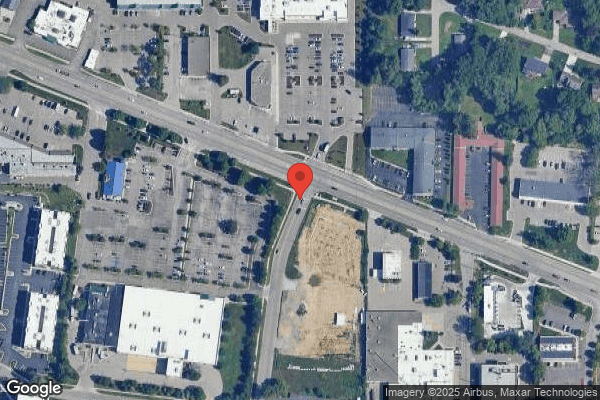
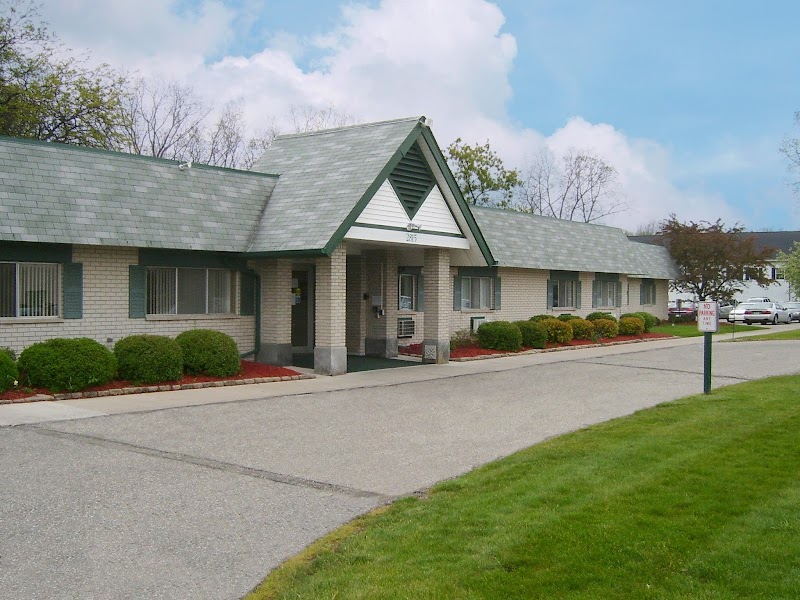
2815 Northwind Drive, East Lansing, MI 48823 (517) 332-0817
For profit - Corporation 102 Beds MEDILODGE Data: November 2025
Trust Grade
25/100
#297 of 422 in MI
Last Inspection: March 2025

Within standard 12-15 month inspection cycle. Federal law requires annual inspections.

Overview

Medilodge of Campus Area in East Lansing, Michigan, has a Trust Grade of F, indicating significant concerns about the care provided. Ranking #297 out of 422 facilities in the state places it in the bottom half, and #6 out of 9 in Ingham County means there are only two local options that are worse. The facility is worsening, with issues increasing from 3 in 2024 to 25 in 2025. Staffing is a relative strength with a rating of 4 out of 5 stars, but the turnover rate of 60% is concerning compared to the state average of 44%. There are serious issues, including a failure to monitor a resident's condition, leading to a cardiac arrest, and incidents of residents injuring each other due to a lack of supervision. While RN coverage is average, the facility has received $34,379 in fines, which is typical for the area but indicates ongoing compliance problems. Overall, families should weigh these serious deficiencies against the facility's moderate staffing rating when considering care options.
Trust Score
F
25/100
In Michigan
#297/422
Bottom 30%
Safety Record
High Risk
Review needed
Inspections
Getting Worse
3 → 25 violations
Staff Stability
⚠ Watch
60% turnover. Above average. Higher turnover means staff may not know residents' routines.
Penalties
○ Average
$34,379 in fines. Higher than 65% of Michigan facilities. Some compliance issues.
Skilled Nurses
○ Average
Each resident gets 35 minutes of Registered Nurse (RN) attention daily — about average for Michigan. RNs are the most trained staff who monitor for health changes.
Violations
⚠ Watch
51 deficiencies on record. Higher than average. Multiple issues found across inspections.
★★☆☆☆
2.0
Overall Rating
★★★★☆
4.0
Staff Levels
★★☆☆☆
2.0
Care Quality
★★☆☆☆
2.0
Inspection Score
Stable
2024: 3 issues
2025: 25 issues

The Good

  • 4-Star Staffing Rating · Above-average nurse staffing levels
  • Full Sprinkler Coverage · Fire safety systems throughout facility
  • No fines on record

Facility shows strength in staffing levels, fire safety.

The Bad

2-Star Overall Rating

Below Michigan average (3.1)

Below average - review inspection findings carefully

Staff Turnover: 60%

14pts above Michigan avg (46%)

Frequent staff changes - ask about care continuity

Federal Fines: $34,379

Above median ($33,413)

Moderate penalties - review what triggered them

Chain: MEDILODGE

Part of a multi-facility chain

Ask about local staffing decisions and management

Staff turnover is elevated (60%)

12 points above Michigan average of 48%

The Ugly 51 deficiencies on record

3 actual harm
Apr 2025 1 deficiency 1 Harm
SERIOUS (G) 📢 Someone Reported This

A family member, employee, or ombudsman was alarmed enough to file a formal complaint

Actual Harm - a resident was hurt due to facility failures

Quality of Care (Tag F0684)

A resident was harmed · This affected 1 resident

**NOTE- TERMS IN BRACKETS HAVE BEEN EDITED TO PROTECT CONFIDENTIALITY** This citation pertains to intake MI000151964. Based on interview and record review, the facility 1) failed to assess and monito...

Read full inspector narrative →
**NOTE- TERMS IN BRACKETS HAVE BEEN EDITED TO PROTECT CONFIDENTIALITY** This citation pertains to intake MI000151964. Based on interview and record review, the facility 1) failed to assess and monitor and 2) follow physician orders for one (Resident #500) of three reviewed for quality of care, resulting in a delay in recognition and response to a significant change in condition which progressed to a cardiac arrest and subsequent poor outcome, including CPR, hospitalization, and ultimately comfort care status. Resident #500 (R500) A review of the medical record reflected that R500 was admitted to the facility on [DATE] and readmitted on [DATE] with diagnoses including hypotension, chronic obstructive pulmonary disease, and acute respiratory failure with hypoxia. The Minimum Data Set (MDS), with an Assessment Reference Date (ARD) of [DATE] indicated that R500 scored 14 out of 15 (cognitively intact) on the Brief Interview for Mental Status (BIMS), a cognitive screening tool. R500 no longer resided in the facility. On [DATE] at 12:01 AM, Resident #430 (R430) was observed seated on the side of his bed. R430 reported witnessing his roommate, R500, experiencing what he described as a heart attack. He stated that R500 was yelling for help, but no one responded. R430 said he also began yelling for help because he sensed something was seriously wrong. He reported that R500 had been ill for two days and felt staff did not assist him in a timely manner when R500 called out. R430 stated that R500 became unresponsive, and that Emergency Medical Services (EMS) performed cardiopulmonary resuscitation (CPR). A review of an Encounter Note dated [DATE] at 1:00 PM indicated that R500 had been seen by Nurse Practitioner (NP) O. The note stated: (R500) seen today for hypoxia (low levels of oxygen in body tissues, causing symptoms like confusion, restlessness, difficulty breathing, rapid heart rate, and bluish skin) and shortness of breath. He is lying in bed and states it came on suddenly. He is hypoxic and is currently being placed on supplemental oxygen. He also complains of shortness of breath . he is hypotensive. At the end of the note, it was documented: Hypotension, unspecified type - will add PRN (as needed) Midodrine and monitor. An order for Midodrine HCl (a vasopressor used to raise blood pressure), 5 milligrams (mg) tablets, to be given by mouth every 8 hours as needed for hypotension if systolic blood pressure (SBP) was less than 90 mmHg, was initiated on [DATE] at 10:15 AM. The same order was discontinued at 10:28 AM. On [DATE] at 10:24 AM, R500's blood pressure was 86/34 mmHg, and Midodrine 5 mg was administered at that time. His Mean Arterial Pressure (MAP) was calculated to be 51 mmHg. (A minimum MAP of 60 mmHg is generally required to adequately perfuse vital organs.) R500's blood pressure was rechecked at 10:26 AM and was 70/40 mmHg, with a MAP of 50 mmHg. At 12:24 PM, it was recorded at 86/55 mmHg, and at 1:23 PM, it improved to 102/56 mmHg. Additionally, an order for Albuterol Sulfate nebulization solution (2.5 mg/3 mL at 0.083%) to be administered via nebulizer every 6 hours as needed for shortness of breath was not given, despite R500 stating he was experiencing shortness of breath. According to the physician's order, R500 was eligible to receive another dose of PRN Midodrine if needed at approximently 6:30 PM. However, no additional vital signs were documented after 1:23 PM. In an interview on [DATE] at 10:38 AM, NP O stated that she assessed R500 on the morning of [DATE]. She acknowledged that while R500 was chronically ill, on that day he was acutely hypoxic and short of breath, prompting her to order PRN Midodrine and Albuterol. NP O said that at minimum, R500's blood pressure should have been rechecked at the 8-hour mark to assess if another dose of Midodrine was indicated. She added that vital signs, including oxygen saturation, should have been monitored. NP O stated that if R500's blood pressures remained low, staff should have contacted her and an additional dose of Midodrine could be administered. In an interview on [DATE] at 11:53 AM, RN I confirmed she was assigned to R500 on [DATE]. RN I stated R500 was declining during her shift, so she administered PRN Midodrine, communicated with NP O, and followed through with diagnostic orders. A review of physician orders revealed an order for daily vital signs initiated on [DATE]. However, documentation showed no vital signs were assessed or recorded on: [DATE], [DATE], [DATE], [DATE], [DATE], [DATE], [DATE], [DATE], [DATE] and [DATE]. A nurse's note dated [DATE] at 9:45 PM stated: Date of incident [DATE] at 8:25 PM. Outgoing nurse reported that resident had a change of condition - hypoxia - and was placed on 2L (liters) oxygen via nasal cannula. This nurse assessed the resident and noted moderate acute distress due to generalized weakness and fatigue. All vital signs were within normal limits except a temperature of 102°F. Nurse requested CNA to clean and assist resident with feeding while notifying the DON. While on the phone, CNA reported the resident had become unresponsive. Nurse immediately contacted EMS. An EMS team already present in the facility responded and initiated CPR until a second team arrived. Resident was transferred to [local] hospital. In an interview on [DATE] at 1:03 PM, CNA E confirmed he was assigned to R500. He described R500 as appearing lethargic and not quite himself. He stated R500 was nonverbal and only able to make gestures. CNA E said R500 continued to decline and was present when R500 became unresponsive and went into cardiac arrest. CNA E stated at baseline, R500 was able to verbalize needs and get around the facility without difficulty. In an interview on [DATE] at 1:59 PM, RN G stated she was on duty when R500 became unresponsive. She noted that at the start of her shift around 6:00 PM, R500 did not look well. The outgoing nurse, RN I, informed her that R500 was declining and advised her to keep an eye on him. RN G did not know R500's baseline, so she contacted DON B, who instructed her to transfer R500 to the hospital. RN G said she called 911, and shortly after, R500 went into cardiac arrest. EMS personnel who were already in the building responded immediately. A review of hospital documentation dated [DATE] showed that R500 was brought to the Emergency Department by EMS after experiencing cardiac arrest shortly before arrival. EMS reported he had been difficult to arouse and underwent 10 minutes of CPR with no shocks advised. He received epinephrine and vasopressin in the field. His last recorded BP was 149/122 mmHg with a pulse of 111 bpm. R500 had a history of ESBL E. coli bacteremia ( Escherichia coli bacteria in the bloodstream) secondary to a complicated UTI (urinary tract infection) and was being treated for MRSA pneumonia and likely bacteremia. He had lactic acidosis secondary to hypoperfusion and circulatory shock due to sepsis. He was placed on comfort care on 4/1. R500 was nonresponsive-his eyes were open, but he did not track or respond to commands. Pupils were non-reactive, and no corneal, cough, or gag reflexes were present. In an interview on [DATE] at 1:23 PM, DON B stated she had spoken with RN G on [DATE]. RN G reported that R500 did not look well and planned to transfer him to the hospital. DON B confirmed that the expectation was to follow physician orders, including rechecking R500's blood pressure to determine if another dose of Midodrine was needed. According to the Elsevier Emergency Nursing Core Curriculum, 7th edition, shock is a clinical manifestation of the body's inability to adequately perfuse tissues. It is a systemic response to illness, resulting in decreased oxygen delivery to cells and potential end-organ damage. Septic shock causes vasodilation and maldistribution of blood volume, particularly in peripheral vessels, leading to hypotension. It is essential to collect and monitor objective data, including level of consciousness and vital signs.
Mar 2025 24 deficiencies
CONCERN (D) 📢 Someone Reported This

A family member, employee, or ombudsman was alarmed enough to file a formal complaint

Potential for Harm - no one hurt, but risky conditions existed

Resident Rights (Tag F0550)

Could have caused harm · This affected 1 resident

**NOTE- TERMS IN BRACKETS HAVE BEEN EDITED TO PROTECT CONFIDENTIALITY** This Citation Pertains to MI00146912 and MI00150426 Based on observation, interview and record review, the facility failed to p...

Read full inspector narrative →
**NOTE- TERMS IN BRACKETS HAVE BEEN EDITED TO PROTECT CONFIDENTIALITY** This Citation Pertains to MI00146912 and MI00150426 Based on observation, interview and record review, the facility failed to preserve the dignity of 3 of 4 residents (Resident #2, #318, #32) reviewed for dignity and 4 of 5 residents for residents that attended the confidential group meeting. Findings include: Resident #2 (R2) Review of the clinical record, including the Minimum Data Set (MDS) dated [DATE], revealed Resident # 2 (R2) was admitted to the facility on [DATE] with a readmission date of 1/04/25 with diagnoses that include congestive heart failure, chronic obstructive pulmonary disease. R2 scored 15 out of 15 (cognitively intact) on the Brief Interview Status (BIMS). On 02/25/25 at 09:58 AM during an interview with R2 it was reported that staff complain chronically about their work load and are continuously talking and complaining about Resident 32 (R32) and how frequently R32 pushes the call light for help. R2 elaborated that staff were observed frequently texting or talking on their personal cell phones. R2 elaborated it was uncomfortable to hear staff complain about other residents, their work load and it was frustrating when the call light was on and you can see staff on their phones. When queried if a concern form was filed or if management staff was aware of the concern R2 stated these issues were common knowledge and treated as acceptable behavior. Resident Council On 03/03/25 at 11:00 am during the confidential group meeting 4 of the 5 participants reported the observe staff on a daily basis on their personal cell phones, the participants reported this angered them particularly when their call light was on and they're waiting for help. Five of 5 of the participants reported staff are very noisy at night while they are trying to sleep and again noise level gets unbearable again about 6:00am and wake up due to yelling, screaming and laughing from staff. All 5 participants reported overhearing laughing and conversations about staff personal lives, their upcoming events etc . 5 of 5 participants reported they felt staff have no respect or consideration for residents need for sleep or just peace and quiet. Resident #32 (R32) Review of the medical record revealed R32 was admitted to the facility 04/18/2019 with diagnoses that included multiple sclerosis, paraplegia (paralysis that occurs in the lower half of the body), neuromuscular dysfunction of bladder, type 2 diabetes, obesity, diabetic neuropathy (nerve damage caused by diabetes), cardiomegaly (enlarge heart), muscle spasm, anemia (low red blood cells), hyperlipidemia (high fat content in blood), chronic obstructive pulmonary disease (COPD), chronic pain, altered mental status, metabolic encephalopathy (impaired brain function), insomnia, edema, anxiety, major depression, migraine, and gastro-esophageal reflux. The most recent Minimum Data Set (MDS), with an Assessment Reference Date (ARD) 0f 10/12/2024, revealed R32 had a Brief Interview of Mental Status (BIMS) of 15 (cognitively intact) out of 15. During observation and interview on 02/25/2025 at 11:30 a.m. R32 was observed lying in bed. R32 explained that staff are very loud while providing his personal care and rude in the way that they communicate with me. Review of R32's Quality Assistance Form, dated 1/13/2025 revealed, Nurse was upset that resident used call light 4 times, nurse was talking rudely to resident . (name of nurse) on Sunday night. The Quality Assistance Form, dated 1/13/2025, demonstrated that issue was resolved and description: DON (Director of Nursing) provided nurse education. In an interview on 03/03/2025 at 11:28 a.m. Licensed Nursing Home Administrator (LNHA) B explained that he could not demonstrate that the nurse named in R32 Quality Assistance Form, dated 01/13/2025, had received any education regarding being rude with R32. LNHA B could not explain why the re-education was not completed as stated on R32's Quality Assistance Form, dated 01/13/2025. Resident #318 (R318) Review of the medical record revealed R318 was admitted to the facility 02/13/2025 with diagnoses that included atherosclerotic heart disease (build-up of fats, cholesterol and other substances in the artery walls), bilateral peripheral vertigo (dizziness caused by problem in inner ear), hyperlipidemia (high fat content in blood), hypertension, anemia (low red blood cells), and Barrett's esophagus (damage to the lower part of the esophagus). The most recent Minimum Data Set (MDS), with an Assessment Reference date (ARD) of 02/18/2025, revealed R318 had a Brief Interview of Mental Status (BIMS) of 15 (cognitively intact) out of 15. During observation and interview on 02/25/2025 at 10:25 a.m. R318 was observed sitting on the side of his bed. R318 explained that he felt the facility did not honor his dignity because frequently he could hear the nursing staff yelling in the hallway at each other. R318 also explained that he could hear staff talking on their phones and swearing at their children to get to bed. R318 explained that he did not feel that this behavior was respectful to his desire for a peaceful environment. R318 also explained that while voicing concerns about his therapy services, the did not feel that the Director of Therapy was listening to his concerns and treating him with dignity and respect and R318 felt that he only wanted to argue. Review of the facilities Quality Assistance Form completed for R318, with a completion date of 2/16/2025 and 2/17/2025 revealed that R318 had voiced concerns regarding noise level at the facility. The Quality Assistance Form dated 02/16/2025 and 02/16/2025 did not demonstrate that the issue had been resolved to the satisfaction of R318.
CONCERN (D)

Potential for Harm - no one hurt, but risky conditions existed

Deficiency F0565 (Tag F0565)

Could have caused harm · This affected 1 resident

**NOTE- TERMS IN BRACKETS HAVE BEEN EDITED TO PROTECT CONFIDENTIALITY** Based on interview and record review the facility failed to ensure that grievances were promptly documented, investigated, track...

Read full inspector narrative →
**NOTE- TERMS IN BRACKETS HAVE BEEN EDITED TO PROTECT CONFIDENTIALITY** Based on interview and record review the facility failed to ensure that grievances were promptly documented, investigated, tracked and resolved for 5 of 5 residents that participated in the Resident Council (RC) meeting and Resident #2. Findings include: Review of the Resident Council (RC) minutes dated 9/17/24 reflected concerns with staff not wearing name tags, delayed call light response times, noise levels. RC Minutes dated 10/22/24 reflected the Nursing Home Administrator on record (NHA) A attended the meeting and reported inservices were done with staff in relation to concerns brought forth from the 9/17/24 meeting. Residents reported noise level at night continued to be a problem. RC minutes dated 11/26/24 reflected concern related to staff being on their phones in common areas and at the nurses station. RC minutes dated 12/27/24 reflected the concern with staff being on their personal phones continues, call light response time was an issue and staff being loud at night/noise level was a concern. RC minutes dated 1/16/25 reflected call light response time, staff being on their phones, staff being loud/noise levels, staff not wearing name tags and a concerns that RC concerns were not being addressed. Concern forms generated from the RC meetings dated 1/16/25 reflected the NHA A would meet with RC members every two weeks. RC minutes dated 2/20/25 reflected education was provided to staff on the previous months concerns. Resident #2 Review of the clinical record, including the Minimum Data Set (MDS) dated [DATE], revealed Resident # 2 (R2) was admitted to the facility on [DATE] with a readmission date of 1/04/25 with diagnoses that include congestive heart failure, chronic obstructive pulmonary disease. R2 scored 15 out of 15 (cognitively intact) on the Brief Interview Status (BIMS). On 02/25/25 at 09:58 AM during an interview R2 voiced multiple concerns pertaining food, call light response time, noise, staff on their cell phones and lack of help from Social Services Director N. When R2 was queried if concern forms were generated or if the concerns were reported, R2 responded he regularly attends RC meeting and month after month the same issues are brought up and never resolved. Of note R2 did not attend the RC meeting on 03/03/25. On 03/03/25 at 10:59 AM, during the RC meeting , all 5 participants reported the staff were very noisy at night, they scream up and down the hall at each other they gather at the nurses station and laugh and giggle in the middle of the night and often residents will be woken up due to noise level. RC participants stated this had been a long standing problem with no resolution. Four of 5 RC participants reported they routinely observe staff on their personal phones in the hall and while sitting at the nurses station, this too they reported gets discussed every month with no resolution. 5 of 5 participants further reported Social Services Director N was not responsive to their needs and concerns, ignored them, refused to meet with them and was frequently rude. RC members stated this had been brought up in RC meetings many times but never makes it into the RC minutes. When queried about staffing and call light response time 4 of 5 participants stated this too gets reported monthly and will slightly improve for a few weeks and then slides back into extended wait periods for help. One participant reported call light response time was great while State Agency was in the building. When queried if the Ombudsman or the Director of Nursing (DON) C or the self identified Nursing Home Administrator (NHA) B ever attended the RC meetings , it was reported the DON C never comes, the NHA B was new and the Ombudsman was invited to the March 2025's RC meeting due to the high volume of concerns, lack of accurate documentation of concerns, lack of follow through and lack of resolution of resident concerns. On 03/03/25 at 11:31 AM, Discussed concerns with self reported NHA B whom has been employed at the facility for one week and was unable to offer any explanation for ongoing concerns and lack of resolution.
CONCERN (D)

Potential for Harm - no one hurt, but risky conditions existed

Deficiency F0582 (Tag F0582)

Could have caused harm · This affected 1 resident

Based on interview and record review, the facility failed to ensure that the Notice of Medicare Non-Coverage (NOMNC) and Skilled Nursing Facility Advanced Beneficiary Notice (SNF ABN) were provided to...

Read full inspector narrative →
Based on interview and record review, the facility failed to ensure that the Notice of Medicare Non-Coverage (NOMNC) and Skilled Nursing Facility Advanced Beneficiary Notice (SNF ABN) were provided to two (R323 and R325) of three residents reviewed for beneficiary notification, resulting in the potential for residents and/or representatives to be uninformed of the potential private pay charges of continued services at the facility and inability to file an appeal. Findings include: On 3/3/25 at 12:10 PM, Self-identified Nursing Home Administrator (NHA) B was asked to provide beneficiary notification information including NOMNC and/or SNF-ABN for three residents. A review of the documents provided revealed R323 was missing a SNF-ABN and the NOMNC for R325 was missing the second page, which is where the resident/resident representative would sign, acknowledging receipt and understanding. On 3/3/25 at 3:17 PM, during an interview with social services director (SSD) N, when asked when a resident should receive a SNF-ABN she reported that she gives one for every NOMNC issued. When asked why one was not provided to R323, she reported that she didn't know. When asked where the second page of the NOMC form (that would include a signature) was for R325, she reported that she would attempt to locate it. On 3/3/25 at 3:55 PM, Self-identified Nursing Home Administrator (NHA) B was notified of the missing beneficiary documents. He reported that he was aware. On 3/3/25 at 4:14 PM, SSD N reported that they could not find any of the 2024 beneficiary documents.
CONCERN (D) 📢 Someone Reported This

A family member, employee, or ombudsman was alarmed enough to file a formal complaint

Potential for Harm - no one hurt, but risky conditions existed

Grievances (Tag F0585)

Could have caused harm · This affected 1 resident

This citation pertains to Intake: MI00150426 Based on observation, interview, and record review the facility failed to accurately record and make a prompt effort to resolve grievances for one resident...

Read full inspector narrative →
This citation pertains to Intake: MI00150426 Based on observation, interview, and record review the facility failed to accurately record and make a prompt effort to resolve grievances for one resident (#318) of one resident reviewed for grievances. Findings Included: Resident #318 (R318) Review of the medical record revealed R318 was admitted to the facility 02/13/2025 with diagnoses that included atherosclerotic heart disease (build-up of fats, cholesterol and other substances in the artery walls), bilateral peripheral vertigo (dizziness caused by problem in inner ear), hyperlipidemia (high fat content in blood), hypertension, anemia (low red blood cells), and Barrett's esophagus (damage to the lower part of the esophagus). The most recent Minimum Data Set (MDS), with an Assessment Reference date (ARD) of 02/18/2025, revealed R318 had a Brief Interview of Mental Status (BIMS) of 15 (cognitively intact) out of 15. During observation and interview on 02/25/2025 at 10:09 a.m. R318 was observed sitting on the side of his bed. R318 explained that he had concerns that he had not received his medication as ordered. R318 explained that he had not received his valium until 02/18/2025. R318 explained that he keeps receiving his medication Protonic after his meals instead of prior to meals as it is to be given. R318 explained that he did not receive his Pregabalin until 02/17/2025. R318 also explained that he had a concern regarding that his food was continually cold. R318 also explained that he had concerns about the cleanliness of his room. R318 also explained that he had concerns regarding the noise level at the facility. R318 explained that someone at the facility had filled out a grievance form but he refused to sign the form because they did not record the correct information. R318 denied that any of his concerns had been addressed or that those concerns had been corrected to his satisfaction. Review of the facility Quality Assistance Form for R318, dated 02/17/2025, demonstrated details: Concerns with food temperature, noise level, medication concerns. Plan/Actions: meds addressed- billing issues resolved; noise level addressed with staff. The section Describe demonstrated I have been visiting (resident name) daily and often giving delivering his meal trays. I had suggested he come to the dining room, when he found it to difficult, I would bring him his food hot off the steam table. He has commented that food temps are improving. The Quality Assistance Form dated 02/17/2025 does not have a completion date or a resolved. The document does demonstrate someone wrote on the document Resident refused to sign. Review of the facility Quality Assistance Form for R318, dated 02/16/25, demonstrated details Noise level, Food temp., Housekeeping. Plan/Actions: noise addressed with staff, housekeeping deep cleaned room. The section Describe demonstrated I have been visiting (resident name) daily and checking in on his food temps. I will deliver his trays as he can't come down to the dining room. He has comment that the temps are improving. The Quality Assistance Form dated 02/16/2025 does not have a completion date or a resolved. The document does demonstrate someone wrote on the document Resident refused to sign. During an interview on 03/03/2025 at 08:44 a.m. Director of Nursing (DON) C was asked to review the Quality Assistance Form, dated 02/16/2025 and 02/17/2025. DON C' was asked to provide detail as to what the issues was regarding R318's medication and R318's concern with noise level. DON C could not provide any detail regarding R318's concerns. During an interview on 03/03/2025 at 10:02 a.m. Licensed Nursing Home Administrator (LNHA) B was asked to explain his expectation of the grievance process. LNHA B explained that he expected that a resident completes a Quality Assurance Form or that a staff member could assist them to complete the form. LNHA B explained that once the Quality Assurance Form is completed that he would review the concern and talk with the resident. LNHA B explained then he would give the Quality Assurance Form to the appropriate department to address the issue. LNHA B explained that he would then expect to see a date that the issue had been completed. The Quality Assurance Form for R318, dated 02/16/2025 and 02/17/2025, were reviewed by LNHA B. LNHA B could not explain why each Quality Assurance Form did not include more detail and did not demonstrate a satisfactory conclusion of the issues.
CONCERN (D)

Potential for Harm - no one hurt, but risky conditions existed

Assessment Accuracy (Tag F0641)

Could have caused harm · This affected 1 resident

Based on observation, interview, and record review the facility failed to accurately complete a Minimum Data Set (MDS) assessment for one resident (#6) of 16 residents reviewed for accurate assessment...

Read full inspector narrative →
Based on observation, interview, and record review the facility failed to accurately complete a Minimum Data Set (MDS) assessment for one resident (#6) of 16 residents reviewed for accurate assessments. Findings Included: Resident #6 (R6) Review of the medical record revealed R6 was admitted to the facility 10/17/2019 with diagnoses that included chronic obstructive pulmonary disease (COPD), atrial fibrillation, peripheral vascular disease (PVD), atherosclerotic heart disease (build-up of fats, cholesterol and other substances in the artery walls), chronic respiratory failure, depression, anxiety, urinary incontinence, lack of coordination, nausea, dysuria (discomfort, pain, or burning when urinating), muscle spasm, metabolic encephalopathy (impaired brain function), thrombocytopenia (low number of platelets), low back pain, generalized edema (excess fluid buildup in the body's tissues), chronic pain, psychotic disorder (mental disorder characterized by a disconnection form reality), developmental disorder of speech and language, obesity, hypertension, absence of left leg above the knee, nicotine dependence, insomnia, epilepsy (seizure disorder), and asthma. The most recent Minimum Data Set (MDS), with an Assessment Reference Date (ARD) of 11/14/2024, revealed R6 had a Brief Interview of Mental Status (BIMS) of 14 (cognitively intact) out of 15. During observation and interview on 02/25/2025 at 03:45 p.m. R6 was observed sitting up in her wheelchair in the dining room. R6 explained that she usually wears glasses but she recently needed to have them replaced. R6 was not observed to be wearing glasses during the interaction. R6 explained wore glasses for a very long time. Review of R6 medical record demonstrated a progress note, dated 02/13/2025 at 11:20 a.m. which stated, Resident seen by (name of eye Physician and address). Exam completed and glasses ordered. Review of R6's picture in the medical record demonstrate that she was wearing glasses when the picture was obtained. Review of the Minimum Data Set (MDS), with an Assessment Reference Date (ARD) of 11/14/2024, section B1200. Corrective Lenses- Corrective Lenses (contacts, glasses, or magnifying glass) used was marked as no. During an interview on 02/26/2025 at 04:20 p.m. Minimum Data Set (MDS) Coordinator Z was asked to review R6's picture in the medical record. MDS Coordinator Z explained that she had personally never seen R6 wearing glasses. MDS Coordinator Z explained that she had completed R6's MDS, with an Assessment Reference Date (ARD) of 11/14/2024, section B1200 and had documented that R6 did not have corrective lenses. MDS Coordinator Z explained that MDS Section B1200 was documented a no in error.
CONCERN (D)

Potential for Harm - no one hurt, but risky conditions existed

Deficiency F0646 (Tag F0646)

Could have caused harm · This affected 1 resident

**NOTE- TERMS IN BRACKETS HAVE BEEN EDITED TO PROTECT CONFIDENTIALITY** Based on interview and record review the facility failed to notify the local state mental health authority of Pre-admission Scre...

Read full inspector narrative →
**NOTE- TERMS IN BRACKETS HAVE BEEN EDITED TO PROTECT CONFIDENTIALITY** Based on interview and record review the facility failed to notify the local state mental health authority of Pre-admission Screening (PAS)/Annual Resident Review (ARR) (PASARR) changes for one (Resident #33) of two reviewed for PASARR. Findings include: Review of the clinical record, including the Minimum Data Set (MDS) dated [DATE], reflected Resident 33 (R33) was admitted to the facility with diagnoses that included end stage renal disease, developmental disorder of scholastic skills, and bipolar disorder. Review of R33's clinical record reflected R33 scored 12 out of 14 (cognitively intact) on the Brief Interview Mental Status (BIMS). Review of R33's level one screening/3877 dated 12/28/23 reflected R33 had a mental illness and was learning disabled, the level II screen dated 12/29/23 reflected that R 33 was on a 30 day exemption and expected to be discharged from the facility within 30 days. The next 3877 was dated 9/12/24 and reflected R33 had a diagnosis of bipolar disorder, developmental disorder of scholastic skills and was prescribed an anti-depressant medication. On 02/26/25 02:54 PM, during an Interview with Social Service Director (SSD) N reported she did not complete 3877's that the corporate Social Worker did that and that person was out of the country and not available for an interview. SSD N then stated delay obtaining a level II assessment was due to Omnibus Budget Reconciliation Act (OBRA) refused do a level II assessment until a significant change in status was established related to R33's level of capacity and potential need for a guardian. When queried why there was no documentation in R33's medical record that OBRA opted not to complete a level II due to R33's capacity being in question, SSD N stated she could not document everything all the time, and although it was not documented she did communicate with (Licensed Master Social Worker (LMSW) R from Community Mental Health Authority who instructed SSD N hold off on submitting a 3877 until R33's capacity and guardianship was established. During a phone interview with LMSW R from Community Mental Health Authority on 02/27/25 08:46 AM, she reported a level II screening was in fact on hold until the determination of capacity /decision making ability was completed for R33. Review of R33's clinical record reflected the court appointed a legal guardian for R33 on 6/06/24 and R33's significant change 3877 was not completed until 9/12/24. LMSW R reported over 3 months from the time guardianship was granted and the 3877 was submitted to Community Mental Health was not timely. During a follow up interview on 02/27/25 01:53 PM with SSD N she offered no explanation as to why it took over 3 months to complete the significant change PASARR.
CONCERN (D)

Potential for Harm - no one hurt, but risky conditions existed

Comprehensive Care Plan (Tag F0656)

Could have caused harm · This affected 1 resident

**NOTE- TERMS IN BRACKETS HAVE BEEN EDITED TO PROTECT CONFIDENTIALITY** Based on observation, interview, and record review the facility failed to develop and implement comprehensive care plans for one...

Read full inspector narrative →
**NOTE- TERMS IN BRACKETS HAVE BEEN EDITED TO PROTECT CONFIDENTIALITY** Based on observation, interview, and record review the facility failed to develop and implement comprehensive care plans for one resident (#32) of 16 reviewed. Findings Included: Resident #32 (R32) Review of the medical record revealed R32 was admitted to the facility 04/18/2019 with diagnoses that included multiple sclerosis, paraplegia (paralysis that occurs in the lower half of the body), neuromuscular dysfunction of bladder, type 2 diabetes, obesity, diabetic neuropathy (nerve damage caused by diabetes), cardiomegaly (enlarge heart), muscle spasm, anemia (low red blood cells), hyperlipidemia (high fat content in blood), chronic obstructive pulmonary disease (COPD), chronic pain, altered mental status, metabolic encephalopathy (impaired brain function), insomnia, edema, anxiety, major depression, migraine, and gastro-esophageal reflux. The most recent Minimum Data Set (MDS), with an Assessment Reference Date (ARD) 0f 10/12/2024, revealed R32 had a Brief Interview of Mental Status (BIMS) of 15 (cognitively intact) out of 15. During observation and interview on 02/25/2025 at 01:30 p.m. R32 was observed lying in bed. R32 explained that he wore upper dentures but that he currently could not find them and was waiting for the facility to replace them. R32 could not recall if he had told any staff that he could not find his upper denture. R32 further explained that he had just received new upper dentures in the fall of 2024. Review of R32's plan of care did not have any information that he wore upper dentures. R32's [NAME] (document explaining necessary resident care to be used by Certified Nursing Aides) did not demonstrate that R32 wore upper dentures. Review of R32's medical record demonstrated a document entitled Dental Group with a date of 11/20/24 which stated, Inserted upper flexible partial denture. Adjusted buccal flanges on right side to make insertion easier. Partial was stable and occlusion was good. Patient thought it felt comfortable . Review proper care of partial with the patient. Dispensed denture case and denture brush obtained from the staff. Advised patient that will do any needed adjustment at my next visit. During an interview on 03/03/2025 at 01:29 p.m. Social Service Director N explained that she was not aware that R32 was missing his dentures. She explained that she had just assisted him with obtaining his upper dentures several months ago. Social Services Director N explained that she would go to R32's room and attempt to locate his dentures. During an interview on 03/03/2025 at 01:42 p.m. Minimum Data Set (MDS) Coordinator Z explained that she was the person that was responsible to update the plan of care if a resident had dentures. MDS Coordinator Z was asked if R32 had partial dentures and she responded that he did. MDS Coordinator Z confirmed that R39's partial upper dentures where not included on his plan of care or [NAME]. During an interview on 03/03/2025 at 01:50 pm. Social Services Director N explained that R39's dentures were located in this closet and provided back to R39.
CONCERN (D)

Potential for Harm - no one hurt, but risky conditions existed

Deficiency F0657 (Tag F0657)

Could have caused harm · This affected 1 resident

**NOTE- TERMS IN BRACKETS HAVE BEEN EDITED TO PROTECT CONFIDENTIALITY** Based on observation, interview and record review the facility failed to include one resident (R#29) in care plan development of...

Read full inspector narrative →
**NOTE- TERMS IN BRACKETS HAVE BEEN EDITED TO PROTECT CONFIDENTIALITY** Based on observation, interview and record review the facility failed to include one resident (R#29) in care plan development of 16 residents reviewed for participation in care planning. Findings include: Resident #29 (R29) Review of the clinical record, including the Minimum Data Set (MDS) dated [DATE] reflected Resident 29 (R29) was admitted to the facility on [DATE] with diagnoses that included mild cognitive impairment, schizophrenia and seizure disorder. R29 scored 10 out of 15 (mild cognitive impairment) on the Brief Interview for Mental Status (BIMS). On 02/25/25 at 09:04 AM, R29 was observed sitting in her room and was observed to have sad facial expressions. When queried about her mood R 29 reported she did not like living at the facility and wanted to be discharged back to the community. R29 elaborated that she was admitted to the facility last spring or summer and was discharged to an adult foster care in August 2024 with in home services from the community. R29 reported during her initial stay she had a care conference and was included and involved in her plan of care, R29 stated since her readmission last September, she has not had a care conference and was not included in her plan of care. When queried if she had met with Social Service Director (SSD) N to discuss her concerns R29 stated she tried on more than one occasion but SSD N was always very short and always has an attitude. R29 further stated she was well aware her brother was her guardian but did not think having a guardian made her lose her voice related to wants, needs, and desires be completely bypassed. R29 stated she just wanted to have a care conference and discuss her discharge plans. On 02/27/25 at 01:45 PM, SSD N verified that R29 was discharged in August of 2024 to an Adult [NAME] Care (AFC) and was not expected to return to return to the facility. Review of R29's clinical record including the MDS the admission to the facility on 9/19/24 was new. When queried why there was no patient care conference held in September 2024 upon R29's admission, SSD N stated there was a care conference held in December 2024. When reiterated why there wasn't a care conference in September 2024 while treated as a new admission with a new MDS , SSD N stated R29 Wasn't gone that long. When queried why the interdisciplinary team wouldn't meet with R29 to discuss what occurred at AFC , reason for returning to the facility and what current goals were SSD N stated she knew R29 was going to stay long term and didn't need to have a care conference. Review of R29's medical record with SSD N present, reflected a form titled Care Plan Conference Summary dated 12/31/24 the form indicated neither R29 or R29's legal guardian attended. There was no documentation that R29 or the R29's guardian was invited to the care conference held on 12/31/24. Page 1. question 1. of the care plan conference summary form asks what attempts were made to involve the resident or resident representative if they did not attended , several options were available to check off i.e.; different day, different time, via phone or written correspondence. None of which were checked. When SSD N was queried about the 12/31/24 care conference she reported R29's guardian attended, when queried why that was not documented on the attendance form or else where in R29s medical record SSD N stated she didn't know. When queried if R29 was invited to the 12/31/24 care conference SSD N stated she couldn't recall, but remembered the guardian attended. SSD N elaborated that R29 seeks her out several times a week and these conversations were discussed. When queried where this was documented or care planned SSD N stated she could have documented better.
CONCERN (D) 📢 Someone Reported This

A family member, employee, or ombudsman was alarmed enough to file a formal complaint

Potential for Harm - no one hurt, but risky conditions existed

Quality of Care (Tag F0684)

Could have caused harm · This affected 1 resident

**NOTE- TERMS IN BRACKETS HAVE BEEN EDITED TO PROTECT CONFIDENTIALITY** This citation pertains to intake: MI00150426 Based on observation, interview, and record review the facility failed to follow ph...

Read full inspector narrative →
**NOTE- TERMS IN BRACKETS HAVE BEEN EDITED TO PROTECT CONFIDENTIALITY** This citation pertains to intake: MI00150426 Based on observation, interview, and record review the facility failed to follow physician orders for three residents (R11-brace application, R41-prosthetic fitting appointment, and R318-medication administration time) of sixteen residents reviewed for quality of care. Findings Included: Resident #41 (R41) Review of the medical record revealed R41 was admitted to the facility 10/27/2021 with diagnoses included chronic obstructive pulmonary disease (COPD), peripheral vascular disease (PVD), alcoholic liver disease, emphysema (chronic lung disease that permanently damages the lungs making his difficulty to breath), anemia (low red blood cells), alcoholic fatty liver, polyneuropathy (a peripheral nerve disorder that causes multiple nerves throughout the body to malfunction simultaneously), hypertension, hypotension, hyperlipidemia (high fat content), acquired absence of right leg above the knee, acquired absence of left leg above the knee, muscle spasm, chronic pain, anxiety, nicotine dependence, alcohol abuse, and dementia. The most recent Minimum Data Set (MDS), with an Assessment Reference Date (ARD) of 02/03/2025, revealed R41 had a Brief Interview of Mental Status (BIMS) of 12 (moderate cognitive impairment) out of 15. During observation and interview on 02/26/2025 at 08:54 a.m. R41 was observed lying in his bed. R41 explained that he did not have lower limbs bilaterally and was waiting to receive prosthetics. R41 explained that his stump incision had healed, and he was looking forward to being able to walk again. Review of R41's medical record demonstrated Appointment/Transportation Note, 12/23/2024 at 08:33 a.m. Note Text: Wound RN (RN) contact [NAME] Heart and Vascular office regarding staples to L(left) AKA (Above the knee) incision. Incision is healed and appears that staples are beginning to push outward and causing resident discomfort. No s/s (signs and symptoms) of infection observed by writer verbal order received for OK to remove staples to incision ok to schedule resident to return in 1 week to clinic to office if resident is wishing to pursue a prosthesis. Wound RN disgusted with resident during staple removal. Resident wishes to move forward with prosthesis . Review of R41's medical record demonstrated an order entered 01/29/2025, Order Summary: Referral for prosthetic fitting. Review of R41's medical record demonstrated a Social Services Progress Note, 02/03/2025 at 02:49 p.m. Note Text: . Utilizes a wheelchair for all motivation, recent orders placed for prosthetic fitting. Resident is eager to ambulate again. To follow up with both Endocrinology and Cardiology per facility NP/Physician . No other documentation in R41's medical record demonstrated that an appointment for prosthetic fitting had occurred. During an interview on 02/27/2025 at 09:30 a.m. Assistant Director of Nursing (ADON) T explained that when an order is received for an appointment that the facility scheduler would call the service provider and schedule an appointment. ADON T verified the R41 had a referral for prosthetic fitting. ADON T explained that she would have to verify if the appoint had been made yet. During an interview on 02/27/2025 at 09:58 a.m. Assistant Director of Nursing (ADON) T returned and explained that R41's appointment for the referral for prosthetic fitting had not bee completed yet. ADON T explained that the Manager of Therapy was calling today to schedule that appointment. ADON T could not explain why the appointment had not been requested before this date. Resident #318 (R318) Review of the medical record revealed R318 was admitted to the facility 02/13/2025 with diagnoses that included atherosclerotic heart disease (build-up of fats, cholesterol and other substances in the artery walls), bilateral peripheral vertigo (dizziness caused by problem in inner ear), hyperlipidemia (high fat content in blood), hypertension, anemia (low red blood cells), and Barrett's esophagus (damage to the lower part of the esophagus). The most recent Minimum Data Set (MDS), with an Assessment Reference date (ARD) of 02/18/2025, revealed R318 had a Brief Interview of Mental Status (BIMS) of 15 (cognitively intact) out of 15. During observation and interview on 02/25/2025 at 10:41 a.m. R318 was observed sitting at the side of his bed. R318 explained that he was supposed to receive his medication Protonix prior to his meals. R318 explained that he had expressed his concerns to the facility but it still keeps occurring that he does not receive his Protonix until after his meals. R318 explained that he still had not received his Protonix today and it is currently 10:15 a.m. - clearly after breakfast. Review of R318's medical record demonstrated an order, written 02/17/2025, Pantoprazole Sodium (Protonix) Oral Tablet Delayed Release 40 mg (milligrams) (Pantoprazole Sodium) Give 1 tablet by mouth two times a day for GERD (Gastro-esophageal reflux disease). During an interview on 02/27/2025 at 04:29 p.m. Director of Nursing (DON) C was asked when the medication Protonix was supposed to be given to residents. DON C explained that Protonix usually is given before meals. Requested DON C to provide report that demonstrated what time Protonix had been given to R318. Review of R318's Medication Administration Record (MAR) for the month of February 2025 revealed that Pantoprazole Sodium oral tablet delayed release 40 mg (milligrams) was ordered 02/14/2025 to be given as a liberal med pass (once on day shift and once on night shift). The MAR revealed that the Pantoprazole order was discontinued 02/17/2025 and rewritten on 02/17/2025 to be given at 06:00 a.m. and 04:00 p.m. Review of the facility of mealtimes demonstrated that R318s meals were delivered before his breakfast and dinner mealtimes. Review of R318's EMAR (electronic medication administration record)- Resident Details report revealed Pantoprazole was given on the following date and times (after meals): 02/14/2025 at 07:45 p.m., 02/15/2025 at 09:46 a.m. and 08:03 p.m., 02/16/25 at 09:25 a.m. and 07:53 p.m., 02/21/2025 at 09:21 a.m., and 02/25/25 at 07:39 p.m. In an interview on 03/03/2025 at 08:44 a.m. Director of Nursing (DON) C review R318's EMAR (electronic medication administration record)- Resident Details report for Pantoprazole. DON C could not provide an explanation why the medication had not been provided before meals. Resident #11 (R11) Review of the medical record reflected R11 was admitted to the facility on [DATE], with diagnoses that included generalized anxiety disorder, dependence on renal dialysis, depression, legal blindness, and major depressive disorder. The Minimum Data Set (MDS), with an Assessment Reference Date (ARD) of 11/18/24, reflected R11 scored 15 out of 15 (cognitively intact) on the Brief Interview for Mental Status (BIMS-a cognitive screening tool). On 2/25/25 at 1:15 PM, R11 was observed in bed watching television. R11 had lidocaine patches applied to her neck. R11 reported that the lidocaine patches were for pain control and that she was supposed to be wearing a neck brace at all times, however the neck brace was not observed on R11. The cervical spine collar (neck brace) was observed on the bedside table, out of reach from R11. Review of an active Physician Order dated 11/29/24 reflected CT [cervical spine] collar at all times, remove every shift for skin checks and bathing. On 2/28/25 at 1:54 PM, R11 was observed in her room watching television. R11 did not have the cervical spine collar on. The cervical spine collar remained in the same spot as the previous observation. In an interview on 2/28/25 at 2:00 PM, Certified Nursing Assistant (CNA) X stated that she did not know the purpose of the cervical spine collar, but R11 is supposed to be wearing it. CNA X stated that R11 was not able to apply or remove the cervical spine collar herself. Review of the medical record revealed no documented refusals for the cervical spine collar.
CONCERN (D)

Potential for Harm - no one hurt, but risky conditions existed

Deficiency F0687 (Tag F0687)

Could have caused harm · This affected 1 resident

**NOTE- TERMS IN BRACKETS HAVE BEEN EDITED TO PROTECT CONFIDENTIALITY** Based on observation, interview and record review, the facility failed to provide diabetic foot care to one (R47) of one reviewe...

Read full inspector narrative →
**NOTE- TERMS IN BRACKETS HAVE BEEN EDITED TO PROTECT CONFIDENTIALITY** Based on observation, interview and record review, the facility failed to provide diabetic foot care to one (R47) of one reviewed for foot care, resulting in long toenails and discomfort. Findings include: Review of the clinical record revealed R47 was admitted into the facility on [DATE] with diagnoses that included: Type 2 Diabetes Mellitus and need for assistance with personal care, reduced mobility. Review of R47's physician orders revealed the following order entered on 12/12/24, May be seen by Ophthalmology, Podiatry, Audiologist, Psychiatrist, Psychologist, Optometrist, dentist, and wound care as needed or warranted. Review of R47's progress notes revealed no notes regarding podiatry services. According to the Minimum Data Set (MDS) assessment dated [DATE], R47 had scored 15/15 on the Brief Interview for Mental Status exam (which indicated intact cognition), required partial/moderate assistance with personal hygiene. On 2/25/2025 at 3:52 PM, R47 was observed lying in his bed with his family member (family member U) at his bedside. R47 and family member U both reported that they have been waiting a long time for someone to trim resident's toenails. Family member U reported that since they had not been trimmed by facility staff, they had trimmed all of them except the nails on his big toes. Bilateral big toenails were observed to be long, extending past the resident's toes. Family member U reported that the long toenails scrape the resident's legs and cause discomfort. Family member U stated that she has asked the facility social worker to assist the resident to be seen by podiatry for the past 2 months. On 2/26/25 at 3:35 PM, R47 was observed asleep on his back, with his legs/feet uncovered. Bilateral big toenails observed to still be very long, extending past his toes. A small, round, scab was noted on R47's right lower leg. On 3/03/25 at 11:53 AM, R47's bilateral big toenails were observed to still be long, extending past his toes. On 2/27/25 at 10:10 AM, during an interview with Social Services Director (SSD) N, they reported that they were responsible for ancillary services (including podiatry) and had taken it over about three weeks ago. When asked how the facility ensures residents are seen by ancillary services in a timely manner, SSD N reported that they had went through the whole building a couple weeks ago and sent consents and face sheets to their ancillary services provider. When asked what the status was for R47 being seen by podiatry, SSD N stated the resident was rather new (it should be noted that the resident was admitted to the facility approximately 2.5 months ago) and that she had not been given any new orders or alerted to any need for services. When asked who determines when residents need services, SSD N reported that the resident can tell the nurse or physician for emergent needs and for non-urgent needs their ancillary services provider gets a monthly census so that residents can be added to the appropriate specialties rotation. SSD N was notified that R47 has a diagnosis of diabetes and was observed to have very long toenails. When asked if there is a special consideration for diabetic residents to be seen by podiatry, SSD N reported they should be seen by podiatry on their next visit following the order/consult and that to her knowledge an order/consult was not sent to podiatry for R47. SSD N further reported that podiatry is typically at the facility about every 45 days. On 2/27/25 at 5:09 PM, during an interview with Director of Nursing (DON) C, DON C reported that they were already aware of the concern related to R47's long toenails. DON C reported that they had not seen the resident's toenails yet but the resident is on her list to be seen. No additional information was received at that time. Review of the facilities policy titled Nail Care updated 8/24, documented in part Assessments of residents nails will be conducted on admission and readmission to determine the resident's nail condition, needs, and preferences for nail care .Obtain history and preferences regarding podiatrist .Identify conditions that increase risk for foot or nail problems, such as diabetes .Routine cleaning and inspection of nails will be provided during ADL (activities of daily living) care on an ongoing basis .Routine nail care, to include trimming and filing, will be provided on a regular basis and as need arises .Nails should be kept smooth to avoid skin injury .Only podiatrists, physician/practitioners, or licensed nurse shall trim toenails for residents with diabetes or circulation problems .
CONCERN (D) 📢 Someone Reported This

A family member, employee, or ombudsman was alarmed enough to file a formal complaint

Potential for Harm - no one hurt, but risky conditions existed

Pharmacy Services (Tag F0755)

Could have caused harm · This affected 1 resident

This citation pertains to intake: MI00150426 Based on observation, interview, and record review the facility failed to provide medication in a timely manner for one resident (R318) out of four residen...

Read full inspector narrative →
This citation pertains to intake: MI00150426 Based on observation, interview, and record review the facility failed to provide medication in a timely manner for one resident (R318) out of four residents reviewed for pharmacy services. Findings Included: Resident #318 (R318) Review of the medical record revealed R318 was admitted to the facility 02/13/2025 with diagnoses that included atherosclerotic heart disease (build-up of fats, cholesterol and other substances in the artery walls), bilateral peripheral vertigo (dizziness caused by problem in inner ear), hyperlipidemia (high fat content in blood), hypertension, anemia (low red blood cells), and Barrett's esophagus (damage to the lower part of the esophagus). The most recent Minimum Data Set (MDS), with an Assessment Reference date (ARD) of 02/18/2025, revealed R318 had a Brief Interview of Mental Status (BIMS) of 15 (cognitively intact) out of 15. During observation and interview on 02/25/2025 at 10:14 a.m. R318 was observed sitting on the side of his bed. R318 explained that he had not received his valium until several days after being admitted . R318 also explained that he had not received his Lyrica for several days after being admitted . R318 explained that he did not thing it was unreasonable that his medications would be available upon his arrival to the facility. Review of R318's medical records demonstrated a physician order, dated 02/14/2025, that stated: Pregabalin Oral Capsule 25mg (milligrams), give 2 capsules by mouth two times per day. Review of R318's Medication Administration Record (MAR) demonstrated that Pregabalin Oral Capsule 25mg was documented as 9 (other/see progress notes) twice for the dates of 02/14/2025, once for the date of 02/15/2025, and once for the date 02/17/2025. Review of R318's progress notes demonstrated 02/14/2025 at 08:07 Pregabalin Oral Capsule 25mg awaiting drug delivery, 02/14/2025 at 04:51 p.m. Pregabalin Oral Capsule 25 mg . awaiting drug delivery, 02/15/2025 at 09:46 a.m. Pregabalin Oral Capsule 25 mg . awaiting drug delivery, 02/17/2025 at 10:00 a.m. Pregabalin Oral Capsule 25mg Medication not available. R318 medical record also demonstrated a progress note entered 02/17/2025 at 11:55 a.m. that stated, Pregabalin now appears to be in the process of being filled . Review of R318's medical record demonstrated a physician order, dated 02/14/2025, that stated: Diazepam (valium) Tablet 5mg (milligrams) give 0.5 tablet by mouth every 8 hours as needed for dizziness for 14 days. Review of R318's Medication Administration Record (MAR) demonstrated that documentation for Diazepam Tablet 5mg was blank until 02/18/2025, demonstrating that the medication was not given. In an interview on 02/27/2025 at 04:29 p.m. Director of Nursing (DON) C explained that it was her expectation that medication that is ordered is delivered from pharmacy within 24 hours that a resident has been admitted . DON C reviewed R318's medical record and confirmed that there was a delay in obtaining R318's Pregabalin and his valium. DON C could not explain why there was a delay. In an interview on 03/03/2025 at 08:44 a.m. Director of Nursing C explained that because a controlled prescription had not been received for the medication of valium and pregabalin, R318's medication had a delay in the dispensing of those medications. DON C explained that it was not acceptable that the controlled prescriptions for valium and pregabalin were not provided to the pharmacy for several days.
CONCERN (D)

Potential for Harm - no one hurt, but risky conditions existed

Drug Regimen Review (Tag F0756)

Could have caused harm · This affected 1 resident

**NOTE- TERMS IN BRACKETS HAVE BEEN EDITED TO PROTECT CONFIDENTIALITY** Based on interview and record review, the facility failed to ensure the attending physician documented in the medical record the...

Read full inspector narrative →
**NOTE- TERMS IN BRACKETS HAVE BEEN EDITED TO PROTECT CONFIDENTIALITY** Based on interview and record review, the facility failed to ensure the attending physician documented in the medical record the rationale for no changes to the medication review for one (Resident #4) of five reviewed. Findings include: Resident #4 (R4) Review of the medical record revealed R4 was admitted to the facility on [DATE] with diagnoses that included vascular dementia. Review of R4's Physician's Orders revealed a current orders for Atorvastatin Calcium 20 milligrams (mg). Review of the Medication Regimen Review dated 5/7/2024 revealed this resident is on hospice. please consider the long term benefit of the atorvastatin 20 mg therapy and discontinue at this time. The Physician/Prescriber response was marked as disagree and signed on 5/21/24. There was no documented rationale in R4s medical record as to why the recommendation was not implemented. only a hand written note at the bottom of the document which stated keep on statin. In an interview on 3/03/25 at 2:14 PM, Director of Nursing (DON) B stated that when the facility receives a pharmacy recommendation, the recommendation is printed out and given to the provider to go over. If the provider disagrees, the provider will complete a rationale as to why they disagree with the recommendation. The request for the justification was not fulfilled by survey exit.
CONCERN (D)

Potential for Harm - no one hurt, but risky conditions existed

Deficiency F0757 (Tag F0757)

Could have caused harm · This affected 1 resident

**NOTE- TERMS IN BRACKETS HAVE BEEN EDITED TO PROTECT CONFIDENTIALITY** Resident #50 (R50) Review of the medical record revealed R50 admitted to the facility on [DATE] with diagnoses that included acu...

Read full inspector narrative →
**NOTE- TERMS IN BRACKETS HAVE BEEN EDITED TO PROTECT CONFIDENTIALITY** Resident #50 (R50) Review of the medical record revealed R50 admitted to the facility on [DATE] with diagnoses that included acute kidney failure. Review of the Physician's Order dated 2/11/25 revealed an as needed order for Tylenol Oral Tablet 325 MG (Acetaminophen). Give 2 tablet by mouth every 8 hours as needed for Elevated Temperature;Pain. Review of the Physician's Order dated 2/11/25 revealed an as needed order for Norco Oral Tablet 7.5-325 MG (Hydrocodone-Acetaminophen). Give 1 tablet by mouth every 4 hours as needed for pain. Review of these orders revealed no parameters for the maximum dose permitted for acetaminophen, and if given as ordered, would exceed the maximum dose of acetaminophen allowed. In an interview on 03/03/25 at 2:16 PM, Director of Nursing (DON) C agreed the ordered doses exceeded the prescribed parameter of 3000 mg. Based on observation, interview, and record review the facility failed to ensure that two residents (#6), #50) of five reviewed were free from unnecessary medications. Findings Included: Resident #6 (R6) Review of the medical record revealed R6 was admitted to the facility 10/17/2019 with diagnoses that included chronic obstructive pulmonary disease (COPD), atrial fibrillation, peripheral vascular disease (PVD), atherosclerotic heart disease (build-up of fats, cholesterol and other substances in the artery walls), chronic respiratory failure, depression, anxiety, urinary incontinence, lack of coordination, nausea, dysuria (discomfort, pain, or burning when urinating), muscle spasm, metabolic encephalopathy (impaired brain function), thrombocytopenia (low number of platelets), low back pain, generalized edema (excess fluid buildup in the body's tissues), chronic pain, psychotic disorder (mental disorder characterized by a disconnection form reality), developmental disorder of speech and language, obesity, hypertension, absence of left leg above the knee, nicotine dependence, insomnia, epilepsy (seizure disorder), and asthma. The most recent Minimum Data Set (MDS), with an Assessment Reference Date (ARD) of 11/14/2024, revealed R6 had a Brief Interview of Mental Status (BIMS) of 14 (cognitively intact) out of 15. During observation and interview on 02/25/2025 at 04:09 p.m. R6 was observed sitting in the dining room with a smoking apron covering her chest and legs. R6 explained that it was time to go outside and smoke a cigarette. Review of R6 medical record demonstrated a physician order which stated Nicotine patch 24 hour 14 MG(milligram)/24 HR(Hour) apply 1 patch transdermally one time a day for smoking cessation until 02/20/2026 and remove per schedule. The previous order was written 02/20/2025. Review of R6 February medication record demonstrated the transdermal nicotine patch was applied 02/21/2025 and refused daily until 02/26/2025. In an interview on 02/26/2025 at 01:48 p.m. Licensed Practical Nurse (LPN) D explained that R6 had an order for a nicotine patch to be applied daily but that R6 had been refusing application of the nicotine patch and went outside to smoke. LPN D explained that this order was written during a recent illness but that it was never used by R6. LPN D explained that the order for the nicotine patch should have been discontinued as the resident has continued to smoke. According to Drugs.com use of a transdermal nicotine patch states Do not use -if you continue to smoke, chew tobacco, use snuff, or us nicotine gum or other nicotine containing products. In an interview on 02/26/2025 at 02:22 p.m. Director of Nursing (DON) C explained that R6 had an order for a transdermal nicotine patch that was to be used while she had been on isolation if she had requested. Documentation of R6's Medication Record demonstrated that it had been refused and never used. DON C explained that R6 should not be allowed to smoke if she had used a nicotine transdermal patch, and the order should have been discontinued on 02/26/2025 not discontinued on 02/26/2026 as written in R6's medical record.
CONCERN (D)

Potential for Harm - no one hurt, but risky conditions existed

Unnecessary Medications (Tag F0759)

Could have caused harm · This affected 1 resident

Based on observation, interview, and record review, the facility failed to ensure their medication error rate was below 5% when two medication errors were observed from a total of 27 opportunities for...

Read full inspector narrative →
Based on observation, interview, and record review, the facility failed to ensure their medication error rate was below 5% when two medication errors were observed from a total of 27 opportunities for one resident (R61) of three reviewed, resulting in a medication error rate of 7.41%. Findings include: On 2/27/25 at 7:55 AM, registered nurse (RN) S was observed preparing and administering Spiriva inhaler (medication used to treat lung disease) 2.5 mcg and Advair discus (steroid inhaler used for lung disease) 250/50 mcg. Resident was handed and self-administered the Advair and immediately after was handed and self-administered the Spiriva. Upon exiting the room, RN S was asked if they would normally give any instructions related to the inhalers, they reported that they would normally have instructed the resident to wait 2 minutes in between each inhaler and that she had forgotten. On 2/27/25 at 4:48 PM, director of nursing (DON) C was asked what their expectation would be for specific instructions related to administration of both Spiriva and Advair inhalers. DON C reported that nursing should be instructing residents to swish and spit with steroid inhalers and should instruct them to wait 2 minutes in between each inhaled dose. According to the website mayoclinic.org when using Advair Rinsing your mouth with water after each dose may help prevent hoarseness, throat irritation, and infection in the mouth.
CONCERN (D)

Potential for Harm - no one hurt, but risky conditions existed

Deficiency F0761 (Tag F0761)

Could have caused harm · This affected 1 resident

**NOTE- TERMS IN BRACKETS HAVE BEEN EDITED TO PROTECT CONFIDENTIALITY** Resident 55 (R55) review of the clinical record, including the Minimum Data Set (MDS) dated [DATE] reflected R55 scored 13 out o...

Read full inspector narrative →
**NOTE- TERMS IN BRACKETS HAVE BEEN EDITED TO PROTECT CONFIDENTIALITY** Resident 55 (R55) review of the clinical record, including the Minimum Data Set (MDS) dated [DATE] reflected R55 scored 13 out of 15 (cognitively intact) on the Brief Interview for Mental Status (BIMS) . On 02/25/25 at 08:36 AM, while entering R55's room alongside Social Service Director (SSD) N, R55 was observed in bed, there was a medication cup observed on R55's nightstand. The medication cup was observed to have 5 pills in the cup. R55 reported we woke her up at which time SSD N left the room. R#55 reported she was not woken up for breakfast or to take her medications. When queried if her medication were usually left at the bedside R55 reported yes sometimes. On 02/27/25 at 12:06 PM, during an interview with Assistant Director of Nursing (ADON) T reported there were no current residents in facility that were approved for self administration of medication. The observation that occurred on 2/25/25 at 8:36 am was shared ADON T who reported the expectation was that Nurses were to administer medications and ensure oral medications were consumed in the presence of the licensed nurse and not left at the bedside. Based on observation, interview, and record review the facility failed to ensure proper storage of medication for two residents (R41, R55) of 16 sampled residents and one medication cart of two medication carts reviewed for medication storage. Findings Included: Resident #41 (R41) Review of the medical record revealed R41 was admitted to the facility 10/27/2021 with diagnoses included chronic obstructive pulmonary disease (COPD), peripheral vascular disease (PVD), alcoholic liver disease, emphysema (chronic lung disease that permanently damages the lungs making his difficulty to breath), anemia (low red blood cells), alcoholic fatty liver, polyneuropathy (a peripheral nerve disorder that causes multiple nerves throughout the body to malfunction simultaneously), hypertension, hypotension, hyperlipidemia (high fat content), acquired absence of right leg above the knee, acquired absence of left leg above the knee, muscle spasm, chronic pain, anxiety, nicotine dependence, alcohol abuse, and dementia. The most recent Minimum Data Set (MDS), with an Assessment Reference Date (ARD) of 02/03/2025, revealed R41 had a Brief Interview of Mental Status (BIMS) of 12 (moderate cognitive impairment) out of 15. During observation and interview on 02/26/2025 at 08:36 a.m. R41 was observed lying in bed. As conversation was occurring R41 presented a cup of medication. When asked what was in the medication cup, R41 responded that the nurse had brought his medication in this morning. 9 pills were observed in the medication cup. R41 explained that he wanted to wait until after he ate breakfast to take his medication. R41 explained most of the time the nurses wait and watch him take his medication but occasionally, like today, they just leave them with him. R41 was then observed to place all 9 medications in his mouth and consume. Review of R41 medical record did not demonstrate an order or any assessments that he was capable of self-medication administration. In an interview on 03/03/2025 at 08:53 a.m. Director of Nursing (DON) C explained that it is facility policy to have an assessment for self-administration conducted then a decision will be reached by the inter-disciplinary team allowing the resident to self-administer medication. That determination is then placed in the resident medical record. DON C explained that currently there are not any residents that are approved for self-administration of medication. DON C confirmed that R41 was not allowed to self-administer medication. DON C could not explain why R41 was allowed to self-administer medication On 2/28/25 at 7:58 AM, Licensed Practical Nurse (LPN) G was observed at the medication cart, preparing medications for the residents. When LPN G opened the top drawer on the medication cart, 4 medication cups stacked on top of eachother with two white pills in each cup was observed. LPN G explained that the medication cups each contained 2 Tylenol's and they were pre-pulled as a time saving measure. Another medication cup was observed in the top drawer containing roughly 7 pills in the cup. LPN G stated that those medications were for a resident however, when she went to administer the medications, the resident was sleeping so LPN G returned them to the cart and stored them in the top drawer. In an interview on 03/03/25 at 2:18 PM, Director of Nursing C stated that it was not okay to store medications in medication cups in the medication cart.
CONCERN (D)

Potential for Harm - no one hurt, but risky conditions existed

Deficiency F0790 (Tag F0790)

Could have caused harm · This affected 1 resident

**NOTE- TERMS IN BRACKETS HAVE BEEN EDITED TO PROTECT CONFIDENTIALITY** Based on observation, interview and record review, the facility failed to address dental need for one resident (resident #2) of ...

Read full inspector narrative →
**NOTE- TERMS IN BRACKETS HAVE BEEN EDITED TO PROTECT CONFIDENTIALITY** Based on observation, interview and record review, the facility failed to address dental need for one resident (resident #2) of 3 reviewed for dental services. Findings include: Review of the clinical record, including the Minimum Data Set (MDS) dated [DATE], revealed Resident # 2 (R2) was admitted to the facility on [DATE] with a readmission date of 1/04/25 with diagnoses that include congestive heart failure, chronic obstructive pulmonary disease and morbid obesity. R2 scored 15 out of 15 (cognitively intact) on the Brief Interview Status (BIMS). On 02/25/25 at 10:11 AM during an interview, R2 was observed to have multiple teeth missing and the teeth that were present were observed to be discolored. R2 stated he had mouth pain and saw a dentist at the facility and extractions and dentures were discussed. R2 stated he wanted to have a 2nd opinion from his dentist in a neighboring town. R2 reported he discussed this with Social Services Director (SSD) N and was instructed R2 or his niece to make the appointment and transportation arrangements that she was not going to assist in getting a second opinion. R2 stated he was not sure how to do this because wheelchair vans were not equipped to someone of his size. Review of R2's Dental consult completed at the facility dated 1/10/25 reflected He is having trouble chewing properly and a complete upper denture and lower partial denture are indicated following the extractions of several teeth. This will benefit his nutrition and general health. The consult further revealed the extractions should be done by an oral surgeon. On 02/26/25 at 02:45 PM, during an interview with SSD N she reported that R2 saw the facility dentist and their recommendation was for R2 to see an oral surgeon for extractions. SSD N acknowledged that she was aware R2 wanted to see his personal dentist in a neighboring town and had not assisted with arrangements because he didn't need a second opinion, he needed an oral surgeon. When queried if assistance was provided in making an appointment with an oral surgeon SSD N stated no R2 refused to see the oral surgeon. When queried if it was SSD N's decision to make if a resident requests to a second opinion, there was no response. SSD N was requested to provide documentation where R2 made the refusal for to address his oral health needs. No documentation was provided by the end of the survey.
CONCERN (D) 📢 Someone Reported This

A family member, employee, or ombudsman was alarmed enough to file a formal complaint

Potential for Harm - no one hurt, but risky conditions existed

Menu Adequacy (Tag F0803)

Could have caused harm · This affected 1 resident

**NOTE- TERMS IN BRACKETS HAVE BEEN EDITED TO PROTECT CONFIDENTIALITY** Resident #29 (R29) Review of the clinical record, including the Minimum Data Set (MDS) dated [DATE] reflected Resident 29 (R29)...

Read full inspector narrative →
**NOTE- TERMS IN BRACKETS HAVE BEEN EDITED TO PROTECT CONFIDENTIALITY** Resident #29 (R29) Review of the clinical record, including the Minimum Data Set (MDS) dated [DATE] reflected Resident 29 (R29) was admitted to the facility on [DATE] with diagnoses that included mild cognitive impairment, visual impairment, schizophrenia and seizure disorder. R29 scored 10 out of 15 (mild cognitive impairment) on the Brief Interview for Mental Status (BIMS). During a bedside interview with R29 on 02/25/25 at 09:06 AM, R29 reported the food was awful and often has to pay out of pocket and order out. R29 reported big problem was that food preferences were not honored and what was ordered isn't given. On 02/26/25 at 11:56 AM, R29 was observed sitting up in bed, the meal tray was five feet away and nothing had been set up. R29 stated the tray was just delivered and she had not eaten anything yet. A bowl peas, a bowl soup, one small glass cranberry juice one banana was observed on the tray. The outside of each bowl was cool to the touch. R29's meal ticket was observed sitting on the tray and reflected R29 was to receive soup of the day, 1/2 cup peas, a dinner roll with margarine , and 2 fruit cups. When R29 was queried about the 2 requested fruit cups and the dinner roll with margarine that were not provided, R29 stated she wanted those items stating this confirmed what she complained about the day before, R29 elaborated it was very common not to get basic food items. On 03/03/25 at 02:57 PM during an interview with Dietary Manager Y she reported that fruit cups were always available. When the observation of R29's meal tray on 2/26 and what the meal ticket read for what was supposed to be provided, Dietary Manager Y reported the dietary staff were trained to follow the meal tickets and offered no explanation for why or how R29s preferences were not met. This citation includes intake MI000150426 Based on observation, interview and record review, the facility failed to provide requested dietary items for three residents (R29, R60 and R319) of ten residents reviewed for food. Findings include: Resident #60 (R60) Review of the clinical record, including the Minimum Data Set (MDS) dated [DATE] reflected Resident 60 (R60) was admitted to the facility on [DATE] with diagnoses that included: anxiety and depression. R60 scored 14 out of 15 (indicating intact cognition) on the Brief Interview for Mental Status (BIMS). On 2/25/2025 at 9:50 AM, during an interview with R60, he reported he often has requested double portions of certain foods and he rarely has been provided double portions or what is indicated on his meal ticket. On 3/03/25 at 11:48 AM, R60 was observed sitting up eating lunch, he reported his lunch was correct however his breakfast that morning was incorrect. He reported that he asked for two packets of brown sugar for his oatmeal and only received one (he further stated that happens often), and his preference is whole milk and he was given 2% milk. R60 reported that his preference of whole milk is listed at the top of his ticket each day but is not always followed. Resident #319 (R319) Review of the clinical record revealed R319 was admitted into the facility on 2/10/25 with diagnoses that included: fracture of unspecified part of neck of right femur, subsequent encounter for closed fracture with routine healing, obstructive sleep apnea, muscle weakness, history of falling. On 2/25/25 at 10:50 AM during an interview with R319 he reported that the food is not good, and that he does not routinely get asked what he wants for each meal. On 2/26/25 at 12:15 PM, R319 again reported that he is not being offered menu choices and that he received a banana which he hates. On 2/27/25 at 12:33 PM, R319 reported that he had gotten a visit from DM Y the day before and he was told that he would get more say in what food he received. A review of his lunch tray revealed he should have received coffee or hot tea and he did not, instead he received apple juice, orange juice and grape juice. On 3/3/25 at 2:49 PM, during an interview with Dietary Manager (DM) Y, she reported that dietary staff meet with the resident upon admission and determine their preferences which is printed on the top of the meal tickets. DM Y further stated that meal tickets are filled out by the residents themselves whenever possible and her staff is trained to put whatever is on the ticket, on the tray. When asked how the facility ensures residents receive what they ask for each meal she again stated, her team was trained to put whatever is on the ticket, on the tray. When asked if there are any audits done to ensure accuracy, DM Y reported that she spot checks meal service every four weeks. When asked about the discrepancies for R60 and R319 she reported that the facility had ran out of whole milk and she was not sure what happened with the missing tea.
CONCERN (D) 📢 Someone Reported This

A family member, employee, or ombudsman was alarmed enough to file a formal complaint

Potential for Harm - no one hurt, but risky conditions existed

Infection Control (Tag F0880)

Could have caused harm · This affected 1 resident

**NOTE- TERMS IN BRACKETS HAVE BEEN EDITED TO PROTECT CONFIDENTIALITY** This citation includes intake MI000150119 Based on observation, interview and record review, the facility failed to 1) ensure tr...

Read full inspector narrative →
**NOTE- TERMS IN BRACKETS HAVE BEEN EDITED TO PROTECT CONFIDENTIALITY** This citation includes intake MI000150119 Based on observation, interview and record review, the facility failed to 1) ensure tracking and trending of employee illness; 2) implement timely Transmission-Based Precautions (TBP) for one COVID-19 positive resident (Resident #30) of one reviewed; and 3) ensure appropriate cleaning and storage of a CPAP (continuous positive airway pressure) mask for one (Resident #319). Findings include: During review of the facility's Infection Prevention and Control Program on 02/27/25 at 2:01 PM, Assistant Director of Nursing (ADON) T reported there was a sheet for the charge nurse to write down the reason for employee call-ins, and the Scheduler kept the employee call-in forms. If they were seeing trends in call-ins, the data was entered into the infection watch system, with tracking that included which hall staff worked on and who they had cared for. If staff tested positive for COVID-19 or when noticing multiple staff calling in for the same thing, the data was entered into the facility's infection watch system. When asked how they would be alerted to multiple staff calling in for the same illness/symptoms, ADON T reported call-ins were discussed in morning meetings, and they also spoke with the Scheduler and reviewed call-in sheets. ADON T reported there was not a formatted documented for tracking and trending of employee illness. Resident #30 (R30) Review of the medical record reflected R30 admitted to the facility on [DATE], with diagnoses that included displaced fracture of second cervical vertebra, end stage renal disease and dependence on renal dialysis. The Annual Minimum Data Set (MDS), with an Assessment Reference Date (ARD) of 1/12/25, reflected R30 scored five out of 15 (severe cognitive impairment) on the Brief Interview for Mental Status (BIMS-a cognitive screening tool). A Progress Note for a date of service of 2/24/25 at 10:02 PM reflected R30 was to be transferred to the hospital for evaluation of chest pain. A Progress Note for 2/25/25 reflected R30 returned from the hospital at 12:55 PM. A Provider Progress Note for 2/26/25 reflected R30 was seen for follow-up. According to the note, R30 was found to be COVID-19 positive in the Emergency Room. A Progress Note for 2/27/25 at 8:12 AM reflected R30 was positive for COVID-19 during their hospital visit. According to the Progress Note, TBP were not implemented until 2/27/25 (two days after R30 returned from the hospital with a positive COVID-19 test result). In an interview on 02/27/25 at 2:01 PM, ADON T reported COVID-19 positive residents were to be placed on TBP for ten days, which included the use of a gown, gloves, N95 mask and eye protection. ADON T reported R30 was transferred to the hospital on 2/24/25, tested positive for COVID-19 and returned to the facility on 2/25/25. According to ADON T, TBP were implemented for R30 on 2/27/25, when the facility became aware of R30's COVID-19 positive status by a Cardiology office. ADON T reported the nurse would have been provided with R30's hospital After Visit Summary (AVS) upon return from the hospital. R30's hospital AVS, dated 2/25/25, reflected a COVID-19 positive test result for 2/25/25. This citation pertains to intake #MI00150119 Review of the medical record reflected Resident #267 (R267) was admitted to the facility on [DATE], with diagnoses that included end stage renal disease. On 2/28/25 at 8:21 AM, Licensed Practical Nurse (LPN) H was observed outside of the room of R267 donning personal protective equipment (PPE), including an N95 mask. A sign was observed on the door of R267's room that indicated R267 had enhanced barrier precautions, which does not require an N95 mask. When asked what the purpose of the PPE was, LPN H reported that R267 tested positive for COVID that morning and she was entering the room to COVID test the roommate. LPN H stated that R267 was in the room, however, they were preparing to remove him and place him in a private room. On 2/28/25 at 8:23 AM, LPN I was observed exiting R267's room wearing only a surgical mask. When asked what PPE LPN I wore in R267's room, LPN I reported that he only wore the surgical mask in the room. When asked if it was the surgical mask that he currently had on his face, LPN I responded that it was. LPN H proceeded to explain to LPN I that R267 tested positive for COVID that morning. LPN I was unaware of R267's positive COVID status and reported that a sign on the door of R267's room would have been helpful to notify LPN I of the correct required PPE requirements. R319 Review of the clinical record revealed R319 was admitted into the facility on 2/10/25 with diagnoses that included: fracture of unspecified part of neck of right femur, subsequent encounter for closed fracture with routine healing, obstructive sleep apnea, muscle weakness, history of falling. According to the Minimum Data Set (MDS) assessment dated [DATE], R319 scored 15/15 on the Brief Interview for Mental Status exam (which indicated intact cognition). On 2/25/2025 at 10:50 AM, during an interview with R319, they reported that their C-pap mask (respiratory equipment used for sleep apnea) had just been placed in a plastic bag that day (despite him being admitted several days prior) and further reported that he felt it didn't matter if it was placed in a bag since it had fallen on the floor multiple times without staff cleaning it. On 2/25/25 at approximately 5 PM, R319's C-pap mask was observed to be lying on the floor. LPN M entered residents' room and picked up residents C-pap mask. LPN M informed the resident that she would have to clean his mask. When asked what she would use to clean the C-pap mask, LPN M reported that she would use a purple wipe (Super Sani-Cloth Germicidal Wipe). On 2/26/25 at 12:20 PM, R319 reported that his c-pap mask is no longer being stored in a bag like it was the day before. Mask was observed on resident's nightstand, not housed in a plastic bag. No bag was visible at the bedside or in resident's room. On 3/3/25 at 9:30 AM, R319 reported that his c-pap mask had been dropped several times and not washed and had never been placed back in a plastic bag. Mask was observed to not be housed in a plastic bag. On 2/27/25 at 4:48 PM during an interview with director of nursing (DON) C, they reported that c-pap masks should be cleaned with soap and water if they fall on the floor and/or are visibly soiled. Review of the facilities policy titled CPAP/BiPAP Cleaning updated 12/23, documented in part Respiratory therapy equipment can become colonized with infectious organisms and serve as a source of respiratory infections .Clean mask frame daily after use with CPAP cleaning wipe or soap and water. Dry well, ensuring no visible moisture or water droplets remain on the equipment prior to storing. Cover with plastic bag or completely enclosed in machine storage when not in use . Review of the Safety Data Sheet for Super Sani-Cloth Germicidal Wipes documented in part Use as a disinfectant on hard, non-porous surfaces .Hazard statements: Causes serious eye irritation, May cause drowsiness or dizziness, Flammable liquid and vapor .Precautionary Statements-Prevention: Wash face, hands and any exposed skin thoroughly after handling, Avoid breathing dust/fume/gas/mist/vapors/spray, Use only outdoors or in a well-ventilated areas .Precautionary Statements-Response: IF ON SKIN (or hair): Take off immediately all contaminated clothing. Rinse skin with water/shower .IF INHALED: Remove victim to fresh air and keep at rest in a position comfortable for breathing, Call a POISON CENTER or doctor if you fell unwell .Other information: May be harmful if inhaled .
CONCERN (D)

Potential for Harm - no one hurt, but risky conditions existed

Deficiency F0883 (Tag F0883)

Could have caused harm · This affected 1 resident

**NOTE- TERMS IN BRACKETS HAVE BEEN EDITED TO PROTECT CONFIDENTIALITY** Based on interview and record review, the facility failed to obtain consent and/or declination for influenza and pneumococcal im...

Read full inspector narrative →
**NOTE- TERMS IN BRACKETS HAVE BEEN EDITED TO PROTECT CONFIDENTIALITY** Based on interview and record review, the facility failed to obtain consent and/or declination for influenza and pneumococcal immunizations for one (Resident #18) of five reviewed for immunizations. Findings include: Review of the medical record reflected Resident #18 (R18) admitted to the facility on [DATE], with diagnoses that included heart failure, chronic obstructive pulmonary disease (COPD) and end stage renal disease with dependence on renal dialysis. According to the medical record, R18 had a medical Power of Attorney in place. Review of the medical record reflected R18 had not received any immunizations in the facility. There were no immunization consents or declinations in the medical record. In an interview on 02/27/25 at 2:01 PM, Assistant Director of Nursing (ADON) T reported influenza immunizations were offered yearly, and the facility began attempts to obtain consents and/or declinations around August. The facility provided a Progress Note dated 12/11/24, which reflected multiple messages had been left for R18's Guardian related to needing consents. The note reflected the Guardian had not returned any calls. The facility provided a Progress Note for 2/28/25, which reflected a call was placed to R18's Responsible Party regarding immunization consents, with a request to return the facility's call.
CONCERN (D)

Potential for Harm - no one hurt, but risky conditions existed

Deficiency F0887 (Tag F0887)

Could have caused harm · This affected 1 resident

**NOTE- TERMS IN BRACKETS HAVE BEEN EDITED TO PROTECT CONFIDENTIALITY** Based on interview and record review, the facility failed to offer COVID-19 booster immunizations to three (Resident #6, #18 and...

Read full inspector narrative →
**NOTE- TERMS IN BRACKETS HAVE BEEN EDITED TO PROTECT CONFIDENTIALITY** Based on interview and record review, the facility failed to offer COVID-19 booster immunizations to three (Resident #6, #18 and #32) of five reviewed for immunizations. Findings include: Resident #6 (R6) Review of the medical record reflected R6 admitted to the facility on [DATE] and readmitted [DATE], with diagnoses that included congestive heart failure and chronic obstructive pulmonary disease. According to the medical record, R6 had a Guardian in place. According to the medical record, R6 had last received a COVID-19 immunization on 12/2/23. The medical record did not reflect documentation that any further booster immunizations had been offered. Resident #18 (R18) Review of the medical record reflected R18 admitted to the facility on [DATE], with diagnoses that included heart failure, chronic obstructive pulmonary disease (COPD) and end stage renal disease with dependence on renal dialysis. According to the medical record, R18 had a medical Power of Attorney in place. Review of the medical record reflected R18 last received a COVID-19 immunization on 11/9/21. There were no immunization consents or declinations in the medical record. The facility provided a Progress Note dated 12/11/24, which reflected multiple messages had been left for R18's Guardian related to needing consents. The note reflected the Guardian had not returned any calls. The facility provided a Progress Note for 2/28/25, which reflected a call was placed to R18's Responsible Party regarding immunization consents, with a request to return the facility's call. Resident #32 (R32) Review of the medical record reflected R32 admitted to the facility on [DATE] and readmitted [DATE], with diagnoses that included multiple sclerosis and chronic obstructive pulmonary disease. According to the medical record, R32 was their own responsible party. The medical record reflected R32 had last received a COVID-19 immunization on 11/30/23. The medical record did not reflect documentation that any further booster immunizations had been offered. During an interview on 02/27/25 at 2:01 PM, Assistant Director of Nursing (ADON) T reported COVID-19 immunization boosters were offered to residents when they became available. ADON T reported there was a COVID-19 booster that became available in 2024.
CONCERN (E) 📢 Someone Reported This

A family member, employee, or ombudsman was alarmed enough to file a formal complaint

Potential for Harm - no one hurt, but risky conditions existed

Safe Environment (Tag F0584)

Could have caused harm · This affected multiple residents

**NOTE- TERMS IN BRACKETS HAVE BEEN EDITED TO PROTECT CONFIDENTIALITY** On 02/25/25 08:36 AM upon entering room [ROOM NUMBER] there was an pungent urine odor permeating the room, the same odor was det...

Read full inspector narrative →
**NOTE- TERMS IN BRACKETS HAVE BEEN EDITED TO PROTECT CONFIDENTIALITY** On 02/25/25 08:36 AM upon entering room [ROOM NUMBER] there was an pungent urine odor permeating the room, the same odor was detected at the same time in room [ROOM NUMBER] that shared the same bathroom. The same overwhelming urine odor was detected again on 2/26/25 at 12:28 pm and again on 02/27/25 at 10:25 am. On 02/27/26 at 10:26 am, during an interview with Certified Nursing Assistant F and K both reported rooms [ROOM NUMBERS] always have a strong urine odor. On 03/03/25 at 10:24 AM, during an interview with Housekeeping Supervisor Q, he agreed both room [ROOM NUMBER] and 303 have a strong urine odor. Housekeeping Supervisor Q reported he personally had tried multiple products to get rid of the odor but cant get rid of it. It never goes away no matter what I do, maybe its just soaked into the floor. This citation pertains to MI00146912, MI00150426 Based on observation, interview, and record review the facility failed to effectively clean and maintain the physical plant for resident rooms 200, 211,214, 301,303, 400 and maintain a homelike environment regarding noise and phone usage for Resident #318 and Resident Council. Findings Included: On 02/25/2026 at 08:50 a.m. in room [ROOM NUMBER] bathroom the laminate that covered the counter of the sink appeared to be coming off the countertop. Gripper strips only the right side of the bed for 200-1 were observed to be torn and coming off the floor. On 02/25/2025 at 09:13 a.m. room [ROOM NUMBER]-2 was observed to have a hole in the closet door. On 02/25/2025 at 10:19 a.m. observed room [ROOM NUMBER] to be unclean. Dust balls were observed on the floor. Review of the bathroom between room [ROOM NUMBER] and 402 sink counter was observed to lose on the wall and able to be moved up and down with ease. [NAME] caulk on sink counter was cracked and not present the entire length of the back wall. On 02/25/2025 at 09:23 a.m. room [ROOM NUMBER]-B was observed to have a wheelchair at bedside that had visibly torn vinyl arm rest, on both sides of the wheelchair. R41 in that room explained that it was his wheelchair, and he used it daily. During a tour on 03/03/2025 at 10:07 a.m. conducted with Maintenance Supervisor (MS) V room [ROOM NUMBER]-bathroom laminate that covered the countertop appeared to still be coming off counter. MS V explained that he had not received a work order to fix the laminate. room [ROOM NUMBER] gripper strips where still observed to be coming off the floor. MS V explained that he had not received a work order to fix the gripper strips on the floor. room [ROOM NUMBER] sink counter was observed to still be loose on the wall. MS V explained that he had not receive a work order to fix the sink counter. room [ROOM NUMBER]-2 closet was observed to still have a hole in the closet door. MS V explained that he had not received a work order to fix the closet door. room [ROOM NUMBER]-B was still observed to have a wheelchair had visibly torn arm rest on both sides of R41's wheelchair. MS V explained that he had not received a work order to fix R41's wheelchair arm rest. Resident #318 (R318) Review of the medical record revealed R318 was admitted to the facility 02/13/2025 with diagnoses that included atherosclerotic heart disease (build-up of fats, cholesterol and other substances in the artery walls), bilateral peripheral vertigo (dizziness caused by problem in inner ear), hyperlipidemia (high fat content in blood), hypertension, anemia (low red blood cells), and Barrett's esophagus (damage to the lower part of the esophagus). The most recent Minimum Data Set (MDS), with an Assessment Reference date (ARD) of 02/18/2025, revealed R318 had a Brief Interview of Mental Status (BIMS) of 15 (cognitively intact) out of 15. During observation and interview on 02/25/2025 at 10:25 a.m. R318 was observed sitting on the side of his bed. R318 explained that he felt the facility did not honor his dignity because frequently he could hear the nursing staff yelling in the hallway at each other. R318 also explained that he could hear staff talking on their phones and swearing at their children to get to bed. R318 explained that he did not feel that this behavior was respectful to his desire for a peaceful environment. Review of resident council minutes form 11/26/2024 demonstrated phones: The staff is on their phones at the nurse's stations and in common areas. Review of resident council minutes from 12/27/2024 demonstrated staff is on their phones at the nurse's station and in common areas this remains ongoing. And Noise level: .the noise level is loud. This happens during the 6p-6a. The staff speak loud in the halls and at the nurse's stations when the staff walk down the halls around 4 a.m. Review of resident council minutes from 01/16/2025 demonstrated old Business that stated, .noise level is loud. This happens during 6p to 6a. The staff speak in a loud tone when they walk up and down the halls. also reported when the staff is sitting at the nurse's station they speak loudly. This remains ongoing. A concern form completed. The same minutes also demonstrated a section entitled phones: The staff is on their phones at the nurse's station and in common areas this remains ongoing. A concern form completed.
CONCERN (E) 📢 Someone Reported This

A family member, employee, or ombudsman was alarmed enough to file a formal complaint

Potential for Harm - no one hurt, but risky conditions existed

Deficiency F0725 (Tag F0725)

Could have caused harm · This affected multiple residents

On 02/25/25 09:11 AM, during an interview with Certified Nursing Assistant (CNA) W reported that today she was assigned 13 residents, will at times have 16 residents which was very difficult but impos...

Read full inspector narrative →
On 02/25/25 09:11 AM, during an interview with Certified Nursing Assistant (CNA) W reported that today she was assigned 13 residents, will at times have 16 residents which was very difficult but impossible to complete all the assigned tasks in caring for that many residents. During an interview with CNA X on 02/25/25 at 09:37 AM, it was reported 13 residents were assigned today. CNA X elaborated on many occasions closer to 20 residents have been assigned, and it was not possible to provide the care needed for 20 residents. On 02/27/25 at 10:26 AM, CNA's E and K reported they normally have 12 or 13 residents assigned to care for but the facility experiences a lot of staff that call in sick and when this happens they will have 20 residents assigned to them and this was not doable. When queried if the Nurses help them answer call lights, toilet residents etc both CNA E and CNA K stated it depended on what nurse was working. On 03/03/25 at 10:59 AM, during the Resident Council (RC) meeting 4 of 5 participants reported the facility was routinely short staffed and call light response time could take an hour or more. RC members agreed staffing concerns get reported monthly and will slightly improve for a few weeks and then slides back into extended wait periods for help. One participant reported call light response time was great while State Agency was in the building. This citation pertains to intakes MI00150119, MI00146912 and MI00150426. Based on interview and record review, the facility failed to maintain sufficient staffing levels to ensure adequate and timely resident care for four (Resident #6, #32, #50 and #318) from a total census of 65. Findings include: During an interview on 02/27/25 at 3:54 PM, Scheduler J reported staffing levels were primarily based on facility census. Resident #6 (R6) Review of the medical record revealed R6 was admitted to the facility 10/17/2019 with diagnoses that included chronic obstructive pulmonary disease (COPD), atrial fibrillation, peripheral vascular disease (PVD), atherosclerotic heart disease (build-up of fats, cholesterol and other substances in the artery walls), chronic respiratory failure, depression, anxiety, urinary incontinence, lack of coordination, nausea, dysuria (discomfort, pain, or burning when urinating), muscle spasm, metabolic encephalopathy (impaired brain function), thrombocytopenia (low number of platelets), low back pain, generalized edema (excess fluid buildup in the body's tissues), chronic pain, psychotic disorder (mental disorder characterized by a disconnection form reality), developmental disorder of speech and language, obesity, hypertension, absence of left leg above the knee, nicotine dependence, insomnia, epilepsy (seizure disorder), and asthma. The most recent Minimum Data Set (MDS), with an Assessment Reference Date (ARD) of 11/14/2024, revealed R6 had a Brief Interview of Mental Status (BIMS) of 14 (cognitively intact) out of 15. During observation and interview on 02/25/2025 at 03:50 p.m. R6 was observed sitting in the dining room in her wheelchair. R6 explained that the facility never has enough staff because she always sees them sitting at the nurse's station. R6 explained that it took 3 hours to answer her call light the other night. Resident #32 (R32) Review of the medical record revealed R32 was admitted to the facility 04/18/2019 with diagnoses that included multiple sclerosis, paraplegia (paralysis that occurs in the lower half of the body), neuromuscular dysfunction of bladder, type 2 diabetes, obesity, diabetic neuropathy (nerve damage caused by diabetes), cardiomegaly (enlarge heart), muscle spasm, anemia (low red blood cells), hyperlipidemia (high fat content in blood), chronic obstructive pulmonary disease (COPD), chronic pain, altered mental status, metabolic encephalopathy (impaired brain function), insomnia, edema, anxiety, major depression, migraine, and gastro-esophageal reflux. The most recent Minimum Data Set (MDS), with an Assessment Reference Date (ARD) 0f 10/12/2024, revealed R32 had a Brief Interview of Mental Status (BIMS) of 15 (cognitively intact) out of 15. During observation and interview on 02/25/2025 R32 was observed lying in bed. R32 explained that his call light is frequently on for an hour to an hour and a half. R32 explained that he is bedridden and when he placed his call light on it is mostly to assist with getting a drink of water or having items handed to him that he can not reach. Resident #50 (R50) Review of the medical record revealed R 50 was admitted to the facility 06/14/2024 with diagnoses that included acute respiratory failure, cerebral infarction (stroke), type 2 diabetes, anemia (low red blood cells), encephalopathy (impaired brain function), acute kidney failure, hyperkalemia (low potassium), atrial fibrillation, bipolar disorder, acquired absence of Right leg below the knee, depression, hypothyroidism (low thyroid hormone), muscle weakness, and unsteady gait. The most recent Minimum Data Set (MDS), with an Assessment Reference Date (ARD) of 01/22/2025, demonstrated a Brief Interview of Mental Status (BIMS)of 15 (cognitively intact) out of 15. During observation and interview on 02/25/2025 at 03:11 p.m. R50 was observed sitting up in her wheelchair at her bedside. R50 explained that it sometimes takes over an hour for staff to answer her call light. R50 explained that it usually occurs on the night shift. R50 explained when she placed her call light on she usually is in need to use the bathroom. Resident #318 (R318) Review of the medical record revealed R318 was admitted to the facility 02/13/2025 with diagnoses that included atherosclerotic heart disease (build-up of fats, cholesterol and other substances in the artery walls), bilateral peripheral vertigo (dizziness caused by problem in inner ear), hyperlipidemia (high fat content in blood), hypertension, anemia (low red blood cells), and Barrett's esophagus (damage to the lower part of the esophagus). The most recent Minimum Data Set (MDS), with an Assessment Reference Date (ARD) of 02/18/2025, revealed R318 had a Brief Interview of Mental Status (BIMS) of 15 (cognitively intact) out of 15. During observation and interview on 02/25/2025 at 10:27 a.m. R318 was observed sitting on the side of his bed. R318 explained that he has had times where it will take over 45 minutes for staff to answer his call light. He explained that recently he had diarrhea and had been incontinent of his bowels. R318 explained that he walked himself to the bathroom and cleaned himself up and that staff did not come to answer his call light until he was head back to bed. R318 explained that that event had occurred longer than an hour for someone to answer his call light. In an interview on 02/25/25 at 09:24 a.m. Unit Manger (UM) P explained that she frequently works as a nurse manager and a nurse caring for residents. UM P explained that the facility is very short staffed. UM P explained that many times during the day shift there is on four certified nursing assistants for entire building. UM P explained that yesterday she had worked the floor, taking care of residents, for nine hours and four minutes and then was relieved by the MDS coordinator. During an interview on 02/27/2025 at 08:22 a.m. Certified Nursing Aide (CNA) X explained that she had worked at the facility a little over two months. CNA X explained that she usually worked the first shift (6 a.m. to 6 p.m.) and that she works 36 hours per week. She explained that staff call-in frequently and no one comes in to replace them. CNA X explained that they are supposed to have six CNA's working in the building, but they frequently only have three to four CNA's. CNA X explained that when they are short staff, she could have to provide care for twenty residents and all of the resident care can not be completed. CNA X explained that working short staff occurs approximately two times per week. When asked if managerial staff assisted when the units are short staffed, CNA X explained that management does not help. CNA X explained that she observed Maintenance Supervisor V passing trays and that is only been observed when State Surveyors are in the building. In an interview on 2/27/25 at 2:05 PM, Certified Nursing Assistant (CNA) K stated that staffing at the facility sucks and most management doesn't assist on the floor when needed. CNA K stated that she does not get time for her breaks that she is entitled to and has witnessed other CNA's ignoring call lights. CNA K stated that she often comes in to her shift and discovers residents being saturated in their briefs. CNA K stated she had to do a complete bed change that morning because her resident was discovered saturated in urine, and the linens on the bed were soaking wet with urine. CNA K stated that it is heartbreaking to observe staff ignoring the screams for help from the residents. In an interview on 2/28/25 at 8:27 AM, Licensed Practical Nurse (LPN) E stated that the nursing workload is extremely heavy during the day due to the amount of medications to administer, the treatments that need completed, and assisting with meals. LPN E stated staffing becomes a bigger issue with call ins. In an interview on 2/28/25 at 10:01 AM, Registered Nurse (RN) P stated staffing is not good and has personally witnessed time and time again care not being completed such as showers, oral care, nail care, brief changes, and turning and repositioning. RN P stated she has observed call lights being activated for over an hour, and has discovered residents saturated and soiled in urine and feces. In an interview on 2/28/25 at 11:49 AM, CNA F stated staffing at the facility is bad enough that they had recently decided to leave the facility. CNA F stated that there had been times when they were the only CNA in the facility for 66 residents, and on another occasion recently, they were one of two CNA's in the building, leaving them responsible for over 30 residents. CNA F stated that the management does not assist when staffing is short. CNA F stated, this place is horrible, the staffing is horrible, and we are never fully staffed.
CONCERN (E) 📢 Someone Reported This

A family member, employee, or ombudsman was alarmed enough to file a formal complaint

Potential for Harm - no one hurt, but risky conditions existed

Deficiency F0804 (Tag F0804)

Could have caused harm · This affected multiple residents

This citation pertains to Intake: MI00149724, MI00150426 Based on observation, interview, and record review the facility failed to maintain preferred food temperature and acceptable palatability for t...

Read full inspector narrative →
This citation pertains to Intake: MI00149724, MI00150426 Based on observation, interview, and record review the facility failed to maintain preferred food temperature and acceptable palatability for three residents (R11, R41, and R318) out of ten residents reviewed for food palatability and food preferred temperatures. Findings Included: Resident #41 (R41) Review of the medical record revealed R41 was admitted to the facility 10/27/2021 with diagnoses included chronic obstructive pulmonary disease (COPD), peripheral vascular disease (PVD), alcoholic liver disease, emphysema (chronic lung disease that permanently damages the lungs making his difficulty to breath), anemia (low red blood cells), alcoholic fatty liver, polyneuropathy (a peripheral nerve disorder that causes multiple nerves throughout the body to malfunction simultaneously), hypertension, hypotension, hyperlipidemia (high fat content), acquired absence of right leg above the knee, acquired absence of left leg above the knee, muscle spasm, chronic pain, anxiety, nicotine dependence, alcohol abuse, and dementia. The most recent Minimum Data Set (MDS), with an Assessment Reference Date (ARD) of 02/03/2025, revealed R41 had a Brief Interview of Mental Status (BIMS) of 12 (moderate cognitive impairment) out of 15. During observation and interview on 02/26/2025 at 08:33 a.m. R41 was observed lying down in bed. R41 explained that the food is always cold. In an interview on 02/27/2025 at 07:54 a.m. Dietary Manager (DM) Y explained that try carts are insulated and it is necessary for the staff the keep the doors on the carts shut. She explained that dietary staff bring the food carts to the units then nursing staff would deliver the dietary trays to the Residents rooms. On 02/27/2025 at 08:03 a.m. the food cart was observed to arrive on the hall that R41 resides. At 08:10 a.m. R41's food tray arrived in his room. Dietary Manager (DM) Y was asked to test food temperatures of R41's food. Food cover was removed from the tray. Oatmeal had temperature of 137.4 F (Fahrenheit), scramble eggs 105.2F, Coffee 150.4F. When asked what temperature of eggs should be, DM Y responded that it was to the palatability of the Resident. DM Y left the room and R41 was asked to taste his scrambled eggs. R41 sampled scrambled eggs and stated they taste cold to me. Resident #318 (R318) Review of the medical record revealed R318 was admitted to the facility 02/13/2025 with diagnoses that included atherosclerotic heart disease (build-up of fats, cholesterol and other substances in the artery walls), bilateral peripheral vertigo (dizziness caused by problem in inner ear), hyperlipidemia (high fat content in blood), hypertension, anemia (low red blood cells), and Barrett's esophagus (damage to the lower part of the esophagus). The most recent Minimum Data Set (MDS), with an Assessment Reference date (ARD) of 02/18/2025, revealed R318 had a Brief Interview of Mental Status (BIMS) of 15 (cognitively intact) out of 15. During observation and interview on 02/25/2025 at 10:09 am. R318 was observed sitting up on the side of the bed. R318 explained that his food is always cold. R318 explained that he had told the facility about his concern and their response was that he needed to come to the dining room if he wanted warm food. On 02/27/2025 at 11:45 a.m. is was observed the delivery of food cart that contained part of the east hall and part of the west hall. Staff were observed passing trays to the east and west halls. At 11:52 a.m. is was observed that the food cart was delivered for the remainder of the west hall and staff where observed passing trays. At 12:05 p.m. it was observed that all trays had been passed to the west hall. R318 still did not have his lunch tray. Dietary Manager (DM) Y was asked where R318's lunch tray was and she could not answer. At 12:09 p.m. R318's tray was located on the first food cart that contained part of the east hall and part of the west hall. DM Y was asked to test temperatures of the tray before the tray was provided to R318. DM Y determined temp of coffee 134.2F (Fahrenheit), temp of Pizza was 112F, temp of salad was 68.8F (told by DM Y salad need to be below 40F), and temp of peaches were 54.2F (told by DM Y peaches needed to be below 40F). R318's lunch tray as discarded and another lunch tray was provided to R318. Resident #11 (R11) On 2/25/25 at 1:15 PM, R11 was observed in her room, watching television. R11 reported that she dislikes the food, stating that the food is not appetizing and is often cold. On 2/28/25 at 12:03 PM, a lunch tray was requested. The tray contained lemon baked tilapia, roasted potatoes, and steamed broccoli. The steamed broccoli was tasteless and was so overcooked and mushy, that it could not be picked up with a fork. The lemon baked tilapia was not flavorful and did not contain any lemon flavor.
CONCERN (F)

Potential for Harm - no one hurt, but risky conditions existed

Deficiency F0865 (Tag F0865)

Could have caused harm · This affected most or all residents

Based on observation, interview, and record review the facility failed to maintain an effective, comprehensive, data-driven Quality Assurance and Performance Improvement (QAPI) program. Findings Inclu...

Read full inspector narrative →
Based on observation, interview, and record review the facility failed to maintain an effective, comprehensive, data-driven Quality Assurance and Performance Improvement (QAPI) program. Findings Include: Review of the facility policy entitled QAPI Plan with a date of implementation of 10/24/22 demonstrated in the purpose statement, It is the policy of this facility to systemically collect date as part of the QAPI program to ensure the care and services it delivers meet acceptable standard of quality in accordance with recognized standard of practice. Key components, listed in the policy, include: 1. Tracking and measuring performance 2. Establishing goals and thresholds for performance improvements 3. Identifying and prioritizing quality deficiencies 4. Systematically analyzing underlying causes of system quality deficiencies. 5. Developing and implementing corrective action or performance improvement activities. 6. Monitoring and evaluating the effectiveness of corrective action/performance improvement activities and revising as need. In an interview on 03/03/2025 at 03:55 p.m. Licensed Nursing Home Administrator (LNHA) C explained that the facility has a Quality Assurance and Performance Improvement committee that followed the Policy entitled QAPI Plan. LNHA C was asked what QAPI projects have been implement since last survey. LNHA C explained that projects included staff retention, food tray pass, water pass, tray removal and noise level. When asked to explain the specifics for each project he explained that he would have to ask his team. This surveyor asked if the Quality Assurance Committee had identified concerns about med storage, cell phone usage, foot temp and palpability, issues with grievances, issues with smoking, issue with Activities of Daily Living, issues with influenza or pneumococcal vaccination. LNHA C responded that he did not know about any of these issues until during the State Survey Process. LNHA C was asked to provide any projects or monitoring that he had for any projects. In an interview on 03/03/2025 at 04:31 LNHA C returned with temperature logs obtained by the dietary department. When requested to see actual Performance Improvement plan for food temperatures including identified concerns and plan of corrections, LNHA C explained he had no other information other than the temp logs form dietary services. No other performance improvement projects presented by time of exit.
May 2024 3 deficiencies
CONCERN (D) 📢 Someone Reported This

A family member, employee, or ombudsman was alarmed enough to file a formal complaint

Potential for Harm - no one hurt, but risky conditions existed

Free from Abuse/Neglect (Tag F0600)

Could have caused harm · This affected 1 resident

This citation pertains to intake MI00143189 Based on observation, interview, and record review, the facility failed to protect the resident's right to be free from physical abuse by staff for 1 (Resid...

Read full inspector narrative →
This citation pertains to intake MI00143189 Based on observation, interview, and record review, the facility failed to protect the resident's right to be free from physical abuse by staff for 1 (Resident #3) of 4 reviewed for abuse, resulting in the potential for a decline in physical, mental, and psychosocial well-being Findings include: Review of the medical record revealed that Resident #3 (R3) was initially admitted to facility 10/25/22 with diagnoses including Huntington's Disease, dementia with behavioral disturbance, unspecified psychosis, muscle weakness, and difficulty in walking. Review of the Minimum Data Set (MDS) with an Assessment Reference Date (ARD) of 2/1/24 reflected that R3 had a Brief Interview for Mental Status (BIMS-a cognitive screening tool) score of 7 (severe cognitive impairment). Review of R3's ADL (Activities of Daily Living) Care Plan reflected that R3 was independent with transfer, ambulation, bed mobility, dressing, personal hygiene, and toileting. Review of a Facility Reported Incident (FRI) dated 2/19/24 revealed, .On 2/8/24, [Certified Nurse Aide (CNA) C's name], CENA [Competency Evaluated Nursing Assistant] through [sic] resident [R3's name] against the wall during an altercation. Reported [Resident #11 (R11)] stated she did not witness the incident. However, the incident was reported to her by another resident [Resident #2's (R2) name] . Review of a 5 Day Investigation Summary dated 2/27/24 revealed, .Allegation: Resident [R11's name] reported she had learned from another resident that [CNA C's name] threw [R3's name] against the wall outside the dining room .Resident statements: [R3's name]: Due to residents [sic] severe cognitive impairment, a statement was not able to be obtained .[R11's name]: [R2's name] told me that [CNA C's name] threw [R3's name] against the wall. I didn't [sic] see anything, but that's [sic] what I was told happened .[R2's name]: I was in the dining room. I didn't see anything because of where I was sitting but I could hear [R3's name] jump on [CNA C's name] back and start beating her .Staff statement: [CNA C's name]: On 2/8/24 .I was struck in the head, from behind, by [R3's name]. [R3's name] continued throwing punches in my direction. I grabbed her arms and lowered her to the floor. While lying on her back, she was still agitated and kicking at me. I continued holding her arms until help arrived .Witness statements: [CNA E's name]: I saw [R3's name] approach [CNA C's name] and hit her in the head from behind. [CNA C's name] turned around and lowered resident to the floor. [CNA C's name] held residents arms down until help arrived .[Registered Nurse (RN) D's name]: I heard a commotion outside the dining room. When I arrived, I saw [CNA C's name] standing over [R3's name], who was on the floor, lying on her back. [R3's name] arms were crossed and [CNA C's name] was holding them down. I thought it was inappropriate the way [CNA C's name] was holding [R3's name] down .Conclusion: While the resident suffered no physical or psychological harm, the facility has determined that [CNA C's name] improperly restrained the resident during the incident. Therefore, the facility substantiates the allegation of abuse . In an observation and interview on 4/30/24 at 11:26 AM, R3 was observed sitting up in bed watching television. R3 was noted to be awake and alert, stated that I'm hanging in there when queried as to how she was feeling and then proceeded to state that she had Huntington's Disease, fell sometimes, but was feeling okay today. R3's speech was noted to be mumbled with frequent topic changes with focus on her love of pop. R3 denied a time that she could remember when staff had ever been rough with her but stated that sometimes they have to hold my arm for blood draws. In an observation and interview on 4/30/24 at 3:33 PM, R2 was observed sitting in room, in wheelchair, at her bedside. R2 stated that a couple months ago when she was in the dining room, around lunch time, she overheard R3 giving CNA C a hard time and thought she heard what sounded like R3 hitting CNA C and jumping on her back and that CNA C could be heard trying to defend herself. R2 stated that as she could not see into the hallway from where she was sitting in the dining room, that she had not told anyone what she had heard as was not exactly sure what had happened. In a telephone interview on 4/30/24 at 3:54 PM, RN D stated that on 2/8/24, she thought around lunch time, she had been coming down East Hall, heard commotion in the vicinity of the dining room, ran down the hall, and observed CNA C straddled over R3 who was lying on her back on the hallway floor right outside of the dining room. RN D stated CNA C was either standing or kneeling with one leg on either side of R3, was hunched forward and using both of her arms and hands to hold down R3's arms that were crossed over her chest. RN D stated that she was mortified as had never seen a staff member straddling or holding down a resident in a restraining manner, such as what she had witnessed, and which she would consider abuse. RN D stated that as she observed Director of Nursing (DON) B approach, calm, and assist R3 off the floor, that she proceeded back to her assigned unit as knew R3 was in good hands. In a telephone interview on 4/30/24 at 4:23 PM, CNA E stated that around noon time on 2/8/24 that she and CNA C were standing just outside the dining room when she observed R3 approach CNA C from behind, punch her in the back of the head and grab for her hair. CNA E stated that she was scared, was screaming for help, and that everything happened so fast but from what she could recall, she observed CNA C turn around and grab and hold onto both of R3's wrists or hands so that R3 could not strike her again. CNA E stated that she was unsure how R3 ended up on the floor but that the next thing she knew R3 was lying on her back on the floor and that CNA C was hunched down over her continuing to hold down R3's wrists or hands. Per CNA E, DON B arrived, was able to calm R3 down, assisted her to stand, and that R3 walked away with DON B. In a telephone interview on 5/1/24 at 9:05 AM, CNA C stated that she was working as a restorative aide on 2/8/24 and therefore was assisting to transport residents to the dining room for the lunch meal. CNA C stated that upon exiting the dining room, she heard someone yell watch out and as she turned around, R3 punched her in the face. CNA C stated that her first instinct was to grab onto R3's wrists or hands, she couldn't recall which, to prevent her from punching her again as she was continuing to strike out at her. CNA C stated that although she could not recall the details because everything happened so fast, she was able to get R3 down to the floor, and recalled standing over her she believed with one leg on either side of her and leaning down so that she could hold onto R3 wrists or hands so that she could not continue to strike out. Per CNA C, DON B arrived to help at which time she moved back, and DON B took over and was able to calm R3 down and assist her off the floor. In an interview on 5/1/24 at 8:17 AM, Resident #11 (R11) was observed sitting in wheelchair, in room, eating breakfast. R11 stated that although she could not recall dates, she stated that a few months back she had been in the dining room, heard a commotion in the hallway but did not witness anything and that sometime later, she thought several days, was told by R2 that CNA C grabbed a hold of R3, threw her against the wall and onto the floor. Per R11, she couldn't recall more specific details as several months had since passed but that after her conversation with R2, she informed Nursing Home Administrator A of what she had been told as did not believe it was right for a CNA to put their hands on a resident, grab them, or throw them against the wall and therefore wanted to be sure NHA A knew about it. In an interview on 5/1/24 at 10:14 AM, Director of Nursing (DON) B stated that the facility's abuse policy included both the prevention of abuse and reporting of any potential allegation of abuse, that NHA A was the facility's abuse coordinator and that all allegations of potential abuse should be reported directly to NHA A immediately so that an investigation could be initiated. DON B confirmed familiarity with R3 and stated that from her recollection, on 2/8/24 she had heard commotion in the hallway, jumped up from her office chair, and ran toward the dining room. DON B stated that when she arrived, R3 was observed to have her hand bridged on the floor as was in the process of standing up and that both CNA C and E were standing close by but not in direct contact with R3. DON B stated that upon standing, R3 walked with her to either the Social Work or DON office without difficulty, that R3 kept verbalizing that she was sorry when queried as to what had happened and was upset that she had hit a staff member but that she did not make any statements that anyone had hurt her in any way or that she was in any discomfort. DON B stated that CNA C was paged to the office as R3 verbalized desire to apologize to her and that R3 calmed down after speaking with CNA C, that R3 was then able to be redirected and seemed fine and therefore didn't think anything more of the situation as R3 periodically placed herself on the floor and had intermittent episodes of increased agitation and striking out at staff. DON B stated that both herself and NHA A became aware of the allegation of abuse on 2/19/24, over a week after the initial 2/8/24 incident, when R11 reported to them that she had been told by R2 that CNA C had thrown R3 against the wall and therefore an investigation was immediately initiated. DON B stated that as CNA C was working on 2/19/24, she was interviewed, admitted that she had held R3 down and was suspended on that date. Per DON B, as interviews with both witnesses, RN D and CNA E, confirmed that CNA C was observed to hold R3 down, CNA C was contacted via phone on 2/20/24 and her employment at the facility was terminated for abuse. In an interview on 5/1/24 at 11:41 AM, NHA A stated that the facility's abuse policy outlined abuse prevention, potential signs of abuse, different types of abuse, the steps that should be taken if abuse was observed, and abuse reporting. Per NHA A, the facility's abuse policy was reviewed in orientation and that annual in-services were completed through web-based training. NHA A further stated that he had educated all staff that the only time a potential allegation of abuse would not be reported to him immediately would be if he was dead. NHA A stated that on the morning of 2/19/24, he was informed by a staff member that R11 had a potential allegation of abuse that she wanted to report. Per NHA A, R11 was interviewed in DON B's office by both him and DON B at which time R11 reported that R2 had told her that CNA C had thrown R3 against the wall. NHA A stated as CNA C was working on 2/19/24, she was interviewed immediately following the reported allegation and then suspended as CNA C stated that she was struck by R3 from behind, that she turned around and held R3 by her wrists as she was continuing to throw punches, lowered her to the floor, and continued to hold her wrists until help arrived. NHA A stated that as CNA C reported to have held R3 down and as both RN D's and CNA E's witness statements confirmed the same action, CNA C's action were in violation of the facility's abuse policy as R3 had been held down when CNA C would have had an opportunity to walk away instead of improperly continuing to restrain R3 and therefore her employment was terminated on 2/20/24 following her 2/19/24 suspension. Review of the facility policy titled Abuse, Neglect and Exploitation with a 10/24/22 reviewed/revised date stated, Policy: It is the policy of this facility to provide protections for the health, welfare, and rights of each resident by developing and implementing written policies and procedures that prohibit and prevent abuse . During onsite survey, past noncompliance (PNC) was cited after the facility implemented actions to correct the noncompliance which included: Element 1 In-depth analysis of how the deficiency occurred: On February 8, 2024, CNA C was struck in the head by R3. CNA C proceeded to hold the resident wrists, lower her to the floor, and hold the resident's arms against chest while resident lied on the floor. Element 2 How the facility identified resident(s) affected and residents with potential to be affected by the same deficient practice: Residents with a BIMS greater than 9 were interviewed on if they felt safe in the facility and if they had any concerns that had not already been addressed. Residents with a BIMS less than 9 had a skin assessment completed. No new concerns were noted during the skin assessments. Element 3 Corrective action to be taken: CNA C was immediately suspended, then terminated. All staff were re-educated the Abuse and Restraint policies by the Administrator and/or designee. An Ad-HOC QAPI meeting was completed with the Medical Director to review the plan. The Administrator and Director of Nursing reviewed the Abuse and Restraint policies and deemed them appropriate. Element 4 How the facility monitors its corrective actions to ensure deficient practice was corrected and will not recur: Abuse quizzes will be completed by the Administrator and/or designee with 5 staff members weekly and reviewed for accuracy. Date of completion of plan of correction: 2/20/2024. The facility was able to demonstrate monitoring of the corrective action and maintained compliance.
CONCERN (D) 📢 Someone Reported This

A family member, employee, or ombudsman was alarmed enough to file a formal complaint

Potential for Harm - no one hurt, but risky conditions existed

Report Alleged Abuse (Tag F0609)

Could have caused harm · This affected 1 resident

This citation pertains to intake MI00143189 Based on observation, interview, and record review, the facility failed to timely identify, investigate, and report a staff to resident allegation of abuse ...

Read full inspector narrative →
This citation pertains to intake MI00143189 Based on observation, interview, and record review, the facility failed to timely identify, investigate, and report a staff to resident allegation of abuse to the abuse coordinator (the Nursing Home Administrator), and failed to timely report the allegation to the State Agency for 1 (Resident #3) of 4 residents reviewed for abuse, resulting in delayed identification, investigation, and reporting and the potential for further allegations of abuse to go unreported. Findings include: Review of the medical record revealed that Resident #3 (R3) was initially admitted to facility 10/25/22 with diagnoses including Huntington's Disease, dementia with behavioral disturbance, unspecified psychosis, muscle weakness, and difficulty in walking. Review of the Minimum Data Set (MDS) with an Assessment Reference Date (ARD) of 2/1/24 reflected that R3 had a Brief Interview for Mental Status (BIMS-a cognitive screening tool) score of 7 (severe cognitive impairment). Review of R3's ADL (Activities of Daily Living) Care Plan reflected that R3 was independent with transfer, ambulation, bed mobility, dressing, personal hygiene, and toileting. Review of a Facility Reported Incident (FRI) dated 2/19/24 revealed, .On 2/8/24, [Certified Nurse Aide (CNA) C's name], CENA [Competency Evaluated Nursing Assistant] through [sic] resident [R3's name] against the wall during an altercation. Reported [Resident #11 (R11)] stated she did not witness the incident. However, the incident was reported to her by another resident [Resident #2's (R2) name] . Review of a 5 Day Investigation Summary dated 2/27/24 revealed, .Allegation: Resident [R11's name] reported she had learned from another resident that [CNA C's name] threw [R3's name] against the wall outside the dining room .Resident statements: [R3's name]: Due to residents [sic] severe cognitive impairment, a statement was not able to be obtained .[R11's name]: [R2's name] told me that [CNA C's name] threw [R3's name] against the wall. I didnt [sic] see anything, but thats [sic] what I was told happened .[R2's name]: I was in the dining room. I didn't see anything because of where I was sitting but I could hear [R3's name] jump on [CNA C's name] back and start beating her .Staff statement: [CNA C's name]: On 2/8/24 .I was struck in the head, from behind, by [R3's name]. [R3's name] continued throwing punches in my direction. I grabbed her arms and lowered her to the floor. While lying on her back, she was still agitated and kicking at me. I continued holding her arms until help arrived .Witness statements: [CNA E's name]: I saw [R3's name] approach [CNA C's name] and hit her in the head from behind. [CNA C's name] turned around and lowered resident to the floor. [CNA C's name] held residents arms down until help arrived .[Registered Nurse (RN) D's name]: I heard a commotion outside the dining room. When I arrived, I saw [CNA C's name] standing over [R3's name], who was on the floor, lying on her back. [R3's name] arms were crossed and [CNA C's name] was holding them down. I thought it was inappropriate the way [CNA C's name] was holding [R3's name] down .Conclusion: While the resident suffered no physical or psychological harm, the facility has determined that [CNA C's name] improperly restrained the resident during the incident. Therefore, the facility substantiates the allegation of abuse . In an observation and interview on 4/30/24 at 11:26 AM, R3 was observed sitting up in bed watching television. R3 was noted to be awake and alert, stated that I'm hanging in there when queried as to how she was feeling and then proceeded to state that she had Huntington's Disease, fell sometimes, but was feeling okay today. R3's speech was noted to be mumbled with frequent topic changes with focus on her love of pop. R3 denied a time that she could remember when staff had ever been rough with her but stated that sometimes they have to hold my arm for blood draws. In an observation and interview on 4/30/24 at 3:33 PM, R2 was observed sitting in room, in wheelchair, at her bedside. R2 stated that a couple months ago when she was in the dining room, around lunch time, she overheard R3 giving CNA C a hard time and thought she heard what sounded like R3 hitting CNA C and jumping on her back and that CNA C could be heard trying to defend herself. R2 stated that as she could not see into the hallway from where she was sitting in the dining room, that she had not told anyone what she had heard as was not exactly sure what had happened. In a telephone interview on 4/30/24 at 3:54 PM, RN D stated that on 2/8/24, she thought around lunch time, she had been coming down East Hall, heard commotion in the vicinity of the dining room, ran down the hall, and observed CNA C straddled over R3 who was lying on her back on the hallway floor right outside of the dining room. RN D stated CNA C was either standing or kneeling with one leg on either side of R3, was hunched forward and using both of her arms and hands to hold down R3's arms that were crossed over her chest. RN D stated that she was mortified as had never seen a staff member straddling or holding down a resident in a restraining manner, such as what she had witnessed, and which she would consider abuse. RN D stated that as she observed Director of Nursing (DON) B approach, calm, and assist R3 off the floor, that she proceeded back to her assigned unit as knew R3 was in good hands. RN D denied that she had reported the allegation of abuse to the facility's abuse coordinator, Nursing Home Administrator (NHA) A, as believed that DON B had witnessed CNA C improperly holding down R3 and assumed that DON B would complete an immediate incident report, initiate an investigation, and notify the appropriate authorities as NHA A was on vacation and believed that DON B was acting in his place. RN D stated that she felt at fault as did not realize until a week or more after the incident when she received a telephone call from NHA A and DON B for a witness statement regarding the events that occurred on 2/8/24 that the situation had never been followed-up on. RN D stated that during the same telephone call, NHA A and DON B educated her of the need to immediately report a potential allegation of abuse to the abuse coordinator and that she in return informed them that if she had known that DON B was not going to report and follow-up on the allegation that she believed DON B had also witnessed, that she would have notified NHA A immediately herself. In a telephone interview on 4/30/24 at 4:23 PM, CNA E stated that around noon time on 2/8/24 that she and CNA C were standing just outside the dining room when she observed R3 approach CNA C from behind, punch her in the back of the head and grab for her hair. CNA E stated that she was scared, was screaming for help, and that everything happened so fast but from what she could recall, she observed CNA C turn around and grab and hold onto both of R3's wrists or hands so that R3 could not strike her again. CNA E stated that she was unsure how R3 ended up on the floor but that the next thing she knew R3 was lying on her back on the floor and that CNA C was hunched down over her continuing to hold R3's arms down. Per CNA E, DON B arrived, was able to calm R3 down, assisted her to stand, and that R3 walked away with DON B. CNA E confirmed that CNA C continued to hold R3's arms down after she was on the floor and that restraining a resident in that manner could be considered abuse but denied that she had reported the potential allegation of abuse to the facility's abuse coordinator, NHA A, as believed that since DON B had been present, that she would be writing up a report. CNA E stated that from what she could recall, NHA A and DON B contacted her by telephone approximately one week later, asked for her statement regarding the events of 2/8/24 and provided education regarding the immediate reporting of something that may be considered abuse to the abuse coordinator. CNA E stated that in hindsight she realized that she should have immediately reported the potential allegation of abuse to NHA A but that as her direct supervisor, DON B, was present she had assumed that DON B would have handled the situation from there as she was the boss and thought that she had also seen CNA C holding R3 down. In a telephone interview on 5/1/24 at 9:05 AM, CNA C stated that she was working as a restorative aide on 2/8/24 and therefore was assisting to transport residents to the dining room for the lunch meal. CNA C stated that upon exiting the dining room, she heard someone yell watch out and as she turned around, R3 punched her in the face. CNA C stated that her first instinct was to grab onto R3's wrists or hands, she couldn't recall which, to prevent her from punching her again as she was continuing to strike out at her. CNA C stated that although she could not recall the details because everything happened so fast, she was able to get R3 down to the floor, and recalled standing over her she believed with one leg on either side of her and leaning down so that she could hold onto R3 wrists or hands so that she could not continue to strike out. Per CNA C, DON B arrived to help at which time she moved back, and DON B took over and was able to calm R3 down and assist her off the floor. CNA C stated that DON B paged her to the Social Work office a short time later and R3 apologized to her, but that DON B did not ask any additional questions regarding her interaction with R3, and she proceed to return to her restorative position tasks for the remainder of the shift. CNA C stated that 1 to 2 weeks later, during one of her scheduled shifts at the facility, she was called into NHA A's office and that DON B was present as well, was asked to give her statement regarding the events of 2/8/24, was informed that she was being investigated for abuse, was immediately suspended and then was contacted by telephone the next day, again by both NHA A and DON B and was told that her employment at the facility was being terminated for staff to resident abuse. In an interview on 5/1/24 at 8:17 AM, Resident #11 (R11) was observed sitting in wheelchair, in room, eating breakfast. R11 stated that although she could not recall dates, she stated that a few months back she had been in the dining room, heard a commotion in the hallway but did not witness anything and that sometime later, she thought several days, was told by R2 that CNA C grabbed a hold of R3, threw her against the wall and onto the floor. Per R11, she couldn't recall more specific details as several months had since passed but that after her conversation with R2, she informed Nursing Home Administrator A of what she had been told as did not believe it was right for a CNA to put their hands on a resident, grab them, or throw them against the wall and therefore wanted to be sure NHA A knew about it. In an interview on 5/1/24 at 10:14 AM, Director of Nursing (DON) B stated that the facility's abuse policy included both the prevention of abuse and reporting of any potential allegation of abuse, that NHA A was the facility's abuse coordinator and that all allegations of potential abuse should be reported directly to NHA A immediately so that an investigation could be initiated. DON B confirmed familiarity with R3 and stated that from her recollection, on 2/8/24 she had heard commotion in the hallway, jumped up from her office chair, and ran toward the dining room. DON B stated that when she arrived, R3 was observed to have her hand bridged on the floor as was in the process of standing up and that both CNA C and E were standing close by but not in direct contact with R3. DON B stated that upon standing, R3 walked with her to either the Social Work or DON office without difficulty, that R3 kept verbalizing that she was sorry when queried as to what had happened and was upset that she had hit a staff member but that she did not make any statements that anyone had hurt her in any way or that she was in any discomfort. DON B stated that CNA C was paged to the office as R3 verbalized desire to apologize to her and that R3 calmed down after speaking with CNA C, that R3 was then able to be redirected and seemed fine and therefore didn't think anything more of the situation as R3 periodically placed herself on the floor and had intermittent episodes of increased agitation and striking out at staff. DON B stated that as R3 was in the process of getting up by the time she arrived, that R3 relayed no concerns with her interactions with CNA C, and as the staff present at the time of the interaction did not report anything to her, she had no reason to believe that anything more had happened then R3 hitting CNA C. DON B stated that both herself and NHA A became aware of the allegation of abuse on 2/19/24, over a week after the initial 2/8/24 incident, when R11 reported to them that she had been told by R2 that CNA C had thrown R3 against the wall and therefore an investigation was immediately initiated. DON B stated that as CNA C was working on 2/19/24, she was interviewed, admitted that she had held R3 down and was suspended on that date. Per DON B, as interviews with both witnesses, RN D and CNA E, confirmed that CNA C was observed to hold R3 down, CNA C was contacted via phone on 2/20/24 and her employment at the facility was terminated for abuse. DON B stated that she would have expected that the individuals, RN D and CNA E, who witnessed CNA C holding R3 down on 2/8/24 to have reported the allegation of abuse immediately to NHA A so that an investigation could have been initiated on that same date. In an interview on 5/1/24 at 11:41 AM, NHA A stated that the facility's abuse policy outlined abuse prevention, potential signs of abuse, different types of abuse, the steps that should be taken if abuse was observed, and abuse reporting. Per NHA A, the facility's abuse policy was reviewed in orientation and that annual in-services were completed through web-based training. NHA A further stated that he had educated all staff that the only time a potential allegation of abuse would not be reported to him immediately would be if he was dead. NHA A stated that on the morning of 2/19/24, he was informed by a staff member that R11 had a potential allegation of abuse that she wanted to report. Per NHA A, R11 was interviewed in DON B's office by both him and DON B at which time R11 reported that R2 had told her that CNA C had thrown R3 against the wall. NHA A stated that an abuse investigation was immediately initiated, CNA C was interviewed and suspended, the event was reported to the State Agency, and that CNA C's employment was terminated on 2/20/24 as witness statements confirmed that CNA C's actions were in violation of the facility's abuse policy. NHA A confirmed that his expectation was that any potential allegation of abuse be reported immediately to him, that he would have expected both RN D and CNA E to have reported the allegation of abuse to him at the time of occurrence on 2/8/24 instead of making an assumption that other staff would be following up so that he could have completed a report to the State Agency and started an immediate investigation on that same date. Review of the facility policy titled Abuse, Neglect and Exploitation with a 10/24/22 reviewed/revised date stated, Policy: It is the policy of this facility to provide protections for the health, welfare, and rights of each resident by developing and implementing written policies and procedures that prohibit and prevent abuse .Reporting/Response .1. Reporting of all alleged violations to the Administrator, state agency .within specified timeframes .a. Immediately, but not later than 2 hours after the allegation is made, if the events that cause the allegation involve abuse . During onsite survey, past noncompliance (PNC) was cited after the facility implemented actions to correct the noncompliance which included: Element 1 In-depth analysis of how the deficiency occurred: On February 8, 2024, CNA E and RN D observed a staff member holding a resident's arms against her chest while the resident was lying on the floor. Staff members CNA E and RN D received disciplinary action for failure to report abuse. The staff members had previously been educated on abuse reporting and are aware of the abuse policy. Element 2 How the facility identified resident(s) affected and residents with potential to be affected by the same deficient practice: Residents with a BIMS greater than 9 were interviewed on if they felt safe in the facility and if they had any concerns that had not already been addressed. Residents with a BIMS less than 9 had a skin assessment completed. No new concerns were noted during the skin assessments. Element 3 Corrective action to be taken: All staff were re-educated on abuse reporting by the Administrator and/or designee. An Ad-HOC QAPI meeting was completed with the Medical Director to review the plan. The Administrator and Director of Nursing reviewed the Abuse Reporting policy and deemed it appropriate. Element 4 How the facility monitors its corrective actions to ensure deficient practice was corrected and will not recur: Abuse reporting quizzes will be completed by the Administrator and/or designee with 5 staff members weekly and reviewed for accuracy. Date of completion of plan of correction: 2/20/2024. The facility was able to demonstrate monitoring of the corrective action and maintained compliance.
CONCERN (D) 📢 Someone Reported This

A family member, employee, or ombudsman was alarmed enough to file a formal complaint

Potential for Harm - no one hurt, but risky conditions existed

ADL Care (Tag F0677)

Could have caused harm · This affected 1 resident

**NOTE- TERMS IN BRACKETS HAVE BEEN EDITED TO PROTECT CONFIDENTIALITY** This citation pertains to intake MI00143099 Based on observation, interview, and record review, the facility failed to provide a...

Read full inspector narrative →
**NOTE- TERMS IN BRACKETS HAVE BEEN EDITED TO PROTECT CONFIDENTIALITY** This citation pertains to intake MI00143099 Based on observation, interview, and record review, the facility failed to provide assistance with activities of daily living (ADLs) for 1 (Resident #2) of 3 residents reviewed for ADLs, resulting in unmet care needs and the potential for a decline in emotional and physical health. Findings include: Review of the medical record revealed that Resident #2 (R2) readmitted to facility 4/25/23 with diagnoses including acquired absence of right leg above knee and left leg above knee, congestive heart failure, lack of coordination, muscle spasms, conversion disorder with seizures, mild cognitive impairment, and schizoaffective disorder. Review of the Minimum Data Set (MDS) with an Assessment Reference Date (ARD) of 2/14/24 revealed a Brief Interview for Mental Status (BIMS) score of 14 (cognitively intact). Section E of the same MDS revealed that R2 did not exhibit rejection of care. In an observation and interview on 4/30/24 at 10:19 AM, R2 was observed sitting in her wheelchair in her room. R2 stated that her main concern surrounded the fact that she was still not routinely receiving her showers or bed baths, that they were scheduled on Wednesday and Sunday evening per her preference, that staff had not even been approaching her to discuss, and that she had stopped reminding them as they knew when her shower days were and was tired of having to [NAME] them. R2 stated that she was able to do quite a bit herself including moving in bed, transferring, and dressing but that needed help with both showers and bed baths to get her hair and body thoroughly washed. R2 stated that she chose between a shower and a bed bath depending on how she was feeling that date, had refused showers on occasion opting for a bed bath instead but that staff had not recently been giving her an opportunity to receive either. Review of R2's ADL Care Plan Focus indicated, Resident has an ADL self-care performance deficit .Resident often chooses to decline shower and then state it wasn't offered with an associated intervention that reflected, Bathing: 1 person assist. Resident prefers Sunday and Wednesday night both with an 8/31/23 date of initiation. Review of documentation included within R2's Shower/bathe .Sunday and Wednesday night shift task over the last 30 days reflected that R2 had not been offered/provided a shower/bath on 5 of the 9 scheduled days as entries on 4/4/24, 4/11/24, 4/18/24, and 4/22/24 reflected that a shower/bath was Not Applicable, and no entry was noted for R2's scheduled Wednesday shower on 4/24/24. Review of documentation included within R2's Target Behavior .Refusal of personal care task reflected that R2 had no episodes of care refusal on any of the scheduled shower dates. Review of R2's Progress Notes from 3/31/24 through 4/30/24 was not noted to include any documentation pertaining to shower/bath refusal. In an interview on 4/30/24 at 11:13 AM, Certified Nurse Aide (CNA) H stated that each resident was scheduled a bath or shower twice a week on either day or night shift, that completion of the shower would be documented within POC (Point of Care-electronic documentation used by staff to record care provided at or near the point of care) and that any care refusal would be indicated within that same POC task. CNA H further stated that upon a resident refusal of a shower, that resident would be approached 2 additional times and that after the third refusal, the nurse would be notified. CNA H stated that a shower sheet was completed with each resident shower to reflect any abnormal skin conditions and that when a resident declined a shower, she would indicate the refusal on that same sheet and provide to the nurse for a signature. In an interview on 4/30/24 at 1:23 PM, Director of Nursing B stated that most residents were scheduled for twice weekly showers based on the days and times of their preference, that the CNA's documented shower completion within the specific POC task, and that a shower refusal was indicated within the same task. Additionally, DON B stated that a shower sheet was completed by the assigned CNA with every scheduled shower, that a shower refusal would be indicated on the sheet as well, and that the sheet was turned into the assigned nurse for review. DON B stated that the assigned nurse was expected to provide education and encouragement whenever a resident declined a shower and document any episodes of shower refusal in a progress note. During the interview, DON B confirmed familiarity with R2, stated that she was alert/oriented and able to make all needs known, and that she did have a history of shower refusals with false statements that the shower was never offered as her ADL Care Plan reflected. DON B stated that her expectation was that R2 was offered and encouraged to complete all scheduled showers, that the assigned CNA would document any refusal within the POC task, and that the assigned nurse would complete a progress note to reflect the care refusal as well. Upon review of R2's Shower/bathe task, DON B confirmed that R2 was scheduled for showers on Sunday and Wednesday night, that documentation for R2's 4/4/24, 4/11/24, 4/18/24, and 4/22/24 scheduled shower reflected Not Applicable and that the task included no entry or documentation for R2's 4/24/24 scheduled shower date. DON B could offer no explanation as to way documentation would reflect Not Applicable or why scheduled shower date entries were missing as stated that if R2 had refused the scheduled shower on any of the indicated dates, documentation should have been completed to reflect Resident Refused. Upon review of R2's progress notes, DON B confirmed that she did not see any documentation to reflect that R2 had refused scheduled showers on any of the indicated dates. DON B further stated that R2's shower refusal may have been indicated on the shower sheets that were supposed to be completed with each scheduled shower and that she would try to find and provide them. No shower sheets were provided by DON B prior to survey exit. Review of the facility policy titled Activities of Daily Living (ADLs) with a 12/28/23 reviewed/revised date stated, .Policy Explanation and Compliance Guidelines .3. A resident who is unable to carry out activities of daily living receives the necessary services to maintain good nutrition, grooming, and personal and oral hygiene .
Dec 2023 8 deficiencies
CONCERN (D)

Potential for Harm - no one hurt, but risky conditions existed

Assessment Accuracy (Tag F0641)

Could have caused harm · This affected 1 resident

**NOTE- TERMS IN BRACKETS HAVE BEEN EDITED TO PROTECT CONFIDENTIALITY** Resident #53 (R53) Review of the medical record revealed Resident #53 (R53) was admitted to the facility on [DATE] with diagnose...

Read full inspector narrative →
**NOTE- TERMS IN BRACKETS HAVE BEEN EDITED TO PROTECT CONFIDENTIALITY** Resident #53 (R53) Review of the medical record revealed Resident #53 (R53) was admitted to the facility on [DATE] with diagnoses that included Pleural Effusion, Chronic Obstructive Pulmonary, End Stage Renal Disease, Heart Failure, Dependence on Renal Dialysis, and difficulty in walking. According to Resident #53 (R53)'s Minimum Data Set (MDS) dated [DATE], revealed R53 scored 13 out of 15 (cognitively intact) on the Brief Interview for Mental Status (BIMS- a cognitive screening tool) and had no behaviors. R53 requires the use of a mechanical life, a manual wheelchair and maximum assistance with toileting and showering/bathing. During an interview on 12/12/23 at 1:10 PM, Senior Minimum Data Set (MDS) Coordinator H, stated she recently took over this building. MDS Coordinator H also stated she uses different tools to assess the residents. MDS coordinator added with the new requirements, it require her to interview the residents, talk with the activities department, dietary personnel, and review documentation. Any skin conditions would cause her to go through the chart for any documentation on it, talk to the nurses and if corrections need to be made, leaves a note to have it changed. MDS Coordinator H stated she tries to use documentation first, if she doesn't like what she sees, then she goes to the resident. MDS Coordinator H was asked when R53 started Dialysis? While reviewing the progress notes and admission information, MDS Coordinator H stated R53 was admitted on Dialysis in house. Also stated that was not captured on either MDS assessments, stated it should have been. Record review of MDS Section O-Special Treatments and Programs. Under O0110 Special Treatments, Procedures and Programs, under J1. Dialysis was left blank on all assessments under this section. Resident #41 (R41) Review of the medical record revealed R41 was admitted to the facility 04/26/2021 with diagnoses that included cerebral atherosclerosis (arteries in the brain have buildup of plaque), cerebral palsy(congenital disorder of movement, muscle tone, or posture), Lennox-Gastaut Syndrome (a severe condition characterized by repeated seizure), microcephaly (a condition in which a baby's head is significantly smaller than expected, often due to abnormal brain development), seizures, gastro-esophageal reflux, anxiety, urinary retention, chronic constipation, thrombocytopenia (low platelet level in blood), insomnia. The most recent Minimum Data Set (MDS), with an Assessment Reference Date (ARD) of 10/14/2023, revealed R41 had a Brief Interview of Mental Status (BIMS) that was not assessed as R41 is rarely/never understood. During observation on 12/11/2023 at 10:15 a.m. R41 was observed sitting up in a reclining Geri-chair while being in the facility dining room. R41 was observed leaning over the side of the chair and legs attempting to get out of the chair. R41 appeared to be picking up personal items off the floor. Staff assisted R41 back into a sitting position after items where collected. Review of R41's most recent Minimum Data Set (MDS), with an Assessment Reference Date (ARD) of 10/14/2023, demonstrated section J-Health Conditions, sub section JI800-Any falls since admission/entry or prior assessment was documented as no. Review of R41's medical record revealed a previous MDS with and ARD of 07/16/2023. Review of facility incident reports revealed R41 had an occurrence on 07/29/2023 at 03:25 a.m. which had stated Resident's roommate came and reported that resident was on the floor in his room. Staff then went to resident's room and found resident lying on his left side on the floor with his back facing the bed. In an interview on 12/12/2023 at 01:17 p.m. Minimum Data Set (MDS) Coordinator H explained that R41 did have a fall on 07/29/2023. She explained that the R41's MDS, with an Assessment Reference Date (ARD) of 10/14/2023 had not been coded correctly and that the Section J-Health Conditions, sub-section JI800, should have been coded as yes as R41 had a fall during the look back period. MDS Coordinator H explained that at the time of R41's MDS, with an ARD of 10/14/2023, the facility had a new MDS Coordinator that was being trained at the facility. She further explained that that new MDS Coordinator was not longer working in that position. MDS Coordinator H demonstrated that facility had completed a Modification MDS to correct this information. That Modification MDS was completed during the survey process. Based on observation, interview, and record review, the facility failed to accurately complete Minimum Data Set (MDS) assessments for three (Resident #25, #41, #53) of 15 reviewed, resulting in inaccurate assessments and the potential for unmet care needs. Findings include: Resident #25 (R25) Review of the medical record revealed R25 admitted to the facility on [DATE] and readmitted [DATE] with diagnoses that included retention of urine. The MDS with an Assessment Reference Date (ARD) of 11/9/23 revealed R25 scored 13 out of 15 (cognitively intact) on the Brief Interview for Mental Status (BIMS-a cognitive screening tool) and had an indwelling urinary catheter. According to the medical record, R25 was transferred to the hospital on [DATE] and returned on 11/7/23. The Physician's Orders revealed R25's indwelling urinary catheter was discontinued on 10/30/23. On 12/11/23 at 10:33 AM, R25 was observed sitting on the edge of his bed. R25 did not have an indwelling catheter in place. Registered Nurse (RN) O entered the room and informed R25 that she had to insert an indwelling foley catheter before he went to dialysis. On 12/11/23 at 10:39 AM, RN O was observed inserting an indwelling foley catheter. In an interview on 12/12/23 at 1:07 PM, MDS Coordinator H reported R25's indwelling catheter order was discontinued on 10/30/23 after he was transferred to the hospital on [DATE]. MDS Coordinator H reported R25 should not have been coded as having an indwelling urinary catheter on the MDS with an ARD of 11/9/23.
CONCERN (D)

Potential for Harm - no one hurt, but risky conditions existed

Comprehensive Care Plan (Tag F0656)

Could have caused harm · This affected 1 resident

**NOTE- TERMS IN BRACKETS HAVE BEEN EDITED TO PROTECT CONFIDENTIALITY** Based on observation, interview, and record review the facility failed to develop a comprehensive plan of care for two residents...

Read full inspector narrative →
**NOTE- TERMS IN BRACKETS HAVE BEEN EDITED TO PROTECT CONFIDENTIALITY** Based on observation, interview, and record review the facility failed to develop a comprehensive plan of care for two residents (#18, #25) of 15 residents reviewed for planning of care resulting in the potential for unmet care needs or the potential for inadequate/inappropriate resident care. Findings Included: Resident #18 (R18) Review of the medical record revealed R18 was most recently admitted to the facility 10/26/2022 with diagnoses that included Huntington's Disease (nerve cells break down over time), chronic obstructive pulmonary disease (COPD), anemia (low red blood cells), adult failure to thrive, protein malnutrition, asthma, dementia, hypothyroidism (low thyroid hormone), hypertension, polyneuropathy (damage to multiple peripheral nerves), insomnia, hyperkalemia (high potassium), dysphagia (difficulty swallowing), depression, anxiety, hyperlipidemia (high fats in blood), gastro-esophageal flux, and osteoarthritis (arthritis in end of bones form wear). The most recent Minimum Data Set (MDS), with an Assessment Reference Date (ARD) of 09/17/2023, demonstrated a Brief Interview of Mental Status (BIMS) 9 (moderate cognitive impairment) out of 15. Section O- Special Treatments, Procedures and Programs, with the same ARD, demonstrated that R18 had been receiving Hospice Care during her stay at the facility. Section G0400-Functional Limitation in Range of Motion, with the same ARD, demonstrated no impairment in her lower extremities. During observation and interview on 12/11/2023 at 12:40 p.m. R18 was observed sitting up in her wheelchair at the side of her bed. R18 explained that she had been receiving hospice services for a short time. She explained that she could not recall when the services were provided or what disciplines assisted with her care. R18 did explain that someone from hospice did come and give her a bath. R18 explained that she had wished the facility would provide her with some type of physical therapy. R18 demonstrated that she could not bend her right knee past a 90 degrees angle of extension. R18 explained that her right knee had not been like this before and denied that any Range of Motion (ROM) had been completed recently. Review R18s medical record demonstrated that she did not have a specific plan of care that demonstrated what Hospice Services where provided, what disciplines of services provided, or frequency of those Hospice Services. Review of R18's physician orders demonstrated that Hospice services were started on 03/17/2023. Review of R18's medical record demonstrated her last physical therapy documentation, conducted during a previous stay and between the physical therapy service dates of 04/19/2022 and 05/18/2022, that she did not have any contractures present of her upper or lower extremities. In an interview on 12/12/2023 at 02:55 p.m. Certified Nursing Aide (CNA) K explained that he was aware that R18 received hospice services. He could not explain what services were provide or when those services were to be provided. He explained that the information would be present on R18' Kardex (electronic document that summarizes the plan of care that is to be used by the CNA's to perform resident care). CNA K demonstrated R18's Kardex did not have the information that she was receiving hospice services. He could not explain why that information was not present. In an interview on 12/12/2023 at 03:25 p.m. Director of Nursing (DON) B explained that when a resident is to receive hospice services that that information is included in the plan of care. This information would include the name of the hospice agency, the disciplines that were to be involved from the hospice agency, and the frequency that those services were to be provided. DON B reviewed R18's plan of care and confirmed that the information for hospice services was not present in R18's plan of care. DON B explained that recently in the past the facility re-wrote resident's plan of care and explained that R18's plan of care must not have been re-wrote correctly. DON B also confirmed that R18's Kardex did not have hospice information present. She could not explain how CNA's would know if this resident was receiving hospice services if not on R18's Kardx. In an interview on 12/13/2023 at 08:06 a.m. Director of Nursing (DON) B explained that the facility does have a Restorative Nursing Program. She explained that residents could be referred by the Therapy Department, Certified Aides, or other Nursing Personal. She explained that Range of Motion (ROM) would be conducted by one of the Restorative Aides. This program was used to minimize the development of contractures worsening. DON B explained that she was aware that R18 had had a contracture to her right lower extremity but explained that R18 was not receiving Restorative Nursing. DON B could not explain why Range of Motion had not been conducted for R18 and could not explain why her plan of care did not include that R18 had a contracture. DON B explained that it was her expectation that the plan of care would include the information regarding R18's contracture to her right lower extremity. Resident #25 (R25) Review of the medical record revealed R25 was admitted to the facility on [DATE] and readmitted [DATE] with diagnoses that included diabetes and dependence on renal dialysis. The Minimum Data Set (MDS) with an Assessment Reference Date (ARD) of 11/9/23 revealed R25 scored 13 out of 15 (cognitively intact) on the Brief Interview for Mental Status (BIMS-a cognitive screening tool) and had a facility acquired pressure ulcer. On 12/11/23 at 9:51 AM, R25 reported he previously had a huge sore on his bottom. R25's bed was observed with an alternating pressure mattress; however, the mattress pump was turned off. On 12/12/23 at 2:05 PM, R25 was observed asleep in bed. The alternating pressure mattress pump was off. Review of R25's impaired skin integrity care plan revealed an intervention dated 8/29/23 for an air mattress to bed. An intervention dated 9/8/23 revealed pressure redistribution mattress to bed. Review of the Physician's Order dated 11/9/23 revealed ensure alternating air mattress is in place and functioning every day and night shift. In an interview on 12/12/23 at 2:11 PM, Director of Nursing (DON) B reported R25's pressure ulcer was healed, but the facility was still using an air mattress as an intervention. DON B was informed R25's alternating pressure mattress pump had been off. On 12/12/23 at 2:26 PM, an observation with DON B revealed R25's alternating pressure mattress pump was off. R25 was lying in bed and reported the mattress alarm frequently sounded. DON B turned the pump on. An alarm did not sound. On 12/13/23 at 8:00 AM, R25 was observed asleep in bed. The alternating pressure mattress pump was off. In an interview on 12/13/23 at 8:01 AM, Registered Nurse (RN) M reported R25's alternating pressure mattress should be on and if it were not on, it would be alarming. On 12/13/23 at 8:08 AM an observation with RN M revealed R25's mattress pump was off. RN M reported the last time she worked with R25, the mattress pump was alarming. RN M was unable to verbalize approximately how long ago she worked with R25. RN M flipped the switch to the on position. In an interview on 12/13/23 at 8:34 AM, DON B reported R25's alternating pressure mattress was functioning last night at 7:00 PM when she last checked. DON B was not sure why the mattress was off again this morning.
CONCERN (D)

Potential for Harm - no one hurt, but risky conditions existed

Deficiency F0688 (Tag F0688)

Could have caused harm · This affected 1 resident

Based on observation, interview, and record review the facility failed to provide ensure appropriate treatment and services for contracture management for one resident (#18) of two residents reviewed ...

Read full inspector narrative →
Based on observation, interview, and record review the facility failed to provide ensure appropriate treatment and services for contracture management for one resident (#18) of two residents reviewed resulting in the potential for the development and worsening of contractures and pain. Findings Included: Resident #18 (R18) Review of the medical record revealed R18 was most recently admitted to the facility 10/26/2022 with diagnoses that included Huntington's Disease (nerve cells break down over time), chronic obstructive pulmonary disease (COPD), anemia (low red blood cells), adult failure to thrive, protein malnutrition, asthma, dementia, hypothyroidism (low thyroid hormone), hypertension, polyneuropathy (damage to multiple peripheral nerves), insomnia, hyperkalemia (high potassium), dysphagia (difficulty swallowing), depression, anxiety, hyperlipidemia (high fats in blood), gastro-esophageal flux, and osteoarthritis (arthritis in end of bones form wear). The most recent Minimum Data Set (MDS), with an Assessment Reference Date (ARD) of 09/17/2023, demonstrated a Brief Interview of Mental Status (BIMS) 9 (moderate cognitive impairment) out of 15. Section G0400-Functional Limitation in Range of Motion, with the same ARD, demonstrated no impairment in her lower extremities. During observation and interview on 12/11/2023 at 12:40 p.m. R18 was observed sitting up in her wheelchair at the side of her bed. R18 explained that she had wished the facility would provide her with some type of physical therapy. R18 demonstrated that she could not bend her right knee past a 90 degrees angle of extension. R18 explained that her right knee had not been like this before and denied that any Range of Motion (ROM) had been completed recently. Review of R18's medical record demonstrated her last physical therapy documentation, conducted during a previous stay and between the physical therapy service dates of 04/19/2022 and 05/18/2022, that she did not have any contractures present of her upper or lower extremities. In an interview on 12/13/2023 at 08:06 a.m. Director of Nursing (DON) B explained that the facility does have a Restorative Nursing Program. She explained that residents could be referred by the Therapy Department, Certified Aides, or other Nursing Personal. She explained that Range of Motion (ROM) would be conducted by one of the Restorative Aides. This program was used to minimize the development of contractures worsening. DON B explained that she was aware that R18 had had a contracture to her right lower extremity but explained that R18 was not receiving Restorative Nursing. DON B could not explain why Range of Motion had not been conducted for R18 and could not explain why her plan of care did not include that R18 had a contracture. DON B explained that it was her expectation that the plan of care would include the information regarding R18's contracture to her right lower extremity. DON B explained that it was her expectation that R18 should have been started on a Restorative Nursing Program and range of motion should have been initiated with R18.
CONCERN (D)

Potential for Harm - no one hurt, but risky conditions existed

Incontinence Care (Tag F0690)

Could have caused harm · This affected 1 resident

**NOTE- TERMS IN BRACKETS HAVE BEEN EDITED TO PROTECT CONFIDENTIALITY** Based on observation, interview, and record review the facility failed to implement physician's orders and urology recommendatio...

Read full inspector narrative →
**NOTE- TERMS IN BRACKETS HAVE BEEN EDITED TO PROTECT CONFIDENTIALITY** Based on observation, interview, and record review the facility failed to implement physician's orders and urology recommendations to attempt to restore continence for one (Resident #25) of one reviewed, resulting in the potential for continence status to not be restored to the extent possible. Findings include: Review of the medical record revealed Resident #25 (R25) revealed R25 admitted to the facility on [DATE] and readmitted [DATE] with diagnoses that included end stage renal disease, dependence on dialysis, and retention of urine. The Minimum Data Set (MDS) with an Assessment Reference Date (ARD) of 11/9/23 revealed R25 scored 13 out of 15 (cognitively intact) on the Brief Interview for Mental Status (BIMS-a cognitive screening tool). Review of the urology consult note dated 10/12/23 revealed instructions were to return in about one month (around 11/12/23) for a follow up trial of void versus discuss suprapubic catheter. The note also revealed to start Flomax (medication for urinary retention). Of note, this consult note was not in R25's medical record. It was provided by the facility after being requested. The consult note revealed the facility printed the document from the hospital's medical record system on 10/12/23 at 9:20 AM. Review of the medical record revealed R25 was not started on Flomax and there was no documentation as to why not. Review of the Nurse Practitioner note dated 10/13/23 revealed to continue with the foley catheter and follow up with urology. According to the medical record, R25 was transferred to the hospital on [DATE] and returned on 11/7/23. The Physician's Orders revealed R25's indwelling urinary catheter was discontinued on 10/30/23. Review of the hospital after visit summary dated 11/7/23 revealed consider urology referral as outpatient; start Flomax for now. Review of the Physician's Order dated 11/8/23 revealed R25 was started on Flomax 0.4 milligrams daily almost one month after the urologist recommended it be started. Review of the Nursing readmission Evaluation Part 2 dated 11/8/23 revealed R25 did not have an indwelling catheter in place when he returned from the hospital. There was no documentation that R25 returned to the urologist around 11/12/23. Review of the Nurses' Note dated 11/27/2023 revealed Resident complained about full bladder, and that he had been trying to urinate many times but wasn't able. Spoke with NP [Nurse Practitioner], resident ok with being straight catheterized. The note revealed R25 was straight catheterized with a return of over 1000 milliliters (mL) of tea-colored urine. Review of the Nurse Practitioner's Note dated 11/28/23 revealed Urinary retention with incomplete bladder emptying, Straight cath yesterday with 1000ml out, Bladder scan PVR [post void residual] x 3 and monitor for need for Foley, Continue Flomax. Review of the Physician's Order dated 11/28/23 revealed bladder scan PVR x 3 if greater than >350 straight cath. There was no documentation that post void residuals had been performed on R25. Review of the Nurses' Note dated 12/7/23 revealed Resident stated his bladder has been full for like three days with unsuccessful str cath [straight catheter] attempts x2 yesterday. He asked this nurse to attempt. Firmness over s/p [suprapubic] area noted. Straight catheterization went well for 600ml yellow-green creamy output, no foul odor. Relief stated by resident. Notified NP [name]. Will order U/A for tomorrow (bladder just emptied) and she will discuss need for foley catheter with resident tomorrow. This was the only documented straight catheterization of R25 after the PVRs and straight catheter were ordered on 11/28/23. Review of the Nurse Practitioner Note dated 12/8/23 revealed Urinary retention with incomplete bladder emptying, Has been straight cath, unable to urinate on his own, Has had Foley in the past, Will re insert Foley, Continue Flomax, Obtain UA, urine is discolored and milky. Review of the late entry Nurses' Note dated 12/9/23 revealed This writer attempted to place foley cath but resident refused. Will inform practitioner. There was no documentation that post void residuals and/or straight catheterization had been performed after R25's refusal of the foley catheter. On 12/11/23 at 10:33 AM, R25 was observed sitting on the edge of his bed. R25 did not have an indwelling catheter in place. Registered Nurse (RN) O entered the room and informed R25 that she had to insert an indwelling foley catheter before he went to dialysis. On 12/11/23 at 10:39 AM, RN O was observed inserting an indwelling foley catheter. RN O asked R25 if he had been straight catheterized since she did it last week and R25 reported he had not been. In an interview on 12/12/23 at 9:26 AM, RN O reported the facility had a bladder scanner, but she was unable to get it to work when she performed a straight catheter on R25 on 12/7/23. RN O reported she instead palpated R25's bladder prior to inserting the straight catheter. In a telephone interview on 12/12/23 at 9:56 AM, Certified Nursing Assistant (CNA) O reported R25 did not produce a lot of urine since he was on dialysis but was occasionally incontinent. In an interview on 12/12/23 at 2:11 PM, Director of Nursing (DON) B reported the post void residual bladder scans and straight catheterization should be documented when performed. DON B reported it appeared the order dated 11/28/23 for PVR and straight catheterization was not done. On 12/13/23 at 10:19 AM, DON B reported R25's urology consult note dated 10/12/23 was not in the medical record, but she was not sure where it was obtained from. DON B reported R25 did not go to a urology follow up on or around 11/12/23.
CONCERN (D)

Potential for Harm - no one hurt, but risky conditions existed

Drug Regimen Review (Tag F0756)

Could have caused harm · This affected 1 resident

**NOTE- TERMS IN BRACKETS HAVE BEEN EDITED TO PROTECT CONFIDENTIALITY** Based on interview and record review, the facility failed to ensure the physician documented review of pharmacy recommendations/...

Read full inspector narrative →
**NOTE- TERMS IN BRACKETS HAVE BEEN EDITED TO PROTECT CONFIDENTIALITY** Based on interview and record review, the facility failed to ensure the physician documented review of pharmacy recommendations/follow up occurred for 1 resident (Resident #6) of 5 residents reviewed resulting in the potential for medication side effects and/or unnecessary medications for residents. Findings include: Resident #6 (R6) Review of the Face Sheet and Minimum Data Set (MDS) dated [DATE] revealed R6 admitted to the facility on [DATE] and had diagnoses of congestive heart failure, depression, anxiety, and chronic pain. Brief Interview for Mental Status (BIMS) score was a 15 which indicated her cognition was intact (13-15 cognitively intact). Review of R6's Pharmacy Medication Review Progress Notes in the EMR dated 8/3/2023 revealed, Chart reviewed- 1 recommendation to MD, 1 to nursing. Review of R6's monthly pharmacy review dated 8/3/2023 note to attending physician/prescriber revealed the following recommendations: lipid panel, LFTS (Liver Function Tests), A1C (measures average blood sugar levels over the last 3 months) now and in 6 months and Fe (Iron) studies {Fe, ferritin, TIBC (Total Iron Binding Capacity), saturation} and Mg (Magnesium), Vit D (Vitamin D) now and in 6 months. The physician agreed with these recommendations and signed the form. Review of the electronic medical record (EMR) revealed labs from these recommendations weren't in R6's chart. During an interview on 12/13/2023 at 8:51 AM, Director of Nursing (DON) B stated that she would look for the labs and returned with them with no physician signature indicating it was reviewed. When DON B was asked if the physician reviewed the labs, she said yes and it should be in a physician progress note when the labs are reviewed. Review of the EMR revealed an encounter note on 9/5/2023 with the last labs reviewed from 5/22/2023 by the Nurse Practitioner. Other encounter notes in the EMR after 9/5/2023 didn't address R6's labs after 5/22/2023. Review of R6's Pharmacy Medication Review Progress Notes in the EMR dated 11/14/2023 revealed, Chart reviewed, recommendations sent to physician. Review of R6's monthly pharmacy review dated 11/14/2023 note to attending physician/prescriber revealed the following recommendation: The patient is on Plavix and Nexium. This combo significantly reduces the effectiveness of Plavix leaving patients at risk for thrombotic events. Please d/c (discontinue) Nexium and start Pepcid 20 mg (milligrams) qd (every day). The physician signed the form but there was no indication of whether the physician agreed or disagreed with the recommendation. Review of the EMR indicated that esomeprazole (brand name Nexium) was under orders and Pepcid wasn't started. During an interview on 12/13/2023 at 8:51 AM, DON B stated, I don't think resident (R6) had ever been on Nexium. Surveyor showed her (DON B) esomeprazole as current order and asked if that was Nexium and she said, You're right. DON B said she didn't see an order for Pepcid either. When discussing the 11/14/2023 pharmacy recommendations during another interview on 12/13/2023 at 10:40 AM, DON B said that if there are no order changes in the EMR then it means the physician didn't agree with the recommendations. Review of the Addressing Medication Regimen Review Irregularities Policy with an implementation date of 10/30/2020 and a reviewed/revised date of 1/01/2022 under Policy Explanation and Compliance Guidelines #4 revealed The pharmacist must report any irregularities to the attending physician, the facility's medical director and director of nursing, and the reports must be acted upon. The same policy under d instructed, The attending physician must document in the resident's medical record that the identified irregularity has been reviewed and what, if any, action has been taken to address it. If there is to be no change in the medication, the attending physician should document his or her rationale in the resident's medical record.
CONCERN (D)

Potential for Harm - no one hurt, but risky conditions existed

Unnecessary Medications (Tag F0759)

Could have caused harm · This affected 1 resident

Based on observation, interview, and record review the facility failed to ensure the medication rate was less than 5% when eleven mediation errors were observed from a total of 35 opportunities for on...

Read full inspector narrative →
Based on observation, interview, and record review the facility failed to ensure the medication rate was less than 5% when eleven mediation errors were observed from a total of 35 opportunities for one resident (#463) of four residents reviewed for medication administration resulting in a medication error rate of 31.43% and resulting potential for adverse reactions, and/or side effects, and/or decrease drug efficacy. Findings Included: Resident #463 (R463) Review of the medical record revealed R463 was admitted to the facility 11/30/2023 with diagnoses that included chronic respiratory failure, chronic obstructive pulmonary disease (COPD), sever protein-calorie malnutrition, cerebral infarction (stroke), type 2 diabetes, hyperlipidemia (high fat in blood), atrial fibrillation, epilepsy (nerve activity in brain disturbed), gout (build up of uric acid in bone joints), hypothyroidism (low thyroid hormone), anemia (low red blood cells), kidney failure, chronic pain, tracheostomy, dysphagia (difficulty swallowing), and hypertension. The most recent Minimum Data Set (MDS), with an Assessment Reference Date (ARD) of 12/06/2023, demonstrated that a Brief Interview of Mental Status (BIMS) could not be assessed. On 12/12/2023 at 08:50 a.m. observed Registered Nurse (RN) G conducting medication preparation for R463. Observed RN G place Eliquis 2.5 mg (milligram) tablet in medication cup, levetiracetam 250mg tablet, simethicone 80mg tablet, Synthroid 25 mcg (micro-gram) tablet, nephro-vit 0.8mg tablet, sodium chloride 1 gm (gram) two tablets, and metoprolol tartrate 100mg tablet placed in a medication cup. Then observed RN G place omeprazole 20mg delayed release capsule in a cup and probiotic capsule in a cup in the same cup. Then observed RN G place sevelamer carbonate 3 packs in a cup with water present. Once medication was in 3 different medication cups, RN G was observed crushing all mediation in the first medication cup together. Observed RN G then place crushed medication in the same cup with water and the sevelamer. Then observed RN G open the capsule of omeprazole 20mg delayed release capsule and poor it into the same cup of water as the other medication. Once medication was prepared in the above manner, RN G was observed going into R463's room. R463 was observed lying down in bed. RN G was observed stopping his tube feeding. She then proceeded to connect a piston syringe the j-tube (jejunostomy tube). She then was observed to poor the water with medication into the piston syringe and pushed the solution with medication present. Medication particles were observed to remain in the cup and RN 'G was observed to add more water and repeated pouring the content in the piston syringe and again pushed the solution with the piston syringe. Then RN G was observed to add more water to the cup (at which time the water was clear) and added it to the piston syringe again. In an interview on 12/12/2023 at 10:20 a.m. Director of Nurse (DON) B explained that resident medication is to be crushed on an individual basis so that the appropriate amount of medication can be administered and should be that crushed medication should be given through the feeding tube individually and flushed with water between administration of each medication. DON B explained that this was to be done so that medication would not have any possible interaction between medications when crushed. DON B also explained that extended-release medication should note be opened and placed with other medications as wish could diminish its effectiveness. DON B could not answer if the medication levetiracetam could be crushed in the tablet form. Review of https://www.mayoclinic.org/drugs-supplements/levetiracetam-oral-route/proper-sue/drg-2006810 demonstrated Swallow the tablet or the extended-release tablet whole. Do not break, crush, or chew it.
CONCERN (E)

Potential for Harm - no one hurt, but risky conditions existed

Deficiency F0760 (Tag F0760)

Could have caused harm · This affected multiple residents

Based on observation, interview, and record review the facility failed to prevent a significant medication error for one resident (#463) of four residents reviewed resulting in the potential for decre...

Read full inspector narrative →
Based on observation, interview, and record review the facility failed to prevent a significant medication error for one resident (#463) of four residents reviewed resulting in the potential for decreased efficacy of anticonvulsant medication resulting in the potential of seizure activity. Findings Included: Resident #463 (R463) Review of the medical record revealed R463 was admitted to the facility 11/30/2023 with diagnoses that included chronic respiratory failure, chronic obstructive pulmonary disease (COPD), sever protein-calorie malnutrition, cerebral infarction (stroke), type 2 diabetes, hyperlipidemia (high fat in blood), atrial fibrillation, epilepsy (nerve activity in brain disturbed), gout (build-up of uric acid in bone joints), hypothyroidism (low thyroid hormone), anemia (low red blood cells), kidney failure, chronic pain, tracheostomy, dysphagia (difficulty swallowing), and hypertension. The most recent Minimum Data Set (MDS), with an Assessment Reference Date (ARD) of 12/06/2023, demonstrated that a Brief Interview of Mental Status (BIMS) could not be assessed. On 12/12/2023 at 08:50 a.m. observed Registered Nurse (RN) G conducting medication preparation for R463. Observed RN G place Eliquis 2.5 mg (milligram) tablet in medication cup, levetiracetam 250mg tablet, simethicone 80mg tablet, Synthroid 25 mcg (micro-gram) tablet, nephro-vit 0.8mg tablet, sodium chloride 1 gm (gram) two tablets, and metoprolol tartrate 100mg tablet placed in a medication cup. Then observed RN G place omeprazole 20mg delayed release capsule in a cup and probiotic capsule in a cup in the same cup. Then observed RN G place sevelamer carbonate 3 packs in a cup with water present. Once medication was in 3 different medication cups, RN G was observed crushing all mediation in the first medication cup together. Observed RN G then place crushed medication in the same cup with water and the sevelamer. Then observed RN G open the capsule of omeprazole 20mg delayed release capsule and poor it into the same cup of water as the other medication. Once medication was prepared in the above manner, RN G was observed going into R463's room. R463 was observed lying down in bed. RN G was observed stopping his tube feeding. She then proceeded to connect a piston syringe the j-tube (jejunostomy tube). She then was observed to poor the water with medication into the piston syringe and pushed the solution with medication present. Medication particles were observed to remain in the cup and RN 'G was observed to add more water and repeated pouring the content in the piston syringe and again pushed the solution with the piston syringe. Then RN G was observed to add more water to the cup (at which time the water was clear) and added it to the piston syringe again. In an interview on 12/12/2023 at 10:20 a.m. Director of Nurse (DON) B explained that resident medication is to be crushed on an individual basis so that the appropriate amount of medication can be administered and should be that crushed medication should be given through the feeding tube individually and flushed with water between administration of each medication. DON B explained that this was to be done so that medication would not have any possible interaction between medications when crushed. DON B also explained that extended-release medication should note be opened and placed with other medications as wish could diminish its effectiveness. DON B could not answer if the medication levetiracetam could be crushed in the tablet form. Review of https://www.mayoclinic.org/drugs-supplements/levetiracetam-oral-route/proper-sue/drg-2006810 demonstrated Swallow the tablet or the extended-release tablet whole. Do not break, crush, or chew it.
CONCERN (E)

Potential for Harm - no one hurt, but risky conditions existed

Infection Control (Tag F0880)

Could have caused harm · This affected multiple residents

Based on observation, interview, and record review the facility failed to follow infection control guidelines for glucometer cleaning and handling of medication for four residents (#15, #17, #38, #463...

Read full inspector narrative →
Based on observation, interview, and record review the facility failed to follow infection control guidelines for glucometer cleaning and handling of medication for four residents (#15, #17, #38, #463) of four residents during medication administration observation resulting in the potential to spread infection and blood borne pathogens. Findings Included: Resident #15 (R15) Review of the medical record revealed R15 was admitted to the facility 7/09/2022 with diagnoses that included type 2 diabetes, heart failure, hyperkalemia (high potassium), dementia, metabolic encephalopathy (brain disease), gastro-esophageal reflux, dysphagia (difficulty swallowing), personality disorder, psychotic disorder, cerebral infarction (stroke), mood disorder, and depression. The most recent Minimum Data Set (MDS), with an Assessment Reference Date (ARD) of 11/01/2023, demonstrated a Brief Interview of Mental Status (BIMS) of 6 (severe cognitive impairment) out of 15. Resident #17 (R17) Review of the medical record revealed R17 was admitted to the facility 12/08/2022 with diagnoses that included chronic obstructive pulmonary disease (COPD), dementia, osteoarthritis (wearing of bone between joints), cognitive communication deficit, depression, epilepsy (nerve activity in brain disturbed), type 2 diabetes, end stage renal disease, heart failure, atrial fibrillation, and hypertension. The most recent Minimum Data Set (MDS), with an Assessment Reference Date (ARD) of 09/07/2023, demonstrated a Brief Interview of Mental Status (BIMS) of 6 (severe cognitive impairment) out of 15. Resident #38 (R38) Review of the medical record revealed R38 was admitted to the facility 05/17/23 with diagnoses that include type 2 diabetes, peripheral vascular disease (PVD), hypertension, anemia (low red blood cells), and cognitive impairment. The most recent Minimum Data Set (MDS), with an Assessment Reference Date (ARD) of 11/26/2023, demonstrated a Brief Interview of Mental Status (BIMS) of 12 (intact cognition) out of 15. Resident #463 (R463) Review of the medical record revealed R463 was admitted to the facility 11/30/2023 with diagnoses that included chronic respiratory failure, chronic obstructive pulmonary disease (COPD), sever protein-calorie malnutrition, cerebral infarction (stroke), type 2 diabetes, hyperlipidemia (high fat in blood), atrial fibrillation, epilepsy (nerve activity in brain disturbed), gout (build up of uric acid in bone joints), hypothyroidism (low thyroid hormone), anemia (low red blood cells), kidney failure, chronic pain, tracheostomy, dysphagia (difficulty swallowing), and hypertension. The most recent Minimum Data Set (MDS), with an Assessment Reference Date (ARD) of 12/06/2023, demonstrated that a Brief Interview of Mental Status (BIMS) could not be assessed. During observation of medication administration on 12/12/2023 at 07:50 a.m. Registered Nurse (RN) G was observed to obtain a blood glucose level, using a glucometer, on R15. Once completion of obtaining the blood glucose level RN G did not clean the glucometer and laid it back into the basket, on the top of the medication cart, which also held lancets in the basket. RN G was then observed removing her gloves and proceeded to prepare an insulin injection without sanitizing her hands. RN G then was observed provide RN G provided the insulin injection to R15 without placing gloves on. Then during observation on 12/12/2023 at 08:13 a.m. Registered Nurse (RN) G was observed entering the room of R17 and collecting a blood glucose level using the same glucometer that had been used with R15 previously without cleaning the device. RN G was observed then observed taking the glucometer out to the medication cart, wiped it with bleach wipes then immediately set it on top of the medication cart without a barrier present. Then observed moving glucometer around on top of the medication cart within less than one minute. Then observed RN G prepare oral medication for R17. Observed medication Hydroalazine 25mg tablet, Sevelamer 800mg tablet, Amlodipine 10 mg tablet, Carvedilol 25 mg tablet placed in a medication cup. At this point RN G identified that Carvedilol 25mg was the incorrect dose and removed the Carvedilol 25mg tablet with her uncovered hands, touching all the medication in the cup. RN 'G was then observed continuing preparing other medications for R17 and placing them in the same medication cup. Then during observation on 12/12/2023 at 08:18 a.m. observed Registered Nurse (RN) G obtain a blood glucose level, with the glucometer device, on R38. At the completion of obtaining the blood glucose level RN G wiped the glucometer with bleach wipes and immediately placed it into a basket that lancets were also present. During observation on 12/12/2023 at 08:39 a.m. observed Registered Nurse (RN) G enter R463 room with the glucometer. RN G was observed lying the glucometer on his over bed table, that contained other personal items, without a barrier. Once completion of obtaining the blood level using the glucometer, RN G was observed going back to the medication cart with the glucometer and wiping it with an bleach wipe. Then it was observed that RN G immediately placed the glucometer in a bask that also had lancets present. In an interview on 12/12/2023 at 10:20 a.m. Director of Nursing (DON) B explained that medication should not be touched by a nurse's hand/fingers and explained this would be a professional standard. DON 'B explained that glucometers are to be cleaned with bleach wipes, per the manufacture's recommendation, between the use of the glucometer device between residents. She also explained that the glucometer device should be laid on a barrier and not directly on the medication cart, resident overbed table. Review of the Bleach Wipes, with a blue top, label demonstrated wipe surface to be disinfected. Use enough wipes for treated surface to remain visibly wet for the contact time listed on label . let stand for 3 minutes. Let air dry.
Apr 2023 1 deficiency
CONCERN (D) 📢 Someone Reported This

A family member, employee, or ombudsman was alarmed enough to file a formal complaint

Potential for Harm - no one hurt, but risky conditions existed

Deficiency F0887 (Tag F0887)

Could have caused harm · This affected 1 resident

**NOTE- TERMS IN BRACKETS HAVE BEEN EDITED TO PROTECT CONFIDENTIALITY** Based on observation, interview, and record review, the facility failed to administer a COVID-19 vaccine to one (Resident #10) o...

Read full inspector narrative →
**NOTE- TERMS IN BRACKETS HAVE BEEN EDITED TO PROTECT CONFIDENTIALITY** Based on observation, interview, and record review, the facility failed to administer a COVID-19 vaccine to one (Resident #10) of five reviewed, resulting in the resident's wishes not being honored and the potential for COVID-19 infection. Findings include: Review of the medical record revealed Resident #10 (R10) was admitted to the facility on [DATE] with diagnoses that included end stage renal disease with dependence on renal dialysis, cirrhosis of the liver, morbid obesity, major depressive disorder, and anxiety. The Minimum Data Set (MDS) with an Assessment Reference Date (ARD) of 2/2/23 revealed R19 scored 15 out of 15 (cognitively intact) on the Brief Interview for Mental Status (BIMS-a cognitive screening tool). Review of the Resident COVID-19 vaccination status list provided by Nursing Home Administrator (NHA) A on 4/20/23 at 11:45 AM revealed R10 declined the COVID-19 vaccine on 1/27/23. Review of the COVID-19 Vaccination Informed Consent Form revealed R10 consented to receive SARS-CoV-2 Vaccine (1-Dose or 2-Dose regimen) on 1/31/23. Review of R10's medical record revealed a COVID-19 vaccine was never administered. The medical record did not include any documentation that R10 ever refused the COVID vaccine. On 4/20/23 at 3:42 PM, R10 was observed sitting in wheelchair in her room, watching television. R10 reported that she consented to the original COVID vaccine, but she was still waiting to receive the vaccine. R10 reported a staff member did approach her for administration of the COVID booster, but that she had to decline the booster as she had not yet had the original vaccine. R10 reported she still wanted a COVID vaccine. In an interview on 4/20/23 at 3:10 PM, Director of Nursing (DON) B reported the facility held COVID vaccine clinics, but the pharmacy did not allow for dose 1 or 2 and the booster to be given at the same clinic. DON B reported it should not take three months to receive a COVID vaccine. DON B reported R10 was added to the COVID vaccine clinic on 3/13/23 and then removed on 3/15/23, but she was unsure why. On 4/24/23 at 9:37 AM, DON B reported she spoke with pharmacy who told her that R10 was entered into the system as needing a booster, but she was not eligible, so the COVID vaccine was not administered. DON B reported R10 received a COVID vaccine on 4/21/23.
Feb 2023 1 deficiency 1 Harm
SERIOUS (G) 📢 Someone Reported This

A family member, employee, or ombudsman was alarmed enough to file a formal complaint

Actual Harm - a resident was hurt due to facility failures

Free from Abuse/Neglect (Tag F0600)

A resident was harmed · This affected 1 resident

This citation pertains to intake MI000133948. Based on observations, interviews, record review, the facility failed to protect two of three resident's (Residents #5 and 6) right to be free from verbal...

Read full inspector narrative →
This citation pertains to intake MI000133948. Based on observations, interviews, record review, the facility failed to protect two of three resident's (Residents #5 and 6) right to be free from verbal and physical abuse resulting in R5 and R6 causing injury to each other. Findings included: Record review of a Facility Reported Incident (FRI) dated 1/4/2023, revealed R5 and R6 were roommates. The report revealed that on 1/4/2023, R5 and R6 had begun to fight when R5 was exiting the bathroom and R6's wheelchair was in his way. R5 pushed R6's wheelchair which hit R6 on his shin resulting in an abrasion on R6's right shin. The report further revealed R6 grabbed his four legged cane and hit R5 in the his face resulting in R5 loosing a tooth. An attempt was made on 2/9/2023 at 8:40 AM, to interview R5, however R5 did not want to talk about the incident, and said nothing happened. In an interview on 2/9/2023 at 9:43 AM, R6 stated that while he was sitting on the edge of his bed R5 was exiting the bathroom, and stated R5 shoved his wheelchair towards him hitting his right shin causing skin to come off his shin which bled a lot. R6 then stated that he pushed his wheelchair back at R5, then R5 stood up and said now I am going to f-xxx you up, and raised and pulled back his fist. R6 said that was when he picked up his cane with the intent to put it on R5's chest to push R5 back away from him, however stated R5 sat down and his cane hit him in the face. R6 further stated he was moved to a different room as a result, but also stated that he had asked to be moved about one week prior to the incident because R5 was verbally abusive to him. R6 said R5 would say to him that he was stupid and called him names all the time. R6 stated he had reported the verbal abuse to several different staff members. R6 said R5 would bully all the residents, and if R5 would get near other residents he would tell the resident to move the F*uck out of his way. Review of a Skin Assessment dated 1/4/2023 revealed, R6 had a small abrasion to his right shin. During the same interview R6 said approximately two to three months ago while he was in the middle of the activities room R5 approached him and asked him to move, but said he told R5 he could go around him. R6 said R5 then kicked his wheelchair in the wheel which shoved his wheelchair sideway about two feet or more. In an interview on 2/9/2023 at 9:00 AM, Director of Nursing (DON) B said R5 was coming out of the bathroom and R6's wheelchair was in his way so R5 pushed the wheelchair which hit R6 on his shin cause an abrasion. DON B said R6 then hit R5 on his face, with his cane, which caused R5 to lose a tooth. DON B said she found the tooth on the floor. DON B said there was no history of either resident being abusive to other residents. In an interview on 2/9/2023 at 9:30 AM, Social Services (SS) D stated R5 had no history of abuse towards other residents just staff. In an interview on 2/9/2023 at 12:40 PM, Certified Nurse Aid (CNA) E and F stated that when R5 would be painful he would will lash out at residents telling residents to get out of his way and would cuss at the residents. Review of a Physician's progress notes dated 9/28/2022, revealed R5 was seen by the physician for evaluation of a .resident-to-resident interaction today. The note revealed that R5 kicked another resident's wheelchair from behind. Review of a Social Services Progress Notes dated 9/28/2022, revealed R5 was seen regarding a resident to resident incident that occurred with R6. The note revealed R5 admitted he was inpatient ad kicked the wheelchair from behind because the activity door was blocked. Record Review of R5's active care plans revealed no care plan was in place that addressed R5's physical and verbal aggression towards his roommate or other residents.
Sept 2022 13 deficiencies 1 Harm
SERIOUS (G)

Actual Harm - a resident was hurt due to facility failures

Quality of Care (Tag F0684)

A resident was harmed · This affected 1 resident

**NOTE- TERMS IN BRACKETS HAVE BEEN EDITED TO PROTECT CONFIDENTIALITY** Based on observation, interview and record review, the facility failed to 1) implement hospital discharge recommendations for on...

Read full inspector narrative →
**NOTE- TERMS IN BRACKETS HAVE BEEN EDITED TO PROTECT CONFIDENTIALITY** Based on observation, interview and record review, the facility failed to 1) implement hospital discharge recommendations for one (Resident #4) of four reviewed for quality of care; and 2) assess and monitor a change in condition for one (Resident #263) of four reviewed for quality of care, resulting in the potential for unrecognized changes in condition and delayed care and treatment. Findings include: Resident #4 (R4): Review of the medical record reflected R4 was admitted to the facility on [DATE] and readmitted on [DATE], with diagnoses that included diabetes and chronic obstructive pulmonary disease (COPD). The Significant Change in Status Minimum Data Set (MDS), with an Assessment Reference Date (ARD) of 8/31/22, reflected R4 scored 13 out of 15 (cognitively intact) on the Brief Interview for Mental Status (BIMS-a cognitive screening tool). The same MDS reflected R4 performed most activities of daily living with independence to limited assistance of one person. During an interview on 09/20/22 at 12:15 PM, R4 stated he was sent to the hospital a while back and returned to the facility three days later. According to Progress Notes, during a Psychiatric visit on 8/8/22, R4 expressed that he wanted to kill himself and ran a metal butter knife along his throat. R4's medical record reflected he was transferred to the hospital on 8/8/22 and returned to the facility on 8/11/22. Review of the undated Hospital Discharge Summary reflected discharge diagnoses that included but were not limited to elevated liver transaminase level, abdominal pain, suicidal ideation, diabetes and hypertension (high blood pressure). According to the document, a Comprehensive Metabolic Panel (CMP/blood test) was to be drawn on approximately 8/14/22, plus or minus 2 days. Additionally, the document reflected R4 was to follow up with [Surgical Group] within one week. R4's medical record did not reflect documentation of a CMP blood test or an appointment with the surgical group, as recommended. There was no documentation or rationale pertaining to why the recommendations were not acted upon. During an interview on 09/23/22 at 10:52 AM, Regional Director of Clinical (RDC) M stated she could not find documentation of the recommended blood test or follow-up appointment, nor rationale for why they were not done. Resident #263 (R263): Review of the medical record reflected R263 was admitted to the facility on [DATE], with diagnoses that included cardiac arrhythmia, chronic obstructive pulmonary disease (COPD), hyperkalemia, acute pulmonary edema, heart failure, acute kidney failure, end stage renal disease and dependence on renal dialysis. On 09/20/22 at 9:31 AM, R263 was observed lying in bed, alert and verbal, with the head of the bed elevated and oxygen via nasal cannula (NC) in place. Bruising that extended above and below the left shoulder was observed. On 09/20/22 at 11:51 AM, R263 was observed in bed, with the head of the bed elevated. A meal tray was observed on the overbed table at the right bedside. R263's eyes were closed, and she was not observed to be making attempts to consume food. On 09/20/22 at 11:58 AM, R263 was hollering out. Upon entrance into R263's room, she stated she was sicker than a dog but could not describe how she felt sick. She then stated she was going to get sick. She put her call light on, and a staff member promptly responded. R263 was heard stating she did not feel well, and the staff member stated she was going to find the nurse. On 09/20/22 at 12:02 PM, a male nurse knocked on R263's door and entered the room to address her complaint of not feeling well. She was overheard stating she could not breathe, and the rest of the conversation was unable to be heard. The nurse was overheard stating he was going to get some vital signs. Review of R263's oxygen saturation levels reflected: 9/15/22 at 5:56 PM: 98% on oxygen via NC 9/16/22 at 9:47 PM: 95% on room air 9/17/22 at 8:12 AM and 10:26 PM: 96% on room air 9/18/22 at 9:01 AM: 95% on oxygen via NC 9/18/22 11:03 PM: 95% on room air 9/19/22 at 9:40 AM: 92% on oxygen via NC 9/20/22 at 2:24 AM: 93% on oxygen via NC 9/20/22 at 4:19 AM: 92% on oxygen via NC 9/20/22 at 7:41 AM: 83% on oxygen via NC 9/20/22 at 2:09 PM: 83% on oxygen via NC 9/20/22 at 2:30 PM: 91% on oxygen via NC 9/20/22 at 5:33 PM: 89% on oxygen via NC R263's Progress Notes did not reflect assessment or follow-up for oxygen saturation levels of 83% on oxygen via NC on 9/20/22, nor that the Physician had been notified at the time of the findings. A Physician Progress Note for 9/20/22 at 11:00 AM reflected that R263 was seen for an admission history and physical.At the time of my evaluation, the patient appears short of breath. She is hypoxic. Pulse ox in 80s. She reports feeling shortness of breath and notwell [sic] .Ill looking, elderly female, lying in bed, in mild distress .Bilateral coarse breath sounds. Apneic breathing. Decreased breath sounds in bases bilaterally .Awake, alert, oriented x2, responsive .ASSESSMENT AND PLAN .Hypoxia and shortness of breath. We will obtain stat chest x-ray 2 view. We will give Lasix [diuretic] 40 mg [milligrams] stat and we will start Lasix 40 mg daily. We will give her a dose of prednisone [steroid] 40 mg stat and we will start prednisone course. We will scheduled [sic] DuoNeb [breathing treatment] q.6h. [every six hours] for relief of breathing. The patient at [sic] high risk for rapid decompensation; if no improvement in her condition, we will transfer her to the hospital for further evaluation .Continue to monitor respiratory status and oxygen saturation closely. We will obtain stat labs, CBC [Complete Blood Count], CMP [Comprehensive Metabolic Panel], and BMP [Basic Metabolic Panel] . On 9/20/22 at 3:25 PM, Registered Nurse (RN) E reported R263's lungs were wet, and Prednisone, Lasix and a chest x-ray were ordered. During an interview on 09/21/22 at 12:11 PM, Senior Director of Nursing (DON) G stated RN E reported the lab was unsuccessful in drawing R263's labs (on 9/20/22). They (lab) were going to dispatch another person out. An .Overdue Standing/Future Orders List (9/20/2022) reflected notation for 9/20/22 at 3:46 PM with a comment of, Not able to get severely dehydrated veins are blown made unit nurse aware. A Progress Note for 9/20/22 at 2:31 PM reflected a claim number for the chest x-ray (approximately two hours after R263 was evaluated by the Physician, who ordered a STAT chest x-ray). During an interview on 09/21/22 at 9:38 AM, Certified Nurse Aide (CNA) C reported caring for R263 on 9/19/22 and after she arrived on shift at 12:00 PM on 9/20/22. CNA C described R263 as being a little confused on 9/19/22 and complaining of having a hard time breathing throughout the day. R263 would take her oxygen off and say she was having a hard time breathing. On 9/20/22, they ordered a chest x-ray and labs before she came in for her shift. As soon as she arrived at 12:00 PM, they started monitoring R263 and rotating her. According to CNA C, R263's left hand was swollen on 9/20/22 but not on 9/19/22. CNA C stated that at 2:30 PM on 9/20/22, while with Senior DON G, R263 was talking to them, both hands were cold, and her left hand was puffy. They had to change vital signs machines, and R263's oxygen saturation was at 91% on three liters/minute of oxygen. CNA C reported she was in R263's room with the Phlebotomist at 3:30 PM. The Phlebotomist said they could not stick R263, and every time she poked R263, the vein blew. CNA C stated the Phlebotomist tried to draw blood from R263's foot and could not get a vein in the leg. At that time, R263 was kind of groggy, did not really say anything and stared into space. CNA C stated R263 had a couple of medications prior to that, and she was not sure if R263 was trying to rest. When asked if she knew if the nurse was aware of that, CNA C stated she was not sure but thought the nurse was made aware that the lab could not draw blood. At 4:00 PM, she was going to do rounds and a bed check on R263, when she was asked to get another set of vital signs on her. R263 was described as being cold to the touch with a low blood pressure. The machine then stopped recording blood pressure. A sternal rub was done on R263, CPR was initiated and 911 was called, according to CNA C. Upon further discussion, CNA C then said she had not noticed the swelling in R263's hand at the start of her shift. It was not until she went to switch hands when the oxygen saturation was not reading. CNA C believed that to be around 4:00 PM. During an interview on 09/21/22 at 9:59 AM, Physical Therapist (PT) D reported that on Monday (9/19/22), R263 was tired and stating she did not feel well. Monday was a dialysis day for R263, which made her tired, according to PT D. She reported working with R263 the morning and afternoon of 9/20/22, and R263 stated she was not feeling well. R263 would talk to her, open her eyes, then close them. PT D stated she informed the nurse that R263 was not feeling well, and that was around 2:00 PM. RN E said the Physician saw R263, ordered a chest x-ray and labs. During a phone interview on 09/21/22 at 10:42 AM, RN E reported when R263's oxygen was low, they had the Physician look at her, who prescribed Lasix, Prednisone and ordered an x-ray and labs (bloodwork). Around 1:00 PM or 2:00 PM, R263's oxygen saturation had gone up to 91%, then went back down again, which RN E stated was not a surprise to her. When the oxygen saturation went back down, it went to 81% or 83%, according to RN E. When asked around what time R263's oxygen saturation was in the 80's, she stated around 4:00 PM or 4:15 PM. She reported checking on R263 around 2:00 PM, and she was really about the same at that time. RN E stated she believed R263's oxygen saturation went up to the 90's, then back down again to the 80's. Around 4:00 PM, R263 was starting to change, and they coded [initiated CPR efforts] her around 4:15 PM. When queried if the ordered labs or chest x-ray had been completed, RN E stated she went back and the person from the lab was there (with R263). RN E was unsure if they were able to draw R263's labs, as she was told R263 was dehydrated. RN E reported walking into R263's room while the Phlebotomist was there, and R263 was quiet and not in distress. When queried on how often R263 was being reassessed for a change, RN E stated she was sure everyone was in there about every hour or so. If she was not in there, the CNA was. RN E reported being told R263's lungs were wet, but she had not personally assessed R263's lungs because other nurses had. Upon administering R263's nebulizer treatment on the afternoon of 9/20/22, R263 seemed to get better, and her oxygen saturation levels improved, according to RN E. RN E denied performing an assessment of R263's lung sounds before or after the nebulizer treatment. During an interview on 09/23/22 at 10:33 AM, RN K reported that when administering nebulizer treatments, she listened to lung sounds before and after the medication was given. During a phone interview on 09/21/22 at 10:57 AM, RDC F reported going in with Physician H around 12:30 PM on 9/20/22 to see R263. RDC F reported listening to R263's lungs. R263 did not admit or say she was having a hard time breathing, but she was, per RDC F's report. RDC F reported the nurse administered a breathing treatment around 12:30 PM to 12:40 PM, and RDC F stayed in the room until R263's oxygen saturation level came into the 90's. Upon checking on R263 (at 4:16 PM), R263 was awake, and her color did not look good. Vital signs were obtained, additional staff were requested, and the crash cart was obtained. When 911 was called, R263 was still able to shake her head to answer questions. The AED [automated external defibrillator] was applied preemptively, and R263 was informed of what they were going to do and that her spouse would be notified. R263's eyes glassed over, staff checked for a pulse and initiated CPR. During a phone interview on 09/22/22 at 3:39 PM, Physician H reported seeing R263 on 9/20/22 for an admission visit. When queried about when she became aware of R263's condition and shortness of breath, Physician H reported staff notified her while she was at the facility that day (9/20/22). According to Physician H, the nurse also wanted her to see R263 because she was having some shortness of breath. When she went to see R263, she was not keeping her oxygen on, her oxygen saturation would drop, and R263 was a little short of breath at that time and seemed uncomfortable, per Physician Hs report. STAT labs, a STAT chest x-ray, Lasix and Prednisone were ordered. Once the bloodwork returned, they were going to modify management based on the bloodwork and chest x-ray results. Nebulizers (breathing treatments) were also ordered, and R263 was told to keep her oxygen on to avoid becoming hypoxic, according to Physician H. Physician H reported speaking to RDC F and Senior DON G to let them know that R263 was at high risk for rapid decompensation, was hypoxic and short of breath, that labs and chest x-ray were ordered, and if she continued to deteriorate, to send her to the hospital. Physician H reported the facility was going to closely monitor R263, check vital signs and make sure she was not taking her oxygen off. Regarding the frequency of the monitoring, Physician H reported at least every two hours, including doing vital signs if possible. When queried if the labs were drawn successfully, Physician H reported when talking to staff, they were going to call the lab and get the x-ray done. She made everyone aware that they were going to follow-up on that. Physician H reported being notified later on that R263 coded and was sent to the hospital. Physician H was unsure if the facility was able to get anything done before R263 left the facility. When queried on if anyone was in contact with her between her visit with R263 on 9/20/22 and the time that she coded that day, Physician H stated the facility may have called the on-call service. She was not personally on call that day. The facility usually called the on-call service when she was not there, but they also had her direct phone number. According to a Progress Note for 4/20/22 at 5:29 PM, upon entering R263's room at 4:16 PM to assess her condition, she was in bed, appeared pale and was responsive to verbal stimuli. R263 was able to shake her head yes or no. Her blood pressure was 64/30, respirations were shallow at a rate of six breaths per minute, heart rate was 44 beats per minute and pulse was palpable [able to be felt]. Her oxygen saturation was 89% on three liters per minute of oxygen. 911 was called, the crash cart was obtained and the AED was applied. At 4:22 PM, there was no carotid pulse, and CPR was initiated. Emergency Medical Services arrived on scene at 4:29 PM. A pulse and spontaneous breathing returned prior to transferring to the hospital at 4:47 PM, according to the note.
CONCERN (D)

Potential for Harm - no one hurt, but risky conditions existed

Notification of Changes (Tag F0580)

Could have caused harm · This affected 1 resident

**NOTE- TERMS IN BRACKETS HAVE BEEN EDITED TO PROTECT CONFIDENTIALITY** Based on observation, interview and record review, the facility failed to provide timely notification to the Physician for a cha...

Read full inspector narrative →
**NOTE- TERMS IN BRACKETS HAVE BEEN EDITED TO PROTECT CONFIDENTIALITY** Based on observation, interview and record review, the facility failed to provide timely notification to the Physician for a change in condition in one (Resident #263) of one reviewed for notification of change, resulting in the potential for delay in care, treatment and life-saving interventions. Findings include: Review of the medical record reflected Resident #263 (R263) was admitted to the facility on [DATE], with diagnoses that included cardiac arrhythmia, chronic obstructive pulmonary disease (COPD), hyperkalemia, acute pulmonary edema, heart failure, acute kidney failure, end stage renal disease and dependence on renal dialysis. On 09/20/22 at 9:31 AM, R263 was observed lying in bed, alert and verbal, with the head of the bed elevated and oxygen via nasal cannula (NC) in place. Bruising that extended above and below the left shoulder was observed. On 09/20/22 at 11:51 AM, R263 was observed in bed, with the head of the bed elevated. A meal tray was observed on the overbed table at the right bedside. R263's eyes were closed, and she was not observed to be making attempts to consume food. On 09/20/22 at 11:58 AM, R263 was hollering out. Upon entrance into R263's room, she stated she was sicker than a dog but could not describe how she felt sick. She then stated she was going to get sick. She put her call light on, and a staff member promptly responded. R263 was heard stating she did not feel well, and the staff member stated she was going to find the nurse. On 09/20/22 at 12:02 PM, a male nurse knocked on R263's door and entered the room to address her complaint of not feeling well. She was overheard stating she could not breathe, and the rest of the conversation was unable to be heard. The nurse was overheard stating he was going to get some vital signs. Review of R263's oxygen saturation levels reflected: 9/15/22 at 5:56 PM: 98% on oxygen via NC 9/16/22 at 9:47 PM: 95% on room air 9/17/22 at 8:12 AM and 10:26 PM: 96% on room air 9/18/22 at 9:01 AM: 95% on oxygen via NC 9/18/22 11:03 PM: 95% on room air 9/19/22 at 9:40 AM: 92% on oxygen via NC 9/20/22 at 2:24 AM: 93% on oxygen via NC 9/20/22 at 4:19 AM: 92% on oxygen via NC 9/20/22 at 7:41 AM: 83% on oxygen via NC 9/20/22 at 2:09 PM: 83% on oxygen via NC 9/20/22 at 2:30 PM: 91% on oxygen via NC 9/20/22 at 5:33 PM: 89% on oxygen via NC R263's Progress Notes did not reflect assessment or follow-up for oxygen saturation levels of 83% on oxygen via NC on 9/20/22, nor that the Physician had been notified at the time of the findings. During a phone interview on 09/21/22 at 10:57 AM, Regional Director of Clinical (RDC) F reported going in with Physician H around 12:30 PM on 9/20/22 to see R263. A Physician Progress Note for 9/20/22 at 11:00 AM reflected that R263 was seen for an admission history and physical.At the time of my evaluation, the patient appears short of breath. She is hypoxic. Pulse ox in 80s. She reports feeling shortness of breath and notwell [sic] .Ill looking .lying in bed, in mild distress .Bilateral coarse breath sounds. Apneic breathing. Decreased breath sounds in bases bilaterally .Awake, alert, oriented x2, responsive .ASSESSMENT AND PLAN .Hypoxia and shortness of breath. We will obtain stat chest x-ray 2 view. We will give Lasix 40 mg [milligrams] [diuretic] stat and we will start Lasix 40 mg daily. We will give her a dose of prednisone [steroid] 40 mg stat and we will start prednisone course. We will scheduled [sic] DuoNeb [breathing treatment] q.6h. [every six hours] for relief of breathing. The patient at [sic] high risk for rapid decompensation; if no improvement in her condition, we will transfer her to the hospital for further evaluation .Continue to monitor respiratory status and oxygen saturation closely. We will obtain stat labs, CBC [Complete Blood Count], CMP [Comprehensive Metabolic Panel], and BMP [Basic Metabolic Panel] . During an interview on 09/21/22 at 9:38 AM, Certified Nurse Aide (CNA) C reported caring for R263 on 9/19/22 and after she arrived on shift at 12:00 PM on 9/20/22. CNA C described R263 as being a little confused on 9/19/22 and complaining of having a hard time breathing throughout the day. R263 would take her oxygen off and say she was having a hard time breathing. According to CNA C, R263's left hand was swollen on 9/20/22 but not on 9/19/22. CNA C stated that at 2:30 PM on 9/20/22, while with Senior DON G, R263 was talking to them, both hands were cold, and her left hand was puffy. They had to change vital signs machines, and R263's oxygen saturation was at 91% on three liters per minute of oxygen. CNA C reported she was in R263's room with the Phlebotomist at 3:30 PM. The Phlebotomist said they could not stick R263, and every time she poked R263, the vein blew. CNA C stated the Phlebotomist tried to draw blood from R263's foot and could not get a vein in the leg. At that time, R263 was kind of groggy, did not really say anything and stared into space. CNA C stated R263 had a couple of medications prior to that, and she was not sure if R263 was trying to rest. When asked if she knew if the nurse was aware of that, CNA C stated she was not sure but thought the nurse was made aware that the lab could not draw blood. At 4:00 PM, she was going to do rounds and a bed check on R263, when she was asked to get another set of vital signs on her. R263 was described as being cold to the touch with a low blood pressure. The machine then stopped recording blood pressure. A sternal rub was done on R263, CPR was initiated and 911 was called, according to CNA C. R263's medical record did not reflect documentation pertaining to R263's alleged complaints of difficulty breathing on 9/19/22, as reported in the interview with CNA C. Additionally, there was no documentation reflective of the Physician being notified of the complaint that day. During a phone interview on 09/21/22 at 10:42 AM, Registered Nurse (RN) E reported when R263's oxygen was low, they had the Physician look at her, who prescribed Lasix, Prednisone and ordered an x-ray and labs (bloodwork). Around 1:00 PM or 2:00 PM, R263's oxygen saturation had gone up to 91%, then went back down again, which RN E stated was not a surprise to her. When the oxygen saturation went back down, it went to 81% or 83%, according to RN E. When asked around what time R263's oxygen saturation was in the 80's, she stated around 4:00 PM or 4:15 PM. She reported checking on R263 around 2:00 PM, and she was really about the same at that time. RN E stated she believed R263's oxygen saturation went up to the 90's, then back down again to the 80's. Around 4:00 PM, R263 was starting to change, and they coded [initiated CPR efforts] her around 4:15 PM. When queried if the ordered labs or chest x-ray had been completed, RN E stated she went back, and the person from the lab was there (with R263). RN E was unsure if they were able to draw R263's labs, as she was told R263 was dehydrated. RN E reported walking into R263's room while the Phlebotomist was there, and R263 was quiet and not in distress. During an interview on 09/21/22 at 12:11 PM, Senior Director of Nursing (DON) G stated RN E reported the lab was unsuccessful in drawing R263's labs (on 9/20/22). They (lab) were going to dispatch another person out. An .Overdue Standing/Future Orders List (9/20/2022) reflected notation for 9/20/22 at 3:46 PM with a comment of, Not able to get severely dehydrated veins are blown made unit nurse aware. During a phone interview on 09/22/22 at 3:39 PM, Physician H reported seeing R263 on 9/20/22 for an admission visit. When queried about when she became aware of R263's condition and shortness of breath, Physician H reported staff came to her and notified her while she was at the facility that day (9/20/22). According to Physician H, the nurse also wanted her to see R263 because she was having some shortness of breath. When she went to see R263, she was not keeping her oxygen on, her oxygen saturation would drop, and R263 was a little short of breath at that time and seemed uncomfortable, per Physician Hs report. STAT labs, a STAT chest x-ray, Lasix and Prednisone were ordered. Once the bloodwork returned, they were going to modify management based on the bloodwork and chest x-ray results. Nebulizers (breathing treatments) were also ordered, and R263 was told to keep her oxygen on to avoid becoming hypoxic, according to Physician H. Physician H reported speaking to RDC F and Senior DON G to let them know that R263 was at high risk for rapid decompensation, was hypoxic and short of breath, that labs and chest x-ray were ordered, and if she continued to deteriorate, to send her to the hospital. Physician H reported the facility was going to closely monitor R263, check vital signs and make sure she was not taking her oxygen off. Regarding the frequency of the monitoring, Physician H reported at least every two hours, including doing vital signs if possible. When queried if the labs were drawn successfully, Physician H reported when talking to staff, they were going to call the lab and get the x-ray done. She made everyone aware that they were going to follow-up on that. Physician H reported being notified later on that R263 coded and was sent to the hospital. Physician H was unsure if the facility was able to get anything done before R263 left the facility. When queried on if anyone was in contact with her between her visit with R263 on 9/20/22 and the time that she coded that day, Physician H stated the facility may have called the on-call service. She was not personally on call that day. The facility usually called the on-call service when she was not there, but they also had her direct phone number. Prior to documentation of R263 being coded in the facility, her medical record was not reflective of a Physician being notified of further changes in condition after being evaluated by the Physician on 9/20/22, nor of the inability of the Phlebotomist to draw R263's STAT labs.
CONCERN (D)

Potential for Harm - no one hurt, but risky conditions existed

Deficiency F0583 (Tag F0583)

Could have caused harm · This affected 1 resident

**NOTE- TERMS IN BRACKETS HAVE BEEN EDITED TO PROTECT CONFIDENTIALITY** Resident #52 (R52) Review of the medical record revealed R52 was admitted to the facility 12/16/2021 with diagnoses that include...

Read full inspector narrative →
**NOTE- TERMS IN BRACKETS HAVE BEEN EDITED TO PROTECT CONFIDENTIALITY** Resident #52 (R52) Review of the medical record revealed R52 was admitted to the facility 12/16/2021 with diagnoses that include cirrhosis (chronic scaring) of the liver with ascites (excessive abdominal fluid), chronic obstructive pulmonary disease (COPD), hypotension (low blood pressure), esophageal varices (abnormal veins in the lower part of the esophagus) without bleeding, portal hypertension (high blood pressure in the portal vein), heart failure, gastrointestinal hemorrhage (bleeding in the gastrointestinal tract), supraventricular tachycardia (faster than normal heart rate beginning in the lower two chambers of the heart), iron deficiency anemia (low iron in the blood) , thrombocytopenia (deficiency of platelets in the blood), and gastric varices (dilated gastric blood vessels). The most recent Minimum Data Set (MDS), with an Assessment Reference Date (ARD) of 08/05/2022, revealed R52 had a Brief Interview of Mental Status (BIMS) of 15 (intact cognitive response) out of 15. During observation and interview on 09/20/2022 at 11:57 a.m. R52 was sitting in her wheelchair at the side of her bed. R52 explained that on 07/27/2022 during the 04:00 p.m. smoke break, in the facilities center courtyard, the Social Worker (SW) P verbally informed her that hospice services where being discontinued on Saturday. R52 explained that the information was shared in public with several different residents present. R52 explained that some of those residents present did not ever know that she was receiving hospice services and she explained that she felt that her confidentiality had been violated. R52 explained that SW P identified that this was a mistake and informed R52 that she would talk with her later regarding this issue. R52 explained that resident #42 (R42) could confirm the entire situation. During observation and interview on 09/22/2022 at 08:52 a.m. R49 was laying down in bed and acknowledge that she had witnessed the conversation that occurred on 07/27/2022 at 11:57 a.m. R 49 explained that Social Worker (SW) P was in the smoking area and preceded to tell R52 that she was officially off hospice services on Saturday. Review of the medical record revealed R49's most recent Minimum Data Set (MDS), with an Assessment Reference Date (ARD) of 09/06/2022, revealed R49 had a Brief Interview of Mental Status (BIMS) of 15 (intact cognitive response) out of 15. Review of R52's medical record revealed that hospice services had been discontinued on Saturday, July 30, 2022. During a telephone interview on 09/22/2022 at 02:14 p.m. Social Worker (SW) P denied that she informed R52, while in the smoking area, that her hospice services would be stopped. SW P explained that she had informed R52 at a different time. Based on observation, interview and record review the facility failed to ensure medical treatment and information remained private for 2 (resident #s 52 and 412) of 2 residents reviewed for privacy, resulting in embarrassment, and anger. Findings include: Resident #412 According to the clinical record, including the Minimum Data Set (MDS) dated [DATE], Resident 412 (R412) scored 13 out of 15 (cognitively intact) on the Brief Interview Mental Status (BIMS). On 09/20/22 at 10:10 AM, during an interview being conducted in R412's room (bedroom door closed) R412 was observed sitting in her wheelchair, she was observed to have a tracheostomy and during the interview, her bedroom door opened (no knock) and Registered Nurse (RN) E entered the room, handed R412 an inhaler and said take 3 puffs, I have your pills and eye drops too. R412 was observed to take the 3 puffs from the inhaler, at this point RN E walked behind R412, and without speaking tilted R412's head back and administered eye drops into each eye. R412 then told RN E she needed her lidocaine patch. RN E said nothing and left the room. R412 went on to apologize I hate when I am having an important and private conversation and they interupt A few minutes later, R412's door opens again (no knock) and RN E enters the room, does not say anything, and proceeded to lift R412's shirt to apply the lidocaine patch. R412 interjected RN E and pulled her shirt back down, stating she'd wait until after our conversation to get her lidocaine patch. RN E left the room and R412 explained to the surveyor that she had broken ribs and the lidocaine patch helped, and again apologized for RN E, I know she has a job to do, but come on! On 09/21/22 at 02:53 PM, during an interview with Licensed Practical Nurse and Unit Manager (LPN/UM) N the above scenario was reported, LPN/UM N stated she could not speak on why RN E proceeded the way she did with R412's medications , but agreed not appropriate.
CONCERN (D)

Potential for Harm - no one hurt, but risky conditions existed

Transfer Requirements (Tag F0622)

Could have caused harm · This affected 1 resident

**NOTE- TERMS IN BRACKETS HAVE BEEN EDITED TO PROTECT CONFIDENTIALITY** Resident #4 (R4): Review of the medical record reflected R4 was admitted to the facility on [DATE] and readmitted on [DATE], wit...

Read full inspector narrative →
**NOTE- TERMS IN BRACKETS HAVE BEEN EDITED TO PROTECT CONFIDENTIALITY** Resident #4 (R4): Review of the medical record reflected R4 was admitted to the facility on [DATE] and readmitted on [DATE], with diagnoses that included diabetes and chronic obstructive pulmonary disease (COPD). The Significant Change in Status Minimum Data Set (MDS), with an Assessment Reference Date (ARD) of 8/31/22, reflected R4 scored 13 out of 15 (cognitively intact) on the Brief Interview for Mental Status (BIMS-a cognitive screening tool). The same MDS reflected R4 performed most activities of daily living with independence to limited assistance of one person. During an interview on 09/20/22 at 12:15 PM, R4 stated he was sent to the hospital a while back and returned to the facility three days later. According to Progress Notes, during a Psychiatric visit on 8/8/22, R4 expressed that he wanted to kill himself and ran a metal butter knife along his throat. R4's medical record reflected he was transferred to the hospital on 8/8/22 and returned to the facility on 8/11/22. Further review of the medical record reflected there was no transfer sheet, no documentation of communication with the receiving hospital, nor documentation of information that was provided to/conveyed to the hospital. During an interview on 09/23/22 at 9:02 AM, Senior Director of Nursing (DON) G reported a face sheet with diagnoses, medication list, and depending on how quick of a transfer it was, a transfer form were sent with the resident. On 09/23/22 at 11:03 AM, Regional Director of Clinical (RDC) M reported there was no transfer documentation regarding hospitalization noted in R4's medical record. Based on interview and record review, the facility failed to ensure necessary information was communicated/provided to the receiving facility upon discharge for two (Resident#'s 4 and 60) of three reviewed for discharge, resulting in the potential for unmet care needs and/or Residents 4 and 60 to not receive the necessary services to ensure a safe and effective transition of care. Resident #60 According to the clinical record, including the Nurses progress note dated 9/20/22, Resident 60 (R60) was transferred to the emergency department at a local hospital. The progress note reflected R60 had a blood pressure of 204/101, was confused and agitated, vital signs were rechecked and blood pressure was 188/88 pulse was 92 and R60 did not respond to verbal stimuli. The Nurse called 911 and notified the Director of Nursing (DON). Further review of the clinical record reflected there was no transfer sheet, no communication with the receiving hospital and no further progress notes. On 09/23/22 at 09:02 AM, during an interview with Senior DON G she reported all hospital transfers should include a transfer sheet to be provided to the receiving entity and or the resident. Senior DON G reported the expectation was the resident's face sheet, medication list, advanced directive/code status and transfer form be completed. When queried about 911 transfers Senior DON G stated she would need to find the exact process for the facility. On 09/23/22 at 11:03 AM, during an interview with Regional Director of Clinical M she provided a form titled Situation, Background, Assessment, Recommendation (SBAR) form but acknowledged that it was an in house tool and not provided to the hospital.
CONCERN (D)

Potential for Harm - no one hurt, but risky conditions existed

Deficiency F0625 (Tag F0625)

Could have caused harm · This affected 1 resident

**NOTE- TERMS IN BRACKETS HAVE BEEN EDITED TO PROTECT CONFIDENTIALITY** Based on observation, interview, and record review the facility failed to provide written notification of the bed hold policy up...

Read full inspector narrative →
**NOTE- TERMS IN BRACKETS HAVE BEEN EDITED TO PROTECT CONFIDENTIALITY** Based on observation, interview, and record review the facility failed to provide written notification of the bed hold policy upon transfer to the hospital for three (Resident #4, #35, and #60) of three residents reviewed for transfer to the hospital resulting in the potential for lack of understanding and knowledge of the facility bed hold policy. Findings include: Resident #35 (R35) Review of the medical record revealed R35 was admitted to the facility 04/18/2019 with diagnoses that included multiple sclerosis (damage to the sheath of nerves), anxiety, iron deficiency anemia (low iron in the blood), calculus of the kidney (kidney stones), calculus of ureter (kidney stones in ureter), depression, migraines, hyperlipidemia (excessive fat in the blood), anemia (low red blood cells in the blood), and gastro-esophageal reflux. The most recent Minimum Data Set (MDS), with an Assessment Reference Date (ARD) of 07/12/2022, revealed R35 had a Brief Interview of Mental Status (BIMS) of 15 (intact cognitive response) out of 15. During observation and interview on 09/20/2022 at 03:49 p.m. R35 was laying down in bed. R35 explained that he had been at the facility for the past 4 years and that during that time he had needed to go to the hospital five or six times. R35 denied any knowledge of a bed hold when he was discharged to the hospital. R35 explained that he had returned to the facility each time he had gone to the hospital. Review of R35's medical record revealed that he had been discharged to the hospital 11/09/2021 and returned to the facility 11/16/2021, discharged to the hospital 06/10/2022 and returned to the facility 06/17/2022, and discharged to the hospital 07/22/2022 and returned to the facility 07/27/2022. The medical record did not reveal that R35 was notified of the facility bed hold policy. In an interview on 09/22/2022 at 12:48 p.m. Nursing Home Administrator (NHA) A explained that R35 had not been given a written bed hold policy upon his discharge to the hospital for the dates of 11/09/2021, 06/10/2022, and 07/22/2022. NHA A explained that is was the facility policy that all residents were to be notified in writing of the facility bed hold policy at time of discharge. NHA A could not explain why the facility policy had not been followed. Review of the facility policy entitled Bed Notice on Transfer, with an implementation date of 07/28/2020 and a revision date of 02/01/2022, revealed the following: Bed Hold Notice Upon Transfer 1. Before a resident is transferred to the hospital or goes on therapeutic leave, the facility will provide to the resident and/or the resident representative written information that specifies: a. The duration of the state bed-hold policy, if any, during which the resident is permitted to return and resume residence in the nursing facility; b. The reserve bed payment policy in the state plan policy, if any. c. The facility policies regarding bed-hold periods to include allowing a resident to return to the next available bed. d. Conditions upon which the resident would return to the facility: o The resident requires the services which the facility provides; o The resident is eligible for Medicare skilled nursing facility services or Medicaid nursing facility services. 2. In the event of an emergency transfers of a resident, the facility will provide within 24 hours written notice of the facility's bed-hold policies, as stipulated in the State's plan. Resident #4 (R4): Review of the medical record reflected R4 was admitted to the facility on [DATE] and readmitted on [DATE], with diagnoses that included diabetes and chronic obstructive pulmonary disease (COPD). The Significant Change in Status Minimum Data Set (MDS), with an Assessment Reference Date (ARD) of 8/31/22, reflected R4 scored 13 out of 15 (cognitively intact) on the Brief Interview for Mental Status (BIMS-a cognitive screening tool). The same MDS reflected R4 performed most activities of daily living with independence to limited assistance of one person. During an interview on 09/20/22 at 12:15 PM, R4 stated he was sent to the hospital a while back and returned to the facility three days later. According to Progress Notes, during a Psychiatric visit on 8/8/22, R4 expressed that he wanted to kill himself and ran a metal butter knife along his throat. R4's medical record reflected he was transferred to the hospital on 8/8/22 and returned to the facility on 8/11/22. Further review of the medical record did not reflect that the bed hold policy had been provided to the resident upon transfer. During an interview on 09/22/22 at 12:49 PM, Nursing Home Administrator (NHA) A reported staff should have been giving the bed hold upon the resident leaving, to make sure they were aware. If a resident was not their own Responsible Party, they would contact the Guardian to notify of the transfer and bed hold policy. NHA A reported that normally would have been documented in the Progress Notes. NHA A conveyed they did not locate documentation pertaining to bed hold notification upon R4's transfer to the hospital. Resident #60 According to the clinical record, including the Nurses progress note dated 9/20/22, Resident 60 (R60) was transferred to the emergency department at a local hospital. The progress note reflected R60 had a blood pressure of 204/101, was confused and agitated, vital signs were rechecked and blood pressure was 188/88 pulse was 92 and R60 did not respond to verbal stimuli. The Nurse called 911 and notified the Director of Nursing (DON). Further review of the clinical record reflected there was no communication with the receiving hospital and/or family/legal representative regarding the facility's bed hold policy. There was no further progress notes in the clinical record that addressed the bed hold policy. On 09/23/22 at 09:02 AM, during an interview with Senior DON G she reported all hospital transfers should include a transfer sheet to be provided to the receiving entity and or the resident. Senior DON G reported the expectation was the resident's face sheet, medication list, advanced directive/code status and transfer form be completed and information about the facility's bed hold policy. When queried about 911 transfers Senior DON G stated she would need to find the exact process for the facility but it was acceptable given a 911 situation that the bed hold policy be given to the family/legal representative within 24 hours.
CONCERN (D)

Potential for Harm - no one hurt, but risky conditions existed

Deficiency F0657 (Tag F0657)

Could have caused harm · This affected 1 resident

Based on observation, interview, and record review the facility failed to include two residents (#35 and #52) out of five residents in the development and review of their quarterly assessment care pla...

Read full inspector narrative →
Based on observation, interview, and record review the facility failed to include two residents (#35 and #52) out of five residents in the development and review of their quarterly assessment care planning resulting in the potential for unmet care needs. Findings Included: Resident #35 (R35) Review of the medical record revealed R35 was admitted to the facility 04/18/2019 with diagnoses that included multiple sclerosis (damage to the sheath of nerves), anxiety, iron deficiency anemia (low iron in the blood), calculus of the kidney (kidney stones), calculus of ureter (kidney stones in ureter), depression, migraines, hyperlipidemia (excessive fat in the blood), anemia (low red blood cells in the blood), and gastro-esophageal reflux. The most recent Minimum Data Set (MDS), with an Assessment Reference Date (ARD) of 07/12/2022, revealed R35 had a Brief Interview of Mental Status (BIMS) of 15 (intact cognitive response) out of 15. During observation and interview on 09/20/2022 at 03:44 p.m. R35 was laying down in bed. R35 explained that he had been at the facility for the past 4 years and never had a care conference with the interdisciplinary team at the facility. Review of R35's medical record revealed the presence of a facility Care Conference Summary V-5 for the dates of 01/19/2022, 04/24/2022 and 07/14/2022. The Care Conference Summary V-5 for 01/19/2022 and 04/24/2022 demonstrated that the interdisciplinary team and resident R35 had been present. The Care Conference Summary V-5 for 07/14/2022 was not complete and did not demonstrate that the interdisciplinary team was present or that R35 had been present at the meeting. In an interview on 09/22/2022 at 01:22 p.m. the facility Regional Director of Clinical Services (RDC) F acknowledged that R35's Care Conference Summary V-5 for the date of 07/14/2022 was not completed and that the summary did not demonstrate that R35 had been present at the meeting. RDC F could not explain why the conference had not been conducted with the resident and why the Care Conference Summary V-5 had not been completed. Resident #52 (R52) Review of the medical record revealed R52 was admitted to the facility 12/16/2021 with diagnoses that include cirrhosis (chronic scaring) of the liver with ascites (excessive abdominal fluid), chronic obstructive pulmonary disease (COPD), hypotension (low blood pressure), esophageal varices (abnormal veins in the lower part of the esophagus) without bleeding, portal hypertension (high blood pressure in the portal vein), heart failure, gastrointestinal hemorrhage (bleeding in the gastrointestinal tract), supraventricular tachycardia (faster than normal heart rate beginning in the lower two chambers of the heart), iron deficiency anemia (low iron in the blood) , thrombocytopenia (deficiency of platelets in the blood), and gastric varices (dilated gastric blood vessels). The most recent Minimum Data Set (MDS), with an Assessment Reference Date (ARD) of 08/05/2022, revealed R52 had a Brief Interview of Mental Status (BIMS) of 15 (intact cognitive response) out of 15. During observation and interview on 09/20/2022 at 11:47 a.m. R52 was sitting in her wheelchair at the side of her bed. R52 explained that she had never received copy of her plan of care and had not been involved in any meeting with the disciplinary team regarding her plan of care. Review of the medical record revealed R52 had been given a copy of her plan of care and her initial care plan meeting was conducted 12/18/2021. R52's medical record did not reveal any further care plan meetings during her facility stay. In an interview on 09/21/2022 at 04:48 p.m. the facility Regional Director of Operations (RDO) Q explained that R52's medical record did not contain any documentation that R52 had been involved in the plan of her care or attended a care conference with the interdisciplinary team since the time of her initial care conference. RDO Q could not explain why the interdisciplinary team had not reviewed the plan of care with R52 since the initial meeting. Review of the facility policy entitled Comprehensive Care Plans with an implementation date of 01/01/2021 and a revision date of 06/30/2022 revealed in the section of Policy Explanation and Compliance Guidelines number four: Every effort will be made to schedule care plan meetings at the best time of the day for the resident and family.
CONCERN (D)

Potential for Harm - no one hurt, but risky conditions existed

Medication Errors (Tag F0758)

Could have caused harm · This affected 1 resident

**NOTE- TERMS IN BRACKETS HAVE BEEN EDITED TO PROTECT CONFIDENTIALITY** Resident #26 (R26) Review of the medical record revealed R26 was admitted to the facility 01/13/2022 with diagnoses that include...

Read full inspector narrative →
**NOTE- TERMS IN BRACKETS HAVE BEEN EDITED TO PROTECT CONFIDENTIALITY** Resident #26 (R26) Review of the medical record revealed R26 was admitted to the facility 01/13/2022 with diagnoses that included dementia with behavior disturbances, psychosis (thought and emotions not based in reality), delusional (thought not based in reality) disorders, depression, anxiety, hyperlipidemia (high concentration of fat in blood), gastroesophageal reflux, and restlessness and agitation. The most recent Minimum Data Set (MDS), with an Assessment Reference Date (ARD) of 06/29/2022, revealed R26 had a Brief Interview of Mental Status (BIMS) of 1 (severe cognitive impact) out of 15. During a telephone interview on 09/20/2022 at 10:00 a.m. R26's daughter explained that R26 often has incidents of difficult behavior and is currently receiving psychotropic medication to assist with her anxiety and agitation. During observation on 09/20/2022 at 11:31 p.m. R26 was setting in a reclining geri-chair in the dining room. R26 was easily redirected while staff assisted in eating her lunch meal. R26 was making incomprehensible sounds and was holding her arms up at times but appeared to be easily directed while eating. Review of R26's medical record revealed that she was receiving Lorazepam 0.5mg (milligrams) every four hours as needed for anxiety. The most recent order for Lorazepam 0.5mg every four hours as needed for anxiety was started on 07/08/2022. Review of the facility Medication Administration Record (MAR) for July 2022 revealed that R26 had received Lorazepam 0.5mg every four hours as need for the dates of 07/11/2022, 07/13/2022, 07/14/2022, 07/18/2022, and 07/21/2022 twice. Review of the facility MAR for August 2022 revealed that R26 had received Lorazepam 0.5mg every four hours as needed for the dates of 08/01/2022, 08/02/2022 twice, 08/08/2022, 08/10/2022, 08/15/2022, 08/16/2022, 08/17/2022, 08/18/2022, 08/20/2022, 08/21/2022, 08/23/2022, 08/25/2022, 08/27/2022, 08/30/2022, and 08/31/2022. Review of the facility MAR for September 2022 revealed that R26 had received Lorazepam 0.5mg every four hours as need for the dates of 09/01/2022, 09/07/2022, 09/08/2022 twice, 09/09/2022, 09/11/2022, 09/12/2022, 09/13/2022 twice, 09/14/2022, 09/15/2022 twice, 09/17/2022, 09/19/2022, 09/20/2022, 09/21/2022, and 09/22/2022 twice. Review of R26's medical record did not demonstrate any pharmacy recommendation to change or clinically justify the use of as needed lorazepam 0.5 mg. as of start date 07/08/2022. During an interview on 09/22/2022 at 03:30 p.m. Licensed Practical Nurse (LPN)/Unit Manager N agreed that R26 had been receiving as needed lorazepam 0.5 milligrams (MG) for anxiety. LPN/Unit Manager N explained that the Director of Nursing was the person who reviewed the monthly pharmacy recommendations. She explained that R26 was frequently agitated but could not explain why lorazepam 0.5 mg was continuing to be administrated as needed and not scheduled routine. Based on interview and record review the facility failed to ensure psychotropic medications used PRN (as needed) were limited to 14 days for two out six residents (Resident #26 & 31), resulting in the potential to not maintain the resident's highest practicable mental, physical, and psychosocial well-being. Findings included: Resident #31 (R31): Per the facility's face sheet R31 was admitted to the facility on [DATE]. Diagnosis included anxiety. Review of a pharmacy recommendation dated 7/8/2022, titled Note To Attending Physician/Prescriber revealed R31's Physician was notified by the pharmacy that R31 had an order for lorazepam (Ativan, an antianxiety medication) 0.5 mg and 1 mg Record review of a Medication Administration Record (MAR), dated 7/1/2022 through 7/31/2022 revealed an order for Ativan Tablet 1 MG (LORazepam) Give 1 tablet by mouth every 6 hours as needed for anxiety . that had a start date of 7/7/2022, and an end dated of 8/5/2022. From 7/7/2022 through 7/20/2022 was 14 days, and beyond 7/20/2022 received Ativan six times. Review of a Physician's order dated 8/5/2022 revealed an order for R31 to receive Ativan every six hours PRN for 30 days, from 8/5/2022 through 9/5/2022. Record review of a MAR dated 8/5/2022, revealed an order for, Ativan Tablet 1 MG (LORazepam) Give 1 tablet by mouth every 6 hours as needed for anxiety for 1 Month ., with a start date of 8/05/2022. From 8/5/2022 through 8/18/2022 was 14 days, and beyond 8/18/2022 received Ativan six times. Review of a MAR for the month of September 2022 revealed, LORazepam Tablet 0.5 MG Give 1 tablet by mouth every 8 hours as needed for Anxiety for 30 Days . and had a start date of 9/09/2022. R31 received Ativan seven times on a PRN bases. In an interview on 9/22/2022, at 3:19 PM, Registered Nurse (RN) F, who was filling the Director of Nursing roll during the survey, stated that the use of Ativan was a 14 day trial, and at the end of the 14 days the medication would be re-evaluated for the need to continue. RN F said if the Ativan was to be continued, then medication would then be placed on a routine schedule, and would have been no longer used as PRN.
CONCERN (D)

Potential for Harm - no one hurt, but risky conditions existed

Deficiency F0849 (Tag F0849)

Could have caused harm · This affected 1 resident

**NOTE- TERMS IN BRACKETS HAVE BEEN EDITED TO PROTECT CONFIDENTIALITY** Based on observation, interview, and record review the facility failed to ensure proper communication/documentation of Hospice s...

Read full inspector narrative →
**NOTE- TERMS IN BRACKETS HAVE BEEN EDITED TO PROTECT CONFIDENTIALITY** Based on observation, interview, and record review the facility failed to ensure proper communication/documentation of Hospice services provided to two resident (#26 and #56) of two resident reviewed for Hospice services, resulting in a lack of coordination of comprehensive services and care provided. Findings Included: Resident #26 (R26) Review of the medical record revealed R26 was admitted to the facility 01/13/2022 with diagnoses that included dementia with behavior disturbances, psychosis (thought and emotions not based in reality), delusional (thought not based in reality) disorders, depression, anxiety, hyperlipidemia (high concentration of fat in blood), gastroesophageal reflux, and restlessness and agitation. The most recent Minimum Data Set (MDS), with an Assessment Reference Date (ARD) of 06/29/2022, revealed R26 had a Brief Interview of Mental Status (BIMS) of 1 (severe cognitive impact) out of 15. During observation on 09/22/22 at 01:40 p.m. R26 was observed laying down in bed. Resident had eyes closed and was observed with un-labored respirations. In an interview on 09/22/2022 at 01:43 p.m. Certified Nursing Assistant (CNA) R was asked if R26 was receiving hospice services. CNA R explained that R26 was receiving hospice services. CNA R was asked how she knew that R26 was receiving hospice services? She explained that she works with this resident all the time. CNA R explained that she is also told in report and that sometimes it is the [NAME] (facility documentation for CNA's that demonstrated what care is provided to the resident) in the facility Point of Care documentation in the computer. CNA R was asked how she would know what care is provided by hospice? CNA R did not know if there would be a specific location for this information and explained that she has been told that hospice provided activity of daily living (ADL) care and would change the residents brief and would also change her bed linen. CNA R was unable to explain when those services are provided. In an interview on 09/22/2022 at 01:49 Licensed Practical Nurse (LPN)/Unit Manager R explained that hospice does have a red binder that is kept at the Nurses station that would contain the R26's schedule for what and when hospice services are provided. LPN/Manager R was asked how staff providing care knew that a resident was on hospice services? LPN/Manager R responded, They just know but they can also go and look at the hospice binders. LPN/Manager R was asked if team meeting where conducted with hospice services. She explained that those meetings are conducted between hospice and the social worker and explained that she did not have any knowledge regarding those meetings. The hospice notebook was provided to this surveyor by LPN/Nurse Manager R. Review of the hospice notebook revealed that a care plan was not present, hospice charting was not present, and a hospice calendar was not present. In an interview on 09/22/2022 at 01:58 p.m. Regional Director of Clinical Services (RDC) F explained that it was the facility expectation that hospice provide a plan of care, coordination of meetings be conducted with the interdisciplinary team, and a calendar of services be provided. She explained all this information would be in the hospice binder. RDC F was asked to review the hospice binder for R26. RDC F acknowledged that a plan of care, calendar, and hospice progress notes were note present. RDC F also acknowledge that there was no documentation in the facility computerized Point Click Care charting system that demonstrated interdisciplinary meetings with the hospice provider and there was no documentation on R26's [NAME] (facility documentation for CNA's that demonstrated what care is provided to the resident) that demonstrated the resident was receiving hospice services or what and when those services were to be provided. In an interview on 09/22/2022 at 02:47 p.m. Regional Director of Clinical Services (RDC) F explained that she had contacted R26's hospice provider and requested that a service calendar, progress notes, and plan of care be provided. This surveyor requested copies of the documents requested. Those requested documents were not received by the time of survey exit. Resident #56 (R56): Review of the medical record reflected R56 was admitted to the facility on [DATE] and readmitted [DATE], with diagnoses that included chronic obstructive pulmonary disease (COPD), diabetes, and hypertension (high blood pressure). The Quarterly Minimum Data Set (MDS), with an Assessment Reference Date (ARD) of 8/18/22, reflected R56 scored 13 out of 15 (cognitively intact) on the Brief Interview for Mental Status (BIMS-a cognitive screening tool). On 09/20/22 at 1:40 PM, R56 stated he received hospice services but was not sure why. According to R56, hospice visited him twice a week and assisted with his care, such as washing him up, changing him and checking his wound. Review of R56's Care Plans reflected notation of [Hospice Provider] but no further detail pertaining to services provided, disciplines involved or how to contact hospice. R56's medical record did not reflect any hospice notes since 8/9/22. On 09/22/22 at 2:15 PM, Licensed Practical Nurse (LPN) J looked at both nursing stations and was unable to locate a hospice binder for R56. LPN J reported he worked three days per week and would see a Hospice Aide come in at least one of his days. They generally did not check in with him, per his report. During an interview on 09/22/22 at 1:59 PM, Regional Director of Clinical (RDC) F described the facility's hospice process, which included but was not limited to hospice developing their plan of care, visit schedule and services to be offered. The visit frequency should have been on a calendar, in a binder, located at the nurse's station. RDC F reported that hospice nurses and aides checked out with the floor nurse (after their visit), and some hospice companies had a signature page. Care Plans should have included hospice disciplines involved, services provided and how to contact hospice. Hospice notes were provided to the facility and scanned into the medical record, according to RDC F.
CONCERN (E)

Potential for Harm - no one hurt, but risky conditions existed

Resident Rights (Tag F0550)

Could have caused harm · This affected multiple residents

**NOTE- TERMS IN BRACKETS HAVE BEEN EDITED TO PROTECT CONFIDENTIALITY** Resident #3 (R3): Review of the medical record reflected R3 admitted to the facility on [DATE] and readmitted [DATE], with diagn...

Read full inspector narrative →
**NOTE- TERMS IN BRACKETS HAVE BEEN EDITED TO PROTECT CONFIDENTIALITY** Resident #3 (R3): Review of the medical record reflected R3 admitted to the facility on [DATE] and readmitted [DATE], with diagnoses that included heart failure and atrial fibrillation. The Quarterly Minimum Data Set (MDS), with an Assessment Reference Date (ARD) of 8/23/22, reflected that R3 scored 14 out of 15 (cognitively intact) on the Brief Interview for Mental Status (BIMS-a cognitive screening tool). During an interview and observation on 09/20/22 at 2:27 PM, R3 was seated in her wheelchair. R3 stated when she was wet (incontinent) and used her call light, some of the Certified Nurse Aides (CNAs) were on their phones while changing her. Based on observation, interview and record review the facility failed to ensure dignity was maintained for 1 of 6 residents reviewed (#3) and members of the resident council. Resulting in feelings of decreased self worth and anger. Findings include: On 09/21/22 at 09:58 AM during the resident council meeting 5 of the 5 resident council participants reported they felt their dignity was continuously compromised, giving multiple different examples of situations they reported and described as ongoing. 1. Staff wearing ear buds and talk on the phone while providing care. One participant reported she was concerned the unknown person on the other end of the phone was made aware of their personal information, another resident reported it was simply disrespectful and dehumanizing to be showered by someone who is ignoring you in order to talk on the phone. Additional concerns related to phone usage was that residents observed staff sitting at the nurses station playing games on their phones while call lights are going off. 2. The resident council reported a long history of complaining of noise and that the midnight shift, despite being asked to quite down, does not. One resident reported there was a sign by the time clock asking staff to be respectful and quiet at night. All five residents reported this was an ongoing issue and the midnight shift does not care that residents were trying to sleep. 3. Four Resident council participants reported they were hesitant to ask Maintenance Director O for anything as he was abrupt, always rude and ornery.
CONCERN (E)

Potential for Harm - no one hurt, but risky conditions existed

Deficiency F0565 (Tag F0565)

Could have caused harm · This affected multiple residents

Based on observation, interview and record review the facility failed to ensure that grievances were documented, investigated, tracked and resolved for members of the Resident Council, resulting in fe...

Read full inspector narrative →
Based on observation, interview and record review the facility failed to ensure that grievances were documented, investigated, tracked and resolved for members of the Resident Council, resulting in feelings of anger, frustration and feelings of not being heard. Findings include: Review of the Resident Council meeting minutes dated 9/20/22, 8/16/22, 7/19/22, 6/21/22, 5/24/22 all reflected noise levels at night, call light response time and staff using their personal phones/ear buds while providing care was a problem. Review of the facility Grievance log for that same time frame reflected one grievance/concern from the resident Council which was dated 5/24/22 and 5/26/22 the concern was listed as customer service and medication pass. The response to resolve the concerns according to the resident council minutes dated 8/16/22, 7/19/22, 6/21/22 was Administration or facility to monitor. Review of the resident council minutes dated 4/19/22 and 3/15/22 both reflected resident complaints that pertained to call light response time and the noise level on the midnight shift staff. There was no response to the 3/15/22 meeting minutes and the 4/19/22 response was to post a sign by the time clock and an on shift message was sent to staff. On 09/21/22 at 09:58 AM during the resident council meeting 4 of the 5 resident council participants reported (one participant reported he had never been to a Resident Council meeting), the Resident Council members repeatedly voice concerns with no resolutions, and their voices are not being heard. The group reported they are continuously told I am working on it. or I will get better. The participants stated they complain about staff using their cell phones, call light response time and noise levels every month with no solution or improvement. All 5 participants reported food complaints but stated they have a separate meeting monthly to address food issues/concerns which also never shows improvement. Of note, there were no documentation of the grievance log that pertained to food. On 09/22/22 at 02:54 PM, during an interview with Nursing Home Administrator (NHA) A reported she was aware of the resident council concerns related to call light response time, cell phone usage/ear buds, food concerns and noise level issues. When queried to clarify the written response from the resident council minutes Administration was monitoring NHA A reported that was done via audits. When queried what the audits showed or how the data was used NHA A didn't provide an answer but elaborated that she had also posted a sign by the time clock pertaining to noise and quiet time was at 8:00. When queried why the concerns were not on the grievance log and what additionally was done to resolve the issues. NHA A stated she served a difficult population and did the best she could. According to the facility policy titled Quality Assistance Procedure dated 10/18/2020 with a reviewed/revised date of 01/01/2022. Policy: Residents, their representatives (sponsors), other interested family members, or resident advocates may file a Quality Assistance Form. The facility will provide a designated staff person who is approved by the resident or family group and the facility and who is responsible for providing assistance and responding to written requests that result from group meetings. The facility will consider the views of a resident or family group and act upon the assistance request and recommendations of such groups concerning issues of resident care and life in the facility Policy Explanation and Compliance Guidelines: 1. Any resident, his or her representative (sponsor), family member, or resident advocate may file a Quality Assistance Form concerning treatment, medical care, behavior of other residents, staff members, theft of property, etc., without fear of threat or reprisal in any form. 2. Upon admission, residents are provided with written information on how to file a Quality Assistance. 3. Quality Assistance forms will be placed in areas of the facility for easy access by those wishing to issue a concern 4. Quality Assistance request may be submitted orally or in writing. The administrator may delegate the responsibility of Quality Assistance investigation to appropriate department manager 5. Upon receipt of a written Quality Assistance Form/request, the department manager will investigate he allegations and submit a written report of such findings to the administrator 6. The administrator will review the findings with the person investigating the complaint to determine what corrective actions, if any, need to be taken 7. The resident, or person filing the Quality Assistance Form on behalf of the resident, will be informed of the findings of the investigation and the actions that will be taken to correct any identified problems
CONCERN (E)

Potential for Harm - no one hurt, but risky conditions existed

Deficiency F0800 (Tag F0800)

Could have caused harm · This affected multiple residents

**NOTE- TERMS IN BRACKETS HAVE BEEN EDITED TO PROTECT CONFIDENTIALITY** Resident #52 (R52) Review R52's most recent Minimum Data Set (MDS), with an Assessment Reference Date (ARD) of 08/05/2022, revea...

Read full inspector narrative →
**NOTE- TERMS IN BRACKETS HAVE BEEN EDITED TO PROTECT CONFIDENTIALITY** Resident #52 (R52) Review R52's most recent Minimum Data Set (MDS), with an Assessment Reference Date (ARD) of 08/05/2022, revealed she had a Brief Interview of Mental Status (BIMS) of 15 (intact cognitive response) out of 15. During observation and interview on 09/22/2022 at 0800 R52 was observed setting up in her wheelchair at her bedside. R52 explained that she frequently does not receive the food that she orders. She explained that when the food arrives on her tray it is not what she has requested, and she was not notified prior to the foods arrival that there would be a substitution. R52 provided a sample of previous individual food tickets that had been provided on her tray. R52 provided a food ticket for the lunch service of 09/05/2022, which demonstrated that she had requested whipped sweet potatoes, sauteed spinach with garlic, dinner roll, cottage cheese, and grapes. The ticket from 9/05/2022 lunch demonstrated that she had written that she had received barbeque pork, coleslaw, and macaroni salad. R52 provided a food ticket for the dinner service of 09/05/2022, which demonstrated that she had requested sauteed asparagus, crackers, milk, and grapes. The ticket from 09/05/2022 demonstrated that she had written on the ticket that she had not received the asparagus, crackers, milk, or grapes. R52 provided a food ticket for 09/06/2022 dinner, which demonstrated that she had requested a turkey sandwich, cream dill macaroni salad, milk, and grapes. The ticket from 09/06/2022 dinner demonstrated that she had written on the ticket that she had received a tuna sandwich, no milk, and no grapes. R52 provided a food ticket for the lunch service of 09/07/2022, which demonstrated that she had selected to receive herb rice and cottage cheese. The ticket from 09/07/2022 lunch service demonstrate that she had written on the ticket that she had not received the herb rice and had not received the cottage cheese. R52 provided a food ticket for dinner service of 09/07/2022, which demonstrated that she had selected to receive breaded fish on a bun with tarter sauce, seasoned spinach, and grapes. The ticket from 09/07/2022 dinner service demonstrated that she had written on the ticket that she had not received the tarter sauce and grapes. The ticket also demonstrated that she had received peas and carrots instead of the spinach. R52 explained that she hates peas and carrots. R52 provided a food ticket for dinner service of 09/10/2022, which demonstrate that she had selected to receive oven brown potatoes, zucchini, milk, and grapes. The ticket from 09/10/2022 dinner service demonstrated that she had written on the ticket that she had not received the zucchini, milk, and grapes. She had also written on the ticket that she did not receive the oven brown potatoes but instead received a scop of mashed potatoes. R52 provided a food ticket for the lunch service of 09/16/2022, which demonstrated that she had selected to receive potatoes wedges and grapes. The ticket from 09/16/2022 lunch service demonstrated that she had written on the ticket that she did not receive the grapes and that her potato wedges were not cooked. Resident #3 (R3): Review of the medical record reflected R3 admitted to the facility on [DATE] and readmitted [DATE], with diagnoses that included heart failure and atrial fibrillation. The Quarterly Minimum Data Set (MDS), with an Assessment Reference Date (ARD) of 8/23/22, reflected that R3 scored 14 out of 15 (cognitively intact) on the Brief Interview for Mental Status (BIMS-a cognitive screening tool). During an interview on 09/20/22 at 2:30 PM, R3 stated the facility's food was terrible. On 09/22/22 at 11:53 AM, R3 was observed lying in bed with her eyes closed. A lunch tray, served in Styrofoam, was observed on the over-bed table at the right bedside. R3 reported she was not getting what she ordered. She often did not like what was on the menu, so her meal ticket had to be flipped over to choose alternates from the back. She stated kitchen staff was not flipping her ticket over to see her alternate choice selection. According to R3, that Monday, her burger was cold upon being delivered at 5:00 PM. R3 reported the food had no taste. Resident #4 (R4): Review of the medical record reflected R4 was admitted to the facility on [DATE] and readmitted on [DATE], with diagnoses that included diabetes and chronic obstructive pulmonary disease (COPD). The Significant Change in Status MDS, with an ARD of 8/31/22, reflected R4 scored 13 out of 15 (cognitively intact) on the BIMS. On 09/20/22 at 12:05 PM, R4 was observed lying in bed, watching TV. He stated the food was terrible, and he was only served about half the items he requested. That day, he was supposed to get sweet potatoes and did not receive them. According to R4, the grilled cheese was normally burnt to a crisp. He reported there was no chicken in his chicken noodle soup that day, only broth and a few noodles. The food was normally bland and with no taste at all. The temperature was usually either luke warm or ice cold, per R4's report. Resident #23 (R23): Review of the medical record reflected R23 was admitted to the facility on [DATE]. The admission MDS, with an ARD of 6/27/22, reflected R23 scored 12 out of 15 (moderate cognitive impairment) on the BIMS. On 09/20/22 at 10:57 AM, R23 stated the food was garbage, and he would not feed it to hogs. Alternates were available, such as grilled cheese, but they came back dark and burnt. During an interview on 09/22/22 at 9:25 AM, Account Manager/Dietary Manager (AM) I reported duties which included but were not limited to kitchen sanitation, placing food orders, budgeting, staffing, tray accuracy, food satisfaction and food committee. Tray accuracy was a standard thing they did, which included randomly auditing to ensure therapeutic diets were being met, food temperatures were in range and that dishes were clean. When queried how she ensured residents were receiving what they ordered, AM I stated staff that were serving looked at the tray ticket, and if the item was crossed off, they looked for the item that was circled on the back. When asked if she ever checked with the residents to ensure they were getting what they were supposed to, she stated she had not. AM I reported she had to replace staff members related to food quality not being good. At the last food committee, AM I learned that residents were not getting what they requested. She reported she had done an in-service for staff on that item. Based on observation, interview, and record review the facility failed to ensure palatable food, and consideration of food preferences for six out of 10 residents (Resident #3, 4, 18, 23, 52, & 54) resulting in the potential for un-balanced diet, loss of nutritional needs, and weight loss. Findings Included: Resident #18 (R18): Review of a Minimum Data Set (MDS) assessment dated [DATE] revealed, R18 had a Brief Interview for Mental Status (BIMS) score of 15 out of 15, which indicated R18 was cognitively intact. In an interview on 9/20/2022, at 10:05 AM, R18 stated that the facility's food had been served to him not fully cooked. R18 stated he had received a helping of pork and pizza, for two separate meals, which he stated were served raw. R18 stated that he was not always able to get second helpings of food, did not receive bedtime snacks, and if he did not want the food he was served he would be offered an alternative of grilled cheese which he would not eat. In another interview on 9/21/2022, at 2:56 PM, R18 stated he had not filled out a meal ticket for 9/21/22, because he never received a menu. R18 stated that the menu would come at random times, but said sometimes he never even received a menu. R18 stated that when he did not get a menu he had to wright down on a piece of paper what he wanted for the next day's meals. Resident #54 (R54): Review of R54's MDS assessment, dated 7/13/2022 revealed, R54 had a BIMS score of 14 out of 15, which indicated R54 was cognitively intact. In an interview on 9/20/2022, at 11:12 AM, R54 stated that his food was dry, cold, and horrible. R54 he did not routinely get to fill out his meal ticket for his selection of food for the next day's meals, and therefore would received food that he did not select. R54 further stated that if he did not want the food he received, he was not able to get any other food. R54 stated that the previous week he was served fish that was frozen and raw. On 09/21/22 at 09:58 AM during the resident council meeting 5 of the 5 resident council participants reported they have concerns related to the food on a daily basis. All five participants reported that meal tickets/preferences are not followed. One resident reported at the evening meal on 9/20/22 her plate was covered in gravy despite her preferences are no gravy. Another resident reported he consistently receives 2% milk despite his meal ticket and daily repeated verbal request was he will only drink whole milk. The group further reported as a whole that the facility process was the Certified Nursing Assistant (CNA) was to present the menu to residents daily and obtain their food order at which point the CNA turns the completed menu into the kitchen. All five residents stated frequently the CNA's bypass the resident all together and choose from the menu on the residents behalf. Another issue brought forward was kitchen staff telling residents the kitchen has run out of food or Were not making that today. Another resident council participant reported on 9/20/22 at the lunch meal he requested a hamburger, which he received with no bun. The resident council participants further reported there was a separate meeting/food committee that meets monthly and they also participate in that, however the participants reported the meeting was not run well or productive, as they take a complaint from 1 resident who monopolizes the meeting and no one else was allowed to voice their concerns. On 9/22/22 at 09:25 AM, during an interview with Account Manager/Dietary Manager I reported the kitchen/dietary services were contracted and she had started at the facility about a month ago and was in charge of sanitation, staffing, budget, tray accuracy, food temperatures and food satisfaction. Account Manager/Dietary Manager I reported she was aware of the multiple complaints related to dietary services but was not in charge of the menu. When queried what was done to try to improve resident satisfaction, she responded she interviewed the kitchen staff about not making items and refusal to make alternatives, They denied it. I haven't don't anything else. When queried if she spent time in the dining room and or went on the floor to see room trays/residents during meals, Account Manager/Dietary Manager I stated she had not done those things. On 09/22/22 02:54 PM During an interview with Senior Nursing Home Administrator (NHA) and NHA A they reported being aware of food/dietary concerns including dietary staff telling residents they will not make the alternative. Senior NHA reported that particular employee was terminated in August and assumed the problem was resolved.
CONCERN (E)

Potential for Harm - no one hurt, but risky conditions existed

Deficiency F0804 (Tag F0804)

Could have caused harm · This affected multiple residents

Based on observation, interviews, and record review the facility failed to serve food in a manner that was palatable (preferable) for four residents (#6, #12, #35, and #52) out of 10 residents reviewe...

Read full inspector narrative →
Based on observation, interviews, and record review the facility failed to serve food in a manner that was palatable (preferable) for four residents (#6, #12, #35, and #52) out of 10 residents reviewed for food palatability resulting in resident dissatisfaction with the meal experience. Finding Included: Resident #6 (R6) Review of R6's most recent Minimum Data Set (MDS), with an Assessment Reference Date (ARD) of 09/04/2022, revealed he had a Brief Interview of Mental Status (BIMS) of 12 (moderately impaired) out of 15. During observation and interview on 09/20/2022 at 02:40 p.m. R6 was laying down in bed. R6 explained that his food is frequently cold and sometimes frozen in the middle. He explained that when he received French fries, they are also cold in the middle. He explained that this even happened yesterday. R6 further explained that the food is terrible at the facility but could not further explain. Resident #12 (R12) Review of R12's most recent Minimum Data Set (MDS), with an Assessment Reference Date (ARD) of 08/25/2022, revealed he had a Brief Interview of Mental Status (BIMS) of 11 (Moderately impaired) out of 15. During observation and interview on 09/20/2022 at 01:15 p.m. R12 was sitting up at the side of the bed in his wheelchair. R12 explained during the interview that the food at the facility is terrible and further explained that the presentation of the food at the facility is terrible as well. Resident #35 (R35) Review of R35's most recent Minimum Data Set (MDS), with an Assessment Reference Date (ARD) of 07/12/2022, revealed he had a Brief Interview of Mental Status (BIMS) of 15 (intact cognitive response) out of 15. During observation and interview on 09/20/2022 at 03:45 p.m. R35 was laying in his bed. He explained that the food at the facility is sometimes cold. He explained that he required assistance in feeding and the facility is still using Styrofoam serving containers and attributed this as to why the food was cold. R35 explained that they have taken away the sweet cereal, which he preferred in the morning. Resident #52 (R52) Review R52's most recent Minimum Data Set (MDS), with an Assessment Reference Date (ARD) of 08/05/2022, revealed she had a Brief Interview of Mental Status (BIMS) of 15 (intact cognitive response) out of 15. During observation and interview on 09/22/2022 at 0800 R52 was observed setting up in her wheelchair at her bedside. She explained that the food at the facility was really bad. R52 provided a food ticket for the lunch service of 09/16/2022, which demonstrated that she had selected to receive potatoes wedges and grapes. The ticket from 09/16/2022 lunch service demonstrated that she had written on the ticket that her potato wedges were not cooked. R52 explained that the wedged potatoes looked like they took them right out of the freezer and just placed them on her plate. She explained that when the food arrives on her tray it is not what she has requested, and she was not notified prior to the foods arrival that there would be a substitution and frequently the food is cold and does not look very appealing. During an interview on 09/22/22 at 09:25 a.m. Dietary Manager I explained that she has the staff place a test tray on the food carts that go to the units during the food delivery. She explained that she tries to complete two test trays in a month but for the month of September she had only done one. She further explained that she observes the food trays as they are being prepared. Dietary Manager I' was asked if she was currently performing any audits of food satisfaction with the residents in the facility. Dietary Manager I explained that she was not conducing any type of food satisfaction with the residents currently and had not completed any since she started at the facility in August 2022.
CONCERN (F)

Potential for Harm - no one hurt, but risky conditions existed

Safe Environment (Tag F0921)

Could have caused harm · This affected most or all residents

**NOTE- TERMS IN BRACKETS HAVE BEEN EDITED TO PROTECT CONFIDENTIALITY** Based on observation and interview, the facility failed to maintain the physical facility, protect laundered clothes from contam...

Read full inspector narrative →
**NOTE- TERMS IN BRACKETS HAVE BEEN EDITED TO PROTECT CONFIDENTIALITY** Based on observation and interview, the facility failed to maintain the physical facility, protect laundered clothes from contamination, and protect the domestic water supply, resulting in a non-homelike environment, potential for contamination of laundered clothes, and potential contamination of the domestic water supply. These deficient practices affect all residents in the facility. Findings include: On 9/20/22 at 9:30 AM, food debris was observed on the floor and under Bed A of room [ROOM NUMBER]. Additionally, bed linens were piled up under Bed B. No cove base was observed in the bathroom of room [ROOM NUMBER], resulting in accumulation of debris at the wall/floor juncture. On 9/20/22 at 9:34 AM, the bedside table next to Bed A in room [ROOM NUMBER] was observed to have peeling laminate and damage at the footing of the table. The wall behind Bed A was observed to have etching damage in the drywall. On 9/20/22 at 10:40 AM, the residents bed sheets on Bed A and Bed B were observed to be stained and soiled with debris. On 9/20/22 at 1:22 PM, an excessive number of personal belongings, including boxes, plastic totes and clothes, were observed to be stacked on the floor in front of the wall mounted PTAC (Packaged Terminal Air Conditioning Unit) in room [ROOM NUMBER]. The PTAC was not accessible at this time. Maintenance Director O stated that the resident is new and came with a lot of stuff. A review of the resident's face sheet determined that the resident was admitted on [DATE]. Additionally, a six-inch-long section of peeling paint was observed behind Bed B in room [ROOM NUMBER]. On 9/20/22 at 1:35 PM, four loose pills were observed on the floor and underneath Bed A in room [ROOM NUMBER]. At this time, a nurse was notified and disposed of the medications. On 9/20/22 at 1:41 PM, a hose connected to the domestic water supply, located in the boiler room, was observed to be leading to the exterior of the building. At this time, the hose connection did not have a backflow protection device to prevent the backflow of solid, liquid, or gas contaminants. On 9/20/22 at 1:45 PM, storage racks of clean clothes were observed to be located directly across from the washers. The clean clothes were observed to not be covered to protect them from soiled linens that pass by the clean clothes on their way to the washers. On 9/20/22 at 2:46 PM, two large areas of peeling paint and etched drywall were observed in room [ROOM NUMBER]. On 9/20/22 at 2:48 PM, a large streak of peeling paint was observed behind Bed B in room [ROOM NUMBER]. Additionally, the PTAC filter was observed to be caked with dust. On 9/20/22 at 2:53 PM, food debris was observed underneath Bed A in room [ROOM NUMBER]. At this time an ant was observed on the residents personal belonging. Additionally, multiple bug carcasses were observed on the window sill of room [ROOM NUMBER]. On 9/20/22 at 3:01 PM, peeling pain was observed on the wall behind Bed B in room [ROOM NUMBER].
Understanding Severity Codes (click to expand)
Life-Threatening (Immediate Jeopardy)
J - Isolated K - Pattern L - Widespread
Actual Harm
G - Isolated H - Pattern I - Widespread
Potential for Harm
D - Isolated E - Pattern F - Widespread
No Harm (Minor)
A - Isolated B - Pattern C - Widespread

Questions to Ask on Your Visit

  • "Why is there high staff turnover? How do you retain staff?"
  • "Can I speak with families of current residents?"
  • "What's your RN coverage like on weekends and overnight?"

Our Honest Assessment

Strengths
  • • Licensed and certified facility. Meets minimum state requirements.
Concerns
  • • Multiple safety concerns identified: 3 harm violation(s), $34,379 in fines. Review inspection reports carefully.
  • • 51 deficiencies on record, including 3 serious (caused harm) violations. Ask about corrective actions taken.
  • • $34,379 in fines. Higher than 94% of Michigan facilities, suggesting repeated compliance issues.
  • • Grade F (25/100). Below average facility with significant concerns.
Bottom line: Trust Score of 25/100 indicates significant concerns. Thoroughly evaluate alternatives.

About This Facility

What is Medilodge Of Campus Area's CMS Rating?

CMS assigns Medilodge of Campus Area an overall rating of 2 out of 5 stars, which is considered below average nationally. Within Michigan, this rating places the facility higher than 0% of the state's 100 nursing homes. A rating at this level reflects concerns identified through health inspections, staffing assessments, or quality measures that families should carefully consider.
How is Medilodge Of Campus Area Staffed?

CMS rates Medilodge of Campus Area's staffing level at 4 out of 5 stars, which is above average compared to other nursing homes. Staff turnover is 60%, which is 14 percentage points above the Michigan average of 46%. High turnover can affect care consistency as new staff learn residents' individual needs.

What Have Inspectors Found at Medilodge Of Campus Area?

State health inspectors documented 51 deficiencies at Medilodge of Campus Area during 2022 to 2025. These included: 3 that caused actual resident harm and 48 with potential for harm. Deficiencies causing actual harm indicate documented cases where residents experienced negative health consequences.
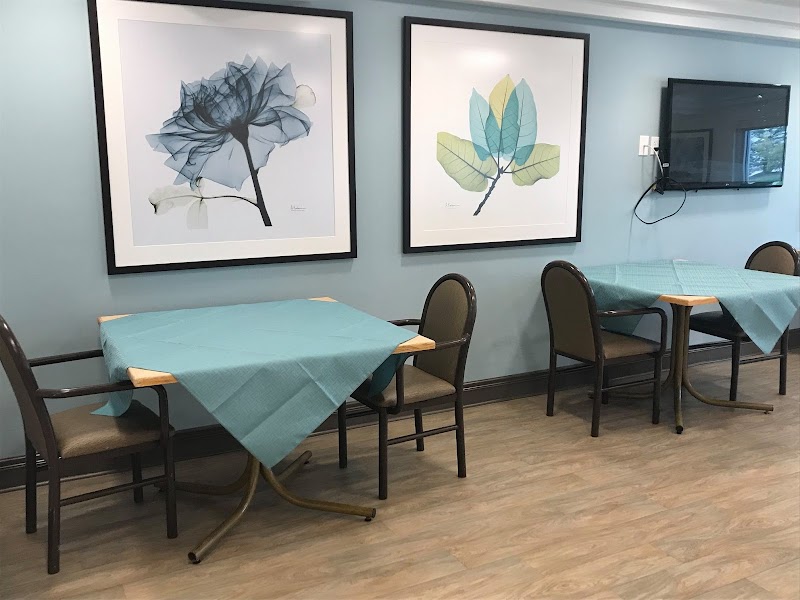
Who Owns and Operates Medilodge Of Campus Area?

Medilodge of Campus Area is owned by a for-profit company. For-profit facilities operate as businesses with obligations to shareholders or private owners. The facility is operated by MEDILODGE, a chain that manages multiple nursing homes. With 102 certified beds and approximately 66 residents (about 65% occupancy), it is a mid-sized facility located in East Lansing, Michigan.

How Does Medilodge Of Campus Area Compare to Other Michigan Nursing Homes?

Compared to the 100 nursing homes in Michigan, Medilodge of Campus Area's overall rating (2 stars) is below the state average of 3.1, staff turnover (60%) is significantly higher than the state average of 46%, and health inspection rating (2 stars) is below the national benchmark.

What Should Families Ask When Visiting Medilodge Of Campus Area?

Based on this facility's data, families visiting should ask: "How do you ensure continuity of care given staff turnover, and what is your staff retention strategy?" "Can I visit during a mealtime to observe dining assistance and food quality?" "How do you handle medical emergencies, and what is your hospital transfer rate?" "Can I speak with family members of current residents about their experience?" These questions are particularly relevant given the facility's high staff turnover rate.

Is Medilodge Of Campus Area Safe?

Based on CMS inspection data, Medilodge of Campus Area has a clean safety record: no substantiated abuse findings (meaning no confirmed cases of resident harm), no Immediate Jeopardy citations (the most serious violation level indicating risk of serious injury or death), and is not on the Special Focus Facility watch list (a federal program monitoring the lowest-performing 1% of nursing homes). The facility has a 2-star overall rating and ranks #100 of 100 nursing homes in Michigan. While no facility is perfect, families should still ask about staff-to-resident ratios and recent inspection results during their visit.

Do Nurses at Medilodge Of Campus Area Stick Around?

Staff turnover at Medilodge of Campus Area is high. At 60%, the facility is 14 percentage points above the Michigan average of 46%. High turnover means new staff may not know residents' individual needs, medications, or preferences. It can also be disorienting for residents, especially those with dementia who rely on familiar faces. Families should ask: What is causing the turnover? What retention programs are in place? How do you ensure care continuity during staff transitions?

Was Medilodge Of Campus Area Ever Fined?

Medilodge of Campus Area has been fined $34,379 across 1 penalty action. The Michigan average is $33,423. While any fine indicates a compliance issue, fines under $50,000 are relatively common and typically reflect isolated problems that were subsequently corrected. Families should ask what specific issues led to these fines and confirm they've been resolved.

Is Medilodge Of Campus Area on Any Federal Watch List?

Medilodge of Campus Area is not on any federal watch list. The most significant is the Special Focus Facility (SFF) program, which identifies the bottom 1% of nursing homes nationally based on persistent, serious quality problems. Not being on this list means the facility has avoided the pattern of deficiencies that triggers enhanced federal oversight. This is a positive indicator, though families should still review the facility's inspection history directly.