Regency on the Lake - Fort Gratiot


5669 Lakeshore Road, Fort Gratiot, MI 48059 (810) 385-7260
For profit - Corporation 130 Beds CIENA HEALTHCARE/LAUREL HEALTH CARE Data: November 2025
Trust Grade
88/100
#78 of 422 in MI
Last Inspection: July 2025

Inspected within the last 6 months. Data reflects current conditions.

Overview

Regency on the Lake in Fort Gratiot, Michigan has a Trust Grade of B+, indicating it is above average and generally recommended for families considering care options. It ranks #78 out of 422 nursing homes in Michigan, placing it in the top half, and #4 out of 5 in St. Clair County, suggesting that only one local facility offers better care. The facility is improving, having reduced its issues from three in 2024 to two in 2025. Staffing is a notable strength, with a 4/5 star rating and a turnover rate of 25%, significantly lower than the state average, which means caregivers are more likely to know and understand the residents' needs. While there have been no fines, which is positive, there have been some concerning incidents, such as failure to properly label and date medications and not notifying family of a resident's serious health changes. Overall, Regency on the Lake shows strengths in staffing and care quality but needs to address medication management and communication practices.

Trust Score
B+
88/100
In Michigan
#78/422
Top 18%
Safety Record
Low Risk
No red flags
Inspections
Getting Better
3 → 2 violations
Staff Stability
✓ Good
25% annual turnover. Excellent stability, 23 points below Michigan's 48% average. Staff who stay learn residents' needs.
Penalties
✓ Good
No fines on record. Clean compliance history, better than most Michigan facilities.
Skilled Nurses
✓ Good
Each resident gets 54 minutes of Registered Nurse (RN) attention daily — more than average for Michigan. RNs are trained to catch health problems early.
Violations
⚠ Watch
13 deficiencies on record. Higher than average. Multiple issues found across inspections.
★★★★★
5.0
Overall Rating
★★★★☆
4.0
Staff Levels
★★★☆☆
3.0
Care Quality
★★★★★
5.0
Inspection Score
Stable
2024: 3 issues
2025: 2 issues

The Good

  • 4-Star Staffing Rating · Above-average nurse staffing levels
  • Low Staff Turnover (25%) · Staff stability means consistent care
  • Full Sprinkler Coverage · Fire safety systems throughout facility
  • No fines on record
  • Staff turnover is low (25%)

    23 points below Michigan average of 48%

Facility shows strength in staffing levels, staff retention, fire safety.

The Bad

Chain: CIENA HEALTHCARE/LAUREL HEALTH CARE

Part of a multi-facility chain

Ask about local staffing decisions and management

The Ugly 13 deficiencies on record

Jul 2025 1 deficiency
CONCERN (D)

Potential for Harm - no one hurt, but risky conditions existed

Deficiency F0761 (Tag F0761)

Could have caused harm · This affected 1 resident

**NOTE- TERMS IN BRACKETS HAVE BEEN EDITED TO PROTECT CONFIDENTIALITY** Based on observation, interview, and record review the facility failed properly store, label, and date medications for one resid...

Read full inspector narrative →
**NOTE- TERMS IN BRACKETS HAVE BEEN EDITED TO PROTECT CONFIDENTIALITY** Based on observation, interview, and record review the facility failed properly store, label, and date medications for one resident (R56) of four residents reviewed for medication administration. Findings include: On 06/30/25 at 10:08 AM, Licensed Practical Nurse (LPN A) was observed to retrieve an inhaler for R56 from the cart which was unlabeled and undated. LPN A was asked if there was a date opened on the inhaler and replied, No. A review of R56's physician's order revealed, Ventolin HFA Inhalation Aerosol Solution 108 (90Base) Microgram per actuation (MCG/ACT)(Albuterol Sulfate) 2 puff inhale orally four times a day for shortness of breath. A review of R56 medical record revealed R56 was admitted to the facility on [DATE] with a diagnosis of Alzheimer's. A review of R56's most recent Minimum Data Set assessment (MDS) revealed R56 with impaired cognition and required assistance of activities of daily living including medication administration. On 07/01/25 at 9:19 AM, the Director of Nursing (DON) was asked about the inhaler in the med cart not being labeled. The DON explained, they did not believe inhalers need a date opened on them, but would have to look at the policy. A review of facility policy titled Medication Management dated 9/22/2023 revealed, Medications are stored, dispensed and destroyed in a manner to ensure safety and conformance with state and federal laws . Medications will be dated and discarded per manufactures guidelines .
Apr 2025 1 deficiency
CONCERN (D) 📢 Someone Reported This

A family member, employee, or ombudsman was alarmed enough to file a formal complaint

Potential for Harm - no one hurt, but risky conditions existed

Notification of Changes (Tag F0580)

Could have caused harm · This affected 1 resident

**NOTE- TERMS IN BRACKETS HAVE BEEN EDITED TO PROTECT CONFIDENTIALITY** This citation pertains to Intakes MI00151561. Based on interview and record review, the facility failed to document notification...

Read full inspector narrative →
**NOTE- TERMS IN BRACKETS HAVE BEEN EDITED TO PROTECT CONFIDENTIALITY** This citation pertains to Intakes MI00151561. Based on interview and record review, the facility failed to document notification of family and physician for a change in condition for one resident (R901) of three reviewed for notice of condition change. Findings include: A review of the complaint noted R901 had been seen on 01/28/25 and the resident appeared to be doing fine. It was noted that they were called on 01/30/25 and told R901 had been sent to the hospital. The complainant reported R901 appeared very ill and the emergency room physician reported that R901 had vomited and had a large amount of stool upon diagnostic examination and had sepsis (a body system wide infection). A review of the record for R901 revealed R 901 was admitted into the facility on [DATE], discharged to the hospital on [DATE] after and fall with fracture and re-admitted [DATE]. R901 was treated for a urinary tract infection and low blood pressure. Diagnoses included Dementia, Chronic Obstructive Pulmonary Disease and Protein Calorie Malnutrition. The minimum data set (MDS) assessment dated [DATE] indicated moderately impaired cognition with an 11/15 Brief Interview for Mental Status score and the need for partial/moderate assistance with eating and personal hygiene, the need for substantial/maximal assistance for upper body dressing, oral hygiene, transfer and rolling left to right in bed. R901 was dependent for bathing. Further review revealed a progress note dated 01/30/25 at 6:12 AM revealed, At approximately 0415 (4:15 AM) CNA (certified nursing assistant) alerted that resident had labored breathing and increased lethargy .EMS (emergency medical service) arrived . and took resident to (hospital) ER. On 04/02/25 at 2:52 PM, CNA A reported during a phone interview that R901 had a complaint of stomach pain and liquid brown emesis (vomit) which did not appear to contain food. The CNA reported R901 was sick a couple of times that day and reported they told Nurse B and Nurse B gave R901 some Zofran (an anti nausea medication). On 04/02/25 at 3:07 PM, Nurse B they did not recall the specific color or type of emesis or what they had been told by the CNA. A review of the January 2025 Medication Administration Record (MAR) documented Nurse B administered a dose of Zofran on 01/29/25 at 12:30 PM. A review of the administration note for the same time documented the medication was for nausea and vomiting and patient requested. Further review of the progress notes revealed no documentation of physician or family notification related to the CNA A observation of liquid brown emesis. On 04/03/25 at 1:04 PM, during a phone interview, the Medical Director reported they were not aware of the liquid brown emesis for R901 and would have had the resident sent out to the hospital for evaluation.
Jun 2024 3 deficiencies
CONCERN (D)

Potential for Harm - no one hurt, but risky conditions existed

Quality of Care (Tag F0684)

Could have caused harm · This affected 1 resident

R1 A review of the medical record revealed that R1 admitted into the facility on 5/28/2014 with the following diagnoses, Weakness and Abnormal Posture. A review of the Minimum Data Set assessment reve...

Read full inspector narrative →
R1 A review of the medical record revealed that R1 admitted into the facility on 5/28/2014 with the following diagnoses, Weakness and Abnormal Posture. A review of the Minimum Data Set assessment revealed a Brief Interview for Mental status score of 8/15 impaired cognition. R1 also required assistance with bed mobility and transfers. Further review of R1's physician orders revealed an order stating Ensure resident's wheelchair has L arm bolster, rear anti-tippers, a cushioned head rest, a cushioned kyphotic back rest, a pressure reduction seat cushion and B elevating footrests to be used for increased tilting or transport. lambswool to wheelchair back r/t protection. On 06/04/24 at 10:37 AM, R1 was observed in hallway sitting in their wheelchair, leaning to their left side. An arm bolster was observed on right arm of wheelchair. No lambswool padding was noted. On 06/04/24 at 12:18 PM, R1 was observed still sitting up in their wheelchair at the nurse's station leaning to their left side and hunched over. An arm bolster remains on right arm of wheelchair. No lambswool padding noted. The same observation was made at 01:04 pm and 01:49 pm. On 06/05/24 at 09:10 AM, R1 was observed sleeping in bed. Their wheelchair was in the room with an arm bolster on the wheelchair on the right side. No lambswool padding noted. On 06/05/24 at 12:54 PM, R1 was observed sitting in their wheelchair in the dining area hunched over forward. An arm bolster was noted on the right wheelchair arm. No lambswool padding noted. On 06/05/24 at 03:26 PM, R1 was observed sitting at nurses' station in wheelchair. No lambswool padding noted. An arm bolster was noted on the right arm of the wheelchair. Further review of R1's care plan stated the following, Observe for sliding down in the chair and assist to reposition in chair as needed. Wheelchair seating and positioning: The pt is currently sitting in a tilt in space w/c, fitted with a L (left) arm bolster, rear anti-tippers, a cushioned head rest, a cushioned kyphotic back rest, a pressure reduction seat cushion and elevating footrests to be used for increased tilting or transport. On 06/06/24 09:36 AM, During an interview, the unit manager stated that the right arm bolster was discontinued and that they stopped using the lambswool when R1 received a new wheelchair. The unit manager could not confirm the date the change was made but stated it had been quite a while. A review of a facility policy titled, Physician's Order noted the following, Treatment rendered to a resident must be in accordance with the specific standing, written, verbal, or telephone order of a physician or other licensed health professional ordering within teir scope of practice and clinical privileges. Based on observation, interview, and record review, the facility failed to apply heel protector boots per physician orders for two residents (R5 and R24) out of two reviewed for skin conditions and apply positioning devices per physician orders for one resident (R1) out of two reviewed for positioning. Findings Include: R5 On 6/4/2024 at 9:15 AM, R5 was observed in their bed. Two heel protection boots were noted to be in a wheelchair. R5 was noted to have their heels resting on the mattress. R5 was asked if they wear heel boots while in bed. R5 said they sometimes do and sometimes don't. On 6/5/2024 at 9:16 AM, R5 was observed laying in bed. Two heel protection boots were noted to be in a wheelchair. R5 heels were noted to be resting on the mattress. A review of the medical record revealed that R5 admitted into the facility on 9/20/2022 with the following diagnoses, Difficulty in Walking and Restless Leg Syndrome. A review of the Minimum Data Set assessment revealed a Brief Interview for Mental Status score of 13/15 indicating an intact cognition. R5 also required assistance with bed mobility and transfers. Further review of the physician orders noted the following, Orders: Bilateral heel boots ATC (Around The Clock) r/t (Related To) preference and pressure relief .Status: Active. On 6/5/2024 at 3:16 PM, an interview was conducted with Wound Care Nurse (WCN) A. WCN A stated that R5 usually has the boots on and they should be wearing them. WCN A stated it should be documented if they don't have them on and why. R24 On 6/4/2024 at 9:15 AM, 10:42 AM, 1:09 PM, and 2:30 PM, R24 was observed laying in bed. R24 stated they were having pain in their legs. R24 was noted to have heel boots on the floor next to their bed. A review of the medical record revealed that R24 admitted into the facility on 5/13/2023 with the following diagnoses, Muscle Wasting and Atrophy and Muscle Weakness. A review of the Minimum Data Set assessment revealed a Brief Interview for Mental Status score of 1/15 indicating a severely impaired cognition. R24 also required assistance with bed mobility and transfers. Further review of the physician orders noted the following, Orders: Bilateral heel boots in bed .Status: Active. On 6/5/2024 at 3:14 PM, an interview was conducted with Wound Care Nurse (WCN) A. WCN A stated they did not know if R24 was resistant to wearing the boots or not, but R24 should have them on. WCN A stated R24 has had a decline in health since last hospital admission and they had just changed their mattress to a low air loss mattress.
CONCERN (D)

Potential for Harm - no one hurt, but risky conditions existed

Accident Prevention (Tag F0689)

Could have caused harm · This affected 1 resident

**NOTE- TERMS IN BRACKETS HAVE BEEN EDITED TO PROTECT CONFIDENTIALITY** Based on observation, interview, and record review, the facility failed to secure smoking/vape pens for one sampled resident (R5...

Read full inspector narrative →
**NOTE- TERMS IN BRACKETS HAVE BEEN EDITED TO PROTECT CONFIDENTIALITY** Based on observation, interview, and record review, the facility failed to secure smoking/vape pens for one sampled resident (R59) of two reviewed for accidents. Findings include: On 6/04/24 at 10:52 AM, R59 was observed lying in bed, when asked a question R59 stated, I don't feel well and I don't want to talk. Observed on R59's overbed table was one vape/smoking pen. On 6/06/24 at 9:04 AM, R59 was observed lying in bed, when asked a question R59 stated, I don't want to talk. R59 then asked to be left alone. Observed on R59's overbed table was one vape/smoking pen. On 6/06/24 at 9:18 AM, the Unit Manager and R59's assigned nurse was asked if R59 was allowed to have vape/smoking pens in their room. The Unit Manager and the nurse was observed to go to R59's room and reported, residents are not to have smoking/vape pens. The Unit Manager was observed to come out of R59's room with three unopened boxes and one open smoking/vape pen. A review of R59's medical record revealed, R59 was admitted to the facility on [DATE] and readmitted on [DATE] with diagnosis of Atrial fibrillation. A review of R59's Minimum data set (MDS) assessment dated [DATE] noted R59 with an intact cognition and required assistance with activities of daily living. On 6/06/24 at 10:10 AM, the Director of Nursing (DON) was asked if the facility allowed vape/smoking pen at the facility. The DON reported, the resident should not have a vape pen. A review of the facility's policy titled, Non-Smoking Policy dated 5/1/2022 revealed, Policy: This facility is a non-smoking facility. Procedure: 8. Please note, all forms of E-Cigarettes, vaping material's, etc. are strictly prohibited to be in the facility .
CONCERN (D)

Potential for Harm - no one hurt, but risky conditions existed

Deficiency F0919 (Tag F0919)

Could have caused harm · This affected 1 resident

Based on observation, interview, and record review, the facility failed to ensure the call light was within reach of one resident (R1) out of one reviewed for call lights. Findings include: On 06/04/2...

Read full inspector narrative →
Based on observation, interview, and record review, the facility failed to ensure the call light was within reach of one resident (R1) out of one reviewed for call lights. Findings include: On 06/04/24 at 09:15 AM, R1 was observed in bed sleeping. The soft touch call light was hanging on the end of the bed out of reach of the resident. On 06/05/24 at 09:10 AM, R1 was observed in bed sleeping. The soft touch call light was on the floor past the end of the bed out of reach of the resident. A review of the medical record revealed that R1 admitted into the facility on 5/28/2014 with the following diagnoses, Weakness and Abnormal Posture. A review of the Minimum Data Set assessment revealed a Brief Interview for Mental status score of 8/15 impaired cognition. R1 also required assistance with bed mobility and transfers. Further record review of R1's care plan listed having the call light within reach as an intervention for multiple care plan problems as follows: Ensure/provide a safe environment. Call light in reach. Keep (R1's) environment as safe as possible with: even floors free from spills and/or clutter; adequate lighting; call light within reach, commonly used items within reach, avoid repositioning furniture. Put (R1) call light within reach and encourage [them] to use it for assistance as needed. Paddle call light to be used. Touch pad call light for ease of use and encouragement to use. (Name of R1) will have no evidence of noncompliance with transfers and will use call light or call bell. On 06/06/24 at 10:07 AM during an interview, the DON (Director of nursing) stated R1 is able to use the soft touch call light but is unable to use a regular call light. The DON states that the call light should be in reach at all times. A review of the facility policy titled Call Lights noted the following: Call lights will be placed within the guests/residents reach and answered in a timely manner.
Sept 2023 1 deficiency
CONCERN (D) 📢 Someone Reported This

A family member, employee, or ombudsman was alarmed enough to file a formal complaint

Potential for Harm - no one hurt, but risky conditions existed

Accident Prevention (Tag F0689)

Could have caused harm · This affected 1 resident

**NOTE- TERMS IN BRACKETS HAVE BEEN EDITED TO PROTECT CONFIDENTIALITY** This citation pertains to Intake MI00139026. Based on interview and record review, the facility failed to implement adequately s...

Read full inspector narrative →
**NOTE- TERMS IN BRACKETS HAVE BEEN EDITED TO PROTECT CONFIDENTIALITY** This citation pertains to Intake MI00139026. Based on interview and record review, the facility failed to implement adequately supervision for one sampled resident (R901) of three residents reviewed for falls, resulting in multiple falls, and two hospital transfers. Findings include: A review of R901's census information revealed that R901 was originally admitted into the facility on [DATE] with diagnoses that included Alzheimer's Disease, Heart Failure, Gout, and History of Falling. A review of the R901's 5-Day Minimum Data Set assessment dated [DATE] revealed that the resident had a Brief Interview for Mental Status score of 8/15 indicating a moderately impaired cognition, and required extensive assistance of 2 persons for bed mobility, transfers, and toilet use. Further review of R901's admission fall risk assessment dated [DATE] categorized the resident as being at At Risk for falls with the following details noted: -Does the resident have a history of falls? Yes -Does the resident have a fear of falling, muscle weakness, decreased lower extremity joint function, balance deficit, or gait deficit? Yes -Does the resident have urinary urgency? Yes -Does the resident take medications that may increase falls (Antiarrhythmics, Anticolinergics, Antidepressants, Antiepileptics, Antihypertensives? Yes -Does the resident have impaired cognition, judgement, memory, safety awareness and/or decision making capacity? Yes A review of R901's medical record revealed that R901 sustained 13 unwitnessed falls in their room during their admission at the facility, two resulting in transfers to the hospital. Progress notes revealed the following: 12/2/2022 18:08 (6:08pm) Nurses Notes Note Text: Resident observed on floor next to bed at 0915 (9:15am). Resident stated she 'slid off of the bed'. Loose stool noted on floor surrounding resident . 1/23/2023 05:23 (5:23am) Nurses Notes Note Text: Resident had an unwitnessed fall in bathroom. Resident sustained a head gash above the right eye, complains of right hip pain and skin tare (tear) on right hand. Physician and family notified. Resident sent to [local hospital] for treatment. A review of R901's hospital documentation dated 1/23/23 revealed the following, .Presented to the emergency department via EMS (emergency medical services) from [facility] .Patient reports she had gotten up to go to the bathroom and slipped and fell landing directly on her right hip and striking her head and some of her right elbow and hand to break the fall .Assessment: Right hip pain status post mechanical fall with right acute comminuted displaced intertrochanteric fracture of right proximal femur .Plan: .patient was admitted under orthopedics for fall and is tentatively scheduled for right IT (intertrochanteric) intervention (surgery) today . Per Cleveland Clinic and John Hopkins, A comminuted fracture is a type of broken bone. The bone is broken into more than two pieces. It takes a lot of force for someone to get a comminuted fracture. A car accident or serious fall, for instance, can cause this type of break. Someone with a comminuted fracture will probably need surgery. A review of R901's census revealed that the resident was readmitted into the facility from the hospital on 1/26/23, and sustained a fall the same day according to the following progress note: 1/26/2023 22:35 (10:35pm) Nurses Notes Note Text: Resident observed on the floor in a sitting position in front of chair . Further review of R901's progress notes related to falls revealed the following: 2/18/2023 11:30 (11:30am) Nurses Notes Note Text: Called to resident's room around 0945 (9:45am). Res (resident) was observed on the floor sitting up on bilateral knees in front of recliner. Resident stated 'I forgot I needed help getting up.' No visible injuries noted and resident denies pain. 3/4/2023 18:28 (6:28pm) Nurses Notes Note Text: Called to this resident's room around 1720 (5:28pm) by CNA (certified nurse assistant) staff. Resident was observed on the floor in the middle of bathroom floor. She was sitting upright on buttocks facing toilet grab bar. Resident was barefoot and the floor was saturated in urine. It appears resident removed her brief and gripper socks at her recliner and then self transferred to the bathroom. She stated 'I was going to use the bathroom but I slipped on this wet stuff.' Resident denies any pain and stated she did not hit her head. No visible injuries to note . 3/23/2023 15:46 (3:46pm) Nurses Notes Note Text: Around 0930 CNA staff entered resident's room to observe her on the floor, sitting upright on buttocks on the floor in front of recliner, facing the bed. No visible injuries. Denies hitting her head. Denies any new pain . 4/2/2023 02:37 (2:37am) Nurses Notes Note Text: resident was observed sitting on the bathroom floor next to her wheel chair that was located next to the toilet. Resident was observed in the sitting position between the toilet and her wheel chair. Resident did not pull the light cord as instructed. No injuries were observed. Resident had socks on that were not non slip socks and wheel chair was not locked. Resident stated that she was not injured and didn't hit her head . 4/4/2023 16:42 (4:42pm) Nurses Notes Note Text: Resident was observed on the floor in her room. Resident stated that she was trying to use the BR (bathroom). Resident found on floor, on her bottom but more on her L (left) hip, sitting in front of her BR door. Stated she did not hit her head and no injuries at this time . 5/11/2023 12:01 (12:01pm) Nurses Notes Note Text: This writer was called into resident's room by aide, Resident was observed sitting on buttocks in front of recliner chair leaning on recliner towards left side, feet out. Resident stated she just slipped out of her recliner chair. 5/24/2023 06:49 (6:49am) Nurses Notes Note Text: resident observed on floor at 0545 (5:45am), skin tear noted to right arm . 6/1/2023 03:50 (3:50am) Nurses Notes Note Text: Writer entered resident's room at 03:50 (3:50am) and observed resident sitting in front of her recliner on her buttocks with both legs outstretched. Resident stated 'I just slid out.' Resident denied pain or injury . 7/8/2023 05:45 (5:45am) Nurses Notes Note Text: Writer entered resident's room at 05:45 (5:45am) after hearing resident yelling. Writer observed resident on the floor in front of her recliner on her hands & knees. Resident stated 'I don't know what I was doing .' 8/2/2023 10:56 (10:56am) Nurses Notes Note Text: resident observed laying on L (left) side of body with L arm under her, feet facing the doorway, head pointed towards window side. blood noted under resident's head. call light not in use. resident stated she attempted to get up but doesn't know why. 2 lacerations noted to L side of forehead, skin tear noted to L shoulder and back of LUE (lower upper extremity). resident c/o (complain of) head pain and pain to LUE. resident able to perform ROM (range of motion) to LUE . 8/2/2023 19:24 (7:24pm) Nurses Notes Note Text: Resident returned from the hospital around 1530pm (3:30pm) via EMS .Hospital paperwork states laceration #1 has 7 (sutures) and laceration #2 has 4. Sutures to be removed in 5-7 days . While at the hospital they offered for a CT scan and cervical spine but residents family denied it due to patients mental status and hospice status . On 9/5/23 at 2:55 PM, Unit Manager A was asked about R901's numerous falls while admitted to the facility, and she explained that a lot of R901's falls revolved around toileting, specifically stomach issues resulting in loose stools, and the resident attempting to self-transfer on their own. Regarding fall interventions, Unit Manager A explained that their fall coordinator along with the nurses on duty following a fall would implement interventions. Unit Manager A explained that one of the interventions was for the resident to move from the end of the hall the center hall where there was more traffic where the resident could be monitored more, as she preferred to remain in her room in her recliner. Regarding hourly rounds, Unit Manager A explained that hourly rounds are completed 72 hours post-fall. On 9/5/23 at 3:09 PM, the Director of Nursing (DON) was interviewed about R901's multiple falls, and he explained that the resident was having falls prior to admittance into their facility and that R901 would not stop trying to take themselves to the bathroom. The DON explained that R901's cognition would fluctuate and implemented several interventions, one which involved moving the resident to the center of the hall, closer to offices and traffic. The DON was asked how the facility determines that fall prevention interventions are effective, and he explained that evaluating effectiveness of falls is ongoing and that the IDT (interdisciplinary team) reviews and discusses falls. The DON was asked about more frequent rounding on the resident, and explained that frequent rounding is their standard of care. The DON was asked about additional supervision for the resident including bringing the resident to common areas, and he explained that the resident declined being out of their room, and was more comfortable in their recliner. A review of R901's census revealed that the resident remained in the same room for the entire length of their admission. Further review of R901's medical record revealed a fall care plan with duplicate interventions: A review of R901's care plan revealed the following: [R901] is at risk for fall related injury and falls R/T (related to) generalized weakness and history of falls, she receives antianxiety, antidepressant medication vitamin D deficient. Date Initiated: 08/02/2023. Created on: 11/29/2022 Interventions: -Keep the resident's environment as safe as possible with: even floors free from spills and/or clutter; adequate lighting; call light within reach, commonly used items within reach, avoid repositioning furniture and keep the bed in the appropriate position. Date Initiated: 11/29/2022 -Provide [R901] with activities that minimize the potential for falls while providing diversion and distraction. Date Initiated: 12/05/2022 -dycem to recliner Date Initiated: 12/06/2022 -Encourage the resident to wear appropriate footwear as needed. Date Initiated: 01/06/2023 -Encourage use of call light. Date Initiated: 01/06/2023 -Encourage resident to wear non-skid foot wear when out of bed. Assist resident as needed. Date Initiated: 01/23/2023 -Resident to have anti-slip mat in front of recliner. Date Initiated: 01/27/2023 -use touch pad call light Date Initiated: 02/19/2023 -Put [R901's] the call light within reach and encourage her to use it for assistance as needed. Date Initiated: 02/21/2023 -anti roll brakes to wc (wheelchair) Date Initiated: 02/23/2023 -Obtain UA w/C&S (urinalysis with culture and sensitivity) Date Initiated: 03/06/2023 -med review r/t loose stools Date Initiated: 03/10/2023 -complete elimination pattern assessment x 72 hours Date Initiated: 03/23/2023 -Encourage [R901] to rest [in recliner, chair or bed] when they appear fatigued. Date Initiated: 05/11/2023 -Medication Review with [physician]. UA C&S ordered Date Initiated: 05/24/2023 -placed slippers on after fall. reinforced use of call light Date Initiated: 05/24/2023 -verify grippy sock are being worn every shift Date Initiated: 05/24/2023 -call don't fall signs placed Date Initiated: 06/07/2023 -different recliner when available Date Initiated: 06/07/2023 -Administer medication supplements as ordered. Date Initiated: 06/07/2023 -Hospice consult Date Initiated: 06/07/2023 -Hourly rounding for 72 hours post fall Date Initiated: 06/07/2023 -Obtain labs as ordered, report abnormal findings to the physician. Date Initiated: 06/07/2023 -PT/OT (physical and occupational therapy) evaluate and treat as ordered or PRN (as needed) Date Initiated: 06/07/2023 -Offer/encourage [R901] to rest in her bed at night time in place of her recliner Date Initiated: 07/10/2023 -Staff to perform hourly rounding 72 hours post fall Date Initiated: 08/02/2023 A review of the facility's Fall Management policy revealed the following, Policy:The facility will identify hazards and guests/resident risk factors and implement interventions to minimize falls and risk of injury related falls. Overview: Each guest/resident is assisted in attaining/maintaining his or her highest practical level of function by providing the guest/resident adequate supervision, assistive devices, and/or functional progras as appropriate to minimize the risk of falls
Apr 2023 7 deficiencies
CONCERN (D)

Potential for Harm - no one hurt, but risky conditions existed

Comprehensive Care Plan (Tag F0656)

Could have caused harm · This affected 1 resident

**NOTE- TERMS IN BRACKETS HAVE BEEN EDITED TO PROTECT CONFIDENTIALITY** Based upon observation, interview and record review, the facility failed to develop a care plan for use of a right hand orthosis...

Read full inspector narrative →
**NOTE- TERMS IN BRACKETS HAVE BEEN EDITED TO PROTECT CONFIDENTIALITY** Based upon observation, interview and record review, the facility failed to develop a care plan for use of a right hand orthosis (hand held splint) for one (R26) of two residents reviewed for orthotics resulting in limited resident access to and application of the orthosis. Findings include: Review of the facility record for R26 revealed an initial admission date of 2/8/23 with diagnoses that included Cerebral Infarction with Right Hemiplegia and indication of a history of falls. R26 was readmitted on [DATE] following a hospitalization with the new diagnosis of Encephalopathy. The Minimum Data Set (MDS) assessment dated [DATE] indicated R26 required supervision for eating and upper body dressing, set up for oral hygiene and primarily maximum assistance for self care tasks and transfers otherwise. On 4/2/23 at approximately 9:50 AM, R26 was observed laying in bed. It was noted that R26 appeared to have right upper extremity contractures at the elbow, wrist and hand. There were no splints or orthotics in place and none were observed in the room. When asked about the use of any splints R26 expressed non-verbally that they did not have any. On 4/3/23 at approximately 9:15 AM, R26 was observed in their bed. It was noted that there were no splints or orthotics of any kind in place on the right upper extremity. R26 gave the writer permission to check their drawers/cabinet for any orthotics. A hand carrot orthosis (splint) was located in a wash basin on top of the dresser located opposite of the foot of R26's bed. When asked if the hand carrot was being placed in R26's hand they expressed that it had been but not recently or frequently. On 4/3/23 at approximately 1 PM, Occupational Therapists (OT) H and I were interviewed regarding their evaluation findings and recommendations for R26. They both indicated that R26 was not appropriate for full splinting at this time due to the extent of the contractures and therefore a right hand carrot was initially provided to attempt to prevent further hand flexion (closing) contracture. On 4/3/23 at approximately 2:15 PM, the Facility Administrator (NHA) was interviewed regarding the facilities restorative program status and they indicated that there currently was essentially no restorative service as the restorative aides are being pulled to the floor to cover traditional nurse aide duties. The NHA indicated that they were working towards reinstatement of consistent restorative services. On 4/3/23 at approximately 2:30 PM, R26 was observed in their bedroom and the hand carrot was not in the right hand. The carrot was observed to remain in the wash basin on the dresser. Further review of the facility record for R26 revealed no physician orders, care plans or task/[NAME] checklist related to use of the right hand orthosis. Review of R26's Occupational Therapy evaluations reveals that the initial evaluation dated 2/10/23 includes short-term and long-term goals (#4) related to resident tolerance of wearing a right hand resting hand splint. On 4/4/23 at approximately 9:10 AM, R26 was observed in their bed. The right hand carrot was not in place. On 4/4/23 at approximately 11:30 PM, the facility Director of Rehab (DOR) was interviewed and stated that the expectation for a resident provided with an orthosis (splint) from therapy is, that a related order and a care plan should be in place. On 4/4/23 at approximately 12:30 PM, the NHA was interviewed and stated that the expectation regarding a resident provided with an orthosis is that a related order and care plan should be in place. On 4/4/23 at approximately 1 PM, during a group interview with the NHA, DOR and occupational therapy staff members, the staff expressed that R26 had been able to apply and remove the right hand carrot without assistance however the writer noted that during the length of the survey the carrot has been stored well out of R26's reach and therefore they are not able to access it independently. Review of the facility policy titled Brace and Splint Program dated 4/26/22 revealed the following Procedure: 5: Interdisciplinary Care Plan a. A care plan will be developed that has measurable objectives and interventions and that include the following: b. Applying the brace and splint: Resident applies the brace with staff that provide verbal and physical guidance and direction that teaches the resident how to apply, manipulate and care for the appliance. c. Staff has a scheduled program of applying and removing the appliance that includes: d. Scheduled hours to be worn and when skin will be inspected for signs and symptoms of pressure areas, irritations, rashes, etc. and will be reported to the charge nurse and attending physician. e. Communicate individualized interventions to the direct care providers. Provide specific directions and training as needed. Update care plan and [NAME].
CONCERN (D) 📢 Someone Reported This

A family member, employee, or ombudsman was alarmed enough to file a formal complaint

Potential for Harm - no one hurt, but risky conditions existed

Deficiency F0658 (Tag F0658)

Could have caused harm · This affected 1 resident

**NOTE- TERMS IN BRACKETS HAVE BEEN EDITED TO PROTECT CONFIDENTIALITY** Based on observation, interview and record review, the facility failed to ensure medications were administered per order for one...

Read full inspector narrative →
**NOTE- TERMS IN BRACKETS HAVE BEEN EDITED TO PROTECT CONFIDENTIALITY** Based on observation, interview and record review, the facility failed to ensure medications were administered per order for one resident (R38) of five reviewed for medications, resulting in the potential for the exacerbation of acute or chronic health conditions. Findings include: On 4/2/23 at 9:14 AM, R38 was observed sitting up in bed with their breakfast tray in front of them. R38 was unable to respond to interview questions and appeared to have some limited use of the left side of their body. A review of R38's record and Minimum Data Set (MDS) assessment dated [DATE], revealed that the resident was admitted into the facility on 3/10/23 with medical diagnoses of Altered Mental Status, Unspecified Convulsions, End Stage Renal Disease, Type 2 Diabetes Mellitus, Hemiplegia and Hemiparesis Following Cerebral Infarction Affecting Left Non-Dominant Side, Metabolic Encephalopathy, Dependence on Renal Dialysis, Other Seizures, Dysphagia, Oropharyngeal Phase, and Muscle Weakness. Further review revealed that the resident is severely cognitively impaired and requires supervision to extensive assistance for most activities of daily living (ADLs). A review of R38's orders revealed: Hemodialysis MWF (Monday, Wednesday, and Friday) (p/u (pick up) at 10 am) at [outpatient dialysis center] *Be sure to send hemodialysis communication form with resident - every day shift every Mon, Wed, Fri. Depakote Oral Tablet Delayed Release 500 MG (milligrams) (Divalproex Sodium) Give 500 mg by mouth one time a day every Mon, Wed, Fri for seizures -Start Date 03/13/2023 1400 (2:00) PM (Medication due at 2:00 PM). Keppra Oral Tablet 500 MG (Levetiracetam) Give 500 mg by mouth one time a day every Mon, Wed, Fri for seizures -Start Date- 03/13/2023 1400 (Medication due at 2:00 PM). Vimpat Oral Tablet 150 MG (Lacosamide) Give 150 mg by mouth one time a day every Mon, Wed, Fri for seizures -Start Date- 03/13/2023 1400 (Medication due at 2:00 PM). A review of R38's Medication Administration Record (MAR) from March 2023 revealed that the ordered 2:00 PM Depakote, Keppra, and Vimpat, were not administered on 3/22/23, 3/27/23, and 3/29/23, specifically by Licensed Practical Nurse (LPN) G. A review of the accompanying progress notes for the missed doses indicated that LPN G did not administer the medication because R38 was, at dialysis. On 4/3/23 at 8:14 AM, LPN G was interviewed at the facility and asked if R38 is sent to dialysis with any medications. LPN G indicated that the resident was not. LPN G showed this surveyor R38's dialysis communication forms, which indicated that the only medication administered to the resident at their dialysis appointments is Sensipar (used to treat high calcium levels). LPN G was asked why they did not administer R38's 2:00 PM medications, if they are not sent with the resident on dialysis days. LPN G stated that he has never personally given R38 their ordered 2:00 PM medications (Keppra, Depakote, Vimpat) on dialysis days because the resident gets back late, and he was not sure if he was supposed to give them or not. LPN G reviewed the facility's hemodialysis policy (revised 10/1/2019) in this surveyor's presence at the nurses' station, however, no guidance was noted in the policy regarding medications. On 4/4/23, a review of R38's Medication Administration Record (MAR) from April 2023 revealed that the ordered 2:00 PM Depakote, Keppra, and Vimpat, were administered on 4/3/23 by Licensed Practical Nurse (LPN) G. On 4/4/23 at 8:27 AM, LPN G was interviewed and asked what led him to administer R38's 2:00 PM medications yesterday, 4/3/23, when he had not done so previously. LPN G stated he talked with his co-workers and made sure R38 received their seizure medications when they returned from dialysis. A review of the documents scanned into R38's chart revealed lab results dated 3/22/23 which included, Valproic acid level (Depakene) = 45.2 ug/mL [therapeutic 50-120 ug/mL]. On 4/4/23 at 12:45 PM, the Director of Nursing (DON) was interviewed. The DON was asked if he could provide any rationale as to why LPN G did not administer R38's ordered 2:00 PM seizure medications on their dialysis days. The DON was unable to provide an explanation and stated he would need to follow up with R38's physician regarding the resident's medication orders. A review of the facility's policy/procedure titled, Medication Administration, revised 9/9/22, revealed, Guest/resident medications are administered in an accurate, safe, timely, and sanitary manner .Medications are administered in accordance with written orders of the attending physician. If a dose is inconsistent with the guest's/resident's age and condition or a medication order is inconsistent with the guest's/resident's current diagnosis or condition, contact the physician for clarification prior to administration of the medication. Document the interaction with the physician in the progress notes and elsewhere in the medical record, as appropriate .
CONCERN (D)

Potential for Harm - no one hurt, but risky conditions existed

ADL Care (Tag F0677)

Could have caused harm · This affected 1 resident

**NOTE- TERMS IN BRACKETS HAVE BEEN EDITED TO PROTECT CONFIDENTIALITY** Based on observation, interview, and record review the facility failed to answer call lights in a timely manner, assist with bri...

Read full inspector narrative →
**NOTE- TERMS IN BRACKETS HAVE BEEN EDITED TO PROTECT CONFIDENTIALITY** Based on observation, interview, and record review the facility failed to answer call lights in a timely manner, assist with brief changes and or failed to assist residents during meals for four residents (R1, R8, R62, R68) of seven residents reviewed for activities of daily living care (ADLs), resulting in dissatisfaction with care, dissatisfaction during meals, and the potential for compromised nutrition and weight loss. Findings include: Resident #1 (R1) On 4/2/23 at 9:00 AM, during an initial tour of the facility, R1 was interviewed about their level of satisfaction with the care that they were receiving at the facility. R1 indicated that they sometimes had to wait up to Two hours for a brief change. R1 stated, That's too long. On 4/2/23 at 10:00 AM, a review of R1's EMR revealed the following, R1 had diagnoses of Heart failure and Hemiplegia (Paralysis) affecting left non-dominate side. A review of R1's most recent quarterly MDS revealed that R1 had an intact cognition and required extensive assistance with all ADLs other than eating. On 4/3/23 at 8:57 AM, R1 was further interviewed about their brief changes and call light response time and stated, It's terrible. On 4/3/23 at 9:00 AM, R1's call light was activated. The light was observed to be on outside of R1's room and a small red light inside the room indicated that A call had been placed. On 4/3/23 at 9:15 AM, staff was observed walking past R1's room and did not respond to R1's call light. On 4/3/23 at 9:22 AM, staff was observed walking past R1's room and did not respond to R1's call light. On 4/3/23 at 9:35 AM, R1's assigned Certified Nurse Assistant (CNA) B was interviewed regarding R1's call light and their lack of response to the call light. CNA B stated, I was giving another resident a shower. CNA B indicated that any staff member could answer a resident's call light. On 4/3/23 at 9:45 AM, Nurse Manager - Registered Nurse (RN) A was interviewed about their expectations regarding staff answering resident's call lights. RN A indicated that they would like to see call lights answered within Ten minutes or less. RN A indicated that staff should be Communicating with each other to ensure that resident call lights are answered in a timely manner. On 4/4/23 at 11:00 AM, the Director of Nursing (DON) was interviewed regarding their expectation for staff when answering resident's call lights and meal set-up for residents. The DON stated, Ideally, I would like to see call lights answered within ten minutes or less. R62 On 04/02/23 at 10:56 AM, R62 was observed to be in bed. R62 had their breakfast tray on the over bed table across their lap. R62 leaned toward the right with the head of the bed up around 30-45 degrees. Muffin halves, sausage were not eaten. The cereal had a spoon in but still reached the top rim of the bowel. The drinks were open but did not appear to have been touched. On 04/02/23 at 1:13 PM, the lunch tray had been served to R62. R62 was observed to be in bed and with eyes closed. R62 leaned over to the right and the head of the bed was up around 30-45 degrees. R62 had a large selection of items. The egg salad sandwich appeared to have a couple of bites out if it. The lemonade, potato salad, onion rings and cantaloupe did not appear to have been eaten. On 04/02/23 at 3:31 PM, R62 appeared in the same position with the food items uneaten as before. On 04/03/23 at 8:22 AM, R62 was observed to be in bed. The breakfast tray was on the over bed table across the resident's thighs. R62 leaned toward the right in bed with the head of the bed up around 30-45 degrees. Around 80% of the meat was left and two slices toast and oatmeal remained to be eaten. On 04/03/23 at 1:01 PM, R62 was observed to out of bed, dressed and seated in the area around the nurse's station for lunch. R62 sat up straight and appeared to feed themselves slowly, but consistently. On 04/03/23 at 3:56 PM, the Therapy Director reported R62 had been picked up on 03/29/23 for physical (PT) and occupational therapy (OT) related to a nursing report about increased debility. This included walking, toileting, dressing and standing. R62 had five PT and three OT visits and was participating. On 04/04/23 at 8:25 AM, R62 was observed to be in bed with 50% of the breakfast eaten. R62 leaned over to right and the head of the bed was up around 30-45 degrees. A review of the record for R62 revealed, R62 was admitted into the facility on [DATE]. Diagnoses included Dementia, Alzheimer's and Heart Disease. The Minimum Data Set Assessment (MDS) dated [DATE] documented impaired cognition and the need for extensive assistance of one person for bed mobility, transfer, locomotion, dressing, toilet needs and personal hygiene. Eating was documented as independent with set up. R8 and R68 On 04/02/23 at 8:36 AM, during the initial resident screening, R68 commented that there were times when they waited for extended lengths of time to get their call light answered and their care needs met. On 04/04/23 at 8:39 AM, call lights were observed activated on the south unit. Call lights for R8 was activated and was shown on the kiosk at the nurse's station. At 8:49 AM R68 call light was activated. R8's call light remained activated. At 9:18 AM, the call light for R's 8 and 68 continued to be activated. At 9:27 two activity staff (in green scrubs) entered into room for R8 and R68 and spoke with the residents and exited. The call lights subsequently came back on. At 9:40 R8 was asked about their care needs and reported that they needed to be changed. R8 further noted that staff took the breakfast tray and turned off the light but did not return. R8 verbalized they then turned the call light back on. At 9:42 AM staff entered the room of and spoke with, R8. The staff exited the room and did not find the needed supplies in the supply closet, reported this to the resident and walked to the other end of the unit for supplies. At 9:51 AM the call light for R8's remained on. A different aide entered the room of R8. The call light for R8 went out at 9:55 AM and the call for R68 was back on. At 10:09 AM staff entered the room of R68 and assisted them. R68 waited around 80 minutes for assistance and R8 waited around 70 minutes for personal hygiene assistance. A review of the record for R8 revealed R8 was admitted into the facility on [DATE]. Diagnoses included Cerebral Palsy, Diabetes and Chronic Obstructive Pulmonary Disease. The Minimum Data Set Assessment (MDS) dated [DATE] documented intact cognition with a 15/15 Brief Interview for Mental Status (BIMS) score and the need for total assistance of two persons for bed mobility and transfer and extensive assistance of one person for dressing, toilet needs and personal hygiene. A review of the record for R68 revealed, R68 was admitted into the facility on [DATE]. Diagnoses included Stroke, Aphasia (Difficulty Speaking) and Hemiplegia (paralysis on one side). The Minimum Data Set Assessment (MDS) dated [DATE] documented intact cognition and the need for extensive assistance of one or two persons for bed mobility, transfer, dressing, toilet needs and personal hygiene. On 4/04/23 at 11:33 AM, during the Quality Assurance (QA) review the Administrator was asked about meal assistance and call light response. The Administrator reported they had not been aware of any call light concerns until about a week and half ago. The Administrator reported the facility had identified meal assistance as a concern and discussed the concerns in morning meeting along with weight loss. The Administrator reported the idea would be to provide assistive dining, having more communal dining and how to get residents to come out as some had been resistive to communal dining. The Administrator reported these activities went away with COVID and staffing has been an ongoing challenge with a decreased pool of nurse assistants and nurses. The Administrator also commented that all office staff are assigned to assist nursing with meal assistance during dining times. On 4/4/23 at 11:45 AM, a facility policy titled Call Lights Last Revised: 2/15/2022 was reviewed and stated the following, Policy: Call lights will be .answered in a timely manner .Responding To A Call Light: 1 .answer the guest/resident promptly . On 4/4/23 at 11:50 AM, a facility policy titled Routine Resident Care Last Revised: 3/7/2023 was reviewed and stated the following, Residents receive the necessary assistance to maintain good grooming and personal .hygiene .Guidelines 8. Incontinence care is provided timely according to each resident's needs. On 4/4/23 at 11:57 AM, a facility policy titled Meal Service Last Revised: 11/11/2021 was reviewed and stated the following, Policy: It is the policy of this facility to provide a dinning experience that is conducive to meal acceptance .
CONCERN (D) 📢 Someone Reported This

A family member, employee, or ombudsman was alarmed enough to file a formal complaint

Potential for Harm - no one hurt, but risky conditions existed

Accident Prevention (Tag F0689)

Could have caused harm · This affected 1 resident

**NOTE- TERMS IN BRACKETS HAVE BEEN EDITED TO PROTECT CONFIDENTIALITY** This citation has two deficient practices. This citation pertains to Intake MI00135496. Deficient practice #1. Based on observat...

Read full inspector narrative →
**NOTE- TERMS IN BRACKETS HAVE BEEN EDITED TO PROTECT CONFIDENTIALITY** This citation has two deficient practices. This citation pertains to Intake MI00135496. Deficient practice #1. Based on observation, interview and record review the facility failed to provide sufficient staff monitoring to prevent inappropriate wandering, for one (R109) of one sampled residents reviewed for wandering, resulting and multiple unwelcome entries into residents' rooms. Findings include: On 4/02/23 at 11:13 AM, R109 was observed in bed sleeping, in the room a staff person was observed sitting in a chair near R109's bed. The staff person was asked the reason for her in R109's room and stated, Last night [R109] tried to get in bed with another resident without any clothes on. On 4/03/23 at 9:15 AM, R109 was observed with one to one (1:1) supervision from a staff person. On 4/04/23 at 12:35 PM, R109's one to one Certified Nurse Assistant (CNA) R was asked about R109's behavior and stated, [R109] has been ok today. I was able to get [R109] to sit and watch a movie, but I didn't know [R109] was legally blind, until [interested party] told me. CNA R explained that she normally works another unit but understood that [R109] had behaviors that required one to one supervision. On 4/04/23 at 12:36 PM, CNA P was asked about taking care of R109 and stated, [R109] loves to walk around. [R109] has been aggressive, will sometimes forget where the bathroom is and would just go wherever [R109] is. CNA P further explained that R109 had been aggressive with her when trying to assist the resident to the bathroom. On 4/03/23 at 3:16 PM, Social Service was asked about R109 and explained, R109's behavior had mostly been exit seeking, but in the last week R109 has been more ramped up. Social Service reported that they offered a different placement for the resident, but the family did not agree to the transfer. A review of R109's medical record revealed, R109 was admitted to the facility on [DATE] with diagnosis of Respiratory Bronchiolitis Interstitial Lung disease, Adjustment Disorder with Depressed Mood, Dementia with Behavioral Disturbance. A review of R109's Minimum Data Set Assessment (MDS) dated [DATE] noted R109 with an severely impaired cognition and required extensive assistance of one staff person for Activities of Daily Living (ADLs). Further review of R109's medical record revealed the following progress notes: 3/10/23 16:24 Social Service Note Text: Resident referred to Psych Services. 3/14/23 Behavior Note Text: Resident became agitated with staff when continuing to encourage use of walker for ambulation. Resident walked and said, (explicitive) you guys! 3/15/23 15:38 Nurse Practitioner Note Text: . Complaint: New patient-medication review/Dementia with behaviors . Todays nursing staff, reports pt (patient) wonders but states he is easy to redirect . 3/16/23 01:38 Behavior Note Text: Resident frequently ambulating in hallway w/out (without) walker and nothing on feet. Attempting to enter other patients rooms. Becomes agitated when staff attempt to redirect, states, I'm not staying here, I'm going home to my wife. Encourage resident to proper footwear on and resident refused. 3/17/2023 Nurses Note Text: Res exit seeking this evening. Activity, snack, bathroom, companionship, tv, exercise all offered with no effect . 3/17/2023 23:32 Behavior Note Text: Res (resident) continues to be redirected but is going into rooms on SE (Southeast) Resident set off exit door on SE hall. 3/18/2023 00:34 Behavior Note: Res continues to set off door alarms, and is trying to get into the SE linen closet. 3/18/23 00:53 Behavior Note Text: Res has set off alarm on SW (southwest) exit door. Res being redirected by staff. 3/18/2023 00:57 Behavior Note Text: Resident setting off door alarms and trying to get out. Resident was redirected several times. Requires one on one (1:1). 3/19/2023 19:35 Behavior Note Text: Resident continues to wander with exit seeking behaviors through out the shift. Res set off door alarms at minimum of 15 times this shift. Res is easy to redirect but very forgetful. 3/21/2023 16:14 Behavior Note Text: Resident was observed by CNA and nurse to be standing at the Center East emergency exit door with [R109's] pants and pull up down around [R109's] ankles and feces on the floor behind him. Staff assisted the resident to bathroom to get cleaned up and changed. 3/23/2023 13:00 Behavior Note Text: Resident set off door exit alarms numerous times this shift. Staff able to redirect resident easily, but res immediately begins attempting to exit facility side doors minutes later. 3/23/2023 18:02 Behavior Note Text: Resident was observed by CNA taking food off other resident's dinner tray this evening. Resident became agitated with staff when attempting to redirect to his own dinner tray. 3/24/2023 02:01 Nurses Note Text: Resident continued to wander and enter other residents rooms at start of shift. Resident given shower as ordered and prn (as needed) Ativan (antianxiety), effective. Currently resting in bed call light w/in reach. 3/24/2023 19:47 Behavior Note Text: Res into rooms 200 & 201 upsetting residents within, telling this writer to shut the (explicitive) up, when being redirected back out into hall. 3/24/2023 19:57 Behavior Note Text: Res tried to push 217-1's w/c. Res 217-1 stated- Get yr (your) hands off me you SOB (son of a explicitive). Res stated- You'll get yrs the same way honey. 3/24/2023 20:01 Behavior Note Text: Res has shut himself in w/resident of room [ROOM NUMBER]. Nurse has retrieved. 3/24/2023 20:08 Behavior Note Text: Res entered room [ROOM NUMBER] redirected out after res within yelling at [R109] to leave. 3/24/2023 20:10 Behavior Note Text: Res unzipped pants attempting to urinate on SE hall couch. Res redirected to room. 3/24/2023 Behavior Note Text: resident continues wander in and out and attempts to get into bed with other residents males and females when asked what he was doing? Response I am getting into bed resident redirected to their own room and bed several times, resident walked up behind author and exposed himself while author turned around. Resident motion when author turned around. Resident was told to stop and to put his (private parts) away. Response was I am looking for a good room and slowly stopped behaviors and put his (private parts) away and returned to wandering in and out of rooms. Resident was redirected to his room where he promptly left the room to walk the halls again. 3/25/2023 Behavior Note Text: Resident observed in hallway holding hands and rubbing another resident back. Redirected to go on walk with CAN and told that it was inappropriate behavior. When redirected, resident grabbed the CNA's arm and told her no. Continued to redirect both residents during entire shift, both refused. On call nurse notified. Has not gone further than hand holding at this time. Resident also urinated in another residents room. Redirected to use his bathroom. On four separate occasions resident opened doors and set off alarms. Redirected to walk within the unit. 3/25/2023 Behavior Note Text: resident threatened another resident stating I will whoop your (explicitive). Nurse told resident that this was inappropriate, and he walked away. 3/25/2023 Nurses Note Text: res cont. (continue) to set off door alarms and go into other res rooms beginning at shift change. 3/26/2023 11:02 Nurses Note Text: resident began wandering and exit seeking this morning. Non pharm (pharmological) interventions ineff. (ineffective). PRN Ativan admin at 0900. At around 0945 res set alarm to back hallway off (SW). CNA attempted to intervene, resident became combative and struck CNA twice. His legs became weak at that time and he fell, striking head on door frame and then floor. More staff arrived to assist. Writer observed res on floor in back hall, just before door fame. Laying on right side. Blood on floor coming from head. See risk management assessment for assessment. Wife happened to call when writer was at nurse station for fall paperwork (at 0953). She voiced understanding but was agitated that she wasn't notified yet, writer attempted to explain to her that incident just occurred . 3/26/2023 17:32 Behavior Note Text: resident has been wandering and exit seeking since returning from hospital. Entering other rooms and restrooms, while they are using restrooms. He as required almost one on one supervision. Unable to redirect. 3/30/203 13:22 Social Service Note Text: 3/26/23: Resident had titration of his Ativan from 0.5 milligram (mg) every (Q) 6 hours PRN to 0.5mg QD (everyday). 3/30/2023 18:55 Nurse Note Text: No new complaints of pain or injury from pervious fall. Neurological assessments remain WNL (within normal limits) for resident. Res continues to wander into other resident rooms and attempts to exit seek. 3/31/23 21:00 Behavior Note Text: Res has pulled wooden frame out from dry wall of nurses station. Nurse redirecting. 3/31/2023 21:35, Res entering rooms on SE hall. Res redirected back to his room. 4/1/2023 02:08 Behavior Note Text: Res cont. to go up and pat resident (in room) 217-1 on the shoulder, despite redirection. Res 217-1 began screaming Stop touching me!' Res redirected back to room. 4/1/2012 04:29 Behavior Note Text: res in room. Res in her room began screaming at res to get out CNA went in to redirect and was pushed by res. Res then directed out. 4/1/2023 18:19 Behavior Note Text: res wandering for most of the shift. He was observed entering other resident's rooms numerous times, and even attempting to get into their beds while occupied. Res was not redirectable every time and became agitated with staff when asked to leave the room. Res would leave the room eventually but quickly entered another room . 4/2/2023 08:27 Nurses Note Text: At approximately 2100 [R109] enter another residents room and began to undress and get into bed with that resident. Two aides called me into the room for assistance. I walked in and told [R109] that this was not his room and we had get out. I pulled up his pants and walked him out of that this was not his room and we had to get out. I pulled up his pants and walked him out the room. No one was harmed . A review of R109's care plan noted, [R109] is at risk for decline in cognition and has impaired cognitive function or impaired thought processes R/T: Dementia. [R109] takes Namenda and Aricept for Dementia. Date Initiated: 3/7/2023. Goal: Will remain oriented to person place, situation, time through the review date. Date Initiated: 3/7/3023. Intervention: Anticipate needs from non-verbal indicators and past preferences as known. Focus: [R109] has actual behavior problem R/T: Dementia. Noted to remove clothing, wander into other resident rooms and exit seek Due to these behaviors and there impact on the resident and others, [R109] will have a 1 on 1, 4/3/2023. Interventions: Anticipate and meet resident's needs. Ask resident the following questions when stripping behavior occurs: if they need to go to the bathroom- assist as needed, if they are hot - assist to changes clothes as needed. Date initiated: 3/7/23. On 4/04/23 at 1:04 PM, Licensed Practical Nurse (LPN E) was asked via phone about R109's behavior. LPN E stated [R109] would wander a lot we would redirect. LPN E was asked about the incident with R109 exposing themselves and stated, No other resident was in the hallway at the time. I was the only one standing there. I don't think it was in a sexual manner. On 4/04/23 at 12:44 PM, the Director of Nursing (DON) was asked about the incident and explained that they put [R109] on 15-minute checks for the behaviors, and that they now see that 15 minute wasn't enough. The DON also explained that R109 will remain on the one to one to keep him and others safe. A review of the facility's policy titled, Behavior Management dated 7/9/22 noted, Policy: The facility will provide individualized care and services that promote the highest practicable level of function by providing activity/functional programs as appropriate and safety interventions to minimize behaviors Deficient practice #2. Based on observations, interview, and record review the facility failed to secure an oxygen tank in a restraint carrier or holder, for one sample resident (R34), of one resident reviewed for accidents, resulting in the potential for the cylinder to tip over causing fire and/or explosion. Findings inculde: On 4/02/23 at 8:57 AM, R34 was observed in their room in the bed and across the room there was an oxygen tank not in a carrier or holder. On 4/02/23 at 11:12 AM, the oxygen tank was observed in the same condition. On 4/02/23 at 9:39 AM, R34 was observed in their bedroom, R34 was observed their wheelchair moving around near the oxygen tank. The oxygen tank remained free from a carrier or holder. On 4/02/23 11:41 AM, Licensed Practical Nurse (LPN S) was asked about the tank and was observed to pick up the oxygen tank and carry it to a room titled carts, placed it on the floor, not into a carrier or holder, and closed the door. On 4/04/23 at 12:51 PM, the Director of Nursing (DON) was asked about the oxygen tank and stated, It should not be sitting in the room like that. A review of the facility's polity titled, Oxygen Storage & Assembly, dated, 1/17/2022 noted, Oxygen and oxygen equipment is stored in a safe manner. Information: Oxygen Tank Safety . Secure each tank individually, by a chain, on a cart or a stand .
CONCERN (D)

Potential for Harm - no one hurt, but risky conditions existed

Deficiency F0692 (Tag F0692)

Could have caused harm · This affected 1 resident

**NOTE- TERMS IN BRACKETS HAVE BEEN EDITED TO PROTECT CONFIDENTIALITY** Based on observation, interview, and record review, the facility failed to provide thickened liquids per diet order for one resi...

Read full inspector narrative →
**NOTE- TERMS IN BRACKETS HAVE BEEN EDITED TO PROTECT CONFIDENTIALITY** Based on observation, interview, and record review, the facility failed to provide thickened liquids per diet order for one resident (R38) of three reviewed for nutrition, resulting in the potential for difficulty swallowing and aspiration. Findings include: On 4/2/23 at 9:14 AM, R38 was observed sitting up in bed with their breakfast tray in front of them. R38 was unable to respond to interview questions and appeared to have some limited use of the left side of their body. R38's tray included a glass of orange juice and a glass of milk, and their meal ticket indicated that the resident's liquids were supposed to be nectar thick consistency, and that the resident was under aspiration precautions. The orange juice and milk on the tray, along with two Styrofoam cups on the resident's bedside table (one with water, one with what appeared to be apple juice) were visibly regular consistency (thin liquid). R38 then picked up their glass of milk and took a drink. The milk, again observed to be regular consistency, dripped down the resident's chin and the resident was observed holding the milk in their mouth as they attempted to swallow it. A review of R38's record and Minimum Data Set (MDS) assessment dated [DATE], revealed that the resident was admitted into the facility on 3/10/23 with medical diagnoses of Altered Mental Status, Unspecified Convulsions, End Stage Renal Disease, Type 2 Diabetes Mellitus, Hemiplegia and Hemiparesis Following Cerebral Infarction Affecting Left Non-Dominant Side, Metabolic Encephalopathy, Dependence on Renal Dialysis, Other Seizures, Dysphagia, Oropharyngeal Phase, and Muscle Weakness. Further review revealed that the resident is severely cognitively impaired and requires supervision to extensive assistance for most activities of daily living (ADLs). On 4/2/23 at 10:19 AM, R38 remained in bed. The two Styrofoam cups on the resident's bedside table with regular consistency liquid contents were observed. A review of R38's record revealed the following active diet order: Diet: Regular diet, Level 3 Advanced (Mechanical Soft) texture, Nectar consistency. Strict Aspiration precautions, no straws, up 90 degrees with all oral intake and 30 min after, small bites, sips. A review of R38's care plan revealed: Thickened liquids as ordered Nectar, Date Initiated: 03/17/2023. On 4/3/23 at 8:42 AM, Certified Nursing Assistant (CNA) C was asked if she had passed out resident waters this shift. CNA C stated she did not, CNA C was asked to look at the water on R38's bedside table, where the resident was observed sitting in bed. The water was visibly not thickened. CNA C stirred the water and stated it looked as if some thickener may have been put into the water, but indicated it wasn't enough to thicken it. CNA C removed the water and retrieved a new one for the resident. On 4/3/23 at 10:41 AM, CNA C stated she checked the thickening packets which said one packet was to be used for every 4 oz of liquid. CNA C also indicated that the liquids may need to be monitored, because if they sit for too long, it seems that the thickener can settle to the bottom of the cup. On 4/4/23 at 12:45 PM, the Director of Nursing (DON) was interviewed. The DON was asked what staff were responsible for ensuring a resident receives thickened liquids if that is what is ordered. The DON responded that whoever passes out the liquids should be making sure they are thickened before the resident consumes them. A review of the facility's policy/procedure titled, Diet Orders, revised 11/12/21, revealed, .The goal for each diet order is to be the least restrictive to effectively manage the guest's/resident's medical condition and to assist the guest/resident in reaching their highest functioning potential .The facility will adhere to therapeutic diet parameters during food preparation and when dispensing condiments .
CONCERN (D)

Potential for Harm - no one hurt, but risky conditions existed

Medication Errors (Tag F0758)

Could have caused harm · This affected 1 resident

**NOTE- TERMS IN BRACKETS HAVE BEEN EDITED TO PROTECT CONFIDENTIALITY** Based on interview and record review, the facility failed to ensure a 14-day stop date was ordered for an as-needed (PRN) psycho...

Read full inspector narrative →
**NOTE- TERMS IN BRACKETS HAVE BEEN EDITED TO PROTECT CONFIDENTIALITY** Based on interview and record review, the facility failed to ensure a 14-day stop date was ordered for an as-needed (PRN) psychotropic medication and failed to document attempted non-pharmacological interventions prior to administration for one resident (R271) of five reviewed for unnecessary medications, resulting in the potential for adverse reactions and the prolonged use of psychotropic medication. Findings include: A review of 271's record and Minimum Data Set (MDS) assessment dated [DATE], revealed that the resident was admitted into the facility on 3/24/23 with medical diagnoses of Displaced Bimalleolar Fracture Of Left Lower Leg, Subsequent Encounter For Closed Fracture With Delayed Healing, History Of Falling, Wedge Compression Fracture Of First Lumbar Vertebra, Subsequent Encounter For Fracture With Routine Healing, Generalized Anxiety Disorder, Major Depressive Disorder, and Nicotine Dependence, Unspecified, With Unspecified Nicotine-Induced Disorders. Further review revealed that the resident is cognitively intact and requires supervision to extensive assistance for most activities of daily living (ADLs). On 4/2/23 at 9:55 AM and 3:20 PM, was interviewed in their room. The resident was observed sitting up in their wheelchair with a back brace on and a large cast that covered their left leg and foot. The resident was queried about their medications and indicated that prior to coming to the facility, they had been hospitalized for three weeks. The resident stated, The hospital just prescribed Xanax (psychotropic/antianxiety medication) to me, I didn't ask for it .Then I was transferred here .Didn't have anything ordered then the doctor started the Klonopin (clonazepam). R271 was asked if the facility was doing anything to help them with their anxiety other than giving them medication, but the resident did not provide an answer. R271 added that they thought perhaps the anti-anxiety medication was helping them because they are a smoker. R271 stated they had not smoked in a month and had not been offered any smoking alternatives (gum or nicotine patch). A review of R271's orders revealed the following: Clonazepam Tablet 0.5 MG (milligrams) Give 1 tablet by mouth as needed for anxiety BID (twice a day), Active, Start Date: 3/28/2023 (No stop date present). A review of R271's Medication Administration Record (MAR) revealed the resident had been taking the Clonazepam consistently since the initiation of the order. Further review of R271's record did not reveal any documentation indicating what non-pharmacological interventions were attempted by staff prior to administering the medication. On 4/4/23 at 8:32 AM, Registered Nurse (RN) Unit Manager D was interviewed and asked to review R271's Clonazepam order. RN D indicated that since the medication was ordered PRN, it should have a stop date, but was unsure why it didn't have one. RN D reviewed R271's MAR and stated she would speak with the physician about getting the medication scheduled, since the resident was taking it often. RN D added that she needed to add non-pharmacological intervention orders to go along with the medication. On 4/4/23 at 12:45 PM, the Director of Nursing (DON) was interviewed. When queried regarding the initiation of as needed psychotropic medication, the DON indicated that generally the medications are expected to have a stop date on the order, as well as documented non-pharmacological interventions prior to the administration of the medication. The DON added that it's possible R271's Clonazepam should have been ordered as a scheduled medication to begin with. A review of the facility's policy/procedure titled, Behavior Management, revised 7/9/21, revealed, .Guests/residents with behavioral symptoms or those receiving psychoactive medications are evaluated, monitored, and managed by an interdisciplinary behavior management team .The IDT works with the guest/resident and or family/legal representative to determine an appropriate plan of care to identify the cause of the behavior and/or treat the behavioral symptoms .The facility staff will utilize tasks in PCC to document behaviors exhibited by the guest/resident, including new, existing and escalating behaviors, as well as the effectiveness of interventions. Additional documentation may be needed in the IDT progress, behavior notes and at-risk notes regarding the behavior, interventions and changes to plan of care .Interventions will include specific non-pharmacological interventions and behavior management strategies developed specifically for the guest/resident . The policy did not specifically address limitations on PRN psychotropic medications.
CONCERN (D)

Potential for Harm - no one hurt, but risky conditions existed

Infection Control (Tag F0880)

Could have caused harm · This affected 1 resident

**NOTE- TERMS IN BRACKETS HAVE BEEN EDITED TO PROTECT CONFIDENTIALITY** Based on observation, interview, and record review, the facility failed to store and maintain nebulizer masks in a sanitary mann...

Read full inspector narrative →
**NOTE- TERMS IN BRACKETS HAVE BEEN EDITED TO PROTECT CONFIDENTIALITY** Based on observation, interview, and record review, the facility failed to store and maintain nebulizer masks in a sanitary manner, for two residents (R21 and R34), resulting in masks left hanging on the side of the bed, and the potential for contamination of equipment and transmission of bacteria leading to respiratory infections from contaminated equipment. Findings include: R21 On 4/02/23 at 11:22 PM, R21 was observed in bed. Observed on the side table was a nebulizer mask sitting on the top of the machine. The nebulizer mask was also observed in the above condition on 4/3/23 and 4/4/23. A review of R21's medical record noted, R21 was admitted to the facility on [DATE] and readmitted [DATE], with diagnosis Cardiorespiratory conditions. R34 On 4/02/23 at 8:57 AM, R34 was observed in bed. A nebulizer mask was observed to hang off the bed's assist bars. The nebulizer mask was also observed in the above condition on 4/3/23 and 4/4/23. A review of R34's medical record noted, R34 was admitted to the facility on [DATE] with diagnosis Cardiorespiratory conditions. On 4/04/23 at 11:08 AM, the Infection Control Preventionist (ICP) was asked, the proper storage of nebulizer masks and explained, Technically if used it should be broken down, cleansed with warm water, put on a barrier. The ICP further explained, it's recommend a clean emesis basin with some paper towels so it can air dry unless brand new/unused, it would be covered with a barrier like a ziploc bag on it. A review of the facility's policy titled, Nebulizer therapy, small volume undated, noted, Introduction: Nebulizer therapy is an established component of respiratory care that aids bronchial hygiene by hydrating dried, retained secretions; . Implementation: Rinse the nebulizer with water and allow it to air-dry, or discard after the treatment. The policy did not reveal to procedure for the storage of a nebulizer mask.
Understanding Severity Codes (click to expand)
Life-Threatening (Immediate Jeopardy)
J - Isolated K - Pattern L - Widespread
Actual Harm
G - Isolated H - Pattern I - Widespread
Potential for Harm
D - Isolated E - Pattern F - Widespread
No Harm (Minor)
A - Isolated B - Pattern C - Widespread

Questions to Ask on Your Visit

  • "Can I speak with families of current residents?"
  • "What's your RN coverage like on weekends and overnight?"

Our Honest Assessment

Strengths
  • • Grade B+ (88/100). Above average facility, better than most options in Michigan.
  • • No major safety red flags. No abuse findings, life-threatening violations, or SFF status.
  • • No fines on record. Clean compliance history, better than most Michigan facilities.
  • • 25% annual turnover. Excellent stability, 23 points below Michigan's 48% average. Staff who stay learn residents' needs.
Concerns
  • • 13 deficiencies on record. Higher than average. Multiple issues found across inspections.
Bottom line: Generally positive indicators. Standard due diligence and a personal visit recommended.

About This Facility

What is Regency On The Lake - Fort Gratiot's CMS Rating?

CMS assigns Regency on the Lake - Fort Gratiot an overall rating of 5 out of 5 stars, which is considered much above average nationally. Within Michigan, this rating places the facility higher than 99% of the state's 100 nursing homes. This rating reflects solid performance across the metrics CMS uses to evaluate nursing home quality.
How is Regency On The Lake - Fort Gratiot Staffed?

CMS rates Regency on the Lake - Fort Gratiot's staffing level at 4 out of 5 stars, which is above average compared to other nursing homes. Staff turnover is 25%, compared to the Michigan average of 46%. This relatively stable workforce can support continuity of care.

What Have Inspectors Found at Regency On The Lake - Fort Gratiot?

State health inspectors documented 13 deficiencies at Regency on the Lake - Fort Gratiot during 2023 to 2025. These included: 13 with potential for harm.

Who Owns and Operates Regency On The Lake - Fort Gratiot?

Regency on the Lake - Fort Gratiot is owned by a for-profit company. For-profit facilities operate as businesses with obligations to shareholders or private owners. The facility is operated by CIENA HEALTHCARE/LAUREL HEALTH CARE, a chain that manages multiple nursing homes. With 130 certified beds and approximately 125 residents (about 96% occupancy), it is a mid-sized facility located in Fort Gratiot, Michigan.
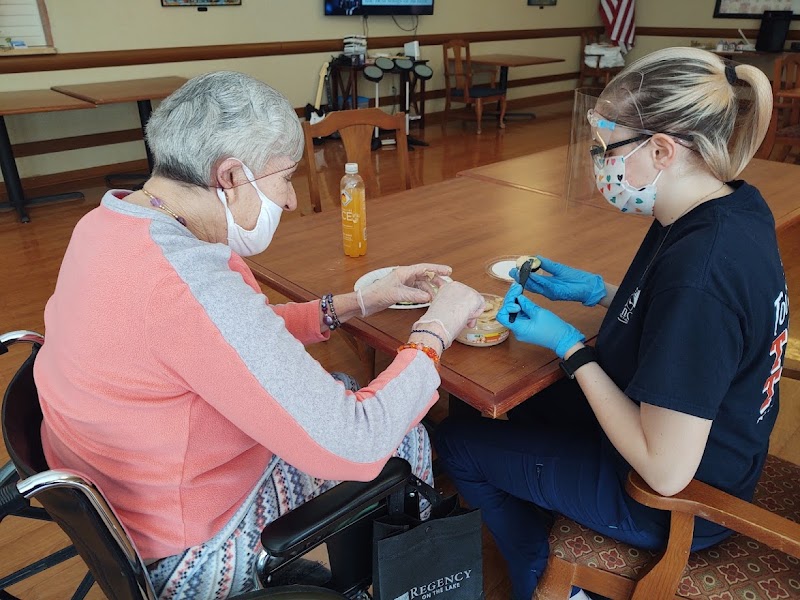
How Does Regency On The Lake - Fort Gratiot Compare to Other Michigan Nursing Homes?

Compared to the 100 nursing homes in Michigan, Regency on the Lake - Fort Gratiot's overall rating (5 stars) is above the state average of 3.2, staff turnover (25%) is significantly lower than the state average of 46%, and health inspection rating (5 stars) is much above the national benchmark.

What Should Families Ask When Visiting Regency On The Lake - Fort Gratiot?

Based on this facility's data, families visiting should ask: "Can I visit during a mealtime to observe dining assistance and food quality?" "How do you handle medical emergencies, and what is your hospital transfer rate?" "Can I speak with family members of current residents about their experience?"

Is Regency On The Lake - Fort Gratiot Safe?

Based on CMS inspection data, Regency on the Lake - Fort Gratiot has a clean safety record: no substantiated abuse findings (meaning no confirmed cases of resident harm), no Immediate Jeopardy citations (the most serious violation level indicating risk of serious injury or death), and is not on the Special Focus Facility watch list (a federal program monitoring the lowest-performing 1% of nursing homes). The facility has a 5-star overall rating and ranks #1 of 100 nursing homes in Michigan. While no facility is perfect, families should still ask about staff-to-resident ratios and recent inspection results during their visit.

Do Nurses at Regency On The Lake - Fort Gratiot Stick Around?

Staff at Regency on the Lake - Fort Gratiot tend to stick around. With a turnover rate of 25%, the facility is 20 percentage points below the Michigan average of 46%. Low turnover is a positive sign. It means caregivers have time to learn each resident's needs, medications, and personal preferences. Consistent staff also notice subtle changes in a resident's condition more quickly. Registered Nurse turnover is also low at 18%, meaning experienced RNs are available to handle complex medical needs.

Was Regency On The Lake - Fort Gratiot Ever Fined?

Regency on the Lake - Fort Gratiot has no federal fines on record. CMS issues fines when nursing homes fail to meet care standards or don't correct problems found during inspections. The absence of fines suggests the facility has either maintained compliance or corrected any issues before penalties were assessed. This is a positive indicator, though families should still review recent inspection reports for the full picture.

Is Regency On The Lake - Fort Gratiot on Any Federal Watch List?

Regency on the Lake - Fort Gratiot is not on any federal watch list. The most significant is the Special Focus Facility (SFF) program, which identifies the bottom 1% of nursing homes nationally based on persistent, serious quality problems. Not being on this list means the facility has avoided the pattern of deficiencies that triggers enhanced federal oversight. This is a positive indicator, though families should still review the facility's inspection history directly.