The Oaks at Woodfield
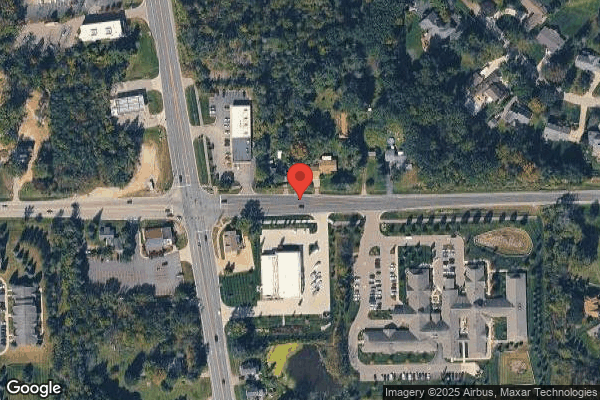
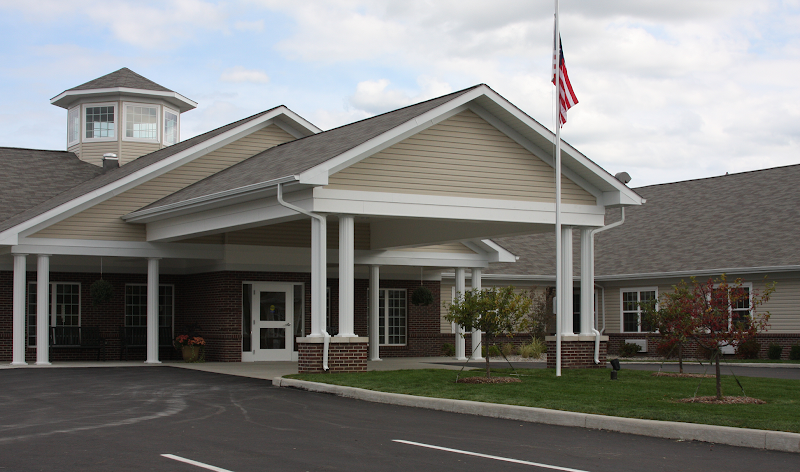
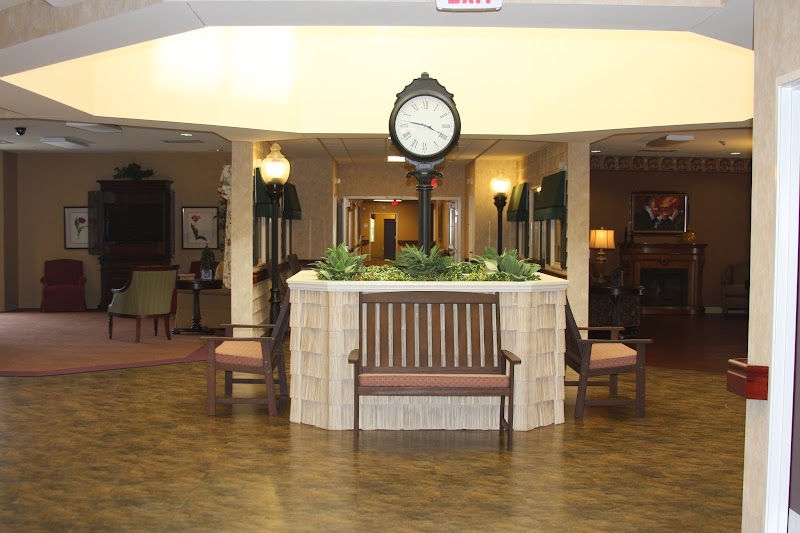
5370 East Baldwin Road, Grand Blanc, MI 48439 (810) 606-9950
For profit - Individual 64 Beds TRILOGY HEALTH SERVICES Data: November 2025
Trust Grade
75/100
#91 of 422 in MI
Last Inspection: May 2025

Inspected within the last 6 months. Data reflects current conditions.

Overview

The Oaks at Woodfield has received a Trust Grade of B, indicating it is a good choice among nursing homes, though not the top tier. With a state ranking of #91 out of 422 facilities in Michigan, they are in the top half, and #2 out of 15 in Genesee County means only one local option ranks higher. However, the facility's trend is concerning as it has worsened from 5 issues in 2024 to 6 in 2025. Staffing is a strength, with a rating of 4 out of 5 stars and a turnover rate of just 31%, significantly lower than the state average, which suggests that staff are experienced and familiar with the residents. On the downside, there have been serious concerns, such as failing to properly monitor a resident's skin condition, which led to a worsening pressure ulcer and hospitalization, and issues in the kitchen that could lead to foodborne illnesses, indicating room for improvement in both resident care and sanitation practices.
Trust Score
B
75/100
In Michigan
#91/422
Top 21%
Safety Record
Moderate
Needs review
Inspections
Getting Worse
5 → 6 violations
Staff Stability
○ Average
31% turnover. Near Michigan's 48% average. Typical for the industry.
Penalties
✓ Good
No fines on record. Clean compliance history, better than most Michigan facilities.
Skilled Nurses
✓ Good
Each resident gets 55 minutes of Registered Nurse (RN) attention daily — more than average for Michigan. RNs are trained to catch health problems early.
Violations
⚠ Watch
23 deficiencies on record. Higher than average. Multiple issues found across inspections.
★★★★★
5.0
Overall Rating
★★★★☆
4.0
Staff Levels
★★★★★
5.0
Care Quality
★★★★☆
4.0
Inspection Score
Stable
2024: 5 issues
2025: 6 issues

The Good

  • 4-Star Staffing Rating · Above-average nurse staffing levels
  • 5-Star Quality Measures · Strong clinical quality outcomes
  • Full Sprinkler Coverage · Fire safety systems throughout facility
  • No fines on record
  • Staff turnover below average (31%)

    17 points below Michigan average of 48%

Facility shows strength in staffing levels, quality measures, fire safety.

The Bad

Staff Turnover: 31%

15pts below Michigan avg (46%)

Typical for the industry

Chain: TRILOGY HEALTH SERVICES

Part of a multi-facility chain

Ask about local staffing decisions and management

The Ugly 23 deficiencies on record

1 actual harm
May 2025 6 deficiencies
CONCERN (D)

Potential for Harm - no one hurt, but risky conditions existed

ADL Care (Tag F0677)

Could have caused harm · This affected 1 resident

**NOTE- TERMS IN BRACKETS HAVE BEEN EDITED TO PROTECT CONFIDENTIALITY** Resident #55 (R55): Activities of Daily Living During the initial tour, R55 on 5/6/25 at 12:30 PM was observed talking to his so...

Read full inspector narrative →
**NOTE- TERMS IN BRACKETS HAVE BEEN EDITED TO PROTECT CONFIDENTIALITY** Resident #55 (R55): Activities of Daily Living During the initial tour, R55 on 5/6/25 at 12:30 PM was observed talking to his son in his room. R55 expressed that he would love to have a shower soon. He has not received a shower since being admitted to the facility. And during his 2-week stay at the hospital before coming to the facility on 4/26/25. When asked if he was given a bed bath, R55 emphasized that he would prefer a shower in the shower room with water sprinkling on his head instead of a bed bath. A review of R55 Electronic Medical Record was [AGE] years old, admitted to the facility on [DATE] with the diagnosis of Acute Renal Failure, Non-ST Elevation (NSTEMI) Myocardial Infarction, Stage 4 Chronic Kidney Disease, Chronic Obstructive Pulmonary Disease, and Dementia (unspecified) in addition to other Diagnoses. Minimum Data Set (MDS) assessment dated [DATE], revealed a Brief Interview of Mental Status (BIMS) Score of 15/15. A score of 15 means R55 is cognitively intact. R55's Care Plan indicated that the plan was to be discharged home after the rehab program. R55 required assistance with Activities of Daily Living (ADLs). R55's care plan indicated for Showers: Twice weekly per schedule and as needed/requested. Regarding transfers, R55's care plan dated 4/26/25 revealed that it requires one person to assist with transfers and may walk with a front-wheeled walker in the room and facility with one person's assistance. Walking/Mobility devices: Wheelchair. On 5/6/25 at 3:45 PM, the Administrator printed R55's Point of Care History showing the following: 4/30/25 at 12:58 PM Shower was signed off as given. 5/1/2025 at 9:49 AM Partial Bed Bath signed off as given. 5/5/2025 at 12:46 PM Partial Bed Bath signed off as given. 5/6/2025 at 8:48 AM Partial Bed Bath signed off as given. On 05/06/25 at 2:42 PM, A review of the shower schedule revealed that R55 is scheduled on Wednesday and Saturday. R55 and son both reported that no showers were received as noted above. On 5/7/25 at 3:45 PM, R55 said he preferred water spraying on him like a regular shower. R55 thought the permacath (was pointing at the port) dressing was an issue, but he had a shower today for the first time. He said, It felt good. He indicated that he received bed baths but preferred a real shower. On 5/7/2025 at 2:50 PM, R55 was observed with facial hair growth all over. The surveyor asked if he preferred to grow his beard. He said no. He shaves every other day at home. He needed his shaver from home and did not think they would shave him at the facility. No one offered to shave him. R55 commented that since it had gotten long, he now thinks he needs an electric shaver. R55 was asked if he received three bed baths ( 5/1/25, 5/5/25, and 5/6/25) and one shower on 4/30/25 during your stay? R55 stated, No, I did not get any shower in the shower room. I only received bed baths, but can't recall the dates specifically. R55 was very excited to report that he finally received a shower today. Resident #28: Activities of Daily Living A record review of the Face sheet and Minimum Data Set/MDS assessment indicated Resident #28 was admitted to the facility on [DATE] with diagnoses: Diabetes, depression, hypothyroidism, hypertension, asthma GERD and chronic pain. The MDS assessment dated [DATE] revealed the resident weighed 94 lbs. and was cognitively intact with a Brief Interview for Mental Status/BIMS score of 15/15. On 5/06/2025 at 11:59 AM, Resident #28 was observed sleeping in bed. Her feet were lying outside her blanket and her toenails left and right foot were very long and jagged. Her left toenail was hanging over the end of the left great toe. A review of the physician orders for Resident #28 revealed an order to Clip nails on shower days, Once a day on Wed., Sat. A review of the electronic medical record indicated Resident #28 had received 3 showers from 4/7/2025 to 5/6/2025. A review of the Care Plan for Resident #28 identified the following: Showers/Bathing: Twice weekly per schedule and as needed/requested. Offer/encourage to allow staff to shave facial hair, trim nails, dated 1/5/2023. On 5/7/2025 at 9:00 AM, Resident #28 was observed eating breakfast in bed. Her feet were outside the blanket and her toenails were long and jagged on each foot. The resident was asked if she had recently had her toenails clipped and she said she had not. She said it bothered her to have them clipped. The resident said her feet were bumping the footboard of the bed at times. When asked if she was tall, she said, No, I'm short. Asked her if her toenails were bumping into the bed because they were quite long and she said Maybe. On 5/08/25 at 2:38 PM, Resident #28 was observed in her bed, awake, talkative and had a visitor. The Assistant Director of Nursing/ADON C and Corporate Nurse B were present also and observed the resident's toenails were very long and jagged. The resident was asked about having her toenails clipped and she said she had a bad experience with toenail clipping sometime in her life and was afraid. Corporate Nurse B said she thought the Wound nurse last trimmed the resident's nails and that it went well. She said she would arrange for someone to clip the resident's nails; the resident was again complaining of her feet touching the foot board of the bed. Corporate Nurse B and the ADON C assisted the resident with repositioning up in bed. Based on observation, interview and record review the facility failed to ensure that residents received timely Activities of Daily Living (ADL) care and ensure that residents' preferences were followed for bathing for three residents (R24, R28, R55) of four residents reviewed for ADL care, resulting in residents receiving bed baths instead of showers, not receiving showers on scheduled days, long nails and long facial hair. Findings include: Resident #24 R24 is [AGE] years old and recently admitted to the facility on [DATE] with diagnoses that include cellulitis of the right and left lower leg, diabetes and osteomyelitis. R24 has a brief interview for mental status (BIMS) score of 15, indicating they are cognitively intact. On 05/06/25 at 10:42AM, R24 was asked if they received their showers on time. R24 stated they don't get their showers regularly and often times they get a bed bath. R24 was asked if they prefer a shower over a bed bath and they replied yes. R24 was noted to have a greasy appearance to their hair. On 05/07/25 at 01:41PM, record review revealed that R24 had a shower on 5/2/25(Friday), 4/26/25(Saturday) and 4/21/25(Monday). On 4/25/25 and 5/5/25, both scheduled shower days, no bathing was recorded. On 4/28/25, a scheduled shower day, a partial bed bath was recorded. All bathing recorded outside of scheduled days, was recorded as a partial bed bath. On 05/07/25 at 01:50PM, record review revealed an order for showers every Monday and Friday. Record review revealed a care plan titled Profile Care Guide contained an approach for showers, twice weekly and as needed/requested. On 05/07/25 at 02:10PM, an interview was conducted with certified nursing assistant (CNA) D. CNA D was asked if they have provided care for R24. CNA D stated they have helped R24 with showering. CNA D was asked if R24 has ever refused a shower. CNA D stated that R24 has not refused to take a shower for them. CNA D stated the CNA's are providing showers for the residents they are taking care of. I always try to get my residents to take a full shower. The only time I would give a bed bath is if they refused a shower. CNA D was asked if they knew the difference between a bed bath and a partial bed bath. CNA D stated they weren't sure, but they think that during a partial bed bath everything except the resident's hair gets washed. On 05/07/25 at 03:03PM, R24 was observed sitting in their room watching the television, R24 was noted to have greasy hair. Review of the policy titled, Guidelines for Bathing Preference, revealed: Procedure: 1. The resident will be advised of Trilogy's guidelines for residents to self-determine their plan of care and schedule during their stay on campus. 2. The resident shall determine their preference for bathing on admission. a. Day of the week. b. Time of day, morning or evening. c. Type of bathing- tub bath, bed bath or shower.
CONCERN (D)

Potential for Harm - no one hurt, but risky conditions existed

Quality of Care (Tag F0684)

Could have caused harm · This affected 1 resident

**NOTE- TERMS IN BRACKETS HAVE BEEN EDITED TO PROTECT CONFIDENTIALITY** Resident #47: Hospice and End of Life On 5/6/2025 at 11:14 AM, Resident #47 was observed sitting in a wheelchair in her room. S...

Read full inspector narrative →
**NOTE- TERMS IN BRACKETS HAVE BEEN EDITED TO PROTECT CONFIDENTIALITY** Resident #47: Hospice and End of Life On 5/6/2025 at 11:14 AM, Resident #47 was observed sitting in a wheelchair in her room. She said she received Hospice services twice a week from a Hospice Nurse and Hospice Nurse Aide. A review of the Face sheet and Minimum Data Set/MDS assessment indicated Resident #47 was re-admitted to the facility on [DATE] with diagnoses: Spina bifida, heart failure, history of intestinal obstruction, diabetes, history of a stroke with right sided weakness, anxiety, kidney disease, ileostomy and Stage 4 pressure ulcer on coccyx. The MDS assessment dated [DATE] revealed the resident had full cognitive abilities with a Brief Interview for Mental Status/BIMS score of 15/15 and she needed some assistance with all care. On 5/8/2025 at 9:00 AM, a nurse on the 200 Hall was asked if Resident #47 had a Hospice chart and she said the resident did have a Hospice chart. The nurse began looking through binders at the nurses' desk and said she could not locate the Resident's Hospice chart. A review of the electronic medical records/emr documents, progress notes other tabs, did not reveal any Hospice Notes. On 5/6/2025 at 9: 15 AM, the Administrator was asked if Resident #47 had a Hospice chart, and she said she would locate it. On 5/08/2025 at 9:56 AM, the facility provided a hard binder with several documents from the Hospice company in it for Resident #47, but there were no Hospice Nurse or Hospice Aide visit notes. This was reviewed with the Administrator, she said the notes are in the emr. Reviewed they were not located in the emr. On 5/8/2025 at 11:30 AM, the facility provided a binder with Hospice notes, including Nurse and Nurse Aide visit notes. Each document was printed with the date 5/8/2025. The Hospice note visit dates were from 3/11/2025 to 5/7/2025. On 5/08/2025 at 12:04 PM interviewed The Assistant Director of Nursing/ADON was interviewed about the Hospice Binder- all of the notes were printed 5/8/2025. They were not in the medical record. Reviewed on initial tour, the resident had voiced that she was struggling with staff not providing care like she did at home, she said she had talked to Hospice about it related to ileostomy care and wound care. Based on observation, interview and record review, the facility failed to ensure that hospice records/communication were part of the medical record for two Residents (#45 and #47) of two reviewed for hospice services. Findings include: Resident #45: A review of Resident #45's medical record revealed an admission into the facility on 1/17/24 and readmission on [DATE] with diagnoses that included stroke, cognitive communication deficit, hemiplegia and hemiparesis of left non-dominant side and pressure ulcer. Further review of the medical record revealed the Resident was on hospice services. On 5/6/25 at 1:45 PM, an observation was made of the Resident lying in bed sleeping. An interview was conducted with Family Member S regarding Resident #45's care at the facility. The Family Member reported the Resident had a couple strokes and his left side was affected. The Family Member indicated the Resident had started on Hospice services about a month ago. On 5/8/25 at 11:16 AM, a review of Resident #45's medical record revealed a lack of Hospice communication, progress notes from hospice, what hospice services visited the Resident, or what care was provided during visits. On 5/8/25 at 12:08 PM, an interview was conducted with the Assistant Director of Nursing (ADON) C regarding hospice communication documentation of hospice service visits. At the Nurses' Station, an observation was conducted with the ADON of the hospice folder for Resident #45. The folder had information about the hospice service and a care plan but lacked documentation of visits or care provided when hospice team members visited Resident #45. When questioned about hospice communication with the facility, the ADON reported that hospice information can be accessed through the portal so that Social Work staff can access the portal. When asked that no other staff can access the portal, the ADON stated, Right, just the social worker.
CONCERN (D)

Potential for Harm - no one hurt, but risky conditions existed

Deficiency F0692 (Tag F0692)

Could have caused harm · This affected 1 resident

**NOTE- TERMS IN BRACKETS HAVE BEEN EDITED TO PROTECT CONFIDENTIALITY** Resident #55 (R55): Nutrition A review of R55 Electronic Medical Record (EMR) was [AGE] years old, admitted to the facility on [...

Read full inspector narrative →
**NOTE- TERMS IN BRACKETS HAVE BEEN EDITED TO PROTECT CONFIDENTIALITY** Resident #55 (R55): Nutrition A review of R55 Electronic Medical Record (EMR) was [AGE] years old, admitted to the facility on [DATE] with the diagnosis of Acute on Chronic systolic (congestive) heart failure CHF, Acute Kidney Failure, Non-ST Elevation (NSTEMI) Myocardial Infarction, Stage 4 Chronic Kidney Disease, Chronic Obstructive Pulmonary Disease, and Dementia (unspecified) in addition to other Diagnoses. R55 requires Hemodialysis three times a week on Tuesdays, Thursdays, and Saturdays. R55's Minimum Data Set (MDS) Assessment, dated May 1, 2025, revealed a Brief Interview of Mental Status (BIMS) Score of 15/15. A score of 15 means R55 is cognitively intact. R55's Care Plan indicated that the plan would be discharged home after the rehab program. R55 required assistance with Activities of Daily Living (ADLs). R55's goals for weight monitoring care plan indicated: 1) No further unwarranted significant weight gain will occur, 2). Meet Nutritional Needs and maintain appropriate weight and labs for dialysis. Approach: Obtain weight as ordered. A Physician's Order was noted for: Daily Weight Special Instructions: DX: CHF Once A Day 06:00 AM - 10:00 PM Date order started: 4/27/2025 and end date: 5/26/2025. R55's Vitals and Weights Recorded were the following: 05/07/2025 04:21 PM Weight: 164.2 lbs / Routine BMI: 24.25 05/06/2025 10:07 AM Weight: 169 lbs / Routine BMI: 24.95 05/05/2025 09:56 AM Weight: 164.8 lbs / Routine BMI: 24.33 05/04/2025 10:30 AM Weight: 165.4 lbs / Routine BMI: 24.42 05/03/2025 - - *No Entry Found 05/02/2025 10:04 AM Weight: 161.8 lbs / Routine BMI: 23.89 05/01/2025 11:58 AM Weight: 161.6 lbs / Routine BMI: 23.86 04/30/2025 03:44 PM Weight: 164 lbs / Routine BMI: 24.22 04/29/2025 - - *No Entry Found 04/28/2025 - - *No Entry Found 04/27/2025 12:00 PM Weight: 159.8 lbs / admission BMI: 23.6 04/26/2025 06:58 PM Weight: 154.6 lbs / admission BMI: 22.83 Review of the nurse's notes did not reflect any weights recorded on the days missing 4/28/25, 4/29/25, and 5/3/25. Based on interview and record review, the facility failed to ensure that weights were obtained, monitored as ordered, and recommended for 2 residents (#28 and #55) of three residents reviewed for nutrition. Findings Include: Resident #28: Nutrition A record review of the Face sheet and Minimum Data Set/MDS assessment indicated Resident #28 was admitted to the facility on [DATE] with diagnoses: Diabetes, depression, hypothyroidism, hypertension, asthma GERD and chronic pain. The MDS assessment dated [DATE] revealed the resident weighed 94 lbs. and was cognitively intact with a Brief Interview for Mental Status/BIMS score of 15/15. On 5/7/2025 at 1:15 PM, during an interview with Resident #28 she was observed sitting in bed eating her lunch. She appeared very thin. A record review of the electronic medical record/emr weights for Resident #28 identified the following weights: 1/12/2025 98.9 lbs. 2/19/2025 94.2 lbs. 3/2/2025 88 lbs. (flagged in red print) 3/12/2025 93.6 lbs. 3/26/2025 93.4 lbs. 4/15/2025 95.2 lbs. A review of the physician orders for Resident #28 revealed Order Set WT- Monthly Weight, Once a Day on the 5th of the Month, 6:00 AM- 10:00 PM, start date 6/25/2024. Resident #28's weights were obtained inconsistently; the resident lost 6.2 lbs. from 2/19/2025 to 3/2/2025 and 10 lbs. from 1/12/2025 to 3/2/2025. The weights were obtained by the 5th of the month as ordered one time (3/2/2025). On 5/07/2025 at 1:29 PM, during an interview with Registered Dietitian/RD J, she said the staff weigh the residents and she reviews the weights weekly when she is in the facility. RD J said the electronic medical record/emr weight program, flags out of range weights. Reviewed Resident #28 had red weights with one weight of 88 lbs. on 3/2/2025. The resident was reweighed 10 days later. The RD said she had documented an assessment on 3/3/2025 and there was a dietary recommendation related to significant weight loss. The RD recommended weekly weights. The resident did not have weekly weights obtained. On 5/8/2025 at 2:30 PM, Resident #28 was observed sitting up in her bed talking to a visitor. Corporate Nurse B and Assistant Director of Nursing C also entered the room. During conversation with the resident, she mentioned she was upset because she said she was told she weighed 88 lbs. she said she never weighed below 100 lbs. and she was very bothered by this. A review of the facility policy titled, Clinical Services- Weight Monitoring, dated reviewed 12/20/2024 provided, Weight monitoring is essential to the well-being of the residents we serve and requires a multidisciplinary approach . Review of missing weights: a. Monthly; b. Weekly weights as ordered; c. Daily weights as ordered . Review of error weights, daily . Re-weights as needed . Weely review of 5% weight changes .
CONCERN (D)

Potential for Harm - no one hurt, but risky conditions existed

Deficiency F0698 (Tag F0698)

Could have caused harm · This affected 1 resident

**NOTE- TERMS IN BRACKETS HAVE BEEN EDITED TO PROTECT CONFIDENTIALITY** The facility failed to inform and offer transportation to and from dialysis appointments, as part of the services at no cost, fo...

Read full inspector narrative →
**NOTE- TERMS IN BRACKETS HAVE BEEN EDITED TO PROTECT CONFIDENTIALITY** The facility failed to inform and offer transportation to and from dialysis appointments, as part of the services at no cost, for one resident (R#55), of 2 residents reviewed for dialysis services. Findings include: Resident #55 (R55): Dialysis R55 was [AGE] years old, admitted to the facility on [DATE] with the diagnosis of Acute Renal Failure, Non-ST Elevation (NSTEMI) Myocardial Infarction, Stage 4 Chronic Kidney Disease, Chronic Obstructive Pulmonary Disease, and Dementia (unspecified) in addition to other Diagnoses. Minimum Data Set (MDS) assessment dated [DATE], revealed a Brief Interview of Mental Status (BIMS) Score of 15/15. A score of 15 means R55 is cognitively intact. R55's Care Plan indicated that the plan was to discharge home after the rehab program. He was scheduled for dialysis every Tuesday, Thursday, and Saturday. R55's CarePlan indicated a coordinated care with dialysis transported by the family. R55 on 5/6/25 at 12:30 PM was observed in his room talking to his son while waiting for the second son to arrive. It was R55's second son's turn to drive R55 to dialysis before the 1:30 PM appointment. Son #1 was there as backup to ensure he made it on time. While waiting, R55 expressed that he would love to have a shower soon. He has not received a shower since he was at the facility, and he did not receive a shower while admitted at the hospital for 2 weeks. R55 stated he would prefer a shower in the shower room with water sprinkling on his head instead of a bed bath. On 05/06/25 at 12:32 PM, R55's son was concerned about why the facility did not provide transportation for his father's dialysis appointment. His brothers and he have to arrange and ensure that R55 is transported to and from dialysis 3 times a week. R55's son asked why other facilities have a transport service and not this one. The hospital, before discharge, made sure that we agreed to transport our dad to dialysis before we were accepted to this facility. If we were offered a choice, we would have used their transportation. No one discussed this service, and the facility did not provide it. Otherwise, we would have chosen to use their transport services. R55's dialysis documentation record and nursing notes were reviewed in R55's: Tuesday, 4/29/25 Monday, 5/1/25 Saturday, 5/3/25 Tuesday, 5/6/25 Although the nurses' notes indicated that R55 went to dialysis on all four days, a missing dialysis visit documentation for May 3, 2025, was noted. On 05/08/25 at 10:58 AM, Licensed Practical Nurse (LPN) AW stated that Resident (#55) left at 9:30 for dialysis today. She indicated that it was the family's choice to transport R55. Our transportation Service is free of charge if the family prefers to use it. The Social Services Director #1 in an interview on 5/7/25 at 02:34 PM, revealed that transportation related to dialysis was part of the bundled payment, which means they are included in the services with no extra fees. We provide transportation to and from the dialysis center and don't require the family to find the transportation. When asked who makes that conversation with the family, Social Services Director #1 was not sure who does but explained the bundled payment protocol that Medicare and Managed Care insurances have the transportation included as services. On 5/8/25 at 2:49 PM, a conversation with the Administrator and the Administrator in Training (AIT) was conducted regarding R55 dialysis transport. The Administrator confirmed that everything related to dialysis, including transportation, should be covered with no extra charge. The Administrator was unaware that it was not the family's choice to drive R55 to and from dialysis. She was unaware of the issue. There should have been a conversation upon admission that did not happen. The Administrator admitted that they assumed it was the family's choice upon admission. The Administrator did not know what was said at the hospital before transfer. It should have been explained to the family that the facility can transport dialysis. The Guidelines for Dialysis dated 5/11/16 were reviewed on 5/8/25 at 12:00 PM. Purpose Statement: The purpose of this policy is to provide communication to Dialysis Providers and monitoring of residents receiving dialysis. Policy: Guidelines for Dialysis Procedure: 1. The campus shall have the information regarding the Dialysis Provider schedule and requirements such as but not limited to: a. Location, b. Date and time of service to be provided. c. Required documentation from campus. 2. The campus shall be responsible for arranging or providing transportation to and from the Dialysis Provider .
CONCERN (E)

Potential for Harm - no one hurt, but risky conditions existed

Comprehensive Care Plan (Tag F0656)

Could have caused harm · This affected multiple residents

**NOTE- TERMS IN BRACKETS HAVE BEEN EDITED TO PROTECT CONFIDENTIALITY** Based on interview and record review the facility failed to develop a person-centered, comprehensive care plan for 4 residents (...

Read full inspector narrative →
**NOTE- TERMS IN BRACKETS HAVE BEEN EDITED TO PROTECT CONFIDENTIALITY** Based on interview and record review the facility failed to develop a person-centered, comprehensive care plan for 4 residents (# 8, #28, #45, #47) of 16 residents reviewed. Findings include: Resident #8: Advance Directives A record review of the Face Sheet and Minimum Data Set/MDS assessment indicated Resident #8 was admitted to the facility on [DATE] with diagnoses: history of a stroke, right-sided weakness, dementia, depression, anxiety, peripheral vascular disease and hypertension. The MDS assessment dated [DATE] indicated the resident had full cognitive abilities with a Brief Interview for Mental Status/BIMS score of 13/15 and the resident needed assistance with all care. A record review of the electronic medical record revealed Resident #8 wished to be a Full code (meaning full resuscitation if her heart stopped and she quit breathing). The Face sheet was flagged Full Code and the physician orders indicated Full code. The Care Plan for Resident #8 identified the following: Social Aspects: . She has chosen the following advanced directives, Code status, dated 11/1/2018; with Interventions including: Code status as ordered, dated 11/1/2018. The Care Plan did not mention the specific Code status the resident had chosen, Full Code. Resident #28: Advance Directives A record review of the Face sheet and Minimum Data Set/MDS assessment indicated Resident #28 was admitted to the facility on [DATE] with diagnoses: Diabetes, depression, hypothyroidism, hypertension, asthma GERD and chronic pain. The MDS assessment dated [DATE] revealed the resident weighed 94 lbs. and was cognitively intact with a Brief Interview for Mental Status/BIMS score of 15/15. A record review of the electronic medical record indicated the Face sheet was flagged with DNR (do not resuscitate) and there was a physician order for Code status: DNR, dated 2/15/2023. A review of the Care Plans for Resident #28 identified the following: Resident/resident representative have chosen advanced directives, dated 7/28/2020. There was no mention what the resident's preference for Advance directives was. Resident #47: Advance Directives A review of the Face sheet and Minimum Data Set/MDS assessment indicated Resident #47 was re-admitted to the facility on [DATE] with diagnoses: Spina bifida, heart failure, history of intestinal obstruction, diabetes, history of a stroke with right sided weakness, anxiety, kidney disease, ileostomy and Stage 4 pressure ulcer on coccyx. The MDS assessment dated [DATE] revealed the resident had full cognitive abilities with a Brief Interview for Mental Status/BIMS score of 15/15 and she needed some assistance with all care. A record review of the electronic medical record revealed the Face sheet for Resident #47 said DNR. The Care Plan for Resident #47 identified the following: Social Aspects: Resident has elected for comfort care and has chosen Hospice services, dated 3/11/2025. It did not mention what the resident's Code Status preference was. On 5/07/2025 at 12:37 PM, Social Services staff K was interviewed about the process for obtaining the residents' preferences for Code status and she said nursing staff completed the advance directives assessment form and Social Services ensured they were completed and in the information was in the chart. When asked who created the person-centered Care Plan for the resident, she said either Social Services or the MDS Nurse would complete the Care plan. On 5/07/2025 at 3:56 PM, MDS Coordinator L was interviewed about the residents' Care Plans for their specific preferences for Code Status and she said the Social Services staff completed the Code status Care Plans. Resident #45: A review of Resident #45's medical record revealed an admission into the facility on 1/17/24 and readmission on [DATE] with diagnoses that included stroke, cognitive communication deficit, hemiplegia and hemiparesis of left non-dominant side and pressure ulcer. Further review of the medical record revealed the Resident was on hospice services. On 5/6/25 at 1:45 PM, an observation was made of the Resident lying in bed sleeping. An interview was conducted with Family Member S regarding Resident #45's care at the facility. The Family Member reported that she was unaware of the Resident having any wounds but reported that the Resident stays mostly in bed, sleeps a lot and health was declining. The Resident had an air mattress that was set at the highest setting for comfort at 5 and alternating air circulation. There was no data on the air bed controller to indicate directive for staff on the air mattress settings. On 5/8/25 at 11:34 AM, a review of Resident #45's care plan revealed a Category: Skin Integrity. At risk for skin breakdown r/t (related to) need for staff assistance with turning and repositioning with an approach dated 1/18/24 Low Air Loss mattress to bed as ordered. A review of Resident #45's orders revealed no order for an alternating pressure mattress. On 5/8/25 at 1:02 PM, an interview was conducted with the Regional Clinical Coordinator (RCC), Nurse B regarding Resident #45's air mattress that was on the Resident's bed. The care plan with the low air loss mattress and lack of directive for settings for the alternating pressure mattress was reviewed. The RCC indicated that the Resident should be ordered the APM air mattress and care planned for the APM air mattress. The RCC was unsure of where the settings for the air mattress could be found by staff and indicated that the settings were set to Resident comfort.
CONCERN (E)

Potential for Harm - no one hurt, but risky conditions existed

Deficiency F0761 (Tag F0761)

Could have caused harm · This affected multiple residents

**NOTE- TERMS IN BRACKETS HAVE BEEN EDITED TO PROTECT CONFIDENTIALITY** FACILITY Medication Storage and Labeling On [DATE] at 2:00 PM, Nurse Aide E was overheard and observed asking Nurse H for the ke...

Read full inspector narrative →
**NOTE- TERMS IN BRACKETS HAVE BEEN EDITED TO PROTECT CONFIDENTIALITY** FACILITY Medication Storage and Labeling On [DATE] at 2:00 PM, Nurse Aide E was overheard and observed asking Nurse H for the keys to enter the medication room that was located behind the nurse's desk. Nurse Aide E said he wanted to get an ice pack. Nurse H was observe standing in the hallway and tossing Nurse Aide E her keys to the medication room. Nurse Aide E was observed opening the door to the medication room and he went in by himself. Nurse H was asked if Nurse Aides were allowed to go into the medication room unattended and she said they were allowed to go in to get an ice pack. The Surveyor and Nurse H entered the medication room and Nurse Aide E was observed taking an ice pack from the medication freezer. The medication refrigerator had a location for a lock on it, but it was not in place; it was unlocked. Inside the refrigerator there were a variety of medications, including insulin pens and vaccinations. They were not in a locked area. On [DATE] at 2:10 PM, upon exiting the medication room with Nurse H and Nurse Aide E, Nurse G approached the nurses' desk and Nurse H handed her a set of keys to the medication cart and medication room, as Nurse G had been on break. Nurse G was asked if Nurse Aides were allowed to go into the medication room on their own and she said they go in to get ice packs. On [DATE] at 2:33 PM, during an interview with Nurse Supervisor I, she was asked if Nurse Aides were allowed to go into the medication room and she stated, Only if they are with a nurse. Based on observation, interview and record review, the facility failed to ensure safe and secure medication storage and ensure that supplies was labeled and not expired for two medication rooms and four medication storage carts and treatment carts reviewed for storage of drugs, biologicals and supplies. Findings include: On [DATE] at 2:32 PM, an observation was made with Nurse G of the 200 Hall medication storage room. An observation was made of Assure Prism glucose control solutions, two boxes with one box open and the other box sealed, both boxes expired on [DATE]. There was not an open date on the control solution bottles or on the box. The medication room was reviewed for other, not expired control solutions but there were none found in the medication room. When asked, Nurse G indicated they should be dated when opened. A review of the med cart 215-223 was conducted with Nurse G. The Nurse was asked if there was the glucose control solution in the medication cart, but it was not found. The Nurse asked the other nurse if there was any in the other 200 Hall medication cart and the Nurse indicated there was none. An observation was made of the medication cart for the 215 to 223 rooms. There were medications in bubble packaging that the Nurse indicated appeared to be from back up. There was no name or room number to identify whose medications they were. The Nurse indicated they should be labeled and stated, It could be from back up, but I don't know who they belong to. The medication was two tablets of memantine, a metoprolol tartrate, and atorvastatin. When asked if the medication is not used what do you do with them, the Nurse stated, I would use it because it's been already signed out for the resident. On [DATE] at 3:30 pm, an observation was made with Nurse R of the 300 Hall medication room with the treatment cart in the room. An observation was made of a betadine solution opened, without an open date, and had a white powder residual on the outside of the bottle. The Nurse was asked what it was but was unsure what the white powder residue was and reported it could be nystatin powder. The Nurse reported that it should be dated when it was opened. A heel protective dressing was opened and laying in the drawer. The Nurse removed it and stated, It's been opened. Three triad hydrophilic wound dressing were opened and not dated. When asked when they were opened, the Nurse stated, I don't know, they should be dated. When asked for glucose control solutions, the Nurse was unable to find any in the medication room or the 300 medication cart. A review of the medication cart revealed glucose test strips opened and not dated with an open date. When asked about facility policy of dating the glucose test strips when opened, the Nurse reported the vial should be dated when opened. On [DATE] at 4:10 PM, an interview was conducted with Regional Clinical Coordinator RCC, Nurse B regarding glucose monitoring solutions. At 4:14 PM, Central Supply Staff Q looked for the test solution for the glucometers but was unable to find any except for the expired control solutions found earlier. The RCC was asked about calibration of the glucose monitors. The RCC reported that the machines are not calibrated unless they were getting an error or as needed and reported that they should have some solution available. On [DATE] at 10:30 AM, an observation was made during medication administration with Nurse H on the 200 hall unit. There were two medication carts and a treatment cart that was positioned near the nurse's station. Upon return to the nursing station area after observing Nurse H performing medication administration, an observation was made of keys on the treatment cart that were on the top of the cart on a pole. The Nurse was asked what the keys were for, and the Nurse explained they were the keys to open the treatment cart. The Nurse was asked if that was where the keys were normally kept. The Nurse reported that the keys are usually with the cart and sometimes they put them on the side of the cart. An observation was made of the keys visible on the top of the cart. The Nurse indicated that due to having only one set of keys, both nurses need to access the cart, and the keys were left with the cart for the two nurses. A review of the contents of the treatment cart revealed multiple treatments in the cart that were prescription medications. The items included Bio Freeze, antifungal treatments, ammonia lactate, arthritic pain gel, Lotrimin, zinc oxide ointments, Triamcinolone acetonide cream, Nystatin powder, and triple antibiotic ointment. Other items in the cart included wound dressings, wound cleansers, wound/treatment supplies and needles. On [DATE] at 11:04 AM, an interview was conducted with the Director of Nursing (DON) regarding the storage of the treatment cart keys on the top of the cart. The DON indicated that they were made aware of the keys left on the treatment cart and reported they were going to have another set of keys made so each nurse will have access to the treatment cart with their medication cart keys that they keep with them.
May 2024 5 deficiencies
CONCERN (D)

Potential for Harm - no one hurt, but risky conditions existed

Deficiency F0655 (Tag F0655)

Could have caused harm · This affected 1 resident

**NOTE- TERMS IN BRACKETS HAVE BEEN EDITED TO PROTECT CONFIDENTIALITY** Based on interview and record review the facility failed to ensure that baseline care plans were completed within 48 hours of ad...

Read full inspector narrative →
**NOTE- TERMS IN BRACKETS HAVE BEEN EDITED TO PROTECT CONFIDENTIALITY** Based on interview and record review the facility failed to ensure that baseline care plans were completed within 48 hours of admission for two residents (Resident #2, Resident #40) of 20 residents reviewed, resulting in incomplete baseline care plans, falls, and unmet care needs. Findings include: Resident #2 (R2): R2 is [AGE] years old and was admitted to the facility on [DATE], diagnoses include right lower leg fracture, Alzheimer disease, dementia and metabolic encephalopathy. On 05/13/24 at 03:32 PM, record review revealed the R2 has had multiple unwitnessed falls since admission to the facility on [DATE]. Record review of R2's admission assessment from 10/24/23 revealed they were at high risk for falls with a score of 17. Record review of care plans revealed that a care plan and interventions were not put in place for falls until 11/27/23. On 05/15/24 at 03:47 PM, an interview was conducted with the Minimum Data Set nurse (MDS). MDS was asked why the resident wouldn't have had a care plan in place for falls on admission despite being high risk for falls. MDS stated they aren't sure why it wasn't put in place until a month later and that it was just missed. MDS was asked if the care plan for falls should have been present on the baseline care plan. MDS responded that it should've been on the baseline care plan. Review of the facility policy titled 48 Hour Baseline Care Plan Guidelines, revised and reviewed on 12/31/23 revealed: PROCEDURES 1. The 48-hour baseline care plan will be completed within 48 hours of resident admission. a. The admitting nurse will be responsible completing the baseline care plan with the admission nursing observation. b. The admitting nurse will then add information from 48-hour baseline care plan to the CareAssist profile. 2. The admitting nurse will add the following information to e-CareAssist profile -Transfer status -Diet -Safety (All fall interventions selected from Falls intervention section) -Ted Hose/Splits -Glasses, dentures, and hearing aides -Continence status -Showers (preferences) -Skin (Pressure prevention interventions) -Cultural preferences and trauma triggers -Other (Any information pertinent for CRCA's caring for resident) 3. The MDS coordinator or MDS nurse will review baseline care plan and profile on the next business day to ensure completion and accuracy. The 48 hour baseline care plan will be printed and provided to the resident or resident representative during the initial resident first meeting. 4. The 48-hour baseline care plan will serve as our temporary working care plan until the comprehensive care plan is developed per RAI guidelines. 5. Any changes to the residents care will be care planned accordingly until the comprehensive care plan is developed and then will be included on the comprehensive care plan. Resident #40: Pressure Ulcer/Injury A record review of the Face sheet and Minimum Data Set (MDS) assessment indicated Resident #40 was admitted to the facility on [DATE] and readmitted on [DATE] with diagnoses: Alzheimer's dementia, rheumatoid arthritis, hypertension, weakness, anemia and dizziness. The MDS assessment dated [DATE] revealed the resident needed some assistance with all care including partial to moderate assistance with bed mobility, transfers and toileting. A review of the readmission assessment dated [DATE] indicated the resident had redness on the right great toe. An Event Report dated 5/11/2024 for Resident #40 revealed the resident had redness on her right great toe and provided I will heal this with proper medication and care plan. A review of the Care plans indicated there was no Care plan mentioning the right great toe redness on readmission until 5/14/2024: over 72 hours later. Skin Integrity: Resident has a skin impairment (Redness of right great toe- present on admission), dated 5/14/2024. On 5/14/24 at 2:56 PM , Nurse D was interviewed about Resident #40. She said she had completed the admission assessment and nurses note for the resident. They indicated the resident had redness on the right great toe. There were no orders for treatment or monitoring and there was no Care plan to aid in healing the wound. There was no baseline care plan related to Resident #40's right great toe until 5/14/2024.
CONCERN (D) 📢 Someone Reported This

A family member, employee, or ombudsman was alarmed enough to file a formal complaint

Potential for Harm - no one hurt, but risky conditions existed

Quality of Care (Tag F0684)

Could have caused harm · This affected 1 resident

**NOTE- TERMS IN BRACKETS HAVE BEEN EDITED TO PROTECT CONFIDENTIALITY** This Citation pertains to Intake Number MI00142646. Based on observation, interview and record review the facility failed to ens...

Read full inspector narrative →
**NOTE- TERMS IN BRACKETS HAVE BEEN EDITED TO PROTECT CONFIDENTIALITY** This Citation pertains to Intake Number MI00142646. Based on observation, interview and record review the facility failed to ensure timely dressing changes for two residents (Reside#5, Resident #117) of four residents reviewed for wounds, resulting in missed dressing changes and the potential for worsening wounds. Findings include: Resident #5 (R5): R5 is [AGE] years old, was admitted to the facility on [DATE] with diagnoses that include a right humerus fracture, heart failure, dementia, dysphagia and hypertension. On 05/14/24 at 03:00 PM, an in person conversation was conducted with the complainant. The complainant stated that on 4/17/24 a wound dressing on the left shin was dated 4/7, complainant stated the bandage was leaking blood. The complainant said that based on the date on the dressing, it had not been changed in 10 days, The complainant stated that once the dressing was removed, there was green colored drainage present. On 05/15/24 at 09:04 AM, the Director of Nursing (DON) provided a physicians wound care order for R5's left lower extremity (shin) skin tear, the order had a start date of 2/22/24, the order was to change the dressing every five days, cleanse the wound with wound cleanser or normal saline, apply skin prep and cover with an Allevyn dressing and to change the dressing every five days. On 05/15/24 09:13 AM, an interview was conducted with the DON. The DON was asked when the skin tear dressing was last changed changed for R5. The DON stated that dressing was changed on the morning of 4/17/24. The DON was asked if they were aware that the dressing was dated 4/7 on the afternoon of 4/17/24. The DON stated they were aware that the dressing present on R5 on 4/17/24 was dated 4/7. The DON stated that it was an error on the nurses part and they meant to put 4/17 on the dressing. When asked why the dressing had a large amount of drainage in it if it was changed the morning of 4/17/24, the DON stated that those dressings are built to have some drainage in them. On 05/15/24 at 09:28 AM, two pictures, time stamped 4/17/24 at 2:52 PM and 4/17/24 at 2:54 PM were provided by the complainant. One picture showed the intact dressing on the left lower extremity of R5, the dressing was dated 4/7 and wound drainage was present near the edges of the dressing. The second picture revealed the exposed skin tear with the dressing removed, there was scant serosanguinous drainage(drainage with blood present) and a pocket of purulent drainage present. There was an order to change the dressing every five days. Resident #117 (R117): During the initial observation and interview on 05/13/24 at 11:43 AM, Resident #117 (R117) was lying in her room, alert and oriented to time, place, and person. R117 stated she was admitted for a short-term stay and is currently on antibiotic therapy after abdominal surgery. R117 showed a drain dressing on the right side of the abdomen with a slight old blood stain (dry, dark brown color) surrounding the tube. The drain tube was attached to a drainage bag attached to the bed. When queried, R117 did not know when the dressing was last changed. The wound dressing did not have a date written for when it was last assessed or when the dressing was changed. The drainage bag had yellowish-to-brownish fluid drainage in the canister. The breathing treatment- tubing and mask were placed on the side table next to the food tray and all other resident's personal items. The respiratory treatment mask and tubing were not secured in a clean bag, and no date label was found on the tubing or mask. The Infection Control Nurse L was in R117's room on 5/13/24 at 11:58 AM. Nurse L examined the wound drainage tube and dressing on the right side of the abdomen. Nurse L confirmed that the wound drain dressing was not labeled nor dated. Nurse L could not tell when it was last assessed or changed. Nurse L stated that this(referring to the R117's breathing treatment apparatus) should be put away appropriately in a sanitary way and labeled accordingly. Resident R117 Electronic Medical Record was reviewed on 5/14/24 at 1:00 PM. R117 was [AGE] years old and admitted to the facility on [DATE]. According to the facility's admission Assessment performed on 4/29/24, R117 was admitted with a history of Peritoneal Abscess, Acute Renal Failure, and Gastroesophageal Reflux Disease or GERD in addition to other diagnoses. R117 was alert, oriented with person, place, time, and situation, and responded to questions appropriately. A weekly skin assessment or treatment was ordered. However, there was nothing specific for the care for R117's abdominal wound drain. There was no specific treatment order to monitor, assess, and change the wound drain dressing and document abnormal findings and observations specific to R117's Right Abdomen wound drain. R117's medication and active physician's orders list were reviewed on 5/14/24 at 1:05 PM, and no treatment order for the wound drain tube was found. There was no indication when the drain tube dressing would be assessed, and wound care instructions were not specified. Policy for wound dressing change was requested and reviewed on 5/16/24 at 11:10 AM. The Facility's Bruise, Rash, Lesion, Skin Tear, Laceration Assessment Guidelines dated 5/10/2016 was submitted for review in place for the requested Wound Dressing Change Policy. The purpose: Utilized to describe and monitor bruises, rashes, lesions, skin tears, and lacerations. The facility did not include in the policy a wound or post-surgical drain pertinent for assessment (daily or weekly on the wound status, such as an abdominal wound drain or a surgical site wound drain.) However, the policy had specific skin tear/ laceration guidance: 1. May complete Skin Tear/ Laceration Event in HER (Electronic Health Record) by an RN/LPN if the skin Tear/Laceration warrants documentation due to the extent and/or location. 2. Complete the event for each skin Tear/ Laceration. 3. One weekly follow-up assessment may be completed to ensure Skin Tear/ Laceration are resolved or in the process of healing. If further follow-up is needed, documentation may be placed in a progress note .
CONCERN (D)

Potential for Harm - no one hurt, but risky conditions existed

Accident Prevention (Tag F0689)

Could have caused harm · This affected 1 resident

**NOTE- TERMS IN BRACKETS HAVE BEEN EDITED TO PROTECT CONFIDENTIALITY** Based on observation, interview and record review, the facility failed to ensure appropriate interventions were in place and sup...

Read full inspector narrative →
**NOTE- TERMS IN BRACKETS HAVE BEEN EDITED TO PROTECT CONFIDENTIALITY** Based on observation, interview and record review, the facility failed to ensure appropriate interventions were in place and supervision was provided to prevent a fall with injury for one resident (Resident #52) and repeated falls for one resident (Resident #15) of 2 residents reviewed for falls, resulting in Resident #52 falling and sustaining a fracture and Resident #15 falling multiple times and injuring his face. Findings Include: Resident #15: A review of the Face sheet and Minimum Data Set (MDS) assessment for Resident #15, indicated the resident was admitted to the facility on [DATE] with diagnoses: Left leg above the knee amputation, diabetes, chronic kidney disease, atrial fibrillation, COPD, morbid obesity, depression, anxiety, dementia, chronic pain, weakness. The MDS assessment, dated 3/25/2024, revealed the resident had full cognitive abilities with a Brief Interview for Mental Status (BIMS) score of 13/15 and the resident needed some assistance with all care. A record review of the Incident and Accident reports for Resident #15 revealed the resident had several falls at the facility: 1/24/2024, 2/6/2024, 3/14/2024, 3/28/2024. During a review of the monthly Pharmacy Recommendations for Resident #15, Pharmacist B made recommendations on 1/25/2024 and 3/31/2024 to change the resident's medication for Depression as it may lead to falls: A fall review was performed for this resident for a fall that occurred on 1/24. After evaluation, please consider the following: (Resident #15) has an order for paroxetine (Paxil) and SSRI (Selective Serotonin Reuptake Inhibitor-for depression). This medication is on the Beers list of medications that are potentially inappropriate for the elderly. (Cleveland Clinic: The Beers Criteria for Potentially Inappropriate Medication Use in Older Adults is a list of medications that healthcare providers reference to safely prescribe medications for people above age [AGE] .). Paroxetine is considered highly anticholinergic and can cause sedation, orthostatic hypotension, confusion, and other side effects. Please consider switching to another SSRI such as escitalopram (Lexapro) or sertraline (Zoloft) which are more appropriate choices for the elderly population. If declined, please document. The resident continued to receive the medication. Resident #15 fell 3 more times after this: 2/6/2024, 3/14/2024 and, 3/28/2024. The Incident and Accident reports for Resident #15 identified the following: 1/24/2024 at 4:32 PM: Unwitnessed fall in bedroom . Resident observed on floor in front of wheelchair . Resident states he was trying to get clothes out of closet and slipped out of chair . 2/6/2024 at 10:32 AM: Resident fell in bathroom . transferring self . 3/14/2024 at 5:12 PM: Fall in bedroom .transferring self . mild pain . Mental Status: sleepiness . Resident was found on floor by staff. He stated that he was trying to get himself into bed and slid out of his wheelchair . 3/28/2024 at 4:44 AM: Resident fell off bed while brief change . abrasion . Slight redness to nose and small amount of blood from nostrils . Patient hit nose on floor, has small abrasion . On 3/31/2024 another Pharmacy Recommendation was initiated by Pharmacist B: A fall review was performed for this resident for a fall that occurred on 3/28. After evaluation, please consider the following: (Resident #15) has an order for paroxetine (Paxil), an SSRI that started on 3/21/24. This medication is on the Beers list of medications that are potentially inappropriate for the elderly. Paroxetine is considered highly anticholinergic and can cause sedation, orthostatic hypotension, confusion, and other side effects. Please consider switching to another SSRI such as escitalopram or sertraline (Zoloft) which are more appropriate choices for the elderly population. During an interview with the Director of Nursing on 5/15/2024 at 3:45 PM, she was asked about the Pharmacy recommendations for Resident #15 and said the recommendation on 1/25/2024 was missed and not followed up on until 4/16/2024. The DON was asked about Resident #15's continued falls, including falling and injuring his face and she said the resident had experienced several falls and the pharmacy recommendations were now enacted. A review of the Care plans for Resident #15 identified the following: Psychotropic Drug Use: Resident is at risk for developing adverse effects from the use of anti-depressant medications, date initiated 12/12/2023, with Interventions including: Notify MD of any adverse effects noted, date initiated 12/12/2023. A review of the facility policy titled, Falls Management Program Guidelines, dated 5/31/17 and reviewed 12/31/23, provided (The facility) strives to maintain a hazard free environment, mitigate fall risk factors and implement preventative measures . Identified risk factors should be evaluated for the contribution they may have to the resident's likelihood of falling . discuss risks and interventions with resident and/or responsible party . Resident #52 (R52): Accidents During the resident observation and interview on 05/13/24 at 11:00 AM, Resident #52 (R52) was lying in bed and had indicated that he fell in March and broke his hip (pointing at the left side). R52 revealed that he underwent surgery at the hospital. Although R52 denied pain at the time of the interview, he expressed being unable to get up and walk on his own after surgery. On 5/14/24 at 4:00 PM, the facility's incident report (I/A), dated 3/16/24, was reviewed. It noted on the description: On 3/16/24, at 10:50 AM, Resident in wheelchair in front of the nurse's station when nursing heard someone call for help and observed resident sitting on his bottom in front of his wheelchair. When writer asked resident how did he fall, resident verbalized he was trying to stand up. The Evaluation Section of the Event (incident) Report noted: .Resident discharge to the hospital post fall, readmitted to facility for rehab: Fall resulted in fracture? Yes Resident sent to hospital and returned Yes Resident sent to hospital and did not return No Incident reported to State Agency No Did Fall result in serious injury, harm, impairment, or death to the resident Yes . The Hospital Discharge Records were reviewed on 5/15/24 at 4:00 PM. R52 was at the emergency room (ER) at a nearby hospital on 3/16/24 for evaluation and was admitted on [DATE] for surgical intervention for a displaced intertrochanteric fracture of the left hip. R52 was discharged back to the facility on 3/24/24 with a discharge diagnosis of Hip Fracture. R52's discharge instructions included pain medications, post-surgical staples, and wound dressing care. A review of the Electronic Medical Record (EMR) on 5/14/24 at 11:00 AM revealed that R52 was admitted to the facility on [DATE]. He was at high risk for fall, and on 3/16/24, R52 sustained a displaced intertrochanteric fracture of the left femur as a result of a fall. Among R52's listed primary diagnoses, R52 had Parkinson's Disease, repeated Falls, and age-related physical debility in addition to other diagnoses. R54's Brief Interview of Mental Status (BIMS) Score, dated 2/28/24, was 13/15. A BIMS score of 13-15 suggests the patient is cognitively intact. A review of R52's Minimum Data Set (MDS) assessment, dated 2/28/24, revealed that R52 ambulated, walking 10 feet, required substantial maximum assistance with no functional limitation in the upper and lower extremities ROM. R52 required substantial maximum assistance with toileting, personal hygiene, and transfers. R52, on the 2/28/24 assessment, was occasionally incontinent with bladder elimination pattern but was frequently incontinent for bowel elimination pattern. In a review of R52's clinical record, dated 3/26/24, there was a change in R52's BIMS score of 09/15. A score of eight to twelve suggests moderately impaired. A significant change in R52's MDS dated [DATE] assessment revealed that R52 was dependent on staff with mobility, toileting, and most activities of daily living (ADL), especially personal hygiene. Ambulating ten feet did not occur, and a one-step assessment was not attempted. Another significant change noted was R52's status for bowel and bladder elimination patterns, which changed from occasional to frequent for both urinary and bowel elimination patterns. During the interview on 05/15/24 at 12:12 PM, Nurse C, indicated that she was the nurse caring for R52 on 3/16/24 when R52 had a fall. Nurse C further revealed that she had left R52 alone in the day room facing the nurse's station when he fell at 10:50 AM. He fell at least twice before this fall. Nurse C had indicated that R52's care plan was to place him in a common area so everyone can see and watch him when he tries to get up. Nurse C stated: R52 was showing signs of frequent restlessness and was trying to get up on his own. I placed him in the day room across from the nurse's station with the TV on. There were no other staff assigned to watch R52 at that time, and I then proceeded to pass my meds to the residents, hoping there would be other staff that would pass by to see him and keep an eye out. Nurse C confirmed that R52 was left unattended and unsupervised when she left him in the day room. When Nurse C was queried, she revealed that the call light was inaccessible or within reach. R52 did not have access to the call light in the day room. Nurse C clarified that there was no staff in the nurse's station at that time or nearby. Nurse C further described that R52's aide was attending to other guests (residents). There was only one nurse and one nursing aide assigned in the hall. The nurse aide provided patient care when the fall occurred. Nurse C further indicated that another resident yelled that someone was on the floor, and that's how she was alerted. Staff from other units came to help with assessing and transferred R52 to his room. Nurse C revealed that R52 was sent to the hospital after the X-ray. R52 complained of pain, and limited ROM of the left lower extremity was observed. The Physician was notified, and EMS was called to send him to the hospital. Nurse C indicated that R52 was sent to the hospital because the resident complained of pain in his left lower extremity and could barely move it. There was an obvious limited Range of Motion (ROM) due to extreme pain in the left lower extremity. Nurse C further indicated that she recalled that R52, upon post-fall assessment, did not show any problems with moving his right leg. After the X-ray was performed, R52 was sent to the hospital because of severe pain, and the X-ray results revealed a fracture. According to the Director of Nursing (DON), during an interview conducted on 3/16/24 at 11:00 AM, she recalled that the weekend supervisor called to inform her of R52's fall and that he was being sent to the hospital for a fracture. The facility did not report this to the state because R52 could tell what happened. The DON revealed that R52 was placed in the common area for easier eyes and clarified that it means staff can observe him by the nurse's station and more people walk by. When queried, the DON denied staff was present during the fall, and there were no witnesses. The DON stated: I'm not sure who was there to find him. On 5/14/24 at 3:59 PM, Nurse E confirmed that R52 fell sometime in March (2024), but Nurse E stated she could not recall the details because she was not the nurse assigned when it happened. Nurse E had indicated that R52 was at high risk for fall and that R52 had an unwitnessed fall and underwent surgical hip repair due to a fracture sustained after a fall. R52's Family G was interviewed on 4/15/25 at 3:30 PM. She stated that the goal for R52 was to go through rehabilitation (physical therapy and occupational therapy) to strengthen him so he can return home. Because of the fall which resulted to fracture, he was unable to come home sooner than planned. R52 previously was able to walk with assistance using a walker. R52's fall care plan was reviewed on 4/16/24 at 10:00 AM. Although R52's admission date was 2/23/24, the fall care plan was created on 3/12/24 and was last updated on 4/24/24. It revealed: Resident was at risk for falling r/t Parkinson's Disease, poor safety awareness, non-compliance with utilizing assistance, has a history of falling with left hip fracture. The following are the interventions/approaches: Care Plan Interventions/Approaches dated 3/12/24 (before the fall that resulted in fracture) ¢ Therapy eval and treat as needed. Therapy to offer services after breakfast. ¢ Staff to assist Resident with transfers. ¢ Provide nonskid footwear. ¢ Keep personal items and frequently used items within reach. ¢ Keep call light within reach. ¢ Encourage/assist resident to assume a standing position slowly. ¢ Assure the floor is free of liquids and foreign objects. ¢ Stay close to the resident in restroom as he allows. (action was added dated 3/15/24) Upon readmission after hospitalization, care plan approaches added: ¢ Move to a room closer to the nurse's station. (updated 3/20/24) ¢ Round on resident between 3-4 PM. (updated 4/24/24) ¢ Dycem to wheelchair. (updated 4/24/24) Upon review of R52's Fall Care Plan on 4/16/24 at 10:05 AM, there was no indication to place R52 in the day room or common area unsupervised as one of the planned approaches, as Nurse C had mentioned to prevent R52 from falling. The Fall Care Plan for R52 was initiated on 3/12/24, nine days after the first fall on 3/4/24. It was also revealed that no other updates were noted from 3/12/24 when the Fall care plan was initiated, until R52 returned from the hospital. A review of R52's Fall Incident reports occurred on various dates described: . On 3/4/24, Resident fell on the floor in his room attempted to ambulate without the walker . . On 3/15/24, Resident was found alone sitting on buttocks on the bathroom floor with pants around the ankles with multiple skin tears. Fall in the bathroom after self-transfer . .On 3/16/24, Resident was found on the floor alone in the day room. There was no call light access in the day room. No staff was present at the nurse's station across the day room. No witnesses .Fall resulted in left hip fracture, hospitalization, and surgical repair . The facility's Fall Management Program Guidelines, dated 5/31/2017, were reviewed.
CONCERN (D)

Potential for Harm - no one hurt, but risky conditions existed

Deficiency F0692 (Tag F0692)

Could have caused harm · This affected 1 resident

**NOTE- TERMS IN BRACKETS HAVE BEEN EDITED TO PROTECT CONFIDENTIALITY** Based on observation, interview, and record review, the facility failed to ensure that weight loss was monitored, addressed with...

Read full inspector narrative →
**NOTE- TERMS IN BRACKETS HAVE BEEN EDITED TO PROTECT CONFIDENTIALITY** Based on observation, interview, and record review, the facility failed to ensure that weight loss was monitored, addressed with updated nutritional interventions, and notify the registered dietician of the weight loss for one resident (Resident #52) of two residents reviewed for weight loss of a total sample of 20 residents, resulting in the potential for continued rapid weight loss and compromised health condition. Findings include: Resident #52 (R52): During the observation tour and resident interview on 05/13/24 at 11:00 AM, Resident 52 (R52) verbalized that the food was not enough. When queried, R52 further revealed that he needed more food because it seemed like he was losing weight. During the interview, a friend, Mr. H, who often visited R52, indicated that he was not getting feeding assistance from staff or provided any assistive device during meals. The visitor, Mr. H, further revealed that because R52's hands shake as part of his Parkinson's, he drops and spills more food than getting them in his mouth. Mr. H stated, There are times he (R52) would need feeding assistance, but not all the time. He (R52) definitely could use some adaptive feeding utensils to minimize his hands from shaking during meals. A review of the Electronic Medical Record (EMR) on 5/14/24 at 11:00 AM revealed that R52 was admitted to the facility on [DATE]. He was at high risk for a fall, and on 3/16/24, R52 sustained a displaced intertrochanteric fracture of the left femur as a result of a fall. Among R52's listed primary diagnoses, R52 had Parkinson's Disease, repeated Falls, and age-related physical debility in addition to other diagnoses. R52's clinical record, dated 3/26/24, showed a significant decline in R52's MDS assessment compared to the admission assessment. On 3/26/24, after hospitalization and repair of left hip fracture, R52 was dependent on staff with mobility, toileting, and most personal hygiene and Activities of Daily Living (ADL). An ambulation assessment was not attempted. Another significant change noted was R52's status for bowel and bladder elimination patterns, which changed from occasional to frequent for both urinary and bowel elimination patterns. A record of his weight was reviewed: 2/24/24 admission 164.6 lbs. (pounds) 2/29/24 167.8 lbs. 3/7/24 167.2 lbs. 3/14/24 167.0 lbs. 3/21/24 165.6 lbs. 4/8/24 163.8 lbs. 5/3/24 156.2 lbs. On 02/24/2024, the resident weighed 164.6 lbs. On 05/03/2024, the resident weighed 156.2 pounds, a -5.10 % weight loss. There was a difference of 6.91 percent (%) in weight loss from 2/29/24 to 5/3/24. R52 was observed eating lunch at the supervised dining area (Safe Eat Room) on 05/14/24 at 12:32 PM. R52 did not finish his meal (R52 ate less than 50%) but had asked for a bowl of vanilla ice cream for dessert. There were no adaptive utensils, such as divided plate during observation, as written in R52's meal ticket, but the beverages were served with sip lids and straws. R52 used regular silverware. When CNA I was queried, she revealed that R52 does not eat much, but the staff made sure we set (cut) up his food and monitored his food intake. On 5/14/24 at 12:00 PM, The nutritional/dietary notes were reviewed dated 3/4/24. It noted an RD (Registered Dietician) Review of notes revealed the admission weight was recorded as 167.8# on 2/29/24. BMI:22.76 (WNL). Weight remained stable. No RD entries following the initial nutritional notes were found. There were no nutritional progress notes found after the readmission date after hospitalization, with a new diagnosis of Left Hip Fracture upon return to the facility on 3/20/24. R52's Nutrition Care Plan was reviewed on 4/15/24 at 4:00 PM, R52's care plan was initiated on 3/12/24 and noted last reviewed by facility staff on 4/2/24 at 11:54 AM. Problem: Resident has potential for alteration in nutritional status related to diagnoses, medication, fluid balance, diet, intake, physical activity and metabolic demands. All Approaches and interventions listed were dated 3/12/24. No updates were noted at the date and time of review despite weight loss and other significant changes such as Fall resulting in Left Hip Fracture, decrease ADL function, pain and weight loss. The following approaches were noted in the nutritional care plan: 1. Assist with meals as needed. (Approach start date 3/12/2024) 2. Obtained weight as ordered/needed. (Approach start date 3/12/2024) 3. Offer Alternative food and beverage items as needed. (Approach start date 3/12/2024) 4. Provide diet, supplement, medications, and adaptive equipment as ordered. (Approach start date 3/12/2024) No updates and additional approaches/interventions were added to address R52's weight loss as recorded above. On 5/14/24 at 10:30 AM, the Director of Nursing was asked about the weight loss policy or process and a copy of the weight record for R52. When queried, she explained that R52 did not trigger a weight loss because it did not have a red flag. It is triggered if the weight loss is significant, and R52 did not trigger a significant weight loss. The RD J(Registered Dietician) during the phone interview on 5/16/24 at 10:30 AM. RD J revealed that she did not get a red flag notification unless it was a significant weight loss. RD J explained that red flag means a 5% weight loss or more. RD J did not recall getting a call or email from the facility about R52's weight loss concerns. She evaluates residents every quarterly unless there are changes and concerns. RD J ensured the surveyor during the interview and stated, I will review the records and update the care plan with the team for R52. R52's Family G was interviewed on 4/15/25 at 3:30 PM. Family G stated that the goal for R52 was to go through rehabilitation (physical therapy and occupational therapy) to strengthen him to return home. Because of the fall, he ended up having a fracture and was unable to come home sooner than planned. Family G did not recall attending a care conference with the facility staff or team and discussing approaches to encourage his eating and food preferences. Family G denied attending a care conference on the date and time of the interview. The Facility Weight Monitoring Policy dated 1/1/21 was reviewed. Clinical Standard Operating Procedure noted: .Review of error weights, daily, in CCM a. Re-weights as needed b. Correct weights as needed c. Invalidate weights as needed . i. May be reviewed by DHS, ADHS, MDS .4. Weekly review of 5% weight changes in KeyStats a. May be delegated to DHS, ADHS, or MDS i. Open weight event for true 5% or greater weight changes 1. Refer true 5% weight changes to RD for evaluation . i. Open weight event for true 5% or greater weight changes 1. Refer true 5%weight changes to RD for evaluation .
CONCERN (D)

Potential for Harm - no one hurt, but risky conditions existed

Drug Regimen Review (Tag F0756)

Could have caused harm · This affected 1 resident

**NOTE- TERMS IN BRACKETS HAVE BEEN EDITED TO PROTECT CONFIDENTIALITY** Based on interview and record review, the facility failed to ensure that the drug regimen review recommendations were reviewed b...

Read full inspector narrative →
**NOTE- TERMS IN BRACKETS HAVE BEEN EDITED TO PROTECT CONFIDENTIALITY** Based on interview and record review, the facility failed to ensure that the drug regimen review recommendations were reviewed by the physician in a timely manner for one resident (Resident #15) of five residents reviewed for medications, resulting in the resident receiving a medication with potential adverse effects, including falling. Findings Include: Resident #15: Unnecessary Meds, Psychotropic Meds, and Med Regimen Review A review of the Face sheet and Minimum Data Set (MDS) assessment for Resident #15, indicated the resident was admitted to the facility on [DATE] with diagnoses: Left leg above the knee amputation, diabetes, chronic kidney disease, atrial fibrillation, COPD, morbid obesity, depression, anxiety, dementia, chronic pain, weakness. The MDS assessment dated [DATE] revealed the resident had full cognitive abilities with a Brief Interview for Mental Status (BIMS) score of 13/15 and the resident needed some assistance with all care. A record review of the Incident and Accident reports for Resident #15 revealed the resident had several falls at the facility: 1/24/2024, 2/6/2024, 3/14/2024, 3/28/2024. During a review of the monthly Pharmacy Recommendations for Resident #15, Pharmacist B made recommendations on 1/25/2024 and 3/31/2024 to change the resident's medication for Depression as it may lead to falls: A fall review was performed for this resident for a fall that occurred on 1/24. After evaluation please consider the following: (Resident #15) has an order for paroxetine (Paxil) and SSRI (Selective Serotonin Reuptake Inhibitor-for depression). This medication is on the Beers list of medications that are potentially inappropriate for the elderly. Paroxetine is considered highly anticholinergic and can cause sedation, orthostatic hypotension, confusion, and other side effects. Please consider switching to another SSRI such as escitalopram (Lexapro) or sertraline (Zoloft) which are more appropriate choices for the elderly population. If declined, please document. There were initials on the paper recommendation and they were dated 1/30/24. However, the Evaluation section of the document had 3 options: 1. The physician agrees with the recommendation; 2. The physician does not agree with the recommendation; 3. The resident/resident representative informed to the extent possible with recommendations. Each option had a checkmark with NA next to it. Resident #15 fell 3 more times after this: 2/6/2024, 3/14/2024 and 3/28/2024. On 3/31/2024 another Pharmacy Recommendation was initiated by Pharmacist B: A fall review was performed for this resident for a fall that occurred on 3/28. After evaluation please consider the following: (Resident #15) has an order for paroxetine (Paxil), an SSRI that started on 3/21/24. This medication is on the Beers list of medications that are potentially inappropriate for the elderly. Paroxetine is considered highly anticholinergic and can cause sedation, orthostatic hypotension, confusion, and other side effects. Please consider switching to another SSRI such as escitalopram or sertraline (Zoloft) which are more appropriate choices for the elderly population. On 4/16/2024 the recommendation was signed and on 4/18/2024 the physician initiated a new order for Zoloft (an antidepressant). During an interview with the Director of Nursing on 5/15/2024 at 3:45 PM, she was asked about the Pharmacy recommendations for Resident #15 and said the recommendation on 1/25/2024 was missed and not followed up on. She said the Nurse Practitioner signed she saw it, but there was no clarification if the provider wished to continue the Paxil or replace it with something else. The NA's were not addressed. The DON was asked about Resident #15's continued falls, she said the resident had fallen. The DON confirmed the Pharmacy recommendation for Resident #15 was not addressed until he fell the 4th time. She said the facility was working to ensure the pharmacy recommendations were not missed again.
Nov 2023 2 deficiencies
CONCERN (D) 📢 Someone Reported This

A family member, employee, or ombudsman was alarmed enough to file a formal complaint

Potential for Harm - no one hurt, but risky conditions existed

Deficiency F0602 (Tag F0602)

Could have caused harm · This affected 1 resident

**NOTE- TERMS IN BRACKETS HAVE BEEN EDITED TO PROTECT CONFIDENTIALITY** This Citation pertains to Intake Number MI00140473 Based on observation, interview, and record review the facility failed to pre...

Read full inspector narrative →
**NOTE- TERMS IN BRACKETS HAVE BEEN EDITED TO PROTECT CONFIDENTIALITY** This Citation pertains to Intake Number MI00140473 Based on observation, interview, and record review the facility failed to prevent misappropriation of property for one resident (Resident #801) of 5 residents reviewed for narcotic diversion, resulting in, Nurse A admitting to an unintentional overdose on Resident #801's liquid morphine during Nurse A's weekend shift at the facility. Findings include: On 11/8/2023 at 11:40 AM, an interview was conducted with Scheduler G regarding her involvement with transporting Nurse A to the emergency room on [DATE]. Scheduler G shared she was assisting residents back to their rooms after an event and Weekend Manager N informed her they needed to transport a staff member to be drug tested. She continued they contract with an outpatient clinic to provide employee drug testing when needed. Scheduler G pulled her vehicle up to the front of the building and watched as Manager G provided an abundance of assistance to Nurse B as she struggled to stand upright independently. Once she was in the vehicle Nurse A's responses to questions were delayed, she had nonsensical speech, arms were clenched into her chest and her facial color was gray. Scheduler G and Manager G made the decision to transport her immediately to the emergency room for medical treatment given her change in condition. Upon arrival to the emergency room her hands were blue in color but not cold and shortly after being assessed she was taken to a trauma room. Scheduler G stated had never seen Nurse A in this state before and never had any prior suspicion of drug usage. On 11/18/2023 at approximately 12:00 PM, a search was conducted of Nurse A's professional license on [NAME] website and the following resulted: - 12/6/2013-4/14/2017- license suspended. - 12/6/2013-8/8/2014-Fine imposed - 10/22/2015- Reinstatement denied. - 2/10/2017- Reinstated upon conditions. - 4/14/2017-7/15/2017- Probation There were three attached public documents that detailed why Nurse A's registered nurse license was suspended from practicing in Michigan. The documented dated 8/13/2013 stated, .On October 24, 2012, Respondent was referred confidentially to the HPRP for alcohol abuse .On October 30, 2012, respondent was admitted into a 16-day detoxification treatment program for alcohol dependency. On November 27, 2012, Respondent entered into the recommended IOP program. Responded was diagnosed with opiate abuse and alcohol dependency .On December 27, 2012 .Respondent relapsed and was re-admitted to the detoxification program .On June 7, 2013, while in outpatient treatment, Respondent submitted to urine drug screen which tested positive for alcohol .On June 18, 2013, Respondents outpatient treatment provider submitted a return-to -work assessment which deemed Respondent unsafe to practice as a registered nurse due to multiple relapses on alcohol .Respondents conduct, as set forth above, evidences substance use disorder, in violation of section 16221 (b) (ii) of the Public Health Code, supra .Respondents conduct, as set forth above, evidences a mental or physical inability reasonably related to and adversely affecting Respondents ability to practice in a safe and competent manner . The above was readily accessible to the facility upon Nurse A applying for employment in April 2018 when her nursing license was in probationary status. On 11/8/2023 at approximately 12:15 PM, a review was completed of Nurse A's Human Resource File and it showed a HPRP (Health Professional Recovery Program) Monitoring Contract signed by Nurse A in February 2019 and listed the past DON (Director of Nursing) as the Worksite Monitor. It indicated Nurse A met with an Addictionist and Psychiatrist quarterly. Participated in group therapy weekly and individual counseling sessions monthly. Nurse A completed the program in May 2023. The facility was aware of Nurse B substance abuse history and efforts put forth to maintain sobriety. Nurse A was hired at the facility in April 2018. On 10/13/2023 Nurse A was terminated from the facility for gross misconduct. Nurse A has completed the following facility training: Narcotic Count/Medication Administration - 7/22/20233 2023 Regulatory Training- Preventing, Recognizing and Reporting Abuse and Neglect - 1/21/2023 On 11/8/2023 at approximately 12:20 PM, contact was made with a representative of HPRP and they were asked to explain their program and referral process. It was explained their program is contracted through [NAME] for licensed professionals with mental health or substance abuse diagnosis. The referral process is self- reporting, court ordered referral an/or another licensed professional completes a referral. The program is 100% abstinence and drug screens are completed based on the risk level of each client. They are tested through urine, hair, blood and/or nails. The client participates in individual/group therapy, are connected to addiction and/or psychiatric providers and go to self-help meetings monthly. It was explained some clients enrolled in the program work and they have an onsite work monitor (facility staff) that will report back to HPRP if needed. They were asked what occurs if a clients test positive for a substance and they reported the client would be removed from working and the facility notified. On 11/8/2023 at 1:00 PM, an interview was conducted with AP/ Payroll Coordinator E, regarding facility hiring practices. Coordinator E started they run a preliminary check on the nurse through [NAME] system and then through their company background portal interface. If there are findings on their record, they send the information to their Regional Human Resource Director who makes the final determination. Coordinator E was queried if she was in this role when Nurse A was hired and she stated, No, as she has only been in this role for 10 months. On 11/9/2023 at 8:30 AM, an interview was conducted with Nurse A regarding narcotic diversion. Nurse A expressed in August 2023 she underwent a facelift and was prescribed Lortab (medication that contains a combination of acetaminophen and hydrocodone). Shortly after the procedure Nurse A began to misuse the Lortab and began drinking outside of work. Upon arriving to work on 10/8/23, Nurse A explained she was physically not feeling with symptoms of nausea, body aches and a headache. She was doing what she could to make it through the shift and then made a spontaneous and poor decision. She stated she knew morphine assisted her residents with feeling better and that was her goal when she opened her narcotic drawer and removed Resident #801's liquid morphine and proceeded to the bathroom to use it. Nurse A admitted to taking 1 mg (milligram) of Resident #801's morphine while at work. Nurse A stated she used the medication around Noon and shortly after the adverse reactions stated. She reported her body responded poorly to the morphine as that was her first time using it. When queried if this was an unintentional overdose she stated it was. Nurse A reported she had to be intubated and restrained as the hospital. Nurse A was queried as to why she diverted Resident #801's narcotic and she explained he infrequently utilized the medication and it's difficult to ascertain how much is remaining on the container. Nurse A reported since her surgery in August 2023 she drinks Vodka daily from the bottle as she completes housework. Nurse A shared she knew she had started to spiral and reached out to her sponsor but their schedules did not match and they were never able to connect. Nurse A was ashamed to ask anyone else for help. Nurse A reported her addiction took a life of its own and she was not making reasonable decisions. She graduated from HPRP program in May 2023 and once she no longer had that accountability, she became derailed and medication diversion with an overdose was the result. On 11/9/2023 at approximately 10:30 AM, Resident #801 was observed in the common area of the unit watching television with other residents. On 11/19/2023 at approximately 10:35 AM, 100 Hall medication cart was viewed in the presence of Nurse O. Resident #801's morphine was reviewed, and it was found he had: - 2- unopened 15 ML bottles of morphine - 1- opened bottle of morphine with 14.75 ML remaining Per the narcotic sheet the last time Resident #801 was administered morphine was on 10/20/2023 at 5:09 PM. It is unknown why there are two unopened bottles of morphine for the resident when he does not consistently utilize the medications. Given Resident #801's morphine was diverted due to lack of usage. On 11/9/2023 at 12:50 PM, an interview was conducted with Weekend Nurse Manager N regarding her interactions with Nurse A the weekend they transported her to the Emergency Room. Manager N stated on 10/8/2023 she arrived at the facility around 8 AM and upon clocking in, completed rounds throughout the facility. Manager N recalled observing Nurse A upon her round and there was nothing that stood out about her appearance or behavior at that time. A few hours later a CNA (Certified Nursing Assistant) alerted her to Nurse A's condition and upon observing Nurse A on the floor she physically looked unwell and her face was red. Manager N said to Nurse A, you don't look like you feel well, go in my office, sit down and I will take over your cart. Nurse A affirmed that she did not feel well and obliged and went to Manager D s office. But due to her condition at that time, she was unable to count off the cart with her, so the Assisted Living Supervisor completed the count and they found Resident #801 had 11 ML of Morphine left when it should have been 14.5 ML remaining based off his narcotic sheet. In the meantime, a call was made to the DON (Director of Nursing) and she was informed Nurse A was ill appearing and might possible be under the influence. Manager D was instructed to transport the nurse to their outpatient clinic for drug testing. While Manager D gathered and completed the necessary documentation Nurse A's condition deteriorated. She was fidgety, with slurred speech, disoriented and could not place a phone call to her husband. She stated she was not at baseline and based on her change in condition they decided to take her to the emergency room rather the outpatient clinic for testing. Manager D stated Nurse A was sweating, shaking and her pupils were dilated, and it appeared that she was overdosing. Upon arrival at the Emergency Room, she was basically lifting her into the wheelchair as she was not able to stand or walk. She reported once they were in a room and the ER staff left, she was worried about Nurse A's condition and checked her vitals and recalled her oxygen levels being at 68%. She placed a nasal cannula and alerted ER staff who moved her to a trauma room. On 11/9/2023 at approximately 1:00 PM, a review was completed of Resident #801's medical record and it revealed the resident was admitted to the facility on [DATE] with diagnoses that included, Alzheimer's disease, Dementia, Anxiety and Pain. Further review of Resident #802's record yielded the following: Physician Order: Morphine Sulfate Solution 20mg/ml- take 0.25 ml by mouth every hour as needed. Narcotic Sheet and MAR (Medication Administration Record): - Morphine administration was reviewed on the narcotic sheet and the MAR for accuracy and to ascertain the last time it was administered. Per the narcotic sheet it was last administered on 8/15/2023 at 3:45 AM but this entry is not entered on the MAR. Prior to this he received a dose on 7/25/23 and 7/26/23 that are accurately reflected on this MAR. The narcotic sheet was difficult to read as staff combined the contents of two morphine bottles on 7/25/23. It can also be noted the entry dated 8/7/23 appears to be an error as the amount remaining (11 ML) is the amount that was left after Nurse A diverted the medications as per Nurse Manager N account. Review was completed of FRI (Facility Reported Incident) Investigation: Weekend Manager N Interview: .Nurse A was falling asleep, face was red & can't put password in her computer. Stated she asked her to step of the floor & come to her office, called supervisors for direction. Informed to take to occ health for suspicion. While getting ready to transport her to occ health she had a decline and decision was made to reroute to ER. Upon arrival, she was intubated . Scheduler G Interview: Weekend Sup (N) asked (Scheduler G) to transport employee (Nurse A) to clinic for drug testing due to suspicion. Pulled car around for transport. By that time (Manager N) was physically carrying her to car and the 2 decided to reroute to Genesys due to rapid decline. Arrived at hospital didn't give a diagnosis. Check vitals themselves and 02 was not good so (Manager N) grabbed staff and then they went to trauma . CNA L Interview: On Sunday, 10/8/23, 1st shift I was getting my people cleaned up for the day so usually I get my people up and take them to the nurses station so they can get their medications. Today my nurse (Nurse A), stated they were all ok and didn't need anything. I noticed my nurse didn't' give meds or check blood sugars like my other usual nurse .I noticed my nurse was dozing off and I didn't think anything about it so I went and answered a few call lights and they stated to me that they need their pain medications. I told the nurse and she said ok. I walked away and probably a few hours later the same people stated they didn't get their pain medications. My nurse had went to the restroom and was in there for like 45 minutes and when she came out she was looking kind of weird but I never worked with her before so I didn't know if that just how she was. I went in a room, came back out looking for my nurse to let her know that someone needed something, and I couldn't' find her. When I did find her she was kneeled down on the side of the med cart for about 15 minutes. When she got up I asked her if she was ok, when she walked off I went to the side of the med car to see what she was doing and there was nothing over there. She was acting off the whole time and was stumbling when she was walking and was walking in to the rails. Nurse A Interview: Stated she was walking around and around noon (Manager N) looked at her and said you don't look right. Meds were counted off & (Manager N) took the cart. Called husband and requested pick up. She remembers she passed out. (Manager N and Scheduler G ) took her outside because she had passed out .That all I remember. Next thing she remembers was being extubated . When asked if she would release drug screen she stated yes. Stated she has been in contact with HPRP and self reported intake assessment was scheduled for Tuesday, and expects to be entering into a new contract. Stated she had alcohol and opiates in her system. When asked if opiates were obtained here or outside of work she stated the facility. She specifically referenced liquid morphine. Investigation Summary: .On October 13, 2023, (Administrator) was informed by (Nurse A), via a phone call, that she took liquid morphine from a medication cart .During discussion with (Nurse A) on October 13, 2023, she stated that she had alcohol and opiates in her system on October 8, 2023, and when asked where she received the medications she stated from the facility .Upon former employees' interview, (Nurse A) admitted to ingesting a resident's supply of Roxanol on October 8, 2023. She did not provide exact details on the amount taken. Upon (Nurse A's) admission of guilt, the facility immediately initiated a review of the Controlled Substance administration process. The review included assessment and auditing of controlled substance administration and reconciliation records to identify and correct any QAPI related components related to this process. As a result of this admission (Nurse A) was terminated from her current employment. Morphine (Roxanol) last administered on August 15, 2023, for an acute episode of pain per the proof of use sheet. Previously administered on (July 24th and July 25 th for acute episodes of pain per the proof of use sheet .In conclusion, the Campus could not rule out that misappropriation occurred due to the employees' statement of guilt . On 11/9/2023 at 1:15 PM, review was completed of Nurse A Hospital Records, and it stated, .Female brought in by her coworkers to the ED for altered mental status. She showed up to work this morning reportedly not feeling well then was found later to be altered. Showed up to the ED altered then became unresponsive .Skin: multiple track marks noted to bilateral writs, antecubital fossa .Pulse oximeter: 40% .patient was initially hypoxic, so she was placed on nonrebreather .Later into hospital course she became unresponsive .so she was intubated for airway protection. After a brief search through her belongings we did find a syringe and tourniquet .I did give her a gram of Ativan and 0.4 mg of Narcan .positive for opiates . On 11/9/2023 at 1:40 PM, an interview was conducted with Nurse C who worked on the weekend of 10/6/2023 and received report from Nurse A and as they were reviewing the narcotics there were a discrepancy. She explained she noticed Nurse A had signed out Oxycodone, twice for Resident #805 on the narcotic sheet and she asked Nurse A why she administered two Oxycodone's to Resident #805. Nurse A stated she had wasted one Oxycodone during her shift and did not document it. Nurse C stated she signed the Controlled Drug Use Record acknowledging she witnessed Nurse A waste the narcotic when in fact she did witness this occur. She further explained was hesitant initially, but b because she trusted the nurse she witnessed and knows it was a grave error. Nurse C explained that weekend during report Nurse A was more edgy than normal, but she thought it was due to her being nervous as she did not typically work that hall. On 11/9/2023 at 3:20 PM, an interview was conducted with the Administrator, DON and Corporate Clinical Support D, regarding their narcotic diversion. The DON recalled receiving a phone call from Nurse Manager D who informed her Nurse A was not acting like herself. They contacted regional support who instructed them to escort Nurse A to their outpatient clinic for drug testing. Scheduler G retrieved her car and once Nurse A and Manager N were in the vehicle they saw a change in condition in Nurse A and rerouted to the emergency room. They reported it was their understanding the narcotic count off was completed by Manager N and Nurse D, and during the initial count there were no discrepancies found in the narcotic count. They were specifically queried if the morphine was accounted during the initial narcotic count, and they stated on 10/8/2023 they could not conclude if the morphine was missing because the disarray of the narcotic sheets. On 10/13/2023 when Nurse J admitted to diverting medications is when they substantiated misappropriation due to the missing morphine. The Administrator shared that Nurse A contacted the facility that following Friday and spoke to AP/Payroll Coordinator E regarding FMLA. Coordinator E brought the Administrator into the conversation. Nurse A recounted she passed out and Manager N and Scheduler G took her outside and placed into the vehicle. Nurse A shared she self-reported to HPRP and told them she was positive for opiates and alcohol and would provide the facility with a copy of the drug screen. She then voluntarily admitted to obtaining liquid morphine form the facility and provided the resident room number. After the admission they contacted all the required parties and reported to the appropriate agencies. On 10/8/2023 they identified an area of opportunity and after Nurse A's admission of narcotic diversion, their pharmacy completed an independent audit and they reconciled the nurses last 30 shifts focusing on PRN (as needed) medications and did not find any irregularities. The Administrator, DON and Corporate Clinical Support D, were asked if there were cameras in the hallway that captured the incident and that stated there was not. They were queried why Resident #801 had two bottles of unopened morphine and one bottle that only had a small amount used in the medication cart as this could again lead to medication diversion. They were unsure as to why he had so many in the cart and when asked for a policy related to it they shared they do not have a specific PRN usage policy. But stated if a resident is not utilizing the medication within a specific time frame they review the medication and either readjust or discontinue it. A discussion was held with the facility regarding the diversion as the facility hired Nurse A in April 2018 while her license was still in probationary status for opiate and alcohol usage, was enrolled in HPRR for substance abuse and graduated months prior to incident. Meaning, the facility was aware of the risk associated with hiring Nurse A. The facility policy entitled, Abuse and Neglect Procedural Guidelines, updated June 2023. The policy stated, .(the facility) has implemented processes in an effort to provide a comfortable and safe environment .Willful, as used in this definition of abuse, means the individual must have acted deliberately .Misappropriation of Property- means the deliberate misplacement, exploitation, or wrongful, temporary, or permanent use of a resident's belongings .without the residents' consent . Review was completed of the facility policy, Guidelines for Narcotic Count, reviewed 12/31/2022. The policy stated, 1. Each controlled drug shall have a corresponding count sheet to track distribution; 2. The narcotic book shall contain a sheet providing space for the off going and oncoming nursing staff to record their signature indicating the narcotics have been reviewed .6. Should the available medications not match the count sheets the Director of Health Services shall be notified .
CONCERN (E) 📢 Someone Reported This

A family member, employee, or ombudsman was alarmed enough to file a formal complaint

Potential for Harm - no one hurt, but risky conditions existed

Pharmacy Services (Tag F0755)

Could have caused harm · This affected multiple residents

**NOTE- TERMS IN BRACKETS HAVE BEEN EDITED TO PROTECT CONFIDENTIALITY** This Citation pertains to Intake Number MI00140473. Based on observation, interview, and record review the facility failed to co...

Read full inspector narrative →
**NOTE- TERMS IN BRACKETS HAVE BEEN EDITED TO PROTECT CONFIDENTIALITY** This Citation pertains to Intake Number MI00140473. Based on observation, interview, and record review the facility failed to complete accurate reconciliation, documentation and wasting of narcotics which were administered to three residents (Resident #802, Resident #804, and Resident #805), resulting in narcotic administration not being consistently documented on the Medication Administration Record (MAR) when administered, narcotic sheets not being reconciled with the MAR for accuracy and improper wasting of Resident #805's narcotic medication. Findings Include: Resident #802: On 11/8/2023 at 2:15 PM, Resident #802 was observed resting peacefully in his room and there were no outward signs of pain at this time. On 11/8/2023 at approximately 4:00 PM, a review was completed of Resident #802's medical records and it revealed he admitted to the facility on [DATE] with diagnoses that included Parkinson's, Dementia, Atrial Fibrillation, Epilepsy, Hypertensive Chronic Kidney Disease, Heart Disease and Hypotension. Further review of his record revealed the following: Physician Order: Hydrocodone- acetaminophen - Schedule II tablet 5-325 mg (milligrams) -1 tablet every 6 hours as needed. Reconciliation was completed of Resident #802's Hydrocodone- Acetaminophen usage against his MAR and Controlled Use Record for accuracy of documentation. It was found the controlled usage record and MAR do not match one another. September 2023: Controlled Use Record indicated Resident #802 received 9 doses of Hydrocodone- acetaminophen on 9/14/2023, 9/15/2023, 9/19/2023, 9/21/2023, 9/22/2023, 9/25/2023, 9/27/2023, 9/28/2023 and 9/29/2023. But on the MAR only indicated he was administered one dose on 9/15/2023. October 2023: Controlled Use Record indicated Resident #802 received 8 doses of Hydrocodone- Acetaminophen on 10/1/2023, 10/2/2023, 10/5/2023, 10/9/23, 10/12/2023, 10/15/23, 10/23/23 and 10/29/23. But on the MAR it indicated he only received two doses on 10/1/2023 and 10/29/2023. It was evident there is a discrepancy in facility narcotic charting and reconciliation. Resident #804: On 11/8/2023 at approximately 2:30 PM, Resident #804 was observed visiting with his son and enjoying soft serve yogurt. He shared he does experience phantom pain in his prosthetic leg, but facility staff are prompt with administering pain medications upon his request. On 11/9/2023 at approximately 10:15 AM, a review was completed of Resident #804's medical records and it revealed he was admitted to the facility on [DATE] with diagnoses that included Metabolic Encephalopathy, Acute Kidney Failure, Heart Failure, Atrial Fibrillation, and Chronic Pain. Further reviewed yielded the following: Physician Order: Hydrocodone- acetaminophen - Schedule II tablet 5-325 mg -1 tablet every 4 hours as needed for pain. Reconciliation was completed of Resident #804's Hydrocodone- Acetaminophen usage against his MAR and Controlled Use Record for accuracy of documentation. It was found the controlled usage record and MAR do not match one another. November 2023: Controlled Use Record indicated Resident #804 received 9 doses of Hydrocodone- Acetaminophen on 11/3/2023, 11/4/2023 (three doses), 11/5/2023, 11/6/2023 (two doses), 11/8/2023 (two doses). But on the MAR it indicated he was administered doses on 11/4/2023 (3 doses), 11/5/2023, 11/6/2023 (once), and 11/8/2023 (once). There were three narcotic administration that were not entered into the MAR. Resident #805: On 11/9/2023 at approximately 2:15 PM, a review was completed of Resident #805's records and it revealed she was admitted to the facility on [DATE] with diagnoses that included, femur fracture and anemia. Further review was completed of Resident #805's record and revealed the following: Physician Order: Oxycodone Schedule II- table 5 mg -Give every 4 hours as needed for severe pain. On 11/9/2023 at 1:40 PM, an interview was conducted with Nurse C who worked the weekend of 10/6/2023 and received report from Nurse A and as they were reviewing the narcotics there were a discrepancy. She explained she noticed Nurse A had signed out Oxycodone, twice for Resident #805 on the narcotic sheet and she asked Nurse A why she administered two Oxycodone's to Resident #805. Nurse A stated she had wasted one Oxycodone during her shift and did not document it. Nurse C stated she signed the Controlled Drug Use Record acknowledging she witnessed Nurse A waste the narcotic when in fact she did witness this occur. She further explained she trusted the nurse and knows this was an error on part. Review was completed of Resident #805's October Controlled Usage Record for Oxycodone Tab 5 MG. It showed on 10/7/2023 Nurse A signed out two Oxycodone tablets, on subsequent lines and with the same timestamp (5:05 PM). The latter entry was marked as waste by Nurse C. The narcotic sheet also indicated Nurse A signed out an Oxycodone tablet at 8 AM and 12:50 PM. Resident #805's MAR indicated Nurse A administered the medication at 1:15 PM. The 8 AM and two 5:05 PM doses are unaccounted for. Resident #805's had the following entries from Nurse A on 10/7/2023: - 10/7/23 at 8 AM- 17 tablets remaining signed out by Nurse A - 10/7/23 at 12:50 PM- 16 tablet remaining signed out by Nurse A - 10/7/23 at 5:05 PM - 15 tablet remaining signed out by Nurse A - 10/7/23 at 5:05 PM - 15 tablet remaining signed out by Nurse A and wasted by Nurse C On 11/9/2023 at approximately 3:20 PM, an interview was conducted with Administrator, DON (Director of Nursing) and Corporate Consultant D regarding the inaccuracies of their narcotic reconciliation and documentation. They reported from their FRI (Facility Reported Incident) investigation they identified the discrepancies and have been actively working with staff to rectify it. They were asked what their expectation for narcotic documentation is and they stated nurses should sign out the narcotic on the MAR and narcotic sheet. They were queried regarding Nurse C signing that she wasted a narcotic with another nurse without seeing it. The stated it was improper wasting procedure and Nurse C was disciplined. Review was completed of the facility policy, Guidelines for Narcotic Count, reviewed 12/31/2022. The policy stated, 1. Each controlled drug shall have a corresponding count sheet to track distribution; 2. The narcotic book shall contain a sheet providing space for the off going and oncoming nursing staff to record their signature indicating the narcotics have been reviewed .6. Should the available medications not match the count sheets the Director of Health Services shall be notified . Review was completed of the facility policy entitled, Medication Administration, revised 12/15. The policy stated, All medications administered to the resident will be documented in the resident's Medication Administration Record (MAR) .
May 2023 6 deficiencies
CONCERN (D)

Potential for Harm - no one hurt, but risky conditions existed

Deficiency F0578 (Tag F0578)

Could have caused harm · This affected 1 resident

**NOTE- TERMS IN BRACKETS HAVE BEEN EDITED TO PROTECT CONFIDENTIALITY** Based on interview and record review, the facility failed to ensure accurate completion of advance directive information for one...

Read full inspector narrative →
**NOTE- TERMS IN BRACKETS HAVE BEEN EDITED TO PROTECT CONFIDENTIALITY** Based on interview and record review, the facility failed to ensure accurate completion of advance directive information for one resident (Resident #29) of one resident reviewed for advance directives (legal documents that allow a person to identify decisions about end-of-life care ahead of time), resulting in the potential for a resident's preferences for medical care to not be followed by the facility. Findings include: Review of the medical record revealed that Resident #29 (R29) was admitted to facility [DATE] with diagnoses including acquired absence of right leg above knee, gangrene, Type 2 diabetes mellitus, and acute kidney failure. Review of the Minimum Data Set (MDS) with an Assessment Reference Date (ARD) of [DATE] revealed that R29 had adequate hearing, clear speech, was able to make self understood, and was able to understand others. Section C of same MDS revealed that R29 had a Brief Interview for Mental Status (BIMS-a cognitive screening tool) score of 4 (severe cognitive impairment). Further review of R29's medical record revealed two DO-NOT-RESUSCITATE orders scanned into the medical record. Both forms reflected an illegible signature with POA (Power of Attorney) written before and after the signature within the section titled DECLARANT CONSENT. A corresponding date of [DATE] was handwritten on the date line within the same section. One form was noted to be signed by the physician with a corresponding typed date of [DATE] and the second form was noted to be signed by the same physician with a handwritten date of [DATE]. Both forms reflected the same two witness signatures with handwritten dates of [DATE]. Review of the form titled Physician Determination of Mental Capacity scanned into the medical record indicated that R29 lacked the mental capacity to make sound decisions regarding current or further medical care due to diagnosis of cog. (cognitive) impairment. The form was noted to be signed and dated by two physicians with the Signature of Primary Physician reflecting a date of [DATE] and the Signature of Second Physician a date of [DATE]. Further review of the medical record failed to reveal identification of Durable Power of Attorney for Health Care (DPOA-HC) paperwork. In an interview on [DATE] at 3:11 PM, Director of Nursing (DON) B stated that she had been assisting with Social Work duties over the last one and a half months, that a new Social Worker had recently been hired and had just started, and that a second Social Worker would be starting next week. Per DON B, the admitting nurse reviewed advance directives with a resident at admission, obtained and wrote the corresponding order from the physician for a full code or a DNR (Do Not Resuscitate), and if the resident opted to be a DNR the completed form would be forwarded to the physician for a signature. DON B stated that a resident's code status was then reviewed at the admission care conference and quarterly. DON B further stated that when a resident's mental capacity to make a sound decision regarding their own code status could not be determined at admission, an order would be obtained for CPR by Default until further assessments could be complete by the facilities IDT (Interdisciplinary Team) and physician. Upon review of R29's medical record, DON B acknowledged that the illegible signature indicated as POA on the DO-NOT-RESUSCITATE order was dated [DATE] which was prior to the [DATE] date when the second physician determined that R29 was deemed unable to make her own healthcare decisions. DON B further confirmed that R29's medical record did not contain DPOA paperwork but stated that even if DPOA paperwork had been presented at admission, the DPOA would not have been activated until [DATE] when the second physician signed the Physician Determination of Mental Capacity form and therefore should not have been allowed to sign the DNR order at R29's [DATE] admission. On [DATE] at 4:12 PM, DON B entered the conference room and stated that R29's DPOA paperwork had been located in an office file cabinet. Review of the facility policy titled Guidelines for Advanced Directives with a [DATE] review dated stated, PURPOSE .To ensure facility staff obtains and follows resident's advanced directive regarding end-of-life care .PROCEDURES .1. Advanced Directives will be reviewed with resident and/or resident representative by the Customer Service representative (CSR) or designee at time of admission .2. The resident or representative will advise the CSR/designee regarding wishes for end of life directive and code status. The DNR form will be completed documenting these desires and scanned into the medical record .3. If the resident has a Living Will and Durable Power of Attorney for Health Care, these documents will be scanned into the medical record .5. The campus staff is responsible for providing information and handling the finalized document but nursing staff should not participate in the decision making process or act as a witness .(Michigan will have to await signed form by physician to honor) . Review of the MICHIGAN DO-NOT-RESUSCITATE PROCEDURE ACT, Act 193 of 1996 (Revised 3-25-14), revealed that, An order executed under this section shall be on a form described in section 4. The order shall be dated and executed voluntarily and signed by each of the following persons: (a) The declarant, the declarant's patient advocate, or another person who, at the time of the signing, is in the presence of the declarant and acting pursuant to the directions of the declarant. (b) The declarant's attending physician. (c) Two witnesses [AGE] years of age or older, at least 1 of whom is not the declarant's spouse, parent, child, grandchild, sibling, or presumptive heir. (3) The names of all signatories shall be printed or typed below the corresponding signatures. A witness shall not sign an order unless the declarant or the declarant's patient advocate appears to the witness to be of sound mind and under no duress, fraud, or undue influence. Further review of this Act revealed, Sec. 4. A do-not-resuscitate order executed under section 3 or 3a shall include, but is not limited to, the following language, and shall be in substantially the following form: DO-NOT-RESUSCITATE ORDER This do-not-resuscitate order is issued by _______________________________________, attending physician for _________________________________________. (Type or print declarant's or ward's name) Use the appropriate consent section below: A. DECLARANT CONSENT I have discussed my health status with my physician named above. I request that in the event my heart and breathing should stop, no person shall attempt to resuscitate me. This order will remain in effect until it is revoked as provided by law. Being of sound mind, I voluntarily execute this order, and I understand its full import. _______________________________________ _______________ (Declarant's signature) (Date) _______________________________________ _______________ (Signature of person who signed for (Date) declarant, if applicable) _______________________________________ (Type or print full name) B. PATIENT ADVOCATE CONSENT I authorize that in the event the declarant's heart and breathing should stop, no person shall attempt to resuscitate the declarant. I understand the full import of this order and assume responsibility for its execution. This order will remain in effect until it is revoked as provided by law. _______________________________________ _______________ (Patient advocate's signature) (Date) _______________________________________ (Type or print patient advocate's name) C. GUARDIAN CONSENT I authorize that in the event the ward's heart and breathing should stop, no person shall attempt to resuscitate the ward. I understand the full import of this order and assume responsibility for its execution. This order will remain in effect until it is revoked as provided by law. _______________________________________ _______________ (Guardian's signature) (Date) _______________________________________ (Type or print guardian's name) _______________________________________ _______________ (Physician's signature) (Date) _______________________________________ (Type or print physician's full name) ATTESTATION OF WITNESSES The individual who has executed this order appears to be of sound mind, and under no duress, fraud, or undue influence. Upon executing this order, the declarant has (has not)received an identification bracelet. ______________________________ ______________________________ (Witness signature) (Date) (Witness signature) (Date) ______________________________ ______________________________ (Type or print witness's name) (Type or print witness's name) THIS FORM WAS PREPARED PURSUANT TO, AND IS IN COMPLIANCE WITH, THE MICHIGAN DO-NOT-RESUSCITATE PROCEDURE ACT.
CONCERN (D) 📢 Someone Reported This

A family member, employee, or ombudsman was alarmed enough to file a formal complaint

Potential for Harm - no one hurt, but risky conditions existed

Transfer Notice (Tag F0623)

Could have caused harm · This affected 1 resident

**NOTE- TERMS IN BRACKETS HAVE BEEN EDITED TO PROTECT CONFIDENTIALITY** This citation pertains to Intake Number MI00135785. Based on interview and record review, the facility failed to provide a writt...

Read full inspector narrative →
**NOTE- TERMS IN BRACKETS HAVE BEEN EDITED TO PROTECT CONFIDENTIALITY** This citation pertains to Intake Number MI00135785. Based on interview and record review, the facility failed to provide a written notice of transfer to the responsible party for one resident (Resident #161) of one resident reviewed, resulting in the potential for the responsible party to be uninformed of a transfer and appeal rights. Findings include: Review of the medical record revealed Resident #161 was admitted to the facility on [DATE] with diagnoses that included diabetes, chronic kidney disease, and vascular dementia. The Minimum Data Set (MDS) with an Assessment Reference Date of 4/8/23 revealed Resident #161 scored 15 out of 15 (cognitively intact) on the Brief Interview for Mental Status (BIMS-a cognitive screening tool). Resident #161 had a legal guardian. Review of the Progress Note dated 4/8/23 revealed Resident #161 was transferred to the hospital and the guardian was notified via telephone. In a telephone interview on 05/24/23 at 08:46 AM, Guardian C reported when Resident #161 transferred to the hospital on 4/8/23, he did not receive a written notice of transfer. In an interview on 05/24/23 at 09:03 AM, Customer Service Specialist (CSS) D and Community Service Representative (CSR) E reported they do not send written notices of transfer to the resident's responsible party because the written notice was sent to the hospital with residents. In an interview on 05/24/23 at 09:14 AM, Business Office Manager (BOM) F reported she had never sent written notices for transfer. Review of the Notice of Transfer or discharge date d 4/8/23 revealed a copy of the notice was given to Resident #161 and Guardian C. In a telephone interview on 05/24/23 at 09:53 AM, Registered Nurse (RN) G, who completed Resident #161's Notice of Transfer or discharge on [DATE], reported Guardian C was notified via telephone of Resident #161's transfer and the paperwork went to the hospital with Resident #161.
CONCERN (D) 📢 Someone Reported This

A family member, employee, or ombudsman was alarmed enough to file a formal complaint

Potential for Harm - no one hurt, but risky conditions existed

Deficiency F0625 (Tag F0625)

Could have caused harm · This affected 1 resident

**NOTE- TERMS IN BRACKETS HAVE BEEN EDITED TO PROTECT CONFIDENTIALITY** This citation pertains to Intake Number MI00135785. Based on interview and record review, the facility failed to provide a writt...

Read full inspector narrative →
**NOTE- TERMS IN BRACKETS HAVE BEEN EDITED TO PROTECT CONFIDENTIALITY** This citation pertains to Intake Number MI00135785. Based on interview and record review, the facility failed to provide a written notice of bed hold upon transfer to the responsible party for one resident (Resident #161) of one resident reviewed, resulting in the responsible party being uninformed of the facility's bed hold policy. Findings include: Review of the medical record revealed Resident #161 was admitted to the facility on [DATE] with diagnoses that included diabetes, chronic kidney disease, and vascular dementia. The Minimum Data Set (MDS) with an Assessment Reference Date of 4/8/23 revealed Resident #161 scored 15 out of 15 (cognitively intact) on the Brief Interview for Mental Status (BIMS-a cognitive screening tool). Resident #161 had a legal guardian. Review of the Progress Note dated 4/8/23 revealed Resident #161 was transferred to the hospital and the guardian was notified via telephone. In a telephone interview on 05/24/23 at 08:46 AM, Guardian C reported when Resident #161 transferred to the hospital on 4/8/23, he did not receive a written notice of bed hold. Guardian C stated at least they could have asked if I wanted to hold the room. I didn't know she wouldn't have a place to return. Guardian C reported when Resident #161 was released from the hospital on 4/15/23, the facility was full and he had to find alternate placement for Resident #161. In an interview on 05/24/23 at 09:03 AM, Customer Service Specialist (CSS) D and Community Service Representative (CSR) E reported they do not send written notice of bed hold to the resident's responsible party because the written notice was sent to the hospital with residents. In an interview on 05/24/23 at 09:14 AM, Business Office Manager (BOM) F reported she had never sent written notices for bed hold. Review of the Notice of Transfer or discharge date d 4/8/23 revealed a copy of the notice was given to Resident #161 and Guardian C. In a telephone interview on 05/24/23 at 09:53 AM, Registered Nurse (RN) G, who completed Resident #161's Notice of Transfer or discharge on [DATE], reported Guardian C was notified via telephone of Resident #161's transfer and the paperwork went to the hospital with Resident #161. In an interview on 05/24/23 at 10:00 AM, Nursing Home Administrator (NHA) A reported the facility could not admit Resident #161 on 4/15/23 because the beds were full.
CONCERN (D)

Potential for Harm - no one hurt, but risky conditions existed

Respiratory Care (Tag F0695)

Could have caused harm · This affected 1 resident

**NOTE- TERMS IN BRACKETS HAVE BEEN EDITED TO PROTECT CONFIDENTIALITY** Based on observation, interview and record review, the facility failed to ensure that nebulizer equipment was maintained in a cl...

Read full inspector narrative →
**NOTE- TERMS IN BRACKETS HAVE BEEN EDITED TO PROTECT CONFIDENTIALITY** Based on observation, interview and record review, the facility failed to ensure that nebulizer equipment was maintained in a clean and sanitary manner, physician orders and a treatment plan were initiated and enacted for a Resident that used a Continuous Positive Airway Pressure (CPAP) machine for two residents (Residents #13 and Resident #19) of four residents reviewed for respiratory care, resulting in the lack of use of the CPAP with the potential for signs and symptoms of sleep apnea to go untreated, lack of oxygen and respiratory infections. Findings include: Resident #13: A review of Resident #13's medical record, revealed an admission into the facility on 5/3/21 and a re-admission on [DATE] with diagnoses that included stroke, acute respiratory disease, atrial fibrillation, heart disease, heart failure, dependence on supplemental oxygen and chronic obstructive pulmonary disease. A review of the Minimum Data Set (MDS) assessment, dated 5/2/23, revealed a Brief Interview of Mental Status (BIMS) score of 11/15 which indicated moderate cognitive impairment and the Resident needed extensive assistance with bed mobility, transfers, walking in room, and toilet use and limited assistance with dressing and personal hygiene. A review of Resident #13's Medication Administration History revealed an order for Albuterol sulfate solution for nebulization; 0.63 mg (milligrams)/3 mL (milliliters); Amount to Administer: 3 Ml; inhalation; Frequency Every 6 hours PRN (as needed); Special Instructions: As needed for wheezing, with a start date on 2/27/23. On 5/21/23 at 2:11 PM, an observation was made in Resident #13's room of a breathing treatment mask and nebulizer stored in a bag and the nebulizer was wet inside the chamber where the breathing treatment solution was to be added. The nebulizer was not set out to air dry. On 5/23/23 at 1:36 PM, an observation was made with the Director of Nursing B of Resident #13's nebulizer treatment equipment of a mask, nebulizer, and tubing inside a bag and visible wet inside the chamber. The DON indicated the nebulizer set should be set out to dry before storing it inside a bag. Resident #19: A review of Resident #19's medical record, revealed an admission into the facility on 4/19/18 and a re-admission on [DATE] with diagnoses that included hemiplegia and hemiparesis following nontraumatic subarachnoid hemorrhage affecting left dominant side, acute respiratory disease, spastic hemiplegia, heart failure, diabetes, polyneuropathy, and obstructive sleep apnea. A review of the Minimum Data Set (MDS) assessment, dated 4/3/23, revealed a Brief Interview of Mental Status (BIMS) score of 12/15 which indicated moderate cognitive impairment and the Resident needed extensive assistance with bed mobility, transfers, dependent for dressing and limited assistance with toilet use and personal hygiene. A review of Resident #19's orders revealed an order dated 5/3/23 for CPAP at (left blank) cm (centimeters) H2O pressure with oxygen at (left blank) liters at NOC (night) as needed during the day. Special instructions: Please document refusals, and CPAP Mask and tubing should be cleaned weekly with soapy water and rinsed. Air dry and place mask in clean setup bag. There was no orders found for the use of the CPAP prior to 5/3/23. A review of Resident #19's progress notes revealed a note on 2/27/23 with complaints of inability to sleep and refused the CPAP; 3/23/23 of the Resident's removal of the CPAP and that he refused to continue to wear it; and 3/23/23 a progress note indicated the wife was notified the Resident had refused the CPAP and that she will attempt to encourage him to wear it appropriately. On 5/10/23 the Nurse Practitioner's note revealed, .I am seeing regarding recent CPAP refusal and encourage use . D/w (discussed with) DON (Director of Nursing) (Name), staff has been educated on use and also orders placed to ensure mask in (is) on, but guest often removes mask in the night. Discussed use of CPAP machine and re reports he does need assistance putting mask on but is willing to wear . Prior to the order date of 5/3/23, a review of the medical record revealed a lack of nightly use and refusals for the CPAP used by the Resident. A review of Resident #19's Treatments Administration History from 5/1/23 to 5/23/23 revealed an order the CPAP at (left blank) cm H2O pressure with oxygen at (left blank) liters at NOC as needed during the day with a frequency at bedtime and special instructions to Please document refusals with a start date on 5/3/23. The Resident had one refusal documented on 5/3/23 and 19 documented uses of the CPAP in the 20 days of documented use of the CPAP. There was no Treatment Administration History found prior to 5/3/23 for the use of the CPAP. A review of the Resident Profile revealed no Profile Care Plan Approaches for the use of the CPAP machine. A review of the Care Plan for Resident #19 revealed a care plan Category: Safety Resident demonstrates non-compliance with physician orders and/or plan of care as evidenced by refusals to turn and reposition and float heels, refusals to use dentures or to be up in wheelchair for meals at times. 3/23/23 Refusal to wear CPAP, with an Approach started 3/24/23 to Inform spouse of any refusals of care. The Care Plan lacked Problem, Goal, and Approaches for the use, cleaning, and person-centered interventions to wear the CPAP. On 5/23/23 at 9:49 AM, an interview was conducted with Resident #19. An observation was made of Resident #19 lying in bed. The Resident had a CPAP machine on a table at the bedside. The humidification chamber had water inside. The machine was connected to tubing and a mask that fit over the face. An observation was made of water inside the humidification chamber and was not allowed to air dry. When asked about the CPAP, the Resident indicated that he wears it at night and that at first the mask did not fit right but as he wore it, it fit better. The Resident indicated that his Family Member (L) could be reached and called her on the phone. When asked if there were any issues with the Resident's care the Family Member indicated that she was upset because staff did not encourage the Resident to put the CPAP on at night on a nightly basis. The Family Member indicated that an order from the physician had not been in place when he first got the machine after a sleep study was done, it was recommended that he use a CPAP, the staff did not always help with the placement of the CPAP until the physician got involved, and wrote an order. She said that when she had questioned the staff about putting it on him, they said he refused it. The Family Member indicated that the Resident liked to wear it. The Family Member indicated that the company kept track of when the CPAP was on the Resident, and he had not worn it enough to justify insurance covered the cost of the machine and they were going to charge her for the price of the CPAP. The Family Member indicated that had they had an order in place and put it on nightly, insurance would be covering the cost. The Resident indicated that it was too tight at first but that he liked to use it every night. The Resident indicated that sometimes he took it off during the night when he was sleeping but staff did not put it back on him. The Resident indicated that he wanted to be woken up to have it placed back on and that he needed assistance to put it on. The Resident was unsure if they had that in his plan of care. On 5/23/23 at 1:41 AM, an observation was made with Director of Nursing (DON) B of Resident #19's bedside CPAP machine. The humidification chamber was filled with water. The gallon container of water was at the bedside and was almost gone. The DON was questioned how long the container had been opened and how long was it good for. The DON indicated the wife adds water to the chamber and reported the water should have a date when opened and that it was good for 90 days. The Resident's chart was reviewed with the DON. The DON indicated there was an order for the CPAP to be placed on the Resident nightly that was put in place in May but was unable to find an order prior to that. The DON indicated the CPAP was started after he had the sleep study in January and had a recommendation for the CPAP use. The DON indicated that on February 11th there was a note with review of the devise with the Resident. Review of the medical record revealed a lack of when the CPAP was placed on the Resident on a nightly basis until the order on May 3rd. The DON indicated that there should be an order when the CPAP had started but was unable to find an order. The DON indicated that staff knew to put it on him. The DON indicated that the wife was made aware the Resident had refused the CPAP and indicated the wife had written out a concern form regarding the Resident's CPAP and that they educated staff on putting on the CPAP. A review of the care plan with the DON indicated a lack of care plan for the use of the CPAP. A review of the facility policy titled, Respiratory/Inhalation Treatments, reviewed 12/31/22, revealed, Overview: It is the policy of (name of facility) to administer aerosol-breathing treatments, as ordered by the physician, by a licensed nurse . SOP Details: . 12. Clean equipment and leave to air dry .
CONCERN (D)

Potential for Harm - no one hurt, but risky conditions existed

Deficiency F0757 (Tag F0757)

Could have caused harm · This affected 1 resident

**NOTE- TERMS IN BRACKETS HAVE BEEN EDITED TO PROTECT CONFIDENTIALITY** Based on observation, interview and record review, the facility failed to follow a physician's order to remove a lidocaine patch...

Read full inspector narrative →
**NOTE- TERMS IN BRACKETS HAVE BEEN EDITED TO PROTECT CONFIDENTIALITY** Based on observation, interview and record review, the facility failed to follow a physician's order to remove a lidocaine patch for one resident (Resident #19) of six residents reviewed for medication administration, resulting in extended exposure to lidocaine with the potential for skin breakdown, adverse reactions, and side effects of the medication. Finding include: Resident #19: A review of Resident #19's medical record, revealed an admission into the facility on 4/19/18 and a re-admission on [DATE] with diagnoses that included hemiplegia and hemiparesis following nontraumatic subarachnoid hemorrhage affecting left dominant side, acute respiratory disease, spastic hemiplegia, heart failure, diabetes, polyneuropathy, and obstructive sleep apnea. A review of the Minimum Data Set (MDS) assessment, dated 4/3/23, revealed a Brief Interview of Mental Status (BIMS) score of 12/15 which indicated moderate cognitive impairment and the Resident needed extensive assistance with bed mobility, transfers, dependent for dressing and limited assistance with toilet use and personal hygiene. On 5/22/23 at 2:50 PM, an observation was made of Resident #19 lying in bed. The Resident was interviewed and engaged in conversation. An observation was made of a folded-up lidocaine patch on the Resident's pillow and was dated for 5/21/23. When asked if the Nurse had removed the patch and placed the new patch on, the Resident indicated the nurse put a new one on earlier but was unsure if she had removed the old patch and was unaware the patch was on his pillow. A review of Resident #19's Medication Administration History revealed and order for Blue-Emu Lidocaine Patch . 1 patch low back/rt (right) knee; topical, frequency once a day with special instructions mild pain Apply to low back and right knee in am and remove at night, diagnosis Dx: polyneuropathy, unspecified, with a start date on 2/20/23 and time for 6:00 AM -2:00 PM. There was no documentation for the removal of the patch. On 5/24/23 at 8:48 AM, an observation was made of Resident #19 lying in bed, awake and conversed in conversation. The Resident was asked if the Nurse had put a new lidocaine patch on this morning. The Resident reported that a new patch was not put on, but the Nurse had just removed the patch that was on last night from his knee. The garbage can next to the Resident's bedside had a lidocaine patch on top that was dated 5/23/23. On 5/24/23 at 8:51 AM, an interview was conducted with Nurse M was assigned care of Resident #19. The Nurse was asked about the lidocaine patch. The Nurse stated, Normally we put it on in the morning, but I took it off a few minutes ago, and indicated she removed the lidocaine patch from the right knee area. An observation was made with Nurse M of the Resident's back area and did not have a lidocaine patch to the lower back area. The Resident reported staff had taken it off when he had a shower yesterday. The lidocaine patch in the garbage was observed and the Nurse indicated that was the patch she had taken off this morning and it was dated 5/23/23 but did not have a time that the patch was put on. The Nurse reported that they were to initial, date and time the patches when they put one on. On 5/24/23 at 10:04 AM, an observation was made of Nurse M administering a lidocaine patch to the Resident's right knee area and lower back with with the Nurses initials, date and time written on the patch. The Nurse did not wash the area prior to applying the patch to the Resident. On 5/24/23 at 10:15 AM, an interview was conducted with the Director of Nursing B (DON) regarding Resident #19's lidocaine patch. A review of the Resident's Medications Administration History with the DON revealed the order for the lidocaine patch documented as administered from the time from 6:00 AM to 2:00 PM. There was no documentation for the removal. The DON indicated that the patch was to be on for 12 hours and removed for 12 hours. The time span of 6 AM to 2 PM was discussed and the DON indicated that the time should be a shorter interval, so the Resident had the patch on for the 12 hours and indicated that the Nurse was to remove it at night and stated, that's not reflected in the MAR (Medication Administration Record). The DON was asked if the order would populate for the night shift nurse to see that it needed to be removed and the DON indicated that the order would only pop up in the day shift when it was ordered to be applied. A review of the facility policy titled, Specific Medication Administration Procedures, revealed, for Transdermal Drug Delivery System (Patch) Application, Purpose: To administer medication through the skin through proper placement of the patch and care of the application site(s). Procedures: .A. Wash hands or use facility-approved sanitizer. Examination gloves are recommended to be worn. B. Identify the location on the body for patch placement. Always rotate applications sites to prevent irritation. 1) Lidocaine patches to treat post herpetic neuropathy should not be rotated and should be applied to the painful area . E. Cleanse area where new patch will be placed using clean water wet gauze pad and pat dry with another gauze pad. F. Using gloves, remove new patch from package and envelope. Avoid touching the side of the patch that touches the resident's skin. G. Label patch with date and medication administration personnel's initials. Do not write on patch after application to resident's skin. 1.) The manufacturer of lidocaine patches does not recommend writing directly on the patch to avoid puncture. Write the date and medication administration personnel's initials on a sticker and place the sticker on the back of the patch before application .
CONCERN (F)

Potential for Harm - no one hurt, but risky conditions existed

Food Safety (Tag F0812)

Could have caused harm · This affected most or all residents

Based on observation, interview and record review, the facility failed to ensure that sanitary conditions existed in the kitchen and that cookware, storage areas, and serving items were free of debris...

Read full inspector narrative →
Based on observation, interview and record review, the facility failed to ensure that sanitary conditions existed in the kitchen and that cookware, storage areas, and serving items were free of debris and allowed to air dry, dispose of expired food items, ensure food products were properly labeled with open and used by dates, cover food items stored in refrigerator, and document food temperatures logs, resulting in the potential contamination of food, bacterial harborage and the increased potential for food borne illness. This deficient practice had the potential to affect all residents that consume food prepared in the kitchen of a census of 60 residents. Findings include: On 5/21/23 at 9:50 AM, an initial tour of the kitchen was conducted with [NAME] H. The following observations were made: -An observation was made of the ice cream freezer that had sliding glass doors on the top to access the ice cream. The glass doors had dried ice cream on top. A Shred-It bin was located next to the ice cream freezer and had dried ice cream and sprinkles on the top. Above the ice cream freezer was a shelf with a container of scoopers that indicated one for clean and one for dirty. There were dirty scoops in both containers. The [NAME] was asked when ice cream was served last. The [NAME] indicated that ice cream was probably served yesterday last night and reported none was served today. The [NAME] removed both containers of scoops. The toppings were placed on the shelf and six of eight were opened and not dated with an open and use by date. The [NAME] indicated they should be dated when opened and have a use by date on them. The [NAME] removed the six toppings. -An observation was made of the refrigerator the [NAME] called the Milk Cooler. An area outside the cooler at the bottom had dried substance spilt on the frame of the refrigerator. The inside of the refrigerator was clean. -An observation was made of clean glasses in racks set on a cart with wheels that had debris of food on the carts. A garbage can was positioned near and up to the carts that had clean glasses that were ready to use. -An observation was made in the walk-in refrigerator with Dietary Staff I of mushrooms sliced and not covered in a plastic container. Another container of sliced mushroom were dated with a use by date of 5/17. A box of green peppers that had spots of decay on them. An open bag of fresh spinach and chives that was not dated with a use by or open date. Multiple sauces and dressings were on a tray on a cart, the cart were not covered, and multiple sauces and dressings did not have a cover on them. Another tray of condiments had a use by date on 5/20. Container of creamed cucumbers with a use by date on 5/19. Multiple food items were open to air and not covered. A box of apples had a spoiled apple that were with other apples and separated another layer of apples with a cardboard separator that was moist and had mold on the cardboard. Cooked pasta and pasta salad with a use by date on 5/20, cut peppers with a use by date on 5/17 and cut cucumbers with a use by date on 5/19. Cottage cheese open and partially used with no open or use by date. Hard boiled eggs with the lid not on securely and was not dated with an open or use by date but had a received by date on 5/9/23. -An observation was made with Dietary Staff I of a refrigerator that was identified as the Chef Cooler, with no dates on pie, watermelon, and containers of what was identified as leftover spaghetti and tomato soup. -A storage rack that had trays inside that had food crumbs on it. The rack had a plastic cover, there was no food items on the trays with debris on them and the plastic cover had a scant amount of dried food substance on them. Dietary Staff reported the trays were there probably from last nights prep and indicated they should have been removed to be washed. -Continued initial kitchen tour resumed with the Assistant Dietary Director J. An observation was made of metal bins stacked and reported to be ready for use that had been stacked wet and/or had small amounts of food debris on the pans. A bin of odd cooking utensils had some debris on the bottom of the bin and on some of the cooking utensils. The bin was open, and the items were not covered. Multiple metal trays and food metal food bins were stacked together, and some were stacked wet or had some food debris on the food surface area of the metal cookware. -An observation was made of the steam table with covers stacked on the shelf of the unit. Two of the stacked covers had food debris on them. When asked, The Assistant Dietary Director indicated there were there to use and they were to cover the food on the steam table. -An observation was made of trays that serve meals that go to Resident rooms were stacked with multiple trays stacked wet. The Assistant Dietary Director indicated that they were there for use. -Two carts that were plugged in and heated that the Assistant Dietary Director indicated with Hot Boxes to transport trays and or food items had dried food debris inside. -An observation was made of bowls stacked together with some that were stacked wet. At the end of the initial tour of the kitchen, the Assistant Dietary Director J was asked about food temperatures of foods being served. The Assistant Dietary Director produced a log binder for documentation of food temperatures, dish machine temperatures, refrigerated equipment temperatures and manual ware washing concentration logs. A review of the logs for the month of May from 5/1-5/20/23 revealed the following: -The food temperatures for the breakfast and noon meal, dish machine temperatures for the breakfast and noon meal, refrigerated equipment temperatures for the am temperatures and the washing concentration for the breakfast and noon time frames were not documented on 5/2, 5/3, 5/12, 5/13 and 5/14. -The food temperatures for the noon meal were not documented on 5/4 and 5/11. -The food temperatures for the evening meal, dish machine temperatures for the evening meal, refrigerated equipment temperatures for the PM temperatures and the washing concentration for the evening time frame were not documented on 5/6 and 5/15. On 5/24/23 at 11:59 AM, an interview was conducted with the Dietary Director K regarding the initial tour of the kitchen. The concerns that were observed was reviewed with the Director. The Director indicated that items should be identified with a date of when they an item is opened and a use by date and should be marked by the end of the shift. When asked about covering food items in the refrigerator, the Dietary Director reported that items should be covered. A review of the food temperature and refrigerated equipment temperatures was reviewed. The Dietary Director reported the staff should be filling them out and that he sees staff taking the food temps but that they need to document the temps as well. The Dietary Director indicated that the items identified on the initial tour of the kitchen had been conveyed to him and education was being provided to the staff and a process to fix the areas of concern. A review of facility policy titled, Storage Procedures, revealed Policy: Food and supplies shall be properly stored to keep foods safe and preserve flavor, nutritive value, and appearance. Procedures: Dry Storage of Food: 6. Open packages are labeled, dated, and stored in closed containers . Refrigerated Storage: 2. Temperatures will be recorded on the Refrigerator Log at least twice a day. 3. Refrigeration equipment is routinely cleaned and defrosted and free from garbage and other waste . 5. Food is covered, dated, and stored loosely to permit air circulation . 7. Prepared perishables such as salads, puddings, milk, etc., are stored in a refrigerator and covered, labeled, and dated until used . A review of facility policy titled, Food Labeling and Dating Policy, revealed, Policy: Any food product removed from its original container, has a broken seal, has been processed in any way must have a label . Procedure: Any food product removed from its original container, has a broken seal, has been processed in any way must have a label that contains the following: 1. Item Name, 2. Date and Time the food was labeled, 3. Use by date, 4. Initials of the person labeling the item, 5. Securely cover the food item .
Feb 2023 4 deficiencies 1 Harm
SERIOUS (G) 📢 Someone Reported This

A family member, employee, or ombudsman was alarmed enough to file a formal complaint

Actual Harm - a resident was hurt due to facility failures

Pressure Ulcer Prevention (Tag F0686)

A resident was harmed · This affected 1 resident

**NOTE- TERMS IN BRACKETS HAVE BEEN EDITED TO PROTECT CONFIDENTIALITY** This Citation pertains to Intake Numbers MI00130541 and MI00131538. Based on observation, interview and record review, the facil...

Read full inspector narrative →
**NOTE- TERMS IN BRACKETS HAVE BEEN EDITED TO PROTECT CONFIDENTIALITY** This Citation pertains to Intake Numbers MI00130541 and MI00131538. Based on observation, interview and record review, the facility failed to properly identify, monitor, and treat a skin condition for one resident (Resident #5) of three residents reviewed for pressure injury, resulting in the worsening and declining of the pressure ulcer, wound infection, resident suffering hospitalization and surgical wound debridement. Past Non-Compliance was given for this citation with a Compliance Date of 12/16/2022. Findings include: Resident #5: According to admission face sheet, Resident #5 was a [AGE] year-old female, admitted to the facility on [DATE], with diagnoses that included: Low back pain, Hypertensive (with elevated blood pressure) heart disease with heart failure, Chronic diastolic (congestive) heart failure, Longstanding persistent atrial fibrillation, Nonrheumatic mitral (valve) insufficiency (abnormalities of a valve in the heart that are not caused by or related to rheumatism), Nonrheumatic aortic (valve) insufficiency, Nonrheumatic tricuspid (valve) insufficiency, Type 2 diabetes mellitus without complications, Hyperlipidemia, Atherosclerotic heart disease of native coronary artery without angina pectoris, Vitamin B12 deficiency anemia due to intrinsic factor deficiency, Venous insufficiency (chronic peripheral), Bilateral primary osteoarthritis of knee, Osteoporosis, History of pulmonary embolism, History of transient ischemic attack (TIA), and cerebral infarction(stroke) without residual deficits, History of falling. The MDS assessment dated [DATE] revealed the Resident #5 had mild cognitive impairment with a Brief Interview for Mental Status (BIMS) score of 11/15. The resident needed one person assist with bed mobility, dressing, and personal hygiene, 2+ persons assist with transfers, and toileting. Resident #5 was discharged home with family on 8/26/22. On 2/16/23 at 1:03 PM wound care was observed with DON and Wound Care Nurse F. Care was performed by nurse F according to the provider's order and per standard of practice. Hand hygiene was appropriate. On 2/16/23 at 03:10 PM interview was conducted with Nurse F regarding Resident #5's wound care. Nurse F stated that she assumed the role of wound care provider in a facility in October 2022. She did not remember the resident in question and did not provide resident with wound care. On 02/16/23 pertinent documentation for Resident #5's care was requested from the facility and was reviewed. Skin Integrity Event (for Resident #5) dated 8/2/22 at 01:55 PM had the following documented: Coccyx and buttocks open areas, coccyx 2 cm x 2 cm and buttocks 1 cm x 1 cm. Round in shape, color pink surrounding skin white center; character- excoriations, pale spots surrounded by red halo; distribution- discrete, lesions remain separate; no exudate. When did rash first occur? -8/2/22. Onset of Rash or skin lesion- gradual. Interventions- treatment orders and educate on importance of following orders. Evaluation notes- Excoriated areas to buttocks are being managed with daily treatment. Resident denies pain on site. Current treatment is effective and staff is monitoring with each dressing change. Rash/Lesion showing signs of healing? - Yes. Further, Wound Management Detail Report for Resident #5 was reviewed and revealed the following documentation. Nursing note created on 8/9/22 at 09:42 AM indicated: Left buttocks wound, with length 2.2 cm and width 0.5 cm, depth 0.1 cm, light serosanguineous (pale red to pink, thin and watery) exudate amount, no odor, 100% of wound covered with epithelial tissue. Wound healing status is stable. Under comments- 100% pink epithelial tissue in wound base, scant serosanguineous drainage, peri wound dry intact. A&D (diaper rash cream) and allevyn (dressing) every 3 days. Nursing note created on 8/9/22 at 09:41 AM indicated: Right buttocks wound, with length 1 cm and width 1.5 cm, depth 0.2 cm, light serosanguineous (pale red to pink, thin and watery) exudate amount, no odor, 100% of wound covered with epithelial tissue. Wound healing status is stable. Under comments- Area measures 1 x 1.5 x 0.2 cm with area of bridging and area of 0.6 x 0.4 x 0.1 cm stage 2. 100% pink epithelial tissue in wound bed, scant serosanguineous drainage, no odor. A&D (diaper rash cream) and allevyn (dressing) every 3 days. Nursing note created on 8/17/22 at 05:40 PM indicated: Left buttocks wound, with length 2 cm and width 0.5 cm, light serous (clear, amber, thin and watery) exudate amount, no odor, 100% of wound covered with epithelial tissue. Wound healing status is improving. Under comments- Wounds to bilateral buttocks appear to be due to mechanical excoriation, chemical maceration, or a combination of both. Wound bed is healthy pink tissue, scant serous drainage on previous dressing. Surrounding skin is WNL (within normal limits), foam dressing is effective for protection to chemical maceration and allowing wound to heal without disruption. Nursing note created on 8/17/22 at 05:39 PM indicated: Right buttocks wound, with length 1 cm and width 1 cm, light serous (clear, amber, thin and watery) exudate amount, no odor, 100% of wound covered with epithelial tissue. Wound healing status is improving. Under comments- Wounds to bilateral buttocks appear to be due to mechanical excoriation, chemical maceration, or a combination of both. Wound bed is healthy pink tissue, scant serous drainage on previous dressing. Surrounding skin is WNL (within normal limits), foam dressing is effective for protection to chemical maceration and allowing wound to heal without disruption. Nursing note created on 8/22/22 at 05:16 PM indicated: Left buttocks wound, with length 4 cm and width 6 cm, light seropurulent (yellow or tan, cloudy and thick) exudate amount, sour and pungent odor was present, 40% of wound covered with epithelial tissue, 40% of wound had slough tissue, and 20% was covered by eschar. Type of tissue- necrotic. Wound healing status- declining. Under comments- Wounds merged and now are collectively 4 x 6 cm, friable red granulation tissue encircles areas of slough on right side and eschar on the left side. Odor has developed. Resident does not attempt to keep pressure off this area, states she cannot feel it. Drainage is scant, odorous, tan to green on old dressing. New treatment started: MediHoney with dry dressing daily. Review of Resident #5 Medication and Treatment Administration Records (MAR and TAR) for August 2022 revealed: 1) A and D Diaper rash cream (dimethicone-znox-vit a-d-aloe) [OTC] (over the counter) cream; 1-10%, 1 application, topical, once a day every 3 days. Start 8/9/22, discontinued 8/9/22. Nursing note indicate treatment was not administered due to be discontinued. 2) A and D Diaper rash cream (dimethicone-znox-vit a-d-aloe) [OTC] (over the counter) cream; 1-10%, 1 application, topical, once a day as needed. Start 8/9/22, discontinued 8/9/22. Treatment was marked as done on 2/9/22. 3) A and D Diaper rash cream (dimethicone-znox-vit a-d-aloe) [OTC] (over the counter) cream; 1-10%, 1 application, topical, once a day as needed. Special instructions: cleanse sacrum with normal saline or wound cleanser pat dry, apply skin prep peri wound, apply A&D ointment and cover with allevyn dressing as needed. Start 8/9/22, discontinued 8/22/22. For a period of 13 days no treatments were recorded as done under this order. 4) A and D Diaper rash cream (dimethicone-znox-vit a-d-aloe) [OTC] (over the counter) cream; 1-10%, 1 application, topical, Once a day every 3 days. Special instructions: cleanse sacrum with normal saline or wound cleanser pat dry, apply skin prep peri wound, apply A&D ointment and cover with allevyn dressing every 3 days. Start 8/9/22, discontinued 8/22/22. Treatment was marked as done on 8/9/22, 8/12/22, 8/15/22, 8/18/22, and 8/21/22. 5) Wound care- coccyx and buttock: cleanse wound with wound cleanser or normal saline, apply skin prep, and cover with foam (gentle or life) dressing change 5 days. Once a day every 5 days. Treatments were marked as done on 8/2/22, 8/7/22, 8/12/22, 8/17/22, and 8/22/22. 6) Cleanse coccyx wound with normal saline, pat dry. Apply MediHoney to entire wound bed with special attention to eschar on left side of wound bed. Cover with dry dressing (bordered gauze) and change daily and if soiled or dislodged. Once a day. Start day 8/22/22, discontinued 8/26/22. Provider's note dated 8/9/22 revealed: resident was seeing to evaluate wound on sacral area present on admission, guest denies any pain of wound area. Resident has been having daily wound care and reports she does try to reposition herself. She is diabetic. Further, the were wound measurements documented: 1. Right gluteal stage 3 pressure ulcer 1 by 1.5 by 0.2 (cm) 2. Right gluteal stage 2 pressure ulcer -0/.6 by 0.4 by 0.1 (cm) 3. Left gluteal stage 2 pressure ulcer 2.2 by 0.5 by 0.1 (cm) Wound care nursing note dated 2/22/22 at 05:16 PM indicated: Wounds merged and now are collectively 4 x 6 cm, friable red granulation tissue encircles areas of slough on right side and eschar on the left side. Odor has developed. Resident does not attempt to keep pressure off this area, states she cannot feel it. Drainage is scant, odorous, tan to green on old dressing. Nursing note dated 8/26/22 had the following: Resident (#5) was discharged home with 2 daughters with all of her belongings. Wound care education was gone over with both of them. On 2/16/23 at 03:10 PM during an interview, Wound Care Nurse F was asked what wound cultures were collected from Resident #5's wound and if wound infection was treated. Nurse F responded she was unaware of any antibiotic treatment prior to resident's discharge home with family. Record review of facility provided hospital records dated 8/30/22 at 11:17 PM revealed that Resident #5 was hospitalized on [DATE] after decline at home and underwent two surgical wound debridement procedures during her stay in a hospital- one on 9/4/22 and the other on 9/8/22. Review of Resident #5's Care Plan indicated under problem Skin Integrity- Resident has a pressure ulcer (2 open areas on buttocks observed on admission), with a start date 08/03/2022. Under Goal there was- Resident's ulcer will heal without complications. Under Approach section there were the following interventions: - Administer analgesics per MD order - Assess and record the condition of the skin surrounding the pressure ulcer - Encourage fluids unless contraindicated - Observe and report signs of infection (e.g., localized pain, redness, swelling, tenderness, drainage, odor, and fever) - Observe for and report signs of pain r/t pressure ulcer - Obtain a dietary consult - Pressure reducing cushion to chair - Pressure reducing mattress - Provide diet, supplements, vitamins and minerals as ordered - Treatment per MD order. Notify MD if treatment is not effective - Weekly skin assessment, measurement, and observation of the pressure ulcer and record All above interventions were initiated on 08/03/2022. No intervention was noted for frequent position change and offloading pressure from the coccyx area. No new interventions and updates were recorded after resident's wound enlarged and showed signs of infection on 8/22/22. Wound and Skin Care Policy was requested and reviewed. Policy dated 5/10/2017 indicated: The following general wound and skin care guidelines should be followed for all residents with potential and/or actual impairment in skin integrity. 2. Turn/reposition residents who are immobile according to their care plan requirements. 16. Reevaluate the wound's response to the prescribed treatment. Make recommendations for changes PRN. Inform MD of changes in wound status. Facility's provided Wound Risk Observation Guideline dated 11/2017, indicated: 1. A RN or LPN shall complete the admission Nursing Observation and Data Collection which includes a Braden Scale of the risk factors predisposing the resident to skin impairment which includes the initial care plan interventions. 2. Recognized risk factors shall have care plan interventions/approaches identified and put in place to mitigate the risks to the extent possible. According to National Pressure Injury Advisory Panel, September 2016, Unstageable Pressure Injury: Obscured full-thickness skin and tissue loss. Full-thickness skin and tissue loss in which the extent of tissue damage within the ulcer cannot be confirmed because it is obscured by slough (yellow, brown, wet stringy dead skin) or eschar (brown or blackened dead skin tissue). If slough or eschar is removed, a Stage 3 or Stage 4 pressure injury will be revealed . According to International NPUAP/EPUAP (National Pressure Ulcer Advisory Panel/ European Pressure Ulcer Advisory Panel; a group of experts who serve as the authoritative voice in pressure injuries) defined pressure injury stages. (A) Stage I-nonblanchable erythema. (B) Stage II-partial thickness skin loss with exposed dermis. (C) Stage III-full-thickness skin loss. (D) Stage IV-full-thickness skin and tissue loss. (E) Unstageable pressure injury-obscured full thickness skin and tissue loss. (F) Deep tissue pressure injury-persistent non-blanchable deep red, maroon, or purple discoloration. (2016 NPUAP Pressure Injury Staging Illustrations from http://www.npuap.org/resources/educational-and-clinical-resources/pressure-injurystagingillustrations/. Used with permission of the National Pressure Ulcer Advisory Panel March 2018. © NPUAP.) Nursing and Patient Care Considerations: Prevent Pressure Ulcer Development- 1. Provide meticulous care and positioning for immobile patients. (a.) Inspect skin several times daily. (b.) Wash skin with mild soap, rinse, and pat dry with a soft towel. (c.) Lubricate skin with a bland lotion to keep skin soft and pliable. (d.) Avoid poorly ventilated mattress that is covered with plastic or impermeable material. (e.) Employ bowel and bladder programs to prevent incontinence. (f.) Encourage ambulation and exercise. (g.) Promote nutritious diet with optimal protein, vitamins, and iron. On 02/17/23 at 10:00 AM an interview was conducted with the DON and Corporate RN A regarding Resident #5's wound care. RN A stated that in December 2022 interdisciplinary team (IDT) conducted random audits and facility identified issues with skin management system charting and classifications. Further deep dive revealed that previously assigned team was not following processes and policies for identification, care and notification of new and worsening wounds. Facility administration immediately took actions and put new wound team in place and conducted process improvement and audits to solidify the new process. DON stated she was personally reviewing residents' charts and observing wound care. The DON explained they created a PIP (Process Improvement Plan) and reviewed the process change in QA (quality assurance), completed audits, and educated staff. Skin Program was reviewed to include all aspects of prevention, assessment and care. Clinical team, as DON stated, was re-educated on the policy and procedures related to the timely identification of risk factors related to onset of new wounds and worsening wounds, timely notification of the providers and responsible parties, wound infection prevention, assessment, and identification, with further re-evaluation of treatment plan. During the interview with wound care nurse F on 2/16/23 at 03:10 PM, she stressed that she received multiple education prior to assuming her role and emphasized how instrumental was support of the DON to her when she started. She also stated that she continued to educate nursing staff on importance of accurate assessment of wounds, timely communication of any changes and accurate charting. During wound care observation on 8/16/22 nurse F showed skills in wound care that were based on current standards of practice. Facility's provided education, assessment of residents, and audits were reviewed. On 2/17/23 at approximately 02:15 PM, a review was completed of the facility's timeline for their process change. - On 12/15/20212 facility's IDT conducted Quality Review and identified areas of opportunities related to the skin management program - On 12/15/2022 deficient practice was identified as it was related to management and assessment of wounds. - On 12/15/2022 new wound [NAME] was identified who was WCC (wound care certified). - On 12/15/2022 Skin Management training and education was initiated to all staff responsible for wound care - On 12/16/2022 staff responsible for wound care prior to quality review was provided 1:1 education - On 12/15/2022, this recognized issue was reported to QA - Compliance date of 12/16/22 During the abbreviated survey the facility was found to be out of compliance with their regulatory requirement. But they recognized the deficient practice, completed a process change, education, and audits prior to survey entry and during the survey they were found to be currently compliant. Therefore, Past Non-Compliance will be granted with a Compliance Date of 12/16/2022.
CONCERN (D) 📢 Someone Reported This

A family member, employee, or ombudsman was alarmed enough to file a formal complaint

Potential for Harm - no one hurt, but risky conditions existed

Deficiency F0692 (Tag F0692)

Could have caused harm · This affected 1 resident

**NOTE- TERMS IN BRACKETS HAVE BEEN EDITED TO PROTECT CONFIDENTIALITY** This Citation pertains to Intake Numbers MI00133737 and MI00134626. Based on observation, interview and record review, the facil...

Read full inspector narrative →
**NOTE- TERMS IN BRACKETS HAVE BEEN EDITED TO PROTECT CONFIDENTIALITY** This Citation pertains to Intake Numbers MI00133737 and MI00134626. Based on observation, interview and record review, the facility failed to timely notify the provider and address significant weight loss for one resident (Resident #8) of three residents reviewed, resulting in Resident #8 losing 14.2 pounds in 24 days, lack of timely interventions and monitoring for effective management of resident's unplanned weight loss, with potentially contibuting to Resident #8's decline and hospitalization. Past Non-Compliance as given for this citation. The Compliance Date is 12/22/2022. Findings include: On 2/16/23 at 11:50 AM observation was made in a facility of multiple residents eating their lunch in a main dining room. Several residents were observed eating lunch in their rooms. Staff was observed serving residents, assisting with set up and feeding. Resident #8: According to admission face sheet, Resident #8 was a [AGE] year-old male, admitted to the facility on [DATE], with diagnoses that included: Traumatic subdural hemorrhage (bleed in a brain) with loss of consciousness, Metabolic encephalopathy (disease of the brain that alters brain function or structure), Sepsis, Pneumonia, Acute respiratory failure with hypoxia, Non-ST elevation (NSTEMI) myocardial infarction (heart attack), Gastrointestinal hemorrhage, Iron deficiency anemia, Hypertensive (elevated blood pressure) heart disease, Heart failure, Hyperlipidemia, Chronic atrial fibrillation (is an irregular and often very rapid heart rhythm), Pulmonary hypertension (high blood pressure that affects the arteries in the lungs and the right side of the heart), Nonrheumatic mitral (valve) insufficiency (abnormalities of a valve in the heart that are not caused by or related to rheumatism), Nonrheumatic mitral (valve) stenosis, Nonrheumatic aortic (valve) stenosis with insufficiency, Nonrheumatic tricuspid (valve) insufficiency, Dysarthria (speech deficit) and anarthria (inability to produce clear and articulate speech), Dysphagia (difficulty swallowing), gastrostomy, PEG tube placement, Benign prostatic hyperplasia, history of falls. According to Minimum Data Set (MDS) dated [DATE], Resident #8 was not scored on the Cognition Assessment indicating cognitive impairment. According to the MDS, Resident #8 required 2-person assistance with bed mobility, transfer and toileting. Resident #8 was discharged from the facility on 12/16/22. On 2/17/23 at 09:45 AM phone interview was conducted with Regional Registered Dietitian, RD V, he stated that every resident gets evaluated on admission by an RD and notes are available in electronic medical records (EMR). Newly admitted residents have their weights recorded weekly for a month. After that monthly or per provider's order. Registered Dietitian comes to facility in person once or twice a week. During these rounds they assess residents and access their EMR's. Also, at that time, they would follow up on any issues, including reported/recorded weight loss. RD V stated, when significant weight loss had been identified, an alert sign would appear in resident's EMR chart. This alerts clinical team of a change. As a follow up, nurses would notify provider (physician) and RD. Based on RD evaluation and recommendation current diets/supplements would be adjusted. In case of residents on the Tube feeding any provider (MD, NP, or PA) can increase/decrease the rate. Electronic Record review for Resident #8 revealed the following documentation: Initial Nutritional assessment dated [DATE] at 10:17 AM- 87 y.o. male admitted to hospital following fall/ left frontal parietal subdural hematoma and subarachnoid hemorrhage (brain bleed). Treated for sepsis, suspected pneumonia. Past medical history of HTN (elevated blood pressure), GERD (Gastroesophageal reflux disease), Afib (Atrial fibrillation- is an irregular and often very rapid heart rhythm), anemia, dysphasia. Weight: 148 pounds (11/17/22), BMI 20.1 (Underweight). No significant weight changes noted. Diet: NPO (nothing by mouth), PEG tube (feeding tube). Receiving continuous Jevity 1.5 at 55 cc/hr with 40 cc/hr water. Provides 1,980 kcals, 84 g protein, 1,963 ml of water. Meds and labs reviewed. No GI (Gastrointestinal) concerns, tolerating TF (tube feeding), meeting nutrient needs. No wounds. Continue with plan of care. Will continue to monitor. During facility stay Resident #8's weights were recorded as follows: 11/15/22- 148 lb (pounds) 11/16/22- 148.2 lb 11/17/22- 148 lb 11/25/22- 142.6 lb (5.4 lb loss) 12/02/22- 138.4 lb (9.6 lb loss with significant weight loss triggered in chart) 12/09/22- 133.8 lb (14.2 lb loss with significant weight loss triggered in chart) 12/16/22- 138.8 lb (9.2 lb loss with significant weight loss triggered in chart) Record review showed no provider's or nursing action taken for a period from 12/02/22 (day when significant weight loss first identified) till 12/12/22 that was addressing the weight loss. During this period Resident #8 lost additional 4.6 lb (12/02/22- 138.4 lb, 12/09/22- 133.8 lb). There was a provider's note dated 12/09/22 the revealed: Resident (#8) was seen today for evaluation of GERD and bowel movements. He does have a feeding tube and has tolerated without nausea or vomiting and weights have been reviewed. Discussed with staff, weak with therapy today but no acute events. Weight was recorded on assessment as 138.4 (which was a significant weight loss at that time). Under assessments and plans: continue enteral feeds via PEG (no rate adjustment was noted). There was a nursing note (recorded as late entry on 12/12/22 at 05:22 PM) dated for 12/09/22: Discussed with IDT (interdisciplinary team) regarding falls and weight loss. TF (tube feeding) running continuously. Will continue to follow and make changes to medications and diet as appropriate. No new orders regarding changes to Resident #8's diet was noted till 12/12/22. Nursing note dated 12/12/22 at 04:03 PM indicated: Tube Feeding increased to 60 cc/hour per dietitian recommendation and family request. Registered Dietitian note dated 12/12/22 at 02:50 PM revealed: Resident (#8) triggered for weight loss, -9.6 % in 24 days. Weight 133.8 lb (12/09/22), BMI 18.1 (Underweight). Resident NPO. Would recommend Jevity 1.5 at 60 cc/hr with 40 cc/hr water flush. Will continue to monitor. On 12/16/22 at 01:12 PM recorded nursing note indicated: Morning and afternoon Ativan given with no relief of restlessness. Family Care meeting done. Change in condition has been determined and Resident (#8) was sent to hospital for evaluation. Review of Resident #8's Care Plan indicated under problem- Nutrition. Resident is malnourished/at risk for malnutrition related to diagnoses, inadequate nutrient/energy intakes, and/or metabolic demands, with a start date 11/16/2022. Under Goal there was- Consume adequate intakes to improve nutritional status, achieve and/or maintain an optimal weight range for Resident, and prevent any unwarranted significant weight changes, tolerate physician ordered diet and supplements as ordered, have personal food and dining preferences met; promote and/or maintain skin integrity, and be without any s/s of any unfavorable nutrition outcome. Under Approach section there were the following interventions: - Assist with meals as needed - Dietitian to re-evaluate as indicated - Labs as ordered by MD - Obtain weight as ordered/needed - Offer alternate food and beverage items as needed - Provided diet, supplements, medications, and adaptive equipment as ordered. All interventions were documented with a start date 11/16/22. On 11/21/22 another nutritional category was added to Care Plan: Nutrition. Resident requires a feeding tube to meet their nutrition and hydration needs and to support overall metabolic demands. Under Goal there was- Resident to maintain their weight, labs to remain within acceptable ranges, and to remain free of s/s of GI intolerance or fluid imbalance. Under Approach section there were the following interventions: - Administer tube feeding as ordered by physician - Assess any complications of aspiration, tube dysfunction, or GI intolerance - Check proper placement of tube feeding prior to every feeding - Keep head of bed elevated at least 30 degrees during tube feeding administration - Provide free water flushes as ordered - Residuals should be checked at least once per shift No new interventions and updates were recorded in a Care Plan after Resident #8's unintended significant weight loss was identified on 12/02/22 and no new interventions were recorded after tube feeding rate was increased from 55 cc/hr to 60 cc/hr on 12/12/22. Guidelines for Weight Tracking were requested and reviewed. Policy revised on 01/16/21 and reviewed on 12/31/22, indicated: Purpose- To ensure resident weight is monitored for weight gain and/or loss to prevent complications arising from compromised nutrition/hydration. Procedures. 1. Residents will have their weight taken and recorded upon admission to establish a baseline 3. The facility dietitian or representative will review the resident's nutritional status, usual body weight and current weight to implement a nutritional program when warranted. 6. The weight should be recorded in the individual resident medical record. 7. Residents who have a weight that seem out of normal range shall be re?weighed to determine the accuracy of the original weight. 8. The physician, resident representative and dietitian shall be notified of a weight variance of 5% in 30 days, 7.5% in 90 days, and 10% in 180 days (unless on a planned weight loss or gain program). 9. The facility may open and complete a Trilogy? Weight/Nutrition Event for a significant weight variance of 5% in 30 days, 7.5% in 90 days, and 10% in 180 days. (Unless on a planned weight loss or gain program) 10. Residents with a significant weight change can be added to Clinically At Risk. On 02/17/23 at 09:15 AM an interview was conducted with the DON and corporate RN A regarding Resident #8's weight loss. RN A stated that administration had a conversation with resident's family after his hospitalization on 12/16/22. Family brought forward several care issues that facility was not aware about before. On 12 /21/22 interdisciplinary team (IDT) conducted random audits and facility identified issues with Nutrition/Hydration status maintenance services. Further deep dive revealed that clinical team, including ADON, failed to follow processes and policies for identification, care and notification of new unplanned significant weight loss. Facility administration immediately took actions, contacted Regional RD and conducted staff education, process improvement and audits to solidify the new process. DON stated she was personally reviewing residents' charts. Several like residents (with tube feeding) were reviewed for unplanned weight loss and no issues were identified. The DON explained that facility created a PIP (Process Improvement Plan) and reviewed the process change in QA (quality assurance), completed audits, and educated staff. Nutrition/Hydration related policies were reviewed to include all aspects of prevention, assessment, care, and provider notification. DON stated that nursing and clinical team was re-educated on the policy and procedures related to the timely identification of risk factors related to unplanned weight loss, timely notification of the providers and responsible parties regarding significant weight loss, re-assessment with further timely re-evaluation of treatment plan. Facility's provided education, assessment of residents, and audits were reviewed. On 2/17/23 at approximately 02:30 PM, a review was completed of the facility's timeline for their process change. - On 12/21/20212 facility's IDT conducted Quality Review and identified areas of opportunities related to the Nutrition/Hydration status maintenance services - On 12/21/2022 deficient practice was identified as it was related to provider notification, re-assessment, and re-evaluation of treatment for residents with significant unplanned weight loss - On 12/21/2022 training and education was initiated to all staff responsible for monitoring and reporting weight loss and residents' nutritional status - On 12/22/2022 staff responsible for provider notification prior to quality review was provided 1:1 education - On 12/21/2022, this recognized issue was reported to QA and QAPI Ad hoc (unplanned) meeting was held to review the Nutritional Program - Compliance date of 12/22/22 During the abbreviated survey the facility was found to be out of compliance with their regulatory requirement, but they recognized the deficient practice, completed a process change, education, and audits prior to survey entry and during the survey they were found to be currently compliant. Therefore, Past Non-Compliance will be granted with a Compliance Date of 12/22/2022.
CONCERN (D) 📢 Someone Reported This

A family member, employee, or ombudsman was alarmed enough to file a formal complaint

Potential for Harm - no one hurt, but risky conditions existed

Deficiency F0694 (Tag F0694)

Could have caused harm · This affected 1 resident

**NOTE- TERMS IN BRACKETS HAVE BEEN EDITED TO PROTECT CONFIDENTIALITY** This Citation pertains to Intake Number MI00127890 Based on observation, interview, and record review the facility failed to com...

Read full inspector narrative →
**NOTE- TERMS IN BRACKETS HAVE BEEN EDITED TO PROTECT CONFIDENTIALITY** This Citation pertains to Intake Number MI00127890 Based on observation, interview, and record review the facility failed to complete an accurate assessment and monitoring for three residents' (Resident #2, Resident #11 and Resident #12) PICC (Peripherally Inserted Central Catheter- a catheter inserted in the arm, that extends towards the heart and is utilized for long term administration of intravenous medication) lines of three residents reviewed for vascular access devices, resulting in Resident #11's and Resident #12's PICC line measurement (arm circumference) not completed with dressing changes. Resident #2's PICC line measurements (arm circumference and catheter length) were not completed for the entirety of his stay at the facility and Resident #2's dressing changes were not completed in March 2022. This deficient practice increases the potential for skin irritation, migration of the catheter inward or outward, arm swelling going unassessed and infection. Findings Include: Resident #2: On 2/15/2023 at approximately 9:20 AM, a review was completed of Resident #2's medical records and it showed the resident was admitted to the facility on [DATE] with diagnoses that included, Metabolic encephalopathy, Acute Kidney Failure, Diabetes, Dehydration, Congestive Heart Failure, Atrial Fibrillation. Resident #2 was cognitively intact but did require some assistance with his Activities of Daily Living (ADL). Physician Orders: - Cefepime- 1 gram to administer twice a day - PICC/Midline/CVAD dressing change every 5 days, measure external catheter length, enter in measurement med note MAR (Medication Administration Record): - Resident #2's PICC line was changed on 2/16/2022 but there were no measurements documented. There were no PICC line dressing changes in March 2022 for Resident #2 when they should have been completed every 5-7 days nor were there any PICC line measurements documented in the MAR during his stay at the facility. Care Plan: Problem: Resident requires IV medication R/T (related to post op treatment removal of lymph nodes. Approach: .Assess for complication from IV (localized infection, systemic infection, electrolyte imbalance, air embolus, dislodgement, infiltration, phlebitis, fluid overload, dehydration) Q (every) shift and PRN (as needed) .Observe IV site for swelling, redness, tenderness and warmth. Progress Notes: 2/12/2022 at 12:28 AM: Resident arrived for admission via ambulance and stretcher, he is alert and oriented, is being admitted r/t Psuedoaneurysm to R (right)- Femoral artery . He has a midline placed to right arm. He is to resume IV antibiotic therapy . 2/12/2022 at 5:01 AM: Resting quietly with no distress noted. JP drain intact with small amt drainage. Left upper arm midline intact and flushes well with good blood return . It can be noted there was no documentation related to his PICC line measurements during his stay at the facility. Resident #11: On 2/14/2023 at 4:40 PM, Resident #11 was observed in his room watching television. He explained he contracted an infection in his hip after surgery and required IV (intravenous) antibiotics. He expressed no current concern with the care he is being provided at the facility. On 2/15/2023 at approximately 9:15 AM, a review was completed of Resident #11's medical records and it revealed the resident was readmitted to the facility on [DATE] with diagnoses that included, Adjustment Disorder, Anxiety, and hip fracture. Resident #11 is his own responsible party and can make his needs known to facility staff. Further review of his chart revealed the following: Physician Orders: -Vancomycin-1.5 gram intravenous once a day -IV/PICC/Midline dressing change every 5 days measure external catheter length, enter in measurement med note Care Plan: Problem: Resident requires IV medication or IV fluids R/T (related to) infection of Right Hip surgical incision. Approach: .Assess for complication from IV (localized infection, systemic infection, electrolyte imbalance, air embolus, dislodgement, infiltration, phlebitis, fluid overload, dehydration) Q (every) shift and PRN (as needed) .Observe IV site for swelling, redness, tenderness and warmth. MAR: Resident #11's PICC line dressing changes were completed five times since his readmission to the facility. Three of those times (1/25/2023, 2/4/2023 and 2/14/2023) only the external catheter length was measured. Two of the dressing changes (1/30/2023 and 1/9/2023) there were no measurements documented in this record. On 2/16/2023 at approximately 9:35 AM, Resident #11 was observed in the common area on his laptop. He was in good spirits and reported staff just changed his PICC line on 2/14/2023, his PICC line was observed to have the date of 2/14/2023 written on the dressing. Resident #12: On 2/16/2023 at approximately 9:30 AM, Resident #12 was observed having breakfast in her room. She was well groomed and did not report any concerns regarding the care she is provided. Her PICC line dressing was dated for 2/15/2023. On 2/16/2023 at approximately 2:15 PM, a review was completed of Resident #12's medical records and it showed the resident was readmitted to the facility on [DATE] with diagnoses that included: Cellulitis, Cardiac Arrythmia, Hypertension, Diabetes and Polyosteoarthritis. Resident #12 was her own responsible party and able to make her needs known to facility staff. Further review of her records yielded the following results: Physician Orders: -IV/PICC/Midline dressing change every 5 days measure external catheter length, enter in measurement med note. Care Plan: Problem: Resident requires IV medication or IV fluids R/T (related to) MRSA (Methicillin-resistant Staphylococcus aureus) infection of Sacral Wound . Approach: .Assess for complication from IV (localized infection, systemic infection, electrolyte imbalance, air embolus, dislodgement, infiltration, phlebitis, fluid overload, dehydration) Q (every) shift and PRN (as needed) .Observe IV site for swelling, redness, tenderness and warmth. MAR: Resident #12's PICC line dressing change was completed once, since her readmission to the facility and during that dressing change only the external catheter length was measured and documented. On 2/15/2023 at approximately 12:00 PM, an interview was conducted with Nurse J regarding facility expectations for PICC line dressings and measurements. Nurse J reported they measure from the skin to the end of the catheter and then input the measurement into the record. She reported they do not measure the arm circumference. On 2/16/2023 at approximately 9:40 AM, an interview was conducted with Nurse E regarding facility expectations for PICC line dressings and measurements. Nurse E reported they change PICC line dressing every 5 days and as needed. She explained when they are admitted from the hospital, they have a pamphlet that has the baseline measurements, and they can input it into the charting system. She reported when they change the PICC line they measure the catheter length but not the arm circumference. On 2/16/2023 at approximately 9:50 AM, an interview was conducted with Nurse C regarding facility expectations for PICC line dressings and measurements. The nurse reported upon admission the hospital sends a card that has the PICC line measurements on it and from there they change the dressing every 5 days. Nurse C reported during the dressing changes they verify the baseline measurements are the same. She added the PICC line had measurements on the external catheter that she utilized. She reported they do not measure the arm circumference. On 2/16/2023 at 10:25 AM, an interview was conducted with the DON (Director of Nursing) regarding her expectations for PICC line dressings and measurements. The DON reported they expect their nurses to assess the dressing, assess the area around the PICC, flushing the PICC to ensure patency. The DON reported when residents are admitted with a PICC they have an order set called PICC/IV/ Central line and they can pick the order specific to the residents needs. Nurses observe the date on the PICC dressing and then set their first dressing change day for 5 days after that. The DON continued baseline measurements are received from the hospital and the measurements are normally in the discharge paperwork. If the measurements cannot be located, the admitting nurse would complete the measurements. They would measure the residents arm circumference and external catheter length. The DON reported she expects those measurements to be completed with each dressing changes as it propagates on the MAR for the nurses to input the measurements. The DON was queried if she had recently reviewed the MAR documentation to ensure the measurements are being completed and she stated no. The DON was informed while the external catheter length measurement was being inputted the arm circumference was not being measured. The DON was also informed upon interviewing her nurses they all reported they do not measure arm circumference. The DON and this writer reviewed Resident #12's MAR and found during her time at the facility her complete PICC line measurements were only completed on admission. Subsequent measurements only included the external catheter length. We then reviewed Resident #11's MAR and progress notes and found his complete measurements were completed upon admission and subsequent measurements only included external catheter length. Residents #11 and #12 are current residents at the facility and actively receiving antibiotics via their PICC lines. The DON and this writer reviewed Resident #2's FRI, progress notes and MAR and it was found upon his admission in February 2022 he did not have baseline measurements for his PICC line documented. From review, it appeared he only had two dressing changes (2/16/2022 and 2/28/2022) while at the facility and there was no documentation of a dressing change in March 2022. After further review by the DON and this writer it was found Resident #2's PICC line was dislodged and not in use from 2/20/2022 to 2/24/2022. They resumed utilizing his PICC on 2/25/2022 and in lieu of that it was clarified his only dressing change in February was on 2/16/2022. There were still no documented dressing changes for the resident in March 2022 and he was discharged on 3/17/2022 with his PICC line dressing unchanged in two weeks. A discussion was held with the DON regarding their FRI for Resident #2 as while they unsubstantiated the FRI it should have been substantiated as his dressing change was not completed, admission measurements were not completed and subsequent measurements of his PICC. It was further expressed during the investigation of their FRI this was a missed opportunity for them to correct a process error. The DON explained she understands the concern and stated they investigated through a narrow scope where they could have looked at their overall PICC line process. The DON reported they were doing audits on PICC dressing changes as they found once Resident #2's PICC was reestablished the nurse failed to input the dressing change order (this fact was not mentioned in their FRI investigation. They were only looking at the dressing changes not the other moving parts. The DON reported their pharmacy completes their training and facility nurses were not trained to complete the PICC line measurements with dressing changes, but it is Standard of Practice and should be completed with each change. FRI (Facility Reported Incident) Investigation for Resident #2: The facility completed a follow up call with Resident #2's family and they were informed of a complaint that his PICC line dressing was not changed upon discharge and the family as Resident #2 was neglected. The facility began an investigation into the allegation and interviewed multiple nurses that provided care for the resident during his stay at the facility. Many nurses recalled changing the dressing but not the exact date of the dressing change. From their investigation they could not substantiate abuse or neglect. The following was indicated in their investigation: Nurse R Interview: .She stated that she remembered hooking his IV up to his right side and the site looked good at the time of observation. Nurse S interview: .she stated that she had some time off during the time in questions but recalls the PICC not being used for some time due to it being dislodged and waiting confirmation on placement. She stated she did not recall changing the PICC dressing. Nurse T Interview: .She stated that she recalled changing previous dressing due to dressing being flipped up. She stated that when new line was place, she recalled assessing measurements and it appearing to be incorrect so she contacted Access RN for PICC advancement. (Nurse T) stated she knows she changed the dressing in March because he was always pulling at the netting and causing the tegaderm to roll and stick to the netting. Nurse O interview: .she stated that she educated resident and family on flushing PICC line. She stated that she did not educate on dressing changes and does not remember seeing the dressing when doing education and could also not recall a date on the dressing when asked. Action Taken: Resident was discharged and not expected to return; All residents with CVC device (PICC) were assessed, no negative findings; Facility initiated remedial education for licensed nursing staff to ensure competency with care and assessment of all CVC and like devices (PICC); Follow up with family completed, family has not provided any additional information; Facility has attempted to contact Home Health Care Agency, with no return contact or concerns regarding CVC device (PICC). In conclusion, the facility could not substantiate that any neglect or abuse occurred .The facility held care conference with family in attendance, while resident was at the facility, and no concerns were voiced regarding care. Resident was discharged CVC device pending follow up appointment in the community, in case he needed to continue IV antibiotics .the facility received no concerns or communication from hospital regarding the CVC device, upon his return on 3/13/2022 .The staff nurses routinely assessed and documented care of this area . Although, the facility completed their investigation they missed several key investigative areas that would have guided process changes and education as it related to PICC lines. From the investigation it was not clear if Resident #2's PICC line dressing was changed as ordered during his time at the facility as they did not review the MAR/TAR and subsequent physician orders- which was the basis of the FRI. If the MAR/TAR was reviewed it would have revealed the appropriate measurements of the PICC line were not being completed/documented during dressing changes. It was found by this writer Resident #2's dressing was not completed as scheduled, in February 2022, as it was dislodged and not replaced for a few days. This information was not in the investigation file but upon questioning of facility management they provided a timeline of his dislodgement. Additionally, baseline assessment and measurement of Resident #2's PICC line was not documented by facility nurses and it's unknown who is responsible for those measurements, and this was not addressed in their FRI. With the inception of this FRI the facility had an opportunity to review their processes for complete accuracy and compliance with the regulatory reference and they failed to do so, resulting in two other residents PICC lines not being accurately assessed during dressing changes and appropriate education being provided to facility staff. On 2/22/2023 at 2:00 PM, a review was completed of the facility policy entitled, Catheter Insertion and Care, revised 12/15. The policy stated, .Change midline catheter dressing 24 hours after catheter insertion, every 5-7 days, or if it is wet, dirty, not intact, or comprised in any way . Review was completed of the PICC line training provided to facility staff by their pharmacy and measurements of the PICC were not a topic educated on it.
CONCERN (D) 📢 Someone Reported This

A family member, employee, or ombudsman was alarmed enough to file a formal complaint

Potential for Harm - no one hurt, but risky conditions existed

Deficiency F0757 (Tag F0757)

Could have caused harm · This affected 1 resident

**NOTE- TERMS IN BRACKETS HAVE BEEN EDITED TO PROTECT CONFIDENTIALITY** This Citation pertains to Intake Number MI00129868 Based on interview and record review the facility failed to obtain consent fr...

Read full inspector narrative →
**NOTE- TERMS IN BRACKETS HAVE BEEN EDITED TO PROTECT CONFIDENTIALITY** This Citation pertains to Intake Number MI00129868 Based on interview and record review the facility failed to obtain consent from Resident #4's Power of Attorney (POA) to order and administer a psychotropic medication, resulting in Resident #4 being administered Buspar (medication used to treat anxiety) for three months without appropriate authorization, without the risk versus benefits analysis being discussed with the family and without the opportunity for Resident #4's responsible party to decline the start of the medication. Findings include: On 2/17/2023 at 2:20 PM, an interview was conducted with Family Member W (POA), who reported during her mother's time at the facility her Zoloft was increased multiple times and she was never contacted regarding the dosage increases. Family Member W stated when her brothers visited their mom, they expressed concern as Resident #4 appeared sedated and was not able to arouse. At that point Family Member W asked for a current medication list and found Resident #4 was started on Buspar in September 2022, Family Member W never consented to this medication addition. She stated she then asked the nurse to speak to the physician about discontinuing the medication. Family Member W expressed anger and frustration that her mother was started on a medication without authorization. Resident #4: On 2/15/2023 at approximately 10:15 AM, a review was completed of Resident #4's medical records and it showed the resident was admitted to the facility on [DATE] and passed away on 12/28/2022. Resident #4 had the following diagnoses, Alzheimer's Disease, Dementia, Major Depressive Disorder and Anxiety Disorder. The resident was not cognitively intact and required assistance with her ADL (Activities of Daily Living)'s. Further review of Resident #4's medical record yielded the following results: Competency Evaluation: - Resident #4 was deemed incompetent on 4/22/2022 and her daughter assumed her role as POA. Care Plan: Problem: Resident demonstrates mild symptoms of depression as evidenced by a score of 06 on the PHQ-9. Problem: Resident has a dx of anxiety disorder by s/s are well controlled. Problem: Resident at risk for developing adverse effects from the use of anti-depressant and anti-anxiety medications. Contracted Psychiatric Group Notes: 9/15/2022: .Resident being evaluated for follow up at request of primacy service in regards to concern of anxiety. Resident seen in wheelchair. She struggles to provide detailed verbal responses secondary to her aphasia. She nodded head to endorse anxiety. She shook head no when asked about paranoia, thoughts of wanting to die or depression. Resident described as being more anxious in the morning and early evening and will be waving her hands .Staff describing as swatting at the air. Sleep can vary some per staff .Consider Zoloft increase, SSRI substitution, or augmentation with Buspar to address ongoing symptoms . Physician Orders: Buspirone Tablet 5 mg (milligrams)- twice a day for anxiety o Ordered on 9/19/2022 by Physician Assistant D. Progress Notes: 9/23/2022 at 12:48 PM: Psychotropic medication reviewed .No medication/behavioral changes. Resident takes buspirone and alprazolam for anxiety and Zoloft for depression. No recent changes made to medication at this time . It can be noted there was no documentation located that indicated Resident #4's POA was contacted and consented to the start of a new psychotropic medication. While their contracted behavioral health team provided the recommendation to begin Buspar, it was Physician Assistant D that ordered the medication on 9/19/2022 without consent or documentation regarding the medication. The facility reviewed the resident in their meeting on 9/23/22 and mentioned she was on Buspar but also stated there were no recent changes which was not accurate. Given the limited documentation it is unknown when the facility was made aware of the medication addition by Physician Assistant D. On 2/17/2023 at 3:20 PM, a conversation was held with DON (Director of Nursing), Social Worker N and Corporate Nurse A regarding Resident #4's Buspar. They reported in January they recognized they had a process error with psychotropic consents. They completed an audit of all residents prescribed psychotropic medications to correct any current issues. Social Worker N was asked if their facility completes consents and risk vs benefits for all psychotropic medications and she reported they do. The DON reported on 9/15/2022 their behavioral health group recommended Buspar for Resident #4 and on 9/19/2022 Physician Assistant D agreed with the recommendation and ordered the medication. They stated Resident #4's POA was not contacted to consent to the medication addition when they should have been. On 2/22/2023 at 4:00 PM, a review was completed of the facility policy entitled, Psychotropic Medication Usage and Gradual Dose Reductions, reviewed 12/31/2022. The policy stated, To ensure every effort is made for residents receiving psychoactive medications to obtain the maximum benefit with minimal unwanted side effects through appropriate use, evaluation and monitoring .The medical necessity will be documented in the resident's medical record and in the care planning process .
Understanding Severity Codes (click to expand)
Life-Threatening (Immediate Jeopardy)
J - Isolated K - Pattern L - Widespread
Actual Harm
G - Isolated H - Pattern I - Widespread
Potential for Harm
D - Isolated E - Pattern F - Widespread
No Harm (Minor)
A - Isolated B - Pattern C - Widespread

Questions to Ask on Your Visit

  • "Can I speak with families of current residents?"
  • "What's your RN coverage like on weekends and overnight?"

Our Honest Assessment

Strengths
  • • No fines on record. Clean compliance history, better than most Michigan facilities.
  • • 31% turnover. Below Michigan's 48% average. Good staff retention means consistent care.
Concerns
  • • 23 deficiencies on record, including 1 serious (caused harm) violation. Ask about corrective actions taken.
Bottom line: Generally positive indicators. Standard due diligence and a personal visit recommended.

About This Facility

What is The Oaks At Woodfield's CMS Rating?

CMS assigns The Oaks at Woodfield an overall rating of 5 out of 5 stars, which is considered much above average nationally. Within Michigan, this rating places the facility higher than 99% of the state's 100 nursing homes. This rating reflects solid performance across the metrics CMS uses to evaluate nursing home quality.
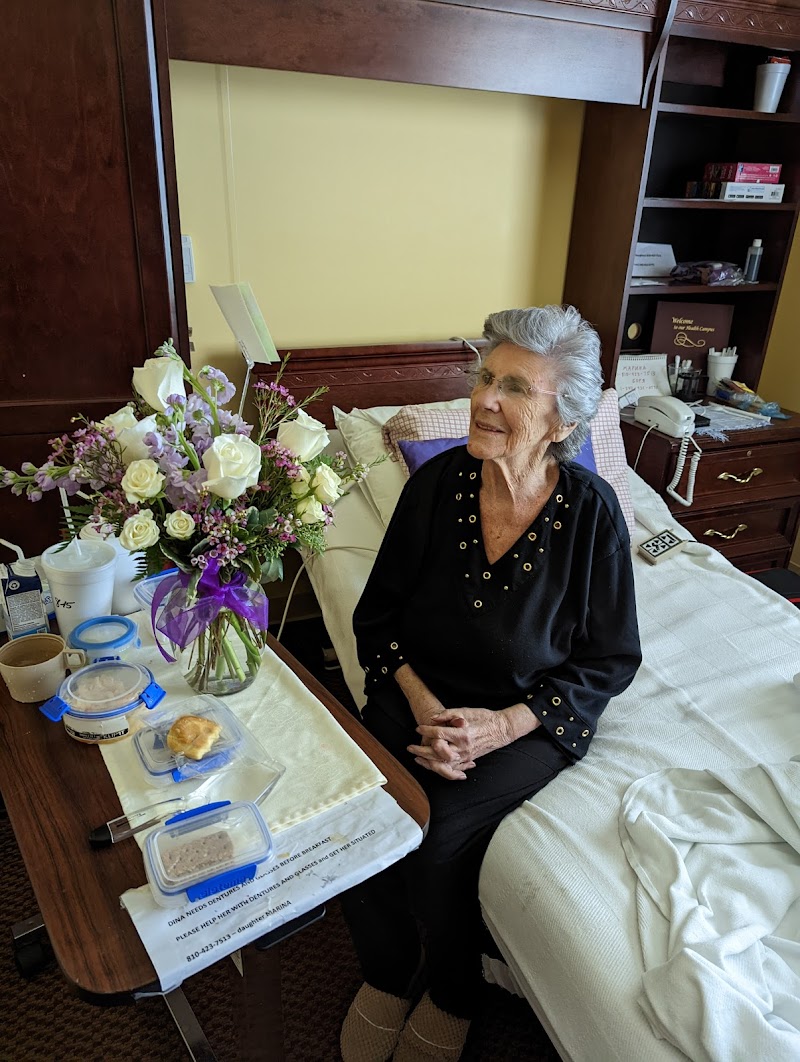
How is The Oaks At Woodfield Staffed?

CMS rates The Oaks at Woodfield's staffing level at 4 out of 5 stars, which is above average compared to other nursing homes. Staff turnover is 31%, compared to the Michigan average of 46%. This relatively stable workforce can support continuity of care.

What Have Inspectors Found at The Oaks At Woodfield?

State health inspectors documented 23 deficiencies at The Oaks at Woodfield during 2023 to 2025. These included: 1 that caused actual resident harm and 22 with potential for harm. Deficiencies causing actual harm indicate documented cases where residents experienced negative health consequences.

Who Owns and Operates The Oaks At Woodfield?

The Oaks at Woodfield is owned by a for-profit company. For-profit facilities operate as businesses with obligations to shareholders or private owners. The facility is operated by TRILOGY HEALTH SERVICES, a chain that manages multiple nursing homes. With 64 certified beds and approximately 59 residents (about 92% occupancy), it is a smaller facility located in Grand Blanc, Michigan.

How Does The Oaks At Woodfield Compare to Other Michigan Nursing Homes?

Compared to the 100 nursing homes in Michigan, The Oaks at Woodfield's overall rating (5 stars) is above the state average of 3.2, staff turnover (31%) is significantly lower than the state average of 46%, and health inspection rating (4 stars) is above the national benchmark.

What Should Families Ask When Visiting The Oaks At Woodfield?

Based on this facility's data, families visiting should ask: "Can I visit during a mealtime to observe dining assistance and food quality?" "How do you handle medical emergencies, and what is your hospital transfer rate?" "Can I speak with family members of current residents about their experience?"

Is The Oaks At Woodfield Safe?

Based on CMS inspection data, The Oaks at Woodfield has a clean safety record: no substantiated abuse findings (meaning no confirmed cases of resident harm), no Immediate Jeopardy citations (the most serious violation level indicating risk of serious injury or death), and is not on the Special Focus Facility watch list (a federal program monitoring the lowest-performing 1% of nursing homes). The facility has a 5-star overall rating and ranks #1 of 100 nursing homes in Michigan. While no facility is perfect, families should still ask about staff-to-resident ratios and recent inspection results during their visit.

Do Nurses at The Oaks At Woodfield Stick Around?

The Oaks at Woodfield has a staff turnover rate of 31%, which is about average for Michigan nursing homes (state average: 46%). Moderate turnover is common in nursing homes, but families should still ask about staff tenure and how the facility maintains care continuity when employees leave.

Was The Oaks At Woodfield Ever Fined?

The Oaks at Woodfield has no federal fines on record. CMS issues fines when nursing homes fail to meet care standards or don't correct problems found during inspections. The absence of fines suggests the facility has either maintained compliance or corrected any issues before penalties were assessed. This is a positive indicator, though families should still review recent inspection reports for the full picture.

Is The Oaks At Woodfield on Any Federal Watch List?

The Oaks at Woodfield is not on any federal watch list. The most significant is the Special Focus Facility (SFF) program, which identifies the bottom 1% of nursing homes nationally based on persistent, serious quality problems. Not being on this list means the facility has avoided the pattern of deficiencies that triggers enhanced federal oversight. This is a positive indicator, though families should still review the facility's inspection history directly.