The Willows at Howell
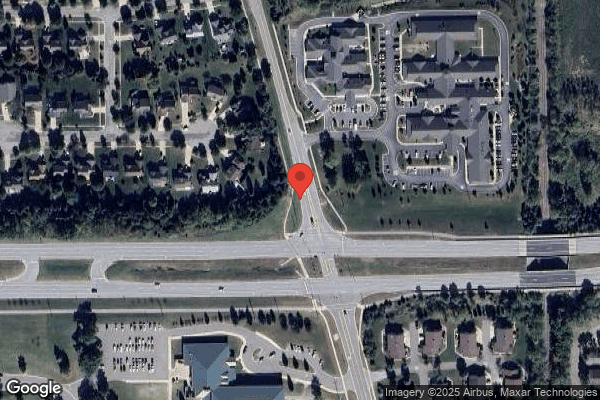
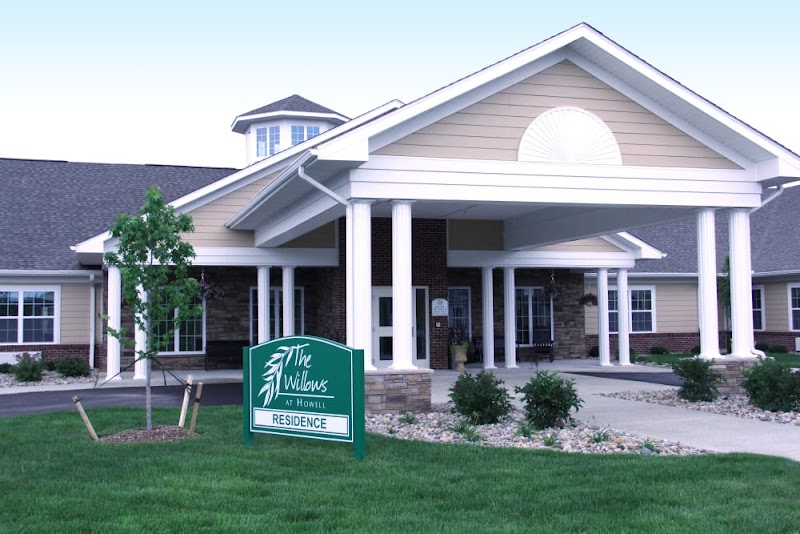
1500 Byron Road, Howell, MI 48855 (517) 552-9323
For profit - Corporation 56 Beds TRILOGY HEALTH SERVICES Data: November 2025
Trust Grade
88/100
#94 of 422 in MI
Last Inspection: January 2025

Within standard 12-15 month inspection cycle. Federal law requires annual inspections.

Overview

The Willows at Howell has a Trust Grade of B+, indicating it is above average and recommended for families considering placements. It ranks #94 out of 422 facilities in Michigan, meaning it is in the top half of nursing homes statewide, and is the best option among 6 facilities in Livingston County. The facility is improving, with the number of issues noted decreasing from 8 in 2024 to 5 in 2025. Staffing is a strong point, with a perfect score of 5/5 and a low turnover rate of 28%, which is better than the state average. While there have been no fines reported, some concerns were raised during inspections, such as expired food items and unclean kitchen equipment, which could pose a risk to residents. Overall, the home shows both strengths in staffing and care quality, alongside some areas needing attention in food safety and cleanliness.
Trust Score
B+
88/100
In Michigan
#94/422
Top 22%
Safety Record
Low Risk
No red flags
Inspections
Getting Better
8 → 5 violations
Staff Stability
✓ Good
28% annual turnover. Excellent stability, 20 points below Michigan's 48% average. Staff who stay learn residents' needs.
Penalties
✓ Good
No fines on record. Clean compliance history, better than most Michigan facilities.
Skilled Nurses
✓ Good
Each resident gets 81 minutes of Registered Nurse (RN) attention daily — more than 97% of Michigan nursing homes. RNs are the most trained staff who catch health problems before they become serious.
Violations
⚠ Watch
20 deficiencies on record. Higher than average. Multiple issues found across inspections.
★★★★★
5.0
Overall Rating
★★★★★
5.0
Staff Levels
★★★★★
5.0
Care Quality
★★★★☆
4.0
Inspection Score
Stable
2024: 8 issues
2025: 5 issues

The Good

  • 5-Star Staffing Rating · Excellent nurse staffing levels
  • 5-Star Quality Measures · Strong clinical quality outcomes
  • Low Staff Turnover (28%) · Staff stability means consistent care
  • Full Sprinkler Coverage · Fire safety systems throughout facility
  • No fines on record
  • Staff turnover is low (28%)

    20 points below Michigan average of 48%

Facility shows strength in staffing levels, quality measures, staff retention, fire safety.

The Bad

Chain: TRILOGY HEALTH SERVICES

Part of a multi-facility chain

Ask about local staffing decisions and management

The Ugly 20 deficiencies on record

Jan 2025 5 deficiencies
CONCERN (D)

Potential for Harm - no one hurt, but risky conditions existed

Deficiency F0582 (Tag F0582)

Could have caused harm · This affected 1 resident

Based on interview and record review the facility failed to ensure that the Notice of Medicare Non-Coverage (NOMNC) and a Skilled Nursing Facility Advance Beneficiary Notice of Non-Coverage (SNFABN) w...

Read full inspector narrative →
Based on interview and record review the facility failed to ensure that the Notice of Medicare Non-Coverage (NOMNC) and a Skilled Nursing Facility Advance Beneficiary Notice of Non-Coverage (SNFABN) were provided and completed for one (R26) of three residents reviewed for beneficiary notification, resulting in the resident not being informed timely of private pay charges for continued services at the facility, and the inability to file an appeal. Findings include: Review of the beneficiary notification documentation provided for three randomly selected residents included R26. Upon further review of the documentation for R26, concerns were identified that the facility issued a NOMNC (Notice of Medicare Non-Coverage) on 9/11/24, which was the same date of the resident's last covered day. R26 and/or their responsible party were not provided adequate notice of the non-coverage, in the event the responsible party wanted to request an appeal of this decision. Additionally, R26 remained in the facility following the facility's decision to end skilled services, without the facility providing a Skilled Nursing Facility Advance Beneficiary Notice (SNFABN). The SNFABN provides information to the beneficiary so that they can decide whether or not to get the care that may not be paid for by Medicare and assume financial responsibility. On 1/22/25 at 11:00 AM, the Administrator reported they had previously identified a Past Non-Compliance (PNC) regarding R26's SNFABN. They were requested to provide any additional documentation for review and consideration of PNC. Review of the documentation provided for the facility's PNC revealed the PNC identified only a concern that the SNFABN was not provided. They did not identify or address concerns with the lack of timely notification of the NOMNC in any of the education, or audits. On 1/22/25 at 12:20 PM, an interview was conducted with the Administrator. At that time, they were informed of the concern with the missing component of the PNC as mentioned above and they expressed understanding of the findings.
CONCERN (D)

Potential for Harm - no one hurt, but risky conditions existed

Comprehensive Assessments (Tag F0636)

Could have caused harm · This affected 1 resident

Based on interview and record review, the facility failed to complete a comprehensive Minimum Data Set (MDS) assessment timely for two (R1 and R37) of eight residents reviewed for resident assessments...

Read full inspector narrative →
Based on interview and record review, the facility failed to complete a comprehensive Minimum Data Set (MDS) assessment timely for two (R1 and R37) of eight residents reviewed for resident assessments. Findings include: According to the Long-Term Care Facility Resident Assessment Instrument 3.0 User's Manual. Link to the LTCF RAI User's Manual: https://www.cms.gov/Medicare/Quality-Initiatives-Patient-Assessment-Instruments/NursinghomeQualityInits/MDS30RAIManual.html: .At a minimum, facilities are required to complete a comprehensive assessment of each resident within 14 calendar days after admission to the facility, when there is a significant change in the resident's status and not less than once every 12 months while a resident. For the purpose of this guidance, not less than once every 12 months means within 366 days . Review of the triggered resident assessment task identified there were eight resident MDS assessments noted as having an MDS record over 120 days, which meant they were either not completed and/or submitted as required. Two of the eight residents identified these were comprehensive assessments. R1 On 1/21/25, review of the Resident Assessments revealed an annual (comprehensive) MDS with an Assessment Reference Date (ARD) of 12/12/24 was not completed. On 1/22/25, further review revealed the assessment was noted as production accepted. Review of the signature by RN (Registered Nurse) assessment coordinator verifying assessment completion by RN 'D' was not signed until 1/21/25. Sections A, B, C, D, E, H, I, J, J-Interview, K, L, M, N, O, P, Q were completed by the MDS Coordinator (Nurse 'E') on 1/14/25; sections F, GG, Z were completed by Nurse 'E' on 1/15/25; and sections B, C, E were completed by RN 'D' on 1/21/25. The last completed MDS assessment was a quarterly MDS with an ARD of 9/13/24. R37 On 1/21/25, review of the Resident Assessments revealed a significant change (comprehensive) MDS with an ARD of 11/14/24 documented sections B, D, E, Q were completed by RN 'F' on 11/18/24; sections A, C, F, GG, H, I, J, J-Interview, K, L, M, N, O, P, and Z were completed by RN 'F' on 1/9/25, and section A was completed on 1/13/25 by RN 'D'. The last completed MDS assessment was a quarterly MDS with an ARD of 8/19/24. On 1/22/25 at 11:20 AM, an interview was completed with RN 'D' and Nurse 'E'. Nurse 'E' reported they were the MDS Coordinator and RN 'D' was their support nurse. When asked when comprehensive assessments should be completed, RN 'D' reported per the RAI manual, should be completed every 92 days and within 15 calendar days from the ARD date. When asked about the system-triggered MDS assessments that had gone beyond 120 days since their last completed assessments, RN 'D' reported they also received that information and had completed a lot of assessments just last night. When asked for the reason for the delayed MDS assessments, both RN 'D' and Nurse 'E' reported concerns with the staff person (social worker) responsible for completing those sections and reported most of those incomplete sections were triggered from assessments completed by the social worker and the facility lost their previous social worker, the new one wasn't aware and needed further training on the importance of timely assessments. When asked if they identified that as a concern, why weren't other staff able to complete those assessment sections since they were completed last night by RN 'D' and RN 'D' reported they were aware of the concerns, they should've been completed timely and were doing the best they could. On 1/22/25 at 12:22 PM, the Administrator was informed of the concerns with the untimely Resident Assessments and details of discussion of concerns and they expressed understanding. They also reported there was no policy for timely MDS, they followed the RAI manual.
CONCERN (D)

Potential for Harm - no one hurt, but risky conditions existed

Infection Control (Tag F0880)

Could have caused harm · This affected 1 resident

**NOTE- TERMS IN BRACKETS HAVE BEEN EDITED TO PROTECT CONFIDENTIALITY** Based on observation, interview, and record review, the facility failed to utilize proper personal protective equipment (PPE) fo...

Read full inspector narrative →
**NOTE- TERMS IN BRACKETS HAVE BEEN EDITED TO PROTECT CONFIDENTIALITY** Based on observation, interview, and record review, the facility failed to utilize proper personal protective equipment (PPE) for COVID-19 transmission-based precautions (TBP) and ensure signage outside of the room included accurate instructions for PPE for two (R6 and R210) of two residents reviewed for TBP. Findings include: On 1/21/25 at 9:41 AM, signage was observed on the door of R6's room that indicated R6 was on droplet precautions. The sign noted that those who entered R6's room must clean their hands, and ensure eyes, mouth, and nose were fully covered before entry into the room. The visuals on the signage showed a person wearing a surgical mask and either a face shield or goggles. A bin was observed outside of R6's room that contained gloves, goggles, surgical masks, and KN95 masks. There were no N95 respirator masks located in the bin. At that time, Registered Nurse (RN) 'G' was observed exiting R6's room wearing a surgical mask. At that time, RN 'G' was queried about why R6 was on droplet precautions and reported they were positive for COVID-19. On 1/21/25 at 10:35 AM, R6's call light was observed to be on. RN 'G' was observed donning a gown, goggles, gloves, and a surgical mask prior to entering R6's room. On 1/21/25 at 1:20 PM, an interview was conducted with the Infection Control Preventionist (ICP) 'H'. When queried about PPE required when entering a resident's room who was on TBP for COVID-19, ICP 'H' reported an N95 respirator mask, face shield or goggles, gown, and gloves were required. When queried about the signage on the door that indicated only a surgical mask and eye wear were needed, ICP 'H' reported they got the sign from the Centers for Disease Prevention and Control website and they did not have one specifically for COVID-19, but staff were to follow the facility's policy. A review of R6's clinical record revealed R6 was admitted into the facility on [DATE] with diagnoses that included: COVID-19. A review of an Event Report for R6 dated 1/20/25 revealed R6 tested positive for COVID-19 on that date and was placed into precautions. According to Centers For Disease Prevention and Control (https://www.cdc.gov/covid/hcp/infection-control/index.html), Infection Control Guidance: SARS-CoV-2 (COVID-19), dated 6/24/24, HCP (Healthcare Personnel) who enter the room of a patient with suspected or confirmed SARS-CoV-2 infection should adhere to Standard Precautions and use a .particulate respirator with N95 filters or higher, gown, gloves, and eye protection (i.e., goggles or a face shield that covers the front and sides of the face) . On 1/21/25 at 10:42 AM and 1/22/25 at 8:40 AM, an observation of R210's room was conducted. A sign on the door indicated they were on droplet transmission based precautions and instructed anyone entering to don a mask and eye protection. The sign did not include the donning of any specific type of mask, isolation gown, or gloves. On 1/21/2510:50 AM, Nurse 'C' was asked why R210 was on isolation precautions and they said it was because R210 was positive for COVID-19. On 1/22/25 at 10:19 AM a review of R210's clinical record revealed they admitted to the facility on [DATE] had begun exhibiting respiratory symptoms, tested positive for the COVID-19 virus on 1/19/25, and had an order for transmission based precautions on 1/20/25.
CONCERN (E)

Potential for Harm - no one hurt, but risky conditions existed

Deficiency F0638 (Tag F0638)

Could have caused harm · This affected multiple residents

**NOTE- TERMS IN BRACKETS HAVE BEEN EDITED TO PROTECT CONFIDENTIALITY** Based on interview and record review, the facility failed to complete a quarterly Minimum Data Set (MDS) assessment timely for s...

Read full inspector narrative →
**NOTE- TERMS IN BRACKETS HAVE BEEN EDITED TO PROTECT CONFIDENTIALITY** Based on interview and record review, the facility failed to complete a quarterly Minimum Data Set (MDS) assessment timely for six (R8, R16, R17, R40, R41, and R44) of eight residents reviewed for resident assessments. Findings include: According to the Long-Term Care Facility Resident Assessment Instrument 3.0 User's Manual. Link to the LTCF RAI User's Manual: https://www.cms.gov/Medicare/Quality-Initiatives-Patient-Assessment-Instruments/NursinghomeQualityInits/MDS30RAIManual.html: .The Assessment Reference Date (ARD) of the Quarterly MDS is within 92 days (ARD of most recent OBRA assessment +92 days) after the ARD of the previous OBRA assessment (Quarterly, Admission, Annual, Significant Change in Status, Significant Correction to Prior Comprehensive or Quarterly assessment) AND The MDS completion date (Item Z0500B) must be no later than 14 days after the ARD (ARD + 14 calendar days) . Review of the triggered resident assessment task identified there were eight resident MDS assessments noted as having an MDS record over 120 days, which meant they were either not completed and/or submitted as required. Six of the eight residents identified these were quarterly assessments. R8 On 1/21/25, review of the Resident Assessments revealed a quarterly Minimum Data Set (MDS) assessment with an Assessment Reference Date (ARD) of 12/16/24 had a status that was In process. On 1/22/25, the assessment was now noted as production accepted (completed). The last completed MDS assessment was quarterly with an ARD of 9/17/24. Review of the signature for completion for the MDS dated [DATE] revealed Registered Nurse (RN 'D') signed as completed on 1/21/25. Section Q was completed by Nurse 'E' on 11/27/24; sections A, B, C, D, D-Interview, GG, H, I, J, J-Interview, K, L, M, N, O, P, Z were completed by Nurse 'E' on 1/10/25; sections B, C, D, E, and Q were completed by RN 'D' on 1/21/25. R16 On 1/21/25, review of the Resident Assessments revealed the quarterly review dated 12/4/24 showed the status was In process. The last completed MDS assessment was an annual with an ARD of 9/4/24. Further review of the MDS dated [DATE] revealed sections B, C, D, E, Q, and Z were not completed. Section Q was completed by Nurse 'E' on 11/27/24; sections A, C, D, D-Interview, GG, H, I, J, J-Interview, K, L, M, N, O, P, Z were completed by Nurse 'E' on 1/9/25; and sections B, C, D, E, O, and Q were completed by RN 'D' on 1/21/25. R17 On 1/21/25, review of the Resident Assessments revealed the quarterly MDS dated [DATE] showed the status was In process. The last completed MDS was a significant change MDS with an ARD of 8/30/24. For the MDS dated [DATE], sections A, GG, H, I, J, K, L, M, N, O, P, Z were completed by Nurse 'E' on 1/10/25 and sections B, C, D, E, Q, and Z were completed on 1/21/25 by RN 'D'. R40 On 1/21/25, review of the Resident Assessments revealed the quarterly MDS dated [DATE] showed the status was In process. The last completed MDS was an annual MDS with an ARD of 9/3/24. For the MDS dated [DATE], sections A, GG, H, I, J, J-Interview, K, L, M, N, O, P, Z were completed on 1/9/25 by Nurse 'E' and sections B, C, C-Interview, D, D-Interview, E, Q, Z were not completed until 1/21/25 by RN 'D'. R41 On 1/21/25, review of the Resident Assessments revealed the quarterly MDS dated [DATE] showed the status was In process. The last completed MDS was an annual with an ARD of 9/11/24. For the MDS dated [DATE], sections C, C-Interview, D-Interview, Q were completed on 12/11/24; sections A, B, D, E, GG, H, I, J, J-Interview, K, L, M, N, O, P, Z were completed on 1/14/25 by Nurse 'E'. The signature of the RN Assessment Coordinator Verifying Assessment Completion was not done until 1/15/25 by RN 'D'. R44 On 1/21/25, review of the Resident Assessments revealed a quarterly MDS dated [DATE] showed the status was In process. The last completed MDS was a quarterly MDS with an ARD of 9/3/24. For the MDS dated [DATE], sections C-Interview, D-Interview were completed on 12/3/24 by Nurse 'E'; sections B, and Q were completed on 12/15/24 by Nurse 'E'; sections A, D, GG, H, I, J, J-Interview, K, L, M, N, O, P, Z completed by Nurse 'E' on 1/9/25; and sections A, B, C, D, E, O, Q were completed on 1/21/25 by RN 'D'. On 1/22/25 at 11:20 AM, an interview was completed with RN 'D' and Nurse 'E'. Nurse 'E' reported they were the MDS Coordinator and RN 'D' was their support nurse. When asked when assessments should be completed, RN 'D' reported per the RAI manual, should be completed every 92 days and within 15 calendar days from the ARD date. When asked about the system-triggered MDS assessments that had gone beyond 120 days since their last completed assessments, RN 'D' reported they also received that information and had completed a lot of assessments just last night. When asked for the reason for the delayed MDS assessments, both RN 'D' and Nurse 'E' reported concerns with the staff person (social worker) responsible for completing those sections and reported most of those incomplete sections were triggered from assessments completed by the social worker and they lost their previous social worker, the new one wasn't aware and needed further training on the importance of timely assessments. When asked if they identified that as a concern, why weren't other staff able to complete those assessment sections since they were completed last night by RN 'D' and RN 'D' reported they were aware of the concerns, they should've been completed timely and were doing the best they could. On 1/22/25 at 12:22 PM, the Administrator was informed of the concerns with the untimely Resident Assessments and details of discussion of concerns and they expressed understanding. They also reported there was no policy for timely MDS, they followed the RAI manual.
CONCERN (F)

Potential for Harm - no one hurt, but risky conditions existed

Food Safety (Tag F0812)

Could have caused harm · This affected most or all residents

On 1/22/25 at 8:53 AM, an observation of a small refrigerator for resident food items on the 200 hallway was conducted. The following was revealed: an iced coffee drink with half the contents gone and...

Read full inspector narrative →
On 1/22/25 at 8:53 AM, an observation of a small refrigerator for resident food items on the 200 hallway was conducted. The following was revealed: an iced coffee drink with half the contents gone and no open date, a cup of yogurt with an expiration date of 1/5/25, a container labeled mushroom herb dip that appeared to contain a mashed sweep potato with no date, and a salad kit with a use by date of 1/22/25, however; it was observed the lettuce was wilted and brown. On 1/22/25 at 9:30 AM, an interview with Nurse 'B' was conducted. They indicated food in the fridge on the unit should be labeled with a resident name, route, and date it was placed in the refrigerator. On 1/22/25 a facility document titled Food Labeling and Dating was reviewed and revealed the following: POLICY-Any food product removed from its original container, has a broken seal, has been processed in any way must have a label. PURPOSE: To have food product properly labeled and dated. PROCEDURES: Any food product removed from its original container, has a broken seal, has been processed in any way must have a label that contains the following: 1. Item Name. 2. Date and Time the food was labeled. 3. Use by date. 4. Initials of the person labeling the item. 5. Securely cover the food item. FOOD STORAGE TIME - use by date. Laminate the card and post it in the kitchen food production areas as reference . Based on observation, interview and record review the facility failed to appropriately store and label food items in the kitchen and a reach-in refrigerator. This deficient practice had the potential to affect all residents that consume food in the facility out of a total census of 55. Findings include: On 01/21/25 at approximately 8:53 a.m., a tour of the facility kitchen was conducted with kitchen manager A (KM A) and the following was observed: 1. A tray of uncovered/unprotected apple cinnamon deserts was observed in the walk-in refrigerator with a preparation date of 1/16/25 and use by date of of 1/19/25. 2. A tray of uncovered/unprotected and dried out meat patties was observed in the walk-in refrigerator. 3. A tray of previously cooked personal sized pizzas were observed uncovered and had no dating/labeling on them in the walk-in refrigerator. 4. An uncovered pan of Blueberry desert that had a preparation date of 1/16/25 with a use by date of 1/18/25 was observed in the walk-in refrigerator. On 1/21/25 at approximately 9:03 a.m., during a conversation with KM A, KM A was queried if the observed food items in the walk-in refrigerator should have been covered and labeled and they indicated that they should have. KM A was queried regarding the food that was date past their use by date and they reported it should have been discarded. According to the 2017 FDA (Food and Drug Administration) Food Code section 3-501.17: Ready-to-eat, potentially hazardous food prepared and held in a food establishment for more than 24 hours shall be clearly marked to indicate the date or day by which the food shall be consumed on the premises, sold, or discarded when held at a temperature of 41 degrees Fahrenheit or less for a maximum of 7 days. Refrigerated, ready-to- eat, potentially hazardous food prepared and packed by a food processing plant shall be clearly marked, at the time the original container is opened in a food establishment and if the food is held for more than 24 hours, to indicate the date or day by which the food shall be consumed on the premises, sold, or discarded, and: (1) The day the original container is opened in the food establishment shall be counted as Day 1; and (2) The day or date marked by the food establishment may not exceed a manufacturer's use-by date if the manufacturer determined the use-by date based on food safety.
Nov 2024 1 deficiency
CONCERN (D) 📢 Someone Reported This

A family member, employee, or ombudsman was alarmed enough to file a formal complaint

Potential for Harm - no one hurt, but risky conditions existed

Transfer Notice (Tag F0623)

Could have caused harm · This affected 1 resident

**NOTE- TERMS IN BRACKETS HAVE BEEN EDITED TO PROTECT CONFIDENTIALITY** This citation pertains to intake MI00147778. Based on interview and record review, the facility failed to notify one resident (R...

Read full inspector narrative →
**NOTE- TERMS IN BRACKETS HAVE BEEN EDITED TO PROTECT CONFIDENTIALITY** This citation pertains to intake MI00147778. Based on interview and record review, the facility failed to notify one resident (R801) of three reviewed for discharge, reason of discharge in writing and manner they understand including a thirty day advance notification, and statement of resident's right to appeal. Findings include: On 10/30/24 a complaint was received by the State Agency (SA) alleging the facility failed to provide a thirty-day notice of discharge from to R801. Clinical record review revealed R801 resided as a long-term resident admitted to the facility on [DATE]. R801 had an extensive substance abuse history for alcohol misuse and required multiple inpatient hospitalizations and rehabilitation placements. Psychiatric diagnoses included bipolar and anxiety. Medical history included chronic kidney disease, pulmonary disease, hypothyroid and low blood pressure. Recent medical diagnosis included left elbow bursitis requiring orthopedic and infection control management. R801 was legally blind and required assistance with reading paperwork. Most recent Brief Interview of Mental Status (BIMS) was 14/15 indicating R801 was cognitively intact. Record review revealed on 10/25/24 at 9:24 AM, Transportation, Certified Nurse Assistant C (TCNA C) transported R801 to an Orthopedic appointment and was informed by the Orthopedic Physician R801 required further escalation of care for their elbow and recommended transfer to the hospital. On 11/12/24 at 12:28 PM, an interview was conducted with TCNA C and Registered Nurse (RN) B. TCNA C commented in such situation, if non-emergent, Residents are taken back to the facility, assessed, provided transfer discharge paperwork, then transferred to the hospital. On 10/25/24, R801 insisted on going straight to the emergency department related to severe elbow pain and was not taken to the facility prior and the required paperwork was not provided. TCNA C and RN B further revealed R801 is legally blind, and any such documentation would have to be read to them. Record review revealed a prepared notice of discharge forms, dated 10/25/24 at 11:20 AM, authored by RN B documented a copy of the notice was given to the resident /responsible party. RN B acknowledged they prepared the notice of discharge forms and confirmed the documentation was not provided to R801. On 10/12/24 at 12:49 PM, a telephone interview with Social Worker D (SW D) and Social Worker E (SW E) revealed R801 was cleared to be transferred back to the facility and were informed the facility recommended an on-site evaluation to be conducted. SW E revealed two representatives came to the hospital and informed R801 and the hospital, the facility was not permitting R801's readmission back. SW D and SW E both confirmed R801 was not provided any notice of discharge and further commented R801 was legally blind and would not be able to read any documentation. SW E commented R801 was emotional they were not allowed back to the facility and inquired why they provided no documentation. R801 commented to SW E, I thought they (facility representatives) were here to give me flowers. Record review of a progress note dated 10/29/24 at 1:30 PM authored by the Nursing Home Administrator (NHA), revealed they spoke to R801 and was agreeable the facility was not the best fit for them and was agreeable to working with social services at the hospital for another placement. On 11/12/24 at 2:22 PM, an interview with the NHA and admission Director A confirmed both physically went to the hospital to discuss the discharge with R801. The NHA commented R801 was not readmitted because of behaviors. The NHA said R801 had documentation of heroin use and that was stipulation of non-readmission. When asked if there was documentation of positive heroin use the NHA said there was not, but due to substance abuse (alcohol) R801 was not appropriate for the facility and would benefit receiving treatment at a facility that has substance abuse programs. When asked if paperwork was provided to the resident, the NHA acknowledged they did not provide or read to R801 discharge documentation including the Thirty Day Notice of Transfer/Discharge, or right to appeal information. Review of the facilities policy title; Guidelines for Transfer and Discharge documented: .Notify the resident in writing .30 days in advance, of the transfer or discharge, the effective date of transfer or discharge .Give a copy of the discharge notice to the resident .Provide the resident with a statement of the right to appeal the action to the state agency .
May 2024 1 deficiency
CONCERN (E) 📢 Someone Reported This

A family member, employee, or ombudsman was alarmed enough to file a formal complaint

Potential for Harm - no one hurt, but risky conditions existed

Infection Control (Tag F0880)

Could have caused harm · This affected multiple residents

This citation pertains to intake MI00143514. Based on interview and record review the facility failed to follow their transmission-based precautions for one resident (R900) of three residents reviewed...

Read full inspector narrative →
This citation pertains to intake MI00143514. Based on interview and record review the facility failed to follow their transmission-based precautions for one resident (R900) of three residents reviewed for infection control. Findings include: Review of the complaint filed with the State Agency on 3/21/2024 documented in part My mother, (R900's name), was transferred to (facility's name) after a hospital stay for rehab. On day 6 of her stay she was put under isolation precautions due to pneumonia/mrsa (Methicillin-resistant Staphylococcus aureus-a contagious bacterial infection). She was not on precautions at the facility prior to that. There was no explanation given to her, they hung the sign on the door and closed her door . The executive director called me and stated the mrsa diagnosis was not in the original paperwork from the hospital . My mom was all over the facility for the 6 days she was there. She went to therapy, the dining room, activities, we walked the halls. Review of the clinical record revealed R900 was admitted into the facility on 3/12/2024 with diagnoses that included: Pneumonia due to Methicillin resistant Staphylococcus aureus and depression. Review of the facilities Infection Control binder revealed resident should have been in contact isolation according to their line listing. Review of R900's orders revealed an order placed for Contact Precautions, by NHA (nursing home administrator), on 3/18/24 at 7:24 AM, despite the resident being admitted with MRSA pneumonia six days prior (on 3/12/24). Review of R900's clinical record revealed, LPN B documented no in response to Isolation precautions needed? on 3/13/24, 3/16/24 and 3/17/24. RN C documented no in response to Isolation precautions needed? on 3/14/24. LPN D documented no in response to Isolation precautions needed? on 3/15/24. From 3/13 to 3/17/24 three different nurses documented R900 was not in isolation and then on 3/18/24, LPN E documented Yes in response to Isolation precautions needed? and for Precautions required documented Contact precautions, Droplet precautions Review of the activities calendar for R900 revealed they attended Evening Bingo with Girl Scouts at 6pm on 3/13/24 in Town Square (a common area in the facility). On 5/28/24 at 2:25 PM, activities director A, stated it was possible that the resident attended additional activities that were not logged on R900's activities calendar. On 5/28/24 at 12:16 PM, an interview was conducted with the DON (director of nursing) and the NHA. The NHA reported that their process for identifying residents who transfer from the hospital and require isolation, was to review documents received from the hospital. When queried why the contact isolation order for R900 was placed six days after R900 was admitted from the hospital, the NHA was unable to provide an answer. The DON reported that they recalled having a conversation with R900's daughter. The DON reported that she told R900's daughter that R900 was in a type of isolation that allowed her to leave her room and participate in activities outside of her room. When asked for clarification on whether or not contact isolation for MRSA pneumonia allowed for the resident to move freely within the facility, the DON quoted their policy Residents in Contact Precautions may come out of their room as long as the contaminant requiring isolation is contained. The NHA reported that the CDC (Centers for Disease Control and Prevention) website advised her that R900 required contact precautions but that she felt possibly a respiratory isolation would have been more appropriate. The NHA reported the resident was placed in contact isolation upon admission 3/12/24, despite the order for contact precautions being placed on 3/18/24 and that she received care/meals and activities in her room, revealing conflicting information received from the NHA and the DON regarding whether the resident was or was not allowed out of her room. A review of a concern log provided by the DON documented in part, a phone conversation with R900's daughter, Called after the resident d/c (discharged ) home, spoke with the daughter about her concern that her mother was isolated here at the (facility name). I spoke to her about the mother being on precautions and that she was able to still go out of her room, that her mother had come to us from the hospital with some precautions that we needed to follow .her mother could have stayed here and still used all the services . On 5/28/24 at 2:28 PM an interview was conducted with R900. R900 reported attending therapy in the therapy room, eating meals in the dining room and attending activities outside of her room until 3/18/24 when she reported that staff closed her door and told her she was in isolation. Review of the facilities policy titled Guidelines for Contact Precaution updated 2/28/24, documented in part Residents in Contact Precautions may come out of their room as long as the contaminant requiring isolation is contained . Any resident that has a non?contained infection that requires contact isolation will remain in their room. If the resident has to come out of the room for any reason, the resident will wear a gown, gloves and mask (as appropriate for organism and site) while out of their room . Upon verification that a resident has an infection that requires Contact Precautions, the nurse will implement the precautions and inform the attending physician, appropriate Department Heads, nursing staff, the Infection Control Practitioner, the resident and the resident's family.
Mar 2024 6 deficiencies
CONCERN (D)

Potential for Harm - no one hurt, but risky conditions existed

Deficiency F0554 (Tag F0554)

Could have caused harm · This affected 1 resident

**NOTE- TERMS IN BRACKETS HAVE BEEN EDITED TO PROTECT CONFIDENTIALITY** Based on observation, interview and record review the facility failed to ensure one resident (R3) was assessed for safe self-adm...

Read full inspector narrative →
**NOTE- TERMS IN BRACKETS HAVE BEEN EDITED TO PROTECT CONFIDENTIALITY** Based on observation, interview and record review the facility failed to ensure one resident (R3) was assessed for safe self-administration of medication of one residents reviewed for self-administration, resulting in the potential for inappropriate administration of medication. Findings include: On 3/19/24 at approximately 9:33 a.m., R3 was observed in their room, laying in their bed. R3 was observed to have a bottle of fluticasone propionate nasal spray and a bottle of Carboxymethylcellulose 0.5% eyedrop solution on the bedside table in front of them. R3 was queried regarding the medications observed at the bedside and they indicated that they used the nasal spray when they need it and that sometimes they will administer the eyedrops and sometimes the Nursing staff will administer them. On 3/19/24 at approximately 12:40 p.m., R3 was observed in their room, laying in their bed. R3 was still observed to have the fluticasone and Carboxymethylcellulose eyedrops on their bedside table in front of them. On 3/19/24 the medical record for R3 was reviewed and revealed the following: R3 was initially admitted to the facility on [DATE] and had diagnoses including Multiple sclerosis, Dry eye syndrome of unspecified lacrimal gland and Acute respiratory failure with hypoxia. A review of R3's MDS (minimum data set) with an ARD (assessment reference date) of 2/16/24 revealed R3 needed assistance from facility staff with personal hygiene. A review of R3's Physicians ordered medications revealed the following: 1. fluticasone propionate [OTC] spray, suspension; 50 mcg/actuation; amt: 1 spray; nasal Special Instructions: One spray in each nostril once daily Once A Day 06:00 AM - 10:00 AM .2. Refresh Tears (carboxymethylcellulose sodium) [OTC] drops; 0.5 %; amt: 1 drop; ophthalmic (eye) Special Instructions: Place one drop in affected eye(s) once daily as needed for dry eyes Every 2 Hours - PRN (as needed) PRN 1, PRN 2, PRN 3, PRN 4, PRN 5, PRN 6, PRN 7, PRN 8, PRN 9, PRN 10, PRN 11, PRN 12 .A Further review of R3's Physician orders did not indicate any orders for the self-administration of the Fluticasone nasal spray or the Carboxymethylcellulose eye drops. Further review of R3's medical record including their comprehensive care plan and observation assessments did not reveal any evaluations that indicated R3 had been assessed for the safe self-administration of their eye drops and nasal spray. On 3/19/24 at approximately 3:22 p.m., Nurse G was queried regarding R3's mediations observed at the bedside. Nurse G reported that they should not have medications at the bedside unless they had been assessed. At that time, Nurse G was queried if an assessment for R3 had been completed that indicated they were safe to self-administer mediation. Nurse G then reviewed R3's medical record and indicated they did not have an assessment and one would have to be completed for the medications to remain at the bedside. On 3/20/24 at the approximately 10:15 a.m., during a conversation with the Director of Nursing (DON), the DON was queried regarding the process for ensuring residents are safe to self administer their medications and they indicated that they should be have a self-administration assessment to ensure they are safe to self administer the medications. On 3/20/24 a facility document titled Guidelines for Self-Administration of Medication was reviewed and revealed the following: POLICY Guidelines for Self Administration of Medications PURPOSE To ensure the safe administration of medication for residents who request to self- medicate or when self-medication is a part of their plan of care. PROCEDURES 1. Residents requesting to self- medicate or has self-medication as a part of their plan of care shall be assessed using the observation Trilogy- Self Administration of Medication within the electronic health record. Results of the assessment will be presented to the physician for evaluation and an order for self-medication. a. The order should include the type of medication(s) the resident is able to self- medicate. i.e.: all oral meds, oral meds with the exception of .nebulizer treatment only, all medications including injection, oral, inhalers, drops, etc. 2. The resident and/or family/responsible party will be informed of the results of the assessment and whether the resident has been determined to safely self- administer medications. 3. The medication will be kept in a locked drawer in the residents ' room. The resident will maintain the key, as well as, a key will be maintained by the licensed nurse and or QMA. 4. The resident may be supplied with a MAR to record administration if desired. 5. Periodic verification of administration compliance will be observed by nursing staff 6. A Self-Medication plan of care will be initiated and updated as indicated. 7. The Assessment will be reviewed quarterly, and PRN with change of condition. 8. The assessment will be documented in the EHR (electronic health record) .
CONCERN (D)

Potential for Harm - no one hurt, but risky conditions existed

Deficiency F0658 (Tag F0658)

Could have caused harm · This affected 1 resident

**NOTE- TERMS IN BRACKETS HAVE BEEN EDITED TO PROTECT CONFIDENTIALITY** Based on interview and record review, the facility failed to ensure Physician ordered medication was appropriately ordered and a...

Read full inspector narrative →
**NOTE- TERMS IN BRACKETS HAVE BEEN EDITED TO PROTECT CONFIDENTIALITY** Based on interview and record review, the facility failed to ensure Physician ordered medication was appropriately ordered and administered for one resident (R217) of one residents reviewed for Nursing standards, resulting in a delay in pain medication being available for administration. Findings include: On 3/18/24 at approximately 12:21 p.m., R217 was observed in their room, laying in their bed. R217 was queried if they had any concerns regarding their admission process to the facility and they reported that they could not get enough pain medication and that they had missed some doses of their oxy (oxycontin) because the medication was not in the building. R217 reported that they did not understand how a medical facility did not have the right medication. On 3/19/24 the medical record for R217 was reviewed and revealed the following: R217 was initially admitted to the facility on [DATE] and had diagnoses including Left hip pain and acute proximal respiratory failure. A review of R217 progress notes revealed the following: 3/16/24 at 10:22 AM-Resident c/o (complained of) extreme pain this morning to left hip rating 9/10. States she felt sick because of her pain 3/17/2024 at 03:49 AM Labs (diagnostic laboratory results) faxed to on-call. One time order for 5 mg (milligram) oxy (oxycodone). for pain control. Labs redrawn on Monday. 3/17/2024 07:04 AM DATE OF SERVICE: [DATE] .Staff reports that patient complains of pain in l (left) hip, ok to give 1 dose of oxycodone 5mg .Pt (patient) has a hx (history) of cancer, had a hip fx (fracture) with replacement on 2-06 . A review of R217's admitting Physician orders revealed the following: Start date-3/15/24 OxyContin (oxycodone) -Schedule II tablet, oral only, ext.[NAME] (extended release).12 hr; 15 mg; amt: 1 tab; oral Special Instructions: Take 1 tab PO (by mouth) Q12 (every 12 hours) for 3 days. Every 12 Hours 08:00 PM, 08:00 AM A review of R217's March 2024 Medication Administration Record (MAR) was reviewed and indicated that R217 did not receive their oxycontin 15mg 8:00 PM. dose on 3/16/24 and the 8:00 AM. and 8:00 PM. doses on 3/17/24. Further review of the MAR revealed the reasoning was Not Administered: Drug/Item Unavailable A second Physician order dated 3/17/24 revealed the following: oxycodone -Schedule II tablet; 5 mg; amt: 5mg; oral Once - One Time 05:00 AM. A review of R217's March 2024 MAR indicated that R217 did not receive their 5mg 5:00 AM dose due to the following reason: Not Administered: Drug/Item Unavailable On 3/20/24 at approximately 10:10 a.m., R217's oxycontin orders and missed administrations were reviewed with the Director of Nursing (DON), the DON indicated that they would have to look into R217's medications and the concerns that R217's 15mg doses of Oxycontin and 5mg dose of Oxycodone were not administered because they were unavailable. On 3/20/24 at approximately 12:59 p.m., during a follow-up conversation with the DON, the DON reported that the 15mg was not available in the backup supply of medications so the Nurses were only giving the 10mg PRN dose (as needed) instead. On 3/20/24 at approximately 1:20 p.m., The DON followed up a second time and reported that the standard of practice for the Nurses in the facility should have had the initial Nurse contact the pharmacy to get the 15mg dose of Oxycontin dropped shipped to the facility to avoid missing any further multiple doses of the 15mg of Oxycontin. The DON also reported the 5mg dose ordered on 3/17/24 was pulled from the backup supply but they had no further documentation as to why it was documented as not administered and unavailable. The DON indicated that the Nurse who pulled the 5mg oxycodone dose from the backup supply should have documented why it was not administered and what the disposition of the medication (a controlled substance) was after it had been pulled from backup supply.
CONCERN (D)

Potential for Harm - no one hurt, but risky conditions existed

Accident Prevention (Tag F0689)

Could have caused harm · This affected 1 resident

**NOTE- TERMS IN BRACKETS HAVE BEEN EDITED TO PROTECT CONFIDENTIALITY** R6 was a long-term Resident of the facility originally admitted on [DATE]. R6's admitting diagnoses included dementia, with hist...

Read full inspector narrative →
**NOTE- TERMS IN BRACKETS HAVE BEEN EDITED TO PROTECT CONFIDENTIALITY** R6 was a long-term Resident of the facility originally admitted on [DATE]. R6's admitting diagnoses included dementia, with history of dysphagia (difficulty swallowing), falls, and multiple fractures. Based on the Minimum Data Set (MDS) assessment dated [DATE], R6 had a Brief Interview for Mental Status Score of 4/15, indicative of severe cognitive impairment. R6 had no functional limitation of their range of motion and was able to use their upper extremities. During an initial observation completed on 3/18/24, at approximately 9:15 AM, R6 was observed sitting up in a Geri-chair (a large, padded reclining chair with wheel uses for patients with limited mobility and difficulty sitting up in a standard wheelchair) next to the bed in their room. An open plastic box with multiple lancets and other blood glucose monitoring supplies were observed on the nightstand. At approximately 10:35 AM, the open plastic box with lancets were observed on the nightstand. Review of R6's care plan and orders revealed that R6 had impaired safety awareness. Further review revealed that R6 was also receiving anti-coagulant (blood thinner) medication and they were at risk for excessive bleeding. During an interview with RN H on 3/18/24, at approximately 11:25 AM, they were queried on the lancets in an open box observed on R6's nightstand. RN H reported that it was a newer process that had in place for about 6 months to leave all blood glucose monitoring supplies at the bedside for the long-term residents. RN H queried about the safety of leaving lancets at bedside and they reported that they have not had any issues and they had put the box in the R6's nightstand drawer. Based on observation, interview and record review, the facility failed to ensure an environment was free from accident hazards regarding storage of sharps (blood sugar testing lancets) for two (R6 and R10) of seven residents reviewed for accidents. Findings include: According to the facility's documentation provided for storage of sharps, the standard operating procedures for Use and Disposal of Sharps dated 6/1/18, reviewed 12/31/23 read, .Sharps will be handled in a manner to prevent needle-sticks and other skin cuts and punctures . This document did not address the facility's process for storage of sharps. On 3/18/24 at 12:03 PM, R10's room was observed to have a clear pencil box stored on top of the bedside dresser with shelves was observed to contain several blood glucose monitoring supplies (glucometer, glucose testing strips and lancets (sharps). On 3/19/24 at 10:03 AM, the above box of glucose monitoring supplies was observed opened (not closed) and stored on the bedside dresser with shelves. On 3/20/24 at 8:17 AM, R10's blood glucose monitoring supplies remained stored in the room on the bedside dresser with shelves. At 8:19 AM, R6's room was observed to have a pencil box stored in the opened bedside dresser which contained multiple single use lancets. On 3/20/24 at 8:23 AM, the Director of Nursing (DON) was requested to accompany for observations of R6 and R10's room environments. When asked about the facility's process for storage of blood glucose testing materials, the DON reported if multiple residents required blood sugar testing, they were given their own glucometers, alcohol wipes and testing strips to keep in a box in their room and the lancets were stored in the medication carts with the nurses. The DON observed R6 and R10's rooms and confirmed the same observations of the lancets stored in the boxes. They further reported the lancets should not have been stored with the other blood glucose testing supplies and would follow-up with the nursing staff.
CONCERN (D) 📢 Someone Reported This

A family member, employee, or ombudsman was alarmed enough to file a formal complaint

Potential for Harm - no one hurt, but risky conditions existed

Deficiency F0692 (Tag F0692)

Could have caused harm · This affected 1 resident

**NOTE- TERMS IN BRACKETS HAVE BEEN EDITED TO PROTECT CONFIDENTIALITY** Based on observation, interview, and record review facility failed to monitor weights and follow physician orders for one (R32) ...

Read full inspector narrative →
**NOTE- TERMS IN BRACKETS HAVE BEEN EDITED TO PROTECT CONFIDENTIALITY** Based on observation, interview, and record review facility failed to monitor weights and follow physician orders for one (R32) of one resident reviewed for change of condition resulting in decreased intake and undetected weight loss. A record review revealed that R32 was admitted to the facility on [DATE]. R32's admitting diagnoses included metabolic encephalopathy, dementia, and chronic kidney disease. Based on a Minimum Data Set (MDS) assessment dated [DATE], R32 had a Brief Interview for Mental Status (BIMS) score of 1/15, indicative of severe cognitive impairment. R32 were dependent on staff assistance with their mobility and most of their Activities of Daily Living (ADLs) such as oral hygiene, eating, dressing etc. An initial observation was completed on 3/18/24, at approximately 9:35 AM. Staff started serving breakfast to resident rooms in the hallway approximately 15 minutes prior to this observation. A staff member, RN H was observed in the hallway. R32's room door was closed. RN H reported that R32 usually got up for breakfast and today they were in bed and a staff member was in the room assisting R32. When the surveyor went in the room, R32 was observed in their bed with their door closed. There were no staff members in the room. A breakfast tray was placed on the bedside table in front of the resident. The tray had a breakfast sandwich cut in to two halves and a cup of water in a two handled cup. There were no other drinks on the breakfast tray. The two halves of the sandwiches were full and untouched. R32 had not taken any bites. When called their name R32 opened their eyes and did not respond to any questions. At approximately 10:05 AM, a follow up observation was completed. R32 was observed in their bed with their eyes closed. There was no staff member in the room. The breakfast tray with two half sandwiches and cup of water was on the table as before. At approximately 10:30 AM another follow-up observation was completed. R32 was observed in their bed, same position as before, eyes closed. The breakfast was not on the bedside table. There was no water at bedside. At approximately 12:30 PM, R32 was observed in their bed in the same position with the bedside table in front. No water on the bedside table. There was a nightstand on the left side of the bed and there was a chair on the right side of the bed. There were no water/any drinks in R32's room. The chair had two heel boots and a Hoyer lift sling. On 3/19/24, at approximately 10 AM, staff members were in the room assisting R32. Later that day, at approximately 12:15 PM, R32 was observed sitting in the private dining room. R32 was sitting on a wheelchair and appeared tired. R32 was leaning over on the right side and had a pillow placed on the right side between the R32's trunk and wheelchair arm rest. A staff member RN G was attempting to feed R32, and they were not eating. RN G was queried how R32 was doing with their lunch. RN G reported that Resident took only a few bites, and they were going to try soup. RN G reported that R32 was not able to sit upright and kept leaning over. At approximately 12:45 PM, the surveyor requested a current weight for R32. At approximately 12:55 PM, two staff members (CNA - Certified Nursing Assistants) completed weight with a Hoyer lift scale and reported that weight was 223.8 lbs. On 3/20/24, two additional observations were completed. At approximately 10:35 AM, R32 was observed in their bed, eyes closed. R32 did not respond/open their eyes when called their name. At approximately 12:15, R32 was on their bed with eyes closed. RN H was queried how R32 was doing. RN H reported that R32 ate a few bites of oatmeal when they assisted for breakfast. RN H also reported that R32 was not able to tolerate sitting up for lunch and they were going to assist with feeding in bed. A review of R32's Electronic Medical Record (EMR) revealed weight entries that included the following: 3/19/23 - 223.8 lbs. (18.7 lbs. loss in 35 days) 3/4/24 - 239.7 lbs. 2/13/24 - 242.5 lbs. 2/4/24 - 242.7 lbs. 1/30/24 - 242.7 lbs. 1/23/24 - 242.5 lbs. 1/9/24 - 246.8 lbs. 1/2/24 - 256.6 lbs. 12/28/23 - 241.6 lbs. (admission weight). Further review of R32's EMR revealed a practitioner progress note dated 3/6/24, that read in part, Acute visit is a diabetic (age omitted), after emesis episodes this morning, notified by nursing. Per nursing, the patient seems to be off today, she doesn't look good overall, they would like to try some pureed food, as the patient seems to pocket a lot of her food, then throw it up. Patient, and nursing report no diarrhea. Nursing requesting medication to help the patient with the symptoms. Today she is calm and has no complaints, she is seen sitting on her wheelchair in the lounge area, sleeping, but easily aroused . Assessment and plan included Consider speech pathology evaluation v (verses) swallow study . Monitor for gastritis symptoms, including dehydration. A nursing progress note dated 3/5/24 revealed that R32 had not been eating well and was referred to the physician/practitoner. The note read Previous nurse reported resident needs total assistance with meals. Intake has been very poor since resident is having difficulty following directions such as opening mouth. Author noted tonight during medication administration that resident held crush meds in applesauce in her mouth and was unable to suck on straw when instructed. Resident is noted as having approximately a 3 lbs. weight loss from 2/13-3/4. Note placed in (Medical provider group name omitted) binder due to recent decline . Another nursing progress dated 1/27/24 read, Recommendations to continue to monitor weight x 4 more weeks. Orders in place. MD (Medical Doctor) notified and agrees with plan. Goal: Weight to stabilize. Based on the weight entries on EMR, as noted above, these orders/recommendations were not consistently followed. Review of R32's physician order revealed that R32 was on regular diet with thin liquids and needed 1:1 staff assistance for feeding. R32's care plan revealed that R32 was at risk of malnutrition and dehydration. R32 was receiving Glucerna (dietary supplement) that was ordered on 1/1/24 and was discontinued on 2/13/24. R32 was not receiving any other supplements after 2/13/24 and the last RD consult was on 1/24/24. R32 did not have any recent labs or any other diagnostic tests after the recent change in condition. Review of Registered Dietician (RD) dated 1/24/24 revealed that R32 had weight fluctuations and they suspected of inaccurate weights. RD recommended to continue weekly weights and to continue the supplements, that were discontinued on 2/13/24. The EMR did not have any further evidence of communication/follow up with RD. A review of speech therapy evaluation dated 3/7/24 revealed that R32 was referred due to due to new onset of holding food and difficulty feeding, requiring the increased need for verbal cues and no diet modifications were made. Recommendations were made for R32 to be in the dining room for all meals with assistance. A physician note that was completed on 3/19/24, after the weight loss and intake observations were brought to the facility's attention. The physician progress note dated 3/19/24 at 2:42 PM revealed that R32 was seen for weight loss, and they had a diagnosis of failure to thrive under the assessment and plan and recommend RD consult and fortified foods. The assessment did not include any diagnostic tests or labs to rule out any acute medical conditions and cause of change in condition. No RD consult/follow-up was completed until the survey exit on 3/20/23. An interview with the Certified Nursing Assistant (CNA) J was completed on 3/19/23 at approximately, 10 AM. CNA J was queried on R32's intake with breakfast. CNA J reported that R32 had waffles, bacon, and fruit cup. R32 took about three bites and seemed very tired today. An interview with speech therapist K on 3/19/24, at approximately 10:25 AM. They reported that they had seen R32 for evaluation only. R32 was referred due to overall decline and holding food in their mouth. They did not make changes with the diet based on their assessment and recommended to continue assistance with feeding. During an interview with DON and Clinical Consultant I on 3/19/24 at approximately 10:45 AM and they were queried on RD's availability and their follow up. Clinical consultant I reported that that facility had contracted RD services and the RD was at the facility one day every week and they were following up on residents if they had actual weight changes. The rest of the assessment and follow up were completed by the facility's nursing and interdisciplinary team. A follow up interview was completed with the clinical consultant I and DON on 3/19/23 at 1:55 PM and 3 PM. They were queried on R32's intake, recent change and follow up. Consultant I reported that R32 was receiving supplements that were discontinued on 2/13/24. RD would follow up as R32 had a weight loss and they had ordered fortified foods. They had also shared a facility report based on the R32's intake record and reported that R32 had a 64%average intake in March (from 3/1/23 to 3/19/23). Review of the report revealed that R32 had an average fluid intake of 398 ml/day. When queried on low volume fluid intake on the report, they had reported that 398 ml. was the average fluid amount provided by nursing staff. It must be noted that R32 needed 1:1 staff assistance. An interview with Medical Director/attending physician L (for R32) was completed on 3/20/23 at approximately 10:35 AM. Physician L was queried on R32, their recent change in condition with weight loss and the diagnosis of failure to thrive. Physician L reported that they had ordered RD consult and supplements. When queried if they were ordering any further diagnostic tests in conjunction with their assessment due to recent change in condition with significant weight loss, Physician L reported that they did not feel the need to order any further diagnostic testing and did not provide any clinical rationale or further explanation.
CONCERN (D) 📢 Someone Reported This

A family member, employee, or ombudsman was alarmed enough to file a formal complaint

Potential for Harm - no one hurt, but risky conditions existed

Dental Services (Tag F0791)

Could have caused harm · This affected 1 resident

**NOTE- TERMS IN BRACKETS HAVE BEEN EDITED TO PROTECT CONFIDENTIALITY** This citation pertains to intake: MI00140832. Based on observation, interview, and record review the facility failed to ensure t...

Read full inspector narrative →
**NOTE- TERMS IN BRACKETS HAVE BEEN EDITED TO PROTECT CONFIDENTIALITY** This citation pertains to intake: MI00140832. Based on observation, interview, and record review the facility failed to ensure timely follow through of an oral surgery referral for dental extractions was made for one resident (R44) of one reviewed for dental services resulting in a delay for oral surgery. Findings include: Review of the clinical record revealed R44 was originally admitted to the facility on [DATE] with admitting diagnoses included multiple sclerosis and major depression, and insomnia. According to the Minimum Data Set (MDS) assessment dated [DATE], R44 had a Brief Interview for Mental Status (BIMS) score 15/15, indicative of intact cognition. A review of the complaint received by the state agency revealed that R44 was recommended to have an emergency oral surgery follow up a few months ago and waiting for facility to set up an appointment. An initial observation was completed on 3/19/24 at approximately 11:15 AM. R44 was observed sitting in their wheelchair. R44 reported that they had a dental appointment several months ago and they were recommended to have oral surgery and they were still waiting to get an appointment. A follow up observation was completed on 3/19/24, at approximately 1 PM. During this observation R44 reported that they needed the facility staff to assist in getting this oral surgery appointment as they were not able to transfer in and out of the wheelchair. R44 reported that the staff used the Hoyer (total body) lift to get in and out of their bed and wheelchair. R44 also reported that they had reached out to the facility administrator and staff member M. R44 added that they had communicated with the facility administrator via e-mail. A review of the e-mail communication between R44 and the facility administrator dated 8/23/23 revealed R44 was requesting the facility to assist with an emergency oral surgery appointment that was recommended by the facility dentist. R44 reported that they had not had any follow up after and they had been waiting to get an appointment. Review of R44's Electronic Medical Record (EMR) revealed that R44 was on a regular diet. R44 was dependent on staff assistance with their transfers in and out of bed and wheelchair. R44 was independent with their wheelchair mobility. Further record review revealed a dental consult dated 6/23/23. The dental consult reveled thirteen decayed teeth and two cracked teeth. The note read Patient has rampant decay throughout. No pain or swelling at this time. Recommended patient to see an OS (oral surgeon) to evaluate which teeth should be saved and which ones to be extracted. A progress note dated 2/1/24 revealed that R44 went out to a local dentist, and they had referred to a university dental school for further treatment. There was no other documentation or rationale on why the facility had waited from 6/23/23 to 2/1/24 (approximately over eight months) to set up an oral surgery appointment. An initial interview was completed with the facility administrator on 3/19/24, at approximately 4:35 PM. The administrator reported that they R44 was on the wait list at the university dental school and that they were not able to find a facility that could accommodate a wheelchair and they have placed her on the wait list since February 2024. The administrator was queried on the time frame of why the facility took over 6 months to call and schedule an appointment. The administrator reported that they would check and provide rationale and timeline. During a follow up interview on 3/20/23 at approximately 1:15 PM, they reported that there should have been better communication, delay in follow for the appointment and they understood the concern. An interview with Social Work (SW) Director B was completed on 3/20/23 at approximately 10 AM. Social work director B shared the oral surgery referral e-mail communication between facility dental service provider dated 2/2/24. SW Director B was queried why it took over eight months to schedule an appointment and they reported that were trying their best to accommodate the resident needs and they understood the concern for initiating a timely referral. A facility document titled Dental Services Including Repair, Replacement with a revision date of 12/31/23 read in part, It is the practice of (Name of the organization omitted) to assist residents in obtaining routine and emergency dental care, per the resident request. The facility will assist by making appointments and/or by arranging for transportation to and from the dental services location. PROCEDURE: 1. Clinical staff will assess teeth and gums upon admission, with each comprehensive assessment and as needed to identify pain, lost or broken teeth, visible signs of tooth decay and other chewing and swallowing problems. 2. The facility will ensure the delivery of emergency dental services to meet the resident needs. 3. The Admissions team will be responsible for getting the Dental consent form signed upon admission, if the resident chooses to use the contracted dental service, and for scanning/entering it into the resident's electronic record. 4. Emergency dental services will include services needed to treat an episode of acute pain in teeth, gums, or palate; broken, or otherwise damaged teeth, or any other problem of the oral cavity that requires immediate attention by a dentist .
CONCERN (F)

Potential for Harm - no one hurt, but risky conditions existed

Food Safety (Tag F0812)

Could have caused harm · This affected most or all residents

Based on observation, interview, and record review, the facility failed to maintain sanitary equipment, maintain equipment and plumbing in good repair, and properly date mark potentially hazardous foo...

Read full inspector narrative →
Based on observation, interview, and record review, the facility failed to maintain sanitary equipment, maintain equipment and plumbing in good repair, and properly date mark potentially hazardous foods, resulting in the potential for increased risk of foodborne illness, affecting all residents in the facility. Findings include: On 3/18/24 at 9:12 AM, during an inspection of the kitchen, food debris was observed to be accumulating in the utensil drawer across from the cookline. At this time, Director of Food Service (DFS) N instructed a staff member to clean the utensil drawer. According to the 2017 FDA Food Code Section 4-601.11 Equipment, Food-Contact Surfaces, Nonfood Contact Surfaces, and Utensils. (A) EQUIPMENT FOOD-CONTACT SURFACES and UTENSILS shall be clean to sight and touch. Pf (B) The FOOD-CONTACT SURFACES of cooking EQUIPMENT and pans shall be kept free of encrusted grease deposits and other soil accumulations. (C) NonFOOD-CONTACT SURFACES of EQUIPMENT shall be kept free of an accumulation of dust, dirt, FOOD residue, and other debris. On 3/18/24 at 9:15 AM, four cutting boards, stored on the shelf by the baking preparation area, were observed to be heavily scored and stained. At this time, DFS N stated that the cutting boards are probably due to be replaced. According to the 2017 FDA Food Code Section 4-202.11 Food-Contact Surfaces. (A) Multiuse FOOD-CONTACT SURFACES shall be: (1) SMOOTH; Pf (2) Free of breaks, open seams, cracks, chips, inclusions, pits, and similar imperfections; Pf (3) Free of sharp internal angles, corners, and crevices . On 3/18/24 at 9:19 AM, a container of house-made tartar sauce was observed to be date marked for 3/12 to 4/11. At this time, DFS N confirmed that the tartar sauce was house made and staff know to date it for 7 days but must have chosen the wrong pre-programmed digital label. According to the 2017 FDA Food Code Section 3-501.17 Ready-to-Eat, Time/Temperature Control for Safety Food, Date Marking. (A) Except when PACKAGING FOOD using a REDUCED OXYGEN PACKAGING method as specified under § 3-502.12, and except as specified in (E) and (F) of this section, refrigerated, READY-TO EAT, TIME/TEMPERATURE CONTROL FOR SAFETY FOOD prepared and held in a FOOD ESTABLISHMENT for more than 24 hours shall be clearly marked to indicate the date or day by which the FOOD shall be consumed on the PREMISES, sold, or discarded when held at a temperature of 5ºC (41ºF) or less for a maximum of 7 days. The day of preparation shall be counted as Day 1. Pf On 3/18/24 at 9:25 AM, heavy scale and mineral accumulation was observed on the top surface of the dish machine. At this time, DFS N stated that they (staff) should be cleaning the dish machine once a week and continued say that they will get someone to clean it today. According to the 2017 FDA Food Code Section 4-602.13 Nonfood-Contact Surfaces. NonFOOD-CONTACT SURFACES of EQUIPMENT shall be cleaned at a frequency necessary to preclude accumulation of soil residues. On 3/18/24 at 9:28 AM, encrusted food debris was observed on the probe of the digital thermometer at the cookline, while enclosed in the sheath. At this time, DFS N instructed staff to clean the thermometer. On 3/18/24 at 9:33 AM, the soda machine water filter was observed to be leaking water at the connection. Water from the leak was observed to be accumulating on the floor. According to the 2017 FDA Food Code Section 5-205.15 System Maintained in Good Repair. A PLUMBING SYSTEM shall be: (A) Repaired according to LAW; P and (B) Maintained in good repair. On 3/18/24 at 10:25 AM, two plastic containers, containing hummus and a creamy sauce, were observed to be stored in the residents' refrigerator with no date label to identify the discard date.
Feb 2023 7 deficiencies
CONCERN (D)

Potential for Harm - no one hurt, but risky conditions existed

Quality of Care (Tag F0684)

Could have caused harm · This affected 1 resident

**NOTE- TERMS IN BRACKETS HAVE BEEN EDITED TO PROTECT CONFIDENTIALITY** Based on observation, interview, and record review, the facility failed to procure an appropriate wheelchair in a timely manner ...

Read full inspector narrative →
**NOTE- TERMS IN BRACKETS HAVE BEEN EDITED TO PROTECT CONFIDENTIALITY** Based on observation, interview, and record review, the facility failed to procure an appropriate wheelchair in a timely manner for one resident, (R10) of one resident reviewed for positioning resulting, in R10 using a wheelchair that did not meet their needs. Findings include: R10 admitted to the facility on [DATE]. Diagnoses included right sided muscle weakness/paralysis following a stroke; dysarthria (a speech disorder), dysphagia (a swallowing disorder), congestive heart failure, hypothyroidism, type two diabetes, high blood pressure, and dementia. Per the admission Minimum Data Set (MDS) assessment dated [DATE], R10 required extensive assistance of two or more people for activities of daily living (ADLs) and used a wheelchair for mobility. Per the assessment, R10 had severe cognitive impairment. On 02/26/2023 at 01:35 PM, R10 and their family member were interviewed. R10 had some speech difficulties, thus the family member facilitated the conversation. R10 was observed sitting up in a reclining wheelchair that had a back rest that did not extend the length of their back. The Family member or R10 expressed the need for a wheelchair that fit him as the one they were using did not have a high enough back nor was the seat big enough. Family member indicated R10 needed more back support as they lean to the right. R10 agreed. The family member indicated they spoke with Social Services H twice about the wheelchair, with the first conversation occurring about a month prior to the interview. Family member indicated that they had not heard any update about getting R10 a new chair. They were told that therapy was supposed to measure R10 for a wheelchair. Review of the clinical record founding the following social services progress note: 2/26/2023 02:01 PM .Update provided resident and spouse regarding wheelchair. Resident and spouse stated understanding. Will continue to monitor and and (sic) assist as needed. Specific information regarding the wheelchair was not provide. This was the first and only mention in the record of staff addressing R10's wheelchair. On 02/27/2023 at 11:16 AM, Social Services H was interviewed. When asked about R10's wheelchair, Social Service H reported they spoke with the family member yesterday and the new chair would arrive at by the end of the week. Social Service H stated that therapy completed the evaluation for the wheelchair. On 02/27/2023 at 11:54 AM, Therapy Director D was interviewed. When asked about R10's interactions with therapy, Therapy Director D reported that physical therapy and occupational therapies were declined by R10 and their family member upon admission. Therapy Director H indicated they had a conversation with Social Services H last week to get R10 their own wheelchair as they had been using the facility's chair. When asked about R10's family member asking for a new wheelchair a month ago, Therapy Director H explained they had not had any interaction with the family member since R10 was admitted to the facility. On 02/27/2023 at 12:05 PM, Social Service H was interviewed again. Social Services H stated that the family member asked for a new wheelchair, and an order was sent to the Equipment Company on 02/22/2023 and it should arrive today (date of interview). Social Services H indicated they first tried to order the wheelchair from another Equipment Company, however they did not have a chair that would fit R10's measurements (e.g., height of back, length of seat). When asked about the delay given that R10's family member stated that they requested a new wheelchair a month ago, Social Services H indicated the first time they heard about the wheelchair was when they were approached by the family member and they acted right away. When asked what day this conversation occurred, Social Services H could not recall. Social Services H was asked to provide documentation of the order history for the wheelchair. Review of documentation provided by Social Services H revealed an order for a wheelchair for R10 was faxed to the second Equipment Company by Social Services H. The fax coversheet stated HB (high-back)w/c (wheelchair) w/ elevating leg rests . Attached was an order form signed by a physician on 02/03/2023. There was no documentation that indicated when Social Services H or anyone at the facility was informed the second Equipment Company was not able to fill the order. Social Services H provided a printout of the chair history between her and the first Equipment Company. This history did not indicate when the order for the wheelchair was sent to the first Equipment Company, however Social Services H stated that it was sent on 02/22/2023. Review of the chat history found a message from 02/24/2023 that indicated the first Equipment Company had a 17-inch seat depth wheelchair available for R10, and Social Services H stated that she would check with therapy on Monday (02/27/2023) to see if that would be acceptable for R10. A message sent by Social Services H time stamped 02/27/2023 at 12:21 PM read, Hey, [name of first contract Equipment Company], checked with therapy and a 17 inch depth should be fine. This was immediately followed by another message, time stamped 02/27/2023 at 12:23 PM, sent by Social Service H that read, Do you have an exact date for delivery? Thanks, (sic) The response from the first Equipment Company I can order the chair today but am not sure when we will get it. I would think by the end of the week. If that's the case, we can deliver the following Wednesday. It was noted the messages that confirmed the 17-inch depth wheelchair was acceptable through the message discussing delivery occurred after Social Services H and Therapy Director D were interviewed.
CONCERN (D)

Potential for Harm - no one hurt, but risky conditions existed

Pressure Ulcer Prevention (Tag F0686)

Could have caused harm · This affected 1 resident

**NOTE- TERMS IN BRACKETS HAVE BEEN EDITED TO PROTECT CONFIDENTIALITY** Based on observation, interview, and record review, the facility failed to consistently implement and follow up on pressure redu...

Read full inspector narrative →
**NOTE- TERMS IN BRACKETS HAVE BEEN EDITED TO PROTECT CONFIDENTIALITY** Based on observation, interview, and record review, the facility failed to consistently implement and follow up on pressure reducing interventions for one resident (R#251) of one resident reviewed for pressure ulcers, resulting in the potential for the development of new pressure ulcers, worsening of existing pressure ulcers, and delayed wound healing. Findings include: A facility policy titled Pressure/Stasis/Arterial/ Diabetic Wound Guidelines with a review date of 12/31/22, read in part .Re-assessment/measurement weekly or with significant change in wound noting the current treatment, medical interventions, and comments as needed. A review of the medical record revealed R251 was initially admitted to the facility on [DATE] with diagnoses that included: diabetes with neuropathy, right and left foot drop, muscle disease from severe illness, and pressure ulcer on left heel. On 02/26/23, at approximately 10:45 AM, R251 was observed in their bed equipped with a low air loss mattress. R251 was lying on their back with both heels flat on the bed. R251 was queried if they could move their feet, R251 reported that they had a sore on their left heel and needed help to move their legs. During this observation three blue heel boots were seen laying on the bench next to the television stand in R251's room. During a second observation on 2/26/23 at approximately 3:50 PM, R251 was observed lying on their bed. R251 was lying flat on their back with their heels resting on the bed. R251 was queried about the heel boots. R251 reported that no one offered to put their boots on. The heel boots were again observed laying on the on the bench next to the television stand. On 2/27/23 two subsequent observations were completed at approximately, 9 AM, and 12 PM. During both observations, R251 was observed in bed, lying on their back with no heel boots on. The boots were observed laying on the bench next to the television stand in R251's room. A review of R251's EMR (Electronic Medical Record) revealed that R251 was recently admitted back to the facility from the hospital on 2/17/23 with a urinary tract infection. R251 had a foley catheter. R251 also had a pressure ulcer on left heel that was present during admission to the facility. R251's MDS (Minimum Data Set) assessment dated [DATE] revealed that R251 had moderate cognitive impairment. Further review of R251's physical therapy progress notes dated 2/24/23 revealed that R251 had significant weakness in both ankles. R251 needed substantial assistance from the staff for rolling and moving in bed. Review of R251's care plan dated 2/14/23 revealed blue heel boots to be worn while in bed as an intervention to assist with healing of left heel pressure ulcer without complications. Review of R251's progress notes from 2/17/23 to 2/26/23 and care plan did not reveal any reports of resident non-compliance with the current treatment plan. An interview of the facility's wound care nurse, staff member C was completed on 2/28/23, at approximately, 8AM. During the interview the regional clinical support, staff member B was also present. Staff member C was queried on the wound assessment and follow up process. Staff member C explained the admitting nurse completed the head-to-toe assessment. If the admitting nurse identified any wounds, they notified the wound care nurse and the wound care nurse followed up with an assessment and a plan after. If an intervention was not effective, the team followed up and reevaluated. Staff member B and staff member C were queried about why heel boots were not observed on R251 during multiple observations. Staff member B and staff member C reported that they would reassess the resident and come up with a plan.
CONCERN (D)

Potential for Harm - no one hurt, but risky conditions existed

Deficiency F0760 (Tag F0760)

Could have caused harm · This affected 1 resident

**NOTE- TERMS IN BRACKETS HAVE BEEN EDITED TO PROTECT CONFIDENTIALITY** Based on observation, interview, and record review, the facility failed to ensure entire doses of intravenous (IV) antibiotic me...

Read full inspector narrative →
**NOTE- TERMS IN BRACKETS HAVE BEEN EDITED TO PROTECT CONFIDENTIALITY** Based on observation, interview, and record review, the facility failed to ensure entire doses of intravenous (IV) antibiotic medication were infused for one resident, (R#42) of one resident reviewed for intravenous antibiotics resulting in the potential for untreated infection or re-development of infection. Findings include: A review of a facility provided policy titled RECONSTITUTION OF MEDICATION FROM A VIAL was conducted, but did not address the specific instructions for reconstituting medication from a glass vial attached to a bag of normal saline, rather the policy addressed reconstituting medications using a syringe. On 2/26/23 at 9:41 AM, R42 was observed in their bed receiving a 2 g (gram) ceftriaxone (antibiotic medication) IV infusion mixed in a of 50 mL (milliliter) bag of normal saline. At that time, it was observed the glass vial attached to 50 mL bag contained approximately 2/3 of the medication not mixed with the 50 mL bag for infusion. At that time, R42 was asked about their IV antibiotics and said they had been receiving them for an extended period of time for an infection in their spine. On 2/28/23 at 10:05 AM, R42's IV pump was beeping and indicated the infusion of 2 g of ampicillin (antibiotic) in a 50 mL bag of normal saline had been completed. An observation of the glass vial attached to the 50 mL bag revealed the vial remained approximately 2/3 full of the antibiotic medication that had not been mixed into the normal saline bag for infusion. On 2/28/23 at approximately 10:30 AM, a review of R42's clinical record revealed they admitted to the facility on [DATE] with diagnoses that included: sepsis and osteomyelitis (bone infection) of the vertebrae. On 2/28/23 at 1:29 PM, an interview was conducted with the facility's Director of Nursing (DON) regarding the process to mix antibiotic medication with the 50 mL bags of saline. The DON said the plunger of the glass vial attached to the 50 mL bag was removed, normal saline from the bag was introduced into the vial of antibiotic medication, the medication was mixed with the normal saline and all of the medication and normal saline mixture from the glass vial was to be transferred into the 50 mL bag for infusion. The DON was asked if any liquid should remain in the glass vial and said there shouldn't be. At that time, the observations of the vials remaining approximately 2/3 full of the medication was shared with them and they acknowledged the concern.
CONCERN (E)

Potential for Harm - no one hurt, but risky conditions existed

Resident Rights (Tag F0550)

Could have caused harm · This affected multiple residents

**NOTE- TERMS IN BRACKETS HAVE BEEN EDITED TO PROTECT CONFIDENTIALITY** Based on observation, interview, and record review, the facility failed to safeguard the privacy of residents when the facility ...

Read full inspector narrative →
**NOTE- TERMS IN BRACKETS HAVE BEEN EDITED TO PROTECT CONFIDENTIALITY** Based on observation, interview, and record review, the facility failed to safeguard the privacy of residents when the facility allowed R202 to use audio and visual recording in their room, resulting in the potential for other residents to be recorded without their consent. Finding include: R202 was admitted to the facility on [DATE]. Diagnoses included: recent stroke that resulted in visual deficits and left sided weakness, diabetes type two, atrial fibrillation (irregular heartbeat), high blood pressure, and high cholesterol. Per an admission Minimum Data Set (MDS) assessment, R202 was cognitively intact. On 02/26/23 at 09:37 AM, a sign was observed outside R202's room that read, Notice Audio and Video Recording in Use. A camera was found sitting on R202's bedside table, angled towards where R202 was sitting. The camera was plugged into power. The angle lined up with the doorway, allowing for activities in the hallway to also be recorded. It should be noted that R202's room was at the front end of the unit, meaning that residents and visitors who needed to access rooms at the end of the unit had to walk by the room. When asked about the camera, R202 indicated that their family set it up. R202 was not concerned about the camera. Additional observations of the camera being angled towards the hallway were made on 02/26/2023 at 10:45 AM, 12:01 PM, and 02:36 PM. In all instances the camera was plugged into power. Review of the clinical record found the following nursing progress note: 02/21/2023 08:46 PM .Multiple family members in to visit this shift, requesting to have a livestream camera in her room for family to visit with her via the camera. [Family Member] was instructed to f/u with [Director of Nursing], for guidance. [Family Member] did relate that [another family member] did speak with an attorney re (regarding) the use of the camera, and was told that it would be, 'allowed to be used' per the attorney. Additional review found the following nursing progress note: 02/22/2023 03:46 AM .Resident is A&0*3, (alert and oriented to person/place/time) she makes her needs and wants known .This nurse noticed on the start of the shift, that resident had a video camera plugged in and pointed at her bed. Notified [ADON]. Author was instructed to unplug camera at this time and family will have to talk to executive director . There was no follow-up note that indicated that the executive director spoke with the family, nor any additional progress notes that indicated the camera had been discussed by the resident, family, and/or facility. Review of R202's care plan did not find any documentation about the camera in their room, including R202's consent and stipulations for use. On 02/26/2023 at 12:03 PM, the Director of Nursing (DON) was interviewed regarding the camera in R202's room. Per the DON, the family placed the camera in the room, which the facility later discovered. The use of the camera was then escalated to corporate, which, on further review, stated that the camera could be used in the room. The use of the camera was reviewed with R202, and they signed a document to give consent. When asked about the positioning of the camera, the DON stated that it should be focused on R202. When told about the observations of the camera being angled such that residents and visitors could be captured via video and/or audio in the hallway, the DON was not aware of this. On 02/27/2023 at 07:54 AM and 02/27/2023 at 11:25 PM, after the above conversation with the DON, the camera was found to still be at the same angle such that other residents and visitors could captured via video and/or audio. In all instances the camera was plugged into power. Review of a facility document entitled Authorization for Electronic Monitoring in Resident Room found that it was signed and dated by R202 on 02/21/2023. Text under the heading Explanation of Electronic Monitoring, read, in part [Corporate Name] permits fixed position video cameras and sound recording devices to be installed in nursing facility .E. Who may access the recordings or live feed. Only the resident, their attorney-in-fact, their guardian, and law enforcement personnel are permitted to view or listen to recordings from electronic monitoring devices, but the resident, their attorney-in-fact, their guardian can also authorize others to view them. There was no indication on this form nor in any documentation provided by the facility as to who was authorized to view or listen to the recordings. Under the heading, Understanding & Acknowledgment, text read, in part, 1. Prior approval of device. The facility must prior approve any devices prior to installation, and, if the device is a video camera, verify that it is a fixed camera . Under the heading Identification of Electronic Monitoring Device, Amazon [NAME] or similar was checked. It is unclear from this if the camera was a fixed position device, though two of the other options were Fixed position video device and Fixed position video & audio, neither of which were checked. Note that per the text under Explanation of Electronic Monitoring and Understanding & Acknowledgement, cameras must be fixed. No documentation was provided indicating what discussion was had with R202 or other parties involved as to the type and positioning of the camera. Additionally, Live feed & recording was check for Function. To remotely monitor the resident for safety purposes was check for Use. The specific safety purposes were not addressed on the form nor in R202's clinical record. A facility policy entitled Resident Rights Guidelines read, in part, .Our residents have the right to .d. Privacy .
CONCERN (E)

Potential for Harm - no one hurt, but risky conditions existed

Drug Regimen Review (Tag F0756)

Could have caused harm · This affected multiple residents

**NOTE- TERMS IN BRACKETS HAVE BEEN EDITED TO PROTECT CONFIDENTIALITY** R28 R28 was initially admitted to the facility on [DATE] with diagnoses that included multiple sclerosis, major depression, deme...

Read full inspector narrative →
**NOTE- TERMS IN BRACKETS HAVE BEEN EDITED TO PROTECT CONFIDENTIALITY** R28 R28 was initially admitted to the facility on [DATE] with diagnoses that included multiple sclerosis, major depression, dementia, restlessness, agitation, and lack of coordination. Resident had a BIMS (Brief Interview of Mental Status) 1, indicative of severely impaired cognition. On 2/28/23, at approximately 8 AM, R28's Electronic Medical Records (EMR) were reviewed for MRR. The documents were not available under R28's EMR. Facility provided the MRRs from the EMR as a report via e-mail. A recommendation from pharmacist dated 5/26/22 read R28 is receiving anti-psychotic medication, lack an allowable diagnosis to support use with a list of diagnoses. The evaluation section of the pharmacist recommendation that was generated and completed by a facility staff member read per psych diagnosis is restless and agitation. The report also read N/A under physician's agreement/disagreement with pharmacist recommendation. This report was not electronically generated or signed by the attending physician or medical director. There was no the physician documentation on follow up and rationale for pharmacist recommendations. An interview was completed with facility Administrator and staff member B regarding the facility's MRR process. When asked if facility used a paper form for MRR that is not part of EMR, staff member B reported that facility did not use a paper MRR form. Administrator and staff member B reported that MRR is part of resident's EMR. Surveyors were not given access to that part of EMR due to a recent change in their facility policy. Administartor and Staff member B also reported that they could provide copies of records if surveyors provided names of the residents. Staff member B reported that pharmacist completed a note under observation section of EMR when MRR was completed. If pharmacist found any irregularity, the pharmacist opened an event under resident's EMR. The facility staff followed up and completed the recommendation from the physician. When queried further about physician follow up documentation and signature, staff member B reported that order changes were generated as a verbal order by the facility nurse if there were any changes. Physician did not complete follow up documentation on their rationale under resident's EMR. Staff member B also confirmed that the event forms are not signed by the attending physician or medical director. The forms were generated and completed by the facility staff member. Based on interview and record review, the facility failed to ensure monthly medication regimen reviews (MRR) and physician's response to the pharmacist's recommendations for four residents (R#'s 4, 7, 18, and 28) of five residents reviewed for monthly medication regimen reviews. Findings include: A review of a facility provided policy titled, CONSULTANT PHARMACIST REPORTS read, The Consultant Pharmacist performs a comprehensive review of each resident's medication regimen routinely as required by state or federal regulations .E. Recommendations are acted upon and documented by the facility personnel and/or the prescriber. 1. Prescriber accepts and acts upon suggestion or rejects and provides an explanation for disagreeing . On 2/28/23 at 10:07 AM, the facility was requested to provide MRR's and the physician's response to the pharmacist's recommendations for R#'s 4, 7, 18, and 28. R4 On 2/28/23 at 11:11 AM, a review of R4's MRR's provided by the facility was conducted and revealed no documentation of the pharmacist's recommendations for March 2022, April 2022, and June 2022. A review of the pharmacist recommendation to the physician dated 7/18/22 read, Resident has orders for multiple medications. Tramadol (pain medication) and APAP (Tylenol) that are being used for the same indication; PRN (as needed) pain. Please provide details within each order specifying when to administer each medication or dose .Please note that two different PRN medications or doses should not have the same specific details . It was noted the physician's response to the pharmacist's recommendations on the form were marked N/A. A review of R4's clinical record revealed they originally admitted to the facility on [DATE] and most recently re-admitted on [DATE] with diagnoses that included: heart disease, heart failure, diabetes, renal and ureteral obstructions, kidney disease, schizoaffective disorder, generalized anxiety disorder and borderline personality disorder. R7 On 2/28/23 at 11:15 AM, a review of R7's MRR's provided by the facility was conducted and revealed no documentation of the pharmacist's recommendations for April 2022, May 2022, June 2022, August 2022, and September 2022. A review of R7's clinical record revealed they admitted to the facility on [DATE] and most recently re-admitted on [DATE] with diagnoses that included: heart disease, kidney disease, heart failure, diabetes, chronic pain, and dementia. R18 On 2/28/23 at approximately 11:21 AM, a review of R18's MRR's provided by the facility was conducted and revealed no documentation of the pharmacist's recommendations response for May 2022, July 2022 and January 2023. A review of R18's clinical record revealed they originally admitted to the facility on [DATE] and most recently re-admitted on [DATE] with diagnoses that included: dementia, cerebral infarction and chronic kidney disease.
CONCERN (E)

Potential for Harm - no one hurt, but risky conditions existed

Deficiency F0847 (Tag F0847)

Could have caused harm · This affected multiple residents

**NOTE- TERMS IN BRACKETS HAVE BEEN EDITED TO PROTECT CONFIDENTIALITY** Based on observation, interview and record review the facility failed to ensure that six residents (R17, R44, R45, R201, R203, R...

Read full inspector narrative →
**NOTE- TERMS IN BRACKETS HAVE BEEN EDITED TO PROTECT CONFIDENTIALITY** Based on observation, interview and record review the facility failed to ensure that six residents (R17, R44, R45, R201, R203, R204) residing in the facility received a clear understanding of the facility's binding arbitration agreement prior to signing the document. Findings include: A review of the Facility document titled, Alternative Dispute Resolution (ADR) Agreement (version 7/17) documented, in part, the following: .Facility and Resident agree that any legal dispute, controversy, demand or claim .arising out of, or relating to Resident's admission to the facility, or any service, diagnosis, or care of the Resident provided by the facility .shall be resolved exclusively by an ADR process that shall include mediation, and where mediation is not successful, Neutral Binding Arbitration . THE PARTIES UNDERSTAND, ACKNOWLEDGE and AGREE THAT THEY ARE SELECTING A METHOD OF RESOLVING DISPUTES WITHOUT REPORTING TO LAWSUITS OR THE COURTS, AND THAT BY ENTERING INTO THIS AGREEMENT, THEY ARE GIVING UP THEIR CONSTITUTIONAL RIGHT TO HAVE THEIR DISPUTES DECIDED IN A COURT OF LAW BY A JUDGE OF JURY, THE OPPORTUNITY TO PRESENT THEIR CLAIMS AS A CLASS ACTION AND/OR TO APPEAL ANY DECISION OR AWARD OF DAMAGES RESULTING FROM THE ADR PROCESS EXPECT AS PROVIDED HEREIN .The agreement to arbitrate includes, but is not limited to, any claim for dispute payment, nonpayment, refund or violations of any rights granted to Resident by law or by this Agreement. Arbitration also includes but is not limited to, claims of breach of contract, fraud or misrepresentation, negligence, gross negligence, malpractice, wrongful death or any other claim . The facility provided a list resident (R17, R44, R45, R201, R203, R204) currently in the building who had entered into binding arbitration as noted above. On 2/28/23 at approximately 12:49 PM, R44 was observed lying in bed. When asked if they remembered entering into a Binding Arbitration Agreement (BAA), R44 reported that they had signed a number of documents and was not certain as to when they signed the BAA. When asked if they understood what entering into a BAA meant, they reported that someone had explained that if they had any problems at the facility, they would go to Arbitration first to try to resolve and if that did not work, they could take their concern to a Court of Law. On 2/28/23 at approximately 12:54 PM, R203 was asked if they remembered signing into a BAA. The resident reported that they signed a number of documents and believed that they signed a BAA. When asked if the facility explained with the BAA process entailed, R203 stated that it meant if they had a dispute with the facility they could go to mediate/arbitrate the dispute and if they did not like the results they could go to court. On 2/28/23 at approximately 1:00 PM the facility reported that Guest Relations Staff K was the person who was responsible for assisting residents with paperwork, including [NAME], upon admission. On 2/28/23 at approximately 1:06 PM, an interview was conducted with Staff K. Staff K reported they had been working as the Guest Relations representative for approximately six months and their tasks included answering phones, providing tours of the facility and assisting residents in filling out paperwork upon entry to the facility. When asked if they were responsible for discussing the BAA with residents, Staff K responded yes. Staff K was asked as to their understanding of a BAA. They reported that it meant if a resident had a dispute/concern with the facility they would go to Arbitration and then if they did not like the results of the Arbitration they could go to court. Staff K further reported that if a resident did not understand what was explained to them, they would contact the resident's representatives. When asked if they were provided training regarding [NAME], they reported that they were officially trained and that their assignment was passed on by Staff J. On 2/28/23 at approximately 1:18 PM, an interview was conducted with the acting Administrator. When asked if they were familiar with the facility [NAME], they reported that they were. When asked to explain how the BAA worked, they indicated that the agreement would allow a resident to resolve a dispute with the facility via Arbitration and if their concern was not resolved they could proceed to court. After reviewing the ADR form provided to the residents, the Administrator noted that they might have mis-understood that a resident who signs the facility's Arbitration Agreement also has an option to resolve a dispute via litigation. The Administrator indicated that they would re-educate staff including Staff K and provide additional information to their residents. A Facility Policy titled, Completing Move in Paperwork Health Campus - eSignature was reviewed and revealed, in part, the following: Overview .The admission paperwork and the approved forms and documents that accompany this paperwork should be completed prior to or up admission to the campus .admission Packet .Let the resident/representative know they will be signing for all sections of the packet at the end .Arbitration Agreement .
CONCERN (F) 📢 Someone Reported This

A family member, employee, or ombudsman was alarmed enough to file a formal complaint

Potential for Harm - no one hurt, but risky conditions existed

Food Safety (Tag F0812)

Could have caused harm · This affected most or all residents

Based on observation, interview, and record review, the facility failed to discard expired potentially hazardous food, maintain equipment, and properly cool potentially hazardous foods, resulting in t...

Read full inspector narrative →
Based on observation, interview, and record review, the facility failed to discard expired potentially hazardous food, maintain equipment, and properly cool potentially hazardous foods, resulting in the potential for biological contamination of food product, affecting all residents who consume food from the kitchen. Findings include: An initial tour of the main kitchen, starting at 8:50 AM on 2/26/23, was completed with staff member A. During the tour, an observation of walk-in cooler revealed a tray with multiple containers labeled as salad bar items with an expiration date of 2/25/23, a cheese tray with an expiration date of 2/23/23, lettuce with an expiration of 2/24/23, fifteen small containers of salad with an expiration date of 2/24/23, and a tub of marinara sauce with expiration date of 2/24/23. Staff member A removed all the expired items and discarded during the tour. An observation of the chef's cooler in the kitchen revealed 4 tubs with tomatoes, feta cheese, red onions, and cucumbers with no labels and dates. An observation of the dairy fridge revealed multiple containers of expired salad dressings. An observation of dry storage revealed a dented pineapple can stored on the rack. On 2/27/23 at 9:03 AM, the salad prep cooler was observed to not be provided with an ambient air thermometer to monitor internal temperatures. At this time, Dietary Manager G looked for the internal thermometer but could not locate it. On 2/27/23 at 9:07 AM, three large cooked corned beef cuts were observed in a cooking pot, in the walk-in cooler. At this time, Dietary Manager G was queried on the cooking process and said that the corned beef was boiled for six hours on 2/26 and then was placed into the cooler in it's original cooking pot at approximately 8:00 PM. The Surveyor prompted Dietary Manager G to take a temperature of the corned beef and each cut measured 46.8, 47.2, and 43.3 degrees F. Dietary Manager G was queried if they have cooling logs available for the corned beef and he said they don't have any. Dietary Manager G said that he will get rid of the corned beef and use a different product for the planned meal. Dietary Manager G was observed to remove the corned beef from the walk-in cooler. According to the facility's Food Production Guidelines - Sanitation and Safety, effective May 31st, 2016, it noted, . 16. Foods are stored in shallow pans or small batches so cooling can occur more quickly. If foods are hot when refrigerated, they are stirred occasionally to cool the entire quantity faster. The freezer will not be used to cool hot foods. According to the 2017 FDA Food Code Section 3-501.14 Cooling. (A) Cooked TIME/TEMPERATURE CONTROL FOR SAFETY FOOD shall be cooled: (1) Within 2 hours from 57ºC (135ºF) to 21ºC (70°F); P and (2) Within a total of 6 hours from 57ºC (135ºF) to 5ºC (41°F) or less. P (B) TIME/TEMPERATURE CONTROL FOR SAFETY FOOD shall be cooled within 4 hours to 5oC (41oF) or less if prepared from ingredients at ambient temperature, such as reconstituted FOODS and canned tuna. P (C) Except as specified under (D) of this section, a TIME/TEMPERATURE CONTROL FOR SAFETY FOOD received in compliance with LAWS allowing a temperature above 5oC (41oF) during shipment from the supplier as specified in 3-202.11(B), shall be cooled within 4 hours to 5oC (41oF) or less. P (D) Raw EGGS shall be received as specified under 3-202.11(C) and immediately placed in refrigerated EQUIPMENT that maintains an ambient air temperature of 7oC (45oF) or less. P According to the 2017 FDA Food Code Section 3-501.15 Cooling Methods. (A) Cooling shall be accomplished in accordance with the time and temperature criteria specified under § 3-501.14 by using one or more of the following methods based on the type of FOOD being cooled: (1) Placing the FOOD in shallow pans; Pf (2) Separating the FOOD into smaller or thinner portions; Pf (3)Using rapid cooling EQUIPMENT; Pf (4) Stirring the FOOD in a container placed in an ice water bath; Pf (5) Using containers that facilitate heat transfer; Pf (6) Adding ice as an ingredient; Pf or (7) Other effective methods. Pf (B) When placed in cooling or cold holding EQUIPMENT, FOOD containers in which FOOD is being cooled shall be: (1) Arranged in the EQUIPMENT to provide maximum heat transfer through the container walls; and (2) Loosely covered, or uncovered if protected from overhead contamination as specified under Subparagraph 3-305.11(A)(2), during the cooling period to facilitate heat transfer from the surface of the FOOD. On 2/27/23 at 9:16 AM, a soiled mop was observed to be stored with the mop head sitting on a crate of clean mop heads, not hung up to properly air dry. At this time, Dietary Manager G said that it must have fallen off of the wall hanger. According to the 2017 FDA Food Code Section 6-501.16Drying Mops. After use, mops shall be placed in a position that allows them to air-dry without soiling walls, EQUIPMENT, or supplies. On 2/27/23 at 9:49 AM, dried food splash was observed on the interior surfaces of the microwave, located in the Cantaloupe Café. According to the 2017 FDA Food Code Section 4-601.11 Equipment, Food-Contact Surfaces, Nonfood-Contact Surfaces, and Utensils. (A) EQUIPMENT FOOD-CONTACT SURFACES and UTENSILS shall be clean to sight and touch. Pf (B) The FOOD-CONTACT SURFACES of cooking EQUIPMENT and pans shall be kept free of encrusted grease deposits and other soil accumulations. (C) NonFOOD-CONTACT SURFACES of EQUIPMENT shall be kept free of an accumulation of dust, dirt, FOOD residue, and other debris.
Understanding Severity Codes (click to expand)
Life-Threatening (Immediate Jeopardy)
J - Isolated K - Pattern L - Widespread
Actual Harm
G - Isolated H - Pattern I - Widespread
Potential for Harm
D - Isolated E - Pattern F - Widespread
No Harm (Minor)
A - Isolated B - Pattern C - Widespread

Questions to Ask on Your Visit

  • "Can I speak with families of current residents?"
  • "What's your RN coverage like on weekends and overnight?"

Our Honest Assessment

Strengths
  • • Grade B+ (88/100). Above average facility, better than most options in Michigan.
  • • No major safety red flags. No abuse findings, life-threatening violations, or SFF status.
  • • No fines on record. Clean compliance history, better than most Michigan facilities.
  • • 28% annual turnover. Excellent stability, 20 points below Michigan's 48% average. Staff who stay learn residents' needs.
Concerns
  • • 20 deficiencies on record. Higher than average. Multiple issues found across inspections.
Bottom line: Generally positive indicators. Standard due diligence and a personal visit recommended.

About This Facility

What is The Willows At Howell's CMS Rating?

CMS assigns The Willows at Howell an overall rating of 5 out of 5 stars, which is considered much above average nationally. Within Michigan, this rating places the facility higher than 99% of the state's 100 nursing homes. This rating reflects solid performance across the metrics CMS uses to evaluate nursing home quality.

How is The Willows At Howell Staffed?

CMS rates The Willows at Howell's staffing level at 5 out of 5 stars, which is much above average compared to other nursing homes. Staff turnover is 28%, compared to the Michigan average of 46%. This relatively stable workforce can support continuity of care.

What Have Inspectors Found at The Willows At Howell?

State health inspectors documented 20 deficiencies at The Willows at Howell during 2023 to 2025. These included: 20 with potential for harm.

Who Owns and Operates The Willows At Howell?

The Willows at Howell is owned by a for-profit company. For-profit facilities operate as businesses with obligations to shareholders or private owners. The facility is operated by TRILOGY HEALTH SERVICES, a chain that manages multiple nursing homes. With 56 certified beds and approximately 54 residents (about 96% occupancy), it is a smaller facility located in Howell, Michigan.

How Does The Willows At Howell Compare to Other Michigan Nursing Homes?

Compared to the 100 nursing homes in Michigan, The Willows at Howell's overall rating (5 stars) is above the state average of 3.2, staff turnover (28%) is significantly lower than the state average of 46%, and health inspection rating (4 stars) is above the national benchmark.

What Should Families Ask When Visiting The Willows At Howell?

Based on this facility's data, families visiting should ask: "Can I visit during a mealtime to observe dining assistance and food quality?" "How do you handle medical emergencies, and what is your hospital transfer rate?" "Can I speak with family members of current residents about their experience?"

Is The Willows At Howell Safe?

Based on CMS inspection data, The Willows at Howell has a clean safety record: no substantiated abuse findings (meaning no confirmed cases of resident harm), no Immediate Jeopardy citations (the most serious violation level indicating risk of serious injury or death), and is not on the Special Focus Facility watch list (a federal program monitoring the lowest-performing 1% of nursing homes). The facility has a 5-star overall rating and ranks #1 of 100 nursing homes in Michigan. While no facility is perfect, families should still ask about staff-to-resident ratios and recent inspection results during their visit.

Do Nurses at The Willows At Howell Stick Around?

Staff at The Willows at Howell tend to stick around. With a turnover rate of 28%, the facility is 18 percentage points below the Michigan average of 46%. Low turnover is a positive sign. It means caregivers have time to learn each resident's needs, medications, and personal preferences. Consistent staff also notice subtle changes in a resident's condition more quickly. Registered Nurse turnover is also low at 17%, meaning experienced RNs are available to handle complex medical needs.

Was The Willows At Howell Ever Fined?

The Willows at Howell has no federal fines on record. CMS issues fines when nursing homes fail to meet care standards or don't correct problems found during inspections. The absence of fines suggests the facility has either maintained compliance or corrected any issues before penalties were assessed. This is a positive indicator, though families should still review recent inspection reports for the full picture.

Is The Willows At Howell on Any Federal Watch List?

The Willows at Howell is not on any federal watch list. The most significant is the Special Focus Facility (SFF) program, which identifies the bottom 1% of nursing homes nationally based on persistent, serious quality problems. Not being on this list means the facility has avoided the pattern of deficiencies that triggers enhanced federal oversight. This is a positive indicator, though families should still review the facility's inspection history directly.