Faith Haven Senior Care Centre
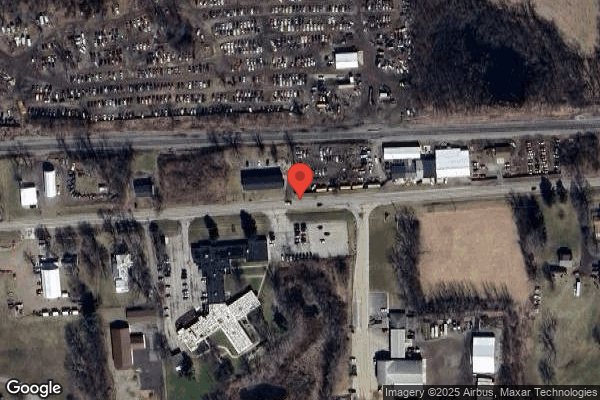
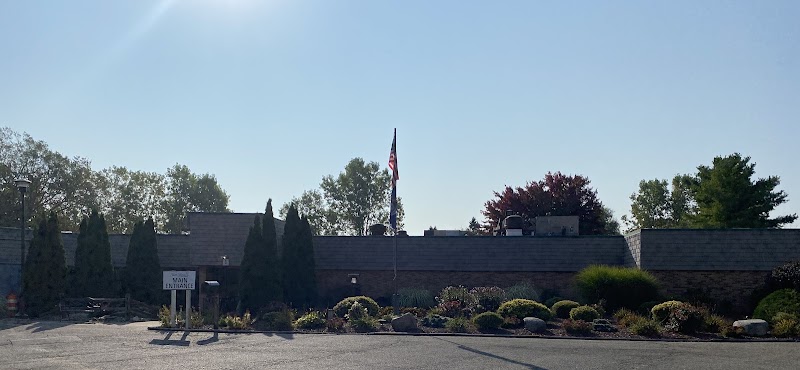
6531 W Michigan Avenue, Jackson, MI 49201 (517) 750-3822
For profit - Corporation 81 Beds NEXCARE HEALTH SYSTEMS Data: November 2025
Trust Grade
18/100
#278 of 422 in MI
Last Inspection: January 2025

Within standard 12-15 month inspection cycle. Federal law requires annual inspections.

Overview

Faith Haven Senior Care Centre has received a Trust Grade of F, indicating significant concerns about the quality of care provided. Ranking #278 out of 422 facilities in Michigan places it in the bottom half of the state, and #6 out of 7 in Jackson County suggests that only one local option is better. The facility's trend is worsening, with issues increasing from 12 in 2024 to 17 in 2025. Staffing is a relative strength with a 4/5 star rating, although turnover is average at 53%. However, there are serious concerns, including incidents of mental abuse and a lack of adequate wound care for residents, which highlight significant weaknesses in the facility's operations and oversight.
Trust Score
F
18/100
In Michigan
#278/422
Bottom 35%
Safety Record
High Risk
Review needed
Inspections
Getting Worse
12 → 17 violations
Staff Stability
⚠ Watch
53% turnover. Above average. Higher turnover means staff may not know residents' routines.
Penalties
✓ Good
$15,872 in fines. Lower than most Michigan facilities. Relatively clean record.
Skilled Nurses
○ Average
Each resident gets 35 minutes of Registered Nurse (RN) attention daily — about average for Michigan. RNs are the most trained staff who monitor for health changes.
Violations
⚠ Watch
44 deficiencies on record. Higher than average. Multiple issues found across inspections.
★★☆☆☆
2.0
Overall Rating
★★★★☆
4.0
Staff Levels
★★★★☆
4.0
Care Quality
★★☆☆☆
2.0
Inspection Score
Stable
2024: 12 issues
2025: 17 issues

The Good

  • 4-Star Staffing Rating · Above-average nurse staffing levels
  • 4-Star Quality Measures · Strong clinical quality outcomes
  • Full Sprinkler Coverage · Fire safety systems throughout facility
  • No fines on record

Facility shows strength in staffing levels, quality measures, fire safety.

The Bad

2-Star Overall Rating

Below Michigan average (3.1)

Below average - review inspection findings carefully

Staff Turnover: 53%

Near Michigan avg (46%)

Higher turnover may affect care consistency

Federal Fines: $15,872

Below median ($33,413)

Minor penalties assessed

Chain: NEXCARE HEALTH SYSTEMS

Part of a multi-facility chain

Ask about local staffing decisions and management

The Ugly 44 deficiencies on record

3 actual harm
Aug 2025 3 deficiencies 1 Harm
SERIOUS (G) 📢 Someone Reported This

A family member, employee, or ombudsman was alarmed enough to file a formal complaint

Actual Harm - a resident was hurt due to facility failures

Free from Abuse/Neglect (Tag F0600)

A resident was harmed · This affected 1 resident

**NOTE- TERMS IN BRACKETS HAVE BEEN EDITED TO PROTECT CONFIDENTIALITY** This citation pertains to intake 2575924Based on interview and record review, the facility failed to protect the resident's righ...

Read full inspector narrative →
**NOTE- TERMS IN BRACKETS HAVE BEEN EDITED TO PROTECT CONFIDENTIALITY** This citation pertains to intake 2575924Based on interview and record review, the facility failed to protect the resident's right to be free from mental abuse and verbal abuse by a staff member. Findings Include:Review of the medical record reflected that R1 was admitted to the facility on [DATE] and readmitted on [DATE], with diagnoses including chronic pain syndrome, carpal tunnel syndrome, jaw pain, muscle spasms, restless legs syndrome, opioid dependence, intervertebral disc disorders (a condition that affects the disc between the vertebrae of the spine), adjustment disorder with mixed anxiety and depression, temporomandibular joint disorder (causing pain and dysfunction of the jaw), migraine, post-traumatic stress disorder, dental caries, anxiety disorder, depression, low back pain, and sciatica. The Minimum Data Set (MDS) reflected that R1 scored 15 out of 15 (cognitively intact) on the Brief Interview for Mental Status (BIMS), a cognitive screening tool. R1 was no longer at the facility.Facility reported incident reflected on 6/30/25, RN C received a verbal order to increase R1's pain medication but did not enter it until 7/3/25. She admitted she failed to follow up with the physician in a timely manner. A physician statement dated 7/8/25 confirmed that the order for Norco was agreed upon with R1 on 6/30, but by the weekend, the changes were still not made. The Physician Assistant noted concern and intervened.Review of the facility reported incident dated 7/22/25 reflected Resident (R1) reported allegations against a staff member. R1 requested a review of a previous concern she had made that she did not feel was resolved. Upon further investigation, the NHA [covering Nursing Home Administrator] determined the need to report the allegation. A thorough investigation is being conducted. The alleged staff member will not return to work until a conclusion is made.Review of the Facility Reported Incident Report dated 7/22/25 indicated that on that date, covering NHA E reviewed two Concern Forms R1 had written on 7/5/25 along with the statements collected during the initial investigation. NHA E decided to formally report the allegations and initiate a separate investigation, as R1 continued to express unresolved concerns. R1 alleged that Registered Nurse (RN) C had threatened her life and well-being by telling her that narcotic medications would be withheld if she refused to go to the Emergency Department. R1 also alleged that RN C failed to process a physician's order dated 6/30/25 to increase her pain medication.Review of a Resident Assistance Form completed by R1 and dated 7/5/25 stated: [RN ‘C'] threatened my life and my well-being. She refused to listen to my wishes. I have a detailed EMS (Emergency Medical Service) report which backs up my claims. [RN ‘C'] also refused to put in doctor's orders on Monday. A second Resident Assistance Form contained allegations of unequal treatment from RN C. R1 again accused RN C of nearly killing her, threatening her life and well-being, and added, people like RN ‘C' do not deserve to have anyone's life in their hands. If this doesn't stop, she will definitely kill more people. The form again referenced the EMS report from a 6/25/25 hospital transfer.Review of a Nurse's Note dated 6/25/25 at 11:58 AM stated: Resident [R1] c/o (complained of) dizziness and fatigue. Pulse 45 and O2 (oxygen saturation) 70%. 2L (liters) nasal cannula applied, O2 increased to 80%. Pulse increased to 49. This writer contacted PA (Physician's Assistant) and received an order to send to ER (Emergency Department). EMT contacted and resident transferred to ER.Review of the Prehospital Care Report Summary from EMS for the 6/25/25 transfer revealed that EMS arrived at 10:33 AM. The Narrative History Text stated that EMS arrived to find R1 lying in bed. Patient (R1) was surprised they were there to transport her to the ED. Staff stated they believed her pain medication had caused her heart rate and SpO2 to drop. R1 stated she felt better and refused to go to the ED. Contact was made with the ED Physician, who confirmed that if the patient was alert and oriented (A&Ox4) and refused, she could not be forced to go. R1 continued to refuse. Staff then stated, we will not give you any kind of pain medication if you stay here. R1 responded, you will put me into DT (delirium tremors) if you do that. Staff allegedly replied, that's fine, I will make you go to the hospital when you are unconscious. Per the EMS prehospital summary, R1's vital signs were as follows on 6/25/25 at 10:41 AM (seven minutes after arrival) Blood pressure 139/75 Pulse 54 SPO2 93%. At 11:06 AM (while still at the facility) blood pressure 127/67 Pulse 77 SPO2 92%. The vitals show that R1 was hemodynamically stable.In an interview on 8/20/25 at 10:47 AM, Confidential Staff Member K described RN C as snippy and rude and reported hearing her say things like, well if you would follow what you're supposed to do, this wouldn't be happening. At 12:03 PM, LPN S stated that R1 was visibly upset over medication changes and felt she was treated differently by RN C. At 12:48 PM, LPN L stated she was present during the 6/25/25 hospital transfer. RN C reportedly said, Can you help me, [R1] is getting on my nerves and won't go to the hospital. LPN L entered the room and heard RN C tell R1, I'm not going to give you pain medication if you stay, to which R1 responded, If you withhold my medications, I'll fall over and die. RN C allegedly replied, I guess I'll send you to the hospital then and you won't be able to refuse. LPN L told RN C to stop being snippy and then exited the room.On 8/20/25 at 3:17 PM, R1 was interviewed and described feeling targeted after reporting a near-miss medication error in November 2024, which led to a nurse's termination. She said she was treated differently thereafter, especially by RN C. R1 recounted the 6/25/25 event as described in the facility reported incident and medical record.R1 became tearful, describing the experience as emotionally and verbally abusive, triggering her PTSD. She stated that RN C targeted her, labeled her a drug seeker, laughed at her, rolled her eyes, and once stood in the hallway laughing while she cried in pain. R1 stated that RN C made her feel insignificant and like her life had no value.Psychology Notes dated 4/22/25 and 5/20/25 documented R1's PTSD diagnosis and her mistrust of staff. R1 disclosed a history of childhood and domestic abuse, chronic pain, and emotional difficulties tied to her condition and environment.On 8/21/25 at 12:26 PM, LPN W confirmed that RN C was nasty to R1 and other residents. She reported being warned that R1 might get you fired, and stated RN C referred to R1 as a drug seeker who was stoned out of her [NAME]. LPN W found the comments appalling and reported them to the former NHA but was told not to worry. She also reported witnessing a conversation in which R1 asked PA T if he had discontinued her narcotics because RN C said he did. PA T denied this.On 8/20/25 at 10:18 AM, RN I stated that during the 7/1/25 meeting, RN C told R1, You're on a whole bunch of medications, you're going to die, using a condescending tone. At 3:04 PM, RN J confirmed being present during the same meeting and recalled RN C saying, You're not getting the medication list today because one doctor is trying to decrease your narcotics, but [the facility doctor] hasn't changed anything like he should have. RN J stated that RN C was a newer nurse and lacked customer service skills.Review of an Employee Corrective Action form dated 7/8/25 showed RN C was disciplined for not following through with a doctor's order. It also noted a prior written warning on 6/2/25 with no substantial improvement since. An Employee Warning Record dated 7/25/25 cited disciplinary action for the 6/25/25 incident. The summary noted that RN C communicated a verbal physician's order in a way that made the resident feel threatened, though the investigation did not find intent to threaten. It recommended better tone, body language, and communication during stressful situations. It further stated that when an order needs clarification, the provider must be contacted immediately and documentation must reflect all steps taken to process or delay a physician's order.In an interview on 8/21/25 at 10:11 AM, RN C stated that on 6/25/25, she assisted staff with addressing R1's change in condition. RN C felt that the medication that R1 was taking and her recent diagnosis of bronchitis had affected her respiratory status. RN C reported calling PA T and receiving a verbal order to hold all narcotic medication, however when asked why RN C did not document this order, RN C stated that she did not and per best standards of practice. Regarding the verbal Physician order for R1's pain medication, RN C stated that she did not put the order in timely because she felt it required provider clarification. RN C stated that she did not call back PA T after resolution of R1's symptoms and notify PA T that the acute change in condition had resolved and to inquire of holding R1's medications would still be necessary.In an interview on 8/21/25 at 10:11 AM, covering NHA E stated that after reviewing the grievances dated 7/5/25, it was clear that these concerns were allegations of abuse and should have been reported to the State Agency within the two-hour time frame. The Facility Reported Incident was not reported until 7/25/25, 20 days later.As a result of these practices, R1 stated that she experienced significant psychological distress, humiliation, and fear for her safety. She reported being targeted, made to feel insignificant, Multiple staff corroborated that RN C threatened to withhold R1's pain medications, coerced her into transferring to the hospital, told her you're going to die because of her prescriptions, and openly ridiculed her while she was crying in pain.
CONCERN (D) 📢 Someone Reported This

A family member, employee, or ombudsman was alarmed enough to file a formal complaint

Potential for Harm - no one hurt, but risky conditions existed

Resident Rights (Tag F0550)

Could have caused harm · This affected 1 resident

**NOTE- TERMS IN BRACKETS HAVE BEEN EDITED TO PROTECT CONFIDENTIALITY** This citation pertains to intake 2575924Based on interview and record review, the facility failed to honor the residents right t...

Read full inspector narrative →
**NOTE- TERMS IN BRACKETS HAVE BEEN EDITED TO PROTECT CONFIDENTIALITY** This citation pertains to intake 2575924Based on interview and record review, the facility failed to honor the residents right to refuse a hospital transfer in one (Resident one) out of three reviewed for resident rights. Findings include:Review of the medical record reflected that R1 was admitted to the facility on [DATE] and readmitted on [DATE], with diagnoses including chronic pain syndrome, carpal tunnel syndrome, jaw pain, muscle spasms, restless legs syndrome, opioid dependence, intervertebral disc disorders (a condition that affects the disc between the vertebrae of the spine), adjustment disorder with mixed anxiety and depression, temporomandibular joint disorder (causing pain and dysfunction of the jaw), migraine, post-traumatic stress disorder, dental caries, anxiety disorder, depression, low back pain, and sciatica. The Minimum Data Set (MDS) reflected that R1 scored 15 out of 15 (cognitively intact) on the Brief Interview for Mental Status (BIMS), a cognitive screening tool. R1 was no longer at the facility.Facility reported incident reflected on 6/30/25, RN C received a verbal order to increase R1's pain medication but did not enter it until 7/3/25. She admitted she failed to follow up with the physician in a timely manner. A physician statement dated 7/8/25 confirmed that the order for Norco was agreed upon with R1 on 6/30, but by the weekend, the changes were still not made. The Physician Assistant noted concern and intervened.Further review of the facility reported incident dated 7/22/25 reflected Resident (R1) reported allegations against a staff member. R1 requested a review of a previous concern she had made that she did not feel was resolved. Upon further investigation, the NHA [covering Nursing Home Administrator] determined the need to report the allegation. A thorough investigation is being conducted. The alleged staff member will not return to work until a conclusion is made.Review of the Facility Reported Incident Report dated 7/22/25 indicated that on that date, covering NHA E reviewed two Concern Forms R1 had written on 7/5/25 along with the statements collected during the initial investigation. NHA E decided to formally report the allegations and initiate a separate investigation, as R1 continued to express unresolved concerns. R1 alleged that Registered Nurse (RN) C had threatened her life and well-being by telling her that narcotic medications would be withheld if she refused to go to the Emergency Department. R1 also alleged that RN C failed to process a physician's order dated 6/30/25 to increase her pain medication.Review of a Resident Assistance Form completed by R1 and dated 7/5/25 stated: [RN ‘C'] threatened my life and my well-being. She refused to listen to my wishes. I have a detailed EMS (Emergency Medical Service) report which backs up my claims. [RN ‘C'] also refused to put in doctor's orders on Monday. A second Resident Assistance Form contained allegations of unequal treatment from RN C. R1 again accused RN C of nearly killing her, threatening her life and well-being, and added, people like RN ‘C' do not deserve to have anyone's life in their hands. If this doesn't stop, she will definitely kill more people. The form again referenced the EMS report from a 6/25/25 hospital transfer.Review of a Nurse's Note dated 6/25/25 at 11:58 AM stated: Resident [R1] c/o (complained of) dizziness and fatigue. Pulse 45 and O2 (oxygen saturation) 70%. 2L (liters) nasal cannula applied, O2 increased to 80%. Pulse increased to 49. This writer contacted PA (Physician's Assistant) and received an order to send to ER (Emergency Department). EMT contacted and resident transferred to ER.Review of the Prehospital Care Report Summary from EMS for the 6/25/25 transfer revealed that EMS arrived at 10:33 AM. The Narrative History Text stated that EMS arrived to find R1 lying in bed. Patient (R1) was surprised they were there to transport her to the ED. Staff stated they believed her pain medication had caused her heart rate and SpO2 to drop. R1 stated she felt better and refused to go to the ED. Contact was made with the ED Physician, who confirmed that if the patient was alert and oriented (A&Ox4) and refused, she could not be forced to go. R1 continued to refuse. Staff then stated, we will not give you any kind of pain medication if you stay here. R1 responded, you will put me into DT (delirium tremors) if you do that. Staff allegedly replied, that's fine, I will make you go to the hospital when you are unconscious.In an interview on 8/20/25 at 10:47 AM, Confidential Staff Member K described RN C as snippy and rude and reported hearing her say things like, well if you would follow what you're supposed to do, this wouldn't be happening. At 12:03 PM, LPN S stated that R1 was visibly upset over medication changes and felt she was treated differently by RN C. At 12:48 PM, LPN L stated she was present during the 6/25/25 hospital transfer. RN C reportedly said, Can you help me, [R1] is getting on my nerves and won't go to the hospital. LPN L entered the room and heard RN C tell R1, I'm not going to give you pain medication if you stay, to which R1 responded, If you withhold my medications, I'll fall over and die. RN C allegedly replied, I guess I'll send you to the hospital then and you won't be able to refuse. LPN L told RN C to stop being snippy and then exited the room.On 8/20/25 at 3:17 PM, R1 was interviewed and described feeling targeted after reporting a near-miss medication error in November 2024, which led to a nurse's termination. She said she was treated differently thereafter, especially by RN C. R1 recounted the 6/25/25 event, stating that she had refused transport due to improving symptoms. She claimed RN C said, You have to go to the hospital, and if you don't, you'll never get another narcotic in this facility. R1 replied, If you do that, you'll kill me, to which RN C allegedly said, Okay, well that's a chance we are willing to take. R1 also recounted a 7/1/25 interaction in which RN C told her, You are taking too many narcotics, and you are going to kill yourself, in a rude and condescending tone. R1 became tearful, describing the experience as emotionally and verbally abusive, triggering her PTSD. She stated that RN C targeted her, labeled her a drug seeker, laughed at her, rolled her eyes, and once stood in the hallway laughing while she cried in pain. R1 stated that RN C made her feel insignificant and like her life had no value.Psychology Notes dated 4/22/25 and 5/20/25 documented R1's PTSD diagnosis and her mistrust of staff. R1 disclosed a history of childhood and domestic abuse, chronic pain, and emotional difficulties tied to her condition and environment.On 8/21/25 at 12:26 PM, LPN W confirmed that RN C was nasty to R1 and other residents. She reported being warned that R1 might get you fired, and stated RN C referred to R1 as a drug seeker who was stoned out of her [NAME]. LPN W found the comments appalling and reported them to the former NHA but was told not to worry. She also reported witnessing a conversation in which R1 asked PA T if he had discontinued her narcotics because RN C said he did. PA T denied this.On 8/20/25 at 10:18 AM, RN I confirmed that during the 7/1/25 meeting, RN C told R1, You're on a whole bunch of medications, you're going to die, using a condescending tone. At 3:04 PM, RN J confirmed being present during the same meeting and recalled RN C saying, You're not getting the medication list today because one doctor is trying to decrease your narcotics, but [the facility doctor] hasn't changed anything like he should have. RN J stated that RN C was a newer nurse and lacked customer service skills.Review of an Employee Corrective Action form dated 7/8/25 showed RN C was disciplined for not following through with a doctor's order. It also noted a prior written warning on 6/2/25 with no substantial improvement since. An Employee Warning Record dated 7/25/25 cited disciplinary action for the 6/25/25 incident. The summary noted that RN C communicated a verbal physician's order in a way that made the resident feel threatened, though the investigation did not find intent to threaten. It recommended better tone, body language, and communication during stressful situations. It further stated that when an order needs clarification, the provider must be contacted immediately and documentation must reflect all steps taken to process or delay a physician's order.In an interview on 8/21/25 at 10:11 AM, RN C stated that on 6/25/25, she assisted staff with addressing R1's change in condition. RN C felt that the medication that R1 was taking and her recent diagnosis of bronchitis had affected her respiratory status. RN C reported calling PA T and receiving a verbal order to hold all narcotic medication, however when asked why RN C did not document this order, RN C admitted that she did not and per best standards of practice, RN C should have. RN C stated that she applied 2L oxygen via nasal cannula, and R1 perked back up and returned to baseline. RN C reported that R1 repeatedly refused transport to the Emergency Department, however, RN C felt she should go because of her unstable vital signs. Regarding the verbal Physician order for R1's pain medication, RN C admitted that she did not put the order in timely because she felt it required provider clarification, however, made no timely attempts to obtain provider clarification. Of note, per the EMS prehospital summary, R1's vital signs were as follows:6/25/25 at 10:41 AM (seven minutes after arrival) Blood pressure 139/75 Pulse 54 SPO2 93%. At 11:06 AM (while still at the facility) blood pressure 127/67 Pulse 77 SPO2 92%. The vitals show that R1 was hemodynamically stable.When asked, RN C stated that she did not call back PA T after resolution of R1's symptoms and notify PA T that the acute change in condition had resolved and to inquire of holding R1's medications would still be necessary.In an interview on 8/21/25 at 10:11 AM, covering NHA E stated that after reviewing the grievances dated 7/5/25, it was clear that these concerns were allegations of abuse and should have been reported to the State Agency within the two-hour time frame. The Facility Reported Incident was not reported until 7/25/25, 20 days later. As a result of these practices, R1 stated that she experienced significant psychological distress, humiliation, and fear for her safety. She reported being targeted, made to feel insignificant, and described RN C as emotionally and verbally abusive, triggering symptoms of Post-Traumatic Stress Disorder (PTSD). Multiple staff corroborated that RN C threatened to withhold R1's pain medications, coerced her into transferring to the hospital, told her you're going to die because of her prescriptions, and openly ridiculed her while she was crying in pain.
CONCERN (D) 📢 Someone Reported This

A family member, employee, or ombudsman was alarmed enough to file a formal complaint

Potential for Harm - no one hurt, but risky conditions existed

Report Alleged Abuse (Tag F0609)

Could have caused harm · This affected 1 resident

**NOTE- TERMS IN BRACKETS HAVE BEEN EDITED TO PROTECT CONFIDENTIALITY** This citation pertains to intake 2575924Based on interviews and record review, the facility failed to implement policies and pro...

Read full inspector narrative →
**NOTE- TERMS IN BRACKETS HAVE BEEN EDITED TO PROTECT CONFIDENTIALITY** This citation pertains to intake 2575924Based on interviews and record review, the facility failed to implement policies and procedures for ensuring the reporting of a reasonable suspicion of a crime in accordance with section 1150B of the Act.Findings Include:Review of the medical record reflected that R1 was admitted to the facility on [DATE] and readmitted on [DATE], with diagnoses including chronic pain syndrome, carpal tunnel syndrome, jaw pain, muscle spasms, restless legs syndrome, opioid dependence, intervertebral disc disorders (a condition that affects the disc between the vertebrae of the spine), adjustment disorder with mixed anxiety and depression, temporomandibular joint disorder (causing pain and dysfunction of the jaw), migraine, post-traumatic stress disorder, dental caries, anxiety disorder, depression, low back pain, and sciatica. The Minimum Data Set (MDS) reflected that R1 scored 15 out of 15 (cognitively intact) on the Brief Interview for Mental Status (BIMS), a cognitive screening tool. R1 was no longer at the facility.Facility reported incident reflected on 6/30/25, RN C received a verbal order to increase R1's pain medication but did not enter it until 7/3/25. She admitted she failed to follow up with the physician in a timely manner. A physician statement dated 7/8/25 confirmed that the order for Norco was agreed upon with R1 on 6/30, but by the weekend, the changes were still not made. The Physician Assistant noted concern and intervened.Review of the facility reported incident dated 7/22/25 reflected Resident (R1) reported allegations against a staff member. R1 requested a review of a previous concern she had made that she did not feel was resolved. Upon further investigation, the NHA [covering Nursing Home Administrator] determined the need to report the allegation. A thorough investigation is being conducted. The alleged staff member will not return to work until a conclusion is made.Review of the Facility Reported Incident Report dated 7/22/25 indicated that on that date, covering NHA E reviewed two Concern Forms R1 had written on 7/5/25 along with the statements collected during the initial investigation. NHA E decided to formally report the allegations and initiate a separate investigation, as R1 continued to express unresolved concerns. R1 alleged that Registered Nurse (RN) C had threatened her life and well-being by telling her that narcotic medications would be withheld if she refused to go to the Emergency Department. R1 also alleged that RN C failed to process a physician's order dated 6/30/25 to increase her pain medication.Review of a Resident Assistance Form completed by R1 and dated 7/5/25 stated: [RN ‘C'] threatened my life and my well-being. She refused to listen to my wishes. I have a detailed EMS (Emergency Medical Service) report which backs up my claims. [RN ‘C'] also refused to put in doctor's orders on Monday. A second Resident Assistance Form contained allegations of unequal treatment from RN C. R1 again accused RN C of nearly killing her, threatening her life and well-being, and added, people like RN ‘C' do not deserve to have anyone's life in their hands. If this doesn't stop, she will definitely kill more people. The form again referenced the EMS report from a 6/25/25 hospital transfer.Review of an Employee Corrective Action form dated 7/8/25 showed RN C was disciplined for not following through with a doctor's order. It also noted a prior written warning on 6/2/25 with no substantial improvement since. An Employee Warning Record dated 7/25/25 cited disciplinary action for the 6/25/25 incident. The summary noted that RN C communicated a verbal physician's order in a way that made the resident feel threatened, though the investigation did not find intent to threaten. It recommended better tone, body language, and communication during stressful situations. It further stated that when an order needs clarification, the provider must be contacted immediately, and documentation must reflect all steps taken to process or delay a physician's order.In an interview on 8/21/25 at 10:11 AM, covering NHA E stated that after reviewing the grievances dated 7/5/25, it was clear that these concerns were allegations of abuse and should have been reported to the State Agency within the two-hour time frame. The Facility Reported Incident was not reported until 7/25/25, 20 days later.
Jan 2025 14 deficiencies
CONCERN (D)

Potential for Harm - no one hurt, but risky conditions existed

Resident Rights (Tag F0550)

Could have caused harm · This affected 1 resident

**NOTE- TERMS IN BRACKETS HAVE BEEN EDITED TO PROTECT CONFIDENTIALITY** Based on observations, interviews and record review, the facility failed to answer call light and provide timely care and servic...

Read full inspector narrative →
**NOTE- TERMS IN BRACKETS HAVE BEEN EDITED TO PROTECT CONFIDENTIALITY** Based on observations, interviews and record review, the facility failed to answer call light and provide timely care and services to one residents (R67) of one reviewed, resulting in frustration and embarrassment. Findings included: Review of the Face Sheet and Minimum Data Set (MDS) dated [DATE], reflected R67 was a [AGE] year old female admitted to the facility on [DATE], with diagnoses that included urinary tract infection, multiple sclerosis(chronic disease of the central nervous system that causes muscle weakness and vision changes), and anxiety disorder. The MDS reflected R67 had a BIM (assessment tool) score of 14 which indicated her ability to make daily decisions was cognitively intact, and she required one person assist with transfers, ambulation and toileting. During an observation and interview on 1/02/25 at 11:42 AM, R67 was laying in bed with call light in reach and appeared able to answer questions without difficulty. R67 complained of having her call light on for over 30 minutes and urgently needing to use the bathroom. R67 said they just do not have enough help. R67 said this happens at least 5 to 7 times a week. R67 said she knows when she has to urinate but sometimes they make her wait to long and has accidents. The red light on the wall for the call light was illuminated. This surveyor exited room and did not see or hear call light or alarms in hall. During an observation on 1/02/25 at 11:54 AM, R67 call light remained on when dietary staff entered room with meal tray. R67 overheard telling staff call light was on because she needed to be changed. Dietary staff was overheard telling R67 she would left staff know exited room and continued to pass meal trays to other resident rooms. During an interview on 1/02/25 at 11:57 AM, Certified Nurse Aid (CNA) U reported started shift at 6:00am and was assigned to R67 today. CNA U reported the facility uses a pager system for call lights that each staff have on person that sound with call lights(no sound could be heard). CNA U she did not have a pager on at the time because, and stated, I hit the floor running(current time 11:57 a.m.). CNA U reported staff can check call lights by going to 300 Nurse station and reviewing computer screen for call lights as well(300 hall nurse station was located at the end of the 300 hall.) CNA U continued to passing meal trays to other rooms. This surveyor immediately observed call light monitoring system at the 300 Nurse Station that reflected R67 call light remained on at 11:59 a.m. and was on at 11:42 a.m.(16 minutes). Dietary staff was overheard reporting to CNA U that R67 needed assistance with changing and CNA U entered R67 room and turned of call light at 12:00 p.m. Review of the Care Plans, dated 10/25/24, reflected R67 required one person physical assistance with transferring. Review of Resident Council Meeting minutes and Grievance Log, dated 6/2024 through 12/2024, reflected call light response time concerns reported in past three of six months. During an interview on 1/3/25 at 4:50 p.m., Clinical Care Coordinator (CCC) V reported oversees the 200 and 300 hall residents. CCC V reported CNA staff use pagers for resident call light system. CCC V reported would expect CNA staff to wear pagers at all times and reported was not aware staff did not have pagers on 1/2/25. CCC V reported residents occasionally complain of slow response times to call lights but nothing that she could recall in past 2 months. During an interview on 1/6/25 at about 1:35 p.m., Nursing Home Administrator (NHA) A reported facility does not ability to perform call light audits. NHA A reported facility uses pagers system to answer call lights and would expect staff to have pagers on and functioning at all times. NHA A reported was not aware that some staff were not wearing pagers on 1/2/25. Review of the new admission packet provided to all residents on admission included, KNOW YOUR RIGHTS--Your Medicaid Care and Coverage in A Nursing Facility, DCH[Department of Community Health] 0731 (10/13) . The documents included, Quality of Your Medical Care. You have the right to receive necessary nursing, medical and social services to reach and maintain the highest practicable physical, mental and social well being, as determined by the comprehensive assessment and care plan. These services must be given in a confidential and dignified manner that meets your treatment and personal needs .
CONCERN (D)

Potential for Harm - no one hurt, but risky conditions existed

Deficiency F0565 (Tag F0565)

Could have caused harm · This affected 1 resident

Based on interview and record review, the facility failed to ensure that grievances were promptly resolved and/or responded to in a timely manner for 5 of 5 residents that participate in Resident Coun...

Read full inspector narrative →
Based on interview and record review, the facility failed to ensure that grievances were promptly resolved and/or responded to in a timely manner for 5 of 5 residents that participate in Resident Council (RC) meetings. Findings include: On 01/03/25 11:05 AM during the confidential group meeting, RC members reported management talks about fixing problems but does not put everything in writing and does correct or communicate updates on issues. When asked for the RC members to clarify they reported they talk about cold coffee month after month and offer solutions but it falls on deaf ears. One of the RC members reported that the Nursing Home Administrator (NHA) A attended the December 2024 meeting and the Council requested to discuss the coffee issue. The participants reported NHA A stated someone would start doing test trays to obtain coffee temperatures. The response of the taking a test tray added to the RC members frustration as they have consistently reported the coffee temperatures were cold, they reported they don't need NHA A to take coffee temperatures to validate their concern, they know its cold, they want a resolution. Five of 5 RC members/group participants also reported they have requested for several times for a different cable package (that includes ABC) along with a television in the main dining room. In which they reportedly were told months ago that management was waiting for big screen televisions to go on sale. Review of the facility RC minutes dated 6/18/24 reflected in part the residents requested a different cable provider, they voiced they currently were unable to receive the ABC network on their televisions and wanted additional television channel options that included the ABC network on their televisions. Review of the 7/23/24 RC Minutes reflected in part, residents had a concern related to cold coffee temperatures. Review of the 8/20/24 RC Minutes reflected in part, residents had a concern related to cold coffee temperatures. Review of the 9/24/24 RC Minutes reflected in part, residents had a concern related to cold coffee temperatures and it was requested to have a television placed in the main dining room and more television channels. The facility did not have a monthly RC Meeting in October 2024. Review of the RC minutes dated 11/26/24 revealed follow up from the 9/24/24 RC meting {sic} Mgt (Management) looking for a TV for dining room and watching holiday sales. and carafe cannot be temperature controlled. Review of the 12/17/24 minutes reflected no new concerns, It was explained to residents why a carafe cannot be used because of various {sic} temps. (no further explanation was documented as to why carafes cant be used.) A review of the grievance form responses/resolutions were reviewed and none of the responses over the 6 month time frame addressed the television in the dining room, additional television channels, or cold coffee. On 01/06/25 at 09:14 AM, during an interview with NHAA she reported the process of RC was that minutes were to be reviewed as an interdisciplinary team the day after the meeting and all concerns were transferred to resident assistance/concern forms and then given to the discipline in charge. When queried why there were zero assistance/concern forms related to cold coffee NHA A stated it was addressed in June of 2024- review of that form indicated an issue with hot water, not coffee. NHA A was asked to explain why the concern was repeated month after month and why there was no assistance/concern form the the issue, NHA A stated the Dietary Manager was to follow up and she will attempt to get the Dietary Managers documentation to that effect. When queried why there was no assistance forms to address the cable package, and the television in the dining room concerns/requests brought forth by the RC members, NHA A stated she was not sure if she wanted a television in the dining room, when queried why that was not communicated to the RC members opposed to the November minutes that reflected you were waiting for a sale NHA A did not offer an explanation, when queried about the cable provider and or cable packages - NHA A stated they were looking at cable packages currently. Of note, the RC members initially made this request (with no documented response) 7 months prior, and NHA A provided no documented responses related to the Dietary Manager following up on the chronic complaint of cold coffee temperatures. According to the facility Policy titled Resident Concern dated 8/31/15 with a revision date of 2/26/19. The policy revealed time frames in part, for responding to concerns were as soon as possible but within 15 days and a written response was to be provided as soon as possible but no later that 30 days.
CONCERN (D)

Potential for Harm - no one hurt, but risky conditions existed

Assessment Accuracy (Tag F0641)

Could have caused harm · This affected 1 resident

**NOTE- TERMS IN BRACKETS HAVE BEEN EDITED TO PROTECT CONFIDENTIALITY** Based on interview and record review, the facility failed to ensure the accuracy of Minimum Data Set (MDS) assessments for three...

Read full inspector narrative →
**NOTE- TERMS IN BRACKETS HAVE BEEN EDITED TO PROTECT CONFIDENTIALITY** Based on interview and record review, the facility failed to ensure the accuracy of Minimum Data Set (MDS) assessments for three (R64, R66, R89) of 18 reviewed. Findings include: Resident #66 (R66) Review of the medical record revealed R66 was admitted to the facility on [DATE] with diagnoses that included bipolar disorder. The MDS with an Assessment Reference Date (ARD) of [DATE] revealed R66 scored 12 out of 15 (moderate cognitive impairment) on the Brief Interview for Mental Status (BIMS-a cognitive screening tool). Review of the Preadmission Screening/Annual Resident Review (PASARR) Level I Screening revealed no mention that R66 had a diagnosis of schizophrenia. The MDS assessments with ARDs of [DATE] and [DATE] revealed R66 was not coded as having a diagnosis of schizophrenia. Review of R66's diagnosis list revealed a diagnosis of schizophrenia was added on [DATE]. Review of the MDS with an ARD of [DATE] revealed R66 was coded with a diagnosis of schizophrenia. In an interview on [DATE] at 9:15 AM, Social Work Director (SWD) J reported R66 had a diagnosis of bipolar disorder. SWD J reported they were not sure why R66 had a diagnosis of schizophrenia listed in their medical record. In an interview on [DATE] at 11:57 AM, Unit Manager (UM) K reported they did not know why R66 had a diagnosis of schizophrenia listed in their medical record or why it was coded on the MDS. In an interview on [DATE] at 3:25 PM, Regional Clinical Director (RCD) F reported R66's diagnosis of schizophrenia and MDS coding of schizophrenia was inaccurate. Resident #64 (R64) Review of the medical record revealed R64 was admitted [DATE] with diagnoses that included peripheral vascular disease (PVD), type 2 diabetes mellitus, atherosclerotic heart disease (buildup of cholesterol plaque in artery walls), hypertension, history of heart attack, depression, osteoarthritis (type of arthritis that occurs when flexible tissue at the end of bones wears down) bilateral hips, asthma, and schizoaffective disorder bipolar type. The most recent Minimum Data Set (MDS), with an Assessment Reference Date (ARD) of [DATE], revealed R64 had a Brief Interview of Mental Status (BIMS) of 15 (cognitively intact) out of 15. During observation and interview on [DATE] at 01:36 p.m. R64 was observed lying down in bed. R64 explained that she has stayed at the facility several different times and that after the previous stay she was discharged home. R64 explained that she recently returned to the facility after a hospital stay. Review of R64's medical record revealed the most recent Minimum Dat Set (MDS), with an Assessment Reference Date (ARD) of [DATE], revealed section I-Active Diagnoses, subsection 15900-Bipolar had been document no and subsection I6000- Schizophrenia, had been documented as yes. Review of R64's medical diagnoses record revealed the diagnoses of schizoaffective disorder bipolar type, which had been added to the diagnoses record on [DATE]. Review of R64's hospital discharge records, dated [DATE] did not demonstrate a discharge diagnoses of schizoaffective disorder bipolar type. Review of R64's Preadmission Screening (PAS) Annual Resident Review (ARR), hospital exemption discharge date d [DATE], revealed yes-the person has a current diagnosis of mental illness, yes-the person has received treatment for mental illness, yes-the person has routinely received one or more prescribed antipsychotic or antidepressant medication within the last 14 days. The same PASARR, dated [DATE] revealed documentation that stated, explain any yes - bipolar . In an interview on [DATE] at 02:54 p.m. Social Worker (SW) J explained that she is responsible to review that residents that are receiving psychotropic medication to ensure that they have the appropriate diagnoses for the use of that type of medication. SW J explained that she is not responsible to verify the diagnoses with previous hospital records and only verifies those diagnoses by reviewing the resident's diagnoses record in the chart. SW J explained that Minimum Data Set (MDS) nurse was the person responsible to update the resident's medical diagnoses record. SW J reviewed R64's medical record and confirmed that her diagnoses record revealed the diagnoses of schizoaffective disorder bipolar type. SW J could not explain where this diagnoses had been obtained. In an interview on [DATE] at 03:01 p.m. Nursing Home Administrator (NHA) A explained that a residents diagnoses record is reviewed by the Interdisciplinary Team at morning meetings after new residents are admitted . NHA A could not answer why R64 had been given the diagnoses of schizoaffective disorder bipolar type on her diagnoses record or why R64's Minimum Data Set (MDS), with an Assessment Reference Date (ARD) of [DATE], had been documented yes for Schizophrenia. NHA A explained that she would have to research R64's medial record and talk with staff to determine explanation. In an interview on [DATE] at 03:35 p.m. Regional Clinical Director (RCD) F explained that the diagnoses record for R64 was inaccurate for the diagnoses of schizoaffective disorder bipolar type and should have been given the diagnoses of bipolar disorder. RCD F explained that the computerized system automatically list schizoaffective disorder bipolar type when someone types in the diagnoses of bipolar disorder and staff would have needed to manually change the entered diagnoses. RCD F explained that R64's diagnoses record would need to be corrected and R64's Minimum Data Set (MDS), with an Assessment Reference Date (ARD) of [DATE], Section I-Active Diagnoses would need to be corrected. Resident #89 (R89) Review of the medical record revealed R89 was admitted [DATE] with diagnoses that included type 2 diabetes, chronic obstruction pulmonary disease (COPD), alcohol abuse, chronic pain, major depression, gastro-esophageal reflux, hypertension, protein-calorie malnutrition, delirium (confused thinking), altered mental status, insomnia, plural effusion (a buildup of fluid between tissues that line the lungs), anemia (low number of red blood cells), abdominal aortic aneurysm, and lung cancer. R89 was discharged from the facility [DATE]. The most recent Minimum Data Set (MDS), with an Assessment Reference Date (ARD) of [DATE], revealed R89 had a Brief Interview of Mental Status (BIMS) of 11(mildly impaired cognition) out of 15. Review of R89's medical record revealed a Minimum Data Set (MDS), with an Assessment Reference Date (ARD) of [DATE] revealed section A0310 Type of Assessment, subsection F. Entry/discharge reporting was documented as 12. Death in Facility. Review of R89's medical record progress notes revealed [DATE] 17:11 (05:11 p.m.) eMar (electronic Medication Administration Record)-Medication Administration Note, Note text: In hospital. No other progress note demonstrated that R89 had returned to the facility. In an interview on [DATE] at 12:58 p.m. Regional Clinical Director (RCD) F explained that R89 had been transferred to a physician office for a routine visit. RCD F explained that R89 became lethargic and had an altered mental status and was sent to the emergency room for evaluation. RCD F provided hospital records that demonstrated that R89 died in emergency department [DATE]. Review of the Resident Assessment Instrument (RAI) manual pg. 2-14 Leave of absence (LOA) stated hospital observation stay less than 24 hours and the hospital does not admit resident would be coded as a facility Death. In an interview on [DATE] at 01:30 p.m. Regional Clinical Director (RCD) F explained that R89's Minimum Dat Set (MDS) with an Assessment Reference Date (ARD) of [DATE] should have been coded 10. Discharge-return anticipated. RCD F demonstrated that the facility corrected the MDS.
CONCERN (D)

Potential for Harm - no one hurt, but risky conditions existed

Comprehensive Care Plan (Tag F0656)

Could have caused harm · This affected 1 resident

**NOTE- TERMS IN BRACKETS HAVE BEEN EDITED TO PROTECT CONFIDENTIALITY** Based on observation, interview, and record review the facility failed to develop and implement comprehensive resident-centered ...

Read full inspector narrative →
**NOTE- TERMS IN BRACKETS HAVE BEEN EDITED TO PROTECT CONFIDENTIALITY** Based on observation, interview, and record review the facility failed to develop and implement comprehensive resident-centered care plans for one out of 18 residents (R67), resulting in unmet care needs including restorative therapy within six months of right total shoulder replacement. Findings: Review of the Face Sheet and Minimum Data Set (MDS) dated [DATE], reflected R67 was a [AGE] year old female admitted to the facility on [DATE], with diagnoses that included urinary tract infection, multiple sclerosis(chronic disease of the central nervous system that causes muscle weakness and vision changes), and anxiety disorder. The MDS reflected R67 had a BIM (assessment tool) score of 14 which indicated her ability to make daily decisions was cognitively intact, and she required one person assist with transfers, ambulation and toileting. During an observation and interview on 1/02/25 at 11:42 AM, R67 was laying in bed and appeared able to answer questions without difficulty. R67 reported had recent right shoulder replacement July 2024 with very limited range of motion and eight out of ten on pain scale and difficulty sleeping. R67 reported was unable to lift right arm off the bed from laying position more than two inches and demonstrated. R67 reported had received therapy services on admission but had to discontinue related to insurance. R67 reported physician services talked about adding medication about two weeks prior but had not heard anything yet. During an interview on 1/06/25 at 11:21 AM, Therapy Director(TD) H reported R67 was not currently on therapy service related to insurance. TD H reported on admission R67 received both Occupational Therapy and Physical Therapy and was discharged from services 11/19/24. During an interview on 1/06/25 at 12:28 PM, TD H reported when R67 was discharged from services on 11/19/24 therapy completed recommendation for restorative therapy and would provide evidence. Review of R67 Electronic Medical Record(EMR), dated 10/25/24 through current(1/6/25), including Care Plans, reflected no evidence that R67 had ordered/received restorative therapy between 11/19/24 and 1/6/25. Continued review of R67 EMR reflected no evidence that R67 had recent right total shoulder replacement diagnosis including the MDS or Care Plans. During an interview on 1/06/25 at 12:40 PM, Director of Nursing(DON) B reported would expect therapy to recommend restorative therapy if needed and communicate to nursing and would expect restorative therapy to be on resident Care Plans and [NAME]. During an interview and record review on 1/06/25 at 1:05 PM, TM H provided R67 restorative referral, dated 11/25/24, signed and dated by two therapy staff and nursing signature line was blank. TM H reported process included that therapy would completed forms and he physically handed to the DON B to make sure nursing receives them. Review of R67, Restorative Referral form, dated 11/25/24, included R67 was a fall risk and was marked to have range of motion 2 time daily for upper extremities, Participate in ADL's(dressing/grooming) 2 times daily and ambulate two times daily with one person physical assist 2 wheel walker. During an interview on 1/6/25 at 1:25 PM, DON B reported was just provided R67 Restorative Therapy Referral today and was instructed by support staff that it was her responsibility to add to R67 plan of care including orders and care plans. DON B reported had been in position for over six months. DON B verified R67 did not have orders for Restorative therapy and had not been receiving between 11/25/24 and current date and should have been. DON B reported did not recall receiving R67 Restorative Referral 11/25/24. DON B reported facility was in the process of auditing past several months of restorative therapy referrals for compliance related to surveyor investigation.
CONCERN (D)

Potential for Harm - no one hurt, but risky conditions existed

Deficiency F0657 (Tag F0657)

Could have caused harm · This affected 1 resident

**NOTE- TERMS IN BRACKETS HAVE BEEN EDITED TO PROTECT CONFIDENTIALITY** Based on observation, interview, and record review the facility failed to ensure for one out of 18 residents (Resident #41) care...

Read full inspector narrative →
**NOTE- TERMS IN BRACKETS HAVE BEEN EDITED TO PROTECT CONFIDENTIALITY** Based on observation, interview, and record review the facility failed to ensure for one out of 18 residents (Resident #41) care plan was revised as needed for changes in care needs. Findings Included: Review of R41's electronic medical record (EMR) revealed R41 was admitted to the facility on [DATE]. Record review of a wound evaluation dated 12/27/2024, revealed R41 had moisture associated skin damage (MASD) incontinence associate damage (IAD) to the sacrum (bone at the base of the spine) area. The MASD was documented to have developed in the facility. Further review of the wound evaluation dated 12/27/2024, revealed the interventions in place were a heel suspension/protection device, mattress with pump, positioning wedge, and a turning/repositioning program. Record review of a care plan in place for, Skin management initiated on 2/11/2024 and last revised on 9/26/2024 revealed, R41 was at risk for skin breakdown with one reason being from incontinence. The care plan had not been revised since 10/9/2024. The care plan was not revised to include R41's MASD/IAD issue, nor were the care plan interventions revised to include the positioning wedge and the turning/repositioning program. In an observation on 1/03/2025 at 9:26 AM, of R41's MASD/IAD area revealed three skin areas that were open skin area. In an interview on 1/03/2025 at 9:59 AM, Registered Nurse (RN) T, who was the wound nurse, stated, when a resident was identified to have any skin breakdown the one of the nurses would notified her, and the nurse would do the initial skin assessment. RN T said the assessment would go to the unit manager UM who would revise the resident's care plan. RN T said if she was in the facility at the time a resident had a new skin wounds then she would revised the resident's care plans.
CONCERN (D)

Potential for Harm - no one hurt, but risky conditions existed

Deficiency F0658 (Tag F0658)

Could have caused harm · This affected 1 resident

**NOTE- TERMS IN BRACKETS HAVE BEEN EDITED TO PROTECT CONFIDENTIALITY** Resident #64 (R64) Review of the medical record revealed R64 was admitted [DATE] with diagnoses that included peripheral vascula...

Read full inspector narrative →
**NOTE- TERMS IN BRACKETS HAVE BEEN EDITED TO PROTECT CONFIDENTIALITY** Resident #64 (R64) Review of the medical record revealed R64 was admitted [DATE] with diagnoses that included peripheral vascular disease (PVD), type 2 diabetes mellitus, atherosclerotic heart disease (buildup of cholesterol plaque in artery walls), hypertension, history of heart attack, depression, osteoarthritis (type of arthritis that occurs when flexible tissue at the end of bones wears down) bilateral hips, asthma, and schizoaffective disorder bipolar type. The most recent Minimum Data Set (MDS), with an Assessment Reference Date (ARD) of 12/25/2024, revealed R64 had a Brief Interview of Mental Status (BIMS) of 15 (cognitively intact) out of 15. During observation and interview on 01/02/2025 at 01:36 p.m. R64 was observed lying down in bed. R64 explained that she has stayed at the facility several different times and that after the previous stay she was discharged home. R64 explained that she recently returned to the facility after a hospital stay. Review of R64's medical record revealed the most recent Minimum Dat Set (MDS), with an Assessment Reference Date (ARD) of 12/25/2024, revealed section I-Active Diagnoses, subsection 15900-Bipolar had been document no and subsection I6000- Schizophrenia, had been documented as yes. Review of R64's medical diagnoses record revealed the diagnoses of schizoaffective disorder bipolar type, which had been added to the diagnoses record on 12/19/2024. Review of R64's hospital discharge records, dated 12/19/2024 did not demonstrate a discharge diagnoses of schizoaffective disorder bipolar type. Review of R64's Preadmission Screening (PAS) Annual Resident Review (ARR), hospital exemption discharge date d 12/18/2024, revealed yes-the person has a current diagnosis of mental illness, yes-the person has received treatment for mental illness, yes-the person has routinely received one or more prescribed antipsychotic or antidepressant medication within the last 14 days. The same PASARR, dated 12/18/2024 revealed documentation that stated, explain any yes - bipolar . In an interview on 01/03/2025 at 02:54 p.m. Social Worker (SW) J explained that she is responsible to review that residents that are receiving psychotropic medication to ensure that they have the appropriate diagnoses for the use of that type of medication. SW J explained that she is not responsible to verify the diagnoses with previous hospital records and only verifies those diagnoses by reviewing the resident's diagnoses record in the chart. SW J explained that Minimum Data Set (MDS) nurse was the person responsible to update the resident's medical diagnoses record. SW J reviewed R64's medical record and confirmed that her diagnoses record revealed the diagnoses of schizoaffective disorder bipolar type. SW J could not explain where this diagnoses had been obtained. In an interview on 01/03/2025 at 03:01 p.m. Nursing Home Administrator (NHA) A explained that a residents diagnoses record is reviewed by the Interdisciplinary Team at morning meetings after new residents are admitted . NHA A could not answer why R64 had been given the diagnoses of schizoaffective disorder bipolar type on her diagnoses record or why R64's Minimum Data Set (MDS), with an Assessment Reference Date (ARD) of 12/25/2024, had been documented yes for Schizophrenia. NHA A explained that she would have to research R64's medial record and talk with staff to determine explanation. In an interview on 01/03/2025 at 03:35 p.m. Regional Clinical Director (RCD) F explained that the diagnoses record for R64 was inaccurate for the diagnoses of schizoaffective disorder bipolar type and should have been given the diagnoses of bipolar disorder. RCD F explained that the computerized system automatically list schizoaffective disorder bipolar type when someone types in the diagnoses of bipolar disorder and staff would have needed to manually change the entered diagnoses. RCD F explained that R64's diagnoses record would need to be corrected and R64's Minimum Data Set (MDS), with an Assessment Reference Date (ARD) of 12/25/2024, Section I-Active Diagnoses would need to be corrected. Based on interview and record review, the facility failed to ensure diagnostic practices met professional standards for two (R64 and R66) of five reviewed. Findings include: Resident #66 (R66) Review of the medical record revealed R66 was admitted to the facility on [DATE] with diagnoses that included bipolar disorder. The MDS with an Assessment Reference Date (ARD) of 12/5/24 revealed R66 scored 12 out of 15 (moderate cognitive impairment) on the Brief Interview for Mental Status (BIMS-a cognitive screening tool). Review of the Preadmission Screening/Annual Resident Review (PASARR) Level I Screening revealed no mention that R66 had a diagnosis of schizophrenia. Review of R66's diagnosis list revealed a diagnosis of schizophrenia was added on 11/29/24. Review of the MDS with an ARD of 12/5/24 revealed R66 was coded with a diagnosis of schizophrenia. Review of behavioral services note dated 12/19/24 revealed no mention that R66 had a diagnosis of schizophrenia. In an interview on 01/03/25 at 9:15 AM, Social Work Director (SWD) J reported R66 had a diagnosis of bipolar disorder. SWD J reported they were not sure why R66 had a diagnosis of schizophrenia listed in their medical record. Further information was requested regarding the diagnosis of schizophrenia which was not received prior to the survey exit. In an interview on 01/03/25 at 11:57 AM, Unit Manager (UM) K reported they did not know why R66 had a diagnosis of schizophrenia listed in their medical record or why it was coded on the MDS. further information was requested regarding the diagnosis of schizophrenia which was not received prior to the survey exit. In an interview on 01/03/25 at 3:25 PM, Regional Clinical Director (RCD) F reported R66's diagnosis of schizophrenia was inaccurate.
CONCERN (D)

Potential for Harm - no one hurt, but risky conditions existed

ADL Care (Tag F0677)

Could have caused harm · This affected 1 resident

**NOTE- TERMS IN BRACKETS HAVE BEEN EDITED TO PROTECT CONFIDENTIALITY** Based observation, interview and record review the facility failed to provide daily oral hygiene for one resident (Resident #5) ...

Read full inspector narrative →
**NOTE- TERMS IN BRACKETS HAVE BEEN EDITED TO PROTECT CONFIDENTIALITY** Based observation, interview and record review the facility failed to provide daily oral hygiene for one resident (Resident #5) of two residents reviewed for activities of daily living. Findings include: Review of Resident #5's (R5) clinical record, including the Minimum Data Set (MDS) dated [DATE], R5 had diagnoses that included anxiety and depression and scored 13 out of 15 (cognitively intact) on the Brief Interview for Mental Status (BIMS). Review of R5's Activities of Daily Living (ADL) care plan dated 11/18/22 reflected R5 needed assistance with oral hygiene which was to be done every shift and as needed. Review of R5's [NAME] (a guide for Certified Nursing Assistants) reflected oral hygiene was to be done every shift and as needed. On 01/02/25 at 11:02 AM, R5 was observed in the Activity room, R5's bottom teeth were observed to be caked with debris and R5 had severe halitosis. On 01/03/25 at 09:17 AM, R5 was observed in main dining room and again at the Resident Council Meeting at 11:00 AM. Both observations R5 had caked debris on bottom teeth and gum line. On 01/03/25 10:15 AM, during an interview with Certified Nursing Assistant (CNA) D she reported the midnight shift was responsible for getting R5 up and completing morning care. CNA D reported R5 was cooperative with care and did not refuse ADL assistance. On at 01/06/25 09:28 AM R5 was observed in the activity room, caked on debris was observed on R5's lower teeth. On 01/06/25 at 09:57 AM, during an interview with Registered Nurse/Unit Manager (RN/UM) C, reported R5's lower teeth were the natural teeth and R5 was due to be seen by the dentist the near future. When queried what the expectation was for the CNA's to provide oral care, RN/UM C stated They have to see dentist first, they make recommendations. RN/UM C then stated after all meals, at night and as needed. RN/UM C offered no explanation for R5's lack of oral care. On 01/06/25 at 10:41 AM during an Interview with R5 (bottom teeth still observed with debris along with strong halitosis) when queried if she was receiving the care needed, R5 stated Not brushing my teeth, I have been trying to get them to get me [name redacted-mouth wash] and toothpaste- I have been asking and asking and they say will and it never shows up. R5 reported being out of these items for at least two weeks, R5 further stated the bottom teeth had a partial and there was no pill to soak them in overnight. R5 stated staff do not remove the partial and her teeth have not been brushed in weeks. I don't like it! R5 stated she had requested staff to assist her with brushing her teeth and was told they don't have time. Record review reflected R5 was seen by the dentist on 10/31/24 and the consult reflected R5 had calculus and plaque build up. R5 was seen again by the dentist on 12/09/24, this consult revealed scaling was completed by hand and moderate calculus was found along with heavy plaque. Recommendations-assistance from staff for daily hygiene.
CONCERN (D)

Potential for Harm - no one hurt, but risky conditions existed

Quality of Care (Tag F0684)

Could have caused harm · This affected 1 resident

**NOTE- TERMS IN BRACKETS HAVE BEEN EDITED TO PROTECT CONFIDENTIALITY** Resident #6 (R6) Review of the clinical record including the Minimum Data Set (MDS) with an assessment reference date of 12/22/...

Read full inspector narrative →
**NOTE- TERMS IN BRACKETS HAVE BEEN EDITED TO PROTECT CONFIDENTIALITY** Resident #6 (R6) Review of the clinical record including the Minimum Data Set (MDS) with an assessment reference date of 12/22/24 reflected Resident # 6 (R6) was admitted to the facility on [DATE] with diagnoses that included cerebral infarction with left sided hemiparesis and hemiplegia. R6 scored 00 (severe cognitive impairment) on the Brief Interview for Mental Status (BIMS). On 01/02/25 10:50 AM R6 was observed sitting in a high back wheelchair at nurses station - foot rests were attached to the wheelchair but R6's feet did not reach the foot rests and R6's feet/legs were left dangling. R6 was again observed in the same wheelchair and same position in the Tea dining room during the noon meal. On 01/03/25 at 08:40 AM, R6 was observed in Tea dining room sitting in the high back wheelchair feet dangling foot rests in place but R6's feet not on foot rests. At 8:49 R6 was observed be removed from the dining room by staff with feet/legs dangling. On 01/03/25 at 10:19 AM, R6 was observed sitting in the high back wheelchair at the nurses station outside activity room, foot rests in place, however R6's feet were still observed dangling. Same observation was made on the same date at 11:00 AM, 12:37 PM and again in the Activity room at 3:19 PM. On 1/06/25 at 08:38 AM, R6 was observed in Tea dining room eating breakfast same high back wheelchair with foot rests in place and R6's feet not reaching the foot rests and feet observed dangling. On 01/06/25 at 09:50 AM, during an interview with Registered Nurse/Unit Manager (RN/UM) C, reported she never noticed R6's feet did not touch foot rests. RN/UM C elaborated that the facility's therapy department assessed residents for their wheelchairs and therapy was responsible for issuing R6 the current wheelchair. A request was made at that time of therapy's assessment/fitting of R6's wheelchair, which was not provided by the end of the survey. Based on observation, interview and record review the facility failed to follow a physician's order, and appropriately position two residents, (R6 and R67), of 18 reviewed for quality of care, resulting in increased likelihood of unmet care needs and potential for worsening of contractors. Findings include: Resident #67(R67) Review of the Face Sheet and Minimum Data Set (MDS) dated [DATE], reflected R67 was a [AGE] year old female admitted to the facility on [DATE], with diagnoses that included urinary tract infection, multiple sclerosis(chronic disease of the central nervous system that causes muscle weakness and vision changes), and anxiety disorder. The MDS reflected R67 had a BIM (assessment tool) score of 14 which indicated her ability to make daily decisions was cognitively intact, and she required one person assist with transfers, ambulation and toileting. During an observation and interview on 1/02/25 at 11:42 AM, R67 was laying in bed and appeared able to answer questions without difficulty. R67 reported had recent right shoulder replacement July 2024 with very limited range of motion and eight out of ten on pain scale and difficulty sleeping. R67 reported was unable to lift right arm off the bed from laying position more than two inches and demonstrated. R67 reported had received therapy services on admission but had to discontinue related to insurance. R67 reported physician services talked about adding medication about two weeks prior but had not heard anything yet. Review of R67 Psych Consult, dated 12/19/24, reflected recommendations to start Trazodone 25mg every night for adjustment insomnia. Continued Review of R67 Electronic Medical Record(EMR), dated 12/19/24 through 1/3/25 reflected no mention R67's consult was discussed with primary care physician or physician orders for Trazadone. During an interview on 1/3/24 4:55 pm, Director of Nursing (DON) B reported process for consult visits including Unit Managers were expected to review visit notes and consult recommendations and contact physician, and add orders to EMR. During an interview on 1/06/25 at 10:36 AM, Unit Manager(UM) V reported if residents were seen by Psych Services the facility Social Worker would review consult notes and contact Unit Manager or DON to address the recommendations. During an interview on 1/06/25 at 10:45 AM, Social Worker (SW) J reported facility psych services see residents then she reviews notes and notifies unit managers to make adjustments in orders if needed. SW J reported did not recall psych service consult visit for R67 but facility physician usually follow psych service recommendations. SW J reported would follow up. During an interview and record review on 1/06/25 at 12:57 PM, SW J verified physician order for Trazodone was not addressed after R67 psych group consult and was physician order was added today for Trazodone 25 mg every night for sleep. SW J reported that R67 consult visit was not addressed timely and planed to review all consults to verify other residents were audited.
CONCERN (D)

Potential for Harm - no one hurt, but risky conditions existed

Drug Regimen Review (Tag F0756)

Could have caused harm · This affected 1 resident

**NOTE- TERMS IN BRACKETS HAVE BEEN EDITED TO PROTECT CONFIDENTIALITY** Based on interview and record review the facility failed to ensure for two of five residents (Resident 41 and 66) pharmacy medic...

Read full inspector narrative →
**NOTE- TERMS IN BRACKETS HAVE BEEN EDITED TO PROTECT CONFIDENTIALITY** Based on interview and record review the facility failed to ensure for two of five residents (Resident 41 and 66) pharmacy medication recommendations were followed-up on by the Physician. Findings Included: Resident #41: Per R41's electronic medical record (EMR) R41 was admitted to the facility on [DATE]. Diagnosis included a fracture of the sacrum (bone at the base of the spine). Review of R41's Physician's orders revealed that on 10/5/2024 Tylenol was ordered as needed for pain, Oxycodone was ordered on 10/7/2024 for pain, and Tramadol was ordered on 11/4/2024 for pain. Review of R41's progress notes revealed a Pharmacy Recommendation dated 11/28/2024, of, PHARMACIST RECOMMENDS:: Patient is on three pain medications: Oxycodone, Tramadol and acetaminophen. Which is to be used for mild pain? _________________ Which is to be used for moderate pain? _________________ Which is to be used for severe pain? _________________ RESPONSE TO RECOMMENDATION: FOLLOW-UP REQUIRED:: yes Review of R41's EMR revealed no Physician follow-up on the Pharmacy Recommendation dated 11/28/2024, on order to identify each of the three medication's use for each level of pain. In an interview on 1/03/2025, at 12:49 PM, the Director of Nursing (DON) B stated that the Pharmacy Recommendation dated 11/28/2024, was for the Physician to document which medication was for mild, moderate, or severe pain, however DON B stated that the Physician follow-up was never done for the Pharmacy Recommendation dated 11/28/24. Resident # 66 (R66) Review of the medical record revealed R66 was admitted to the facility on [DATE] with diagnoses that included gastroesophageal reflux disease (GERD), diabetes, and chronic obstructive pulmonary disease (COPD). Review of the Physician's Order dated 11/9/24 revealed an order for Metformin HCl (used to treat high blood sugar) 1000 mg two times per day related to type 2 diabetes. The medication was scheduled to be administered between 7:00 AM and 10:00 AM and again between 7:00 PM and 10:00 PM. Review of the Physician's Order dated 11/10/24 revealed an order for glycopyrrolate 1 milligram (mg) in the morning related to COPD exacerbation. Glycopyrrolate is a medication used to treat stomach ulcers, not COPD. Review of the Pharmacy Recommendations dated 11/12/24, revealed recommendations to 1) provide a diagnosis for glycopyrrolate, and 2) Metformin was recommended to to be given with meals; consider adjusting the medication time to comply. Review of the medical record revealed an appropriate diagnosis was never added to glycopyrrolate and the timing of Metformin was not adjusted. The medical record did not include documentation from the physician as to why the recommendations were not implemented. In an interview on 01/03/25 at 11:47 AM, Director of Nursing (DON) B reported it appeared R66's pharmacy recommendations from 11/12/24 were not addressed. On 01/03/25 at 12:12 PM, DON B and Regional Clinical Director (RCD) F reported the facility had 30 days to act on pharmacy recommendations, but R66 was in the hospital from [DATE] to 11/29/24. RCD F reported the pharmacy review dated 12/5/24 revealed no recommendations and that was the review the facility would have considered when R66 returned from the hospital. Review of the Medication Review and Reporting policy dated 9/18 revealed Recommendations shall be acted upon within 30 calendar days.
CONCERN (D)

Potential for Harm - no one hurt, but risky conditions existed

Deficiency F0757 (Tag F0757)

Could have caused harm · This affected 1 resident

**NOTE- TERMS IN BRACKETS HAVE BEEN EDITED TO PROTECT CONFIDENTIALITY** Based on observation, interview, and record review, the facility failed to ensure medications were administered within parameter...

Read full inspector narrative →
**NOTE- TERMS IN BRACKETS HAVE BEEN EDITED TO PROTECT CONFIDENTIALITY** Based on observation, interview, and record review, the facility failed to ensure medications were administered within parameters for one (R66) and the appropriate antibiotic was administered for one (R45) of five reviewed. Findings include: Resident #66 (R66) Review of the medical record revealed R66 was admitted to the facility on [DATE] with a diagnosis of hypertension (high blood pressure). Review of Physician's Order dated 11/10/24 revealed an order for Lisinopril (used to treat high blood pressure) 2.5 milligrams (mg) in the morning. On 11/26/24 parameters were added to the order to hold the medication for a systolic blood pressure less than 110. Review of the Medication Administration Record (MAR) revealed Lisinopril 2.5 mg was administered on 12/14/24, 12/22/24, and 12/25/24 when R66's systolic blood pressure was 108. In an interview on 01/03/25 at 11:57 AM, Unit Manager (UM) K reported R66 had a fall, and parameters were added to hold the lisinopril if R66's systolic blood pressure was less than 110. UM K reported R66's Lisinopril was administered on 12/14/24, 12/22/24, and 12/25/24 when it should have been held. UM K was not able to explain why the medication was administered when it should have been held per orders. Resident #45 (R45) Review of the medical record revealed R45 was admitted [DATE] with diagnoses that included subarachnoid hemorrhage (brain bleed-stroke), lymphedema (swelling, most often in legs and arms, caused by a lymphatic system blockage), hyponatremia (low sodium), hypertension, type 2 diabetes, dysphasia (difficulty swallowing), anemia (low red blood cells), osteoporosis (condition bones become weak and brittle), polyosteioarthritis (arthritis affecting at least five joints), gastro-esophageal reflux, hyperlipidemia (high fat content in blood), claustrophobia (fear of confined spaces), constipation, and urinary tract infection. The most recent Minimum Data Set (MDS), with an Assessment Reference Date (ARD) of 12/10/2024, revealed R45 had a Brief Interview of Mental Status (BIMS) of 00 (indicates the most sever level of cognitive impairment) out of 15. During observation and interview on 01/02/2025 at 11:21 a.m. R45 was observed lying down in bed and appeared well groomed. R45 did not respond to verbal stimulation. R45's husband E was observed sitting in a chair at the side of R45's bed. R45's husband E explained that R45 could not respond to verbal stimulation as she had recently been tested for a urinary tract infection but explained he did not know the results of the urinary test. R45's husband E explained that he was at the facility frequently and assisted with personal grooming and incontinent care of R45. Review of R45's medical record on 01/02/2025 at 12:18 p.m. demonstrated a diagnosis of urinary tract infection that revealed a creation date of 12/26/2024. Review of 45's Order Summary Report revealed Bactrim DS oral Tablet 800-160MG (Milligrams) (Sulfamethoxazole-Trimethoprim) Give 1 tablet VIA (by) Peg-tube two times per day for urinary tract infection, with an order date of 12/26/2024 and a start date of 12/27/2024. Review of R45's medical record demonstrated that on 12/26/2024 at 10:20 pm This write was called into resident's room per CNA (Certified Nurse Aide) at approx. 1700 (07:00 p.m.) hours. Husband was at bedside and brought to this writer's attention that (name of resident) had dime size blood clots in her brief, and CNA was providing peri-care and was wiping clots that were coming from her vaginal area. Clots were dark red in color, and this writer did notify hospice. Hospice did contact this writer back and did dispatch a nurse onto site to see (name of resident). Nurse did arrive at approx. 1830 (06:30 p.m.) and did witness the clots in her brief. She did speak with this writer, and she did order Bactrim DS twice daily x7 days for UTI (urinary tract infection). First dose of antibiotic was started this evening and given via peg tube Review of documentation from laboratory services for R45 demonstrated that a urinalysis was collected on 12/27/27/2024 at 10:07 a.m. The result form the urinalysis was printed by the facility 12/28/2024 at 02:01 a.m. The urinalysis results demonstrated WBC (white blood cells) greater than 100 (should be none) and RBC (red blood cells) greater than 100 (should be none), blood -large amount (should be none), and large amount of leukocyte esterase (should be none). The same urinalysis demonstrated that a urine culture was in process. Review of R45's urine culture and sensitivity collected 12/27/2024 at 10:07 a.m. and reported to the facility on [DATE] at 03:51 p.m. Demonstrated 50,000-100,00 col/ml Proteus mirabilis and >100K col/ml Enterococcus faecalis. The same susceptibility report demonstrated Trimethoprim-Sulfamethoxazole was resistant. Review of R45's medical record on 01/02/2025 at 04:12 p.m. revealed that Bactrim DS oral Tablet 800-160MG (Milligrams) (Sulfamethoxazole-Trimethoprim) Give 1 tablet VIA (by) Peg-tube two times per day for urinary tract infection had been discontinued on 01/02/2025 at 3:42 p.m. R45's medical record also demonstrated a new antibiotic order entered 01/02/2025 Augmentin Oral Tablet 500-125 mg give one tablet via pet tube two times a day for UTI for 5 days. Review of R45's January Medication Administration Record revealed the last dose of Bactrim DS was given on 01/02/2025, in the morning, and the first dose of Augmentin was given 01/02/2025, in the evening. In an interview on 01/02/2025 at 04:31 p.m. Clinical Care Coordinator (CCC) K explained that she had called the physician assistant to have R45's antibiotic changed because the Bactrim DS was not appropriate to treat the organism identified on R45's urine culture and sensitivity results. CCC K also explained that she received an order to change the antibiotic to Augmentin as the urinary organisms were susceptible according to R45's urine culture and sensitivity results. CCC K explained that the results of R45's urine culture and sensitivity report was reported to the facility 12/31/24 but could not explain why the antibiotic had not been changed at that time and stated that this was the first day she had returned to work after the holiday. When asked to explain why she had noticed these results so late in the day, she responded that this that time was the first chance she had to review laboratory orders. In an interview on 01/03/2025 at 09:06 a.m. Corporate Director of Infection Control L explained that R45's hospice provider had requested that a urine analysis, and culture if indicated, be completed for blood in R45's urine. Corporate Director of Infection Control L was asked what other signs or symptoms had R45 exhibited, she responded only bleeding. When asked what criteria was used by the facility for screening of possible infections, she explained that it was the expectation that the facility follow the Mcgeer Criteria. Corporate Director of Infection Control L also explained that if the Mcgeer Criteria was not followed a risk benefit analysis needed to be completed by the medical provider. Corporate Director of Infection Control L could not locate a risk benefit analysis for R45 at that time. Corporate Director of Infection Control L also explained that it was the facility expectation that the nursing staff notify the medical provider of the urinary test results when the results are returned and that appropriate action be taken, for example change to the appropriate antibiotic. Corporate Director of Infection Control L could not answer why R45's antibiotic was not changed until 01/02/2025 even though urine culture and sensitivity results were received by the facility on 12/31/2024.
CONCERN (D)

Potential for Harm - no one hurt, but risky conditions existed

Medication Errors (Tag F0758)

Could have caused harm · This affected 1 resident

**NOTE- TERMS IN BRACKETS HAVE BEEN EDITED TO PROTECT CONFIDENTIALITY** Based on observation, interview and record review the facility failed to ensure a gradual dose reduction (GDR) was attempted for...

Read full inspector narrative →
**NOTE- TERMS IN BRACKETS HAVE BEEN EDITED TO PROTECT CONFIDENTIALITY** Based on observation, interview and record review the facility failed to ensure a gradual dose reduction (GDR) was attempted for one of five residents (Resident #47) in order to reduce the use a psychotropic. Findings Included: Review of Resident #47's electronic medical record (EMR) revealed R47 was admitted to the facility on [DATE]. Review of R47's medication administration record (MAR) for the month of April 2024, revealed R47 was ordered to received Prozac (a psychotropic medication) 40 mg one capsule in the morning for depression and bipolar disorder (a mental disorder of manic swings and depression). Review of behavioral notes dated 8/13/24 revealed Prozac will be attempted to be GDR and will be noted in R47's chart. Review of behavioral health services Physician's notes dated 8/13/2024, revealed R47's psychotropic medication were reviewed, and the Prozac was documented as, Prozac 40 mg (milligrams) capsule LAST GDR CONSIDERATION .8/13/2024, GDR will be Attempted: GDR will attempted and will be noted in resident's chart. Record review of R47's EMR revealed no GDR was order, and no GDR was attempted. Review of R47's Physician's order revealed R47's last Physician order for Prozac was on 4/8/2024 and the Prozac was started on 4/9/2024. As of 1/6/2025 R47's Prozac had not changed and was still being administered at 40 mg one capsule in the morning. Further review of R47's EMR revealed R47 had not been seen by behavioral health services since 8/13/2024 In an interview on 1/06/2025 at 9:30 AM, Social Worker SW (J) acknowledged that R47 remained on 40 mg of Prozac, and that the GDR had not been attempted, and also confirmed that R47 had not been seen by behavioral health services since then 8/13/2024, and stated that she did not know why. SW J said R47 should have been seen by behavioral health services. SW J was observed to add R47 to the behavioral health services list of residents to be seen on the next visit. SW J also stated that R47 should have been seen monthly by behavioral health services.
CONCERN (D)

Potential for Harm - no one hurt, but risky conditions existed

Dental Services (Tag F0791)

Could have caused harm · This affected 1 resident

**NOTE- TERMS IN BRACKETS HAVE BEEN EDITED TO PROTECT CONFIDENTIALITY** Based on observation, interview, and record review, the facility failed to ensure timely dental services to obtain dentures for ...

Read full inspector narrative →
**NOTE- TERMS IN BRACKETS HAVE BEEN EDITED TO PROTECT CONFIDENTIALITY** Based on observation, interview, and record review, the facility failed to ensure timely dental services to obtain dentures for one (R7) of one resident reviewed. Findings include: Review of the medical record revealed R7 was admitted to the facility on [DATE] with diagnoses that included congestive heart failure, diabetes and dementia. Review of the Minimum Data Set (MDS) with an Assessment Reference Date (ARD) of 12/7/24 revealed R7 scored 6 out of 15 (severe cognitive impairment) on the Brief Interview for Mental Status (BIMS-a cognitive screening tool) and received hospice services. Review of the MDS with an ARD of 12/14/24 revealed R7 did not have a broken or loosely fitting full or partial denture. The MDS assessments with ARDs of 3/12/24, 6/7/24, and 9/7/24, and 12/7/24 revealed R7 had a broken or loosely fitting full or partial denture. On 01/02/25 at 11:53 AM, R7 was observed sitting in a Broda chair at a dining room table with a family member. Family Member R reported R7's upper denture had been broken since April and the bottom denture had been lost. Family Member R reported they thought the facility had been working on replacing the dentures, but the dentures had not been replaced yet. On 01/03/25 at 8:07 AM, Hospice Certified Nursing Assistant (CNA) S reported R7's top denture was broken, and the bottom denture was lost. Review of the Social Service Note dated 2/15/2024 revealed This writer contacted [dental service provider] because this resident's dentures are broken. [Dental service provider] stated that this resident has not been seen by them and they will need to see him prior to fixing his dentures. A referral with signed consent was faxed to [dental service provider] this morning for this resident. Review of the Dental Note dated 2/23/24 revealed Patient lost tooth #7 in his upper denture and broke his lower denture. He did not know where the lower denture was. Nursing station said they have the lower denture at the social workers office. He is on a soft diet until they are repaired. Review of the Social Service Note dated 3/25/24 revealed This writer spoke with [dental service provider] regarding this resident's broken dentures. This resident did not receive his dentures from [dental service provider] so they are not able to repair them. We do not currently have a dental visit date with [dental service provider] as we are waiting on [dental service provider] to contact this writer with the next visit date. This resident has been added to the visit list. Review of the Nutritional Note dated 4/29/2024 09:21 revealed Has dentures; new bottoms made this month, top missing, waiting on replacement. Review of the Dental Note dated 10/11/24 revealed Denture Step #1: ULCD [upper and lower complete denture] Preliminary upper and lower PVS [polyvinyl soloxane] impressions taken with stock trays. Patient tolerated impressions well. NV: Final impressions. The note revealed Denture Step #2 was dated for 11/1/24. R7 did not have any further dental notes in their medical record. In an interview on 01/03/25 at 09:15 AM, Social Work Director (SWD) J reported the facility recently changed dental service providers and the new provider was in the facility in December. SWD J reported they were unsure how often the dentist visited the facility. SWD J reported the previous dentist saw one resident, who was not R7, on 12/27 because they were in the process of fixing their dentures. SWD J reported the previous dentist was not in the process of repairing or replacing dentures for any other residents. SWD J reported the new dentist did not see R7 in December. When asked for the list of residents to be seen at the next dentist visit, SWD J provided one resident name which was not R7. SWD J reported R7 was always on the list to see the dentist and could not explain why R7 was not seen last month. When asked about R7's dentures, SWD J reported R7 had been without dentures for quite a while. SWD J reported the previous dental provider took impressions for dentures, but it was their understanding that R7 was to see the new dental service provider for dentures.
CONCERN (E)

Potential for Harm - no one hurt, but risky conditions existed

Deficiency F0688 (Tag F0688)

Could have caused harm · This affected multiple residents

**NOTE- TERMS IN BRACKETS HAVE BEEN EDITED TO PROTECT CONFIDENTIALITY** Based on observation, interview and record review, the facility failed to provide restorative services for one residents (R67) o...

Read full inspector narrative →
**NOTE- TERMS IN BRACKETS HAVE BEEN EDITED TO PROTECT CONFIDENTIALITY** Based on observation, interview and record review, the facility failed to provide restorative services for one residents (R67) of one residents reviewed for restorative care, resulting in the potential for all residents with Restorative Referrals, facility census 77, to decline in their current highest functioning level losing their independence and leading to withdrawal, depression and complications of immobility. Findings Include: Review of the Face Sheet and Minimum Data Set (MDS) dated [DATE], reflected R67 was a [AGE] year old female admitted to the facility on [DATE], with diagnoses that included urinary tract infection, multiple sclerosis(chronic disease of the central nervous system that causes muscle weakness and vision changes), and anxiety disorder. The MDS reflected R67 had a BIM (assessment tool) score of 14 which indicated her ability to make daily decisions was cognitively intact, and she required one person assist with transfers, ambulation and toileting. During an observation and interview on 1/02/25 at 11:42 AM, R67 was laying in bed and appeared able to answer questions without difficulty. R67 reported had recent right shoulder replacement July 2024 with very limited range of motion and eight out of ten on pain scale and difficulty sleeping. R67 reported was unable to lift right arm off the bed from laying position more than two inches and demonstrated. R67 reported had received therapy services on admission but had to discontinue related to insurance. R67 reported physician services talked about adding medication about two weeks prior but had not heard anything yet. Review of the Hospital Orthopedic Surgery Progress Notes, dated 7/19/24, reflected R67 had right reverse total should replacement on 7/18/24. Review of R67 Hospital Occupational Therapy Progress Note, dated 10/24/24, reflected section for range of motion/strength/sensory that reflected, Guarding of the RUE[right upper extremity] at elbow and shoulder due to hx of total shoulder arthroplasty with greater tuberosity repair on 7/18/24 . Review of R67 Electronic Medical Record(EMR), dated 10/25/24 through current(1/6/25), reflected no evidence that R67 had recent right total shoulder replacement diagnosis including the MDS or Care Plans. Continued review of the EMR reflected Physician Progress Note, dated 12/13/24, that reflected, Patient with acute pain secondary to right humerus fracture and pain better managed with Norco. Following and awaiting surgical intervention or [NAME] follow up . During an interview on 1/06/25 at 11:21 AM, Therapy Director(TD) H reported R67 was not currently on therapy service related to insurance. TD H reported on admission R67 received both Occupational Therapy and Physical Therapy and was discharged from services 11/19/24. TD H verified R67 had prior history of right shoulder replacement in July 2024. During an interview on 1/06/25 at 12:28 PM, TD H reported when R67 was discharged from services on 11/19/24 therapy completed recommendation for restorative therapy and would provide evidence. Review of R67 Electronic Medical Record(EMR), dated 10/25/24 through current(1/6/25), including Care Plans, reflected no evidence that R67 had ordered/received restorative therapy between 11/19/24 and 1/6/25. Continued review of R67 EMR reflected no evidence that R67 had recent right total shoulder replacement diagnosis including the MDS or Care Plans. During an interview on 1/06/25 at 12:40 PM, Director of Nursing(DON) B reported would expect therapy to recommend restorative therapy if needed and communicate to nursing and would expect restorative therapy to be on resident Care Plans and [NAME]. During an interview and record review on 1/06/25 at 1:05 PM, TM H provided R67 restorative referral, dated 11/25/24, signed and dated by two therapy staff and nursing signature line was blank. TM H reported process included that therapy would completed forms and he physically handed to the DON B to make sure nursing receives them. Review of R67, Restorative Referral form, dated 11/25/24, included R67 was a fall risk and was marked to have range of motion 2 time daily for upper extremities, Participate in ADL's (dressing/grooming) 2 times daily and ambulate two times daily with one person physical assist 2 wheel walker. During an interview on 1/6/25 at 1:25 PM, DON B reported was just provided R67 Restorative Therapy Referral today and was instructed by support staff that it was her responsibility to add to R67 plan of care including orders and care plans. DON B reported was not aware prior to today that is was her responsible to add restorative therapy orders. DON B reported had been in position for over six months. DON B verified R67 did not have orders for Restorative therapy and had not been receiving between 11/25/24 and current date and should have been. DON B reported did not recall receiving R67 Restorative Referral 11/25/24. DON B reported facility was in the process of auditing past several months of restorative therapy referrals for compliance related to surveyor investigation.
CONCERN (E)

Potential for Harm - no one hurt, but risky conditions existed

Deficiency F0804 (Tag F0804)

Could have caused harm · This affected multiple residents

**NOTE- TERMS IN BRACKETS HAVE BEEN EDITED TO PROTECT CONFIDENTIALITY** During observation of meal service on 01/02/2025 at 11:29 a.m. Culinary Specialist Q was observed temping a cup of coffee. The c...

Read full inspector narrative →
**NOTE- TERMS IN BRACKETS HAVE BEEN EDITED TO PROTECT CONFIDENTIALITY** During observation of meal service on 01/02/2025 at 11:29 a.m. Culinary Specialist Q was observed temping a cup of coffee. The cup of coffee was covered with plastic wrap. After temping the cup of coffee, Culinary Specialist Q instructed the dietary staff to dump out the four cups of coffee that were pre-poured and covered with a plastic film. Culinary Specialist Q explained that the staff should not pre pour the coffee before service but should obtain the coffee directly from the coffee machine and place the coffee cup on the resident's service food tray. Resident # 61 (R61) Review of the medical record revealed R61 was admitted to the facility on [DATE] with diagnoses that included dementia, anxiety, and depression. The Minimum Data Set (MDS) with an Assessment Reference Date (ARD) of 10/18/24 revealed R61 scored 14 out of 15 (cognitively intact) on the Brief Interview for Mental Status (BIMS-a cognitive screening tool). Review of R61's meal ticket revealed Serve fresh coffee out of machine in a 2 handled cup with lid. On 01/02/25 at 10:48 AM. R61 was observed sitting on the edge of their bed and reported they were the Resident Council President. R61 stated, All I want is a hot coffee. R61 reported the facility filled coffee cups first and by the time the meal tray was delivered to their room, the coffee was cold. R61 reported the concern with coffee temperature came up in resident council often and most of the residents agreed the coffee wasn't hot enough. R61 reported they now have a lid on their coffee, but that did not resolve the temperature issue. On 01/03/25 at 09:14 AM, Nursing Home Administrator (NHA) A reported they did not have any grievance/concern forms for R61, but there were some from resident council. All grievance/concern forms related to coffee temperatures from Resident Council was requested. NHA A provided an Assistance Form dated 6/19/24. Review of the Assistance Form dated 6/19/24 from resident council revealed Hot water isn't hot enough and the 100 hall is last, so the water is very cold. They also want soup without going in the dining room. The form revealed this was an ongoing issue. There was no mention of coffee. Resident Council Minutes dated 7/23/24 revealed WANT HOT COFFEE! [was underlined] Small carafes? Why can't the hot water from the kitchen go into a carafe? When they bring trays pour the coffee. Resident Council Minutes Dated 8/20/24 revealed Still issues w/coffee slopped on trays [and] cold. Resident Council Minutes dated 9/24/24 revealed carafe for coffee as new business. There was no Resident Council Meeting in October 2024. Resident Council Minutes dated 11/26/24 revealed Follow up .carafe cannot be temperature controlled. Resident Council Minutes dated 12/17/24 revealed It was explained to residents why a caraf [sic] cannot be used because of various temps. In an interview on 01/03/25 at 1:49 PM, Dietary Manager (DM) P reported they received concerns from resident council and recalled recent concerns regarding coffee being too cold. When asked what was being done to resolve the cold coffee concern, DM P reported there were a couple residents who were very boisterous about this. DM P reported those residents, including R61, got their coffee served out of the machine when their tray ticket came out. When asked about the process, DM P reported when the tray ticket came out, the coffee was poured, the tray and coffee were loaded on the cart, and once the cart was full, it was delivered to the unit. DM P reported tray carts held up to 18 trays and it could take approximately 10 to 15 minutes for trays to be delivered to the residents. DM P reported R61 was now using a two handled cup for their coffee because another resident told R61 that the coffee seemed hotter in that cup. DM P reported R61 still had concerns with cold coffee. DM P reported coffee temperatures were obtained in the kitchen with a goal of 160 to 170 degrees Fahrenheit. DM P reported they did not know the temperature of the coffee when it arrived to the residents because they have never obtained temperatures at that time. On 1/3/24 at 4:46 PM, NHA A reported the facility did not have a hot liquid policy. Based on observation, interview, and record review the facility failed to provide hot liquids at a palatable temperature to 4 of 5 residents in a group interview and one of one residents (R61). This deficient practice has the potential to result in decreased hydration consumption and potential for decreased satisfaction of living. Findings include: On 01/03/25 at 11:05 AM during the confidential group meeting, 4 of the 5 members reported the coffee was cold and this problem/complaint was ongoing. The group participants reported that while in the dining room you can see into the kitchen where 20 to 30 cups of coffee get poured and sit on the counter and then get placed on individual trays. The group reported there was a lid on the cups but it was to prevent spills not a thermal top and the poured coffee sits for approximately 30 minutes before it gets place on the food tray. Review of the Resident Council meeting minutes reflected residents complained of coffee temperatures being too cold on 7/23/24, 8/20/24 and 9/24/24 Review of the 12/17/24 minutes reflected no new concerns, It was explained to residents why a carafe cannot be used because of various {sic} temps. (no further explanation was documented as to why carafes cant be used.) On 01/06/25 at 09:14 AM, during an interview with NHAA reported the Resident Council Members wanted coffee kept in a carafe kept on the Nursing units, NHA A stated that would solve the coffee temperature issue but it proposed a safety issue for the dementia residents and she had no intention on implementing that suggestion. When queried what was going to be implemented to solve the coffee temperature issue NHA A stated the Dietary Manager was taking care of the issue and NHA A would attempt to get documentation from the Dietary Manager as to what efforts have been made regarding the cold coffee complaints. No such documentation was provided by the exit date.
May 2024 1 deficiency
CONCERN (D) 📢 Someone Reported This

A family member, employee, or ombudsman was alarmed enough to file a formal complaint

Potential for Harm - no one hurt, but risky conditions existed

Infection Control (Tag F0880)

Could have caused harm · This affected 1 resident

**NOTE- TERMS IN BRACKETS HAVE BEEN EDITED TO PROTECT CONFIDENTIALITY** This citation pertains to intake MI00144217. Based on interview and record review, the facility failed to ensure incontinence ca...

Read full inspector narrative →
**NOTE- TERMS IN BRACKETS HAVE BEEN EDITED TO PROTECT CONFIDENTIALITY** This citation pertains to intake MI00144217. Based on interview and record review, the facility failed to ensure incontinence care was provided in a sanitary manner for one (Resident #6) of four reviewed for infection control. Findings include: Review of the medical record reflected Resident #6 (R6) admitted to the facility on [DATE] and readmitted [DATE], with diagnoses that included acute respiratory failure with hypoxia, dementia and diabetes. The quarterly Minimum Data Set (MDS), with an Assessment Reference Date (ARD) of 3/7/24, reflected R6 scored four out of 15 (severe cognitive impairment) on the Brief Interview for Mental Status (BIMS-a cognitive screening tool) and was frequently incontinent of bladder and occasionally incontinent of bowel. During an interview on 5/1/24 at 4:07 PM, Confidential Staff (CS) F reported that in March or April (2024), they observed CNA D dip a cloth, which had feces on it, in the toilet, rinse the cloth in the sink, then wash R6's buttocks with the same cloth. After observing the cloth being dipped in the toilet, CS F reportedly told CNA D they would take the cloth, but CNA D said she was not done with it. When CS F looked up, they observed the cloth being used on R6. During a phone interview on 5/2/24 at 12:38 PM, CNA D reported she had been a CNA for eight years and employed by the facility for four months. She reported that at the time of the interview, she was on suspension related to how she had cleansed a resident after they had a bowel movement. CNA D reported what she was doing was wrong, but she had done what she thought was right and sanitary. She reported one time, a resident (R6) had a bowel movement, and she cleaned a handful of the bowel movement up with a cloth. She then rinsed the cloth off in the toilet until the bowel movement came off. She then took the cloth to the sink to put hot water and soap on the cloth before using it on the resident again. CNA D reported her rationale for that practice was that the water in the sink came from the same source as the water in the toilet. At the time of the interview, CNA D reported she no longer considered the water in the toilet to be clean and sanitary, and the water in the toilet was not the same as the water that came from the sink.
Jan 2024 11 deficiencies 1 Harm
SERIOUS (G)

Actual Harm - a resident was hurt due to facility failures

Accident Prevention (Tag F0689)

A resident was harmed · This affected 1 resident

**NOTE- TERMS IN BRACKETS HAVE BEEN EDITED TO PROTECT CONFIDENTIALITY** Review of the Face Sheet and Minimum Data Set (MDS) dated [DATE], revealed Resident #43 (R43) was admitted to the facility on [D...

Read full inspector narrative →
**NOTE- TERMS IN BRACKETS HAVE BEEN EDITED TO PROTECT CONFIDENTIALITY** Review of the Face Sheet and Minimum Data Set (MDS) dated [DATE], revealed Resident #43 (R43) was admitted to the facility on [DATE] with diagnoses that included hemiplegia and hemiparesis following cerebral infarction affecting right dominant side (loss of function from right side after a stroke), history of falling, type 2 diabetes without complication, vascular dementia and urge incontinence. Review of the Minimum Data Set (MDS) with an Assessment Reference Date (ARD) of 12/5/23 revealed R43 scored 9 out of 15 (cognitively impaired) on the Brief Interview for Mental Status (BIMS-a cognitive screening tool). The same MDS revealed that R43 utilized a walker and was independent with ambulation and toileting. In an observation and interview on 01/10/24 at 12:01 PM, R43 was seated in a recliner, facing the doorway of her room. R43 reported that she had a fall recently. When inquiring about the details of the fall, R43 stated that she did not know what happened, but she remembered falling to the floor and after, she got back up. R43 seemed pleasantly confused and could not elaborate further regarding the details of the fall. Review of an Incident Note dated 7/24/23 revealed Resident (R43) was trying to walk through the area by South hall nurses station. There was slight crowding, resident's walker either hit someone's wheelchair or someone's wheelchair backed into resident's walker. Resident fell onto her right side and bumped theright [sic] side of her head. There was a small bump to the rt [right] side of her head .there were no deficit's in strength between her hands or her legs . Review of an Incident Report dated 7/24/2023 at 4:15 PM revealed resident (R43) was trying to walk by the nurses station by activities room and she either hit someone's wheelchair with her walker or someone backed into her with their wheelchair. resident fell onto her right side and bumped her head. The Other Info section of the Incident Report stated resident (R43) was trying to walk through lobby area by activities and there was slight crowding. There was no Interdisciplinary Note explaining any further details regarding this fall. Review of an Incident Note dated 11/1/2023 revealed Resident (R43) was coming out of her room using her walker. The walker appeared to get caught on the edge of an easy stand (mechanical lift) that was in the hallway by her door. She tripped and fell face first onto the floor. Resident assessed. Nose bleeding resident rolled onto her side pressure applied to nose to stop bleeding [Local Ambulance Service] contacted for transport to hospital . R43 was transported to the hospital for treatment. Review of a Nurses Note dated 11/2/2023 revealed that R43 returned to the facility at 11:00 PM and was diagnosed with a left rib fracture. Review of an Incident Report dated 11/1/23 revealed resident (R43) was coming out of her room using her walker. The walker appeared to get caught on the edge of an easy stand that was in the hallway by her door. She tripped and fell face first onto the floor. There was no Interdisciplinary Note explaining any further details regarding this fall. On 01/10/24 at 2:26 PM, an observation was made of an easy stand parked outside of R43's. Additionally, a resident was parked in their wheelchair near the South Nurses station creating an obstruction of the entry/exit way of the hall which R43 resides in. On 01/11/24 at 7:46 AM, eight residents in wheelchairs were parked around the south nurse's station and near the activities room. The activities room door was closed, and the lights were off. On 01/11/24 at 7:47 AM, an easy stand was observed outside of R43's room on the right side and an additional mechanical lift was observed outside of R43's room on the left side. On 01/11/24 at 12:20 PM, a mechanical lift was observed directly outside of R43's room, parked along the wall. The left wheel of the mechanical lift was angled about approximately 80 degrees, impeding into the hallway. In an interview on 1/11/24 at 09:51 AM, Certified Nursing Assistant (CNA) F reported that she was familiar with R43's care needs. CNA F stated that R43 was independent with ambulation utilizing her walker at the time of the falls. In an interview on 01/11/24 at 10:33 AM, Registered Nurse (RN) G reported that she was working the day of the fall that occurred on 11/1/23. RN G confirmed that R43's fall occurred due to her walker getting caught on the easy lift. RN G stated that the wheel of the easy stand was kicked out to the side like at a 90-degree angle and the easy stand was in the doorway. RN G stated that employees received education about the easy stand and ensuring the wheels were flush with the legs, so the wheel did not protrude out into the hallway and into the walking path of residents. In an interview on 01/11/24 at 12:21 PM, Certified Nursing Assistant H confirmed she was working on 11/1/23 and confirmed R43 sustained the fall due to the easy lift being positioned right outside of R43's room and R43's walker catching the front wheel of the easy stand. CNA H stated that staff received education about ensuring the wheel of the easy stand was flush with the legs so the wheel did not protrude out into the hallway and into the walking path of residents. In an interview on 01/11/24 at 12:40 PM, Registered Nurse (RN) D stated that she was aware of the falls that R43 had experienced. Regarding the fall on 7/24/23, RN D stated that the Care Planned intervention for that fall was to acknowledge when the resident is carrying an item but was unsure why that intervention was implemented after that fall. When inquiring about the fall that occurred on 11/1/23, RN D stated that the easy stand was parked outside of R43's room and part of the leg of the easy stand was sticking out maybe 3 and a half inches into the doorway of R43's room. RN D stated that Physical Therapy was working with R43 after the fall, one of the goals being how to educate R43 on how to use a wheelchair. Review of Physical Therapy notes with a start of care date of 11/8/23 revealed reason for referral/Current Status: patient is a . long term care resident who had a fall involving catching walker leg on mechanical lift sitting alongside of hallway . In an interview on 01/11/24 at 2:25 PM, Director of Nursing (DON) B reported she was unsure why there was an absence of Interdisciplinary Team Notes for the two falls R43 had experienced. Concerning the fall that occurred on 7/24/23, DON B stated that the South Hall nurses station is near activity room and it's a large area that funnels into the doorway. R43 was in the middle of the pack when the fall occurred. When asked about the intervention, DON B thinks R43 was taking something to the activity room. When asked what the item was, DON B stated that she thinks it was a sweater or something thrown over her arm. Documentation of this was not found. Concerning the fall that occurred on 11/1/23, DON B stated apparently her walker leg hooked onto the platform of one of the lifts so Physical Therapy started working with the resident. When asked what the root cause of the fall on 11/1/23, DON B stated that R43's legs were very swollen and R43 was incapable of maintaining her balance. There was no additional documentation or Physician Notes provided regarding the edema in R43's legs or the altered gait. Review of a Nurses Note dated 1/11/2024 at 3:12 PM revealed late entry from 11/8/24 [sic] Residents bilateral lower legs assessed after therapy reported blister left lower leg has a blister, upon assessment both legs were light pink cool to touch there was a small scab area noted and and [sic] a darker pink area which could have been where blister was it appears dry and flakey not opened no drainage Doctor contacted on 11/9/24 stated would eval (evaluate) on 11/10/24. Review of a Nurses note dated 11/10/2023 at 11:50 PM revealed In house skin sweep conducted resident was found to have no abnormalities. Review of Skin Assessments dated 11/7/23 and 11/14/23 revealed no abnormalities of R43's skin. Based on observation, interview, and record review the facility failed to prevent incidents and accidents in 3 (Resident #43, #48 & #50) of 3 reviewed for incidents and accidents, resulting Resident #43 sustaining falls with a rib fracture, pain (Resident #50), and a head injury (Resident #48). Findings include: Resident #48 (R48) R48 was observed on 1/11/24 at 8:45 AM being transported from the dining room in a Broda chair (specialty wheelchair) with the footrest on chair folded up against leg rest. R48's feet were not supported. Two areas on the right side of chair were noted with white medical tape wrapped around a connection piece. R48's Minimum Data Set (MDS) assessment dated [DATE] revealed she admitted to the facility on [DATE], had a Brief Interview for Mental Status (BIMS, a performance-based cognitive screener) score of 00 (00-07 Severe Cognitive Impairment). The same MDS indicated R48 was dependent on staff for activities of daily living (ADL). In review of R48's incident and accident report dated 10/25/23 at 5:30 PM, a nurse assistant was pushing R48 in a Broda chair in the hallway when R48 took a tumble out of the chair landing face first. The same report indicated R48 sustained a hematoma (blood pooling under skin) to her forehead. The same report revealed R48's Broda chair was not used correctly when R48 was transported. R48's risk for falls care plan revised 9/10/23 revealed she was at risk for falls due to Alzheimer's dementia, depression, history of stroke, impaired mobility and weakness. The same care plan indicated R48 was receiving hospice care services. R48's ADL deficit care plan, revised 9/10/23 instructed to ensure padded footrest was attached to her wheelchair. Nurses Note dated 12/31/23 at 2:01 AM revealed 3 blisters on R48's right lower extremity were noted, and the Unit Manager was notified. Nurses note dated 1/04/24 10:28 PN revealed hospice was notified of request for cushion for chair related to marks on the back of her right leg. Nurses Note dated 1/07/24 at 5:42 PM revealed three new wounds on the posterior of the R48's right lower extremity; appeared to be caused from skin rubbing on wheelchair connection that the plastic cover was missing from. The same note indicated R48's chair taped up for the moment, until assessed by maintenance. R48's incident and accident reports were requested and did not include any skin alterations due to her Broda Chair. Licensed Practical Nurse (LPN) L was interviewed on 1/11/24 at 1:07 PM and stated she was not aware of any issues with R48's chair or any skin issues due to the Broda chair. During an observation at the same time with LPN L, three reddened areas were noted on back of R48's right calf. R48's Broda chair was observed with two taped areas on chair on right side. During an interview with Certified Nurse Assistant (CNA) M on 1/17/24 at 9:55 AM she stated R48 had bruising on her leg due to her Broda chair. CNA M did not recall how long R48's chair had been taped in two areas. CNA M stated R48 did not use the footrest, she put a pillow under her legs when she was in the chair. CNA M stated R48's footrest would not stay down when adjusted. During an interview with the Director of Nursing (DON) B on 1/17/24 at 10:10 AM, she stated she was not aware of any issues with R48's Broda Chair. DON B stated she would expect an incident accident report to be generated if there were skin alterations caused from the Broda chair. Hospice Clinical Coordinator S was interviewed on 1/17/24 at 12:10 PM and stated hospice knew nothing about R48 needing a chair until 1/17/24 when the facility called her supervisor; and R48 would receive a new chair on this same day. Resident #50 According to the clinical record including the Minimum Data Set (MDS) dated [DATE], Resident # 50 (R50) was a [AGE] year old female admitted to the facility with diagnoses that include cerebral vascular accident with right side hemiparesis and hemiplegia affecting the dominant right side. R50 scored 15 out of 15 (cognitively intact) on the Brief Interview for Mental Status (BIMS). During an interview with R50 on 01/10/24 11:38 AM, it was reported she required assistance from 2 staff persons for transfers with the use of a gait belt. R50 stated a few months ago during a weekend the facility was short staffed and Certified Nursing Assistant (CNA) L transferred her to the toilet without the assistance of another CNA. R50 alleged the gait belt was not in the correct position and during the transfer she had severe pain in her ribs that lasted for weeks, and as a result of the pain R50 had missed some physical therapy sessions. When queried if her ribs were fractured, R50 stated she didn't know because there an x-ray was not done, when queried what the physician or nursing assessment determined, R50 said the physician or nursing staff never looked into it. On 01/11/24 09:22 AM during an interview with Physical Therapist (PT) K she reported being very familiar with R50, PT K stated R50 currently uses a lift for transfers but was a 2 person transfer with a gait belt a few months ago. PT K stated she was aware of R50's complaint that she was transferred by one staff opposed to two and that CNA L allegedly had the gait belt not positioned correctly and as a result R50 complained of pain in her ribs and declined therapy sessions due to the pain. PT K stated this was reported to Nursing staff, although she wasn't sure which person in nursing was notified. Review of the physical therapy notes dated 11/06/23 reflected R50 complained of pain in her ribs due to a transfer that occurred over the weekend. The progress note reflected R50 needed increased time for transfers due to pain and ended the physical therapy session early. Review of R50's care plan for activity of daily living dated 3/22 reflected R50 was to be transferred with the assist of 2 staff with a gait belt. A revision to the care plan was made by the physical therapy department on 11/07/23 for a one person assist using a mechanical lift. On 01/11/24 at 10:16 AM, during an interview with Nurse Unit Manager J, she reported she had no knowledge of the incident and if she would have been informed the proper protocol would have been to complete and incident and accident report, notify the physician, assess R50 , obtain an x-ray if ordered and provided education to CNA L as/if warranted.
CONCERN (D)

Potential for Harm - no one hurt, but risky conditions existed

Deficiency F0583 (Tag F0583)

Could have caused harm · This affected 1 resident

**NOTE- TERMS IN BRACKETS HAVE BEEN EDITED TO PROTECT CONFIDENTIALITY** Based on observation, interview, and record review the facility failed to maintain the privacy of one resident (Resident 24) of ...

Read full inspector narrative →
**NOTE- TERMS IN BRACKETS HAVE BEEN EDITED TO PROTECT CONFIDENTIALITY** Based on observation, interview, and record review the facility failed to maintain the privacy of one resident (Resident 24) of 1 reviewed for privacy, resulting in feelings of mistrust and frustration. Findings include: Review of the Face Sheet and Minimum Data Set (MDS) dated [DATE], revealed Resident #24 (R24) was admitted to the facility on [DATE] with diagnoses that included insomnia, gout, morbid obesity, depression, and cellulitis of left lower limb. Review of the Minimum Data Set (MDS) with an Assessment Reference Date (ARD) of 12/7/23 revealed R24 scored 15 out of 15 (cognitively intact) on the Brief Interview for Mental Status (BIMS-a cognitive screening tool). In an observation and interview on 01/10/24 at 10:36 AM, R24 was frustrated and explaining that a letter had been delivered to her and the letter was open when she received the letter in her room. R24 pulled an envelope from her bedside drawer. The envelope was addressed to R24 with the facilities address under the resident's name. The envelope had a smooth, even slice at the top. R24 displayed other envelopes that she has received which indicated they were opened by ripping at the envelope to expose the contents of the envelope. When asked if R24 possessed a mail opening device or letter opener knife, R24 stated she did not and she tears the paper. R24 further explained that the employee in the business office delivered the opened envelope to R24 and stated that she opened the mail to make a copy. R24 explained that she is behind on her bill at the facility and has been working closely with the business office regarding insurance and the payments. In an interview on 01/10/24 at 4:05 PM, Business Office Manager (BOM) E stated that she is responsible for resident's trusts, collecting patient pay amounts, going over social security statements with residents and assisting with insurance applications. Concerning the mail, BOM E stated that the Activities Department collects the mail and brings the letters that pertain to Business Office duties. BOM E states she does not open the mail unless she has permission from the guardian. BOM E explained her recent interactions with R24 pertaining to her outstanding balance she accrued at the facility which she had been working closely with R24 about, but, denied opening her mail. In an interview on 01/11/24 at 8:58 AM, Activity Aide I stated that she does not collect the mail out of the mailbox, rather, BOM E gets the mail and keeps any mail she needs. BOM E brings the remainder of the mail to Activity Aide I to distribute to the residents. Activity Aide I denied opening resident mail without permission.
CONCERN (D)

Potential for Harm - no one hurt, but risky conditions existed

Transfer Notice (Tag F0623)

Could have caused harm · This affected 1 resident

**NOTE- TERMS IN BRACKETS HAVE BEEN EDITED TO PROTECT CONFIDENTIALITY** Based on interview and record review, the facility failed to notify the resident and resident's representative in writing of the...

Read full inspector narrative →
**NOTE- TERMS IN BRACKETS HAVE BEEN EDITED TO PROTECT CONFIDENTIALITY** Based on interview and record review, the facility failed to notify the resident and resident's representative in writing of the reason for transfer/discharge to the hospital for one (Resident #75) of one reviewed for hospitalization, resulting the potential for residents and their representatives to be uninformed of the reason for transfer/discharge to the hospital. Findings include: According to the clinical record, including the Minimum Data Set (MDS) dated [DATE] , Resident # 75 (R75) was a [AGE] year old female admitted to the facility with diagnosis that included alcohol induced chronic pancreatitis, urinary retention and osteoarthritis. Review of the nursing progress notes dated 11/05/23 at 16:05 reflected R75 had vital signs within normal limits and complaints of pain. The nursing progress note further reflected R75 had issues overnight and was transferred to the hospital. There was no documentation in R75's clinical record that indicated R75 was provided with a written reason for the hospital transfer. On 01/11/24 01:51 PM, during an interview with Nursing Unit Manager D she reported at the time of hospital transfers, a copy of the facility bed hold policy would be provided but not nothing further. Nursing Unit Manager D added that transport would be given a packet that included documents such a resident medication list, code status, face sheet etc During an interview with Director of Nursing (DON) B on 01/11/24 02:13 PM she reported a large envelop filled with documents accompanies each resident when transferred to the hospital. DON B agreed the documents were the same as described by Nursing Unit Manager D and were not given to the resident but instead given to transport staff. DON B then stated they had a general transfer form that was a template that is pre-populated with information and a copy would be given to the resident and another copy gets scanned into the medical record. Review of R75's medical record along side DON B did not contain the pre-populated form as described by DON B.
CONCERN (D)

Potential for Harm - no one hurt, but risky conditions existed

Quality of Care (Tag F0684)

Could have caused harm · This affected 1 resident

**NOTE- TERMS IN BRACKETS HAVE BEEN EDITED TO PROTECT CONFIDENTIALITY** Based on interview and record review, the facility failed to access medical equipment needs in one of one residents reviewed for...

Read full inspector narrative →
**NOTE- TERMS IN BRACKETS HAVE BEEN EDITED TO PROTECT CONFIDENTIALITY** Based on interview and record review, the facility failed to access medical equipment needs in one of one residents reviewed for death in facility (Resident #76), resulting in the potential for intermittent airflow blockage during sleep and sudden cardiac death. Findings Include: Resident #76 (R76) R76's history and physical referral from a previous nursing home dated [DATE] revealed she had diagnoses of obstructive sleep apnea (OSA), obesity and diabetes. The same document indicated the plan was to continue use of the continuous positive airway pressure (CPAP, (uses mild air pressure to keep breathing airways open during sleep) machine and monitor lung function. Death in facility tracking record Minimum Data Set (MDS) dated [DATE] indicated R76 was admitted to the facility on [DATE] and was readmitted to the facility following a hospital stay on [DATE] and died in the facility on [DATE]. In review of R76's risk for altered nutrition status care plan dated [DATE] revealed she was nutritionally at risk due to her diagnoses of OSA and type 2 diabetes mellitus. In review of R76's hospital Discharge summary dated [DATE], revealed she was transferred to the hospital due to nausea, vomiting and abdominal pain. R76 was noted to be hypoxic (low levels of oxygen in body tissues) in the emergency department and that she wore a CPAP at home. The same Discharge Summary indicated the plan was to use a CPAP at night. Physician Progress Notes dated [DATE] at 8:48 AM and [DATE] at 11:48 AM indicated R76 had OSA, had hypoxia at night, and the plan was to continue CPAP at night. Nurses Note dated [DATE] at 6:41 AM revealed R76 was found pale and not breathing, no pulse was found. All vital signs ceased at 4:25 AM. Unit Manager (UM) D was interviewed on [DATE] at 10:39 AM and stated R76 had orders to do not resuscitate, and her death was not expected. UM D stated R76's husband visited daily. UM D stated R76 did not have orders for a CPAP machine. UM D confirmed during the same interview a CPAP machine was never ordered by the facility for R76. Physician O was interviewed on [DATE] at 10:50 AM and stated R76's progress notes were incorrect regarding use of a CPAP at the facility. The repeated documentation of R76 using a CPAP at night was carried on from the previous providers documentation. Physician O stated he had corrected R76's notes and the likely cause of her death was cardiac arrest. Family member N was interviewed on [DATE] at 11:46 AM and stated R76 used a CPAP for several years. Family Member N stated they had asked a few times if she was using the CPAP at the nursing home and staff reported she was.
CONCERN (D)

Potential for Harm - no one hurt, but risky conditions existed

Drug Regimen Review (Tag F0756)

Could have caused harm · This affected 1 resident

Based on interview and record review, the facility failed to provide clinical rationale in one of five residents reviewed for medications (Resident #58), resulting in the potential for changes to the ...

Read full inspector narrative →
Based on interview and record review, the facility failed to provide clinical rationale in one of five residents reviewed for medications (Resident #58), resulting in the potential for changes to the pH and flora of the gastrointestinal tract, increasing risk of clostridium difficile infections, pneumonias, iron-deficiency anemia, low magnesium levels and fractures. Findings include: Resident #58 (R58) Physician's Note dated 11/9/2023 at 8:12 PM revealed R58 had a diagnosis of gastroesophageal reflux disease (GERD), omeprazole was ordered. The same note indicated R58 had a low magnesium level on last visit and Magnesium 400 milligrams (mg) was initiated, her magnesium level was now within normal limits, and would continue treatment and monitor level periodically. Physician Recommendations dated 11/27/23 revealed the consultant pharmacist noted R58 had received omeprazole 10 milligrams (mg) daily since July 2023; and long-term proton pump inhibitor (PPI) therapy caused changes the pH and flora of the gastrointestinal (GI) tract, increasing risk of clostridium difficile infections, pneumonias, iron-deficiency anemia, hypomagnesemia (low magnesium levels) and osteoporotic fractures (bones more fragile due to bone deterioration or low bone mass). The consultant pharmacist recommended to consider replacing omeprazole with famotidine 20 mg for four weeks to prevent rebound reflux and discontinue/reassess. The physician response was that he disagreed and written above response indicated GI recommendation. There was no other clinical rationale documented. Physician Recommendations dated 12/26/23 revealed the consultant pharmacist continued to recommend replacing omeprazole with famotidine. R58's physician disagreed with the recommendations and no clinical rationale was documented on the form. Risk versus benefit rational for R58's omeprazole was requested on 1/11/24 at approximately 2:00 PM from Director of Nursing (DON) B. On 1/17/24 at 12:44 PM, DON B confirmed R58 had no record of a GI consult request or order. Risk versus benefit rational for R58's omeprazole was not provided prior to or during survey exit on 1/17/24.
CONCERN (D)

Potential for Harm - no one hurt, but risky conditions existed

Deficiency F0849 (Tag F0849)

Could have caused harm · This affected 1 resident

**NOTE- TERMS IN BRACKETS HAVE BEEN EDITED TO PROTECT CONFIDENTIALITY** Based on observation, interview and record review, the facility failed to ensure proper communication/documentation of Hospice s...

Read full inspector narrative →
**NOTE- TERMS IN BRACKETS HAVE BEEN EDITED TO PROTECT CONFIDENTIALITY** Based on observation, interview and record review, the facility failed to ensure proper communication/documentation of Hospice services provided to one Resident (# 10) of two residents reviewed for Hospice services, resulting in the lack of coordination of comprehensive services and care provided with the potential for mismanagement of care. Findings include: Review of the clinical record, including the Minimum data Set (MDS) dated [DATE], Resident # 10 (R10) was a [AGE] year old male admitted to the facility on [DATE] with diagnoses that included congestive heart failure, diabetes, and depression. Review of the monthly physician orders reflected R10 was admitted under hospice care on 7/22/23. On 01/11/24 at 10:18 AM during an interview with interview with Nursing Unit Manager Jshe reported the hospice aid come twice weekly, the Nurse at least weekly and music minister and chaplain come regularly and were both in the facility the week prior. UM J stated there was a hospice binder at the nurses station where hospice staff chart and then the documentation from the binder would be scanned into the clinical record. Nurse Unit Manager J elaborated that hospice nurse will check in with her to give a verbal report but again all hospice disciplines use the binder so that all staff can see what is going on at any given time. Review of the hospice binder reflected a calendar for what days the nurse aid would be at the facility, there was no indication when or if what other disciplines were involved. Further review of the binder reflected documentation from the nurse aid, there was no documentation from the Hospice Nurse, or the music minister, chaplain or hospice social worker (if there was one.) Review of the electronic medical record reflected no documentation from the hospice nurse since 10/31/23. On 01/17/24 09:55 AM Interview with Nurse Unit Manager J she stated she thought hospice was putting notes in binder. Review of R50's electronic medical record (EMR) along side Nurse Unit Manager J, she too stated she did not see any notes in EMR from the hospice nurse past 10/31/23.
CONCERN (E)

Potential for Harm - no one hurt, but risky conditions existed

Deficiency F0565 (Tag F0565)

Could have caused harm · This affected multiple residents

Based on interview and record review, the facility failed to address and resolve grievances reported in Resident Council Meetings as stated by seven of seven residents during a confidential Resident C...

Read full inspector narrative →
Based on interview and record review, the facility failed to address and resolve grievances reported in Resident Council Meetings as stated by seven of seven residents during a confidential Resident Council meeting resulting in unresolved concerns and unmet needs of residents. Findings include: During a confidential resident council meeting held on 01/11/2024 at 10:00 AM, seven of seven residents reported that concerns weren't getting resolved. One Resident council member stated that she knew the Life Enrichment Director (LED) P made a copy of the Resident Council minutes and gave it to Nursing Home Administrator (NHA) A but they didn't know what happened after that. Another resident stated, Mainly it's regarding food. Every month for the last 2 years we have talked about the food and things never get taken care of from month to month. Another resident stated, The Dietary Manager came to one meeting when she first started. She wants to help but she can't do anything because of corporate. The resolution that we are told is corporate says we have to do this, or we can't do this. Review of the Resident Council minutes from July 2023 to December 2023 revealed that the monthly minutes were 2 pages long and had a place to write down old business and new business but no place for follow up on concerns. Also, concerns forms weren't attached to the minutes for any concerns that came up during Resident Council. Review of the Resident Council minutes dated November 28, 2023, under new business stated that the residents wanted absentee ballots to vote. Follow-up regarding this concern wasn't addressed on the form. The Resident Council minutes from December 21, 2023, under old business revealed that the residents wanted absentee ballots to vote and follow up wasn't addressed on the form. Review of Resident Council minutes dated July 18, 2023, under new business revealed, concerns expressed about lower functioning residents being lined up in the hall and ignored by CNAs (Certified Nursing Assistants). Follow-up wasn't indicated on the form and review of Resident Council minutes dated August 22, 2023, under old business doesn't indicate follow up. Review of the Resident Concern Log from July 2023 to December 2023 revealed that there were no concerns documented regarding absentee ballots or residents being lined up in the hall and ignored by the CNAs. During an interview on 01/10/2024 at 3:50 PM, LED P was asked where Resident Council concerns were kept to ensure follow through of concerns were completed and she stated that she makes a copy of the minutes for that month and gives a copy to NHA A. LED P said that for any food complaints the Certified Dietary Manager (CDM) attends and takes care of them and any activity concerns she takes care of. When asked how concerns were addressed outside of food and activities, LED P stated that she will start concerns forms this month after the next Resident Council Meeting. During an interview on 01/11/2024 at 11:29 AM with CDM Q, she revealed that she had been to two Resident Council meetings since she started in August and hasn't been back for several months since she hasn't been invited back. During an interview on 01/17/2024 at 10:11 AM, NHA C stated that they had concerns forms from Resident Council. Upon review of these concern forms, it was noted there were only forms for July 2023. During an interview on 01/17/2024 at 1:45 PM NHA A revealed that she doesn't have concern forms from Resident Council past July 2023.
CONCERN (E)

Potential for Harm - no one hurt, but risky conditions existed

Safe Environment (Tag F0584)

Could have caused harm · This affected multiple residents

**NOTE- TERMS IN BRACKETS HAVE BEEN EDITED TO PROTECT CONFIDENTIALITY** Based on observation, interview and record review, the facility failed to maintain a quiet homelike environment in the dining ro...

Read full inspector narrative →
**NOTE- TERMS IN BRACKETS HAVE BEEN EDITED TO PROTECT CONFIDENTIALITY** Based on observation, interview and record review, the facility failed to maintain a quiet homelike environment in the dining rooms and as reported by six of seven residents who attended the confidential Resident Council Meeting resulting in resident dissatisfaction and frustration from constant noise levels. Finding include: During an observation on 01/10/2024 at 12:05 PM in the Sunburst Dining Room, several staff pager alarms were going off throughout the lunch meal. During a confidential resident council meeting held on 01/11/2024 at 10:00 AM, six of seven residents reported that staff pagers go off constantly. They said it goes off during meals, in hallways and the dining rooms. It also goes off at night and wakes them up when they were sleeping. Review of resident council minutes for the last six months did not include asking residents if sound levels were acceptable. On 01/12/2024 at 1:08 PM during email correspondence with Nursing Home Administrator (NHA) C it was asked whether pagers can vibrate. NHA C stated, the pagers do not vibrate, but our newer pagers we learned can be programmed to a quieter and less annoying tone, so we are changing them to a different tone. As we order new pagers, we will replace the old ones that cannot be re-programmed to the new pager with the ability to change the tone. We will provide instructions to staff and educate. During an interview on 01/17/2024 at 10:11 AM NHA A reported that the pager tone was changed to pleasant tone. During an observation on 1/10/24 at 12:20 PM in the [NAME] Dining Room, numerous pagers were alarming multiple times throughout the residents lunch meal. On 1/11/24 at 8:08 AM multiple pagers were alarming and a overhead page was noted during the residents breakfast meal in the [NAME] Dining Room.
CONCERN (E)

Potential for Harm - no one hurt, but risky conditions existed

Grievances (Tag F0585)

Could have caused harm · This affected multiple residents

Based on interview and record review the facility failed to ensure the grievance process was explained to residents and where they were located as reported by seven of seven residents during a confide...

Read full inspector narrative →
Based on interview and record review the facility failed to ensure the grievance process was explained to residents and where they were located as reported by seven of seven residents during a confidential Resident Council meeting, potentially resulting in unresolved concerns and unmet needs of residents. Findings include: During a confidential resident council meeting held on 01/11/2024 at 10:00 AM, seven of seven residents reported that they were not familiar with the grievance process. Also, seven of seven residents stated they didn't know where they were located. Review of Resident Council minutes on September 19, 2023, under Resident Rights Issues Reviewed revealed You have the right to file a grievance and the facility must make prompt efforts to resolve any grievances you may have. The minutes didn't indicate that the process of filing a grievance and the location of where they were found were discussed. During an interview on 01/17/2024 at 10:11 AM Nursing Home Administrator (NHA) A stated that there was a grievance process and they will make sure residents are aware of the process and where they are located.
CONCERN (E)

Potential for Harm - no one hurt, but risky conditions existed

Safe Environment (Tag F0921)

Could have caused harm · This affected multiple residents

**NOTE- TERMS IN BRACKETS HAVE BEEN EDITED TO PROTECT CONFIDENTIALITY** Based on observations, interviews, and record reviews, the facility failed to effectively maintain the physical plant effecting ...

Read full inspector narrative →
**NOTE- TERMS IN BRACKETS HAVE BEEN EDITED TO PROTECT CONFIDENTIALITY** Based on observations, interviews, and record reviews, the facility failed to effectively maintain the physical plant effecting 75 residents, resulting in the increased likelihood for cross-contamination, bacterial harborage, and decreased illumination. Findings include: On 01/17/24 at 10:05 A.M., An environmental tour of sampled resident rooms was conducted with Director of Maintenance T and Director of Housekeeping and Laundry Services U. The following items were noted: 100: The restroom hand sink basin was observed draining slowly. Director of Maintenance T indicated he would have staff address the sink drain restriction as soon as possible. 103: One restroom [ROOM NUMBER]-inch-wide by 48-inch-long acoustical ceiling tile was observed stained from a previous moisture leak. 104: The restroom commode grab bar was observed bent upward and creased, creating a recessed section within the metal tubing. Director of Maintenance T stated: I will have to replace the grab bar. 109: The restroom hand sink basin was observed draining slowly. Director of Maintenance T indicated he would have staff address the sink drain restriction as soon as possible. 110: The Bed 1 overbed upper 48-inch-long fluorescent light bulb was observed non-functional. 200: The restroom hand sink basin mounting bracket was observed bent, creating a gap between the sink basin and the drywall surface. The gap measured approximately 0.5 - 1.0 inches wide. 202: The restroom hand sink basin mounting bracket was observed bent, creating a gap between the sink basin and the drywall surface. The gap measured approximately 0.5 - 1.0 inches wide. 406: One restroom [ROOM NUMBER]-inch-wide by 48-inch-long acoustical ceiling tile was observed stained from a previous moisture leak. 407: The restroom commode grab bar was observed bent upward and creased, creating a recessed section within the metal tubing. Director of Maintenance T stated: I can't straighten the grab bar. I will have to replace the grab bar. On 01/17/24 at 01:05 P.M., An interview was conducted with Director of Maintenance T regarding the facility maintenance work order system. Director of Maintenance T stated: We have the TELS software system. On 01/17/24 at 02:20 P.M., Record review of the Direct Supply TELS Work Orders for the last 60 days revealed no specific entries related to the aforementioned maintenance concerns. On 01/17/24 at 02:30 P.M., Record review of the Policy/Procedure entitled: Facility Assessment Tool dated (no date) revealed under Part 3: Facility Resources Needed to Provide Competent Support and Care for our Resident Population Every Day and During Emergencies: Physical environment and building/plant needs: (3.8) List physical resources for the following categories. Review the resources in the example below and modify as needed. If applicable, describe your processes to ensure adequate supplies and to ensure equipment is maintained to protect and promote the health and safety of residents. (1) Physical Resource Category: Buildings and/or other structures. (2) Resources: Main facility and garage. (3) If applicable, process to ensure adequate supply, appropriate maintenance, replacement: Routine maintenance schedule managed through TELS system.
MINOR (B)

Minor Issue - procedural, no safety impact

Deficiency F0577 (Tag F0577)

Minor procedural issue · This affected multiple residents

Based on interview and record review the facility failed to inform and/or educate seven of seven residents who attended the confidential Resident Council meeting about the location of the survey book ...

Read full inspector narrative →
Based on interview and record review the facility failed to inform and/or educate seven of seven residents who attended the confidential Resident Council meeting about the location of the survey book resulting in residents not being knowledgeable of the survey results occurring in the facility. Findings include: During a confidential resident council meeting held on 01/11/2024 at 10:00 AM, seven of seven residents reported they didn't know there was a state survey (inspection) book and didn't know where it was located. One resident said, I had no idea there was a book. Review of resident council minutes for the last six months revealed that the location of the survey book wasn't discussed. During an interview on 01/11/2024 at 1:47 PM, Life Enrichment Director (LED) P stated that she did not talk about the state survey book location or what it was with residents at Resident Council meetings.
Nov 2023 4 deficiencies 1 Harm
SERIOUS (G) 📢 Someone Reported This

A family member, employee, or ombudsman was alarmed enough to file a formal complaint

Actual Harm - a resident was hurt due to facility failures

Pressure Ulcer Prevention (Tag F0686)

A resident was harmed · This affected 1 resident

**NOTE- TERMS IN BRACKETS HAVE BEEN EDITED TO PROTECT CONFIDENTIALITY** Resident #01 (R01) Review of the medical record revealed Resident #01 (R01) was admitted to the facility on [DATE] with diagnose...

Read full inspector narrative →
**NOTE- TERMS IN BRACKETS HAVE BEEN EDITED TO PROTECT CONFIDENTIALITY** Resident #01 (R01) Review of the medical record revealed Resident #01 (R01) was admitted to the facility on [DATE] with diagnoses that included major depression, anxiety, obesity, chronic pain syndrome, and Polyosteoarthritis. According to Resident #01 (R01)'s Minimum Data Set (MDS) dated [DATE], revealed R01 scored 15 out of 15 (cognitively intact) on the Brief Interview for Mental Status (BIMS- a cognitive screening tool) and had no behaviors. R01 requires 1-2 persons for turning and repositioning, 1-2 persons for assistance with personal care and peri care due to obesity and not having the ability to reach all areas of her lower body. During an interview and observation on 11/06/23 at 12:20PM, R01 stated she had a hole in her butt. R01 then pointed to her right foot and stated she had to wear that moon boot because she has a wound there too. R01 stated the facility no longer had a wound care nurse so Registered Nurse (RN) O would come in and assess it. R01 stated they didn't have the correct dressing for the wound vac last night to put it on after her shower, so they packed the wound and covered it with a foam dressing. R01 gave writer permission to come back in and watch her wound care. During an observation and interview on 11/06/23 at 2:30PM, Registered Nurse (RN) RN O and RN P were working together on this dressing change. RN P assisted with rolling R01 toward her, so RN O could get to the wounds. Observation of a reddened are on R01's left hip the size of a sauce plate. Also observed the right gluteal was reddened and bleeding as well. R01 had red streaks across her back under the location of a bra line. R01 stated she wasn't sure if it was nail marks from scratching but unclear of the nature. RN O removed the packed dressing from the coccyx wound, washed the area with normal saline. Used a sterile Q-tip to measure the depth of the coccyx wound, while using the same q-tip to measure tunneling or underminning. RN O applied skin prep surrounding the coccyx wound and over the right gluteal wounds. As RN O continued the prep for the wound vac, she stated that R01 had an appointment at the wound clinic on 11/14/23. RN O also stated that this resident used to be down another hall, so once R01 arrived on this hall, RN O requested a wound clinic evaluation. RN O then placed green foam in the opening of the coccyx wound and across the top of the skin over the right gluteal wounds. RN O then laid a clear adhesive dressing called a drape over the coccyx and right gluteal wounds, cutting a small hole over the green foam and placed a disc/tubing over the coccyx wound, used a dressing called a bridge (connected one wound to another) attached to the wound vac. Wound vac was set at suction@ 125mmHg. RN O had to apply additional pieces of drape due to air leak in the dressing not allowing the wound vac to work properly. Once the wound vac maintained its seal, this dressing change was completed. During an interview and observation on 11/06/23 at 3:00PM, RN O stated they were doing daily dressing changes on the right heel and added the escar had come loose over the weekend, so they are now using a different dressing than what was ordered. RN O removed the dressing from the right heel using clean technique, cleaned with normal saline, a picture was taken of the wound, a dry foam dressing was put back on heel the wound bed was covered in escar tissue with bleeing coming out of the corner of it. R01 also had a red area under her right breast that was bright red and appeared to be inflamed. R01 stated it was painful when they cleaned it and put the zinc oxide on the area. The reddened area was approx 2.5 wide by 6 long. R01 had a strip of a dry wicking fabric laying between the breast and chest wall to prevent touching. Area cleaned with normal saline and the dry wicking fabric was placed back between the breast and the chest wall. RN O also stated that the wound care nurse had left in August 2023, so the unit managers were given the wound care responsibility with the DON B. During an interview on 11/07/23 at 4:40PM, RN O stated when a resident develops a new wound, she opened a new identifier in point click care (PCC) electronic record. She also stated after the wound care nurse left in august 2023, she had to go in and closed out wounds that had healed. RN O stated they had a morning meeting, and that was where she would bring up any new wounds and the orders to the whole team. RN O also stated that the DON B was certified in wound care. RN O stated that they have a product guide they used for a tool until the doctor was notified. If a wound is identified over the weekend, the nurses are instructed to call her at home, like the discovery of the skin issue under the right breast and the right heel opening. RN O stated she had not seen the doctor yet today; however, he was in the facility yesterday (11/06/23) and did not remove the dressing to the wounds to assess, reported he would look at the pictures once they were taken. When asked about the pictures that were taken of the coccyx wound, the right gluteal wound and the right heel. RN O stated some of the pictures were deleted by accident, so she had to take some new ones. RN O also stated that the picture app that they used for taking pictures on the wounds was challenging to use at times. RN O added that the nurses had this app on their personal phones and then they were given an IPad with the program on that, but also was challenging to use if you needed to get is certain places. During an interview on 11/08/23 at 07:35AM, DON B stated the wound care nurse had left in the beginning of September 2023. DON B stated she had some wound education and knew how to do what needed to be done. DON B stated she had assigned wound care to the two-unit managers. She provided wound vac training through the company itself. (name of company) came in to train on the wound care supplies and dressings. They held monthly nurses' meetings that nurses had to attend, signed in and had education provided by various vendors. Writer asked DON O what the turning and repositioning process was. DON B stated they had process called check and change, turn, and reposition. This was part of their standard of care. If a resident refused to be repositioned, the Cena was to tell the nurse and she would reapproach. DON B also stated that this was the time the cena's looked at their skin and document on a separate form all the services they provided with the skin audit. DON B stated that she met with the unit managers every morning, go over the new events, falls, new skin issues, and what needed to be followed up on. DON B also added that both doctors at the facility are engaged in the wounds but neither one touches the wounds but counts on the nurses to relay the information to them. DON B stated that the unit managers have tools to use to identify the dressing needed based on the assessment of the wounds. If the nurses need to address the wounds, then they would write an order and they have a formulary they could order from. DON B also stated that the unit managers are actively involved with the skin and wound care program, taking pictures of the wounds, treating the wounds. DON B did state that she heard that some of the pictures of the wounds were lost. Also stated she felt that was a user error. DON B stated that you should be able to reopen the previous wound identifier of a specific location and update it. It should have the same identifier as it did initially. DON B stated the minimum data set (MDS) Nurse was actively involved in the wound care program, she was present at weekly meetings to compare wounds week to week, and had to document it in the MDS documentation. She was the one who documents significant change in condition if they are getting better or worse. DON B stated they have a past noncompliance on pressure ulcers dated 10/31/23 and presented it to this writer at this time. DON B stated that she identified care plans did not match the focus, goal or interventions needed. Turn, reposition, check and change was not documented every two hours, not individualized on the care plans. During an interview on 11/08/23 at 0945AM, DON B stated that the wound identifier did not allow nurses to reopen wound assessments, so they had to identify as a new wound and was given a new wound number for identification. During an interview on 11/08/23 at 11:20 AM, RN P stated R01 was on the hall she was managing initially. Also stated that R01's skin had no issues on 09/12/23. Writer provided a picture to show skin break down, stage 2 pressure ulcer, following week R01 had aquacel with a foam dressing covering. RN P stated that within a week's time her pressure ulcers were opened up, adding that R01 refused to be repositioned and bathed. RN P also stated the nurses were using the blue dot locator correctly when they were taking pictures of these wounds. RN P stated they did not know they needed to place the blue dot in a certain position for the pictures or the measurements would be off, giving a false reading. RN P also added that wounds are not her favorite thing, but they did not have a wound care nurse. RN P stated she would ask the other unit manager for assistance with would care measurements and treatments. RN P also stated that they were educated last week on the use of zinc oxide since they had been using it on open areas, not the intended use. Record review of skin and wound assessments revealed variations in measuring and staging of the pressure ulcers. Pictures taken were not taken from the same distance from the wound, the blue dot was placed on varying locations around the pressure ulcer giving a false assessment or the picture was so blurry, you were unable to identify the body structure that was being identified. Some wounds did not have pictures attached related to pictures getting deleted. Some areas of the pressure ulcers assessment document were not filled out, leaving out important information and characteristics of the wounds. Right gluteal wounds would be marked resolved when there were visible alterations in the skin. Record review of the physician orders revealed R01 had an order for wound care for the right breast dated 10/25/23 including to cleanse under breast unilateral with wound cleaner, pat dry, apply an abd pad for excessive moisture. Complete this every day for skin management. The wound assessment on 11/06/23 stated this was a new wound, where in fact it was a previous wound with a current treatment plan in place dated 10/25/23. Record review of current orders revealed wound care to coccyx wound as follows, Coccyx wound: Remove previous dressing materials, cleanse wound with normal saline, prep peri wound with skin prep, apply drape to peri wound, fill wound cavity with green foam, secure with drape, apply bridge, apply vac head & connect to tubing. Apply continuous suction@ 125mmHg dated 10/16/23. During the observation of the wound care on 11/06/23 at 2:30PM, RN O did not perform wound care as ordered. RN O placed the green foam directly over the right gluteal wounds without a drape placed over the skin first, then the green foam should had been placed on top of this drape to protect the compromised skin. Record review of physician orders revealed R01 was ordered to wear a heel protector boot on both feet. During observations on 11/06/23 and 11/07/23 R01 was not wearing both boots, only one on the right foot. Writer could not visibly see a second boot in R01's room. During an observation on 11/08/23 R01 was wearing both heel protector boots. Resident #2 (R2): Review of the medical record reflected R2 admitted to the facility on [DATE] and readmitted [DATE], with diagnoses that included dementia, chronic obstructive pulmonary disease (COPD), neuromuscular dysfunction of bladder and retention of urine. The quarterly Minimum Data Set (MDS), with an Assessment Reference Date (ARD) of 8/8/23, reflected R2 scored seven out of 15 (severe cognitive impairment) on the Brief Interview for Mental Status (BIMS-a cognitive screening tool), did not walk and required extensive assistance of two or more people for bed mobility and transfers. According to the same MDS, R2 was coded for an indwelling catheter and was not coded for pressure ulcers. R2 did not reside in the facility at the time of the survey. According to the Discharge Return Anticipated MDS, with an ARD of 9/15/23, R2 did not have any pressure ulcers. A Progress Note for 7/14/23 at 11:57 PM reflected R2 had open skin lesions on the sacrum and the left and right buttocks. The note reflected there were existing orders for wound care, and lotion was applied to the area. A Nutritional Progress Note for 7/17/23 reflected a monthly status update related to moisture-associated skin damage (MASD/skin impairment due to prolonged moisture exposure) to the sacrum that was improving. A Progress Note for 9/15/23 at 6:00 PM reflected R2 was sent to the Emergency Department for a change in condition. The eINTERACT Transfer Form, dated 9/15/23 at 5:24 PM, reflected a Skin/Wound Care section, which revealed documentation of Several stage 2 ulcers on both buttocks (partial-thickness loss of skin with exposed dermis, presenting as a shallow open ulcer). An Emergency Department Progress Note reflected R2 stated her bottom hurt. The note reflected she had .a large area of erythema [redness] over her sacrum and gluteal folds with a few 1 cm [centimeter] round ulcers proximally stage II [2] . A hospital Progress Note for 9/16/23 at 3:29 AM reflected there was a sacral wound present. There was no further descriptive information on the wound. During an interview on 11/7/23 at 4:08 PM, Registered Nurse (RN) F did not recall the documentation of R2 having several stage two ulcers on her buttocks on the transfer form dated 9/15/23. RN F reported a stage two pressure ulcer was not necessarily open, but it was reddened and broke down, deeper than just the first layer. The Skin & Wound section of R2's electronic medical record (EMR) reflected MASD was present. The last assessment on 9/12/23 reflected MASD was documented as improving. The picture on 9/12/23 had the presentation of peeling, flaking skin with underlying red/pink tissue. The picture did not appear to capture the entire area of impaired tissue, as evidenced by impaired tissue that extended to all edges of the picture. R2's Skin & Wound evaluations for 7/10/23, 7/17/23, 7/25/23, 8/1/23, 8/8/23, 8/15/23, 8/22/23, 8/29/23, 9/6/23, 9/12/23 were reflective of MASD to the sacrum, with an onset of 4/17/23. The assessments did not reflect the presence of pressure ulcers. During an interview on 11/8/23 at 10:52 AM, RN J reviewed pictures from the skin and wound section of R2's medical record for 8/1/23 to 9/12/23 and described the appearance of the skin, as seen in the pictures. Pertaining to the picture of R2's impaired skin on 8/1/23, RN J stated it looked like a stage two pressure ulcer was present, but she was not going to say it was. RN J identified excoriation and MASD and stated the wound looked worse in the pictures. She reported the larger wound in the picture looked like a stage two or stage three pressure ulcer (Full-thickness loss of skin that may have visible subcutaneous fat in the ulcer. Slough (non-viable yellow, tan, gray, green or brown tissue) and/or eschar (dead tissue that is usually black, brown or tan) may be visible but do not obscure the depth of tissue loss.). Pertaining to the 8/8/23 picture, RN J reported there were three open areas that she would probably call stage two pressure ulcers because they were open, and she could see the wound bed. She stated the larger wound appeared to have slough, but she could not be positive based on the picture. Pertaining to the 8/15/23 picture, RN J reported that because she knew what R2's skin looked like, the wound was not as deep as it looked in the picture. She stated she would call the impaired skin MASD. RN J reported the pictures were poor quality. Pertaining to the 8/22/23 picture, RN J reported two open areas appeared to be stage two pressure ulcers. Pertaining to the 8/29/23 picture, RN J stated R2's skin looked worse and awful. She stated there was no depth noted (on the assessment), but there appeared to be a stage three pressure ulcer present, as well as MASD. Pertaining to the 9/6/23 picture, RN J stated there was excoriation caused by MASD that was healing. Pertaining to the 9/12/23 picture, RN J reported there was dry, flaky tissue that was almost healed. During the same interview, RN J described a stage one pressure ulcer as being pink tissue that may or may not be blanchable. She described a stage two pressure ulcer as the top surface of the skin being open, and a wound bed being visible. RN J described a stage three pressure ulcer as wound that was deeper and could have slough. RN J described MASD as skin that was chapped, dry, excoriated and could be flaky depending on what was used for treatment. RN J stated there could be open tissue with MASD based on the appearance of R2's skin. According to the State Operations Manual, revised on 2/3/23, a stage one pressure ulcer was intact skin with an area of non-blanchable redness. A Physician's Order, with a revision date of 6/26/23, reflected R2's sacrum was to be cleansed with soap and water, patted dry, and zinc oxide was to be applied three times daily for wound care. During an interview on 11/8/23 at 12:13 PM, RN J stated she did not use zinc oxide on open areas, and it was not used on stage two pressure ulcers. This citation pertains to intakes MI110044 and MI00139379. Based on observation, interview and record review, the facility failed to prevent and treat pressure ulcers, in three of three residents reviewed for pressure ulcers (Resident #1, #2, and #3) resulting in worsening of pressure ulcers (Resident #3), facility acquired pressure ulcers, pain, and unmet needs. Findings include: Resident #3 (R3) In review of R3's admission Nurse assessment dated [DATE], she had a Stage 1 pressure ulcer (alteration of intact skin) on her coccyx (tailbone) and had an indwelling catheter. Physical Therapy Evaluation dated 6/05/23 and diagnoses list revealed R3 fell at home when walking to the bathroom with a cane and sustained a right hip fracture. R3 had the diagnoses of Dementia, diabetes, heart failure, osteoporosis, arthritis and macular degeneration (eye disease). The same evaluation revealed R3 required substantial/maximal assistance in bed mobility and weight bearing status was as tolerated. R3's admission Minimum Data Set (MDS) with an assessment reference date (ARD) of 6/09/23, revealed she was admitted to the facility with one Stage 2 pressure ulcer (partial thickness loss of dermis presenting as a shallow open ulcer with a red-pink wound bed, without slough or bruising; may also present as an intact or open/ruptured blister). The same MDS introduced a Brief Interview for Mental Status (BIMS), a short performance-based cognitive screener, score of 08 (08-13 Moderate Impairment). R3's MDS revealed she was at risk for pressure ulcers and a turning/repositioning program (consistent program for changing the residents' position and realigning the body; organized, planned, documented, monitored, and evaluated based on an assessment of the resident's needs) was not implemented. The same MDS indicated R3 required extensive assistance for bed mobility and was frequently incontinent of urine. Braden Assessment (tool used to determine risk of pressure ulcer development) dated 6/03/23 revealed R3 was at risk for pressure ulcers. The same assessment indicated R3's ability to change and control body position was slightly limited, able to make frequent though slight changes in body or extremity position independently. R3's Occupational Therapy (OT) Evaluation dated 6/05/23 revealed her goals were to get better and go home. The same evaluation indicated R3 demonstrated good rehab potential as evidenced by ability to follow 1-step directions. R3's pressure ulcer care plan dated 6/05/23 revealed to encourage R3 to make small, frequent shifts in position; and to assist in floating her heels. The same care plan did not include to avoid positioning on back or how often to reposition when in her bed or wheelchair. Prior to admission to the facility, hospital notes dated 5/29/23 revealed nursing orders included to reposition R3 when in chair every hour. Wound Evaluation dated 6/07/23 indicated R3 had a Stage 2 pressure ulcer on her sacrum (above coccyx, triangular-shaped bone between hip bones and positioned below the last section of the spine) and the wound bed consisted of 80 percent (%) slough (non-viable yellow, tan, gray, green or brown tissue; usually moist, soft, stringy and mucinous in texture). The same evaluation included a picture of the sacrum and coccyx, and it appeared to have 2 separate pressure ulcer wounds on the sacrum and coccyx; it appeared the sacrum ulcer (above tailbone) was measured. The sacral ulcer was 1.42 centimeters (cm) in length by 0.82 cm in width. Centers for Medicare and Medicaid Services (CMS's) Long-Term Care Facility Resident Assessment Instrument (RAI) 3.0, Version 1.18.11, October 2023, manual, instructed: Stage 2 pressure ulcers by definition have partial thickness loss of the dermis; Granulation tissue (red tissue with cobblestone or bumpy appearance; bleeds easily when injured), slough, and eschar (dead or devitalized tissue, hard or soft in texture; usually black, brown, or tan in color, and may appear scab-like) were not present in Stage 2 pressure ulcers. Total Body Skin assessment dated [DATE], indicated R3 had no new wounds. OT noted dated 6/12/23 revealed R3 was found lying on her back in bed with pressure sores located on both of her heels. Pillows were placed under R3's heels to decrease pressure on heels while in bed. The same note indicated the nurse was notified of R3's pressure ulcers. R3 was tearful throughout treatment and reported pain at a level of 9 (0 to 10 scale rating with 0 being no pain and 10 being the worst pain imaginable) and the nurse was notified of need for pain medication. The same note revealed R3 was dependent on staff for toileting hygiene, showers, lower body dressing and putting on and taking off footwear. Wound Evaluation dated 6/12/23 indicated R3's sacral pressure ulcer was a Stage 2 with 80% granulation tissue. The same evaluation revealed a picture that appeared R3 had 2 separate pressure ulcers; the bottom wound (coccyx) was measured according to the picture and was 3.27 cm in length and 1.04 cm in width. Skin and Wound Evaluation dated 6/12/23 revealed R3's right heel had a pressure ulcer that was staged as a deep tissue injury (DTI, persistent non-blanchable deep red, maroon or purple discoloration); and was 2.4 cm in length and 1.5 cm in width, was an intact blister, no edema or swelling were noted. Skin and Wound Evaluation dated 6/19/23 revealed R3 had an in-house acquired pressure ulcer on her left heel that presented as DTI and was 2.3 cm in length by 1.4 cm in width. Wound Evaluation dated 7/17/23 revealed R3's left heel was DTI that measured 3.39 cm in length by 2.77 cm in with. The same evaluation included a picture of the heel wound; the measurement sticker appeared to be on the inside of the left heel wound. Wound Evaluation dated 7/17/23 revealed R3's right heel presented as DTI and was 3.94 cm by 2.8 cm. The same evaluation included a picture of the heel wound; the measurement sticker appeared to be on the inside of the right heel wound. Wound Evaluation dated 7/17/23 revealed R3's sacrum pressure ulcer was a Stage 2 pressure ulcer, had 80% granulation tissue, and was 3.07 cm by 0.81 cm. MDS Coordinator (MC) D was interviewed on 11/07/23 at 3:00 PM and stated R3's she could not remember if she asked the wound nurse about the stage accuracy of R3's stage 2 sacral pressure ulcer due to documentation of slough, on R3's admission MDS with ARD of 6/09/23. MC D stated if a resident was admitted with a Stage 2 pressure ulcer, they had to continue coding as a Stage 2, even when the pressure ulcers worsened. Registered Nurse Unit Manager (UM) O was interviewed on 11/07/23 at 4:48 PM stated R3 wore slipper socks when sitting in her wheelchair. R3 had a stage I pressure ulcer on her sacrum when she was admitted . UM O stated R3's pressure ulcers on her heels developed due to pressure from her wheelchair foot pedals. UM O stated R3's Total Body Skin assessment dated [DATE] was not investigated for accuracy. UM O stated the wound nurse had retired and was instructed she and another unit manager would take over wound management. UM O stated before the wound nurse left, they had a weekly pressure ulcer meeting, and currently did not have a weekly meeting. Director of Nursing (DON) B was interviewed on 11/08/23 at 7:55 AM and 9:50 AM and stated she was not aware of MDS coding inaccuracies DON B stated she had identified issues with accuracy of wound measurement assessments, care plans and Braden assessment accuracy, and facility nurses were educated. DON B stated unit managers were responsible for staging pressure ulcers, and if a resident was admitted on the weekend, the nurse would describe the wound; the unit managers were on-call on weekends for nursing questions. DON B stated all residents were checked and changed every 2 hours and would increase turning as needed. Physical Therapy Discharge summary dated [DATE] revealed R3 was discharged home with her daughter due to exhausted benefits. Post Discharge Plan of Care, effective date 7/14/23, revealed R3 was discharged home on 7/17/23 with wound care instructions for both heels and sacrum. Hospital notes dated 7/30/23 revealed R3 was admitted to the hospital and the chief complaint was worsening of pressure ulcer wounds
CONCERN (D) 📢 Someone Reported This

A family member, employee, or ombudsman was alarmed enough to file a formal complaint

Potential for Harm - no one hurt, but risky conditions existed

Free from Abuse/Neglect (Tag F0600)

Could have caused harm · This affected 1 resident

**NOTE- TERMS IN BRACKETS HAVE BEEN EDITED TO PROTECT CONFIDENTIALITY** This Citation Pertains to Intakes MI00140304, MI00139998 Based on interview, and record review, the facility failed to provide ...

Read full inspector narrative →
**NOTE- TERMS IN BRACKETS HAVE BEEN EDITED TO PROTECT CONFIDENTIALITY** This Citation Pertains to Intakes MI00140304, MI00139998 Based on interview, and record review, the facility failed to provide an environment free from verbal abuse for one (#01) of one total sampled resident reviewed for abuse, resulting in the resident having worsened major depression, tearfulness when talking about it and lonely at times. Findings Include Review of the medical record revealed Resident #01 (R01) was admitted to the facility on [DATE] with diagnoses that included major depression, anxiety, obesity, chronic pain syndrome, and Polyosteoarthritis. According to Resident #01 (R01)'s Minimum Data Set (MDS) dated [DATE], revealed R01 scored 15 out of 15 (cognitively intact) on the Brief Interview for Mental Status (BIMS- a cognitive screening tool) and had no behaviors. R01 requires 1-2 persons for turning and repositioning, 1-2 persons for assistance with personal care and peri care due to obesity and not having the ability to reach all areas of her lower body. During an interview on 11/06/23 at 12:20 PM, R01 stated she didn't want to talk about the incident anymore, it made her sad and she didn't want to cry. R01 stated she had talked about the incident for a month and a half. R01 strongly stated She hit me! Added she did not like that hall and was glad to be where she was now, she felt safe. R01 became tearful and stated she just wanted to go home. During an interview on 11/07/23 at 3:00 PM, Registered Nurse (RN) K stated she was working on the unit where the incident took place but never heard a thing about it. RN K added that she knew nothing about it until the administrator called her about it a few days after the incident. RN K stated neither Certified Nursing Assistants (CENA's) reported it to her. RN K also stated that she no longer works at this facility. During an interview 11/07/23 at 3:32 PM, Housekeeper staff E stated she went into the room of R01 to clean and noticed she was crying. R01 told her that the CENA with long white/gray hair slapped her back and told R01 that if she did not cooperate, she would do it again. R01 also stated that the CENA told R01 to roll her fat ass over. Housekeeper E took this information to the Administrator A. Housekeeper E stated there was no further discussion after that point. During an interview on 11/07/23 at 4:00 PM, Social Worker (SW) C stated she went to R01's room and asked her what happened. R01 stated the CENA with same description slapped her back and was told if she did not cooperate, she would do it again. R01 also stated that the CENA told her to roll her fat ass over. SW C stated that R01 usually found relief sharing different things that bothered her, but not this time. R01 had become more depressed and tearful since the incident. SW C offered to set R01 up for a psychiatry visit with the group that provided services to the facility. R01 told SW C she would meet with the psychiatry group. SW C followed back up with R01 after the appointment with the psychiatry group on 10/24/23. R01 stated the psychiatry group wanted her to go on another medication for her worsening major depression, but she did not want to start taking another medication. R01 did however agree to meet with the psychiatry group monthly. SW C stated she would stop in and visit with R01 weekly herself. During an interview on 11/07/23 at 10:55AM, Administrator A stated that she was notified about this incident from housekeeper C. Administrator A added that housekeeper C was in cleaning R01's room and noticed she was crying and R01 told housekeeper E what had happened, and housekeeper E came to her right of way. Housekeeper E reported what R01 had told her, that a CENA had told her to roll her fat ass over and R01 reported that same CENA slapped R01 on the back and stating if she did not cooperate, she would do it again. Housekeeper E also shared the description of the CENA having long gray/white hair. Administrator A then called the police to file a complaint, who came onsite and talked to R01. Administrator A stated that when she talked to CENA M she admitted telling R01 to roll her fat ass over but did not feel it was abusive language. CENA M denied hitting R01 in the back. Another CENA L overheard the conversation and told Administrator A that she heard CENA M tell R01 to roll her fat ass over but did not hear anything about hitting R01 in the back. CENA L was questioned on why she did not report this incident that she overheard. CENA L told the Administrator A that CENA M always talks like that, and the nurse was in the bathroom and figured she overheard it too. Both CENA's L and M were terminated. Record review of nursing progress notes revealed a late entry dated 10/06/23 at 10:57 AM with an effective date of 09/26/23 at 11:20 AM, written by Licensed Practical Nurse (LPN) N documented It was reported to the Administrator of a case of possible abuse on the residents back. This writer immediately went to exam & did a complete skin assessment on the resident; skin on residents back intact c no visual redness/bruising or markings; only prior wounds present to coccyx/buttocks & under breasts which have Tx's in place. Allegation followed up by the Administrator.
CONCERN (D) 📢 Someone Reported This

A family member, employee, or ombudsman was alarmed enough to file a formal complaint

Potential for Harm - no one hurt, but risky conditions existed

Assessment Accuracy (Tag F0641)

Could have caused harm · This affected 1 resident

**NOTE- TERMS IN BRACKETS HAVE BEEN EDITED TO PROTECT CONFIDENTIALITY** Based on interview and record review, the facility failed to accurately complete Minimum Data Set assessments in one of three re...

Read full inspector narrative →
**NOTE- TERMS IN BRACKETS HAVE BEEN EDITED TO PROTECT CONFIDENTIALITY** Based on interview and record review, the facility failed to accurately complete Minimum Data Set assessments in one of three reviewed for pressure ulcers (Resident #3), resulting in inaccurate care plans and the potential for unmet needs. Findings Include: Resident #3 (R3) In review of R3's admission Nurse assessment dated [DATE], she had a Stage 1 pressure ulcer (alteration of intact skin) on her coccyx (tailbone) and had an indwelling catheter. Physical Therapy Evaluation dated 6/05/23 and diagnoses list revealed R3 fell at home walking to the bathroom with a cane, witnessed by her daughter and sustained a right hip fracture. R3's had the diagnoses of Dementia, diabetes, heart failure, osteoporosis, arthritis and macular degeneration (eye disease). R3's admission Minimum Data Set (MDS) with an assessment reference date (ARD) of 6/09/23, revealed she was admitted to the facility with one Stage 2 pressure ulcer (partial thickness loss of dermis presenting as a shallow open ulcer with a red-pink wound bed, without slough or bruising; may also present as an intact or open/ ruptured blister). The same MDS indicated R3 was frequently incontinent of urine. Wound Evaluation dated 6/07/23 indicated R3 had a Stage 2 pressure ulcer on her sacrum (above coccyx, triangular-shaped bone between hip bones and positioned below the last section of the spine) and the wound bed consisted or 80 percent (%) slough (non-viable yellow, tan, gray, green or brown tissue; usually moist, soft, stringy and mucinous in texture). The same evaluation included a picture of the sacrum and coccyx, and it appeared to have 2 separate pressure ulcer wounds with slough on the sacrum and coccyx. MDS Coordinator (MC) D was interviewed on 11/07/23 at 3:00 PM and stated she could not remember if she asked the wound nurse about the stage accuracy of R3's stage 2 sacral pressure ulcer due to documentation of slough when completing R3 admission MDS assessment dated [DATE]. MC D stated if a resident was admitted with a Stage 2 pressure ulcer, they had to continue coding as a Stage 2, even when the pressure ulcers worsened. MC D stated she wasn't aware R3 had an indwelling catheter when she admitted to the facility. Centers for Medicare and Medicaid Services (CMS's) Long-Term Care Facility Resident Assessment Instrument (RAI) 3.0, Version 1.18.11, October 2023, manual, instructed: Stage 2 pressure ulcers by definition have partial thickness loss of the dermis; Granulation tissue (red tissue with cobblestone or bumpy appearance; bleeds easily when injured), slough, and eschar (dead or devitalized tissue, hard or soft in texture; usually black, brown, or tan in color, and may appear scab-like) were not present in Stage 2 pressure ulcers. The same manual instructed if the pressure ulcer/injury was present on admission/entry or reentry and subsequently increased in numerical stage during the resident's stay, the pressure ulcer was coded at that higher stage, and that higher stage should not be considered as present on admission; and if the pressure ulcer/injury was present on admission/entry or reentry and becomes unstageable due to slough or eschar, during the resident's stay, the pressure ulcer/injury should not be coded as present on admission. Director of Nursing (DON) B was interviewed on 11/08/23 at 7:55 AM and 9:50 AM and stated she had not identified inaccurate MDS coding of pressure ulcers. DON B stated she had identified issues with pressure ulcer measurements, care plans and Braden assessment accuracy, and facility nurses were educated. Nurses Note dated 7/17/23 at 3:19 PM revealed R3 was discharged home with her daughter.
CONCERN (D) 📢 Someone Reported This

A family member, employee, or ombudsman was alarmed enough to file a formal complaint

Potential for Harm - no one hurt, but risky conditions existed

Incontinence Care (Tag F0690)

Could have caused harm · This affected 1 resident

**NOTE- TERMS IN BRACKETS HAVE BEEN EDITED TO PROTECT CONFIDENTIALITY** This citation pertains to MI00140044. Based on interview and record review, the facility failed to change a foley catheter accor...

Read full inspector narrative →
**NOTE- TERMS IN BRACKETS HAVE BEEN EDITED TO PROTECT CONFIDENTIALITY** This citation pertains to MI00140044. Based on interview and record review, the facility failed to change a foley catheter according to Urology recommendations for one (Resident #2) of three reviewed for urinary catheters, resulting in the potential for catheter complications and infection. Findings include: Review of the medical record reflected Resident #2 (R2) admitted to the facility on [DATE] and readmitted [DATE], with diagnoses that included dementia, chronic obstructive pulmonary disease (COPD), neuromuscular dysfunction of bladder and retention of urine. The quarterly Minimum Data Set (MDS), with an Assessment Reference Date (ARD) of 8/8/23, reflected R2 scored seven out of 15 (severe cognitive impairment) on the Brief Interview for Mental Status (BIMS-a cognitive screening tool) and was coded for an indwelling catheter. R2 did not reside in the facility at the time of the survey. A Urology Consult, dated 4/27/23, reflected suggestions to stop Myrbetriq (medication used to treat overactive bladder) and change R2's foley catheter every four weeks and as needed. According to the consult, R2's future appointments were to be as needed. There were no additional Urology consults in R2's medical record. A Physician's Order, dated 3/23/23 to 5/6/23, reflected R2 was to have an indwelling foley catheter until their Urology appointment. The catheter was only to be changed if the closed system was compromised. A Physician's Order, dated 5/6/23 to 5/31/23, reflected the indwelling foley catheter was to be changed only if the closed system was compromised. A Physician's Order dated 5/31/23 reflected, .indwelling catheter : Change urinary drainage bag based on clinical indicators such as closed system compromise, grit in tubing. Change catheters based on clinical indicators such as blockage, infection, or obstruction .every 24 hours as needed . A Progress Note for 9/15/23 at 6:00 PM reflected, .Activities aid noticed that the resident was not being very responsive to questions, and called for help. This nurse arrived to find the resident more confused than her baseline, not able to form sentences. The resident's hands were tremoring, and she was very lethargic .Vitals [vital signs] and blood glucose were checked. Her bp [blood pressure] was low, but not really low for the resident's baseline. Other vitals were within normal range .The doctor was notified of the change in condition, and he wanted her sent to the ED [Emergency Department] for possible sepsis . A Hospital Progress Note for 9/15/23 at 9:58 PM reflected R2 smelled of malodorous (bad odor) urine and had a foley catheter in place that was draining cloudy urine. There was suspicion for underlying urinary tract infection (UTI). A Hospital Progress Note for 9/16/23 at 2:44 AM reflected R2's urinalysis showed obvious urinary tract infection, and the urine would be sent for a culture. R2's admitting hospital diagnosis was a UTI. During an interview on 11/7/23 at 4:08 PM, Registered Nurse (RN) F reported the facility's practice was to change foley catheters every 30 days. When residents came back from consultation appointments, any new orders were put in place, and the facility physician was made aware. During an interview on 11/8/23 at 9:46 AM, Director of Nursing (DON) B reported urinary catheters were only changed as indicated, unless there was a physician's order that said otherwise, such as from a Urologist. She reported that most times, the facility's attending physician agreed with the specialist's recommendations. DON B stated she could not think of a time that the medical director had not gone with the recommendations of a specialist. During an interview on 11/8/23 at 12:13 PM, RN J acknowledged that the Urology recommendation to change R2's foley catheter every four weeks and as needed was not ordered at the facility. She stated an order was put in place on 5/6/23 to change the catheter per facility policy.
Oct 2022 11 deficiencies
CONCERN (D)

Potential for Harm - no one hurt, but risky conditions existed

Comprehensive Care Plan (Tag F0656)

Could have caused harm · This affected 1 resident

Resident #25 (R25) Review of the medical record revealed R25 was admitted to the facility 07/01/2021 with diagnoses that included dementia, major depression, anxiety, hypertension (high blood pressure...

Read full inspector narrative →
Resident #25 (R25) Review of the medical record revealed R25 was admitted to the facility 07/01/2021 with diagnoses that included dementia, major depression, anxiety, hypertension (high blood pressure), Alzheimer's disease, low back pain, heart disease, transient ischemic attack (little strokes), cerebral infarction (stroke), osteoarthritis, sick sinus syndrome (type of heart rhythm disorder) and macular degeneration. R25 requires maximum assistance with all care needs. The most recent Minimum Data Set (MDS), with an Assessment Reference Date (ARD) of 08/24/2022, revealed R25 had a Brief Interview of Mental Status (BIMS) of 03 (severely impaired cognition) out of 15. R25 was discharged emergently to the hospital 08/06/2022 and returned to the facility 08/09/2022 and admitted to hospice. During an observation on 10/16/22 at 10:00 AM of R25 not wearing her heel protectors/loading boots, as specified on her care plan. Record review of care plan on 10/16/22 reflected Protective boot to L heel at all times. May remove for hygiene and skin assessment. Observation on 10/17/22 at 03:04 PM of R25 lying in bed resting while not wearing her heel protectors/loading boots, they were laying on the floor at the end of her bed. Observation on 10/18/22 at 07:41 AM of R25 still sleeping not wearing her heel protectors/off-loading boots. During an interview on 10/18/22 at 10:50 AM, with Physical Therapist X regarding use of heel protectors/ off-loading boots. That's a nursing question, the green boots were for offloading and the blue boots are for heel protection, that would involve therapy department. During an interview on 10/18/22 at 11:00 AM with licensed practical nurse Y regarding R25 off loading boots. She fractured her back and leg about a year and a half ago. She doesn't like the boots; it increases her anxiety, or she gets too warm and starts getting fidgety and tries to kick them off. We do try and put them on while she is sleeping. Observation on 10/18/22 at 02:30 PM R25 observed sleeping in her bed without offloading boots on per care plan. Record review reflected the facility failed to implement the use of the offloading boots at all times as care planned. During observation, interview, and record review the facility failed to develop and implement comprehensive care plans for two (resident #25 and #37) of 17 resident reviewed for care plans resulting in the potential for unmet care or the potential inadequate/appropriate care. Findings Included: Resident #37 (R37) Review of the medical record revealed R37 was admitted to the facility 08/31/2022 with diagnoses that included cerebral palsy, hypertension, hyperlipidemia (high blood cholesterol), irritable bowel syndrome, hypercholesteremia, diaphragmic hernia, goiter (enlargement of thyroid gland), osteoporosis (lack of bone tissue), benign neoplasm of colon, osteoarthritis, depression, disorder of bone density, intervertebral disc disorder, and anxiety. The most recent Minimum Data Set (MDS), with an Assessment Reference Date (ARD) of 09/06/2022, revealed R37 had a Brief Interview of Mental Status (BIMS) of 13 (cognitively intact) out of 15. During observation and interview on 10/16/2022 at 02:04 p.m. R37 was observed lying in bed. R37 explained that her mental mood was terrible. She further explained that she often felt depressed. In an interview on 10/18/2022 at 10:22 a.m. Certified Nursing Assistant (CNA) F explained that she frequently had provided personal care to R37. CNA F was asked if she could provide any information as to the mood and behaviors that would be exhibited by R37. CNA F explained that she had not witnessed any depressive mood or anxiety while providing care for R37. CNA F could not explain any specific behaviors that she would be looking for while providing care for R37. During record review it was revealed that R37 had a plan of care problem statement that stated, I have an alteration in my mood state related to I am taking medication that helps me with my mood and anxiety. I have a history of anxiety and depression. This problem statement was initiated 10/15/2022. Review of R37's care plan interventions revealed the intervention provide me with reassurance when I am feeling anxious, depressed, tearful, or angry. No other interventions were listed that would provide guidance to the direct care staff to assist R37 with her feelings of anxiety or depression. Review of the Visual Bedside Kardex (document that provides information to the Certified Nursing Assistant staff to care for the resident) did not list any problems related to mood or behavior and did not provide any guidance to staff to assist with R37's mood or behaviors as listed in R37 plan of care. In an interview on 10/18/2022 at 10:45 a.m. Registered Nursing (RN) Regional Clinical Consultant G explained that residents plan of care should contain which behaviors were being displayed by the resident. She explained that the Licensed Nursing Staff would have knowledge of the care plan and should relay potential problem behaviors through the daily report process. RN Regional Clinical Consultant G explained that problems and interventions for the resident's care should be on the resident Care Guide, which was used by the Certified Nursing Assistant staff to provide direction of care for residents. RN Regional Clinical Consultant G reviewed R37's plan of care, she explained that the plan of care lacked guidance for specific target behaviors and adequate interventions to assist staff in providing R37 care. She also reviewed R37's Visual Bedside Kardex and acknowledged that no specific problems were listed that included mood and behavior, as had been listed on the plan of care. She also explained that specific interventions related to the resident mood and behavior were not listed on R37's Visual Bedside Kardex. When asked if R37's plan of care was individualized with specific interventions related to her care in relation to her mood and behaviors, RN Regional Clinical Consultant G stated that R37's plan of care could benefit from more detail that was individualized to her necessary needs.
CONCERN (D)

Potential for Harm - no one hurt, but risky conditions existed

ADL Care (Tag F0677)

Could have caused harm · This affected 1 resident

**NOTE- TERMS IN BRACKETS HAVE BEEN EDITED TO PROTECT CONFIDENTIALITY** Based on observation, interview, and record review, the facility failed to provide appropriate care for Activities of Daily Livi...

Read full inspector narrative →
**NOTE- TERMS IN BRACKETS HAVE BEEN EDITED TO PROTECT CONFIDENTIALITY** Based on observation, interview, and record review, the facility failed to provide appropriate care for Activities of Daily Living (ADL) for 1 of 1 resident reviewed for ADL care (Resident #18), from a total of 18 sampled residents, resulting in Resident #18 not achieving and/or maintaining her highest practicable well-being. Findings include: Resident #18 (R18) Review of the medical record revealed R18 was admitted to the facility 03/01/2021 with diagnoses that included dementia, type 2 diabetes, major depression, anxiety, seizures, hypertension (high blood pressure), gastro-esophageal (gastric reflux), spinal stenosis (abnormal narrowing of the spinal canal causing pressure on the spinal cord), muscle weakness, dysphasia (difficulty swallowing), cognition communication deficit, repeated falls, difficulty walking and requires maximum assistance with all personal care. The most recent Minimum Data Set (MDS), with an Assessment Reference Date (ARD) of 08/15/2022, revealed R18 had a Brief Interview of Mental Status (BIMS) of 05 (severely impaired cognition) out of 15. R18 was discharged to the hospital on [DATE] and returned to the facility 08/09/2022. Observation on 10/17/22 at 08:50 AM of R18 appearing dishevel and unkept. Record review reflected R18 had received 2 baths since 09/20/22. During an interview on 10/18/22 at 01:35 PM with Licensed Practical Nurse (LPN) Y and Certified Nursing Assistant (CNA) N regarding personal care of R18. CNA N reported She does refuse some care if it's in the morning, she is not a morning person. LPN Y reported She doesn't like to sit in her wheelchair either, but I talked her into drinking a butterscotch protein drink, before going back to bed. When asked if her bathes have ever been scheduled later in the day for her? CNA N replied I dont know. Record review reflected R18 refused a shower on 10/13/22. R18 had shower on 09/1/22 by the hospice CNA and did get a bed bath from the facility certified nursing assistants on 09/20/22 and 10/14/22 on a 30 day look back. According to the care plan/ [NAME], R18 is to receive bathes of her choice on Mondays and Fridays. During an interview on 10/19/22 at 12:18 PM with RN-Clinical Care Coordinator M, There is not a hospice care plan, the binder should have that in there. Usually, staff knows that resident gets showers on certain days, if hospice shows up that's a bonus. Record review shows R18 had 3 baths in the last 6 weeks, it looks like she has not had care planned showers/bathes. Writer asked about care coordination. That would take place with social worker, hospice nurse and floor nurse. Writer asked where that would be found. No documentation to support this.
CONCERN (D)

Potential for Harm - no one hurt, but risky conditions existed

Pressure Ulcer Prevention (Tag F0686)

Could have caused harm · This affected 1 resident

**NOTE- TERMS IN BRACKETS HAVE BEEN EDITED TO PROTECT CONFIDENTIALITY** Based on observation, interview, and record review, the facility failed to accurately assess pressure injuries and implement con...

Read full inspector narrative →
**NOTE- TERMS IN BRACKETS HAVE BEEN EDITED TO PROTECT CONFIDENTIALITY** Based on observation, interview, and record review, the facility failed to accurately assess pressure injuries and implement consistent pressure injury interventions for one (Resident #3) of two residents reviewed, resulting in inaccurate pressure injury assessments and the potential for worsening pressure injuries. Findings include: Resident # 3 (R3) admitted to facility 11/17/2016 with diagnoses including chronic kidney disease stage 2, vascular dementia, type 2 diabetes mellitus, hypertension, gastric esophageal reflux disease. Review of Minimum Data Set (MDS) with an Assessment Reference Date (ARD) of 10/3/22 revealed that resident was rarely/never understood, and that resident was unable to participate in Brief Interview for Mental Status. Staff Assessment of Mental Status indicated short- and long-term memory problem and moderately impaired cognitive skills for daily decision making. Section G of MDS revealed that R3 required extensive assist of one for bed mobility and transfers. Section H of MDS reflected that R3 was frequently incontinent of bladder and bowel. Section M of MDS indicated that R3 had two unstageable pressure ulcers, and that resident was not on a turning/repositioning program and did not receive pressure ulcer/injury care. The MDS dated [DATE] revealed R3 was at risk for developing pressure ulcers and was not on a turning/repositioning program. On 10/17/22 at 8:16 AM, R3 was observed to be sitting in wheelchair, in dining room, with soft, green boots in place to bilateral lower extremities. R3 was being assisted with breakfast via Certified Nurse Aide. On 10/17/22 at 1:10 PM, R3 was observed to be sitting in wheelchair, in room, with soft, green boots in place to bilateral lower extremities. In an interview on 10/17/22 at 1:12 PM, Certified Nurse Aide (CNA) H reported that R3 was in bed upon her arrival at 6:00 AM stating that at approximately 7:00 AM R3 was provided care and assisted up to wheelchair via sit to stand lift. CNA H stated that R3 was transported to breakfast in dining room and was brought back to unit following breakfast. Per CNA H, R3 had remained in her wheelchair since she was assisted up at approximately 7:00 AM. CNA H reported that R3 was checked two to three times a shift for incontinence stating that she was last checked, while remaining in wheelchair, sometime between 9:00 AM and 10:30 AM at which time her brief was visualized to be dry as R3 was dressed in a gown. On 10/17/22 at 1:35 PM, CNA H was observed utilizing sit to stand lift for transfer of R3 from wheelchair to bed. In preparation for transfer, CNA H removed splint observed to be in place between R3's thighs. CNA H stated that this splint had been provided by therapy within the last few weeks and as therapy had directed that the splint be in place while R3 was up in wheelchair, she had placed it that morning. CNA H stated that she had not had a chance to check R3's [NAME] in the last couple of days and was not sure if the splint was on the [NAME]. Upon CNA H standing R3 via sit to stand lift, a strong foul urine odor was present, and the wheelchair cushion was noted with approximately six inch by four inch wet, oval area. CNA H proceeded to lay R3 in bed with brief noted to be saturated with urine. Upon removal of brief by CNA H, a folded foam adhesive dressing was noted in brief with CNA H unfolding and replacing to coccyx after which dressing was noted to be loose and with open wound still visible at coccyx. An adherent foam adhesive dressing was noted to left gluteal fold with CNA H confirming that R3 had same two dressings in place that morning when care was initially provided at approximately 7:00 AM. On 10/17/22 at 2:16 PM, Licensed Practical Nurse (LPN) L and LPN K were present at bedside to complete R3's wound care. LPN L removed foam adhesive dressing from coccyx and left gluteal fold with gloved hands, removed gloves, washed hands, and placed clean gloves. Open wounds were noted at coccyx, left sacral region, and left gluteal fold. LPN L cleansed all wounds with wound cleanser utilizing separate gauze pad. LPN L applied Triad (wound paste) to three separate foam adhesive dressings and then applied separate dressing to each wound. LPN L then dated each dressing with 10/17/22. On 10/18/22 at 8:22 AM, R3 was observed in wheelchair, back slightly reclined, and bilateral soft, green boots in place. R3 was in the dining room with CNA H feeding resident breakfast. On 10/18/22 at 8:56 AM, R3 was observed sitting in wheelchair in room with a magazine in her lap On 10/18/22 at 9:37 AM, R3 was observed sitting in wheelchair, with back slightly reclined, in room. On 10/18/22 at 10:25 AM, R3 was observed sitting in wheelchair, with back slightly reclined, in room with Registered Nurse (RN) M and LPN L entering room to complete wound care. RN M unstrapped soft, green boot from left foot and LPN L removed boot. LPN L removed undated gauze bandage wrap from left lower extremity (LPN L verified to have placed in AM of 10/17/22). Dressing noted with moderate amount tan drainage with foul odor. Wound at left heel presented with soft black tissue covering majority of wound base, lifting at edges with adherent yellow tissue noted at wound border. Tissue immediately surrounding wound observed to be white, wrinkly with intact reddened tissue extending out. In an interview on 10/18/22 at 10:55 AM, CNA N reported that she was new at the facility and confirmed that she was responsible for rooms 107 through 111. CNA N stated that R3 had been in wheelchair since breakfast and that she had not yet been back to bed. CNA N denied completing incontinence check or change on R3 stating that she believed CNA H may have completed earlier and apologized for not knowing. In an interview on 10/18/22 at 10:59 AM, CNA H reported that she was not assigned to R3 stating that she transported her back to her room after feeding her breakfast but had not completed any additional care for her. On 10/18/22 at 11:10 AM, CNA N reported that she had not worked with R3 prior, but that CNA H had told her that staff try to lay her down three times a day in between meals. CNA N confirmed that R3 had not yet been laid down and that she had been in the same position since breakfast. CNA N proceeded to take green boots off bilateral feet and transfer R3 to bed with sit to stand lift. Wheelchair cushion and brief observed to be dry although very strong urine odor noted. No dressing noted to be in place at coccyx or sacrum with folded foam adhesive dressing noted in brief not adhered to skin. Adherent dressing at gluteal fold intact, dated 10/17/22. CNA N applied new brief, placed pillow between legs, reapplied soft foam boots to bilateral lower extremities and covered R3 up with blanket. CNA N proceeded to throw old brief away as well as dressing that was in brief. On 10/18/22 at 11:28 AM, CNA N exited room of R3 and notified nurse that dressing was not in place. On 10/18/2022 at 11:00 AM, RN M stated that the wound at left heel of R3 occurred overnight, was noted on 9/24/22 by assigned nurse, and that she was notified of wound by assigned nurse on that date and that she assessed on 9/26/22. Per RN M, R3's physician ordered Santyl (prescription medicine that removes dead tissue from wound) treatment on 9/27/22 and that wound was slowly debriding. RN M stated that R3's Physician assessed wound on 9/28/22 and that labs and x rays were ordered. Per RN M, soft foam boots were initiated on 9/24/22 and that prior to this, heels were floated with heel offloading device. Per RN M, low air loss mattress had been on bed prior. During same interview, RN M stated that although not set in stone, the standard of care and daily routine for R3 would be to get her up in AM for breakfast, lay her down after breakfast, get her back up for lunch, and then lay her back down after lunch. RN M stated that this was what she and the floor nurses guide the CNAs to do but that it was not care planned to do this. RN M further stated that if R3 was alert, participating in activities and stayed up in wheelchair after breakfast through lunch, CNA would reposition and check and change her every two hours as this was standard of care. RN M further stated that since R3 must be laid down to be changed and that she would not be up from breakfast through lunch. RN M stated that at times R3 was laid down only to be changed and then assisted right back up to wheelchair. On 10/18/22 at 1:07 PM, LPN L reported CNA N had notified her earlier that R3's dressing had fallen off. LPN L reported she had not had time to replace the dressing yet. Review of facility policy titled Wound Management Program with 8/17/17 revision date indicated that the purpose of the policy was to assure that residents who are admitted with, or acquire wounds receive treatment and services to promote healing, prevent complications, and prevent new skin conditions from developing including a process to verify that resident specific care plan interventions are in place (pressure relieving devices, turning schedules, etc). R3 record review complete on 10/18/22 with the following findings noted: 9/23/22 PCC Skin & Wound - Total Body Skin Assessment indicated no new wounds. 9/26/22 Skin & Wound Evaluation form indicated left heel wound present since 9/24/22. Wound was documented as a Stage 4 pressure injury measuring 0.9centimeters (cm) by 0.6centimeters (cm) with depth indicated as not applicable. Wound bed indicated to present with 10% slough and 90% eschar. 10/3/22 Skin & Wound Evaluation form indicated Stage 4 pressure ulcer to left heel measuring 4.1cm by 3.3cm with depth not applicable. Wound bed indicated to present with 10% granulation tissue and 90% eschar. 10/11/22 Skin & Wound Evaluation form indicated Stage 4 pressure ulcer to left heel measuring 5.8cm by 3.7cm with depth not applicable. Wound bed indicated to present with 100% eschar. Review of R3 Treatment Administration Record for September complete with no treatment noted to be initiated to the left heel wound that was noted on 9/24/22 until 9/27/22 at which time Santyl treatment ordered. Order for skin prep to bilateral heels noted to be in place prior to observation of left heel wound with treatment order changed to right heel only beginning 9/26/22. Review of R3 Progress Notes for September complete with no Nurses Note noted to reflect identification of left heel wound. Physician's Note dated 9/28/22 indicated left heel unstageable ulcer, eschar in place. 10/6/22 eInteract Change in Condition Evaluation complete reflecting sacrum, left gluteal fold, and coccyx pressure ulcers. 10/7/22 Skin & Wound Evaluation form indicated left ischial tuberosity pressure ulcer present since 10/6/22. Wound was documented as a Stage 2 pressure ulcer measuring 1.4cm by 1.1cm with depth not applicable. Wound bed indicated to present with 20% epithelial tissue and 80% granulation tissue. 10/11/22 Skin & Wound Evaluation form indicated Stage 2 pressure ulcer to left ischial tuberosity measuring 1.3cm by 0.8cm with depth not applicable. Wound bed indicated to present with 20% epithelial tissue and 80% slough. 10/7/22 Skin & Wound Evaluation form indicated left buttock pressure ulcer present since 10/7/22. Wound was documented as a Stage 2 pressure ulcer measuring 1.4cm by 0.8cm with depth not applicable. Wound bed indicated to present with 20% epithelial tissue and 80% granulation tissue 10/11/22 Skin & Wound Evaluation form indicated Stage 2 pressure injury to left buttock measuring 1.9cm by 1.5cm with depth not applicable. Wound bed indicated to present with 40% epithelial tissue, 50% granulation tissue, and 20% slough. 10/7/22 Skin & Wound Evaluation form indicated coccyx pressure ulcer present since 10/6/22. Wound was documented as a Stage 2 pressure ulcer measuring 1.1cm by 0.8cm with depth not applicable. Wound bed indicated to present with 80% epithelial tissue and 20% granulation tissue. 10/11/22 Skin & Wound Evaluation form indicated Stage 2 pressure injury to coccyx measuring 1.5cm by 1.0cm with depth not applicable. Wound bed indicated to present with 20% epithelial tissue and 80% slough. Review of R3 Braden Scale for Predicting Pressure Sore Risk complete with findings as follows: 10/1/22 score =10 (high risk) 7/122 score = 12 (high risk) 1/2/20 through 4/1/22 scores = 14 (moderate risk) Review of R3 Treatment Administration Record for October complete with orders noted as follows: 10/7/22 order indicated to cleansed all three open areas (sacrum, upper left gluteal fold, lower left gluteal fold), patted dry and apply aqua cell foam dressings q (every) 3days with treatment change complete 10/10/22 with order indicated to cleansed all three open areas (sacrum, upper left gluteal fold, lower left gluteal fold), with wound cleanser patted dry and apply Traid and cover. On 10/18/22 at 4:03 PM, Director of Nursing (DON) B stated that RN M and RN I assess wounds and then communicate with physician to coordinate staging. DON B stated that camera was used to determine wound length and width, but that assessing nurse has to manually measure depth and then place depth measurement into documentation. On 10/18/22 at 4:18 PM, RN M stated that since the facility did not have a wound nurse that RN T, RN I and herself complete wound assessments. When questioned regarding R3's left heel wound, RN M stated that the wound was a Stage 4 as it is covered with eschar, and you cannot see the wound bed. When questioned further as to why it would not be considered an unstageable, RN M reviewed medical record and then stated that left heel wound should be staged as an unstageable ulcer instead of a Stage 4 as you cannot see wound base. RN M stated that a camera was used to take picture of wounds and that the camera measured wound length and width. RN M stated that when the camera was used to take a picture of the wound, depth was indicated as not applicable as camera does not register depth but that if there was depth it was measured with a q tip and then documented. RN M confirmed that all pressure injuries at R3's bottom were Stage 2 pressure injuries as indicated within assessments. A review of Skin Management care plan reflected intervention to Please help me get turned and repositioned while in bed or in my wheelchair with 10/16/2022 creation date. RN M was questioned what was being done prior to this intervention, and stated it is standard of care to reposition every two hours. RN M went on to state that since R3 required a sit to stand lift for transfer, she has to be transferred every two hours for completion of every two-hour check and change and that if she was in the wheelchair, she should be repositioned every two hours either by laying her down with sit to stand lift or could use arm/leg lift to reposition her. On 10/19/22 at 8:23 AM, R3's wound asessment was observed. RN I utilized camera to take picture of wounds. Left gluteal fold noted with open wound presenting with approximately 90% adherent slough in wound base with approximately 10% granulation tissue at wound border. RN I stated that wound presented as a Stage 2 pressure ulcer as it was superficial and reported that granulation tissue can be seen at wound edges. Surveyor observed same wound as a Left sacral region noted with open wound presenting with minimal whitish/yellow slough tissue at central wound aspect with pink epithelial tissue surrounding. RN I stated that the wound was superficial and presented as a Stage 2 pressure ulcer. Surveyor observed Coccyx- noted with open wound presenting with slough at distal aspect and granulation tissue at proximal aspect with visible depth present. RN I stated that wound presented as a Stage 2 pressure ulcer with granulation tissue forming at top of wound. RN I attempted to measure wound depth with cotton tip of applicator stating that if there is depth it would be here pointing toward central wound aspect with RN M stating that if there was depth it would be less than 0.1cm. RN I stated that there was no depth to wound confirming that it was a Stage 2 pressure ulcer. The National Pressure Injury Advisory Panel (2016) updated staging system defines a Stage 2, Stage 3, Stage 4, and Unstageable Pressure Injury as follows: Stage 2 Pressure Injury Partial-thickness loss of skin with exposed dermis. The wound bed is viable, pink or red, moist, and may also present as an intact or ruptured serum-filled blister. Adipose (fat) is not visible and deeper tissues are not visible. Granulation tissue, slough and eschar are not present. Stage 3 Pressure Injury: Full-thickness skin loss Full-thickness loss of skin, in which adipose (fat) is visible in the ulcer and granulation tissue and epibole (rolled wound edges) are often present. Slough and/or eschar may be visible. The depth of tissue damage varies by anatomical location; areas of significant adiposity can develop deep wounds. Undermining and tunneling may occur. Fascia, muscle, tendon, ligament, cartilage and/or bone are not exposed. If slough or eschar obscures the extent of tissue loss this is an Unstageable Pressure Injury. Stage 4 Pressure Injury: Full-thickness skin and tissue loss Full-thickness skin and tissue loss with exposed or directly palpable fascia, muscle, tendon, ligament, cartilage or bone in the ulcer. Slough and/or eschar may be visible. Epibole (rolled edges), undermining and/or tunneling often occur. Depth varies by anatomical location. If slough or eschar obscures the extent of tissue loss this is an Unstageable Pressure Injury. Unstageable Pressure Injury: Obscured full-thickness skin and tissue loss Full-thickness skin and tissue loss in which the extent of tissue damage within the ulcer cannot be confirmed because it is obscured by slough or eschar. If slough or eschar is removed, a Stage 3 or Stage 4 pressure injury will be revealed. Stable eschar (i.e. dry, adherent, intact without erythema or fluctuance) on the heel or ischemic limb should not be softened or removed. (https://cdn.ymaws.com/npiap.com/resource/resmgr/online_store/npiap_pressure_injury_stages.pdf)
CONCERN (D)

Potential for Harm - no one hurt, but risky conditions existed

Pharmacy Services (Tag F0755)

Could have caused harm · This affected 1 resident

Based on observation, interview, and record review, the facility failed to appropriately dispense narcotics from the controlled substance backup box resulting in improper storage of narcotics as well ...

Read full inspector narrative →
Based on observation, interview, and record review, the facility failed to appropriately dispense narcotics from the controlled substance backup box resulting in improper storage of narcotics as well as failure to ensure narcotic lock box was securely closed on one of three inspected medication carts resulting in the potential for medication errors and drug diversion. Findings include: On 10/17/22 at 11:15 AM, the 300 Hall medication cart was inspected in presence of Registered Nurse (RN) R, with two individually packaged Hydrocodone-Acetaminophen 5/325milligram (mg) tablets noted in uncovered bin labeled with Resident #32's (R32) name. RN R stated that she had taken the two noted Hydrocodone-Acetaminophen tablets out of the backup box that morning as anticipated resident usage on her shift that ended 10/17/22 at 2:00 PM. RN R stated that she was too busy to take time off South Unit to get medications out of backup at the time the prescribed as needed medication may be requested by R32. RN R stated that if the two Hydrocodone-Acetaminophen tablets were not used by R32 by the end of her shift that the tablets that remained would be placed in the narcotic lock box located in the bottom drawer of 300 Hall medication cart and that she would communicate this to the oncoming nurse. RN R stated that narcotic count sheets were not used for extra medications pulled out of the controlled substance backup box as stated that count sheets were only used for narcotics that were delivered from pharmacy. RN R was unable to verbalize how the individually packaged Hydrocodone-Acetaminophen 5/325mg tablets would be accounted for only that she would communicate to the oncoming nurse at shift change if either of the tablets that she had pulled from the backup box that morning for R32 were left. Upon further inspection of 300 Hall medication cart in presence of RN R, noted that the lid of narcotic lock box located in bottom drawer of medication cart was not securely latched with lid able to be lifted and controlled substances accessed without use of key. After inspection of contents, narcotic lock box lid closed with lid noted to be securely latched and unable to be reopened. On 10/17/22 at 2:32 PM, when RN R was questioned regarding Hydrocodone-Acetaminophen 5/325mg utilization during shift, RN R opened 300 Hall medication cart, stated that one tablet remained for R32 at which time RN R removed one individually packaged Hydrocodone-Acetaminophen 5/325mg tablet from bin labeled with R32's name. RN R then unlocked narcotic lock box in bottom drawer of medication cart, tossed Hydrocodone-Acetaminophen tablet into box, closed lid, shut drawer, and locked medication cart. Review of facility policy and procedure titled Medication Ordering and Receiving From Pharmacy Provider, Emergency Pharmacy Service and Emergency Kits (E-Kits) dated 01/22, indicated specific procedure for removal of initial and subsequent authorized dosages from E-Kit including documentation of the following: Patient Name, Prescriber Name, Medication Name, Medication Strength, Date/time of Pharmacist authorization, Number doses authorized to pull, Doses withdrawn, Authorized doses remaining, Date/time accessing kit, Nurse's signature/title, Second licensed nurse signature is suggested, Pharmacist authorization code. The policy included no procedure for the removal or storage of controlled substances in excess of the number to be immediately administered upon retrieval from emergency kit. On 10/17/22 at 12:28 PM, Director of Nursing (DON) B stated that after authorization number received from pharmacy to pull a narcotic from backup box, assigned nurse in presence of second nurse should pull only the number of medications that would be administered at the time the medication is retrieved from back up. On 10/17/22 at 2:50 PM, DON B confirmed that only the number of medications that are immediately administered should be pulled from back up and not the number that may be anticipated to be administered for a medication ordered on an as needed basis.
CONCERN (D)

Potential for Harm - no one hurt, but risky conditions existed

Unnecessary Medications (Tag F0759)

Could have caused harm · This affected 1 resident

Based on observation, interview, and record review, the facility failed to ensure a medication error rate of less than five percent when four medication errors out of twenty-seven opportunities for er...

Read full inspector narrative →
Based on observation, interview, and record review, the facility failed to ensure a medication error rate of less than five percent when four medication errors out of twenty-seven opportunities for error were observed resulting in a 14.81% medication error rate. Findings include: Resident # 74 (R74) admitted to facility 9/28/22. R74 was diagnosed with conjunctivitis on 10/17/22 with order received for Gentamicin Sulfate Solution 0.3% with administration instructions to instill one drop in left eye four times daily for five days. Upon medication administration observation on 10/18/22 at 8:21 AM, Licensed Practical Nurse (LPN) C administered Gentamicin 0.3% one eye drop to both eyes without holding inner canthus post administration. Upon completion of eye drop administration, R74 stated The drops go in the left eye, at which time LPN C rechecked label and stated Oh, you're right, that was my mistake. R74 noted with order for Potassium tablet 20 milliequivalents (mEq) by mouth one time a day for Low Potassium for three days ordered 10/15/22. At time of medication preparation on 10/18/22 at approximately 8:21 AM, LPN C verbalized that Potassium tablet 20 mEq was unable to be located in medication cart. Upon completion of medication pass, LPN verified that all morning medications administered and signed on medication administration record (MAR). Review of MAR complete with potassium verified to have been signed out by LPN C. When questioned regarding potassium administration, LPN C stated Didn't I get that out of the backup box? You know what, I did not end up giving that. On 10/18/22 at 10:18 AM, LPN C approached this nurse, stated that she had just pulled potassium dosage for R74 from backup medication supply and was on her way to administer the medication. LPN C then prepared and administered medications to Resident #19 (R19). R19 admitted to facility 2/12/2021 and readmitted to facility on 8/24/2021. R19 noted with order for Therapeutic Multivitamin/Mineral Tablet (Multiple Vitamins-Minerals) dated 9/1/21 with instructions to give one tablet by mouth one time a day for supplement to include 400 micrograms (mcg) of folic acid. Upon observation of medication pass on 10/18/22, LPN C stated that she was unable to locate medication in cart and did not dispense medication. Upon reconciliation of medication regimen post medication pass, LPN C noted to have signed out medication as administered on MAR. On 10/18/22 at 4:03 PM, Director of Nursing (DON) B stated that the facility procedure for administering eye drops included the following: verify order, sanitize hands, don gloves, administer eye drops as ordered. When questioned regarding holding of the inner canthus, DON B stated that she would have to find this information out. On 10/18/22 at 4:17 PM, DON B provided facility policy titled Section IID: Specific Medication Administration Procedures with a revision date of January 2015. DON B noted to have highlighted Step J under Eye Drop Administration which indicated Apply gentle pressure to the tear duct for 1 minute. Resident # 1 (R1) admitted to facility 10/11/2021 and readmitted to facility on 2/8/2022. Upon medication pass observation on 10/18/22 at 9:58 AM, LPN D prepared and administered Calcium Carbonate 750 milligrams (mg) one tablet by mouth to R1. Upon reconciliation of medication regimen post medication pass, R1 noted with order for Calcium Carbonate Tablet 600 mg dated 2/8/22 with instructions to give 600 mg by mouth two times a day for gastric esophageal reflux.
CONCERN (E)

Potential for Harm - no one hurt, but risky conditions existed

Grievances (Tag F0585)

Could have caused harm · This affected multiple residents

Based on interview and record review the facility failed to address the ongoing concerns, resolve grievances brought forth by the Resident Council. Resulting in fear of retaliation and unmet needs in ...

Read full inspector narrative →
Based on interview and record review the facility failed to address the ongoing concerns, resolve grievances brought forth by the Resident Council. Resulting in fear of retaliation and unmet needs in a current facility census of 69 residents. Findings include A review of the resident council meeting minutes dated 05/17/22, 06/14/22, 07/12/22, 08/09/22, 09/14/22 and 10/14/22. When this group was asked the question Are your call light being answered in a timely manner. All the above dated minutes reflected the answer Yes. to the question under new business or old business. During interview on 10/18/22 at 10:00 with resident council members the following area's were reported as ongoing concerns that have not been taken care of. Call lights are still well over 30-minute wait time, if it was even answered at all. We need medication and the nurses are not available. Staff just started using the pagers again. Staffing is low on the night shift. Some of us requiring 2 persons assist with transfers, have to wait for the CNA to go find another one on a different hallway. They stated, Personal care had not been received the two times a week as care planned due to staffing. We have concerns reporting issues related to retaliation. Staff do not extend themselves to the residents. Resident council members voiced they are made to feel care is a privilege, not a part of the care needed. Another resident shared that they never did answer her call light and she had an accident in her bed of both bowel and bladder. During an observation on 10/16/22 at 10:00 AM, pagers were not being used by staff on all three halls to assist with care. Staff were coming to the nurse's station to look at the call light board to see which room had there light on. Then at 11:00 AM, pagers were visibly in use and could be heard beeping. Resident Council Minutes dated 05/19/22 at 2:00 PM, revealed under old business were concerns regarding residents reporting staff were call lights are still an issue. The same document, under New Business revealed call lights are not being answered in a timely manner. Resident Council Minutes dated 06/14/22 at 2:00 PM, revealed under old business that revealed call lights are not being answered in a timely manner. The same document, under New Business revealed the same concerns related to call lights. Resident Council Minutes dated 07/12/22 at 2:00 PM, revealed under old business a concern regarding call light response. The same document, under New Business revealed call light response varied. Resident Council Minutes dated 08/09/22 at 3:00 PM, revealed under old business a concern regarding call light response. Resident Council Minutes dated 10/07/22 at 2:00 PM, revealed under new business a concern regarding call light response time is longer than last month. During an interview on 10/19/22 at 12:30 PM with Nursing Home Administrator (NHA) A regarding the resident council members concerns. NHA A voiced We write down the concerns following the meeting to address them. When asked if they were resolved. Yes, we take care of the concerns. When asked about the repeated concerns on the last six months of resident council meeting minutes. We address them as soon as we know about it.
CONCERN (E)

Potential for Harm - no one hurt, but risky conditions existed

Deficiency F0625 (Tag F0625)

Could have caused harm · This affected multiple residents

**NOTE- TERMS IN BRACKETS HAVE BEEN EDITED TO PROTECT CONFIDENTIALITY** Based on interview, and record review the facility failed to provide notification of the bed hold policy upon discharge/transfer...

Read full inspector narrative →
**NOTE- TERMS IN BRACKETS HAVE BEEN EDITED TO PROTECT CONFIDENTIALITY** Based on interview, and record review the facility failed to provide notification of the bed hold policy upon discharge/transfer for three (resident #49, #18 and #50) of three residents reviewed, resulting in residents and/or families not being aware of the facility bed hold policy. Finding Included: Resident #49 (R49) Review of the medical records reflected that R49 was admitted to the facility 04/14/2022 with diagnoses that included congestive heart failure, dementia, type 2 diabetes, stroke with one sided weakness, major depression and requires maximum assistance with all personal care. The most recent Minimum Data Set (MDS), with an Assessment Reference Date (ARD) of 07/21/2022, revealed R49 had a Brief Interview of Mental Status (BIMS) of 99 (unable to participate in answering these questions). R49 was discharged to the hospital on [DATE] and returned to the facility 08/09/2022. During an interview on 10/16/22 at 01:30PM, with R49 family member regarding facility bed hold policy. Yes, she was in the hospital for the bleeding in her stomach. It seems to have been taken care of. She has been in and out of the hospital. She used to be able to communicate with us, but not anymore. I do not know what you mean bed hold. Writer explained that social work or admissions would discuss the ability to hold her same room for her or other options if that was not available. I know nothing about that. During record review on 10/17/22, chart reflected a hospitalization from 08/30/22-09/03/22 for Gastric-intestinal Bleed and did not include a bed hold policy completion. During an interview on 10/19/22 at 09:50 AM with social worker (SW) V regarding bed hold process. I don't know what you are talking about. I have never heard of this. Can you explain it. Writer explained the process when a resident leaves the facility and the ability of holding a bed or providing the next bed available. I know nothing about this. Writer asked if he knew who did provide that information. I have no idea. During an interview on 10/19/22 at 10:30 AM with admissions coordinator U regarding the bed hold process. I have very minimal involvement, if they go to the hospital and want to come back, I usually am told about a hold based on the beds available, and acuity is within our scope of practice. I don't talk to residents about that, it must be the administrative staff. During record review on 10/18/22, there was lack of evidence, in the medical records that reflected R49 had been provided a copy of the facility's Policy and Procedure for Bed holds and Readmissions. R18 Review of the medical record revealed R18 was admitted to the facility 03/01/2021 with diagnoses that included dementia, type 2 diabetes, major depression, anxiety, seizures, hypertension (high blood pressure), gastro-esophageal (gastric reflux), spinal stenosis (abnormal narrowing of the spinal canal causing pressure on the spinal cord), muscle weakness, dysphasia (difficulty swallowing), cognition communication deficit, repeated falls, difficulty walking and requires maximum assistance with all personal care. The most recent Minimum Data Set (MDS), with an Assessment Reference Date (ARD) of 08/15/2022, revealed R18 had a Brief Interview of Mental Status (BIMS) of 05 (severely impaired cognition) out of 15. R18 was discharged to the hospital on [DATE] and returned to the facility 08/09/2022. During record review on 10/18/22, there was lack of evidence, in the medical records that reflected R18 had not been provided a copy of the facility's Policy and Procedure for Bed holds and Readmissions. Resident #50 (R50) Review of the medical record revealed R50 was admitted to the facility 07/03/2022 with diagnoses that included dementia, benign prostatic hyperplasia (enlargement of prostate), heart failure, major depression, gastro-esophageal reflux (heart burn), hyperlipidemia (high blood cholesterol), hypertensive heart disease (changes in the left ventricle or atrium of the heart as a result of hi blood pressure), urinary retention, alzheimer's disease, and cardiomyopathy (enlargement of heart muscle). The most recent Minimum Data Set (MDS), with an Assessment Reference Date (ARD) of 09/12/2022, revealed R50 had a Brief Interview of Mental Status (BIMS) of 10 (moderately impaired cognition) out of 15. R50 was discharged emergently to the hospital 09/01/2022 and returned to the facility 09/06/2022. During observation and interview on 10/17/2022 at 08:56 a.m. R50 was observed sitting on the side of his bed. R50 explained that he had recently been at the hospital and then returned to the facility. R50 could not explain why he went to the hospital and could not explain if he had been notified of the facility bed hold policy upon or near his discharge. During record review there was lack of evidence, in the medical record, that demonstrated R50 had been provided a copy of the facility's Policy and Procedure for Bed holds and Readmissions. In an interview on 10/17/2022 at 11:53 a.m. the Nursing Home Administrator (NHA) A was requested to provide documentation that R50 or his responsible party had been notified of the facility bed hold policy. NHA A explained that he could not provide documentation that R50 or his responsible party had been provided the facility bed hold policy. NHA A could not explain why documentation of the notification was not completed. Review of the facility policy titled Policy and Procedure for Bed Holds and Readmissions, with a revision date of 10/2012, procedure number one stated: Within 24 hours of discharge from the facility, the Resident, Resident Representative, and/or Guardian, will be contacted via phone and/or in written letter to determine if a bed hold is desired. This notification and the decision will be documented in the medical record.
CONCERN (E)

Potential for Harm - no one hurt, but risky conditions existed

Deficiency F0657 (Tag F0657)

Could have caused harm · This affected multiple residents

**NOTE- TERMS IN BRACKETS HAVE BEEN EDITED TO PROTECT CONFIDENTIALITY** Resident #18 (R18) Review of the medical record revealed R18 was admitted to the facility 07/01/2021 with diagnoses that includ...

Read full inspector narrative →
**NOTE- TERMS IN BRACKETS HAVE BEEN EDITED TO PROTECT CONFIDENTIALITY** Resident #18 (R18) Review of the medical record revealed R18 was admitted to the facility 07/01/2021 with diagnoses that included dementia, major depression, anxiety, hypertension (high blood pressure), Alzheimer's disease, low back pain, heart disease, transient ischemic attack (little strokes), cerebral infarction (stroke), osteoarthritis, sick sinus syndrome (type of heart rhythm disorder) and macular degeneration. R25 requires maximum assistance with all care needs. The most recent Minimum Data Set (MDS), with an Assessment Reference Date (ARD) of 08/24/2022, revealed R18 had a Brief Interview of Mental Status (BIMS) of 03 (severely impaired cognition) out of 15. R25 was discharged emergently to the hospital 08/06/2022 and returned to the facility 08/09/2022 and admitted to hospice. Record review on 10/18/22 reflected that R18 was admitted to hospice on 08/09/22 with diagnosis of Generalized Atherosclerosis. Hospice care plan and emergency sheet in the hospice binder at the nurse's station were empty. Record review of the care plan's task log reflected that R18 refused shower on 10/13/22 and did get a bed bath from the facility certified nursing assistants on 09/20/22 and 10/14/22 on a 30 day look back. According to the care plan/ [NAME], R18 is to receive bathes of her choice on Mondays and Fridays. Record review also reflected that the hospice schedule or care plan were not in the hospice binder or electronic medical record. R18 had shower on 09/1/22 from the hospice aide but no mention of range of motion according to the charting in the hospice binder. The hospice binder reflected that this resident did not receive another shower or bed bath from hospice aide after 09/01/22 through 09/29/22. Hospice documentation does not reflect if R18 received any range of motion as stated on the facility care plan. Writer requested hospice care plan and schedule. During an interview on October 18, 2022, at 3:16 PM regarding where the schedule and care plans would be located for the hospice services received. Nursing Home Administrator (NHA) A reported They are in her chart. When asked to locate them, A requested the schedule and care plan from hospice agency and scanned to R18's chart on date of request, not the date of admission. The care plan received were skilled nursing only, did not include the certified nursing assistance care plan. During an interview on 10/19/22 at 12:18 PM with RN-Clinical Care Coordinator M, There is not a hospice care plan, the binder should have that in there. Usually, staff knows that resident gets showers on certain days, if hospice shows up that's a bonus. Record shows R18 had 3 baths in the last 6 weeks, it looks like she has not had care planned showers/bathes. Writer asked about care coordination. That would take place with social worker, hospice nurse and floor nurse. Writer asked where that would be found. No documentation to support this. Writer asked if this was acceptable. No. Record review did not reflect the collaboration of care between the facility and hospice agency to provide and maintain the highest level of wellbeing. The care plans were not revised to reflect the hospice program admission and involvement. Resident #25 (R25) Review of the medical record revealed R25 was admitted to the facility 03/01/2021 with diagnoses that included dementia, type 2 diabetes, major depression, anxiety, seizures, hypertension (high blood pressure), gastro-esophageal (gastric reflux), spinal stenosis (abnormal narrowing of the spinal canal causing pressure on the spinal cord), muscle weakness, dysphasia (difficulty swallowing), cognition communication deficit, repeated falls, difficulty walking and requires maximum assistance with all personal care. The most recent Minimum Data Set (MDS), with an Assessment Reference Date (ARD) of 08/15/2022, revealed R25 had a Brief Interview of Mental Status (BIMS) of 05 (severely impaired cognition) out of 15. R18 was discharged to the hospital on [DATE] and returned to the facility 08/09/2022. During an observation and interview on 10/16/22 at11:27 AM with R25 siting in her recliner trying to slide back in it. R25 was verbal in sounds and stating help me some words were non-sensical. R25 fiddling in her chair, moving about restlessly. Observation on 10/17/22 at 3:06 PM R25 laying on her bed saying, help me, would you help me. Observation on 10/18/22 at 08:55 AM R25 sitting in her reclining-chair out in common area, calling out There is blood everywhere!! Someone needs to call the cops. Help me, help me, repeated this six times. Observation on 10/18/22 at 09:05 AM of R25's breakfast set on over the bed table in her room, while she is in the common area. Observation on 10/18/22 at 09:21 AM of R25 continues yelling out help me. Certified Nursing Assistant (CNA) N takes R25 to her room to eat breakfast. During an interview on 10/18/22 at 10:44 AM with Regional Clinical Director G regarding the behavioral program. Someone is admitted through social work assessment, that finds out the diagnosis and medications they are on to treat that diagnosis. Licensed Nursing Staff would have knowledge of the care plan and should report potential problem behaviors through the daily reporting process. Regional Clinical Consultant G explained that problems and interventions for the resident's care should be on the resident [NAME]/Task, which was used by the staff to provide care for R25. RN Regional Clinical Consultant G explained that the plan of care lacked guidance for specific target behaviors and adequate interventions to assist staff in providing R25 care. She also reviewed R25's [NAME] and acknowledged that no specific problems were listed that included mood and behavior. RN Regional Clinical Consultant G reported that specific interventions related to the resident mood and behavior were not listed on R25's [NAME]. Behavior task is no longer under tasks, they are care planned by social worker. Writer asked what the expectation in identifying behaviors. When someone exabits behavior, reported to the nurse. When asked what behaviors are reported/ define behaviors according to the care plan? I cannot attest to that. How would the aides know what to report? When asked if she could locate it on the [NAME]? No. So how would staff know what to look for? I cannot answer that. So how would staff know what to report? I have no answer. RN Regional Clinical Consultant G stated that R25's plan of care could benefit from more detail that was individualized for her needs. Based on observation, interview, and record review the facility failed to include four residents (#18, #19, #25, and #56) out of 17 residents in the development and review of their quarterly assessment care planning resulting in the potential for unmet care needs. Finding Included Resident #19 (R19) Review of the medical record revealed R19 was admitted to the facility 07/23/2013 with diagnoses that included dementia, urinary retention, vitamin D deficiency, cognitive communication deficit, inguinal hernia, ascites (accumulation of fluid in the abdominal cavity), anemia (low red blood cells), psychotic disorder with delusions, major depressive disorder, hypertension, anxiety disorder, dysphagia (difficulty swallowing), and protein calorie malnutrition. The most recent Minimum Data Set (MDS), with an Assessment Reference Date (ARD) of 08/17/2022, revealed R19 had a Brief Interview for Mental Status (BIMS) of 15 (cognitively intact) out of 15. During observation and interview on 10/16/2022 at 10:28 a.m. R19 was observed setting up in a chair at his bedside. When approached R19 stated yelling to get out of his room. Further interview with this resident was not possible during the survey, related to the R19's mood of agitation. During record review it was revealed that R19 had a plan of care problem statement that stated, Resident at risk for wandering or elopement related to Dementia/Confusion/Ambulatory. Wander Guard right ankle expires 07/16/2022. That problem statement has been initiated 02/12/2021 and had not been updated since that time. Review of R19's Visual Bedside [NAME] (document that provides information to the Certified Nursing Assistant staff to care for the resident) demonstrated that in the Safety section check wander guard bracelet every shift. Review of the medical record did not demonstrate a physician order for the Wander Guard. Review of the most recent Minimum Data Set (MDS) with and Assessment Reference Date (ARD) of 08/17/2022, section P (Physical Restraints), revealed that R19 did not have any type of alarm in use. The most recent facility Elopement and/or Exit Seeking Behavior Risk Analysis, completed 08/13/2022 demonstrated that R19 was not at risk for elopement. During record review it was revealed that R19 did not have a plan of care that addressed R19's diagnoses of anxiety or depression. The plan of care also did not have any interventions that could be used by staff to assist with any behaviors related to anxiety or depression. During interview on 10/17/2022 at 03:25 p.m. Registered Nurse (RN) I explained to her knowledge that R19 did not have Wander Guard alarm on his right ankle. RN I explained that R19 had not exhibited any behavior of attempting to leave the facility. RN I explained that it was practice that if a resident required an alarm related to being a risk for elopement from the facility that a physician order would be necessary I the medical record. RN I was unable to provide a physician order for a Wander Guard alarm in the medical record of R19. During observation and interview on 10/17/2022 at 03:34 the [NAME] President of Clinical Services J was observed checking the ankles of R19 for the placement of a Wander Guard alarm. R19 did not have an alarm on either ankle. The [NAME] President of Clinical Services explained that the plan of care was not accurate. In an interview on 10/18/2022 at 10:22 a.m. Certified Nursing Assistant (CNA) F explained that she frequently had provided personal care to R19. She explained that he has behaviors that include agitation and yelling. CNA F further explained that he frequently will refuse care, can become combative, and will remove his colostomy back. In an interview on 10/18/2022 at 10:45 a.m. Registered Nurse (RN) Regional Clinical Consultant G explained that residents plan of care should contain which behaviors were being displayed by the resident. She explained that the Licensed Nursing Staff would have knowledge of the care plan and should relay potential problem behaviors through the daily report process. RN Regional Clinical Consultant G explained that problems and interventions for the resident's care should be on the resident Care Guide, which was used by the Certified Nursing Assistant staff to provide direction of care for residents. RN Regional Clinical Consultant G reviewed R19's plan of care, she explained that the plan of care lacked guidance for specific target behaviors and adequate interventions to assist staff in providing R19 care. She also reviewed R19's Visual Bedside [NAME] and acknowledged that no specific problems were listed that included mood and behavior. She also explained that specific interventions related to the resident mood and behavior were not listed on R19's Visual Bedside [NAME]. When asked if R19's plan of care was individualized with specific interventions related to his care in relation to his mood and behaviors, RN Regional Clinical Consultant G stated that R19's plan of care could benefit from more detail that was individualized to his necessary needs. Resident #56 (R56) Review of the medical record revealed R56 was admitted to the facility 11/16/2021 with diagnoses that included spastic hemiplegia (weakness or paralysis on one side of the body) affecting left nondominant side, hemiplegia and hemiparesis (muscle weakness or paralysis, anemia (low red blood cells) , major depressive disorder with severe psychotic(suffering from psychosis-thought and emotions so impaired that contact is lost with external reality) symptoms, hypertension, anxiety, chronic obstruction pulmonary disease, panic disorder, hyperlipidemia (high cholesterol) , and allergic rhinitis (inflammation of mucous membrane of the nose). The most recent Minimum Data Set (MDS), with an Assessment Reference Date (ARD) of 08/22/2022, revealed R19 had a Brief Interview for Mental Status (BIMS) of 15 (cognitively intact) out of 15. During observation and interview on 10/16/2022 at 12:47 p.m. R56 was observed sitting up in his wheelchair in the activity room. R56 explained that his mood was very bad, and he frequently gets depressed. He explained that his depression is anticipated because his whole way of life has change since he had a stroke. During record review it was revealed that R56 had a plan of care problem statement that stated, I have an alteration in my Mood state. I take medication to aid in stabilization of my mood. This problem statement was initiated 01/06/2022. Review of R56 care plan interventions revealed the intervention Provide me reassurance when I am feeling anxious, depressed, tearful, or angry. No other interventions were present. Review of the Visual Bedside [NAME] (document that provides information to the Certified Nursing Assistant staff to care for the resident) did not list any problems related to mood or behavior and did not provide any guidance to staff to assist with R56's mood or behaviors.
CONCERN (E)

Potential for Harm - no one hurt, but risky conditions existed

Deficiency F0725 (Tag F0725)

Could have caused harm · This affected multiple residents

**NOTE- TERMS IN BRACKETS HAVE BEEN EDITED TO PROTECT CONFIDENTIALITY** Resident #17 (R17) Resident # 17 (R17) was admitted to facility 11/18/2019 with diagnoses including rheumatoid arthritis, chroni...

Read full inspector narrative →
**NOTE- TERMS IN BRACKETS HAVE BEEN EDITED TO PROTECT CONFIDENTIALITY** Resident #17 (R17) Resident # 17 (R17) was admitted to facility 11/18/2019 with diagnoses including rheumatoid arthritis, chronic pain syndrome, lymphedema, generalized anxiety, systemic lupus, polyneuropathy. Review of the Minimum Data Set (MDS) with an Assessment Reference Date (ARD) of 8/10/22 revealed Brief Interview for Mental Status (BIMS) score of 15 (cognitively intact) and reflected that resident was understood and understands. Activities of Daily Living Assistance reflected R17 to be independent with bed mobility, limited assist of one with transfers, limited assist of one with dressing, and extensive assistance of one with toilet use. In an interview on 10/16/22 at 10:22 AM, R17 verbalized that the call light system is virtually nonexistent as the Certified Nurse Aides (CNAs) have reported to her that they often do not have pagers as they have been lost or taken home by staff. R17 stated that the CNAs have reported to her that they must go to the desk to see which lights are on and that she often had to wait 15 to 20 minutes or more for help once the call light was put on. During the same interview, R17 stated they have a lot of problems with staffing and that, at times, there was only one CNA and one to two Resident Assistants (RAs) on her hallway. R17 stated that one RA used a mechanical lift to transfer her roommate back to bed by herself within the last month. R17 stated that this was reported to the nurse on duty that same night and that the nurse approached her to discuss as the nurse stated that she had been informed by another person. R17 stated that she had staff put a note under Director of Nursing (DON) B door and that DON B met with her the next day to discuss further. Resident #12 (R12) Resident #12 (R12) was admitted to facility 1/10/2022 with diagnoses including Parkinson's Disease, Chronic Obstructive Pulmonary Disease, Hypothyroidism, Unspecified Atrial Fibrillation, Hypertension, Type 2 Diabetes Mellitus, Bipolar Disorder, Conversion Disorder with Seizures or Convulsions, Major Depressive Disorder, Gastro-Esophageal Reflux Disease, Fibromyalgia. Review of MDS with an ARD date of 7/20/2022 revealed BIMS score of 14 (cognitively intact) and reflected that resident was understood and understands. Activities of Daily Living Assistance reflected R12 required extensive assistance of one with bed mobility, extensive assistance of one with transfers, extensive assist of one with ambulation, extensive assist of one with dressing, and extensive assist of one with toilet use. In an interview on 10/16/22 at 10:41 AM, R12 stated that staffing was a concern as indicated that she must wait 30 to 45 minutes, at times, for assistance. At time of interview, R12 was seated at edge of bed in gown. R12 stated that she had went to the bathroom earlier that morning, put call light on for assist as had a bowel movement but as no one came to help, got back into wheelchair, and put a pull up on the best that she could. R12 stated she then got back into bed, put call light on, and that CNA had answered light approximately thirty minutes ago and although stated that she would be right back, had not been back. R12 stated that she had since put call light back on and that RA that answered light informed her that she would remind CNA of her need for assistance. Based on interview and record review the facility failed to provide sufficient staff to meet 6 of 13 residents' needs, as voiced during a confidential Resident Council meeting, from a total sample of 18 residents, including residents #14, #17, #35, and #52 resulting in unmet needs, frustration and potential to affect the whole facility. Findings include: Resident Council Minutes dated 05/19/22 at 2:00 PM, revealed under old business were concerns regarding residents reporting staff were call lights are still an issue. The same document, under New Business revealed call lights are not being answered in a timely manner. Resident Council Minutes dated 06/14/22 at 2:00 PM, revealed under old business that revealed call lights are not being answered in a timely manner. The same document, under New Business revealed the same concerns related to call lights. Resident Council Minutes dated 07/12/22 at 2:00 PM, revealed under old business a concern regarding call light response. The same document, under New Business revealed call light response varied. Resident Council Minutes dated 08/09/22 at 3:00 PM, revealed under old business a concern regarding call light response. Resident Council Minutes dated 10/07/22 at 2:00 PM, revealed under new business a concern regarding call light response time is longer than last month. A confidential resident council meeting was held on 10/19/22 at 10:00 AM. Residents reported call light response time was between 30 minutes to an hour, and this occurred all the time. One resident reported there was a two hour wait to receive help to get back after dinner and that it occurred daily. Another resident shared that they never did answer her call light and she had an accident in her bed of both bowel and bladder. Resident #35 (R35) Review of the medical record revealed R35 was admitted to the facility on [DATE] with diagnoses that included chronic pain, anxiety disorder, and major depressive disorder. The Minimum Data Set (MDS) with an Assessment Reference Date (ARD) of 9/1/22 revealed R35 required limited assistance of one with toilet use. On 10/16/22 at 10:05 AM. R35 was observed sitting in her wheelchair and became tearful when questioned about her care in the faciltiy. R35 reported she felt ignored at times because staff took a long time to answer the call light. Resident #52 (R52) Review of the medical record revealed R52 was admitted to the facility on [DATE] with diagnoses that included chronic obstructive pulmonary disease (COPD), depression, fibromyalgia, and anxiety. The MDS with an ARD of 9/13/22 revealed R52 scored 14 out of 15 (cognitively intact) on the Brief Interview for Mental Status (BIMS) and required limited assistance of one person for activities of daily living. On 10/16/22 at 09:49 AM, R52 was observed lying in bed. R52 reported she often had pain in her legs due to fibromyalgia. R52 reported Tylenol contolled the pain, however she often had to wait up to 40 minutes for staff to answer her call light when she needed to request Tylenol. R52 reported when her Tylenol was received late, it was not as effective for her pain. An observation on 10/18/22 at 08:32 AM, revealed the call light for room [ROOM NUMBER] had been activated since 8:17 AM. The call light was answered at 8:36 AM, after being activated for 19 minutes. At 8:34 AM, room [ROOM NUMBER]'s call light was activated and was answered at 8:47 AM (14 minutes later). During this time, staff members were observed walking behind the nurse's station to look at the monitor which displayed the activated call lights. An observation on 10/18/22 at 10:10 AM revealed the call light for room [ROOM NUMBER] had been activated since 9:45 AM. The call light was answered at 10:13 AM after being activated for 28 minutes. In an interview on 10/19/22 at 12:46 PM, Director of Nursing (DON) B reported she had heard about call light response time concerns and stated that is always a work in progress. DON B reported a pager system and a monitor at the nurse's station were used for call lights. When asked how the reponse time was monitored, DON B reported she would have to follow-up on that because she did not have access to that. DON B reported an acceptable call light response time was within 15 minutes.
CONCERN (E)

Potential for Harm - no one hurt, but risky conditions existed

Deficiency F0740 (Tag F0740)

Could have caused harm · This affected multiple residents

**NOTE- TERMS IN BRACKETS HAVE BEEN EDITED TO PROTECT CONFIDENTIALITY** Resident #25 (R25) Review of the medical record revealed R25 was admitted to the facility 03/01/2021 with diagnoses that includ...

Read full inspector narrative →
**NOTE- TERMS IN BRACKETS HAVE BEEN EDITED TO PROTECT CONFIDENTIALITY** Resident #25 (R25) Review of the medical record revealed R25 was admitted to the facility 03/01/2021 with diagnoses that included dementia, type 2 diabetes, major depression, anxiety, seizures, hypertension (high blood pressure), gastro-esophageal (gastric reflux), spinal stenosis (abnormal narrowing of the spinal canal causing pressure on the spinal cord), muscle weakness, dysphasia (difficulty swallowing), cognition communication deficit, repeated falls, difficulty walking and requires maximum assistance with all personal care. The most recent Minimum Data Set (MDS), with an Assessment Reference Date (ARD) of 08/15/2022, revealed R25 had a Brief Interview of Mental Status (BIMS) of 05 (severely impaired cognition) out of 15. R18 was discharged to the hospital on [DATE] and returned to the facility 08/09/2022. During an observation and interview on 10/16/22 at11:27 AM with R25 siting in her recliner trying to slide back in it. R25 was verbal in sounds and stating help me some words were non-sensical. R25 fiddling in her chair, moving about restlessly. Observation on 10/17/22 at 3:06 PM R25 laying on her bed saying, help me, would you help me. Observation on 10/18/22 at 08:55 AM R25 sitting in her reclining-chair out in common area, calling out There is blood everywhere!! Someone needs to call the cops. Help me, help me, repeated this six times. Observation on 10/18/22 at 09:05 AM of R25's breakfast set on over the bed table in her room, while she is in the common area. Observation on 10/18/22 at 09:21 AM of R25 continues yelling out help me. Certified Nursing Assistant (CNA) N takes R25 to her room to eat breakfast. During an interview on 10/18/22 at 10:44 AM with Regional Clinical Director G regarding the behavioral program. Someone is admitted through social work assessment, that finds out the diagnosis and medications they are on to treat that diagnosis. Licensed Nursing Staff would have knowledge of the care plan and should report potential problem behaviors through the daily reporting process. Regional Clinical Consultant G explained that problems and interventions for the resident's care should be on the resident [NAME]/Task, which was used by the staff to provide care for R25. RN Regional Clinical Consultant G explained that the plan of care lacked guidance for specific target behaviors and adequate interventions to assist staff in providing R25 care. She also reviewed R25's [NAME] and acknowledged that no specific problems were listed that included mood and behavior. RN Regional Clinical Consultant G reported that specific interventions related to the resident mood and behavior were not listed on R25's [NAME]. Behavior task is no longer under tasks, they are care planned by social worker. Writer asked what the expectation in identifying behaviors. When someone exabits behavior, reported to the nurse. When asked what behaviors are reported/ define behaviors according to the care plan? I cannot attest to that. How would the aides know what to report? When asked if she could locate it on the [NAME]? No. So how would staff know what to look for? I cannot answer that. So how would staff know what to report? I have no answer. RN Regional Clinical Consultant G stated that R25's plan of care could benefit from more detail that was individualized for her needs. Based on observation, interview, and record review the facility failed to monitor and evaluate behavioral services for four residents (#19, #25, #37, and #56) out of five residents resulting in the potential for resident not to attain or maintain their highest practicable mental and psychosocial well-being. Findings Included: Resident #19 (R19) Review of the medical record revealed R19 was admitted to the facility 07/23/2013 with diagnoses that included dementia, urinary retention, vitamin D deficiency, cognitive communication deficit, inguinal hernia, ascites (accumulation of fluid in the abdominal cavity), anemia (low red blood cells), psychotic disorder with delusions, major depressive disorder, hypertension, anxiety disorder, dysphagia (difficulty swallowing), and protein calorie malnutrition. The most recent Minimum Data Set (MDS), with an Assessment Reference Date (ARD) of 08/17/2022, revealed R19 had a Brief Interview for Mental Status (BIMS) of 15 (cognitively intact) out of 15. During observation and interview on 10/16/2022 at 10:28 a.m. R19 was observed setting up in a chair at his bedside. When approached R19 stated yelling to get out of his room. Further interview with this resident was not possible during the survey, related to the R19's mood of agitation. During record review it was revealed that R19 did not have a plan of care that addressed R19's diagnoses of anxiety or depression. The plan of care also did not have any interventions that could be used by staff to assist with any behaviors related to anxiety or depression. Review of the medical record revealed multiple entries of R19 behavior and mood. No documentation could be located that demonstrated that the facility evaluated the behaviors or mood of R19 and determined that interventions or behavioral services were effective. Resident #37 (R37) Review of the medical record revealed R37 was admitted to the facility 08/31/2022 with diagnoses that included cerebral palsy, hypertension, hyperlipidemia (high blood cholesterol), irritable bowel syndrome, hypercholesteremia, diaphragmic hernia, goiter (enlargement of thyroid gland), osteoporosis (lack of bone tissue), benign neoplasm of colon, osteoarthritis, depression, disorder of bone density, intervertebral disc disorder, and anxiety. The most recent Minimum Data Set (MDS), with an Assessment Reference Date (ARD) of 09/06/2022, revealed R37 had a Brief Interview of Mental Status (BIMS) of 13 (cognitively intact) out of 15. During observation and interview on 10/16/2022 at 02:04 p.m. R37 was observed lying in bed. R37 explained that her mental mood was terrible. She further explained that she often felt depressed. During record review no documentation could be located that demonstrated that the facility evaluated the behaviors or mood of R37 and determined that interventions or behavioral services were effective. Resident #56 (R56) Review of the medical record revealed R56 was admitted to the facility 11/16/2021 with diagnoses that included spastic hemiplegia (weakness or paralysis on one side of the body) affecting left nondominant side, hemiplegia and hemiparesis (muscle weakness or paralysis, anemia (low red blood cells) , major depressive disorder with severe psychotic(suffering from psychosis-thought and emotions so impaired that contact is lost with external reality) symptoms, hypertension, anxiety, chronic obstruction pulmonary disease, panic disorder, hyperlipidemia (high cholesterol) , and allergic rhinitis (inflammation of mucous membrane of the nose). The most recent Minimum Data Set (MDS), with an Assessment Reference Date (ARD) of 08/22/2022, revealed R19 had a Brief Interview for Mental Status (BIMS) of 15 (cognitively intact) out of 15. During observation and interview on 10/16/2022 at 12:47 p.m. R56 was observed sitting up in his wheelchair in the activity room. R56 explained that his mood was very bad, and he frequently gets depressed. He explained that his depression is anticipated because his whole way of life has change since he had a stroke. During record review it was revealed that R56 had a plan of care problem statement that stated, I have an alteration in my Mood state. I take medication to aid in stabilization of my mood. This problem statement was initiated 01/06/2022. Review of R56 care plan interventions revealed the intervention Provide me reassurance when I am feeling anxious, depressed, tearful, or angry. No other interventions were present. Review of the Visual Bedside [NAME] (document that provides information to the Certified Nursing Assistant staff to care for the resident) did not list any problems related to mood or behavior and did not provide any guidance to staff to assist with R56's mood or behaviors. During record review no documentation could be located that demonstrated that the facility evaluated the behaviors or mood of R56 and determined that interventions or behavioral services were effective. In an interview on 10/18/2022 at 10:45 a.m. Registered Nurse (RN) Regional Clinical Consultant G explained that the facility had a behavioral program. She explained that potential behaviors are placed in the Resident's plan of care. If staff witnessed those behaviors, an alert could be placed in the residents computerized clinical record. These alerts should be analyzed and address by the interdisciplinary team for effectiveness of interventions. RN Regional Clinical Consultant G did not provide any documentation regarding the review of behaviors or analysis of interventions for R19, R37, and R56 by the time of survey exit. During review of facility policy Assessment and Interventions for Mood and Behavior, implement 02/24/2009, section Monitoring Behavioral Symptoms, revealed the following: E. Review monitoring and document patterns and effectiveness of interventions F. Discuss monitoring information with resident, family, and care givers to determine effectiveness of care plan. G. Include discussion in IDT meeting to determine appropriateness of current care plan, document progress toward goals, and make changes to treatment plan as appropriate. H. Define and set treatment goals resulting from discussion with the resident and Interdisciplinary team to maintain the highest practicable quality of life.
CONCERN (F)

Potential for Harm - no one hurt, but risky conditions existed

Safe Environment (Tag F0921)

Could have caused harm · This affected most or all residents

Based on observations, interviews, and record reviews, the facility failed to effectively clean and maintain the physical plant effecting 69 residents, resulting in the increased likelihood for cross-...

Read full inspector narrative →
Based on observations, interviews, and record reviews, the facility failed to effectively clean and maintain the physical plant effecting 69 residents, resulting in the increased likelihood for cross-contamination, bacterial harborage, and decreased illumination. Findings include: On 10/16/22 at 01:50 P.M., A common area environmental tour was conducted with Director of Environmental Services E. The following items were noted: South Hall (100) Clean Utility Room: The countertop laminate surface was observed (chipped, missing, and loose to mount), adjacent to the corner edge. The damaged laminate surface edge measured approximately 2-inches-wide by 6-inches-long. Middle Hall (200) Soiled Utility Room: The hand sink faucet hot water valve stem was observed leaking, upon actuation. Director of Environmental Services E indicated he would replace the hand sink faucet assembly as soon as possible. OT/PT: Three countertop laminate sections were observed (cracked, chipped, missing), adjacent to the stove/oven unit. Director of Environmental Services E stated: I will have to graft new laminate material into the damaged areas. On 10/17/22 at 01:30 P.M., An environmental tour of sampled resident rooms was conducted with Director of Environmental Services E. The following items were noted: 101: The restroom commode base caulking was observed (etched, scored, stained, particulate). 105: The Bed 1 overbed light assembly upper 48-inch-long fluorescent bulb was observed non-functional. 106: The Bed 2 overbed light assembly pull string extension was observed missing. 204: The restroom commode base caulking was observed (etched, scored, stained, particulate). 205: The Bed 1 overbed light assembly upper 48-inch-long fluorescent bulb was observed non-functional. 206: The Bed 1 bedside table was observed soiled with accumulated and encrusted food residue. The Bed 1 bed sheets and bed quilt/blanket were also observed soiled with accumulated dirt and debris. The restroom commode base caulking was further observed (etched, scored, stained, particulate). 208: The restroom vinyl flooring tiles (6) were observed (stained, cracked, worn), adjacent to the commode base. The restroom commode base caulking was also observed (etched, scored, stained, particulate). 314: The restroom return air exhaust ventilation grill was observed soiled with accumulated dust and dirt deposits. 315: The restroom return air exhaust ventilation grill was observed soiled with accumulated dust and dirt deposits. 402: The drywall surface was observed (etched, scored, particulate), adjacent to the Bed 2 headboard. The damaged drywall surface measured approximately 12-inches-wide by 18-inches-long. The picture window double pane glass was also observed moist and cloudy, creating visual restrictions. The damaged picture window measured approximately 4-feet-wide by 4-feet-long. 403: The restroom commode base caulking was observed (etched, scored, stained, particulate). 405: The Bed 1 oscillating floor fan was observed soiled with accumulated dust and dirt deposits. 407: The restroom commode base caulking was observed (etched, scored, stained, particulate). The restroom hand sink was also observed draining slowly. On 10/17/22 at 03:45 P.M., An interview was conducted with Director of Environmental Services E regarding the facility maintenance work order system. Director of Environmental Services E stated: We have the Direct Supply TELS software system. On 10/17/22 at 04:10 P.M., Record review of the Policy/Procedure entitled: Cleaning and Disinfecting Environmental Surfaces dated (no date) revealed the following strategies for cleaning and disinfecting surfaces in patient-care areas: (a) potential for direct patient contact, (b) degree and frequency of hand contact, and (c) potential contamination of the surface with body substances or environmental sources of microorganisms (e.g., soil, dust, and water). On 10/17/22 at 04:20 P.M., Record review of the Direct Supply TELS Work Orders for the last 30 days revealed no specific entries related to the aforementioned concerns.
Understanding Severity Codes (click to expand)
Life-Threatening (Immediate Jeopardy)
J - Isolated K - Pattern L - Widespread
Actual Harm
G - Isolated H - Pattern I - Widespread
Potential for Harm
D - Isolated E - Pattern F - Widespread
No Harm (Minor)
A - Isolated B - Pattern C - Widespread

Questions to Ask on Your Visit

  • "What safeguards are in place to prevent abuse and neglect?"
  • "Can I speak with families of current residents?"
  • "What's your RN coverage like on weekends and overnight?"

Our Honest Assessment

Strengths
  • • Licensed and certified facility. Meets minimum state requirements.
Concerns
  • • Multiple safety concerns identified: Federal abuse finding, 3 harm violation(s). Review inspection reports carefully.
  • • 44 deficiencies on record, including 3 serious (caused harm) violations. Ask about corrective actions taken.
  • • $15,872 in fines. Above average for Michigan. Some compliance problems on record.
  • • Grade F (18/100). Below average facility with significant concerns.
Bottom line: This facility has a substantiated abuse finding. Extreme caution advised. Explore alternatives.

About This Facility

What is Faith Haven Senior Care Centre's CMS Rating?

CMS assigns Faith Haven Senior Care Centre an overall rating of 2 out of 5 stars, which is considered below average nationally. Within Michigan, this rating places the facility higher than 0% of the state's 100 nursing homes. A rating at this level reflects concerns identified through health inspections, staffing assessments, or quality measures that families should carefully consider.
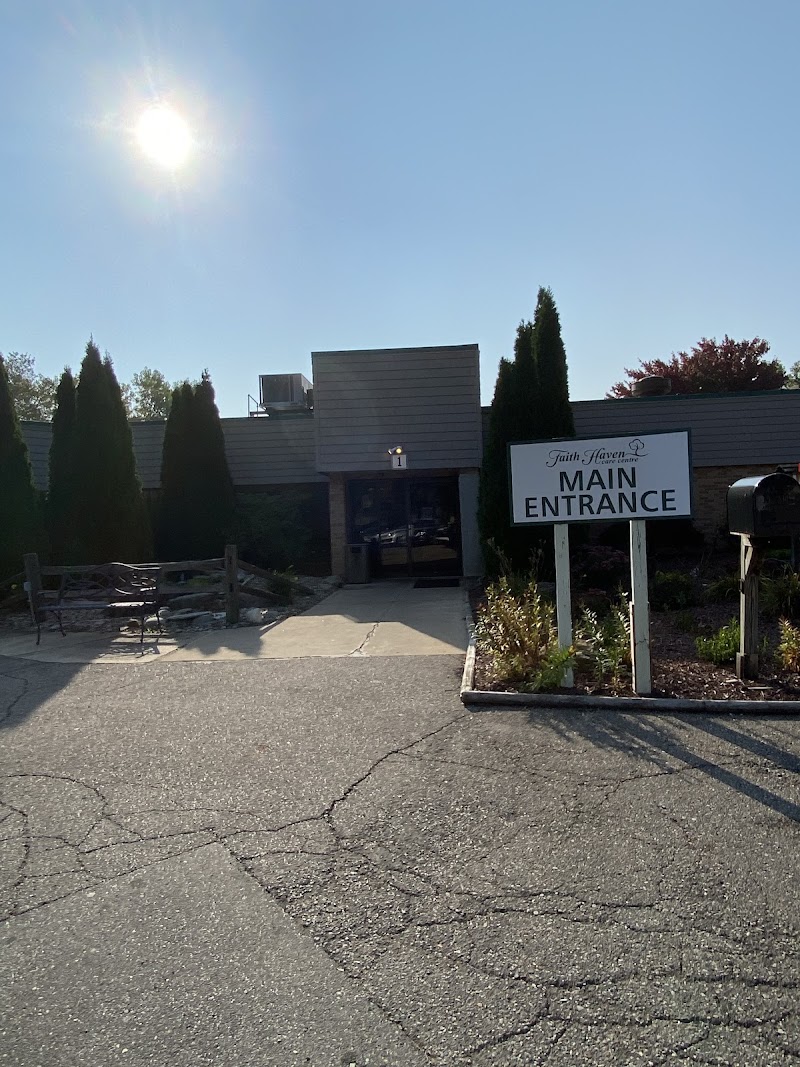
How is Faith Haven Senior Care Centre Staffed?
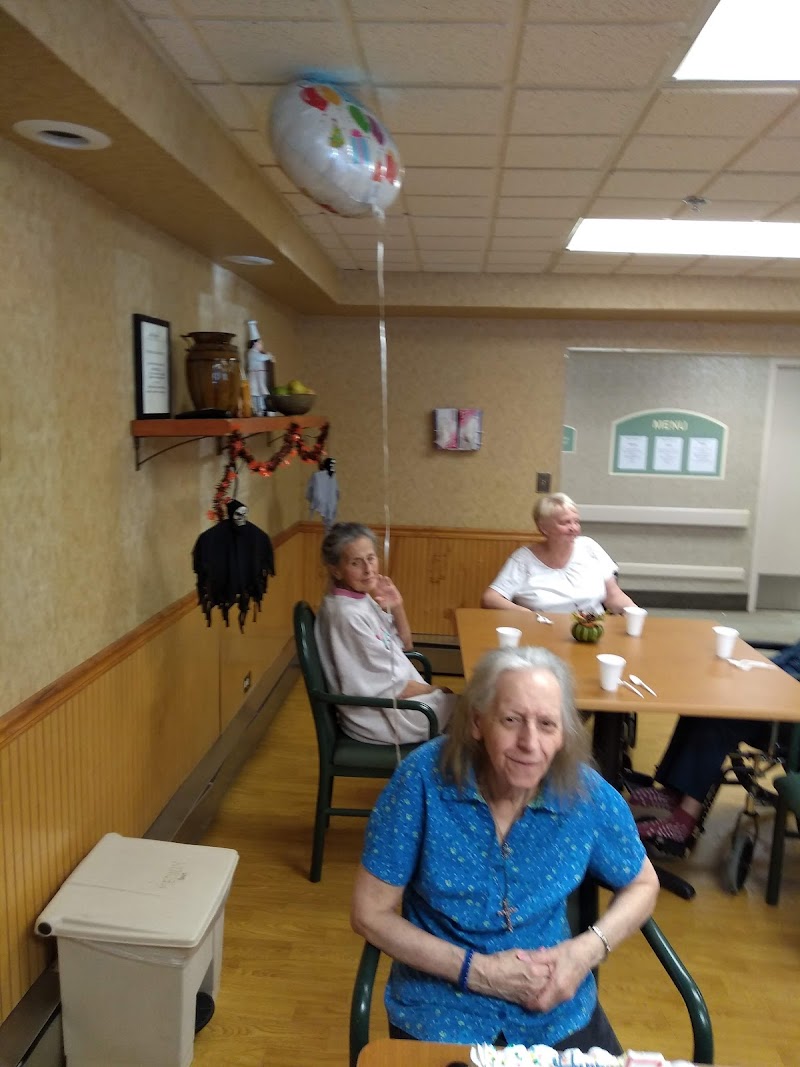
CMS rates Faith Haven Senior Care Centre's staffing level at 4 out of 5 stars, which is above average compared to other nursing homes. Staff turnover is 53%, compared to the Michigan average of 46%.

What Have Inspectors Found at Faith Haven Senior Care Centre?

State health inspectors documented 44 deficiencies at Faith Haven Senior Care Centre during 2022 to 2025. These included: 3 that caused actual resident harm, 40 with potential for harm, and 1 minor or isolated issues. Deficiencies causing actual harm indicate documented cases where residents experienced negative health consequences.

Who Owns and Operates Faith Haven Senior Care Centre?

Faith Haven Senior Care Centre is owned by a for-profit company. For-profit facilities operate as businesses with obligations to shareholders or private owners. The facility is operated by NEXCARE HEALTH SYSTEMS, a chain that manages multiple nursing homes. With 81 certified beds and approximately 77 residents (about 95% occupancy), it is a smaller facility located in Jackson, Michigan.

How Does Faith Haven Senior Care Centre Compare to Other Michigan Nursing Homes?

Compared to the 100 nursing homes in Michigan, Faith Haven Senior Care Centre's overall rating (2 stars) is below the state average of 3.1, staff turnover (53%) is near the state average of 46%, and health inspection rating (2 stars) is below the national benchmark.

What Should Families Ask When Visiting Faith Haven Senior Care Centre?

Based on this facility's data, families visiting should ask: "What safeguards and monitoring systems are in place to protect residents from abuse or neglect?" "Can I visit during a mealtime to observe dining assistance and food quality?" "How do you handle medical emergencies, and what is your hospital transfer rate?" "Can I speak with family members of current residents about their experience?" These questions are particularly relevant given the substantiated abuse finding on record.

Is Faith Haven Senior Care Centre Safe?

Based on CMS inspection data, Faith Haven Senior Care Centre has documented safety concerns. The facility has 1 substantiated abuse finding (meaning confirmed case of resident harm by staff or other residents). The facility has a 2-star overall rating and ranks #100 of 100 nursing homes in Michigan. Families considering this facility should ask detailed questions about what corrective actions have been taken since these incidents.

Do Nurses at Faith Haven Senior Care Centre Stick Around?

Faith Haven Senior Care Centre has a staff turnover rate of 53%, which is 7 percentage points above the Michigan average of 46%. Moderate turnover is common in nursing homes, but families should still ask about staff tenure and how the facility maintains care continuity when employees leave.

Was Faith Haven Senior Care Centre Ever Fined?

Faith Haven Senior Care Centre has been fined $15,872 across 1 penalty action. This is below the Michigan average of $33,238. While any fine indicates a compliance issue, fines under $50,000 are relatively common and typically reflect isolated problems that were subsequently corrected. Families should ask what specific issues led to these fines and confirm they've been resolved.

Is Faith Haven Senior Care Centre on Any Federal Watch List?

Faith Haven Senior Care Centre is not on any federal watch list. The most significant is the Special Focus Facility (SFF) program, which identifies the bottom 1% of nursing homes nationally based on persistent, serious quality problems. Not being on this list means the facility has avoided the pattern of deficiencies that triggers enhanced federal oversight. This is a positive indicator, though families should still review the facility's inspection history directly.