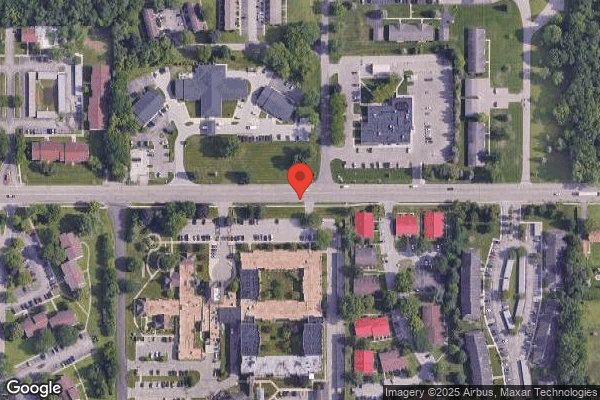

Vista Grande Villa

2251 Springport Road, Jackson, MI 49202 (517) 787-0226
Non profit - Corporation 60 Beds Independent Data: November 2025
Trust Grade
70/100
#181 of 422 in MI
Last Inspection: November 2024

Within standard 12-15 month inspection cycle. Federal law requires annual inspections.

Overview

Vista Grande Villa in Jackson, Michigan, has a Trust Grade of B, indicating it is a good choice for families seeking care. It ranks #181 out of 422 facilities in Michigan, placing it in the top half, and #3 out of 7 in Jackson County, which means only two local options are better. The facility is improving, with a decrease in issues from 9 in 2023 to 6 in 2024, and it has no fines on record, which is a positive sign. Staffing is rated 4 out of 5 stars, but the turnover rate is 50%, which is average for the state. However, it boasts more RN coverage than 83% of Michigan facilities, which helps ensure better oversight of resident care. On the downside, there were concerns identified during inspections. One serious issue involved the development of pressure ulcers in residents due to a failure to monitor their skin integrity properly. Additionally, there were multiple concerns regarding the cleanliness of food service areas, including dirty equipment and improperly maintained food storage, which could lead to contamination risks. Families should weigh these strengths and weaknesses when considering Vista Grande Villa for their loved ones.

Trust Score
B
70/100
In Michigan
#181/422
Top 42%
Safety Record
Moderate
Needs review
Inspections
Getting Better
9 → 6 violations
Staff Stability
⚠ Watch
50% turnover. Above average. Higher turnover means staff may not know residents' routines.
Penalties
✓ Good
No fines on record. Clean compliance history, better than most Michigan facilities.
Skilled Nurses
✓ Good
Each resident gets 59 minutes of Registered Nurse (RN) attention daily — more than average for Michigan. RNs are trained to catch health problems early.
Violations
⚠ Watch
18 deficiencies on record. Higher than average. Multiple issues found across inspections.
★★★★☆
4.0
Overall Rating
★★★★☆
4.0
Staff Levels
★★★☆☆
3.0
Care Quality
★★★★☆
4.0
Inspection Score
Stable
2023: 9 issues
2024: 6 issues

The Good

  • 4-Star Staffing Rating · Above-average nurse staffing levels
  • Full Sprinkler Coverage · Fire safety systems throughout facility
  • No fines on record

Facility shows strength in staffing levels, fire safety.

The Bad

Staff Turnover: 50%

Near Michigan avg (46%)

Higher turnover may affect care consistency

The Ugly 18 deficiencies on record

1 actual harm
Nov 2024 6 deficiencies
CONCERN (D)

Potential for Harm - no one hurt, but risky conditions existed

Comprehensive Care Plan (Tag F0656)

Could have caused harm · This affected 1 resident

**NOTE- TERMS IN BRACKETS HAVE BEEN EDITED TO PROTECT CONFIDENTIALITY** Based on observation, interview and record review, the facility failed to develop an anti-coagulant Care Plan for one (Resident ...

Read full inspector narrative →
**NOTE- TERMS IN BRACKETS HAVE BEEN EDITED TO PROTECT CONFIDENTIALITY** Based on observation, interview and record review, the facility failed to develop an anti-coagulant Care Plan for one (Resident #19) of 11 reviewed for Care Plans, resulting in the potential for unmet care needs. Findings include: Review of the medical record revealed Resident #19 (R19) was admitted to the facility on [DATE] with diagnoses that included generalized anxiety disorder and atrial fibrillation. Review of the admission Data Set (MDS) with an Assessment Reference Date (ARD) of 10/30/24 revealed R19 scored 14 out of 15 (cognitively intact) on the Brief Interview for Mental Status (BIMS-a cognitive screening tool). On 11/19/24 at 11:56 AM, R19 was observed in her room, dressed and seated in her recliner. R19 reported that she had recently admitted for rehabilitation purpose. Review of the R19's Medication list revealed R19 was admitted to the facility on Apixaban Oral Tablet 5 milligram (Eliquis, an anticoagulant medication) with a start date of 10/24/24. Review of the Physician order's revealed no order for monitoring for bleeding, bruising, or any side effects related to taking an anticoagulant. Review of the Care Plan revealed no care plan associated to taking an anticoagulant. In an interview on 11/21/24 at 7:54 AM, Director of Nursing (DON) B stated that the expectation for resident's prescribed an anticoagulant included having Physician orders and a care plan in place for monitoring for skin bruising, labs (if applicable), checking for bleeding after any sort of injury especially a fall. DON B reviewed the Care Plan And Physician Order's for monitoring related to the high risk medication and confirmed the absence of both.
CONCERN (D)

Potential for Harm - no one hurt, but risky conditions existed

Deficiency F0657 (Tag F0657)

Could have caused harm · This affected 1 resident

**NOTE- TERMS IN BRACKETS HAVE BEEN EDITED TO PROTECT CONFIDENTIALITY** Based on observation, interview, and record review, the facility failed to revise, and update a comprehensive, individualized pl...

Read full inspector narrative →
**NOTE- TERMS IN BRACKETS HAVE BEEN EDITED TO PROTECT CONFIDENTIALITY** Based on observation, interview, and record review, the facility failed to revise, and update a comprehensive, individualized plan of care for two (Resident #15 and Resident #26) of 11 residents reviewed for care plans, had a care plan revised for changes in resident's needs, resulting in the potential for not receiving the care needed and psychosocial well-being. Findings include: Resident #15 (R15) Medical record reflected R#15 was admitted to the facility on [DATE]. Diagnoses of Left sided weakness from a Stroke, Dysphagia from the Stroke, Vascular Dementia, and Alzheimer's Disease. The most recent Minimum Data Set (MDS), with an Assessment Reference Date (ARD) of 10/30/2024, revealed R#15 had a Brief Interview of Mental Status (BIMS) of 03 (severe cognitively impaired) out of 15. Under section GG0130, Activities of Daily Living (ADL) assessment revealed R#15 requires substantial/maximum assistance with oral hygiene, toileting and dependent on shower/bathing, getting dressed. R#15 required substantial/maximum assist with repositioning in bed. R#15 is dependent on transfers from bed to wheelchair using a mechanical lift and 2 persons assist. During an interview on 11/19/24 at 11:27 AM, R15's family member O, stated R15 had not had his nails trimmed or cleaned as often as the family had requested that they be done. R15 is a 2-person mechanical lift transfer in and out of bed and is dependent of all care. During an observation on 11/19/24 at 11:53 AM, R15 sitting at the dining room table waiting for lunch to be served. Observed R15s fingernails are long and had a brown substance under the nail. During an observation on 11/20/24 at 11:41 AM, R15 sitting at the dining room table eating lunch. Observed his fingernails remained long with brown substance under the nails. During an interview on 11/20/24 at 2:02 PM, Unit Manager (UM) C stated the CNA's there at the facility provide showers to R15 two times a week. UM C also stated the hospice CNAs gave him showers during the week as well. Writer asked why R15's nails were long and had brown substance under his nails. UM C looked at writer with a blank look and then stated she would take care of this. During an observation on11/21/24 at 09:11 AM, R15 sitting in his wheelchair sitting in the activity room in front of the TV with his eyes closed. Observed R15's fingernails had been cut and cleaned. Record review of care plan revealed R15 had showers during the last 30 days on 10/23/24, 11/02/24, 11/06/24, 11/13/24, 11/20/24 by the facility CNAs. Hospice CNAs gave R15 showers on 10/21/24, 10/25/24, 10/28/24, 11/07/24, 11/18/24 and his nailcare had not been taken care of. Also noted that the care plan had not been revised or updated to reflect any collaboration between hospice and facility to ensure care was provided for this dependent resident. Record review did not reveal any coordination of care between the facility CNAs and the hospice CNAs and their task to complete. R15s care plan had not been revised or updated after the hospice admission reflecting any collaboration of care. Resident #26 (R26) Record review of Hospice Binder at the nurse's station contained a calendar dated from July 28, 24 through September 22, 24. Hospice binder did not contain the documents necessary for collaboration of care, current calendar with scheduled visits by the hospice team, plan of care (POC), interdisciplinary group (IDG) notes, certified nursing assistants (CNA) care plan, medication list, or visit notes. Nor were these hospice documents in R26's electronic medical record (EMR). During an interview on 11/20/24 at 12:20 PM, R26 stated his hospice CNA is a male, he helps him with his shower and comes in two times a week. R26 also stated that the facility CNAs would give showers on occasion. R26 stated that the water from the shower felt horrible on his skin and was very painful. R26 also added that he had to pace himself due to pain and shortness of breath. During an interview on 11/20/24 at 3:40 PM, Director of Nursing (DON) B brought a small binder of hospice information they found on a shelf in the nurse's station into the conference room to this writer. This information was not part of the hospice binder. During a record review on 11/21/24 at 09:41 AM, original hospice binder now contains the monthly calendar showing which discipline will be coming on which day, CNA care plan, POC, coordination of care, visit notes and IDG notes. According to the visit notes, R26 had a shower from the hospice CNA on 10/16/24, 10/18/24, 10/24/24, 10/25/24, 10/30/24, 11/01/24, 11/05/24, 11/06/24, 11/07/24, 11/12/24, 11/14/24, and 11/19/24. Record review also revealed that R26 did not have any of these documents uploaded into his EMR, nor was their a collaboration of care noted on the CNA's care plan. Record review of shower's given by facility CNAs for last 30 days were 10/25/24, 11/05/24, with one refusal of care on date 11/01/24. Nursing progress notes for the last 30 days did not show that the CNA's had reported the missed showers, attempts to reapproach or reason for not giving the showers to the nurse in charge. Record review revealed that R26 did not receive a shower on 10/15/24, documented on shower sheets, that the hospice CNA would shower the following day. No shower was provided due to hospice CNA coming that day or following day. On 10/25/24, R26 did not receive a shower due to hospice CNA gave him a shower that morning. On 11/01/24, R26 did not receive a shower because the hospice CNA gave him a shower that morning. On 11/06/24, R26 did not receive a shower due to the hospice CNA gave him one that morning. On 11/07/24, R26 did not receive a shower and documented, hospice CNA gave him his shower. On 11/08/24, R26 did not receive a shower and facility CNA documented hospice gave showers. On 11/12/24, R26 did not receive a shower and facility CNA documented that hospice gave showers. On 11/14/24, R26 did not receive a shower from facility CNA documented that hospice gave him showers. On 11/15/24 R26 did not receive a shower from facility CNA and documented that R26 refused shower due to hospice CNA provided the shower the day before. Record review of nursing progress notes, revealed a refused shower was documented for 10/18/24. No other refused showers were documented for the other dated and no offer to give him a shower at a different time. CNA care plan had not have any changes made to reflect collaboration of care between facility and hospice. During an interview on 11/21/24 at 10:13 AM, Licensed Practical Nurse (LPN) L reported the facility CNA's do give him showers and he refuses. LPN L also stated R26 would let the hospice CNA give him showers. LPN L stated the facility CNAs filled out a shower form for refusals and she signed off on them and they get turned into medical records and it gets scanned into his EMR. Record review on 11/21/24 at 10:08 AM did not indicate any hospice documents were uploaded other than the medication list dated1/19/24. During an interview on 11/21/24 at 1:08 PM, hospice CNA M stated they change the linen every time they provide showers for the hospice residents. CNA M also stated she feels the residents like the hospice CNAs to give them showers because they have the time to give undivided attention and can spend quality time with them. During an interview on 11/21/24 at 01:14 PM, CNA N stated she would ask the residents more than one time if she could shower them. CNA N stated that if the hospice CNA was coming in to shower the residents two times a week, then they were the ones who showered them instead of facility CNA's. CNA N also stated she did not know that hospice services were above and beyond of what the facility was to provide. CNA N also stated that happens a lot because facility CNAs didn't know the rules and they just wanted to make sure the residents were getting their showers. During an interview on 11/21/24 at 1:59 PM, DON B stated the hospice CNAs had schedules as to what they do, offer bed bath or shower, if residents refused. DON B also stated CNAs should be telling the nurse. DON B also stated CNAs should offer more than once, if they refused, tell the nurse, check preferences and see how to get them care. DON B stated they would find the root cause of resident's refusals and care plan it. Writer asked DON B when CNAs would chart NA. DON B started if a resident were out of the building. DON B also stated she would expect them to offer, reoffer, if they still say no, documentation would be on the shower sheet or in nurses progress notes charting. DON B stated she did not know anything about scheduling CNA's here with Hospice CNA's. DON B also stated she would hope the CNAs knew that hospice care is above and beyond. During an interview on 11/21/24 at 2:11 PM, unit manager (UM) C stated the days for showers were preset unless the resident wanted to have the day changed, or requested a different day and could change days or shifts. UM C stated residents get two showers a week. UM C also stated most of the residents that were on hospice, she coordinated care on admission. Hospice scheduled their CNAs days around the facility CNAs scheduled days. UM C stated if hospice residents didn't want a shower, offer bed bath, or ask what they would like. UM C stated that after 30 days of residents not getting their showers, she would have the Social Worker go talk to them. UM C stated that facility CNA's do not understand hospice rules, adding the nurse on the floor had to sign shower sheet stating they asked the residents a second time. Stated that R26 would spend his time outside, as a reason for not getting showers. UM C also stated they never got to his care plan to make any revision or updates on his care plan. Record review did not reveal any coordination of care between the facility CNAs and the hospice CNAs and their task to complete. R26s care plan had not been revised or updated after the hospice admission reflecting any collaboration of care.
CONCERN (D)

Potential for Harm - no one hurt, but risky conditions existed

ADL Care (Tag F0677)

Could have caused harm · This affected 1 resident

**NOTE- TERMS IN BRACKETS HAVE BEEN EDITED TO PROTECT CONFIDENTIALITY** Based on observation, interview, and record review the facility failed to provide necessary care to one (Resident #15) of two re...

Read full inspector narrative →
**NOTE- TERMS IN BRACKETS HAVE BEEN EDITED TO PROTECT CONFIDENTIALITY** Based on observation, interview, and record review the facility failed to provide necessary care to one (Resident #15) of two residents reviewed who were dependent of all activities of daily living (ADLs), resulting in this resident not receiving the care needed to maintain their highest practicable well-being. Findings include: Resident #15 (R15) Medical record reflected R#15 was admitted to the facility on [DATE]. Diagnoses of Left sided weakness from a Stroke, Dysphagia from the Stroke, Vascular Dementia, and Alzheimer's Disease. The most recent Minimum Data Set (MDS), with an Assessment Reference Date (ARD) of 10/30/2024, revealed R#15 had a Brief Interview of Mental Status (BIMS) of 03 (severe cognitively impaired) out of 15. Under section GG0130, Activities of Daily Living (ADL) assessment revealed R#15 requires substantial/maximum assistance with oral hygiene, toileting and dependent on shower/bathing, getting dressed. R#15 required substantial/maximum assist with repositioning in bed. R#15 is dependent on transfers from bed to wheelchair using a mechanical lift and 2 persons assist. During an interview on 11/19/24 at 11:27 AM, R15's family member O, stated R15 had not had his nails trimmed or cleaned as often as the family had requested that they be done. R15 is a 2-person mechanical lift transfer in and out of bed and is dependent of all care. During an observation on 11/19/24 at 11:53 AM, R15 sitting at the dining room table waiting for lunch to be served. Observed R15s fingernails are long and had a brown substance under the nail. During an observation on 11/20/24 at 11:41 AM, R15 sitting at the dining room table eating lunch. Observed his fingernails remained long with brown substance under the nails. During an interview on 11/20/24 at 2:02 PM, Unit Manager (UM) C stated the CNA's there at the facility provide showers to R15 two times a week. UM C also stated the hospice CNAs gave him showers during the week as well. Writer asked why R15's nails were long and had brown substance under his nails. UM C looked at writer with a blank look and then stated she would take care of this. During an observation on11/21/24 at 09:11 AM, R15 sitting in his wheelchair sitting in the activity room in front of the TV with his eyes closed. Observed R15's fingernails had been cut and cleaned. Record review of care plan revealed R15 had showers during the last 30 days on 10/23/24, 11/02/24, 11/06/24, 11/13/24, 11/20/24 by the facility CNAs. Hospice CNAs gave R15 showers on 10/21/24, 10/25/24, 10/28/24, 11/07/24, 11/18/24 and his nailcare had not been taken care of. Also noted that the care plan had not been revised or updated to reflect any collaboration between hospice and facility to ensure care was provided for this dependent resident. During a record review on 11/21/24 at 09:26 AM, hospice CNA care plan was not present to indicate what CNAs would be responsible for, during their care provided.
CONCERN (D)

Potential for Harm - no one hurt, but risky conditions existed

Medication Errors (Tag F0758)

Could have caused harm · This affected 1 resident

**NOTE- TERMS IN BRACKETS HAVE BEEN EDITED TO PROTECT CONFIDENTIALITY** Based on observation, interview and record review, the facility failed to document rationale for as needed (PRN) psychotropic me...

Read full inspector narrative →
**NOTE- TERMS IN BRACKETS HAVE BEEN EDITED TO PROTECT CONFIDENTIALITY** Based on observation, interview and record review, the facility failed to document rationale for as needed (PRN) psychotropic medication orders that extended beyond 14 days for one (Resident #19) of five reviewed for unnecessary medications, resulting in the potential for an unnecessary medication regimen and adverse side effects. Findings include: Review of the medical record revealed Resident #19 (R19) was admitted to the facility on [DATE] with diagnoses that included generalized anxiety disorder and atrial fibrillation. Review of the admission Data Set (MDS) with an Assessment Reference Date (ARD) of 10/30/24 revealed R19 scored 14 out of 15 (cognitively intact) on the Brief Interview for Mental Status (BIMS-a cognitive screening tool). On 11/19/24 at 11:56 AM, R19 was observed in her room, dressed and seated in her recliner. R19 reported that she had recently admitted for rehabilitation purpose. Review of the R19's Medication list revealed R19 was admitted to the facility on Hydroxyzine Pamoate capsules 25 milligrams (Vistaril, an anxiety anxiety medication) with a start date of 10/24/24. Instructions on the medication order included give one tablet by mouth every 12 hours as needed for anxiety. There was no stop date for the medication. No rationale was located in the Electronic Medical Record for the use of the anti-anxiety medication past the 14 day period. In an interview on 11/21/24 at 7:54 AM, Director of Nursing (DON) B stated that the expectation for resident's prescribed a PRN medication would be to have a stop date that didn't exceed the 14 days.
CONCERN (D)

Potential for Harm - no one hurt, but risky conditions existed

Deficiency F0761 (Tag F0761)

Could have caused harm · This affected 1 resident

Based on observation, interview and record review the facility failed to ensure proper storage and labeling of medications in one of one medication rooms. Findings include: On 11/20/24 at 4:08 PM, whi...

Read full inspector narrative →
Based on observation, interview and record review the facility failed to ensure proper storage and labeling of medications in one of one medication rooms. Findings include: On 11/20/24 at 4:08 PM, while conducting an observation of the facilities medication room with licensed practical nurse (LPN) L, a vial of Humalog insulin was observed in the medication refrigerator, inside the original box, which had been opened and the vial top had been removed. The vial was not labeled with the date opened or any resident information. The box was observed to have the numbers 1102 handwritten on it. LPN L stated that the insulin would need to be destroyed since it was not properly labeled. During the same observation of the medication room, a box containing Narcan nasal spray (medication used to reverse opioid overdose) was found in an unlocked drawer. The resident label had been removed (with some residual sticker remaining on the box) and the medication was not stored with other resident specific medications. On 11/21/24 at 4:15 PM, LPN L handed the open insulin vial and the box of Narcan nasal spray to director of nursing (DON) B, who reported that they would be discarded into a drug buster container. On 11/21/24 at 12:05 PM, an email was sent to the nursing home administrator (NHA) A requesting a policy specific to medication labeling. On 11/21/24 at 12:13 PM, NHA A, reported (via email) that the facility does not have a policy specific to medication labeling. On 11/21/24 at 3:39 PM, DON B was quired on what the expectation would be for labeling multi-use insulin vials. DON B stated that they should be labeled with the resident's name and room number, physician's name, and date opened. When asked how staff would know the labeling expectation if it's not outlined in a policy, they responded the information would be provided through education. A review of the facility's policy titled Medication Storage Policy, updated 8/24, documented in part .Unused Medications: The pharmacy and all medication rooms are routinely inspected by the consultant pharmacist for discontinued, outdated, defective or deteriorated medications with worn, illegible, or missing labels .
CONCERN (D)

Potential for Harm - no one hurt, but risky conditions existed

Deficiency F0849 (Tag F0849)

Could have caused harm · This affected 1 resident

**NOTE- TERMS IN BRACKETS HAVE BEEN EDITED TO PROTECT CONFIDENTIALITY** Based on observation, interview and record review, the facility failed to ensure proper communication/collaberation/documentatio...

Read full inspector narrative →
**NOTE- TERMS IN BRACKETS HAVE BEEN EDITED TO PROTECT CONFIDENTIALITY** Based on observation, interview and record review, the facility failed to ensure proper communication/collaberation/documentation of Hospice services provided to two (Resident #15, Resident #26) of two residents reviewed for Hospice services, resulting in a lack of coordination of services and care provided. Findings Include: Resident #15 (R15) Medical record reflected R#15 was admitted to the facility on [DATE]. Diagnoses of Left sided weakness from a Stroke, Dysphagia from the Stroke, Vascular Dementia, and Alzheimer's Disease. The most recent Minimum Data Set (MDS), with an Assessment Reference Date (ARD) of 10/30/2024, revealed R#15 had a Brief Interview of Mental Status (BIMS) of 03 (severe cognitively impaired) out of 15. Under section GG0130, Activities of Daily Living (ADL) assessment revealed R#15 requires substantial/maximum assistance with oral hygiene, toileting and dependent on shower/bathing, getting dressed. R#15 required substantial/maximum assist with repositioning in bed. R#15 is dependent on transfers from bed to wheelchair using a mechanical lift and 2 persons assist. During an interview on 11/19/24 at 3:42 PM, Registered Nurse (RN) P came to the conference room and stated that the Unit Manager (UM) C reported that the hospice nurse may have been the one to put the documents in the hospice binder. This writer and RN P looked in the hospice binder of R15 for new orders or visit notes from the nurse visit on 11/18/24 and the hospice nurse did not leave a visit note. Record review revealed the hospice binder behind the nurse's station did not contain a Plan of Care (POC), Certified Nursing Assistant (CNA) care plan, current physician orders, or medication list. There was a 2024 calendar for the months of October and November which were blank. During an interview and observation on 11/20/24 at 11:10 AM, hospice liaison Q was asked to locate the CNA care plan, current plan of care, calendar with scheduled visits from all disciplines of her hospice team, Interdisciplinary group (IDG) notes and medication list. Hospice liaison Q stated she did not know the process for getting the hospice information into the hospice binder. Hospice liaison Q also stated she though the hospice agency e-faxed or emailed all the hospice notes to the facility to be put in the hospice binders for each resident. Hospice liaison Q was observed going through the hospice binder while calling her hospice agency's office for assistance. Hospice liaison Q was heard asking where the CNA care plan would be in the hospice binder. After listening to the hospice liaison Q asking for the information from two different hospice staff, it was determined that the information was not in the hospice binder. Hospice agency would re-fax the information to the facility. Record review revealed some new documents were put in the hospice binder after this writer reviewed the hospice binder at the end of day 11/19/24. R15's hospice binder now includes POC, medication list, admission check list (Not completed), IDG note but not a CNA care plan. During an interview on 11/20/24 at 11:45 AM, hospice liaison Q stated that on new admissions, they have 24 hours to get new hospice information to facility Director of Nursing (DON) B and she would print it off for the binder as well as scan it into R15's electronic medical record (EMR). Hospice Liaison Q then stated the hospice agency would e-fax the rest of the hospice admission information approximately eight days later, which would include IDG notes and visit notes from each discipline, would be e-faxed and emailed over to facility. Hospice Liaison Q stated, it is the facilities responsibility to print off the hospice information and put in the binder. R15's hospice admission was 07/25/24 and did not have any of the hospice documents in his hospice binder or his EMR. Hospice liaison Q stated hospice nurse was in the building and would be coming over to this unit by noon and would talk to this writer. During an interview on 11/20/24 at 12:47 PM, hospice RN R stated the hospice CNA would be giving R15 a bed bath instead of a shower due to increased fatigue with activity. Hospice RN stated she discontinued the dressing orders on R15's left gluteal fold on 08/12/24. Writer reported R15 had a dressing change with border foam dressing on his left gluteal fold dated 11/17/24, asked why the facility nurse would have done a dressing change that was discontinued. Hospice RN R stated she had no idea why a discontinued treatment had been completed. Hospice RN R also stated that she was not aware that this treatment was done and included that she wasn't the one that did it as she didn't work on Sunday. Hospice RN R also stated she wasn't aware of what documents were supposed to be in the hospice binder and she was going to get that information from her manager. Record review did not reveal any collaberation of care between hospice agency and facility regarding the wound care on R15's left gluteal fold. During an interview on 11/20/24 at 1:01 PM, Unit Manager (UM) C stated they found a hospice binder and it did not have any of the hospice information in it. UM C also stated they called the hospice agency to fax over the information. UM C also stated that the manager from this Hospice agency was in the facility and reported the binder had everything in it. UM C then stated that she never followed up to ensure the hospice binder had the necessary information in it. Writer asked UM C where the hospice documents would be found in the EMR. UM C stated that it would be under the miscellaneous tab in the EMR. Writer asked UM C if she could pull it up. UM C observed looking under the miscellaneous tab in the EMR and there was not any hospice documentation there. During this interview the DON B stated she identified the problem, the hospice agency had e-faxed the documents which went to her email, and they did not know they were supposed to print this off and put copies in the binders and upload them into EMR. During a record review on 11/21/24 at 09:26 AM, the facility still had not uploaded any hospice documentation that was e-faxed over from the hospice agency to this facility. During a record review on 11/21/24 at 09:41 AM, the hospice binder now contains the calendar for disciplines to write in their scheduled days to make visits, CNA care plan, POC, coordination of care, visit notes and IDG notes. According to the visit notes, R26 had a shower from the hospice CNA on 10/16/24, 10/18/24, 10/24/24, 10/25/24, 10/30/24, 11/01/24, 11/05/24, 11/06/24, 11/07/24, 11/12/24, 11/14/24, and 11/19/24. Facility CNAs gave R15 a shower on 10/25/24 and 11/05/24. Facility CNAs marked not applicable on 10/29/24, 11/08/24, 11/12/24, and on 11/19/24. R26 was not provided the personal care on the dates the facility CNA did not follow the showers scheduled for him. Facility CNA care plan did not include collaboration of care between facility and hospice agency. Resident #26 (R26) Medical record reflected R#26 was admitted to the facility on [DATE] and enrolled into the Hospice on 08/03/24. Diagnoses of Congestive Heart Failure, Chronic Obstructive Pulmonary Disease (a group of lung diseases that block airflow), Chronic Migraine Headache, Chronic Respiratory Failure, Spinal Stenosis Lumbar Region (spinal narrowing and can put pressure on the spinal cord), Depression, Anxiety, Chronic Pain Syndrome, Vertebrogenic Low Back Pain and Cardiomyopathy (heart muscle disease). The most recent Minimum Data Set (MDS), with an Assessment Reference Date (ARD) of 11/08/2024, revealed R#26 had a Brief Interview of Mental Status (BIMS) of 14 (cognitively intact) out of 15. Under section GG0130, Activities of Daily Living (ADL) assessment revealed R#26 requires partial/moderate assistance with personal hygiene, toileting, shower/bathing, getting dressed, transferring from one surface to another. Record review of Hospice Binder at the nurse's station contained a calendar dated from July 28, 2024 through September 22, 2024. Hospice binder did not contain the documents necessary for collaboration of care, current calendar with scheduled visits by the hospice team, plan of care (POC), interdisciplinary group (IDG) notes, certified nursing assistants (CNA) care plan, medication list, or visit notes. Nor were these hospice documents in R26's electronic medical record (EMR). During an interview on 11/20/24 at 12:20 PM, R26 stated his hospice CNA is a male, he helps him with his shower and comes in two times a week. R26 also stated that the facility CNAs would give showers on occasion. R26 stated that the water from the shower felt horrible on his skin and was very painful. R26 also added that he had to pace himself due to pain and shortness of breath. During an interview on 11/20/24 at 3:40 PM, Director of Nursing (DON) B brought a small binder of hospice information they found on a shelf in the nurse's station into the conference room to this writer. This information was not part of the hospice binder. During a record review on 11/21/24 at 09:41 AM, original hospice binder now contains the monthly calendar showing which discipline will be coming on which day, CNA care plan, POC, coordination of care, visit notes and IDG notes. According to the visit notes, R26 had a shower from the hospice CNA on 10/16/24, 10/18/24, 10/24/24, 10/25/24, 10/30/24, 11/01/24, 11/05/24, 11/06/24, 11/07/24, 11/12/24, 11/14/24, and 11/19/24. Record review also revealed that R26 did not have any of these documents uploaded into his EMR. Record review of shower's given by facility CNAs for last 30 days were 10/25/24, 11/05/24, with one refusal of care on date 11/01/24. Nursing progress notes for the last 30 days did not show that the CNA's had reported the missed showers, attempts to reapproach or reason for not giving the showers to the nurse in charge. Record review revealed that R26 did not receive a shower on 10/15/24, documented on shower sheets, that the hospice CNA would shower the following day. No shower was provided due to hospice CNA coming that day or following day. On10/25/24, R26 did not receive a shower due to hospice CNA gave him a shower that morning. On 11/01/24, R26 did not receive a shower because the hospice CNA gave him a shower that morning. On 11/06/24, R26 did not receive a shower due to the hospice CNA gave him one that morning. On 11/07/24, R26 did not receive a shower and documented, hospice CNA gave him his shower. On 11/08/24, R26 did not receive a shower and facility CNA documented hospice gave showers. On 11/12/24, R26 did not receive a shower and facility CNA documented that hospice gave showers. On 11/14/24, R26 did not receive a shower from facility CNA documented that hospice gave him showers. On 11/15/24 R26 did not receive a shower from facility CNA and documented that R26 refused shower due to hospice CNA provided the shower the day before. Record review of nursing progress notes, revealed a refused shower was documented for 10/18/24. No other refused showers were documented for the other dated and no offer to give him a shower at a different time. During an interview on 11/21/24 at 10:13 AM, Licensed Practical Nurse (LPN) L reported the facility CNA's do give him showers and he refuses. LPN L also stated R26 would let the hospice CNA give him showers. LPN L stated the facility CNAs filled out a shower form for refusals and she signed off on them and they get turned into medical records and it gets scanned into his EMR. Record review on 11/21/24 at 10:08 AM did not indicate any hospice documents were uploaded other than the medication list dated1/19/24. During an interview on 11/21/24 at 1:08 PM, hospice CNA M stated they change the linen every time they provide showers for the hospice residents. CNA M also stated she feels the residents like the hospice CNAs to give them showers because they have the time to give undivided attention and can spend quality time with them. During an interview on 11/21/24 at 01:14 PM, CNA N stated she would ask the residents more than one time if she could shower them. CNA N stated that if the hospice CNA was coming in to shower the residents two times a week, then they were the ones who showered them instead of facility CNA's. CNA N also stated she did not know that hospice services were above and beyond of what the facility was to provide. CNA N also stated that happens a lot because facility CNAs didn't know the rules and they just wanted to make sure the residents were getting their showers. During an interview on 11/21/24 at 1:59 PM, DON B stated the hospice CNAs had schedules as to what they do, offer bed bath or shower, if residents refused. DON B also stated CNAs should be telling the nurse. DON B also stated CNAs should offer more than once, if they refused, tell the nurse, check preferences and see how to get them care. DON B stated they would find the root cause of resident's refusals and care plan it. Writer asked DON B when CNAs would chart NA. DON B started if a resident were out of the building. DON B also stated she would expect them to offer, reoffer, if they still say no, documentation would be on the shower sheet or in nurses progress notes charting. DON B stated she did not know anything about scheduling CNA's here with Hospice CNA's. DON B also stated she would hope the CNAs knew that hospice care is above and beyond. During an interview on 11/21/24 at 2:11 PM, unit manager (UM) C stated the days for showers were preset unless the resident wanted to have the day changed, or requested a different day and could change days or shifts. UM C stated residents get two showers a week. UM C also stated most of the residents that were on hospice, she coordinated care on admission. Hospice scheduled their CNAs days around the facility CNAs scheduled days. UM C stated if hospice residents didn't want a shower, offer bed bath, or ask what they would like. UM C stated that after 30 days of residents not getting their showers, she would have the Social Worker go talk to them. UM C stated that facility CNA's do not understand hospice rules, adding the nurse on the floor had to sign shower sheet stating they asked the residents a second time. Stated that R26 would spend his time outside, as a reason for not getting showers. UM C also stated they never got to his care plan to make any revision or updates on his care plan. Record review did not reveal any coordination of care between the facility CNAs and the hospice CNAs and their task to complete. R26s care plan had not been revised or updated after the hospice admission reflecting any collaboration of care.
Oct 2023 8 deficiencies
CONCERN (D) 📢 Someone Reported This

A family member, employee, or ombudsman was alarmed enough to file a formal complaint

Potential for Harm - no one hurt, but risky conditions existed

Report Alleged Abuse (Tag F0609)

Could have caused harm · This affected 1 resident

**NOTE- TERMS IN BRACKETS HAVE BEEN EDITED TO PROTECT CONFIDENTIALITY** This citation pertains to intake MI00140099. Based on interview and record review, the facility failed to 1) ensure that the abu...

Read full inspector narrative →
**NOTE- TERMS IN BRACKETS HAVE BEEN EDITED TO PROTECT CONFIDENTIALITY** This citation pertains to intake MI00140099. Based on interview and record review, the facility failed to 1) ensure that the abuse policy was in accordance with federal regulations for abuse reporting timeframes and 2) immediately report to the State Agency an allegation of sexual abuse for one (Resident #140) of five reviewed for abuse resulting in an allegation of sexual abuse that was not reported timely to the State Agency and the potential for further allegations of abuse to go unreported. Findings include: Review of the medical record revealed Resident #140 (R140) was admitted to the facility on [DATE] with diagnoses that included fracture of right pubis, history of falling, heart failure, hypothyroidism, and personal history of transient ischemic attack. The Minimum Data Set (MDS) with an Assessment Reference Date of 10/15/23 revealed R140 scored 15 out of 15 (cognitively intact) on the Brief Interview for Mental Status (BIMS-a cognitive screening tool). According to the Facility Reported Incident received to the State Agency, Family Member T called the facility and spoke with Nursing Home Administrator (NHA) A and Director of Nursing (DON) B and inquired if a strip search was part of the admission process. FM T stated that two people came into R140's room last night and looked under her clothes and looked all over her skin. NHA A and DON B interviewed R140 regarding the allegation reported to them by FM T. R140 stated two people came into my room last night and said they had to look at my skin. R140 reported that the two people removed her clothes and looked at her entire body and she did not understand why they needed to do that, leaving her feeling terrified. In an interview on 10/17/23 at 03:01 PM, R140 reported that days ago, she was awakened by staff members that were pulling up part of my clothing and exposing her skin without explaining what the purpose of exposing her skin was for or gaining consent prior to exposing her body. R140 also reported that the staff members might have been taking photographs of her genitals as well without her consent. R140 stated that the male employee present appeared to be leering and enjoying himself because he was smiling. R140 stated that the incident made her angry and confirmed that the incident was reported to the Nursing Home Administrator and the local police department. In an interview on 10/18/23 at 11:18 AM, NHA A stated that he received a phone call around 10:30-11:00 AM from FM T asking if strip searches were part of the policy. FM T stated to NHA A that R140 reported to her that someone came into her room, looked at her skin all over and inquired why it was done. NHA A and DON B proceeded to conduct an interview with R140. R140 reported to them that 2 people came into her room around 2am and asked to look at her skin. R140 reported that the female did all the work while the male stood at the foot of the bed leering at her. Review of the Computer Aided Dispatch Report revealed that the incident was called into the local police department and an officer was dispatched on 10/10/23 at 3:49 PM. In an interview on 10/18/23 11:18 AM, NHA A reported that the initial allegation that was reported to him was that the staff members removed the clothing of R140 without her consent. NHA A stated that the report guidelines required a report to the State Agency needed to be submitted within two hours if the resident had sustained physical harm, but any non-physical harm requires submission within 24 hours. Review of the Michigan Facility Reported Incident report reflected that the date/time the incident occurred was 10/10/23 at 1:30 AM, the facility discovered the incident on 10/10/23 at 11:00 AM and reported the incident to the State Agency on 10/10/23 at 8:23 PM. Review of the facility's Abuse, Neglect, Mistreatment and Misappropriation of Property of Resident Property Policy and Procedure issued 11-8-17 and reviewed 3-22 revealed . REPORTING ABUSE POLICY REQUIREMENTS: It is policy of VGV that abuse allegations (abuse, neglect, exploitation, or mistreatment, including injuries of unknown source and misappropriation of resident property) are reported per Federal and State Law. VGV will ensure that all alleged violations involving abuse, neglect, exploitation, or mistreatment, including injuries of unknown source and misappropriation of resident property, are reported immediately, but no later than 24 hours after the allegation is made. If the events that cause the allegation involve abuse or result in serious bodily injury, or not later than 24 hours of the events that cause the allegation do not involve abuse and do not result in serious bodily injury, to the administrator of the facility and to other officials (including to the State Survey Agency and adult protective services where state law provides for jurisdiction in long-term care facilities) in accordance with State Law through established procedures. In addition, local law enforcement will be notified of any reasonable suspicion of a crime against a resident in the facility .
CONCERN (D)

Potential for Harm - no one hurt, but risky conditions existed

Deficiency F0637 (Tag F0637)

Could have caused harm · This affected 1 resident

**NOTE- TERMS IN BRACKETS HAVE BEEN EDITED TO PROTECT CONFIDENTIALITY** Based on observation, interview and record review, the facility failed to complete a Significant Change in Status Assessment (SC...

Read full inspector narrative →
**NOTE- TERMS IN BRACKETS HAVE BEEN EDITED TO PROTECT CONFIDENTIALITY** Based on observation, interview and record review, the facility failed to complete a Significant Change in Status Assessment (SCSA) timely for one (Resident #28) of 12 reviewed for Minimum Data Set (MDS), resulting in the potential for inaccurate care plans and unmet care needs. Findings include: Review of the medical record reflected Resident #28 (R28) admitted to the facility on [DATE], with diagnoses that included Alzheimer's disease, adjustment disorder with depressed mood, major depressive disorder, unspecified psychosis and dementia with psychotic disturbance. The SCSA MDS, with an Assessment Reference Date (ARD) of 9/18/23, reflected R28 performed activities of daily living with supervision to extensive assistance of one person. On 10/16/23 at 08:30 AM, R28 was observed in bed, with the head of the bed elevated and her eyes remaining closed during conversation. On 10/17/23 at 01:28 PM, R28 was observed self-propelling her wheelchair towards her room, speaking to another resident as they walked by her. A Progress Note, dated 9/7/23, reflected R28 had signed on with hospice services. A Physician's Order, with a revision date of 9/8/23, reflected R28 was admitted to hospice services. R28's medical record reflected a SCSA MDS, with an ARD of 9/18/23 was not completed until 10/2/23. During a phone interview on 10/17/23 at 01:42 PM, Registered Nurse (RN) P reported they had 14 days from the date of enrollment in hospice to schedule and complete the SCSA MDS. During an interview on 10/17/23 at 03:13 PM, Director of Nursing (DON) B acknowledged that R28's SCSA was not completed on time. She verified that some of the MDS questions were not signed until 10/2/23. According to the Centers for Medicare & Medicaid Services Long-Term Care Facility Resident Assessment Instrument 3.0 User's Manual, Version 1.17.1, dated October 2019, .An SCSA is required to be performed when a terminally ill resident enrolls in a hospice program .The ARD must be within 14 days from the effective date of the hospice election (which can be the same or later than the date of the hospice election statement, but not earlier than) .The MDS completion date (item Z0500B) must be no later than 14 days from the ARD (ARD + 14 calendar days) and no later than 14 days after the determination that the criteria for an SCSA were met .
CONCERN (D)

Potential for Harm - no one hurt, but risky conditions existed

Assessment Accuracy (Tag F0641)

Could have caused harm · This affected 1 resident

**NOTE- TERMS IN BRACKETS HAVE BEEN EDITED TO PROTECT CONFIDENTIALITY** Based on observation, interview and record review, the facility failed to ensure the Minimum Data Set (MDS) assessment was accur...

Read full inspector narrative →
**NOTE- TERMS IN BRACKETS HAVE BEEN EDITED TO PROTECT CONFIDENTIALITY** Based on observation, interview and record review, the facility failed to ensure the Minimum Data Set (MDS) assessment was accurately coded for one (Resident #7) of 12 reviewed for MDS, resulting in the potential for inaccurate care plans and unmet care needs. Findings include: Review of the medical record reflected Resident #7 (R7) admitted to the facility on [DATE], with diagnoses that included multiple sclerosis and paraplegia. The quarterly MDS, with an Assessment Reference Date (ARD) of 8/8/23, reflected R7 scored 15 out of 15 (cognitively intact) on the Brief Interview for Mental Status (BIMS-a cognitive screening tool), did not walk and required extensive assistance of one person for many activities of daily living. On 10/16/23 at 07:53 AM, R7 was observed seated in a wheelchair, in his room, watching TV. An orthotic boot was observed on his right foot. On 10/17/23 at 08:59 AM, R7 was observed self-propelling his wheelchair, using both upper extremities, from his room to the activity room. Footrests were observed on the wheelchair, and an orthotic boot was on his right foot. Review of R7's Incident Reports reflected falls on dates that included but were not limited to 5/16/23, 6/17/23 and 8/8/23. The quarterly MDS, with an ARD of 8/8/23, reflected question J1800, Has the resident had any falls since admission/entry or reentry or the prior assessment (OBRA or Scheduled PPS), whichever is more recent? was coded as no. Review of R7's MDS history reflected their prior assessment was an admission MDS, with an ARD of 5/8/23. During a phone interview on 10/17/23 at 12:09 PM, Registered Nurse P reported when completing a quarterly MDS, the lookback period for coding of falls was back to the prior MDS, unless a resident had a discharge or admission. In that case, they would look back to the reentry date. R7's MDS history did not reflect any additional assessments between the 5/8/23 admission MDS and the 8/8/23 quarterly MDS, suggesting he had not been discharged and readmitted during that time.
CONCERN (D)

Potential for Harm - no one hurt, but risky conditions existed

Deficiency F0657 (Tag F0657)

Could have caused harm · This affected 1 resident

**NOTE- TERMS IN BRACKETS HAVE BEEN EDITED TO PROTECT CONFIDENTIALITY** Resident #11 (R11): Review of the medical record reflected R11 admitted to the facility on [DATE], with diagnoses that included ...

Read full inspector narrative →
**NOTE- TERMS IN BRACKETS HAVE BEEN EDITED TO PROTECT CONFIDENTIALITY** Resident #11 (R11): Review of the medical record reflected R11 admitted to the facility on [DATE], with diagnoses that included restless leg syndrome, atrial fibrillation, and overactive bladder. The quarterly Minimum Data Set (MDS), with an Assessment Reference Date (ARD) of 8/28/23, reflected R11 scored six out of 15 (cognitively impaired) on the Brief Interview for Mental Status (BIMS-a cognitive screening tool). On 10/16/23 at 10:48 AM, Family Member (FM) U stated that the social worker at the facility seldom contacted FM U to provide any updates and FM U had to resort to calling the facility to attempt to schedule the quarterly care conferences. FM U couldn't not recall the date of the last care conference. On 10/17/23 at 09:56 AM, Director of Nursing (DON) B reported care conference notes were uploaded under the documents (miscellaneous) section of the medical record. Care conferences were held quarterly for long-term care residents, according to DON B. R11's MDS history reflected a quarterly MDS, with an ARD of 4/30/23, and a quarterly MDS, with an ARD of 8/28/23. R11's medical record reflected a care plan review document for 1/10/23 and 7/23/23. The was no additional documentation of a care conference being held for R11. During an interview on 10/17/23 at 03:13 PM, DON B reported care conferences should have correlated with the MDS assessments. DON B reported she did not locate documentation of any further care conferences. Based on observation, interview and record review, the facility failed to ensure care conference meetings were provided for three (Resident #7, #11 and #28) of three reviewed for care conferences, resulting in the potential for residents and/or their representatives not being provided the opportunity to participate in care planning. Findings include: Resident #7 (R7): Review of the medical record reflected R7 admitted to the facility on [DATE], with diagnoses that included multiple sclerosis and paraplegia. The quarterly Minimum Data Set (MDS), with an Assessment Reference Date (ARD) of 8/8/23, reflected R7 scored 15 out of 15 (cognitively intact) on the Brief Interview for Mental Status (BIMS-a cognitive screening tool), did not walk and required extensive assistance of one person for many activities of daily living. On 10/16/23 at 08:16 AM, R7 was observed seated in a wheelchair in his room. He reported he had not had a care conference since he admitted to the facility. On 10/17/23 at 09:56 AM, Director of Nursing (DON) B reported care conference notes were uploaded under the documents (miscellaneous) section of the medical record. Care conferences were held quarterly for long-term care residents, according to DON B. R7's MDS history reflected an admission MDS, with an ARD of 5/8/23, and a quarterly MDS, with an ARD of 8/8/23. R7's medical record reflected a care plan review document for 5/9/23 at 11:30 AM. The was no additional documentation of a care conference being held for R7. During an interview on 10/17/23 at 03:13 PM, DON B reported care conferences should have correlated with the MDS assessments. DON B reported she did not locate documentation of a care conference around the time of R7's quarterly MDS (for 8/8/23). Resident #28 (R28): Review of the medical record reflected R28 admitted to the facility on [DATE], with diagnoses that included Alzheimer's disease, adjustment disorder with depressed mood, major depressive disorder, unspecified psychosis and dementia with psychotic disturbance. The Significant Change in Status MDS, with an ARD of 9/18/23, reflected R28 performed activities of daily living with supervision to extensive assistance of one person. On 10/16/23 at 08:30 AM, R28 was observed in bed, with the head of the bed elevated and her eyes remaining closed during conversation. On 10/17/23 at 01:28 PM, R28 was observed self-propelling her wheelchair towards her room, speaking to another resident as they walked by her. R28's MDS history included but was not limited to a quarterly MDS, with an ARD of 3/18/23, a quarterly MDS, with an ARD of 6/18/23, and a Significant Change in Status MDS, with an ARD of 9/18/23. R28's medical record was not reflective of care conference documentation. During an interview on 10/17/23 at 03:13 PM, DON B reported R28's last quarterly MDS was in June (2023), and she should have had a care conference around that time. DON B stated she was not seeing a care conference documented around that time. On 10/18/23 at 12:39 PM, DON B reported that she and Nursing Home Administrator (NHA) A did not see care conference notes for R28. DON B reported speaking to R28's family member and that she had notes about that. No care conference documentation was received for R28 prior to the survey exit on 10/18/23.
CONCERN (D)

Potential for Harm - no one hurt, but risky conditions existed

Pressure Ulcer Prevention (Tag F0686)

Could have caused harm · This affected 1 resident

Based on observation, interview, and record review the facility failed to assess a pressure ulcer on admission, obtain physician wound treatment orders on admission, and to complete physician ordered ...

Read full inspector narrative →
Based on observation, interview, and record review the facility failed to assess a pressure ulcer on admission, obtain physician wound treatment orders on admission, and to complete physician ordered wound treatments, once obtained, for one resident (#14) of two residents reviewed with pressure ulcers resulting in the potential of delayed healing of a resident's pressure ulcer. Finding Included: Resident #14 (R14) Review of the medical record revealed R14 was admitted to the facility 09/25/23 with diagnoses that included fracture right femur, sever protein-calorie malnutrition, hypothyroidism (low thyroid hormone), depression, hypertension, malignance neoplasm (cancer) of the larynx, tracheostomy (surgical opening in trachea), osteoporosis (weak and brittle bones), hyponatremia (low sodium levels in blood), anemia, lumbar (lower part of back) fracture, fractur of sacrum (triangular bone in lower back). The most recent Minimum Data Set (MDS), with an Assessment Reference Date (ARD) of 10/1/2023 demonstrated a Brief Interview for Mental Status (BIMS) of 15 (cognitively intact) out of 15. During observation and interview on 10/16/2023 at 08:43 a.m. R14 was observed sitting up in a reclining chair and appeared well-groomed. R14 explained that she had fallen at home and had to wait several hours before she could get assistance. R14 explained that she had a pressure sore because of this. R14 explained that facility had only changed her dressing a couple of time while she was at the facility. Review of the medical record demonstrated a Minimum Data Set (MDS) with an Assessment Reference Date (ARD) of 10/01/2023 demonstrated section M- Skin Condition had one stage 3 (full thickness tissue loss) pressure ulcer. Review of the medical record also revealed a Nurse to Nurse Report Sheet, dated 09/25/23, which documented open area coccyx. The same document demonstrated a treatment foam on sacrum area. R14's plan of care demonstrated Pressure ulcer to coccyx, with an implementation date of 10/16/2023. R14's admission Assessment, completed 09/25/93, demonstrated coccyx pressure injury. R14 medical record demonstrated a skin and wound note'' entered 09/29/2023 which stated, 3 surgical aquacel dressings to R [right] hip and thigh. Periwound free of redness and erythema [abnormal redness]. Surgical dressings to remain in place until follow up appointment. Pressure injury noted upon admission to R buttock, stage 3, wound measuring 1.3cm [centimeter] x 1.3cm x 0.1cm, wound bed dry, wound edges well approximated, no drainage, periwound free of redness and erythema. L buttock pink and blanchable, skin intact. Abrasion to R knee measuring 1cm x 0.8cm x 0.1cm, wound bed pink, scant amount of bleeding, periwound free of redness and erythema.NP[Nurse Practitioner] notified and treatment orders initiated. Roho cushion and APM [alternating pressure mattress] mattress continue to be provided. This writer provided education regarding the importance of frequent repositioning for promotion of skin integrity and resident expressed understanding. Resident tolerated assessment and treatments well. Review of R14's physician orders, written 09/30/2023, demonstrated Wound care: R [right] buttock: Cleanse with NS [normal saline], pat dry, apply zinc to wound bed, cover with foam dressing, every night shift on Monday, Wednesday, and Saturday for wound care. In an interview on 10/17/2023 Director of Nursing (DON) B explained that residents receive a skin assessment on admission. She explained that it was her expectation that if a resident did have a pressure ulcer that appropriate orders would be initiated on admission. DON B explained that the nurse admitting the resident would not stage the pressure ulcer but that the stagging of the pressure ulcer would be completed by Wound Nurse I on her next scheduled day of work. DON B explained that Wound Nurse I worked Monday through Friday. DON B explained that Wound Nurse I would write a progress note in the medical record to include location and stagging of the pressure ulcer. Upon review of R14's medical record DON B could not explain why the resident did not have treatment in place for a stage 3 wound upon admission. DON B could not explain why a different location, of the pressure wound, on admission did not correlate with Wound Nurse I assessment on 09/25/2023 or why a wound assessment was not conducted by Wound Nurse I until 09/25/2023. In an interview on 10/17/2023 at 08:52 a.m. Wound Nurse I explained that she was responsible to evaluate all residents with pressure ulcers after they were admitted . She explained that she did this on following her next day of work after the admission. Wound Nurse I explained that the nursing staff would notify her if a resident was admitted with a pressure ulcer. Wound Nurse I explained that once she evaluated a resident pressure ulcer, she would measure the pressure ulcer, stage the pressure ulcer, make sure an appropriate order was present for the treatment of the pressure ulcer, make sure all appropriate interventions were in place, and update the plan of care. After review of R14's medical record Wound Nurse I explained that she had assessed R14's pressure ulcer and that the pressure ulcer was not on the resident's coccyx but was on the resident's right buttock. Wound Nurse I confirmed that a treatment to the stage 3 pressure ulcer was not initiated on admission and that a treatment for the pressure ulcer was not started until 09/30/2023. Wound Nurse I could not explain why a treatment for the pressure wound had not been order on admission and she could not explain why she did not assess the wound until 09/29/2023. During observation on 10/17/2023 at 10:21 a.m. R14 was observed standing at the side of her bed. Wound Nurse I observed preparing to change the pressure ulcer dressing to R14's right buttock. R14 remained standing for the dressing change. R14's paints and brief were pulled down by the resident. No dressing was observed to be present on R14's right buttock pressure ulcer. The wound was cleansed with normal saline and measured to be 1cm (centimeter) in length and 1 cm in width. The wound edges were observed to be pink. The bed of the wound had what appeared to be a scabbed area. Wound Nurse I applied zinc oxide and was covered with a foam dressing. When Wound Nurse I asked R14 where the old dressing was R14 explained that it was removed during her last shower, which occurred on 10/14/2023, and it was not replaced. During review of R14's medical record her Bath Sheet, documented in Point of Care demonstrated that she was to receive a shower on Wednesday and Saturdays during the afternoon shift. The Bath Sheet demonstrated that she had a shower at 10:01 p.m. on 10/14/2023. Review of R14's Treatment Administration Record (TAR) revealed documentation of right buttock dressing for 10/14/23 (Saturday) and documentation of completion on 10/16/2023 (Monday). Review of the facility Medication Audit Report demonstrated that Registered Nurse (RN) C documented the right buttock dressing was changed on 10/14/2023 at 11:56 p.m., the same Medication Audit Report demonstrated that Licensed Practical Nurse (LPN) J documented the right buttock dressing was changed on 10/16/2023 at 09:43 p.m. In a telephone interview on 10/17/2023 at 10:51 a.m. Licensed Practical Nurse (LPN) J explained that she had documented the completion of R14's right buttock dressing on 10/16/2023. When asked if the dressing change was in fact completed, she explained that it was not completed and that she forgot to go back and document that it had not been completed. LPN J explained that she was busy during this time assisting on another unit and just forgot about completing the dressing. LPN J could not explain why she had documented completion of the right buttock dressing change before it was completed. In a telephone interview on 10/17/2023 at 01:12 p.m. Registered Nurse (RN) C explained that he had taken care of R14 on 10/14/2023. He explained that if he had documented that R14's right buttock dressing was completed then he would have completed it. RN C denied being told that R14's right dressing had been removed during her shower and could not explain why the right buttock dressing change documentation was completed after the time of R14's shower. During review of facility policy entitled Wound Treatment Management, with a date implementation of 09/2021 and last revision date of 10/2022, demonstrated: 1. Wound treatments will be provided in accordance with physician orders, including the cleaning method, type of dressing, frequency of dressing change. 2. In the absence of treatment orders, the licensed nurse will notify physician to obtain treatment orders. This may be the treatment nurse or assigned licensed nurse in the absence of the treatment nurse. 6. The facility will follow specific physician orders for completing wound care.
CONCERN (D)

Potential for Harm - no one hurt, but risky conditions existed

Medication Errors (Tag F0758)

Could have caused harm · This affected 1 resident

**NOTE- TERMS IN BRACKETS HAVE BEEN EDITED TO PROTECT CONFIDENTIALITY** Based on observation, interview and record review, the facility failed to justify the use of PRN (as needed) psychotropic medica...

Read full inspector narrative →
**NOTE- TERMS IN BRACKETS HAVE BEEN EDITED TO PROTECT CONFIDENTIALITY** Based on observation, interview and record review, the facility failed to justify the use of PRN (as needed) psychotropic medication and provide a duration of use for psychotropic medications for one (Resident #28) of five reviewed, resulting in the potential for unnecessary medications and adverse reactions. Findings include: Review of the medical record reflected R28 admitted to the facility on [DATE], with diagnoses that included Alzheimer's disease, adjustment disorder with depressed mood, major depressive disorder, unspecified psychosis and dementia with psychotic disturbance. The Significant Change in Status Minimum Data Set (MDS), with an Assessment Reference Date (ARD) of 9/18/23, reflected R28 performed activities of daily living with supervision to extensive assistance of one person. On 10/16/23 at 08:30 AM, R28 was observed in bed, with the head of the bed elevated and her eyes remaining closed during conversation. On 10/17/23 at 01:28 PM, R28 was observed self-propelling her wheelchair towards her room, speaking to another resident as they walked by her. A Progress Note, dated 9/7/23, reflected R28 had signed on with hospice services. A Physician's Order, with a revision date of 9/8/23, reflected R28 was admitted to hospice services. During an interview on 10/17/23 at 11:08 AM, Licensed Practical Nurse (LPN) K reported they had not seen any behaviors from R28, just her becoming agitated. Interventions for R28 included a lot of redirection, according to LPN K. During an interview on 10/17/23 at 02:07 PM, Certified Nurse Aide (CNA) O reported R28 could be a little protective over her space. Interventions they used included redirection and explanation. CNA O reported there had been a few times when R28 got mad at other residents, but they had never personally witnessed it. An order dated 12/14/22 reflected to monitor for behaviors of itching, picking at skin, restlessness (agitation), hitting, increase in complaints, biting, kicking, spitting, cursing, racial slurs, elopement, stealing, delusions, hallucinations, psychosis, aggression, refusing care or other behavioral issues. R28's medical record reflected an order with a start and revision date of 9/7/23 for Haloperidol (antipsychotic medication) 1 milligram (mg) by mouth every eight hours as needed for anxiety. There was no end/stop date for the medication. R28's medical record reflected an order with a start and revision date of 9/7/23 for Ativan (antianxiety medication) 0.5 mg by mouth every six hours as needed for anxiety. There was no end/stop date for the medication. A Pharmacy Consultation Report for 9/12/23 reflected, .Recommendation: Please discontinue PRN Haldol or add a stop date that does not exceed 14 days from initiation. If this PRN antipsychotic cannot be discontinued at this time, the prescriber should directly examine the resident to determine if the antipsychotic is still needed and document the specific condition being treated prior to issuing a new PRN order. Rationale for Recommendation: CMS requires that PRN orders for antipsychotic drugs be limited to 14 days. A new order should not be written without the prescriber directly examining the resident and assessing the resident's condition and progress to determine if the PRN antipsychotic is still needed. Report of the resident's condition from facility staff to the prescriber does not meet the criteria for an evaluation . The recommendation was marked as declined, with a rationale of Hospice Bundle. A Pharmacy Consultation Report for 9/12/23 reflected R28 had a PRN order for an anxiolytic medication (Ativan), without a stop date. The recommendation reflected, .Please discontinue PRN Ativan, tapering as necessary .If the medication cannot be discontinued at this time, please document the indication for use, the intended duration of therapy, and the rationale for the extended time period. Rationale for Recommendation: CMS requires that PRN orders for non-antipsychotic psychotropic drugs be limited to 14 days unless the prescriber documents the diagnosed specific condition being treated, the rationale for the extended time period, and the duration for the PRN order . The recommendation was marked as declined, with a rationale of active behaviors and hospice bundle. R28's September 2023 Medication Administration Record (MAR) reflected PRN Ativan use was documented for 9/15/23 at 8:49 AM and 3:47 PM and for 9/18/23 at 10:00 AM. Haloperidol PRN use was documented for 9/12/23 at 6:41 PM, 9/16/23 at 7:48 AM, 9/20/23 at 10:09 AM and 9/29/23 at 9:36 PM. R28's October 2023 MAR reflected Ativan PRN use was documented for 10/7/23 at 12:33 PM, 10/8/23 at 4:16 PM and 10/11/23 at 4:22 PM. Haloperidol PRN use was documented for 10/2/23 at 9:26 PM. During an interview on 10/18/23 at 12:53 PM, Director of Nursing (DON) B reported that regarding the September 2023 pharmacy recommendations, pertaining to Ativan and Haldol, she spoke to the physician, and he did not want to make any changes because R28 had been really aggressive, having behaviors and had just started on hospice. DON B stated she asked the physician to put a note in, but she was not sure if that had been done yet. DON B reported R28's behaviors included aggression with staff a couple of times during care. R28 had a decline in her cognitive status, according to DON B. She stated the facility generally did not have PRN psychotropic medications. DON B described that if a resident had them, it was for seven days, then they reassessed to determine the frequency of it's use. They then called the physician to discuss whether to schedule or discontinue the medication. DON B reported Ativan and Haldol were part of the hospice bundle, and that was the only instance when they had PRNs. When discussing how the nurses were to determine whether to give Ativan or Haldol, DON B reported Haldol was more for aggressive situations and Ativan was more for being distraught, in her opinion. DON B acknowledged both the Ativan and Haldol orders reflected they were being used for anxiety, which she stated were not the correct diagnoses. DON B reported R28 liked to do activities, so her expectation prior to the administration of the medications was to try activities and redirection. DON B reported her expectation was that non-pharmacological interventions would be documented in the Progress Notes, task behavior charting or pink sheets. On 10/18/23, R28's behavior task documentation did not reflect any data/documentation of behaviors or interventions for the past 30 days. Prior to the facility exit conference on 10/18/23, a Physician Note was provided, dated 10/18/23, and reflected, .Addendum October 3, 2023: Patient has been aggressive, anxious times [sic]. Patient has a history of Alzheimer's disease which is progressing. Patient is very agitated and very difficult to redirect at times. patient [sic] continues on Zyprexa [antipsychotic medication] 5 mg every morning and at bedtime. She is on Ativan 0.5 mg every 6 hours as needed and Haldol [Haloperidol] 1 mg every 8 hours as needed for increased behaviors. We will continue this as needed along with the care of hospice . The note was signed by the physician on 10/18/23 at 1:55 PM. A Progress Note for 9/5/23 at 3:08 PM reflected, This RN spoke with [family member] regarding decline in cognitive status, and increase in behaviors where resident becomes frustrated, especially in the evening . A Progress Note for 9/6/23 at 8:08 PM reflected, Aide reported Resident was disruptive during activity, Resident was redirected to common area, without problem. Resident sitting watching TV at this time resting in recliner. A Progress Note for 9/7/23 at 11:32 PM reflected, Resident has now signed on to hospice . New medication orders have been entered and confirmed by [Name]. Script for Ativan 0.5mg PRN PO [by mouth] q6 [every six] has been faxed over to [Provider Name] . A Progress Note for 9/12/23 at 6:41 PM reflected Haloperidol was documented as being given.Resident became very anxious with other Resident after dinner when entering activity room, was trying to close door on them. Writer redirected, Resident started shaking, face turned red, writer was able to calm some redirected to common area where Resident can be observed. Resident pacing unable to comfort. Gave Prn dose. On 9/12/23 at 9:05 PM, Haloperidol was documented as being effective. A Progress Note for 9/15/23 at 8:49 AM reflected Ativan was documented as being given. There was no documentation pertaining to the rationale or any non-pharmacological interventions that were attempted prior to administration. On 9/15/23 at 10:28 AM, Ativan was documented as being effective. A Progress Note for 9/15/23 at 3:47 PM reflected Ativan 0.5 mg was administered. There was no documentation of non-pharmacological interventions that were attempted prior to administration. On 9/15/23 at 4:31 PM, Ativan was documented as being effective. A Progress Note for 9/16/23 at 7:48 AM reflected Haloperidol 1 mg was documented as being administered due to increased anxiety and agitation. The note reflected distraction and one-to-one activity were ineffective. A Progress Note for 9/18/23 at 10:00 AM reflected Ativan 0.5 mg was administered for restlessness. There was no documentation of how R28 was exhibiting restlessness or non-pharmacological approached that were attempted prior to Ativan administration. On 9/18/23 at 11:41 AM, Ativan was documented as being effective. A Progress Note for 9/20/23 at 10:09 AM reflected Haloperidol 1 mg was documented as administered due to R28 feeling anxious, feeling like she was late for something, unable to sit for very long, back and forth to room and activities. R28 was assisted to the restroom with no results. On 9/20/23 at 11:27 AM, Haloperidol was documented as being effective. The note reflected R28 was relaxing in a recliner. On 9/29/23 at 9:36 PM, Haloperidol 1 mg was documented as being administered due to R28 being restless, anxious and coming into the hallway half dressed. There was no documentation of non-pharmacological interventions being attempted prior to administration. On 9/30/23 at 4:35 AM, Haloperidol was documented as being effective. The note reflected R28 slept through the night without any wandering or behaviors. A Progress Note for 10/2/23 at 9:26 PM reflected Haloperidol 1 mg was documented as being administered. There was no documentation of R28's behaviors or non-pharmacological interventions that were attempted prior to administration. On 10/2/23 at 9:50 PM, Haloperidol 1 mg was documented as being effective. A Progress Note for 10/7/23 at 12:33 PM reflected Ativan 0.5 mg PRN was administered with notation of restlessness. There was no documentation of non-pharmacological interventions being attempted prior to Ativan administration. A Progress Note for 10/7/23 at 3:19 PM reflected R28 was confused and fidgeting at the edge of her bed that morning. PRN Ativan was administered. At lunch, R28 was up in her chair, leaning forward and not eating any of her meal. She was assisted to bed, and hospice was notified of her decline and administration of PRN Ativan. A Progress Note for 10/8/23 at 4:16 PM reflected Ativan 0.5 mg PRN was administered with notation of restlessness. There was no further description of the restlessness or any non-pharmacological interventions that were attempted prior to Ativan administration. A Progress Note for 10/8/23 at 6:28 PM reflected R28 was lethargic, slept most of the morning and was too sleepy to take her morning medications. R28 ate very little, only desserts at lunch. According to the note, R28 became restless before dinner, ambulated in the hall with her walker and was escorted back to her room. She only ate dessert for dinner and requested to be laid down in bed. A Progress Note for 10/11/23 at 4:22 PM reflected Ativan 0.5 mg PRN was administered with notation of restlessness. There was no further description of the restlessness or any non-pharmacological interventions that were attempted prior to Ativan administration. R28's Care Plan interventions included but were not limited to: -All staff to converse with resident while providing care. (Date Initiated: 12/19/2022) -I am invited to scheduled activities. (Date Initiated: 12/19/2022) -I am offered bedside/in-room visits and activities if I'm unable to attend out of room ACTA events. (Date Initiated: 12/19/2022) -My preferred activities are: [R28's] activity interests include: Word searches, easy listening music, outside for fresh air, TV-News, some game shows, conversing with family and friends, collecting stamps, likes to sit in activity recliner and observe several activities daily. Encourage me to participate when it fits in my interests. (Date Initiated: 12/19/2022, revised 9/12/2023) -Provide me with an activities calendar. Staff to notify me of any changes to the calendar of activities. Give me verbal reminders and encouragement to attend activities. (Date Initiated: 12/19/2022, revised 9/12/2023) -Distract me from wandering by offering pleasant diversions, structured activities, food, conversation, television, book. (Date initiated 12/28/22 and revised 8/9/23) -Provide me with structured activities: toileting, walking inside and outside, reorientation strategies including signs, pictures and memory boxes. (Date Initiated: 12/28/2022)
CONCERN (E)

Potential for Harm - no one hurt, but risky conditions existed

Deficiency F0761 (Tag F0761)

Could have caused harm · This affected multiple residents

Based on observation, interview and record review, the facility failed to dispose of expired medications in two of two medication carts reviewed, resulting in the potential for decreased medication ef...

Read full inspector narrative →
Based on observation, interview and record review, the facility failed to dispose of expired medications in two of two medication carts reviewed, resulting in the potential for decreased medication efficacy and adverse side effects in a current facility census of 34 residents. Findings include: On 10/18/23 at 10:50 AM, Team 2 Medication Cart was reviewed in the presence of Licensed Practical Nurse (LPN) R. During the review, a pharmacy label on both a plastic bag and the Insulin Glargine prefilled pen within was noted with a pharmacy label reflecting R11's name. The label on the bag contained a medication dispense date of 9/14/23 with the date opened label on both the bag and opened pen noted to remain blank. LPN R confirmed that R11's Glargine Insulin pen was opened, had been used, but as was unable to determine when pen was opened, would be discarding pen and getting a new one. Review of R11's medical record revealed an active order dated 5/22/23 for Lantus (Insulin Glargine) with daily administration at bedtime. Review of the R11's corresponding Medication Administration Record (MAR) dated 10/1/2023 - 10/31/2023 reflected daily Lantus administration from 10/1/23 through 10/17/23. During the same Team 2 Medication Cart review, a Calcitonin Salmon Nasal Spray was noted with a pharmacy label reflecting R4's name on both the medication box and bottle within. The label on the box contained a medication dispense date of 9/3/23 with no open date noted on either the medication box or open medication bottle. LPN R confirmed that R4's Calcitonin Spray had been opened, had been used, and that as no opened date could be located on either the box or bottle would be disposing of and obtaining a new one as was unsure of how long the medication was good for after opened but may be expired if opened on the 9/3/23 dispense date. Review of R4's medical record revealed an active order dated 9/17/2022 for Miacalcin Solution (Calcitonin) with daily administration. Review of the R4's corresponding MAR dated 10/1/2023 - 10/31/2023 reflected daily administration from 10/1/23 through 10/18/23. Additionally, during the same Team 2 Medication Cart review, a Metamucil 4-in-1 Fiber 30 packet box was noted to have an expiration date of 8/2023 with several unopened packets remaining within the box. LPN R confirmed that Metamucil was a facility stock medication, acknowledged that the medication had expired in 8/2023, and that the medication would be disposed of, and a new facility supply obtained. On 10/18/23 at 11:39 AM, Team 1 Medication Cart was reviewed in the presence of LPN S. During the review, a Metamucil 4-in-1 Fiber 30 packet box was noted to have an expiration date of 8/2023 with 12 unopened packets remaining within the box. LPN S confirmed that Metamucil was a facility stock medication, acknowledged that the medication had expired in 8/2023, and that the medication would be disposed of, and a new facility supply obtained. In an interview on 10/18/23 at 11:52 AM, Director of Nursing (DON) B stated that the nurse management team generally completed monthly medication cart audits which entailed checking the expiration date on all facility stocked over the counter medications as well as checking all resident specific multi-dose medications including insulin, eye drops, inhalers, and nasal sprays for an open date and would also ensure that the opened medication remained within the expiration date. DON B further stated that since the facility had recently transitioned to a new pharmacy, had received new medication carts, and 2 consultant nurses from the pharmacy had audited the carts on 10/6/23 that the facility staff had not completed the routine medication cart audits for the month of October. During the same interview, Unit Manager (UM) I present in the same room, confirmed that she had followed up on the expired medications in Team 2 Medication Cart, confirmed that R11's opened Insulin Glargine and R4's opened Calcitonin were expired, had disposed of, and new ones had been obtained. In a document titled Medications with Shortened Expiration Dates provided by UM I and confirmed to be utilized by facility for pharmacy services indicated that Lantus (Insulin Glargine) Pen was good for 28 days after opening and that Miacalcin (Calcitonin Nasal Solution) was good for up to 35 days after opening. Review of the facility policy titled, Medication Storage Policy with a 4/2021 date of initiation stated, Policy: It is the policy of this facility to ensure all medications housed on our premises will be stored in the pharmacy and/or medication rooms according to the manufacturer's recommendations .Policy Explanation and Compliance Guidelines .8. Unused Medications: The pharmacy and all medication rooms are routinely inspected by the consultant pharmacist for discontinued, outdated, defective, or deteriorated medications .These medications are destroyed in accordance with our Destruction of Unused Drugs Policy.
CONCERN (F)

Potential for Harm - no one hurt, but risky conditions existed

Food Safety (Tag F0812)

Could have caused harm · This affected most or all residents

**NOTE- TERMS IN BRACKETS HAVE BEEN EDITED TO PROTECT CONFIDENTIALITY** Based on observations, interviews, and record reviews, the facility failed to effectively clean and maintain food service equipm...

Read full inspector narrative →
**NOTE- TERMS IN BRACKETS HAVE BEEN EDITED TO PROTECT CONFIDENTIALITY** Based on observations, interviews, and record reviews, the facility failed to effectively clean and maintain food service equipment effecting 34 residents, resulting in the increased likelihood for cross-contamination and bacterial harborage. Findings include: On 10/16/23 at 06:56 A.M., An initial tour of the food service was conducted with Director of Food Services/Executive Chef D and Sous Chef E. The following items were noted: The Walk-In Cooler refrigeration unit fan blades and fan guards were observed heavily soiled with accumulated and encrusted soil deposits. The Walk-In Freezer automatic door closer assembly was observed weak, allowing the door to not completely close. Ice [NAME] were also observed protruding from the rear of the interior refrigeration unit. The entrance door air curtain clear plastic strips were additionally observed with accumulated ice deposits from excessive moisture entering the door cavity. Sous Chef E indicated he would contact maintenance for necessary repairs as soon as possible. The 4-door food preparation counter refrigeration unit door gaskets were observed heavily soiled with accumulated and encrusted dust, dirt, and a black watery substance. The Delfield 2-door reach-in cooler counter refrigeration door gaskets were observed heavily soiled with accumulated and encrusted dust, dirt, and a black watery substance. Sous Chef E indicated he would have dietary staff thoroughly clean and sanitize the soiled door gaskets as soon as possible. The 2017 FDA Model Food Code section 4-601.11 states: (A) EQUIPMENT FOOD-CONTACT SURFACES and UTENSILS shall be clean to sight and touch. (B) The FOOD-CONTACT SURFACES of cooking EQUIPMENT and pans shall be kept free of encrusted grease deposits and other soil accumulations. (C) NonFOOD-CONTACT SURFACES of EQUIPMENT shall be kept free of an accumulation of dust, dirt, FOOD residue, and other debris. The Metro C5 hot box interior door gasket was observed severely worn, chipped, and torn. The Walk-In Freezer entrance door was observed warped within the top right quadrant of the door surface, allowing moisture to enter the unit interior. The 2017 FDA Model Food Code section 4-501.11 states: (A) EQUIPMENT shall be maintained in a state of repair and condition that meets the requirements specified under Parts 4-1 and 4-2. (B) EQUIPMENT components such as doors, seals, hinges, fasteners, and kick plates shall be kept intact, tight, and adjusted in accordance with manufacturer's specifications. (C) Cutting or piercing parts of can openers shall be kept sharp to minimize the creation of metal fragments that can contaminate FOOD when the container is opened. On 10/17/23 at 03:45 P.M., Record review of the Policy/Procedure entitled: Environment dated 09/2017 revealed under Policy Statement: All food preparation areas, food service areas, and dining areas will be maintained in a clean and sanitary condition. Record review of the Policy/Procedure entitled: Environment dated 09/2017 further revealed under Procedures: (1) The Dining Services Director will ensure that the kitchen is maintained in a clean and sanitary manner, including floors, walls, ceilings, lighting, and ventilation. (2) The Dining Services Director will ensure that all employees are knowledgeable in the proper procedures for cleaning and sanitizing of all food service equipment and surfaces. (3) All food contact surfaces will be cleaned and sanitized after each use.
Jul 2023 1 deficiency
CONCERN (D) 📢 Someone Reported This

A family member, employee, or ombudsman was alarmed enough to file a formal complaint

Potential for Harm - no one hurt, but risky conditions existed

Deficiency F0655 (Tag F0655)

Could have caused harm · This affected 1 resident

**NOTE- TERMS IN BRACKETS HAVE BEEN EDITED TO PROTECT CONFIDENTIALITY** Based on observation, interview, and record review, the facility failed to include hospital discharge instructions in the reside...

Read full inspector narrative →
**NOTE- TERMS IN BRACKETS HAVE BEEN EDITED TO PROTECT CONFIDENTIALITY** Based on observation, interview, and record review, the facility failed to include hospital discharge instructions in the residents care plan (Resident #2 & #3) and provide resident with a summary of the baseline care plan (Resident #2) in 2 of 3 residents reviewed for care plans, resulting in the potential for injuries and ineffective care plans. Findings include: Resident #2 (R2) R2's Minimum Data Set (MDS) assessment dated [DATE] revealed she was admitted to the facility on [DATE] and had a Brief Interview for Mental Status (BIMS), a short cognitive screener, score of 15 (13-15 Cognitively Intact), required extensive assistance for transfers, bed mobility, walking, dressing, and toilet use. R2's MDS dated [DATE] indicated she was discharged to the community. Hospital Stay Details dated 5/09/23 revealed R2 was hospitalized from [DATE] to 5/09/23 following a lumbar (lower spine) fusion surgery. Discharge instructions indicated no bending the back forward or backwards, no lifting greater than 5 to 10 pounds, no twisting the back from side to side, no pushing or pulling greater than 5 to 10 pounds, avoid reaching, log roll to the side to get out of bed, change positions about every 30 to 60 minutes while sitting, standing, or lying. The same instructions advised to take short frequent walks every day, every 1 to 2 hours while awake. May sleep on side or back, but not on stomach; when sleeping on side keep a pillow between the legs to maintain spine in a neutral or straight alignment. The same instructions included incision care, to wash the incision with mild soap and water daily as well as shower daily. These discharge instructions were not included in R2's care plan. MDS Nurse C was interviewed on 7/24/23 at 3:32 PM and stated R2 did not receive a summary of her baseline care plan, possibly because she was on vacation. MDS C stated the baseline care plan was provided to residents at the first care conference, in 7 to 10 days after admission. Resident #3 (R3) R3 was observed lying in bed on his back sleeping on 7/24/23 at 1:20 PM. In review of R3's MDS dated [DATE], he was admitted to the facility on [DATE] and his cognitive skills for daily decision making was impaired. R3's progress notes dated 7/12/23 at 7:41 PM revealed R3 was observed laying on floor at the foot of his bed, on his left side; an assessment was attempted, R3 was yelling he was too painful to be moved and stated he broke his hip. Orders were received to send R3 to the emergency room for evaluation. History and Physical dated 7/13/23 revealed R3 was admitted to the hospital on [DATE], following a fall from his bed at the nursing home that resulted in a left hip fracture. Bruising was noted to R3's left hand. R3's left leg was shortened, externally rotated, and painful during log roll. Hip surgery was recommended. Diagnoses included urinary tract infection (UTI), chronic obstructive pulmonary disease (lung disease), dementia, and heart failure. In review of R3's electronic medical record, R3 was re-admitted to the nursing home on 7/21/23; physician orders included hip precautions, do not cross legs, do not bend/flex more than 90 degrees, pillow between legs during transfers and while in bed. R3's physician orders for hip precautions were not transcribed to R3's care plan or [NAME] (nurse assistant care plan). Director of Nursing (DON) B was interviewed on 7/24/23 at 1:24 PM and confirmed R3's care plan did not include hip precautions. DON B stated nursing staff were expected to update the care plan upon re-admission. DON B confirmed nurse assistants did not have access to physician orders.
Sept 2022 3 deficiencies 1 Harm
SERIOUS (G)

Actual Harm - a resident was hurt due to facility failures

Pressure Ulcer Prevention (Tag F0686)

A resident was harmed · This affected 1 resident

**NOTE- TERMS IN BRACKETS HAVE BEEN EDITED TO PROTECT CONFIDENTIALITY** Based on observation, interview and record review, the facility failed to prevent the development of pressure ulcers and monitor...

Read full inspector narrative →
**NOTE- TERMS IN BRACKETS HAVE BEEN EDITED TO PROTECT CONFIDENTIALITY** Based on observation, interview and record review, the facility failed to prevent the development of pressure ulcers and monitor pressure ulcers for 3 Resident (R3, R15, and R9) reviewed for alterations in skin integrity, resulting in the development of pressure ulcers and the potential for further skin breakdown, delayed wound healing, infection, and overall deterioration in health status. Findings: Resident #3 (R3) Review of an admission Record revealed R3 was a [AGE] year-old female, originally admitted to the facility on [DATE], with pertinent diagnoses which included: dementia and heart failure. Review of a Minimum Data Set (MDS) assessment for R3, with a reference date of 6/10/22 revealed R3 was severely cognitively impaired. Review of the Functional Status revealed that R3 required extensive 2 person assist for bed mobility, total dependence of 2 persons for transferring and toileting, and total dependence of 1 person for personal hygiene. Review of R's Braden Scale for Predicting Pressure Score Risk dated 8/1/22 revealed R3 was At Risk for skin breakdown. Review of R3's Physician Order dated 6/11/22 revealed, Turn and reposition Q (every) hour. (Hourly repositioning was not documented on R3's Care Plan or Kardex). During an observation on 09/19/22 at 11:13 AM, R3 was sitting up in a gerichair in her room with no offloading devices in place. During an observation on 09/19/22 at 12:03 PM, R3 was sitting up in a gerichair in the dining room with no offloading devices in place. During an observation on 09/19/22 at 12:25 PM, R3 was sitting up in a gerichair in the dining room with no offloading devices in place. During an observation on 09/19/22 at 01:39 PM, R3 was sitting up in a gerichair in her room with no offloading devices in place. During an observation and interview on 09/19/22 at 02:23 PM, R3 was sitting up in a gerichair in her room with no offloading devices in place. Certified Nursing Assistant (CNA) O reported that R3 gets up before lunch and stays up in her gerichair until after dinner. During an observation and interview on 09/20/2022 at 8:06 AM, R3 was sitting up in a gerichair in her room with no offloading devices in place. Hospice Staff (HS) R reported that she had provide care for R3 and was going to feed her breakfast. HS R reported that R3 had a pressure ulcer on her buttocks. During an observation on 09/20/22 at 9:45 AM, R3 was sitting up in a gerichair in her room with no offloading devices in place. During an observation on 09/20/22 at 10:29 AM, R3 was sitting up in a gerichair in her room with no offloading devices in place. During an observation on 09/20/22 at 11:56 AM, R3 was sitting up in a gerichair in her room with no offloading devices in place. During an observation on 09/20/22 at 12:42 PM, R3 was sitting up in a gerichair in the dining room with no offloading devices in place. During an observation on 09/20/22 at 2:45 PM, R3 was sitting up in a gerichair in her room with no offloading devices in place. During an observation on 09/21/22 at 07:24 AM, R3 was laying in her bed with no offloading devices in place. During an observation on 09/21/22 at 08:57 AM, R3 was laying in her bed with no offloading devices in place. During an observation and interview on 09/21/2022 at 9:35 AM, R3 was laying in her bed with no offloading devices in place. Wound Care Nurse (WCN) Q completed a skin/wound assessment with the following wounds/measurements: *Known Stage II pressure ulcer to coccyx measuring 1.4cm x 0.8cm x superficial redness (worsened from assessment 9/14/22) *New area of non-blanchable redness to left buttock measuring 2.2cm x 1.7cm *New area of non-blanchable redness to left thigh above the catheter securement device 1.3cm x 0.8cm *New area to left medial aspect of knee measuring 0.9cm x 0.5cm Review of R3's Skin/Wound Note dated 9/14/22 revealed, Bilateral buttocks and Coccyx pink and blanchable . Review of R3's Hospice Note dated 9/15/22 revealed, .sacrum pressure wound nearly closed .small closed blood blister noted to left inner thigh . Review of R3's Skin/Wound Note dated 9/21/2022 at 9:56 AM revealed, Skin assessment completed .Scab noted to L medical aspect of knee measuring 0.9cm x 0.5cm, periwound free of redness. Nonblanchable area to L thigh superior to catheter secure measuring 1.3cm x 0.8cm. Stage 2 to coccyx measuring 1.4cm x 0.8cm, area of nonblanchable redness to L buttock measuring 2.2cm x 1.7cm, other areas of bilateral buttocks pink and blanchable .(provider name omitted) notified and treatment orders initiated for newly noted areas. During an interview on 09/20/22 at 2:00 PM, CNA K and CNA P reported that it was difficult to meet the needs of the residents because of inadequate staffing. CNA K and CNA P reported that they were not always able to reposition dependent residents every 2 hours (per standards of practice) nor check and/or change incontinent residents every 2 hours because CNA's scheduled to work on the unit were taken off the unit to attend appointments with residents, which would leave them short staffed. During an interview on 09/21/22 at 10:34 AM, CNA F reported that there were only 4 CNA's working at that time because one of the floor CNA's was sent to an appointment with another resident. CNA F reported that there were many 2 assist residents, and it was difficult to meet their needs with repositioning and changing with the amount of staff scheduled to work on the units. Resident #15 (R15) Review of an admission Record revealed R15 was an [AGE] year-old female, originally admitted to the facility on [DATE], with pertinent diagnoses which included: dementia and left leg fracture. Review of a Minimum Data Set (MDS) assessment for R15, with a reference date of 7/30/22 revealed a Brief Interview for Mental Status (BIMS) score of 6, out of a total possible score of 15, which indicated R15 was cognitively impaired. Review of the Functional Status revealed that R15 required extensive 2 person assist for bed mobility and toileting and extensive 1 person assist for personal hygiene and eating. Review of R15's Braden Scale for Predicting Pressure Score Risk dated 8/1/22 revealed R15 was High Risk for skin breakdown. During an interview and observation on 09/20/22 at 2:00 PM, CNA K and CNA P were changing R15 and providing incontinence care. R15 had a known Stage II Pressure Ulcer to her coccyx approximately the size of a pencil eraser. R15's skin was macerated (tissue becomes softened by soaking in a liquid/urine) and during her care 2 new areas of skin breakdown were noted and verified by CNA K and CNA P. The first pressure ulcer was on the left side of her rectum approximately the size of a pencil eraser. The wound bed was bright red, the edges of the wound were macerated, and there was frank blood noted on the wipe used to clean her. The second pressure ulcer was on the right side of her rectum, was oblong, and approximately the length of a quarter. The periwound was macerated and the wound bed was bright red with frank blood noted on the wipe used to clean her. CNA K and CNA P reported that the 2 pressure ulcers around R15's rectum were new. Review of R15's Electronic Health Record (EHR) on 9/21/22 revealed no documentation of the findings of the 2 new pressure ulcers noted on 9/20/22. During an observation and interview on 09/21/2022 at 9:25 AM, WCN Q was notified of R15's 2 new pressure ulcers. WCN Q had not been made aware of the 2 new pressure ulcers prior to the interview. During an observation, WCN Q measured the known pressure ulcer on R15's coccyx as 0.6cm X 0.6cm X 0.1cm (indicating the worsening of the wound from previous assessment). WCN Q measured R15's wound on the right side of her rectum as 2cm X 0.7cm X 0.1cm and the wound on the left side of her rectum as 0.2cm X 0.2cm X 0.2cm. R15 reported pain on her bottom. WCN Q reported she would obtain an order for a pressure reducing mattress to prevent further breakdown. Review of R15's Skin/Wound Note dated 9/14/2022 revealed, Stage 2 to coccyx measuring 0.3cm x 0.3cm, wound bed pink, a scant amount of bleeding noted, wound edges well defined. Periwound pink and blanchable. Excoriation noted to rectum, area red, no bleeding noted. Resident expressed some discomfort during assessment. (Nurse Practitioner name omitted) notified and orders received for hydrocortisone cream BID until resolved . Review of R15's Skin/Wound Note dated 9/14/2022 at 11:49 AM revealed, Stage 2 to coccyx measuring 0.6cm x 0.6cm x 0.1, wound bed pink, a scant amount of bleeding noted, wound edges well defined. Periwound pink and blanchable. Stage 2 noted to rectal area, R side measuring 2cm x 0.7cm x 0.1cm, wound bed is pink with bleeding noted to area during treatment, open area stage 2 to L side of rectum measuring 0.2cm x 0.2cm x 0.2cm. Excoriation noted to periwound. Resident expressed some discomfort during assessment . Resident #9 (R9) Review of an admission Record revealed R9 was a [AGE] year-old female, originally admitted to the facility on [DATE], with pertinent diagnoses which included: dementia and heart disease. Review of a Minimum Data Set (MDS) assessment for R9, with a reference date of 6/27/22 revealed a Brief Interview for Mental Status (BIMS) score of 14, out of a total possible score of 15, which indicated R9 was cognitively intact. Review of the Functional Status revealed that R9 required extensive 1 person assist for bed mobility, transferring, and toileting. Review of R9's weekly Skin Observation Tool reviewed on 9/21/22 revealed a weekly skin assessment was completed on 8/2/22, 8/23/22, 9/6/22, and 9/13/22. Indicating weekly skin assessments were not completed. Review of R9's Skin/Wound Note dated 7/15/2022 revealed, Right heel has a 1.4cm x 1.3cm area of flaking/peeling tissue. Tissue under edges is intact. Skin prep continues to be applied TID. Resident tolerating well. Review of R9's Skin/Wound Note dated 8/19/2022 revealed, Right heel scab measuring a 2cm x 1cm area. Treatment order continue. Resident tolerated assessment and treatment well. Review of R9's Skin/Wound Note dated 9/15/2022 revealed, Bilateral buttocks pink and blanchable, no open areas noted. Right heel scab measuring 0.5cm x 0.5cm. Treatment order continue. Resident tolerated assessment and treatment well. Indicating weekly wound evaluations were not completed for R9. During an observation and interview on 09/21/2022 at 9:20 AM, WCN Q verified weekly measurements/assessments were not completed for R9. During an interview on 09/20/2022 at 7:44 AM, WCN Q reported that full body skin assessments are completed on admission and weekly thereafter by facility nurses. WCN Q reported that ongoing and/or new wounds are discussed every morning in the IDT (interdisciplinary team) meeting. WCN Q reported that nursing staff document new skin breakdown in progress notes and skin assessments and WCN Q then measures and monitors wounds until they are resolved. Review of the facility policy Pressure Injury Prevention and Management last revised 11/21 revealed, .2.Assessment of Pressure Injury Risk a. Licensed nurses will conduct a full body skin assessment on all residents upon admission/re-admission, weekly, and after any newly identified pressure injury. Findings will be documented in the medical record .c. Nursing assistants will inspect skin during bath and will report any concerns to the resident's nurse immediately after the task .4. Monitoring a. The RN Unit Manager, or designee, will review all relevant documentation regarding skin assessments, pressure injury risks, progression towards healing, and compliance at least weekly, and document a summary of findings in the medical record .
CONCERN (E)

Potential for Harm - no one hurt, but risky conditions existed

Accident Prevention (Tag F0689)

Could have caused harm · This affected multiple residents

**NOTE- TERMS IN BRACKETS HAVE BEEN EDITED TO PROTECT CONFIDENTIALITY** Based on observation, interview, and record review, the facility failed to minimize the risk for falls and accidents for 2 resid...

Read full inspector narrative →
**NOTE- TERMS IN BRACKETS HAVE BEEN EDITED TO PROTECT CONFIDENTIALITY** Based on observation, interview, and record review, the facility failed to minimize the risk for falls and accidents for 2 residents ( Resident #138 and Resident #135), resulting in the potential for choking, falls, and injuries. Findings: Resident #138 (R138) Review of an admission Record revealed R138 was an [AGE] year old male, admitted to the facility on [DATE], with pertinent diagnoses of recent a fall with fracture of the right shoulder with surgical intervention, weakness, and atrial fibrillation. R138 required extensive assistance from 1 staff member to use the bathroom. During an interview on 09/19/22 at 11:00 AM, R138 reported that last evening the dinner tray was a little dangerous. R138 stated that there was a paperclip found in the potatoes. Family Member (FM) A confirmed seeing the paperclip in the food. During the same interview, R138 reported being left on the toilet a couple days ago so long my legs were going numb. FM A reported that R138 had activated the call system in the bathroom but it may not have been working because staff did not respond. R138 indicated pushing the bathroom door open with a cane and yelled for help. During an interview on 09/20/22 at 11:47 AM, the Director of Nursing (DON) and Administrator (ADM) both indicated that they had not been made aware of either incident (paperclip in food and being left on the toilet) involving R138. Therefore, no resident concern forms nor incident/accident reports were generated regarding the incidents, nor had any follow up taken place. Resident #135 (R135) Review of an admission Record revealed R135 was an [AGE] year old male, admitted to the facility on [DATE] with pertinent diagnoses of Alzheimer's, glaucoma, and need for assistance with personal care. R135 utilizes a foley catheter to void urine. During an observation on 09/19/22 at 12:09 PM, R135 sat in a recliner and the call light sat on the floor out of reach of the resident. During an observation on 09/20/22 at 2:05 PM, R135 sat in a recliner and the call light sat on the floor out of reach of the resident. Review of a Kardex for R135 reflected: Safety- be sure my call light is within reach .I need prompt responses for all requests for assistance. Be sure that call light/ bed control system is in an accessible location within patient's reach. Knowledge of location and use of call light is essential for patient to be able to call for assistance quickly. Reaching for an object when in bed can lead to an accidental fall. [NAME], [NAME] A.; [NAME], [NAME] Griffin; Stockert, [NAME]; Hall, [NAME]. Fundamentals of Nursing - E-Book (Kindle Locations 26224-26229). Elsevier Health Sciences. Kindle Edition.
CONCERN (F)

Potential for Harm - no one hurt, but risky conditions existed

Food Safety (Tag F0812)

Could have caused harm · This affected most or all residents

Based on observation, interview, and record review, the facility failed to maintain a sanitary kitchen, properly maintain equipment and properly date mark potentially hazardous food resulting in poten...

Read full inspector narrative →
Based on observation, interview, and record review, the facility failed to maintain a sanitary kitchen, properly maintain equipment and properly date mark potentially hazardous food resulting in potential biological contamination of food products. These deficient practices affect all residents who consume food from the kitchen. Findings include: On 9/19/2022 at 10:28 AM, an initial tour of the food service area was conducted with Director of Dining Services S and District Manager N. The following items were noted: The high temperature dish machine was in use following the breakfast service. Thermal test strips used to determine the final rinse temperature of the machine was not available. Director of Dining Services S was not able to locate any thermal test strips or temperature logs. A wash cycle was observed and the wash temperature did not exceed 155 degrees Fahrenheit and the rinse cycle did not exceed 140 degrees Fahrenheit according to the temperature gauge at the top of the machine. The PSI reading for the cycle was less than 20 PSI. Throughout the food service area, the floors were slippery and overall filthy with food debris and oils. Some parts of the floor in front of the reach in refrigerator were covered in water. According to the 2013 FDA Food Code Section 6-501.12 Cleaning, Frequency and Restrictions. (A) PHYSICAL FACILITIES shall be cleaned as often as necessary to keep them clean. The hands-free trash can beneath the hand washing sink in the dish room did not have a trash can liner in it. An emergency eye flush apparatus attached to the faucet was twisted down toward the sink drain, the caps on the eye wash dangling toward the basin, the end of the eye wash subject to contamination from soiled hands, and splash from the sink. The exterior of the ice machine was spotted and dirty with visible drip marks. The interior of the ice machine in the kitchen was soiled with black/grey residue. An Ice Machine Cleaning Log - Maintenance Department form attached to the side of the ice machine reflected the last service documented was on 5/17/2021. A three-compartment sink used to manually wash dishes was in use. The first compartment contained large cookware and soapy water. The second compartment contained water and large dishware. The third compartment contained large dishware and quaternary sanitizer. The sanitizing solution concentration was tested by Director of Dining Services S and reflected less than 100 parts per million. A bag of diced pre-cooked chicken was sitting on the vegetable prep sink. According to District Food Services Manager N, the cook had thawed the chicken in cold running water and had just pulled the product out of the sink. The reach in cooler next to the vegetable prep area contained pans of undated sandwiches, undated blueberries, an undated gallon container of mayonnaise, an open package of pastrami without an opened on or use by date. A one-gallon plastic container with peach halves was undated. Other one gallon plastic containers with white creamy substances were not dated. A package of shredded parmesan cheese was expired as of 9/10/2022. Two cups of cottage cheese, two plastic cups containing three hard boiled eggs and four plastic cups containing chocolate pudding with whipped topping were not dated. The racks, door and side walls of the reach-in cooler were soiled with debris. The thermometer inside the walk-in freezer registered 20 degrees Fahrenheit. 5-gallon ice cream containers were soft to the touch. Ground beef patties were open to air, as well as pre-made pie crusts. Boxes of frozen food were stored stacked on the floor making shelves in the freezer inaccessible. A Freezer Temperature Log for September 2022, affixed to the door of the walk-in freezer reflected the freezer temperature was not being measured twice daily as evidenced by missing entries for the AM Temp on the 1st, 2nd, 9th, 17th and 18th of the month. The PM Temp was only recorded on 9/3/22 and 9/5/22. The only acceptable temperature (zero degrees Fahrenheit) was logged on 9/15/22. The space on the log next to each date for the staff checking the temperature to enter comments Corrective action of temperature greater than zero degrees Fahrenheit was blank for all days. The average temperature of the freezer for the 16 entries was 11.25 degrees Fahrenheit. The thermometer in the reach in freezer in the dry storage area read 8 degrees Fahrenheit, the outside thermometer read 26 degrees. A 5-gallon container of ice cream did not have a securely fitting lid and was soft to the touch. A Freezer Temperature Log for September 2022, affixed to the door of the reach-in freezer reflected the freezer temperature was not being checked twice daily as evidenced by missing entries for the AM Temp on September 1, 2, 9, 12, 17 and 18. Only one temperature was recorded in the PM Temp section on 9/3/2022. None of the temperatures were zero degrees Fahrenheit or below. No comments were noted in the section Corrective action of temperature greater than zero degrees Fahrenheit. The average temperature of the freezer for the 14 entries was 6 degrees Fahrenheit. During an observation of the tray line/steam table food service for the Healthcare Center on 9/19/2022 at 12:13 PM, [NAME] U handed [NAME] T two bowls of pureed chicken covered with plastic wrap. [NAME] T temped the pureed chicken and it was less than 120 degrees Fahrenheit. [NAME] T brought the chicken back to the kitchen and [NAME] U put the bowls into the microwave. [NAME] U returned the chicken puree without checking the temperature and again, the chicken did not reach 135 degrees Fahrenheit. According to [NAME] T, the food should be reheated to reach an internal temperature of 165 degrees for 15 seconds when reheating food. Review of 2013 U.S. Public Health Service Food Code, Chapter 3-403.11 Reheating for Hot Holding directs that: (B) Except as specified under (C) of this section, TIME/TEMPERATURE CONTROL FOR SAFETY FOOD reheated in a microwave oven for hot holding shall be reheated so that all parts of the FOOD reach a temperature of at least 74oC (165oF) and the FOOD is rotated or stirred, covered, and allowed to stand covered for 2 minutes after reheating. A dietary aide in the kitchen was standing at a counter behind the grill area. The dietary aide handled strips of bacon in an ungloved hand and placed them on a sandwich being prepared on a soiled cutting board. The dietary aide then cut the sandwich with a knife using the ungloved hand to stabilize the sandwich and a gloved hand to handle the knife. The dietary aide reported that they knew they should wear gloves but the gloves in the kitchen were too big for their hands. According to the 2013 FDA Food Code Section 2-301.14 When to Wash. FOOD EMPLOYEES shall clean their hands and exposed portions of their arms as specified under § 2-301.12 immediately before engaging in FOOD preparation including working with exposed FOOD, clean EQUIPMENT and UTENSILS, and unwrapped SINGLESERVICE and SINGLE-USE ARTICLESP and: (A) After touching bare human body parts other than clean hands and clean, exposed portions of arms; P (B) After using the toilet room; P (C) After caring for or handling SERVICE ANIMALS or aquatic animals as specified in 2-403.11(B); P (D) Except as specified in 2-401.11(B), after coughing, sneezing, using a handkerchief or disposable tissue, using tobacco, eating, or drinking; P (E) After handling soiled EQUIPMENT or UTENSILS; P (F) During FOOD preparation, as often as necessary to remove soil and contamination and to prevent cross contamination when changing tasks; P (G) When switching between working with raw FOOD and working with READY-TO-EAT FOOD; P (H) Before donning gloves to initiate a task that involves working with FOOD; P and (I) After engaging in other activities that contaminate the hands.P During a follow-up observation of the food service area on 9/19/2022 at 12:29 PM with District Manager of Food Service N the following was observed: The grill/oven/flattop area was observed in overall filthy condition. The grill grates were covered with grease and grime, crumbs, charred food and bits of tin foil. The area below the griddle housed soiled and foil covered sheet pans and soiled/greasy utensils. Review of 2013 U.S. Public Health Service Food Code, Chapter 4-601.11, Equipment, Food-Contact Surfaces, Nonfood-Contact Surfaces, and Utensils, directs that: (A) EQUIPMENT FOOD-CONTACT SURFACES and UTENSILS shall be clean to sight and touch. (C) NonFOOD-CONTACT SURFACES of EQUIPMENT shall be kept free of an accumulation of dust, dirt, FOOD residue, and other debris. The walk-in cooler contained sheet pan racks with cooled, uncovered and undated pies. Another shelf on the same rack held undated plastic bags containing decomposing produce. Other racks contained undated metal containers partially covered with plastic wrap over vegetables. A sheet cake was covered in soiled plastic wrap, no date on the desert was found. Stacks of product were stored directly on the floor of the walk-in cooler making shelves in the cooler inaccessible. Several pounds of red meat were wrapped in plastic wrap, stored on a cardboard box. Red fluid contaminated the exposed edges of plastic wrap covering the red meat. A large piece of pre-cooked beef was loosely wrapped with plastic and was undated. Thawed Tilapia filets were noted in metal pans sitting on cardboard boxes of butter. The pans were dated 9/13 without a use by date noted. A pan of pork chops with a use by date of 9/6/2022 was sitting on top of a cardboard box. A metal pan containing thawed bone-in chicken resting in juices was dated 9/8/2022. An undated pan of Scraps (unknown meat) expired 9/15/2022. Cooling logs for the leftover food were requested from District Manager N at this time. According to the 2013 FDA Food Code Section 3-501.17 Ready-to-Eat, Time/Temperature Control for Safety Food, Date Marking. (A) Except when PACKAGING FOOD using a REDUCED OXYGEN PACKAGING method as specified under § 3-502.12, and except as specified in (E) and (F) of this section, refrigerated, READY-TO -EAT, TIME/TEMPERATURE CONTROL FOR SAFETY FOOD prepared and held in a FOOD ESTABLISHMENT for more than 24 hours shall be clearly marked to indicate the date or day by which the FOOD shall be consumed on the PREMISES, sold, or discarded when held at a temperature of 5ºC (41ºF) or less for a maximum of 7 days. The day of preparation shall be counted as Day 1. Pf During a follow-up observation of the food service area on 9/21/2022 at 12:20 PM along with District Manager N the following was observed: The hand washing sink in the dish room was obstructed by two brooms and two dust pans. The trash can did not have a trash can liner in the can. A mop was left in a bucket of dirty water in the soiled utility room. The stainless steel counter behind the grill area was cluttered with food scoops, knives, plastic bags, uncovered slices of bread, cooking spray, blue cheese crumbles in an undated bag, and vegetable scraps. Crumbs and debris covered the majority of the work surface. The refrigerators in the food prep area behind the grill were observed in overall unclean condition, food debris was noted on the shelves and unknown liquid pooled on the bottom of the refrigerator units. Plastic wrap partially covered cheese crumbles and was dated 9/13/2022; no expiration date was noted. A pan of grilled chicken in liquid was covered with plastic wrap and not dated. Review of a policy Ice last revised 9/2017 reflected Ice will be prepared and distributed in a safe manner. The procedure specified 2. The Dining Services Director will coordinate with the Maintenance Director to ensure that the ice machine will be disconnected, cleaned and sanitized quarterly and as needed, or according to manufacturer guidelines. 3. The exterior of the ice machine will be cleaned weekly. 4. Ice bins will be cleaned monthly and as needed. Review of a policy Food Storage: Cold Foods last updated 4/2018 reflected All Time/Temperature Control for Safety (TCS) foods, frozen and refrigerated, will be appropriately stored in accordance with guidelines of the FDA Food Code. The procedures specified 1. All food items will be stored 6 inches above the floor and 18 inches below the sprinkler unit. 2. All perishable foods will be maintained at a temperature of 41 degrees Fahrenheit or below, except during necessary periods of food preparation. 3. Freezer temperatures will be maintained at a temperature of zero degrees Fahrenheit or below. An accurate thermometer will be kept in each refrigerator and freezer. A written record of daily temperatures will be recorded. 5. All foods will be wrapped or in covered containers, labeled and dated, and arranged in a manner to prevent cross contamination. Review of a policy Food: Preparation revised 9/2017 reflects All foods are prepared in accordance with the FDA Food Code. Procedures specified 1. All staff will practice proper hand washing techniques and glove use. 2. Dining Services staff will be responsible for food preparation procedures that avoid contamination by potentially harmful physical, biological, and chemical contamination. All utensils, food service equipment, and food contact surfaces will be cleaned and sanitized after every use .11. When hot pureed, ground or diced food drop into the danger zone (below 135 degrees Fahrenheit), the mechanically altered food must be reheated to 165 degrees Fahrenheit for 15 seconds. If the food is not reheated within 2 hours, it must be discarded. According to the 2013 FDA Food Code Section 4-601.11 Equipment, Food-Contact Surfaces, Nonfood-Contact Surfaces, and Utensils. (A) EQUIPMENT FOOD-CONTACT SURFACES and UTENSILS shall be clean to sight and touch. Pf (B) The FOOD-CONTACT SURFACES of cooking EQUIPMENT and pans shall be kept free of encrusted grease deposits and other soil accumulations. (C) NonFOOD-CONTACT SURFACES of EQUIPMENT shall be kept free of an accumulation of dust, dirt, FOOD residue, and other debris. During an interview on 9/21/2022 at 12:40 PM, District Manager N reported that he had Daily Work Assignments, Job Flows and Service Line Checklists pertaining to kitchen staff duties but did not have any documentation to show the assigned duties were completed. District Manager N also confirmed that they did not have any cooling logs for the leftover foods observed in the refrigerators or freezers. Review of 2013 U.S. Public Health Service Food Code, Chapter 2-103.11 Person in Charge directs that: The PERSON IN CHARGE shall ensure that: (D) EMPLOYEES are effectively cleaning their hands, by routinely monitoring the EMPLOYEES' handwashing; Pf (E) EMPLOYEES are visibly observing FOODS as they are received to determine that they are from APPROVED sources, delivered at the required temperatures, protected from contamination, UNADULTERED, and accurately presented, by routinely monitoring the EMPLOYEES' observations and periodically evaluating FOODS upon their receipt; Pf (F) EMPLOYEES are verifying that FOODS delivered to the FOOD ESTABLISHMENT during non-operating hours are from APPROVED sources and are placed into appropriate storage locations such that they are maintained at the required temperatures, protected from contamination, unADULTERATED, and accurately presented;Pf (G) EMPLOYEES are properly cooking TIME/TEMPERATURE CONTROL FOR SAFETY FOOD, being particularly careful in cooking those FOODS known to cause severe foodborne illness and death, such as EGGS and COMMINUTED MEATS, through daily oversight of the EMPLOYEES' routine monitoring of the cooking temperatures using appropriate temperature measuring devices properly scaled and calibrated as specified under § 4-203.11 and 4-502.11(B); Pf (J) EMPLOYEES are properly SANITIZING cleaned multiuse EQUIPMENT and UTENSILS before they are reused, through routine monitoring of solution temperature and exposure time for hot water SANITIZING, and chemical concentration, pH, temperature, and exposure time for chemical SANITIZING; Pf (M) EMPLOYEES are properly trained in FOOD safety, including FOOD allergy awareness, as it relates to their assigned duties;Pf (O) Written procedures and plans, where specified by this Code and as developed by the FOOD ESTABLISHMENT, are maintained and implemented as required. Pf
Understanding Severity Codes (click to expand)
Life-Threatening (Immediate Jeopardy)
J - Isolated K - Pattern L - Widespread
Actual Harm
G - Isolated H - Pattern I - Widespread
Potential for Harm
D - Isolated E - Pattern F - Widespread
No Harm (Minor)
A - Isolated B - Pattern C - Widespread

Questions to Ask on Your Visit

  • "Can I speak with families of current residents?"
  • "What's your RN coverage like on weekends and overnight?"

Our Honest Assessment

Strengths
  • • No fines on record. Clean compliance history, better than most Michigan facilities.
Concerns
  • • 18 deficiencies on record, including 1 serious (caused harm) violation. Ask about corrective actions taken.
Bottom line: Mixed indicators with Trust Score of 70/100. Visit in person and ask pointed questions.

About This Facility

What is Vista Grande Villa's CMS Rating?

CMS assigns Vista Grande Villa an overall rating of 4 out of 5 stars, which is considered above average nationally. Within Michigan, this rating places the facility higher than 99% of the state's 100 nursing homes. This rating reflects solid performance across the metrics CMS uses to evaluate nursing home quality.

How is Vista Grande Villa Staffed?

CMS rates Vista Grande Villa's staffing level at 4 out of 5 stars, which is above average compared to other nursing homes. Staff turnover is 50%, compared to the Michigan average of 46%.

What Have Inspectors Found at Vista Grande Villa?

State health inspectors documented 18 deficiencies at Vista Grande Villa during 2022 to 2024. These included: 1 that caused actual resident harm and 17 with potential for harm. Deficiencies causing actual harm indicate documented cases where residents experienced negative health consequences.

Who Owns and Operates Vista Grande Villa?

Vista Grande Villa is owned by a non-profit organization. Non-profit facilities reinvest revenue into operations rather than distributing to shareholders. The facility operates independently rather than as part of a larger chain. With 60 certified beds and approximately 48 residents (about 80% occupancy), it is a smaller facility located in Jackson, Michigan.

How Does Vista Grande Villa Compare to Other Michigan Nursing Homes?

Compared to the 100 nursing homes in Michigan, Vista Grande Villa's overall rating (4 stars) is above the state average of 3.1, staff turnover (50%) is near the state average of 46%, and health inspection rating (4 stars) is above the national benchmark.

What Should Families Ask When Visiting Vista Grande Villa?

Based on this facility's data, families visiting should ask: "Can I visit during a mealtime to observe dining assistance and food quality?" "How do you handle medical emergencies, and what is your hospital transfer rate?" "Can I speak with family members of current residents about their experience?"

Is Vista Grande Villa Safe?

Based on CMS inspection data, Vista Grande Villa has a clean safety record: no substantiated abuse findings (meaning no confirmed cases of resident harm), no Immediate Jeopardy citations (the most serious violation level indicating risk of serious injury or death), and is not on the Special Focus Facility watch list (a federal program monitoring the lowest-performing 1% of nursing homes). The facility has a 4-star overall rating and ranks #1 of 100 nursing homes in Michigan. While no facility is perfect, families should still ask about staff-to-resident ratios and recent inspection results during their visit.

Do Nurses at Vista Grande Villa Stick Around?

Vista Grande Villa has a staff turnover rate of 50%, which is about average for Michigan nursing homes (state average: 46%). Moderate turnover is common in nursing homes, but families should still ask about staff tenure and how the facility maintains care continuity when employees leave.

Was Vista Grande Villa Ever Fined?

Vista Grande Villa has no federal fines on record. CMS issues fines when nursing homes fail to meet care standards or don't correct problems found during inspections. The absence of fines suggests the facility has either maintained compliance or corrected any issues before penalties were assessed. This is a positive indicator, though families should still review recent inspection reports for the full picture.

Is Vista Grande Villa on Any Federal Watch List?

Vista Grande Villa is not on any federal watch list. The most significant is the Special Focus Facility (SFF) program, which identifies the bottom 1% of nursing homes nationally based on persistent, serious quality problems. Not being on this list means the facility has avoided the pattern of deficiencies that triggers enhanced federal oversight. This is a positive indicator, though families should still review the facility's inspection history directly.