Villa at Borgess Place
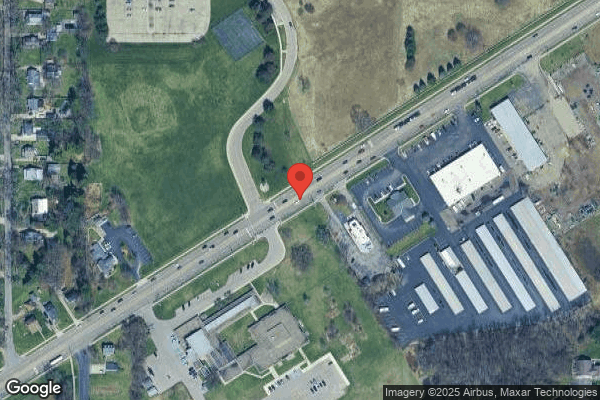
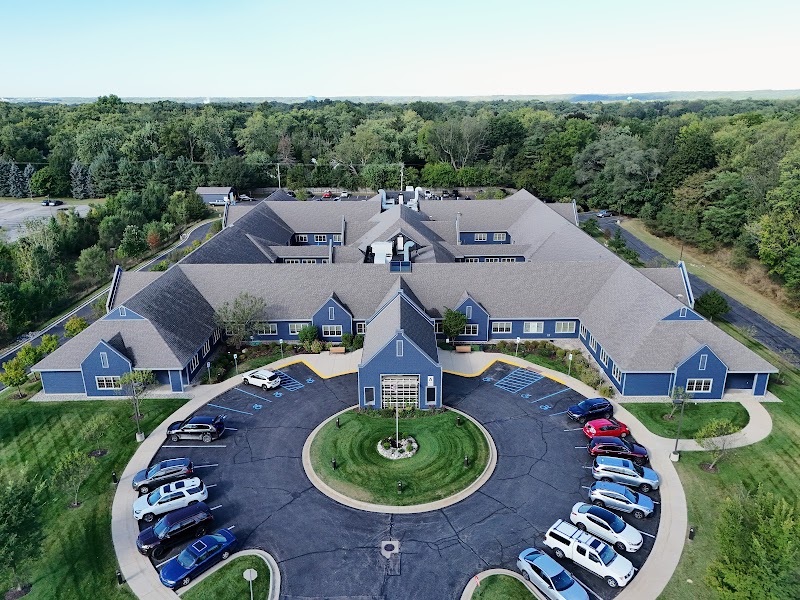
3057 Gull Road, Kalamazoo, MI 49048 (269) 552-6500
Non profit - Corporation 101 Beds VILLA HEALTHCARE Data: November 2025
Trust Grade
15/100
#421 of 422 in MI
Last Inspection: August 2024

Within standard 12-15 month inspection cycle. Federal law requires annual inspections.

Overview

Villa at Borgess Place has a Trust Grade of F, indicating significant concerns and a poor overall reputation. It ranks #421 out of 422 facilities in Michigan, placing it in the bottom tier, and #9 out of 9 in Kalamazoo County, meaning there are no better local options available. The facility is showing some improvement, with issues decreasing from 19 in 2024 to 15 in 2025. Staffing has an average rating of 3 out of 5, but a high turnover rate of 65% raises concerns as it is above the state average. Although there are no fines on record, indicating compliance with regulations, there have been serious incidents, such as a resident suffering a fall resulting in hospitalization due to inadequate supervision, and residents expressing dissatisfaction with food quality and safety practices. Overall, while there are some strengths, the facility has notable weaknesses that families should consider carefully.
Trust Score
F
15/100
In Michigan
#421/422
Bottom 1%
Safety Record
High Risk
Review needed
Inspections
Getting Better
19 → 15 violations
Staff Stability
⚠ Watch
65% turnover. Above average. Higher turnover means staff may not know residents' routines.
Penalties
✓ Good
No fines on record. Clean compliance history, better than most Michigan facilities.
Skilled Nurses
✓ Good
Each resident gets 44 minutes of Registered Nurse (RN) attention daily — more than average for Michigan. RNs are trained to catch health problems early.
Violations
⚠ Watch
49 deficiencies on record. Higher than average. Multiple issues found across inspections.
★☆☆☆☆
1.0
Overall Rating
★★★☆☆
3.0
Staff Levels
★★★☆☆
3.0
Care Quality
★☆☆☆☆
1.0
Inspection Score
Stable
2024: 19 issues
2025: 15 issues

The Good

  • Full Sprinkler Coverage · Fire safety systems throughout facility
  • No fines on record

Facility shows strength in fire safety.

The Bad

1-Star Overall Rating

Below Michigan average (3.1)

Significant quality concerns identified by CMS

Staff Turnover: 65%

19pts above Michigan avg (46%)

Frequent staff changes - ask about care continuity

Chain: VILLA HEALTHCARE

Part of a multi-facility chain

Ask about local staffing decisions and management

Staff turnover is elevated (65%)

17 points above Michigan average of 48%

The Ugly 49 deficiencies on record

1 actual harm
Aug 2025 4 deficiencies
CONCERN (D) 📢 Someone Reported This

A family member, employee, or ombudsman was alarmed enough to file a formal complaint

Potential for Harm - no one hurt, but risky conditions existed

Free from Abuse/Neglect (Tag F0600)

Could have caused harm · This affected 1 resident

This citation pertains to Intake: 2569824Based on interviews and record review, the facility failed to protect the resident's right to be free from sexual abuse by staff for 1 (Resident #81) of 3 resi...

Read full inspector narrative →
This citation pertains to Intake: 2569824Based on interviews and record review, the facility failed to protect the resident's right to be free from sexual abuse by staff for 1 (Resident #81) of 3 residents reviewed for abuse, resulting Resident #81 experiencing mental anguish, intimidation, and fear. Findings include: Resident #81: Review of an admission Record revealed Resident #81 was a female with pertinent diagnoses which included depression, and malaise (general feeling of discomfort). Review of a Brief Interview for Mental Status (BIMS) conducted on 5/1/2025, revealed, .BIMS score of 13 out of 15 which indicated Resident #81 was cognitively intact. Review of Care Plan for Resident #81 revised on 2/13/25, revealed the focus, .(Resident #81) has actual impairment to skin integrity to bilateral breasts and abd (abdominal) fold r/t (related to) yeast . with the intervention .antifungal treatment in place .Apply barrier cream per facility protocol to help protect skin from excess moisture .Monitor skin when providing cares, notify nurse of any changes in skin appearance . Review of Facility Reported Incident (FRI) received 7/12/2025, revealed, .Incident Summary: Resident reported that a couple weeks ago the treatment nurse touched her in her vaginal area. Residents were receiving treatment for fungal infection in groin and abdominal fold. The resident asked if she felt like the touching was sexual and she replied no, but she didn't like to be touched in that area. Resident stated she feels safe in facility.Police notified, Employee suspended.(Wound Nurse KKK) refused to provide a statement, he asked if he could record the conversation.is. (Resident #81) was recently being treated for a superficial mycosis fungal infection to her bilateral breast, abdominal folds and groin area twice a day, 7 days a week.Initial Complaint: On 7/12/2025 at approximately 10:30AM, Nurse Aide (CNA J) was giving (Resident #81) a shower in the spa room and mentioned ow much improvement her skin was showing. The areas to her breast, abdomen and groin had completely healed. (Resident #81) then stated to the Nurse Aide (CNA J) Yes, the wound care nurse comes to look at my skin, but I don't like the way he makes me feel. He makes me feel uncomfortable. He looks at my breast and he also put his finger in my vagina. I felt his fingers moving around. Nurse Aide (CNA J) immediately reported the allegation to the Nurse Manager (Licensed Practical Nurse (LPN) SS). The Nurse Aide (CNA J) and the Nurse Manager (LPN SS) instantly reported the allegation to Administrator. (Wound Nurse KKK), the Wound Care Director, was identified as the providing nurse. (Wound Nurse KKK), (who was not in the facility at the time the allegation was professed) was called by the Director of Nursing (DON) and suspended pending investigation. (Wound Nurse KKK) seemed surprised and confused hearing the news of the allegation.On 7/12/2025 the (Local) Police Department was called and the incident was reported. The Police came to the facility to interview (Resident #81). There was no further directives given by the Officers.On 7/14/2025 the (Wound Nurse KKK) came to the facility to speak with the Administrator and the Director of Nursing. At that time, the allegation was clearly explained to him. He then declined to respond to the allegation or to provide a statement. He left the facility and made no attempt to reach out again.On 7/14/2025 (Resident #81) was diagnosed with a Urinary Trach Infection (UTI).On 7/15/2025 the (Wound Nurse KKK) was terminated via telephone.Like residents were interviewed by Administration. There were no additional findings reported.Investigation Revealed: Upon hire, (Wound Nurse KKK)'s background check was clear. He completed education on Abuse and Neglect training prior to hire and again per the Company's guidelines.Action Taken: (Wound Nurse KKK) was immediately suspended pending investigation.The Licensed Nurse completed a full head-to-toe assessment on (Resident #81) which revealed no injuries. Her skin was clean, dry and intact and all areas with mycosis were healed.The (Local) Police Department was informed and interviewed (Resident #81) at the facility.Review of Statement submitted by CNA J dated 7/12/25, revealed, .When I was showering (Resident #81), I noticed her wounds under her breast looked so much better than when I noticed it a while back, I told her they look great. She stated, yes, the Wound Nurse KKK comes to look at them, but I don't like when he does, he makes me feel uncomfortable. I asked her why do you say that, she stated When he was looking at my breast and also put his finger in my vagina, I then asked if he was assessing her for something and she stated No I felt him moving his fingers around, I then asked if this was only one time, and when was the most recent, she stated It happened 2 times in the past month When he came last week he only looked at my breast. (Resident #81) also stated she didn't know who to tell and that she didn't want to get anyone in trouble . Review of Statement submitted by Resident #81, dated 7/12/25, revealed, .When the Wound Nurse KKK was assessing under my breast and groin he put his finger in my vagina on 2 occasions. I offered to lay down in bed and he insisted that I was fine, and he could do the assessment while I was in my chair. It happened sometime last month. I feel it was wrong. I do feel safe here in the facility, I do not want my family to be notified. I also do not want to go to the hospital. In an interview on 08/12/2025 at 11:39 AM, Certified Nursing Assistant (CNA) J reported Resident #81 a few months ago had yeast infection under her breasts and CNA J reported she was happy it was finally healing. CNA J reported Resident #81 indicated she was happy the area was healing so the wound nurse wouldn't have to come and see her for them anymore. CNA J reported Resident #81 reported she doesn't like him, and he scared her. CNA J reported what Resident #81 told her Wound Nurse KKK had sexually assaulted as he had inserted his fingers into her vagina on two accounts in her room. CNA J informed Resident #81 she had to report what she just told her and after she finished Resident #81's shower she informed the nurse, and they contacted the nursing home administrator. CNA J reported there was nothing listed in her care plan which indicated she had wounds/skin breakdown in her vagina that would require an examination like that. CNA J reported the areas she had for the fungal infections were in the skin folds up by her hip area and not in her groin. CNA J reported she was interviewed by the police on two occasions to gather additional information. In an interview on 08/12/2025 at 12:24 PM, LPN SS reported CNA J told her Resident #81 informed her the Wound Nurse KKK had did somethings that were not appropriate and she stated he took pictures as well. LPN SS reported she immediately contacted the NHA (Nursing Home Administrator) and the DON. LPN SS reported she had assessed Resident #81. LPN SS reported Resident #81 had some yeast in her abdominal fold but nothing further down where there needed to be pictures taken of her in that area. LPN SS reported she had yeast in her abdominal area just above the pubis bone, MSAD (moisture associated skin damage) with her bottom but nothing in her vaginal area. Review of Wound Assessment Details Report dated 7/3/25, revealed Resident #81 had a fungal rash under her abdominal fold and her groin area where the panniculus (layer of fat tissue that accumulates in the lower abdomen, area above the pubic bone, which hangs down) and the upper part of her thigh meet up by the resident's hip. In an interview on 08/12/2025 at 3:31 PM, Resident #81 reported the Wound Nurse KKK had come in and informed her she needed to pull her slacks down, Resident #81 asked him for what reason? Resident #81 indicated he told her he needed to check her down there. Resident #81 reported she was seated in her recliner and had asked if he would like for her to lie down, and he said he could examine her there in the recliner. Resident #81 reported he had he went down the front of her abdomen, down into her vaginal area, and stuck his fingers up in her vagina, moved them around in there, back and forth, and he had stuck his fingers way up in there. Resident #81 reported she had experienced pain from it, and she informed this writer she had had a little bleeding after that occurred. Resident #81 stated, .I guess I was not smart enough to say to him, Keep your hands out of there .Naive I guess. (while she was shaking her head and her affect appeared distressed). Resident #81 reported if he would do that to me, she wanted to protect those who couldn't speak up. Resident #81 reported she didn't want to report it for a long time, and she had a hard time sleeping because of the incident. Resident #81 reported she felt safe in the facility, but she does worry if he would come back to the facility. Resident #81 reported she spoke to the police and had some counseling from social work since. Review of Social Services Evaluation dated 7/15/25, revealed, .Moderately Impaired: Score 12.0 .Reason for Evaluation: Incident reported .PHQ-2 to 9 (screen for depression and assess its severity): Mood: Feeling down, depressed, or hopeless .Yes .Frequency: 2-6 days (several days) .Screening for Abuse/Neglect: History of abuse and/or neglect (including physical, sexual, verbal, emotional, financial) .Yes .Present mental health diagnosis: .Yes .Diagnosis of depression and/or history of depressive illness and/or present signs/symptoms of depression/mood distress. Low self-esteem, isolation and withdrawn behavior. Complaints of chronic pain, illness, fatigue, and/or persistent anger, fear, and/or anxiety .Yes .Risk Measure for likelihood of previous/recent mistreatment and psychosocial/psychological symptoms related to history of abuse and/or neglect .Moderate symptomology .Trauma Informed Care: Elder Abuse .Details: A few weeks ago during a skin check the nurse stuck his hands in my vagina after checking my breast and groin .How do you react when you are reminded of event(s)? .Dismissive .Trauma CP: Focus: (Resident #81) has potential Post Trauma ineffective coping r/t (related to): treatment of her abdominal and groin area .Encourage to talk about trauma at their own pace. Provide non-threatening environment, validate feelings, and include significant other/s if resident desires .Obtain accurate history from resident or significant others about trauma and resident's response .Evaluation completed following report on 7/12. The residents expressed feeling down for just a few days over the past two weeks. No changes in cognition. New trauma has been documented . In an interview on 08/12/2025 at 3:49 PM, Social Work Director (SWD) FF reported she was called in on a weekend to talk with Resident #81 in regard to the incident she reported. SWD FF reported Resident #81 had informed her Wound Nurse KKK had put his fingers in her vagina and she appeared not wanting to discuss it further. SWD FF reported Resident #81 was scheduled to see the mental health provider. Review of Psychiatric Evaluation & Consultation completed on 7/16/25, revealed, .She disclosed a sexual assault incident by a wound care nurse, involving vaginal penetration after application of medicated powder to her breast area. The event was reported and addressed by the facility; the involved staff member has been removed from care duties. (Resident #81) states the event remains distressing when she thinks about it but feels safe in the facility and appreciates their response. She denies suicidal ideation, homicidal ideation, hallucinations, or delusions .Mood: Sometimes sad and anxious .Affect: Congruent, tearful at times when discussing trauma.Diagnosis: Post-Traumatic Stress Disorder, Acute: Moderate: Undiagnosed new problem.Primary Insomnia: Moderate: Undiagnosed new problem.Current Assessment/Plan: (Resident #81) presents with chronic anxiety and depression, complicated by recent sexual trauma. She remains emotionally distressed when recalling the incident but expresses a sense of safety in the facility.Provide ongoing trauma-informed supportive psychotherapy.Nonpharmacologic interventions: Teach and reinforce deep breathing and grounding techniques.Encourage engagement in positive social interactions.Provide emotional validation and reassurance.Maintain trauma-sensitive care environment. Review of Employee Discipline Form for Wound Nurse KKK dated 7/15/25, revealed, .7/14/25: Employee came into facility to discuss the reported allegations of abuse and suspension. Employee declined answering questions or providing statement.7/15/25: NHA A and DON called employee to see if he would like to provide statement or answer questions in regard to the investigation and he declined. He stated if there was any information we had to share he would listen but was choosing not to answer questions.Recommendation for Termination was checked: Failure to participate in an open investigation, answer questions, or provide a statement. Review of Social Service Note (SPN) dated 7/15/2025 at 12:48 PM, revealed, .Evaluation completed following report on 7/12. Resident expressed feeling down just a few days over the past two weeks. No changes in cognition. New trauma has been documented. In an interview on 08/13/2025 at 9:20 AM, CNA U reported Resident #81 was normally social, and not one to make allegations against others. In an interview on 08/13/2025 9:25 AM CNA R reported Resident #81 was normally social, she would go and visit with other residents and would go and sing with another resident on the hallway. CNA R reported she was pretty independent but lately she had not been feeling well and required assistance. In an interview on 08/13/25 at 2:56 PM, DON B reported when queried Resident #81 had refused to go to the emergency room for evaluation. DON B reported she had interviewed Resident #81 following being notified of the resident's report to the CNA. DON B reported she had asked her to give me the details of the incident and what she had told the CNA she reported it to. DON B reported Resident #81 reported a couple weeks prior to last week, Wound Nurse KKK had been in her room performing an assessment on her and she reported she had felt his fingers were inside of her vagina which he moved around in there. DON B reported she explained to Resident #81 the facility would contact the police and the steps the facility could do; she was offered to go to the hospital but Resident #81 felt it was not necessary. When queried, DON B reported Resident #81 did experience vaginal dryness and expressed she had vaginal discomfort as well as pain above the pubic bone. DON B reported Wound Nurse FFF was not on shift when the incident was reported. DON B reported she contacted him via the phone and informed him of his immediate suspension. DON B reported Wound Nurse FFF had come to the facility for a few minutes, NHA A asked him to give us a scenario of what happened, he refused, and NHA A explained the process to him and why the facility needed him to give us his side of the events. DON B reported he stated he didn't want to say anything at this time, and he was informed to reach out if he changed his mind. In an interview on 08/13/25 at 3:04 PM, NHA A reported she got a phone call from the LPN SS and CNA J. NHA A reported CNA J was giving Resident #81 a shower and she reported to the CNA she was glad her fungal/yeast infection were cleared up and she didn't like the wound care nurse coming and touching her. Resident #81 had informed CNA J she didn't feel comfortable with him touching me down there. NHA A reported the Unit Manager and the DON had come into the building to assess and begin investigation of the allegation. NHA A reported the Wound Nurse KKK was suspended that day, 7/12/25. NHA A reported on Monday, she called Wound Nurse KKK, and he had come in to talk to her and she wanted to get his statement. NHA A informed him of the allegation, and he immediately didn't want to say anything, he didn't want to talk unless he had representation, and he left the building. NHA A reported she reached out to him again for him to provide a statement, and he refused to participate in the investigation. NHA A reported she was informed he had obtained an attorney but had not provided a statement to the allegation to this date. NHA A reported as far as she knew the police investigation was ongoing as the detective reported to her, he was waiting for Wound Nurse KKK's attorney to contact the police and provide a statement. NHA A reported she had reached out to the Wound Nurse KKK again, and he did not respond. NHA A reported he was terminated from the facility. This writer attempted to contact Wound Nurse KKK, this writer did not hear from Wound Nurse KKK prior to exit of survey.
CONCERN (D) 📢 Someone Reported This

A family member, employee, or ombudsman was alarmed enough to file a formal complaint

Potential for Harm - no one hurt, but risky conditions existed

Report Alleged Abuse (Tag F0609)

Could have caused harm · This affected 1 resident

**NOTE- TERMS IN BRACKETS HAVE BEEN EDITED TO PROTECT CONFIDENTIALITY** This citation pertains to intake #2586142Based on interview, and record review, the facility failed to report 2 elopements and a...

Read full inspector narrative →
**NOTE- TERMS IN BRACKETS HAVE BEEN EDITED TO PROTECT CONFIDENTIALITY** This citation pertains to intake #2586142Based on interview, and record review, the facility failed to report 2 elopements and an allegation of abuse to the State Agency in a timely manner for 2 (Resident #73, Resident #66) of 3 residents reviewed for abuse and reporting, resulting in the potential for ongoing mistreatment, as well as additional incidents of elopements and alleged abuse to go unreported.Findings include: Resident #73 Review of an admission Record revealed Resident #73 was originally admitted to the facility on [DATE] with pertinent diagnoses which included: parkinson’s disease (a disorder of the central nervous system that affects movement that may also cause hallucinations (sensory experiences that seem real but are created by the mind), metabolic encephalopathy (disorder that affects the brain’s function), weakness and anxiety (persistent state of worry). Review of a Minimum Data Set (MDS) assessment for Resident #73 with a reference date of 6/22/25, revealed a Brief Interview for Mental Status (BIMS) score of 15/15 which indicated Resident #73 was cognitively intact. Section “E” of the MDS revealed Resident #73 wandered 1 to 3 days during the assessment period. Section “GG” revealed Resident #73 required the use of a wheeled walker to safely ambulate. Review of a “Care Plan” for Resident #73 with a reference date of 1/6/25, revealed a focus/goal/interventions of: “Focus: (Resident #73) is an elopement risk/wanderer sundowner (phenomenon where those with cognitive impairments experience worsening of symptoms in the late afternoon or evening). Goal: The resident’s safety will be maintained…Interventions: exit and stairwell alarms…photo on wander list, staff aware of residents wander risk…wander ALERT personal safety device: Right ankle). In an interview on 8/11/25, at 2:26pm, Confidential Informant (CI) “DDD” reported they were caring for another resident in their room one afternoon, when they (CI “DDD”) looked outside and saw Resident #73 walking in the service driveway alone, without her walker. CI “DDD” reported this incident occurred “within the last few months”. CI “DDD” reported they ran outside and found Resident #73 alone, walking down the service drive, approximately 100’ from the emergency exit on her unit. CI “DDD” reported Resident #73 was not safe to leave the building alone because she was confused and lacked safety awareness. CI “DDD” reported LPN “MM” also responded to the situation and together they assisted Resident #73 back inside. CI “DDD” reported upon returning Resident #73 to the unit, she was approached by Nursing Home Administrator (NHA) “A” and DON “B” who instructed CI “DDD” not to document the incident in the electronic medical record (EMR). In an interview on 8/12/25 at 11:07am, LPN “MM” reported Resident #73 eloped from the building and was found alone, walking briskly down the service drive, approximately 100’ from the nearest exit. LPN “M” reported she was unsure of the date of the incident, but an incident report had been written. LPN “MM” reported she told NHA “A” Resident #73 had eloped and that the door alarm had been sounding for a few minutes, but she didn’t recognize the sound of the alarm from behind a closed resident door. In an interview on 8/12/25 at 11:50am, Family Member (FM) “CCC” reported the facility called her on two separate occasions to report Resident #73 had eloped from the building. FM “CCC” reported the first elopement occurred shortly after the resident was admitted to the facility on [DATE] and again, “sometime in the last few months”. In an interview on 8/13/25 at 12:48pm, NHA “A” reported Resident #73 exited the building on 4/23/25. NHA “A” reported the incident was not submitted to the state agency because she thought the incident was witnessed by staff. When further queried, NHA “A” reported she did not have any signed, documented staff interviews related to the incident and was not aware of any documentation of the event in the resident’s medical records. Review of an “Abuse, Neglect, Exploitation, Mistreatment and Misappropriation of Resident Property” facility policy with a reference date of 11/28/17, revealed “PURPOSE:…The Nursing Home Administrator or designee will report “abuse” to the state agency per State and Federal requirements immediately…REPORTING AND RESPONSE:…The facility will ensure that alleged violations involving abuse…neglect…mistreatment…are reported immediately, but not later than 2 hours…”. Resident #66 Review of an “admission Record” revealed Resident #66 was a female, with pertinent diagnoses which included: Alzheimer’s Disease (a form of dementia) with late onset, psychotic disorder with delusions due to known physiological condition, and visual hallucinations. Review of a “Facility Report Incident” (FRI) incident report revealed, “…Details Type of Alleged Incident: Abuse…Date/Time Incident Discovered 1/26/25 05:00 PM…Facility Investigator: (“Former Nursing Home Administrator” (FNHA) “EEE”) .Incident Summary: (Resident #66) is a long term care resident with medical history of dementia and depressive and psychotic disorders and a social history of sexual abuse in her past. (Resident #66) makes statements that (visitor name omitted), the husband of another long term care resident, touches her inappropriately. On 1/26/25 (Resident #66) told her nurse (“Licensed Practical Nurse” (LPN) “ZZ”) that (visitor name omitted) molested her…Submitted Date/Time: 1/27/25 11:43 AM…” In an interview on 8/13/25 at 12:05 PM, “Nursing Home Administrator” (NHA) “A” reported abuse allegations must be reported within 2 hours to the State. In an interview on 8/13/25 at 12:26 PM, FNHA “EEE”, when queried as to why the FRI reported on 1/27/25 at 11:43 AM for Resident #66 had not been reported to the State Agency within two hours of the Date/Time Incident Discovered on 1/26/25 at 5:00 PM, FNHA “EEE” reported she did not remember the details of reporting the incident to the State. FNHA “EEE” confirmed an allegation of abuse should be reported within 2 hours to the State.
CONCERN (E) 📢 Someone Reported This

A family member, employee, or ombudsman was alarmed enough to file a formal complaint

Potential for Harm - no one hurt, but risky conditions existed

Accident Prevention (Tag F0689)

Could have caused harm · This affected multiple residents

**NOTE- TERMS IN BRACKETS HAVE BEEN EDITED TO PROTECT CONFIDENTIALITY** This citation pertains to intake #2586142Based on observation, interview, and record review the facility failed to: 1. provide a...

Read full inspector narrative →
**NOTE- TERMS IN BRACKETS HAVE BEEN EDITED TO PROTECT CONFIDENTIALITY** This citation pertains to intake #2586142Based on observation, interview, and record review the facility failed to: 1. provide an environment that was free from accident hazards for 2 residents (Resident #73 and Resident #40) of 5 residents reviewed for accidents. This deficient practice resulted in an elopement for Resident #73 and Resident #40 repeatedly walking unassisted thereby creating the potential for more than minimal harm. 2. To ensure wander alert equipment was working properly and effectively to ensure the safety of residents at risk for elopement. This deficient practice has the potential to impact 10 residents who currently require the use of personal wander alert devices and are at risk for elopement. Findings include: Resident #73 Review of an admission Record revealed Resident #73 was originally admitted to the facility on [DATE] with pertinent diagnoses which included: parkinson’s disease (a disorder of the central nervous system that affects movement that may also cause hallucinations (sensory experiences that seem real but are created by the mind), metabolic encephalopathy (disorder that affects the brain’s function), weakness and anxiety (persistent state of worry). Review of a Minimum Data Set (MDS) assessment for Resident #73 with a reference date of [DATE], revealed a Brief Interview for Mental Status (BIMS) score of 15/15 which indicated Resident #73 was cognitively intact. Section “E” of the MDS revealed Resident #73 wandered 1 to 3 days during the assessment. Section “GG” revealed Resident #73 required the use of a wheeled walker to safely ambulate. Review of a “Care Plan” for Resident #73 with a reference date of [DATE], revealed a focus/goal/interventions of: “Focus: (Resident #73) is an elopement risk/wanderer sundowner (phenomenon where those with cognitive impairments experience worsening of symptoms in the late afternoon or evening). Goal: The resident’s safety will be maintained…Interventions: exit and stairwell alarms…photo on wander list, staff aware of residents wander risk…wander ALERT personal safety device: Right ankle). Review of a “Wander/Elopement Risk Evaluation” with a reference date of [DATE] (Resident #73’s date of admission) revealed a score of “7”, low risk. Review of a “Wander/Elopement Risk Evaluation” with a reference date of [DATE] revealed a score of “14”, at risk. Review of “Physician’s Orders” for Resident #73 with a reference date of [DATE] revealed “Wander Device, Check Placement on right ankle every shift for elopement risk”. Review of a “Wander/Elopement Risk Evaluation” with a reference date of [DATE] revealed Resident #73 scored a “21”, high risk for elopement. In an interview on [DATE] at 2:51pm Certified Nursing Assistant (CNA) “C” reported Resident #73 frequently wandered around the building and could walk very fast. In an interview on [DATE] at 4:45pm, Director of Nursing (DON) “B” reported Resident #73 wandered frequently and got lost within the building. In an interview on [DATE] at 2:19pm, Licensed Practical Nurse (LPN) “Q” reported Resident #73 frequently wandered throughout the building, entered unauthorized areas such as the employee bathrooms and was exit seeking. In an interview on [DATE], at 2:26pm, Confidential Informant (CI) “DDD” reported they were caring for another resident in their room one afternoon, when they (CI “DDD”) looked outside and saw Resident #73 walking in the service driveway alone, without her walker. CI “DDD” reported this incident occurred “within the last few months”. CI “DDD” reported they ran outside and found Resident #73 alone, walking down the service drive of the facility, toward the front of the building, approximately 100’ from the emergency exit on her unit. CI “DDD” reported Resident #73 was not safe to leave the building alone because she got confused at times and lacked safety awareness. CI “DDD” reported LPN “MM” also responded to the situation and together they assisted Resident #73 back inside. CI “DDD” reported upon returning Resident #73 to the unit, she was approached by Nursing Home Administrator (NHA) “A” and DON “B” who instructed CI “DDD” not to document in the electronic medical record (EMR) regarding the incident. CI “DDD” reported following the incident, Resident #73’s room was moved because it was believed she exited the building through a door that was next to her room. In an interview on [DATE] at 11:07am, LPN “MM” reported Resident #73 eloped from the building and was found alone, walking briskly down the service drive, approximately 100’ from the nearest exit. LPN “M” reported she was unsure of the date of the incident, but an incident report had been written. When further queried about Resident #73’s elopement, LPN “MM” reported she was caring for a resident in room [ROOM NUMBER] when she heard a beeping alarm that sounded like a call light going off. LPN “MM” completed the cares and upon exiting room [ROOM NUMBER] noticed the beeping was much louder than a call light, at which time she recognized it as a door alarm. LPN “MM” reported she ran to the alarming door, went outside to the service driveway and saw CI “DDD” running toward Resident #73. LPN “MM” reported Resident #73 was approximately 100’ away from the door, walking briskly and that she had to run to catch up to the resident. Together, LPN “MM and CI “DDD” escorted Resident #73 back inside. LPN “MM” reported she told NHA “A” Resident #73 had eloped and that the door alarm had been sounding for a few minutes, but she didn’t recognize the sound of the alarm from behind a closed resident door. LPN “MM” reported she completed an incident report and assessed that Resident #73 was not injured. In an emailed response on [DATE] at 2:51pm, NHA “A” reported the facility had no incident reports related to Resident #73’s elopements. In an interview on [DATE] at 11:50am, Family Member (FM) “CCC” reported the facility called her twice since Resident #73’s admission to report the resident had eloped from the building. FM “CCC” reported the first elopement occurred shortly after the resident was admitted to the facility on [DATE] and again, “sometime in the last few months”. FM “CCC” reported she was the activated durable power of attorney (DPOA) for Resident #73 and did not want her to exit the building alone because she was not safe to do so. FM “CCC” stated “She (Resident #73) wanted to come to a facility rather go to her own home after a hospitalization in 1/25 because she recognized she needed to have someone care for her”. FM “CCC” reported during the most recent elopement, Resident #73 was hallucinating and thought she saw her deceased daughter outside so Resident #73 exited the building to try to catch her. FM “CC” reported after Resident #73’s first elopement, the facility had implemented the use of a personal safety wander alert anklet to maintain her safety. FM “CC” reported after the second elopement, the facility moved Resident #73 to a room that was not as close to an exit door. In an interview on [DATE] at 3:11pm, Resident #73 reported sometimes she “gets a little out of sorts” and becomes confused. Resident #73 recalled becoming confused in the last few months and confirmed that she exited the building alone after she believed she saw deceased relatives outside. Resident #73 lifted her pant leg and gestured toward her personal safety device on her left ankle, then stated “it’s to keep me safe”. During an observation on [DATE] at 12:17pm, a delayed egress door was located next to the room that Resident #73 occupied from [DATE]-[DATE]. The egress alarm activated when the release bar was pushed, the door unlocked and opened after 15 seconds. There was no wander alert detector on the door. Beyond the door, a short sidewalk led to an 8” curb between the service driveway and employee parking area. The sidewalk ended on a curve between the service driveway and the employee parking lot. The service driveway was also accessible by walking across an area landscaped with river rocks and thick grass. The service driveway was paved with 2” deep cracks that stretched across the width of the drive. A retaining pond, enclosed by a 4’ fence, was on the opposite side of the drive. During an observation and interview on [DATE] at 8:47am, DON “B” toured the “Spiritual Garden”, a separate free-standing building, with this writer. DON “B” confirmed Resident #73 resided in this building now and her safety was maintained in part by use of a personal safety wander device. During the tour an exit door was noted in the service corridor. The service corridor was accessible through 2 unlocked, unalarmed double doors, the exit door (which led outdoors) was approximately 30’ beyond the double doors. The exit door had a wander guard detector and a delayed egress release bar. During an observation and interview on [DATE] at 8:55am, DON “B” activated the wander alert alarm at the exit door in the service corridor. The double doors leading to the service corridor were closed. The alarm was heard faintly by the surveyor while standing in the common area, in front of the nurse’s station. When queried, LPN “I” reported she could not hear the alarm as she stood next to the survey in front of the nurse’s station. LPN “I” was asked which residents in this building were at risk for elopement and how she would know. LPN “I” she would look in each resident’s electronic medical record to determine if they were at risk for elopement. LPN “I” listed residents she believed were at risk but did not include Resident #73. In an interview on [DATE] at 10:16am, DON “B” reported nurses were expected to use an electronic reader device each shift to ensure resident wander devices were working properly. DON “B” reported she thought the electronic reader devices were kept in the medication carts, but she was not sure. DON “B” reported she found a device reader at the front desk, but it was not charged. In an interview on [DATE] at 11:19am, Unit Manager/Registered Nurse (UM/RN) “N” reported nurses should check each resident’s wander alert device every shift using the reader device. In an interview on [DATE] at 10:10am, LPN “I”, who was assigned to care for Resident #73 on this date, reported she checked the placement of the resident’s personal wander device daily but did not know how to check the functionality of the device. LPN “I” searched her medication cart and reported there was no reader device. LPN “I” reported she called DON “B” and was told the device was in the main building but was not currently useable because the batteries were not charged. In an interview on [DATE] at 10:23am RN “NN” reported she thought it was the expectation that nurses use the electronic reader device once a week to ensure resident wander devices were working properly. RN “NN” reported the facility only had 1 reader and it was kept at the front desk. In an interview on [DATE] at 10:25am, LPN “MM” reported she never checked resident wander devices to ensure they were working. LPN “MM” stated “someone else does that and they’ll let me know if it’s not working”. LPN “MM” checked each compartment of her medication cart and stated, “there’s no device in here for that”. In an observation and interview on [DATE] at 2:20pm LPN “Q” reported she was not responsible for checking resident wander devices to ensure they were working properly. LPN “Q” stated “someone from management checks them daily”. LPN “Q” reported she did not know where to find a wander device reader. In an interview on [DATE] at 10:17am, Central Supply Clerk (CSC) “Y” reported when she previously worked as the scheduler, it was her responsibility to check resident wander devices daily to ensure they were working properly. CSC “Y” reported there had been a lot of staff turnover for the scheduler position, and although she was covering scheduling at this time, the position was no longer had the responsibility of checking resident wander devices. In an interview on [DATE] at 3:41pm Maintenance Director (MD) “GG” report the facility placed wander detector devices on 2 of the 5 exit doors of the main building of the facility to reduce the likelihood of resident elopements. MD “GG” reported residents at risk for elopement wore a bracelet that triggered the wander detector when the resident was within 15’ of the door, which cause an alarm to sound. MD “GG” reported the wander detector devices at the doors were supposed to be checked weekly and the checks were documented in a “door log”. MD “GG” reported the remaining doors of the facility were all equipped with delayed egress locks that when activated, would only open after the release bar was pressed for 15 seconds. MD “GG” reported maintenance staff ensured the delayed egress locks were activated once a day, 5 days a week. MD “GG” reported there was no logbook for checking the delayed egress doors and there was no plan in place for checking the doors when maintenance staff was not in the building. MD “GG” reported nurses and other staff members had keys to activate and deactivate the delayed egress alarms. Review of a “Door Logbook” revealed 5 occurrences in which the wander alert alarms were not checked every 7 days during the date range of [DATE]-[DATE]. During an observation on [DATE] at 3:41pm a red light shone on the delayed release bar of the exit door near the kitchen of the main building. When queried, MD “GG” reported the delayed egress alarm was not activated but should have been. In an interview on [DATE] at 12:07pm, NHA “A” reported she thought she may have a “soft file” regarding an “incident of wandering” for Resident #73. NHA “A” then provided a manilla folder with a single document titled “Verification of Investigation”. Review of a “Verification of Investigation” report with a reference date of [DATE] revealed “(Resident #73) was noted with wandering behaviors and wandered through egress door to outside…staff immediately responded to alarm and went to resident…modified interventions to the plan of care… Resident’s room will be moved…further away from outside access…”. In an interview on [DATE] at 12:48pm, NHA “A” reported Resident #73 exited the building on [DATE]. NHA “A” reported the incident was not submitted to the state agency as required because she believed the incident was witnessed by staff. When further queried, NHA “A” reported she did not have any signed, documented staff interviews related to the incident and was not aware of any documentation of the event in the resident’s medical records. NHA “A” confirmed documentation of the event should be in the resident’s medical record so staff could be aware of potential hazards for the resident. NHA “A” reported she had no awareness of an elopement that occurred shortly after Resident #73’s admission because it had not been documented. Review of Resident #73’s progress notes for [DATE]-[DATE] revealed no documentation of elopement(s). Review of an “Accidents” facility policy with a reference date of [DATE] revealed “Purpose: To ensure the environment is free from accident hazards over which the facility has control and provide supervision…to each resident to prevent avoidable accidents through a systematic approach. “Avoidable Accident” means that an accident occurred because the facility failed to: …evaluate/analyze hazards and eliminate them…implement measures to reduce risks…implement interventions/including adequate supervision and assistive devices to…reduce risk of an accident…assistive device refers to any item…that is used by, or in care of a resident to promote…the resident’s safety….a systematic approach identifies equipment and devices that are defective…are disabled/removed…and enables leadership and direct care staff to work together to communicate the observation of hazards, record resident specific information,…monitor data related to care processes that potentially lead to accidents…” Review of a “Wandering and Elopement Guideline” with a reference date [DATE] revealed “This facility will provide the least restrictive and safe environment for wandering residents at risk for elopement. Process: Upon admission…and upon change of condition our residents will be evaluated for potential elopement risk…Residents identified at risk will have an elopement risk bracelet application placed…Bracelets will be checked for placement and function every shift…” Resident #40 Review of an admission Record revealed Resident #40 was a female who originally admitted to the facility on [DATE] and had pertinent diagnoses which included: weakness, reduced mobility, other muscle spasms, and cutaneous abscess of right foot (a localized collection of pus within the skin and underlying tissues). Review of a Minimum Data Set (MDS) assessment for Resident #40, with a reference date of [DATE] revealed a Brief Interview for Mental Status (BIMS) score of 15/15 which indicated Resident #40 was cognitively intact (BIMS score 13-15 indicates no cognitive impairment); “Section GG- Functional Abilities- I. Walk 10 feet: Once standing the ability to walk at least 10 feet in a room, corridor, or similar space… Coded “04- defined as “Supervision or touching assistance- Helper provides verbal cues and/or touching/steadying and/or contact guard assistance as resident completes the activity. Assistance may be provided throughout the activity or intermittently.” On [DATE] at 8:03 am, Resident #40 was observed walking in the hallway towards her room. Resident #40 was walking unassisted with a two wheeled walker approximately 3 feet behind “Certified Nursing Assistant” (CNA) “L” as they returned to Resident #40’s room from the spa room. CNA “L” was walking in front of Resident #40 and did not have her in any direct visualization. Resident #40 was not wearing a gait belt. (a safety device used to assist individuals with mobility issues, worn by patients, and allows caregivers to safely move or support the patient while walking or transferring.) On [DATE] at 9:15 am, Resident #40 was observed walking alone with a two wheeled walker in the hallway outside of her room. No noted staff present in the hallway. On [DATE] at 10:29 am, Resident #40 was observed walking alone with a two wheeled walker in the hallway outside of her room. No noted staff present in the hallway. In an interview on [DATE] at 8:26 am, “Registered Nurse” (RN) “PPP” reported Resident #40 was “able to get up and walk around alone”. On [DATE] at 9:45 am, Resident #40 was observed walking out of her room into the hallway with her two wheeled walker alone. Resident #40 was overheard speaking to two transport individuals requesting the use of a wheelchair since going to the doctor was “too long of a walk for her to make without falling.” RN “PPP” was observed entering Resident #40’s room, retrieving a wheelchair, and placing the wheelchair in the hallway for Resident #40 to sit in. Resident #40 was overheard stating “the last thing I want to do is fall and break something.” RN “PPP” looked at this surveyor and stated, “she can be up by herself.” Review of “Kardex” (a easily referenced key patient information system that originates from the patient’s nursing care plan) for Resident #40 with a review date of [DATE] revealed “…Mobility…Uses walker, uses wheelchair (foot pedals as needed), I use a wheelchair in hallways, walker in room with assist, (Name Omitted) Resident #40 can walk with stand by assist with two wheel walker and gait belt in room…” In an interview on [DATE] at 11:56 am, “Director of Rehab” (DOR) “FFF” reported that she was new to the director position and stated, “we are not great at getting evaluation information like transfer status to the floor and the nursing staff.” On [DATE] at 3:35 pm, Resident #40 was observed walking alone with a two wheeled walker in the hallway outside of her room. CNA “G and CNA “R” present in the hallway. No direct observation of Resident #40 by staff was noted. On [DATE] at 3:45 pm, Resident #40 was observed walking alone with a two wheeled walker in the hallway outside of her room. CNA “G” and CNA “R” were standing in the hallway observing Resident #40 from a distance while talking with this surveyor. In an interview on [DATE] at 3:45 pm, CNA “G” reported the management changes the resident’s care plan and doesn’t make sure we know it has been changed. CNA “G” reported the information for a resident’s transfer status was in the care plan and the Kardex but stated “who has time to check that every day?” In an interview on [DATE] at 3:45 pm, CNA “R” reported that Resident #40 walks in the hallway independently “all the time” and she does fine with it. In an interview on [DATE] at 3:45 pm, this surveyor walked next to Resident #40 in the hallway outside of her room and when queried, Resident #40 stated “I think I can be up walking in the hallway. The girls aren’t saying “(Name Omitted) get back to your room”. Resident #40 stated “I just look both ways and go for it. I’ll wait to hear if I’m not supposed to walk alone in the hallway.” In an interview on [DATE] at 8:59 am, DOR “FFF” reported Resident #40 was evaluated by therapy on [DATE] and her current status was “supervision” for assistance. DOR “FFF” reported that Resident #40 required the wearing of a gait belt and staff presence when walking in the hallway; DOR “FFF” reported staff did not have to touch her when she was walking, but they did need to observe/supervise her when she walked in the hallway. DOR “FFF” reported Resident #40 was not independent in walking in the hallway. Review of “Physical Therapy PT evaluation and Plan of Treatment” for Resident #40 dated [DATE] revealed “…new goal Resident will be able to function and ambulate (walk) independently on the hallway with her 2WW (two wheeled walker) safely > (greater than) 150 feet and back (target date [DATE]) …baseline… currently ambulating with 2WW at supervision…” In an interview on [DATE] at 1:16 pm, “Nurse Manager/Licensed Practical Nurse” (NM/LPN) “M” reported that therapy department did not have access to update care plan interventions, and any changes should be made by nursing staff and/or nurse managers. NM/LPN “M” reported she received an email if therapy made changes to a resident’s transfer status and the floor nurse received a communication form from the therapy department if changes were made. In an interview on [DATE] at1:30 pm, CNA “F” reported Resident #40 was independent now. When queried about how CNA “F” knew that Resident #40 was independent, CNA “F” stated “she shows me she is independent when she does things for herself.” In an interview on [DATE] at 1:35 pm, CNA “EE” reported Resident #40 staff needs to be in the room when Resident #40 was doing ADLs (activities of daily living), but she would walk the unit by herself. CNA “EE” reported Resident #40 has a “walking routine” that she completed with therapy during her sessions and she would practice it when she wasn’t working with therapy by walking around the unit by herself. In an interview on [DATE] at 2:27 pm, “Director of Nursing” (DON) “B” reported her expectations were that care plans were updated when needed and consistently done quarterly with the quarterly assessments. DON “B” reviewed Resident #40’s care plan and confirmed Resident #40 should have a gait belt on and staff standing by; Resident #40 should not be walking independently in the hallway.
CONCERN (E) 📢 Someone Reported This

A family member, employee, or ombudsman was alarmed enough to file a formal complaint

Potential for Harm - no one hurt, but risky conditions existed

Medical Records (Tag F0842)

Could have caused harm · This affected multiple residents

**NOTE- TERMS IN BRACKETS HAVE BEEN EDITED TO PROTECT CONFIDENTIALITY** This citation pertains to intake # 2586142Based on observation, interview, and record review, the facility failed to maintain co...

Read full inspector narrative →
**NOTE- TERMS IN BRACKETS HAVE BEEN EDITED TO PROTECT CONFIDENTIALITY** This citation pertains to intake # 2586142Based on observation, interview, and record review, the facility failed to maintain complete and accurate medical records in 5 of 18 residents (Resident #10, #99, #100, #73 & #47) reviewed for accuracy of medical records, resulting in inaccurate treatment records and the potential for providers to not have an accurate picture of resident status and condition.Findings include: According to [NAME], [NAME] A.; [NAME], [NAME] Griffin; Stockert, [NAME]; Hall, [NAME]. Fundamentals of Nursing.High-quality documentation is necessary to enhance efficient, individualized patient care. Quality documentation has five important characteristics: it is factual, accurate, complete, current, and organized . Accessed from: Kindle Locations 24106-24108). Elsevier Health Sciences. Kindle Edition. Resident #10: Review of an admission Record revealed Resident #10 was a female with pertinent diagnoses which included paralysis on her right dominant side, stroke, long term use of insulin, pain in right shoulder, tube feeding, NPO (nothing by mouth), and nerve pain. In an interview on [DATE] at 2:11 PM, Licensed Practical Nurse (LPN) D reported in the medication administration and treatment administration records (MAR TAR) if a resident refused, the nurse would document the refusal in there. For some refusals, it would bring up a note for the nurse to document or the nurse could create their own note for the progress notes. In an interview on [DATE] at 2:15 PM, LPN PP reported in the MAR/TAR, if a resident refused they would select refused and put in a progress note for the resident's refusal. Review of Treatment Administration Record (TAR) for [DATE], revealed, .Acetaminophen Tab 325 mg .Give 2 tablet via peg tube every 6 hours for pain . On [DATE]: missing notation of administration of medication and pain level assessed. Review of Treatment Administration Record (TAR) for [DATE], revealed, .one time a day for Pleasure .Resident to have ice cream once daily. Sitting up at a 90 degree angle, and can be fed by nurse, SLP (speech language pathologist) or trained activity staff only .Trained activity staff are: (First name), (First name), and (First name) .For pleasure feeding On [DATE]: missing notation of administration for administration of pleasure feeding for Resident #10. Review of Treatment Administration Record (TAR) for [DATE], revealed, .Enteral Feed Order at bedtime Change drain sponge around G tube q (every) HS (hour of sleep) . On [DATE]: missing notation of administration for Bedtime drain sponge change around G tube for Resident #10. Review of Treatment Administration Record (TAR) for [DATE], revealed, .Acetaminophen Tab 325 mg .Give 2 tablet via peg tube every 6 hours for pain . On [DATE]: missing notation of administration of medication and pain level assessed. Review of Treatment Administration Record (TAR) for [DATE], revealed, .Insulin Glargine-yfgn 100 UNIT/ML Solution pen-injector .Inject 30 unit subcutaneously two times a day related to TYPE 2 DIABETES MELLITUS WITH OTHER DIABETIC KIDNEY COMPLICATION (E11.29) . On [DATE]: missing notation of administration of medication at bedtime and results of blood sugar check. In an interview on [DATE] at 2:19 PM, Unit Manager (UM) “N” reviewed Resident #10's MAR/TAR and reported if an entry was not there, it was assumed it was not done as the staff could not be sure the resident had received the medication or treatment. UM N reported the Director of Nursing (DON) created a report in the electronic medical record to audit if a medication or treatment was missing. UM N reported that the nurse who was assigned to the resident during the missing documentation would be contacted to determine if this was just an omission or the medication/treatment was not completed. UM N reviewed Resident #10's MAR/TAR for June, July and August. UM N reported if the sponge was not changed on the G-tube this could cause infection. UM N reported if scheduled pain medication was missed the resident's pain could get out of control and the facility could have trouble getting it back under control. UM N reported that if the blood sugar and insulin were not completed it could have significant consequences for the resident. In an interview on [DATE] at 2:43 PM, Director of Nursing (DON) “B” reported every morning the clinical staff reviewed the progress notes from the day prior. DON “B” reported when she was a floor nurse she would put in a progress note and noted on the MAR/TAR the resident had refused the medication or treatment as she was unsure of the policy. Resident #99 (R99) / Resident #100 (R100) Review of the admission Record and Minimum Data Set (MDS) dated [DATE] revealed R99 admitted to the facility on [DATE] with pertinent diagnoses including spinal fracture and alcohol abuse. Brief Interview for Mental Status (BIMS) reflected a score of 15 out of 15 which indicated R99 was cognitively intact (13 to 15 cognitively intact). R99 had a previous admission at the facility from [DATE] to [DATE]. During an observation on [DATE] at 8:18 AM, Certified Nursing Assistant (CNA) “KK” was sitting outside R99’s bedroom door. CNA “KK” stated that R99 was on a 1:1 observation at all times for several days but she didn’t know why. During an interview on [DATE] at 8:38 AM, R99 stated that he was on 1:1 observation since he went into a resident’s room (R100) the other day. During an interview on [DATE] at 8:31 AM CNA “RR” said that she thought R99 was on 1:1 observation since he was inappropriate with a female resident. During an interview on [DATE] at 8:37 AM, Licensed Practical Nurse (LPN) “T” stated that R99 was on 1:1 observation but she didn’t know why. Review of R99’s chart revealed a behavior note documented by Licensed Practical Nurse (LPN) “LLL” from a previous admission dated [DATE] “Location/Cause: Resident room, passing AM medication Behavior: Resident grabbing at nurses breast and groin, started fondling self. Description of behavior: sexually inappropriate. Behavior/Intensity: Non Pharmacological Interventions: spoke with resident stated I am your nurse and this is not appropriate to grab me.” During a telephone interview on [DATE] at 12:28 PM, LPN “LLL” stated that the incident occurred when she was taking R99’s vitals. LPN ‘LLL” said she told her supervisor about the incident and documented the behavior in a progress note. LPN “LLL” said that R99 was sexually inappropriate and was often seen touching his private area in his bed. During an interview on [DATE] at 12:49 PM, Nurse Manager (NM) “N” stated that R99 was on 1:1 since [DATE] since he was found in R100’s room. NM “N” said R100 was next to his room and she was moved immediately afterwards. During a telephone interview on [DATE] at 11:57AM, LPN “OO” stated that she was working the day of the incident with R99 and R100. LPN “OO” said that FM “VV” told her what happened and that R99 was not observed touching R100. Then, she notified Director of Nursing (DON) “B” and DON “B” contacted NHA “A”. LPN “OO” said she didn’t complete an incident report or complete any charting related to incident since NHA “A” came in and she thought she would take care of it. During an interview on [DATE] at 8:24 AM, RN “NN” stated that when she walked into R99’s room several times he appeared to be masturbating. She also said he likes to brush up against staff but she hadn’t observed any behaviors with residents. RN “NN” stated that management knew about R99’s sexual behaviors since Wound Care Nurse (WCN) “S” told some staff to keep an eye on R99 since he was on the Michigan Sex Offender Registry List. During an interview on [DATE] at 9:02 AM, WCN “S” reported that she knew R99 was on the Michigan Sex Offender Registry List since he came from another facility where she worked at. WCN “S” stated that some staff were aware of R99 being on the list and his behaviors since she told some CNAs and the nurse when she had to do a skin assessment on R99 upon his admission. Review of both R99’s and R100’s charts revealed that there was no documentation of the incident on [DATE]. Review of R99’s chart revealed no behaviors documented since admission. Review of Social Services Evaluation completed on [DATE] by Social Service Assistant (SSA) “HH” revealed “…. Screening for Abuse/Neglect…8. History of or presence of behaviors, such as provoking, aggressive manner, manipulative, derogatory, disrespectful, obnoxious, abhorrent, insensitive, attention seeking, and/or otherwise abrasive/inappropriate behavior: Yes…9. History of mistreating others (i.e. verbal/physical/sexual/ financial exploitation) and/or information presented by a reliable source that indicates there is a history of mistreating others: Yes” During an interview on [DATE] at 10:37 AM, Social Worker Director (SWD) “FF” and Social Worker Aide (SSA) “HH” stated that they were not aware of the incident between R99 and R100 on [DATE] since they weren’t part of the investigation, they only knew R99 had a 1:1 staff observation. Social Worker Director (SWD) “FF” and Social Worker Aide (SSA) “HH” also noted that the behavior log didn’t document any of the behaviors R99 was exhibiting with staff. SSA “HH” acknowledged this. During an interview on [DATE] at 10:44 AM, NHA “A” stated that she did not have an incident report for the (R99) and (R100) incident on [DATE] or an incident report from the previous admission from [DATE] with LPN “LLL”. NHA “A” acknowledged that there was no documentation in R99’s or R100’s chart regarding the incident on [DATE]. Resident #73 Review of an admission Record revealed Resident #73 was originally admitted to the facility on [DATE] with pertinent diagnoses which included: parkinson’s disease (a disorder of the central nervous system that affects movement and may also cause hallucinations (sensory experiences that seem real but are created by the mind), metabolic encephalopathy (disorder that affects the brain’s function), weakness and anxiety (persistent state of worry). Review of a Minimum Data Set (MDS) assessment for Resident #73 with a reference date of [DATE], revealed a Brief Interview for Mental Status (BIMS) score of 15/15 which indicated Resident #73 was cognitively intact. Section “E” of the MDS revealed Resident #73 wandered 1 to 3 days during the assessment period. Section “GG” revealed Resident #73 required the use of a wheeled walker to safely ambulate. Review of a “Care Plan” for Resident #73 with a reference date of [DATE], revealed a focus/goal/interventions of: “Focus: (Resident #73) is an elopement risk/wanderer sundowner (phenomenon where those with cognitive impairments experience worsening of symptoms in the late afternoon or evening). Goal: The resident’s safety will be maintained…Interventions: exit and stairwell alarms…photo on wander list, staff aware of residents wander risk…wander ALERT personal safety device: Right ankle). In an interview on [DATE], at 2:26pm, Confidential Informant (CI) “DDD” reported they were caring for another resident in their room one afternoon, when they (CI “DDD”) looked outside and saw Resident #73 walking in the service driveway alone, without her walker. CI “DDD” reported this incident occurred “within the last few months”. CI “DDD” reported they ran outside and found Resident #73 alone, walking down the service drive of the facility, toward the front of the building, approximately 100’ from the emergency exit on her unit. CI “DDD” reported Resident #73 was not safe to leave the building alone because she got confused at times and lacked safety awareness. CI “DDD” reported LPN “MM” also responded to the situation and together they assisted Resident #73 back inside. CI “DDD” reported upon returning Resident #73 to the unit, she was approached by Nursing Home Administrator (NHA) “A” and DON “B” who instructed CI “DDD” not to document in the electronic medical record (EMR) regarding the incident. CI “DDD” reported following the incident, Resident #73’s room was moved because it was believed she exited the building through a door that was next to her room. In an interview on [DATE] at 11:07am, LPN “MM” reported Resident #73 eloped from the building and was found alone, walking briskly down the service drive, approximately 100’ from the nearest exit. LPN “M” reported she was unsure of the date of the incident, but an incident report had been written in the resident’s electronic medical record. LPN “MM” reported she told NHA “A” Resident #73 had eloped. In an interview on [DATE] at 11:50am, Family Member (FM) “CCC” reported the facility called her on two separate occasions to report Resident #73 had eloped from the building. FM “CCC” reported the first elopement occurred shortly after the resident was admitted to the facility on [DATE] and again, “sometime in the last few months”. In an interview on [DATE] at 3:11pm, Resident #73 reported sometimes she “gets a little out of sorts” and becomes confused. Resident #73 recalled becoming confused in the last few months and confirmed that she exited the building alone after she believed she saw deceased relatives outside. Resident #73 lifted her pant leg and gestured toward her personal safety device on her left ankle, then stated “it’s to keep me safe”. Review of Resident #73’s progress notes for [DATE]-[DATE] revealed no documentation of elopement(s). In an emailed response on [DATE] at 2:51pm, NHA “A” reported the facility had no incident reports related to Resident #73’s elopements. In an interview on [DATE] at 12:07pm, NHA “A” reported she thought she may have a “soft file” regarding an “incident of wandering” for Resident #73. NHA “A” then provided a manilla folder with a single document titled “Verification of Investigation”. Review of a “Verification of Investigation” report with a reference date of [DATE] revealed “(Resident #73) was noted with wandering behaviors and wandered through egress door to outside…staff immediately responded to alarm and went to resident…modified interventions to the plan of care… Resident’s room will be moved…further away from outside access…”. In an interview on [DATE] at 12:48pm, NHA “A” reported Resident #73 exited the building on [DATE]. NHA “A” reported the incident was not submitted to the state agency as required because she believed the incident was witnessed by staff. When further queried, NHA “A” reported she did not have any signed, documented staff interviews related to the incident and was not aware of any documentation of the event in the resident’s medical records. NHA “A” reported she had no awareness of an elopement that occurred shortly after Resident #73’s admission because it also was not documented in the medical record. NHA “A” confirmed that each resident’s medical record should contain all the information necessary for staff to maintain the resident’s safety, including past elopements. Resident #47 Review of an admission Record revealed Resident #47 was a male who originally admitted to the facility on [DATE] and had pertinent diagnoses which included: CVA (cerebral vascular accident/ stroke), hemiplegia of the left side (inability to move the left side of the body), peg-tube (percutaneous endoscopic gastrostomy tube- a tube inserted into the stomach to provide artificial nutrition) and aphasia (a disorder that affect show a person communicates). Review of “Treatment Administration Record” (TAR) for Resident #47 for the month of [DATE] revealed: “…Wound Treatment- Left heel: apply betadine, cover with abd (abdominal) pad and kerlix (a long continuous wrap of gauze) every day shift for wound management with a start date of [DATE] and a D/C (discontinuation) date of [DATE]… there was no noted, documentation for completion on [DATE], [DATE] nor [DATE]… Wound treatment: cleanse buttocks with normal saline and pat dry, apply maxsorb (an alginate material that absorbs drainage and turns into a gel that creates a moist wound environment for healing) to wound and cover with boarder gauze once per day and as needed if dressing becomes soiled every day shift for MASD (moisture associated skin damage) with a start date of [DATE] and a D/C date of [DATE], there was no noted documentation for completion on [DATE], the date was blank . Ammonium Lactate External Lotion 5% .Apply to arms and legs topically every morning and at bedtime for dry skin with a start dates of [DATE]… there was no noted documentation for completion on [DATE] at bedtime… Heel protectors to prevent decubitus ulcers on the heels two times a day with a start date of [DATE] and a D/C date of [DATE] with no noted documentation of completion on [DATE] at 2000 (8 pm)… Reposition resident every 2-3 hours and PRN (as needed); use wedge cushion at resident’s bedside to assist with repositioning every 3 hours for MASD, pressure ulcer prevention with a start date of [DATE] with no noted documentation of completion on [DATE] 21:00 (9:00 pm), [DATE] at 0000 (12:00 am) and 0300 (3:00 am)…” During an observation on [DATE] at 11:49 am, “Licensed Practical Nurse” (LPN) “T” was observed performing oral suctioning on Resident #47. Review of the “TAR” for Resident #47 revealed “…May suction as needed as needed for secretions with a start date of [DATE] and the only noted documented date of suctioning was [DATE]…” During an interview on [DATE] “Nurse Manager/Registered Nurse” (NM/RN) “N” reported that dressing changes and treatments should be documented in the record. NM/RN “N” reported that documentation was required when performing oral suctioning for Resident #47. NM/RN “N” stated “If it wasn’t documented, it wasn’t done”.
Jun 2025 7 deficiencies 1 Harm
SERIOUS (G) 📢 Someone Reported This

A family member, employee, or ombudsman was alarmed enough to file a formal complaint

Actual Harm - a resident was hurt due to facility failures

Accident Prevention (Tag F0689)

A resident was harmed · This affected 1 resident

**NOTE- TERMS IN BRACKETS HAVE BEEN EDITED TO PROTECT CONFIDENTIALITY** This citation pertains to intake MI00153113.Based on observation, interview, and record review, the facility failed to provide a...

Read full inspector narrative →
**NOTE- TERMS IN BRACKETS HAVE BEEN EDITED TO PROTECT CONFIDENTIALITY** This citation pertains to intake MI00153113.Based on observation, interview, and record review, the facility failed to provide adequate supervision to prevent falls for 1 (Resident #105) of 3 residents reviewed for falls, resulting in a fall with major injury requiring hospitalization and surgical intervention for Resident #105 and potential for additional falls with injury. Findings include: Resident #105 Review of an admission Record revealed Resident #105 was originally admitted to the facility on [DATE] with pertinent diagnoses which included unspecified abnormalities of gait and mobility and muscle weakness.Review of a Minimum Data Set (MDS) assessment for Resident #105, with a reference date of 2/18/25 revealed a Brief Interview for Mental Status (BIMS) score of 15/15 which indicated Resident #105 was cognitively intact. Review of Resident #105's Fall Risk Evaluation dated 9/9/24 revealed that Resident #105 had recent falls, generalized weakness and mobility, was taking an anti-epileptic (medication used to treat epilepsy or other seizure disorders) medication and was taking 9 or more medications which scored Resident #105 at a 13 (any score over 5 indicates high fall risk). Review of Resident #105's Care Plan revealed, (Resident #105) needs assistance with ADL (activities of daily living) self-care performance r/t (related to) fatigue, limited mobility . Intervention: Do not leave (Resident #105) unattended in the bathroom. Date initiated: 9/11/24 .Review of Resident #105 Incident Report dated 5/9/25 revealed, Nursing Description: CNA (Certified Nursing Assistant) came to this nurse to notify that resident had a fall. This nurse entered room and noted resident sitting upright, leaned to the right. CNA stated she had witnessed the fall . Resident had a small, slightly raised reddened area to top/back of the head. Resident c/o (complained of) lower back pain. Rated pain 8/10. Resident Description: . Resident stated I was brushing my teeth. I fell. My back and head hurts. I fell back. Immediate Action Taken: Received prn Norco (pain medication) at 2300 (11:00 PM), Bio freeze gel applied to lower back .At 7:15 (Family Member) notified. Wanted resident sent to the hospital. (Facility provider) gave the okay to send resident out for further evaluation Resident picked up and transported via (local EMS provider) at 08:15 AM .Review of Resident #105's Hospital Records dated 5/9/25 revealed, . Chief complaint: (Resident #105) presenting via EMS from facility for a fall that occurred yesterday . Given this morning he was still endorsing severe low back pain they are seeking medical attention currently. Patient is currently admitting to mild to moderate neck pain, headache, and severe low back pain. Low back pain exacerbated by any movement .ED Course: MRI (Magnetic Reasoning Imaging) lumbar spine with acute compression fracture at L3 and L4 (areas of the spine). CT (Computed tomography) lumbar spine with acute L3 and L4 compression fracture .Found to have an acute L3 and L4 superior endplate compression fracture. IR (interventional radiology) consulted, amenable to intervention. Noted to have fevers as well as hypoxic failure, undergoing infectious workup and found to have pneumonia. Completed antibiotics and improved. He also needed 5 days off Plavix (antiplatelet medication) in order to have IR address his vertebral fracture but he finally underwent intervention for that on 5/19/25 Procedure: L3/L4 verterbroplasty (Vertebroplasty is a procedure to treat compression fractures in the spine) .In an interview on 6/3/25 at 11:13 AM, Resident #105 reported that he was in his bathroom standing at the sink when he suddenly lost his balance and fell back. Resident #105 reported that Certified Nursing Assistant (CNA) Y was in his room with him, but she had left him in the bathroom by himself. Resident #105 confirmed that he was in a lot of pain after the fall so he he went to the hospital where is was discovered that he had fractures in spine and required surgery .In an interview on 6/3/25 at 11:48 AM, Licensed Practical Nurse (LPN) P reported that she was the nurse caring for Resident #105 the night that she fell. LPN P reported that CNA Y had told her to come assess Resident #105 because she had just witnessed him fall in his bathroom. LPN P reported that she was told by CNA Y that Resident #105 had slipped in his bathroom, and that she was not in the bathroom with Resident #105 when he fell. LPN P reported that Resident #105 was reporting pain in his back and head, so she gave him pain medication. LPN P confirmed that Resident #105 was in so much pain the following morning that the facility sent him to the hospital. LPN P confirmed that Resident #105 was not supposed to be left in the bathroom alone, because he was at high risk for falls. This writer attempted to contact CNA Y on 6/3/25 at 3:11 PM, 6/4/25 at 8:12 AM, and 6/9/25 at 9:38 AM. This writer was unable to speak to CNA Y prior to survey exit. In an interview on 6/5/25 2:26 PM, Nursing Home Administrator (NHA) A and Director of Nursing (DON) B reported that they had learned about Resident #105's fall on 5/9/25 and began an investigation into the fall. NHA A and DON B reported that they were able to identify that CNA Y had not followed Resident #105's care plan. NHA A and DON B confirmed that Resident #105 was diagnosed with a compression fracture which required hospitalization and surgical intervention. During the onsite survey, past noncompliance (PNC) was cited after the facility implemented actions to correct the noncompliance which included education with all staff on following resident care plans, reviewing all resident care plans for accuracy, and continued audits to ensure resident care plans were being followed by staff. The facility was able to demonstrate monitoring of the corrective action and maintained compliance.
CONCERN (D) 📢 Someone Reported This

A family member, employee, or ombudsman was alarmed enough to file a formal complaint

Potential for Harm - no one hurt, but risky conditions existed

Resident Rights (Tag F0550)

Could have caused harm · This affected 1 resident

**NOTE- TERMS IN BRACKETS HAVE BEEN EDITED TO PROTECT CONFIDENTIALITY** This citation pertains to intake MI00153405. Based on observation, interview, and record review, the facility failed to ensure r...

Read full inspector narrative →
**NOTE- TERMS IN BRACKETS HAVE BEEN EDITED TO PROTECT CONFIDENTIALITY** This citation pertains to intake MI00153405. Based on observation, interview, and record review, the facility failed to ensure residents were cared for with dignity and respect for 3 (Resident #107, #110, and #117) of 8 residents reviewed for dignity, resulting in the potential for feelings of embarrassment, frustration, depression, loss of self-worth and an overall deterioration of psychological well-being. Findings include: Resident #107 Review of an admission Record revealed Resident #107 was originally admitted to the facility on [DATE] with pertinent diagnoses which included dysphagia (difficulty swallowing). Review of a Minimum Data Set (MDS) assessment for Resident #107, with a reference date of 5/14/25 revealed a Brief Interview for Mental Status (BIMS) score of 1/15 which indicated Resident #107 was severely cognitively impaired. Review of Resident #107's Care Plan revealed, (Resident #107) has an actual ADL (activities of daily living ) self-care performance deficit . Interventions: .Dining: Resident requires feeding assistance x1. NO straws, single sips with chin tuck, clear oral cavity prior to another bite. Date initiated: 5/9/25 . Resident #110 Review of an admission Record revealed Resident #110 was originally admitted to the facility on [DATE] with pertinent diagnoses which included dementia. Review of a MDS assessment for Resident #110, with a reference date of 4/22/25 revealed a BIMS score of 15/15 which indicated Resident #110 was cognitively intact. Review of Resident #110's Care Plan revealed, (Resident #110) needs assistance with ADL care due to his decreased strength . Interventions: . Eating: (Resident #110) needs extensive assistance with 1 person staff assist for eating .Date initiated: 9/11/24 . Resident #117 Review of an admission Record revealed Resident # 117 was originally admitted to the facility on [DATE] with pertinent diagnoses which included dysphagia. Review of a MDS assessment for Resident #117, with a reference date of 2/22/25 revealed a BIMS score of 4/15 which indicated Resident #117 was severely cognitively impaired. In an interview on 6/4/25 at 9:33 AM, This writer asked Certified Nursing Aide (CNA) I if there were any residents on the unit she was working on that required assistance with eating. CNA I reported that she thought that Resident #107 might be a feeder. CNA I then asked Registered Nurse (RN) LL who the feeders were on the unit, and RN LL replied that the only feeders she knew of were Resident #107. It was noted that Resident #107 was sitting outside of the nurses station and within the distance to hear CNA I and RN LL call her a feeder. In an interview on 6/4/25 at 10:09 AM, This writer asked Licensed Practical Nurse (LPN) JJ if there were any residents on the unit she was working on that required assistance with eating. LPN JJ reported to this writer that the only feeder she had on her unit was Resident #110. It was noted that LPN JJ had called Resident #110 a feeder outside of Resident #110's room, and had the potential to have been heard by Resident #110. In a dining observation on 6/9/25 at 11:54 AM, CNA BB was training a new staff member. CNA BB walked over to a table where Resident #117 was sitting with three other residents and told the new staff member This is (Resident #117) and she is a feeder, so when her food gets here you will want to help her. CNA BB then pointed to another resident sitting at the table and told the staff member she was training, this is (Resident's name) and he is not a feeder, but he likes to sit at the feeder table. It was noted that CNA BB could be heard from across the dining room calling Resident #117 a feeder and there were 9 residents and three staff members in the room at the time. Resident #107, Resident #110, and Resident #117 were unable to be interviewed. Using the reasonable person concept, though Resident #107 and Resident #117 had decreased ability to verbally express their own thoughts due to medical diagnoses, any reasonable person would likely feel a decreased sense of self-worth and frustration in the situation observed. Review of the facility's Resident Rights policy dated 11/28/27 revealed, Purpose: It is the practice of this facility to provide for an environment in which residents may exercise their rights, each day. Our residents have certain rights and protections under Federal law. Our facility meets and provides these rights through care and related services at all times .Respect, Dignity and Self-Determination: The right to be treated with respect and dignity .
CONCERN (D) 📢 Someone Reported This

A family member, employee, or ombudsman was alarmed enough to file a formal complaint

Potential for Harm - no one hurt, but risky conditions existed

Abuse Prevention Policies (Tag F0607)

Could have caused harm · This affected 1 resident

**NOTE- TERMS IN BRACKETS HAVE BEEN EDITED TO PROTECT CONFIDENTIALITY** Based on interview and record review, the facility failed to ensure staff fully implemented the abuse policy and identiry and re...

Read full inspector narrative →
**NOTE- TERMS IN BRACKETS HAVE BEEN EDITED TO PROTECT CONFIDENTIALITY** Based on interview and record review, the facility failed to ensure staff fully implemented the abuse policy and identiry and report allegations of neglect to the abuse coordinator in a timely manner for 1 (Resident #118) of 1 residents reviewed for abuse and neglect, resulting in the potential for continued violations involving neglect go unreported. Findings include: Review of an admission Record revealed Resident #118 was originally admitted to the facility on [DATE] with pertinent diagnoses which included depression and muscle weakness. Review of a Minimum Data Set (MDS) assessment for Resident #118, with a reference date of 4/11/25 revealed a Brief Interview for Mental Status (BIMS) score of 15/15 which indicated Resident #118 was cognitively intact. Review of Resident #118's Care Plan revealed, (Resident #118) has actual need for ADL (activities of daily living) self-care performance . Interventions: toileting: Check and change. Date initiated: 9/11/24 . In an interview on 6/9/25 at 2:35 PM, Licensed Practical Nurse Manager (LPN-M) M reported that she was contacted on 6/8/25 by Certified Nursing Assistant (CNA) W regarding concerns that Resident #118 had not been checked on for an extended period of time. LPN-M M reported that Certified Nursing Assistant (CNA) S was responsible for caring for her Resident #118 that day, and while she was on break CNA W and CNA G answered Resident #118's call light to find her in a brief that was soiled with bowel movement. LPN-M M reported that CNA W and CNA G were concerned with the condition they found Resident #118 in, so they called her to report the concern. LPN-M M reported that she relayed the concern of Resident #118 being past due for care to Director of Nursing (DON) B and she did not know what DON B did about the concern. In an interview on 6/9/25 at 12:39 PM, LPN OO reported that she was one of the nurses that worked with CNA S on 6/9/25 and she had also contacted DON B about concerns with CNA S not completing care tasks that day. LPN OO reported that CNA S would frequently leave work for other staff, and residents had been complaining about long call light wait times. LPN OO reported that CNA S would frequently go missing and she took several breaks before any other staff on the unit had been able to take a break. In an interview on 6/9/25 at 3:03 PM, LPN L reported that she had been approached by CNA G and CNA W to come assess the condition that they had found Resident #118 in. LPN L reported that Resident #118 was lying in her bed with a soiled brief with bowel movement that was coming out of the brief and onto her bed. LPN L reported that the brief Resident #118 was wearing had 5:18 AM written on it, indicating that Resident #118 had not had her brief changed since 5:18 AM. LPN L confirmed that Resident #118's care plan noted check and change for toileting, which indicated that staff should have been checking Resident #118's brief every two hours. LPN L reported that Resident #118 was found by CNA W and CNA G around 2:00 PM. LPN L reported that CNA W contacted LPN-M M regarding the concern that Resident #118 had been neglected. In an interview on 6/9/25 at 3:16 PM, CNA W reported that she had been covering CNA S unit while she was on break when she answered Resident #118's call light and found her in a soiled brief with bowel movement running down her leg and sheets. CNA W reported that Resident #118's brief had the time 5:18 AM written on it, and that Resident #118 had confirmed that she had not had any staff member come in to assist her throughout the day, and she had been laying in the soiled brief for a long time. CNA W reported that she went to get LPN L to report her concern and verify the concern of Resident #118's condition. CNA W reported that she and CNA G assisted Resident #118 in getting cleaned and changed and then she called LPN-M M because she had a concern that Resident #118 had been neglected. In an interview on 6/9/25 at 3:25 PM, Resident #118 reported that she did have to lay in a soiled brief for a very long time on 6/9/25 because she had not staff come in to assist her. Resident #118 confirmed that CNA S had not been in her room to provide care for her that day. Resident #118 reported that she didn't like waiting for such a long time and hoping someone would care for her, but that was just how it is here. This writer attempted to contact CNA S on 6/9/25 at 3:28 PM. CNA S was unable to be reached prior to survey exit. This writer attempted to contact CNA G on 6/9/25 at 3:28 PM. CNA S was unable to be reached prior to survey exit. In an interview on 6/9/25 at 4:16 PM, Director of Nursing (DON) B and Nursing Home Administrator (NHA) A reported that they were both aware of the staff concerns for Resident #118 not being given timely care on 6/9/25. DON B reported that she had been notified on 6/9/25 around 3:00 or 4:00 PM that CNA W went in to change Resident #118 because she was wet and there was a delay Resident #118 getting her brief changed. DON B reported that she was told that all other residents were assessed and staff did not find concerns. DON B reported that she spoke to CNA S and that CNA S had reported that Resident #118 had refused care in the morning, and she did not check on her later because she had a visitor. DON B reported that she notified NHA A later that evening. NHA A reported that she was under the impression that the concern had been addressed, and there was no need to conduct an investigation. DON B and NHA A confirmed that they were not aware that Resident #118's brief had 5:18 AM on it, and they were not aware of how soiled Resident #118 was when CNA G and CNA W checked on her. NHA A reported that if she had known the details of staff concerns, she would have immediately reported the allegation of neglect to the reporting agency and began an investigation. DON B and NHA A confirmed that they had not talked to Resident #118, or CNA G, CNA W, or LPN L about the concern. Review of the facility's Abuse policy dated 11/28/17 revealed, Purpose: It is the practice of the facility to encourage and support all residents, staff, families, visitors, volunteers and resident representatives in reporting any suspected acts of abuse, neglect, exploitation, involuntary seclusion or misappropriation of resident property from abuse, neglect, misappropriation of resident property, and exploitation .An owner, licensee, Administrator, Licensed Nurse, employee or volunteer of a nursing home shall not physically, mentally or emotionally abuse, mistreat or neglect a resident. Any nursing home employee or volunteer who becomes aware of abuse, mistreatment, neglect, exploitation or misappropriation shall immediately report to the Nursing Home Administrator .The Nursing Home Administrator or designee will report abuse to the state agency per State and Federal requirements immediately .DEFINITIONS OF ABUSE AND NEGLECT: .f. Neglect is the failure of the facility, its employees or service providers to provide goods and services to a resident that are necessary to avoid physical harm, pain, mental anguish, or emotional distress .PROCEDURE: INTERNAL REPORTING: a. Employees must always report any abuse or suspicion of abuse immediately to the Administrator. **Note: Failure to report can make employee just as responsible for the abuse in accordance with State Law. The Administrator, will involve key leadership personnel as necessary to assist with reporting, investigation and follow up. c. The Administrator will report to the Medical Director .
CONCERN (D) 📢 Someone Reported This

A family member, employee, or ombudsman was alarmed enough to file a formal complaint

Potential for Harm - no one hurt, but risky conditions existed

Deficiency F0658 (Tag F0658)

Could have caused harm · This affected 1 resident

**NOTE- TERMS IN BRACKETS HAVE BEEN EDITED TO PROTECT CONFIDENTIALITY** Based on observation, interview, and record review, the facility failed to ensure residents received care in accordance with pro...

Read full inspector narrative →
**NOTE- TERMS IN BRACKETS HAVE BEEN EDITED TO PROTECT CONFIDENTIALITY** Based on observation, interview, and record review, the facility failed to ensure residents received care in accordance with professional standards in 3 (Resident #104, #105 and #107) of 18 residents reviewed for quality of care, resulting in 1.) Resident #104 missing medication for multiple days in a row 2.) Nursing staff omitting neurological (neuro) assessments and inaccurately documenting assessments as completed after a fall for Resident #105 and 3.) Resident #107 missing a re-weight check ordered by a physician. Findings include: Resident #104 Review of an admission Record revealed Resident #104 was originally admitted to the facility on [DATE] with pertinent diagnoses which included muscle weakness. Review of a Minimum Data Set (MDS) assessment for Resident #104, with a reference date of 5/1/25 revealed a Brief Interview for Mental Status (BIMS) score of 15/15 which indicated Resident #104 was cognitively intact. Review of Resident #104's Orders revealed, Systane Ophthalmic Solution 0.4-0.3 % (Polyethylene Glycol-Propylene Glycol (Ophth) (medication used to treat dry eyes) Instill 2 drop in both eyes three times a day for dry eye; left eye lid pain. Review of Resident #104's Medication Administration Record revealed that Resident #104's Order for the Systane Ophthalmic Solution 0.4-0.3 % was documented as not given at 6:00 AM, 2:00 PM, AND 11:00 PM on 6/6/25, and 6:00 AM at 6/7/25. On 6/7/25 at 2:00 PM, 11:00 PM, and 6/8/25 at 6:00 AM, and 2:00 PM were documented as administered. On 6/8/25 at 11:00 PM, and 6/9/25 at 6:00 AM, the order was documented as not given. Review of Resident #104's Progress Notes dated 6/6/25 at 14:57 (2:57 PM) revealed, Systane Ophthalmic Solution 0.4-0.3 % . Waiting for medication to arrive Review of Resident #104's Progress Notes dated 6/6/25 at 21:07 (9:07 PM) revealed, Systane Ophthalmic Solution 0.4-0.3 % . Waiting on it from the pharmacy .Review of Resident #104's Progress Notes dated 6/7/25 at 05:11 AM revealed, Systane Ophthalmic Solution 0.4-0.3 % . Waiting on the pharmacy to send .Review of Resident #104's Progress Notes dated 6/9/25 at 01:07 AM revealed, Systane Ophthalmic Solution 0.4-0.3 % . On order .Review of Resident #104's Progress Notes dated 6/9/25 at 05:03 AM revealed, Systane Ophthalmic Solution 0.4-0.3 % .On order .In an interview on 6/3/25 12:33 PM, Resident #104 reported that she had concerns with medications not being administered to her as ordered. Resident #104 reported that she felt that nursing staff were not always giving her the medications that she needed. In an interview on 6/9/25 at 2:07 PM, Licensed Practical Nurse (LPN) II reported that she had gotten in report that Resident #104's eye drops were on hold from the pharmacy. LPN II reported that nurses were able to reorder medications from the electronic health record, and that the medication would be delivered at the next shipment. LPN II reported that nurses should call the pharmacy if the medication is not delivered, so that the resident does not miss multiple doses. LPN II reported that Resident #104's might have been a stock med at the facility, and that she would need to check to see if the facility had the medication. In an interview on 6/9/25 at 2:35 PM, Licensed Practical Nurse Manager (LPN- M) M reported that the facility did not get Systane eye drops from the pharmacy, because this was an over the counter medication that the facility should have on stock. LPN-M M reported that if the facility did not have the stock med, nursing staff should have informed her so she could order it. LPN-M M reported that she had not been made aware that Resident #104 was missing the Systane eye drops. LPN-M M was unable to report why nurses had documented that Resident #104 had received the Systane eye drops on 6/7/25 at 2:00 PM, 11:00 PM, and 6/8/25 at 6:00 AM, and 2:00 PM , but then documented as waiting form the pharmacy again on On 6/8/25 at 11:00 PM, and 6/9/25 at 6:00 AM. LPN-M M confirmed that the nursing staff should have not documented that the medication was on hold from the pharmacy, as it was not. LPN-M M also confirmed that nurses should have informed her that Resident #104 had missed several doses of the medication.In an interview on 6/9/25 at 3:50 PM, LPN HH reported that she had cared for Resident #104 on 6/7/25 and 6/8/25. LPN HH reported that Resident #104 has complained about eye pain, and that she had placed a note for the provider to assess her eyes. LPN HH confirmed that Resident #104 did not receive the Systane eye drops on 6/7/25 and 6/8/25. When this writer queried about Resident #104's Medication Administration Record, LPN HH confirmed that she had documented Resident #104's Systane eye drops as administered on 6/7/25 and 6/8/25, and that this was inaccurate, and she must have made an error. Resident #105 Review of an admission Record revealed Resident #105 was originally admitted to the facility on [DATE] with pertinent diagnoses which included unspecified abnormalities of gait and mobility and muscle weakness.Review of Resident #105 Incident Report dated 5/9/25 revealed, Nursing Description: CNA (Certified Nursing Assistant) came to this nurse to notify that resident had a fall. This nurse entered room and noted resident sitting upright, leaned to the right. CNA stated she had witnessed the fall . Resident had a small, slightly raised reddened area to top/back of the head. Resident c/o (complained of) lower back pain. Rated pain 8/10. Resident Description: . Resident stated I was brushing my teeth. I fell. My back and head hurts. I fell back. Immediate Action Taken: Received prn Norco (pain medication) at 2300 (11:00 PM), Bio freeze gel applied to lower back .At 7:15 (Family Member) notified. Wanted resident sent to the hospital. (Facility provider) gave the okay to send resident out for further evaluation Resident picked up and transported via (local EMS provider) at 08:15 AM .In an interview on 6/3/25 at 11:48 AM, Licensed Practical Nurse (LPN) P reported that she was the nurse caring for Resident #105 the night that he fell. LPN P reported that CNA Y had told her to come assess Resident #105 because she had just witnessed him fall in his bathroom. LPN P reported that she was told by CNA Y that Resident #105 had slipped in his bathroom, and that she was not in the bathroom with Resident #105 when he fell. LPN P reported that Resident #105 was reporting pain in his back and head, so she gave him pain medication. LPN P reported that CNA Y had told her that Resident #105 did not hit his head, but Resident #105 reported that he did hit his head and she noted a bump on his head. LPN P reported that she completed neuro assessments on Resident #105 until 12:00 AM. LPN P reported that she did not complete her next neuro assessment on Resident #105 until she woke him up in the morning around 4:00 AM because Resident #105 was sleeping, and she did not want to wake him. Review of Resident #105's Neuro Assessment sheet revealed that LPN P had documented full neuro assessments completed at 12:10 AM on 5/9/25, 1:10 AM on 5/9/25, and 2:10 AM on 5/9/25. In a follow up interview on 6/9/25 at 1:33 PM, LPN P confirmed that she did not complete neuro assessments on Resident #105 at 1:10 AM or 2:10 AM on 5/9/25 because he was sleeping. LPN P reported that she had inaccurately documented Resident #105's neurological assessments. In an interview on 6/9/25 at 1:50 PM, Registered Nurse Unit Manager (RN-UM) N reported that the facility followed the neuro assessment form to guide how often nurses were supposed to complete neurological assessments. RN-UM M reviewed the neuro assessment form with this writer which indicated that nurses were to supposed to complete neuro assessments every 15 minutes for the first hour, every 30 minutes for the second hour, and every 2 hours for the following 8 hours after a resident falls. RN-UM N reported that she would expect nurses to wake residents if they were sleeping to complete the neuro assessment, or to document that the assessment was not completed because the resident was sleeping. In an interview on 6/9/25 at 2:35 PM, Licensed Practical Nurse Manager (LPN-M) M reported that nurses were expected to wake residents to complete neuro assessments when they are sleeping, or document that the assessment was not completed because they were sleeping. In an interview on 6/9/25 at 4:16 PM, Director of Nursing (DON) B and Nursing Home Administrator (NHA) A reported that the facility did not have a policy for neurological assessments, but that they followed the AMDA guidelines, which does not require multiple neuro assessments. DON B was not able to report the when the facility started following the guidelines, or if all staff had been educated on the new guidelines. DON B confirmed that she expected nurses to accurately document when they completed or omitted an assessment. Resident #107 Review of an admission Record revealed Resident # 107 was originally admitted to the facility on [DATE] with pertinent diagnoses which included unspecified severe protein calorie malnutrition. Review of Resident #107's Orders revealed, Obtain weight upon admission and weekly x4, then monthly. Start date: 5/8/25.Review of Resident #107's Weights on 6/9/25 at 11:30 AM did not reveal any further weights for Resident #107 after her admission date on 5/8/25. Review of Resident 107's Nutrition assessment dated [DATE] and documented by Registered Dietician (RD) R revealed, . General Appearance: Thin, ill .Resident is well nourished: no .Assessment: (Resident #107) admits at risk for inadequate energy intake r/t (related to) complicating diagnosis right femur fracture with dementia . low body weight with moderate to severe muscle depletion and fat depletion present indicating severe malnutrition of chronic disease with BMI (body mass index) from hospital record 17 . ok to offer Ensure (protein drink) BID (twice daily) increase if intake remains poor. OK to offer PRN (as needed) if meals acceptance is (sic) poor . emphasis on intake to meet needs near 50%. No current weight to assess, will monitor with goal for no losses, gain noted acceptable. In an interview on 6/9/25 at 11:26 AM, RD R reported that Resident #107 was admitted to the facility as malnourished. RD R reported that he had not been able to determine if Resident #107 had lost or gained weight since her admission because the facility had not obtained a follow up weight on Resident #107 since her admission. RD R confirmed that Resident #107 was supposed to have a weekly weight for 4 weeks after her admission. RD R reported that obtaining weights had been a recent emphasis with the IDT (interdisciplinary team), as the facility was struggling to obtain resident weights timely. In an interview on 6/9/25 at 1:50 PM, RN-UM N confirmed that the facility had missed obtaining follow up weights for Resident #107. RN-UM N reported that the nurse that had entered the order for the staff to weigh Resident #107 weekly, had entered the order incorrectly, so it was not triggering to be completed. Review of the facility's Weight Monitoring Guidelines dated 4/6/18 revealed, Purpose: Based on the resident ' s comprehensive assessment, the facility will ensure that all residents maintain acceptable parameters of nutritional status, such as usual body weight or desirable body weight range and electrolyte balance, unless the resident ' s clinical condition demonstrates that this is not possible or resident preferences indicate otherwise .Guideline Residents will be weighed; documentation will be recorded in PCC: Upon admission and re-admission. Hospital weights should be verified and compared to facility admission and / or re-admission weight. Weekly for four weeks post admission and / or until the weight is determined to be stable. Monthly by the 10th of each month . ns, NHA and DON voiced understanding.
CONCERN (D) 📢 Someone Reported This

A family member, employee, or ombudsman was alarmed enough to file a formal complaint

Potential for Harm - no one hurt, but risky conditions existed

ADL Care (Tag F0677)

Could have caused harm · This affected 1 resident

**NOTE- TERMS IN BRACKETS HAVE BEEN EDITED TO PROTECT CONFIDENTIALITY** Based on observation, interview, and record review, the facility failed to provide assistance with toileting and eating for 2 (R...

Read full inspector narrative →
**NOTE- TERMS IN BRACKETS HAVE BEEN EDITED TO PROTECT CONFIDENTIALITY** Based on observation, interview, and record review, the facility failed to provide assistance with toileting and eating for 2 (Resident #107 and Resident #118) of 9 residents reviewed for activities of daily living (ADL) care resulting in the potential for avoidable negative physical outcomes for resident's who are dependent on staff for assistance. Findings include: Resident #107 Review of an admission Record revealed Resident #107 was originally admitted to the facility on [DATE] with pertinent diagnoses which included dysphagia (difficulty swallowing). Review of a Minimum Data Set (MDS) assessment for Resident #107, with a reference date of 5/14/25 revealed a Brief Interview for Mental Status (BIMS) score of 1/15 which indicated Resident # 107 was severely cognitively impaired. Review of Resident #107's Care Plan revealed, (Resident #107) has an actual ADL (activities of daily living ) self-care performance deficit . Interventions: .Dining: Resident requires feeding assistance x1. NO straws, single sips with chin tuck, clear oral cavity prior to another bite. Date initiated: 5/9/25 . Review of Resident #107's Speech Therapy note dated 5/19/25 revealed, Precautions: Aspiration precautions; regular solids, feeding assistance, single sips . (Resident #107) was min-mod cues for slow rate, but was very agreeable and followed cues quickly; continues to require feeding assistance for cues to utilize swallow strategies, but family reports this is baseline d/t (due to) cognition. With thin liquids via straw (Resident #107) demonstrated throat clear x 2/8 single sip trials and x1/1 consecutive sip trials; improved success with single sips and faded from min-mod to min cues. Discussed D/C (discharge) from ST (speech therapy) and (Resident #107 and Resident #107's family member) in agreement as (Resident #107) is tolerating diet level well with feeding assistance, which is baseline. In an observation on 6/3/25 at 12:27 PM, Resident #107 was sitting in the bistro dining area at a table by herself attempting to eat lunch. Resident #107 had a plate with chicken and rice. Resident # 107 appeared to be struggling to bring the food to her mouth with her fork. Resident #107 was noted to be coughing frequently. In an observation on 6/9/25 at 9:45 AM, Resident #107 was sitting in the bistro dining area at a table by herself. Resident #107 was holding an ensure (protein drink) in her hand and attempting to drink it. Resident #107 also had a water cup with a straw that she had attempted to drink out of. It was noted that there were no staff in the bistro assisting or supervising Resident #107. Resident #107 began coughing loudly after taking a drink of ensure, and after a few minutes, a staff member that was walking by checked on her. In an interview on 6/9/25 at 1:50 PM, Registered Nurse Unit Manager (RN-UM) N reported that Resident #107 varied on how much assistance she required with eating. RN-UM N reported that sometimes she required total assistance, and sometime she required supervision and queuing. RN-UM N confirmed that staff were always supposed to be near by Resident #107 when she was eating or drinking for supervision. In an interview on 6/3/25 at 2:06 PM, Therapy Director (TD) TT reported that Resident #107 had received speech therapy services for dysphagia. TD TT confirmed that Resident #107 required supervision with eating and drinking. In an interview on 6/9/25 at 4:16 PM, Director of Nursing (DON) B and Nursing Home Administrator (NHA) A were not able to report what kind of feeding assistance Resident #107 required. DON B confirmed that Resident #107's care plan indicated that she required feeding assistance x1. DON B was not able to report what the expectation was for staff supervision when Resident #107 was eating and drinking, and how close staff should be to her to monitor her. Resident #118 Review of an admission Record revealed Resident #118 was originally admitted to the facility on [DATE] with pertinent diagnoses which included depression and muscle weakness. Review of a Minimum Data Set (MDS) assessment for Resident #118, with a reference date of 4/11/25 revealed a Brief Interview for Mental Status (BIMS) score of 15/15 which indicated Resident #118 was cognitively intact. Review of Resident #118's Care Plan revealed, (Resident #118) has actual need for ADL (activities of daily living) self-care performance . Interventions: toileting: Check and change. Date initiated: 9/11/24 . In an interview on 9/9/24 at 2:35 PM, Licensed Practical Nurse Manager (LPN-M) M reported that she was contacted on 6/8/25 by Certified Nursing Assistant (CNA) W regarding concerns that Resident #118 had not been checked on for an extended period of time. LPN-M M reported that Certified Nursing Assistant (CNA) S was responsible for caring for her Resident #118 that day, and while she was on break CNA W and CNA G answered Resident #118's call light to find her in a brief that was soiled with bowel movement. LPN-M M reported that CNA W and CNA G were concerned that Resident #118 had not had her brief changed for an extended period of time. In an interview on 6/9/25 at 12:39 PM, LPN OO reported that she was one of the nurses that worked with CNA S on 6/9/25 and she had also contacted DON B about concerns with CNA S not completing care tasks that day. In an interview on 6/9/25 at 3:03 PM, LPN L reported that she had been approached by CNA G and CNA W to come assess the condition that they had found Resident #118 in. LPN L reported that Resident #118 was lying in her bed with a soiled brief with bowel movement that was coming out of the brief and onto her bed. LPN L reported that the brief had 5:18 AM written on it, indicating that Resident #118 had not had her brief changed since 5:18 AM. LPN L confirmed that Resident #118's care plan indicated check and change for toileting, which indicated that staff should have been checking Resident #118's brief every two hours. In an interview on 6/9/25 at 3:16 PM, CNA W reported that she had been covering CNA S unit while she was on break when she answered Resident #118's call light and found her in a soiled brief with bowel movement running down her leg and sheets. CNA W reported that Resident #118's brief had the time 5:18 AM written on it, and that Resident #118 had confirmed that she had not had any staff member come in to assist her throughout the day, and she had been laying in the soiled brief for a long time. In an interview on 6/9/25 at 3:25 PM, Resident #118 reported that she did have to lay in a soiled brief for a very long time on 6/9/25 because she had not staff come in to assist her. Resident #118 confirmed that CNA S had not been in her room to provide care for her that day. Resident #118 reported that she didn't like being left to hope someone would care for her, but that was just how it is here. This writer attempted to contact CNA S on 6/9/25 at 3:28 PM. CNA S was unable to be reached prior to survey exit. This writer attempted to contact CNA G on 6/9/25 at 3:28 PM. CNA S was unable to be reached prior to survey exit. Review of the facility's ADL policy dated 5/7/20, revealed, Purpose: Based on the comprehensive assessment of a resident and consistent with the resident ' s needs and choices, our facility provides necessary care and services to ensure that a resident ' s abilities in activities of daily living do not diminish unless circumstances of the individual ' s clinical condition demonstrate that such diminution was unavoidable .
CONCERN (E) 📢 Someone Reported This

A family member, employee, or ombudsman was alarmed enough to file a formal complaint

Potential for Harm - no one hurt, but risky conditions existed

Deficiency F0806 (Tag F0806)

Could have caused harm · This affected multiple residents

**NOTE- TERMS IN BRACKETS HAVE BEEN EDITED TO PROTECT CONFIDENTIALITY** This citation pertains to intake MI00152495 and MI00153405. Based on observation, interview, and record review, the facility fa...

Read full inspector narrative →
**NOTE- TERMS IN BRACKETS HAVE BEEN EDITED TO PROTECT CONFIDENTIALITY** This citation pertains to intake MI00152495 and MI00153405. Based on observation, interview, and record review, the facility failed to ensure resident food preferences and portion sizes at meals were consistently honored, for 7 (Residents #104, #110, #111, #112, #113, #114, and #116 ) of 18 residents reviewed for food concerns, resulting in resident/representative complaints of food choices not being honored and the potential for decreased meal enjoyment, feelings of frustration, and the potential for weight loss and nutritional decline. Resident #104 Review of a Minimum Data Set (MDS) assessment for Resident #104, with a reference date of 5/1/25 revealed a Brief Interview for Mental Status (BIMS) score of 15/15 which indicated Resident #104 was cognitively intact. Review of Resident #104's Meal Ticket revealed, Diet order: Regular texture. Regular diet. Allergies: Cinnamon. Dislikes: Citrus, spicy foods, BBQ, biscuits and gravy, cabbage, coleslaw, onions, pepper, sausage, potatoes . In an interview on 6/4/24 at 12:33 PM, Resident #104 reported that she had ongoing concerns with the kitchen and food. Resident #104 reported that the facility cannot get my diet right and that the kitchen would frequently serve her food that she could not eat or did not like. Resident #104 reported that she felt like the facility was not taking her cinnamon allergy seriously. In an interview on 6/9/25 at 12:26 PM, Certified Nursing Assistant (CNA) U reported that either 6/7/25 or 6/8/25, the kitchen had served food with cinnamon in it to Resident #104. CNA U reported that Resident #104 found the cinnamon, and called her to take it back to the kitchen and request something else. CNA U reported that Resident #104 was very frustrated, and that the kitchen often serves food residents cannot have or do not like. Resident #110 Review of an admission Record revealed Resident #110 was originally admitted to the facility on [DATE] with pertinent diagnoses which included dementia. Review of Resident #110's Meal Ticker revealed, Diet Order: Regular Texture, Regular Diet. Dislikes: chocolate. In an interview on 6/4/25 at 2:57 PM, Family Member (FM) E reported that they had ongoing concerns with the kitchen and food that they served. FM E reported that the facility did not honor resident food preferences, and that Resident #110 did not like chocolate, but they observed chocolate being served to Resident #110 on multiple occasions. FM E reported that Resident #110 was also supposed to get a sandwich with each meal, but the kitchen was not always providing the sandwich. FM E reported that Resident #110 loves hamburgers, but the kitchen was often out of hamburgers, so they could not serve them, even though they were supposed to be available on the alternate menu. In an interview on 6/4/5 at 3:42 PM, CNA U reported that Resident #110 was supposed to get a sandwich with his meal tray at lunch and dinner because he would often not want to eat the main course. CNA U reported that the kitchen frequently forgot to put that on the tray, and when she would go to the kitchen and ask for it, the kitchen staff would accuse the aides of taking the sandwich and refuse to make another one. CNA U reported that the kitchen staff were hard to deal with, and that it made things harder for the nursing staff because they would have to serve residents meal trays that were inaccurate, so the residents would be upset with them, and then the kitchen staff would be difficult and not want to correct the errors. CNA U reported that residents frequently voiced concerns over getting small portions, being served food that they did not like, and not having alternate meal options available. Resident #111 Review of a MDS assessment for Resident #111, with a reference date of 3/28/25 revealed a BIMS score of 15/15 which indicated Resident #111 was cognitively intact. Review of Resident #111's Meal Ticket revealed, Diet Order: Regular texture. No salt added. Notes: Large portions breakfast. Dislikes: mushrooms . In an interview on 6/4/25 at 1:00 PM, Resident #111 reported that she had a lot of concerns with the food at the facility. Resident #111 reported that she had talked to the kitchen manager about her concerns, but she did not feel like the food concerns were being addressed. Resident #111 reported that the facility often did not have the alternate menu options available. Resident #111 reported that she wanted a cheeseburger 5/29/25 or 5/30/25 and they told her that they were out of burgers. Resident #111 reported that the facility's portion sizes were too small, and she showed this writer a picture of a eggs and a waffle she had received the week prior. The amount of eggs looked to be about 1/4 of a cup worth. Resident #111 reported that she was supposed to get large portions at breakfast, but she usually did not. Resident #112 Review of a MDS assessment for Resident #112, with a reference date of 3/12/25 revealed a BIMS score of 9/15 which indicated Resident #112 was moderately cognitively impaired. Review of Resident #112's Meal Ticket revealed, Diet Order: Regular Texture. Regular Diet. Allergies:Mushroom. Notes: Send cheeseburger when fish is on the menu. Likes: grilled cheese, hot dogs. Dislikes: fish/seafood. Chicken. In an interview on 6/4/25 at 9:29 AM, CNA I reported that she had noticed that the kitchen would frequently run out of food and they were not able to provide alternate menu items. CNA I also reported that residents had reported getting too small of portions of food, and that she had observed that as well. CNA I reported that on 6/3/25, Resident #112 had asked for a cheeseburger or chicken tenders, but the kitchen was out, so they sent her half of a peanut butter and jelly sandwich. CNA I reported that Resident #112 was very upset by this, and that she was upset for her, because that was not enough food for Resident #112. In an interview on 6/4/25 at 3:57 PM, Resident #112 reported that she had ongoing food concerns at the facility. Resident #112 confirmed that the night before she had ordered a cheeseburger with fries, and the kitchen was out so they sent her half of a peanut butter and jelly sandwich. Resident #112 reported that was not enough food for her. Resident #112 reported that on the morning of 6/4/25 she had asked for coffee and toast, and she did not got either, but that the kitchen sent her eggs. Resident #112 reported that she often got food that she disliked, and that the alternate menu options were hardly ever available. Resident #112 reported that she felt like the portion sizes were usually too small. Resident #113 Review of a MDS assessment for Resident #113, with a reference date of 5/1/25 revealed a BIMS score of 15/15 which indicated Resident # 113 was cognitively intact. Review of Resident #113's Meal Ticket revealed, Diet Order: Regular Texture. Consistent Carbohydrates. No added salt . dislikes: peas, pears. In an observation and interview in the dining room on 6/2/15 at 11:50 AM, Resident #113 was served a plate with a small pork chop, a small side of rice approximately 1/4 of a cup, and three small zucchini slices. Resident #113 reported that the facility often served small portions. In a follow up interview on 6/4/25 at 1:16 PM, Resident #113 reported that he did have some food concerns. Resident #113 reported that he was often served food he did not like. Resident #113 reported that he was served the pear desert at lunch today and he does not like pears. Resident #113 confirmed that he had been told several times that what he had ordered was out, and the kitchen often also ran out of the alternate menu options as well. Resident #114 Review of a MDS assessment for Resident #114 , with a reference date of 5/7/25 revealed a BIMS score of 13/15 which indicated Resident # 114 was cognitively intact. Review of Resident #114's Meal Ticket revealed, Diet Order: Regular Texture, Regular Diet . No dislikes were noted on the ticket. In an interview on 6/4/25 at 10:24 AM, Resident #114 reported that she had concerns with food at the facility. Resident #114 reported that the portion sizes served were often too small, and that the facility often ran out of alternative food menu items as well. In an interview and observation on 6/9/25 at 12:31 PM, Resident #114 was sitting up in her bed eating her lunch. Resident #114 had one piece of bread with deli turkey and gravy, half of a sweet potato, and a small serving of mixed veggies. The mixed veggies looked to be the size of 1/4 of a cup. Resident #114 reported that she did not feel like half of a sweet potato and the mixed veggies was enough food for her. Resident #116 Review of a MDS assessment for Resident #116, with a reference date of 4/30/25 revealed a BIMS score of 15/15 which indicated Resident #116 was cognitively intact. Review of Resident #116's Meal Ticket revealed, Diet order: Not listed. Dislikes: Not listed Standing order: 8 fl oz sugar free juice. In an interview on 6/4/25 at 9:42 AM, Resident #116 reported that she had concerns with the facility's food. Resident #116 reported that she was a diabetic and required no sugar on her cereal, but every morning since she was admitted , the kitchen would bring her cereal with sugar on it, and she was also getting juice with sugar. Resident #116 reported that the facility often ran out of food, and the alternate menu items were not always available. In an interview on 6/4/25 at 9:35 AM, Registered Nurse (RN) LL reported that residents were frequently voicing concern over the food, and she also felt that they had a lot of issues with the food/kitchen staff. RN LL reported that she saw a lot of small portions, and that the kitchen ran out of food a lot, so residents were not getting what they ordered. RN LL reported that she frequently observed residents being served food that they disliked too. In an interview on 6/4/25 at 9:59 AM, Licensed Practical Nurse (LPN) PP reported that she had observed small portions at dinner on 5/30/25. LPN PP reported that the kitchen had served pea salad with tuna and two crackers. LPN PP reported that a lot of residents complained about the meal and asked for an alternative, but the facility was out of hamburgers or hot dogs, so they could not get anything else. LPN PP reported she felt bad for the residents because that was definitely not enough food, and they did not have appropriate alternatives. In an interview on 6/4/25 at 10:03 AM, CNA BB reported that residents were frequently reporting concerns about food, especially that they did not have alternate menu items available. CNA BB reported that she observed residents getting food that they disliked. In an interview on 6/2/25 at 1:36 PM, Dietary Director (DD) RR reported that the facility food menu was created by corporate leadership, and that the facility had been running into issues with not having the food available for the alternate menu options, and sometimes what is supposed to be on the main menu. DD RR reported that she would order food twice a week from the authorized food store, and that the store was frequently not able to fulfill the entire order. DD RR reported that when the food order was missing items, she could only go to a local store and purchase specific items that were not delivered, so the facility would just go without the remainder of food items that she was not authorized to purchase. DD RR reported that nursing staff were supposed to fill out the meal tickets for residents that day before, but they were not always doing that, so the kitchen was running into serving residents food that they did not like, and then having to make them something different. DD RR reported that another issue that the kitchen would run into is that they had to rely on the nursing staff to ensure that the meal tickets had everything from the side of the cart that meal trays were delivered on, and not all staff were doing that. DD RR reported that her food budget was created from the census from the previous month, and that she felt that the facility had enough food to provide adequate portion sizes. DD RR' reported that the staff serving food used portion spoons to know how many ounces to serve, and that the spoons were color coded for the ounces. In an interview and observation on 6/9/25 at 11:38 AM, Dietary Aide (DA) SS reported that when he served food, he just used the spoons that the cooks used. DA SS was not able to report how the spoons measured ounces of food. DA SS reported that he did not know how the cooks determined portion sizes. DA SS was observed using a small ladle to place vegetables onto meal trays while serving lunch. DA SS reported that the facility would often run out of hamburgers, hot dogs, and chicken- especially when the facility served fish, because it seemed like most of the residents did not like fish. DA SS confirmed that last week the facility did not have all of the alternate food menu items available the previous weekend, and the week before they were out of chicken tenders. In an interview on 6/4/25 at 2:26 PM, Nursing Home Administrator (NHA) A and Director of Nursing (DON) B reported that they were not aware of the food concerns in the facility.
CONCERN (F) 📢 Someone Reported This

A family member, employee, or ombudsman was alarmed enough to file a formal complaint

Potential for Harm - no one hurt, but risky conditions existed

Menu Adequacy (Tag F0803)

Could have caused harm · This affected most or all residents

Based on interview and record review, the facility failed to ensure residents received the correct foods as outlined on the planned, posted menu, resulting in dissatisfaction with meal service and fee...

Read full inspector narrative →
Based on interview and record review, the facility failed to ensure residents received the correct foods as outlined on the planned, posted menu, resulting in dissatisfaction with meal service and feelings of frustration. This deficient practice has the potential to affect all residents who consume food from the kitchen, out of a total census of 77.Findings include:In an interview on 6/3/25 at 12:33 PM, Resident #104 reported that she had ongoing concerns with the food at the facility. Resident #104 reported that the facility often substituted what was on the menu without notice. Resident #104 reported that she was frustrated with how often the facility was messing up the food menu, and feeling she never knew what was going to be served. In an interview on 6/4/24 at 9:29 AM, Certified Nursing Assistant (CNA) I reported that residents frequently reported concerns about the food at the facility, and that it seemed like the facility was not able to serve what was on the menu often. CNA I reported that it seemed like the facility was not ordering enough food, and they would run out of food all the time. In an interview on 6/4/25 at 9:35 AM, Registered Nurse (RN) LL reported that the facility was running out of food a lot, and residents were getting food served to them that was not on the menu. RN LL reported that the kitchen was supposed to go by the resident's meal ticket for what they had ordered, but it seemed like they did not do that because residents often got food that they had not ordered. RN LL reported that she had residents complain to her about the food not reflecting what was supposed to be served from the menu. In an interview on 6/4/25 at 9:42 AM, Resident #116 reported that she several concerns with the food at the facility. Resident #116 reported that she would often receive food that was not what she ordered, or what was supposed to be served on the menu. Resident #116 reported that for breakfast that morning, french toast and sausage was on the menu, but she got a fried egg instead. Review of the facility's Weekly Menu indicated that in 6/4/25 the breakfast menu item was noted to be French toast-2 slices and sausage patty- 1 each .In an interview on 6/4/25 at 10:03 AM, CNA BB reported that the facility was frequently serving food that was not on the menu, and residents were often frustrated with this. CNA BB confirmed that the facility did not serve french toast in the morning like the menu had listed. In an interview on 6/4/25 at 10:24 AM, Resident #114 reported that she had concerns with the food at the facility. Resident #114 reported that she never knew what was going to be served, because the facility staff wouldn't always follow the menu. In an interview on 6/4/25 at 11:58 AM, Resident #111 reported that she had concerns with the food at the facility. Resident #111 reported that the facility was often not serving what was on the menu. Resident #111 reported that she frequently attended resident council meetings, and that residents had brought up food concerns, and many residents were upset about the food being served was not on the menu. Resident #111 reported that she was very frustrated the food at the facility. In an interview on 6/4/25 at 1:16 PM, Resident #113 reported that the facility was often not serving food that was on the menu, and the facility was not giving resident's notice of changes in the menu. In an interview on 6/2/25 at 1:36 PM, Dietary Director (DD) RR reported that the facility food menu was created by corporate leadership, and that the facility had been running into issues with not having the food available for the alternate menu options, and sometimes what is supposed to be on the main menu. DD RR reported that she would order food twice a week from the authorized food store, and that the store was frequently not able to fulfill the entire order. DD RR reported that when the food order was missing items, she could only go to a local store and purchase specific items that were not delivered, so the facility would just go without the remainder of food items that she was not authorized to purchase. DD RR confirmed that on 6/1/25 the facility was supposed to serve fried chicken, but a dietary aide had pulled the wrong chicken, so they had to serve orange chicken instead. DD RR reported that on 6/4/25 that the facility was supposed to serve french toast, but the same dietary aide did not pull the bread for the cook to prepare, and the cook refused to cook something that was not prepped for her, so she cooked eggs instead. DD RR confirmed that the kitchen staff did not notify the residents of the menu change. Review of the facility's Menu Substitution Log revealed that on 5/23/25, the facility substituted cod for tilapia. On 5/28/25, the facility substituted Turkey and swiss sandwich for ham and cheese. On 6/3/25, the facility substituted fried chicken for orange chicken. On 6/4/25, the facility substituted a a biscuit for french toast, and on 6/8/25, the facility substituted sherbet for apple crisp. In an interview on 6/4/25 at 3:42 PM, CNA U reported that the facility was frequently serving food that was not on the menu. CNA U reported that it was frustrating for nursing staff because residents would get mad at them when they delivered their meal trays, and it was out of their control. CNA U reported that she felt like the kitchen was running out of food nearly every day. In an interview on 6/4/25 at 3:57 AM, Resident #112 reported that she was frustrated with the kitchen at the facility, because they often ran out of food or would not serve what was on the menu. In an interview on 6/9/25, Licensed Practical Nurse (LPN) L reported that she had observed that the kitchen did not always follow menu. In an interview on 6/9/25 at 11:26 AM, Registered Dietician (RD) R reported that as the facility's Dietician, he was supposed to sign off on any menu item changes to ensure that the alternate food met the same nutritional criteria. RD R reported that he was not aware of the breakfast menu change on 6/4/25 from french toast to a biscuit. In an interview on 6/4/25 at 2:26 PM, Nursing Home Administrator (NHA) A and Director of Nursing (DON) B reported that they were not aware that residents had concerns with the facility not serving food that was on the menu.
Feb 2025 1 deficiency
CONCERN (D) 📢 Someone Reported This

A family member, employee, or ombudsman was alarmed enough to file a formal complaint

Potential for Harm - no one hurt, but risky conditions existed

Infection Control (Tag F0880)

Could have caused harm · This affected 1 resident

**NOTE- TERMS IN BRACKETS HAVE BEEN EDITED TO PROTECT CONFIDENTIALITY** Based on observation, interview, and record review, the facility failed to ensure an effective infection control program that in...

Read full inspector narrative →
**NOTE- TERMS IN BRACKETS HAVE BEEN EDITED TO PROTECT CONFIDENTIALITY** Based on observation, interview, and record review, the facility failed to ensure an effective infection control program that included 1) implementation of Enhanced Barrier Precautions (EBP) per standards of practices for 2 of 3 residents (R101, and R103), and 2) ensure hand sanitizer was available outside a EBP room for 1 of 3 residents (R102) reviewed for infection control, resulting in the potential for cross-contamination, harborage of bacteria, and increased infections in a vulnerable population. Findings include: R101 Review of R101's medical chart, Diagnoses included orthopedic aftercare following surgical amputation. Review of R101's Order Summary dated 2/24/25 did not indicate EBP had been ordered for the resident's open wound. Review of R101's MAR/TAR (Medication/Treatment Administration Record dated 2/1/25-2/28/25 did not indicate EBP were being monitored. Review of R101's Care Plan did not indicate the resident had a wound vac or was placed on EBP. During an observation on 2/25/25 at 9:47 AM of R101's room there was no EBP signage or isolation cart outside or inside the room. During an observation, interview, and record review on 2/25/25 at 2:35 PM, Unit Manager (UM) G stated while looking through R101's medical chart, (R101) came back last night (2/24/25) after having an angiogram and her right foot debrided. Her foot has an open wound where her toes were amputated. She has a wound vac. A resident with an open wound should be placed on Enhanced Barrier Precautions to prevent infection. UM G observed R101 in her room. Upon approaching the room, there was no signage stating the resident was on EBP. Observing the resident's room area, there was no isolation cart with PPE supplies or contaminated waste containers. The UM stated, (R101) should have been placed on Enhanced Barrier Precautions last night when she came back from the surgery, and she was not. During an interview on 2/25/25 at 5:10 PM, Director of Nursing (DON) B stated, EBP should have been put in place when (R101) came back from hospital with an open wound yesterday, 2/24/25. R103 According to the Minimum Data Set (MDS) dated [DATE], R103 scored 13/15 (cognitively intact) on her BIMS (Brief Interview Mental Status), with diagnoses that included calculus of kidney, and pyonephrosis (dangerous kidney infection). Review of R103's Order Summary dated 2/20/25, revealed, Resident to be in Enhanced Barrier Precautions due to nephrostomy tube (tube inserted into the kidney to drain urine directly into a collection bag). During an observation, interview and record review on 2/25/25 at 4:05 PM, UM G reviewed R103's Order Summary stating, (R103) recently had a nephrostomy tube placed and should be on Enhanced Barrier Precautions. The UM went to R103's room and viewed the outside and inside of room. UM stated, There is no Enhanced Barrier Precautions Signage on the door. There is an isolation cart with PPE inside the room, but no signage to make staff or visitors aware. R102 According to the Minimum Data Set (MDS) dated [DATE], R102 scored 14/15 (cognitively intact) on his BIMS (Brief Interview Mental Status), with diagnoses that included pressure wound, neuromuscular dysfunction of bladder, and obstructive and reflux uropathy. Review of R102's Order Summary dated 10/24/24 indicated EBP due to indwelling catheter and pressure wound. Observed on 2/25/25 at 3:52 PM, R102 to have Enhanced Barrier Precautions signage on door with an isolation cart just inside door. Above the isolation cart containing PPE, were two hand sanitizers. Both were empty. During an observation and interview on 2/25/25 at 3:54 PM, Licensed Practical Nurse (LPN) E attempted to use both hand sanitizers by R102's isolation cart. The LPN stated, They are both empty and should have hand sanitizer in them especially since they are right by the isolation cart for infection control. Housekeeping is responsible for keeping them filled. Review of facility policy, Enhanced Barrier Precautions dated March 2024, revealed, Enhanced barrier precautions (EBPs) are utilized to reduce the transmission of multi-drug-resistant organisms (MDROs) to residents Enhanced barrier precautions (EBPs) are used as an infection prevention and control intervention to reduce the transmission of multi-drug resistant organisms (MDROs) to residents .Examples of high-contact resident care activities requiring the use of gown and gloves for EBPs include: a. dressing; b. bathing/showering; c. transferring; d. providing hygiene; e. changing linens; f. changing briefs or assisting with toileting; g. device care or use (central line, urinary catheter, feeding tube, tracheostomy/ventilator, etc.); and h. wound care (any skin opening requiring a dressing) . EBPs are indicated (when contact precautions do not otherwise apply) for residents with wounds and/or indwelling medical devices regardless of MDRO colonization. a. Wounds generally include chronic wounds (i.e., pressure ulcers, diabetic foot ulcers, venous stasis ulcers, and unhealed surgical wounds), not shorter-lasting wounds like skin breaks or skin tears. b. Indwelling medical devices include central lines, urinary catheters, feeding tubes and tracheostomies. Peripheral IV catheters are not considered an indwelling medical device for purposes of EBPs .Standard precautions apply to the care of all residents regardless of suspected or confirmed infection or colonization status .Signs are posted in the door or wall outside the resident room indicating the type of precautions and PPE required .PPE is available outside of the resident rooms .
Feb 2025 3 deficiencies
CONCERN (D) 📢 Someone Reported This

A family member, employee, or ombudsman was alarmed enough to file a formal complaint

Potential for Harm - no one hurt, but risky conditions existed

Deficiency F0760 (Tag F0760)

Could have caused harm · This affected 1 resident

This citation pertains to intake #MI00147450. Based on interview and record review the facility failed to ensure that residents were free from significant medication errors in 1 of 3 residents (R101) ...

Read full inspector narrative →
This citation pertains to intake #MI00147450. Based on interview and record review the facility failed to ensure that residents were free from significant medication errors in 1 of 3 residents (R101) reviewed for medication errors resulting in R101 receiving insulin that was not ordered causing dizziness and general malaise. Findings include: Review of R101's Incident Report dated 10/5/2024 at 12:03 PM reported a medication error had been reported with insulin being given incorrectly. R101 stated to Unit Manager (UM) E that he felt dizzy and knew his sugar (blood sugar) had been checked and was poked in his arm by a shot. No statements by staff or notifications had been found or listed. Review of R101's MDS (Material Data Set) dated 11/22/24 revealed a BIMS (Brief Interview Status) of 10/15 indicating moderate cognitive function. Review of R101's Diagnoses did not have diabetes mellitus documented. Review of R101's Order Summary print date 2/11/25, did not have any insulin ordered for administration. During an interview on 2/10/25 at 9:47 AM, Family Member (FM) C stated, My brother and I are the medical DPOA (Durable Power of Attorney) for (R101). On 10/5/24, (R101) did not have a roommate. I was told by the Unit Manager (UM) E, my father, (R101) was given insulin on 10/5/24. He is not a diabetic. I talked to my father (R101) about what happened, and he told me he got the shot at lunch time. He said a nurse came up to him and poked his finger. He asked the nurse why she was doing that and she told him she was checking his blood sugar. He said he told her he didn't have sugar (diabetes). The next thing he knew the nurse had poked him in the back of the arm. He said, Hey! What is that for! She said for diabetes. Again, he said, he told her he did not have diabetes. I stayed with him that evening. He told me he felt funny and did not feel right all the rest of the day and night. My father is a very smart man. People talk to him like he is slow because of his speech, but he is not. My father knows about diabetes and insulin because his wife and some of his kids had it. He was very upset the nurse did not listen to him and that he got it. He was afraid he was going to get very sick from the insulin. During an interview on 2/10/15 at 3:44 PM, R101 was in his room in a chair awake. The resident reported he does not have diabetes and does not get insulin. He remembered a nurse coming into the dining room at lunch time and BOOM, she put a needle in my arm and said it was insulin. I told her I do not get insulin and she walked away. During an interview on 2/10/24 at 4:10 PM, Director of Nursing (DON) B stated, (R101) told a CNA (Certified Nursing Assistant H) that a nurse poked his finger and gave him a shot. After questioning his nurse that day, (LPN I), the facility found out she had given (R101) him about 20 some units of insulin. (R101) said he felt a little dizzy that first day. The insulin was probably for (R102). I believe the nurse gave (R101) the insulin to him in his room and his name was on the door. He knows his own name. During an observation and interview on 2/11/25 at 6:00 AM, LPN/Charge Nurse J and LPN K were completing a narcotic medication count on the Enchanted medication (med) cart. LPN K stated, I am a permanent employee here at the facility. The Rights of medication administration are the right patient, the right route, the right medication, the right dosage, and the right time. The resident's pictures are on the computer and their name is next to the door of their room. Nurses get an in-service skills fair each year. LPN J agreed with LPN K. During an interview on 2/11/15 at 6:05 AM, Registered Nurse (RN) L and LPN M were giving morning report to one another. RN L stated, The resident's picture is on their medical record screen. Before passing meds, the picture should be viewed, then you ask their name, and you can always double check their date-of-birth (DOB) in case there are residents with the same name. If the resident cannot answer you, go look at their picture or ask another staff who the resident is. LPN M agreed with RN L. During an interview on 2/11/25 at 6:46 AM, (UM/RN) D stated, Expectations for medication administration check is for the nurse to check for the right medication for the medication administration three times. This includes name of med when pulling from cart, against computer order, and right before you give. To check if you have right resident, ask their name, picture on computer, and if the resident is not not coherent, ask another staff member. Expectations of agency staff are to use pictures on the computer and use good interview skills to ask residents who they are. The facility helps the agency nurses. Agency nurses tend to like working here. Our EMR (electronic medical record) system does have pictures that resemble residents to assist identifying them. During an observation, interview, and record review on 2/11/25 at 7:46 AM, LPN/Charge Nurse J compiled morning medication for R101 from the Enchanted Gardens med cart. On the resident's eMAR was a current and clear picture of him. Medications the LPN gathered did not include insulin. LPN J reported R101 was not diabetic nor was her ordered insulin. During an interview and record review on 2/11/25 at 1:55 PM Nurse Practitioner (NP) R stated, (R101) got the wrong insulin on 10/5/24. He should not have gotten the insulin; he does not take insulin. There were three residents in that area that got insulin including two-men (R102 and R103). One of the two men was African American. The third resident was a woman. Review of R101's Progress Note dated 10/5/24 at 19:15 (7:15 PM) revealed, COMMUNICATION - with Family/NOK/POA (Next of Kin, Power of Attorney) Note Text: Spoke with (R101) earlier and explained we were going to monitor his blood sugar due to his report of receiving insulin. Called his daughter (FM C) and explained what had occurred and that we had monitored him this afternoon and he had been fine. His blood sugar never got below 115 which was right after lunch, and his vitals were fine. He did state he was dizzy . Review of R101's Physician's Progress Note dated 10/7/24 at 14:05 (2:05 PM) revealed, Associated Diagnoses: Accidental medication error .was given another patient's insulin by mistake this weekend .Diagnosis: Accidental medication error .Plan: Medication error apparently he received short-acting insulin . R102 Review of R102's Order Summary revealed, -8/28/24 Glucose monitoring before meals and at bedtime for diabetes. - Admelog Solo Inj 100U/ml inject 5 unit subcutaneously with meals for DM (Diabetes mellitus) equivalent to Humalog.) Review of R102's MAR dated 10/1/24-10/31/24 reported the resident received -in the morning Insulin Glargine-100 unit/ml solution pen-injector 24 units subcutaneously by LPN O -in the morning Admelog Solo inj 100 unit/ml 5 units subcutaneously with meals by LPN O at 8:30 AM and at 12:30 PM by LPN I. During an interview and record review on 2/11/25 at 9:33 AM, UM/LPN E stated, (LPN I) swore up and down to me she gave (R101) his correct meds on 10/5/25. She was an African American agency nurse. R101 is his own person and has good memory. He stated that his finger was poked with a machine and got a shot in his arm that morning. He told me a black lady that gave him his meds that morning was the one that poked his finger and gave him a shot. He insisted because the nurse who poked his finger had to have given him insulin. Upon assessing him he was light-headed and dizzy which would indicate he was given a med he was not used to. His blood sugar at that time was 115 and never dropped below that. I contacted the NP because the facility did not know whose meds or what meds he got. The NP had me look at other residents around him, R102 had not gotten his meds yet per the eMAR that morning and he was to receive insulin. The LPN was very confident she had not made a medication error. She swore that she did not give (R101) insulin that day and she had made no errors that morning. One of (R101's) fingers had a little red mark. (R101's) meds were signed out for that morning but (R102's) meds were not signed out that morning. There were two other diabetics that received insulin that morning, (R103) and a woman. (R103) was an African American male who got insulin that morning signed out by (LPN I). I reviewed (R102's) MAR for that day and saw (LPN I) had given him a couple of things in the morning but not insulin or all his pills. Review of R102's MAR dated 10/5/24 revealed LPN I signed out at 12:30 PM Admelog Solo Inj 100U/ml inject 5 unit subcutaneously. During an interview on 2/1125 at 1:10 PM, LPN O stated, I was told my UM E to go over to Enchanted unit about mid-morning to pass medications. One of the CNAs told me a nurse had taken a longer lunch than expected. So, it must have been closer to lunch. I know I had to pass meds and residents had complained they had not gotten their medications that morning. I know (R102). I recall (R101) got insulin and should not have. He was kind of out of it that day. I believe the other nurse gave him insulin and should not have. He told me about it; he said, I should not get insulin. The facility did checks blood sugars and monitored all the residents on the unit for side effects. I gave (R102) his insulin because he never received it that morning. Review of R102's Medication Administration Record (MAR) dated 10/5/24 at 12:30 PM, reported LPN I tested the resident's blood sugar with a documented reading of 197 with 5 units of Admelog solo injectable 100U/ml insulin administered subcutaneously. Review of R102's Medication Administration Audit Report, dated 10/5/2025, reported LPN I performed a blood sugar check on the resident at 1:02 PM and administered Admelog insulin subcutaneously at 1:03 PM. The closest medication LPN I had administered was a PO (by Mouth) medication at 12:57 PM. Attempted on 2/11/25 at 8:34 AM, to contact LPN I via telephone and left a message to call back. No return call was made by end of survey 2/11/24 at 5:30 PM.
CONCERN (D) 📢 Someone Reported This

A family member, employee, or ombudsman was alarmed enough to file a formal complaint

Potential for Harm - no one hurt, but risky conditions existed

Deficiency F0761 (Tag F0761)

Could have caused harm · This affected 1 resident

This citation pertains to intake #MI00147450. Based on observation, interview, and record review, the facility failed to follow standards of practice for medication labeling, with the potential to cau...

Read full inspector narrative →
This citation pertains to intake #MI00147450. Based on observation, interview, and record review, the facility failed to follow standards of practice for medication labeling, with the potential to cause side effects and infection control issues. Findings include: Review of R103's Medication Administration Record (MAR) dated 2/1/25 to 2/28/25 revealed, Lantus 100 unit/ml 8 units. During an observation, interview, and record review on 2/11/25 at 7:12 AM, Licensed Practical Nurse (LPN) Charge Nurse J compiled morning medications for R103 from the Enchanted Gardens med cart. On the resident's eMAR (electronic medication administration record) was a current and clear picture of him. Medications that the LPN gathered included Lantus 100 units/ml (millimeter) injectable pen. Approximately 80-90 units were left in the pen which originally held 100 units. The pen was labeled with the resident's name but was not labeled with the date it was opened nor the date the medication was to expire once opened. LPN J reported the insulin should have an open date for the integrity of the medication and did not know why there was not one. She further reported she had worked the day before and administered the insulin to R103 from the same pen but did not notice it was not labeled with either date. The LPN then retrieved a new Lantus insulin pen from the back-up medication refrigerator, labeled it, and administered the medication to R103. LPN J stated once opened, the insulin was good for 28 days.
CONCERN (D) 📢 Someone Reported This

A family member, employee, or ombudsman was alarmed enough to file a formal complaint

Potential for Harm - no one hurt, but risky conditions existed

Deficiency F0940 (Tag F0940)

Could have caused harm · This affected 1 resident

This citation pertains to intake # MI00147450. Based on interview, and record review, the facility failed to maintain an effective training program for agency staff consistent with their role in the f...

Read full inspector narrative →
This citation pertains to intake # MI00147450. Based on interview, and record review, the facility failed to maintain an effective training program for agency staff consistent with their role in the facility to ensure the safety of resident in 1 of 3 residents (R101) reviewed for medication administration, resulting in R101 receiving an unordered medication and sustaining dizziness and overall malaise. Findings include: Review of R101's Incident Report dated 10/5/2024 at 12:03 PM reported a medication error had been reported with insulin being given incorrectly. R101 stated to Unit Manager (UM) E that he felt dizzy and knew his sugar (blood sugar) had been checked and was poked in his arm by a shot. No statements by staff or notifications had been found or listed. Review of R101's MDS (Material Data Set) dated 11/22/24 revealed a BIMS (Brief Interview Status) of 10/15 indicating moderate cognitive function. Review of R101's Diagnoses did not have diabetes mellitus documented. Review of R101's Order Summary print date 2/11/25, did not have any insulin ordered for administration. During an interview on 2/10/15 at 3:44 PM, R101 was in his room in a chair awake. The resident reported he does not have diabetes and does not get insulin. He remembered a nurse coming into the dining room at lunch time and BOOM, she put a needle in my arm and said it was insulin. I told her I do not get insulin and she walked away. During an interview on 2/10/24 at 4:10 PM, Director of Nursing (DON) B stated, (R101) told a CNA (Certified Nursing Assistant H) that a nurse poked his finger and gave him a shot. After questioning his nurse that day, (LPN I), the facility found out she had given (R101) him about 20 some units of insulin. (R101) said he felt a little dizzy that first day. The insulin was probably for (R102). I believe the nurse gave (R101) the insulin to him in his room and his name was on the door. He knows his own name. During an interview on 2/10/24 at 4:10 PM, Director of Nursing (DON) B stated, On October 5, 2024, (Licensed Practical Nurse (LPN) I) was working first shift at the facility. I believe the nurse gave (R101) a medication (insulin) to him that was not his while in his room and his name was on the door. (LPN I) worked for a staffing agency that did not give her orientation to our facility. We did not give her orientation either. That day (October 5, 2024) was (LPN I's) first shift working at the facility. During an interview on 2/11/25 at 8:29 AM, Assistant Director of Nursing (ADON)/Staff Development C stated, The agency nurses do not typically get orientation or training from the facility before starting to work with residents. Agency staff come from an as needed last minute need to cover cares type of agency for residents. The agency that supplies the nurses takes care of the requirements and competencies the nurses need to work. I do not know exactly what it all includes. Licensed Practical Nurse (LPN) I came from an on-demand staffing agency and just walked in the building and started working. (R101) told a CNA (Certified Nursing Assistant he got insulin when he does not get that medication. Review on 2/11/24 at 10:41 AM, LPN I's agency staffing company's Acknowledgement Form acknowledged on 6/8/24 the licensed nurse did not receive training from the agency but had attended or read educational in-service trainings which did not include medication administration. During an interview on 2/11/25 at 12:45 PM, ADON/Staff Development C stated, The facility as the on-call physician call list in the nursing stations and the contractual nurse would have to ask someone where it is located. The abuse coordinator contact number is posted but I'm not sure where. Contractual staff (agency) do not get badges with the abuse coordinator's other contact numbers, so they would have to ask facility staff in the building. For assistance, agency nurses would call the on-call manager from the nursing station. If the agency nurse is behind in passing meds, they can call the on-call or ask another nurse for help. Weekends there is no management, not as many nurses or CNAs in the facility. If needing help with dementia care the contractual nurse would have to look at the care plans. They get report when coming in from the off-going nurse and can ask questions at that time. The nurse would have to reach out to who is in the building for assistance. On 2/11/25 at 1:07 PM, Staff Coordinator for Staffing Agency was left a message to return message. No message was returned by end of survey 2/11/25 at 5:30 PM.
Sept 2024 3 deficiencies
CONCERN (D) 📢 Someone Reported This

A family member, employee, or ombudsman was alarmed enough to file a formal complaint

Potential for Harm - no one hurt, but risky conditions existed

Pressure Ulcer Prevention (Tag F0686)

Could have caused harm · This affected 1 resident

**NOTE- TERMS IN BRACKETS HAVE BEEN EDITED TO PROTECT CONFIDENTIALITY** Based on observation, interview, and record review, the facility failed to consistently monitor and assess one resident (R100) o...

Read full inspector narrative →
**NOTE- TERMS IN BRACKETS HAVE BEEN EDITED TO PROTECT CONFIDENTIALITY** Based on observation, interview, and record review, the facility failed to consistently monitor and assess one resident (R100) of two residents reviewed for pressure ulcer care, resulting in the potential of slow healing wounds, and/or new pressure ulcers developing and the mismanagement of treatment and not receiving adequate care required to maintain or achieve their highest practicable physical well-being. Findings include: R100 According to the Minimum Data Set (MDS) dated [DATE], R100 scored 13/15 (cognitively intact) on her BIMS (Brief Interview Mental Status), indicated dependence on staff for all cares, and diagnoses that included a sacral pressure ulcer. Section E reported the resident did not reject care that was necessary to achieve goals for health and well-being. During an interview on 9/13/2024 at 11:28 AM, Family Member (FM) F stated, Someone from the family is with my mother (R100) to visit with her and feed her lunch and dinner Monday through Friday. And at least once a day for lunch or dinner on weekends. So, the family knows if she has had her brief changed during the day. I observed the wound on September 9 (2024). It was a hole in her bottom 1.9 cm x 2. cm + deep. She has always had open areas on her bottom and assumed it was because she sat in soiled briefs. In March of 2023 the Nurse Practitioner (NP) H diagnosed mother with a Kennedy ulcer. The next time I saw the wound was August 24 or 27 I observed the wound when she was being changed. The staff put her in the chair during the day. I do not request her to be in the chair. The small areas had healed up, but family feels the wound redeveloped because she was left wet and soiled. Family told the facility we want mother checked and changed every 2 hours. The facility is keeping a notebook on mom for when staff change her. I think that since the facility failed to keep my mother dry this large hole in her bottom developed. Review of facility policy, Skin Protection Guideline, effective date: 07/07/2021, revealed, .to provide evidenced based practice standards for the care and treatment of skin. To ensure residents that admit and reside at our facility are evaluated and provided individualized interventions to prevent, reduce, and treat skin breakdown .First step in the prevention PU/PIs (pressure ulcer/pressure injury) is the identification of the resident at risk .followed by implementation of appropriate individualized interventions and monitoring for the effectiveness of the interventions .Our facility utilizes the BRADEN scale .an evidenced based tool that provides a scale to identify potential categories that would contribute to conditions for breakdown .Planning .an individualized plan of care will be developed based on known predicting factors for skin breakdown. The plan of care will be individualized: 1-upon admission, 2-reviewed quarterly, 3-updated with significant changes in condition, 4-with new or modified interventions .Interventions .for prevention, removing, and reducing predicting factors and treatment for skin may include .offloading devices .incontinence management .specified turning and repositioning .positioning .Turning and Repositioning Observation .pressure is the primary cause of pressure injuries .it is important to individualize each resident's turing and repositioning schedule . Review of R100's Braden Scale dated: -7/17/2022 score 14.0 Moderate Risk -9/19/2024 score 12.0 HIGH Risk. Review of R100's SNF (Skilled Nursing Facility) Notes for Wound Care dated weekly from 6/20/2024 to 9/12/2024, except for the week of 7/4/2024, indicated the resident was incontinent and required incontinence care with a sacral coccyx pressure ulcer. Care to be provided to the resident included changing positions often to keep pressure off the wound and spreading body weight evenly with the use of assistive devices. It was noted R100 did not have a resident-specific care plan developed for wound care needs. Review of R100's Care Plan, dated 9/17/24, indicated a Focus: needs assistance with ADLs due to Parkinson's, debility, and fatigue. The goal was for the resident was to maintain current level of function with interventions that did not include incontinence care. It was noted the survey date was 9/17/24. Review of R100's Care Plan, dated 9/9/24, did not include a resident-specific plan for incontinence care or wound care. Review of R100's [NAME] (CNA guide for resident-specific cares) did not include care guides for incontinence or wound care. Observed on 9/17/2024 at 9:11 AM, R100 sitting flat on her bottom on a roho (brand of seat cushion) cushion in a recliner. Observed on 9/17/2024 at 9:35 AM, R100 sitting flat on her bottom on a roho cushion in a recliner. Observed on 9/17/2024 at 9:43 AM, R100 sitting flat on her bottom on a roho cushion in a recliner. During an observation and interview on 9/17/2024 at 1:05 PM, Family Member (FM) F stated, Mother (R100) has had sores, open sores, and rashes on and off her bottom since she came here. She has had a bandage on her bottom since before June (2024). Mother is to be laid down in bed after lunch and look, she is still sitting up and she is wet. I want her changed when she wets herself. I need to remind staff to lay her down. R100 stated, I like to lay down in bed after lunch. Observed resident sitting flat on her bottom in recliner on a cushion. The bed had an air mattress set at normal. In June (2024) the family talked about whether to send mother (R100) out to the wound clinic or have the wound NP (Nurse Practitioner) treat mother here in the facility. We felt it better for mother to have her treated here instead of going back and forth to the clinic and not sending her out all the time. The facility is to be keeping track of the wound. During an interview on 9/17/2024 at 1:21 PM, NP H stated, (R100) was admitted back in 2022, with skin breakdown. When she came in it looked like a Kennedy ulcer the shape and color of it up into her lower back. It was just surface skin breakdown at that time though. It would heal up then open. (R100) does not like to get out of her recliner but has agreed recently to lay down after lunch. It takes (R100) a long time to eat and should lay down after lunch. When the spot on (R100's) bottom started to open back up in June (2024) as a small spot and had slough to begin with. The facility brought in a contracted wound NP (NP G). The Unit Manager (UM) I keeps track of the wound measurements. During an interview on 9/17/2024 at 1:50 PM, UM I stated, (R100) has had some kind of skin issue on her bottom since the day she admitted in 2022. The facility has contracted a wound NP (NP G) that is essentially like a mobile wound clinic. Recently, (R100) has agreed to lay down during the day.( NP H) recommended (R100) be laid down to the family. Staff uses a care log of when staff goes into her room to provide care. The family was concerned that potentially staff was not going in as often as they should be. During an interview and record review on 9/17/2024 at 2:40 PM, Director of Nursing (DON) B stated while reviewing R100's wound records, According to (R100's) wound records the following was taken from the wound nurse's notes. A new wound NP started in June 2024. -7/17/2022, R100 was admitted with MASD (Moisture Acquired Skin Disease) on her bottom -4/18/2023, pressure on R100's bottom. It does not say anything else. -4/5/2024, a former Unit Manager, that is no longer here, improperly closed (R100's) wound, saying the wound had healed and no longer required treatment. She did have skin concerns at that time and opened up to a stage II . -6/20/2024 stage II sacral coccyx wound -6/27/2024 wound has serosanguineous (blood in fluid) drainage and is improving -7/4/2024 no documentation -7/11/2024 renamed wound from a stage 2 to a DTI (deep tissue injury) -7/18/2024 DTI that was debrided with NS (normal saline) and Santyl -7/25/2024 unstageable (US) wound debrided with Dakins Santyl -8/1 US (unstageable) Kennedy ulcer -8/5 US Kennedy ulcer -8/12 Kennedy ulcer -8/22 Kennedy ulcer stage 4 There is missing documentation for (R100's) wound. It was not consistently charted on. During an observation and interview on 9/17/2024 at 4:40 PM, R100 was sitting in her recliner, slightly tilted back. The resident reported she was laid down in bed after lunch today, sometime after 1:00 PM. Her brief was changed at that time and she had not been checked or changed since then. During an interview and record review on 9/17/2024 at 4:45 PM, Registered Nurse (RN) C reported after reviewing R100's medical record, the Unit Manager (UM) I had done R100's wound dressing change earlier that morning. She also reported she had not changed R100's dressing during the day because the wound had not gotten soiled due to it being a type of waterproof dressing. The RN stated CNAs were to be checking on (R100's) brief every 2-hours and that the resident should be laid down periodically to relieve the pressure to her bottom. During an observation and interview on 9/18/2024 at 8:33 AM, R100 was supine in bed with the head-of-bed (HOB) more than 30 degrees and her knees bent with a pillow under them. This position would place pressure on the bottom/coccyx. The air mattress was set at Normal. The resident stated, I'm peeing, I want to be changed now. R100 weakly attempted to locate the call light with her hand but the call light was under the bed sheet across her torso. During an interview on 9/18/2024 at 8:40 AM, Licensed Practical Nurse (LPN) L stated, I will be changing (R100's) wound this morning. I will have a CNA change the resident and let them know she is wet. During an interview and record review on 9/18/2024 at 8:46 AM, NP G stated, I was asked to come to the facility in June 2024 to care for wounds. I first saw (R100) on 6/20 (2024) for a wound above her coccyx that was a stage II pressure ulcer. A stage II will be opened with some sort of drainage. R100's wound on 6/27 (2024) was a stage II with drainage. I did not see (R100) 7/4/24. The facility treated the resident that week. I do not see a skin evaluation for the resident that day so I cannot say the wound was evaluated. I saw the resident 7/11 (2024)with the wound no longer open but closed to a deep dark bruise. The wound went to a DTI (deep tissue injury). It means it was a stage II. A wound is considered a Kennedy ulcer when the wound rapidly declines and is deteriorating. A pressure ulcer does not decline quickly like a [NAME] does. (R100's) wound went in one week from a stage II to a Kennedy ulcer complete with slough, necrotic tissue, with opening and tunneling. On 7/18 (2024), the wound was a DTI. My notes are different than what the facility has on their wound sheet. I did not know (R100) was left wet and soiled. I only see her for wound care once a week. Being left wet and soiled could make the wound not heal as well. The wound bed should be maintained, meaning it should be dressed, not wet and is intact. Any time the dressing is saturated, the wound is compromised and should be changed. The resident should be offloaded when in bed or her chair and turned every 2 hours. During an observation on 9/18/2024 at 9:05 AM, R100 was in the same position in bed; supine with a blue cushion under the left side of her back, HOB raised, and knees bent. During an observation and interview on 9/18/2024 at 9:12 AM, CNA E came into R100's room and told LPN L she would come in to do incontinence care for the resident and assist with the wound dressing change, they could both then transfer R100 to her recliner for the morning. LPN stated she would be ready at 9:45 AM for the brief and dressing change. The resident was not repositioned or incontinence care given at this time. During an observation and interview on 9/18/2024 at 9:40 AM, R100 was supine in bed, HOB more than 30 degrees, blue cushion under left side of back. During an observation on 9/18/2024 at 10:00 AM, R100 received incontinence and wound care. After cares, she was transferred to a recliner in her room. It was noted, R100 waited 1 hour and 27 minutes to be changed. During an interview and record review on 9/18/2024 at 11:36 AM, DON B and UM I stated while reviewing R100's Skin Evaluation Record, (R100) wound was documented as being closed/healed on 4/5/2024 by a former Unit Manager. She should not have done that. Staff should have continued to monitor (R100's) wound. General skin checks are done every week for every resident. (R100's) wound had an area that was pinkish red the entire between April 5 and June 20 (2024). There was no open area until the resident was seen by the wound NP on 6/13/2024. On 6/13/2024 the area on her coccyx opened. The pinkish red area measured 13.1 cm x 13.6 cm x 0.1 cm. The open area measured 0.1 cm deep. There was no documentation of a wound from 4/5/2024 until really, 6/20/2024. During an observation and interview on 9/18/2024 at 12:34 PM, FM M stated while assisting R100 with her lunch, I've been here since 11:34 AM. No staff have come in to change mother's brief. Usually after lunch, staff will lay her down and change her brief at that time. Observed R100 sitting in a recliner flat on her bottom with nothing to assist her in off-loading from her bottom. During an observation and interview on 9/18/2024 at 1:34 PM, FM M stated, My mother has been left at times sitting in a soaked brief. I know that can't be good for the sore she has. Staff has not been in to check on my mother's brief since I've come in at around 11:30 this morning. My sister has really been on staff to make sure my mother is not sitting in a wet brief and needs to be checked on more often. Observed R100 sitting in a recliner flat on her bottom with nothing to assist her in off-loading from her bottom. During an observation and interview on 9/18/2024 at 1:50 PM, CNA E came into R100's room and stated to family she would come back in to transfer the resident to her bed and change her when the family was ready to leave for the afternoon. The CNA reported she had not changed R100 since she was sat up in the recliner at 10 am that morning. Observed R100 sitting in a recliner flat on her bottom with nothing to assist her in off-loading from her bottom. During an observation and interview on 9/18/2024 at 4:30 PM, R100 was sitting in a recliner in her room visiting with FM P. Family Member stated, When I came in a bit ago, staff came in to get my mother out of bed and into her chair. I believe they changed her at that time because I left the room for privacy. Observed R100 sitting in a recliner flat on her bottom with nothing to assist her in off-loading from her bottom. Review of R100's Staff Contact Hours (documented times staff repositioned and/or checked and changed resident) during survey 9/17/2024 at 00:00 AM until 9/18/2024 at 2:00 PM. 9/17/2024 -00:00 AM eye drops administered, no documentation of check/change -6:30 AM check/change documentation of resident being dry -8:30 AM feeding -7:30 AM wound care, repositioned, Time was noted to be one hour after the previous eating assistance -9:42 AM morning medications -10:20 AM Just checking on her no documentation if dry or soiled -11:10 AM medication -11:19 AM medication and water -1:16 PM adjusted glasses -3:30 PM gave drink of water -4:53 PM checked on, sitting with daughter -6:30 PM changed and transferred to bed. -8:30 PM checking on patient -10:30 PM check/changed/repositioned 9/18/2024 -00:30 AM check/changed/repositioned -02:30 AM check/changed/repositioned -04:30 AM check/changed/repositioned -6:00 AM check/changed/ sleeping in bed -6:00 AM morning medications given -7:00 AM vitals no concerns -8:30 AM medications no concerns -10:00 AM wound care no concerns -11:00 AM medications no concerns -12:00 PM checking on her no concerns -1:30 PM medications no concerns -2:00 PM assisted with brief change and back into bed no concerns
CONCERN (D) 📢 Someone Reported This

A family member, employee, or ombudsman was alarmed enough to file a formal complaint

Potential for Harm - no one hurt, but risky conditions existed

Accident Prevention (Tag F0689)

Could have caused harm · This affected 1 resident

**NOTE- TERMS IN BRACKETS HAVE BEEN EDITED TO PROTECT CONFIDENTIALITY** Based on observation, interview, and record review, the facility failed to ensure a gait belt was used during transfers for two ...

Read full inspector narrative →
**NOTE- TERMS IN BRACKETS HAVE BEEN EDITED TO PROTECT CONFIDENTIALITY** Based on observation, interview, and record review, the facility failed to ensure a gait belt was used during transfers for two of two residents (R100 and R102) reviewed for safe transfers, resulting in the potential for a fall or fall with injury. Findings include: R100 According to the Minimum Data Set (MDS) dated [DATE], R100 scored 13/15 (cognitively intact) on her BIMS (Brief Interview Mental Status), indicated dependence on staff for all cares, and diagnoses that included Parkinson's disease. Review of R100's Care Plan, dated 9/17/24, indicated a Focus needs assistance with ADLs due to Parkinson's, debility, and fatigue. The goal was for the resident was to maintain current level of function with interventions that included Transfers .requires 2 person moderate to maximum physical assistance. It was noted the survey start date was 9/17/24. During an observation on 9/17/24 at 9:35 AM R100 was transferred to a recliner next to her bed. Certified Nursing Assistant (CNA) E did not use a gait belt on R100 during the transfer. During an observation on 9/18/2024 at 10:20 AM, CNA E and Licensed Practical Nurse (LPN) L sat R100 up in her bed and transferred the resident into a recliner. Requiring them to walk the resident and pivot to sit in recliner. No gait belt was used to transfer R100. During an interview on 9/18/24 at 10:30 AM, CNA E stated, (R100) cannot walk any more. She is getting weaker. In the last six months she had really declined. Staff used to walk her to the bathroom. Then she went to therapy because she was getting weak and used a wheelchair to use the bathroom. Now, 6 months later she cannot walk. (LPN L) and I did not use a gait when we transferred (R100) from her bed to recliner. I do not use a gait belt while transferring a resident between the bed and chair. If I am to transfer them farther than that, I use a gait belt. During an interview on 9/18/2024 at 11:00 AM, Unit Manager (UM) I stated, (R100) does not walk any longer. She was seen by therapy and went from using a walker to a wheelchair, but with her decline in health due to Parkinson's, she has lost most of her strength. She requires two staff to help transfer her and one person to feed her. A gait belt should be used even for a transfer from bed to recliner or wheelchair. During an interview on 9/18/2024 at 12:26 PM, UM N stated, Gait belts should be used for any resident that requires assistance. During an observation and interview on 9/18/2024 at 2:01 PM, LPN L and CNA E assisted R100 from a recliner to her bed. Neither staff applied a gait belt to the resident to safely assist the resident during the transfer. During an interview on 9/18/2024 at 3:45 PM, CNA E stated, (R100) is an extensive of two staff for transfers. She has gotten weaker over the last six months and can no longer walk distances. I have not used a gait belt when transferring her. R102 According to the Minimum Data Set (MDS) dated [DATE], R102 was unable to complete his BIMS (Brief Interview Mental Status), required maximal assist to rise from a sitting position and walk once standing at least 10 feet, with diagnoses that included muscle weakness, age-related physical debility, and repeated falls Review of R102's Care Plan, dated 9/9/2024, revealed a Focus identifying the resident was at risk for falls with a Goal of the resident would be free of minor injury implementing Interventions of anticipating and meeting the resident's needs. During an observation on 9/18/24 at 9:42 AM, R102 was transferred into a recliner from his bed by CNA E without the use of a gait belt. During an interview on 9/18/2024 at 12:00 PM, Director of Nursing (DON) B stated, A gait belt should be used when every resident is transferred and not independent. During an interview on 9/18/2024 at 3:45 PM, CNA E stated, (R102) is an extensive of one staff to help steady him and assist him to stand up. I have not used a gait belt on him to go from his Broda chair to toilet or recliner to his bed or the opposite. If I were to walk any distance with him, then yes, I would use a gait belt. Review of facility policy, Gait Belt Use effective Date: 11.28.17, revealed, Purpose: A gait belt is a safety device made of cloth that buckles securely around a resident's waist. The device provides a secure grasping surface to aid during transfer and ambulation. Commonly used for residents who are at risk for falls and those who require assistance during transfer. A gait belt can support a lower to the floor if the resident begins to fall or loses balance during transfer or ambulation. When combined with proper body mechanics a gait belt improves caregiver safety and prevents back injury . Prior to gait belt utilization review the resident plan of care to validate use of the gait belt is not contraindicated .
CONCERN (D) 📢 Someone Reported This

A family member, employee, or ombudsman was alarmed enough to file a formal complaint

Potential for Harm - no one hurt, but risky conditions existed

Infection Control (Tag F0880)

Could have caused harm · This affected 1 resident

**NOTE- TERMS IN BRACKETS HAVE BEEN EDITED TO PROTECT CONFIDENTIALITY** Based on observation, interview, and record review, the facility failed to ensure adequate infection control practices were put ...

Read full inspector narrative →
**NOTE- TERMS IN BRACKETS HAVE BEEN EDITED TO PROTECT CONFIDENTIALITY** Based on observation, interview, and record review, the facility failed to ensure adequate infection control practices were put in place to ensure proper PPE (Personal Protection Equipment) provided for two of two residents (R100 and R102) reviewed for infection control, resulting in an increased potential of cross-contamination of disease in a vulnerable population. Findings include: R100 According to the Minimum Data Set (MDS) dated [DATE], R100 scored 13/15 (cognitively intact) on her BIMS (Brief Interview Mental Status), indicated dependence on staff for all cares, and diagnoses that included Parkinson's disease and sacral pressure ulcer. Section E reported the resident did not reject care that was necessary to achieve goals for health and well-being. Review of R100's Order Summary, dated 8/1/2024, Coccyx wound . Review of R100's Order Summary, dated 8/27/2024, Enhanced Barrier Precautions due to wound Review of R100's Care Plan, dated 9/9/24, did not include a resident-specific plan for Enhanced Barrier Precautions. Review of R100's [NAME] (CNA guide for resident-specific cares), undated, did not include care guides for incontinence or wound care. During an observation on 9/17/24 at 9:35 AM a CDC (Centers for Disease Control) Enhanced Barrier Precautions (EBP) signage was on the door frame of R100's room. The signage recommended that staff providing direct care to residents with and including pressure ulcers wear PPE including gown and gloves. The resident was receiving morning cares including incontinence care from Certified Nursing Assistant (CNA) E. The CNA was not wearing a gown. During an observation, interview, and record review on 9/18/24 at 9:50 AM, reviewed with Licensed Practical Nurse (LPN) L R100's treatment orders on computer. After gathering treatment supplies, LPN L and CNA E entered R100's room. On the door frame was CDC (Centers for Disease Control) signage for Enhanced Barrier Precautions. The signage stated for direct resident cares including wound care, gown, and gloves should be worn. Just inside the room was an isolation cart and two-colored waste containers. One container was red for hazardous waste, the other container was yellow for resident laundry. The LPN and CNA removed the resident's brief that had urine in it but was not saturated. Several small areas of skin breakdown were noted on each buttock with a dressing that did not have labeling or dating on it on the resident's left lower back about 2-3 inches higher than the coccyx. The LPN removed the dressing then pulled out the packing from inside the wound which was saturated with light colored serosanguinous drainage. The area around the wound was a darker purple spreading out into a lighter color in the shape of a circle. On the other side of resident's coccyx and back was a circle shape in a lighter red color. The wound was round, about the size of a 50-cent piece and deep. Tunneling was noted inside the wound. The LPN cleaned and dressed the wound. CNA E provided incontinence care with assistance from LPN L. After care was given to the resident, The LPN stated, I asked when I first started working here two-weeks ago about the EBP signage. An aide (CNA) told me to treat the signage as Universal precautions. I did not wear a gown when I did (R100's) wound dressing change today. Two-weeks ago I changed (R100's) wound dressing and did not wear a gown then either. CNA E stated, (R100) always lays down after lunch about 1:30 in the afternoon after her family leaves. She is a two-person transfer and is checked and changed about every 2 hours. Neither LPN L nor CNA E wore a gown per CDC EBP during incontinence or wound care. During an interview and record review on 9/18/2024 at 10:30 AM, CNA E stated while standing outside of R100's door with EBP signage on the door frame, with an isolation cart, and two-plastic containers, one yellow, one red for hazardous wasted and laundry, inside the door, I do not wear a gown when I go into a room with that sign. The CNA looked at the sign and then at the surveyor and went to another resident's room. During an interview on 9/18/2024 at 12:00 PM, Director of Nursing (DON) B stated, Staff have not had education on wound dressings since I have been here starting in June 2024. The Infection Control Preventionist has not done training with staff either. There is no staff development/educator here at the facility. Agency nurses sometimes shadows nurses but not all the time. They should know infection control practices before they come work here at the facility. The importance of EBP signage is to let staff know that a resident has something indwelling in their body, including wounds. Staff should be wearing their PPE when doing direct cares. All staff should know what to do with the EBP signage. During an interview on 9/18/2024 at 12:26 PM, Unit Manager/LPN (UM) N stated, Per CDC, EBP significance is to cut down on super bugs that cause infection. When a resident is at increased risk, like having a pressure sore, a gown and gloves should be worn with attention to handy hygiene. R102 According to the Minimum Data Set (MDS) dated [DATE], R102 was unable to complete his BIMS (Brief Interview Mental Status), with diagnoses that included a stage 2 sacral pressure ulcer. Review of R102's Order Summary, dated 8/26/2024, revealed, Enhanced Barrier Precautions for resident care. Review of R102's Care Plan, dated 9/9/24, did not include a resident-specific plan for Enhanced Barrier Precautions. During an observation on 9/18/24 at 9:42 AM, R102 received morning cares including incontinence care from CNA E who did not wear PPE gown while performing cares. During an interview on 9/18/2024 at 1:56 PM, CNA E stated, I took (R102) to the bathroom after lunch. The wound is on his bottom is looking better. I have not been wearing a gown when providing cares for him. According to Frequently Asked Questions (FAQs) about Enhanced Barrier Precautions in Nursing Homes | LTCFs | CDC, Enhanced Barrier Precautions are an infection control intervention designed to reduce transmission of multidrug-resistant organisms (MDROs) in nursing homes. Enhanced Barrier Precautions involve gown and glove use during high-contact resident care activities for residents at increased risk of MDRO acquisition (e.g., residents with wounds .
Aug 2024 15 deficiencies
CONCERN (D)

Potential for Harm - no one hurt, but risky conditions existed

Resident Rights (Tag F0550)

Could have caused harm · This affected 1 resident

Based on interview and record review, the facility failed to ensure timely care and services to promote dignity in 1 (Resident #37) of 3 residents reviewed for dignity/respect, resulting in long call ...

Read full inspector narrative →
Based on interview and record review, the facility failed to ensure timely care and services to promote dignity in 1 (Resident #37) of 3 residents reviewed for dignity/respect, resulting in long call light wait times, delay in incontinence care, and the potential for feelings of diminished self-worth and frustration. Findings include: Resident #37 Review of a Resident Summary revealed Resident #37 was a male, with pertinent diagnoses which included: hemiplegia following cerebral infarction affecting left (left sided paralysis after a stroke), pain in left shoulder, and pain in right shoulder. Review of a Minimum Data Set (MDS) assessment for Resident #37, with a reference date of 7/20/24 revealed a Brief Interview for Mental Status (BIMS) score of 13, out of a total possible score of 15, which indicated Resident #37 was cognitively intact. Further review of said MDS revealed Resident #37 had a functional limitation in range of motion on one side for both upper extremity and lower extremity, that Resident #37 was frequently incontinent of bowel and bladder, and that Resident #37 was dependent on staff for toilet transfers. Review of a current Care Plan for Resident #37 revealed a focus of (Resident #37) needs assistance with daily ADL (activities of daily living) care due to CVA (stroke) with left sided weakness, DM (diabetes mellitus), physical debility, OA (osteoarthritis), bilateral (both sides) leg pain, potential communication and memory deficits with interventions which included, TOILETING: Extensive x2 (two-person), If he refuses toileting Check and Change Q2 (every two) hours and PRN (as needed) with a start date of 8/31/22 and I use the bathroom, but I am also incontinent of bladder and bowel. I use briefs with a start date of 12/9/22. In an interview on 8/27/24 at 12:52 PM, Resident #37 reported he wore a brief, and the staff did not change him as often as he needed to be changed. Resident #37 reported it took a long time for his call light to be answered. Resident #37 reported when he turned on his call light, sometimes he had to wait and wait and wait and they (referring to staff) don't come. Resident #37 reported when he was waiting for his call light to be answered when he needed a brief change, it was not a good feeling to have to sit in his waste. In an interview on 8/29/24 at 12:33 PM, Certified Nurse Aide (CNA) RR reported Resident #37 was not known to refuse care. CNA RR reported it happened a lot that residents had to wait for their call lights to be answered. CNA RR confirmed that Resident #37 has had to wait for his call light to be answered and his brief to be changed. CNA RR reported Resident #37 complained all the time about having to wait.
CONCERN (D)

Potential for Harm - no one hurt, but risky conditions existed

Deficiency F0558 (Tag F0558)

Could have caused harm · This affected 1 resident

**NOTE- TERMS IN BRACKETS HAVE BEEN EDITED TO PROTECT CONFIDENTIALITY** Based on observation, interview, and record review, the facility failed to ensure call lights were in reach for 1 of 24 resident...

Read full inspector narrative →
**NOTE- TERMS IN BRACKETS HAVE BEEN EDITED TO PROTECT CONFIDENTIALITY** Based on observation, interview, and record review, the facility failed to ensure call lights were in reach for 1 of 24 residents (Resident #10) reviewed for accommodation of needs, resulting in the inability to call for staff assistance and the potential for unmet care needs. Findings include: Resident #10 Review of an admission Record revealed Resident #10 was originally admitted to the facility on [DATE] with pertinent diagnoses which included osteoarthritis. Review of a Minimum Data Set (MDS) assessment for Resident #10, with a reference date of 7/4/24 revealed a Brief Interview for Mental Status (BIMS) score of 6/15 which indicated Resident #10 was severely cognitively impaired. Review of Resident #10's Care Plan revealed, .Communication: (Resident #10) is at risk for impaired communication related to change in environment .Interventions: .call light within reach. Date initiated: 11/30/23 . During an observation and interview on 8/27/24 at 12:18 PM, Resident #10 was lying in bed watching television. Resident #10 reported that she used her call light to ask for staff assistance, but she did not have her call light. Resident #10's call light was sitting in her recliner on the other side of her room and out of Resident #10's reach. During an observation and interview on 8/27/24 at 12:25 PM, Chaplain QQ entered Resident #10's room and confirmed that Resident #10's call light was out of Resident #10's reach. During an interview on 8/29/24 at 11:27 AM, Certified Nursing Assistant (CNA) KK reported that Resident #10 did use her call light to call for staff assistance when she needed assistance. Review of the facility's Call light policy last reviewed 1/2024 revealed, Purpose: The purpose of this procedure is to respond to the resident's request and needs. The community should be adequately equipped to allow residents to call for staff assistance through a communication system which relays the call directly to an associate or to a centralized work area .General Guidelines: E. When the resident is in bed or confined to a chair be sure the call light is within reach of the resident .
CONCERN (D)

Potential for Harm - no one hurt, but risky conditions existed

Safe Environment (Tag F0584)

Could have caused harm · This affected 1 resident

Resident #54 Review of a Resident Summary revealed Resident #54 was a female, with pertinent diagnoses which included: obstructive sleep apnea, chronic leukemia, and allergic rhinitis. Review of a Mi...

Read full inspector narrative →
Resident #54 Review of a Resident Summary revealed Resident #54 was a female, with pertinent diagnoses which included: obstructive sleep apnea, chronic leukemia, and allergic rhinitis. Review of a Minimum Data Set (MDS) assessment for Resident #54, with a reference date of 7/31/24 revealed a Brief Interview for Mental Status (BIMS) score of 14, out of a total possible score of 15, which indicated Resident #54 was cognitively intact. Further review of said MDS revealed Resident #54 received oxygen therapy. In an observation and interview on 8/27/24 at 12:02 PM, observed Resident #54 in her room lying in her bed. There was a portable fan positioned so that it was blowing directly toward the resident. There was a significant amount of dust collected on the grates and the blades of the fan. Resident #54 was queried about the frequency by which the facility cleaned the fan. Resident #54 stated, they don't clean it. In an observation on 8/28/24 at 12:15 PM, Resident #54 was observed in her room lying in her bed. The portable fan was on and blowing directly toward the resident. The fan had not been cleaned. In an observation on 8/29/24 at 12:42 PM, Resident #54 was observed in her room lying in her bed. The portable fan was on and blowing directly toward the resident. The fan had not been cleaned. Based on observation, interview, and record review, the facility failed to ensure a clean and sanitary environment in 2 of 2 residents (Resident #53 & #54) reviewed for a clean, comfortable, homelike environment, resulting in soiled fans and the potential for respiratory complications. Findings include: Review of the policy/procedure High Profile Patient Room Cleaning, dated 2/1/22, revealed .High dust, beginning at the entranceway and working around the room in a circle. High dust horizontal surfaces above shoulder height starting opposite the restroom. Never dust above a patient/resident. High dust surfaces in the restroom .disinfect vertical surfaces including stains and spots from walls, light switches, door knobs and other relevant vertical surfaces . Resident #53 Review of a Profile Face Sheet revealed Resident #53 was a female, with pertinent diagnoses which included respiratory failure, heart failure, kidney disease, obstructive lung disease, vascular disease, high blood pressure, depression, and diabetes. In an observation on 8/27/24 at 11:41 AM, Resident #53 was in bed in her room. Noted a black pedestal fan near the foot of Resident #53's bed with visible dust buildup on the front and back surface of the fan grates. In an observation on 8/27/24 at 3:15 PM, Resident #53 was in bed in her room. Noted a black pedestal fan near the foot of Resident #53's bed with visible dust buildup on the front and back surface of the fan grates. Observed a housekeeper in Resident #53's room at this time, cleaning the floors. In an observation on 8/28/24 at 9:09 AM, Resident #53 was in bed in her room. Noted a black pedestal fan near the foot of Resident #53's bed with visible dust buildup on the front and back surface of the fan grates. In an interview on 8/28/24 at 3:05 PM, Housekeeper VV reported she cleans resident rooms at the facility. Housekeeper VV reported cleaning of fans is not part of the daily cleaning process. In an observation on 8/28/24 at 3:13 PM, Resident #53 was in bed in her room. Noted a black pedestal fan near the foot of Resident #53's bed with visible dust buildup on the front and back surface of the fan grates. In an observation on 8/29/24 at 1:24 PM, Resident #53 was in bed in her room. Noted a black pedestal fan near the foot of Resident #53's bed with visible dust buildup on the front and back surface of the fan grates. In an interview on 8/29/24 at 3:17 PM, Housekeeper WW reported fans in resident rooms should be cleaned routinely as part of the daily cleaning process.
CONCERN (D)

Potential for Harm - no one hurt, but risky conditions existed

Abuse Prevention Policies (Tag F0607)

Could have caused harm · This affected 1 resident

**NOTE- TERMS IN BRACKETS HAVE BEEN EDITED TO PROTECT CONFIDENTIALITY** Based on interview and record review, the facility failed to ensure staff fully implemented the abuse policy and report allegati...

Read full inspector narrative →
**NOTE- TERMS IN BRACKETS HAVE BEEN EDITED TO PROTECT CONFIDENTIALITY** Based on interview and record review, the facility failed to ensure staff fully implemented the abuse policy and report allegations of neglect to the abuse coordinator in a timely manner for 1 (Resident #6) of 1 residents reviewed for abuse and neglect, resulting in the potential for continued violations involving neglect go unreported. Findings include: Review of an admission Record revealed Resident #6 was originally admitted to the facility on [DATE] with pertinent diagnoses which included parkisons disease. Review of Resident #6's Concern/Grievance form dated 8/27/24 revealed, Information about your concerns: On 8/27/24 (Resident #6) said that she was wet. The night aide came to change her at 6:10 PM. (Resident #6) was soaked and soiled. Her pants and her chair were soaked. The aide was so upset that she (Resident #6) had appeared to not had been changed at all during the day. She called (Licensed Practical Nurse Unit Manager (LPN-UM)) BB. This is not an isolated occurrence as her laundry is always soaked in urine. We do her (Resident #6's) laundry. I filed a complaint via email regarding the same incident on 8/10/24. I spoke with (LPN-UM BB and NHA A) Facility Response: (CNA V) not to be Resident #6's direct care provider. Swapped her out first thing in the morning on 8/28/24. Binder in nurses station to be filled out with rounding and signed/initialed. Nursing leadership to monitor and follow up as needed . Review of Resident #6's Concern/Grievance form dated 8/27/24 and completed by LPN-UM BB revealed, Information about your concerns: (Resident #6) daughter brought attention to the condition of Resident #6 last night. She showed me pictures of her pants, cushion, and brief. Pants wet, cushion wet, brief looked as tough too much urine was present for rounds to have been done in a timely fashion . How can we address your issue: (Resident #6's) daughter feels as though this is unacceptable, which I agree. She wants the aide held accountable . Facility response: Morning of 8/28/24: CNA V was informed that she could not care for Resident #6. Myself (LPN-UM BB and Director of Nursing (DON) B need to assess the situation. Spoke with Resident #6's daughter. Binder in the nurses station as of 8/28/24 for rounding, and care has to be signed by her staff . Action to be taken: Nursing leadership will monitor log and perform follow up as needed. During an interview on 8/29/24 at 11:52 AM, LPN-UM BB reported that she had been informed by a CNA and Resident #6's daughter that Resident #6 had been left wet and soiled in the evening on 8/27/24 so she completed a grievance form to address the concern the following day. LPN-UM BB reported that she did have concerns that Resident #6 had not been cared for based on the photos that Resident #6's family showed her. LPN-UM BB reported that did not report these allegations to NHA A until the following day. LPN-UM BB reported that she had also been made aware of the allegations that Resident #6 was left wet and soiled on 8/10/24. During an interview on 8/29/24 at 2:23 PM, Director of Nursing (DON) B reported that she had not been made aware of the allegations that Resident #10 was left wet and soiled on 8/10/24. DON B reported that she was aware of the allegations that Resident #6 had been left wet and soiled on 8/27/24. DON B confirmed that the CNA that was caring for Resident #6 on 8/27/24 was suspended pending an investigation into the allegations. DON B did not know if the allegations were reported to the state agency. During an interview on 8/29/24 at 2:45 PM, Nursing Home Administrator (NHA) A reported that she had learned about the allegations of Resident #6 being left wet and soiled on 8/28/24 during the facility's morning meeting. NHA A reported that she had also been made aware of the reported allegations on 8/10/24. NHA A reported that the facility had terminated the contract of the agency CNA that cared for Resident #6 on 8/10/24, but she had not completed any other follow up yet related to the allegations on 8/10/24. NHA A reported that the facility had suspended the CNA that was caring for Resident #6 on 8/27/24 pending an investigation. NHA A reported that they were investigating the allegations of Resident #6 being left wet and soiled for an extended period of time. NHA A reported that she had concerns for neglect based on the allegations she had received from Resident #6's family. Review of the facility's Abuse policy, last revised 8/2024 revealed, Policy Statement: Our residents have the right to be free from abuse, neglect, misappropriation of resident property, and exploitation .Reporting/Response: A. The community will immediately, but not later than 2 hours after the allegation is made, if the events that cause the allegation involve abuse of result in serious bodily injury, or not later than 24 hours if the events that cause allegation do not involve abuse and do not result in serious bodily injury, report alleged violation involving abuse, neglect, exploitation of property, to the administrator and or designee, state agency, adult protective services and to all other required agencies (e.g., law enforcement when applicable)within specific time frames .
CONCERN (D)

Potential for Harm - no one hurt, but risky conditions existed

Report Alleged Abuse (Tag F0609)

Could have caused harm · This affected 1 resident

**NOTE- TERMS IN BRACKETS HAVE BEEN EDITED TO PROTECT CONFIDENTIALITY** Based on interview and record review, the facility failed to report allegations of neglect to the State Agency in a timely manne...

Read full inspector narrative →
**NOTE- TERMS IN BRACKETS HAVE BEEN EDITED TO PROTECT CONFIDENTIALITY** Based on interview and record review, the facility failed to report allegations of neglect to the State Agency in a timely manner for 1 (Resident #6) of 1 residents reviewed for abuse and neglect, resulting in the potential for continued violations involving neglect going undetected, unreported, or without thorough investigation. Findings include: Resident #6 Review of an admission Record revealed Resident #6 was originally admitted to the facility on [DATE] with pertinent diagnoses which included parkisons disease. Review of Resident #6's Concern/Grievance form dated 8/27/24 revealed, Information about your concerns: On 8/27/24 (Resident #6) said that she was wet. The night aide came to change her at 6:10 PM. (Resident #6) was soaked and soiled. Her pants and her chair were soaked. The aide was so upset that she (Resident #6) had appeared to not had been changed at all during the day. She called (Licensed Practical Nurse Unit Manager (LPN-UM)) BB. This is not an isolated occurrence as her laundry is always soaked in urine. We do her (Resident #6's) laundry. I filed a complaint via email regarding the same incident on 8/10/24. I spoke with (LPN-UM BB and NHA A) Facility Response: (CNA V) not to be Resident #6's direct care provider. Swapped her out first thing in the morning on 8/28/24. Binder in nurses station to be filled out with rounding and signed/initialed. Nursing leadership to monitor and follow up as needed . Review of Resident #6's Concern/Grievance form dated 8/27/24 and completed by LPN-UM BB revealed, Information about your concerns: (Resident #6) daughter brought attention to the condition of Resident #6 last night. She showed me pictures of her pants, cushion, and brief. Pants wet, cushion wet, brief looked as tough too much urine was present for rounds to have been done in a timely fashion . How can we address your issue: (Resident #6's) daughter feels as though this is unacceptable, which I agree. She wants the aide held accountable . Facility response: Morning of 8/28/24: CNA V was informed that she could not care for Resident #6. Myself (LPN-UM BB and Director of Nursing (DON) B need to assess the situation. Spoke with Resident #6's daughter. Binder in the nurses station as of 8/28/24 for rounding, and care has to be signed by her staff . Action to be taken: Nursing leadership will monitor log and perform follow up as needed. During an interview on 8/29/24 at 11:52 AM, LPN-UM BB reported that she had been informed by a CNA and Resident #6's daughter that Resident #6 had been left wet and soiled in the evening on 8/27/24 so she completed a grievance form to address the concern the following day. LPN-UM BB reported that she did have concerns that Resident #6 had not been cared for based on the photos that Resident #6's family showed her. LPN-UM BB reported that did not report these allegations to NHA A until the following day. LPN-UM BB reported that the facility had suspended the CNA that was caring for Resident #6 on 8/27/24 as they investigated the allegations. LPN-UM BB reported that she had also been made aware of the allegations that Resident #6 was left wet and soiled on 8/10/24. LPN-UM BB reported that the facility was not allowing the agency CNA that was caring for Resident #6 on 8/10/24 to work at the facility anymore. LPN-UM BB did not know if the allegations from Resident #6's family were reported to the state agency. During an interview on 8/29/24 at 2:23 PM, Director of Nursing (DON) B reported that she had not been made aware of the allegations that Resident #10 was left wet and soiled on 8/10/24. DON B reported that she was aware of the allegations that Resident #6 had been left wet and soiled on 8/27/24. DON B confirmed that the CNA that was caring for Resident #6 on 8/27/24 was suspended pending an investigation into the allegations. DON B did not know if the allegations were reported to the state agency. During an interview on 8/29/24 at 2:45 PM, Nursing Home Administrator (NHA) A reported that she had learned about the allegations of Resident #6 being left wet and soiled on 8/28/24 during the facility's morning meeting. NHA A reported that she had also been made aware of the reported allegations on 8/10/24. NHA A reported that the facility had terminated the contract of the agency CNA that cared for Resident #6 on 8/10/24, but she had not completed any other follow up yet related to the allegations on 8/10/24. NHA A reported that the facility had suspended the CNA that was caring for Resident #6 on 8/27/24 pending an investigation. NHA A reported that they were investigating the allegations of Resident #6 being left wet and soiled for an extended period of time. NHA A reported that she had concerns for neglect based on the allegations she had received from Resident #6's family. NHA A confirmed that neglect allegations should be reported to the State of Michigan. NHA A reported that she did not report the allegations of neglect to the state agency because she just overlooked it. Review of the facility's Abuse policy, last revised 8/2024 revealed, Policy Statement: Our residents have the right to be free from abuse, neglect, misappropriation of resident property, and exploitation .Reporting/Response: A. The community will immediately, but not later than 2 hours after the allegation is made, if the events that cause the allegation involve abuse of result in serious bodily injury, or not later than 24 hours if the events that cause allegation do not involve abuse and do not result in serious bodily injury, report alleged violation involving abuse, neglect, exploitation of property, to the administrator and or designee, state agency, adult protective services and to all other required agencies (e.g., law enforcement when applicable)within specific time frames .
CONCERN (D)

Potential for Harm - no one hurt, but risky conditions existed

Comprehensive Care Plan (Tag F0656)

Could have caused harm · This affected 1 resident

**NOTE- TERMS IN BRACKETS HAVE BEEN EDITED TO PROTECT CONFIDENTIALITY** Based on observation, interview, and record review, the facility failed to implement care plan interventions and orders for 2 (R...

Read full inspector narrative →
**NOTE- TERMS IN BRACKETS HAVE BEEN EDITED TO PROTECT CONFIDENTIALITY** Based on observation, interview, and record review, the facility failed to implement care plan interventions and orders for 2 (Resident # 50 and #43) of 18 Residents reviewed for care planning, resulting in a potential for unmet care needs. Findings include: Resident #50 Review of an admission Record revealed Resident #50 was originally admitted to the facility on [DATE] with pertinent diagnoses which included heart failure. Review of Resident #50's Care Plan revealed, . Nutritional Status: . Meal Assistance as needed. Date initiated: 6/27/23 . Review of Resident #50's Orders revealed, .Feeding Assistance with meals. Start date: 8/9/24 . During an observation on 8/28/24 at 12:35 PM, Resident #50 was sitting in the dining area with her lunch tray in front of her. Resident #50 was attempting to eat with a spoon. Resident #50 spilled all of the food contents from the spoon onto her lap several times. Resident #50 had several pieces of food on her shirt and pants. It was noted that there were no staff in the area to observe or assist Resident #50 with eating her meal. During an observation on 8/29/24 at 8:59 AM, Resident #50 was sitting in the dining area eating break without the assistance or supervision of staff. Resident #50 was struggling to eat the food on her plate, and frequently spilled food onto her clothing. During an interview on 8/29/24 at 9:01 AM, Licensed Practical Nurse (LPN) UU reported that she did not think that Resident #50 needed supervision or assistance with meals and that staff could leave Resident #50 in the dining area alone when eating. During an interview on 8/29/24 at 11:52 AM, LPN Unit Manager (LPN-UM) BB reported that speech therapy had placed the order for Resident #50 to have assistance with feeding, and she was not aware of why the order was needed. LPN-UM BB reported that since Resident #50 had an order for assistance with feeding, staff would be required during all meals. During an interview on 8/29/24 at 12:25 PM, Speech Pathologist (SP) XX reported that she had put in the order for Resident #50 to have assistance with meals because she had recently observed Resident #50 struggling to get food onto the utensils, and she would grab items that were not food. SP XX reported that she had recently had to stop Resident #50 from eating a ketchup packet. SP XX reported that Resident #50 should have assistance and supervision with eating meals for her own safety. R43 According to the Minimum Data Set (MDS) dated [DATE], R43 was severely cognitively impaired with indication he was unable to complete his BIMS (Brief Interview Mental Status), required assistance with turning and positioning and had diagnoses that included Alzheimer's disease, age-related physical debility, muscle weakness, cognitive communication deficit, and repeated falls. Review of R43's Interdisciplinary Team Progress Note, dated 8/27/24, indicated the resident had a recent fall and was on Fall Precautions. Review of R43's Care Plan, Pressure Ulcers/Skin Prevention, dated 1/11/2024, with interventions that included, Roho in place on recliner with dycem on top and below to prevent. Review of R43's Medication Administration Record/Treatment Administration Record (MAR/TAR), dated August 2024, revealed Ensure roho cushion is in recliner with blue Dycem (help prevent unwanted movement) under and on top of cushion-every 12 hours for prevent slide out of recliner. Review of R43's MAR/TAR August 2024, (NOC (night) shift 20:00 (8 PM)) revealed, Ensure roho cushion is in recliner with blue Dycem under and on top of cushion-Every 12 hours for prevent slide out of recliner every 12 hours. Observed on: -8/27/24 at 8:05 AM, R43 sitting in his recliner with 2 blue Dycem silicone pads in seat with no roho cushion (dry floatation cushion) on top of Dycem pads. -8/28/24 at 11:44 AM, R43 sitting in his recliner with 2 blue Dycem silicone pads in seat with no roho cushion on top of Dycem pads. -8/28/24 at 2:25 PM, R43 was sitting in his recliner with 2 blue Dycem silicone pads in seat with no roho cushion on top of Dycem pads. During an interview on 8/29/24 at 3:45 PM, Unit Manager (UM) BB stated the ROHO cushion on R43's chair is .because he is so tiny . and wants to be in the recliner all the time. UM BB reported the ROHO cushion is to relieve pressure.
CONCERN (D)

Potential for Harm - no one hurt, but risky conditions existed

Quality of Care (Tag F0684)

Could have caused harm · This affected 1 resident

**NOTE- TERMS IN BRACKETS HAVE BEEN EDITED TO PROTECT CONFIDENTIALITY** Based on observation, interview, and record review, the facility failed to assess a change of skin condition in 1 of 5 residents...

Read full inspector narrative →
**NOTE- TERMS IN BRACKETS HAVE BEEN EDITED TO PROTECT CONFIDENTIALITY** Based on observation, interview, and record review, the facility failed to assess a change of skin condition in 1 of 5 residents (R43) reviewed for quality of care, resulting in a delay in assessment, treatment, pain, and the potential for worsening of condition and infection. Findings include: According to the Minimum Data Set (MDS) dated [DATE], R43 was severely cognitively impaired with indication he was unable to complete his BIMS (Brief Interview Mental Status), required assistance with turning/positioning, and had diagnoses that included Alzheimer's disease, age-related physical debility, muscle weakness, cognitive communication deficit, and repeated falls. Review of R43's MDS dated [DATE], Section M-Skin Conditions revealed the resident was at risk for pressure ulcers with an unhealed stage 3 and skin tears. Treatments/interventions for both pressure ulcer and skin tears included pressure ulcer care, and application of nonsurgical dressings. Review of R43's Physician Orders, dated 1/28/2022, revealed, Assess pain and document every shift. Review of R43's MAR/TAR August 2024, revealed, Geri sleeves to be in place bilateral forearms, covering elbows also check skin under sleeves every shift every 12 hours. Order start date 12/27/2023. Review of R43's MAR/TAR dated August 2024 revealed Weekly skin check (document results in skin and wound module) every week. On 8/27 Day shift, documentation stated this was done. It was noted R43 was noted to have blood saturated geri-sleeves on 8/27 and 8/28. Review of R43's MAR/TAR dated August 2024, indicated PAIN was to be monitored every day and NOC (night) shift. Review of R43's Care Plan, Pressure Ulcers/Skin Prevention dated 1/28/2022, indicated the resident was at risk for pressure ulcers and other skin related injuries with interventions that included Observe skin for redness and breakdown during routine care. Review of R43's Care Plan dated 1/28/2022, Pain, revealed the goal was for early detection of pain for timely interventions to prevent escalation. Interventions to meet this goal included reporting uncontrolled pain to provide and perform a comprehensive assessment of pain to include location, characteristics, onset, duration, frequency, quality, intensity, or severity, and precipitating factors of pain and to monitor for non-verbal signs of pain . During an observation on 8/27/24 at 1:19 PM R43 was sitting in a geri-chair (higher backed wheelchair) in the Tea Garden dining room. The resident had trousers that were just below his knee and wearing white socks. Observed the resident with multiple scabbed and open wounds with serosanguinous (bloody wound drainage) on bilateral (both) shins with no wound dressing. The right sock had fresh blood on it from the open wounds. The resident had geri sleeves (knit tubular sleeves) on both arms extending from hands to elbows. Below the right elbow was bruised skin with open areas that were not covered by dressings. Blood had saturated the right geri sleeve with the skin sticking to it. Certified Nursing Assistant (CNA) E CNA stated, (R43) will pick at his skin. He picks at his legs too. The CNA pulled down the right geri sleeve to reveal open areas that were oozing serosanguinous fluids. R43 flinched and said, Ow, ow and pulled his arm away. CNA E walked out of the room and did not come back. Observed on 8/27/24 at 2:55 PM, R43 was sitting in the Tea Garden dining room visiting with his hospice social worker. Both resident's shins had open oozing sores. Both lower arms had on geri-sleeves that had blood seeping through. Observed on 8/28/24 at 11:40 AM, R43 was sitting in his room. There was no wound dressing on the resident's right shin covering the open seeping sores. On the resident's left shin was a dressing dated 8/28. Both arms had on geri-sleeves with the right arm bleeding through the geri-sleeve that was stuck to the open wound the same spot and way it was the day before. During an observation and interview on 8/28/24 at 2:25 PM, R43 was sitting in his room. There was no dressing on his right shin that had open oozing sores. On left shin was a dressing dated 8/28. Both arms had geri-sleeves. The right arm was bleeding through the geri-sleeve that was stuck to the open wound in the same spots as earlier in the day and the day before. When the resident lifted his right arm and pulled on the geri-sleeve, flinched and he said loudly Ow! During an interview on 8/29/24 at 3:45 PM, Unit Manager (UM) BB stated, (R43) wears geri-sleeves because his skin is paper thin. He is wearing Kerlix (rolled gauze) today due to a skin tear that had a small amount of drainage and a dressing needed to be in place. The wound Nurse Practitioner saw the skin tear this morning. The measurements from that assessment still need to be entered. The skin tear was found last night and was only there for one day. The geri-sleeves are to be replaced when dirty or soiled. There is an order for every shift to place a covering over the elbows and check the skin.
CONCERN (D)

Potential for Harm - no one hurt, but risky conditions existed

Respiratory Care (Tag F0695)

Could have caused harm · This affected 1 resident

**NOTE- TERMS IN BRACKETS HAVE BEEN EDITED TO PROTECT CONFIDENTIALITY** Based on observation, interview, and record review the facility failed to follow physician orders for use of oxygen for 1 (Resid...

Read full inspector narrative →
**NOTE- TERMS IN BRACKETS HAVE BEEN EDITED TO PROTECT CONFIDENTIALITY** Based on observation, interview, and record review the facility failed to follow physician orders for use of oxygen for 1 (Resident #10) of 2 residents reviewed for respiratory care, resulting in inaccurate settings, irregular cleaning, and the potential for respiratory infection. Findings include: Resident #10 Review of an admission Record revealed Resident #10 was originally admitted to the facility on [DATE] with pertinent diagnoses which included pulmonary hypertension (high blood pressure that affects arteries in the lungs and in the heart). Review of Resident #10's Orders revealed, Change oxygen tubing weekly and label with date. Start date: 6/24/24 . Oxygen at 2 liters/minute per NC (nasal cannula) to keep sats (oxygen saturation) above 92% . During an observation on 8/27/24 at 12:18 PM, Resident #10 was lying in bed wearing her oxygen via nasal cannula. It was noted that Resident #10's oxygen was running at 3.5 liters/minute and the tubing on the oxygen tank was dated 8/19/24. During an observation on 8/28/24 at 8:59 AM, Resident #10 was lying in her bed. It was noted that Resident #10's oxygen was running at 3.5 liters/minute and the tubing on the oxygen tank was dated 8/19/24. During an interview on 8/29/24 at 11:25 AM, was lying in her bed. It was noted that Resident #10's oxygen was running at 3.5 liters/minute and the tubing on the oxygen tank was dated 8/19/24. During an interview on 8/28/24 at 1:15 PM: Infection Preventionist (IP) EE reported that the facility policy was for staff to change oxygen tubing every Saturday. IP EE reported that all oxygen tubing should have been dated for 8/24/24, and anything that was dated prior to 8/24/24 had not been changed. During an interview on 8/29/24 at 11:34 AM, Registered Nurse Unit Manager (RN-UM) HH reported that Resident #10 was ordered to have her oxygen running at 2 liters per minute, and that all oxygen tubing in the facility should have been changed on 8/24/24. RN-UM HH went to Resident #10's room with this surveyor and confirmed that Resident #10's oxygen was running at the incorrect rate, and that the tubing had not been changed.
CONCERN (D)

Potential for Harm - no one hurt, but risky conditions existed

Medication Errors (Tag F0758)

Could have caused harm · This affected 1 resident

Based on interview and record review, the facility failed to 1. provide documentation of an adequate indication for medication use, 2. educate the resident/guardian on the intended or actual benefit v...

Read full inspector narrative →
Based on interview and record review, the facility failed to 1. provide documentation of an adequate indication for medication use, 2. educate the resident/guardian on the intended or actual benefit versus potential risk(s) or adverse consequences associated with the selected medication, and 3. identify, care plan, and implement non-pharmacological interventions for 1 (Resident #57) of 5 residents reviewed for unnecessary medications, resulting in the potential for unmet psychosocial needs and the resident to have received an unnecessary medication. Findings include: Resident #57 Review of a Resident Summary revealed Resident #57 was a female, with pertinent diagnoses which included: anxiety disorder, unspecified. Review of a Physician's Order for Resident #57 revealed, Order Date 02/15/24, Start Date 3/01/24 Zoloft 25 mg (milligram) tablet (Sertraline) - 1 tablet By Mouth Every Day for anxiety Review of Resident #57's current Care Plan revealed a focus of (Resident #57) has a mood state problem related to Anxiety and the entirety of care planned interventions for this focus which included, Administer antianxiety medication as ordered and monitor for adverse side effects; Observe and document effectiveness of mood enhancement medication (Zoloft); and Monitor behaviors and observe for patterns or triggers all of which had a start date of 4/3/24. In an interview on 8/28/24 at 1:59 PM, Social Worker (SW) II reported when a resident was started on an anti-anxiety or anti-depressant medication, the facility should obtain consent from the resident (or responsible party) before starting the medication. SW II reported that Resident #57 was SW AAA's resident and that SW AAA would be able to provide specific information about Resident #57. In an interview on 8/29/24 at 12:05 PM, SW AAA reviewed Resident #57's Physician's Order with this surveyor and reported the anxiety diagnosis listed in the Physician's Order for Resident #57's Zoloft was incorrect. SW AAA reported Resident #57's son seemed to think the Zoloft was started because Resident #57 had been having pain related to wounds she had when she was admitted to the facility. SW AAA was queried regarding what non-pharmacological interventions were identified and implemented to manage Resident #57's anxiety. SW AAA reviewed Resident #57's current Care Plan for anxiety and reported there were no non-pharmacological interventions listed. On 8/29/24 at 1:00 PM, electronic correspondence was sent to Nursing Home Administrator (NHA) A requesting documentation related to Resident #57's Zoloft use which included: a detail of what non-pharmacological interventions were identified and implemented for Resident #57 prior to initiation of the medication, and documentation of the consent for use of the medication including risk/benefit education for Resident #57/responsible party. On 8/29/24 at 1:25 PM, NHA A provided a copy of a physicians Progress Note dated 2/15/24, and Interdisciplinary Notes dated 2/15/24, 1/10/24, and 1/9/24. None of the documentation provided addressed Resident #57's Zoloft use or anxiety diagnosis. There was no documentation of consent for use including risk/benefit education for Resident #57/responsible party provided. In an interview on 8/29/24 at 1:52 PM, NHA A reported there was no additional documentation related to non-pharmacological interventions for Resident #57 prior to initiation of the Zoloft, and no documentation of the consent for use of the medication including risk/benefit education for Resident #57/responsible party.
CONCERN (D)

Potential for Harm - no one hurt, but risky conditions existed

Deficiency F0813 (Tag F0813)

Could have caused harm · This affected 1 resident

Based on observation, interview and record review, the facility failed to fully implement a policy regarding use and storage of resident foods brought in from outside sources in one resident personal ...

Read full inspector narrative →
Based on observation, interview and record review, the facility failed to fully implement a policy regarding use and storage of resident foods brought in from outside sources in one resident personal refirgerator (Resident #53) and one of four shared resident refrigerators. This deficient practice resulted in unknown discard dates and potentially hazardous foods being held passed their discard date, increasing the risk of contamination and food borne illness among residents who store personal food in the facility. Findings Include: An interview with Director of Dining Services (DDS) N at 10:18 AM on 8/27/24, regarding the four bistro areas of the facility, found that kitchen staff stock the bistro kitchen refrigeration units once a day and that housekeeping staff should clean the bistro once a day. When asked who takes care of resident food from outside sources, DDS N stated that nursing staff takes care of the labeling and dating of that product and it goes in the separate resident fridge which each bistro has. During a tour of the Heirloom Garden Bistro, at 11:18 AM on 8/27/24, observation of the resident refrigeration unit found the following items: a container of mac and cheese dated 8/20, a strawberry banana fruit drink that stated Enjoy by June 9, 2024, A bottle of 2% milk with a best by date of July 4, 2024, a grocery bag that contained an open chef salad that stated Fresh thru 5/24/24 and an unopened container of mac and cheese that stated Fresh thru 5/23/24. Review of the policy/procedure Foods Brought by Resident Representative(s)/Visitors and Personal Refrigerators, dated 3/2023, revealed .It is the policy of (Facility Name) that outside food may be brought for residents by resident representative(s)/visitors .Associates assist the resident in accessing and consuming the food, if the resident is not able to do so on his or her own .Perishable foods brought into the community and stored in the kitchenette refrigerators or the resident's room shall be clearly marked with the resident's name and .leftover foods shall be marked with today's date and used for up to 3-days (72 hours) .food items labeled with an expiration date shall be marked with the date opened and stored until the expiration date .be discarded if food item shows obvious signs of potential foodborne danger (for example, mold growth and foul odor) .The resident room refrigerators will be monitored by a community designated associate for outdated/expired food and these associates shall also monitor proper refrigerator temperatures .Food stored in resident room refrigerators shall follow the same guidelines as food stored in the kitchenette refrigerator for labeling and discarding . Resident #53 Review of a Profile Face Sheet revealed Resident #53 was a female, with pertinent diagnoses which included respiratory failure, heart failure, kidney disease, obstructive lung disease, vascular disease, high blood pressure, depression, and diabetes. Review of a Minimum Data Set (MDS) assessment for Resident #53, with a reference date of 7/13/24, revealed a Brief Interview for Mental Status (BIMS) score of 15, out of a total possible score of 15, which indicated she was cognitively intact. In an observation and interview on 8/27/24 at 11:41 AM, Resident #53 was in bed in her room. Noted an extensive supply of personal food items in Resident #53's room, along with a small dorm-style refrigerator on the floor, along the wall across from Resident #53's bed. Resident #53 reported she stores personal food items in the fridge. Resident #53 reported staff occasionally check the food items in the fridge for expiration when they have time, and stated .right now it needs to be cleaned out. I have something in there that's rotting. I can smell it when they open it. I think it's one of my vegetables . Noted a temperature log on the top of Resident #53's fridge with 14 missed daily temperature entries for the month of August 2024. Opened the small dorm-style fridge with Resident #53's permission and observed the fridge was completely packed full with personal food items. Noted a noxious smell coming from within the fridge. Resident #53 reported she was unsure if any of the food items were dated and was unsure which items were expired. Noted spilled food debris on the door shelves of the small dorm-style fridge. Resident #53 became upset by the smell coming from the refrigerator and requested the door be closed. In an observation and interview on 8/28/24 at 9:09 AM, Resident #53 was in bed in her room. Noted an extensive supply of personal food items in Resident #53's room, along with a small dorm-style refrigerator on the floor, along the wall across from Resident #53's bed. Resident #53 reported no staff have checked her refrigerator or removed any expired food items since the prior observation. In an observation and interview on 8/28/24 at 11:21 AM, Resident #53 was in bed in her room. Observed Agency Licensed Practical Nurse (LPN) J enter Resident #53's room to clean out the small dorm-style refrigerator. Noted an opened bag of sugar snap peas with no open date. Agency LPN J stated the sugar snap peas .looked frozen . and threw them in the trash. Resident #53 stated .if you don't know what it is throw it out . Observed Agency LPN J discard a sausage with a large amount of visible green/white mold on the side. Noted an unidentified item stored in a disposable nitrile glove that was discarded by Agency LPN J, along with a bag of pepperoni that Agency LPN J stated .looks questionable . Agency LPN J reported she was unsure who was responsible to clean and check dates for food stored in resident personal refrigerators. Agency LPN J reported she cleaned Resident #53's refrigerator because it was something Resident #53 asked her to do. In an interview on 8/29/24 at 1:56 PM, Unit Manager BB reported the facility is aware of an issue related to the storage of food items in personal refrigerators, and intends to develop and implement a new process going forward.
CONCERN (D)

Potential for Harm - no one hurt, but risky conditions existed

Infection Control (Tag F0880)

Could have caused harm · This affected 1 resident

**NOTE- TERMS IN BRACKETS HAVE BEEN EDITED TO PROTECT CONFIDENTIALITY** Based on observation, interview, and record review, the facility failed to ensure infection control practices were followed to e...

Read full inspector narrative →
**NOTE- TERMS IN BRACKETS HAVE BEEN EDITED TO PROTECT CONFIDENTIALITY** Based on observation, interview, and record review, the facility failed to ensure infection control practices were followed to ensure proper hand hygiene was performed during brief change and wound dressing change, resulting in the potential for bacterial harborage, cross contamination, and the spread of disease to a vulnerable population. Findings include: According to the Minimum Data Set (MDS) dated [DATE], R43 was severely cognitively impaired with indication he was unable to complete his BIMS (Brief Interview Mental Status), required assistance with turning / positioning, brief changes, and had diagnoses that included Alzheimer's disease, age-related physical debility, muscle weakness, and cognitive communication deficit. Review of R43's MDS dated [DATE], Section M-Skin Conditions revealed the resident had an unhealed stage 3 pressure ulcer and skin tears. Treatments/interventions for both pressure ulcer and skin tears included wound care, and application of nonsurgical dressings. Review of R43's Physician Orders, dated 7/22/2024 revealed, Medi honey to coccyx wound-dime size everyday cleanse with NS, pat dry, apply Medi honey. Apply bordered dressing. Review of R43's Physician Orders, dated 4/20/24, revealed, Enhanced Barrier Precautions (EBP) for resident care continuous for pressure wound to coccyx area/wound care. During an observation and interview on 8/27/24 at 3:06 PM Registered Nurse (RN) F gathered supplies including multiple clean gloves and entered R43's room to perform a wound dressing change to his coccyx. The resident was in bed on top of bedding with his legs and hips swiveled to the left. There was no barrier between the resident and the bedding. The RN pulled R43's pants down in the back to expose his brief then donned PPE including a mask, gown, and gloves. RN F wiped off a bedside table and placed a paper towel as a barrier on a portion of the table. The RN doffed her gloves and donned new gloves with her fingernails breaking through. RN F was wearing artificial nails extending 1/4 past fingertips. Without performing hand hygiene, the RN donned another pair of gloves. RN F placed MediHoney, NS (normal saline for cleansing wound), gloves, measuring tape, and super fluff on the table. Without a barrier, RN F pulled down R43's pants farther and opened his brief. While using wipes to clean the resident's genitals, he stated, I don't want that cold stuff. The RN had the resident turn farther towards window and with wipes cleaned BM (bowel movement) from him. The RN and folded the soiled brief farther under him with still no barrier. After cleaning R43, RN F doffed gloves and donned clean gloves and put a clean brief under the resident with no barrier under resident. The RN threw away the soiled brief and doffed her glovesf. [NAME] throwing away the soiled brief, the RN donned clean gloves without performing hand hygiene. During this time, R43 tried to cover up his bottom with the blanket he was lying on. Using NS and a fluffed gauze, the RN cleaned the open area at the top of his coccyx. She removed the gloves she used to clean the wound, and without hand hygiene donned a new pair and used a measuring tape and swab to get dimensions of wound. According to RN F, the coccyx wound measured 1.7cm x 0.5 cm x 0.3 cm in depth. The RN doffed gloves and without performing hand hygiene, donned clean gloves, took a marker and dated the dressing 8/27. RN F looked for a clean swab and without finding one on the table, she applied Medihoney to the tip of her finger using the same gloves she had used to date the dressing, it over the wound, and placed the dressing over the wound. While still wearing the gloves, the RN had R43 roll to his right side, pulled his brief under him, fastened the brief, pulled his trousers up adjusting them as resident rolled to his left. The resident's trousers were urine soaked. The RN removed the urine-soaked trousers and placed them in yellow container labeled for soiled clothing. During this time, the resident attempted to cover himself again using the blanket he was lying on. Wearing the same gloves, RN F moved the resident's geri-chair (high backed wheelchair), opened the clothes closest, grabbed a clean pair of trousers, and placed them on the resident. Then the RN took the resident's shoes with gloved hands and put them on resident. At this time, CNA V entered the room assisting RN F to pull up the resident's trousers. RN F stated, Hand hygiene and glove changes should be done before and after brief change and anytime staff goes from soiled to clean gloves should be changed and hand hygiene should be done. I did hand hygiene before I started with (R43). He did not have an old dressing on when I started. The dressing should have been changed daily. I do not remember if I did hand hygiene when I changed my gloves or not.
CONCERN (D)

Potential for Harm - no one hurt, but risky conditions existed

Deficiency F0883 (Tag F0883)

Could have caused harm · This affected 1 resident

**NOTE- TERMS IN BRACKETS HAVE BEEN EDITED TO PROTECT CONFIDENTIALITY** Based on interview and record review, the facility failed to ensure residents were screened for eligibility to receive pneumococ...

Read full inspector narrative →
**NOTE- TERMS IN BRACKETS HAVE BEEN EDITED TO PROTECT CONFIDENTIALITY** Based on interview and record review, the facility failed to ensure residents were screened for eligibility to receive pneumococcal vaccinations and receive vaccination if eligible for 1 (Resident #2 ) of 5 residents reviewed for vaccinations, resulting in the potential of acquiring, transmitting, or experiencing complications from pneumococcal pneumonia. Findings include: Resident #2 Review of an admission Record revealed Resident #2 was originally admitted to the facility on [DATE] with pertinent diagnoses which included hypertensive heart disease with heart failure. Review of Resident 2's Immunization Record revealed that Resident # 2 had not received the Pneumococcal vaccine. Review of Resident #2's Vaccine History and Consent form dated 10/2/22 revealed that Resident #2 wished to receive the CDC recommended Pneumococcal vaccine . During an interview on 8/28/24 at 1:00 PM, Infection Preventionist (IP) EE reported that Resident #2 was currently due and eligible for an updated Pneumococcal vaccine. IP EE reported that the facility had missed assessing and administering the vaccine to Resident #2.
CONCERN (D)

Potential for Harm - no one hurt, but risky conditions existed

Deficiency F0887 (Tag F0887)

Could have caused harm · This affected 1 resident

**NOTE- TERMS IN BRACKETS HAVE BEEN EDITED TO PROTECT CONFIDENTIALITY** Based on interview and record review, the facility failed to ensure COVID-19 immunizations were offered to 3 of 5 residents (Res...

Read full inspector narrative →
**NOTE- TERMS IN BRACKETS HAVE BEEN EDITED TO PROTECT CONFIDENTIALITY** Based on interview and record review, the facility failed to ensure COVID-19 immunizations were offered to 3 of 5 residents (Resident #2, #50 and #53) reviewed for COVID-19 immunizations, resulting in an increased risk for infection, and the potential spread of COVID-19 infection to other residents, staff, and visitors. Findings include: Resident #2 Review of an admission Record revealed Resident #2 was originally admitted to the facility on [DATE] with pertinent diagnoses which included hypertensive heart disease with heart failure. Review of Resident #2 Immunization Record revealed that Resident #2 had not received a Covid-19 vaccine. Review of Resident #2's Vaccine History and Consent form dated 10/2/22 revealed that Resident # 2 had wished to receive the Covid-19 vaccination During an interview on 8/28/24 at 1:00 PM, Infection Preventionist (IP) EE reported that Resident #2 was currently due and eligible for an updated Covid-19 vaccine. IP EE reported that the facility had missed assessing and administering the vaccine to Resident #2. Resident #50 Review of an admission Record revealed Resident #50 was originally admitted to the facility on [DATE] with pertinent diagnoses which included heart failure. Review of Resident #50's Immunization Record indicated that Resident #50 did not receive a Covid-19 vaccine in 2023. Review of Resident #50's Vaccine History and Consent form which did not indicate a date revealed that Resident #50 had indicated that she would like to receive a Covid-19 vaccination During an interview on 8/28/23 at 1:00 PM, IP EE reported that she did not know why Resident #50 did not receive a Covid-19 vaccine in 2023. IP EE was not able to provide evidence that Resident #50 had been offered the Covid-19 vaccine in 2023 and reported that the facility must have missed this. Resident #53 Review of an admission Record revealed Resident #53 was originally admitted to the facility on [DATE] with pertinent diagnoses which included acute and chronic respiratory failure with hypoxia. Review of Resident #53's Immunization Record revealed that Resident #53 had not received a Covid-19 vaccination in 2023. Review of Resident #53's Vaccine History and Consent form dated 11/21/22 revealed that Resident #5 had declined to receive the Covid-19 vaccine in 2022. During an interview on 8/28/23 at 1:00 PM, IP EE reported that the facility should have offered Resident #53 the Covid-19 vaccine in 2023 even if she had declined the vaccine in 2022. IP EE reported that the facility should have completed a new Vaccine History and Consent form for 2023, but she was not able to find this form. IP EE did not know if Resident #53 had been offered the Covid-19 vaccine in 2023. The facility was not able to provide any additional documentation to verify that residents were offered the Covid-19 vaccine in 2023 prior to survey exit.
CONCERN (E)

Potential for Harm - no one hurt, but risky conditions existed

Transfer Notice (Tag F0623)

Could have caused harm · This affected multiple residents

Based on interview and record review, the facility failed to provide written notification to the State Long-Term Care (LTC) Ombudsman of facility-initiated transfers/discharges since November 2019, re...

Read full inspector narrative →
Based on interview and record review, the facility failed to provide written notification to the State Long-Term Care (LTC) Ombudsman of facility-initiated transfers/discharges since November 2019, resulting in the potential for all residents to be discharged without an advocate who can inform them of their options and rights. Findings include: On 8/23/2024 at 1:41 PM, an email was received from the State LTC Ombudsman (Ombudsman) I which stated, .They (Borgess Gardens) are not sending the required notices for transfer and discharges (to her). During an interview on 8/28/2024 at 11:53 AM, Director of Social Work (DSW) X and Social Worker (SW) II stated that they haven't been sending the required notices for transfers and discharges to the State LTC Ombudsman. SW II said that they used to send it to the Ombudsman monthly but they haven't sent the notices in a long time. During another interview on 8/28/24 at 12:03 PM, SW II stated that she found an email of the last notice of transfers and discharges that she sent to the State Ombudsman which was dated November 2019. During an interview on 8/29/2024 at 12:17 PM, Nursing Home Administrator (NHA) A stated that DSW X and SW II spoke to her about the transfer and discharges notices not being sent to the State Ombudsman. NHA A' said that they will start sending the notice list to the Ombudsman every 2 weeks moving forward. Review of the Transfer or Discharge, Preparing a Resident for Policy with an origination date of 12/2016 and a revision date of 11/2022 revealed Policy Interpretation and Implementation D. The social worker, or designee, is responsible for: Provide a copy of the notice to the Office of the State Long Term Care Ombudsman
CONCERN (F)

Potential for Harm - no one hurt, but risky conditions existed

Food Safety (Tag F0812)

Could have caused harm · This affected most or all residents

**NOTE- TERMS IN BRACKETS HAVE BEEN EDITED TO PROTECT CONFIDENTIALITY** Based on observation, interview, and record review, the facility failed to store, prepare, distribute, and serve food in accorda...

Read full inspector narrative →
**NOTE- TERMS IN BRACKETS HAVE BEEN EDITED TO PROTECT CONFIDENTIALITY** Based on observation, interview, and record review, the facility failed to store, prepare, distribute, and serve food in accordance with professional standards for food service safety. This deficient practice has the potential to result in food borne illness among all residents. Findings include: During the initial tour of the kitchen, at 9:35 AM on 8/27/24, observation of the walk-in cooler found some storage racks had heavy accumulation of gunk debris between portions of the shelf and the flat storage surface. Once the surfaces were pointed out to Director of Dining Services (DDS) N, he stated they needed to be cleaned. During the initial tour of the kitchen, at 9:41 AM on 8/27/24, an interview with DDS N found that clean utensil are stored in bins next to the hand sink. Observation of two clean utensil bins containing mechanical scoops and spoons found an increased amount of crumb debris present in the bottom of the bins. DDS N stated they should be getting cleaned weekly. During the initial tour of the kitchen, at 9:43 AM on 8/27/24, observation of the meat slicer found it covered in plastic. An interview with DDS N found that they don't use the slicer much. Observation of the slicer found increased accumulation of dried meat debris on the back underside of the blade and on the back top portion of the slicer blade. When asked if he could see the debris accumulation, DDS N stated yes. Observation of the can opener, at 9:50 AM on 8/27/24, found increased amounts of debris on the blade of the opener and a sticky substance on the handle and rail of the opener. At this time DDS N took the can opener to the dishwasher and ran it through. During the initial tour of the facility, at 9:55 AM on 8/27/24, it was observed that the bottom door gasket on the two door Traulson cooler was found with an increased amount of black debris. During the initial tour of the kitchen, at 10:05 AM on 8/27/24, observation of the Traulson two door freezer found increased black debris in the top door gaskets and an increased accumulation of crumb and breading debris in the bottom floor of the unit. According to the 2017 FDA Food Code section 4-601.11 Equipment, Food-Contact Surfaces, Nonfood-Contact Surfaces, and Utensils. (A) EQUIPMENT FOOD-CONTACT SURFACES and UTENSILS shall be clean to sight and touch. (B) The FOOD-CONTACT SURFACES of cooking EQUIPMENT and pans shall be kept free of encrusted grease deposits and other soil accumulations. (C) NonFOOD-CONTACT SURFACES of EQUIPMENT shall be kept free of an accumulation of dust, dirt, FOOD residue, and other debris. An interview with DDS N at 10:10 AM on 8/27/24, found that the kitchen did not have any test strips that were not expired and that he would have to get some. Currently there was no way for the kitchen to ensure proper concentration of the quaternary ammonium sanitizer they were using. Observation of the Heirloom Bistro, at 11:20 AM on 8/27/24, found a set of sanitizer quaternary ammonium test strips with an expiration date of [DATE]. According to the 2017 FDA Food Code section 4-302.14 Sanitizing Solutions, Testing Devices. A test kit or other device that accurately measures the concentration in MG/L of SANITIZING solutions shall be provided.
Jan 2024 1 deficiency
CONCERN (D) 📢 Someone Reported This

A family member, employee, or ombudsman was alarmed enough to file a formal complaint

Potential for Harm - no one hurt, but risky conditions existed

Accident Prevention (Tag F0689)

Could have caused harm · This affected 1 resident

**NOTE- TERMS IN BRACKETS HAVE BEEN EDITED TO PROTECT CONFIDENTIALITY** Based on interview and record review, the facility failed to investigate a fall and review and revise the care plan for 1 (Resid...

Read full inspector narrative →
**NOTE- TERMS IN BRACKETS HAVE BEEN EDITED TO PROTECT CONFIDENTIALITY** Based on interview and record review, the facility failed to investigate a fall and review and revise the care plan for 1 (Resident #103) of 4 residents reviewed for accidents/hazards, resulting in the potential for additional falls and injury. Findings include: Review of an admission Record revealed Resident #103 was a male, originally admitted to the facility on [DATE] and readmitted on [DATE] with pertinent diagnoses which included: history of falling, muscle weakness, long term use of anticoagulants, and Parkinson's disease (a disorder of the central nervous system that affects movement, often including tremors). Review of Resident #103's Interdisciplinary Note dated 12/24/23 at 11:39 AM revealed, Patient up to wheelchair this morning for breakfast. Observed on the floor with face down on the floor and hands on the side. Resident states, I don't know whats wrong. Alert and oriented x3. Denies pain at time of fall. Skin tears noted to face, arms and right lower extremity. Resident able to move extremities. Called MD on call, order given to send patient to ER for a CT (an x-ray) of the head because of resident being on Plavix and Eliquis (blood thinner medications). Resident transferred to (hospital name omitted). Wife notified of transfer. On 1/2/24 at 1:21 PM, facility was requested to provide all incident/accident reports/investigations for Resident #103 since admission. On 1/2/24 at 2:16 PM, requested documentation was received but did not include any information for Resident #103's fall that occurred on 12/24/23. On 1/2/24 at 3:50 PM, facility was requested to provide documentation for Resident #103's fall that occurred on 12/24/23. On 1/3/24 at 8:47 AM, facility submitted documentation for Resident #103's fall that occurred on 12/24/23 which included a Safety Event Manager report dated 1/3/24 at 7:13 AM, a Statement of Witness dated 1/3/24 written by Certified Nursing Aide (CENA) A, copies of a Neurological Record for checks started 12/24/23 following the fall on 12/24/23, and a copy of an email message (electronic mail) dated 1/3/24 at 8:01 AM from Director of Nursing (DON) titled Pharmacy Review Needed that read (name omitted) would you please complete a Pharmacy review for (Resident #103) this morning? He has had multiple falls recently. In an interview on 1/3/24 at 9:30 AM, DON was queried as to why the documentation provided for Resident #103's fall that occurred on 12/24/23 was dated 1/3/24. DON reported that the nurse on duty at the time of the fall had not filled out an incident report and witness statements had not been completed but should have been. In an interview on 1/3/24 at 10:16 AM, CENA A reported she had been asked to fill out a witness statement on 1/3/24 about (Resident #103's fall) because it had not been done at the time of the fall. CENA A reported did not fill out the witness statement on12/24/23 because she could not find the paperwork and by the time she came back to work on her next scheduled shift, she had forgotten about it. In an interview on 1/3/24 at 11:33 AM, Licensed Practical Nurse Manager (LPNM) S reported was the manager on call on 12/24/23 when Resident #103 fell and was also the unit manager on the unit where Resident #103 resided. LPNM S reported staff had called her to report Resident #103's fall on 12/24/23 and she had given the nurse on duty instructions to fill out the falls packet and to document the fall in the medical record. LPNM S reported the nurse had not completed the falls packet for Resident #103's fall as instructed. LPNM S reported what was supposed to happen when a fall occurred was that the falls packet was completed by the nurse on duty and put in the manager box. LPNM S reported the packet would then be reviewed by the manager for completeness and then the fall would be reviewed at the daily stand-up meeting for root cause analysis and new intervention implementation. LPNM S reported when she came back to work following the holiday, forgot to look for the paperwork and the fall did not get reviewed. LPNM S reported Resident #103 had been lowered to the floor twice on 12/27/23 and they put new interventions in for that (changed to hoyer lift) but did not update the care plan with a new intervention for his fall out of the wheelchair on 12/24/23. Review of a Fall Policy last revised 7/2023 revealed, Policy Statement/Overview The purposes of this procedure is to provide guidelines for evaluation of a resident in the event a fall occurred and to assist associates in identification of potential causes of the fall .The falls should be reviewed at the Daily Stand-up Meeting following the fall for identification of any additional individualized interventions to reduce the risk of falls. An incident report shall be completed for resident falls by a Licensed Nurse after the fall occurs .
Sept 2023 1 deficiency
CONCERN (D) 📢 Someone Reported This

A family member, employee, or ombudsman was alarmed enough to file a formal complaint

Potential for Harm - no one hurt, but risky conditions existed

Quality of Care (Tag F0684)

Could have caused harm · This affected 1 resident

**NOTE- TERMS IN BRACKETS HAVE BEEN EDITED TO PROTECT CONFIDENTIALITY** Review of Resident #101's Skin Assessment dated 7/5/2023 revealed,Skin conditions marked: none. Pressure reducing chair: inappli...

Read full inspector narrative →
**NOTE- TERMS IN BRACKETS HAVE BEEN EDITED TO PROTECT CONFIDENTIALITY** Review of Resident #101's Skin Assessment dated 7/5/2023 revealed,Skin conditions marked: none. Pressure reducing chair: inapplicable. Pressure reducing bed: inapplicable. Turning repositioning program: inapplicable . Review of Resident #101's Skin Assessment dated for the week of 7/13/23 revealed no record of a skin check. Review of Resident #101's Skin Assessment dated 7/20/23 revealed, Description: PA (Physician Assistant) evaled (evaluated) during assessment. States blanchable pink skin noted. Nurses notes: (PA G) evaled. Resident with blanchable pink skin at buttocks .Pressure reducing chair: inapplicable, Pressure reducing bed: inapplicable, Turning repositioning program: inapplicable . Review of Resident #101's Skin Assessment dated 7/23/23 at 12:23 AM revealed, .Site: Coccyx .Full Thickness Wound .Treatment: Fiber/AG (a wound dressing that contains antimicrobial). Description: [NAME] slough (dead tissue), moderate amount of exudate (fluid drainage). Size: length: 2.5 cm. Width: 2 cm .Undermining -surrounding, Eschar (dead tissue that forms over healthy skin and over time falls off) - surrounding .Pressure reducing bed: inapplicable. Turning repositioning program: inapplicable. Surrounding skin: red . Review of Resident #101's Vital signs revealed Resident #101 had a temperature of 99.6 on 7/17/2023, 99.3 on 7/18/23, 100.6 on 7/19/23, 99.0 on 7/19/23, 100.1 on 7/19/23, 99.6 on 7/20/23, 100.4 on 7/20/23. 99.9 on 7/20/23, and 101.6 on 7/20/23. Review of Resident #101 Progress note dated 7/19/23 revealed, .Per dayshift nurse, (Resident #101) has at least 7 loose stools this morning. (Resident #101) on precautions for possible C-Diff (inflammation of the colon caused by the bacteria Clostridium diffcile). Will try to collect stool sample tonight . vitals checked, (Resident #101 had a slight temp orally, 99.3. Helped CENA (Certified Nursing Assistant) take (Resident #101) sweatshirt off, shirt was wet (Resident #101) requested pain med to control pain . Later on this evening rechecked (Resident #101) temp, 100.6. Standing order Tylenol 650 mg was given to lower Temp. Checking Temp throughout the night. (99.0/98.7/98/1) orally and will continue to monitor (Resident #101) temp . Review of Resident #101's Progress note dated 7/20/23 revealed, .(Resident #101) is on isolation precautions due to poss. (possible) C-Diff .stated she is having some pain earlier tonight. Before giving her meds, assisted to the restroom and noticed that (Resident #101) felt warm . Checked back with resident around 2300 (11:00 PM) to recheck temp, 99.6. Gave standing order Tylenol 650 mg for fever control. Rechecked Temp around 01:15 AM, 100.4, Rechecked at 02:15 AM, 99.9. Rechecked at 03:15 AM, 98.7. Will continue to monitor Temp for the evening . Review of Resident #101's Progress note dated 7/23/23 at 8:33 AM revealed, Area to Coccyx (buttocks) draining mod (moderate) amount of brown liquid. Resident appears more lethargic. Tissue inside of open area bulging out when resident is having stool. No fever or c/o (complaint of) discomfort. Awaiting return call from NP (Nurse Practitioner) . Review of Resident #101's Progress note dated 7/23/23 at 1:16 PM revealed, Resident transferred to (local hospital) for evaluation and treatment of buttocks, area reddened, opened, and draining scant brown fluid. Resident voiced pain 5/10 to buttock area and Norco given for pain at 0800 (AM). Resident took took oral meds crushed in pudding due to fatigue and needed assistance with feeding during breakfast. She was incontinent of bowel and bladder this morning and required assistance with dressing and cleaning up .voiced that she felt fine, just tired and her bottom hurts .was alert and oriented x4, was able to identify time, place, situation, and self, however, weakness noted, movements slowed and delayed as well as responses needed frequent redirection to open her eyes and hold conversation with me .(DON J) contacted resident's family to make aware of resident's condition. (PA G) here at facility gives order to send resident to hosp (hospital), resident aware and in agreement, resident sent out at 12:00 (PM). In an interview on 9/5/3 at 5:25 PM, Former DON J reported that he did not remember ever doing a skin check for Resident #101 and did not remember contacting the physician to discuss any issues with the residents skin on the buttocks. During an interview on 9/6/23 at 10:34 AM, Licensed Practical Nurse (LPN) O reported that Resident #101 had been able to walk with assistance to the restroom and use the toilet herself when she was first admitted the facility, but she had a decline in functional status and had transitioned to total dependence from staff for toileting needs. LPN O reported that Resident #101 was on a check and change schedule. LPN O reported that she was unaware of any orders that were in place for Resident #101's buttocks. LPN O confirmed that the facility did not allow CNA's (Certified Nursing Assistant) to place creams that were ordered by providers on residents. LPN O confirmed that Zinc cream would require a physician order and would need to be administered by nursing staff. LPN O did not recall using Zinc cream on Resident #101's buttocks. Review of Resident #101's Care Plan revealed, Category: Incont/Cath/Ostomy (incontinence, catheter, ostomy). (Resident #101) has altered elimination due to periods of incontinence. She (Resident #101) requires assistance with her toileting due to her decreased strength, mobility skills, functional limitations secondary to recent hospitalizations related to UTI (Urinary tract infection) and fall from home, also has chronic pain. Goal: (Resident #101) skin will remain clean, dry and free of breakdown related to incontinence (lack of voluntary control over urination or defication). Perineal (area between vaginal opening and anus) cleansing and apply protective skin barrier after each incontinence episode. Start date 7/21/2023. Provide adult incontinence products and monitor for incontinence. Start date 7/21/2023. Assess and report signs of impaired skin integrity or breakdown. Start date 7/21/2023 .Category: Pressure ulcers/Skin prevention: (Resident #101) is at risk for pressure ulcers and other skin related injuries due to decreased strength, mobility skills, functional limitations, incontinence, DM (Diabetes Mellitus), insomnia, Hx (history) of CVA (Cerebrovascular Accident-stroke) with vision deficit, chronic pain, anemia, cervical spondylosis (chronic wear on the spine) and stenosis. Goal: Resident #101 will maintain skin integrity without new skin related injuries over the next review period .Observe skin for redness and breakdown during routine care. Start date 7/5/2023. Use pressure relieving devices, cushion on wheel chair and off of heels, as indicated. Start date 7/5/2023. Follow community skin care protocol. Start date 7/5/2023. Treatments as indicated, see physician order sheet. Start date 7/5/2023. Pressure reducing mattress on bed. Start date 7/5/2023 .Category: Infection and IV's. (Resident #101) has a UTI. Goal: (Resident #101) will be clear of infection at conclusion of antibiotic course and will not require outside medical intervention. Vitals every shift for temp elevation. Start date 7/5/2023. Report temp elevation. Start date 7/5/2023. Administer antibiotics as ordered. Assess for side effects and effectiveness and report concerns to physician. Start date 7/5/2023. Consult with physician for repeat as indicated: UA (Urine test), chest x-ray, culture. Start date 7/5/2023 . This citation pertains to intake MI00138567 and MI00139004. Based on interview and record review, the facility failed to: 1.) ensure residents received consistent and comprehensive skin/wound assessments, 2.) ensure physician orders for skin treatments were implemented, and 3.) perform STAT (immediate) blood work as ordered for 1 of 3 residents (Resident #101), reviewed for quality of care, resulting in the lack of assessment, monitoring, and documentation and the potential for the worsening of a medical condition and the delay in treatment. Findings include: Review of a Face Sheet revealed Resident #101 was originally admitted to the facility on [DATE] with pertinent diagnoses which included muscle weakness and unsteadiness on feet. Review of a Minimum Data Set (MDS) assessment for Resident #101, with a reference date of 7/11/2023 revealed a Brief Interview for Mental Status (BIMS) score of 15 out of a total possible score of 15, which indicated Resident #101 was cognitively intact. Review of the Functional Status indicated that Resident #101 required extensive assistance for bed mobility, transfers, and toileting. During an interview on 9/5/23 at 11:22 AM, Family Member (FM) U reported that sometime during the third week of July they had found out that Resident #101 had experienced several episodes of diarrhea. FM U reported that they were not contacted regarding Resident #101's episodes of diarrhea, but had discovered during a visit to see Resident #101, that Resident #101 had been placed in isolation precautions. FM U reported that Resident #101 had told her that she (Resident #101) had to lay in her own feces once for around twenty minutes as she waited for staff to come assist her. FM U reported that about a week prior to Resident #101's admission to the hospital on 7/23/23, she (Resident #101) had reported having pain on her buttocks. FM U reported that she had asked the nursing staff what they were doing for the pain and that the nursing staff told her they were using a cream ordered by the physician on Resident #101's buttocks, and that the facility believed the pain was related to Resident #101's recent episodes of diarrhea. FM U reported that she would frequently visit Resident #101, and had only witnessed Resident #101 out of bed once during the three weeks that Resident #101 was at the facility. FM U reported that she had not witnessed staff coming in to check on and reposition Resident #101, and that she would frequently observe Resident #101 laying in bed on her back in positions that looked uncomfortable. FM U reported that she had called for staff to come reposition Resident #101 several times during her visits. FM U reported that she had not observed pillows or other devices being used for Resident #101 to relieve pressure. FM U reported that Resident #101 did not have any skin conditions on her buttocks prior to admitted to the facility. Review of Resident #101's Hospital Records indicated that Resident #101 presented to the emergency department on 7/23/23 at 12:41 PM and revealed, .HPI (history of present illness) .altered mental status as well as an open wound to her buttocks. History is very limited because the patient is confused at baseline and now she is more confused than normal .Nursing home also noted an open wound to her perianal (near rectum) region with some stool leakage, and they are not sure how long that has been there .CT (cat scan) Chest Abdomen and Pelvis With Contrast 1. Acute moderate perianal superficial cellulitis (bacterial infection involving the inner layers of the skin) with subcutaneous air .There was significant evidence of infection in the perineal region in the area of the open wound concerning for gas-forming infection .CBC (complete blood count) - Abnormal, WBC (white blood cells that help the body fight infections) 16.0 (normal range 4.0 - 11.0) .Problems Addressed: Acute UTI (urinary tract infection): complicated acute illness or injury .Necrotizing fasciitis (flesh-eating disease, a bacterial infection): complicated acute illness or injury .Sepsis, due to unspecified organism, unspecified whether acute organ dysfunction present: complicated acute illness or injury Summary of Hospitalization: Patient admitted with sepsis .Necrotizing soft tissue infection of perineal, gluteal and perianal areas with E.coli (bacteria found in feces) Bacteremia. Patient started on Zosyn/Linezolid (antibiotics) and given sepsis fluids. General surgery consulted; 7/23 Debridement (surgical removal) of perianal soft tissue including skin, dermis, subcutaneous fat, and muscle .patient wishing to DC (discharge) with hospice . discharge date [DATE]. In an interview on 9/5/23 at 2:52 PM, Physician Assistant (PA) G reported that he examined Resident #101 on 7/20/23 after nursing staff reported that the resident complaining of pain and burning on her buttocks and stated.the buttocks were mostly erythematous (red), blanchable (redness went away when pressure was applied) .looked like maceration (skin softening and breaking down) . PA G reported that he spoke to nursing staff while at the facility that day, and ordered Zinc Oxide cream (treats minor skin irritations, and forms a barrier on the skin to protect from irritants/moisture) to be applied to the area. PA G reported that the he was called a couple days later when staff reported that Resident #101 was having increased confusion, fevers and a large open wound was identified on Resident #101's coccyx and stated, .I thought the wound could be the source of an infection .I ordered to send to ER (emergency room) . In an interview on 9/6/23 at 9:23 AM, Certified Nursing Assistant (CNA) W reported that Resident #101 was bedridden, and did not move much at all on her own when she was in bed. CNA W reported that Resident #101 could walk to the bathroom with assistance and would wipe herself, until the last couple weeks at the facility, where she then became incontinent and wore a brief. CNA W reported that Resident #101 was not receiving any topical treatments to her buttocks and wore a brief at all time, not left open to air. CNA W reported that she was cleaning Resident #101 one day and thought that the resident was having a BM (bowel movement), so she left her alone, but then when she came back noticed that it was a brown open wound near the resident's anus that just looked like BM and stated, .it was only visible if you pulled her butt cheeks apart .I didn't know what it was, so I got a nurse . In an interview on 9/6/23 at 11:02 AM, Clinical Coordinator (CC) P reported Resident #101 admitted without any skin altercations on 7/5/23, did not receive her weekly skin check on 7/13/23, was found to have redness to buttocks on 7/20/23, and then a wound was discovered on her coccyx on 7/23/23. CC P reported that PA G saw Resident #101 on 7/20/23, but that there was no record of PA G ordering any topical treatments and stated, .if Zinc Oxide was ordered, the nurse should have entered it in the computer and it would be applied by the nurse and documented in the TAR (treatment administration record) . CC P reviewed Resident #101's note from her visit with PA G on 7/20/23, and reported that the note on record was preliminary and did not include exam, assessment or plan. CC P would attempt to obtain a final version of the visit note. CC P reviewed Resident #101's TAR and did not find any documentation for wound treatment orders until 7/23/23 when a dressing was ordered for the wound on Resident #101's coccyx. Review of Resident #101's PA Visit Note dated 7/20/23 at 11:32 AM revealed, .reported of having some formed stools with liquid stools. Stool sample was sent to test for C. Diff (infection and inflammation of the colon) awaiting results. She also reports that she was having pain in the perianal (near rectum) region and reported that the repeated wiping is making it uncomfortable to sleep on her back .requested the nursing apply Zinc Oxide to help relieve the burning sensation .Objective: .Integumentary (skin): Warm, dry, erythematous appearance in the perianal region .She expressed burning sensation more than pain .discussed with nursing .Plan: .Requested Zinc Oxide paste to be applied three times a day and leave open to air to dry. If no response will add antibiotics. Will closely monitor for acute decompensation (worsening of condition) . In a follow-up interview on 9/6/23 at 2:21 PM, CC P reported that after obtaining and reviewing PA G's final visit note from 7/20/23, Resident #101 should have had orders for Zinc Oxide to be applied three times and day, and for the area to be left open to air to allow it to dry and stated, .the orders were not put in place by the nurse .the CNA's were not made aware either . Review of Resident #101's Physician Note dated 7/21/23 at 11:17 AM revealed, .initially was being seen for discharge but the patient had fever yesterday of 101.6 therefore we are in the process of evaluating for infection .Getting CBC (lab work-complete blood count), CMP (lab work-comprehensive metabolic profile), and a UA (urinalysis: urine test) today .Integumentary: warm, dry . Review of Resident #101's Treatment Administration Record revealed the following order, STAT CBC, CMP .1 time for fever, malaise, confusion .Start date 7/21/23 End date 7/22/23. The record showed that the order was not completed and there were no initials from staff. In a follow-up interview on 9/6/23 at 10:47 AM, Corporate Director (CD) I reported that Resident #101's STAT lab work ordered by the physician on 7/21/23 was not obtained. CD I reported that she confirmed with the laboratory department and the blood work was not draw and was not able to give an explanation.
Jul 2023 8 deficiencies
CONCERN (D)

Potential for Harm - no one hurt, but risky conditions existed

Deficiency F0582 (Tag F0582)

Could have caused harm · This affected 1 resident

**NOTE- TERMS IN BRACKETS HAVE BEEN EDITED TO PROTECT CONFIDENTIALITY** Based on interview and record review, the facility failed to provide a Skilled Nursing Facility Advanced Beneficiary Notice (SNF...

Read full inspector narrative →
**NOTE- TERMS IN BRACKETS HAVE BEEN EDITED TO PROTECT CONFIDENTIALITY** Based on interview and record review, the facility failed to provide a Skilled Nursing Facility Advanced Beneficiary Notice (SNF ABN) detailing estimated charges for continued services in 2 of 3 residents (Resident #4 & #28) reviewed for timely provision of notifications, resulting in the potential for residents/resident representatives to be unaware of changes in regard to financial liability. Findings include: Review of the Centers for Medicare and Medicaid Services (CMS) information related to Skilled Nursing Facility Advanced Beneficiary Notice (SNF ABN) forms, page last updated 12/1/21, revealed .Skilled Nursing Facilities (SNFs) must issue a notice to Original Medicare (fee for service - FFS) beneficiaries in order to transfer potential financial liability before the SNF provides .an item or service that is usually paid for by Medicare, but may not be paid for in this particular instance because it is not medically reasonable and necessary, or .custodial care .For Part A items and services: SNFs use the SNF ABN as the liability notice . Obtained from: https://www.cms.gov/Medicare/Medicare-General-Information/BNI/FFS-SNF-ABN- Resident #4 Review of a Profile Face Sheet revealed Resident #4 was a female who originally admitted to the facility on [DATE], with pertinent diagnoses which included high blood pressure, mild cognitive impairment, a history of falls, and muscle weakness. Noted Resident #4 currently resided within the facility, with Medicaid as her primary payer source. Review of a Minimum Data Set (MDS) assessment for Resident #4, with a reference date of 4/17/23, revealed a Brief Interview for Mental Status (BIMS) score of 15, out of a total possible score of 15, which indicated she was cognitively intact. Further review of the MDS assessment revealed Resident #4 admitted to the facility on [DATE] with Medicare Part A as her primary payer, which indicated Medicare Part A paid for services provided to the resident beginning on that date. Review of Resident #4's MDS records revealed a Part A Discharge assessment was completed with a reference date of 5/3/23, which indicated Resident #4's last covered day of Medicare Part A services was 5/3/23. Review of the SNF Beneficiary Protection Notification Review form for Resident #4, completed by facility staff, revealed .Last covered day of Part A Service .5/3/23 .the facility/provider initiated the discharge from Medicare Part A Services when benefit days were not exhausted . Under the section .Was an SNF ABN, Form CMS-10055 provided to the resident? no information was documented by facility staff. Resident #28 Review of a Profile Face Sheet revealed Resident #28 was a female who originally admitted to the facility on [DATE], with pertinent diagnoses which included arthritis, obstructive lung disease, heart failure, depression, difficulty walking, and muscle weakness. Noted Resident #28 discharged from the facility on 6/21/23. Review of a Minimum Data Set (MDS) assessment for Resident #28, with a reference date of 4/3/23, revealed a Brief Interview for Mental Status (BIMS) score of 15, out of a total possible score of 15, which indicated she was cognitively intact. Further review of the MDS assessment revealed Resident #28 admitted to the facility on [DATE] with Medicare Part A as her primary payer, which indicated Medicare Part A paid for services provided to the resident beginning on that date. Review of Resident #28's MDS records revealed a Part A Discharge assessment was completed with a reference date of 4/27/23, which indicated Resident #28's last covered day of Medicare Part A services was 4/27/23. Review of the SNF Beneficiary Protection Notification Review form for Resident #28, completed by facility staff, revealed .Last covered day of Part A Service .4/27/23 .the facility/provider initiated the discharge from Medicare Part A Services when benefit days were not exhausted . Under the section .Was an SNF ABN, Form CMS-10055 provided to the resident? no information was documented by facility staff. In an interview on 7/12/23 at 11:41 a.m., Social Services Director L reported SNF ABN forms were not provided to Resident #4 and Resident #28 for the dates reviewed. Social Services Director L reported it may have been a task completed by a previous staff member, but the responsibility was not communicated going forward.
CONCERN (D) 📢 Someone Reported This

A family member, employee, or ombudsman was alarmed enough to file a formal complaint

Potential for Harm - no one hurt, but risky conditions existed

Free from Abuse/Neglect (Tag F0600)

Could have caused harm · This affected 1 resident

**NOTE- TERMS IN BRACKETS HAVE BEEN EDITED TO PROTECT CONFIDENTIALITY** This citation pertains to Intake # MI00130678. Based on interview, and record review, the facility failed to protect the residen...

Read full inspector narrative →
**NOTE- TERMS IN BRACKETS HAVE BEEN EDITED TO PROTECT CONFIDENTIALITY** This citation pertains to Intake # MI00130678. Based on interview, and record review, the facility failed to protect the residents right to be free fom staff to resident verbal and mental abuse and mistreatment for 3 (Resident #82, #10, and #333) of 18 sampled residents reviewed for abuse and dignity, resulting in residents feeling uncomfortable and anxious around the staff and the likelihood of feelings of embarrassment, humiliation and dehumanization. Findings include: Review of the medical record revealed that Resident #82 was admitted to the facility on [DATE] with pertinent diagnoses that included: muscle weakness, anxiety disorder, adult failure to thrive and chronic inflammatory demyelinating polyneuritis (neurological disorder causing progressive weakness). Review of the Facility Reported Incident received by the State Agency on 8/8/22 revealed that on 8/01/22, Resident #82 verbalized feeling emotionally abused by Certified Nursing Assistant (CENA) QQ and that she had seen CENA QQ badgering/intimidating other residents. Review of the facility's investigation dated 8/1/22 revealed, Resident #82 felt CENA QQ had .shown a pattern of disrespect. Resident #82 stated, Most recently when assisting me, I asked her Does this have to be your way? and she replied yes. Her way took longer .and .I was fearful of collapsing. Resident #82 reported she witnessed CENA QQ badgering a nonverbal resident with repeated questions and when Resident #82 commented, CENA QQ stated I'm not talking to you. During the investigation it was confirmed that CENA QQ had been argumentative with residents, made rude comments and had clapped in a resident's face during care. The investigation indicated that the facility put an immediate plan of correction in plan that included education of facility staff members on the facility abuse policy. The investigation did not indicate that ongoing, various shift monitoring of staff was occurring or ongoing post education. Review of the facility's Abuse Prevention Program Policy, revised 6/2022 revealed, Our residents have the right to be free from abuse, neglect, misappropriation of resident property, and exploitation. This includes, but is not limited to, freedom from corporal punishment, involuntary seclusion, verbal, mental, sexual, or physical abuse, and physical or chemical restraint not required to treat the resident's symptoms. Resident #82 was not available for interview because she passed away. In an interview with Director of Nursing (DON) B on 7/12/23 at 11:31am, it was revealed that CENA QQ was placed on suspension on 8/1/22, did not return to providing resident care, and was terminated on 8/9/22. Review of an employee file for CENA QQ revealed no prior allegations of abuse. In an interview with Director of Quality Management Q it was revealed that the facility completed a mandatory staff education for all employees, titled My Role in Preventing Elder Abuse on 8/30/22. Review of staff sign in sheets revealed 70 staff attended abuse training titled My Role in Preventing Elder Abuse on 8/29-8/30/22. In an interview on 7/12/23 at 8:57am,Certified Nursing Assistant (CENA) GG reported receiving training related to abuse. CENA GG reported the types of abuse, gave examples of each and outlined the appropriate steps for a staff member to take if they witnessed anyone acting in an abusive manner toward a resident. Resident #10 Review of a Face Sheet revealed Resident #10 was admitted to the facility on [DATE] with pertinent diagnoses that included: unsteadiness on feet, cognitive communication deficit, unspecified head injury, generalized anxiety disorder, age-related physical debility (deconditioning), and repeated falls. Review of a Minimum Data Set (MDS) assessment for Resident #10, with a reference date of 6/1/23 revealed a Brief Interview for Mental Status (BIMS) score of 15, out of a total possible score of 15, which indicated Resident #10 was cognitively intact. Section G of the MDS revealed Resident #10 required extensive assistance for transfers (moving from one surface to another) and toilet use. Section H of the MDS revealed Resident #10 was occasionally incontinent of urine and always continent of bowel. In an interview on 7/12/23 at 8:53am, Resident #10 reported a Certified Nursing Assistant (CENA) BB who answered her call light before breakfast came into the room and stated, What do you want? Resident #10 stated CENA BB then .tore off . the bed covers and .just got me up . Resident #10 reported she only wanted help getting repositioned in bed but did not feel comfortable telling the CENA because she is gruff and Resident #10 .didn't want to argue with her . Resident #10 reported CENA BB had cared for her before and was .always throwing stuff around and being rude . Resident #10 reported having to initiate her call light twice before getting assistance that morning. During an observation on 7/12/23 at 11:31am, CENA BB walked Resident #10 to the restroom and closed the door. The verbal interaction between CENA BB and Resident #10 (inside the restroom) was audible from the doorway of the resident's room. CENA BB stated Stand up so I can wash your butt off. (Resident #10), you're soaked! We're going to have to take everything off. CENA BB then walked out of the bathroom to Resident #10's wheelchair, picked up the pressure relief cushion from the chair, stated It's all wet and threw it on the floor in Resident #10's room. In an interview on 7/12/23 at 11:43am, Clinical Coordinator G reported staff should treat residents respectfully, maintain their privacy, close room doors during care and speak to them in a dignified manner. Clinical Coordinator G reported the statement made by CENA BB was a concern and that it had been difficult with the use of agency staff. Resident #333 Review of a Face Sheet revealed Resident #333 was admitted on [DATE] with pertinent diagnoses that included: metabolic encephalopathy, muscle weakness, presence of left artificial hip joint, arthritis due to other bacteria (left hip), dementia (disease causing progressive decline in cognitive skills), cerebral infarction(stroke), restlessness and agitation. During an observation on 7/12/23 at 2:23pm, Resident #333 was in his room in a wheelchair, yelled for help, stated I'm going to p*** on the floor, help! A Certified Nursing Assistant (CENA) entered the room and told Resident #333 she was going to get another CENA to help. The first CENA walked back toward Resident #333's room, CENA BB walked along side. As the 2 CENA's approached Resident #333's room CENA BB was heard saying We can't help it if he's yelling. He yells all day (referring to Resident #333), who continued to yell for help. CENA BB entered the room, turned back around in the doorway, and said, He (Resident #333) peed on the floor, as she left the room and walked toward the linen closet in the common area. Resident #333's room door remained open; the resident was visible from the hallway as he sat in his wheelchair with a pool of urine under him. Using the reasonable person concept, Resident #333 would not want staff members to discuss his incontinence or his behaviors in public areas and would not want to be left in the view of others after an episode of incontinence while awaiting care. Review of the Resident Council Meeting minutes revealed in April 2023, residents had concerns with workers bringing personal problems to work and taking it out on the residents, Aides not helping residents when needed and Nurse/aide screaming/hollering at residents. The follow up in indicated that this is being addressed in staff meetings and coaching/corrective actions. Review of the Resident Council Meeting minutes revealed in May 2023, residents had concern with aides bad attitude/rude stating 'what do you want'. Follow up included asking residents to inform someone so this can be addressed and the Director of Nursing holding a nurse skills fair including customer service. Review of the Resident Council Meeting minutes revealed in June 2023 residents had concerns with unpleasant staff. Follow up included the facility provides emails and in person reminders of customer service expectations to facility staff. Review of the Resident Council Meeting minutes for April-June 2023 did not indicate what the facility was doing for monitoring of facility staff for potential abusive behavior. In an interview on 7/10/23 at 10:08 AM a resident reported there is long wait time of 1-2 hours for call lights that leads to incontinence accidents. The resident reported that he/she tries to not bother staff but sometimes needed help and that some staff are friendly, and some are not. Based on a reasonable person concept, residents would expect to be treated, spoken to, and cared for in a manner that does not potentially make them feel dehumanized, humilated, or anxious/apprehensive when asking for assistance when needed from facility staff. Review of the facility Abuse Prevention policy with a last approved date of 6/2022 revealed, Our residents have the right to be free from abuse, neglect, misappropriation of resident property, and exploitation. This includes, but is not limited to, freedom from corporal punishment, involuntary seclusion, verbal, mental, sexual or physical abuse, and physical or chemical restraint not required to treat the resident ' s symptoms. Definitions included, Mental abuse is the use of verbal or nonverbal conduct which causes or has the potential to cause the resident to experience humiliation, intimidation, fear, shame, agitation, or degradation. Mental abuse includes, but is not limited to, humiliation, harassment, threats or punishment or deprivation, abuse that is facilitated or caused by community associates . Prevention included, 6. Help associates to recognize and deal appropriately with signs of burnout, frustration, stress and emotions that may lead to resident abuse; 7. Train associates to understand and manage a resident's verbal or physical aggression; 8. Monitor associates on all shifts to identify inappropriate behaviors toward residents (e.g., using derogatory language, rough handling of residents, ignoring residents while giving care, directing residents who need toileting assistance to urinate or defecate in their clothing/beds, etc.) .
CONCERN (D) 📢 Someone Reported This

A family member, employee, or ombudsman was alarmed enough to file a formal complaint

Potential for Harm - no one hurt, but risky conditions existed

ADL Care (Tag F0677)

Could have caused harm · This affected 1 resident

**NOTE- TERMS IN BRACKETS HAVE BEEN EDITED TO PROTECT CONFIDENTIALITY** This citation pertains to Intake # MI00136953. Based on observation, interview, and record review, the facility failed to provid...

Read full inspector narrative →
**NOTE- TERMS IN BRACKETS HAVE BEEN EDITED TO PROTECT CONFIDENTIALITY** This citation pertains to Intake # MI00136953. Based on observation, interview, and record review, the facility failed to provide bathing/showers per identified resident needs and preferences for 2 residents (R8 and R88) of 17 residents reviewed for ADL (Activities of Daily Living) care, resulting in psychosocial sadness, and the potential of poor hygiene, skin irritation and breakdown. Findings include: R8 According to the Minimum Data Set (MDS) dated [DATE], R8 scored 12/15 (moderately cognitively impaired) on her BIMS (Brief Interview Mental Status), with diagnoses including Parkinson's disease and anxiety. These diagnoses along with impairment in both her legs and occasionally incontinent of bowel and bladder, required R8 to receive extensive physical assistance from one person for turning/positioning in bed, transfers, and mobility on the units. To use the toilet, R8 required two-person physical assistance. Observed on 7/10/2023 at 10:12 AM R8 had outside of her room in the hall a transmission-based precautions isolation cart with signage declaring CONTACT PRECAUTIONS. During an observation and interview on 7/11/2023 at 1:05 PM, Family Member (FM) V stated, Mom's (R8) nurse (Licensed Practical Nurse (LPN) EE) told me today, she could not take a shower while on contact isolation. Mom has been on 7 days of antibiotic. I told her mom should be able to take a shower today. (LPN EE) went to ask Nurse Manager (Clinical Coordinator (CC)) U who came to see me. I asked (CC U) if Mom could get a shower tomorrow and it is not on her shower day. (CC U) told me she would pass it on to staff. Mom has not been getting a shower since she was put on antibiotics July 3 (2023). R8 stated, I think they have been washing me up. They give me a wash cloth. Observed with FM V a damp washcloth on the bedside table in front of R8. FM V stated, Staff have not washed her hair. Observed R8's hair to be greasy and stuck to her head and her eyes to have crusted drainage at the corners of her eyes. During an interview on 7/11/2023 at 1:50 PM, LPN DD stated, If a resident is on contact precautions they have to stay in their room. They cannot use a shared bathroom/shower. There is no way to disinfect the shower. During an interview and record review on 7/11/2023 at 1:51 PM while reviewing R8's medical chart, LPN EE stated, (R8) was put on transmission-based precautions contact isolation July 3 (2023). Her daughter asked me this afternoon when her mom was going to be off isolation. Her mom wants a shower. Her family wants her to have a shower. When (R8) gets her last dose of antibiotic tonight she will be off contact precautions and can have a shower then. The daughter wants her to have a shower and (R8) can't have a shower when on contact precautions. No one takes a shower that uses a shared shower with others. I hope (R8) has had bed baths while she has been on contact precautions, but I do not know. I do not think her hair has been washed. During an interview on 7/11/2023 at 2:20 PM CC U stated, (R8) has had shingles and was placed on contact precautions. She could not take a shower because how would she get there? She could not go down the hall in her wheelchair to the shower room because what if one of the blisters broke. She had blisters under her arms. Staff did not want to transfer her with them. Staff wore PPE. (R8) wears clothes and would wear clothing or a gown covering the blisters on the way to the shower room. During an interview on 7/11/23 at 3:20 PM, Director of Nursing (DON) stated, (R8) is getting over shingles and is on contact precautions. I would have to look at what the facility's policy states about residents on contact precautions taking a shower in a shared community room. During an interview and record review on 7/12/2023 at 8:30 AM, DON B stated, I did not see anything in the facility's policy for showering resident's on transmission-based precautions (contact precautions). I asked a nurse (LPN DD) that knows (R8) but does not take care of regularly. The LPN said (R8) frequently refuses to be showered. During a telephone interview on 7/12/2023 at 10:57 AM, FM V stated, My mother did not get a shower yesterday (7/11/2023). During an interview on 7/12/2023 at 11:37 AM, FM V stated, I came up to the facility today because of our telephone conversation when I was told my mother (R8) had gotten a shower yesterday. I had to see for myself. Staff will wipe her up in bed and say she had a shower. During an observation and interview on 7/12/2023 at 11:42 AM, FM V and Surveyor entered R8's room with FM V asking R8 if she had had a shower the day before, 7/11/2023. The resident's hair was greasy. R8 stated, I do not remember. FM V stated, No, my mother did not get a shower because her hair is greasy and was not washed. During an interview on 7/12/2023 at 2:03 PM, Director of Quality Management (Infection Control) Q stated, (R8) was started on an antiviral on 7/3/2023. She had an order for Contact Precautions on the same day, 7/3/2023. Per facility policy we try to keep residents on strict precautions in their room, but if they request a shower, we can disinfect the shower after they use it with Oxivir. (R8) could have had a shower. Staff told me what they said about (R8) not getting a shower. She could have had a shower. R88 According to the Minimum Data Set (MDS) dated [DATE], R88 scored 15/15 (cognitively intact) on his BIMS (Brief Interview Mental Status) with diagnoses including a stroke, partial paralysis, and anxiety. These diagnoses along with being frequently incontinent of bladder, always incontinent of bowel, and having impairment in one of his legs, required R88 to receive extensive physical assistance of two-plus persons for turning/positioning in bed, transferring between surfaces, one-person physical assistance to move about his room while in a wheelchair and toileting. During an interview on 7/12/23 at 10:19 AM, FM RR stated, I recognize that I was unique as I was there to advocate for him (R88), other residents had no one. At that point he was not able to do many things for himself. He could not use his left leg. He could not roll to his right side. He could not meet his own needs. I was surprised when he was there for 2 weeks before he got any kind of bathing and the only reason he got bathed on the 14th day was because I asked for him to be cleaned up. He looked like he had not been bathed. My concerns were chronic, I was constantly in touch with the Director of Nursing and things were still not being taken care of.
CONCERN (D)

Potential for Harm - no one hurt, but risky conditions existed

Deficiency F0699 (Tag F0699)

Could have caused harm · This affected 1 resident

**NOTE- TERMS IN BRACKETS HAVE BEEN EDITED TO PROTECT CONFIDENTIALITY** Based on interview, and record review the facility failed to identify PTSD (Post Traumatic Stress Disorder) triggers and impleme...

Read full inspector narrative →
**NOTE- TERMS IN BRACKETS HAVE BEEN EDITED TO PROTECT CONFIDENTIALITY** Based on interview, and record review the facility failed to identify PTSD (Post Traumatic Stress Disorder) triggers and implement interventions to mitigate triggers for 1 of 18 residents (Resident # 283) reviewed for trauma informed care, resulting in the potential risk of re-traumatization. Findings include: A review of a Face Sheet revealed Resident #283 was admitted to the facility on [DATE] with pertinent diagnoses that included: depression, encephalopathy, seizure disorder, suicidal tendency. In an interview on 7/10/23 at 1:50pm, Resident #283 reported feeling depressed, had thoughts of suicide prior to this admission and had lifelong history of trauma including abusive relationships and the violent loss of a child. Resident #283 reported she felt anxious about being at the facility. In an interview on 7/10/23 at 3:01pm, Director of Nursing (DON) B reported Resident #283 had a lifelong history of trauma, some of which centered around a crime committed against Resident #283's child, that the legal proceedings were ongoing related to the case, and could be brought up during news programs due to impending court hearings. In an interview on 7/11/23 at 11:42am, Nurse Practitioner (NP) X revealed that Resident #283 had a suicidal ideation with no active plan to harm self, and talked about her history of trauma frequently. Review of a Trauma Questionnaire dated 7/6/23 revealed Resident #283 was most bothered by repeated, disturbing memories, thoughts(sic)or images of stressful experiences from the past, and that having similar experiences made it worse. Resident #283 was also bothered by feeling as if the stressful experience was happening again and images/media of trauma made those feelings worse. In an interview on 7/11/23 at 3:18pm, Social Services Director (SSD) L reported she completed a trauma assessment with Resident #283 and found that triggers for the resident include news coverage related to the violent crime committed against her child, and similar violent scenes. SSD L reported the triggers that might retraumatize Resident #283 had not been communicated to other members of the staff and specific interventions to avoid a potential re-traumatization had not been implemented. SSD L reported she was not aware of Resident #283's history related to abusive relationships. SSD L reported Resident #283 had been referred to the facility's contractual behavioral health provider but would likely not been seen until next month.
CONCERN (E) 📢 Someone Reported This

A family member, employee, or ombudsman was alarmed enough to file a formal complaint

Potential for Harm - no one hurt, but risky conditions existed

Deficiency F0725 (Tag F0725)

Could have caused harm · This affected multiple residents

**NOTE- TERMS IN BRACKETS HAVE BEEN EDITED TO PROTECT CONFIDENTIALITY** This citation pertains to Intakes # MI00128996, # MI00135026, & # MI00136953. Based on observation, interview, and record review...

Read full inspector narrative →
**NOTE- TERMS IN BRACKETS HAVE BEEN EDITED TO PROTECT CONFIDENTIALITY** This citation pertains to Intakes # MI00128996, # MI00135026, & # MI00136953. Based on observation, interview, and record review, the facility failed to ensure sufficient staff to meet resident needs for 5 (Resident #10, Resident #282, Resident #8, Resident #88, and Resident #182) of 18 residents reviewed for staffing, resulting in long call light wait times, residents being left wet and soiled, and the potential for unmet needs for all residents of the facility. Findings include: According to [NAME], [NAME] A.; [NAME], [NAME] Griffin; Stockert, [NAME]; Hall, [NAME]. Fundamentals of Nursing - E-Book (Kindle Locations 1589-1592). Elsevier Health Sciences. Kindle Edition.Time management, therapeutic communication, patient education, and compassionate implementation of bedside skills are just a few of the essential skills you need. It is important for your patients to leave the health care setting with a positive image of nursing and a feeling that they received quality care. Your patients should never feel rushed. They need to feel that they are important and are involved in decisions and that their needs are met . Resident #10 Review of a Face Sheet revealed Resident #10 was admitted to the facility on [DATE] with pertinent diagnoses that included: unsteadiness on feet, cognitive communication deficit, unspecified head injury, generalized anxiety disorder, age-related physical debility (deconditioning), and repeated falls. Review of a Minimum Data Set (MDS) assessment for Resident #10, with a reference date of 6/1/23 revealed a Brief Interview for Mental Status (BIMS) score of 15, out of a total possible score of 15, which indicated Resident #10 was cognitively intact. Section G of the MDS revealed Resident #10 required extensive assistance for transfers (moving from one surface to another) and toilet use. Section H of the MDS revealed Resident #10 was occasionally incontinent of urine and always continent of bowel. In an interview on 7/10/23 at 11:41am, Resident #10 reported call light wait times were .as long as an hour which sometimes resulted in her having episodes of urinary incontinence. Resident #10 reported she tried to wait for staff to help her to the bathroom but when she waited longer than 15 minutes, she was incontinent. Resident #10 reported she had a pressure ulcer on her bottom and she worried that episodes of incontinence would cause the wound to become infected, so she took herself to the bathroom at times even though she knew she was at risk of falling. Review of a call light audit record provided by the facility revealed a highest to-room elapsed time: 59:50 (59 minutes, 50 seconds for staff to respond) to Resident #10's call light. Resident #282 Review of a Face Sheet revealed Resident #282 was a female, admitted to the facility on [DATE] with pertinent diagnoses which included: malignant neoplasm of left breast (breast cancer), secondary malignant neoplasm of brain (cancer that has spread to the brain), myopathy (impaired muscle control), anxiety disorder, depression, polyneuropathy (condition causing decreased ability to move/feel due to nerve damage), and syncope (fainting). In an interview on 7/10/23 at 1:50pm, Resident #282 reported long delays in staff answering her call light resulting in urine leaking out of her brief. Resident #282 reported she felt embarrassed and helpless when she was wet and had to wait for help for a long time. During observations on 7/11/23 at 10:14am and 11:52am, Resident #282 was in a common area of the facility in her wheelchair. During an observation and interview on 7/11/23 at 1:24pm Resident #282 was sitting in her wheelchair in the hallway near her room, no staff nearby. Resident #282 was crying, and reported she felt exhausted, was left there by a staff member who .said they'd be right back but that was a long time ago. Resident #282 then added My butt hurts and I need to go to bed. During an observation on 7/11/23 at 1:41pm, Resident #282 required use of a mechanical lift to transfer from her wheelchair to her bed and was dependent (required assist of 2 staff) to position self in bed/turn. Review of call light audit tool provided by the facility revealed a Highest to-room elapsed time: 1:27:42 (1 hour 27 minutes and 42 seconds) for staff to respond to Resident #282's call light. In an interview on 7/11/23 at 2:38pm, Certified Nursing Assistant (CENA) Z reported the facility had frequent call-offs and it was common to have open shifts. CENA Z reported staff were told to do the best they could and keep people alive . regarding caring for the residents. CENA Z reported care needs went unmet and call light response times were longer than they should be when the facility had low staffing. In an interview on 7/12/23 at 8:57 am, Certified Nursing Assistant (CENA) GG reported that some care needs just don't get done because there is not enough staff. In an interview on 7/12/23 at 9:01am, Certified Nursing Assistant (CENA) S reported the facility was aware that staffing levels were a concern, that she witnessed care needs not being met and that she felt drained emotionally from working without enough staff. CENA S reported at times residents have waited a long time for help, didn't get their showers and nail care wasn't done. In an interview on 7/12/23 at 3:26pm, Staffing Scheduler PP reported the facility had up to 4 call offs per shift and at times those positions went unfilled. Staffing Scheduler PP reported the manager on duty came in to work when needed which filled one open position, floor staff who were already working were mandated but could not work more than 16 hours, which meant a call off for a 12-hour shift could not be completely covered by mandated staff. R8 According to the Minimum Data Set (MDS) dated [DATE], R8 scored 12/15 (moderately cognitively impaired) on her BIMS (Brief Interview Mental Status), with diagnoses including Parkinson's disease and anxiety. These diagnoses along with impairment in both her legs and occasionally incontinent of bowel and bladder, required R8 to receive extensive physical assistance from one person for turning/positioning in bed, transfers, and mobility on the units. To use the toilet, R8 required two-person physical assistance. Review of R8's Care Plans revealed the resident frequently put on her call light, staff would address the resident's need and leave the room (3/10/2023). Then, R8 would immediately put her light back on, not realizing she had put it on. The goal was to have the resident's needs addressed. Interventions to meet the goal included the staff continuing to answer the call light and addressing R8's needs in a timely manner. Review of R8's Care Plan ADL (Activities of Daily Living/Rehab Potential) revealed the resident needed assistance with daily ADL care related to her progressive neurological Parkinson's Disease, debility, decreased mobility skills, functional, communication, and cognitive limitations secondary to recent acute medical issues, freezing episodes, dyskinesia and dementia, right hip pain, and anxiety. To assist R8 in maintaining her ADLs, she had interventions that included limited assistance with one-person support for toileting, with her being incontinent of bowel, the resident used briefs and was to be prompted every 2-3 hours to void. Review of R8's Care Plan Altered Elimination due to bowel and bladder incontinence revealed the resident needed help with her toileting and had risk for further incontinence related to her debility, decreased mobility skills, functional, communication, and cognitive limitations secondary to Parkinson's disease with freezing episodes, dyskinesia, and dementia. To assist R8 in remaining clean, dry, and free of breakdown related to incontinence, she had interventions that included offering and assisting with toileting every 2-3 hours and PRN (as needed) and keeping call light within reach. Review of R8's Care Plan Incontinence/Cath/Ostomy due to the resident having altered elimination due to bowel and bladder incontinence. She currently needs help with her toileting and has risk for further incontinence related to her debility, decreased mobility skills, functional, communication, and cognitive limitations secondary to Parkinson's disease with freezing episodes, dyskinesia, and dementia. The goal was R8's skin would remain clean, dry, and free from breakdown. Interventions to assist in meeting this goal was to keep her call light in reach. Observed on 7/10/23 at 10:12 AM R8 sitting in a recliner wearing a clothing protector bent over with face on chest eyes closed. Bedside table in front of her with breakfast tray. Call light was on resident's bed making it inaccessible to her. Observed on 7/10/23 at 10:49 AM R8 sitting in a recliner wearing a clothing protector bent over with face on chest eyes closed. Bedside table in front of her with breakfast tray. Observed on 7/10/23 at 11:44 AM R8 sitting in a recliner wearing a clothing protector bent over with face on chest eyes closed. Bedside table in front of her with breakfast tray. During an observation and interview on 7/11/2023 at 1:05 PM Family Member (FM) V stated, My mother is scheduled to get showers on Tuesdays and Saturdays. She did not get showers on 5/9, 5/13, 5/16 (2023). We were told she did not get showers because of the lack of staff. Day shift would only have 2 and a 1/2 staff for 2 halls. The 1/2 staff just wanders around not really knowing what to do. The staff are mostly agency staff and they do not have much direction on what to do for the residents. There is one of her (R8) children here every day. I've told the DON (Director of Nursing) there are RNs (Registered Nurse) in their offices that are not helping to pass trays or answering call lights. We (R8 and family) wait usually more than 20 minutes then we go look for help. We (R8's family) find them on their phones. Call lights are an issue also. One day my mom (R8) put her call light on at 2 AM (morning) to use the restroom. Staff turned off her call light and never came back. She turned it back on, staff came in turned it off and never came back. Mom never got up to use the bathroom until first shift came in that morning. Our family does mom's (R8) laundry. We are taking her clothes home to wash, and they are urine soaked. If her call light is being answered and she is taken to be toileted why are her clothes urine soaked? Mom is afraid to say anything negative about staff because of retaliation. R8 stated, That made me feel really bad. FM V stated, Multiple times staff take her call light from her and put it in the middle of her bed when she is in her chair, and she cannot reach it. Mom does put her call light on but she wants company. Staff are to check on her anyway. I was walking with my mom in the hall one time. We came back to her room, and she sat down and said she had to use the restroom. She put on her call light and it was on for 30 minutes. A page goes off to all staff after 30 minutes. A nurse came in with a curt tone, telling Mom and I She should have gone to the bathroom when she was up. I told her mom did not have to go then. The nurse put her on the toilet and left. Mom is not supposed to be left on the toilet alone. Mom put on the restroom call light. An aide came in to help Mom along with the Activities Director because of the page. They were helping Mom off the toilet. The Activities Director sent the aide to help someone else. The Activities Director told me to report the nurse and what happened. I told her I have reported this type of care, many times to the Administrator and Director of Nursing. She went right to the Administrator and told him what happened. There is still long call light wait times. During an interview on 7/12/2023 at 8:30 AM Director of Nursing (DON) B stated, My expectation of call light response is when staff can safely ensure to answer it. If a staff is with another resident, they cannot leave that resident. I do not have a specific time frame of when a call light should be answered. Barring there is no emergency going on with another resident, call lights should not be left on for over 30 minutes. There is no formal audit process to see what the call light response time is. During an observation and interview on 7/12/2023 at 12:15 PM FM W stated, The facility is not fully staffed. The facility says they are, but they are not. My mother (R8) is not getting her showers. Mom did not have a shower yesterday (7/11/2023). Her hair is greasy, look at it. Whoever filled out that shower sheet did not give her a shower. They may have given her a washcloth to wipe up, but it was not a shower. This has happened many times, where staff say they give her a shower and they do not. I came in May 28 (2023) because the staff said they had given my mother a shower and they had not. I made sure that day they gave my mother a shower. During an interview and record review on 7/12/2023 at 12:50 PM Nursing Home Administrator (NHA) A and DON B reviewed R8's Resident shower/Skin Assessment/Grooming July 11, 2023, sheets, DON B stated, The shower sheets were not signed by CNAs (Certified Nursing Assistant) and do not have a nurse's signature verifying a shower and skin assessment was completed. Further review on 7/12/2023 at 12:50 PM with DON B of R8's Daily Charting, DON B stated, It looks like CNA staff have not been documenting (R8) is getting showered. Review of R8's room Past Calls 6/1/2023-7/11/2023, all shifts, provided by the facility, revealed Highest to-room elapsed time 1:38:18 (1 hour, 38 minutes, 18 seconds). Further review of the Past Calls 6/1/2023-7/11/2023 revealed: Call light response time from 30 to 45 minutes: -6/4/2023 37:03 minutes -6/6/2023 34:33 minutes -6/8/2023 38:46 minutes -6/8/2023 43:13 minutes -6/10/2023 34:57 minutes -6/10/2023 33:18 minutes -6/11/2023 30:20 minutes -6/15/2023 34:25 minutes -6/15/2023 31:16 minutes -6/15/2023 32:14 minutes -6/17/2023 32:35 minutes -6/17/23 38:37 minutes -6/17/2023 30:38 minutes -6/23/2023 35:31 minutes -6/25/2023 44:06 minutes -6/28/2023 35:20 minutes -6/30/2023 33:53 minutes -7/2/2023 43:10 minutes -7/3/2023 31:16 minutes -7/10/2023 33:14 minutes Call light response time over 45 minutes: -6/9/2023 55:13 minutes -6/10/2023 43:06 minutes -6/17/2023 57:55 minutes -6/17/2023 57:06 minutes -6/19/2023 1:07:06 (hour: minutes) -6/24/2023 57:54 minutes -6/27/2023 57:32 minutes -7/5/2023 1:38:18 (hour: minutes) -7/5/2023 55:46 minutes -7/9/2023 52:44 minutes Review of R8's Shower Sheets revealed the resident bathed on 5/28/2023 (Sunday) at 7:00 PM then not again until 6/13/23 which was a 16-day span. No documentation or nurse signature was documented on this sheet. Additional sheets provided for R8 revealed a shower was given to the resident on 6/20/23, and 6/27/23, each one 7 days apart. None of the 3 shower sheets had any documentation of type of ADL care was performed or was there a nurse signature to verify. On 7/4/2023 R8's shower sheet revealed the resident refused a shower or ADL care and had a Stage II pressure ulcer on her coccyx. On 7/11/203, a shower sheet revealed R8 had a shower documented, but there was no documentation of type of ADL care given or a nurse signature to verify cares were performed. R88 According to the Minimum Data Set (MDS) dated [DATE], R88 scored 15/15 (cognitively intact) on his BIMS (Brief Interview Mental Status) with diagnoses including a stroke, partial paralysis, and anxiety. These diagnoses along with being frequently incontinent of bladder, always incontinent of bowel, and having impairment in one of his legs, required R88 to receive extensive physical assistance of two-plus persons for turning/positioning in bed, transferring between surfaces, one-person physical assistance to move about his room while in a wheelchair and toileting. During an interview on 7/12/23 at 10:19 AM FM RR stated, I recognize that I was unique as I was there to advocate for him (R88), other residents had no one. At that point, it was April (2023), he was not able to do many things for himself. He could not use his left leg. He could not roll to his right side. He could not meet his own needs. I was surprised when he was there (referring to the facility) for 2 weeks before he got any kind of bathing and the only reason, he got bathed on the 14th day was because I asked for him to be cleaned up. He looked like he had not been bathed. My concerns were chronic, I was constantly in touch with the DON and things were still not being taken care of. The low point was when staff got him out of bed and was put in a chair. His left foot got caught in the chair, he could not reach his call light. He was in a lot of pain. He reached his phone and called me. He was in pain and in tears. I was given two numbers when (R88) was first admitted . I called both numbers. No one answered either number. I called the Administrator. I told him what happened; that his foot was stuck. The Administrator and one of the nurses went to help (R88). After they helped him, the Administrator left, and the nurse stayed behind. She was always hostile towards me. That time while she was alone with my husband, she said to him, Tell your wife to stop calling the nurse's stations. At that moment, (R88) was truly afraid of being there. He was scared. I do not know if she was Agency. He was transferred out of that facility. During an interview on 7/12/2023 at 2:03 PM Director of Quality Management Q stated, Staffing was cut earlier this year by corporate. It was brutal for residents. Resident #182 Review of a Profile Face Sheet revealed Resident #182 was a female, with pertinent diagnoses which included acute kidney failure. In an interview on 7/11/23 at 9:11 a.m., Resident #182 stated .They are very understaffed . when discussing staffing levels at the facility. Resident #182 reported long call light wait times due to low staffing levels.
CONCERN (E)

Potential for Harm - no one hurt, but risky conditions existed

Deficiency F0761 (Tag F0761)

Could have caused harm · This affected multiple residents

**NOTE- TERMS IN BRACKETS HAVE BEEN EDITED TO PROTECT CONFIDENTIALITY** Based on observation, interview, and record review, the facility failed to ensure that resident medications were labeled and sto...

Read full inspector narrative →
**NOTE- TERMS IN BRACKETS HAVE BEEN EDITED TO PROTECT CONFIDENTIALITY** Based on observation, interview, and record review, the facility failed to ensure that resident medications were labeled and stored securely in 4 of 10 residents (Residents #33, #38, #59, & #51) reviewed for medication administration, and 1 of 5 medication carts reviewed for labeling and secure medication storage, resulting in the potential for decreased efficacy of and/or adverse reactions to medications, and the potential for residents, visitors, and/or staff to have unauthorized access to medications. Findings include: Resident #33 Review of an admission Record revealed Resident #33, was originally admitted to the facility on [DATE] with pertinent diagnoses which included: Schizophrenia. Review of a Minimum Data Set (MDS) assessment for Resident #33, with a reference date of 4/21/23 revealed a Brief Interview for Mental Status (BIMS) score of 13/15 which indicated Resident #33 was cognitively intact. During an observation on 7/10/23 at 10:19 AM, noted an unlabeled medication cup which contained clear-colored ointment on the dresser in Resident #33's room. No staff were present in the room. Resident #38 Review of an admission Record revealed Resident #38, was originally admitted to the facility on [DATE] with pertinent diagnoses which included: memory deficit with cerebral infarction (disruption of blood flow to the brain). Review of a Minimum Data Set (MDS) assessment for Resident #38, with a reference date of 4/5/23 revealed a Brief Interview for Mental Status (BIMS) score of 4/15 which indicated Resident #38 had severe cognitive impairment. During an observation on 7/10/23 at 11:06 AM, noted an unlabeled medication cup which contained a cream-colored powder in Resident #38's bathroom. No staff were present in the room/bathroom. During an interview on 7/12/23 at 3:48 PM, Agency Licensed Practical Nurse (LPN) DD reported nurses cannot delegate the application of prescription creams or powders to Certified Nursing Assists (CNAs). Agency LPN DD reported nonprescription barrier creams, such as Z-guard were supplied by the facility, were kept in resident rooms, and could be applied by CNAs. Agency LPN DD reported powders, including anti-fungal powder supplied by the facility, were kept in the treatment cart. Agency LPN DD reported anti-fungal powders were dispensed by a nurse in a clear medication cup. Resident #59 Review of an admission Record revealed Resident #59, was originally admitted to the facility on [DATE] with pertinent diagnoses which included: Surgical joint replacement. Review of a Minimum Data Set (MDS) assessment for Resident #59, with a reference date of 5/4/23 revealed a Brief Interview for Mental Status (BIMS) score of 15/15 which indicated Resident #59 was cognitively intact. During an observation and interview on 7/10/23 at 1:25 PM, in Resident #59's room, noted a white oblong pill on the bedside table. No staff were present in the room. Resident #59 reported the white oblong pill was her pain pill and she was ready to take her Norco (a narcotic pain medication). Resident #59 then placed the white oblong pill from her bedside table into her mouth and swallowed. Resident #51 Review of an admission Record revealed Resident #51, was originally admitted to the facility on [DATE] with pertinent diagnoses which included: Pulmonary fibrosis (a lung disease of scaring and thickening of the lungs making it difficult to breathe). Review of a Minimum Data Set (MDS) assessment for Resident #51, with a reference date of 5/4/23 revealed a Brief Interview for Mental Status (BIMS) score of 15/15 which indicated Resident #51 was cognitively intact. During an observation and interview on 7/11/23 at 3:15 PM, Licensed Practical Nurse (LPN) E asked Resident #51 to chew her calcium and stated .I have to watch you take it. Resident #51 reported that the nurses leave her medications at her bedside for her to take them when she is ready. Medication Carts During an observation on 7/11/23 at 10:15 AM, noted the medication cart on the Enchanted unit was unlocked in the hallway. Licensed Practical Nurse (LPN) E walked to the cart, disposed of a sharp into the sharp's container, and walked away from cart. Noted the medication cart remained unlocked and not under direct supervision of the authorized staff member. During an observation on 7/11/23 at 10:20 AM, noted Nurse Practitioner (NP) X walked past the Enchanted unit medication cart while it was unlocked. Observed 6 various people, (possible residents, staff, and/or visitors) walking past the unlocked Enchanted unit medication cart. During an interview on 7/12/23 at 2:20 PM, LPN E reported medication carts should not be left unlocked if they are out of sight of the assigned nurse. During an interview on 7/12/23 at 3:15 PM, Director of Nursing (DON) B reported the expectation is that all medication carts are locked when not being used and when not in sight of the nurse responsible for that medication cart. During an observation on 7/12/23 at 08:30 AM., Agency LPN II placed an unlabeled medication cup containing a pink liquid into the top drawer of the Flower medication cart. During an observation on 7/12/23 at 08:30 AM., Agency LPN II placed an unlabeled medication cup containing several loose pills into the top drawer of the Flower medication cart. During an interview on 7/12/23 at 08:31 AM., Agency LPN II reported she placed an unlabeled medication cup of loose pills into the top drawer of the Flower medication cart to secure it while she entered the medication room. During an interview on 7/12/23 at 2:19 PM., LPN E reported medications dispensed into a medication cup should not be left in the top drawer of any medication cart. Review of a facility policy titled Administering Medication with revision date of 12/2021 revealed: Policy- Policy Interpretation and Implementation .only persons licensed or permitted by this state .administer .medications .The individual administering medication must check the label THREE (3) times to verify the right resident .the medication cart will be kept closed and locked when out of sight of the medication nurse .
CONCERN (E)

Potential for Harm - no one hurt, but risky conditions existed

Infection Control (Tag F0880)

Could have caused harm · This affected multiple residents

**NOTE- TERMS IN BRACKETS HAVE BEEN EDITED TO PROTECT CONFIDENTIALITY** This citation has two Deficiency Practice Statements, A and B. Deficiency Practice Statement A Based on observation, interview, ...

Read full inspector narrative →
**NOTE- TERMS IN BRACKETS HAVE BEEN EDITED TO PROTECT CONFIDENTIALITY** This citation has two Deficiency Practice Statements, A and B. Deficiency Practice Statement A Based on observation, interview, and record review, the facility failed to practice effective infection control techniques for 1 of 10 residents (Resident #333) reviewed for infection control during medication administration, resulting in the potential spread of infection when improper hand hygiene techniques were not performed during a Peripherally Inserted Central Catheter (PICC) line flush. Findings include: Resident #333 Review of an admission Record revealed Resident #333, was originally admitted to the facility on [DATE] with pertinent diagnoses which included: Surgical replacement of the hip. Review of a Physician Order revealed: Intermittent flush mid line: 5 mls Normal saline before and after medications & - 5 mls intravenous every day for maintenance. During an observation on 7/12/23 at 08:45 AM, in Resident #333's room, Agency Licensed Practical Nurse (LPN) II entered the room, then exited the room to find a staff member to assist the resident with repositioning. LPN II re-entered Resident #333's room, donned gloves, accessed the Peripherally Inserted Central Catheter (PICC) in his left arm, cleaned the end with an alcohol swab, then attached the syringe to the end of the line, and flushed the PICC line with 5 mls of normal saline. LPN II did not perform hand hygiene before accessing and flushing the Peripherally Inserted Central Catheter (PICC) in Resident #333's left arm. During an observation on 7/12/23 at 08:50 AM, in Resident #333's room, Agency LPN II did not perform hand hygiene after removing gloves. Agency LPN II did not perform hand hygiene prior to refilling Resident #333's water glass in the bathroom sink. During an interview on 7/12/23 at 09:00 AM, Agency LPN II reported that hand hygiene should be completed before and after each resident. Agency LPN II reported hands should be washed with soap and water after interactions with three residents. Agency LPN II reported hands hygiene should be completed prior to accessing and flushing a PICC line. During an interview on 7/12/23 at 3:41 PM, Director of Nursing (DON) B reported the expectation was hand hygiene should be completed prior to accessing and flushing a PICC line and/or performing any central line maintenance. Review of a facility policy titled PICC Line Flush with a reference date of 11/2021 revealed: Policy- Nursing PICC Line Flush .Procedures .wash hands .Slowly inject 10 ml NS .Remove gloves and wash hands . Review of a facility used Reference titled Peripherally Inserted Central Catheter (PICC) Care: Performing - an Overview (Nursing Practice & Skill) with a date of August 25, 2017 revealed: .Why is Performing PICC Care Important? .PICC care is important because such care can detect and/or prevent microbial contamination .that can lead to sepsis (systemic infection) .Flushing lines is generally part of routine PICC care .How to perform PICC care Perform hand hygiene . Deficiency Practice Statement B Based on observation and interview the facility failed to properly maintain cleanliness and linen storage in three of four spa rooms and provide proper personal protective equipment in three of four hamper rooms. These conditions resulted in an increased likelihood of residents being dissatisfied with their showers, while increasing the risk of contamination and infection for residents and staff who utilize these areas. Findings include: At 1:30 PM on 7/10/23, an environmental tour of the facility was performed with Facilities Manager M and Housekeeping Manager H. During the initial tour of the facility, at 2:00 PM on 7/10/23, observation of the Flower hamper found that no goggles or gowns were available in the room if staff were to use the uncovered hopper. During the initial tour of the facility, at 2:05 PM on 7/10/23, observation of the Flower Spa found bowel movement (BM) on the dry shower floor and a rolling towel rack with the top flipped up so that clean linen was open and exposed to possible contamination. An interview with Housekeeping Manager H found that CNA's should clean between residents using the spa and housekeeping staff should do one deep clean daily. During the initial tour of the facility, at 2:15 PM on 7/10/23, observation of the Heirloom hamper found that no goggles or gowns were available in the room if staff were to use the uncovered hopper. During the initial tour of the facility, at 2:30 PM on 7/10/23, observation of the Tea Garden Spa found the towel cart with the top flipped up leaving clean linens open and exposed to possible contamination. Further observation found an open package of briefs on the floor under the sink and cleaning chemicals mixed with personal hygiene products on the sink. During the initial tour of the facility, at 2:35 PM on 7/10/23, observation of the Tea Garden hamper found that no goggles or gowns were available in the room if staff were to use the uncovered hopper. During the initial tour of the facility, at 2:38 PM on 7/10/23, observation of the Enchanted Spa found used gloves on the shower floor, the towel cart open and exposed, and brown smear marks on the shower floor and around the left side of the commode. During a revisit to the Enchanted Spa, at 9:42 AM on 7/11/23 it was observed that brown smears were still evident on the shower floor and the left side of the toilet. During a revisit to the Flower Spa, at 9:50 AM on 7/11/23, it was observed that dried BM was found on the right side of the toilet and commode.
CONCERN (F)

Potential for Harm - no one hurt, but risky conditions existed

Food Safety (Tag F0812)

Could have caused harm · This affected most or all residents

Based on observation, interview, and record review the facility failed to: 1. Clean food and non-food contact surfaces to sight and touch; 2. Datemark and discard potentially hazardous foods; 3. Have ...

Read full inspector narrative →
Based on observation, interview, and record review the facility failed to: 1. Clean food and non-food contact surfaces to sight and touch; 2. Datemark and discard potentially hazardous foods; 3. Have an irreversible measuring indicator to ensure proper working order of the dish machine; 4. Maintain plumbing in good repair; 5. Properly store CO2 containers; and 6. Ensure proper cooling of potentially hazardous foods. These conditions resulted in an increased risk of contaminated foods and an increased risk of food borne illness that affected 73 residents who consume food from the kitchen. Findings Include: 1. During the initial tour of the kitchen, at 9:48 AM on 7/10/23, with Food and Nutritional Services Director (FNSD) I, it was observed that black debris was evident on gaskets of the four door traulson cooler. During the initial tour of the kitchen, at 9:50 AM on 7/10/23, it was observed that the delfield preparation cooler was found with increased amounts of debris in the top of the gaskets. During the initial tour of the kitchen, at 10:10 AM on 7/10/23, observation of the bulk storage bins found increased amounts of smearing and debris on the outside of the container walls and tops. An interview with FNSD I found that staff are supposed to clean the bins before refilling. During an initial tour of the kitchen, at 10:15 AM on 7/10/23, an interview with FNSD I found that clean utensils drawers get cleaned out once a week. Observation of the metal clean utensil drawer, under the preparation table, found increased amounts of crumb and food debris mixed with utensils. Further observation of clean utensils found two plastic containers, on a shelf across the prep table, with mechanical scoops and serving spoons. Both containers found increased amounts of crumb accumulation among the utensils. During the initial tour of the kitchen, at 10:20 AM on 7/10/23, observation of the kitchen ice machine found increased accumulation of black and pink debris that was able to be wiped off with a white paper towel. An interview with FNSD I found that maintenance takes care of cleaning the ice machine. The ice machine cleaning log states it was last serviced by a vendor on 3/22/22. During the initial tour of the kitchen, at 10:30 AM on 7/10/23, it was observed that the top of the convection oven had an increased amount of crumb accumulation. During the initial tour of the kitchen, at 10:37 AM on 7/10/23, observation of the two door freezer found black accumulation on the gaskets. During the initial tour of the Enchanted Bistro, at 11:27 AM on 7/10/23, it was observed that increased amounts of debris were evident in the microwave. During a tour of the facility, at 1:20 PM on 7/10/23, it was observed that the hallway ice machine, used for hydration pass, was found with an accumulation of pink debris on the inside spout of the machine. During an interview with Facilities Manager M, at 1:30 PM on 7/10/23, it was found out that the vendor that cleans the ice machines was out a few times last month to service and disinfect the machines. When asked if he usually checks their work, Facilities Manager M said no. According to the 2017 FDA Food Code section 4-601.11 Equipment, Food-Contact Surfaces, Nonfood-Contact Surfaces, and Utensils. (A) EQUIPMENT FOOD-CONTACT SURFACES and UTENSILS shall be clean to sight and touch. (B) The FOOD-CONTACT SURFACES of cooking EQUIPMENT and pans shall be kept free of encrusted grease deposits and other soil accumulations. (C) NonFOOD-CONTACT SURFACES of EQUIPMENT shall be kept free of an accumulation of dust, dirt, FOOD residue, and other debris. 2. During the initial tour of the kitchen, at 9:49 AM on 7/10/23, observation of the four door Traulson cooler found a container of tuna salad dated for discard on 7/9 and a container of tomato soup with a discard date of 7/8. During the initial tour of the kitchen, at 10:29 AM on 7/10/23, it was observed that the bulk rice container was dated 1/12 to 6/12. When asked why it wasn't discarded, FNSD I stated that staff had refilled the container and must not have changed the label. When asked if the container was cleaned between uses, FNSD I was unsure. During the initial tour of the Flower Bistro, at 10:53 AM on 7/10/23, observation of the refrigeration unit found the following: open containers of orange and apple juice not dated and an open med pass supplement with no discard date. A review of the manufacture's directions for the supplement state it can be good for four days under refrigeration. During the initial tour of the Heirloom Bistro, at 11:12 AM on 7/10/23, observation of the refrigeration unit found the following: open container of orange juice dated 6/25 to 6/28 and an open med pass supplement with no date. During the initial tour of the Tea Garden Bistro, at 11:20 AM on 7/10/23, observation of the refrigeration unit found an open container of cranberry juice with no date to indicate discard. According to the 2017 FDA Food Code section 3-501.17 Ready-to-Eat, Time/Temperature Control for Safety Food, Date Marking. (A) Except when PACKAGING FOOD using a REDUCED OXYGEN PACKAGING method as specified under § 3-502.12, and except as specified in (E) and (F) of this section, refrigerated, READY-TO EAT, TIME/TEMPERATURE CONTROL FOR SAFETY FOOD prepared and held in a FOOD ESTABLISHMENT for more than 24 hours shall be clearly marked to indicate the date or day by which the FOOD shall be consumed on the PREMISES, sold, or discarded when held at a temperature of 5ºC (41ºF) or less for a maximum of 7 days. The day of preparation shall be counted as Day 1. (B) Except as specified in (E) -(G) of this section, refrigerated, READY-TO-EAT TIME/TEMPERATURE CONTROL FOR SAFETY FOOD prepared and PACKAGED by a FOOD PROCESSING PLANT shall be clearly marked, at the time the original container is opened in a FOOD ESTABLISHMENT and if the FOOD is held for more than 24 hours, to indicate the date or day by which the FOOD shall be consumed on the PREMISES, sold, or discarded, based on the temperature and time combinations specified in (A) of this section and: (1) The day the original container is opened in the FOOD ESTABLISHMENT shall be counted as Day 1; and (2) The day or date marked by the FOOD ESTABLISHMENT may not exceed a manufacturer's use-by date if the manufacturer determined the use-by date based on FOOD safety . According to the 2017 FDA Food Code section 3-501.18 Ready-to-Eat, Time/Temperature Control for Safety Food, Disposition. (A) A FOOD specified in 3-501.17(A) or (B) shall be discarded if it: (1) Exceeds the temperature and time combination specified in 3-501.17(A), except time that the product is frozen; (2) Is in a container or PACKAGE that does not bear a date or day; or (3) Is inappropriately marked with a date or day that exceeds a temperature and time combination as specified in 3501.17(A) . 3. During the initial tour of the kitchen, at 10:27 AM on 7/10/23, an interview with FNSD I found that the kitchen does not currently have a way to ensure the accuracy of the dish machine through an irreversible registering temperature indicator. According to the 2017 FDA Food Code section 4-302.13 Temperature Measuring Devices, Manual and Mechanical Warewashing.(B) In hot water mechanical WAREWASHING operations, an irreversible registering temperature indicator shall be provided and readily accessible for measuring the UTENSIL surface temperature. 4. During the initial tour of the kitchen, at 10:32 AM on 7/10/23, it was observed that the plumbing servicing the eye wash station was found leaking onto the floor. At this time, a box of plastic cups were found stored on the floor in a puddle of the leaking plumbing. According to the 2017 FDA Food Code section 5-205.15 System Maintained in Good Repair. A PLUMBING SYSTEM shall be: (A) Repaired according to LAW; P and (B) Maintained in good repair. 5. During the initial tour of the dry storage area, at 10:41 PM on 7/10/23, it was observed that five CO2 containers were found not secured and protected from falling and causing a hazard. FNSD I stated that their vendor was in last week to work on the machine and must have left them undone. 6. During a revisit to the kitchen, at 10:28 AM on 7/11/23, it was observed that a six inch quarter pan of egg drop soup was found cooling in the walk in cooler fully covered in foil and plastic wrap. An interview with FNSD I found that the cook finished the soup about an hour ago and put it in the walk in cooler. At this time the soup temperature was taken by FNSD I and the surveyor, and was found to be 100F. When asked if it should be left tightly covered back up, FNSD I stated that it should be vented to help cool faster. During a revisit to the kitchen, at 12:08 PM on 7/11/23, it was observed that the egg drop soup was vented in the walk in cooler. At this time the temperature of the soup was found to be 74F. FNSD I took a temperature of the soup and discarded it. According to the 2017 FDA Food Code section 3-501.14 Cooling. (A) Cooked TIME/TEMPERATURE CONTROL FOR SAFETY FOOD shall be cooled: (1) Within 2 hours from 57ºC (135ºF) to 21ºC (70°F); and (2) Within a total of 6 hours from 57ºC (135ºF) to 5ºC (41°F) or less . According to the 2017 FDA Food Code section 3-501.15 Cooling Methods. A) Cooling shall be accomplished in accordance with the time and temperature criteria specified under § 3-501.14 by using one or more of the following methods based on the type of FOOD being cooled: (2) Loosely covered, or uncovered if protected from overhead contamination as specified under Subparagraph 3-305.11(A)(2), during the cooling period to facilitate heat transfer from the surface of the FOOD.
Mar 2022 6 deficiencies
CONCERN (D)

Potential for Harm - no one hurt, but risky conditions existed

Comprehensive Care Plan (Tag F0656)

Could have caused harm · This affected 1 resident

**NOTE- TERMS IN BRACKETS HAVE BEEN EDITED TO PROTECT CONFIDENTIALITY** Based on observation, interview, and record review, the facility failed to implement a comprehensive care plan in 1 of 18 reside...

Read full inspector narrative →
**NOTE- TERMS IN BRACKETS HAVE BEEN EDITED TO PROTECT CONFIDENTIALITY** Based on observation, interview, and record review, the facility failed to implement a comprehensive care plan in 1 of 18 residents (Resident #13) reviewed for comprehensive care plans, resulting in the potential for unmet medical, physical, mental, and psychosocial needs. Findings include: Review of a Profile Face Sheet revealed Resident #13 was a female, with pertinent diagnoses which included muscle weakness, arthritis, osteoporosis (weak/brittle bones), Parkinson's disease, high blood pressure, depression, anxiety, and a history of falls. Review of a Minimum Data Set (MDS) assessment for Resident #13, with a reference date of 12/30/21, revealed a Brief Interview for Mental Status (BIMS) score of 15, out of a total possible score of 15, which indicated she was cognitively intact. Further review of this MDS assessment, dated 12/30/21, revealed Resident #13 required two person extensive staff assistance for bed mobility and toileting. Review of a current Care Plan for Resident #13, dated 3/23/22, revealed .(Resident #13) needs assist with her ADL's (Activities of Daily Living), impacted by her weakness, decreased endurance, mobility skills, functional decline, impaired cognition, tremors, shuffling gait, HX (history) compression fracture, Parkinson's disease . with interventions which included .2 staff members with care at all times except with water pass, tray pass, or medication pass . and .I need extensive assistance with toileting. I need 2 person staff support with toileting . Review of a CNA (Certified Nursing Assistant) Worksheet for Resident #13, dated 3/23/22, revealed .2 staff members with care at all times except with water pass, tray pass, or medication pass .I am (incontinent) of bladder and bowel .I need extensive assistance with toileting. I need 2 person staff support with toileting . In an observation on 3/22/22 at 10:39 a.m., CNA W assisted Resident #13 with incontinence care in the resident's room. Observed CNA W perform hand hygiene and don gloves prior to care, and lay Resident #13 flat in bed. Observed CNA W prepare a basin of warm water and wash cloths for perineal care. Noted Resident #13's brief was soiled with visible bowel movement. Observed CNA W wipe Resident #13 with a soapy wash cloth from front to back, and then rinse. CNA W then turned Resident #13 onto her right side in bed, and cleaned her buttocks with a soapy washcloth, and then rinsed, from front to back. CNA W then dried Resident #13's perineal area with a clean towel. Observed CNA W remove her soiled gloves, and pour out the basin of water in the sink. CNA W then donned a clean pair of gloves with no hand hygiene observed between the glove change. CNA W removed a soiled green pad from below Resident #13, applied cream to Resident #13's buttocks, and placed a clean brief on Resident #13. No glove change/hand hygiene completed between handling of soiled green pad and placement of clean brief on Resident #13. Note only one staff member provided toileting care to Resident #13 during this observation (CNA W). No other staff present at this time. In an interview on 3/24/22 at 9:37 a.m., Licensed Practical Nurse (LPN) CC reported two staff members should always be present when care is provided for Resident #13. LPN CC reported this is due to both the level of physical care Resident #13 requires, and a history of false allegations. In an interview on 3/24/22 at 11:18 a.m., Certified Nursing Assistant (CNA) F reported two staff members are required to provide care to Resident #13. CNA F reported the second staff member is for both physical assistance with care and to act as .a witness . due to Resident #13's .tendency to make up stories . CNA F reported the need for two staff for care is documented in Resident #13's CNA Worksheet. In an interview on 3/24/22 at 12:39 p.m., Registered Nurse (RN) X reported two staff members should be present when care is provided to Resident #13, and stated .especially when there is somebody new .(Resident #13) has issues with any new person she comes across . RN X reported the second staff person for care is .for a witness . due to a history of false allegations. In an interview on 3/24/22 at 12:59 p.m., CNA I reported there should .always . be two staff for care with Resident #13, and stated the need for two staff is .for a witness, based on allegations from the past . In an interview on 3/24/22 at 1:03 p.m., Social Worker DD reported Resident #13's need for two staff assistance for care was because of a history of .fabricating stories . Social Worker DD reported a second staff member should be present as a witness during care. In an interview on 3/24/22 at 1:22 p.m., CNA W reported she doesn't typically work with Resident #13. CNA W stated .I do believe (Resident #13) needs to be a two person because some days she struggles to hold onto the bar . CNA W reported Tuesday 3/22/22 was the .first time I had her in weeks . CNA W reported CNA Worksheets are printed out daily/available online, and provide guidance on the type of care to provide to each resident. CNA W reported she did not reference the CNA Worksheet for Resident #13 on Tuesday 3/22/22, prior to care provided, because .she is one of our regulars .her care doesn't really change . In an interview on 3/24/22 at 1:43 p.m., Assistant Director of Nursing (ADON) C stated in regard to Resident #13 .for the staff's protection, (Resident #13) is care planned to be a two person for personal care . ADON C reported this information is in both the Care Plan and the CNA Worksheet. Review of the Long-Term Care Facility Resident Assessment Instrument 3.0 User's Manual, v1.17.1, Chapter 4: Care Area Assessment (CAA) Process and Care Planning, revealed .the comprehensive care plan is an interdisciplinary communication tool. It must include measurable objectives and time frames and must describe the services that are to be furnished to attain or maintain the resident's highest practicable physical, mental, and psychosocial well-being. The care plan must be reviewed and revised periodically, and the services provided or arranged must be consistent with each resident's written plan of care . According to [NAME], [NAME] A.; [NAME], [NAME] Griffin; Stockert, [NAME]; Hall, [NAME]. Fundamentals of Nursing, Tenth Edition - E-Book (Kindle Location 15861 of 76897). Elsevier Health Sciences.A nursing care plan includes nursing diagnoses, goals and/or expected outcomes, individualized nursing interventions, and a section for evaluation findings .The plan promotes continuity of care and better communication because it informs all health care providers about a patient's needs and interventions and reduces the risk for incomplete, incorrect, or inappropriate care measures. Nurses revise a plan when a patient's status changes .The plan of care communicates nursing care priorities to nurses and other health care providers. It also identifies and coordinates resources for delivering nursing care . Review of the policy/procedure Care Plans - Comprehensive Person-Centered, dated 10/2021, revealed .A comprehensive, person-centered care plan that includes measurable objectives and timetables to meet the resident's physical, psychosocial and functional needs, that are identified through evaluation and assessment, is developed and implemented for each resident .The comprehensive, person-centered care plan will .Describe the services that are to be furnished to attain or maintain the resident's highest practicable physical, mental, and psychosocial well-being .
CONCERN (D)

Potential for Harm - no one hurt, but risky conditions existed

Incontinence Care (Tag F0690)

Could have caused harm · This affected 1 resident

**NOTE- TERMS IN BRACKETS HAVE BEEN EDITED TO PROTECT CONFIDENTIALITY** Based on observation, interview and record review, the facility failed to ensure appropriate catheter care to prevent urinary tr...

Read full inspector narrative →
**NOTE- TERMS IN BRACKETS HAVE BEEN EDITED TO PROTECT CONFIDENTIALITY** Based on observation, interview and record review, the facility failed to ensure appropriate catheter care to prevent urinary tract complications/infections in 1 resident (R38) of 2 residents reviewed for catheter care, resulting in the potential for urinary tract infection. Findings include: According to the Minimum Data Set (MDS) dated [DATE], R38 scored 8/15 (moderately cognitively impaired), on her BIMS (Brief Interview Mental Status), required extensive assistance of one-person physical support for locomotion in a wheelchair, experienced impairment in both of her arms, had an indwelling urinary catheter, with diagnoses that included acute kidney failure, and urinary tract infection (UTI). Review of R38's Physician's Orders dated 3/22/2022 revealed, DX (diagnosis) foley catheter: Chronic Retention neurogenic (bladder) .2/12/2022 Catheter care every shift . Review of R38's Care Plan start date 2/24/2022, revealed, .Has altered elimination related to use of an indwelling catheter .has urinary retention/neurogenic per urology .Goals .will be free from s/sx (signs/symptoms) of UTI .Indwelling catheter care per facility protocol . During an observation on 3/22/22 at 11:16 AM R38 was sitting in a wheelchair next to her bed. Urinary catheter tubing was extending from her pant leg to a catheter bag resting on floor under the wheelchair. The bag was not in a privacy bag to protect it from view or the floor. During an observation on 3/22/22 at 3:07 PM R38 was sitting in wheelchair next to her bed. Urinary catheter tubing extending from resident's pant leg running to catheter bag resting on floor under wheelchair. Catheter bag not in a privacy bag. During an observation and interview on 3/23/22 at 11:11 AM R38 was in her room sitting in a wheelchair. Her urinary catheter tubing extended out of the leg of her pajama bottoms and connected to the urinary bag. The urinary bag was resting on the floor under the wheelchair. R38 stated, I have a urinary catheter because my bladder does not drain. I have a urinary infection right now and am taking antibiotics for it. During an observation and interview on 3/23/22 at 2:44 PM R38 was sitting in a wheelchair next to her bed. Her urinary catheter tubing extended out of her pant leg up to the catheter bag. The catheter bag and tubing were resting on the floor. When R38 moved her feet under the chair they rested on top of the urinary tubing. R38 stated, I still have an infection (urinary). During an observation on 03/24/22 07:15 AM R38 in wheelchair next to bed with her urinary tubing extended out of her pajama pant leg up to the urinary bag. The urinary tubing was resting on the foot pedals of R38's wheelchair and the urinary bag was touching the floor under the wheelchair. The urinary bag was not in a privacy bag. During an interview and record review on 3/24/22 at 10:12 AM, Clinical Care Coordinator (CCC) E stated, (R38) has a urinary catheter for chronic urine retention of neurogenic bladder. Her bladder does not drain by itself. She had an UTI. She had her last dose of antibiotic yesterday, 3/23/2022. The tubing from her bladder to the catheter bag should be kept clean. The tubing and catheter bag could be contaminated by them touching the floor and her feet touching it. She had a bad UTI, and she gets recurring UTIs. Facility policy (reviewed policy with CCC E) states the tubing and drainage bag is to be kept off the floor. Staff is trained on this upon on hire. There is a Skills Fair done yearly for additional training. Policies are pulled to go over during the Skills Fair with clinical staff. During an observation and interview on 03/24/22 10:39 AM with Clinical Care Coordinator (CCC) E R44's urinary tubing was resting on her wheelchair foot pedal. CCC E stated, The urinary tubing is resting on the foot pedal. It is a direct line to her bladder. The tubing should not be touching the floor or equipment that could cause it to become contaminated. During an interview on 3/24/2022 at 3:14 PM Assistant Director of Nursing (ADON) C stated, Urinary catheter tubing or the urinary bag should not be touching the floor or equipment because of infection control. The tubing should not be handled with bare hands for infection control concerns either. According to CDC (Centers for Disease Control) at http://www.cdc.gov/HAI/ca_uti/uti.html, Catheter-Associated Urinary Tract Infections (CAUTI) .III. Proper Techniques for Urinary Catheter Maintenance .Recommendation .III.B.2. Do not rest the bag on the floor . Review of facility policy Catheter Care, Urinary last approved 01/2022, revealed, Purpose to prevent catheter-associated urinary tract infections .Infection Control A. Use standard precautions when handling or manipulating the drainage system. B. Maintain clean technique when handling or manipulating the catheter, tubing, or drainage bag .2. Be sure the catheter tubing and drainage bag are kept off the floor. Review of facility policy Standard Precautions last approved 01/2022, revealed, A. Standard Precautions will be used in the care of all residents regardless of their diagnoses, or suspected or confirmed infection status. Standard Precautions presume that all blood, body fluids, secretions, and excretions (except sweat), non-intact skin and mucous membranes may contain transmissible infectious agents .B. Gloves. 1. Wear gloves (clean, non-sterile) when you anticipate direct contact with .body fluids .and other potentially infected material .3. Gloves are worn when handling or touching resident-care equipment that is visibly soiled or potentially contaminated with blood, body fluids, or infectious organisms.
CONCERN (E)

Potential for Harm - no one hurt, but risky conditions existed

Respiratory Care (Tag F0695)

Could have caused harm · This affected multiple residents

Based on observation, interview, and record review, the facility failed to ensure clean and sanitary respiratory equipment for 3 of 5 residents (Resident #4, Resident #24, and Resident #309) reviewed ...

Read full inspector narrative →
Based on observation, interview, and record review, the facility failed to ensure clean and sanitary respiratory equipment for 3 of 5 residents (Resident #4, Resident #24, and Resident #309) reviewed for respiratory care, resulting in the potential for respiratory distress, the development and spread of respiratory infection and disease, and the exacerbation of respiratory conditions for all 3 residents. Findings include: Resident #4 Review of a Face Sheet revealed Resident #4 was a male, with pertinent diagnoses which included: obstructive sleep apnea (intermittent airflow blockage during sleep). Review of a Minimum Data Set (MDS) assessment for Resident #4, with a reference date of 3/8/22 revealed a Brief Interview for Mental Status (BIMS) score of 15, out of a total possible score of 15, which indicated Resident #4 was cognitively intact. Review of a physician order for Resident #4 dated 6/10/21 Times: 20:00 revealed, CPAP (continuous positive airway pressure machine) to be worn every night, setting at 8 - Topical Every Day During an observation on 3/22/22 at 11:18 AM, noted Resident #4's CPAP mask was observed to be placed with the inside portion of the mask (the part of the mask that is placed on the patient's face) facing downward and directly on a book on Resident #4's nightstand. There was with no barrier in between the mask and the book. The mask was exposed to open air and was not covered or contained in any way. During on observation/interview on 3/23/22 at 9:41 AM, noted Resident #4's CPAP mask was observed to be placed sideways on the nightstand with the inside portion of the mask touching the side of the CPAP machine, which was also on top of Resident #4's nightstand. There was no barrier in between the mask and the machine or the mask and the nightstand. The mask was exposed to open air and was not covered or contained in any way. Resident #4 reported the mask was always stored on the nightstand like that and had not been put in a bag or container. There was no bag or container present in Resident #4's room for CPAP mask storage when not in use. During an observation/interview on 3/23/22 at 12:10 PM, Licensed Practical Nurse (LPN) EE and surveyor obtained permission from Resident #4 to enter the room and noted Resident #4's CPAP mask was observed to be placed sideways on the nightstand with the inside portion of the mask touching the side of the CPAP machine, which was also on Resident #4's nightstand. There was no barrier in between the mask and the machine or the mask and the nightstand. LPN EE reported that the CPAP mask should not be placed directly on the table or next to other items. LPN EE reported the CPAP mask should be stored in a plastic container or bag in order to maintain proper infection control to keep the mask clean and to keep particles off of the mask since it was placed directly on the resident's face when in use. LPN EE reported an unclean/unsanitary mask could result in development of respiratory infection or pneumonia of Resident #4. In an interview on 3/24/22 at 10:24 AM, Clinical Care Coordinator (CCC) E reported, that a CPAP mask should be stored in between uses. CCC E reported that the day nurse (the nurse on duty during the day shift) should clean the mask daily and leave the mask to dry on a paper towel in a storage bin. CCC E reported that, once dry, the day nurse should put the mask and tubing a bag. CCC E stated it was the nurses' duty to check on the CPAP mask and put it in the plastic bag . In an interview on 3/24/22 at 11:45 AM, Assistant Director of Nursing (ADON) C reported a CPAP mask should be stored in a bag or bin when not in use for infection control purposes to prevent transmission of infection. Resident #309 Review of a Facesheet revealed Resident #309 was a female, with pertinent diagnoses which included streptococcal arthritis (infectious arthritis usually caused by bacteria) and COPD. Review of current Care Plan for Resident #309, revised on 3/22/22, revealed the focus, .(Resident #309) has potential for SOB (shortness of breath) and/or respiratory complications related to COPD, centrilobular emphysema (long term progressive disease which primarily affects the upper lobes of the lungs), hx (history) of pneumonia . with the intervention .Administer medications per orders, and monitor for response. Observe for side effects and inform physician prn (as needed) .Provide treatment per physician's orders and monitor for response .Monitor Oxygen saturation and administer Oxygen per physician orders .Change oxygen tubing weekly .Please follow protocol with my nebulizer treatments . Review of Physician Orders dated 3/21/22, revealed, .Oxygen at 3 liters/minute per NC to keep sats (sic) above 90% - Inhalation, Every shift for Supp (sic) . Review of Physician Orders dated 3/21/22, revealed, .Change oxygen tubing and filters weekl . Review of Physician Orders dated 3/18/2022, revealed, .ALBUTEROL INH SOLN 0.63MG/3ML NEBU - 0.63 mg/3mL Inhalation Every 12 Hours For COPD . Review of Physician Orders dated 3/21/22, revealed, .Change nebulizer set & tubing weekly . During an observation on 3/22/22 at 3:10 PM, Resident #309 was observed laying in her bed with a nasal cannula under her nose. Observed on the night stand next to her bed, the nebulizer machine next to a pink plastic bin, the tubing and mask lying on the night stand with no barrier between them and the nightstand. A plastic bag was observed half under the pink bin, crinkled against the wall. In the pink bin there was a layer of paper towels. No tag with a date was noted on the nebulizer tubing connecting to the mask. Observed oxygen tubing coiled along the floor in the room to the bathroom door connected to the oxygen concentrator in the resident's restroom. The oxygen concentrator was against the entry wall on the left under the bathroom sink. No tag with a date was noted on the oxygen tubing extending from the resident, coiled along the room floor, and to the concentrator in the restroom. There was no sign on the door to the room to indicate an aerosolized procedure took place that morning. During an observation on 3/23/22 at 11:20 AM, observed a sign on the door which indicated an aerosolized procedure took place this morning at 7:45 am. Observed the nebulizer tubing and mask on the night stand on top of a pamphlet/newspaper with the plastic bag still under the pink bin and crinkled against the wall behind the night stand. No paper towel barrier was observed under the mask or tubing. During an observation on 3/24/22 at 9:38 AM, the nebulizer tubing and mask were observed on the night stand on top of some papers, a yellow surgical mask was next to the mask and the plastic bag was pushed back against the wall next to the pink bin. No paper towel barrier was under the nebulizer mask or tubing. Resident #308 had not received a nebulizer treatment this morning per the sign on the door to her room. In an interview on 3/24/22 at 10:05 AM, Licensed Practical Nurse (LPN) H reported Resident #309 had not received a nebulizer treatment today. LPN H reported the nebulizer mask was to be rinsed with warm water, placed on a barrier of paper towels to dry, and if there was a bin it is placed in the bin to dry with a barrier of paper towels. In an interview on 3/24/22 at 12:14 PM, Clinical Care Coordinator E stated, .The mask and the tubing should be cleaned, rinsed out and laid on a paper towel to dry, once it is dry then it would be placed in a plastic bag . There should be a bin and you line the bottom of the bin with paper towel until it dries . In an interview on 3/24/22 at 1:28 PM, Associate Director of Nursing (ADON) C stated, .The oxygen and nebulizer tubing should be dated and this is imitated by the nurse on the floor .If the room is prepped prior to arrival, they will attach the tubing and leave it in the bag .The tubing is changed every week by the nurse either on Saturday or Sunday night .The nebulizer mask and tubing should be rinsed out and left to dry. The nurses usually put it in a bin with paper towel in the bottom so it stays clean .When it is dry it would go in a plastic bag . Review of policy Respiratory Care - Prevention of Infection last revised 11/2018, revealed, .Infection Prevention Related to Oxygen Administration, revealed, .D. Change the oxygen cannulae and tubing every seven (7) days, or per state regulations (whichever is more strict) or as needed .Infection Prevention Related to Nebulizers dated, revealed, .C. After the completion of therapy: 1. Remove the nebulizer container; 2. Rinse the container with fresh tap water; and 3. Dry on a clean paper towel or gauze sponge .E. Take care not to contaminate internal nebulizer tubes .F. Wipe the mouthpiece with damp paper towel or gauze sponge .G. Store the circuit in plastic bag, marked with date and resident's name, between uses .I. Discard the administration set-up every seven (7) days or per state regulations (whichever is more strict) . Resident #24 Review of a Profile Face Sheet revealed Resident #24 was a female, with pertinent diagnoses which included obstructive lung disease and lung cancer. Review of a Minimum Data Set (MDS) assessment for Resident #24, with a reference date of 1/21/22, revealed a Brief Interview for Mental Status (BIMS) score of 6, out of a total possible score of 15, which indicated severe cognitive impairment. Review of the current Physician's Orders for Resident #24 revealed .OXYGEN AT 3 LITERS/MINUTE PER NASAL CANNULA TO KEEP SATS ABOVE 90% . with an order date of 7/30/21. Review of the current Physician's Orders for Resident #24 revealed .CLEAN OXYGEN FILTERS LOCATED ON BACK OF HANDLE AND ON THE BOTTOM OF MACHINE .WEEKLY, REPLACE AS NEEDED . with an order date of 10/19/21. Review of a current Care Plan for Resident #24, dated 3/23/22, revealed .(Resident #24) has potential for SOB (shortness of breath) and/or respiratory complications related to end stage COPD (Chronic Obstructive Lung Disease), lung mass . with interventions which included .Assess contributing factors or triggers to respiratory distress and take corrective action . In an observation on 3/22/22 at 12:47 p.m., Resident #24 was noted in bed in her room. Observed Resident #24 received supplemental oxygen via nasal cannula, and utilized an oxygen concentrator. Observed the Cooling Air Intake location on the oxygen concentrator had a visible buildup of dust/debris. In an observation on 3/22/22 at 3:22 p.m., Resident #24 was noted in bed in her room. Observed Resident #24 received supplemental oxygen via nasal cannula, and utilized an oxygen concentrator. Observed the Cooling Air Intake location on the oxygen concentrator had a visible buildup of dust/debris. In an observation on 3/23/22 at 9:44 a.m., Resident #24 was noted in bed in her room. Observed Resident #24 received supplemental oxygen via nasal cannula, and utilized an oxygen concentrator. Observed the Cooling Air Intake location on the oxygen concentrator had a visible buildup of dust/debris. In an observation on 3/23/22 at 2:42 p.m., Resident #24 was noted in bed in her room. Observed Resident #24 received supplemental oxygen via nasal cannula, and utilized an oxygen concentrator. Observed the Cooling Air Intake location on the oxygen concentrator had a visible buildup of dust/debris. In an observation on 3/24/22 at 12:45 p.m., Resident #24 was noted in bed in her room. Observed Resident #24 received supplemental oxygen via nasal cannula, and utilized an oxygen concentrator. Observed the Cooling Air Intake location on the oxygen concentrator had a visible buildup of dust/debris. In an interview on 3/24/22 at 12:47 p.m., Registered Nurse (RN) X reported nursing staff cleans/replaces the oxygen concentrator filters weekly. RN X reported housekeeping staff would be responsible to clean the exterior surfaces/vents on the oxygen concentrators. In an interview on 3/24/22 at 1:43 p.m., Assistant Director of Nursing (ADON) C reported housekeeping staff are responsible for general cleaning of the surfaces of the oxygen concentrators. In an interview on 3/24/22 at 1:54 p.m., Housekeeper MM reported the exterior surfaces of the oxygen concentrators should be cleaned daily by housekeeping staff. Review of the CAIRE Companion 5 User Manual (the type of oxygen concentrator used at the facility), dated July 2020, revealed .WARNING: CLEAN THE CABINET, CONTROL PANEL, AND POWER CORD ONLY WITH A MILD HOUSEHOLD CLEANER APPLIED WITH A DAMP (NOT WET) CLOTH OR SPONGE, AND THEN WIPE ALL SURFACES DRY. DO NOT ALLOW ANY LIQUID TO GET INSIDE THE DEVICE. PAY SPECIAL ATTENTION TO THE OXYGEN OUTLET FOR THE CANNULA CONNECTION TO MAKE SURE IT REMAINS FREE OF DUST, WATER, AND PARTICLES .WARNING: DO NOT ALLOW EITHER THE AIR INTAKE OR THE AIR OUTLET VENTS TO BECOME BLOCKED. THIS CAN CAUSE THE OXYGEN CONCENTRATOR TO OVERHEAT AND IMPAIR PERFORMANCE .
CONCERN (E)

Potential for Harm - no one hurt, but risky conditions existed

Infection Control (Tag F0880)

Could have caused harm · This affected multiple residents

**NOTE- TERMS IN BRACKETS HAVE BEEN EDITED TO PROTECT CONFIDENTIALITY** This citation has 2 Deficiency Practice Statements, A & B DPS A: Based on interview, observation, and record review, the facilit...

Read full inspector narrative →
**NOTE- TERMS IN BRACKETS HAVE BEEN EDITED TO PROTECT CONFIDENTIALITY** This citation has 2 Deficiency Practice Statements, A & B DPS A: Based on interview, observation, and record review, the facility failed to adhere to profession standards of infection prevention for 11 of 11 residents (Resident #'s #13, #311, #44, #210, #17, #38, #207, #208, #209, #309, and #312) 1. Hand hygiene (Resident #13) 2. Proper personal protective equipment use (Resident #311) 3. Non cleanable surfaces (Residents #44, #210) and 4. Sanitization of shared equipment (Resident #17, #38, #207, #208, #309, and #312) reviewed for infection prevention, resulting in the increased potential for cross-contamination, bacterial harborage, and placing a vulnerable population at high risk for the transmission/transfer of pathogenic organisms and cross contamination between residents. Findings include: According to the Centers for Disease Control and Prevention (CDC) Isolation Precautions, revealed, .Contact precautions are measures that are intended to prevent transmission of infectious agents which are spread by direct or indirect contact with the resident or the resident's environment .Droplet precautions are actions designed to reduce/prevent the transmission of pathogens spread through close respiratory or mucous membrane contact with respiratory secretions . https://www.cdc.gov/infectioncontrol/guidelines/isolation/index.html Review of policy Infection Prevention and Control Program last revised 6/2020, revealed, .Education: 1. Associates will complete orientation and training on preventing the transmission of health-care associated infections. 2. Infection control training topics will include, at least: b. Transmission-Based Precautions (airborne, droplet, contact); d. Use of personal protective equipment and measures; h. Sanitation procedures . Review of policy Transmission Based Precautions last revised 6/2020, revealed, .5. Resident Care Equipment - When placed on precautions, the resident will have their own dedicated equipment, when possible, to be used during their precaution period .b. BP cuff and stethoscope - This will be part of the precautions cart and, once taken into the room, it will stay there to be used only by that particular resident/patient . Review of COVID-19 KEY for Color Coded Precaution Sign received 3/23/22, revealed, .White= COVID-19+ and COVID-19 Person Under Investigation Precautions: On Entry handwashing or hand sanitizer, gown, N95 Prefer-Surgical mask Acceptable, Face shield Prefer-Goggles Acceptable, and gloves . Note: Document has visual representations for equipment. Personal Protective Equipment (PPE) Use: Review of CNA Training Checklist dated 10/2017, Certified Nursing Assistant (CNA) D signed on 3/14/22, revealed, .Application of PPE, Infection Control Policy and Procedure, Isolation Procedures were covered on 3/10/22. During an observation on 3/22/22 at 11:25 AM, observed Room F22 had the door open to the room and there was a hook adhered to the outside of the door with a white PPE gown hanging on the hook. In an interview on 3/22/22 at 11:28 AM, Clinical Care Coordinator (CCC) E stated, Resident #311 was admitted over the weekend, and she is on isolation precautions .I thought we took all the hooks off the outside of the doors . When asked, why a hook should not be on the outside of the door, CCC E stated, .Because the resident is under precautions and when the door is closed the gown worn in her room would be contaminating those outside of her room to anything she might possibly have .It is an infection control concern . During an observation on 3/22/22 at 11:34 AM, CNA D was observed in Resident #311's room without a gown or gloves on. In an interview on 3/22/22 at 11:325 AM, CNA D stated, .I went into the room to help her real quick .Because she is on precautions I should have put on a gown and gloves .I didn't clean my goggles when I left the room because there were no wipes in there or in the bin . Observed CNA D point towards the door which just had the gown hung on the outside of it when indicating she should have put on a gown. Shared Equipment: Review of policy Cleaning and Disinfection of Resident-Care Items and Equipment revised on 12/2017, revealed, .Resident-care equipment, including reusable items and durable medical equipment will be cleaned and disinfected according to current CDC recommendations for disinfection and the OSHA Bloodborne Pathogens Standard .3. Non-critical items are those that come in contact with intact skin but not mucous membranes .b. Most non-critical reusable items can be decontaminated where they are used .4. Reusable items are cleaned and disinfected or sterilized between residents . Review of CNA Training Checklist dated 10/2017, Certified Nursing Assistant (CNA) G signed on 3/10/22, revealed, Universal Precautions defined, Infection Control Policy and procedure, Isolation Procedures, Equipment: Cleaning W/C (wheelchair) & Equipment were covered on 3/10/22. Resident #312: Review of a Facesheet revealed Resident #312 was a female, with pertinent diagnoses which included fracture of vertebrae, atrial fibrillation, COPD, low thyroid hormone, pain, GERD, cognitive communication deficit, aphasia (language disorder caused by damage in a specific area of the brain), and muscle weakness. Resident #208: Review of a Facesheet revealed, Resident #208 was a female, with pertinent diagnoses which included diabetes, B-Cell lymphoma, B-cell leukemia Burkitt-type not achieve remission, heart disease, high cholesterol, muscle weakness, history of chemotherapy, stroke, heart failure, and anemia. During an observation on 3/23/22 at 10:53 AM, CNA G was observed exiting Resident #312's room with the vitals machine and equipment and went into Resident #208's room. There were no sanitizing wipes on the machine for CNA G to perform sanitization prior to entering another resident's room. CNA G did not perform sanitization of the blood pressure cuff, the pulse oximeter, thermometer, or the machine prior to exit from Resident #208's room. Resident #17: Review of a Facesheet revealed, Resident #17 was a female, with pertinent diagnoses which included COVID 19, pneumonia, muscle weakness, traumatic brain injury, hypoxemia (low concentration of oxygen in the blood), dysphagia (language disorder due to brain disease or damage), and repeated falls. During an observation on 3/23/22 at 10:59 AM, CNA G was observed exiting Resident #208's room with the vitals machine and equipment and went into Resident #17's room. CNA G left the vitals machine and equipment in the resident's room to assist her to an activity. CNA G returned to the room and did not perform sanitization of the blood pressure cuff, the pulse oximeter, thermometer, or the machine prior to exit from Resident #17's room. Resident #207: Review of a Facesheet revealed, Resident #207 was a male, with pertinent diagnoses which included diabetes, indwelling catheter, high cholesterol, high blood pressure, COPD, bilateral lower extremities edema, muscle weakness, unsteadiness on feet, dysphagia, aphasia, and disorientation. During an observation on 3/23/22 at 10:59 AM, CNA G was observed exiting Resident #17's room with the vitals machine and equipment and went into Resident #207's room. CNA G did not perform sanitization of the blood pressure cuff, the pulse oximeter, thermometer, or the machine prior to exit from Resident #207's room. In an interview on 3/23/22 at 11:13 AM, CNA D stated, .You would sanitize your hands and wipe the machine and equipment before we take it to the next resident . In an interview on 3/23/22 at 11:15 AM, CNA G stated, .There are supposed to be wipes on the vitals cart, if not, I will take paper towel and put hand sanitizer on it and wipe it down .I don't sanitize between every resident, every other resident . In an observation on 3/23/22 at 11:16 AM, another vitals machine by room [ROOM NUMBER] does not have wipes on the machine as well. In an interview on 3/23/22 at 11:17 AM, LPN S stated, .The vitals machine would the sanitized prior to using on a resident and after using on a resident prior to going to take the vitals of another resident .You would use the Oxivir wipes, and they are usually in the PPE carts . DPS B Based on interview and record review, the facility failed to have an active plan for reducing the risk of legionella and other opportunistic pathogens of premise plumbing (OPPP). This deficient practice has the increased potential to result in water borne pathogens to exist and spread in the facility's plumbing system and an increased risk of respiratory infection among any or all of the 62 residents in the facility. Findings include: Starting at 11:40 AM on 3/22/22, and interview with Housekeeping Supervisor (HS) QQ and Maintenance Tech (MT) RR found that the facility is still implementing some measures for the reduction of legionella, such as flushing stagnant lines in the facility, however, the Maintenance Director left a couple weeks ago and no active Water Management Plan policy or procedures were available for review. When asked if the facility had a risk assessment to identify where legionella or other OPPP may grow and spread in the facility, staff were not able to find a completed assessment. When asked if the facility has ongoing testing of the water supply of the facility, MT RR stated the previous Maintenance Director had chemicals he would use to test the water, but was unsure where those chemicals were, how often the water was tested, or what was being tested. At this time, no logs or verification of testing were available for review. An interview with DON B, at 11:55 AM on 3/22/22, found that she and the Administrator were new to their positions, and she was unsure about the specifics of the facilities water management plan. DON B suggested I talk with HS QQ on information regarding the Water Management Plan. At the time of exit, no documentation showing the implementation of an active Water Management Plan was submitted to the survey team. R44 According to the Minimum Data Set (MDS) dated [DATE], R44 scored 7/15 (cognitively impaired) on her BIMS (Brief Interview Mental Status), required extensive assistance from two-persons for transfers between surfaces, toilet use, frequently incontinent of urine, was at risk of pressure ulcers with treatment that included a pressure reducing device for her wheelchair, and diagnoses that included anxiety, depression, and diabetes mellitus. During an observation and interview on 3/22/22 at 11:52 AM, R44 I stated, I am incontinent of urine. Observed R44 sitting in her wheelchair on an exposed foam cushion with a porous non-cleanable surface. During an observation and interview on 3/23/22 at 9:20 AM R44 was sitting in her wheelchair next to her bed. The cushion in her wheelchair was an exposed square piece of foam with a porous, non-cleanable surface. R44 stated, I am incontinent of urine and sometimes I wet through my clothes. I don't like it, but it happens. During an interview on 3/24/22 at 10:21 AM Clinical Care Coordinator (CCC) E stated, (R44) does not move around much on her own. The cushion in her wheelchair is for comfortability. At times, she is incontinent of urine. Surfaces should be cleanable for infection control. During an observation and interview on 3/24/22 at 10:37 AM with CCC E of R44's wheelchair seat cushion, CCC E stated, There is no cover on the seat cushion. It is exposed foam. She should have a seat cover on the cushion for infection control. R210 According R210's Face Sheet she was admitted to the facility on [DATE] with diagnoses that included altered elimination of urine due to diuretic use and chronic diastolic congestive heart failure. During an interview she displayed memory problems, impaired decision making, and comprehension. Observed on 3/24/22 at 8:20 AM a Certified Nursing Assistant (CNA) weighing R210's wheelchair with a green honeycomb cushion that had a porous non-cleanable surface. During an observation on 3/24/22 at 8:49 AM, R210 was in her room with her wheelchair that had a green honeycombed seat cushion that had a porous non-cleanable surface. During an observation and interview on 3/24/22 at 11:00 AM of R210's wheelchair with CCC E. CCC E stated, (R210) has a green honeycomb seat cushion in her wheelchair that is porous and has a non-cleanable surface. It should have a seat cover over it. I do not know what has happened to all the seat covers for wheelchairs. Resident #13 Review of the policy/procedure Hand Hygiene, dated 3/2021, revealed .This community considers hand hygiene the primary means to prevent the spread of infections .Wash hands with soap and water for the following situations .When hands are visibly soiled .Use an alcohol-based hand rub, per CDC recommendation use alcohol-based hand sanitizers with greater than 60% ethanol or 70% isopropanol, alternatively, soap and water for the following situations .Before donning gloves .After handling used dressings, contaminated equipment .After removing gloves .The use of gloves does not replace hand washing/hand hygiene. Integration of glove use along with routine hand hygiene is recognized as the best practice for preventing healthcare-associated infections . Review of the policy/procedure Personal Protective Equipment, dated 6/2020, revealed .Associates must wear gloves when touching blood, body fluids, secretions, excretions, mucous membranes, and/or non-intact skin .Perform hand hygiene after removing gloves . Review of a Minimum Data Set (MDS) assessment for Resident #13, with a reference date of 12/30/21, revealed a Brief Interview for Mental Status (BIMS) score of 15, out of a total possible score of 15, which indicated she was cognitively intact. Further review of this MDS assessment, dated 12/30/21, revealed Resident #13 was always incontinent of bowel and bladder. In an observation on 3/22/22 at 10:39 a.m., Certified Nursing Assistant (CNA) W assisted Resident #13 with incontinence care in the resident's room. Observed CNA W perform hand hygiene and don gloves prior to care, and lay Resident #13 flat in bed. Observed CNA W prepare a basin of warm water and wash cloths for perineal care. Noted Resident #13's brief was soiled with visible bowel movement. Observed CNA W wipe Resident #13 with a soapy wash cloth from front to back, and then rinse. CNA W then turned Resident #13 onto her right side in bed, cleaned her buttocks with a soapy washcloth, and then rinsed, from front to back, with a wet wash cloth. CNA W then dried Resident #13's perineal area with a clean towel. Observed CNA W remove her soiled gloves, and pour out the basin of water in the sink. CNA W then donned a clean pair of gloves with no hand hygiene observed between the glove change. CNA W removed a soiled green pad from below Resident #13, applied cream to Resident #13's buttocks, and placed a clean brief on Resident #13. No glove change/hand hygiene completed between handling of soiled green pad and placement of clean brief on Resident #13. In an interview on 3/24/22 at 11:18 a.m., CNA F reported hand hygiene should always be completed between glove changes, with either hand sanitizer or hand washing. In an interview on 3/24/22 at 12:39 p.m., Registered Nurse (RN) X reported gloves should be changed when soiled, and when moving to a dirty area to a clean area. RN X reported hand hygiene should be completed between glove changes with either hand sanitizer or hand washing. In an interview on 3/24/22 at 1:22 p.m., CNA W reported gloves should be changed when soiled or contaminated. CNA W reported hand hygiene should be completed between glove changes with either hand sanitizer or hand washing. In an interview on 3/24/22 at 1:43 p.m., Assistant Director of Nursing (ADON) C reported hand hygiene should be completed between glove changes with either hand sanitizer or hand washing. ADON C reported all staff were recently educated on hand hygiene and Personal Protective Equipment (PPE) use. In an observation on 3/22/22 at 12:30 PM., noted a sit to stand lift parked near room F19. The base of the lift was visibly soiled with food crumbs. The knee area (where residents stabilize their knees) was noted to have a white dried substance on it. In an observation on 03/22/22 12:34 PM., note a sit to stand lift parked near room F22. The base of the lift was visibly soiled with dust, debris and food crumbs. In an observation on 3/22/22 at 1:20 PM., noted a sit to stand lift parked parked near Room E41. The base of the lift was visibly soiled with dust, debris and food crumbs. In an observation on 3/22/22 at 2:45 PM., noted a sit to stand lift parked near room H9. The base of the lift was visibly soiled with dust, debris and food crumbs. In an observation on 3/23/22 at 9:20 AM., noted a sit to stand lift parked near room F23. The base of the lift was visibly soiled with dust, debris and food crumbs. In an observation on 3/23/22 at 10:10 AM., noted a sit to stand lift parked near room F19. The base of the lift was visibly soiled with food crumbs. The knee area (where residents stabilize their knees) was noted to have a white dried substance on it. In an observation on 3/23/22 at 11:50 AM., noted a sit to stand lift parked near room H7. The base of the lift was visibly soiled with dust, debris and food crumbs. During an interview on 3/23/22 at 1:15 PM., CNA G reported all resident shared equipment should be cleaned and sanitized after each use. CNA G reported there was no checklist to ensure the resident shared equipment such as vital machines, hoyer lifts, and sit to stand lifts are to be cleaned. CNA G reported it is the expectation/policy and procedure to use the proper sanitizing wipes between residents using the shared equipment.
CONCERN (F)

Potential for Harm - no one hurt, but risky conditions existed

Food Safety (Tag F0812)

Could have caused harm · This affected most or all residents

Based on observation, interview, and record review the facility failed to: 1. Properly date mark and discard potentially hazardous foods; 2. Utilize cooling methods to aid in the rapid cooling of pote...

Read full inspector narrative →
Based on observation, interview, and record review the facility failed to: 1. Properly date mark and discard potentially hazardous foods; 2. Utilize cooling methods to aid in the rapid cooling of potentially hazardous foods; 3. Thoroughly clean food and non-food contact surfaces; and 4. Ensure proper air gaps are installed on food contact equipment. These conditions resulted in an increased risk of contaminated foods and an increased risk of food borne illness that affected 62 residents who consume food from the kitchen. Findings Include: 1. During the initial tour of the kitchen, at 9:35 AM on 3/22/22, it was observed that an open container of thickened apple juice was found in the walk-in cooler with no date to indicate when the item should be discarded. A review of the manufacture requirements found that the item should be used within 7 days of opening. Further review of the walk-in cooler found an open container of soy milk, when asked if this item should be dated, Dietary Manager (DM) JJ stated, Yes. During the initial tour of the kitchen, at 9:42 AM on 3/22/22, observation of the four door Traulson cooler found the following items held beyond their discard date: ham salad dated 3/15 to 3/18, soup of the day dated 3/15 to 3/19, egg salad 3/15 to 3/19, chicken salad 3/15 to 3/19, hot dogs dated 3/14 to 3/17, and an open bag of lettuce with no date. At this time, an interview with DM JJ found that morning and evening staff should be going through the units to discard items and check for dates. According to the 2013 FDA Food Code section 3-501.17 Ready-to-Eat, Time/Temperature Control for Safety Food, Date Marking. (A) Except when PACKAGING FOOD using a REDUCED OXYGEN PACKAGING method as specified under § 3-502.12, and except as specified in (E) and (F) of this section, refrigerated, READY-TO -EAT, TIME/TEMPERATURE CONTROL FOR SAFETY FOOD prepared and held in a FOOD ESTABLISHMENT for more than 24 hours shall be clearly marked to indicate the date or day by which the FOOD shall be consumed on the PREMISES, sold, or discarded when held at a temperature of 5ºC (41ºF) or less for a maximum of 7 days. The day of preparation shall be counted as Day 1 . According to the 2013 FDA Food Code section 3-501.18 Ready-to-Eat, Time/Temperature Control for Safety Food, Disposition. (A) A FOOD specified in 3-501.17(A) or (B) shall be discarded if it: (1) Exceeds the temperature and time combination specified in 3-501.17(A), except time that the product is frozen; (2) Is in a container or PACKAGE that does not bear a date or day; or (3) Is appropriately marked with a date or day that exceeds a temperature and time combination as specified in 3-501.17(A) . 2. During the initial tour of the kitchen, at 9:44 AM on 3/22/22, it was observed that a container of warm, hard-boiled eggs, were found in the four door Traulson cooler with the lid tightly secure on the container. DM JJ stated the item was probably placed in the unit after breakfast. According to the 2013 FDA Food Code section 3-501.15 Cooling Methods.(B) When placed in cooling or cold holding EQUIPMENT, FOOD containers in which FOOD is being cooled shall be: .(2) Loosely covered, or uncovered if protected from overhead contamination as specified under Subparagraph 3-305.11(A)(2), during the cooling period to facilitate heat transfer from the surface of the FOOD. 3. During the initial tour of the kitchen, at 9:45 AM on 3/22/22, it was observed that some portions of the gaskets on the four door Traulson cooler were found with an accumulation of crumb and black debris. During the initial tour of the kitchen, at 9:50 AM on 3/22/22, it was observed that that an accumulation of sticky crumb debris was evident in the gaskets of the two door Traulson freezer. During the initial tour of the kitchen, at 10:05 AM on 3/22/22, it was observed that there was an accumulation of crumb debris found in the clean utensil bin containing mechanical scoops. When asked how often this item should be getting cleaned, DM JJ stated it should get done weekly. During the initial tour of the kitchen, at 10:10 AM on 3/22/22, an interview with DM JJ found that the bag covering the meat slicer was to keep it free from dust and debris between uses. Upon removing the bag, it was observed that a piece of meat was found hanging from the top back portion, behind the blade of the slicer. Further observation found some small bits of meat debris on the flat back portion, behind the blade of the slicer. During the initial tour of the facility, at 10:20 AM on 3/22/22, it was observed that the ice scoop holder was not equipped with drainage holes which allowed and an accumulation of crusted debris to form in the bottom of the ice scoop holder from stagnant water accumulating and evaporating over time. When the ice scoop holder was shown to DM JJ, she stated that it should be cleaned. According to the 2013 FDA Food Code section 4-601.11 Equipment, Food-Contact Surfaces, Nonfood-Contact Surfaces, and Utensils. (A) EQUIPMENT FOOD-CONTACT SURFACES and UTENSILS shall be clean to sight and touch. (B) The FOOD-CONTACT SURFACES of cooking EQUIPMENT and pans shall be kept free of encrusted grease deposits and other soil accumulations. (C) Non-FOOD-CONTACT SURFACES of EQUIPMENT shall be kept free of an accumulation of dust, dirt, FOOD residue, and other debris. 4. During the initial tour of the bistro kitchens, starting at 11:05 AM on 3/22/22, it was observed that all four bistro kitchens (Enchanted, Tea Garden, Heirloom, and Flower) had tabletop ice machines with drains directly connected to the waste line of a nearby sink. Food contact equipment, such as ice machines, may not be directly connected to a wastewater line in order to reduce the risk of contamination from a backflow event within the plumbing supply. According to the 2013 FDA Food Code section 5-402.11 Backflow Prevention. (A) Except as specified in (B), (C), and (D) of this section, a direct connection may not exist between the SEWAGE system and a drain originating from EQUIPMENT in which FOOD, portable EQUIPMENT, or UTENSILS are placed.
MINOR (C)

Minor Issue - procedural, no safety impact

Deficiency F0813 (Tag F0813)

Minor procedural issue · This affected most or all residents

Based on observation, interview, and record review, the facility failed to complete refrigerator temperature logs and maintain personal refrigerators for 1 of 1 resident (R22) reviewed for maintenance...

Read full inspector narrative →
Based on observation, interview, and record review, the facility failed to complete refrigerator temperature logs and maintain personal refrigerators for 1 of 1 resident (R22) reviewed for maintenance, resulting in temperatures not being monitored, unknown discard dates and potentially hazardous foods being held passed their discard date, increasing the risk of contamination and food borne illness to the resident who stored food in her room. Findings include: During an observation and record review on 3/22/2022 at 11:42 AM, R22 had a personal refrigerator in her room containing 3-water bottles, 4-Styrofoam drink cups with clear and dark liquids that were undated/labeled and 1-yogurt. On the inside door shelf, was a sticky, dark substance. Temperature reading was 32 degrees. On top of the refrigerator were temperature logs, (Name of facility) Medication Fridge Temperature Log. These logs were for the months of October 2021, November 2021, December 2021, January 2022, February 2022, and March 2022. Some of the pages had water and dark liquid stains on them. The Temperature Log instructions stated, Temperatures are logged daily, temperatures out of range 2* (degrees)-8* C (Celsius) and 36*-46* F (Fahrenheit) are re-checked, and action is logged. Review of the Temperature Logs dated October 2021, revealed, Acceptable Range: +2* to +8* C (36* to +46*F). Temperatures were logged below the acceptable range of 36*-46* on 10/9 (23 degrees), 10/9 (30 degrees), 10/16 (3), 10/22 (30 degrees), 10/23 (31 degrees), and 10/27 (30 degrees). No re-check temperatures were indicated, or action(s) taken were documented. On days 10/1, 10/4, 10/6, 10/12/-10/14, and 10/17-10/21 temperatures were not logged, missing 11 opportunities to monitor R22's personal refrigerator for acceptable temperatures and outdated/expired foods. Review of the Temperature Logs dated November 2021, revealed, Temperatures are logged daily, temperatures out of range 2* (degrees)-8* C (Celsius) and 36*-46* F (Fahrenheit) are re-checked, and action is logged. Temperatures were logged below the acceptable range of 36*-46* on 10/4 (32 degrees). No re-check temperatures were indicated, or action(s) taken were documented. On days 11/1, 11/2, 11/5, 11/6, 11/9, 11/10, 11/12-11/25, and 11/31 temperatures were not logged, missing 21 opportunities to monitor R22's personal refrigerator for acceptable temperatures and outdated/expired foods. Review of the Temperature Logs dated December 2021, revealed, Temperatures are logged daily, temperatures out of range 2* (degrees)-8* C (Celsius) and 36*-46* F (Fahrenheit) are re-checked, and action is logged. Temperatures were logged below the acceptable range of 36*-46* on 12/2 (26 degrees), 12/7 (24 degrees), 12/11 (24 degrees), 12/12 (25 degrees), 12/13 (26 degrees), 12/14 (25 degrees), 12/20 (24 degrees), 12/22 (26 degrees), 12/24 (28 degrees) 12/26 (30 degrees), and 12/27 (32 degrees). No re-check temperatures were indicated, or action(s) taken were documented. On days 12/1, 12/3-12/6, 12/8-12/10, 12/16-12/19, 12/21, 12/23, and 12/30-12/31, temperatures were not logged, missing 16 opportunities to monitor R22's personal refrigerator for acceptable temperatures and outdated/expired foods. Review of the Temperature Logs dated January 2022, revealed, Temperatures are logged daily, temperatures out of range 2* (degrees)-8* C (Celsius) and 36*-46* F (Fahrenheit) are re-checked, and action is logged. Temperatures were logged below the acceptable range of 36*-46* on 1/7 (34 degrees), 1/13 (34 degrees), and 1/20 (32 degrees). No re-check temperatures were indicated, or action(s) taken were documented. On days 1/8, 1/11/, 1/12, 1/14-1/16, 1/19, 1/27-1/29, and 1/31, temperatures were not logged, missing 11 opportunities to monitor R22's personal refrigerator for acceptable temperatures and outdated/expired foods. Review of the Temperature Logs dated February 2022, revealed, Temperatures are logged daily, temperatures out of range 2* (degrees)-8* C (Celsius) and 36*-46* F (Fahrenheit) are re-checked, and action is logged. Temperatures were logged below the acceptable range of 36*-46* on 2/2 (30 degrees) and 2/8 (30 degrees). No re-check temperatures were indicated, or action(s) taken were documented. On days 2/3, 2/10, 2/11, 2/24-2/26, and 2/28, temperatures were not logged, missing 11 opportunities to monitor R22's personal refrigerator for acceptable temperatures and outdated/expired foods. Review of the Temperature Logs dated March 2022, revealed, Temperatures are logged daily . On days 3/2, 3/6, 3/12-3/14, 3/16-3/19, temperatures were not logged, missing 9 opportunities to monitor R22's personal refrigerator for acceptable temperatures and outdated/expired foods between 3/1 and 3/23. During an observation and interview on 3/23/2022 at 9:12 AM R22 reported the night nurses were to take the daily temperatures of her refrigerator. It was noted Observed temperature logs to be the same as observed on 3/22/2022. During an interview and record review 3/24/2022 at 10:04 AM Clinical Care Coordinator (CCC) E stated, (R22) has a personal refrigerator. It is the only one on my unit. The Night Shift nurse is responsible for cleaning and temperature check. It is an order and under the treatment section of (R22's) treatments (TAR-Treatment Administration Record). I have it there, so it gets done. I check it myself weekly on Wednesdays. I checked it yesterday, 3/23/22. Surveyor reviewed with CCC E R22's personal refrigerator temperature logs dated February 2022. There were no missed temperatures. No other temperature logs for R22 could be found by CCC E. It is noted the temperature log for February 2022 was reviewed on 3/22 & 3/23 by the Surveyor to have had 11 missed opportunities. CCC E did not comment on why the missed opportunities were at this time filled. CCC E did state, The temperature for the personal refrigerator should be checked for infection control. During an observation and interview on 3/24/22 at 10:35 AM of R22's personal refrigeration with CCC E it was observed the freezer to be full of ice. CCC E stated This should have been defrosted by now. I started it yesterday (3/22/2022). Observed the March 2022 temperature log to be completed up to current date of 3/24/2022. CCC E stated, I looked at this yesterday. I put the temperatures on the logs yesterday. I put the temps (temperatures) on the logs because I check her frig (refrigerator) weekly. (R22) she puts food in there without dating it. Review of facility policy Foods Brought by Resident Representative(s)/Visitors and Personal Refrigerators last revised 10/2018, revealed, .H. The resident room refrigerators will be monitored by a community designated associate for outdated/expired food and these associates shall also monitor proper refrigerator temperatures. 1. Food stored in resident room refrigerators shall follow the same guidelines as food stored in the kitchenette refrigerator for labeling and discarding .
Understanding Severity Codes (click to expand)
Life-Threatening (Immediate Jeopardy)
J - Isolated K - Pattern L - Widespread
Actual Harm
G - Isolated H - Pattern I - Widespread
Potential for Harm
D - Isolated E - Pattern F - Widespread
No Harm (Minor)
A - Isolated B - Pattern C - Widespread

Questions to Ask on Your Visit

  • "What safeguards are in place to prevent abuse and neglect?"
  • "Why is there high staff turnover? How do you retain staff?"
  • "Can I speak with families of current residents?"
  • "What's your RN coverage like on weekends and overnight?"

Our Honest Assessment

Strengths
  • • No fines on record. Clean compliance history, better than most Michigan facilities.
Concerns
  • • Multiple safety concerns identified: Federal abuse finding, 1 harm violation(s). Review inspection reports carefully.
  • • 49 deficiencies on record, including 1 serious (caused harm) violation. Ask about corrective actions taken.
  • • Grade F (15/100). Below average facility with significant concerns.
  • • 65% turnover. Above average. Higher turnover means staff may not know residents' routines.
Bottom line: This facility has a substantiated abuse finding. Extreme caution advised. Explore alternatives.

About This Facility

What is Villa At Borgess Place's CMS Rating?

CMS assigns Villa at Borgess Place an overall rating of 1 out of 5 stars, which is considered much below average nationally. Within Michigan, this rating places the facility higher than 0% of the state's 100 nursing homes. A rating at this level reflects concerns identified through health inspections, staffing assessments, or quality measures that families should carefully consider.
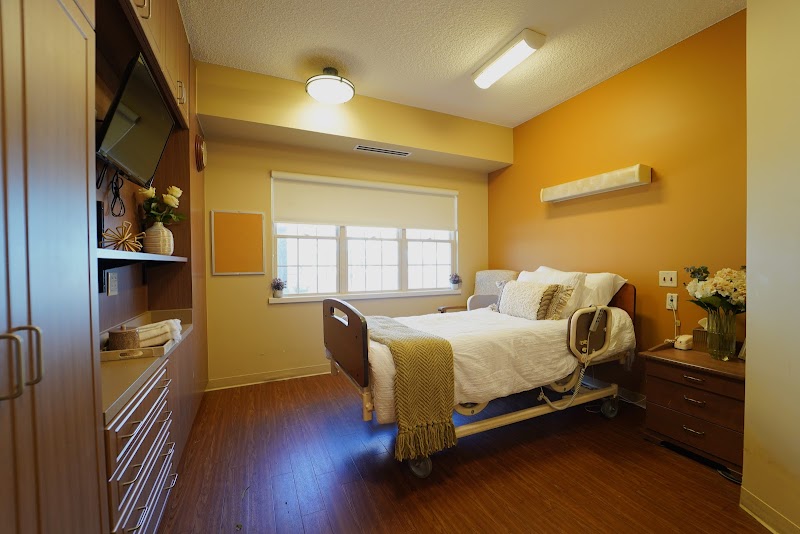
How is Villa At Borgess Place Staffed?

CMS rates Villa at Borgess Place's staffing level at 3 out of 5 stars, which is average compared to other nursing homes. Staff turnover is 65%, which is 19 percentage points above the Michigan average of 46%. High turnover can affect care consistency as new staff learn residents' individual needs. RN turnover specifically is 56%, which is notably high. RNs provide skilled clinical oversight, so turnover in this role can affect medical care quality.

What Have Inspectors Found at Villa At Borgess Place?

State health inspectors documented 49 deficiencies at Villa at Borgess Place during 2022 to 2025. These included: 1 that caused actual resident harm, 47 with potential for harm, and 1 minor or isolated issues. Deficiencies causing actual harm indicate documented cases where residents experienced negative health consequences.
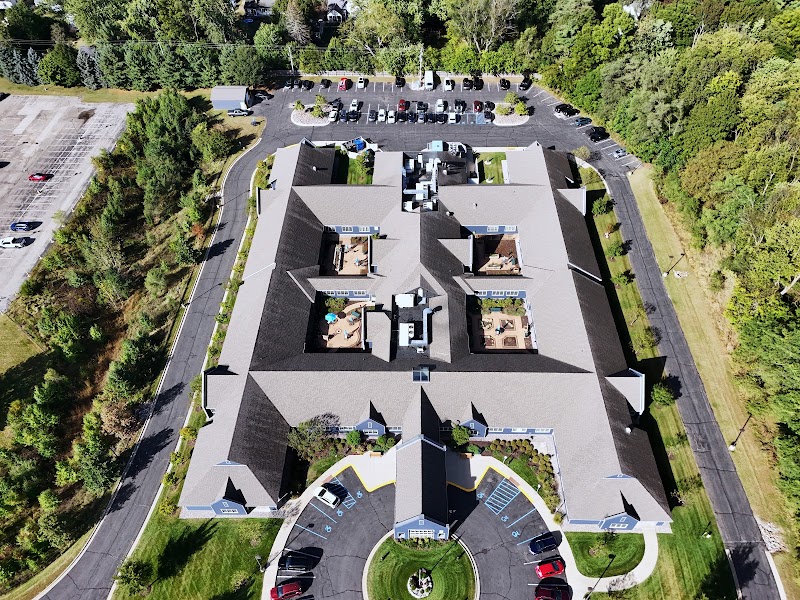
Who Owns and Operates Villa At Borgess Place?

Villa at Borgess Place is owned by a non-profit organization. Non-profit facilities reinvest revenue into operations rather than distributing to shareholders. The facility is operated by VILLA HEALTHCARE, a chain that manages multiple nursing homes. With 101 certified beds and approximately 77 residents (about 76% occupancy), it is a mid-sized facility located in Kalamazoo, Michigan.

How Does Villa At Borgess Place Compare to Other Michigan Nursing Homes?

Compared to the 100 nursing homes in Michigan, Villa at Borgess Place's overall rating (1 stars) is below the state average of 3.1, staff turnover (65%) is significantly higher than the state average of 46%, and health inspection rating (1 stars) is much below the national benchmark.

What Should Families Ask When Visiting Villa At Borgess Place?

Based on this facility's data, families visiting should ask: "What safeguards and monitoring systems are in place to protect residents from abuse or neglect?" "How do you ensure continuity of care given staff turnover, and what is your staff retention strategy?" "Can I visit during a mealtime to observe dining assistance and food quality?" "How do you handle medical emergencies, and what is your hospital transfer rate?" These questions are particularly relevant given the substantiated abuse finding on record and the facility's high staff turnover rate.

Is Villa At Borgess Place Safe?

Based on CMS inspection data, Villa at Borgess Place has documented safety concerns. The facility has 1 substantiated abuse finding (meaning confirmed case of resident harm by staff or other residents). The facility has a 1-star overall rating and ranks #100 of 100 nursing homes in Michigan. Families considering this facility should ask detailed questions about what corrective actions have been taken since these incidents.

Do Nurses at Villa At Borgess Place Stick Around?

Staff turnover at Villa at Borgess Place is high. At 65%, the facility is 19 percentage points above the Michigan average of 46%. Registered Nurse turnover is particularly concerning at 56%. RNs handle complex medical decisions and coordinate care — frequent RN changes can directly impact care quality. High turnover means new staff may not know residents' individual needs, medications, or preferences. It can also be disorienting for residents, especially those with dementia who rely on familiar faces. Families should ask: What is causing the turnover? What retention programs are in place? How do you ensure care continuity during staff transitions?

Was Villa At Borgess Place Ever Fined?

Villa at Borgess Place has no federal fines on record. CMS issues fines when nursing homes fail to meet care standards or don't correct problems found during inspections. The absence of fines suggests the facility has either maintained compliance or corrected any issues before penalties were assessed. This is a positive indicator, though families should still review recent inspection reports for the full picture.

Is Villa At Borgess Place on Any Federal Watch List?

Villa at Borgess Place is not on any federal watch list. The most significant is the Special Focus Facility (SFF) program, which identifies the bottom 1% of nursing homes nationally based on persistent, serious quality problems. Not being on this list means the facility has avoided the pattern of deficiencies that triggers enhanced federal oversight. This is a positive indicator, though families should still review the facility's inspection history directly.