Aria Nursing and Rehabilitation
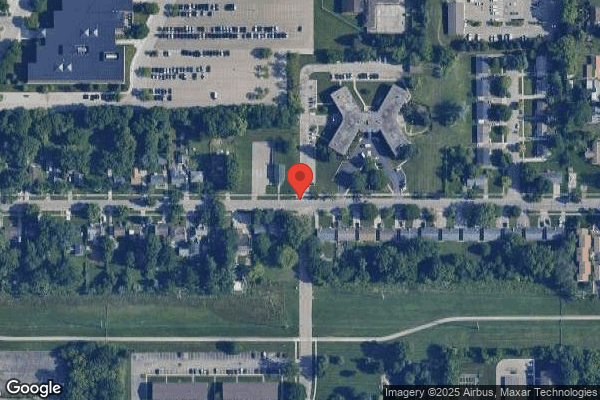

707 Armstrong, Lansing, MI 48911 (517) 393-5680
For profit - Corporation 110 Beds CIENA HEALTHCARE/LAUREL HEALTH CARE Data: November 2025 1 Immediate Jeopardy citation
Trust Grade
0/100
#360 of 422 in MI
Last Inspection: May 2025

Inspected within the last 6 months. Data reflects current conditions.

Overview

Aria Nursing and Rehabilitation has received a Trust Grade of F, indicating significant concerns about the facility's overall care quality. Ranking #360 out of 422 facilities in Michigan places them in the bottom half, and #8 out of 9 in Ingham County means there is only one local option that performs worse. The trend shows improvement, with the number of issues decreasing from 27 in 2024 to 10 in 2025, which is a positive sign. Staffing is rated 4 out of 5 stars, with a turnover rate of 0%, suggesting that staff are stable and familiar with the residents, but the facility has concerning fines totaling $75,834, which is higher than 79% of state facilities. Specific incidents include a critical medication error that resulted in CPR for a resident and serious failures in treating pressure injuries for residents, highlighting areas of concern despite some strengths in staffing.
Trust Score
F
0/100
In Michigan
#360/422
Bottom 15%
Safety Record
High Risk
Review needed
Inspections
Getting Better
27 → 10 violations
Staff Stability
○ Average
Turnover data not reported for this facility.
Penalties
○ Average
$75,834 in fines. Higher than 73% of Michigan facilities. Some compliance issues.
Skilled Nurses
✓ Good
Each resident gets 50 minutes of Registered Nurse (RN) attention daily — more than average for Michigan. RNs are trained to catch health problems early.
Violations
⚠ Watch
69 deficiencies on record. Higher than average. Multiple issues found across inspections.
★☆☆☆☆
1.0
Overall Rating
★★★★☆
4.0
Staff Levels
★★★★☆
4.0
Care Quality
★☆☆☆☆
1.0
Inspection Score
Stable
2024: 27 issues
2025: 10 issues

The Good

  • 4-Star Staffing Rating · Above-average nurse staffing levels
  • 4-Star Quality Measures · Strong clinical quality outcomes
  • Full Sprinkler Coverage · Fire safety systems throughout facility
  • No fines on record

Facility shows strength in staffing levels, quality measures, fire safety.

The Bad

1-Star Overall Rating

Below Michigan average (3.1)

Significant quality concerns identified by CMS

Federal Fines: $75,834

Well above median ($33,413)

Moderate penalties - review what triggered them

Chain: CIENA HEALTHCARE/LAUREL HEALTH CARE

Part of a multi-facility chain

Ask about local staffing decisions and management

The Ugly 69 deficiencies on record

1 life-threatening 5 actual harm
Jun 2025 2 deficiencies
CONCERN (D) 📢 Someone Reported This

A family member, employee, or ombudsman was alarmed enough to file a formal complaint

Potential for Harm - no one hurt, but risky conditions existed

Resident Rights (Tag F0550)

Could have caused harm · This affected 1 resident

**NOTE- TERMS IN BRACKETS HAVE BEEN EDITED TO PROTECT CONFIDENTIALITY** This citation pertains to intake MI00152962 Based on observation, interview, and record review, the facility failed to ensure o...

Read full inspector narrative →
**NOTE- TERMS IN BRACKETS HAVE BEEN EDITED TO PROTECT CONFIDENTIALITY** This citation pertains to intake MI00152962 Based on observation, interview, and record review, the facility failed to ensure one resident (R1) was treated with dignity and respect out of five reviewed. Findings include: Review of the medical record revealed R1 was admitted to the facility on [DATE] with diagnoses that included Parkinson's Disease, anxiety disorder, major depressive disorder, and post-traumatic stress disorder. The Minimum Data Set (MDS) with an Assessment Reference Date (ARD) of 4/16/25 revealed R1 scored 15 out of 15 (cognitively intact) on the Brief Interview for Mental Status (BIMS-a cognitive screening tool). Review of R1's Kardex (care guide) revealed R1 required two-person assistance with activities of daily living. The Kardex revealed Approach in a calm, quiet manner. Review of R1's behavior care plan revealed an intervention of approach/speak in a calm manner. On 6/20/25 at 8:23 AM, R1 was observed in bed. R1 reported there was an incident last month where Certified Nursing Assistant (CNA) H used pretty obscene language. R1 reported CNA H stated things such as Why do you wait until the last f*cking minute to get in your chair and I don't play with your mother f*cking ass. R1 reported there was a housekeeper in the hallway who heard the interaction and got help. In a telephone interview on 6/23/25 at 10:26 AM, CNA H reported the day of the incident (5/5/25, R1 called CNA H all types of names including mother f*cker. CNA H reported they responded to R1 by saying I'm not going to be too many more of your mother f*ckers and until you calm down, I'm going to leave. In an interview on 6/23/25 at 11:54 AM, Housekeeper I, with the translation assistance of Activities staff J, reported on 5/5/25, CNA H slammed R1's door and then CNA H was heard inside R1's room very loudly saying f*ck, f*ck, f*ck. Houskeeper I reported they understood the word that was said and knew it was cursing. Housekeeper I reported it was CNA H and not R1 saying those words. In an interview on 6/23/25 at 12:04 PM, Nursing Home Administrator (NHA) A reported the facility determined that CNA H used inappropriate language in the presence of R1 and therefore, CNA H's employment was terminated. Review of the facility's investigation revealed Facility did substantiate that staff member was verbally inappropriate.
CONCERN (D) 📢 Someone Reported This

A family member, employee, or ombudsman was alarmed enough to file a formal complaint

Potential for Harm - no one hurt, but risky conditions existed

Report Alleged Abuse (Tag F0609)

Could have caused harm · This affected 1 resident

**NOTE- TERMS IN BRACKETS HAVE BEEN EDITED TO PROTECT CONFIDENTIALITY** Based on interview and record review, the facility failed to ensure an allegation of abuse was reported timely to the State Agen...

Read full inspector narrative →
**NOTE- TERMS IN BRACKETS HAVE BEEN EDITED TO PROTECT CONFIDENTIALITY** Based on interview and record review, the facility failed to ensure an allegation of abuse was reported timely to the State Agency for one (R1) of three reviewed. Findings include: Review of the medical record revealed R1 was admitted to the facility on [DATE] with diagnoses that included Parkinson's Disease, anxiety disorder, major depressive disorder, and post-traumatic stress disorder. The Minimum Data Set (MDS) with an Assessment Reference Date (ARD) of 4/16/25 revealed R1 scored 15 out of 15 (cognitively intact) on the Brief Interview for Mental Status (BIMS-a cognitive screening tool). Review of the Facility Reported Incident revealed 5/5/25 2p [2:00 PM] Housekeeper hears CNA [Certified Nursing Assistant] saying the words [F*ck] you multiple times in the residents [sic] room while the resident was present in the room. The housekeeper notified the housekeeping supervisor and the administrator of the incident. The Facility Reported Incident revealed the incident occurred on 5/5/25 at 2:00 PM, was discovered on 5/5/25 at 2:15 PM, and was reported to the State Agency on 5/5/25 at 9:23 PM. In an interview on 6/24/25 at 10:31 AM, Nursing Home Administrator (NHA) A agreed the incident occurred on 5/5/25 at 2:00 PM and was not reported to the State Agency until 5/5/25 at 9:23 PM. NHA A did not have an explanation as to why the allegation of abuse was not reported to the State Agency within two hours.
May 2025 8 deficiencies
CONCERN (D)

Potential for Harm - no one hurt, but risky conditions existed

Deficiency F0552 (Tag F0552)

Could have caused harm · This affected 1 resident

Based on observation, interview, and record review the facility failed to inform one resident (46) of five residents' benefits, risks, and alternatives for the prescribing of psychotropic medication. ...

Read full inspector narrative →
Based on observation, interview, and record review the facility failed to inform one resident (46) of five residents' benefits, risks, and alternatives for the prescribing of psychotropic medication. Findings Included: Resident #46 (R46) Review of the medical record revealed R46 was admitted to the facility 10/12/2024 with diagnoses chronic kidney disease, muscle weakness, atrial fibrillation, thoracic aorta aneurysm, congestive heart failure (CHF), gastro-esophageal reflux disease, sleep disorder, restless leg syndrome, depression, anxiety, chronic pain, mitral valve insufficiency, anemia (low red blood cells count), osteoarthritis, history of myocardial infarction (heart attack), peripheral vascular disease (PVD), chronic obstructive pulmonary disease (COPD), bipolar disorder, and hyperlipidemia (high fat content in blood). The most recent Minimum Data Set (MDS), with an Assessment Reference Date (ARD) of 04/27/2025, revealed R46 had a Brief Interview of Mental Status (BIMS) of 12 (moderate cognitive impairment) out of 15. Review of R46's medical record demonstrated a physician order, written 04/23/2025, Olanzapine Oral Tablet Disintegrating 5mg (milligrams) one time per day. Review of MedlinePlus ,at medlineplus.gov, Olanzapine is an antipsychotic medication that may be used to treat bipolar disorder (manic depressive disorder). R46's medical record did not demonstrate any consent documents or information that R46 or his responsible party was informed of the risk or benefits for the use of the antipsychotic Olanzapine. In an interview on 05/13/2025 at 02:52 p.m. Social Worker (SW) O explained that it was her responsibility to review all the orders for psychotropic medication. She explained that she would review the psychotropic medication order to ensure that it contained the appropriate diagnoses, the appropriate monitoring for side effects, behavior monitoring for the targeted behavior, and make sure that the residents or their responsible party had been provided with a consent document explaining the risk and benefits of using the psychotropic medication. SW O was asked to review R46's medical record and provided a consent for the use of Olanzapine (antipsychotic medication). SW O could not provide a consent or any documentation demonstrating that R46 or his responsible party had been given information regarding the risk of benefits of using Olanzapine. SW O could not explain why consent had not been obtained for the use of Olanzapine. In an interview on 05/13/2025 at 03:37 p.m. Director of Nursing (DON) B explained that it was her expectation that the Social Worker reviewed the medical record of Residents that are prescribed an antipsychotic medication. DON B explained that a consent would be obtained that explained the risk and benefits for the use of the antipsychotic medication ordered. DON B confirmed that a consent was not present for the use of Olanzapine (antipsychotic medication) in R46's medical record. During observation and attempted interview on 05/15/2025 at 11:25 a.m. R46 was observed sitting up on the side of his bed. R46 explained that he had just returned from the hospital, where he had been since 5/12/2025, related to a recent fall. R46 could not provide an answer as to why he was currently receiving antipsychotic medications but did explain that he had a history of depression. Review of facility policy Psychoactive Medication Management, dated 07/01/1014 and last revised 04/22/2025, revealed Procedure #6. Before initiating or increasing psychotropic medication, the resident, family, and/or resident representative must be informed of the benefits, risks, and alternatives for the medication, including any black box warnings for antipsychotic medications, in advance of such initiation or increase.
CONCERN (D)

Potential for Harm - no one hurt, but risky conditions existed

Deficiency F0565 (Tag F0565)

Could have caused harm · This affected 1 resident

Based on interview and record review, the facility failed to act promptly on grievances reported in resident council meetings and provided responses to grievances in 6 of 9 residents, as reported duri...

Read full inspector narrative →
Based on interview and record review, the facility failed to act promptly on grievances reported in resident council meetings and provided responses to grievances in 6 of 9 residents, as reported during a confidential resident council interview, in a total sample of 18 residents and a total census of 83 residents, resulting in unresolved resident concerns, frustration and decreased quality of life. Findings include: A record review of the past six months of resident council meeting minutes revealed concerns/grievances that were not addressed and resolved. Complaints go from month to month with a lack of documentation to reflect that the problem was resolved. This writer reviewed grievances from January 2025 to the current time of survey. Grievance forms were not filled out completely to reflect the complaint/grievance was resolved and did not have the residents' signature to show they are happy with the outcome. Review of the facilities Grievance Policy called Care Program last updated 06/11/2024. .If a resident, a resident's representative, or another interested person with a concern (including missing items), a staff should encourage and assist the resident, or person on resident's behalf to file a written concern/grievance with the facility . .During the morning interdisciplinary team meeting following the day of receipt, the team will decide who will investigate the concern if the investigation has not been initiated. The department manager/designee assigned will have 5-7 business days following the receipt of the concern to complete the investigation and document his/her conclusions. The investigation and report should be completed using a Resident, Family, Employee and Visitor Assistance form and forwarded to the Administrator . .The facility representative will continue to complete quality rounds as scheduled to continue to ensure concerns are resolved . During a Resident Council meeting held on 05/14/25 at 11:00 AM with nine residents attending, frustration was shared over the lack of follow-through with the grievance process. Confidential residents stated they have had clothes missing for weeks if not months. Two of the nine residents shared that they saw other residents wearing their clothes. When staff were notified by this, they did nothing about it. Three other residents stated they didn't know if their clothes were marked with their name or not. Two residents stated they were served food that they cannot eat, even with it written on their tray ticket. One resident stated they are tired of peanut butter and jelly sandwiches as an alternative to the prepared meal served. Three residents stated the phone was removed from the small dining room which allowed privacy. Three of nine residents stated they receive cold food, sour milk and food they are allergic to. All nine residents shared in frustration that their concerns/grievances have not been resolved. During an interview on 05/13/25 at 1:22 PM, Activity Director (AD) D stated the resident council minutes are in the survey binder. Writer asked AD D to schedule resident council meeting tomorrow morning, and AD D asked if 11:00am would work, writer in agreed to the meeting at 11:00am in 3 [NAME] dining room. During an interview on 05/14/25 at 11:38 AM, AD D stated the grievance forms were within reach for all resident in a central location. AD D also stated residents can give those completed forms to anyone to turn in or ask for assistance with filling it out. AD D stated during the morning meetings, those are discussed, and any abuse allegations goes directly to LNA A. AD D stated the forms related to missing clothing goes to Housekeeping Director (HD) F. AD D stated ideally, those grievances need to be addressed within 72 hours. AD D stated she hands them out to department heads. Writer asked how the grievances were resolved, and residents were satisfied with the resolution. AD D stated that it was notified it was resolved. This writer asked how she knew the residents were happy with the outcome. This writer reviewed the form, and noted not all fields were filled, nor completed. AD D stated she didn't realize the form needed to be completed any differently than it was. During an interview on 05/14/25 at 12:44 PM, DON B stated AD D handed them to the unit managers to address then they get turned into LNA A. During an interview on 05/15/25 at 9:50 AM, LNA A stated any concerns/complaints/grievances that cannot be resolved on the spot, goes on a grievance form to track for Quality Assurance (QA). LNA A stated If its money missing or something significant, he puts it on a form due to being reportable to the state. LNA A stated if it was reportable, staff call him immediately, and he will address immediately. This writer asked LNA A about the grievance form they were using and the fact that the form was not completed showing the resident was satisfied with the outcome. LNA A stated he spoke to AD D about that, and they would be completing the form to include the residents signature showing the concern/complaint/grievance was addressed and resolved to the resident's satisfaction moving forward. LNA A stated they had received many complaints/grievances related to food. LNA A stated Dietary Manager (DM) E was on the food committee to make changes to the food and menu as requested by residents. During an interview on 05/15/25 at 12:11 PM, Housekeeping Director (HD) F stated the laundry process was, the clothes come down to laundry from each floor, CNAs were supposed to be bagging the laundry and put the residents name on a piece of paper in the bag, so that laundry can mark the clothes after they are washed and dried. HD F stated the personal item list was in every admission packet, but it was not being filled out or turned in listing the clothing items they were admitted with. HD F stated when those clothes were sent down to be laundered unlabeled, they were put on the end of the rack unidentified, and the laundry aide must ask every resident on each hall to find the owner. HD F also stated after it was hung on the rack for a few weeks unidentified after 3 months it went to the lost and found rack waiting for someone to identify it, if it stays on the rack longer than that, it goes into donation bin. HD F stated this was discussed at every morning meeting and nothing had changed in the process of filling out the personal item listing clothes brought into the facility with them, sending the clothes down to laundry department with their name on a piece of paper in the bag so it can be marked with their name.
CONCERN (D)

Potential for Harm - no one hurt, but risky conditions existed

Deficiency F0605 (Tag F0605)

Could have caused harm · This affected 1 resident

**NOTE- TERMS IN BRACKETS HAVE BEEN EDITED TO PROTECT CONFIDENTIALITY** Based on interview and record review the facility failed to ensure three out of five residents (Resident #46, 53, and 69) review...

Read full inspector narrative →
**NOTE- TERMS IN BRACKETS HAVE BEEN EDITED TO PROTECT CONFIDENTIALITY** Based on interview and record review the facility failed to ensure three out of five residents (Resident #46, 53, and 69) reviewed for unnecessary medications had proper documentation. Findings Included: Resident #69 (R69): Per the facility face sheet R69 was admitted to the facility on [DATE]. Diagnoses included dementia without behavioral disturbance, psychotic disturbance, mood disturbance, major depression disorder, and anxiety dated 11/7/2024. Review of a progress note dated 11/9/24, for Psychological Services PSYCHOSOCIAL EVALUATION Supportive Care, revealed an initial evaluation was conducted on 11/9/2024, and revealed a documented diagnosis of, unspecified dementia without behavioral disturbance The mental health exam revealed R69 did not have delusions, hallucinations, behaviors, she was alert to herself, and oriented. The exam did not have any findings that R69 had psychotic features. Review of a Physician's order dated 11/8/2024, revealed R69 was ordered to receive Risperidone 0.5 mg one tablet one time a day for antipsychotic. This order was discontinued on 11/8/2024. Medication regimen review (MRR) dated 11/8/2024, revealed pharmacy made the physician aware that the Risperidone was an ordered drug without indication for use, and the recommended action for the provider was: this resident is receiving the antipsychotic agent, but lacks an allowable diagnosis to support its use. Appropriate diagnoses were listed and the physician underlined, .depression with psychotic features/treatment. The Physician signed the recommendation on 11/11/2024. Review of the Physician's orders dated 11/9/2024, revealed that a new order was placed for Risperidone 0.5 mg give two tablets one time a day for antipsychotic. This order was discontinued on 11/11/2024. Review of another Physician's dated 11/12/2024, revealed R69's Risperidone order was changed to 0.5 mg two tablets one time a day for depression with psychotic features. This order is indefinite. Review of a Minimum Data Set (MDS) dated with an Assessment Reference Date of 11/14/2024 revealed under Section I-Active Diagnoses: Bipolar, Schizophrenia, and Psychotic disorder were not coded as any diagnoses for R69. Review of a medication administration record (MAR) dated 11/12/2024, revealed that R69 was ordered to start taking Risperidone Oral Tablet 0.5 MG one time a day for depression with psychotic features. The diagnosis of psychotic features was documented on the Physician's order, and the Medication Administration Record (MAR) as of 11/12/2025, however was never added to R69's medical diagnoses list. According to the National Alliance on Mental Illness (NAMI), www.nami.org Risperidone is an antipsychotic medication used to treat schizophrenia. Per NAMI symptoms of schizophrenia include delusions and hallucinations. Review of a consent titled, INFORMED CONSENT FOR USE OF PSYCHOTROPIC MEDICATION, that was signed by R69's responsible party on 11/7/2024, revealed Multiple side effects or adverse effects listed under, Possible side effects or adverse effects from this medication . that nursing was to be aware of and assess R69 for while R69 was taking the Risperidone. Those include: blurred vision, color change of the skin, constipation, darkening of urine, delirium, difficult urination, disorientation/confusion, disturbed gait, dry mouth, hypotension, hypothermia, increase agitation, involuntary movement of mouth, tongue, face or jaws, lethargy, sedation, loss of balance/falls, loss of independent mobility, loss of muscle tone, motor restlessness, muscle spasm or stiffness in the neck, back, face, or eyes, nasal congestion, orthostatic hypotension, pelvic thrusting, profuse drooling, reduced social contact, seizures, skin rash slowed involuntary movement of hands, feet, toes, and fingers, sore throat, stooped posture, tremors (hands, arms, head), upper respiratory infection), weight gain, and yelling of skin. Review of R69's Medication Administration Record and Treatment Administration Record (MAR) (TAR) revealed that the only side effects listed on the TAR for staff to be aware of were while R69 was taking the Risperidone was, dry mouth, constipation, blurred vision, disorientation/confusion, difficulty in urinating, hypotension, dark urine, yellow skin, nausea and vomiting, lethargy, drooling, extrapyramidal symptoms (tremors, disturbed gait, increased agitation, restlessness, involuntary movement of mouth or tongue). The TAR did not list all the informed consent listed possible side effects for staff to watch and assess R69 while taking the Risperidone. Review of a Social Service Assessment & History dated 11/7/2024, revealed the assessment was not completed, but only had a summary notation which revealed R69 had possible mild depression. The question regarding Behavior Factors, Social Factors, Dignity Factors, Trauma Informed Care, Strength and Coping Skills, Referrals, discharge planning, and possible need for equipment we not answered. Review of a Care Plan conference Summary dated 12/12/2024, revealed Social Services was the only staff member that was in attendance along with R69's responsible party. The summary revealed that R69's responsible party shared that R69 had no history of depression, no past trauma, no psychological hospitalization, just had anxiety. Review of R69's documented behaviors, as evident by staff initials, from November 2024 to present 5/15/2025, revealed R69 only had behaviors documented 14 times from November 2024 to present, and that was in the months of January and February 2025, these were the behavioral documents provided when upon asking for behavioral documentation for R69. Review of a pharmacy MRR dated 5/5/2025, revealed the last gradual dose reduction (GDR) for R69's Risperidone was in November of 2024. The pharmacy's recommendation was to attempt to decrease current dose of 1 mg to 0.5 mg everyday of R69's Risperidone. On 5/14/2025 during the review of this document no physician had signed that they had reviewed or acknowledged the recommendation. Review of Physician's orders for the month of May 2025 revealed no order to decrease, change, or attempt a GDR of R69's Risperidone. In an interview on 5/14/2025 at 1:01 PM, Administrator A stated he was not able to locate a documented GDR regarding the 5/5/2025 MRR, and stated it was never followed up on when pharmacy wrote the recommendation on 5/5/2025. Review of a Physician's progress note dated 12/12/2024 revealed under diagnoses, 4. Unspecified dementia without behavioral disturbance. The list of diagnoses did not have depression with psychotic features as a diagnosis. In an interview on 5/15/2025 at 10:06 AM, Social Services O (SS) stated that she did not receive the MRRs, but said she had requested that the MRR did come to her. SS O said she wants the process to change so she can monitor the psychotropic/antipsychotic medications appropriately and said that things were being missed and not running smoothly. SS O said the Assistance Director of Nursing (ADON) was taking care of all the MRR for now which was temporary. In an interview on 5/15/2025 at 11:19 AM, Director of Nursing (DON) B said when the pharmacy MRR would come in they would go to the Physician for decline or agree, then to SS O who was the one who over sees the process, and then the nurses or the Unit Managers would write the order. DON B said her expectation was that SS O did all the monitoring and tracking for the MRR and psychotropic/antipsychotic medications. Resident #53 (R53): Per the facility face sheet R53 was admitted on [DATE]. Review of R53's Physician's orders revealed R53 received Ativan (antianxiety medication) 0.5 mg by mouth every six hours as needed for anxiety. The order was a PRN (as needed) order with a start date of 2/17/2025 and an end date of 4/2/2025, which is outside of the 14 days for a PRN antianxiety medication per regulation. Another PRN order for Ativan was noted to give R53 0.25 mg every four hours as needed starting 2/21/2025 and ending 3/11/2025, , which is also outside of the 14 days for a PRN antianxiety medication per regulation. Another PRN order for Ativan was noted to give R53 0.5 mg every four hours as needed starting 3/26/2025 and ending 4/1/2025, , which is again outside of the 14 days for a PRN antianxiety medication per regulation. Resident #46 (R46): Review of the medical record revealed R46 was admitted to the facility 10/12/2024 with diagnoses chronic kidney disease, muscle weakness, atrial fibrillation, thoracic aorta aneurysm, congestive heart failure (CHF), gastro-esophageal reflux disease, sleep disorder, restless leg syndrome, depression, anxiety, chronic pain, mitral valve insufficiency, anemia (low red blood cells count), osteoarthritis, history of myocardial infarction (heart attack), peripheral vascular disease (PVD), chronic obstructive pulmonary disease (COPD), bipolar disorder, and hyperlipidemia (high fat content in blood). The most recent Minimum Data Set (MDS), with an Assessment Reference Date (ARD) of 04/27/2025, revealed R46 had a Brief Interview of Mental Status (BIMS) of 12 (moderate cognitive impairment) out of 15. Review of R46's medical record demonstrated physician orders for Olanzapine Oral Tablet Disintegrating 5mg (milligrams) one time per day, written 04/23/2025 and trazodone HCL (hydrochloride) oral tab 150 mg give at bedtime, written 04/23/205. Review of MedlinePlus ,at medlineplus.gov, Olanzapine is an antipsychotic medication that may be used to treat bipolar disorder (manic depressive disorder) and Trazadone is an antidepressant. R46's medical record did not demonstrate any orders for the monitoring of antipsychotic mediation side effects or antidepressant medication side effects. In an interview on 05/13/2025 at 03:37 p.m. Director of Nursing (DON) B explained that it was her expectation that antipsychotic and antidepressant medication were to be monitored for side effects by the nursing staff. DON B explained that an order would be entered into the resident's medical record explaining what side effect symptoms should be monitored. Those orders are entered on the residents' Medication Administration Record and recorded as appropriate. DON B confirmed that R46 had orders for an antipsychotic and an antidepressant. DON B could not demonstrate a physician order for the monitoring of side effects for R46 use of an antipsychotic or use of an antidepressant. DON B could not explain why monitoring of side effects for an antipsychotic or side effects for antidepressant were not being completed. During observation and attempted interview on 05/15/2025 at 11:25 a.m. R46 was observed sitting up on the side of his bed. R46 explained that he had just returned from the hospital, where he had been since 5/12/2025, related to a recent fall. R46 explained that he had depression in the past but could not answer any further questions regarding his medication for depression. Review of information provided by Director of Nursing (DON) B R46 should have had an order for monitoring of antidepressant medication that stated, Antidepression medication- monitoring for drowsiness, slurred speech, dizziness, nausea, aggressive/impulsive behavior. Document; 'N' if monitored and none of the above observed. 'Y' monitored and any of the above was observed, select chart code 'Other/see Nurses Notes' and progress note findings. Review of information provided by Director of Nursing (DON) B R46 should have had an order for monitoring antipsychotic medication that stated, Antipsychotic medication-Monitoring for dry mouth, constipation, blurred vision, disorientation/confusion, difficulty urinating, hypotension, dark urine, yellow skin, Nausea/vomiting, lethargy, drooling, EPS (extrapyramidal symptoms) (tremors, disturbed gait, increased agitation, restlessness, involuntary movement of mouth or tongue). Document: 'N' if monitored and none of the above observed.; Y if monitored and any of the above was observed, select charge code 9 other/see nurses notes and document findings. Review of facility policy Psychoactive Medication Management, dated 07/01/1014 and last revised 04/22/2025, revealed Procedure #9: Monitor medication for efficacy, side effects and adverse consequences of the medication. Notify practitioner of adverse consequences or side effects.
CONCERN (D)

Potential for Harm - no one hurt, but risky conditions existed

Deficiency F0657 (Tag F0657)

Could have caused harm · This affected 1 resident

**NOTE- TERMS IN BRACKETS HAVE BEEN EDITED TO PROTECT CONFIDENTIALITY** Based on observation, interview, and record review the facility failed to ensure one (Resident #17) of two residents reviewed fo...

Read full inspector narrative →
**NOTE- TERMS IN BRACKETS HAVE BEEN EDITED TO PROTECT CONFIDENTIALITY** Based on observation, interview, and record review the facility failed to ensure one (Resident #17) of two residents reviewed for care plans, had a comprehensive care plan that was revised for resident care needs, resulting in the potential for additional falls and care needs not being met. Findings Include; Resident #17 (R17) Review of the medical record reflected R17 was an initial admission to the facility on [DATE], readmitted on [DATE] and on 05/10/202. Diagnoses of repeated falls, diabetes, left hip pain, bi-polar and dementia. The most recent Minimum Data Set (MDS), with an Assessment Reference Date (ARD) of 02/08/2025 revealed R17 had a Brief Interview of Mental Status (BIMS) of 13 (cognitively intact) out of 15. Under section G0100, Activities of Daily Living (ADL) Assistance reveals R17 requires assistance with personal care and uses a walker or wheelchair as an assistive device. Record reviews revealed R17 had eight falls in the last six months. 11/27/24-R17 fell on the bathroom floor trying to get to the bathroom with his pants pulled down to his knees. No injuries. No new care plan interventions. 12/22/24- R17 fell on the bathroom floor trying to get to the bathroom. No injuries. No new care plan interventions. 01/04/25- R17 fell on the bathroom floor trying to go to the bathroom, with visible feces and urine on the floor. R17 complaint of right shoulder and left hip pain, X-ray ordered. Care plan dated 01/06/25, Ensure resident toilets after meals. No new care plan interventions. 01/09/25- R17 fell in his bedroom trying to get to his chair. No injuries. Care plan updated on 02/04/25. Anti rollback bars applied to wheelchairs. Ensure gripper socks on while in bed. Ensure resident toilets prior to going to bed. No new care plan interventions. 02/10/25- R17 fell in the bathroom trying to get from the toilet and lost his balance. No injuries. No new care plan interventions. 03/01/25- R17 fell in his bathroom trying to get off the toilet and lost his balance. No injuries. No new care plan interventions. 04/29/25- R17 was lowered to the floor in the bathroom to prevent further injury while transferring off the toilet. R17 had a 3cm abrasion above his left eyebrow. Referral to Physical Therapy (PT) initiated. Care plan updated on 05/05/25. TOILET USE: I require assistance with (2) staff for toileting. Use a raised toilet seat for toileting. Keep in his bathroom. Updated 04/30/25. TRANSFER: I require assistance from (2) staff to move between surfaces. No new care plan interventions. 05/10/25- R17 fell attempting to self-transfer from bed and fell attempting to self-ambulate and hit his head, currently on Eliquis 5mg 2 x a day. Sent out for an MRI. Care plan dated 05/10/25. Frequent rounding at to ensure resident redirection and assistance to restroom as needed. No new care plan interventions. 05/14/25- Care Plan updated, educated resident to use call light, resident agrees Pt is at his baseline orientation and ROM-but sustained 3 cm laceration above left eyebrow w/ dime size knot, laceration has no depth. No new care plan interventions. During an interview on 05/14/25 at 10:09 AM, Certified Nursing Assistant (CNA) stated that R17 would fall when he would self-transfer from his wheelchair to the bathroom and that's how he has had the previous falls. CNA C stated the CNA's try to toilet him and anticipate his needs. Care Plan dated 05/14/25. Social services to reach out to his guardian to get resident nonskid slippers. During an interview on 05/14/25 at 12:34 PM, DON B stated R17 was non-complaint, care planned, fell 5/10/25, he was trying to get up by himself, he did not have any shoes on, last update on 1/14/25, no update after 5/10 fall. Reviewed progress notes and stated they go over these incidents every morning, no care plan update to interventions. During an interview on 05/14/25 at 1:00 PM, DON B came to the conference room and handed this writer a fall report that indicated that they discussed transferring resident out of bed into the unit dayroom with nursing staff, but nothing was added to the care plan or implemented.
CONCERN (E)

Potential for Harm - no one hurt, but risky conditions existed

Deficiency F0761 (Tag F0761)

Could have caused harm · This affected multiple residents

Based on observation, interview, and record review, the facility failed to label medication in accordance with accepted professional principles, dating of open medication for one out of four medicatio...

Read full inspector narrative →
Based on observation, interview, and record review, the facility failed to label medication in accordance with accepted professional principles, dating of open medication for one out of four medication carts reviewed and failed to ensure proper medication storage of medications for one Resident (#51) out of 83 current residents residing at the facility. Findings Included: During an observation on 05/12/25 at 10:58 AM, R51 was laying in bed with door partially open and granted this surveyor permission to enter room. R51 appeared alert and oriented and able to answer questions. A medication cup with four to five pills was located on R51's bedside table. R51 reported the nurse had brought medicaitons in about 30 minutes prior and left on bedside table while she was sleeping. Continued observation of the unit reflected mostly short term stay residents with several residents who were able to self ambulate or propel on own. During an interview on 05/14/25 at 9:54 AM, Director of Nursing DON B reported had been at facility for about three months. DON B reported would expect nurses to observe residents take medications and not leave at the bedside because of several different reasons including possibility of medication errors. DON B reported residents not able ot self administer medications. Review of R51 Electronic Medical Record, dated 4/24/25(admission) to current (5/14/25) reflected no evidance R51 was assessed for self administration of oral medications. During observation of the 2 [NAME] medication cart of 05/14/2024 at 08:45 a.m. it was observed that Fluticasone Propionate Inhalation Aerosol 220 MCG (Micrograms), a multi dose inhaler was open and did not have a date placed on the container of the medication. During interview on 05/14/2025 at 08:45 a.m. Registered Nurse (RN) I explained that it was facility practice that all medication that was received from the pharmacy should be dated when the medication was opened. RN I could not explain why the Fluticasone Propionate Inhalation Aerosol 220 MCG (Micrograms) was found in the 2 [NAME] medication cart not dated when opened. RN I explained that the undated medication would be discarded, and another would be ordered from pharmacy. In an interview on 05/14/2025 at 09:55 a.m. Director of Nursing (DON) B explained that it was her expectation and professional practice that all multi-dose medication should be dated when the container is opened. DON B could not explain why the multi-dose inhaler of Fluticasone Propionate Inhalation Aerosol 220 MCG (Micrograms) had not been dated.
CONCERN (E)

Potential for Harm - no one hurt, but risky conditions existed

Food Safety (Tag F0812)

Could have caused harm · This affected multiple residents

Based on observations, interviews, and record reviews, the facility failed to: (1) clean and maintain food service equipment, and (2) date mark potentially hazardous ready-to-eat food products affecti...

Read full inspector narrative →
Based on observations, interviews, and record reviews, the facility failed to: (1) clean and maintain food service equipment, and (2) date mark potentially hazardous ready-to-eat food products affecting 83 residents, resulting in the increased likelihood for cross-contamination, bacterial harborage, and resident foodborne illness. Findings include: On 05/12/25 at 09:13 A.M., An initial tour of the food service was conducted with Dietary Director (DD) E. The following items were noted: The Avantco 2-Door Reach-In Cooler interior light bulb was observed non-functional. (DD) E stated: I will place a work order into (TELS). The Vulcan convection oven(s) interior light bulbs were observed non-functional. The 2022 FDA Model Food Code section 6-303.11 states: The light intensity shall be: (A) At least 108 lux (10 foot candles) at a distance of 75 cm (30 inches) above the floor, in walk-in refrigeration units and dry FOOD storage areas and in other areas and rooms during periods of cleaning; (B) At least 215 lux (20 foot candles): (1) At a surface where FOOD is provided for CONSUMER self-service such as buffets and salad bars or where fresh produce or PACKAGED FOODS are sold or offered for consumption, (2) Inside EQUIPMENT such as reach-in and under-counter refrigerators; and (3) At a distance of 75 cm (30 inches) above the floor in areas used for handwashing, WAREWASHING, and EQUIPMENT and UTENSIL storage, and in toilet rooms; and (C) At least 540 lux (50 foot candles) at a surface where a FOOD EMPLOYEE is working with FOOD or working with UTENSILS or EQUIPMENT such as knives, slicers, grinders, or saws where EMPLOYEE safety is a factor. White Refrigerator 1: The interior door gasket and exterior unit top surface was observed soiled with accumulated and encrusted (dust, dirt, food residue). White Refrigerator 2: The interior door gasket and exterior unit top surface was observed soiled with accumulated and encrusted (dust, dirt, food residue). The can opener assembly was observed soiled with accumulated and encrusted food residue. (DD) E indicated she would have dietary staff thoroughly clean and sanitize the can opener assembly as soon as possible. The Vulcan convection oven(s) interior and exterior surfaces were observed soiled with accumulated and encrusted food residue. (DD) E stated: The top unit is cleaned on Saturday morning and the bottom unit is cleaned on Sunday evening weekly. The 2022 FDA Model Food Code section 4-601.11 states: (A) EQUIPMENT FOOD-CONTACT SURFACES and UTENSILS shall be clean to sight and touch. (B) The FOOD-CONTACT SURFACES of cooking EQUIPMENT and pans shall be kept free of encrusted grease deposits and other soil accumulations. (C) NonFOOD-CONTACT SURFACES of EQUIPMENT shall be kept free of an accumulation of dust, dirt, FOOD residue, and other debris. One gallon (3/4 full) of Kemps Select 2% Milk was observed without and effective open or discard date, within the Avantco 2-Door Reach-In Cooler. The container manufacturer's use-by-date was observed to read 5-24-25. One 5-pound container (1/8 full) of Prairie Farms Small Curd Cottage Cheese was observed without an effective open or discard date, within the Avantco 2- Door Reach-In Cooler. The container manufacturer's use-by-date was observed to read 5-5-25. The 2022 FDA Model Food Code section 3-501.17 states: (A) Except when PACKAGING FOOD using a REDUCED OXYGEN PACKAGING method as specified under § 3-502.12, and except as specified in (E) and (F) of this section, refrigerated, READY-TO-EAT, TIME/TEMPERATURE CONTROL FOR SAFETY FOOD prepared and held in a FOOD ESTABLISHMENT for more than 24 hours shall be clearly marked to indicate the date or day by which the FOOD shall be consumed on the PREMISES, sold, or discarded when held at a temperature of 5ºC (41ºF) or less for a maximum of 7 days. The day of preparation shall be counted as Day 1. 20 of 25 overhead clear plastic light lens covers were observed soiled with accumulated and encrusted (dust, dirt, debris). (DD) E indicated she would place a work order into the TELS software system as soon as possible. 2 of 2 ceiling mounted return-air-exhaust ventilation grills were observed soiled with accumulated and encrusted dust/dirt deposits. The mechanical dish machine ventilation hood return-air-exhaust grill was observed heavily soiled with accumulated and encrusted dust/dirt deposits. The 2022 FDA Model Food Code section 4-602.13 states: NonFOOD-CONTACT SURFACES of EQUIPMENT shall be cleaned at a frequency necessary to preclude accumulation of soil residues. The presence of food debris or dirt on nonfood contact surfaces may provide a suitable environment for the growth of microorganisms which employees may inadvertently transfer to food. If these areas are not kept clean, they may also provide harborage for insects, rodents, and other pests. On 05/15/25 at 11:30 A.M., Record review of the Policy/Procedure entitled: Dietary Cleaning and Sanitation dated 11/12/2021 revealed under Policy: It is the policy of this facility to maintain the sanitation of the kitchen through proper cleaning and sanitizing stationary food service equipment and food contact surfaces to minimize the growth of microorganisms that may result in food contamination. On 05/15/25 at 11:45 A.M., Record review of the Policy/Procedure entitled: Food Handling and Production dated 11/12/2021 revealed under Policy: It is the policy of this facility to comply with strict time and temperature requirements and use proper food handling techniques to prevent foodborne illness. Record review of the Policy/Procedure entitled: Food Handling and Production dated 11/12/2021 further revealed under Procedure: (1) The kitchen and equipment will be maintained in a clean, neat, and orderly manner to minimize bacteria formation and food contamination.
CONCERN (E)

Potential for Harm - no one hurt, but risky conditions existed

Garbage Disposal (Tag F0814)

Could have caused harm · This affected multiple residents

Based on observations, interviews, and record reviews, the facility failed to: (1) maintain 2 of 3 outdoor waste receptacles, and (2) clean the outdoor waste receptacle concrete pad surface affecting ...

Read full inspector narrative →
Based on observations, interviews, and record reviews, the facility failed to: (1) maintain 2 of 3 outdoor waste receptacles, and (2) clean the outdoor waste receptacle concrete pad surface affecting 83 residents, resulting in the increased likelihood for cross-contamination, bacterial harborage, and pest attraction/harborage. Findings include: On 05/12/25 at 09:13 A.M., An initial tour of the food service was conducted with Dietary Director (DD) E. The following item was noted: On 05/12/25 at 10:40 A.M., The outdoor waste receptacle concrete pad was observed with accumulated dirt and debris (paper products, plastic bottles, plastic milk crate, wooden pallet, etc.). 1 of 4 receptacle plastic lids were also observed missing. 1 of 4 receptacle slider panels were additionally observed broken. The damaged slider panel contained a hole measuring approximately 6-inches-wide by 6-inches-long. (DD) E indicated she would place a work order into TELS as soon as possible. On 05/15/25 at 10:00 A.M., Record review of the Policy/Procedure entitled: Housekeeping Services dated 02/28/2025 revealed under Policy: To promote a sanitary environment. VII. TRASH (A) Trash will be removed from all areas on a specific schedule to prevent spillage and odors. (B) The area surrounding the dumpster will be kept free of debris. When transporting garbage to the dumpster staff will ensure the area is clean and free of debris. On 05/15/25 at 11:00 A.M., Record review of the Direct Supply TELS Work Orders for the last 180 days revealed no entries related specifically to outdoor waste receptacles and/or the concrete pad surface.
CONCERN (F)

Potential for Harm - no one hurt, but risky conditions existed

Safe Environment (Tag F0921)

Could have caused harm · This affected most or all residents

Based on observations, interviews, and record reviews, the facility failed to effectively clean and maintain the physical plant affecting 83 residents, resulting in the increased likelihood for cross-...

Read full inspector narrative →
Based on observations, interviews, and record reviews, the facility failed to effectively clean and maintain the physical plant affecting 83 residents, resulting in the increased likelihood for cross-contamination, bacterial harborage, and decreased air quality. Findings include: On 05/12/25 at 02:50 P.M., A common area environmental tour was conducted with Director of Maintenance (DM) H. The following items were noted: 1 East: CNA Storage Closet: The vanity cabinet kickplate was observed missing. One of two base cabinet door hinges were also observed disconnected, allowing the door to not close evenly. Shower Room: The shower wand assembly was observed missing an atmospheric vacuum breaker. (DM) H stated: I will have one installed. Day Room: The return-air-exhaust ventilation grill was observed heavily soiled with accumulated and encrusted dust/dirt deposits. Staff Break Room: The Toshiba microwave oven interior was observed (etched, scored, particulate, corroded). (DM) H stated: I am going to throw this out now. Service Corridor: Red Room: The box fan was observed soiled with accumulated and encrusted dust/dirt deposits. The Men's Locker Room: The return-air-exhaust ventilation grill was observed soiled with accumulated and encrusted dust/dirt deposits. 2-West Main Dining Room: Pantry: Three acoustic ceiling tiles were observed (stained, warped) from previous moisture exposure. Shower Room: The commode base seat was observed loose-to-mount. The commode base caulking was also observed (etched, scored, stained). The return-air-exhaust ventilation grill was additionally observed soiled with accumulated and encrusted dust/dirt deposits. On 05/12/25 at 04:15 P.M., An interview was conducted with (DM) H regarding the facility maintenance work order system. (DM) H stated: We have the TELS system. On 05/13/25 at 10:35 A.M., An environmental tour of the facility Laundry Service was conducted with Housekeeping Director (HD) F. The following items were noted: Folding Room: The air supply grill and adjacent wall surfaces were observed soiled with accumulated and encrusted dust/dirt deposits. The folding room flooring surface was observed (etched, scored, stained, particulate). The folding room measured approximately 15 feet-wide by 22 feet-long. Soiled Laundry Room: The flooring surface was observed (etched, scored, stained, particulate). The damaged flooring surface measured approximately 15 feet-wide by 22 feet-long. The automatic door closer was also observed out-of-adjustment, allowing the door closer assembly to contact the entrance door top surface, creating a loud popping noise. (HD) F stated: I will place a work order in (TELS). Par Linen Room: The polyvinyl chloride (PVC) four tier storage rack protective vinyl mesh cover was observed (etched, scored, particulate). (HD) F stated: I will have the cover replaced. 2-West Nursing Station: One fabric cushioned chair was observed soiled with accumulated and embedded dust/dirt deposits. (HD) F stated: I have an upholstery extractor. 3-West Janitor Closet: The flooring surface was observed missing ceramic tile squares. The damaged and missing tile flooring measured approximately 12-inches-wide by 48-inches-long. (HD) F stated: The flooring tile has been missing since I started (6/2022). On 05/13/25 at 01:25 P.M., A common area environmental tour was continued with (HD) F. The following items were noted: 2-East Shower Room: 2 of 2 shower wand assemblies were observed missing an atmospheric vacuum breaker. (HD) F indicated she would place a work order into the TELS software system. Floor Pantry: Three acoustic ceiling tiles were observed (etched, scored, stained) from previous moisture exposure. Vacant Office: The restroom commode base seat was observed (etched, scored, particulate). (HD) F indicated she would place a maintenance work order into the TELS software system as soon as possible. Day Room: The drywall corner surfaces were observed (etched, scored, particulate). The damaged drywall corner surfaces measured approximately 10 feet-long. The drywall surface, adjacent to the entrance door, was also observed (etched, scored, particulate). The damaged drywall surface measured approximately 12 inches-wide by 5 feet-long. 2 of 2 return-air-exhaust ventilation grills were further observed soiled with accumulated and encrusted dust/dirt deposits. 3-West Unisex Restroom: The return-air-exhaust ventilation grill was observed soiled with accumulated and encrusted dust/dirt deposits. Shower Room: The commode support was observed loose-to-mount. The commode support could be moved from side-side approximately 6-8 inches. The commode seat was also observed loose-to-mount. The commode seat could be moved from side to side approximately 6-8 inches. The hand sink polyvinyl chloride (PVC) drainpipe was additionally observed leaking water, adjacent to the plumbing trap assembly. Day Room: Two acoustic ceiling tiles were observed (stained, warped, etched) from previous moisture exposure. The damaged acoustic ceiling tiles measured approximately 24 inches-wide by 24 inches-long. Laboratory Room: The laboratory specimen refrigerator interior and exterior surfaces were observed soiled with accumulated and encrusted dust/dirt residue. On 05/13/25 at 03:15 P.M., An environmental tour of sampled resident rooms was conducted with (HD) F. The following items were noted: 119: The restroom commode base caulking was observed (etched, scored, stained, particulate). The restroom hand sink was also observed draining very slowly. 212: The restroom commode base caulking was observed (etched, scored, stained, particulate). The Bed 1 overbed light assembly was also observed non-functional. 220: The restroom commode base caulking was observed (etched, scored, stained, particulate). 229: The restroom commode base caulking was observed (etched, scored, stained, particulate). The Portable Terminal Air Conditioning (PTAC) Unit air filters were also observed soiled with accumulated and encrusted dust/dirt deposits. 231: The restroom commode base caulking was observed (etched, scored, stained, particulate). 238: The restroom commode base caulking was observed (etched, scored, stained, particulate). The (PTAC) Unit air filters were also observed soiled with accumulated and encrusted dust/dirt deposits. 319: The restroom commode base caulking was observed (etched, scored, stained, particulate). 322: The restroom commode base caulking was observed (etched, scored, stained, particulate). 324: The (PTAC) Unit filters were observed soiled with accumulated and encrusted dust/dirt deposits. The restroom grab bar was also observed loose-to-mount, adjacent to the commode base. 329: The restroom hand sink was observed draining very slowly. 333: The restroom commode base caulking was observed (etched, scored, stained, particulate). 336: The restroom commode base caulking was observed (etched, scored, stained, particulate). The Bed 1 overbed light assembly was also observed non-functional. The Bed 1 overbed light assembly pull string extension was additionally observed missing. On 05/15/25 at 10:15 A.M., Record review of the Policy/Procedure entitled: Housekeeping Services dated 02/28/2025 revealed under Policy: To promote a sanitary environment. (II) Routine Cleaning of Horizontal Surfaces: (A) In resident care areas, cleaning of non-carpeted floors and other horizontal surfaces will be done daily and more frequently if spillage or visible soiling occurs. On 05/15/25 at 11:15 A.M., Record review of the Direct Supply TELS Work Orders for the last 180 days revealed no entries related specifically to the aforementioned maintenance concerns.
Jul 2024 2 deficiencies 1 Harm
SERIOUS (G) 📢 Someone Reported This

A family member, employee, or ombudsman was alarmed enough to file a formal complaint

Actual Harm - a resident was hurt due to facility failures

Pressure Ulcer Prevention (Tag F0686)

A resident was harmed · This affected 1 resident

**NOTE- TERMS IN BRACKETS HAVE BEEN EDITED TO PROTECT CONFIDENTIALITY** This citation pertains to intake #: MI00145322 and MI00144471 Based on observation, interview, and record review, the facility f...

Read full inspector narrative →
**NOTE- TERMS IN BRACKETS HAVE BEEN EDITED TO PROTECT CONFIDENTIALITY** This citation pertains to intake #: MI00145322 and MI00144471 Based on observation, interview, and record review, the facility failed to ensure residents with pressure injuries received necessary treatment and services, consistent with professional standards of practice, to promote healing and prevent infection for 2 of 5 residents (Resident #1 and #6) reviewed for pressure injuries, resulting in the worsening of R1's wound and subsequent hospitalization. Findings: Resident #1 (R1) Review of an admission Record revealed R1 was a [AGE] year-old male, admitted to the facility on [DATE], with pertinent diagnoses which included: Type II Diabetes, muscle weakness, need for assistance with personal care, and heart disease. Review of a Minimum Data Set (MDS) assessment for R1, with a reference date of 4/6/24 revealed a Brief Interview for Mental Status (BIMS) score of 15, out of a total possible score of 15, which indicated R1 was cognitively intact. Review R1's MDS dated [DATE], Section M- Skin Conditions revealed R1 did not have a pressure ulcer/injury, a scar over bony prominence, or a non-removable dressing/device upon admission to the facility. Review of R1's Activity Note dated 4/28/24 revealed, When resident requested RN (Registered Nurse) to apply socks on, RN noted Blister on Left heel measuring W (width) 4.5cm, L (length) 5cm .Will refer to wound team . Review of R1's Wound Consultation Note dated 05/02/2024 revealed, .Wound-Left heel stage 2 pressure Measurements- 2.5 (length) x 1.7 (width) x 0.1 (depth) cm (measured in centimeters) . Overall Wound Condition- stable Wound Plan Of Care- adaptic (petrolatum emulsion dressing)/ABD (absorptive dressing)/kerlix (gauze wrap) daily and prn (as needed) . (Per the State Operations Manual a Stage 2 Pressure Ulcer is a partial-thickness loss of skin with exposed dermis, presenting as a shallow open ulcer. The wound bed is viable, pink or red, moist, and may also present as an intact or open/ruptured blister.) Review of R1's Wound Consultation Notes dated 05/09/2024-5/23/24 revealed R1's Stage II left heel pressure injury was improving with the Wound Plan Of Care-adaptic/ABD/kerlix daily and prn . Review of R1's Order Summary revealed, Wound care: Blister to Left Heel, cleanse with wound cleanser, pat dry. Apply oil emulsion dressing cut to fit wound bed and cover with an abd secured with kerlix daily and as needed. every day shift. Order started on 05/03/2024 and was discontinued on 05/30/2024. Review of R1's Wound Consultation Note dated 05/30/2024 revealed, .Wound-Left heel stage 2 pressure Measurements- 3.3 x 2.9 x 0.1cm . Overall Wound Condition- stable Wound Plan Of Care- collagen/bordered gauze T-Th-Sat and prn . Review of R1's Order Summary revealed, Wound care: Blister to Left Heel, cleanse with wound cleanser, pat dry. Apply dermacol to fit wound bed and cover with a bordered gauze dressing every Tuesday, Thursday, Saturday, and as needed. Order started on 05/30/2024 and was discontinued on 6/6/2024. Review of R1's Wound Clinic Note dated 6/6/24 revealed, .Wound #7 Location: Calcaneus (heel); Left, Posterior *Cleanser-Anasept Antimicrobial Skin & Wound Cleanser 1 x Per Day .*Peri-Wound Care-Povidone-Iodine Swabsticks-Frequency: 1 x Per Day .Primary Dressing-Foam-Hydrofera Blue Ready Foam, 4x5 (in/in)-Frequency: 1 x Per Day NOTES: Apply to wound bed as directed. Please cut slits into foam to allow for drainage. *Secondary Dressing-ABD pad 5x9-Dermacea 5x9 (in/in)-Frequency: 1 x Per Day .*Secured with -Gauze Roll-Kerlix Roll Sterile, 4.5x4.1 (in/yd)-Frequency: 1 x Per Day .*Secured with-Tape 3M Medipore H Soft Cloth Surgical Tape, 4 x 10 (in/yd) .*Compression Wrap-Medigrip, Size F . The wound clinician directed the following interventions to prevent the worsening of the pressure injury, May shower with protection but do not get wound dressing(s)wet. Protect dressing(s)with water repellant cover (for example, large plastic bag) and may then take shower. NOTES: Please keep dressings dry and intact .Elevate legs to the level of the heart or above for 30 minutes daily and/or when sitting, a frequency of: NOTES: Multiple times daily Review of R1's Wound Consultation Note dated 06/06/2024 revealed, .Wound-Left heel stage 2 pressure Wound- Left heel stage 2 pressure Measurements- 3 x 2.4 x 0.1cm . Wound Plan Of Care- collagen/ABD/kerlix daily and prn . Review of R1's Order Summary revealed, Wound care: Left Heel, cleanse with wound cleanser, pat dry. Apply Povidone- Iodine Swabstick to peri wound. Apply Hydofera Blue ready foam to wound bed. Please cut slits into foam to allow for drainage. Cover with 5x9 abd pad, wrap with kerlix, secure with tape. Apply Medigrip Size F every Tuesday, Thursday, Saturday, and as needed. Order date 06/07/2024. Review of R1's Treatment Administration Record revealed R1 received the left heel wound treatment (transcribed above) on 6/8/24, 6/11/24, and 6/13/24. The wound treatment was not completed daily as ordered by the wound clinic provider and wound consultant. There were no PRN treatments completed. Review of R1's Wound Consultation Note dated 06/13/2024 (prior to wound clinic appointment) revealed, .Wound-Left heel unstageable pressure Measurements- 3 x 2.4 x 0.1cm Tissue type- slough/eschar Peri Wound- fragile/periwound blistering . Overall Wound Condition- deterioration . (Per the State Operations Manual an Unstageable Pressure Ulcer is defined as full-thickness skin and tissue loss in which the extent of tissue damage within the ulcer cannot be confirmed because the wound bed is obscured by slough or eschar .If the slough or eschar is removed, a Stage 3 or Stage 4 pressure ulcer will be revealed.) Review of R1's Wound Clinic Note dated 6/13/24 revealed an order for Bactrim DS (antibiotic) PO BID (by mouth twice a day) x 14 days.Wound #7: Calcaneus (heel); Left, Posterior *Cleanser-Anasept Antimicrobial Skin & Wound Cleanser 1 x Per Day .*Peri-Wound Care-lotrisone-Frequency 1 x Per day .*Topical-Santyl Ointment-Frequency: 1 x Per Day NOTES: Apply nickel-thick layer to wound bed only *Secondary Dressing-ABD pad 5x9-Dermacea 5x9 (in/in)-Frequency: 1 x Per Day .*Secured with -Gauze Roll-Kerlix Roll Sterile, 4.5x4.1 (in/yd)-Frequency: 1 x Per Day .*Secured with- Tape 3M Medipore H Soft Cloth Surgical Tape, 4 x 10 (in/yd) .*Compression Wrap-Medigrip, Size F . The wound clinician again directed the interventions to prevent the worsening of the pressure injury, May shower with protection but do not get wound dressing(s)wet. Protect dressing(s)with water repellant cover (for example, large plastic bag) and may then take shower. NOTES: Please keep dressings dry and intact .Elevate legs to the level of the heart or above for 30 minutes daily and/or when sitting, a frequency of: NOTES: Multiple times daily R1 was to be evaluated at the Wound Clinic again on 6/27/24. Review of R1's Order Summary revealed the above wound treatment was not ordered in the Electronic Medical Record (EMR) and the incorrect treatment ordered on 6/7/24 continued. Review of R1's Treatment Administration Record revealed R1 continued to receive the incorrect left heel wound treatment (ordered on 6/7/24) on 6/15/24 and 6/18/24. There were no PRN treatments completed. Review of R1's Wound Consultation Note dated 06/20/2024 revealed, .Wound-Left heel unstageable pressure Measurements- 4.2 x 3.3 x unable to determine true depth . Overall Wound Condition- stalled Wound Plan Of Care- cleanse with wound cleanser, pat dry. Apply Povidone-Iodine Swabstick to peri wound. Apply 1/4 strength dakin's soaked gauze to wound bed secured with ABD/kerlix daily and prn . Review of R1's Physician Progress Note dated 2:26 PM revealed, Requested to acutely eval patient for possible GI (gastrointestinal) bleed .He is requesting to go to the hospital to be evaluated for possible GI bleed. Review of R1's hospital Discharge Summary revealed R1 was admitted to the hospital on [DATE]-[DATE].upon general surgery evaluation he was noted to have left heel wound which was then made aware to the emergency department team .Hospital course-Patient admitted and treated for Diabetic ulcer of foot with bone involvement without evidence of necrosis MRI was obtained and showed posterior hindfoot/heel ulcer with localized cellulitis and findings supportive of osteomyelitis of the posterior body of the calcaneus. Podiatry was consulted and pt underwent incision and drainage with left heel wound debridement on June 28/24. During an interview on 07/16/2024 at 12:06 PM, Wound Nurse Practitioner (WNP) D reported he was the provider that completed weekly wound evaluations on R1 (Wound Consultation Note documented above.) WNP D reported that he would make treatment adjustments as needed for the deterioration and/or stalling of the left heel pressure injury on the weeks R1 was not seen at the wound clinic (6/6/24 and 6/13/24.) WNP D confirmed he deferred to the wound clinic treatment orders. WNP D reported that approximately 2 weeks prior to R1's hospital transfer on 6/20/24 the wound clinic provider made a treatment change to hydrofera blue however, R1's left heel pressure injury began to deteriorate (had previously been documented as improving/stable). WNP D reported that on 6/20/24 he ordered a treatment for chemical debridement of R1's heel due to the slough and deterioration of the wound. During an interview on 07/15/2024 at 3:21 PM, Doctor of Podiatric Medicine (DPM) A reported that R1's wound developed during the course of his stay at the facility. When R1 arrived to the hospital on 6/20/24 it was discovered that he had developed osteomyelitis (bone infection) in his left heel that required surgical intervention. DPM A reported that it appeared as though his wounds were neglected at the facility. Review of R1's Electronic Medical Record (EMR) comprehensive Care Plan and revisions reflected a Focus of I have impaired skin integrity r/t (related to) Stage II PI (pressure injury) to L (left) heel diabetic ulcer ot Left planter foot .and was initiated on 03/20/2024 and revised on 05/20/2024. The Goal was to continue to show signs of healing through review date and was initiated on 03/20/2024 and revised on 05/20/2024. Neither the Focus nor Goal of the Care Plan reflected revisions were made despite R1's left heel pressure injury deterioration from a Stage II to unstageable documented in the wound assessments. The Interventions/Task did not reflect the wound clinician's recommendations of May shower with protection but do not get wound dressing(s) wet. Protect dressing(s) with water repellant cover .elevate legs to the level of the heart of above for 30 minutes .multiple times daily and had not been revised since 5/15/24. During an interview on 07/16/2024 at 4:39 PM, DON confirmed R1's treatment order was not changed/updated and the antibiotic had not been ordered/administered following the wound clinic appointment on 6/13/24. DON confirmed the incorrect treatment order (not ordered daily) on 6/6/24 and was administered until his hospitalization on 6/20/24. Resident #6 (R6) Review of an admission Record revealed R6 was a [AGE] year-old female, admitted to the facility on [DATE], with pertinent diagnoses which included: muscle weakness and morbid obesity. Review of a Minimum Data Set (MDS) assessment for R6, with a reference date of 5/17/24 revealed a Brief Interview for Mental Status (BIMS) score of 15, out of a total possible score of 15, which indicated R6 was cognitively intact. Review of R6's Weekly Skin Assessment documented in the Treatment Administration Record revealed on 7/3/24 and 7/10/24 R6 had no skin breakdown. Review of the Physician Communication Binder located at the 3 [NAME] Nurses' Station revealed an entry regarding R6 on 7/13/24 pressure sore on post. (posterior) left thigh + a new red spot on right buttock. cleaned + dressed. Review of the column Medical Provider Comments revealed no physician signature or date indicating the provider had not reviewed the entry/resident concern. Review of R6's Skin/Wound Note dated 7/13/24 at 5:00 PM revealed, Resident has a large posterior bed sore on the right thigh. I cleansed the wound and applied a cushion dressing. Has a small upcoming bed sore on the left buttock. Needs to be positioned and have the wound dressing changed daily. Review of R6's Electronic Medical Record as of 7/16/24 at 10:00 AM revealed: *No wound assessment (measurements or description of the wound) *No Guardian notification *No treatment ordered or completed upon identification of the pressure injury *No updated interventions for R1's Care Plan Review of R6's Provider Note dated 7/15/24 and signed at 4:54 PM revealed, .Staff notes patient has open area on left upper thigh .Skin: Warm, dry and intact. Small open area left upper thigh posterior likely secondary to (shear) .Open wound of left thigh, subsequent encounter Likely secondary to shear. No infectious process noted today. Will defer to wound team for further evaluation and treatment . 2 days after the identification of skin breakdown/pressure injury. (Per the State Operations Manual shearing occurs when layers of skin rub against each other or when the skin remains stationary and the underlying tissue moves and stretches and angulates or tears the underlying capillaries and blood vessels causing tissue damage.) During an interview on 07/16/2024 at 9:12 AM, Guardianship Office Manager (GOM) B reported there was no documentation that the facility staff had contacted R6's guardian and/or the office regarding pressure injuries. During an interview on 07/16/2024 at 10:34 AM, Registered Nurse (RN) J reported that she was unaware of any pressure injuries/skin breakdown for R6 and reported there were no treatment orders pertaining to R6's pressure injuries. During an observation and interview on 07/16/2024 at 10:53 AM, R6's posterior thighs and buttocks were assessed with Director of Nursing (DON) and Nurse Consultant (NC) L. A small open area was identified on R6's left upper posterior thigh, near gluteal crease. R6 reported the area felt itchy and it felt like a bruise when pressed upon. Additionally, there was a raised reddened area on R6's right upper posterior thigh along the brief line. NC L confirmed the raised reddened area was along R6's brief line. Review of R6's Order Summary dated 7/16/24 at 11:52 AM revealed, Wound care: Cleanse excoriation to left posterior medial upper thigh with wound cleanser, pat dry and apply dermaseptin twice daily and PRN. every morning and at bedtime. Review of R6's Activity Note dated 7/16/2024 at 1:24 PM, revealed, Resident skin assessed due to nurse concern for open area. Small area of excoriation noted to medial posterior left upper thigh. Physician assessed area yesterday with no new treatment orders. Another small, raised area on right posterior thigh noted and physician informed with no new treatment order at this time. Resident had current order already for cream to area that was changed to utilize Dermaseptin for 2 weeks. Resident uses a wooden scratcher to scratch her skin. Therapy was asked if there were any other items to use that would be less harsh to the skin. Therapy also asked to evaluate resident for use of mobility bars to increase ability to help with turning. Brief size evaluated and is appropriate for resident. Guardian notified via email of new skin issue and for consent of mobility bars. During an interview on 07/16/2024 2:20 PM, DON reported that upon finding areas of skin breakdown R6's provider and guardian should have been notified, measurements obtained, and treatment initiated. Review of the facility policy Skin Management Guidelines-Prevention of Pressure Ulcers/Injuries last reviewed April 2024 revealed, .3. If a new skin injury is identified, a. Notify medical provider and obtain treatment orders b. Notify resident/resident representative c. Nurse to document the above in medical record .Review the resident's care plan and identify the risk factors as well as the interventions designed to reduce or eliminate those considered modifiable .TREATMENT AND MONITORING .2. Treatments are ordered by a medical provider .
CONCERN (E) 📢 Someone Reported This

A family member, employee, or ombudsman was alarmed enough to file a formal complaint

Potential for Harm - no one hurt, but risky conditions existed

Deficiency F0658 (Tag F0658)

Could have caused harm · This affected multiple residents

**NOTE- TERMS IN BRACKETS HAVE BEEN EDITED TO PROTECT CONFIDENTIALITY** This citation pertains to intake #: MI00144444 Based on interview and record review the facility failed to ensure that medicatio...

Read full inspector narrative →
**NOTE- TERMS IN BRACKETS HAVE BEEN EDITED TO PROTECT CONFIDENTIALITY** This citation pertains to intake #: MI00144444 Based on interview and record review the facility failed to ensure that medications were administered following the physician ordered parameters for 3 of 8 residents (Resident #7, #8, and #10), reviewed for medication administration, resulting in medication errors. Findings: Resident #7 (R7) Review of an admission Record revealed R7 was a [AGE] year-old male, admitted to the facility on [DATE], with pertinent diagnoses which included: heart disease and hypertension. Review of R7's Order Summary dated 5/9/24 revealed, Metoprolol Tartrate Oral Tablet 50 MG (Metoprolol Tartrate) Give 0.5 tablet by mouth two times a day for HTN (hypertension) Hold is SBP (systolic blood pressure/top number) < (less than) 120 mmHg, Pulse < 60. To be administered at 7:00 AM and 7:00 PM. Review of R7's July Medication Administration Record and Blood Pressure Summary revealed: *On 7/1/24 R7's blood pressure was 108/64 and the 7:00 PM metoprolol was administered. *On 7/4/24 R7's blood pressure was 112/58 at 8:02 AM and the 7:00 AM metoprolol was held. R7's blood pressure was not reassessed prior to the administration of the 7:00 PM dose of metoprolol and despite the blood pressure falling outside of parameters the metoprolol was administered. *On 7/5/24 R7's blood pressure was 115/53 and the 7:00 AM metoprolol was administered. *On 7/7/24 R7's blood pressure was not assessed prior to the administration of the 7:00 AM metoprolol. The blood pressure assessment from 7/6/24 at 9:19 PM was documented and the metoprolol was administered. *On 7/9/24 R7's blood pressure was 116/72 and the 7:00 PM metoprolol was administered. *On 7/10/24 R7's blood pressure was 110/68 and the 7:00 AM metoprolol was administered. *On 7/10/24 R7's blood pressure was 104/62 and the 7:00 PM metoprolol was administered. *On 7/11/24 R7's blood pressure was not assessed prior to the 7:00 PM dose of metoprolol. The blood pressure assessment from 7/11/24 at 8:07 AM was documented and the metoprolol was administered. *On 7/13/24 R7's blood pressure was not assessed prior to the administration of the 7:00 AM metoprolol. The blood pressure assessment from 7/12/24 at 8:24 PM was documented and the metoprolol was administered. Resident #8 (R8) Review of an admission Record revealed R8 was an [AGE] year-old male, admitted to the facility on [DATE], with pertinent diagnoses which included: atrial fibrillation (abnormal beating of the heart.) Review of R8's Order Summary dated 7/2/24 revealed, Entresto Oral Tablet 24-26 MG (Sacubitril-Valsartan) Give 0.5 tablet by mouth two times a day for HFrEF (heart failure with reduced ejection fraction) Hold for SBP less than 100 or DBP (diastolic blood pressure) less than 60. To be administered at 7:00 AM and 7:00 PM. Review of R8's July Medication Administration Record and Blood Pressure Summary revealed: *On 7/6/24 R8's blood pressure was not assessed prior to the 7:00 PM dose of Entresto. The blood pressure assessment from 7/6/24 at 9:42 AM was documented and the Entresto was administered. *On 7/7/24 R8's blood pressure was 136/40 and the 7:00 AM dose of Entresto was administered. *On 7/7/24 R8's blood pressure was 103/55 and the 7:00 PM dose of Entresto was administered. *On 7/8/24 R8's blood pressure was 129/55 and the 7:00 PM dose of Entresto was administered. *On 7/10/24 R8's blood pressure was 129/53 and the 7:00 PM dose of Entresto was administered. *On 7/12/24 R8's blood pressure was 112/56 and the 7:00 PM dose of Entresto was administered. *On 7/13/24 R8's blood pressure was not assessed prior to the 7:00 PM dose of Entresto. The blood pressure assessment from 7/13/24 at 7:59 AM was documented and the Entresto was administered. Resident #10 (R10) Review of an admission Record revealed R10 was a [AGE] year-old female, admitted to the facility on [DATE], with pertinent diagnoses which included: hypertension. Review of R10's Order Summary dated 3/12/24 revealed, Lisinopril Tablet 20 MG Give 20 mg by mouth one time a day for HTN Hold for SBP less than 100 or HR less than 60. Review of R10's Blood Pressure Summary revealed R10's blood pressure was not assessed on 6/1/24, 6/2/24, 6/3/24, 6/5/24, 6/6/24, 6/8/24, 6/9/24, 6/12/24, 6/14/24, 6/16/24, 6/19/24, 6/20/24, 6/21/24, 6/23/24, 6/26/24, 6/27/24, 6/28/24, 6/29/24, or 6/30/24. Review of R10's June Medication Administration Record revealed R10 received all 30 doses of lisinopril despite the absence of blood pressure assessments (ensuring R10's blood pressure was within ordered parameters.) During an interview on 07/16/2024 at 2:20 PM, Director of Nursing (DON) reported that residents that have ordered parameters should have their vital signs obtained prior to the administration of the medication to ensure they are within parameters. DON reported that if parameters are ordered vital signs must be obtained at that time. During an interview on 07/16/2024 at 4:39 PM, DON confirmed medications for R7, R8, R9, R10, and R11 were administered outside of parameters and/or without vital sign assessments. DON reported that medication error reports would be completed and all licensed nurses would receive education on medication administration. Review of the facility policy Medication Administration last revised April 2019 revealed, .4. Medications are administered in accordance with prescriber orders, including any required timeframe .11. The following information is checked/verified for each resident prior to administering medications .b. Vital signs, if necessary .
Jun 2024 2 deficiencies
CONCERN (D) 📢 Someone Reported This

A family member, employee, or ombudsman was alarmed enough to file a formal complaint

Potential for Harm - no one hurt, but risky conditions existed

Free from Abuse/Neglect (Tag F0600)

Could have caused harm · This affected 1 resident

Deficiency Text Not Available

Read full inspector narrative →
Deficiency Text Not Available
CONCERN (D) 📢 Someone Reported This

A family member, employee, or ombudsman was alarmed enough to file a formal complaint

Potential for Harm - no one hurt, but risky conditions existed

Investigate Abuse (Tag F0610)

Could have caused harm · This affected 1 resident

**NOTE- TERMS IN BRACKETS HAVE BEEN EDITED TO PROTECT CONFIDENTIALITY** This citation pertains to complaint intake MI00145033. Based on observation, interview, and record review the facility failed to...

Read full inspector narrative →
**NOTE- TERMS IN BRACKETS HAVE BEEN EDITED TO PROTECT CONFIDENTIALITY** This citation pertains to complaint intake MI00145033. Based on observation, interview, and record review the facility failed to prevent staff to resident abuse (#10) and investigation, immediately report allegations to the state agency and thoroughly investigate allegations resulting in the potential for continued abuse of residents. Findings Include. Resident #10 (R10) Review of the medical record reflected R10 was admitted to the facility on [DATE]. Diagnoses include Orthopedic aftercare following surgical amputation, Amputation of right foot, Osteomyelitis of both ankles and feet, difficulty walking, Peripheral Vascular Disease, Pain and Malaise. The most recent Minimum Data Set (MDS), with an Assessment Reference Date (ARD) of 02/27/2024, revealed R10 had a Brief Interview of Mental Status (BIMS) of 15(cognitively intact) out of 15. Under section G0110, Activities of Daily Living (ADL) Assistance reveals R10 requires set up assistance for eating and partial to moderate assistance with bathing and getting dressed. R10 can make his needs known. During an interview on 06/20/2024 at 2:00 PM, R10 stated he was hit by a mechanical lift sling on his back, and it left welts. R10 asked writer if she would like to see them. R10 opened his personal phone and showed this writer three separate pictures of his back with a raised area/ [NAME] and a reddened area, all in the middle of his back dated 06/17/24. R10 stated he had his roommate take a picture of his back where the marks were from this hit. R10 also stated that he talked to the Nursing Home Administrator (NHA) A about this. R10 did have the employee's name and it took place on 05/16/24, and he reported it to 05/29/24 to NHA A. Record review revealed this incident was not documented or addressed in R10's medical record. During an interview with NHA A, stated he did not report it because it wasn't abuse, it was an accident. NHA A stated that CNA B was screwing around with the mechanical lift sling and he swatted R10 on the back. Also stated he was not aware of any markings or welts that were left on R10's back. Writer asked NHA A why he did not report this abuse allegation. He stated it was an accident and not intentional, so he didn't feel it fit the definition of abuse. NHA A also stated that he did not write this up, educate on it, or provided any disciplinary actions to CNA B. During an interview on 06/21/24 at 1010 AM, CNA B stated he was goofing off in the hallway with the mechanical lift sling and it hit R10's back. CNA B also stated the hoops on the mechanical left sling were wet, so it probably hit harder than it would have. During an interview on 06/21/24 at 12:15 PM, NHA A stated he talked to R10 and even though it hurt when he got hit, he didn't want to get anyone in trouble. Also stated that R10 told him the staff were screwing around when they shouldn't have. NHA A stated he talked to R10 about being physically abuse and R10 told him that the hit, hurt like heck, but he didn't feel he was abused. .
Apr 2024 20 deficiencies 2 Harm
SERIOUS (G)

Actual Harm - a resident was hurt due to facility failures

Quality of Care (Tag F0684)

A resident was harmed · This affected 1 resident

**NOTE- TERMS IN BRACKETS HAVE BEEN EDITED TO PROTECT CONFIDENTIALITY** Based on observation, interview, and record review the facility failed to provide prompt medical attention after a fall with mul...

Read full inspector narrative →
**NOTE- TERMS IN BRACKETS HAVE BEEN EDITED TO PROTECT CONFIDENTIALITY** Based on observation, interview, and record review the facility failed to provide prompt medical attention after a fall with multiple fractures for 1 of 3 sampled residents (R61) reviewed for falls, resulting in delay in treatment (21 hours wait prior to hospital transfer for right shoulder fractures), prolonged pain, and suffering. Findings include: Resident #61(R61) Review of the Face Sheet and Minimum Data Set (MDS) dated [DATE], reflected R61 was a [AGE] year old female admitted to the facility on [DATE], with recent hospital readmission post facility fall resulting in two left humerus(upper arm) fractures. Additional diagnoses included cerebral vascular accident with left side weakness, hypertension (high blood pressure), peripheral vascular disease(decreased blood flow), anxiety disorder and depression. The MDS reflected R61 had a BIM (assessment tool) score of 15 which indicated her ability to make daily decisions was cognitively intact. During an observation and interview on 4/02/24 at 12:16 PM, R61's door was observed closed. Permission to enter was granted by R61. R61 was sitting on the edge of the bed eating meal independently with cast to left arm. R61 appeared calm and able to answer questions without difficulty. During observation and interview on 4/03/24 at 9:50 AM, R61 was observed in bed with full cast on left arm. R61 reported recent fall by bed after self transferring from the commode back to the bed. R61 reported landed on left side and yelled for help. R61 reported 10 out of 10 pain for 3 days before facility staff sent her to hospital. R61 reported the day she was sent to the hospital nurse arrived to shift and sent R61 to hospital related to increased uncontrolled pain. Review of R61 Progress Note, dated 3/18/2024 at 6:08 p.m., reflected, Resident heard calling for help from room. When this nurse entered, resident noted on floor next to bed. Resident states she got dizzy while trying to get to her commode from bed. Resident assessed and vitals taken. No bruising or injuries noted. Resident states pain to left shoulder, but no more than usual. Resident transferred from floor to wheelchair after assessment and helped into bed. Administrator, DON, Unit Manager, and Physician notified. Review of the Progress Note, dated 3/18/2024 at 7:00 p.m., reflected, The resident reported to the oncoming nurse that she thinks she broke her arm and she needed to go to hospital on call notified and ordered Stat X-Ray to left shoulder. Ultra.X said they won't be able to do it tonight it will be early in the morning. Pain medication given, will continue monitoring the resident. Review of R61 on call Physician Progress note, dated 3/18/24 at 8:35 p.m., reflected, Date of Service: 03/18/2024 6:20 PM CT Details: Nurse Name : [named nurse working at time of fall Licensed Practical Nurse Z] .Primary Chief Complaint : Acute on Chronic Pain. History Present Illness : [AGE] year-old patient complaining of left shoulder pain. Patient had a fall earlier on during the day which was addressed by primary attending. Patient denied any pain following the fall but currently complaining of acute on chronic left shoulder pain. Patient has a known history of chronic left shoulder pain .Pain Level: 6 .MSK: Left shoulder pain with movement .Assessment/Plan .Pain in left shoulder(Primary) This is an acute new problem. The patient's condition is stable. Patient is complaining of acute on chronic left shoulder pain. Stat X-ray of the left shoulder. Call MD with results. Orders : Stat X-ray of the left shoulder. Call MD with results . Review of R61 Physician Progress note, dated 3/19/2024, reflected, Date of Service: 03/19/2024 .Chief Complaint / Nature of Presenting Problem: Follow-up left arm pain and radiology study .Staff notes patient suffered a fall likely mechanical. Staff notes patient complained of left arm pain on-call service ordered stat x-ray which revealed left humeral neck fracture, this is patient's affected side from previous CVA. Staff notes persistent pain complaints request for as needed pain medication .Pain Level: 9; 3/19/2024 1:59:18 PM .Diagnosis and Assessment Assessment .Closed fracture of neck of left humerus, initial encounter Secondary to a fall. Radiology reviewed. Significant edema. Will transfer to emergency department for further follow-up with orthopedic surgery. This is patient's affected hemiparetic arm. Continue to monitor awaiting transfer . Review of the Nursing Progress Note, dated 3/19/2024 at 4:00 PM, for R61, reflected, Neuros continued this shift and wnl for resident. Pain 9/10 to left shoulder,resident elevating arm on pillows. No new skin issues observed this shift. Review of R61 Progress Note, dated 3/19/2024 4:16 p.m., reflected, Resident with abnormal x-ray to left shoulder indicates Left Humoral head fracture. Per [named provider] NP send to ER for eval and tx. Resident aware and in agreement .Call placed to 911 for nonemergent transport at 1615. Awaiting transport at this time. Request for R61 Incident/Accident Reports along with complete investigation on 4/3/24 at 2:01 p.m. Review of the Incident Accident Report on 4/3/24 at 3:15 p.m., dated 3/18/24 at 5:01 pm, reflected alert and oriented R61 had unwitnessed fall during self transfer in room and found on the floor with complaints of left arm pain. The Report reflected R61 was transferred from the floor to the wheelchair. The report reflected no observed injuries at the time of the fall. The reported reflected no evidence of investigation including witness statements, interventions that were or were not in place(foot wear, level of bed, call light on or off, resident last observed, how resident was moved off floor, resident assessment .) Review of R61 Hospital Orthopaedic Consult, dated 3/19/24, reflected, [named R61] is a 60 y.o. female that presents with left shoulder and elbow pain after a ground level fall that she reports happened on Sunday 3/17/24, 2 nights ago. She has a history of CVA with left upper extremity hemiplegia. She notes pain in the left shoulder and elbow, but is unable to move either at baseline .Assessment: Left proximal humerus fracture, Left distal humerous fracture .Plan: Patient presenting with multiple left upper extremity fractures .maintain long arm splint ad sling to LUE. Elevate & ice to LUE. Pain control . Review of the hospital, Trauma Services Discharge Summary, dated 3/21/24, reflected R61 was admitted to the hospital on [DATE] at 4:58 p.m with discharge diagnoses that included, Traumatic closed displaced fracture of left shoulder with anterior dislocation. During an interview on 4/03/24 at 4:00 PM, Certified Nurse Aid(CNA) Y reported was working 3/18/24, when R61 fell in room. CNA Y reported nurse asked for her assistance around dinner time after R61 had been found on the floor. CNA Y entered R61 room and observed R61 on the floor complaining left arm, hurt really bad. CNA Y reported told the nurse and CNA Y she thought it was broke. CNA Y reported the nurse and CNA Y used a gait belt and staff on each side of R61 and lifted R61 under both arms and gait belt back to bed. CNA Y reported R61 call light was on when she entered the room. CNA Y reported R61 was independent in room prior to the fall according to the [NAME]. CNA Y reported completed witness statement(not provided with investigation). Review of R61 Care Plan, dated 9/1/21, reflected intervention that included, TRANSFER: 1 person assistance. Remind me to turn towards my strong side when transferring and turning, and encourage me to use call light for assistance. I often self transfer and do not use call light to ask for assistance. During an interview on 4/3/24 at 5:40 p.m., Assistant Director of Nursing (ADON) K reported was not present when R61 fell on 3/18/24. ADON K reported R61 was her own person and chooses to self ambulate, however, required one person assist prior to fall. ADON K reported educated R61 post fall about dangers of self transfer and verified R61 had additional fall 3/24/24. ADON K wound expect nurse to do complete assessment prior to transfer resident post fall and use hoyer to transfer. ADON K reported witness statements were part of investigation for R61 fall. During an interview 4/03/24 at 5:40 PM, Director of Nursing(DON) B reported did have witness statements from R61 fall on 3/18/24. DON B reported was unsure at that time what caused delay in x ray services and would expect STAT X-ray to be completed in fours hours. DON B reported R61 was own responsible person and frequently chose to self transfer and was care planned for one person assist with transfers. DON B verified R61 had additional fall on 3/24/24, after fall with fracture on 3/18/24. DON B reported wound expect nurse staff to complete assessment prior to transferring residents post fall and use hoyer to transfer off the floor. During an interview and record review on 4/05/24 at 4:06 PM, Unit Manager(UM) G reported nurse who was present for R61 fall on 3/18/24 at 5:01 p.m. entered the order for STAT X-ray on 3/18/24 at 7:32 p.m. After review of R61 EMR UM G reported the facility received R61 X ray results on 3/19/24 at 10:26 a.m. UM G reported would expect STAT X-rays to be completed within four hours and physician to be notified as soon as results are available of abnormal results including acute fractures. UM G verified R61 X-ray results included, Acute fracture of the left humeral neck. UM G was unable to answer why R61 was not transferred to the hospital until after 3/19/24 at 4:15 p.m. UM G reported nurses have access to Radiology reports and are expected to notify physicians immediately and was unable to determine when physician was notified of R61 acute fracture.
SERIOUS (G) 📢 Someone Reported This

A family member, employee, or ombudsman was alarmed enough to file a formal complaint

Actual Harm - a resident was hurt due to facility failures

Deficiency F0692 (Tag F0692)

A resident was harmed · This affected 1 resident

**NOTE- TERMS IN BRACKETS HAVE BEEN EDITED TO PROTECT CONFIDENTIALITY** This citation pertains to intake # MI00143255 Based on observation, interview and record review, the facility failed to 1) ensur...

Read full inspector narrative →
**NOTE- TERMS IN BRACKETS HAVE BEEN EDITED TO PROTECT CONFIDENTIALITY** This citation pertains to intake # MI00143255 Based on observation, interview and record review, the facility failed to 1) ensure enteral feedings were provided as ordered to meet hydration and nutritional needs for one (Resident #86); 2) ensure fluids were freely accessible and provided to three (Resident #41, #43, and #86) and 3) prevent significant weight loss for one (Resident #68) of five reviewed for nutrition and hydration, resulting in weight loss, not receiving the ordered tube feeding formula, not receiving the total tube feeding volume ordered, feelings of distress, hospitalization, and the potential for unmet nutritional needs and continued weight loss. Findings Include: Resident #86 (R86) Review of the admission Record reflected R86 was admitted to the facility on [DATE] and readmitted to the facility on [DATE] with diagnosis which included gastrostomy status (creation of an artificial external opening into the stomach for nutritional support), retention of urine, dementia with agitation and anxiety, need for assistance with personal care, delirium, and dysphagia (difficulty in swallowing food or liquid). The admission Minimum Data Set (MDS), with an Assessment Reference Date (ARD) of 11/7/23, reflected R86's Brief Interview for Mental Status (BIMS) was scored 4 out of 15, indicating severe cognitive impairment. The Care plan reflected that R86 did not walk, required extensive assistance of two or more people for toileting and transferring, had an indwelling foley catheter due to retention of urine, and required assistance of one staff member for consuming meals and fluids. R86 no longer resided in the facility. Review of the Nutrition Discharge paperwork from the Hospital dated 11/1/23 reflected that R86 had difficulty swallowing food and drink, however, was safe enough to consume his meals if the food was in a puree texture and the liquids were nectar thick. The Registered Dietician at the hospital also recommended elevating the head of the bed and offering small bites at a slow rate. Liquids should be administered via teaspoon. R86 was to receive medications and supplemental nutrition through his PEG tube (percutaneous endoscopic gastrostomy- a tube that delivers nutrition directly into your stomach) if he consumed less than 75% of his meal. Review of a Physician order dated 11/1/23 revealed Enteral Feeding order 4 times a day Isosource 1.5. This order was discontinued on 11/3/23. Review of a Dietary Note dated 11/3/23 at 2:13 PM revealed RD (Registered Dietician) made aware that resident is not tolerating current TF (tube feed) orders .Resident refused bolus via PEG tube, he started yelling and was combative hitting at nurse . His hospital discharge orders state that his goal is to use bolus feeds a supplemental if he consumes less than 75% of his meal orally. RD to change diet order to reflect this. Staff to encourage oral intake and use bolus feeds PRN (as needed) as residents allows. Review of the Care Plan revealed a Nutritional Focus area dated 11/3/23 which stated R86 had a nutritional problem or potential nutritional problem related to dysphagia, delirium, dementia, and gastrostomy. I am receiving supplemental enteral nutrition .I receive supplemental tube feed via PEG related to dysphagia, weight loss, PO (by mouth) intake and appetite . Interventions dated 11/3/23 included Diet as ordered: Regular Diet/Puree texture/NO liquids. Supplemental Enteral Nutrition if oral intake is less than 75% (Enteral nutrition (EN), also called tube feeding, is a way of providing nutrition directly into the gastrointestinal tract through an enteral access device (feeding tube). Enteral nutrition is a special liquid food mixture containing all of the nutrients required to meet nutrition needs, such as protein, carbohydrates, fats, vitamins, minerals, and other nutrients) and diet as ordered: NPO (nothing by mouth) initiated on 11/3/23 and revised on 12/19/23. Review of the Kardax (portion of the electronic medical record that informs Certified Nursing Assistants of care needs) reflected that R86 eating/nutrition section stated EATING: I am totally dependent on (1) staff for eating. Small bites, slow rate, upright during meals and 20-30 minutes after meals. The Care Plan or Kardax did not reflect that R86 could be offered fluids or to encourage oral intake and the diet orders reflected that R86 was unable to have liquids. Review of a General Diet Physician Order dated 11/1/23 at 5:13 PM revealed Puree texture (for food), nectar consistency (for liquids) for dysphagia. Supplement meal with one can of Isosource 1.5 (enteral nutrition for tube feeding) if meal intake less than 75%. Review of an Enteral Feed Order dated 11/1/23 reflected every shift flush feeding tube with 30 ml (milliliters) of water before and after medication administration flush feeding tube with 5 ml of water between each medication. Further review of the Physician Orders revealed no additional hydration sources for R86. Review of the Task documentation for R86's food intake for the dates of 11/3/23 until 11/10/23 reflected the following: On 11/4/23 at 8:00 AM, 100% of meal consumed. At 1:00 PM 75% of meal consumed. At 6:00 PM there was no documentation for the percent of meal consumed. Review of the Medication Administration Record revealed no ordered as needed supplemental meal was administered for the day. On 11/5/23 at 8:00 AM, 50% of the meal was consumed. At 1:00 PM 50% of the meal was consumed. At 6:00 PM 50% of the meal was consumed. Review of the Medication Administration Record revealed no ordered as needed supplemental meal was administered for the day. On 11/6/23 at 8:00 AM, 0% of the meal was consumed. At 1:00 PM, 25% of the meal was consumed. At 6:00 PM, 0% of the meal was consumed. Review of the Medication Administration Record revealed no ordered as needed supplemental meal was administered for the day. On 11/7/23 at 8:00 AM, 25% of the meal was consumed. At 1:00 PM, 25% of the meal was consumed. At 6:00 PM, there was no documentation for the percent of meal consumed. Review of the Medication Administration Record revealed no ordered as needed supplemental meal was administered for the day. On 11/8/23 at 8:00 AM, 0% of the meal was consumed and was marked as resident refused. At 1:00 PM, 25% of the meal was consumed. At 6:00 PM, 75% of the meal was consumed. The Medication Administration Record revealed that one supplemental as needed nutrition was administered at 10:23 PM. On 11/9/28 at 8:00 AM, 0% of the meal was consumed. At 1:00 PM, 0% of the meal was consumed. At 6:00 PM, 0% of the meal was consumed. The Medication Administration Record revealed that one supplemental as needed nutrition was administered at 8:23 PM. On 11/10/23 at 8:00 AM, 0% of the meal was consumed. Review of the Medication Administration Record revealed no ordered as needed supplemental meal was administered for the day. Review of a Behavior Note at 11/10/23 at 6:00 AM revealed Resident yelled out throughout the shift, frequent reminders given to use his call light. He only used the light several times and the rest continued to yell out for help. When writer or other staff answered his calls for help resident had no needs. One statement he shared with CNA's (Certified Nursing Assistant) was I don't want to die in this place. Resp (respirations)22, T(temperature):99.6 (Fahrenheit), damp cool cloth placed on his forehead. Portable air turned on d/t (due to) room very warm and stuffy . BP (blood pressure) 93/46, pulse 98 . writer rechecked b/p which 95/57. Writer to monitor and report to oncoming nurse. Review of a Health Status Note dated 11/10/2023 at 8:40 AM reflected Resident's B/P is 66/38 ((hypotensive: a blood pressure reading below the specified limit (90/60 millimeters of mercury (mmHg)). He appears non diaphoretic is arousable and communicated with writer that he does not want breakfast. On call provider called, and recommended monitoring vs (vital signs) every 15 minutes and encourage oral fluids. Will continue to monitor. R86's Vital Signs were as follows: 11/10/2023 08:40 AM 66 / 38 mmHg 11/10/2023 08:55 AM 72 / 41 mmHg 11/10/2023 09:34 AM 87 / 38 mmHg 11/10/2023 10:00 AM 70 / 30 mmHg Review of a Health Status note dated 11/10/2023 at 10:09 AM reflected Resident's blood pressure dropped to 70/30, became unresponsive and was only arousable by sternal rub. He started to have hematuria (blood in urine) in his foley catheter, order was given to send him to the ER (Emergency Department) . Review of the Hospital Paperwork dated 11/10/23 revealed that R86 presented to the emergency department with decreased responsiveness. Per report, [R86] was unresponsive and hypotensive. His blood pressure was 55/40 and 70/30 when Emergency Medical Services arrived. Upon presentation to the emergency room, [R86] required 4 liters of intravenous fluid to improve his blood pressure. Further review of the same Hospital Paperwork revealed that R86 had a serum sodium level of 144 milliequivalents per liter (mEq/L), which indicated that R86's serum sodium levels were on the higher range of the scale. Normal ranges are 135-145 mEq/l). Review of a Nutrition Note during hospitalization dated 11/11/23 revealed R86 had inadequate energy intake related to decreased ability to consume adequate .as evidenced by documented intake from previous admission, patient reportedly sleeping most of the day, visible fat and muscle wasting and need for enteral nutrition via peg tube. The Dietician recommended scheduled tube feedings and scheduled water flushes to ensure R86 received the nutrition and hydration required. The document also reflected that R86 had thick oral secretions and weight loss as evidenced by the observation of muscle and fat wasting. Review of the Weights reflected on 11/1/23, R86 weighted 171 lbs (pounds) and upon readmission to the facility on [DATE], weighed 160.5 lbs which is a 6% weight loss in two weeks. In an interview on 04/05/24 at 1:43 PM, Registered Dietitian (RD) I reported that she did not have concerns for R86 as far as not meeting his nutrition and hydration needs because he received nutrition and fluids through his PEG tube. When asked if hydration needs were monitored such as reviewing intake and output or urine characteristics, RD I stated that she did not use intake and output or urine characteristic to ensure hydration needs were being met. When asked if there should be required documentation for someone with a nutrition and hydration risk, RD I reported that providing fluids was a standard of care and therefore, did not require additional documentation. After review of the meal consumption task and order for a PRN supplemental meal bolus, RD I acknowledged that R86 had missed several required feedings. In an interview on 04/10/24 at 11:44 AM, Director of Nursing B stated that she would expect that the Certified Nursing Assistants report to the nursing staff what the percentage of meal consumption was so that the nurses could administer the as needed supplemental feeding. Resident #68 (R68): Review of the medical record reflected R68 admitted to the facility on [DATE], with diagnoses that included diabetes, dysphagia (difficulty swallowing) and history of transient ischemic attack (TIA) and cerebral infarction. The quarterly Minimum Data Set (MDS), with an Assessment Reference Date (ARD) of 3/16/24, reflected R68 scored 14 out of 15 (cognitively intact) on the Brief Interview for Mental Status (BIMS-a cognitive screening tool). On 04/02/24 at 11:57 AM, R68 was seated on the edge of his bed. He reported the facility's food was terrible, and he could not eat it. R68 reported he had lost weight since his admission to the facility, and he was tired of going hungry. When asked what made the food terrible, R68 reported he did not have any teeth, and the facility was aware of that. On 04/03/24 at 08:35 AM, R68 was observed in bed. R68 stated he did not have any teeth and was working on getting new dentures before admitting to the facility. R68 reported he had seen the dentist at the facility. He reported difficulty eating due to not having any teeth or dentures. A dental consult note for 9/28/23 reflected, .Edentulous [no teeth] .does not have dentures, unhappy with his chewing ability; oral mucosa appears pink and shiny . A dental consult note for 10/20/23 reflected, .Patient has no dental concerns .Patient has had dentures made in the past but they didn't fit and could not be worn. He is having trouble chewing and would like to have new ones made. This will benefit his nutrition and general health . Took preliminary upper and lower impressions for complete dentures . During an interview on 04/05/24 at 11:13 AM, UM G reported she had contacted the facility's dental group, and was informed they had not started R68's dentures. UM G was told the process for new dentures was started through someone else, and the facility's dental provider could not start a new process for dentures until the old one was discontinued. UM G stated the facility's dental provider reported they would be looking into how to get the old group to discontinue that process so they could start it. UM G reported the facility's dental provider group had never conveyed to the facility that R68 was in the process of getting dentures with another dental group. According to the medical record, on 09/11/2023, R68 weighed 204.7 pounds (lbs). On 03/07/2024, R68 weighed 183.1 pounds, which is a -10.55 percent weight loss. On 4/3/24, R68 weighted 182.2 pounds. A Nutrition Evaluation for 9/12/24 reflected, .Resident not satiated by facilities meal serving sizes. Reports he is still hungry . A Nutrition Evaluation for 12/13/24 reflected, .Resident has expressed in the past that he either does not like the facility's food or does not receive enough food. He currently receives double portions with all meals and occasionally forgets that he ate d/t [due to] his mentation. Staff is encouraged to offer additional food if this happens . R68's weight history since admission reflected the following: 9/11/2023: 204.7 Lbs 9/18/2023: 205.3 Lbs 9/25/2023: 206.0 Lbs 10/1/2023: 203.2 Lbs 11/28/2023: 200.4 Lbs 12/4/2023: 201.3 Lbs 1/2/2024: 193.8 Lbs 1/29/2024: 187.0 Lbs 2/6/2024: 189.2 Lbs 3/7/2024: 183.1 Lbs 4/3/2024: 182.2 Lbs Physician's Orders, dated 2/11/24, reflected R68 was to receive a no sugar added mighty shake two times a day with breakfast and lunch and a magic cup daily with dinner. A Physician Order with a start date of 9/12/23 and revision date of 3/7/24 reflected R68 was to have a consistent carbohydrate (CCD) diet, mechanical soft texture, double portions, ground meat, pureed fruit and extra sauce/gravy with ground meats. On 04/05/24 at 09:29 AM, R68 was observed lying in bed. He reported he had already eaten breakfast, and his tray had already been taken. He reported having scrambled eggs, two cartons of milk, two chocolate shakes and rice krispies cereal. R68 reported consuming all of his eggs and cereal and consuming both of his shakes. R68 reported he did not get a double portion of eggs on his breakfast plate. R68 stated he did not get full from breakfast that morning. Additionally, R68 stated he was not always getting his double portions at meals. A breakfast tray ticket was observed on his over-bed table and reflected double portions were to be provided. During an observation and interview on 04/05/24 at 12:44 PM, Registered Dietitian (RD) I reported R68 was one of the residents that was never satisfied with the food. He would say he did not receive things, and they would find them in his drawer. RD I removed R68's plate cover. The plate consisted of ground chicken parmesan with marinara sauce and noodles, cauliflower and one piece of toasted bread that had been cut in half. A bowl of peaches, appearing half full, was also observed. RD I reported the meal was a double portion. When asked if R68's meal had extra sauce, as noted on his tray ticket, RD I stated, I would not say that is extra sauce by any means. The tray ticked also reflected that R68 was to have a no sugar added mighty shake on his tray. RD I confirmed that the shake had not been provided with the meal. The tray ticket reflected tomato soup was to be provided with lunch, which was not observed to be served with R68's meal. During an interview on 04/05/24 at 01:50 PM, RD I reported R68 had a history of saying he did not eat when he did or saying he did not receive certain foods that would be found in his drawer. RD I reported R68's weight loss over six months was significant because it was an 11% loss. Anything over a 10% weight loss over six months was considered significant. She reported that after assessing his six month weight loss, R68 would be placed on weekly weights for four weeks, which would continue until his weight was stabilized. RD I reported that as of 3/7/24, R68 was considered to have significant weight loss of 10.6% in six months. She reported R68 should have been placed on weekly weights around 3/7/24. RD I stated she had heard R68 say he did not receive double portions at meals, and she sent an email to the Dietary Manager, reminding that he needed double portions. Resident #41(R41): Per the facility face sheet R41 was initially admitted to the facility on [DATE], and readmitted on [DATE]. Diagnoses included stroke. Review of R41's care plans revealed, I (R41) have an ADL (activities of daily living) self-care performance deficit r/t (related to) recent CVA (stroke) with dysphagia (difficulty swallowing ), date initiated 11/29/2023, and revised on 1/10/2024. The care plan, under Interventions/Tasks revealed, R41 required staff assistance to walk and transfer. Review of R41's [NAME] (document Certified Nurse Aids [CNA] use to know how to provide care to a resident) revealed in the EATING/NUTRITION section, .I (R41) need assistance of (1) staff for eating orally. In an observation and interview on 4/02/2024 at 2:54 PM, R41 was observed in bed, and no drinking water was observed in R41's room. A sign was observed on wall which revealed Pudding Thick Liquids .) During the same observation and interview R41 asked if she could get some water. A staff member was informed of R41's request. At 3:00 PM a Styrofoam cup with a lid was observed to have been placed on a bedside table that was in the bed one area. R41 resided in bed 2. The cup was way out of reach for R41, the straw was laying next to the cup, the water was not pudding thick and had ice in it. On 4/02/2024 at 3:05 PM, R41 was heard to be crying, and stated she wanted her water. On 4 /03/2024 at 2:40 PM, R41 was observed in her bed with door partial closed. An over the bed table that was out of reach for R41 was observed to have thickened water and juice in two small juice cups. Upon entering R41's room, R41 asked for a drink of water, and began to cry because she wanted a drink of water. On 4/04/2024 at 10:18 AM, R41 was observed in her bed crying, and stated she was thirsty. Pudding thick water and orange juice was observed to be on the over the bed table but out of reach for R41. Review of a physician's order dated 3/29/2024 revealed, that after each meal if R41 ate less than 50% of the meal she was to receive a tube feeding bolus (one time not continuous), which included a total of 180 ml (milliliters) of water. Review of a nutritional evaluation dated 3/29/2024, revealed R41 required 1636 ml of water per day. In an interview on 4/04/2024 at 10:28 AM, CNA N stated R41 was to be checked on every 30 minutes, and said staff would give R41 a spoonful of water at that time. CNA N said she did not know how R41's fluid intake was monitored to assure she received her required 1636 ml of water per day. In an interview on 4/04/2024 at 10:40 AM, Registered Nurse (RN) W, who was also the Unit Manager, stated that the CNA's would document in R41's electronic medical record (EMR) that they gave R41 a drink,. RN W stated she was not sure how it was assured R41 received her daily water requirement of 1636 ml a day. Record review of R41's EMR revealed there was no CNA documentation of each drink of water they provided for R41. Review of R41's treatment administration record (TAR) for the month of March and April 2024 revealed no documentation of the drinks of water staff gave to R41. Resident #43 (R43): In an observation and interview on 4/02/2024 at 9:40 AM, R43 was observed in her bed, a Styrofoam cup of water was observed to be on the bedside table, that was not within reach from the bed, with a straw in it, but the paper the straw came in was still on the top part of the straw. R43 was asked if she could reach her water, R43 did not understand, and did not attempt to reach for water. The cup was full of water and was not dated. Another Styrofoam cup of water was observed on the bedside table, full to the top of water, had no ice, and no date to determine when it was fresh water. On 4/04/2024 at 10:56 AM, R43 was observed in bed, a full Styrofoam cup of water was observed on the over the bed table. R43 was asked if she knew where her water was located, but she did not respond to the question just mumbled. R43 was asked if she could reach her water, but did not respond. Review of a care plan in place revealed R43 had a care plan in place dated 5/8/2018 and revised on 12/30/23, that identified she had the potential for dehydration, and would drink independently. The interventions included, encourage fluids dated 5/8/2018 and revised on 5/11/2023, and ensure R43 had access to fluids. Review of a care plan dated 5/1/2018 and revised on 12/30/2023, that addressed R43's ADLs revealed R43 required staff assistance to walking, and transferring. In an interview on 4/05/2024 at 1:28 PM, Registered Dietician (RD) I stated that it was her expectation that the staff were giving or offering drinks through out the day and with meals, and every two hours if the resident could not take a drink themselves. RD I said she would only get a resident's fluid intake from talking to UM W, and said fluid intake was not documented anywhere, not even for residents who could not take their own drink and depend on staff.
CONCERN (D)

Potential for Harm - no one hurt, but risky conditions existed

Assessment Accuracy (Tag F0641)

Could have caused harm · This affected 1 resident

**NOTE- TERMS IN BRACKETS HAVE BEEN EDITED TO PROTECT CONFIDENTIALITY** Based on interview and record review, the facility failed to ensure the accuracy of Minimum Data Set (MDS) assessments for two (...

Read full inspector narrative →
**NOTE- TERMS IN BRACKETS HAVE BEEN EDITED TO PROTECT CONFIDENTIALITY** Based on interview and record review, the facility failed to ensure the accuracy of Minimum Data Set (MDS) assessments for two (Resident #23 and #68) of 19 reviewed. Findings include: Resident #23 (R23): Review of the medical record reflected R23 admitted to the facility 4/9/20 and readmitted [DATE], with diagnoses that included bipolar disorder and generalized anxiety disorder. The quarterly MDS, with an Assessment Reference Date (ARD) of 12/31/23, reflected R23 scored 13 out of 15 (cognitively intact) on the Brief Interview for Mental Status (BIMS-a cognitive screening tool). R23's annual MDS, with an ARD of 4/17/23, was coded No for, A1500. Preadmission Screening and Resident Review (PASRR) .Is the resident currently considered by the state level II PASRR process to have serious mental illness and/or intellectual disability or a related condition? A level II evaluation was noted in R23's medical record for 7/2022, reflecting a level II evaluation was needed again, by 7/20/23, if R23 remained in the nursing facility. During an interview on 04/04/24 at 12:54 PM, Social Work Director (SW) C reported R23's annual MDS for 4/17/23 should have been coded Yes for question A1500. Resident #68 (R68): Review of the medical record reflected R68 admitted to the facility on [DATE], with diagnoses that included diabetes and history of transient ischemic attack (TIA) and cerebral infarction. The quarterly MDS, with an ARD of 12/15/23, reflected coding for anticoagulant (blood thinner) use. R68's medical record reflected Enoxaparin Sodium (anticoagulant medication) was ordered with a start date of 9/9/23 and an end date of 10/9/23. There were no additional anticoagulant orders in R68's medical record. During an interview on 04/04/24 at 12:30 PM, MDS Coordinator F reported her guess was the anticoagulant was accidentally coded, as she did not see an anticoagulant order being in place during the look-back period of the quarterly MDS for 12/15/23.
CONCERN (D)

Potential for Harm - no one hurt, but risky conditions existed

Comprehensive Care Plan (Tag F0656)

Could have caused harm · This affected 1 resident

**NOTE- TERMS IN BRACKETS HAVE BEEN EDITED TO PROTECT CONFIDENTIALITY** Resident #287 (R287) Review of the admission Record reflected R287 was admitted to the facility on [DATE] with diagnosis which i...

Read full inspector narrative →
**NOTE- TERMS IN BRACKETS HAVE BEEN EDITED TO PROTECT CONFIDENTIALITY** Resident #287 (R287) Review of the admission Record reflected R287 was admitted to the facility on [DATE] with diagnosis which included dependence on renal dialysis, end stage renal disease, heart failure, generalized anxiety disorder, type one diabetes mellitus, acquired absence of right leg below the knee, and muscle weakness. A Social Services Note dated 3/28/23 at 4:55 PM reflected R287's Brief Interview for Mental Status (BIMS) was scored 13 out of 15, indicating cognitively intact. R287's Care Plan indicated that he required supervision for assistance for most Activities of Daily Living. In an observation and interview on 04/02/24 at 9:42 AM, R287 was overheard speaking loudly to a staff member. R287 was very displeased with his breakfast and the staff member exited his room with the breakfast tray. After gaining permission to enter his room and talk, R287 was observed sitting on the side of his bed with the bedside table in front of him. R287 was nicely groomed and easily conversant. He reported that he was pissed because I get served garbage every single day. R287 was visibly frustrated and stated that the food has caused him to have severe gastrointestinal issues. He reported that his stomach pains were so severe that he canceled his Dialysis appointment the day prior. R287 went on to describe that the food taste is unacceptable, that the food is cold, his toast is soggy, and that the oatmeal was stiff and lumpy. R287 stated that he has learned to rely on the evening snack to meet his needs but the snack is insufficient. R287 stated that they will bring him a bag of chips and if he requests more, he is told that there are no more snacks available. He stated that even the staff agrees that the food is unappetizing. He continued to speak in an elevated voice stating again that the food here is bull*hit, and it pisses him off. R287 stated that he has not had a good meal since he was admitted and to make matters worse, for the Easter meal the residents were served a tuna fish sandwich or a hot dog. He stated that no one has came to speak with him about his concerns or gather food preferences. R287 acknowledged that he is a diabetic and a renal dialysis patient, so, nutrition is very important to him. He reported that he enjoys fruits and vegetables and likes to have a sandwich as an evening snack. In an observation and interview on 04/02/24 at 10:01 AM, Dietary Manager Q entered the room to speak with R287. Again, R287 elevated his voice and was visibly upset about the quality of the food. Dietary Manager Q apologized. When queried about the Easter Dinner, Dietary Manager Q acknowledged that she knew about the tuna fish sandwich being served as the Easter Dinner meal and stated that she had heard about it and [supply company] normally sends a holiday menu but unfortunately it did not happen this time. R287 reported to Dietary Manager Q that he loves fruit and salads and would rather consume a salad then whatever meal is being served. Dietary Manager Q stated that she would obtain a food preference form for R287. Dietary Manager Q returned with a plate of assorted fruits and cottage cheese. R287 was very thankful. On 04/02/24 at 10:14 AM, R287 was overheard audibly crying to a staff member about how terrible the food is at the facility and how he would rather go home. In an observation on 04/02/24 at 10:15 AM, the resident refrigerator was located. Inside the refrigerator contained two containers of yogurt, medication pass, and some resident food brought in from the outside. A tour of the unit revealed that there did not appear to be a pantry or a dry storage for snacks. In an interview on 04/02/24 at 10:29 AM, Certified Nursing Assistant T reported that dietary brings a bowl containing snacks in the evening, otherwise, food is not stored on the unit. Review of the Nutrition Care Plan reflected an intervention initiated on 3/29/24 which stated honor food preferences as able. Review of a Nutrition Note from the hospitalization prior to admission to the facility dated 3/26/24 reflect that R287 was classified as underweight and had increased metabolic demands due to dialysis and chronic medical conditions but had weight gain as a desired goal and agreed to scheduled snacks. The Dietitian noted that R287 had good meal intake and enjoyed smoothies, cheese and crackers with his dinner. In an interview on 04/05/24 at 1:09 PM, Registered Dietician (RD) I reported that when a resident first comes in, RD I will talk with them about any intolerance's, allergies, and any religious requirements for food. RD I stated that she works side my side gathering food preferences and the dietary technician will gather information regarding food preferences from the resident. The food preferences are updated in the menu system and added to the tray ticket. When asked if she was able to view R287's tray ticket on her computer, she reported she was able. When asked if R287's tray ticket contained any information regarding food preferences, she reported that it did not. Based on observation, interview, and record review the facility failed to ensure for three out of 19 residents (Resident #41, 43 and 287) a complete comprehensive care plan was in place and/or implemented. Findings Included: Resident #41 (R41): Per the facility face sheet R41 was initially admitted to the facility on [DATE], and readmitted on [DATE]. Diagnoses included stroke. In an observation and interview on 4/02/2024 at 2:54 PM, R41 was observed in bed, and no drinking water was observed in R41's room. A sign was observed on wall which revealed Pudding Thick Liquids .) During the same observation and interview R41 asked if she could get some water. A staff member was informed of R41's request. At 3:00 PM a Styrofoam cup with a lid was observed to have been placed on a bedside table that was in the bed one area. R41 resided in bed 2. The cup was way out of reach for R41, the straw was laying next to the cup, the water was not pudding thick and had ice in it. On 4/02/2024 at 3:05 PM, R41 was heard to be crying, and stated she wanted her water. On 4 /03/2024 at 2:40 PM, R41 was observed in her bed with door partial closed. An over the bed table that was out of reach for R41 was observed to have thickened water and juice in two small juice cups. Upon entering R41's room, R41 asked for a drink of water, and began to cry because she wanted a drink of water. On 4/04/2024 at 10:18 AM, R41 was observed in her bed crying, and stated she was thirsty. Pudding thick water and orange juice was observed to be on the over the bed table but out of reach for R41. Review of a nutritional evaluation dated 3/29/2024, revealed R41 required 1636 ml of water per day. In an interview on 4/04/2024 at 10:28 AM, CNA N stated R41 was to be checked on every 30 minutes, and said staff would give R41 a spoonful of water at that time. CNA N said she did not know how R41's fluid intake was monitored to assure she received her required 1636 ml of water per day. In an interview on 4/04/2024 at 10:40 AM, Registered Nurse (RN) W, who was also the Unit Manager, stated that the CNA's would document in R41's electronic medical record (EMR) that they gave R41 a drink,. RN W stated she was not sure how it was assured R41 received her daily water requirement of 1636 ml a day. Record review of R41's EMR revealed there was no CNA documentation of each drink of water they provided for R41. Review of R41's treatment administration record (TAR) for the month of March and April 2024 revealed no documentation of the drinks of water staff gave to R41. Review of R41's care plans revealed, I (R41) have an ADL (activities of daily living) self-care performance deficit r/t (related to) recent CVA (stroke) with dysphagia (difficulty swallowing ), date initiated 11/29/2023, and revised on 1/10/2024. The care plan, under Interventions/Tasks revealed, EATING: I (R41) am totally dependent on (1) staff for PEG (feeding tube) tube management. dated 12/11/2023 and revised on 3/20/2024. The care plan did not include R41 required 1636 ml (milliliters) of water per day, did not include R41 was to receive drinks of water from staff when doing R41's 30 minute check, and did not include R41 was to be checked on every 30 minutes. Review of R41's [NAME] (document Certified Nurse Aids [CNA] use to know how to provide care to a resident and reflects the resident's care plan) revealed in the EATING/NUTRITION section, .I (R41) need assistance of (1) staff for eating orally. The [NAME] did not include R41 was to receive pudding thick liquids, nor did it include R41 was to be checked on every 30 minutes, and offered or given a drink of water with every 30 minute check. No other care plan was found in R41's EMR that addressed any of R41's above required needs. Resident #43 (R43): In an observation and interview on 4/02/2024 at 9:40 AM, R43 was observed in her bed, a Styrofoam cup of water was observed to be on the bedside table, that was not within reach from the bed, with a straw in it, but the paper the straw came in was still on the top part of the straw. R43 was asked if she could reach her water, R43 did not understand, and did not attempt to reach for water. The cup was full of water and was not dated. Another Styrofoam cup of water was observed on the bedside table, full to the top of water, had no ice, and no date to determine when it was fresh water. On 4/04/2024 at 10:56 AM, R43 was observed in bed, a full Styrofoam cup of water was observed on the over the bed table. R43 was asked if she knew where her water was located, but she did not respond to the question just mumbled. R43 was asked if she could reach her water, but did not respond. Review of a care plan in place revealed R43 had a care plan in place dated 5/8/2018 and revised on 12/30/23, that identified she had the potential for dehydration, and would drink independently. The interventions included, encourage fluids dated 5/8/2018 and revised on 5/11/2023, and ensure R43 had access to fluids. Review of a care plan dated 5/1/2018 and revised on 12/30/2023, that addressed R43's ADLs revealed R43 required staff assistance to walking, and transferring.
CONCERN (D)

Potential for Harm - no one hurt, but risky conditions existed

Deficiency F0657 (Tag F0657)

Could have caused harm · This affected 1 resident

**NOTE- TERMS IN BRACKETS HAVE BEEN EDITED TO PROTECT CONFIDENTIALITY** Based on observation, interview and record review, the facility failed to timely investigate a fall and revise a fall Care Plan ...

Read full inspector narrative →
**NOTE- TERMS IN BRACKETS HAVE BEEN EDITED TO PROTECT CONFIDENTIALITY** Based on observation, interview and record review, the facility failed to timely investigate a fall and revise a fall Care Plan for one (Resident #287) of 19 reviewed for Care Plans, resulting in an inaccurate Care Plan, identifying the effectiveness of implemented interventions, and the potential for more falls. Resident #287 (R287) Review of the admission Record reflected R287 was admitted to the facility on [DATE] with diagnosis which included dependence on renal dialysis, end stage renal disease, heart failure, generalized anxiety disorder, type one diabetes mellitus, acquired absence of right leg below the knee, and muscle weakness. A Social Services Note dated 3/28/23 at 4:55 PM reflected R287's Brief Interview for Mental Status (BIMS) was scored 13 out of 15, indicating cognitively intact. R287's Care Plan indicated that he required supervision for assistance for most Activities of Daily Living. In an observation and interview on 04/02/24 at 9:42 AM, R287 was seated on the side of the bed with his bedside table in front of him. R287 was groomed, easily conversant and had a right prosthetic limp R287 reported that he was admitted the week prior and used to be employed as a Certified Nursing Assistant before he was forced to medically retire. R287 expressed concerns regarding the food and briefly talked about his care needs. R287 replacement breakfast tray was delivered during the conversation, so we arranged a time to meet again the following day. In an observation and interview on 4/3/24 at 8:13 AM, R287 was not located in his room. A staff member reported that R287 had sustained a fall and was transferred to the Emergency Room. Review of a Clinical/Nursing Note dated 4/3/24 at 4:37 AM reflected This nurse answered residents call light at 0130 (AM). Resident asked nurse to check his sugar as he thought it could be low. While testing resident blood sugar resident states that before going to the bathroom he rolled out of the left side of his bed during his sleep. Resident reports that he then got himself off the floor, walked to the bathroom and back to the bed. Resident was dressed with RLE (right lower extremity) prosthesis on. Call light was within resident reach. Bed in appropriate position. This nurse educated resident onwaiting [sic] for help to arrive before transferring even more so after falling . R287 complained of pain to staff so he was transferred to the Emergency Department for evaluation. In an observation and interview on 4/4/24 at 12:17 PM, R287 was in his room, seated on the side of the bed with his call light in reach. R287 was dressed and groomed appropriately and in a pleasant mood. When asked about the fall, R287 stated that he had rolled out of bed while sleeping. He stated that he was so startled at he quickly jumped up off of the floor and got into bed. After laying in bed for a bit, R287 stated that he started to feel some rib pain and shortness of breath so he alerted staff. R287 stated that he would be interested in having a wider bed or a perimeter mattress to prevent him from falling out of bed again. He stated that he is not sleeping as soundly due to the fear of unintentionally rolling out of bed again. Review of the Care Plan revealed R287 had an At Risk for Falls Focus Area initiated on 3/28/24 which reflected interventions such as having commonly used articles in place, reminding the resident to use his call light for assistance, and maintaining the bed in low position. As of 4/4/24, there were no added interventions for the fall R287 had sustained the day prior. Review of the Incident Report dated 4/3/24 at 1:30 AM revealed that R287 stated before going to the bathroom he rolled out of the left side of his bed while sleeping, then got himself off the floor, walked to the bathroom and back to bed. The Incident Report stated that the nurse educated the resident on waiting for help to arrive before transferring even more so after falling. The predisposing situation factor included ambulating without assistance. Review of the Progress Notes section revealed no Interdisciplinary Team (IDT) Meeting Note regarding an investigation, discussion, or proper intervention for the fall. Review of the Falls Care Plan revealed an added intervention on 4/9/24 to sit to standing slowly prior to ambulating. In an interview on 4/10/24 at 11:44 AM, Director of Nursing (DON) B stated that when a resident falls, staff should assess immediately and use the mechanical lift to get the resident up or leave the resident on the floor and call 911 if there are injuries. Falls are investigated which include gathering witness reports from staff. A fall intervention should be implemented immediately. The IDT team will then discuss the fall, review the incident report and staff statements, and revise or add interventions if necessary. The IDT team will review the added intervention for the next three days to assess effectiveness. When asked about the appropriateness of the intervention for R287 to sitting to standing slowly when he sustained a fall due to rolling out of bed mid sleep, DON B stated that she was unsure and would obtain the investigation for R287's fall and speak to the Assistant Director of Nursing. No other information was provided by survey exit. Review of the Falls Program reviewed on 1/24 revealed that if a fall occurs, the charge nurse will implement an immediate intervention. The IDT team will discuss the fall in a Risk Management meeting within 72 hours of the incident and discuss and determine the root cause of the fall. Additional interventions will be added to the Care Plan or Kardax if deemed necessary.
CONCERN (D)

Potential for Harm - no one hurt, but risky conditions existed

Pressure Ulcer Prevention (Tag F0686)

Could have caused harm · This affected 1 resident

**NOTE- TERMS IN BRACKETS HAVE BEEN EDITED TO PROTECT CONFIDENTIALITY** Resident #18 (R18): Review of the medical record reflected R18 admitted to the facility on [DATE], with diagnoses that included ...

Read full inspector narrative →
**NOTE- TERMS IN BRACKETS HAVE BEEN EDITED TO PROTECT CONFIDENTIALITY** Resident #18 (R18): Review of the medical record reflected R18 admitted to the facility on [DATE], with diagnoses that included spina bifida, dementia and major depressive disorder. The quarterly Minimum Data Set (MDS), with an Assessment Reference Date (ARD) of 3/22/24, reflected R18 scored 12 out of 15 (moderate cognitive impairment) on the Brief Interview for Mental Status (BIMS-a cognitive screening tool). On 04/03/24 at 09:12 AM, a specialty air mattress was observed on R18's bed. A positioning wedge was observed in his room. R18 was observed seated in a geri chair recliner, in the dining room. On 04/03/24 at 09:30 AM, R18 was seated in a geri chair recliner, in his room. He stated he had no pressure ulcers that he was aware of, except a sore that he developed in 2/2023, which brought him to the facility. R18 reported he had a small and large wound on his bottom. R18's medical record reflected a stage four pressure ulcer (full-thickness skin and tissue loss with exposed or directly palpable fascia, muscle, tendon, ligament, cartilage or bone in the ulcer) of the sacrum, which was present on admission. The sacrum skin and wound evaluations for 2/1/24, 2/15/24, 2/22/24, 3/7/24 and 3/14/24 were not reflective of the size/measurements of the wound. R18's medical record reflected the presence of a facility-acquired pressure ulcer to the left gluteus (buttock), which was first identified on 12/14/24, as an unstageable pressure ulcer (full-thickness skin and tissue loss in which the extent of tissue damage within the ulcer cannot be confirmed because the wound bed is obscured by slough (non-viable yellow, tan, gray, green or brown tissue) or eschar (dead or devitalized tissue; usually black, brown, or tan in color)). As of 1/25/24, the left gluteus pressure ulcer was documented as a stage three pressure ulcer (full-thickness loss of skin; subcutaneous fat may be visible in the ulcer). The left gluteus skin and wound evaluations for 2/22/24, 2/29/24, 3/7/24, 3/14/24 and 3/28/24 were not reflective of the size/measurements of the wound. The left gluteus skin and wound evaluation for 3/14/24 was not reflective of the appearance of the wound bed (type of tissue present). During an interview on 04/10/24 at 11:45 AM, Director of Nursing (DON) B reported a Nurse Practitioner and Registered Nurse visited the facility on Thursday's for wound evaluations. Her expectation was that pressure ulcers were assessed weekly, which was to include wound measurements and assessment of the wound bed. DON B reported R18's left gluteus wound should have been identified before it was unstageable. Based on observation, interview and record review facility failed to: 1) accurately assess, monitor, treat and prevent the development of pressure ulcers consistent with professional standards of practice to prevent avoidable pressure ulcers; and 2) implement care-planned and non-care-planned interventions for two Resident (R18 and R27) of three reviewed for pressure ulcers, resulting in facility acquired stage 3, and the increased likelihood for delayed wound healing and/or worsening of wounds and overall deterioration in health status. Findings include: Resident #27(R27) Review of the Face Sheet and Minimum Data Set (MDS) with ARD date 1/12/24, reflected R27 was a [AGE] year old male admitted to the facility on [DATE] related to mood disorder, left foot drop, osteoarthritis, anxiety, and depression. The MDS reflected R27 had a BIM (assessment tool) with score of 15 which reflected cognitively intact . Review of the facility Matrix, dated 4/02/24, reflected R27 had a facility acquired stage 3 pressure ulcer. During an observation and interview on 4/02/24 at 11:36 AM, R27 was in bed with legs exposed with dressing noted on bilateral lower legs. Left leg dressing was dated 3/31/24 and two right leg dressings were also dated 3/31/24. R27 reported dressings had not been changed for a couple days. R27 reported wounds were caused by lower leg braces and reported often crossed legs and caused open areas on skin. Review of the Electronic Medical Record, dated 3/1/24 through 3/21/24, reflected no evidence of weekly skin assessments until wounds were first identified on 3/21/24, according to Skin and Wound Evaluation completed on 3/21/24. The Skin and Wound Evaluation, dated 3/21/24, reflected R27 had, Stage 3: Full-thickness skin loss .Medical Device Related Pressure Injury. The Evaluation reflected the wound was identified on 3/21/24 and located on the right shin. Review of R27 Physician Orders, dated 3/4/24, reflected, Please apply Prafo boot to LLE while in bed to help reduce plantar contracture. May wear for up to 4 hours as tolerated with the goal of wearing through the night while in bed. Monitor skin when apply and remove. Notify doctor of any complications. Review of R27 Physician Orders, dated 3/21/24 through 4/4/24, reflected, Wound : right shin: cleanse with wound cleanser and pat dry. Apply xeroform cut to fit wound bed, apply a bordered foam dressing, cover with ace wrap over shin daily and as needed. every night shift. Review of R27 Physician Orders, dated 3/28/24, reflected Wound: left shin: cleanse with wound cleanser and pat dry. Apply xeroform cut to fit wound bed, apply a bordered foam dressing, daily and as needed. every night shift. Review of R27 Wound Care Plan, dated 3/22/24, reflected, Treatment as ordered by MD .Weekly skin assessments. Review of the Treatment Administration Record(TAR), dated 3/1/23 through 3/31/24, reflected R27 had order for, Weekly skin observation every Thursday PM shift. every night shift every Thu for skin monitoring. To document findings as per following criteria: 0-No skin breakdown, 1-Previously identified wound 2-Newly identified wound -Start Date- 11/03/2022. The TAR reflected, 0 on 3/7/24, 3/14/24, 3/21/24(wound identified), and 3/28/24(old wound and new wound according to other documentation). Review of R27 Provider note, dated 3/19/2024, reflected, Chief Complaint / Nature of Presenting Problem: Staff requested evaluation for left leg corrugation .staff notes patient was found to have excoriation on his left leg patient thinks secondary to brace .Diagnosis and Assessment Assessment: T14.8XXA: Excoriation Left lower extremity. No acute process on exam today. Will request wound care review continue local wound care. No indication for further diagnostics and/or treatment other than wound care . Review of R27 Wound Physician Note, dated 3/21/24, reflected, Chief Complaint / Nature of Presenting Problem: Initial wound care visit. History Of Present Illness: 70yr old male requested by facility for evaluation of wounds and follow up related to Left shin stage 3 pressure wound d/t use of medical device Wound #1 Wound Assessment: Wound- Left shin stage 3 pressure Measurements- 4.9 x 3.4 x 0.2cm .Wound Plan Of Care- xeroform/foam dressing daily and prn Wound Additional Orders- ACE wrap applied to LLE to protect tissue. Assess tissue underneath prafo boot q/shift while worn. Diagnosis and Assessment .Pressure injury of left leg, stage 3 . Review of the Activity Progress Notes, dated, 3/27/2024 at 12:56 pm, reflected, RN and UM observed open area to Right distal shin, open area to right superior shin, and fragile skin to left distal shin. Resident says I don't know. I do cross and rub my legs together. Wounds cleansed to right distal 7cm x 4cm x 0.1cm pink wound bed,no drainage. Right superior shin wound 6cm x 4cm x 0.1cm pink wound bed, no drainage cleansed with wound cleanser, patted dry, xeroform applied to wound bed, covered with border foam dressing. Fragile skin to left distal shin 4cm x 3cm, no drainage cleansed with wound cleanser, patted dry, and border foam dressing applied for protection. Treatment initiated daily and PRN for soiling/dislodgement. During an interview on 4/10/24 at 9:50 AM, Unit Manager(UM) G reported staff complete weekly skin assess and document in assessments and TAR. UM G verified R27's TAR reflected 0 on 3/21 and 3/28 and was unsure why and reported wound was identified on 3/21/24 and TAR should reflect that by use of number 1 or 2. During an interview on 4/10/24 at 10:20 AM, DON B reported skin assessments process changed about one month ago to using the TAR for skin assessments weekly indicated by numbers. DON B verified R27 TAR entry on 3/21/24 should reflect 2 not 0 for new wound and 1 and 2 on 3/28/24 and 4/4 instead of documented 0. During an interview on 4/10/24 at 12:12 PM, DON B reported nurses are expected to follow Physician orders and correctly date dressings when completed. DON B was unable to answer why R27 dressings were dated 3/31/24 when observed on 4/2/24.
CONCERN (D) 📢 Someone Reported This

A family member, employee, or ombudsman was alarmed enough to file a formal complaint

Potential for Harm - no one hurt, but risky conditions existed

Accident Prevention (Tag F0689)

Could have caused harm · This affected 1 resident

**NOTE- TERMS IN BRACKETS HAVE BEEN EDITED TO PROTECT CONFIDENTIALITY** This citation pertains to intake # MI00143255 Based on interview and record review the facility failed to investigate falls and ...

Read full inspector narrative →
**NOTE- TERMS IN BRACKETS HAVE BEEN EDITED TO PROTECT CONFIDENTIALITY** This citation pertains to intake # MI00143255 Based on interview and record review the facility failed to investigate falls and implement effective interventions to prevent falls for one (Resident #86) of three residents reviewed, resulting in the potential for falls and injury. Findings include: Resident #86 (R86) Review of the admission Record reflected R86 was admitted to the facility on [DATE] and readmitted to the facility on [DATE] with diagnosis which included gastrostomy status (creation of an artificial external opening into the stomach for nutritional support), retention of urine, dementia with agitation and anxiety, need for assistance with personal care, delirium, and dysphagia (difficulty in swallowing food or liquid). The admission Minimum Data Set (MDS), with an Assessment Reference Date (ARD) of 11/7/23, reflected R86's Brief Interview for Mental Status (BIMS) was scored 4 out of 15, indicating severe cognitive impairment. The Care plan reflected that R86 did not walk, required extensive assistance of two or more people for toileting and transferring, had an indwelling foley catheter due to retention of urine, and required assistance of one staff member for consuming meals and fluids. R86 no longer resided in the facility. Review of R86's Fall Care Plan revealed R86 had interventions for fall prevention initiated on 11/3/23 which included call light and remote to be clipped on UB (upper body) clothing, have commonly used articles within reach, maintain bed in low position, and reinforce the need to call for assistance. Review of a Social Services note dated 11/7/23 at 5:13 PM revealed that R86 was yelling out due to his call light being out of reach. The responding social worker clipped R86's call light to his gown. Review of a Health Status Note dated 11/22/23 at 12:53 AM reflected R86 had an unwitnessed fall around 1945pm (7:45 PM). Rolled out of his bed, resident stated I tried to get up I'm looking for my wife. Resident found on the floor, laying on his right side . placed floor mats on both side [sic]. Ordered to send out to hospital for further eval as resident is on Eliquis (blood thinning medication). R86 returned to the facility on [DATE] around 4:40 AM with no injuries noted. Review of a Health Status Note dated 11/22/23 at 9:55 AM reflected that the Interdisciplinary Team (IDT) reviewed R86's fall and added a new intervention to place floor mats on both sides of R86's bed. Review of R86's Care Plan revealed that fall mats on both sides of the bed was added as a fall intervention on 11/22/23. Review of a Health Status Note dated 11/24/23 at 10:10 AM reflected IDT met to review previous fall. Resident observed on floor later in day [sic]. Resident said he was trying to get his remote. Call in bed control were clipped to edge of bed. Assisted back to bed . Make sure call light and bed controls are clipped to front of gown. Review of the Care Plan revealed that ensuring the call light and remote to be clipped on UB (upper body) clothing and have commonly used articles within reach were already initiated interventions to R86's Care Plan. Review of a Health Status Note dated 11/24/23 at 10:00 PM revealed patient (R86) was checked on during med (medication) pass and was found laying in bed. 10 minutes later patient screamed out for help and was found laying on floor mat on right side of bed. Resident was carried back to bed by RN (registered nurse) and CNA (certified nursing assistant). When asked what happened patient replied, take me home . Review of a Health Status Note dated 11/27/23 at 10:04 AM revealed IDT met to review resident recently observed on the floor. Resident continues with PT/OT (Physical and Occupational therapy) with safety goals in place .staff educated to be provided leave lights on during the day to help with delirium. Review of the Falls Care Plan revealed the intervention keep lights on during the day to help with orientation was initiated on 11/27/23. Review of a Health Status Note dated 11/27/2023 at 10:09 AM reflected IDT met to review recent fall. Resident alert and oriented to person per baseline for this resident . 30-minute checks continue as care planned lights to be on during the day to aid with delirium. Review of the Falls Care Plan revealed the intervention 30-minute checks was initiated on 11/27/23. On 4/4/24 at 1:04 PM, an email request was made for all Incident reports for R86. One Incident report dated 11/22/23 was provided. On 04/05/24 at 11:55 AM, the Nursing Home Administrator confirmed that there were no other Incident reports for R86. In an interview on 4/10/24 at 11:44 AM, Director of Nursing (DON) B stated that when a resident falls, staff should assess immediately and use the mechanical lift to get the resident up or leave the resident on the floor and call 911 if there are injuries. Falls are investigated which include gathering witness reports from staff. A fall intervention should be implemented immediately. The IDT team will then discuss the fall, review the incident report and staff statements, and revise or add interventions if necessary. The IDT team will review the added intervention for the next three days to assess effectiveness. When asked how many times R86 had experienced a fall, DON B was unsure. DON B reviewed the Health Status Notes regarding R86's other falls and confirmed that R86 had experienced several falls which should have generated an Incident Report and been investigated. A request for any additional information for the other falls went unfilled by survey exit.
CONCERN (D)

Potential for Harm - no one hurt, but risky conditions existed

Deficiency F0760 (Tag F0760)

Could have caused harm · This affected 1 resident

**NOTE- TERMS IN BRACKETS HAVE BEEN EDITED TO PROTECT CONFIDENTIALITY** Based on observation, interview, and record review the facility failed to insure that two residents (R56 and R63) were free from...

Read full inspector narrative →
**NOTE- TERMS IN BRACKETS HAVE BEEN EDITED TO PROTECT CONFIDENTIALITY** Based on observation, interview, and record review the facility failed to insure that two residents (R56 and R63) were free from significant medications errors out of two residents reviewed for significant medication errors resulting in the potential for adverse physical reactions/outcomes to residents. Findings Included: Resident #56(R56) Review of the Face Sheet and Minimum Data Set (MDS) dated [DATE], reflected R56 was a [AGE] year old male admitted to the facility on [DATE], with diagnoses that included alcoholism, hypertension (high blood pressure), peripheral vascular disease, osteomyelitis bilateral ankles, orthopedic amputations bilateral feet related to recent gangrene infection(septicemia), and current smoker . The MDS reflected R56 a BIM (assessment tool) score of 15 which indicated his ability to make daily decisions was cognitively intact. The MDS reflected R56 had no behaviors including rejection of care. During an observation and interview on 04/02/24 at 10:20 AM, R56 was in the hall self propelling in wheelchair with boot on right leg and platform shoe left. R56 reported wound had wound clinic and infection appointment that day. R56 reported recent infection in both feet with recent amputations and current antibiotic treatment. R56 appeared well groomed and pleasant and able to answer questions without difficulty. Review of R56 Physician Progress Note, dated 2/21/2024, reflected, Date of Service: 02/21/2024 . Chief Complaint / Nature of Presenting Problem: Follow-up hospitalization History Of Present Illness: [AGE] year-old male with known chronic medical conditions including hypertension PAD alcohol use disorder history of VTE patient was recently admitted to the hospital for sepsis secondary to gangrene patient was started on IV antibiotics by infectious disease ultimately transition to oral Levaquin and Augmentin culture demonstrated Proteus in wound and blood culture 6 weeks course of antibiotic therapy. Patient underwent angioplasty by vascular surgery was determined to have adequate blood flow to heal any surgical intervention podiatry was consulted for concern for osteomyelitis patient underwent left foot metatarsal bone resection 1 through 5. Patient also went right foot tendo Achilles lengthening with right foot Lisfranc amputation and washout with delayed closure and application right foot wound VAC patient discharged subacute rehab with wound VAC and wound care orders patient weight bearing left heel in cam boot for transfers nonweightbearing right foot first and surgical shoe patient went through alcohol withdrawal at the hospital was weaned off benzodiazepines patient had AKI which improved with fluid resuscitation had postoperative anemia requiring PRBCs 1 unit was discharged to this facility for subacute rehab staff notes patient is overall stable staff denies significant respiratory or GI complaint . Review of R56 Infectious Disease Progress Note, dated 2/18/24, reflected, Assessment: 1. Extensive bilateral necrotizing infection involving the bone in a patient with peripheral vascular disease and diabetes with proteus mirabilis bacteremia and proteus vulgaris from wound culture .s/p proximal transmetatarsal amputation of the left and complete metatarsal removal on the right. Recommendation .Start Augmentin 875 TID and Levoquin 750 mg .Will likely need 6 weeks of antibiotics given the left transmetatarsal amputation was not complete. Follow up with ID outpatient in 1-2 weeks . Review of R56 Infectious Disease Consult Note, dated 4/2/24, reflected, visit note dated 3/5/24 discharged (from hospital) on 2/20 on PO(oral) Augmetin 875mg PO TID(three times daily) and Levaquin 750 PO daily minimally x 6 weeks. Noted facility currently dosing Augmentin 500 TID; requested adjustment . The Consult Note included visit note dated 3/19/24 that included, At last appt he was to adjust fro 500 to 875 TID Augmentin, however, in records provided by facility, it seems they adjusted him to Amoxicillin. Will request confirmation and adjustment . Review of the Medication Administration Record(MAR), dated 2/20/24 through 4/3/24, reflected R56 received, Augmentin Oral Tablet 500-125MG (Amoxicillin & Pot Clavulanate) Give 1 tablet by mouth three times a day for Wound infection/Osteomyelitis until 03/24/2024 23:59 -Start Date-02/20/2024 2000-D/C Date-03/06/2024 0857. Continued review of the TAR reflected R56 received, Amoxicillin Oral Tablet 875 MG (Amoxicillin) Give 1 tablet by mouth three times a day for Wound infection until 03/26/2024 23:59-Start Date-03/06/2024 2000-D/C Date-03/19/2024. Continued review reflected, Amoxicillin-Pot Clavulanate Oral Tablet 875-125 MG (Amoxicillin & Pot Clavulanate) Give 1 tablet by mouth three times a day for Wound infection until 04/02/2024 23:59 -Start Date- 03/19/2024 2000 -D/C Date- 04/02/2024 .(R56 received incorrect dose of Augmentin 2/20/24 through 3/5/24 and incorrect medication 3/6/24 through 3/19/24). Review of the facility Outpatient Consultation Report, dated 3/5/24, signed by facility staff 3/6/24, with directions to adjust R56 Augmentin to 875mg 3 times daily. Review of the facility Outpatient Consultation Report, dated 3/19/24, signed by facility staff 3/19/24, with directions to adjust R56 Amoxicilin to Augmentin 875mg TID. During an interview on 4/03/24 at 5:00 PM, Assistant Director of Nursing(ADON) K reported R56 antibiotic was changed on 3/6/24 form Augmentin 500mg TID to Amoxicilin 875mg by the first floor Unit Manager (UM) AA. ADON K reported on 3/19/24 UM AA corrected order to reflect Infection Disease Physician order to Augmentin 875mg TID. ADON K verified was medication error after reviewing R56 Consult Notes and reported should have been reported to Physician and did not see evidence Physician had been notified or medication error investigation. During an interview on 4/03/24 at 5:40 PM, Director of Nursing (DON) B reported would expect physician to be notified of medication errors and investigation to be completed. During an interview and observation on 4/05/24 01:22 PM, R56 had wound vac in place. R56 reported did not recall changes with antibiotics but also reported takes so many medications that he does not keep track. R56 reported did was not informed of medication errors. During an interview on 4/05/24 01:28 PM, UM AA reported Outpatient Consult Record were sent with residents to Consult visits for communication of changes. UM AA reported on 3/19/24 aware of R56 medication error and reported to ADON K who assisted correction of the orders because of confusion with computer entry. UM AA reported plan to start double check with new orders. Resident #63(R63) Review of the Face Sheet and Minimum Data Set (MDS) dated [DATE], reflected R63 was a [AGE] year old female admitted to the facility on [DATE], with diagnoses that included heart disease, kidney disease, pulmonary disease, hypertension (high blood pressure), brain cancer, pain, anxiety and depression . The MDS reflected R63 had a BIM (assessment tool) score of 15 which indicated her ability to make daily decisions was cognitively intact. During an interview on 4/02/24 12:27 PM, R63 was sitting in bed and appeared to be calm and pleasant and able to answer questions without difficulty. R63 reported concerns that she had received her roommate medications on 3/7/24 in the evening and did not realize until after because the nurse had woke her up to take them. R63 reported the nurse was not a regular nurse and also checked her blood sugar and reported had never had that done in past and was not diabetic. R63 reported spoke with ADON K about medication concern. R63 reported nurse entered room after medication had been taken and appeared upset and grabbed medication cup out of R63 trash that had roommates room and bed number written on it. Review of R63 EMR, dated 3/7/24 to current, with no mention of medication error. Review of R2(R63 roommate) Medication Administration Record(MAR), dated 3/7/24, reflected she received the following evening medication: Keppra Oral Tablet 1750 MG (Levetiracetam) for EPILEPSY. metFORMIN HCl Tablet 1000 MG for diabetes. Lyrica Oral Capsule 150 MG for pain. Insulin Aspart Solution Inject as per sliding scale:if 200 - 250 = 2 unit;251 - 300 = 4 unit;301 - 350 = 6 units;351 - 400 = 8 units Greater than 400 call pcp(documented blood sugar was 98, which was significantly different that the other evening blood sugars that were mostly over 200). Review of R63 MAR, dated 3/7/24, reflected R63 have received medication that included narcotic pain medications, blood pressure medication, and busPIRone HCl Tablet 10 MG for anxiety. During an interview on 4/03/24 04:32 PM, ADON K reported R63 reported thought she got wrong medication in past. ADON K reported was unsure who and informed him but followed up with R63 about one week ago. ADON K reported after speaking with R63 reported to both DON B and NHA A. ADON K reported determined R63 concern occurred on 3/7/24 with agency staff BB. ADON K reported no medication error compliance reports were completed to his knowledge. ADON K reported determined R63 received roommate seizure meds, same dose of pain narcotics. ADON K reported wound expect Physician to be notified of medication errors and was unable to locate evidence Physician was notified. ADON K reported no other residents were in involved. During an interview and record review on 4/10/24 1242 PM, DON B provided medication error report for R63 dated 4/4/24 that occurred 3/7/24 with documentation of R63 and Physician notification.
CONCERN (D)

Potential for Harm - no one hurt, but risky conditions existed

Dental Services (Tag F0791)

Could have caused harm · This affected 1 resident

**NOTE- TERMS IN BRACKETS HAVE BEEN EDITED TO PROTECT CONFIDENTIALITY** Based on observation, interview and record review, the facility failed to ensure dentures were received timely for one (Resident...

Read full inspector narrative →
**NOTE- TERMS IN BRACKETS HAVE BEEN EDITED TO PROTECT CONFIDENTIALITY** Based on observation, interview and record review, the facility failed to ensure dentures were received timely for one (Resident #68) of one reviewed for dental services. Findings include: Review of the medical record reflected Resident #68 (R68) admitted to the facility on [DATE], with diagnoses that included diabetes, dysphagia (difficulty swallowing) and history of transient ischemic attack (TIA) and cerebral infarction. The quarterly Minimum Data Set (MDS), with an Assessment Reference Date (ARD) of 3/16/24, reflected R68 scored 14 out of 15 (cognitively intact) on the Brief Interview for Mental Status (BIMS-a cognitive screening tool). The same MDS was coded No in section L (Dental) for, A. Broken or loosely fitting full or partial denture (chipped, cracked, uncleanable, or loose) and F. Mouth or facial pain, discomfort or difficulty with chewing. The admission MDS, with an ARD of 9/14/23, reflected coding of No in section L (Dental) for, A. Broken or loosely fitting full or partial denture (chipped, cracked, uncleanable, or loose). The MDS was coded Yes for, B. No natural teeth or tooth fragment(s) (edentulous). On 04/03/24 at 08:35 AM, R68 was observed in bed. R68 stated he did not have any teeth and was working on getting new dentures before admitting to the facility. R68 reported he had seen the dentist at the facility. He reported difficulty eating due to not having any teeth or dentures. A dental consult note for 9/28/23 reflected, .Edentulous [no teeth] .does not have dentures, unhappy with his chewing ability; oral mucosa appears pink and shiny . A dental consult note for 10/9/23 reflected, .Patient was scheduled to be treated today, but was not treated. Reason: Patient was Not Due for treatment: edentulous . A dental consult note for 10/20/23 reflected, .Patient has no dental concerns .Patient has had dentures made in the past but they didn't fit and could not be worn. He is having trouble chewing and would like to have new ones made. This will benefit his nutrition and general health. Explained to patient that due to having severe ridge resorption adhesive will have to be used. Patient understood. Took preliminary upper and lower impressions for complete dentures . During an interview on 04/04/24 at 01:21 PM, Unit Manager (UM) G reported being responsible for the facility's ancillary services, including dental services. UM G reported she sent the dental group several emails about R68. He was being seen every time the dental group came to the facility, which was about every two to three months, per her report. UM G reported it looked like R68 signed the consent for dentures on 10/20/23. She reported R68 was seen by the dentist on 2/1/24, but nothing was noted about dentures. UM G stated she could send a message to the dental group to inquire. During an interview on 04/05/24 at 11:13 AM, UM G reported she had contacted the facility's dental group, and was informed they had not started R68's dentures. UM G was told the process for new dentures was started through someone else, and the facility's dental provider could not start a new process for dentures until the old one was discontinued. UM G stated the facility's dental provider reported they would be looking into how to get the old group to discontinue that process so they could start it. UM G reported the facility's dental provider group had never conveyed to the facility that R68 was in the process of getting dentures with another dental group.
CONCERN (D)

Potential for Harm - no one hurt, but risky conditions existed

Deficiency F0883 (Tag F0883)

Could have caused harm · This affected 1 resident

**NOTE- TERMS IN BRACKETS HAVE BEEN EDITED TO PROTECT CONFIDENTIALITY** Based on interview and record review, the facility failed to offer influenza and pneumococcal immunizations per Centers for Dise...

Read full inspector narrative →
**NOTE- TERMS IN BRACKETS HAVE BEEN EDITED TO PROTECT CONFIDENTIALITY** Based on interview and record review, the facility failed to offer influenza and pneumococcal immunizations per Centers for Disease Control and Prevention (CDC) recommendations for two (Resident #6 and Resident #56) of five reviewed. Findings include: Resident #6 (R6): Review of the medical record reflected R6 admitted to the facility on [DATE], with diagnoses that included cerebrovascular disease, chronic respiratory failure with hypoxia and diabetes. According to the medical record, R6 was his own responsible party and gave consent to receive the influenza vaccination on 12/15/23 and 12/19/23. R6's medical record did not reflect documentation of an influenza vaccination being given for the 2023/2024 influenza season. According to CDC, .Everyone 6 months and older in the United States, with rare exception, should get an influenza (flu) vaccine every season . (https://www.cdc.gov/flu/prevent/flushot.htm) Resident #56 (R56): Review of the medical record reflected R56 was [AGE] years old and admitted to the facility on [DATE], with diagnoses that included alcohol dependence with withdrawal and nicotine dependence (cigarettes). R56's medical record reflected they were their own responsible party and consented to pneumococcal immunization on 2/20/24. R56's medical record did not reflect documentation of pneumococcal immunization being given. Per the CDC PneumoRecs Vax Advisor, the recommendation for R56 was, Give one dose of PCV15 or PCV20. If PCV20 is used, their pneumococcal vaccinations are complete. If PCV15 is used, follow with one dose of PPSV23 to complete their pneumococcal vaccinations. The recommended interval between PCV15 and PPSV23 is at least 1 year . During an interview on 04/10/24 at 01:16 PM, Infection Preventionist (IP) K reported using the CDC PneumoRecs Vax Advisor for pneumococcal immunization guidance. IP K reported he would ask the previous IP about the influenza immunization for R6 and the pneumococcal immunization for R56. On 04/10/24 at 03:04 PM, IP K reported he spoke with the previous IP, and R6 had three other immunizations since their admission that were spaced apart due to not wanting to administer too close together. IP K reported he was unable to locate documentation that R6 had been given an influenza immunization. IP K stated R56 was under [AGE] years of age, and when he admitted to the facility, it was for wounds. IP K reported it did not look like R56 had any risk factors that would have made him a candidate for early pneumococcal immunization. IP K reported he could consult with the physician to see if he felt the pneumococcal immunization was appropriate (based on R56's risk factors).
CONCERN (E)

Potential for Harm - no one hurt, but risky conditions existed

Deficiency F0574 (Tag F0574)

Could have caused harm · This affected multiple residents

Based on observation, interview, and record review the facility failed to ensure the state Ombudsman and state agency contact information was accessible, for nine out of 13 confidential residents in a...

Read full inspector narrative →
Based on observation, interview, and record review the facility failed to ensure the state Ombudsman and state agency contact information was accessible, for nine out of 13 confidential residents in a group meeting, who did not know where the contact information was located. Findings Included: On 4/03/2024 at 11:03 AM, during group interviews, nine residents stated they did not know who the state Ombudsman was, how to contact the Ombudsman, nor did the nine residents know where the information was posted. The nine residents also stated they did not know where the posting was located for the contact information for the state agency. Observation on 4/3/2024 at 12:10 PM, of the third and second floors common areas, that included both the east and west sides, all dinning and activities rooms, and the chapel, revealed no postings for the state agency or Ombudsman contact information. During the same observation, the first floor was observed to have a large glass display case on the wall in the lobby area. A poster for the Ombudsman's main contact number was on the posting. The state agency compliant hotline number was displayed on another posting however, the posting had the incorrect department listed for complaints. The postings were not readily accessible to residents who resided on the second or third floors. In an interview on 4/05/2024 at 11:11 AM, Administrator A was asked why the Ombudsman and stated agency contact posters were not posted on the second and third floor to be readily accessible to the residents who resided on the second and third floors. Administrator A stated that it had always just been that way, and he had never seen the postings on the second nor third floors before. Administrator A stated that the Ombudsman would make rounds to residents, so they knew who she was, and stated the state agency and Ombudsman contact information was discussed during resident council meetings. Review of the last six months, October, November, and December of 2023, and January, February, and March of 2024, of resident council meeting minutes revealed no discussions related to who the state Ombudsman was, where to locate the posting of the contact information for the state Ombudsman and state agency, nor their right as a resident to file a complaint with the state agency.
CONCERN (E)

Potential for Harm - no one hurt, but risky conditions existed

Deficiency F0725 (Tag F0725)

Could have caused harm · This affected multiple residents

**NOTE- TERMS IN BRACKETS HAVE BEEN EDITED TO PROTECT CONFIDENTIALITY** Based on observation, interview, and record review the facility failed to ensure there was sufficient staffing, call lights were...

Read full inspector narrative →
**NOTE- TERMS IN BRACKETS HAVE BEEN EDITED TO PROTECT CONFIDENTIALITY** Based on observation, interview, and record review the facility failed to ensure there was sufficient staffing, call lights were within reach, and call lights were answered promptly for 10 out of 13 confidential group interviews, and for two out of four residents (Resident #41 and 43). Findings Included: During a confidential group meeting on 4/03/2024 at 10:21 AM, one resident stated that staffing was so bad there were several times she would not receive staff assistant getting up out of bed and would miss the activities. The same confidential resident stated that about 4-5 times she did not receive staff assistance getting out of bed to attend activities and resident council, which resulted in her missing the activities and resident council meetings entirely. The resident stated it was due to not having enough staff. Another confidential resident stated he was told by staff they did not have enough time and were too busy to assist him to get up out of bed. Ten of the 13 confidential residents agreed that the call light wait times were 45 to 60 minutes. The residents said that staff would turn off their call light and say they would be right back but would never come back. The 10 residents all stated and agreed that the staff would be on their cell phones all the time and would wear headphones. The residents stated that the staff would talk on their phones while they were providing their caring and said the staff would enter their rooms talking on their phones with headphones on which made them not know if the staff member was talking to them or not. The 10 residents further stated that early in the morning staff would have their phones in their pockets with music playing, and it would wake them up. Review of the monthly resident council meeting minutes revealed that in October and December of 2023, and February and March of 2024 it was documented that residents had complained about call light answer times, concerns with receiving staff assistance, and/or staff on their phones while providing care. March of 2024 meeting minutes revealed, Call-light response time-still and issue . Resident #41 (R41): Review of R41's care plans revealed, I (R41) have an ADL (activities of daily living) self-care performance deficit r/t (related to) recent CVA (stroke) with dysphagia (difficulty swallowing ), date initiated 11/29/2023, and revised on 1/10/2024. The care plan, under Interventions/Tasks revealed, R41 required staff assistance to walk and transfer. In an observation on 4/03/2024 at 2:40 PM, R41 was observed in bed with the room door partially closed. R41's call light was observed to be wrapped around the room divider curtain and out of R41's reach. In an observation on 4/03/2024 at 2:55 PM, a staff member was observed to enter R41's room to provide care and upon exiting R41's room, it was observed that R41's call light remained tied around the divider curtain, and out of R41's reach. In an observation and interview on 4/04/2024 at 10:18 AM, R41 was observed in her bed crying, the call light was attached to side of R41's bed sheet. R41 was asked if she knew where her call light was located, in which she stated over there and pointed at the wall. R41 was asked if she could reach her call light, and R41 said no. R41, per request and observation, and did not know her call light was attached to side of her bed, and upon asking R 41 was not able to reach her call light. In an observation on 4/3/2024 around 3:00 PM, a call light for room [ROOM NUMBER] was observed blinking and alarming. A staff member was observed to walk by the alarming call light but did not stop to answer the light and address the resident's need. In an observation on 4/04/2024 at 10:49 AM, room [ROOM NUMBER] was observed to have the call light on, which was noted by a blinking light and an alarm sound. A nurse pushing a medication cart was observed to stop at the room next door, room [ROOM NUMBER], speak to a resident in room [ROOM NUMBER], and then leave the hall without responding to the resident's needs in room [ROOM NUMBER]'s, leaving the call light blinking and alarming. In an interview on 4/04/2024 at 10:24 AM, Licensed Practical Nurse (LPN) O stated R41 was able to use her call light. In an interview on 4/04/2024 at 10:40 AM, Registered Nurse (RN) W, who was also the Unit Manager, stated that she has seen R41's call light on, so she said R41 would have used her call light and turned it on. In an observation on 4/4/2024 at 10:56 AM, R43 was observed in her bed. R43 was asked if she knew where her call light was located, however did not respond. Observation of R43's call light revealed it was located underneath R43's bed and out of reach. Review of R43's care plans revealed, urinary incontinence . initiated on 5/1/2019, and revised on 12/30/2023. The care plan interventions included, I (R43) do not consistently use my call light .keep call light within reach when in room and encourage to use.
CONCERN (E)

Potential for Harm - no one hurt, but risky conditions existed

Deficiency F0761 (Tag F0761)

Could have caused harm · This affected multiple residents

Based on observation, interview, and record review, the facility failed to ensure opened medications were appropriately labeled and stored (R15, R41, R294, R297) in 3 of 5 medication carts reviewed fo...

Read full inspector narrative →
Based on observation, interview, and record review, the facility failed to ensure opened medications were appropriately labeled and stored (R15, R41, R294, R297) in 3 of 5 medication carts reviewed for labeling and storage, resulting in the potential for decreased medication efficacy and adverse side effects. Findings include: On 4/4/24 at 7:56 AM, Two East Medication cart was reviewed in the presence of Licensed Practical Nurse (LPN) R. During the medication pass, two undated inhalers were observed after LPN R administered the inhalers. The name on the outside of the box reflected R297's name with no open date on the boxes or the actual inhalers themselves. LPN R confirmed the absence of opened dates on the inhalers and stated that the inhalers should have been dated when opened and was unsure of where the inhaler had come from or when it had been opened. Review of R297's medical record revealed an active order for Anoro Ellipta Inhalation Aerosol Powder 62.5-25 MCG/ACT and an active order for Fluticasone-Salmeterol 250-50 MCG/ACT Aerosol Powder. On 4/4/24 at 8:56 AM, Two East Medication Cart was reviewed in the presence of LPN O. During the medication pass and review, an Albuterol Inhaler was observed open and undated. The inhaler was noted with label indicating R15's name with no open date indicated. LPN O confirmed that the inhaler was an active medication for R15, acknowledged it was opened and undated, and had no idea when it was opened. Further review of the medication cart revealed an opened and undated Advair Diskus Inhalation Aerosol Powder Breath Activated 500-50 MCG/ACT (Fluticasone-Salmeterol) for R15 and an opened and undated Atropine Sulfate Ophthalmic Solution 0.01 % eyedrops for R41. Review of the Physician Orders reflected that the medications were currently active. On 4/4/24 at 9:47 AM, the One East Medication Cart was reviewed in the presence of LPN X. During the review an opened Fluticasone-Salmeterol inhaler box with a pharmacy label indicating R294's name was noted. No open date was indicated on either the box or inhaler. LPN X confirmed that the inhaler was an active medication and was unsure when the inhaler was opened. Review of R294's medical record revealed an active order for Resident # 294 Fluticasone-Salmeterol Inhalation Aerosol Powder Breath Activated 250-50 MCG/ACT (Fluticasone-Salmeterol. In an interview on 04/10/24 at 11:44 AM, Director of Nursing (DON) B stated that the expectation for labeling medications is to label the box and the actual inhaler or bottle with the open date. If a medication is discovered opened with no opened date, the medication should be discarded and reordered from pharmacy.
CONCERN (E)

Potential for Harm - no one hurt, but risky conditions existed

Menu Adequacy (Tag F0803)

Could have caused harm · This affected multiple residents

**NOTE- TERMS IN BRACKETS HAVE BEEN EDITED TO PROTECT CONFIDENTIALITY** Based on interview and record review, the facility failed to ensure nutritionally adequate meals were served in accordance with ...

Read full inspector narrative →
**NOTE- TERMS IN BRACKETS HAVE BEEN EDITED TO PROTECT CONFIDENTIALITY** Based on interview and record review, the facility failed to ensure nutritionally adequate meals were served in accordance with dietary preferences, provided a repetitive breakfast menu, and failed to provide requested dietary items for one (Resident #287) of three reviewed and 10 of 13 residents that attended the Resident Council meeting, resulting in food preferences not being honored and the potential for unmet nutritional needs. Findings include: Resident #287 (R287) Review of the admission Record reflected R287 was admitted to the facility on [DATE] with diagnosis which included dependence on renal dialysis, end stage renal disease, heart failure, generalized anxiety disorder, type one diabetes mellitus, acquired absence of right leg below the knee, and muscle weakness. A Social Services Note dated 3/28/23 at 4:55 PM reflected R287's Brief Interview for Mental Status (BIMS) was scored 13 out of 15, indicating cognitively intact. R287's Care Plan indicated that he required supervision for assistance for most Activities of Daily Living. In an observation and interview on 04/02/24 at 9:42 AM, R287 was overheard speaking loudly to a staff member. R287 was very displeased with his breakfast and the staff member exited his room with the breakfast tray. After gaining permission to enter his room and talk, R287 was observed sitting on the side of his bed with the bedside table in front of him. R287 was nicely groomed and easily conversant. He reported that he was pissed because I get served garbage every single day. R287 was visibly frustrated and stated that the food has caused him to have severe gastrointestinal issues. He reported that his stomach pains were so severe that he canceled his Dialysis appointment the day prior. R287 went on to describe that the food taste is unacceptable, that the food is cold, his toast is soggy, and that the oatmeal was stiff and lumpy. R287 stated that he has learned to rely on the evening snack to meet his needs, but the snack is insufficient. R287 stated that they will bring him a bag of chips and if he requests more, he is told that there are no more snacks available. He stated that even the staff agrees that the food is unappetizing. He continued to speak in an elevated voice stating again that the food here is bull*hit, and it pisses him off. R287 stated that he has not had a good meal since he was admitted and to make matters worse, for the Easter meal the residents were served a tuna fish sandwich or a hot dog. He stated that no one has come to speak with him about his concerns or gather food preferences despite the fact that he had expressed his concern to multiple staff members. R287 acknowledged that he is a diabetic and a renal dialysis patient, so, nutrition is very important to him. He reported that he enjoys fruits and vegetables and likes to have a sandwich as an evening snack. R287 also stated that someone from dietary will come around room to room with a computer and fill out the resident's menu for three days. R287 stated that despite this, food items will not come as requested. In a follow up interview on 04/10/24 at 9:29 AM, R287 stated that he had had oatmeal for breakfast this morning, however, the oatmeal was lukewarm. R287 questioned why the facility does not provide breakfast meat in the morning. He stated that the breakfast meal is extremely repetitive, mostly consists of scrambled eggs, and that it would be nice to have additional choices such as omelets and overall, a better variety available. In an observation and interview on 04/02/24 at 10:01 AM, Dietary Manager Q entered the room to speak with R287. Again, R287 elevated his voice and was visibly upset about the quality of the food. Dietary Manager Q apologized. When queried about the Easter Dinner, Dietary Manager Q acknowledged that she knew about the tuna fish sandwich being served as the Easter Dinner meal and stated that she had heard about it and [supply company] normally sends a holiday menu but unfortunately it did not happen this time. R287 reported to Dietary Manager Q that he loves fruit and salads and would rather consume a salad then whatever meal is being served. Dietary Manager Q stated that she would obtain a food preference form for R287. Dietary Manager Q returned with a plate of assorted fruits and cottage cheese. R287 was very thankful. On 04/02/24 at 10:14 AM, R287 was overheard audibly crying to a staff member about how terrible the food is at the facility and how he would rather go home. In an observation on 04/02/24 at 10:15 AM, the resident refrigerator was located. Inside the refrigerator contained two containers of yogurt, medication pass, and some resident food brought in from the outside. A tour of the unit revealed that there did not appear to be a pantry or a dry storage for snacks. In an interview on 04/02/24 at 10:29 AM, Certified Nursing Assistant T reported that dietary brings a bowl containing snacks in the evening, otherwise, food is not stored on the unit. Review of the Dietary Menu revealed that on 3/31/24, the dinner that was served on Easter consisted of a tuna fish sandwich, three bean salad, peach crisp, sandwich bread, and a garnish described as lettuce and tomato. Further review of the Dietary Menu revealed that for the week three menu rotation, scrambled eggs were served 4 of the 7 days. One of the days offered egg of choice as an option. Only one of the 7 days offered a breakfast meat of some sort in the form of an egg and sausage casserole. Review of the Dietary Menu for week four reflected that the residents were offered scrambled eggs 4 out of 6 days. Two days offered egg of choice. Only one day offered a breakfast meat option in the form of grilled sausage patty. Review of the Nutrition Care Plan reflected an intervention initiated on 3/29/24 which stated honor food preferences as able. Review of a Nutrition Note from the hospitalization prior to admission to the facility dated 3/26/24 reflect that R287 was classified as underweight and had increased metabolic demands due to dialysis and chronic medical conditions but had weight gain as a desired goal and agreed to scheduled snacks. The Dietitian noted that R287 had good meal intake and enjoyed smoothies, cheese, and crackers with his dinner. In an interview on 04/05/24 at 1:09 PM, Registered Dietician (RD) I reported that when a resident first comes in, RD I will talk with them about any intolerance's, allergies, and any religious requirements for food. RD I stated that she works side my side gathering food preferences and the dietary technician will gather information regarding food preferences from the resident. The food preferences are updated in the menu system and added to the tray ticket. When asked if she was able to view R287's tray ticket on her computer, she reported she was able. When asked if R287's tray ticket contained any information regarding food preferences, she reported that it did not. A request for R287's Tray Ticket was fulfilled on 4/10/24 at 10:10 AM which reflected that R287 requested double portions of breakfast meat when meat is served, likes liver, ham, bacon, and meatballs, and dislikes yogurt. During a confidential resident group interview on 4/03/2024 at 10:21 AM, 10 out of 13 residents stated that someone would come into each of their rooms with a three-day menu and ask them what they wanted for each meal of the menu. The 10 residents stated they would not receive what they ordered of the menu, and the kitchen did not accommodate their likes and dislikes.
CONCERN (E)

Potential for Harm - no one hurt, but risky conditions existed

Deficiency F0804 (Tag F0804)

Could have caused harm · This affected multiple residents

**NOTE- TERMS IN BRACKETS HAVE BEEN EDITED TO PROTECT CONFIDENTIALITY** Based on observation, interview, and record review, the facility failed to serve food that was an appetizing temperature and pro...

Read full inspector narrative →
**NOTE- TERMS IN BRACKETS HAVE BEEN EDITED TO PROTECT CONFIDENTIALITY** Based on observation, interview, and record review, the facility failed to serve food that was an appetizing temperature and provide a holiday meal for two (Resident #286 and #287) of three reviewed and 10 of 13 residents that attended the Resident Council meeting resulting in food complaints, the potential for unsafe food temperatures, and weight loss. Findings include: During on observation on 04/02/24 at 9:00 AM, the breakfast meal cart was delivered to the first-floor unit. Shortly after arrival, a family member approached the cart and a staff member opened the doors and handed the family member a breakfast tray for Resident #286. The staff member walked away from the cart, leaving the meal cart doors open. The doors on the meal cart were left open for 11 minutes while staff passed trays. In an observation on 04/02/24 at 12:38 PM, upon exit from a resident room the meal cart was observed on the first-floor unit. Staff was passing lunch trays and leaving the doors opened in between tray passes. On 4/2/24 at 12:41 PM, a staff member wearing a hair net approached the meal cart and spoke with staff. Staff closed the doors to the meal cart. Resident #286 (R286) Review of the admission Record reflected R287 was admitted to the facility on [DATE] with diagnosis which included weakness, overactive bladder, and depression. ). The admission Minimum Data Set (MDS), with an Assessment Reference Date (ARD) of 3/22/24, reflected R286's Brief Interview for Mental Status (BIMS) was scored 12 out of 15, indicating cognitively intact. In an observation and interview on 04/02/24 at 3:28 PM, R286 was in his room visiting with a family member. During the screening process, R286 stated that the food is often cold. Family Member P stated that cold food is often a problem, so she tries to make an attempt to approach the meal cart and obtain the tray for R286 as soon as the meal cart arrives at the unit. Family Member P stated that she has reported the concern in the past and the staff will order a new tray to replace the cold food tray which can be a slow process. Resident #287 (R287) Review of the admission Record reflected R287 was admitted to the facility on [DATE] with diagnosis which included dependence on renal dialysis, end stage renal disease, heart failure, generalized anxiety disorder, type one diabetes mellitus, acquired absence of right leg below the knee, and muscle weakness. A Social Services Note dated 3/28/23 at 4:55 PM reflected R287's Brief Interview for Mental Status (BIMS) was scored 13 out of 15, indicating cognitively intact. In an observation and interview on 04/02/24 at 9:42 AM, R287 was overheard speaking loudly to a staff member. R287 was very displeased with his breakfast and the staff member exited his room with the breakfast tray. After gaining permission to enter his room and talk, R287 was observed sitting on the side of his bed with the bedside table in front of him. R287 was nicely groomed and easily conversant. He reported that he was pissed because I get served garbage every single day. R287 was visibly frustrated and stated that the food had caused him to have severe gastrointestinal issues. He reported that his stomach pains were so severe that he canceled his Dialysis appointment the day prior. R287 went on to describe that the food taste is unacceptable, that the food is cold, his toast is hard, and that the oatmeal was stiff and lumpy. R287 stated that he has not had a good meal since he was admitted and to make matters worse, for the Easter meal the residents were served a tuna fish sandwich or a hot dog. In a follow up interview on 04/10/24 at 9:29 AM, R287 stated that he had had oatmeal for breakfast this morning, however, the oatmeal was lukewarm. In an observation and interview on 04/02/24 at 10:01 AM, Dietary Manager Q entered the room to speak with R287. Again, R287 elevated his voice and was visibly upset about the quality of the food. Dietary Manager Q apologized. When queried about the Easter Dinner, Dietary Manager Q acknowledged that she knew about the tuna fish sandwich being served as the Easter Dinner meal and stated that she had heard about it from other residents and [outside company] normally sends a holiday menu but unfortunately it did not happen this time. Review of the Dietary Menu revealed that on 3/31/24, the dinner that was served on Easter consisted of a tuna fish sandwich, three bean salad, peach crisp, sandwich bread, and a garnish described as lettuce and tomato. During a confidential resident group meeting on 4/03/202 at 10:21 AM, 10 out of 13 residents stated and all agreed that the breakfast toast was hard, the sausage was half done, and the food was cold for the residents who received their food in their rooms. Twelve out of 13 residents voiced they were very upset with the Easter dinner that was served. The residents stated for Easter lunch they were served hamburger helper, peas and applesauce, and for Easter dinner they were served a tuna sandwich, three bean casserole, a fruit cup, and peace cobbler which tasted terrible. The residents stated that no one asked the resident what they wanted for their Easter meals.
CONCERN (E)

Potential for Harm - no one hurt, but risky conditions existed

Room Equipment (Tag F0908)

Could have caused harm · This affected multiple residents

Based on interview and record review, the facility failed to audit emergency carts, resulting in the potential for emergency carts to be ill-equipped to respond to emergency care, affecting residents ...

Read full inspector narrative →
Based on interview and record review, the facility failed to audit emergency carts, resulting in the potential for emergency carts to be ill-equipped to respond to emergency care, affecting residents on two halls in the facility. Findings include: On 4/2/24 a review of the 2 [NAME] Emergency Cart Checklist, notes that the last date the audit was completed was March 9th, 2024. A review of the 3 [NAME] Emergency Cart Checklist, notes the last date the audit was completed was January 11th, 2024. During an interview on 4/3/24 at approximately 3:30 PM, Director of Nursing B was queried on the emergency cart audits and stated that Nursing is responsible for completing the audit daily and that the Unit Manager is responsible for ensuring the audits are being done. A review of the facility's Emergency Cart Policy, reviewed 01/2023, it notes, . 5. It is the responsibility of nursing to visually verify each Emergency cart daily and document on ER cart audit form that a check has been completed. Checks are completed per audit form by verifying the number on the lock: If any items are not secured (locked) such as backboard, AED, oxygen cylinder nasal cannula tubing and suction machine with tubing they must be check for functioning status. The cart is to be secured at all times with a plastic lock. When the lock/seal is broken, and items are used it is the nurses responsibility to have cart restocked and resealed. 6. Monthly Unit Manager or designee will unlock or break seal and complete an audit of entire Emergency Cart to assure: a. Correct contents, b. Function of oxygen and suction machine c. Cleanliness of cart and contents d. Relock/reseal the cart.
CONCERN (F)

Potential for Harm - no one hurt, but risky conditions existed

Food Safety (Tag F0812)

Could have caused harm · This affected most or all residents

Based on observation, interview, and record review, the facility failed to store food product safely, maintain plumbing, and practice good hand hygiene, resulting in the potential increased risk of fo...

Read full inspector narrative →
Based on observation, interview, and record review, the facility failed to store food product safely, maintain plumbing, and practice good hand hygiene, resulting in the potential increased risk of foodborne illness, affecting all residents that consume food from the kitchen. Findings include: On 4/2/24 at 9:00 AM, a tray of non-pasteurized shell eggs, located in the white reach-in cooler next to the cookline, was observed to be stored on a rack over ready-to-eat, individually portioned salad dressing cups. At this time, Dietary Staff DD stated that they were responsible for placing the eggs over the salad dressing cups and that was only their third day working there. Dietary Manager Q proceeded to moving the tray of eggs in the proper location. According to the 2017 FDA Food Code Section 3-305.11 Food Storage. (A) Except as specified in (B) and (C) of this section, FOOD shall be protected from contamination by storing the FOOD: (1) In a clean, dry location; (2) Where it is not exposed to splash, dust, or other contamination; and (3) At least 15 cm (6 inches) above the floor . On 4/2/24 at 9:17 AM, the water supply line for the overhead sprayer, located in the dish machine area, was observed to have a slow leak. At this time, water was observed to be accumulating on the floor under the leaking water line. According to the 2017 FDA Food Code Section 5-205.15 System Maintained in Good Repair. A PLUMBING SYSTEM shall be: (A) Repaired according to LAW; P and (B) Maintained in good repair. On 4/2/24 at 9:25 AM, a box of single-use cups was observed to be stored on the floor in the 2nd floor pantry. At this time, Dietary Manager Q stated that staff must have brought the box up to resupply the cupboard and didn't remove the box to the proper storage area. On 4/2/24 at 9:30 AM, a box of single-use cups was observed to be stored on the floor in the 3rd floor pantry. On 4/3/24 at 10:30 AM, the box of single-use cups remained stored on the floor in the 2nd floor pantry, directly next to a boxed glue rodent trap. According to the 2017 FDA Food Code Section 4-903.11 Equipment, Utensils, Linens, and Single-Service and Single-Use Articles. (A) Except as specified in (D) of this section, cleaned EQUIPMENT and UTENSILS, laundered LINENS, and SINGLE-SERVICE and SINGLE USE ARTICLES shall be stored: (1) In a clean, dry location; (2) Where they are not exposed to splash, dust, or other contamination; and (3) At least 15 cm (6 inches) above the floor. (B) Clean EQUIPMENT and UTENSILS shall be stored as specified under (A) of this section and shall be stored: (1) In a self-draining position that allows air drying; and (2) Covered or inverted. (C) SINGLE-SERVICE and SINGLE-USE ARTICLES shall be stored as specified under (A) of this section and shall be kept in the original protective PACKAGE or stored by using other means that afford protection from contamination until used. (D) Items that are kept in closed PACKAGES may be stored less than 15 cm (6 inches) above the floor on dollies, pallets, racks, and skids that are designed as specified under § 4-204.122. On 4/3/24 at 12:22 PM, [NAME] CC was observed to be prepping food on the cookline while wearing gloves. [NAME] CC then walked to the dry storage room, opened the door with gloved hands and retrieved a loaf of bread. [NAME] CC then proceeded to used the same gloves to pull bread slices out of the bread bag. At this time, [NAME] CC was queried on if they washed hand and changed gloves during that process and stated, Maybe I didn't, then proceeded to wash hands and change gloves. According to the 2017 FDA Food Code Section 3-304.15 Gloves, Use Limitation. (A) If used, SINGLE-USE gloves shall be used for only one task such as working with READY-TO-EAT FOOD or with raw animal FOOD, used for no other purpose, and discarded when damaged or soiled, or when interruptions occur in the operation. P .
CONCERN (F) 📢 Someone Reported This

A family member, employee, or ombudsman was alarmed enough to file a formal complaint

Potential for Harm - no one hurt, but risky conditions existed

Safe Environment (Tag F0921)

Could have caused harm · This affected most or all residents

Based on observation and interview, the facility failed to maintain proper backflow protection, and store equipment in a safe manner, resulting in the potential for contamination of the potable water ...

Read full inspector narrative →
Based on observation and interview, the facility failed to maintain proper backflow protection, and store equipment in a safe manner, resulting in the potential for contamination of the potable water supply and contamination of care equipment, affecting all 92 residents in the facility. Finding include: On 4/3/24 at 1:25 PM, a hose spigot with the hose attached, located in the laundry room, was observed to not be provided with a backflow protection device (a device commonly used in plumbing to preclude the backflow of contaminants into the potable water supply. At this time, Maintenance Director EE stated they will acquire a backflow device for the hose. On 4/3/24 at 1:31 PM, a large box of single service bowls was observed to be stored on the floor in the Emergency Supply Room. At this time, Maintenance Director EE moved the box off of the floor. On 4/3/24 at 1:35 PM, an exterior hose spigot with the hose attached, located at the back loading bay, was observed to not be provided with a backflow protection device. On 4/3/24 at 2:00 PM, three boxes of gloves and one box of gowns were observed to be stored on the floor in the 2 [NAME] storage room. On 4/3/24 at 2:01 PM, an oxygen canister, located in the 2 [NAME] oxygen room, was observed to not be secured. On 4/3/24 at 2:07 PM, two boxes of gloves and one box of absorbent pads were observed to be stored on the floor in the 2 East storage room. On 4/3/24 at 2:15 PM, one box of gloves was observed to be stored on the floor in the 3 [NAME] storage room. According to the 2018 Michigan Plumbing Code, incorporating the 2018 edition of the International Plumbing Code, Section 608 Protection of Potable Water Supply, 680.1 General. A potable water supply system shall be designed, installed and maintained in such a manner as to prevent contamination from nonpotable liquids, solids or gases being introduced into the potable water supply through cross connections or any other piping connection to the system .
CONCERN (F) 📢 Someone Reported This

A family member, employee, or ombudsman was alarmed enough to file a formal complaint

Potential for Harm - no one hurt, but risky conditions existed

Deficiency F0925 (Tag F0925)

Could have caused harm · This affected most or all residents

**NOTE- TERMS IN BRACKETS HAVE BEEN EDITED TO PROTECT CONFIDENTIALITY** This citation pertains to intake number MI00143255. Based on observation and record review, the facility failed to maintain the...

Read full inspector narrative →
**NOTE- TERMS IN BRACKETS HAVE BEEN EDITED TO PROTECT CONFIDENTIALITY** This citation pertains to intake number MI00143255. Based on observation and record review, the facility failed to maintain the pest control program, resulting in pests throughout the building, affecting all 92 residents in the facility. Findings include: During an interview on 4/2/24 at 2:24 PM, Resident #67 stated that they consistently have ants on the floor in their room and uses their wheelchair to run over the ants and squish them. At this time, numerous live and dead ants were observed on the floor nearest to the window. Resident #67 continued to say that the facility has not addressed the ants in their room. On 4/2/24 at 2:29 PM, multiple ants were observed on the floor throughout room [ROOM NUMBER]. On 4/3/24 at 12:18 PM, multiple ants were observed on the floor at the cookline, feeding on food debris. At this time, food debris was observed on the floor at the cookline and under the preparation table across from the cookline. On 4/3/24 at 12:31 PM, an ant was observed on the floor in the 1st floor dining room. On 4/3/24 at 1:35 PM, the door leading to the back loading dock was observed to have a significant gap, greater than the width of a pen, potentially allowing for pest entry. On 4/3/24 at 2:10 PM, mice droppings were observed in room [ROOM NUMBER] on the floor in the corner of the room, on the left side of the window wall. According to the pest management company's Service Inspection Report, dated 2/1/2024, it notes in the open conditions, Condition: Hole in wall - Various holes in the walls that are lager enough to allow insects access to those voids. Please patch as needed. Last Inspected 1/2/2024 . Condition: Spillage on floor - dead insects on the floor in various areas that need to be cleaned up. Last Inspected 1/2/2024.
MINOR (B)

Minor Issue - procedural, no safety impact

Infection Control (Tag F0880)

Minor procedural issue · This affected multiple residents

**NOTE- TERMS IN BRACKETS HAVE BEEN EDITED TO PROTECT CONFIDENTIALITY** Based on observation, interview and record review, the facility failed to ensure appropriate infection control practices during ...

Read full inspector narrative →
**NOTE- TERMS IN BRACKETS HAVE BEEN EDITED TO PROTECT CONFIDENTIALITY** Based on observation, interview and record review, the facility failed to ensure appropriate infection control practices during medication administration for one (Resident #297) of four reviewed for medication administration, resulting in the potential for cross contamination and the spread of infection. Findings include: Resident #297 (R297) Review of the Electronic Medical Record (EMR) reflected that R297 was admitted to the facility on [DATE], with diagnoses that included chronic obstruction pulmonary disease, congestive heart failure, and muscle weakness. During a medication administration observation on 4/4/24 at 7:56 AM, Licensed Practical Nurse (LPN) R administered two inhalers to R297 in her room. LPN R placed the Anora Ellipta inhaler and the Advair inhaler boxes directly on a tabletop in R297's room and later removed the two inhalers and placed them directly on the bed, without a barrier beneath the inhalers on either observation. After administration, LPN R placed the inhalers back into the boxes and into the medication cart. During an interview on 04/10/24 at 11:44 AM, Director of Nursing (DON) B reported a barrier should have been used beneath the inhalers.
Feb 2024 3 deficiencies 1 Harm
SERIOUS (G) 📢 Someone Reported This

A family member, employee, or ombudsman was alarmed enough to file a formal complaint

Actual Harm - a resident was hurt due to facility failures

Accident Prevention (Tag F0689)

A resident was harmed · This affected 1 resident

**NOTE- TERMS IN BRACKETS HAVE BEEN EDITED TO PROTECT CONFIDENTIALITY** This citation pertains to intake MI00140401. Based on observation, interview and record review, the facility failed to maintain ...

Read full inspector narrative →
**NOTE- TERMS IN BRACKETS HAVE BEEN EDITED TO PROTECT CONFIDENTIALITY** This citation pertains to intake MI00140401. Based on observation, interview and record review, the facility failed to maintain professional standards of practice in ensuring activities of daily living care met resident needs in two of three residents reviewed for falls (Resident #2 & #6), resulting in a serious head injury (Resident #2) and the potential for accidents/injuries (Resident #6). Findings include: Resident #2 (R2) Incident Report dated 1/26/24 at 10:09 AM indicated Licensed Practical Nurse (LPN) H responded to a resident scream and Certified Nurse Assistant (CNA) G calling for help. R2 was found lying on the floor, on the right side of her bed, was bleeding from the right side of her face and had sustained head trauma. R2 fell from bed during perineum care provided by CNA G. The same report revealed R2's bed was in the highest position at the time of the fall. R2's Activities of Daily Living (ADL) care plan dated 1/07/19 instructed the assistance of 2 staff for bathing, clothing management, positioning, personal hygiene; and 2 staff assist when turning and repositioning R2 in bed. The same care plan instructed to transfer R2 with a mechanical lift using a size large sling with assistance of 2 staff. R2's annual Minimum Data Set (MDS) assessment with an assessment reference date (ARD) of 12/13/23 revealed she admitted to the facility on [DATE]; had a brief interview for mental status (BIMS), a short performance-based cognitive screener, score of 14 (13-15 cognitively intact). The same MDS revealed R2 had functional limitations in range of motion (ROM) on one side of her upper extremity (shoulder, elbow, wrist, hand); and on both sides of her lower extremities (hip, knee, ankle, foot). R2 was dependent (staff does all of the effort, resident does none of the effort to complete the activity) on staff in ability to roll left and right and transfer from a bed to a chair. R2's same MDS revealed she had the diagnoses of multiple sclerosis (MS), seizure disorder, depression, anxiety, and diabetes. In review of the daily assignment schedule dated 1/26/24, LPN H; and CNA's F, G, and J were assigned to the unit where R2 lived. CNA F was interviewed on 2/01/24 at 10:40 AM and stated at the time of R2's fall, CNA F was assisting another resident with care. CNA F stated she did not assist CNA G with R2's shower or any transfers on the morning of 1/26/24. CNA F stated in the same interview, prior to R2's fall on 1/26/24, she had not had any competency evaluations upon hire or during her employment at the facility. On 2/01/24 at 11:01AM CNA J stated she had worked at the facility since August of 2023 and had provided care for R2 prior to 1/26/24. CNA J stated on 1/26/24, she was sitting at the nurse's station when CNA G called out for help from R2's room. The nurse responded to R2's fall at the same time. CNA J stated when she responded to R2's fall on 1/26/24, R2 was lying on the floor on the right side of her bed, between her bed and the air conditioning unit. CNA J stated CNA G had not asked her nor did she assist her with any transfers or shower for R2 on the morning of 1/26/24. CNA J stated prior to 1/26/24, she had been assigned to provide R2 with ADL care. CNA J stated prior to R2's fall she was transferred from bed to chair or shower bed with assist of two staff. CNA J stated R2 would be transported to the shower room on the shower bed. CNA J stated she would have another staff member assist in getting R2 into the shower room, and then complete R2's shower without another staff person assisting. CNA J stated she had not had a CNA skills competency evaluation at the nursing home prior to 1/26/24. CNA G was interviewed on 2/01/24 at 9:47 AM and stated she was in the process of changing R2's brief when R2 fell from her bed. CNA G stated she was reaching back for R2's protective ointment when R2 fell from her bed. CNA G ended the telephone call, or the call was dropped, when asked if she had another staff member assist her with R2 during her shower or during her transfers with the mechanical lift prior to her fall that day. CNA G did not answer any additional phone calls or respond to messages during the survey, after the interview ended on 2/01/24. During an interview on 2/02/24 at 9:54 AM, LPN H stated during her assessment of R2 after the fall on 1/26/24, she believed she had hit her head on a table. LPN H stated R2 was care planned for a floor mat on the left side of the bed but did not have a floor mat on the floor on the right side of the bed. LPN H stated she was aware CNA G had given R2 a shower and stated CNA G did not ask her for assistance with R2's shower or transfers prior to R2's fall on 1/26/24. Director of Nursing (DON) B was interviewed on 2/01/24 at 11:35AM and stated nurse assistant competency skills were evaluated upon hire and then annually. During an interview on 2/01/24 at 11:55 AM, DON B stated she was unable to locate a competency skills evaluation for CNA G and confirmed she was hired at the facility in June 2023. During an interview on 2/02/24 at 12:06 PM, DON B stated the facility was putting together a past noncompliance for incidents and accidents and did not have a date for compliance. DON B stated staff were educated on bed positioning and following the care plan after R2's fall on 1/26/24. DON B stated the interdisciplinary team would be auditing 10 staff a week on bed mobility. DON B stated she would have to ask staff if R2 was assisted with 2 staff for her transfer with the mechanical lift from her bed to the shower bed, in the shower, and then the transfer from the shower bed into the bed on 1/26/24. DON B stated when R2's [NAME] (care plan) indicated 2 staff to assist with showers; her expectation would be 2 CNAs would assist R2 throughout the entire shower. Hospital Trauma Report/Discharge summary dated [DATE] revealed R2 was admitted to the hospital on [DATE] and received treatment for a subdural hematoma (caused by a head injury, blood vessels burst, and can cause pooled blood to push on the brain) after a fall from her bed at the nursing home. R2 was discharged from the hospital with pain medications on 1/30/24 and did not return to the nursing home. Resident #6 (R6) R6's MDS dated [DATE] revealed a BIMS score of 14 (13-14 Cognitively Intact); had a functional ROM limitation in her lower extremity on one side; and was dependent in chair/bed-to-chair transfer (ability to safely come to a standing position from sitting in a chair or on side of the bed). R6's risk for falls care plan revised 1/03/24 and activities of daily living care plan (ADL) revised 1/24/24 indicated she had a history of falling, stroke, mild intellectual disability, tardive dyskinesia (uncontrolled jerky movements), and diabetic neuropathy (numbness, burning feeling in feet or hands). The same care plans indicated R6 was to use a Geri-chair (specialized recliner chair) for mobility, required extensive assistance of two staff for transfer between surfaces; and was totally dependent on two staff for turning/repositioning in bed. R6's fall care plan dated 1/03/24 indicated she was to have a floor mat on the right side of the bed to reduce injuries from falls. Nurse Practitioner (NP) I and Unit Manager Licensed Practical Nurse (LPN) C were observed transferring R6 from a wheelchair to her bed on 2/01/24 at 1:50 PM for wound care treatment. R6's bed was in low position prior to the transfer (below level of knees when standing). LPN C attempted to raise the bed from the floor, prior to the transfer, and the bed control did not work. LPN C and NP I placed their arms under R6's arms; and LPN C grabbed onto the back of R6's slacks. R6 was transferred from her wheelchair to her bed without a gait belt or bed in the appropriate height increasing the risk of injuries to staff and the resident. R6 was not transferred in a dignified manner. During an interview on 2/02/24 at 12:06 PM, DON B stated use of a Gait belt was not a requirement, and transferring a resident under their arms and or holding them up by their pants was acceptable depending on the person helping with the transfer. During an interview on 2/02/24 at 12:36 PM Unit Manager/LPN C confirmed R6's care plan was not correct, R6 as of two weeks ago when she was re-admitted to the facility, no longer used a Geri-chair for mobility, she now used a wheelchair, and would update R6's care plan. In review of the Safe Lifting and Moving Residents policy revised July 2017, revealed resident safety, dignity, comfort and medical condition would be incorporated into goals and decisions, regarding the safe lifting and moving of residents. The same policy revealed staff responsible for direct resident care would be trained in the use of manual (gait/transfer belts, lateral boards) and mechanical lifting devices.
CONCERN (D) 📢 Someone Reported This

A family member, employee, or ombudsman was alarmed enough to file a formal complaint

Potential for Harm - no one hurt, but risky conditions existed

Pharmacy Services (Tag F0755)

Could have caused harm · This affected 1 resident

**NOTE- TERMS IN BRACKETS HAVE BEEN EDITED TO PROTECT CONFIDENTIALITY** This citation pertains to intake MI00142060. Based on observation, interview and record review, the facility failed to ensure ph...

Read full inspector narrative →
**NOTE- TERMS IN BRACKETS HAVE BEEN EDITED TO PROTECT CONFIDENTIALITY** This citation pertains to intake MI00142060. Based on observation, interview and record review, the facility failed to ensure pharmacy procedures were in place for an extended leave of absence (LOA) for one (Resident #3) of one resident reviewed for LOA medication resulting in the resident not receiving medications for six days causing resident undue distress. Findings include: Resident #3 (R3) During an interview on 2/2/2024 at 10:34 AM R3 was sitting up in bed and stated that when she went LOA with her friend in December 2023, she had four days of medications and couldn't receive additional days of medications per request. R3 said that she went through a withdrawal when she did not take her scheduled medications per physician's orders. R3 said that her friend called the facility since she was concerned that R3 wasn't doing well and then took her to the emergency room. R3 reported that her friend was concerned that she was going through behavioral changes without medications. When asked how R3 felt at that time without her medications, R3 stated, I felt good mentally but physically not good. Review of the Face Sheet and Minimum Data Set (MDS) dated [DATE] revealed R3 admitted to the facility on [DATE] and had diagnoses of anxiety, depression, coronary artery disease (heart disease), borderline personality disorder and dementia with behavioral disturbances. Brief Interview for Mental Status (BIMS) score was a 14 which indicated her cognition was intact (13-15 cognitively intact). On 6/21/2023, R3 was appointed a guardian (guardian P) due to not having the capacity to care or make decisions for herself. During an interview on 2/1/2024 at 10:40 AM, Social Services Director (SSD) D stated that R3 went on LOA with her friend O on 12/29/2023 and requested to extend her LOA. No record that resident was discharged from the facility. During an interview on 2/1/2024 at 12:25 PM, Unit Manager (UM) C stated that R3 had four days of medications when she left the nursing home on [DATE] and that guardian P agreed to an additional 10 days for her LOA. UM C said that R3 called the day she was supposed to come back (1/2/2024) and said that she was extending her LOA. UM C stated that the pharmacy could not extend her medications since she was still LOA and not at the facility. UM C said that R3 didn't want to come back so friend O dropped her off at the emergency room on 1/8/2024 and then R3 ended up coming back to the facility on 1/9/2024. When asked if R3 had her medications from 1/3/2024 until she went to the emergency room on 1/8/2024, UM C said, No. Review of R3's pertinent medications she takes routinely revealed that she takes melatonin for insomnia, tramadol for pain, remeron for major depression disorder and trazadone for anxiety and depression. Health Status Note dated 1/6/2024 revealed that R3 called the facility at approximately 2 PM and reported her medications were being withheld from her. The same note indicated the unit manager sent a request to the pharmacy of medication needed for extension of R3's LOA. Health Status Note dated 1/6/2024 revealed that R3 called the facility at 11:40 PM stating she was going through withdrawals from not having her medications. The same note indicated the facility was still waiting on the pharmacy's response after another request was filled out on 1/3/2024. Health Status Note dated 1/8/2024 revealed R3 called asking about her medications and became upset when she was told she had to return to the facility to get her medications. Physician Encounter note dated 1/11/2024 revealed, Staff notes patient has persistent agitation since return. Review of R3's Patient Health Summary from her emergency room visit 1/8/2024, revealed the complaint was, not taking medication/withdrawal. During an interview on 2/2/2024 at 8:37 AM, Registered Pharmacist and Regulatory and Quality Assurance (Pharmacist E) reported that a four-day supply of medications was provided to R3 for 12/29/2023 to 1/1/2024. Pharmacist E stated that the facility reached out to the pharmacy for another 10-day supply and the pharmacist working at the time realized R3 was discharged from their system on 12/29/2023. Pharmacist E said that the pharmacist didn't know there was a way to update the system. Pharmacist E said there was a knowledge gap of the pharmacist. Pharmacist E stated that the facility could have updated records on their end and the pharmacy on their end then the 10-day supply could have been delivered to the facility. Pharmacist E stated that she spoke to the Director of Nursing (DON) B about this and she will also educate the pharmacist on this. During an interview on 2/2/2024 at 12:05 PM, DON B stated that the pharmacy could not send R3's medications since she was not active in the facility. DON B said that friend O took her to the emergency room due to withdrawals of medications. R3 went to the emergency room and then came back to the facility the next day. DON B was asked if she talked to pharmacy about what could have been done and she said, It wasn't explained to her at that time that they could remove the discharge for R3 since it was a new pharmacist. DON B stated that there was a miscommunication between the pharmacy and the facility. Review of Out-on-Pass Medications/Leave of Absence Policy with an effective date of 9/2018 and a revision date of 8/2020 revealed that there wasn't a procedure for when an extended LOA occurred. Review of the Signing Residents Out Policy with a revision date of July 2023 also revealed that there wasn't a procedure for when an extended LOA occurs.
CONCERN (E) 📢 Someone Reported This

A family member, employee, or ombudsman was alarmed enough to file a formal complaint

Potential for Harm - no one hurt, but risky conditions existed

Safe Environment (Tag F0584)

Could have caused harm · This affected multiple residents

**NOTE- TERMS IN BRACKETS HAVE BEEN EDITED TO PROTECT CONFIDENTIALITY** This citation pertains to intake MI00140788 and MI00142060. Based on observation, interview and record review, the facility fail...

Read full inspector narrative →
**NOTE- TERMS IN BRACKETS HAVE BEEN EDITED TO PROTECT CONFIDENTIALITY** This citation pertains to intake MI00140788 and MI00142060. Based on observation, interview and record review, the facility failed to maintain a safe, clean, comfortable and homelike environment, in a census of 91 residents, resulting in the potential for transmission of infection, decreased air quality, odors, and accidents. Findings include: The shower room located on the third floor was observed on 1/31/23 at 2:41 PM, with overflowing garbage, and used gloves and paper towels on the floor. An office type chair with a fabric seat and back had a wet area on the seat. The toilet seat was soiled with smears of bowel. Hair was observed in the shower over the drain. The ceiling vent was covered heavily with dust that had accumulated and the vent was not pulling air from the room. Housekeeper K was interviewed on 1/31/24 at 2:50 PM and stated she worked from 8:00 AM to 4:00 PM and the shower room was cleaned once per day. Housekeeper K stated she had not cleaned the shower room on the third floor yet on 1/31/24. On 1/31/24 at 2:58 PM, the second-floor west shower room was observed with a ceiling vent that was heavily covered with dust. The second-floor east shower room was closed for renovations. On 1/31/24 at 3:10 PM resident shared bathroom between room [ROOM NUMBER] and 214 was observed with a ceiling vent heavily covered with dust, a hairbrush in the sink, and the toilet seat had smears of bowel. 2 bottles of wound cleanser were placed on the top of the toilet tank. A floor mat was observed in room [ROOM NUMBER] heavily soiled with dried on yellow and brown substances. Signs on both doors of rooms [ROOM NUMBERS] indicated the residents were under enhanced infection control precautions (gown and glove use during high contact resident care activities). 2/01/24 at 8:15 AM resident room [ROOM NUMBER] was observed with a soiled toilet seat, two bottles of wound wash were in the same location as the day before, on top of the toilet tank. A wadded brown paper towel was observed in the toilet, above the water level, and stuck to the left side of the bowl. The floor mat was observed in room [ROOM NUMBER] soiled in the same areas as on 1/31/24, and additionally had dried food on the mat near the foot of the bed. On 2/01/24 at 1:50 PM resident room [ROOM NUMBER] was observed, the floor mat still soiled with same areas as at 8:15 AM. On 2/02/24 at 8:30 AM resident room [ROOM NUMBER] was observed with a urine odor, a crushed Styrofoam cup was under the bed, many wrappers and debris were observed on the floor. A soiled floor mat was observed to the left of the bed that was pulling apart exposing the inner cushion on one corner and was soiled with liquids, some dried liquids had accumulated in the fold crease. The resident in room [ROOM NUMBER] had soiled bedding with a red/brown substance. The shared bathroom in room [ROOM NUMBER] had a stronger urine odor than the residents room. A urinal was observed hanging on assist bar and another urinal was observed on top of toilet tank; the urinals did not have a name or room number to identify whom they belonged to. The bathroom vent was caked with dust build-up. In review of Complaint Grievance Report dated 1/02/24, the concern was regarding housekeeping not cleaning the floor in resident room [ROOM NUMBER], and trash was not emptied in a few days. Complaint Grievance Report dated 1/26/24 revealed a concern regarding the floor in room [ROOM NUMBER] was not clean. On 2/02/24 at 8:42 AM resident room [ROOM NUMBER] was observed with a floor mat still soiled in same areas including dried food near the foot of the bed. The bathroom toilet seat continued to be soiled with bowel smears. A wadded brown paper towel was still stuck to the side of the left side of the toilet bowl as the day before. The ceiling vent was untouched and dusty. Housekeeper L was interviewed on 2/02/24 at 8:44 AM and stated the housekeeping department was fully staffed on this day, and at times due to staffing, have to clean multiple wings. Housekeeper L stated resident rooms were cleaned once a day; and both side of the floor mats were cleaned daily. Housekeeper L stated housekeeping was responsible for cleaning ceiling vents in resident bathrooms .every once in a while. Housekeeping Supervisor (HS) M was interviewed on 2/02/24 at 10:00 AM and stated housekeepers work from 8:00 AM to 4:00 PM; they did not have housekeepers work on afternoon shift or night shift; and was currently fully staffed. HS M stated ceiling vents were cleaned every day if dusty. Shower rooms were cleaned every day and usually first thing in the morning. HS M stated floor mats should be cleaned top and bottom every day and when cleaning the floor. HS M stated if there was a housekeeping need outside of housekeeping hours, staff had access to a fresh mop head, bucket and disinfectant. HS M stated residents in rooms that had transmission-based precautions (TBP) were cleaned daily. Resident rooms with residents positive for COVID-19 were cleaned last during the day and once daily. There was no increase in cleaning a room in TBP versus no TBP. Maintenance Director (MD) N was interviewed on 2/02/24 at 10:16 AM and stated he checked ceiling vents weekly for function and did not clean the vents. MD N stated the shower room on 2 east had been out of service for two to three months, and that it had been demoed. MD N stated the facility had a bid that was high and were seeking bids from other contractors.
Nov 2023 1 deficiency 1 Harm
SERIOUS (G) 📢 Someone Reported This

A family member, employee, or ombudsman was alarmed enough to file a formal complaint

Actual Harm - a resident was hurt due to facility failures

Quality of Care (Tag F0684)

A resident was harmed · This affected 1 resident

**NOTE- TERMS IN BRACKETS HAVE BEEN EDITED TO PROTECT CONFIDENTIALITY** This citation pertains to intake: MI00140602 Based on interview and record review the facility failed to obtain and administer a...

Read full inspector narrative →
**NOTE- TERMS IN BRACKETS HAVE BEEN EDITED TO PROTECT CONFIDENTIALITY** This citation pertains to intake: MI00140602 Based on interview and record review the facility failed to obtain and administer anti-seizure medication, as ordered by a physician, for one resident (#1) of three residents reviewed resulting in actual harm demonstrated by resident #1 having a Grand mal seizure (a seizure that involves loss of consciousness and violent muscle contractures) and requiring hospitalization. Finding Included: Resident #1 (R1) Review of the medical record revealed R1 was admitted to the facility 10/08/2023 with diagnoses that included Lennox-Gastaut Syndrome (a severe form of epilepsy resulting in multiple types of seizures), bacteremia (bacteria in the blood), cerebral palsy (impaired muscle coordination), impulse disorder, dysphagia (difficulty swallowing), erythema nodosum (inflammatory disease causing painful bumps under the skin), post-traumatic stress disorder (PTSD), anxiety, hyperlipidemia (high fat content in blood), panniculitis (inflammation in the bottom layers of the skin), and edema (swelling cause by too much fluid in body tissue). The most recent Minimum Data Set (MDS), with an Assessment Reference Date (ARD) of 10/14/2023, revealed R1 had a Brief Interview for Mental Status (BIMS) of 00 (unable to assess because of no response) out of 15. R1 was discharged to the hospital on [DATE] related to seizures and has not returned to the facility as of survey exit date. In a telephone interview on 11/06/2023 at 04:12 p.m. complainant C explained that R1 had been admitted to the facility 11/08/2023. He explained that during the entire time that R1 was at the facility he had not received a certain anti-seizure medication that was necessary to prevent R1 from having seizures. Review of R1 medical record demonstrated physician orders for the following anti-seizure medication: Clonazepam oral Tablet 0.5 Milligrams (mg) give 1 tablet by mouth at bedtime for seizures (order written 10/13/2023), Lamotrigine 150 mg Tablet give 2 tablets by mouth two times a day for seizure (order written 10/08/2023), Cenobamate oral tablet 200 mg by mouth at bedtime for seizures (written 10/08/2023), Zonegran oral capsules 100 mg give 4 capsule by mouth in the evening for seizure (written 10/08/2023), and Banzel Oral Tablet 200 mg give 200 mg by mouth two times a day for Lennox-Gastaut Syndrome LGS take with meals (written 10/08/2023). Review of R1's Medication Administration Record (MAR) demonstrated documentation that Cenobamate 200 mg was not given and documented as 9 (see progress notes) for 10/08/2023, 10/09/2023, 10/11/2023, 10/12/2023, 10/12/2023, 10/13/2023, 10/14/2023, and 10/15/2023. R1's MAR demonstrated documentation that Clonazepam 0.5 mg was not given and document as 9 (see progress notes) on 10/13/2023. R1's MAR demonstrated documentation Banzel 200 mg was not given and documented 9 see progress note) 10/08/2023 times one dose, 10/09/2023 times two different dose and 10/10/2023 times for two different doses. Review of R1's medical record progress notes demonstrated 10/09/2023 19:42 [07:42 p.m.] Orders - Administration Note Text: Cenobamate Oral Tablet 200 mg [milligram] give 200 mg by mouth at bedtime for seizures med [medication] n/a [not available] on order, 10/11/2023 19:36 [07:36 p.m.] Orders - Administration Note Text: Cenobamate Oral Tablet 200 mg Give 200 mg by mouth at bedtime for seizures on order, 10/12/2023 20:00 [08:00 p.m.] Orders - Administration Note Text: Cenobamate Oral Tablet 200 mg Give 200 mg by mouth at bedtime for seizures on order, 10/13/2023 21:46 [09:46 p.m.] Orders - Administration Note Text: Cenobamate Oral Tablet 200 mg Give 200 mg by mouth at bedtime for seizures On order, 10/14/2023 20:56 [08:56 p.m.]Orders - Administration Note Text: Cenobamate Oral Tablet 200 mg Give 200 mg by mouth at bedtime for seizures On order, 10/15/2023 21:32 [09:32 p.m.] Orders - Administration Note Text: Cenobamate Oral Tablet 200 mg Give 200 mg by mouth at bedtime for seizures on order. Review of R1's medical record progress notes demonstrated Banzel 10/08/2023 18:12 [06:12 p.m.] Orders - Administration Note Text: Banzel Oral Tablet 200 mg [milligram], Give 200 mg by mouth two times a day for LGS [ Lennox-Gastaut Syndrome] take with meals, not available. , 10/09/2023 12:02 [12:02 p.m.] Orders - Administration Note Text: Banzel Oral Tablet 200 mg Give 200 mg by mouth two times a day for LGS take with meals med unavailable ,10/09/2023 19:30 [0730 p.m.] Orders - Administration Note Text: Banzel Oral Tablet 200 mg Give 200 mg by mouth two times a day for LGS take with meals, 10/10/2023 09:28 [09:28 a.m.] Orders - Administration Note Text: Banzel Oral Tablet 200 mg Give 200 mg by mouth two times a day for LGS take with meals not available, pharmacy contacted, 10/10/2023 16:56 [04:56 p.m.] Health Status Note Text: Pharmacy contacted regarding Banzel not being sent. Was informed that it must be sent from a local pharmacy and that it will be delivered today., 10/10/2023 17:08 [05:08 p.m.] Orders - Administration Note Text: Banzel Oral Tablet 200 MG Give 200 mg by mouth two times a day for LGS take with meals not available. Review of R1's physician progress notes demonstrated a progress note that was created on 10/16/2023 at 09:48 p.m. and with an effective time as 01:00 a.m. which stated Cenobamate was not administered from his admission through this am due to unavailability. We will transfer patient to ED for urgent evaluation as patient is at high risk for rapid decompensation and recurrent seizures. Review R1's medical record demonstrated a progress note that was entered on 10/16/2023 at 02:29 p.m. which stated Resident had a Grand Mal Seizure. Mom, UM [Unit Manager], NP [Nurse Practitioner} and RN [Registered Nurse} were in the room. 911 called. In an interview on 11//8/2023 at 08:00 a.m. Registered Nurse (RN) D explained that resident medication is ordered through a computerized system called PCC (Point [NAME] Care) and those orders are transmitted directly to pharmacy. She explained that if medication is not available in the facility and was supposed to be delivered earlier by pharmacy that the staff has access to Pharmscripts, which is the direct system for pharmacy, to inquire about the medication delivery. She explained that pharmacy will drop ship medication immediately or have it delivered from anther pharmacy. RN D explained that it if there was a delay in the medication arriving at the facility was necessary to complete an incident report and contact the physician and to enter a progress note in the medical record of the resident. In an interview on 11/18/2023 at 08:07 a.m. Registered Nurse (RN) E explained that resident medication is ordered through a computerized system called PCC (Point [NAME] Care) and those orders are transmitted directly to pharmacy. She explained that if medication is not available in the facility and was supposed to be delivered earlier by pharmacy that the staff has access to Pharmscripts, which is the direct system for pharmacy, to inquire about the medication delivery. She explained that pharmacy will drop ship medication immediately or have it delivered from anther pharmacy. RN E explained that it if there was a delay in the medication arriving at the facility was necessary to complete an incident report and contact the physician and to enter a progress note in the medical record of the resident. RN E explained that some medication was available in the back up box located in the facility and those medications were high risk medications. She explained that an example of high risk medication would be an anti-seizure medication. In an interview on 11/08/2023 at 08:32 a.m. Director of Clinical Services B was acting as the Director of Nursing (DON) for the facility as the DON was currently out of the facility ill. She explained that she was aware of R1 not receiving Cenobamate Oral Tablet 200 mg (milligrams) during his stay at the facility. She explained that an investigation was completed and found that since Cenobamate oral tablet 200mg is a scheduled II control that it required a written prescription from the physician. She explained that a signed prescription was never sent to pharmacy regarding this issue. She could not explain if the DON was made aware prior to R1 having an seizure and being sent to the hospital for treatment. Director of Clinical Services B explained that it was the expectation that nursing staff would contact the physician if a medication is not available. Director of Clinical Services B reviewed R1's medical record and could not demonstrate that R1's physician had been made aware of R1 not receiving Cenobamate Oral Tablet 200 mg as ordered. She did confirm that anti-seizure medication was considered a high risk medication. Director of Clinical Services B could not explain why R1 had not received Banzel Oral Tablet 200 mg for three days when he was admitted .
Oct 2023 2 deficiencies
CONCERN (D) 📢 Someone Reported This

A family member, employee, or ombudsman was alarmed enough to file a formal complaint

Potential for Harm - no one hurt, but risky conditions existed

Free from Abuse/Neglect (Tag F0600)

Could have caused harm · This affected 1 resident

Deficiency Text Not Available

Read full inspector narrative →
Deficiency Text Not Available
CONCERN (D) 📢 Someone Reported This

A family member, employee, or ombudsman was alarmed enough to file a formal complaint

Potential for Harm - no one hurt, but risky conditions existed

Deficiency F0657 (Tag F0657)

Could have caused harm · This affected 1 resident

**NOTE- TERMS IN BRACKETS HAVE BEEN EDITED TO PROTECT CONFIDENTIALITY** Based on observation, interview and record review, the facility failed to evaluate and revise the care plan for one (#2) of two ...

Read full inspector narrative →
**NOTE- TERMS IN BRACKETS HAVE BEEN EDITED TO PROTECT CONFIDENTIALITY** Based on observation, interview and record review, the facility failed to evaluate and revise the care plan for one (#2) of two Residents reviewed for care plan revision, of a total sample of four, resulting in a lack of care plan evaluation, revision, and implementation of appropriate interventions, and the potential for unmet care needs. Findings include: Resident #2 (R2) Medical record revealed Resident #2 (R2) was admitted to the facility on [DATE] initially with diagnoses that included unspecified Dementia with severe mood disturbance, Dementia with severe agitation, Psychotic disorder with hallucinations due to known physiological condition and need for personal care. readmitted on [DATE] following a hospitalization for changes in mental status and returned with additional diagnosis of encephalopathy, sepsis, acute embolism and thrombosis of left distal lower extremity, urine retention, urinary tract infection, placement of a catheter, pleural effusion, and cardiomegaly. According to R2's Minimum Data Set (MDS) dated [DATE], revealed R2 scored 13 out of 15 (Cognitively Intact) on the Brief Interview for Mental Status (BIMS- a cognitive screening tool) and had no behaviors. R2 requires extensive assistance with activities of daily living. During an interview and observation on 10/09/23 at 2:15 PM, Certified Nursing Assistant (CNA) D stated she did not have any trouble providing personal care to R2 because she had worked there a while and R2 was used to her. CNA D stated that if R2 refused a shower, she would go gather bathing supplies and give her a bed bath. Record review of the care plan task sheet did not reveal R2 receiving any bed baths following her refusing a shower. The care plan task sheet revealed R2 had not had a shower or bed bath in the last 30 days. Task sheet does not reveal when R2 had her hair washed last. During an observation on 10/10/23 at 09:45 AM of R2 laying in her bed, in high position with over the bed table up against the bed. R2's bed is care planned to be in low position. R2 had her eyes closed with her head extended towards her right shoulder almost off her pillow. Observation of long chin hairs that had not been groomed, hair appeared dirty, matted to her head. Fingernails were long, dark substance under her nails, toenails were long with debris under the nails. During an interview on 10/10/23 at 10:30 AM, Unit Manager (UM) B stated prior to her getting sick, R2 would refuse care. UM B also stated if R2 refused care they would reapproach her at a different time. If R2 wanted to do her own personal care, they would provide linens for her. UM B stated that reapproaching or telling R2 they were going to call her son was the only other intervention used. UM B also stated that R2 likes to take herself to the bathroom and she had episodes of bowel incontinence and would not make it to the bathroom and probably stepped in it. Care plan stated R2 was transferred with a mechanical lift and did not walk. R2 likes her bed in the high position, care plan stated it was to be in low position. Care plan stated to monitor/record occurrence of for target behavior inappropriate response to verbal communication, violence/aggression towards staff/others. etc. and document per facility protocol. Behavioral task on the task sheet was not being used to reveal the behaviors R2 was displaying including refusal of care. During an interview on 10/10/23 at 12:30 PM, DON stated the nurses cleaned up R2 prior to being sent out to the hospital. DON also stated the nursing staff performed wound care to the pressure ulcer on the back of her neck prior to sending her out to the hospital as well. DON stated she did not feel they missed anything with her care. DON stated that behavioral health was involved with R2's care and behaviors were being addressed on the behavioral care sheets. Writer asked DON what the process was after staff documented refusal of care. DON stated the staff should be reapproaching R2 at a different time. Record review revealed that R2's progress notes and care plan task sheets documentation did not support R2 being reapproached for care or initiation of new interventions to achieve completion of personal care. Record review of the behavioral sheets were not being used consistently, reflecting R2 was not having behaviors like refusal of care. During an interview on 10/10/23 at 2:00 PM, CNA D stated R2 would not let her provide a shower or bed bath. When asked what her process was following R2's refusal, CNA D stated she was new and not one of the staff R2 would let do it. During this same interview CNA C stated she would try and sneak a shampoo cap in and apply it on R2's head while washing her up. Writer asked CNA C when the last time R2 had her hair washed. CNA C stated she didn't know. This intervention was not updated on the care plan. During an observation on 10/11/23 at 12:00 PM, R2 was resting in her bed with her eyes closed, bed in the highest position with over the bed table up close to the bed. When writer called her by name she opened her eyes, writer asked if she was comfortable, R2 stated yes. When asked if she was comfortable, she stated yes. Observation of dirty hair, face did not appear freshly washed, fingernails still long, stained and had dark debris under them. Toenails were long, discolored and had dried debris under them. Record review of care plans, task sheets and progress notes failed to show any new interventions, updated interventions or failed interventions tried on R2. Failed to show R2 being reapproached for care or offered at different times of the day. Record review also reflected that R2 had not had a bath in the last 30 days, last hair washed in unknown, skin issues involving breakdown and moisture related on and off related to poor hygiene. According to the document titled Care Plans, Comprehensive Person-Center. Originally dated 10/2022. Policy Statement A comprehensive, person-centered care plan that includes measurable objectives and timetables to meet the resident's physical, psychosocial and functional needs is developed and implemented for each resident. The comprehensive, person-centered care plan will: 1. Include measurable objectives and timeframes . 2. Describe the services that are to be furnished to attain or maintain the resident's highest practicable physical, mental, and psychosocial well-being . 3. Incorporate identified problem areas . 4. Incorporate risk factors associated with identified problems . 5. Identifying problem areas and their causes and developing interventions that are targeted and meaningful to the resident, are the endpoint of an interdisciplinary process . 6. No single discipline can manage an approach in isolation . 7. The Interdisciplinary Team must review and update the care plan . 8. When there has been a significant change in the resident's condition. b. When the desired outcome is not met . c. When the resident has been readmitted to the facility from a hospital stay; and d. At least quarterly, in conjunction with the required quarterly MDS assessment .
Jun 2023 5 deficiencies
CONCERN (D) 📢 Someone Reported This

A family member, employee, or ombudsman was alarmed enough to file a formal complaint

Potential for Harm - no one hurt, but risky conditions existed

Notification of Changes (Tag F0580)

Could have caused harm · This affected 1 resident

**NOTE- TERMS IN BRACKETS HAVE BEEN EDITED TO PROTECT CONFIDENTIALITY** This citation pertains to intake MI00135953. Based on interview and record review, the facility failed to ensure timely notifica...

Read full inspector narrative →
**NOTE- TERMS IN BRACKETS HAVE BEEN EDITED TO PROTECT CONFIDENTIALITY** This citation pertains to intake MI00135953. Based on interview and record review, the facility failed to ensure timely notification of a change in condition to the provider for one (Resident #9) of one reviewed for notification of change, resulting in the provider not being made aware upon the identification of a new wound and the potential for delay in treatment. Findings include: Review of the medical record reflected Resident #9 (R9) admitted to the facility on [DATE], with diagnoses that included diabetes, hypertension (high blood pressure) and dementia. The admission Minimum Data Set (MDS), with an Assessment Reference Date (ARD) of 3/31/23, reflected R9 scored nine out of 15 (moderate cognitive impairment) on the Brief Interview for Mental Status (BIMS-a cognitive screening tool) and did not have any wounds upon admission to the facility. A Progress Note for 4/21/23 at 8:02 PM, reflected R9 had an open area the size of a quarter on her left foot at the bottom towards the back of the heel area. The Note reflected the area was cleansed with normal saline, A&D ointment was applied, and a foam bordered dressing was placed. According to the note, .Wound was placed in the doctor's book to follow up on . A Progress Note for 4/24/23 at 10:48 AM, authored by Director of Nursing (DON) B, reflected she was called to R9's room, to see the resident. R9's family member was at the bedside and wanted R9 sent to the emergency room (ER) for assessment due to the new wound to the left heel, altered mental status and suprapubic pain with incontinent voids (urination). The physician was made aware. During an interview on 6/26/23 at 1:29 PM, DON B reported a note to the provider was not acceptable, and there should have been a phone call (regarding R9's newly identified wound). The facility's Change in a Resident's Condition or Status policy, revised 5/2017, reflected, .Our facility shall promptly notify the resident, his or her Attending Physician, and representative (sponsor) of changes in the resident's medical/mental condition and/or status .The nurse will notify the resident's Attending Physician or physician on call when there has been a .significant change in the resident's physical/emotional/mental condition .need to alter the resident's medical treatment significantly .A significant change of condition is a major decline or improvement in the resident's status that .Will not normally resolve itself without intervention by staff or by implementing standard disease-related clinical interventions .Except in medical emergencies, notifications will be made within twenty-four (24) hours of a change occurring in the resident's medical/mental condition or status .
CONCERN (D) 📢 Someone Reported This

A family member, employee, or ombudsman was alarmed enough to file a formal complaint

Potential for Harm - no one hurt, but risky conditions existed

Deficiency F0657 (Tag F0657)

Could have caused harm · This affected 1 resident

**NOTE- TERMS IN BRACKETS HAVE BEEN EDITED TO PROTECT CONFIDENTIALITY** This citation pertains to MI00135533. Based on observation, interview and record review, the facility failed to ensure resident'...

Read full inspector narrative →
**NOTE- TERMS IN BRACKETS HAVE BEEN EDITED TO PROTECT CONFIDENTIALITY** This citation pertains to MI00135533. Based on observation, interview and record review, the facility failed to ensure resident's were provided the opportunity to participate in the care planning process for two (Resident #4 and #7) of three reviewed for care planning, resulting in the potential for care preferences not being honored. Findings include: Resident #4 (R4): Review of the medical record reflected R4 admitted to the facility on [DATE], with diagnoses that included displaced trimalleolar fracture (three-part fracture of the ankle) and diabetes. The admission Minimum Data Set (MDS), with an Assessment Reference Date (ARD) of 3/2/23, reflected R4 scored 15 out of 15 (cognitively intact) on the Brief Interview for Mental Status (BIMS-a cognitive screening tool). R4 discharged from the facility on 3/7/23. During a phone interview on 6/22/23 at 9:04 AM, R4 reported she did not have a care conference meeting while at the facility. R4's March 2023 Medication Administration Record (MAR) reflected R4 was to arrive at an appointment at 10:00 AM on 3/1/23, for a surgery scheduled at 12:00 PM the same day. A Care Plan Conference Summary for 3/1/23 at 11:00 AM reflected R4, Nursing, Social Services and MDS met to discuss R4's upcoming discharge from subacute rehab. The note reflected the Care Plan was provided to R4 on 3/1/23 at 11:00 AM. Progress Notes reflected R4 returned to the facility on 3/1/23 at 5:00 PM, following ankle surgery. During an interview on 6/26/23 at 1:29 PM, Director of Nursing (DON) B reported the admissions department set up the 72 hour care conferences, and activities staff set up quarterly care conference meetings. According to DON B, R4's surgery arrival time was 10:00 AM (on 3/1/23). When it was reported to DON B that the care conference note for 3/1/23 reflected the Care Plan was provided to R4 at 11:00 AM the same day, DON B stated R4 was not there (at the facility at that time). During an interview on 6/26/23 at 3:51 PM, Social Work Assistant (SWA) O reported she remembered attending a care conference with R4. According to SWA O, she believed they had to have a care conference within 72 hours (of admission), so they tried to have a care conference on the first or second day. When asked if 3/1/23 at 11:00 AM would have been the day/time of R4's care conference, SWA O stated she may have put the wrong time. Once they were done with a care conference, she returned to her office to put the note in. SWA O stated it had to have been a mistake (date and time entered for the care conference). Resident #7 (R7): Review of the medical record reflected R7 admitted to the facility on [DATE] and readmitted [DATE], with diagnoses that included surgical aftercare following surgery on the digestive system and diabetes. The Quarterly MDS, with an ARD of 5/12/23, reflected R7 scored 11 out of 15 (moderate cognitive impairment) on the BIMS. On 6/29/23 at 9:29 AM, R7 was observed in bed, watching TV. R7 denied having any care conferences or periodic meetings to discuss her care. R7's medical record reflected R7 was her own responsible party and that a care conference was held on 2/6/23, with R7 in attendance. At the time of the medical record review on 6/26/23, there was no further documentation of a quarterly care conference being held. During an interview on 6/26/23 at 3:51 PM, SWA O reported care conferences were done quarterly, and documentation of the quarterly care conference was done by MDS. She reported R7 had a care conference in May (2023) because her BIMS was done. SWA O stated she was not sure why the note was not in. According to SWA O, R7 was her own responsible party, and they went to her room for care conferences.
CONCERN (D) 📢 Someone Reported This

A family member, employee, or ombudsman was alarmed enough to file a formal complaint

Potential for Harm - no one hurt, but risky conditions existed

Quality of Care (Tag F0684)

Could have caused harm · This affected 1 resident

**NOTE- TERMS IN BRACKETS HAVE BEEN EDITED TO PROTECT CONFIDENTIALITY** This citation pertains to intakes MI00135526 and MI00135953. Based on interview and record review, the facility failed to 1) ens...

Read full inspector narrative →
**NOTE- TERMS IN BRACKETS HAVE BEEN EDITED TO PROTECT CONFIDENTIALITY** This citation pertains to intakes MI00135526 and MI00135953. Based on interview and record review, the facility failed to 1) ensure timely treatment for constipation for two (Resident #5 and #7) of three reviewed for bowel management; and 2) thoroughly assess a new wound and ensure treatment orders were in place for one (Resident #9) of three reviewed for wounds, resulting in delayed treatment for constipation and the potential for fecal impaction and worsening wounds. Findings include: Resident #5 (R5) Review of the medical record reflected R5 admitted to the facility on [DATE] and readmitted on [DATE], with diagnoses that included diabetes, heart failure, hemorrhage of anus and rectum, gastrointestinal hemorrhage and dieulafoy lesion (hemorrhagic) of stomach and duodenum (part of the small intestine). R5 discharged from the facility on 5/5/23. Review of R5's bowel movement documentation for February 2023 reflected no bowel movements were recorded for (not all-inclusive) 2/9/23, 2/10/23, 2/11/23, 2/12/23, 2/13/23, 2/14/23 (six days). R5's Progress Notes reflected he refused scheduled Miralax (medication used to treat constipation) on 2/11/23. R5's February 2023 Medication Administration Record (MAR) reflected an order for as needed (PRN) Milk of Magnesia by mouth every 24 hours PRN for constipation or no bowel movement in three days. There was an order for Bisacodyl rectal suppository PRN for constipation or if no bowel movement in 24 hours after administration of Milk of Magnesia. An order was in place for a Fleets enema every 24 hours PRN for constipation if no results from administration of Dulcolax/Bisacodyl suppository in 24 hours. Additionally, R5 had an order for Miralax by mouth every 24 hours PRN for constipation. R5's medical record did not reflect that PRN medication for constipation had been offered or administered between 2/9/23 and 2/14/23. During an interview on 6/26/23 at 1:29 PM, Director of Nursing (DON) B acknowledged she did not see any documentation that supported the nurses being aware of R5's lack of bowel movements or the offer of and refusal of bowel medications, other than his 2/11/23 refusal of Miralax. Resident #7 (R7): Review of the medical record reflected R7 admitted to the facility on [DATE] and readmitted [DATE], with diagnoses that included surgical aftercare following surgery on the digestive system and diabetes. The Quarterly Minimum Data Set (MDS), with an Assessment Reference Date (ARD) of 5/12/23, reflected R7 scored 11 out of 15 (moderate cognitive impairment) on the Brief Interview for Mental Status (BIMS-a cognitive screening tool). Review of R7's bowel movement documentation for May 2023 reflected no bowel movements were recorded for 5/7/23, 5/8/23, 5/9/23, 5/10/23 5/11/23 (five days). The May 2023 MAR reflected as needed (PRN) Milk of Magnesia was administered on 5/11/23 at 10:38 AM. A Progress Note for 5/11/23 at 10:38 AM reflected Milk of Magnesia was given per the bowel movement protocol. R7's bowel movement documentation for June 2023 reflected no bowel movements were documented for 6/1/23, 6/2/23, 6/3/23, 6/4/23 and 6/5/23 (five days). The June 2023 MAR did not reflect that PRN bowel medications were offered or administered to R7. During an interview on 6/26/23 at 1:29 PM, DON B reported the facility's bowel protocol was to administer Milk of Magnesia after three days of no bowel movement. If there were no results after 24 hours, a suppository was to be administered. If there were no results in 24 hours (after the suppository), a fleets enema was to be given. Resident #9 (R9): Review of the medical record reflected R9 admitted to the facility on [DATE], with diagnoses that included diabetes, hypertension (high blood pressure) and dementia. The admission MDS, with an ARD of 3/31/23, reflected R9 scored nine out of 15 (moderate cognitive impairment) on the BIMS and did not have any wounds upon admission to the facility. A Progress Note for 4/21/23 at 8:02 PM, reflected R9 had an open area the size of a quarter on her left foot at the bottom towards the back of the heel area. The Note reflected the area was cleansed with normal saline, A&D ointment was applied, and a foam bordered dressing was applied. According to the note, .Wound was placed in the doctor's book to follow up on . A Progress Note for 4/24/23 at 10:48 AM, authored by DON B, reflected she was called to R9's room, to see the resident. R9's family member was at the bedside and wanted R9 sent to the emergency room (ER) for assessment due to the new wound to the left heel, altered mental status and suprapubic pain with incontinent voids (urination). The physician was made aware. R9's medical record did not reflect documentation of the wound's measurements, staging, wound bed appearance, wound characteristics or the type of wound. According to R9's medical record, there was no treatment order in place for the wound until 4/24/23. During an interview on 6/26/23 at 1:29 PM, DON B was queried on the expectation for the documentation of the wound at the time it was identified, and DON B reported the expectation was to order a treatment. DON B acknowledged a treatment for R9's wound was not ordered until 4/24/23. DON B reported there should have been a better description of the wound, including measurements and wound characteristics. DON B reported when she observed R9 on 4/24/23, a dressing was in place, but the wound had been draining. A wound treatment order was put in place (on 4/24/23). DON B did not recall the appearance of the wound but stated it was open, and the dressing needed to be changed.
CONCERN (D) 📢 Someone Reported This

A family member, employee, or ombudsman was alarmed enough to file a formal complaint

Potential for Harm - no one hurt, but risky conditions existed

Deficiency F0697 (Tag F0697)

Could have caused harm · This affected 1 resident

**NOTE- TERMS IN BRACKETS HAVE BEEN EDITED TO PROTECT CONFIDENTIALITY** This citation pertains to intakes MI00135526 and MI00135533. Based on interview and record review, the facility failed to ensure...

Read full inspector narrative →
**NOTE- TERMS IN BRACKETS HAVE BEEN EDITED TO PROTECT CONFIDENTIALITY** This citation pertains to intakes MI00135526 and MI00135533. Based on interview and record review, the facility failed to ensure pain medication was provided timely to one (Resident #4) of five reviewed for pain management, resulting in delayed administration of pain medication and the potential for uncontrolled pain. Findings include: Review of the medical record reflected R4 admitted to the facility on [DATE], with diagnoses that included displaced trimalleolar fracture (three-part fracture of the ankle) and diabetes. The admission Minimum Data Set (MDS), with an Assessment Reference Date (ARD) of 3/2/23, reflected R4 scored 15 out of 15 (cognitively intact) on the Brief Interview for Mental Status (BIMS-a cognitive screening tool). R4 discharged from the facility on 3/7/23. During a phone interview on 6/22/23 at 9:04 AM, R4 reported there was a night, which she believed was a Sunday, when she was told they did not have a nurse. R4 reported waiting for 8.5 hours for pain medication, then was told by facility administration it was only 7.5 hours. The three times she requested pain medication that particular night, she was told the nurse was on the COVID floor. R4 reported she had just had surgery the prior Wednesday. Being that it was all night that she went without pain medication, she did not sleep. R4 reported breaking her ankle was one of the most painful things she had ever done. A Complaint/Grievance Report for 3/7/23 reflected R4's concern of not being given pain medication on the night of 3/5 to 3/6. The findings of the investigation reflected R4 had 7.5 hours between as needed pain medication on night shift. The nurse was assisting another unit that evening, according to the Report. The plan to resolve the complaint/grievance reflected to remind staff to inform the nurse in person, if applicable, when a resident was requesting medication. The form reflected R4 had been receiving as needed pain medication every four hours. During an interview on 6/26/23 at 4:03 PM, Nursing Home Administrator (NHA) A reported R4's Complaint/Grievance Report for 3/7/23 could have been interpreted as R4 told the Certified Nurse Aide (CNA) about their request for pain medication, and the nurse was not made aware. NHA A reported the resolution of the grievance would have been based on the root cause.
CONCERN (D) 📢 Someone Reported This

A family member, employee, or ombudsman was alarmed enough to file a formal complaint

Potential for Harm - no one hurt, but risky conditions existed

Food Safety (Tag F0812)

Could have caused harm · This affected 1 resident

This citation pertains to MI00133993. Based on observation, interview and record review, the facility failed to serve palatable food to three (Resident #7, #8, #10) of six reviewed for food, resulting...

Read full inspector narrative →
This citation pertains to MI00133993. Based on observation, interview and record review, the facility failed to serve palatable food to three (Resident #7, #8, #10) of six reviewed for food, resulting in resident dissatisfaction with facility food and the potential for decreased nutritional intake and weight loss. Findings include: On 6/21/23 at 9:29 AM, Resident #7 was observed in bed. According to R7, she ate in her room, and the food was cold and horrible. R7 reported the scrambled eggs were horrible, and her preference was to receive boiled eggs. On 6/22/23 at 9:53 AM, Resident #8 was observed in bed and reported he wished the facility food was different. He reported the eggs were always cold and were ice cold that morning (6/22/23). The day prior, the carrots were like rubber, according to R8. On 6/22/23 at 10:11 AM, R10 reported he ate in his room, and the facility's food was terrible all the time. R10 stated the food was usually cold and included all meals. That day (6/22/23), it felt like the oatmeal was in the refrigerator, according to R10. R10 reported, everything was cold. R10 reported he had been served sausage that was completely burnt through. The carrots and beans for dinner on 6/21/23 were not cooked all the way, according to R10. On 6/26/23 at 8:04 AM, the meal cart was observed on the facility's third floor, and staff reported the cart had just arrived to the unit. Upon request, staff provided a resident tray from the cart. The tray was observed to have a cover over the plate. The meal consisted of a bowl of oatmeal with a lid, brown sugar, maple syrup, two pancakes and scrambled eggs, with what appeared to be small pieces of meat in them. A DeltaTrak FlashCheck Lollipop Thermometer was used to take food temperatures. The scrambled eggs were slightly warm to touch and were 100.2 degrees Fahrenheit (F), the pancakes were 102.4 degrees F, and the oatmeal was 129.4 degrees F. During an interview with Culinary Director (CD) K and Culinary Director in Training L on 6/26/23 at 10:39 AM, CD K reported 100.2 degrees Fahrenheit was not an acceptable temperature for eggs. The facility's Food Preparation and Service policy, reviewed 1/2023, reflected, .Food Preparation, Cooking and Holding Time/Temperatures .The danger zone for food temperatures is between 41 [degrees] F and 135 [degrees] F. This temperature range promotes the rapid growth of pathogenic microorganisms that cause foodborne illness .Potentially hazardous foods include meats, poultry, seafood, cut melon, eggs .
Jan 2023 22 deficiencies
CONCERN (D)

Potential for Harm - no one hurt, but risky conditions existed

Deficiency F0554 (Tag F0554)

Could have caused harm · This affected 1 resident

**NOTE- TERMS IN BRACKETS HAVE BEEN EDITED TO PROTECT CONFIDENTIALITY** Based on observation, interview and record review the facility failed to ensure skills- assessments were done before residents w...

Read full inspector narrative →
**NOTE- TERMS IN BRACKETS HAVE BEEN EDITED TO PROTECT CONFIDENTIALITY** Based on observation, interview and record review the facility failed to ensure skills- assessments were done before residents were allowed to administer their own medications for one of one residents (#19) resulting in the potential for incorrect dosing, missed medications and increased difficulty breathing. Findings include: A review of the facility's policy titled, Self-Administration of Medications, reviewed on 1/2020, reflected In order to maintain the residents' high level of independence, residents who desire to self-administer medications are permitted to do so if the interdepartmental team has determined that the practice would be safe for the resident and other residents of the facility and there is a physician's order to self-administer. A review of the medical record reflected Resident (R)19 was admitted to the facility on [DATE] for diagnoses including respiratory failure, emphysema, morbid obesity, heart failure and obstructive sleep apnea. A review of the Minimum Data Set (resident assessment) dated 12/20/22 reflected R19 had little or no cognitive impairment. A review of care plans reflected R19 made no mention or interventions for self-administration of medications. A review of physician order's reflected R19 was prescribed Flonase suspension 50 micrograms/actuation. Two sprays two times daily in both nostrils for allergies and Breo Elliptica 100-25 micrograms/inhalation one time daily for chronic obstructive pulmonary disease. On 1/09/23 at 3:00 pm R19 was interviewed while they were lying in their room in bed. I observed Fluticasone inhaler suspension and Fluticasone inhaler on the resident's over-bed table. When asked, R19 said the nurse left them there, they take them, and the nurse picks them up later in the morning. When asked, R19 said The nurse only opens the cap on the inhaler, and does not watch me take them. I rinse my mouth with water and spit afterwards. On 1/12/23 at 12:35 pm, Director of Nurses (DON) B was interviewed. When asked if R19 was evaluated by nursing to self-administer medications, DON B reviewed the medical record and said they had not.
CONCERN (D)

Potential for Harm - no one hurt, but risky conditions existed

Deficiency F0578 (Tag F0578)

Could have caused harm · This affected 1 resident

Based on observation, interview, and record the review the facility failed to ensure updated and accurate advance directive information (legal documents that allow a person to identify decisions about...

Read full inspector narrative →
Based on observation, interview, and record the review the facility failed to ensure updated and accurate advance directive information (legal documents that allow a person to identify decisions about end-of-life care ahead of time) was in place for 1 (resident #68) out of 2 residents reviewed for advance directives, resulting in the potential for a residents preference for medical care to not be followed by the facility or other healthcare providers. Findings Include: Resident #68 (R68) Review of the medical record revealed R68 was admitted to the facility 12/21/2022 with diagnoses that included displaced fracture shaft of left clavicle, Alzheimer's disease, dementia, mood disorder (disease of thyroid with presence of nodules without biochemical abnormalities of the thyroid gland), anxiety disorder, nontoxic multinodular goiter, and atherosclerotic heart disease (buildup of cholesterol plaque in the walls of arteries). The most recent Minimum Data Set (MDS), with an Assessment Reference Date (ARD) of 12/28/2022, revealed R68 had a Brief Interview for Mental Status (BIMS) of 99 (resident unable to complete testing) out of 15. During interview and observation 01/09/2023 at 03:50 p.m. R68 was observed walking in the hall on the unit. Residents appeared well groomed. R68 did not answer questions during this interaction and continued to walk around unit with any verbal response. During record review R68's medical record demonstrated a physician order DNR (Do not Resuscitate) that was written 12/22/2022 as a verbal order. R68's medical record demonstrated a document entitled Michigan General Procedures Do-Not-Resuscitate that did not have Declarants Signature Line or the Patient Advocate Line signed. The above document demonstrated a signature of two witnesses, with a date of 01/05/2023. The above documents demonstrated a signature of the physician, with a date of 1/6/2023. In an interview 01/11/2023 at 03:28 p.m. Director of Nursing (DON) B confirmed that the consent document for DNR was not completed because the resident or the resident representative lines did not have a signature present. DON B explained that signature should have been obtained by her husband, who was listed as her activated durable power or attorney for healthcare. DON B could not explain why the order had been enacted even though the document had not been completed. During record review of the facility policy entitled Advance Directives with a last review date of 03/2021, it demonstrated section entitled Policy Interpretation and Implementation number 3 stated, If the resident is incapacitated and unable to receive information about his or her right to formulate an advance directive, the information may be provided to the residents legal representation.
CONCERN (D)

Potential for Harm - no one hurt, but risky conditions existed

Grievances (Tag F0585)

Could have caused harm · This affected 1 resident

Based on observation, interview and record review the facility failed to ensure grievance/concern forms were readily available to residents and visitors for all 87 residents living in the facility res...

Read full inspector narrative →
Based on observation, interview and record review the facility failed to ensure grievance/concern forms were readily available to residents and visitors for all 87 residents living in the facility resulting in the potential for unreported concerns due to lack of anonymity and inability to access the grievance forms. Findings include: On 1/10/23 at 11:07 am resident council was held in the second floor activity/dining room. Fourteen residents were present. When I asked questions about grievance or concern forms. Residents agreed staff would complete the forms for them. No one knew if or where they were kept. On 1/10/23 at 12:15 pm I toured all four clinical areas and but failed to see grievance forms in public view. When asked, staff were unable to locate grievance forms behind the nurse's station. On 1/12/23 at 10:44 am, Nursing Home Administrator (NHA) A was advised of the findings. According to the facility procedure titled Grievance/Concern Procedural Guidelines, revised 1/2023, .5. Grievances and/or complaints may be submitted orally or in writing and may be filed anonymously. Residents unable to complete the form independently can be assisted by staff to do so. 6. The facility will post in a public place in an area accessible to residents, employees, and visitors the following information related to complaints: a. Name, title, location and telephone number of the facility grievance officer in the home who is responsible for receiving complaints and conducting complaint investigations .
CONCERN (D)

Potential for Harm - no one hurt, but risky conditions existed

Free from Abuse/Neglect (Tag F0600)

Could have caused harm · This affected 1 resident

**NOTE- TERMS IN BRACKETS HAVE BEEN EDITED TO PROTECT CONFIDENTIALITY** Based on observation, interview and record review the facility failed to ensure residents were not subjected to staff induced me...

Read full inspector narrative →
**NOTE- TERMS IN BRACKETS HAVE BEEN EDITED TO PROTECT CONFIDENTIALITY** Based on observation, interview and record review the facility failed to ensure residents were not subjected to staff induced mental abuse and retaliation for two of six residents (#24, #76) assessed for abuse resulting in residents feeling worried, scared or upset and the potential for further abuse. Findings include: A review of medical records reflected R24 was admitted to the facility on [DATE] with diagnoses including diabetes, chronic renal failure, depression, anxiety, left below-the-knee amputation and gastroparesis. A review of the Minimum Data Set (MDS - resident assessment) dated 12/1/22 reflected R24 had normal cognitive function. A review of medical records reflected R76 was admitted to the facility on [DATE] with diagnoses including adult failure to thrive, dysphagia (difficulty swallowing), history of alcohol abuse, stroke, pulmonary hypertension, depression and anxiety chronic renal failure, depression, anxiety, left below-the-knee amputation and gastroparesis. A review of the MDS dated [DATE] reflected R76 had normal cognitive function. On 1/09/23 at 4:08 pm, R24 and R76 were interviewed in their room. R76 was in their wheelchair on the window side of the room and the T-shirt they wore was tight with a large amount of belly visible. R24 was seated in a chair by his bed and was neatly dressed. The roommates were interviewed as followed: R76 liked his side of the room very warm. They kept their privacy curtain pulled to keep the heat in for R76. The roommates commented on how some staff are snotty or have attitudes. Certified Nurse Assistant (CNA) R was especially difficult. They complained about how hot their room was and would turn the heat off. The problem was CNA R would forget to turn the heat up when they were done with care. CNA R bullies other aides. CNA P was totally different when CNA R wasn't working, i.e cheerful, chatty. After the roommates reported CNA R about the room heater, they came back the next day and made comments about being reported and how they didn't like that. The roommates felt this might have been a threat. CNA R gets upset if challenged, i.e A resident suggests a different way to do cares that don't hurt as much or make cares easier. CNA R will respond loudly, I've been doing this for 20 years, don't tell me [NAME] to do this. The roommates reported CNA Rs behavior and the retaliatory comments to several staff, but don't remember whom. Nothing was done in writing, they said. According to the facility policy titled Abuse and Neglect Procedural Guidelines, revised 1/2023, Training: Facility staff shall be trained on the abuse prohibition program during orientation and annually and with any ongoing educational sessions. New employees will be trained on the following: .5. What constitutes abuse - Exploitation, Physical Abuse, Mental Abuse, Verbal Abuse, Sexual Abuse, Abuse facilitated or enabled through the use of technology, Involuntary Seclusion, Misappropriation of Resident Property and Neglect. The facility's abuse policy failed to mention retaliation as a form of abuse.
CONCERN (D)

Potential for Harm - no one hurt, but risky conditions existed

Report Alleged Abuse (Tag F0609)

Could have caused harm · This affected 1 resident

**NOTE- TERMS IN BRACKETS HAVE BEEN EDITED TO PROTECT CONFIDENTIALITY** Based on observation, interview and record review, the facility failed to report an allegation of abuse to the State Agency (SA)...

Read full inspector narrative →
**NOTE- TERMS IN BRACKETS HAVE BEEN EDITED TO PROTECT CONFIDENTIALITY** Based on observation, interview and record review, the facility failed to report an allegation of abuse to the State Agency (SA) for one (Resident #7) of six reviewed for abuse, resulting in an allegation of abuse not being reported to the SA and the potential for further allegations going unreported. Findings include: Review of the medical record reflected Resident #7 (R7) originally admitted to the facility on [DATE] and was readmitted [DATE], with diagnoses that included acute and chronic respiratory failure with hypoxia, chronic obstructive pulmonary disease with acute exacerbation and diabetes. The Significant Change in Status Minimum Data Set (MDS), with an Assessment Reference Date (ARD) of 10/25/22, reflected R7 scored 12 out of 15 (moderate cognitive impairment) on the Brief Interview for Mental Status (BIMS-a cognitive screening tool). The same MDS reflected R7 did not walk and performed most activities of daily living with extensive to total assistance of one to two or more people. During an observation and interview on 01/10/23 at 11:00 AM, R7 was observed in her room and reported that when she came back from the hospital a few months ago, a lot of her things were missing, including perfume, $10 in cash and other items. R7 stated she had told everybody about her missing items. She then stated she really did not know what was missing, but the facility did not replace anything. A Complaint/Grievance Report form for 10/10/22 was marked for a concern about missing items. The section for Describe concern in detail: reflected that R7's Durable Power of Attorney (DPOA) had given R7 money, and when R7 returned from the hospital, housekeeping had her wallet. Money, in the amount of 60 some dollars, was gone. The section for documentation of investigation reflected that Corporate Compliance Officer (CCO) K was assigned to the investigation. According to the form, the money would be replaced, and a check in the value of $65 was issued. A Progress Note for 10/27/2022 at 3:10 PM reflected a voicemail was left for R7's family member, notifying that the check to replace missing funds had arrived. According to the note, a return call was requested for instruction on what to do with the funds. A Progress Note for 11/1/2022 at 12:59 PM reflected that staff called R7's family member to ask what they would like done with the check that was issued to R7 to replace missing funds. During an interview on 01/11/23 at 10:27 AM, Social Services Director (SSD) H stated if something was reported missing, it went to nursing, then CCO K did the investigation for missing items. If someone told him they were missing something, he would do an Incident Report, and it would go to CCO K and the Nursing Home Administrator (NHA). During an interview on 01/12/23 at 08:28 AM, CCO K reported she dealt with certain grievances, and the NHA dealt with any suspicion of abuse or neglect. Missing items or other concerns went to her (CCO K), then she assigned them out. According to CCO K, allegations of missing money went to the NHA. CCO K reported missing money had been brought up for R7 in the prior six months. She was unsure of the amount. CCO K denied knowledge of any other missing items for R7, including perfume. During an interview on 01/12/23 at 09:09 AM, NHA A denied knowledge of R7 missing money. When queried on the process for an allegation of missing money, NHA A reported if it was an allegation of misappropriation, it would be reported and investigated. When queried what deemed something an allegation, in terms of missing money, NHA A reported if money had gone missing, and the money was in the facility and gone with no way to track it, it would be a possibility that someone could have taken it. When asked how they proceeded from that point, NHA A described that if there was an allegation, they would report through the State Agency's reporting system. Regarding the documentation in the section for Describe concern in detail: on the Complaint/Grievance Report form, NHA A acknowledged that he would consider the information an allegation. During an interview on 01/12/23 01:05 PM, NHA A reported money went missing, and there was no allegation that the money was taken. Housekeeping had R7's wallet while she was at the hospital, and the facility did not have inventory of the money being there. According to NHA A, it was not alleged that the money was stolen, just that it was missing. Housekeeping ended up with the wallet after it went through laundry. NHA A reported it was just verbalized that the money was given to R7 at some point before her hospital stay, and it was never reported to staff that she was getting the money. After she returned (from the hospital), it was noted that the money was no longer there. NHA A stated, .who knows where the money went . and reported there was no allegation of misappropriation. Review of the State Agency's reporting system did not reflect that an allegation of missing money for R7 had been reported to the SA. The facility's Abuse and Neglect Procedural Guidelines Policy, with a revision date of 1/2023, reflected, .Reporting: Facility employees who become aware of abuse or neglect, shall ensure safety of the resident and IMMEDIATELY report the matter to the facility Administrator and/or Director of Nursing. Facility must report alleged violations-If the event results in serious bodily injury, the suspicion will be reported immediately but not more than two hours after the individual first suspects that a crime has occurred. If the event does not result in serious bodily injury, the suspicion will be reported immediately but not more than twenty-four hours after the individual first suspects that a crime has occurred .
CONCERN (D)

Potential for Harm - no one hurt, but risky conditions existed

Investigate Abuse (Tag F0610)

Could have caused harm · This affected 1 resident

**NOTE- TERMS IN BRACKETS HAVE BEEN EDITED TO PROTECT CONFIDENTIALITY** Based on observation, interview and record review, the facility failed to thoroughly investigate an allegation of abuse for one ...

Read full inspector narrative →
**NOTE- TERMS IN BRACKETS HAVE BEEN EDITED TO PROTECT CONFIDENTIALITY** Based on observation, interview and record review, the facility failed to thoroughly investigate an allegation of abuse for one (Resident #7) of six reviewed for abuse, resulting in an allegation of abuse not being thoroughly investigated and the potential for further allegations not being thoroughly investigated. Findings include: Review of the medical record reflected Resident #7 (R7) originally admitted to the facility on [DATE] and was readmitted [DATE], with diagnoses that included acute and chronic respiratory failure with hypoxia, chronic obstructive pulmonary disease with acute exacerbation and diabetes. The Significant Change in Status Minimum Data Set (MDS), with an Assessment Reference Date (ARD) of 10/25/22, reflected R7 scored 12 out of 15 (moderate cognitive impairment) on the Brief Interview for Mental Status (BIMS-a cognitive screening tool). The same MDS reflected R7 did not walk and performed most activities of daily living with extensive to total assistance of one to two or more people. During an observation and interview on 01/10/23 at 11:00 AM, R7 was observed in her room and reported that when she came back from the hospital a few months ago, a lot of her things were missing, including perfume, $10 in cash and other items. R7 stated she had told everybody about her missing items. She then stated she really did not know what was missing, but the facility did not replace anything. A Complaint/Grievance Report form for 10/10/22 was marked for a concern about missing items. The section for Describe concern in detail: reflected that R7's Durable Power of Attorney (DPOA) had given R7 money, and when R7 returned from the hospital, housekeeping had her wallet. Money, in the amount of 60 some dollars, was gone. The section for documentation of investigation reflected that Corporate Compliance Officer (CCO) K was assigned to the investigation. According to the form, the money would be replaced, and a check in the value of $65 was issued. A Progress Note for 10/27/2022 at 3:10 PM reflected a voicemail was left for R7's family member, notifying that the check to replace missing funds had arrived. According to the note, a return call was requested for instruction on what to do with the funds. A Progress Note for 11/1/2022 at 12:59 PM reflected that staff called R7's family member to ask what they would like done with the check that was issued to R7 to replace missing funds. During an interview on 01/11/23 at 10:27 AM, Social Services Director (SSD) H stated if something was reported missing, it went to nursing, then CCO K did the investigation for missing items. If someone told him they were missing something, he would do an Incident Report, and it would go to CCO K and the Nursing Home Administrator (NHA). During an interview on 01/12/23 at 08:28 AM, CCO K reported she dealt with certain grievances, and the NHA dealt with any suspicion of abuse or neglect. Missing items or other concerns went to her (CCO K), then she assigned them out. According to CCO K, allegations of missing money went to the NHA. If permission was given to look for the money, they would. The staff member in charge of money was contacted and provided with an amount. CCO K reported missing money had been brought up for R7 in the prior six months. She was unsure of the amount. When queried if there was any type of investigation into missing items or missing money, CCO K reported being unsure if she would answer correctly, but she was sure the NHA would check who was working and ask. CCO K reported if the resident named a specific person, she was sure they would investigate. CCO K denied knowledge of any other missing items for R7, including perfume. During an interview on 01/12/23 at 09:09 AM, NHA A denied knowledge of R7 missing money. When queried if there was any investigation, NHA A reported he would have to check and find out. When queried on the process for an allegation of missing money, NHA A reported if it was an allegation of misappropriation, it would be reported and investigated. When queried what deemed something an allegation, in terms of missing money, NHA A reported if money had gone missing, and the money was in the facility and gone with no way to track it, it would be a possibility that someone could have taken it. When asked how they proceeded from that point, NHA A described that if there was an allegation, they would report through the State Agency's reporting system. Regarding the documentation in the section for Describe concern in detail: on the Complaint/Grievance Report form, NHA A acknowledged that he would consider the information an allegation. During an interview on 01/12/23 01:05 PM, NHA A reported money went missing, and there was no allegation that the money was taken. Housekeeping had R7's wallet while she was at the hospital, and the facility did not have inventory of the money being there. According to NHA A, it was not alleged that the money was stolen, just that it was missing. Housekeeping ended up with the wallet after it went through laundry. NHA A reported it was just verbalized that the money was given to R7 at some point before her hospital stay, and it was never reported to staff that she was getting the money. After she returned (from the hospital), it was noted that the money was no longer there. NHA A stated, .who knows where the money went . and reported there was no allegation of misappropriation. The facility's Abuse and Neglect Procedural Guidelines Policy, with a revision date of 1/2023, reflected, .Investigation: Resident abuse must be immediately reported to the Administrator and/or Director of Nursing. The Administrator and/or Director of Nursing will ensure a thorough investigation of alleged violations and document findings and appropriate action. If a person is identified in the allegation of abuse, that person will be suspended with no access to residents while the investigation is in progress pending the results of the investigation .
CONCERN (D)

Potential for Harm - no one hurt, but risky conditions existed

Transfer Notice (Tag F0623)

Could have caused harm · This affected 1 resident

**NOTE- TERMS IN BRACKETS HAVE BEEN EDITED TO PROTECT CONFIDENTIALITY** Based on observation, interview and record review, the facility failed to provide a written reason for transfer/discharge for on...

Read full inspector narrative →
**NOTE- TERMS IN BRACKETS HAVE BEEN EDITED TO PROTECT CONFIDENTIALITY** Based on observation, interview and record review, the facility failed to provide a written reason for transfer/discharge for one (Resident #7) of one reviewed for hospitalization, resulting in the potential for residents and/or their responsible party not being fully informed. Findings include: Review of the medical record reflected Resident #7 (R7) originally admitted to the facility on [DATE] and was readmitted [DATE], with diagnoses that included acute and chronic respiratory failure with hypoxia, chronic obstructive pulmonary disease with acute exacerbation and diabetes. The Significant Change in Status Minimum Data Set (MDS), with an Assessment Reference Date (ARD) of 10/25/22, reflected R7 scored 12 out of 15 (moderate cognitive impairment) on the Brief Interview for Mental Status (BIMS-a cognitive screening tool). The same MDS reflected R7 did not walk and performed most activities of daily living with extensive to total assistance of one to two or more people. During an observation and interview on 01/10/23 at 10:50 AM, R7 was in her room and reported she had been hospitalized after being found passed out on the floor. Review of R7's medical record reflected an unplanned discharge to the hospital on 9/23/22. R7 readmitted to the facility on [DATE]. R7's medical record did not reflect evidence of a written transfer/discharge notice. An email was sent to Nursing Home Administrator (NHA) A on 01/12/23 at 10:29 AM, requesting the transfer notice and bed hold for R7's hospitalization in September 2022. On 01/12/23 at 10:38 AM, an email was received from NHA A, reflecting he was not finding anything (transfer or bed hold).
CONCERN (D)

Potential for Harm - no one hurt, but risky conditions existed

Deficiency F0625 (Tag F0625)

Could have caused harm · This affected 1 resident

**NOTE- TERMS IN BRACKETS HAVE BEEN EDITED TO PROTECT CONFIDENTIALITY** Based on observation, interview and record review, the facility failed to provide a bed hold policy for one (Resident #7) of one...

Read full inspector narrative →
**NOTE- TERMS IN BRACKETS HAVE BEEN EDITED TO PROTECT CONFIDENTIALITY** Based on observation, interview and record review, the facility failed to provide a bed hold policy for one (Resident #7) of one reviewed for hospitalization, resulting in the potential for residents and/or their responsible party not being fully informed of the facility's bed hold policy. Findings include: Review of the medical record reflected Resident #7 (R7) originally admitted to the facility on [DATE] and was readmitted [DATE], with diagnoses that included acute and chronic respiratory failure with hypoxia, chronic obstructive pulmonary disease with acute exacerbation and diabetes. The Significant Change in Status Minimum Data Set (MDS), with an Assessment Reference Date (ARD) of 10/25/22, reflected R7 scored 12 out of 15 (moderate cognitive impairment) on the Brief Interview for Mental Status (BIMS-a cognitive screening tool). The same MDS reflected R7 did not walk and performed most activities of daily living with extensive to total assistance of one to two or more people. During an observation and interview on 01/10/23 at 10:50 AM, R7 was in her room and reported she had been hospitalized after being found passed out on the floor. Review of R7's medical record reflected an unplanned discharge to the hospital on 9/23/22. R7 readmitted to the facility on [DATE]. R7's medical record did not reflect evidence that a bed hold notice/policy had been provided to R7's responsible party. An email was sent to Nursing Home Administrator (NHA) A on 01/12/23 at 10:29 AM, requesting the transfer notice and bed hold for R7's hospitalization in September 2022. On 01/12/23 at 10:38 AM, an email was received from NHA A, reflecting he was not finding anything (transfer or bed hold).
CONCERN (D)

Potential for Harm - no one hurt, but risky conditions existed

Assessment Accuracy (Tag F0641)

Could have caused harm · This affected 1 resident

Based on observation, interview, and record the review the facility failed to accurately code the Minimum Data Set (MDS) Assessment for 1 (Resident #45) of 19 reviewed for MDS Assessments, from a tota...

Read full inspector narrative →
Based on observation, interview, and record the review the facility failed to accurately code the Minimum Data Set (MDS) Assessment for 1 (Resident #45) of 19 reviewed for MDS Assessments, from a total sample of 19, resulting in the potential for inaccurate care plans and unmet care needs. Findings Include: Resident #45 (R45) Review of the medical record revealed R45 was admitted to the facility 04/20/2020 with diagnoses that included alcoholic cirrhosis of liver, type 2 diabetes, dementia, psychotic disorder with delusions, chronic obstructive pulmonary disease (COPD), chronic viral hepatitis C, tinea unguium (nail fungus), mood disorder, major depressive disorder, anxiety, anemia (low red blood cell count), nicotine dependence, cannabis use, and alcohol abuse. The most recent Minimum Data Set (MDS), with an Assessment Reference Date (ARD) of 10/26/2022, revealed R45 had Brief Interview for Mental Status (BIMS) of 15 (cognitively intact) out of 15. Section O (special treatments, procedures, and programs) of the MDS with the same ARD revealed in subsection O0500 (restorative nursing) that A (passive range of motion) was coded as 3 times during the look back period, section B (active range of motion) was coded as 3 times during the look back period, and section C (splint or brace assistance) was coded as 0 times during the look back period. During observation and interview on 01/10/2023 at 10:19 a.m. R45 was observed sitting on the side of his bed. R45 explained that he no longer was receiving skilled therapy services but explained that the nursing staff do range of motion with his lower extremities and that they assist with his bilateral knee braces. In an interview on 01/11/2023 at 09:04 a.m. certified nursing assistant (CNA) S explained that she conducts range of motion (ROM) with R45 prior to him getting out of bed and would also assist him with his bilateral knee braces while he was in bed. CNA S also explained that sometimes R45 would refuse to have the ROM completed or the bilateral knee braces placed on while in bed. During record review R45's Point of Care Task (section in medical records which direct care givers chart daily care) stated, Bilateral knee braces: 2-4 hours on, 1-2x/day. Perform ROM exercises to bilateral lower extremities before applying. Check skin with use for irritation. Review of the Point of Care task list above demonstrated that task was completed each day for the last 30 days. In an interview on 01/11/2023 at 10:13 a.m. Minimum Data Set (MDS) Director G was asked to review R45's MDS with an Assessment Reference Date (ARD) of 10/26/2022. She agreed that subsection O0500 (restorative nursing), A (passive range of motion) was coded as 3 times during the look back period, section B (active range of motion) was coded as 3 times during the look back period, and section C (splint or brace assistance) was coded as 0 times during the look back period. MDS Director G explained that this should have not been coded in that manner and that a correction was necessary as the assessment was not correct. MDS Director G further explained that both section A, B, C should have been entered as 0 or all sections should have documented as the same. MDS Director G explained that a correction of the MDS would have to be completed and re-submitted. In an interview of 01/11/2023 03:09 p.m. Minimum Data Set (MDS) Director G explained that the MDS had been corrected and that the correction MDS will be submitted.
CONCERN (D)

Potential for Harm - no one hurt, but risky conditions existed

Comprehensive Care Plan (Tag F0656)

Could have caused harm · This affected 1 resident

**NOTE- TERMS IN BRACKETS HAVE BEEN EDITED TO PROTECT CONFIDENTIALITY** Based on observation, interview and record review the facility failed to develop and implement comprehensive care plans for 1 (R...

Read full inspector narrative →
**NOTE- TERMS IN BRACKETS HAVE BEEN EDITED TO PROTECT CONFIDENTIALITY** Based on observation, interview and record review the facility failed to develop and implement comprehensive care plans for 1 (Resident #52) of 20 reviewed for comprehensive care planning, resulting in the potential for unmet care needs and services. Findings include: Resident #52(R52) Review of the Face Sheet and Minimum Data Set (MDS) dated [DATE], reflected R52 was a [AGE] year old female admitted to the facility on [DATE], with diagnoses that included atrial fibrilation(irregular heart beat), heart failure, chronic obstructive pulmonary disease, respiratory failure, weakness, anxiety and depression. The MDS reflected R52 had a BIM (assessment tool) score of 11 which indicated her ability to make daily decisions was moderately impaired, and she required one person physical assist with bed mobility, transfers, dressing, toileting, hygiene, ambulation, locomotion, and bathing. The MDS reflected R52 had and mood score of 16 which indicated moderately severe depression. During an observation and interview on [DATE] at 3:20 PM, R52 was sitting on edge of bed with window blind and door closed. R52 gave surveyor permission to enter room. R52 appeared to be very upset, answering questions with very short answers and overall sad mood. R52 reported was not a good day for her and stated, I feel like crying. R52 reported received information today that she would not be able to be discharged from the facility after recent admission. R52 eyes began to water. R52 reported concerns with all of her life long belonging were taken from her and was told she would have to live in the nursing home forever. R52 appeared withdrawn and stated, I just don't have words. Review of the facility Care Conference Note, dated [DATE], for R52, reflected, SW and IDT met with [named R52] today to discuss upcoming discharge from SAR. [Named R52] is a 72yr old female and is NOT her own responsible party. [Named R52] has a guardian named [named]. [Named R52] reported her goal is to go back to where she was living alone in her apt at [named apartment]. [Named R52] reported no PCP. [Named R52] reported her code status as CPR and would like that to remain in place. [Named R52] reported she has never used home care. [Named R52] reported she is widowed and has two sons [named sons]. [Named R52] reported she has no religious preference. [Named R52] reported she graduated high school and also went to college for a year. [Named R52] reported she worked for the phone company years ago in repairs and also was a legal secretary and is now retired .[Named R52] reported she has a history of depression and anxiety. [Named R52] reported she has suicidal ideations and suffers from insomnia. They reported she has no history with drugs but used to drink a lot and has not had a drink in over a year. [Named R52] reported she has had past traumas and chooses not to talk about it. [Named R52] reported she has been hospitalized for psychological evaluation. [Named R52] had no questions or concerns at this time. SW will continue to monitor and assist as needed. Review of the Social Service Progress Note, dated [DATE] at 1:30 p.m., reflected R52 had reported felt down all the time and indicated R52 PHQ-9 score was 16/27 indicating possible moderate severe depression. Continued review of Social Service Progress Note, dated [DATE], reflected R52 continued to be very upset with requests to speak with guardian and Social Worker (SW) H had been unable to reach. Continued review of Social Service Progress Notes, dated [DATE], reflected, SW has spoken with [named R52] several times today to explain she is not being discharged as shw has a guardian, and the guardian makes her decisions at this time .[named R52] does not recall speaking to [named] guardian yesterday. Son [named] called , and writer explained to him that we have already spoke with [named guardian] and our hands are tied since she is her legal representative. SW has explained this to [named R52] numerous times and unfortunately, she has no recall . Continued review of the next Social Service Progress Note, dated [DATE](14 days since last SW note), reflected R52 requested to speak with SW H because was told she could go home and SW H informed R52 no plans to go home but plans for upcoming Care Conference to discuss. Review of R52 EMR, dated [DATE] through [DATE], reflected R52 had no evidence of Social Work follow up related to reported suicidal ideations noted on [DATE] or evidence of plan for resident to remain in facility long term including on [DATE]. During an interview on [DATE] at 10:27 AM, Social Service Manager (SW) H reported was responsible for resident discharge planning. At 10:54 AM, SW H reported R52 was no her own person and had a court appointed guardian with new appointed guardian appointed that day([DATE]) and was unsure of reason for change. SW H reported was unsure of prior guardian name. SW H reported R52 was admitted to facility for subacute rehab with plans to discharge home. SW H reported had telephone Care Conference on [DATE] at 1:00 p.m. with guardian, Therapy Manager DD, MDS staff G, and SW H. SW H reported discussed prior to hospital admission R52 had lived with community services and refused to take medications and failed to go to physicain follow up appointment so guardian decided it would be best for R52 to remain in facility long term. SW H reported spoke with R52 on [DATE] after the Care Conference and before 1:45 p.m. and told R52 she would be staying at facility for long term because R52's guardian did not feel R52 was appropriate to live alone because of previously mentioned reasons. SW H reported R52 became quiet and reported he did follow up with R52 shortly after and reported R52 had no memory of conversation and again verified had followed up with R52 prior to [DATE] at 1:45 p.m. SW H reported R52 could function at a low level or care than facility long term care and reported did not discuss options for lower level of care for discharge planning because guardian did not ask. SW H verified did not document Care Conference note in R52 EMR or Progress for [DATE](2 days prior) because the State surveyors were in the facility and did not have time. SW H reported R52 prior guardian name present at [DATE] Care Conference was R52's guardian EE and verified R52 guardian EE was not previously on court appointed guardian documents or located in R52 Face Sheet. SW H reported planned to add late documentation before end of day. During an interview on [DATE] at 3:51 PM, DON B verified no evidence of R52 Care Conference on [DATE] as reported by SW H in R52 medical record. DON B reported would expect EMR to be accurate and reflect Care Conference if one was had. DON B reported would expect facility goals to align with resident goals to discharge to community. DON B reported would expect SW H to document Care Conference and document changes in plans and follow up with R52 after providing change to R52 in discharge plan to assess how resident was adjusting. DON B verified SW H had completed note on [DATE] and indicated R52 had suicidal ideations with no documented follow up and was unsure why. DON B reported recalled occasion when called to Nurse Station because R52 was very upset and frustrated about not being able to go home and requested to be seen by SW H. DON B reported R52 was able to self ambulate with supervision and would be able to function at a lower care level than long term skilled nursing home. During an interview on [DATE] at 8:15 a.m., DON B reported no additional evidence was located related to SW H note on admission with suicidal ideations and no follow up. DON B reported would expect SW services to follow up.
CONCERN (D)

Potential for Harm - no one hurt, but risky conditions existed

Deficiency F0657 (Tag F0657)

Could have caused harm · This affected 1 resident

**NOTE- TERMS IN BRACKETS HAVE BEEN EDITED TO PROTECT CONFIDENTIALITY** Based on observation, interview, and record review the facility failed to ensure that care plans were revised for 2 residents (#...

Read full inspector narrative →
**NOTE- TERMS IN BRACKETS HAVE BEEN EDITED TO PROTECT CONFIDENTIALITY** Based on observation, interview, and record review the facility failed to ensure that care plans were revised for 2 residents (#25 and #55) out of 19 residents, resulting in the potential for resident unmet care needs. Finding Include: Resident #55 (R55) Review of the medical record revealed R55 was admitted to the facility 03/26/2019 with diagnoses that included hypertension, hyperlipidemia (high levels of fat in blood), depression, eczema (dermatitis), anemia (low number of red blood cells), hypo-osmolality (levels of electrolytes, proteins, and nutrients in the blood are lower than normal), hyponatremia (low levels of sodium in the blood), anxiety, seizures, morbid obesity, insomnia, cerebral infarction (stroke), type 2 diabetes, failure to thrive, injury of right achilles tendon, hirsutism (excessive hair growth), cognitive social and emotional deficit, eating disorder, pseudobulbar affect (involuntary laughing or crying), chronic obstructive pulmonary disease (COPD), asthma, Hemiplegia and Hemiparesis left side (muscle weakness or paralysis), and moyamoya disease (rare progressive cerebrovascular disease caused by blocked arteries at the base of the brain). The most recent Minimum Data Set (MDS), with an Assessment Reference Date (ARD) of 12/28/2022, revealed R68 had a Brief Interview for Mental Status (BIMS) of 14 (cognitively intact) out of 15. Review of the MDS with the same ARD date, section -M demonstrated that R55 had 2 pressure ulcers. During observation and interview on 01/10/2023 at 10:51 a.m. R55 was observed laying down in bed with her bilateral extremities elevated with a pillow. R55 explained that she did have some wounds to her lower extremities but could not identify what type of wounds they were or how often treatments were completed. During medical record review of R55's plan of care revealed that resident had altered skin integrity as a problem statement and included pressure left heel, pressure dorsum of right foot. Review of a timeline provided by the facility it was revealed that R55 had a pressure ulcer to the left heel, pressure ulcer to the right foot dorsum, and pressure ulcer to the left calf. The timeline demonstrated that the pressure ulcer to the left heel was healed on 12/20/22 and that the pressure ulcer to the left calf was acquired 01/02/2023. In an interview on 01/12/2023 at 12:49 pm Director of Nursing (DON) B explained that the plan of care of R55 was not revised until 01/10/2023 to include that the left calf was acquired 01/02/2023 or that the pressure ulcer to the left heel was healed on 12/20/2022. DON B explained that it was her expectation that care plan would have been revised to include these facts at the time that they were identified. DON B could not explain why R55's plan of care had not been revised at the time the pressure ulcer of the left heel was healed or why the plan of care had not been revised at the time the pressure to the left calf was acquired. Resident (R) 25 R25 was admitted to the facility on 5521 with diagnoses including end state renal failure with dialysis, aphasia (difficulty speaking), diabetes, stroke, anxiety, history of alcohol abuse, liver abscess and concussion. According to the Minimum Data Set, dated [DATE], R25 had minimal cognitive impairment. On 1/9/23 at 3:15 pm, R25 was interviewed. R25 said they stopped dialysis on Friday, 1/6/23. The last dialysis treatment was done on 1/3/23. R25 had a sad affect and poor eye contact. A review of facility progress notes reflected R25 was sent to the emergency department for suicidal ideation three times during the week of survey. A review of dialysis progress notes reflected R25 often chose to exceed their fluid restrictions and refuse dialysis treatments. A review of the plan of care reflected no mention of suicidal ideation, interventions for increased supervision or one on one monitoring, stopping dialysis or exceeding fluid intake. On 1/12/23 at 12:35 pm, Director of Nurses (DON) B was interviewed. The plan of care for R25 was briefly reviewed and DON B agreed the interventions should have been added.
CONCERN (D)

Potential for Harm - no one hurt, but risky conditions existed

Deficiency F0660 (Tag F0660)

Could have caused harm · This affected 1 resident

**NOTE- TERMS IN BRACKETS HAVE BEEN EDITED TO PROTECT CONFIDENTIALITY** Based on observation, interview and record review, the facility failed to effectively implement discharge planning for 1 of 4 re...

Read full inspector narrative →
**NOTE- TERMS IN BRACKETS HAVE BEEN EDITED TO PROTECT CONFIDENTIALITY** Based on observation, interview and record review, the facility failed to effectively implement discharge planning for 1 of 4 residents (R52) reviewed for discharge planning according to resident specific goals. Resulting in frustration, findings include: Resident #52(R52) Review of the Face Sheet and Minimum Data Set (MDS) dated [DATE], reflected R52 was a [AGE] year old female admitted to the facility on [DATE], with diagnoses that included atrial fibrilation(irregular heart beat), heart failure, chronic obstructive pulmonary disease, respiratory failure, weakness, anxiety and depression. The MDS reflected R52 had a BIM (assessment tool) score of 11 which indicated her ability to make daily decisions was moderately impaired, and she required one person physical assist with bed mobility, transfers, dressing, toileting, hygiene, ambulation, locomotion, and bathing. The MDS reflected R52 had and mood score of 16 which indicated moderately severe depression. During an observation and interview on [DATE] at 3:20 PM, R52 was sitting on edge of bed with window blind and door closed. R52 gave surveyor permission to enter room. R52 appeared to be very upset, answering questions with very short answers and overall sad mood. R52 reported was not a good day for her and stated, I feel like crying. R52 reported received information today that she would not be able to be discharged from the facility after recent admission. R52 eyes began to water. R52 reported concerns with all of her life long belonging were taken from her and was told she would have to live in the nursing home forever. R52 appeared withdrawn and stated, I just don't have words. Review of the facility Care Conference Note, dated [DATE], for R52, reflected, SW and IDT met with [named R52] today to discuss upcoming discharge from SAR. [Named R52] is a 72yr old female and is NOT her own responsible party. [Named R52] has a guardian named [named]. [Named R52] reported her goal is to go back to where she was living alone in her apt at [named apartment]. [Named R52] reported no PCP. [Named R52] reported her code status as CPR and would like that to remain in place. [Named R52] reported she has never used home care. [Named R52] reported she is widowed and has two sons [named sons]. [Named R52] reported she has no religious preference. [Named R52] reported she graduated high school and also went to college for a year. [Named R52] reported she worked for the phone company years ago in repairs and also was a legal secretary and is now retired .[Named R52] reported she has a history of depression and anxiety. [Named R52] reported she has suicidal ideations and suffers from insomnia. They reported she has no history with drugs but used to drink a lot and has not had a drink in over a year. [Named R52] reported she has had past traumas and chooses not to talk about it. [Named R52] reported she has been hospitalized for psychological evaluation. [Named R52] had no questions or concerns at this time. SW will continue to monitor and assist as needed. Review of the Social Service Progress Note, dated [DATE] at 1:30 p.m., reflected R52 had reported felt down all the time and indicated R52 PHQ-9 score was 16/27 indicating possible moderate severe depression. Continued review of Social Service Progress Note, dated [DATE], reflected R52 continued to be very upset with requests to speak with guardian and Social Worker (SW) H had been unable to reach. Continued review of Social Service Progress Notes, dated [DATE], reflected, SW has spoken with [named R52] several times today to explain she is not being discharged as shw has a guardian, and the guardian makes her decisions at this time .[named R52] does not recall speaking to [named] guardian yesterday. Son [named] called , and writer explained to him that we have already spoke with [named guardian] and our hands are tied since she is her legal representative. SW has explained this to [named R52] numerous times and unfortunately, she has no recall . Continued review of the next Social Service Progress Note, dated [DATE](14 days since last SW note), reflected R52 requested to speak with SW H because was told she could go home and SW H informed R52 no plans to go home but plans for upcoming Care Conference to discuss. Review of R52 EMR, dated [DATE] through [DATE], reflected R52 had no evidence of Social Work follow up related to reported suicidal ideations noted on [DATE] or evidence of plan for resident to remain in facility long term including on [DATE]. During an interview on [DATE] at 10:27 AM, Social Service Manager (SW) H reported was responsible for resident discharge planning. At 10:54 AM, SW H reported R52 was no her own person and had a court appointed guardian with new appointed guardian appointed that day([DATE]) and was unsure of reason for change. SW H reported was unsure of prior guardian name. SW H reported R52 was admitted to facility for subacute rehab with plans to discharge home. SW H reported had telephone Care Conference on [DATE] at 1:00 p.m. with guardian, Therapy Manager DD, MDS staff G, and SW H. SW H reported discussed prior to hospital admission R52 had lived with community services and refused to take medications and failed to go to physicain follow up appointment so guardian decided it would be best for R52 to remain in facility long term. SW H reported spoke with R52 on [DATE] after the Care Conference and before 1:45 p.m. and told R52 she would be staying at facility for long term because R52's guardian did not feel R52 was appropriate to live alone because of previously mentioned reasons. SW H reported R52 became quiet and reported he did follow up with R52 shortly after and reported R52 had no memory of conversation and again verified had followed up with R52 prior to [DATE] at 1:45 p.m. SW H reported R52 could function at a low level or care than facility long term care and reported did not discuss options for lower level of care for discharge planning because guardian did not ask. SW H verified did not document Care Conference note in R52 EMR or Progress for [DATE](2 days prior) because the State surveyors were in the facility and did not have time. SW H reported R52 prior guardian name present at [DATE] Care Conference was R52's guardian EE and verified R52 guardian EE was not previously on court appointed guardian documents or located in R52 Face Sheet. SW H reported planned to add late documentation before end of day. During an interview on [DATE] at 3:51 PM, DON B verified no evidence of R52 Care Conference on [DATE] as reported by SW H in R52 medical record. DON B reported would expect EMR to be accurate and reflect Care Conference if one was had. DON B reported would expect facility goals to align with resident goals to discharge to community. DON B reported would expect SW H to document Care Conference and document changes in plans and follow up with R52 after providing change to R52 in discharge plan to assess how resident was adjusting. DON B verified SW H had completed note on [DATE] and indicated R52 had suicidal ideations with no documented follow up and was unsure why. DON B reported recalled occasion when called to Nurse Station because R52 was very upset and frustrated about not being able to go home and requested to be seen by SW H. DON B reported R52 was able to self ambulate with supervision and would be able to function at a lower care level than long term skilled nursing home. During an interview on [DATE] at 8:15 a.m., DON B reported no additional evidence was located related to SW H note on admission with suicidal ideations and no follow up. DON B reported would expect SW services to follow up.
CONCERN (D)

Potential for Harm - no one hurt, but risky conditions existed

Deficiency F0676 (Tag F0676)

Could have caused harm · This affected 1 resident

**NOTE- TERMS IN BRACKETS HAVE BEEN EDITED TO PROTECT CONFIDENTIALITY** Based on interview, and record review, the facility failed to provide Activities of Daily Living (ADL) assistance to one (Reside...

Read full inspector narrative →
**NOTE- TERMS IN BRACKETS HAVE BEEN EDITED TO PROTECT CONFIDENTIALITY** Based on interview, and record review, the facility failed to provide Activities of Daily Living (ADL) assistance to one (Resident #41) of two reviewed for ADLs, resulting in R41 not receiving the required supervision during care and the potential for injury. Findings include: Review of the medical record reflected Resident #41 (R41) admitted to the facility on [DATE], with diagnoses that included Crohn's disease, muscle weakness, osteomyelitis, anemia, and type two diabetes. The Quarterly Minimum Data Set (MDS), with an Assessment Reference Date (ARD) of 12/13/22, reflected R41 scored 15 out of 15 (cognitively intact) on the Brief Interview for Mental Status (BIMS-a cognitive screening tool). The same MDS reflected R41 required one-person physical assistance for ambulation and two-person physical assist for part of the bathing exercise. Review of the Care plan dated 12/8/2022 revealed R41 was at a risk for falls related to weakness and debilitation. R41 had a goal initiated on 12/8/2022 stating that R41 should call for help and have the call light in reach. Review of the same Care plan revealed that R41 . exhibits impaired judgement resulting in need for oversight/reminders for safety. A goal initiated on 12/8/22 revealed that R41 required limited assistance by one staff for bathing/showering. In an interview on 01/09/23 at 03:57 PM, R41 reported that she got into shower room earlier that day and was standing at the sink, attempting to wash her hair, and spilled water. R41 reported that the call lights were out of reach of the sink area, so R41 was calling out for help. An occupational therapist came in to help after calling out. R41 reported there was so much water on the ground, and she feared she would fall if she attempted to walk away from the area she was standing. R41 could not get away from the sink without help. R41 reported that no one ever came in to check on her which left her feeling angry. In an interview on 01/12/23 at 08:39 AM, Certified Nursing Assistant (CNA) GG reported that R41 required limited assistance for ADLs. R41 was weak when she was admitted to the facility and was an independent person, so she required assistance with ADLs at times. In an interview on 01/12/23 at 11:25 AM, CNA ''HH reported that R41 required assistance with shower set up, washing her hair, and stand by assistance while in the shower room.
CONCERN (D)

Potential for Harm - no one hurt, but risky conditions existed

Quality of Care (Tag F0684)

Could have caused harm · This affected 1 resident

**NOTE- TERMS IN BRACKETS HAVE BEEN EDITED TO PROTECT CONFIDENTIALITY** Based on observation, interview, and record review, the facility failed to ensure coordination and follow-up related to hospital...

Read full inspector narrative →
**NOTE- TERMS IN BRACKETS HAVE BEEN EDITED TO PROTECT CONFIDENTIALITY** Based on observation, interview, and record review, the facility failed to ensure coordination and follow-up related to hospital discharge medication orders (Kesimpta, a prescription medicine used to treat adults with relapsing forms of multiple sclerosis) and outside medical appointments for one residents (R1) of 19 residents reviewed for quality of care, resulting in verbalized complaints and delay in care and treatment. Findings include: Resident #1(R1) Review of the Face Sheet and Minimum Data Set (MDS) dated [DATE], reflected R1 was a [AGE] year old female admitted to the facility on [DATE], with diagnoses that included Multiple Sclerosis(MS) with quadriplegia and dysphasia, hypertension (high blood pressure), diabetes mellitus, legally blind, and generalized weakness. The MDS reflected R1 had a BIM (assessment tool) score of 15 which indicated her ability to make daily decisions was cognitively intact, and she required two person physical assist with bed mobility, transfers, dressing, toileting, hygiene, bathing and one person physical assist with locomotion on and off unit and eating. During an observation and interview on [DATE] at 10:35 AM, R1 was laying in bed with soft touch call light in reach. R1 appeared to be able to answer questions appropriately and be alert and oriented. R1 reported history of MS and reported was admitted to facility in [DATE] after hospitalization. R1 reported was concerned had not received Kesimpta injection for MS since admission and should be monthly. R1 reported had spoke with staff including facility nurses and Director of Nursing(DON) B about concern of not receiving required monthly medication who had not followed up with resident. Review of R1 Hospital Discharge Medication Orders, dated [DATE], reflected, Continue these medications which have not changed .Ofatumumab (Kesimpta) 20mg/0.4ml inject under the skin take every four (4) weeks . Review of the Progress Note, dated [DATE] at 8:00 p.m., for R1, reflected, Spoke with physician, reviewed medications, orders obtained, pending order for Kesimpta to determine last given. Kesimpta is to be given every 4 weeks for MS. Provider aware of potential delay with medication availability. Review of the Physician Progress Notes, dated [DATE] at 12:45 p.m., for R1, reflected, RECOMMENDATIONS .She is on Kesimpta for known MS (monthly injections), will likely need to arrange next dose with [named] neurology . Review of R1 Social Service Progress Note, dated [DATE] at 11:00 a.m., reflected, SW and IDT met with [named R1] today to discuss her LTC. [Named R1] is a 68yr old female and her own responsible party. Resident was alert and oriented to her surroundings. [Named R1] reported she can no longer live independently due to worsening symptoms of her MS. [Named R1] reported her goal is to gain more upper body and trunk strength so she can go out to church in her wheelchair and attend activities. [Named R1} reported she was DX with MS in 1997. [Named R1] reported her PCP is [named physician] of [named physician service]. [Named R1] reported her code status as CPR and would like that to remain in place. [Named R1] reported she has used homecare services through Tri County .[Named R1] reported she used to work in Retail as a manager and also HR and is now on disability due to MS . Facility had knowledge of physician group to follow up with related to Kesimpta. Review of the Physician Progress Note, dated [DATE] at 5:02 p.m., for R1, reflected, CHIEF COMPLAINT .Followup muscle spasms .IMPRESSION AND PLAN .Pain. Adequate pain control with current regimen, which include baclofen for muscle spasms. Medications reviewed and reconciled . Review of the Physician Progress Note, dated [DATE] at 11:26 a.m., for R1, reflected, .Patient also reports she is having issues with constipation as she is only having a bowel movement every three to four days and she would prefer to have them more often. She states she does not have any current daily medications to assist her in having a bowel movement . According to the Mayo Clinic, © 1998-2023 Mayo Foundation for Medical Education and Research, Complications of MS included, Muscle stiffness or spasms, Severe weakness or paralysis, typically in the legs, Problems with bladder, bowel or sexual function, Cognitive problems, like forgetfulness or word finding difficulties, Mood problems, such as depression, anxiety or mood swings, and Seizures, though very rare . Review of the Physician Progress Note, dated [DATE] at 1:57 p.m., for R1, reflected, She is concerned about not receiving monthly injection for known MS .RECOMMENDATIONS .She is on Kesimpta for known MS (monthly injections). Spoke with nursing and management is trying to obtain prescription for medication. If needed could also reach out to MSU neurology for assistance .For pain have added prn Tylenol, stable .For spasticity continue Baclofen . Review of the Physician Progress Note, dated [DATE] at 3:52 p.m., for R1, reflected, RECOMMENDATIONS .She will need f/u with [named doctor] from urology and with MSU neurology . Review of the Physician Progress Note, dated [DATE] at 3:05 p.m., for R1, reflected, RECOMMENDATIONS .She will need f/u MSU neurology . Review of the Physician Orders, dated [DATE] through [DATE], reflected R1 had a signed order, dated [DATE] at 3:52 p.m., that reflected R1 had a scheduled Neurological follow up appointment on [DATE] at 2:00 p.m. Review of Electronic Medical Record(EMR), dated [DATE] through [DATE], reflected no evidence R1 was sent for ordered Neurology follow up including Progress Notes, Consult report, Assessment documentation or evidence of medication follow up for Kesimpta. Review of the Medication Administration Record, dated [DATE] through [DATE], reflected R1 had no evidence of receiving monthly Kesimpta injection. During an interview on [DATE] at 1:00 PM, Registered Nurse/2nd floor Unit Manager (RN/UM) D reported would expect admitting nurse to follow hospital Discharge Summary for orders including medications, review with facility Physician, and document if Physician does not follow hospital Discharge Summary in Progress Notes. During an interview on [DATE] at 2:13 PM, RN/UM D reported located an order for R1 Neurology follow up appointment for [DATE] and reported was unable to locate Physician Consult or if R1 was sent to the scheduled appointment. RN/UM D reported R1 was located on unit 1 [NAME] from [DATE] through [DATE]. RN/UM D reported did located Nurse Progress Note written by first floor RN/UM U with discussion related to plan for follow up on monthly Kesimpta injection in November. During an interview on [DATE] on 4:11 PM, RN/1st Floor Unit Manager(RN/UM) U reported R1 was admitted on first floor [DATE]. RN/UM U reported R1 alert and oriented and very involved in care and reported R1 had Neurology follow up appointment [DATE]. RN/UM U reported recalled conversation with R1 on [DATE] related to reminding R1 of follow up appointment next day and plan for R1 to discuss plan for Kesimpta with physician. RN/UM U reported after R1 returned from [DATE] Neurology Consult appointment R1 reported had not received Kesimpta injection and Physician office planned to look into resources. RN/UM U verified no evidence in EMR to reflected evidence of provided verbal interview including Consult Report. RN/UM U reported overall facility responsibility to follow up and verify Consult visits are obtained and part of EMR. During an interview on [DATE] at 10:55 AM, RN/UM D reported was not aware R1 needed follow up with Neurology when transfer to her unit [DATE] or even aware R1 had Neurology appointment on [DATE]. RN/UM D verified was not in EMR. RN/UM D reported would expect staff to complete documentation in the assessment tab of EMR prior to consult visit, print, send with resident along with other applicable documentation to Consult visit. RN/UM D reported after resident returns from Consult appointment would expect nurse to transcribe Consult recommendation in EMR(assessment form), transcribe orders in EMR, and place paper document in Unit Manager box for review. RN/UM D reported UM should review documents to verify all had been completed and added to EMR, then given to medical records for upload. RN/UM D verified was unable to determine Kesimpta follow up was completed for R1 after review of EMR and reported was not aware of need for Kesimpta follow up at the time of the transfer from Unit 1 east to Unit 2 west on [DATE]. RN/UM D reported would expect nurse to contact physician office after Consult visit if resident did not return with record of visit and document in the resident Progress Notes. During an interview on [DATE] at 1:06 PM, RN/UM U reported was unable to locate R1 [DATE] consult reported in EMR and had requested copy of Consult report from office [DATE]. During an interview on [DATE] at 3:51 PM, DON B reported in the body of R1 Hospital Discharge Summary it had indicated it was not the plan for facility to administer R1's monthly Kesimpta injection. DON B reported facility was aware R1 was on Kesimpta prior to accepting resident admission and reported was not a money issue. This surveyor requested evidence to support was not plan for facility to administer medication at the facility. During an interview and record review on [DATE] at 8:15 a.m., DON B provided copy of R1's Neurology Consult Visit from [DATE], received via fax by the facility on [DATE] as evidenced by fax date/time stamp located at the top of each page. DON B verified received R1 [DATE] Consult notes by fax [DATE] and documented in the Progress Notes. DON B reported according to R1 [DATE] Consult visit note Neurology Physician office planned to look into resources for monthly Kesimpta injections. DON B provided Physician Order, dated [DATE], for R1 that reflected order for Neurology follow up appointment [DATE]. DON B reported would expect facility staff to obtain Physician Consult Visit report at the time of the visit and should be part of the EMR. Prior to survey exit on [DATE] at 4:15 p.m., no evidence was provided that facility was not responsible for providing or arranging for R1 monthly Kesimpta injection.
CONCERN (D)

Potential for Harm - no one hurt, but risky conditions existed

Accident Prevention (Tag F0689)

Could have caused harm · This affected 1 resident

Based on observation, interview, and record review, the facility failed to identify use of unauthorized extension cord for 1 of 3 residents (R13) reviewed for accidents and hazards, resulting in the p...

Read full inspector narrative →
Based on observation, interview, and record review, the facility failed to identify use of unauthorized extension cord for 1 of 3 residents (R13) reviewed for accidents and hazards, resulting in the potential for accidents and injury. Findings include: During an observation on 1/09/23 at 3:50 PM an extension cord was noted extending from the wall across from the foot of the bed, across the walkway to under R13's bed(visual from hall door). The extension cord had 2 cords plugged into it with one being a cell phone charger. During an interview on 1/12/23 at 3:16 PM Facilities Director (FD) L reported residents not allowed have extension cords in facility and they do walking rounds daily to monitor for safety hazards. During a observation on 1/12/23 at 3:36 PM 2nd floor Unit Manager (UM) AA verified R13 moved rooms either 1/9/23 evening or 1/10/23 related to roommate conflicts and reported did not assist with the move. UM AA reported was not aware R13 had an extension cord in previous room that was in use and reported would verify not in use in new room. Housekeeping manager (HK) JJ reported Housekeeping aid KK assisted R13 during move, including all belongings. During an interview on 1/12/23 at 4:45 p.m. UM AA reported did locate extension cord in use in R13 new room and informed R13 plan to replace with approved surge protector. UM AA reported R13 had gone out in community and often collected items without staff knowledge.
CONCERN (D)

Potential for Harm - no one hurt, but risky conditions existed

Drug Regimen Review (Tag F0756)

Could have caused harm · This affected 1 resident

**NOTE- TERMS IN BRACKETS HAVE BEEN EDITED TO PROTECT CONFIDENTIALITY** Based on interview and record review, the facility failed to ensure the physician reviewed and acted upon identified medication ...

Read full inspector narrative →
**NOTE- TERMS IN BRACKETS HAVE BEEN EDITED TO PROTECT CONFIDENTIALITY** Based on interview and record review, the facility failed to ensure the physician reviewed and acted upon identified medication regimen irregularities for one (Resident #14) of five reviewed for unnecessary medications, resulting in the potential for unnecessary medications and adverse reactions. Findings include: Review of the medical record reflected Resident #14 (R14) was admitted to the facility on [DATE] and readmitted on [DATE], with diagnoses that included unspecified dementia, auditory hallucinations, other hallucinations, dysthymic disorder, delusional disorders and major depressive disorder (recurrent, severe) with psychotic symptoms. The Significant Change in Status Minimum Data Set (MDS), with an Assessment Reference Date (ARD) of 12/9/22, reflected R14 scored seven out of 15 (severe cognitive impairment) on the Brief Interview for Mental Status (BIMS-a cognitive screening tool). The same MDS reflected R14 did not walk and performed many activities of daily living with extensive assistance of one to two or more people. Review of R14's medical record for pharmacy medication regimen reviews for 1/2022 through 1/2023 reflected notation to see pharmacy reports for the dates of 3/7/22, 6/5/22, 9/10/22 and 1/8/23. Pharmacy Reports/recommendations or follow up for 6/5/22, 9/10/22 and 1/8/23 were not noted in the medical record. On 01/11/23 at 05:01 PM, an email was sent to Nursing Home Administrator (NHA) A to request pharmacy recommendations and follow up for the dates of 6/5/22, 9/10/22 and 1/8/23. On 01/12/23 at 11:06 AM, an email was received from NHA A indicating that he could not locate the follow up to the requested pharmacy recommendations. A Consultant Pharmacist Recommendation to Physician, dated 6/5/22, reflected R14 had been using Trazodone 100 milligrams (mg) at bedtime since 5/11/21, and a trial reduction to 75 mg at bedtime may be appropriate. The recommendation further reflected, .If this therapy is required to prevent future depressive episodes, please document to that effect in your progress notes . The section for Physician/Prescriber Response did not reflect a response, signature or date. A Consultant Pharmacist Recommendation to Physician, dated 9/10/22, reflected R14 had been using Trazodone 100 mg at bedtime since 5/11/21, and a trial reduction to 75 mg at bedtime may be appropriate. The recommendation further reflected, .If this therapy is required to prevent future depressive episodes, please document to that effect in your progress notes . The section for Physician/Prescriber Response did not reflect a response, signature or date. During an interview on 01/12/23 at 11:45 AM, Director of Nursing (DON) B reported the pharmacy recommendations that were requested by the State Agency were not in R14's medical record, and the medical records department did not have them. DON B described her process for pharmacy recommendations and reported she knew the recommendations for 6/5/22 and 9/10/22 were done because she had marked them off on an audit. DON B reported she could not locate the follow up to the pharmacy recommendations for 6/5/22 and 9/10/22. DON B reported there was a current pharmacy recommendation (for 1/8/23, pertaining to an order for Xanax as needed), and the plan was to review it with psychiatric services that Friday.
CONCERN (D)

Potential for Harm - no one hurt, but risky conditions existed

Deficiency F0757 (Tag F0757)

Could have caused harm · This affected 1 resident

**NOTE- TERMS IN BRACKETS HAVE BEEN EDITED TO PROTECT CONFIDENTIALITY** Based on interview and record review, the facility failed to justify the use of antibiotics for one (Resident #44) of two review...

Read full inspector narrative →
**NOTE- TERMS IN BRACKETS HAVE BEEN EDITED TO PROTECT CONFIDENTIALITY** Based on interview and record review, the facility failed to justify the use of antibiotics for one (Resident #44) of two reviewed for antibiotics, resulting in the potential for unnecessary medications and adverse side effects. Findings include: Review of an admission Record revealed Resident #44 (R44) admitted to the facility on [DATE] with pertinent diagnoses which included muscle weakness, bladder disorder, and hereditary spastic paraplegia. The admission Minimum Data Set (MDS), with an Assessment Reference Date (ARD) of 12/1/22, reflected R44 scored 15 of out 15 (cognitively intact) on the Brief Interview for Mental Status (BIMS-a cognitive screening tool). The same MDS reflected R44 did not walk and required extensive to total assistance of one to two or more people to perform most activities of daily living and had an indwelling catheter. Review of the Health Status Note dated 1/9/23 revealed, resident returned from appointment from [Clinic Name] Keflex 500 mg (milligrams) TID (three times a day) . A second note dated 1/10/23 revealed, patient started on Keflex for UTI (urinary tract infection) stop date 1/16/23 . Review of the Physician's Order dated 1/9/23 revealed Keflex Oral Capsule 500 MG twice daily for UTI from 1/9/23 through 1/16/23. According to the Medication Administration Record (MAR), Keflex was given as ordered. Review of R44's medical record revealed no evidence of a urine sample and no laboratory results from a urinalysis (urine test) or culture and sensitivity (test to determine appropriate medication to treat infection). R44 continued to receive the Keflex. In an interview on 01/11/23 at 02:30 PM, Unit Manager CC reported that there was no urinalysis laboratory results in R44's medical record, but they would verify. In an email on 1/11/23 at 2:42 PM, Unit Manager CC revealed that R44 had the order after returning from a urology appointment but no urinalysis or culture or sensitivity was provided. In an interview on 1/12/23 at 2:54 PM, Infection Control Licensed Practical Nurse (LPN) II reported that she contacted the Urology office in an attempt to get the laboratory results from the urinalysis and was waiting for Urology to get back to her. LPN II explained that the process in the meantime was to continue with the antibiotic treatment until its clarified. In an interview on 01/12/23 at 03:28 PM, Director of Nursing (DON) B reported that when a resident was prescribed an antibiotic, she would expect there to be laboratory results that included the culture and sensitivity. Regarding R44 not having any laboratory results to justify the use of the antibiotic, DON B reported that the Keflex should have been held until we had proof. We talked about it in clinical review. A [Clinic Name] document that was received on 1/12/23 at 3:02 PM did not contain any urinalysis or culture and sensitivity documentation from R44's urologist.
CONCERN (D)

Potential for Harm - no one hurt, but risky conditions existed

Medication Errors (Tag F0758)

Could have caused harm · This affected 1 resident

**NOTE- TERMS IN BRACKETS HAVE BEEN EDITED TO PROTECT CONFIDENTIALITY** Based on observation, interview and record review, the facility failed to 1) ensure as needed psychotropic medications were not ...

Read full inspector narrative →
**NOTE- TERMS IN BRACKETS HAVE BEEN EDITED TO PROTECT CONFIDENTIALITY** Based on observation, interview and record review, the facility failed to 1) ensure as needed psychotropic medications were not prescribed for longer than 14 days; and 2) justify an increase in antipsychotic medication for one (Resident #14) of five reviewed for unnecessary medications, resulting in the potential for unnecessary psychotropic medications and adverse reactions. Findings include: Review of the medical record reflected Resident #14 (R14) was admitted to the facility on [DATE] and readmitted on [DATE], with diagnoses that included unspecified dementia, auditory hallucinations, other hallucinations, dysthymic disorder, delusional disorders and major depressive disorder (recurrent, severe) with psychotic symptoms. The Significant Change in Status Minimum Data Set (MDS), with an Assessment Reference Date (ARD) of 12/9/22, reflected R14 scored seven out of 15 (severe cognitive impairment) on the Brief Interview for Mental Status (BIMS-a cognitive screening tool). The same MDS reflected R14 did not walk and performed many activities of daily living with extensive assistance of one to two or more people. On 01/09/23 at 02:20 PM, R14 was observed lying in bed with her eyes closed and a blanket covering her. R14 opened her eyes upon hearing a knock on her door. R14's Physician's Orders reflected an order with a start date of 12/6/22 and revised 12/7/22 for Xanax (medication used for anxiety) 0.25 milligrams (mg) by mouth every six hours as needed (PRN) for anxiety. There was no stop date on the order. According to the December 2022 Medication Administration Record (MAR), Xanax PRN was administered 25 times. Two additional doses were documented using a chart code of 9, which meant Other/ See Nurse Notes. The January 2023 MAR reflected R14 received eight doses of PRN Xanax between 1/1/23 and 1/10/23. A Psychiatric Evaluation and Consultation note for 11/28/22 reflected R14's current psychiatric medications included (but were not limited to) Zyprexa (antipsychotic medication) 2.5 mg by mouth at bedtime. According to the note, .On evaluation, the pt [patient] was lying in her bed in her room. She was friendly and cooperative but displayed a blunted mood and flat affect. She reported that her mood was rather blunt herself. She denied any depression .Per nursing, they have noted an improved mood as well and she is not yelling as she was on initial evaluation. She did display a strange thought process stating this place revolves around football or baseball and when asked what she meant, she stated we're all kind of here. She was unable to elaborate further. Given this disorganized thought process and speech, an increase in her Zyprexa per previous recommendations is indicated .Recommendations: Problem #1 - dementia with agitation and psychosis -INCREASE Zyprexa to 5 mg PO [by mouth] at HS [bedtime] -Continue Xanax 0.25 q [every] 6 [hours] PRN . A Physician's Order with a start date of 11/24/22 reflected Zyprexa 5 mg was to be given by mouth, at bedtime, for psychosis. During an interview on 01/11/23 at 10:27 AM, Social Services Director (SSD) H reported R14's mood and behavior changed daily, and at that present time, R14 had a somewhat flat affect. A couple weeks prior, R14 kept saying, I need help, I need help. There were times when R14 said, hello, hello, and they tried to encourage her to come out of her room. SSD reported he had never observed R14 when she was delusional. She would say things in her room such as, hello, can you help me?. When they asked her what she was doing and what she needed, she did not know. SSD H reported Social Work was not involved in the gradual dose reduction (GDR) process. When queried on R14's PRN Xanax, SSD H reported the order was for every six hours PRN. When asked why R14 was on PRN Xanax and how often it was reevaluated, SSD H reported MDS Coordinator G would have recommended that. During an interview on 01/11/23 at 02:00 PM, MDS Coordinator G reported she looked at GDRs for the purpose of MDS coding. MDS Coordinator G reported it was best to speak to SSD H or Director of Nursing (DON) B regarding R14's PRN Xanax. During the interview, documentation pertaining to risk versus benefit (for psychotropic medications), the last GDR consideration or attempt or documentation that a GDR was clinically contraindicated was requested. During the survey, a Psychiatric Services Progress note for 7/22/22, which had not been noted in R14's medical record, was provided. R14's Significant Change in Status MDS, with an ARD of 12/9/22, reflected coding that a GDR had not been attempted and that a physician had not documented a GDR as clinically contraindicated. During an interview on 01/12/23 at 11:45 AM, Director of Nursing (DON) B reported R14 did not have documentation of behaviors in the prior 14 days. Regarding R14's PRN Xanax order with a start date of 12/6/22, DON B reported there was a current pharmacy recommendation, and the plan was to review it with psychiatric services that Friday. Pertaining to the duration of a PRN psychotropic medication order, DON B reported they had 14 days. DON B acknowledged that R14's PRN Xanax order was beyond 14 days and reported it had not been followed up on appropriately. DON B reported her expectation was that Social Work would drive the follow up and that the clinical interdisciplinary team would discuss to help create a plan. DON B reported that GDRs were ultimately under Social Work.
CONCERN (E)

Potential for Harm - no one hurt, but risky conditions existed

Deficiency F0726 (Tag F0726)

Could have caused harm · This affected multiple residents

Based on interview and record review the facility failed to ensure that 1 Registered Nurse (V) and 1 Certified Nursing Assistant (S) had the required annual competency evaluations in skills and techni...

Read full inspector narrative →
Based on interview and record review the facility failed to ensure that 1 Registered Nurse (V) and 1 Certified Nursing Assistant (S) had the required annual competency evaluations in skills and techniques necessary to care for Residents, resulting in the potential for staff to lack the necessary training to adequately meet the needs of the 87 Residents that currently reside at the facility. Findings Included: In an interview and record review on 01/17/23 at 09:02 a.m. with the Nursing Home Administrator (NHA) A and the Director of Human Resources W employee personnel files were reviewed for the completion of competencies for the nursing department employees. The Director of Human Resources W was unable to locate the annual competency for Certified Nursing Assistant (CNA) S who's hire date as the facility was 06/19/2019. The Director of Human Resources W was unable to locate the annual competency for Registered Nurse (RN) V who's hire date at the facility was 12/17/2020. NHA A explained that it was the facility policy and practice that all competencies and employee evaluations be kept in the employee's personnel files and were to be conducted on hire and annually. The facility policy regarding competencies and employee evaluations was requested at this time. In an interview on 01/17/2023 at 10:33 a.m. the Director of Nursing (DON) B explained that nursing competencies are completed on hire and annually for all nurses and certified nursing assistance. DON B explained that the initial competencies and the annual competencies are coordinated by herself, once they are completed, they are given to Human Resources. DON B could not provide any documentation demonstrating that the competencies for Certified Nursing Assistant (CNA) S or Registered Nurse (RN) V had been completed. The facility failed to provide a facility competency policy or competencies for those individuals listed about by the time of survey exit.
CONCERN (E)

Potential for Harm - no one hurt, but risky conditions existed

Deficiency F0745 (Tag F0745)

Could have caused harm · This affected multiple residents

**NOTE- TERMS IN BRACKETS HAVE BEEN EDITED TO PROTECT CONFIDENTIALITY** Based on observation, interview and record review the facility failed to provide adequate medically related social services for ...

Read full inspector narrative →
**NOTE- TERMS IN BRACKETS HAVE BEEN EDITED TO PROTECT CONFIDENTIALITY** Based on observation, interview and record review the facility failed to provide adequate medically related social services for 1 resident (R52) of 17 residents reviewed. Resulting in increased likelihood of resident overall psychosocial well being potentially affecting all 87 residents. Findings include: Resident #52(R52) Review of the Face Sheet and Minimum Data Set (MDS) dated [DATE], reflected R52 was a [AGE] year old female admitted to the facility on [DATE], with diagnoses that included atrial fibrilation(irregular heart beat), heart failure, chronic obstructive pulmonary disease, respiratory failure, weakness, anxiety and depression. The MDS reflected R52 had a BIM (assessment tool) score of 11 which indicated her ability to make daily decisions was moderately impaired, and she required one person physical assist with bed mobility, transfers, dressing, toileting, hygiene, ambulation, locomotion, and bathing. The MDS reflected R52 had and mood score of 16 which indicated moderately severe depression. During an observation and interview on [DATE] at 3:20 PM, R52 was sitting on edge of bed with window blind and door closed. R52 gave surveyor permission to enter room. R52 appeared to be very upset, answering questions with very short answers and overall sad mood. R52 reported was not a good day for her and stated, I feel like crying. R52 reported received information today that she would not be able to be discharged from the facility after recent admission. R52 eyes began to water. R52 reported concerns with all of her life long belonging were taken from her and was told she would have to live in the nursing home forever. R52 appeared withdrawn and stated, I just don't have words. Review of the facility Care Conference Note, dated [DATE], for R52, reflected, SW and IDT met with [named R52] today to discuss upcoming discharge from SAR. [Named R52] is a 72yr old female and is NOT her own responsible party. [Named R52] has a guardian named [named]. [Named R52] reported her goal is to go back to where she was living alone in her apt at [named apartment]. [Named R52] reported no PCP. [Named R52] reported her code status as CPR and would like that to remain in place. [Named R52] reported she has never used home care. [Named R52] reported she is widowed and has two sons [named sons]. [Named R52] reported she has no religious preference. [Named R52] reported she graduated high school and also went to college for a year. [Named R52] reported she worked for the phone company years ago in repairs and also was a legal secretary and is now retired .[Named R52] reported she has a history of depression and anxiety. [Named R52] reported she has suicidal ideations and suffers from insomnia. They reported she has no history with drugs but used to drink a lot and has not had a drink in over a year. [Named R52] reported she has had past traumas and chooses not to talk about it. [Named R52] reported she has been hospitalized for psychological evaluation. [Named R52] had no questions or concerns at this time. SW will continue to monitor and assist as needed. Review of the Social Service Progress Note, dated [DATE] at 1:30 p.m., reflected R52 had reported felt down all the time and indicated R52 PHQ-9 score was 16/27 indicating possible moderate severe depression. Continued review of Social Service Progress Note, dated [DATE], reflected R52 continued to be very upset with requests to speak with guardian and Social Worker (SW) H had been unable to reach. Continued review of Social Service Progress Notes, dated [DATE], reflected, SW has spoken with [named R52] several times today to explain she is not being discharged as shw has a guardian, and the guardian makes her decisions at this time .[named R52] does not recall speaking to [named] guardian yesterday. Son [named] called , and writer explained to him that we have already spoke with [named guardian] and our hands are tied since she is her legal representative. SW has explained this to [named R52] numerous times and unfortunately, she has no recall . Continued review of the next Social Service Progress Note, dated [DATE](14 days since last SW note), reflected R52 requested to speak with SW H because was told she could go home and SW H informed R52 no plans to go home but plans for upcoming Care Conference to discuss. Review of R52 EMR, dated [DATE] through [DATE], reflected R52 had no evidence of Social Work follow up related to reported suicidal ideations noted on [DATE] or evidence of plan for resident to remain in facility long term including on [DATE]. During an interview on [DATE] at 10:27 AM, Social Service Manager (SW) H reported was responsible for resident discharge planning. At 10:54 AM, SW H reported R52 was no her own person and had a court appointed guardian with new appointed guardian appointed that day([DATE]) and was unsure of reason for change. SW H reported was unsure of prior guardian name. SW H reported R52 was admitted to facility for subacute rehab with plans to discharge home. SW H reported had telephone Care Conference on [DATE] at 1:00 p.m. with guardian, Therapy Manager DD, MDS staff G, and SW H. SW H reported discussed prior to hospital admission R52 had lived with community services and refused to take medications and failed to go to physicain follow up appointment so guardian decided it would be best for R52 to remain in facility long term. SW H reported spoke with R52 on [DATE] after the Care Conference and before 1:45 p.m. and told R52 she would be staying at facility for long term because R52's guardian did not feel R52 was appropriate to live alone because of previously mentioned reasons. SW H reported R52 became quiet and reported he did follow up with R52 shortly after and reported R52 had no memory of conversation and again verified had followed up with R52 prior to [DATE] at 1:45 p.m. SW H reported R52 could function at a low level or care than facility long term care and reported did not discuss options for lower level of care for discharge planning because guardian did not ask. SW H verified did not document Care Conference note in R52 EMR or Progress for [DATE](2 days prior) because the State surveyors were in the facility and did not have time. SW H reported R52 prior guardian name present at [DATE] Care Conference was R52's guardian EE and verified R52 guardian EE was not previously on court appointed guardian documents or located in R52 Face Sheet. SW H reported planned to add late documentation before end of day. During an interview on [DATE] at 3:51 PM, DON B verified no evidence of R52 Care Conference on [DATE] as reported by SW H in R52 medical record. DON B reported would expect EMR to be accurate and reflect Care Conference if one was had. DON B reported would expect facility goals to align with resident goals to discharge to community. DON B reported would expect SW H to document Care Conference and document changes in plans and follow up with R52 after providing change to R52 in discharge plan to assess how resident was adjusting. DON B verified SW H had completed note on [DATE] and indicated R52 had suicidal ideations with no documented follow up and was unsure why. DON B reported recalled occasion when called to Nurse Station because R52 was very upset and frustrated about not being able to go home and requested to be seen by SW H. DON B reported R52 was able to self ambulate with supervision and would be able to function at a lower care level than long term skilled nursing home. During an interview on [DATE] at 8:15 a.m., DON B reported no additional evidence was located related to SW H note on admission with suicidal ideations and no follow up. DON B reported would expect SW services to follow up.
CONCERN (E)

Potential for Harm - no one hurt, but risky conditions existed

Medical Records (Tag F0842)

Could have caused harm · This affected multiple residents

**NOTE- TERMS IN BRACKETS HAVE BEEN EDITED TO PROTECT CONFIDENTIALITY** Resident #68 (R68) Review of the medical record revealed R68 was admitted to the facility [DATE] with diagnoses that included di...

Read full inspector narrative →
**NOTE- TERMS IN BRACKETS HAVE BEEN EDITED TO PROTECT CONFIDENTIALITY** Resident #68 (R68) Review of the medical record revealed R68 was admitted to the facility [DATE] with diagnoses that included displaced fracture shaft of left clavicle, Alzheimer's disease, dementia, mood disorder (disease of thyroid with presence of nodules without biochemical abnormalities of the thyroid gland), anxiety disorder, nontoxic multinodular goiter, and atherosclerotic heart disease (buildup of cholesterol plaque in the walls of arteries). The most recent Minimum Data Set (MDS), with an Assessment Reference Date (ARD) of [DATE], revealed R68 had a Brief Interview for Mental Status (BIMS) of 99 (resident unable to complete testing) out of 15. During interview and observation [DATE] at 03:50 p.m. R68 was observed walking in the hall on the unit. Residents appeared well groomed. R68 did not answer questions during this interaction and continued to walk around unit with any verbal response. In an interview [DATE] at 11:27 a.m. Nurse Practitioner T explained that she was managing the medial care of R68. She explained that she had attended one care conference with the facility interdisciplinary team on [DATE]. The team discussed R68 continued medical care, her level of functioning, and her discharge plan. In an interview [DATE] at 10:38 a.m. Social Services Director H explained that a care conference was conducted for R68 on [DATE] to discuss her care needs and possible placement to continue in the facility or to be discharged to another facility. When asked were the conference notes for [DATE] were located in R68's medical record the Social services Director H explained that the care conference notes were not in the medical record currently as he had not completed them. Social Services Director H explained that usually they are completed in a timely manner but because the survey team had presented to the facility for annual survey, he had not had time to complete the notes. In an interview on [DATE] at 01:37 p.m. Nursing Home Administrator (NHA) A was asked what the facility expectation was for information being completed regarding care conferences that had been conducted. NHA A explained that it was his expectation that notes are completed in the chart on the day they were conducted. NHA A was asked if it was an acceptable reason that if a survey was being conducted, that the entries still not be present in the medical record as of this time and date. NHA A explained that would not be a valid reason. In an interview on [DATE] at 01:45 p.m. Director of Nursing (DON) B confirmed that notes were not present in the medical record for R68's care conference that was conducted on [DATE]. DON B explained that was the responsibility of social services to complete the documentation of the care conference and to place them in the medical record within 24 hours of the meeting. DON B explained that the reason that a survey was currently being conducted was not a valid reason for the charting not to be completed. During record review of R68 medical record revealed a Behavioral Management note dated [DATE] at 1300 (01:00 p.m.). This note was documented as a late entry note and was entered into the medical record on [DATE] at 02:22 p.m. by Director of Social Services H. The above entry demonstrated that an Interdisciplinary team meeting had been conducted at this time and demonstrated what was discussed regarding the care of R68. Resident #14 (R14): Review of the medical record reflected R14 was admitted to the facility on [DATE] and readmitted on [DATE], with diagnoses that included unspecified dementia, auditory hallucinations, other hallucinations, dysthymic disorder, delusional disorders and major depressive disorder (recurrent, severe) with psychotic symptoms. The Significant Change in Status Minimum Data Set (MDS), with an Assessment Reference Date (ARD) of [DATE], reflected R14 scored seven out of 15 (severe cognitive impairment) on the Brief Interview for Mental Status (BIMS-a cognitive screening tool). The same MDS reflected R14 did not walk and performed many activities of daily living with extensive assistance of one to two or more people. R14's medical record reflected a Psychiatric Services visit note that was provided for [DATE] was not scanned into the medical record until [DATE], which was during the Recertification Survey. R14's medical record reflected notes to see Pharmacy Reports for dates that included but were not limited to [DATE] and [DATE]. The Pharmacy Reports/recommendations for those dates were not noted in R14's medical record. On [DATE] at 05:01 PM, an email was sent to Nursing Home Administrator (NHA) A to request pharmacy recommendations and follow-up for the dates of [DATE], [DATE] and [DATE]. On [DATE] at 11:06 AM, an email was received from NHA A reflecting that he could not locate the follow up to the requested pharmacy recommendations. During an interview on [DATE] at 11:45 AM, Director of Nursing (DON) B reported the pharmacy recommendations for [DATE] and [DATE] were not in R14's medical record, and the medical records department did not have them. DON B reported they should have been scanned into the medical record and were not. She reported they were pulled from the Pharmacy's website. Based on observation, interview and record review the facility failed to maintain complete, accurate and readily accessible resident medical records for five residents(R1, R14, R16, R52 and R68) of 19 reviewed for medical records, resulting in the likelihood for medication errors, missed treatments, incomplete discharge instructions, incomplete recap of stay and discharge summary, and overall incomplete medical records. Findings include: The clinical record must contain sufficient information to identify the resident; a record of the resident's assessments; the plan of care and services provided .and progress notes. According to Legal and Ethical Issues in Nursing, 4th Edition, ([NAME], G, 2006), a major responsibility of all health care providers is that they keep accurate and complete medical records. From a nursing perspective, the most important purpose of documentation is communication. The standards for record keeping attempt to ensure, patient identification, medical support for the selected diagnoses, justification of the medical therapies used, accurate documentation of that which has transpired, and preservation of the record for a reasonable time period. Documentation must show continuity of care, interventions used, and patient responses. Nurses' notes are to be concise, clear, timely, and complete. Resident #1(R1) Review of the Face Sheet and Minimum Data Set (MDS) dated [DATE], reflected R1 was a [AGE] year old female admitted to the facility on [DATE], with diagnoses that included Multiple Sclerosis(MS) with quadriplegia and dysphasia, hypertension (high blood pressure), diabetes mellitus, legally blind, and generalized weakness. The MDS reflected R1 had a BIM (assessment tool) score of 15 which indicated her ability to make daily decisions was cognitively intact, and she required two person physical assist with bed mobility, transfers, dressing, toileting, hygiene, bathing and one person physical assist with locomotion on and off unit and eating. During an observation and interview on [DATE] at 10:35 AM, R1 was laying in bed with soft touch call light in reach. R1 appeared to be able to answer questions appropriately and be alert and oriented. R1 reported history of MS and reported was admitted to facility in [DATE] after hospitalization. R1 reported was concerned had not received Kesimpta injection for MS since admission and should be monthly. R1 reported had spoke with staff including facility nurses and Director of Nursing(DON) B about concern of not receiving required monthly medication who had not followed up with resident. Review of R1 Hospital Discharge Medication Orders, dated [DATE], reflected, Continue these medications which have not changed .Ofatumumab (Kesimpta) 20mg/0.4ml inject under the skin take every four (4) weeks . Review of the Progress Note, dated [DATE] at 8:00 p.m., for R1, reflected, Spoke with physician, reviewed medications, orders obtained, pending order for Kesimpta to determine last given. Kesimpta is to be given every 4 weeks for MS. Provider aware of potential delay with medication availability. Review of the Physician Progress Notes, dated [DATE] at 12:45 p.m., for R1, reflected, RECOMMENDATIONS .She is on Kesimpta for known MS (monthly injections), will likely need to arrange next dose with [named] neurology . Review of R1 Social Service Progress Note, dated [DATE] at 11:00 a.m., reflected, SW and IDT met with [named R1] today to discuss her LTC. [Named R1] is a 68yr old female and her own responsible party. Resident was alert and oriented to her surroundings. [Named R1] reported she can no longer live independently due to worsening symptoms of her MS. [Named R1] reported her goal is to gain more upper body and trunk strength so she can go out to church in her wheelchair and attend activities. [Named R1} reported she was DX with MS in 1997. [Named R1] reported her PCP is [named physician] of [named physician service]. [Named R1] reported her code status as CPR and would like that to remain in place. [Named R1] reported she has used homecare services through Tri County .[Named R1] reported she used to work in Retail as a manager and also HR and is now on disability due to MS . Facility had knowledge of physician group to follow up with related to Kesimpta. Review of the Physician Progress Note, dated [DATE] at 5:02 p.m., for R1, reflected, CHIEF COMPLAINT .Followup muscle spasms .IMPRESSION AND PLAN .Pain. Adequate pain control with current regimen, which include baclofen for muscle spasms. Medications reviewed and reconciled . Review of the Physician Progress Note, dated [DATE] at 11:26 a.m., for R1, reflected, .Patient also reports she is having issues with constipation as she is only having a bowel movement every three to four days and she would prefer to have them more often. She states she does not have any current daily medications to assist her in having a bowel movement . According to the Mayo Clinic, © 1998-2023 Mayo Foundation for Medical Education and Research, Complications of MS included, Muscle stiffness or spasms, Severe weakness or paralysis, typically in the legs, Problems with bladder, bowel or sexual function, Cognitive problems, like forgetfulness or word finding difficulties, Mood problems, such as depression, anxiety or mood swings, and Seizures, though very rare . Review of the Physician Progress Note, dated [DATE] at 1:57 p.m., for R1, reflected, She is concerned about not receiving monthly injection for known MS .RECOMMENDATIONS .She is on Kesimpta for known MS (monthly injections). Spoke with nursing and management is trying to obtain prescription for medication. If needed could also reach out to MSU neurology for assistance .For pain have added prn Tylenol, stable .For spasticity continue Baclofen . Review of the Physician Progress Note, dated [DATE] at 3:52 p.m., for R1, reflected, RECOMMENDATIONS .She will need f/u with [named doctor] from urology and with MSU neurology . Review of the Physician Progress Note, dated [DATE] at 3:05 p.m., for R1, reflected, RECOMMENDATIONS .She will need f/u MSU neurology . Review of the Physician Orders, dated [DATE] through [DATE], reflected R1 had a signed order, dated [DATE] at 3:52 p.m., that reflected R1 had a scheduled Neurological follow up appointment on [DATE] at 2:00 p.m. Review of Electronic Medical Record(EMR), dated [DATE] through [DATE], reflected no evidence R1 was sent for ordered Neurology follow up including Progress Notes, Consult report, Assessment documentation or evidence of medication follow up for Kesimpta. During an interview on [DATE] at 2:13 PM, RN/UM D reported located an order for R1 Neurology follow up appointment for [DATE] and reported was unable to locate Physician Consult or if R1 was sent to the scheduled appointment. RN/UM D reported R1 was located on unit 1 [NAME] from [DATE] through [DATE]. RN/UM D reported did located Nurse Progress Note written by first floor RN/UM U with discussion related to plan for follow up on monthly Kesimpta injection in November. During an interview on [DATE] on 4:11 PM, RN/1st Floor Unit Manager(RN/UM) U reported R1 was admitted on first floor [DATE]. RN/UM U reported R1 alert and oriented and very involved in care and reported R1 had Neurology follow up appointment [DATE]. RN/UM U reported recalled conversation with R1 on [DATE] related to reminding R1 of follow up appointment next day and plan for R1 to discuss plan for Kesimpta with physician. RN/UM U reported after R1 returned from [DATE] Neurology Consult appointment R1 reported had not received Kesimpta injection and Physician office planned to look into resources. RN/UM U verified no evidence in EMR to reflected evidence of provided verbal interview including Consult Report. RN/UM U reported overall facility responsibility to follow up and verify Consult visits are obtained and part of EMR. During an interview on [DATE] at 10:55 AM, RN/UM D reported was not aware R1 needed follow up with Neurology when transfer to her unit [DATE] or even aware R1 had Neurology appointment on [DATE]. RN/UM D verified was not in EMR. RN/UM D reported would expect staff to complete documentation in the assessment tab of EMR prior to consult visit, print, send with resident along with other applicable documentation to Consult visit. RN/UM D reported after resident returns from Consult appointment would expect nurse to transcribe Consult recommendation in EMR(assessment form), transcribe orders in EMR, and place paper document in Unit Manager box for review. RN/UM D reported UM should review documents to verify all had been completed and added to EMR, then given to medical records for upload. RN/UM D verified was unable to determine Kesimpta follow up was completed for R1 after review of EMR and reported was not aware of need for Kesimpta follow up at the time of the transfer from Unit 1 east to Unit 2 west on [DATE]. RN/UM D reported would expect nurse to contact physician office after Consult visit if resident did not return with record of visit and document in the resident Progress Notes. During an interview on [DATE] at 1:06 PM, RN/UM U reported was unable to locate R1 [DATE] consult reported in EMR and had requested copy of Consult report from office [DATE]. During an interview on [DATE] at 3:51 PM, DON B reported in the body of R1 Hospital Discharge Summary it had indicated it was not the plan for facility to administer R1's monthly Kesimpta injection. DON B reported facility was aware R1 was on Kesimpta prior to accepting resident admission and reported was not a money issue. This surveyor requested evidence to support was not plan for facility to administer medication at the facility. During an interview and record review on [DATE] at 8:15 a.m., DON B provided copy of R1's Neurology Consult Visit from [DATE], received via fax by the facility on [DATE] as evidenced by fax date/time stamp located at the top of each page. DON B verified received R1 [DATE] Consult notes by fax [DATE] and documented in the Progress Notes. DON B reported according to R1 [DATE] Consult visit note Neurology Physician office planned to look into resources for monthly Kesimpta injections. DON B provided Physician Order, dated [DATE], for R1 that reflected order for Neurology follow up appointment [DATE]. DON B reported would expect facility staff to obtain Physician Consult Visit report at the time of the visit and should be part of the EMR. Resident #16(R16) Review of the Face Sheet and Minimum Data Set (MDS) dated [DATE], reflected R16 was a [AGE] year old male admitted to the facility on [DATE], with diagnoses that included hypertension, coronary artery disease, arthritis, traumatic brain injury, auto accident with orthopedic complications, diabetes, anxiety and depression. The MDS reflected R16 had a BIM (assessment tool) score of 15 which indicated his ability to make daily decisions was cognitively intact, and he required one person physical assist with bed mobility, transfers, dressing, toileting, hygiene, ambulation and bathing. Review of R16 Electronic Medical Record(EMR), dated 1/2022 through [DATE], reflected R16 had two notes to see Pharmacy Reports for dates that included but were not limited to [DATE] and [DATE]. The Pharmacy Reports/recommendations for those dates were not noted in R16's medical record. During an interview on [DATE] at 8:15 AM, Director of Nursing (DON) B reported the pharmacy recommendations for [DATE] and [DATE] were not in R16's medical record, and the medical records department did not have them. DON B reported they should have been scanned into the medical record and were not. DON B reported they were pulled from the Pharmacy's website. Resident #52(R52) Review of the Face Sheet and Minimum Data Set (MDS) dated [DATE], reflected R52 was a [AGE] year old female admitted to the facility on [DATE], with diagnoses that included atrial fibrilation(irregular heart beat), heart failure, chronic obstructive pulmonary disease, respiratory failure, weakness, anxiety and depression. The MDS reflected R52 had a BIM (assessment tool) score of 11 which indicated her ability to make daily decisions was moderately impaired, and she required one person physical assist with bed mobility, transfers, dressing, toileting, hygiene, ambulation, locomotion, and bathing. The MDS reflected R52 had and mood score of 16 which indicated moderately severe depression. During an observation and interview on [DATE] at 3:20 PM, R52 was sitting on edge of bed with window blind and door closed. R52 gave surveyor permission to enter room. R52 appeared to be very upset, answering questions with very short answers and overall sad mood. R52 reported was not a good day for her and stated, I feel like crying. R52 reported received information today that she would not be able to be discharged from the facility after recent admission. R52 eyes began to water. R52 reported concerns with all of her life long belonging were taken from her and was told she would have to live in the nursing home forever. R52 appeared withdrawn and stated, I just don't have words. Review of the facility Care Conference Note, dated [DATE], for R52, reflected, SW and IDT met with [named R52] today to discuss upcoming discharge from SAR. [Named R52] is a 72yr old female and is NOT her own responsible party. [Named R52] has a guardian named [named]. [Named R52] reported her goal is to go back to where she was living alone in her apt at [named apartment]. [Named R52] reported no PCP. [Named R52] reported her code status as CPR and would like that to remain in place. [Named R52] reported she has never used home care. [Named R52] reported she is widowed and has two sons [named sons]. [Named R52] reported she has no religious preference. [Named R52] reported she graduated high school and also went to college for a year. [Named R52] reported she worked for the phone company years ago in repairs and also was a legal secretary and is now retired .[Named R52] reported she has a history of depression and anxiety. [Named R52] reported she has suicidal ideations and suffers from insomnia. They reported she has no history with drugs but used to drink a lot and has not had a drink in over a year. [Named R52] reported she has had past traumas and chooses not to talk about it. [Named R52] reported she has been hospitalized for psychological evaluation. [Named R52] had no questions or concerns at this time. SW will continue to monitor and assist as needed. Review of the Social Service Progress Note, dated [DATE] at 1:30 p.m., reflected R52 had reported felt down all the time and indicated R52 PHQ-9 score was 16/27 indicating possible moderate severe depression. Continued review of Social Service Progress Note, dated [DATE], reflected R52 continued to be very upset with requests to speak with guardian and Social Worker (SW) H had been unable to reach. Continued review of Social Service Progress Notes, dated [DATE], reflected, SW has spoken with [named R52] several times today to explain she is not being discharged as shw has a guardian, and the guardian makes her decisions at this time .[named R52] does not recall speaking to [named] guardian yesterday. Son [named] called , and writer explained to him that we have already spoke with [named guardian] and our hands are tied since she is her legal representative. SW has explained this to [named R52] numerous times and unfortunately, she has no recall . Continued review of the next Social Service Progress Note, dated [DATE](14 days since last SW note), reflected R52 requested to speak with SW H because was told she could go home and SW H informed R52 no plans to go home but plans for upcoming Care Conference to discuss. Review of R52 EMR, dated [DATE] through [DATE], reflected R52 had no evidence of Social Work follow up related to reported suicidal ideations noted on [DATE] or evidence of plan for resident to remain in facility long term including on [DATE]. During an interview on [DATE] at 10:27 AM, Social Service Manager (SW) H reported was responsible for resident discharge planning. At 10:54 AM, SW H reported R52 was no her own person and had a court appointed guardian with new appointed guardian appointed that day([DATE]) and was unsure of reason for change. SW H reported was unsure of prior guardian name. SW H reported R52 was admitted to facility for subacute rehab with plans to discharge home. SW H reported had telephone Care Conference on [DATE] at 1:00 p.m. with guardian, Therapy Manager DD, MDS staff G, and SW H. SW H reported discussed prior to hospital admission R52 had lived with community services and refused to take medications and failed to go to physicain follow up appointment so guardian decided it would be best for R52 to remain in facility long term. SW H reported spoke with R52 on [DATE] after the Care Conference and before 1:45 p.m. and told R52 she would be staying at facility for long term because R52's guardian did not feel R52 was appropriate to live alone because of previously mentioned reasons. SW H reported R52 became quiet and reported he did follow up with R52 shortly after and reported R52 had no memory of conversation and again verified had followed up with R52 prior to [DATE] at 1:45 p.m. SW H reported R52 could function at a low level or care than facility long term care and reported did not discuss options for lower level of care for discharge planning because guardian did not ask. SW H verified did not document Care Conference note in R52 EMR or Progress for [DATE](2 days prior) because the State surveyors were in the facility and did not have time. SW H reported R52 prior guardian name present at [DATE] Care Conference was R52's guardian EE and verified R52 guardian EE was not previously on court appointed guardian documents or located in R52 Face Sheet. SW H reported planned to add late documentation before end of day. During an interview on [DATE] at 3:51 PM, DON B verified no evidence of R52 Care Conference on [DATE] as reported by SW H in R52 medical record. DON B reported would expect EMR to be accurate and reflect Care Conference if one was had. DON B reported would expect facility goals to align with resident goals to discharge to community. DON B reported would expect SW H to document Care Conference and document changes in plans and follow up with R52 after providing change to R52 in discharge plan to assess how resident was adjusting. DON B verified SW H had completed note on [DATE] and indicated R52 had suicidal ideations with no documented follow up and was unsure why. DON B reported recalled occasion when called to Nurse Station because R52 was very upset and frustrated about not being able to go home and requested to be seen by SW H. DON B reported R52 was able to self ambulate with supervision and would be able to function at a lower care level than long term skilled nursing home. During an interview on [DATE] at 8:15 a.m., DON B reported no additional evidence was located related to SW H note on admission with suicidal ideations and no follow up. DON B reported would expect SW services to follow up.
MINOR (C)

Minor Issue - procedural, no safety impact

Deficiency F0574 (Tag F0574)

Minor procedural issue · This affected most or all residents

Based on observation, interview and record review the facility failed to ensure required postings were provided to all 87 residents living in the facility and/or their responsible parties/families res...

Read full inspector narrative →
Based on observation, interview and record review the facility failed to ensure required postings were provided to all 87 residents living in the facility and/or their responsible parties/families resulting in misinformation and individuals not knowing whom to call with questions/concerns. Findings include: On 1/10/23 at 11:07 am resident council was held in the second floor activity/dining room. Fourteen residents were present. When I asked questions about postings for resident's rights, contact numbers for the state agency and other entities, how to apply for Medicaid and Ombudsman's information, no one could say where these documents were posted. On 1/10/23 during the afternoon, I searched all three floors of the facility to locate these postings. I finally found some of them on a wall on the first floor, across the hall from the elevator and behind the Christmas tree. Resident's Rights was nicely framed, but the print was approximately one-quarter inch high and the bottom of the posting was approximately four feet from the floor. In a showcase on the wall, behind the Christmas tree were the rest of the documents. Still missing was the 1-800 number to contact the state agency. The Ombudsman information, Adult Protective Protective Services and Medicare Fraud contact information was in small print and was posted too high for residents in wheelchairs or leaning on a walker. On 1/12/23 at 10:44 am, Nursing Home Administrator (NHA) A was advised of the findings.
Nov 2022 2 deficiencies 1 IJ
CRITICAL (J) 📢 Someone Reported This

A family member, employee, or ombudsman was alarmed enough to file a formal complaint

Immediate Jeopardy (IJ) - the most serious Medicare violation

Deficiency F0760 (Tag F0760)

Someone could have died · This affected 1 resident

**NOTE- TERMS IN BRACKETS HAVE BEEN EDITED TO PROTECT CONFIDENTIALITY** This citation pertains to intake numbers MI00131437 and MI00131342. Based on interview and record review the facility failed to ...

Read full inspector narrative →
**NOTE- TERMS IN BRACKETS HAVE BEEN EDITED TO PROTECT CONFIDENTIALITY** This citation pertains to intake numbers MI00131437 and MI00131342. Based on interview and record review the facility failed to ensure one out of five residents (Resident #5) was free of significant medication errors, resulting in Immediate Jeopardy when Resident #6 received another resident's eight medications, which resulted in Resident #6 receiving Cardiopulmonary Resuscitation (CPR), subsequently being transferred to the hospital, and placing all 91 residents who resided in the facility at risk for serious harm, injury, and/or death. Findings Included: Resident #6 no longer resided at the facility at the time of the investigation. Per the facility face sheet Resident #6 (R6) was admitted to the facility on [DATE], and re-admitted on [DATE]. Diagnosis included cognitive communication deficit. Review of a :Minimum Data Set (MDS) dated [DATE], revealed R6 had a Brief Interview for Mental Status (BIMS) score of 10 out of 15, which indicated R6 had a moderate impairment in cognition. Review of R6's Medication Administration Report: (MAR) for the month of [DATE], revealed that on [DATE] at 6:00 PM, he received Coumadin 1 mg tablet times two (a blood thinner) and Metformin 500 mg (an anti-diabetic medication) Record review of a Medication Error Report revealed that on [DATE] at 8:00 PM, R6 was administered the following medications that belonged to R8 in error: Methadone 70 mg (used to treat opioid addiction or pain), Xanax 0.25 mg (to treat anxiety), Flomax 0.4 mg (used to treat urinary retention), Amitriptyline 150 mg (an antidepressant and nerve pain medication), Lipitor 20 mg (to treat high cholesterol), Eliquis 2.5 mg (a blood thinner), magnesium 400 mg (a supplement), and Glucophage 500 mg (anti-diabetic medication). The error report revealed that the Physician was notified, and ordered a neurological assessment every two hours for 48 hours, blood sugar checks every four hours for 12 hours, hold R6's Coumadin, place R6 on bleeding precautions, and on [DATE] obtain a complete blood count (CBC-blood test that can reveal whether a person had a lose of blood from bleeding, and how well a person's blood clots, not an exhausted list), comprehensive metabolic panel (CMP-blood test that reveals the level of glucose [sugar] in the blood, not an exhausted list), and an international normalized ratio (INR-blood test performed when a person takes a blood thinner medication, such as Coumadin and Eliquis, for proper dosing of the blood thinner). Record review of R6's progress notes dated [DATE], revealed Resident (R6) was administered meds by error at @2000 (8:00 PM) on [DATE] that include methadone 70mg, lipitor 20mg, xanax0.25mg, flomax 0.4mg, amitriptyline 150mg, eliquis 2.5mg, magnesium 400mg, and glucophage 500mg. Notified o/c (on call) clinician at 2040 (8:40 PM). Received the following orders, neuro checks (assessment of a person's mental status) q2 (every two) hours x48 hours, blood sugar check q4 (every fours) hours x12hours, hold coumadin today ([DATE]), CBC, CMP, and INR tomorrow, and bleeding precautions. Also notified DON (Director of Nursing) (name extracted) at 2100 (9:00 PM). VS (vital signs) at 2105 (9:05 PM) 116/76, 73, 17, 97.0, pulse ox (oxygen level) 95% on RA (room air). Resident was alert with spontaneous eye movement and followed neuroassessment commands appropriately. At 2130 (9:30 PM) resident (R6) was lying in bed with eyes closed and opened his eyes when his shoulder was touched and his name spoken simultaneously. At 2200 (10:00 PM) resident (R6) was pale and clammy and not responding to voice or sternal rub (rubbing of knuckles on the chest to obtain a response). Did not observe any respirations and unable to palpate (feel) a pulse. Called 911. Initiated compressions (chest compressions) and rescue breathing (assisted breathing). AED (Automated External Defibrillator) placed, no shock advised. Noted emesis (vomit), suction set up. EMS (Emergency Medical Services) entered room and assumed care. At 2300 (11:00 PM) notified residents emergency contact. Record review of hospital emergency room documentation, dated [DATE], revealed R6 arrived to the emergency room (ER) due to becoming unresponsive after receiving the wrong medications. The documentation further revealed, Accidental overdose of medications included Methadone and Xanax plus other medications .on EMS (Emergency Medical Services) arrival to facility, staff reported that CPR was initiated for 5 minutes at the rehab facility .EMS administered 2mg of Narcan (medication used to treat narcotic overdose in an emergency situation) via IV (intravenous) and patient (R6) became minimally responsive. On EMS arrival to ED (emergency department), patient minimally responsive with medics (paramedics) were bagging (providing respirations) patient . Review of hospital records revealed that on [DATE], [DATE] R6 received additional doses of Narcan, and on [DATE] was placed on a continuous IV infusion of Narcan. Review of Registered Nurse (RN) C employee file revealed the start date of RN C facility employment was on [DATE]. Furthermore, RN C file revealed she had not been checked off on a medication pass competency until [DATE]. In an interview on [DATE] at 10:52 AM, Administrator D, who was the previous Administrator and did not work at the facility any longer, stated she received notice of the significant medication error the morning of [DATE]. Administrator D said RN C was a newly hired nurse who was orientating with RN E on the second floor. Administrator D said the second floor resident were split between RN C and RN E, and each RN was passing medications to approximately 10-14 residents. Administrator D said while RN C was pulling R8's medications form the medication cart she needed to contact pharmacy to clarify of one of R8's medications. Administrator D said RN C then put R8's pills, she had placed into a medication cup, into the top drawer of the medication cart. Administrator D said RN C had written down R8's date of birth , but upon speaking to the pharmacy she gave the pharmacy R6's name and R8's date of birth . Administrator D further stated that when RN C returned to the medication cart she removed the medications that were in the medication cup, and administered R8's medications to R6. Administrator D also stated it was when R8 approached RN C for his methadone that RN C realized she had given R8's medications to R6. In an interview on [DATE] at 3:07 PM, RN E said that on [DATE] it was the second day she was training RN C. RN E said on the first time she trained RN C was the day before ([DATE]), and said RN C passed resident's their medications with her right beside her. RN E stated that the next day ([DATE]) RN C wanted to pass resident's their medication on one side of the hall on her own. RN E said there was only one computer available for both herself and RN C to use to pass resident medications, and stated they had to flip back and forth between her resident and RN C's residents. In an continued interview RN E said RN C had told her at approximately 8:30 PM, that at about 8:25 AM she had given R8's medications to R6 in error. RN E stated that RN C then called R6's Physician, reported the medication error, and received orders from the Physician. RN E said that when RN C called the pharmacy to clarify a medication for R8, she had written R8's date of birth next to R6's name. In a further interview RN E said RN C had not told her until later on that evening that she had left R8's medications in the medication cart when she went to call the pharmacy. RN E stated that it was not the facility's policy and procedure to lock resident medications that had already been pull in a medication cup in the medication cart. RN E further stated R6 was checked on every 15 minutes, and upon RN C checking on R6 at approximately 10-10:30 PM, RN C found R6 unresponsive. RN E said when RN C came out of R6's room she had told her that R6 was not doing well. RN E said a Certified Nurse Aid (CNA) then brought the crash cart (emergency cart) into R6's room, and RN C had started CPR. In an interview on [DATE] at 9:09 AM, RN C stated that she was pulling R8's 6:00 PM medications from the medication cart when she realized R8 had a change in his order for one of his medications, and she needed to call the pharmacy for clarification. RN C said she then locked R8's medication that were in a medication cup in the narcotic box in the medication cart. RN C further stated that she did not label the medication cup with R8's name, room number, or name of the medications in the cup. In a further interview RN C said she had written down R8's date of birth and R6's name, and when she called the pharmacy she had given the pharmacy R8's date of birth and R6's name, which caused the pharmacy to no be able locate the correct resident (R8) in their system. RN C said she ended the call, went back to the medication cart, retrieved the medications, and then proceeded to administer the medications to R6. RN C said she put the medication cup on R6's table and R6 tool the medications. RN C stated she did not ask R6 his name prior to administering the medications to him, and said R6 was not able to identify himself due to confusion. RN C then stated that she would look at the name plate that was outside of the room doors, and the top resident name was the resident residing in bed one and the bottom name was the resident in bed two, and that was how she identified residents. RN C said she had looked at R8's picture that was in his electronic medication record (EMR) once, but did not look at it again. RN C said she had not been told what the facility's process was for identifying residents. RN C said she did not know who R8 was being that it was only her second say working at the facility. Review of R8's Medication Administration Record (MAR) revealed R8 resided in room [ROOM NUMBER]-2 (bed two), and per R6's hospital transfer notice R6 resided in room [ROOM NUMBER]-1. During the interview RN C said that after she had given R6 R8's medications she proceeded to administer two to three other residents their medications when R8 approached her and asked her about his medications, and why he had not received them. RN C stated that she asked R8 his name, and upon reviewing R8's MARs she noticed that the medications R8 was asking for she had administered to R6. RN C said she reported the error to RN E, contacted R6's Physician, and received orders to perform neuro checks every two hours for 48 hours, blood sugar checks every four hours for 12 hours, hold R6's Coumadin, obtain a CBC, CMP, and INR on [DATE], and put R6 on bleeding precautions, and further stated she notified the Director of Nursing (DON) B at 9:05 PM of the error. RN C said she checked on R6 several times, but said when she checked on him at 9:30 PM he was cold, clammy, unresponsive, and she was not able to feel a pulse. RN C said she then ran down the hall and told RN E to call a code (used to announce that a resident is in cardiac arrest), while she called 911. RN C said she went back into R6's room and began chest compressions, and another staff member used an Ambu bag (used to provide manual breaths) to deliver breaths to R6 until the Emergency Medical Services (EMS) arrived and transferred R6 to the hospital. At 12:16 PM, right after completion of the interview with RN C, RN C called back and stated that even though she was not checked off on her medication pass competency, she had worked the day before ([DATE]) with RN E who was right by her side when she passed resident's medications and she did fine. On [DATE], at 9:50 AM, the Administrator was notified of the Immediate Jeopardy that was identified on [DATE], and on began on [DATE], when on [DATE] Resident #6 received eight of R8's medications, which resulted in Resident #6 receiving Cardiopulmonary Resuscitation (CPR), and subsequently being transferred to the hospital. On [DATE] it was verified that the facility implemented the following to remove the Immediate Jeopardy: On 9-20-22 Nurse (name omitted-RN C) was suspended pending investigation. Beginning 9-20-22 all nurses educated on the rights of medication administration, same name alert. 22/25 nurses completed by 9-20-22 remaining 3 nurses will be educated upon first shift back to facility. Beginning 9-20-22, 13 out of 25 nurses have been observed for medication administration. Remaining 12 nurses will be observed upon first shift back to facility. On 9-20-22, 26/26 residents residing on the 2 [NAME] unit were assessed to ensure correct medication administration. An Ad Hoc QAPI with root cause analysis was completed on [DATE] where the team identified key factors. Key factors that were identified have been corrected to include: A. On 9-21-22 Similar name alert stickers have been added to doorways of residents with similar names/like names to alert staff upon entry of potential name confusion. B. On 9-20-22 a laptop has been set up for med pass training to provide each nurse separate log in access to PCC. C. On 9-23-22 Physician on call support was given PCC (Point Click Care [EMR]) access to review medications or resident notes at time of reporting incident. 11. New Policies or procedures that have been reviewed or updated: A. On 9-21-22 the process for nurse onboarding (training of new staff). Upon completion of general orientation to the facility nurses are given an orientation schedule with a nurse preceptor guided by DON. As the nurse progresses through orientation and nurse competency checklist is completed. Upon completion of checklist DON reviews to determine completion of orientation and ability to work independently. B. On 9-21-22 the policy Physician services was reviewed and deemed appropriate by the QAPI (Quality Assurance and Performance Improvement) committee. The Medical Director educated on call support staff on 9-21-22. Nurse (name omitted-RN C) was competency evaluated on 9-21-22 and found competent to complete medication administration. Her check off was reviewed and found to be complete with satisfactory performance. She will continue orientation for the next 3 shifts worked. Although the Immediate Jeopardy was removed on [DATE], the facility remained out of compliance at a scope and severity of no actual harm with the potential for more than minimal harm that is not Immediate Jeopardy due to the fact that sustained compliance had not been verified by the state agency. On [DATE] the facility provided and requested Past Non-Compliance which was determined to be appropriate by the state agency for this citation. Plan of corrected outlined below: On [DATE] the facility identified a significant medication error had occurred with R6 when R6 received another resident's medications. On 9-20-22 Nurse (name omitted-RN C) was suspended pending investigation. Twenty five out of 25 nurses were educated on the rights of medication administration, same name alert. Twenty five out of 25 nurses had been observed for medication administration. Nurse (name omitted-RN C) was competency evaluated on 9-21-22 and found competent to complete medication administration. Her check off was reviewed and found to be complete with satisfactory performance. She will continue orientation for the next 3 shifts worked. All 26 out of 26 residents residing on the 2 [NAME] unit were assessed to ensure correct medication administration. An Ad Hoc QAPI with root cause analysis was completed on [DATE] where the team identified key factors. Key factors that were identified have been corrected to include: A. On 9-21-22 Similar name alert stickers have been added to doorways of residents with similar names/like names to alert staff upon entry of potential name confusion. B. On 9-20-22 a laptop has been set up for med pass training to provide each nurse separate log in access to PCC (Point Click Care [EMR]). C. On 9-23-22 Physician on call support was given PCC access to review medications or resident notes at time of reporting incident. 11. New Policies or procedures that have been reviewed or updated: A. On 9-21-22 the process for nurse onboarding (training of new staff). Upon completion of general orientation to the facility nurses are given an orientation schedule with a nurse preceptor guided by DON. As the nurse progresses through orientation and nurse competency checklist is completed. Upon completion of checklist DON reviews to determine completion of orientation and ability to work independently. B. On 9-21-22 the policy Physician services was reviewed and deemed appropriate by the QAPI committee. The Medical Director educated on call support staff on 9-21-22. 12. Ongoing medication pass observations will be conducted with a minimum of eight per week. The DON will submit findings to the QAPI committee monthly. The QAPI committee will determine the ongoing frequency of training opportunities. 13. Six quiz opportunities will be conducted with nurses weekly on the key points of medication administration will be conducted. The DON will submit findings to the QAPI committee monthly. The QAPI committee will determine the ongoing frequency of training opportunities. The Immediate Jeopardy was removed on [DATE], the facility Past Non-Compliance was verified on [DATE]. The facility was determined to be in substantial compliance on [DATE].
MINOR (B) 📢 Someone Reported This

A family member, employee, or ombudsman was alarmed enough to file a formal complaint

Minor Issue - procedural, no safety impact

Deficiency F0578 (Tag F0578)

Minor procedural issue · This affected multiple residents

**NOTE- TERMS IN BRACKETS HAVE BEEN EDITED TO PROTECT CONFIDENTIALITY** This citation pertains to MI00131437 and MI00131342. Based on interview and record review the facility failed to ensure one out ...

Read full inspector narrative →
**NOTE- TERMS IN BRACKETS HAVE BEEN EDITED TO PROTECT CONFIDENTIALITY** This citation pertains to MI00131437 and MI00131342. Based on interview and record review the facility failed to ensure one out of one resident's (Resident #6) Advanced Directives for a Do-Not-Resuscitate (DNR) order was honored, resulting in Resident #6 receiving CPR (cardiopulmonary resuscitation), and the potential for further AD not being honored. Findings Included: Review of Resident #6 (R6) face sheet revealed R6 was a DNR. Review of a Do-Not-Resuscitate Declarant (Resident) Consent which R6 and R6's Physician signed on [DATE] revealed R6 was a DNR. Record review of a Medication Error Report revealed that on [DATE] at 8:00 PM, R6 was administered the following medications that belonged to R8 in error: Methadone 70 mg (used to treat opioid addiction or pain), Xanax 0.25 mg (to treat anxiety), Flomax 0.4 mg (used to treat urinary retention), Amitriptyline 150 mg (an antidepressant and nerve pain medication), Lipitor 20 mg (to treat high cholesterol), Eliquis 2.5 mg (a blood thinner), magnesium 400 mg (a supplement), and Glucophage 500 mg (anti-diabetic medication). In an interview on [DATE] at 3:07 PM, Registered Nurse (RN) E said RN C had told her at approximately 8:30 PM, that at about 8:25 AM she had given R8's medications to R6 in error. RN E said R6 was checked on every 15 minutes, and upon RN C checking on R6 at approximately 10-10:30 PM, RN C found R6 unresponsive. RN E said when RN C came out of R6's room she had told her that R6 was not doing well. RN E said a Certified Nurse Aid (CNA) then brought the crash cart (emergency cart) into R6's room, and RN C had started CPR. In an interview on [DATE] at 8:23 AM, Director of Nursing B (DON) said R6 had become unresponsive, and in response to the question as to why Cardiopulmonary Resuscitation (CPR) was started on R6, DON B stated the CPR was not full CPR, because R6 only required respirations (breathing) assistance due to respiratory depression. DON B further stated that CPR education was provided to RN C and RN E in regards to a resident's formulated code status. DON B was requested to provide all nurses' education on honoring a resident's code status. As of [DATE] at 1:30 PM at the completion of an exit conference (survey completion) that included DON B, the only documented education on a resident's CPR status received was for RN C, dated [DATE]. Record review of R6's progress notes dated [DATE], revealed Resident (R6) was administered meds by error at @2000 (8:00 PM) on [DATE] that include methadone 70mg, lipitor 20mg, xanax0.25mg, flomax 0.4mg, amitriptyline 150mg, eliquis 2.5mg, magnesium 400mg, and glucophage 500mg .At 2200 (10:00 PM) resident (R6) was pale and clammy and not responding to voice or sternal rub (rubbing of knuckles on chest to get a response). Did not observe any respirations and unable to palpate (feel) a pulse. Called 911. Initiated compressions (chest compression) and rescue breathing (assisted breathing). AED (Automated External Defibrillator) placed, no shock advised. Noted emesis (vomit), suction set up. EMS (Emergency Medical Services) entered room and assumed care . In an interview on [DATE] at 9:09 PM, RN C stated that when she checked on R6 at 9:30 PM he was cold, clammy, unresponsive, and she was not able to feel a pulse. RN C said she then ran down the hall and told RN E to call a code (used to announce that a resident is in cardiac arrest), while she called 911. RN C said she went back into R6's room and began chest compressions, and another staff member used an Ambu bag (used to manually provide breaths) to deliver breaths to R6 until the Emergency Medical Services (EMS) arrived and transferred R6 to the hospital. Review of the facility' policy and procedure titled Do Not Resuscitate Order, dated April of 2017, revealed under Policy Statement, Our facility will not use cardiopulmonary resuscitation and related emergency measures to maintain life functions on a resident when there is a Do Not Resuscitate Order in effect.
Understanding Severity Codes (click to expand)
Life-Threatening (Immediate Jeopardy)
J - Isolated K - Pattern L - Widespread
Actual Harm
G - Isolated H - Pattern I - Widespread
Potential for Harm
D - Isolated E - Pattern F - Widespread
No Harm (Minor)
A - Isolated B - Pattern C - Widespread

Questions to Ask on Your Visit

  • "What changes have you made since the serious inspection findings?"
  • "Can I speak with families of current residents?"
  • "What's your RN coverage like on weekends and overnight?"

Our Honest Assessment

Strengths
  • • Licensed and certified facility. Meets minimum state requirements.
Concerns
  • • Multiple safety concerns identified: 1 life-threatening violation(s), 5 harm violation(s), $75,834 in fines, Payment denial on record. Review inspection reports carefully.
  • • 69 deficiencies on record, including 1 critical (life-threatening) violation. These warrant careful review before choosing this facility.
  • • $75,834 in fines. Extremely high, among the most fined facilities in Michigan. Major compliance failures.
  • • Grade F (0/100). Below average facility with significant concerns.
Bottom line: Trust Score of 0/100 indicates significant concerns. Thoroughly evaluate alternatives.

About This Facility

What is Aria Nursing And Rehabilitation's CMS Rating?

CMS assigns Aria Nursing and Rehabilitation an overall rating of 1 out of 5 stars, which is considered much below average nationally. Within Michigan, this rating places the facility higher than 0% of the state's 100 nursing homes. A rating at this level reflects concerns identified through health inspections, staffing assessments, or quality measures that families should carefully consider.
How is Aria Nursing And Rehabilitation Staffed?

CMS rates Aria Nursing and Rehabilitation's staffing level at 4 out of 5 stars, which is above average compared to other nursing homes.

What Have Inspectors Found at Aria Nursing And Rehabilitation?

State health inspectors documented 69 deficiencies at Aria Nursing and Rehabilitation during 2022 to 2025. These included: 1 Immediate Jeopardy (the most serious level, indicating potential for serious harm or death), 5 that caused actual resident harm, 60 with potential for harm, and 3 minor or isolated issues. Immediate Jeopardy findings are rare and represent the most serious regulatory concerns. They require immediate corrective action.
Who Owns and Operates Aria Nursing And Rehabilitation?

Aria Nursing and Rehabilitation is owned by a for-profit company. For-profit facilities operate as businesses with obligations to shareholders or private owners. The facility is operated by CIENA HEALTHCARE/LAUREL HEALTH CARE, a chain that manages multiple nursing homes. With 110 certified beds and approximately 77 residents (about 70% occupancy), it is a mid-sized facility located in Lansing, Michigan.

How Does Aria Nursing And Rehabilitation Compare to Other Michigan Nursing Homes?

Compared to the 100 nursing homes in Michigan, Aria Nursing and Rehabilitation's overall rating (1 stars) is below the state average of 3.1 and health inspection rating (1 stars) is much below the national benchmark.

What Should Families Ask When Visiting Aria Nursing And Rehabilitation?

Based on this facility's data, families visiting should ask: "What changes have been made since the serious inspection findings, and how are you preventing similar issues?" "Can I visit during a mealtime to observe dining assistance and food quality?" "How do you handle medical emergencies, and what is your hospital transfer rate?" "Can I speak with family members of current residents about their experience?" These questions are particularly relevant given the facility's Immediate Jeopardy citations.

Is Aria Nursing And Rehabilitation Safe?

Based on CMS inspection data, Aria Nursing and Rehabilitation has documented safety concerns. Inspectors have issued 1 Immediate Jeopardy citation (the most serious violation level indicating risk of serious injury or death). The facility has a 1-star overall rating and ranks #100 of 100 nursing homes in Michigan. Families considering this facility should ask detailed questions about what corrective actions have been taken since these incidents.

Do Nurses at Aria Nursing And Rehabilitation Stick Around?

Aria Nursing and Rehabilitation has not reported staff turnover data to CMS. Staff turnover matters because consistent caregivers learn residents' individual needs, medications, and preferences. When staff frequently change, this institutional knowledge is lost. Families should ask the facility directly about their staff retention rates and average employee tenure.

Was Aria Nursing And Rehabilitation Ever Fined?

Aria Nursing and Rehabilitation has been fined $75,834 across 2 penalty actions. This is above the Michigan average of $33,837. Fines in this range indicate compliance issues significant enough for CMS to impose meaningful financial consequences. Common causes include delayed correction of deficiencies, repeat violations, or care failures affecting resident safety. Families should ask facility leadership what changes have been made since these penalties.

Is Aria Nursing And Rehabilitation on Any Federal Watch List?

Aria Nursing and Rehabilitation is not on any federal watch list. The most significant is the Special Focus Facility (SFF) program, which identifies the bottom 1% of nursing homes nationally based on persistent, serious quality problems. Not being on this list means the facility has avoided the pattern of deficiencies that triggers enhanced federal oversight. This is a positive indicator, though families should still review the facility's inspection history directly.