Christian Care Nursing Center
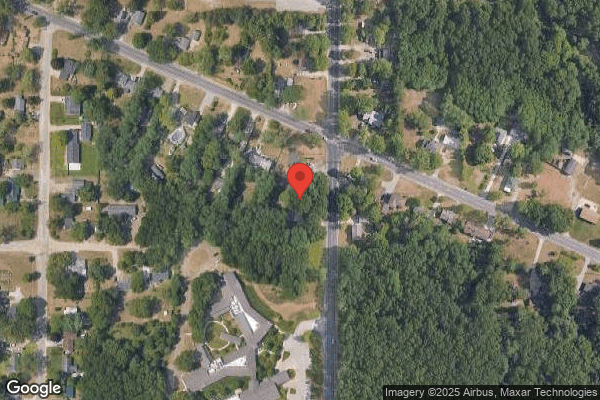
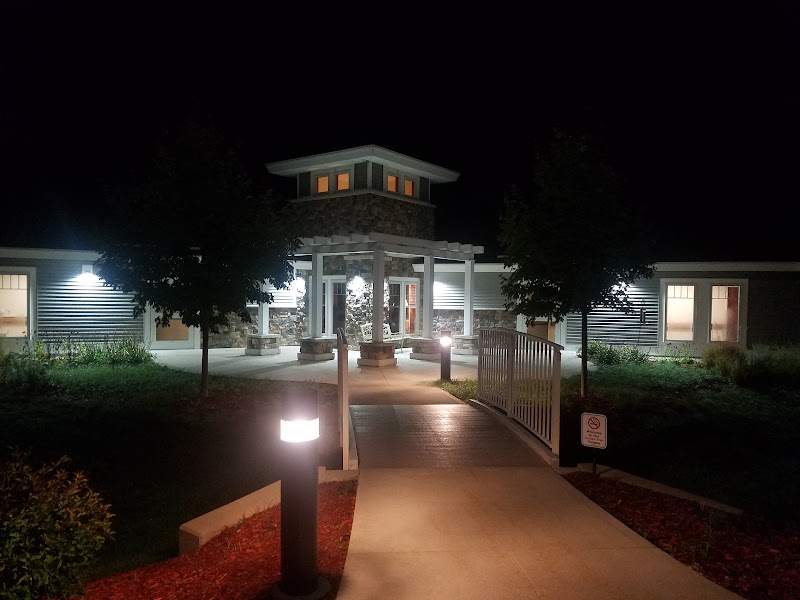
2053 South Sheridan Drive, Muskegon, MI 49442 (231) 722-7165
Non profit - Other 49 Beds Independent Data: November 2025
Trust Grade
23/100
#370 of 422 in MI
Last Inspection: March 2025

Within standard 12-15 month inspection cycle. Federal law requires annual inspections.

Overview

Christian Care Nursing Center in Muskegon, Michigan, has a Trust Grade of F, indicating significant concerns about the quality of care. Ranking #370 out of 422 facilities in Michigan places it in the bottom half, and #5 out of 6 in Muskegon County suggests limited local options that are better. The facility's situation is worsening, with issues increasing from 14 in 2024 to 15 in 2025. While staffing is a strength, with a 4/5 star rating and a turnover rate of 40% (better than the state average), the overall quality is marred by serious incidents. For example, one resident was hospitalized due to missed admission orders, another suffered falls without adequate neurological assessments, and there were documented cases of abuse and neglect, highlighting serious concerns alongside some positive staffing metrics.

Trust Score
F
23/100
In Michigan
#370/422
Bottom 13%
Safety Record
High Risk
Review needed
Inspections
Getting Worse
14 → 15 violations
Staff Stability
○ Average
40% turnover. Near Michigan's 48% average. Typical for the industry.
Penalties
⚠ Watch
$21,247 in fines. Higher than 89% of Michigan facilities, suggesting repeated compliance issues.
Skilled Nurses
✓ Good
Each resident gets 46 minutes of Registered Nurse (RN) attention daily — more than average for Michigan. RNs are trained to catch health problems early.
Violations
⚠ Watch
43 deficiencies on record. Higher than average. Multiple issues found across inspections.
★☆☆☆☆
1.0
Overall Rating
★★★★☆
4.0
Staff Levels
★★★★☆
4.0
Care Quality
★☆☆☆☆
1.0
Inspection Score
Stable
2024: 14 issues
2025: 15 issues

The Good

  • 4-Star Staffing Rating · Above-average nurse staffing levels
  • 4-Star Quality Measures · Strong clinical quality outcomes
  • Full Sprinkler Coverage · Fire safety systems throughout facility
  • No fines on record
  • Staff turnover below average (40%)

    8 points below Michigan average of 48%

Facility shows strength in staffing levels, quality measures, fire safety.

The Bad

1-Star Overall Rating

Below Michigan average (3.1)

Significant quality concerns identified by CMS

Staff Turnover: 40%

Near Michigan avg (46%)

Typical for the industry

Federal Fines: $21,247

Below median ($33,413)

Minor penalties assessed

The Ugly 43 deficiencies on record

3 actual harm
Aug 2025 1 deficiency
CONCERN (D) 📢 Someone Reported This

A family member, employee, or ombudsman was alarmed enough to file a formal complaint

Potential for Harm - no one hurt, but risky conditions existed

Report Alleged Abuse (Tag F0609)

Could have caused harm · This affected 1 resident

**NOTE- TERMS IN BRACKETS HAVE BEEN EDITED TO PROTECT CONFIDENTIALITY** This citation pertains to intake 2572210.Based on interview and record review, the facility failed to report verbal abuse and in...

Read full inspector narrative →
**NOTE- TERMS IN BRACKETS HAVE BEEN EDITED TO PROTECT CONFIDENTIALITY** This citation pertains to intake 2572210.Based on interview and record review, the facility failed to report verbal abuse and intimidation from a staff member to the State Agency for 1 Resident (Resident #2) of 3 residents reviewed for reporting. Findings include:Resident #2 (R2)Review of Resident #2's admission Record revealed R2 was a [AGE] year-old female originally admitted to the facility on [DATE] with pertinent diagnoses of Sepsis, Chronic Obstructive Pulmonary Disease, Congestive Heart Failure, and major depressive disorder. A review of the facility's Abuse, Neglect and Exploitation policy and procedure, revised 6/25/2025, defined Abuse as the willful infliction of injury, unreasonable confinement, intimidation, or punishment with resulting physical harm, pain or mental anguish, which can include staff to resident abuse and certain resident to resident altercations. Abuse also includes the deprivation by an individual, including a caretaker, of goods or services that are necessary to attain or maintain physical, mental, and psychosocial well-being. Instances of abuse includes verbal abuse, sexual abuse, physical abuse, and mental abuse including abuse facilitated or an enabled through the use of technology.During an interview on 8/12/25 at 2:27 PM, the NHA (Nursing Home Administrator) was asked to provide any incident, accident, concern or grievance forms that were generated for R2 during the resident's stay. The NHA revealed he only had one form involving the resident for an incident on 7/20/25. Review of R2's incident report form revealed #2804 Alleged Abuse dated 7/20/2025 at 8:40 AM. The report was for an incident that occurred in R2's room and it was prepared by the DON (Director of Nursing).During an interview on 8/12/25 at 2:27 PM, the NHA revealed that they had not reported the incident to the State Agency and that the DON would need to provide any further information. Review of R2's #2804 Alleged Abuse report under Resident Description revealed, R2 had an interaction with CNA B (Certified Nursing Assistant) and felt the aide had an attitude towards her because she did not want to get out of bed and CNA B said that makes her job more difficult and that was not appropriate for her to say to R2. The report also reflected that CNA B came back to R2's room again after being asked not to and stood with her hands on her hips and was speaking loudly.Further review of #2804 Alleged Abuse report reflected LPN C (Licensed Practical Nurse) was made aware of how she (the resident) felt, and LPN C removed CNA B from her section and CNA I took over. When LPN C spoke with the resident the resident stated that not working with CNA B was a good intervention. LPN C asked if she felt safe and R2 stated she does as long as CNA B doesn't care for her. Further review of the report revealed an investigation was conducted. The report contained interventions, and interviews with staff, family and residents.During a phone interview on 8/13/25 at 11:44 AM, Certified Nurse's Aide (CNA) I revealed, she went into (R2's) room for something and R2 was upset and teary. CNA I stated R2 was emotional, was upset and did not want CNA B coming back into the room. CNA I' told her she would just help take care of her for the rest of the day. She stated the nurse went in behind her and talked with her and she took care of R2 the rest of the day. During an interview on 8/12/25 at 1:39 PM, LPN C revealed that R2 had told her one of girls had told her she was making their job harder. LPN C stated she switched out CNA B for CNA I. LPN C further revealed that R2 would not tell her about her hurt feelings. During an interview on 8/12/25 at 1:43 PM, CNA B stated the resident (R2) told her to leave her alone she was tired. CNA B revealed she went back in to get her up for breakfast and the resident refused. She went back in again after breakfast and R2 did not want to get up because she was still tired. CNA B stated she had to get R2 cleaned up because she was soaked and that she ended up putting a brief on her because when she is in bed she can soak through everything. CNA B revealed she then went back into R2's room after her care to give her water, and she was crying. She (R2) kept saying I'm tired, can't you understand. CNA B stated she was told by another aide that R2 did not want her back in her room but that she went back to drop off a condiment that was missing on R2's lunch tray and R2 told her to get out because she wasn't supposed to be in her room.During an interview on 8/13/25 at 12:32 PM, Ombudsman J confirmed that she had received a call/complaint from the resident about an incident that happened in the building but was unable to connect with R2. During an Interview on 8/13/25 at 3:44 PM, R2's Sister L revealed R2 was currently in the hospital. When asked if she knew of an incident that happened back in July involving an aide. R2's Sister L stated she came up to the building on that day because her sister called her because she was afraid. R2 had told her that someone had come in and tried to get her up and dressed at like 5:00 in the morning on the weekend and that R2 told the aide she was not getting her up. R2 then revealed to her sister that the next aide came in and was upset because she (R2) made more work for her because she would not get up and then the aid yelled at her for wetting the bed and not getting up. R2's Sister L further stated the nurse did give her a different aide to help her out for the rest of the day. However, the aide (CNA B) that yelled at her still came in several times and intimidated her sister during her shift for making her job more difficult and reporting her. One of the times the aide came in was during breakfast/lunch. The aide shut the door so no one could hear my sister yelling for help because the other staff were assisting other residents with their meal. R2's sister stated R2 said the aide had her hands on her hips wanting to know why she reported her and why she was making her job harder. and that (R2) was very frightened of this aide (CNA B). R2's Sister L further revealed that R2 called in a complaint to the Ombudsman.On 8/13/25 at 2:43 PM, Licensed Practical Nurse (LPN) M revealed she was aware of the incident involving R2 and CNA B. When I was taking R2's blood sugar outside at dinner time she asked me if I had heard of the saga. R2 told me that it (the incident) happened early in the morning because she wanted to sleep-in. She told the aide several times she was tired and did not want to get up. She told me CNA B said she was making her job hard/difficult, and she wanted to know why she was ruining her day. (Name of R2) also told me her aide had been very aggressive with her brief change and was upset because everything was wet. (Name of R2) was very upset and teary. She said it happened early in the morning, and she thought the aide was going to hurt her. R2 revealed that CNA I had told her to yell if CNA B went back into her room. R2 told me she had yelled for help during breakfast when CNA B came back in, but the staff could not hear her because CNA B shut the door. LPN M stated the incident happened on the weekend, and that she called/reported the incident right away to the DON. LPN M further revealed that the DON did not talk to the resident until Monday. LPN M was asked why she reported it. LPN replied because it was emotional abuse and R2 was upset about it for days. During an interview on 8/13/25 at 1:45 PM, DON stated the resident seemed to be in a mood that day, and as the day went on, she became more worked up and teary. Resident had a room across from the nurse's station and LPN C had heard the resident yelling at CNA B. LPN C went in and removed CNA B and told the resident she would have CNA I take over her care. Resident thought not having CNA B for an aide was a good intervention. A second shift nurse reported the 1st shift aide told the resident she made her job harder. DON stated that based on LPN C's assessment she did not feel it was reportable. DON revealed the resident had stated to me, she had her hand on her hips and told me, You make my job harder. The DON confirmed she had completed an Alleged Abuse report for the resident; however, she did not think this situation was abuse so she didn't report it,
Mar 2025 14 deficiencies
CONCERN (D)

Potential for Harm - no one hurt, but risky conditions existed

Deficiency F0552 (Tag F0552)

Could have caused harm · This affected 1 resident

**NOTE- TERMS IN BRACKETS HAVE BEEN EDITED TO PROTECT CONFIDENTIALITY** Based on interview and record review, the facility failed to inform 1 of 5 residents (R350) reviewed for unnecessary medications...

Read full inspector narrative →
**NOTE- TERMS IN BRACKETS HAVE BEEN EDITED TO PROTECT CONFIDENTIALITY** Based on interview and record review, the facility failed to inform 1 of 5 residents (R350) reviewed for unnecessary medications of the risks versus benefits and indications for use of a psychotropic medication prior to administering it. Findings include: A review of R350's admission Record, dated 3/27/25, revealed they were a [AGE] year-old resident who admitted to the facility on [DATE] with multiple diagnoses that included dementia and cerebral infarction (a condition where blood flow to the brain is interrupted causing brain tissue damage). In addition, R350's admission Record revealed they were their own responsible party. A review of R350's Minimum Data Set (MDS) (a tool used for assessing a resident's care needs), dated 3/27/25, revealed a Brief Interview for Mental Status (BIMS) (a scale used to determine a resident's cognitive status) score of 14 which revealed R350 was cognitively intact. A review of R350's March 2025 Medication Administration Record revealed they were being administered aripiprazole (Abilify- an antipsychotic medication) and had been since admission. A review of R350's electronic medical record failed to reveal any documentation that R350 was informed of the reason why they were receiving aripiprazole (indications for use) and/or the risks and benefits of its use. On 3/27/25 at 1:55 PM, the Nursing Home Administrator (NHA) was informed via e-mail (the NHA's verbalized preferred method of receiving document requests) that the surveyor could not locate any documentation that R350 had been informed of the reason why they were receiving aripiprazole and/or the risks and benefits of it's use. The surveyor requested that the NHA provide any documentation that they may have that R350 had received this information prior to them receiving the aripiprazole. During an interview on 3/27/25 at 3:00 PM, the NHA stated he could not locate any documentation that R350 had been informed of the reason why they were receiving aripiprazole and/or the risks and benefits of its use. He stated he contacted the physician (whom he indicated was at the facility) and the physician stated he would immediately talk to R350 about their aripiprazole, including why they were receiving it and the risks and benefits of it. The surveyor requested a copy of the physician's note after he spoke with R350 that would reveal he spoke to R350 about their aripiprazole. The NHA stated that the physician's note would probably not be available until the next day (after the survey team exited the facility) and hinted that the physician may not presently be at the facility but may visit the facility later today or tomorrow and/or they may not dictate their notes until tonight or tomorrow. The surveyor requested any documentation that the physician spoke to R350 about their aripiprazole prior to exit from the facility, if the notes/documentation became available. The NHA verbally acknowledged this request. As of the completion of the survey and exit from the facility, the facility failed to provide this documentation.
CONCERN (D)

Potential for Harm - no one hurt, but risky conditions existed

Grievances (Tag F0585)

Could have caused harm · This affected 1 resident

**NOTE- TERMS IN BRACKETS HAVE BEEN EDITED TO PROTECT CONFIDENTIALITY** Based on observations, interviews and record review, the facility failed to respond timely to resident grievances for 2 Resident...

Read full inspector narrative →
**NOTE- TERMS IN BRACKETS HAVE BEEN EDITED TO PROTECT CONFIDENTIALITY** Based on observations, interviews and record review, the facility failed to respond timely to resident grievances for 2 Residents (R10 and R40) of 15 residents sampled. Findings include: R10 Review of R10's face sheet dated 3/27/25 revealed, she a [AGE] year-old female that was admitted to the facility on [DATE] and had diagnoses that included: generalized weakness, unsteady on feet, vascular dementia, kidney disease and major depressive disorder. She was not her own responsible party. During an interview with R10 on 3/26/25 at 11:26 AM, R10 complained of problems with wheelchair comfort. R10 was scooted down in her wheelchair sitting on her low back. R10 was not able to reposition herself in her wheelchair. R10 also complained that the meals have decreased in quality and said she used to be able to get more fresh fruits. R10 was asked if she attended resident council and if the residents were able to address concerns in the meeting. R10 said she was the resident council president and reported they do talk about the concerns but was unaware of any formal written grievance forms. R10 said all they do is talk, nothing gets done. During an interview with Occupational Therapist (OT) U on 3/27/25 at 10:15 AM, OT said she had worked with R10 on wheelchair seating. OT U reviewed her notes and noted she had provided a low back cushion for R10 prior to therapy ending. OT U was not able to locate any communication form that would have given nursing instruction for the use of the cushion. OT U could not locate any information on R10 [NAME] for the use of the cushion. OT U had not received any information on R10's having any concerns with wheelchair comfort after therapy ended. During an interview with OT on 3/27/25 at 12:12 PM, OT U confirmed R10 had the low back cushion she had provided, but R10 was not positioned well. OT U instructed nursing to do frequent wheelchair positioning checks and provided nursing a written communication form for the use of the cushion and frequent positioning today. Review of the February 27th, 2025, Resident Council minutes revealed R10 called the meeting to order. The dietary section revealed, Residents brought up concerns regarding dessert amounts, type of meat being served and quality of meat served, types of bread served, amount of canned food used, and temperature of food upon service. Concern form filled out and emailed to Adm (Administrator) and Dietary Manager for review. Review of the January 2025 Resident Council minutes revealed R10 called the meeting to order. The dietary section included: Residents state that they are tired of all white bread, and they would like to be offered a variety, and that white bread is not healthy. Residents would like butter on the bread/rolls and/or to be served butter packets with their meals. One resident states that they do not received enough fresh fruit and that he was promised offerings of butterscotch pudding and the staff state they do not have any. Review of the December 2024 Resident Council minutes revealed that R10 called the meeting to order. The dietary complaints included requests for more fresh fruit, vegetables and ice cream. Review of a Grievance/Complaint Report dated 2/20/25 revealed, the Nursing Home Administrator (NHA) received this form from the Resident Council revealed, On behalf of the resident council, it was identified concerns are not completely communicated resolved. The Resolution of grievance//complaint revealed, this will be closed in April and monthly audits are being conducted for 4 months. This was signed by the NHA on 3/27/25 (during the annual survey). R40 Review of R40's face sheet dated 3/27/25 revealed she was an [AGE] year-old female admitted to the facility on [DATE] and had diagnoses that included: Alzheimer's disease, hemiplegia, convulsions, heart disease, cardiomegaly, and psychotic disorder with delusions. She was not her own responsible party. During an interview with R40's responsible party (RP) on 3/25/25 at 10:33 AM he was very concerned about the amount of canned and processed food R40 receives. R40's (RP) said he feeds her daily. He reports he tastes the food, and it is all very salty. R40 was very concerned as R40 has multiple medical concerns and has always been told she should be on a low sodium diet. R40's RP said he has attended multiple meetings he expressed frustration that complains are not resolved. He was concerned about her sodium intake due to her multiple medical concerns. During an interview with the Dietary Manager (DM) R on 3/26/25 at 10:00 AM he was questioned about assessing and monitoring R40's sodium intake. DM R said they do not offer low sodium diets just no added salts. DM confirmed that most of meals come from canned or processed food and he does not calculate the amount of sodium she received daily. During an interview with the Director of Nursing (DON) on 3/26/25 at 12:38 PM, the DON confirmed that R40's responsible party has many concerns. The DON could not recall specifics to the concerns and was not sure if she had completed concern forms. The DON said the food concerns would have been followed up by the Dietary Manager. During an interview with the Nursing Home Administration (NHA) on 3/26/25 at 2:00 PM, he was not completely aware of R40's Responsible Party's concerns and said he had been doing education with the Dietary Manager and Activity Director related to completing grievance forms for concerns.
CONCERN (D)

Potential for Harm - no one hurt, but risky conditions existed

Transfer Notice (Tag F0623)

Could have caused harm · This affected 1 resident

**NOTE- TERMS IN BRACKETS HAVE BEEN EDITED TO PROTECT CONFIDENTIALITY** Based on interview and record review, the facility failed to record the reason for a transfer to the hospital emergency departme...

Read full inspector narrative →
**NOTE- TERMS IN BRACKETS HAVE BEEN EDITED TO PROTECT CONFIDENTIALITY** Based on interview and record review, the facility failed to record the reason for a transfer to the hospital emergency department in the resident's medical record for 1 of 1 resident (R47) reviewed for hospital transfers. Findings include: A review of R47's admission Record, dated 3/27/25, revealed they were a [AGE] year-old resident who admitted to the facility on [DATE]. In addition, R47's admission Record revealed they had multiple diagnoses that included liver cirrhosis, chronic congestive heart failure, chronic kidney disease, and diabetes. A review of R47's Minimum Data Set (MDS) (a tool used for assessing a resident's care needs), dated 1/4/25, revealed a Brief Interview for Mental Status (BIMS) (a scale used to determine a resident's cognitive status) score of 13 which revealed R47 was cognitively intact. A review of R47's Health Status note, dated 1/4/25, revealed, [Name of R47] requested to go to ED (emergency department) for evaluation. Contacted on call nurse, called on call, [name of healthcare provider] at 1105 (11:05 am) to get order to send out. Called [name of ambulance company] at 1108 (11:08 am) for transport. Left with [name of ambulance company] around 1130 (11:30 am) to ED. A review of R47's electronic medical records failed to reveal any other documentation that would indicate the reason (besides the resident wanted to go) that R47 had been transferred to the hospital emergency department for evaluation on 1/4/25 (e.g., a transfer form, physical assessment, physician communication note, physician note, etc.). During an interview on 03/27/25 at 08:30 a.m., the Nursing Home Administrator (NHA) was notified that the surveyor could not locate any documentation in R47's electronic medical record that would indicate the reason that R47 had been transferred to the hospital emergency department for evaluation on 1/4/25. The NHA stated he would review R47's medical record and see if he could find any documentation. The surveyor requested copies of any documentation that he may be able to locate. During an interview on 03/27/25 at 10:03 a.m., the Director of Nursing (DON) stated they did not do a transfer form for R47. She stated that the transfer form was a new development that they added to the assessments tab recently. The DON stated they did do a progress note that stated R47 requested to go to the ER. She stated she did not know why R47 wanted to go to the ER, just that he wanted to go so the facility sent him. The DON stated that because R47 requested to go to the ER, then the facility would not have done an assessment before sending him. She stated she does not expect the nurses to do an assessment on a resident before they go to the ER if the resident requested the transfer since they would send them anyway, even if the transfer was not medically necessary.
CONCERN (D)

Potential for Harm - no one hurt, but risky conditions existed

Deficiency F0625 (Tag F0625)

Could have caused harm · This affected 1 resident

**NOTE- TERMS IN BRACKETS HAVE BEEN EDITED TO PROTECT CONFIDENTIALITY** Based on interview and record review, the facility failed to provide to the resident and/or the resident representative written ...

Read full inspector narrative →
**NOTE- TERMS IN BRACKETS HAVE BEEN EDITED TO PROTECT CONFIDENTIALITY** Based on interview and record review, the facility failed to provide to the resident and/or the resident representative written notice which specified the duration of the bed-hold policy during which the resident was permitted to return and resume residence in the nursing facility for 1 of 1 resident (R47) reviewed for hospital transfers. Findings include: A review of R47's admission Record, dated 3/27/25, revealed they were a [AGE] year-old resident who admitted to the facility on [DATE]. In addition, R47's admission Record revealed they had multiple diagnoses that included liver cirrhosis, chronic congestive heart failure, chronic kidney disease, and diabetes. A review of R47's Minimum Data Set (MDS) (a tool used for assessing a resident's care needs), dated 1/4/25, revealed a Brief Interview for Mental Status (BIMS) (a scale used to determine a resident's cognitive status) score of 13 which revealed R47 was cognitively intact. A review of R47's Health Status note, dated 1/4/25, revealed, [Name of R47] requested to go to ED (emergency department) for evaluation. Contacted on call nurse, called on call, [name of healthcare provider] at 1105 (11:05 am) to get order to send out. Called [name of ambulance company] at 1108 (11:08 am) for transport. Left with [name of ambulance company] around 1130 (11:30 am) to ED. A review of R47's electronic medical records failed to reveal any documentation that would indicate the facility had presented, or attempted to present, R47 or their responsible party with the facility's bed hold policy prior to or immediately following their transfer to the hospital on 1/4/25. During an interview with the Nursing Home Administrator on 03/27/25 at 08:30 a.m., the Nursing Home Administrator (NHA) was notified the surveyor could not locate any documentation that would indicate the facility had presented, or attempted to present, R47 or their responsible party with the facility's bed hold policy prior to or immediately following their transfer to the hospital on 1/4/25. The NHA stated he would look for the documentation and provide the surveyor with a copy of it, if it was located. During an interview on 03/27/25 at 10:03 a.m., the Director of Nursing (DON) stated that R47 should have been given the bed hold policy and it should have been explained to him. The DON was informed that the surveyor could not locate any documentation that R47 had been given the bed hold policy and had it explained to him. She stated she would look into it and give me a copy of anything that she finds. During a second interview on 03/27/25 at 10:59 a.m., the DON stated Admissions Coordinator (AC) P went over the bed hold policy with R47 and their family. She stated that AC P did not document her discussion with R47 or their family in R47's medical record, but there were e-mails back and forth between AC P and R47's family. During a third interview on 03/27/25 at 01:00 PM, the surveyor requested a copy of the e-mails between R47's family and AC P that would reveal the facility's bed hold policy was discussed with them. The DON stated, I might have misspoke. She stated she did not actually know if AC P spoke with R47 or their family about the facility's bed hold policy. The DON stated she knew AC P went to the hospital to speak with R47 and their family after R47 went to the hospital. She stated the e-mail that she was referring to was the one AC P sent to the facility notifying them that R47 had been admitted to hospice, would be discharged to a hospice home when discharged from the hospital, and would not be returning to the facility. She stated that information was entered as an Alert Note, dated 1/4/25. A review of R47's Alert Note, dated 1/4/25, revealed, [ Name of hospital] ER called and resident is on Hospice now and is transferring to [name of hospice house] tomorrow. He will not be returning to this facility. A review of the facility's Bed Hold Notice Upon Transfer policy, revised 5/17/2023, revealed, Policy: At the time of transfer for hospitalization or therapeutic leave, the facility will provide to the resident and/or the resident representative written notice which specifies the duration of the bed-hold policy and addresses information explaining the return of the resident to the next available bed . 1. Before a resident is transferred to the hospital or goes on therapeutic leave, the facility will provide to the resident and/or the resident representative written information that specifies: a. The duration of the state bed-hold policy, if any, during which the resident is permitted to return and resume residence in the nursing facility; b. The reserve bed payment policy in the state plan policy, if any. c. The facility policies regarding bed-hold periods to include allowing a resident to return to the next available bed. d. Conditions upon which the resident would return to the facility: The resident requires the services which the facility provides; The resident is eligible for Medicare skilled nursing facility services or Medicaid nursing facility services . 5. The facility will keep a signed and dated copy of the bed-hold notice information given to the resident and/or resident representative in the resident's file.
CONCERN (D)

Potential for Harm - no one hurt, but risky conditions existed

Quality of Care (Tag F0684)

Could have caused harm · This affected 1 resident

**NOTE- TERMS IN BRACKETS HAVE BEEN EDITED TO PROTECT CONFIDENTIALITY** Based on observation, interview and record review, the facility failed to assess, monitor and provide care for one (R30) of one ...

Read full inspector narrative →
**NOTE- TERMS IN BRACKETS HAVE BEEN EDITED TO PROTECT CONFIDENTIALITY** Based on observation, interview and record review, the facility failed to assess, monitor and provide care for one (R30) of one resident reviewed for dental care. Findings include: Review of a Face Sheet revealed R30 originally admitted to the facility on [DATE] and has pertinent diagnoses of Alzheimer's disease, dementia, and abnormal posture. During an observation on 3/25/25 at approximately 11:00 AM, R30 was observed at a table near the nurses' station clenching her shirt. She was nonverbal had limited movement. In an interview on 3/25/25 at 12:11 PM, R30's husband reported concerns of his wife not being able to get her tooth extracted timely and she is having pain. He reported he can tell she had pain by her behaviors and the clenching of her teeth. Review of a dental consultation dated 1/3/25 for R30 revealed she needed to have diagnostics done and oral surgery to get her tooth extracted while sedated and was given a referral for oral surgery. Review of a Nursing Progress note dated 3/6/25 for R30 revealed she went to a dental appointment the day before with her husband. No after visit summary, follow up paperwork or appt. (appointment) reminder. Per husband, (R30) had an Xray done, but no dental procedures. No follow up documentation in the EMR indicating the facility followed up on this. Review of a Physician Progress note dated 3/25/25 for R30 revealed no mention of dental concerns or follow up care. No nonverbal signs or symptoms of pain or discomfort observed. Care plans reviewed and updated to reflect (R30's) strengths, preferences and concerns. Review of the Care Plan for R30 revealed no focus for dental concerns. In an interview on 3/27/25 at 9:44 AM, Social Worker (SW) X reported that the local surgeons are not able to meet the physical needs R30 has do a tooth extraction safely with sedation while having contractures and need for a high-backed wheelchair. Some claim the room is too small for her too. The facility is doing their due diligence to seek care for her. SW X was asked about R30's pain and reported R30 has anxiety and thinks pain is also contributing more to her anxiety. R30 has contractures and clenches her teeth at a baseline so assessing her pain may be difficult. Review of the March Medication Administration Record (MAR) for R30 revealed she has an order for Tylenol 500 milligrams (mg), 2 tablets, three times day for dental pain ordered 12/24/24. Review of her pain assessment revealed all month her pain was rated as a 0/10 scale. No monitoring for infections ordered/documented. In an interview on 3/27/25 at 10:57 AM, Unit Manager (UM) K was questioned about monitoring of pain and infection for R30 when she is not able to express it, and she reported it is hard to tell because she has a history of ticks and clenching her teeth. R30 was on an antibiotic in the beginning and is already getting Tylenol for her arthritis. The Social Worker is working on pursuing an oral surgeon but is not having any success locally per the husband's request. UM K was not clear if the physician was aware or updated on the concerns of R30 needing her tooth extracted. In a follow-up interview on 3/27/25 at 2:03 PM, UM K was questioned about expectations for monitoring R30 for pain and infection is related to her tooth and UM K reported she just put in an order for nursing to monitor for signs and symptoms of swelling, discharge, or infection and document that into the computer. She then talked to the physician today about R30's care and is waiting for an order for Ultram to be put into the computer.
CONCERN (D)

Potential for Harm - no one hurt, but risky conditions existed

Deficiency F0688 (Tag F0688)

Could have caused harm · This affected 1 resident

**NOTE- TERMS IN BRACKETS HAVE BEEN EDITED TO PROTECT CONFIDENTIALITY** Based on observations, interview, and record review, the facility failed to provide the care of contractures for one (R3) of one...

Read full inspector narrative →
**NOTE- TERMS IN BRACKETS HAVE BEEN EDITED TO PROTECT CONFIDENTIALITY** Based on observations, interview, and record review, the facility failed to provide the care of contractures for one (R3) of one resident reviewed for contractures. Findings include: Review of a Face Sheet revealed R3 originally admitted to the facility on [DATE] and has pertinent diagnoses of contractures, spastic hemiplegia (one sided weakness) affecting left nondominant side, and brain injury. Review of the Minimal Data Set (MDS) dated [DATE] revealed R3 is moderately cognitively impaired and has limited range of motion in bilateral upper and lower extremities and is dependent on staff for mobility. During an observation on 3/25/25 at 10:39 AM, R3 was observed in the hallway with contractures in bilateral upper extremities at both wrist and hands. No devices in place on his right or left hands. During an observation and an interview on 3/26/25 at 9:18 AM, R3 was in his room eating breakfast in bed. He reported he did not know where his hand splints were, and staff have not put them on his hand in a while. R3 reported staff do not ask him if he wants to wear them either. One hand splint was observed across the room on top of a container. In an interview on 3/26/25 at 9:12 AM, Physical Therapy Assistant/Manager (PTA) V reported R3 was just picked up yesterday (the first day of this survey) for an evaluation because he was having trouble eating and was to provide the last Occupational Therapy (OT) notes regarding his contractures. Review of a Care Plan for R3 related to his decreased functional mobility and ADL's (activities of daily living) related to deficits secondary left sided hemiparesis with contractures . revealed an intervention: Right hand splint: Encourage (R3) to wear up to 4 hrs (hours) during the night as tolerated: monitor skin integrity on removal, last revised 3/26/24. Review of the electronic medical records (EMR) for R3 revealed a task list for staff to chart daily cares and did not have a task to chart applying splints. In an interview on 3/27/25 at 10:31 AM, Occupational Therapist (OT) W reported they picked R3 up for therapy this week for feeding and positioning in his chair. His left arm is extremely contracted and has some spastic tone and no function in his left hand. His right is contracted but he still has some use in it. OT W reported he does have one hand splint for his right hand but is not sure if he is wearing it at night per his care plan or if it even fits his hand. He used to have a splint for his left hand. The rationale for him to wear a splint at night for his right hand was so he can use his right hand more for things such as eating. Review of an OT Discharge summary dated [DATE] for R3 revealed that he was wearing his right-hand splint per the established schedule up to 4 hours a day. Pt (patient) has splint wear schedule n place with third shift nursing. Review of an OT Discharge summary dated [DATE] for R3 revealed: pt (patient) has R (right) hand splint to wear per previously established schedule. Review of an OT Evaluation & Plan of Treatment for certification period of 3/25/25 to 6/22/25 for R3 revealed his right upper extremity (RUE) (ROM) range of motion is impaired at his wrist with a flexion contracture and his LUE (left upper extremity) ROM is impaired with arom (active range of motion) to 45 degrees, passive to 90 at shoulder flexion, he has extensor tone at his elbow, flexor tone in hand, and has flexion contractures at his right wrist and digits. In an interview on 3/27/25 at 10:55 AM, Unit Manager (UM) K reported there is no documentation in the task list to show splints for R3 were being placed on him at night and reported she just fixed it so staff can document it is being done.
CONCERN (D)

Potential for Harm - no one hurt, but risky conditions existed

Accident Prevention (Tag F0689)

Could have caused harm · This affected 1 resident

**NOTE- TERMS IN BRACKETS HAVE BEEN EDITED TO PROTECT CONFIDENTIALITY** Based on observations, interviews and record review, the facility failed to prevent a fall for 1 Resident (R17), of 1 Resident r...

Read full inspector narrative →
**NOTE- TERMS IN BRACKETS HAVE BEEN EDITED TO PROTECT CONFIDENTIALITY** Based on observations, interviews and record review, the facility failed to prevent a fall for 1 Resident (R17), of 1 Resident reviewed for falls. Finding included: Review of R17's face sheet dated 3/27/25 revealed she was [AGE] years old, admitted to the facility on [DATE] and diagnoses included: unsteady on feet and vascular dementia. She was not her own responsible party. Review of R17's incident and accident report dated 3/16/25 at 16:00 (4:00 PM) revealed R17 had an unwitnessed fall in her room. Predisposing physiological factors included confused, incontinent and impaired memory. The statement section listed staff, see paper statements. No paper statements were provided. The statement at the end of the report revealed, 3/26/25: Root cause: after assessing the situation, it was noted that her anti-rollbacks were not functioning appropriately. The anti-rollbacks were fixed by maintenance. R17 has many fall interventions in place that were all implemented at the time of the fall. There were no care plan violations. She was sent to ED (emergency department) for evaluation with no identified fracture. She remains at risk for falls, she is self-determined at times. (there was no indication of any care or the resident condition prior to the fall). Review of R17's Emergency Department note dated 3/16/25 at 4:54 PM revealed, Patient is 101, year old female with a history of dementia, presenting from (name of nursing home) after an unwitnessed fall. Reportedly, patient had normal [NAME] (sic) fall, found lying on her right side, and per staff was complaining of pain in her right hip. When EMS arrived, she was able to stand and pivot onto the ED (emergency department) gurney without difficulty, denying any pain for them. On arrival, she was unable to recall the events of the fall or how she ended up on the ground. Denying any pain anywhere at this time. X-ray of the pelvis and right femur were done and negative for any fractures. Review of R17's physician orders revealed R17 was admitted to hospice on 3/26/25. Review of R17's fall care plan dated revision on 4/30/24 revealed, 'R17 is at increased risk for fall or injury related to increased confusion and disorientation secondary to advancing dementia, increased risk for pain and decreased ROM (range of motion) secondary to osteoarthritis and fall contributing to medications. She exercises her right to self-determination without realizing movements exceed her functional ability. She may be more confused and restless in the evening and choose to stay up quite late. She has a history of self-removing grippy socks which places her at greater risk for falls. She likes to be busy and helpful and may attempt activities that put her at risk for falls. Interventions included offer to sit in comfy stationary chair when observed in Lounge Area. R17 was observed to be eating on the unit in the dining room on 3/27/25 at 9:14 AM, Certified Nurse Aides (CNA's) H, I, J and N were all present. They all reported they have provided care for R17 prior to her fall 3/16/25 and since. They did not know anything about the fall. They were asked how they would know if anti-rollbacks were not functioning. They said it is obvious as the chair locks up when the resident is not sitting in it. They would not put a resident in a chair if it was not working correctly. They were also concerned that she was unattended in her room as they all know she used to attempt to self-transfer. They reported their shift ends at 2:30 PM and they always put her in a comfortable chair by the television. They reported R17 no longer attempts to self-transfer. R17 was observed on 3/25/25 at 10:26 AM on the nursing unit sitting in a comfortable chair in the television area. She was holding a baby doll and covered with a blanket. She did not respond to questions. R17 was observed in the unit dining room on 3/26/25 at 8:18 AM sitting in a wheelchair with anti-rollback (brake system). She was waiting for breakfast with 10 other residents. On 3/26/25 at 8:38 AM the surveyor asked the Director of Nursing (DON) for all facility fall policy's and all of R17's incident and accident reports for the last 6 months and the full investigation of all falls. On 3/26/25 at 3:18 PM the surveyor asked the DON for R17's full investigation for her fall on 3/16/25 as the report she had provided did not indicate any staff interviews or staff involved. There was no information on care or supervision prior to the fall. During an interview with Environmental Services Worker (EVS) O on 3/27/25 at 9:20 AM, EVS O was asked if he fixed R17's anti- rollbacks after 3/16/25. EVS O said he did not think he did. EVS O said they do not keep any records of repairs and no indication if the facility inspected all wheelchair for function after 3/16/25 when the facility had determined R17's wheelchair was not functioning properly. Records were requested and no records were provided prior to exit. During an interview with the Director of Nursing (DON) on 3/27/25 at 9:28 AM in her office the Surveyor asked for R17's full investigation and emergency room report for the fall on 3/16/25. The surveyor asked for information on R17's wheelchair repair and for any information on inspection of the facility wheelchairs as R17's incident and accident report determined the anti-rollbacks may have caused the fall. The DON said she had statements for the investigation somewhere and she would get them. No staff statements were provided prior exit. On 3/27/25 at 3:13 PM the DON provided a hospital emergency (ER) room report to the surveyor and reported R17 did not have a fracture she was only sent to the ER to rule out a fracture. The DON said the NHA would send the full investigation. Upon exit the facility failed to provide a full investigation of R17's fall on 3/16/25, including witness/ staff statements, wheelchair repair documentation, and/or documentation that resident and facility wheelchairs were assessed for proper functioning.
CONCERN (D)

Potential for Harm - no one hurt, but risky conditions existed

Pharmacy Services (Tag F0755)

Could have caused harm · This affected 1 resident

Based on interview and record review, the facility failed to follow policies and procedures to maintain a sensical system of accountability for controlled substances for 1 Resident (R4), of one reside...

Read full inspector narrative →
Based on interview and record review, the facility failed to follow policies and procedures to maintain a sensical system of accountability for controlled substances for 1 Resident (R4), of one resident reviewed for narcotic administration. Findings include: Review of a policy titled Controlled Substance Administration & Accountability last revised 12/29/24 revealed: It is the policy of this facility to promote safe, high quality patient care, compliant with state and federal regulations regarding monitoring the use of controlled substances. The facility will have safeguards in place in order to prevent loss, diversion or accidental exposure. f. All controlled substances (Schedule II, III, IV, V) are accounted for in one of the following ways: . ii. All controlled substances obtained from a non-automated medication cart or cabinet are recorded on the designated usage form. Written documentation must be clearly legible with all applicable information provided. g. In all cases the dose noted on the usage form or entered into the automated dispensing system must match the dose recorded on the Medication Administration Record (MAR), Controlled Drug Record, or other facility specified form and placed into the patient's medical record. h. The Controlled Drug Record (or other specified form) serves the dual purpose of recording both narcotic disposition and patient administration. 4. Obtaining/Removing/Destroying Medications: a. The entire amount of controlled substances obtained or dispensed is accounted for. d. Two licensed staff must witness any disposal or destruction of a controlled substance and document same (sic) on the Drug Disposition Record, Controlled Drug Record, or via the automated dispensing system. 5. Disposal of Controlled Drug Patches: a. All controlled drug patches removed from patients are disposed of in such a manner as to prevent diversion, fold in half and dispose of patch. Resident #4 (R4) Review of a Medication Administration Record (MAR) revealed R4 had an order started on 5/16/24 for a 25 mcg/hr (microgram/hour) fentanyl (a schedule II opioid) transdermal patch to be applied in the afternoon every 3 days for chronic pain. Review of a Controlled Drug Record: Topical Patches proof of use sheet revealed: Controlled Drug Record - Chart each dose administered. USED PATCH DESTRUCTION: When patch is removed, it must be immediately destroyed and witnessed with two nurse signatures. Review of a Controlled Drug Record: Topical Patches proof of use sheet for R4 revealed on 1/20/25, five of ten fentanyl patches were dispensed, no documentation of the quantity received, and five patches are documented on the sheet as follows: (no accountability of the first five patches) 2/4/25- placed on the left chest and old one removed and verified by two nurses for destruction. 2/7/25- placed on the right chest and the old one was removed with only one nurse signature for destruction. 2/10/25- placed on the left chest and two nurses verified destruction of the old one. 2/13/25- placed on the right chest and only one nurse signed it was verified for destruction. 2/16/25- placed on the left chest and two nurses verified destruction of the old one and there were zero remaining patches documented. Review of a Controlled Drug Record: Topical Patches proof of use sheet for R4 revealed on 2/12/25, five fentanyl patches were dispensed, five patches received, and five of them are documented on the sheet as follows: 2/19/25- placed on the right chest and two nurses verified destruction of the old one. 2/22/25- placed on the left chest and only one nurse verified the destruction of the old one. 2/25/25- placed on the right chest and two nurses verified the destruction of the old one. 2/25/25 (same date entered)- placed on the left chest and two nurses verified the destruction of the old one with a 2/28/25 date for removal. (undated entry)- placed on the right chest and only one nurse verified the removal and destruction of the old one on 3/3/25. There were 5 remaining patches documented but no accountability for them. Review of a Controlled Drug Record: Topical Patches proof of use sheet for R4 revealed on 2/26/25, four of nine fentanyl patches were dispensed, no documentation on the quantity received, and four of them are documented on the sheet as follows: 3/6/25- placed on the left chest and two nurses verified the destruction of the old one. 3/9/25- placed on the right chest and one nurse verified the destruction of the old one. 3/12/25- placed on the left chest and two nurses verified the destruction of the old one. 3/15/24- placed on the right chest and two nurses verified the destruction of the old one. One patch is documented as remaining but no accountability for it. Review of an untitled document with R4's name on it and Fentanyl Pat 25 mcg/hr (C=11) revealed a record of placement verification starting on 2/23/25 as follows: 2/23/25- the first shift nurse is the same nurse who signed as the oncoming and off going nurse and circled yes for the patch being in place on the left chest. 2/23/25- the second shift nurse is the same nurse who signed as the oncoming and off going nurse and did not document the patch in place but wrote in left chest for location. 2/24/25- (third shift for 2/23/25), two different nurses documented the patch was in place on the left chest. 2/24/25 (third shift, second entry)- the oncoming nurse signature is blank and a different nurse than the previous entry signed the location was the left chest but not that it was in place. 2/25/25- The first shift nurse did not sign as the oncoming nurse and the off going nurse documented the location is the left chest. 2/25/25- the second shift oncoming nurse signed but did not document the patch was in place or the location. There is no off going nurse signature. 2/25/25- the third shift is documented with different signatures for the ongoing and off going nurses and verified the patch was in place on the right chest. The document continues to 3/10/25, first shift with many discrepancies/incomplete documentation and accountability. In an interview on 3/27/25 at 1:40 PM, the Director of Nursing (DON) was made aware of concerns for the proof of use documentation of the fentanyl patches for R4. Only one nurse signed for the removal of the patch on 2/22/25 and on 2/25/25 it was signed out twice on the same day. The next entry on 2/25/25 is not dated with only one nurse to witness the removal on 3/3/25. The DON could not explain why the documentation presented the way it did and was to look into it and provide more information. Shortly after, the DON tried to explain why the nurses documented on the form wrong, but the patches were still accounted for. Unfortunately, the explanation still did not make sense. The DON then reported that they were going to do away with this current system and do something else.
CONCERN (D)

Potential for Harm - no one hurt, but risky conditions existed

Deficiency F0761 (Tag F0761)

Could have caused harm · This affected 1 resident

Based on observation and interview, the facility failed to appropriately maintain medication storage for one medication room of two medication rooms. Findings include: During an observation and an in...

Read full inspector narrative →
Based on observation and interview, the facility failed to appropriately maintain medication storage for one medication room of two medication rooms. Findings include: During an observation and an interview on 3/27/25 at 8:35 AM, the Love Unit Medication Room had a refrigerator with an opened multidose tuberculin vial that was not dated when it was opened. Licensed Practical Nurse (LPN) T reported she did not know when it was opened and should be dated when it was opened. Inside the refrigerator was also a urine sample for a newly admitted resident. LPN T reported that this refrigerator is to only have medications in it, and this was not to be stored in this room. Review of a policy from the pharmacy titled Medication Storage in the Facility last revised 1/2018 revealed: G. Potentially harmful substances such as urine test reagent tablets, household poisons . are clearly identified and stored in a locked area separately from medications. H. Outdated, contaminated, or deteriorated medications and those in containers that are cracked, soiled, or without secure closures are immediately removed from inventory, disposed of according to procedures for medication disposal and reordered from the pharmacy if a current order exists. Expiration Dating (Beyond-use dating) . C. Certain medications or package types, such as IV solutions, multiple dose injectable vials . once opened, require an expiration date shorter than the manufacturer's expiration date to insure (sic) medication purity and potency.
CONCERN (E)

Potential for Harm - no one hurt, but risky conditions existed

Resident Rights (Tag F0550)

Could have caused harm · This affected multiple residents

**NOTE- TERMS IN BRACKETS HAVE BEEN EDITED TO PROTECT CONFIDENTIALITY** Based on observations, interviews and record review, the facility failed to provide care in a dignified manner for four Resident...

Read full inspector narrative →
**NOTE- TERMS IN BRACKETS HAVE BEEN EDITED TO PROTECT CONFIDENTIALITY** Based on observations, interviews and record review, the facility failed to provide care in a dignified manner for four Residents (R5, R30, R35 and R40) of 15 Residents reviewed. Findings included: R5 Review of R5's face sheet dated 3/27/25 revealed she was admitted on [DATE] and had diagnoses that included: Diabetes, stage 4 kidney disease, diverticulosis of intestine, irritable bowel syndrome with diarrhea, and urine retention. She was her own responsible party. R5 was observed in bed on 3/25/25 at 10:58 AM and R5 was very upset with the facility's poor response to her needs for assistance. R5 said she has talked to management about the ineffectiveness of the call light system, but they tell her it would take $80,000 to fix the current call light system. R5 said there is no light in the hall that goes off when she puts her call light on. The staff are supposed to carry iPads (as identified by R5) around their neck to know when someone needs assistance. The staff must take the iPad off when they provide care as it gets in the way and bumps the residents when they are doing care. R5 said her care may take staff 20 to 30 minutes and when she is getting care they cannot see if other patients need care. R5 had a metal call bell on her bedside table, and she reports she starts ringing it when they do not respond in 15 minutes to her light. R5 said she does not like to have a bowel movement in her bed, and it is painful and frustrating to hold it more than 15 minutes. R5 said they keep trying to take my call bell away, but I will not let them. R30 R30 was observed being lifted from her wheelchair to bed with a full body electronic lift on 3/26/25 at 9:42 AM by Certified Nurse Aides (F and G). CNA F and G did not talk to R30 during the transfer or care. They did not indicate when they were going to lift her, turn her or remove her brief. R30's eyes were open, and she did not speak during this observation. When R30 was lifted out of her wheelchair she had a wet spot about 3 to 4 inches in diameter in the center of her buttock. R30's wheelchair had a strong urine smell. CNA F removed the cushion cover and said she would get a new cover from therapy. After the cover was removed the wheelchair and cushions still had a strong urine smell. R35 Review of R35's face sheet dated 3/27/25 revealed she was a [AGE] year-old female admitted to the facility on [DATE] and had diagnoses that included: Alzheimer's disease, chronic pain, rheumatoid arthritis and generalized anxiety disorder. She was not her own responsible party. Review of R35's Brief Interview for Mental Status (BIMS) dated 2/24/25 revealed she scored 10/15, indicating she has moderate cognitive impairment. R35 was observed in bed on 3/25/25 at 11:39 AM. R35 was upset about the quality of the incontinence briefs. R35 said the staff have to put two diapers on me to keep my bed clean. She reported all the staff know about the problem with these briefs, but no one is doing anything. R35 also complained that the food quality has gotten bad, and no one is doing anything about it. They don't write down the concerns, they just don't care. R40 Review of R40's face sheet dated 3/27/25 revealed she was an [AGE] year-old female admitted to the facility on [DATE] and had diagnoses that included: Alzheimer's disease, hemiplegia, convulsions, heart disease, cardiomegaly, and psychotic disorder with delusions. She was not her own responsible party. During an interview with R40's responsible party on 3/25/25 at 10:33 AM, he expressed concern about the facility purchasing cheap briefs for R40. He said they leak and cause more laundry issues and more frequent changes. He said the staff all know it and are upset too, but management does not care about it. On 3/26/25 at 10:30 AM, R40 was in bed and her responsible party was in the room. R40 had her eyes open but did not speak. R40's wheelchair had a fabric seat cushion in it and the wheelchair had a strong urine smell. R40's responsible party said since the facility started buying cheap briefs she frequently has urine soak through to her clothing. During an interview with the Director of Nursing (DON) on 3/26/25 at 11:30 AM, the DON was asked about concerns related to the quality of the briefs. The DON responded she was aware of the concerns but did not offer any solutions to the concerns. During an interview with the Nursing Home Administrator (NHA) on 3/26/25 at 2:00 PM residents concern about having to use two briefs, increased laundry use and urine soaking through to their clothing, soiled wheelchair cushions, residents' frustration, and lack of dignity related to residents not feeling their concerns were being heard were discussed. The NHA said he was aware of some of the concerns but not the extent of the problem. He said he would start working on trialing different products.
CONCERN (E)

Potential for Harm - no one hurt, but risky conditions existed

Pressure Ulcer Prevention (Tag F0686)

Could have caused harm · This affected multiple residents

**NOTE- TERMS IN BRACKETS HAVE BEEN EDITED TO PROTECT CONFIDENTIALITY** Based on observations, interviews and record review, the facility failed to follow policies and procedures to accurately assess,...

Read full inspector narrative →
**NOTE- TERMS IN BRACKETS HAVE BEEN EDITED TO PROTECT CONFIDENTIALITY** Based on observations, interviews and record review, the facility failed to follow policies and procedures to accurately assess, monitor and treat/improve pressure ulcers for 2 Residents (R1, and R350) of 4 Residents reviewed for pressure ulcers. Findings included: R350 Review of R350's face sheet dated 3/26/25 revealed she was a [AGE] year-old female admitted to the facility on [DATE], her diagnoses included: acute kidney failure, chronic kidney disease, dysphagia (difficulty swallowing), osteomyelitis (bone infection), and vascular disease. She was her own responsible party. Review of R350's admission skin assessment dated [DATE] and locked on 3/21/25 revealed that R350 had a stage 1 ulcer on her gluteal clef that measured 3.4 x 2 x 0.3. there was no mention of any skin issues on R350 thighs or other areas of her buttock. Review of R350's admission skin assessment dated [DATE] at 16:36 (4:36 PM) and locked on 3/27/25 (during the survey) revealed R350 had a stage 3 pressure ulcer on her coccyx that measured 3.7 x 1.3 x .3 and indicated that her right and left thigh (front) were excoriated. No mention of open areas in the excoriated area. R350 was observed on 3/25/25 at 10:10 AM in bed on her back with the head of her bed elevated about 20 degrees. R350 did not respond to calling her name. R350 was observed sleeping on her back in bed on 3/26/25 at 8:20 AM. R350 was observed in bed on her back with the head of the bed elevated about 45 degrees on 2/26/25 at 10:00 AM. R350 was complaining of severe butt pain. R350 was not able to operate the bed controller and reported she was not able to shift her weight or roll in bed. R350 said staff do not roll her in bed. R350 was assisted with her call light to get staff assistance. R350 was observed in bed on 3/26/25 at 10:45 AM. R350 was still in the same position she was in at 10:00 AM. R350's Physician B was in the room. The Surveyor expressed concern over the lack of turning and positioning. Physician B said he would follow up with the staff. On 3/26/25 at 11:00 AM, Licensed Practical Nurse (LPN) D and Certified Nurse Aide (CNA) M changed R350's brief. The brief was soaked and full of loose bowel movement (BM). The BM covered the buttock and no dressing was visible. CNA M said there was gauze on R350's buttock, and she wiped it off with the disposable wipe and put it in the trash. R350 cried out in pain with the brief change and clean up. R350 had a wound on her coccyx area that was approximately 1.5 inches by .5 inches and open another open area that was approximately ¼ in diameter on her right upper buttock. R350 had about 10 other open, weeping areas approximately ¼ in diameter on both inner thighs. LPN D said she did not see a treatment in the system for these wounds so she would need to see if the treatments are listed on another shift. CNA M said she had been assigned to R350 since 6:00 AM this morning. CNA M reported that was R350's first brief change and she had not repositioned R350 as she was not on a turning schedule. R350 required assistance of 2 people to turn for the brief change. (5 hours without a brief change or repositioning) On 3/26/25 at 11:19 AM the Director of Nursing (DON) came in the assist LPN D and CNA M with R350. The Surveyor explained that CNA M indicated that she had not repositioned R350 today because she was not on a turn schedule. The DON responded it was standard of care to reposition residents every 2 hours if they are not able to turn independently. The DON helped LPN D reposition R350 on her right side (Assist of 2 people). R350 continued to cry in pain and reported the painful area was her butt. Review of R350's Kardex (nurse aide care information) dated 3/26/25 revealed R350 needed extensive assistance of 2 people for bed mobility, and she required reposition/shift weight to reposition frequently. During an interview with the DON on 3/26/25 at 12:27 PM, R350's nursing admission skin assessment dated locked 3/21/25 was reviewed and it only showed one ulcer on her gluteal clef that measured 3.4 x 2 x 0.3 and it was noted as a stage 1. The DON said she assisted the nurse that did this assessment on the day of admission and the DON said she would have staged the wound in the coccyx area as stage 2 and she saw a total of 6 stage 2 ulcers. The DON could not locate any notes in R350's medical record that matched her memory of the admission assessment for R350. The DON said she had the information somewhere on a note. She looked through her piles of notes and could not locate any written skin assessment for R350 dated 3/20/25. The DON reported she is doing education for accurate skin assessments. I reported that I observed 2 open areas on the buttock and at least 10 open areas on her inner thighs. The Surveyor requested R350's hospital records as they had not been placed into R350's medical record. The DON had access to hospital records on her computer. The DON reviewed the hospital records for R350 and the hospital had documentation reporting R350's pressure ulcer on her coccyx was a stage 3 and they did not document any other open areas on the buttock or thighs. On 3/27/25 at 9:30 AM, Physician B saw the Surveyor in the hall and asked if R350 was being positioned off her butt today. The Surveyor reported that when she saw R350 today, she was still on her butt and the assessments completed last night did not reflect the observations made yesterday. Physician B went to his office and called Nurse Practitioner (NP) A after he reviewed her documentation from 3/24/25. Physician B said NP A would be in today to assess R350 and order her wound care. Physician B said he and NP A just need to hit send on her notes, and they go to the printer in the administration office. We went to the printer, and Physician B handed me his note. The Nursing Home Administrator (NHA) was at the printer. The NHA confirmed that they were not having any problems with getting the NP A's notes or Physician B's notes. The Surveyor informed the NHA that R350 NP A notes were still not in her medical records. During an interview with the DON on 3/27/25 at 10:44 AM, the DON said she located an order for R350's coccyx wound dated 3/25/25 (5 days after admission). The DON reviewed the surveyors screen for orders in R350's electronic medical records (EMR) and confirmed that the surveyor did not have that information. The DON could not locate wound treatments for R350's coccyx pressure ulcer prior to 3/25/25. The DON reported that all other open area's on R350's buttock and thighs were excoriation. The DON said they do not count, or size open weeping areas that are excoriated. The DON was not able to explain how they are able to determine if the excoriated area was improving or declining if they did not document any description or indicate the skin was open. The DON did not have any response. During an interview with NP A on 3/27/25 at 11:45 AM, NP A said she had assessed R350 on 3/24/25 and R350 only had the stage 3 ulcer on her buttock area. NP A said all the other open areas were a rash and they were not present on 3/24/25. NP A said she ordered a new treatment for the rash. The NP said the rash was most likely due to R350 having loose stools and she was also started on bowel medication today. Review of R350's Treatment Administration Record (TAR) dated March 2025 revealed, Multiple Wounds: All stage 2 Posteriorly - BL (bilateral thigh fold, Left inner buttock 3/24/25. Anteriorly - BL (bilateral) upper thigh fold near groin. Cleanse with normal saline, pat dry and apply hydrocolloid dressings to each wound. Change every 3 days, sooner if soiled. Started 3/21/25 and discontinued on 3/24/25. It was only marked as completed on 3/21/25. This same order was noted on the March TAR as starting and ending on 3/25/25 and marked as completed on 3/25/25. No wound care order was found on the March 2025 TAR for R350's coccyx stage 3 pressure ulcer. Resident #1 (R1) Review of a Face Sheet revealed R1 originally admitted to the facility on [DATE] with pertinent diagnoses of Wedge compression fracture of first lumbar vertebra, morbid obesity and a stage III sacral pressure ulcer. Review of the Minimum Data Set (MDS) dated [DATE] for R1 revealed she is at risk for pressure ulcers and had one stage III pressure ulcer. She has limited range of motion (LROM) with impairment to bilateral lower extremities and dependent on staff for toileting, transfers, and mobility. Review of the Facility Matrix provided 3/25/25 at the beginning of this survey revealed R1 had a Stage III Pressure Ulcer. Review of a Braden Scale for Predicting Pressure Sore Risk dated 2/7/25 for R1 revealed she is a high risk. During an observation and an interview on 3/25/25 at 10:28 AM, R1 was in bed with a wedge under her left side. She reported she had the pressure ulcer on her backside prior to admission and thinks it is getting better. During an observation 3/26/25 at approximately 8:00 AM, R1 was observed in her specialty Broda wheelchair. During an observation and an interview on 3/26/25 at 11:23 AM, Licensed Practical Nurse (LPN) T had R1 transferred to bed for a pressure ulcer dressing change and placed the wound dressing supplies on a table beside the bed with no barrier and did not clean the table. R1's brief was saturated with urine and not cleaned up prior to dressing change. The nurse removed the old dressing from R1's sacrum which was packed with gauze. The wound was approximately a golf ball size round and deep. LPN T used the same gloves to remove the old dressing and packed wound that was saturated with serosanguinous drainage to clean and apply the new dressing which consisted of packing the wound with gauze soaked with Dakins solution and packed in the wound with her soiled glove via her finger. An antifungal cream mixed with a zinc-based cream was applied to the surrounding area of the wound, then an ABD (abdominal pad) was applied over the packed wound and adhered with hypafix tape. LPN T then changed her gloves post wound care to assist with peri care and transferred R1 back to her wheelchair. When she was done with wound care supplies, she took them out of the room to the wound cart and placed them in the drawer. In an interview on 3/26/25 at 11:57 AM, LPN T reported R1 should be offloading while up in her wheelchair and could not confirm that it was being done. When asked about hand hygiene and changing gloves during a dressing change after removing old dressing and applying a new one, LPN T said What about it? I don't know, but I am guessing you think I should have changed my gloves? When asked about packing the wound with her soiled gloves with her finger, she reported there is no undermining so packing the wound with her finger verses a cotton swab was appropriate. LPN T reported wound care rounds are done weekly on Mondays with the wound care nurse and did not know why there was no documentation in the EMR to reflect R1's wound care visit. When asked about the unused wound care supplies being place outside the room in the wound care cart, LPN T reported she could not leave them in the room. In an interview on 3/26/25 at 12:01 PM, Certified Nursing Assistant (CNA) F reported R1 normally lays back down after breakfast but this day she stayed up to get her hair done but the hairdresser canceled her appointment, so R1 stayed up in her wheelchair. During an observation on 3/26/25 at 1:49 PM, R1 was transferred to her bed. Review of a Skin integrity Care Plan for R1 initiated 12/20/24 revealed: is at risk for skin breakdown [related to] admitting with pressure Ulcers on her coccyx 12/4/23. No meaningful interventions or revisions for a stage III or a stage IV pressure ulcer on the care plan. No frequent repositioning or offloading is on the Care Plan. Review of the Activities of Daily Living (ADL) Care Plan for R1 revealed: BED MOBILITY: The resident is totally dependent on (2) staff for repositioning and turning in bed, initiated 12/20/24. Review of a Wound Care Note for R1 dated 2/3/25 revealed: Sacral wound is 5.8 x 3.5 x 4 cm. (Stage IV pressure ulcer.) Review of a Wound Care Note for R1 dated 3/17/25 revealed: Incontinent of urine with removal of the old dressing. The sacral wound is 6 x 4 x 3.8 cm (centimeters and is 100% granulation without any maceration/erythema around. Moderate amount of serosanguineous drainage on the old dressing. Assessment/Plan: coccyx/sacrum wound stage IV pressure ulcer after sharp debridement by [Physician] on 4/29/24. Continue with turning from side-to-side and she was on her left side today. Wound is slowly improving. Review of a Skin assessment dated [DATE] for R1 revealed she has a Stage III pressure ulcer on her coccyx measuring 6.0 x 4.0 x 3.8 (cm) with no drainage and 100% granulation. (Wound Care notes reflect a stage IV pressure ulcer.) Review of the Electronic Medical Records (EMR) on 3/26/25 for R1 revealed no skin assessments or wound care documentation for 3/24/25. In an interview on 3/26/25 at 2:03 PM, the Director of Nursing (DON) reported the Wound Care Nurse was here on Monday (3/24/25) and was not sure where the progress notes of R1's pressure ulcers were or why there was no skin assessment documented in the EMR. She reported the Wound Care Nurse will dictate the notes and the facility will then upload them into their computer. When queried about changing gloves and performing hand hygiene after removing old soiled wound dressings, the DON reported it would depend on if the gloves are visibly soiled. When it comes to packing wounds, the DON reported whether she used the same glove using her finger or a cotton swab would depend on the wound, but she usually uses a cotton swab. When given the observed scenario of LPN T's dressing change on R1, the DON did expect a barrier or a cleaned table prior to setting wound care supplies down. Regarding the changing of gloves during a dressing change, the DON reported R1's dressing change is not sterile and her germs are hers, but she would personally have changed her gloves. When asked about the wound care supplies that have been in the residents' room and taken outside the room to the wound care cart, the DON reported the supplies should be resident specific and left in the room or prepped before going into the room so no supplies would be left over. In an interview on 3/26/25 at 2:22 PM, Registered Nurse (RN)/Infection Control Nurse K reported that for wound care, a cleaned table or a barrier for supplies should be set up and hand hygiene and new gloves should be used after removing old dressing. A wound can be packed with a gloved finger for shallow wounds but deeper wounds or tunneling should use a cotton swab. Left over wound care supplies should not be taken to the cart. In an interview on 3/27/25 at approximately 9:00 AM, the DON walked down the hall and told this surveyor she will eat crow because gloves and hand hygiene should be done after removing a soiled dressing. Review of a Wound Care note dated 3/24/25 for R1 which was provided by the end of this survey on 3/27/25 revealed: patient turned on her right side with 2 assist. Old dressing was removed. Incontinent of urine during the removal of the old dressing. Sacral wound is 6 x 4 x 3.8 cm, 100% granulation . Review of a policy titled Pressure Injury Prevention and Management last revised 12/2022 revealed: The facility is committed to the prevention of avoidable pressure injuries and the promotion of healing of existing pressure injures. 3. Assessment of Pressure Injury Risk: b. Licensed nurses will conduct a full body skin assessment on all residents upon admission/readmission, weekly, and after any newly identified pressure injury. Findings will be documented in the medical record. c. Assessments of pressure injuries will be performed by a licensed nurse and documented on the Weekly Skin Assessment form. The staging of pressure injuries will be clearly identified to ensure correct coding on the MDS. d. After completing a thorough assessment/evaluation, the interdisciplinary team should develop a relevant care plan that includes measurable goals for prevention and management of pressure ulcers/pressure injuries with appropriate interventions. 4. Interventions for Prevention and to Promote Healing: a. Interventions will be based on specific factors identified in the risk assessment, skin assessment, and any pressure injury assessment . b. Evidenced-based interventions for prevention will be implemented for all residents who are assessed at risk or who have a pressure injury present. Pressure prevention interventions could include but are not limited to: Redistribute pressure . Minimize exposure to moisture with use of incontinence management . use of up down schedule. 5. Monitoring: a. The Unit Manager or designee will review all relevant documentation regarding skin assessments, pressure injury risks, progression towards healing, and compliance at least weekly, and document a summary of findings in the medical record. Change in care plan interventions will be completed. Review of a policy titled Non-Sterile Dressing Change last revised 5/2019 revealed: Designated staff members will use non-sterile dressing techniques for all dressing changes unless otherwise indicated by physician or manufacturer guidelines. Clean aseptic technique should be used. In the event of multiple wounds, each wound is considered a separate treatment. 4. Prepare a clean, dry work area at bedside. Use disinfectant solution to prepare work surface. Optional: Cover work surface with clean dry paper or cloth towel, to prevent contamination of supplies. 10. Remove soiled dressing, place it in trash bag. 11. Remove gloves, wash hands, apply new gloves.
CONCERN (E)

Potential for Harm - no one hurt, but risky conditions existed

Staffing Information (Tag F0732)

Could have caused harm · This affected multiple residents

Based on observation, interview, and record review, the facility failed to: 1) post daily nurse staffing data in a prominent place readily accessible to residents and visitors and 2) list the facility...

Read full inspector narrative →
Based on observation, interview, and record review, the facility failed to: 1) post daily nurse staffing data in a prominent place readily accessible to residents and visitors and 2) list the facility census and actual hours worked by category of licensed and unlicensed nursing staff (i.e., Registered Nurse, Licensed Practical Nurse, Nursing Assistant) directly responsible for resident care per shift on the historic daily nurse staffing data sheets. Findings include: During an observation on 03/27/25 at 08:35 AM, the daily Faith's Terrace Staffing data sheet was observed on a bulletin board next to nurse's station facing nurse's station. The staffing data was not visible to residents and/or visitors in hallway or walking by the nurse's station. The Faith's Terrace Staffing data sheet was posted next to other staff only schedules/postings (i.e., On Call Manager Schedule for March 2025, On Call Maintenance person, a thank-you card). The Faith's Terrace Staffing data sheet had the facility census, names of nursing staff members scheduled per shift, and schedule nurse staffing hours listed by category (i.e., Registered Nurse (RN), Licensed Practical Nurse (LPN), Nursing Assistant (CNA), and nursing staff orientees). During an observation on 03/27/25 at 08:45 AM, the daily Love's Garden Staffing data sheet was observed on a bulletin board next to nurse's station facing nurse's station. The staffing data was not visible to residents and/or visitors in hallway or walking by the nurse's station. The Love's Garden Staffing data sheet was posted next to other staff only schedules/postings (i.e., On Call Manager Schedule for March 2025, On Call Maintenance person, a thank-you card). The Love's Garden Staffing data sheet had the facility census, names of nursing staff members scheduled per shift, and schedule nurse staffing hours listed by category (i.e., RN, LPN, CNA, and nursing staff orientees). During an interview on 03/27/25 at 08:50 AM, CNA Q stated the daily nurse staffing data sheets are only for nurse and nurse aide use and reference. She stated the nurse staffing sheets are only posted where staff can see them and not residents. CNA Q verified that the current location of the Love's Garden Staffing data sheet was in an area where residents and/or visitors could not see or read it. A review of the historic daily nurse staffing data sheets, dated 2/25/25 to 3/24/25, revealed the daily resident census was not entered on the data sheets and the actual hours worked by nursing staff were inaccurately recorded on and/or not recorded on the staffing data sheets (e.g., all nurse hours actually worked were entered under the RN category and none were entered under LPN category, even though the majority of the nurses scheduled were LPN's). During an interview on 03/27/25 at 09:00 AM, the Nursing Home Administrator (NHA) stated the daily census numbers are not always recorded on the daily nurse staffing data sheets. The NHA stated they also do not always record the actual working hours of licensed and unlicensed personnel on the daily nurse staffing data sheets. He stated they only list the nursing staff and their scheduled hours and he keeps track of the actual hours worked himself.
CONCERN (F)

Potential for Harm - no one hurt, but risky conditions existed

Food Safety (Tag F0812)

Could have caused harm · This affected most or all residents

Based on observation, interview, and record review, the facility failed to prepare food in accordance with professional standards for food service safety. This deficient practice has the potential to ...

Read full inspector narrative →
Based on observation, interview, and record review, the facility failed to prepare food in accordance with professional standards for food service safety. This deficient practice has the potential to result in food borne illness among all residents that consume food from the kitchen. Findings include: During the initial tour of the kitchen, at 9:40 AM on 3/25/25, and interview with Certified Dietary Manager (CDM) R found that the facility rarely cools down food from service or makes large meals in advance that require a cooling and reheating step before being served. Observation of the walk-in cooler, at 9:42 AM on 3/25/25, found a six inch deep quarter pan of gravy dated 3/24/25. At this time, a temperature of the gravy was found to be 42F. Further observation of the walk-in cooler found two ambient air thermometers that read 35F and digital thermometer of the unit also read 35F. A product temperature of a container of mushrooms was found to be 35F. At this time, it was asked if the facility maintains a cooling log, CDM R provided a log entitled HACCP Cooling Log which had two of four cooling entries completed. The first completed entry was a Roast Beef logged on 1/7. The log stated that the item was 131F at 5:00 PM and was 79F at 7:00 PM. The second completed entry was Turkey on 2/15. The log stated the Turkey was 132F at 5:30 PM and was measured at 88F at 7:30 PM. A review of the logs instructions found that staff should Record corrective actions taken, if applicable. The supervisor of food operation will verify proper cooling procedures by routinely monitoring work activity and reviewing this log. Cooling Guidelines - Cooked time/temperature control for safety foods will be cooled: (a) From 135F to 70F within 2 hours. When asked if any of the improperly cooled food was served to residents, CDM R was unsure. According to the 2022 FDA Food Code section 3-501.14 Cooling. (A) Cooked TIME/TEMPERATURE CONTROL FOR SAFETY FOOD shall be cooled: (1) Within 2 hours from 57ºC (135ºF) to 21ºC (70°F); and (2) Within a total of 6 hours from 57ºC (135ºF) to 5ºC (41°F) or less . According to the 2022 FDA Food Code section 3-501.15 Cooling Methods. (A) Cooling shall be accomplished in accordance with the time and temperature criteria specified under § 3-501.14 by using one or more of the following methods based on the type of FOOD being cooled: (1) Placing the FOOD in shallow pans; (2) Separating the FOOD into smaller or thinner portions; (3)Using rapid cooling EQUIPMENT; (4) Stirring the FOOD in a container placed in an ice water bath; (5) Using containers that facilitate heat transfer; (6) Adding ice as an ingredient; or (7) Other effective methods. (B) When placed in cooling or cold holding EQUIPMENT, FOOD containers in which FOOD is being cooled shall be: (1) Arranged in the EQUIPMENT to provide maximum heat transfer through the container walls; and (2) Loosely covered, or uncovered if protected from overhead contamination as specified under Subparagraph 3-305.11(A)(2), during the cooling period to facilitate heat transfer from the surface of the FOOD. During a tour of the preparation area, at 9:49 AM on 3/25/25, a sanitizer bucket of quaternary ammonium was tested and found to be well over the 200-400 parts per million (ppm) that is required for its concentration. When asked what the concentration usually is, CDM R stated they normally find it around 300 ppm. At this time the bucket was dumped and a new sanitizer bucket from the three-compartment sink was dispensed. Once tested, with the facility provided QT-40 test strips, it was found that the concentration was over the 500 ppm maximum on the test strip. When asked if they had anyone out working on the chemical dispenser, CDM R stated they had not. According to the 2022 FDA Food Code section 7-204.11 Sanitizers, Criteria. Chemical SANITIZERS, including chemical sanitizing solutions generated on-site, and other chemical antimicrobials applied to FOOD-CONTACT SURFACEs shall: (A) Meet the requirements specified in 40 CFR 180.940 Tolerance exemptions for active and inert ingredients for use in antimicrobial formulations (Food-contact surface sanitizing solutions)P, or (B) Meet the requirements as specified in 40 CFR 180.2020 Pesticide Chemicals Not Requiring a Tolerance or Exemption from Tolerance-Non-food determinations. An interview with CDM R, at 9:53 AM on 3/25/25, found that clean pans are stored under the preparation table, it was observed that one shallow half pan was found stacked and stored with stuck on food debris. Observation of the juice gun, at 9:57 AM on 3/25/25, found increased accumulation of debris on the spout once the cap was taken off. An interview with CDM R found that staff clean the juice gun nightly and soak it. When asked if they ever take the spout off and wipe away the inside, CDM R was unsure. An interview with CDM R, at 10:03 AM on 3/25/25, found that staff don't use the meat slicer much anymore, but the mixer gets used three or four times a week. At this time, observation of the meat slicer found dried meat shavings at the top backside of the blade and the underside of the mixer was found with increase accumulation of dried cake debris and splatter. During an observation of the Love kitchenette, at 10:33 AM on 3/25/25, it was observed that the top gasket on the refrigeration unit was found with an increased amount of black spotted accumulation. According to the 2022 FDA Food Code section 4-601.11 Equipment, Food-Contact Surfaces, Nonfood-Contact Surfaces, and Utensils. (A) EQUIPMENT FOOD-CONTACT SURFACES and UTENSILS shall be clean to sight and touch. (B) The FOOD-CONTACT SURFACES of cooking EQUIPMENT and pans shall be kept free of encrusted grease deposits and other soil accumulations. (C) NonFOOD-CONTACT SURFACES of EQUIPMENT shall be kept free of an accumulation of dust, dirt, FOOD residue, and other debris. During a tour of the dry storage room, at 10:18 AM on 3/25/25, it was observed that a open half full container of soy sauce was found stored on the bottom shelf of the dry storage room. A review of the manufacturer's directions found the container states Refrigerate After Opening. According to the 2022 FDA Food Code section 3-501.16 Time/Temperature Control for Safety Food, Hot and Cold Holding. (A) Except during preparation, cooking, or cooling, or when time is used as the public health control as specified under §3-501.19, and except as specified under (B) and in (C ) of this section, TIME/TEMPERATURE CONTROL FOR SAFETY FOOD shall be maintained: (1) At 57C (135F) or above, except that roasts cooked to a temperature and for a time specified in 3-401.11(B) or reheated as specified in 3-403.11(E) may be held at a temperature of 54C (130F) or above; or (2) At 5C (41F) or less.
CONCERN (F)

Potential for Harm - no one hurt, but risky conditions existed

Infection Control (Tag F0880)

Could have caused harm · This affected most or all residents

This citation has two Deficient Practice Statements DPS A Based on observations, interviews and record review, the facility failed to meet standards of care for infection control related to tracking a...

Read full inspector narrative →
This citation has two Deficient Practice Statements DPS A Based on observations, interviews and record review, the facility failed to meet standards of care for infection control related to tracking and trending employee/resident illnesses, maintaining up to date infection control policies and procedures, practicing appropriate hand hygiene for 3 residents (R1, R4 and R25) of 3 residents reviewed for care, and medication storage in 1 of 2 medication storage rooms. Findings included: During the infection control task interview with Infection Preventionist (IP) K on 3/27/25 at IP K she does not track or do anything with employee illnesses. IP said they had a COVID outbreak in September 2024, and she did not have any data on employee sick calls for absences in September 2024. IP K verified she did not have a way to track all sources of outbreaks without monitoring employee illness. Review of the facility September 2024 Facility Infection Tracking Report revealed that they had 3 Residents positive for COVID. Review of the facility Infection Surveillance Policy dated reviewed/revised 1/1/2024 (over one year since review) revealed, Infection surveillance refers to an ongoing systematic collection, analysis, interpretation and dissemination of infection-related data. 6. The facility will collect data to properly identify possible communicable diseases or infections among residents and staff before they spread by identifying: a. Data to be collected, including how often and the type of data to be documented, including .ii Observations of staff including the identification of ineffective practice, if any; 10. Employee, volunteer, and contract employee infections will be tracked, as appropriate such as influenza or gastrointestinal infections outbreaks. Review of the facility Influenza Education and Immunization Policy was dated devised: 5/2/2010. Review of the facility Pneumococcal Vaccinations Policy was dated 7/28/2016. During an interview with the Nursing Home Administrator (NHA) on 3/27/25 at 2:18 PM, the NHA was informed that the infection control policies that were provided were all more than a year old and some were several years old. The NHA said he would look into it. Upon exit no new infection control policies were provided. Hand Hygiene and Used Supplies Storage Resident #1 (R1) Review of a policy titled Non-Sterile Dressing Change last revised 5/2019 revealed: Designated staff members will use non-sterile dressing techniques for all dressing changes unless otherwise indicated by physician or manufacturer guidelines. Clean aseptic technique should be used. In the event of multiple wounds, each wound is considered a separate treatment. 4. Prepare a clean, dry work area at bedside. Use disinfectant solution to prepare work surface. Optional: Cover work surface with clean dry paper or cloth towel, to prevent contamination of supplies. 10. Remove soiled dressing, place it in trash bag. 11. Remove gloves, wash hands, apply new gloves. During an observation and an interview on 3/26/25 at 11:23 AM, Licensed Practical Nurse (LPN) T had R1 transferred to bed for a pressure ulcer dressing change and placed the wound dressing supplies on a table beside the bed with no barrier and did not clean the table. R1's brief was saturated with urine and soaked through her brief with an extra liner, her pants, the transfer sling, and her cushioned wheelchair. Peri care was provided after the pressure ulcer dressing change. The nurse removed the old dressing from R1's sacrum which was packed with gauze. LPN T used the same gloves to remove the old dressing and the gauze from her packed wound which was saturated with serosanguinous drainage. With the same gloves that removed the old dressing, LPN T cleansed the wound and packed it with gauze soaked in Dakins solution with her soiled glove via her finger. An antifungal cream mixed with a zinc-based cream was applied to the surrounding area of the wound, then an ABD (abdominal pad) was applied over the packed wound and adhered with hypafix tape. LPN T then changed her gloves post wound care to assist with peri care. At this point Certified Nursing Assistant (CNA) F provided peri care for R1 and used the same gloves that touched a urine-soaked brief, soaked clothing, a soaked transfer sling, then provided pericare to then apply a clean brief and clothing, and placing a new transfer sling under the resident. Then CNA F removed her gloves and lifted her Enhanced Barrier Precautions gown to reach in her pocket for new gloves. No hand hygiene was performed until after the resident was transferred back to her chair via Hoyer lift. In an interview on 3/26/25 at 11:57 AM, LPN T was questioned about hand hygiene and changing gloves during wound care. LPN T then replied, I don't know but I am guessing you think I should have changed my gloves? In an interview on 3/26/25 at 12:01 PM, CNA F reported that she is aware that if her gloves are wet or soiled, she should have changed her gloves and agreed that the urine saturated brief is dirty, and she should have changed her gloves. In an interview on 3/26/25 at 2:03 PM, the Director of Nursing (DON) reported that changing gloves and performing hand hygiene during wound care after removing the old dressing would depend on if the gloves are visibly soiled. The DON then reported R1's dressing is not a sterile one and R1's germs are her own germs, and did not see the concern of using the same gloves throughout. The DON would expect wound care supplies to be placed on a cleaned table or a table with a clean barrier. When queried about changing gloves and hand hygiene during pericare with a urine saturated brief, the DON reported she never heard of that before and would expect staff to change gloves if they were visibly soiled. When asked if urine is dirty, she reiterated that unless hands/gloves are visibly soiled, there is no need to change gloves. In an interview on 3/26/25 at 2:22 PM, Registered Nurse (RN)/Infection Control Nurse K reported that for wound care, a cleaned table or a barrier for supplies should be set up and hand hygiene should be done. New gloves and hand hygiene should be done after removing old dressing. Left over wound care supplies in the residents' room should not be taken to the cart. When asked about changing gloves during peri care when moving from dirty to clean surfaces, RN K reported she never heard of that and gloves should only be changed if visibly soiled with stool and since urine is clear, there was no need to change gloves and perform hand hygiene during care. RN K reported she follows the Centers for Disease Control (CDC) information and guidance. In an interview on 3/27/25 at approximately 9:00 AM, the DON walked down the hall and told this surveyor she will eat crow because gloves and hand hygiene should be done after removing a soiled dressing. When asked about during peri care, the DON reported that unless hands are visibly soiled there is no need to change gloves during care. Resident #4 (R4) During an observation on 3/26/25 at 10:46 AM, LPN T gathered wound care dressing supplies out of the wound cart and took them to R4's room and placed them on the uncleaned bedside table with no barrier. Old dressing was removed from the wound on R4's toes and the new treatment/dressing applies with the same gloves and no hand hygiene. When LPN T completed care, she took the left-over supplies that included mupirocin, calcium alginate in the opened wrapper, and opened gauze back to the wound care cart. Resident # 25 (R25) During an observation and an interview on 3/26/25 at 11:11 AM, LPN T gathered wound care supplies and took them to R25's room and placed them on an uncleaned table with no barrier. After LPN T provided wound care, the scissors she used fell into the trash can and she pulled them out and took the scissors, along with other opened left-over supplies out of the room and placed them into the wound care cart. When questioned about the supplies LPN T reported the supplies are not resident specific and are multi use for all residents. When asked about the scissors, LPN T reported she forgot to clean them and pulled them back out of the drawer and cleaned them with sanitizing wipes. Review of a policy titled Hand Hygiene last revised 1/1/24 revealed: All staff will perform proper hand hygiene procedures to prevent the spread of infection to other personnel, residents, and visitors. 1. Staff will perform hand hygiene when indicated, using proper technique consistent with accepted standards of practice. 2. Hand hygiene is indicated and will be performed under the conditions listed in, but not limited to, the attached hand hygiene table. Hand Hygiene Table: Condition: Hands are visibly dirty, hands are visibly soiled with blood or other bodily fluids, . After handline contaminated objects, . Before applying and after removing personal protective equipment (PPE), including gloves, . Before and after handling clean or soiled dressings, linens, ect. Before performing resident care procedures, After handling items potentially contaminated with blood, body fluids, secretions, or excretions, When, during resident care, moving from a contaminated body site to a clean body site, After assistance with personal body functions (e.g., elimination .) Review of the Clinical Safety: Hand Hygiene for Healthcare Workers. Clean Hands, Centers for Disease Control, 27 Feb. 2024, www.cdc.gov/clean-hands/hcp/clinical-safety/index.html, accessed 27, Mar. 2025 revealed: KEY POINTS: Protect yourself and your patients from deadly germs by cleaning your hands. All healthcare personnel should understand how to care for and clean their hands. Why it matters: Hand hygiene protects both healthcare personnel and patients. Recommendations: Know when to clean your hands: Immediately before touching a patient. Before performing an aseptic task . Before moving from work on a soiled body site to clean a body site on the same patient. After touching a patient or patient's surroundings. After contact with blood, bodily fluids, or contaminated surfaces. Immediately after glove removal. Review of a policy titled Non-Sterile Dressing Change last revised 5/2019 revealed: Designated staff members will use non-sterile dressing techniques for all dressing changes unless otherwise indicated by physician or manufacturer guidelines. Clean aseptic technique should be used. In the event of multiple wounds, each wound is considered a separate treatment. 4. Prepare a clean, dry work area at bedside. Use disinfectant solution to prepare work surface. Optional: Cover work surface with clean dry paper or cloth towel, to prevent contamination of supplies. 10. Remove soiled dressing, place it in trash bag. 11. Remove gloves, wash hands, apply new gloves. Medication Storage Room During an observation and an interview on 3/27/25 at 8:35 AM, the medication storage room on the Love Unit had a refrigerator with medications stored in it along with a urine sample that belonged to a newly admitted resident at the facility. Licensed Practical Nurse (LPN) T reported the urine sample should not have been stored in the medication refrigerator for infection control purposes. Review of a policy from the pharmacy titled Medication Storage in the Facility last revised 1/2018 revealed: G. Potentially harmful substances such as urine test reagent tablets, household poisons . are clearly identified and stored in a locked area separately from medications. DPS B Based on interview and record review, the facility failed to have an active and ongoing plan for reducing the risk of Legionella and other opportunistic pathogens of premise plumbing (OPPP). This deficient practice has the increased potential to result in water borne pathogens to exist and spread in the facility's plumbing system and an increased risk of respiratory infection among any or all the residents in the facility. Findings include: During an interview with Maintenance Director S regarding the facilities Water Management Plan (WMP), at 1:40 PM on 3/25/25, it was found that no annual review had been completed on the plan. When asked when the last time members of the Water Management Team met to discuss the plan, MD S was unsure, When asked who was a part of the WMP team, MD S stated he was unsure and that he is the one that carries out the tasks for the plan which includes taking free chlorine samples, flushing stagnant lines, and having dead end lines removed (over the last year). When asked if there was a control limit for free chorine in the water supply, MD S was unsure. A review of the facilities WMP binder, found no completed CDC toolkit. A record review of the facility document entitled Water Management Program, copyright 2017, under the headline Water Management Team it was found that The water management team is an interdisciplinary team composed of dedicated professionals who represent multiple facets of resident care at Christian Care Nursing Center. The team is charged to facilitate a program focused on the safety of the building water systems and devices across the care continuum by providing vision and direction for water systems management within the facility. The water Management Team will work collaboratively to identify and implement strategies for improving the management and efficiency of the facility's water systems. This committee will be empowered to address all aspects of water systems at Christian Care Nursing Center, including: detecting, monitoring process improvement, quality, Legionella prevention and staff education, as well as control measures and corrective actions. The policy goes on to state that The primary focus of the Water Management Team is to ensure that residents have the safest and sanitary environment based on best practice processes throughout their continuum of care Establishment of a Water Management Team. The Team will meet routinely on a quarterly basis. The meetings to assess aspects of the water management such as implantation of engineering controls as needed, water quality testing as needed, water pressure, scald control, any results from water testing for Legionella, whether any engineering controls were not within specified limits and why that may have occurred, whether any corrective actions were taken on engineering controls and whether there have been any cases of Legionella diagnosed at or potentially associated with the facility .Conducting an annual review of water management program and updating as necessary.
Apr 2024 12 deficiencies 1 Harm
SERIOUS (G) 📢 Someone Reported This

A family member, employee, or ombudsman was alarmed enough to file a formal complaint

Actual Harm - a resident was hurt due to facility failures

Quality of Care (Tag F0684)

A resident was harmed · This affected 1 resident

**NOTE- TERMS IN BRACKETS HAVE BEEN EDITED TO PROTECT CONFIDENTIALITY** Based on interview and record review, the facility failed to ensure admission orders were thoroughly reviewed and transcribed ac...

Read full inspector narrative →
**NOTE- TERMS IN BRACKETS HAVE BEEN EDITED TO PROTECT CONFIDENTIALITY** Based on interview and record review, the facility failed to ensure admission orders were thoroughly reviewed and transcribed accurately, and pertinent physical assessment findings recognized and promptly addressed for 1 resident (Resident #49) out of 3 closed records reviewed, resulting in two hospitalizations due to missed orders and failure to address a change in condition in a timely manner. Findings: Resident #49 (R49) Review of an admission Record reflected R49 admitted to the facility on [DATE] with diagnoses that included sepsis, localized edema, atrial fibrillation, sick sinus syndrome, atrial flutter, pulmonary hypertension, high blood pressure, acute embolism and thrombosis of unspecified deep veins of lower extremity, muscle weakness and bladder neck obstruction. Review of a hospital After Visit Summary dated 3/21/2024 (the day R49 admitted to the facility) reflected Instructions: Patient (R49) has been having labile INR (international normalization ratio, a measure of how long it takes for blood to clot) measurements. He typically takes warfarin (a blood thinning medication) 5 mg (milligrams)daily but suspect he will need lower dosing for now. His INR was 2.8 on 3/19 and warfarin 2.5 mg was given which raised his INR to 3.5 on 3/20. No dose was given on 3/20 and his INR was 3.2 today on discharge. He will need daily INR monitoring until he reaches a more steady state. (Normal range for PT is 11-35 seconds. INR of 0.8 to 1.1) Review of a hospital Encounter Summary dated 3/21/2024, scanned into the facility Electronic Medical Record (EMR) on 4/7/2024 reflected a Discharge Summary which included Continue daily weights and strict I & O (intake and output), Continue PO (oral) Lasix (a diuretic) 20 mg daily. Review of the facility History and Physical (H & P) report dated 3/27/2024 written by Medical Director (MD) N reflected R49 had a Past Medical History of congestive heart failure (CHF), warfarin induced coagulopathy, history of recurrent DVT (deep vein thrombosis) and bladder outlet obstruction status post Foley catheter. The H & P also noted R49 had labile INRs. Review of Systems reflects R49 felt his weight has been stable, MD N noted lower extremity edema. Physical Exam findings indicate Lungs are clear to auscultation . He (R49) had trace to +1 pretibial edema, but he also had edema extending up to his posterior thighs bilaterally. The Assessment and Plan reflects,.Recommend routine follow-up with cardiology. He has significant lower extremity edema. Recommend increasing his furosemide (Lasix, a diuretic) from 20 mg a day to furosemide 40 mg a day. Recommend rechecking a basic metabolic profile in approximately 10 days. Continue Coumadin (warfarin) 5 mg at bedtime. Recommend weekly protimes (PT) and as needed. INR checked on 3/25/2024 was 2.81 . Review of the March 2024 Medication Administration Record (MAR) and Treatment Administration Record (TAR) did NOT reflect R49 was being weighed as ordered in the discharge summary. Weekly protimes were ordered as per MD N recommendation despite hospital discharge instructions directing daily PT/INR monitoring. Review of a Dietary Note dated 3/28/2024 reflected Continue to monitor weight, however, no frequency for weight monitoring was indicated. Review of a Health Status note dated 3/30/2024 reflected, .Resident wanted his oxygen level checked. Lungs sounds are clear but dim bilaterally, O2 (oxygen) is 93% on RA (room air). Resident stated he just likes to have it checked because he feels short of breath once in a while but not right now. Reassured resident we are happy to do that and his O2 level is good. Will inform oncoming nurse and continue to evaluate. Review of a Health Status note dated 3/31/2024 reflected, .Resident noted with edema to bilateral hands and legs, resident states this is an ongoing issue, does receive routine Lasix. The note references edema in R49's hands, which is a progression from the physical exam noted by MD N on 3/27/2024. Review of a Health Status note dated 4/1/2024 reflected the weekly scheduled PT/INR lab had not been drawn. The nurse notified the provider who ordered the lab to be drawn the following lab day which was scheduled for three days later. No adjustments were made to R49's dose of blood thinning medication. Review of an IDT Note (Interdisciplinary Team) dated 4/2/2024 reflected R49 was at the facility for IV (intravenous) antibiotics, physical and occupational therapy. The note indicated His (R49's) biggest barrier is endurance and SOB (shortness of breath). Resident does have pulmonary hypertension diagnosis. Alternative options are being considered at this time. Will follow up in next week's Medicare meeting. The note did not specify any alternative options. Review of a Health Status note dated 4/2/2024 reflected, .(R49's) Transfers are stand pivot with x2 EA (extensive assist). He needs EA assist (sic) with both upper and lower body dressing as he is very deconditioned, and caution needed with the PICC (peripherally inserted central catheter) line. He is not able to ambulate at this time and can barely stand long enough for staff to complete hygiene post toileting . Review of a Health Status note dated 4/3/2024 at 11:51 a.m. reflects, (R49) is swollen around his groin area and his hands, C/O (complains of) SOB, went and asked MD N to look at him. Review of R49s Weight Summary accessed from the EMR reflected on 3/21/2024 R49 weighed 167.0 pounds. On 4/3/2024 at 1:59 p.m. R49 weighed 191.4 pounds, a 24.4-pound gain in 13 days. Review of a Health Status note dated 4/3/2024 at 4:38 p.m. reflected, Resident was seen by provider today r/t (related to) fluid retention. Labs and medications reviewed. Catheter placement adjusted is patent and draining. Provider gave new orders with verbal instruction if resident declines or does not seem to be improving to call provider or on-call and send resident to hospital . Weekly weights were ordered at this time, as well as increased dose of diuretic (Lasix) medication. (The diuretic was increased to twice daily). Review of a Health Status note dated 4/3/2024 at 9:05 p.m. reflected R49 continued to have edema to hands and groin and was started on 1 liter of supplemental oxygen via nasal canula (NC) for a pulse oximetry reading of 88%. The note indicated R49 had 200 milliliters of urine output. Review of a Health Status note dated 4/4/2024 at 1:14 p.m. reflected, Bladder scan completed a pt (patient, R49) had such low urinary output on MN (midnight) shift. 20 cc (cubic centimeters) found to be in bladder mid am (morning) .Pt did ask to have O2 on .O2 @ 2L (liter) per NC applied. He does have firm edema up to mid torso. The note does NOT indicate the physician was notified of the increased need for supplemental oxygen or progressive edema. Review of a Health Status note dated 4/4/2024 at 6:41 p.m. reflects, Resident sent to (Hospital) ER (emergency room) per doctor's order for critical labs. PT 82.3 INR 8.53. All appropriate parties notified. Review of a Health Status note dated 4/5/2024 at 4:17 a.m. reflected R49 returned from the ER at 2:15 a.m. after getting a dose of Vitamin K (to help clot blood) and IV lasix. Review of a Health Status note dated 4/5/2024 reflected, Resident seen by PCP (primary care provider) for acute visit on 4/4/2024. Review of a Health Status note dated 4/7/2024 at 11:20 a.m. reflected, This pt admitted on 3-21 with a wt. (weight) of 167. He was on Lasix 20 mg daily, on 3/29 his Lasix increased to 40 mg daily. On 4/3 his wt. was 191.4 and his Lasix was increased to 40 mg BID (twice a day). Today his wt. is 193.6 His lungs are fairly CTA (clear to auscultation), but quite diminished. He states he is more tired than he has been in a long time. He has firm edema up to the nipple line. I placed a call to the on-call Dr. (name of provider) who instructed me to send him to the hospital to be admitted for diuresis. He is now on 2L O2 per NC. This is new over the past couple days. Review of the Weight Summary reflected R49 weighed 193.6 pounds on 4/7/2024 at 7:55 a.m., indicating he had gained an additional 2 pounds since his weight on 4/3/2024, for a total weight gain of 26.6 pounds in 17 days at the facility. During an interview on 4/16/2024 at 1:53 p.m., Assistant Director of Nursing (ADON) A was asked about R49 course of stay at the facility. ADON A said that she was not involved in completing admissions at the facility, Registered Nurse (RN) B was. ADON A reviewed the concerns identified in the clinical record and said it was concerning that weights had not been monitored for R49 and no physician notification had been done despite documented changes in R49's condition (SOB/use of supplemental O2/increased edema/low urine output). During an interview on 4/16/2024 at 2:00 p.m., the Director of Nursing (DON) was asked if she had reviewed R49's clinical record due to his unplanned hospitalizations. The DON said she had not reviewed the clinical records. ADON B explained the concerns that had been identified due to the surveyor review. The DON said that it would be a good idea to review the clinical record of residents who discharge to the hospital to evaluate for areas of improvement and to prevent hospitalizations in the future. During an interview on 4/17/2024 at 8:13 a.m., Registered Nurse (RN) B reported she completes most of the admissions at the facility. RN B said that the facility gets a packet of information from the hospital, and she makes sure that the packet matches what is in the chart via (name of hospital EMR) which the facility has direct access to. According to RN B, she did not see the order for daily PT/INR laboratory draws. RN B said she did not see that hospital providers recommended daily weights or strict input and output monitoring. During an interview on 4/17/2024 at 9:08 a.m., MD N said that upon admission, R49's heart failure was not a top priority, and he did not see an order for daily weights or strict I & O and did not order weight monitoring. MD N said that monitoring strict I & O is just not done in Long Term Care because of the inaccuracy and resident access to fluids. According to MD N, he did not note the hospital discharge instruction to monitor PT/INR daily for R49. MD N said he was very concerned about R49's PT/ INR and was very worried about the missed lab draw for PT/INR on 4/1/2024. MD N reported he has not been happy with the current laboratory provider and had spoken to the facility about getting a contract with another lab even before the missed PT/INR lab for R49. MD N said that R49 was a very sick person, and his fluid retention/edema was compounded by other diagnoses which was why the resident was still in the hospital as of the date of the interview on 4/17/2024. Review of a hospital History and Physical dated 4/7/2024 reflects, (R49) was referred to into the emergency department today due to progressive weight gain, noting a weight of 196 pounds, and a previous weight of 167 pounds on 3/21/2024. Patient seen by primary care at (facility) noting increased peripheral edema, Lasix increased from 20 mg to 40 mg. Patient also describes shortness of breath with activity and orthopnea (discomfort when breathing while lying down flat) .In the emergency department, patient was noted to have clinical evidence of anasarca (extreme generalized edema or massive edema). BNP (Brain Natriuretic Peptide, a measure of heart function) is elevated 785 (normal range for BNP is less than 100 picograms per milliliter pg/mL). Chest x-ray shows progressive pulmonary edema with increasing bilateral pleural effusions.
CONCERN (D)

Potential for Harm - no one hurt, but risky conditions existed

Deficiency F0578 (Tag F0578)

Could have caused harm · This affected 1 resident

**NOTE- TERMS IN BRACKETS HAVE BEEN EDITED TO PROTECT CONFIDENTIALITY** Based on interview and record review, the facility failed to ensure Advanced Directives were documented and communicated suffici...

Read full inspector narrative →
**NOTE- TERMS IN BRACKETS HAVE BEEN EDITED TO PROTECT CONFIDENTIALITY** Based on interview and record review, the facility failed to ensure Advanced Directives were documented and communicated sufficiently to reflect the code status of 1 resident (Resident #19), out of 13 residents reviewed for Advanced Directives, resulting in the potential failure to carry out a resident's medical treatment decisions. Findings: Resident #19 (R19) Review of an admission Record reflected R19 originally admitted to the facility on [DATE], and readmitted to the facility after a hospitalization on [DATE] with diagnoses that included vascular dementia. Review of a facility Medical Treatment Decisions of Resident form signed by Resident #19's responsible party, witnesses and the Medical Director (MD) N on [DATE] reflected I have been informed in writing, in language I understand, of my rights and all rules and regulations to make decisions concerning medical care, including the right to accept or refuse treatment and the right to formulate and to issue Advanced Directives to be followed if I become incapacitated. In the absence of an advanced directive I understand that any and all life sustaining measures may be used. I may revoke any and all of my decisions at any time. The form reflected that R19 did NOT wish to have cardiopulmonary resuscitation (CPR). Review of orders in the Electronic Medical Record (EMR) did not reflect a code status had been ordered for R19, indicating R19 was a Do Not Resuscitate (DNR). R19's code status was not reflected on the resident Profile. During an interview on [DATE] at 2:10 p.m., the Director of Nursing (DON) confirmed R19 did not have an order reflecting R19's Advanced Directives and wish to be a DNR. The DON reported that without an order, it would not be easy for the staff to quickly identify what actions to take in the event R19 was discovered in cardiac arrest. The DON said the facility had recently conducted an audit of each resident's code status and R19 must have been missed.
CONCERN (D)

Potential for Harm - no one hurt, but risky conditions existed

Deficiency F0582 (Tag F0582)

Could have caused harm · This affected 1 resident

Based on interview and record review, the facility failed to provide notification of planned discontinuation of coverage for Medicare Part A services for 2 residents (Resident #1 and #40) of 3 residen...

Read full inspector narrative →
Based on interview and record review, the facility failed to provide notification of planned discontinuation of coverage for Medicare Part A services for 2 residents (Resident #1 and #40) of 3 residents reviewed for this requirement, resulting in the loss of the right to appeal the determination and the potential for unforeseen obligation and hardship. Findings: Review of a SNF (Skilled Nursing Facility) Beneficiary Notification Review form completed by the facility reflected Resident #1 received Medicare Part A Skilled Services from 2/8/2024 through 3/27/2024. According to the form, the facility initiated the discharge from Medicare Part A Services when benefit days were not exhausted. The areas on the form indicating that notice of the planned discontinuation (Form CMS-10055 and Form CMS-10123) was provided or other circumstances impacted the notification (resident discharged from the facility and did not receive non-covered services; resident initiated discharge) were not completed. Review of a SNF (Skilled Nursing Facility) Beneficiary Notification Review form completed by the facility reflected Resident #40 received Medicare Part A Skilled Services from 3/26/2024 through 4/9/2024. According to the form, the facility initiated the discharge from Medicare Part A Services when benefit days were not exhausted. The areas on the form indicating that notice of the planned discontinuation (Form CMS-10055) was provided or other circumstances impacted the notification (resident discharged from the facility and did not receive non-covered services; resident initiated discharge) were not completed. In an interview on 4/17/2024 at 12:07 AM, Admissions Director O reported the facility Minimum Data Set (MDS) nurse responsible for completing the notification forms recently quit. admission Director O was unable to provide the required forms for Resident #1 and Resident #40. In an interview on 4/17/2024 at 12:25 PM, the Director of Nursing (DON) reported forms CMS-10055 and CMS-10123 were required to notify residents of coverage ending. The DON reported form CMS-10055 was not assigned to another staff member when the MDS nurse recently quit. In an interview on 4/17/2024 at 12:30 PM, the Nursing Home Administrator (NHA) reported the facility had an outside agency MDS nurse covering the facility that was not completing the required notifications.
CONCERN (D)

Potential for Harm - no one hurt, but risky conditions existed

Deficiency F0657 (Tag F0657)

Could have caused harm · This affected 1 resident

**NOTE- TERMS IN BRACKETS HAVE BEEN EDITED TO PROTECT CONFIDENTIALITY** Based on observation, interview and record review, the facility failed to revise the Plan of Care for one Resident (R10) with di...

Read full inspector narrative →
**NOTE- TERMS IN BRACKETS HAVE BEEN EDITED TO PROTECT CONFIDENTIALITY** Based on observation, interview and record review, the facility failed to revise the Plan of Care for one Resident (R10) with displays of behaviors affecting others. Findings: Review of the medical record reflected R10 was admitted to the facility 8/27/23 with diagnoses that included a History of Stroke, Hemiplegia (weakness or paralysis on one side of the body), and Dementia. Review of the Minimum Data Set (MDS) dated [DATE] reflected a Brief Interview for Mental Status (BIMS) score of 11 out of 15 which indicated that R10 was moderately cognitively impaired. Review of section B of this MDS reflected R10 understands and is understood. On 4/15/24 at 12:15 PM an observation was conducted of the noon meal service at the Faith Hall dining area. Eleven residents were present with most seated either in chairs or wheelchairs at a long rectangular table. R10 sat in a wheelchair at the head of this rectangular table with R12 in a wheelchair on the side corner of the table to his right. R10 was talking to staff and the surveyor in a loud, gregarious, and teasing manner. No other residents were engaged in conversation. R10 continued to talk without interruption to staff who were preparing residents for the meal. When the first tray was passed at 12:25 PM R10 directed his conversation to R12. R12 was observed to not look at R10 unless giving a one-word answer to his questions. R12 often ignored the questions but R10 would continue to talk to her. This persisted throughout the meal. On 4/16/24 at 8:33 AM the morning meal service was observed. R10 was again seated at the head of the table and R12 was again sitting to the right of R10 at the side corner of the table. R10 was speaking loudly to CNA staff as they attend to the needs of the other residents. R12 was not making eye contact with R10 and not speaking to him when he spoke to her. On 4/17/24 at 8:14 AM at the Faith Dining area R10 and R12 were seated as observed during previous meal services. Certified Nurse Aide (CNA) D reported that R10 is sometimes bothersome to other residents stating, he's a talker. CNA D reported we have to tell him sometimes to tone it down .we do it with a great deal of humor. On 4/17/24 at 11:52 AM an interview was conducted with R12. R12 acknowledged that she sits by R10 at meals. R12 stated that R10 does make a rude remark from time to time. R12 was asked if staff hear these rude remarks. R12 stated that if staff hear a rude comment staff will keep him in line. R12 reported that she was glad she was asked about this. On 4/17/24 at 10:35 AM an interview was conducted with Assistant Director of Nursing (ADON) A and Social Worker (SW) T in the office of the ADON. ADON A reported when R10 admitted to the facility (8/27/23) the Resident's daughter told her R10 has a different sense of humor. The ADON reported that the church ladies (other residents) don't appreciate his sense of humor. ADON A reported R10 was talked to about this by his daughter. ADON A and SW T were asked if this known behavior is addressed in the plan of care for R10. SW T reported no information was found in the medical record that identified or addressed this behavior. Review of the current Care Plan for R10 did not reveal any bothersome behaviors had been identified. No guidance was found in the Care Plan or in the medical record on how staff were to address a known behavior in a manner to preserve R10's dignity and social effervescence while ensuring a pleasant dining experience of other residents.
CONCERN (D)

Potential for Harm - no one hurt, but risky conditions existed

Deficiency F0658 (Tag F0658)

Could have caused harm · This affected 1 resident

**NOTE- TERMS IN BRACKETS HAVE BEEN EDITED TO PROTECT CONFIDENTIALITY** Based on observation, interview, and record review, the facility failed to ensure professional standards of quality were followe...

Read full inspector narrative →
**NOTE- TERMS IN BRACKETS HAVE BEEN EDITED TO PROTECT CONFIDENTIALITY** Based on observation, interview, and record review, the facility failed to ensure professional standards of quality were followed for 1 resident (Resident #38) of 13 residents reviewed for professional standards of quality, resulting in the potential for residents to not meet their highest practicable physical, mental, and psychosocial well-being. Findings include: Review of an admission Record revealed Resident #38 admitted to the facility on [DATE] with pertinent diagnoses which included chronic obstructive pulmonary disease and heart failure. Review of a Minimum Data Set (MDS) assessment for Resident #38, with a reference date of 2/9/2024 revealed a Brief Interview for Mental Status (BIMS) score of 15, out of a total possible score of 15, which indicated Resident #38 was cognitively intact. Review of Resident #38's Physician's Orders revealed an order for a Lidocaine External Patch started 1/7/2024 and stopped 4/16/2024 with directions to apply to Resident #38's right upper back. In an interview on 4/17/2024 at 9:30 AM, Licensed Practical Nurse (LPN) L reported the previous week Tuesday or Wednesday she placed Resident #38's Lidocaine patch on his right upper arm instead of his right upper back because Resident #38 requested that she place in on his right upper arm. LPN L reported she did not contact the physician to discuss the location change or request an updated order. In an interview on 4/17/2024 at 12:56 PM, the Director of Nursing (DON) reported Resident #38's Lidocaine patch order directed the patch to be placed on his right upper back and not his arm. The DON reported LPN L should not have placed the patch on Resident #38's upper arm without an order from the physician. In an interview on 4/17/2024 at 1:00 PM, the Nursing Home Administrator (NHA) reported Resident #38's should have been placed according to the Physician Order on the right upper back and not on his arm. Review of Employee Coaching, completed 4/17/2024 with LPN L, revealed .Detailed Descripton . Applied lidocaine patch to an area other than the ordered placement . Corrective Action . 1-Place patch where ordered . 2-Obtain order for different location if it is patients request . Review of facility policy/procedure General Medication Administration, revised 3/31/2022, revealed .Medications must be administered in accordance with orders .
CONCERN (D) 📢 Someone Reported This

A family member, employee, or ombudsman was alarmed enough to file a formal complaint

Potential for Harm - no one hurt, but risky conditions existed

Incontinence Care (Tag F0690)

Could have caused harm · This affected 1 resident

Based on interview and record review, the facility failed to ensure a resident did not experience bowel incontinence and/or complications from constipation for 1 resident (Resident #34), out of 13 res...

Read full inspector narrative →
Based on interview and record review, the facility failed to ensure a resident did not experience bowel incontinence and/or complications from constipation for 1 resident (Resident #34), out of 13 residents reviewed, resulting in diarrhea and subsequent constipation when the facility did not implement appropriate bowel monitoring and protocols. Findings: Resident #34 (R34) Review of an admission Record reflected R34 admitted to the facility with diagnoses that included displaced intertrochanteric fracture of right femur, subsequent encounter for routine healing, dementia, depression, high blood pressure, chronic obstructive pulmonary disease (COPD), atrial fibrillation, and unsteadiness on feet. During an interview on 4/12/2024 at 9:44 a.m., R34's Power of Attorney (POA) Q reported that R34 had half a colon and did not use laxatives prior to admitting to the facility. POA Q said that the facility was administering laxative daily for over a week at the facility which resulted in R34 having severe diarrhea. POA Q informed the facility that R34 did not take laxative but used Imodium (an anti-diarrhea medication). According to POA Q, R34 was then given far too much Imodium causing severe constipation. Review of the March 2024 Medication Administration Record (MAR) reflected R34 was ordered Senna-Plus (a laxative) Oral Tablet 8.6-50 MG (Sennosides-Docusate Sodium) Give 1 tablet by mouth at bedtime for constipation-Start Date-3/06/2024 - D/C date - 3/13/2024. The MAR reflects R34 was given the laxative every evening from 3/6/24-3/12/24. Review of a Dietary Note dated 3/12/2024 at 10:35 a.m. indicated .Bowels show recent diarrhea/loose stools. Continue to monitor B/M . Review of a Health Status note dated 3/21/2024 at 1:10 p.m. reflects (POA Q) has had numerous conversations with several staff members about pts (R34's) medications. Specifically, her Imodium. Earlier in pts stay here, daughter wanted Physician to give an order for Imodium as she would give it at home. Daughter is pts caregiver. Daughter is now concerned that she is getting too much. I did page the provider who told me to change Imodium to PRN (as needed). Also, to give a dose of MOM (Milk of Magnesium). Pt has therapy today, and because of this MOM will be given after therapy leaves today. This was discussed with (ADON). One time order placed to be given between 4-6 today. Another order on the March 2024 MAR reflected, Imodium A-D Oral Tablet 2 MG (Loperamide HCl) Give 1 tablet by mouth four times a day for Antidiarrheal/loose stools-Start Date-3/12/2024-D/C date-3/22/2024. During an interview on 4/17/2024 at 10:45 a.m., RN H reported that the facility has a Bowel Protocol, and the third shift nurse runs a bowel report that shows what residents have not had a BM in three days. The first shift nurse then implements to bowel protocol as needed. RN H said that CNA's report issues with BMs to the nurse as needed as well as documents each BM in the clinical record. Review of a facility Bowel Protocol, undated, reflects, If Res (resident) is with NO BM (bowel movement) in 3 days, give 2 Dulcolax tabs (total 10mg). If NO results from 2 tabs in one more shift, then Dulcolax suppository; If Res with NO results from SUPP (suppository), give Fleets ENEMA; If no results from ENEMA, 1st shift to call DR on day 5; Always contact doctor for refusals. During an interview on 4/17/24 at 10:55 a.m., CNA S reported she was familiar with R34 and had cared for her during her stay. CNA S reported that at one point during R34's stay at the facility, she personally assisted R34 to the toilet 5 times for diarrhea one morning. CNA S said the aides are expected to document each bowel movement and also report the abnormalities to the charge nurse. Review of a Follow Up Question Report - B&B (Bladder and Bowel) Elimination report for the date range 2/17/2024-4/17/2024 reflected that R34 had a Large bowel movement on 3/9/24, 3/10/24, 3/11/24, a large BM and another medium BM 3/12/24, and a Medium BM on 3/13/2024. R34 did not have a bowel movement from 3/14/2024-3/24/2024 at 1:59 p.m. (a total of 11 days without a BM). An instance of R34 having 5 loose or watery stools in one morning was not reflected on the BM report, calling into question how well the CNAs were documenting resident bowel and bladder results. During an interview on 4/17/2024 at 12:45 p.m., the Director of Nursing (DON) reported that the Imodium order was not entered into the record correctly and should have been a PRN rather than scheduled. The DON also indicated that there were nurses who did not run the bowel report, resulting in R34 going 11 days without a bowel movement. The DON said that a medication error report had been completed and the nurses who did not run the bowel report had been educated, however, not all staff had been educated about the bowel medications and bowel protocol expectations.
CONCERN (D)

Potential for Harm - no one hurt, but risky conditions existed

Medication Errors (Tag F0758)

Could have caused harm · This affected 1 resident

**NOTE- TERMS IN BRACKETS HAVE BEEN EDITED TO PROTECT CONFIDENTIALITY** Based on interview and record review, the facility failed to attempt gradual dose reductions of psychotropic medications and ens...

Read full inspector narrative →
**NOTE- TERMS IN BRACKETS HAVE BEEN EDITED TO PROTECT CONFIDENTIALITY** Based on interview and record review, the facility failed to attempt gradual dose reductions of psychotropic medications and ensure PRN (as needed) psychotropic medications were limited to 14 days for 2 residents (Resident #30 and #42) of 5 residents reviewed for unnecessary medications, resulting in the administration of unnecessary medications and the potential for residents to not meet their highest practicable physical, mental, and psychosocial well-being. Findings include: Resident #30 Review of an admission Record revealed Resident #30 admitted to the facility on [DATE] with pertinent diagnoses which included Alzheimer's disease, anxiety, and depression. Review of Resident #30's Pharmacy Notes revealed monthly pharmacist reviews with non-significant recommendations to the physician on 11/17/2023 and 2/14/2024. Physician follow up documentation to recommendations could not be found in the electronic medical record. Review of Resident #30's active Physician Orders on 4/17/2024 at 2:10 PM revealed Resident #30 was currently prescribed psychotropic medications including sertraline, trazodone, and quetiapine fumarate. Further review of the electronic medical record revealed no documentation that gradual dose reductions (GDR) were attempted or that risks versus benefits were considered. Review of Resident #30's Pharmacist recommendations documented on a Note To Attending Physician/Prescriber, dated 11/17/2023, revealed .(Resident #30) is currently taking the following psychoactive medications . trazodone . quetiapine . sertaline . She is due for a dose reduction evaluation at this time . Please evaluate if a dose reduction would be appropriate at this time . If a GDR is contraindicated, please consider writing a risk vs. benefit statement documenting the clinical rationale for no reduction . Review of Resident #30's Pharmacist recommendations documented on a Note To Attending Physician/Prescriber, dated 2/14/2024, revealed .(Resident #30) is currently taking the following psychoactive medications . trazodone . quetiapine . sertaline . She is due for a dose reduction evaluation at this time . Please evaluate if a dose reduction would be appropriate at this time . If a GDR is contraindicated, please consider writing a risk vs. benefit statement documenting the clinical rationale for no reduction . In an interview on 4/17/2024 at 1:45 PM, the Director of Nursing (DON) reported monthly pharmacist recommendations have not been followed up with by the facility since she was hired in November. The DON reported the pharmacy had been sending these to her but she just found out they were going to a spam folder and that there was no system or process in place to review pharmacist recommendations. In an interview on 4/17/2024 at 2:35 PM, the DON reported she reviewed Resident #30's medical record and was unable to find GDR documentation and did not believe that they had been completed or addressed. Resident #42 Review of an admission Record revealed Resident #42 admitted to the facility on [DATE] with pertinent diagnoses which included Alzheimer's disease, anxiety, and right sided Hemiplegia (paralysis affecting one side of the body). Review of Resident #42's Pharmacy Notes revealed monthly pharmacist reviews with non-significant recommendations to the physician on 11/17/2023 and 1/24/2024. Physician follow up documentation to recommendations could not be found in the electronic medical record. Review of Resident #42's Physician's Orders revealed an order for Ativan (psychotropic medication used for anxiety) Oral Tablet 0.5 MG, directed to take 1 tablet by mouth every 8 hours as needed, started 2/9/2024 and with no end date. Review of Resident #42's Pharmacist recommendations documented on a Note To Attending Physician/Prescriber, dated 11/17/2023, revealed .(Resident #42) is currently taking the following psychoactive medication . lorazepam (generic for Ativan) 0.5mg every 8 hours as needed for anxiety . Current guidelines now state that a resident may not be on a PRN psychoactive for more than 14 days without re-evaluating it's necessity . Recommendation . Please evaluate the use of this medication and determine if it should continue on an as needed basis . If this medication is to continue on an as needed basis, please provide a Risk vs. Benefit statement and include a date when you will re-evaluate the use of this medication (END DATE) . Review of Resident #42's Pharmacist recommendations documented on a Note To Attending Physician/Prescriber, dated 1/24/2024, revealed .(Resident #42) is currently taking the following psychoactive medication . lorazepam (generic for Ativan) 0.5mg every 8 hours as needed for anxiety . Current guidelines now state that a resident may not be on a PRN psychoactive for more than 14 days without re-evaluating it's necessity . Recommendation . Please evaluate the use of this medication and determine if it should continue on an as needed basis . If this medication is to continue on an as needed basis, please provide a Risk vs. Benefit statement and include a date when you will re-evaluate the use of this medication (END DATE) . In an interview on 4/17/2024 at 1:45 PM, the Director of Nursing (DON) reported monthly pharmacist recommendations have not been followed up with by the facility since she was hired in November. The DON reported the pharmacy had been sending these to her but she just found out they were going to a spam folder and that there was no system or process in place to review pharmacist recommendations. In an interview on 4/17/2024 at 3:43 PM, the DON reported Ativan should not be ordered PRN with no stop date.
CONCERN (D)

Potential for Harm - no one hurt, but risky conditions existed

Antibiotic Stewardship (Tag F0881)

Could have caused harm · This affected 1 resident

Based on interview and record review, the facility failed to implement antibiotic use protocols and a system to monitor antibiotic use for 1 resident (Resident #34) out of 5 residents reviewed for hig...

Read full inspector narrative →
Based on interview and record review, the facility failed to implement antibiotic use protocols and a system to monitor antibiotic use for 1 resident (Resident #34) out of 5 residents reviewed for high-risk medications, resulting in the potential for antibiotic resistance, adverse reactions and/or complications from inappropriate antibiotic use. Findings: Resident #34 (R34) Review of an admission Record reflected R34 admitted to the facility with diagnoses that included displaced intertrochanteric fracture of right femur, subsequent encounter for routine healing, dementia, depression, high blood pressure, chronic obstructive pulmonary disease (COPD), atrial fibrillation, and unsteadiness on feet. Review of a hospital After Visit Summary dated 3/15/24 indicated R34 was seen in the hospital emergency department for Multiple complaints from family, fall. R34 was diagnosed with Acute cystitis without hematuria (bladder infection without blood in the urine). Tests run at the hospital included a Urinalysis with reflex microscopic (a test to detect abnormalities in the urine). The summary indicated a urine culture was in progress. R34 was prescribed the antibiotic Cephalexin (Keflex) 500 mg capsule - Take 1 capsule (500 mg total) by mouth 2 (two) times a day for 5 days. Review of a Health Status note dated 3/15/24 at 4:09 p.m. indicated R34 was sent to the hospital emergency department (ED) at the request of R34's responsible party for an evaluation of R34's eye. Review of a Health Status note dated 3/16/24 at 10:13 a.m. indicated R34 returned from the hospital ED at 8:30 p.m. (on 3/15/24) with a new diagnosis of UTI (urinary tract infection) with a culture and sensitivity (C&S) report pending. No orders were sent with patient . Will wait for C&S results from UA completed in ER. Resident denies urgency, burning or frequency. Will continue to monitor. PCP (Primary Care Physician) made aware. Review of a Health Status Note dated 3/16/24 at 11:19 a.m. reflected Note text: Contacted on call, (name of on-call provider), about starting Keflex 500 mg 2x (two times)/day for 5 days and she stated that should be fine and to go ahead with prescription as stated from the hospital. Rational for starting R34 on the antibiotic despite not having any signs or symptoms of a UTI were noted. Review of the March 2024 Medication Administration Record (MAR) reflected R34 was given Keflex Oral Capsule 500 MG (Cephalexin) Give 1 capsule by mouth two times a day for UTI for 5 Days -Start Date 3/16/2024 twice daily as ordered from 3/16/24-3/20/2024. Review of a pharmacy form Antimicrobial Dosing Recommendation dated 3/20/2024 (the same day R34 completed the 5 day course of antibiotic) indicated that R34's Calculated Creatinine Clearance (a measure of kidney function) was 33 ML/MIN (milliliter/minute). The pharmacist did not recommend a dose adjustment. The form was signed by the provider on 3/26/2024, 6 days after R34 completed the antibiotic. Review of Health Status noted dated 3/22/2024 at 4:52 a.m., 3/24/2024 at 4:53 a.m., 3/27/2024 at 4:19 a.m. reflected the licensed nurse was documenting R34 is currently on antibiotics for UTI despite the completion of the order as reflected in the March 2024 MAR on 3/20/2024. Review of laboratory reported in the Electronic Medical Record (EMR) do not reflect evidence of a culture and sensitivity report or result. Review of a physician Progress Note dated 3/18/2024 documented by Medical Director (MD) N indicate R34 was seen as a follow-up after emergency room evaluation. The note references Laboratory results as follows: 3/15/2024: Urinalysis revealed specific gravity of 1.025, positive nitrite, 3-10 white blood cells per high-power field, 3+ bacteria and urine culture revealed greater than 100,000 g/mL (grams per milliliter) of E. coli. The E coli is pan sensitive (the organism is sensitive to all the antibiotics usually tested for potential treatment); 3/15/2024 BUN (blood urea nitrogen) 33, creatinine 1.01 with a GFR (glomerular filtration rate) of 55. The physical assessment indicated that R34 denied any signs or symptoms of a urinary tract infection. It is not clear where MD N got the laboratory results or culture and sensitivity report. Review of the entire EMR for R34 did not reflect a UTI Protocol form had been completed. During an interview on 4/16/24 at 2:52 p.m., Infection Control (IC) Registered Nurse (RN) B reported that because R34 was diagnosed with a UTI in the hospital ED, the UTI protocol was not done. According to RN B, the physician accesses laboratory results in a hospital electronic health record and makes treatment decisions based on those results. RN B said the pharmacy calculates the creatinine clearance and adjusts the dose as necessary. RN B said that nurses can administer one dose of antibiotic without a creatinine clearance but must wait until pharmacy approves or adjusts the dose of antibiotic before a second and subsequent doses can be administered. At the time of this interview RN B contacted the pharmacy and asked why the creatinine clearance wasn't calculated for R34 until the fifth day of antibiotic administration. The pharmacy reported difficulty in obtaining from the facility the laboratory and patient values needed and subsequently had to obtain the data themselves. Review of a policy Antibiotic Stewardship Program dated 1/1/2024 reflected It is the policy of this facility to implement an Antibiotic Stewardship Program as part of the facility's overall infection prevention and control program. The purpose of the program is to optimize the treatment of infections while reducing the adverse events associated with antibiotic use. The policy specified, a. Medical Director - sets the standards for antibiotic prescribing practices for all healthcare providers prescribing antibiotics, oversees adherence to antibiotic prescribing practices, and reviews antibiotic use data and ensures best practices are followed; b. Director of Nursing - establish standards for nursing staff to assess, monitor and communicate changes in a resident's condition that could impact the need for antibiotics, use their influence as nurse leaders to help ensure antibiotics are prescribed only when appropriate, and educate front line nursing staff about the importance of antibiotic stewardship and explain policies in place to improve antibiotic use. 2. The Antibiotic Stewardship Program leaders utilize existing resources to support antibiotic stewards' efforts by working with the following partners: a. Infection Preventionist . b. Consultant Laboratory . c. State and Local Health Departments . 3. Licensed nurses participate in the program through assessment of residents and following protocols as established by the program. 4. The program includes antibiotic use protocols and a system to monitor antibiotic use.
CONCERN (E)

Potential for Harm - no one hurt, but risky conditions existed

Drug Regimen Review (Tag F0756)

Could have caused harm · This affected multiple residents

**NOTE- TERMS IN BRACKETS HAVE BEEN EDITED TO PROTECT CONFIDENTIALITY** Resident #30 (R30) Review of an admission Record revealed Resident #30 admitted to the facility on [DATE] with pertinent diagnos...

Read full inspector narrative →
**NOTE- TERMS IN BRACKETS HAVE BEEN EDITED TO PROTECT CONFIDENTIALITY** Resident #30 (R30) Review of an admission Record revealed Resident #30 admitted to the facility on [DATE] with pertinent diagnoses which included Alzheimer's disease, anxiety, and depression. Review of Resident #30's Pharmacy Notes revealed monthly pharmacist reviews with non-significant recommendations to the physician on 11/17/2023 and 2/14/2024. Physician follow up documentation to recommendations could not be found in the electronic medical record. Resident #42 (R42) Review of an admission Record revealed Resident #42 admitted to the facility on [DATE] with pertinent diagnoses which included Alzheimer's disease, anxiety, and right sided Hemiplegia (paralysis affecting one side of the body). Review of Resident #42's Pharmacy Notes revealed monthly pharmacist reviews with non-significant recommendations to the physician on 11/17/2023 and 1/24/2024. Physician follow up documentation to recommendations could not be found in the electronic medical record. In an interview on 4/17/2024 at 1:45 PM, the Director of Nursing (DON) reported monthly pharmacist recommendations have not been followed up with by the facility since she was hired in November. The DON reported the pharmacy had been sending these to her but she just found out they were going to a spam folder and that there was no system or process in place to review pharmacist recommendations. Based on interview and record review, the facility failed to implement and maintain a process to ensure pharmacy monthly medication reviews and recommendations were reviewed and acted upon by the attending physician for five facility Residents (R2, R24, R30, R42, and R9) resulting in pharmacy recommendations not being reviewed and the potential for unnecessary medication to be administered. Resident #2 (R2) Review of the medical record reflected R2 was admitted to the facility 12/4/23 with diagnosis that included Fractures with Multiple Other Trauma and Depression. Review of the EMR for R2 reflected Pharmacy Notes (Pharmacy Review) entered 12/20/23 and 1/24/24. Both entries reflected Consultant Pharmacist Monthly Review . Recommendation(s): Non-Significant Recommendation to Physician. The EMR did not reveal how these Recommendation(s) were conveyed to the Physician and related documentation was not located in other areas of the EMR. Resident #24 (R24) Review of the medical record reflected R24 was admitted to the facility 3/8/24 with diagnoses that included Cardiorespiratory Conditions and Diabetes Mellitus Review of the EMR Progress Notes for R24 reflected an entry on 3/13/24 of Pharmacy Notes (Pharmacy Review). The entry reflected Consultant Pharmacist Monthly Review . Recommendation(s): Non-Significant Recommendation to Physician. Like the previous review, the EMR did not reveal how this Recommendation(s) was conveyed to the Physician nor was other documentation found in the EMR. On 4/17/24 at 2:01 PM the Director of Nursing (DON) was asked to provide the Pharmacy recommendations and the Physician's response to the recommendations for R2 and R24. The DON reported the recommendations sent by the pharmacist are not available and indicated the Physician has not reviewed the recommendations for R2 and R24 Resident #9 (R9) Review of a facility admission Record indicated R9 admitted to the facility on [DATE] with diagnoses that included infection and inflammatory reaction due to indwelling urethral catheter, type 2 diabetes, and chronic kidney disease, stage 4 (severe). The record indicated R9 was allergic to Cephalexin (an antibiotic), Codeine (a narcotic), Hyrocodone (a narcotic), Lisinopril (an ACE inhibitor, used to treat high blood pressure and heart failure), Celebrex (a non-steroidal anti-inflammatory drug, NSAID), Flagyl (an antibiotic) and NSAID's. Review of a Pharmacy Note dated 1/24/24 at 12:00 p.m. reflected Consultant Pharmacist Monthly Review . Recommendation(s): Non-significant Recommendation to Physician Review of a Pharmacy Note dated 3/13/24 at 3:38 p.m. reflected Consultant Pharmacist Monthly Review . Recommendation(s): Non-significant Recommendation to Physician Review of the entire Electronic Medical Record (EMR) including Miscellaneous documents did not reflect any evidence of the pharmacy recommendations or physician follow-up. During an interview on 4/17/24 at 1:01 p.m., the Assistant Director of Nursing (ADON) A reported that she did not have any information about pharmacy recommendations and would follow-up if she was able to provide any additional information. Pharmacy recommendations for R9 and the Pharmacy Medication Regimen Review policy were requested from ADON A at this time. Documentation regarding pharmacy recommendations pertaining to R9 were not received from the facility prior to the survey exit conference on 4/17/24 at 4:15 p.m.
CONCERN (E) 📢 Someone Reported This

A family member, employee, or ombudsman was alarmed enough to file a formal complaint

Potential for Harm - no one hurt, but risky conditions existed

Deficiency F0947 (Tag F0947)

Could have caused harm · This affected multiple residents

Based on interview and record review, the facility failed to ensure certified nursing assistants completed the required 12 hours a year of in-service training, resulting in the potential for inadequat...

Read full inspector narrative →
Based on interview and record review, the facility failed to ensure certified nursing assistants completed the required 12 hours a year of in-service training, resulting in the potential for inadequate and substandard quality of care for residents living at the facility. Findings include: Review of Employee Online Inservice Training competencies report, current 4/16/2024, revealed out of 30 Certified Nursing Assistants (CNA) listed on the report, 27 had not completed any of the assigned training's including body mechanics/ergonomics, fire safety prevention guidelines, HIPAA privacy/confidentiality, infection control & awareness, influenza awareness & prevention, pressure ulcers risk control, resident/client rights guidelines, sexual harassment awareness, violence in healthcare workplace, abuse, bloodborne pathogens, emergency and disaster procedures, end of life care, grievance filing guidelines, safety and incident reporting, care for dementia/alzheimers, CNA proficiency skills review, nutrition and hydration, kitchen sanitation, foodborne illness prevention, restraint free/fall prevention, medication effects on the elderly, customer service, OSHA's hazardous communications, slipstrips&fall prevention/employees, conflict resolution/effective communication, vital signs review, COVID-19 and hand washing, cleaning high touch surfaces, reacting to an active shooter, CDC COVID19 training for LTC, first aid review, and restorative care. In an interview on 4/16/2024 at 12:59 PM, Human Resources (HR) Director P reported it was her responsibility to pull reports to track whether staff were completing their online training. HR Director P reported most staff were behind on trainings and the competency report reads OPEN if the training had not been completed. HR Director P reported she was trying to work with staff to get caught up on training. In an interview on 4/16/2024 at 1:47 PM, CNA R reported she was aware she was behind on completing online annual in-service training. CNA R reported she was given access a couple weeks ago and planned to work on getting caught up. In an interview on 4/16/2024 at 1:42 PM, the Director of Nursing (DON) reported she was aware CNA's were behind on annual competencies and the facility was working on this. In an interview on 4/17/2024 at 1:20 PM, the Nursing Home Administrator (NHA) reported all staff on the competency report that read OPEN on a competency had not completed the training. The NHA reported the facility was aware that they were behind on Inservice online training and were working to get caught up. Review of facility policy/procedure Nurse Aide Training Program, revised 12/29/2022, revealed .This facility maintains an appropriate and effective nurse aide in-service training program for the purpose of ensuring the continuing competence of nurse aides . Each nurse aide shall be provided at least 12 hours of in-service training annually, based on his/her employment date . It is the responsibility of the employee to attend/complete mandatory in-service trainings to maintain employment status with the facility . Minimum training will include . Effective communication . Dementia management . Abuse, neglect, and exploitation prevention . Elements and goals of the facility's QAPI program . Resident Rights and facility responsibilities . infection prevention and control . compliance and ethics . safety and emergency procedures . behavioral health .
CONCERN (F)

Potential for Harm - no one hurt, but risky conditions existed

Food Safety (Tag F0812)

Could have caused harm · This affected most or all residents

Based on observation, interview, and record review the facility failed to: 1. Properly date mark and discard food product; 2. Properly store food product; 3. Ensure cleaning of food and non-food conta...

Read full inspector narrative →
Based on observation, interview, and record review the facility failed to: 1. Properly date mark and discard food product; 2. Properly store food product; 3. Ensure cleaning of food and non-food contact surfaces; 4. Air dry pots and pans; and 5. Minimize bare hand contact with ready to eat food. These conditions resulted in an increased risk of contaminated foods and an increased risk of food borne illness that affected 49 residents who consume food from the kitchen. Findings Include: 1. During an interview with Certified Dietary Manager (CDM) M, at 9:25 AM on 4/15/24, it was found that potentially hazardous foods made in house are held for three days and commercially prepared products are generally held for seven days. Observation of the walk in cooler at this time found the following: an open package of honey ham with no date, a container of ham roll ups with no date, a container of beef tips and gravy with no date, an open saran wrapped package of turkey with no date, an open package of hot dogs with no date, a container of purred devil eggs dated 3/29 to 4/7, French onion dip dated 3/14 to 3/19, BBQ pork dated 4/7 to 4/12, Pizza sauce dated 4/7 to 4/12, Butternut Soup dated 3/6, and a pitcher of strawberry smoothie with no date. During the initial tour of the Faith kitchenette, at 10:45 AM on 4/15/24, observation of the refrigerator found a thickened dairy beverage open and dated for 3/29. During the initial tour of the Love Kitchenette, at 10:56 AM on 4/15/24, it was observed that a open container of thickened water was found with no date. A review of the manufacturer's directions state the item is good for 7 Days after opening. According to the 2017 FDA Food Code section 3-501.17 Ready-to-Eat, Time/Temperature Control for Safety Food, Date Marking. (A) Except when PACKAGING FOOD using a REDUCED OXYGEN PACKAGING method as specified under § 3-502.12, and except as specified in (E) and (F) of this section, refrigerated, READY-TOEAT, TIME/TEMPERATURE CONTROL FOR SAFETY FOOD prepared and held in a FOOD ESTABLISHMENT for more than 24 hours shall be clearly marked to indicate the date or day by which the FOOD shall be consumed on the PREMISES, sold, or discarded when held at a temperature of 5ºC (41ºF) or less for a maximum of 7 days. The day of preparation shall be counted as Day 1. (B) Except as specified in (E) -(G) of this section, refrigerated, READY-TO-EAT TIME/TEMPERATURE CONTROL FOR SAFETY FOOD prepared and PACKAGED by a FOOD PROCESSING PLANT shall be clearly marked, at the time the original container is opened in a FOOD ESTABLISHMENT and if the FOOD is held for more than 24 hours, to indicate the date or day by which the FOOD shall be consumed on the PREMISES, sold, or discarded, based on the temperature and time combinations specified in (A) of this section and: (1) The day the original container is opened in the FOOD ESTABLISHMENT shall be counted as Day 1; and (2) The day or date marked by the FOOD ESTABLISHMENT may not exceed a manufacturer's use-by date if the manufacturer determined the use-by date based on FOOD safety . According to the 2017 FDA Food Code section 3-501.18 Ready-to-Eat, Time/Temperature Control for Safety Food, Disposition. (A) A FOOD specified in 3-501.17(A) or (B) shall be discarded if it: (1) Exceeds the temperature and time combination specified in 3-501.17(A), except time that the product is frozen; (2) Is in a container or PACKAGE that does not bear a date or day; or (3) Is inappropriately marked with a date or day that exceeds a temperature and time combination as specified in 3501.17(A) . 2. During the initial tour of the facility, at 9:50 AM on 4/15/24 (Monday), it was observed that boxes of food were found stored on the floor of the walk in freezer. When asked when the facility gets deliveries, CDM M stated they get them on Thursdays. According to the 2017 FDA Food Code section 3-305.11 Food Storage. (A) Except as specified in (B) and (C) of this section, FOOD shall be protected from contamination by storing the FOOD: (1) In a clean, dry location; (2) Where it is not exposed to splash, dust, or other contamination; and (3) At least 15 cm (6 inches) above the floor. 3. During the initial tour of the kitchen, at 9:57 AM on 4/15/24, observation of a clean utensil drawer containing metal spoons, found an increased accumulation of debris. When asked how often staff should be cleaning the drawers out, CDM M stated its done weekly. During the initial tour of the kitchen, at 10:01 AM on 4/15/24, observation of the main kitchen found an increased amount of accumulation on the inside top of the microwave. During the initial tour of the clean pots and pan drying rack, at 10:03 AM on 4/15/24, it was observed that three eighth pans were found stacked with white food debris and residue. During the initial tour of the Kitchenettes, starting at 10:45 AM on 4/15/24, it was observed that both microwaves were found to have an accumulation of debris with the Microwave in the Love Kitchenette showing pitted and chipping surfaces on the inside of the unit. According to the 2017 FDA Food Code section 4-601.11 Equipment, Food-Contact Surfaces, Nonfood-Contact Surfaces, and Utensils. (A) EQUIPMENT FOOD-CONTACT SURFACES and UTENSILS shall be clean to sight and touch. (B) The FOOD-CONTACT SURFACES of cooking EQUIPMENT and pans shall be kept free of encrusted grease deposits and other soil accumulations. (C) NonFOOD-CONTACT SURFACES of EQUIPMENT shall be kept free of an accumulation of dust, dirt, FOOD residue, and other debris. 4. During an initial tour of the kitchen, at 10:02 AM on 4/15/24, it was observed that two quarter pans and three eighth pans were found stacked and stored wet with accumulation of water. According to the 2017 FDA Food Code section 4-901.11 Equipment and Utensils, Air-Drying Required. After cleaning and SANITIZING, EQUIPMENT and UTENSILS: (A) Shall be air-dried or used after adequate draining as specified in the first paragraph of 40 CFR 180.940 Tolerance exemptions for active and inert ingredients for use in antimicrobial formulations (food-contact surface SANITIZING solutions), before contact with FOOD .During an observation of the noon meal on 4/15/24 at 12:36 p.m., Certified Nurse Aide (CNA) F used her bare hands to fold a soft shell tortilla into a wrap for Resident #30 (R30) and encouraged the resident to eat. CNA F then went around the table and folded the soft shell tortilla being served into a wrap for Resident #14 (R14) and encouraged that resident to eat. According to the 2017 FDA Food Code section 3-301.11 Preventing Contamination from Hands. (B) Except when washing fruits and vegetables as specified under §3-302.15 or as specified in (D) and (E) of this section, FOOD EMPLOYEES may not contact exposed, READY-TO-EAT FOOD with their bare hands and shall use suitable UTENSILS such as deli tissue, spatulas, tongs, single-use gloves, or dispensing EQUIPMENT .
CONCERN (F)

Potential for Harm - no one hurt, but risky conditions existed

Infection Control (Tag F0880)

Could have caused harm · This affected most or all residents

**NOTE- TERMS IN BRACKETS HAVE BEEN EDITED TO PROTECT CONFIDENTIALITY** ased on observation, interview, and record review, the facility failed to implement and maintain an effective Infection Control ...

Read full inspector narrative →
**NOTE- TERMS IN BRACKETS HAVE BEEN EDITED TO PROTECT CONFIDENTIALITY** ased on observation, interview, and record review, the facility failed to implement and maintain an effective Infection Control Program to include comprehensive surveillance of facility infections and education and implementation of infection control measures for one facility Resident (R9). Findings: Review of the facility policy titled Infection Prevention and Control Program last reviewed 1/23/24 reflected. Policy: This facility has established and maintains an infection prevention and control program designed to provide a safe, sanitary, and comfortable environment and to help prevent the development and transmission of communicable diseases and infections as per accepted national standards and guidelines. 1. The designated Infection Preventionist(s) is responsible for oversight of the program and serves as a consultant to our staff on infectious diseases, resident room placement, implementing isolation precautions, staff and resident exposures, surveillance, and epidemiological investigations of exposures of infectious diseases. 2. Surveillance: . b. The Infection Preventionist serves as the leader in surveillance activities, maintains documentation of incidents, findings, and any corrective actions made by the facility and reports surveillance findings to the facility's Quality Assessment and Assurance Committee. On 4/16/24 at 2:52 PM an interview was conducted with Registered Nurse Infection Preventionist (IP) B. IP B reported she received her IP certification in 2019 but is new to implementing and maintaining a comprehensive Infection Control program. IP B reported she does not currently receive memos for the Center for Medicare and Medicaid Services (CMS) or from Center for Disease Control (CDC). IP B acknowledged new Enhanced Barrier Precautions (EBP) information has been disseminated by CMS but has not reviewed these updates. IP B reported residents recommended to be on EBP are designated as such and staff are educated at the time of implementation of these precautions. IP B reported this education is not documented and no all-staff in-service has been conducted on the new EBP information. IP B was initially not able to verbalize the facility surveillance process but did convey that a monthly log with mapping of infections is maintained. IP B produced a binder separated by months of the year. IP B demonstrated the January 2024 log and mapping reflect the infections, antibiotic use, and a map of the resident's rooms with infections and their proximity to one another. IP B reported in January three residents with urinary tract infections (UTI) were identified and the rooms were close to each other. IP B reported she conducted staff education of perineal care and audited staff adherence to hand hygiene. However, the log displayed that no symptoms or culture results were documented for one resident with a UTI. The entry reflected that the antibiotic was initiated at the hospital prior to the resident's admission to the facility and continued by the facility without ensuring pertinent criteria was documented. IP B reported she was instructed that if the hospital initiates an antibiotic the facility just continues it and does not complete the facility protocol. Review of the log for February 2024 reflected eight facility infections which included four cases of COVID 19 and one UTI. The log reflected that the symptoms box contained a zero for the resident with the UTI. The log reflected a culture obtained on 2/18/24 for this resident but the results section was blank. The mapping form in the February 2024 section was blank, therefore the location and proximity to each of the 4 COVID 19 cases is not evident. Despite the blank form in the binder IP B reported mapping had been done for February 2024 but this had not been provided by survey exit. Review of the log for March 2024 reflected six infections with one UTI which was without documented symptoms. IP B reported mapping was not done for March 2024. The policy provided by the facility titled Infection Surveillance last revised 1/1/24 was reviewed. The policy reflected: Policy: A system of infection surveillance serves as a core activity of the facility's infection prevention and control program. Its purpose is to identify infections and monitor adherence to recommended infection prevention and control practices in order to reduce infections and prevent the spread of infections. And Policy Explanation and Compliance Guidelines: 1. The Infection Preventionist serves as the leader in the surveillance activities, maintains documentation of incidents, findings and any corrective actions made by the facility and reports surveillance findings to the facility's Quality Assessment and Assurance Committee . And 6. The facility will collect data to properly identify possible communicable diseases or infections among residents and staff before they spread . And 8. Monthly time periods will be used for capturing and reporting data. Line charts will be used to show data comparisons over time and will be monitored for trends. The lack of consistency in adhering to written infection control policy and protocols places at risk the ability of the facility to effectively manage and limit the onset and spread of infections. Resident #9 Review of a facility admission Record indicated R9 admitted to the facility on [DATE] with diagnoses that included infection and inflammatory reaction due to indwelling urethral catheter, chronic venous hypertension (idiopathic) with ulcer of left lower extremity, and non-pressure chronic ulcer of other part of unspecified foot with unspecified severity. Review of a Care Plan initiated on 1/23/24 indicated R9 has a urinary catheter, pressure ulcer and required assistance with Activities of Daily Living (ADL) with a goal of remaining free of complications with the catheter or infections. An intervention added to the care plan for pressure ulcer on 1/25/2024 was ENHANCED BARRIER PRECAUTIONS: Gown and Gloves for Direct Cares. An intervention added to the catheter and ADL care plan on 3/30/2024 instructed staff to Use Enhanced Barrier Precautions for Catheter Cares and Use Enhanced Barrier Precautions with Direct Cares. During an observation and interview on 4/15/2024 at 11:15 a.m., signage on the door of R9 indicated the resident was on Enhanced Barrier Precautions. The sign indicated providers and staff were to wear gloves and a gown for high contact resident care activities such as dressing, bathing/showering, transferring, changing linens, providing hygiene, changing briefs or assisting with toileting, device care or use: central line, urinary catheter, feeding tube, tracheostomy and wound care: any skin opening requiring a dressing change. A tower of Personal Protective Equipment (PPE) that included gowns and gloves were behind the door of R9's room. During the observation on 4/15/2024 at 11:15 a.m., Certified Nurse Aide (CNA) F entered R9's room and asked her if she would like to get washed up and dressed for the day. R9 said yes and consented to the surveyor observing the cares. CNA F assembled her supplies and assisted R9 remove her sleeping gown and wash her upper body. CNA F then cleaned R9's catheter and lower body before assisting R9 dress in a fresh gown. CNA F wore gloves but did not don a gown for the procedure. During an follow-up interview on 4/15/24 at 2:00 p.m., R9 reported that the staff never don the PPE and she should ask them to get it out of her room. R9 did not know why the PPE was in her room and could not explain what Enhanced Barrier Precautions were or why it was required. Review of a policy Enhanced Barrier Precautions implemented 1/20/2024 reflected, It is the policy of this facility to implement enhanced barrier precautions for the prevention of transmission of multi-drug resistant organisms. Enhanced Barrier Precautions refer to the use of gown and gloves for use during high-contact resident care activities for residents known to be colonized with a MDRO as well as those at increased risk of MDRO acquisition (e.g., residents with wounds or indwelling medical devices). The policy indicated a. All staff receive training on enhanced barrier precautions upon hire and at least annually and are expected to comply with all designated precautions; b. All staff receive training on high-risk activities and common organisms that require enhanced barrier precautions . The policy also indicated that residents and visitors would be educated about the requirement.
Mar 2024 1 deficiency 1 Harm
SERIOUS (G) 📢 Someone Reported This

A family member, employee, or ombudsman was alarmed enough to file a formal complaint

Actual Harm - a resident was hurt due to facility failures

Quality of Care (Tag F0684)

A resident was harmed · This affected 1 resident

**NOTE- TERMS IN BRACKETS HAVE BEEN EDITED TO PROTECT CONFIDENTIALITY** Based on interview and record review, the facility failed to ensure appropriate neurological assessments were completed for 1 re...

Read full inspector narrative →
**NOTE- TERMS IN BRACKETS HAVE BEEN EDITED TO PROTECT CONFIDENTIALITY** Based on interview and record review, the facility failed to ensure appropriate neurological assessments were completed for 1 resident (Resident #1) out of 4 residents reviewed for falls, resulting in the potential for a delay in treatment after an unrecognized acute change in condition. Findings include: Resident #1 (R1) Review of an admission Record revealed R1 admitted to the facility with pertinent diagnosis that included a history of a stroke, high blood pressure, osteoporosis and a history of a traumatic fracture. Review of R1's Progress Notes in the Electronic Medical Record (EMR) indicated R1 sustained an unwitnessed fall on 12/16/23 at approximately 10:15 p.m. R1 had another unwitnessed fall on 12/17/23 sometime before 5:00 a.m. when a Certified Nursing Assistant (CNA) discovered R1 on the floor in her room during rounds. Review of R1's December 2023 Medication Administration Record (MAR) revealed that R1 was prescribed and taking 2 anticoagulant (blood thinning) medications: Aspirin 81 Tablet Chewable 81 MG (Aspirin) Give 1 tablet by mouth one time a day related to PAROXYSMAL ATRIAL FIBRILLATION and Xarelto Tablet 15 MG (Rivaroxaban) Give 1 tablet by mouth one time a day related to PAROXYSMAL ATRIAL FIBRILLATION. No side effect monitoring was ordered along with the anticoagulants. Incident Reports (IR) for R1 were requested from November 2023-January 2024. An incident report relating to R1's unwitnessed fall on 12/16/23 was reviewed and included an investigation packet with witness statements and a copy of neurological exams performed. An incident report, related investigation and documented neurological exams were not completed according to policy pertaining to R1's unwitnessed fall on 12/17/23. Review of a facility Head Injury Flow Sheet reflected staff were to complete a neurological exam upon initial assessment (immediately after a known or suspected head injury), then every 15 minutes for the first hour, hourly for the next two hours, every 2 hours for 6 hours then every shift for three days. The flow sheet did not reflect that the neurological exam had been restarted after R1's second unwitnessed fall in less than 12 hours. During an interview on 3/7/24 at 12:00 p.m., Registered Nurse (RN) A reported that there was not an incident report for R1's unwitnessed fall at 5:00 a.m. on 12/17/23. RN A also reported there was no evidence neurological assessments had been restarted for R1 after the unwitnessed fall on 12/17/24. During an interview on 3/7/24 at 12:27 p.m., the Director of Nursing (DON) reported that the expectation was that neurological examinations would be re-started after an unwitnessed fall with known or suspected head injury if a previous course of neuro exams was already in progress. A licensed nurse shall, in a complete, accurate and timely manner, report and document nursing assessments or observations, the care provided by the nurse for the client, and the patient or to recognize changes in a patient's condition. Failure to recognize the significance of changes or to communicate them clearly and promptly to the attending practitioner could endanger the patient. ([NAME] & Associates. Nursing Standards of Practice. HGExperts.com. Retrieved May 19, 2011, from http://www.hgexperts.com/article.) The Professional Standards of Quality for Staff Roles and Responsibilities in Monitoring Patients with Acute Changes of Condition for the nurse includes recognizing condition change early and assessing the patient's symptoms and physical function and document detailed description of observations and symptoms. (Process Guidelines for Acute Change of Condition, AMDA Clinical Process Guidelines, 2003).
Jan 2024 1 deficiency
CONCERN (D) 📢 Someone Reported This

A family member, employee, or ombudsman was alarmed enough to file a formal complaint

Potential for Harm - no one hurt, but risky conditions existed

Resident Rights (Tag F0550)

Could have caused harm · This affected 1 resident

**NOTE- TERMS IN BRACKETS HAVE BEEN EDITED TO PROTECT CONFIDENTIALITY** Based on interview and record review, the facility failed to treat 2 of 4 residents with dignity (R1 and R4), resulting in R1 so...

Read full inspector narrative →
**NOTE- TERMS IN BRACKETS HAVE BEEN EDITED TO PROTECT CONFIDENTIALITY** Based on interview and record review, the facility failed to treat 2 of 4 residents with dignity (R1 and R4), resulting in R1 soiling herself and R4 spilling his urinals on himself because of a staff member's refusal to provide assistance when requested. Findings include: A review of R1's admission Record, dated 1/17/24, revealed R1 was an [AGE] year-old resident admitted to the facility on [DATE]. In addition, R1's admission Record revealed multiple diagnoses that included cerebral infarction (stroke), generalized muscle weakness, dizziness, anxiety, depression, lack of coordination, incontinence, and a history of falls. A review of R1's Minimum Data Set (MDS) (a tool used for assessing a resident's care needs), dated 11/3/23, revealed a Brief Interview for Mental Status (BIMS) (a scale used to determine a resident's cognitive status) score of 13 which revealed R1 was cognitively intact. In addition, R1's MDS revealed R1 had one-sided impairment of the upper and lower body (arms and legs), was dependent on staff for toileting needs, and needed substantial/maximal assistance (helper does more than half of the effort) with transferring out of bed and into a wheelchair, and needed substantial/maximal assistance transferring on and off of the commode. A review of R4's admission Record, dated 1/17/24, revealed R4 was a [AGE] year-old resident admitted to the facility on [DATE] with multiple diagnoses that included left side hemiplegia (paralysis), muscle spasm, depression, anxiety, and urine retention. A review of R4's MDS, dated [DATE], revealed a BIMS score of 14 which revealed R4 was cognitively intact. In addition, R4's MDS revealed R4 had one-sided impairment of the upper and lower body (arms and legs) and was dependent on staff for toileting needs. A review of R1's progress note (No Type Specified), dated 11/27/23, revealed that the Executive Director (Nursing Home Administrator) received a concern related to care and the concern was reported to the State Survey Agency (SSA) through the State's Facility Reported Incident (FRI) reporting system. A review of the facility's investigation documentation for incident on 11/26/23 revealed on 11/26/23 between 2:30 AM and 5:30 AM, R1 stated that Certified Nursing Assistant (CNA) A failed to assist her to the restroom when she requested to use it. She stated CNA A also roughly pushed her feet onto her bed after assisting her into bed. The facility's investigation documentation also revealed that the Nursing Home Administrator (NHA) was not notified of the incident until 1:45 PM on 11/27/13. A review of Minimum Data Set Coordinator (MDS) F's interview, dated 11/27/23, revealed MDS F reported that during a meeting with R1 and R1's daughter, R1 mentioned that she woke up at 2:30 AM and wanted to go to the bathroom. She stated one girl (later identified as CNA A) told her that she did not have to go to the bathroom and she would change her brief. R1 told CNA A that she wanted to get up to use the bathroom, but CNA A told her she did not need to. R1 stated she woke back up at 5:00 AM and she was very wet. She stated she asked CNA A to get her up again to use the bathroom and get changed and CNA A refused to get her up. R1 stated she continued to insist on getting up, so CNA A threw my feet over the edge of the bed and put my shoes on, grabbed me under my arm to pick me up. I told her it hurt and she stated I am not hurting you. MDS F also stated that R1 told her that on 11/25/23, while she was getting ready for bed, CNA A was messing around with her phone. R1 told MDS F that after she had washed her face and brushed her teeth the same aide (CNA A) grabbed her to pick her up and R1 fell over onto the bed. CNA A then told R1 that she can get up herself. When R1 could not get up herself, CNA A grabbed her and put her in the chair very roughly. R1 kept telling CNA A that she was hurting her when she was helping her into bed and into the chair. However, CNA A told her she was not hurting her during the transfers. A review of CNA A's interview, dated 11/28/23 at 10:00 AM, revealed that she assisted R1 to the bathroom early in the morning (on 11/26/23) after R1's brief was wet. She stated that she did help R1 back to bed after she changed her brief. CNA A stated that she did assist R1 with her shoulders when she was getting her back to bed, but CNA A stated she placed her arm on the outside of R1's shoulder, not under her arm. She stated she was aware that R1 was complaining that her shoulders were hurting, but that had been a long-standing issue because she communicated to the nurse that [name of R1] needed a painkiller because of pain. CNA A stated she does pick up R1's legs and places them on the bed upon transfers. CNA A denied she ever threw R1's legs into bed or that R1 ever told her that she (CNA A) was hurting her. CNA A also stated she did not see R1 fall onto her bed. CNA A stated she did not know the time that she assisted R1 to the bathroom with her wet brief. A review of R4's undated interview revealed R4 stated CNA A does not answer call lights. I had mine on she never comes in. R4 further stated he uses his call light when he needs staff to empty his urinals. He stated he did not think that CNA A understood that when he puts his call light on, he needs his urinals emptied because they are full. R4 also stated that he would spill p*ss all over myself (due to having to use his urinals when they were mostly full). R4 stated CNA A was useless. A review of CNA C's interview, dated 12/4/23, revealed CNA C recalled assisting CNA A once during the shift to provide care to R1 in the early hours of 11/26/23 (time not indicated). She stated that they (CNA A and CNA C) responded to R1's call light and R1 was soiled with urine. CNA C stated that R1 refused to allow them to change her at that time (at 2:30 AM, 5:00 AM, or some other time during the shift). CNA C also stated that she was present when R1 was assisted into bed after getting ready for bed on 11/25/23. She denied that R1's legs were put into bed roughly. A review of Registered Nurse (RN) D's undated interview revealed, [Name of CNA A] is just worthless. She doesn't do anything but sit around on her phone. Residents are in bed with the same shirt they wore all day. She does not do thorough cares. A review of RN E's undated interview revealed, CNA A just doesn't respect authority. She doesn't have the patience to be able to do her job. She is always on her phone and disappearing. During an interview on 1/17/24 at 2:55 PM, R4 stated since the incident with R1 occurred two months ago he did not specifically remember if CNA A would not empty his urinal or answer his call light . He stated he did remember that the residents did have issues with the nursing assistants not answering call lights about a month or two ago, but did not remember specific staff members or the shift(s) that the issues occurred on.
Oct 2023 1 deficiency
CONCERN (E) 📢 Someone Reported This

A family member, employee, or ombudsman was alarmed enough to file a formal complaint

Potential for Harm - no one hurt, but risky conditions existed

Abuse Prevention Policies (Tag F0607)

Could have caused harm · This affected multiple residents

**NOTE- TERMS IN BRACKETS HAVE BEEN EDITED TO PROTECT CONFIDENTIALITY** This citation pertains to Intake M100140268 Based on interview and record review, the facility failed to implement policies and ...

Read full inspector narrative →
**NOTE- TERMS IN BRACKETS HAVE BEEN EDITED TO PROTECT CONFIDENTIALITY** This citation pertains to Intake M100140268 Based on interview and record review, the facility failed to implement policies and procedures to ensure pre employment screenings were complete, employee trainings done, ensure 2 Certified Nursing Assistants (CNAs) were evaluated for skills competencies, and 2 CNAs in Training (CNAT) were evaluated for skills competencies and licensed within the allotted time frame after the completion of formal nurse aide training, in a total sample of 5 staff reviewed, resulting in the potential for unqualified personnel with incomplete background checks providing care to a vulnerable population that could be a potential for abuse and/or neglect. Findings include: Review of a policy titled Abuse, Neglect and Exploitation last revised [DATE] revealed: It is the policy of this facility to provide protections for the health, welfare and rights of each resident by developing and implementing written policies and procedures that prohibit and prevent abuse, neglect, exploitation and misappropriation of resident property. The components of Screening, Employee Training, Prevention of Abuse, Neglect and Exploitation, Identification of Abuse, Neglect and Exploitation, and Protection of Resident were not implemented. Review of a Certified Nursing Assistant (CNA) job description revealed: REQUIRED EDUCATION AND EXPERIENCE: Post Secondary- Must have an unencumbered license to practice as a certified nursing assistant in the State of Michigan. Job Specific Training- Must have a certificate of satisfactory course completion from a nursing assistant training program. Personal Qualifications: Demonstrates core values of Respect for the individual, Community Focus, Integrity, Excellence, and Commitment to Learning. Personal qualities of integrity, credibility, and a commitment to [Facility Name] Mission and Core Values. Skills: Demonstrates knowledge and good judgment in matters of policy and procedures. Resident #1 Review of a Face Sheet revealed R1 originally admitted to the facility on [DATE] and has pertinent diagnoses of congestive heart failure, hypotension, and scoliosis. Review of the [NAME] for R1 revealed she is an extensive 2-person assist for bed mobility. CNAT C Review of a Facility Reported Incident (FRI) revealed on [DATE] at 10:21 PM, CNAT C attempted to assist R1 out of bed with a mechanical lift when the resident told her she was a 2 person assist. CNAT C left the room with R1 uncovered, then came back to R1s room, sat in the residents' wheelchair, and shortly thereafter was found asleep. R1 was left uncovered in bed with a mechanical lift next to the bed. The Nursing Home Administrator (NHA) was notified, and EMS (Emergency Medical Services) was notified. CNAT C was not arousable and taken to the hospital. The facility interviewed CNAT C after the incident and she reported she would not provide a statement, only that she was under the influence of marijuana. Review of the Police Report dated [DATE] at 10:59 PM revealed CNAT C showed up to work drunk and was unable to talk fluently or walk. She was then transported to the hospital. Review of a witness statement dated [DATE] at 11:30 PM revealed Licensed Practical Nurse (LPN) B reported CNAT C was observed slurring her words in mid conversation, stumbling onto walls and railings, and found her sleeping in R1s wheelchair in her room. CNAT C was only alert and oriented to herself. Emergency Medical Services (EMS) was called. Review of CNAT C personnel file revealed she was hired at the facility on [DATE]. A documented email correspondence dated [DATE] revealed another incident where it was confirmed on video that CNAT C was observed leaving the unit at approximately 10:15 PM (on 8/27) and was stumbling and bumped into another staff member. Investigation to this incident was documented in her file. There were no competency skills check list in her file. An Employee File checklist revealed the facility still needed a copy of her nurse aide training certificate and it was not in her file. A disclosure statement on her employment application disclosed retail fraud in 2001 and no references checks were documented as done. Her employment was terminated on [DATE] after the second incident. She was not listed on the State Registry for CNA licensure. In an interview on [DATE] at approximately 12:30 PM, the Nursing Home Administrator (NHA) could not explain the document for CNAT C dated [DATE] regarding her leaving the unit/facility during her shift and stumbling and staggering on verified video footage. Review of CNAT C training certificate revealed she completed an 85-hour training program for nurses' aides [DATE]. This was provided at the end of the survey. In an interview on [DATE] at 2:22 PM, LPN B reported the night of [DATE], CNAT C reported to work and seemed normal at first, but 20-30 minutes later she was different and not acting right. Was not sure if she had underlying health problems. She was found asleep in R1's room in her wheelchair. CNAT C was not arousable and had to call EMS, the police, and his supervisor. She had shallow breathing and when EMS arrived, she woke up but didn't comprehend what was going on. CNAT D Review of an Employee File for CNAT D revealed she was hired on [DATE]. There is no nurse aide training certificate in her file and no competency skills check list. She is also not listed on the State Registry for CNA licensure. In an interview on [DATE] at 2:56 PM, CNAT D reported she was past her training period and finished nurse aide training in [DATE] and will be testing next week for her licensure. She said she usually splits the hall with another CNA and provides all care needs for the residents. CNAT D reported she did have an orientation at the facility but could not recall who it was with. CNA E Review of the Employee File for CNA E revealed she was hired [DATE] and had an incomplete ICHAT report, no eligibility clearance form, no references on her application and no competency checklist. A disclosure on her application shows a misdemeanor on [DATE] and discharged [DATE]. CNA F Review of the Employee File for CNA F revealed she was eligible for employment on [DATE] and there were no references or skills competency checklist. Her CNA license expired on [DATE]. In an interview on [DATE] at approximately 12:30 PM, the Nursing Home Administrator (NHA) reported CNAT C did not have her nurse aide training completion certificate on file at this time but was working on it. The Human Resources Director was out on medical leave. NHA reported CNAT D is also a nurse aide in training and looking for her certificate as well. NHA acknowledged the employee files were not organized or complete. The Unit Manager oversees the competencies for new staff and could not provide documentation showing competencies were done during this survey.
Apr 2023 10 deficiencies
CONCERN (D)

Potential for Harm - no one hurt, but risky conditions existed

Resident Rights (Tag F0550)

Could have caused harm · This affected 1 resident

**NOTE- TERMS IN BRACKETS HAVE BEEN EDITED TO PROTECT CONFIDENTIALITY** Based on observation, interview, and record review, the facility failed to treat 2 of 12 residents (R23, and R24) with dignity a...

Read full inspector narrative →
**NOTE- TERMS IN BRACKETS HAVE BEEN EDITED TO PROTECT CONFIDENTIALITY** Based on observation, interview, and record review, the facility failed to treat 2 of 12 residents (R23, and R24) with dignity and respect. Findings include: R23 A review of R23's admission Record, dated 4/20/23, revealed R23 was a [AGE] year-old resident admitted to the facility on [DATE] with multiple diagnoses that included a cerebral infarction (stroke). A review of R23's Minimum Data Set (MDS) (a tool used for assessing a resident's care needs), dated 2/2/23, revealed R23 had a Brief Interview for Mental Status (BIMS) (a scale used to determine a resident's cognitive status) score of 13 which revealed she was cognitively intact. In addition, R23's MDS revealed she needed extensive assistance (resident involved in activity, staff providing weight-bearing support) of two staff members for bed mobility (e.g., moving from side-to-side in bed) and toileting. In addition, R23's MDS revealed she needed extensive assistance of one staff member for personal hygiene and dressing. During an observation on 04/18/23 at 10:30 AM, certified nursing assistant (CNA) E was observed from the hallway changing R23's brief (the room door was open). R23 was turned towards the wall facing away from doorway. However, R23's naked bottom was clearly visible from hallway. During an observation on 04/18/23 from 10:50 AM to 11:10 AM, R23 could be heard down the hallway and from other residents' rooms yelling help. Staff did not respond to R23's cries for help during this time. Licensed Practical Nurse (LPN) C was observed standing at the medication cart in the hallway less than three rooms from R23's. During an observation on 04/18/23 at 11:10 AM, R23 was still yelling for help. The surveyor walked past LPN C at the medication cart, went to R23's room, and saw the door was open and visitors were standing outside R23's room looking in. R23 was observed positioned halfway down the bed with her shirt pulled up below her breasts, no pants on, and her brief completely exposed to everyone who looked into R23's room. When the surveyor knocked on R23's door, asked permission to enter her room, and asked if she needed help, R23 tried to get out of bed. R23 stated, I need to poop. Help me. The surveyor told R23 that they would get someone and R23 laid back down on the bed. The surveyor then went to LPN C at the medication cart and told LPN C that R23 needed to use the bathroom. LPN C called over the portable radio for an aide to help R23. It took approximately 10 more minutes for an aide to assist R23. During an interview on 04/20/23 at 09:10 AM, CNA A stated that when she is providing care to a resident (especially incontinence care, dressing, and bathing), she will close the room door. She stated she closes the door to provide privacy to the resident while she does the care. During an interview on 04/20/23 at 09:20 AM, LPN B stated she will close room doors and window blinds when she provides personal care to residents. She stated she does these things to provide the residents with privacy and dignity during care. So everyone does not see their business. A review of the facility's Perineal Care Competency Procedure, dated 2014, revealed after staff introduce themselves, explain to the resident what they are going to do, get their equipment assembled and ready, wash their hands, and raise the resident's bed to the appropriate level for care, they are to provide the resident with privacy prior to starting the procedure (cleaning the resident). R24 Review of R24's Minimum Data Set (MDS) dated [DATE] revealed she a [AGE] year-old female admitted on [DATE], had severely impaired cognition and had diagnoses that included: non traumatic brain dysfunction, Alzheimer's, dementia, and depression. On 4/18/23 at 10:58 AM, R24 was sitting on the nursing unit in a high back wheelchair. R24 was not responding to her name and was not providing any verbal response to questions. Certified Nurse Aide (CNA) H was asked if this was R24. CNA H was coming up behind R24, she threw her hands in the air and said, I have only been here 7 days. CNA H stood about 2 feet from R24s face and said she is Mrs. pincher. The Surveyor said, what as this seemed very odd, and she was not sure she heard what she heard. CNA H again said, Mrs. Pincher and moved her hand in front of R24, she moved her thumb toward her fingers making a pinching motion and said that is because she pinches people. During an interview with the facility Social Worker (SW) J on 4/19/23 at 12:30 PM, SW J confirmed she did the new employment dignity training and provided a posttest dated 3/30/23, that indicated CNA H had passed a test related to information on dignity. SW J was informed of CNA H calling R24 Mrs. Pincher and that she made a pinching motion in front of R24's face. SW J confirmed this was not dignified and unacceptable behavior.
CONCERN (D)

Potential for Harm - no one hurt, but risky conditions existed

Deficiency F0604 (Tag F0604)

Could have caused harm · This affected 1 resident

**NOTE- TERMS IN BRACKETS HAVE BEEN EDITED TO PROTECT CONFIDENTIALITY** Based on observations, interview and record reviews, the facility failed to accurately assess 1 Resident (R3) for restraints, re...

Read full inspector narrative →
**NOTE- TERMS IN BRACKETS HAVE BEEN EDITED TO PROTECT CONFIDENTIALITY** Based on observations, interview and record reviews, the facility failed to accurately assess 1 Resident (R3) for restraints, resulting in the potential for injury, agitation, and decline in mobility. Finding include: Review of R3's face sheet, dated 4/19/23 revealed he was an [AGE] year-old male last admission 4/10/19, and had diagnose that included: Dementia, muscle weakness (generalized), and peripheral vascular disease. He was not his own responsible party. R3 was observed on 4/18/23 at 10:52 AM sitting in a high back wheelchair looking out a window on the nursing unit. His feet were both on foot pedals and a padded board was placed between the foot pedals that prevented R3 from moving his feet off the foot pedals. R3's knees were about 6 to 8 inches higher than his hips while sitting in his wheelchair (places more force on his back and boney areas of his buttock, not a comfortable position) R3 complained of his wheelchair poking him in his back. There was a bar at went across the back rest. R3's back was pressed against the bar area of this back rest. R3 bent forward multiple times to relieve the poking sensation. R3 reached for a slipper that came off his left foot and he could not reach it. R3 yelled out for staff to help him. No staff were visible on the nursing unit. He became more agitated when no one came to assist him and eventually lifted his left leg over the padded board on the foot pedals and continued to try to get his slipper. In his attempts to get the slipper he bumped his left foot on the foot pedals and back board multiple time. Eventually he reached his slipper and put it on and moved his leg back onto the foot pedal. However, the board was only partially on when he got his foot back on the pedal. R3 was observed on 4/19/23 at 10:00 AM sitting in front of the same window he was sitting at on 4/18/23 in the same wheelchair with all the same equipment. R3 was observed receiving wound care in his room on 4/19/23 at 10:15 AM, Unit Manager (UM) F removed R3's foot pedals and padded board. R3 moved his wheelchair independently into the bathroom using both feet. He moved the wheelchair 6 to 8 feet. His movements were coordinated, and he did not drag either foot. UM F was questioned about the reason for the pedals and board being in place for extended periods of time of time as R3 was easily able to move his legs and wheelchair when they were removed. UM F stated she did not recall. UM F was asked if the facility did a restraint assessment for the foot pedals and padded board as they were restricting his movement. UM F said she would check. On 4/19/23 at 11:00 AM the Nursing Home Administrator (NHA) was asked for the facility restraint policy and the restraint assessment for R3's foot pedals/padded board. The NHA mailed a response on 4/19/23 at 3:56 PM that the facility did not have a restraint assessment for R3, and he was having a wheelchair assessment and restraint assessment completed. Review of R3's Device/Equipment/Material Use Evaluation dated 4/19/23 at 1:14 PM revealed, Purpose of the Evaluation: For purpose of this evaluation Device applies to any device/equipment or material attached or adjacent to the resident's body. The evaluation has been developed to adequately assess all aspects of the resident's well-being (physical, mental, emotional, environmental, and social considerations) PRIOR to the use of physical devices in order to identify the least restrictive intervention. It is to be completed by the IDT (interdisciplinary team). 1. Devices (s) being assessed: Foot Buddy to w/c (wheelchair). 2. Medical symptom(s) for which the device is being recommended: Fall & safety risk; proper LE (lower extremity) alignment while seated in w/c (wheelchair). J. Evaluation. 1. Can the resident independently remove the recommended device. No. K. Summary. Freedom of Movement. This device WILL NOT restrict the resident's freedom of movement or normal access to his/her body and therefor WILL NOT function as a restraint for this resident. (See observation on 4/19/23 at 10:15 AM, when these devices were removed R3 could move both feet to move his wheelchair). The information in section K did not accurately document the restriction of movement these devices cause. On 4/20/23 at 10:00 AM R3 was observed in his room with the foot pedals and padded board in place. Review of R3 physician orders dated 4/20/23 revealed, Foot buddy to be on at all times when up in w/c (wheelchair) to support upright positioning and LE (lower extremity) alignment. Consult therapy if concerns/problems arise regarding r/t foot buddy use with BLE (both lower extremities) positing during w/c propulsion every shift. There was no indication these devices were a restraint and there was no instruction for removal to allow R3 unrestricted movement.
CONCERN (D)

Potential for Harm - no one hurt, but risky conditions existed

Investigate Abuse (Tag F0610)

Could have caused harm · This affected 1 resident

**NOTE- TERMS IN BRACKETS HAVE BEEN EDITED TO PROTECT CONFIDENTIALITY** Based on interview and record review, the facility failed to thoroughly investigate and document an injury of unknown origin res...

Read full inspector narrative →
**NOTE- TERMS IN BRACKETS HAVE BEEN EDITED TO PROTECT CONFIDENTIALITY** Based on interview and record review, the facility failed to thoroughly investigate and document an injury of unknown origin resulting in an incomplete investigation for one resident (R30) and the potential for further injury and potential abuse or accidents to occur. Findings include: Review of facility provided policy Abuse, Neglect and Exploitation with a last revised date of [DATE] revealed: It is the policy of this facility to provide protections for the health, welfare and rights of each resident by developing and implementing written policies and procedures that prohibit and prevent abuse, neglect, exploitation and misappropriation of resident property. Definitions include: 'Alleged Violation' is a situation or occurrence that is observed or reported by staff, resident, relative, visitor or others but has not yet been investigated and, if verified, could be indication of noncompliance with the Federal requirements related to mistreatment, exploitation, neglect, or abuse, including injuries of unknown source, and misappropriation of resident property. Under the section: Identification of Abuse, Neglect and Exploitattion: Possible indicators of abuse include, but are not limited to . Physical injury of a resident, of unknown source . Review of R30's face sheet printed [DATE] and electronic medical record revealed she initially admitted to the facility on [DATE] and most recently readmitted to the facility on [DATE] with diagnoses that included: Chronic obstructive pulmonary disease, congestive heart failure, diabetes mellitus type 2, nonthrombocytopenic pupura (red or purple discolored skin due to altered platelet function), and visual hallucinations. R30 reentered the facility on [DATE] on hospice care after a short hospital discharge and was deceased as of [DATE]. R30 was listed as their own responsible party. Review of R30's progress notes revealed a note on [DATE]: Cena called this nurse to resident room to show me resident has a skin tear right knee. Skin tear involves whole knee area across the knee. Tried putting edges of skin together, area cleansed and dressing applied per provider orders. DON notified. Cena was transferring resident from toilet to her w/c (wheelchair), noticed resident skin on right knee had rolled, thought resident had a clear dressing on her knee. Resident skin is a little dry, also asked for muscle rub on knees for knee pain applied gently, also moisture cream. Resident has bilateral edema knee and lower legs. Resident is on hospice care, resident has a very large bruise above right knee. There were no further progress notes describing the injury or follow up. There was no skin assessment where a measurement of the bruise or skin tear was documented. A request was made to the NHA (Nursing Home Administrator) for any incident report or additional information related to this injury. An email was received on [DATE] at 10:32 AM from the NHA: I do not have a reportable with this event. Attached is an incident report regarding her skin. I will ask our clinical team if they have any further information. Review of the incident report dated [DATE] revealed: Cena called this nurse to resident room to show me resident had a skin tear right knee area. Resident has a large skin tear across right knee, tried putting edges of skin together, bright red blood mad (sp?) amount, area cleansed with normal saline and dressed after order from provider. Resident description: Resident does not know how it happened. It is noted the resident is oriented to person and place, but not situation or time. It was marked under predisposing situation factors during transfer and other. Under Other Info: resident skin is a little dry, also has edema bilateral legs, resident is on Hospice. No witnesses were listed, the DON (Director of Nursing) and the physician were listed as notified. There were no notes or other narrative on the incident report. No conclusion, further description of the injuries or investigation information was listed regarding the injury of unknown origin. A bruise was not mentioned in the incident report. An interview was completed with the DON on [DATE] at approximately 2:30 PM. The DON stated she was immediately notified about the injury, but could not recall the details of the event, and thought the injury occurred during a transfer in the shower. The DON was informed per the progress notes and the incident report, there was no clear conclusion on how the injury was sustained and appeared to be an injury of unknown origin. The DON stated the resident had a history of skin tears so there was not a concern regarding abuse. The DON stated Unit Manager (UM) F would have completed an investigation and the notes should be in the incident report. The DON was questioned if the injury occurred during a transfer, why no witnesses were listed and why what appeared to be quite a large injury was not noticed and she reiterated the resident had fragile skin and that UM F would have more information. An interview was completed with UM F on [DATE] at 3:04 PM. UM F stated she did an investigation after R30 sustained an injury. UM F stated she did not believe the injury occurred during a transfer and after doing a reenactment, she believed it happened during toileting when the resident's pants were pulled down. UM F confirmed R30 required assistance with her care and was questioned why this was not noticed by staff if this is how it occurred when the injury was so large. UM F stated R30's skin was so fragile that if you put a notebook on her lap, her skin could bruise or tear. It was discussed with UM F that R30's skin assessments did not support her statement that R30's skin was so fragile that if touched it would tear or bruise, as the skin assessments did not indicate an immense number of injuries. UM F stated R30 had so many injuries, that if you walked into her room, she would immediately say 'no one hurt me.' UM F confirmed she did not have a direct statement documented from the R30 on this injury other than the incident report, which indicated the resident did not know how the injury occurred. UM F stated that R30 was cognitively intact. UM F was questioned if there was any decline in cognition due to her recent decline in medical status and placement on hospice a few days prior to the injury and she stated R30 was still making her own medical decisions, but could not be sure if her cognitive status vacillated due to her end of life process. UM F provided a statement from the aide that was caring for R30 and helping her into bed when the injury was noted. UM F was questioned that the statement seemed to indicate that the aide felt the injury occurred during the transfer to bed. The statement from CNA (certified nurse aide) P revealed: helping [R30] into bed I was trying to be careful. I honestly have no idea how it (the skin tear) happened. UM F stated the aide was not sure if this was how it happened, but that is when it was noticed. UM F stated her reenactment revealed the injury was more likely from the action of removing the resident's pants during care. UM F was asked if she had more information regarding how the reenactment was completed and how she came to that conclusion and she stated they are really just scribbles in a notebook and some of it in my short hand, it really wouldn't make sense. UM F stated she does have an incident report checklist that include documenting measurements, completing interviews, documenting findings and completing a conclusion, but not everything that is checked occurred. UM F stated at this time she added more notes to the incident report and they should have been completed at the time. UM F stated she does not know why measurements were not completed and documented. UM F stated she is responsible for ensuring all the elements of the investigation and incident report were completed. A follow up interview was completed with UM F on [DATE] at 4:05 PM and she stated again she was surprised measurements were not in the incident report since it was marked as completed on the checklist. She again confirmed she should have ensured all elements of the investigation were complete. UM F stated she believed this incident occurred when they first opened up an additional resident unit and it must have been overlooked due to all of her duties at the time. UM F indicated that R30's diagnosis of nonthrombocytopenic pupura was indicative that her skin would tear frequently. Medical News Today reveals: Purpura, also known as skin hemorrhages or blood spots and .Nonthrombocytopenic purpura happens when platelet levels are normal, suggesting another cause. There are no symptoms related to skin tears. Retrieved on [DATE] from https://www.medicalnewstoday.com/articles/311725 The facility provided Incident Report Checklist for R30 and the injury found on [DATE] revealed an injury skin tear R (right) knee was the injury, no mention of the bruising. Under the section what occurred the handwritten response was with transfer. On the checklist For injury of unkow (sp) cause, what were the circumstances surrounding this injury and DON or UM may be able to help you determine cause was NOT checked as being completed. Injury noted and description of injury, appearance and measurements was checked as being completed. An edited version of the incident report was provided on [DATE] at 7:30 AM by email from the NHA. The incident report included more notes added by UM F. UM F had added that on [DATE] (time not noted) wound assessed. No Sx of infection noted. Large bruise noted around her knee and lower thigh. Resident denies pain r/t (related to) this injury. Resident stated she is not being hurt by anyone at Facility, she is not afraid of anyone at the facility. Reviewed events of the night before, with re-enactment and noting her history of skin tears r/t clothing management. Causation consistent doffing her pants when sitting on the commode for HS care. Resident is on Hospice and will be wearing a hospital gown for the duration of her time at this facility.
CONCERN (D)

Potential for Harm - no one hurt, but risky conditions existed

Transfer Notice (Tag F0623)

Could have caused harm · This affected 1 resident

**NOTE- TERMS IN BRACKETS HAVE BEEN EDITED TO PROTECT CONFIDENTIALITY** Based on interview and record review, the facility failed to notify the resident and/or the resident's representative of the tra...

Read full inspector narrative →
**NOTE- TERMS IN BRACKETS HAVE BEEN EDITED TO PROTECT CONFIDENTIALITY** Based on interview and record review, the facility failed to notify the resident and/or the resident's representative of the transfer and the reasons for the move in writing and in a language and manner they understand for one resident (R6), resulting in the potential for the resident and/or resident's representative not being fully informed of the reason and circumstances for the transfer. Findings include: A review of R6's admission Record, dated 4/19/23, revealed R6 was an [AGE] year-old resident admitted to the facility on [DATE] and re-admitted on [DATE]. In addition, R6's admission Record revealed multiple diagnoses that included a fracture around the prosthetic hip joint, a fracture of the left femur (leg bone), falls, dementia with agitation, and a history of strokes (transient ischemic attacks and cerebral infarctions). In addition, R6's admission Record revealed she had a responsible party for making care decisions. A review of R6's Minimum Data Set (MDS) (a tool used for assessing a resident's care needs), dated 2/22/23, revealed R6 had a Brief Interview for Mental Status (BIMS) (a scale used to determine a resident's cognitive status) score of 3 which revealed she was severely cognitively impaired. During an interview on 04/18/23 at 10:40 AM, R6 appeared to be alert and oriented. R6 was responding appropriately to questions about her care and stay at the facility. R6 stated one night she had decided to get up go to the bathroom without using her call light, tripped over something, and fell. She stated she knew she was supposed to call for assistance, but decided to do it on her own. R6 stated this happened several months ago, she went to the hospital, and they found she had fractured a small area of her hip. A review of R6's progress notes, dated 1/18/23 to 4/18/23, revealed the following: - Incident Note, dated 3/19/23, revealed, Heard calling out for help and entered residents room and observed resident sitting on floor in front of recliner off to left side with w/c (wheelchair) facing bed but closer to bathroom. Resident stated she went to sit down and w/c moved. Resident assessed and ROM (range of motion) unchanged. Did state that she was having some discomfort in left hip and left knee. Left knee laceration present 2 cm (centimeters) long. Area cleanse with NS (normal saline) and Tegaderm (a type of adhesive dressing) applied . - Health Status note, dated 3/19/23, revealed R6 was complaining of severe pain (10 of 10) on the left side from her lower back to her toes. R6 could not wiggle her toes due to numbness. The on-call provider was called and a message was left. - Health Status note, dated 3/19/23, revealed the on-call provider returned the facility's phone call and ordered R6 sent to the emergency room for an evaluation. - admission Note, dated 3/21/23, revealed, Resident returned to facility after short stay at a local hospital r/t (related to) post fall hairline Fx (fracture) of her left hip. No surgical intervention was needed . Resident is A/O (alert and oriented) to self and place. - Health Status note, dated 4/1/23, revealed R6 was alert and oriented to person, place, and time. A review of R6's electronic medical record failed to reveal a facility transfer form for transfer to hospital on 3/19/23 or documentation that R6 and/or their responsible party were given a written explanation for transfer to hospital on (or soon after) 3/19/23. During an interview on 04/19/23 at 02:40 PM, the Director of Nursing (DON) stated transfer forms are printed from the computer system and sent with the resident when they go to the hospital. She stated the facility does not keep copy of the transfer forms in the resident's medical records or anywhere at the facility. The DON stated she would look to see if she can locate any documentation that the resident and/or responsible party were given the reason for R6's transfer to the hospital in writing. However, the DON stated she doubted that the resident and/or responsible party were ever given in writing the reason for R6's transfer to the hospital, but she would look anyway. A copy of any documentation that the DON may find that revealed R6 and/or their responsible party were given, in writing, the reason for R6's transfer to the hospital on 3/19/23 were requested from the DON. On 04/19/23 at 02:51 PM, a copy of any documentation that R6 and/or their responsible party were given in writing the reason for R6's transfer to the hospital on 3/19/23 was requested from the NHA. During an interview on 04/20/23 at 07:50 AM, the NHA stated he was still trying to locate documentation that R6 and/or their responsible party were given, in writing, the reason for the transfer to the hospital on 3/19/23. He stated he would provide to the surveyor the facility's policy on hospital transfers. However, the NHA stated he doubted he had any more information to provide regarding R6's transfer to the hospital on 3/19/23. Copies of any documentation that can be located was requested from the NHA (second request). As of the time of the completion of the survey and exit from the facility, the facility failed to provide any documentation that R6 and/or their responsible party were provided with the reason for R6's transfer to the hospital in writing on 3/19/23 or soon thereafter.
CONCERN (D)

Potential for Harm - no one hurt, but risky conditions existed

Deficiency F0625 (Tag F0625)

Could have caused harm · This affected 1 resident

**NOTE- TERMS IN BRACKETS HAVE BEEN EDITED TO PROTECT CONFIDENTIALITY** Based on interview and record review, the facility failed to provide the notice of the facility's bed hold policy to the residen...

Read full inspector narrative →
**NOTE- TERMS IN BRACKETS HAVE BEEN EDITED TO PROTECT CONFIDENTIALITY** Based on interview and record review, the facility failed to provide the notice of the facility's bed hold policy to the resident and/or their responsible party for one resident (R6), resulting in the potential for R6 and/or their responsible party not being aware of the choice to hold a bed or decline to hold a bed when R6 was admitted to the hospital. Findings include: A review of R6's admission Record, dated 4/19/23, revealed R6 was an [AGE] year-old resident admitted to the facility on [DATE] and re-admitted on [DATE]. In addition, R6's admission Record revealed multiple diagnoses that included a fracture around the prosthetic hip joint, a fracture of the left femur (leg bone), falls, dementia with agitation, and a history of strokes (transient ischemic attacks and cerebral infarctions). In addition, R6's admission Record revealed she had a responsible party for making care decisions. A review of R6's Minimum Data Set (MDS) (a tool used for assessing a resident's care needs), dated 2/22/23, revealed R6 had a Brief Interview for Mental Status (BIMS) (a scale used to determine a resident's cognitive status) score of 3 which revealed she was severely cognitively impaired. During an interview on 04/18/23 at 10:40 AM, R6 appeared to be alert and oriented. R6 was responding appropriately to questions about her care and stay at the facility. R6 stated one night she had decided to get up to the bathroom without using her call light, tripped over something, and fell. She stated she knew she was supposed to call for assistance, but decided to do it on her own. R6 stated this happened several months ago, she went to the hospital, and they found she had fractured a small area of her hip. A review of R6's progress notes, dated 1/18/23 to 4/18/23, revealed the following: - Incident Note, dated 3/19/23, revealed, Heard calling out for help and entered residents room and observed resident sitting on floor in front of recliner off to left side with w/c (wheelchair) facing bed but closer to bathroom. Resident stated she went to sit down and w/c moved. Resident assessed and ROM (range of motion) unchanged. Did state that she was having some discomfort in left hip and left knee. Left knee laceration present 2 cm (centimeters) long. Area cleanse with NS (normal saline) and Tegaderm (a type of adhesive dressing) applied . - Health Status note, dated 3/19/23, revealed R6 was complaining of severe pain (10 of 10) on the left side from her lower back to her toes. R6 could not wiggle her toes due to numbness. The on-call provider was called and a message was left. - Health Status note, dated 3/19/23, revealed the on-call provider returned the facility's phone call and ordered R6 sent to the emergency room for an evaluation. - admission Note, dated 3/21/23, revealed, Resident returned to facility after short stay at a local hospital r/t (related to) post fall hairline Fx (fracture) of her left hip. No surgical intervention was needed . Resident is A/O (alert and oriented) to self and place. - Health Status note, dated 4/1/23, revealed R6 was alert and oriented to person, place, and time. A review of R6's electronic medical record failed to reveal if the facility's bed hold policy was presented to R6 and/or their responsible party prior to, or soon thereafter, their transfer to the hospital on 3/19/23. During an interview on 04/19/23 at 02:40 PM, the Director of Nursing (DON) stated she would look to see if she could locate any documentation that R6 and/or responsible party were given a copy of the facility's bed hold policy prior to, or soon, after R6 transferred to the hospital on 3/19/23. However, the DON stated she doubted that the resident and/or responsible party were ever the facility's bed hold policy. A copy of any documentation that the DON may find that revealed R6 and/or their responsible party were given a copy of the facility's bed hold policy on, or soon after, their transfer to the hospital on 3/19/23 was requested. On 04/19/23 at 02:51 PM, a copy of the facility's bed hold policy that was presented to R6 and/or their responsible party prior to, or soon after, her transfer to the hospital on 3/19/23 was requested from the NHA. During an interview on 04/20/23 at 07:50 AM, the NHA stated he was still trying to locate documentation that the facility's bed hold policy was presented to R6 and/or their responsible party prior to, or soon after, her transfer to the hospital on 3/19/23. He stated he would also provide to the surveyor the facility's policy on hospital transfers. However, the NHA stated he doubted he had any more information to provide regarding R6's transfer to the hospital on 3/19/23. Copies of any of this documentation were requested, if the NHA was able to locate them. As of the time of the completion of the survey and exit from the facility, the facility failed to provide any documentation that R6 and/or their responsible party were provided with the facility's bed hold policy on 3/19/23 or soon thereafter.
CONCERN (D)

Potential for Harm - no one hurt, but risky conditions existed

Pressure Ulcer Prevention (Tag F0686)

Could have caused harm · This affected 1 resident

**NOTE- TERMS IN BRACKETS HAVE BEEN EDITED TO PROTECT CONFIDENTIALITY** Based on observations, interview, and record reviews, the facility failed to prevent, heal and provide adequate pressure relief ...

Read full inspector narrative →
**NOTE- TERMS IN BRACKETS HAVE BEEN EDITED TO PROTECT CONFIDENTIALITY** Based on observations, interview, and record reviews, the facility failed to prevent, heal and provide adequate pressure relief for 1 Resident (R3) of 1 Resident reviewed for pressure ulcers, resulting in R3 developing a stage 2 pressure ulcer on his buttock and the potential for delayed healing or worsening of this ulcer. Finding include: Review of R3's face sheet, dated 4/19/23, revealed he was an [AGE] year-old male last admission 4/10/19, and had diagnoses that included: Dementia, muscle weakness (generalized), and peripheral vascular disease. He was not his own responsible party. R3 was observed on 4/18/23 at 10:52 AM sitting in a high back wheelchair looking out a window on the nursing unit. His feet were both on foot pedals and a padded board was placed between the foot pedals that prevented R3 from moving his feet off the foot pedals. R3's knees were about 6 to 8 inches higher than his hips while sitting in his wheelchair (places more force on his back and boney areas of his buttock, not a comfortable position). R3 was observed on 4/19/23 at 10:00 AM sitting in front of the same window he was sitting at on 4/18/23. He was sitting in the same wheelchair with all the same equipment as the day before. On 4/19/23 at 10:00 AM, Unit Manager (UM) F assisted R3 to his room for a skin check and care. Certified Nurse Aide (CNA) G assisted UM F to stand R3 in his bathroom. R3 held the grab bars on the wall as UM F provided wound care. R3 had a round discolored area on his left buttock about 1-1/2 in diameter. There were 2 small open areas in his skin within the discolored area. On 4/19/23 at 10:15 AM, CNA G was asked about the care R3 had received today. CNA G said she and CNA O got R3 out of bed around 6:30 to 7:00 AM and she had not provided any care since. CNA O entered the room during this time and confirmed she had assisted at that time getting R3 out of bed and said she had not provided care since. They were both asked if R3 required assistance with pressure relief and they both denied any need to assist R3 with pressure relief. They both indicated he only got care when he requested it, and he normally will request to use the bathroom. Review of R3's [NAME] (nurse aide care guide) on 4/19/23 revealed, the Pressure Prevention area did not indicate staff needed to assist R3 with any pressure relief. On 4/19/23 at 11:00 AM the Nursing Home Administrator (NHA) was asked for R3's wheelchair assessment and responded later they did not have one. He also stated he was having Occupational Therapy evaluate his wheelchair. Review of R3's, Occupational Therapy Evaluation, dated 4/19/23, revealed, STG (short term goal) #1. Patient will increase ability to achieve and maintain correct anatomical alignment to Supervision or Touching Assistance with seating in W/C using specialized cushion, leg rests and adaptive equipment/devices in order to facilitate intact skin integrity, achieve proper joint alignment, enhance comfort, facilitate participation in activities of interest and facilitate weight distribution. The Posture/Position/Assessment section revealed, Pt's hip/knee/ankle alignment is @90 degrees = No (pt knees above hip level in w/c, posterior pelvic tilt), Pt has recent fall or hx of falling out of chair = no; Current W/C = Reclining wheelchair; Method of Propulsion = Bilateral upper extremities; Adaptive Equipment/Devices: pt has 2-inch cushion in place, leg buddy positioned on elevating footrests, non-slip webbing under cushion. The treatment section revealed, Pt noted to be sitting with bilateral knees above hip level. OTR (Registered Occupational Therapist) trialed 2-inch-thick w/c cushions to increase seat to floor height to allow knees to be positioned closer to hip height. Pt reporting increased comfort with thicker cushion in place. Pt also observed to have footrest of differing height. Pt may benefit from order of slightly higher profile cushion for additional seat to floor height. R3 was observed in his room in his wheelchair on 4/20/23 at 10:00 AM. His feet were on foot pedals and his knees were 3-4 inches above his hips, placing increased pressure on his buttocks where his stage 2 pressure ulcer was located. Review of R3's Weekly Wound Assessment, dated 4/12/23 at 5:07 PM, revealed R3 had a wound on his left lateral Proximal buttock that was 5 cm x 3 cm and 0.1 cm deep, no stage was provided. Review of R3's Weekly Wound Assessment, dated 4/18/23 at 7:27 PM, revealed R3 had a wound on his left lateral Proximal buttock that was 5 cm x 3 cm and 0.1 cm deep, no stage was provided. On 4/19/23 at 10:30 AM, UM F was asked for a history of R3's wounds for the last year, wound measurement, assessments, treatments, and physician notes for the last two months. On 4/20/23 at 10:20 AM a 2nd request for wound documents was made to the Director of Nursing (DON). On 4/20/23 at 10:28 AM the Nursing Home Administrator (NHA) was asked for any information regarding the root cause of R3's wounds and physician assessments of his wounds. On 4/20/23 at 11:00 AM, UM F provided a typed timeline of R3's wounds and nursing assessments. The timeline did not provide any measurements or root cause. The only supporting documents provided were nursing assessments and they did not have any information on treatment or root cause of the wounds. Upon exit the facility did not provide any root cause analysis of the wounds, physician assessments, verification of treatment orders and/or that treatments were being done as ordered for R3's wounds.
CONCERN (D)

Potential for Harm - no one hurt, but risky conditions existed

Deficiency F0761 (Tag F0761)

Could have caused harm · This affected 1 resident

**NOTE- TERMS IN BRACKETS HAVE BEEN EDITED TO PROTECT CONFIDENTIALITY** Based on observation, interview, and record review, the facility failed to properly label medications for 2 of 2 medication room...

Read full inspector narrative →
**NOTE- TERMS IN BRACKETS HAVE BEEN EDITED TO PROTECT CONFIDENTIALITY** Based on observation, interview, and record review, the facility failed to properly label medications for 2 of 2 medication rooms, potentially affecting all 30 facility residents, resulting in the potential for expired Tuberculin Protein Derivative being administered and the potential for inaccurate tuberculin test results from possible oxidation and degradation of the solution. Findings include: During an observation on [DATE] at 04:20 PM, the Love's Garden medication room was inspected with Registered Nurse (RN) D. The following observation and interview were made: - A vial of [brand name] Tuberculin (TB) Purified Protein Derivative (PPD) was observed open and undated in the medication room refrigerator. - RN D stated she did not know when the vial was opened. She stated the vials are good for 30 days after they are opened. - RN D stated if she opens a TB PPD vial, she labels it with the open date. She stated she labels it so other staff know when it was opened and when to discard it. During an interview on [DATE] at 10:40 AM, Licensed Practical Nurse (LPN) B stated when she opens a new TB PPD vial, she labels it with the open date. She stated she does this so she knows when it was opened and so she can know when to dispose of it after it has been open for too long. LPN B stated she did not know how long a TB PPD vial can be open until it needs to be discarded, but she would find out. During an observation on [DATE] 01:00 PM, the Faith's Terrace medication room was inspected with LPN C. The following observation and interview were made: - A vial of [brand name] Tuberculin (TB) Purified Protein Derivative (PPD) was observed open and undated in the medication room refrigerator. - LPN C stated, Your guess is as good as fine when asked when the TB PPD vial was opened. She stated if she had opened the vial, she would have dated it. - LPN C stated she dates vials when they are opened so she knows when to discard it. She stated the TB PPD vials are only good for 30 days after they are opened. The undated TB PPD vial was then placed back into the medication room refrigerator. During an interview on [DATE] at 1:30 PM, LPN B stated the TB PPD vials are good for 30 days after they are opened. She stated this information was printed on the vial's label. LPN B then showed the surveyor where the information was printed on the label. A review of the manufacturer's instructions for the TB PPD vial, dated 3/16, revealed, Vials in use more than 30 days should be discarded due to possible oxidation and degradation which may affect potency.
CONCERN (D)

Potential for Harm - no one hurt, but risky conditions existed

Safe Environment (Tag F0921)

Could have caused harm · This affected 1 resident

Based on observation, interview, and record review, the facility failed to keep the environment free from hazardous chemical gases, resulting in possible respiratory distress, discomfort and hazardous...

Read full inspector narrative →
Based on observation, interview, and record review, the facility failed to keep the environment free from hazardous chemical gases, resulting in possible respiratory distress, discomfort and hazardous conditions for residents residing on the Love's Garden unit. Findings Include: On 04/18/23 at approximately 10:25 AM, when entering the Love's Garden unit, a very strong bleach odor was noted, within a few minutes on the unit, this surveyor's throat was burning and felt sore even when breathing through a KN95 mask. On 04/18/23 at approximately 10:29 AM, a family visitor in a resident's room, N remarked during an interview the smell of the chemicals is quite strong today, very bleachy. On 04/18/23 at 10:38 AM housekeeping employee, M was approached and they were mopping the floor in the dining area on the unit. As Housekeeper M was approached, the chemical smell became extremely strong where the floor was wet. Housekeeper M was asked what they were using to clean the floor and they stated, water and a little bit of bleach and a green cleanser. Housekeeper M was asked to show what exactly was being used and this surveyor followed to the housekeeping closet on the Faith's Garden unit. Housekeeper M pointed to a bottle of bright greenish yellow cleanser and stated the cleaner automatically is mixed with water when filling the mop bucket at the set ratio and then bleach is added to the mixture. Housekeeper M showed a clear plastic cup with red lines on it and pointed to a line that appeared to be approximately a cup and stated, I add this much bleach. Housekeeper M stated they had worked for the facility about 2 months and this was the cleaning procedure they had been trained to do and they had been using this mixture on the floor every day. The bottle of the greenish yellow liquid was viewed to be Mr. Clean Professional Finished Floor Cleaner. On 04/18/23 at approximately 11:12 AM, an interview was completed with the Nursing Home Administrator regarding the mixing of cleaning chemicals. The NHA stated I don't think any cleaning chemicals should be mixed. They stated they would follow up with housekeeping staff and provide the safety data sheets for the cleansers. Review of the Safety Data Sheet for Mr. Clean Professional Finished Floor Cleaner revealed the active ingredients included: Alcohols, C9-11, ethoxylated and Sodium carbonate. Per the International Association for Chemical Safety: Mixing chemicals is never a good idea, unless you know what you're doing and are fully prepared for the reaction you will get .did you know that mixing bleach with alcohol will create chloroform? In fact, any chlorinated compound that is reacted with any one of a wide range of organic molecules will create chloroform . Something as simple as mixing two different generic cleaning substances could create any number of hazardous substances, including chloroform . Chloroform is very hazardous to humans and can cause any or all of the following health problems: *Irritation of the eyes, *almost instantaneous unconsciousness, *irritation of the respiratory system, *skin rashes and irritation, *severe damage to the nervous system and several organs including the lungs, liver and kidneys, *cancer, *fatal cardiac arrhythmia. Retrieved on 4/21/23 from https://www.thechemicalsafetyassociation.org/post/dangers-of-mixing-bleach-alcohol
CONCERN (D)

Potential for Harm - no one hurt, but risky conditions existed

Deficiency F0943 (Tag F0943)

Could have caused harm · This affected 1 resident

**NOTE- TERMS IN BRACKETS HAVE BEEN EDITED TO PROTECT CONFIDENTIALITY** Based on observations, interviews, and record review the facility failed to take immediate corrective actions for 1 employee tha...

Read full inspector narrative →
**NOTE- TERMS IN BRACKETS HAVE BEEN EDITED TO PROTECT CONFIDENTIALITY** Based on observations, interviews, and record review the facility failed to take immediate corrective actions for 1 employee that had inappropriate behavior with a resident, resulting in ongoing inappropriate behavior that could have negative psychological outcomes for residents. Findings include: Review of R24's Minimum Data Set (MDS) dated [DATE] revealed she a [AGE] year-old female admitted on [DATE], had severely impaired cognition and had diagnoses that included: non traumatic brain dysfunction, Alzheimer's, dementia, and depression. On 4/18/23 at 10:58 AM, R24 was sitting on the nursing unit in a high back wheelchair. R24 was not responding to her name and was not providing any verbal response to questions. Certified Nurse Aide (CNA) H was asked if this was R24. CNA H was coming up behind R24, she threw her hands in the air and said, I have only been here 7 days. CNA H stood about 2 feet from R24s face and said she is Mrs. pincher. The Surveyor said, what as this seemed very odd, and she was not sure she heard what she heard. CNA H again said, Mrs. Pincher and moved her hand in front of R24, she moved her thumb toward her fingers making a pinching motion and said that is because she pinches people. During an interview with the facility Social Worker (SW) J on 4/19/23 at 12:30 PM, SW J confirmed she did the new employment dignity training and provide a posttest dated 3/30/23, that indicated CNA H had passed a test related to information on dignity. When asked if she remembered CNA H she responded, yes, the Director of Nursing (DON) and I both had some concerns about her. SW J was informed of CNA H calling R24 Mrs. Pincher and that she made a pinching motion in front of R24's face. SW J confirmed this was not dignified and unacceptable behavior. SW J said, human resources was responsible for discipline when something like this occurred. During an interview with the Human Resources (HR) Director, I on 4/19/23 at 12:55 PM, I was asked if CNA H had any discipline, write ups or new educational opportunities after completing her orientation as there was nothing in CNA I's employee folder. HR I said she had received and email on Monday 4/15/23 that CNA I had inappropriate behavior at work last Thursday 4/11/23 (4 days prior to HR notification). HR I was not sure what the behavior was or if it had been addressed by anyone. A policy was requested to see how Human Resources manages staff discipline or reeducation. HR I said she did not have one. On 4/19/23 at 1:40 PM, the Nursing Home Administrator (NHA) confirmed he had received and email about CNA H related to a behavioral issue. He could not recall what the issue was and was not sure if the issue had been addressed. The NHA was informed of CNA H referring to R24 as Mrs. Pincher on 4/18/23 (7 days after the facility was aware CNA H had some kind of behavioral issue.) During an interview with the Director of Nursing (DON) on 4/19/23 at 2:20 PM she confirmed CNA H worked on 3rd Shift on 4/10/23 into the morning of 4/11/23. During that time a resident said, she wanted to die and CNA H responded to that resident that she wanted to die too. The DON said, when she met with CNA H at the end of her shift on 4/18/23 (7 days after the inappropriate behavior), CNA H acknowledged her response was not appropriate and admitted she told the resident she wanted to die. The DON denied any disciplinary action at that time and said she types up the information later. The DON did not have any paperwork at the time that indicated what happened on 4/11/23 and her discussion with CNA H on 4/18/23. The DON said she became aware of the situation the happened on 4/11/23 the morning of 4/17/23 when staff that witnessed the inappropriate conversation reported it to her. The staff that reported it to her said they had informed the charge nurse. The DON confirmed the staff are to follow the abuse policy for behavioral issue like this and the charge nurse should have immediately notified her when she became aware of the situation. The DON said she had not followed up with the charge nurse yet. The DON was informed at this time about CNA H's Mrs. Pincher comment the morning of 4/18/23 (7 days after having inappropriate behavior related to a different resident.)
CONCERN (E)

Potential for Harm - no one hurt, but risky conditions existed

Safe Environment (Tag F0584)

Could have caused harm · This affected multiple residents

**NOTE- TERMS IN BRACKETS HAVE BEEN EDITED TO PROTECT CONFIDENTIALITY** Based on observations, interviews, and record review, the facility failed to provide comfortable room temperatures and shower ro...

Read full inspector narrative →
**NOTE- TERMS IN BRACKETS HAVE BEEN EDITED TO PROTECT CONFIDENTIALITY** Based on observations, interviews, and record review, the facility failed to provide comfortable room temperatures and shower room temperatures for two residents (R9 and R20), potentially affecting all facility residents, resulting in R20 experiencing pain and severe discomfort when his room got too hot and R9 having difficulty breathing when she gets a shower. Findings include: During the initial tour on 4/18/23 at 11:07 AM, R9 complained of difficulty breathing when taking a shower in the shower room. She wondered if ventilation could be added as the room gets stuffy. On 4/18/23 at 9:30 AM the Nursing Home Administrator (NHA) if informed the Survey team that his maintenance manager quit yesterday, and he would be getting some assistance from maintenance staff that worked at a different building. The NHA said one of the facility boilers were not working and he did not have a date or any documentation on what was needed to fix the boiler. Review of R20's face sheet dated 4/20/23 revealed he was a [AGE] year-old male admitted to the facility on [DATE], his diagnoses included: flaccid hemiplegia affecting left side (brain damaging causing loss of function of the left side of his body), neuralgia and neuritis (nerve damage), major depressive disorder and anxiety disorder. R20 was his own responsible party. On 4/18/23 at 10:25 AM, R20 was in his room in bed and complained of being so hot last night he thought he would explode. R20 had a fan on in the room and his window open. He was happy with the room temperature at that time. He said they must keep the window open, so it doesn't get too hot but when his room door is open the air blows right through and the room gets freezing cold. R20 was very upset. On 4/18/23 at 3:30 PM R20 concern about his room temperature was shared with the NHA. The NHA said they did have to turn up the temperature on the one boiler because some residents were complaining their rooms were too cold. The NHA said he would investigate it and start monitoring the room temperatures. On 4/20 23 at 8:10 AM R20 was in bed in his room. His window was open, and a fan was blowing directly on him at head level. R20 was very upset. He said around 5:00 PM every night his room temperature starts to increase. R20 said at 8:30 PM last night he was so hot his face was burning so he put his call light on to have staff cool the room down and put his fan directly on him. R20 said staff did not respond to his call light until 10:20 PM and he was in a lot of pain due to the heat. On 4/20/23 at 8:21 AM, the Director of Nursing (DON) was on the nursing unit and was asked what the plan was to keep R20's room a comfortable temperature. The DON was not aware of any room temperature monitoring or a plan to keep R20's room comfortable. On 4/20/23 at 8:45 AM the NHA was in his office and the room temperature monitoring was requested. The NHA said some rooms were monitored and he would get the information. The monitoring document showed 8 room temperatures taken at unknown times on 4/18/23 and 4/19/23. There was not a room temperature taken in R20's room. The temperatures ranged from 71 to 76 degrees Fahrenheit. The NHA was asked if any of the room temperature were monitored at night and he reported, no. Review of R20's Social Work progress note dated 4/19/23 at 10:27 PM revealed, This writer called R20's wife. This writer inquired about the resident's temperature preference while at home. R20's wife stated he likes his heat set at 68, while the coolness at 70. Later in this same note, the social worker had a conversation with R20 about his room temperatures and he replied, sometimes it is so cold that I'm shivering and most of the time it is too hot in her (sp). SW validated his concern as the building was extremely cold when I arrived on Monday (4/17/23). I explained that we were having an issue with the boiler and name of service provider fixed it that morning. Review of R20's Social Work progress note dated 4/20/23 at 11:12 AM revealed that the Social Worker followed up with R20 about his room temperature concerns and R20 informed her he gets frequent onset of facial and neck flushing and sensation of increased body heat in which he feels as if the room temperature has increased, and this results in significant discomfort. He told the Social Worker his room preference is between 65-70 degrees. On 4/20/23 at 2:30 PM the Faith unit shower room was inspected with the NHA and temporary maintenance staff K. The NHA said he was aware some residents felt the shower room was too hot, but the heat came from the floor and there was no adjustment for the heat. Upon walking into the shower room, the room was significantly hotter than the nursing unit. The room did not have a thermometer. The NHA and staff K denied taking any shower room temperatures and they were not sure what the current temperature was, but agreed some residents may be uncomfortable with the current temperature. The NHA was not aware of how many residents were not able to tolerate the shower room temperature.
Dec 2022 3 deficiencies 1 Harm
SERIOUS (G) 📢 Someone Reported This

A family member, employee, or ombudsman was alarmed enough to file a formal complaint

Actual Harm - a resident was hurt due to facility failures

Free from Abuse/Neglect (Tag F0600)

A resident was harmed · This affected 1 resident

**NOTE- TERMS IN BRACKETS HAVE BEEN EDITED TO PROTECT CONFIDENTIALITY** This citation pertains to intakes: MI00130551 and MI00132977 Based on interview and record review, the facility failed to preven...

Read full inspector narrative →
**NOTE- TERMS IN BRACKETS HAVE BEEN EDITED TO PROTECT CONFIDENTIALITY** This citation pertains to intakes: MI00130551 and MI00132977 Based on interview and record review, the facility failed to prevent abuse and neglect for 2 residents (Resident #3 and #5) reviewed for abuse and neglect, resulting in the physical and verbal abuse of R3 and the neglect of R5 and the potential for serious physical and psychosocial harm. Findings: On 12/19/2022 an abbreviated survey was commenced to review Facility Reported Incidents (FRIs) pertaining to alleged abuse and neglect. The facility census during the survey was 23. Resident #3 (R3) Review of an admission Record revealed R3 was a [AGE] year-old female, originally admitted to the facility on [DATE], with pertinent diagnoses which included: Alzheimer's Disease. Review of a Minimum Data Set (MDS) assessment for R3, with a reference date of 9/27/22 revealed a Brief Interview for Mental Status (BIMS) score of 99, out of a total possible score of 15, which indicated R3 was severely cognitively impaired. Review of R3's Facility Reported Incident (FRI) revealed, Investigation Summary: On 7/22/22, at approximately 11:45pm, notification was provided to DON (Director of Nursing) by the 3rd shift charge nurse reporting an allegation of mistreatment of (R3) on the previous shift by (Waiver Aide/WA H). Upon receipt of this information, (WA H) was asked to leave the facility and the Nursing Home Administrator was notified of the allegation . As a result of multiple falls, behavior concerns, frequent exit seeking and poor safety awareness, she has required one-to-one (1:1) supervision for the majority of most shifts, since her admission. When 1:1 is not required (Sleeping or resting peacefully in her room), a remote video monitor is used to monitor for safety, when she is alone in her room. Safety alarms are also in use to alert staff of independent transfer attempts by the resident. On 7/21/22, the second shift aide assigned 1:1 with (R3) was (WA H) . Per statements of staff present during this shift, (WS H) was allegedly overheard by Certified Nursing Assistant (CNA) (CNA D) telling (R3) to be quiet, while (R3) was speaking to her. A second CNA (CNA E) states that on the previous day, she witnessed (R3) remove her feet from the wheelchair footrests several times while asking (WA H) to stop the chair. Per (CNA E's) statement, (WA H) replaced the resident's feet back onto the foot pedals at least twice before stating to resident, When you fall on your face, I don't want to hear about it. Both aides state they did not report their observations to their supervisor. (CNA E) planned to speak with the Unit Manager the next day. (CNA C) also worked second shift on 7/21. She and (CNA D) report observations of what they described as the resident's legs being roughly thrown into bed by (WA H) during a time when resident was attempting to transfer out of bed without assistance. Both aides, confirm that they did not report what they witnessed to their supervisor, but assumed the nurses overheard their conversation describing what they'd seen as the 2nd and 3rd shift nurses were present at the nurse station during the discussion. Both nurses deny hearing the conversation as they were in the middle of giving report. The second shift nurse, (Registered Nurse/RN B) states that after supper, she heard (WA H) raise her voice when speaking with (R3) and that she addressed this with her by reminding her to use an appropriate tone when speaking with residents. She mentioned this to the third shift nurse, (Licensed Practical Nurse/LPN F) who later attempted to speak with the aide. Per (LPN F's) statement, (WA H) was not receptive to being approached to discuss concerns and abruptly ended the conversation by asking to leave the unit for a break . The severity of (R3's) cognitive impairment precludes her ability to contribute any information to this investigation . Other Resident interviews resulted in no concerns regarding (CNA H's) care . Body audits completed 7/22/22 identified no new injuries .The nursing staff members present during shifts from 7/20/22 through 7/22/22 have reviewed the facility's Abuse policy and have been reeducated on abuse reporting protocol. The requirement for the Abuse policy review and reeducation was then extend to all nursing staff members. The nurses have been reeducated on the correct protocol for managing a resident who presents with aggression and agitation. This includes a rotating staff assignment when this type of behavior occurs and/or 1:1 is needed, rather than assigning one aide for an entire shift which was reported to have been in place on the date the allegation occurred. Supported by the consistency of the numerous statements of staff members present on 7/21 and 7/22, detailing their observations and interactions with this employee, in addition to the description of her demeanor by both peers and supervisors, this investigation concludes that the allegation of mistreatment cannot be excluded. Review of R3's Health Status Note dated 7/21/22 at 11:32 PM revealed, Resident has been extremely agitated all shift. She was combative, yelling and trying to take her clothing off in the lounge area. Hitting and kicking at staff. Accepted only bites of her dinner and declined offers of snacks. Did accept liquids. Attempts to calm her down by 1:1 staff, different staff talking with her 1:1 and walks around the unit all ineffective. Since bedtime she has been up and down repeatedly. Will continue to monitor. Review of R3's Health Status Note dated 7/22/22 at 3:43 AM revealed, It was reported to this CN (Charge Nurse) at approx. 11:30pm that a NA (Nurse Aide) was rough with resident. CENA reported that she heard staff from previous shift state that another staff member was being rough with the resident. This CN talked with CN from previous shift about these allegations. CN from previous shift stated that this was not reported to her. This CN contacted (DON) of these allegations. CN was instructed to send the staff member that committed the alleged abuse home. Review of CNA C's Witness Statement (no date or time) revealed, (CNA C) was contacted by this writer on 7/22/22 at approximately 12:45am to confirm statement of potential abuse attributed to her by a coworker. (CNA C) was on duty on second shift on 7/21(2022) along with aide (WA H). Per her statement, (R3) was in bed when her safety alarm was activated. (WA H) responded to the alarm and was observed by (CNA C) throwing the resident's legs into her bed .She voiced concern for what she witnessed, describing the action as rough .Per (CNA C), this observation was made while viewing the remote monitor which was at the nurse station. She did not formally report her observation to the CN (Charge Nurse), but states that both the second and third shift nurse and at least one aide were present at the desk, and she thought they heard her comment. CNA C's Witness Statement did not reveal the approximate time the abuse was first observed during CNA C's shift. Review of CNA D's Witness Statement (no date or time) revealed, (CNA D) was on duty second shift on 7/21/22. Per her statement, she witnessed (R3) with upper body in bed and legs dangling side of bed. (WA H) was in resident's room, and she saw her, throw (R3's) legs back into bed, and believes that she was intentionally rough. This observation was made via remote monitor during shift change. She did not report her observations to a CN but states they were in proximity while she and other aides were discussing. She also reports hearing (WA H) earlier in the shift telling this resident (R3) to, be quiet while the resident was speaking to her. CNA D's Witness Statement did not reveal the approximate time the abuse was first observed during CNA D's shift. Review of CNA D's handwritten Witness Statement (no date or time) revealed, I seen (WA H) telling (R3) to be quiet. And towards the end of the shift I witnessed (WA H) throw (R3's) legs back in bed on the monitor. Indicating CNA H's abusive behavior towards R3 was ongoing throughout the shift. Review of CNA E's Witness Statement (no date or time) revealed, (CNA E) was one of four aides covering second shift on 7/21/22. Per her statement, she observed (WA H) transporting (R3) in her wheelchair. Twice, (R3) removed her feet off the foot pedals and yelled for employee to stop. (WA H) placed the resident's feet back onto the foot pedals and continued to push resident throughout the unit. Per (CNA E's) statement, (WA H) then said to resident, When you fall on your face, I don't want to hear anything, and continued to push her around the unit. (CNA E) states she mentioned her observations to an aide that evening, but that she planned to report to the Unit Manager the next day. Review of RN B's Witness Statement (no date or time) revealed, (RN B) was the CN covering second shift on 7/21/22. Per her shift notes and statement, (R3) was verbally and physically aggressive towards staff throughout the shift. (WA H) was assigned 1:1 with this resident (R3) .at approximately 7pm (RN B) heard (WA H) using what she described as an inappropriate tone and that she was, short with the resident. she addressed this with her as being inappropriate. After reports from aides that (WA H) had her cell phone in residents room, (RN B) turned on monitor to make her own assessment. she observed multiple attempts by the resident to get out of bed and (WA H) repeatedly returning her to bed. She denies any report from aides concerning observations of rough treatment or overhearing their discussion of concerns. Review of RN B's handwritten Witness Statement dated 7/22/22 revealed, Thursday, July 21, 2022 1:45p-10p .about this time 6:30-7:00pm I noticed (WA H) was raising her voice to (R3) and should have been relieved to a different assignment .(WA H) was mandated to 3rd shift + during report both 2nd + 3rd shift CNAs were talking with each other. I was giving report to (LPN F) + didn't hear any accusations that may have been made concern (WA H). Indicating RN B identified the signs of CNA H's burnout (inappropriate tone/short with R3 because of her difficult behaviors) but did not intervene and assign a different staff member as R3's 1:1 at approximately 7 PM and then allowed her to continue as R3's 1:1 after WA H was mandated to 3rd shift. Review of CNA G's Witness Statement (no date or time) revealed, This writer spoke with (CNA G) on 7/21/22 to obtain details regarding an allegation reported to her supervisor. She states that when she arrived for 3rd shift (approximately 10 PM), she overheard a discussion between the 2nd shift aides that included observations of inappropriate treatment of a resident by a 2nd shift aide. It was her (CNA G's) 3rd night at (facility), and she expressed concern because of what she believed to be inaction on the nurse's part in addressing the allegation. She states she attempted to locate the contact information of the facility's abuse coordinator before finally approaching the nurse . Review of LPN F's Witness Statement (no date or time) revealed, On 7/21/22 at 11:30pm, Charge Nurse (LPN F) was approached by (CNA G) who reported that during shift change at approximately 10pm, she heard a conversation among 2nd shift staff discussing what she believed to be abuse. She was concerned that nothing was being done to address the allegation. Per (LPN F), she had received no reports of concerns from staff. She spoke with the 2nd shift nurse who was still in the building (RN B). This nurse also denied reports from staff members during her shift .During shift report, (LPN F) states that 2nd shift Charge Nurse (RN B) described (WA H) as being, short with the resident. Once report was completed, she located (WA H) in the room of (R3) and attempted to speak with her. She states that the aide abruptly ended the conversation after stating, what now, and requested to take a break. She returned from break and because (R3) was asleep, completed other tasks on the unit. She returned to the resident's room for a short time once she awakened, but informed her that she had to leave after the allegation was reported. Review of LPN F's handwritten Witness Statement (no date or time) revealed, On 7/21/22 at approximately 11:30pm, (CNA G) reported to me that she heard two CENA (CNAs) (CNA C) and (CNA D) discussing alleged abuse of (R3) by a staff member (WA H) .It was reported to me by the 2nd shift CN (RN B) that (WA H) was being short with (R3) during the shift. I talked with (WA H) about this. She asked to go to break d/t (due to) being mandated. This was at approx. 10:30pm. I talked with (RN B) and she stated that this was not reported to her. I called (DON) and was instructed to send (WA H) home. This witness statement confirms that LPN F was notified of the allegation of WA H abusing R3 and WA H was allowed to continue to care for other residents on the Unit as well as R3 despite exhibiting signs of burnout to LPN F. The witness statements detailed reasonable suspicion WA H was experiencing burnout (a serious risk factor for abuse/mistreatment) which led to mistreatment and abuse of R3. R3's abuse that was ongoing throughout 2nd shift on 7/21/22 and was identified by multiple facility staff. Facility staff did not intervene and allowed WA H to continue to provide 1:1 care to R3 resulting in R3's abuse to continue throughout 2nd shift and into 3rd shift. The inaction of staff who failed to recognize signs of burnout and who witnessed the abusive actions perpetrated by WA H to R3 contributed to an escalation of abuse that were highly likely to result in additional serious harm or injury. Review of the Staff Schedule dated 7/21/22 revealed WA H worked 2nd shift (beginning at 2pm) and was mandated to 3rd shift. The Staff Schedule revealed WA H was documented as working until 7/22/22 at 12:00 AM. Review of R3's FRI investigation revealed: *2 resident interviews related to the abuse identified on 7/21/22. The 2 resident Witness Statements were dated 7/27/22 (6 days after the incident making accurate recall difficult). There were no other resident interviews documented in the investigation notes. *There was no documentation that non interviewable residents on the unit were assessed for signs and symptoms of abuse. (Witness statements revealed that WA H provided care to other residents residing on the unit on 7/21/22). *The police were not notified of the staff to resident abuse identified on 7/21/22. As of 12/28/22, DON and interim Nursing Home Administrator (NHA) reported that they were not aware that alleged staff to resident abuse and neglect would constitute a reasonable suspicion of a crime and would require police notification. *There was no documentation that facility wide Abuse Policy Review was provided to the facility staff as reported in the Investigation Summary submitted to the State Agency. (Requested facility wide Abuse Policy Review on 12/28/2022 at 12:58 PM. No additional documentation was received prior to survey exit and was not included in the additional documentation sent via email on 12/29/22 at approximately 1:20 PM. *Review of the abuse education provided to the nursing staff members present during shifts from 7/20/22-7/22/22 revealed: Review of the Staff Schedules dated 7/20/22-7/22/22 revealed a total of 6 nurses, 14 CNAs/WAs, and 4 orientees scheduled to work. The following staff received abuse education: LPN F revealed a post test score of 1 incorrect answer out of 9 dated 7/27/22. On 7/27/22 the DON reviewed with employee by phone. CNA E revealed a post test score of 2 incorrect answers out of 9 dated 7/23/22. On 7/27/22 incorrect responses reviewed with Unit Manager. CNA C revealed a post test score of 2 incorrect answers out of 9 dated 7/22/22. No follow up regarding incorrect answers reviewed with CNA C documented. CNA J revealed a post test score of 1 incorrect answer out of 9 dated 7/27/22. On 7/27/22 the DON Reviewed by phone with employee CNA R revealed a post test score of 2 incorrect answers out of 9 dated 7/23/22. On 7/26/22 incorrect answers reviewed with (CNA R). CNA D revealed a post test score of 0 incorrect answers out of 9 dated 7/22/22. 6 out of 24 scheduled staff received abuse education. No additional abuse education documentation for the staff working 7/20/22-7/22/22 provided prior to survey exit, confirming that all staff, including nurse and CNA orientees, did not complete abuse education as documented in the FRI investigation submitted to the State Agency. (The delay/omission in review of incorrect answers suggests the education was not completed in person with an intent to clarify any misunderstandings related to the facility Abuse prevention protocols and prevent further instances of abuse and delayed reporting of alleged abuse.) Review of the FRI investigation summary submitted to the State Agency for R3's substantiated abuse identified on 7/21/22 revealed that during the investigative process, all residents cared for by WA H on 7/21/22 were not interviewed and/or immediately assessed following R3's substantiated abuse (2 interviewable resident statements were documented 7/27/22). Review of the FRI investigation/notes revealed no documentation that all residents residing on the unit were interviewed and/or immediately physically assessed for abuse to determine if the abuse was widespread or isolated to R3. Review of documents received via email after survey exit on 12/29/22 at approximately 1:20 PM did not include any additional/new interviews, education, or assessments. During an interview on 12/28/2022 at 12:58 PM, Director of Nursing (DON) reported that R3's investigation summary (MI00130551) submitted to the State Agency wasn't the final version that was sent to me and she was surprised at what was turned into the State. DON reported that the investigation summary implied that other residents were assessed, and no other concerns were identified. DON stated that the summary leads the reader to believe that something happened that didn't happen (physical assessments). DON reported that NHA reported that (Unit Manager) UM A completed resident assessments but I don't see where that was done. DON reported that there was no documentation related to other resident assessments following the incident on 7/21/22. DON reported that it is the facility protocol to assess all residents that may have had contact with the alleged perpetrator following an allegation of abuse/neglect. DON reported that all staff were education on the facility Abuse Policy after R3's abuse was substantiated, and late/delayed reporting of abuse was identified on 7/21/22. DON reported that all staff signed a sign in sheet after receiving the education and those documents were given to the NHA to submit as part of the final investigation to the State Agency. (Requested copy of the all staff education sign-in sheets at this time. No additional documentation received prior to survey exit or with documents received after exit via email on 12/29/22 at approximately 1:20 PM.) DON reported that following R3's substantiated abuse on 7/21/22, she was not aware the police needed to be notified. DON reported that she had never contacted the police regarding a FRI as part of the investigation process. During an interview on 12/28/2022 at 2:16 PM, NHA reported that if a crime is committed the police would be notified. NHA reported that she didn't feel that the abuse perpetrated by WA H on R3 was criminal hence the police were not contacted. On 12/27/2022 a social media post created by WA H and publicly posted on 7/18/2022 (nearly 5 months prior) was reviewed. The social media post/picture reflected WAH in an occupied unknown resident room (the foot of a resident bed is visible in the picture, the feet of the resident covered with a blanket is visible, personal/recognizable items and décor in the background) standing in front of a mirror taking a selfie with her middle finger extended. The gesture is offensive and would make the reasonable recipient of care feel abused by the vulgar gesture and exploited by the public posting of the image on social media. Review of WA H's Employee File revealed the following: *WA H was not a Certified Nursing Assistant and was working as a Waiver Care Aide. WA H completed temporary nurse aide 8-hour training on 1/10/22. *Review of WA H's Employee Orientation Checklist revealed a Date of Hire of 1/7/22. Subject-Abuse & Reporting from the Administrator was not documented as reviewed (no initials or date). Review of WA H's education revealed no Abuse Education. *Notice of Employee Reprimand dated 2/9/22: On 2/1/22 .employee failed to follow a resident's care guide, resulting in a fall. On 2/8/22, employee again failed to follow a resident's prescribed plan of care which resulted in the resident being lowered to the floor. Although neither fall resulted in injury, employee's action put residents and employee at significant risk for injury and therefore results in a Final Written Warning . *Disciplinary action/write up dated 6/5/22: On 5/31/22, mandatory in-services were scheduled for all facility staff. A make up in-service was held on 6/1/22. You did not attend as required and did not contact a supervisor to notify of your inability to attend. Failure to attend required in-services is subject to disciplinary action as addressed in the employee handbook. Please review the education you missed. The Unit Manager or Director of Nursing will follow up with you soon. *Notice of Employee Reprimand dated 7/29/22 .The facility has been provided a picture (see attached) dated 7/18/22 of this employee taking a cell phone picture of herself inside a resident's room which was posted on social media. In addition to the above violation, an allegation of mistreatment of a resident by this employee on 7/21/22 has been substantiated, and employee also remains noncompliant with the facility's employee TB policy. NHA reported that a Past Noncompliance had not been implemented related to the following deficient practices identified during the facility's FRI investigations: substantiated abuse (MI00130551), late abuse reporting (MI00130551), substantiated neglect (MI00132977). (Past noncompliance occurs when noncompliance has occurred in the past, but the facility corrects the deficiency and is in substantial compliance at the time of the current survey). Resident #5 (R5) Review of an admission Record reflected R5 admitted to the facility on [DATE] with diagnoses that included Chronic Obstructive Pulmonary Disease (COPD), congestive heart failure (CHF), type 2 diabetes, and difficulty in walking. Review of a quarterly Minimum Data Set (MDS) assessment dated [DATE] reflected R5 was cognitively intact as evidenced by a Brief Interview for Mental Status score of 15/15 and needed limited assistance from one person for bed mobility, transferring, walking in room and toilet use. R5 required extensive assistance from one person for dressing. Review of a Care Plan initiated on 3/25/2020 reflected I (R5) need assistance with Activities of Daily Living (ADL) & mobility d/t (due to) weakness, chronic arthritic discomfort & chronically impaired respiratory status. I am A&O (alert and oriented) x3, able to make my needs known. Despite my cognitive strengths, I may choose not to advocate for myself when I have a need for assist. This may include not asking for incontinent care or assist with walking . The goal of the care plan was that R5 would continue to actively participate in cares and continue to self-propel the wheelchair. Interventions to reach the goals included See Care Guide for current assist needs and toilet plan. Review of a Visual/Bedside Kardex Report (care guide) dated 11/22/2022 reflected R5 needed Minerin cream to upper and lower extremities AM and HS (morning and hour of sleep); 1 assist with transfers during the night and PRN (as needed); assist with incontinent care at least once per shift, Res (R5) will likely not ask for assistance; offer assistance with toileting upon waking, after meals and HS. Review of an Incident Note dated 11/18/2022 reflected Resident (R5) sitting in w/c (wheelchair) head downwards. She appears embarrassed. Her friend was in her room to offer support. She began by telling the UM (unit manager) her aide was (Certified Nurse Aide (CNA) N) and the other aides say she is nice. Resident stated that (CNA N) came in to assist resident with HS cares and told resident she was tires (sic) Resident assisted to her commode and assisted with getting her nightgown on. After toileting (CNA N) pulled the brief up and did not wash resident's bottom or peri-area. Per resident's CG (Care Guide) she is to have Aloe Vesta to buttocks PRN and Minerin cream to BLE (bilateral lower extremities) and no creams were applied. Resident told aide her brief was not tight enough and the aide told her it was. As resident was ambulating to her bed, she could feel the brief begin to slide down (CNA N) did refasten brief tighter so it would stay up. Aide went to leave resident's room without placing the bedside table next to the bed. She did so after the resident asked her too (sic). Call light was not placed in resident's line of sight, and she was unable to find it. Resident fell asleep and when she woke up the aide was sitting in her recliner and appeared to be sleeping. She asked aide what she was doing and the aide said she was tired. This morning, the resident noticed her phone was unplugged as if someone used her cord to charge their own phone and resident noticed the stuffed animals which sit in her recliner were on the floor next to the recliner .Resident was apologizing and did not want to cause problems. She sated she had to say something because she was concerned other residents may have been neglected at bedtime the night before. She was assured a thorough investigation would be done and neglect would not be tolerated . During an interview on 12/27/2022 at 10:09 AM, R5 recalled the events from 11/17/2022. R5 said that she knew CNA N had been mandated to work overtime and that the aide seemed exhausted. According to R5, CNA N helped her to the toiled but did not wash her up or provide per-care and did not apply creams to her skin and did not give her the call light. R5 said that CNA N flopped down into her recliner and fell asleep. R5 said she also noticed that her cell phone was not plugged into the charger, and assumed it was because CNA N use the cord to charge her personal phone. R5 said everyone uses my charger. Review of a Facility Reported Incident 5-day summary dated 11/22/2022 reflected a reiteration of R5's complaint and a summary of witness statements obtained from staff who worked with CNA N from 11/17-11/18/2022 who described CNA N as distracted and in the breakroom on her phone frequently during the shift. The investigation revealed that CNA N did not document any cares performed for R5 or any other resident on her assignment 11/17-11/18/2022. CNA N was interviewed during the investigation and admitted she did not review R5's Kardex (care guide). The facility substantiated that CNA N neglected to follow the plan of care for R5 and the preponderance of information suggested R5's account of what occurred was likely true. CNA N was an agency employee and was not allowed to return to the facility again as the result of the investigation. During an interview on 12/27/2022 at 3:30 PM, the Director of Nursing (DON) reported that the investigation file provided for the FRI related to R5's alleged neglect on 11/17/2022 was all the information the facility had to offer. The DON said that there was no documented evidence all other residents cared for by CNA N had been interviewed or physically assessed for evidence of neglect. The DON said Registered Nurse (RN) A, unit manager, told her she did a sweep of the other residents who may have been neglected by CNA N but did not have proof the review was done. During a follow-up interview on 12/28/2022 at 1:14 PM, the DON reported that if any aspect of an investigation is not in the file (education, interviews, physical assessments etc.) it was not done. During an interview on 12/28/2022 at 5:00 PM, RN A reported she did not document her investigation into other residents who may have been neglected by CNA N but reported she investigated it to the DON. RN A said that residents with dementia are not interviewable and did not have documentation related to investigation/interviews. References: Review of the facility policy Abuse Policy and Prevention Program last revised 7/1/21revealed, .Procedure for Prevention of Abuse .E. Education for staff on how to identify signs of staff burn out, precursors of burnout, and techniques for prevention .Procedure for Reporting Abuse, Alleged Abuse, & Suspected Abuse .1. Any person observing an incident or who has become aware of alleged abuse, neglect .must immediately report the incident to the charge nurse .C. Remove alleged perpetrator (staff, family, visitor) from contact with all residents pending outcome of the investigation. If the suspected abuser is an employee, the employee should punch out and be escorted from the premises. The employee shall remain on leave until the investigation is completed .Procedure for Reporting Reasonable Suspicion of Crimes .2. If the events that cause the suspicion result in serious bodily injury to the resident the Administrator or DON will report the incidents to the State Agency (State of Michigan, Department of Licensing and Regulatory Affairs, Bureau of Community and Health Systems) and
CONCERN (D) 📢 Someone Reported This

A family member, employee, or ombudsman was alarmed enough to file a formal complaint

Potential for Harm - no one hurt, but risky conditions existed

Report Alleged Abuse (Tag F0609)

Could have caused harm · This affected 1 resident

**NOTE- TERMS IN BRACKETS HAVE BEEN EDITED TO PROTECT CONFIDENTIALITY** This citation pertains to intakes: MI00130551 and MI00130750 Based on interview and record review, the facility failed to 1.) en...

Read full inspector narrative →
**NOTE- TERMS IN BRACKETS HAVE BEEN EDITED TO PROTECT CONFIDENTIALITY** This citation pertains to intakes: MI00130551 and MI00130750 Based on interview and record review, the facility failed to 1.) ensure that allegations of staff to resident abuse was immediately reported to the Abuse Coordinator for 2 residents (Resident #3 and #1) and 2.) implement policies and procedures for covered individuals to identify and report a suspected crime to local law enforcement for 1 resident (Resident #3) reviewed for abuse reporting, resulting in the continued physical and verbal abuse for R3 and the potential for continued violations involving mistreatment, neglect, or abuse going undetected, unreported, or without thorough investigation. Findings: Resident #3 (R3) Review of an admission Record revealed R3 was a [AGE] year-old female, originally admitted to the facility on [DATE], with pertinent diagnoses which included: Alzheimer's Disease. Review of a Minimum Data Set (MDS) assessment for R3, with a reference date of 9/27/22 revealed a Brief Interview for Mental Status (BIMS) score of 99, out of a total possible score of 15, which indicated R3 was severely cognitively impaired. Review of R3's Facility Reported Incident (FRI) revealed, Investigation Summary: On 7/22/22, at approximately 11:45pm, notification was provided to DON (Director of Nursing) by the 3rd shift charge nurse reporting an allegation of mistreatment of (R3) on the previous shift by (Waiver Aide/WA H). Upon receipt of this information, (WA H) was asked to leave the facility and the Nursing Home Administrator was notified of the allegation . As a result of multiple falls, behavior concerns, frequent exit seeking and poor safety awareness, she has required one-to-one (1:1) supervision for the majority of most shifts, since her admission. When 1:1 is not required (Sleeping or resting peacefully in her room), a remote video monitor is used to monitor for safety, when in she is alone in her room. Safety alarms are also in use to alert staff of independent transfer attempts by the resident. On 7/21/22, the second shift aide assigned 1:1 with (R3) was (WA H) . Per statements of staff present during this shift, (WS H) was allegedly overheard by Certified Nursing Assistant (CNA) (CNA D) telling (R3) to be quiet, while (R3) was speaking to her. A second CNA (CNA E) states that on the previous day, she witnessed (R3) remove her feet from the wheelchair footrests several times while asking (WA H) to stop the chair. Per (CNA E's) statement, (WA H) replaced the resident's feet back onto the foot pedals at least twice before stating to resident, When you fall on your face, I don't want to hear about it. Both aides state they did not report their observations to their supervisor. (CNA E) planned to speak with the Unit Manager the next day. (CNA C) also worked second shift on 7/21. She and (CNA D) report observations of what they described as the resident's legs being roughly thrown into bed by (WA H) during a time when resident was attempting to transfer out of bed without assistance. Both aides, confirm that they did not report what they witnessed to their supervisor, but assumed the nurses overheard their conversation describing what they'd seen as the 2nd and 3rd shift nurses were present at the nurse station during the discussion. Both nurses deny hearing the conversation as they were in the middle of giving report. The second shift nurse, (Registered Nurse/RN B) states that after supper, she heard (WA H) raise her voice when speaking with (R3) and that she addressed this with her by reminding her to use an appropriate tone when speaking with residents. She mentioned this to the third shift nurse, (Licensed Practical Nurse/LPN F) who later attempted to speak with the aide. Per (LPN F's) statement, (WA H) was not receptive to being approached to discuss concerns and abruptly ended the conversation by asking to leave the unit for a break . The severity of (R3's) cognitive impairment precludes her ability to contribute any information to this investigation . Other Resident interviews resulted in no concerns regarding (CNA H's) care . Body audits completed 7/22/22 identified no new injuries .The nursing staff members present during shifts from 7/20/22 through 7/22/22 have reviewed the facility's Abuse policy and have been reeducated on abuse reporting protocol. The requirement for the Abuse policy review and reeducation was then extend to all nursing staff members. The nurses have been reeducated on the correct protocol for managing a resident who presents with aggression and agitation. This includes a rotating staff assignment when this type of behavior occurs and/or 1:1 is needed, rather than assigning one aide for an entire shift which was reported to have been in place on the date the allegation occurred. Supported by the consistency of the numerous statements of staff members present on 7/21 and 7/22, detailing their observations and interactions with this employee, in addition to the description of her demeanor by both peers and supervisors, this investigation concludes that the allegation of mistreatment cannot be excluded. Review of R3's Health Status Note dated 7/21/22 at 11:32 PM revealed, Resident has been extremely agitated all shift. She was combative, yelling and trying to take her clothing off in the lounge area. Hitting and kicking at staff. Accepted only bites of her dinner and declined offers of snacks. Did accept liquids. Attempts to calm her down by 1:1 staff, different staff talking with her 1:1 and walks around the unit all ineffective. Since bedtime she has been up and down repeatedly. Will continue to monitor. Review of R3's Health Status Note dated 7/22/22 at 3:43 AM revealed, It was reported to this CN (Charge Nurse) at approx. 11:30pm that a NA (Nurse Aide) was rough with resident. CENA reported that she heard staff from previous shift state that another staff member was being rough with the resident. This CN talked with CN from previous shift about these allegations. CN from previous shift stated that this was not reported to her. This CN contacted (DON) of these allegations. CN was instructed to send the staff member that committed the alleged abuse home. Review of CNA C's Witness Statement (no date or time) revealed, (CNA C) was contacted by this writer on 7/22/22 at approximately 12:45am to confirm statement of potential abuse attributed to her by a coworker. (CNA C) was on duty on second shift on 7/21(2022) along with aide (WA H). Per her statement, (R3) was in bed when her safety alarm was activated. (WA H) responded to the alarm and was observed by (CNA C) throwing the resident's legs into her bed .She voiced concern for what she witnessed, describing the action as rough .Per (CNA C), this observation was made while viewing the remote monitor which was at the nurse station. She did not formally report her observation to the CN (Charge Nurse), but states that both the second and third shift nurse and at least one aide were present at the desk, and she thought they heard her comment. CNA C's Witness Statement did not reveal the approximate time the abuse was first observed during CNA C's shift. Review of CNA D's Witness Statement (no date or time) revealed, (CNA D) was on duty second shift on 7/21/22. Per her statement, she witnessed (R3) with upper body in bed and legs dangling side of bed. (WA H) was in resident's room, and she saw her, throw (R3's) legs back into bed, and believes that she was intentionally rough. This observation was made via remote monitor during shift change. She did not report her observations to a CN but states they were in proximity while she and other aides were discussing. She also reports hearing (WA H) earlier in the shift telling this resident (R3) to, be quiet while the resident was speaking to her. CNA D's Witness Statement did not reveal the approximate time the abuse was first observed during CNA D's shift. Review of CNA D's handwritten Witness Statement (no date or time) revealed, I seen (WA H) telling (R3) to be quiet. And towards the end of the shift I witnessed (WA H) throw (R3's) legs back in bed on the monitor. Indicating CNA H's abusive behavior towards R3 was ongoing throughout the shift. Review of CNA E's Witness Statement (no date or time) revealed, (CNA E) was one of four aides covering second shift on 7/21/22. Per her statement, she observed (WA H) transporting (R3) in her wheelchair. Twice, (R3) removed her feet off the foot pedals and yelled for employee to stop. (WA H) placed the resident's feet back onto the foot pedals and continued to push resident throughout the unit. Per (CNA E's) statement, (WA H) then said to resident, When you fall on your face, I don't want to hear anything, and continued to push her around the unit. (CNA E) states she mentioned her observations to an aide that evening, but that she planned to report to the Unit Manager the next day. Review of RN B's Witness Statement (no date or time) revealed, (RN B) was the CN covering second shift on 7/21/22. Per her shift notes and statement, (R3) was verbally and physically aggressive towards staff throughout the shift. (WA H) was assigned 1:1 with this resident (R3) .at approximately 7pm (RN B) heard (WA H) using what she described as an inappropriate tone and that she was, short with the resident. she addressed this with her as being inappropriate. After reports from aides that (WA H) had her cell phone in residents room, (RN B) turned on monitor to make her own assessment. she observed multiple attempts by the resident to get out of bed and (WA H) repeatedly returning her to bed. She denies any report from aides concerning observations of rough treatment or overhearing their discussion of concerns. Review of RN B's handwritten Witness Statement dated 7/22/22 revealed, Thursday, July 21, 2022 1:45p-10p .about this time 6:30-7:00pm I noticed (WA H) was raising her voice to (R3) and should have been relieved to a different assignment .(WA H) was mandated to 3rd shift + during report both 2nd + 3rd shift CNAs were talking with each other. I was giving report to (LPN F) + didn't hear any accusations that may have been made concern (WA H). Indicating RN B identified the signs of CNA H's burnout (inappropriate tone/short with R3 because of her difficult behaviors) but did not intervene and assign a different staff member as R3's 1:1 at approximately 7 PM and then allowed her to continue as R3's 1:1 after WA H was mandated to 3rd shift. Review of CNA G's Witness Statement (no date or time) revealed, This writer spoke with (CNA G) on 7/21/22 to obtain details regarding an allegation reported to her supervisor. She states that when she arrived for 3rd shift (approximately 10 PM), she overheard a discussion between the 2nd shift aides that included observations of inappropriate treatment of a resident by a 2nd shift aide. It was her (CNA G's) 3rd night at (facility), and she expressed concern because of what she believed to be inaction on the nurse's part in addressing the allegation. She states she attempted to locate the contact information of the facility's abuse coordinator before finally approaching the nurse . Review of LPN F's Witness Statement (no date or time) revealed, On 7/21/22 at 11:30pm, Charge Nurse (LPN F) was approached by (CNA G) who reported that during shift change at approximately 10pm, she heard a conversation among 2nd shift staff discussing what she believed to be abuse. She was concerned that nothing was being done to address the allegation. Per (LPN F), she had received no reports of concerns from staff. She spoke with the 2nd shift nurse who was still in the building (RN B). This nurse also denied reports from staff members during her shift .During shift report, (LPN F) states that 2nd shift Charge Nurse (RN B) described (WA H) as being, short with the resident. Once report was completed, she located (WA H) in the room of (R3) and attempted to speak with her. She states that the aide abruptly ended the conversation after stating, what now, and requested to take a break. She returned from break and because (R3) was asleep, completed other tasks on the unit. She returned to the resident's room for a short time once she awakened, but informed her that she had to leave after the allegation was reported. Review of LPN F's handwritten Witness Statement (no date or time) revealed, On 7/21/22 at approximately 11:30pm, (CNA G) reported to me that she heard two CENA (CNAs) (CNA C) and (CNA D) discussing alleged abuse of (R3) by a staff member (WA H) .It was reported to me by the 2nd shift CN (RN B) that (WA H) was being short with (R3) during the shift. I talked with (WA H) about this. She asked to go to break d/t (due to) being mandated. This was at approx. 10:30pm. I talked with (RN B) and she stated that this was not reported to her. I called (DON) and was instructed to send (WA H) home. This witness statement confirms that LPN F was notified of the allegation of WA H abusing R3 and WA H was allowed to continue to care for other residents on the Unit as well as R3 despite exhibiting signs of burnout to LPN F. The witness statements detailed reasonable suspicion WA H was experiencing burnout (a serious risk factor for abuse/mistreatment) which led to mistreatment and abuse of R3. R3's abuse that was ongoing throughout 2nd shift on 7/21/22 and was identified by multiple facility staff. Facility staff did not intervene and allowed WA H to continue to provide 1:1 care to R3 resulting in R3's abuse to continue throughout 2nd shift and into 3rd shift. The inaction of staff who failed to recognize signs of burnout and who witnessed the abusive actions perpetrated by WA H to R3 contributed to an escalation of abuse that were highly likely to result in additional serious harm or injury. Review of the Staff Schedule dated 7/21/22 revealed WA H worked 2nd shift (beginning at 2pm) and was mandated to 3rd shift. The Staff Schedule revealed WA H was documented as working until 7/22/22 at 12:00 AM. Review of R3's FRI investigation revealed the police were not notified of the staff to resident abuse identified on 7/21/22. As of 12/28/22, DON and interim Nursing Home Administrator (NHA) reported that they were not aware that alleged staff to resident abuse and neglect would constitute a reasonable suspicion of a crime and would require police notification. During an interview on 12/28/2022 at 12:58 PM, Director of Nursing (DON) reported all staff were education on the facility Abuse Policy after R3's abuse was substantiated, and late/delayed reporting of abuse was identified on 7/21/22. DON reported that following R3's substantiated abuse on 7/21/22, she was not aware the police needed to be notified. DON reported that she had never contacted the police regarding a FRI as part of the investigation process. During an interview on 12/28/2022 at 2:16 PM, NHA reported that if a crime is committed the police would be notified. NHA reported that she didn't feel that the abuse perpetrated by WA H on R3 was criminal hence the police were not contacted. Resident #1 (R1) Review of an admission Record revealed R1 was a [AGE] year-old female, originally admitted to the facility on [DATE], with pertinent diagnoses which included: Alzheimer's Disease. Review of a Minimum Data Set (MDS) assessment for R1, with a reference date of 7/19/22 revealed a Brief Interview for Mental Status (BIMS) score of 10, out of a total possible score of 15, which indicated R1 was moderately cognitively impaired. Review of R1's Facility Reported Incident (FRI) revealed, Investigation Summary: On 8/10/22 at approximately 9AM, notification was provided to the Director of Nursing regarding an allegation of rough treatment by a third shift employee. This writer spoke with the resident to discuss the allegation to which she was agreeable. Per (R1's) statement, she was sitting on the side of her bed when a black girl entered her room and told her she needed to lay down as it was unsafe for her to sit in this position without supervision. (R1) states she didn't believe the staff member was truly concerned for her safety, but rather that this staff member, thought she had the upper hand. After informing the staff member that she was not agreeable to lying down, but preferred to remain sitting on the edge of her bed, the staff member then grabbed her right arm and forced her onto the bed. She reported immediate pain (which she stated was still present at the time of this interview) and bruising to her right wrist. She remained in bed for a short time and then returned to sitting on the edge of the bed. (R1) was unable to identify the staff member other than by race and was unable to provide an approximate time the incident occurred, but was certain that it happened, last night. Review of Licensed Practical Nurse (LPN) O's Witness Statement dated 8/10/22 (no time) revealed, (LPN O) was the nurse on duty 2nd shift on 8/9/22. Per her statement, at 9pm she entered (R1's) room with her scheduled meds. (R1) indicated to her that she had been put to bed before she was ready and that the staff putting her to bed had been rough. The statement revealed LPN O waited approximately 12 hours to report R1's allegation of abuse to the Abuse Preventionist. Facility wide abuse education was started on 7/22/22 per DON following the substantiated abuse identified on 7/21/22 (Intake MI00130551 involving R3 documented above). Continued violations of abuse reporting indicate an ineffective education and staff comprehension of requirements for abuse reporting. References: Review of the facility policy Abuse Policy and Prevention Program last revised 7/1/21revealed, .Procedure for Reporting Abuse, Alleged Abuse, & Suspected Abuse .1. Any person observing an incident or who has become aware of alleged abuse, neglect .must immediately report the incident to the charge nurse .C. Remove alleged perpetrator (staff, family, visitor) from contact with all residents pending outcome of the investigation. If the suspected abuser is an employee, the employee should punch out and be escorted from the premises. The employee shall remain on leave until the investigation is completed .Procedure for Reporting Reasonable Suspicion of Crimes .2. If the events that cause the suspicion result in serious bodily injury to the resident the Administrator or DON will report the incidents to the State Agency (State of Michigan, Department of Licensing and Regulatory Affairs, Bureau of Community and Health Systems) and the Muskegon Township Police Department immediately but not later than 2 hours after the suspicion is formed. 3. If the events that cause the suspicion do not result in serious bodily injury, then the report to the above agencies by the Administrator or DON must be filed within 24 hours .Education .Employees will receive education on abuse reporting and prevention on their first day of orientation. No Employee will be allowed contact with residents until training is completed. Employees will also receive annual re-education on abuse reporting . (NHA verified that the Abuse Policy and Prevention Program last revised on 7/1/21 was the current policy being used by the facility.) F-Tag 608 was effective beginning November 28, 2017, through October 21, 2022. Regulatory requirements §483.12(b)(5)(ii)(iii) have been relocated to F607. Regulatory requirements for §483.12(b(5)(i)(A)(B) have been moved to F609. Review of F-Tag 608 revealed, (A) Each covered individual shall report to the State Agency and one or more law enforcement entities for the political subdivision in which the facility is located any reasonable suspicion of a crime against any individual who is a resident of, or is receiving care from, the facility. (B) Each covered individual shall report immediately, but not later than 2 hours after forming the suspicion, if the events that cause the suspicion result in serious bodily injury, or not later than 24 hours if the events that cause the suspicion do not result in serious bodily injury. The intent is for the facility to develop and implement policies and procedures that: *Ensure reporting of crimes against a resident or individual receiving care from the facility occurring in nursing homes within prescribed timeframes to the appropriate entities, consistent with Section 1150B of the Act; *Ensure that all covered individuals, such as the owner, operator, employee, manager, agent or contractor report reasonable suspicion of crimes, as required by Section 1150B of the Act; A facility's policies and procedures for reporting under 42 CFR 483.12(b)(5) should specify the following components, which include, but are not limited to: *Identification of who in the facility is considered a covered individual; *Identification of crimes that must be reported; NOTE: Each State and local jurisdiction may vary in what is considered to be a crime and may have different definitions for each type of crime. Facilities should consult with local law enforcement to determine what is considered a crime. *Identification of what constitutes serious bodily injury; *The timeframe for which the reports must be made; and * Which entities must be contacted, for example, the State Survey Agency and local law enforcement. There are instances where an alleged violation of abuse, neglect, misappropriation of resident property and exploitation would be considered to be reasonable suspicion of a crime. In these cases, the facility is obligated to report to the administrator, to the state survey agency, and to other officials in accordance with State law (see F609). Regardless, covered individuals still have the obligation to report the reasonable suspicion of a crime to the State Survey Agency and local law enforcement.
CONCERN (F) 📢 Someone Reported This

A family member, employee, or ombudsman was alarmed enough to file a formal complaint

Potential for Harm - no one hurt, but risky conditions existed

Investigate Abuse (Tag F0610)

Could have caused harm · This affected most or all residents

**NOTE- TERMS IN BRACKETS HAVE BEEN EDITED TO PROTECT CONFIDENTIALITY** This citation pertains to intakes: MI00130551, MI00131949, MI00130550, MI00130494, MI00130750, and MI00132977 Based on interview...

Read full inspector narrative →
**NOTE- TERMS IN BRACKETS HAVE BEEN EDITED TO PROTECT CONFIDENTIALITY** This citation pertains to intakes: MI00130551, MI00131949, MI00130550, MI00130494, MI00130750, and MI00132977 Based on interview and record review, the facility failed to thoroughly investigate and protect residents during an investigation of an allegation of abuse, neglect, and injury of unknown origin for 3 residents (Resident #3, #1, and #5) reviewed for abuse, resulting in alleged perpetrators not being immediately suspended with continued access to alleged victims, thoroughly investigate allegations of abuse and neglect, and the potential for abuse and neglect to go undetected for other residents who may have had contact with the alleged perpetrators. Findings: On 12/19/2022 an abbreviated survey was commenced to review Facility Reported Incidents (FRIs) pertaining to alleged abuse and neglect. The facility census during the survey was 23. Resident #3 (R3) Review of an admission Record revealed R3 was a [AGE] year-old female, originally admitted to the facility on [DATE], with pertinent diagnoses which included: Alzheimer's Disease. Review of a Minimum Data Set (MDS) assessment for R3, with a reference date of 9/27/22 revealed a Brief Interview for Mental Status (BIMS) score of 99, out of a total possible score of 15, which indicated R3 was severely cognitively impaired. Intake MI00130551 Review of R3's Facility Reported Incident (FRI) revealed, Investigation Summary: On 7/22/22, at approximately 11:45pm, notification was provided to DON (Director of Nursing) by the 3rd shift charge nurse reporting an allegation of mistreatment of (R3) on the previous shift by (Waiver Aide/WA H). Upon receipt of this information, (WA H) was asked to leave the facility and the Nursing Home Administrator was notified of the allegation . As a result of multiple falls, behavior concerns, frequent exit seeking and poor safety awareness, she has required one-to-one (1:1) supervision for the majority of most shifts, since her admission. When 1:1 is not required (Sleeping or resting peacefully in her room), a remote video monitor is used to monitor for safety, when in she is alone in her room. Safety alarms are also in use to alert staff of independent transfer attempts by the resident. On 7/21/22, the second shift aide assigned 1:1 with (R3) was (WA H) . Per statements of staff present during this shift, (WS H) was allegedly overheard by Certified Nursing Assistant (CNA) (CNA D) telling (R3) to be quiet, while (R3) was speaking to her. A second CNA (CNA E) states that on the previous day, she witnessed (R3) remove her feet from the wheelchair footrests several times while asking (WA H) to stop the chair. Per (CNA E's) statement, (WA H) replaced the resident's feet back onto the foot pedals at least twice before stating to resident, When you fall on your face, I don't want to hear about it. Both aides state they did not report their observations to their supervisor. (CNA E) planned to speak with the Unit Manager the next day. (CNA C) also worked second shift on 7/21. She and (CNA D) report observations of what they described as the resident's legs being roughly thrown into bed by (WA H) during a time when resident was attempting to transfer out of bed without assistance. Both aides, confirm that they did not report what they witnessed to their supervisor, but assumed the nurses overheard their conversation describing what they'd seen as the 2nd and 3rd shift nurses were present at the nurse station during the discussion. Both nurses deny hearing the conversation as they were in the middle of giving report. The second shift nurse, (Registered Nurse/RN B) states that after supper, she heard (WA H) raise her voice when speaking with (R3) and that she addressed this with her by reminding her to use an appropriate tone when speaking with residents. She mentioned this to the third shift nurse, (Licensed Practical Nurse/LPN F) who later attempted to speak with the aide. Per (LPN F's) statement, (WA H) was not receptive to being approached to discuss concerns and abruptly ended the conversation by asking to leave the unit for a break . The severity of (R3's) cognitive impairment precludes her ability to contribute any information to this investigation . Other Resident interviews resulted in no concerns regarding (CNA H's) care . Body audits completed 7/22/22 identified no new injuries .The nursing staff members present during shifts from 7/20/22 through 7/22/22 have reviewed the facility's Abuse policy and have been reeducated on abuse reporting protocol. The requirement for the Abuse policy review and reeducation was then extend to all nursing staff members. The nurses have been reeducated on the correct protocol for managing a resident who presents with aggression and agitation. This includes a rotating staff assignment when this type of behavior occurs and/or 1:1 is needed, rather than assigning one aide for an entire shift which was reported to have been in place on the date the allegation occurred. Supported by the consistency of the numerous statements of staff members present on 7/21 and 7/22, detailing their observations and interactions with this employee, in addition to the description of her demeanor by both peers and supervisors, this investigation concludes that the allegation of mistreatment cannot be excluded. Review of R3's Health Status Note dated 7/21/22 at 11:32 PM revealed, Resident has been extremely agitated all shift. She was combative, yelling and trying to take her clothing off in the lounge area. Hitting and kicking at staff. Accepted only bites of her dinner and declined offers of snacks. Did accept liquids. Attempts to calm her down by 1:1 staff, different staff talking with her 1:1 and walks around the unit all ineffective. Since bedtime she has been up and down repeatedly. Will continue to monitor. Review of R3's Health Status Note dated 7/22/22 at 3:43 AM revealed, It was reported to this CN (Charge Nurse) at approx. 11:30pm that a NA (Nurse Aide) was rough with resident. CENA reported that she heard staff from previous shift state that another staff member was being rough with the resident. This CN talked with CN from previous shift about these allegations. CN from previous shift stated that this was not reported to her. This CN contacted (DON) of these allegations. CN was instructed to send the staff member that committed the alleged abuse home. Review of CNA C's Witness Statement (no date or time) revealed, (CNA C) was contacted by this writer on 7/22/22 at approximately 12:45am to confirm statement of potential abuse attributed to her by a coworker. (CNA C) was on duty on second shift on 7/21(2022) along with aide (WA H). Per her statement, (R3) was in bed when her safety alarm was activated. (WA H) responded to the alarm and was observed by (CNA C) throwing the resident's legs into her bed .She voiced concern for what she witnessed, describing the action as rough .Per (CNA C), this observation was made while viewing the remote monitor which was at the nurse station. She did not formally report her observation to the CN (Charge Nurse), but states that both the second and third shift nurse and at least one aide were present at the desk, and she thought they heard her comment. CNA C's Witness Statement did not reveal the approximate time the abuse was first observed during CNA C's shift. Review of CNA D's Witness Statement (no date or time) revealed, (CNA D) was on duty second shift on 7/21/22. Per her statement, she witnessed (R3) with upper body in bed and legs dangling side of bed. (WA H) was in resident's room, and she saw her, throw (R3's) legs back into bed, and believes that she was intentionally rough. This observation was made via remote monitor during shift change. She did not report her observations to a CN but states they were in proximity while she and other aides were discussing. She also reports hearing (WA H) earlier in the shift telling this resident (R3) to, be quiet while the resident was speaking to her. CNA D's Witness Statement did not reveal the approximate time the abuse was first observed during CNA D's shift. Review of CNA D's handwritten Witness Statement (no date or time) revealed, I seen (WA H) telling (R3) to be quiet. And towards the end of the shift I witnessed (WA H) throw (R3's) legs back in bed on the monitor. Indicating CNA H's abusive behavior towards R3 was ongoing throughout the shift. Review of CNA E's Witness Statement (no date or time) revealed, (CNA E) was one of four aides covering second shift on 7/21/22. Per her statement, she observed (WA H) transporting (R3) in her wheelchair. Twice, (R3) removed her feet off the foot pedals and yelled for employee to stop. (WA H) placed the resident's feet back onto the foot pedals and continued to push resident throughout the unit. Per (CNA E's) statement, (WA H) then said to resident, When you fall on your face, I don't want to hear anything, and continued to push her around the unit. (CNA E) states she mentioned her observations to an aide that evening, but that she planned to report to the Unit Manager the next day. Review of RN B's Witness Statement (no date or time) revealed, (RN B) was the CN covering second shift on 7/21/22. Per her shift notes and statement, (R3) was verbally and physically aggressive towards staff throughout the shift. (WA H) was assigned 1:1 with this resident (R3) .at approximately 7pm (RN B) heard (WA H) using what she described as an inappropriate tone and that she was, short with the resident. she addressed this with her as being inappropriate. After reports from aides that (WA H) had her cell phone in residents room, (RN B) turned on monitor to make her own assessment. she observed multiple attempts by the resident to get out of bed and (WA H) repeatedly returning her to bed. She denies any report from aides concerning observations of rough treatment or overhearing their discussion of concerns. Review of RN B's handwritten Witness Statement dated 7/22/22 revealed, Thursday, July 21, 2022 1:45p-10p .about this time 6:30-7:00pm I noticed (WA H) was raising her voice to (R3) and should have been relieved to a different assignment .(WA H) was mandated to 3rd shift + during report both 2nd + 3rd shift CNAs were talking with each other. I was giving report to (LPN F) + didn't hear any accusations that may have been made concern (WA H). Indicating RN B identified the signs of CNA H's burnout (inappropriate tone/short with R3 because of her difficult behaviors) but did not intervene and assign a different staff member as R3's 1:1 at approximately 7 PM and then allowed her to continue as R3's 1:1 after WA H was mandated to 3rd shift. Review of CNA G's Witness Statement (no date or time) revealed, This writer spoke with (CNA G) on 7/21/22 to obtain details regarding an allegation reported to her supervisor. She states that when she arrived for 3rd shift (approximately 10 PM), she overheard a discussion between the 2nd shift aides that included observations of inappropriate treatment of a resident by a 2nd shift aide. It was her (CNA G's) 3rd night at (facility), and she expressed concern because of what she believed to be inaction on the nurse's part in addressing the allegation. She states she attempted to locate the contact information of the facility's abuse coordinator before finally approaching the nurse . Review of LPN F's Witness Statement (no date or time) revealed, On 7/21/22 at 11:30pm, Charge Nurse (LPN F) was approached by (CNA G) who reported that during shift change at approximately 10pm, she heard a conversation among 2nd shift staff discussing what she believed to be abuse. She was concerned that nothing was being done to address the allegation. Per (LPN F), she had received no reports of concerns from staff. She spoke with the 2nd shift nurse who was still in the building (RN B). This nurse also denied reports from staff members during her shift .During shift report, (LPN F) states that 2nd shift Charge Nurse (RN B) described (WA H) as being, short with the resident. Once report was completed, she located (WA H) in the room of (R3) and attempted to speak with her. She states that the aide abruptly ended the conversation after stating, what now, and requested to take a break. She returned from break and because (R3) was asleep, completed other tasks on the unit. She returned to the resident's room for a short time once she awakened, but informed her that she had to leave after the allegation was reported. Review of LPN F's handwritten Witness Statement (no date or time) revealed, On 7/21/22 at approximately 11:30pm, (CNA G) reported to me that she heard two CENA (CNAs) (CNA C) and (CNA D) discussing alleged abuse of (R3) by a staff member (WA H) .It was reported to me by the 2nd shift CN (RN B) that (WA H) was being short with (R3) during the shift. I talked with (WA H) about this. She asked to go to break d/t (due to) being mandated. This was at approx. 10:30pm. I talked with (RN B) and she stated that this was not reported to her. I called (DON) and was instructed to send (WA H) home. This witness statement confirms that LPN F was notified of the allegation of WA H abusing R3 and WA H was allowed to continue to care for other residents on the Unit as well as R3 despite exhibiting signs of burnout to LPN F. The witness statements detailed reasonable suspicion WA H was experiencing burnout (a serious risk factor for abuse/mistreatment) which led to mistreatment and abuse of R3. R3's abuse that was ongoing throughout 2nd shift on 7/21/22 and was identified by multiple facility staff. Facility staff did not intervene and allowed WA H to continue to provide 1:1 care to R3 resulting in R3's abuse to continue throughout 2nd shift and into 3rd shift. The inaction of staff who failed to recognize signs of burnout and who witnessed the abusive actions perpetrated by WA H to R3 contributed to an escalation of abuse that were highly likely to result in additional serious harm or injury. Review of the Staff Schedule dated 7/21/22 revealed WA H worked 2nd shift (beginning at 2pm) and was mandated to 3rd shift. The Staff Schedule revealed WA H was documented as working until 7/22/22 at 12:00 AM. Review of R3's FRI investigation revealed: *2 resident interviews related to the abuse identified on 7/21/22. The 2 resident Witness Statements were dated 7/27/22 (6 days after the incident making accurate recall difficult). There were no other resident interviews documented in the investigation notes. *There was no documentation that non interviewable residents on the unit were assessed for signs and symptoms of abuse. (Witness statements revealed that WA H provided care to other residents residing on the unit on 7/21/22). *The police were not notified of the staff to resident abuse identified on 7/21/22. As of 12/28/22, DON and interim Nursing Home Administrator (NHA) reported that they were not aware that alleged staff to resident abuse and neglect would constitute a reasonable suspicion of a crime and would require police notification. *There was no documentation that facility wide Abuse Policy Review was provided to the facility staff as reported in the Investigation Summary submitted to the State Agency. (Requested facility wide Abuse Policy Review on 12/28/2022 at 12:58 PM. No additional documentation was received prior to survey exit and was not included in the additional documentation sent via email on 12/29/22 at approximately 1:20 PM. *Review of the abuse education provided to the nursing staff members present during shifts from 7/20/22-7/22/22 revealed: Review of the Staff Schedules dated 7/20/22-7/22/22 revealed a total of 6 nurses, 14 CNAs/WAs, and 4 orientees schedule to work. The following staff received abuse education: LPN F revealed a post test score of 1 incorrect answer out of 9 dated 7/27/22. On 7/27/22 the DON reviewed with employee by phone. CNA E revealed a post test score of 2 incorrect answers out of 9 dated 7/23/22. On 7/27/22 incorrect responses reviewed with Unit Manager. CNA C revealed a post test score of 2 incorrect answers out of 9 dated 7/22/22. No follow up regarding incorrect answers reviewed with CNA C documented. CNA J revealed a post test score of 1 incorrect answer out of 9 dated 7/27/22. On 7/27/22 the DON Reviewed by phone with employee CNA R revealed a post test score of 2 incorrect answers out of 9 dated 7/23/22. On 7/26/22 incorrect answers reviewed with (CNA R). CNA D revealed a post test score of 0 incorrect answers out of 9 dated 7/22/22. 6 out of 24 scheduled staff received abuse education. No additional abuse education documentation for the staff working 7/20/22-7/22/22 provided prior to survey exit, confirming that all staff, including nurse and CNA orientees, did not complete abuse education as documented in the FRI investigation submitted to the State Agency. The delay/omission in review of incorrect answers suggests the education was not completed in person with an intent to clarify any misunderstandings related to the facility Abuse prevention protocols and prevent further instances of abuse and delayed reporting of alleged abuse. Review of the FRI investigation summary submitted to the State Agency for R3's substantiated abuse identified on 7/21/22 revealed that during the investigative process, all residents cared for by WA H on 7/21/22 were not interviewed and/or immediately assessed following R3's substantiated abuse (2 interviewable resident statements were documented 7/27/22). Review of the FRI investigation/notes revealed no documentation that all residents residing on the unit were interviewed and/or immediately physically assessed for abuse to determine if the abuse was widespread or isolated to R3. Review of documents received via email after survey exit on 12/29/22 at approximately 1:20 PM did not include any additional/new interviews, education, or assessments. During an interview on 12/28/2022 at 12:58 PM, Director of Nursing (DON) reported that R3's investigation summary (MI00130551) submitted to the State Agency wasn't the final version that was sent to me and she was surprised at what was turned into the State. DON reported that the investigation summary implied that other residents were assessed, and no other concerns were identified. DON stated that the summary leads the reader to believe that something happened that didn't happen (physical assessments). DON reported that NHA reported that (Unit Manager) UM A completed resident assessments but I don't see where that was done. DON reported that there was no documentation related to other resident assessments following the incident on 7/21/22. DON reported that it is the facility protocol to assess all residents that may have had contact with the alleged perpetrator following an allegation of abuse/neglect. DON reported that all staff were education on the facility Abuse Policy after R3's abuse was substantiated, and late/delayed reporting of abuse was identified on 7/21/22. DON reported that all staff signed a sign in sheet after receiving the education and those documents were given to the NHA to submit as part of the final investigation to the State Agency. (Requested copy of the all staff education sign-in sheets at this time. No additional documentation received prior to survey exit or with documents received after exit via email on 12/29/22 at approximately 1:20 PM.) DON reported that following R3's substantiated abuse on 7/21/22, she was not aware the police needed to be notified. DON reported that she had never contacted the police regarding a FRI as part of the investigation process. During an interview on 12/28/2022 at 2:16 PM, NHA reported that if a crime is committed the police would be notified. NHA reported that she didn't feel that the abuse perpetrated by WA H on R3 was criminal hence the police were not contacted. Intake MI00131949 Review of R3's Facility Reported Incident (FRI) revealed, Incident Summary During Care the nurse discovered multiple new bruises on residents body in multiple locations. Resident is unable to communicate how the bruising occurred. She is and has been under continuous monitoring both in and out of her room due to safety awareness and compulsiveness .Investigation Summary On 10/7/22 at approximately 3:50am, this writer was contacted by the third shift charge nurse (RN S) regarding resident (R3). The nurse called to report observation of multiple bruises. The location of the bruises reported are as follows: the right and left inner thigh, posterior left knee, lateral aspect of right lower leg, and left hip. Due to the location and number of bruises, the Nursing Home Administrator was notified a short time later and a Facility Reported Incident and investigation to determine the source of the bruising was initiated .Per (RN S), she completed this resident's weekly skin assessment on 10/6/22, and the bruising to the above identified areas was not present at that time. She did however observe and report a bruise to this resident's right great toe and her left hand on this date. This resident is on continuous monitoring. The investigation concludes that based on staff interviews and observations, there has been no observations of abuse and the identified bruising is a result of this resident's poor safety awareness secondary to impaired cognition and advanced dementia causing her to unintentionally place herself at risk for injury. Abuse is not substantiated . Review of R3's Health Note dated 10/6/22 at 11:55 AM revealed, In to do skin check and observed bruise to right great toe, and left hand. No c/o (complaints of) pain and ROM (Range of Motion) unchanged. Intervention is to continue with geri-sleeves and to wear shoes or slippers as much as possible. Review of R3's Weekly Skin Check dated 10/6/22 revealed, .bruising bilateral legs previously present .right large toe bruising 3.8 x 2.0 cm. Review of R3's Health Note dated 10/7/22 at 7:50 AM revealed, .in to assist and do check and changed and during changed observed several new bruises Bruise to right large toe and left hand remain . Review of R3's Weekly Skin Check dated 10/7/22 revealed, .Bruises list below: L. inner thigh 1.2cm by 1cm. R. lateral leg above knee 8.6cm by 3.6cm and 5cm by 2.8cm. 3.8cm by 2.0cm to R.G.T (right great toe) and 3.0cm by 3.cm to L. hand .Left knee (rear) Bruising 3 x 4 (cm), Left knee (rear) Bruising 4.6 x 4 (cm), Right thigh (front) Bruising 11 x 6 (cm), Left trochanter (hip) Bruising 2.6 x 1.4 (cm), Left thigh (front) Bruising 5 x 2.6 (cm), Left thigh (front) Bruising 2.6 x 1 (cm). Review of an email from RN S to DON dated 10/7/22 at 4:16 AM regarding R3 revealed, New bruises observed: Left inner thigh 5x2.6cm, 2.6cm by 1cm and 1.2cm by 1cm, Left behind knee 3cm by 4cm and 4.6cm by 4cm. Right inner thigh near knee 11cm by 6cm. Right outer leg above knee 8.6cm by 3.6cm and 5cm by 2.8cm. Also found one on left hip 2.6cm by 1.4cm Review of R3's Care Plan revealed, .1:1 supervision when awake Date Initiated: 05/25/2022 Revision on: 09/07/2022 Review of the FRI investigation summary submitted to the State Agency for R3's injury of unknown origin (unobserved/unexplained bruising to inner thighs, bruises that encircle the thighs, and number of new bruises) identified on 10/7/22 revealed that during the investigative process, residents residing on R3's unit were not interviewed and/or immediately assessed following the identification of multiple new bruises on R3 to ensure abuse could not be substantiated. Review of the FRI investigation/notes revealed no documentation that all residents residing on R3's unit were interviewed and/or immediately physically assessed to determine if abuse occurred. Facility staff were interviewed regarding observations of R3 being abused and/or receiving rough care, however, an investigation to determine if R3's injuries resulted from neglect was not documented (care planned interventions implemented and followed/provision for R3's care needs/sufficient staff to ensure R3 received continuous supervision due to known behaviors). Review of documents received via email after survey exit on 12/29/22 at approximately 1:20 PM included 6 additional resident's Weekly Skin Checks ranging from dates 10/7/22- 10/12/22, indicating resident assessments were not immediately completed following R3's Injury of Unknown Origin identified on 10/7/22. Resident #1 (R1) Review of an admission Record revealed R1 was a [AGE] year-old female, originally admitted to the facility on [DATE], with pertinent diagnoses which included: Alzheimer's Disease. Review of a Minimum Data Set (MDS) assessment for R1, with a reference date of 7/19/22 revealed a Brief Interview for Mental Status (BIMS) score of 10, out of a total possible score of 15, which indicated R1 was moderately cognitively impaired. Intake MI00130550 Review of R1's Facility Reported Incident (FRI) revealed, Incident Summary: At approximately 1:15am on 6/10/22, resident made statement to 3rd shift nurse aide of rough treatment by 2 CNA's who provided care on 2nd shift. Resident c/o (complains of) pain to upper and lower extremities which occurred during transfer from w/c (wheelchair) to bed resulting from being picked up by hands and feet and thrown into bed. Resident states she believes the care givers were intentionally rough and mean, and that they were bossy. Resident identified two agency aides who were scheduled on 2nd shift on this date and reports incident occurred at 8pm while being assisted with HS (hour of sleep/nighttime) care . The two aides identified by the resident were notified that they had been removed from the schedule until further notice. The resident's care guide was updated to reflect the requirement for two staff members to be present during care per facility policy . A full skin assessment was completed after the resident ' s complaint by the 3rd shift Charge Nurse with no findings consistent with signs or indicators that would be anticipated from the force of being thrown into bed . Per body audit, no bruising was present apart from one small fading bruise which had been previously reported. There were no observations of skin tears or other skin impairments. Review of R1's Weekly Skin Check dated 6/9/22 revealed R1's skin was dry, warm, normal for race, and no new skin impairments noted at this time. Indicating no bruising or abnormal skin conditions. Review of R1's Weekly Skin Check dated 6/10/22 revealed, .bruise found to right inner thigh. Measures 3x1 (cm). Bruise is yellow and black/blue in color. Bruise appears to be fading . Indicating a R1's bruise had not been identified prior to the incident as documented in the FRI investigation. Review of R1's Health Status Note dated 6/10/22 revealed, Aid (Certified Nursing Assistant/CNA) brought it to CN (Charge Nurse) attention that during brief change, resident told aid that the girls who gave her a shower and got her ready for bed were rough with her .Resident stated that the two aids threw her in bed w/o (without) using the Hoyer (lift) Resident also stated that the girls were rough w/ (with) her. she said they pushed on her sore arm and both her legs and she told the aids to stop but they didn't .bruise was found on right inner thigh and measures 3x1 cm. The bruise is yellow and black/blue in color and appears to be fading .Resident's care guide was updated to 2 assist w/ all cares . Review of R1's Plan of Care Guide (provided by the facility in the Facility Reported Incident investigation revealed a sticky note with the following written, .6/10 2A (2 assist) at all times. R1's Care Plan was not updated to reflect 2 assists with all care. Review of the FRI investigation summary submitted to the State Agency for R1's allegation of abuse identified on 6/10/22 revealed that during the investigative process, all residents cared for by the agency CNA's on 6/9/22 were not interviewed and/or immediately assessed following R1's allegation of abuse. Review of the FRI investigation/notes revealed no documentation that all residents residing on the unit were interviewed and/or immediately physically assessed for abuse to determine if the allegation of abuse was widespread or isolated to R1. Review of documents received via email after survey exit on 12/29/22 at approximately 1:20 PM included 7 additional resident's Weekly Skin Checks ranging from dates 6/12/22-6/15/22 (3 of the skin assessments completed on 6/15/22), indicating resident assessments were not immediately completed following the allegation of abuse identified on 6/10/22 at 1:15 AM. Intake MI00130494 Review of R1's Facility Reported Incident (FRI) revealed, On 7/9/22 at approximately 8:30 am, this writer was contacted by Charge Nurse (CN) (LPN/CN P) and informed of a statement by resident (R1) alleging harm caused by an aide during care the previous day on second shift. This writer was present by phone during a second interview seeking additional details. Per resident's statement, the previous day while sitting in her wheelchair after supper, an aide entered her room and said, We're going to put you to bed. The aide then allegedly grabbed her left arm resulting in a new onset of pain. She described the pain as itchy and denies that it was present prior to this incident. She also described the aide as rough and loud. When asked if she believed the aide intentionally hurt her arm she stated, Yes, she knew what she was doing. She originally stated that when she let the aide know that she was hurting her the aide let go of her arm. Later in the conversation she stated that even though she let the aide know that she was hurting her she disregarded her complaint, adding that she was going to make sure
Understanding Severity Codes (click to expand)
Life-Threatening (Immediate Jeopardy)
J - Isolated K - Pattern L - Widespread
Actual Harm
G - Isolated H - Pattern I - Widespread
Potential for Harm
D - Isolated E - Pattern F - Widespread
No Harm (Minor)
A - Isolated B - Pattern C - Widespread

Questions to Ask on Your Visit

  • "Can I speak with families of current residents?"
  • "What's your RN coverage like on weekends and overnight?"

Our Honest Assessment

Strengths
  • • 40% turnover. Below Michigan's 48% average. Good staff retention means consistent care.
Concerns
  • • Multiple safety concerns identified: 3 harm violation(s). Review inspection reports carefully.
  • • 43 deficiencies on record, including 3 serious (caused harm) violations. Ask about corrective actions taken.
  • • $21,247 in fines. Higher than 94% of Michigan facilities, suggesting repeated compliance issues.
  • • Grade F (23/100). Below average facility with significant concerns.
Bottom line: Trust Score of 23/100 indicates significant concerns. Thoroughly evaluate alternatives.

About This Facility

What is Christian Care Nursing Center's CMS Rating?

CMS assigns Christian Care Nursing Center an overall rating of 1 out of 5 stars, which is considered much below average nationally. Within Michigan, this rating places the facility higher than 0% of the state's 100 nursing homes. A rating at this level reflects concerns identified through health inspections, staffing assessments, or quality measures that families should carefully consider.

How is Christian Care Nursing Center Staffed?

CMS rates Christian Care Nursing Center's staffing level at 4 out of 5 stars, which is above average compared to other nursing homes. Staff turnover is 40%, compared to the Michigan average of 46%. This relatively stable workforce can support continuity of care.

What Have Inspectors Found at Christian Care Nursing Center?

State health inspectors documented 43 deficiencies at Christian Care Nursing Center during 2022 to 2025. These included: 3 that caused actual resident harm and 40 with potential for harm. Deficiencies causing actual harm indicate documented cases where residents experienced negative health consequences.

Who Owns and Operates Christian Care Nursing Center?

Christian Care Nursing Center is owned by a non-profit organization. Non-profit facilities reinvest revenue into operations rather than distributing to shareholders. The facility operates independently rather than as part of a larger chain. With 49 certified beds and approximately 47 residents (about 96% occupancy), it is a smaller facility located in Muskegon, Michigan.

How Does Christian Care Nursing Center Compare to Other Michigan Nursing Homes?

Compared to the 100 nursing homes in Michigan, Christian Care Nursing Center's overall rating (1 stars) is below the state average of 3.1, staff turnover (40%) is near the state average of 46%, and health inspection rating (1 stars) is much below the national benchmark.

What Should Families Ask When Visiting Christian Care Nursing Center?

Based on this facility's data, families visiting should ask: "Can I visit during a mealtime to observe dining assistance and food quality?" "How do you handle medical emergencies, and what is your hospital transfer rate?" "Can I speak with family members of current residents about their experience?"

Is Christian Care Nursing Center Safe?

Based on CMS inspection data, Christian Care Nursing Center has a clean safety record: no substantiated abuse findings (meaning no confirmed cases of resident harm), no Immediate Jeopardy citations (the most serious violation level indicating risk of serious injury or death), and is not on the Special Focus Facility watch list (a federal program monitoring the lowest-performing 1% of nursing homes). The facility has a 1-star overall rating and ranks #100 of 100 nursing homes in Michigan. While no facility is perfect, families should still ask about staff-to-resident ratios and recent inspection results during their visit.

Do Nurses at Christian Care Nursing Center Stick Around?

Christian Care Nursing Center has a staff turnover rate of 40%, which is about average for Michigan nursing homes (state average: 46%). Moderate turnover is common in nursing homes, but families should still ask about staff tenure and how the facility maintains care continuity when employees leave.

Was Christian Care Nursing Center Ever Fined?

Christian Care Nursing Center has been fined $21,247 across 1 penalty action. This is below the Michigan average of $33,291. While any fine indicates a compliance issue, fines under $50,000 are relatively common and typically reflect isolated problems that were subsequently corrected. Families should ask what specific issues led to these fines and confirm they've been resolved.

Is Christian Care Nursing Center on Any Federal Watch List?

Christian Care Nursing Center is not on any federal watch list. The most significant is the Special Focus Facility (SFF) program, which identifies the bottom 1% of nursing homes nationally based on persistent, serious quality problems. Not being on this list means the facility has avoided the pattern of deficiencies that triggers enhanced federal oversight. This is a positive indicator, though families should still review the facility's inspection history directly.