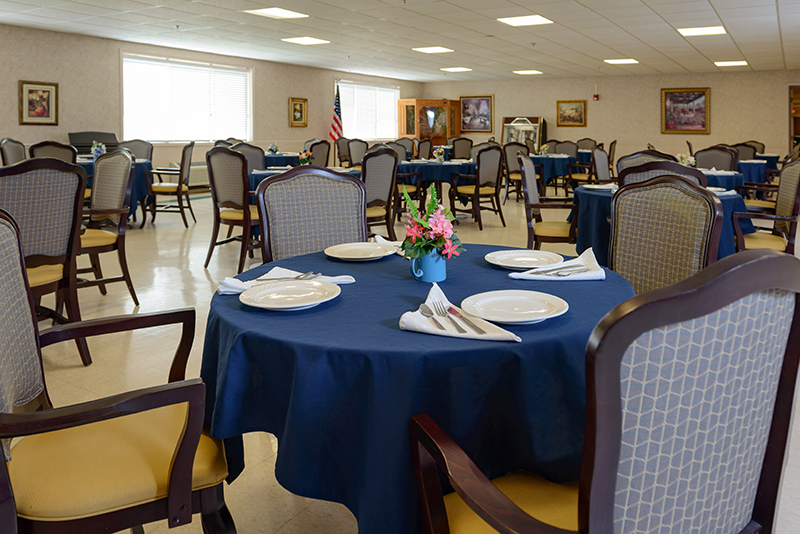
Rivergate Terrace

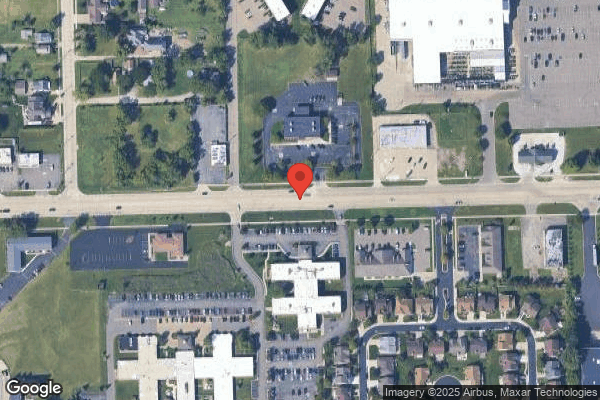
14141 Pennsylvania, Riverview, MI 48193 (734) 284-8000
For profit - Limited Liability company 288 Beds LIFE CARE CENTERS OF AMERICA Data: November 2025
Trust Grade
55/100
#226 of 422 in MI
Last Inspection: February 2025

Within standard 12-15 month inspection cycle. Federal law requires annual inspections.

Overview

Rivergate Terrace in Riverview, Michigan has a Trust Grade of C, which means it is average compared to other facilities, sitting in the middle of the pack. It ranks #226 out of 422 nursing homes in Michigan, indicating that it is in the bottom half of facilities statewide, and #35 out of 63 in Wayne County, meaning there are only a few local options that perform better. The facility is improving, as it reduced its number of issues from 18 in 2024 to 9 in 2025. Staffing is rated at 3 out of 5 stars, with a turnover rate of 44%, which is on par with the state average but shows room for stability. There have been no fines reported, which is a positive sign, yet the RN coverage is concerning, being lower than 95% of Michigan facilities, potentially impacting the quality of care. However, there have been some critical incidents that families should be aware of. For instance, an oxygen tank was found on the floor of a resident's room instead of being properly stored, posing a safety risk. Additionally, the facility failed to maintain effective infection control practices, as there was no documentation of infection surveillance for two months, which may increase the risk of spreading infections. Finally, a pest control issue was noted when live ants were found in the kitchen's dry storage room, raising concerns about food safety. These findings highlight both strengths and weaknesses at Rivergate Terrace, so families should weigh their options carefully.

Trust Score
C
55/100
In Michigan
#226/422
Bottom 47%
Safety Record
Moderate
Needs review
Inspections
Getting Better
18 → 9 violations
Staff Stability
○ Average
44% turnover. Near Michigan's 48% average. Typical for the industry.
Penalties
✓ Good
No fines on record. Clean compliance history, better than most Michigan facilities.
Skilled Nurses
⚠ Watch
Each resident gets only 17 minutes of Registered Nurse (RN) attention daily — below average for Michigan. Fewer RN minutes means fewer trained eyes watching for problems.
Violations
⚠ Watch
39 deficiencies on record. Higher than average. Multiple issues found across inspections.
★★★☆☆
3.0
Overall Rating
★★★☆☆
3.0
Staff Levels
★★★★☆
4.0
Care Quality
★★★☆☆
3.0
Inspection Score
Stable
2024: 18 issues
2025: 9 issues

The Good

  • 4-Star Quality Measures · Strong clinical quality outcomes
  • Full Sprinkler Coverage · Fire safety systems throughout facility
  • No fines on record
  • Staff turnover below average (44%)

    4 points below Michigan average of 48%

Facility shows strength in quality measures, fire safety.

The Bad

3-Star Overall Rating

Near Michigan average (3.1)

Meets federal standards, typical of most facilities

Staff Turnover: 44%

Near Michigan avg (46%)

Typical for the industry

Chain: LIFE CARE CENTERS OF AMERICA

Part of a multi-facility chain

Ask about local staffing decisions and management

The Ugly 39 deficiencies on record

1 actual harm
Feb 2025 9 deficiencies
CONCERN (D)

Potential for Harm - no one hurt, but risky conditions existed

Deficiency F0558 (Tag F0558)

Could have caused harm · This affected 1 resident

**NOTE- TERMS IN BRACKETS HAVE BEEN EDITED TO PROTECT CONFIDENTIALITY** Based on observation, interview, and record review the facility failed to provide wheelchair footrests for two residents (R86 an...

Read full inspector narrative →
**NOTE- TERMS IN BRACKETS HAVE BEEN EDITED TO PROTECT CONFIDENTIALITY** Based on observation, interview, and record review the facility failed to provide wheelchair footrests for two residents (R86 and R93) of 18 residents reviewed for accommodation of needs, resulting in the potential for injury to the lower extremities. Findings include: R93 On 2/24/25 at 9:30 A.M. during an observation and interview with Resident's family member Z (who was the resident's responsible party) complained the facility had given R93 a wheelchair without footrest. Family Member Z explained at home R93's primary caretaker and upon discharge no way could R93 be transported through the house without footrests on the wheelchair. On 2/25/at 2:30 P.M. R93 was observed being transported to therapy. R93's wheelchair did not have foot rests applied. R93's Family Member Z gestured while passing, pointing to R93's feet and stated, No footrests. Review of the clinical record for R93 revealed the resident was readmitted to the facility on [DATE] with diagnoses of dementia without behavioral disturbance, psychotic disturbance, sepsis and anxiety. According to the Minimum Data Set, dated [DATE], (R93) was moderately impaired in cognition and was totally dependent on staff for ambulation and transfer. R93 was wheelchair dependent and unable to propel himself. R86 On 2/25/25 at 12:30 P.M. during a lunch observation, R86 was observed being taken to the dining room in a wheelchair. An unidentified nurse aide directed R86 to lift both feet as the aide periodically stopped and cued R86 to, keep your feet up. Upon entering the dining room, R86 was told to lift both feet again to assist the aide in moving across an inclined area of the floor. R86 who had a BIMs (Brief Interview for mental score) of 12 (moderately impaired) in cognition, was interviewed concerning the missing footrests. The resident indicated not knowing what happened to the footrests and could not say the last time the footrests were used on the wheelchair. According to the Minimum Data Set, dated [DATE], R86 was admitted to the facility on [DATE], with diagnoses of epilepsy, diabetes mellitus, muscle weakness and contracture's. R86 was wheelchair dependent. On 2/26/25 at 10:00 A.M. during an interview with anonymous staff member A concerning the availability of footrests for the residents' wheelchairs, stated, We don't have enough footrests for all the residents with wheelchairs. This has been a concern since June 2024. The resident's footrests should be in their rooms in a bag, but we just do not have enough. On 2/26/25 at 1:00 p.m. R86's closet was checked for footrests for the resident's wheelchair. No footrests were found in the closet or room for R86 or R93. On 2/26/25 at 1:20 p.m. the Director of Nursing was interviewed concerning the footrests for resident wheelchairs and indicated further investigation would be needed. On 2/26/25 at 1:25 p.m. in a follow up interview, the Administrator acknowledged the facility did not have a policy specifically addressing footrests. A policy titled Preventative Maintenance -Wheelchair was provided with a revised date of 1/11/23 and reviewed 1/29/25. This policy did not address the availability of footrests but rather the maintenance of wheelchairs.
CONCERN (D)

Potential for Harm - no one hurt, but risky conditions existed

Deficiency F0583 (Tag F0583)

Could have caused harm · This affected 1 resident

**NOTE- TERMS IN BRACKETS HAVE BEEN EDITED TO PROTECT CONFIDENTIALITY** Based on observation, interview, and record review the facility failed to properly secure protected health information for one r...

Read full inspector narrative →
**NOTE- TERMS IN BRACKETS HAVE BEEN EDITED TO PROTECT CONFIDENTIALITY** Based on observation, interview, and record review the facility failed to properly secure protected health information for one resident (R128) of 26 reviewed for privacy, resulting in the potential for unauthorized disclosure and access. Findings include: On 2/25/25 at 10:59 AM, a computer on a medication cart on the Blue unit was observed opened to R128's Electronic Medical Record, (EMR). Whle observing the computer screen for approximately five minutes there were several residents and other staff down the hallway with the open computer. The Unit Manager, (UM) K exited their office with the Assistant Director of Nursing, (ADON) C and stopped when they obsserved the surveyor looking at the resident's information on the computer screen. UM K walked over to the computer and closed the screen. UM K was queried about what was on the computer screen. UM K acknowledged R128's medical record was open and anyone walking by could see it. On 2/2/6/25 at 10:35 AM, the Director of Nursing, (DON) was interviewed and said leaving a computer open with a resident's information visible to the public is a violation of HIPPA. Record review documentated R128 was admitted to the facility on [DATE]. R128's pertinent diagnosis were Memory Deficit following Cerebral Infarction (stroke), Cognitive Communication Deficit, Generalized Anxiety, Major Depressive Disorder, Epilepsy and Repeated Falls. R128's Minimum Data Set, (MDS) admission assessment performed on 12/9/24 for Brief Interview for Mental Status was cognitively intact at (13/15).
CONCERN (D)

Potential for Harm - no one hurt, but risky conditions existed

Comprehensive Care Plan (Tag F0656)

Could have caused harm · This affected 1 resident

**NOTE- TERMS IN BRACKETS HAVE BEEN EDITED TO PROTECT CONFIDENTIALITY** Based on observation, interview and record review the facility failed to develop and implement a comprehensive care plan for thr...

Read full inspector narrative →
**NOTE- TERMS IN BRACKETS HAVE BEEN EDITED TO PROTECT CONFIDENTIALITY** Based on observation, interview and record review the facility failed to develop and implement a comprehensive care plan for three (R85, R91 and R206) of 36 residents reviewed for care plans, resulting in the potential for unmet care needs and the lack of coordination of care. Findings include: R91 On 2/24/25 at 1:43 P.M. during and observation and interview R91 was observed in the room with his foley bag hanging from the garbage can positioned at the bedside. During the observation R91 commented he thought he was transferred to the facility for short-term rehabilitation and some services for the indwelling catheter. R91 indicated the indwelling catheter was new and staff had not educated him on the care required for the catheter. Review of the admission Face Sheet revealed R91 was admitted to the facility on [DATE], with pertinent diagnoses of infection and inflammatory reaction due to indwelling urethral catheter, Urinary tract infection, diabetes mellitus, abnormality of gait, morbid obesity, benign prostatic hyperplasia, and acute cystitis with hematuria. According to the Minimum Data Set (MDS) dated [DATE], R91 had a BIMs (Brief Interview for Mental Score) of 13/15 meaning the resident was cognitively intact and required supervision and set up assistance for personal hygiene and toileting. On 2/24/25 at 1:53 P.M. and 2/26/25 at 9:49 A.M., review of the care plan section of the clinical record revealed there was no comprehensive care plan addressing the indwelling catheter. On 2/26/25 at 3:05 P.M. during interview with the Director of Nursing (DON) concerning no care plan related to the indwelling catheter, the DON reported, a care plan should have been in the resident's clinical record. No reason was given why the comprehensive care plan did not address R91's indwelling catheter. On 2/26/25 at 3:30 P.M. review of the facility's Comprehensive Care plan and Revision policy dated 9/11/2004, documente: A comprehensive care plan must be developed within 7 days after completion of the comprehensive assessment. R85 During observation and interview on 2/24/25 at 10:39 AM, R85 was observed seated in a wheelchair receiving a respiratory treatment with a nebulizer machine (medicine that is aerosolized and delivered directly into the lungs) connected to an oxygen concentrator (medical device that separates nitrogen from the air to deliver oxygen at 95%) that was at the bedside. The resident had oxygen tubing and nasal cannula resting on the bed, next to the wheelchair. R85 said, I had pneumonia and got antibiotics for it. I'm doing better but still feel short of breath sometimes and wear oxygen. Registered Nurse (RN) E was at the resident's bedside and said she had given the resident a prn (as needed) respiratory treatment for complaints of shortness of breath. RN E said R85's pulse oximetry (device that measures the amount of oxygen in the blood, normal range is 90-100%) was 96% and lung sounds were clear. RN E proceeded to remove the nebulizer treatment and place R85 on 2 l/nc (2 liters/per minute via nasal cannula.) According to the R85's Electronic Health Record (EHR) the resident admitted to the facility on [DATE] with multiple diagnosis that included asthma and chronic obstructive pulmonary disease. On 12/12/24, R85 had a physician's order to administer oxygen 2 l/nc to maintain pulse oximetry above 92%. A further review of the resident's EHR revealed there was no care plan for the resident's oxygen administration. On 2/25/25 at 10:16 AM Licensed Practical Nurse (LPN) X was asked to review R85's plan of care for oxygen delivery. LPN X said, Yes, the resident is prescribed oxygen and it is being administered. No there is no care plan for that. I will correct that immediately. LPN X acknowledged that R85 had oxygen prescribed on 12/12/24 and a care plan for oxygen administration should have been initiated at that time. R206 During an observation on 2/24/25 at 3:17 PM, R206 was observed with a large light brown liquid stain on the resident's gown in the abdominal area and sheet. R206 was unable to be interviewed due to severe cognition impairment with a non-verbal status. At this time Certified Nursing Assistant (CNA) Y came into the resident's room and said, The colostomy is leaking out. The nurse is going to change it now. Registered Nurse (RN) E came into the room and observed the resident's colostomy site. R206's ostomy bag was intact and half full of light brown liquid. The ostomy's barrier ring seal was compromised. Light brown liquid had leaked out of the lower portion of the barrier ring seal onto the resident's abdomen, gown, and linen. R206's skin was intact and without excoriation. RN E said, I'll need to replace this (the barrier ring seal and colostomy bag). This one is leaking around the seal. RN E was observed to change the ostomy's appliance and barrier ring without incident. According to R206's EHR the resident initially admitted on [DATE] with multiple diagnoses that included encephalopathy and necrotizing fasciitis. On 1/3/25 the resident re-admitted to the facility with a diagnosis of 'colostomy.' The resident had orders for ostomy care every three days and as needed. There was no care plan for ostomy care as of 2/24/25. On 2/25/25 at approximately 3:00 PM, the Director of Nursing (DON) was interviewed and said, Yes, the resident should have had a care plan for the colostomy. The facility's policy for Comprehensive Care Plans and Revisions last reviewed on 9/11/2024 reads in part: Procedure 1. The facility should monitor the resident over time to help identify changes in the resident condition that may warrant an update to the person-centered plan of care. 2. When these changes occur, the facility should review and update the plan of care to reflect the changes to care delivery, this can include; a. Additional interventions on existing problems, b. Updating goal or problem statements c. Adding a short-term problem, goal, and interventions to address a time limited condition.
CONCERN (D)

Potential for Harm - no one hurt, but risky conditions existed

Pressure Ulcer Prevention (Tag F0686)

Could have caused harm · This affected 1 resident

**NOTE- TERMS IN BRACKETS HAVE BEEN EDITED TO PROTECT CONFIDENTIALITY** Based on observation, interview, and record review the facility failed to implement interventions used to prevent the developmen...

Read full inspector narrative →
**NOTE- TERMS IN BRACKETS HAVE BEEN EDITED TO PROTECT CONFIDENTIALITY** Based on observation, interview, and record review the facility failed to implement interventions used to prevent the development or worsening of pressure injuries for two of five (R206 and R155) residents reviewed for pressure ulcers. Findings include: On 2/24/25 at 9:39 AM, 11:01 AM, 1:40 PM, 2:50 PM, and at 3:16 PM, R206 was observed lying on their back in bed on an alternating mattress with posey boots (soft foam booties to protect heels) in place. An elongated triangle- shaped positioning wedge was observed on the resident's right side of the bed, not in use for positioning. The resident was lying on their back without use of a positioning wedge during all five observations (5.5 hours). On 2/24/25 at approximately 3:17 PM Certified Nursing Assistant (CNA) Y came into the room and was queried about R206's repositioning schedule. CNA Y said the resident had been repositioned a couple of times throughout the day shift. CNA Y said, I checked on the residents every couple hours, throughout the day. CNA Y could not say what position the resident was in earlier. CNA Y said the resident scoots off the positioning wedge. According to R206's Electronic Health Record (EHR) the resident re-admitted to the facility on [DATE] with multiple diagnoses that included encephalopathy (brain disease that alters brain function/structure), and a large unstageable sacral pressure ulcer (full loss of skin and soft tissue with the extent of the tissue damage unable to be confirmed because it is obscured by slough/eschar.) The Minimum Data Set, dated [DATE] indicated R206 had severe cognition impairment and was dependent on staff for all Activities of Daily Living, including bed mobility. Section M documented R206 had one unstageable pressure ulcer that was present upon admission. A wound care note dated 2/18/25 indicated R206's pressure ulcer was a stage 4 (full thickness tissue loss with exposed muscle, tendon, cartilage, or bone) measuring 9.4 cm (centimeters) in length, 8.3 cm in width, with a depth of 1.0 cm. The wound was described as decreasing in size, improved, and no signs or symptoms of infection. A care plan for pressure ulcers initiated on 1/7/2025 included the following interventions; avoid positioning the resident on sacrum. The resident needs positioning wedge for positioning, please reposition frequently, turn/reposition at least every two hours, more often as needed or requested. The physician's orders for the pressure ulcer treatment dated 2/18/25 was as follows: Sacrum: cleanse with dermal wound cleaner, pat dry, apply dankins-soaked stretch bandage roll on wound bed, cover w/ folded ABD (large thick pad to absorb discharge drainage) pad and cover site x2 every day. The Treatment Administration Record (TAR) for February revealed the pressure ulcer treatment administrations for 2/23/25 or 2/24/25 were blank. There was no documentation to support the pressure ulcer treatments were administered on those days. On 2/24/25 at 3:18 PM, during an interview with R206's assigned nurse Registered Nurse (RN) F, she said, I'm in a class right now, talk to (name of nurse-RN E). She is covering me. RN E was approached at the nurse's station with Nurse Practitioner (NP) H present and asked about R206's pressure ulcer. RN E reviewed R206's EHR and confirmed that R206's pressure ulcer treatments had not been signed out as administered since 2/22/25 (two days ago.) RN E proceeded to prepare the medicine and supplies to administer R206's pressure ulcer treatment. At 3:42 PM during an observation of R206's sacrum pressure ulcer treatment with RN E, the sacral dressing was saturated with clear to light yellow drainage and was dated 2/22/25. RN E said, This dressing is ordered to be changed everyday. The date is 3/22 on this dressing. On 2/26/25 at 10:18 AM during an interview with NP H she said R206's pressure ulcer was measured today and has improved and there was no signs of infection. On 2/26/25 at approximately 12:00 PM, during an interview with the Director of Nursing (DON), they stated, The facility has a policy that residents are repositioned every 2 hours and as needed. There is no explanation for why the resident's (R206) pressure ulcer dressing wasn't changed on 2/23. According to the facility's policy for Skin Integriy and Presure Ulcer Injury last revised on 7/9/2024 in part reads; The facility must ensure that -- i. A resident receives care, consistent with professional standards of practice, to prevent pressure ulcers and does not develop pressure ulcers unless the individual ' s clinical condition demonstrates that they were unavoidable; and ii. A resident with pressure ulcers receives necessary treatment and services, consistent with professional standards of practice, to promote healing, prevent infection and prevent new ulcers from developing. 5. Measures to protect the resident against the adverse effects of external mechanical forces, such as pressure, friction, and shear are implemented in the plan of care: a. reposition at least every 2-4 hours (per-National Pressure Injury Advisory Panel standards) as consistent with overall patient goal and medical condition; b. utilize positioning devices to keep bony prominences from direct contact; c. ensure proper body alignment when side-lying; d. heel protection/suspension if indicated; R155 On 2/24/25 at 10:48 AM, R155 was observed awake and lying in the bed. R155 said she had a wound on her leg and granted permission for the wound on her leg to be observed. R155 asked for the bed remote which was at the foot of the bed. Licensed Practical Nurse (LPN) R was requested to provide R155 with the bed remote and facilitated observation of R155's wound. When LPN R lightly touched R155's foot when the bed remote was retrieved, R155 winced. R155 stated, It would be nice if I had pillows under my feet. R155's feet were resting directly on the sheet-covered mattress. LPN R acknowledged that R155's feet should not be resting directly on the bed. During an observation on 2/25/25 at 8:59 AM, R155 was observed awake and in bed. There was a pillow under R155's knees. However, R155's heels had direct contact with the sheeted mattress. During an observation on 2/26/25 at 10:13 AM, R155 was observed awake and lying in bed. There was no pillow or other device to elevate R155's heels off the mattress. During an observation on 2/26/25 at 12:19 PM, R155 was observed awake and lying in bed. R155's heels were observed resting directly on the sheeted mattress. During an observation on 2/26/25 at 2:15 PM, R155 was observed awake, lying in bed, and participating in a one-on-one activity with an activity aide. R155 complained of pain on her left foot. During an observation and interview on 2/26/25 at 2:19 PM, Certified Nurse Aide (CNA) V said she has provided care for R155. CNA V stated, (R155) does not resist care. She's a sweetheart. R155's feet were observed resting directly on the sheeted mattress. During an interview on 2/26/25 at 2:20 PM, CNA W said she provided care for R155 today. CNA W said she did not prop up R155's feet and that the nurse would let the CNAs know if the resident's feet needed to be propped up. During an interview on 2/26/25 at 2:23 PM, Unit Manager, Licensed Practical Nurse (LPN) O said R155's feet should be elevated. If a pillow was used to elevate the resident's heels, it should have been placed at the ankle area. A review of the clinical record for R155 documented an admission date of 5/29/23 with diagnoses that included osteoarthritis of knee and Parkinson's disease. An MDS dated [DATE], documented moderate cognitive impairment. Record review of R155's risk for break in skin integrity care plan revised 6/2/23, documented to Offload heels while in bed as tolerated. A document titled, Braden Scale for Predicting Pressure Sore Risk, dated 2/6/25, documented R155 was at a high risk for developing a pressure sore. On 2/26/25 at 2:35 PM, a review of CNA tasks with the Director of Nursing (DON) documented that R155's heels were to be offloaded while in bed as tolerated. The DON said R155's heels should be offloaded because they were worried that R155 would experience a breakdown on her heels.
CONCERN (D)

Potential for Harm - no one hurt, but risky conditions existed

Accident Prevention (Tag F0689)

Could have caused harm · This affected 1 resident

Based on observation, interview, and record review the facility failed to ensure an oxygen cylinder was stored properly in a resident's room (R85) resulting in the potential for fire hazards. This def...

Read full inspector narrative →
Based on observation, interview, and record review the facility failed to ensure an oxygen cylinder was stored properly in a resident's room (R85) resulting in the potential for fire hazards. This deficient practice had the potential to affect the two residents (R85 and R145) that resided in that room facility. Findings include: On 2/25/25 at 9:59 AM three oxygen tanks were observed in R85's room. R85 was not present in the room and R145 was laying in bed. One of the oxygen tanks was observed to be leaning against the resident's dresser and not inside a metal carrier. R145 was asked about the oxygen tank and said, It's not for me. It's for my roommate. I don't pay no attention to it. At this time Respiratory Therapist (RT) N entered R85's room and was interviewed about oxygen tank storage. RT N said, We do not store oxygen tanks like this! These tanks are flammable and must be stored in a metal carrier. This is a safety and fire hazard. RT N left the room to acquire a metal carrier to safely transport the oxygen tank to the oxygen tank storage area. On 2/26/25 at approximately 9:30 AM the Environmental Director (ED) U was asked about oxygen tank storage in the facility. ED U said they were made aware by staff that an oxygen tank had been unsafely stored in a resident's room yesterday. ED U said, The facility uses a metal carrier and cage to safely store oxygen tanks. They (oxygen tanks) are flammable and need to be stored in metal cage or carrier to prevent any safety issues. According to the facility's Oxygen Administration, Safety, Storage, and Maintenance policy last revised on 10/11/24 reads in part; To assure that oxygen is administered and stored safely within the healthcare centers or in an outside storage area. Safety: 2. Do not fasten oxygen tanks to a resident's bed. Tanks must be either installed on a stable, wheeled dolly or on a portable oxygen stand . Storage: 1. Assure that oxygen tanks kept in storage rooms are either chained to the wall or installed on a stable, wheeled dolly or floor stand.
CONCERN (D)

Potential for Harm - no one hurt, but risky conditions existed

Incontinence Care (Tag F0690)

Could have caused harm · This affected 1 resident

**NOTE- TERMS IN BRACKETS HAVE BEEN EDITED TO PROTECT CONFIDENTIALITY** Based on observation, interview, and record review the facility failed to provide adequate and appropriate care for indwelling u...

Read full inspector narrative →
**NOTE- TERMS IN BRACKETS HAVE BEEN EDITED TO PROTECT CONFIDENTIALITY** Based on observation, interview, and record review the facility failed to provide adequate and appropriate care for indwelling urinary catheters (foley) for one (R211) of three residents reviewed for catheter care resulting in R211's indwelling catheter not being changed or securely anchored as prescribed and a urology consult not being scheduled in accordance with physician's orders. Findings include: During an observation on 2/24/25 at 10:48 AM, R211 was lying in bed on their left side. The resident was wearing a brief with the foley catheter's tubing pulled out through the top of the brief and over their right leg. There was no anchoring device in place to secure the catheter. R211 said they have had several urinary tract infections that are not resolving. R211 was upset and said, I called my family. They are coming up here and taking me to see my doctor. They give me pills here that aren't helping me and make my stomach sick. On 2/24/25 at 12:49 PM, Nurse Practitioner (NP) H and Registered Nurse E were at R211's bedside reviewing the resident's test results and medications with the resident and their family from the Electronic Health Record (EHR). R211's family identified the resident has had a urinary tract infection for over a month and the facility had not treated it properly, had not changed the resident's catheter, and had not made an appointment for a urologist yet. NP H said the resident was currently being treated with antibiotics for the UTI, could not determine if the resident's urinary catheter had been changed, and confirmed that no urologist appointment for the resident had been scheduled at this time. NP H ordered the resident to be sent to the emergency room per the request of the resident and their family. According to the Electronic Health Record (EHR), R211 had admitted to the facility on [DATE] with multiple diagnoses that included urinary retention, urinary tract infection, and had a foley catheter. On 1/6/25 the physician ordered; foley catheter, catheter care every shift, keep catheter bag below the level of the bladder, change catheter bag, and secure catheter with anchoring device to prevent tension on the catheter, and change device when clinically indicated. A care plan for indwelling catheter initiated on 1/6/25 included interventions that included cath care every shift and to report signs of UTI to the physician. On 2/11/25 at 2:04 PM a progress documented by Licensed Practical Nurse (LPN) J, indicated that R211 had gross hematuria (large amount of blood in the urine) and notified the physician. The physician's orders were as follows; irrigate the foley catheter every shift for 2 days with 250 ml (milliliter) of sterile water, obtain a urinalysis (urine sample), urology consult, and abdominal ultrasound, and change catheter bag. A review of a urinalysis report dated 2/11/25 R211's urine sample was collected and received by the lab on 2/11/25. On 2/13/25 the results were positive for a UTI. On 2/17/25 at 7:30 AM a progress note documented by LPN I indicated R211 complained of pain in the lower abdominal area and the resident had a urinary output of only 100 ml (milliliters) during the night shift. A bladder scan was performed (ultra sound to determine the amount of urine in the bladder) and revealed the resident had over 500 ml remaining in the bladder. The foley catheter was irrigated and 900 ml of urine flowed out in the collection bag. The Nurse Practitioner (NP) H was notified. The NP's orders were as follows; macrobid 100 mg (milligrams) every 12 hours for UTI for 7 days and change the collection bag. On 2/24/25 at 1:27 PM the NP H reviewed R211's EHR and said that both LPN J and LPN I should have changed the entire foley catheter, not just the collection bag. NP H said that her verbal order to LPN I was to change the foley, not just the collection bag. NP H said, I would never say to just change the collection bag. That makes no sense. If it (the foley) is getting obstructed and there is an infection I would order for the entire catheter and the collection bag to be changed. I believe that is a standing order for the facility. NP H confimed an order was given on 2/11/25 for the resident to see a urologist and there was no documentation to support the resident had an appointment for that at this time. On 2/25/25 at 11:35 AM during an interview and with the Assistant Director of Nursing, RN C R211's EHR was reviewed. RN C said the resident's foley catheter should have been changed, not just the collection bag after the resident had gross hematuria on 2/11/25 and also on 2/17/25 when obstruction of urine output was evident. RN C could not provide an explanation why the nurse only changed the collection bag and said, We will be conducting educational in-services on this. RN C confirmed that R211 had a positive UTI per the urinalysis collected on 2/11/25 with the results on 2/13/25 and was prescribed antibiotics on 2/17/25. RN C could not provide an explanation for the delay. On 2/25/25 at 12:40 PM both LPN J and LPN I were left voice messages to request an interview. No no return call had been made prior to the survey exit date of 2/26/25. On 2/25/25 at 12: 45 PM RN E was interviewed regarding R211's urine collection bag change on 2/11/25 and again on 2/17/25. RN E said, The resident's foley catheter wasn't changed because we did not want to introduce more bacteria into the bladder with re-inserting a catheter. The collection bag was changed. On 2/26/25 at 1:03 PM, the Director of Nursing (DON) reported that R211 had not re-admitted to the facility at this time. The DON said they had reviewed R211's EHR and the nurses should have changed the resident's entire foley catheter system and not just the collection bag. The facility has purchased urinary catheters that are closed and the collection bag can not be disconnected from the catheter to keep a closed system. The facility follows [NAME] Guidelines and CDC guidelines for CAUTIs (catheter associated urinary tract infections) and the policy reflects that. According to the facility's Indwelling Urinary Catheter (Foley) Management policy last revised on 9/10/2024 in part reads: General Urinary Catheter Maintenance guidelines (CDC/HICPAC - rev 06.06.2019) 1. Following aseptic insertion of the urinary catheter, maintain a closed drainage system a. If breaks in aseptic technique, disconnection, or leakage occur, replace the catheter and collecting system using aseptic technique and sterile equipment. b. Consider using urinary catheter systems with preconnected, sealed catheter-tubing junctions. 5. Changing indwelling catheters or drainage bags at routine, fixed intervals is not recommended. Rather, it is suggested to change catheters and drainage bags based on clinical indications such as infection, obstruction, or when the closed system is compromised. Additional care practices related to catheterization 1. Keeping the catheter anchored to prevent excessive tension on the catheter, which can lead to urethral tears or dislodging the catheter; and 2. Securing the catheter to facilitate flow of urine, preventing kinking of the tubing. Refer to [NAME] on Procedural Guidance on Routine Care Indwelling urinary catheter (Foley) care and management. According to the CDC.gov/infection/cauti/index.htm, HICPAC (Healthcare care Infection Control Practices Advisory Committee) for CAUTI 2009 page 13/61. E. Changing indwelling catheters or drainage bags at routine, fixed intervals is not recommended. Rather, it is suggested to change catheters and drainage bags based on clinical indications such as infection, obstruction, or when the closed system is compromised.
CONCERN (D)

Potential for Harm - no one hurt, but risky conditions existed

Respiratory Care (Tag F0695)

Could have caused harm · This affected 1 resident

**NOTE- TERMS IN BRACKETS HAVE BEEN EDITED TO PROTECT CONFIDENTIALITY** Based on observation, interview, and record review the facility failed to administer oxygen as prescribed to one (R206) of six r...

Read full inspector narrative →
**NOTE- TERMS IN BRACKETS HAVE BEEN EDITED TO PROTECT CONFIDENTIALITY** Based on observation, interview, and record review the facility failed to administer oxygen as prescribed to one (R206) of six residents reviewed for oxygen therapy resulting in R206 sustaining a low pulse oximetry reading of 82% (device that measures the amount of oxygen in the blood, normal range is 90-100%). Findings include: On 2/24/25 at 9:39 AM, 11:01 AM, 1:40 PM, 2:50 PM, and 3:16 PM, R206 was observed lying in bed without oxygen in place via a nasal cannula (flexible tube that delivers oxygen through the nose) in place. The undated oxygen tubing and nasal cannula was observed on the floor underneath the resident's bed on all five observations (5.5 hours). The oxygen concentrator was at the resident's bedside, turned on, and set at 3 liters per minute with an undated empty humidification bottle. R206 was unable to be interviewed due to severe cognition impairment and non-verbal status. R206 was resting comfortably with normal respirations and did not appear to be in any distress on all five observations. On 2/24/25 at approximately 3:17 PM Certified Nursing Assistant (CNA) Y came into the room and was asked about the resident's oxygen. CNA Y said they would notifiy the nurse the resident needs new oxygen tubing, since this one is on the floor. According to R206's Electronic Health Record (EHR) the resident re-admitted to the facility on [DATE] with multiple diagnoses that included encephalopathy (brain disease that alters brain function/structure), and pulmonary embolism (a blood clot in the lung.) The Minimum Data Set, dated [DATE], identified R206 to have severe cognition impairment with a Brief Interview for Mental Status (BIMS) score of '00'. R206 was identified to be non-verbal and dependent on staff for all Activities of Daily Living, including bed mobility. The physician's orders included; oxygen 4 liters per minute continuously per nasal cannula (4l/nc), pulse oximetry monitored and documented every shift. The Medication Administration Record (MAR) revealed the last pulse oximetry reading was on 2/24/25 at 5:35 AM and read 99%. No further documentation was noted in the resident's EHR regarding respiratory status monitoring. On 2/24/25 at 3:18 PM, during an interview with R206's assigned nurse, Registered Nurse (RN) F she said, I'm in a class right now, talk to (name of nurse-RN E.) She is covering me. RN E was approached at the nurse's station with Nurse Practitioner (NP) H present and asked about R206's oxygen orders. Both RN E and NP H confirmed that R206 was prescribed continuous oxygen at 4 liters per minute via nasal cannula. RN E went to the resident's bedside and checked R206's pulse oximetry reading, and said It's only 82% right now, that is too low. At 3:31 PM, the Respiratory Therapist (RT) N confirmed that R206's pulse oximetry reading was still low at 84%. At 3:45 PM the resident's pulse oximeter remained at 84%. NP H was notified and prescribed a stat (immediate) respiratory treatment (Albuterol 0.5-2.5 via nebulizer). On 2/25/25 at 9:10 AM, NP H said a stat chest x-ray had been ordered on 2/24/25 for R206 and the results was normal. The resident had no changes in their chest x-ray and the pulse ox has been within normal range all night. The resident needs to have continuous oxygen at 4l/nc or they will de-sat (decrease blood oxygenation level). On 2/25/25 at approximately 12:00 PM, the Director of Nursing (DON) was interviewed about R206's oxygen levels and replied, Yes, that resident (R206) should have had the nasal cannula on at all times. I can't explain why that didn't happen. The DON acknowledged that the oxygen was not administered per the physician's orders for R206 and education had been given to the facility's nursing staff on 2/24/25 and continuing on 2/25/25. According to the facility's Oxygen Administration policy last revised on 10/11/2024 reads in part: Oxygen Administration 1. Oxygen order should be written for specific liter flow required by the resident. 2. Humidifiers are required on NC (nasal cannula) with liter flows 4 liters or greater. Infection Control 1. Change oxygen supplies weekly and when visibly soiled. Equipment should be labeled with patient name and dated when setup or changed out. 2. Humidifier/ Aerosol bottles should be dated and replaced every 7 days regardless of H20 level. a. Prefilled humidifiers are recommended. If re-usable humidifier is used, refill using sterile water only. Water is to be emptied and replaced daily. Re-usable humidifiers should also be replaced every 7 days. 3. Store oxygen and respiratory supplies in bag labeled with resident's name when not in use.
CONCERN (D)

Potential for Harm - no one hurt, but risky conditions existed

Infection Control (Tag F0880)

Could have caused harm · This affected 1 resident

**NOTE- TERMS IN BRACKETS HAVE BEEN EDITED TO PROTECT CONFIDENTIALITY** This citation includes two DPS. Deficient Practice Statement #1: Based on observation, interview, and record review the facility...

Read full inspector narrative →
**NOTE- TERMS IN BRACKETS HAVE BEEN EDITED TO PROTECT CONFIDENTIALITY** This citation includes two DPS. Deficient Practice Statement #1: Based on observation, interview, and record review the facility failed to don appropriate personal protective equipment (PPE) for one resident (R206) of one resident reviewed for enhanced-barrier precautions resulting in the potential for the transmission of infectious organisms. Findings include: On 2/25/25 at 1:20 PM, Certified Nurse Aide (CNA) L was observed to enter R206's room with License Practical Nurse (LPN) J. Observations were made of staff gathering wet towels and performing hygiene on R206 without any PPE. CNA L exited the room with the soiled items. On 2/25/25 at 1:30 PM, LPN J was observed administering medications to R206 through their peg tube without the indicated PPE. LPN J was queried about the enhanced barrier sign posted on R206's door. LPN J said CNA L should have worn a gown when providing hygiene care. LPN J added they should have also worn a gown when administering medications through R206's peg tube. On 2/25/25 at 1:40 PM, CNA L was queried about the care they gave to R206. CNA L said they had changed R206's colostomy bag. CNA L reviewed the EBP sign on R206's door and said because they had performed personal hygiene, they should have put on a gown. On 2/25/25 at 1:45 PM, the Assistant Director of Nursing (ADON) C, was interviewed and acknowledged there was a concern with staff not wearing PPE with a resident on EBP. Review of facility EBP Policy revised on 3/21/24, documented: EBP was indicated for residents with wounds and indwelling medical devices. The policy noted Wounds may include but are not limited to skin tears, pressure ulcer, diabetic foot ulcers, and unhealed surgical wounds. In addition, the policy noted Indwelling medical devices may include but are not limited to central lines, urinary catheters, feeding tubes, tracheostomy, and a peripheral intravenous line . when performing high contact care. According to the policy high contact care was defined as the following: hygiene, dressing, bathing, wound care, changing lines medical device care or use. The policy went on to note When performing the above care, the proper PPE is to be worn which includes a gown and gloves. Deficiency statement #2: Based on observation, interview, and record review the facility failed to implement preventative measures for one resident (R221) of one reviewed for IV antibiotics resulting in the potential for the transmission of infectious organisms. Findings include: On 2/25/25 at 11:37 AM, License Practical Nurse, (LPN) R was observed administering R221's IV antibiotics. The connector for the IV- line was connected into the IV-line port. LPN R unscrewed the line from the port and connected the IV-line to R221. Record review showed R221 was admitted on [DATE]. R221's diagnosis included Intracranial Abscess, Disorder of the Brain, Cerebral Edema, Anxiety Disorder, Cognitive Communication Deficit, Disorientation Respiratory Disorder (Acute Respiratory Distress), and Pneumonia. Record review of R221's admission Assessment on 2/11/25 for Minimum Data Set (MDS) for Brief Interview for Mental Status is cognitively intact at (12/15). On 2/25/25 at 3:20 PM, LPN R was interviewed after they reviewed the facility policy on administration of intermittent infusions. LPN R agreed the IV-line should not have been connected into the IV-line port. On 2/25/25 at 3:20 PM, the Assistant Director of Nursing, (ADON) was interviewed. After reviewing the policy ADON agreed that the IV-line should have been capped off with a sterile cap in between IV use. 2/25/25 at 3:20 PM, during an interview, Unit Manager (UM) M reported they recognized that by LPN R removing the connector piece from the IV-line port and connecting it to R221 could cause an infection due to poor sterile technique. On 2/26/25 at 10:35 AM, the Director of Nursing, (DON) was interviewed and said LPN R should have known to cap the IV-line with an IV cap after use. The DON said the nurse on the previous shift had capped the line improperly. The DON reported LPN R should have recognized that the line was improperly capped and should not have used it. The DON said they have plenty of caps in the supply room and the staff should have utilized them instead. Record review of facility policy Administration of an Intermittent Infusion, last reviewed on 6/1/21 noted, Nurses should maintain aseptic non touch techniques. In addition, the policy noted, When administration of medication is completed a new sterile end cap should be placed on the end of the administration set if it will be used again within 24 hours.
CONCERN (E)

Potential for Harm - no one hurt, but risky conditions existed

Deficiency F0645 (Tag F0645)

Could have caused harm · This affected multiple residents

**NOTE- TERMS IN BRACKETS HAVE BEEN EDITED TO PROTECT CONFIDENTIALITY** Based on interview and record review the facility failed to ensure upon admission and annually the Preadmission Screening (PAS)/...

Read full inspector narrative →
**NOTE- TERMS IN BRACKETS HAVE BEEN EDITED TO PROTECT CONFIDENTIALITY** Based on interview and record review the facility failed to ensure upon admission and annually the Preadmission Screening (PAS)/ Annual Resident (ARR) Mental Illness/ Intellectual Disability/ Related Conditions Identification forms DCH-3877 and DCH-3878 documents were reviewed, revised, and sent to the local state agency for review and/or evaluation for mental illness and dementia needs in a timely manner for four residents (R22, R52, R175, and R190) of five reviewed for PASSARs, resulting in the potential for residents not to receive care and services appropriate to their mental health and dementia care needs. Findings include: R22- On 2/24/25 at 1:28 p.m. review of the clinical record documented R22 was initially admitted into the facility on 1/25/21 with diagnoses that included dementia without behavioral disturbance, psychotic disturbance, mood disturbance, major depressive disorder, epilepsy, and adjustment disorder with anxiety. According to the quarterly Minimum Data Set (MDS) assessment dated [DATE], R22 had severe cognitive impairment (BIMS= 3), and required supervision for most activities of daily living. Review of the Preadmission Screening (Level I Screen, 3877) dated 4/13/24, documented the following were checked Yes: 1. Mental illness and dementia were checked for current diagnoses and received treatment. 2. The person has routinely received one or more prescribed antipsychotic or antidepressant medications within the last 14 days. 3. There is presenting evidence of mental illness or dementia, including significant disturbances in thought, conduct, emotions, or judgment. 4. Presenting evidence may include, but is not limited to, suicidal ideations, hallucinations, delusions, serious difficulty completing tasks, or serious difficulty interacting with others. 5. The person has a diagnosis of an intellectual/developmental disability or a related condition including, but not limited to, epilepsy, autism, or cerebral palsy and this diagnosis manifested before the age of 22. Upon further record review, there was no PASARR 3878 (Exemption Criteria- for dementia) in the electronic medical record or paper chart. The 3878 was required due to R22 having diagnoses of dementia, without behavioral disturbance and epilepsy. R52- On 2/24/25 at 3:25 p.m. review of the clinical record documented R52 was initially admitted into the facility on 9/18/2018 with the most recent readmission on [DATE]/2024 with diagnoses that included dementia without behavioral disturbance, psychotic disturbance, mood disturbance, and anxiety, major depressive disorder, epilepsy, and psychotic disorder with hallucinations/delusions. According to the quarterly MDS assessment dated [DATE], R52 had severe cognitive impairment (BIMS= 3), and required supervision and set-up for most activities of daily living. Review of the Preadmission Screening (Level I Screen, 3877) dated 3/5/24, documented the following were checked Yes: 1. Mental illness and dementia were checked for current diagnoses and received treatment. 2. The person has routinely received one or more prescribed antipsychotic or antidepressant medications within the last 14 days. 3. There is presenting evidence of mental illness or dementia, including significant disturbances in thought, conduct, emotions, or judgment. 4. Presenting evidence may include, but is not limited to, suicidal ideations, hallucinations, delusions, serious difficulty completing tasks, or serious difficulty interacting with others. 5. The person has a diagnosis of an intellectual/developmental disability or a related condition including, but not limited to, epilepsy, autism, or cerebral palsy and this diagnosis manifested before the age of 22. On 2/25/25 at1:43 p.m. Upon further record review, there was no PASARR 3878 (Exemption Criteria- for dementia) in the electronic medical record or paper chart. The 3878 was required due to R52 having diagnoses of dementia, without behavioral disturbance and epilepsy. On 2/26/25 at 10:20 a.m. Social Service Director (SSD) D was queried about the absence of the 3878 in the medical records and said the 3878 were not signed by the physician. The 3878s are generated in the OBRA system (community mental health data base). The social workers complete their part, then physician must go into the OBRA system to electronically complete and sign the 3878s to certify the dementia exemptions. The Medical Director, other physicians, nurse practitioners, and physician assistants have access to the OBRA system. They have been made aware of this process. SSD D was not able to provide an answer why the physicians have yet to complete and sign 3878s timely. R175- On 2/24/25 at 3:01 p.m. review of the clinical record documented R175 was initially admitted into the facility on 6/23/23 with a most recent readmission on [DATE] with diagnoses that included schizoaffective disorder, paranoid schizophrenia, post-traumatic stress disorder, and bipolar disorder. According to the quarterly MDS assessment dated [DATE], R175 was cognitively intact (BIMS=14), and was independent with activities of daily living. Review of the Preadmission Screening (Level I Screen, 3877) dated 9/23/23, documented the following were checked Yes: 1. Mental illness for current diagnoses and received treatment. 2. The person has routinely received one or more prescribed antipsychotic or antidepressant medications within the last 14 days. 3. There is presenting evidence of mental illness or dementia, including significant disturbances in thought. On 2/25/25 at1:30 p.m. Upon further record review, there was no annual PASARR 3877 in the electronic medical record or paper chart. The 3877 was required due to R175 having mental illness diagnoses: schizoaffective disorder, paranoid schizophrenia, post-traumatic stress disorder, and bipolar disorder. The annual OBRA Level II Evaluation was also not in the electronic or paper medical records. The last OBRA Level II Evaluation was completed and dated on 10/23/23. On 2/26/25 at 10:25 a.m. SSDD was queried about the untimeliness of the annual 3877 and Level II Evaluation. SSD D stated, It's a little late. The resident has had multiple hospitalizations, and it was missed between the readmissions and discharges. On 2/26/25 at 3:13 p.m. the Administrator said the social workers will be keeping better track of the PASARRs, so they won't be missed. According to the facility's policy titled Preadmission Screening and Resident Review (PASARR), reviewed 9/26/24 documented in part the following: The facility will ensure that potential admissions are be screened for possible serious mental disorders or intellectual disabilities and related conditions . A positive Level 1 screen necessitates an in-depth evaluation of the individual by the state- designated authority, known as PASARR Level II, which must be conducted prior to admission to a nursing facility . A record of the pre-screening should be retained in the resident's medical record . When a Level II PASARR screening is warranted, it must be obtained as well as determination letter prior to admission. The Level II PASARR cannot be conducted by the nursing facility . According to PASARR Mental Illness/Intellectual Developmental Disability/Related Conditions Identification Instructions for Completing Level I Screening (3/22): If any answer to items 1 - 6 in SECTION 3 is Yes, send ONE copy to the local Community Mental Health Services Program (CMHSP), with a copy of form DCH-3878 if an exemption is requested. The nursing facility must retain the original in the patient record . When there are one or more Yes answers to items 1 - 6 under SECTION II, complete form DCH-3878, Mental Illness/Intellectual/Developmental Disability/Related Condition Exemption Criteria Certification only if the referring agency is seeking to establish exemption criteria for a dementia, state of coma, or hospital exempted discharge. R190- Record review of R190's Electronic Medical Record (EMR) noted R190 was admitted on [DATE]. R190's pertinent diagnoses included Dementia, Unspecified Behavior Disturbances, Falls, Bipolar Disorder, Cognitive Communication Deficit and Delirium. The Quarterly Assessment for Minimum Data Set from 1/15/25 for Brief Interview for Mental Status showed R190 was severely cognitively impaired with a score of (0/15). According to the clinical record review R190 had a PASSAR level I screening completed on 4/4/24. According to the PASSAR level I instructions by answering yes to any of the questions in 1-6, a PASSAR level II should have been completed. There was no PASSAR II in R190s EMR file. On 2/26/25 at 2:00 PM, Social Work Assistant T reported they were unable to locate R190s PASSAR II in the EMR.
Oct 2024 1 deficiency
CONCERN (D) 📢 Someone Reported This

A family member, employee, or ombudsman was alarmed enough to file a formal complaint

Potential for Harm - no one hurt, but risky conditions existed

Accident Prevention (Tag F0689)

Could have caused harm · This affected 1 resident

This citation pertains to intake MI00147768. Based on observation, interview, and record review the facility failed to provide adequate supervision for one resident (R912) of three residents reviewed ...

Read full inspector narrative →
This citation pertains to intake MI00147768. Based on observation, interview, and record review the facility failed to provide adequate supervision for one resident (R912) of three residents reviewed for elopement, resulting in a cognitively impaired resident walking through the front door and into the parking lot unsupervised with the potential for injury. Findings include; According to a Facility Reported Incident (FRI) on 10/20/24 at 1:34 PM, R912 walked out the front door of the facility behind a visitor. R912 was returned to the facility on 1:39 PM by another visitor that was entering the facility without injury. The Investigation report indicated that the receptionist was not adequately supervising the front door when they pressed the release button to open the front door for the visitor to leave and did not notice the resident (R912) following closely behind. On 10/29/24 at 8:15 AM upon entry into the main entrance of the facility, the first set of doors opened automatically into a foyer area where a receptionist was seated behind a desk. The second set of doors that led directly into a sitting area with offices, couches and a coffee machine had to be activated by the receptionist before opening. The third set of doors that led directly into the resident's living area of the facility were not locked and easily opened by either pushing or pulling on them. On 10/30/24 at approximately 11:00 AM R912 was observed walking independently at a fast pace in 'Happy Feet' activity (supervised activity of walking throughout the facility with staff). R912 had one-to-one supervision. R912 was alert to person only and could not be meaningfully interviewed. A review of R912's Electronic Health Record (EHR) indicated the resident had been residing in the facility since 4/15/204 with diagnoses that included Alzheimer's Disease. Elopement Risk Evaluation assessments conducted on 4/15/24 and again on 10/20/24 identified R912 to be at risk for elopement due to cognitive impairment, independent ambulation, and a history of exit-seeking behavior prior to admission at the facility. A care plan for elopement was initiated on 4/15/24 and included frequent monitoring and a picture of the resident had been placed in the 'elopement book' that was at the front desk. On 10/20/24 R912 was placed on one-to-one supervision, on 10/28/24 the resident was initiated in the Happy Feet Program to increase activity involvement. On 10/30/24 at 3:00 PM the Nursing Home Administrator (NHA) said the receptionist was bending down underneath her desk replacing coffee cups for the Koerig machine when the resident (R912) walked out behind the visitor. The NHA said, the entire staff has been educated on facility's elopement policy earlier in the year including that receptionist. That receptionist no longer is employed by the facility. At this time the NHA provided a Past-Non-Compliance packet and it was reviewed. On 10/30/24 at approximately 4:00 PM the Maintenance Director (MD) reviewed the exit door alarm checks and elopement drills that were conducted on 10/21/24 and 10/25/24. Review of the facility's policy titled Unsafe Wandering and Elopement Prevention revised on 9/25/24 documented in part the following: 1. Accurate and thorough assessment of the resident is fundamental in determining indicators for unsafe wandering and elopement. Not all residents exhibit unsafe wandering behaviors or verbalize the desire to leave facility unplanned. A situation in which a resident with decision-making capacity leaves the facility intentionally would generally not be considered an elopement unless the facility is unaware of the resident's departure and/or whereabouts. After review of the facility reported incident, the facility provided evidence of Past Non-Compliance on 10/20/24. The Past-Non-Compliance was reviewed and accepted by the reviewing surveyor. The facility was found to be in substantial compliance with F-tag 689 on 10/30/24 when the following interventions were noted to be put into place by the surveyor on 10/30//24. The following plan has been implemented for resident involved: Family, Physician, Executive Director, and the Director of Nursing was notified of this incident. Pain, Skin, and Trauma Informed Care assessments were completed and no concerns identified. Resident was placed on 1:1 monitoring after the incident. Initiated Happy Feet Program to increase activity involvement, safety, supervision, thus reducing wandering. Resident will attend Happy Feet Program starting 10/28/2024 during the day time till 5 pm, then resident will be placed on 1:1 supervision through out the remainder of the shift till morning. The Maintenance Director checked all exit doors for functionality 10/21/2024 by the Maintenance Director and no concerns identified. The Maintenance Director has changed the key pad entry code weekly to the sliding double doors at the front lobby On 10/22/2024. An elopement drill was conducted on 10/21/24 and 10/25/24 by the Maintenance Director. Social services completed wellness checks to ensure resident is safe. Any abnormal findings will be reported to the nurse/psych services for follow-up and no concerns identified. Resident was seen by psych on 10/22/2024. The resident council was held on 10/24/24, where elopement and Leave of Absence (LOA) policy was discussed by the Activities Director to the residents. How the facility identified others who may potentially be affected: An audit was conducted by the charge nurses on the units of current residents residing at the facility to assess any residents at risk for elopement. Any residents identified as at risk for elopement, the care plans were updated or revised as appropriate by the clinical IDT on 10/21/2024. Any new/re-admissions will also be assessed for elopement with care plans updated as needed on a weekly basis by the Director of Nursing. Areas identified requiring quality improvement: A QAPI meeting was held on 10/25/2024. The organization's elopement policy and procedures were reviewed and deemed appropriate by the committee. Actions to prevent occurrence/re-occurrence: Education initiated for all staff on the Elopement Policy and Procedures by the Staff Development Coordinator. Any staff who have not received education will do so prior to their start of the shift by 10/30/24. The Director of Nursing will discuss in daily morning clinical meetings for any new/re-admissions drat triggers elopement risks. Any residents identified, their care plans will be updated as needed by the IDT team. The residents who are at risk for elopement, will be discussed in behavior management meetings weekly with care plan reviews and modification made as needed by the IDT team. The exit door alarms will be checked weekly by the Maintenance Director. The elopement drills will be conducted quarterly by the Maintenance Director. QAPI meetings will be held monthly for 3 months to review results of audits and determine the need for additional interventions. The facility leadership (Executive Director/DON/Designee along with IDT Team) will continue to conduct leadership meetings and clinical meetings daily (Monday-Friday) to discuss any observed new or worsening wandering and/or exit-seeking behaviors of residents. The facility will assign MOD (managers on duty) during the weekends and will communicate any issue/concern identified to the Executive Director and the Director of Nursing. The DON/Designee will review the electronic medical record for 5 residents weekly for 4 weeks to identify new or worsening behaviors to include wandering and exit seeking behaviors. Any concerns will be addressed immediately. The audit will continue monthly for 3 months. The items which will be audited include new/worsening behaviors, notification of MD/NP and resident/resident representative of new/change of behavior, review care plan and to ensure interventions are implemented. The information will be documented on the Elopement Management Tool. The results of audits will be submitted to the QAPI Committee to assure sustained compliance.
Aug 2024 1 deficiency
CONCERN (D) 📢 Someone Reported This

A family member, employee, or ombudsman was alarmed enough to file a formal complaint

Potential for Harm - no one hurt, but risky conditions existed

Accident Prevention (Tag F0689)

Could have caused harm · This affected 1 resident

**NOTE- TERMS IN BRACKETS HAVE BEEN EDITED TO PROTECT CONFIDENTIALITY** This citation pertains to intake MI00146019. Based on observation, interview and record review the facility failed to ensure ade...

Read full inspector narrative →
**NOTE- TERMS IN BRACKETS HAVE BEEN EDITED TO PROTECT CONFIDENTIALITY** This citation pertains to intake MI00146019. Based on observation, interview and record review the facility failed to ensure adequate assistance during a mechanical lift (Hoyer) transfer for one resident (R601) out of three residents reviewed for injuries of unknow origin, resulting in a fracture of the right lower leg and hospitalization. Findings include: Review of an admission Record revealed, R601 admitted to the facility on [DATE] and readmitted on [DATE] with pertinent diagnosis which included dementia, Alzheimer's disease late onset, age-related osteoporosis (thinning of bone), and fracture of upper and lower end of right fibula (8/8/24). Review of a Minimum Data Set (MDS) assessment dated [DATE] revealed R601 had cognitive impairment with a Brief interview for Mental Status (BIMS) score of 7 out of 15. In an observation and interview on 8/9/24 at 9:26 a.m., R601 laid in bed, had a soft cast on the right lower leg and wore heel boots. Certified Nursing Assistant (CNA) A reported R601 does not get out of bed often. Review of a progress note with a date of 7/29/24 at 5:14 p.m. revealed, Writer notified of discoloration to right ankle by CNA. Residents right foot slightly leaning to the right, pain to touch and with movement. Discoloration noted to inside right ankle measuring 1.2cm X0.9cm. 2 discolorations also noted to outer ankle measuring 3cmX1.8cm and 2X1.8cm. Resident unaware of how bruising occurred, only able to say, it hurts. (Physician G) in facility and aware of situation, new order for STAT (immediately) XRAY 2 views of right foot . Review of a Physician progress note with a date of 7/29/24 at 6:48 p.m. revealed, Right ankle swelling, ecchymosis and pain. Notified by nursing that patient was noted to have increasing right ankle swelling with bilateral malleolar bruising. Patient has advanced dementia. Limited history obtainable. As per nursing staff no known recent injury or falls. 2 view right ankle x-ray ordered this afternoon. Right ankle x-ray reviewed. Noted distal fibular and medial malleolus (lower leg) fractures . Review of a progress note with a date of 7/2/24 at 10:58 p.m. revealed, Received stat x-rays results for resident. Result states, 'There are distal fibular and medial malleolar fractures.' UM notified. (Physician G) notified. New order to transfer resident out to the hospital . Review of a Xray dated 7/29/24 at 9:36 p.m. revealed, R601 had a distal fibular and medial malleolar fractures. Review of a progress note with a date of 7/30/24 at 7:45 a.m. revealed, Resident returned from the hospital, non new orders obtained. Resident has a soft cast to right ankle; splinted and wrapped with ace wrap . Review of a progress note with a date of 7/31/24 at 3:16 p.m. revealed, Writer interviewed staff nurse and cna. Staff informed writer resident is dependent with all care. Resident don't get out of bed. Received bed bathes. Appetite is poor. 48 hour meeting held in room. Soft cast to right ankle area r/t (related to) distal fibular and medical malleolar fx (fracture) . Review of a care plans revealed focus, The resident has an ADL (Activities of Daily Living) self-care performance deficit . Interventions included, TRANSFER: mech lift with two assist for transfers initiated on 3/1/24. Review of hospital records for R601 with a date of 7/29/24 CT revealed Pt to ED via EMS from (facility name) for a right ankle fracture. Per EMS pt was trying to get up and fell. Pt has confirmed xray for right fibular and malleolar frxs . Review of an emergency department (ED) note for R601 with a date of 7/29/24 revealed, Writer spoke with (facility name) RN (Registered Nurse) for some clarifying questions. Per (facility name) staff patient is completely bedridden and immobile. (Facility name) staff stated the only way she is moved out of bed is by the staff at the facility full assistance and denies knowing of any recent falls. In an interview on 8/9/24 at 12:07 p.m., Licensed Practical Nurse (LPN) E reported R601 is usually in bed. LPN E then reported R601 uses a Hoyer (mechanical lift) lift for transfers. In an interview on 8/9/24 at 12:19 p.m. CNA C reported on 7/25/24 she transferred R601 from bed to shower chair then shower to bed with assistance from CNA D. CNA C reported that they did not use a mechanical lift when they transferred R601. CNA C stated, we two armed her and demonstrated a motion of using one arm under R601's arm. In an interview on 8/9/24 at 12:23 p.m. Physician G R601 had osteoporosis and it is easier to get fracture due to the diagnosis. In an interview on 8/9/24 at 12:30 p.m. the Director of Nursing (DON) reported R601 required two people to assist with transfers. In an interview on 8/9/24 at 12:43 p.m. Unit Manager F reported CNA C told her that she used a Hoyer lift to transfer R601 on the day of 7/25/24. In an interview on 8/9/24 at 12:47 p.m. CNA D reported they did not use a mechanical lift to transfer R601. CNA D reported they sat R601 on the side of the bed and then transferred R601 onto the shower chair. In an interview on 8/9/24 at 1:07 p.m., CNA C reported being unaware that R601 required a Hoyer lift for transfer and acknowledged she did not look at the care guide. Review of a Limited Lift Program policy revised 2/20/24 documented, . Associates will be responsible for utilizing mechanical lifting devices, transferring devices, proper body mechanics to lift, transfer, and/or pivot non-ambulatory patients as indicated . Procedure . 5. The facility will provide education upon hire and annually to associates on the proper use of lifts in accordance with the manufacturer guidelines. The education will include the need to have two associates present during the transfer .
Jun 2024 1 deficiency
CONCERN (D) 📢 Someone Reported This

A family member, employee, or ombudsman was alarmed enough to file a formal complaint

Potential for Harm - no one hurt, but risky conditions existed

Accident Prevention (Tag F0689)

Could have caused harm · This affected 1 resident

**NOTE- TERMS IN BRACKETS HAVE BEEN EDITED TO PROTECT CONFIDENTIALITY** This citation pertains to Intake MI144703 Based on observation, interview, and record review the facility failed to provide adeq...

Read full inspector narrative →
**NOTE- TERMS IN BRACKETS HAVE BEEN EDITED TO PROTECT CONFIDENTIALITY** This citation pertains to Intake MI144703 Based on observation, interview, and record review the facility failed to provide adequate supervision for one resident (R701) or two residents reviewed for elopements, resulting in a cognitively impaired resident with risk for elopementr exiting the facility unsupervised and the potential for injury. Findings include: Review of the facility investigation and other pertinent documentation regarding a facility reported incident (FRI) that occurred on 5/15/24, revealed that it was reported R701 exited the facility to the outside through the main entrance following an activities aide at approximately 2:56 p.m. Resident #701 was brought back into the facility at approximately 2:58 p.m. by the Director of Rehab with no injury. Review of the clinical record documented R701 was admitted into the facility on 5/9/24 with diagnoses that included dementia, history of falling, anxiety, and psychotic disorder with hallucinations. According to the admission Minimum Data Set assessment dated [DATE], R701 had severe cognitive impairment, required supervision with walking, and had wandering behavior that occurred 1-3 days. Review of the Elopement care plan date initiated 5/10/24 documented: Focus: At risk for elopement. (Resident's name) wonders without purpose through the building and is often seen exit seeking. Family reports this is a reoccurring behavior regarding to dementia. Goal: The Resident will not leave facility unattended through the next review date (8/7/24). Review of the following progress notes documented: 5/10/24- Psychosocial Note: Resident was added to facility elopement list r/t new admission, independent ambulation, and wandering. 5/12/24- Behavior Note: Resident noted exit seeking this pm shift. Noted door alarm sounding. Resident did NOT exit building and nurse on duty had in visual sight. Resident pushed door open in vestibule and maintained in between doors. Returned to green unit and placed with 1:1hospitality. On 6/5/24 at 9:45 a.m. upon entry into the main entrance of the facility, the first set of doors opened automatically. The second set of doors had to be activated by the receptionist from behind the receptionist desk for everyone to enter the facility. A keypad was located next to the doors. The third set of doors that lead unto the units (pass the receptionist desk and through the lobby) were not locked and can be easily pushed or pulled open. On 6/5/24 at 11:10 a.m. the Maintenance Director A was interviewed and said prior to the incident on 5/15/24, staff had access to open the doors using a pass code. Staff no longer have the pass code for the keypad to get out. On 6/5/24 at 12:01 p.m. the Nursing Home Administrator (NHA) submitted a Past Non-Compliance plan to be reviewed and considered. The NHA was interviewed and said employees were terminated following the investigation of the incident. The nurse aide providing one to one supervision was supposed to provide supervision for the resident and their whereabouts were unknown at the time of the incident; the receptionist received an in-service on Elopement due to a previous incident in April. All doors are to be monitored by everyone and the front door is the receptionist's responsibility; and the activity's aide the resident followed out of the building who went to their car while not on break. The resident and activity aide were walking side by side (outside) while the aide looked down the entire time at a cell phone. She never looked up. On 6/5/24 at 2:59 p.m. the video surveillance was reviewed with the NHA and Maintenance Director A present. The video revealed at 2:56 p.m. Activity's Aide B was observed exiting the main entrance of the facility walking towards the parking lot, looking down at a cell phone. R701 was walking slightly behind the aide then next to the aide. Activity's Aide B never looked up from the phone. R701 was then observed walking towards the west side of the building as the aide proceeded to the parking lot. On 6/5/24 at 3:17 p.m. an attempt to interview Activity's Aide B via telephone was made. A message was left on the voicemail for a return call. Activity's Aide B witness statement was reviewed and read, I made a mistake. I didn't realize it was a resident. Had I realized it was resident, I would have stopped them. On 6/5/24 at 3:41 p.m. an attempt to interview Receptionist C via telephone was made. A message as left on the voicemail for a return call. Receptionist C witness statement was reviewed and read in part, Unfortunately I was not able to see the resident come pass me while I was talking to 2 staff as they were signing out and 2 guest were signing in. I missed her . On 6/5/24 at 4:30 p.m. R701 was observed on the Village (dementia) Unit of the facility. R701 was unable to recall the incident. Review of the facility's policy titled Unsafe Wandering and Elopement Prevention dated 9/14/23 documented in part the following: 1. Accurate and thorough assessment of the resident is fundamental in determining indicators for unsafe wandering and elopement. Not all residents exhibit unsafe wandering behaviors or verbalize the desire to leave facility unplanned. A situation in which a resident with decision-making capacity leaves the facility intentionally would generally not be considered an elopement unless the facility is unaware of the resident's departure and/or whereabouts. After review of the facility reported incident, the facility provided evidence of Past Non-Compliance on 6/5/24. The Past-Non-Compliance was reviewed and accepted by the reviewing surveyor. The facility was found to be in substantial compliance with F-tag 689 on 5/17/24 when the following interventions were noted to be put into place by the surveyor on 6/5/24. The facility's past non-compliance indicated the following: Immediate Actions: Policy Review & Staff Education A. The Executive Director and DON reviewed the facility's policies related to elopement and supervision on 5/15/24. There was no revision necessary. The policy meets the standards of best practice. B. The Reception desk staff was provided with training by the Director of H.R. related to the policy with emphasis on redirecting wandering or exit seeking residents and to consult the nurse or social services for resident's care plan or notify the DON/Administrator/MDS Nurse/Social Worker of any new or worsening wandering or exit-seeking behaviors. The training also includes but is not limited to the Front desk staff's responsibility to provide adequate supervision to prevent elopement for a resident with a history of wandering, exit seeking, and assessed to be at risk for elopement. C. The same training was provided to all staff in the non-clinical departments. The training was done by the Department Heads, DON, Asst. Administrator, MDS, Social Worker or Designee. All Receptionists were educated by Human Resource Director. Actions to Prevent Occurrence/Recurrence A. An RCA (root cause analysis) using the Fishbone diagram was done on 5/20/24. It was identified that Resident #18546 N.D. had been at risk for elopement. The error that led to the incident was related to being a 'Human error' verses a 'system failure'. B. Based on the RCA, the following interventions are implemented to address the alleged deficiency: INTERVENTIONS BELOW . a. 1:1 supervision, room change, labs, Happy Feet-activities. b. The At Risk residents' elopement assessments were reviewed on 5/20/24 by the DON (Director of Nursing), Social Worker and Nurses. c. To ensure any subtle resident's changes are identified, the DON/Care Plan Nurse & the Social worker will review all elopement assessments monthly for the next three (3) months, and quarterly and PRN, thereafter. d. Care Plans will also be reviewed monthly for the next three (3) months. C. All doors will continue to be checked for proper function x5/week, to ensure all doors are secured, and functioning appropriately by the Nurse Manager or Maintenance Director. The Manager on Duty will complete door checks on weekends. Any concerns will be immediately addressed and reported to the Director of Nursing and Maintenance Director. No concerns have been identified at this time. D. The 2nd set of double doors behind the front collapsible doors is being evaluated to get door alarm & coded pad to provide a second layer of security at the front door. In addition, another set of cameras to be installed for the front door with a monitor facing the reception desk.
Mar 2024 13 deficiencies 1 Harm
SERIOUS (G) 📢 Someone Reported This

A family member, employee, or ombudsman was alarmed enough to file a formal complaint

Actual Harm - a resident was hurt due to facility failures

Accident Prevention (Tag F0689)

A resident was harmed · This affected 1 resident

**NOTE- TERMS IN BRACKETS HAVE BEEN EDITED TO PROTECT CONFIDENTIALITY** R244 On 3/12/2024 at approximately 9:30 a.m. an oxygen tank was observed on the floor of R44's room not stored in an oxygen carr...

Read full inspector narrative →
**NOTE- TERMS IN BRACKETS HAVE BEEN EDITED TO PROTECT CONFIDENTIALITY** R244 On 3/12/2024 at approximately 9:30 a.m. an oxygen tank was observed on the floor of R44's room not stored in an oxygen carrier. On 3/14/2024 at 1:33 p.m. an oxygen tank was observed still on the floor of R44's room not stored in an oxygen carrier. R44 was lying in bed alert and was able to be interviewed. During an interview R44 stated, The oxygen tank been sitting in the corner ever since I went out on an appointment, I believe Saturday (March 9th, 2024). I used it to go out with them (staff). There is some (oxygen) left in there when I returned. On 3/14/2024 at 1:40 p.m., Certified Nursing Assistant (CENA) X was interviewed and asked what the proper storing of oxygen tanks was. CENA X said oxygen tanks should not be on the floor, it should be in a wheel cart carrier. On 3/14/2024 at 1:43 p.m., Licensed Practical Nurse (LPN) Y was interviewed and asked what the proper storing of oxygen tanks was. LPN Y said oxygen tanks are transferred by a nurse or CENA on a crate and it should not be on the actual floor. LPN Y stated, the oxygen tanks should not be in the resident's room . On 3/14/2024 at 4:09 p.m., the Assistant Director of Nursing (ADON) was interviewed about the oxygen tank being on the floor in the resident's room. The ADON stated, No. If it was in a holder and know the resident was going to use it, that's okay, but not stored in the resident's room. It can cause combustion. According to the facility's electronic medical record, R44 was admitted into the facility 1/5/2024 with Diagnoses of Pneumonia, bipolar disorder, acute respiratory infection, and dependence on supplemental oxygen. R44's quarterly Minimum Data Set (MDS) with a reference date of 12/16/2023 indicated R44 was cognitive intact with a BIMS (brief interview for mental status) score of 0/15. According to the facility's policy titled Oxygen Administration (Safety, Storage, Maintenance) revised date 2/27/2024 documented, To ensure that oxygen is administered and stored safely within the healthcare centers or in an outside storage area. -Safety: .Portable liquid carriers should be stored up off the floor when not in use, preferably hung on a hook or a holder. -Storage: .Assure that oxygen tanks kept in storage room are either chained to the wall or installed on a stable, wheeled dolly or floor stand. This citation pertains to intake MI00142660. Based on observation, interview, and record review, the facility failed to implement appropriate safety interventions for two residents (R579, R44) out of 10 residents reviewed for accidents, resulting in a fall with injury (traumatic cerebral hemorrhage and subsequent death) and oxygen equipment not stored safely. Findings include: It was reported to the State Agency that a resident fell out of bed, sustained a head injury, and not long after passed away. On 3/12/24 at 9:07 AM, the family member/guardian for Resident #579 (R579) said R579 passed away on 1/22/24 from a brain bleed that resulted from a fall at the facility. A copy of R579's death certificate was provided. On 3/12/24 at 9:21 AM, a document titled, Certification of Vital Record and Certificate of Death, dated 1/30/24 was reviewed and revealed in part the following: -Decedent's Name: (R579) -date of death : 1/22/24 -Enter the chain of events - diseases, injuries, or complications - that directly caused the death: Traumatic Cerebral Hemorrhage -Approximate interval between onset and death: Days -Manner of death: Accident -Date of injury: 1/11/24 -Describe how injury occurred: Patient fell from bed at (current facility) SNF (skilled nursing facility). A review of the clinical record for R579 documented an admission date of 6/8/23 and discharge date of 1/12/24 to an acute care hospital. R579's diagnoses included Alzheimer's disease, fractures of the cervical vertebra and left femur, age-related osteoporosis without current pathological fracture, and history of falling. A Minimum Data Set assessment dated [DATE] documented severe cognitive impairment. A MDS assessment dated [DATE] documented extensive two+ persons physical assistance for bed mobility and transfers, always incontinent of bowel and bladder, and total dependence with two+ persons physical assistance for toileting. A review of R579's care plans documented in part the following: Focus: ADL (activity of daily living) self-care performance deficit. Revised 6/20/23. Interventions: Extensive assist with toileting with two-person assist. Two-person extensive assist with transfers, weight bearing as tolerated. Focus: Resident is at risk for falls. Revised 6/20/23. Interventions: Assist with ADLs as needed. Provide adaptive equipment or devices as needed. Concave mattress. Focus: The resident has bowel and bladder incontinence related to decreased mobility, dementia. Revised 6/20/23. Intervention: The resident uses incontinent briefs. Review of R579's clinical record further documented in part the following: 1. Nursing progress note of 1/11/24 at 11:20 PM - author LPN (Licensed Practical Nurse) Q: Resident had a fall from her bed and hit the back of her head. Resident was bleeding from the back of the head and her blood pressure at the time was 151/112 with a pulse of 60. Pupils were equal and reactive. Resident's bed was in a high position. Writer had called 911 to send resident out to the hospital. When paramedics arrived, paramedic stated, resident did not need stitches and was not unconscious and had no change in her mental status, so they were not going to take her out. 2. Nursing note of 1/12/24 at 12:22 AM - author LPN Q: Writer was called in resident's room. Observed resident lying on the floor with blood on the floor from the back of her head. Resident was assisted back in bed. Pupils were equal and reactive. All assessment complete. No other injuries at this time. Writer had called 911 to send resident out. Paramedics states, resident did not need any sutures and since she is not on any blood thinners and not unconscious, they would not take her out. Daughter notified. Third eye health on-call physician (APN [Advanced Practice Registered Nurse]) R notified. Physician did recommend sending resident out for imaging due to resident's baseline confusion unable to determine deviation. Paramedics denied transport. Neuro checks initiated per facility protocol. 3. Nurse Practitioner note of 1/12/24 at 1:56 AM - author APN R: Telehealth evaluation performed. Date of Service: 1/11/24 10:37 PM CT (11:37 PM Eastern Standard Time). Primary Chief Complaint: Fall With Head Injury. History Present Illness: [AGE] year-old female with past medical history of dementia, history of falls, weakness. The nurse is reporting a fall with injury. Patient hit head that was bleeding, which has resolved now with a bump to head. Patient is not on anticoagulants. States fell from her bed. Patient is in a regular bed. Patient's family was notified per nurse, medics were called, arrived and declined to take the patient stating - patient did not need sutures. and since only on aspirin therapy they did not need to take her to hospital and they left. Review of Systems: as per HPI (history of present illness), all other systems reviewed and are negative. Other pain assessment: Resident fell off her bed and hit the back of her head. It was bleeding initially but has stopped now. Resident has a bump on the back of her (head). Resident is not on any blood thinners just aspirin. Physical Exam: Exam findings per nurse and video observation. Physical Exam - Notes: alert with confusion per baseline, pupils equal and reactive, normal respiratory effort, resting in bed NAD (no acute distress), ROM (range of motion) intact, + (positive) abrasion to back of head. The patient's condition is stable. Fall precautions. The patient's condition is guarded. This is an acute new problem. Patient hit head, unwitnessed, with dementia so unable to determine deviation of orientation, is on asa (aspirin) therapy. Recommend head imaging, at this time medics have denied transport. Neuro checks monitor closely. Orders: Neuro checks per protocol. Fall precautions per protocol. Monitor closely for pain or injury. Log the primary (care physician) to follow up in the AM. Notify a clinician of any change in condition. Disposition: Stay at Facility. Technology Used: Audio and video with patient and nurse present. 4. Nursing note of 1/12/24 at 8:05 AM - author Registered Nurse (RN) S: Resident was up in geri-chair in the dayroom, eyes were open and staring at the ceiling to the right side. Resident was not responsive verbally, left arm were flaccid, pupils were reactive to light. Resident had a fall last night with a cut at the back of head per report by midnight nurse. She was not vomiting. Dr. (Primary Care Physician [PCP] CC) was paged. 5. Nursing note of 1/12/24 at 8:15 AM - author LPN T: Notified of residents change of condition, upon assessment writer noticed resident with twitch like activity. Eyes bulging and twitching, resident non-responsive to name, breathing rapidly spo2 98% RA (oxygen saturation on room air), arms crossed in front of patients chest and shaking without resolution. Twitching lasting approximately 2 minutes, resident became calm and staring at ceiling, arms flaccid and not at current baseline. Followed through with send to hospital. 6. Nursing note of 1/12/24 at 8:44 AM - author RN S: Resident is not having labored breathing, SPO2 was 98% at room air, remained with flaccid left arm and made a sound, not following direction, (PCP CC) updated of resident's changes and ordered to send to hospital. (R579's family member) informed of resident's condition and plan to send to hospital. ER nurse at (local hospital) informed and 911 initiated. They came and transported resident, unit manager aware. Review of the facility's file related to R579's fall on 1/11/24 documented in part the following: - Document titled, Interdisciplinary Post Fall Review, received during the current survey documented in part the following: Date of fall: 1/11/24 at 10:25 PM. Unwitnessed. If injury occurred, specify: laceration to back of head. Description of Fall: Resident in bed and restless, aide in bathroom. Resident fell out of bed, hitting head, 911 refused transport. - LPN Q statement dated 1/12/24, Yesterday on Thursday 1/11/24, CNA (Certified Nurse Aide) came and got me saying resident had a fall. CNA states he was in the bathroom preparing to change resident's bed and he heard a loud collision and went out to see resident on the floor. The bed was a little high since resident was being changed. I was the only nurse on the unit at that particular time . During an interview on 3/13/24 at 1:07 PM, LPN Q said when she learned that R579 fell out of the bed, hit her head, and was bleeding, her first instinct was to call 911. When the emergency medical technicians (EMTs) arrived, they told LPN Q that R579 looked fine, the bleeding had stopped, and they were not going to transport the resident to the hospital. LPN Q said she called and spoke with the medical provider (APN R) after the EMTs left. Initially APN R wanted to sent R579 out to the hospital but once informed that the EMTs came and refused to transport the resident, APN R provided instruction to monitor R579 and notify the medical provider of any changes. LPN Q said CNA U reported that R579 had fallen out of the bed. LPN Q said R579 was known to move around in the bed and to try and slip out. R579 had a concave mattress. CNA U was in R579's room to change her brief and had R579's bed in a high position because he was trying to change her. When CNA U left R579's bedside to go into the bathroom, R579 fell out of the bed and hit her head. LPN Q said CNA U heard a thud, saw the resident, and came and got me. LPN Q said CNA U was going to change R579 by himself. LPN Q said CNA U no longer works in the facility. During an interview and record review on 3/13/24 at 1:26 PM, the Human Resource Director (HRD) said that CNA U no longer works here. A resident was left unattended and fell out of the bed. CNA U allegedly went into the bathroom to get a towel. A facility document titled, Termination Form, dated 1/15/24, documented in part the following: Associate: (CNA U). Current incident description: Associate left a resident's bedside, with bed elevated. Resident had a fall resulting in head injury. Reason for Termination: Failure to ensure resident safety. Consequence to Company: State citation, injury to patient. During an interview on 3/14/24 at 1:35 PM, the Assistant Director of Nursing (ADON) stated R579's bed was in a high position and CNA U should not have left her unattended. He should have had all his supplies together and if he was going to leave the resident, the bed should not have been in the high position. The bed should have been left in the lowest position to prevent fall with injury. A facility policy titled, Activities of Daily Living (ADLs), revised 2/12/24, documented in part: Utilize appropriate safety measure and any necessary equipment to maintain resident safety. On 3/14/24 at 6:00 PM during the exit conference, the Nursing Home Administration and ADON were asked if there was any additional documentation or information that the facility would like to provide prior to the end of the survey, and they reported there was not.
CONCERN (D)

Potential for Harm - no one hurt, but risky conditions existed

Deficiency F0563 (Tag F0563)

Could have caused harm · This affected 1 resident

Based on observation, interview, and record review, the facility failed to allow unlimited visitation for one resident (R382) out of thirty-eight residents reviewed for resident's rights. Findings inc...

Read full inspector narrative →
Based on observation, interview, and record review, the facility failed to allow unlimited visitation for one resident (R382) out of thirty-eight residents reviewed for resident's rights. Findings include: During an observation and interview on 3/12/24 at 10:54 AM, R382's room was observed to be in a private room. Resident appeared thin, frail, and weak in appearance. Family Member (FM) M was at bedside. R382 was asked how the treatment was at the facility, R382 said, I guess its ok. FM M then reported that there had been an issue with visitation. FMM further reported that R382 was admitted to the facility and was receiving hospice services. R382 wanted family to stay at night, but the facility told family members they must leave after 11:00 PM, they even called the police. Resident was asked, do you want family to stay with you at nighttime, R382 said, Yes. Record review of R382's electronic medical record (EMR) revealed admission into the facility on 3/1/24 with a pertinent diagnosis of malignant neoplasm (cancer) of prostate. According to the Health Status Note dated 3/1/24 at 11:08 PM, R382 was A&O x 4 (Alert and oriented to self, time, place and situation), able to communicate needs with clear speech . Record review of R382's nurses note dated 3/1/24 at 11:08 PM documented the following: .Writer was approached by Family Member (FM) N inquiring if we could get him a reclining chair as he stated he would be spending the night, or is he allowed to bring in his leather recliner, writer told him I believed Facility Policy was that no one could stay the night unless the resident was actively passing away- which resident shows zero signs of progressing towards death at this time. Writer notified house supervisor, ADON (Assistant Director of Nursing), unit manager in r/t (related to) situation. (name of FM N) was made aware as well as rest of family that no one could stay the night at facility at this time . further review of same record documented, .Writer informed (name of FM N) of understanding the frustration, gave education that resident is not presenting with any signs of decline at this time, educated that if they call the police that could potentially put a ban on him for returning into the facility. (name of FMN) then states You don't know that he could die any minute, he is filled with cancer residents vitals stable. Writer suggested if family was interested in home care hospice, (name of FM N) expressed that resident needs 24-hour care as he has an incontinent episode every hour . Record review of Event Note dated 3/2/24 at 12:28 AM documented the following: Upon leaving at 11 pm writer was notified that family was still in room with resident. Writer went into room and notified (name of FM N) that he could not stay overnight. (name of FM N) stated that he was not going anywhere because his dad was signed on to hospice and is under hospice care now. Writer stated that his dad is under hospice care but are facility do not allow family members to stay the night . Further review of same document revealed, .Writer went back in room and asked (name of FM N) to leave again. (name of FM N) stated that he was not going anywhere. Writer stated that if you do not leave, I will have to call the police to escort (name of FM N) off the premises. (name of FM N) stated that he was not going anywhere. Writer contacted 911 to escort (name of FM N) off the premises . Record review of (name of local) Police Department- Incident Supplement Report dated 3/1/24 at 11:28 PM documented the following: .On Friday, 03/01/2024 at approximately 2325hrs Lieutenant (redacted) and Officer (redacted) were dispatched to (facility)., In regard to a family guest refusing to leave the hospital. Officers arrived on scene and spoke with (name of FM N). (Name of FM N) was visibly upset and told officers he wanted to stay with his uncle, who was recently put on hospice and has undetermined amount of life left. Officer (redacted) explained to (anme of FMN) that (Facility) has specified policies and he would need to abide by them, in order not to be trespassed from the property. (name of FM N) acknowledged officers and agreed to leave the property for the night . During an interview on 3/13/24 2:01 PM with Family Member (FM) O, it was reported that before admission they were told that family could stay with him at nighttime. FM O stated, On the first night my husband (FM N) was going to stay, and staff came in and told him he had to leave. The facility called the police, and they told him he had to go. The second night we were told to leave again. R382 is dying, the family wants to be with him as much as possible. Record review of R382's EMR had no documentation that facility had a conversation with R382 to confirm his wishes to have family stay at night. During an interview on 3/12/24 at 1:59 PM with Nursing Home Administrator (NHA), When asked about the facility's visitation policy, NHA reported Facility is open 24/7 but our building doors are open 6am to 11 PM. We do not allow anyone to stay overnight, and so that staff can do their jobs and residents can rest. When asked if the facility is considered the resident's home, NHA stated, Yes. Record review of facility policy Visitor Management dated 7/21/23 documented the following: All associates are responsible for ensuring the safety and well-being of residents, associates, and visitors. Resident's family members are not subject to visiting hour limitations or other restrictions not imposed by the resident, with the exception of reasonable clinical and safety restrictions, consistent with §483.10(f)(4)(v). With the consent of the resident, facilities must provide 24-hour access to other non-relative visitors, subject to reasonable clinical and safety restrictions .
CONCERN (D)

Potential for Harm - no one hurt, but risky conditions existed

Deficiency F0578 (Tag F0578)

Could have caused harm · This affected 1 resident

**NOTE- TERMS IN BRACKETS HAVE BEEN EDITED TO PROTECT CONFIDENTIALITY** Based on interview and record review, the facility failed to ensure Advance Directives (a written statement of a person's wishes...

Read full inspector narrative →
**NOTE- TERMS IN BRACKETS HAVE BEEN EDITED TO PROTECT CONFIDENTIALITY** Based on interview and record review, the facility failed to ensure Advance Directives (a written statement of a person's wishes regarding medical treatment, often including a living will, made to ensure those wishes are carried out should the person be unable to communicate them to a doctor) were in place timely for two (R47 and R149) of 19 residents reviewed for Advance Directives, resulting in the potential for unmet medical needs in the event of an emergency. Findings include: R47 On 3/13 at 4:21 PM, documentation of Advance Directives for R47 was reviewed. The Advance Directive review revealed the form was incomplete. Review of the clinical record of R47 admitted [DATE] revealed an MDS (Minimum Data Set) indicating a BIMS (Brief Interview for Mental Status) score of 4 which indicates severe impairment in cognitive function. On 3/14/24 at 8:45 AM, Social Worker E and Social Worker F were interviewed and provided 3 forms for review and explained the sequence of events: On 5/5/22 R47 Advance Directive paperwork was initiated on behalf of R47 with family member's DPOAHC's (a Durable Power of Attorney for Health Care, meaning, a healthcare surrogate decision maker) verbal permission. The paperwork indicated a Full Code status for R47 (Full Code status indicates a patient wants all resuscitation and life saving measures in the event of a medical emergency.) The first name of the DPOAHC had been written on the form and the notation - verbal. The last name of the DPOAHC had not been included. The form was signed by a facility representative. The form was not signed by a physician. In August of 2023 an audit was done by Social Worker F which revealed the form was incomplete. Contact was made with DPOAHC with a request for another signed form. The DPOAHC signed form was returned to the facility. The form was signed by Social Worker F acting as Facility Representative. The form was not signed by a physician. The form was also undated. On 3/13/24 an Advance Directive indicating Full Code was signed and dated by Facility Representative and Physician. The form lacked a DPOAHC signature. During interview, Social Worker E and Social Worker F acknowledged the form should have been filled out completely in a timely manner. R149 Review of paper medical record on 3/13/24 at 9:10 a.m., revealed 149 did not have a completed Advance Directive (AD). Review of an admission Record revealed, R149 admitted to the facility on [DATE] with pertinent diagnoses which included chronic atrial fibrillation and abnormalities of gait and mobility. R603 had a guardian listed. Review of a Minimum Data Set (MDS) assessment dated [DATE] revealed R149 had cognitive impairment with a Brief interview for Mental Status (BIMS) score of 4, out of a total possible score of 15. In an interview on 3/13/24 at 1:47 p.m., Social Worker E reported R149 did not have a completed AD prior to today (3/13/24). SW E reported R149 had a guardian, which is the decision maker for R149. In an interview on 3/14/24 at 2:15 p.m., Assistant Director of Nursing (ADON) reported Advance Directives should be completed on admission. Review of an Area of Focus: Advance Directives policy with a revised date of 11/28/23 documented the following, An advance directive is a written document prepared by the resident as to how he/she wants medical decisions to be made should he or she lose the ability to make decisions for him or herself . Each time a resident is admitted to the facility, quarterly, and when a change is condition is noted in the resident condition, the facility should review the advance directive and advance care planning information .
CONCERN (D)

Potential for Harm - no one hurt, but risky conditions existed

Grievances (Tag F0585)

Could have caused harm · This affected 1 resident

**NOTE- TERMS IN BRACKETS HAVE BEEN EDITED TO PROTECT CONFIDENTIALITY** Based on observation, interview, and record review the facility failed to resolve a grievance in a timely manner for one (R173) ...

Read full inspector narrative →
**NOTE- TERMS IN BRACKETS HAVE BEEN EDITED TO PROTECT CONFIDENTIALITY** Based on observation, interview, and record review the facility failed to resolve a grievance in a timely manner for one (R173) of one resident reviewed for grievances, resulting in unresolved resolutions of grievances and frustration. Findings Include: On 3/13/24 at 2:21 P.M., R173 reported every weekend the facility ran out of bariatric briefs. The resident stated every week end her assigned aide would inform her of the shortage and to obtain additional bariatric briefs the aide would have to get someone to go to the shed which was outside of the facility. R173 reported the concern to Social Worker (SW) E R173 stated nothing had changed since reporting the concern about the bariatric briefs. R173 reported not having any bariatric briefs the previous weekend and that the staff member (not sure of name) promised to obtain a package but never came back with the bariatric briefs. Review of the R173's Face Sheet documented R173 was readmitted to the facility on [DATE], with diagnoses of acute and chronic respiratory failure with hypoxia, morbid severe obesity, gastro-esophageal reflux disease, difficulty walking, diabetes mellitus, functional quadriplegia, and major depression. The quarterly Minimum Data Set, dated [DATE], documented R173 was cognitively intact (15/15 BIMs), required two-person physical assistance for activities of daily living (ADL's), and was incontinent of bowel and bladder. Section K of the MDS recorded the resident's weight as 375 pounds. On 3/14/24 at 10:48 A.M., R173 stated, in the month of December she was hospitalized three times with Covid-19. R173 reported ordering two packages (unsure of number in each package) of bariatric briefs prior to the first hospitalization. When R173 returned from the hospital inquiries were made concerning the bariatric briefs. R173 was told the briefs were delivered and left on the resident's bedside table but had went missing. A second shipment of bariatric briefs were ordered by R173, and a receipt was left on the resident's bedside table upon delivery to the resident's room. The resident returned from the hospital and only the receipt was present. The two package of bariatric briefs were reported stolen, after R173 inquired from staff. And could not found them in the room. R173 stated SW E was informed of the missing bariatric briefs and helped the resident complete the concern form but never received any feedback on her bariatric briefs. R173 reported taking her personal money to purchase the bariatric briefs because R173 did not like waiting for staff to change the briefs after having a bowel movement. At 12:07 P.M. a copy of R173's Concern and Comment Form was requested and received from Social Worker (SW) E. SW ''E recalled R173 reporting the missing briefs and indicated the Concern Form had been given to Assistant Director of Nursing (ADON) who had completed the investigation and follow-up. Review of the concern form dated 11/2/23 time 2:45 P.M. stated briefs stolen taken by aide . (Unidentifiable female aid). R173 reported the ADON did visit R173 concerning the concern list but did not recall the facility replacing the bariatric briefs as had been agreed upon. during the meeting. At 2:08 P.M. during an interview with the ADON and SW E, the ADON stated, R173's bariatric briefs had not been replaced and directed SW'E to replace the briefs. The ADON provided no reason or explanation why the bariatric briefs had not been replaced, since R173's concern had been reported in November 2023.
CONCERN (D) 📢 Someone Reported This

A family member, employee, or ombudsman was alarmed enough to file a formal complaint

Potential for Harm - no one hurt, but risky conditions existed

Report Alleged Abuse (Tag F0609)

Could have caused harm · This affected 1 resident

**NOTE- TERMS IN BRACKETS HAVE BEEN EDITED TO PROTECT CONFIDENTIALITY** This citation pertains to Intake MI00142660. Based on interview and record review, the facility failed to report an unwitnessed ...

Read full inspector narrative →
**NOTE- TERMS IN BRACKETS HAVE BEEN EDITED TO PROTECT CONFIDENTIALITY** This citation pertains to Intake MI00142660. Based on interview and record review, the facility failed to report an unwitnessed fall which resulted in serious injury to the State Agency for one resident (#579) out of six residents reviewed for falls, resulting in the potential for future incidents of residents sustaining serious injury to go unreported. Findings include: It was reported to the State Agency (SA) that a resident fell out of bed, sustained a head injury, and not long after passed away. On 3/12/24 at 9:07 AM, the family member/guardian for Resident #579 (R579) said R579 passed away on 2/22/24 from a brain bleed that resulted from a fall at the facility. A copy of R579's death certificate was provided. On 3/12/24 at 9:21 AM, a document titled, Certification of Vital Record and Certificate of Death, dated 1/30/24 was reviewed and revealed in part the following: -Decedent's Name: (R579) -date of death : 1/22/24 -Enter the chain of events - diseases, injuries, or complications - that directly caused the death: Traumatic Cerebral Hemorrhage -Approximate interval between onset and death: Days -Manner of death: Accident -Date of injury: 1/11/24 -Describe how injury occurred: Patient fell from bed at (current facility) SNF (skilled nursing facility) On 3/13/24 at 1:36 PM, the Nursing Home Administrator (NHA) was requested to provide the investigative file regarding R579's fall with injury. The NHA stated, Did I do a FRI (facility reported incident) on that? A review of the clinical record for R579 documented an admission date of 6/8/23 and discharge date of 1/12/24 to an acute care hospital. R579's diagnoses included Alzheimer's disease, fractures of the cervical vertebra and left femur, age-related osteoporosis without current pathological fracture, and history of falling. A Minimum Data Set assessment dated [DATE] documented severe cognitive impairment. A MDS assessment dated [DATE] documented extensive two+ persons physical assistance for bed mobility and transfers, always incontinent of bowel and bladder, and total dependence with two+ persons physical assistance for toileting. Review of R579's clinical record further documented the following: - Nursing progress note of 1/11/24 at 11:20 PM - author LPN (Licensed Practical Nurse) Q: Resident had a fall from her bed and hit the back of her head. Resident was bleeding from the back of the head and her blood pressure at the time was 151/112 with a pulse of 60. Pupils were equal and reactive. Resident's bed was in a high position. Writer had called 911 to send resident out to the hospital. When paramedics arrived, paramedic stated, resident did not need stitches and was not unconscious and had no change in her mental status, so they were not going to take her out. - Nursing note of 1/12/24 at 12:22 AM - author LPN Q: Writer was called in resident's room. Observed resident lying on the floor with blood on the floor from the back of her head. Resident was assisted back in bed. Pupils were equal and reactive. All assessment complete. No other injuries at this time. Writer had called 911 to send resident out. Paramedics states, resident did not need any sutures and since she is not on any blood thinners and not unconscious they would not take her out. Daughter notified. APN [Advanced Practice Registered Nurse]) R notified. Physician did recommend sending resident out for imaging due to resident's baseline confusion unable to determine deviation. paramedics denied transport. Neuro checks initiated per facility protocol. - Nursing note of 1/12/24 at 8:05 AM - author Registered Nurse (RN) S: Resident was up in geri-chair in the dayroom, eyes were open and staring at the ceiling to the right side. Resident was not responsive verbally, left arm were flaccid, pupils were reactive to light. Resident had a fall last night with a cut at the back of head per report by midnight nurse. She was not vomiting. Dr. (Primary Care Physician [PCP] CC) paged. - Nursing note of 1/12/24 at 8:15 AM - author LPN T: Notified of residents change of condition, upon assessment writer noticed resident with twitch like activity. Eyes bulging and twitching, resident non-responsive to name, breathing rapidly spo2 98% RA (oxygen saturation on room air), arms crossed in front of patients chest and shaking without resolution. Twitching lasting approx. 2 minutes, resident became calm and staring at ceiling, arms flaccid and not at current baseline. Followed through with send to hospital. - Nursing note of 1/12/24 at 8:44 AM - author RN S: Resident is not having labored breathing, SPO2 was 98% at room air, remained with flaccid left arm and made a sound, not following direction, (PCP CC) updated of resident's changes and ordered to send to hospital. (R579's family member) informed of resident's condition and plan to send to hospital. ER nurse at (local hospital) informed and 911 initiated. They came and transported resident, unit manager aware. On 3/14/24 at 1:35 PM, the Assistant Director of Nursing (ADON) said that R579's fall should have been reported to the SA. On 3/14/24 at 2:35 PM, the NHA stated, (R579's fall) was a reportable incident. I don't think it was witnessed. It was a major injury and a death. A review of the facility policy titled, Abuse - Reporting and Response - Suspicion of a Crime, revised 10/13/23, documented in part the following: - Each covered individual (i.e., owner, staff, contractor) shall report immediately, but not later than 2 hours after forming the suspicion, if the events that cause the suspicion result in serious bodily injury, or not later than 24 hours if the events that cause the suspicion do not result in serious bodily injury. - Serious bodily injury: Means an injury involving extreme physical pain, substantial risk of death, protracted loss or impairment of the function of a bodily member, organ, or mental faculty, or requiring medical intervention such as surgery, hospitalization, or physical rehabilitation. - The Executive Director (NHA) must then notify Law Enforcement and the applicable State Survey Agency of the suspected crime within the time period as indicated above. On 3/14/24 at 6:00 PM during the exit conference, the NHA and ADON were asked if there was any additional documentation or information that the facility would like to provide prior to the end of the survey, and they reported there was not.
CONCERN (D)

Potential for Harm - no one hurt, but risky conditions existed

Deficiency F0658 (Tag F0658)

Could have caused harm · This affected 1 resident

**NOTE- TERMS IN BRACKETS HAVE BEEN EDITED TO PROTECT CONFIDENTIALITY** Based on observation, interview and record review, the facility failed to follow a post dental care physician's order for one (#...

Read full inspector narrative →
**NOTE- TERMS IN BRACKETS HAVE BEEN EDITED TO PROTECT CONFIDENTIALITY** Based on observation, interview and record review, the facility failed to follow a post dental care physician's order for one (#178) out of one resident reviewed for physician's orders, resulting in the resident verbalizing oral discomfort and the potential for the resident oral cavity to become infected. Findings include: On 3/14/2024 at 3:11 p.m. R178 was observed waiting in the hallway outside the conference room with a complaint of not getting proper dental follow up after dental treatment. On Monday (3/11/2024), R178 went out on a dentist appointment and had teeth pulled. R178 stated, I was supposed to be getting antibiotics or something afterward and I am not getting it. My mouth was sore after getting the teeth pulled and the Dentist order was to keep my mouth from infection. According to the electronic medical record, R178 was initially admitted to the facility on [DATE] and readmitted on [DATE] with diagnoses Diabetes Mellitus-Type two, and heart disease. R178's quarterly Minimum Data Set (MDS) with a reference date of 2/21/2024 indicated R178 was cognitive intact with a BIMS (brief interview mental status) of 13/0. Review of the Physician's order revealed, dental appointment for infection in tooth on 3/11/2024 at 10:00 a.m.one time only with an order date of 3/5/2024. No post dental orders were noted. Review of R178's Dental Outpatient Consultation Record dated 3/11/2024 documented as following: Results of Examination: - Extraction of lower teeth. Recommendations: - Gauze in mouth for 20 minutes. - Rinse with saltwater three times a day. Review of R178's Medication Administration Record (MARS) revealed no post Dental physician's orders. On 3/14/2024 at 4:15 p.m. R178 said the nursing staff had not provided the mouth rinse or place gauze in the mouth since the dentist visit. On 3/14/2024 at 3:59 p.m., during an interview with the Assistant Director of Nursing (ADON), the ADON confirmed there were no physician's orders documented in the Medication Administration Record (MARS) for R178 post dental recommendations as ordered. The ADON stated, We should have seen the treatment orders on the MARS, but there are no treatment orders. The reason they (The physician) gave that order is to prevent infection. According to the facility's policy titled Physician Orders revised date 2/26/2024 .A physician, physician assistant or nurse practitioner must provide orders for the resident's immediate care and ongoing care of the resident. The facility is obligated to follow and carry out the orders of the prescriber in accordance with all applicable state and federal guidelines.
CONCERN (D)

Potential for Harm - no one hurt, but risky conditions existed

ADL Care (Tag F0677)

Could have caused harm · This affected 1 resident

**NOTE- TERMS IN BRACKETS HAVE BEEN EDITED TO PROTECT CONFIDENTIALITY** Based on observation, interview, and record review, the facility failed to provide proper foot care for one resident (R93) out o...

Read full inspector narrative →
**NOTE- TERMS IN BRACKETS HAVE BEEN EDITED TO PROTECT CONFIDENTIALITY** Based on observation, interview, and record review, the facility failed to provide proper foot care for one resident (R93) out of two residents reviewed for skin conditions who were dependent upon staff for performance of activities of daily living (ADL), resulting in unmet care needs regarding skin care. Findings include: On 3/12/24 at 11:02 AM, during the initial tour of the facility, Resident #93 (R93) was observed asleep in bed. R93's feet were visible and appeared very dry and with peeling skin. On 3/13/24 at 8:30 AM, R93 was observed asleep in bed. R93's feet were visible and appeared to be dry and scaly. A review of R93's clinical record documented an admission date of 11/3/22 with diagnoses that included acute respiratory failure, venous insufficiency, chronic obstructive pulmonary disease (COPD), and obesity. A Minimum Data Set assessment dated [DATE] documented moderate cognitive impairment and partial to moderate assistance for personal hygiene. A physician order dated 9/20/23 documented to topically apply Ammonium Lactate External Lotion 12% to both feet and legs one time a day for scaly, dry skin. Review of R93's care plans documented in part the following: 1. Focus: ADL assistance and therapy services needed to maintain or attain highest level of function. (R93's) function can fluctuate based upon his respiratory status and level of fatigue. Intervention: Assist with mobility and ADLs as needed. Revised on 11/11/22. 2. Focus: The resident has ADL self-care performance deficit related to activity intolerance, COPD, spinal stenosis. Intervention: Personal hygiene routine: Substantial/maximal assist with personal hygiene. Revised 11/13/23. On 3/14/24 at 9:53 AM, an interview with Licensed Practical Nurse (LPN) W and observation of R93's feet were conducted. LPN W described R93's feet as follows: Both feet are dry with old peeling skin. It does not appear the lotion (ammonium lactate 12%) is effective. He may need something else; something thicker. LPN W said if a treatment was not effective, the nurse should speak with the doctor and treatment team to see if there is a different solution to resident's dry, flaky skin. During an interview on 3/14/24 at 1:16 PM, the Assistant Director of Nursing (ADON) said nursing should have called the physician if the medication wasn't effective and that was not done. On 3/14/24 at 6:00 PM during the exit conference, the Nursing Home Administrator and ADON were asked if there was any additional documentation or information that the facility would like to provide prior to the end of the survey, and they reported there was not.
CONCERN (D) 📢 Someone Reported This

A family member, employee, or ombudsman was alarmed enough to file a formal complaint

Potential for Harm - no one hurt, but risky conditions existed

Deficiency F0883 (Tag F0883)

Could have caused harm · This affected 1 resident

**NOTE- TERMS IN BRACKETS HAVE BEEN EDITED TO PROTECT CONFIDENTIALITY** Based on interview and record review, the facility failed to offer, educate and administer vaccines in a timely manner for two r...

Read full inspector narrative →
**NOTE- TERMS IN BRACKETS HAVE BEEN EDITED TO PROTECT CONFIDENTIALITY** Based on interview and record review, the facility failed to offer, educate and administer vaccines in a timely manner for two residents (R20 and R379) out of three residents reviewed for influenza and pneumococcal vaccines. Findings Include: R20 Review of R20's Immunization Report and electronic medical records (EMR) revealed resident had not been offered, administered, or educated on influenza or pneumococcal vaccination in a timely manner in 2023 and 2024 until 3/14/24. Review of progress notes dated 3/14/24 at 1:07 PM documented, Note Text: Wrier contacted RP (representative) (resident's daughter) r/t (related to) not receiving vaccine consent via mail. RP confirmed vaccine consents with writer. Record review of R20's electronic medical record revealed admission into the facility on 3/22/19 with pertinent diagnosis of Alzheimer's disease. According to the Minimum Data Set (MDS) dated [DATE], R20 had intact cognition and required assistance with Activities of Daily Living (ADLS). R379 Review of R379's Immunization Report and electronic medical records (EMR) revealed resident had not been offered, administered, or educated on influenza or pneumococcal vaccination in a timely manner in 2023 and 2024 until 3/14/24. Review of Progress Notes dated 3/14/24 at 12:57PM documented, Note Text: Writer went to residents' room this am to educate resident on vaccines and get consent, resident refused vaccines and education information. Resident refused to sign declinations and ask writer to leave the room. Record review of R379's electronic medical records (EMR) revealed resident was admitted into the facility on [DATE] with a pertinent diagnosis of paraplegia (paralysis). According to the Minimum Data Set (MDS) dated [DATE], R379 had intact cognition and required assistance with Activities of Daily Living (ADLS). During an interview on 3/14/24 at 1:20 PM with Assistant Director of Nursing (ADON), it was reported that R20 and R379 was not offered or educated on influenza and pneumococcal vaccination until given a list requesting vaccination documentation for those two residents. It was further reported that residents should be offered vaccinations after admission and during influenza season. ADON further added information was mailed out to families regarding vaccines in September 2023, but not sent back in. When asked if documentation could be provided showing follow up by facility to obtain information that was not returned back to facility, ADON stated, No. When asked if R20 and R379 had been offered vaccinations in a timely manner, ADON stated, No. Record review of policy Resident Vaccines reviewed 12/4/23, documented the following: . When: 1.Influenza Vaccine- Starting on October 1st (unless another month is recommended by the Department of Public Health) and extending to March 31st (or cheek with local Health Department), residents arc offered the influenza vaccine each year, unless the immunization is medically contraindicated, or the resident has already been immunized during this time period. 2. Pneumococcal Vaccine-On admission the facility should determine the vaccination history of the resident and if the resident has previously been vaccinated with one or both of the Pneumococcal vaccines. If the resident has previously received one or the other vaccine prior to admission or after admission, the facility should consult with the primary provider to determine if a second vaccination is needed and which vaccine that should be.
CONCERN (D) 📢 Someone Reported This

A family member, employee, or ombudsman was alarmed enough to file a formal complaint

Potential for Harm - no one hurt, but risky conditions existed

Deficiency F0887 (Tag F0887)

Could have caused harm · This affected 1 resident

**NOTE- TERMS IN BRACKETS HAVE BEEN EDITED TO PROTECT CONFIDENTIALITY** Based on interview and record review the facility failed to offer, educate and administer a COVID-19 vaccine in a timely manner ...

Read full inspector narrative →
**NOTE- TERMS IN BRACKETS HAVE BEEN EDITED TO PROTECT CONFIDENTIALITY** Based on interview and record review the facility failed to offer, educate and administer a COVID-19 vaccine in a timely manner for one resident (R379) out of three residents reviewed for COVID-19 vaccines. Findings Include: Review of R379's Immunization Report and electronic medical records (EMR) revealed resident had not been offered, administered, or educated on Covid-19 vaccinations in a timely manner in 2023 and 2024 until 3/14/24. Review of Progress Notes dated 3/14/24 at 12:57PM documented, Note Text: Writer went to residents' room this am to educate resident on vaccines and get consent, resident refused vaccines and education information. Resident refused to sign declinations and ask writer to leave the room. Record review of R379's electronic medical records (EMR) revealed resident was admitted into the facility on [DATE] with a pertinent diagnosis of paraplegia (paralysis). According to the Minimum Data Set (MDS) dated [DATE], R379 had intact cognition and required assistance with Activities of Daily Living (ADLS). During an interview on 3/14/24 at 1:20 PM with Assistant Director of Nursing (ADON), it was reported that R379 was not offered or educated on Covid-19 vaccinations until given a list requesting vaccination documentation for R379. It was further reported that residents should be offered vaccinations after admission. When asked if R379 had been offered Covid-19 vaccinations in a timely manner, ADON stated, No. Record review of policy Covid-19 Vaccination Program Policy for Residents Revised 1/8/24 documented the following: The facility will ensure that residents arc offered the COVID-19 vaccine unless the immunization is medically contraindicated, or the resident has already been immunized. The facility will educate residents or resident representatives regarding the benefits and potential side effects associated with the COVID-19 vaccine and offer the vaccine unless it is medically contraindicated, or the resident has already been immunized.
CONCERN (E) 📢 Someone Reported This

A family member, employee, or ombudsman was alarmed enough to file a formal complaint

Potential for Harm - no one hurt, but risky conditions existed

Quality of Care (Tag F0684)

Could have caused harm · This affected multiple residents

**NOTE- TERMS IN BRACKETS HAVE BEEN EDITED TO PROTECT CONFIDENTIALITY** R71 In an observation on 3/12/24 at 10:51 a.m., R71 had a abrasion above the right eyebrow. In an interview on 3/13/24 at 12:02 ...

Read full inspector narrative →
**NOTE- TERMS IN BRACKETS HAVE BEEN EDITED TO PROTECT CONFIDENTIALITY** R71 In an observation on 3/12/24 at 10:51 a.m., R71 had a abrasion above the right eyebrow. In an interview on 3/13/24 at 12:02 p.m., Licensed Practical Nurse (LPN) Z reported R71's eye had been like that for a while. Review of an admission Record revealed, R71 admitted to the facility on [DATE] with pertinent diagnoses which included Dementia. Review of a Weekly Skin Integrity Assessment dated 3/8/24 revealed R71's face on right upper forehead had old intact scab, Staff reports its old and has been there a long time. R71 did not have any documented skin assessments between 11/19/23 and 3/8/24. Review of a care plan revealed R71 had focus, The resident has an ADL (Activities of Daily Living) self-care performance deficit . Interventions included, SKIN INSPECTION: The resident requires SKIN inspection per protocol. In an interview on 3/14/24 at 1:00 p.m., LPN AA reported skin assessments are completed weekly. LPN AA confirmed R71 did not have skin assessments from 11/19/23 and 3/8/24 and stated, Where is the in between skin assessments. In an interview on 3/14/24 at 1:10 p.m., Unit Manager T reported all residents skin is assessed weekly. In an interview on 3/14/24 at 2:10 p.m., the ADON reported skin assessments are completed weekly to notice any changes or skin conditions of the skin. Review of a Basic Skin Management policy dated 11/29/23 documented, all residents have a head-to-toe skin inspection upon admission/readmission, then completed weekly, and as needed by nursing. It is documented in PCC (electronic documenting system). R379 During an observation and interview on 3/13/24 at 2:00 PM, R379 was observed lying in bed and was anxious. R379 reported that the facility does not make sure they have my pain medication available saying, I need my medication. Record review of electronic medical records (EMR) revealed resident was admitted into the facility on [DATE] with a pertinent diagnosis of paraplegia (paralysis). According to the Minimum Data Set (MDS) dated [DATE], R379 had intact cognition and required assistance with Activities of Daily Living (ADLS). Record review of Physician Orders order date 3/8/24 documented, Gabapentin (nerve pain medication) Capsule 300 MG (milligrams). Give 600 mg by mouth three times a day for neuropathy (weakness and numbness). Record review of R379's Medication Administration Record (MAR) dated March 2024 documented missed doses of Gabapentin on 3/11/24 at 8:00 PM, 3/12/24 at 8:00 AM, 3/12/24 at 2:00 PM. Record review of Nursing Notes documented the following: 1. 3/11/2024 11:52 PM Orders - Administration Note Text: Gabapentin Capsule 300 MG Give 600 mg by mouth three times a day for neuropathy need new C2 (prescription for class two narcotic). 2. 3/12/2024 09:29 AM Orders - Administration Note Text: Gabapentin Capsule 300 MG Give 600 mg by mouth three times a day for neuropathy awaiting new script (prescription). 3. 3/12/2024 1:24 PM Orders - Administration Note Text: Gabapentin Capsule 300 MG Give 600 mg by mouth three times a day for neuro awaiting new script. During an interview on 3/14/24 at 2:30 PM, Assistant Director of Nursing (ADON), reported that the physician did not sign the prescription in the physician book causing the resident's medication not to be ordered in a timely manner. Record review of policy Physician Orders revised 2/26/24 documented the following: .A physician must personally approve in writing a recommendation that an individual be admitted to a facility. A physician, physician assistant or nurse practitioner must provide orders for the resident's immediate care and ongoing care of the resident. The facility is obligated to follow and carry out the orders of the prescriber in accordance with all applicable state and federal guidelines. Based on observation, interview, and record review, the facility failed to: 1. Consistently complete neuro checks following unwitnessed falls for one resident (#77); 2. Ensure medications were ordered in a timely manner for two residents (#209, #379); and 3. Ensure skin assessments were consistently completed for one resident (#71). These deficient practices resulted in residents feeling anxious, delay in identification and treatment of a skin care concern, and the potential for delay in addressing other resident care needs. Findings include: Resident #77 - Review of the admission Record for Resident #77 (R77) documented an admission date of 9/19/23 with diagnoses that included chronic obstructive pulmonary disease, acute and chronic respiratory failure, and major depressive disorder. A Minimum Data Set (MDS) assessment dated [DATE] documented intact cognition. A review of R77s care plans documented in part the following: Focus: Resident is at risk for falls due to muscle weakness and multiple medical comorbidities. Smokes outside the building. Date initiated 9/21/2023. Revised on 1/8/2024. Further review of R77's clinical record documented in part the following: 1. Event note of 12/29/23 at 4:34 PM: Writer assessed for injury. Vital signs taken immediately. No neuro deficit noted. Range of motion good. Resident returned to bed. Neuro checks initiated. Resident discovered sitting on buttock at foot of bed. Denies hitting head. Complained of some discomfort to left hip region. Resident self-responsible, signed out loa (leave of absence) with family for birthday dinner Neuro checks to continue when return. 2. Un-witnessed fall dated 1/4/24: staff was notified per CNA (Certified Nurse Aide) staff on duty, resident discovered on floor in room (XXX). Discovered immediately sitting on buttock at foot of bed; bilateral legs flexed. Resident stated, I sat down at the end of bed and slid off. Resident states she has some discomfort to left hip region S/P (status post) fall. Denies hitting head. assessed for injury. V/S (vital signs) taken immediately. No neuro deficit noted. ROM (range of motion) good. Resident returned to bed. Neuro checks initiated. On 3/14/24 at 1:26 PM, a review of the neuro checks performed after R77's unwitnessed falls were reviewed with the Assistant Director of Nursing (ADON). Neuro checks were completed on 12/29/23 at 4:00 PM, 12/29/23 at 12:45 AM, and 12/29/23 at 4:45 AM. R77 was signed out of the building on an LOA 12/29/23 between 4:26 PM and 7:00 PM. Neuro checks that were to be completed between 12/29/23 after 7:00 PM and before 12:45 AM on 12/30/23 and after the 4:45 AM neuro check on 12/30/23 were not completed. The ADON was not able to provide documentation that neuro checks were initiated and completed after R77's fall on 1/4/24 when asked. The ADON stated, neuro checks are used to monitor cognitive status for baseline and to see if there are any changes noted. (Nursing staff) should have completed those neuro checks, and they were not done. Resident #209 - On 3/12/24 at 11:10 AM, Resident #209 (R209) said she did not get her valium today. R209 said she has anxiety, and the valium calms her down. A review of the admission Record for R209 documented an admission date of 7/21/23 with diagnoses that included convulsions, history of falling, and anxiety disorder. A MDS assessment dated [DATE] documented intact cognition. Review of care plans documented R209 has an anxiety disorder with consistent/regular mood problems of being tearful at times, uncontrolled worrying. Revised on 10/31/23. Interventions included: Administer medications as ordered. Initiated on 10/27/23. A review of R209's March 2024 Medication Administration Record documented the following: Diazepam (Valium) 2 mg (milligram) tablet. Give one tablet by mouth two times a day for anxiety at 8:00 AM and 8:00 PM. The March 2024 MAR indicated that diazepam was not administered on 3/11/24 at 8 PM, 3/12/24 at 8:00 AM, and 3/12/24 at 8:00 PM. A review of nursing notes documented in part the following: 1. March 11, 2024 at 10:06 PM, diazepam 2mg tablet: not available for writer (to) give, will call pharmacy. 2. March 12, 2024 at 11:23 AM, diazepam 2mg tablet: Medication unavailable. Writer spoke with pharmacy eta (estimated time of arrival) midnight tote. 3. March 12, 2024 at 7:56 PM, diazepam 2mg tablet: medication not available. Writer contacted pharmacy medication strength not available in facility back up pharmacy to supply with MN (midnight) tote. On 3/13/24 at 12:01 PM, a document titled, Controlled Substances Record, dated 2/25/24, which documented the administration and countdown of R209's diazepam, was reviewed with Licensed Practical Nurse (LPN) DD. This document revealed the last available dose of diazepam was administered on 3/11/24 at 9AM. The nurse that administered the last diazepam should have contacted the physician. On 3/13/24 at 12:27 PM, Registered Nurse (RN) BB said that if the pharmacy is called by 12 noon, the requested medication, including narcotics, will arrive at the facility between 2-4 PM that same day. If the pharmacy is called after 12 noon, it won't come until the midnight delivery which arrives between 12AM and 3AM. On 3/14/24 at 1:31 PM, the Assistant Director of Nursing (ADON) said she was aware that R209 missed dosages of valium. The ADON said when the nurse noticed the medication was out, they should have called the physician to get a new C2 (a schedule 2 controlled substance medication) completed. The ADON added telehealth would have provided a 3-day script until the prescription was filled out by the doctor. A review of the facility document titled, Neurological Assessment, dated 8/10/23 revealed in part the following: - The Neurological Assessment (UDA) in Point Click Care shall be initiated by a written physician's order for neurological checks or when indicated by resident assessment (e.g., head injury, post fall, neurological decompensation). - The assessing nurse initiates the Neurological Check List UDA in the electronic health record and completes as indicated. - The nurse must initial/sign each documentation entry. - Interventions taken as a result of the assessment, as well as the initiation and completion of the assessment should be noted in the nurses' notes. On 3/14/24 at 6:00 PM during the exit conference, the Nursing Home Administrator and ADON were asked if there was any additional documentation or information that the facility would like to provide prior to the end of the survey, and they reported there was not.
CONCERN (E) 📢 Someone Reported This

A family member, employee, or ombudsman was alarmed enough to file a formal complaint

Potential for Harm - no one hurt, but risky conditions existed

Safe Environment (Tag F0921)

Could have caused harm · This affected multiple residents

**NOTE- TERMS IN BRACKETS HAVE BEEN EDITED TO PROTECT CONFIDENTIALITY** R222 In an observation on 3/12/24 at 1:56 p.m., Housekeeper H a mopped the blue court while residents where present for an activ...

Read full inspector narrative →
**NOTE- TERMS IN BRACKETS HAVE BEEN EDITED TO PROTECT CONFIDENTIALITY** R222 In an observation on 3/12/24 at 1:56 p.m., Housekeeper H a mopped the blue court while residents where present for an activity. The floor was visibly wet. Housekeeper H was heard telling R222 to sit in the chair for 15 minutes because the floor is wet. In an interview on 3/12/24 at 1:58 p.m., Housekeeper H reported dining room floors are mopped after meals. Housekeeper H reported residents are always in the dining room when it is mopped. The floor dries in 15 to 20 minutes. In an interview on 3/12/24 at 2:04 p.m., Assistant Nursing Home Administrator K reported the floor in the dining room is not normally mopped when residents are present. In an observation and interview on 3/12/24 at 2:06 p.m., Activity Aides I and J told R222 that he can't get out of the chair and leave the dining room because the floor was wet. Activity Aide J reported R222 is resident currently in the dining room that ambulate. Activity Aide J then stated, He can't get up because she just mopped the floor. Review of an admission Record revealed, R222 admitted to the facility on [DATE] with pertinent diagnoses which included dementia, anxiety, and history of falling. Review of a Minimum Data Set (MDS) assessment dated [DATE] revealed R222 had cognitive impairment with a Brief interview for Mental Status (BIMS) score of 3, out of a total possible score of 15. R222 required supervision or touching assistance with sit to stand and ambulating. In an interview on 3/13/24 at 12:14 p.m., Environmental Services Director (ESD) L reported dining room floors are mopped after meals. ESD L reported it is preferred that residents are not in the dining room when the floor is mopped, and they should be taken out before mopping is performed. In an interview on 3/14/24 at 2:12 p.m., Assistant Director of Nursing (ADON) reported dining rooms should not be mopped when residents are present because residents can fall. Based on observation and interview, the facility failed to provide a safe, functional, and sanitary environment for the facilities census of 219 residents to include (R222) and it's staff resulting in an increased potential for harm. Findings include: On 3/12/24 between 1:22 PM, and 1:58 PM, during an environmental tour of the facility the following observations were made: Personal items such as a jacket, an opened beverage, an opened can of shaving cream, and a bottle of window cleaner were observed stored inside and on top of a fully loaded clean linen cart. An accumulation of dust and debris was observed on top of and behind the washing machines in the laundry room, and on the blades and the protective grill of the wall mounted fan in the soiled linen room. Lift batteries and charging stations were observed being stored in all five soiled utility rooms. Soiled conditions were observed in the blue and green hall's nourishment room's refrigerator and freezer. On 3/12/24, at 1:41 PM, upon interview with Laundry Supervisor, staff B, regarding the current state of the laundry room they stated, staff clean in here daily, but I'm not always here when they do it. All staff items should be kept in their lockers or put back where they are supposed to be stored. On 3/13/24, at 9:21 AM, cold compresses were observed stored with food items in the green hall's nourishment room's freezer. Upon observation, Dietary Director, staff A stated, I'll talk to the nursing staff about this.
CONCERN (F) 📢 Someone Reported This

A family member, employee, or ombudsman was alarmed enough to file a formal complaint

Potential for Harm - no one hurt, but risky conditions existed

Infection Control (Tag F0880)

Could have caused harm · This affected most or all residents

This citation pertains to Intake MI00142807. Based on interview and record review, the facility failed to adequately provide infection control surveillance for all residents resulting in missed opport...

Read full inspector narrative →
This citation pertains to Intake MI00142807. Based on interview and record review, the facility failed to adequately provide infection control surveillance for all residents resulting in missed opportunities to decrease the potential risk of the spread of infections. Findings Include: Record review of the facility's Infection Control Book revealed no completed documentation of infection surveillance for January 2024 and February 2024. There was no evidence that data was compiled and monitored in a timely manner during those months to provide an overview of the facility's infection control practices. During an interview on 3/14/22 at 12:22 PM with Assistant Director of Nursing (ADON), it was reported that the facility did not have anyone consistently monitoring infection control program in January of 2024 until the end of February 2024. It was reported that the facility could not provide documentation or evidence that a complete line listing (names of residents with probable or diagnosed infections); or mapping (a color-coded map of facility to show possible clusters of infections of residents) during those months. Record review of policy Surveillance of infections revised 5/19/23, documented the following: 'The facility will use an established routine, ongoing, and systematic collection, analysis, interpretation, and dissemination of surveillance data to identify infections (i.e., HAI (house acquired infections) and community-acquired), infection risks, communicable disease outbreaks, and to maintain or improve resident health status. As part of the system of surveillance, identification and prevention, the facility should determine how it will track the extent to which associates are following the facility's Infection Prevention Control Plan (IPCP) policies and procedures, and facilities would want to particularly address any areas that are related to a corrective action. The facility's surveillance system should use nationally recognized surveillance criteria such as but not limited to CDC's (Centers for Disease Contril and Prevention) National Healthcare Safety Network (NHSN) Long Term Care Criteria to define infections or updated McGreer's criteria. Furthermore, the facility knows when and to whom to report communicable diseases, healthcare-associated infections (as appropriate), and potential outbreaks (e.g., list of communicable diseases which are reportable to local/state public health authorities). The facility will document follow-up activity in response to important surveillance findings (e.g., outbreaks).
CONCERN (F)

Potential for Harm - no one hurt, but risky conditions existed

Deficiency F0925 (Tag F0925)

Could have caused harm · This affected most or all residents

Based on observation, interview, and record review the facility failed to maintain an effective pest control program to ensure that the facility is free of pests, resulting in an increased potential f...

Read full inspector narrative →
Based on observation, interview, and record review the facility failed to maintain an effective pest control program to ensure that the facility is free of pests, resulting in an increased potential for contamination of food, both food and non-food contact surfaces, and foodborne illness potentially affecting staff, visitors and all 219 residents. Findings include: On 3/13/24 at 10:42 AM, thirty live ants were observed in the kitchen's dry storage room. Upon observation the surveyor inquired with Dietary Director, staff A, on the current state of the insects in this area to which they responded, I'll have someone clean this up. At this time the surveyor observed staff A asking Dietary Aide, staff D, to clean the area. On 3/13/24 at 10:45 AM, the surveyor requested the facility's pest control policy to review to which staff A responded, I am not the best one to talk to about that, but maintenance has a book. On 3/13/24 at 10:49 AM, the surveyor inquired with Maintenance Director, staff C on if they were aware of the pest conditions in the dry storage room to which they stated, No. We have a book at every nurse's station for work orders to be submitted, but if they are not entered into our books we don't know about them. We are working on going electronic for everything, but also still have staff verbally tell us things that need to get done. On 3/13/24 at 11:13 AM, record review of the facility's most recent pest control service record dated, 2/29/24 revealed that the targeted areas treated at the facility on this date were the foundations perimeter via the application of bait boxes. No mention of pests, or application areas in the kitchen were observed by the surveyor while reviewing this document. Review of 2017 U.S. Public Health Service Food Code, Chapter 6-501.111 Controlling Pests, directs that: The PREMISES shall be maintained free of insects, rodents, and other pests. The presence of insects, rodents, and other pests shall be controlled to eliminate their presence on the PREMISES by: (B)Routinely inspecting the PREMISES for evidence of pests;
Jan 2024 2 deficiencies
CONCERN (D) 📢 Someone Reported This

A family member, employee, or ombudsman was alarmed enough to file a formal complaint

Potential for Harm - no one hurt, but risky conditions existed

Free from Abuse/Neglect (Tag F0600)

Could have caused harm · This affected 1 resident

**NOTE- TERMS IN BRACKETS HAVE BEEN EDITED TO PROTECT CONFIDENTIALITY** This citation pertains to intake MI00141958 and MI00142078. Based on interview and record review the facility failed to prevent ...

Read full inspector narrative →
**NOTE- TERMS IN BRACKETS HAVE BEEN EDITED TO PROTECT CONFIDENTIALITY** This citation pertains to intake MI00141958 and MI00142078. Based on interview and record review the facility failed to prevent sexual abuse, for one resident (R902) out of three residents reviewed for abuse, resulting in an employee responding with inappropriate text messages to R902. Findings include: Record review revealed on 1/3/24 that facility reported there was a staff to resident sexual abuse incident. Record review of 902's electronic medical records (EMR) revealed admission into facility on 8/27/22 and had a diagnosis of post-traumatic stress disorder (PTSD). According to the Minimum Data Set (MDS) dated [DATE], R902 had intact cognition and was required limited assistance with Activities of Daily Living (ADLS). During an interview on 1/17/24 with R902, it was reported that CNA (Certified Nursing Assistant) C had texted the resident several times. Record review of text messages provided by the facility revealed messages were between CNA C and R902. Further review on snapshot #2 revealed CNA C full name printed on top of text message. Snapshot #4, CNA C had texted, So I would have to (sexual expletive) inside you once before I could get a video. Snapshot # 5, CNA C texted, Bet would feel so good to (sexual expletive) inside of you. Further down it was texted, I still want a video lol, would be just for me. Review of New Facility Associate Orientation sheet revealed on 10/14/21 CNA C was educated on Abuse and neglect/ reporting of resident incidents. Review of Termination Form dated 1/11/24 for CNA C documented the following: Reason for Termination- Failure to comply with the facility policy, Staff Resident Relationships. Review of policy Staff/Resident Relationships (no date) documented the following: (Company name) core values begin with a respect for people. Our facilities are charged with the responsibility of protecting our residents. To fully protect our residents and avoid even the possibility of inappropriate behavior, (Company name) does not allow romantic relationships between residents and associates . During interview on 1/17/24 at 2:53 PM with Director of Social Services (SS) B, When asked about the texting between CNA C and R902, it was reported that this situation should have not happened, and it was unprofessional. During interview on 1/17/24 at 3:30 PM with Director of Nursing (DON), it was reported that staff should not have any relationship other than professional with any residents at the facility. When asked if this situation was avoidable, DON stated, Yes. During exit interview on 1/17/24 at 5:00PM with Nursing Home Administrator (NHA), it was reported that CNA C was terminated because of inappropriate behavior and not complying with the facility's policy on Staff /Resident relationships. Record review of Abuse- Identification of Types dated 7/18/23 documented the following: It is the policy of this facility to identify abuse, neglect, and exploitation of residents and misappropriation of resident property. This includes but is not limited to identifying and understanding the different types of abuse and possible indicators .
CONCERN (D) 📢 Someone Reported This

A family member, employee, or ombudsman was alarmed enough to file a formal complaint

Potential for Harm - no one hurt, but risky conditions existed

Deficiency F0688 (Tag F0688)

Could have caused harm · This affected 1 resident

**NOTE- TERMS IN BRACKETS HAVE BEEN EDITED TO PROTECT CONFIDENTIALITY** This citation pertains to intake MI00141409. Based on observation, interview and record review the facility failed to apply spli...

Read full inspector narrative →
**NOTE- TERMS IN BRACKETS HAVE BEEN EDITED TO PROTECT CONFIDENTIALITY** This citation pertains to intake MI00141409. Based on observation, interview and record review the facility failed to apply splints (device to maintain position) to a contracture (tightenning of muscles and tendons), for one resident (R901) out of three residents reviewed for Activities of Daily Living (ADLS), resulting in splints not being applied daily and the potential for worsening of resident contractures. Findings include: During an interview on 1/17/24 at 11:14 AM, R901 when queried about ADL care at facility, it was reported that they (facility) do not apply splints to left hand. R901 then reported that it was a fear that hand may get worse. It was then observed that R901's left hand- ring and pinky finger were contracted and was not able to move at will. Record review of R901's electronic medical record (EMR) revealed admittance into the facility on 6/9/23 with a pertinent diagnosis of contracture of left hand added on 8/15/23. According to Minimum Data Set, dated [DATE], R901 had intact cognition and was dependent on most ADL care. Further review of R901's EMR revealed resident did not have a physician's order to apply splint to left hand and no care plan had been implemented. During an interview on 1/17/24 at 2:53 PM with Therapy Manager (TM) A, it was reported that resident's splints to left hand were addressed during last therapy session in November of 2023. When resident was released from therapy, an order was not written. When asked if an order should have been written to continue with splints, TM A stated, Yes. TM A further explained that the order should have been written to monitor the use of the splint and a care plan should have been written by nursing for interventions and goals. During an interview on 1/17/24 at 3:30 PM with Director of Nursing (DON), it was reported that therapy should have put in an order to apply splints to R901 when released from therapy services and nursing should have implemented a care plan with interventions and goals related to R901's contracture of left hand. When asked if those oversights put R901 at risk for the potential of the worsening of the contracture to left hand, DON said, Yes.
Oct 2023 4 deficiencies
CONCERN (D) 📢 Someone Reported This

A family member, employee, or ombudsman was alarmed enough to file a formal complaint

Potential for Harm - no one hurt, but risky conditions existed

ADL Care (Tag F0677)

Could have caused harm · This affected 1 resident

**NOTE- TERMS IN BRACKETS HAVE BEEN EDITED TO PROTECT CONFIDENTIALITY** This citation pertains to Intakes MI00136174 and MI00139020. Based on observation, interview, and record review, the facility fa...

Read full inspector narrative →
**NOTE- TERMS IN BRACKETS HAVE BEEN EDITED TO PROTECT CONFIDENTIALITY** This citation pertains to Intakes MI00136174 and MI00139020. Based on observation, interview, and record review, the facility failed to assist in ADL care for two (R603 and R616) of six residents reviewed who were dependent upon staff for performance of activities of daily living (ADL), resulting in unmet care needs regarding skin care, showers, and resident dissatisfaction. Findings include: It was reported to the State Agency that residents were not being provided appropriate foot care and residents were not receiving requested showers. Resident #603 - On 10/18/23 at 12:04 PM, an interview with Licensed Practical Nurse (LPN) F and observation of Resident #603's (R603) feet was conducted. LPN F said that to her knowledge R603 does not have problems with her feet. LPN F described R603's feet as follows: -Left foot: skin was real dry. There was discoloration between her toes, peeling and flaky skin between the big toe and second toe. -Right foot: more dryness on the right foot. LPN F stated, She needs lotion on her feet. (R603's) feet do not look like they have been lotioned as often as they should. A review of the admission Record for R603 documented an initial admission date of 8/15/2019 and readmission date of 9/1/2021. R603's diagnoses included chronic obstructive pulmonary disease (COPD), Alzheimer's disease, and peripheral vascular disease. A Minimum Data Set (MDS) assessment dated [DATE] documented severe cognitive impairment and extensive one-person physical assistance for personal hygiene. A review of R603's care plans documented in part the following: Focus: The resident has an ADL self-care performance deficit related to Alzheimer's, COPD, and depression. Revised 9/14/21. Interventions included: The resident requires extensive assistance by one staff with personal hygiene. Revised 9/14/21. Focus: The resident has potential for skin breakdown, injury and pain related to diagnosis of peripheral vascular disease. Revised 9/15/23. Interventions included: Keep skin on extremities well hydrated with lotion in order to prevent dry skin and cracking of the skin. Initiated 9/14/21. Resident #616 - On 10/18/23 at 12:48 PM, Resident #616 (R616) was observed awake and in bed. R616 said she would like to get up and go to the shower room and take a shower. I was supposed to get a shower yesterday but did not. R616 said it upsets her when she does not get a shower. A review of the admission Record for R616 documented an initial admission date of 2/20/23 and readmission date of 9/29/23. R616's diagnoses included congestive heart failure, type 2 diabetes mellitus, left ankle contracture, and abnormal posture. A MDS assessment dated [DATE] documented intact cognition and total dependence upon staff for baths/showers. A review of CNA task documentation related to bathing documented R616 prefers showers weekly and PRN. A review of R616's care plans documented in part the following: Focus: The resident has an ADL self-care performance deficit related to muscle weakness/unsteady. Secondary to multiple medical problems and recent hospital stay. Initiated 2/27/23. Interventions included: Provide sponge bath when a full bath or shower cannot be tolerated. Initiated 2/27/23. On 10/19/23 at 1:52 PM, LPN H stated and provided documentation that R616 was to receive showers on Tuesday, Friday, and PRN (as needed) on the afternoon shift. CNA documentation of R616's showers for the past 30 days revealed R616 did not receive any showers. Bed baths were given on 9/22/23, 9/29/23, 10/3/23, and 10/13/23. No shower or bed bath was documented as given as scheduled on 9/19/23, 9/26/23, 10/10/23, or 10/17/23. One resident refusal was documented on 10/6/23. LPN H said she does not know why R616 has not had showers. On 10/19/23 at 2:46 PM, the Director of Nursing (DON) said there were no orders for R603 to receive foot care. The DON stated, During her ADL care, (R603's) feet should have been moisturized. I will have the treatment nurse look at her feet and possibly consult with podiatry. As we age, our skin becomes dryer and more moisture is necessary, especially the feet. On 10/19/23 at 2:53 PM, the DON said she was unaware that R616 was not getting her showers. The DON acknowledged that R616 prefers showers, and she was not getting them. A review of the facility policy titled, Activities of Daily Living (ADLs), dated 8/23/23, revealed in part the following: The resident will receive assistance as needed to complete activities of daily living. On 10/19/23 at 5:00 PM during the exit conference, Nursing Home Administrator and DON did not offer additional documentation or information regarding this concern when asked.
CONCERN (D) 📢 Someone Reported This

A family member, employee, or ombudsman was alarmed enough to file a formal complaint

Potential for Harm - no one hurt, but risky conditions existed

Pressure Ulcer Prevention (Tag F0686)

Could have caused harm · This affected 1 resident

**NOTE- TERMS IN BRACKETS HAVE BEEN EDITED TO PROTECT CONFIDENTIALITY** This citation pertains to intake MI00139265. Based on interview and record review, the facility failed to ensure that wound care...

Read full inspector narrative →
**NOTE- TERMS IN BRACKETS HAVE BEEN EDITED TO PROTECT CONFIDENTIALITY** This citation pertains to intake MI00139265. Based on interview and record review, the facility failed to ensure that wound care treatments for pressure ulcers (damage to skin and underlying tissue from prolonged pressure to skin) were consistently provided for two resident (R618 and R642) of three residents reviewed for wound care, resulting in the potential for worsening of pressure ulcers. Findings include: Resident #618 Review of an admission Record revealed, R618 originally admitted to the facility on [DATE] and readmitted on [DATE] with pertinent diagnosis which included Stage 4 Pressure Ulcer of the Sacral and Sacrococcygeal region. Review of a Minimum Data Set (MDS) assessment, with a reference date of 9/20/23 revealed R618 had severe cognitive impairment. R618 required total dependence of two staff with bed mobility. Review of a care plan revealed R618 had focus, At risk for break in skin integrity. Interventions included treatments as ordered. Review of Physician orders revealed, R618 had orders to treat the sacrum, coccyx, right gluteal fold, left gluteal fold, lower midline of back, right lower back, left heel, right foot, and left foot. Review of an MAR (Medication Administration Record) from July - October 2023 revealed the following: July- Sacrum treatment not documented as completed on 7/23 and 7/30. August- Sacrum treatment not documented as completed on 8/6, 8/13, and 8/14. Right upper back treatment not completed on 8/14. Left gluteal treatment not completed from 8/15-8/21 pm. September- Coccyx treatment not documented as completed on 9/24. Left gluteal fold treatment not completed on 9/24. Right gluteal fold treatment not completed on 9/24. October- Coccyx treatment not documented as completed on 10/1, 10/6, 10/7, 10/15, and 10/16. Left foot treatment not completed 10/6 and 10/17. Left gluteal fold not completed 10/1, 10/6, 10/7, 10/15, and 10/17. Lower midline back not completed 10/1, 10/6, 10/7, 10/15, and 10/17. Right foot not completed 10/6 and 10/17. Right gluteal fold not completed 10/1, 10/6, 10/7, 10/15, and 10/17. Right lower back not completed 10/6 and 10/18. Santyl not applied to left heel on 10/15 and 10/17. In an interview on 10/19/23 at 12:54 p.m. the Director of Nursing (DON) reported the wound team is solely responsible for the wound treatment completion. Resident #624 Review of an admission Record revealed, R624 admitted to the facility on [DATE] with pertinent diagnosis which included Stage 4 Pressure Ulcer of the Sacral region. Review of a MDS assessment, with a reference date of 7/24/23 revealed R624 had severe cognitive impairment. R624 required extensive assistance of two staff with bed mobility. Review of Physician orders revealed, R624 had orders to treat the sacrum and coccyx wounds. Review of an MAR (Medication Administration Record) from July - October 2023 revealed the following: October- Sacrum treatment not documented as completed on 10/5, 10/6, 10/16, 10/17, 10/18, and 10/19. Coccyx wound not completed 10/6, 10/9, 10/16, and 10/18. Review of an Area of Focus: Basic Skin Management policy with a revised date of 11/28/22 revealed, . the facility must ensure that a resident receives care consistent with professional standards of practice, to prevent pressure ulcers and does not develop pressure ulcers . and a resident with a pressure ulcer receives treatment and services, consistent with professional standards, to promote healing, prevent infection and prevent new ulcers from developing .
CONCERN (D) 📢 Someone Reported This

A family member, employee, or ombudsman was alarmed enough to file a formal complaint

Potential for Harm - no one hurt, but risky conditions existed

Infection Control (Tag F0880)

Could have caused harm · This affected 1 resident

**NOTE- TERMS IN BRACKETS HAVE BEEN EDITED TO PROTECT CONFIDENTIALITY** This citation pertains to intake MI00139265. Based on observation, interview, and record review the facility failed to follow th...

Read full inspector narrative →
**NOTE- TERMS IN BRACKETS HAVE BEEN EDITED TO PROTECT CONFIDENTIALITY** This citation pertains to intake MI00139265. Based on observation, interview, and record review the facility failed to follow the standards of infection control during wound care (hand hygiene and gloves), for one resident (R618) out of three residents reviewed for wound care, resulting in the potential for increased cross-contamination of diseases which place a vulnerable population at high risk for infections. Findings include: Review of an admission Record revealed, Resident #618 (R618) originally admitted to the facility on [DATE] and readmitted on [DATE] with pertinent diagnosis which included Stage 4 Pressure Ulcer of the Sacral and Sacrococcygeal region . Review of a Minimum Data Set (MDS) assessment, with a reference date of 9/20/23 revealed R618 had severe cognitive impairment. R618 required total dependence of two with bed mobility. Review of Physician orders revealed, R618 had orders to treat the sacrum, coccyx, right gluteal fold, left gluteal fold, lower midline of back, right lower back, left heel, right foot, and left foot. In an observation on 10/19/23 at 10:05 a.m. Licensed Practical Nurse (LPN) B prepared to perform wound care for R618. Wound Coordinator A, LPN B and Certified Nursing Assistant (CNA) C were present to assist LPN B. LPN B applied gloves with no hand hygiene before application. R618 had four wounds with dressings dated 10/18. LPN B removed the dressing from the back wound and cleaned the wound. LPN B then removed the dressing from the right gluteal wound and cleaned the wound wearing the same gloves. R618's right gluteal wound dressing heavily soiled indicated by brown circle visible on the dressing. R618's right gluteal wound had blood coming out and was visible on LPN B's gloves. LPN B then applied medihoney to the back and applied a dressing. LPN B used the same wooden stick to apply medihoney on the back and right gluteal wound. LPN B removed the gloves and did not perform hand hygiene before application of new gloves. LPN B then removed the dressing off the left gluteal wound and cleaned the wound. In an interview on 10/19/23 at 10:15 a.m. LPN B was asked when should gloves be changed and hand hygiene performed? LPN B reported hand hygiene should be performed after gloves are removed and gloves should be removed between wounds. In an interview on 10/19/23 at 10:33 a.m. Wound Coordinator A reported hands should be washed between wounds and after glove change. In an interview on 10/19/23 at 11:08 a.m. the Director of Nursing (DON) reported the staff should wash their hands after changing gloves, clean to dirty, dirty to clean, and from wound to wound. Review of an Wound Management- Dressing Change and Wound Assessment procedure guide with no date revealed, checklist steps included to perform hand hygiene, remove, and discard gloves, perform hand hygiene, and put on new gloves, and discard used supplies in appropriate receptacles. Review of Hand Hygiene policy with a revised date of 6/13/23 revealed, The facility has adopted the CDC Core Infection Prevention and Control Practices for Safe Healthcare Delivery in All Settings for Indications for hand hygiene . 2. Associates perform hand hygiene (even if gloves are used) in the following situations: a. Before and after contact with the resident; b. After contact with blood, body fluids, or visibly contaminated surfaces . d. After removing personal protective equipment (e.g., gloves, gown, eye protection, facemask); and e. Before performing procedure such as aseptic task ( . and/or dressing care) .
CONCERN (E) 📢 Someone Reported This

A family member, employee, or ombudsman was alarmed enough to file a formal complaint

Potential for Harm - no one hurt, but risky conditions existed

Deficiency F0809 (Tag F0809)

Could have caused harm · This affected multiple residents

**NOTE- TERMS IN BRACKETS HAVE BEEN EDITED TO PROTECT CONFIDENTIALITY** This citation pertains to intakes MI00136174 and MI00139020. Based on observation, interview, and record review, the facility fa...

Read full inspector narrative →
**NOTE- TERMS IN BRACKETS HAVE BEEN EDITED TO PROTECT CONFIDENTIALITY** This citation pertains to intakes MI00136174 and MI00139020. Based on observation, interview, and record review, the facility failed to ensure meals were delivered in a timely manner and in accordance with the scheduled mealtimes for the residents observed during dining observations, resulting in resident dissatisfaction and the potential for diminished nutrient intake. It was reported to the State Agency that residents' meals were not served in a timely manner. On 10/18/23 at 1:02 PM, Certified Nurse Aide (CNA) J said they had one meal cart delivered to the Orange Court and they are waiting on one more. On 10/18/23 at 1:12 PM, the second meal cart for Orange Court was delivered. CNA L stated, The trays just got here. We're waiting on coffee cups. CNA M stated, Where's the coffee at? They didn't bring it. (The kitchen staff) usually don't bring the coffee down until the second cart. But this time, the cups did not come with the second cart. Cups were delivered to Orange Court at 1:32 PM. CNA M stated, It's after 1:30 and the residents are hungry. On 10/18/23 at 1:25 PM, Dietary [NAME] K delivered a lunch meal cart to Gold Court. On 10/18/23 at 2:48 PM, Resident #627 (R627), who lived on the Gold Court, stated, The food is served very late. R627 said she might not get her breakfast until 10:30 AM. A review of the admission Record for R627 documented an admission date of 4/14/23. R627's diagnoses included schizoaffective disorder and depression. A Minimum Data Set assessment dated [DATE] documented intact cognition and supervision with one-person physical assistance for eating. On 10/19/23 at 9:37 AM, the staff on Orange Court were still waiting for another breakfast meal cart to be delivered. At 9:30 AM, CNA N said the trays are somewhat late. A posted facility document titled, Meal Times, revised 8/1/21, revealed the following meal times for residents dining on their units: Breakfast 7:30 AM - 9:00 AM Lunch 11:30 AM - 1:15 PM Dinner 4:30 PM - 6:15 PM Please allow a 15 minute variance from posted time. On 10/19/23 at 2:25 PM, Dietary Manager (DM) O said they had a call off yesterday (10/18/23) and pizza service to employees and that threw them off. DM O said dietary porters document meal delivery times. A review of documented meal delivery times revealed the following: 10/1/23 at 1:47 PM to Orange Court 10/8/23 at 1:42 PM to Orange Court and 1:36 PM to Gold Court 10/14/23 at 1:32 PM to Gold Court 10/15/23 at 1:37 PM to Orange Court and 1:52 PM to Gold Court 10/16/23 at 1:42 PM to Gold Court DM O said meals should be enjoyable and pleasant, like if they were at a restaurant. Timely meal service would be expected at a restaurant. DM O would not consider the referenced meal service timely. On 10/19/23 at 3:30 PM, the Nursing Home Administrator (NHA) stated, When we post the meal times, we should stick to them. A document provided by the facility during the survey titled, Frequency of Meals, was reviewed and documented in part the following: The regulation guiding the frequency of meals ensures that residents receive meals at times most accepted by the community and/or culture and avoids extensive time lapses between meals. On 10/19/23 at 5:00 PM during the exit conference, the NHA and Director of Nursing did not offer additional documentation or information when asked.
Apr 2023 7 deficiencies
CONCERN (D)

Potential for Harm - no one hurt, but risky conditions existed

Deficiency F0559 (Tag F0559)

Could have caused harm · This affected 1 resident

**NOTE- TERMS IN BRACKETS HAVE BEEN EDITED TO PROTECT CONFIDENTIALITY** Based on interview, and record review, the facility failed to provide proper written notification of multiple room changes for t...

Read full inspector narrative →
**NOTE- TERMS IN BRACKETS HAVE BEEN EDITED TO PROTECT CONFIDENTIALITY** Based on interview, and record review, the facility failed to provide proper written notification of multiple room changes for two (R96 and R193) of two resident reviewed for room change, resulting in the resident's expressing dissatisfaction and increased frustration and anger with their living conditions. Findings include: R96 In an interview on 4/4/23 at 9:00 a.m., Resident #96 (R96) reported personal items could not be setup in the room because of multiple room changes. R96 reported the facility did not notify them of the room changes. Review of an admission record revealed, R96 admitted to the facility on [DATE], readmitted [DATE] with pertinent diagnosis which included Panic Disorder, Hallucinations, Major Depressive Disorder, and Anxiety. Review of a Minimum Data Set (MDS) assessment, with a reference date of 3/26/23 revealed R96 had no cognitive impairment with a Brief interview for Mental Status (BIMS) score of 14 out of 15. Review of census in admission record revealed R96 had a room change on 1/19/23 and 3/11/23. Review of progress notes revealed, R96 did not have a progress note indicating R96 or family was notified of room changes on 1/19/23 or 3/11/23. In an interview on 4/6/23 at 1:18 p.m. Social Worker (SW) O reported residents are notified the same day of room changes. SW O then reported residents are notified by the admission coordinator or maintenance and psychosocial progress note is made for the room change. In an interview on 4/6/23 at 3:02 p.m., SW O reported the room changes for R96 were verbal and there was no documentation about room changes in the medical record. R193 On 4/6/23 at 9:00 A.M., review of the admission Record for Resident #193 documented the resident was admitted to the facility on [DATE], with diagnoses of hemiplegia and hemiparesis, type2 diabetes mellitus, convulsion, peripheral vascular disease, essential hypertension, and depression. According to the MDS dated [DATE], R193 was cognitively intact (thought process) and required extensive assistance with two-person assistance with Activities of Daily Living. On 4/5/23 at approximately 12:50 P.M. during the Group Interview R193 said that, around October 1, 2022 her room was changed without any prior notice before the move. R193 explained she was at dinner on the day her personal items were moved. A nurse from the unit saw her in the dining room and informed her, her things were moved from room to another and she would no longer be her nurse and she should go to her new room after dinner. R193 indicated a Concern Form was filed pertaining to the change of her room but nothing changed and it made her feel as though she had no rights, even though the facilty was supposed to be her home. At 4:00 P.M. during record review a note was documented in the clinical record dated 10/4/22 Communication Late Entry Resident had room change monitor for Adjustment There was no other entry or documented evidence related to R193 room change. At 4:30 P.M. during interview with UM M concerning notification of the room change for R#193, the Unit manager stated, residents should be informed prior to a room change and Maintenance should have informed the resident prior to the move. UM M stated he was not on duty when R193 was transferred to the unit but acknowledged she was from another unit, and someone should have informed her and it should have been documented. At 4:45 P.M. attempts were made to contact Social Worker Q to interview concerning the Communication Late Entry written on 10/4/22, but the individual was unavailable, and no return call was made prior to survey exit. On 4/6/23 at 11:05 A.M., interview with ADON C stated, R193 should have been informed and given a choice of room change. When queried if she was aware of the resident's room being changed, ADON C said she learned of the change in the morning meeting and never was made aware of a concern form being submitted. On 4/6/23 at 2:00 P.M. the Administrator reported residents should be informed of a room change prior to the resident being moved and a notification of room change was the responsibility of the Maintenance Director to inform the resident. Review of a Residents Rights policy with a review date of 10/6/22 revealed, At the time of admission and periodically throughout their stay, the facility will inform each resident, orally and in writing, of their rights . 7. The resident has the right to be informed, in advance, of changes to the plan of care . 22. The resident has the right to receive written notice, including reason for the change, before the resident's room or roommate in the facility is changed . Upon exiting the facility on 4/6/23 at 4:00 P.M. no additional information was provided why R193 was not informed or given notification of the room change prior to the move.
CONCERN (D)

Potential for Harm - no one hurt, but risky conditions existed

Deficiency F0568 (Tag F0568)

Could have caused harm · This affected 1 resident

**NOTE- TERMS IN BRACKETS HAVE BEEN EDITED TO PROTECT CONFIDENTIALITY** Based on interview and record review, the facility failed to provide quarterly resident trust fund financial statements to one r...

Read full inspector narrative →
**NOTE- TERMS IN BRACKETS HAVE BEEN EDITED TO PROTECT CONFIDENTIALITY** Based on interview and record review, the facility failed to provide quarterly resident trust fund financial statements to one resident (R8) of one resident reviewed for personal funds, resulting in the R8 not being systematically informed about personal funds. Findings include: During an interview on 4/4/2023 at 2:16 PM, Resident #8 (R8) said they participated in the resident trust fund but denied receiving a quarterly financial statement. During an interview and record review on 4/10/2023 at 12:06 PM, the facility's Resident's Accounts Manager (RAM) N was queried about how residents receive statements regarding the status of their funds in the resident trust fund account. RAM N said quarterly statements are issued and usually mailed out to the families. RAM N said residents who are their own responsible party do not get a quarterly statement. They can come to the office and find out their balance. RAM N indicated the first quarterly statements (January, February, March) for 2023 will be mailed out at the end of April 2023. RAM N was requested to provide R8's 2022 fourth quarter statement (October, November, December). This statement would have been provided to R8 January 2023. RAM N said R8 had been in and out of the hospital and may not have received a statement January 2023. A review of the clinical record revealed R8 was a resident in the facility between 11/14/2022 and 2/17/2023. RAM N then admitted a quarterly statement was not sent out but was available for review in the office. A further review of R8's clinical record documented an initial admission date of 4/30/2021 and readmission date of 2/22/2023. A Minimum Data Set assessment dated [DATE] documented intact cognition. R8 is their own responsible party. During an interview on 4/10/2023 at 2:48 PM, the Nursing Home Administrator stated residents are to receive trust fund statements to let them know what assets they have here in the facility (and to) ensure proper management of assets. The facility policy titled, Resident Trust Fund, dated 7/27/2022, documented in part the following: The individual financial record must be available to the resident through quarterly statements and upon request.
CONCERN (D)

Potential for Harm - no one hurt, but risky conditions existed

Accident Prevention (Tag F0689)

Could have caused harm · This affected 1 resident

**NOTE- TERMS IN BRACKETS HAVE BEEN EDITED TO PROTECT CONFIDENTIALITY** This citation has two deficient practices. Deficient practice #1. Based on observation, interview, and record review, the facili...

Read full inspector narrative →
**NOTE- TERMS IN BRACKETS HAVE BEEN EDITED TO PROTECT CONFIDENTIALITY** This citation has two deficient practices. Deficient practice #1. Based on observation, interview, and record review, the facility failed to complete a thorough investigation following a reported fall for one (R110) out of four residents reviewed for falls, resulting in a missed opportunity to identify the root cause for a fall and implement appropriate interventions. Findings include: On 4/4/2023 at 11:58 AM, during the initial tour of the facility, Resident #110 (R110) was observed awake and lying in her bed. R110 said someone did not store a wheelchair away properly in her room and when she was on her way to the bathroom, she fell over the wheelchair and cracked her rib. R110 reported that she is blind in one eye and has limited vision in the other and uses a walker for mobility. A review of R110's clinical record revealed an admission date of 12/15/2022 with diagnoses that included hemiplegia and hemiparesis following cerebral infarction and age-related osteoporosis without current pathological fracture. A Minimum Data Set (MDS) dated [DATE] documented intact cognition, supervision with set up help only to walk in her room and used a walker and wheelchair for mobility. Review of progress notes for R110 revealed in part the following: 1. Physician K note of 3/20/2023: .She also c/o (complained of) narrow space to maneuver her walker between roommate's bed and her wheelchair to reach bathroom, especially at the night time . 2. Registered Nurse (RN) P Care management note of 3/28/2023: Care conference held at bedside with her, her daughter and the IDT (interdisciplinary team). She reported that she has fallen in the past and has pain in ribs, allowed assessment and no outward signs or bruising noted. Left message for (Physician K) to see her . 3. RN Q progress note of 3/28/2023: Writer went to complete assessment on client, client had C/O pain to RUQ (right upper quadrant). Client has pain to the touch, 10/10 (ten out of ten). (Physician R) called, informed her about the pain and that the client stated that she fell a few days ago, now she has pain. (Physician R) ordered stat x-rays. 4. Licensed Practical Nurse (LPN) M progress note of 3/30/2023: Patient continues c/o discomfort to right ribs and hip. Multiple x-rays have been performed with no new fracture or dislocation .Results printed and provided to PCP (primary care physician) for advise. 5. Physician K note of 4/3/2023: .Right costal arch pain, possible rib fracture. Palpable crepitations (palpable or audible popping or crunching sensation) with respiratory movements .(Chest x-ray) not reported rib fracture . 6. Physician K note of 4/4/2023: .Abdominal and (chest x-ray) done, no rib fracture reported. Dedicated ribs x ray cannot be done due to insurance??! Right hip and pelvis X ray (3/29) showed old right pubic rami fracture (pelvic fracture) and old right femoral neck fracture with surgical fixation. On April 5, 2023, at 9:52 AM, a request was made for all incident and accident reports generated on R110 for the past 120 days. According to the Nursing Home Administrator (NHA) no incident and accident reports were available for R110. During an interview on 4/6/2023 at 11:15 AM, Unit Manager, LPN M said x-rays were performed on R110 because she had a persistent complaint of pain. Unit Manager M said the fall was not witnessed and if R110 fell she would have been unable to get herself up and no one reported helping her get up. Additionally, Unit Manager M said R110 was unable to give a date and time the reported fall occurred. During interviews on 4/6/2023 at 11:25 AM with Unit Manager M, R110, and R110's roommate, the following occurred: - R110 said she was going to the bathroom and stumbled over a wheelchair and hit the right side of her torso on her roommate's footboard. - Unit Manager M touched R110's right rib area and R110 flinched. R110 identified her pain level at 6 out of 10. Unit Manager M said R110 was tender to the touch. - R110 said she was refusing pain meds because they made her too drowsy. - R110's roommate confirmed that R110 slipped and stumbled. During an interview on 4/6/2023 at 11:38 AM, Unit Manager M stated, It sounds to me that she was walking and stumbled and quite possibly hit her ribs because it's her right side. Unit Manager M acknowledged R110 did not require help to get up because she stumbled and did not fall all the way down. Unit Manager M was unable to provide evidence that an incident/accident report with an accompanying investigation was completed regarding R110's reported fall. Unit Manager M said they could have completed better interviews. During an interview and review of R110's clinical record on 4/10/2023 at 10:42 AM, the Director of Nursing (DON) said R110's fall was not investigated and that a full investigation should have been initiated when the fall was reported. The DON stated the investigation would have enabled the facility to determine the root cause of the unintentional change in elevation and devise intervention(s) to reduce risks for future unintentional changes in elevation. A review of the listed facility documents revealed in part the following: 1. Incident and Reportable Event Management dated 1/31/2023: .If an event occurs, the facility will follow the 5 I's in an effort to minimize the potential for recurrence. 1. Incident (what happened or was reported as happening); 2. Injury (provide care and document the injury); 3. Interview (who saw the resident last or at the time of the event); 4. Investigate (why did it happen); 5. Intervention (what mitigation effort are we using) . 2. Fall Management dated 6/2/2020: .The interdisciplinary team will review and revise the care plan, if indicated upon completion of each comprehensive, significant change and quarterly MDS, upon a fall event and as needed thereafter . Deficient practice #2. Based on observation, interview, and record review, the facility failed to ensure that one resident (#194) out of two residents reviewed for accident hazards, received the correct liquid consistency, resulting in a resident diagnosed with dysphagia and at risk for aspiration consuming thin-liquid water without a physician's order. Findings include: During an observation on 4/10/2023 at 8:37 AM, Resident #194 (R194) was observed awake and lying in her bed. A 16-ounce cup of a beverage was observed on R194's overbed table. R194 was observed taking a sip of the beverage. After sipping the beverage, R194 coughed. A sign above R194's bed read NTL. On 4/10/2023 at 8:39 AM, when RN L was requested to identify the beverage in R194's cup, he stated that the cup contained regular water and was not a nectar thick liquid (NTL) consistency. RN L identified that R194 would be at risk for aspiration consuming liquids that were not of nectar thick consistency. RN L confirmed R194 was able to drink beverages independently. During an interview on 4/10/2023 at 10:54 AM, the DON said R194 would be at risk for aspiration if she consumed liquids that were not altered to the appropriate consistency. A review of R194's nurse aide plan of care documented R194 was to receive nectar thick liquids. A review of the admission Record for R194 revealed an initial admission date of 8/2/2022 and readmission date of 8/15/2022. R194's diagnoses included dysphagia, oropharyngeal (middle part of the throat, behind the mouth) phase. A MDS assessment dated [DATE] documented moderate cognitive impairment and supervision with setup help only for eating and drinking. R194's current diet order stipulated Regular diet, Puree texture, Nectar/ Mildly consistency. Further review of R194's clinical record documented in part the following: 1. Nursing progress note of 2/1/2023: Mild cough noted with consuming thin liquids. Nectar thick liquids then provided for lunch and speech therapy referral requested. Skilled therapy manager to have patient evaluated today. Nectar thick fluids tolerated well when provided by nursing staff. 2. Nutrition progress note of 2/1/2023: Writer also alerted of coughing concern during grand rounds this morning. meal ticket updated to mech (mechanical soft) altered NTL. During an interview on 4/10/2023 at 2:01 PM, Registered Dietitian E stated R194 should consume fluids that were mildly thick. A review of the clinical record with RD E revealed that R194 did not have a physician's order for a free water protocol. A review of the facility document revealed in part the following: Aspiration Precautions dated 8/25/2022: Assessment findings that may support the need for a resident to be placed on aspiration precautions included, but are not limited to: .Coughing and/or choking .
CONCERN (D)

Potential for Harm - no one hurt, but risky conditions existed

Incontinence Care (Tag F0690)

Could have caused harm · This affected 1 resident

**NOTE- TERMS IN BRACKETS HAVE BEEN EDITED TO PROTECT CONFIDENTIALITY** Based on observation, interview, and record review, the facility failed to obtain an order for an indwelling urinary catheter (c...

Read full inspector narrative →
**NOTE- TERMS IN BRACKETS HAVE BEEN EDITED TO PROTECT CONFIDENTIALITY** Based on observation, interview, and record review, the facility failed to obtain an order for an indwelling urinary catheter (catheter inserted through the urethra and into the bladder), for one (R45) of two residents reviewed for catheter care resulting in the insertion of an indwelling catheter and the potential for urinary tract infections. Findings include: In an observation on 4/4/23 at 4:25 p.m., Resident #45 (R45) laid in bed and had a urinary catheter with a catheter bag that hung on the left side of the bed. Review of an admission record revealed, R45 admitted to the facility 5/15/15 and readmitted on [DATE] with pertinent diagnosis which included Neuromuscular Dysfunction of the Bladder (lack of bladder control). Review of a Minimum Data Set (MDS) assessment, with a reference date of 3/19/23 revealed R45 had no cognitive impairment with a Brief interview for Mental Status (BIMS) score of 12 out of 15 and required an indwelling catheter. Review of a progress note for R45 with a date of 4/5/23 at 6:08 a.m. revealed, replaced resident foley cath (catheter) due to it coming out, 16fr 5cc was place in, foley cath is intact and draining yellow urine. Review of Physician orders revealed R45 did not have a current order for an Indwelling catheter. R45 had a previous order Indwelling catheter to straight drainage. Size:16 Bulb: 30cc. Change for leakage or obstruction as needed for urinary retention, neurogenic bladder (difficuly passing urine) with a start of 2/1/23 and discontinued on 3/8/23. In an interview on 4/6/23 at 8:35 a.m., R45 reported she had a catheter for a long time. R45 then stated, It's a on and off thing. They put it in because of the wound. In an interview on 4/6/23 at 8:49 a.m., Licensed Practical Nurse (LPN) S reported there should be an order for R45's foley catheter. LPN S then looked in R45's electronic medical record and confirmed R45 did not have an order for a indwelling catheter. LPN S reported the order should have included the size, diagnosis, and balloon size. In an interview on 4/6/23 at 8:59 a.m., Unit Manager (UM) T reported R45 should have a catheter order. UM T then reported the nurse responsible for admission should write the indwelling catheter order. In an interview on 4/6/23 at 11:05 a.m., the Director of Nursing reported R45 should have an order for a indwelling catheter. Review of a Indwelling Urinary Catheter (Foley) Management policy with a revised date of 8/22/22 revealed, The facility will ensure that residents admitted with a urinary catheter, or determined to need a urinary catheter for medical indication will have the following addressed . 4. Insertion, ongoing care and catheter removal protocols that adhere to professional standards of practice .
CONCERN (D)

Potential for Harm - no one hurt, but risky conditions existed

Drug Regimen Review (Tag F0756)

Could have caused harm · This affected 1 resident

**NOTE- TERMS IN BRACKETS HAVE BEEN EDITED TO PROTECT CONFIDENTIALITY** R28 Review of an admission record revealed, R28 admitted to the facility on [DATE] and readmitted on [DATE] with pertinent diagn...

Read full inspector narrative →
**NOTE- TERMS IN BRACKETS HAVE BEEN EDITED TO PROTECT CONFIDENTIALITY** R28 Review of an admission record revealed, R28 admitted to the facility on [DATE] and readmitted on [DATE] with pertinent diagnosis which included Alzheimer's Disease, Dementia, Malignant Neoplasm of Bladder and Neuromuscular Dysfuntion of Bladder. Review of a Minimum Data Set (MDS) assessment, with a reference date of 3/12/23 revealed R28 had cognitive impairment with a Brief interview for Mental Status (BIMS) score of 4 out of 15. Review of progress notes revealed R28 had an irregular medication regimen review on 12/30/22 and 3/23/23. Review of a Consultation Report for R28 with a date of 12/30/22 revealed, Recommendation: Please consider discontinuing Oxybutynin Chloride ER (medidation used to treat overactive bladder) while ensuring optimized nonpharmalogical interventions are implemented . IF Oxybutynin ER cannot be discontinued, please consider changing to IR (immediate release) Oxybutynin. The Physician or Director of Nursing (DON) did respond or sign the recommendation. Review of a Consultation Report for R28 with a date of 3/23/23 revealed, Recommendation: Please consider discontinuing Oxybutynin Chloride ER while ensuring optimized nonpharmalogical interventions are implemented . IF Oxybutynin ER cannot be discontinued, please consider changing to IR (immediate release) Oxybutynin. The Physician and Director of Nursing (DON) signed the recommendation on 4/10/23. Review of Physician orders revealed R28 had an order for Oxybutynin Chloride ER (Extended Release) tablet, give 10 mg (milligrams) by mouth one time a day, with a start date of 9/2/21. In an interview on 4/10/23 at 3:04 p.m., ADON C reported pharmacy recommendations should be addressed before the Pharmacist completes the next review, which is completed monthly. Review of the facility's policy titled Medication Regimen Review, effective date: 12/01/07, identified under #7 .Facility should encourage Physician/Prescriber or other responsible parties receiving the MRR of Nursing and the Director of Nursing to act upon the recommendations contained in the MRR. For those issues that require physician/prescriber intervention, Facility should encourage Physician/ prescriber to either (a) accept and act upon the recommendation contained within the MRR, or (b) reject all or some of the recommendations contained in the MRR and provide an explanation as to why the recommendation was rejected . Based on interview and record review the facility failed to ensure that a response to the pharmacy monthly Medication Regimen Review (MRR) recommendations were acted upon for two residents (R22 and R28) of five residents reviewed for unnecessary medications, resulting in the potential for the continuation of unnecessary medications and lack of communication for necessart medical treatment and recommended medication changes. Findings include: R22 On 4/5/23 at 2:30 P.M., the clinical record for Resident #22 (R22) was reviewed for the unnecessary medication protocol. The review revealed on 2/6/2023 the Consultant Pharmacist recommended a blood test called HgbA1C (test indicates the average level of blood sugar over the past 2 to 3 months). Per Consultation Report R22 had diabetes. A routine A1C was not available in the medical record. Recommendation: Please monitor A1C on the next convenient lab day and every 6 months if meeting treatment goals, or every 3 months if therapy has changed or goals are not being met. Further review of the Consultation Report revealed the Physician, nor Assistant Director of Nursing (ADON) C (the interim Director of Nursing) had signed the pharmacy recommendation or initiated any actions to accept or decline the recommendations. According to webmd.com, individuals who are diagnosed with Diabetes Mellitus need HgbA1C test regularly to see if the levels are staying within range. However, there was no lab results for the test. Review of the clinical record revealed R22 was admitted to the facility on [DATE] with diagnoses of diabetes mellitus, dementia without behavioral disturbance, psychotic disturbance, mood disturbance and anxiety. During an interview at 3:50 P.M. with ADON C concerning who was responsible for processing the pharmacist's recommendations she acknowledged she was responsible for acting upon the recommendations but had not followed through with the recommendations of the pharmacist dated 2/6/2023.
CONCERN (F)

Potential for Harm - no one hurt, but risky conditions existed

Food Safety (Tag F0812)

Could have caused harm · This affected most or all residents

Based on observation, interview, and record review, the facility failed to: 1. Ensure the freezer maintained temperatures to keep food frozen solid; 2. Ensure coolers were maintaining proper temperatu...

Read full inspector narrative →
Based on observation, interview, and record review, the facility failed to: 1. Ensure the freezer maintained temperatures to keep food frozen solid; 2. Ensure coolers were maintaining proper temperatures; 3. Remove outdated food from the active food stock; 4. Adequately clean the kitchen floor; 5. Ensure pans were allowed to air dry before stacking and storage; 6. Appropriately test the dish machine for proper sanitization; and, 7. Ensure proper cooling of cooked, potentially hazardous (time-temperature for safety) food, spaghetti with meat sauce. These deficient practices had the potential to affect all the residents who consumed food from the kitchen, resulting in the increased potential for food borne illness. Findings include: On 4/4/2023 at approximately 9:00 AM, during the initial tour of the kitchen with Dietary Manager (DM) F the following was observed: - The internal temperature of the walk-in freezer was 15°F (Fahrenheit). Four-ounce cups of ice cream stored in the freezer were observed not frozen solid. - The internal temperature of the walk-in cooler was 50°F. AM [NAME] G said there wasn't a thermometer in the walk-in cooler and she just put the thermometer in the walk-in cooler. AM [NAME] G said they were using an external gauge to document the temperature of the walk-in coolers. - The internal temperature of the milk walk-in cooler was 48°F. - Inside of the milk walk-in cooler was a container with approximately three quarts of wild rice with a use-by-date of 4/2/2023 and a container with approximately two quarts of plain rice with a use-by-date of 4/1/2023. - The internal temperature of the reach-in cooler was 58°F. DM F said she planned to contact maintenance about the freezer and cooler temperatures. - Food debris was observed along the floor behind the tilt skillet, fryer, and oven. - Three 1/3 size pans were stored wet and nestled with clean pans in the clean pot and pan area. - A log to document temperatures of the dish machine was reviewed and revealed in part the following, Check and record temperature results before washing dishes. The last recorded temperature was obtained on 4/3/2023. Dietary Aide (DA) H was observed running dishes through the high temperature dish machine. DA H said he has worked in the kitchen for two months and works the dish machine twice weekly. DA H stated, I log the (dish machine) temps when I'm done running the machine. When queried about how he knows the dishes have been sanitized, DA H stated, I look at them when they're done washing to see if they are clean. DM F said staff were to obtain the temperature of the dish machine prior to use and that she will in-service staff on this topic. On 4/5/2023 at 9:30 AM, during a return visit to the kitchen with DM F the following was observed: - The internal temperature of the walk-in freezer was 20°F. Four-ounce cups of ice cream were not frozen solid. - Approximately two quarts of previously cooked and cooled spaghetti with meat sauce was observed in the milk walk-in cooler. The spaghetti was cooked on 4/3/2023. When the cooling log for the spaghetti was requested, DM F stated, We don't have a cooling log for the spaghetti. We should have put it on the cooling log. - The temperature of the reach-in cooler was 52°F. A gasket on the left lower door of the reach in cooler was rippled and appeared to not provide a good seal. Escaping air was felt by DM F at the rippled gasket when the cooler door was closed. A review of the 2013 FDA Food Code documented the following: - Section 3-202.11 Temperature. (A) Except as specified in (B) of this section, refrigerated, time/temperature control for safety food shall be at a temperature of 41°F or below when received. - Section 3-501.11, Stored frozen foods shall be maintained frozen. - Section 3-501.14: Cooling - (A) Cooked time/temperature control for safety food shall be cooled: (1) Within 2 hours from 135ºF to 70°F; and (2) Within a total of 6 hours from 135ºF to 41°F or less. - Section 4-302.13 Temperature Measuring Devices, Manual Warewashing: Water temperature is critical to sanitization in warewashing operations. This is particularly true if the sanitizer being used is hot water. The effectiveness of cleaners and chemical sanitizers is also determined by the temperature of the water used. A temperature measuring device is essential to monitor manual warewashing and ensure sanitization. - Section 4-501.11, Equipment shall be maintained in a state of repair and condition that meets the requirements specified under Parts 4-1 and 4-2. - Section 6-501.12 Cleaning, Frequency and Restrictions. (A) Physical facilities shall be cleaned as often as necessary to keep them clean.
CONCERN (F)

Potential for Harm - no one hurt, but risky conditions existed

Room Equipment (Tag F0908)

Could have caused harm · This affected most or all residents

Based on observation, interview, and record review, the facility failed to ensure equipment used in food service operation were maintained in a safe and sanitary operating condition, resulting in food...

Read full inspector narrative →
Based on observation, interview, and record review, the facility failed to ensure equipment used in food service operation were maintained in a safe and sanitary operating condition, resulting in food equipment not being protected against contamination from sewage or other sources of contamination, potentially affecting all residents consuming food from the kitchen. Findings include: On 4/4/2023 at approximately 9:00 AM, during the initial tour of the kitchen with Dietary Manager (DM) F, the drain line from the steamer and the drain line from the cook's prep sink were observed to not have the required minimum one-inch air gap (an unobstructed vertical space between the end of the drain line and the flood rim of the floor drain). DM F agreed that the two drain lines did not have the proper air gap and said that the air gap would prevent water coming back through the drain lines. The 2013 FDA Food Code was reviewed and revealed the following in Section 5-202.13 Backflow Prevention, Air Gap: An air gap between the water supply inlet and the flood level rim of the plumbing fixture, equipment, or nonfood equipment shall be at least twice the diameter of the water supply inlet and may not be less than one inch.
Jan 2023 1 deficiency
CONCERN (D) 📢 Someone Reported This

A family member, employee, or ombudsman was alarmed enough to file a formal complaint

Potential for Harm - no one hurt, but risky conditions existed

Deficiency F0692 (Tag F0692)

Could have caused harm · This affected 1 resident

**NOTE- TERMS IN BRACKETS HAVE BEEN EDITED TO PROTECT CONFIDENTIALITY** This citation pertains to intake MI00129617. Based on interview and record review, the facility failed to obtain admission weigh...

Read full inspector narrative →
**NOTE- TERMS IN BRACKETS HAVE BEEN EDITED TO PROTECT CONFIDENTIALITY** This citation pertains to intake MI00129617. Based on interview and record review, the facility failed to obtain admission weights, consistently monitor weights, and accurately complete nutrition assessments for two resident (R631 and R632) of four residents reviewed for nutrition, resulting in the potential for changes in weight to go undetected. Findings include: Resident #631 Review of an admission Record revealed, R631 originally admitted to the facility on [DATE] and readmitted on [DATE] with pertinent diagnosis which included Dysphagia (difficulty swallowing) and Presence of Left Artificial Hip Joint (knee replacement). Review of a Minimum Data Set (MDS) assessment, with a reference date of 1/20/23 revealed R631 had no cognitive impairment with a Brief interview for Mental Status (BIMS) score of 15 out of 15. Review of weights from November 2022- January 2023 revealed, R631 had a recorded weight on 12/22/22 of 156.8 lbs (pounds). Review of admission Assessment with a date of 11/1/22 and 12/1/22 revealed, R631 did not have a documented weight. Review of an admission Assessment with a date of 1/15/23 revealed no recent weight. The documented weight with a date of 12/22/22 of 156.8 lbs. Review of a Nutrition Assessment with a date of 11/2/22 (admission), 12/1/22 (readmission), and 1/16/23 (readmission) revealed, R631 had no weights documented. Resident #632 Review of an admission Record revealed, R632 admitted to the facility on [DATE] and pertinent diagnosis which included Dysphagia, Gastrostomy Malfunction (tube feeding), Severe Protein-Calorie Malnutrition Review of a Minimum Data Set (MDS) assessment, with a reference date of 11/1/22 revealed R632 had severely impaired cognition and required a feeding tube. Review of documented weights for R632 revealed the following: 8/8/22 -129.0 lbs 11/30/22 -130.4 lbs 12/14/22 -145.7 lbs 1/6/22 -142.6 lbs Review of an admission Assessment with a date of 10/26/22 revealed, the most recent weight documented was 129.0 lbs with a date of 8/15/22. Review of a Nutrition Assessment with a date of 10/27/22 revealed, . Most Recent Weight Weight: 129.0 (Lbs) Date: 8/15/2022 15:34 . BMI (body mass index) comment: follow up with facility . Rationale: Hospital weight 10/22 141# . In an interview on 1/25/23 at 2:01 p.m., Registered Dietitian (RD) O reported R632 should be weighed weekly because R632 is a tube feeder. RD O reported residents should have a recent weight for Nutrition Assessment. RD O then reported all residents should be weighed on admission. In an interview on 1/25/23 at 2:10 p.m., Licensed Practical Nurse (LPN) N reported weights should be obtained on admission. LPN N reported weights should be documented on the admission assessment and there should not be a blank under the weight section. LPN N reported the nurse should make sure the weights are done on admission. In an interview on 1/25/23 at 2:14 p.m. Certified Nursing Assistant (CNA) L reported being unsure of when and how new residents are weighed. In an interview on 1/25/23 at 2:15 p.m. CNA M reported new admission weights should be completed the day of or the next day. In an interview on 1/25/23 at 2:17 p.m. Director of Nursing B reported CNAs are responsible for getting new admission weights. Unit Manager C reported the admission weight is documented under weights and vitals, and on the admission assessment. Review of a Weights and Heights policy with a revised date of 7/17/21 revealed, All residents are weighed within 24 hours of admission and weekly for 4 weeks . Review of a Nutrition Assessment policy with a revised date of 12/16/21 revealed, . Each resident receives a comprehensive nutrition assessment to determine nutritional needs on admission, annually, and when the resident becomes at risk for compromised nutritional status . The nutrition data collection includes at least the following information .Usual weight (obtain from resident/family), present weight, any recent weight loss and current height .Nutrition assessment should note general appearance, height, weight, and lab/diagnostic evaluation .
Understanding Severity Codes (click to expand)
Life-Threatening (Immediate Jeopardy)
J - Isolated K - Pattern L - Widespread
Actual Harm
G - Isolated H - Pattern I - Widespread
Potential for Harm
D - Isolated E - Pattern F - Widespread
No Harm (Minor)
A - Isolated B - Pattern C - Widespread

Questions to Ask on Your Visit

  • "Can I speak with families of current residents?"
  • "What's your RN coverage like on weekends and overnight?"

Our Honest Assessment

Strengths
  • • No fines on record. Clean compliance history, better than most Michigan facilities.
  • • 44% turnover. Below Michigan's 48% average. Good staff retention means consistent care.
Concerns
  • • 39 deficiencies on record, including 1 serious (caused harm) violation. Ask about corrective actions taken.
  • • Grade C (55/100). Below average facility with significant concerns.
Bottom line: Mixed indicators with Trust Score of 55/100. Visit in person and ask pointed questions.

About This Facility

What is Rivergate Terrace's CMS Rating?

CMS assigns Rivergate Terrace an overall rating of 3 out of 5 stars, which is considered average nationally. Within Michigan, this rating places the facility higher than 0% of the state's 100 nursing homes. This mid-range rating indicates the facility meets federal standards but may have areas for improvement.

How is Rivergate Terrace Staffed?

CMS rates Rivergate Terrace's staffing level at 3 out of 5 stars, which is average compared to other nursing homes. Staff turnover is 44%, compared to the Michigan average of 46%. This relatively stable workforce can support continuity of care.

What Have Inspectors Found at Rivergate Terrace?

State health inspectors documented 39 deficiencies at Rivergate Terrace during 2023 to 2025. These included: 1 that caused actual resident harm and 38 with potential for harm. Deficiencies causing actual harm indicate documented cases where residents experienced negative health consequences.

Who Owns and Operates Rivergate Terrace?

Rivergate Terrace is owned by a for-profit company. For-profit facilities operate as businesses with obligations to shareholders or private owners. The facility is operated by LIFE CARE CENTERS OF AMERICA, a chain that manages multiple nursing homes. With 288 certified beds and approximately 222 residents (about 77% occupancy), it is a large facility located in Riverview, Michigan.

How Does Rivergate Terrace Compare to Other Michigan Nursing Homes?

Compared to the 100 nursing homes in Michigan, Rivergate Terrace's overall rating (3 stars) is below the state average of 3.1, staff turnover (44%) is near the state average of 46%, and health inspection rating (3 stars) is at the national benchmark.

What Should Families Ask When Visiting Rivergate Terrace?

Based on this facility's data, families visiting should ask: "Can I visit during a mealtime to observe dining assistance and food quality?" "How do you handle medical emergencies, and what is your hospital transfer rate?" "Can I speak with family members of current residents about their experience?"

Is Rivergate Terrace Safe?

Based on CMS inspection data, Rivergate Terrace has a clean safety record: no substantiated abuse findings (meaning no confirmed cases of resident harm), no Immediate Jeopardy citations (the most serious violation level indicating risk of serious injury or death), and is not on the Special Focus Facility watch list (a federal program monitoring the lowest-performing 1% of nursing homes). The facility has a 3-star overall rating and ranks #100 of 100 nursing homes in Michigan. While no facility is perfect, families should still ask about staff-to-resident ratios and recent inspection results during their visit.

Do Nurses at Rivergate Terrace Stick Around?

Rivergate Terrace has a staff turnover rate of 44%, which is about average for Michigan nursing homes (state average: 46%). Moderate turnover is common in nursing homes, but families should still ask about staff tenure and how the facility maintains care continuity when employees leave.

Was Rivergate Terrace Ever Fined?

Rivergate Terrace has no federal fines on record. CMS issues fines when nursing homes fail to meet care standards or don't correct problems found during inspections. The absence of fines suggests the facility has either maintained compliance or corrected any issues before penalties were assessed. This is a positive indicator, though families should still review recent inspection reports for the full picture.

Is Rivergate Terrace on Any Federal Watch List?

Rivergate Terrace is not on any federal watch list. The most significant is the Special Focus Facility (SFF) program, which identifies the bottom 1% of nursing homes nationally based on persistent, serious quality problems. Not being on this list means the facility has avoided the pattern of deficiencies that triggers enhanced federal oversight. This is a positive indicator, though families should still review the facility's inspection history directly.