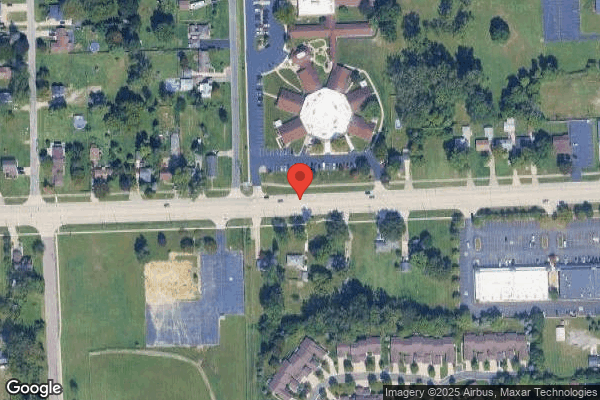
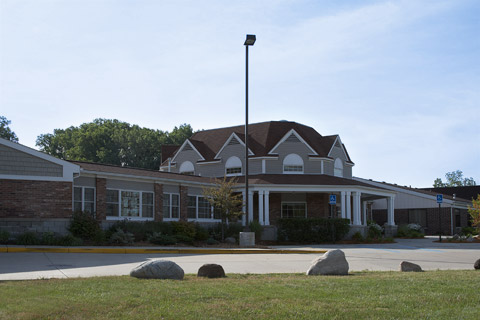
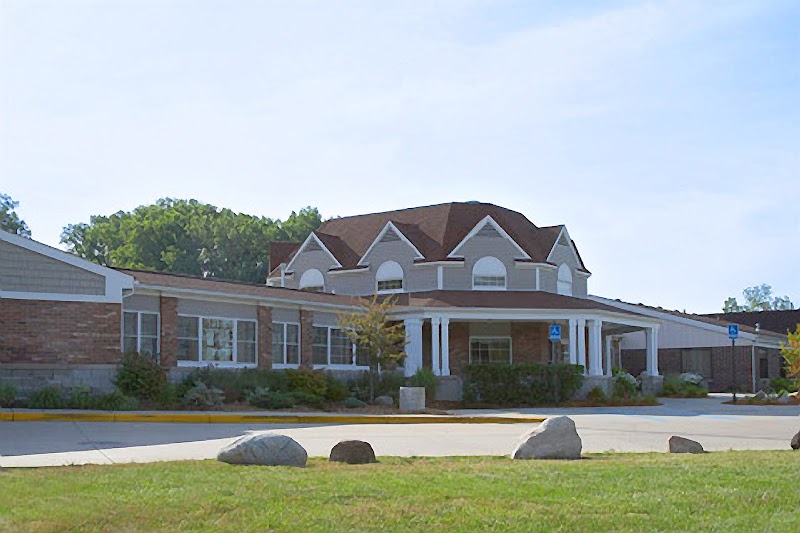
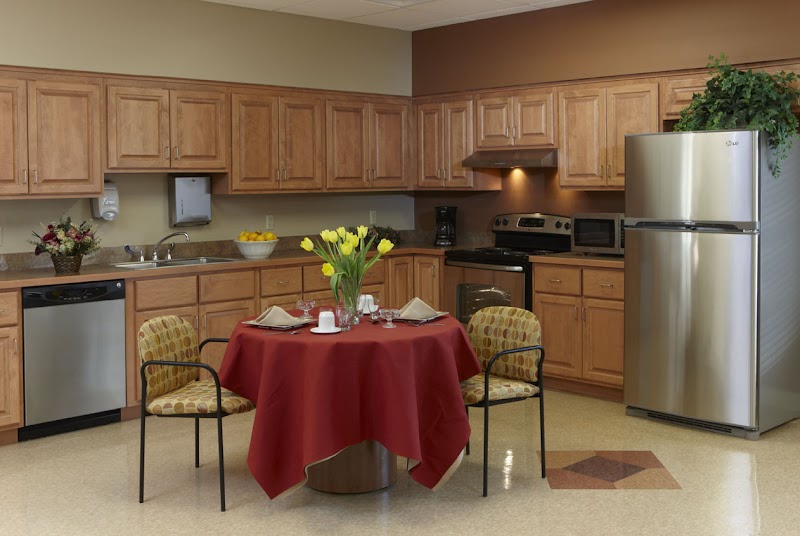
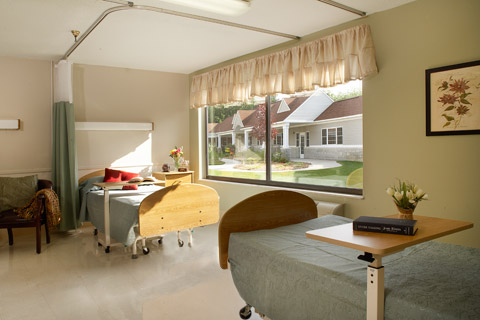
The Lodge at Taylor

22950 Northline Rd, Taylor, MI 48180 (734) 287-1230
For profit - Limited Liability company 134 Beds MEDILODGE Data: November 2025
Trust Grade
53/100
#177 of 422 in MI
Last Inspection: December 2024

Within standard 12-15 month inspection cycle. Federal law requires annual inspections.

Overview

The Lodge at Taylor has a Trust Grade of C, which means it is average and in the middle of the pack. It ranks #177 out of 422 facilities in Michigan, placing it in the top half, and #24 out of 63 in Wayne County, indicating that only a few local options are better. The facility is showing improvement, with issues decreasing from 21 in 2024 to just 4 in 2025. However, staffing is a concern, rated 2 out of 5 stars, with a 54% turnover rate, which is average but indicates that staff may not be consistently familiar with residents. The facility has received $16,801 in fines, which is average, but there are serious concerns due to incidents where residents did not receive adequate care, including one case where a resident was hospitalized for severe hypoglycemia and another where a resident died due to inadequate wound care. On the positive side, the quality measures are rated 5 out of 5 and show that the facility is focused on improving care outcomes despite staffing challenges.

Trust Score
C
53/100
In Michigan
#177/422
Top 41%
Safety Record
High Risk
Review needed
Inspections
Getting Better
21 → 4 violations
Staff Stability
⚠ Watch
54% turnover. Above average. Higher turnover means staff may not know residents' routines.
Penalties
○ Average
$16,801 in fines. Higher than 69% of Michigan facilities. Some compliance issues.
Skilled Nurses
⚠ Watch
Each resident gets only 27 minutes of Registered Nurse (RN) attention daily — below average for Michigan. Fewer RN minutes means fewer trained eyes watching for problems.
Violations
⚠ Watch
45 deficiencies on record. Higher than average. Multiple issues found across inspections.
★★★★☆
4.0
Overall Rating
★★☆☆☆
2.0
Staff Levels
★★★★★
5.0
Care Quality
★★★☆☆
3.0
Inspection Score
Stable
2024: 21 issues
2025: 4 issues

The Good

  • 5-Star Quality Measures · Strong clinical quality outcomes
  • Full Sprinkler Coverage · Fire safety systems throughout facility
  • No fines on record

Facility shows strength in quality measures, fire safety.

The Bad

Staff Turnover: 54%

Near Michigan avg (46%)

Higher turnover may affect care consistency

Federal Fines: $16,801

Below median ($33,413)

Minor penalties assessed

Chain: MEDILODGE

Part of a multi-facility chain

Ask about local staffing decisions and management

The Ugly 45 deficiencies on record

3 actual harm
Sept 2025 1 deficiency
CONCERN (E) 📢 Someone Reported This

A family member, employee, or ombudsman was alarmed enough to file a formal complaint

Potential for Harm - no one hurt, but risky conditions existed

Safe Environment (Tag F0921)

Could have caused harm · This affected multiple residents

This citation pertains to intake 2602236.Based on observation, interview and record review the facility failed to ensure safe maintenance of shower gurneys, as four out five were observed to be missin...

Read full inspector narrative →
This citation pertains to intake 2602236.Based on observation, interview and record review the facility failed to ensure safe maintenance of shower gurneys, as four out five were observed to be missing safety pins required to secure the side rails.Findings include:On 9/9/25 at 12:14 PM, the shower room in Hall C was observed to contain a shower gurney missing all required safety pins to secure the side railings.On 9/9/25 at 12:16 PM, the shower room in Hall B was observed to have two shower gurneys missing all pins to secure the side rails.On 9/9/25 at 12:20 PM, the shower room on Hall E was observed to contain a shower gurney missing two of the four required safety pins to secure side rails.Record review of maintenance logs revealed no evidence that shower gurneys were routinely assessed for safety. In addition, there were no documented requests to replace the missing safety pins. Lastly, review of Certified Nursing Assistant Competency form indicated no education related to the use of the shower gurneys.On 9/9/25 at 1:00 PM, an interview was conducted with the Nursing Home Administrator, who reported that all shower gurneys should be safely maintained and that staff are expected to report equipment in need of repair in a timely manner to prevent accidents. Furthermore, nursing staff should be in serviced on using the shower gurneys. Record review of policy Physical Environment: Electrical Equipment revised 1/1/22 documented, The facility will maintain all mechanical, electrical, and patient care equipment in safe operating condition.
Aug 2025 2 deficiencies
CONCERN (D) 📢 Someone Reported This

A family member, employee, or ombudsman was alarmed enough to file a formal complaint

Potential for Harm - no one hurt, but risky conditions existed

Deficiency F0558 (Tag F0558)

Could have caused harm · This affected 1 resident

**NOTE- TERMS IN BRACKETS HAVE BEEN EDITED TO PROTECT CONFIDENTIALITY** Based on observation, interview, and record review, the facility failed to ensure that a call button was within reach for one re...

Read full inspector narrative →
**NOTE- TERMS IN BRACKETS HAVE BEEN EDITED TO PROTECT CONFIDENTIALITY** Based on observation, interview, and record review, the facility failed to ensure that a call button was within reach for one resident (R102) reviewed for call light access. Findings include:During an observation on 8/21/25 at 8:46 AM, R102 was observed awake and lying in bed. R102 was receiving breakfast meal assistance from a staff member. R102's call button was observed on the floor at the head of the bed. During an interview on 8/21/25 at 8:51 AM, Non-Certified Nurse Aide E said she had been in R102's room assisting him with the breakfast meal. During an observation and interview on 8/21/25 at 8:56 AM, Licensed Practical Nurse (LPN) B noted R102's call light on the floor and said that the resident could not reach it. LPN B indicated that R102 had the capacity to use the call button. A review of the clinical record for R102 documented an admission date of 7/24/25 with diagnoses that included atrial fibrillation, morbid obesity, and hemiplegia/hemiparesis following cerebral infarction affecting right dominant side. A Minimum Data Set assessment dated [DATE] documented severe cognitive impairment and no impairment of the upper extremities. A review of R102's care plans documented in part the following:- Resident has an ADL (activity of daily living) self-care performance deficit related to Congestive Heart Failure (CHF), generalized weakness, obesity, impaired mobility. Initiated: 7/24/25. Interventions included: Encourage resident to use call light when assistance is needed. Initiated 7/24/25 - Resident is at risk for falls/injury related to bladder incontinence, bowel incontinence, generalized weakness, needs assistance with ADLs, obesity, psychoactive medication use. Initiated 7/25/25. Interventions included: Encourage resident to use call light. Initiates 7/25/25. On 8/21/25 at 1:46 PM, the Director of Nursing (DON) said resident's call lights should be within reach. A review of the facility policy titled, Call Light: Accessibility and Timely Response, dated 12/28/23, revealed in part the following:- The purpose of this policy is to assure the facility is adequately equipped with a call light at each residents' bedside, toilet, and bathing facility to allow residents to call for assistance.- Residents are educated on how to call for help by using the resident call system. On 8/21/25 at 2:45 PM during the exit conference the Nursing Home Administrator and DON were asked if there was any additional documentation or information that the facility would like to provide prior to the end of the survey and they reported there was none.
CONCERN (D) 📢 Someone Reported This

A family member, employee, or ombudsman was alarmed enough to file a formal complaint

Potential for Harm - no one hurt, but risky conditions existed

Deficiency F0658 (Tag F0658)

Could have caused harm · This affected 1 resident

**NOTE- TERMS IN BRACKETS HAVE BEEN EDITED TO PROTECT CONFIDENTIALITY** Based on observation, interview, and record review, the facility failed to demonstrate professional standards of practice by not...

Read full inspector narrative →
**NOTE- TERMS IN BRACKETS HAVE BEEN EDITED TO PROTECT CONFIDENTIALITY** Based on observation, interview, and record review, the facility failed to demonstrate professional standards of practice by not securing a physician's order and properly documenting wound care for one resident (R102) out of three residents reviewed for wound care. Findings include: During an observation on 8/21/25 at 8:24 AM, R102 was observed awake and lying in bed. A wound patch was observed on R102's right arm dated 8/16/25. During an observation and interview on 8/21/25 at 8:56 AM, Licensed Practical Nurse (LPN) B noted the patch on R102's right arm and stated, (R102) should have an order for the patch. LPN B reviewed R102's electronic health record (EHR) and confirmed there was no physician's order to apply a wound patch to R102's right arm or nursing note regarding the wound patch dated 8/16/25. A review of R102's EHR documented an admission date of 7/24/25 with diagnoses that included atrial fibrillation, morbid obesity, and hemiplegia/hemiparesis following cerebral infarction affecting right dominant side. A Minimum Data Set assessment dated [DATE] documented severe cognitive impairment. R102's care plans were reviewed, and the following care plan focus areas were revised on 8/21/25:- Resident is at risk for impaired skin integrity related to incontinent of bladder, incontinent of bowel, obesity, impaired mobility, history of cellulitis, has history of picking at skin.- Resident has impaired skin integrity as evidenced by: Abrasion to right elbow, arterial wound to right lateral malleolus, cellulitis to RUE (right upper extremity) (resolved); Abrasion to sternum (resolved) present upon admission. During an interview on 8/21/25 at 1:46 PM, the Director of Nursing (DON) said R102 had a scab on his right arm and the nurse put a dressing on it. The DON stated, There should have been a physician's order for that. The DON said the physician should have been made aware of what was going on with the resident and to also direct the nurse to implement the proper wound treatment. The DON acknowledged there was no note written regarding the wound and treatment provided. The DON added that whatever treatments are done for the residents should be documented. A review of the facility policy titled, Pressure Ulcer/Skin Breakdown - Clinical Protocol, dated 3/20/24, documented in part the following: The physician will authorize pertinent orders related to wound treatments, including pressure reduction surfaces, wound cleansing and debridement approaches, dressings (occlusive, absorptive, etc.), and application of topical agents. On 8/21/25 at 2:45 PM during the exit conference the Nursing Home Administrator and DON were asked if there was any additional documentation or information that the facility would like to provide prior to the end of the survey and they reported there was none.
May 2025 1 deficiency
CONCERN (D) 📢 Someone Reported This

A family member, employee, or ombudsman was alarmed enough to file a formal complaint

Potential for Harm - no one hurt, but risky conditions existed

Accident Prevention (Tag F0689)

Could have caused harm · This affected 1 resident

**NOTE- TERMS IN BRACKETS HAVE BEEN EDITED TO PROTECT CONFIDENTIALITY** This citation pertains to MI000151505. Based on observation, interview, and record review the facility failed to implement adequ...

Read full inspector narrative →
**NOTE- TERMS IN BRACKETS HAVE BEEN EDITED TO PROTECT CONFIDENTIALITY** This citation pertains to MI000151505. Based on observation, interview, and record review the facility failed to implement adequate interventions and supervision to prevent multiple falls for one (R103) of three residents reviewed for accidents, resulting in injuries and hospital visits. Findings include: On 5/6/25 at 1:30 p.m. R103 was observed in an activity room. The resident was observed attempting to propel herself in the wheelchair to exit the area. Unit Manager A was observed redirecting R103 multiple times by grabbing of the wheelchair and placing the resident back in the area. R103 was also observed motioning to UM A to move away from her when redirected by staff. R103 was non-interviewable due to cognitive impairment. On 5/6/25 at 2:20 p.m. R103's roommate was interviewed and stated, She is up all night, standing up by herself, and falls. She does not listen to anyone. Review of the electronic medical record (EMR) documented R103 was initially admitted into the facility on 2/4/25 with a readmission from the hospital (after a fall) on 3/14/25 with diagnoses that included impulsiveness, metabolic encephalopathy, seizure disorder, muscle weakness, bipolar disorder, generalized anxiety disorder, impulse disorder, and unspecified falls. According to the admission Minimum Data Set assessment dated [DATE], R103 had severe cognitive impairment (BIMS-2) and required extensive one-person assistance with activities of daily living. Review of the Fall care plan initially dated 2/4/25, with the last revision date of 4/30/25 documented in part the following: Resident is at risk for falls/injury related to weakness and foot drop, history of falls, attempting to ambulate without assistance, placing self on floor, cognition, behaviors, and unable to be re-directed. Goal: Reduce the risk of injury through the next review. Interventions: Keep resident in common area when awake (2/10/25). Structured activities to meet resident's needs (2/19/25). Ensure the resident's room is free from accidents and hazards (2/4/25). Mat to floor next to bed (left side) (3/19/25). Low bed (2/5/25). There was no admission Fall Assessment for R103. Review of the Nursing admission Evaluation dated 2/4/25 documented in the Safety section the following: Unsafe behaviors present: Attempts to climb over bed rails and/or get out of bed independently when they require assistance. Mobility: Unsafe wheelchair seating. The readmission Fall Risk Evaluation dated 5/1/25 documented in part the following: History of falls- During the last 90 days has the resident experienced a fall? Yes Comments- Resident continues to have multiple falls in facility due to behavior and cognition. Review of the nurse's progress notes in part documented the following falls: 2/4/25 20:53 (10:53 pm)- Writer was notified resident had fallen in room while walking unsupervised in room, fall was witnessed by roommate . R103' care plan was reviewed/updated on 2/4/25 and 2/5/25. 2/9/25 19:39 (7:39 pm)- Resident roommate turned call light on. Writer answered call light and observed resident on floor. Resident was sitting on her bottom. Resident roommate stated the resident got up out of her bed and was walking and then proceeded to fall. 2/10/2025 10:48 (10:48 am) - Writer witnessed blood on resident's left eyebrow. Resident's roommate stated resident had fallen and hit head on bed .sent resident out to the hospital . R103's care plan was reviewed/updated on 2/10/25. 2/11/2025 00:08 (12:08 am) - Resident arrived back from hospital at 2045. No new orders. Resident has 3 stitches on her left eyebrow. Bruises on left side of the body. 2/15/2025 08:12 (8:12 am) - On the morning of 2/15/25 the resident was observed sitting on bed. Writer was passing medication to the residents in (XX) resident was observed sitting on the bed with a bloody face. Writer immediately cleaned resident's face and noticed a large gash above residents left eye. Writer called 911, the resident was transported via EMS. R103's care plan was reviewed/updated on 2/19/25. 3/19/25 01:18 (1:18 am) - Resident was observed coming down the hall with laceration in the middle of her forehead . Resident sent out. Incident occurred on 3/18/25 (times not indicated). R103's care plan was reviewed/updated on 3/19/25. 3/20/2025 23:28 (11:28 pm) - Patient attempted to get out of her chair and was observed on the floor. Patient was assessed, and no injuries were observed MD notified. However, there was no documented evidence the care plan was updated or revised at this time. 3/22/2025 06:55 (6:55 am) - The resident was observed by nursing staff sitting on the mat (near bedside) with blood coming from her suture site (mid forehead). However, there was no documented evidence the care plan was updated or revised at this time. 3/22/2025 23:41 (11:41 pm) - Prior to fall resident was sitting at nurse's station not in distress. At around 9:30 pm, was observed resident on the floor lying on the right side. Skin assessed. Skin redness noted at right cheek. However, there was no documented evidence the care plan was updated or revised at this time. 3/31/2025 05:34 (5:34 am) - Writer observes resident standing at desk at 5:15am writer comes to resident to assist back in chair, writer observes blood coming from forehead of patient, writer assist resident into chair, resident's wheelchair in room, writer observes a blood trail leading from resident's room to nursing station, two Cena's arrive to assist with wet towels as writer grabs supplies to tend to wound on forehead. Resident had prior stitches that have opened, resident having blood scattered over her face with blood clots . resident appears to have knot on forehead, injury to lip, and blood coming from nose with a scratch on nose . ambulance arrived for pick up. Resident leaving out at 5:40am. However, there was no documented evidence the care plan was updated or revised at this time. 4/6/2025 02:50 (2:50 am) - Prior to fall resident was observed in bed resting with no signs of distress or pain. Upon rounds Cena observed resident on bed with her previous injury on forehead bleeding and a new laceration on the bridge of her nose bleeding . However, there was no documented evidence the care plan was updated or revised at this time. 4/7/2025 09:21 - IDT Team met to discuss unwitnessed fall that occurred in resident room. Staff observed resident on her bed, bleeding from face with laceration to bridge of nose. Prior to that, the resident was sleeping in bed. Resident unable to state what occurred. Nurse assessed. Laceration cleansed. MD notified. Care Plan reviewed. Fall mat in place. Team will evaluate for bolster mattress. 4/14/2025 19:26 (7:26 pm) Resident was observed attempting to walk and fell forward onto a nurse. The nurse then slid down to floor . However, there was no documented evidence the care plan was updated or revised at this time. 4/15/2025 9:27 - IDT Team met to discuss incident with the resident. Resident got out of her wheelchair and was trying to walk. Staff member caught resident before she fell. Lowered to the ground . Care Plan reviewed. Resident is not able to be educated r/t impaired cognition and behaviors. However, there was no documented evidence the fall care plan was updated or revised at this time. 4/19/2025 21:00 (9:00 pm) - Resident was observed with swelling and bleeding to her forehead. Resident was sitting at the nurse's station when she inflicted harm to herself when she hit her head on desk . Writer notified Dr and was ordered to send resident out to the hospital. Resident was transferred by two paramedics via ambulance . 4/29/2025 00:00 (12:00 am) - Resident observed placing self onto floor several times throughout the shift . 4/29/2025 19:51 (7:51 pm) - Patient continues to place herself onto floor and show signs of being combative and resistant to redirection for safety. Patient attempted continually to get up and threw herself onto the ground on her face Patient observed bleeding from her mouth and nose . Patient being sent out to hospital per unit manager. Care plan was reviewed/revised on 4/30/25. 5/2/2025 22:32 (11:32 pm) - While heading towards resident, observed resident stand up from wheelchair and sit down onto floor while at nursing station . However, there was no documented evidence the fall care plan was updated or revised at this time. On 5/7/25 at 1:30 p.m. the Nursing Home Administrator (NHA) was interviewed regarding R103 having multiple falls. The NHA stated, We have done everything. I don't know what to do to keep her from falling. We discussed it in the IDT meetings and talked about getting a wheelchair seat belt, but because she can't release the wheelchair seat belt, it would probably be a form of a restraint. On 5/8/25 at 11:30 a.m. Unit Manager (UM) A was asked about interventions for R103 falls that occurs during the evening/night time and UM A reported there were none for the evening and the focus was for day time. UM A added, Maybe she should have some (activities) during the night as an intervention for when she tries to get out of bed or some activities like music to help keep her calm and something to do. I think that would have helped her from so many falls. Review of the care plans revealed there was no facility follow up for bolsters for the bed documented in the nurse's progress notes or on the care plan. There were no additional interventions implemented after 3/19/25. On 5/8/25 at 1:38 p.m. the Director of Nursing (DON) presented a Structure Day Program and said the facility have currently started using the program for R103's falls. The DON stated, I think it will be helpful in preventing the residents from falling. Eleven falls is a lot and hopefully the program will be effective. Review of the facility's policy titled Fall Prevention Program dated 10/26/23 documented the following in part: Each resident will be assessed for the risks of falling and will receive care and services in accordance with the level of risk to minimize the likelihood of falls . Upon admission, the nurse will complete a fall risk assessment along with the admission assessment to determine the resident's level of fall risk . When a resident who does not have a history of falling experiences a fall, the resident will be placed on the facility's Fall Prevention Program . Each resident's risk factors, and environmental hazards will be evaluated when developing the resident's comprehensive plan of care. Interventions will be monitored for effectiveness. The care plan will be revised as needed .
Dec 2024 8 deficiencies
CONCERN (D)

Potential for Harm - no one hurt, but risky conditions existed

Deficiency F0645 (Tag F0645)

Could have caused harm · This affected 1 resident

**NOTE- TERMS IN BRACKETS HAVE BEEN EDITED TO PROTECT CONFIDENTIALITY** Based on interview and record review the facility failed to ensure the Preadmission Screening (PAS)/ Annual Resident (ARR) Menta...

Read full inspector narrative →
**NOTE- TERMS IN BRACKETS HAVE BEEN EDITED TO PROTECT CONFIDENTIALITY** Based on interview and record review the facility failed to ensure the Preadmission Screening (PAS)/ Annual Resident (ARR) Mental Illness/ Intellectual Disability/ Related Conditions Identification forms DCH-3877 and/or DCH-3878 documents were reviewed, revised, and sent to the local state agency for review and/or evaluation for mental illness needs upon admission for two (R44 and R86) of four residents reviewed for PAS/ARRs, resulting in the potential for residents not to receive care and services appropriate to their mental health needs. Findings include: R86 On 12/10/24 at 2:51 p.m. review of the electronic medical record documented R86 was initially admitted into the facility on 9/12/24 and readmitted on [DATE] from the hospital with diagnoses that included paranoid schizophrenia, anoxic brain damage, cocaine abuse, and adjustment disorder. According to quarterly Minimum Data Set assessment dated [DATE], R86 had no speech, severely impaired cognition and dependent with all activities of daily living. Review of the Preadmission Screening (Level I Screen, 3877) dated 9/12/24, documented R86 had mental illness and receiving antidepressant/antipsychotic indicated by a checked yes. Review of the Mental Illness/Intellectual Disability/ Related Condition Exemption Criteria Certification (3878) dated 9/12/24, documented R86 had Dementia Exemption checked yes. The 3877 and 3878 were completed by hospital staff on the day of discharge to the facility. Review of hospital records, face sheet, and psychiatric progress note dated 11/6/24 did not document R86 had a diagnosis of dementia. On 12/11/24 at 1:43 p.m. Social Worker (SW)G was interviewed and queried about the 3877/3878 and was a Level II evaluation request sent to the local mental health agency. SW G stated, This was confusing because of the dementia exemption. I don't know why dementia was not put on 3877. It came from another facility. I typically review them (PASARR) upon admission, but I can't remember what happened with this one. A request for a Level II evaluation was not submitted to the local mental health agency based on the 3877 and other pertinent information not reviewed. R44 According to Electronic Health Record (EHR) R44 admitted to the facility on [DATE] with diagnoses that included unspecified psychosis and metabolic encephalopathy (broad term for a brain disease that alters brain function.) The MDS dated [DATE] indicated the resident had severe cognition impairment and was non-verbal. R44 was prescribed a psychoactive medication; Risperdal 0.5 milligrams every day for paranoia. Review of the Preadmission Screening (Level I Screen, DCH-3877) dated 12/23/2023, documented R44 had mental illness and receiving antidepressant/antipsychotic checked yes. There was no DCH-3877 form completed upon admission to the facility and no Level II Screen, DCH-3878 assessment. On 12/11/24 at 3:49 PM during an interview regarding R44, SW G said that the resident did not have a PASARR assessment completed since admitting to the facility. SW G said, The resident came from another facility and it was missed. We should have reviewed it and updated it. The resident will most likely be exempt for a level II, but we should have done a PASARR. Review of the facility's policy titled, Resident Assessment Coordination with PASARR Program dated 10/23 documented in part: This facility coordinates assessments with the preadmission screening and resident review (PASARR) program under Medicaid to ensure that individuals with a mental disorder, intellectual disability, or a related condition receives care and services in the most integrated setting appropriate to their needs . All applicants to this facility will be screened for serious mental disorders or intellectual disabilities and related conditions in accordance with the State's Medicaid rules for screening . PASARR Level I - initial pre-screening that is completed prior to admission . PASARR Level II - a comprehensive evaluation by the appropriate state-designated authority(cannot be completed by the facility) that determines whether the individual has MD, ID, or related condition, determines the appropriate setting for the individual, and recommends any specialized services and/or rehabilitative services the individual needs . If a resident who was not screened due to an exception and the resident remains in the facility longer than 30 days: a. The facility must screen the individual using the State's Level I screening process and refer any resident who has or may have MD, ID or a related condition to the appropriate state designated authority for Level II PASARR evaluation and determination . The Social Services Director shall be responsible for keeping track of each resident's PASARR condition.
CONCERN (D)

Potential for Harm - no one hurt, but risky conditions existed

Quality of Care (Tag F0684)

Could have caused harm · This affected 1 resident

**NOTE- TERMS IN BRACKETS HAVE BEEN EDITED TO PROTECT CONFIDENTIALITY** Based on interview and record review, the facility failed to administer medications as ordered and failed to notify the physicia...

Read full inspector narrative →
**NOTE- TERMS IN BRACKETS HAVE BEEN EDITED TO PROTECT CONFIDENTIALITY** Based on interview and record review, the facility failed to administer medications as ordered and failed to notify the physician of missed doses for one resident (R250) out of five residents reviewed for medications. Findings include: On 12/10/24 at 10:41 AM, during an interview with R250, it was reported that intravenous antibiotics were not administered during dialysis. A record review of R250's electronic medical record (EMR) disclosed their admission to the facility on [DATE], with a diagnosis of end stage renal failure and osteomyelitis (infection of bone) of left foot and ankle. Review of R250's Minimum Data Set (MDS) dated [DATE], R250 required partial/moderate assist for most activities of daily living (ADLS). Review of R250's Brief Interview for Mental Status (BIMS) dated 11/29/24 revealed intact cognition, with a score of 15 out of 15. Record review of physician orders documented that R250 was to receive Cefepime HCL (antibiotics) . should be administered intravenously once daily on Mondays, Wednesdays, and Fridays until 12/29/24, after completing hemodialysis (HD). Furthermore, it was revealed that Vancomycin HCL (antibiotic) was prescribed for osteomyelitis. The order indicated that 500 mg(milligrams) of Vancomycin HCL should be administered intravenously daily on Mondays, Wednesdays, and Fridays until December 29, 2024. Administer post (after) HD. Review of the Medication Administration Record (MAR) for December 2024 disclosed that Vancomycin was not administered on December 2, 4, 6, and 9. Furthermore, Cefepime was not administered on December 4, 6, and 9. Review of Progress Notes dated 12/4/24, Licensed Practical Nurse (LPN) E documented Pt (patient) in dialysis. No documentation related to administration of antibiotics or that the physician was informed of the missed doses. Review of Progress Notes dated 12/6/24 at 2:12 PM, LPN D documented dialysis to administer to patient for both antibiotics. No documentation related to administration of antibiotics or that the physician was informed of the missed doses. Review of Progress Notes dated 12/9/24. Registered Nurse (RN) F documented both antibiotics were on order. No documentation indicated that the physician was made aware of the missed doses. Review of Communication Report from dialysis provider on 12/2/24, it was documented under Antibiotics Given- 0. On 12/4/24,12/6/24 and 12/9/24 under Antibiotics Given there was no documentation. On 12/10/24 at 10:50 AM, an interview was conducted with Unit Manager (UM) H. At this time UMH was informed that R250 had reported not receiving antibiotics that were ordered to be given at dialysis. UMH reported not being aware of the missed doses and would look into it. On 12/11/24 at 4:00 PM, an interview was conducted with the Director of Nursing (DON), it was confirmed that R250 had missed four doses of Vancomycin and three doses of Cefepime. When questioned about how the antibiotics should have been administered, DON reported that the antibiotics should have been taken to dialysis to be administered and when the antibiotics were not available, nursing staff should have informed the physician. On 12/11/24 at 4:20 PM, an interview was conducted with Physician L, it was reported that nursing staff did not report the missing doses of antibiotics until 12/10/24. On 12/12/24 at 10:02 AM an interview was conducted with LPN E, it was reported that the physician was not informed of the missed doses of antibiotics. On 12/12/24 at 10:15 AM, an interview was conducted with LPN D, It was reported that the physician was not informed of the missed doses of antibiotics. On 12/12/24 at 10:35 AM, an interview was conducted with RN F, it was reported that the physician was not informed of the missed doses of antibiotics. On 12/12/24 at 11:15 AM, a follow-up interview was conducted with DON. When asked the reason that the antibiotics were not available. The DON reported that either the antibiotics were not available in the facility or could not be found. When queried about the communication with the dialysis provider, DON reported that the dialysis staff and nursing staff should have made the DON or the UM aware that antibiotics were not given. Review of facility policy Medication Administration dated 1/17/23, documented, Medications are administered by licensed nurses, or other staff who are legally authorized to do so in this state, as ordered by the physician and in accordance with professional standards of practice .
CONCERN (D)

Potential for Harm - no one hurt, but risky conditions existed

Deficiency F0687 (Tag F0687)

Could have caused harm · This affected 1 resident

**NOTE- TERMS IN BRACKETS HAVE BEEN EDITED TO PROTECT CONFIDENTIALITY** Based on observation, interview and record review the facility failed to provide adequate foot care for one resident (R32) out o...

Read full inspector narrative →
**NOTE- TERMS IN BRACKETS HAVE BEEN EDITED TO PROTECT CONFIDENTIALITY** Based on observation, interview and record review the facility failed to provide adequate foot care for one resident (R32) out of four residents reviewed for Activities of Daily Living (ADLS). Findings include: On 12/10/24 at 10:16 AM, R32's feet were observed to have long, jagged, thick, greenish/black-toe nails. Additionally, R32's feet had white patches of dry skin and moist debris encrusted between toes. During an interview, R32 expressed a desire for podiatry services due to the inability to provide nail care independently. A review of the electronic medical records (EMR) revealed that R32 was admitted to the facility on [DATE] with a diagnosis of morbid obesity, type two diabetes, and end stage renal failure. Review of R32's Brief Interview for Mental Status (BIMS) dated 9/20/24 indicated that R32 scored 15 out of 15 (intact cognition). Review of R32's Minimum Data Set (MDS) dated [DATE], it was noted that R32 exhibited dependency with most ADLs. Upon further review of R32's EMR it was discovered that R32 had not been registered or received podiatry care. Additionally, care plans reviewed did not contain any specific interventions for foot care. On 12/11/24 at 11:27 AM, R32's feet were observed and remained in the same condition as the previous day. On 12/11/24 at 2:36 P.M., an interview was conducted with the Director of Nursing (DON) following the observation of R32's feet. It was reported that podiatry services should have been provided, even if the resident did not have a diabetic diagnosis related to the resident's current comorbidities (multiple medical conditions). On 12/11/24 at 2:39 PM, an interview was conducted with the Social Worker (SW) G, regarding the registration of R32's podiatry services. It was reported that R32 was not registered for podiatry services at that time, and the staff member that assists with setting up these services had not done it in a timely manner. On 12/11/24 at 3:10 PM, an interview was conducted with Nursing Home Administrator (NHA), it was reported that residents should be provided with foot care by staff and podiatry services should be provided if residents need that specific service. Review of policy Nail Care dated 8/2024 documented the following: .1. Assessments of resident nails will be conducted on admission and readmission to determine the resident's nail condition, needs, and preferences for nail care, if possible. a. Report unusual or abnormal conditions of the nails to the physician and the responsible party (e.g., curling, color changes, separation from the nailbed, redness, bleeding, pain, odor, infection, etc.). b. Obtain history and preferences regarding podiatrist. 2. Routine cleaning and inspection of nails will be provided during ADL care on an ongoing Basis. 3. Routine nail care, to include trimming and filing, will be provided on a regular basis and as the need arises. 4. Principles of nail care: a. Nails should be kept smooth to avoid skin injury. b. Only podiatrists, physician/practitioners, or licensed nurse shall trim toenails for residents with diabetes or circulation problems .
CONCERN (D)

Potential for Harm - no one hurt, but risky conditions existed

Deficiency F0698 (Tag F0698)

Could have caused harm · This affected 1 resident

**NOTE- TERMS IN BRACKETS HAVE BEEN EDITED TO PROTECT CONFIDENTIALITY** Based on interview and record review the facility failed to effectively communicate with a dialysis provider for one resident (R...

Read full inspector narrative →
**NOTE- TERMS IN BRACKETS HAVE BEEN EDITED TO PROTECT CONFIDENTIALITY** Based on interview and record review the facility failed to effectively communicate with a dialysis provider for one resident (R250) out of three residents requiring dialysis services, resulting in seven doses of antibiotics that were not administered as ordered by a physician. Findings include: On 12/10/24 at 10:41 AM, during an interview with R250, it was reported that intravenous antibiotics were not administered during dialysis. A record review of R250's electronic medical record (EMR) disclosed their admission to the facility on [DATE], with a diagnosis of end stage renal failure and osteomyelitis (infection of bone) of left foot and ankle. Review of R250's Minimum Data Set (MDS) dated [DATE], R250 required partial/moderate assist for most activities of daily living (ADLS). Review of R250's Brief Interview for Mental Status (BIMS) dated 11/29/24 revealed intact cognition, with a score of 15 out of 15 (intact cognition.) Record review of physician orders documented that R250 was to receive Cefepime HCL (antibiotics) . should be administered intravenously once daily on Mondays, Wednesdays, and Fridays until 12/29/24, after completing hemodialysis (HD). Furthermore, it was revealed that Vancomycin HCL (antibiotic) was prescribed for osteomyelitis. The order indicated that 500 mg(milligrams) of Vancomycin HCL administered intravenously daily on Mondays, Wednesdays, and Fridays until December 29, 2024. Administer post (after) HD. Review of the Medication Administration Record (MAR) for December 2024 disclosed that Vancomycin was not administered on December 2, 4, 6, and 9. Furthermore, Cefepime was not administered on December 4, 6, and 9. Review of Communication Report from dialysis provider on 12/2/24, it was documented under Antibiotics Given- 0. On 12/4/24,12/6/24 and 12/9/24 under Antibiotics Given there was no documentation. On 12/11/24 at 4:00 PM, an interview was conducted with the Director of Nursing (DON), it was confirmed that R250 had missed four doses of Vancomycin and three doses of Cefepime. When asked about how the antibiotics should have been administered, DON reported that the antibiotics should have been taken to dialysis to be administered and when the antibiotics were not available, nursing staff should have informed the physician. On 12/12/24 at 11:15 AM, a follow-up interview was conducted with the DON. When queried about the communication with the dialysis provider, DON reported that the dialysis staff and nursing staff should have made the DON or the UM aware that antibiotics were not given. It was further reported that communication with dialysis needs to be addressed. Review of facility policy Care Planning Special Needs-Dialysis dated 12/28/23 documented the following: This facility will provide the necessary care and treatment, consistent with professional standards of practice, physician orders, the comprehensive person-centered care plan, and the resident's goals and preferences, to meet the special medical, nursing, mental, and psychosocial needs of residents receiving dialysis. Further review of policy documented, 4.Nursing staff will provide a report to the dialysis provider regarding the resident's condition and treatment provisions each dialysis treatment day, and as needed. 5. If no written report is received upon return from dialysis, nursing staff will call the dialysis provider to receive a report.
CONCERN (D)

Potential for Harm - no one hurt, but risky conditions existed

Infection Control (Tag F0880)

Could have caused harm · This affected 1 resident

**NOTE- TERMS IN BRACKETS HAVE BEEN EDITED TO PROTECT CONFIDENTIALITY** Based on observation, interview and record review the facility failed to apply a barrier while administering medications for one...

Read full inspector narrative →
**NOTE- TERMS IN BRACKETS HAVE BEEN EDITED TO PROTECT CONFIDENTIALITY** Based on observation, interview and record review the facility failed to apply a barrier while administering medications for one resident (R15) out of four residents reviewed for medication administration. Findings include: On 12/11/24 at 9:00 AM, Licensed Practical Nurse (LPN) J was observed with two pre-filled syringes containing a long-acting insulin (Glargine) and one syringe containing a short acting insulin (Flasp). LPN J entered R15's room and laid all three syringes on the resident's bedside table with no barrier. R15's bedside table had multiple items and debris scattered on surface. LPN J then proceeded to administer the medications. A record review of R15's electronic medical record (EMR) disclosed their admission to the facility on 7/6/17, with a diagnosis of type two diabetes mellitus without complications. Review of R15's Minimum Data Set (MDS) dated [DATE], R15 required supervision for most activities of daily living (ADLS). Review of R15's Brief Interview for Mental Status (BIMS) revealed impaired cognition, with a score of 10 out of 15 (impaired cognition.) On 12/11/24 at 1:42 PM, LPN J was interviewed. It was reported that R15's medication should not have been placed directly on the bedside table due to the potential for contamination. On 12/11/24 at 2:26 PM, an interview was conducted with the Director of Nursing (DON). It was reported that nurses should not place resident medications on surfaces without the use of a barrier to prevent contamination and infection from concealed body fluids and other unknown contaminants. Review of facility policy Medication Administration revised 1/17/2023 documented, Medications are administered by licensed nurses, or other staff who are legally authorized to do so in this state, ordered by the physician and in accordance with professional standards of practice, in a manner to prevent contamination or infection.
CONCERN (D)

Potential for Harm - no one hurt, but risky conditions existed

Deficiency F0919 (Tag F0919)

Could have caused harm · This affected 1 resident

**NOTE- TERMS IN BRACKETS HAVE BEEN EDITED TO PROTECT CONFIDENTIALITY** Based on observation, interview, and record review the facility failed to ensure a bathroom call light was in working order for ...

Read full inspector narrative →
**NOTE- TERMS IN BRACKETS HAVE BEEN EDITED TO PROTECT CONFIDENTIALITY** Based on observation, interview, and record review the facility failed to ensure a bathroom call light was in working order for one (R1) of two residents reviewed for environment resulting in call light not answered in a timely manner, unmet care needs, and the potential delay in responding to emergency situations. Findings include: On 12/10/24 at 10:57 a.m. R1 was observed in the bathroom located in the room. R1 was sitting in a wheelchair attempting to come out of the bathroom. The resident said the staff do not answer the call light. R1 stated angrily, I had to go to the bathroom really bad and couldn't wait for staff to help me, so I got on the toilet myself. I turned on the call light to get help getting off, but no one came so I got off by myself. The resident said they require assistance with going to the bathroom and shouldn't self-transfer to the toilet because of epilepsy, I realize I could have fell. The resident was not sure how long the call light was not working because they usually receive assistance from staff, except today. The bathroom light indicator was activated, however the indicator outside the door was not. When the call light is activated, a blue light illuminates outside of the room that can be seen by in the hall. Unit Manager H overheard talk about the call light and instructed R1 not to use the bathroom call light until it was repaired. On 12/11/24 at 11:41 a.m. review of the electronic medical record documented R1 was initially admitted into the facility on 3/18/16 and readmitted on [DATE] with diagnoses that included cerebral palsy, epilepsy, convulsions, restless legs syndrome, and dementia. According to the annual Minimum Data Set assessment dated [DATE], R1 was cognitively intact (BIMS=15), and required substantial/maximal assistance with toileting. Review of the activities of daily living care plan dated 6/7/24 documented in part: Resident has an activities of daily living self-care performance deficit related to anxiety, behaviors, cerebral palsy, cognitive impairment, dementia, depression, generalized weakness, impaired vision, poor balance, poor coordination, seizures generalized weakness, and history of falls. Intervention: Toileting: 1 person assist. On 12/17/24 at 2:05 p.m. Maintenance Director I was interviewed and queried about call light functioning and monitoring. Maintenance Director I said monthly call light audits are completed. Each room and bathroom's call light functioning are checked. The Maintenance Director said they were not aware R1's bathroom call light was not working. Staff are to use the electronic repair order system to inform when something needs repair.
CONCERN (E)

Potential for Harm - no one hurt, but risky conditions existed

Deficiency F0565 (Tag F0565)

Could have caused harm · This affected multiple residents

**NOTE- TERMS IN BRACKETS HAVE BEEN EDITED TO PROTECT CONFIDENTIALITY** Based on observation, interview and record review, the facility failed to act promptly on a consistent grievance received from r...

Read full inspector narrative →
**NOTE- TERMS IN BRACKETS HAVE BEEN EDITED TO PROTECT CONFIDENTIALITY** Based on observation, interview and record review, the facility failed to act promptly on a consistent grievance received from residents at ten consecutive monthly Resident Council Meetings resulting in residents not having water passed to them on a regular basis and feelings of frustration due to not having their needs met. Findings include: On 12/10/24 at 1:44 PM R9 was observed in bed without water or water cup on their bedside or over-the-bed table. There was no type of hydration visible in the resident's room. R9 could not say if there had been water available to them at their bedside earlier. On 12/11/24 at 9:03 AM R9 was observed in bed without water or water cup on their bedside or over-bed table. There was no visible hydration in the resident's room. R9 was asked if water was offered to them earlier. R9 was unable to be meaningfully interviewed due to cognition impairment, but did ask for a drink of water. According to R9's Electronic Health Record (EHR) the resident had resided at the facility since 2011 and had severe cognition impairment with a Brief Interview for Mental Status (BIMS) Score of 4/15. On 12/11/24 at approximately 9:35 AM R57 was observed in her room without a water cup on her over-bed table. R57 said that residents had been complaining of not receiving water pass on a regular basis for months now. R57 said, We bring it up in every resident council meeting, but it never gets fixed. Sometimes we get water, sometimes were don't. I can ask for it, but others can't. According to R57's EHR the resident had resided at the facility since 7/7/22. The Minimum Data Set (MDS) dated [DATE] indicated the resident had a BIMS score of 15/15 (intact cognition.) On 12/11/24 at 9:37 AM R64 was observed without water or a water cup at bedside. R64 said that concerns have been brought up at the council meeting regularly. The resident stated, Some staff remember to bring us water, and some don't. R64 said they were independent and able to walk to the kitchen and ask for water. According to R64's EHR the resident admitted to the facility on [DATE]. The MDS indicated the resident had a BIMS score of 15/15. On 12/11/24 at approximately 9:45 AM Certified Nursing Assistant (CNA) M, who was the assigned CNA for R9, R57 and R64, was interviewed. CNA M said they had not passed water to any residents yet because they thought the midnight shift had done it before they left. A review of the facility's Resident Council Meeting (RCM) minutes from 2/6/24 - 11/12/24 included the following resident's concerns: 2/6/24; no water or ice being passed, mostly on the afternoon shift. 3/1/24; no water being passed. 4/9/24; water pass is not consistent, not getting water on the midnight shift. 5/7/24; water pass is still not getting passed on the midnight shift. 6/12/24; water pass getting better, but not on the week-ends. 7/11/24; no water pass on the week-end is on new business. 8/13/24; old business section reports ' no water pass'. There is no resolution reported. 9/10/24; no water pass - it depends on who is working. 10/8/24; no water pass on the afternoon shift. 11/12/24; unresolved old business; no water pass. On 12/11/24 at 11:37 AM during an interview with the Nursing Home Administrator (NHA) the RCM notes from 2/6/24 - 11/12/24 were reviewed. The NHA acknowledged that residents had concerns regarding not getting water pass on certain shifts at every RCM since 2/6/24. The NHA said that staff had received in-services in October and water was getting passed to residents. The NHA said, We did an education and then audits to check if water pass had been done in October and it showed that resident's were getting water. Then staff changes occurred and water pass wasn't being done consistently. We need to start monitoring it again. The NHA presented the in-services and audits for water pass dated 10/14/24, 10/16/24 and 10/17/24. The NHA was asked if anything had been done to resolve the concerns for water pass prior to October 2024 and replied no. The NHA could not explain why no resolutions had occurred regarding water pass since February 2024. On 12/11/24 at 11:42 AM the Director of Nursing (DON) reviewed the audits for water pass on 10/16/24 and 10/17/24 and acknowledged that some residents had still not received water pass even after in-services had been provided to staff. The DON said, Some of our staff has changed since then and we need to complete another in-service for water pass to residents. The DON said she had only been in the this position for a short time and could not provide any documented in-services or audits for water pass prior to 10/16/24. The DON acknowledged that residents had been expressing their concerns with lack of water pass since 2/11/24. According to the facility's policy for Resident Hydration last revised on 1/1/2022 in part reads; 7. Residents will be provided fluids on a daily and routine basis as part of daily care
CONCERN (E)

Potential for Harm - no one hurt, but risky conditions existed

Safe Environment (Tag F0584)

Could have caused harm · This affected multiple residents

Based on observation and interview, the facility failed to maintain the over-bed tables in 7 resident rooms (#'s B4, C2, E4, G2, I11, I12, and J9). Findings include: On 12/10/24 between 2:00 pm-2:30 ...

Read full inspector narrative →
Based on observation and interview, the facility failed to maintain the over-bed tables in 7 resident rooms (#'s B4, C2, E4, G2, I11, I12, and J9). Findings include: On 12/10/24 between 2:00 pm-2:30 PM, in resident rooms B4,C2, E4, G2, J9, I2, I11 and I12, there were over-bed tables observed with missing edging, peeling surface veneer and rough, exposed particle board. The tables were no longer smooth and easily cleanable. During an interview on 12/10/24 at 3:15 PM, Maintenance Director K stated that he relies on staff to let him know when a table needs to be replaced. When shown the over-bed table in room C2 (the whole top surface was lifted away from the particle board) Maintenance Director K stated, It's water warped. It needs to be replaced.
Nov 2024 1 deficiency
CONCERN (D) 📢 Someone Reported This

A family member, employee, or ombudsman was alarmed enough to file a formal complaint

Potential for Harm - no one hurt, but risky conditions existed

Infection Control (Tag F0880)

Could have caused harm · This affected 1 resident

Based on observation, interview and record review the facility failed to perform proper hand hygiene and gloving during wound care for one resident (R205) out of three residents reviewed for infection...

Read full inspector narrative →
Based on observation, interview and record review the facility failed to perform proper hand hygiene and gloving during wound care for one resident (R205) out of three residents reviewed for infection control practices. Findings include: On 11/6/24 at 10:40 AM Licensed Practical Nurse (LPN) A was observed performing wound care for R205. LPN A entered the resident's room and did not perform hand hygiene. A hand sink was located inside of the room. LPN A proceeded to apply two pairs of gloves to each hand and removed the soiled dressings. All gloves were removed, and hand hygiene was not performed. LPN A then applied two more pairs of gloves to each hand and completed wound care. R205 was observed to have an approximately two-centimeter by three-centimeter open cancer lesion on side of the left breast. LPN A removed all gloves and hand hygiene was not performed. LPN A applied another pair of gloves and proceeded to assist with further care. On 11/6/24 at 11:02 AM, during an interview with LPN A, it was reported that hand hygiene should have been performed when moving from Dirty to clean dressings. It was further reported, I did not wash hands because I doubled gloved. An interview on 11/6/24 at 12:30 PM with the Director of Nursing (DON), it was reported that before starting wound care that hand hygiene should be performed, then hand hygiene should be performed after removing soiled dressing and before applying clean dressings, and then after administration of that treatment. The DON further reported double gloving should not be substituted for hand hygiene. Review of R205's electronic medical record revealed admission into the facility on 8/7/24 with a diagnosis of malignant neoplasm (cancer) of right female breast and need for assistance with personal care. According to Brief Interview for Mental Status dated 8/13/24, R205 had scored 13 out of 15 (intact cognition). Review of policy Hand Hygiene dated 12/13/23, documented, All staff will perform proper hand hygiene procedures to prevent the spread of infection to other personnel, residents, and visitors. It was further documented in the policy, 6 a. - The use of gloves does not replace hand hygiene. If your task requires gloves, perform hand hygiene prior to donning (applying) gloves, and immediately after removing gloves.
Oct 2024 4 deficiencies
CONCERN (D) 📢 Someone Reported This

A family member, employee, or ombudsman was alarmed enough to file a formal complaint

Potential for Harm - no one hurt, but risky conditions existed

Deficiency F0687 (Tag F0687)

Could have caused harm · This affected 1 resident

**NOTE- TERMS IN BRACKETS HAVE BEEN EDITED TO PROTECT CONFIDENTIALITY** This citation pertains to intake number MI00145631. Based on observation, interview, and record review the facility failed to in...

Read full inspector narrative →
**NOTE- TERMS IN BRACKETS HAVE BEEN EDITED TO PROTECT CONFIDENTIALITY** This citation pertains to intake number MI00145631. Based on observation, interview, and record review the facility failed to include one resident (R501) on the podiatrist list out of three residents reviewed for Activities of Daily Living (ADLS), resulting in R501 having overgrown toenails and resident dissatisfaction with foot care. Findings include: On 10/2/24 at 11:10 AM R501 reported that he was not seen by the foot doctor to have his nails trimmed and that he had to make his own outside appointment in August because the facility didn't put him on the podiatry list. An observation of bilateral feet revealed resident's great toenails had grown passed the end of toes. R501 further reported, I like my toenails kept short. Review of R501's Electronic Health Record (EHR) revealed admitted to the facility on [DATE] with pertinent diagnosis which included cerebral infarction, hemiplegia affecting left dominant side, and need for assistance with personal care. Review of a Minimum Data Set (MDS) assessment dated [DATE], revealed R501 had intact cognition and required set up for personal hygiene. Further review of R501's EHR revealed no podiatry consults since admission or documentation of nail care being administered. On 10/2/24 at 11:55 AM Social Worker (SW) E was interviewed and said the previous social worker did not send a complete referral to the podiatry group. R501 should have been seen by the podiatrist in August. On 10/2/24 at 4:00 PM the Director of Nursing (DON) was interviewed and did not provide any documentation of nail care for R501. The DON agreed the referral for podiatry should have been made. Review of the facility policy titled Nail Care revised 8/20/24 revealed in part .The purpose of this procedure is to provide guidelines for the care of a resident's nails for good grooming and health. 1. Assessment of resident nails will be conducted on admission and readmission to determine the resident's nail condition, needs, and preferences for nail care, if possible. Obtain history and preferences regarding podiatrist. Identify conditions that increase risk for foot or nail problems such as stroke. Routine nail care, to include trimming and filing, will be provided on a regular basis and as the need arises.
CONCERN (D) 📢 Someone Reported This

A family member, employee, or ombudsman was alarmed enough to file a formal complaint

Potential for Harm - no one hurt, but risky conditions existed

Tube Feeding (Tag F0693)

Could have caused harm · This affected 1 resident

This citation pertains to intake MI00145907 and MI00146790. Based on observation, interview, and record review, the facility failed to ensure tube feeding (liquid nutrition) was administered in accord...

Read full inspector narrative →
This citation pertains to intake MI00145907 and MI00146790. Based on observation, interview, and record review, the facility failed to ensure tube feeding (liquid nutrition) was administered in accordance to physician's orders for one (R510) of four residents reviewed for tube feeding resulting in R510's tube feeding being on hold for an undetermined amount of time, the amount of tube feeding administered being less than prescribed, and the potential for the resident to have insufficient nutrition, hydration, and weight loss. Findings include: On 10/2/24 at approximately 9:00 AM, R510 was observed laying in her bed with a tube feeding pump that was audibly alarming. The display screen on the tube feeding pump indicated the tube feeding was on hold. The display screen did not indicate how long the feeding had been on hold or how much tube feeding had been administered. R510 was unable to be interviewed due to severely impaired cognition and non-verbal status. The tube feeding bottle was identified as Jevity 1.5 Cal, 1,500 milliliter (ml) bottle and had the following documentation written on it; hung on 10/1/24 at 9:00 PM, rate = 73 ml/hr (73 milliliters per hour). The 1,500 ml bottle had approximately 550 ml of feeding infused. A review of R510's Electronic Health Record (EHR) indicated the resident had diagnoses that included anoxic brain injury (brain cell death due to oxygen deprivation) and required a feeding tube (a tube surgically inserted through the wall of the abdomen into the stomach to deliver liquid nutrition, hydration, and medication). On the 5/10/24, the physician ordered the following tube feeding orders; Jevity 1.5 Cal at 73 ml/hour to go up at 12:00 PM and run until 1,314 ml had been infused. A care plan for Enteral Feeding (tube feeding) revised on 1/22/24 included the following interventions: Administer enteral nutrition per orders. A care plan for Risk of altered Nutrition revised on 8/25/24 included the following interventions: Administer enteral nutrition per orders. On 10/2/24 at approximately 9:20 AM the Director of Nursing (DON) and R510's nurse, Licensed Practical Nurse (LPN) B were at R510's bedside and asked about R510's tube feeding. Neither LPN B or the DON could determine how long the resident's tube feeding was on hold or how much tube feeding (Jevity 1.5 Cal) had been infused over a 24-hour period. The DON said, The tube feeding bottle has documentation on it to indicate it was hung at 9:00 PM. The order is for 73 ml per hour. If the tube had been properly infusing for 12 hours, then about 876 milliliter should have been given to the resident by now. The bottle currently only has 550 ml infused, so the resident is about 300 ml short at this time. I will notify the physician and dietitian to determine how to correct this. The DON had reviewed R510's order and could not explain why the tube feeding was hung at 9:00 PM instead of at 12:00 PM in accordance with the physician's orders. On 10/2/24 at approximately 2:00 PM the DON reported that the physician had been notified that R510's tube feeding and hydration amount had not been met for this 24- hour period. The DON said that both nutrition and water boluses (large dose of formula infused over a short period of time) had been prescribed to the resident and the tube feeding infusion will be restarted the next day at 12:00 PM per the physician's original order. According to the facility's Feeding Tube policy revised on 6/30/22 in part reads; Feeding tubes will be used only as necessary to address malnutrition and dehydration, or when the resident's clinical condition deems this intervention medically necessary to maintain acceptable parameters of nutrition and hydration. Feeding tubes will be maintained in accordance with current clinical standards of practice, with interventions to prevent complications to the extent possible 7. Feeding tubes will be utilized according to physician's orders 11. e. Ensure that the administration of enteral nutrition is consistent with and follows the physician's orders 12. c. Periodic evaluation of the amount of feeding being administered for consistency with physician's orders.
CONCERN (D) 📢 Someone Reported This

A family member, employee, or ombudsman was alarmed enough to file a formal complaint

Potential for Harm - no one hurt, but risky conditions existed

Respiratory Care (Tag F0695)

Could have caused harm · This affected 1 resident

This citation pertains to intake MI00146210. Based on observation, interview, and record review, the facility failed to ensure appropriate tracheostomy (surgical opening created in the front of the ne...

Read full inspector narrative →
This citation pertains to intake MI00146210. Based on observation, interview, and record review, the facility failed to ensure appropriate tracheostomy (surgical opening created in the front of the neck into the trachea to help oxygen reach the lungs) care was provided to one of three residents (R510) reviewed for tracheostomy care resulting in R510 not receiving the prescribed amount of humidified oxygen due to unaddressed malfunctioning humidification equipment with the potential for respiratory complications. Findings include: On 10/2/24 at approximately 9:00 AM, R510 was observed laying in her bed with a tracheostomy covered with a trach collar (soft plastic mask that fits over the trach to deliver humidified oxygen). The trach collar tubing was connected to a compressor (machine that delivers humidification to oxygen) that was set on 0% (zero) humidification. The oxygen concentrator (machine that delivers oxygen) was set at 5 liters. The compressor's water bottle was leaking water and dripping down the outside of the trach tubing and trach collection bag. The trach collection bag and some of the trach collar tubing was lying in approximately 2 inches of water inside a plastic wash basin. The plastic wash basin was set in the lower drawer of the resident's bedside dresser. R510 was unable to be interviewed due to severely impaired cognition and non-verbal status. R510 did not appear to be in any distress. A review of R510's Electronic Health Record (EHR) indicated the resident had diagnoses that included anoxic brain injury (brain cell death due to oxygen deprivation) and required a tracheostomy for adequate oxygenation. According to the physician's orders dated 5/10/24, R510's trach collar orders were 5 L/ 28%. A care plan for Impaired Pulmonary/respiratory status related to tracheostomy initiated on 5/11/24 include the following interventions; Tracheostomy care per orders and as needed. On 10/2/24 at approximately 9:30 AM the Director of Nursing (DON) and Respiratory Therapist (RT) C were at R510's bedside and asked about the trach tubing lying in 2 inches of water in the plastic wash basin in the resident's bedside dresser. RT C said, It's not supposed to be like that. I don't know what happened. I did trach care earlier, and it wasn't leaking like this. Upon inspection of the resident's trach equipment RT C said the humidification setting was incorrect. RT C adjusted the humidification setting, re-adjusted the water bottle on the concentrator to stop the water from leaking out of the connection site and removed the plastic wash basin from the resident's dresser. R510's pulse oximetry was assessed and read 94 % (normal reading is 90-100%). R510 was not in any apparent respiratory distress. The DON said that if R510's trach equipment was leaking water the RT should have been notified immediately. The staff should not have just set the trach equipment inside a wash basin and let it continue to leak. It should have been addressed differently. We will be having an education immediately. According to the facility's policy for Tracheostomy Care last reviewed on 10/26/23 in part reads: The facility will ensure that residents who need respiratory care, including tracheostomy care and tracheal suctioning, is provided such care consistent with professional standards of practice, the comprehensive person-centered care plan and resident goals and preferences. Compliance Guidelines: 1.The facility, in collaboration with the attending practitioner, must perform a comprehensive assessment of the resident's respiratory needs 3.Tracheostomy care will be provided according to the physician's orders, comprehensive assessment and individualized care plan such as monitoring for resident specific risks for possible complications, psychosocial needs as well as suctioning as appropriate 5. The facility will ensure staff responsible for providing tracheostomy care including suctioning are trained and competent according to professional standards of practice.
CONCERN (D) 📢 Someone Reported This

A family member, employee, or ombudsman was alarmed enough to file a formal complaint

Potential for Harm - no one hurt, but risky conditions existed

Deficiency F0825 (Tag F0825)

Could have caused harm · This affected 1 resident

**NOTE- TERMS IN BRACKETS HAVE BEEN EDITED TO PROTECT CONFIDENTIALITY** This citation pertains to Intake number MI00145631. Based on interview and record review the facility failed to provide Occupati...

Read full inspector narrative →
**NOTE- TERMS IN BRACKETS HAVE BEEN EDITED TO PROTECT CONFIDENTIALITY** This citation pertains to Intake number MI00145631. Based on interview and record review the facility failed to provide Occupational Therapy (OT) sessions as ordered for one (R501) of three residents reviewed for physical rehab, resulting in missed therapy sessions and resident dissatisfaction. Findings include: On 10/2/24 at 11:10 AM R501 was observed sitting in his wheelchair in his room wearing a left palm protector. When R501 was questioned about his care in the facility R501 stated I didn't get all my OT sessions. I had surgery on my left forearm to lengthen the tendons going to my hand so that I could open my hand better. My hand isn't any better, about the same as before the surgery. R501 removed the left palm protector and demonstrated his left hand in a flexion contracture. R501 further stated I'm going to get therapy outside of this facility because they didn't do enough. Review of R501's Electronic Health Record (EHR) revealed admitted to the facility on [DATE] with pertinent diagnosis which included cerebral infarction, hemiplegia affecting left dominant side, and need for assistance with personal care. Review of a Minimum Data Set (MDS) assessment dated [DATE] revealed R501 had intact cognition. Review of R501's physician orders revealed Effective 5/16/24 OT 3-5x/week for 30 days. Review of the R501's OT evaluation revealed Frequency 3 to 5 times/week Duration 30 days Intensity Daily Cert period 5/16/24 -6/14/2024. Clinical impression/reason for skilled services: Patient recently had a surgery to fractionally lengthen his tendons on LUE (left upper extremity) 4/6/24. Patient requires PROM (passive range of motion) to stretch tendons to increase ROM and decrease risk of contractures. Patient demonstrates good rehab potential. Review of R501's OT service log revealed OT therapy provided one OT session for the week of 6/2/24 with no missed visits documented. Week of 6/9/24 resident unavailable 6/10/24, refused 6/11/24, OT provided on 6/2/24 and resident refused on 6/14/24. One session of OT was performed for the week of 6/9/24. On 10/2/24 at 12:30 PM Occupational Therapist D was interviewed and said R501 should have been seen by OT at least three times a week and there isn't a documented reason why R501 was only seen once a week. On 10/2/24 at 4:00 PM the Director of Nursing (DON) was interviewed and said therapy should be performed per orders and therapist plan of care. Review of the facility policy titled Rehabilitation Therapy and Services reviewed 1/1/22 revealed in part: . The facility is committed to providing quality therapy services .be pursuant to physician orders .be reasonable and necessary to improve a resident's current condition, to maintain the residents' current condition or to prevent or slow further deterioration of the resident's condition.
Jul 2024 2 deficiencies 1 Harm
SERIOUS (G) 📢 Someone Reported This

A family member, employee, or ombudsman was alarmed enough to file a formal complaint

Actual Harm - a resident was hurt due to facility failures

Quality of Care (Tag F0684)

A resident was harmed · This affected 1 resident

**NOTE- TERMS IN BRACKETS HAVE BEEN EDITED TO PROTECT CONFIDENTIALITY** This citation pertains to intake MI00145597. Based on interview and record review, the facility failed to implement intervention...

Read full inspector narrative →
**NOTE- TERMS IN BRACKETS HAVE BEEN EDITED TO PROTECT CONFIDENTIALITY** This citation pertains to intake MI00145597. Based on interview and record review, the facility failed to implement interventions for a hypoglycemia (blood glucose/sugar) for one resident (R103) out of three residents reviewed for change in condition, resulting in R103 being hospitalized for hypoglycemia. Findings include: Review of an admission Record revealed, R103 admitted to the facility on [DATE] and discharged [DATE] with pertinent diagnosis which included End Stage Renal and Type 2 Diabetes. Review of a Minimum Data Set (MDS) assessment dated [DATE] revealed R103 had no cognitive impairment with a Brief interview for Mental Status (BIMS) score of 15 out of 15. Review of a progress note with a date of 7/9/24 at 2:07 p.m. revealed, At 8:05 am Resident was found by another staff member to be unresponsive. code blue started. Team started performing CPR immediately. 911 was contacted. CPR continued for about 15 minutes until EMS arrived. EMS continued CPR for about 15 minutes. resident regained the pulse. EMS transported resident to hospital. DON and unit manager made aware.MD notified. family member made aware (sic). Review of vital signs revealed, R103 had a blood glucose of 35 on 7/9/24 at 8:10 a.m. Review of Physician orders revealed R103 had the following orders: If blood sugar less than (70) administer OJ, Food or glucose gel per manufacturer recommendation. Recheck in 15 minutes if no improvement notify MD as needed. May obtain blood glucose as needed if symptoms of hypo/hyperglycemia & notify MD as needed Notify MD if BS less than 70 or 250 or greater. Observe resident closely for signs & symptoms of hypoglycemia and hyperglycemia Hypoglycemia Symptoms: Confusion; Dizziness; Feeling shaky; Hunger; Headaches; Irritability; Pounding heart; Racing pulse; Pale skin; Sweating; Trembling; Weakness; Anxiety Hyperglycemia Symptoms: Increased thirst; Headaches; Trouble concentrating; Blurred vision; Frequent urination; Fatigue; Weight loss. Every shift. Insulin Glargine Solution 100 UNIT/ML Inject 20 unit subcutaneously two times a day for diabetes. Review of a July Medication Administration Record (MAR) revealed R103 received Insulin Glargine 20 units given at 6:00 a.m. on 7/9/24. There was no documentation for Glucagon (medication to increase blood glucose levels) administration. In an interview on 7/18/24 at 10:16 a.m. Registered Nurse (RN) B reported arriving to work at 7:00 a.m. on 7/9/24. RN B reported R103 was found unconscious and had a low blood glucose level. RN B reported she did not give R103 any morning medications and that R103 received insulin at 5:00 a.m. from another nurse. RN B then reported they started CPR, EMS arrived and R103's pulse returned. R103 was then sent to ER. In an interview on 7/18/24 at 10:21 a.m., the Director of Nursing (DON) confirmed R103 had a blood sugar of 35 and received 20 units of Lantus at 6:00 a.m. The DON then reported Licensed Practical Nurse (LPN) C was the night nurse who administered the Lantus to R103 at 6:00 a.m. In an interview on 7/18/24 at 12:32 p.m., the DON reported the facility has a best practice medication guide that includes hypoglycemia. The DON then reported R103's blood glucose of 35 was documented at 8:10 a.m. and the EMS arrived at 8:20 a.m. The DON was asked if the nurse administered Glucagon per the diabetic protocol. The DON stated, I don't see where we gave it to her. I don't know if they had time before EMS arrived. In an observation on 7/18/24 at 12:34 p.m., the backup medication list was reviewed with the DON. The list revealed 2 vials of Glucagon was included in the backup medication system. In an interview on 7/18/24 at 12:37 p.m., RN B reported they were about to give R103 Glucagon, but EMS arrived. When asked if the Glucagon was pulled from the backup system RN B stated, No. In an interview on 7/18/24 at 1:19 p.m., the DON was asked about expectations for administering Glucagon for blood glucose under 70. The staff should give Glucagon if EMS has not arrived. The DON then reported the EMS usually has arrived by then. The DON reported it takes 15 minutes for Glucagon to work and stated, It probably would not have helped. Review of Hospital records dated 7/9/24 at 8:44 a.m. revealed, R103 arrived at the ER with a chief complaint of cardiac arrest. EMS arrived at the facility and found R103 to be hypoglycemic. Labs revealed a glucose level of 13. Review of a Diabetic Protocol with no date documented the following: If the blood glucose reading is 70 mg/dl or below, the nurse should utilize the hypoglycemic protocol per the practitioner's orders. Treatment of hypoglycemia should not be delayed before notifying the practitioner. Blood glucose (BG) less than 70 and resident is unable or unwilling to take nutrition orally, immediate action/treatment give glucagon 1mg subcutaneously, 3 mg intranasal or 1 mg intermuscular.
CONCERN (D) 📢 Someone Reported This

A family member, employee, or ombudsman was alarmed enough to file a formal complaint

Potential for Harm - no one hurt, but risky conditions existed

Transfer Requirements (Tag F0622)

Could have caused harm · This affected 1 resident

**NOTE- TERMS IN BRACKETS HAVE BEEN EDITED TO PROTECT CONFIDENTIALITY** This citation pertains to intake MI00145283. Based on interview and record review, the facility failed to provide accurate resid...

Read full inspector narrative →
**NOTE- TERMS IN BRACKETS HAVE BEEN EDITED TO PROTECT CONFIDENTIALITY** This citation pertains to intake MI00145283. Based on interview and record review, the facility failed to provide accurate resident identifying documents and medical records upon emergent transfer to the hospital for one resident (R101) of three residents reviewed for emergency transfer, resulting in resident identification and medical information not being sent with EMS (Emergency Medical Service) personnel to the hospital and the potential for unmet care needs upon transfer. Findings include: Review of an admission Record revealed, R101 readmitted to the facility on [DATE] and discharged [DATE] with pertinent diagnosis which included End Stage Renal, Type 2 Diabetes and Dysphagia. Review of a Minimum Data Set (MDS) assessment dated [DATE] revealed R101 had cognitive impairment with a Brief interview for Mental Status (BIMS) score of 9 out of 15. Review of a SBAR Communication Form and progress note dated 6/9/24 revealed, R101 was transferred to the hospital by EMS due to mental status change and blood pressure monitoring. In an interview on 7/18/24 at 9:49 a.m., Licensed Practical Nurse (LPN) A reported when a resident is discharged to the hospital; the physician is called to get an order, SBAR is completed, the SBAR and face sheet are sent to the hospital with the resident. In an interview on 7/18/24 at 10:31a.m., the Director of Nursing (DON) reported there was a concern with R101's discharge. The DON reported two nurses worked together to send R101 to the hospital. The DON then reported one of the nurses printed out the wrong paperwork and gave it to EMS. The hospital called hours later and informed the facility that the paperwork they received had another resident's information and not R101's. In an interview on 7/18/24 at 11:23 a.m., the Nursing Home Administrator (NHA) reported a past noncompliance was completed for the incident involving R101. The NHA reported incorrect paperwork was sent to the hospital for R101. The NHA reported the paperwork went through the facility, EMS and the hospital before the incorrect information was noticed. During the onsite survey, past noncompliance (PNC) was cited after the facility implemented actions to correct the noncompliance which included: 1. Two nurses to verify the correct paperwork, nurses to initial and a copy of the paperwork to be placed in the unit managers mailbox. 2. Face sheet with photo to be sent with transfer paperwork. 3. Charge nurse to call ER prior to transfer to give report. 4. Charge nurse to contact DON/On-Call Manger to notify of transfer. 5. All resident EMR to be reviewed to ensure a current photo is in place, as resident allows. 6. DON/Designee will audit discharge to ensure substantial compliance. Results of these Audits will be brought to the QAPI Committee for review monthly. 7. Nursing staff educated on the new process. The facility was able to demonstrate monitoring of the corrective action and maintained compliance.
Jun 2024 1 deficiency
CONCERN (D) 📢 Someone Reported This

A family member, employee, or ombudsman was alarmed enough to file a formal complaint

Potential for Harm - no one hurt, but risky conditions existed

Report Alleged Abuse (Tag F0609)

Could have caused harm · This affected 1 resident

**NOTE- TERMS IN BRACKETS HAVE BEEN EDITED TO PROTECT CONFIDENTIALITY** This citation pertains to intake number MI00144256. Based on interview and record review, the facility failed to immediately rep...

Read full inspector narrative →
**NOTE- TERMS IN BRACKETS HAVE BEEN EDITED TO PROTECT CONFIDENTIALITY** This citation pertains to intake number MI00144256. Based on interview and record review, the facility failed to immediately report an allegation of sexual abuse for two residents (R601and R603) of three residents reviewed for abuse, resulting in unreported allegations of abuse and the potential for further allegations of abuse to go unreported. Findings include: R601 Review of an admission Record revealed, R601 originally admitted to the facility on [DATE] and readmitted on [DATE] with pertinent diagnosis which included anxiety, bipolar disorder, and paranoid schizophrenia. Review of a Minimum Data Set (MDS) assessment dated [DATE] revealed R601 had no cognitive impairment with a Brief interview for Mental Status (BIMS) score of 15 out of 15. Review of a progress note with a date of 4/18/24 at 9:34 a.m. revealed, Writer notified that it was an reported incident from 4/17/24. Incident reported was resident was in another resident room last night around 9pm and other resident was touching her under shirt (R603) . R603 Review of an admission Record revealed, R603 originally admitted to the facility on [DATE] and readmitted on [DATE] with pertinent diagnosis which included legal blindness, depressed mood, and adjustment disorder with mixed anxiety. Review of a MDS assessment dated [DATE] revealed R603 had no cognitive impairment with a BIMS score of 15 out of 15. The incident was reported to the SA on 4/22/24 by the Nursing Home Administrator (NHA). In an interview on 6/6/24 at 1:48 p.m. the NHA reported the incident between R601 and R603 was not reported to the SA on the day it happened because she did not feel it was not an allegation of abuse. In an interview on 6/6/24 at 2:41 p.m., the NHA reported allegations of abuse should be reported within two hours of notification. Review of an Abuse, Neglect and Exploitation policy revised 1/10/24 documented, . Reporting/Response . a. immediately, but not later than 2 hours after the allegation is made, if the events that cause the allegation involve abuse or result in serious bodily injury or b. Not later than 24 hours if the events that cause the allegation do not involve abuse and do not result in serious bodily injury .
Mar 2024 3 deficiencies 1 Harm
SERIOUS (G) 📢 Someone Reported This

A family member, employee, or ombudsman was alarmed enough to file a formal complaint

Actual Harm - a resident was hurt due to facility failures

Pressure Ulcer Prevention (Tag F0686)

A resident was harmed · This affected 1 resident

**NOTE- TERMS IN BRACKETS HAVE BEEN EDITED TO PROTECT CONFIDENTIALITY** This citation pertains to Intake MI00143341. Based on interview and record review, the facility failed to implement adequate int...

Read full inspector narrative →
**NOTE- TERMS IN BRACKETS HAVE BEEN EDITED TO PROTECT CONFIDENTIALITY** This citation pertains to Intake MI00143341. Based on interview and record review, the facility failed to implement adequate interventions in a timely manner for one resident (R103) deemed to be at very high risk for pressure ulcers out of five residents reviewed for wound care, resulting in the worsening of an existing stage 4 pressure ulcer. Findings include: It was reported to the State Agency that a resident was not receiving appropriate wound care treatment. On 3/27/24 at 11:08 AM, a Concerned Family Member for Resident #103 (R103) said R103 passed away on 1/31/24 because he was not receiving adequate wound care in the facility. A copy of R103's death certificate was provided. A review of the clinical record for R103 revealed an admission into the facility on 1/10/24 and discharged from the facility on 1/18/24. R103's diagnoses included gastrostomy status (feeding tube), tracheostomy, end stage renal disease, local infection of the skin and subcutaneous tissue, anoxic brain damage, resistance to multiple antimicrobial drugs (MRSA), and stage 4 pressure ulcer of sacral region. A Minimum Data Set assessment dated [DATE] documented severe cognitive impairment. A facility document titled, Nursing admission Evaluation, dated 1/10/24 revealed R103 was dependent upon staff for bed mobility and toileting, 2+ persons assist for transfers, and was unable to follow commands and cooperate with transfers. Further review of R103's clinical record documented the following: 1. Braden Scale for Predicting Pressure Sore Risk, dated 1/11/24, score: 8.0 - Very High Risk (score of 9 or below). Moisture: constantly moist. (Interpretation: skin is kept moist almost constantly by perspiration, urine, etc. Dampness is detected every time patient is moved or turned.) 2. R103's hospital Discharge summary dated [DATE] revealed the following: Wound Care Instructions: Sacrum-cleanse wound, apply skin protectant to peri wound, pack wound with Vashe (wound cleanser) moist gauze, cover with sacral adhesive foam. Change BID (twice daily) and prn (as needed). 3. R103's Skin and Wound Evaluation dated 1/10/24 revealed in part the following: Type: pressure Stage: 4: full-thickness skin and tissue loss Location: Sacrum Present on Admission Wound measurements. Length: 7.4 cm (centimeter) Width: 5.2 cm Depth: 4.5 cm % Slough: 50 % of wound filled Exudate: Moderate amount of serosanguineous Secondary dressing was to include dry dressing and silicone. A review of R103's Skin and Wound Evaluation dated 1/17/24 documented a significant increase in the size of the resident's sacral wound in seven days. 4. R103's Skin and Wound Evaluation dated 1/17/24 revealed in part the following: Type: pressure Stage: 4: full-thickness skin and tissue loss Location: Sacrum Present on Admission Wound measurements: Length: 12.3 cm Width: 13.1 cm Depth: 5.2 cm % Slough: 60 % of wound filled Exudate: Moderate amount of serosanguineous Secondary dressing was to include foam dressing and silicone. Review of R103's care plans documented in part the following: 1. Focus: Resident has episodes of bowel incontinence related to generalized weakness, impaired mobility, depression, diabetes, diuretic use, functional incontinence, unable to feel urge to have BM (bowel movement), unable to verbalize need to toilet. Date Initiated: 1/12/2024. Interventions: Administer medication as ordered. Assist resident with toileting needs. Check at regular intervals and change as needed. Initiated 1/12/24. Resident's family request that his brief be open and not fastened while in bed. Initiated 1/18/24. 2. Focus: Resident is at risk for impaired skin integrity related to confined to a bed all or most of the time, diabetes, impaired cognition, incontinent of bowel, needs assistance with Activities of Daily Living, receiving dialysis, requires staff assistance to reposition, cancer diagnosis, chronic end-stage renal disease, depression, edema, uses devices that can cause pressure (oxygen/trach tubing, indwelling catheter tubing, feeding tube). Date Initiated: 1/11/2024. Interventions: Apply protective barrier cream after incontinent episodes. Administer medications as ordered. Assist resident with turning and repositioning as needed. Initiated 1/11/24. 3. Focus: Resident has impaired skin integrity as evidenced by: (Stage 4 to sacrum present upon admission) related to confined to a bed all or most of the time, diabetes, impaired cognition, incontinent of bowel, needs assistance with Activities of Daily Living, receiving dialysis, requires staff assistance to reposition, cancer diagnosis, chronic end-stage renal disease, depression, edema, uses devices that can cause pressure (oxygen/trach tubing, indwelling catheter tubing, feeding tube). Date Initiated: 1/11/2024. Interventions: Administer treatment(s) per orders. Apply protective barrier cream after incontinent episodes. Assist resident with turning and repositioning as needed. Initiated 1/11/24. Low air loss mattress. Initiated 1/12/24. During an interview and record review on 3/27/24 at 2:45 PM, Wound Care Nurse, Licensed Practical Nurse (LPN) C said R103 was admitted with a sacrum wound. LPN C stated, The family was very intent on the wound being cleaned and remaining clean. We treated his sacral wound as we would normally do. I spoke with the family a lot while he was here. LPN C added if anything was wrong with the dressing integrity after a resident with a sacral wound had a bowel movement the dressing needed to be changed. The following documents for R103 were reviewed with LPN C: January 2024 Medication Administration Record (MAR), January 2024 Treatment Administration Record (TAR), nursing progress notes, and Certified Nurse Aide (CNA) documentation of R103's bowel movements. A review of the January 2024 MAR documented the following orders: 1. Dakins (1/4 strength) External Solution 0.125 % (Sodium Hypochlorite) (a wound care solution). Apply to sacrum topically one time a day for wound care. Start date: 1/11/24. Discontinue date: 1/17/24. This sacral dressing change was administered at 9:00 AM on the following dates: 1/11/24, 1/12/24, 1/13/24, 1/14/24, 1/15/24, 1/16/24, and 1/17/24. None of these scheduled dressing changes were documented as administered by Wound Care Nurse, LPN C. 2. Dakins (1/4 strength) External Solution 0.125 % (Sodium Hypochlorite). Apply to sacrum topically one time a day for wound care cleanse with wound cleanser pat dry apply iodosorb gel (an antimicrobial gel) to peri wound and pack Dakins soaked gauze into wound in a wet to dry manner cover with silicone border. Start date: 1/18/24. Discontinue date 1/19/24. This sacral dressing change was administered at 1:30 PM on 1/18/24. A review of R103's nursing progress notes documented additional dressing changes occurred on the following dates and times: 1/11/24 at 7:39 PM, 1/13/24 at 3:38 PM, 1/14/24 at 8:22 AM, 1/15/24 at 12:45 AM, 1/15/24 at 6:50 AM, 1/16/24 at 9:10 AM, and 1/16/24 at 5:58 PM. Through review of documentation the dressing changes on 1/13/24 and 1/14/24 were not performed by the wound care nurse. According to LPN C, the prn dressing changes should have been documented on the TAR or MAR and they were not. According to CNA documentation, R103 had a diarrheal bowel movement on 1/12/24 at 2:54 PM. LPN C stated, We don't have any documentation to support that his dressing was changed at that time. As a wound care nurse, I would expect his dressing to be changed because of the watery diarrhea. I'm 100% sure that his dressing was changed. I know it wasn't documented. It needed to be documented. A medium size bowel movement was recorded on 1/18/24 at 1:57 AM. The only dressing change recorded on 1/18/24 was at 1:30 PM. LPN C said the silicone foam was a waterproof bandage, and the integrity of the bandage would remain intact even if the resident experienced diarrhea. LPN C said she always used the silicone foam when she changed R103's dressing even if it was not on the wound care order. The addition of the silicone foam was not added to R103's orders until 1/18/24. An interview and record review were conducted with the Director of Nursing (DON) and LPN C on 3/28/24 at 11:17 AM. A review of R103's hospital discharged orders included: Sacrum-cleanse wound, apply skin protectant to peri wound, pack wound with vashe moist gauze, cover with sacral adhesive foam. Change BID and prn. LPN C indicated that Dakins and vashe are similar and sacral adhesive foam was a silicone foam. LPN C stated, Our first (wound care) order was incomplete because it left off the (silicone adhesive) barrier. The packaging for the silicone foam dressing was reviewed and indicated it was for the management of exuding wounds (wounds leaking fluid). On 3/28/24 at 11:40 AM, when Physician M was queried why R103's wound care order was changed from twice daily to once daily, he stated, I usually don't change the order on wound care (from the hospital). Physician M added it might have been a default order. On 3/28/24 at 12:51 PM, the DON provided documentation that indicated a silicone dressing was used as a treatment for R103 on 1/17/24. The DON acknowledged that the silicone dressing was not added to R103's wound care order until 1/18/24. The DON said the wound care nurse did not complete all R103's dressing changes. On 3/27/24 at 12:30 PM, a document titled, Certification of Vital Record and Certificate of Death, dated 2/8/24 was reviewed and revealed in part the following: -Decedent's Name: (R103) -date of death : 1/31/24 -Enter the chain of events - diseases, injuries, or complications - that directly caused the death: (a.) Septic Shock - Approximate interval between onset and death: days (b.) Infected Sacral Decubitus Ulcer - Approximate interval between onset and death: 14 days -Manner of death: Natural The Death Certificate designated the approximate beginning of the chain of events that led to R103's death as 1/17/24. A review of the facility policy titled Pressure Injury Prevention and Management, dated 1/1/22, documented in part the following: - The facility shall establish and utilize a systematic approach for pressure injury prevention and management, including prompt assessment and treatment; intervening to stabilize, reduce or remove underlying risk factors; monitoring the impact of the interventions; and modifying the interventions as appropriate. - Interventions will be based on specific factors identified in the risk assessment, skin assessment, and any pressure injury assessment (e.g., moisture management, impaired mobility, nutritional deficit, staging, wound characteristics). On 3/28/24 at 1:00 PM during the exit conference, the Nursing Home Administrator and DON were asked if there was any additional documentation or information that the facility would like to provide prior to the end of the survey, and they reported there was not.
CONCERN (D) 📢 Someone Reported This

A family member, employee, or ombudsman was alarmed enough to file a formal complaint

Potential for Harm - no one hurt, but risky conditions existed

Deficiency F0658 (Tag F0658)

Could have caused harm · This affected 1 resident

Based on interview and record review, the facility failed to notify the physician and report abnormally elevated blood sugar levels as ordered for one resident (R103) out of three residents reviewed f...

Read full inspector narrative →
Based on interview and record review, the facility failed to notify the physician and report abnormally elevated blood sugar levels as ordered for one resident (R103) out of three residents reviewed for diabetes mellitus management, resulting in the physician not having the opportunity to timely participate in medical decisions regarding care and treatment. Findings include: A review of the clinical record documented Resident #103 (R103) was admitted into the facility on 1/10/24 and discharged on 1/18/24. R103's diagnoses included dysphagia, end stage renal disease, acute respiratory failure with hypoxia, type 2 diabetes mellitus, unspecified convulsions, local infection of the skin and subcutaneous tissue, anoxic brain damage, resistance to multiple antimicrobial drugs, gastrostomy status (use of a feeding tube), and stage 4 pressure ulcer of sacral region. Record review of R103's Impaired metabolic status related to diabetes, hyperlipidemia care plan initiated on 1/11/24 documented the following intervention, monitor glucose levels per orders. A review of R103's physician orders documented in part to inject Humalog insulin (fast acting insulin) per sliding scale. For blood sugars above 401 call the physician. Order start date 1/11/24. Order end date 1/19/24. On 3/27/24 at 1:07 PM, License Practical Nurse (LPN) E said that nurses are to follow the guidelines for contacting the physician based upon whatever the physician ordered. If there were no orders written, nurses would usually contact the physician if the resident's blood sugar was below 70 or above 400. On 3/28/24 at 11:17 AM during an interview and record review with the Director of Nursing (DON), a review of R103's January 2024 Medication Administration Record documented that on January 17, 2024, at 12:00 AM and 6:00 AM, R103's blood sugar values were 459 and 436 respectively. The DON said the physician should have been notified about the hyperglycemia (high blood sugar). After reviewing R103's clinical record the DON stated, I don't see where they called the doctor. The DON added that hyperglycemia was a change in a resident's condition and because the resident was on a tube feeding, his blood sugars should be pretty consistent. On 3/28/24 at 1:00 PM during the exit conference, the Nursing Home Administrator and DON were asked if there was any additional documentation or information that the facility would like to provide prior to the end of the survey, and they reported there was not.
CONCERN (D) 📢 Someone Reported This

A family member, employee, or ombudsman was alarmed enough to file a formal complaint

Potential for Harm - no one hurt, but risky conditions existed

Deficiency F0711 (Tag F0711)

Could have caused harm · This affected 1 resident

**NOTE- TERMS IN BRACKETS HAVE BEEN EDITED TO PROTECT CONFIDENTIALITY** This citation pertains to Intake MI00143095. Based on interview and record review, the facility failed to ensure a physician's a...

Read full inspector narrative →
**NOTE- TERMS IN BRACKETS HAVE BEEN EDITED TO PROTECT CONFIDENTIALITY** This citation pertains to Intake MI00143095. Based on interview and record review, the facility failed to ensure a physician's assessment accurately reflected current diabetes mellitus status for one resident (R102) out of three residents reviewed for blood sugar management, resulting in the potential for delayed execution of appropriate medical treatments and medical needs. Findings include: It was reported to the State Agency that the facility was not properly monitoring the resident's diabetes. On 3/27/24 at 12:54 AM, R102 was observed awake and in her room. R102 said she was not on any diabetic medications now because her blood sugars have been better. A review of the clinical record for Resident #102 (R102) documented an initial admission date of 2/9/24 and readmission date of 3/7/24. R102's diagnoses included type 2 diabetes mellitus with diabetic peripheral angiopathy (reduced circulation of blood to a body part other than the brain or heart). A Minimum Data Set assessment dated [DATE] documented intact cognition. Further review of R102's clinical record revealed in part the following: 1. R102's February 2024 Medication Administration Record (MAR) documented to monitor R102's blood sugars three times a day. Start date 2/10/24. Discontinue date 2/27/24. R102 was prescribed 24 units of Lantus (long-acting insulin) at 9:00 PM and Humalog (fast-acting insulin) with meals as needed according to the blood sugar readings. Humalog coverage was administered when R102's blood sugars were 151 or above. - The 8:00 AM blood sugars ranged from 82 to 312 mg/dl. Five out of the 17 blood sugars were above 150 mg/dl. - The 12:00 PM blood sugars ranged from 84 to 302 mg/dl. Six out of the 17 blood sugars were above 150 mg/dl. - The 5:00 PM blood sugars ranged from 94 to 400 mg/dl. Eight out of the 17 blood sugars were above 150 mg/dl. 2. R102's March 2024 MAR documented to monitor R102's blood sugar levels two times a day for two weeks. R102's scheduled insulin and additional insulin coverage had been discontinued. - The 8:00 AM blood sugars ranged from 100 to 238 mg/dl. Twelve out of the 14 blood sugars were above 150 mg/dl. - The 4:00 PM blood sugars ranged from 143 to 280 mg/dl. Twelve out of the 14 blood sugars were above 150 mg/dl. 3. R102's lab results documented a Hemoglobin A1c of 7.9% on 2/12/24. 4. Physician N note of 2/12/24: Diabetes mellitus type 2. Patient had episode of hypoglycemia this morning, resolved with juice. Recent A1c at 8.6%. Monitor for any hypoglycemia. 5. Physician N note of 2/21/24: Diabetes mellitus type 2. Patient had episode of hypoglycemia this morning, resolved with juice. Recent A1c at 8.6%. Monitor for any hypoglycemia. 6. Physician N note of 3/13/24 (created on 3/18/24): Diabetes mellitus type 2. Patient had episode of hypoglycemia this morning, resolved with juice. Recent A1c at 8.6%. Monitor for any hypoglycemia. On 3/27/24 at 1:02 PM, Unit Manager, Licensed Practical Nurse (LPN) O said they were monitoring R102's blood sugars just to see if she was running high to determine if she needed insulin. R102's March 2024 blood sugar levels were reviewed with LPN O and using the resident's previous insulin sliding scale as a reference point, LPN O acknowledged that R102 would have received 2-4 units of insulin coverage several times. LPN O indicated that Physician N would have evaluated R102's blood sugar levels. When the notes from Physician N dated 2/12/24, 2/21/24, and 3/13/24 were reviewed with LPN O, she stated, This is concerning. On 3/27/24 at 4:34 PM during an interview and record review, the Director of Nursing (DON) said they did 14 days of blood sugar monitoring on R102 when she returned from the hospital to see where the resident's baseline blood sugars were. After reviewing Physician N's notes of 2/12/24, 2/21/24, and 3/13/24, the DON said the physician's notes look like a copy and paste. The Physician should have evaluated her blood sugars, assessed the resident, and adjusted the plan of care as needed. The DON acknowledged that according to the physician's notes this was not done. On 3/28/24 at 10:32 AM, Physician N said R102 was having some issues with low blood sugar episodes while in the hospital. R102 was dropping below the hundreds right before her discharge, and they recommended to hold her insulin. When queried about the current monitoring of R102's diabetes, Physician N stated, From what I remember she was stable. I wasn't aware of any acute episodes regarding her diabetes. When queried about the repetitiveness of his clinical notes on R102 related to diabetes, Physician N stated if a disease is chronic and stable, obviously that (information) is carried from note to note. When queried about the evaluation of the blood sugar monitoring performed on R102 four times a day for two weeks, Physician N said he should be contacted by the facility if the blood sugars are low or high. Physician N stated, I will follow-up with the DON (Director of Nursing) and see what they have for her and straighten things up. On 3/28/24 at 10:19 AM, a policy was requested that governed physician visits. The facility provided Section 483.30(b) Physician Visits from the State Operations Manual Appendix PP, which documented in part the following: The intent of this regulation is to have the physician take an active role in supervising the care of the residents. Physician visits should not be superficial visits but must include an evaluation of the resident's condition and total program of care, including medications and treatments, and a decision about the continued appropriateness of the resident's current medical regimen. On 3/28/24 at 1:00 PM during the exit conference, the Nursing Home Administrator and DON were asked if there was any additional documentation or information that the facility would like to provide prior to the end of the survey, and they reported there was not.
Feb 2024 2 deficiencies
CONCERN (D) 📢 Someone Reported This

A family member, employee, or ombudsman was alarmed enough to file a formal complaint

Potential for Harm - no one hurt, but risky conditions existed

Respiratory Care (Tag F0695)

Could have caused harm · This affected 1 resident

This citation pertains to intake MI00142154. Based on observation, interview, and record review the facility failed to transcribe an order for oxygen administration and pulse oximeter monitoring (meas...

Read full inspector narrative →
This citation pertains to intake MI00142154. Based on observation, interview, and record review the facility failed to transcribe an order for oxygen administration and pulse oximeter monitoring (measures the saturation of oxygen carried in red blood cells- 90% -100% is considered normal) for one resident (R102) reviewed for oxygen. Findings include: On 2/7/24 at approximately 11:40 AM, R102 was seated in her wheelchair in her room visiting with a family member and complained of shortness of breath. The resident had an oxygen concentrator (medical device that provides extra oxygen) at her bedside with nasal canula attached that was not in use. The concentrator was turned off and no oxygen level was set. R102 could not recall if the oxygen should be in use. R102's family was unaware if the resident wore oxygen and went to get a nurse. At approximately 11:45 AM Licensed Practical Nurse (LPN) A entered the room and checked R102's pulse oximeter and obtained a pulse reading of 85%. LPN A reviewed R102's Electronic Medical Record (EHR) and said the resident did not have an order for oxygen. LPN A called Respiratory Therapist (RT) D to the resident's room. At approximately 11:50 AM RT D entered the room and assessed R102. R102 was seated in her wheelchair and continued to complain of shortness of breath. RT D confirmed that R102 had a pulse oximeter reading at 85% and applied oxygen at 4 liters/minute with the nasal canula (4L/NC) to the resident. R102 pulse oximeter reading elevated to 97%. At this time RT D said that R102 had been prescribed 'oxygen as needed' previously and reviewed the resident's EHR. A review of R102's EHR with LPN A and RT D revealed R102 did not have an order for oxygen. A progress note on 1/26/24 at 4:49 PM had documented R102 had complained of shortness of breath. RT D assessed R102, recorded a pulse oximeter reading of 87%, had applied 3 L/NC, ordered a chest x-ray, and placed a nebulizer (breathing treatment machine) at the resident's bedside. A progress note dated 1/28/24 at 3:29 PM written by RT D indicated the physician was notified of R102's x-ray results and the physician ordered a diuretic and oxygen at 4L/NC to wean as tolerated. A further review of R102's EHR confirmed the resident did not have a current orders for oxygen or pulse oximeter monitoring. The resident did not have have a care plan for oxygen administration A review of R102's daily pulse oximeter results from 1/30/24 - 2/7/24 was documented at 90% or higher on room air. At approximately 12:00 RT D reviewed R102's EHR and acknowledged that neither himself or the nurse had transcribed the physician's orders for the oxygen at 4 l/NC. RT D said, I must have forgot that. I will put the orders in right now. On 2/7/24 at approximately 4:00 PM the Director of Nursing (DON) was asked about the Respiratory Therapist's process for transcribing orders from a physician. The DON said the RT or the nurse should have put the orders in the R102's EHR on 1/29/24. According to the facility's policy for Oxygen Administration last revised on 10/26/23 documented in part; Policy Explanation and Compliance Guidelines: 1. Oxygen is administered under orders of a physician, except in the case of an emergency. In such case, oxygen is administered and orders for oxygen are obtained as soon as practicable when the situation is under control. 2. Personnel authorized to initiate oxygen therapy include physicians, RNs, LPNs, and respiratory therapists. 3. Staff shall document the initial and ongoing assessment of the resident's condition warranting oxygen and the response to oxygen therapy. 4. The resident's care plan shall identify the interventions for oxygen therapy .
CONCERN (D) 📢 Someone Reported This

A family member, employee, or ombudsman was alarmed enough to file a formal complaint

Potential for Harm - no one hurt, but risky conditions existed

Deficiency F0761 (Tag F0761)

Could have caused harm · This affected 1 resident

This citation pertains to intake MI00142154. Based on observation, interview, and record review the facility failed to store prescription medications in a safe, secure manner for two (R102 and R103) o...

Read full inspector narrative →
This citation pertains to intake MI00142154. Based on observation, interview, and record review the facility failed to store prescription medications in a safe, secure manner for two (R102 and R103) of four residents reviewed for medication administration when medications were left at the resident's bedside. Findings include: The State Agency received a complaint that resident's medications are left at the bedside. Resident 102 (R102): On 2/7/24 at approximately 9:00 AM, R102 was observed laying in her bed. The following medications were observed on the resident's bedside table: one Breo inhaler (Budesonide-Formoterol Fumarate 80-4.5 inhaler), a tube of DermaFungal ointment 2%, and one bottle of Iodoform packing gauze (gauze treated with iodine). R102 said she did not know what the medications were for and did not administer her own medications. According to R102's Electronic Health Record (EHR) the resident had diagnoses that included Chronic Obstructive Pulmonary Disease (COPD) and was prescribed the Breo inhaler twice a day; 9:00 AM and 5:00 PM. The DermaFungal ointment was prescribed to be given every shift and prn (as needed). The Iodoform gauze was prescribed once a day and prn. R102 did not have an assessment or physician orders to self-administer medications. According to the Medication Administration Record (MAR), Licensed Practical Nurse (LPN) A documented the Breo inhaler had been administered on 2/7/24 at the 9:00 AM dose. On 2/7/24 at 12:25 PM R102 was seated in her wheelchair in her room. The same medications as earlier were observed on the resident's bedside table: one Breo inhaler (Budesonide-Formoterol Fumarate 80-4.5 inhaler), a tube of DermaFungal ointment 2%, and one bottle of Iodoform packing gauze (gauze treated with iodine). At this time LPN A entered the resident's room and was asked about the medications on the resident's bedside table. LPN A said, They (the medications) aren't supposed to be there. LPN A took the medications and secured them in the medication cart. LPN A said she administered R102's Breo inhaler this morning and could not recall if she left the inhaler at the bedside. Resident 103 (R103): On 2/7/24 at approximately 9:00 AM R103 was observed laying in bed. The following medications were observed on the resident's bedside table: one tube of Triamcinilone Acetonide 0.1% cream, one tube of Calamine 2% with Zinc 19% cream, one bottle of Normal Saline nasal spray, and one bottle of 'artificial tears' eye drops. R103 did not know the medications were on the table. R103 did not reply when asked if the resident was able to self- administer the medications. According to R103's EHR the resident had diagnoses that included COPD and macular degeneration (eye disease that causes loss of vision). The Triamcinilone Acetonide 0.1% cream was prescribed to be administered every day to sacrum and right thigh area. The 'artificial tears' eye drops were prescribed prn. There were no current orders for the Normal Saline nasal spray or Calamine 2% with Zinc 19% cream. According to the MAR, LPN A documented R103 had declined administration of the Triamcinilone Acetonide 0.1% cream on 2/7/24 at 9:00 AM and at 1:30 PM. On 2/7/24 at 4:00 PM the Director of Nursing (DON) said prescription medications should not be left at a resident's bedside unless the resident has a self-administration assessment to indicate the resident can safely administer their own medication. The DON observed the following medications on R103's bedside table; one tube of Triamcinilone Acetonide 0.1% cream, one tube of Calamine 2% with Zinc 19% cream, one bottle of Normal Saline nasal spray, and one bottle of 'artificial tears' eye drops. The DON said R103 was not assessed to self-administer medications. According to the facility's policy for Medication Storage last reviewed on 1/30/2024 documented in part: 1. General Guidelines: a. All drugs and biologicals will be stored in locked compartments (i.e., medication carts, cabinets, drawers, refrigerators, medication rooms) under proper temperature controls . c. During a medication pass, medications must be under the direct observation of the person administering medications or locked in the medication storage area/cart .
Oct 2023 4 deficiencies
CONCERN (D)

Potential for Harm - no one hurt, but risky conditions existed

Deficiency F0658 (Tag F0658)

Could have caused harm · This affected 1 resident

**NOTE- TERMS IN BRACKETS HAVE BEEN EDITED TO PROTECT CONFIDENTIALITY** Based on observation, interview, and record review the facility failed to follow professional standards of practice for medicati...

Read full inspector narrative →
**NOTE- TERMS IN BRACKETS HAVE BEEN EDITED TO PROTECT CONFIDENTIALITY** Based on observation, interview, and record review the facility failed to follow professional standards of practice for medication administration through a PEG tube (flexible tube surgically inserted through the abdomen into the stomach for nutrition/medication administration) for one of one resident (R8) when PEG tube placement/Residual was not verified prior to medication administration resulting in the potential for medications not properly administered and medical complications. Findings include: On 10/10/2023 at 1:30 p.m., an observation was made with Licensed Practical Nurse (LPN) A 's afternoon med. Pass to R8 on the F Hallway. LPN A was asked to verbalize the peg tube administration procedure during the med pass. LPN A first withdrew 30 cc's (Milliliters) of water into a Big Bulb Syringe and said, I am going to flush the peg tube with the 30cc's of water first and leaned over to connect the big bulb syringe into R8's peg tube. LPN A was stopped and asked was there something should have been done prior to administering anything into the peg tube. LPN A did not respond. LPN A was asked should the peg tube be checked for placement before anything is administered through it. LPN A again did not respond. LPN A was asked to speak with another staff member regarding the proper procedure for peg tube administration. Approximately 15 minutes later, LPN A entered R8 's room with Registered Nurse (RN F') to assist with the peg tube administration. LPN A connected a big bulb syringe to R8's peg tube and withdrew 40 ccs of stomach content. RN F advised LPN A to return the stomach content because it was showing the peg tube is in place. After returning the stomach content, LPN A begin to administer R8's medication via Peg tube and said, I learned something, how to check a Peg tube placement. According to the electronic medical record, R8 was initially admitted to the facility on [DATE] and readmitted on [DATE] with diagnoses of dementia, severe protein-calorie malnutrition, gastrostomy status (Peg tube), dysphagia (difficulty swallowing), gastro-esophageal reflux disease. and adult failure to thrive. R8's quarterly minimum Data Set (MDS) with a reference date of 7/13/2023 indicated R8 had severe cognitive impairment with a BIMS (brief interview for mental status) score of 05/15. Required extensive assistance of one person for meals tray orally. Review of the physician's orders revealed as following: - Enteral feed every shift flush tube with 50 ml (milliliters) of water before with and after medication administration and feedings dated 2/10/2022. - Enteral feed every shift check residual every shift and record if residual greater than 150 MLs, hold feeding and notify MD./flush dated 2/11/2022. - Enteral feed every shift check tube placement prior to administration of medications & tube feeding/flush dated 2/11/2022. - Tizanidine HCL tablet 4 milligram give one tablet via peg tube three times a day for muscle relaxant dated 9/11/2023. Review of the Medication Administration Record revealed, Enteral feed order every shift: Check residual every shift and record if residual greater than 150 MLs, hold feeding and notify MD with start date of 2/10/2022. Enteral feed orders every shift: Check tube placement prior to administration of medications and tube feeding /flush with start date of 2/11/2022. During an interview on 10/11/2023 at approximately 12:48 p.m., the Director of Nursing (DON) and Corporate Compliance staff G was made aware that LPN A initially failed to check a peg tube placement prior to administer medication. Corporate Compliance staff G said the procedure for checking a peg tube placement had changed to check feeding tube replacement with checking for residual. The Director of Nursing (DON) and Corporate Compliance staff G both said, Yes, the nurse should have checked the residual before anything was put through the peg tube. According to the facility's revised date of 6/30/2022 Flushing a Feeding Tube policy: It is the policy of this facility to ensure that staff providing care and services to the resident via a feeding tube are aware of, competent in and utilize facility protocols regarding feeding nutrition and care. Feeding tube care and services will be provided in accordance with resident needs and professional standards of practice. -Policy Explanation and Compliance Guidelines: 9. Prior to flushing the feeding tube, the administration of medication or providing tube feedings, the nurse verifies the proper placement of the feeding tube by completing the following: Draw back on syringe to slowly obtain 5-10 ML of aspirate, allow aspirate to return to the stomach then flush with 30 ML of water or as ordered. 10. After tube placement has been verified, continue process of administering medications, feeding or water, as directed by the physician.
CONCERN (D)

Potential for Harm - no one hurt, but risky conditions existed

Quality of Care (Tag F0684)

Could have caused harm · This affected 1 resident

**NOTE- TERMS IN BRACKETS HAVE BEEN EDITED TO PROTECT CONFIDENTIALITY** Based on observation, interview, and record review, the facility failed to correctly identify or assess and monitor a biliary tu...

Read full inspector narrative →
**NOTE- TERMS IN BRACKETS HAVE BEEN EDITED TO PROTECT CONFIDENTIALITY** Based on observation, interview, and record review, the facility failed to correctly identify or assess and monitor a biliary tube (a flexible tube surgically inserted into the gallbladder through the abdomen) for one resident (R86) resulting in discomfort and the potential for dislodgement, blockage, or backflow of drainage into the gallbladder. Findings include: On 10/9/23 at 10:27 AM R86 was observed laying in her bed with a small tube coming from the lower right side of her abdomen draining tea-colored fluid into a half-full collection bag with dark brown fluid resting on her abdomen. Upon inquiry R86 said that she was hospitalized for a kidney infection but during hospitalization it was discovered the resident's gallbladder was infected and full of gallstones. R86 said the doctors at the hospital told her that they inserted this tube (R86 pointed to the small tubing coming from the lower right side of the abdomen) to drain the gall bladder until the infection was gone and surgical removal of the gallbladder could be done. R86 said the nurses are telling me this is urine draining into this bag, but it is not. I am peeing in the toilet. I'm confused now because the hospital told me this tube was draining my gallbladder, not my kidneys. On 10/9/23 at approximately 10:30 AM Licensed Practical Nurse (LPN) D was asked about R86's right abdominal drainage tube and collection bag. LPN D said, I don't know, this is my first day back from vacation. LPN D reviewed R86's Electronic Health Record (EHR) and said, The orders said to maintain and monitor the lower right abdominal drain. There is nothing further about what the drain is for or measuring output. According to R86's EHR the resident admitted to the facility on [DATE] with diagnoses that included Covid-19, disease of the Gallbladder and obstructive uropathy (kidney stones). The admission note, in part, dated 10/7/23 at 12:43 PM reads as follows; .ureteral stent placement on right abdominal side. R86 had no orders or plan of care for the abdominal drain to the right lower abdominal area until 10/9/23 (two days after admission). On 10/9/23 the orders were to maintain and monitor lower right abdominal drain and to notify the physician if dislodged or s/s of infection. The care plan initiated on 10/9/23 is as follows: Resident has a need for lower right abdominal drain due to surgical intervention for ureteral stone (kidney stone). Intervention included document output and maintain drainage bag below the bladder level. A review of the treatment administration record and progress notes from 10/7/23 - 10/10/23 revealed no documentation to indicate R86's drainage bag's output was assessed or monitored. On 10/10/23 at 9:20 AM R86 was observed laying in her bed with the biliary drainage bag full and bulging out with tea colored fluid. R86 said, This bag is so heavy it's pulling down from my abdomen and hurts. I'm worried it will come out. I've asked the nurses to empty it a couple times, but I don't want to be a pest. The bag fell in the floor last night and it was so full and heavy it hurt because it pulled down. At 9:22 AM LPN D was asked about R86's drainage bag being monitored and emptied. LPN D said, She empties it herself. She gets up and goes to the bathroom and empties it. When asked if nursing staff was supposed to monitor the output of the drainage, LPN D said, I really don't know. I've never seen anything like that before and the order just says to change the dressing around the tube. At 10:31 AM during an interview with the Director of Nursing (DON) he was asked about R86's biliary tube and drainage bag. The DON said, It's a ureteral stent, it's draining urine and yes we should be monitoring it. Upon further review of R86's admission orders and hospital record the DON acknowledged that R86's right abdominal drain was a biliary tube that was draining from the gall bladder. The DON reviewed the transfer orders from the hospital and revealed there were no specific orders or description of R86's lower right abdominal tubing or drainage bag. The DON acknowledged that it is the facility's policy to call the physician and obtain appropriate orders for the resident's health care needs while at the facility. The DON said R86's orders and care plan would be updated to identify the right abdominal drain as a biliary drain and document output in the EHR. According to the facility's Orders - Admission policy last reviewed/reviewed on 1/1/2022; A physician, physician assistant, nurse practitioner or clinical nurse must provide orders for the residnet's immediate care and needs. 1. The written orders should include at a minimum: . c. routine care orders 2. The orders should allow facility staff to provide essential care to the resident . 3. The orders should provide information to maintain or improve the resident's abilities
CONCERN (D)

Potential for Harm - no one hurt, but risky conditions existed

Incontinence Care (Tag F0690)

Could have caused harm · This affected 1 resident

**NOTE- TERMS IN BRACKETS HAVE BEEN EDITED TO PROTECT CONFIDENTIALITY** Based on observation, interview, and record review, the facility failed to consistently monitor the Suprapubic (S/P) catheter (c...

Read full inspector narrative →
**NOTE- TERMS IN BRACKETS HAVE BEEN EDITED TO PROTECT CONFIDENTIALITY** Based on observation, interview, and record review, the facility failed to consistently monitor the Suprapubic (S/P) catheter (catheter inserted into the bladder through a small incision in the abdomen) and accurately document output for one resident (R15) out of five reviewed for catheter care, resulting in a potential delay in the detection of a urinary tract infection and other unmet care needs. Findings include: In an observation on 10/09/23 at 10:18 a.m., Resident #15's (R15) urinary catheter drainage bag was full (bulging out). In an observation and interview on 10/10/23 at 8:43 a.m., Certified Nursing Assistant (CNA) C prepared to empty R15's catheter drainage bag. CNA C performed hand hygiene performed and applied gloves. A pink basin was placed on a barrier on the floor. R15's urinary catheter drainage bag was full (bulging out), and urine was past the numbered lines. CNA C emptied the urine into the pink basin and urine reached the 4-quart line (approximately 3, 788 ml). CNA C reported arrived at work at 7 a.m. and this was the first time R15's drainage bag was emptied. In an interview on 10/10/23 at approximately 8:45 a.m., R15 reported the drainage bag is emptied maybe twice a day, maybe. Midnights does not come in at all. Review of an admission Record revealed, R15 readmitted to the facility on [DATE] with pertinent diagnosis which included Neuromuscular Dysfunction of Bladder (bladder may not fill or empty correctly) Review of a Minimum Data Set (MDS) assessment, with a reference date of 7/6/23 revealed R15 had no cognitive impairment with a Brief interview for Mental Status (BIMS) score of 15, out of a total possible score of 15. R15 required total dependence with ADL care and required an indwelling catheter. Review of Physician orders revealed, R15 had an order, Monitor urine from indwelling catheter for color, cloudiness, odor, and decreased output. Notify provider as needed of any changes. every shift for Catheter with a start date of 10/6/22. Review of an October MAR (Medication Administration Record) revealed on 10/10/23 day shift documented R15 had 300 ml of urine output. Review of a care plan revealed R15 had focus Resident has a need for a suprapubic catheter related to history of frequent UTI (urinary tract infection) . Intervention included . please be sure to provide catheter care every shift and empty catheter bag every shift. Document I&O (input and output) . In an interview on 10/10/23 at 10:48 a.m., CNA C reported they do not document R15's urinary output. In an interview on 10/10/23 at 1:19 p.m., CNA C stated not normally, when asked if R15's urine output is reported to the nurse. CNA C then stated, they don't ask for it. In an interview on 10/10/23 at 1:25 p.m., Licensed Practical Nurse (LPN) A reported observing R15's urinary drainage bag and documenting on the MAR. LPN A then reported the CNA should tell the nurse when there is a high urine output. LPN A reported not being aware of R15's urine output of 3,788 ml emptied by the CNA. In an observation and interview on 10/10/23 at 1:27 p.m., the Director of Nursing (DON) reported the nurse should ask the CNA for the resident's urinary output. The total from the shift should be documented at the end of the shift. The DON reported the reflux of urine could cause a problem. Review of Catheter Care Procedure - Urinary policy with a revised date of 1/1/22 revealed, It is the policy of this facility to provide catheter care to all residents with indwelling catheter in an effort to reduce bladder and kidney infections. Catheter care will be provided by the nursing assistant and/ or nurse. Details: 1. Resident who have indwelling urinary catheters will be provided care in accordance with current clinical standards . 4. Catheters should be emptied every shift or as needed 5. Urinary output should be recorded per facility protocol.
CONCERN (D)

Potential for Harm - no one hurt, but risky conditions existed

Deficiency F0761 (Tag F0761)

Could have caused harm · This affected 1 resident

Based on observation, interview and record review the facility failed to ensure proper storage of insulin, date medications as recommended and dispose of expired medications in three of five medicatio...

Read full inspector narrative →
Based on observation, interview and record review the facility failed to ensure proper storage of insulin, date medications as recommended and dispose of expired medications in three of five medication carts reviewed during inspection of medication carts, resulting in the potential for residents to receive expired medications with altered potency and efficacy. Findings include: In an observation on 10/10/23 at 8:52 a.m., a medication cart on the F unit had an expired insulin which included: 1 Ozempic insulin pen with an open date of 7/26/23. In an observation on 10/10/23 at 10:38 a.m., a medication cart on the I unit had expired medications and insulin which included: Nutricia UTI Stat with an expiration date of June 2022 Tums with an expiration date of 12/22 1 Humalog insulin pen with an open date of 8/29/23 In an interview on 10/10/23 at 10:40 a.m. Licensed practical Nurse (LPN) B reported the nurses are responsible for ensuring expired medications are not in the medication cart. Review of an Ozempic information document revealed, recommended storage conditions for the Ozempic pen expires 56 days after first use. On 10/10/2023 at approximately 1:25 p.m., D unit's medication cart was observed with Licensed Practical Nurse H. Three handheld opened inhaler was observed undated as following: - 1. Albuterol HFA 90 Mcg/ACT. - 2. Spiriva (Tiotropium Bromide Monohydrate) capsule 18 mcg. - 3 Budesonide-Formoterol fumarate inhalation Aersol 80-4.5 MCG/ACT. LPN H was asked should the inhalers be dated when opened. LPN H said yes. LPN H read the instructions from the inhalers box label and stated, Its written to date when opened. LPN H confirmed all three inhalers should have been dated when they were opened and could not be sure if the inhalers were expired or not. During an interview on 10/11/2023 at approximately 12:48 p.m., the Director of Nursing (DON) and Corporate Compliance staff G said during an interview, It should not be any expired medications on the medication carts and inhalers, insulin and other pharmacy and manufacture medication should be dated after opened. According to the facility's revised date 1/1/2022 Medication Storage policy: It is the policy of this facility to ensure all medications housed on our premises will be stored in the pharmacy and/or medication rooms according to the manufacturer's recommendations .
Aug 2023 3 deficiencies 1 Harm
SERIOUS (G) 📢 Someone Reported This

A family member, employee, or ombudsman was alarmed enough to file a formal complaint

Actual Harm - a resident was hurt due to facility failures

Pressure Ulcer Prevention (Tag F0686)

A resident was harmed · This affected 1 resident

**NOTE- TERMS IN BRACKETS HAVE BEEN EDITED TO PROTECT CONFIDENTIALITY** R421 It was reported to the State Agency that a resident did not receive appropriate care resulting in worsening of a bedsore. A...

Read full inspector narrative →
**NOTE- TERMS IN BRACKETS HAVE BEEN EDITED TO PROTECT CONFIDENTIALITY** R421 It was reported to the State Agency that a resident did not receive appropriate care resulting in worsening of a bedsore. A review of the clinical record documented Resident #421 (R421) was initially admitted to the facility on [DATE]. During the current year, 2023, R421 had the following discharges and readmissions: readmit 1/28/23 - discharge 3/5/23; readmit 3/11/23 - discharge 3/17/23; readmit 3/20/23 - discharge 5/3/23; readmit 5/8/23 and final discharge 7/21/23. R421's diagnoses included Parkinson's Disease and hemiplegia/hemiparesis. A MDS assessment dated [DATE] documented severe cognitive impairment and total dependence on 2+ persons for bed mobility and transfers. A wound note of 3/23/23 documented MASD (moisture-associated skin damage: skin erosion caused by prolonged exposure to a source of moisture such as urine, stool perspiration) left buttock. Size: 1.2 cm x 0.9 cm x 0. Responsible party notified. Additional wound notes documented the following: 7/5/23: MASD sacrum: Area (A) 4.5 cm x Length (L) 2.41 cm x Width (W) 2.47 cm x Depth (D) 0.3 cm. 7/12/23: MASD sacrum: A 3.32 x L 2.16 x W 2.2 x D 1.5. 7/18/23: Infection of intervertebral disc (pyogenic) sacral and sacrococcygeal region noted. 7/19/23: pressure injury unstageable sacrum: A 3.91 cm x L 1.8 cm x W 2.67 cm x D 1.6 cm. Max undermining 4.5 cm. A review of R421's July 2023 Treatment Administration Record (TAR) revealed wound care for R421's buttock/sacrum wound stopped on 7/12/23 and was resumed on 7/20/23. - Cleanse area with normal saline. Pat dry. Apply Dermseptin every shift and prn (as needed) to sacrum, cover with bordered foam one time a day for wound care. End date 7/12/23. - Cleanse with wound cleanser. Pat dry. Apply medihoney (wound care dressing) and dermablue with silver (a wound care dressing) as directed to left/right buttock wound. Skin barrier wipe to peri wound. Cover with bordered foam one time a day for wound care. End date 7/12/23. - Sacrum and Coccyx 3 views ** Sent for Imaging 7/18/23 5:11 PM ET ** one time only related to Infection of intervertebral disc (pyogenic), sacral and sacrococcygeal region (M46.38) rule out possible infection to sacrum area. Start date 7/18/23. The TAR did not document that this dressing was provided. - Cleanse with wound cleanser. Pat dry. Apply collagen wound filler at base pack with Calcium Alginate rope and Medihoney as directed to Sacrum. Skin barrier wipe to peri wound. Cover with bordered foam as needed for wound care. Administer PRN. Start date 7/19/23. The TAR did not document that this dressing was provided. - Cleanse with wound cleanser. Pat dry. Apply collagen wound filler at base pack with Calcium Alginate rope and Medihoney as directed to Sacrum. Skin barrier wipe to peri wound. Cover with bordered foam one time a day for wound care. Start date 7/20/23. During an interview and record review on 8/24/23 at 1:53 PM, the Director of Nursing (DON) said dermatitis (MASD) can eventually break the surface of the skin. According to the facility's policy 'Pressure Injury Prevention and Management' revised on 1/1/2022 revealed in part the following; the facility is committed to the prevention of avoidable pressure injuries and the promotion of existing pressure injuries 3. Assessment of Pressure Injury Risk a. Licensed nurses will conduct a pressure injury risk assessment, using the [NAME] or Braden tool on all residents upon admission/re-admission, weekly x four weeks, then quarterly or whenever the resident's condition changes significantly. b. Licensed nurses will conduct a full body skin assessment on all residents upon admission/re-admission, weekly, and after any newly identified pressure injury. Findings will be documented in the medical record. c. Assessments of pressure injuries will be performed by a licensed nurse, and documented in the medical record. d. Nursing assistants will inspect skin during bath and will report any concerns to the resident's nurse immediately after task. 4. Interventions for Prevention and to Promote Healing a. After completing a thorough assessment/evaluation, the interdisciplinary team shall develop a relevant care plan that includes measurable goals for prevention and management of pressure injuries with appropriate interventions. b. Interventions will be based on specific factors identified in the risk assessment, skin assessment, and any pressure injury assessment (e.g., moisture management, impaired mobility, nutritional deficit, staging, wound characteristics). c. Evidence-based interventions for prevention will be implemented for all residents who are assessed at risk or who have a pressure injury present. Basic or routine care interventions could include, but are not limited to: i. Redistribute pressure (such as repositioning, protecting and/or offloading heels, etc.); ii. Minimize exposure to moisture and keep skin clean, especially of fecal contamination. iii. Provide appropriate, pressure-redistributing, support surfaces. iv. Maintain or improve nutrition and hydration status, where feasible f. Interventions will be documented in the care plan and communicated to all relevant staff. This citation pertains to intake MI000132679 and MI00136138. Based on interview and record review the facility failed to assess, monitor abnormal skin condition, and implement interventions to prevent the development and worsening of pressure ulcers for two (R411 and R421) of six residents reviewed resulting in R411 developing a Stage 3 pressure ulcer {Full-thickness loss of skin, in which adipose/fat is visible in the ulcer and granulation tissue and rolled wound edges are often present with visible slough (wet/filmy yellow dead cells/tissue) and/or eschar (dry black dead cells/tissue)} that required hospitalization and R421 developing an infected and worsening unstageable sacral wound. Findings include: R411 The State Agency received a complaint that the resident developed a pressure ulcer of the coccyx/sacrum that required hospitalization while residing in the facility for Covid-19 management. According to R411's closed Electronic Health Record (EHR) the resident admitted to the facility on [DATE] with diagnoses that included Covid-19 virus. A Braden Scale assessment on 10/7/22 identified R411 as being 'at risk' for developing pressure ulcers. On 10/8/22, R411's initial skin assessment documented 'yes' to a skin condition of the 'coccyx' area. No other description of the skin condition was provided on the skin assessment form. A progress note dated 10/8/22 indicated there was 'redness' to the coccyx area. No measurements were documented. The Minimum Data Set (MDS) dated [DATE] indicated R411 did not have any pressure ulcers. On 10/10/22 a Pressure Ulcer care plan was initiated and included the following interventions: monitor/document/report PRN any change in skin status; appearance, color, wound healing, s/sx signs/symptoms) of infection, wound size (length x width x depth), stage, and skin inspections by CNA (certified nurse assistant) during cares and showers/baths. Report changes to licensed nurse immediately. On 10/14/22 a weekly skin assessment form documented an 'abnormal area' to the skin with no further description. There was no documentation to indicate the Physician was notified of the 'abnormal area'. The Nurse Practitioner's Progress notes dated 10/13/22 and 10/17/22 indicated there were no skin concerns or skin treatments prescribed to R411's coccyx area. On 10/19/22 the Wound Care Physician's note indicated R411 had a Stage 3 pressure ulcer on the sacral area that measured: 3.2cm (centimeter) x 5.3 cm x 0.2 cm. Skin treatments were prescribed daily and as needed (prn) and a Low-Air-Loss (LAL) mattress was recommended. There was no additional documentation to support that the LAL Mattress was applied to the resident's bed. The Treatment Administration Record (TAR) documented the prescribed skin treatments were administered daily. There were no revised interventions to the care plan to include the LAL mattress application. On 10/26/22 the Wound Care Physician's note indicated R411's sacral pressure ulcer changed to a Deep Tissue Pressure Injury and measured: 9.0cm x 6.5 cm x Indeterminate depth with 80 % necrotic (blackened/dead) tissue. New skin treatments were prescribed, and a LAL mattress was recommended. There was no additional documentation to support that the LAL Mattress was applied to the resident's bed. The TAR documented the prescribed skin treatments were administered daily. On 10/29/22 a progress note indicated R411 was transferred to the hospital for 'necrotic wound' on his sacral area. On 8/23/23 at 1:30 PM the facility's Wound Care nurse, Licensed Practical Nurse (LPN) A reviewed R411's EHR and said the resident's coccyx/sacral area was compromised upon admission but acknowledged there was no description of the area or preventative skin treatments prescribed for the area until 10/19/22 (12 days after admission). LPN A could not provide any documentation to support the Wound Care team had been notified of R411's 'abnormal area' on 10/14/22 or if the LAL mattress had ever been applied to R411's bed. LPN A said if a LAL mattress was ordered it would be on the TELS system (software/management platform for maintenance orders). On 8/23/23 at 4:10 PM LPN A said she reviewed the TELS orders for this time frame and could not produce any order or documentation to support that R411 to had a LAL mattress.
CONCERN (D) 📢 Someone Reported This

A family member, employee, or ombudsman was alarmed enough to file a formal complaint

Potential for Harm - no one hurt, but risky conditions existed

Deficiency F0658 (Tag F0658)

Could have caused harm · This affected 1 resident

**NOTE- TERMS IN BRACKETS HAVE BEEN EDITED TO PROTECT CONFIDENTIALITY** This citation pertains to intake MI00132057. Based on interview and record review the facility failed to administer medications ...

Read full inspector narrative →
**NOTE- TERMS IN BRACKETS HAVE BEEN EDITED TO PROTECT CONFIDENTIALITY** This citation pertains to intake MI00132057. Based on interview and record review the facility failed to administer medications as prescribed for one of 12 residents reviewed for medication administration resulting in R407 missing three medications including two doses of antibiotics and the potential for decreased efficacy of the medications. Findings include: The State Agency received a complaint that Resident 407 missed one day of medications including antibiotics. According to R407's Electronic Health Record (EHR) the resident admitted to the facility on [DATE] at approximately 3:00 PM with multiple diagnoses that included surgical knee replacement infection. The admission orders included the following medications: 1) Lexapro 10 milligrams (mg) one time daily at 9:00 AM 2) Cyclobenzaprine 5 mg three times daily at 9:00 AM, 1:00 PM, and 5:00 PM 3) Cefadroxil 500 mg (antibiotic) two times daily at 9:00 AM and 9:00 PM A review of the October 2022 Medication Administration Record (MAR) revealed R407 did not receive the following medications because the medications were 'missing': 1) Lexapro 10 mg on 10/7/22 the 9:00 AM dose. 2) Cyclobenzaprine 5mg on 10/7/22 both 9:00 AM and 5:00 PM dose. 3) Cefadroxil 500 mg on 10/6/22 the 9:00 PM dose and the 10/7/22 9:00 AM dose. On 8/23/23 at 11:20 AM the nurse manager Licensed Practical Nurse (LPN) B reviewed R407's MAR and confirmed that the resident did not receive three medications (Lexapro, Cyclobenzaprine, and Cefadroxil) because they were not available from the pharmacy. LPN B said R407 admitted to the facility after 1:00 PM on 10/6/22. If the orders are not processed before 1:00 PM the pharmacy doesn't deliver medications until the next day. LPN B acknowledged that R407 missed medications on 10/7/22 (the next day after admission). After further review of R407's EHR LPN B said the admission paperwork was not processed for R407 until early morning on 10/7/22 delaying the pharmacy for delivering the medications in a timely manner. On 8/23/23 at 4:10 PM the Director of Nursing (DON) was asked about the pharmacy's process for delivering medications for new admissions. The DON acknowledged the facility had issues with pharmacy delivering medications for new residents who admitted later in the day in the past.
CONCERN (D) 📢 Someone Reported This

A family member, employee, or ombudsman was alarmed enough to file a formal complaint

Potential for Harm - no one hurt, but risky conditions existed

Deficiency F0697 (Tag F0697)

Could have caused harm · This affected 1 resident

**NOTE- TERMS IN BRACKETS HAVE BEEN EDITED TO PROTECT CONFIDENTIALITY** This citation pertains to Intakes MI00130524 and MI00132834. Based on interview and record review, the facility failed to ensure...

Read full inspector narrative →
**NOTE- TERMS IN BRACKETS HAVE BEEN EDITED TO PROTECT CONFIDENTIALITY** This citation pertains to Intakes MI00130524 and MI00132834. Based on interview and record review, the facility failed to ensure timely pain management for two residents (R403 and R414) out of 14 residents reviewed for medication administration/pain management, resulting in resident pain and discomfort. Findings include: Complainants reported to the State Agency that the facility failed to administer pain medication to residents in a timely manner. Complainant indicated a resident of concern was in tears from not receiving her medication. R403 A review of the clinical record documented Resident #403 (R403) was admitted to the facility on [DATE]. R403's diagnoses included fracture of the left femur, congestive heart failure, and peripheral vascular disease. R403 discharged from the facility on 8/9/2022. Review of physician orders document hydrocodone acetaminophen 5-325 gm was ordered on 8/4/2022 and was to be administered every eight hours. The first dose was to be administered on 8/4/2022 at 10:00 PM. During an interview on 8/24/2023 beginning at 1:14 PM with the Director of Nursing (DON), it was confirmed via review of nursing progress notes and the August 2022 Medication Administration Record (MAR) that R403 did not receive the following prescribed doses of hydrocodone acetaminophen 5-325 gm: - 8/4/2022 at 10:00 PM - 8/5/2022 at 6:00 AM - 8/5/2022 at 2:00 PM - 8/5/2022 at 10:00 PM - 8/6/2022 at 6:00 AM - 8/6/2022 at 2:00 PM - 8/6/2022 at 10:00 PM - 8/7/2022 at 6:00 AM - 8/7/2022 at 2:00 PM The DON said nursing should have immediately notified him if they were not able to provide a medication. Nursing should have called the physician to clarify and confirm the order for the controlled substance and obtained a verbal order for an emergency three-day script to obtain the narcotic from the back-up box. The DON stated, It should not have taken nursing this long to administer pain management (for R403). At a minimum, they could have given the resident some other pain med like Tylenol or Motrin. A review of the August 2022 MAR revealed that as needed acetaminophen 325 gm (Tylenol) was not administered. R414 A review of the clinical record documented Resident #414 (R414) was admitted to the facility on [DATE]. R414's diagnoses included unilateral primary osteoarthritis right hip and cerebral infarction. R414 discharged from the facility on 11/11/2022. Review of physician orders documented Gabapentin 600 mg administered twice daily was ordered on 11/10/2022. During an interview on 8/24/2023 beginning at 1:38 PM with the DON, it was confirmed via review of nursing progress notes and the November 2022 MAR that R414 did not receive the following prescribed doses of Gabapentin 600 mg: 11/10/2022 at 9:00 AM 11/10/2022 at 5:00 PM 11/11/2022 at 9:00 AM The DON stated, Gabapentin is a pain med that is commonly given and it should be in the back-up box. The DON said nursing should have called the doctor to get an order to secure an emergency script to get the medication from the back-up box. A review of the facility policy titled, Pain Management, dated 10/20/2020 documented the following: - The facility will ensure that pain management is provided to residents who require such services, consistent with professional standards of practice, the comprehensive person-centered care plan, and the residents' goals and preferences. - Based upon the assessment or evaluation, the facility in collaboration with the attending physician/prescriber, other health care professionals and resident/resident's representative will develop, implement, monitor and revise as necessary interventions to prevent or manage each resident's pain beginning at admission.
Aug 2022 13 deficiencies
CONCERN (D)

Potential for Harm - no one hurt, but risky conditions existed

Notification of Changes (Tag F0580)

Could have caused harm · This affected 1 resident

**NOTE- TERMS IN BRACKETS HAVE BEEN EDITED TO PROTECT CONFIDENTIALITY** This citation pertains to intake numbers MI000124381 and MI000129734. Based on interview and record review, the facility failed ...

Read full inspector narrative →
**NOTE- TERMS IN BRACKETS HAVE BEEN EDITED TO PROTECT CONFIDENTIALITY** This citation pertains to intake numbers MI000124381 and MI000129734. Based on interview and record review, the facility failed to notify the resident representative of a change in condition for one resident (R130), out of 25 residents reviewed for notification of changes resulting in the Resident's Representative not being notified of changes and the inability to participate in resident care decisions. Findings include: Resident #130 Review of an admission Record revealed, R130 admitted to the facility on [DATE] with pertinent diagnosis which included COVID-19. The admission Record revealed that R130's wife was his Emergency contact and Power of Attorney (POA-decision maker) for financial and medical matters. Review of a Minimum Data Set (MDS) assessment, with a reference date of 11/2/21, revealed R130 had severe cognitive impairment with a Brief Interview for Mental Status (BIMS) score of 3, out of a total possible score of 15. The MDS indicated R130 was an extensive one-person assistance with all activities of daily living (ADL's). Review of a nursing note dated 11/12/21 (14 days after admission) documented, Upon arrival staff reported that patient's suprapubic catheter (tube inserted into the bladder to drain urine) was no longer in place. Unknown as to how and when catheter became detached. Writer called physician and left message that resident was being sent out for replacement. He was transported to hospital emergency room (ER) at 2330 (11:30 PM). He arrived back to facility at 3:30 AM, no new orders, no concerns or complaints. No signs or symptoms of pain or discomfort. No bleeding observed. Will continue to monitor resident. There was no documented evidence that R130's Emergency contact and Resident Representative (Wife) was notified of this event. During an interview with the facility's Administrator on 8/02/22 at 8:30 AM, she confirmed R130 had an incident where he pulled out his catheter and went to the ER. The Administrator was unsure why the resident's wife was not contacted. Review of the facility's Notification of Changes policy, last reviewed on 1/1/22, documented, The facility must inform the resident, consult with the resident's physician and /or notify the resident's family member or legal representative when there is a change requiring such notification .4. A transfer or discharge of the resident from the facility.
CONCERN (D)

Potential for Harm - no one hurt, but risky conditions existed

Safe Environment (Tag F0584)

Could have caused harm · This affected 1 resident

**NOTE- TERMS IN BRACKETS HAVE BEEN EDITED TO PROTECT CONFIDENTIALITY** This citation pertains to MI000125126. Based on observation, interview, and record review, the facility failed to ensure closet ...

Read full inspector narrative →
**NOTE- TERMS IN BRACKETS HAVE BEEN EDITED TO PROTECT CONFIDENTIALITY** This citation pertains to MI000125126. Based on observation, interview, and record review, the facility failed to ensure closet doors were present or attached for two residents (#230 and #232) and failed to ensure resident (#232) had a fully functioning bed, for 14 residents reviewed for homelike environment, resulting in the potential for resident frustration and residents' environment not being homelike. Findings include: During the initial tour of the facility on 7/27/2022 at 9:38 AM, Resident 230 (R230) was observed awake and lying in his bed. R230 indicated that something was wrong with the closet door and bathroom door in his room. A bifold closet door was off the hinge and propped up against a wall. R230 said the doors have been like that for about four months. R230 stated, The (closet) door needs to be closed up. A review of the admission Record for R230 documented an initial admission date of 12/2/2015 and readmission date of 7/14/2022. R230's diagnoses included Type 2 Diabetes Mellitus and Hepatitis C. A Minimum Data Set (MDS) assessment dated [DATE] documented intact cognition. During the initial tour of the facility on 7/27/2022 at 10:14 AM, Resident 232 (R232) was observed awake and lying in his bed. R232 stated, My bed only works sometimes indicating that he could not change the position of the bed at times. CNA (Certified Nurse Aide) K entered R232's room while he was speaking about his bed. CNA K agreed that something was wrong with R232's bed and stated, There is a short in the cord to the (bed) control. A review of the admission Record for R232 documented an admission date of 7/22/2022. During the interview, R232 was able to respond to questions appropriately. During an observation and interview on 8/2/2022 at 2:36 PM, Maintenance Director (MD) H said staff are to tell us when something is broken. Upon entering R232's room and inquiring about his bed, R232 stated, It's been broken since I got here. MD H examined the bed control and stated, The plastic over the wiring is worn. There is probably a short in the wire because of wear. MD H said the issue with R232's bed should have been written up and reported to him. In reference to the missing or unhung closet doors, MD H stated, we had someone in here doing renovations and they did shoddy work, it was not done 100%. During an interview on 8/2/2022 at 2:54 PM, the Nursing Home Administrator stated her expectation was for the residents to have a clean, functioning, and homelike environment. The facility policy titled, Safe and Homelike Environment, dated 1/1/2022, was reviewed and documented in part the following: - Housekeeping and maintenance services will be provided as necessary to maintain a sanitary, orderly and comfortable environment. - Report any furniture in disrepair to Maintenance promptly. On 8/2/2022 at 5:30 PM during the exit conference, the Nursing Home Administrator and DON did not offer additional documentation or information regarding this concern when asked.
CONCERN (D)

Potential for Harm - no one hurt, but risky conditions existed

Report Alleged Abuse (Tag F0609)

Could have caused harm · This affected 1 resident

**NOTE- TERMS IN BRACKETS HAVE BEEN EDITED TO PROTECT CONFIDENTIALITY** Based on interview and record review the facility failed to report a witnessed resident to resident altercation for two resident...

Read full inspector narrative →
**NOTE- TERMS IN BRACKETS HAVE BEEN EDITED TO PROTECT CONFIDENTIALITY** Based on interview and record review the facility failed to report a witnessed resident to resident altercation for two residents (911 and 912) out of five residents reviewed for abuse, resulting in the potential for abuse to go undetected, not thoroughly investigated, and not reported to State Agency. Findings include: Record review of Nurses Notes dated 8/14/2022 documented the following: Note Text: writer observed resident R911 having a conversation with R912 and R912 turned the conversation in a verbal altercation with resident R911 in the smoke area and the other resident R912 grab the resident R911 collar and push him up on wall and threatening to hit him. writer broke up the altercation between the resident and removed the resident from situation. DON (Director of Nursing) notified. resident was assessed no injuries noted at this time the other resident R912 became verbally aggressive to the writer calling her name all through the facility and threatening her. During an interview on 9/15/22 at 2:20 PM with Nursing Home Administrator (NHA), when asked if it was the policy of the facility to report witnessed abuse between residents in a timely manner, NHA said, Yes. When asked if the incident between R911 and R912 was reported to the State Agency, NHA said, No. When asked if aware of this incident, NHA said, Yes. During an interview on 9/15/22 at 2:30 PM, when asked if this incident was reported to her by the nurse, DON said, I will have to check my notes. When asked if it was the policy of the facility to report witnessed abuse between residents in a timely manner to the State Agency, DON said, Yes. No other information was provided by the DON at time of exit. Record review revealed R911 was admitted into the facility on 4/14/20 with a diagnosis of diverticulitis (inflammation of digestive tract). According to the Minimum Data Set (MDS) dated [DATE], R911 had intact cognition. Record review revealed R912 was admitted into the facility on 4/27/22 with a diagnosis of chronic viral hepatitis C (virus that attacks the liver). According to the MDS dated [DATE], R912 had intact cognition. Record review of Abuse, Neglect and Exploitation policy last revised on 1/1/22 documented the following: It is the policy of this facility to provide protections for the health, welfare, and rights of each resident by developing and implementing written policies and procedures that prohibit and prevent abuse, neglect, exploitation, and misappropriation of resident property . .VII. Reporting/Response A. The facility will have written procedures that include: 1. Reporting of all alleged violations to the Administrator, state agency, adult protective services and to all other required agencies (e.g., law enforcement when applicable) within specified timeframe's: a. Immediately, but not later than 2 hours after the allegation is made, if the events that cause the allegation involve abuse or result in serious bodily injury, or b. Not later than 24 hours if the events that cause the allegation do not involve abuse and do not result in serious bodily injury .
CONCERN (D)

Potential for Harm - no one hurt, but risky conditions existed

Deficiency F0658 (Tag F0658)

Could have caused harm · This affected 1 resident

This citation pertains to intakes: MI00124824, MI00122353, MI00122478. Based on interview and record reviews, the facility failed to ensure medications were administered to residents as ordered by the...

Read full inspector narrative →
This citation pertains to intakes: MI00124824, MI00122353, MI00122478. Based on interview and record reviews, the facility failed to ensure medications were administered to residents as ordered by the physician, effecting two residents (R275 and R281) out of eight residents reviewed for medication administration, resulting in the potential for decreased therapeutic effect. Findings include: It was reported to the State Agency that R275 and R281 had not received medications as ordered by a physician. R275 Record review of face sheet revealed, R275 was admitted into facility on 11/30/22 with a pertinent diagnosis of arterial fibrillation (irregular heartbeat) and hypertension (high blood pressure) and Covid-19. Record review of discharging hospital revealed orders for resident was receiving the following medications were given twice a day: 1. Propafenone HCl Tablet (A-fib) 150 MG Give 1 tablet po(by mouth) bid (twice a day) 2. Metroprolol Tartrate (blood pressure) 25 Mg Tab po bid. Record review of Medication Administration Record (MAR) dated for the month of November 2022 revealed the above medications were not entered into the resident's electronic medical record until December 1, 2022, at 9:00 AM. R281 Record review of R281's face sheet revealed admission into the facility on 8/23/21 with pertinent diagnoses of Covid-19 and hypothyroidism (thyroid glands does not produce enough thyroid hormone). Record review of R281's physician orders revealed an order for levothyroxine sodium tablet 200 mg. Give one tablet by mouth one time a day for low thyroid hormone dated 8/24/21 at 0600. Record review of R281's MAR dated for the month of August 2021 it revealed that the medication was not signed out indicating that it was not administered as ordered. During an interview on 8/2/22 at 11:57 AM with Director of Nursing (DON), it was confirmed that when a nurse documented on the MAR it was proof that medications were administered. DON verbalized that when a resident is received from another facility that medications that are due for that day should be given, if not given the physician should be made aware to further advise nursing staff. Record review with DON, of MARs for R275 and R281 was completed. DON could not substantiate that the medications were administered as ordered. Record review of policy, Orders- On admission revised 1/1/22, documented the following: .A physician must personally approve, in writing, a recommendation that an individual be admitted to a facility. A physician, physician assistant, nurse practitioner or clinical nurse specialist must provide orders for the residents' immediate care and needs.
CONCERN (D)

Potential for Harm - no one hurt, but risky conditions existed

Quality of Care (Tag F0684)

Could have caused harm · This affected 1 resident

**NOTE- TERMS IN BRACKETS HAVE BEEN EDITED TO PROTECT CONFIDENTIALITY** This citation pertains to Intake numbers MI00123501, MI000129888, MI000124754, MI00128267 Based on observation, interview and re...

Read full inspector narrative →
**NOTE- TERMS IN BRACKETS HAVE BEEN EDITED TO PROTECT CONFIDENTIALITY** This citation pertains to Intake numbers MI00123501, MI000129888, MI000124754, MI00128267 Based on observation, interview and record review, the facility failed to provide appropriate wound care for one resident (129) of two residents reviewed for non-pressure wounds, resulting in the potential for worsening of the wounds. It was reported to the State Agency the facility failed to properly care for resident's open wound. Resident #129 - A review of the admission Record for Resident #129 (R129) documented an admission date of 10/14/2021 and discharge date of 10/27/2021. R129's diagnoses included Type 2 Diabetes Mellitus, Atherosclerosis of Native Arteries of Extremities with Left Leg Gangrene, and Right Leg Below the Knee Amputation. A Minimum Data Set assessment dated [DATE] documented intact cognition. During an interview and review of the clinical record for R129 beginning on 8/2/2022 at 12:15 PM with the Director of Nursing (DON), the following was noted: 1. Hospital vascular surgery note, dated 10/5/2021, documented in part the following: (R129) underwent below-the-knee amputation on 9/8/2021 with application of a wound VAC (vacuum-assisted closure). 2. Hospital discharge document dated 10/14/2021 revealed the following wound care recommendations: right BKA (below knee amputation) - maintain NPWT (negative pressure wound therapy) to right BKA with continuous suction at 125 mmHG, change 2-3 x weekly. Discharge to SAR (subacute rehabilitation), remove dressing and apply saline moistened gauze to wound bed and cover with ABDs (gauze pads). The DON stated the review of hospital discharge instructions did not provide a specific order for wound care. The nurse (here) should have called the doctor to get an order and clarified the order for the wound vac. 3. A review of the admission Nursing Evaluation Summary of 10/14/2021 at 9:40 PM, documented in part the following: Resident admitted to unit with active COVID-19 with a history of Diabetes (type II) and BKA. (R129) present and alert x 3 and very engaged in his care. POC (plan of care) and medications approved by attending physician. Skin assessment revealed enclosed treatment site in the sacrum area. PICC (peripherally inserted central catheter) in the upper right arm area and old healed scar in the chest/sternum area and abdomen area .Writer orientated resident to his surroundings, staff, and call light. Bed place in lowest position. All safety measures put in place. Phone call to resident's wife updating her of resident's current status. Call light placed within reach. Staff continues to observe closely as well as reposition resident every two hours to increase circulation and for comfort measures. The DON said the admission nursing evaluation failed to mention R129's wound vac and did not measure or assess the condition of the BKA wound. 4. A nurse's note, dated 10/17/2021, documented: Writer changed dressing to residents R (right) BKA wound site. Site has pink granulation tissue, with no redness, warmth, swelling, or drainage. New dressing was dated and placed over wound. The DON agreed that R129's dressing was changed on 10/17/2021 but the facility did not have physician orders directing care of the wound at that time. 5. A review of the facility physician's orders documented the following: - NPWT (wound VAC) for wound. Order discontinued 10/15/2021. - Wound consult with Skilled Wound Care Surgical Group until wounds resolve. Ordered 10/19/2021. - Cleanse with wound cleanser. Pat dry. Apply honey and calcium alginate as directed to right BKA. Skin barrier wipe to peri wound. Cover with ABD pads and kerlix one time a day for right BKA. Ordered 10/19/2021. Order discontinued 10/20/2021. - Cleanse with wound cleanser. Pat dry. Apply santyl and calcium alginate as directed to right BKA. Skin barrier wipe to peri wound. Cover with ABD pads and kerlix one time a day for right BKA. Ordered 10/20/2021. Order discontinued 10/21/2021. The DON stated there was a phone order to discontinue the wound VAC on 10/15/2021 but there were no orders for wound care until 10/19/2021. 6. A facility document titled, Skin and Wound Evaluation, dated 10/22/2021, documented the following: surgical wound present upon admission. Wound measurement 4.0 cm (centimeters) x 14.5 cm taken on 10/20/2021. The DON stated the admitting nurse should have included specifics on the status of R129's wound as this serves as your baseline for infection, wound care, and measurements. The DON added, when the wound VAC was discontinued there should have been another assessment, measurement of the incision, and new wound care orders. Getting timely physician orders are needed in order to know how to take care of a wound and for there not to be a delay. The DON stated that if wound care orders are not obtained timely, she would be concerned about infection and sepsis. The facility policy titled, Wound Treatment Management, dated 1/1/2022, was reviewed and documented in part the following: - To promote wound healing of various types of wounds, it is the policy of this facility to provide evidence-based treatments in accordance with current standards of practice and physician orders. - In the absence of treatment orders, the licensed nurse will notify physician to obtain treatment orders. This may be the treatment nurse, or the assigned licensed nurse in the absence of the treatment nurse. - The effectiveness of treatments will be monitored through ongoing assessment of the wound. Considerations for needed modifications. On 8/2/2022 at 5:30 PM during the exit conference, the Nursing Home Administrator and DON did not offer additional documentation or information regarding this concern when asked.
CONCERN (D)

Potential for Harm - no one hurt, but risky conditions existed

Pressure Ulcer Prevention (Tag F0686)

Could have caused harm · This affected 1 resident

This citation pertains to intakes MI00122767, MI00122822, MI00128952, MI00123039. Based on interview and record review, the facility failed to ensure that wound care treatments for pressure ulcers (da...

Read full inspector narrative →
This citation pertains to intakes MI00122767, MI00122822, MI00128952, MI00123039. Based on interview and record review, the facility failed to ensure that wound care treatments for pressure ulcers (damage to skin from prolonged pressure to skin) were consistently provided, effecting one resident (R128) out of five residents reviewed for wound care, resulting in the potential for worsening of pressure ulcers. Findings include: Record review of R128's face sheet revealed admission into the facility on 5/24/22 with a pertinent diagnosis of pressure ulcers. Record review of R128's Nursing admission Assessment effective date 5/28/22 documented a left gluteal fold (buttock)- unstageable (an ulcer that has full thickness tissue but is covered by necrotic [dead] tissue) pressure ulcer and a right gluteal fold- unstageable pressure ulcer. Record review of R128's Treatment Administration Record (TAR) dated for the month of May 2022 revealed no wound care was provided for pressure ulcers from 5/24/22 to 5/29/22. Record review of physician orders from 5/4/22- 6/6/22 revealed no wound care orders were implemented until 5/30/22. During interview on 8/2/22 at 1:30 PM with Director of Nursing (DON), it was confirmed that facility was aware of pressure ulcers on admission. The DON confirmed that no orders for wound care were written until 5/30/22 and pressure ulcers were not assessed and monitored from 5/25/22 to 5/28/22 by nursing staff or the physician. Record review of Wound Treatment Management dated 1/11/22, documented the following: . 1. Wound treatments will be provided in accordance with physician orders, including the cleansing method, type of dressing, and frequency of dressing change. 2. In the absence of treatment orders, the licensed nurse will notify physician to obtain treatment orders. This may be the treatment nurse, or the assigned licensed nurse in the absence of the treatment nurse.
CONCERN (D)

Potential for Harm - no one hurt, but risky conditions existed

Accident Prevention (Tag F0689)

Could have caused harm · This affected 1 resident

**NOTE- TERMS IN BRACKETS HAVE BEEN EDITED TO PROTECT CONFIDENTIALITY** This citation pertains to MI00125126. Based on interview and record review, the facility failed to provide appropriate supervisi...

Read full inspector narrative →
**NOTE- TERMS IN BRACKETS HAVE BEEN EDITED TO PROTECT CONFIDENTIALITY** This citation pertains to MI00125126. Based on interview and record review, the facility failed to provide appropriate supervision during toileting for one resident (#326), out of six residents reviewed for accidents, resulting in the resident being left alone and found unresponsive seated on the toilet post-ictal (a period that begins when a seizure subsides) and the potential for a fall with injury. Findings include: It was reported to the State Agency that the resident was found unresponsive. A review of the admission Record for Resident #326 (R326) documented an admission date of 12/15/2021 and discharge date of 12/20/2021 and a readmission date of 1/6/2022 and final discharge date of 1/13/2022. R326's pertinent diagnoses included seizure disorder, chronic obstructive pulmonary disease, and need for assistance with personal care. A Minimum Data Set (MDS) assessment dated [DATE] documented one-person extensive physical assistance for toilet use. An interview was conducted on 8/2/2022 at 1:58 PM with MDS License Practical Nurse (LPN) V. MDS LPN V explained that one-person extensive physical assistance for toilet use means the resident can use the toilet, but staff helps them transfer on and off. The resident can participate, but the resident requires one person to assist. With extensive assist, staff should be always present. Staff provides at least 50% assistance for toileting. During an interview and review of the clinical record for R326 on 8/2/2022 at 2:00 PM with the Director of Nursing (DON), the following was noted: 1. The SBAR (situation, background, assessment/appearance and request) communication form dated 12/20/21 documented: - Situation: observed resident unresponsive sitting on the toilet. - Appearance: Resident found unresponsive on the toilet. - Request: Resident found unresponsive on the toilet, observed signs and symptoms of respiratory distress, resident used accessory muscles to breathe, 02 stat at 80%. 911 called and she was taken to (local hospital). 2. Review of hospital documentation for the period of 12/20/2021 to 1/6/2022 documented primary hospital diagnoses in part as: seizure disorder and acute respiratory failure with hypoxia. 3. A hospital internal medicine note dated 12/20/2021 documented the following: - Patient presents with seizure. Patient arrives from (nursing home) by EMS (emergency medical services). Per EMS, patient was found unresponsive while using restroom. - Resident presented to the Emergency Department on 12/20/2021 both tachacardiac and febrile from the (nursing home) with altered mental status. She was found to be unresponsive while sitting on the toilet. Per EMS she was post-ictal on their arrival. The DON said the resident had a seizure and there was no documentation or inclination on the SBAR regarding seizure activity. The DON stated, (R326) was post-ictal. I don't see any documentation of who was in the bathroom with the resident. There is no documentation that (R326) was being watched (while she was on the toilet). The DON said a staff member should have been with R326 while she was on the toilet. The facility policy title, Accidents and Supervision, dated 1/1/2022, was reviewed and documented in part the following: - The resident environment remains as free of accident hazards as is possible; and each resident receives adequate supervision and assistive devices to prevent accidents. - Supervision is an intervention and a means of mitigating accident risk. The facility will provide adequate supervision to prevent accidents. On 8/2/2022 at 5:30 PM during the exit conference, the Nursing Home Administrator and DON did not offer additional documentation or information regarding this concern when asked.
CONCERN (D)

Potential for Harm - no one hurt, but risky conditions existed

Tube Feeding (Tag F0693)

Could have caused harm · This affected 1 resident

**NOTE- TERMS IN BRACKETS HAVE BEEN EDITED TO PROTECT CONFIDENTIALITY** Based on observation, interview, and record review, the facility failed to ensure correct body positioning during tube feeding a...

Read full inspector narrative →
**NOTE- TERMS IN BRACKETS HAVE BEEN EDITED TO PROTECT CONFIDENTIALITY** Based on observation, interview, and record review, the facility failed to ensure correct body positioning during tube feeding administration for one resident (R74) out of one resident reviewed for tube feeding, resulting in the increased risk for aspiration and enteral feeding complications. Findings include: During an observation on 7/27/2022 at 9:20 AM, R74 was observed lying in bed with a blanket pulled over his face and head. A pump used to deliver a tube feeding solution was actively running. The head of R74's bed was observed in a flat position. R74's tube feeding pump registered 239 ml (milliliters) had administered at 90 ml an hour. During an observation and interview on 7/27/2022 at 9:25 AM, Licensed Practical Nurse (LPN) L was asked to observe R74's tube feeding. LPN L stated, His head is not elevated while his tube feeding is going. LPN L added residents' receiving a tube feeding in bed should be at a 45-degree angle to prevent them from aspirating. According to R74's electronic medical record on 7/28/2022 at 1:15 PM, he was admitted to the facility on [DATE] with diagnoses that included gastrostomy status (presence of a feeding tube to the stomach), dysphagia (difficulty swallowing), Gastro-Esophageal Reflux Disease (GERD), and Adult Failure to Thrive. A Minimum Data Set assessment dated [DATE] documented moderate cognitive impairment, required setup and supervision during meal times with a 'mechanical altered diet Pleasure tray.' A review of R74's care plans, revised on 7/29/2022, documented The resident is at nutritional risk related to malnutrition, dementia, and wounds .He receives 100% of his nutritional needs via pump per PEG (Percutaneous Endoscopic Gastrostomy) .Feeding tubes are needed when you are unable to eat or drink. The care plan did not specify the position of the resident in the bed. Review of the Physician's orders dated 2/10/22 revealed, enteral feed order every shift: Elevate HOB (Head of Bed) while feeding is being administered every shift. According to the facility's policy, Enteral Tube Feeding, revised on 1/1/2022, Procedure: .E. Elevate the bed to a comfortable working height and place the patient in a fowler's position (A standard position in which the patient is seated in a semi-sitting position (45- 60 degrees) and may have knees either bent or straight).
CONCERN (D)

Potential for Harm - no one hurt, but risky conditions existed

Deficiency F0761 (Tag F0761)

Could have caused harm · This affected 1 resident

On 8/2/2022 at 6:08 AM, during an initial tour of the facility on (E) hall, two medication carts was observed unlocked with no supervision. (E) hall consisted of multiple Residents. A 'wound treatment...

Read full inspector narrative →
On 8/2/2022 at 6:08 AM, during an initial tour of the facility on (E) hall, two medication carts was observed unlocked with no supervision. (E) hall consisted of multiple Residents. A 'wound treatment cart' was observed with prescribed medications on top and unlocked with no supervision. Tubes of 'Santyl Ointment (Prescription medicine that removes dead tissue from wounds .), Ny-stop Powder (It can treat fungal infections), and wound cleanser were observed. The wound treatment cart was opened freely with additional prescribed medications inside. Interviewed Unit Manager/Registered Nurse (UM/RN) U at the 'wound treatment cart on 8/2/22 at 6:12 AM. UM/RN U confirmed the wound treatment cart was not supposed to be unlocked and said, I was in the process of taking the items off the cart and placing them inside the cart. The E hall medication cart was observed unlocked without supervision. The medication cart was opened freely with additional resident prescribed medication inside. Licensed Practical Nurse (LPN) T returned to the cart at 6:15 AM and was queried. LPN T confirmed the medication cart was not supposed to be left unlocked, and said, I just went to get something. According to the facility's Medication Storage policy, revised 1/1/2022 revealed, . A. All drugs and biologicals will be stored in locked compartments (i.e., medication carts, cabinet, drawers, refrigerators, medication rooms) .B. Only authorized personnel will have access to the keys to locked compartments .C. During a medication pass, medications must be under the direct observation of the person administering medications or locked in the medication storage area/cart. Based on observation, interview and record review, the facility failed to ensure medication and treatment carts were secured when not supervised by a nurse, effecting two of eight medication carts and one of two treatment carts observed during the initial tour, resulting the potential for misappropriation of resident's medication and accidental ingestion. Findings include: During the initial tour of the building on 7/27/22 at 6:20 AM, the medication cart on Hall A where residents resided was observed unlocked with no supervision by a nurse. The top drawer of the medication cart was able to be freely opened and prescription medications were easily accessible. During an interview on 7/27/22 at 6:22 AM with Licensed Practical Nurse (LPN) N, it was confirmed that medication carts should be locked when not supervised by a nurse. During an interview on 8/2/22 at 1:15 PM with Director of Nursing (DON), also confirmed that all medication carts and treatment carts should be secured when not supervised by a nurse.
CONCERN (D)

Potential for Harm - no one hurt, but risky conditions existed

Infection Control (Tag F0880)

Could have caused harm · This affected 1 resident

This citation pertains to MI00129310. Based on observation, interview, and record review, the facility failed to ensure proper use of PPE (personal protection equipment-gowns, gloves, face shields, N9...

Read full inspector narrative →
This citation pertains to MI00129310. Based on observation, interview, and record review, the facility failed to ensure proper use of PPE (personal protection equipment-gowns, gloves, face shields, N95 or surgical masks) on a droplet and contact precaution unit (TBP-Transmission Based Precautions) for three of four nursing units on the COVID hub (unit dedicated to COVID positive residents), resulting in the potential for the spread of infection. Findings include: During an initial tour of the G, H, I and J Nursing Units (COVID Hub-TBP unit) on 7/27/22 at 6:15 AM, the following was observed: At the entrance of the unit was signage indicating, What you should be wearing before entering, mask (picture of N-95), gown, gloves, and face shield, -Licensed Practical Nurse (LPN) O was observed in the hallway wearing only an N-95 mask (no gown, or protective eyewear). -Certified Nurse Assistant (CNA) Q was observed passing water going in and out of COVID positive resident rooms wearing a surgical mask and gown. No N-95 or protective eye wear. -Laboratory Technician R was observed in a resident's room drawing blood with protective eye wear on. -Registered Nurse (RN) P was observed passing medication wearing a surgical mask. No N-95, gown, or protective eyewear. When asked, RN P said all 20 residents that resided in the H, I, J hallways had tested positive for COVID virus. RN P reported N-95, gowns or protective eye wear were not needed unless providing direct patient care. During an interview on 7/29/22 at 11:51 AM with the Infection Control Nurse (Licensed Practical Nurse-LPN) S, she confirmed all residents on the COVID hub were positive for the COVID virus. LPN S reported our policy is, when staff enter the unit, they need to donn a face shield (protective eye wear), N-95, and gown. LPN S confirmed that nursing staff are assigned to the COVID and Non-COVID units. During an interview with the Director of Nursing (DON) on 7/29/22 at 1:31 PM, she reported she will be providing in-services on the proper use of PPE to the nursing staff. Review of the facility's Personal Protective Equipment policy reviewed 1/1/22 documented, This facility promotes appropriate use of personal protective equipment to prevent the transmission of pathogens to residents, visitors and other staff.
CONCERN (E)

Potential for Harm - no one hurt, but risky conditions existed

ADL Care (Tag F0677)

Could have caused harm · This affected multiple residents

**NOTE- TERMS IN BRACKETS HAVE BEEN EDITED TO PROTECT CONFIDENTIALITY** R331 On 07/27/22 at 9:48 a.m., during the initial pool process, R331 was observed lying in bed with long facial hairs. When aske...

Read full inspector narrative →
**NOTE- TERMS IN BRACKETS HAVE BEEN EDITED TO PROTECT CONFIDENTIALITY** R331 On 07/27/22 at 9:48 a.m., during the initial pool process, R331 was observed lying in bed with long facial hairs. When asked, R331confirmed he would like to be shaved and that staff did not offer to assist him with shaving. Resident R331 could not recalled his scheduled shower days when asked. According to R331's electronic medical record, he was admitted to the facility on [DATE] with diagnoses of diabetes mellitus type 2, hypertension, and dementia. R331's 'admission' minimum Data Set (MDS) with a reference date of 7/17/2022 indicated R331 had a severe cognition impairment with a BIMS (brief interview for mental status) score of 04. Required limited assistance of one person with transfers, bed mobility, and all Activities of Daily Living (ADLs), and extensive assistance of one person with bath/showers. Review of the ADLs care plan revision date 7/21/2022 documented, The resident needs activities of daily living assistance related to deconditioning secondary to COVID. Bathing/Showers: The resident requires extensive assistance .The resident prefers to bathe two times per week on Tuesday and Friday AM and as needed.' The ADL care plan did not reveal R331 refuses care. Review of the Shower Task revealed, R331 received a shower on 7/14/2022 and a bed bath on 7/29/2022. On 8/2/2022 at 11:27 a.m., R331 was observed without any long facial hairs. During another interview, R331 said, My Daughter shaved me. I was trying to do it myself, but she walked in and finished shaving me. On 8/2/2022 at 12:00 p.m., R331 Daughter was interview via telephone. R331's Daughter said, When I came in that facility Sunday (7/31/20220), my dad was trying to shave himself, and I just finished shaving him because they won't. They have not given him a shower, not that I have seen. My Dad said, 'I told them I wanted to be shaved, no one shaved me yet.' He does not like having a beard, he wants to be shaved. They want do anything that I asked them to do, nor my Dad. Resident #7 Record review of R7's face sheet revealed admission into the facility on 1/2/18 with a diagnoses of heart failure. According to the Minimum Data Set (MDS) dated [DATE] revealed resident needed supervision with bathing. During an interview on 7/27/22 at 930 AM with R7, when asked if he received two showers a week, R7 eplained that he did not get showers and would like to have two showers a week. Record review of electronic medical records (EMR) and shower sheets (document used by facility to record resident showers) revealed from 5/24/22- 7/28/22, R7 had missed eight opportunities for a shower to be provided by staff. Missed opportunities were on 5/28, 6/1, 6/22, 6/25, 6/29, 7/16, 7/20, and 7/27. During an interview on 8/2/22 at 909 AM, with Director of Nursing (DON), when asked how many times a week should residents be offered a shower, DON stated, Twice. After reviewing R7's EMR and shower sheets together, DON was able to confirm that R7 had missed eight opportunities to receive showers from staff. Resident #230 - During the initial tour of the facility on 7/27/2022 at 9:38 AM, Resident 230 (R230) was observed awake and lying in his bed. R230 stated, Sometimes I get my shower and sometimes I don't. A review of the admission Record for R230 documented an initial admission date of 12/2/2015 and readmission date of 7/14/2022. R230's diagnoses included paraplegia and an above the knee amputation. An MDS assessment dated [DATE] documented intact cognition and total dependence upon 2+ persons for bathing. A review of Certified Nurse Aide (CNA) task assignments documented R230 was scheduled for showers on Tuesday and Friday. A review of R230's shower/bathing documentation, revealed R230 received one shower since his readmission on [DATE]. The date of the shower was 7/16/2022. During an interview with a CNA requesting anonymity on 7/28/2022, Anonymous CNA I stated, The residents are getting neglected regarding their showers. We have a lot of lazy CNAs. This citation pertains to Intake numbers MI000129888, MI000126002, MI000127392, MI000129734, MI00123501, MI000123963, MI00122353, MI00122478, MI00124764, MI00124341, MI00124925. Based on observation, interview and record review, the facility failed to provide showers, shaving assistance, and/or timely incontinence care for 9 residents (7, 58, 62, 131, 136, 139, 176, 230, and 331) of 14 residents reviewed for personal hygiene and actvitiy's of daily living (ADL) resulting the potential for embarrassment from unmet care needs. Findings Include: Resident #58 Activities of Daily Living During a phone conversation on 7/28/22 at 12:05 PM with R58's Resident Representative (whom was involved in the R58's care), it was reported that R58 had not gotten showered regularly during her stay at the facility. Review of an admission Record revealed, R58 admitted to the facility on [DATE] with pertinent diagnosis which included COVID-19. The admission Record revealed the R58 discharged from the facility on 7/22/22. Review of a Minimum Data Set (MDS) assessment, with a reference date of 7/3/22 revealed R58 had moderate cognitive impairment with a Brief interview for Mental Status (BIMS) score of 13, out of a total possible score of 15. The MDS indicated R58 was a limited one person assistance with all ADL's. Review of the Task Guide (a guide that assists the Certified Nurse Aide (CNA) in individualizing resident care documented, Bathing Monday and Thursday AM, and as needed. Review of a Bath Report from 6/29/22 to 7/22/22 (22 days) revealed R58 was offered a shower on 7/5/22 (6 days after admission), but refused. The report documented R58 refused showers on 7/6/22 and 7/7/22. The report documented R58 was provided a shower until 7/12/22 (13 days after admission). Review of Care Plan for R58 revealed focus, The resident needs activities of daily living assistance related to deconditioning secondary to COVID . with a initiated date of 6/30/22. Interventions included .The resident to shower 2 x week with a initiated date of 6/30/22. Resident #131 During a phone conversation on 7/28/22 at 10:43 AM with R131's Resident Representative, it was reported that R131 had not received showers during her stay at the facility. Review of an admission Record revealed, R131 admitted to the facility on [DATE] with pertinent diagnosis which included COVID-19. The admission Record revealed the R131 discharged from the facility on 9/30/21. Review of a Minimum Data Set (MDS) assessment, with a reference date of 9/23/21 revealed R131 had severe cognitive impairment with a Brief interview for Mental Status (BIMS) score of 3, out of a total possible score of 15. The MDS indicated R131 was an extensive one person assistance with all ADL's. Review of the Task Guide documented, Bathing Tuesday and Fridays PM, and as needed. Review of a Bath Report from 9/19/21 to 9/30/21 (10 days) revealed R131 was provided a shower one time on 9/21/21. Review of Care Plan for R131 revealed focus, The resident needs activities of daily living assistance related to deconditioning secondary to COVID . with a initiated date of 9/20/21. Interventions included .The resident to shower 2 x week with a initiated date of 9/20/21. Resident #136 During a phone conversation on 7/28/22 at 11:07 AM with R136's Resident Representative, it was reported that R136 had not received showers during her stay at the facility. Review of an admission Record revealed, R136 admitted to the facility on [DATE] with pertinent diagnosis which included COVID-19. The admission Record revealed the R136 discharged from the facility on 3/19/22. Review of a Minimum Data Set (MDS) assessment, with a reference date of 2/14/22 revealed R136 had no cognitive impairment with a Brief interview for Mental Status (BIMS) score of 15, out of a total possible score of 15. The MDS indicated R136 was an extensive one person assistance with all ADL's. Review of the Task Guide documented, Bathing Tuesday and Fridays AM, and as needed. Review of a Bath Report from 2/10/22 to 3/9/22 (26 days) revealed R136 was provided a shower two times on 2/11/22 and 2/18/22. The report documented R136 refused showers on 2/15/22 and 2/22/22. Review of Care Plan for R136 revealed focus, The resident needs activities of daily living assistance related to deconditioning secondary to COVID . with a initiated date of 2/10/22. Interventions included .The resident to shower 2 x week with a initiated date of 2/10/22. Resident #139 During a phone conversation on 7/28/22 at 10:37 AM with R139's Resident Representative, it was reported that R139 had not received showers during her stay at the facility. Review of an admission Record revealed, R139 admitted to the facility on [DATE] with pertinent diagnosis which included COVID-19. The admission Record revealed the R139 discharged from the facility on 7/21/22. Review of a Minimum Data Set (MDS) assessment, with a reference date of 7/17/22 revealed R139 had intact cognition with a Brief interview for Mental Status (BIMS) score of 15, out of a total possible score of 15. The MDS indicated R139 was a limited one person assistance with all ADL's. Review of the Task Guide documented, Bathing Tuesday and Fridays PM, and as needed. Review of a Bath Report from 7/13/22 to 7/21/22 (8 days) revealed R139 was not provided a shower during her stay at the facility. Review of Care Plan for R139 revealed focus, The resident needs activities of daily living assistance related to deconditioning secondary to COVID . with a initiated date of 7/13/22. Interventions included .The resident requires total assistance by staff for bathing/showering with a initiated date of 7/13/22. Resident #176 During a phone conversation on 7/28/22 at 1:28 PM with R176's Resident Representative, it was reported that R176 had not received showers during her stay at the facility. Review of an admission Record revealed, R176 admitted to the facility on [DATE] with pertinent diagnosis which included COVID-19. The admission Record revealed the R176 discharged from the facility on 7/10/21. Review of a Minimum Data Set (MDS) assessment, with a reference date of 7/9/21 revealed R176 had moderate cognitive impairment with a Brief interview for Mental Status (BIMS) score of 7, out of a total possible score of 15. The MDS indicated R176 was an extensive one person assistance with all ADL's. Review of a Bath Report from 7/5/22 to 7/10/22 (4 days) revealed R176 was not provided a shower. Review of Care Plan for R176 revealed focus, The resident has bladder incontinence . with a initiated date of 7/5/21. Interventions included .Wash, rinse and dry perineum (genital area) with a initiated date of 7/5/21. Review of Care Plan for R176 revealed focus, The resident has potential for impaired skin integrity . with a initiated date of 7/5/21. Interventions included .Keep skin clean and dry . with a initiated date of 7/5/21. During an interview on 8/2/22 at 1:11 PM with the Administrator, she reported the facility's policy is to bath residents 2 times a week, and if the resident refuses, reapproach at a different time, and report to the nurse. Resident 62 During the initial tour of the facility conducted on 7/27/22 at 11:25AM Resident 62 was observed lying in bed, when questioned regarding care concerns, the resident stated, sometimes you lay up in feces and urine for 7-8 hours. They say they cannot clean me up because of my size. I obtained a urinary tract infection while at this facility and had to be hospitalized for 8 days. I believe it is because they do not clean my private area like they should after I go in the brief. They take the wash cloth and wash across my vagina but not on the inside. When I have a BM (bowel movement) my bowels go inside my vagina, but no one cleans it out. On 8/02/22 at 1:00 PM and interview was conducted with resident 62 regarding the changing of her brief. Resident stated, I received a brief changed yesterday at around 3 PM, it was not changed again until today at 7AM. I was soaking wet, and the room smelled like urine. According to a medical record review on 7/27/22, Resident 62 was re-admitted to the facility on [DATE] with relevant diagnoses that included: Type 2 diabetes, severe morbid obesity, cellulitis (a potentially serious bacterial skin infection) of the right lower limb with open lesions (wound) on the right foot. The reentry MDS (Minimum Data Set) with an assessment reference date of 7/18/22 indicated the resident scored 15 out of 15 on the BIMS (Brief interview of mental status), placing resident 62 as high functioning cognitively (thought processes). The resident required extensive one person assistance with bed mobility, and transfers via Hoyer lift. Resident 62 was always incontinent (unable to control) of urine and bowels. The care plan for Resident 62 identified the need for assistance with Activities of Daily Living to include bed mobility, total assistance from staff with incontinence care, toileting, and personal hygiene.
CONCERN (E)

Potential for Harm - no one hurt, but risky conditions existed

Safe Environment (Tag F0921)

Could have caused harm · This affected multiple residents

This citation pertains to MI00124825 Based on observation, interview, and record review, the facility failed to replace a damaged shower gurney pad resulting in the potential for cross contamination a...

Read full inspector narrative →
This citation pertains to MI00124825 Based on observation, interview, and record review, the facility failed to replace a damaged shower gurney pad resulting in the potential for cross contamination and infection control issues. This deficient practice had the potential to affect all residents that utilize the shower gurney pad. Findings include: During an observation and interview on 7/28/2022 at 8:40 AM, Human Resources Director (HRD) F and the State Surveyor observed the shower room for Hall C and Hall D residents. A blue shower pad, with approximately twenty cracks of varying lengths and widths, was observed on the shower gurney. HRD F stated, It's an infection concern because if a resident has a bowel movement, you can't adequately clean and sterilize it (shower pad). During an interview beginning on 8/2/2022 at 2:00 PM, the Director of Nursing (DON) stated that the blue shower pad was being replaced because of wear and tear. If the surface is broken, bacteria would still live in the cushion so you can't adequately clean it. The DON added that the damaged pad could harbor bacteria from different residents and contaminate anyone that touches it. The DON stated, It needs to be replaced. The DON said there were more than four residents that use the shower gurney in the Hall C and Hall D shower room. During an interview on 8/2/2022 at 2:54 PM, the Nursing Home Administrator stated her expectation was for the residents to have a clean, functioning, and homelike environment. The facility policy titled, Safe and Homelike Environment, dated 1/1/2022, was reviewed and documented in part the following: - Housekeeping and maintenance services will be provided as necessary to maintain a sanitary, orderly and comfortable environment. On 8/2/2022 at 5:30 PM during the exit conference, the Nursing Home Administrator and DON did not offer additional documentation or information regarding this concern when asked.
CONCERN (F)

Potential for Harm - no one hurt, but risky conditions existed

Food Safety (Tag F0812)

Could have caused harm · This affected most or all residents

Based on observation, interview, and record review, the facility failed to: 1. Consistently ensure the vegetable freezer was clean and free of debris; 2. Properly date-label food in the freezer; 3. En...

Read full inspector narrative →
Based on observation, interview, and record review, the facility failed to: 1. Consistently ensure the vegetable freezer was clean and free of debris; 2. Properly date-label food in the freezer; 3. Ensure an internal thermometer was available in the meat freezer; 4. Ensure proper cooling of cooked, potentially hazardous (time-temperature for safety) food, 23-pound beef roast; 5. Ensure food items past the use-by-date were not stored with active food; 6. Ensure pans were allowed to air dry before stacking; 7. Ensure wire storage racks were in good condition and cleanable; and 8. Ensure ladles were stored properly to prevent contamination. These deficient practices had the potential to affect all the residents who consumed food from the kitchen, resulting in the increased potential for food borne illness. Findings include: During the initial tour of the kitchen on 7/27/2022 at 6:11 AM with AM [NAME] C, the following was observed: - Food debris was observed on the inside of the vegetable freezer. The outside grills on the bottom of the vegetable freezer were visibly dusty. - The following items were noted to be opened and undated in the vegetable freezer: a bag of bread sticks and a bag of cinnamon rolls. - A thermometer could not be located inside of the meat freezer. - The following items were noted to be opened and undated in the meat freezer: a package of fish fillets, two separate packs of sausage, and a bag of chicken patties. - A large, cooked beef roast was observed in the walk-in cooler. AM [NAME] C said the internal temperature of the roast should be at least 40 ºF (Fahrenheit). At 6:35 AM temperatures obtained on the beef roast yielded 48.9 ºF near the outer edge of the roast and 60.4 ºF in the center of the roast. AM [NAME] C stated, I don't think it was cooled properly. It was cooked for Pepper Steak for tomorrow's lunch. AM [NAME] C said the beef roast was cooked yesterday by the PM Cook. AM [NAME] C was unable to locate a cooling log for the beef roast. - Two unopened packs of sliced turkey breast were observed in the walk-in cooler with use by dates of 6/26/2022 and 7/11/2022. AM [NAME] C said these items had never been frozen. During a return observation of the kitchen on 7/27/2022 at 10:50 AM, the following was noted: - Dietary Manager (DM) A said it was a 23-pound beef roast that was cooked 7/26/2022. -The following pans were observed to be wet, nestled together, and stored in the clean pot/pan area: two full sized eight-inch pans and two half size eight-inch pans. - Eight wire racks, where cleaned pot/pans and dry food goods were stored, showed wear and tear. DM A stated, The plastic cover (on the wire racks) is peeling. Along with the peeling plastic, rust was observed on one wire rack. - Debris was observed inside of the bowls of three ladles hanging from a metal bar, bowl side up. The facility policy titled, Kitchen Sanitation, dated 1/1/2022, was reviewed and documented in part the following: - Kitchens, kitchen areas and dining areas shall be kept clean, free from litter and rubbish and protected from rodents, roaches, flies and other insects. - Utensils, counters, shelves and equipment shall be kept clean, maintained in good repair and shall be free from breaks, corrosions, open seams, cracks and chipped areas that may affect their use or proper cleaning. - Food preparation equipment and utensils that are manually washed will be allowed to air dry. According to the 2013 FDA Food Code: - Section 4-602.13, Nonfood-Contact Surfaces: Nonfood-contact surfaces of equipment shall be cleaned at a frequency necessary to preclude accumulation of soil residues. - Section 3-101.11, Safe, Unadulterated, and Honestly Presented: Food shall be safe, unadulterated, and, as specified under § 3-601.12, honestly presented. - Section 3-501.14, Cooling: Cooked time/temperature control for safety food shall be cooled: (1) Within 2 hours from 135ºF to 70°F; and (2) Within a total of 6 hours from 135ºF to 41°F or less. - Section 4-903.11, Storing Equipment, Utensils, Linens, and Single-Service and Single-Use Articles: (B) Clean equipment and utensils shall be stored as specified under (A) of this section and shall be stored: (1) In a self-draining position that allows air drying; and (2) Covered or inverted. - Section 4-602.11, Equipment Food-Contact Surfaces and Utensils. Equipment food-contact surfaces and utensils shall be cleaned at any time during the operation when contamination may have occurred. - Section 4-101.19, Nonfood-Contact Surfaces: Nonfood-contact surfaces of equipment that are exposed to splash, spillage, or other food soiling or that require frequent cleaning shall be constructed of a corrosion-resistant, nonabsorbent, and smooth material. - Section 4-202.16, Nonfood-Contact Surfaces: Nonfood-contact surfaces shall be free of unnecessary ledges, projections, and crevices, and designed and constructed to allow easy cleaning and to facilitate maintenance. On 8/2/2022 at 5:30 PM during the exit conference, the Nursing Home Administrator and Director of Nursing did not offer additional documentation or information regarding this concern when asked.
Understanding Severity Codes (click to expand)
Life-Threatening (Immediate Jeopardy)
J - Isolated K - Pattern L - Widespread
Actual Harm
G - Isolated H - Pattern I - Widespread
Potential for Harm
D - Isolated E - Pattern F - Widespread
No Harm (Minor)
A - Isolated B - Pattern C - Widespread

Questions to Ask on Your Visit

  • "Can I speak with families of current residents?"
  • "What's your RN coverage like on weekends and overnight?"

Our Honest Assessment

Strengths
  • • Licensed and certified facility. Meets minimum state requirements.
Concerns
  • • Multiple safety concerns identified: 3 harm violation(s), Payment denial on record. Review inspection reports carefully.
  • • 45 deficiencies on record, including 3 serious (caused harm) violations. Ask about corrective actions taken.
  • • $16,801 in fines. Above average for Michigan. Some compliance problems on record.
  • • Grade C (53/100). Below average facility with significant concerns.
Bottom line: Mixed indicators with Trust Score of 53/100. Visit in person and ask pointed questions.

About This Facility

What is The Lodge At Taylor's CMS Rating?

CMS assigns The Lodge at Taylor an overall rating of 4 out of 5 stars, which is considered above average nationally. Within Michigan, this rating places the facility higher than 99% of the state's 100 nursing homes. This rating reflects solid performance across the metrics CMS uses to evaluate nursing home quality.

How is The Lodge At Taylor Staffed?

CMS rates The Lodge at Taylor's staffing level at 2 out of 5 stars, which is below average compared to other nursing homes. Staff turnover is 54%, compared to the Michigan average of 46%.

What Have Inspectors Found at The Lodge At Taylor?

State health inspectors documented 45 deficiencies at The Lodge at Taylor during 2022 to 2025. These included: 3 that caused actual resident harm and 42 with potential for harm. Deficiencies causing actual harm indicate documented cases where residents experienced negative health consequences.

Who Owns and Operates The Lodge At Taylor?

The Lodge at Taylor is owned by a for-profit company. For-profit facilities operate as businesses with obligations to shareholders or private owners. The facility is operated by MEDILODGE, a chain that manages multiple nursing homes. With 134 certified beds and approximately 96 residents (about 72% occupancy), it is a mid-sized facility located in Taylor, Michigan.

How Does The Lodge At Taylor Compare to Other Michigan Nursing Homes?

Compared to the 100 nursing homes in Michigan, The Lodge at Taylor's overall rating (4 stars) is above the state average of 3.1, staff turnover (54%) is near the state average of 46%, and health inspection rating (3 stars) is at the national benchmark.

What Should Families Ask When Visiting The Lodge At Taylor?

Based on this facility's data, families visiting should ask: "Can you walk me through typical staffing levels on day, evening, and night shifts?" "Can I visit during a mealtime to observe dining assistance and food quality?" "How do you handle medical emergencies, and what is your hospital transfer rate?" "Can I speak with family members of current residents about their experience?" These questions are particularly relevant given the below-average staffing rating.

Is The Lodge At Taylor Safe?

Based on CMS inspection data, The Lodge at Taylor has a clean safety record: no substantiated abuse findings (meaning no confirmed cases of resident harm), no Immediate Jeopardy citations (the most serious violation level indicating risk of serious injury or death), and is not on the Special Focus Facility watch list (a federal program monitoring the lowest-performing 1% of nursing homes). The facility has a 4-star overall rating and ranks #1 of 100 nursing homes in Michigan. While no facility is perfect, families should still ask about staff-to-resident ratios and recent inspection results during their visit.

Do Nurses at The Lodge At Taylor Stick Around?

The Lodge at Taylor has a staff turnover rate of 54%, which is 8 percentage points above the Michigan average of 46%. Moderate turnover is common in nursing homes, but families should still ask about staff tenure and how the facility maintains care continuity when employees leave.

Was The Lodge At Taylor Ever Fined?

The Lodge at Taylor has been fined $16,801 across 1 penalty action. This is below the Michigan average of $33,247. While any fine indicates a compliance issue, fines under $50,000 are relatively common and typically reflect isolated problems that were subsequently corrected. Families should ask what specific issues led to these fines and confirm they've been resolved.

Is The Lodge At Taylor on Any Federal Watch List?

The Lodge at Taylor is not on any federal watch list. The most significant is the Special Focus Facility (SFF) program, which identifies the bottom 1% of nursing homes nationally based on persistent, serious quality problems. Not being on this list means the facility has avoided the pattern of deficiencies that triggers enhanced federal oversight. This is a positive indicator, though families should still review the facility's inspection history directly.