The Orchards at Wayne
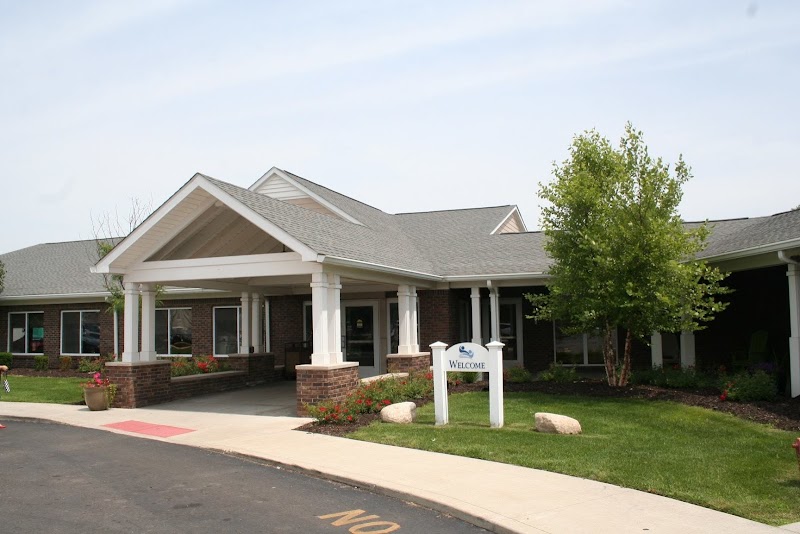
4427 Venoy Rd, Wayne, MI 48184 (734) 729-4436
For profit - Corporation 179 Beds THE ORCHARDS MICHIGAN Data: November 2025 1 Immediate Jeopardy citation
Trust Grade
36/100
#344 of 422 in MI
Last Inspection: August 2024

Within standard 12-15 month inspection cycle. Federal law requires annual inspections.

Overview

The Orchards at Wayne has received a Trust Grade of F, indicating significant concerns and poor performance. With a state rank of #344 out of 422 facilities in Michigan and a county rank of #57 out of 63, they are positioned in the bottom half of both categories. Although the facility is currently improving, having reduced issues from 11 in 2024 to just 1 in 2025, it still faces serious staffing challenges with lower RN coverage than 78% of Michigan facilities. Specific incidents of concern include a critical failure to timely initiate a Code for a missing resident, which posed a risk of serious injury, and repeated issues with meal service delays due to insufficient kitchen staff. While staffing turnover is at 49%, which is average, families should weigh these strengths against the significant weaknesses highlighted in recent inspections.
Trust Score
F
36/100
In Michigan
#344/422
Bottom 19%
Safety Record
High Risk
Review needed
Inspections
Getting Better
11 → 1 violations
Staff Stability
⚠ Watch
49% turnover. Above average. Higher turnover means staff may not know residents' routines.
Penalties
○ Average
$8,991 in fines. Higher than 66% of Michigan facilities. Some compliance issues.
Skilled Nurses
⚠ Watch
Each resident gets only 25 minutes of Registered Nurse (RN) attention daily — below average for Michigan. Fewer RN minutes means fewer trained eyes watching for problems.
Violations
⚠ Watch
37 deficiencies on record. Higher than average. Multiple issues found across inspections.
★★☆☆☆
2.0
Overall Rating
★★★☆☆
3.0
Staff Levels
★★★☆☆
3.0
Care Quality
★★☆☆☆
2.0
Inspection Score
Stable
2024: 11 issues
2025: 1 issues

The Good

  • Full Sprinkler Coverage · Fire safety systems throughout facility
  • No fines on record

Facility shows strength in fire safety.

The Bad

2-Star Overall Rating

Below Michigan average (3.1)

Below average - review inspection findings carefully

Staff Turnover: 49%

Near Michigan avg (46%)

Higher turnover may affect care consistency

Federal Fines: $8,991

Below median ($33,413)

Minor penalties assessed

Chain: THE ORCHARDS MICHIGAN

Part of a multi-facility chain

Ask about local staffing decisions and management

The Ugly 37 deficiencies on record

1 life-threatening
Jul 2025 1 deficiency
CONCERN (D) 📢 Someone Reported This

A family member, employee, or ombudsman was alarmed enough to file a formal complaint

Potential for Harm - no one hurt, but risky conditions existed

Pharmacy Services (Tag F0755)

Could have caused harm · This affected 1 resident

**NOTE- TERMS IN BRACKETS HAVE BEEN EDITED TO PROTECT CONFIDENTIALITY** Based on observation, interview, and record review, the facility failed to ensure that only authorized health care professionals...

Read full inspector narrative →
**NOTE- TERMS IN BRACKETS HAVE BEEN EDITED TO PROTECT CONFIDENTIALITY** Based on observation, interview, and record review, the facility failed to ensure that only authorized health care professionals administered medication for one resident (R102) out of two residents reviewed for medication administration. Findings include: On 7/2/25 at 10:37 AM, R102 was observed awake and lying in bed. A square shaped, undated patch was observed on the outer part of R102's right knee. Three sides of the square patch appeared smooth, but the fourth side appeared coarse and rough as if it had been cut in two. R102 said the knee patch was applied yesterday along with another one on the tailbone/lower back area. During an observation and interview on 7/2/25 at 11:07 AM of R102's knee with Licensed Practical Nurse/Unit Manager (LPN/UM) D, R102 stated, I was in pain yesterday, and (Therapy Director [TD] E) put patches on me. After exiting R102's room, LPN/UM D said any medication administered to a resident required a physician's order and should be administered by a nurse. On 7/2/25 at 11:13 AM, TD E said R102 was currently receiving physical and occupational therapy. TD E added R102 had arthritis of the right knee and was unable to fully extend the leg. TD E said that yesterday while receiving treatment in the Therapy Department R102 complained of pain and a pain patch was applied. TD E said the pain patch was supplied by LPN F. TD E did not document that a pain patch was administered to R102. On 7/2/25 at 11:29 AM, LPN F said today R102's orders were changed so that R102 could receive a pain patch. LPN F denied having a conversation with TD E about R102's pain, but added that last week, therapy asked for a pain patch, and it was obtained for therapy from Central Supply because it was an over-the-counter medication. On 7/2/25 at 11:45 AM, LPN/UM D said over-the-counter medications for residents were to have a physician's order and be administered by the nurse. R102's July 2025 Medication Administration Record (MAR) generated at 11:01 AM was reviewed with LPN/UM D and did not document an order for R102 to receive a pain patch or pain gel to the knee. LPN/UM D added that pain patches were to be dated and initialed by the nurse when applied. On 7/2/25 at 11:51 AM, during a return visit to see R102 with LPN/UM D, R102 stated, I told them to cut it (the pain patch) in half. The patch on R102's knee had been removed, and LPN/UM D observed that there was no patch on R102's lower back area. A review of the clinical record for R102 documented an initial admission date of 12/1/11 and readmission date of 4/28/25. R102's diagnoses included functional quadriplegia and pain in the right leg. A Minimum Data Set assessment dated [DATE] documented intact cognition. Record review of R102's orders documented the following, Icy Hot External Patch (Menthol (Topical Analgesic)). Apply to affected area topically one time a day for pain apply to lower back, left shoulder, right knee. Ordered on 7/2/25 at 11:19 AM by LPN F. On 7/2/25 at 1:25 PM, the Director of Nursing (DON) said staff in the Therapy Department were not legally able to apply a pain patch to a resident. The DON added that when R102's pain was identified, an order should have been obtained for the patch and the pain patch should have been applied by a nurse not the therapist. The nurse would have documented the administration of the pain patch on the MAR. The DON said R102 had not been evaluated and approved for self-administration of medication. The DON acknowledged that she observed the patch on R102's right knee. It appeared to have been half of a patch and that it was not dated or signed. A review of a facility policy titled, Medication Administration and General Guidelines, dated 2022, documented in part the following: - Medications are administered as prescribed, in accordance with State Regulations using good nursing principles and practices and only by persons legally authorized to do so. Medications are prepared, administered, and recorded only by licensed nursing, medical, pharmacy, or other personnel authorized by state laws and regulations to administer medication. - Medications are administered in accordance with written orders of the attending physician. - The resident's MAR is initialed by the person administering a medication. On 7/2/25 at 2:10 PM during the exit conference, the Nursing Home Administrator and DON did not offer additional documentation or information when asked.
Nov 2024 1 deficiency
CONCERN (F) 📢 Someone Reported This

A family member, employee, or ombudsman was alarmed enough to file a formal complaint

Potential for Harm - no one hurt, but risky conditions existed

Deficiency F0802 (Tag F0802)

Could have caused harm · This affected most or all residents

**NOTE- TERMS IN BRACKETS HAVE BEEN EDITED TO PROTECT CONFIDENTIALITY** This citation pertains to intakes MI00147383 and MI00147811. Based on observation, interview, and record review, the facility fa...

Read full inspector narrative →
**NOTE- TERMS IN BRACKETS HAVE BEEN EDITED TO PROTECT CONFIDENTIALITY** This citation pertains to intakes MI00147383 and MI00147811. Based on observation, interview, and record review, the facility failed to ensure enough kitchen staff were available to prepare and serve meals in a timely manner. Findings include: It was reported to the State Agency that meals were late because of staffing issues. On 11/6/24 at 8:35 AM, LPN A was observed in the 1000 Hall and said breakfast was normally served between 8:30 - 9:30 AM. On 11/6/24 at 8:37 AM, LPN C was observed in the 800 Hall and said breakfast was usually served about 8:00 AM. On 11/6/24 at 8:43 AM, R101 was observed awake, alert, lying in his bed, and able to answer questions. R101 had not been served breakfast at the time of this interview. R101 said that breakfast was served at 10:00 AM. R101's Minimum Data Set assessment dated [DATE] documented intact cognition. On 11/6/24 at 8:45 AM, breakfast meal carts were not observed on Unit 500, Unit 800, Unit 1000 or the large dining room. On 11/6/24 at 9:25 AM, R101 indicated he was still waiting for breakfast to be served. On 11/6/24 at 1:01 PM, Dietary Manager (DM) H was observed pushing a meal cart out of the kitchen and transporting the cart to a housing unit. An unidentified staff member stated, They must be short because I saw the (dietary) manager pushing a cart. On 11/6/24 at 1:39 PM, unidentified female Dietary Aide (DA) J, was asked if DM H could come and speak with the State Surveyor. DA J asked the State Surveyor to wait because they were still running the tray line. On 11/6/24 at 1:42 PM, unidentified male DA K was observed transporting a meal cart to Unit 900. DA K stated, See, we still don't have staff. Just like the last time you were here. On 11/6/24 at 1:43 PM, DM H said breakfast and lunch meal services were supposed to start at 8 AM and 12 PM respectively. DM H stated, We are short (of staff) today. We were late for breakfast because of (lack of) staffing. I've been here for a week. Four out of my seven days, we have been short. DM H stated there should have been two dietary aides and one cook for breakfast meal service. There was only a cook, plus DM H until 9:00 AM. DM stated, Once you're behind in the morning, it will carry over for the rest of the day. Ideally if lunch starts at noon, the last cart should come out at 1 PM. On 11/6/24 at 2:24 PM, the Nursing Home Administrator (NHA) said the kitchen should be staffed with two dietary aides, one cook, and the dietary manager. A review of a facility document, titled Meal times, undated but received during the survey, revealed the following: Breakfast: 8:00 AM to 9:00 AM Lunch: 12:30 PM to 1:30 PM Dinner: 5:30 PM to 6:30 PM On 11/6/24 at 4:00 PM during the exit conference, the NHA and Director of Nursing did not offer additional documentation or information when asked.
Oct 2024 2 deficiencies 1 IJ
CRITICAL (J) 📢 Someone Reported This

A family member, employee, or ombudsman was alarmed enough to file a formal complaint

Immediate Jeopardy (IJ) - the most serious Medicare violation

Accident Prevention (Tag F0689)

Someone could have died · This affected 1 resident

**NOTE- TERMS IN BRACKETS HAVE BEEN EDITED TO PROTECT CONFIDENTIALITY** This citation pertains to intake number MI00147248. Based on interview and record review, the facility failed to initiate a Code...

Read full inspector narrative →
**NOTE- TERMS IN BRACKETS HAVE BEEN EDITED TO PROTECT CONFIDENTIALITY** This citation pertains to intake number MI00147248. Based on interview and record review, the facility failed to initiate a Code [NAME] (Notification for a missing resident) in a timely manner for one resident (R703) that was missing from the facility, after identifying that the resident had left the faciity on 9/25/24, unbeknownst to staff, of five residents reviewed for elopement, resulting in the potential for serious injury or death from the resident being outside and unsupervised for an extended period of time. Findings include: The Immediate Jeopardy (IJ) started on 9/25/24 and was identified on 10/3/24. The Administrator was notified of the IJ on 10/3/24 at 3:18 PM, and was asked for a plan to remove the immediacy. The IJ was removed on 9/26/24, based on the facility's implementation of the removal plan as verified onsite on 10/3/24. Although the immediacy was removed, the facility's deficient practice was not corrected and remained isolated with the potential for actual harm that is not immediate jeopardy. On 10/2/24 at 11:15 AM, Activity Aide (AA) H was interviewed regarding the elopement of R703 on 9/25/24. AA H indicated that they were coming to work at the facility at approximately 11:00 AM, and observed R703 on the sidewalk in their wheelchair approximately a mile and a half from the facility. AA H further indicated that upon observing R703, they contacted the facility and themselves and two other staff were able to bring R703 back to the facility. On 10/2/24 at 11:22 AM, R703 was met in their room and attempted to be interviewed. A one to one staff was observed in R703's room and R703 was observed to be sleeping. On 10/2/24 at 11:25 AM, the Director of Nursing (DON) was asked to provide the names and phone numbers of the staff assigned to R703 on 9/25/24 on day shift. The DON provided the requested information for Certified Nursing Assistant (CNA) B and Nurse/LPN (Licensed Practical Nurse) C, and stated, Both staff were terminated following the elopement incident for not following the facility's elopement policy. On 10/2/24 at 12:52 PM, R703 was met with again in their room and interviewed regarding the elopement incident which they were involved in. R703 indicated that they exited the front door of the facility on 9/25/24, After 11:00 AM, and stated, I was wheeling around all night. R703 indicated that they returned to the facility on 9/26/24, with no time provided by R703. On 10/2/24 at 12:55 PM, Certified Nursing Assistant (CNA) B was attempted to be contacted by phone for an interview regarding the elopement of R703 on 9/25/24. CNA B did not answer their phone and a voicemail message was left for them A review of a written statement completed by CNA B regarding the elopement of R703 indicated that CNA B stated that they had last seen R703 in the facility at 9:30 AM, on 9/25/24. Further review of CNA B's written statement revealed that CNA B approached Nurse C twice between the morning hours and After lunch and asked Nurse C if R703 was in the building. On 10/2/24 at 1:00 PM, Nurse C was attempted to be contacted by phone for an interview regarding the elopement of R703 on 9/25/24. CNA C did not answer their phone and a voicemail message was left for them. A review of a written statement completed by Nurse C regarding the elopement of R703 indicated that Nurse C stated that they had last seen R703 in the facility between 8:00 AM-9:00 AM, on 9/25/24. Nurse C's written statement also indicated that CNA B approached them in the the morning and after lunch to ask if R703 was present in the building. On 10/3/24 at 9:15 AM, Nurse/LPN F was interviewed regarding the elopement involving R703. Nurse F indicated that they last saw R703 on/around 7:00 AM when they administered medication to [R703]. On 10/3/24 at 1:31 PM, Nurse C was contacted by phone and interviewed regarding the elopement involving R703 on 9/25/24. Nurse C was asked when they suspected that R703 had eloped from the building. Nurse C stated, I knew they were gone around 11:45 AM-12:00 PM. I thought I saw [R703] when I did my rounds, I had his medications pulled to go, but got sidetracked with something else and didn't get to [R703]. Nurse C was asked how they knew R703 was gone from the facility on 9/25/24. Nurse C stated, The CNA came to me and said, 'I don't think [R703] is here.' That's when we did the search. Nurse C was asked how long the search for R703 lasted and stated, It was going on at the time I left on 9/25/24 at around 8:00 PM-8:30 PM, and continued the next day. Nurse C was asked if they had ever witnessed R703 try to leave previously. Nurse C stated, No, but [R703] would make statements that they were going to go. [R703] was always looking out. Nurse C was asked if they knew how R703 got out of the building and which door they exited out of. Nurse C stated, No, I don't know what door. On 10/3/24 at 2:10 PM, the Administrator was interviewed about the elopement involving R703 on 9/25/24, and asked about the timeline of initiating a Code [NAME] for R703. The NHA indicated that Code [NAME] was initiated at 1:55 PM on 9/25/24. The NHA indicated that the code should have been initiated immediately when Nurse C realized that R703 was missing. A progress note located in R703's electronic medical record (EMR) which was dated, 9/25/2024 14:53 (2:53 PM) was reviewed and revealed the following, Alert Note Note Text: Writer was alerted by staff that resident could not be located. Code [NAME] was called, and the facility and grounds were searched by staff. Police were called and a simultaneously search of the community was initiated. Resident has a BIMS (Brief interview for mental status) of 6 and is mobile independently in [their] wheelchair. Staff were interviewed and the charge nurse stated [they] administered [R703] A.M. medication just prior to breakfast and [R703] propelled [themselves] towards the Oaks side of the building. C.N.A.(Certified Nursing Assistant) [indicated] [they] observed resident watching TV (television0 in the Oaks TV area after punching in this morning 9/25/2024. State agency notified, MD (Medical Doctor) notified, family notified. Further review of R703's progress notes revealed the following, 9/26/2024 11:03 [AM] Alert Note Note Text: Activity staff called the facility to report resident being seen in [their] wheelchair on [Main roads within a mile and a half from the facility]. Staff drove and picked resident up. Resident was in good spirits laughing and joking with staff. Resident asked where he went, and [R703] responded that [they] had to go to work, and [were] on [their] way back home. Writer asked resident where he was. Resident stated he was with [their] brother. Resident spoke with [their] sister and mother on the phone and assured them [that they were] doing well. Resident was given breakfast and provided a shower he remains in good spirits and remains up in his wheelchair. Resident placed on 15-minute checks. Review of R703's EMR revealed that R703 was admitted into the facility on [DATE] with diagnoses that included Traumatic brain injury and Alcohol abuse. R703's most recent quarterly minimum data set assessment (MDS) dated [DATE] revealed that R703 had severely impaired cognition and required extensive assistance for all activities of daily living (ADLs). Review of a quarterly elopement assessment completed on R703 on 9/6/24 revealed that R703 Had no history of wandering; No diagnosis of .cognitive impairment, and had no reported episodes of exit seeking behavior in the past six months. R703 was evaluated to be at Low Risk for elopement. A facility policy titled, Missing Resident Hazard Code Green with no date, was reviewed and revealed the following, Policy: It is the policy of this facility to reasonably protect the residents from harm through the prevention of elopemements. A missing resident is one that cannot be located within the facility and has not been signed out. Procedure: If it is determined that the resident was not signed out, the charge nurse will immediately announce over the paging system Code Green. This will be repeated three times. IJ Removal Plan-F689 1. Facility educated staff on policy of Code Green. Policy reviewed, updated, and education conducted on 9/25/24 and 9/26/24. 2. The Code [NAME] will be enacted immediately upon staff noticing that resident missing and not on appointment or LOA. Staff will page overhead Code [NAME] (Resident Room Number) three times. Staff will initiate head count of residents, search of rooms, grounds, other offices, and surrounding areas. Staff will page periodically Code [NAME] until the resident is located. The facility alleged compliance is September 26, 2024.
CONCERN (D) 📢 Someone Reported This

A family member, employee, or ombudsman was alarmed enough to file a formal complaint

Potential for Harm - no one hurt, but risky conditions existed

Free from Abuse/Neglect (Tag F0600)

Could have caused harm · This affected 1 resident

**NOTE- TERMS IN BRACKETS HAVE BEEN EDITED TO PROTECT CONFIDENTIALITY** This citation pertains to intake MI00146507. Based on interview, and record review the facility failed to prevent a resident to...

Read full inspector narrative →
**NOTE- TERMS IN BRACKETS HAVE BEEN EDITED TO PROTECT CONFIDENTIALITY** This citation pertains to intake MI00146507. Based on interview, and record review the facility failed to prevent a resident to resident physical abuse incident, for two sampled residents (R701 and R702) of three residents reviewed for abuse. Findings included: A review of the intake noted, It was reported there was a resident to resident incident that resulted in no injuries. On 10/2/2024 at 12:42 PM, R702 was asked about the incident with R701. R702 explained, R701 was over on 900 hall. R702 stated, I was with my boyfriend and [R701] was coming after him, then after me. R702 continued and explained that R701 hit them in the face and then pulled on their wheelchair. R702 stated, I put my hand up over my face. I guess I wasn't fast enough and [R701] got me in the face. A review of R702's medical record revealed, 8/22/24 20:38 Writer witnessed resident getting hit with close fist on left side of face, neck and shoulder by another resident. Resident denies pain or discomfort, no injuries noted at his time. Assessed Resident head to toe, ROM and VS WNL. Denies being Unsafe or threatened. Law enforcement was called, and Resident interviewed by police. Licensed Practical Nurse (LPN H). On 10/02/2024 at 2:04 PM, LPN H was interviewed via phone and was asked about the incident. LPN H reported that R701 was verbally abusive towards staff and had attacked staff that day but they were able to get [R701] back to their room. LPN H continued and explained, when R701 came back out of their room, R702 went down hallway towards R702 and times and hit R702 three times in the arm, before they were able to separate the residents. Further review of R702 medical record revealed, R702 was admitted to the facility on [DATE], with diagnosis of Chronic obstructive pulmonary disease. A review of R702's quarterly Minimium Data Set (MDS) assessment dated [DATE] noted R702 with an intact cognition. A review of R701's medical record revealed, R701 was admitted to the facility on [DATE] and discharge on [DATE] with diagnosis of Metabolic encephalopathy, Delirium due to known physiological condition, Bipolar disorder, Adjustment disorder with mixed anxiety and depressed mood, Cognitive communication deficit, Impulsiveness. A review of R701's MDS noted R701 with an impaired cognition. Further review of R701's care plan noted, BEHAVIOR: I am at risk of behaviors and can be demanding and at times and may be verbally aggressive to staff. I am accusatory towards staff and other residents. I have a history of impulsiveness and transfer without waiting for assistance. I will state understanding of needing to wait, but if someone is not right there, I will decide to transfer and do so without asking for help. I have a history of sitting on the floor and self transferring, resulting in falls. I can be hyperverbal and eager to express negative feelings towards others. At times, I become focused on events that occurred in the past as if they are current events. I have anxiety Date Initiated: 08/08/2019. Goal: I will have fewer than three behavioral episodes per week throughout the next review date. Date Initiated: 05/21/2021. Intervention: Approach and speak in a calm manner. Divert my attention and remove me from a situation as needed. Date Initiated: 03/30/2016. Focus: I am verbally aggressive. I frequently become verbally aggressive towards staff during my shower I frequently make accusations and complaints non health related. [R701] makes statements that she is allowed to speak to people however she wishes without consequence. I am a hoarder and I keep personal items all around me at my bedside which contributes to my safety concerns Date Initiated: 03/10/2017. Goal: I will verbalize understanding of the need to control my verbally abusive behavior, through the review date. I will be redirected by staff during times of inappropriate verbalization with fewer outbursts through next review. Date Initiated: 03/10/2017. Intervention: When I become agitated: Intervene before my agitation escalates; Guide me away from the source of distress; Engage calmly in conversation; If my response is aggressive, walk calmly. Date Initiated: 05/23/2022. Continued review of R701's progress notes revealed, a history of verbal and physical aggressive behavior. R701's Progress notes: 8/21/2024 16:45 Behavior Note Text: Writer observed resident in hallway with feces from head to toe. [CNA] says I have been trying to change [R701] for about 15 minutes now but [R701] keeps calling me a [expletives] and is trying to sling poop on me. Resident says You [expletives] right I called her a [expletives] because she is one and I will let her change me when I'm good and ready too. Writer asked resident to come to shower that writer and [CNA] CNA give resident a shower. Resident says [expletives] you too [expletives] you don't tell me what to do. I'm not taking no shower. Resident began to throw Wash clothes covered in BM on writer and [CNA]. After roughly 30 min resident agreed to take shower. Once in the shower room the resident says I hate you funky stankin [expletives]. Yall ain't [expletives] but a bunch of raggedy [expletives] y'all [expletives] stank. Hurry the [expletives] up and give me a shower. Writer and [CNA] were quiet while resident continued with insults. Resident tested water and agreed to temp. writer and [CNA]began washing residents body. Resident continued saying What the [expletives] are y'all looking at I'm sick of you [expletives]. The began taking water from vaginal area that was filled with BM and throwing it on writer and [CNA]. Both writer and [CNA]moved away from resident. While moving away resident grabbed shower head out of [CNA] hand and began spraying water on [CNA] and writer. At this time resident slid from shower chair onto shower floor. Resident did not hit head and resident was able to move all extremities. Resident reports pain 0/10. Guardian and MD made aware of fall. Unit Manager I. 8/21/2024 19:53 Behavior Note Text: Resident physically assaulted A resident [R702]. Writer observed resident run into the other resident with her wheelchair and strike with close fist 3 times. writer ran and got in the middle to Sheild resident [R702] and removed resident SM back. Police called and on the way. LPN H. 8/21/2024 20:16 Behavior Note Text: Resident still attempting to hit and threaten other residents. Resident punch writer 4 times and other staff multiple times. 8/21/2024 22:33 Nurses Note Text: Resident interviewed by police denied punching another resident on face with a close fist or being verbally and physically aggressive towards staff. Resident was calm noncombative or aggressive when police present. Resident transported to (local hospital) via stretcher EMS . 8/21/2024 23:06 Nurses Note Text: Resident physically assaulted A resident [R702]. Writer observed resident run into the other resident with [R701's] wheelchair and strike with close fist 3 times, left side of face, neck and shoulder. writer ran and got in the middle to sheild resident [R702] and removed resident [R702] back. Police called and on the way. police arrived writer directed law enforcement to residents room. Resident interviewed by police denied punching another resident on face with a close fist or being verbally and physically aggressive towards staff. Resident was calm noncombative or aggressive when police present. Resident transported to (local hospital) . On 10/03/24 at 4:47 PM, the Director of Nursing was asked about the incident with R701. The DON explained that R701 was never abusive towards residents it was always staff. A review of the facility's policy titled Abuse and Neglect Prohibition Policy, revealed, Policy: Each resident has the right to be free from abuse, mistreatment, neglect, exploitation, involuntary seclusion, misappropriation of property and mental abuse facility or enabled through the use of technology. Each resident will be free from chemical or physical restraints imposed for purposes of discipline or convenience that are not required to treat residents symptoms . C. Prevention . 4. Staff is to report any signs of stress from family and other individuals involved with the resident that may lead to abuse, neglect, or misappropriation of resident property, and intervene as appropriate. 5. Residents identified by staff as being self-injurious or exhibiting abusive behavior, which require professional services not provided in the facility, will be reviewed by the physician as soon as possible and treatment plans modified as appropriate .
Aug 2024 6 deficiencies
CONCERN (D)

Potential for Harm - no one hurt, but risky conditions existed

Deficiency F0558 (Tag F0558)

Could have caused harm · This affected 1 resident

**NOTE- TERMS IN BRACKETS HAVE BEEN EDITED TO PROTECT CONFIDENTIALITY** Based on observation, interview, and record review, the facility failed to provide an appropriately sized wheelchair for one res...

Read full inspector narrative →
**NOTE- TERMS IN BRACKETS HAVE BEEN EDITED TO PROTECT CONFIDENTIALITY** Based on observation, interview, and record review, the facility failed to provide an appropriately sized wheelchair for one resident (R79) of one resident reviewed for accommodation of needs, resulting in discomfort. On 7/30/24 at 10:51 AM R79 was observed sitting in standard wheelchair (18-inch-wide seat) with abdominal girth and thighs resting directly on the metal part of the wheel chair arms. On 7/31/24 at 8:24 AM R79 was observed self-propelling in a standard wheelchair down the hallway. R79 was asked about her comfort in the wheelchair and stated My wheelchair is too tight. My legs push against the sides. I'm not comfortable. R79 said she was going to the dining hall for breakfast and spends most of the day in the wheelchair. Record review of R79's Electronic Medical Record (EMR) revealed admitted to facility on 3/8/24 with pertinent diagnosis of Mononeuropathies of bilateral lower limbs, Chronic Congestive heart failure. Review of the Minimum Data Set (MDS) dated [DATE] for R79 revealed a Brief interview for Mental Status (BIMS) of 13/15 intact cognition and required a wheelchair for ambulation. Record review of R79's care plan dated 3/8/24 revealed in part, I need tray delivery & setup help @ mealtimes, moderate help with UB(upper body) tasks & substantial help with most LB(lower body) ADL's r/t (activities of daily living related to) obesity & weakness. BMI (body mass index) classified as obese. I have actual impairment to skin integrity of the (Bilateral lower legs and under abdominal folds) r/t skin tears to lower leg. On 7/31/24 at 11:21 AM Therapy Manager A said the therapy department provides wheelchairs for new admits. Therapy Manager A provided documentation that R79 was assessed by physical and occupational therapy on 3/11/24. On 7/31/24 at 2:16 PM Licensed Practical Nurse B agreed R79 required a wider wheelchair due to her abdominal girth and thighs pushing against the arms of the wheelchair. In an interview on 8/1/24 at 8:43 AM the Director of Nursing (DON) said resident wheelchairs should fit correctly so that residents are comfortable. Review of the facility policy titled Unit Rounds undated revealed in part .The purpose of unit rounds is to monitor residents throughout the day to assure their needs are met.
CONCERN (D)

Potential for Harm - no one hurt, but risky conditions existed

Transfer Notice (Tag F0623)

Could have caused harm · This affected 1 resident

**NOTE- TERMS IN BRACKETS HAVE BEEN EDITED TO PROTECT CONFIDENTIALITY** Based on interview and record review, the facility failed to notify the Responsible Representative (RR) of a facility-initiated ...

Read full inspector narrative →
**NOTE- TERMS IN BRACKETS HAVE BEEN EDITED TO PROTECT CONFIDENTIALITY** Based on interview and record review, the facility failed to notify the Responsible Representative (RR) of a facility-initiated discharge for one (R76) resident reviewed for transfer. Findings include: A review of the admission Record for Resident #76 (R76) revealed an initial admission date of 11/17/23, readmission date of 11/22/23, and the designation of RR N as R76's emergency contact and guardian. R76's was diagnosed with schizoaffective disorder. A Minimum Data Set (MDS) assessment dated [DATE] documented severe cognitive impairment. A review of R76's clinical record documented the following: Behavior progress note of 11/20/23, created on 11/21/23: Resident spitting at staff, screaming in hallway, pulling at brief, throwing brief contents at staff and at other residents, did not make contact with others, throws self on floor, attempted to distract with candy, TV, activities, unable to distract, continued to scream, swinging arms at staff, unapproachable most of the time due to aggressiveness towards anyone who approaches her. NP (nurse practitioner) from (company providing psychiatric/psychological services) in to evaluate, unable to have a conversation with resident, she kept screaming and spitting and swinging arms when approached or attempts to engage in conversation. Admission's note dated 11/22/23: At 12pm, resident arrived from (local hospital) via stretcher with 2 EMS personnel. appear stable, verbally aggressive, cursing, yelling and attempting to fight staff during assessment. vital signs WNLs (within normal limits). Lungs clear to auscultate, and no signs of SOB (shortness of breath) noted. Abdomen round and non-distended with active bowel sound in all quadrants. skin intact with old scar on abdomen, right lower leg and left lateral shin. welcome and oriented to her room. bed place in the lowest position with the HOB (head of bed) elevated to improve lung ventilation. safety measures and fall precaution implemented. call light and all personal belonging place within reach. In-House NP verified all prescribe medications and new orders updated in the MAR (medication administration record). On 7/31/24 beginning at 1:05 PM, the Director of Nursing (DON) reviewed R76's clinical record and confirmed that R76 was transferred to the hospital on [DATE]. The DON said she thought the facility had petitioned the resident out but was unable to provide corroborating documentation. The DON was also unable to provide documentation that R76's RR was notified of the transfer. On 8/1/24 at 11;48 AM, the Nursing Home Administrator (NHA) said R76's guardian should have been notified because she was being sent out to the hospital due to a change in condition. A review of the facility document titled, Transfers and Discharges, undated but provided during the survey, documented in part that for emergency transfers to notify resident and/or resident representative. On 8/1/24 at 3:30 PM during the exit conference, the NHA and DON did not offer additional documentation or information regarding this citation when asked.
CONCERN (D)

Potential for Harm - no one hurt, but risky conditions existed

ADL Care (Tag F0677)

Could have caused harm · This affected 1 resident

**NOTE- TERMS IN BRACKETS HAVE BEEN EDITED TO PROTECT CONFIDENTIALITY** Based on observation and interview the facility failed to provide timely ADL (Activities of daily living) care to include nail c...

Read full inspector narrative →
**NOTE- TERMS IN BRACKETS HAVE BEEN EDITED TO PROTECT CONFIDENTIALITY** Based on observation and interview the facility failed to provide timely ADL (Activities of daily living) care to include nail care for one resident (R50) of six residents reviewed for ADL care resulting in dissatisfaction with care. Findings include: On 7/30/24 at 10:24 AM R50 was observed in bed sleeping with both hands contracted into fists with long dirty fingernails. On 7/31/24 at 8:14 AM R50 was observed in bed sleeping with both hands contracted into fists with long dirty fingernails. On 7/31/24 at 1:11 PM R50 stated, My nails need to be cut they are too long. Record review of R50's Electronic Medical Record (EMR) revealed admitted to facility on 10/13/22 with pertinent diagnosis of bed confinement status. Review of the Minimum Data Set (MDS) dated [DATE] for R50 revealed a Brief interview for Mental Status (BIMS) of 15/15 intact cognition and dependent for personal hygiene. On 7/31/24 at 2:18 PM Licensed Practical Nurse (LPN) B was interviewed and agreed R50's fingernails were long with debris under the nails. LPN B stated, No one told me her nails were long or that she had refused to get them cut. LPN B then asked R50 would you let me cut your nails and R50 agreed. Record review of R50's care plan revealed intervention date initiated 10/25/22 Bathing/Showering: Check my nail length-file and clean them on my bath day as necessary. Report any changes to the nurse. On 8/01/24 at 8:44 AM the Director of Nursing (DON) was interviewed and said dependent residents are expected to have ADLs including nails trimmed timely. Review of the facility policy titled Unit Rounds undated revealed in part .The purpose of unit rounds is to monitor residents throughout the day and assure their needs are met. Resident: Fingernails/Toenails clean and trimmed.
CONCERN (D)

Potential for Harm - no one hurt, but risky conditions existed

Drug Regimen Review (Tag F0756)

Could have caused harm · This affected 1 resident

**NOTE- TERMS IN BRACKETS HAVE BEEN EDITED TO PROTECT CONFIDENTIALITY** Based on interview and record review the facility failed to address Medication Regimen Review (MRR) recommendations timely for o...

Read full inspector narrative →
**NOTE- TERMS IN BRACKETS HAVE BEEN EDITED TO PROTECT CONFIDENTIALITY** Based on interview and record review the facility failed to address Medication Regimen Review (MRR) recommendations timely for one resident (R54) of five residents reviewed for a medication regimen review, resulting in the potential for the continuance of unnecessary medications and lack of communication of recommended medication changes between pharmacist and physician. Findings include: On 8/01/24 at 10:34 am review of the clinical record documented R54 was initially admitted into the facility on 5/1/24 and readmitted on [DATE] with diagnoses that included hemiplegia and hemiparesis following cerebral infarction affecting left non-dominant side, type 2 diabetes mellitus with diabetic neuropathy, panic disorder, episodic paroxysmal anxiety, undifferentiated schizophrenia, and bipolar disorder. According to the admission Minimum Data Set assessment, R54 had moderate impaired cognition and dependent for most activities of daily living. Review of R54's physician orders documented the resident's current medications as follows: - Cymbalta Oral Capsule Delayed Release Particles 30 MG (Duloxetine HCl) Give 30 mg by mouth one time a day for Mood. Start date 7/20/24. - Abilify Oral Tablet 10 MG (Aripiprazole) Give 10 mg by mouth one time a day for Mood with Psychosis. Start date 7/20/24. - Norco Oral Tablet 7.5-325 MG (Hydrocodone-Acetaminophen) Give 1 tablet by mouth every 8 hours for Pain. Start date 7/3/24. -Insulin Glargine Solution 100 unit/ml Inject 35 unit subcutaneous once daily for Diabetes Mellitus. Start date 7/3/24. Review of monthly pharmacy recommendations in the electronic medical record documented the following: 5/29/24- See report for any noted irregularities and/or recommendations. Additional information: 6 types of recommendations. On 8/1/24 at 11:00 a.m. the facility was asked to provide the detailed pharmacy reports and recommendations. They were not located in the electronic medical record (EMR). On 8/1/24 at 2:00 p.m. the Nursing Home Administrator (NHA) was asked again to provide the pharmacy report and recommendation for R54. The NHA said the first request was missed and will be provided. On 8/1/24 at 2:50 p.m. the facility was asked to provide the facility's policy for Medication Regimen Review (MRR). On 8/1/24 at 4:00 p.m. the survey team exited the facility and the facility had not provided the pharmacy report and the facility's policy for MRR as requested prior to exiting.
CONCERN (F)

Potential for Harm - no one hurt, but risky conditions existed

Food Safety (Tag F0812)

Could have caused harm · This affected most or all residents

Based on observation, interview, and record review, the facility failed to: 1. Ensure kitchen sinks were in good repair and warm water was available for hand washing; 2. Properly date-label food store...

Read full inspector narrative →
Based on observation, interview, and record review, the facility failed to: 1. Ensure kitchen sinks were in good repair and warm water was available for hand washing; 2. Properly date-label food stored in the walk-in cooler; 3. Ensure proper cooling of cooked, potentially hazardous (time-temperature for safety) food, mixed vegetables; 4. Ensure pans were properly cleaned; 5. Effectively clean surfaces in the kitchen and commercial ice machine; 6. Maintain cleanable walls in the kitchen; and 7. Ensure used meal trays were not placed on a meal cart during meal pass. These deficient practices had the potential to affect all the residents who consumed food from the kitchen and consumed ice from the ice machine, resulting in the potential for food-borne illness. Findings include: On 7/30/24 at 8:40 AM, during an observation of the kitchen with Dietary Manager (DM) G the following was observed: 1. Caulking around the hand washing sink near the Dietary Manager's office was cracked and separated. DM G said water can get through the cracks. 2. The following food items, observed in the walk-in cooler, were dated as indicated but the date marking did not specify if the date was the delivery date, opened date, or use-by date. - An opened one-gallon container of mayonnaise dated 7/11. - An opened 32-ounce container of minced garlic dated 6/7. - An opened packaged of shredded Monterey [NAME] cheese dated 7/25. - An opened 80-ounce bag of shredded cheddar cheese dated 7/29. - An opened bag of sliced turkey ham dated 7/27. DM G said date labeling needed to include the date received, date opened, and use-by date. 3. An undated full-size pan of cooked mixed vegetables was stored in the walk-in cooler. The cooling log was reviewed. The last item documented on the cooling log were biscuits cooked and cooled on 5/25/24. DM G acknowledged the mixed vegetables cooked yesterday should have been on the cooling log and they were not. 4. The following pans soiled with food debris were observed stored in the clean pot/pan area: one full-size pan, one full-size perforated pan, two one-third size pans, one full-size sheet pan, and one sixth-size pan. DM G said the pots and pans should be air dried with no remaining food particles. 5. The back splash of the dish tank area was observed stained with a black substance that was easily removed with a paper towel. 6. Cove base tiles, located on the end cap wall between the dish tank area and main kitchen, were missing, exposing a surface that was not easily cleanable. DM G said maintenance was told about the missing tiles but probably forgot about it. DM G acknowledged that the surface was not cleanable. The front faceplate inside of the ice machine, located in resident nourishment room, was observed stained with a black slimy appearing substance that was easily removed with a paper towel. DM G said that maintenance was responsible for cleaning the ice machine. On 7/31/24 at 12:53 PM as Resident #43 (R43) was returning to his room, he asked Certified Nurse Aide (CNA) I if he could be served lunch. CNA I said yes and obtained R43's lunch tray from the enclosed meal cart. After R43's tray was delivered, the contents of the meal cart was examined with CNA I. There were two finished (soiled) meal trays, one from breakfast, that had been placed on the same side of the meal cart as unserved meal trays. CNA I said placing dirty trays with unserved meal trays can cause food contamination. CNA I stated, It's very unsanitary for sure. On 8/1/24 at 9:18 AM, Maintenance Director (MD) C said that maintenance was responsible for cleaning the ice machine. MD C stated, If it was dirty, it should have been cleaned. On 8/1/24 at 11:33 AM, the hot water faucets of the kitchen handwashing sink located near the DM G's office and the automatic handwashing sink were turned on and allowed to run for approximately two minutes. The water temperatures, as measured by DM G, were 74 ºF (Fahrenheit) and 71 ºF respectively. DM G felt the water and stated, The water is not warm. It's room temperature. The water should be warm. On 8/1/24 at 11:48 AM, the Nursing Home Administrator (NHA) said she expects the kitchen to be a sanitary department and to uphold their policies and procedures. A review of a document provided during the survey titled, How To Clean a Commercial Ice Machine, documented in part that commercial ice machines harbor dangerous bacterial growth and contamination if not cleaned properly. Frequent cleaning prevents the formation of biofilm. Biofilm protects harmful organisms, and once established, is difficult and expensive to remove. According to the 2013 FDA Food Code: -Section 3-501.14 Cooling. (A) Cooked time/temperature control for safety food shall be cooled: (1) Within 2 hours from 135ºF to 70°F; and (2) Within a total of 6 hours from 135ºF to 41°F or less. -Section 3-501.17, Ready-to-Eat, Time/Temperature Control for Safety Food, Date Marking. Refrigerated, ready-to-eat, time/temperature control for safety food prepared and held in a food establishment for more than 24 hours shall be clearly marked to indicate the date or day by which the food shall be consumed on the premises, sold, or discarded when held at a temperature of 41 degrees F or less for a maximum of 7 days. -Section 4-601.11 Equipment, Food-Contact Surfaces, Nonfood-Contact Surfaces, and Utensils. (A) Equipment food-contact surfaces and utensils shall be clean to sight and touch. -Section 5-202.12 Handwashing Facility, Installation. Warm water is more effective than cold water in removing the fatty soils encountered in kitchens. An adequate flow of warm water will cause soap to lather and aid in flushing soil quickly from the hands. ASTM (American Society for Testing and Materials) Standards for testing the efficacy of handwashing formulations specify a water temperature of 100 to 108°F. - Section 6-201.11 Floors, Walls, and Ceilings. Except as specified under § 6-201.14 and except for antislip floor coverings or applications that may be used for safety reasons, floors, floor coverings, walls, wall coverings, and ceilings shall be designed, constructed, and installed so they are smooth and easily cleanable On 8/1/24 at 3:30 PM during the exit conference, the NHA and Director of Nursing did not offer additional documentation or information regarding this citation when asked.
CONCERN (F)

Potential for Harm - no one hurt, but risky conditions existed

Garbage Disposal (Tag F0814)

Could have caused harm · This affected most or all residents

Based on observation, interview, and record review, the facility failed to properly dispose of rubbish and maintain cleanliness of the outside garbage area, resulting in a visually unappealing propert...

Read full inspector narrative →
Based on observation, interview, and record review, the facility failed to properly dispose of rubbish and maintain cleanliness of the outside garbage area, resulting in a visually unappealing property and the potential for harborage of pests. Findings include: On 7/30/24 at 8:34 AM, the gates to the outside fenced in dumpster area were opened. Three dumpsters, approximately 4 to 6 yard bins, were located within the fenced in area. The grounds of the fenced in area were littered with overgrown vegetation and trash, such as a mop handle, used cups, used gloves, used lids, disposable food containers, plastic bags, flattened cardboard boxes, a call light pull cord, smashed cans, two 8-foot metal frames, and a 55-gallon trash can which was half full of dark, murky water and also contained a plastic trash bag and green vegetation. On 7/30/24 at 12:10 PM, the outside dumpster area was observed with District Manager of Environmental Services (DMES) F and Dietary Manager (DM) G. The dumpster area remained littered with trash and the middle dumpster lid was opened. DMES F said the dumpster area needs attention because of the trash. DM G said the dumpster lid needed to be closed to prevent animals and water from getting inside. On 8/1/24 at 9:18 AM, Maintenance Director (MD) C said keeping the outside dumpster area clean was a group effort and that moving forward, keeping the dumpster area clean will be part of the maintenance department's preventative maintenance. On 8/1/24 at 11:48 AM, the Nursing Home Administrator (NHA) said that maintenance should have a cleaning schedule to maintain the cleanliness and sanitation of the outside dumpster area. A review of the policy titled, Waste Disposal, undated but provided during the survey, documented in part that the outside dumpsters will be maintained in a clean manner. Trash will not be overflowing and lids will remain closed at all times. The area around the dumpster should be kept clean and swept of debris. On 8/1/24 at 3:30 PM during the exit conference, the NHA and Director of Nursing did not offer additional documentation or information regarding this citation when asked.
Mar 2024 2 deficiencies
CONCERN (D) 📢 Someone Reported This

A family member, employee, or ombudsman was alarmed enough to file a formal complaint

Potential for Harm - no one hurt, but risky conditions existed

Deficiency F0558 (Tag F0558)

Could have caused harm · This affected 1 resident

**NOTE- TERMS IN BRACKETS HAVE BEEN EDITED TO PROTECT CONFIDENTIALITY** This citation pertains to Intake MI00142000 and MI00142648. Based on observation, interviews and record review, the facility fa...

Read full inspector narrative →
**NOTE- TERMS IN BRACKETS HAVE BEEN EDITED TO PROTECT CONFIDENTIALITY** This citation pertains to Intake MI00142000 and MI00142648. Based on observation, interviews and record review, the facility failed to respond to a resident's call light in a timely manner for one resident (R616) out of four residents reviewed for call light response times, resulting in the potential for resident frustration and unmet care needs. Findings include: In an observation on 3/20/24 at 8:14 a.m., a screen at the nurses station revealed R617's call light was on for 29 minutes. At 8:17 a.m., the call light was on for 32 minutes and 8:20 a.m. for 35minutes. In an observation and interview on 3/20/24 at 8:24 a.m., R617's call light was not on. R617 reported the call light was on for over an hour and staff just turned it off one minute ago. R617 reported asking for some milk but was told to wait. In an interview on 3/20/24 at 8:26 a.m. Licensed Practical Nurse (LPN) C reported a call light should be answered within 5 to10 minutes. LPN C then reported Certified Nursing Assistant (CNA) D was assigned to R617. In an interview on 3/20/24 at 8:29 a.m., CNA D reported she was pulled to the kitchen about 30 minutes to 1 hour ago. In an interview on 3/20/24 at 8:32 a.m., LPN C reported the assignment changed because CNA D has been pulled to the kitchen. Review of an admission Record revealed, R617 readmitted to the facility on [DATE] and readmitted on [DATE] with pertinent diagnoses which included Congestive Heart Failure, End Stage Renal (kidney disease), and Acute Pulmonary Edema. Review of a Minimum Data Set (MDS) assessment dated [DATE] revealed R617 had no cognitive impairment with a Brief interview for Mental Status (BIMS) score of 15, out of a total possible score of 15. In an interview on 3/20/24 at 3:11p.m., CNA F reported call lights are answered as soon as possible. In an interview on 3/20/24 at 3:16 p.m., CNA E reported call lights should be answered within 15 minutes. In an interview on 3/20/24 at 4:23 p.m., the Director of Nursing (DON) reported call lights can be answered by all staff. The DON then reported call light should be answered in at least 15 minutes. Review of a Call light Policy revised 2/17/20 documented, It is the policy of this facility to answer call lights as promptly as possible. Procedure 1. Call lights should be answered by available staff as promptly as possible .
CONCERN (D) 📢 Someone Reported This

A family member, employee, or ombudsman was alarmed enough to file a formal complaint

Potential for Harm - no one hurt, but risky conditions existed

Pressure Ulcer Prevention (Tag F0686)

Could have caused harm · This affected 1 resident

**NOTE- TERMS IN BRACKETS HAVE BEEN EDITED TO PROTECT CONFIDENTIALITY** This citation pertains to Intake MI00141842 and MI00142000. Based on observation, interview and record review, the facility fail...

Read full inspector narrative →
**NOTE- TERMS IN BRACKETS HAVE BEEN EDITED TO PROTECT CONFIDENTIALITY** This citation pertains to Intake MI00141842 and MI00142000. Based on observation, interview and record review, the facility failed to ensure pressure ulcer treatments were consistently provided as ordered for one (R616) out of three residents reviewed for pressure ulcers. Findings include: Review of an admission Record revealed, R616 readmitted to the facility on [DATE] with pertinent diagnoses which included Pressure Ulcer of Sacral Region Stage 3 (full-thickness skin loss potentially extending into the subcutaneous tissue layer) and Type 2 Diabetes. Review of a Minimum Data Set (MDS) assessment dated [DATE] revealed R616 had no cognitive impairment with a Brief interview for Mental Status (BIMS) score of 15, out of a total possible score of 15 and had a stage 4 pressure ulcer (exposing underlying muscle, tendon, cartilage or bone) that was not present on admission. Review of Physician orders revealed R616 had orders to treat the left ischial every day shift, which was last revised on 2/6/24. Review of a Treatment Administration Record (TAR) for December through March 2024 revealed treatment to the left ischial was not documented on 12/1, 12/4, 12/6, 12/7, 12/8, 12/11, 12/20, 1/4, 1/5, 1/9, 1/11, 2/6, 2/9, 3/8, and 3/16/24. In an observation on 3/20/24 at 7:46 a.m. R616 had a small open area on the left ischial. In an interview on 3/20/24 at 8:05 a.m. Wound Nurse A reported the nurses are responsible for wound care when the wound nurse is not present. In an interview on 3/20/24 at approximately 3:30 p.m., Staff Development Coordinator (SDC) B reported unit managers and nurses are responsible for wound care when the wound nurse is not present. In an interview on 3/20/24 at 4:19 p.m. the Director of Nursing (DON) reported the floor nurses and unit managers are responsible for wound care when the wound nurse is not present.
May 2023 11 deficiencies
CONCERN (D)

Potential for Harm - no one hurt, but risky conditions existed

Deficiency F0578 (Tag F0578)

Could have caused harm · This affected 1 resident

**NOTE- TERMS IN BRACKETS HAVE BEEN EDITED TO PROTECT CONFIDENTIALITY** Based on interview and record review, the facility failed to ensure advanced directives were updated, accurate, and in place for...

Read full inspector narrative →
**NOTE- TERMS IN BRACKETS HAVE BEEN EDITED TO PROTECT CONFIDENTIALITY** Based on interview and record review, the facility failed to ensure advanced directives were updated, accurate, and in place for two residents (R76 and R111) of four residents reviewed for advanced directives (a legal document that allow a person to identify decisions about end-of-life care ahead of time), resulting in the potential for denial of the resident's right to have life sustaining or withheld decisions honored. Findings Include: Resident #76 Review of an admission record revealed, Resident #76 (R76) admitted to the facility on [DATE] with pertinent diagnosis which included Cerebral Ischemia, Moderate Protein-Calorie Malnutrition, and Dementia. Review of a Minimum Data Set (MDS) assessments, with a reference date of 4/18/23 revealed R76 had moderate cognitive impairment. Review of a Code Status/Do not Resuscitate Directive with a signed date of 5/12/23 revealed R76's guardian elected Do not Resuscitate (DNR). Review of a Physician order with a start date of 1/12/23 revealed, R76 had an order AD (Advance Directive) 1: FULL CODE. In an interview on 5/18/23 at 1:41 p.m., Regional Social Worker (SW) E reported the Social Worker communicates with the nurse when the code status form is completed, and they write the order. SW E confirmed R76 had a full code order and stated, That's a problem. SW E reported R76 should have a DNR order. Review of R76's profile in the EHR (electronic health record) with SW E revealed, R76 had a Full code status. In an interview on 5/18/23 at 2:04 p.m., Licensed Practical Nurse (LPN) F reported a code status order is done by the nurse on admission. LPN F then reports when there is a change in code status the social worker notifies the MDS nurse, and they change the order. In an interview on 5/18/23 at 2:07 p.m., the Director of Nursing (DON) reported the Social Worker will contact the nurse to change the code status order. Resident #111 On 5/16/23 at 12:11 p.m. during the initial pool process, R111 was observed resting in bed. The resident presented as alert, oriented to person place, situation, and able to make all needs known. During the resident interview, R111 stated having a legal guardian. On 5/16/23 at 2:44 p.m. review of the clinical record documented R111 was initially admitted into the facility on 1/3/23 and readmitted from the hospital on 4/14/23 with diagnoses that included schizophrenia, alcohol abuse with alcohol-induced psychotic disorder with hallucinations and acute kidney failure. According to the quarterly MDS assessment, R111 had moderately impaired decision-making ability with long- and short-term memory impairment. Review of the resident's face sheet documented R111 had a legal guardian. Review of the Letter of Guardianship documented the legal guardianship was established on 6/21/22 and expires on 8/23/23 with appointed full guardianship. Review of the Code Status/ Do Not Resuscitate Directive upon admission dated 1/20/23 was completed and read Full Code by Default. On 5/17/23 at 4:14 p.m. the Administrator was asked to provide a current advance directive that was signed by the legal guardian. On 5/18/23 at 9:37 a.m. the facility provided an advance directive signed by the legal guardian on 5/17/23 and declared a Full Code. On 5/22/23 at 1:42 p.m. the Administrator was interviewed and asked who is responsible for completing advance directives with residents or legal representatives. The Administrator said the Social Worker was responsible for the advance directives and the resident's advance directive was missed. Review of an Advance Directives Policy with no date revealed, The facility will honor valid advance directives or treatment preferences made by the resident or the healthcare legal decision maker for the resident and shall provide information needed by residents/legal representatives to assist them in making informed decisions . The Resident Code Status is the primary document in the medical record to identify resident code status . A Resident Code Status is preferably completed within 24-72 hours of admission. A resident is considered a Full Code until a properly completed Resident Code Status otherwise, or has a properly executed Advance Directive completed and on the resident record .
CONCERN (D)

Potential for Harm - no one hurt, but risky conditions existed

Deficiency F0657 (Tag F0657)

Could have caused harm · This affected 1 resident

**NOTE- TERMS IN BRACKETS HAVE BEEN EDITED TO PROTECT CONFIDENTIALITY** Based on interview and record review, the facility failed to revise an individualized, person-centered care plan for one (R76) o...

Read full inspector narrative →
**NOTE- TERMS IN BRACKETS HAVE BEEN EDITED TO PROTECT CONFIDENTIALITY** Based on interview and record review, the facility failed to revise an individualized, person-centered care plan for one (R76) of four residents reviewed for advance directives, resulting in the potential for residents receiving care to not meet their individualized needs and preference. Findings include: Review of an admission record revealed, Resident #76 (R76) admitted to the facility on [DATE] with pertinent diagnosis which included Cerebral Ischemia, Moderate Protein-Calorie Malnutrition, and Dementia. Review of a Minimum Data Set (MDS) assessments, with a reference date of [DATE] revealed R76 had moderate cognitive impairment. Review of a Code Status/Do not Resuscitate Directive with a signed date of [DATE] revealed R76's guardian elected Do not Resuscitate (DNR). Review of a Physician order with a start date of [DATE] revealed, R76 had an order AD (Advance Directive) 1: FULL CODE. Review of an Care Plan revealed R76 had a focus, Code Status: I have reviewed my advanced directives with the social worker/physician and wish to receive CPR (full code) and consent for all other medical or surgical treatments if recommended with a revised date of [DATE]. In an interview on [DATE] at 1:46 p.m., Regional Social Worker E reported the code status care plans are updated by Social Worker. SW E reported R76's care plan should have been revised to reflect the DNR code status.
CONCERN (D) 📢 Someone Reported This

A family member, employee, or ombudsman was alarmed enough to file a formal complaint

Potential for Harm - no one hurt, but risky conditions existed

ADL Care (Tag F0677)

Could have caused harm · This affected 1 resident

**NOTE- TERMS IN BRACKETS HAVE BEEN EDITED TO PROTECT CONFIDENTIALITY** This citation pertains to intakes MI00128176, MI00131385, and MI00134610 Based on observation, interview, and record review, the...

Read full inspector narrative →
**NOTE- TERMS IN BRACKETS HAVE BEEN EDITED TO PROTECT CONFIDENTIALITY** This citation pertains to intakes MI00128176, MI00131385, and MI00134610 Based on observation, interview, and record review, the facility failed to ensure showers were provided consistently for two of 11 residents (R40 and R53) reviewed for activities of daily living, resulting in the potential for diminished dignity, alteration in skin integrity and body odors. Findings include: Resident #40 In an interview on 5/16/23 at 12:15 p.m., Resident #40 (R40) reported she has not had a shower in two weeks, and they should get one twice a week. Review of an admission record revealed, R40 admitted to the facility 2/1/22 and readmitted on [DATE] with pertinent diagnosis which included Dementia and Anxiety Disorder. Review of a Minimum Data Set (MDS) assessment, with a reference date of 2/8/23 revealed R40 had cognitive impairment with a Brief interview for Mental Status (BIMS) score of 8 out of 15 and required extensive assistance of one staff with bathing. Review of shower documentation for R40 from February through May 2023 revealed not applicable was documented on 2/13, 2/20, 2/23, 2/27, 3/2, 3/6, 3/9, 3/23, 4/3, 4/6, 4/10, 5/4, 5/11, and 5/15. In an interview on 5/18/23 at 11:15 a.m., R40 reported the staff did not offer her a shower and today is the scheduled shower day. R40 stated, nobody asked me. In an interview on 5/18/23 at 2:02 p.m., Certified Nursing Assistant (CNA) D reported showers are documented on shower sheets and in POC (Point of Care). CNA D reported not applicable documentation means we did not do it. In an interview on 5/22/23 at 9:23 a.m., Registered Nurse (RN) Z reported showers sheets are completed and the CNAs document in POC. RN Z then reported not applicable means the shower was not done. In an interview on 5/22/23 at 9:38 a.m., Assistant Director of Nursing (ADON) P reported showers are documented in POC. ADON P then reported not applicable means the shower was not done or not given. Resident #53 (R53): During an observation and interview on 5/16/23 at 11:02 AM, R53 was laying in his bed with a disheveled beard, ragged fingernails with debris underneath and body odor. Upon inquiry, R53 said he had been getting baths but hadn't got one in a while. R53 said that he has asked to get cleaned up and staff said they will do it when they get time. At this time Certified Nursing Assistant (CNA) U came into the resident's room and was asked if R53 was scheduled for a bath or shower today. CNA U replied No, I don't have any showers scheduled for today. When asked if R53 was scheduled for a bed bath, she said, No. During observation and interview on 5/17/23 at 3:46 PM R53 said he did not get a bath yesterday or today and would like to get one. Resident presents with disheveled beard, ragged fingernails with debris underneath and body odor. On 5/18/23 at 9:05 R53 was lying in his bed with a dirty gown, strong body odor and unkempt beard and fingernails. R53 said he had not a got a bath in a while and hopes to get one today. CNA S was in the room providing care to another resident. CNA S' was asked if R53 is scheduled to get a bath today. CNA S said No, you'll have to ask the nurse who gets a bath today. I'm not scheduled to give any baths. On 5/18/23 at 9:15 AM during an interview with R53's nurse, Licensed Practical Nurse (LPN) K she reviewed the shower/bath assignment sheet and said, No, R53 isn't scheduled to get a bath/shower today. At this time LPN K was asked when R53's last bath/shower was scheduled. LPN K reviewed the previous daily shower/bath assignments sheets from a binder in the nurse's station and then R53's EHR. LPN K said, Yeah, he hasn't gotten a bath in a while. I'll make sure he gets one today. According to R53's Electronic Health Record (EHR) the resident admitted on [DATE] with diagnoses that included history of Covid-19 with respiratory failure and a Stage 4 pressure ulcer to the sacral area. The Minimum Data Set ( MDS) dated [DATE] indicated that R53 had severe cognition impairment and required total assistance from one staff person for all Activities of Daily Living (ADL). A care plan for ADLs identified R53 as being totally dependent on staff for personal hygiene. A review of 'tasks' indicated that R53's scheduled shower/bath day was every Tuesday/Friday. A review of the 'Tasks' section of R53's EHR revealed that N/A (not applicable) was marked of the following bath/shower days; 5/2, 5/5, 5/9, and 5/16. There was no documentation to indicate or support R53 had received a bath/shower on those dates. During interview on 5/18/23 at 11:53 AM the Director of Nursing (DON) reviewed R53's EHR and acknowledged that on 5/2, 5/5, 5/9, and 5/16 N/A was documented on the shower/bath section for the resident. The DON explained that a documented N/A indicated that a task (shower/bath) did not get completed. When asked about the shower/bath schedule the DON said there had been some bed changes and the shower/bath may have been missed. The Nursing Home Administrator (NHA) reviewed the shower/bath assignments and confirmed that on 5/5 and 5/16 the resident (R53) had not been scheduled for a bath/shower because the bed number had been changed. According to the facility's policy Morning and Bed Time Care (undated) Showers, baths, and shampoos are scheduled at least weekly.
CONCERN (D)

Potential for Harm - no one hurt, but risky conditions existed

Quality of Care (Tag F0684)

Could have caused harm · This affected 1 resident

**NOTE- TERMS IN BRACKETS HAVE BEEN EDITED TO PROTECT CONFIDENTIALITY** This citation has two deficient practices. Deficient practice #1. This citation pertains to Intake MI00129935. Based on intervie...

Read full inspector narrative →
**NOTE- TERMS IN BRACKETS HAVE BEEN EDITED TO PROTECT CONFIDENTIALITY** This citation has two deficient practices. Deficient practice #1. This citation pertains to Intake MI00129935. Based on interview and record review the facility failed to properly assess a resident (R126) following a suspected fall of two residents reviewed for falls, resulting in the potential for an unidentified head injury. Findings include: A review of R126's medical record revealed R126 was admitted to the facility on [DATE] and was discharged on 3/8/23. R126 had medical diagnoses of the following: bed confinement status, abnormalities of gait and mobility, muscle weakness, and intracranial (within the skull) injury with loss of consciousness. A review R 126's Quarterly MDS dated [DATE], R126 had a Brief Interview of Mental Status (BIMS) score of 0 out of 15 (severely impaired cognition). Also, R126 was totally dependent with two-person assistance for bed mobility and transfer. According to R126's incident report dated 7/22/22, R126 had an unwitnessed fall. Licensed Practical Nurse (LPN) F documented, Writer walked into residents' room to hang feeding and observed resident lying on the floor on the right side . Writer assessed resident for injury. Redness noted to right shoulder and right side of cheek/nose region, hematoma located at the top of frontal lobe .Physician Assistant W, made aware. New orders for x rays. On 5/17/23 at 2:38 PM, LPN F was interviewed regarding R126's fall. LPN F said a Certified Nursing Assistant (CNA) and herself did care for R126. When they were done, R126 was placed back into the middle of the bed and the bed was placed in the lowest position. LPN F said she went to go start tube feedings on her residents. LPN F said she came back to R126's room to start his feeding 15 minutes later. At that time, she saw R126 positioned with his top half out of the bed and on the floor. His lower half was still in the bed. When asked if she remembered doing neurological checks on R126, LPN F said she could not recall if she did or not. On 05/18/23 10:16 AM In an interview with Family Member V, regarding the night of the incident, she said she was told by the facility that R126 fell. Family Member V said when she came in to see R126 that night she had noticed a knot on his forehead. On 5/17/23 3:30 PM the NHA was interviewed regarding neurological assessment documentation. NHA said the facility did not have any neurological assessment documents for 7/22/23. On 5/18/23 at 9:09 AM, the investigation report for R126's fall was obtained from the Nursing Home Administrator (NHA). A review of the investigation report revealed the facility had only one neurological assessment document dated 7/25/23 at 4:41am. the assessment revealed that R126 was alert, but had a baseline orientation of 0. R126 was not able to verbalize appropriately or respond to simple commands. A review of the facility policy titled, Neuro Checks, with no date revealed, When there is a suspected head injury implement neurological checks. Deficient Practice #2. Based on observation, interview, and record review, the facility failed to assess and monitor blood sugar results for one resident (R119) who had daily blood sugar checks before meals and at night without orders for insulin or anti-diabetic medications, resulting in R119 having her finger poked four times a day for 35 days (138 finger sticks) for blood sugar checks without requiring insulin coverage. Findings include: In an observation and interview on 5/18/23 at approximately 3PM R119's right index fingertip appeared red and swollen. When R119 was asked if she was having any pain, R119 stated her whole body hurt including her hand. Record review revealed R119 was admitted on [DATE] with diagnoses that included Cerebral Infarction and Type 2 Diabetes Mellitus (chronic condition that affects the way the body processes blood sugar) without complications. On 4/14/23, R119 was ordered to have Blood Sugar check AC/HS (before meals and at bedtime). There was no order for insulin or other diabetic medications prescribed. R119 had no sliding scale insulin coverage (a sliding scale varies the dose of insulin to be administered to the person based on blood sugar results), no daily insulin, and no oral anti-glycemic medications prescribed. A review of the blood sugar readings from 4/14/23 - 5/18/23 (four times per day) revealed blood sugar levels ranging from 90 to 152. There was no documentation to support that blood sugar checks had been reviewed or reported to the Nurse Practitioner (NP) or the Medical Doctor. In an interview on 5/18/23 at 3:58 PM with Nurse Practitioner (NP) H stated, I did not order her (R119) to get blood sugar checks. Sometimes when a patient comes in with a diagnosis of diabetes typically, we check for 1 week and monitor. NP H stated, I follow R119 I am her NP. When asked does R119 she need blood sugar checks NP revealed no she (R119) does not need those anymore. In an interview with the Assistant Director of Nursing/Infection Control/MDS Nurse P on 5/22/23 at 12:01 PM revealed the order for blood sugars 4 times per day for R119 should have been discontinued.
CONCERN (D)

Potential for Harm - no one hurt, but risky conditions existed

Pressure Ulcer Prevention (Tag F0686)

Could have caused harm · This affected 1 resident

**NOTE- TERMS IN BRACKETS HAVE BEEN EDITED TO PROTECT CONFIDENTIALITY** Based on observation, interview and record review, the facility failed to implement interventions to prevent the development of ...

Read full inspector narrative →
**NOTE- TERMS IN BRACKETS HAVE BEEN EDITED TO PROTECT CONFIDENTIALITY** Based on observation, interview and record review, the facility failed to implement interventions to prevent the development of pressure ulcers for two residents (R119 and R53) of eight residents reviewed for pressure ulcers resulting in R119 developing pressure ulcers identified as Deep Tissue Injuries (DTI) (intact or non-intact skin with localized area of persistent non-blanchable deep red, maroon, purple discoloration or epidermal separation revealing a dark wound bed or blood filled blister) on both heels and a stage 2 (Partial-thickness skin loss with exposed dermis) on the left lateral ankle along with the potential for R53 to develop additional pressure ulcers on heels. Findings include: On 5/16/23 at 11:32 AM R119 was observed seated in geriatric chair with both foot/ankle Kerlix dressings dated 5/16/23. On 5/17/23 at 8:24 AM R119 was observed in bed in a supine position with both heels resting directly on the mattress. Both feet were externally rotated (feet pointed out) heels in full contact with mattress. The kerlix bandage in place for both feet was dated 5/17/23. On 5/17/23 at 11:59 AM R119 was observed in bed in a supine postion. Both heels rested directly on the mattress with bandages in place. On 5/17/23 at 3:41 PM R119 was observed seated in a geriatric chair wearing heel boots. Record review revealed that R119 was admitted to the facility on [DATE] with a diagnosis of cerebral infarction (stroke). MDS dated [DATE] revealed in part: R119 was at risk for developing pressure ulcers/injuries, R119 did not have any pressure ulcers/injuries or any other open lesions of the foot and R119 was not placed on a turning and reposition program. According to the Braden Scale dated 4/1/23 R119 was at mild risk for developing pressure ulcers. A care plan for skin integrity initiated on 4/4/23, did not include interventions to elevate heels off bed until 5/9/23. According to R119's weekly Head to Toe Assessments from 4/1/23 through 5/7/23 the resident had no pressure ulcers. On 5/10/23 R119 had an order to apply skin prep to bilateral heels, cover with ABD+Kerlix, and to secure with tape every day shift every 2 day(s) and as needed. The weekly Head to Toe assessment dated [DATE] revealed R119 developed a right heel DTI and left heel DTI. Record review of the wound care note dated 5/16/2023 at 9:46 AM revealed R119 was seen by Wound CareNurse Practitioner (NP) O for treatment of a right heel wound measurements were 4 centimeters (cm) length x 6cm width, with an area of 24 sq cm. There was no drainage noted. Left heel wound measurements were 1cm length x 1cm width, with an area of 1 sq cm. There was no drainage noted. Left outside ankle wound measurements were 1.5cm length x 1.5cm width, with an area of 2.25 sq cm. On 5/22/23 at 9:19 AM R119 was observed in a supine position with both heels resting directly on mattress. In an interview on 5/22/23 at 9:30 AM with Registered Nurse (RN) N explained R119 heels should be floated or in heel cushions when in bed. On 05/22/23 at 10:36 AM RN N was observed to perform a bandage change to R119's feet. RN N described the wound, in part, as follows: Right heel intact skin with irregular perimeter dark purple in color measured 6.3 centimeters (cm) by 2 cm. Left ankle skin open drainage noted sanguineous (red colored) on gauze pad. Wound measurements 2 cm by 1.5 cm pink slough center with intact perimeter with scab. Left heel wound 2 cm by 1.5 cm skin intact purple color deep tissue injury. In a phone interview on 5/22/23 at 11:14 AM with Wound Care Nurse Practitioner (NP) O when queried regarding the classification of wounds for R119 NP O revealed based on R119 medical history of diabetes mellitus and peripheral vascular disease, I go by what the documentation is from the hospital, so she (R119) may not feel the pressure on her heals due to her medical diagnosis. In an interview on 5/22/23 at 11:38 AM with Licensed Practical Nurse (LPN) N reported R119 was a dependent transfer and required extensive assistance for bed mobility. R53 On 5/16/23 at 10:58 AM R53 was observed laying in his bed with his heels resting flat on the mattress. R53 had a dressing on his left heel dated 5/16/23. R53 said he has bedsores on his 'backside' and heel. R53 gestured to his left heel and buttocks area. R53 said he came to the facility with the bedsore. One soft foam booty was observed on R53's wheelchair next to the bed. Upon inquiry R53 said, I don't need that anymore. That sore on my foot is healed so they don't put it on anymore. On 5/16/23 at 12:35 PM during interview with the Wound Care Nurse, Licensed Practical Nurse (LPN) Q said R53 had admitted to the facility with multiple pressure ulcers. A large Stage 4 pressure ulcer on his sacral area (Full-thickness skin and tissue loss. Full-thickness skin and tissue loss with exposed or directly palpable fascia, muscle, tendon, ligament, cartilage or bone in the ulcer. Slough and/or eschar may be visible) and a Stage 3 pressure ulcer on his left heel (Full-thickness loss of skin, in which adipose (fat) is visible in the ulcer and granulation tissue and epibole (rolled wound edges) are often present. Slough and/or eschar may be visible). LPN Q said that R53 was not wearing the foam boot on his left foot to protect the left heel because he (R53) declined to wear it. According to R53's Electronic Health Record (EHR) the resident admitted on [DATE] with diagnoses that included Stage 4 pressure ulcer to the sacral area and Stage 3 pressure ulcer to left heel. The Minimum Data Set (MDS) dated [DATE] indicated that R53 had severe cognition impairment and required total assistance from one staff person for all Activities of Daily Living (ADL) including bed mobility. A care plan for 'actual impaired skin integrity' initiated on 4/17/23 identified the sacral area pressure ulcer only. There was no mention or interventions addressing the left heel pressure ulcer. There was no documentation regarding the foam booty that was observed on the resident's wheelchair. There was no care plan for R53 or progress notes from 4/1/23 through 5/17/23 to indicate R53 had refused any care from staff. On 5/17/23 at 10:30 AM R53 was observed lying in bed with his heels resting flat on the mattress and the foam booty in the wheelchair. When asked about repositioning R53 said, I don't want to get up and sit in a chair. Last time I got up I had to sit up for 5 hours and that about killed me because of the sore on my backside. When asked about the foam booty R53 said, Yeah, I'd wear that thing if someone would ask me and put it on. At 3:00 PM R53 was observed in the same position, with heels flat on the mattress. On 5/18/23 at 9:13 AM R53 was observed lying in bed with his heels resting flat on the mattress and the foam booty in the wheelchair. On 5/22/23 at 10:53 AM, R53 was observed lying in bed with his heels resting flat on the mattress and the foam booty in the wheelchair. Review of the facility policy Pressure Ulcer and Skin Management revealed in part: A resident who enters the facility without pressure ulcers does not develop pressure ulcers unless the resident's clinical condition demonstrates that they were unavoidable; and a resident having pressure ulcers receives necessary treatment and services to promote healing, prevent infection and reduce the risk of new pressure ulcers developing.
CONCERN (D)

Potential for Harm - no one hurt, but risky conditions existed

Deficiency F0687 (Tag F0687)

Could have caused harm · This affected 1 resident

Based on observation, interview, and record review the facility failed to ensure podiatry services and treatment were provided in a timely manner for one resident (R111) of one resident reviewed for f...

Read full inspector narrative →
Based on observation, interview, and record review the facility failed to ensure podiatry services and treatment were provided in a timely manner for one resident (R111) of one resident reviewed for foot care, resulting in discomfort and pain from elongated toenails. Findings include: On 5/16/23 at 12:11 p.m. during the initial pool process, R111 was observed resting in bed. The resident presented as alert, oriented to person place, situation, and able to make all needs known. During the resident interview, the resident complained of needing her toenails cut. R111 removed the blanket, exposing her feet. The left foot toenails were long, thick, and discolored. The big toenail was curved to the left. The right foot also had long, thick, discolored toenails. The big toenail appeared to have been broken and exposed thick dried skin from the top of the toe to the top of the nail. The resident stated, I have been asking for my toenails to be cut since I got here. I need this sucker cut (referring to left big toenail). It has been bothering me. That's why I have to wear these types of shoes (referring to slide in shoes on the floor). On 5/16/23 at 2:44 p.m. review of the clinical record documented R111 was initially admitted into the facility on 1/3/23 and readmitted from the hospital on 4/14/23 with diagnoses that included schizophrenia, alcohol abuse with alcohol-induced psychotic disorder with hallucinations and acute kidney failure. According to the quarterly MDS assessment, R111 had moderately impaired decision-making ability with long- and short-term memory impairment. On 5/17/23 at 11:42 a.m. there were no podiatry consults in the electronic medical record. The Administrator was asked to provide podiatry consults for R111. The Administrator stated, We keep a separate file for the podiatry consults. Review of the physician orders documented the following podiatry orders: 4/18/23- podiatry consult. (Written upon readmission 4/14/23). 1/16/23- podiatry services. (Written upon initial admission). On 5/22/23 at 12:32 p.m. the Administrator was interviewed regarding the delay in foot care for R111. The Administrator said the podiatrist quit in January of this year. A third-party podiatry service was put in place. Two months ago, the previous podiatrist returned. The AdministerThe Administrator was asked how often podiatry services were occurring. The Administrator said the podiatrist came as often as needed. The Administrator was then asked how the resident's podiatry needs were missed. The Administrator said the resident was added to the list to be seen this week. In addition, the Administrator did not provide any evidence of podiatry consults for R111.
CONCERN (D) 📢 Someone Reported This

A family member, employee, or ombudsman was alarmed enough to file a formal complaint

Potential for Harm - no one hurt, but risky conditions existed

Incontinence Care (Tag F0690)

Could have caused harm · This affected 1 resident

**NOTE- TERMS IN BRACKETS HAVE BEEN EDITED TO PROTECT CONFIDENTIALITY** Resident 130 A review of R130's medical record revealed, R130 was admitted to the facility on [DATE]. A resident-initiated disc...

Read full inspector narrative →
**NOTE- TERMS IN BRACKETS HAVE BEEN EDITED TO PROTECT CONFIDENTIALITY** Resident 130 A review of R130's medical record revealed, R130 was admitted to the facility on [DATE]. A resident-initiated discharged for R130 was dated on 8/31/22. R130 had medical diagnoses of the following: neuromuscular dysfunction of the bladder, elevated white blood cell count, chronic kidney disease, and acute kidney failure. A review of R130's care plan dated 6/8/21 revealed, I have a suprapubic catheter related to neuromuscular dysfunction of the bladder . I will show no signs and symptoms of a urinary infection through review date .Observe me for any signs and symptoms of UTI such as pain, burning, blood tinged urine, cloudiness, no output, deepening of urine color, increased pulse, increased temperature, Urinary frequency, foul smelling urine, fever, chills, altered mental status, change in behavior, change in eating patterns, and report. On 5/18/23 at 2:46 PM Guardian A was queried about whether she noticed any problems with R130's Catheter. Guardian A said that she remembered the day prior to R130 going to the hospital that the catheter had thick white matter in the tubing. Guardian A said that the nurse taking care of R130 that day said it was nothing and that R130 just needed her catheter changed. A review of a progress note dated 8/2/22 revealed, White blood cell count is elevated at 11.2 .Obtain urine analysis and chest x ray due to leukocytosis. Repeat labs. Continue with treatment plan. A review of a progress note dated 8/3/22 revealed, observed resident's urine in the foley line cloudy. While collecting a sample, observed urine to have mucus in it. Phoned medical doctor and new orders were to change the foley bag. Informed on coming nurse to monitor resident's urine. There were no other progress notes documented for the results of the urine analysis collected on 8/3/22. On 5/22/23 at 12:45 PM Assistant Director of Nursing (ADON) P was interviewed regarding the results of the urine analysis taken on 8/2/23. ADON P said the facility changed lab companies and that there were in consistencies in the lab orders. ADON P said that there was no lab result in the Electronic Medical Record (EMR) and no physician progress notes that stated that the lab result was reviewed. ADON P said it is safe to assume there was no follow up done on the urine analysis lab result after not realizing that the original lab result was missing. On 5/22/23 at 11:57 AM in an interview with the NHA he said it is his expectation that the Director of Nursing (DON) should review the lab results and communicate the results with the nursing staff. The nursing staff should then let the Physician know so they may put interventions in place. The NHA added if the facility does not obtain the lab results from the lab company, it is up to the nursing staff to call the lab company and get the results. This citation pertains to intake MI00130600. Based on observation, interview, and record review, the facility failed to provide appropriate care and services for three residents (R53, R69, and R130) of five residents reviewed for foley care resulting in the delayed detection and treatment of urinary tract infection, the potential for urethral trauma, and the potential for urinary infections to go undetected. Findings include: Resident 69 On 5/16/23 at 12:00 PM, R69 was observed in bed receiving incontinence care by two staff members. R69 told staff, It hurts when I pee. It hurts down there. Resident pointed to her bladder area. R69 was observed to have a foley catheter draining cloudy amber colored urine with mucus shreds into a collection bag. The catheter tubing had a creamy residue coating that was visible on the inside of the catheter tubing. R69 did not have an anchoring device to secure the foley catheter tubing to her thigh. R69's family member was present and said, Yesterday, she (R69) told the nurse it hurts when she urinates. The nurse called the doctor and they were suppose to change her catheter and send a urine sample (UA) to see if she (R69) had a UTI (urinary tract infection). I can tell the catheter was not changed because it is not clean on the inside and looks like it did yesterday. R69's family member pointed to the urinary catheter tubing. A review of R69's Electronic Health Record (EHR) revealed the resident had initially admitted to the facility on [DATE] with multiple diagnoses that included respiratory failure with a feeding tube and foley catheter. On 1/31/23, R69 had a diagnosis of a UTI that was positive for ESBL (extended-spectrum beta-lactamases; resistant to some antibiotics) and was prescribed antibiotics. A care plan for urinary catheter care was initiated and included interventions to apply a leg strap to secure the catheter and to report signs and symptoms of a UTI, such as burning or pain. On 5/14/23 at 8:51 AM Licensed Practical Nurse (LPN) X documented that R69 complained of burning while urinating and the doctor had given orders for a urinary catheter bag change and UA (urine sample sent to lab for urinalysis). On 5/14/23 there was an order for a STAT (immediate) UA, but no written order for the urinary catheter bag to be changed There was no documentation to support that a UA had been collected and sent to the lab or that the urinary catheter bag had been changed. On 5/16/23 at approximately 1:00 PM LPN Y was asked for the results for R69's UA from 5/14/23. LPN Y reviewed R69's EHR and confirmed there was an order for a UA but no results were available. There was no documentation to indicate if the UA had been collected or sent. LPN Y could not determine if R69 had her catheter bag changed either. LPN Y said she would ask the nurse manager. At 4:00 PM LPN Y confirmed that no UA had been sent for R69 nor had the foley catheter been changed at this time. On 5/17/23 at 9:43 AM R69 was laying in her bed with a foley catheter draining cloudy amber urine into a collection bag. The catheter tubing had the same creamy residue on the inside of the catheter tubing. A review of R69's EHR did not reveal any documentation to indicate a UA had been collected or the urinary catheter changed. On 5/17/23 at 10:06 AM Medical Doctor (MD) I was asked to review R69's EHR regarding the orders from 5/14/23. MD I said, On the 14th I was told that she (R69) complained of urinary pain. She has a history of UTI so I ordered a UA STAT (immediately) and for the nurse to change the entire foley catheter, not just the bag. I ordered the entire foley catheter to be changed. I can't understand why it hasn't been done yet. It will be today. On 5/17/23 at 10:22 AM during a phone interview with LPN X she said she did not obtain a urine sample or change R69's urinary catheter on 5/14/23 because it was late in her shift. LPN X said, I endorsed it to the next shift. I don't know if they did it. On 5/17/23 at 10:34 AM R69 was seated in her bed eating breakfast. R69 continued to complain of bladder pain. LPN T was present in the room and was asked about the resident's UA results. LPN T said the UA had been sent, but the urinary catheter had not been changed at this time. R69 had no anchoring device securing her foley catheter to her thigh. LPN T said she would be changing the resident's urinary catheter and applying a leg strap to secure the foley. On 5/18/23 the UA results for R69 was reported as positive for infection and the resident was prescribed antibiotics (Rocephin 1 Gram IM, intramuscularly). Resident 53 During an observation and interview on 5/16/23 at 11:02 AM, R53 was laying in his bed with a foley catheter tubing hanging down from under the sheet connected to the bed frame draining into a collection bag with a privacy cover over it. Upon inquiry, R53 said he did not have any anchoring device (leg strap to secure the catheter to the thigh) for the foley catheter. Observation revealed the foley catheter was pulling straight down from the urethra meatus (hole at end of penis) over the edge of the bed. At this time Certified Nursing Assistant (CNA) Ucame into the resident's room and was asked if R53 should have an anchoring device for his foley. CNA U replied Im not sure where those are. I'll ask the nurse. During observation and interview on 5/17/23 at 3:46 PM R53 did not have any anchoring device to secure his foley catheter to his thigh. R53 was wearing a brief with the foley catheter pulled up an out the top of the brief On 5/18/23 at 9:05 R53 is laying in his bed with his foley catheter not secured by an anchoring device. CNA S was in the room providing care to another resident. CNA S' was asked if R53 should have an anchoring device for his foley catheter. CNA S said You'll have to ask the nurse. I am agency staff and not sure where those things are. On 5/18/23 at 10:10 AM during an interview with R53's nurse, Licensed Practical Nurse (LPN) K was asked about an anchoring device for foley catheters. At this time LPN K said, He (R53) should have a leg strap to secure his catheter. I'll get him one. Review of R53's EHR revealed he admitted to the facility on [DATE] with multiple diagnoses that included Covid-19 with respiratory failure and stage 4 pressure ulcer to the sacral area. An indwelling urinary catheter care plan initiated on 4/17/23 had a goal to prevent urinary catheter-related trauma that included the following interventions; provide resident with a leg strap. According to the facility policy for 'Indwelling Catheter Care' (undated) the purpose of the policy for routine catheter care helps prevent infections and other complications 12. Reapply leg band (strap) to secure catheter to thigh. According to the facility policy for Indwelling Catheter Insertion' (undated) the purpose of the policy if for an indwelling catheter to remain in the bladder to provide continuous urine drainage 22. Tape catheter. For female resident, tape to thigh, or use leg band (strap) with Velcro closure. For male resident, tape to thigh, or lower abdomen, or use leg band (strap) with Velcro closure.
CONCERN (E)

Potential for Harm - no one hurt, but risky conditions existed

Deficiency F0883 (Tag F0883)

Could have caused harm · This affected multiple residents

**NOTE- TERMS IN BRACKETS HAVE BEEN EDITED TO PROTECT CONFIDENTIALITY** Based on interview and record review, the facility failed to provide pneumococcal vaccination for three residents (R32, R119, an...

Read full inspector narrative →
**NOTE- TERMS IN BRACKETS HAVE BEEN EDITED TO PROTECT CONFIDENTIALITY** Based on interview and record review, the facility failed to provide pneumococcal vaccination for three residents (R32, R119, and R45) out of 5 reviewed for immunizations resulting in the potential for respiratory infection. Findings include: In an interview on 5/18/23 at 11:42 AM with Assistant Director of Nursing (ADON) and Infection Control Nurse P there was no documentation provided to reflect the facility had been monitoring who had received the Pneumococcal Vaccine. When asked how do you verify if a resident has vaccination she revealed she would review hospital admissions records and talk to the resident's family. The ADON reviewed the electronic medical record for R32, R119, and R45 and could not locate documentation that staff offered the Pneumococcal Vaccination. Record Review for R32 admitted on [DATE] diagnosis schizo affective disorder, unspecified atrial fibrillation age of 68 meets eligibility for vaccine. R32 had no documentation (no declination or consent forms) to indicate that pneumococcal vaccine was offered to her since her stay at the facility. Record Review for R119 admitted [DATE] diagnosis dementia, dyspnea. R119 met eligibility for vaccination. However, no documentation was available to support the pneumococcal vaccine was offered to her since her stay at the facility. Record Review for R45 admitted [DATE] readmitted [DATE] diagnosis of diabetes and cerebrovascular. R45 met the age eligibility. R45 had no documentation to support that pneumococcal immunization had been offered. Review of the facility policy Resident Health Program May 20, 2022 revealed in part: The facility's program includes offering preventative vaccines such as pneumococcal vaccine to prevent disease. Residents at risk for pneumonia should receive pneumococcal vaccine. These are person older than 65, or person with: chronic cardiovascular or pulmonary disease, diabetes mellitus. Review of the facility policy Immunization Informed Consent (undated) revealed in part: 1. The pneumococcal vaccine will be offered to each resident upon admission. 2. If the resident has received the vaccine, the date of the vaccination should be documented in the resident's record. 6. Document the administration of the vaccine in the resident record.
CONCERN (E)

Potential for Harm - no one hurt, but risky conditions existed

Room Equipment (Tag F0908)

Could have caused harm · This affected multiple residents

Based on observation and interview the facility failed to ensure that all kitchen equipment is maintained in a safe, and originally approved operating condition resulting in an increased potential for...

Read full inspector narrative →
Based on observation and interview the facility failed to ensure that all kitchen equipment is maintained in a safe, and originally approved operating condition resulting in an increased potential for harm. Findings include: On 5/16/23 at 11:25 AM, the automatic sensing designated handwashing sink was observed not functioning while the surveyor attempted to wash their hands. At this time upon interview with Dietary Supervisor, staff A, on the current status of the sink they stated, it hasn't worked for a while now. We just have the one handwashing sink we use right now. On 5/16/23 at 11:26 AM, the surveyor inquired with staff A on how work orders are placed in the facility for repairs or replacement of items such as the designated handwashing sink to which they replied, I'm still only about two months in this position, but we have an electronic reporting system, and we also can follow up verbally. I know maintenance was just in here over the weekend, but I'm not sure why this is still like this. Maybe they are waiting on a part?. At this time the surveyor asked staff A if they thought the staff needed this additional designated handwashing sink to be fully operational to which they replied, yes, it would be nice. It can get pretty backed up at the other sink at certain times in the day. On 5/16/23 at 11:36 AM, upon inspection of the kitchen's two door oven and surrounding equipment the surveyor observed two of the temperature controlling knobs for its gas burners missing on the unit. At this time upon interview with staff A, on the current status of the missing knobs they stated, it works, but we have to share knobs right now. We have a work order placed for this issue and the door. On 5/16/23 at 11:37 AM, an additional temperature controlling knob was observed falling off the oven as Cook, staff C, was attempting to adjust the flame of the cook top. At this time the surveyor inquired with staff A on why a work order was placed for the oven door to which they replied, I'll show you. On 5/16/23 at 11:38 AM, staff A was observed momentarily struggling to open the right door of the unit until it loosened and immediately shifted in its frame to the lower right side. At this time staff A stated, I'm sure you can imagine when this is hot how this could be a problem. Plus, it's hard to get it back closed because it hits the top of the stove, so we just use the one side for now until maintenance can get this fixed or buy a new one. On 5/16/23 at 11:48 AM, the kitchens overhead dishwashing room light fixture was observed missing its cover and bulbs, exposing electrical connections above the soak sink on the dirty side of the dishwashing line. On 5/16/23 at 11:49 AM, the dishwashing room's garbage disposal was observed missing its front cover plate allowing for unprotected electrical splices to be exposed. On 5/16/23 at 11:50 AM, upon interview with staff A on the current state of the electrical in this area they stated, Maintenance just came out over the weekend. I'm not sure why the light was left like that, but I know that they couldn't finish the job on the disposal, so they needed to come back this week. On 5/16/23 at 11:56 AM, the bottom 12 x 72 cover plate to the 3-door reach in cooler was observed missing, exposing unprotected electrical and refrigeration components on the unit. Upon observation, the surveyor inquired with staff A on the current state of the unit to which they replied, it's been like this for a while, maintenance still needs to make a custom piece for it.
CONCERN (F)

Potential for Harm - no one hurt, but risky conditions existed

Food Safety (Tag F0812)

Could have caused harm · This affected most or all residents

Based on observation, interview and record review, the facility failed to maintain sanitary conditions in the kitchen resulting in an increased potential for cross contamination of food and foodborne ...

Read full inspector narrative →
Based on observation, interview and record review, the facility failed to maintain sanitary conditions in the kitchen resulting in an increased potential for cross contamination of food and foodborne illness, potentially affecting all residents who receive oral food meal services out of the facility's total census of 116 residents. Findings include: 1. On 5/16/23 at 10:32 AM, Cook, staff C, was observed donning gloves prior to washing their hands after touching refrigerator door handles, prep counters, the upright stove door handles and baking sheets. On 5/16/23 at 10:44 AM, staff C, was observed donning gloves prior to washing their hands after touching their clothing, refrigerator door handles, thermometers, and food prep counters. On 5/16/23 at 10:36 AM, 11:29 AM, and at 11:33 AM, staff C was observed not washing their hands between removing and donning gloves while conducting food preparation. On 5/16/23 at 11:39 AM, surveyor inquired with the Dietary Supervisor, staff A, on the hand hygiene expectations for staff when they choose to use gloves as a hand barrier to which they replied, wash their hands before they put them on. At this time the surveyor requested the facility's hand hygiene policy to review to which staff A replied, they know what to do, but I'm still working on updating our written policies, so right now I've been verbally educating my staff on this, not just the newer ones. Review of the U.S. Public Health Service 2017 Food Code, Chapter 2-301.14 When to Wash directs that: FOOD EMPLOYEES shall clean their hands and exposed portions of their arms as specified under § 2-301.12 immediately before engaging in FOOD preparation including working with exposed FOOD, clean EQUIPMENT and UTENSILS, and unwrapped SINGLE-SERVICE and SINGLEUSE ARTICLES and: and contamination and to prevent cross contamination when changing tasks; (H) Before donning gloves for working with FOOD; and (I) After engaging in other activities that contaminate the hands. 2. On 5/17/23 between 11:18 AM and 1:04 PM, the walls and ceiling in and around the dish machine area and janitor's closet were observed damaged with peeling paint, open drill holes from attaching previous shelving units and equipment, and with dark staining in multiple locations. Additionally, during this time frame multiple ceiling and wall tiles were observed missing in the kitchen's janitorial closet. On 5/17/23 at 11:49 AM, the surveyor inquired with Dietary Supervisor, staff A, on the current state of the ceiling and walls in the kitchen and its support spaces to which they stated, there have been several work orders placed with maintenance since I've been here, but I do know they are very busy. Review of the U.S. Public Health Service 2017 Food Code, Chapter 6-101.11 Surface Characteristics, directs that: (A) Except as specified in (B) of this section, materials for indoor floor, wall, and ceiling surfaces under conditions of normal use shall be: (1) SMOOTH, durable, and EASILY CLEANABLE for areas where FOOD ESTABLISHMENT operations are conducted;
CONCERN (F)

Potential for Harm - no one hurt, but risky conditions existed

Antibiotic Stewardship (Tag F0881)

Could have caused harm · This affected most or all residents

**NOTE- TERMS IN BRACKETS HAVE BEEN EDITED TO PROTECT CONFIDENTIALITY** Based on observation, interview, and record review, the facility failed to accurately implement an antibiotic stewardship progra...

Read full inspector narrative →
**NOTE- TERMS IN BRACKETS HAVE BEEN EDITED TO PROTECT CONFIDENTIALITY** Based on observation, interview, and record review, the facility failed to accurately implement an antibiotic stewardship program when two residents (R45 and R53) reviewed for antibiotic stewardship had incorrect and incomplete information documented on the Infection Surveillance Report and Infection Line Listing resulting in the potential for inaccurate infection surveillance in the facility including communicable infections. This deficient practice has the potential to affect all residents residing in the facility. Findings include: Resident 45 On 5/16/23 at 10:10 AM R45 was observed in his wheelchair with a dressing to his left foot. R45 said that he had recently received a couple intravenous antibiotics for his foot infection. R45 no longer had an intravenous access or was receiving antibiotics. According to R45's Electronic Health Record (EHR), the resident re-admitted to the facility on [DATE] with a diagnosis of localized skin infection of the left foot. R45 was prescribed the following intravenous antibiotics on 4/7/23; 1) Vancomycin Intravenous Solution 1250 MG (milligram)/250 ML (milliliter) Use 250 ml Intravenously every 12 hours for 28 days. 2) Ceftriaxone 2 GM (grams)/100 ML one time a day for 28 days. On 5/18/23 at 11:42 AM during review of the facility's Antibiotic Surveillance Program and Infection Report with the Assistant Director of Nursing (ADON) P and the facility's Infection Control Nurse, Licensed Practical Nurse (LPN) R, it was determined R45's antibiotic Vancomycin had not been documented in the Infection Control Line Listing, in the Monthly Infection Summary Report, or in the Antibiotic Surveillance report for the month of April or May. There was no infection control report or documentation to support the facility had tracked this antibiotic administration. The ADON could not explain why the Vancomycin had not been documented in any of the Infection Summary Reports. On 5/22/23 at approximately 9:00 AM the Nursing Home Administrator (NHA) said, There was a glitch in the software and it did not record that the resident (R45) was receiving Vancomycin. It was reported to the software company and will be corrected. Resident 53 On 5/16/23 at approximately 10:30 AM R53 was observed in his bed on a specialty mattress. R53 said he admitted to the facility because he had an infected bed sore. According to R53's EHR he admitted to the facility on [DATE] with multiple diagnoses that included MRSA (methicillin-resistant Staphylococcus aureus, a type of bacteria that is resistant to several antibiotics) bacteremia related to sacral pressure ulcers. On 4/18/23 the following antibiotic was ordered; Vancomycin Intravenous Solution 1250 MG /250 ML, Use 250 ml Intravenously one time a day for MRSA for 15 Days. On 5/18/23 at approximately 11:50 AM during review of the facility's Antibiotic Surveillance program with ADON P and LPN R R53 was recorded as receiving an antibiotic for a Urinary Tract Infection (UTI). There is no documentation that R53 was diagnosed with a pressure ulcer infection or Methicillin-resistant Staphylococcus aureus (MRSA). ADON P reviewed R53's EHR and acknowledged that the Vancomycin was specifically prescribed for a MRSA skin infection of the pressure ulcer and not a UTI. It was incorrectly recorded. I'm not sure why. I will correct it on the Surveillance Report. According to the facility's Antibiotic Stewardship policy (undated) the purpose of the program is to reduce the inappropriate use of antibiotics, improve resident outcomes and lessen adverse events. 1. The IPC (Infection Preventionist) will critically evaluate each antibiotic ordered to determine the necessity of the antibiotic. According to the facility's Infection Control Line Listing policy (undated) the purpose is to maintain a list of facility-wide individual infections that will provide the data necessary both for early detection of infection issues and for evaluation of the infection control program. Start a new form on the first of every month. Active infections from previous month should be tracked by the Infection Preventionist The form will be placed in front of the medication record.
Mar 2022 14 deficiencies
CONCERN (D)

Potential for Harm - no one hurt, but risky conditions existed

Comprehensive Care Plan (Tag F0656)

Could have caused harm · This affected 1 resident

**NOTE- TERMS IN BRACKETS HAVE BEEN EDITED TO PROTECT CONFIDENTIALITY** Based on observation, interview and record review, the facility failed to develop and implement comprehensive, person-centered c...

Read full inspector narrative →
**NOTE- TERMS IN BRACKETS HAVE BEEN EDITED TO PROTECT CONFIDENTIALITY** Based on observation, interview and record review, the facility failed to develop and implement comprehensive, person-centered care plan for two Residents (32, 66) for range of motion (ROM) and behaviors, of two Residents reviewed for care plans, resulting in the potential for a decline in functional abilities, and noncompliance with the facility's smoking policy. Findings include: Resident #32 On 3/16/2022 at 10:42 a.m., R32 was observed lying in bed alert and interviewable. Observed R32's bilateral hands with contractures with no contracture device applied. During an interview, R32 demonstrated and verified she was unable to fully extend her hands and was getting braces (Hand, wrist and finger contracture management) applied to both hands every day. R32 reported that the building had a water flood, and she was transferred to another facility. After returning into the building, she has not been getting the braces put on her hands. They told me the braces is still packed up outside somewhere. Observed R32 on 3/17/22 at 12:40 p.m., lying in bed with no contracture devices applied. R32 said, No one has been in my room to put them on today. Interviewed Occupational Therapist (OT) K and Licensed Practice Nurse (LPN) L on 3/23/2022 at 3:10 p.m. in R32's room. OT K stated, R32 is a candidate for contractures prevention intervention like having a carrot (Hand contracture orthoses) we use or something in her hands. LPN L stated, Yes, both of her hands is contracted, they been like that for a while. We will put in a recommendation for her to have something in them right now. A Certified Nursing Assistance (CNA) M was putting the splints and braces on in restorative, but they pull him to the floor to be a Nurses Aide. Interviewed CNA M on 3/23/22 at 3:33 p.m. CNA M said, Yes, I was putting on the resident's braces twice a day. But I haven't been doing it because I am on the floor working as a Nurses Aide all the time now. I was putting the braces on in the morning and in the Afternoon. They don't have a Restorative Program here now, I work just as a Nurse's Aide. According to R32's electronic medial record, she was initially admitted to the facility on [DATE] and readmitted [DATE] with diagnosis of venous insufficiency (Improper functioning of the vein valves in the leg), and functional quadriplegia, and muscle wasting and atrophy (Muscle atrophy is the wasting or thinning of muscle mass). R32 is oriented x's 3 with consistency. Review of the Arthritis care plan initiated on 11/14/2018 for Arthritis had the following focus: I have arthritis with residual crippling complications (most notable in both of my hands) .interventions: Observed and report to my doctor as needed sign and symptoms or complications related to arthritis, joint nursing pain, joint stiffness .contracture formation/joint sharp changes . Review of the Activity Daily Living ADLs care plan revision date 1/24/2022 revealed, I need extensive to total assistance to safely meet all aspects of my ADL's relate to residual effects of functional quadriplegia . R32's care plans did not revealed interventions for hand contractures preventative measures. According to the facility's undated Braces and Splint policy: 7. A care plan should be developed to include instruction and where, how, and when to apply the splint, The care plan should include monitoring skin conditions. R66 Record review of face sheet revealed R66 was admitted into facility on 4/21/21 with a pertinent diagnosis of dementia (a group of thinking and social symptoms that interferes with daily functioning). Review of Minimum Data Set (MDS) dated [DATE] documented R66 had intact cognition. Record review of care plans revealed no documented interventions for smoking. During interview on 3/16/22 at 10:20 AM with Director of Nursing (DON) A, it was confirmed that R66 had no smoking assessment performed or a care plan related to smoking. It was confirmed that resident had a diagnosis of dementia. When asked if this resident should be assessed and a care plan implemented for smoking, DON A said Yes. Record review of Comprehensive Care Plan policy (no date) documented the following: . The comprehensive care plan must be patient centered, be in the I care plan format and consistent with resident's rights and describe that each resident is provided the necessary care and services including resident's choices to attain or maintain the highest practicable physical, mental and psychosocial well-being, consistent with the resident's comprehensive assessment or quarterly review.
CONCERN (D)

Potential for Harm - no one hurt, but risky conditions existed

Deficiency F0658 (Tag F0658)

Could have caused harm · This affected 1 resident

This citation pertains to MI00126123. Based on interview and record review, the facility failed to ensure a Urine Analysis (UA) per physician's orders for one (Resident #271) of one resident reviewed ...

Read full inspector narrative →
This citation pertains to MI00126123. Based on interview and record review, the facility failed to ensure a Urine Analysis (UA) per physician's orders for one (Resident #271) of one resident reviewed for physician orders, resulting in the potential for a delay in services and the potential for continued infection. Findings include: Resident #271 Review of an admission Record revealed, Resident #271 (R271) admitted to the facility with pertinent diagnosis which included Hypertension, Type 2 Diabetes and Chronic Ischemic Heart Disease (narrowing of arteries due to plaque buildup). Review of a Minimum Data Set (MDS) assessment, with a reference date of 12/26/21 revealed R271 had moderately impaired cognition. Review of an Order Summary for December 2021 revealed, R271 had an order STAT (immediately) Urine Analysis with a date of 12/27/2. Review of a Progress Note with a date of 12/31/21 at 7:09 a.m. revealed, Unable to obtain urine for UA. Will endorse to oncoming shift to get for Monday labs In an interview on 3/22/22 at 4:13 p.m., Infection Control Nurse U reported there was not a progress note indicating the UA was collected and there are no UA results for the R271. In an interview on 3/23/22 at 9:31 a.m., Licensed Practical Nurse (LPN) V reported STAT orders are to be done right away. LPN V reported the physician should be called if the STAT order is not completed. In an interview on 3/23/22 at 9:38 a.m., LPN L reported STAT orders must completed immediately. LPN L reported the doctor should be called if a STAT order cannot be completed. In an interview on 3/23/22 at 1:54 p.m., Director of Nursing (DON) B reported STAT orders are completed within four hours. DON B reported the physician should have been notified if they could not complete the order. Review of a Physician/Prescriber Authorization and Communication of Orders to Pharmacy with a revised date of 10/31/16 revealed, . 12.1 Facility's licensed nurses should contact the resident's Physician/Prescriber when there is a change in condition that may require a new medication or a renewal of an existing order .
CONCERN (D)

Potential for Harm - no one hurt, but risky conditions existed

Quality of Care (Tag F0684)

Could have caused harm · This affected 1 resident

This citation pertains to MI00126123. Based on interview, and record review, the facility failed to provide treatment for abnormal laboratory results timely for one (Resident #271) of two resident rev...

Read full inspector narrative →
This citation pertains to MI00126123. Based on interview, and record review, the facility failed to provide treatment for abnormal laboratory results timely for one (Resident #271) of two resident reviewed for hospitalization, resulting in the decline in health status and hospitalization. Findings include: Resident #271 Review of an admission Record revealed, Resident #271 (R271) admitted to the facility with pertinent diagnosis which included Hypertension, Type 2 Diabetes and Chronic Ischemic Heart Disease (narrowing of arteries due to plaque buildup). Review of a Minimum Data Set (MDS) assessment, with a reference date of 12/26/21 revealed R271 had moderately impaired cognition. Review of an Order Summary for December 2021 revealed, R271 had an order STAT (immediately) CBC (Complete Blood Count), CMP (Comprehensive Metabolic Panel), HBA1C(test to measure blood sugar levels over past 3 months) with a date of 12/26/21. Review of a CBC and CMP with a obtained date of 12/27/21 revealed, R271 had abnormal levels on both test. R271 labs results included Creatinine (kidney function test) 3.81(normal range 0.59 to 1.04), BUN (kidney function test) 66 (normal range 7-21), and GFR 12 (below 60 may mean kidney failure). Review of a Physician Progress Note with a date of 1/1/22 at 10:18 a.m., revealed . LATE NOTE FOR 12-28-21 PT (patient) SEEN FOR REHAB WITH RECENT WITH FIBULA FRACTURE . MEDS/LABS REVIEWED . PALN; CONTINUE PT (Physical therapy)/OT(occupational therapy)/ENCOURAGE AMBULATION PAIN MED ORDERED . (sic) Review of a Physician Progress Note with a date of 1/1/22 at 10:19 a.m., revealed . LATE NOTE FOR 12-30-21 PT SEEN FOR MEDS/REHAB WITH RECENT WITH FIBULA FRACTURE . MEDS/LABS REVIEWED . PALN; CONTINUE PT/OT/ENCOURAGE AMBULATION PAIN MED ORDERED . (sic) Review of an Order Summary for January 2022 revealed, R271 had orders, RN nurse insert 22 gauge peripheral line with a revised date of 1/1/22. Sodium Chloride Solution 0.9 % Use 100 ml/hr (milliliter/hour) intravenously (IV) one time a day for dehydration for 1 Day with a start date of 1/2/22. Transfer to ER 911 MS (mental status) Changes no urinary output with a revised date of 1/5/22. Review of a Physician Progress note with a date of 1/1/22 at 10:20 a.m. revealed, : PER NURSING REPORT PT PROGRESSIVELY WAS BECOMING MORE LETHARGIC/LOW URINE OUT PUT, WITH SUSPECTED SEPSIS/ALTERED MENTAL STATUS CHANGE, PT WAS TRANSFRD TO ER FOR EVALUTION AND TX (treatment). In an interview on 3/23/22 at 1:54 p.m., Director of Nursing (DON) B reported the physician should have been notified of R271's abnormal lab results when received. DON B then reported R271 should have been sent out if they could not care for her. DON B reported R271 lab results suggested there is infection somewhere. In an interview on 3/23/22 at 2:42 p.m., Assistant Director of Nursing (ADON) H reported the physician is called when there are abnormal lab results. ADON H then reported the nurse should make a progress note of the physician notification. In an interview on 3/23/22 at 3:35 p.m., Physician Y reported he must review the chart before he could provide information. Physician Y was unable to review R271's chart at the said time. Review of Lab Report Results Review policy with no date revealed, The purpose of reviewing the lab is to provide the DON with an overview of the outcome of lab results and to assure lab results are being acted on appropriately, to assure interventions are in place and issues residents are having are addressed timely and by the interdisciplinary team. Guidelines 1. The lab results should be reviewed by the Unit Manager or designee daily . 2. Labs that are abnormal should be compared to previous labs and reported as appropriate to the physician. 3. Be sure the nurse documents lab results and interventions on a health status note in resident's medical record .
CONCERN (D)

Potential for Harm - no one hurt, but risky conditions existed

Deficiency F0688 (Tag F0688)

Could have caused harm · This affected 1 resident

**NOTE- TERMS IN BRACKETS HAVE BEEN EDITED TO PROTECT CONFIDENTIALITY** Based on observation, interview and record review, the facility failed to provide restorative services based on assessed rehabil...

Read full inspector narrative →
**NOTE- TERMS IN BRACKETS HAVE BEEN EDITED TO PROTECT CONFIDENTIALITY** Based on observation, interview and record review, the facility failed to provide restorative services based on assessed rehabilitative needs for one Resident (#32) of two residents reviewed for rehabilitation and restorative services, resulting in the likelihood of further contractures causing a decline in Activity daily Living. Findings include: Resident #32 On 3/16/2022 at 10:42 a.m., R32 was observed lying in bed alert and interviewable. Observed R32's bilateral hands with contractures with no contracture device applied. During an interview, R32 demonstrated and verified she was unable to fully extend her hands and was getting braces (Hand, wrist and finger contracture management) applied to both hands every day. R32 reported that the building had a water flood, and she was transferred to another facility. After returning into the building, she has not been getting the braces put on her hands. They told me the braces is still packed up outside somewhere. Observed R32 on 3/17/22 at 12:40 p.m., lying in bed with no contracture devices applied. R32 said, No one has been in my room to put them on today. Interviewed Occupational Therapist (OT) K and Licensed Practice Nurse (LPN) L on 3/23/2022 at 3:10 p.m. in R32's room. OT K stated, R32 is a candidate for contractures prevention intervention like having a carrot (Hand contracture orthoses) we use or something in her hands. LPN L stated, Yes, both of her hands is contracted, they been like that for a while. We will put in a recommendation for her to have something in them rite now. A Certified Nursing Assistance (CNA) M was putting the splints and braces on in restorative, but they pull him to the floor to be a Nurses Aide. Interviewed CNA M on 3/23/22 at 3:33 p.m. CNA M said, Yes, I was putting on the resident's braces twice a day. But I haven't been doing it because I am on the floor working as a Nurses Aide all the time now. I was putting the braces on in the morning and in the Afternoon. They don't have a Restorative Program here now, I work just as a Nurse's Aide. According to R32's electronic medial record, she was initially admitted to the facility on [DATE] and readmitted [DATE]with diagnosis of venous insufficiency (Improper functioning of the vein valves in the leg), and functional quadriplegia, and muscle wasting and atrophy (Muscle atrophy is the wasting or thinning of muscle mass). R32 is oriented x's 3 with consistency. A care plan initiated on 11/14/2018 for Arthritis had the following focus: I have arthritis with residual crippling complications (most notable in both of my hands) .interventions: Observed and report to my doctor as needed sign and symptoms or complications related to arthritis, joint nursing pain, joint stiffness .contracture formation/joint sharp changes . R32's care plans did not revealed interventions for hand contractures preventatives. Review of the Physician's orders did not reveal any contractures preventatives orders. According to the facility's undated Range of Motion Assessment policy: it is the policy of this facility to assess resident range of motion and provide interventions as needed to assist the resident to maintain or regain maximum range of motion.
CONCERN (D)

Potential for Harm - no one hurt, but risky conditions existed

Accident Prevention (Tag F0689)

Could have caused harm · This affected 1 resident

**NOTE- TERMS IN BRACKETS HAVE BEEN EDITED TO PROTECT CONFIDENTIALITY** Based on observation, interview and record review the facility failed to assess the safety of a resident that smoked, affecting ...

Read full inspector narrative →
**NOTE- TERMS IN BRACKETS HAVE BEEN EDITED TO PROTECT CONFIDENTIALITY** Based on observation, interview and record review the facility failed to assess the safety of a resident that smoked, affecting one of one resident (R66) observed smoking on facility property, resulting in smoking paraphernalia not being secured inside of the facility and the potential for unmet safety concerns for a resident. Findings include: Record review of face sheet revealed R66 was admitted into facility on 4/21/21 with a pertinent diagnosis of dementia (a group if thinking and social symptoms that interferes with daily functioning). Review of Minimum Data Set (MDS) dated [DATE] documented R66 had intact cognition. On 3/15/22 at 9:35 am, R66 was observed smoking unsupervised in a posted nonsmoking area by kitchen doors. On 3/15/22 at 1:35 PM, R66 was observed smoking unsupervised in a posted nonsmoking area by kitchen doors. On 3/16/22 at 9:15 AM, R66 was observed smoking unsupervised in a posted nonsmoking area by kitchen doors. During an interview on 3/16/22 at 9:20 AM with R66, it was confirmed by resident that cigarettes and lighter were always kept in his possession. Record review of R66's medical records revealed no smoking assessment had been completed. No smoking care plan was completed or implemented. During an interview on 3/16/22 at 10:20 AM with Director of Nursing (DON) A, it was confirmed that R66 had no smoking assessment performed or a care plan related to smoking. It was confirmed that resident had a diagnosis of dementia. When asked if this resident should be assessed and a care plan implemented for smoking, DON A said Yes. During an interview on 3/16/22 at 11:10 AM with Administrator A, it was confirmed that resident's cigarettes and lighters should be kept secured inside of facility by staff to prevent other residents from accessing these items. Administrator A confirmed that R66 should not be smoking in nonsmoking area. Record review of Smoking Policy (no date) documented the following: Policy It is the policy of this facility to provide a safe smoking environment for residents who can smoke independently and are deemed a Safe Smoker based on a comprehensive smoking safety assessment. The facility maintains its status of providing a non-smoking environment and smoking may be in designated outdoor areas. Fundamental information Smoking is a privilege and not a resident right. Residents deemed safe to smoke will be offered the ability to smoke within the parameters established for smoking in the facility. Residents who violate the smoking rules established by the facility will no longer be able to exercise this privilege. Residents who display unsafe smoking behavior or who put themselves or others at risk of harm, or who violate the rules of the facility will not be allowed to smoke at the facility. E-cigarettes are an alternative method of providing smoking for residents who demonstrate unsafe smoking behaviors. E-cigarette use may be an alternative option for residents who are not safe smoking regular cigarettes. Since the long-term effects of E-cigarettes are unknown, they will only be permitted outside during regular smoking times. Procedure Residents who express a desire to smoke will be assessed by the admitting licensed nurse with input from the interdisciplinary team. 1. Residents who smoke will be assessed upon admission, quarterly, new request to smoke and as needed to assure ongoing safety. 2. Any resident who has been deemed safe to smoke will only do so in the designated smoking areas. E-cigarette use will only be permitted outside. 3. The facility may require residents who smoke to use a smoking apron. 4. Resident's smoking status will be reviewed quarterly and prn (as needed). 5. Residents who smoke will sign the Resident Smoking Agreement. 6. During inclement or dangerous weather (i.e., dangerous temperatures, etc.) smoking will not be allowed. 7. Residents are not permitted to maintain on their person any smoking tools (i.e., cigarettes, lighters, cigars) and are required to return the items to the designated staff person or nurse. 8. Violation of #7 above will result in termination of smoking privileges. 9. Repeat violation of the smoking policy could result in a discharge from the facility.
CONCERN (D)

Potential for Harm - no one hurt, but risky conditions existed

Incontinence Care (Tag F0690)

Could have caused harm · This affected 1 resident

Based on observation, interview, and record review, the facility failed to ensure appropriate care and management, of an Suprapubic (S/P) catheter (catheter inserted into the bladder through a small i...

Read full inspector narrative →
Based on observation, interview, and record review, the facility failed to ensure appropriate care and management, of an Suprapubic (S/P) catheter (catheter inserted into the bladder through a small incision in the abdomen), for one (Resident #65) of two residents reviewed for catheter care, resulting in potential for urinary tract infections and decline in health status. Findings include: Resident #65 In an observation on 3/16/22 at 2:02 p.m., Resident #65 (R65) laid in bed and a catheter drainage bag hung on a wheelchair next to bed. R65 had cloudy urine in the drainage tube. Review of an admission Record revealed, R65 admitted to the facility with pertinent diagnosis which included Neuromuscular Dysfunction of Bladder (lack of bladder control). Review of a Minimum Data Set (MDS) assessment, with a reference date of 1/26/22 revealed R65 had no cognitive impairment with a Brief interview for Mental Status (BIMS) score of 15, out of a total possible score of 15. R65 required a indwelling catheter. Review of a Report of Consultation with a date of 2/15/22 for R65 revealed recommendation, Nursing to exchange in 1 month . Review of a Progress Note with a date of 2/15/22 at 12:51 p.m. revealed, resident went for dr appt r.t (related to) urine leakage resident alert and oriented no complain of pain no s.s (signs and symptoms) of distress will continue to monitor Review of an Order Summary for active orders as of 3/18/22 revealed, R65 did not have an order for Suprapubic catheter to be changed. Review of a Medication Administration Record (MAR) for March 2022 revealed, R65 did not have Suprapubic catheter changed on 3/15/22 per Urology consult. In an interview on 3/22/22 at 11:15 a.m., Licensed Practical Nurse (LPN) S reported R65's catheter was changed at the appointment on 2/15/22. LPN S reported R65's catheter is changed every month or as needed. LPN S then reported when a resident returns from an appointment, the nurse reviews the consult paperwork to see if there are any orders, and then the form is given to medical records. LPN S then confirmed the consult recommendation for R65 read change catheter in one month. In an interview on 3/22/22 at 11:20 a.m., Unit Manager T reported there should be an order to change R65's catheter monthly. In an interview on 3/22/22 at 1:32 p.m., Director of Nursing (DON) B reported there is not a current order to change R65's S/P catheter. DON B reviewed the Urology consult recommendation for R65 and confirmed the catheter should have been changed in one month. DON B then reported consult paperwork is to be reviewed by nurse. If there are new orders the physician should be called to obtain an order.
CONCERN (D)

Potential for Harm - no one hurt, but risky conditions existed

Deficiency F0692 (Tag F0692)

Could have caused harm · This affected 1 resident

**NOTE- TERMS IN BRACKETS HAVE BEEN EDITED TO PROTECT CONFIDENTIALITY** Resident #270 Review of an admission Record revealed, Resident #270 (R270) admitted to the facility with pertinent diagnosis whi...

Read full inspector narrative →
**NOTE- TERMS IN BRACKETS HAVE BEEN EDITED TO PROTECT CONFIDENTIALITY** Resident #270 Review of an admission Record revealed, Resident #270 (R270) admitted to the facility with pertinent diagnosis which included Severe Protein-Calorie Malnutrition Review of a Minimum Data Set (MDS) assessment, with a reference date of 12/7/21 revealed R270 had no cognitive impairment with a Brief interview for Mental Status (BIMS) score of 15, out of a total possible score of 15. R501 required supervision of one staff with eating Review of a ADL-Eating (Activities of Daily Living) task for December 2021 revealed, Resident #270 had no documented eating performance on 12/5, 12/7, or 12/8/21. Review of a Nutrition-Amount Eaten task for December 2021 revealed, Resident #270 had no documented food eaten on 12/5, 12/7, or 12/8/21. In an interview on 3/23/22 at 10:29 a.m., Certified Nursing Assistant (CNA) I reported food acceptance is documented on every resident for each meal. In an interview on 3/23/22 at 12:01 p.m., Director of Nursing (DON) B reported food acceptance is documented on each resident for all meals. Review of an Food Acceptance policy with no date revealed, Policy: An accurate monthly record of appropriate resident's food intake will be completed by the assigned personnel. Procedure: 1. After each meal, residents who require food acceptance will have intake recorded in designated area (form or electronic format). 2. The CNA will report to the nurse residents whose intake is less than usual . Based on observation, interview and record review the facility failed to ensure daily documentation of food intake and monitoring of weights in a timely manner, affecting two residents (R58 and R270) out of two residents reviewed for nutrition, resulting in the potential for weight loss. Findings include: R58 Record review of face sheet revealed R58 was readmitted into the facility on [DATE] with a pertinent diagnosis of adult failure to thrive. Record review of Minimum Data Set (MDS) dated [DATE], R58 had severely impaired cognition and was total dependent on most Activities of Daily Living (ADLS). Record review of weights revealed on 1/6/22- 185 lbs.,2/9/22- 156 lbs., 3/9/22-153 lbs., 3/15/22-157.7 lbs., 3/21/22-157.9 lbs,3/22/22- 162 lbs. (observed). Further review revealed resident was not weighed with the same device each time. During phone interview with Registered Dietician (RD) D, It was confirmed that the comparison of resident's weight from January to February revealed a significant weight loss. When made aware of weight at previous facility had been 167.8 lbs., RD D was questioned if it was possible the admission weight was incorrect at this facility, RD D said Yes. When asked when residents are admitted into this facility should they be weighed weekly for four weeks, RD D said, Yes, that is usual protocol. When asked if R58 weights had been done weekly would the error been found sooner, RD D said Yes. RD D confirmed a request was made on 2/24/22 to have R58 reweighed. It was confirmed that the resident was not reweighed until 3/9/22. When asked if that was appropriate amount of time to wait for a reweigh, RD D stated, About 48 hours. During Interview on 03/23/22 10:19 AM, with Director of Nursing (DON) B, it was confirmed that weights should be done weekly x 4 weeks upon readmission and when reweights are requested they should happen within 72 hours. Record review of Weight Management policy documented the following: . 2. Weigh residents upon admission; weigh weekly times four, then monthly or as indicated by the physician and/or the medical status of the resident.
CONCERN (D)

Potential for Harm - no one hurt, but risky conditions existed

Pharmacy Services (Tag F0755)

Could have caused harm · This affected 1 resident

**NOTE- TERMS IN BRACKETS HAVE BEEN EDITED TO PROTECT CONFIDENTIALITY** R54 Based on observation, interview and record review, the facility failed to administer a Respiratory inhaler as prescribed for...

Read full inspector narrative →
**NOTE- TERMS IN BRACKETS HAVE BEEN EDITED TO PROTECT CONFIDENTIALITY** R54 Based on observation, interview and record review, the facility failed to administer a Respiratory inhaler as prescribed for one Resident (R54) of twenty-seven residents reviewed for medication administration, resulting in the potential for respiratory complications. Findings include: On 3/16/22 at 1:36 p.m., R54 was observed sitting in her room with family visiting alert and interviewable. During an interview, R54 said, She doesn't always get her inhaler. The nurses tell her the inhaler is on the other hall and never come back. It's been over a week now and I suppose to get my inhaler twice a day. I don't want to start having breathing problems. Licensed Practical Nurse (LPN) W was observed administering medication to R54 during morning medication administration (Med Pass) on the 1000 hallway on 3/17/22 at 8:54 a.m. LPN W reviewed R54 's electronic morning medication administration records (MARs) and began to pull each medication. LPN W began opening each drawer on the medication cart. LPN W stated, The inhaler is not in the cart. LPN W reviewed the electronic ordering record and stated, It has been ordered though. It was ordered Yesterday (3/16/22). I will go to the Pixel (Storage medications) to see if the inhaler is in there. LPN W said, I don't know when the last time the inhaler was on the cart because I haven't been here since last week. It shouldn't be on any other cart because she is on this hall (1000 hall). Interviewed Unit Manager/Licensed Practice Nurse (UM/LPN) X regarding the missing inhaler on 3/17/22 at 9:02 a.m. UM/LPN X stated, I check the medication cart weekly to reorder medications, but I haven't had time to check the medication carts yet. On 3/17/22 at 10:31 a.m. LPN W entered the conference room and said, I got it out of the pixel (Holding up the inhaler in her hand). Director of Nursing (DON) B was interviewed regarding backup medications storage and documented authorization use of the pixel. DON B verified, if a nurse uses the pixel, it would be documented to show the inhaler was taken out. DON B said, Pharmacy replaces any medication taken out when they come, and I can look at the sheet to see what medication was taken out then because its documented. DON B reviewed a copy of the Pharmacy Receipt reordering sheet, and said, There was no inhaler replaced in the pixel. According to R54's electronic medical record, she was admitted to the facility on [DATE] with diagnoses of chronic obstruction pulmonary disease (A group of lung disease that block airflow and make it difficult to breathe), morbid (severe) obesity, hypertension, anxiety, atrial fibrillation, and atherosclerotic heart disease. Progress notes dated 3/16/22 documented, R54 Orientation: Oriented to time, place and person: Memory/Immediate: Grossly intact. Review of the Physician's orders revealed, Active orders as of 3/17/22 Albuterol Sulfate HFA Aerosol Solution 108 (90 Base) MCG/ACT one puff inhale orally two times a day related to chronic obstructive pulmonary. According to the facility's Long Term care Facility Pharmacy Services and procedures manual Policy revision date 1/1/2013 documented, Administer medications within timeframes specified by facility policy .
CONCERN (E)

Potential for Harm - no one hurt, but risky conditions existed

ADL Care (Tag F0677)

Could have caused harm · This affected multiple residents

Resident #43 In an observation on 3/22/22 at 1:42 p.m., upon entrance to R43's room there was a strong urine odor detected. Certified Nursing Assistant (CNA) N and Director of Nursing (DON) B changed ...

Read full inspector narrative →
Resident #43 In an observation on 3/22/22 at 1:42 p.m., upon entrance to R43's room there was a strong urine odor detected. Certified Nursing Assistant (CNA) N and Director of Nursing (DON) B changed R43's brief. R43's bed had a large brown and yellow urine stain. CNA N washed R43 and put on new brief. In an interview on 3/22/22 at 1:47 p.m., CNA N reported she normally changes the R43 before lunch at 12. CNA N did not provide a time when R43 was last checked and changed. Review of an admission Record revealed, Resident #43 (R43) admitted to the facility with pertinent diagnosis which included Dementia and Adult Failure to Thrive. Review of a Minimum Data Set (MDS) assessment, with a reference date of 12/31/21 revealed R43 had severely impaired cognition. R43 required extensive assistance of two staff members with ADL care. Review of a Care Plan with the focus I am incontinent of Bowel and/or Bladder r/t (related to) impaired cognitive/mobility function . I require extensive to maximum staff assistance staff to meet all my elimination needs safely with a revised date of 3/24/20. Interventions included Check me at least every two hours during the day and change my brief if needed. Keep me as clean and dry as possible. Apply protective barrier cream prn . In an interview on 3/22/22 at 2:46 p.m., DON B reported residents should be change every two hours. Resident #57 In an interview on 3/16/22 at 10:19 a.m., Resident #57 (R57) reported they have not received two showers a week. Review of an admission Record revealed, R57 admitted to the facility with pertinent diagnosis which included Parkinson's Disease. Review of a Minimum Data Set (MDS) assessment, with a reference date of 1/6/22 revealed R57 had moderately impaired cognition. R57 required physical assistance of one staff member with bathing. In an interview on 3/17/22 at 9:00 a.m., R57 reported scheduled shower days are Tuesday and Friday. R57 reported they did not get a shower on Tuesday (3/15/22). Review of Care Plan with focus, I need ongoing verbal cues/oversight to limited assistance to meet all aspects of my ADL's safely r/t (related to) unsteadiness & episodic anxiety with a revised date of 1/16/20. Interventions included, . I prefer a Shower on Tuesday and Friday on day shift. I prefer no male caregiver(s) for showers. Review of a ADL - Bathing tue/fri Shift 3-11 task for February and March 2022 revealed, R57 did not receive a shower on 2/4, 2/18, 2/22, 2/25, or 3/1/22 indicated by a blank box. In an interview on 3/18/22 at 3:24 p.m., DON J reported blank on the task means they didn't chart. DON J then stated, If they didn't chart, technically they didn't do it. Resident #65 In an interview on 3/16/22 at 2:00 p.m., Resident #65 (R65) reported they do not receive showers twice a week as scheduled. R65 then stated, One if you're lucky, regarding how many showers are provided a week. Review of an admission Record revealed, R65 admitted to the facility with pertinent diagnosis which included Blindness, one eye, and low vision other eye. Review of a Minimum Data Set (MDS) assessment, with a reference date of 1/26/22 revealed R65 had no cognitive impairment with a Brief interview for Mental Status (BIMS) score of 15, out of a total possible score of 15. R65 required total dependence of one staff with bathing. In an interview on 3/17/22 at 9:06 a.m., R65 reported not having a shower this week. R65 stated, There is no promise of me getting one. Review of a Care Plan with focus, I need tray delivery/setup help during meals and personal item setup help to extensive assistance (if I am feeling weaker and request) to meet all other aspects of my ADL's safely d/t (due to) forgetfulness & unsteady gait . with a revised dated of 11/12/20. Interventions included . I prefer my shower prior to breakfast. Please respect my preference, BATHING/SHOWERING: I require help with my personal item setup to extensive assistance (mostly washing my lower body) by staff with bathing/showering on Mondays and Thursdays days weekly & PRN (as needed) . Review of a ADL - Bathing Monday Thursday Day shift for February and March 2022 revealed, R65 did not receive scheduled shower on 2/3, 2/7, 2/10, 2/24. In an interview on 3/17/22 at 10:20 a.m., CNA R reported the daily assignment sheet tells the staff what showers are scheduled for the shift. In an interview on 3/22/22 at 1:14 p.m., CNA N reported R65 scheduled shower day is Wednesday and Saturday. This citation pertains to intakes MI00125484, MI00126573, MI00126595, MI00126666. Based on observation, interview and record review the facility failed to provide showers and incontinence care in a timely manner, affecting five residents (R3, R43, R50, R57, R65) reviewed Activities of Daily Living (ADL) care, resulting in the potential of unmet needs. Findings include: R3 Review of an admission Record revealed, R3 was admitted to the facility with pertinent diagnosis which included Alzheimer's Dementia. Review of a Minimum Data Set (MDS) assessment, with a reference date of 1/28/22 revealed R3 had severely impaired cognition. R3 required extensive assistance with most Activities of Daily Living (ADLS). Record review of Showering/Bathing Task for month of February revealed only three showers were given on 2/1, 2/19 and 2/26. R50 Review of admission Record revealed, R50 was admitted to the facility with a pertinent diagnosis of Psychosis (mental disorder characterized by disconnection with reality) and need for personal care. Review of a Minimum Data Set (MDS) assessment, with a reference date of 1/6/22 revealed, R50 needed one person assist with showering. Record review of Showering/Bathing Task for the month of February revealed only two showers were given on 2/2 and 2/9.
CONCERN (E)

Potential for Harm - no one hurt, but risky conditions existed

Deficiency F0923 (Tag F0923)

Could have caused harm · This affected multiple residents

Based on observations, interviews, and record review, the facility failed to effectively maintain return air exhaust ventilation systems for 21 (500, 501, 502, 503, 504, 601, 603, 604, 605, 700, 702, ...

Read full inspector narrative →
Based on observations, interviews, and record review, the facility failed to effectively maintain return air exhaust ventilation systems for 21 (500, 501, 502, 503, 504, 601, 603, 604, 605, 700, 702, 705, 706, 801, 805, 901, 902, 904, 906, 1000, 1002) of 21 sampled resident restrooms effecting 74 residents, resulting in the increased likelihood for poor air quality and malodorous conditions. Findings include: On 03/17/22 at 11:40 A.M., An environmental tour of sampled resident rooms was conducted with Regional Maintenance Director F and Director of Housekeeping and Laundry G. The following items were noted: 500: The restroom return air exhaust ventilation was observed non-functional. The amount of return air exhaust ventilation flow was measured utilizing a 4-inch wide by 4-inch long single-ply piece of toilet tissue placed directly over the ventilation grill assembly. The amount of return air exhaust ventilation flow would not support the single-ply piece of toilet tissue. 501: The restroom return air exhaust ventilation was observed non-functional. The amount of return air exhaust ventilation flow was measured utilizing a 4-inch wide by 4-inch long single-ply piece of toilet tissue placed directly over the ventilation grill assembly. The amount of return air exhaust ventilation flow would not support the single-ply piece of toilet tissue. 502: The restroom return air exhaust ventilation was observed non-functional. The amount of return air exhaust ventilation flow was measured utilizing a 4-inch wide by 4-inch long single-ply piece of toilet tissue placed directly over the ventilation grill assembly. The amount of return air exhaust ventilation flow would not support the single-ply piece of toilet tissue. 503: The restroom return air exhaust ventilation was observed non-functional. The amount of return air exhaust ventilation flow was measured utilizing a 4-inch wide by 4-inch long single-ply piece of toilet tissue placed directly over the ventilation grill assembly. The amount of return air exhaust ventilation flow would not support the single-ply piece of toilet tissue. 504: The restroom return air exhaust ventilation was observed non-functional. The amount of return air exhaust ventilation flow was measured utilizing a 4-inch wide by 4-inch long single-ply piece of toilet tissue placed directly over the ventilation grill assembly. The amount of return air exhaust ventilation flow would not support the single-ply piece of toilet tissue. 601: The restroom return air exhaust ventilation was observed non-functional. The amount of return air exhaust ventilation flow was measured utilizing a 4-inch wide by 4-inch long single-ply piece of toilet tissue placed directly over the ventilation grill assembly. The amount of return air exhaust ventilation flow would not support the single-ply piece of toilet tissue. 603: The restroom return air exhaust ventilation was observed non-functional. The amount of return air exhaust ventilation flow was measured utilizing a 4-inch wide by 4-inch long single-ply piece of toilet tissue placed directly over the ventilation grill assembly. The amount of return air exhaust ventilation flow would not support the single-ply piece of toilet tissue. 604: The restroom return air exhaust ventilation was observed non-functional. The amount of return air exhaust ventilation flow was measured utilizing a 4-inch wide by 4-inch long single-ply piece of toilet tissue placed directly over the ventilation grill assembly. The amount of return air exhaust ventilation flow would not support the single-ply piece of toilet tissue. 605: The restroom return air exhaust ventilation was observed non-functional. The amount of return air exhaust ventilation flow was measured utilizing a 4-inch wide by 4-inch long single-ply piece of toilet tissue placed directly over the ventilation grill assembly. The amount of return air exhaust ventilation flow would not support the single-ply piece of toilet tissue. 700: The restroom return air exhaust ventilation was observed non-functional. The amount of return air exhaust ventilation flow was measured utilizing a 4-inch wide by 4-inch long single-ply piece of toilet tissue placed directly over the ventilation grill assembly. The amount of return air exhaust ventilation flow would not support the single-ply piece of toilet tissue. 702: The restroom return air exhaust ventilation was observed non-functional. The amount of return air exhaust ventilation flow was measured utilizing a 4-inch wide by 4-inch long single-ply piece of toilet tissue placed directly over the ventilation grill assembly. The amount of return air exhaust ventilation flow would not support the single-ply piece of toilet tissue. 705: The restroom return air exhaust ventilation was observed non-functional. The amount of return air exhaust ventilation flow was measured utilizing a 4-inch wide by 4-inch long single-ply piece of toilet tissue placed directly over the ventilation grill assembly. The amount of return air exhaust ventilation flow would not support the single-ply piece of toilet tissue. 706: The restroom return air exhaust ventilation was observed non-functional. The amount of return air exhaust ventilation flow was measured utilizing a 4-inch wide by 4-inch long single-ply piece of toilet tissue placed directly over the ventilation grill assembly. The amount of return air exhaust ventilation flow would not support the single-ply piece of toilet tissue. 801: The restroom return air exhaust ventilation was observed non-functional. The amount of return air exhaust ventilation flow was measured utilizing a 4-inch wide by 4-inch long single-ply piece of toilet tissue placed directly over the ventilation grill assembly. The amount of return air exhaust ventilation flow would not support the single-ply piece of toilet tissue. 805: The restroom return air exhaust ventilation was observed non-functional. The amount of return air exhaust ventilation flow was measured utilizing a 4-inch wide by 4-inch long single-ply piece of toilet tissue placed directly over the ventilation grill assembly. The amount of return air exhaust ventilation flow would not support the single-ply piece of toilet tissue. 901: The restroom return air exhaust ventilation was observed non-functional. The amount of return air exhaust ventilation flow was measured utilizing a 4-inch wide by 4-inch long single-ply piece of toilet tissue placed directly over the ventilation grill assembly. The amount of return air exhaust ventilation flow would not support the single-ply piece of toilet tissue. 902: The restroom return air exhaust ventilation was observed non-functional. The amount of return air exhaust ventilation flow was measured utilizing a 4-inch wide by 4-inch long single-ply piece of toilet tissue placed directly over the ventilation grill assembly. The amount of return air exhaust ventilation flow would not support the single-ply piece of toilet tissue. 904: The restroom return air exhaust ventilation was observed non-functional. The amount of return air exhaust ventilation flow was measured utilizing a 4-inch wide by 4-inch long single-ply piece of toilet tissue placed directly over the ventilation grill assembly. The amount of return air exhaust ventilation flow would not support the single-ply piece of toilet tissue. 906: The restroom return air exhaust ventilation was observed non-functional. The amount of return air exhaust ventilation flow was measured utilizing a 4-inch wide by 4-inch long single-ply piece of toilet tissue placed directly over the ventilation grill assembly. The amount of return air exhaust ventilation flow would not support the single-ply piece of toilet tissue. 1000: The restroom return air exhaust ventilation was observed non-functional. The amount of return air exhaust ventilation flow was measured utilizing a 4-inch wide by 4-inch long single-ply piece of toilet tissue placed directly over the ventilation grill assembly. The amount of return air exhaust ventilation flow would not support the single-ply piece of toilet tissue. 1002: The restroom return air exhaust ventilation was observed non-functional. The amount of return air exhaust ventilation flow was measured utilizing a 4-inch wide by 4-inch long single-ply piece of toilet tissue placed directly over the ventilation grill assembly. The amount of return air exhaust ventilation flow would not support the single-ply piece of toilet tissue. On 03/17/22 at 02:00 P.M., Regional Maintenance Director F was interviewed regarding the physical plant mechanical ventilation system. Regional Director of Maintenance F stated: There are six different units on the roof. Regional Maintenance Director F also stated: One for each hall. Regional Maintenance Director F further stated: None of the units are currently working. On 03/17/22 at 02:30 P.M., Record review of the Direct Supply TELS Work Orders for the last 60 days revealed no specific entries related to the aforementioned maintenance concerns.
CONCERN (F)

Potential for Harm - no one hurt, but risky conditions existed

Deficiency F0730 (Tag F0730)

Could have caused harm · This affected most or all residents

Based on interview and record review the facility failed to ensure 12 hours of in-service education was provided for four of five Certified Nurse Assistants (CNA) resulting in the potential for care p...

Read full inspector narrative →
Based on interview and record review the facility failed to ensure 12 hours of in-service education was provided for four of five Certified Nurse Assistants (CNA) resulting in the potential for care performance concerns. Findings include: Review of a list of CNAs with hire dates included: CNA N hired on 3/2/04 CNA M hired on 12/6/06 CNA O hired on 3/3/15 CNA P hired on 1/23/18 In an interview on 3/22/22 at 3:25 p.m., the documentation for five CNA's 12 hour education was requested from Director of Nursing (DON) B. In an interview on 3/22/22 at 3:50 p.m., DON B reported CNA's N, M, O, or P did not receive the required 12 hour yearly education. In an interview on 3/23/22 at 9:58 a.m., Administrator A reported the facility did not have a current SDC (Staff Development Coordinator).
CONCERN (F)

Potential for Harm - no one hurt, but risky conditions existed

Food Safety (Tag F0812)

Could have caused harm · This affected most or all residents

Based on observations, interviews, and record reviews, the facility failed to effectively clean and maintain food service equipment effecting 74 residents, resulting in the increased likelihood for cr...

Read full inspector narrative →
Based on observations, interviews, and record reviews, the facility failed to effectively clean and maintain food service equipment effecting 74 residents, resulting in the increased likelihood for cross-contamination, bacterial harborage, and resident foodborne illness. Findings include: On 03/16/22 at 09:15 A.M., An initial tour of the food service was conducted with Dietary Manager C. The following items were noted: Eleven cucumbers were observed deteriorated and spoiled within the walk-in cooler. The eleven cucumbers were also observed weeping juices into the individual plastic wrap packaging and into the cardboard case carton. The 2013 FDA Model Food Code section 3-701.11 states: (A) A FOOD that is unsafe, ADULTERATED, or not honestly presented as specified under § 3-101.11 shall be discarded or reconditioned according to an APPROVED procedure. Dry Storage Room: One commode plunger was observed wrapped in a plastic bag, stored directly on the flooring surface adjacent to single service (Styrofoam cups, plastic lids, etc.) articles. One plastic protective cup was also observed wrapped with duct tape covering a mechanical valve stem mechanism. The 2013 FDA Model Food Code section 3-307.11 states: FOOD shall be protected from contamination that may result from a factor or source not specified under Subparts 3-301 -3-306. Two of eight overhead 48-inch-long fluorescent light bulbs were observed non-functional within the Dish Machine Room. The 2013 FDA Model Food Code section 6-303.11 states: The light intensity shall be: (A) At least 108 lux (10 foot candles) at a distance of 75 cm (30 inches) above the floor, in walk-in refrigeration units and dry FOOD storage areas and in other areas and rooms during periods of cleaning; (B) At least 215 lux (20 foot candles): (1) At a surface where FOOD is provided for CONSUMER self-service such as buffets and salad bars or where fresh produce or PACKAGED FOODS are sold or offered for consumption, (2) Inside EQUIPMENT such as reach-in and under-counter refrigerators; and (3) At a distance of 75 cm (30 inches) above the floor in areas used for handwashing, WAREWASHING, and EQUIPMENT and UTENSIL storage, and in toilet rooms; and (C) At least 540 lux (50 foot candles) at a surface where a FOOD EMPLOYEE is working with FOOD or working with UTENSILS or EQUIPMENT such as knives, slicers, grinders, or saws where EMPLOYEE safety is a factor. The Hand Sink, located adjacent to the Dietary Manager's Office, was observed leaking water from the goose neck connection flange. Dietary Manager C stated: We have a bucket below to catch the water. Dietary Manager C also indicated she would contact maintenance for necessary repairs as soon as possible. The 2013 FDA Model Food Code section 5-205.15 states: A PLUMBING SYSTEM shall be: (A) Repaired according to LAW; and (B) Maintained in good repair. Main Dining Room: Eight plastic condiment mini trays were observed soiled with food residue and dirt, located adjacent to the hand sink. The Towel Warmer unit exterior was also observed soiled with dust, dirt, and food residue. The 2013 FDA Model Food Code section 4-601.11 states: (A) EQUIPMENT FOOD-CONTACT SURFACES and UTENSILS shall be clean to sight and touch. (B) The FOOD-CONTACT SURFACES of cooking EQUIPMENT and pans shall be kept free of encrusted grease deposits and other soil accumulations. (C) NonFOOD-CONTACT SURFACES of EQUIPMENT shall be kept free of an accumulation of dust, dirt, FOOD residue, and other debris. On 03/17/22 at 09:00 A.M., Record review of the Policy/Procedure entitled: Quick Resource Tool: Cleaning and Sanitizing and Proper Hair Restraints dated (no date) revealed under Standard: Food contact surfaces are properly cleaned and sanitized before and after use, in order to help prevent food-borne illness and minimize bacterial growth. Non-food contact surfaces are cleaned per individual facility cleaning schedule to maintain optimal cleanliness of kitchen equipment. Employees must wear a hair restraint in food preparation areas. On 03/17/22 at 03:00 P.M., Record review of the Direct Supply TELS Work Orders for the last 60 days revealed no specific entries related to the aforementioned maintenance concerns.
CONCERN (F)

Potential for Harm - no one hurt, but risky conditions existed

Safe Environment (Tag F0921)

Could have caused harm · This affected most or all residents

**NOTE- TERMS IN BRACKETS HAVE BEEN EDITED TO PROTECT CONFIDENTIALITY** Based on observations, interviews, and record review, the facility failed to effectively clean and maintain the physical plant e...

Read full inspector narrative →
**NOTE- TERMS IN BRACKETS HAVE BEEN EDITED TO PROTECT CONFIDENTIALITY** Based on observations, interviews, and record review, the facility failed to effectively clean and maintain the physical plant effecting 74 residents, resulting in the increased likelihood for cross-contamination, bacterial harborage, and decreased illumination. Findings include: On 03/17/22 at 09:30 A.M., A common area environmental tour was conducted with Regional Maintenance Director F and Director of Housekeeping and Laundry G. The following items were noted: Occupational Therapy/Physical Therapy: One of four parallel bar protective end caps were observed cracked and broken. One of four parallel bar end caps were also observed missing. The therapy kitchen mechanical dish machine door latch was additionally observed non-functional, allowing the door to not latch properly. Regional Maintenance Director F stated: The door latch set back should be adjusted. 500 Hall Storage Room: The overhead light assembly was observed non-functional. Soiled Utility Room: The sink faucet and eye wash assembly water supply were observed non-functional. Regional Maintenance Director F indicated the aerator may be obstructed with mineral deposits. 500-600 Hall Shower Room: The hand sink aerator was observed partially occluded with mineral (lime and calcium) deposits, creating an adverse water spray pattern. 600 Hall Corner Room: The wall mounted telephone connection assembly was observed exposed without a cover plate. Information Technology Room: One of two overhead light assemblies were observed non-functional. The room environment was also observed in disarray (paper products, dust, dirt, etc.). Janitor Closet: The mop sink was observed heavily soiled with dirt and grime accumulations. Director of Housekeeping and Laundry G stated: I will have my staff clean the mop sink today. Soiled Laundry Room: 1 of 2 overhead light plastic protective lens covers were observed missing. 1 of 4 overhead 48-inch-long fluorescent light bulbs were also observed non-functional. 700 Hall Soiled Utility Room: The return air ventilation exhaust grill was observed soiled with accumulated dust, dirt, and grime. Director of Housekeeping and Laundry G indicated she would have staff thoroughly clean the return air ventilation exhaust grill as soon as possible. Shower Room: 3 of 12 overhead 48-inch-long fluorescent light bulbs were observed non-functional. The wall mounted soap dispenser assembly was also observed broken. 900 Hall Medicaid Office: The wall mounted telephone assembly was observed without a cover plate. Ice Machine Room: One of three overhead light assemblies were observed non-functional. The corridor return air ventilation exhaust grill was observed soiled with accumulated dust and dirt, located adjacent to resident room [ROOM NUMBER]. 900-1000 Hall Shower Room: The third (1 of 3) shower stall was observed without running water and proper plumbing installation. On 03/17/22 at 11:40 A.M., An environmental tour of sampled resident rooms was conducted with Regional Maintenance Director F and Director of Housekeeping and Laundry G. The following items were noted: 502: The Bed 4 overbed light assembly was observed non-functional. 1 of 2 overhead fluorescent light bulbs were also observed non-functional within the restroom. 601: The restroom overhead light assembly was observed missing the protective plastic lens cover. The wall mounted air conditioning unit was also observed missing 1 of 2 filters. The wall mounted air conditioning unit was further observed with 1 of 2 heavily soiled filter screens. 603: The Bed 1 overbed light assembly was observed non-functional. 604: The Bed 2, Bed 3, and Bed 4 overbed light assemblies were observed non-functional. 700: 1 of 2 overhead fluorescent light bulbs were observed non-functional within the restroom. 705: The Bed 4 overbed light plastic protective lens cover was observed cracked and broken. 706: 1 of 2 overhead fluorescent light bulbs were observed non-functional within the restroom. The Bed 2 overbed light assembly was also observed non-functional. 902: The Bed 1 upper 48-inch-long fluorescent light bulb was observed non-functional. 1 of 2 overhead fluorescent light bulbs were also observed non-functional within the restroom. 904: The Bed 3 and Bed 4 overbed light plastic protective lens covers were observed cracked and broken. 906: The restroom hand sink was observed draining very slowly. The wall mounted air conditioning unit was also observed with 1 of 2 cracked and broken filter screens. 1000: The wall mounted air conditioning unit was observed missing 1 of 2 filter screens. 1002: The Bed 1 lower 48-inch-long fluorescent light bulb was observed non-functional. On 03/17/22 at 02:45 P.M., Record review of the Direct Supply TELS Work Orders for the last 60 days revealed no specific entries related to the aforementioned maintenance concerns.
MINOR (B)

Minor Issue - procedural, no safety impact

MDS Data Transmission (Tag F0640)

Minor procedural issue · This affected multiple residents

Based on interview and record review the facility failed to submit Minimum Data Set (MDS) assessments in a timely manner, effecting 7 residents (R3, R5, R7, R9, R10, R12, R15) out of 7 residents revie...

Read full inspector narrative →
Based on interview and record review the facility failed to submit Minimum Data Set (MDS) assessments in a timely manner, effecting 7 residents (R3, R5, R7, R9, R10, R12, R15) out of 7 residents reviewed for resident assessments, resulting in the delay of time sensitive information used to monitor each residents decline or progress over time. Findings include: Record review on 3/18/22 at 1:14 PM of resident's MDS data revealed the following: R3 = Annual MDS assessment due by 2/24/22 was overdue by 38 days. R5= Quarterly MDS assessment due by 2/5//22 was overdue by 29 days. R7= Quarterly MDS assessment due by 2/16/22 was overdue by 29 days. R9= Quarterly MDS assessment due by 2/18/22 was overdue by 27 days. R10= Quarterly MDS assessment due by 2/24/22 was overdue by 21 days. R12= Quarterly MDS assessment due by 2/24/22 was overdue by 22 days. R15= Quarterly MDS assessment due by 2/24/22 was overdue by 21 days. During interview on 3/18/22 at 3:15 PM with MDS Coordinator Z, it was confirmed that MDS assessments have not been completed in a timely manner. During interview on 03/18/22 03:41 PM, with Director of Nursing (DON) B, it was confirmed that the administration was aware of the delay in submitting MDS assessments in a timely manner. DON B confirmed that assessments should be submitted in a timely manner related to regulations. Record review of MDS Assessment Schedule (no date), documented the following: To ensure that all Company facilities adhere to the Minimum Data Set (MDS) assessment schedules as required by CMS (Centers of Medicare and Medicaid Services), state agencies and the Veterans Administration. Procedure- . 1. The MDS Coordinator will be responsible for ensuring timely completion of all MDS assessment tools.
Understanding Severity Codes (click to expand)
Life-Threatening (Immediate Jeopardy)
J - Isolated K - Pattern L - Widespread
Actual Harm
G - Isolated H - Pattern I - Widespread
Potential for Harm
D - Isolated E - Pattern F - Widespread
No Harm (Minor)
A - Isolated B - Pattern C - Widespread

Questions to Ask on Your Visit

  • "What changes have you made since the serious inspection findings?"
  • "Can I speak with families of current residents?"
  • "What's your RN coverage like on weekends and overnight?"

Our Honest Assessment

Strengths
  • • Licensed and certified facility. Meets minimum state requirements.
Concerns
  • • Multiple safety concerns identified: 1 life-threatening violation(s). Review inspection reports carefully.
  • • 37 deficiencies on record, including 1 critical (life-threatening) violation. These warrant careful review before choosing this facility.
  • • Grade F (36/100). Below average facility with significant concerns.
Bottom line: Trust Score of 36/100 indicates significant concerns. Thoroughly evaluate alternatives.

About This Facility

What is The Orchards At Wayne's CMS Rating?

CMS assigns The Orchards at Wayne an overall rating of 2 out of 5 stars, which is considered below average nationally. Within Michigan, this rating places the facility higher than 0% of the state's 100 nursing homes. A rating at this level reflects concerns identified through health inspections, staffing assessments, or quality measures that families should carefully consider.
How is The Orchards At Wayne Staffed?

CMS rates The Orchards at Wayne's staffing level at 3 out of 5 stars, which is average compared to other nursing homes. Staff turnover is 49%, compared to the Michigan average of 46%. RN turnover specifically is 60%, which is notably high. RNs provide skilled clinical oversight, so turnover in this role can affect medical care quality.

What Have Inspectors Found at The Orchards At Wayne?

State health inspectors documented 37 deficiencies at The Orchards at Wayne during 2022 to 2025. These included: 1 Immediate Jeopardy (the most serious level, indicating potential for serious harm or death), 35 with potential for harm, and 1 minor or isolated issues. Immediate Jeopardy findings are rare and represent the most serious regulatory concerns. They require immediate corrective action.
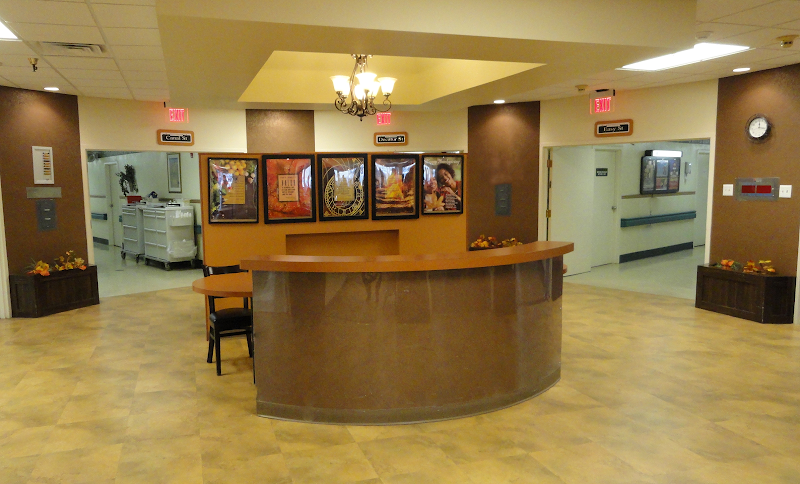
Who Owns and Operates The Orchards At Wayne?

The Orchards at Wayne is owned by a for-profit company. For-profit facilities operate as businesses with obligations to shareholders or private owners. The facility is operated by THE ORCHARDS MICHIGAN, a chain that manages multiple nursing homes. With 179 certified beds and approximately 110 residents (about 61% occupancy), it is a mid-sized facility located in Wayne, Michigan.

How Does The Orchards At Wayne Compare to Other Michigan Nursing Homes?

Compared to the 100 nursing homes in Michigan, The Orchards at Wayne's overall rating (2 stars) is below the state average of 3.1, staff turnover (49%) is near the state average of 46%, and health inspection rating (2 stars) is below the national benchmark.

What Should Families Ask When Visiting The Orchards At Wayne?

Based on this facility's data, families visiting should ask: "What changes have been made since the serious inspection findings, and how are you preventing similar issues?" "Can I visit during a mealtime to observe dining assistance and food quality?" "How do you handle medical emergencies, and what is your hospital transfer rate?" "Can I speak with family members of current residents about their experience?" These questions are particularly relevant given the facility's Immediate Jeopardy citations.

Is The Orchards At Wayne Safe?

Based on CMS inspection data, The Orchards at Wayne has documented safety concerns. Inspectors have issued 1 Immediate Jeopardy citation (the most serious violation level indicating risk of serious injury or death). The facility has a 2-star overall rating and ranks #100 of 100 nursing homes in Michigan. Families considering this facility should ask detailed questions about what corrective actions have been taken since these incidents.

Do Nurses at The Orchards At Wayne Stick Around?

The Orchards at Wayne has a staff turnover rate of 49%, which is about average for Michigan nursing homes (state average: 46%). Moderate turnover is common in nursing homes, but families should still ask about staff tenure and how the facility maintains care continuity when employees leave.

Was The Orchards At Wayne Ever Fined?

The Orchards at Wayne has been fined $8,991 across 1 penalty action. This is below the Michigan average of $33,169. While any fine indicates a compliance issue, fines under $50,000 are relatively common and typically reflect isolated problems that were subsequently corrected. Families should ask what specific issues led to these fines and confirm they've been resolved.

Is The Orchards At Wayne on Any Federal Watch List?

The Orchards at Wayne is not on any federal watch list. The most significant is the Special Focus Facility (SFF) program, which identifies the bottom 1% of nursing homes nationally based on persistent, serious quality problems. Not being on this list means the facility has avoided the pattern of deficiencies that triggers enhanced federal oversight. This is a positive indicator, though families should still review the facility's inspection history directly.