Four Chaplains Nursing Care Center
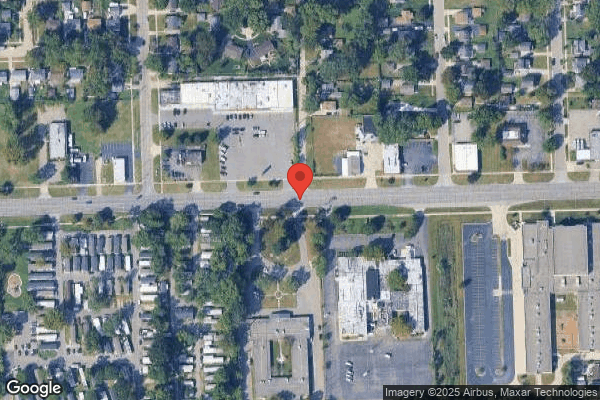
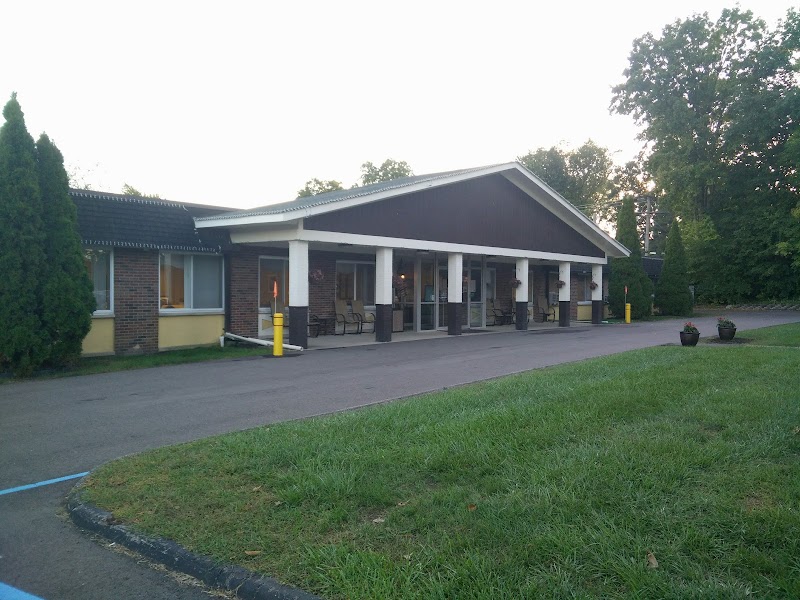
28349 Joy Rd, Westland, MI 48185 (734) 261-9500
For profit - Corporation 96 Beds NEXCARE HEALTH SYSTEMS Data: November 2025 2 Immediate Jeopardy citations
Trust Grade
21/100
#198 of 422 in MI
Last Inspection: December 2024

Within standard 12-15 month inspection cycle. Federal law requires annual inspections.

Overview

Families considering Four Chaplains Nursing Care Center should be aware that it has a Trust Grade of F, indicating significant concerns regarding care quality. Ranking #198 out of 422 facilities in Michigan places it in the top half, but the overall poor trust grade suggests serious issues. The facility is trending worse, with reported problems increasing from 8 in 2023 to 11 in 2024. While staffing levels are average with a 54% turnover rate, the facility has received concerning fines totaling $45,126, which is higher than 75% of Michigan facilities, indicating ongoing compliance problems. Specific incidents include a resident choking on food that was not appropriately pureed, resulting in hospitalization and death, and another resident falling due to inadequate assistance, leading to a hip fracture. These incidents highlight both critical weaknesses in care practices and the need for families to carefully consider their options.

Trust Score
F
21/100
In Michigan
#198/422
Top 46%
Safety Record
High Risk
Review needed
Inspections
Getting Worse
8 → 11 violations
Staff Stability
⚠ Watch
54% turnover. Above average. Higher turnover means staff may not know residents' routines.
Penalties
○ Average
$45,126 in fines. Higher than 56% of Michigan facilities. Some compliance issues.
Skilled Nurses
○ Average
Each resident gets 37 minutes of Registered Nurse (RN) attention daily — about average for Michigan. RNs are the most trained staff who monitor for health changes.
Violations
⚠ Watch
23 deficiencies on record. Higher than average. Multiple issues found across inspections.
★★★☆☆
3.0
Overall Rating
★★★☆☆
3.0
Staff Levels
★★★★☆
4.0
Care Quality
★★★☆☆
3.0
Inspection Score
Stable
2023: 8 issues
2024: 11 issues

The Good

  • 4-Star Quality Measures · Strong clinical quality outcomes
  • Full Sprinkler Coverage · Fire safety systems throughout facility
  • No fines on record

Facility shows strength in quality measures, fire safety.

The Bad

3-Star Overall Rating

Near Michigan average (3.1)

Meets federal standards, typical of most facilities

Staff Turnover: 54%

Near Michigan avg (46%)

Higher turnover may affect care consistency

Federal Fines: $45,126

Above median ($33,413)

Moderate penalties - review what triggered them

Chain: NEXCARE HEALTH SYSTEMS

Part of a multi-facility chain

Ask about local staffing decisions and management

The Ugly 23 deficiencies on record

2 life-threatening 2 actual harm
Dec 2024 7 deficiencies
CONCERN (D) 📢 Someone Reported This

A family member, employee, or ombudsman was alarmed enough to file a formal complaint

Potential for Harm - no one hurt, but risky conditions existed

Assessment Accuracy (Tag F0641)

Could have caused harm · This affected 1 resident

**NOTE- TERMS IN BRACKETS HAVE BEEN EDITED TO PROTECT CONFIDENTIALITY** Based on interview and record review the facility failed to correctly document the discharge disposition of one (R85) of three r...

Read full inspector narrative →
**NOTE- TERMS IN BRACKETS HAVE BEEN EDITED TO PROTECT CONFIDENTIALITY** Based on interview and record review the facility failed to correctly document the discharge disposition of one (R85) of three residents for discharge. Findings include: A record review revealed R85 was discharged home with support services and appropriate equipment. R85 was transported home on [DATE] via non-emergency ambulance. On 12/3/24 further review of R85's MDS (Minimum Data Set Assessment) information revealed the resident was discharged to the hospital. On 12/4/24 an interview with the MDS Nurse B revealed the discharge was recorded incorrectly. A policy was requested for completing an MDS. The Nursing Home Administer revealed the MDS coordinator uses the Resident Assessment Instrument (RAI) manual for completing the MDS. Per the October 2024 RAI manual pages 1-4, (1) the assessment accuratley reflects the resident's status .
CONCERN (D) 📢 Someone Reported This

A family member, employee, or ombudsman was alarmed enough to file a formal complaint

Potential for Harm - no one hurt, but risky conditions existed

Deficiency F0646 (Tag F0646)

Could have caused harm · This affected 1 resident

**NOTE- TERMS IN BRACKETS HAVE BEEN EDITED TO PROTECT CONFIDENTIALITY** Based on interview and record review, the facility failed to notify the local state mental health agency of Pre-admission Screen...

Read full inspector narrative →
**NOTE- TERMS IN BRACKETS HAVE BEEN EDITED TO PROTECT CONFIDENTIALITY** Based on interview and record review, the facility failed to notify the local state mental health agency of Pre-admission Screening and Resident Review (PASARR) Level I changes for one resident (R77) of one resident reviewed for PASARR completions. Findings include: A review of the clinical record revealed R77 was admitted into the facility on 3/06/24 with the following diagnoses including alcohol abuse, alcohol induced psychotic disorder with delusions, adjustment disorder with anxiety, cognitive communication deficit and delirium. According to the MDS (Minimum Data Set) assessment dated [DATE], R77's Brief Interview for Mental Status (BIMS) score was a 00 indicating severely impaired cognition. A review of R77's medical record revealed a PASARR form 3877 Hospital Exempted Discharge ([NAME]) dated for 3/06/24. A 3877 form covers a resident admission for 30 days and request for a level II for mental health services. A request was made to the Social Worker (SW A ) for further PASARR forms and level II request. An interview was held on 12/5/24 at 11:00 PM with SWA regarding the request. SW A stated that there ware no other PASARR forms found for R77. An interview was held with Nursing Home Administrator (NHA) on 12/5/24 at 1:00 PM regarding the PASARR form and level II. The NHA stated the level II and other forms should be complete as indicated in the policies.
CONCERN (D) 📢 Someone Reported This

A family member, employee, or ombudsman was alarmed enough to file a formal complaint

Potential for Harm - no one hurt, but risky conditions existed

Deficiency F0657 (Tag F0657)

Could have caused harm · This affected 1 resident

**NOTE- TERMS IN BRACKETS HAVE BEEN EDITED TO PROTECT CONFIDENTIALITY** This citation pertains to Intake MI00148040. Based on interview and record review , the facility failed to timely initiate a car...

Read full inspector narrative →
**NOTE- TERMS IN BRACKETS HAVE BEEN EDITED TO PROTECT CONFIDENTIALITY** This citation pertains to Intake MI00148040. Based on interview and record review , the facility failed to timely initiate a care plan addressing a pressure ulcer for one (R388) of one resident reviewed for care planning. Findings include: The facility record revealed R388 was readmitted on [DATE] with the following pertinent diagnoses: Acute on Chronic Diastolic Heart Failure, Aortic Valve Disorder, Diabetes Mellitus, Asthma, and Dementia. R388's Brief Interview of Mental Status score was 6/15, indicating severe cognitive impairment. A review of the closed medical record revealed the reporting of a skin tear by a Certified Nursing Assistant (CNA) to a nurse on 11/3/24. An examination of the sacral (buttocks) wound by the wound care nurse on 11/4/24 revealed a wound 6.7 x 4.5 Centimeter (cm) related to shearing. Further review of the record revealed documentation by the physician dated 11/11/24 of the wound as an unstageable pressure injury (a full thickness pressure ulcer that is covered by slough-moist nonviable tissue or eschar-necrotic/dead tissue) that is deteriorating and measuring 8.5 x 7.3 cm with 30% granulation (healing tissue), 20% epithelial tissue (second layer), 10% slough and 40% eschar with a heavy amount of serosanguinous (liquid part of blood) drainage and an odor. An Alternating Pressure Mattress (APM) was ordered. The care plan for the sacral wound was initiated on 11/14/24 (11 days after the discovery of the skin impairment). Further record review revealed a wound note dated 11/18/24 indicating the wound had continued to deteriorate to 14.6 x 9.3 cm with 30% granulation tissue, 20% epithelial tissue, 10% slough and 40% eschar. On 12/4/24 at 10:50 AM, an interview with the Wound Care Nurse A (WCN A) revealed they initially assessed R388's wound on 11/4/24 and confirmed the care plan had not been initiated at that time. A review of the policy Wound Management Program, with revised date of 8/17/17 revealed a Braden Risk Assessment tool (used to predict risk for the development of wounds based on sensation, moisture, activity, bed mobility, nutrition, and friction/shear) is done upon admission, weekly for 4 weeks, then quarterly or when the resident's condition changes. A care plan related to skin is developed for residents at risk. Further review of the policy revealed, if a pressure ulcer is identified, 1.2 Develop an individualized plan of care. The policy also identifies the Charge Nurse as responsible for daily inspection of the dressing (covering of wound) and should insure that pressure relieving devices are in place.
CONCERN (D) 📢 Someone Reported This

A family member, employee, or ombudsman was alarmed enough to file a formal complaint

Potential for Harm - no one hurt, but risky conditions existed

Pressure Ulcer Prevention (Tag F0686)

Could have caused harm · This affected 1 resident

Based on observation, interview, and record review, the facility failed to ensure an orthotic foot device (designed for the prevention of pressure ulcers at the heel) was implemented per physicians or...

Read full inspector narrative →
Based on observation, interview, and record review, the facility failed to ensure an orthotic foot device (designed for the prevention of pressure ulcers at the heel) was implemented per physicians order for one resident (R77) of three residents reviewed for pressure injuries. Findings Include: On 12/03/24 at 2:17 PM, R77 was observed lying in their bed without an orthotic foot device. On 12/04/24 at 10:00 AM, R77 was observed in bed lying on their back without an orthotic foot device on thier feet. On 12/04/24 at 12:10 PM, a nurse was observed completing care with R77. The was noted to be in bed without any orthotic device on their feet. A review of R77's medical record revealed a physician order dated 5/6/24 documenting, orthotic device on while in bed for each shift. Further record review revealed a Braden Scale Assessment score (standardized tool used to predict a patient's risk of developing pressure ulcers) of 13 on 9/7/24 indicating a moderate risk of developing a pressure ulcer. During an interview with the Director of Nursing (DON) on 12/04/24 at 1:00 PM. The DON confirmed their expectation would be physicians order would be carried out as written. A review of the undated Wound Care Management Program policy documented, .that residents who are admitted with, or acquire, wounds receive treatment and services to promote healing, prevent complications and prevent new skin conditions from developing.
CONCERN (D) 📢 Someone Reported This

A family member, employee, or ombudsman was alarmed enough to file a formal complaint

Potential for Harm - no one hurt, but risky conditions existed

Deficiency F0687 (Tag F0687)

Could have caused harm · This affected 1 resident

**NOTE- TERMS IN BRACKETS HAVE BEEN EDITED TO PROTECT CONFIDENTIALITY** Based on observation, interview, and record review, the facility failed to ensure timely podiatry care was provided for one resi...

Read full inspector narrative →
**NOTE- TERMS IN BRACKETS HAVE BEEN EDITED TO PROTECT CONFIDENTIALITY** Based on observation, interview, and record review, the facility failed to ensure timely podiatry care was provided for one resident (R1) and two confidential group residents of eight residents reviewed for foot care. Findings include: On 12/03/24 at 9:18 AM, R1 was observed lying in bed. R1's toe nails were observed to be long extending past the tip of the toes. R1 explained they had been waiting for their toenails to be cut and they have not seen podiatry in a long time. R1 explained it hurts when they wear shoes. A review of R1's record revealed they were admitted to the facility on [DATE] with a diagnosis of peripheral vascular disease. Further record review revealed a brief interview for mental status score of 99 indicating an inability to complete the assessment. Further review of R1's record revealed a podiatry visit note dated 5/10/24 documenting, Podiatry care requested due to problems or conditions that may worsen if untreated On 12/04/24 at 1:46 PM, during an interview, the Social Worker (SW) explained R1 is on the list to be seen by podiatry. SW further explained, podiatry has not been in the facility in a long time because the service lost their doctor, and it took them a while to find a new one. On 12/5/24 at 9:30 AM, during an interview, Certified Nurse Assistant (CNA) Dexplained they assess residents' nails on shower days and trim them as needed and if a resident's toenails are long, they let the SW know and they put them on the list for podiatry to see them. CNA D confirmed R1's toenails are getting very long and has been on the list for podiatry to adress the long nails. On 12/05/24 at 10:16 AM, during an interview, the SW explained they did not know when the last time podiatry had seen any residents and explained it had been a long time. The SW confirmed the last time R1 had seen podiatry was May 2024. The SW confirmed podiatry should see residents every three months and more often if needed. On 12/05/24 at 10:40 AM, during an interview, the Director of Nursing, (DON) explained residents' nails are assessed weekly and if toenails are long the resident will be put on the list to be seen by podiatry. The DON confirmed the last podiatry visit was in May 2024. On 12/4/24 at 1:06 PM, a confidential group meeting was conducted with a group of eight facility residents. The group was asked about their level of satisfaction with the services provided at the facility. Two confidential group residents expressed dissatisfaction with the podiatry services at the facility. Both residents indicated that they had not seen a podiatrist in a long time. Both residents indicated that their toenails were long and needed to be cut. A foot care policy and ancillary services policy was requested and was not returned by the conclusion of the survey.
CONCERN (E) 📢 Someone Reported This

A family member, employee, or ombudsman was alarmed enough to file a formal complaint

Potential for Harm - no one hurt, but risky conditions existed

Deficiency F0804 (Tag F0804)

Could have caused harm · This affected multiple residents

**NOTE- TERMS IN BRACKETS HAVE BEEN EDITED TO PROTECT CONFIDENTIALITY** Based on observation, interview, and record review the facility failed to ensure food was served at the preferred temperature fo...

Read full inspector narrative →
**NOTE- TERMS IN BRACKETS HAVE BEEN EDITED TO PROTECT CONFIDENTIALITY** Based on observation, interview, and record review the facility failed to ensure food was served at the preferred temperature for eight residents (R81, R45, and six confidential group residents) of eleven reviewed for food palatability. Findings include: Resident #81 (R81) On 12/3/24 at 10:39 AM, R81 was interviewed about food palatability at the facility and stated, The food is always cold. R81 also indicated the only alternative menu item they could get was a peanut butter and jelly sandwhich. A review of R81's electronic medical record (EMR) revealed R81 was admitted to the facility on [DATE] with diagnoses that included Chronic kidney disease and Type 2 diabetes. R81's most recent minimum data set assessment (MDS) dated [DATE] revealed R81 had an intact cognition and required set up and clean up assistance during meals. Resident #45 (R45) On 12/3/24 at 10:42 AM, R45 was interviewed about food palatability at the facility and stated, The food is cold. A review of R45's electronic medical record revealed R45 was admitted to the facility on [DATE] with diagnoses that included, Congestive heart failure and Morbid obesity. R45's most recent MDS dated [DATE] revealed R45 had an intact cognition and required set up and clean up assistance during meals. On 12/4/24 at 9:25 AM, an observation was made of meal trays being passed to facility residents out of an open food cart. On 12/4/24 at 12:33 PM, a random food tray was selected from a food cart in the facility and temperature checked by Dietary manager (DM) F. The results of DM F's temperature check was the following,: -Meatballs and gravy: 104.5 Degrees Fahrenheit; -Linguini with gravy: 104 Degrees Fahrenheit; -Cooked mixed vegetables: 90 Degrees Fahrenheit. The DM F tasted the food and stated, The taste is good, but it's cold. On 12/4/24 at 12:38 PM, the surveyor tasted the food and all the food tasted [NAME] warm to Cold which had a negative impact upon the food's palatability. On 12/4/24 at 1:06 PM, a confidential group meeting was conducted with a group of eight facility residents. The group was asked about food palatability at the facility and six of the eight group residents indicated the food was frequently cold when it was served to them in their rooms. On 12/5/24 at 11:17 AM, the Administrator (NHA) was interviewed regarding their expectations for food temperatures when serving food to residents in their rooms. The NHA indicated that food should be maintained between 135 Degrees Fahrenheit to 145 Degrees Fahrenheit when served to the resident. A facility policy titled, Food and Beverage Temperature Monitoring dated 8/13/2023 was reviewed and stated the following, 8.hot food temperatures should not be below 120 degrees Fahrenheit at the the point of service for palatability.
CONCERN (F) 📢 Someone Reported This

A family member, employee, or ombudsman was alarmed enough to file a formal complaint

Potential for Harm - no one hurt, but risky conditions existed

Food Safety (Tag F0812)

Could have caused harm · This affected most or all residents

Based on observation, interview, and record review, the facility failed to store food to prevent cross contamination, and failed to maintain adequate sanitizer concentration in the sanitizer bucket. T...

Read full inspector narrative →
Based on observation, interview, and record review, the facility failed to store food to prevent cross contamination, and failed to maintain adequate sanitizer concentration in the sanitizer bucket. This deficient practice had the potential to affect all residents that consume food from the kitchen. Findings include: On 12/3/24 at approximately 9:20 AM, in the reach-in cooler, there was pan of cooked noodles stored directly underneath a box of raw pork. Dietary Staff H confirmed the cooked noodles should not have been stored under the raw meat. According to the 2017 FDA Food Code section 3-302.11 Packaged and Unpackaged Food - Separation, Packaging, and Segregation, (A) Food shall be protected from cross contamination by: .(2) Except when combined as ingredients, separating types of raw animal foods from each other such as beef, fish, lamb, pork, and poultry during storage, preparation, holding, and display by: .(b) Arranging each type of food in equipment so that cross contamination of one type with another is prevented,. On 12/3/24 at approximately 9:30 AM, a red bucket filled with sanitizer was tested using a sanitizer test strip. The strip did not change color to denote the presence of sanitizer. Dietary Staff H stated the bucket would be emptied and re-filled. According to the 2017 FDA Food Code, Section 3-304.14 Wiping Cloths, Use Limitation, .(B) Cloths in-use for wiping counters and other equipment surfaces shall be: (1) Held between uses in a chemical sanitizer solution at a concentration specified under § 4-501.114;
Sept 2024 1 deficiency
CONCERN (D) 📢 Someone Reported This

A family member, employee, or ombudsman was alarmed enough to file a formal complaint

Potential for Harm - no one hurt, but risky conditions existed

Deficiency F0558 (Tag F0558)

Could have caused harm · This affected 1 resident

**NOTE- TERMS IN BRACKETS HAVE BEEN EDITED TO PROTECT CONFIDENTIALITY** This Citation pertains to Intakes MI00146232 and MI00146569. Based on observation, interview, and record review, the facility f...

Read full inspector narrative →
**NOTE- TERMS IN BRACKETS HAVE BEEN EDITED TO PROTECT CONFIDENTIALITY** This Citation pertains to Intakes MI00146232 and MI00146569. Based on observation, interview, and record review, the facility failed to ensure care was provided timely for five residents (AR1, AR2, AR3, R901, R902, and R907) of eight whose care was reviewed. Findings include: AR1 On 09/04/24 at 9:56 AM, anonymous resident (AR1) was asked about care concerns and reported the afternoon and midnight shifts aides were lazy and don't come and get you when they are supposed to. AR1 reported they were left on the toilet in their bathroom on the afternoon shift. AR1 further reported they do not bring water when you ask and there is no follow through. A review of the record for AR1 revealed AR 1 was admitted into the facility 08/26/24. Diagnoses included High Blood Pressure and Chronic Kidney Disease. The Minimum Data Set (MDS) assessment dated [DATE] documented intact cognition with a 15/15 Brief Interview for Mental Status (BIMS) score and the need for partial/moderate assistance for chair to bed transfer, toilet hygiene and toilet transfer. The Activities of Daily Living (ADL) care plan initiated 08/27/24 documented AR1 as a one person assist for transfer and ambulation. AR2, AR3 On 09/04/24 at 10:45 AM, AR2 and AR3 reported at times they must wait three, four and five hours on the night shift to get help. They reported the afternoon shift can be slow also. They reported the aides go away and don't come back. AR3 reported they had asked for a pain pill and did not get one until four hours later. They reported this was ongoing and depended on the aide on duty. A review of the MDS for AR2 dated 07/20/24 documented intact cognition with a 12/15 BIMS and the need for partial /moderate assistance for toileting hygiene, personal hygiene and chair to bed transfer. Toilet transfer was documented as not attempted. A review of the MDS for AR3 dated 06/10/24 documented intact cognition with a 15/15 BIMS and the need for partial /moderate assistance for toilet transfer. AR3 was documented as substantial/maximal assist for toileting hygiene and personal hygiene. R901 A review of the care complaint for R901 revealed allegations of concern for being left wet and soiled extended periods of time. It was further noted R901 was found to have a wound present on the buttocks on 08/12/24 and on 08/14/24 was found wet and soiled by a visitor. The MDS dated [DATE] documented impaired cognition with a 6/15 BIMS, dependent for toileting hygiene, lower body dressing and chair to bed transfer. R902 A review of the care complaint for R902 revealed concerns for being left wet and soiled extended periods of time and inadequate incontinence care. A review of the record for R902 revealed R902 was admitted into the facility 01/25/24 and discharged on 03/06/24. Diagnoses included Diabetes, Heart Disease and Stroke. The MDS dated [DATE] documented intact cognition with a 13/15 BIMS and the need for substantial/maximal assistance for toileting hygiene and partial/moderate assistance for toilet transfer. On 09/05/24 at 8:41 AM, a strong and pungent urine odor was noted at the doorway of R902's room. Both residents were observed to be in bed with the room darkened. On 09/05/24 at 8:46 AM, Certified Nursing Assistant (CNA) A reported they had regularly found residents on morning rounds were more wet than others and surmised the night shift may have been short staffed. On 09/06 at 10:21 AM, a staff nurse A and CNA Scheduler, Staff B reported the night shift was more challenging than the day shift to schedule CNAs and to cover call offs. Staff A reported they try to have six CNAs on the night shift depending on the census. It was noted the schedule for 09/04/24 and 09/05/24 had five on the schedule with 85 total residents. Staff A reported they did not feel five for the night shift was working short. On 09/05/24 at 12:47 PM, the Director of Nursing (DON) was asked about the resident council minutes dated 08/14/24 that documented Call light response times could be improved on evening and nightshift. It depends on what staff is working. The DON reported they had followed up with the resident and checked in with other residents who may have had similar concerns and were monitoring and checking back with these residents. The DON also reported having engaged the staff regarding the call light response concerns. On 09/05/24 at 1:18 PM, three call lights were observed to be activated along the hallway of R907. One nurse was observed in the hall at a computer on a medication cart and one was at the nurse station. Two of the call lights were visible to the nurse at the medication cart. R907 On 09/05/24 at 1:19 PM, R907 reported that the night shift is the worst for getting any one to answer and this included nurses or the aides. R907 reported they needed help with toileting and had a sore on their bottom. R907 commented they had been changed the night before around 4 PM and not checked again until 9:35 PM. R907 further reported they had worked in a nursing home and wanted to know why they could not get anyone to answer the call for help. A review of the record for R907 revealed R907 was admitted into the facility on [DATE]. Diagnoses included Stroke, Paralysis and weakness of the left side, Anxiety and High Blood Pressure. The MDS dated [DATE] documented intact cognition with a 13/15 BIMS and was dependent for toileting hygiene, bathing, lower body dressing and chair to bed transfer. A review of the treatment order dated 08/15/24 noted a treatment for the sacrum (lower back area above the tailbone). A review of the facility policy titled, Wound Management Program revised 08/17/17 revealed, .Policy: To assure resident who are admitted with, or acquire wounds receive treatment and services to promote healing, prevent complications and prevent new skin conditions from developing . A review of the facility policy titled, Call Light Policy revised 05/01/17 revealed, Call lights will receive consistent and adequate response in order to best meet the individual needs of the resident .Each staff member is responsible to respond to call lights and provide assistance as their level of training allows .
Jun 2024 1 deficiency
CONCERN (D) 📢 Someone Reported This

A family member, employee, or ombudsman was alarmed enough to file a formal complaint

Potential for Harm - no one hurt, but risky conditions existed

Pressure Ulcer Prevention (Tag F0686)

Could have caused harm · This affected 1 resident

Based on observation, interview, and record review, the facility failed to change a dressing for one resident (R706) out of one reviewed for wounds. Findings include: On 6/25/2024 at 8:40 AM, R706 wa...

Read full inspector narrative →
Based on observation, interview, and record review, the facility failed to change a dressing for one resident (R706) out of one reviewed for wounds. Findings include: On 6/25/2024 at 8:40 AM, R706 was observed in their wheelchair. R706 was noted to have an dressing to their right leg with a date of 6/23/2024 on it. R706 was asked what happened to their leg. R706 stated they had surgery on it and it needed to be wrapped up. R706 stated the facility changes the dressing every now and then. A review of the medical record revealed that R706 admitted into the facility on 6/18/2024 with the following medical diagnoses, Cutaneous abscess of Right Foot and Sepsis. A review of the Minimum Data Set assessment revealed a Brief Interview for Mental status score of 11/15 indicating an impaired cognition. R706 also required assistance with bed mobility and transfers. Further review of the medical record revealed the following, Ordered: 6/19/2024. Status: Active. Directions: Right plantar heel: cleanse with vashe, fill with vashe moistened, plain packing strips, apply ABD (abdominal) pad, and wrap with roll gauze, change daily. Ordered: 6/19/2024. Status: Active. Directions: Right heel: cleanse with vashe, apply oil emulsion over open area, cover with ABD and wrap with roll gauze, change daily. Further review of the progress notes, Date: 6/20/2024. Wound Note: Resident readmitted into the facility with a DM (Diabetes Mellitus) ulcer to right heel, proximal area measuring 2.0 x 1.0 cm (centimeters) 10% granulation, no exudate. Right heel Distal DM wound measures 1.2 x 1.8 cm. 100 % light pink tissue. No exudate noted . On 6/25/2024 at 10:16 AM, an interview was conducted with Licensed Practical Nurse (LPN) C. LPN C was queried regarding R706's dressing being dated 6/23/2024. LPN C stated R706's dressing should be changed daily and they would be changing it that morning. On 6/25/2024 at 2:02 PM, an interview was conducted with the Director of Nursing (DON). The DON stated they are unsure why the dressing was dated 6/23/2024 because they looked at the Treatment Administration Record (TAR) and it said that it was completed. The DON stated they would be reaching out to the nurse. No further information was received by the end of the survey. A review of a facility policy titled, Wound Management Program noted the following, Policy: To assure that residents who are admitted with, or acquire, wounds receive treatment and services to promotr healing, prevent complications and prevent new skin conditions from developing.
Jan 2024 1 deficiency 1 IJ
CRITICAL (J) 📢 Someone Reported This

A family member, employee, or ombudsman was alarmed enough to file a formal complaint

Immediate Jeopardy (IJ) - the most serious Medicare violation

Menu Adequacy (Tag F0803)

Someone could have died · This affected 1 resident

This citation pertains to Intakes: MI00142187, MI00142251, MI00142309. Based on observation, interview, and record review, the facility failed to ensure one resident (R901) received and consumed puree...

Read full inspector narrative →
This citation pertains to Intakes: MI00142187, MI00142251, MI00142309. Based on observation, interview, and record review, the facility failed to ensure one resident (R901) received and consumed pureed foods as prescribed, resulting in airway obstruction/choking. On 1/17/24 at approximately 8:30am, R901 consumed a peanut butter sandwich resulting in the resident's airway becoming obstructed, requiring the use of the Heimlich Maneuver, CPR (Cardiopulmonary Resuscitation), and the use of forceps to remove copious amounts of the peanut butter sandwich from the resident's airway that led to hospitalization where the resident was placed on life-sustaining treatment, and died eight days later. Immediate Jeopardy: The Immediate Jeopardy (IJ) started on 1/17/24 and the immediacy was removed 1/25/24 per review of the facility's responding interventions as verified on 1/25/24. The IJ was identified on 1/24/24 during an abbreviated survey. The facility was notified of the IJ on 1/24/24 at 4:37pm and was asked for a removal plan. The IJ was removed on 1/25/24, based on the facility's implementation of the removal plan as verified onsite on 1/25/24. Findings Include: A review of R901's medical record revealed that they were initially admitted into the facility on 9/21/23 with diagnoses that included Cerebral Infarction, Parkinson's Disease, Dysphagia, Oropharyngeal Phase, Diabetes, and Schizophrenia. Further review revealed that the resident was severely cognitively impaired, and required set-up for eating. Further review of R901's medical record revealed that the resident had the following physician order dated for 10/17/23, Regular diet, Pureed texture, Nectar consistency. Further review of R901's medical record revealed the following care plan: Focus: NUTRITIONAL PREFERENCES /HYDRATION; I am at nutritional risk r/t (related to) my diagnosis of esophageal perforation/diverticulum, Parkinson's, and Dementia. I require altered texture and consistencies to meet my daily needs. My appetite and intakes may fluctuate r/t (related to) my mental state/diagnosis of dementia. I am edentulous (having no teeth). Have had periods of vomiting. Date Initiated: 09/22/2023 . Further review of R901's medical record revealed the following progress note: 1/17/2024 13:12 (1:12pm) Nurses Note . At 8:30 am resident was observed sitting in geri chair near west hall nursing station alert and oriented eating a puree snack. Approx (approximately) 5 mins (minutes) later resident was observed choking, Heimlich maneuver performed, was unsuccessful, resident became unresponsive, code initiated. Resident transported to [their] room, CPR initiated. 911 called at 8:41am one round of chest compressions alternating w/ (with) two breaths, AED (automated external defibrillator) applied, airway initiated w/ ambu mask and bag w/oxygen flow. CPR continued for 18 rounds alternating w/two breaths and shocks advised w/no shock initiated. Family and physician notified of code in progress. 911 arrived @ (at) 8:46 am. EMT (emergency medical technician) continued CPR until resident transported to [local hospital] @ 9:21am. A review of the EMS (Emergency Medical Services) Care Report dated, and time stamped for 1/17/24 at 8:42am revealed the following, .dispatched to [nursing facility] for a CPR in progress. Upon arrival, crew makes patient contact in patients room where staff is on scene performing CPR. Staff states that patient was last seen at approximately 0830 (8:30am) eating a peanut butter sandwich and by 0840 (8:40am) patient was pulseless and apneic (when a person's breathing temporary and involuntarily stops). Per staff, patient had food dislodged from mouth shortly after CPR was initiated . Patient ventilations are being assisted via BVM (bag valve mask) attached to high flow oxygen at this time .Advanced airway is attempted however, patient presents with a foreign body obstruction in [their] airway and crew begins to clear the airway using (Brand name) Forceps. Crew removes, copious amounts of what appears to be a peanut butter sandwich from patient airway .While enroute (to hospital) patient remains unresponsive and ventilations are assisted . A review of R901's hospital medical records dated 1/21/24 revealed the following, [R901] seen in intensive care unit, status postcardiac arrest with downtime of about 35 minutes. History of Parkinson's Disease and dementia .Underlying case believed to be aspiration. Being treated for hypoxic ischemic encephalopathy (brain damage) .[R901] has only recovered some brainstem reflexes so far without much evidence of cortical recovery .the likelihood of a meaningful functional recovery extremely low Given [R901's] poor baseline it would be reasonable to consider comfort measures. Further review of hospital medical records revealed that R901 died on 1/25/24. On 1/24/24 at 12:49 PM, Licensed Practical Nurse (LPN A) was interviewed regarding R901's choking incident, and she explained that R901 was sitting in their geri chair by the nursing station due to them being a fall risk. LPN A explained that she was passing medications when choking was observed. She explained that she and LPN B rushed over to the resident performed the Heimlich Maneuver, which was unsuccessful, and resulted in CPR being initiated. LPN A was asked what the resident was eating when they choked and stated, a puree snack. LPN A was asked what type of puree snack and stated, pudding. LPN A was asked if she was sure that the snack was a puree snack, and stated, I'm not completely sure and revealed that they were not the nurse that provided the snack, although she was the assigned nurse to R901 on 1/17/24. On 1/24/24 at 12:57 PM, LPN B was interviewed regarding R901's choking incident. She explained that she and another nurse were passing medications after she provided the resident with a snack of chocolate pudding who was sitting at the nurses' station. LPN B explained that five minutes later, R901 was observed choking in which the Heimlich Maneuver was completed without success, resulting in the resident being transferred to their room and CPR being initiated. LPN B was asked if R901 had obtained or consumed any other food item, and she stated, I don't think that anyone else provided anything to [R901]. On 1/24/24 at 1:32 PM, and interview was completed with the Director of Nursing (DON) regarding R901's choking incident, and she explained that when she responded to the emergency code, R901 was in the process of receiving CPR. She explained that she was informed that R901 was eating chocolate pudding when they started to choke, resulting in the Heimlich Maneuver being used, and then CPR. The DON was informed that the resident had a sandwich stuck in their throat, and she explained that she doesn't understand how the resident could have received a sandwich as everyone is aware of R901's diet. On 1/24/24 at 2:23 PM, an interview was completed with Speech and Language Pathologist, SLP D regarding R901. She explained that she had been working with the resident three days a week on their swallowing dysfunction. SLP D explained that R901 was on a puree diet as they had issues with breaking down food, was an impulsive eater, and was missing teeth. She explained that during their sessions, they would trial mechanical soft and regular foods however, she would have to break the food down into bite sized pieces because the resident was unable to do so with their mouth. SLP D was asked if R901 would have been able to consume a peanut butter sandwich, and she explained that R901 consuming a sandwich or bread in general would be alarming, and the resident had a tendency to put food in their mouth before swallowing, and would not have been able to swallow bread. It was reported that R901 had allegedly choked on chocolate pudding, and SLP D explained that R901 would not have choked on pudding as they had a very strong cough. On 1/25/24 at 9:34 AM, surveyor was approached by the DON indicating that LPN B had some additional information to provide regarding R901's choking incident. LPN B explained that on 1/17/24 sometime after 8:00am, R901 was sitting in their geri chair across from the nurses' station, where they kept making attempts to get up, so she moved the resident closer to the nurses' station to keep a better eye on them, and offered R901 pudding. LPN B explained that she walked away from the nurses' station, and when she returned R901 was observed with a sandwich in their hand, which she assumed they grabbed off of a snack tray which was located within arm's length from the resident, and sitting on black file cabinet. LPN B explained that she took the sandwich away from R901, moved them back to the original spot across from the nurses' station, and walked away to complete her medication pass. LPN B explained that staff observed R901 choking, and the Heimlich Maneuver was completed, and CPR initiated. LPN B was asked how much of the sandwich did R901 eat, and she explained that they had eaten close to half. LPN B was asked why she hadn't explained this to the surveyor during her initial interview, and she explained that she was scared, and figured that it was her fault for moving the resident toward the snacks. LPN B was asked what she should have done after observing the resident eating something that is not a part of their diet, and she explained that she didn't know, as she had never been in that predicament before. The DON was asked what her expectation is for a nurse if they see a resident with a food they shouldn't have. The DON explained that it should be brought to someone's attention, call the doctor, and obtain orders, and make sure that the resident is being monitored for aspiration. On 1/25/24 at 1:39 PM, an interview was completed with the Nursing Home Administrator (NHA) regarding R901's choking incident. She explained that it was an unfortunate incident that now presents as an opportunity for learning. A review of the facility's Diet Types policy revealed the following, .Puree Diet- this diet is designed for residents and guests who need further modification to the mechanical soft diet due to chewing or swallowing difficulty. Any food that can be appropriately pureed should be included in this diet. Residents and guests requiring a puree diet simply due to chewing difficulties may be able to tolerate additional food items on an individualized basis. This should be specified in the individuals care plan. The standard puree diet allows regular oatmeal, cottage cheese, scrambled eggs and scrambled eggs with cheese if cheese is mixed in with the eggs and not layered on top as a crust. Further modifications are provided dependent on individual toleration Thickened Liquids this diet is designed for residents and guests who need modification to liquids due to swallowing difficulty. The following consistencies are available. Nectar-like thickened liquids - able to go through straw, glides off a spoon e.g. fruit nectars, shakes, eggnogs . The facility provided the following information to demonstrate that the Immediacy of the cited deficiency has been removed: Facility Removal Plan ELEMENT 1: Resident R901 no longer resides at the facility. The PBJ sandwich was taken by the resident from the snack tray. The snack tray will now be placed in the pantry with the door closed, unless being distributed by staff member. ELEMENT 2: There are no further episides choking reported in facility. Incidents reviewed last 14 days and no other incident of choking were reported. Current resident diet orders, care pans and meal tickets were immediately reviewed to ensure that they all match the orders by the DON, Regional Clinical Nurse and the Corporate Dietician. A 1:1 education was completed with the nurse who saw the PBJ sandwich being consumed. ELEMENT 3 All staff members who serve or assist residents with meals are being educated on following physician orders for diet type and verification of diet type when serving/offering food. Staff members have been educated the snack tray will be kept in the closed pantry door until time to be distributed by a staff member. Licensed nurses were re-educated that if a resident consumes a diet that is unauthorized that a finger sweep will be completed to ensure that air is cleared of any objects. Fluids will be offered & the nurse will stay with the resident until they feel the patient has cleared their airway. System change: The facility dod a one time walking round to ensure no food was left within reach of a resident who could possibly obtain food on their own. This was done by the Director of Nursing. All snacks are now stored in the pantry with door closed. ELEMENT 4 DON/Designee will audit meal services daily x 3 meals for 14 days. Then weekly for 12 weeks to ensure diet orderd being followed per physician orders. Non-Compliance will be addressed immediately. Audits will be forwarded to QA for review. COMPLIANCE DATE: 1/25/2024
Jan 2024 1 deficiency
CONCERN (D) 📢 Someone Reported This

A family member, employee, or ombudsman was alarmed enough to file a formal complaint

Potential for Harm - no one hurt, but risky conditions existed

Free from Abuse/Neglect (Tag F0600)

Could have caused harm · This affected 1 resident

**NOTE- TERMS IN BRACKETS HAVE BEEN EDITED TO PROTECT CONFIDENTIALITY** This citation pertains to Intake MI00141213. Based on observation, interview, and record review, the facility failed to protect ...

Read full inspector narrative →
**NOTE- TERMS IN BRACKETS HAVE BEEN EDITED TO PROTECT CONFIDENTIALITY** This citation pertains to Intake MI00141213. Based on observation, interview, and record review, the facility failed to protect one resident's (R702) right to be free from physical abuse by another resident (R700) from a total sample of three resident's reviewed for abuse, resulting in a skin injury to the forehead and treatment. Findings Include: A review of Intake called into the State Agency noted the following, On 11/11/23 the resident (R702) asked the nurse to turn up the TV, which [they] did. The nurse and the roommate (R700) ended up getting into an altercation over it. The roommate (R700) was overheard asking someone how long it takes to kill someone. The resident (R702) feels very scared and threatened. (R702) has asked staff to move the resident (R700), but nothing was done. On 11/12/23 the resident (R702) was attacked by [their] roommate (R700) who threw a food tray at [R702], which resulted in a gash over [R702's] left eye. The roommate (R700) was upset about (R702's) TV being turned up. On 1/9/2024 at 9:23 AM, R702 was observed in the bed sleeping. An area of the forehead was observed to be discolored. A review of the medical record revealed that R702 admitted into the facility on 1/8/2024 with the following diagnosis, Insomnia and Cerebral Infarction. A review of the Minimum Data Set assessment revealed a Brief Interview for Mental Status Score of 11/15 indicating an impaired cognition. R702 required 1 person assist with bed mobility and 2 person assist with transfers. A review of the medical record revealed that R700 admitted into the facility on [DATE] with the following diagnoses, Major Depressive Disorder and Depression. A review of the Minimum Data Set assessment revealed a Brief Interview for Mental Status score of 13/15 indicating an intact cognition. R700 was also independent with bed mobility and transfers. A review of R700's progress notes revealed the following; 10/24/2023 .Behavior Note: Resident awake, ambulating utilizing walker, complaining to the nurses about [their] roommate's t.v., writer checked on the volume of the television of (R702) which is low in volume, the curtain pulled, but (R700) still refused to stay in the room and stated I want to sleep, I'll stay at the back, resident sitting down in the couch in the lobby, place call to the DON (Director of Nursing), report given, DON gave permission to stay in the lobby/couch, will monitor, no distress noted. A review of R702's progress notes revealed the following; Date: 11/12/2023, Resident stated that the CNA (Certified Nursing Assistant) had brought [their] breakfast tray and as CNA was leaving the room, (R702) requested for the tv volume to be turned up and change it to channel 4. The CNA complied and left the room. According to (R702) [they] stated that as soon as the CNA had left the room, (R700) jumped off [their] bed and that (R700) came around to the foot of (R702) bed. (R700) then proceeded to pick up the food cover and hit (R702) on the forehead. The nurse (writer) asked (R700) what had happened and [they] denied that [they] had thrown the food cover at (R702) and accused (R702) that [they] had injured themselves. A review of an Incident and Accident(I/A) report dated 11/12 noted the following, (R700) threw plate cover up in the air during breakfast and it hit (R702) in the head. (R702) sustained a small laceration over left eye. First aid was initiated immediately to (R702) . Date:11/13/2023 .: Writer assessed laceration to right forehead near eyebrow, area measures 0.6 x 0.3 cm (centimeters), scabbed over. No bleeding noted, no c/o (complaints of) pain . On 1/9/2024 at 11:47 AM, an interview was conducted with the DON. The DON stated that if R702 asked for a room change prior to the incident with R700 they were unaware. The DON stated that R700 did not have any behaviors prior and that was abnormal behavior for them. The DON stated that after the incident R700 was placed on a 1:1 and sent to the hospital for an evaluation where R700 was found to have a Urinary Tract Infection (UTI). The DON stated that R702 had a small laceration on their forehead, and they treated it in the facility. The DON stated that according to R702, R700 jumped off their bed and came to the foot of their bed, picked up the food tray cover and threw it at them. A review of a facility policy titled, Abuse noted that All residents should be free from abuse.
Oct 2023 6 deficiencies
CONCERN (D) 📢 Someone Reported This

A family member, employee, or ombudsman was alarmed enough to file a formal complaint

Potential for Harm - no one hurt, but risky conditions existed

Deficiency F0691 (Tag F0691)

Could have caused harm · This affected 1 resident

**NOTE- TERMS IN BRACKETS HAVE BEEN EDITED TO PROTECT CONFIDENTIALITY** This citation pertains to Intake MI00138108. Based on observation, interview, and record review, the facility failed to ensure ...

Read full inspector narrative →
**NOTE- TERMS IN BRACKETS HAVE BEEN EDITED TO PROTECT CONFIDENTIALITY** This citation pertains to Intake MI00138108. Based on observation, interview, and record review, the facility failed to ensure colostomy (an opening in the large intestine to the abdomen) care was received on a consistent basis for one Resident (R282) of one reviewed for ostomy services, resulting in the potential for infections and skin alterations. Findings include: A review of the Intake noted, Resident had colonoscopy bag due to colon removal. Bag busted two times due to never being changed. Bag would not be changed unless complainant requested multiple times. When staff changed the bag, staff would never clean the area, they would only change it. A review of R282's medical record revealed, R282 was admitted to the facility on [DATE] and discharged to the hospital on 7/4/2023 with diagnosis of Ulcerative Colitis, Encounter for Attention to Ileostomy, Encounter for surgical aftercare following surgery on the digestive system. A review of R282's admission Minimum Data Set (MDS) assessment, noted, R282 with an intact cognition and required limited to extensive assistance by staff to complete activities of daily living. Further review noted, R282 with an indwelling catheter (catheter inserted inot the bladder for urine drainage) and colostomy. Care plan noted, Focus: Bowel incontinence/ostomy related to new ileostomy. Date Initiated: 06/22/202. Goal: Will be maintained in as clean and dry dignified state as possible. Date Initiated: 6/22/2023. Interventions: change ostomy appliance as needed and report any redness, inflammation or drainage from site. Date Initiated: 06/22/2023. Record bowel movements and report abnormalities Date Initiated: 06/22/2023. A review of R282's Medication Administration Record (MAR) revealed, a code of OS on 6/24 and 6/27. The definition of the code OS on the MAR noted, See Nurses Notes. A review of R282's progress/nurses notes for 6/24 noted, 6/24/2023 15:00 eMar - Medication administration Note Text: Ileostomy- Cleanse Parastomal site gently with soap and water, dry the area and apply sure prep allow to dry, Apply the modified ileostomy two-piece skin barrier around the stoma followed by ileostomy bag. Change the system every 3 days and prn (as needed) everyday shift every 3 day(s) for ileostomy care bag still intact, per resident does not have to be removed. A progress/nurses note to explain the code OS on 6/27 on the MAR was not located in R27's medical record. On 10/18/23 at 10:20 AM, the Director of Nursing (DON) was asked, about the code OS and the notes. The DON explained that R282 was doing R282's own care to their colostomy and would decline for staff to complete the care. The DON was asked if an assessment was completed or if the facility ensured that R282 was able to complete their own care. The DON explained, R282 would have to show the Nurse that they were able to complete the care. The DON was asked if there was any documentation that R282 demonstrated that they were able to complete their colostomy care at the facility and stated, I don't see that the Nurse said [R282] could. A reivew of the facilty's policy did not address the above concern.
CONCERN (D) 📢 Someone Reported This

A family member, employee, or ombudsman was alarmed enough to file a formal complaint

Potential for Harm - no one hurt, but risky conditions existed

Tube Feeding (Tag F0693)

Could have caused harm · This affected 1 resident

**NOTE- TERMS IN BRACKETS HAVE BEEN EDITED TO PROTECT CONFIDENTIALITY** Based on observation, interview, and record review, the facility failed to properly label/date and flush/disconnect an enteral f...

Read full inspector narrative →
**NOTE- TERMS IN BRACKETS HAVE BEEN EDITED TO PROTECT CONFIDENTIALITY** Based on observation, interview, and record review, the facility failed to properly label/date and flush/disconnect an enteral feeding (tube feeding) for one resident (R54) of two reviewed for PEG (percutaneous endoscopic gastrostomy) care, resulting in the potential for administration error, altered nutrition, and/or PEG tube occlusion. Findings include: On 10/17/23 at 8:22 AM, R54 was observed in bed with a tube feeding in progress. The tube feeding bottle and water bag was observed to be almost empty and not labeled. On 10/16/23 at 8:51 AM, the Infection Control Nurse (ICN) was asked about the observation and stated, I can find the nurse and tell them it is almost empty. The enteral feeding bottle and water should be dated. On 10/16/23 at 11:28 AM, R54's tube feeding was observed in progress. A review of the order noted, to take down at 0700 (7:00 AM). On 10/17/23 at 8:36 AM, tube feeding was observed in progress, formula was measured at approximately or below 200 ml (milliliters), and the water was at approximately 300 mls. Both water and formula were almost gone. A review of R54's medical record revealed, R54 was admitted to the facility on [DATE] with diagnosis of Hemiplegia and Hemiparesis following Cerebral Infarction Affecting Left Non-Dominant side. A review of R54's quarterly Minimum Data Set (MDS) assessment noted, R54 with an intact cognition and required extensive assistance by two staff to complete activities of daily living. A review of the physician order noted, Eternal Feed: one time a day for tube feeding Jevity 1.5 via PEG @ 80mL/hr (hour) x (times) 14 hours; up at 17:00pm (7:00 PM), down at 07:00 am (7:00 AM) Provides 1680 kcal (Kilocalorie); 71 g protein; 851 mL free water. Date 8/4/22. Indefinite. Order: every shift 60mL/hr x 14 hours AUTOFLUSH (providing 840mL fluid). 7/22/23. A review of R54's care plan noted, Focus: Nutritional Preference/Hydration as relates to aftercare stroke, with PMH (past medical history) of depression, dysphagia, HLD (Hyperlipidemia), gastrostomy status, ataxia. regular texture diet is provided, my PO (by mouth) intake may vary at times. I am prone to skin impairment, interruptions in skin integrity and with hx (history) of coccyx healing wound. At this time enteral feedings are in place to meet my EENs (Exclusive enteral nutrition) daily best via PEG tube. Date Initiated: 04/10/2022. Goal: Resident will consume enough fluids to prevent complication of dehydration, most meet eternally at this time. Date Initiated: 04/11/2022. Interventions: Monitor for tolerance of feeding. Date Initiated: 04/11/2022. On 10/18/23 at 10:10 AM, the Director of Nursing (DON) was asked the facility's expectation for ensuring tube feeding was labeled and followed as ordered. The DON explained, the label should reflect the order. A review of the faciity's policy titled, Enteral Feeding Tube Peg Tube & G Tube (Care of), dated, 7/1/2008 did not address the labeling and cleaning of Tube feeding formula.
CONCERN (D)

Potential for Harm - no one hurt, but risky conditions existed

Deficiency F0697 (Tag F0697)

Could have caused harm · This affected 1 resident

**NOTE- TERMS IN BRACKETS HAVE BEEN EDITED TO PROTECT CONFIDENTIALITY** Based on observation, interview, and record review, the facility failed to provide a pain management intervention as ordered by ...

Read full inspector narrative →
**NOTE- TERMS IN BRACKETS HAVE BEEN EDITED TO PROTECT CONFIDENTIALITY** Based on observation, interview, and record review, the facility failed to provide a pain management intervention as ordered by the physician for one (R66) of six residents reviewed, resulting in sustained resident discomfort and dissatisfaction with care. Findings include: Review of the facility record for R66 revealed an original admission date of 08/16/23 and most recent admission of 10/11/23 with diagnoses that included Malignant Neoplasm of the Left Breast with Bone Metastasis, Neoplasm-Related Pain and Spinal Stenosis. The Minimum Data Set (MDS) assessment dated [DATE] indicated that R66 required primarily Maximum/Total level assistance for activities of daily living (ADLs) including bed mobility. The Brief Interview for Mental Status (BIMS) assessment score of 15/15 indicated intact cognition. On 10/16/23 at 11:39 AM, during initial resident screening R66 reported that they had been asking for an ice pack to treat pain in their back and that they had not been able to get one recently. R66 reported that they had been using one previously and that it did provide pain relief where the tumor is pointing to their left mid/lower back area. R66 was observed to be grimacing while attempting to adjust their position to demonstrate the area of pain. On 10/16/23 at 12:23 PM, review of R66's physician orders revealed the order May apply ice pack to lower back as needed for pain dated 10/12/23 and identified as active status. The order type was identified as other treatment TAR (Treatment Administration Record). Ice pack for back pain was noted in the TAR under other unscheduled orders which included no fillable checkmark/signature space to indicate administration of the treatment. Review of the most recently updated care plan for R66 revealed the Focus statement I have acute/chronic pain related to arthritis, decreased mobility, left breast cancer with mets, cancer related pain in the back/hips, and spinal stenosis. The related Interventions included the entry apply ice pack to lower back as needed for pain. On 10/17/23 at 10:45 AM, R66 reported that a staff member brought them an ice pack last night however it was not the originally used ice pack that belonged to them, but rather a small one like you put in a kids lunch and that it did not provide adequate coverage or pain relief. R66 reported that their ice pack was a larger and flatter version that accommodated their needs more specifically. R66 reported their pain level at the time to be 7/10. On 10/18/23 at 9:20 AM, R66 reported that they were not provided with an ice pack for their back last night or this morning and they reported their current pain level at 7/10. On 10/18/23 at 9:45 AM, R66 reported that they spoke with Licensed Practical Nurse (LPN) C regarding their ice pack. R66 reported that LPN C was familiar with the ice pack from past use and was going to try to locate it for them. On 10/18/23 at 12:39 PM, R66 reported that staff had not provided the ice pack stating that they could not locate it. R66 reported their current level of pain at 6/10. On 10/18/23 at 12:47 PM, Certified Nurse Assistant (CNA) D reported that they were familiar with and had provided care to R66. When asked if R66 reported or demonstrated signs/symptoms of pain during bed mobility they reported that they did and that R66 would ask for their ice pack. CNA D reported that they recalled an ice pack being placed in a pillow case and provided to the resident at times in the past. On 10/18/23 at 1:00 PM, LPN C reported that they provided care regularly for R66 prior to their most recent hospitalization and that they used to provide R66 with the cold pack for pain relief. LPN C reported that they had spoken to R66 about the ice pack earlier today and had not been able to locate it. LPN C reported that they believed the ice pack may be in R66's personal belongings which were being retrieved from storage as R66 had just returned to their original room this morning. On 10/18/23 at 1:27 PM, further review of the facility record for R66 revealed they were hospitalized on [DATE] due to respiratory distress and returned on 10/11/23 at which time they were placed in isolation. On 10/18/23 at 1:47 PM, R66 reported that their pain level was 6/10. R66 reported that their personally owned ice pack or an equivalent had not been provided since they returned from the hospital (7-8 days). When asked how they felt about not having the ice pack R66 stated It bothers me. I can't get comfortable and I need it, it really helps. On 10/18/23 at 2:11 PM, the facility Director of Nursing (DON) reported that the expectation is that the ice pack be provided per resident request as it is physician order and care planned. Review of the facility policy titled Pain Management with a revision date of 08/17/17 revealed the following entries: POLICY: Improve the quality of life for our residents by ensuring timely pain identification and interventions .4. Initiate immediate interventions to promote comfort, considering Non-pharmacological and pharmacological interventions. Evaluate for effectiveness with resident observation and interview.
CONCERN (D) 📢 Someone Reported This

A family member, employee, or ombudsman was alarmed enough to file a formal complaint

Potential for Harm - no one hurt, but risky conditions existed

Deficiency F0761 (Tag F0761)

Could have caused harm · This affected 1 resident

Based on observation, interview, and record review the facility failed to ensure the date opened and or resident name was indicated on the actual medication or glucometer strip container in three of f...

Read full inspector narrative →
Based on observation, interview, and record review the facility failed to ensure the date opened and or resident name was indicated on the actual medication or glucometer strip container in three of four medication carts. Findings include: On 10/16/23 at 4:31 PM, the east two medication cart was reviewed with Licensed Practical Nurse (LPN) E. Three Novolog insulin vials were not dated when opened on the actual vial. An albuterol Inhaler did not have a resident identifier on the actual inhaler; and a container of glucometer test strips had not been dated when opened. On 10/17/23 at 8:45 AM, the west two medication cart was observed with LPN F. A Trelegy inhaler and a nasal spray for Resident 56 did not have an identifier on the inhaler nor the vial. On 10/17/23 at 9:18 AM, the west one medication cart was observed with Nurse G. Two glucometer strip containers were open and undated; A Wixela inhaler and a Symbicort inhaler were not dated when opened on either the box nor the actual inhaler. On 10/18/23 at 12:42 PM, the Director of Nursing (DON) was asked about the procedure for labeling and dating of medication and reported that any time nurses receive a new medication prescription that requires it, the medication should be dated when opened on the actual vial or inhaler along with the resident name rather than the room number. A review of the facility policy titled, Medication Storage Storage of Medication dated 01/2021, page two of two revealed, 12.Note the date on the label for insulin vials and pens when first used . The policy did not address the labeling and dating of glucometer strips and inhalers. A review of the patient information for the Wixela inhaler revealed, Discard the INHUB (inhaler) 1 month after removal from the foil pouch or after all inhalation powder has been used (when the dose counter reads 0, whichever comes first. A review of the patient information for the Symbicort inhaler revealed, .Throw away Symbicort when the counter reads zero or three months after you take Symbicort inhaler out of its foil pouch, whichever comes first .
CONCERN (D) 📢 Someone Reported This

A family member, employee, or ombudsman was alarmed enough to file a formal complaint

Potential for Harm - no one hurt, but risky conditions existed

Infection Control (Tag F0880)

Could have caused harm · This affected 1 resident

**NOTE- TERMS IN BRACKETS HAVE BEEN EDITED TO PROTECT CONFIDENTIALITY** Deficient practice two. Based on observation, interview, and record review, the facility failed to maintain tube feeding poles i...

Read full inspector narrative →
**NOTE- TERMS IN BRACKETS HAVE BEEN EDITED TO PROTECT CONFIDENTIALITY** Deficient practice two. Based on observation, interview, and record review, the facility failed to maintain tube feeding poles in a sanitary manner, for one resident (R54) of one reviewed, resulting in the potential for contamination of equipment. Findings include: R54 On 10/17/23 at 8:22 AM, R54 was observed in bed with a tube feeding in progress. The tube feeding bottle and water bag was observed to be almost empty and without not label. On 10/16/23 at 8:51 AM, the Infection Control Nurse (ICN) was asked about the observation and stated, I can find the nurse and tell them it is almost empty. The bottle and water should be dated. On 10/16/23 at 11:28 AM, R54's tube feeding was observed in progress. A review of the order noted, to take down at 0700 (7:00 AM). On 10/17/23 at 8:36 AM, tube feeding was observed in progress, foumula was measured at approxmently or below 200 ml, and the water was at approxmently 300 mls. Both water and forumla were almose gone. On 10/18/23 at 9:38 AM, R54 was observed in bed, the tube feeding was not obseved in progress. The floor, pole and night stand were observed with dried formula on them. A review of R54's medical record revealed, R54 was admitted to the facility on [DATE] with diagnosis of Hemiplegia and Hemiparesis following Cerebral Infarction Affecting Left Non-Dominant side. A review of R54's quarterly MDS assessment noted, R54 with intact cognition and required extensive assistance by two staff to complete activities of daily living. A review of the physican order noted, Eternal Feed: one time a day for tube feeding Jevity 1.5 via PEG @ 80mL/hr x 14 hours; up at 17:00pm, down at 07:00 am. Provides 1680 kcal; 71 g protein; 851 mL free water. Date 8/4/22. Indefinite. Order: every shift 60mL/hr x 14 hours AUTOFLUSH (providing 840mL fluid). 7/22/23. A reivew of R54's care plan noted, Focus: Nutritional Perference/Hydration as relates to aftercare stroke, with PMH (past medical history) of depression, dysphagia, HLD (Hyperlipidemia), gastrostomy status, ataxia. regular texture diet is provided, my PO (by mouth) intake may vary at times. I am prone to skin impairment, interruptions in skin integrity and with hx (history) of coccyx healing wound. At this time enteral feedings are in place to meet my EENs (Exclusive enteral nutrition) daily best via PEG tube. Date Initiated: 04/10/2022. Goal: Resident will consume enough fluids to prevent complication of dehydration, most meet enterally at this time. Date Initiated: 04/11/2022. Interventions: Monitor for tolerance of feeding. Date Initiated: 04/11/2022. On 10/18/23 at 10:10 AM, the Director of Nursing (DON) was asked the facility's expectation for ensuring the enivorment was free of spilled tube feeding forumla. The DON explained, the expectation is for the initial Nurse to wipe it up. A review of the faciity's policy titled, Enteral Feeding Tube Peg Tube & G Tube (Care of), dated, 7/1/2008 did not address the labeling and cleaning of formula. This citation has two deficient practices. Deficient practice one. Based on observation interview and record review the facility failed to ensure hand hygiene was completed when appropriate during resident care for two of five staff observed during care administration, resulting in the potential for the spread of infection. Findings include: On 10/16/23 at 4:31 PM, set up of the tube feeding and (percutaneous endoscopic gastrostomy) PEG tube medication administration was observed with Licensed Practical Nurse (LPN) E. LPN E was observed to pour a liquid Valproic Acid medication into a medicine cup. LPN E was observed to put on gloves on prior to entry of the resident room. LPN E placed the medication on the bed side table and took the set for the tube feeding and filled the water bag and graduated cylinder with water from the tap in the bathroom. LPN E then proceeded to check the blood pressure of the resident on their left forearm and the oxygen level on the left index finger. The resident appeared to understand and held out their arm for the blood pressure. LPN E then checked the blood sugar level. LPN E removed a strip from the container, placed it into the glucometer, cleaned the index finger with alcohol then pricked the finger with the lancet. LPN E then pulled down the cover for the resident and lifted the gown to expose the PEG tube. LPN E checked the residual of stomach contents via the PEG tube, flushed, added the valproic acid, and flushed the tube again. The covers were replaced and gloves removed. The glucometer container was returned to the storage bag and the residual water in the cylinder was dumped in the bathroom sink. LPN E then exited the room and put the ussed lancet in the sharps container. New gloves were put on and a bleach wipe was used to clean the glucometer. The insulin vial for the resident was then removed from the medication cart and the required units of insulin were drawn up with a syringe. The insulin vial was returned to the medication cart and LPN E entered the resident room. At bedside LPN E unsnapped the sleeve of the hospital gown, cleaned the site on the left upper arm with alcohol and injected the insulin into the resident's arm. LPN E then turned off the light exited the room and removed their gloves. LPNE then entered data into the computer via the keyboard and mouse. LPN E then removed a pen from their pocket and wrote resident information on the tube feed formula bottle. New gloves were placed on and the blood pressure cuff and glucometer were returned to the cart. LPN E returned bedside and spiked and hung the bottle, set the rate on the pump, primed the lines and retrieved more water to flush the PEG tube. A temperature was then checked from a temporal thermometer which was pulled from and returned to the nurse's pocket. The PEG tube was flushed and connected to the tube feeding, the resident covered back up and the tray table replaced at bedside. The residual water was emptied and glove were then removed. LPN E exited the room and hand hygiene was then performed. On 10/17/23 at 9:18 AM, a medication observation was conducted with Nurse G. Nurse G was observed to prepare medications for a bed B resident who then assisted the resident in bed B to take their pills and then turned off the nebulizer and set the mask to the side for bed A without hand hygiene in between. Nurse G performed hand hygiene after. On 10/18/23 at 12:42 PM, the Director of Nursing (DON) was asked hand hygiene during care and reported hand hygiene should be done before and after entry into a resident's room, between glove changes and between patients. A review of the faciilty policy titled, Handwashing and Hand Hygiene dated 04/29/29 revealed, .Conditions which may require hand hygiene include but not limited to: Before and After applying gloves, before and after eating, after using the restroom, after contact/potential contact with blood or body fluids, secretions, mucous membranes, open skin or when the procedure requires hand hygiene .
CONCERN (E) 📢 Someone Reported This

A family member, employee, or ombudsman was alarmed enough to file a formal complaint

Potential for Harm - no one hurt, but risky conditions existed

Comprehensive Care Plan (Tag F0656)

Could have caused harm · This affected multiple residents

**NOTE- TERMS IN BRACKETS HAVE BEEN EDITED TO PROTECT CONFIDENTIALITY** R27 On 10/16/23 at 9:16 AM, R27 was observed laying on an air mattress (pressure reduce) that appeared to be off/deflated. R27 w...

Read full inspector narrative →
**NOTE- TERMS IN BRACKETS HAVE BEEN EDITED TO PROTECT CONFIDENTIALITY** R27 On 10/16/23 at 9:16 AM, R27 was observed laying on an air mattress (pressure reduce) that appeared to be off/deflated. R27 was sunken into the middle of the mattress and mentioned that they were uncomfortable. The mattress control box was observed to be turned off. At that time the Director of Nursing (DON) was asked the reason for the air mattress to be off and explained, she could not think of a reason why it would be turned off. The DON was observed to turn the bed control on, the mattress was observed to inflate to normal pressure. On 10/17/23 at 8:47 AM, R27 was observed in a low bed with a fall mat on the left side of the bed. The air mattress was observed to be on. On 10/18/23 at 8:44 AM, R27 was observed in a low bed with a fall mat on the left side of the bed. The air mattress was observed to be on. A review of R27's medical record revealed, R27 was admitted to the facility on [DATE] and readmitted on [DATE] with diagnosis of Dementia. A review of R27's quarterly Minimum Data Set (MDS) assessment dated [DATE] noted, R27 with an severely impaired cognition and total dependence of two staff to complete activities of daily living. The assessment also indicated that R27 was at risk for developing pressure ulcers/injuries. A review of R27's Medication Administration Record (MAR) noted, Order: APM (Alternating Pressure Mattress) mattress. Check function Q (every) shift. every shift Start Date 5/31/2023. The air mattress was marked as checked on 10/16 day shift. A review of R27's care plan: noted: Focus: I am at risk for skin breakdown and irritation due to decrease physical functional mobility requiring maximum assist with ADLs; other preexisting factors (Dementia, Depression, OA (Osteoarthritis), Colostomy, and incontinence. I also take ASA (acetylsalicylic acid) daily which thins my blood and increase risk of bruising and bleeding. Date Initiated: 05/11/2019. Goal: I will have any risk for skin breakdown minimized and if a breakdown occurs I will not have any complications, thru next review. Date Initiated: 05/22/2014. Interventions: Please help me get turned and repositioned every 2 hours and prn (as needed) while in bed or in my wheelchair Date Initiated: 02/23/2021. Remind and assist to shift position frequently while sitting and while in bed. Date Initiated: 05/12/2015. Focus: Skin Management: I have a hx (history) of a-fib, UTI (urinary tract infection), Anemia, sepsis, anxiety, pseudobulbar effect, schizoaffective disorder, psychosis, dementia, oa, HTN (Hypertension). My comorbidities include decreased mobility, debility, incontinence, dementia, anxiety. Date Initiated: 04/05/2022. Interruptions in skin integrity will resolve without complications. Date Initiated: 04/05/2022. Interventions: I have pressure reducing device on bed-Air mattress. Date Initiated: 03/07/2023. On 10/18/23 at 10:12 AM, the DON was asked the reason the air mattress was turned off and stated, The CNA (Certified Nursing Assistant) went in to provide care and he did turn if off because he said it was hard to provide care with it bed inflated. He forgot to turn it back on. R42 On 10/16/23 at 11:28 AM, R42 was observed in their room laying in bed and was asked about the care at the facility. R42 reported, Sometimes they don't put the cream on at night or put my ace wraps on. I have not had acewraps on for the last three days, did not get my cream either. At that time an observation was made of R42's legs and noted to be without acewraps. A review of R42's medical record noted, Order Apply acewraps to bilateral leg apply in the morning and off at night two times a day for edema -Start Date 1/29/2022. The MAR revealed no documentation as completed on 10/5 at 2000 (8:00 PM), 10/6 at 0600 (6:00 AM), and on 10/13 at 0600. A review of the progress notes revealed, no note to explained the blanks in the MAR/TAR (Treatment Administration Record). Order: Bilateral buttocks- cleanse with soap and water pat dry. apply barrier cream with each incontinence episode. every shift for prevention -Start Date 12/02/2021. The MAR/TAR revealed no documentation as completed on 10/5 on the evening and the night shift and on 10/13 on the night shift. Order: Clean left side under abdominal fold and apply generous amount of barrier cream to affected area for protection every check and change. every shift -Start Date 7/22/2023. The MAR/TAR revealed no documentation as completed on 10/5 evening and night shift, and on 10/12 night shift. On 10/18/23 at 10:07 AM, the DON was asked about the blanks in R42' MAR and TAR and explained that sometimes the resident refuses care. The DON was asked if there was a progress notes or contact made to the Physician regarding the refusal for the above dates. The DON stated, It was a refusal, it still should be documented. A review of R42's care plan noted, Focus: I have cardiac issues r/t (related to) HTN, CHF (congestive heart failure,), and A-Fib. I am at risk for bleeding and easy skin bruising r/t anticoagulant medication use,14 mm nodule left perihilar region,BLE (bilateral) edema Date Initiated: 08/11/2021. Goals: Resident will have symptoms controlled and complication risks reduced. Date Initiated: 08/11/2021. Interventions: Ace wraps to both legs daily. Date Initiated: 07/31/2023. Focus: SKIN MANAGEMENT: at risk for skin breakdown 2/2 decreased mobility. Date Initiated: 07/25/2023. Goal: Skin will remain free from breakdown. Date Initiated: 07/25/2023. Interventions: Treatments/medication as ordered Date Initiated: 07/25/2023. A review R42's medical record revealed, R42 was admitted to the facility on [DATE] and readmitted on [DATE] with diagnoses of Lymphedema, Type II Diabetes Mellitus with Diabetic Neuropathy, and Morbid Obesity. A review R42's annual Minimum Data Set (MDS) assessment dated [DATE] noted, R42 with an intact cognition and required extensive assistance by two staff to completed activities of daily living. A review of the facility policy titled, Care Planning - Interdisciplinary Team revised December 2008, revealed Our facility's care planning/Interdisciplinary Team is responsible for development of an individualized comprehensive care plan for each resident but did not relate to implementation of the resident's care planned interventions. A review of the facility's policy titled, Medication Administration General Guidelines dated 01/21, noted, POLICY Medications are administered as prescribed in accordance with manufacturers ' specifications, good nursing principles and practices and only by persons legally authorized to do so. Personnel authorized to administer medications do so only after they have familiarized themselves with the medication . Documentation: 2. If a dose of regularly scheduled medication is withheld, refused, or given at other than the scheduled time (for example, the resident is not in the nursing care center at scheduled dose time, or a starter dose of antibiotic is needed), the space provided on the front of the MAR for that dosage administration is initialed and circled. An explanatory note is entered on the reverse side of the record provided for PRN documentation. If two consecutive doses of a vital medication are withheld or refused, the physician is notified . A review of the facility's policy titled Wound Management Program revised date 8/17/2017, noted, PURPOSE: To eliminate, modify or minimize factors that place residents at risk for skin breakdown. POLICY: To assure that residents who are admitted with, or acquire, wounds receive treatment and services to promote healing, prevent complications and prevent new skin conditions from developing . Complete the following daily (Charge Nurse): 3.1. Verify that resident-specific Care Plan interventions are in place (pressure relieving devices, turning schedules, etc.) . This citation pertains to Intake MI00139764. Based on observation, interview and record review the facility failed to ensure interventions were implemented and/or included in the care plan for six residents (R10, R19, R27, R34, R42 and R63) from a total sample of 28 whose care needs were reviewed, resulting in and the potential for skin breakdown and/or unmet care needs. Findings include: R10 On 10/16/23 at 10:44 AM, R10 was observed to be in bed on their back with their feet on the bed without any boots or pillow to offload pressure. R10 was dressed in a hospital gown and did not awaken to a call of their name. The tube feeding was active, the head of the bed was elevated to around 30 degrees, a call light clipped to the bed at the hip area and oxygen was on via a nasal canula. A knitted style afghan was over the lower legs. On 10/16/23 at 1:16 PM, R10 continued in bed positioned as before and in a hospital gown. The tube feeding was off and the head of the bed was still elevevated to around 30 degrees. On 10/16/23 04:19 PM, R10 continued in bed as before on their back in bed, tube feed off, call light pinned at hip as before , oxygen on, the green white yellow afghan across the lower legs as before. R10 did not appear repositioned and remained in same position as previously observed. On 10/17/23 at 8:21 AM, R10 was observed to be on their back in bed, heels feet on bed without a pillow to offload the heels, dressed in a hospital gown, the head of bed up around thirty degrees, the afghan up over the chest, the tube feeding was off and their oxygen was on via nasal canula. R10 did not fully awaken to name on query. On 10/17/23 at 12:08 PM, R10 continued on their back in bed as before the head of the bed around 30 degrees, asleep, oxygen on, dressed in a blue hospital gown and the afghan over the chest. On 10/17/23 at 1:08 PM R10 continued on their back in bed as before. A Certified Nursing Assistant (CNA B) entered the room to provide care for R10, The CNA reported R10 sweats and needs a wash up daily. The resident responded to the CNA and appeared to understand and cooperated with the care provided. A palm sized rash was noted on the left arm into the arm pit area. The CNA reported cream was applied. On the right lateral heel was a nickel sized area which appeared as a dry scabbed/skinned or old blister area. A trace amount of swelling was noted to the right foot versus the left. The feet had areas of yellowed and thickened skin (hyperkeratosis). Stool which appeared flattened and dry was observed on the bilateral buttocks. A patch of redness appeared on the medial gluteal fold. The finger nails were observed to be in varied lengths with lengths to a quarter inch. The nails were trimmed and lightly filed. R10 was returned to be on their back in bed, with the head of the bed up around 30-45 degrees and without boots or a pillow under the lower legs to offload pressure from the feet and heels. At 1:55 PM, CNA B was asked about the missing documentation for bathing completion and noted what they did was not a full bath and not the scheduled bath day, but could document it as a bath. CNA B noted on view of the documentation that they did not have the same number of categories to document when a bath/shower was given. The bathing was generally documented as not applicable. On 10/17/23 at 2:54 PM, continued on their back in bed as before. On 10/17/23 at 4:43 PM, R10 continued on their back as before, the head of the bed up around 30-45 degrees, their oxygen via nasal cannula feet and heels on the bed surface and the their head faced toward the right side. On 10/18/23 at 9:12 AM, R10 appeared on their back in bed, the feet and heels on the bed without a pillow or boots to offload pressure, the head of the bed up around 20-30 degrees, a blue hospital gown on, asleep oxygen on heels on bed without pillow under legs. On 10/18/23 at 10:20 AM, R10 was observed with the wound care nurse. The right lateral heel was observed with a dry nickel sized area of intact skin with a darkened ring around it. It appeared as as old blister. R10 now had bilateral foam boots on. The wound nurse acknowledged with what seemed to be surprise when it was noted the boots had not been on the last two days and had been applied that morning. R10 was not observed out of their bed nor out of their room during the survey. A review of the record for R10 revealed R10 was admitted into the facility on [DATE] and last admitted on [DATE]. Diagnoses included Major Depressive Disorder, Diabetes and Heart Disease. The Minimum Data Set (MDS) assessment dated [DATE] indicated impaired cognition, at risk for pressure sores and the need for extensive assist of one or two persons for bed mobility, transfer, personal hygiene, dressing, bathing and toilet needs. R10 was total care for eating. The I have a self care deficit related to debility nursing care plan documented, I am incontinent please check and change my brief frequently and as needed .bed bath/shower every Monday and Thursday afternoon shift .I prefer a bed bath . The .I am noncompliance with turning and repositioning, (activities of daily living) ADL care . care plan revised 03/27/23 documented, .assist me with floating my heels .I need my specialty boots-PRAFOS-on both feet Revision on 07/17/23 .Please help me get turned and repositioned every two hours if resident allows and as needed . A review of the shower task documentation for the last thirty days documented bath on Monday 9/18, Tuesday 9/19, Friday 9/22, Tuesday 9/26, Wednesday 9/27, Sunday 10/1, Tuesday 10/3, Friday 10/6, Saturday 10/7 and Tuesday 10/10, one refusal was documented on Friday 10/13. The Resident is dependant on staff for activities, cognitive stimulation, social interaction . care plan was last revised 10/01/23. The resident' preferred activities are to remain in room. In room activity visits. A review of the activities documentation for July 2023 documented one visit on 9/25; The August 2023 activities record documented zero visits and the September 2023 activities record documented visits on 9/14, 9/18 and 9/28; The October 2023 record documented zero visits. R19 On 10/16/23 at 1:05 PM, R19 was observed to be in bed, head over to right shoulder asleep, oxygen to nose, low air loss mattress in place, food on tray table in front. On 10/16/23 at 3:15 PM, R19 was observed to be asleep, on their back in bed, not awakened to knock on door or call of name. On 10/16/23 at 4:14 PM in low bed, low air loss mattress, appeared on back in bed, little movement, oxygen on, room darkened, face/head toward door, not awakened to knock on door. On 10/17/23 at 10:11 AM, a was observed nurse pass medications to R19. R19 was in bed with the bed up slightly from the lowest position, the head of the bed around 30 degrees and with a low air loss mattress in place. R19 reported on query that they sleep a lot and had no acute care concerns. On 10/17/23 at 11:38 AM, R19 continued in bed as before. On 10/17/23 at 2:07 PM, R19 was observed to be in bed with the head of the bed around 20-30 degrees. On 10/18/23 at 9:22 AM, R19 observed to be in bed. R19 was not observed to have been out of bed during the survey. A review of the record for R19 revealed R19 was admitted into facility on 03/19/21 with a re admission on [DATE]. Diagnoses included Hemiplegia and Hemiparesis (unable to move/weakness) left side, Adjustment Disorder and Major Depression. The Minimum Data Set (MDS) assessment dated [DATE] indicated impaired cognition and the need for extensive or total assist of one or two persons for bed mobility, transfer, personal hygiene, toilets needs, dressing and bathing. The Offer in room activities and encourage small groups for social interaction .I enjoy personal cell phone, bingo, crafts, exercising, socializing and word search puzzles . care plan revised 10/01/23 indicated offer activities consistent with resident's own interests . A review of the activities documentation for July 2023 documented visit or activity on 9/14, 9/18 and 9/28; The August 2023 activities record documented one visit on 8/3; The September 2023 activities record documented visits on 9/21 and 9/22; The October 2023 record documented visits on 10/1 and 10/2. R34 On 10/16/23 at 12:35 PM, R34 was observed to be in bed asleep. R34 had oxygen on with a wheelchair the foot of the bed. On 10/16/23 at 4:26 PM, R34 was observed to be in bed as before, wheelchair at foot of bed. On 10/17/23 at 8:36 AM, R34 was observed to be in bed asleep on their right side, dressed but with no socks on the feet. The call light was in the night stand drawer. On 10/17/23 at 12:14 PM, the administrator entered the room of R34 and walked to R34's area. R34 was observed to be in bed as before. The call light was button was observed in the night stand drawer. On 10/17/23 at 12:22 PM, the administrator returned to room. R34 remained in bed as before. On 10/17/23 at 1:59 PM, R34 continued on their right side asleep. Lunch had been partially eaten. On 10/17/23 at 2:45 PM, R34 as before, tray in room, remained in bed as before. The lunch tray had been picked up. On 10/18/23 at 9:15 AM, R34 observed to be asleep in a low bed covered with a blanket, a wheelchair was at the foot of the bed on the left side, and the head of the bed was down almost flat. The roommate reported R34 had breakfast brought in. It was not determined if R34 had eaten. The roommate reported R34 does have a visitor who comes. The roommate also reported R34 sleeps a lot and had not left the room. R34 was not observed to have been out of bed during the survey. A review of the record for R34 revealed R34 was admitted into the facility on [DATE]. Diagnoses included Alzheimer's, Dementia, Heart Failure and Diabetes. The Minimum Data Set (MDS) assessment dated [DATE] indicated impaired cognition and the need for extensive assist of one person for bed mobility, transfer, personal hygiene, toilets needs, dressing and bathing. The Cognition: The resident is alert to self and situation .is understood and understands . care plan revised 09/19/23 indicated, resident will be comfortable and have needs met . The I have an actual ADL deficit . care plan revised 07/17/23 indicated, .bed bath or shower twice a week . The Life Enrichment care plan revised 07/13/23, indicated, .Encourage guest to eat meals in dining room .offer activities consistent with resident's own interest .respect resident right to refuse . a review of the activity documentation for October 2023 indicated, Independent Leisure for 10/6 and 10/14. No additional or 1:1 activities were documented. R63 On 10/16/23 at 10:03 AM, R63 was observed to be dressed with shoes on and seated in a wheelchair in front of the tray table. R63 appeared with visible facial hair stubble and when queried reached their hand to their face to rub the chin and cheek areas. A review of the record for R63 revealed R63 was admitted in to the facility on [DATE] and readmitted on [DATE]. Diagnoses included Anxiety and Malaise. The Minimum Data Set (MDS) assessment dated [DATE] indicated impaired cognition and the need for limited assistance of one person for transfer, personal hygiene, toilets needs, dressing and bathing. The I have a potential/actual ADL deficit . care plan initiated 12/29/22 indicated, .Allow/encourage to participate in ADL's of choice . A review of the shower documentation in the 30 day look back documented showers on 9/18, 9/21, 9/25, 10/4, 10/9 and 10/16. Between 9/25 and 10/4 no refusal was documented on the eights days in between bathing. On 10/18/23 at 12:42 PM, the Director of Nursing (DON) was asked about implementation of care planned interventions and reported these should generally be completed and if refused the nurse should be notified and the activity re-attempted.
May 2023 2 deficiencies 1 Harm
SERIOUS (G) 📢 Someone Reported This

A family member, employee, or ombudsman was alarmed enough to file a formal complaint

Actual Harm - a resident was hurt due to facility failures

Accident Prevention (Tag F0689)

A resident was harmed · This affected 1 resident

**NOTE- TERMS IN BRACKETS HAVE BEEN EDITED TO PROTECT CONFIDENTIALITY** This citation pertains to complaint intake MI00132492. Based on interview and record review the facility failed to ensure two pe...

Read full inspector narrative →
**NOTE- TERMS IN BRACKETS HAVE BEEN EDITED TO PROTECT CONFIDENTIALITY** This citation pertains to complaint intake MI00132492. Based on interview and record review the facility failed to ensure two persons were utilized for bed mobility per the care plan for one resident (R902) of three reviewed for falls, resulting in a fall to the floor from the bed and injury. Findings include: A review of the identified intake revealed, .(R902) had fallen during care. (R902) stated that (R902) was on (their) way to the hospital because (R902) was in severe pain . (R902) stated that the direct care worker had violated the facility's standard of care; thus causing (them) to fall from bed and fracturing (their) hip. (R902) was a bariatric, bedridden patient and it was documented that (R902) required a 2+ person assist for care. However, (R902) was assisted by a single nursing assistant during the fall . A review of an incident report prepared by Licensed Practical Nurse (LPN) Adated 01/07/22 at 7:10 AM documented, Incident Location: Resident's Room . Incident Description: Nursing Description: Noted resident laying down on the floor on (their) back, alert, verbally responsive, both legs were extended, noted scant amount of blood on the right knee. Resident Description: Alert, verbally responsive, resident crying and stated that (their) bones are broken. Immediate Action Taken: Description: Right knee cleanse with saf-klenz,pat dry, place call to (Physician B), report given, order received to sent resident to the hospital, place call to 911. Resident Taken to Hospital? Y. Injuries Observed at Time of Incident Injury Type Injury Location Injury Type Injury Location skin Tear 37) Right knee (front) Level of Pain: 8, Unable to Console, Distract or Reassure, Detail: Breathing Normal; Negative Vocalization: Repeated Troubled Calling Out. Loud Moaning or Groaning. Crying. Facial Expression: Facial Grimacing. Body Language: Rigid, Fists Clenched, Knees Pulled Up, Pulling or Pushing Away. Striking Out. Consolability: Unable to Console, Distract or Reassure. Level of Consciousness: Alert. Mobility: Bedridden after incident. Mental Status: Oriented to Person. Oriented to Place. Oriented to Situation. Oriented to Time. Poor Safety Awareness . A review of the change in condition form dated 01/07/22 at 7:10 AM, documented a blood pressure of 210/101 (normal range 140s/80s) and a heart rate of 100 (normal 60-80) beats per minute. The form also documented, .Describe functional status changes: Fall . and noted 10 d. Is the fall: checked was Associated with any suspected serious injury [e.g. fracture] any hip pain, or more than minor pain elsewhere . On 05/03/23 at 5:24 AM, LPN A was interviewed about R902's fall on 01/07/22. LPN A reported reported they were away from the room counting the narcotics with the oncoming nurse when Certified Nurse Assistant CNA C told them that R902 was on the floor. LPN A reported they did not move R902 and R902 was moaning and crying and said they had broken something. LPN A also reported that CNA C no longer worked at the facility and they did not witness the incident. On 05/03/23 at 11:32 AM, the fall incident on 01/07/23 with R902 was reviewed with Corporate Staff U and Staff U reported to have knowledge of the incident and having had to review the fall incident. Staff U reported the incident was pretty straight forward as R902 was a two person assist for bed mobility and only one person was helping and the resident fell to the floor. On 05/03/23 at 11:52 AM, the Director of Nursing (DON) was asked about R902's fall. The DON reported they were not at the facility at the time of the fall but was the DON at the facility R902 went to after there fall. The DON recalled that R902 came to the that facility after a surgery for a hip or knee. On 05/03/23 at 2:43 PM, CNA C was asked via phone about the fall for R902 on 01/07/22. CNA C reported they had that day and generally took care of R902 by themselves. CNA C reported that R902 was not themselves that day and did not participate or help like they did normally during care. CNA C reported that upon turning R902, the leg of R902 ended up sliding off the bed and they had run around to the other side to catch R902 but the legs were already on the floor and was able to lower the upper body to the floor. CNA C further reported R902 was a bigger resident and when R902 said their leg was sliding down it was too much weight to keep from rolling off the bed. CNA C also reported the resident told them something was hurting and was scared after the fall to the floor. On 05/03/23 at 3:09 PM, CNA M recalled that R902 needed help with everything except eating and washing their face and it would take two people to turn R902. On 05/03/23 at 3:21 PM, CNA P reported R902 could brush teeth and feed themselves with set up and never saw R902 move independently in bed. CNA P reported R902 would always need people to turn. On 05/03/23 at 4:17 PM, the fall incident with R902 was reviewed with the Administrator. The Administrator reported a CNA was doing care with (R902) and while turning R902, R902 rolled off the bed. The Administrator was asked about the root cause and reported it sounded like there should have been two CNAs working with R902 and there was not. The Administrator commented that in the moment the CNA may have thought that they could do it and it was likely bad judgement on the part of the CNA. A review of the facility records for R902 revealed R902 was admitted into the facility on [DATE] and discharge to the hospital on [DATE] and did not return. Diagnoses included Heart Failure, Disorders of the Lung and Adjustment Disorder. A review of the Minimum Data Set (MDS) assessment dated [DATE] indicated intact cognition, the need for extensive assistance of two persons for bed mobility, the total assistance of two persons for transfer and toilet use and the need for total assistance of one for bathing. The I have a self care deficit related to debility revision on 11/10/20 care plan revealed, Two person assist with bed mobility revision on 05/13/21. A review of the Occupational Therapy evaluation dated 08/10/21 documented, .time patient can sit unsupported: unable .amount of assistance to stand: patient is unable .Mobility Function Score {ranges from 0-12; 12 being the highest} = 0 (zero) . A review of the facility policy titled Falls Reduction Program revised 09/26/16 revealed, Purpose: To provide a safe environment for residents, modify risk factors, and reduce risk of fall - related injury. Procedure: .2. Implement and indicate individualized interventions on Care Plan/[NAME] .
CONCERN (D) 📢 Someone Reported This

A family member, employee, or ombudsman was alarmed enough to file a formal complaint

Potential for Harm - no one hurt, but risky conditions existed

Deficiency F0660 (Tag F0660)

Could have caused harm · This affected 1 resident

**NOTE- TERMS IN BRACKETS HAVE BEEN EDITED TO PROTECT CONFIDENTIALITY** This citation pertains to Intake MI00135088. Based on interview and record review the facility failed to implement an effective ...

Read full inspector narrative →
**NOTE- TERMS IN BRACKETS HAVE BEEN EDITED TO PROTECT CONFIDENTIALITY** This citation pertains to Intake MI00135088. Based on interview and record review the facility failed to implement an effective discharge to home for one resident (R901) of three reviewed for discharge planning resulting in the delay of medications and home care services available once at home, no physcian discharge summary and a return to the hospital. Findings include: A review an Intake called into the State Agency revealed concerns with length of skilled therapy and the ability of R901 to care for themselves at a home that had been found in poor condition, a delay in having medications at home, a delay in the start of home care, completion of treatment for pneumonia and a lack of concern for the welfare of R901. A review of the facility record for R901 revealed R901 was admitted into the facility on [DATE] and discharged home on [DATE]. Diagnoses included Dementia, Deep Vein Thrombosis (DVT/clot) of the legs, Pulmonary Embolism (clot in lungs) and Diabetes. The Minimum Data Set (MDS) assessment dated [DATE] indicated moderately impaired cognition with an 11 Brief interview for Mental Status score (BIMS, 8-12 is moderately impaired). Medications included Eliquis (an anticoagulant to help prevent clots) and Amiodarone (for a heart beat irregularity). A review of the hospital discharge summary indicated R902 was to be on Amiodarone once a day, Eliquis two times a day for six months and had mild patchy bilateral pneumonia. The Discharge Summary also revealed Cognitive impairment, likely dementia, (Social work) SW consult given open APS (Adult Protective Services) case and poor living conditions. Psych consulted for medical decision making capacity evaluation and in their opinion patient lacks capacity to make decision regarding medical and disposition. Plan for outpatient guardianship, (family member) will plan to apply . A review of the Occupational Therapy (OT) Evaluation and Plan of Treatment dated 12/08/22 revealed, Reason for referral. Current illness: .experiencing bilateral lower extremity edema (swelling), pain and decreased mobility. Police arrived to home for a wellness check and arranged to have transfer to emergency room after finding in poor living conditions. Dyspnea (shortness of breath) on exertion, weakness and decreased cognition noted. Found to have Acute pulmonary embolism (clot in lungs) and Acute Bilateral DVTs (clots in legs) and placed on lovenox (anticoagulant). A review of the Physical Therapy (PT) Discharge summary dated [DATE] documented, .ambulate on level surfaces 125 feet .discharge: Supervision or touching assistance . ability to safely go up and down four steps . Supervision or touching assistance . Prior Living: patient lives alone in home, three steps to enter, no HR (handrail) .Discharge location: Patient discharged to live alone in private residence . A review of the Post Discharge Plan of Care date 12/19/22 documented the reason for discharge from Therapy Services as Exhausted Benefits and the No spot was checked in response to if a home evaluation had been done. A review of the email/letter to the facility (reported to be the Medicare representative) from the utilization management company for R901's insurance dated 12/14/22 at 4:20 PM documented, A signed, valid NOMNC (Notice of Medicare Non Coverage) must be returned by the end of the business day. The 'by the end of the business day' was underlined. The letter also noted the last covered day was 12/18/22. A NOMNC dated 12/15/22 was signed by R901 and documented as witnessed by the same staff the email was sent to. The NOMNC did not document any attempt to contact the family member noted in the record. A call was made to the family member named in the record on 05/02/23 at 10:55 AM and they denied any attempt to contact them or knowledge of the NOMNC or right to disagree with the discharge. The family member reported the facility stated R901 had to leave or pay 300.00 dollars a day. The family member reported that R901 had a pending Medicaid application but this was disregarded and felt questions were ignored during a care conference meeting. The family member further noted they lived out of state and local family was not available. A review of the physician note dated 12/11/22 indicated R901 as alert and NAD (not acute distress) but no further indication of mental status was documented. It also documented the addition of an antibiotic Augmentin for right airspace (lung) opacities. The last physician note was dated 12/11/22. A nurses note by Licensed Practical Nurse (LPN) E dated 12/13/2022 at 3:34 PM, documented, Resident alert and oriented X 1 (times one- to self only). Able to make needs known to staff. Need one person assistance with ADL's (activities of daily living) like hygiene, dressing and grooming. Can feed self with set up. On ABT (antibiotic) for pneumonia. No adverse reaction of therapy. No SOB noted. Fluid encouraged. On (no) s/s (sign/symptoms) of hypo or hyper glycaemia (hi/low blood sugar- noted misspelled). No S/S of bleeding at this time. Therapy worked with (them). A nurses note by LPN E dated 12/16/2022 at 3:28 PM, documented, Resident in bed. Alert to name. Confusion noted. Resident need one person limited assistance with ADL's. Resident c/o shortness of breath. A review of nursing progress note by LPN E dated 12/19/2022 at 2:07 PM, Resident D/C to home. Paper work including script, (their) medicine, and inhaler, NMT(undefined) all sent with resident. Umber (UBER ride) service pick (them) up. The family member reported that they personally had to set up the ride home. A call to LPN E was attempted on 05/03/23 at 12:23 PM. A message was left. The call was not returned prior to survey exit. A review of the Recap of Stay for R901 dated 12/16/22 revealed, .1. Special treatments and procedures: Skilled nursing care; medication administrations; PT/OT. 2. Summary of course in facility: Resident was here for skilled nursing services; medication administration; PT/OT. 5. Cognition: The resident is alert and oriented to self and situation (alert times two-not to place or time) .Nutrition Status: Mechanical soft texture diet with thin liquids. PO intake was consistently poor . On 05/03/23 at 10:27 AM, a phone call was made to the home health provider for R901. The representative reported that service started with R901 on 12/22/22. The representative reported a couple of unsuccessful attempts to reach R901 were made, but then the family member (out of state) was reached and the service started. The home health admission nurse indicated the need for PT, OT, a Nurse, a bath aide and the social worker. The admission nurse also documented the lack of medications and the need to get them from the pharmacy. The representative confirmed R901 returned to the hospital on [DATE]. On 05/03/23 at 12:49 PM, the Business Office Manager (BOM) was asked about the Utilization Management Company and reported that they are a company that visits weekly and follows residents and their care and will dictate how long the facility keeps a resident on care and when their insurance will no longer pay for the stay. The BOM reported no application for Medicaid had been received. On 05/03/23 at 3:37 PM, the OT and PT discharge summaries were reviewed with Rehab Staff Q. Staff Q reported that R901's household function (once inside the house) was independent with a walker and was standby for steps up and down. Staff Q reported home visits went away with COVID and R901 could function from a PT/OT standpoint inside the home but not outside on uneven surfaces. On 05/03/23 at 2:23 PM, the concerns with the discharge of R901 home were reviewed with the Director of Nursing (DON) and the DON reported they had reviewed R901's records and indicated the facility should ensure a safe discharge and consider whether a resident with a BIMS under 12 can make those decisions and also to ensure what questions are being asked of the resident. The DON noted they informed the new social worker of the need to review the hospital discharge record for concerns. On 05/03/23 at 4:17 PM, concerns for the survey were reviewed with Administrator. The Administrator acknowledged there was a concern for R901's mental status related to the 11 BIMS score. The Administrator further noted the need to determine as a planning team the ability of the resident to discharge and possibly hold onto the resident to ensure a proper disposition at discharge. Also reported was that once admitted the residents are the facility's responsibility. A review of the facility policy titled, Discharge or Transfer of Resident dates 11/21/17 revealed, .Purpose: To provide safe departure from the Center, and provide sufficient information for after care of the resident .Procedure: Discharge to Home or Lesser Level of Care: 1. Obtain discharge order from attending physician. 2. Complete Post-Discharge Plan of Care: 2.1. Include a list of medications with instructions terms the guest/resident understands. 2.2. Complete resident and family teaching as indicated. 2.3. Include instructions for post discharge care. 2.4. Provide a copy of the Post-Discharge Plan of Care to resident and/or representative. Document in the Medical Record whom the information was reviewed with. 2.5. Give copy to resident and/or representative. 3. Escort resident in wheelchair out of the Center, unless transported via ambulance. 4. Assist with belongings as necessary. 5. Notify all Department Heads and pharmacy thru EMR system. 6. Complete Interdisciplinary Recap Form within 30 days of discharge .
Aug 2022 4 deficiencies 1 IJ
CRITICAL (J)

Immediate Jeopardy (IJ) - the most serious Medicare violation

Deficiency F0760 (Tag F0760)

Someone could have died · This affected 1 resident

**NOTE- TERMS IN BRACKETS HAVE BEEN EDITED TO PROTECT CONFIDENTIALITY** This citation pertains to intake #MI00128688, MI000129378, and MI00129691 This citation has 2 Deficient Practice Statements DPS ...

Read full inspector narrative →
**NOTE- TERMS IN BRACKETS HAVE BEEN EDITED TO PROTECT CONFIDENTIALITY** This citation pertains to intake #MI00128688, MI000129378, and MI00129691 This citation has 2 Deficient Practice Statements DPS 1 Based on interview, and record review, the facility failed to (1) ensure controlled medications (benzodiazepines) were administered with a physician order for 2 residents (R41 and R3) resulting in R41 receiving 7 doses of a benzodiazepine after the medication was discontinued and R3 receiving 2 doses of a benzodiazepine after the medication was discontinued and another benzodiazepine was started. (2) failed to follow the FDA dispensing regulations for Clozaril for 1 resident (R20) resulting in the lack of laboratory monitoring, the withholding of Clozaril from the pharmacy, and the abrupt stopping of Clozaril. This deficient practice resulted in an immediate jeopardy when, beginning on 8/4/22, facility staff failed to provide proper administration of controlled substances and promptly notify the physician of medication errors. These deficient practices present a likelihood for R41 and R3 to experience (a) over sedation, (b) medication administration without physician knowledge, orders and over-site, and (c) lack of side effect monitoring when administering benzodiazepines and for R20 to experience psychiatric decompensation, newly emerging psychosis, rapid onset of agitation, neutropenia, and decreased efficacy of Clozaril and placed all residents residing in the facility at risk for serious harm, injury and/or death. Findings: Review of the manufacturer guidelines Clozapine Rems revealed, Clozapine/Clozaril is a prescription medicine to treat people with schizophrenia who have not responded to other medicines. Clozapine may also reduce the risk of suicidal behavior . Clozapine can cause a blood condition (severe neutropenia), which can lead to serious infections and death. Neutropenia occurs when you have too few of a certain type of white blood cells called neutrophils. This makes it harder for your body to fight infections . Getting your blood tested is important because a low number of neutrophils may not cause any symptoms until you have an infection. Having a blood test helps your doctor know if you are more likely to get an infection. You must have regular blood tests before you start taking clozapine and during your treatment. This test is called absolute neutrophil count (ANC). If the number of neutrophils, or ANC, is too low, you may have to stop clozapine. Your doctor will decide if or when it is safe to restart clozapine . The Clozapine REMS will keep track of your blood test results so your doctor and pharmacist know if it is safe to fill your clozapine prescription. Remember: You must get your blood tested before you can receive clozapine from your pharmacy . Resident #20 (R20) Review of an admission Record revealed R20 was a [AGE] year-old male, originally admitted to the facility on [DATE], with pertinent diagnoses which included: Paranoid schizophrenia. Review of R20's Physician Order dated 5/27/22 revealed, Clozapine (Clozaril) tablet 100 milligram/MG. Give 2 tablet by mouth one time a day (morning dose). Review of R20's Physician Order dated /27/22 revealed, Clozapine (Clozaril) tablet 100 MG. Give 3 tablet by mouth at bedtime. Review of R20's Physician Order dated 7/8/22 revealed, CBC (complete blood count), BMP (Basic Metabolic Panel) every month for Clozaril dispensing from pharmacy. Review of R20's Physician Order dated 8/12/22 revealed, CBC with diff., BMP stat (immediately) on 8/12/22. Review of R20's Laboratory Results revealed that the last CBC and BMP was obtained on 7/13/22. Review of R20's Nurses Note dated 8/13/22 revealed, Lab notified to come out to draw STAT BMP and CBC. Lab tech stated that they were not able to do STAT lab today or tomorrow d/t (due to) not having a lab tech in the area that can come draw. Review of R20's Electronic Health Record revealed no documentation that the physician was notified that the STAT laboratory testing was not completed. Review of R20's August Medication Administration Record (MAR) revealed that R20 did not receive the morning dose of Clozaril on 8/9/22, 8/11/22, 8/13/22, 8/14/22, 8/15/22, or 8/16/22. Review of R20's Electronic Health Record revealed no documentation that the physician was notified of Clozaril not being administered. Review of R20's August Medication Administration Record (MAR) revealed that R20 did not receive the evening dose of Clozaril on 8/9/22, 8/10/22, 8/11/22, 8/12/22, 8/13/22, or 8/14/22. Review of R20's Electronic Health Record revealed no documentation that the physician was notified of Clozaril not being administered. During an interview via email on 8/17/22 at 2:36 PM, Regional Nurse (RN) B reported that R20 did not receive Clozaril on 8/10/22 AM, 8/12/22 AM, or 8/15/22 PM and the nurses would be educated on accurate documentation of medication administration. R20's last dose of Clozaril was administered on 8/8/22. During an interview on 8/16/22 at 3:51 PM, Pharmacist Z reported that the pharmacy had not sent Clozaril to the facility due to the facility not obtaining required laboratory testing. Pharmacist Z reported that the laboratory testing was to be completed at the beginning of each month. Pharmacist Z reported that once laboratory testing was complete the pharmacy could send R20's Clozaril to the facility. Review of R20's Electronic Health Record revealed no documentation that R20 was monitored for psychosis, cholinergic rebound (agitation, confusion, anxiety, insomnia, abnormal muscle movements), catatonia (neuropsychiatric disorder which affects behavioral and motor functions) or serotonergic discontinuation symptoms (unconsciousness and death) following the abrupt stopping of Clozaril. Resident #41 (R41) Review of an admission Record revealed R41 was an [AGE] year-old female, originally admitted to the facility on [DATE], with pertinent diagnoses which included: Generalized Anxiety Disorder. Review of R41's Physician Order revealed, Xanax Tablet 0.25 MG (ALPRAZolam) Give 1 tablet by mouth in the morning for anxiety -Start Date 04/06/2022 .D/C (discontinued) Date 07/27/2022 10:56 AM. Review of R41's Individual Resident's Controlled Substance Record revealed that the discontinued Xanax 0.25 mg was administered as follows: *8/4/22 at 8:30 AM *8/6/22 at 8:20 AM *8/7/22 at 8:30 AM *8/8/22 at 8:30 AM *8/9/22 at 9:00 AM *8/11/22 at 9:30 AM *8/12/22 at 9:00 AM Resident #3 (R3) Review of an admission Record revealed R3 was an [AGE] year-old female, originally admitted to the facility on [DATE], with pertinent diagnoses which included: Generalized Anxiety Disorder. Review of R3's Physician Order revealed, Ativan Tablet 0.5 MG (LORazepam) Give 1 tablet by mouth every 12 hours for Anxiety -Start Date 07/21/2021 .-D/C Date 08/02/2022 at 4:15 PM. Review of R3's Individual Resident's Controlled Substance Record revealed that the discontinued Ativan 0.5 mg was administered as follows: *8/13/22 at 9:00 PM *8/14/22 at 9:00 PM Review of R3's Physician Order dated 8/2/22 revealed, Valium Tablet 5 MG (diazePAM) Give 5 mg by mouth at bedtime and Valium Tablet 2 MG (diazePAM) Give 2 mg by mouth in the morning. Review of R3's August Medication Administration Record revealed that the Valium 5mg was administered concurrently with Ativan 0.5mg on 8/13/22 and 8/14/22 (which could have caused hypotension (low blood pressure), bradycardia (slow heartrate), respiratory depression, and death.) On 8/17/22 the Administrator was verbally notified and received written notification of the Immediate Jeopardy that was identified on 8/17/22 due to the facility's failure to ensure controlled medication were administered with a physician order and following FDA dispensing regulations for Clozaril. A written plan for removal for the immediate jeopardy was received on 8/17/22 and the following was verified on 8/18/22: Element #1 On 8/17/2022 Resident #41 & #3 were reassessed and a comprehensive assessment was completed by the Nurse Manager and no acute changes were noted. The MD was notified of the medication error and a medication error form was completed. Family was notified for both patients and documented in the medical record. On 8/17/2022 Resident #20 change of condition assessment was completed MD and family were updated. Stat labs were ordered for R20 and will be completed on 8/17/2022 The pharmacist was notified, and the medication will be dispensed as soon as the lab is received by the pharmacy. Psych was notified of the missed doses of the medication and plan to draw stat labs and restart the medication. Clozaril withdrawal symptoms are being monitored by the nurses q shift (every shift) starting 8/17/2022. The DON/Designee is responsible for ensuring sustained compliance. All other residents in the building have the potential to be affected. Element #2 A one-time audit was completed nurse managers of all current in-house guests to ensure that all narcotics were current and being administered as ordered on 8/17/22. Any discrepancies resulted in 1:1 training or medication error reports if needed. On 8/17/22 the DON in serviced all nurses on the Medication Administration Policy. All narcotic binders were reviewed and compared to the current orders and narcotic cards that are on the cart.Verification of audit on 8/18/22 revealed the audit was not thorough and regional nurse performed audit an completed med error reports based on findings. On 8/17/22 The DON/Nurse managers completed a 1x/audit of all in house guests was completed with medications that require therapeutic monitoring with the Medical Director to ensure that all medications are effectively being managed as prescribed. Education was initiated on 8/17/22 by the DON with licensed nurses who were working on the 5 rights of medication pass and medications that require therapeutic monitoring following the Medication Administration policy as well as the Lab policy. Staff will be educated by the Nurse Managers starting on 8/17/22 prior to working their next scheduled shift to ensure that staff are re-educated on the medication pass policy and medications that require therapeutic monitoring. A one-time medication pass observation was initiated on 8/17/22 by the nurse managers with all in-house nurses and will continue at the beginning of each shift until all nurses have completed a successful return demonstration of medication pass. Element #3 On 8/17/22 The facility policy for Medication Administration and the Lab policy was reviewed and found to be appropriate by the DON, Administrator and Medical Director. Element #4 Beginning 8/17/22, Director of Nursing or designee(s) will randomly observe 5 nurses to ensure that medication pass is being successfully completed weekly x 12 weeks. The DON/Designee will pull 5 medical records weekly x 12 weeks to ensure that medications that require therapeutic medications are being given as prescribed. Results of the audits will be taken to QA. The result is of all monitoring will be reported to the facility's QA Committee monthly for further recommendations. The Director of Nursing is responsible for ongoing compliance. Although the immediate jeopardy was removed on 8/18/22, the facility remained out of compliance at a scope of isolated and severity of likelihood for harm due the fact that not all facility staff have received education and sustained compliance has not been verified by the State Agency. DPS 2 Based on observation, interview, and record review the facility failed to keep residents free from significant medication errors by 1.) timely administration of ordered medications for 4 resident (R13, R21, R24, and R46) and 2.) administration of medications following the physician order for 2 residents (R16 and 46) reviewed for medication administration, resulting in missed doses of medication, subtherapeutic levels of medications, and the potential for the worsening of a medical condition. Findings include: Review of the Fundamentals of Nursing revealed, .notify the health care provider when a patient misses a dose. Be aware of the effects that missing doses may have on a patient (e.g., with hypertension or diabetes). [NAME], [NAME] A.; [NAME], [NAME] Griffin; Stockert, [NAME] A.; Hall, [NAME]. Fundamentals of Nursing - E-Book (p. 614). Elsevier Health Sciences. Kindle Edition. Review of the Fundamentals of Nursing revealed, Professional standards such as Nursing: Scope and Standards of Practice (ANA, 2010) .apply to the activity of medication administration. To prevent medication errors, follow the six rights of medication administration consistently every time you administer medications. Many medication errors can be linked in some way to an inconsistency in adhering to these six rights: 1. The right medication 2. The right dose 3. The right patient 4. The right route 5. The right time 6. The right documentation . [NAME], [NAME] A.; [NAME], [NAME] Griffin; Stockert, [NAME]; Hall, [NAME]. Fundamentals of Nursing - E-Book (Kindle Locations 39307-39313). Elsevier Health Sciences. Kindle Edition. Resident #16 (R16) Review of an admission Record revealed R16 was an [AGE] year-old male, originally admitted to the facility on [DATE], with pertinent diagnoses which included: Diabetes. Review of R16's Physician Order dated 5/27/22 revealed, Insulin Glargine Solution 100 UNIT/ML Inject 18 unit subcutaneously at bedtime for inject 18 units under skin at bedtime. (No parameters ordered by the physician to hold the glargine insulin). Review of R16's August Medication Administration Record revealed R16's glargine insulin was held on: *8/1/22 *8/8/22 *8/9/22 *8/14/22 *8/15/22 Review of R16's Electronic Health Record revealed no documentation that the physician was notified that the glargine was not administered or that an order was received to hold the glargine insulin. Resident #46 (R46) Review of an admission Record revealed R46 was a [AGE] year-old female, originally admitted to the facility on [DATE], with pertinent diagnoses which included: hypertension. Review of R46's Physician Order dated 1/29/22 revealed, Lisinopril Tablet 5 MG Give 1 tablet by mouth one time a day for blood pressure. (No parameters ordered by the physician to hold the blood pressure medication). Review of R46's Physician Order dated 1/29/22 revealed, Metoprolol Succinate ER Tablet Extended Release 24 Hour 25 MG Give 1 tablet by mouth one time a day. (No parameters ordered by the physician to hold the blood pressure medication). Review of R46's August Medication Administration Record revealed that R46's Lisinopril and Metoprolol were held on: *8/3/22 *8/6/22 *8/13/22 *8/15/22 Review of R46's Electronic Health Record revealed no documentation that the physician was notified that the metoprolol and lisinopril were not administered or that an order was received to hold the metoprolol and lisinopril. Resident #13 (R13) Review of an admission Record revealed R13 was an [AGE] year-old female, originally admitted to the facility on [DATE], with pertinent diagnoses which included: Dementia, hypertension, and diabetes. Review of R13's Physician Order revealed, Losartan Potassium (blood pressure medication) Tablet 100 MG Give 1 tablet by mouth one time a day . (To be administered between 7AM-10AM). Review of R13's Physician Order revealed, Furosemide (diuretic) Tablet 20 MG Give 1 tablet by mouth one time a day . (To be administered between 7AM-10AM). During an observation on 8/16/22 at 3:02 PM Licensed Practical Nurse (LPN) M was observed administering R13's morning medication (approximately 5 hours late). Review of R13's Electronic Health Record revealed no documentation that the physician was notified of the late medication administration prior to the administration of the medication. Resident #21 (R21) Review of an admission Record revealed R21 was a [AGE] year-old female, originally admitted to the facility on [DATE], with pertinent diagnoses which included: Heart disease, kidney failure, hypertension, lung disease, and diabetes. Review of R21's Physician Order revealed, Amiodarone (medication for irregular heartbeat) HCl Tablet 100 MG Give 1 tablet by mouth one time a day . (To be administered between 7AM-10AM). Review of R21's Physician Order revealed, amLODIPine Besylate (blood pressure medication) Tablet 5 MG Give 1 tablet by mouth one time a day . (To be administered between 7AM-10AM). Review of R21's Physician Order revealed, Xarelto Tablet 20 MG (Rivaroxaban) (blood thinner) Give 1 tablet by mouth one time a day . (To be administered between 7AM-10AM). During an interview on 08/16/22 at 1:55 PM, R21 asked Licensed Practical Nurse (LPN) M when he would be receiving his morning medications. During an observation and interview on 08/16/22 at 02:12 PM, LPN M administered R21's morning medication (approximately 4 hours late). LPN M reported that additional nursing staff would be helpful in administering medications timely. Review of R21's Electronic Health Record revealed no documentation that the physician was notified of the late medication administration prior to the administration of the medication. Resident #24 (R24) Review of an admission Record revealed R24 was a [AGE] year-old female, originally admitted to the facility on [DATE], with pertinent diagnoses which included: heart disease. Review of R24's Physician Order revealed, Digoxin (medication for atrial fibrillation) Tablet 125 MCG/micrograms Give 1 tablet by mouth one time a day. (To be administered between 7AM-10AM). Review of R24's Physician Order revealed, Metoprolol Succinate ER Tablet Extended Release 24 Hour 50 MG Give 1 tablet by mouth one time a day . (To be administered between 7AM-10AM). During an observation on 8/16/22 at 1:48 PM, LPN M administered R24's medication (approximately 4 hours late). Review of R24's Electronic Health Record revealed no documentation that the physician was notified of the late medication administration prior to the administration of the medication. Resident #46 (R46) Review of an admission Record revealed R46 was a [AGE] year-old female, originally admitted to the facility on [DATE], with pertinent diagnoses which included: hypertension, dementia, and adult failure to thrive. Review of R46's Physician Order revealed, Lisinopril Tablet 5 MG Give 1 tablet by mouth one time a day . (To be administered between 7AM-10AM). Review of R46's Physician Order revealed, Metoprolol Succinate ER Tablet Extended Release 24 Hour 25 MG Give 1 tablet by mouth one time a day . (To be administered between 7AM-10AM). During an observation on 8/16/22 at 1:42 PM, LPN M administered R46's medication (approximately 4 hours late.) Review of R46's Electronic Health Record revealed no documentation that the physician was notified of the late medication administration prior to the administration of the medication. During an interview on 08/18/22 at 09:50 AM, LPN O reported that if there are no ordered parameters and the nurse has a concern, the physician should be notified for further orders. LPN O reported that with the liberal med pass time (7AM-10AM), the medications are to be administered within that time frame, if for some reason the medication would be administered out of that time frame, the physician should be notified for further orders.
SERIOUS (G)

Actual Harm - a resident was hurt due to facility failures

Quality of Care (Tag F0684)

A resident was harmed · This affected 1 resident

**NOTE- TERMS IN BRACKETS HAVE BEEN EDITED TO PROTECT CONFIDENTIALITY** Based on observation, interview, and record review, the facility failed to provide quality care for 3 residents (Resident #28, R...

Read full inspector narrative →
**NOTE- TERMS IN BRACKETS HAVE BEEN EDITED TO PROTECT CONFIDENTIALITY** Based on observation, interview, and record review, the facility failed to provide quality care for 3 residents (Resident #28, Resident #64, and Resident #184) out of 4 residents reviewed for quality of care, resulting in (a) the potential for dehydration, (b) an unassessed infection that developed into sepsis and required hospitalization, and (c) an unreported acute change in condition that required emergency medical treatment. Findings: Resident #28 (R28) Review of an admission Record revealed R28 was a [AGE] year old female, most recently admitted to the facility on [DATE], with pertinent diagnoses of a right femur fracture, muscle weakness, high blood pressure, and a urinary tract infection. A Brief Interview for Mental Status (BIMS) completed 06/22/22, reflected a score of 10 out of 15 indicating that R28 had moderate cognitive impairment. R28 had full code status. Review of a Nursing Progress Note for R28 dated 05/28/22 reflected: Care giver reported to the writer that resident has vaginal discharge ,writer assessed and noted a scant amount on the brief noted,a tannish and slimy discharge noted,logged in MD's book (physician communication log). A subsequent search for the notation made in the MD's book on 05/28/22 revealed that notes placed in the physician communication log in May 2022 were not kept and could not be located. Review of a Physician Note dated 06/09/22 revealed no mention of the vaginal discharge noted by nursing staff in the nursing progress note and in the communication log book on 05/28/22. The Physician Note did note the following findings: (a) blood pressure was 94/62, (b) the electronic medical record was reviewed by the physician, (c) R28 was seen for a monthly exam, and (d) R28 presented ''very forgetful and was not able to answer questions. The physician noted that some of the confusion may be related to age-onset dementia. Review of a Physician Note for R28 dated 07/18/22 revealed no mention of the vaginal discharge noted by nursing staff in the nursing progress note and the physician communication log on 05/28/22. Review of a Nursing Progress Note for R28 dated 07/23/22 reflected: Care giver reported to the writer (LPN C) that resident has a brownish-greenish,vaginal discharged ,logged into physician communication log book for physician to evaluate. During an telephone interview on 08/17/22 at 2:11 PM, Licensed Practical Nurse (LPN) C remembered writing the progress note on 07/23/22 related R28's vaginal discharge and placed the concern in the physician communication log. LPN C stated that the protocol for notifying the physician of issues that nursing wanted the facility medical providers to follow up with, involved placing a comment in the physician communication log book and the facility medical staff would check the log book when they came to the facility to see resident's. Review of a Physician Communication Log entry dated 07/23/22 revealed the following entry: 07/23/22 (Resident #28) vaginal discharge- brownish greenish discharge- please check During an observation on 08/15/22 at 9:00 AM, R28 laid in bed, eyes open, and the call light laid across the resident's chest. R28 could not find the call light, but indicated knowing how to use the call light, and at the present time needed help. After several unsuccessful prompts to get R28 to activate the call light system and tell the resident where the call light was located, the surveyor alerted passing staff that R28 needed assistance. During an interview on 08/15/22 at 10:15 AM, Certified Nurse Aide (CNA) AA stated that when checking on R28 this morning, the resident seemed out of it and not herself. CNA AA reported not notifying the nurse this morning of this change. Review of a blood pressure log for R28 reflected a blood pressure of 78/52 taken at 10:31 AM on 08/15/22. Review of previous blood pressures revealed the following for R28: on 08/03/22 BP was 99/62, on 08/04/22 BP was 95/52, on 08/05/22 BP was 90/61, on 08/07/22 BP was 95/52, on 08/11/22 BP was 77/49 in the morning and 80/60 in the evening. No documentation was located in the electronic medical record that indicated the physician was made aware of these low blood pressure readings. During an interview on 08/15/22 at 1:10 PM, LPN J reported that R28 was confused more so over the past few days and definitely not at baseline. Review of a Nursing Note for R28 dated 08/15/22 reflected: Writer was informed in rounds resident has been having discharge from vagina. Writer was also informed by CENA, resident was having grey discharge. Writer assessed resident discharge present in vagina area. Resident mental status altered. Resident lethargic. Physician was notified and orders given to send R28 to the Emergency room. R28 sent out at 5:00 PM. Review of a Physician Progress Note dated 08/15/22, reflected the following assessment by the physician for R28 .bacterial vaginosis: This patient is hypotensive and could be septic. During an interview on 08/17/22 at 8:42 AM, the Regional Director of Nursing B, indicated that R28 had been admitted to the hospital, was now in the ICU intubated, (had a machine breathing for R28) and diagnosed with cardiogenic shock (the heart cannot pump enough blood and oxygen to the brain and other vital organs) and septic shock (a severe complication of sepsis that can include low blood pressure, an altered mental state, and organ dysfunction, and death). Resident #64 (R64) Review of an admission Record revealed R64 was a [AGE] year-old female, admitted to the facility on [DATE] for rehabilitative services after sustaining a fall with a fracture. Pertinent diagnoses on admission included dementia, severe protein-calorie malnutrition, repeated falls, high blood pressure, and weakness. Review of the EMR (electronic medical record) for R64 reflected that no admission weight had been obtained. Review of a Physician's Note for R64, dated 08/01/22, noted the resident had a history of falls, that the resident's blood pressure was well controlled, and noted some lab results from 07/29/22. Review of a Physician Note for R64, dated 08/09/22 noted lab values identical to the previous Physician Note on 08/01/22, despite the fact that new lab values were available from 08/05/22 and reflected an increase in R64's BUN ( blood urea nitrogen) and Creatinine. Review of lab results for R64, dated 08/12/22, reflected an increase in the BUN and Creatinine from the previous results on 08/09/22. No documentation could be located in the EMR that indicated the physician had been made aware of the increased lab values. During an observation on 08/15/22 at 11:20 AM, R64 rested in bed with eyes closed and fluids sat on the over the bed table out of reach. During an observation on 08/15/22 at 3:15 PM R64 rested in bed with eyes closed. No fluids could be seen in the room. Resident #184 (R184) Review of a Face Sheet reflected R184 admitted to the facility 8/4/22 with pertinent diagnoses that included: Diabetes Mellitus, Congestive Heart Failure (inefficient pumping of the heart), and Asthma. The EMR (electronic medical record) reflected on 8/12/22, R184 tested positive for COVID 19 and was placed in isolation. R184 had physician orders for a foley catheter and urine output monitoring every shift and for covid 19 monitoring every shift. Review of the EMR Progress Notes for R184 revealed a Physician's Note by Physician EE dated 8/15/22 at 6:33 PM. The Physician documentation reflected a review of lab results of the Basic Metabolic Panel (BMP) and Complete Blood Count (CBC) dated 8/8/22 that included a Sodium Level (Na+) of 148 flagged as high with the normal range to be 136 to 145. The lab values for Blood Urea Nitrogen (BUN), Creatinine, and the [NAME] Blood Cell (WBC) count were within normal limits. The Physician documented that Excellent patient vitals (signs) reviewed with a pulse ox (SpO2) of 98% on room air. Review of the Electronic Treatment Administration Record (eTAR) for August 2022 for R184 revealed documented urine output as follows: 8//11/22 -1050 cubic centimeters (cc) or 43cc per hour 8/12/22 - 1050cc or 43cc per hour 8/13/22 - 400cc or 16.7cc per hour (note the marked decrease in output and the following trend) 8/14/22 - 400cc or 16.7cc per hour 8/15/22 - 550cc or 22.9cc per hour 8/16/22 - 650cc or 27.5cc per hour 8/17/22 - 600cc or 25cc per hour Review of a Sepsis Screening Tool for R164 completed on 8/15/22 reflected that the document did not include R184's low urine output on 8/15/22 and had the low urine output been correctly documented, it would have triggered a positive sepsis screening and the physician should have been notified. Review of a Physician Note dated 8/16/22 at 6:33 PM reflected orders for additional lab work to be done for follow up to the high sodium level (148) on 8/8/22. The note did not discuss the acute change in decrease of urine out put that began on 8/13/22. The lab results for the CBC and CMP ordered by the Physician 8/16/22 reflected the sample was collected on 8/17/22 at 10:35 AM, reported to the facility at 1:47 PM and reviewed by Licensed Practical Nurse (LPN) D at 2:03 PM. The blood lab results reported on 8/17/22 revealed: Na+ 160mg/dl - flagged as high and an increase from 148 mg/dl on 8/8/22. BUN 55 mg/dl - flagged as high and was normal on 8/8/22. Creatinine 4.47 mg/dl - flagged as high and was normal on 8/8/22. Glucose 222 mg/dl - flagged as high as it was on 8/8/2. WBC of 14.1 flagged as high, indicative of infection, but was normal on 8/8/22. Glomerular Filtration Rate (GFR) of 11 - flagged as low and is reflected as Stage V kidney failure as indicated on the scale printed on the 8/17/22 lab result form. This indicated a progression from 8/8/22 when the GFR result of 52 showed Stage III kidney disease. An accepted [NAME] and [NAME] calculation for osmolarity reflects normal limits of hydration to be 275 to 295. This indicates that a result of less than 275 reflects over-hydration and a result greater than 295 indicates dehydration. Using the BMP lab results for R184 obtained 8/8/22 the calculated osmolarity result of 298.75 indicated R184 was dehydrated as this result was above 295. However, using the lab results from 8/17/22 revealed a result of 338.57. This demonstrated a marked increase in dehydration from 8/8/22. Review of the EMR revealed that a Sepsis Screening Tool for R184 had not been completed 8/17/22. Adherence to the direction of this form with the recent lab values on 8/17/22 of an elevated WBC count, which can be indicative of infection, and continued decreased urine output, would have prompted greater attention to the acute change in condition of R184. Review of the EMR Progress Notes for R184 revealed an entry on 8/17/22 at 2:01 PM by LPN DD that writer called (Doctor) (related to) lab results Dr. states I'll be in shortly to review the labs. During an interview on 8/18/22 at 10:01 AM, LPN DD reported notifying Physician EE regarding R184's abnormal lab results from 8/17/22. LPN DD reported the UA results were not available at the time she spoke with Physician EE. LPN DD reported that she remembered informing the physician of the Na+, the WBC's and several other abnormal labs but could not remember all that she had conveyed. LPN DD reported that Physician EE told her he was not going to over the lab results on the phone and that he would be into the facility in a few hours. Review of the Urinalysis results dated 8/17/22 reported to the facility at 3:33 PM and reviewed by LPN FF at 5:07 PM revealed elevated WBCs and many Bacteria Review of the EMR Progress Notes for R184 reflected an entry dated 8/17/22 at 5:07 PM that, (Physician) notified/aware of results. New order as of follows (sic). Bactrim DS (an antibiotic often used to treat UTI's) twice daily for 5 days. Will continue to monitor throughout shift. Review of the medical record revealed that Physician EE did not come to the facility on 8/17/22 to assess R184. Review of the Spo2 History of R184 revealed documentation of decreased oxygen saturation beginning on 8/17/22 at 9:00 PM of 90% with supplemental oxygen in place. On 8/18/22 at 2:53 AM a value of 88% on room air is recorded and on 8/18/22 at 6:53 AM a value of 80% with supplemental oxygen. The EMR Progress Notes for R184 revealed an entry on 8/18/22 at 6:31 AM that the Physician was contacted and informed of an oxygen level of 88%. The entry revealed the Physician instructed the nurse to contact the family and that he would see R184 in the morning. The entry revealed that the nurse attempted to obtain a urine specimen three times without success and that R184 was not able to swallow. On 8/18/22 at 9:26 AM an interview was conducted with LPN GG who reported she was the oncoming day shift nurse for the unit where R184 resided. LPN GG reported that she had been told in report that R184 had decreasing oxygen concentration saturation values during the night (8/17/22). LPN GG reported that the previous nurse had told her that Physician EE had been contacted about 3:00 AM and informed of the status of R184. LPN GG reported that Emergency Medical Services had been contacted and R184 was transported to the hospital shortly after the start of LPN GG's shift this morning. Review of the EMR revealed a Change of Condition Evaluation was completed 8/18/22 at 7:44 AM. The form reflected the Situation to be Respiratory arrest. On 8/18/22 at 10:11 AM a telephone interview was conducted with Physician EE who initially reported that he did review the labs of R184 but did not evaluate her in the facility on 8/17/22. Physician EE reported he was contacted by a nurse about 2:00 AM and had instructed to nurse to call the family to see if they wanted her to be sent to the hospital as her code status was DNR. Physician EE if he had any concerns with the 8/17/22 lab values that were documented as reported to him by two nurses. Physician EE reported he did not remember and would review the lab results and return the call. On 8/18/22 at 10:21 AM, Physician EE returned the call after reviewing the labs results of R184 and reported he was not aware of the lab results. Physician EE reported his main concern was the elevated NA+, BUN, and Creatinine level and that R184 was dehydrated. Physician EE stated, I am just seeing these labs right now. Physician EE reported that if he were aware of the lab values, he would have started intravenous therapy and other measures. Physician EE reported he would have contacted the family of R184 to discuss treatment. Physician EE reported he was aware of the urinalysis results and that is why he ordered the antibiotic Bactrim. Physician EE again reported he was not aware of the abnormal bloodwork results and that he would have expected to be contacted with those results. On 8/18/22 at 11:09 AM an interview was conducted with Regional Nurse B. Regional Nurse B reported reviewing the medical record of R184 after the resident was transported to the hospital that morning. Region Nurse B reported that R184 had been declining and there should have been a better response (by the facility), and that the information in the medical record should have been acted on.
CONCERN (D)

Potential for Harm - no one hurt, but risky conditions existed

Abuse Prevention Policies (Tag F0607)

Could have caused harm · This affected 1 resident

**NOTE- TERMS IN BRACKETS HAVE BEEN EDITED TO PROTECT CONFIDENTIALITY** This citation pertains to Intake # MI00126792 Based on interview and record review, the facility failed to implement the Abuse P...

Read full inspector narrative →
**NOTE- TERMS IN BRACKETS HAVE BEEN EDITED TO PROTECT CONFIDENTIALITY** This citation pertains to Intake # MI00126792 Based on interview and record review, the facility failed to implement the Abuse Policy, when learning items of value were missing for one resident (Resident #236 (R236), resulting in no (a) notification to the Abuse Coordinator, (b)reporting to the state agency, nor (c) investigation of the alleged misappropriation and the potential for all allegations of misappropriation to not be identified, reported, or investigated for all residents. Review of the Electronic Medical Record (EMR) Face Sheet for R236 reflected the resident was admitted to the facility on [DATE] and re-admitted to the facility 2/18/22 with diagnoses that included: Cancer of the Sigmoid Colon and Liver. Review of the Minimum Data Set (MDS) dated [DATE], reflected R236 scored 13 out of 15 on the Brief Interview for Mental Status (BIMS) indicating mild cognitive impairment. Review of an EMR Progress Note for R236 reflected an entry by Licensed Practical Nurse (LPN) CC on 2/19/22 at 3:56 AM. This entry reflected (R236) has a wallet with 3 cards inside, money (singles) and keys in his possession. Resident was advised to leave at nurse's station nut (sic) he refused. On 8/16/22 at 10:30 AM a telephone interview conducted with LPN CC. LPN CC reported she remembered R236 and that he refused to allow her to secure his wallet and content for him. LPN CC reported she put the wallet in a brown envelope in placed it in the Resident's drawer. Review of the EMR Progress Notes reflected an entry on 2/23/22 at 6:43 AM that, (R236) is dressed and in wheelchair awaiting attendant. Resident is going to an appointment at (Cancer Center) Review of the information on Intake MI00126792 reflected on 2/28/22 the state agency was notified that R236 arrived at (Cancer Center) on 2/23/22 for an appointment. Subsequently R236 was admitted to the hospital and did not return to the facility. The documentation reflected (Hospital) staff had contacted the facility on 2/23/22 and again on 2/25/22 asking for the wallet belonging to R236. The documentation of the intake reflected R236 had reported that the wallet was in a dresser by the resident's bed. The Intake documentation reflected that the facility had reported to (Hospital) they were not able to locate the wallet. The intake documentation revealed that this was very distressing to R236. Review of the EMR Progress Notes for R236 revealed an entry on 2/24/22 at 10:21 AM by Social Worker (SW) BB. The entry reflected Per (Hospital RN DD) .(R236) will not be returning to the facility . (RN DD) will be out today to retrieve the resident's items. The residents bill fold (sic) was not located. No further documentation was found in the EMR regarding the missing wallet, cash, or cards previously documented as in the resident's possession while in the facility. On 8/16/22 at 10:48 AM an interview was conducted with SW BB in her office. SW BB reported she did speak with Hospital RN DD regarding the missing wallet and that RN DD indicated she was going to check a couple of other places at the hospital. SW BB reported when Hospital RN DD came to the facility to retrieve the belongs of R236, neither she nor Hospital RN DD mentioned the wallet, so she assumed the wallet had been located. SW BB was informed that a wallet with cash and three cards was documented as being in the facility on 2/19/22 and that the last documentation entered by SW BB on 2/24/22 at 10:21 indicated that the wallet was missing. SW BB was asked if any follow up on the missing items of value was indicated. SW BB reported she did not know how to answer this. SW BB reported that missing items are discussed in facility morning meetings and that a form is completed. SW BB reported that no form was completed for R236 since he had left the facility. SW BB reported that a form may have been generated if R236 had returned to the facility. SW BB indicated that although she is involved with missing items that the Nursing Home Administrator (NHA) or the Director of Nursing (DON) could be asked about this as they are involved with missing items, also. On 8/16/22 at 11:07 AM an interview was conducted with the DON regarding the missing wallet of R236. The DON indicated she did not know anything about the missing wallet. On 8/17/22 at 9:27 AM an interview was conducted with the NHA. The NHA was informed that the documentation in the EMR reflected R236 had a wallet that contained cash and three cards. The NHA was informed that the last documentation of the wallet in the EMR reflected the items were missing. The NHA reported that no Facility Reported Incident (FRI) had been submitted to the state agency and that no investigation had been conducted to locate the missing items. The policy provided by the facility titled, Abuse, Neglect and/or Misappropriation of Resident Funds or Property, last revised 12/1018 was reviewed. The policy reflected the Policy Statement, 1. (the facility) will not tolerate verbal, sexual, . or misappropriation of resident's fund or property by anyone. And (facility) staff shall report any incident or suspicion of abuse, neglect or misappropriation of property to the Administrator immediately or in his/her absence, the Director of Nursing. And 1. Procedure: a) Definitions . v) Misappropriation means the deliberate misplacement, exploitation, or wrongful temporary or permanent use of a resident's belongings or money without the resident's consent. And c) Training i (the facility) will educate its staff upon orientation and periodically thereafter regarding the (facility's) policy concerning abuse, neglect and misappropriation of resident's funds . And d) Protection and Identification i The Administrator and/or Director of Nursing (DON) must be notified of all alleged violations involving abuse, neglect, exploitation . and misappropriation of property immediately . And e) Investigation, i Time Frame for Investigation, (1) The investigation shall be initiated immediately, after the Administrator has knowledge of the incident, but in no event shall the investigation take longer than five (5) working days. And ii) Investigation Protocol, (1) As part of the investigation, the Administrator, or his/her designee, shall take the following action: (a) Interview the resident . and all witnesses. Witness shall include anyone who (1) witnessed or heard the incident . (3) employees who worked closely with . the alleged victim the day of the incident . Revealed through record review and interview was that R236 had in his possession while in the facility a wallet containing cash and three cards which could not be accounted for when R236 unexpectedly did not return from a scheduled appointment. The facility was aware the items could not be located but neither the Administrator or the DON were informed of this contrary to the directive contained in the facility policy titled Abuse, Neglect and/or Misappropriation of Resident Funds or Property. No investigation was conducted to determine what had happened with the items as the investigation protocol was not followed as the facility policy dictates. No further information was provided by the facility of actions taken at, or around the time of the incident including contacting the Resident. As indicated in the state agency intake information, R236 was reported as finding the loss of the items to be very distressing.
CONCERN (F)

Potential for Harm - no one hurt, but risky conditions existed

Food Safety (Tag F0812)

Could have caused harm · This affected most or all residents

Based on observation, interview, and record review, the facility failed to store utensils in a sanitary manner, failed to ensure handwashing by kitchen staff, failed to ensure staff wore a beard guard...

Read full inspector narrative →
Based on observation, interview, and record review, the facility failed to store utensils in a sanitary manner, failed to ensure handwashing by kitchen staff, failed to ensure staff wore a beard guard, and failed to ensure dishware were properly sanitized, resulting in the increased potential for cross contamination and foodborne illnesses. This deficient practice had the potential to affect all residents that consume food from the kitchen. Findings include: On 8/15/22 at 8:35 AM, the flour bin located in the dry storage room was observed with a scoop stored inside the flour. Dietary Manager U confirmed the scoop should not be stored inside the flour bin. According to the 2013 FDA Food Code section 3-304.12 In-Use Utensils, Between-Use Storage, During pauses in food preparation or dispensing, food preparation and dispensing utensils shall be stored: (A) Except as specified under ¶ (B) of this section, in the food with their handles above the top of the food and the container; (B) In food that is not potentially hazardous (time/temperature control for safety food) with their handles above the top of the food within containers or equipment that can be closed, such as bins of sugar, flour, or cinnamon;. On 8/15/22 at 11:30 AM, Dietary [NAME] V was observed with visible facial hair, but was not wearing a beard restraint. Registered Dietitian (RD) W confirmed that [NAME] V should be wearing a beard restraint. According to the 2013 FDA Food Code section 2-402.11 Effectiveness, (A) Except as provided in (B) of this section, food employees shall wear hair restraints such as hats, hair coverings or nets, beard restraints, and clothing that covers body hair, that are designed and worn to effectively keep their hair from contacting exposed food; clean equipment, utensils, and linens; and unwrapped single-service and single-use articles. On 8/15/22 at 11:45 AM, Dietary [NAME] V was observed washing the soiled Robot Coup food processor blade, bowl and lid at the 3 compartment sink. [NAME] V rinsed the equipment under running water, and then used it to puree food items. [NAME] V did not sanitize the food processor parts before re-use. [NAME] V was also seen washing a soiled food scoop, rinsing the scoop, and then placing the scoop at the steam table, without immersing the scoop in the sanitizer bin. On 8/15/22 at 12:30 PM, RD W confirmed that staff should wash, rinse, and sanitize all soiled dishware before re-use. According to the 2013 FDA Food Code section 4-703.11 Hot Water and Chemical, After being cleaned, equipment food-contact surfaces and utensils shall be sanitized in: .(C) Chemical manual or mechanical operations, including the application of sanitizing chemicals by immersion, manual swabbing, brushing, or pressure spraying methods, using a solution as specified under § 4-501.114. Contact times shall be consistent with those on EPA-registered label use instructions by providing: .(3) A contact time of at least 30 seconds for other chemical sanitizing solutions,. On 8/15/22 at 12:10 PM, Dietary Staff X was observed at the tray line, and on 3 separate occasions, pulled out her cell phone from her pocket, touched the screen with her bare hands, and then returned to work on the lunch tray line, without any handwashing. On 8/15/22 at 12:30 PM, Dietary Manager U confirmed that staff should wash their hands after handling their cell phones, before returning to work in the kitchen. According to the 2013 FDA Food Code section 2-301.14 When to Wash, Food employees shall clean their hands and exposed portions of their arms as specified under § 2-301.12 immediately before engaging in food preparation including working with exposed food, clean equipment and utensils, and unwrapped single-service and single-use articles and: .(I) After engaging in other activities that contaminate the hands.
Understanding Severity Codes (click to expand)
Life-Threatening (Immediate Jeopardy)
J - Isolated K - Pattern L - Widespread
Actual Harm
G - Isolated H - Pattern I - Widespread
Potential for Harm
D - Isolated E - Pattern F - Widespread
No Harm (Minor)
A - Isolated B - Pattern C - Widespread

Questions to Ask on Your Visit

  • "What changes have you made since the serious inspection findings?"
  • "Can I speak with families of current residents?"
  • "What's your RN coverage like on weekends and overnight?"

Our Honest Assessment

Strengths
  • • Licensed and certified facility. Meets minimum state requirements.
Concerns
  • • Multiple safety concerns identified: 2 life-threatening violation(s), 2 harm violation(s), $45,126 in fines. Review inspection reports carefully.
  • • 23 deficiencies on record, including 2 critical (life-threatening) violations. These warrant careful review before choosing this facility.
  • • $45,126 in fines. Higher than 94% of Michigan facilities, suggesting repeated compliance issues.
  • • Grade F (21/100). Below average facility with significant concerns.
Bottom line: Trust Score of 21/100 indicates significant concerns. Thoroughly evaluate alternatives.

About This Facility

What is Four Chaplains Nursing Care Center's CMS Rating?

CMS assigns Four Chaplains Nursing Care Center an overall rating of 3 out of 5 stars, which is considered average nationally. Within Michigan, this rating places the facility higher than 0% of the state's 100 nursing homes. This mid-range rating indicates the facility meets federal standards but may have areas for improvement.

How is Four Chaplains Nursing Care Center Staffed?

CMS rates Four Chaplains Nursing Care Center's staffing level at 3 out of 5 stars, which is average compared to other nursing homes. Staff turnover is 54%, compared to the Michigan average of 46%. RN turnover specifically is 67%, which is notably high. RNs provide skilled clinical oversight, so turnover in this role can affect medical care quality.

What Have Inspectors Found at Four Chaplains Nursing Care Center?

State health inspectors documented 23 deficiencies at Four Chaplains Nursing Care Center during 2022 to 2024. These included: 2 Immediate Jeopardy (the most serious level, indicating potential for serious harm or death), 2 that caused actual resident harm, and 19 with potential for harm. Immediate Jeopardy findings are rare and represent the most serious regulatory concerns. They require immediate corrective action.

Who Owns and Operates Four Chaplains Nursing Care Center?

Four Chaplains Nursing Care Center is owned by a for-profit company. For-profit facilities operate as businesses with obligations to shareholders or private owners. The facility is operated by NEXCARE HEALTH SYSTEMS, a chain that manages multiple nursing homes. With 96 certified beds and approximately 90 residents (about 94% occupancy), it is a smaller facility located in Westland, Michigan.

How Does Four Chaplains Nursing Care Center Compare to Other Michigan Nursing Homes?

Compared to the 100 nursing homes in Michigan, Four Chaplains Nursing Care Center's overall rating (3 stars) is below the state average of 3.1, staff turnover (54%) is near the state average of 46%, and health inspection rating (3 stars) is at the national benchmark.

What Should Families Ask When Visiting Four Chaplains Nursing Care Center?

Based on this facility's data, families visiting should ask: "What changes have been made since the serious inspection findings, and how are you preventing similar issues?" "Can I visit during a mealtime to observe dining assistance and food quality?" "How do you handle medical emergencies, and what is your hospital transfer rate?" "Can I speak with family members of current residents about their experience?" These questions are particularly relevant given the facility's Immediate Jeopardy citations.

Is Four Chaplains Nursing Care Center Safe?

Based on CMS inspection data, Four Chaplains Nursing Care Center has documented safety concerns. Inspectors have issued 2 Immediate Jeopardy citations (the most serious violation level indicating risk of serious injury or death). The facility has a 3-star overall rating and ranks #100 of 100 nursing homes in Michigan. Families considering this facility should ask detailed questions about what corrective actions have been taken since these incidents.

Do Nurses at Four Chaplains Nursing Care Center Stick Around?

Four Chaplains Nursing Care Center has a staff turnover rate of 54%, which is 8 percentage points above the Michigan average of 46%. Moderate turnover is common in nursing homes, but families should still ask about staff tenure and how the facility maintains care continuity when employees leave.

Was Four Chaplains Nursing Care Center Ever Fined?

Four Chaplains Nursing Care Center has been fined $45,126 across 1 penalty action. The Michigan average is $33,530. While any fine indicates a compliance issue, fines under $50,000 are relatively common and typically reflect isolated problems that were subsequently corrected. Families should ask what specific issues led to these fines and confirm they've been resolved.

Is Four Chaplains Nursing Care Center on Any Federal Watch List?

Four Chaplains Nursing Care Center is not on any federal watch list. The most significant is the Special Focus Facility (SFF) program, which identifies the bottom 1% of nursing homes nationally based on persistent, serious quality problems. Not being on this list means the facility has avoided the pattern of deficiencies that triggers enhanced federal oversight. This is a positive indicator, though families should still review the facility's inspection history directly.