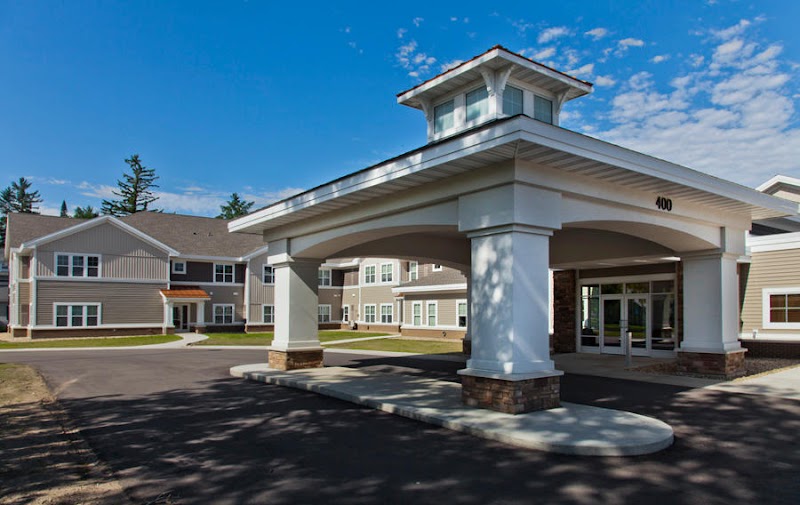
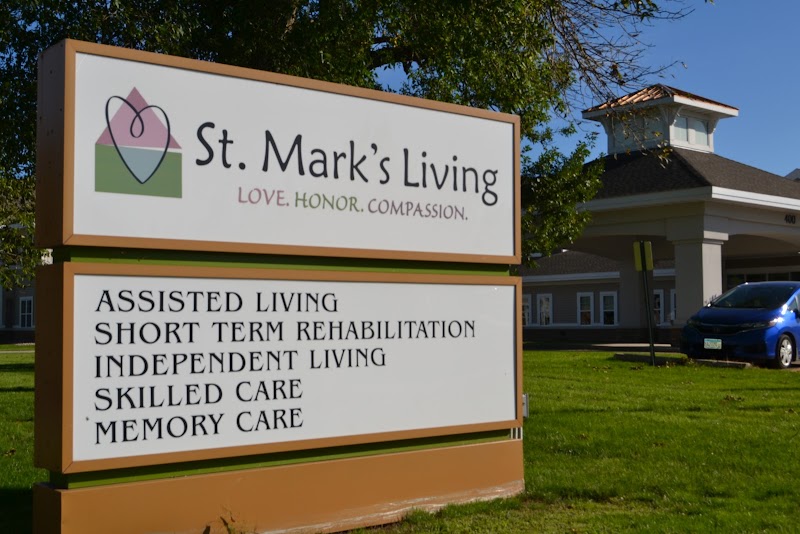

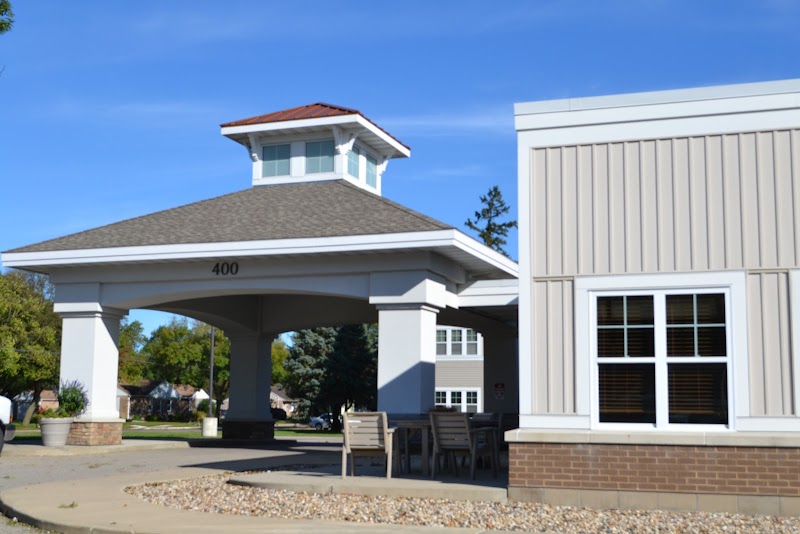
ST MARKS LIVING

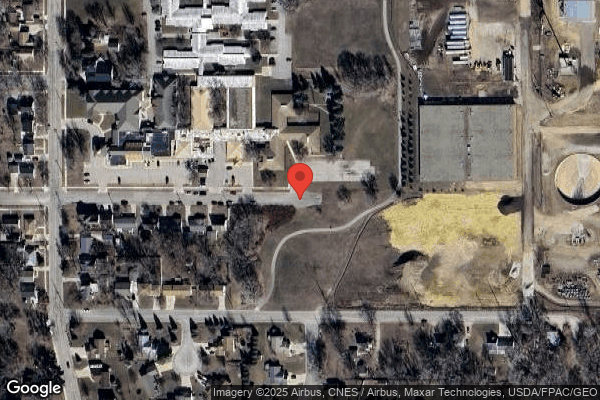
400 15TH AVENUE SOUTHWEST, AUSTIN, MN 55912 (507) 437-4594
Non profit - Corporation 45 Beds Independent Data: November 2025
Trust Grade
45/100
#261 of 337 in MN
Last Inspection: April 2025

Within standard 12-15 month inspection cycle. Federal law requires annual inspections.

Overview

St. Marks Living in Austin, Minnesota has a Trust Grade of D, indicating below-average performance with some notable concerns. It ranks #261 out of 337 facilities in the state, placing it in the bottom half, and is the lowest-ranked option in Mower County at #4 of 4. The facility is worsening, with issues increasing from 3 in 2023 to 15 in 2025. Staffing is a relative strength, receiving 4 out of 5 stars, but the turnover rate is 49%, which is about average for Minnesota. Although they have no fines, which is positive, RN coverage is concerning as it is lower than 79% of state facilities, and there have been serious incidents, including harm to a resident due to improper catheter insertion and lapses in monitoring sanitization procedures that could affect food safety.

Trust Score
D
45/100
In Minnesota
#261/337
Bottom 23%
Safety Record
Moderate
Needs review
Inspections
Getting Worse
3 → 15 violations
Staff Stability
⚠ Watch
49% turnover. Above average. Higher turnover means staff may not know residents' routines.
Penalties
✓ Good
No fines on record. Clean compliance history, better than most Minnesota facilities.
Skilled Nurses
✓ Good
Each resident gets 57 minutes of Registered Nurse (RN) attention daily — more than average for Minnesota. RNs are trained to catch health problems early.
Violations
⚠ Watch
23 deficiencies on record. Higher than average. Multiple issues found across inspections.
★★☆☆☆
2.0
Overall Rating
★★★★☆
4.0
Staff Levels
★★☆☆☆
2.0
Care Quality
★★☆☆☆
2.0
Inspection Score
Stable
2023: 3 issues
2025: 15 issues

The Good

  • 4-Star Staffing Rating · Above-average nurse staffing levels
  • Full Sprinkler Coverage · Fire safety systems throughout facility
  • No fines on record

Facility shows strength in staffing levels, fire safety.

The Bad

2-Star Overall Rating

Below Minnesota average (3.2)

Below average - review inspection findings carefully

Staff Turnover: 49%

Near Minnesota avg (46%)

Higher turnover may affect care consistency

The Ugly 23 deficiencies on record

1 actual harm
Apr 2025 9 deficiencies
CONCERN (D)

Potential for Harm - no one hurt, but risky conditions existed

Comprehensive Care Plan (Tag F0656)

Could have caused harm · This affected 1 resident

**NOTE- TERMS IN BRACKETS HAVE BEEN EDITED TO PROTECT CONFIDENTIALITY** Based on observation, interview and document review the facility failed to ensure a comprehensive care plan was developed to inc...

Read full inspector narrative →
**NOTE- TERMS IN BRACKETS HAVE BEEN EDITED TO PROTECT CONFIDENTIALITY** Based on observation, interview and document review the facility failed to ensure a comprehensive care plan was developed to include of post-traumatic stress disorder (PTSD) triggers and interventions for 1 of 1 resident (R25) who had a diagnosis of PTSD. R25's admission Minimum Data Set (MDS) assessment dated [DATE], indicated moderately impaired cognition, feeling down, depressed or hopeless nearly every day, dependent on staff for personal hygiene, dressing, toileting, utilized a walker and wheelchair, diagnoses included psychotic disorder and post-traumatic stress disorder (PTSD), and antipsychotics were received on a routine basis. R25's care plan dated 2/28/25, indicated medications daily for PTSD, psychosis, monitor/record occurrence of target behaviors: worried expression, verbalization of worries. monitor/record target behaviors: restlessness, wandering, pacing, exit seeking, unable to sit still to rest, administer psychotropic medications as ordered by physician, monitor for side effects and effectiveness every shift, monitor/document/report as needed any adverse reactions of psychotropic medications: unsteady gait, tardive dyskinesia, (shuffling gait, rigid muscles, shaking), frequent falls, refusal to eat, difficulty swallowing, dry mouth, depression, suicidal ideation, social isolation, blurred vision, diarrhea, fatigue, insomnia, loss of appetite, weight loss, muscle cramps nausea, vomiting, behavior symptoms not usual to the person, consult with pharmacy, medical doctor (MD) to consider dosage reduction when clinically appropriate at least quarterly, discuss with MD, family ongoing need for use of medication, review behaviors/interventions and alternate therapies attempted and their effectiveness. R25's annual Care Area Assessment (CAA) dated 2/12/25, triggered for Psychosocial Well-Being R25's mood interview indicates the presence of little interest or pleasure in doing things, when assessed, the resident was asked if he had little interest in doing anything, and he stated yes for 2-6 days, has been feeling down for 12-14 days due to everything happening to him, trouble falling asleep at night for 2-6 days and feeling tired for 2-6 days due to being unable to sleep at night, history of delusional disorders and unspecified psychosis. R25's Psychosocial assessment dated [DATE], indicted sometimes traumatic events in a person's life can have an effect on how we heal from illnesses or react to certain situations now, would you like to discuss interventions that may help address these concerns, response indicated no. On 3/31/25 at 1:58 p.m., R25 stated he had PTSD and some things that triggered his PTSD were flashbacks of his mom getting beat up, staff that were not patient, when staff made him wait a long time for help, voices and loud noises across the hall at night. On 3/31/25 at 7:01 p.m., registered nurse (RN)-B stated R25 had brain trauma and was not sure if R25 had a diagnosis of PTSD. On 3/31/25 at 7:04 p.m., R25 was laying in bed and stated he mainly stays in his room all day and will leave his room to go to therapy appointments, does not like to participate in group activities. R25 further stated I am in this hole all day long, and I wish people would come and talk and visit. R25 stated there is a list of activities to do, but I don't want to do those. R25 stated nobody comes to visit with me unless they are checking my catheter bag and stated wished people that worked here would come visit with me and not ignore me, because I feel like I am just staring and talking to a wall all day. On 4/1/25 at 9:18 a.m., RN-A, known as the nurse manager, stated R25's PTSD triggers were expected on his care plan. RN-A stated R25's care plan discussed PTSD medications and side effects of medications, and confirmed R25's care plan lacked the PTSD triggers and interventions. RN-A stated she completed residents' assessments, and stated the director of nursing was responsible for updating the care plans. On 4/1/25 at 9:59 a.m., social services (SS)-A stated the MDS coordinator was responsible for updating the care plans. On 4/1/25 at 11:51 a.m., SS-A stated she visited and with R25 and will use the trauma assessment for triggers and interventions on R25's care plan related to PTSD. On 4/1/25 at 12:40 p.m., the director of nursing (DON) stated the admission nurse was responsible for completing the care plan at the time of resident's admission. Facility Care Plans, Comprehensive Person-Centered policy dated 3/11/20, indicated: The Interdisciplinary Team (IDT), in conjunction with the resident and his/her family or legal representative, develops and implements a comprehensive, person-centered care plan for each resident. The care plan interventions are derived from a thorough analysis of the information gathered as part of the comprehensive assessment The comprehensive, person-centered care plan will: Include measurable objectives and timeframe's; Describe the services that are to be furnished to attain or maintain the resident ' s highest practicable physical, mental, and psychosocial well-being; Describe services that would otherwise be provided for the above, but are not provided due to the resident exercising his or her rights, including the right to refuse treatment; Describe any specialized services to be provided as a result of PASARR recommendations; Include the resident ' s stated goals upon admission and desired outcomes; Include the resident ' s stated preference and potential for future discharge, including his or her desire to return to the community and any referrals made to local agencies or other entities to support such a desire; Incorporate identified problem areas; Incorporate risk factors associated with identified problems Identifying problem areas and their causes and developing interventions that are targeted and meaningful to the resident, are the endpoint of an interdisciplinary process. No single discipline can manage an approach in isolation. The resident ' s physician (or primary healthcare provider) is integral to this process. Care plan interventions are chosen only after careful data gathering, proper sequencing of events, careful consideration of the relationship between the resident ' s problem areas and their causes, and relevant clinical decision making. When possible, interventions address the underlying source(s) of the problem area(s), not just addressing only symptoms or triggers. Care planning individual symptoms in isolation may have little, if any, benefit for the resident. The comprehensive, person-centered care plan is developed within seven (7) days of the completion of the required comprehensive assessment (MDS). Assessments of residents are ongoing and care plans are revised as information about the residents and the residents ' conditions change. The Interdisciplinary Team must review and update the care plan: When there has been a significant change in the resident ' s condition; When the desired outcome is not met; When the resident has been readmitted to the facility from a hospital stay; and At least quarterly, in conjunction with the required quarterly MDS assessment.
CONCERN (D)

Potential for Harm - no one hurt, but risky conditions existed

Pressure Ulcer Prevention (Tag F0686)

Could have caused harm · This affected 1 resident

**NOTE- TERMS IN BRACKETS HAVE BEEN EDITED TO PROTECT CONFIDENTIALITY** Based on observation, interview and document review, the facility failed to ensure physician orders were followed for pressure u...

Read full inspector narrative →
**NOTE- TERMS IN BRACKETS HAVE BEEN EDITED TO PROTECT CONFIDENTIALITY** Based on observation, interview and document review, the facility failed to ensure physician orders were followed for pressure ulcer (PU) wound care for 1 of 1 resident (R2) reviewed for pressure ulcers. Findings include: R2's facesheet printed on 4/3/25, included diagnoses of palliative care, Alzheimer's disease, and pressure ulcer sacral region. R2's annual Minimum Data Set (MDS) assessment dated [DATE], indicated severe cognitive impairment, dependency on staff for all activities of daily living, and two unstageable pressure ulcers. R2's care area assessment (CAA) dated 2/25/25, triggered secondary to actual pressure ulcers. Contributing factors included mobility impairment, actual pressure ulcers, cognitive loss, incontinence, and pain. Risk factors included pain, wound infection, and fluid deficit risk. R2's physician orders dated 3/31/25, included: --LEFT HIP: cleanse pressure injury with wound cleanser. Pat dry. Open and sprinkle Flagyl (an antibiotic) 375 mg (milligrams) capsule to wound base with dressing change. Pack with moistened packing strip. Apply foam border dressing to cover. Change daily and prn, every night shift for wound care (possible wound infection) AND as needed for wound care. --COCCYX: cleanse wound with wound cleanser. Open and sprinkle 1 Flagyl 375 mg capsule on wound bed. Pack with moistened packing strip. Apply foam border dressing to cover. Change daily and PRN if soiled every night shift for Wound Care AND as needed for Wound Care R2's care plan with revised date of 6/8/23, indicated R2 was at risk for pressure ulcer formation related to her bowel/bladder incontinence, low weight/bony prominence's, and decreased mobility. Care plan intervention dated 3/31/22, indicated staff would provide treatments as ordered for sacrum and right hip. During an observation on 4/2/25 at 1:09 p.m., with licensed practice nurse (LPN)-A, viewed R2's pressure wounds to her sacrum and left hip. LPN-A stated dressing changes were done daily on the night shift. LPN-A removed the foam dressing from the left hip, had a scant amount of serosanguinous drainage on it and measured 8.0 centimeters (cm) x 5.5 cm. LPN-A reapplied a foam dressing to the wound. LPN-A removed the dressing from the sacral PU, and it had a moderate amount of serosanguinous drainage on it and measured 3.0 cm x 3.5 cm, no redness or bone visible. LPN-A reapplied a foam dressing to the wound. During record review after observing the wounds and dressing changes, noted the physician order indicated both wounds were to be packed with saline moistened packing strips. When LPN-A removed the dressing that had been applied by the night shift nurse, there were no packing strips observed either in or on the wounds or on the dressings she removed, nor did LPN-A place moistened packing strips in the wounds as ordered by the physician when she replaced the dressings. During an interview on 4/2/25 at 2:02 p.m., registered nurse (RN-A) who was also the nurse manager stated she was not aware of the order to pack R2's wounds with moistened packing strips, stating she would need to look at the order. After reviewing the order, RN-A verified the ordered included packing strips to both wounds. Together with RN-A, went to R2's room to see if there were packing strips and saline available and there was, but no disposable sterile tweezers to use to pack the wounds. RN-A stated that would be necessary to pack the wounds. RN-A admitted she did not oversee wound care orders, observe wounds or dressing changes -- only if asked to by nursing staff. During an interview on 4/2/25 at 2:10 p.m., RN-C who was R2's hospice nurse stated hospice was in charge of wound management for R2. RN-C stated the order for wound care with saline moistened packing strips was not a new order, but it had been modified several times. Looking at previous hospice orders, RN-C stated the wound orders for hip and sacrum, including packing both wounds with moistened packing strips started on 1/31/25. During an interview on 4/2/25 at 2:27 p.m., the director of nursing (DON) joined the conversation with RN-A and RN-C and stated the process of informing nurses of new orders depended on the time of the day and whether the HUC (health unit coordinator) or a nurse entered the provider orders into the EMR. In any case, the DON stated the orders were on the TAR (treatment administration record) and nurses were expected to review them before going into a residents room. The DON stated the nurse who changed the dressing on the night shift and who did not follow physician orders for packing the wounds with saline moistened packing strips, was RN-D. The DON stated she would contact her about it. During a telephone interview on 4/2/25 at 2:34 p.m., with LPN-A, and with the DON and RN-A present, LPN-A admitted she forgot to use the packing strips to pack R2's wounds when she changed the dressing with the surveyor observing. LPN-A stated before she ended her shift, she changed the dressings and packed the wounds. In addition, LPN-A stated when she changed the dressing, she sprinkled the Flagyl on top of the packing strip, to which RN-A stated, the order was for the Flagyl to be sprinkled on the wound bed (not on top of the packing strips). During an interview on 4/2/25 at 3:07 p.m., the DON stated she called and left a message for RN-D who changed the dressing on the night shift on 4/2/25. In addition, the DON stated she had been planning to ask hospice to provide wound management training and would now get it scheduled. In a follow-up via email on 4/3/25 at 2:37 p.m., RN-D confirmed to the DON she had changed R2's dressing during the night on 4/2/25, and did not read R2's wound care orders carefully, and therefore did not pack the wounds with moistened packing strips as ordered by the physician. Facility Dressing Change/General Wound Care policy with review date of 4/2025, indicated all dressing changes would be performed by licensed nursing staff in accordance with provider orders, evidence-based practice, infection control protocols, and resident specific care plans. All dressing changes would be documented in the residents medical record. Steps included: Verify orders by checking the most current provider order for dressing change frequency, type of dressing, and any special instructions.
CONCERN (D)

Potential for Harm - no one hurt, but risky conditions existed

Deficiency F0688 (Tag F0688)

Could have caused harm · This affected 1 resident

**NOTE- TERMS IN BRACKETS HAVE BEEN EDITED TO PROTECT CONFIDENTIALITY** Based on observation, interview and document review, the facility failed to provide services to maintain and prevent loss of ran...

Read full inspector narrative →
**NOTE- TERMS IN BRACKETS HAVE BEEN EDITED TO PROTECT CONFIDENTIALITY** Based on observation, interview and document review, the facility failed to provide services to maintain and prevent loss of range of motion (ROM) for 1 of 2 residents (R7) reviewed for limited ROM. Findings include: R7's facesheet printed on 4/3/25, included diagnoses of multiple sclerosis (MS), osteoporosis, diabetes and heart disease. R7's annual Minimum Data Set (MDS) assessment dated [DATE], indicated R7 was cognitively intact, had clear speech, could understand and be understood. R7 was dependent upon staff for most ADL's and did not walk. The MDS did not indicate that R7 was in a restorative nursing program. R7's orders dated 5/9/23, indicated PT evaluation. R7's care plan dated 8/4/21, indicated R7 had an alteration in musculoskeletal status related to history of MS, would remain free of complications or discomfort related to MS, and would have range of motion (active or passive) with am/pm (morning and evening) care daily. R7's care plan dated 11/24/21, indicated R7 had limited physical mobility related to MS with referrals to PT and OT, and to monitor/document/report PRN (as needed) any signs and symptoms of contractures forming. During an interview on 3/31/25 at 1:12 p.m., R7, who was sitting in her electric wheelchair stated she was not able to walk or move her legs, and stated she did not receive passive ROM to them. R7 stated leg exercises had only been done when she was in rehabilitation therapy and was no longer in therapy. R7 stated she would like leg exercises to keep her joints limber, adding .but I know the nurses are busy. During an interview on 4/1/25 at 11:51 a.m., physical therapy aide (PTA)-G, provided a paper document titled Therapies Restorative Care Program. The document indicated R7 had started active PT on 9/3/24, and was discharged from therapy on 10/21/24, with the following restorative nursing recommendations: --Leg lifts 10 reps (repetitions), R LE PROM (right lower extremity passive range of motion) --Kick outs, 10 reps, L LE AAROM to AROM with gentle knee stretch (left lower extremity active, assisted range of motion to active range of motion) --R ankle PROM (right ankle passive range of motion) --L LE AROM (left lower extremity active range of motion) During an interview on 4/1/25 at 11:58 a.m., PTA-G stated she had filled out the Therapies Restorative Care Program form for R7 after R7 had completed physical therapy. PTA-G stated the intent of the form was for nursing to continue the recommendations after R7 was discharged from therapy. PTA-G stated the form was given to the health unit coordinator (HUC)-D and a copy was placed in the restorative nursing binder on the nursing unit. PTA-G stated she also demonstrated to nurses and nursing assistants how to do the exercises since R7 could not do them on her own. PTA-G stated she could not recall if the document was given to the HUC or placed in the binder for sure, but that was their process. PTA-G could not recall which nurse and/or NA she demonstrated the exercises for R7. The Therapies Restorative Care Program form did not indicate who the form was routed to or when. During review of the restorative nursing binder, located at the nurses station, the binder was titled, Occupational and Physical Therapy Resident Updates. The only document in the binder for R7 was not related to restorative nursing. During an interview on 4/1/25 at 2:28 p.m., nursing assistant (NA)-B stated R7 did not receive restorative nursing services. NA-B stated if a resident received restorative nursing services, it would be noted on the TASK list in the electronic medical record (EMR). Review of the TASK list in the EMR for R7 indicated: RESTORATIVE: T-Band pulleys 3x/week. There was nothing on R7's TASK list regarding restorative ROM to her legs. During an interview on 4/02/25 at 9:33 a.m., the director of nursing (DON) and registered nurse (RN)-A, were shown the Therapies Restorative Care Program form for R7, and both stated they had never seen the form before .specifically for R7. RN-A stated therapy would usually place these forms on her desk and then she would add it to the NA care sheets. The DON stated when this recommendation from therapy would have been received in September 2024, R7 would have been able to participate in the recommended ROM exercises. Both the DON and NA-A stated had they received the recommendations, they would have initiated them, but neither could recall receiving it. A restorative nursing policy was requested and not received. In an email follow-up on 4/3/24, the DON indicated they did not have a restorative nursing policy.
CONCERN (D)

Potential for Harm - no one hurt, but risky conditions existed

Incontinence Care (Tag F0690)

Could have caused harm · This affected 1 resident

**NOTE- TERMS IN BRACKETS HAVE BEEN EDITED TO PROTECT CONFIDENTIALITY** Based on observation, interview and document review the facility failed to assess and follow provider orders for removal of an i...

Read full inspector narrative →
**NOTE- TERMS IN BRACKETS HAVE BEEN EDITED TO PROTECT CONFIDENTIALITY** Based on observation, interview and document review the facility failed to assess and follow provider orders for removal of an indwelling urinary catheter as soon as possible to restore urinary continence for 1 of 1 resident (R25) reviewed for catheter care. Findings include R25's admission Minimum Data Set (MDS) assessment dated [DATE], indicated moderately impaired cognition, indwelling urinary catheter, dependent on staff for personal hygiene, dressing, toileting, utilized a walker and wheelchair, diagnoses included benign prostatic hyperplasia (enlarged prostate), psychotic disorder, post-traumatic stress disorder, retention of urine, and history of falling. The MDS indicated a toileting program (e.g., schedule toileting, prompted voiding, or bladder training) had not been attempted. R25's care plan dated 2/28/25, indicated R25 had a catheter d/t (due to) urinary retention, catheter care and treatment per current orders, monitor/record/report to MD (medical doctor) for s/sx (signs/symptoms) UTI (urinary tract infection): pain, burning, blood tinged urine, cloudiness, no output, deepening of urine color, increased pulse, increased temp, urinary frequency, foul smelling urine, fever, chills, altered mental status, change in behavior, change in eating patterns, position catheter bag and tubing below the level of the bladder monitor and document intake and output as per facility policy. Urology office visit note dated 2/28/25, physician assistant (PA)-C recommend a void trial when due for catheter exchange, if R25 is not able to pass a voiding trial, should continue with his indwelling catheter including routine care and monthly exchanges, if R25 requires chronic catheter, should be seen in one year for follow-up, if catheter able to be removed, should return in three months for follow-up. R25's treatment administration record dated 3/1/25-3/31/25, indicated change Foley collection bag weekly and as needed every Saturday. R25's physician orders, care plan, and progress notes lacked evidence of an order for monthly catheter exchange or voiding trial, and R25's record lacked appropriateness of continued catheter use or justification of continued use. On 3/31/25 at 7:04 p.m., R25 was observed with urinary catheter bag attached to the bed rail. R25 stated he came to the facility with the catheter. R25 stated staff had not offered or attempted to remove the catheter since he was admitted to the facility. R25 stated he recently saw a doctor about the catheter and stated the doctor discussed the facility would attempt to remove the catheter. R25 stated removal of the catheter had not been attempted, and he wished the catheter was removed. On 3/31/25 at 7:09 p.m., registered nurse (RN)-B stated R25 was admitted with a urinary catheter and was not aware if a voiding trial had been attempted. RN-B stated she was not aware of any provider orders for urinary catheter removal and stated the nursing assistants take care of the catheter and stated she had never completed a catheter exchange for R25. On 4/1/25 at 8:39 a.m., the director of nursing (DON) stated when a resident returns from a provider appointment the health unit coordinator (HUC)-A was responsible to enter orders into the electronic medical record (EMR) the resident returned with from the provider visit. The DON stated if the resident did not return with hard copy orders, the HUC was responsible to obtain the orders from the provider or look into resident's provider's EMR from the provider visit. The HUC then was responsible to print the orders, enter the orders in the facilities EMR, and give the orders to RN-A (nurse manger) to double check the orders. On 4/1/25 at 9:18 a.m., RN-A, also known as the nurse manager, stated R25 saw urology last month, and confirmed the 2/28/25, urology provider note indicated a voiding trail attempt at the next catheter change. RN-A confirmed R25's orders failed to indicate a monthly catheter exchange or voiding trail was entered into R25's EMR. RN-A further confirmed R25 had not had a monthly catheter exchange since admitted to the facility on [DATE], and confirmed a voiding trail had not been attempted per the provider order on 2/28/25. RN-A stated she would not have known about the R25's voiding trial order or the catheter exchange order was missing if the state agency (SA) had not brought urology order to the attention of the facility. RN-A stated monthly exchanges of R25's catheter were expected and she assumed were done routinely by nursing staff. RN-A stated the process for entering orders included the HUC-A obtained the resident orders from the provider visit, entered the orders into the EMR, and the orders get placed in the nursing station for the floor nurse to double check the resident order, and the HUC was to verbally tell her (RN-A) of any new resident orders. RN-A stated she was not made aware of any new orders from R25's 2/28/25, urology visit. RN-A confirmed the voiding trial order and catheter exchange order was missed and not placed in the EMR as expected. RN-A confirmed R25 was expected to have had voiding trial ordered and completed. RN-A stated the current process for entering and confirming orders was not working. On 4/1/25 at 9:47 a.m., HUC-A stated her role was to ensure all forms of provider orders including, physical written forms and electronic visits were printed, entered in the resident's EMR, scanned to the EMR, placed into the nursing station for the nurse to double check the entered orders, and verbally make RN-A aware of new orders. HUC-A stated the orders were not initialed, dated or reviewed by the nurse prior to scanning the order into the EMR. HUC-A stated she was responsible to ensure R25's 2/28/25, urology orders were entered and confirmed R25's voiding trail or monthly catheter exchange was not entered into the EMR as expected. HUC-A stated the order for a catheter exchange was not double checked by a nurse since it was not a pharmaceutical order. HUC-A stated she was not sure if RN-A had been made verbally aware of the R25's new urology orders. On 4/1/25 at 12:40 p.m., the DON confirmed R25's 2/28/25, provider order for trial of catheter removal was expected entered the day or the next day after R25's appointment to be assessed as soon as possible for removal of the catheter to help restore continence. The DON confirmed R25's order for catheter trial removal was not entered into the EMR as expected and trial of the urinary catheter was not attempted as ordered by the provider. On 4/2/25 at 7:36 a.m. R25 was lying in bed and stated his catheter was removed last night and stated he was urinating with no problems or concerns. R25 further discussed having the catheter out was nice and he wished he could have had it [catheter] out sooner. Facility Indwelling Catheter Policy dated 1/25, indicated: 2. Change the drainage bag and connection tubing bimonthly. 3. Residents with chronic in-dwelling catheters should have Foley catheter replaced according to Physician's order. Documenting in Resident's chart: 1. Identification and documentation of clinical indications for the use of a catheter; as well as criteria for the discontinuance of the catheter when the indication for use is no longer present. 2. Documentation of the involvement of the resident/representative in the discussion of the risks and benefits of the use of a catheter, removal of the catheter when criteria or indication for use is no longer present, and the right to decline the use of the catheter. Facility Policy titled Electronic Health Record (EHR) Maintenance and Documentation Policy dated 3/25, indicated: All resident documents, including admission forms, assessments, progress notes, physician orders, laboratory results, provider visits, hospital visits and care plans, must be uploaded into the EHR promptly, if it is not otherwise charted in the EHR. Health unit coordinator is responsible for this. Health unit coordinator will obtain the necessary records from the visit and give them to the nurse manager to look over, initial, and date. The HUC will then upload necessary information into the EHR. Authorized personnel must ensure scanned or electronically uploaded documents are legible, properly indexed, and accurately linked to the correct resident record. The facility will utilize automated interfaces where possible to reduce manual data entry errors. Paper records, when necessary, must be scanned into the EHR within 24 hours of receipt. Staff must verify that uploaded documents have been successfully saved and associated with the correct resident profile. If the paper documents are provider or hospital visits or orders, they must be initialed and dated by nurse manager to show that we have seen them before scanning them in.
CONCERN (D)

Potential for Harm - no one hurt, but risky conditions existed

Deficiency F0699 (Tag F0699)

Could have caused harm · This affected 1 resident

**NOTE- TERMS IN BRACKETS HAVE BEEN EDITED TO PROTECT CONFIDENTIALITY** Based on interview and document review, the facility failed to assess trauma history and identify potential triggers for 1 of 1 ...

Read full inspector narrative →
**NOTE- TERMS IN BRACKETS HAVE BEEN EDITED TO PROTECT CONFIDENTIALITY** Based on interview and document review, the facility failed to assess trauma history and identify potential triggers for 1 of 1 resident (R25) who had a diagnosis of post-traumatic stress disorder (PTSD). Findings include: R25's admission Minimum Data Set (MDS) assessment dated [DATE], indicated moderately impaired cognition, feeling down, depressed or hopeless nearly every day, dependent on staff for personal hygiene, dressing, toileting, utilized a walker and wheelchair, diagnoses included psychotic disorder and post-traumatic stress disorder (PTSD), and antipsychotics were received on a routine basis. R25's care plan dated 2/28/25, indicated medications daily for PTSD, psychosis, monitor/record occurrence of target behaviors: worried expression, verbalization of worries. monitor/record target behaviors: restlessness, wandering, pacing, exit seeking, unable to sit still to rest, administer psychotropic medications as ordered by physician, monitor for side effects and effectiveness every shift, monitor/document/report as needed any adverse reactions of psychotropic medications: unsteady gait, tardive dyskinesia, (shuffling gait, rigid muscles, shaking), frequent falls, refusal to eat, difficulty swallowing, dry mouth, depression, suicidal ideation, social isolation, blurred vision, diarrhea, fatigue, insomnia, loss of appetite, weight loss, muscle cramps nausea, vomiting, behavior symptoms not usual to the person, consult with pharmacy, medical doctor (MD) to consider dosage reduction when clinically appropriate at least quarterly, discuss with MD, family ongoing need for use of medication, review behaviors/interventions and alternate therapies attempted and their effectiveness. R25's annual Care Area Assessment (CAA) dated 2/12/25, triggered for Psychosocial Well-Being R25's mood interview indicates the presence of little interest or pleasure in doing things, when assessed, the resident was asked if he had little interest in doing anything, and he stated yes for 2-6 days, has been feeling down for 12-14 days due to everything happening to him, trouble falling asleep at night for 2-6 days and feeling tired for 2-6 days due to being unable to sleep at night, history of delusional disorders and unspecified psychosis. R25's Psychosocial assessment dated [DATE], indicted sometimes traumatic events in a person's life can have an effect on how we heal from illnesses or react to certain situations now, would you like to discuss interventions that may help address these concerns, staff indicated that R25's response was no. On 3/31/25 at 1:58 p.m., R25 stated he had PTSD and some things that triggered his PTSD were flashbacks of his mom getting beat up, staff that were not patient, when staff made him wait a long time for help, voices and loud noises across the hall at night. On 3/31/25 at 6:55 p.m., nursing assistant (NA)-A stated R25 would become anxious and agitated when he talked about family and she would try to verbally diffuse the situation. On 3/31/25 at 7:01 p.m., registered nurse (RN)-B stated R25 had brain trauma and was not sure if R25 had a diagnosis of PTSD. On 3/31/25 at 7:04 p.m., R25 was laying in bed and stated he mainly stays in his room all day and will leave his room to go to therapy appointments, does not like to participate in group activities. R25 further stated I am in this hole all day long, and I wish people would come and talk and visit. R25 stated there is a list of activities to do, but I don't want to do those. R25 stated nobody comes to visit with me unless they are checking my catheter bag and stated wished people that worked here would come visit with me and not ignore me, because I feel like I am just staring and talking to a wall all day. On 4/1/25 at 9:18 a.m., RN-A, known as the nurse manager, stated R25's PTSD triggers were expected on his care plan. RN-A stated R25's care plan included PTSD medications and side effects of medications, and confirmed R25's care plan lacked the PTSD triggers and interventions. RN-A stated she completed residents' assessments, and stated the director of nursing was responsible for updating the care plans. RN-A stated the social services role is new to the facility and not sure if social services had assessed R25 for PTSD and triggers. RN-A stated R25 went to appointments outside of the facility for mental health. RN-A stated the provider notes were not returned or shared with the facility. RN-A stated the notes would be helpful in the care of R25's PTSD and trauma informed care. On 4/1/25 at 9:47 a.m., health unit coordinator (HUC)-D stated she made R25's mental health appointments and gave R25 paperwork to bring to the appointments. HUC-A stated R25 did not return with paperwork from the appointments, and she had not called to get information regarding the appointments. HUC-D stated she was responsible to ensure resident information was returned to the facility and was expected to call if notes were not received. HUC-A stated the notes would be important for nursing to review and care for R25. On 4/1/25 at 9:59 a.m., SS-A stated she was responsible for the residents trauma assessments. SS-A stated prior to the end of February 2025, she was not aware if trauma assessments were completed. SS-A confirmed R25 did not have a trauma assessment completed upon admission and confirmed R25 had a PTSD diagnosis. SS-A stated she had not heard that R25 had any concerns with behavior or mood, and stated she would expect nursing to make her aware of behavioral concerns, and if concerns then she would go talk with R25. SS-A stated the MDS coordinator was responsible for updating the care plans. On 4/1/25 at 11:26 a.m., during a follow up interview R25 was in his room lying in bed and stated he went to a therapist and a therapist came to talk to him once a week. R25 stated the social worker at the facility had not been in to talk to him. R25 stated it would be nice if someone who worked at the facility came in and talked to me about my feelings and had conversation with me about how I am doing. On 4/1/25 at 11:33 a.m., the activities director (AD)-A stated R25 does not want to do group activities, and does physical therapy, radio, and television. AD-A stated she occasionally goes and visits with R25, however could not remember when she last visited with him and had no documentation of one on one visits with R25. On 4/1/25 at 11:51 a.m., SS-A stated she visited and with R25 today and he expressed he was glad to talk to her. SS-A stated she completed the trauma checklist that had not been done and will use the trauma assessment for triggers and interventions on R25's care plan related to PTSD. On 4/1/25 at 12:40 p.m., the director of nursing (DON) stated a trauma assessment was expected to be completed upon admission. The DON stated she was unaware who was responsible for resident's trauma assessments. The DON stated she was not aware of R25 having a PTSD diagnosis, and stated the admission nurse was responsible for completing the care plan at the time of resident's admission, and the DON updated care plans when needed. The DON stated social services was expected to round with residents and discuss any concerns. The DON stated trauma assessments were important to identify any potential triggers and guide resident care. Facility Trauma Informed policy dated 8/15/24, indicated: Purpose: To guide staff in appropriate and compassionate care specific to individuals who have experienced trauma. Nursing staff are trained on screening tools, trauma assessment and how to identify triggers associated with re-traumatization. Develop an organizational culture that supports trauma-informed care. Include trauma-informed care as part of the QAPI plan, so that needs and problem areas are identified and addressed. As part of the comprehensive assessment, identify history of trauma or interpersonal violence when possible. Identifying past trauma or adverse experiences may involve record review or the use of screening tools. Utilize trained and qualified staff members who have established a rapport with the resident to assess him or her for previous trauma. Interact with all residents and visitors in a manner that is welcoming and kind, without being intrusive. Reduce or eliminate unnecessary stimuli (noise, lighting, unwanted or sudden physical contact, etc.).
CONCERN (D)

Potential for Harm - no one hurt, but risky conditions existed

Deficiency F0883 (Tag F0883)

Could have caused harm · This affected 1 resident

**NOTE- TERMS IN BRACKETS HAVE BEEN EDITED TO PROTECT CONFIDENTIALITY** Based on interview and document review, the facility failed to ensure 2 of 5 residents (R30, R34) reviewed for immunization stat...

Read full inspector narrative →
**NOTE- TERMS IN BRACKETS HAVE BEEN EDITED TO PROTECT CONFIDENTIALITY** Based on interview and document review, the facility failed to ensure 2 of 5 residents (R30, R34) reviewed for immunization status, had been provided education regarding the risks, benefits and potential side effects of the influenza and pneumococcal vaccines in accordance with facility policy and the Centers for Disease Control and Prevention (CDC) recommendations. Findings include: R30's facesheet printed 4/2/25, indicated an admission date of 2/20/25. R30's immunization record did not include any administration or refusal of influenza or pneumococcal vaccines. Review of documentation in electronic medical record (EMR) failed to indicate whether the resident/family had been provided education regarding risks, benefits and side effects about the influenza or pneumococcal vaccinations or if resident had received the vaccinations or refused. R30's admission Minimum Data Set (MDS) dated [DATE], included moderately impaired cognition but understands and is understood. During interview on 4/2/24, at 9:30 a.m., R30 stated he did not receive education on the risks or benefits of vaccinations on admission. R34's facesheet printed 4/2/25, indicated an admission date of 3/10/25. R34's immunization record did not include documentation of influenza or pneumococcal vaccines or that R34 was provided education on risks, benefits and side effects in the electronic medical record (EMR). No evidence was present the resident had received the vaccinations or refused. R34's admission MDS dated [DATE], included R34 had intact cognition and understands and is understood. During interview on 4/2/24 at 9:48 a.m., R34 stated she had not received education on the risks, side effects or benefits of vaccinations. On interview 4/1/25 at 3:17 p.m., registered nurse (RN)-E, also identified as infection preventionist, indicated R30 and R34 both declined the vaccines upon admission. RN-E confirmed the record lacked documentation of vaccine status for influenza and pneumococcal and she just realized this yesterday and has since corrected the issue. RN-E confirmed they do not give vaccine informational sheets or other hand outs or discuss the risks, benefits and side effects of medication if the resident refuses. On interview 4/2/25 at 10:11 a.m., the director of nursing (DON) stated she would expect all residents to receive information on the risks and benefits of immunizations. Facility Influenza Vaccine policy dated 3/22, included the facility shall provide pertinent information and the significant risks and benefits of vaccines to staff and residents; for example, risk factors that have been identified for specific age groups or individuals with risk factors such as allergies or pregnancy. Pro to the vaccination, the resident will be provided information and education regarding the benefits and potential side effects of the influenza vaccine Provision of such education shall be documented in the resident's medical record. A resident's refusal of the vaccine shall be documented on the informed consent for influenza vaccine and placed in the resident's medical record. Facility Pneumococcal Vaccine policy dated 3/22, included prior to or upon admission, residents are assessed for eligibility to receive the pneumococcal vaccine series, and when indicated are offered the vaccine series within 30 days of admission. If a resident refuses vaccination appropriate information is documents in the resident's medical record indicating the date of the refusal of the pneumococcal vaccine.
CONCERN (E)

Potential for Harm - no one hurt, but risky conditions existed

Antibiotic Stewardship (Tag F0881)

Could have caused harm · This affected multiple residents

Based on interview and document review, the facility failed to implement a process for antibiotic review in order to determine appropriate indications, dosage, duration, trends of antibiotic use and r...

Read full inspector narrative →
Based on interview and document review, the facility failed to implement a process for antibiotic review in order to determine appropriate indications, dosage, duration, trends of antibiotic use and resistance. This had the potential to affect any residents who had infections requiring antibiotic use. Finding include: On 4/1/25 at 2:16 p.m., during an interview with registered nurse (RN)-E also identified as infection preventionist, stated she tracked and documented infections and antibiotics use on a software program they started using in January 2025. Prior to this, the facility lost their electronic tracking system in June 2024 and she was not documenting on a tracking form, just notes jotted down. Upon request, to review the previous year data, RN-E indicated she could attempt to get the notes, but it likely wouldn't make sense. Review of monthly antibiotic use data available for January 2025 to March 31, 2025 included: if acquired in house or present on admission, resident, unit/room number, infection onset date, type of infection, infection site, organism, medication, provider, isolation if used, outcome, and date infection resolved. Review of the data indicated 6 of 7 urinary tract infections (UTI) treated with antibiotics did not include culture results and analysis of antibiotic treatment. In addition to the 6 UTI infections, one infection was listed as bacterial cystitis and one infection with diagnosis as unknown. These 2 infections were also treated with antibiotics and did not include culture results and analysis of antibiotic treatment. On 4/1/25 at 2:20 p.m., during interview, RN-E stated they have trouble getting cultures completed or results reported when patients go to the emergency department (ED). RN-E stated they are working with the local ED about other issues, but have not discussed the lack of cultures being completed on urine specimens, wounds and other infections being treated with antibiotics. RN-E stated she has not discussed this issue at quality assurance and improvement meetings at this time and stated she didn't have a lot of communication with the previous medical director. RN-E confirmed they do not know if the resident is placed on the correct antibiotic since no cultures are being completed. RN-E also confirmed they are not tracking overall infection rates or catheter associated urinary tract infections. RN-E confirmed antibiotic time outs are not occurring at this time. On 4/2/25 at 10:11 a.m., the director of nursing (DON) stated they are having issues with cultures on urines and other specimens being completed and confirmed it is rare when they actually get a culture completed. The DON confirmed continued issues with the local ED department but the facility has not addressed the lack of cultures at this time. The DON stated she would expect the antibiotic stewardship program to follow the policy and procedure which includes time outs for antibiotic use. Facility Antibiotic Stewardship policy dated 2/14/25, included: -The facility will maintain an antibiotic stewardship program with the mission of promoting the appropriate use of antibiotics to treat infections and reduce possible adverse events associated with antibiotic use .This policy including procedure section will be reviewed yearly to ensure that all objectives and conditions are being met to streamline procedures and algorithms, and to identify opportunities for enhancement. - Antibiotic time out will be used at 72 hours after antibiotic initiation or first dose in the facility. Each resident will be reassessed for consideration of antibiotic need, duration, selection and de-escalation potential. At this time, laboratory testing results, response to therapy, resident condition and facility needs will be considered. Completion of an antibiotic time-out must be recorded in the resident record. -Microbiologic specimen submission guidelines to be completed per Loeb algorithm. -First-line treatment recommendations: Prescriber's will base treatment recommendations on the following factors: Likely UTI cite, culture and antibiotic sensitivity data, and patient specific factors including age, sex, prior antibiotic use, allergy history, current drug therapy, renal function and presence of urinary catheter. -What will be measure and tracked: Antibiotic starts, compliance and use of antibiotic time-outs, antibiotic use and days of therapy, record-keeping protocol compliance, use of antibiotic time-outs and compliance with urine culture specimen submission guidelines. -Antibiotic use data will be complied monthly and reviewed by the consulting pharmacist. Consulting pharmacist and the infection preventionist interpret the monthly data, define any necessary action steps and compile information for the monthly tracking report.
CONCERN (F)

Potential for Harm - no one hurt, but risky conditions existed

Food Safety (Tag F0812)

Could have caused harm · This affected most or all residents

Based on observation, interview and document review, the facility failed to monitor the concentration of sanitizer used in the 3-compartment sink to ensure proper sanitation for cleaning pots and pans...

Read full inspector narrative →
Based on observation, interview and document review, the facility failed to monitor the concentration of sanitizer used in the 3-compartment sink to ensure proper sanitation for cleaning pots and pans. This had the potential to affect all 36 residents who were served food from the kitchen. Findings include: During observation and interview on 3/31/25 at 11:35 a.m., with dietary assistant (DA)-A, 3 sinks were being used to clean pots and pans. DA-A stated the pots and pans rarely if ever go thru the dishwashing machine. DA-A indicated they aren't currently testing the concentration of the sanitizer or checking temperatures of water used for washing. DA-A stated they change out the chemicals and is not sure if the contract company completes maintenance on the system or not. The chemical used for sanitizing dishes stated Sunburst on the container. During observation 3/31/25 at 6:21 p.m., C-B filled the 3 sink system to wash pots and pans. C-B stated they check the concentration of the sanitizer each time they wash the pots and pans and showed the Quant Sticks (all were sealed in individual packs) used but did not check the concentration of the sanitizer sink. During an observation and interview on 4/1/25 at 8:50 a.m., with dietary manager (DM)-A, 3 compartment sink was filled with water and sanitizer solution and dishes had just been washed and were sitting on the counter, still wet. DM-A stated they don't check temperatures of the water and use cold water for the sanitizing solution. DM-A stated staff should be checking the concentration of the sanitizing solution each time the sink is filled using the tape found above the sinks. DM-A checked the current concentration using sanitizer test strip tape and correct concentration (200 parts per million) was noted. DM-A stated they do not document these checks or temperatures and has no documentation to support this is being completed. During interview 4/2/25 at 7:26 a.m., cook (C)-B indicated they wash, rinse and sanitize the pots and pans in the three sink system. C-B stated contact time for leaving pots and pans in sanitizer is 1 minute. Facility Cleaning Dishes/Dish Machine policy dated 2010, included all flatware, serving dishes and cookware will be washed, rinsed and sanitized after each use. Dish machines will be checked prior to meals to assure proper functioning and appropriate temperatures for cleaning and sanitation. The policy did not include instructions for use for the 3 sink system for cleaning pots and pans but did include scrub pots and pans with a non-metallic scouring pad when necessary and rinse in the sink.
CONCERN (F)

Potential for Harm - no one hurt, but risky conditions existed

Staffing Data (Tag F0851)

Could have caused harm · This affected most or all residents

Based on interview and document review, the facility failed to submit accurate and/or complete data for staffing information, based on payroll and other verifiable and auditable data during 1 of 1 qua...

Read full inspector narrative →
Based on interview and document review, the facility failed to submit accurate and/or complete data for staffing information, based on payroll and other verifiable and auditable data during 1 of 1 quarter reviewed (Quarter 1, 2024), to the Centers for Medicare and Medicaid Services (CMS), according to specifications established by CMS.This deficient practice had the potential to affect all 36 residents residing in the facility. Findings include: The CMS payroll-based journal (PBJ) staffing data report indicated the following: Failed to have RN hours four or more days within the quarter: 10/12/24, 10/13/24, 10/26/24, 10/27/24, 11/9/24, 11/10/24, 11/23/24. Failed to have licensed nursing coverage 24 hours/day on the following dates: 10/4/24, 10/6/24, 10/13/24, 10/19/24, 10/26/24, 10/27/24, 11/2/24, 11/9/24, 11/10/24, 11/14/24, 11/15/24, 11/16/24, 11/17/24, 11/23/24, 11/24/24, 11/28/24, 11/29/24, 12/7/24, 12/8/24, 12/22/24 and 12/25/24. On 4/2/25 at 9:17 a.m., staffing specialist (SS)-E, stated she was responsible for the nurse staff schedules. SS-E stated the staff schedule ensured a licensed nurse was scheduled each shift (days, evenings, and nights) and 24 hours every day with a minimum of one registered nurse (RN) every 24 hours. SS-E indicated she has always been able to cover licensed nurses staffing for above required hours but they sometimes have to mandate staff stay to cover the shift until a replacement can be found. The DON has had to cover portions of the shift also due to last minute call ins. On 4/1/25 at 9:34 p.m., the administrator stated the facility uploads the payroll information from their automated payroll system to the PBJ staffing site except the contracted staff who are manually entered. The administrator indicated in June 2024, the facility had a change in their payroll system and have been having issues with the information uploading to the PBJ site correctly. The administrator indicated they had to manually enter all their hours for July, August and September as none of their data would transfer. The administrator indicated they are working with the new payroll system staff to correct this problem. The administrator added once information is uploaded to PJB you can not go in and manually correct it, which they would have done once they noted the issue with some data not uploading. Review of timecards for the above dates was completed. All dates reviewed for lack of RN coverage were verified to have an RN on duty at least 8 hours per day. Review of above dates for licensed staff 24 hours per day were verified to have licensed staff 24 hours per day on site. Schedules and time cards were verified and accurate. A request for a facility policy for payroll based journal was requested and not received.
Mar 2025 2 deficiencies
CONCERN (D) 📢 Someone Reported This

A family member, employee, or ombudsman was alarmed enough to file a formal complaint

Potential for Harm - no one hurt, but risky conditions existed

Quality of Care (Tag F0684)

Could have caused harm · This affected 1 resident

**NOTE- TERMS IN BRACKETS HAVE BEEN EDITED TO PROTECT CONFIDENTIALITY** Based on observation, interview, and document review, the facility failed to comprehensively assess and monitor non-pressure rel...

Read full inspector narrative →
**NOTE- TERMS IN BRACKETS HAVE BEEN EDITED TO PROTECT CONFIDENTIALITY** Based on observation, interview, and document review, the facility failed to comprehensively assess and monitor non-pressure related impairments in skin integrity for 3 of 3 (R1, R2, R3) residents reviewed for injuries. Addtionally the facility failed to ensure appropriate interventions were in place to reduce bruising for 1 of 1 resident (R1) at risk for bruising due to taking an anticoagulant (medication that prevents blood clots from forming) Findings include R1 R1's face sheet dated 3/19/25, identified diagnoses of heart failure (condition in which heart doesn't pump blood as well as it should), diabetes mellitus (condition that affects how the body uses sugar as fuel), and atrial fibrillation (condition causing rapid heartbeat that commonly causes poor blood flow). R1's focus care plan dated 8/7/24, identified R1 is at risk for bruising/bleeding/adverse effects with anticoagulant therapy with a goal of skin will remain intact and minimal bruising. Interventions included: monitor, document, and report bruising. R1's order summary dated 3/19/25, identified R1 was on an anticoagulant for atrial fibrillation. R1's skin assessment on 2/24/25 at 3:02 a.m., identified R1 had a new bruise on right inner upper arm measuring 33 centimeters (cm) x 20 cm. The assessment did not include characteristics of the bruise. R1's progress note dated 2/24/25 at 4:32 a.m., identified R1 was observed thrashing around under cover and a large 33 centimeters (cm) x 20 cm, bruise noted to right upper arm and resident stated it happened from hitting his side rails while boosting self-up in bed. Noted resident is on anticoagulant and pad protectors needed for side rails. Will pass along in shift report regarding bruise and bed rail concern. R1's skin assessment dated [DATE], identified a bruise on right upper arm measuring 33 cm x 20 cm and was caused by bumping into bed rail. R1 denied pain and skin condition poor and is on anticoagulation medications. Licensed nurse analysis identified recommendation for protection pads on side rails. R1's record did not identify protection pads placed on bed rails or monitoring of the bruise. R1's outside medical record dated 2/24/25, identified physician notified that R1 was observed thrashing around under his covers and obtained a large bruise to upper right inner arm. Measurement of 33 cm x 20 cm. R1 denies pain to the area. No noticeable warmth and skin in poor condition. In review of R1's record between 2/24/25 and 3/19/25, there was no indication the bruising was continuously monitored or assessed to identify worsening or improvement. During an observation and interview on 3/18/25 at 3:56 p.m., R1 was seated in his wheelchair in his room. R1's bed had a positioning bar on the left and right side, however, did not have any protective covers on them. Observed two long brown clothlike sleeves with openings on the hand area sitting on nightstand folded up. Registered nurse (RN)-A observed R1's left forearm and noted a bruise measuring 14 ½ cm x 10 cm and was described as irregular in shape, purple in color and raised to touch, without pain, and no warmth. RN-A also noted 1 cm x 1.5 cm purple, circular, raised area in the left arm near the antecubital area (triangular depression on the inner surface of the elbow joint). No bruise noted on the upper right inner arm. R1 stated the bruise on his right arm was from bumping his bars in his bed but is gone now. RN-A stated R1 bumps his arms on the rails when turning side to side and has fragile skin. RN-A has not seen any protection pads on R1's bed to protect his arms and was unsure whether he used protective sleeves on his arms. RN-A explained since R1 was on a blood thinner she would notify the physician of the bruising and new hematoma by sending a situation, background, assessment, and recommendation (SBAR). Review of R1's record on 3/19/25, did not identify physician notification of the hematoma or bruising on left forearm observed on 3/18/25. During an interview on 3/19/25 at 11:10 a.m., licensed practical nurse (LPN)-A stated for any new skin issues like bruising or hematoma a skin assessment should be done, the physician should be notified, and an order to monitor the hematoma/bruise only if the physician orders the monitoring. During an interview on 3/19/25 at 2:20 p.m., director of nursing (DON) stated she was aware of R1 having frequent bruising on his arms from bumping his arms on the bars on his bed. DON stated after the bruise observed on 2/24/25 no protective pads had been placed on the bars, however they did get protective sleeves for staff to place on R1's arms at night but the sleeves for his arms were not in the care plan or monitoring in place. R2 R2's face sheet indicated R2 had diagnoses that included chronic kidney disease stage 4 (loss of kidney function that can cause easy bruising and delay wound healing). R2's care plan focus dated 2/27/25, noted R2 had a potential impairment to skin integrity. Interventions included: - Lotion on dry skin areas as necessary (dated 1/25/24) - Skin barrier crème/ointment to protect skin as needed (dated 1/25/24) - Use caution during transfers and bed mobility to prevent striking arms, legs, and hands against any sharp or hard surface (dated 1/25/24) - Wound/skin treatments as ordered (dated 2/1/24) - Resident will utilize pressure-relieving/reducing pad while in chair (dated 3/4/25) Facility Incident: Un-witnessed Fall report #1474 dated 3/14/25 at 1:15 a.m., noted it was not part of the medical record. R2 had an unwitnessed fall on 3/14/25 at 1:15 a.m. in her bathroom and had pain to the lower-left back and red/purple color observed in two areas measuring: 7.5 x 12 & 9 x 8. With no other skin issues observed. The injuries section included Injury type: bruise (flat), injury location: rear left iliac crest [upper part of hip bones]. R2's SBAR (Situation, Background, Assessment, and Recommendation) progress note dated 3/14/25 at 2:28 a.m., noted R2 fell and included: - Appearance: pain reported on her lower-left back. Red/purple color observed in two areas measuring 7.5 x 12 & 9 x 8, range of motion good and without discomfort, no other skin issues noted. The SBAR progress note did not include a comprehensive assessment of the two noted areas of discoloration on R2's lower back. The documented assessment was limited to size (without an identified unit of measurement or identification of which individual bruise was measured), color, general location, range of motion, and the presence of pain. R2's fall care plan focus dated 3/14/25, noted R2 had an unwitnessed fall without apparent injury on 3/14/25. The intervention was 'call, don't fall' signs placed in resident room. R2's fall care plan did not identify R2's injury of multiple bruises on her back. R2's skin care plan was not revised to identify the bruises or related goals or interventions R2's progress note dated 3/15/25 at 11:25 a.m., included Did noticed [sic] couple bruises on back from fall. Will continue to monitor. R2's progress note dated 3/17/25 at 11:31 a.m., indicated the on-call provider was contacted to provide an update about R2's decreased activities participation due to having increased pain. The on-call provider stated to continue to monitor and if bruising gets bigger as if there was [a] hematoma [closed wound where blood collects outside of blood vessels] under the skin or if pain or ROM gets worse, we will need to send resident in for evaluation. R2's task charting for nursing assistants (NA's) included a Skin Observation task. Options included: scratched, red area, discoloration, skin tear, open area, none of the above observed, resident not available, or resident refused. Charting from 3/14/25 to 3/18/25 included: - None of the above observed on: 3/14/25 at 2:34 a.m., 6:30 a.m., 10:29 p.m., and 11:30 p.m.; on 3/15/25 at 8:30 p.m.; on 3/16/25 at 3:26 a.m. and 2:53 p.m.; on 3/17/25 at 4:28 a.m., 11:06 a.m., and 10:29 p.m.; and on 3/18/25 at 1:10 a.m. - Discoloration on 3/15/25 at 7:55 a.m., with follow-up questions Is this a new skin condition? marked yes and Where is the discolored area located? marked back. - Discoloration on 3/16/25 at 6:30 a.m., with follow-up questions Is this a new skin condition? marked no and Where is the discolored area located? marked back. R2's progress notes from 3/14/25 through 3/18/25 did not identify additional assessments or monitoring of the bruises on R2's back. During an interview on 3/18/25 at 3:05 p.m., trained medication aide (TMA)-B stated nurses are responsible for assessing a resident after a fall. TMA-B further noted nurses were responsible for ongoing monitoring after a fall and this would be located on the resident's TAR. On 3/18/25 at 3:28 p.m., R2 was resting in the recliner in her room. RN-A observed the bruises on R2's back, noting there was a little bit of bruising on her left lower back that was light green in color. RN-A measured the bruising and noted three bruises. The first measured 9.0 cm x 6.0. The second bruise, underneath the first, was 7.0 cm x 1.5 cm. The third, a line of purple bruising here under her [R2's] waistband was 9.0 cm x 2.0 cm tall. RN-A stated this was the first time she had seen the bruises and noted they would have been assessed when R2 fell as nurses are typically supposed to do a head-to-toe [assessment] after a fall. RN-A explained nurses were supposed to fill out a fall checklist/packet and risk management documentation for every fall and this is where injuries would be charted. RN-A stated, I don't think we would do [document] a skin assessment unless we saw something, we would only chart if something was noted. RN-A noted that for bruising I think we are just supposed to notify the provider and monitor it to make sure it's getting better. RN-A would know if a bruise was getting better by looking back at the skin assessment of the initial injury to see if it was getting smaller. RN-A reviewed and identified the documentation of R2's bruises in the EHR only identified two bruises and there was no documentation of a third bruise. During an interview on 3/19/25 at 11:44 a.m., licensed practical nurse (LPN)-A stated she would complete a skin assessment after a fall if a resident had any injuries such as a skin tear, bruise, scratch, or if they broke a bone. Skin assessments were normally completed weekly, and she would note if a resident had a healing bruise from a recent fall and take measurements. Skin injuries should be monitored until they heal but was not sure how often a bruise should be monitored, she would have to ask the DON. LPN-A would document further monitoring in a progress note. LPN-A confirmed a physician order was not needed for nurses to implement plan for monitoring. LPN-A would assess the color, if it was healing, the length and measurements, any tenderness, any surrounding redness, and the location. LPN-A stated she did not know how she could tell if a bruise was getting better or worse if there was a lack of documentation and/or comprehensive assessment of a bruise. During an interview on 3/19/24 at 2:19 p.m., DON confirmed R2's record lacked a post-fall Skin Assessment, there was only an assessment of the bruises in the risk management incident report which was not a comprehensive assessment. The DON would expect a comprehensive assessment of bruising to include measurements, color, number and location, associated swelling, abrasions, bleeding, range of motion, and pain. DON did not see a comprehensive assessment of the bruises at any point and this does not meet expectations for following professional standards of practice and facility protocol. DON would expect bruises to be monitored every shift with documentation of the size, location, color and any change in color, swelling, pain, ROM, anything new, and any changes or progress noted. DON confirmed monitoring of R2's bruises wasn't done and it was not monitored in line with expectations and standards of practice. DON would expect to see the bruises on R2's care plan along with measurements, how it was obtained, what staff need to monitor for, and any treatments. The DON confirmed the bruises were not on R2's care plan. R3 R3's face sheet dated 3/19/25, identified diagnoses of history of falling, macular degeneration of left eye (eye disease that causes vision loss), heart failure, and emphysema (chronic lung disease that damages the lungs' air sacs). R3's focus care plan dated 2/19/25, identified potential impairment to skin integrity. Goal to be free from any skin-related infection. Interventions included: lotion dry skin, reposition while in chair: offload at least 1 minute, skin barrier cream, use caution during transfers and bed mobility to prevent striking arms, leg, and hands against any sharp or hard surface. R3's progress note dated 3/5/25 at 6:39 a.m., identified R3 was found on the floor on her left side with her recliner tipped forward and sustained a hematoma on her left side of her forehead and a skin tear on her left forearm. R3's record did not identify a comprehensive assessment of the hematoma or skin tear. Review of R3's record between 3/4/25 to 3/19/25, did not identify any monitoring of hematoma/bruise on left forehead. R3's skin assessment dated [DATE], identified a left forehead bruise measuring 3 cm x 3 ½ cm and skin tear on right elbow measuring 2 cm x 1 cm., and overall impression of healing, however, did not identify color of bruise or pain. R3's Skin Assessment date 3/13/25 at 11:59 a.m., identified skin dry and intact and areas healed. During an observation and interview on 3/19/25 at 10:33 a.m., R3 was in her room, seated in her recliner. R3 was observed to have a yellow color bruise on her left forehead about 3 cm in diameter. R3 denied pain from the bruise and stated she must have gotten it from a fall she had a while back. During an interview on 3/18/25 at 4:10 p.m., RN-A identified R3 had had a fall on 3/4/25 and sustained a hematoma on her left forehead and currently measuring 2.5 cm x 2 ½ cm, flat, faint-yellow color around the edges only, and without pain. RN-A stated the faint-yellow color of the bruise shows it was healing. During an interview on 3/19/25 at 1:12 p.m., director of nursing (DON) stated R1's record did not identify communication to the physician of R1's new hematoma/bruising on left forearm or any monitoring of the area. DON further stated R3's record did not identify any monitoring of the hematoma/bruise on her left forehead and her expectation would be for the physician to be notified in a timely manner for any new skin issues and a nursing order placed in the TAR to monitor these skin issues until healed. Facility policy titled Skin Assessment Policy dated 1/25, included: It is the policy of St. [NAME] Living to conduct comprehensive skin assessments for all residents to prevent, identify, and manage skin integrity issues, including pressure injuries, wounds, infections, and other dermatologic conditions . 2. Routine Skin Assessments - Daily Observations: CNAs shall observe residents' skin during routine care (bathing dressing, repositioning) and report concerns to the charge nurse . 4. Wound Care Management. - Any new or worsening wounds shall be assessed and documented, including size, depth, color, drainage, and signs of infection. - The wound care team or physician shall be consulted for appropriate treatment plans . 5. Documentation and Reporting - All skin assessments, findings, and interventions shall be documented in the resident's electronic health record (EHR).
CONCERN (D) 📢 Someone Reported This

A family member, employee, or ombudsman was alarmed enough to file a formal complaint

Potential for Harm - no one hurt, but risky conditions existed

Accident Prevention (Tag F0689)

Could have caused harm · This affected 1 resident

**NOTE- TERMS IN BRACKETS HAVE BEEN EDITED TO PROTECT CONFIDENTIALITY** Based on observation, interview, and document review, the facility failed to comprehensively assess and evaluate causal factors ...

Read full inspector narrative →
**NOTE- TERMS IN BRACKETS HAVE BEEN EDITED TO PROTECT CONFIDENTIALITY** Based on observation, interview, and document review, the facility failed to comprehensively assess and evaluate causal factors for a fall and develop and monitor the effectiveness of appropriate interventions to reduce the risk of falls for 3 of 3 residents (R2, R1, R3) reviewed. Additionally, the facility failed to implement identified interventions for 2 of 3 residents (R1, R3) reviewed. Findings include: R2 R2's face sheet indicated R2 admitted to the facility on [DATE] and had diagnoses including unspecified dementia with anxiety, generalized muscle weakness, unsteadiness on feet, and a history of falling. R2's admitting diagnosis was a left femur fracture. R2's care plan focus dated 1/25/24, identified R2 was at risk for falls related to left hip fracture. Interventions included: call light within reach/encourage use of call light for assistance as needed, ensure R2 is wearing appropriate footwear (non-skid socks or rubber-soled shoes) during transfer/ambulation/mobilizing in wheelchair, physical and occupational therapies as ordered, and follow facility fall protocol. R2's care plan focus dated 1/25/24, identified R2 had an activities of daily living (ADL's) self-care performance deficit related to unspecified dementia with anxiety. Interventions dated 6/4/24, included: R2 required assistance by one staff to move between surfaces as necessary for transfers and propelled herself in a wheelchair around the facility, and R2 required assistance by one staff for toileting and would pivot transfer with stand by assist. An additional focus dated 1/25/24, identified R2 had limited physical mobility, and a corresponding intervention noted R2 did not walk. R2's provider note dated 1/30/25, included a diagnosis of history of falling (chronic). Fall-related risk factors identified were: age greater than 80, female, disability, functional limitation or limitations in ADL's, cognitive impairments, gait impairment, balance impairments, decreased muscle strength, previous falls, depression, more than four medication or psychoactive medications, diabetes, arthritis, urinary incontinence, and pain. R2's annual Minimum Data Set (MDS) dated [DATE], indicated R2 had no falls since the prior assessment. R2 required supervision or touching assistance with toileting hygiene, moderate assistance with toilet transfers, and used a manual wheelchair independently. R2's had moderate cognitive impairment and did not exhibit rejection of care or behaviors. R2's Morse Fall Scale assessment dated [DATE], indicated R2 had fallen before, had multiple diagnoses, used ambulatory aides including none/bedrest/wheelchair/nurse assist, had a weak gait (stooped but able to lift head without losing balance, steps are short and resident may shuffle), and knew the limits of her ability to ambulate safely. The total score of 50 points identified R2 as a high risk for falls. R2's Care Area Assessment (CAA) for cognitive loss/dementia dated 3/5/25, identified R2 had an actual problem/need and when the resident was assessed, she had a hard time recalling the three words that were said to her at the beginning of the assessment . [R2] has a medical diagnosis of unspecified dementia, unspecified severity, with anxiety, which could be a reason for not remembering things when asked. Facility paper Fall Report Packet/Checklist for R2 dated 3/14/25 at 1:15 a.m., included a Floor Nurse Checklist, Management Checklist, Falls Root Cause Analysis and Witness Statement, list of fall interventions, and Incident Root Cause Analysis (Five Why's). The Falls Root Cause Analysis and Witness Statement identified R2 fell in her bathroom unwitnessed while transferring/toileting/self-transferring and described the scene of the fall and observation of the resident as in the SBAR note. R2 complained of pain and requested toileting at the time of the fall and stated she slid off the edge of the toilet while turning and sitting down. She was alert and oriented, wore nonslip footwear, and care plan was followed. Call light was in reach and turned on, door closed, television and lights off, room was cool, and the last time R2 was toileted prior to the fall was blank with note self-toilets. Suggestions for prevention of another fall included: resident educated to turn on bathroom light, too dark with night light, and a sign for reminder. Interventions put in place immediately to prevent reoccurrence included: resident education, lighting turned on, and frequent checks. The Incident Root Cause Analysis (Five Why's) page was not completed. Boxes root cause has been determined and complete five why's for root cause analysis were not checked, and nurse and manager signatures were blank. The packet was provided in paper form and was not present in R2's electronic health record (EHR). Facility Incident: Un-witnessed Fall report #1474 dated 3/14/25 at 1:15 a.m., included a note identifying it was not part of the medical record. An incident description of R2's fall and immediate actions taken were transcribed in the SBAR progress note. It further included: - Injury type: bruise (flat), injury location: rear left iliac crest (upper part of hip bones). - Level of consciousness: alert, mobility: wheelchair bound. - Mental status: oriented to person, oriented to situation, oriented to place, and oriented to time. - Predisposing environmental factors: poor lighting. - Predisposing physiological factors: No boxes checked and box labeled N/A - no apparent causative factor also not checked. - Predisposing situation factors: during transfer, and during transfer without assist/assistive device. - Other information: resident used her wheelchair from recliner to bathroom. R2's SBAR (Situation, Background, Assessment, and Recommendation) progress note dated 3/14/25 at 2:28 a.m., noted R2 fell and included: - Situation: At 1:15 a.m. R2's bathroom call light was activated, a nursing assistant (NA) answered and reported to the nurse that R2 had fallen. The nurse observed R2 sitting up on her buttocks next to the toilet. - Background: R2 attempted to toilet herself, the bathroom light was off with only a night light on, gripper socks were on R2's feet, R2 stated she had already pulled her pants up and reported she tried to sit down on the toilet and slid off from the side. - Appearance: R2 was calm and denied hitting her head, neurological checks were started and within normal limits (no abnormalities noted), R2 assisted off the floor and into her wheelchair with a mechanical lift and two staff, R2 then assisted with toileting and noted to have a dry brief, no other skin issues noted, follow-up vital signs taken, and neurological checks continued. - Recommendation: Reminders given to R2 to turn on the overhead bathroom light when using the toilet or transferring, also reminded to call for assistance that night if needing to use the bathroom due to the potential for pain or stiffness that could affect transferring. R2 agreed with this and staff would continue to monitor. R2's Morse Fall Scale assessment dated [DATE], indicated R2 had not ever fallen before, had multiple diagnoses, used ambulatory aides including none/bedrest/wheelchair/nurse assist, had a weak gait, and knew the limits of her ability to ambulate safely. The total score of 25 points identified R2 as a moderate risk for falls. The assessment failed to identify R2 had a history of falls, and impaired gait (difficulty rising from chair, cannot walk unassisted). R2's care plan included a focus dated 3/14/25, of a moderate risk for falls (Morse score 25-44), 3/14/2025 - unwitnessed fall without apparent injury and intervention of call, don't fall signs placed in room. In review of R2's fall record, although the report identified the causal factor of R2 self-transferred without assistance related to toileting, R2's record did not include an assessment that determined R2's individualized toileting program, did not include a comprehensive assessment that identified the frequency of R2's checks, nor an assessment that identified if R2 could use the call light appropriately related to her impaired cognition. R2's progress notes did not identify an assessment or evaluation of the causal factors of R2's fall. In addition, progress notes did not identify how appropriate interventions to decrease the risk of additional falls were developed or monitored for effectiveness. On 3/18/25 at 1:27 p.m., R2 was sitting in the recliner in her room. R2 stated she fell recently when she got up to go to the bathroom, her hand slipped while turning around to sit on the toilet and she fell on the ground and hit her lower back. She had always taken herself to the bathroom, but staff had been helping her since her fall. She hadn't used the call light when I've been here until now. R2 noted she had resumed toileting herself independently a day or so ago and went by myself this afternoon. R2 stated she needed to use the bathroom and shifted in the recliner, attempting to get up. This surveyor reminded R2 to use the call light. R2 pressed the call light, NA-D entered, and NA-D assisted R2 with transferring from the recliner to wheelchair and wheelchair to toilet. NA-D stated, I was kind of confused because she usually doesn't call or ask for help. That's why I thought it was weird her light was on . I've never had her call for help getting up. During an interview on 3/18/25 at 2:10 p.m., NA-D stated she had never seen R2's call light on before and R2 had never called for help. NA-D stated R2 was independent with transfers. During an interview on 3/18/25 at 2:15 p.m., trained medication aide (TMA)-A stated R2 transferred independently and didn't ask for help. TMA-A noted R2 fell recently and we had to tell her you have to ask us [for help]. TMA-A stated R2 had only been toileting with staff assistance since her fall. On 3/18/25 at 3:28 p.m., registered nurse (RN)-A indicated R2 was normally independent with transfers even though the care plan indicated she needed assistance from staff. RN-A asked R2, You normally transfer yourself, don't you? Has someone been helping you transfer after your fall, or have you been moving yourself still? R2 replied, moving myself mostly, but sometimes I call for help. RN-A noted that after a fall, nurses filled out the paper fall packet with a checklist, fall investigation, and neurological checks and gave it to the DON. During an interview on 3/19/25 at 10:04 a.m., NA-C stated R2 was one assist for transfers and toilet use and did not have a toileting schedule. NA-C thought she probably kind of sneaks in there to the bathroom without us knowing to toilet on her own. I think ever since she came here she has done that. NA-C stated R2 recently fell in her bathroom at night in the dark while self-transferring and I guess really the only intervention is to encourage the call light . it would have been prevented if she had just had her call light on. During an interview on 3/19/25 at 10:15 a.m., NA-A stated R2 self-transferred and toileted independently during the day. She expressed concern that R2's memory has really been slipping. NA-A stated she thought R2 was okay to self-transfer independently. NA-A then checked the nursing assistant care sheet and noted R2 was identified as assist of one but stated R2 self-transferred most of the time. When asked how staff managed this self-transferring, NA-A stated, I don't know that it has even been addressed to be honest with you. Everyone knows she self-transfers. NA-A stated R2 was not a fall risk and there was nothing related to falls that staff needed to do for her. During an interview on 3/19/25 at 11:44 a.m., licensed practical nurse (LPN)-A stated she was aware of R2's recent fall and R2 was an assist of one but frequently transferred herself. LPN-A did not consider self-transferring to be a behavior. LPN-A stated R2 could read the 'call, don't fall' signs placed in her room but does she follow directions, no. LPN-A noted, we don't do a follow up on it after a new fall intervention is put in place and there was no re-assessment of an intervention's efficacy. On 3/19/24 at 12:58 p.m., R2 was sitting in the recliner in her room. R2 informed this surveyor that she needed to use bathroom, stated I think I can get into my [wheel]chair, and lowered the recliner legs. This surveyor asked R2 what she did if she needed to use the bathroom and R2 stated, I go by myself. This surveyor reminded R2 to press her call light for staff assistance. R2 pressed her call light, NA-A entered the room, and R2 stated I guess I've got to have help to get up she [this surveyor] says. NA-A then assisted R2 with transfer from recliner to wheelchair and wheelchair to toilet. During an interview on 3/19/25 at 8:55 a.m., the DON stated fall paper packets were completed by nurses after a fall and were not part of individual resident medical records, they were part of the facility's fall investigation. She reviewed the packets upon completion. The DON stated nurses complete the root cause analysis of a fall by asking the 'five why's' outlined in the packet and then updated care plans with an appropriate intervention. The root cause analyses were reviewed at interdisciplinary team (IDT) meetings, but there was nowhere in the medical record that documents the packet has been reviewed and the root cause discussed and the packets are not completed consistently. During an interview on 3/19/24 at 2:19 p.m., DON stated there was no causal analysis completed for R2's fall on 3/14/25. The DON stated she would expect it to be completed in the falls packet, transcribed into the EHR in a progress note, and identified on the care plan. DON stated the facility's incident report does not include a comprehensive causal analysis of the fall. R2 was one assist for transfers, she was unaware of R2's tendency to self-transfer, and noted R2 lacks safety awareness if she is transferring independently. DON confirmed the incident report's analysis of R2's fall failed to identify multiple predisposing factors and was not complete or accurate. DON confirmed the Morse Fall Scale dated 3/14/25 failed to identify R2's history of falls and impaired gait and was not accurate. The DON confirmed R2's falls care plan was not up to date or accurate. I can't really explain what the cause of her fall was and how that was determined. The DON further stated, We don't know that the intervention is appropriate, it is a 'call don't fall' sign. They don't work for people with cognitive impairment . clearly we're not doing the right thing for her. If the intervention is not appropriate, then it's not going to be measurable in terms of effectiveness. R2 R2's face sheet indicated R2 admitted to the facility on [DATE] and had diagnoses including unspecified dementia with anxiety, generalized muscle weakness, unsteadiness on feet, and a history of falling. R2's admitting diagnosis was a left femur fracture. R2's care plan focus dated 1/25/24, identified R2 was at risk for falls related to left hip fracture. Interventions included: call light within reach/encourage use of call light for assistance as needed, ensure R2 is wearing appropriate footwear (non-skid socks or rubber-soled shoes) during transfer/ambulation/mobilizing in wheelchair, physical and occupational therapies as ordered, and follow facility fall protocol. R2's care plan focus dated 1/25/24, identified R2 had an activities of daily living (ADL's) self-care performance deficit related to unspecified dementia with anxiety. Interventions dated 6/4/24, included: R2 required assistance by one staff to move between surfaces as necessary for transfers and propelled herself in a wheelchair around the facility, and R2 required assistance by one staff for toileting and would pivot transfer with stand by assist. An additional focus dated 1/25/24, identified R2 had limited physical mobility, and a corresponding intervention noted R2 did not walk. R2's provider note dated 1/30/25, included a diagnosis of history of falling (chronic). Fall-related risk factors identified were: age greater than 80, female, disability, functional limitation or limitations in ADL's, cognitive impairments, gait impairment, balance impairments, decreased muscle strength, previous falls, depression, more than four medication or psychoactive medications, diabetes, arthritis, urinary incontinence, and pain. R2's annual Minimum Data Set (MDS) dated [DATE], indicated R2 had no falls since the prior assessment. R2 required supervision or touching assistance with toileting hygiene, moderate assistance with toilet transfers, and used a manual wheelchair independently. R2's had moderate cognitive impairment and did not exhibit rejection of care or behaviors. R2's Morse Fall Scale assessment dated [DATE], indicated R2 had fallen before, had multiple diagnoses, used ambulatory aides including none/bedrest/wheelchair/nurse assist, had a weak gait (stooped but able to lift head without losing balance, steps are short and resident may shuffle), and knew the limits of her ability to ambulate safely. The total score of 50 points identified R2 as a high risk for falls. R2's Care Area Assessment (CAA) for cognitive loss/dementia dated 3/5/25, identified R2 had an actual problem/need and when the resident was assessed, she had a hard time recalling the three words that were said to her at the beginning of the assessment . [R2] has a medical diagnosis of unspecified dementia, unspecified severity, with anxiety, which could be a reason for not remembering things when asked. Facility paper Fall Report Packet/Checklist for R2 dated 3/14/25 at 1:15 a.m., included a Floor Nurse Checklist, Management Checklist, Falls Root Cause Analysis and Witness Statement, list of fall interventions, and Incident Root Cause Analysis (Five Why's). The Falls Root Cause Analysis and Witness Statement identified R2 fell in her bathroom unwitnessed while transferring/toileting/self-transferring and described the scene of the fall and observation of the resident as in the SBAR note. R2 complained of pain and requested toileting at the time of the fall and stated she slid off the edge of the toilet while turning and sitting down. She was alert and oriented, wore nonslip footwear, and care plan was followed. Call light was in reach and turned on, door closed, television and lights off, room was cool, and the last time R2 was toileted prior to the fall was blank with note self-toilets. Suggestions for prevention of another fall included: resident educated to turn on bathroom light, too dark with night light, and a sign for reminder. Interventions put in place immediately to prevent reoccurrence included: resident education, lighting turned on, and frequent checks. The Incident Root Cause Analysis (Five Why's) page was not completed. Boxes root cause has been determined and complete five why's for root cause analysis were not checked, and nurse and manager signatures were blank. The packet was provided in paper form and was not present in R2's electronic health record (EHR). Facility Incident: Un-witnessed Fall report #1474 dated 3/14/25 at 1:15 a.m., included a note identifying it was not part of the medical record. An incident description of R2's fall and immediate actions taken were transcribed in the SBAR progress note. It further included: - Injury type: bruise (flat), injury location: rear left iliac crest (upper part of hip bones). - Level of consciousness: alert, mobility: wheelchair bound. - Mental status: oriented to person, oriented to situation, oriented to place, and oriented to time. - Predisposing environmental factors: poor lighting. - Predisposing physiological factors: No boxes checked and box labeled N/A - no apparent causative factor also not checked. - Predisposing situation factors: during transfer, and during transfer without assist/assistive device. - Other information: resident used her wheelchair from recliner to bathroom. R2's SBAR (Situation, Background, Assessment, and Recommendation) progress note dated 3/14/25 at 2:28 a.m., noted R2 fell and included: - Situation: At 1:15 a.m. R2's bathroom call light was activated, a nursing assistant (NA) answered and reported to the nurse that R2 had fallen. The nurse observed R2 sitting up on her buttocks next to the toilet. - Background: R2 attempted to toilet herself, the bathroom light was off with only a night light on, gripper socks were on R2's feet, R2 stated she had already pulled her pants up and reported she tried to sit down on the toilet and slid off from the side. - Appearance: R2 was calm and denied hitting her head, neurological checks were started and within normal limits (no abnormalities noted), R2 assisted off the floor and into her wheelchair with a mechanical lift and two staff, R2 then assisted with toileting and noted to have a dry brief, no other skin issues noted, follow-up vital signs taken, and neurological checks continued. - Recommendation: Reminders given to R2 to turn on the overhead bathroom light when using the toilet or transferring, also reminded to call for assistance that night if needing to use the bathroom due to the potential for pain or stiffness that could affect transferring. R2 agreed with this and staff would continue to monitor. R2's Morse Fall Scale assessment dated [DATE], indicated R2 had not ever fallen before, had multiple diagnoses, used ambulatory aides including none/bedrest/wheelchair/nurse assist, had a weak gait, and knew the limits of her ability to ambulate safely. The total score of 25 points identified R2 as a moderate risk for falls. The assessment failed to identify R2 had a history of falls, and impaired gait (difficulty rising from chair, cannot walk unassisted). R2's care plan included a focus dated 3/14/25, of a moderate risk for falls (Morse score 25-44), 3/14/2025 - unwitnessed fall without apparent injury and intervention of call, don't fall signs placed in room. In review of R2's fall record, although the report identified the causal factor of R2 self-transferred without assistance related to toileting, R2's record did not include an assessment that determined R2's individualized toileting program, did not include a comprehensive assessment that identified the frequency of R2's checks, nor an assessment that identified if R2 could use the call light appropriately related to her impaired cognition. R2's progress notes did not identify an assessment or evaluation of the causal factors of R2's fall. In addition, progress notes did not identify how appropriate interventions to decrease the risk of additional falls were developed or monitored for effectiveness. On 3/18/25 at 1:27 p.m., R2 was sitting in the recliner in her room. R2 stated she fell recently when she got up to go to the bathroom, her hand slipped while turning around to sit on the toilet and she fell on the ground and hit her lower back. She had always taken herself to the bathroom, but staff had been helping her since her fall. She hadn't used the call light when I've been here until now. R2 noted she had resumed toileting herself independently a day or so ago and went by myself this afternoon. R2 stated she needed to use the bathroom and shifted in the recliner, attempting to get up. This surveyor reminded R2 to use the call light. R2 pressed the call light, NA-D entered, and NA-D assisted R2 with transferring from the recliner to wheelchair and wheelchair to toilet. NA-D stated, I was kind of confused because she usually doesn't call or ask for help. That's why I thought it was weird her light was on . I've never had her call for help getting up. During an interview on 3/18/25 at 2:10 p.m., NA-D stated she had never seen R2's call light on before and R2 had never called for help. NA-D stated R2 was independent with transfers. During an interview on 3/18/25 at 2:15 p.m., trained medication aide (TMA)-A stated R2 transferred independently and didn't ask for help. TMA-A noted R2 fell recently and we had to tell her you have to ask us [for help]. TMA-A stated R2 had only been toileting with staff assistance since her fall. On 3/18/25 at 3:28 p.m., registered nurse (RN)-A indicated R2 was normally independent with transfers even though the care plan indicated she needed assistance from staff. RN-A asked R2, You normally transfer yourself, don't you? Has someone been helping you transfer after your fall, or have you been moving yourself still? R2 replied, moving myself mostly, but sometimes I call for help. RN-A noted that after a fall, nurses filled out the paper fall packet with a checklist, fall investigation, and neurological checks and gave it to the DON. During an interview on 3/19/25 at 10:04 a.m., NA-C stated R2 was one assist for transfers and toilet use and did not have a toileting schedule. NA-C thought she probably kind of sneaks in there to the bathroom without us knowing to toilet on her own. I think ever since she came here she has done that. NA-C stated R2 recently fell in her bathroom at night in the dark while self-transferring and I guess really the only intervention is to encourage the call light . it would have been prevented if she had just had her call light on. During an interview on 3/19/25 at 10:15 a.m., NA-A stated R2 self-transferred and toileted independently during the day. She expressed concern that R2's memory has really been slipping. NA-A stated she thought R2 was okay to self-transfer independently. NA-A then checked the nursing assistant care sheet and noted R2 was identified as assist of one but stated R2 self-transferred most of the time. When asked how staff managed this self-transferring, NA-A stated, I don't know that it has even been addressed to be honest with you. Everyone knows she self-transfers. NA-A stated R2 was not a fall risk and there was nothing related to falls that staff needed to do for her. During an interview on 3/19/25 at 11:44 a.m., licensed practical nurse (LPN)-A stated she was aware of R2's recent fall and R2 was an assist of one but frequently transferred herself. LPN-A did not consider self-transferring to be a behavior. LPN-A stated R2 could read the 'call, don't fall' signs placed in her room but does she follow directions, no. LPN-A noted, we don't do a follow up on it after a new fall intervention is put in place and there was no re-assessment of an intervention's efficacy. On 3/19/24 at 12:58 p.m., R2 was sitting in the recliner in her room. R2 informed this surveyor that she needed to use bathroom, stated I think I can get into my [wheel]chair, and lowered the recliner legs. This surveyor asked R2 what she did if she needed to use the bathroom and R2 stated, I go by myself. This surveyor reminded R2 to press her call light for staff assistance. R2 pressed her call light, NA-A entered the room, and R2 stated I guess I've got to have help to get up she [this surveyor] says. NA-A then assisted R2 with transfer from recliner to wheelchair and wheelchair to toilet. During an interview on 3/19/25 at 8:55 a.m., the DON stated fall paper packets were completed by nurses after a fall and were not part of individual resident medical records, they were part of the facility's fall investigation. She reviewed the packets upon completion. The DON stated nurses complete the root cause analysis of a fall by asking the 'five why's' outlined in the packet and then updated care plans with an appropriate intervention. The root cause analyses were reviewed at interdisciplinary team (IDT) meetings, but there was nowhere in the medical record that documents the packet has been reviewed and the root cause discussed and the packets are not completed consistently. During an interview on 3/19/24 at 2:19 p.m., DON stated there was no causal analysis completed for R2's fall on 3/14/25. The DON stated she would expect it to be completed in the falls packet, transcribed into the EHR in a progress note, and identified on the care plan. DON stated the facility's incident report does not include a comprehensive causal analysis of the fall. R2 was one assist for transfers, she was unaware of R2's tendency to self-transfer, and noted R2 lacks safety awareness if she is transferring independently. DON confirmed the incident report's analysis of R2's fall failed to identify multiple predisposing factors and was not complete or accurate. DON confirmed the Morse Fall Scale dated 3/14/25 failed to identify R2's history of falls and impaired gait and was not accurate. The DON confirmed R2's falls care plan was not up to date or accurate. I can't really explain what the cause of her fall was and how that was determined. The DON further stated, We don't know that the intervention is appropriate, it is a 'call don't fall' sign. They don't work for people with cognitive impairment . clearly we're not doing the right thing for her. If the intervention is not appropriate, then it's not going to be measurable in terms of effectiveness. R1 R1's face sheet dated 3/19/25, identified diagnoses of heart failure (condition in which heart doesn't pump blood as well as it should), diabetes mellitus (condition that affects how the body uses sugar as fuel), and atrial fibrillation (condition causing rapid heartbeat that commonly causes poor blood flow). R1's quarterly Minimum Data Set (MDS) dated [DATE], identified R1 had moderate cognitive impairment, no falls since admission, maximum assistance for all transfers, and on an anticoagulant. R1's fall focus care plan dated 8/7/24, identified R1 was at risk for fall related to venous insufficiency and cellulitis to lower extremities. Goal to be free from falls. Interventions included: call light within reach/encourage use of call light for assistance as needed, ensure appropriate footwear during transfer, ambulation and/or mobilizing in wheelchair, routine safety checks, and adequate lighting. R1's fall record dated 2/19/25 at 3:30 p.m., identified R1 was found on floor lying on floor on left side. Skin tear on left elbow and bridge of nose. Immediate action taken was neurological exam, vitals, and skin assessment. Sent to emergency department (ED) for evaluation. R1's fall record did not include a comprehensive analysis of the fall nor identify a root cause of the fall. The record also included a fall packet checklist dated 2/19/25, included an incident root cause analysis form, however it did not identify a root cause of the fall and unsigned. R1's focus care plan initiated on 2/19/25, identified R1 had an actual fall with minor injuries related to poor balance on 2/19/25. Goal to resume usual activities without further incident. Intervention initiated on 2/19/25 of call, do not fall signs hung in room. R1's progress note dated 2/20/25 at 2:37 a.m., identified R1 returned from ED and did not find anything of concern with labs/testing. During an observation and interview on 3/18/25 at 1:28 p.m. R1 was seated in his recliner. R1's call light was laying over his bed, approximately 5 feet away from where R1 was seated. R1was observed to be itching on both arms and stated he needed a nurse. R1 asked this surveyor to get staff to help him, because he was unable to locate his call light to press. R1 stated, How am I supposed to ask for help if my call light is not here. Trained medication aide (TMA)-A and nursing assistant (NA)-B entered R1's room and applied lotion to bilateral arms and when completed as nursing assistant
Feb 2025 4 deficiencies 1 Harm
SERIOUS (G) 📢 Someone Reported This

A family member, employee, or ombudsman was alarmed enough to file a formal complaint

Actual Harm - a resident was hurt due to facility failures

Incontinence Care (Tag F0690)

A resident was harmed · This affected 1 resident

**NOTE- TERMS IN BRACKETS HAVE BEEN EDITED TO PROTECT CONFIDENTIALITY** Based on interview and document review, the facility failed to properly insert an indwelling urinary catheter and failed to asse...

Read full inspector narrative →
**NOTE- TERMS IN BRACKETS HAVE BEEN EDITED TO PROTECT CONFIDENTIALITY** Based on interview and document review, the facility failed to properly insert an indwelling urinary catheter and failed to assess and monitor for complications following insertion for 1 of 3 (R1) residents reviewed for catheters. This resulted in harm for R1 when the catheter balloon was improperly inflated in the urethra causing perforation within urethra, hospitalization for hematuria (blood in urine), and a urinary tract infection. The facility implemented immediate corrective action, so the deficient practice was issued at past non-compliance. Findings include: R1's face sheet dated 2/21/25, identified retention of urine, diabetes mellitus, and chronic kidney disease. R1's admission Minimum Data Set (MDS) dated [DATE], identified R1 was admitted on [DATE], had an indwelling catheter, and diagnosis of retention of urine. R1's care plan focus dated 12/3/24, identified R1 had a catheter due to benign prostatic hyperplasia (BPH). Care plan goal was resident will be/remain free from catheter-related trauma with interventions. Interventions for catheter included: care and treatment per current orders; position catheter and tubing below the level of the bladder; and monitor/record/report to MD for signs and symptoms of urinary tract infection. R1's physician orders dated 12/28/24, identified order for catheter exchange: 16F (French) and 10 milliliters (ml) balloon. Exchange monthly and as needed. Review of facility's Standing Orders for Skilled Nursing Facilities dated 10/17/23, identified under care of indwelling catheter: -Do not irrigate. -Change catheter as needed for leaking or decreased urinary output using similar-sized catheter. -Change catheter and tubing prior to obtaining sample for urinalysis/urine culture. -May attach leg bag when patient is out of bed; reattach to straight drainage when in bed. R1's progress note dated 1/24/25 at 5:26 p.m., indicated R1's catheter was flushed with 60 cubic centimeters (cc) of normal saline with good return and color was yellow and clear. R1 had been having issues with the catheter leaking around the urethra. Nurse to call this evening and see if we can change it to a larger sized and a bigger balloon. R1's record did not identify a catheter assessment for placement and did not include a physician order to flush R1's catheter. R1's progress note dated 1/24/25 at 9:53 p.m., identified R1 was complaining of urine leaking out of his catheter. Director of nursing (DON) asked nurse to contact on call doctor tonight. Order received for 18fr catheter. Nurse passed this message along to next shift nurse as well. R1's outside medical record dated 1/24/25 at 9:28 p.m., identified nursing home called due to R1 had chronic leakage to size 16cc catheter and physician advised to try size eighteen. Facility's electronic health record (EHR) did not identify this physician order. R1's progress note dated 1/25/25 at 5:50 a.m., included this nurse was told by p.m. nurse ok to place 18fr indwelling catheter due to leaking. A 18fr placed at 4:30 a.m., with no return at this time. The note further indicated although there was no physician order to flush the catheter, R1's Catheter flushed for patency. The progress note did not identify if catheter placement was checked, did not address how R1 tolerated the catheterization procedure, and did not identify what the catheter was flushed with and how much. R1's progress note dated 1/25/25 at 1:35 p.m., identified R1 had 400cc of straight bright red blood noted in catheter bag after having catheter changed at 5:00 a.m., and had been experiencing pain. The progress note also included Report stated that after she placed the catheter, did not get any return and we were to watch him closely. Around 9:00 a.m., there was 200 cc of urine with a few clots and pink tinge to it. R1 was sent to emergency department (ED) at 1:30 p.m. due to the frank blood and pain. R1 was also on Eliquis (blood thinning medication) R1's record dated 1/25/25 was reviewed between 5:50 a.m. and 1:35 p.m. identified although the progress note at 1:35 p.m. indicated R1 had been experiencing pain as a result of the catheterization, there was no indication of completed assessments and ongoing monitoring of urinary output/catheter placement/patency, and R1's pain. R1's emergency department (ED) note dated 1/25/25, indicated since R1 had a urinary catheter change with a larger size catheter, there has been blood in the urine collection bag. Additionally R1 had discomfort in lower abdomen and the tip of penis. Patient stated underwent catheter placement with a larger catheter and stated procedure was very painful and feels like he needs to urinate but was unable to do so. On physical exam noted purulence (the state of containing or forming pus) present at the urethral meatus (external opening of the penis) with blood collecting through the urinary catheter and collection bag. An ultrasound of the bladder at bedside showed 600cc in the urinary bladder with no evidence of rupture (normal bladders can hold 400-600 cc's; urge to urinate usually starts when the bladder contains around 200 to 300 cc). Significant leukocytosis (elevated white blood cells) noted at 23,000 (normal for male is 5,000 to 11,000). A computed tomography (CT) scan of abdomen and pelvis revealed the catheter balloon inflated within the penile urethra. Urology consulted and reported R1 sustained perforation within the urethra and had staff placed a curved coude catheter and recommended admission to hospital due to concerns for urosepsis (severe and life-threatening infection that occurs when a urinary tract infection spreads to the bloodstream). R1's outside medical record Discharge summary dated [DATE], identified R1 was hospitalized [DATE] to 1/28/25 for a displaced chronic foley catheter leading to hematuria (blood in urine) and urinary tract infection. R1 was placed on intravenous antibiotics and switched to oral antibiotics due to E.Coli seen in the urine cultures. R1's outside medical record dated 2/10/25, identified R1 was seen by urology for hematuria. Recently during catheter replacement the catheter balloon was inflated within the urethra that caused significant hematuria. Recommended continuation of the catheter due to history of retention to protect his kidneys. During an interview on 2/20/25 at 10:10 a.m., family member (FM)-A stated on 1/25/25 she had met R1 in the ED and R1 had reported to her that when the nurse inserted the catheter that morning it had been very painful. During an interview on 2/20/25 at 9:50 a.m., LPN-A stated she had worked the overnight shift 1/24/25 into 1/25/25. LPN-A explained she was told by the nurse before her that an order for 18fr was to be placed. Around 4:30 a.m., LPN-A placed the 18 fr catheter and did not get any urine return. Around 5:50 a.m., LPN-A flushed the catheter, it was patent, and R1 did not complain of pain with insertion or after the insertion. LPN-A indicated she did not check placement and there was not an order to flush the catheter. During an interview on 2/20/25 at 11:19 a.m., nursing assistant (NA)-B stated on the day of 1/25/25, R1 was complaining of pain from his catheter and he was not very good. That morning, R1 had told NA-B, I would have rather been dead when she [LPN-A] put the thing in me. NA-B explained she had not been informed there had not been any urine return after R1's catheter insertion and had not been directed to monitor his output. NA-B indicated had she been made aware there had been no urine output when the catheter was inserted that morning, she would have watched him more closely that day. During an interview on 2/20/25 at 12:14 p.m., trained medication aide (TMA)-A worked the day shift on 1/25/25 and was told by LPN-A that when R1's catheter was changed earlier there was no urine return and staff were to watch him closely. Around 7:30 a.m., TMA-A observed what appeared to be 200 cc's urine in the tubing with blood clots. TMA-A replaced the overnight collection bag with the leg bag at which time R1 had complained of pain on the tip of his penis. TMA-A notified registered nurse (RN)-C that R1 was having output. TMA-A could not differentiate if the fluid in the collection bag was urine or fluid that was used for flushing the catheter. TMA-A stated RN-C looked at R1 after she had notified her, but did not recall if she had assessed him. TMA-A explained R1 had not complained of any further pain and she had not check the collection bag until around 1:30 p.m. when a nursing assistant informed her of bright red blood in the bag. TMA-A called RN-C over the walkie talkie to come and evaluate R1. RN-C called the ambulance to take R1 in for evaluation. R1 was complaining of pain when the emergency management service (EMS) came. During a follow up interview at 4 p.m., TMA-A stated it could have been the flush she observed in the tubing and not urine. TMA-A stated she did a set of vitals before R1 left, but did not enter them into the chart and was unsure if RN-C performed any assessment before the ambulance arrived. During an interview on 2/20/25 at 4:45 pm., RN-C stated in report on 1/25/25 she was told by LPN-A that an 18fr catheter had been placed in R1 earlier that morning with no urine return so the catheter was flushed and R1 was to be monitored. RN-C stated she did observe him around 7:00 a.m.-8:00 a.m., after being told by TMA-A he had blood clots in the tubing. R1 had been lying in bed and did not complain of any discomfort. RN-C stated she did not do a comprehensive assessment on R1, or bladder scan him. During an interview on 2/20/25 at 2:30 p.m., RN-B reviewed R1's records dated 1/25/25 and verified there was no order transcribed for the 18fr catheter, no order to flush the catheter, and no documentation of monitoring the catheter or pain after the catheter was inserted. RN-B indicated the order for the catheter should have been in R1's record, flushes required a physician order, the catheter should have been monitored for patency, and R1's pain should have been monitored. During an interview on 2/20/25 at 1:05 p.m., director of nursing (DON) stated R1 had been having trouble with his catheter leaking prior to the catheter change on 1/25/25. On 1/24/25, R1 had requested to be sent to the ER to be evaluated for his leaking catheter, but she talked with him, and he agreed to try a larger size. DON stated she flushed R1's foley catheter with 60cc of normal saline and instructed the evening shift nurse to call the on-call provider to get an order for a larger catheter. DON interviewed LPN-A on 1/27/25, LPN-A had reported she was unaware she should not have blown up the foley balloon until she got urine return and was unaware of how far to insert a male catheter. DON stated LPN-A did not have any foley insertion competencies prior to her inserting the catheter for R1. DON reviewed R1's record and identified the record did not include assessment. During an interview on 2/21/25 at 9:28 a.m., certified nurse practitioner (CNP) stated if a nurse puts a catheter in a resident and does not get urine return, they should not blow up the balloon. They should have repositioned the catheter, bladder scanned to see if urine in the bladder, took that catheter out and tried a different catheter. During an interview on 2/21/25 at 11:51 a.m., medical director (MD) stated after a catheter is inserted in the bladder and no urine return after insertion the catheter should either repositioned, removed, perform a bladder scan, and should not inflate the bulb until get that urine return. MD stated the facility should have monitored R1 closely and performed bladder scans due to no urine return after insertion. The following corrective actions were verified as implemented prior to the survey: -Beginning 2/3/25 the facility updated the procedure procedure for male and female foley catheter insertion which included. Additionally the facility implemented an on-call nurse to trouble shoot any catheter related problems if they arise. -Beginning on 2/3/25, staff were informed of the policy and on 2/14/25 staff development coordinator completed competency evaluations with licensed staff for all scheduled foley catheter changes and will continue until all licensed staff have shown competency. -Sampled resident records were reviewed from 1/1/25 to 2/21/25 did not identify deficient practices pertaining to catheter management. Review of the facility's Indwelling Catheter Policy dated 1/2025, identified the resident has the right to timely and appropriate assessments of the catheter by nursing staff as ordered and as needed and to maintain care of indwelling catheters in collaboration with the medical director, director of nursing, and current professional standards of practice. Review of the facility's Foley Catheterization Insertion/male procedure dated 2/3/25, identified staff to insert catheter 5-7 inches until resistance met, wait 2-3 seconds and advance catheter for about two inches and drain bladder. If you do not have urine output, slowly advance until urine output is obtained. Once obtained, insert another two inches. Inflate balloon slowly with ordered amount. If resident complains of any pain or pressure when inflating the balloon, stop, deflate the balloon, and advance the catheter another inch. Inflate balloon slowly.
CONCERN (D) 📢 Someone Reported This

A family member, employee, or ombudsman was alarmed enough to file a formal complaint

Potential for Harm - no one hurt, but risky conditions existed

Resident Rights (Tag F0550)

Could have caused harm · This affected 1 resident

Based on observation, interviews and document review the facility failed to provide a dignified dining experience for 1 of 1 resident (R4) observed for dining. Findings include: R4's face sheet dated...

Read full inspector narrative →
Based on observation, interviews and document review the facility failed to provide a dignified dining experience for 1 of 1 resident (R4) observed for dining. Findings include: R4's face sheet dated 2/21/25, identified diagnoses of Alzheimer's disease (progressive disease the destroys memory) and malnutrition (lack of sufficient nutrients in the body). R4's focus care plan dated 10/28/20, identified R4 is unable to communicate needs due to advanced dementia. Interventions for staff to anticipate needs. R4's focus care plan dated 3/19/21, identified R4 is dependent on staff for meeting emotional, intellectual, physical, and social needs related to cognitive deficits. Intervention for staff to provide sensory stimulation activities such as music to hear, tactile objects to touch, taste, or smell. R4's activities of daily living (ADL) care plan dated 12/4/24, identified R4 was extensive assistance to dependent on staff for eating. During an observation on 2/20/25 at 8:37 a.m., R4 was sitting at table with three other residents in a reclining chair. R4 had a breakfast tray sitting in front of her at the table with oatmeal and juice. R4 was not feeding herself. Nursing assistant (NA)-F walked past R4 and began helping other residents at the table. At 8:39 a.m., NA-F stood next to R4 and in standing position and gave R4 one spoon full of oatmeal. NA-F then walked away and began passing other resident's breakfast trays down the hallway. R4 with eyes open was chewing food and looking around the room. At 8:43 a.m., NA-F returned to table, asked R4 if she wanted another bite of food, proceeded to stand next to R4 while giving her another spoonful of oatmeal and left R4's table again. NA-F then began passing more trays down the hallway. At 9:00 a.m., R4 continued to sit in her reclining chair with the breakfast meal in front of her looking around the room with no staff sitting at the table assisting her with her meal. At 9:05 a.m., NA-A entered the dining area and began assisting R4 with the breakfast meal. During an interview 2/20/25 at 8:47 a.m., trained medication aide (TMA)-B stated normally R4 would go to the main dining room for her meals and one staff would be assigned to feed her however R4 had gotten up late today. TMA-B explained since R4 took a long time to chew/swallow her food staff would give her bites but then do other things between the bites. The best practice would be to wait to feed her until all of the trays are passed so staff could spend the time with her uninterrupted. During an interview on 2/20/25 at 9:14 a.m., NA-A stated trays were normally passed to all the other residents, then staff would be sit with R4 so they could be more attentive to her needs while also providing more attention. During an interview on 2/21/25 at 11:31 a.m., social services director (SSD)-A stated staff should sit next to the resident and not stand. Staff should ensure they are having a conversation with that resident even if the resident is not able to communicate to provide residents a dignified and respectful meal. During an interview on 2/21/25 at 2:08 p.m., Administrator stated staff should be sitting with each resident that needs assistance with their meals to allow them to eat a hot meal and have staff talk with them while eating. She would want that for herself if she needed to be helped. Review of the facility's Resident Rights policy undated, identified residents in the facility have the right to be treated with respect, kindness, and dignity.
CONCERN (D) 📢 Someone Reported This

A family member, employee, or ombudsman was alarmed enough to file a formal complaint

Potential for Harm - no one hurt, but risky conditions existed

Medical Records (Tag F0842)

Could have caused harm · This affected 1 resident

Based on interviews and document review the facility failed to maintain a complete, accurate and readily accessible medical record was maintained for 1 of 1 (R1) residents reviewed for complete and ac...

Read full inspector narrative →
Based on interviews and document review the facility failed to maintain a complete, accurate and readily accessible medical record was maintained for 1 of 1 (R1) residents reviewed for complete and accurate medical records. Findings include: During an interview on 2/19/25 at 1:53 p.m., licensed practical nurse (LPN)-B indicated facility nurses had access to view resident records from hospitals and clinic appointments through a electronic health record (EHR) portal. LPN-B was unsure of how those records were uploaded into the facility EHR system for each resident so that the resident records were complete and accurate. R1's face sheet dated 2/21/25, identified retention of urine, diabetes mellitus, and chronic kidney disease. R1's progress note dated 1/24/25 at 9:53 p.m., identified nurse contacted on call provider and obtained an order for 18F indwelling urinary catheter. Review of R1's electronic health record (EHR) on 2/19/25, did not reflect the physician order therefor R1's record was not complete and not accurate. R1's progress noted dated 1/28/25, identified R1 was re-admitted to facility from the hospital. Review of R1's EHR on 2/19/25, did not reflect a history and physical and/or discharge summary from the outside hospital stay from 1/25/25 to 1/28/25 that identified reason for admission, care provided, and any follow-up care R1 required. R1's progress noted dated 1/31/25 at 12:05 a.m., identified facility received call from emergency department (ED) indicating R1 was returning to the facility. A computed tomography (CT) scan was completed and showed catheter in correct placement. Resident continues to have hematuria and will have a follow up with outpatient urology. No new interventions or orders placed. Review of R1's EHR on 2/19/25, did not included a discharge summary from the ED that identified reason for visit, care provided, and any required after care. R1's late entry progress note dated 2/11/25 at 5:57 a.m., identified that R1' s brief was wet and no output in catheter bag. Catheter flushed without difficulty, good return with some blood clots present, after clots passed urine in tubing was clear yellow, obtained 200 cc output after flush. Registered nurse questioned resident about urology appointment he had the other day. R1 reported the doctor told him everything looked fine, and he was doing good. Review of R1's EHR on 2/19/25 did not identify a urology note from visit on 2/10/25. During an interview on 2/19/25 at 2:59 p.m., health unit coordinator (HUC) stated for any verbal/telephone order nurses received they would need to go into the outside facility's EHR, print the order, and then she would scan them into the resident's chart. HUC confirmed the order from 1/24/25 for catheter order was not in R1's chart until 2/19/25. During an interview on 2/21/25 at 10:07 a.m., registered nurse/infection preventionist (RN-IP) stated not all nurses had access to the outside medical records to view notes and orders. RN-IP stated orders or notes not received from a provider would need to be printed from the outside EHR and then added to the chart to verify accurate information. During a follow up interview on 2/21/25 at 11:10 a.m., HUC stated she was unsure whether the outside medical information she scanned into resident records from the external EHR had been reviewed by the nursing department beforehand. HUC does not consistently receive all the necessary documents to scan into the resident's charts and relied on the nursing department to provide the information for scanning. During an interview on 2/21/25 at 1:57 p.m., director of nursing (DON) stated the facility had obtained access for a portion of the nurses to view and print outside facility's EHR documents, but did not have a policy/procedure to ensure how that information was added to the resident's chart. The outside medical records are not the facility's records and the facility just uses the access to view and retrieve needed information for their residents. Not having a complete and thorough medical record could lead to orders or medications being missed. Review of the facility's Electronic Health Record Policy undated, did not identify how the facility maintains a complete, accurate, and ready accessible medical record.
CONCERN (E) 📢 Someone Reported This

A family member, employee, or ombudsman was alarmed enough to file a formal complaint

Potential for Harm - no one hurt, but risky conditions existed

Infection Control (Tag F0880)

Could have caused harm · This affected multiple residents

Based on observation, interview, and document review the facility failed to ensure enhanced barrier precautions (EBP-where gown and gloves used for high contact resident care activities) was used for ...

Read full inspector narrative →
Based on observation, interview, and document review the facility failed to ensure enhanced barrier precautions (EBP-where gown and gloves used for high contact resident care activities) was used for 3 of 4 residents (R4, R2, R1) observed for EBP. In addition, the facility failed to ensure handwashing/hand hygiene was implemented for 3 of 5 residents (R4, R2, R5) observed for hand hygiene. Findings include: R4's face sheet dated 2/21/25, identified diagnoses of Alzheimer's disease (progressive disease the destroys memory), malnutrition (lack of sufficient nutrients in the body). R4's care plan focus dated 5/13/24, identified R4 required use of EBP for high contact cares due to wounds. During an observation on 2/19/25 at 12:08 p.m., R4's room had signage by the door indicating enhanced barrier precautions were needed. Nursing assistant (NA)-C entered R4's room applied a clothing protector and began feeding R4 her meal. NA-C was not wearing gown or gloves and did not perform hand hygiene before or after cares. R2's face sheet dated 2/21/25, identified diagnoses of heart failure (condition in which heart does not pump blood as well as it should) and pressure ulcer of left heel (injury to skin and underlying tissue from prolonged pressure). R2's order summary report dated 2/21/25, identified R4 required use of EBP for high contact care due to foley catheter and wounds. During an observation on 2/19/25 at 12:21p.m., R2's room had signage outside his door that enhanced barrier precaution were needed. Nursing assistant (NA)-C entered R2's room, removed the clothing protector off R2's chest and did not apply gown or gloves. NA-C left room and did not perform hand hygiene prior to leaving. During an observation on 2/19/25 at 12:24 p.m., NA-B entered R2's room and placed R2's legs on the leg rest of the wheelchair, however, did not apply gown or gloves or perform hand hygiene before and after cares. R5's face sheet dated 2/21/25, identified diagnoses of heart failure and chronic obstructive pulmonary disease (a common, preventable, and treatable disease that is characterized by persistent respiratory symptoms like progressive breathlessness and cough). During a continuous observation on 2/20/25 from 8:39 a.m. to 9:10 a.m., NA-F was feeding R4 her meal in the dining room. NA-F then removed R5's tray from the meal cart and entered R5's room, however, did not perform hand hygiene prior to removing meal tray or entering R5's room. NA-F moved R5's bedside table by the side and applied clothing protector to R5's chest. NA-F did not perform hand hygiene after cares. NA-F then returned to dining room and began feeding R4 her meal. NA-F did not perform hand hygiene prior to assisting R4 with meal. R1's face sheet dated 2/21/25, identified retention of urine (inability to empty bladder), diabetes mellitus (condition that affects how the body uses sugar as fuel), and chronic kidney disease (condition where kidneys have been damaged). R1's care plan dated 11/14/24, identified R1 identified R4 required use of EBP (gown and gloves) for high contact care due to foley catheter. During and observation and interview on 2/20/25 at 7:43 a.m., R1's room had signage by the door indicating EBP were needed. Licensed practical nurse (LPN)-B entered R1's room and re-positioned R1's foley catheter bag and then applied lotion on both of R1's feet and applied socks. LPN-B applied gloves, however, did not apply gown. LPN-B then applied gown and gloves and assisted R1 with a transfer to his wheelchair. LPN-B stated gown, and gloves should be worn when performing any type of catheter care or any close contact cares. During an interview on 2/21/25, registered nurse/infection preventionist (RN-IP) stated staff should be using gown and gloves for any close contact cares for a resident identified that have a wound or catheter. For handwashing/hand hygiene staff should be performing this when enter a room and when leave a room, before and after touching a resident, before and after removing gloves and when hand visibly soiled. Her expectation would be for staff to follow the EBP and performing hand hygiene. During and interview on 2/20/25 at 1:05 p.m., director of nursing (DON) stated her expectation would be for staff to apply gown and gloves for any high contact cares of a resident on EBP and to perform handwashing/hand hygiene before and after leaving a resident room, before and after care, before applying gloves and removing gloves, and if hands visibly soiled. Facility's Handwashing/Hand Hygiene Policy undated, identified staff should perform handwashing/hand hygiene before and after direct contact with residents. Requested facility's Enhanced Barrier Precaution Policy and did not receive.
Dec 2023 3 deficiencies
CONCERN (D)

Potential for Harm - no one hurt, but risky conditions existed

Notification of Changes (Tag F0580)

Could have caused harm · This affected 1 resident

**NOTE- TERMS IN BRACKETS HAVE BEEN EDITED TO PROTECT CONFIDENTIALITY** Based on interview and document review, the facility failed to ensure resident (R19) and responsible party (FM-A) were notified ...

Read full inspector narrative →
**NOTE- TERMS IN BRACKETS HAVE BEEN EDITED TO PROTECT CONFIDENTIALITY** Based on interview and document review, the facility failed to ensure resident (R19) and responsible party (FM-A) were notified of a room change for 1 of 1 resident (R19) reviewed for notification of change. Findings include: R19's significant Minimum Data Set (MDS) assessment dated [DATE] indicate R19 admitted to facility on 10/6/22 and had significant cognitive impairment. In addition, R19 dependent on staff for all tasks for daily living (oral and personal hygiene, toileting, shower/bathe, upper and lower body dressing) and all transfers. Also, R19 diagnoses included heart failure, diabetes, aphasia (comprehension and communication disorder resulting from damage or injury to the brain), hemiplegia (paralysis of one side of the body), depression, and respiratory failure. During interview with R19's emergency contact and FM-A on 12/19/23 at 1:25 p.m., FM-A stated she was not informed of facilities decision to move R19 bedroom closer to the nursing station. FM-A stated, No one told me anything. During an interview on 12/20/23 at 11:18 a.m., health unit coordinator (HUC)-A stated R19, has changed rooms but was unable to recall when it occurred or if R19 and FM-A was notified of the decision. During interview with trained medication assistant (TMA)-B on 12/20/23 at 11:27 a.m., TMA-B stated R19 was moved, probably been about three months. TMA-B stated she had asked management to move R19 to be closer to the nursing station for closer supervision due to his unwitnessed multiple falls. TMA-B stated, there is a process for notifying the family prior to changing rooms. TMA-B stated FM-A, was pissed because we moved him and, as far as I know she was not told before his room change. During interview with director of nursing (DON) on 12/20/23 at 11:27 p.m., the DON looked in R19's EMR and stated R19 was moved on 9/15/23, after his last fall. DON stated expectation of staff to notify the resident and power of attorney (POA) [FM-A] before room change and to document it in the residents EMR. DON stated there was no evidence that R19's FM-A was informed of room change. Facility policy titled Resident Rights revised February 2021 state ii. Refuse a transfer from a distinct part within the institution. In addition, facility policy titled Change in a Resident's Condition or Status revised February 2021 state, a nurse will notify the resident's representative when: there is a need to change the resident's room assignment.
CONCERN (D)

Potential for Harm - no one hurt, but risky conditions existed

Deficiency F0625 (Tag F0625)

Could have caused harm · This affected 1 resident

**NOTE- TERMS IN BRACKETS HAVE BEEN EDITED TO PROTECT CONFIDENTIALITY** R33 R33 record was reviewed for closed record - hospitalization. R33 is no longer in the facility. R33's Minimum Data Set (MDS)...

Read full inspector narrative →
**NOTE- TERMS IN BRACKETS HAVE BEEN EDITED TO PROTECT CONFIDENTIALITY** R33 R33 record was reviewed for closed record - hospitalization. R33 is no longer in the facility. R33's Minimum Data Set (MDS) dated [DATE] indicated R33 was cognitively intact and was medically complex. R33's care plan dated 9/7/23 indicated resident was admitted for acute respiratory failure with hypoxia (deficiency in the amount of oxygen reaching the tissues.) R33's admission note dated 9/7/23 included R33 arrived via transport from family at 2 p.m. R33 had been hospitalized from [DATE]-[DATE] for Respiratory failure with hypoxia. R33 is alert and oriented times three. R33 denies having pain, POLST (Physician Orders for Life-Sustaining Treatment) signed, resident chooses to be FULL code. Oriented resident to TCU (Transitional Care Unit). R33's progress noted dated 9/8/23 at 10:47 p.m., R33 was sent in to emergency room (ER) at 6:00 p.m., after multiple attempts for straight cath failed by registered nurse (RN). On-call physician gave an order for R33 to go to ER for immediate catheterization and placement of indwelling Foley until f/u by Urology. R33 was transported back to facility at 8:00 p.m., by sister. After visit summary indicated that R33 had an 18 fr indwelling catheter placed and RN stated that they drained 600 cc upon arrival in ER. R33 cath was draining well with 300 cc post catheter placement. R33 denied any pain, urine is clear and yellow. Nursing will continue to monitor as indicated. R33's progress note dated 9/17/23 9:09 p.m., R33 requested to be transported to ER that morning at 8:00 a.m., after complaints of chest pain and heart not feeling alright. RN completed quick verbal and physical assessment at bedside which yielded no apparent s/sx of myocardial infarction. RN reminded R33 that he had not taken his multiple morning medications which include cardiac regimen and no physical s/sx of concern noted at time of assessment. R33 returned on 9/17/23 at 1:30 p.m., after visit summary had no changes to medication and plan of care, resident had labs scheduled for 9/18/23. R33's progress noted dated 10/6/23 at 9:30 a.m., the facility was notified by phone from Nurse Practitioner that R33's morning labs show renal failure and WBC's elevated to the level of suspected sepsis. She requested resident be sent to hospital if he is agreeable. Nurse explained acute concerns to R33, who was then agreeable to being sent in. R33's sister was notified of transfer via phone and Ambulance transported resident to hospital at approximately 8:45 a.m. During interview with director of nursing (DON) on 12/20/23 at 8:12 a.m., it was indicated that a bed hold was not provided. DON indicated they did not receive a referral for R33 to return to facility due to health status. During interview with administrator on 12/20/23 at 11:12 a.m., it was indicated that residents and/or residents representatives are notified verbally of transfers. Administrator indicated that they do not do written communication for residents or resident representatives, however, they do fax or email communication to Ombudsman for transfers or discharges. During interview and record review the facility failed to ensure a written notice of bed hold was provided for 2 of 2 residents (R19, R33) reviewed for hospitalizations. Findings include: R19's significant Minimum Data Set (MDS) assessment dated [DATE] indicate R19 admitted to facility on 10/6/22 and had significant cognitive impairment. In addition, R19 dependent on staff for all tasks for daily living (oral and personal hygiene, toileting, shower/bathe, upper and lower body dressing) and all transfers. Also, R19 with diagnoses of heart failure, diabetes, aphasia (comprehension and communication disorder resulting from damage or injury to the brain), hemiplegia (paralysis of one side of the body), depression, and respiratory failure. R19's progress notes indicate hospitalizations for 6/17/23, 7/14/23, 8/5/23, 8/27/23 and 9/18/23. R19's record indicated facility provided and documented bed holds for the 6/17/23 and 9/18/23 transfers. The EMR failed to provide information of a bed hold form being offered to R19 and patient representative (FM-A) for the following hospitalizations: 7/14/23, 8/5/23, and 8/27/23. During interview with trained medication assistant (TMA)-B on 12/19/23 at 12:55 p.m., TMA-B stated expectation of facility to offer and provide the bed hold form to the resident or patient representative prior to or immediately after transfer. During interview with director of nursing (DON) on 12/19/23 at 1:01 p.m., stated expectation of staff to provide bed hold forms to resident or patient representative before they leave the facility and a progress note in the EMR by staff to indicate whether the form was provided or not. DON looked in R19's EMR and stated she was unable to locate bed hold notices for R19's hospitalizations for 7/14/23, 8/5/23, and 8/27/23. During interview with R19's FM-A on 12/19/23 at 1:25 p.m., FM-A stated, I don't recall ever signing or hearing about a bed hold for him this summer.
CONCERN (D)

Potential for Harm - no one hurt, but risky conditions existed

Deficiency F0883 (Tag F0883)

Could have caused harm · This affected 1 resident

**NOTE- TERMS IN BRACKETS HAVE BEEN EDITED TO PROTECT CONFIDENTIALITY** Based on interview and document review the facility failed to ensure influenza vaccinations were offered to 1 of 5 residents (R4...

Read full inspector narrative →
**NOTE- TERMS IN BRACKETS HAVE BEEN EDITED TO PROTECT CONFIDENTIALITY** Based on interview and document review the facility failed to ensure influenza vaccinations were offered to 1 of 5 residents (R4) reviewed for immunizations. Findings include: R4's admission Minimum Data Set (MDS) dated [DATE] identified R4 with admission to facility on 10/25/23, intact cognition and was dependent on staff for toileting hygiene and lower body dressing. In addition, R4 with indwelling catheter. R4's medical diagnoses downloaded from his electronic medical record (EMR) on 12/20/23, indicate R4 with osteomyelitis to right ankle and foot (infection of the bone), diabetes, pressure ulcer to back, buttock, and hip, respiratory failure, heart failure, coronary heart disease, chronic clots to right lower leg, and urine retention. R4's medical record lacked evidence R4 was educated about, offered, and received or declined the influenza vaccine. During interview with facility's infection control preventionist (IP) on 12/20/23 at 10:04 a.m., the IP stated R4's influenza vaccination, was missed. It should be charted in the EMR. Facility policy titled Influenza Vaccine, revised March 2022 stated, Prior to vaccination, the resident (or resident's legal representative) or employee will be provided information and education regarding the benefits and potential side effects of the influenza vaccine. In addition, Provision of such education shall be documented in the resident's /employee's medical record.
Jun 2022 5 deficiencies
CONCERN (D)

Potential for Harm - no one hurt, but risky conditions existed

Deficiency F0637 (Tag F0637)

Could have caused harm · This affected 1 resident

**NOTE- TERMS IN BRACKETS HAVE BEEN EDITED TO PROTECT CONFIDENTIALITY** Based on observation, interview and record review, the facility failed to complete a significant change Minimum Data Set (MDS) a...

Read full inspector narrative →
**NOTE- TERMS IN BRACKETS HAVE BEEN EDITED TO PROTECT CONFIDENTIALITY** Based on observation, interview and record review, the facility failed to complete a significant change Minimum Data Set (MDS) assessment for a change in functional ability for ambulation, toileting, dressing, personal hygiene and transfers for 1 of 4 (R14) residents reviewed for activities of daily living (ADL). Findings include: R14's Face Sheet, included diagnosis of dysthymic disorder (long standing depression), heart failure, chronic kidney disease and type 2 diabetes. R14's quarterly Minimum Data Set (MDS) assessment dated [DATE], identified R14 was cognitively intact and required supervision (oversight, encouragement or cueing) with transfers, walking, dressing, toilet use and personal hygiene. The MDS also indicated R14 had one fall without injury and no weight loss. R14's quarterly MDS dated [DATE], identified R14 was cognitively intact, and required limited assist (resident was highly involved in activity and received physical help) of 1 with transfers, walking, dressing, toileting and personal hygiene. No falls were identified however a weight loss of 5% or greater was identified. R14's care plan last reviewed 2/8/22, included a self-care performance deficit related to impaired balance, difficulty walking and history of depression. The goal included the resident will maintain current level of function through review date. Interventions included the resident requires supervision to dress, requires assist of 1 to finish lower body and back for personal hygiene, is able to toilet self and is independent in room and on unit to transfer and walk with walker. A dietary progress notes dated 5/25/2022, at 2:12 p.m. included weight was down 7% over last thirty days and was attributable to decreased caloric intake. Staff were to encourage adequate intake and offer snacks between meals. During interview on 6/15/22, at 2:24 p.m., after review of February and May MDS registered nurse (RN-B ) indicated she did not realize when completing the assessment R14 had a change in her abilities to perform ADLs and confirmed the care plan was not updated. RN-B indicated supervision is when staff should be close by and limited is more guided where they actually have a hold on the resident. When completing MDS, RN-B indicated she uses the most recent documentation done by the nursing assistants (NA)'s and licensed staff. RN-B indicated she hasn't seen R14 around as much since her fall . During interview on 6/16/22, at 9:26 a.m., the director of nursing (DON) reviewed February and May 2022 MDS and confirmed this is a change in condition and the care plan does not match most recent MDS. Upon review of recent fall, and weight loss, and change in MDS, the DON indicated a status change has occurred for R14 and this will be reviewed at next interdisciplinary team meeting. A policy and procedure titled Activities of Daily Living, supporting, last reviewed March 2018 included: -Residents will be provided with care, treatment and services as appropriate to maintain or improve their ability to carry out activities of daily living (ADLs). -Residents will be provided with care, treatment and services to ensure that their ADLs do not diminish unless the circumstances of their clinical condition demonstrate that diminishing ADLs are unavoidable -A resident's ability to perform ADLs will be measured using clinical tools, including the MDS. Functional decline or improvement will be evaluated in reference to the Assessment Reference Date (ARD) and the following MDS definitions: -Independent - resident completed activity with no help or staff oversight at any time during the last 7 days. - Supervision - Oversight, encouragement or cueing provided three or more times during the last 7 days. -Limited Assistance - Resident highly involved in activity and received physical help in guided maneuvering of limbs or other non-weight being assistance 3 or more times during the last 7 days. - Interventions to improve or minimize a resident's function abilities will be in accordance with the resident's assessed needs, preferences, stated goals and recognized standards of practice. -The resident's response to interventions will be monitored, evaluated and revised as appropriate.
CONCERN (D)

Potential for Harm - no one hurt, but risky conditions existed

Deficiency F0676 (Tag F0676)

Could have caused harm · This affected 1 resident

**NOTE- TERMS IN BRACKETS HAVE BEEN EDITED TO PROTECT CONFIDENTIALITY** Based on observation, interview and record review, the facility failed to comprehensively assess and implement interventions to ...

Read full inspector narrative →
**NOTE- TERMS IN BRACKETS HAVE BEEN EDITED TO PROTECT CONFIDENTIALITY** Based on observation, interview and record review, the facility failed to comprehensively assess and implement interventions to maintain and/or prevent decline in ambulation, toileting, dressing, personal hygiene and transfers for 1 of 4 resident (R14)reviewed for activities of daily living (ADLs). Findings include: R14's Face Sheet, included diagnosis of dysthymic disorder (long standing depression), heart failure, chronic kidney disease and type 2 diabetes. R14's quarterly Minimum Data Set (MDS) assessment dated [DATE], identified R14 was cognitively intact and required supervision (oversight, encouragement or cueing) with transfers, walking, dressing, toilet use and personal hygiene. The MDS also indicated R14 had one fall without injury and no weight loss. R14's quarterly MDS dated [DATE], identified R14 was cognitively intact, and required limited assist (resident was highly involved in activity and received physical help) of 1 with transfers, walking, dressing, toileting and personal hygiene. No falls were identified however a weight loss of 5% or greater was identified. R14's care plan last reviewed 2/8/22 included a self-care performance deficit related to impaired balance, difficulty walking and history of depression. The goal included the resident will maintain current level of function through review date. Interventions included the resident requires supervision to dress, requires assist of 1 to finish lower body and back for personal hygiene, is able to toilet herself and is independent in her room and on unit to transfer and walk with walker. The nursing assistant care sheet, undated, indicated R14 is independent in her room and on unit with front wheeled walker, ambulate to and from meals with supervision, and requires supervision to dress. The care area assessment notes dated on 8/30/21, for ADL's included: Decreased activity can result in complications such as pressure ulcers, contractures, falls, depression, and muscle wasting. Staff will assist resident as needed while encouraging her to participate as she is able. Staff will adjust care as needed with any changes that may occur and report changes to determine if referral is warranted. Will continue with care plan. Review of falls for R14 included: 2/8/22: R14 was found sitting on the floor next to her bed indicating she had gone to the bathroom, urinated down her leg and onto her pajamas, so had changed her bottoms and climbed back into bed, but was too close to the edge and rolled off. 4/5/22: R14 found sitting on the floor next to her bed. 6/4/22: R14 was transferring from bed to wheelchair and slid to the floor on her buttocks hitting her head on the bed. R14 has a small bump on the back of her head. A dietary progress notes dated 5/25/2022, at 2:12 p.m. included weight was down 7% over last thirty days and was attributable to decreased caloric intake. Staff were to encourage adequate intake and offer snacks between meals. During observation and interview on 6/13/22, at 4:58 p.m., R14 was seated in her wheelchair in her room. A sign on the wall next to her bed read, call don't fall. R14 indicated she fell recently in her room and hit her head on the bed and still has a goose egg. R14 was unsure what happened. Denied any other falls while at the facility. R14 indicated she gets herself up to the bathroom and around her room with her walker and her wheelchair. During observation on 6/14/22, at 8:15 a.m., R14 exited room in her wheelchair and propelled herself to the dining room. During observation on 6/15/22, at 7:15 a.m., R14 was dressed and ambulated with walker to toilet and returned to room and sat in her wheelchair. During observation and interview on 6/15/22, at 7:41 a.m., R14 was sitting in her wheelchair in her room and stated she can walk by herself with her walker and is up and around her room without any assitance. R14 included she goes to the bathroom without any staff in her room. R14 added she walks to dining room which is a long walk and her arms get sore as they think she puts too much weight on them. When asked if she felt her abilities to dress, toilet and walk were better or worse she responded I don't really know. R14 then peddled herself in her wheelchair to the dining room. During observation on 6/16/22, at 12:02 p.m., R14's family was present and wheeled resident in her wheelchair to the front entryway of the facility for lunch. During observation on 6/16/22, at 1:03 p.m., family wheeled R14 back to her room and left. R14 wheeled self into the bathroom and toileted herself and self transferred back to her bed using hands on her bed to stand, moved wheelchair away and laid down. During interview on 6/15/22, at 8:29 a.m., nursing assistant (NA)-A indicated R14's physical abilities have not changed. She toilets herself, walks independently and can walk from her room out to the front door of the facility. NA-A indicated she is independent with personal hygiene, and only requires assistance to put on her stockings washes herself in the mornings. NA-A was not aware of any recent falls for R14. NA-A reviewed NA care sheet and indicated R14 is independent with her walker to and from meals, transfers, toilet use, and walking in her room. During interview on 06/15/22, at 2:15 p.m., licensed practical nurse (LPN) indicated she has not noticed any change in R14's condition and is up independently. R14 asks for help with her stockings and knows when she needs help but rarely uses her call light. During interview on 6/15/22 at 2:19 p.m., registered nurse (RN)-A indicated he generally works the night shift and R14 rarely uses her call light and generally doesn't require any assistance with toileting. During interview on 6/15/22, at 2:21 p.m., NA-B indicated R14 is independent with taking herself to the bathroom and with transferring. NA-B stated she has never seen R14 ambulate to the dining room and back and generally asks for help from staff to push her there in her wheelchair. NA-B indicated they try to encourage R14 to be as independent as possible. During interview on 6/15/22, at 2:24 p.m., RN-B after review of February and May MDS indicated she did not realize she had a change in her abilities to perform ADLs and confirmed the care plan was not updated. RN-B indicated supervision is when staff should be close by and limited is more guided where they actually have a hold on the resident. When completing MDS RN-B indicated she uses the most recent documentation done by the NA's and licensed staff. RN-B indicated she hasn't seen R14 around as much since her fall and will bring this to meeting tomorrow for discussion and possible physical therapy (PT) evaluation since she hasn't been seen by therapy in a long time. Review of last physical therapy instructions for staff dated 8/27/21, indicated R14 was independent with transfers, bed mobility, ambulating in her room and transfers. Required front wheeled walker and stand by assist for ambulating to and from dining room. During interview on 6/16/22, at 9:26 a.m., the director of nursing (DON) indicated R14 has had one fall since she has been employed at the facility. The DON reviewed February and May 2022 MDS and confirmed this is a change in condition and the care plan does not match most recent MDS. Upon review of recent fall, weight loss, and change in MDS, the DON indicated R14 will be reviewed at next interdisciplinary team meeting. A policy and procedure titled Activities of Daily Living, Supporting, last reviewed March 2018, included: -Residents will be provided with care, treatment and services as appropriate to maintain or improve their ability to carry out activities of daily living (ADLs). -Residents will be provided with care, treatment and services to ensure that their ADLs do not diminish unless the circumstances of their clinical condition demonstrate that diminishing ADLs are unavoidable -A residents ability to perform ADLs will be measured using clinical tools, including the MDS. Functional decline or improvement will be evaluated in reference to the Assessment Reference Date (ARD) and the following MDS definitions: -Independent - resident completed activity with no help or staff oversight at any time during the last 7 days. -Supervision - Oversight, encouragement or cueing provided three or more times during the last 7 days. -Limited Assistance - Resident highly involved in activity and received physical help in guided maneuvering of limbs or other non-weight being assistance 3 or more times during the last 7 days. - Interventions to improve or minimize a resident's function abilities will be in accordance with the resident's assessed needs, preferences, stated goals and recognized standards of practice. -The resident's response to interventions will be monitored, evaluated and revised as appropriate.
CONCERN (D)

Potential for Harm - no one hurt, but risky conditions existed

Deficiency F0697 (Tag F0697)

Could have caused harm · This affected 1 resident

**NOTE- TERMS IN BRACKETS HAVE BEEN EDITED TO PROTECT CONFIDENTIALITY** Based on observation, interview and document review, the facility failed to monitor or assess pain on an on-going basis, or offe...

Read full inspector narrative →
**NOTE- TERMS IN BRACKETS HAVE BEEN EDITED TO PROTECT CONFIDENTIALITY** Based on observation, interview and document review, the facility failed to monitor or assess pain on an on-going basis, or offer non-pharmacological interventions for 1 of 1 residents (R27) reviewed for pain. Findings include: According to a facility conducted pain interview on 5/16/22, R27 was documented to have had pain at a level six (moderately strong) frequently over the previous five days. Indicators of pain were vocal indicators that were noted daily. The document indicated R27 had Tylenol, 1000 mg every four hours for pain, and Voltaren 1% gel, 2 gms to be applied to his right knee every 12 hours. No further information regarding where R27's pain was located, how long it lasted, the quality of the pain or what was effective in relieving pain was found in the box for nursing comments. According to R27's Annual Minimum Data Set (MDS) assessment dated [DATE], R27 had frequent pain, scoring it at a level six and R27 was cognitively intact. According to a care area assessment (CAA) document dated 5/19/22, a decision was made to include pain in R27's care plan with the desired objective of improvement. A review of R27's care plan did not find pain to have been added to that document. A review of R27's medication administration record (MAR) and treatment administration record (TAR) did not include a pain assessment had been added to that record. No listing for non-pharmacological pain relief intervention was found in the record. R27's diagnosis list included: a history of four fractured lumbar vertebrae and a current diagnosis of low back pain, cancer of liver/gall bladder and ducts, hyperuricemia (gout) causing inflammatory arthritis, and osteoarthritis of his right knee. According to an interview on 6/13/22, 4:34 p.m. R27 stated he does get some medications for his back pain. He further stated he was not fond of taking medications, would like to take less of them, but was not sure what they could do for his back pain. R27 stated he would like to get back-rubs, but this had not been offered. He did not recall anyone offering ice or warm packs when he complained of discomfort. During an interview on 6/16/22, 10:22 a.m. the director of nursing stated an expectation that a pain assessment should be done for all residents include the type of pain, severity, location, what helps to relieve it and what medications the resident is taking. DON stated pain assessments that indicate a problem should be discussed with the interdisciplinary care team to come up with interventions. Furthermore, the DON stated follow up pain assessments should be done to assess whether or not the planned interventions had been successful and updated as needed. DON stated individuals who do not care for pain medication should receive non-pharmacological interventions such as ice, heat, exercise or distraction, and perhaps therapy should become involved. DON also stated an expectation for pain to be included in a resident's care plan once they had been assessed to have a problem with discomfort. During an interview 6/16/22, 1:06 p.m. a registered nurse (RN)-C stated she was aware that R27 was having pain, but that R27 had chosen to cut back on his pain medications. RN-C said she thought R27 was unrealistic about things. RN-C stated non-pharmacological interventions were available in the facility, but they did not add them to the MAR/TAR unless it was requested by the resident. RN-C stated pain should be added to R27's care plan. A facility policy related to monitoring and providing pain relief was not provided
CONCERN (D)

Potential for Harm - no one hurt, but risky conditions existed

Deficiency F0740 (Tag F0740)

Could have caused harm · This affected 1 resident

**NOTE- TERMS IN BRACKETS HAVE BEEN EDITED TO PROTECT CONFIDENTIALITY** Based on observation, interview and record review, facility failed to identify increasing symptoms of depression and provide app...

Read full inspector narrative →
**NOTE- TERMS IN BRACKETS HAVE BEEN EDITED TO PROTECT CONFIDENTIALITY** Based on observation, interview and record review, facility failed to identify increasing symptoms of depression and provide appropriate mental health care for 1 of 1 residents (R27) reviewed for behavioral-emotional services. Findings include: According to R27's Minimum Data Set (MDS) annual assessment dated [DATE], R27 had mood indicators of little interest or pleasure in doing things, feeling down, depressed or hopeless, and feeling tired and hopeless; all of these indicators occurred nearly every day. In addition, R27 was marked as every day having had frequent pain, scoring it at a level six (moderately strong). R27 was marked as being cognitively intact and with a diagnosis of depression. According to a patient health questionnaire for mood (PHQ9) entered into his admission MDS on 1/10/21, R27 had a score of 1 which indicated normal or no depression. R27 remained within the normal range of PHQ9 scores until a quarterly MDS on 11/19/21 indicated his score had risen to 6, an indication of mild depression. R27's PHQ9 score remained the same until his annual score, on 5/17/21 rose to a 9 indicating his mood had deteriorated and he was moving towards a moderate depression. According to R27's medication orders, on 9/22/21, the medical provider wrote an order for sertraline 50 mg tablets (anti-depressant), take two at bedtime (100 mg) for major depressive disorder. On 6/13/21, the sertraline dose was reduced to 75 mg at bedtime. According to R27's care plan, a focused problem area for the use of an antidepressant was last revised on 1/10/22 and a corresponding intervention indicated nurses should monitor the effectiveness of the medication every shift. An additional focused problem area for a mood problem-depression was also last revised on 1/10/22. Associated interventions indicated R27's mood should be monitored, and behavioral health consults should be provided as needed. On 6/13/22, 4:24 p.m. R27 was interviewed and observed while in his bed, in his room. He kept the light off and stated he preferred the door to be shut. He expressed concerns about his care in relation to pain control, lack of therapy, disliking his room and staffing concerns. During the time he was interviewed, he received several text messages from his girlfriend. He stated, I'm always in trouble with her. R27 also said he was no longer getting up out of bed, but did not give a reason except vaguely mentioning the use of a Hoyer lift (mechanical lift used for person who are unable to bear weight). R27 did say he had just received news that he had received an okay to have a suprapubic catheter placed (surgically implanted urinary catheter) rather than the Foley catheter going into his urethra, and he was happy about the surgery. When interviewed on 6/16/22, 12:26 p.m. a registered nurse (RN)-C stated R27 had recently been having issues with his girlfriend and that this caused him to go downhill and to get depressed. RN-C stated R27 had believed he was going to be discharging from the facility about six months prior, and planned to move in with his girlfriend, but this had not worked out, and RN-C stated, that set him off. RN-C stated R27 would be eligible for mental health services with funds from the Veterans Administration (VA), but said, he won't allow anyone to help him with the paperwork, and RN-C was unsure if R27 could get services in any other way. RN-C also stated R27 had refused to work with therapy and had been discharged from their services. She stated he then starting spending more time in bed because he didn't like to use the Hoyer lift and was just getting weaker. RN-C stated she thought R27 was unrealistic, and that he was looking for a quick fix so he could [NAME] better and get back together with his girlfriend. RN-C stated she had noticed the medical provider had just reduced R27's anti-depressant, saying, I wish she would have talked with me first. When interviewed on 6/16/22, 10:22 a.m. the director of nursing (DON) stated that a resident exhibiting symptoms of a depressed mood should be assessed to identify causal factors and implement appropriate interventions. DON stated increased symptoms of depression should be reported to the medical provider and a medication review should occur. DON stated, self-isolation and taking to bed can be symptoms of increased depression and should be followed up on. When interviewed on 6/16/22, 11:32 a.m. a nursing assistant (NA)-A stated R27 had become pretty immobile and not wanting to do things. NA-A stated R27 used to get up in his recliner and came to some activities, but no longer wanted to get out of bed. NA-A said, I think he is depressed and he just doesn't really want to do things, yeah. During an observation and interview on 6/16/22, 11:47 a.m. R27 was found in bed, the doors to the room closed, and the lights off. R27 was wearing a hospital gown, his appearance was of being sad, and his affect was flat. He had difficulty maintaining eye contact. He stated he was self-isolating and was depressed. He stated he had not been offered any VA paperwork to fill out in order to get mental health services. He also said he did not have anyone in the facility to talk with, but said when nursing assistant had told him she would take him out sometime because she hates when she sees me depressed. R27 stated he was not aware he had been receiving an antidepressant and did not recall the medical provider discussing his mood or medications with him. When interviewed via phone on 6/16/22, 12:14 p.m. a certified nurse practitioner (CNP) stated she had not seen or talked with R27 since April, 2022, but had received a message from the pharmacist about reviewing R27's sertraline order for a gradual dose reduction (GDR). CNP stated she had not talked to R27 about reducing his medication, stating, if a resident is having a problem with depression they [nurses] will usually write if there is a concern. CNP stated she was aware R27 had been struggling with his significant other and relationship and said, he said it makes him sad. CNP stated refusal to participate in therapy, staying in bed and a rising PHQ9 score were symptoms of depression and should have been listed on the provider's rounds sheet for follow-up, but stated she had not received any communications about R27's depression. CNP stated an expectation for nurses to provide non-pharmacological interventions to the resident as well as notify the provider of mood concerns. CNP was not sure what services were available for R27 at the facility, but said she did not think they had a social worker to provide counseling. When interviewed on 6/16/22, 1:15 p.m. the facility administrator stated he was the social service (SS) designee at the facility until they were able to rehire for that position. The administrator stated they had not had a social worker for about a year, but previously, the marketing director had been the SS designee before leaving in April. The administrator stated the nurse managers had taken over doing the SS assessments, and stated an expectation for the nurse managers to notify him of any changes requiring further assessment or intervention. The administrator stated he would hope a nurse manager would notify him if a resident's PHQ9 scores were rising so they could discuss a plan. The administrator also stated an expectation for the nurses to go to the DON, and to notify the provider of mental health changes. The administrator said they should discuss whether a referral to behavioral health was needed given any changes in mood status. The administrator also said he would be the one to assist residents in filling out any needed paper work, such as VA papers for funding of behavioral health services, but also said, he had not been informed of R27's mood decline, or the need for services. The administrator said, VA has some good programs and there is someone there, in their offices, that can help as well. He did not recall R27's mood being discussed at any morning, interdisciplinary team meetings. The administrator stated an expectation for nurses to do a root cause analysis of R27's change in mood, to try to identify any underlying contributing factors and discuss this with him. The administrator stated nurses should attempt to motivate a person who is self-isolating and who refuses to get out of bed, by offering activities of interest. The administrator stated a nurse should be able to identify symptoms of depression per their licensure, and after talking with the resident should contact a medical professional. A policy on behavioral healthcare was not provided.
CONCERN (D)

Potential for Harm - no one hurt, but risky conditions existed

Dental Services (Tag F0791)

Could have caused harm · This affected 1 resident

**NOTE- TERMS IN BRACKETS HAVE BEEN EDITED TO PROTECT CONFIDENTIALITY** Based on observation, interview and record review, the facility failed to provide routine dental care for 1 of 1 residents (R15)...

Read full inspector narrative →
**NOTE- TERMS IN BRACKETS HAVE BEEN EDITED TO PROTECT CONFIDENTIALITY** Based on observation, interview and record review, the facility failed to provide routine dental care for 1 of 1 residents (R15) who had concerns related to dental visits. Findings include: According to R15's Minimum Data Set (MDS) significant change assessment dated [DATE], R15 was cognitively intact and able to perform oral hygiene with set up help from staff. According to the MDS, R15 had his own natural teeth. During an observation and interview on 6/13/22, 2:39 p.m. R15 was observed to have his own, natural teeth, looking worn and aged. R15 stated, I should have had my teeth taken care of a long time ago. R15 stated he could not recall when he had last been to the dentist, and was unsure if he had insurance and worried if he had a way to pay for dental care. R15 could not recall anyone at the facility asking him if he would like to see a dentist or discussing payment with him. According to R15's care plan dated 4/26/19, he had declined dental care at that time, but no further review or revision was marked in the subsequent three years. Documentation of care conference notes related to R15's were requested. Facility provided a care conference note dated 7/27/21, 1:45 p.m. The note indicated R15's family representative was not present and R15 did not attend, and the conference took place during IDT. No notation was found in the spot marked last dental visit, and no referral to dental was marked. No further documentation was located upon review. During an interview on 6/15/22, 12:45 p.m. a registered nurse (RN)-C stated she was not aware of any recent discussion with R15 regarding dental care and said she thought they only asked about dental services upon admission. RN-C stated R15 had medical assistance (MA) so payment was not a concern. RN-C stated residents should have regular oral/dental assessments and care, but was unsure of whose responsibility it was in the facility to manage these things. During an interview on 6/16/22, 10:28 a.m. the director of nursing (DON) stated any resident with their own natural teeth should be offered a dental referral upon admission and at least annually. DON stated it was the responsibility of the nursing staff at the facility to assess residents' dental needs and make sure they have dental care as needed.
Understanding Severity Codes (click to expand)
Life-Threatening (Immediate Jeopardy)
J - Isolated K - Pattern L - Widespread
Actual Harm
G - Isolated H - Pattern I - Widespread
Potential for Harm
D - Isolated E - Pattern F - Widespread
No Harm (Minor)
A - Isolated B - Pattern C - Widespread

Questions to Ask on Your Visit

  • "Can I speak with families of current residents?"
  • "What's your RN coverage like on weekends and overnight?"

Our Honest Assessment

Strengths
  • • No fines on record. Clean compliance history, better than most Minnesota facilities.
Concerns
  • • 23 deficiencies on record, including 1 serious (caused harm) violation. Ask about corrective actions taken.
  • • Grade D (45/100). Below average facility with significant concerns.
Bottom line: Trust Score of 45/100 indicates significant concerns. Thoroughly evaluate alternatives.

About This Facility

What is St Marks Living's CMS Rating?

CMS assigns ST MARKS LIVING an overall rating of 2 out of 5 stars, which is considered below average nationally. Within Minnesota, this rating places the facility higher than 0% of the state's 100 nursing homes. A rating at this level reflects concerns identified through health inspections, staffing assessments, or quality measures that families should carefully consider.

How is St Marks Living Staffed?

CMS rates ST MARKS LIVING's staffing level at 4 out of 5 stars, which is above average compared to other nursing homes. Staff turnover is 49%, compared to the Minnesota average of 46%. RN turnover specifically is 57%, which is notably high. RNs provide skilled clinical oversight, so turnover in this role can affect medical care quality.

What Have Inspectors Found at St Marks Living?

State health inspectors documented 23 deficiencies at ST MARKS LIVING during 2022 to 2025. These included: 1 that caused actual resident harm and 22 with potential for harm. Deficiencies causing actual harm indicate documented cases where residents experienced negative health consequences.

Who Owns and Operates St Marks Living?

ST MARKS LIVING is owned by a non-profit organization. Non-profit facilities reinvest revenue into operations rather than distributing to shareholders. The facility operates independently rather than as part of a larger chain. With 45 certified beds and approximately 33 residents (about 73% occupancy), it is a smaller facility located in AUSTIN, Minnesota.

How Does St Marks Living Compare to Other Minnesota Nursing Homes?

Compared to the 100 nursing homes in Minnesota, ST MARKS LIVING's overall rating (2 stars) is below the state average of 3.2, staff turnover (49%) is near the state average of 46%, and health inspection rating (2 stars) is below the national benchmark.

What Should Families Ask When Visiting St Marks Living?

Based on this facility's data, families visiting should ask: "Can I visit during a mealtime to observe dining assistance and food quality?" "How do you handle medical emergencies, and what is your hospital transfer rate?" "Can I speak with family members of current residents about their experience?"

Is St Marks Living Safe?

Based on CMS inspection data, ST MARKS LIVING has a clean safety record: no substantiated abuse findings (meaning no confirmed cases of resident harm), no Immediate Jeopardy citations (the most serious violation level indicating risk of serious injury or death), and is not on the Special Focus Facility watch list (a federal program monitoring the lowest-performing 1% of nursing homes). The facility has a 2-star overall rating and ranks #100 of 100 nursing homes in Minnesota. While no facility is perfect, families should still ask about staff-to-resident ratios and recent inspection results during their visit.

Do Nurses at St Marks Living Stick Around?

ST MARKS LIVING has a staff turnover rate of 49%, which is about average for Minnesota nursing homes (state average: 46%). Moderate turnover is common in nursing homes, but families should still ask about staff tenure and how the facility maintains care continuity when employees leave.

Was St Marks Living Ever Fined?

ST MARKS LIVING has no federal fines on record. CMS issues fines when nursing homes fail to meet care standards or don't correct problems found during inspections. The absence of fines suggests the facility has either maintained compliance or corrected any issues before penalties were assessed. This is a positive indicator, though families should still review recent inspection reports for the full picture.

Is St Marks Living on Any Federal Watch List?

ST MARKS LIVING is not on any federal watch list. The most significant is the Special Focus Facility (SFF) program, which identifies the bottom 1% of nursing homes nationally based on persistent, serious quality problems. Not being on this list means the facility has avoided the pattern of deficiencies that triggers enhanced federal oversight. This is a positive indicator, though families should still review the facility's inspection history directly.