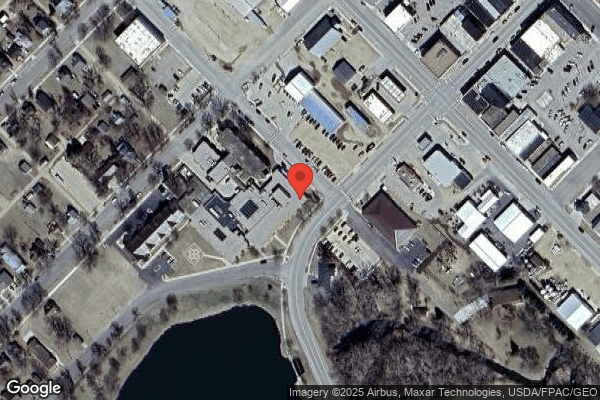
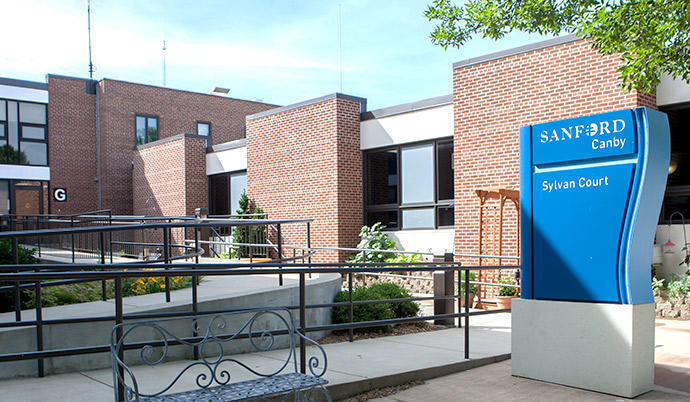
Sylvan Court

112 ST OLAF AVENUE SOUTH, CANBY, MN 56220 (507) 223-7277
Non profit - Corporation 53 Beds SANFORD HEALTH GOOD SAMARITAN (PROSPERA) Data: November 2025
Trust Grade
80/100
#150 of 337 in MN
Last Inspection: February 2025

Within standard 12-15 month inspection cycle. Federal law requires annual inspections.

Overview

Sylvan Court in Canby, Minnesota has a Trust Grade of B+, indicating that it is above average and recommended for families looking for care. It ranks #150 out of 337 facilities in Minnesota, placing it in the top half, but it is #3 out of 3 in Yellow Medicine County, meaning there is only one local option that ranks higher. The facility is improving, with issues decreasing from three in 2024 to two in 2025. Staffing is relatively strong, earning a 4 out of 5 stars with a turnover rate of 40%, which is below the state average of 42%. Notably, there were no fines on record, which is a positive sign. However, there are some concerns. For example, in February 2025, the facility was found to have frozen food items improperly stored on the floor in their walk-in freezers, which could potentially affect all residents. Additionally, there were issues with medication documentation for a resident, as the medications were not coded accurately in their assessment, raising concerns about proper care. While the facility has strengths like good staffing and no fines, these incidents highlight areas that need improvement.

Trust Score
B+
80/100
In Minnesota
#150/337
Top 44%
Safety Record
Low Risk
No red flags
Inspections
Getting Better
3 → 2 violations
Staff Stability
○ Average
40% turnover. Near Minnesota's 48% average. Typical for the industry.
Penalties
✓ Good
No fines on record. Clean compliance history, better than most Minnesota facilities.
Skilled Nurses
✓ Good
Each resident gets 48 minutes of Registered Nurse (RN) attention daily — more than average for Minnesota. RNs are trained to catch health problems early.
Violations
✓ Good
Only 5 deficiencies on record. Cleaner than most facilities. Minor issues only.
★★★★☆
4.0
Overall Rating
★★★★☆
4.0
Staff Levels
★★☆☆☆
2.0
Care Quality
★★★★☆
4.0
Inspection Score
Stable
2024: 3 issues
2025: 2 issues

The Good

  • 4-Star Staffing Rating · Above-average nurse staffing levels
  • Full Sprinkler Coverage · Fire safety systems throughout facility
  • No fines on record
  • Staff turnover below average (40%)

    8 points below Minnesota average of 48%

Facility shows strength in staffing levels, fire safety.

The Bad

Staff Turnover: 40%

Near Minnesota avg (46%)

Typical for the industry

Chain: SANFORD HEALTH GOOD SAMARITAN (PROS

Part of a multi-facility chain

Ask about local staffing decisions and management

The Ugly 5 deficiencies on record

Feb 2025 2 deficiencies
CONCERN (D)

Potential for Harm - no one hurt, but risky conditions existed

Assessment Accuracy (Tag F0641)

Could have caused harm · This affected 1 resident

Based on record review and interview, the facility failed to ensure medications were coded accurately on their Minimum Data Set (MDS) assessment for 1 of 5 residents (R43) reviewed for medications. Fi...

Read full inspector narrative →
Based on record review and interview, the facility failed to ensure medications were coded accurately on their Minimum Data Set (MDS) assessment for 1 of 5 residents (R43) reviewed for medications. Findings include: R43's 1/22/25, admission MDS admission assessment identified he had a diagnosis of diabetes. R43 was noted to have received one injection of insulin during the look back period. R43's current, physician orders identified no insulin was ordered. The physician orders did include a once weekly dose of Ozempic 0.5 milligrams (mg) injection (a non-insulin medication used to improve blood sugar control). Review of the 11/19/24, RxList, Ozempic Drug Summary, located at https://www.rxlist.com/ozempic-drug.htm, identified Ozempic Injection is a glucagon-like peptide 1 (GLP-1) receptor agonist indicated as an adjunct to diet and exercise to improve glycemic control in adults with type 2 diabetes mellitus. Review of the October 2024, Long-Term Care Facility Resident Assessment Instrument 3.0 User's Manual, Section N identified on question 0350 A and B, only insulin should be coded here. Interview on 2/13/25 at 8:03 a.m., and later RAI manual review , with the MDS coordinator identified she understood if Ozempic was used to treat diabetes, it could be coded as an insulin injection on the MDS. She later reviewed the RAI manual and confirmed the Ozempic injection should not have been coded as insulin. A policy related to accuracy of assessments was not provided by end of survey.
CONCERN (F)

Potential for Harm - no one hurt, but risky conditions existed

Food Safety (Tag F0812)

Could have caused harm · This affected most or all residents

Based on observation and interview, the facility failed to ensure frozen food items were safely stored off the floor in 2 of 2 walk in freezers located in the kitchen. This had the potential to affect...

Read full inspector narrative →
Based on observation and interview, the facility failed to ensure frozen food items were safely stored off the floor in 2 of 2 walk in freezers located in the kitchen. This had the potential to affect all 43 residents. Findings include: Observation on 2/10/25 at 10:48 a.m., during the initial kitchen tour with the dietary manager (DM) present identified they had 2 walk-in freezers. Upon entering the 1st walk-in, there were multiple boxes of frozen food including sweet potato fries, corn bread, Swedish meatballs, cheese tortellini, potato cubes, breaded chicken, and chili observed on the floor under the bottom shelf. Observation of the 2nd walk-in freezer identified frozen fruit smoothies, enchiladas, assorted pies, queso triangles, slider buns, hoagie buns, and muffin batter stored on the floor. Interview on 2/10/25 at 11:08 a.m., with the DM identified she was aware they were not supposed to store foods on the floor. The facility had storage issues related to having enough room due to additional diet requirements of residents and had identified they needed more freezer space. Interview on 2/11/25 at 3:30 p.m., with the administrator identified he was aware of the concerns and thought it may be related to over-ordering. He was made aware of the concern after the DM notified him, and the freezer had been re-organized to provide room for all items to be stored on the shelves and off the floor. He agreed food should not be stored on the floor. Review of the facilities undated Food Storage Standards policy identified that all foods were to be stored on a shelf at least 6 inches above the floor.
May 2024 1 deficiency
CONCERN (D)

Potential for Harm - no one hurt, but risky conditions existed

Medication Errors (Tag F0758)

Could have caused harm · This affected 1 resident

R11's 2/29/24, quarterly Minimum Data Set (MDS) identified R11 had a diagnosis of dementia and depression. R11 had severe cognitive impairment and had taken antidepressants. R11's section M assessment...

Read full inspector narrative →
R11's 2/29/24, quarterly Minimum Data Set (MDS) identified R11 had a diagnosis of dementia and depression. R11 had severe cognitive impairment and had taken antidepressants. R11's section M assessment, identified that a GDR had not been attempted and the physician had not documented a GDR as clinically contraindicated. R11's undated Physician Order Report, identifed he had taken mirtazapine 15 milligrams (mg) daily and escitalopram (for depression and anxiety) 10 mg daily for depression with a start date of 8/24/22. R11's 1/02/24, Pharmacist Drug Regimen Review Observation identified recommendations for a GDR for escitalopram had no psychiatry services. There was no mention of implementation for escitalopram's GDR recommendation to providers. R11's undated care plan, identified he was on antidepressants. R11's goal would be for him to have a therapeutic effect of the medication. Staff were to adminsitered the medication as ordered and medications were reviewed monthly by the pharmacist, director of nursing (DON), nursing and medial director (MD). Interview on 5/01/24 at 10:07 a.m., with pharmacist stated the facility did not attempt a GDR of R11's antidepressants and had difficulty with the process because of refusals from R11's wife. Interview on 5/01/24 at 11:28 a.m., with medical provider (MD) stated she had discussed with R11's wife of the GDR process with the need for dosage modification. She stated R11 had taken antidepressants for a long time and GDR attempts had been made with no success. She stated R11's wife would refuse the need for GDR attempts and would not allow the facility to implement changes. MD stated R11's treatment plans would need approval from the wife and had been that way for a long time. Interview on 5/01/24 at 12:33 p.m., with registered nurse (RN)-A stated R11 had taken Remeron for his appetitite in the past and was unsure if R11's remeron medication had been address to the medical provider. Review of R11's undate care plan, identified R11 had diabetes, vitamin D deficienciy, and dysphagia. Goal was for R11 to consume adequate calories to maintain body weight. Interventions were for staff to modify R11's consistency of diet, supplements use at the discretion of dietary supervisor, eats meals in the main dining room and to offer snack and document amount consumed. There was no mention of R11's use of remeron for appetite stimulant.Review of 3/28/24, Psychotropic (Psychoactive) Drug Documentation policy identified the pharmacist reviews use of all medication upon admission and if using psychotropic medications to review monthly for any needed adjustments and at least twice yearly for planned dose reductions. Review of 12/6/23, Psychotropic Medications policy identified that gradual dose reduction was the tapering of a dose to determine whether symptoms or conditions can be managed at a lower dose or if a medication can be discontinued. Gradual dose reductions must be attempted annually unless contraindicated. The physician must document the clinical rationale for why any additional attempted dose reductions would likely impair the resident's function or increase distressed behavior. Based on interview and record review the facility failed to complete a gradual dose reduction (GDR) attempt annually or document a rationale for no gradual dose reduction (GDR) for 2 of 5 residents (R2 and R11) reviewed for unnecessary medications. Findings include: R2's 1/18/24, annual Minimum Data Set (MDS) identified R2 had adequate hearing, his speech was unclear, and he had some difficulty communicating some words or finishing thoughts, but he was able to make his needs understood. R2 was able to understand others. R2's cognition was moderately impaired. R2 was identified during the assessment period to feel down and depressed. R2 displayed no behaviors. R2 was dependent on staff for assistance with grooming and transfers. R2 had diagnoses of hypertension, neurogenic bladder, dementia, seizure disorder, traumatic brain injury, and depression. R2 took a antipsychotic and antidepressant daily. The assessment identified that a gradual dose reduction had not been attempted and the physician had not documented GDR as clinically contraindicated. R2's 5/1/24, physician orders identified Sertraline 200 milligrams (mg) every day (anti-depressant) with a start date of 2/24/23 and Olanzapine 15 mg (anti-psychotic) at bedtime with a start date of 1/24/19. Interview on 4/29/24 at 6:21 p.m., with licensed practical nurse (LPN)-A reported he used to have behaviors, but he was good now. She stated he used to be aggressive with staff and other residents at one time. H was not the one to provoke but he would hit out if provoked as he used to be a boxer. His medication has helped with his behaviors but also the residents have changed that live here and that also had helped. She identified he did have dementia and he was followed by psychiatry. Interview on 4/30/24 at 10:42 a.m., with nursing assistant (NA)-B who reported that R2 did not have behaviors other than he wanted to call his mom late at night. She reported when another one of the residents first came here that resident used to care for his wife, and he had confusion and accidentally went into R2's room and she said she had to get between them, but she had not witnessed R2 having any other behaviors after that. Review of 3/8/24, psychiatry visit notes identified the provider had reviewed his medication and made no changes to his Sertraline 200 mg daily (anti-depressant), Olanzapine 15 mg (anti-psychotic) at bedtime daily, or Depakote 500 mg twice a day (anti-convulsant). The note identified that R2 had been compliant with his medications and no side effects had been noted. R2 had no stressors since last visit and R2 reported being happy, he denied feeling sad/down or anxious. Review of 4/10/24, physician visit progress note identified R2 had reported no concerns, he was feeling sad for the loss of his wife and later mentioned his mother had recently passed. No changes to his Sertraline 200 mg, Olanzapine 15 mg at bedtime or his Depakote 500 mg twice a day. Review of the pharmacy recommendations from 4/19/23 through 4/4/24, identified the pharmacist had documented on: 1) 4/19/23, pharmacist results of review that on 4/3/23, psychiatry visit with no change wanted and recheck in 3 months. No other significant findings. 2) 7/3/23, pharmacist results of review identified: resident seen on 4/3/23, by psychiatry with no change wanted. He is currently on olanzapine 15 mg/day, sertraline 200 mg/day (increased 10/22), Depakote 100 mg/day. No other significant findings noted. 3) 1/2/24 pharmacist results of review identified: resident continues of Depakote 100 mg/day, sertraline 200 mg/day, and olanzapine 15 mg/day with next psychiatry visit in March. Provider monitoring blood pressures. 4) 4/4/24, pharmacist results of review identified: psych visit on 3/8/24, waiting on notes. No GDR were recommended during the 12-month period. Interview on 5/1/24 at 9:24 a.m., with pharmacist identified that the psychiatrist followed R2, and they did not always document details about medications. He reported that the primary physician received his recommendations, and the psychiatrist did not receive the recommendations. The primary provider typically did not adjust doses for psych medications if the resident was followed by psychiatry. Pharmacy makes recommendations and the nurse ensures the provider addresses the recommendation during rounds at the facility. Interview on 5/1/24 at 10:21 a.m., with registered nurse (RN)-A who identified as the care coordinator reported she completed rounds with the providers and would present the pharmacy recommendations to the provider at that time. She confirmed that the provider typically did not address psych medication if the residents was being followed by the psychiatrist. She reported that she did not forward pharmacy recommendations for a GDR to the psychiatrist but should be doing so. She was unsure if R2 had any documented rationale for not completing a GDR. Interview on 5/1/24 at 11:37 a.m., with the director of nursing identified that she worked with the pharmacist, and they together would ensure that pharmacy would make a GDR recommendation at a minimum in the months of January and July. She confirmed that the primary providers did not like to make dose adjustments on psych medication if the resident was being followed by psychiatry. She reported that the psychiatrist should be receiving the recommendations for GDR as she typically requested information on the resident prior to their visit. She agreed that a GDR should be attempted annually and if contraindicated that rationale should be documented in his medical record. Interview on 5/1/24 at 11:45 a.m., with administrator who agreed that if R2 has been on the same dose of his Olanzapine 15 mg since 1/24/19, that should have been addressed and documented in his medical record within the last 5 years if it was contraindicated. He agreed that a GDR should be attempted annually and if not appropriate a rationale should be documented in the medical record. Review of the 5/1/24 1:31 p.m., communication between the pharmacist and the mental health provider identified that the mental health provider was not opposed to a trial of decreasing R2's dose however, R2 had an incident that could not for sure be determined if it was intentional or not so at his last appointment, she had continued his medications as is. She reported she would plan to reassess for potential dose reduction at the next appointment. The mental health provider failed to document in R2's medical record during the last visit the rationale for the continued dose of medications.
Feb 2024 2 deficiencies
CONCERN (D) 📢 Someone Reported This

A family member, employee, or ombudsman was alarmed enough to file a formal complaint

Potential for Harm - no one hurt, but risky conditions existed

Report Alleged Abuse (Tag F0609)

Could have caused harm · This affected 1 resident

**NOTE- TERMS IN BRACKETS HAVE BEEN EDITED TO PROTECT CONFIDENTIALITY** Based on interview and document review, the facility failed to immediately report to the administrator and failed to immediately...

Read full inspector narrative →
**NOTE- TERMS IN BRACKETS HAVE BEEN EDITED TO PROTECT CONFIDENTIALITY** Based on interview and document review, the facility failed to immediately report to the administrator and failed to immediately report, no later than 2 hours, to the State Agency (SA) an allegation of staff to resident abuse for 1 of 3 residents (R2) who were reviewed for staff to resident abuse. Findings included: R2's quarterly Minimum Data Set, dated [DATE], identified moderately impaired cognition. Facility internal live event documentation dated [DATE] at 12:03 a.m. identified event type safety/security event and threatening behavior/verbal assault. R2 displayed exit seeking behaviors via second floor door, unsuccessful. Cares provided to another resident by registered nurse (RN)-A and nursing assistant (NA)-A, when finished R2 was no where to be found. First floor staff informed second floor staff R2 had used the elevator to access first floor. R2 brought back to second floor and constantly monitored. R2 was constantly furious and physical to NA-A when kept safe. Director of nursing (DON) notified at 12:31 a.m R2 sustained a large dark purple bruise measuring 14.5 centimeters (cm) x 6.3 cm tender to touch to left forearm as a result of incident. R2 stated that witch squeezed my arm. Intervention identified: monitor to determine possible harm. DON was notified of bruise at 6:40 a.m. DON interviewed both RN-A and NA-A. NA-A noted resident became aggressive punching RN-A in buttock and stomach. NA-A reported she grabbed R2's arm to divert the situation but did not intend harm. R2 currently prescribed aspirin and prednisone (steroid) at risk for bruising and fragile skin. R2's progress notes from [DATE], through [DATE], identified: -[DATE] at 12:30 a.m. (notes revised at 9:52 a.m.) R2 was found walking out of her room with rolling table unassisted. R2 stated loudly and insistently I want to go out and sit on that chair and pointed at the chair at nurse's station. Encouraged and assisted R2 back to her room to the wheelchair to be safe and allowed to roam around her room. R2 refused, got furious and punch nurse in right chest and right wide of stomach and tried to head bang nurse's face with hers. R2 roamed around the floor while RN-1 and NA-A toileted another resident, left the floor via elevator, and was found shortly afterwards on first floor. R2 was brought back up to second floor, secured doors by shutting them and kept her closely monitored. R2 was constantly furious and physical to NA-A when kept safe. DON notified. Maintenance will be notified in the morning to request for a wander guard, per DON. -[DATE] at 6:40 a.m. (notes revised at 2:43 p.m.) Night nurse reported to writer there was an injury to R2's left arm from staff/resident altercation during the night. Writer checked arm with night nurse present. Bruise noted measuring 14.5 x 6.3 centimeters (cm), dark purple with slight swelling in the middle. Skin intact and tender to the touch. The resident reported that witch squeezed my arm. Monitor daily and take weekly measurements. Resident was on aspirin 81 milligram (mg) daily. DON notified immediately. Progress notes did not identify when night nurse was notified of interactions between NA-A and R2's bruise. During an interview on [DATE] at 10:00 a.m. NA-B stated came into work and arrived at 2:00 a.m. NA-B indicated around approximately 3:30 a.m. NA-A radioed for assistance on 2nd floor with R2. NA-B went up to 2nd floor to assist and saw NA-A held R2's door shut and R2 yelled let me out while she pulled on the door from inside her room. NA-B requested NA-A remove her hand from the closed door handle and asked R2 let go of door, go to middle of room so she could be assisted. NA-B entered R2's room, calmed her down, and assisted her to the bathroom. NA-B verified R2 was scared, shaking, and asked to not be left alone. NA-B stated R2's left arm long sleeve was pushed up a bit and noticed her left lower arm had a dark purple bruise that covered 75% of her arm. NA-B stated R2 said to her that bitch did that to me, grabbed my arm and squeezed it hard. NA-B stated after she assisted R2 back to bed reported to RN-A approximately 2:15 a.m. all details regarding the incident between R2 and NA-A when she arrived up to 2nd floor and the large bruise she had found on R2's left lower arm R2 asked NA-B not to leave and reassurance was given. During an interview on [DATE] at 9:30 a.m. RN-A stated R2 was usually calm and her confusion had progressed in the past month or so. RN-A stated R2 required assist of two staff to toilet her or one depending on her condition that day. RN-A stated unsure what triggered R2's behaviors the night of the incident, and had never been combative or hard headed prior to this incident. RN-A stated at approximately 2:15 a.m. NA-B assisted NA-A with R2. NA-B returned to first floor and informed RN-A R2 had something on her left arm that needed to be looked at. RN-A stated she informed NA-B it would be checked later. RN-A stated she waited until 4:00 a.m. and R2 was sleeping, decided not to bother her, and waited until change of shift. RN-A stated around 6:30 a.m. (over 4 hours later) along with LPN-A went in and assessed R2's left arm and found a large purple bruise measured approximately to 10 to 14 centimeters (cm) and 4 cm across, bulging lump on top, and painful. RN-A verified only one call was made to the DON at 12:00 a.m. during the night shift regarding R2 and her change in behavior. RN-A failed to report the alleged abuse, interview R2 and remove potential staff from working with R2 to ensure R2's safety. During an interview on [DATE] at 4:45 p.m. DON stated RN-A notified her at 12:31 a.m. of R2's elopement, at 1:33 a.m. reported a resident death on first floor and then again at 1:43 a.m. regarding death questions. DON indicated she was not notified of R2's bruise to her arm until 6:49 a.m. R2's bruise had the potential to be caused by this event and the physical aggression and the staff to use to provide maximal physical effort to deescalate R2's situation. DON stated staff were expected to notify her as soon as the incident happened however was informed the bruise was not seen earlier. During an interview on [DATE] at 5:56 p.m. administrator stated was notified by DON of R2's incident/bruise on arm on [DATE] at 6:56 a.m. Administrator stated he believed the bruise to R2's arm occurred when staff assisted R2 to a seated position. Administrator indicated the incident with R2 was not filed with the state because there was no intended neglect or intentional abuse. Administrator indicated NA-A had displayed generalized attitudes but not intentional harm or injury and DON and myself decided together it was not reportable. Facility policy titled Vulnerable Adults, Reporting Maltreatment, LTC (long term care), AL (assisted living), Swing bed - [NAME] dated [DATE], identified the facility was expected to have provided a safe environment to patients, residents, and clients of [NAME] Medical Center (SCMC), and consistent guidelines for preventing, identifying, investigating and reporting suspected maltreatment ensure compliance with the Minnesota Statute 626.557, the Vulnerable Adults Act and amendments; Minnesota Statue 245A.65, and federal nursing home regulation 42 CFR 483.12 Freedom from Abuse, Neglect, and Exploitation. Facility internal reporting of a suspected maltreatment of a vulnerable adult including all alleged violations involving abuse, neglect, exploitation, or mistreatment, including injuries of unknown source that may constitute reasonable suspicion of a crime are reported immediately but not later than two hours after the allegation was made, if the event that cause the allegation involve abuse or result in serious bodily injury. The facility must submit the electronically report of the incident to the Minnesota Department of Health (MDH) or South Dakota Department of Human Services (SD DHS), immediately, but no later than 24 hours after the incident's discovery. Definition of abuse is the willful infliction of injury, unreasonable confinement, intimidation, or punishment resulting physical harm, pain or mental anguish or exploitation. Physical abuse includes hitting, slapping, pinching, kicking, and also includes controlling behavior through corporal punishment (any act causing deliberate physical pain or discomfort in response to some undesired behavior).
CONCERN (D) 📢 Someone Reported This

A family member, employee, or ombudsman was alarmed enough to file a formal complaint

Potential for Harm - no one hurt, but risky conditions existed

Investigate Abuse (Tag F0610)

Could have caused harm · This affected 1 resident

**NOTE- TERMS IN BRACKETS HAVE BEEN EDITED TO PROTECT CONFIDENTIALITY** Based on interview and document review the facility failed thoroughly investigate an allegation of staff to resident abuse for 1...

Read full inspector narrative →
**NOTE- TERMS IN BRACKETS HAVE BEEN EDITED TO PROTECT CONFIDENTIALITY** Based on interview and document review the facility failed thoroughly investigate an allegation of staff to resident abuse for 1 of 3 residents (R2) when resident safety upon immediately at the time of the allegation and during the the investigation was not addressed, no additional residents or staff where interviewed and no staff education/training was provided following incidents. Findings include: R2's quarterly Minimum Data Set, dated [DATE], identified moderately impaired cognition with wandering behavior one to three days out of seven. During an interview on 2/14/24 at 10:00 a.m. NA-B stated came into work and arrived at 2:00 a.m. NA-B indicated around approximately 3:30 a.m. NA-A radioed for assistance on 2nd floor with R2. NA-B went up to 2nd floor to assist and saw NA-A held R2's door shut and R2 yelled let me out while she pulled on the door from inside her room. NA-B requested NA-A remove her hand from the closed door handle and asked R2 let go of door, go to middle of room so she could be assisted. NA-B entered R2's room, calmed her down, and assisted her to the bathroom. NA-B verified R2 was scared, shaking, and asked to not be left alone. NA-B stated R2's left arm long sleeve was pushed up a bit and noticed her left lower arm had a dark purple bruise that covered 75% of her arm. NA-B stated R2 said to her that bitch did that to me, grabbed my arm and squeezed it hard. NA-B stated after she assisted R2 back to bed reported to RN-A approximately 2:15 a.m. all details regarding the incident between R2 and NA-A when she arrived up to 2nd floor and the large bruise she had found on R2's left lower arm R2 asked NA-B not to leave and reassurance was given. During an interview on 2/14/24 at 12:30 p.m. licensed practical nurse (LPN)-B stated at shift change around 6:15 a.m. (4 hours later) she was informed by registered nurse (RN)-A R2 had a ruff night and NA-B had noticed an injury on R2's left forearm. LPN-B stated at approximately 6:30 a.m. along with RN-A went into R2's room and assessed her arm. LPN-B verified a large dark purple bruise with slight swelling was seen on R2's lower left arm. LPN-B completed measurements and immediately called the DON to report the bruise. LPN-B stated R2 was also taking aspirin at that time. LPN-B indicated R2 stated the witch squeezed my arm and this happened in the middle of the night but unable to identify a name. During an interview on 2/16/24 at 9:30 a.m. RN-A stated R2 was usually calm and her confusion had progressed in the past month or so. RN-A stated R2 required assist of two staff to toilet her or one depending on her condition that day. RN-A stated unsure what triggered R2's behaviors the night of the incident, and had never been combative or hard headed prior to this incident. RN-A stated at approximately 2:15 a.m. NA-B assisted NA-A with R2. NA-B returned to first floor and informed RN-A R2 had something on her left arm that needed to be looked at. RN-A stated she informed NA-B it would be checked later. RN-A stated she waited until 4:00 a.m. and R2 was sleeping, decided not to bother her, and waited until change of shift. RN-A stated around 6:30 a.m. (over 4 hours later) along with LPN-A went in and assessed R2's left arm and found a large purple bruise measured approximately to 10 to 14 centimeters (cm) and 4 cm across, bulging lump on top, and painful. RN-A verified only one call was made to the DON at 12:00 a.m. during the night shift regarding R2 and her change in behavior. RN-A failed to report the alleged abuse, interview R2 and remove potential staff from working with R2 to ensure R2's safety. Facility internal live event documentation dated 2/6/24, identified event type safety/security event and sub event type threatening behavior/verbal assault. R2 sustained bruise. Intervention: monitor to determine possible harm. R2 obtained a large dark purple bruise measuring 14.5 centimeters (cm) x 6.3 cm to left forearm as a result of incident. R2 did state that witch squeezed my arm. Director of nursing (DON) interviewed both registered nurse (RN) and nursing assistant (NA) on shift with NA noting resident became aggressive punching RN in buttock and stomach. NA reported she grabbed R2's arm to divert the situation but did not intend harm. R2 currently prescribed aspirin and prednisone (steroid) at risk for bruising and fragile skin. R2's progress notes from 2/6/24, through 2/7/24, identified: -2/6/24 at 12:30 a.m. (notes revised at 9:52 a.m.) R2 was found walking out of her room with rolling table unassisted. R2 stated loudly and insistently she want to go out and sit on that chair and pointed at the chair at nurse's station. Encouraged and assisted R2 back to her room to the wheelchair to be safe and allowed to roam around her room. R2 refused, got furious and punch nurse in right chest and right wide of stomach and tried to head bang nurse's face with hers. R2 roamed around the floor while RN-1 while NA-A toileted another resident, left the floor via elevator, and was found shortly afterwards on first floor. R2 was brought back up to second floor, secured doors by shutting them and kept her closely monitored. R2 was constantly furious and physical to NA-A when kept safe. Director of nursing (DON) notified. Maintenance will be notified in the morning to request for a wander guard, per DON. -2/6/24 at 6:40 a.m. (notes revised at 2:43 p.m.) Night nurse reported to writer there was an injury to R2's left arm from staff/resident altercation during the night. Writer checked arm with night nurse present. Bruise noted measuring 14.5 x 6.3 centimeters (cm), dark purple with slight swelling in the middle. Skin intact and tender to the touch. The resident reported that witch squeezed my arm. Monitor daily and take weekly measurements. Resident was on aspirin 81 milligram (mg) daily. DON (director of nursing) notified immediately. During an interview on 2/14/24 at 4:45 p.m. director of nursing (DON) stated a thorough internal investigation was completed on the incident date 2/6/24 with R2. DON indicated R2's memory would not have been reliable with her recent change in cognition. DON stated not a 100% guarantee the bruise on R2's arm was caused by grabbing her, she was an elderly [AGE] year old with cognitive impairments, dementia, and unable to directly make the assumption as to when it happened and/or what caused it. DON also stated the bruise had the potential to be caused by this event when staff utilized maximal physical effort to get R2 to sit down, and desolate the situation. DON stated education should have been provided and situation could have been handled a different way. DON indicated NA-A's personality/mentality was like she would not take any crap from anyone possibly due to lack of showing compassion and unaware of the encouragement that should have been given to the resident. During an interview on 2/14/24 at 5:56 p.m. administrator stated the 2/6/24, incident with R2 there was no intended neglect or intentional abuse. Administrator indicated no patterns had been identified with NA-A had displayed only generalized attitudes but not intentional harm or injury, therefore no additional interviews were completed with staff or residents. Administrator stated seemed as though another staff member tried to get back at another staff and filed a complaint. During a telephone interview on 2/20/24 at 1:00 p.m. NA-A stated worked the night shift on 2/5/24, on second floor. NA-A stated R2 had left second floor on her own via elevator around 12:00 a.m. NA-A stated later during the night R2 pushed bedside table with wheels to doorway of her room, RN-A intervened, and R2 swung at and punched her in the stomach. NA-A stated along with RN-A assisted R2 into her wheelchair, grabbed her left arm, and when R2 sat down into the chair stated you bitch, you bitch. NA-A indicated later during the night shift R2 was calm and pushed herself in wheelchair around the unit, bathroom was offered, and R2 accepted. NA-A stated while in hallway bathroom with R2 her behavior changed quickly, arms were flaring and unaware if she had lashed out. NA-A stated R2 was brought back to her room and started to hit and came at her with wheelchair. NA-A stated it was a little over whelming and very uncomfortable situation. NA-A indicated R2 was placed in her room alone, exited the room, radioed for help, stood outside of room and closed the door. NA-A stated R2 grabbed the door handle and attempted to open the door. NA-A stated she held onto the door handle and held door closed from the outside of R2's room, and unsure if any words were exchanged. NA-A stated was wrong to have held hand on door handle to hold door closed during that time and was not aware you pick and chose your battles. NA-A stated was the first time she had seen R2 respond that way and tried to avoid escalation of the situation NA-A stated felt uncomfortable working on second floor the rest of that night. NA-A indicated had met with human resources, was informed the residents have the right to leave their rooms if they wanted to. NA-A stated she understood she had made the wrong decision, placed her hand on the handle of the door to hold it closed, should have walked away, and allowed R2 to come out of her room. The facility lacked evidence a thorough investigating was completed which included residents and staff interviews about potential abuse or resident cares being provided by staff to prevent re-occurrence. Facility policy titled Investigation, Alleged VA (vulnerable adult) Incident dated 5/9/23, identified a consistent and thorough investigation should have been done as quickly as possible after a report to investigate while memories are fresh assures the most accurate, detailed accounts. Interview all staff on duty at the time of the alleged incident, family members, and other residents. Discreetly clarify statements that are different than reported by other observers. Be aware and alert for discrepancies, unusual behavior or performance or communication.
Understanding Severity Codes (click to expand)
Life-Threatening (Immediate Jeopardy)
J - Isolated K - Pattern L - Widespread
Actual Harm
G - Isolated H - Pattern I - Widespread
Potential for Harm
D - Isolated E - Pattern F - Widespread
No Harm (Minor)
A - Isolated B - Pattern C - Widespread

Questions to Ask on Your Visit

  • "Can I speak with families of current residents?"
  • "What's your RN coverage like on weekends and overnight?"

Our Honest Assessment

Strengths
  • • Grade B+ (80/100). Above average facility, better than most options in Minnesota.
  • • No major safety red flags. No abuse findings, life-threatening violations, or SFF status.
  • • No fines on record. Clean compliance history, better than most Minnesota facilities.
  • • Only 5 deficiencies on record. Cleaner than most facilities. Minor issues only.
Concerns
  • • No significant concerns identified. This facility shows no red flags across CMS ratings, staff turnover, or federal penalties.
Bottom line: Generally positive indicators. Standard due diligence and a personal visit recommended.

About This Facility

What is Sylvan Court's CMS Rating?

CMS assigns Sylvan Court an overall rating of 4 out of 5 stars, which is considered above average nationally. Within Minnesota, this rating places the facility higher than 99% of the state's 100 nursing homes. This rating reflects solid performance across the metrics CMS uses to evaluate nursing home quality.

How is Sylvan Court Staffed?

CMS rates Sylvan Court's staffing level at 4 out of 5 stars, which is above average compared to other nursing homes. Staff turnover is 40%, compared to the Minnesota average of 46%. This relatively stable workforce can support continuity of care. RN turnover specifically is 56%, which is notably high. RNs provide skilled clinical oversight, so turnover in this role can affect medical care quality.

What Have Inspectors Found at Sylvan Court?

State health inspectors documented 5 deficiencies at Sylvan Court during 2024 to 2025. These included: 5 with potential for harm.

Who Owns and Operates Sylvan Court?

Sylvan Court is owned by a non-profit organization. Non-profit facilities reinvest revenue into operations rather than distributing to shareholders. The facility is operated by SANFORD HEALTH GOOD SAMARITAN (PROSPERA), a chain that manages multiple nursing homes. With 53 certified beds and approximately 41 residents (about 77% occupancy), it is a smaller facility located in CANBY, Minnesota.

How Does Sylvan Court Compare to Other Minnesota Nursing Homes?

Compared to the 100 nursing homes in Minnesota, Sylvan Court's overall rating (4 stars) is above the state average of 3.2, staff turnover (40%) is near the state average of 46%, and health inspection rating (4 stars) is above the national benchmark.

What Should Families Ask When Visiting Sylvan Court?

Based on this facility's data, families visiting should ask: "Can I visit during a mealtime to observe dining assistance and food quality?" "How do you handle medical emergencies, and what is your hospital transfer rate?" "Can I speak with family members of current residents about their experience?"

Is Sylvan Court Safe?

Based on CMS inspection data, Sylvan Court has a clean safety record: no substantiated abuse findings (meaning no confirmed cases of resident harm), no Immediate Jeopardy citations (the most serious violation level indicating risk of serious injury or death), and is not on the Special Focus Facility watch list (a federal program monitoring the lowest-performing 1% of nursing homes). The facility has a 4-star overall rating and ranks #1 of 100 nursing homes in Minnesota. While no facility is perfect, families should still ask about staff-to-resident ratios and recent inspection results during their visit.

Do Nurses at Sylvan Court Stick Around?

Sylvan Court has a staff turnover rate of 40%, which is about average for Minnesota nursing homes (state average: 46%). Moderate turnover is common in nursing homes, but families should still ask about staff tenure and how the facility maintains care continuity when employees leave.

Was Sylvan Court Ever Fined?

Sylvan Court has no federal fines on record. CMS issues fines when nursing homes fail to meet care standards or don't correct problems found during inspections. The absence of fines suggests the facility has either maintained compliance or corrected any issues before penalties were assessed. This is a positive indicator, though families should still review recent inspection reports for the full picture.

Is Sylvan Court on Any Federal Watch List?

Sylvan Court is not on any federal watch list. The most significant is the Special Focus Facility (SFF) program, which identifies the bottom 1% of nursing homes nationally based on persistent, serious quality problems. Not being on this list means the facility has avoided the pattern of deficiencies that triggers enhanced federal oversight. This is a positive indicator, though families should still review the facility's inspection history directly.