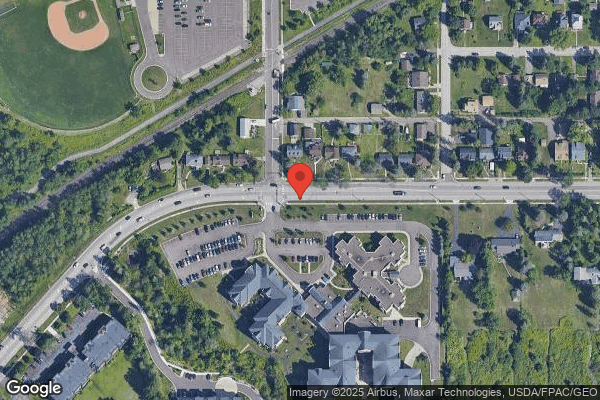


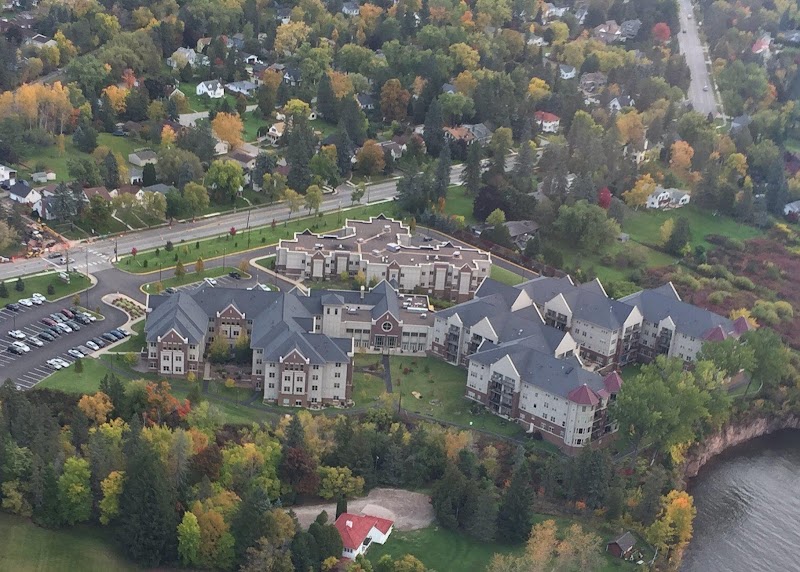
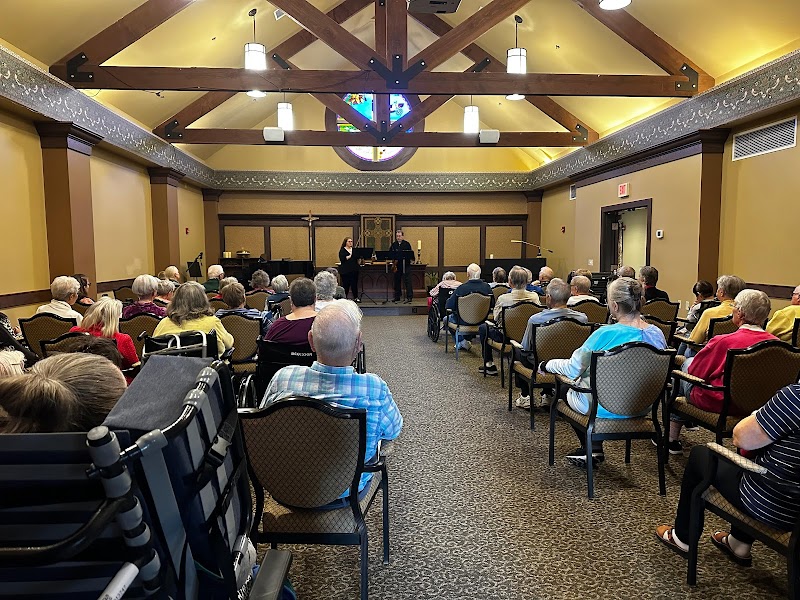
Ecumen Lakeshore

4002 LONDON ROAD, DULUTH, MN 55804 (218) 625-7100
Non profit - Corporation 60 Beds Independent Data: November 2025
Trust Grade
90/100
#22 of 337 in MN
Last Inspection: August 2025

Inspected within the last 6 months. Data reflects current conditions.

Overview

Ecumen Lakeshore in Duluth, Minnesota, has received a Trust Grade of A, indicating an excellent reputation and a highly recommended facility for care. With a state rank of #22 out of 337 nursing homes, it places in the top half of Minnesota facilities, and at #4 of 17 in St. Louis County, only slightly behind a few local options. The facility’s trend is stable, with just one issue reported in both 2024 and 2025, suggesting consistent performance over time. Staffing is a strong point, earning 5 out of 5 stars and offering more registered nurse coverage than 91% of other Minnesota facilities, although the turnover rate is average at 50%. While there are no fines recorded, which is positive, there are some concerns, such as failure to maintain proper dishwasher sanitization temperatures, potentially exposing residents to foodborne illnesses, and not accurately coding a resident's care preferences in their records.

Trust Score
A
90/100
In Minnesota
#22/337
Top 6%
Safety Record
Low Risk
No red flags
Inspections
Holding Steady
1 → 1 violations
Staff Stability
⚠ Watch
50% turnover. Above average. Higher turnover means staff may not know residents' routines.
Penalties
✓ Good
No fines on record. Clean compliance history, better than most Minnesota facilities.
Skilled Nurses
✓ Good
Each resident gets 115 minutes of Registered Nurse (RN) attention daily — more than 97% of Minnesota nursing homes. RNs are the most trained staff who catch health problems before they become serious.
Violations
○ Average
8 deficiencies on record. Average for a facility this size. Mostly minor or procedural issues.
★★★★★
5.0
Overall Rating
★★★★★
5.0
Staff Levels
★★★☆☆
3.0
Care Quality
★★★★★
5.0
Inspection Score
Stable
2024: 1 issues
2025: 1 issues

The Good

  • 5-Star Staffing Rating · Excellent nurse staffing levels
  • Full Sprinkler Coverage · Fire safety systems throughout facility
  • No fines on record

Facility shows strength in staffing levels, fire safety.

The Bad

Staff Turnover: 50%

Near Minnesota avg (46%)

Higher turnover may affect care consistency

The Ugly 8 deficiencies on record

Aug 2025 1 deficiency
CONCERN (D)

Potential for Harm - no one hurt, but risky conditions existed

Assessment Accuracy (Tag F0641)

Could have caused harm · This affected 1 resident

**NOTE- TERMS IN BRACKETS HAVE BEEN EDITED TO PROTECT CONFIDENTIALITY** Based on interview and document review, the facility failed to accurately code the Minimum Data Set (MDS) for 1 of 1 resident (R...

Read full inspector narrative →
**NOTE- TERMS IN BRACKETS HAVE BEEN EDITED TO PROTECT CONFIDENTIALITY** Based on interview and document review, the facility failed to accurately code the Minimum Data Set (MDS) for 1 of 1 resident (R8) reviewed for MDS accuracy.Findings included:The CMSA Long-Term Care Facility Resident Assessment Instrument (RAI) 3. User Manual, dated 10/2023, identified each section of the MDS along with various instructions how to code and/or complete them. The section labeled, Section F: Preferences for Customary Routine and Activities. This section had the intent to obtain information regarding the resident's preferences for her daily routines and activities.R (8)'s annual MDS dated [DATE] indicated, R8 had memory problems, had no delusions or hallucinations, and did not reject cares. The section F of the MDS was not completed.During the interview on 8/7/25 at 10:34 a.m., MDS coordinator stated the life enrichment coordinator needed to complete the R8's activity review and the activity preferences assessments to enter the information into the section F and made the necessary updates to the care plan. The MDS coordinator stated, she had sent a message to the life enrichment director to complete the assessments.Facility's policy titled MDS Assessment Coordinator dated 11/2019, indicated a registered nurse (RN) shall be designated the responsibility of conducting and coordinating each resident's MDS assessment. Each individual who completes a portion of the assessment (MDS) must certify the accuracy of the portion of the assessment.
Jun 2024 1 deficiency
CONCERN (F)

Potential for Harm - no one hurt, but risky conditions existed

Food Safety (Tag F0812)

Could have caused harm · This affected most or all residents

Based on observation, interview, and document review the facility failed to ensure dishwasher temperatures were maintained or implement other strategies to effectively sanitize dishware and utensils t...

Read full inspector narrative →
Based on observation, interview, and document review the facility failed to ensure dishwasher temperatures were maintained or implement other strategies to effectively sanitize dishware and utensils to reduce the risk of foodborne illness. This had potential to affect 56 residents residing in the nursing home along with staff and visitors who consume meals from the main production kitchen. Findings include: During observation on 6/13/24 at 8:43 a.m., culinary aide (CA)-A was washing morning dishes. The dishwasher monitoring system was flashing red and showed a low rinse temperature at 140 degrees Fahrenheit (F). The thermometer on the dishwasher also indicated 140 degrees. CA-A continued to insert dirty dishes in to the dishwasher. Review of the facilities dishwasher temperature log from 6/1/24 to 6/13/24, identified rinse temperatures that ranged from 145 to 155 degrees F. During an interview on 6/13/24 at 8:45 a.m., CA-A-stated the dishwasher temps had been below 180 degrees F since at least the beginning of June and Ecolab was aware and was going to fix the broken part. The food services director was aware. During an interview on 6/13/24 at 9:03 a.m., food services director (FSD) stated the dishwasher was a high temperature dishwasher which sanitized dishes with high heat and not chemicals. The FSD stated the rinse cycle temperatures had to be at least 180 degrees F to sanitize dishes appropriately. The booster was not working and to his knowledge, the booster had been broken for since at least the first of this month. FSD was unaware of any changes being made to the dishwashing process since the booster had broken stating, everything stayed the same regarding the process for cleaning and sanitizing the dishes used by the residents. FSD stated the dishes were still getting sanitized and safe to use even though the temperature was below 180 degrees. During an observation on 6/13/24 at 9:08 a.m., FSD performed a litmus test on the dishwasher which indicated the rinse cycle was not reaching160 degrees. He then utilized a thermometer and stated the core was only reading 155 degrees at that time. During an interview on 6/13/24 at 9:22 a.m. the infection preventionist (IP) stated if dishes are not washed and sanitized at the appropriate temperature there was an increased risk of contamination and an increased risk anybody eating out of the kitchen becoming ill. A facility policy for dish cleaning was requested but not provided.
Sept 2023 5 deficiencies
CONCERN (D)

Potential for Harm - no one hurt, but risky conditions existed

Deficiency F0582 (Tag F0582)

Could have caused harm · This affected 1 resident

Based on interview and document review, the facility failed to provide the required Skilled Nursing Facility Advanced Beneficiary Notice (SNFABN) to 1 of 2 residents (R14) reviewed whose Medicare A co...

Read full inspector narrative →
Based on interview and document review, the facility failed to provide the required Skilled Nursing Facility Advanced Beneficiary Notice (SNFABN) to 1 of 2 residents (R14) reviewed whose Medicare A coverage ended and remained in the facility. Findings include: R14's Centers for Medicare and Medicaid Services (CMS)-10123 dated 5/1/23, identified a Medicare last covered day (LCD) of 5/3/23. R14's undated Census Records form identified on 5/4/23, R14's payer source changed from Medicare Part A to Private Pay, and R14 remained in the facility. R14's medical record lacked evidence a SNFABN was provided to explain the estimated cost per day or provide rationale of the extended care services or items to be furnished, reduced, or terminated. R14's progress note dated 5/1/23, identified the social worker (SW) had given R14 a Notice of Medicare Non-Coverage. The note identified R14 planned to discharge to home after her surgery. On 9/7/23 at 2:31 p.m., the SW reviewed R14's chart and identified R14 received the notice of non-coverage, and was planning to go home, but R14's surgery date was changed, therefore R14 remained in the facility. R14's status changed to private pay on of 5/4/23, and R14 did not receive a SNFABN, when they decided to remain in the facility. It was the facility process to make sure everyone received proper notice, to allow them to make an informed decision about discharging or remaining in the facility. On 9/8/23 at 8:40 a.m., the director of nursing (DON) stated it was her expectation that every resident received a SNFABN to notify them how much it would cost to stay in the facility as a private pay resident. The document allows residents and their families to make an informed decision. The facility policy Medicare Advanced Beneficiary and Medicare Non-Coverage, dated 9/22, identified the facility would issue a SNFABN to a resident or their representative in the event it was anticipated Medicare part A would not pay for an otherwise covered skilled service(s). The notification would inform residents that services may not be covered and of the resident's potential liability for payment of non-covered service(s).
CONCERN (D)

Potential for Harm - no one hurt, but risky conditions existed

Drug Regimen Review (Tag F0756)

Could have caused harm · This affected 1 resident

**NOTE- TERMS IN BRACKETS HAVE BEEN EDITED TO PROTECT CONFIDENTIALITY** Based on interview and document review, the facility failed for 1 of 5 residents (R159) reviewed for medications. Findings inclu...

Read full inspector narrative →
**NOTE- TERMS IN BRACKETS HAVE BEEN EDITED TO PROTECT CONFIDENTIALITY** Based on interview and document review, the facility failed for 1 of 5 residents (R159) reviewed for medications. Findings include: R159's admission Minimum Data Set (MDS) dated [DATE], identified memory problems and had no behaviors identified. R 159 utilized antipsychotic medications for seven days during the look back period. The antipsychotic identified it was used on a routine basis, there was no drug regimen review identified as completed and lacked and medication follow up. A diagnosis of insomnia was identified. R159's care plan revised on 9/6/23, identified R159 used Seroquel (an antipsychotic medication) and the facility would monitor for the inability to fall asleep/ stay asleep and for nocturnal restlessness. R159's Order Summary Reported dated 9/6/23, identified an order for Seroquel 50 milligrams (mg) via g-tube at bedtime for diagnosis pending. R159's Medication Administration Record (MAR) dated 9/7/23, identified the Seroquel was prescribed for insomnia. R159's pharmacy reviews from July 2023, through August 2023 identified the following: - 7/9/23 no irregularities - 8/12/23 no irregularities - 8/29/23 requested clarification of Amlodipine dose. Provider clarified dose. - 8/29/23 request to address PRN non-antipsychotic psychotropic medication Benadryl. A stop date was added for 9/11/23. During an interview on 9/8/23 at 8:38 a.m., director of nursing (DON) stated the medical providers prescribed medications so she could not say if it was appropriate for R159 to receive scheduled Seroquel for insomnia. During an interview on 9/8/23 at 10:01 a.m., consulting pharmacist (CP) stated Seroquel was an antipsychotic medication and insomnia was not an appropriate diagnosis for the use of Seroquel in the long-term setting. Indications for prescribing Seroquel included: as an adjunct to an antidepressant, bipolar, dementia with behaviors, or behaviors in conjunction with other diagnoses like a personality disorder. Seroquel was often used in the acute care setting to manage sleep but identified it was usually discontinued by the hospital provider at discharge or upon admission to a long-term facility. R159's Seroquel was not an appropriate dose for the treatment of insomnia. The CP stated their partner reviewed R159's admission orders not sure what happened. Typically the Seroquel would have been flagged to be discontinued and would flag the medication for review during the September reviews. R159 was at a greater risk for falls and Seroquel consumption by chemical design could result in changes to the brain and mood. The facility Medication Regimen Reviews policy dated May 2019, identified a medication review would be conducted by a pharmacist at the time of admit then monthly or as needed for all residents in the facility that received medication. The review included the identification of, notification to the provider, and resolution of medication irregularities. Actionable irregularities included but were not limited to: medication errors, excessive doses or doses without a clinical indication, inadequate monitoring for side effects, duplicative therapies, and potentially adverse consequences of medications.
CONCERN (D)

Potential for Harm - no one hurt, but risky conditions existed

Medication Errors (Tag F0758)

Could have caused harm · This affected 1 resident

**NOTE- TERMS IN BRACKETS HAVE BEEN EDITED TO PROTECT CONFIDENTIALITY** Based on interview and document review, the facility failed to ensure an appropriate diagnosis to support ongoing use of an anti...

Read full inspector narrative →
**NOTE- TERMS IN BRACKETS HAVE BEEN EDITED TO PROTECT CONFIDENTIALITY** Based on interview and document review, the facility failed to ensure an appropriate diagnosis to support ongoing use of an antipsychotic medication for 1 of 5 residents (R159) reviewed for medications. Findings include: R159's admission Minimum Data Set (MDS) dated [DATE], identified memory problems and had no behaviors identified. R 159 utilized antipsychotic medications for seven days during the look back period. The antipsychotic identified it was used on a routine basis, there was no drug regimen review identified as completed and lacked and medication follow up. A diagnosis of insomnia was identified. R159's care plan revised on 9/6/23, identified R159 used Seroquel (an antipsychotic medication) and the facility would monitor for the inability to fall asleep/ stay asleep and for nocturnal restlessness. R159's Order Summary Reported dated 9/6/23, identified an order for Seroquel 50 milligrams (mg) via g-tube at bedtime for diagnosis pending. R159's Medication Administration Record (MAR) dated 9/7/23, identified the Seroquel was prescribed for insomnia. R159's pharmacy reviews from July 2023, through August 2023, failed to identify a need to review an insomnia diagnosis for the use of antipsychotic medications. During an interview on 9/8/23 at 8:38 a.m., director of nursing (DON) stated the medical providers prescribed medications so she could not say if it was appropriate for R159 to receive scheduled Seroquel for insomnia. During an interview on 9/8/23 at 10:01 a.m., consulting pharmacist (CP) stated Seroquel was an antipsychotic medication and insomnia was not an appropriate diagnosis for the use of Seroquel in the long-term setting. Indications for prescribing Seroquel included: as an adjunct to an antidepressant, bipolar, dementia with behaviors, or behaviors in conjunction with other diagnoses like a personality disorder. Seroquel was often used in the acute care setting to manage sleep but identified it was usually discontinued by the hospital provider at discharge or upon admission to a long-term facility. R159's Seroquel was not an appropriate dose for the treatment of insomnia. During an interview on 9/8/23 at 11:55 a.m., nurse practitioner (NP)-A stated NP-A was responsible for the management of R159's medication while he resided at the facility. R159 received Seroquel in the hospital and the order continued at the facility. R159's indication for Seroquel was insomnia and explained Seroquel was used off label to treat insomnia. R159's medical record lacked a medical provider's assessment related to Seroquel used for insomnia following admission to the facility. The facility Antipsychotic Medication Use policy dated July 2022, indicated residents would not receive medications that were not clinically indicated to treat a specific condition. The policy included a list from the Diagnostic and Statistical manual of Mental Disorders which provided conditions and diagnoses for which antipsychotic medications would be prescribed to treat a resident. Insomnia was not a listed indication for Seroquel. Antipsychotic medications would not be used if the only symptoms are one or more of the following: a. wandering; b. poor self-care; c restlessness; d. impaired memory; e. mild anxiety; f. insomnia; g. inattention or indifference to surrounding; h. sadness or crying alone that is not related to depression or other psychiatric disorders; fidgeting; j. nervousness; or k. uncooperativeness. A physician would either change or stop problematic doses or medications or document why the benefit of continuing a medication outweighed the risk of suspected or confirmed adverse consequences.
CONCERN (D)

Potential for Harm - no one hurt, but risky conditions existed

Deficiency F0805 (Tag F0805)

Could have caused harm · This affected 1 resident

**NOTE- TERMS IN BRACKETS HAVE BEEN EDITED TO PROTECT CONFIDENTIALITY** Based on observation, interview and document review the facility failed to cut food in bite size pieces as directed for 1 of 1 r...

Read full inspector narrative →
**NOTE- TERMS IN BRACKETS HAVE BEEN EDITED TO PROTECT CONFIDENTIALITY** Based on observation, interview and document review the facility failed to cut food in bite size pieces as directed for 1 of 1 resident (R2) reviewed nutrition. Findings include: R2's admission Minimum Data Set (MDS) assessment dated [DATE], indicated R2 was severely cognitively impaired and had difficulty with swallowing. R2's undated admission Record, included diagnoses of dementia, hemiplegia, and hemiparesis (paralysis and/or weakness on one side of the body) following a stroke affecting the right dominant side. R2's care plan dated 7/13/23, identified R2 had a self-care deficit and required assistance with eating. The interventions indicated R2 required set up and assistance for meals and staff were directed to cut up food. R2 had a swallowing problem secondary to cerebral infarction. Interventions included upright at 90 degrees with food/fluids, cut up foods, monitor for shortness of breath, choking, labored respirations, and lung congestion. Staff were directed to monitor for pocketing of food, choking, coughing, drooling, or holding food in mouth. R2 would refuse to eat and appeared concerned during meals. R2's orders dated 9/5/23, identified swallow precautions and the need to be upright 90 degrees for meals with food cut up. Staff were directed to report signs and symptoms of dysphagia (difficulty swallowing foods or liquids) or respiratory distress immediately every shift. In addition, R2 had orders dated 7/13/23, for a regular diet level 7-regular texture (regular diet), level 0-thin liquids with half portions. During observation on 9/5/23 at 5:30 p.m., R2 was in her bed with her food in front of her, not eating anything. During observation on 9/5/23 at 5:55 p.m., R2 remained in bed with food in front of her, not cut into bite size pieces, with no staff assisting her with eating. R2 was not feeding themselves. During observation on 9/6/23 at 11:48 a.m., R2 was seated in her bed, her food was in front of her. R2 was served baby carrots (not cut up), beef stroganoff, ice cream, and juice. There was a paper napkin covering some of the food on her plate. During observation on 9/6/23 at 12:13 p.m., nursing assistant (NA)-B entered R2's room and asked R2 why R2 covered her food. NA-B removed the napkin, but did not cut the food. During observation on 9/7/23 at 7:53 a.m., R2 was seated in bed eating oatmeal. She also had juice, a quiche, a hash brown patty, of which were not cut up. During observation on 9/7/23 at 8:07 a.m., R2 was alone in her room and was heard coughing from the hallway. No staff were present in the area. During observation on 9/7/23 at 8:11 a.m., R2 remained alone in her room as she continued to cough. R2 had drank all of her juice and eaten everything on her tray with the exception of the crust from the quiche . During observation on 9/8/23 at 7:55 a.m., R2 was seated in her chair drinking her juice and had finished her oatmeal. There was an omelet on her plate not cut into bite size pieces. Registered nurse (RN)-C verified the omelet was not cut up. RN-C asked R2 if she ate the sausage and R2 shook her head yes. RN-C picked up the meal ticket and verified the instructions, 1/2 portions, cut food into bite sized pieces. R2's meal ticket dated 9/8/23, for the breakfast meal, identified R2 should receive half portions and was supposed to have her food cut into bite size pieces. During an interview on 9/7/23 at 8:59 a.m., NA-C stated R2 was supposed to have her food cut into bite size pieces. During an interview on 9/8/23 at 8:44 a.m., RN-C stated the kitchen staff was new and had been reminded to look at meal tickets and follow the instructions. Staff would not be able to monitor a resident for coughing, choking, or drooling if they were not present in the room while the resident was eating. R2 had a current order for swallow precautions and staff were expected to cut up R2's food to prevent possible choking. During an interview on 9/8/23 at 9:16 a.m., the director of nursing (DON) verified staff would need to be present with a resident to monitor for choking, coughing, and/or drooling. Staff were expected to follow orders for swallow precautions. The policy Dysphagia-Clinical Protocol dated 9/2017, identified the staff and the physician would identify individuals with a history of swallowing difficulties or related diagnoses such as dysphagia as well as individuals who had difficulty chewing or swallowing food.
CONCERN (D)

Potential for Harm - no one hurt, but risky conditions existed

Infection Control (Tag F0880)

Could have caused harm · This affected 1 resident

**NOTE- TERMS IN BRACKETS HAVE BEEN EDITED TO PROTECT CONFIDENTIALITY** Based on observation, interview and document review, the facility failed to ensure staff completed proper hand hygiene and glove...

Read full inspector narrative →
**NOTE- TERMS IN BRACKETS HAVE BEEN EDITED TO PROTECT CONFIDENTIALITY** Based on observation, interview and document review, the facility failed to ensure staff completed proper hand hygiene and glove use during personal cares for 1 of 4 residents (R159) reviewed for activities of daily living (ADL). Findings include: R159's admission Minimum Data Set (MDS) dated [DATE], identified memory problems, and required assist of two for transfers and ADL's. During an observation on 9/6/23 at 11:20 a.m., trained medication aide (TMA)-A and nursing assistant (NA)-A entered R159's room to perform cares. TMA-A moved R159's catheter drainage bag from the lift to the bed, then stopped and donned gloves and lowered R159's pants. NA-A with gloved hands cleansed R159's peri area, catheter insertion site. TMA-A and NA-A cleansed R159's buttocks area with the same gloves. NA-A with the contaminated gloves opened R159's bedside table to look for barrier cream. NA-A and TMA-A with the same contaminated gloves secured a clean brief on R159 and pulled up their pants. NA-A lowered the bed with a remote and boosted R159 up in bed, then positioned R159 with pillows under both feet and left hip and raised the head of the bed with the remote, with the same gloved hands. - NA-A then removed their gloves, did not perform hand hygiene and then arranged R159's bed covers. TMA-A grabbed the dignity bag from R159's recliner, secured it onto the bed, and then placed R159's drainage bag into the dignity bag. TMA-A removed her gloves, sanitized her hands and left the room. NA-A lowered R159's bed to the lowest position and clipped R159's call light within reach. NA-A gathered R159's garbage bag and tied it off and un-muted R159's tv with the remote and angled the tv so R159 could see it. NA-A arranged R159's glasses case and cell phone on the bed side table and moved the table bedside. NA-A then sanitized their hands, picked up the garbage and exited the room. During an interview on 9/6/23 at 11:35 a.m., NA-A confirmed they did not remove their gloves after performing peri care on R159. NA-A should have removed their gloves, sanitized hands, and then finished with cares. NA-A also should have sanitized their hands before they touched the resident or items in the room upon entrance. It was important to remove gloves and sanitize hands after touching something that was considered dirty because it prevented the spread of germs and cross contamination. NA-A planned to go back into R159's room and sanitize the items they touched. NA-A would have changed gloves and sanitized hands after touching something dirty, but they had been distracted when they could not find barrier cream, so it was missed. During an interview on 9/6/23 at 11:42 a.m., TMA-A verified TMA-A had not changed their gloves after touching the catheter drainage bag and before they assisted with cares for R159. The catheter drainage bag could have had urine on the outside so it would be considered dirty. It would have been best practice to remove their gloves and sanitize their hands after they touched the foley bag. During an interview on 9/8/23 at 9:54 a.m., director of nursing (DON) stated gloves should come off and hand hygiene should take place after performing peri care and before proceeding to clean cares and/or touching clean items. This practice was important to prevent the spread of infection and cross contamination of clean items. A catheter drainage bag would be considered a dirty item so staff should remove gloves and sanitize hands before touching clean surfaces or the resident. The facility Handwashing/Hand Hygiene policy dated August 2019, provided instruction on when staff should complete hand hygiene. The policy identified hand hygiene was to be completed before and after contact with residents, before and after handling medical devices or equipment, before moving from a contaminated body site to a clean body site during care, after contact with resident skin, and before and after glove use. The purpose of appropriate glove use and hand sanitization was to prevent the spread of infections.
Nov 2022 1 deficiency
MINOR (C) 📢 Someone Reported This

A family member, employee, or ombudsman was alarmed enough to file a formal complaint

Minor Issue - procedural, no safety impact

Staffing Information (Tag F0732)

Minor procedural issue · This affected most or all residents

Based on observation, interview, and document review, the facility failed to consistently post the nurse staff posting. This had the potential to effect all 45 residents residing in the facility and/o...

Read full inspector narrative →
Based on observation, interview, and document review, the facility failed to consistently post the nurse staff posting. This had the potential to effect all 45 residents residing in the facility and/or visitors who may wish to view the information. Findings include: On 11/7/22, at 10:48 a.m. the facility nurse staff posting was observed on the wall in a pocket near the backdoor entryway. The nurse staff posting dated 11/7/22, indicated a census of 45 and had categories for registered nurse (RN), licensed practical nurse (LPN), trained medication aide (TMA), and certified nursing assistant (CNA) for 6:00 a.m. to 2:30 p.m., 2:00 p.m. to 10:30 p.m. and 10:00 p.m. to 6:30 a.m. There were no hours filled in for RN, LPN, TMA, or CNA. The nurse staff postings from 10/19/22, through 11/7/22, were reviewed. The facility census was recorded for each day, but there were no nursing hours indicated on the following dates: 11/6/22, 11/5/22, 11/4/22, 11/3/22, 11/2/22, 11/1/22, 10/31/22, 10/28/22, 10/27/22, 10/26/22, 10/25/22, 10/24/22, 10/23/22, 10/22/22, 10/21/22, 10/20/22, or 10/19/22. Nurse staff postings were not available for 10/30/22, and 10/29/22. During an interview on 11/7/22, at 10:58 a.m. health unit coordinator (HUC)-A stated the nurse staffing was only posted downstairs in the backdoor entryway. Visitors and vendors were able to enter through this door. During an interview on 11/8/22, at 9:34 a.m. the director of nursing (DON) stated the posting of nursing hours had initially been the responsibility of the human resources department; then it became the HUC's responsibility; then it was the nurse managers (NM) responsibility because the HUC's thought they couldn't do it. The DON stated it was currently the responsibility of the NM. The DON stated there were four nurse managers so whoever was managing staffing would be the NM responsible to post the hours. The DON verified the postings had no nursing hours filled in from 10/19/22, to 11/7/22. The DON stated it was an important communication tool between the facility and families and gave families a sense of security to see the actual numbers of staff working. Registered nurse (RN)-A was present during the interview and added the nurse staff postings should be filled out daily, accurately, and timely. The facility policy titled Posting Direct Care Daily Staffing Numbers dated 8/2022, indicated the nurse staffing would be posted within two hours of the beginning of each shift, and include the number of licensed nurses and the number of unlicensed nursing personnel. It would be posted in a prominent location and accessible to residents and visitors in a clear and readable format. The posting would include the following: -The name of the facility -The current date (the date for which the information was posted) -The resident census at the beginning of the shift for which the information was posted -Twenty-four (24)-hour shift schedule operated by the facility -The shift for which the information was posted
Understanding Severity Codes (click to expand)
Life-Threatening (Immediate Jeopardy)
J - Isolated K - Pattern L - Widespread
Actual Harm
G - Isolated H - Pattern I - Widespread
Potential for Harm
D - Isolated E - Pattern F - Widespread
No Harm (Minor)
A - Isolated B - Pattern C - Widespread

Questions to Ask on Your Visit

  • "Can I speak with families of current residents?"
  • "What's your RN coverage like on weekends and overnight?"

Our Honest Assessment

Strengths
  • • Grade A (90/100). Above average facility, better than most options in Minnesota.
  • • No major safety red flags. No abuse findings, life-threatening violations, or SFF status.
  • • No fines on record. Clean compliance history, better than most Minnesota facilities.
Concerns
  • • No significant concerns identified. This facility shows no red flags across CMS ratings, staff turnover, or federal penalties.
Bottom line: Generally positive indicators. Standard due diligence and a personal visit recommended.

About This Facility

What is Ecumen Lakeshore's CMS Rating?

CMS assigns Ecumen Lakeshore an overall rating of 5 out of 5 stars, which is considered much above average nationally. Within Minnesota, this rating places the facility higher than 99% of the state's 100 nursing homes. This rating reflects solid performance across the metrics CMS uses to evaluate nursing home quality.

How is Ecumen Lakeshore Staffed?

CMS rates Ecumen Lakeshore's staffing level at 5 out of 5 stars, which is much above average compared to other nursing homes. Staff turnover is 50%, compared to the Minnesota average of 46%.

What Have Inspectors Found at Ecumen Lakeshore?

State health inspectors documented 8 deficiencies at Ecumen Lakeshore during 2022 to 2025. These included: 7 with potential for harm and 1 minor or isolated issues.

Who Owns and Operates Ecumen Lakeshore?

Ecumen Lakeshore is owned by a non-profit organization. Non-profit facilities reinvest revenue into operations rather than distributing to shareholders. The facility operates independently rather than as part of a larger chain. With 60 certified beds and approximately 51 residents (about 85% occupancy), it is a smaller facility located in DULUTH, Minnesota.

How Does Ecumen Lakeshore Compare to Other Minnesota Nursing Homes?

Compared to the 100 nursing homes in Minnesota, Ecumen Lakeshore's overall rating (5 stars) is above the state average of 3.2, staff turnover (50%) is near the state average of 46%, and health inspection rating (5 stars) is much above the national benchmark.

What Should Families Ask When Visiting Ecumen Lakeshore?

Based on this facility's data, families visiting should ask: "Can I visit during a mealtime to observe dining assistance and food quality?" "How do you handle medical emergencies, and what is your hospital transfer rate?" "Can I speak with family members of current residents about their experience?"

Is Ecumen Lakeshore Safe?

Based on CMS inspection data, Ecumen Lakeshore has a clean safety record: no substantiated abuse findings (meaning no confirmed cases of resident harm), no Immediate Jeopardy citations (the most serious violation level indicating risk of serious injury or death), and is not on the Special Focus Facility watch list (a federal program monitoring the lowest-performing 1% of nursing homes). The facility has a 5-star overall rating and ranks #1 of 100 nursing homes in Minnesota. While no facility is perfect, families should still ask about staff-to-resident ratios and recent inspection results during their visit.

Do Nurses at Ecumen Lakeshore Stick Around?

Ecumen Lakeshore has a staff turnover rate of 50%, which is about average for Minnesota nursing homes (state average: 46%). Moderate turnover is common in nursing homes, but families should still ask about staff tenure and how the facility maintains care continuity when employees leave.

Was Ecumen Lakeshore Ever Fined?

Ecumen Lakeshore has no federal fines on record. CMS issues fines when nursing homes fail to meet care standards or don't correct problems found during inspections. The absence of fines suggests the facility has either maintained compliance or corrected any issues before penalties were assessed. This is a positive indicator, though families should still review recent inspection reports for the full picture.

Is Ecumen Lakeshore on Any Federal Watch List?

Ecumen Lakeshore is not on any federal watch list. The most significant is the Special Focus Facility (SFF) program, which identifies the bottom 1% of nursing homes nationally based on persistent, serious quality problems. Not being on this list means the facility has avoided the pattern of deficiencies that triggers enhanced federal oversight. This is a positive indicator, though families should still review the facility's inspection history directly.